window.__IS_SSR__=true
window.__INITIAL_STATE__={
"attachmentsReducer": {
"audio_0": {
"type": "attachments",
"id": "audio_0",
"imgSizes": {
"kqedFullSize": {
"file": "https://ww2.kqed.org/news/wp-content/themes/KQED-unified/img/audio_bgs/background0.jpg"
}
}
},
"audio_1": {
"type": "attachments",
"id": "audio_1",
"imgSizes": {
"kqedFullSize": {
"file": "https://ww2.kqed.org/news/wp-content/themes/KQED-unified/img/audio_bgs/background1.jpg"
}
}
},
"audio_2": {
"type": "attachments",
"id": "audio_2",
"imgSizes": {
"kqedFullSize": {
"file": "https://ww2.kqed.org/news/wp-content/themes/KQED-unified/img/audio_bgs/background2.jpg"
}
}
},
"audio_3": {
"type": "attachments",
"id": "audio_3",
"imgSizes": {
"kqedFullSize": {
"file": "https://ww2.kqed.org/news/wp-content/themes/KQED-unified/img/audio_bgs/background3.jpg"
}
}
},
"audio_4": {
"type": "attachments",
"id": "audio_4",
"imgSizes": {
"kqedFullSize": {
"file": "https://ww2.kqed.org/news/wp-content/themes/KQED-unified/img/audio_bgs/background4.jpg"
}
}
},
"placeholder": {
"type": "attachments",
"id": "placeholder",
"imgSizes": {
"thumbnail": {
"file": "https://cdn.kqed.org/wp-content/uploads/2024/12/KQED-Default-Image-816638274-2000x1333-1-160x107.jpg",
"width": 160,
"height": 107,
"mimeType": "image/jpeg"
},
"medium": {
"file": "https://cdn.kqed.org/wp-content/uploads/2024/12/KQED-Default-Image-816638274-2000x1333-1-800x533.jpg",
"width": 800,
"height": 533,
"mimeType": "image/jpeg"
},
"medium_large": {
"file": "https://cdn.kqed.org/wp-content/uploads/2024/12/KQED-Default-Image-816638274-2000x1333-1-768x512.jpg",
"width": 768,
"height": 512,
"mimeType": "image/jpeg"
},
"large": {
"file": "https://cdn.kqed.org/wp-content/uploads/2024/12/KQED-Default-Image-816638274-2000x1333-1-1020x680.jpg",
"width": 1020,
"height": 680,
"mimeType": "image/jpeg"
},
"1536x1536": {
"file": "https://cdn.kqed.org/wp-content/uploads/2024/12/KQED-Default-Image-816638274-2000x1333-1-1536x1024.jpg",
"width": 1536,
"height": 1024,
"mimeType": "image/jpeg"
},
"fd-lrg": {
"file": "https://cdn.kqed.org/wp-content/uploads/2024/12/KQED-Default-Image-816638274-2000x1333-1-1536x1024.jpg",
"width": 1536,
"height": 1024,
"mimeType": "image/jpeg"
},
"fd-med": {
"file": "https://cdn.kqed.org/wp-content/uploads/2024/12/KQED-Default-Image-816638274-2000x1333-1-1020x680.jpg",
"width": 1020,
"height": 680,
"mimeType": "image/jpeg"
},
"fd-sm": {
"file": "https://cdn.kqed.org/wp-content/uploads/2024/12/KQED-Default-Image-816638274-2000x1333-1-800x533.jpg",
"width": 800,
"height": 533,
"mimeType": "image/jpeg"
},
"post-thumbnail": {
"file": "https://cdn.kqed.org/wp-content/uploads/2024/12/KQED-Default-Image-816638274-2000x1333-1-672x372.jpg",
"width": 672,
"height": 372,
"mimeType": "image/jpeg"
},
"twentyfourteen-full-width": {
"file": "https://cdn.kqed.org/wp-content/uploads/2024/12/KQED-Default-Image-816638274-2000x1333-1-1038x576.jpg",
"width": 1038,
"height": 576,
"mimeType": "image/jpeg"
},
"xxsmall": {
"file": "https://cdn.kqed.org/wp-content/uploads/2024/12/KQED-Default-Image-816638274-2000x1333-1-160x107.jpg",
"width": 160,
"height": 107,
"mimeType": "image/jpeg"
},
"xsmall": {
"file": "https://cdn.kqed.org/wp-content/uploads/2024/12/KQED-Default-Image-816638274-2000x1333-1-672x372.jpg",
"width": 672,
"height": 372,
"mimeType": "image/jpeg"
},
"small": {
"file": "https://cdn.kqed.org/wp-content/uploads/2024/12/KQED-Default-Image-816638274-2000x1333-1-672x372.jpg",
"width": 672,
"height": 372,
"mimeType": "image/jpeg"
},
"xlarge": {
"file": "https://cdn.kqed.org/wp-content/uploads/2024/12/KQED-Default-Image-816638274-2000x1333-1-1020x680.jpg",
"width": 1020,
"height": 680,
"mimeType": "image/jpeg"
},
"full-width": {
"file": "https://cdn.kqed.org/wp-content/uploads/2024/12/KQED-Default-Image-816638274-2000x1333-1-1920x1280.jpg",
"width": 1920,
"height": 1280,
"mimeType": "image/jpeg"
},
"guest-author-32": {
"file": "https://cdn.kqed.org/wp-content/uploads/2025/01/KQED-Default-Image-816638274-1333x1333-1-160x160.jpg",
"width": 32,
"height": 32,
"mimeType": "image/jpeg"
},
"guest-author-50": {
"file": "https://cdn.kqed.org/wp-content/uploads/2025/01/KQED-Default-Image-816638274-1333x1333-1-160x160.jpg",
"width": 50,
"height": 50,
"mimeType": "image/jpeg"
},
"guest-author-64": {
"file": "https://cdn.kqed.org/wp-content/uploads/2025/01/KQED-Default-Image-816638274-1333x1333-1-160x160.jpg",
"width": 64,
"height": 64,
"mimeType": "image/jpeg"
},
"guest-author-96": {
"file": "https://cdn.kqed.org/wp-content/uploads/2025/01/KQED-Default-Image-816638274-1333x1333-1-160x160.jpg",
"width": 96,
"height": 96,
"mimeType": "image/jpeg"
},
"guest-author-128": {
"file": "https://cdn.kqed.org/wp-content/uploads/2025/01/KQED-Default-Image-816638274-1333x1333-1-160x160.jpg",
"width": 128,
"height": 128,
"mimeType": "image/jpeg"
},
"detail": {
"file": "https://cdn.kqed.org/wp-content/uploads/2025/01/KQED-Default-Image-816638274-1333x1333-1-160x160.jpg",
"width": 160,
"height": 160,
"mimeType": "image/jpeg"
},
"kqedFullSize": {
"file": "https://cdn.kqed.org/wp-content/uploads/2024/12/KQED-Default-Image-816638274-2000x1333-1.jpg",
"width": 2000,
"height": 1333
}
}
},
"news_12102341": {
"type": "attachments",
"id": "news_12102341",
"meta": {
"index": "attachments_1716263798",
"site": "news",
"id": "12102341",
"found": true
},
"title": "GavinNewsomGetty",
"publishDate": 1790877562,
"status": "inherit",
"parent": 12102337,
"modified": 1790889609,
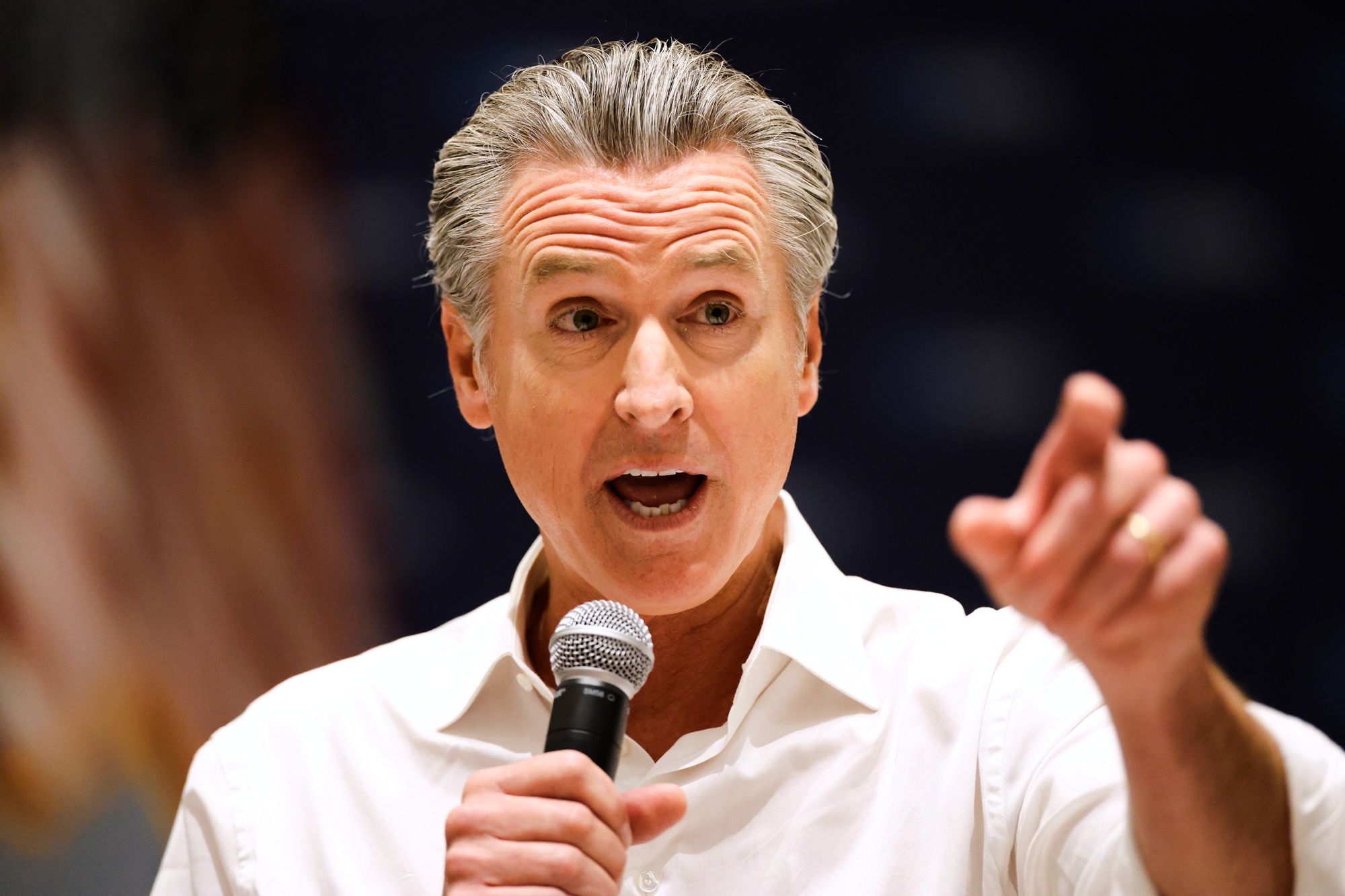
"caption": "Gov. Gavin Newsom speaks at Google's San Francisco office about \"Creating an AI-Ready Workforce\" that new joint effort with some of the world's leading tech companies to help better prepare California's students and workers for the next generation of technology, in San Francisco, California, on Aug. 7, 2025. Gov. Newsom signed new workplace protections against AI on Wednesday, which labor leaders celebrated as some of the strongest in the country. \r\n",
"credit": "Tayfun Coskun/Anadolu via Getty Images",
"altTag": null,
"description": null,
"imgSizes": {
"thumbnail": {
"file": "https://cdn.kqed.org/wp-content/uploads/sites/10/2026/10/GavinNewsomGetty-160x107.jpg",
"width": 160,
"height": 107,
"mimeType": "image/jpeg"
},
"1536x1536": {
"file": "https://cdn.kqed.org/wp-content/uploads/sites/10/2026/10/GavinNewsomGetty-1536x1024.jpg",
"width": 1536,
"height": 1024,
"mimeType": "image/jpeg"
},
"post-thumbnail": {
"file": "https://cdn.kqed.org/wp-content/uploads/sites/10/2026/10/GavinNewsomGetty-672x372.jpg",
"width": 672,
"height": 372,
"mimeType": "image/jpeg"
},
"twentyfourteen-full-width": {
"file": "https://cdn.kqed.org/wp-content/uploads/sites/10/2026/10/GavinNewsomGetty-1038x576.jpg",
"width": 1038,
"height": 576,
"mimeType": "image/jpeg"
},
"npr-cds-wide": {
"file": "https://cdn.kqed.org/wp-content/uploads/sites/10/2026/10/GavinNewsomGetty-1200x675.jpg",
"width": 1200,
"height": 675,
"mimeType": "image/jpeg"
},
"npr-cds-square": {
"file": "https://cdn.kqed.org/wp-content/uploads/sites/10/2026/10/GavinNewsomGetty-600x600.jpg",
"width": 600,
"height": 600,
"mimeType": "image/jpeg"
},
"kqedFullSize": {
"file": "https://cdn.kqed.org/wp-content/uploads/sites/10/2026/10/GavinNewsomGetty.jpg",
"width": 2000,
"height": 1333
}
},
"isLoading": false,
"fetchFailed": false
},
"news_12102304": {
"type": "attachments",
"id": "news_12102304",
"meta": {
"index": "attachments_1716263798",
"site": "news",
"id": "12102304",
"found": true
},
"title": "093026-Becerra-Hilton-Debate-CNN-CM-01",
"publishDate": 1790871535,
"status": "inherit",
"parent": 12102300,
"modified": 1790871563,
"caption": "From left, gubernatorial candidates Xavier Becerra and Steve Hilton, during CNN’s California Gubernatorial Debate at CNN’s studio in Burbank on Sept. 30, 2026. The debate was moderated by CNN anchors Jake Tapper and Dana Bash. ",
"credit": "Grace Widyatmadja/CNN",
"altTag": null,
"description": null,
"imgSizes": {
"thumbnail": {
"file": "https://cdn.kqed.org/wp-content/uploads/sites/10/2026/10/093026-Becerra-Hilton-Debate-CNN-CM-01-160x107.jpg",
"width": 160,
"height": 107,
"mimeType": "image/jpeg"
},
"1536x1536": {
"file": "https://cdn.kqed.org/wp-content/uploads/sites/10/2026/10/093026-Becerra-Hilton-Debate-CNN-CM-01-1536x1025.jpg",
"width": 1536,
"height": 1025,
"mimeType": "image/jpeg"
},
"post-thumbnail": {
"file": "https://cdn.kqed.org/wp-content/uploads/sites/10/2026/10/093026-Becerra-Hilton-Debate-CNN-CM-01-672x372.jpg",
"width": 672,
"height": 372,
"mimeType": "image/jpeg"
},
"twentyfourteen-full-width": {
"file": "https://cdn.kqed.org/wp-content/uploads/sites/10/2026/10/093026-Becerra-Hilton-Debate-CNN-CM-01-1038x576.jpg",
"width": 1038,
"height": 576,
"mimeType": "image/jpeg"
},
"npr-cds-wide": {
"file": "https://cdn.kqed.org/wp-content/uploads/sites/10/2026/10/093026-Becerra-Hilton-Debate-CNN-CM-01-1200x675.jpg",
"width": 1200,
"height": 675,
"mimeType": "image/jpeg"
},
"npr-cds-square": {
"file": "https://cdn.kqed.org/wp-content/uploads/sites/10/2026/10/093026-Becerra-Hilton-Debate-CNN-CM-01-600x600.jpg",
"width": 600,
"height": 600,
"mimeType": "image/jpeg"
},
"kqedFullSize": {
"file": "https://cdn.kqed.org/wp-content/uploads/sites/10/2026/10/093026-Becerra-Hilton-Debate-CNN-CM-01.jpg",
"width": 1999,
"height": 1334
}
},
"isLoading": false,
"fetchFailed": false
},
"news_12098431": {
"type": "attachments",
"id": "news_12098431",
"meta": {
"index": "attachments_1716263798",
"site": "news",
"id": "12098431",
"found": true
},
"title": "260828-SOUTH BAY DATA CENTERS-MD-07-KQED",
"publishDate": 1788542212,
"status": "inherit",
"parent": 0,
"modified": 1790816266,
"caption": "Buildings in the Alviso neighborhood of San José that Google plans to modify to operate in a capacity similar to a data center on Sept. 3, 2026.",
"credit": "Martin do Nascimento/KQED",
"altTag": null,
"description": null,
"imgSizes": {
"thumbnail": {
"file": "https://cdn.kqed.org/wp-content/uploads/sites/10/2026/09/260828-SOUTH-BAY-DATA-CENTERS-MD-07-KQED-160x107.jpg",
"width": 160,
"height": 107,
"mimeType": "image/jpeg"
},
"1536x1536": {
"file": "https://cdn.kqed.org/wp-content/uploads/sites/10/2026/09/260828-SOUTH-BAY-DATA-CENTERS-MD-07-KQED-1536x1024.jpg",
"width": 1536,
"height": 1024,
"mimeType": "image/jpeg"
},
"post-thumbnail": {
"file": "https://cdn.kqed.org/wp-content/uploads/sites/10/2026/09/260828-SOUTH-BAY-DATA-CENTERS-MD-07-KQED-672x372.jpg",
"width": 672,
"height": 372,
"mimeType": "image/jpeg"
},
"twentyfourteen-full-width": {
"file": "https://cdn.kqed.org/wp-content/uploads/sites/10/2026/09/260828-SOUTH-BAY-DATA-CENTERS-MD-07-KQED-1038x576.jpg",
"width": 1038,
"height": 576,
"mimeType": "image/jpeg"
},
"npr-cds-wide": {
"file": "https://cdn.kqed.org/wp-content/uploads/sites/10/2026/09/260828-SOUTH-BAY-DATA-CENTERS-MD-07-KQED-1200x675.jpg",
"width": 1200,
"height": 675,
"mimeType": "image/jpeg"
},
"npr-cds-square": {
"file": "https://cdn.kqed.org/wp-content/uploads/sites/10/2026/09/260828-SOUTH-BAY-DATA-CENTERS-MD-07-KQED-600x600.jpg",
"width": 600,
"height": 600,
"mimeType": "image/jpeg"
},
"kqedFullSize": {
"file": "https://cdn.kqed.org/wp-content/uploads/sites/10/2026/09/260828-SOUTH-BAY-DATA-CENTERS-MD-07-KQED.jpg",
"width": 2000,
"height": 1333
}
},
"isLoading": false,
"fetchFailed": false
},
"news_12102171": {
"type": "attachments",
"id": "news_12102171",
"meta": {
"index": "attachments_1716263798",
"site": "news",
"id": "12102171",
"found": true
},
"title": "260930-ELSAYEDINSF-00254_TV-KQED",
"publishDate": 1790796815,
"status": "inherit",
"parent": 0,
"modified": 1790796897,
"caption": "Michigan Senate candidate Abdul El-Sayed makes an appearance at the California Nurses Association/National Nurses Organizing Committee convention at the San Francisco Marriott Marquis in San Francisco on Sept. 30, 2026.",
"credit": "Tâm Vũ/KQED",
"altTag": null,
"description": null,
"imgSizes": {
"thumbnail": {
"file": "https://cdn.kqed.org/wp-content/uploads/sites/10/2026/09/260930-ELSAYEDINSF-00254_TV-KQED-160x107.jpg",
"width": 160,
"height": 107,
"mimeType": "image/jpeg"
},
"1536x1536": {
"file": "https://cdn.kqed.org/wp-content/uploads/sites/10/2026/09/260930-ELSAYEDINSF-00254_TV-KQED-1536x1024.jpg",
"width": 1536,
"height": 1024,
"mimeType": "image/jpeg"
},
"post-thumbnail": {
"file": "https://cdn.kqed.org/wp-content/uploads/sites/10/2026/09/260930-ELSAYEDINSF-00254_TV-KQED-672x372.jpg",
"width": 672,
"height": 372,
"mimeType": "image/jpeg"
},
"twentyfourteen-full-width": {
"file": "https://cdn.kqed.org/wp-content/uploads/sites/10/2026/09/260930-ELSAYEDINSF-00254_TV-KQED-1038x576.jpg",
"width": 1038,
"height": 576,
"mimeType": "image/jpeg"
},
"npr-cds-wide": {
"file": "https://cdn.kqed.org/wp-content/uploads/sites/10/2026/09/260930-ELSAYEDINSF-00254_TV-KQED-1200x675.jpg",
"width": 1200,
"height": 675,
"mimeType": "image/jpeg"
},
"npr-cds-square": {
"file": "https://cdn.kqed.org/wp-content/uploads/sites/10/2026/09/260930-ELSAYEDINSF-00254_TV-KQED-600x600.jpg",
"width": 600,
"height": 600,
"mimeType": "image/jpeg"
},
"kqedFullSize": {
"file": "https://cdn.kqed.org/wp-content/uploads/sites/10/2026/09/260930-ELSAYEDINSF-00254_TV-KQED.jpg",
"width": 2000,
"height": 1333
}
},
"isLoading": false,
"fetchFailed": false
},
"news_12101508": {
"type": "attachments",
"id": "news_12101508",
"meta": {
"index": "attachments_1716263798",
"site": "news",
"id": "12101508",
"found": true
},
"title": "GettyImages-1321806616",
"publishDate": 1790379440,
"status": "inherit",
"parent": 12101463,
"modified": 1790792983,
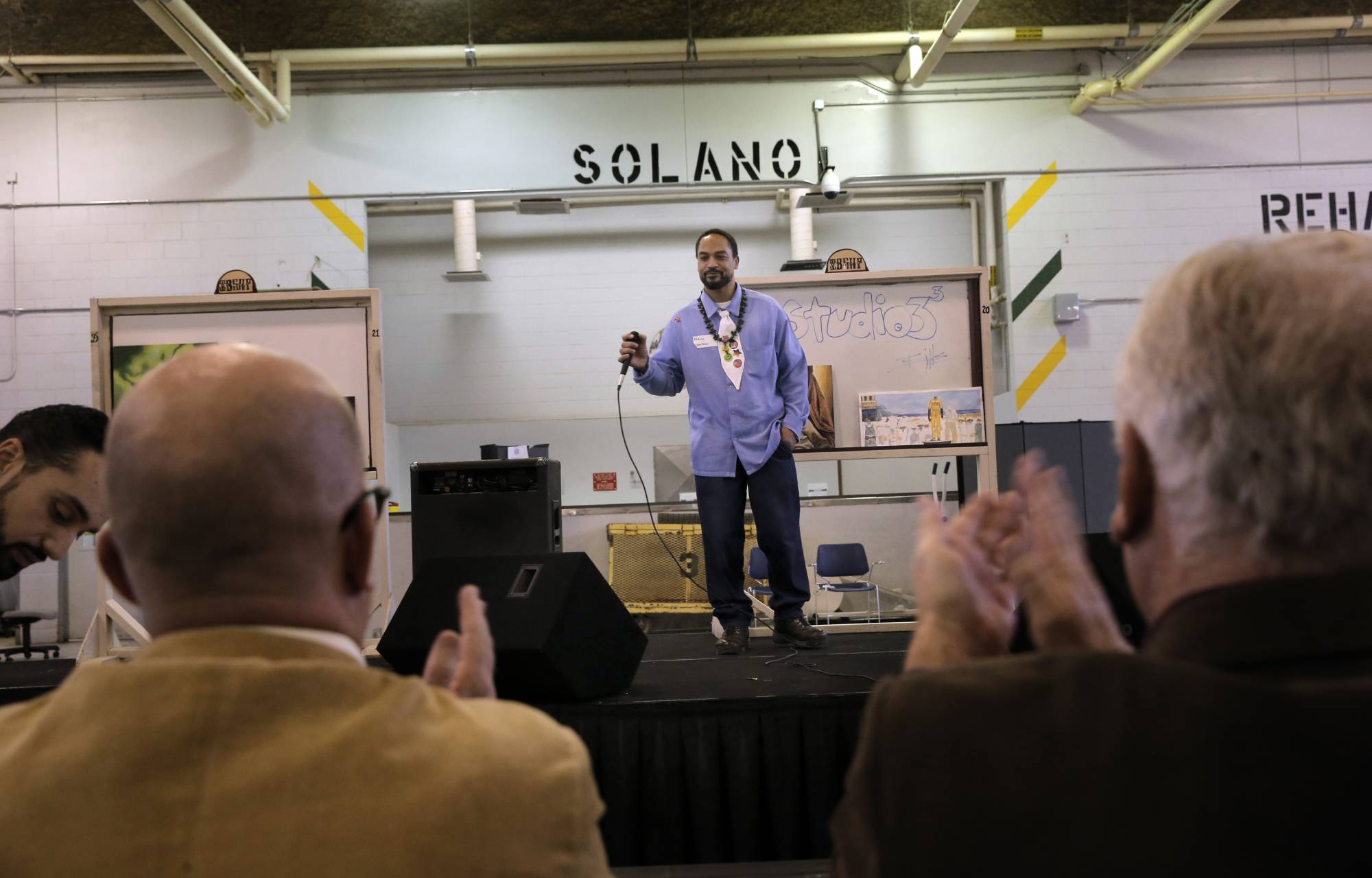
"caption": "Artist William Palmer pitches his ideas to the panel of judges as Defy Ventures holds a business pitch competition for prisoners enrolled in the entrepreneurs in training program, at Solano State Prison in Vacaville, California, on Dec. 17, 2015.",
"credit": "Michael Macor-The San Francisco Chronicle/Getty Images",
"altTag": null,
"description": null,
"imgSizes": {
"medium": {
"file": "https://cdn.kqed.org/wp-content/uploads/sites/10/2026/09/GettyImages-1321806616-2000x1280.jpg",
"width": 2000,
"height": 1280,
"mimeType": "image/jpeg"
},
"large": {
"file": "https://cdn.kqed.org/wp-content/uploads/sites/10/2026/09/GettyImages-1321806616-2000x1280.jpg",
"width": 2000,
"height": 1280,
"mimeType": "image/jpeg"
},
"thumbnail": {
"file": "https://cdn.kqed.org/wp-content/uploads/sites/10/2026/09/GettyImages-1321806616-160x102.jpg",
"width": 160,
"height": 102,
"mimeType": "image/jpeg"
},
"1536x1536": {
"file": "https://cdn.kqed.org/wp-content/uploads/sites/10/2026/09/GettyImages-1321806616-1536x983.jpg",
"width": 1536,
"height": 983,
"mimeType": "image/jpeg"
},
"2048x2048": {
"file": "https://cdn.kqed.org/wp-content/uploads/sites/10/2026/09/GettyImages-1321806616-2048x1311.jpg",
"width": 2048,
"height": 1311,
"mimeType": "image/jpeg"
},
"post-thumbnail": {
"file": "https://cdn.kqed.org/wp-content/uploads/sites/10/2026/09/GettyImages-1321806616-672x372.jpg",
"width": 672,
"height": 372,
"mimeType": "image/jpeg"
},
"twentyfourteen-full-width": {
"file": "https://cdn.kqed.org/wp-content/uploads/sites/10/2026/09/GettyImages-1321806616-1038x576.jpg",
"width": 1038,
"height": 576,
"mimeType": "image/jpeg"
},
"full-width": {
"file": "https://cdn.kqed.org/wp-content/uploads/sites/10/2026/09/GettyImages-1321806616-2000x1280.jpg",
"width": 2000,
"height": 1280,
"mimeType": "image/jpeg"
},
"npr-cds-wide": {
"file": "https://cdn.kqed.org/wp-content/uploads/sites/10/2026/09/GettyImages-1321806616-1200x675.jpg",
"width": 1200,
"height": 675,
"mimeType": "image/jpeg"
},
"npr-cds-square": {
"file": "https://cdn.kqed.org/wp-content/uploads/sites/10/2026/09/GettyImages-1321806616-600x600.jpg",
"width": 600,
"height": 600,
"mimeType": "image/jpeg"
},
"kqedFullSize": {
"file": "https://cdn.kqed.org/wp-content/uploads/sites/10/2026/09/GettyImages-1321806616-scaled-e1790379502794.jpg",
"width": 2000,
"height": 1280
}
},
"isLoading": false,
"fetchFailed": false
},
"news_11886518": {
"type": "attachments",
"id": "news_11886518",
"meta": {
"index": "attachments_1716263798",
"site": "news",
"id": "11886518",
"found": true
},
"parent": 11886431,
"imgSizes": {
"twentyfourteen-full-width": {
"file": "https://ww2.kqed.org/app/uploads/sites/10/2021/08/GettyImages-1234716783-1024x576.jpg",
"width": 1024,
"mimeType": "image/jpeg",
"height": 576
},
"thumbnail": {
"file": "https://ww2.kqed.org/app/uploads/sites/10/2021/08/GettyImages-1234716783-160x94.jpg",
"width": 160,
"mimeType": "image/jpeg",
"height": 94
},
"post-thumbnail": {
"file": "https://ww2.kqed.org/app/uploads/sites/10/2021/08/GettyImages-1234716783-672x372.jpg",
"width": 672,
"mimeType": "image/jpeg",
"height": 372
},
"kqedFullSize": {
"file": "https://ww2.kqed.org/app/uploads/sites/10/2021/08/GettyImages-1234716783.jpg",
"width": 1024,
"height": 601
},
"large": {
"file": "https://ww2.kqed.org/app/uploads/sites/10/2021/08/GettyImages-1234716783-1020x599.jpg",
"width": 1020,
"mimeType": "image/jpeg",
"height": 599
},
"medium": {
"file": "https://ww2.kqed.org/app/uploads/sites/10/2021/08/GettyImages-1234716783-800x470.jpg",
"width": 800,
"mimeType": "image/jpeg",
"height": 470
}
},
"publishDate": 1630020082,
"modified": 1630024003,
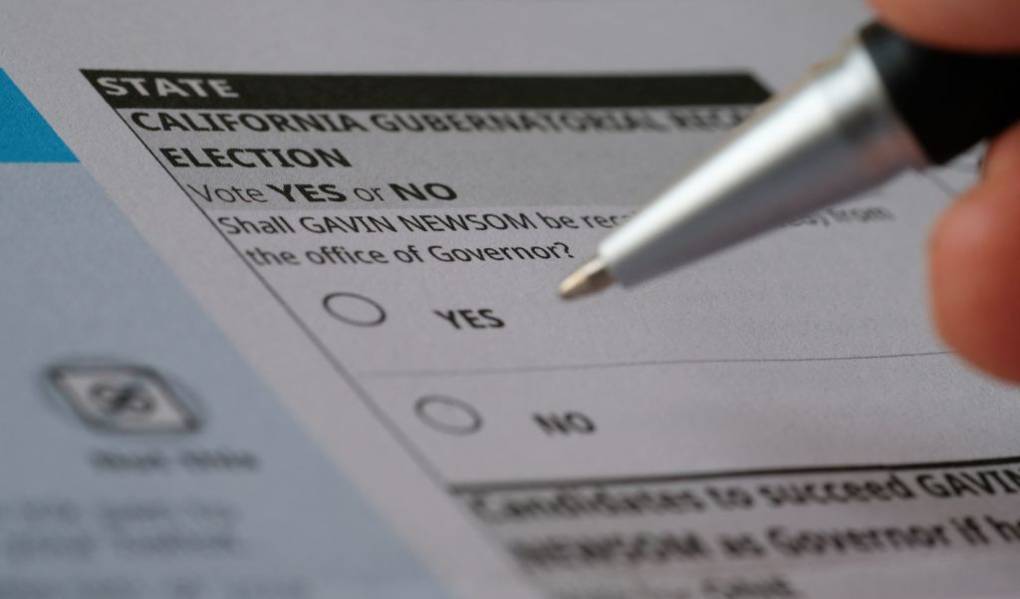
"caption": "A ballot for the upcoming recall election seeking to remove California Gov. Gavin Newsom. The election will be held on Sept. 14, 2021, although most registered voters have already received their ballots and can submit them now. Forty-six candidates, including nine Democrats, are running.",
"description": null,
"title": "US-POLITICS-ELECTIONS-GOVERNOR-CALIFORNIA-NEWSOM",
"credit": "Chris Delmas/AFP via Getty Images",
"status": "inherit",
"altTag": null,
"isLoading": false,
"fetchFailed": false
},
"news_12102061": {
"type": "attachments",
"id": "news_12102061",
"meta": {
"index": "attachments_1716263798",
"site": "news",
"id": "12102061",
"found": true
},
"title": "TheSpeaker_Horizontal_Episode 3-15",
"publishDate": 1790741967,
"status": "inherit",
"parent": 12101891,
"modified": 1790742036,
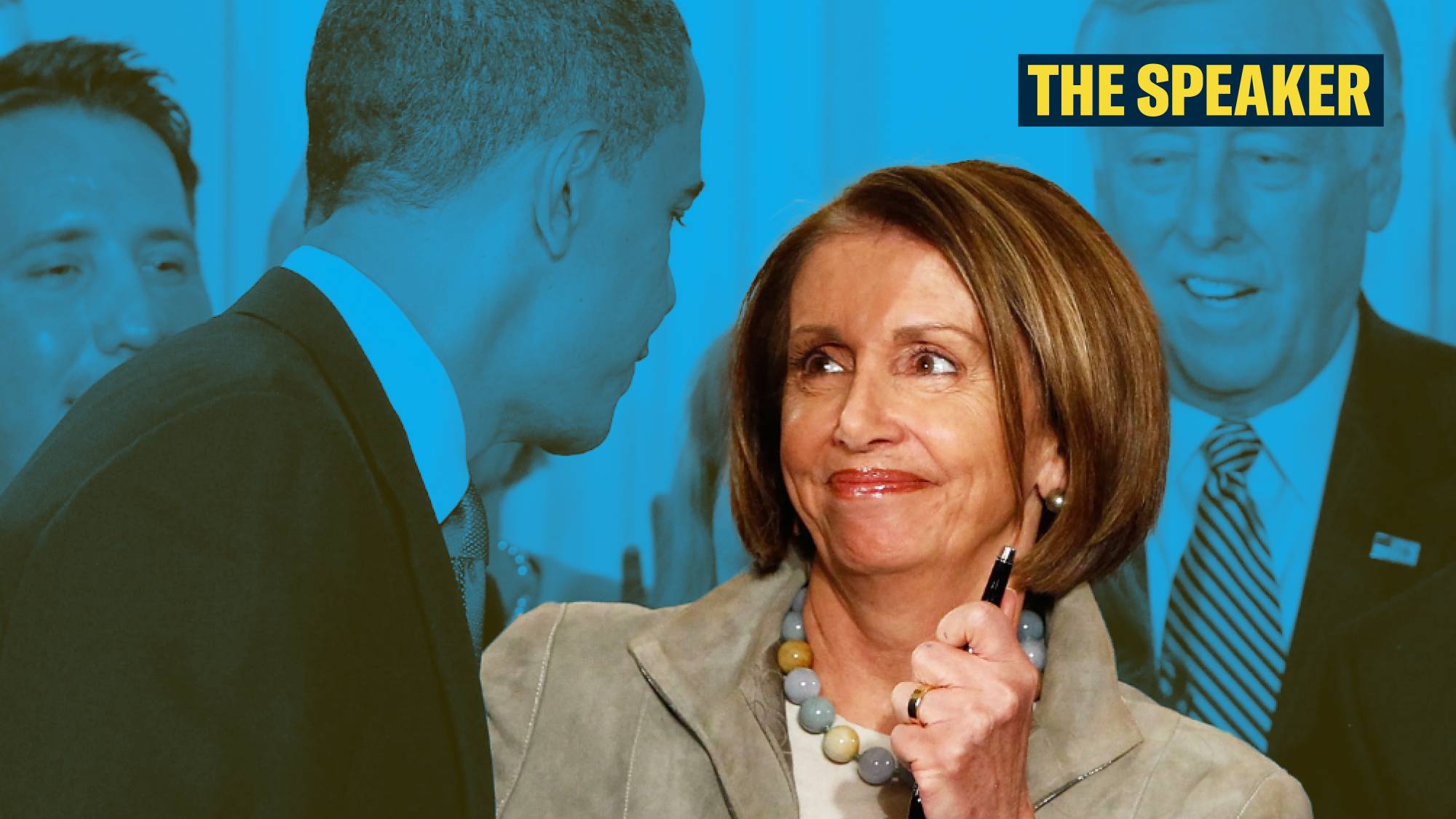
"caption": "Photo courtesy of the Office of Speaker Emerita Nancy Pelosi",
"credit": null,
"altTag": "A close up of Nancy Pelosi in a beige suede jacket, smiling at President Barack Obama while holding a black pen",
"description": null,
"imgSizes": {
"medium": {
"file": "https://cdn.kqed.org/wp-content/uploads/sites/10/2026/09/TheSpeaker_Horizontal_Episode-3-15-2000x1125.jpg",
"width": 2000,
"height": 1125,
"mimeType": "image/jpeg"
},
"large": {
"file": "https://cdn.kqed.org/wp-content/uploads/sites/10/2026/09/TheSpeaker_Horizontal_Episode-3-15-2000x1125.jpg",
"width": 2000,
"height": 1125,
"mimeType": "image/jpeg"
},
"thumbnail": {
"file": "https://cdn.kqed.org/wp-content/uploads/sites/10/2026/09/TheSpeaker_Horizontal_Episode-3-15-160x90.jpg",
"width": 160,
"height": 90,
"mimeType": "image/jpeg"
},
"1536x1536": {
"file": "https://cdn.kqed.org/wp-content/uploads/sites/10/2026/09/TheSpeaker_Horizontal_Episode-3-15-1536x864.jpg",
"width": 1536,
"height": 864,
"mimeType": "image/jpeg"
},
"2048x2048": {
"file": "https://cdn.kqed.org/wp-content/uploads/sites/10/2026/09/TheSpeaker_Horizontal_Episode-3-15-2048x1152.jpg",
"width": 2048,
"height": 1152,
"mimeType": "image/jpeg"
},
"post-thumbnail": {
"file": "https://cdn.kqed.org/wp-content/uploads/sites/10/2026/09/TheSpeaker_Horizontal_Episode-3-15-672x372.jpg",
"width": 672,
"height": 372,
"mimeType": "image/jpeg"
},
"twentyfourteen-full-width": {
"file": "https://cdn.kqed.org/wp-content/uploads/sites/10/2026/09/TheSpeaker_Horizontal_Episode-3-15-1038x576.jpg",
"width": 1038,
"height": 576,
"mimeType": "image/jpeg"
},
"full-width": {
"file": "https://cdn.kqed.org/wp-content/uploads/sites/10/2026/09/TheSpeaker_Horizontal_Episode-3-15-2000x1125.jpg",
"width": 2000,
"height": 1125,
"mimeType": "image/jpeg"
},
"npr-cds-wide": {
"file": "https://cdn.kqed.org/wp-content/uploads/sites/10/2026/09/TheSpeaker_Horizontal_Episode-3-15-1200x675.jpg",
"width": 1200,
"height": 675,
"mimeType": "image/jpeg"
},
"npr-cds-square": {
"file": "https://cdn.kqed.org/wp-content/uploads/sites/10/2026/09/TheSpeaker_Horizontal_Episode-3-15-600x600.jpg",
"width": 600,
"height": 600,
"mimeType": "image/jpeg"
},
"kqedFullSize": {
"file": "https://cdn.kqed.org/wp-content/uploads/sites/10/2026/09/TheSpeaker_Horizontal_Episode-3-15-scaled.jpg",
"width": 2560,
"height": 1440
}
},
"isLoading": false,
"fetchFailed": false
},
"news_12102009": {
"type": "attachments",
"id": "news_12102009",
"meta": {
"index": "attachments_1716263798",
"site": "news",
"id": "12102009",
"found": true
},
"title": "YouthVoterGetty",
"publishDate": 1790724801,
"status": "inherit",
"parent": 12101605,
"modified": 1790725404,
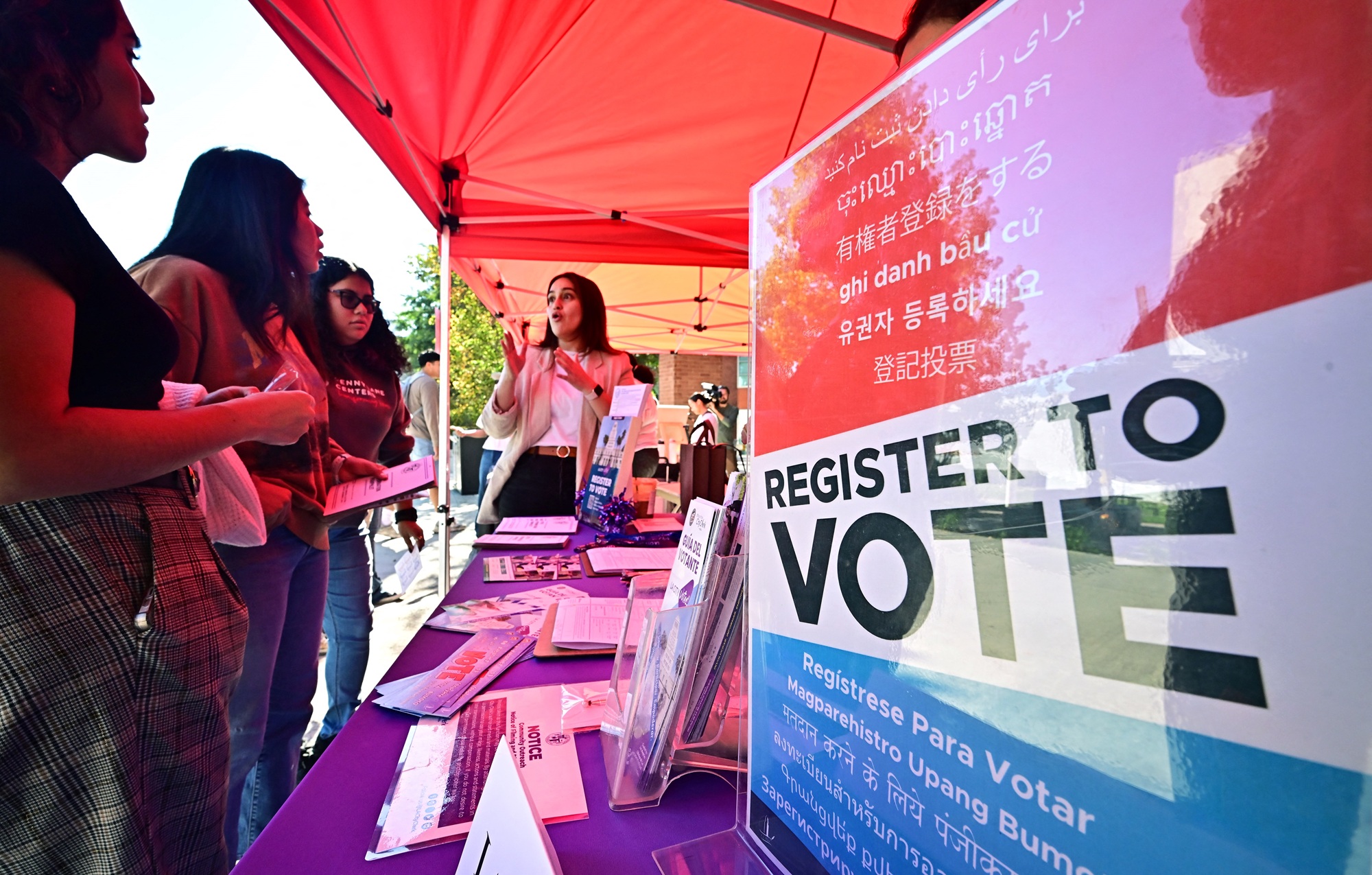
"caption": "Potential young voters get information at a voter registration desk at Voter Fest 2024, an event designed to engage young voters and historically underserved communities on Oct. 22, 2024, at Cal State Los Angeles.",
"credit": "Frederic J. Brown/AFP via Getty Images",
"altTag": null,
"description": null,
"imgSizes": {
"thumbnail": {
"file": "https://cdn.kqed.org/wp-content/uploads/sites/10/2026/09/YouthVoterGetty-160x102.jpg",
"width": 160,
"height": 102,
"mimeType": "image/jpeg"
},
"1536x1536": {
"file": "https://cdn.kqed.org/wp-content/uploads/sites/10/2026/09/YouthVoterGetty-1536x979.jpg",
"width": 1536,
"height": 979,
"mimeType": "image/jpeg"
},
"post-thumbnail": {
"file": "https://cdn.kqed.org/wp-content/uploads/sites/10/2026/09/YouthVoterGetty-672x372.jpg",
"width": 672,
"height": 372,
"mimeType": "image/jpeg"
},
"twentyfourteen-full-width": {
"file": "https://cdn.kqed.org/wp-content/uploads/sites/10/2026/09/YouthVoterGetty-1038x576.jpg",
"width": 1038,
"height": 576,
"mimeType": "image/jpeg"
},
"npr-cds-wide": {
"file": "https://cdn.kqed.org/wp-content/uploads/sites/10/2026/09/YouthVoterGetty-1200x675.jpg",
"width": 1200,
"height": 675,
"mimeType": "image/jpeg"
},
"npr-cds-square": {
"file": "https://cdn.kqed.org/wp-content/uploads/sites/10/2026/09/YouthVoterGetty-600x600.jpg",
"width": 600,
"height": 600,
"mimeType": "image/jpeg"
},
"kqedFullSize": {
"file": "https://cdn.kqed.org/wp-content/uploads/sites/10/2026/09/YouthVoterGetty.jpg",
"width": 2000,
"height": 1275
}
},
"isLoading": false,
"fetchFailed": false
},
"news_12068586": {
"type": "attachments",
"id": "news_12068586",
"meta": {
"index": "attachments_1716263798",
"site": "news",
"id": "12068586",
"found": true
},
"title": "Construction Spending In U.S. Falls For Month Of May",
"publishDate": 1767625427,
"status": "inherit",
"parent": 12068585,
"modified": 1771351029,
"caption": "In an aerial view, homes are seen under construction at a new housing development on July 1, 2025, in Richmond, California. ",
"credit": "Justin Sullivan/Getty Images",
"altTag": null,
"description": null,
"imgSizes": {
"medium": {
"file": "https://cdn.kqed.org/wp-content/uploads/sites/10/2026/01/GettyImages-2223101080-2000x1357.jpg",
"width": 2000,
"height": 1357,
"mimeType": "image/jpeg"
},
"large": {
"file": "https://cdn.kqed.org/wp-content/uploads/sites/10/2026/01/GettyImages-2223101080-2000x1357.jpg",
"width": 2000,
"height": 1357,
"mimeType": "image/jpeg"
},
"thumbnail": {
"file": "https://cdn.kqed.org/wp-content/uploads/sites/10/2026/01/GettyImages-2223101080-160x109.jpg",
"width": 160,
"height": 109,
"mimeType": "image/jpeg"
},
"1536x1536": {
"file": "https://cdn.kqed.org/wp-content/uploads/sites/10/2026/01/GettyImages-2223101080-1536x1042.jpg",
"width": 1536,
"height": 1042,
"mimeType": "image/jpeg"
},
"2048x2048": {
"file": "https://cdn.kqed.org/wp-content/uploads/sites/10/2026/01/GettyImages-2223101080-2048x1389.jpg",
"width": 2048,
"height": 1389,
"mimeType": "image/jpeg"
},
"post-thumbnail": {
"file": "https://cdn.kqed.org/wp-content/uploads/sites/10/2026/01/GettyImages-2223101080-672x372.jpg",
"width": 672,
"height": 372,
"mimeType": "image/jpeg"
},
"twentyfourteen-full-width": {
"file": "https://cdn.kqed.org/wp-content/uploads/sites/10/2026/01/GettyImages-2223101080-1038x576.jpg",
"width": 1038,
"height": 576,
"mimeType": "image/jpeg"
},
"full-width": {
"file": "https://cdn.kqed.org/wp-content/uploads/sites/10/2026/01/GettyImages-2223101080-2000x1357.jpg",
"width": 2000,
"height": 1357,
"mimeType": "image/jpeg"
},
"npr-cds-wide": {
"file": "https://cdn.kqed.org/wp-content/uploads/sites/10/2026/01/GettyImages-2223101080-1200x675.jpg",
"width": 1200,
"height": 675,
"mimeType": "image/jpeg"
},
"kqedFullSize": {
"file": "https://cdn.kqed.org/wp-content/uploads/sites/10/2026/01/GettyImages-2223101080-scaled.jpg",
"width": 2560,
"height": 1737
}
},
"isLoading": false,
"fetchFailed": false
},
"news_12101826": {
"type": "attachments",
"id": "news_12101826",
"meta": {
"index": "attachments_1716263798",
"site": "news",
"id": "12101826",
"found": true
},
"title": "Election 2028 Newsom",
"publishDate": 1790703259,
"status": "inherit",
"parent": 12101807,
"modified": 1790703395,
"caption": "California Gov. Gavin Newsom speaks at a rally for democratic candidates Saturday, Sept. 5, 2026, in Monroe, North Carolina.",
"credit": "Nell Redmond/AP Photo",
"altTag": null,
"description": null,
"imgSizes": {
"thumbnail": {
"file": "https://cdn.kqed.org/wp-content/uploads/sites/10/2026/09/GavinNewsomAP-160x107.jpg",
"width": 160,
"height": 107,
"mimeType": "image/jpeg"
},
"1536x1536": {
"file": "https://cdn.kqed.org/wp-content/uploads/sites/10/2026/09/GavinNewsomAP-1536x1024.jpg",
"width": 1536,
"height": 1024,
"mimeType": "image/jpeg"
},
"post-thumbnail": {
"file": "https://cdn.kqed.org/wp-content/uploads/sites/10/2026/09/GavinNewsomAP-672x372.jpg",
"width": 672,
"height": 372,
"mimeType": "image/jpeg"
},
"twentyfourteen-full-width": {
"file": "https://cdn.kqed.org/wp-content/uploads/sites/10/2026/09/GavinNewsomAP-1038x576.jpg",
"width": 1038,
"height": 576,
"mimeType": "image/jpeg"
},
"npr-cds-wide": {
"file": "https://cdn.kqed.org/wp-content/uploads/sites/10/2026/09/GavinNewsomAP-1200x675.jpg",
"width": 1200,
"height": 675,
"mimeType": "image/jpeg"
},
"npr-cds-square": {
"file": "https://cdn.kqed.org/wp-content/uploads/sites/10/2026/09/GavinNewsomAP-600x600.jpg",
"width": 600,
"height": 600,
"mimeType": "image/jpeg"
},
"kqedFullSize": {
"file": "https://cdn.kqed.org/wp-content/uploads/sites/10/2026/09/GavinNewsomAP.jpg",
"width": 2000,
"height": 1333
}
},
"isLoading": false,
"fetchFailed": false
},
"news_12084722": {
"type": "attachments",
"id": "news_12084722",
"meta": {
"index": "attachments_1716263798",
"site": "news",
"id": "12084722",
"found": true
},
"title": "The Concord Immigration Court in Concord on May 7, 2026.",
"publishDate": 1779393699,
"status": "inherit",
"parent": 12084687,
"modified": 1780098439,
"caption": "The Concord Immigration Court in Concord on May 7, 2026.",
"credit": "Beth LaBerge/KQED",
"altTag": null,
"description": null,
"imgSizes": {
"thumbnail": {
"file": "https://cdn.kqed.org/wp-content/uploads/sites/10/2026/05/260507-IMMIGRATIONCOURTVOLUNTEERS-07-BL-KQED-160x107.jpg",
"width": 160,
"height": 107,
"mimeType": "image/jpeg"
},
"1536x1536": {
"file": "https://cdn.kqed.org/wp-content/uploads/sites/10/2026/05/260507-IMMIGRATIONCOURTVOLUNTEERS-07-BL-KQED-1536x1024.jpg",
"width": 1536,
"height": 1024,
"mimeType": "image/jpeg"
},
"post-thumbnail": {
"file": "https://cdn.kqed.org/wp-content/uploads/sites/10/2026/05/260507-IMMIGRATIONCOURTVOLUNTEERS-07-BL-KQED-672x372.jpg",
"width": 672,
"height": 372,
"mimeType": "image/jpeg"
},
"twentyfourteen-full-width": {
"file": "https://cdn.kqed.org/wp-content/uploads/sites/10/2026/05/260507-IMMIGRATIONCOURTVOLUNTEERS-07-BL-KQED-1038x576.jpg",
"width": 1038,
"height": 576,
"mimeType": "image/jpeg"
},
"npr-cds-wide": {
"file": "https://cdn.kqed.org/wp-content/uploads/sites/10/2026/05/260507-IMMIGRATIONCOURTVOLUNTEERS-07-BL-KQED-1200x675.jpg",
"width": 1200,
"height": 675,
"mimeType": "image/jpeg"
},
"npr-cds-square": {
"file": "https://cdn.kqed.org/wp-content/uploads/sites/10/2026/05/260507-IMMIGRATIONCOURTVOLUNTEERS-07-BL-KQED-600x600.jpg",
"width": 600,
"height": 600,
"mimeType": "image/jpeg"
},
"kqedFullSize": {
"file": "https://cdn.kqed.org/wp-content/uploads/sites/10/2026/05/260507-IMMIGRATIONCOURTVOLUNTEERS-07-BL-KQED.jpg",
"width": 2000,
"height": 1333
}
},
"isLoading": false,
"fetchFailed": false
},
"news_12093063": {
"type": "attachments",
"id": "news_12093063",
"meta": {
"index": "attachments_1716263798",
"site": "news",
"id": "12093063",
"found": true
},
"title": "072826-PALESTINEACTIVISTMEMORIAL-14-MC-KQED",
"publishDate": 1785349973,
"status": "inherit",
"parent": 0,
"modified": 1790618305,
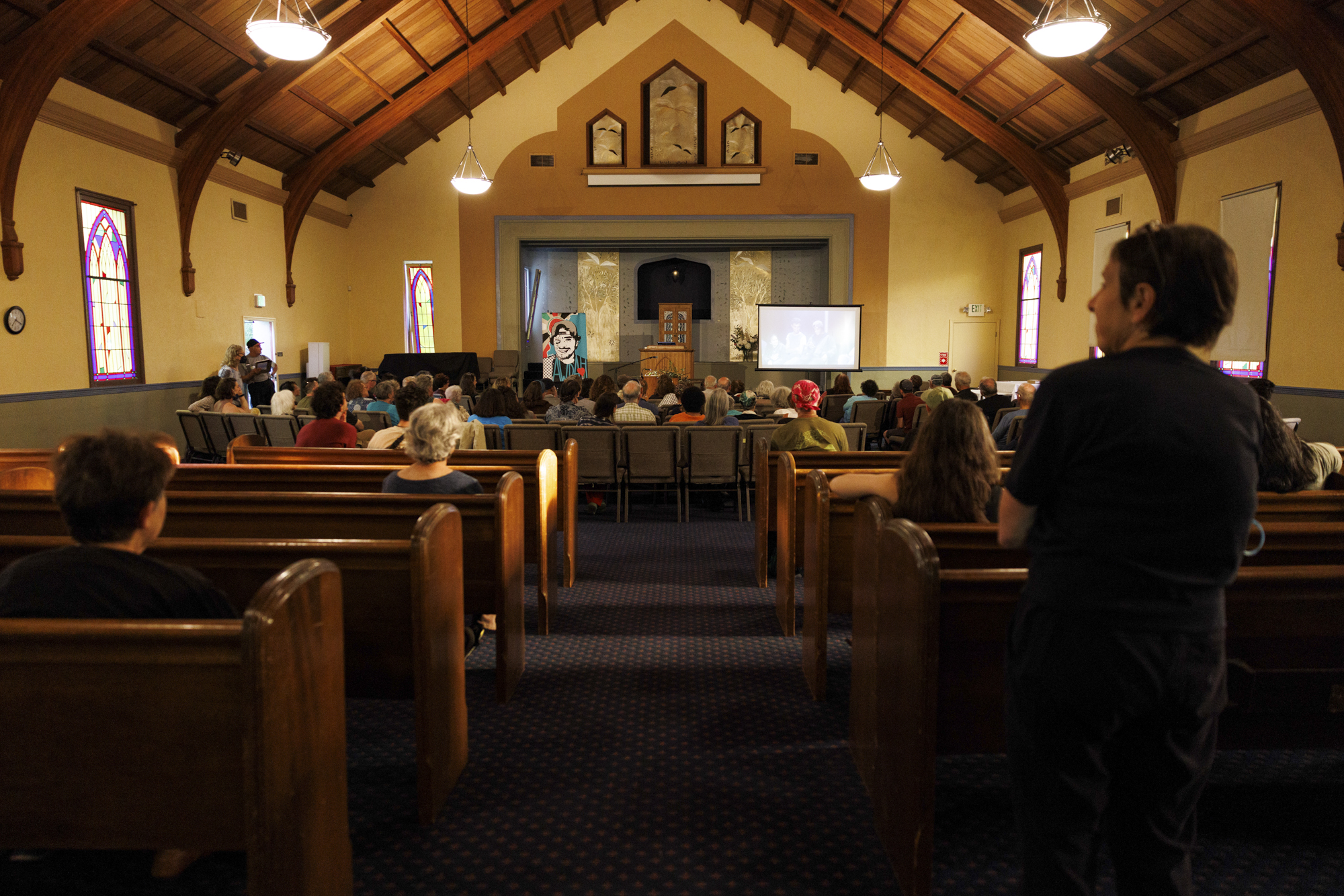
"caption": "Mourners gather at a memorial for Palestinian activist Awdah Hathaleen at Kehilla Community Synagogue on July 28, 2026, in Piedmont.",
"credit": "Miles Cull/KQED",
"altTag": null,
"description": null,
"imgSizes": {
"thumbnail": {
"file": "https://cdn.kqed.org/wp-content/uploads/sites/10/2026/07/072826-PALESTINEACTIVISTMEMORIAL-14-MC-KQED-160x107.jpg",
"width": 160,
"height": 107,
"mimeType": "image/jpeg"
},
"1536x1536": {
"file": "https://cdn.kqed.org/wp-content/uploads/sites/10/2026/07/072826-PALESTINEACTIVISTMEMORIAL-14-MC-KQED-1536x1025.jpg",
"width": 1536,
"height": 1025,
"mimeType": "image/jpeg"
},
"post-thumbnail": {
"file": "https://cdn.kqed.org/wp-content/uploads/sites/10/2026/07/072826-PALESTINEACTIVISTMEMORIAL-14-MC-KQED-672x372.jpg",
"width": 672,
"height": 372,
"mimeType": "image/jpeg"
},
"twentyfourteen-full-width": {
"file": "https://cdn.kqed.org/wp-content/uploads/sites/10/2026/07/072826-PALESTINEACTIVISTMEMORIAL-14-MC-KQED-1038x576.jpg",
"width": 1038,
"height": 576,
"mimeType": "image/jpeg"
},
"npr-cds-wide": {
"file": "https://cdn.kqed.org/wp-content/uploads/sites/10/2026/07/072826-PALESTINEACTIVISTMEMORIAL-14-MC-KQED-1200x675.jpg",
"width": 1200,
"height": 675,
"mimeType": "image/jpeg"
},
"npr-cds-square": {
"file": "https://cdn.kqed.org/wp-content/uploads/sites/10/2026/07/072826-PALESTINEACTIVISTMEMORIAL-14-MC-KQED-600x600.jpg",
"width": 600,
"height": 600,
"mimeType": "image/jpeg"
},
"kqedFullSize": {
"file": "https://cdn.kqed.org/wp-content/uploads/sites/10/2026/07/072826-PALESTINEACTIVISTMEMORIAL-14-MC-KQED.jpg",
"width": 2000,
"height": 1334
}
},
"isLoading": false,
"fetchFailed": false
}
},
"audioPlayerReducer": {
"postId": "stream_live",
"isPaused": true,
"isPlaying": false,
"pfsActive": false,
"pledgeModalIsOpen": true,
"playerDrawerIsOpen": false,
"liveAudioPlayStartedAt": 0,
"liveAudioPlayContext": ""
},
"authorsReducer": {
"byline_news_12102300": {
"type": "authors",
"id": "byline_news_12102300",
"meta": {
"override": true
},
"slug": "byline_news_12102300",
"name": "Jeanne Kuang, CalMatters",
"isLoading": false
},
"byline_news_12101890": {
"type": "authors",
"id": "byline_news_12101890",
"meta": {
"override": true
},
"slug": "byline_news_12101890",
"name": "Laura Fitzgerald",
"isLoading": false
},
"gmarzorati": {
"type": "authors",
"id": "227",
"meta": {
"index": "authors_1716337520",
"id": "227",
"found": true
},
"name": "Guy Marzorati",
"firstName": "Guy",
"lastName": "Marzorati",
"slug": "gmarzorati",
"email": "gmarzorati@KQED.org",
"display_author_email": true,
"staff_mastheads": [
"news"
],
"title": "Correspondent",
"bio": "Guy Marzorati is a correspondent on KQED's California Politics and Government Desk, based in San Jose. A graduate of Santa Clara University, Guy joined KQED in 2013. He reports on state and local politics and produces KQED's digital voter guide.",
"avatar": "https://secure.gravatar.com/avatar/e7038b8dbfd55b104369b76b1cd0b9de?s=600&d=blank&r=g",
"twitter": "guymarzorati",
"facebook": null,
"instagram": null,
"linkedin": null,
"sites": [
{
"site": "",
"roles": [
"editor"
]
},
{
"site": "news",
"roles": [
"editor"
]
},
{
"site": "science",
"roles": [
"editor"
]
},
{
"site": "forum",
"roles": [
"editor"
]
},
{
"site": "elections",
"roles": [
"editor"
]
},
{
"site": "liveblog",
"roles": [
"editor"
]
}
],
"headData": {
"title": "Guy Marzorati | KQED",
"description": "Correspondent",
"ogImgSrc": "https://secure.gravatar.com/avatar/e7038b8dbfd55b104369b76b1cd0b9de?s=600&d=blank&r=g",
"twImgSrc": "https://secure.gravatar.com/avatar/e7038b8dbfd55b104369b76b1cd0b9de?s=600&d=blank&r=g"
},
"isLoading": false,
"link": "/author/gmarzorati"
},
"rachael-myrow": {
"type": "authors",
"id": "251",
"meta": {
"index": "authors_1716337520",
"id": "251",
"found": true
},
"name": "Rachael Myrow",
"firstName": "Rachael",
"lastName": "Myrow",
"slug": "rachael-myrow",
"email": "rmyrow@kqed.org",
"display_author_email": true,
"staff_mastheads": [
"news"
],
"title": "Senior Editor of KQED's Silicon Valley News Desk",
"bio": "• I write and edit stories about how Silicon Valley power and policies shape everyday life in California. I’m also passionate about making Bay Area history and culture more accessible to a broad public. • I’ve been a journalist for most of my life, starting in high school with The Franklin Press in Los Angeles, where I grew up. While earning my first degree in English at UC Berkeley, I got my start in public radio at KALX-FM. After completing a second degree in journalism at Cal, I landed my first professional job at Marketplace, then moved on to KPCC (now LAist), and then KQED, where I hosted The California Report for more than seven years. • My reporting has appeared on NPR, The World, WBUR’s \u003ci>Here & Now\u003c/i>, and the BBC. I also guest host for KQED’s \u003ci>Forum\u003c/i>, as well as the Commonwealth Club in San Francisco. • I speak periodically on media, democracy and technology issues, and do voiceover work for documentaries and educational video projects. • Outside of the studio, you'll find me hiking Bay Area trails and whipping up Insta-ready meals in my kitchen. • I do not accept gifts, money, or favors from anyone connected to my reporting, I don't pay people for information, and I do not support or donate to political causes. • I strive to treat the people I report on with fairness, honesty, and respect. I also recognize there are often multiple sides to a story and work to verify information through multiple sources and documentation. If I get something wrong, I correct it.",
"avatar": "https://secure.gravatar.com/avatar/3ed8a3c5f26025e4a805ba634cda8cd764906b97438a6d9ce216b044e340da4e?s=600&d=blank&r=g",
"twitter": "rachaelmyrow",
"bluesky": null,
"facebook": null,
"instagram": null,
"linkedin": "https://www.linkedin.com/in/rachaelmyrow/",
"sites": [
{
"site": "arts",
"roles": [
"administrator"
]
},
{
"site": "news",
"roles": [
"edit_others_posts",
"editor"
]
},
{
"site": "futureofyou",
"roles": [
"editor"
]
},
{
"site": "bayareabites",
"roles": [
"editor"
]
},
{
"site": "stateofhealth",
"roles": [
"editor"
]
},
{
"site": "science",
"roles": [
"editor"
]
},
{
"site": "food",
"roles": [
"editor"
]
},
{
"site": "forum",
"roles": [
"editor"
]
},
{
"site": "liveblog",
"roles": [
"author"
]
}
],
"headData": {
"title": "Rachael Myrow | KQED",
"description": "Senior Editor of KQED's Silicon Valley News Desk",
"ogImgSrc": "https://secure.gravatar.com/avatar/3ed8a3c5f26025e4a805ba634cda8cd764906b97438a6d9ce216b044e340da4e?s=600&d=blank&r=g",
"twImgSrc": "https://secure.gravatar.com/avatar/3ed8a3c5f26025e4a805ba634cda8cd764906b97438a6d9ce216b044e340da4e?s=600&d=blank&r=g"
},
"isLoading": false,
"link": "/author/rachael-myrow"
},
"scottshafer": {
"type": "authors",
"id": "255",
"meta": {
"index": "authors_1716337520",
"id": "255",
"found": true
},
"name": "Scott Shafer",
"firstName": "Scott",
"lastName": "Shafer",
"slug": "scottshafer",
"email": "sshafer@kqed.org",
"display_author_email": false,
"staff_mastheads": [
"news"
],
"title": "KQED Contributor",
"bio": "Scott Shafer is a senior editor with the KQED Politics and Government desk. He is co-host of Political Breakdown, the award-winning radio show and podcast with a personal take on the world of politics. Scott came to KQED in 1998 to host the statewide\u003cem> California Report\u003c/em>. Prior to that he had extended stints in politics and government\u003cem>.\u003c/em> He uses that inside experience at KQED in his, reporting, hosting and analysis for the politics desk. Scott collaborated \u003cem>Political Breakdown a\u003c/em>nd on \u003cem>The Political Mind of Jerry Brown, \u003c/em>an eight-part series about the life and extraordinary political career of the former governor. For fun, he plays water polo with the San Francisco Tsunami.",
"avatar": "https://secure.gravatar.com/avatar/a62ebae45b79d7aed1a39a0e3bf68104?s=600&d=blank&r=g",
"twitter": "scottshafer",
"bluesky": null,
"facebook": null,
"instagram": null,
"linkedin": null,
"sites": [
{
"site": "news",
"roles": [
"editor"
]
},
{
"site": "stateofhealth",
"roles": [
"author"
]
},
{
"site": "science",
"roles": [
"author"
]
},
{
"site": "forum",
"roles": [
"subscriber"
]
},
{
"site": "liveblog",
"roles": [
"author"
]
}
],
"headData": {
"title": "Scott Shafer | KQED",
"description": "KQED Contributor",
"ogImgSrc": "https://secure.gravatar.com/avatar/a62ebae45b79d7aed1a39a0e3bf68104?s=600&d=blank&r=g",
"twImgSrc": "https://secure.gravatar.com/avatar/a62ebae45b79d7aed1a39a0e3bf68104?s=600&d=blank&r=g"
},
"isLoading": false,
"link": "/author/scottshafer"
},
"tychehendricks": {
"type": "authors",
"id": "259",
"meta": {
"index": "authors_1716337520",
"id": "259",
"found": true
},
"name": "Tyche Hendricks",
"firstName": "Tyche",
"lastName": "Hendricks",
"slug": "tychehendricks",
"email": "thendricks@kqed.org",
"display_author_email": true,
"staff_mastheads": [
"news"
],
"title": "KQED Senior Editor, Immigration",
"bio": "\u003cspan style=\"font-weight: 400;\">Tyche Hendricks is KQED’s senior editor for immigration, leading coverage of the policy and politics that affect California’s immigrant communities. Her work for KQED’s radio and online audiences is also carried on NPR and other national outlets. She has been recognized with awards from the Radio and Television News Directors Association, the Society for Professional Journalists; the Education Writers Association; the Best of the West and the National Federation of Community Broadcasters. Before joining KQED in 2010, Tyche spent more than a dozen years as a newspaper reporter, notably at the \u003c/span>\u003ci>\u003cspan style=\"font-weight: 400;\">San Francisco Chronicle\u003c/span>\u003c/i>\u003cspan style=\"font-weight: 400;\">. At different times she has covered criminal justice, government and politics and urban planning. Tyche has taught in the MFA Creative Writing program at the University of San Francisco and at UC Berkeley’s Graduate School of Journalism, where she was co-director of a national immigration symposium for professional journalists. She is the author of \u003c/span>\u003ci>\u003cspan style=\"font-weight: 400;\">The Wind Doesn't Need a Passport: Stories from the U.S.-Mexico Borderlands\u003c/span>\u003c/i>\u003cspan style=\"font-weight: 400;\"> (University of California Press). \u003c/span>",
"avatar": "https://secure.gravatar.com/avatar/b8ee458e2731c2d43df86882ce17267e?s=600&d=blank&r=g",
"twitter": "tychehendricks",
"facebook": null,
"instagram": null,
"linkedin": null,
"sites": [
{
"site": "news",
"roles": [
"editor"
]
},
{
"site": "stateofhealth",
"roles": [
"editor"
]
}
],
"headData": {
"title": "Tyche Hendricks | KQED",
"description": "KQED Senior Editor, Immigration",
"ogImgSrc": "https://secure.gravatar.com/avatar/b8ee458e2731c2d43df86882ce17267e?s=600&d=blank&r=g",
"twImgSrc": "https://secure.gravatar.com/avatar/b8ee458e2731c2d43df86882ce17267e?s=600&d=blank&r=g"
},
"isLoading": false,
"link": "/author/tychehendricks"
},
"mlagos": {
"type": "authors",
"id": "3239",
"meta": {
"index": "authors_1716337520",
"id": "3239",
"found": true
},
"name": "Marisa Lagos",
"firstName": "Marisa",
"lastName": "Lagos",
"slug": "mlagos",
"email": "mlagos@kqed.org",
"display_author_email": false,
"staff_mastheads": [
"news"
],
"title": "KQED Contributor",
"bio": "Marisa Lagos is a correspondent for KQED’s California Politics and Government Desk and co-hosts the award-winning show and podcast, Political Breakdown. At KQED, Lagos also conducts reporting, analysis and investigations into state, local and national politics for radio, TV, online and onstage. In 2022, she and co-host, Scott Shafer, moderated the only gubernatorial debate in California. In 2020, the \u003ci>Washington Post\u003c/i> named her one of the top political journalists in California; she was nominated for a Peabody and won several other awards for her work investigating the 2017 California wildfires. She has worked at the \u003ci>San Francisco Chronicle\u003c/i>, \u003ci>San Francisco Examiner\u003c/i> and \u003ci>Los Angeles Times\u003c/i>. A UC Santa Barbara graduate, she lives in San Francisco with her two sons and husband.",
"avatar": "https://secure.gravatar.com/avatar/a261a0d3696fc066871ef96b85b5e7d2?s=600&d=blank&r=g",
"twitter": "@mlagos",
"facebook": null,
"instagram": null,
"linkedin": null,
"sites": [
{
"site": "arts",
"roles": [
"author"
]
},
{
"site": "news",
"roles": [
"editor"
]
},
{
"site": "science",
"roles": [
"editor"
]
},
{
"site": "forum",
"roles": [
"author"
]
},
{
"site": "liveblog",
"roles": [
"author"
]
}
],
"headData": {
"title": "Marisa Lagos | KQED",
"description": "KQED Contributor",
"ogImgSrc": "https://secure.gravatar.com/avatar/a261a0d3696fc066871ef96b85b5e7d2?s=600&d=blank&r=g",
"twImgSrc": "https://secure.gravatar.com/avatar/a261a0d3696fc066871ef96b85b5e7d2?s=600&d=blank&r=g"
},
"isLoading": false,
"link": "/author/mlagos"
},
"ecruzguevarra": {
"type": "authors",
"id": "8654",
"meta": {
"index": "authors_1716337520",
"id": "8654",
"found": true
},
"name": "Ericka Cruz Guevarra",
"firstName": "Ericka",
"lastName": "Cruz Guevarra",
"slug": "ecruzguevarra",
"email": "ecruzguevarra@kqed.org",
"display_author_email": true,
"staff_mastheads": [
"news"
],
"title": "Producer, The Bay Podcast",
"bio": "Ericka Cruz Guevarra is host of \u003ca href=\"https://www.kqed.org/podcasts/thebay\">\u003cem>The Bay\u003c/em>\u003c/a> podcast at KQED. Before host, she was the show’s producer. Her work in that capacity includes a three-part reported series on policing in Vallejo, which won a 2020 excellence in journalism award from the Society of Professional Journalists. Ericka has worked as a breaking news reporter at Oregon Public Broadcasting, helped produce the Code Switch podcast, and was KQED’s inaugural Raul Ramirez Diversity Fund intern. She’s also an alumna of NPR’s Next Generation Radio program. Send her an email if you have strong feelings about whether Fairfield and Suisun City are the Bay. Ericka is represented by SAG-AFTRA.",
"avatar": "https://secure.gravatar.com/avatar/accefc1de4bafc7e234b69bcb9b6f6536c130fd84709bc3069ef11a78787e1bb?s=600&d=blank&r=g",
"twitter": "NotoriousECG",
"bluesky": null,
"facebook": null,
"instagram": null,
"linkedin": null,
"sites": [
{
"site": "arts",
"roles": [
"subscriber"
]
},
{
"site": "news",
"roles": [
"editor",
"manage_categories"
]
},
{
"site": "futureofyou",
"roles": [
"subscriber"
]
},
{
"site": "stateofhealth",
"roles": [
"subscriber"
]
},
{
"site": "science",
"roles": [
"editor"
]
},
{
"site": "forum",
"roles": [
"subscriber"
]
}
],
"headData": {
"title": "Ericka Cruz Guevarra | KQED",
"description": "Producer, The Bay Podcast",
"ogImgSrc": "https://secure.gravatar.com/avatar/accefc1de4bafc7e234b69bcb9b6f6536c130fd84709bc3069ef11a78787e1bb?s=600&d=blank&r=g",
"twImgSrc": "https://secure.gravatar.com/avatar/accefc1de4bafc7e234b69bcb9b6f6536c130fd84709bc3069ef11a78787e1bb?s=600&d=blank&r=g"
},
"isLoading": false,
"link": "/author/ecruzguevarra"
},
"amontecillo": {
"type": "authors",
"id": "11649",
"meta": {
"index": "authors_1716337520",
"id": "11649",
"found": true
},
"name": "Alan Montecillo",
"firstName": "Alan",
"lastName": "Montecillo",
"slug": "amontecillo",
"email": "amontecillo@kqed.org",
"display_author_email": false,
"staff_mastheads": [
"news"
],
"title": "KQED Contributor",
"bio": "Alan Montecillo is the senior editor of \u003cem>\u003ca href=\"http://kqed.org/thebay\">The Bay\u003c/a>, \u003c/em> KQED's local news podcast. Before moving to the Bay Area, he worked as a senior talk show producer for WILL in Champaign-Urbana, Illinois and at Oregon Public Broadcasting in Portland, Oregon. He has won journalism awards from the Society of Professional Journalists Northern California, the Public Media Journalists Association, The Signal Awards, and has also received a regional Edward R. Murrow award. Alan is a Filipino American from Hong Kong and a graduate of Reed College.",
"avatar": "https://secure.gravatar.com/avatar/268f53a2066899ea9efdd8a5900218b17c822d9862cbc9326cccec53ef41d349?s=600&d=blank&r=g",
"twitter": "alanmontecillo",
"bluesky": null,
"facebook": null,
"instagram": null,
"linkedin": null,
"sites": [
{
"site": "",
"roles": [
"editor"
]
},
{
"site": "news",
"roles": [
"editor",
"manage_categories"
]
}
],
"headData": {
"title": "Alan Montecillo | KQED",
"description": "KQED Contributor",
"ogImgSrc": "https://secure.gravatar.com/avatar/268f53a2066899ea9efdd8a5900218b17c822d9862cbc9326cccec53ef41d349?s=600&d=blank&r=g",
"twImgSrc": "https://secure.gravatar.com/avatar/268f53a2066899ea9efdd8a5900218b17c822d9862cbc9326cccec53ef41d349?s=600&d=blank&r=g"
},
"isLoading": false,
"link": "/author/amontecillo"
},
"amarkowitz": {
"type": "authors",
"id": "11660",
"meta": {
"index": "authors_1716337520",
"id": "11660",
"found": true
},
"name": "Ariella Markowitz",
"firstName": "Ariella",
"lastName": "Markowitz",
"slug": "amarkowitz",
"email": "amarkowitz@kqed.org",
"display_author_email": false,
"staff_mastheads": [],
"title": "KQED Contributor",
"bio": "Ariella is a former intern for the California Report Magazine. Before that, she helped mobilize freelance journalists with Association of Independents in Radio (AIR) and made radio features for KALW. Ariella loves investigative reporting, personal stories that interrogate power, and spicy vegan cooking.",
"avatar": "https://secure.gravatar.com/avatar/7076c77064fecef602a2c779f2b9e1d33cb6f9b5fa13542bd1a6e2846a7c85a9?s=600&d=blank&r=g",
"twitter": "ariellaudio",
"bluesky": null,
"facebook": null,
"instagram": null,
"linkedin": null,
"sites": [
{
"site": "news",
"roles": [
"author"
]
},
{
"site": "forum",
"roles": [
"editor"
]
},
{
"site": "perspectives",
"roles": [
"administrator"
]
}
],
"headData": {
"title": "Ariella Markowitz | KQED",
"description": "KQED Contributor",
"ogImgSrc": "https://secure.gravatar.com/avatar/7076c77064fecef602a2c779f2b9e1d33cb6f9b5fa13542bd1a6e2846a7c85a9?s=600&d=blank&r=g",
"twImgSrc": "https://secure.gravatar.com/avatar/7076c77064fecef602a2c779f2b9e1d33cb6f9b5fa13542bd1a6e2846a7c85a9?s=600&d=blank&r=g"
},
"isLoading": false,
"link": "/author/amarkowitz"
},
"ernestoaguilar": {
"type": "authors",
"id": "11783",
"meta": {
"index": "authors_1716337520",
"id": "11783",
"found": true
},
"name": "Ernesto Aguilar",
"firstName": "Ernesto",
"lastName": "Aguilar",
"slug": "ernestoaguilar",
"email": "eaguilar@kqed.org",
"display_author_email": true,
"staff_mastheads": [
"news"
],
"title": "Executive Director of Radio Programming and Content Innovation Initiatives",
"bio": "Born in East Houston, Ernesto Aguilar’s life was transformed by public media. His career has traversed daily newspapers and alternative weeklies to public radio news and program director roles. At KQED, he oversees radio broadcast content and innovation initiatives in the Content division, including leading its AI Working Group. Prior to KQED, Aguilar served public media as executive director of the National Federation of Community Broadcasters. A Robert C. Maynard Institute for Journalism Education Fellow, Sulzberger Executive Leadership Fellow, Craig Newmark Graduate School of Journalism at CUNY AI in Journalism Leadership cohort selection and Public Media CEO/COO Bootcamp graduate, Aguilar has a B.A. in journalism, with minors in sociology and Women’s Studies from the University of Houston. In his spare time, he writes OIGO, a newsletter on public media and Latino audiences, and AI and Public Media Futures, a newsletter on artificial intelligence's impact on public broadcasting.",
"avatar": "https://secure.gravatar.com/avatar/3d1cf94be8d5fd3a3c8aa1e755cefa3c?s=600&d=mm&r=g",
"twitter": "@eaXLR",
"facebook": "https://www.facebook.com/eaXLR/",
"instagram": "https://www.instagram.com/eaxlr/",
"linkedin": "https://www.linkedin.com/in/eaxlr/",
"sites": [
{
"site": "",
"roles": [
"editor"
]
},
{
"site": "arts",
"roles": [
"editor"
]
},
{
"site": "news",
"roles": [
"editor"
]
},
{
"site": "about",
"roles": [
"editor"
]
},
{
"site": "radio",
"roles": [
"editor"
]
}
],
"headData": {
"title": "Ernesto Aguilar | KQED",
"description": "Executive Director of Radio Programming and Content Innovation Initiatives",
"ogImgSrc": "https://secure.gravatar.com/avatar/3d1cf94be8d5fd3a3c8aa1e755cefa3c?s=600&d=mm&r=g",
"twImgSrc": "https://secure.gravatar.com/avatar/3d1cf94be8d5fd3a3c8aa1e755cefa3c?s=600&d=mm&r=g"
},
"isLoading": false,
"link": "/author/ernestoaguilar"
},
"ibloom": {
"type": "authors",
"id": "11805",
"meta": {
"index": "authors_1716337520",
"id": "11805",
"found": true
},
"name": "Izzy Bloom",
"firstName": "Izzy",
"lastName": "Bloom",
"slug": "ibloom",
"email": "ibloom@kqed.org",
"display_author_email": false,
"staff_mastheads": [],
"title": "KQED Reporter & Producer",
"bio": "Izzy is a reporter and producer on KQED's California Politics & Government Desk. She joined the desk in 2024 to produce Political Breakdown, covering local and national elections and attending the RNC and DNC in Milwaukee and Chicago. \r\n\r\nBefore that, Izzy was a producer on The California Report and reported long-form stories for The California Report Magazine. She was a finalist for the Third Coast/Richard H. Driehaus Foundation Competition and was awarded for her reporting on indigenous land back by the Society of Professional Journalists. Izzy received her master's in journalism from the University of California, Berkeley.",
"avatar": "https://secure.gravatar.com/avatar/cc4d272ca430783ee1a8efac470a6b1e0fdd082c3beb61da019801d0ff751c8c?s=600&d=blank&r=g",
"twitter": null,
"bluesky": null,
"facebook": null,
"instagram": null,
"linkedin": null,
"sites": [
{
"site": "news",
"roles": [
"editor"
]
},
{
"site": "perspectives",
"roles": [
"editor"
]
}
],
"headData": {
"title": "Izzy Bloom | KQED",
"description": "KQED Reporter & Producer",
"ogImgSrc": "https://secure.gravatar.com/avatar/cc4d272ca430783ee1a8efac470a6b1e0fdd082c3beb61da019801d0ff751c8c?s=600&d=blank&r=g",
"twImgSrc": "https://secure.gravatar.com/avatar/cc4d272ca430783ee1a8efac470a6b1e0fdd082c3beb61da019801d0ff751c8c?s=600&d=blank&r=g"
},
"isLoading": false,
"link": "/author/ibloom"
},
"pbartolone": {
"type": "authors",
"id": "11879",
"meta": {
"index": "authors_1716337520",
"id": "11879",
"found": true
},
"name": "Pauline Bartolone",
"firstName": "Pauline",
"lastName": "Bartolone",
"slug": "pbartolone",
"email": "pbartolone@kqed.org",
"display_author_email": false,
"staff_mastheads": [],
"title": "KQED Contributor",
"bio": "Pauline Bartolone has been a journalist for two decades, specializing in longform audio storytelling. Before editing and producing for podcasts like Bay Curious, she was a health care journalist for public radio and print outlets such as CalMatters and Kaiser Health News. Her reporting has won several regional Edward R. Murrow awards, national recognition from the Society of Professional Journalists and a first-place prize from the Association of Health Care Journalists.\r\n\r\nPauline’s work has aired frequently on National Public Radio, and bylines have appeared in The Los Angeles Times, CNN.com, Washingtonpost.com, USA Today and Scientific American.\r\n\r\nPauline has lived in Northern California for 20 years. Her other passions are crafts (now done in collaboration with her daughter) and the Brazilian martial art of capoeira.",
"avatar": "https://secure.gravatar.com/avatar/95001c30374b0d3878007af9cf1e120a?s=600&d=blank&r=g",
"twitter": "pbartolone",
"facebook": null,
"instagram": null,
"linkedin": null,
"sites": [
{
"site": "news",
"roles": [
"editor"
]
},
{
"site": "podcasts",
"roles": [
"subscriber"
]
}
],
"headData": {
"title": "Pauline Bartolone | KQED",
"description": "KQED Contributor",
"ogImgSrc": "https://secure.gravatar.com/avatar/95001c30374b0d3878007af9cf1e120a?s=600&d=blank&r=g",
"twImgSrc": "https://secure.gravatar.com/avatar/95001c30374b0d3878007af9cf1e120a?s=600&d=blank&r=g"
},
"isLoading": false,
"link": "/author/pbartolone"
},
"emanoukian": {
"type": "authors",
"id": "11925",
"meta": {
"index": "authors_1716337520",
"id": "11925",
"found": true
},
"name": "Elize Manoukian",
"firstName": "Elize",
"lastName": "Manoukian",
"slug": "emanoukian",
"email": "emanoukian@KQED.org",
"display_author_email": false,
"staff_mastheads": [
"news"
],
"title": "Digital News Editor",
"bio": "Elize Manoukian is an award-winning audio producer and Senior Editor on the Express Desk, KQED's digital news platform. Her work has appeared on KPFA, Interlochen Public Radio, Oregon Public Broadcast, the New York Daily News, LA Times and the San Diego Union-Tribune.",
"avatar": "https://secure.gravatar.com/avatar/4525f1a8e46ccb30933b32653d9772064cfefe3fa655eb45b3b3a80341f6bdad?s=600&d=blank&r=g",
"twitter": null,
"bluesky": null,
"facebook": null,
"instagram": null,
"linkedin": null,
"sites": [
{
"site": "arts",
"roles": [
"editor"
]
},
{
"site": "news",
"roles": [
"editor"
]
},
{
"site": "science",
"roles": [
"editor"
]
}
],
"headData": {
"title": "Elize Manoukian | KQED",
"description": "Digital News Editor",
"ogImgSrc": "https://secure.gravatar.com/avatar/4525f1a8e46ccb30933b32653d9772064cfefe3fa655eb45b3b3a80341f6bdad?s=600&d=blank&r=g",
"twImgSrc": "https://secure.gravatar.com/avatar/4525f1a8e46ccb30933b32653d9772064cfefe3fa655eb45b3b3a80341f6bdad?s=600&d=blank&r=g"
},
"isLoading": false,
"link": "/author/emanoukian"
},
"skennedy": {
"type": "authors",
"id": "11935",
"meta": {
"index": "authors_1716337520",
"id": "11935",
"found": true
},
"name": "Samantha Kennedy",
"firstName": "Samantha",
"lastName": "Kennedy",
"slug": "skennedy",
"email": "SKennedy@kqed.org",
"display_author_email": false,
"staff_mastheads": [],
"title": "KQED Contributor",
"bio": null,
"avatar": "https://secure.gravatar.com/avatar/adc7b14bf1e801793202a156ecc864d4ad505b0fd63162a2f3da0e5ba57222d0?s=600&d=blank&r=g",
"twitter": null,
"bluesky": null,
"facebook": null,
"instagram": null,
"linkedin": null,
"sites": [
{
"site": "arts",
"roles": [
"author"
]
},
{
"site": "news",
"roles": [
"editor"
]
},
{
"site": "science",
"roles": [
"editor"
]
}
],
"headData": {
"title": "Samantha Kennedy | KQED",
"description": "KQED Contributor",
"ogImgSrc": "https://secure.gravatar.com/avatar/adc7b14bf1e801793202a156ecc864d4ad505b0fd63162a2f3da0e5ba57222d0?s=600&d=blank&r=g",
"twImgSrc": "https://secure.gravatar.com/avatar/adc7b14bf1e801793202a156ecc864d4ad505b0fd63162a2f3da0e5ba57222d0?s=600&d=blank&r=g"
},
"isLoading": false,
"link": "/author/skennedy"
},
"gglueck": {
"type": "authors",
"id": "11946",
"meta": {
"index": "authors_1716337520",
"id": "11946",
"found": true
},
"name": "Gabriela Glueck",
"firstName": "Gabriela",
"lastName": "Glueck",
"slug": "gglueck",
"email": "gglueck@kqed.org",
"display_author_email": false,
"staff_mastheads": [
"news"
],
"title": "KQED Contributor",
"bio": null,
"avatar": "https://secure.gravatar.com/avatar/ec62b7e3f7727ce1070cc7046dde80271d1e63cf2178d6194f68bb8d1440f841?s=600&d=blank&r=g",
"twitter": null,
"bluesky": null,
"facebook": null,
"instagram": null,
"linkedin": null,
"sites": [
{
"site": "news",
"roles": [
"editor"
]
}
],
"headData": {
"title": "Gabriela Glueck | KQED",
"description": "KQED Contributor",
"ogImgSrc": "https://secure.gravatar.com/avatar/ec62b7e3f7727ce1070cc7046dde80271d1e63cf2178d6194f68bb8d1440f841?s=600&d=blank&r=g",
"twImgSrc": "https://secure.gravatar.com/avatar/ec62b7e3f7727ce1070cc7046dde80271d1e63cf2178d6194f68bb8d1440f841?s=600&d=blank&r=g"
},
"isLoading": false,
"link": "/author/gglueck"
},
"praghunath": {
"type": "authors",
"id": "12031",
"meta": {
"index": "authors_1716337520",
"id": "12031",
"found": true
},
"name": "Padmini Raghunath",
"firstName": "Padmini",
"lastName": "Raghunath",
"slug": "praghunath",
"email": "praghunath@kqed.org",
"display_author_email": false,
"staff_mastheads": [],
"title": "KQED Contributor",
"bio": null,
"avatar": "https://secure.gravatar.com/avatar/b596798b11518c7f968bcccc01ee39700147f48bec38ed04966851cdc26b543f?s=600&d=blank&r=g",
"twitter": null,
"bluesky": null,
"facebook": null,
"instagram": null,
"linkedin": null,
"sites": [
{
"site": "news",
"roles": [
"author"
]
}
],
"headData": {
"title": "Padmini Raghunath | KQED",
"description": "KQED Contributor",
"ogImgSrc": "https://secure.gravatar.com/avatar/b596798b11518c7f968bcccc01ee39700147f48bec38ed04966851cdc26b543f?s=600&d=blank&r=g",
"twImgSrc": "https://secure.gravatar.com/avatar/b596798b11518c7f968bcccc01ee39700147f48bec38ed04966851cdc26b543f?s=600&d=blank&r=g"
},
"isLoading": false,
"link": "/author/praghunath"
}
},
"pagesReducer": {
"news_tag_politics": {
"type": "terms",
"id": "news_17968",
"meta": {
"index": "terms_1716263798",
"site": "news",
"id": "17968",
"score": 8.007094
},
"name": "Politics",
"slug": "politics",
"taxonomy": "tag",
"description": null,
"featImg": null,
"headData": {
"title": "Politics | KQED News",
"description": null,
"ogTitle": null,
"ogDescription": null,
"ogImgId": null,
"twTitle": null,
"twDescription": null,
"twImgId": null
},
"ttid": 18002,
"isLoading": false,
"title": "Politics",
"pageMeta": {
"site": "news",
"WpPageTemplate": "page-topic-editorial",
"currentPage": 2
},
"blocks": [
{
"blockName": "kqed/post-list",
"attrs": {
"layout": "cardArticle2",
"query": "posts/news?tag=politics",
"seeMore": false,
"paginated": true,
"page": 2
}
},
{
"blockName": "kqed/ad"
}
]
}
},
"pfsSessionReducer": {},
"postsReducer": {
"stream_live": {
"type": "live",
"id": "stream_live",
"audioUrl": "https://streams.kqed.org/kqedradio",
"title": "Live Stream",
"excerpt": "Live Stream information currently unavailable.",
"link": "/radio",
"featImg": "",
"label": {
"name": "KQED Live",
"link": "/"
}
},
"stream_kqedNewscast": {
"type": "posts",
"id": "stream_kqedNewscast",
"audioUrl": "https://www.kqed.org/.stream/anon/radio/RDnews/newscast.mp3?_=1",
"title": "KQED Newscast",
"featImg": "",
"label": {
"name": "88.5 FM",
"link": "/"
}
},
"news_12102337": {
"type": "posts",
"id": "news_12102337",
"meta": {
"index": "posts_1716263798",
"site": "news",
"id": "12102337",
"score": null,
"sort": [
1790881053000
]
},
"guestAuthors": [],
"slug": "newsom-signs-slate-of-ai-workplace-laws-barring-robo-bosses-and-surveillance",
"title": "Newsom Signs Slate of AI Workplace Laws, Barring ‘Robo Bosses’ and Surveillance",
"publishDate": 1790881053,
"format": "standard",
"headTitle": "Newsom Signs Slate of AI Workplace Laws, Barring ‘Robo Bosses’ and Surveillance | KQED",
"labelTerm": {
"site": "news"
},
"content": "\n\u003cp>Gov. Gavin Newsom signed a bevy of laws on Wednesday aimed at protecting California workers from the threats of \u003ca href=\"https://www.kqed.org/news/category/technology\">artificial intelligence\u003c/a> in the workplace, guarding against automated job loss and surveillance.\u003c/p>\n\n\n\n\u003cp>The laws prohibit employers from using automated systems to fire or discipline employees — so-called “robo bosses” — as well as from monitoring employees in restrooms. They also restrict the use of AI to read workers’ emotions or collect their neural data.\u003c/p>\n\n\n\n\u003cp>The Democratic governor, who has hinted at a presidential run in 2028, also signed an executive order requiring state agencies to continue to refer to the technology as “artificial intelligence” — instead of “Super Intelligence,” the term President Donald Trump recently ordered federal officials to use.\u003c/p>\n\n\n\n\u003cp>“AI should expand opportunity — not come at the expense of workers and families,” Newsom said in a \u003ca href=\"https://www.gov.ca.gov/2026/09/30/californias-nation-leading-ai-framework-just-got-stronger-governor-newsom-signs-more-first-in-the-nation-worker-protections-and-more/\">statement\u003c/a>. “As this technology reshapes the workplace, California is putting people at the center.”\u003c/p>\n\n\n\n\u003cp>Labor unions sounded a triumphant note.\u003c/p>\n\n\n\n\u003cfigure class=\"wp-block-image size-full\">\u003cimg loading=\"lazy\" decoding=\"async\" width=\"2000\" height=\"1333\" src=\"https://cdn.kqed.org/wp-content/uploads/sites/10/2025/03/250310-TRUMP-SF-MD-06-KQED.jpg\" alt=\"\" class=\"wp-image-12030646\" srcset=\"https://cdn.kqed.org/wp-content/uploads/sites/10/2025/03/250310-TRUMP-SF-MD-06-KQED.jpg 2000w, https://cdn.kqed.org/wp-content/uploads/sites/10/2025/03/250310-TRUMP-SF-MD-06-KQED-800x533.jpg 800w, https://cdn.kqed.org/wp-content/uploads/sites/10/2025/03/250310-TRUMP-SF-MD-06-KQED-1020x680.jpg 1020w, https://cdn.kqed.org/wp-content/uploads/sites/10/2025/03/250310-TRUMP-SF-MD-06-KQED-160x107.jpg 160w, https://cdn.kqed.org/wp-content/uploads/sites/10/2025/03/250310-TRUMP-SF-MD-06-KQED-1536x1024.jpg 1536w, https://cdn.kqed.org/wp-content/uploads/sites/10/2025/03/250310-TRUMP-SF-MD-06-KQED-1920x1280.jpg 1920w\" sizes=\"auto, (max-width: 2000px) 100vw, 2000px\" />\u003cfigcaption class=\"wp-element-caption\">San Francisco Mayor Daniel Lurie speaks at the opening of the new OpenAI headquarters in Mission Bay in San Francisco on March 10, 2025. (Martin do Nascimento/KQED)\u003c/figcaption>\u003c/figure>\n\n\n\n\u003cp>“Governor Newsom has shown the country how we can begin to put guardrails on AI at work to ensure human control over this technology, limit surveillance, and put workers first,” said Lorena Gonzalez, president of the California Federation of Labor Unions, AFL-CIO, in a statement. “California’s workers and our unions have changed the national narrative on how Americans can fight back and win against AI taking over our jobs and workplaces.”\u003c/p>\n\n\n\n\u003cp>Nurses also celebrated the enactment of \u003ca href=\"https://calmatters.digitaldemocracy.org/bills/ca_202520260ab1979\">AB 1979\u003c/a>, a law that bars health care entities from using AI to replace the clinical judgment of licensed professionals.\u003c/p>\n\n\n\n\u003cp>“We stood up and said that A.I. must support, not replace, the clinical judgement of the nurses and other health care professionals who care for our patients,” wrote Sandy Reding, RN and president of California Nurses Association in a \u003ca href=\"https://www.nationalnursesunited.org/press/nurses-celebrate-historic-victory-as-gov-newsom-signs-landmark-ai-protection-into-law\">press release\u003c/a>. The law also limits AI to an advisory role and extends medical confidentiality protections to health chatbots.\u003c/p>\n\n\n\n\u003cp>After vetoing \u003ca href=\"https://www.kqed.org/news/12097632/chatbots-data-centers-and-surveillance-5-silicon-valley-bills-land-on-newsoms-desk\">a previous version\u003c/a> of the “robo bosses” legislation last year, Newsom signed a narrower version in \u003ca href=\"https://leginfo.legislature.ca.gov/faces/billNavClient.xhtml?bill_id=202520260SB947\">SB 947\u003c/a>, which takes effect in July of 2027. Meant to counter the “boss-ware” software surging in popularity, the law requires a human to corroborate firing or disciplinary decisions, and workers must be told when such a system was used.\u003c/p>\n\n\n\n\n\n\u003cp>“We need to put a floor and put a marker out there that AI systems really shouldn’t be controlling human society. And this is the one way that it can happen,” said state Sen. Jerry McNerney of Pleasanton, the bill’s author. “Nobody wants to be fired by a machine.”\u003c/p>\n\n\n\n\u003cp>Notably left out of the SB 947 party: \u003ca href=\"https://www.kqed.org/news/12094475/uber-lyft-drivers-prepared-to-form-union\">rideshare drivers\u003c/a>, who are classified as independent contractors under Proposition 22. \u003c/p>\n\n\n\n\u003cp>“Rideshare drivers have been living with AI and algorithmic management long before most workers ever heard those terms,” wrote Nicole Moore, president of Rideshare Drivers United. “An algorithm decides what work we get, what we are paid, how our performance is judged, and too often whether we can work at all.”\u003c/p>\n\n\n\n\u003cp>Looking ahead to the day when autonomous vehicles replace human drivers, Moore said, “Our skills and experience have been turned into data that is now helping power autonomous vehicle technology, without drivers being compensated for the value we helped create or having any meaningful say over how that data is used.”\u003c/p>\n\n\n\n\u003cp>KQED reached out to Uber, Lyft and the California Chamber of Commerce, but did not hear back by publication time.\u003c/p>\n\n\n\n\u003cp>The laws were signed as the Federal Trade Commission \u003ca href=\"https://www.wsj.com/tech/ai/ftc-opens-investigation-of-anthropic-and-openai-a317b617\">investigates\u003c/a> San Francisco-based Anthropic and OpenAI to determine whether they misled consumers about potential harms from their technology, according to the \u003cem>Wall Street Journal\u003c/em>. An FTC spokesperson confirmed the investigation but declined to provide details.\u003c/p>\n\n\n\n\u003cfigure class=\"wp-block-image size-full\">\u003cimg loading=\"lazy\" decoding=\"async\" width=\"2000\" height=\"1334\" src=\"https://cdn.kqed.org/wp-content/uploads/sites/10/2023/03/RS16535_IMG_0443.JPG-scaled-e1764810192572.jpg\" alt=\"A close-up shot of a black vehicle with a pink Lyft sticker and a black-and-white Uber sticker on the left side of its windshield. The vehicle sits idle, waiting to pick up a customer.\" class=\"wp-image-11944379\"/>\u003cfigcaption class=\"wp-element-caption\">A rideshare vehicle with Uber and Lyft stickers displayed on its windshield. (Ericka Cruz Guevarra/KQED)\u003c/figcaption>\u003c/figure>\n\n\n\n\u003cp>But the larger context suggests federal lawmakers and the White House have \u003ca href=\"https://www.kqed.org/news/12102152/experts-urge-federal-lawmakers-to-regulate-ai-will-anyone-heed-their-alarm\">ceded the field\u003c/a> of regulation to Silicon Valley companies: Congress has not passed comprehensive federal AI regulations at a time when industry leaders are warning about the technology’s risks. \u003c/p>\n\n\n\n\u003cp>At the start of the president’s second term, DOGE — the short-lived initiative run by Elon Musk — explicitly used algorithmic tools to identify and terminate employees. Probationary workers were fired via identical template letters generated without individual review.\u003c/p>\n\n\n\n\u003cp>And on Tuesday, Trump announced that top tech leaders signed a voluntary accord to “self-police” AI development. \u003c/p>\n\n\n\n\u003cp>Newsom criticized Trump’s industry-friendly inaction at an hourlong event with reporters on Wednesday, the governor’s last day to sign or veto bills before he terms out in January.\u003c/p>\n\n\n\n\u003cp>He also had harsh words specifically for Trump’s self-regulation accord. \u003c/p>\n\n\n\n\u003cp>“That should scare the hell out of everybody,” \u003ca href=\"https://x.com/GovPressOffice/status/2105377762823573954?s=20\">Newsom said\u003c/a>.\u003c/p>\n\n\n\n\u003ch3 class=\"wp-block-heading\">AI in the workplace: Signed Sept. 30\u003c/h3>\n\n\n\n\u003cul class=\"wp-block-list\">\n\u003cli>\u003cstrong>SB 947\u003c/strong> (McNerney): employers can’t rely solely on an automated decision system to discipline or fire workers. A human has to corroborate the decision, and workers have to be told. Takes effect July 1, 2027.\u003c/li>\n\n\n\n\u003cli>\u003cstrong>SB 951\u003c/strong> (Reyes): employers must give notice when AI causes a mass layoff, relocation or termination. The Transparency Coalition reports a 60-day notice when 25% or more of a workforce is displaced. It also directs the EDD to study AI’s effect on hiring and the workforce.\u003c/li>\n\n\n\n\u003cli>\u003cstrong>AB 1331\u003c/strong> (Elhawary): bans workplace surveillance tools in workplace bathrooms.\u003c/li>\n\n\n\n\u003cli>\u003cstrong>AB 1883\u003c/strong> (Bryan): restricts AI-powered workplace surveillance, including tools that infer workers’ emotional states or collect neural data.\u003c/li>\n\n\n\n\u003cli>\u003cstrong>AB 1979\u003c/strong> (Bonta): AI can’t replace the clinical judgment of licensed health care professionals and stays advisory. It also extends medical confidentiality to health chatbots.\u003c/li>\n\u003c/ul>\n\n\n\n\u003ch3 class=\"wp-block-heading\">AI in the workplace: Vetoed Sept. 30\u003c/h3>\n\n\n\n\u003cul class=\"wp-block-list\">\n\u003cli>\u003cstrong>AB 2656\u003c/strong> (Petrie-Norris): would have required notice to public employees when AI performs work within the scope of their jobs. \u003c/li>\n\n\n\n\u003cli>\u003cstrong>AB 2575\u003c/strong> (Ortega): would have barred health care employers from retaliating against nurses and other workers who override AI recommendations they judge unsafe and would have kept AI developers and health care entities from shifting liability for harm caused by their tools onto those workers.\u003c/li>\n\u003c/ul>\n\n\n\n\u003ch3 class=\"wp-block-heading\">Signed earlier\u003c/h3>\n\n\n\n\u003cp>SB 1050: disclosure of AI-generated performers\u003c/p>\n\n\n\n\u003cp>SB 928: AI can’t replace CSU faculty\u003c/p>\n\n\n\n\u003cp>AB 2148: public school staff must be people\u003c/p>\n\n\n\n\u003cp>AB 1609: a good-faith effort to connect customers to a human within 15 minutes\u003c/p>\n",
"blocks": [
{
"blockName": "core/paragraph",
"attrs": {
"dropCap": false
},
"innerHTML": "\n\u003cp>Gov. Gavin Newsom signed a bevy of laws on Wednesday aimed at protecting California workers from the threats of \u003ca href=\"https://www.kqed.org/news/category/technology\">artificial intelligence\u003c/a> in the workplace, guarding against automated job loss and surveillance.\u003c/p>\n",
"innerContent": [
"\n\u003cp>Gov. Gavin Newsom signed a bevy of laws on Wednesday aimed at protecting California workers from the threats of \u003ca href=\"https://www.kqed.org/news/category/technology\">artificial intelligence\u003c/a> in the workplace, guarding against automated job loss and surveillance.\u003c/p>\n"
],
"innerBlocks": []
},
{
"blockName": "core/paragraph",
"attrs": {
"dropCap": false
},
"innerHTML": "\n\u003cp>The laws prohibit employers from using automated systems to fire or discipline employees — so-called “robo bosses” — as well as from monitoring employees in restrooms. They also restrict the use of AI to read workers’ emotions or collect their neural data.\u003c/p>\n",
"innerContent": [
"\n\u003cp>The laws prohibit employers from using automated systems to fire or discipline employees — so-called “robo bosses” — as well as from monitoring employees in restrooms. They also restrict the use of AI to read workers’ emotions or collect their neural data.\u003c/p>\n"
],
"innerBlocks": []
},
{
"blockName": "core/paragraph",
"attrs": {
"dropCap": false
},
"innerHTML": "\n\u003cp>The Democratic governor, who has hinted at a presidential run in 2028, also signed an executive order requiring state agencies to continue to refer to the technology as “artificial intelligence” — instead of “Super Intelligence,” the term President Donald Trump recently ordered federal officials to use.\u003c/p>\n",
"innerContent": [
"\n\u003cp>The Democratic governor, who has hinted at a presidential run in 2028, also signed an executive order requiring state agencies to continue to refer to the technology as “artificial intelligence” — instead of “Super Intelligence,” the term President Donald Trump recently ordered federal officials to use.\u003c/p>\n"
],
"innerBlocks": []
},
{
"blockName": "core/paragraph",
"attrs": {
"dropCap": false
},
"innerHTML": "\n\u003cp>“AI should expand opportunity — not come at the expense of workers and families,” Newsom said in a \u003ca href=\"https://www.gov.ca.gov/2026/09/30/californias-nation-leading-ai-framework-just-got-stronger-governor-newsom-signs-more-first-in-the-nation-worker-protections-and-more/\">statement\u003c/a>. “As this technology reshapes the workplace, California is putting people at the center.”\u003c/p>\n",
"innerContent": [
"\n\u003cp>“AI should expand opportunity — not come at the expense of workers and families,” Newsom said in a \u003ca href=\"https://www.gov.ca.gov/2026/09/30/californias-nation-leading-ai-framework-just-got-stronger-governor-newsom-signs-more-first-in-the-nation-worker-protections-and-more/\">statement\u003c/a>. “As this technology reshapes the workplace, California is putting people at the center.”\u003c/p>\n"
],
"innerBlocks": []
},
{
"blockName": "core/paragraph",
"attrs": {
"dropCap": false
},
"innerHTML": "\n\u003cp>Labor unions sounded a triumphant note.\u003c/p>\n",
"innerContent": [
"\n\u003cp>Labor unions sounded a triumphant note.\u003c/p>\n"
],
"innerBlocks": []
},
{
"blockName": "core/image",
"attrs": {
"id": 12030646,
"sizeSlug": "full",
"linkDestination": "none",
"alt": "",
"srcset": "https://cdn.kqed.org/wp-content/uploads/sites/10/2025/03/250310-TRUMP-SF-MD-06-KQED.jpg 2000w, https://cdn.kqed.org/wp-content/uploads/sites/10/2025/03/250310-TRUMP-SF-MD-06-KQED-800x533.jpg 800w, https://cdn.kqed.org/wp-content/uploads/sites/10/2025/03/250310-TRUMP-SF-MD-06-KQED-1020x680.jpg 1020w, https://cdn.kqed.org/wp-content/uploads/sites/10/2025/03/250310-TRUMP-SF-MD-06-KQED-160x107.jpg 160w, https://cdn.kqed.org/wp-content/uploads/sites/10/2025/03/250310-TRUMP-SF-MD-06-KQED-1536x1024.jpg 1536w, https://cdn.kqed.org/wp-content/uploads/sites/10/2025/03/250310-TRUMP-SF-MD-06-KQED-1920x1280.jpg 1920w",
"sizes": "(min-width: 992px) min(100vw, 1536px), (min-width: 768px) min(100vw, 1280px), min(100vw, 1020px)"
},
"innerHTML": "\n\u003cfigure class=\"wp-block-image size-full\">\u003cimg src=\"https://cdn.kqed.org/wp-content/uploads/sites/10/2025/03/250310-TRUMP-SF-MD-06-KQED.jpg\" alt=\"\" class=\"wp-image-12030646\" srcset=\"https://cdn.kqed.org/wp-content/uploads/sites/10/2025/03/250310-TRUMP-SF-MD-06-KQED.jpg 2000w, https://cdn.kqed.org/wp-content/uploads/sites/10/2025/03/250310-TRUMP-SF-MD-06-KQED-800x533.jpg 800w, https://cdn.kqed.org/wp-content/uploads/sites/10/2025/03/250310-TRUMP-SF-MD-06-KQED-1020x680.jpg 1020w, https://cdn.kqed.org/wp-content/uploads/sites/10/2025/03/250310-TRUMP-SF-MD-06-KQED-160x107.jpg 160w, https://cdn.kqed.org/wp-content/uploads/sites/10/2025/03/250310-TRUMP-SF-MD-06-KQED-1536x1024.jpg 1536w, https://cdn.kqed.org/wp-content/uploads/sites/10/2025/03/250310-TRUMP-SF-MD-06-KQED-1920x1280.jpg 1920w\" sizes=\"(min-width: 992px) min(100vw, 1536px), (min-width: 768px) min(100vw, 1280px), min(100vw, 1020px)\"/>\u003cfigcaption class=\"wp-element-caption\">San Francisco Mayor Daniel Lurie speaks at the opening of the new OpenAI headquarters in Mission Bay in San Francisco on March 10, 2025.\u003ccite class=\"wp-inline-image-credit\"> (Martin do Nascimento/KQED)\u003c/cite>\u003c/figcaption>\u003c/figure>\n",
"innerContent": [
"\n\u003cfigure class=\"wp-block-image size-full\">\u003cimg src=\"https://cdn.kqed.org/wp-content/uploads/sites/10/2025/03/250310-TRUMP-SF-MD-06-KQED.jpg\" alt=\"\" class=\"wp-image-12030646\"/>\u003cfigcaption class=\"wp-element-caption\">San Francisco Mayor Daniel Lurie speaks at the opening of the new OpenAI headquarters in Mission Bay in San Francisco on March 10, 2025.\u003ccite class=\"wp-inline-image-credit\"> (Martin do Nascimento/KQED)\u003c/cite>\u003c/figcaption>\u003c/figure>\n"
],
"innerBlocks": []
},
{
"blockName": "core/paragraph",
"attrs": {
"dropCap": false
},
"innerHTML": "\n\u003cp>“Governor Newsom has shown the country how we can begin to put guardrails on AI at work to ensure human control over this technology, limit surveillance, and put workers first,” said Lorena Gonzalez, president of the California Federation of Labor Unions, AFL-CIO, in a statement. “California’s workers and our unions have changed the national narrative on how Americans can fight back and win against AI taking over our jobs and workplaces.”\u003c/p>\n",
"innerContent": [
"\n\u003cp>“Governor Newsom has shown the country how we can begin to put guardrails on AI at work to ensure human control over this technology, limit surveillance, and put workers first,” said Lorena Gonzalez, president of the California Federation of Labor Unions, AFL-CIO, in a statement. “California’s workers and our unions have changed the national narrative on how Americans can fight back and win against AI taking over our jobs and workplaces.”\u003c/p>\n"
],
"innerBlocks": []
},
{
"blockName": "core/paragraph",
"attrs": {
"dropCap": false
},
"innerHTML": "\n\u003cp>Nurses also celebrated the enactment of \u003ca href=\"https://calmatters.digitaldemocracy.org/bills/ca_202520260ab1979\">AB 1979\u003c/a>, a law that bars health care entities from using AI to replace the clinical judgment of licensed professionals.\u003c/p>\n",
"innerContent": [
"\n\u003cp>Nurses also celebrated the enactment of \u003ca href=\"https://calmatters.digitaldemocracy.org/bills/ca_202520260ab1979\">AB 1979\u003c/a>, a law that bars health care entities from using AI to replace the clinical judgment of licensed professionals.\u003c/p>\n"
],
"innerBlocks": []
},
{
"blockName": "core/paragraph",
"attrs": {
"dropCap": false
},
"innerHTML": "\n\u003cp>“We stood up and said that A.I. must support, not replace, the clinical judgement of the nurses and other health care professionals who care for our patients,” wrote Sandy Reding, RN and president of California Nurses Association in a \u003ca href=\"https://www.nationalnursesunited.org/press/nurses-celebrate-historic-victory-as-gov-newsom-signs-landmark-ai-protection-into-law\">press release\u003c/a>. The law also limits AI to an advisory role and extends medical confidentiality protections to health chatbots.\u003c/p>\n",
"innerContent": [
"\n\u003cp>“We stood up and said that A.I. must support, not replace, the clinical judgement of the nurses and other health care professionals who care for our patients,” wrote Sandy Reding, RN and president of California Nurses Association in a \u003ca href=\"https://www.nationalnursesunited.org/press/nurses-celebrate-historic-victory-as-gov-newsom-signs-landmark-ai-protection-into-law\">press release\u003c/a>. The law also limits AI to an advisory role and extends medical confidentiality protections to health chatbots.\u003c/p>\n"
],
"innerBlocks": []
},
{
"blockName": "core/paragraph",
"attrs": {
"dropCap": false
},
"innerHTML": "\n\u003cp>After vetoing \u003ca href=\"https://www.kqed.org/news/12097632/chatbots-data-centers-and-surveillance-5-silicon-valley-bills-land-on-newsoms-desk\">a previous version\u003c/a> of the “robo bosses” legislation last year, Newsom signed a narrower version in \u003ca href=\"https://leginfo.legislature.ca.gov/faces/billNavClient.xhtml?bill_id=202520260SB947\">SB 947\u003c/a>, which takes effect in July of 2027. Meant to counter the “boss-ware” software surging in popularity, the law requires a human to corroborate firing or disciplinary decisions, and workers must be told when such a system was used.\u003c/p>\n",
"innerContent": [
"\n\u003cp>After vetoing \u003ca href=\"https://www.kqed.org/news/12097632/chatbots-data-centers-and-surveillance-5-silicon-valley-bills-land-on-newsoms-desk\">a previous version\u003c/a> of the “robo bosses” legislation last year, Newsom signed a narrower version in \u003ca href=\"https://leginfo.legislature.ca.gov/faces/billNavClient.xhtml?bill_id=202520260SB947\">SB 947\u003c/a>, which takes effect in July of 2027. Meant to counter the “boss-ware” software surging in popularity, the law requires a human to corroborate firing or disciplinary decisions, and workers must be told when such a system was used.\u003c/p>\n"
],
"innerBlocks": []
},
{
"blockName": "kqed-v2/related-articles",
"attrs": {
"postIds": [
"news_12101807"
],
"label": "Related Articles",
"maxPosts": 1,
"showImages": false,
"heroImage": "https://cdn.kqed.org/wp-content/uploads/sites/10/2026/09/GavinNewsomAP.jpg",
"query": "",
"labelWasCleared": false,
"heroImageAlt": "",
"heroImageLink": "",
"labelLink": "",
"alignment": "right",
"target": "_self",
"manualLinks": [],
"posts": []
},
"innerHTML": "",
"innerContent": [],
"innerBlocks": []
},
{
"blockName": "core/paragraph",
"attrs": {
"dropCap": false
},
"innerHTML": "\n\u003cp>“We need to put a floor and put a marker out there that AI systems really shouldn’t be controlling human society. And this is the one way that it can happen,” said state Sen. Jerry McNerney of Pleasanton, the bill’s author. “Nobody wants to be fired by a machine.”\u003c/p>\n",
"innerContent": [
"\n\u003cp>“We need to put a floor and put a marker out there that AI systems really shouldn’t be controlling human society. And this is the one way that it can happen,” said state Sen. Jerry McNerney of Pleasanton, the bill’s author. “Nobody wants to be fired by a machine.”\u003c/p>\n"
],
"innerBlocks": []
},
{
"blockName": "core/paragraph",
"attrs": {
"dropCap": false
},
"innerHTML": "\n\u003cp>Notably left out of the SB 947 party: \u003ca href=\"https://www.kqed.org/news/12094475/uber-lyft-drivers-prepared-to-form-union\">rideshare drivers\u003c/a>, who are classified as independent contractors under Proposition 22. \u003c/p>\n",
"innerContent": [
"\n\u003cp>Notably left out of the SB 947 party: \u003ca href=\"https://www.kqed.org/news/12094475/uber-lyft-drivers-prepared-to-form-union\">rideshare drivers\u003c/a>, who are classified as independent contractors under Proposition 22. \u003c/p>\n"
],
"innerBlocks": []
},
{
"blockName": "core/paragraph",
"attrs": {
"dropCap": false
},
"innerHTML": "\n\u003cp>“Rideshare drivers have been living with AI and algorithmic management long before most workers ever heard those terms,” wrote Nicole Moore, president of Rideshare Drivers United. “An algorithm decides what work we get, what we are paid, how our performance is judged, and too often whether we can work at all.”\u003c/p>\n",
"innerContent": [
"\n\u003cp>“Rideshare drivers have been living with AI and algorithmic management long before most workers ever heard those terms,” wrote Nicole Moore, president of Rideshare Drivers United. “An algorithm decides what work we get, what we are paid, how our performance is judged, and too often whether we can work at all.”\u003c/p>\n"
],
"innerBlocks": []
},
{
"blockName": "core/paragraph",
"attrs": {
"dropCap": false
},
"innerHTML": "\n\u003cp>Looking ahead to the day when autonomous vehicles replace human drivers, Moore said, “Our skills and experience have been turned into data that is now helping power autonomous vehicle technology, without drivers being compensated for the value we helped create or having any meaningful say over how that data is used.”\u003c/p>\n",
"innerContent": [
"\n\u003cp>Looking ahead to the day when autonomous vehicles replace human drivers, Moore said, “Our skills and experience have been turned into data that is now helping power autonomous vehicle technology, without drivers being compensated for the value we helped create or having any meaningful say over how that data is used.”\u003c/p>\n"
],
"innerBlocks": []
},
{
"blockName": "core/paragraph",
"attrs": {
"dropCap": false
},
"innerHTML": "\n\u003cp>KQED reached out to Uber, Lyft and the California Chamber of Commerce, but did not hear back by publication time.\u003c/p>\n",
"innerContent": [
"\n\u003cp>KQED reached out to Uber, Lyft and the California Chamber of Commerce, but did not hear back by publication time.\u003c/p>\n"
],
"innerBlocks": []
},
{
"blockName": "core/paragraph",
"attrs": {
"dropCap": false
},
"innerHTML": "\n\u003cp>The laws were signed as the Federal Trade Commission \u003ca href=\"https://www.wsj.com/tech/ai/ftc-opens-investigation-of-anthropic-and-openai-a317b617\">investigates\u003c/a> San Francisco-based Anthropic and OpenAI to determine whether they misled consumers about potential harms from their technology, according to the \u003cem>Wall Street Journal\u003c/em>. An FTC spokesperson confirmed the investigation but declined to provide details.\u003c/p>\n",
"innerContent": [
"\n\u003cp>The laws were signed as the Federal Trade Commission \u003ca href=\"https://www.wsj.com/tech/ai/ftc-opens-investigation-of-anthropic-and-openai-a317b617\">investigates\u003c/a> San Francisco-based Anthropic and OpenAI to determine whether they misled consumers about potential harms from their technology, according to the \u003cem>Wall Street Journal\u003c/em>. An FTC spokesperson confirmed the investigation but declined to provide details.\u003c/p>\n"
],
"innerBlocks": []
},
{
"blockName": "core/image",
"attrs": {
"id": 11944379,
"sizeSlug": "full",
"linkDestination": "none",
"alt": "A close-up shot of a black vehicle with a pink Lyft sticker and a black-and-white Uber sticker on the left side of its windshield. The vehicle sits idle, waiting to pick up a customer."
},
"innerHTML": "\n\u003cfigure class=\"wp-block-image size-full\">\u003cimg src=\"https://cdn.kqed.org/wp-content/uploads/sites/10/2023/03/RS16535_IMG_0443.JPG-scaled-e1764810192572.jpg\" alt=\"A close-up shot of a black vehicle with a pink Lyft sticker and a black-and-white Uber sticker on the left side of its windshield. The vehicle sits idle, waiting to pick up a customer.\" class=\"wp-image-11944379\"/>\u003cfigcaption class=\"wp-element-caption\">A rideshare vehicle with Uber and Lyft stickers displayed on its windshield.\u003ccite class=\"wp-inline-image-credit\"> (Ericka Cruz Guevarra/KQED)\u003c/cite>\u003c/figcaption>\u003c/figure>\n",
"innerContent": [
"\n\u003cfigure class=\"wp-block-image size-full\">\u003cimg src=\"https://cdn.kqed.org/wp-content/uploads/sites/10/2023/03/RS16535_IMG_0443.JPG-scaled-e1764810192572.jpg\" alt=\"A close-up shot of a black vehicle with a pink Lyft sticker and a black-and-white Uber sticker on the left side of its windshield. The vehicle sits idle, waiting to pick up a customer.\" class=\"wp-image-11944379\"/>\u003cfigcaption class=\"wp-element-caption\">A rideshare vehicle with Uber and Lyft stickers displayed on its windshield.\u003ccite class=\"wp-inline-image-credit\"> (Ericka Cruz Guevarra/KQED)\u003c/cite>\u003c/figcaption>\u003c/figure>\n"
],
"innerBlocks": []
},
{
"blockName": "core/paragraph",
"attrs": {
"dropCap": false
},
"innerHTML": "\n\u003cp>But the larger context suggests federal lawmakers and the White House have \u003ca href=\"https://www.kqed.org/news/12102152/experts-urge-federal-lawmakers-to-regulate-ai-will-anyone-heed-their-alarm\">ceded the field\u003c/a> of regulation to Silicon Valley companies: Congress has not passed comprehensive federal AI regulations at a time when industry leaders are warning about the technology’s risks. \u003c/p>\n",
"innerContent": [
"\n\u003cp>But the larger context suggests federal lawmakers and the White House have \u003ca href=\"https://www.kqed.org/news/12102152/experts-urge-federal-lawmakers-to-regulate-ai-will-anyone-heed-their-alarm\">ceded the field\u003c/a> of regulation to Silicon Valley companies: Congress has not passed comprehensive federal AI regulations at a time when industry leaders are warning about the technology’s risks. \u003c/p>\n"
],
"innerBlocks": []
},
{
"blockName": "core/paragraph",
"attrs": {
"dropCap": false
},
"innerHTML": "\n\u003cp>At the start of the president’s second term, DOGE — the short-lived initiative run by Elon Musk — explicitly used algorithmic tools to identify and terminate employees. Probationary workers were fired via identical template letters generated without individual review.\u003c/p>\n",
"innerContent": [
"\n\u003cp>At the start of the president’s second term, DOGE — the short-lived initiative run by Elon Musk — explicitly used algorithmic tools to identify and terminate employees. Probationary workers were fired via identical template letters generated without individual review.\u003c/p>\n"
],
"innerBlocks": []
},
{
"blockName": "core/paragraph",
"attrs": {
"dropCap": false
},
"innerHTML": "\n\u003cp>And on Tuesday, Trump announced that top tech leaders signed a voluntary accord to “self-police” AI development. \u003c/p>\n",
"innerContent": [
"\n\u003cp>And on Tuesday, Trump announced that top tech leaders signed a voluntary accord to “self-police” AI development. \u003c/p>\n"
],
"innerBlocks": []
},
{
"blockName": "core/paragraph",
"attrs": {
"dropCap": false
},
"innerHTML": "\n\u003cp>Newsom criticized Trump’s industry-friendly inaction at an hourlong event with reporters on Wednesday, the governor’s last day to sign or veto bills before he terms out in January.\u003c/p>\n",
"innerContent": [
"\n\u003cp>Newsom criticized Trump’s industry-friendly inaction at an hourlong event with reporters on Wednesday, the governor’s last day to sign or veto bills before he terms out in January.\u003c/p>\n"
],
"innerBlocks": []
},
{
"blockName": "core/paragraph",
"attrs": {
"dropCap": false
},
"innerHTML": "\n\u003cp>He also had harsh words specifically for Trump’s self-regulation accord. \u003c/p>\n",
"innerContent": [
"\n\u003cp>He also had harsh words specifically for Trump’s self-regulation accord. \u003c/p>\n"
],
"innerBlocks": []
},
{
"blockName": "core/paragraph",
"attrs": {
"dropCap": false
},
"innerHTML": "\n\u003cp>“That should scare the hell out of everybody,” \u003ca href=\"https://x.com/GovPressOffice/status/2105377762823573954?s=20\">Newsom said\u003c/a>.\u003c/p>\n",
"innerContent": [
"\n\u003cp>“That should scare the hell out of everybody,” \u003ca href=\"https://x.com/GovPressOffice/status/2105377762823573954?s=20\">Newsom said\u003c/a>.\u003c/p>\n"
],
"innerBlocks": []
},
{
"blockName": "core/heading",
"attrs": {
"level": 3,
"text": "AI in the workplace: Signed Sept. 30"
},
"innerHTML": "\n\u003ch3 class=\"wp-block-heading\">AI in the workplace: Signed Sept. 30\u003c/h3>\n",
"innerContent": [
"\n\u003ch3 class=\"wp-block-heading\">AI in the workplace: Signed Sept. 30\u003c/h3>\n"
],
"innerBlocks": []
},
{
"blockName": "core/list",
"attrs": {
"items": [
"SB 947 (McNerney): employers can’t rely solely on an automated decision system to discipline or fire workers. A human has to corroborate the decision, and workers have to be told. Takes effect July 1, 2027.",
"SB 951 (Reyes): employers must give notice when AI causes a mass layoff, relocation or termination. The Transparency Coalition reports a 60-day notice when 25% or more of a workforce is displaced. It also directs the EDD to study AI’s effect on hiring and the workforce.",
"AB 1331 (Elhawary): bans workplace surveillance tools in workplace bathrooms.",
"AB 1883 (Bryan): restricts AI-powered workplace surveillance, including tools that infer workers’ emotional states or collect neural data.",
"AB 1979 (Bonta): AI can’t replace the clinical judgment of licensed health care professionals and stays advisory. It also extends medical confidentiality to health chatbots."
],
"ordered": false,
"values": ""
},
"innerHTML": "\n\u003cul class=\"wp-block-list\">\n\n\n\n\n\n\n\n\u003c/ul>\n",
"innerContent": [
"\n\u003cul class=\"wp-block-list\">",
null,
"\n\n",
null,
"\n\n",
null,
"\n\n",
null,
"\n\n",
null,
"\u003c/ul>\n"
],
"innerBlocks": [
{
"blockName": "core/list-item",
"attrs": [],
"innerBlocks": [],
"innerHTML": "\n\u003cli>\u003cstrong>SB 947\u003c/strong> (McNerney): employers can’t rely solely on an automated decision system to discipline or fire workers. A human has to corroborate the decision, and workers have to be told. Takes effect July 1, 2027.\u003c/li>\n",
"innerContent": [
"\n\u003cli>\u003cstrong>SB 947\u003c/strong> (McNerney): employers can’t rely solely on an automated decision system to discipline or fire workers. A human has to corroborate the decision, and workers have to be told. Takes effect July 1, 2027.\u003c/li>\n"
]
},
{
"blockName": "core/list-item",
"attrs": [],
"innerBlocks": [],
"innerHTML": "\n\u003cli>\u003cstrong>SB 951\u003c/strong> (Reyes): employers must give notice when AI causes a mass layoff, relocation or termination. The Transparency Coalition reports a 60-day notice when 25% or more of a workforce is displaced. It also directs the EDD to study AI’s effect on hiring and the workforce.\u003c/li>\n",
"innerContent": [
"\n\u003cli>\u003cstrong>SB 951\u003c/strong> (Reyes): employers must give notice when AI causes a mass layoff, relocation or termination. The Transparency Coalition reports a 60-day notice when 25% or more of a workforce is displaced. It also directs the EDD to study AI’s effect on hiring and the workforce.\u003c/li>\n"
]
},
{
"blockName": "core/list-item",
"attrs": [],
"innerBlocks": [],
"innerHTML": "\n\u003cli>\u003cstrong>AB 1331\u003c/strong> (Elhawary): bans workplace surveillance tools in workplace bathrooms.\u003c/li>\n",
"innerContent": [
"\n\u003cli>\u003cstrong>AB 1331\u003c/strong> (Elhawary): bans workplace surveillance tools in workplace bathrooms.\u003c/li>\n"
]
},
{
"blockName": "core/list-item",
"attrs": [],
"innerBlocks": [],
"innerHTML": "\n\u003cli>\u003cstrong>AB 1883\u003c/strong> (Bryan): restricts AI-powered workplace surveillance, including tools that infer workers’ emotional states or collect neural data.\u003c/li>\n",
"innerContent": [
"\n\u003cli>\u003cstrong>AB 1883\u003c/strong> (Bryan): restricts AI-powered workplace surveillance, including tools that infer workers’ emotional states or collect neural data.\u003c/li>\n"
]
},
{
"blockName": "core/list-item",
"attrs": [],
"innerBlocks": [],
"innerHTML": "\n\u003cli>\u003cstrong>AB 1979\u003c/strong> (Bonta): AI can’t replace the clinical judgment of licensed health care professionals and stays advisory. It also extends medical confidentiality to health chatbots.\u003c/li>\n",
"innerContent": [
"\n\u003cli>\u003cstrong>AB 1979\u003c/strong> (Bonta): AI can’t replace the clinical judgment of licensed health care professionals and stays advisory. It also extends medical confidentiality to health chatbots.\u003c/li>\n"
]
}
]
},
{
"blockName": "core/heading",
"attrs": {
"level": 3,
"text": "AI in the workplace: Vetoed Sept. 30"
},
"innerHTML": "\n\u003ch3 class=\"wp-block-heading\">AI in the workplace: Vetoed Sept. 30\u003c/h3>\n",
"innerContent": [
"\n\u003ch3 class=\"wp-block-heading\">AI in the workplace: Vetoed Sept. 30\u003c/h3>\n"
],
"innerBlocks": []
},
{
"blockName": "core/list",
"attrs": {
"items": [
"AB 2656 (Petrie-Norris): would have required notice to public employees when AI performs work within the scope of their jobs. ",
"AB 2575 (Ortega): would have barred health care employers from retaliating against nurses and other workers who override AI recommendations they judge unsafe and would have kept AI developers and health care entities from shifting liability for harm caused by their tools onto those workers."
],
"ordered": false,
"values": ""
},
"innerHTML": "\n\u003cul class=\"wp-block-list\">\n\n\u003c/ul>\n",
"innerContent": [
"\n\u003cul class=\"wp-block-list\">",
null,
"\n\n",
null,
"\u003c/ul>\n"
],
"innerBlocks": [
{
"blockName": "core/list-item",
"attrs": [],
"innerBlocks": [],
"innerHTML": "\n\u003cli>\u003cstrong>AB 2656\u003c/strong> (Petrie-Norris): would have required notice to public employees when AI performs work within the scope of their jobs. \u003c/li>\n",
"innerContent": [
"\n\u003cli>\u003cstrong>AB 2656\u003c/strong> (Petrie-Norris): would have required notice to public employees when AI performs work within the scope of their jobs. \u003c/li>\n"
]
},
{
"blockName": "core/list-item",
"attrs": [],
"innerBlocks": [],
"innerHTML": "\n\u003cli>\u003cstrong>AB 2575\u003c/strong> (Ortega): would have barred health care employers from retaliating against nurses and other workers who override AI recommendations they judge unsafe and would have kept AI developers and health care entities from shifting liability for harm caused by their tools onto those workers.\u003c/li>\n",
"innerContent": [
"\n\u003cli>\u003cstrong>AB 2575\u003c/strong> (Ortega): would have barred health care employers from retaliating against nurses and other workers who override AI recommendations they judge unsafe and would have kept AI developers and health care entities from shifting liability for harm caused by their tools onto those workers.\u003c/li>\n"
]
}
]
},
{
"blockName": "core/heading",
"attrs": {
"level": 3,
"text": "Signed earlier"
},
"innerHTML": "\n\u003ch3 class=\"wp-block-heading\">Signed earlier\u003c/h3>\n",
"innerContent": [
"\n\u003ch3 class=\"wp-block-heading\">Signed earlier\u003c/h3>\n"
],
"innerBlocks": []
},
{
"blockName": "core/paragraph",
"attrs": {
"dropCap": false
},
"innerHTML": "\n\u003cp>SB 1050: disclosure of AI-generated performers\u003c/p>\n",
"innerContent": [
"\n\u003cp>SB 1050: disclosure of AI-generated performers\u003c/p>\n"
],
"innerBlocks": []
},
{
"blockName": "core/paragraph",
"attrs": {
"dropCap": false
},
"innerHTML": "\n\u003cp>SB 928: AI can’t replace CSU faculty\u003c/p>\n",
"innerContent": [
"\n\u003cp>SB 928: AI can’t replace CSU faculty\u003c/p>\n"
],
"innerBlocks": []
},
{
"blockName": "core/paragraph",
"attrs": {
"dropCap": false
},
"innerHTML": "\n\u003cp>AB 2148: public school staff must be people\u003c/p>\n",
"innerContent": [
"\n\u003cp>AB 2148: public school staff must be people\u003c/p>\n"
],
"innerBlocks": []
},
{
"blockName": "core/paragraph",
"attrs": {
"dropCap": false
},
"innerHTML": "\n\u003cp>AB 1609: a good-faith effort to connect customers to a human within 15 minutes\u003c/p>\n",
"innerContent": [
"\n\u003cp>AB 1609: a good-faith effort to connect customers to a human within 15 minutes\u003c/p>\n"
],
"innerBlocks": []
}
],
"excerpt": "The package of new labor-backed California laws limits how employers use AI and strengthens worker protections. ",
"status": "publish",
"parent": 0,
"modified": 1790889618,
"stats": {
"hasAudio": false,
"hasVideo": false,
"hasChartOrMap": false,
"iframeSrcs": [],
"hasGoogleForm": false,
"hasGallery": false,
"hasHearkenModule": false,
"hasPolis": false,
"paragraphCount": 25,
"wordCount": 1073
},
"headData": {
"title": "Newsom Signs Slate of AI Workplace Laws, Barring ‘Robo Bosses’ and Surveillance | KQED",
"description": "The package of new labor-backed California laws limits how employers use AI and strengthens worker protections. ",
"ogTitle": "",
"ogDescription": "",
"ogImgId": "",
"twTitle": "",
"twDescription": "",
"twImgId": "",
"schema": {
"@context": "https://schema.org",
"@type": "NewsArticle",
"headline": "Newsom Signs Slate of AI Workplace Laws, Barring ‘Robo Bosses’ and Surveillance",
"datePublished": "2026-10-01T11:57:33-07:00",
"dateModified": "2026-10-01T14:20:18-07:00",
"image": "https://cdn.kqed.org/wp-content/uploads/2020/02/KQED-OG-Image@1x.png",
"isAccessibleForFree": "True",
"publisher": {
"@type": "NewsMediaOrganization",
"@id": "https://www.kqed.org/#organization",
"name": "KQED",
"logo": "https://cdn.kqed.org/wp-content/uploads/2020/02/KQED-OG-Image@1x.png",
"url": "https://www.kqed.org",
"sameAs": [
"https://www.facebook.com/KQED",
"https://twitter.com/KQED",
"https://www.instagram.com/kqed/",
"https://www.tiktok.com/@kqedofficial",
"https://www.linkedin.com/company/kqed",
"https://www.youtube.com/channel/UCeC0IOo7i1P_61zVUWbJ4nw"
]
}
}
},
"primaryCategory": {
"termId": 34551,
"slug": "labor",
"name": "Labor"
},
"sticky": false,
"nprStoryId": "kqed-12102337",
"templateType": "standard",
"featuredImageType": "standard",
"excludeFromSiteSearch": "Include",
"articleAge": "0",
"path": "/news/12102337/newsom-signs-slate-of-ai-workplace-laws-barring-robo-bosses-and-surveillance",
"audioTrackLength": null,
"parsedContent": [
{
"type": "contentString",
"content": "\u003cdiv class=\"post-body\">\u003cp>\n\u003cp>Gov. Gavin Newsom signed a bevy of laws on Wednesday aimed at protecting California workers from the threats of \u003ca href=\"https://www.kqed.org/news/category/technology\">artificial intelligence\u003c/a> in the workplace, guarding against automated job loss and surveillance.\u003c/p>\n\n\n\n\u003cp>The laws prohibit employers from using automated systems to fire or discipline employees — so-called “robo bosses” — as well as from monitoring employees in restrooms. They also restrict the use of AI to read workers’ emotions or collect their neural data.\u003c/p>\n\n\n\n\u003cp>The Democratic governor, who has hinted at a presidential run in 2028, also signed an executive order requiring state agencies to continue to refer to the technology as “artificial intelligence” — instead of “Super Intelligence,” the term President Donald Trump recently ordered federal officials to use.\u003c/p>\n\n\n\n\u003cp>“AI should expand opportunity — not come at the expense of workers and families,” Newsom said in a \u003ca href=\"https://www.gov.ca.gov/2026/09/30/californias-nation-leading-ai-framework-just-got-stronger-governor-newsom-signs-more-first-in-the-nation-worker-protections-and-more/\">statement\u003c/a>. “As this technology reshapes the workplace, California is putting people at the center.”\u003c/p>\n\n\n\n\u003cp>Labor unions sounded a triumphant note.\u003c/p>\n\n\n\n\u003cfigure class=\"wp-block-image size-full\">\u003cimg loading=\"lazy\" decoding=\"async\" width=\"2000\" height=\"1333\" src=\"https://cdn.kqed.org/wp-content/uploads/sites/10/2025/03/250310-TRUMP-SF-MD-06-KQED.jpg\" alt=\"\" class=\"wp-image-12030646\" srcset=\"https://cdn.kqed.org/wp-content/uploads/sites/10/2025/03/250310-TRUMP-SF-MD-06-KQED.jpg 2000w, https://cdn.kqed.org/wp-content/uploads/sites/10/2025/03/250310-TRUMP-SF-MD-06-KQED-800x533.jpg 800w, https://cdn.kqed.org/wp-content/uploads/sites/10/2025/03/250310-TRUMP-SF-MD-06-KQED-1020x680.jpg 1020w, https://cdn.kqed.org/wp-content/uploads/sites/10/2025/03/250310-TRUMP-SF-MD-06-KQED-160x107.jpg 160w, https://cdn.kqed.org/wp-content/uploads/sites/10/2025/03/250310-TRUMP-SF-MD-06-KQED-1536x1024.jpg 1536w, https://cdn.kqed.org/wp-content/uploads/sites/10/2025/03/250310-TRUMP-SF-MD-06-KQED-1920x1280.jpg 1920w\" sizes=\"auto, (max-width: 2000px) 100vw, 2000px\" />\u003cfigcaption class=\"wp-element-caption\">San Francisco Mayor Daniel Lurie speaks at the opening of the new OpenAI headquarters in Mission Bay in San Francisco on March 10, 2025. (Martin do Nascimento/KQED)\u003c/figcaption>\u003c/figure>\n\n\n\n\u003cp>“Governor Newsom has shown the country how we can begin to put guardrails on AI at work to ensure human control over this technology, limit surveillance, and put workers first,” said Lorena Gonzalez, president of the California Federation of Labor Unions, AFL-CIO, in a statement. “California’s workers and our unions have changed the national narrative on how Americans can fight back and win against AI taking over our jobs and workplaces.”\u003c/p>\n\n\n\n\u003cp>Nurses also celebrated the enactment of \u003ca href=\"https://calmatters.digitaldemocracy.org/bills/ca_202520260ab1979\">AB 1979\u003c/a>, a law that bars health care entities from using AI to replace the clinical judgment of licensed professionals.\u003c/p>\n\n\n\n\u003cp>“We stood up and said that A.I. must support, not replace, the clinical judgement of the nurses and other health care professionals who care for our patients,” wrote Sandy Reding, RN and president of California Nurses Association in a \u003ca href=\"https://www.nationalnursesunited.org/press/nurses-celebrate-historic-victory-as-gov-newsom-signs-landmark-ai-protection-into-law\">press release\u003c/a>. The law also limits AI to an advisory role and extends medical confidentiality protections to health chatbots.\u003c/p>\n\n\n\n\u003cp>After vetoing \u003ca href=\"https://www.kqed.org/news/12097632/chatbots-data-centers-and-surveillance-5-silicon-valley-bills-land-on-newsoms-desk\">a previous version\u003c/a> of the “robo bosses” legislation last year, Newsom signed a narrower version in \u003ca href=\"https://leginfo.legislature.ca.gov/faces/billNavClient.xhtml?bill_id=202520260SB947\">SB 947\u003c/a>, which takes effect in July of 2027. Meant to counter the “boss-ware” software surging in popularity, the law requires a human to corroborate firing or disciplinary decisions, and workers must be told when such a system was used.\u003c/p>\n\n\n\n\n\n\u003cp>“We need to put a floor and put a marker out there that AI systems really shouldn’t be controlling human society. And this is the one way that it can happen,” said state Sen. Jerry McNerney of Pleasanton, the bill’s author. “Nobody wants to be fired by a machine.”\u003c/p>\n\n\n\n\u003cp>Notably left out of the SB 947 party: \u003ca href=\"https://www.kqed.org/news/12094475/uber-lyft-drivers-prepared-to-form-union\">rideshare drivers\u003c/a>, who are classified as independent contractors under Proposition 22. \u003c/p>\n\n\n\n\u003cp>“Rideshare drivers have been living with AI and algorithmic management long before most workers ever heard those terms,” wrote Nicole Moore, president of Rideshare Drivers United. “An algorithm decides what work we get, what we are paid, how our performance is judged, and too often whether we can work at all.”\u003c/p>\n\n\n\n\u003cp>Looking ahead to the day when autonomous vehicles replace human drivers, Moore said, “Our skills and experience have been turned into data that is now helping power autonomous vehicle technology, without drivers being compensated for the value we helped create or having any meaningful say over how that data is used.”\u003c/p>\n\n\n\n\u003cp>KQED reached out to Uber, Lyft and the California Chamber of Commerce, but did not hear back by publication time.\u003c/p>\n\n\n\n\u003cp>The laws were signed as the Federal Trade Commission \u003ca href=\"https://www.wsj.com/tech/ai/ftc-opens-investigation-of-anthropic-and-openai-a317b617\">investigates\u003c/a> San Francisco-based Anthropic and OpenAI to determine whether they misled consumers about potential harms from their technology, according to the \u003cem>Wall Street Journal\u003c/em>. An FTC spokesperson confirmed the investigation but declined to provide details.\u003c/p>\n\n\n\n\u003cfigure class=\"wp-block-image size-full\">\u003cimg loading=\"lazy\" decoding=\"async\" width=\"2000\" height=\"1334\" src=\"https://cdn.kqed.org/wp-content/uploads/sites/10/2023/03/RS16535_IMG_0443.JPG-scaled-e1764810192572.jpg\" alt=\"A close-up shot of a black vehicle with a pink Lyft sticker and a black-and-white Uber sticker on the left side of its windshield. The vehicle sits idle, waiting to pick up a customer.\" class=\"wp-image-11944379\"/>\u003cfigcaption class=\"wp-element-caption\">A rideshare vehicle with Uber and Lyft stickers displayed on its windshield. (Ericka Cruz Guevarra/KQED)\u003c/figcaption>\u003c/figure>\n\n\n\n\u003cp>But the larger context suggests federal lawmakers and the White House have \u003ca href=\"https://www.kqed.org/news/12102152/experts-urge-federal-lawmakers-to-regulate-ai-will-anyone-heed-their-alarm\">ceded the field\u003c/a> of regulation to Silicon Valley companies: Congress has not passed comprehensive federal AI regulations at a time when industry leaders are warning about the technology’s risks. \u003c/p>\n\n\n\n\u003cp>At the start of the president’s second term, DOGE — the short-lived initiative run by Elon Musk — explicitly used algorithmic tools to identify and terminate employees. Probationary workers were fired via identical template letters generated without individual review.\u003c/p>\n\n\n\n\u003cp>And on Tuesday, Trump announced that top tech leaders signed a voluntary accord to “self-police” AI development. \u003c/p>\n\n\n\n\u003cp>Newsom criticized Trump’s industry-friendly inaction at an hourlong event with reporters on Wednesday, the governor’s last day to sign or veto bills before he terms out in January.\u003c/p>\n\n\n\n\u003cp>He also had harsh words specifically for Trump’s self-regulation accord. \u003c/p>\n\n\n\n\u003cp>“That should scare the hell out of everybody,” \u003ca href=\"https://x.com/GovPressOffice/status/2105377762823573954?s=20\">Newsom said\u003c/a>.\u003c/p>\n\n\n\n\u003ch3 class=\"wp-block-heading\">AI in the workplace: Signed Sept. 30\u003c/h3>\n\n\n\n\u003cul class=\"wp-block-list\">\n\u003cli>\u003cstrong>SB 947\u003c/strong> (McNerney): employers can’t rely solely on an automated decision system to discipline or fire workers. A human has to corroborate the decision, and workers have to be told. Takes effect July 1, 2027.\u003c/li>\n\n\n\n\u003cli>\u003cstrong>SB 951\u003c/strong> (Reyes): employers must give notice when AI causes a mass layoff, relocation or termination. The Transparency Coalition reports a 60-day notice when 25% or more of a workforce is displaced. It also directs the EDD to study AI’s effect on hiring and the workforce.\u003c/li>\n\n\n\n\u003cli>\u003cstrong>AB 1331\u003c/strong> (Elhawary): bans workplace surveillance tools in workplace bathrooms.\u003c/li>\n\n\n\n\u003cli>\u003cstrong>AB 1883\u003c/strong> (Bryan): restricts AI-powered workplace surveillance, including tools that infer workers’ emotional states or collect neural data.\u003c/li>\n\n\n\n\u003cli>\u003cstrong>AB 1979\u003c/strong> (Bonta): AI can’t replace the clinical judgment of licensed health care professionals and stays advisory. It also extends medical confidentiality to health chatbots.\u003c/li>\n\u003c/ul>\n\n\n\n\u003ch3 class=\"wp-block-heading\">AI in the workplace: Vetoed Sept. 30\u003c/h3>\n\n\n\n\u003cul class=\"wp-block-list\">\n\u003cli>\u003cstrong>AB 2656\u003c/strong> (Petrie-Norris): would have required notice to public employees when AI performs work within the scope of their jobs. \u003c/li>\n\n\n\n\u003cli>\u003cstrong>AB 2575\u003c/strong> (Ortega): would have barred health care employers from retaliating against nurses and other workers who override AI recommendations they judge unsafe and would have kept AI developers and health care entities from shifting liability for harm caused by their tools onto those workers.\u003c/li>\n\u003c/ul>\n\n\n\n\u003ch3 class=\"wp-block-heading\">Signed earlier\u003c/h3>\n\n\n\n\u003cp>SB 1050: disclosure of AI-generated performers\u003c/p>\n\n\n\n\u003cp>SB 928: AI can’t replace CSU faculty\u003c/p>\n\n\n\n\u003cp>AB 2148: public school staff must be people\u003c/p>\n\n\n\n\u003cp>AB 1609: a good-faith effort to connect customers to a human within 15 minutes\u003c/p>\n\u003c/div>\u003c/p>",
"attributes": {
"named": {},
"numeric": []
}
}
],
"link": "/news/12102337/newsom-signs-slate-of-ai-workplace-laws-barring-robo-bosses-and-surveillance",
"authors": [
"251"
],
"categories": [
"news_31795",
"news_34551",
"news_8",
"news_13"
],
"tags": [
"news_37381",
"news_18538",
"news_16",
"news_19904",
"news_4524",
"news_33542",
"news_17968",
"news_4756",
"news_25675",
"news_34586",
"news_1631",
"news_4523"
],
"featImg": "news_12102341",
"label": "news"
},
"news_12102300": {
"type": "posts",
"id": "news_12102300",
"meta": {
"index": "posts_1716263798",
"site": "news",
"id": "12102300",
"score": null,
"sort": [
1790872242000
]
},
"guestAuthors": [],
"slug": "in-becerra-and-hiltons-only-scheduled-debate-trump-was-the-main-character",
"title": "In Becerra and Hilton’s Only Scheduled Debate, Trump Was the Main Character",
"publishDate": 1790872242,
"format": "standard",
"headTitle": "In Becerra and Hilton’s Only Scheduled Debate, Trump Was the Main Character | KQED",
"labelTerm": {},
"content": "\u003cp>\u003c!-- Creative Commons Attribution-NonCommercial-NoDerivatives https://creativecommons.org/licenses/by-nc-nd/4.0/ -->\u003c/p>\n\u003cp>\u003cem>This story was originally published by \u003ca href=\"https://calmatters.org/\">CalMatters\u003c/a>. \u003ca href=\"https://calmatters.org/subscribe-to-calmatters/\">Sign up\u003c/a> for their newsletters.\u003c/em>\u003c/p>\n\u003cp>Californians watching Wednesday night’s gubernatorial debate would be forgiven for thinking the \u003ca href=\"https://calmatters.org/california-voter-guide-2026/governor/\">candidates for governor\u003c/a> are President Donald Trump and the Democratic Party.\u003c/p>\n\u003cp>Trump was the central topic in the debate between Democrat Xavier Becerra and Republican Steve Hilton, with Becerra repeatedly tying Hilton to Trump’s policies on immigration, taxes, housing, the environment and Big Tech. Hilton also tried to tie Becerra to outgoing Gov. Gavin Newsom and California Democrats at large, whom Hilton blames for business and housing regulations that contribute to high costs.\u003c/p>\n\u003cp>Becerra mentioned the president, who is widely unpopular in California, more than a dozen times during the hourlong debate on CNN.\u003c/p>\n\u003cp>“You’re going to end up with Trump results if you follow Steve Hilton’s plans,” Becerra said when asked about Hilton’s proposal to eliminate income taxes for middle-class Californians. He pointed out that Hilton’s plan to drop income taxes on the first $150,000 in earnings also includes a tax cut for the state’s wealthiest earners, comparing it to federal tax cuts enacted by Trump.\u003c/p>\n\u003cfigure id=\"attachment_12082062\" class=\"wp-caption aligncenter\" style=\"max-width: 2000px\">\u003cimg loading=\"lazy\" decoding=\"async\" class=\"size-full wp-image-12082062\" src=\"https://cdn.kqed.org/wp-content/uploads/sites/10/2026/05/XavierBecerra.jpg\" alt=\"\" width=\"2000\" height=\"1333\" srcset=\"https://cdn.kqed.org/wp-content/uploads/sites/10/2026/05/XavierBecerra.jpg 2000w, https://cdn.kqed.org/wp-content/uploads/sites/10/2026/05/XavierBecerra-160x107.jpg 160w, https://cdn.kqed.org/wp-content/uploads/sites/10/2026/05/XavierBecerra-1536x1024.jpg 1536w\" sizes=\"auto, (max-width: 2000px) 100vw, 2000px\" />\u003cfigcaption class=\"wp-caption-text\">Xavier Becerra, Democratic gubernatorial candidate for California, speaks during a gubernatorial debate at KRON Studios in San Francisco on Wednesday, April 22, 2026. \u003ccite>(Jason Henry/Nexstar/Bloomberg Pool via Getty Images)\u003c/cite>\u003c/figcaption>\u003c/figure>\n\u003cp>Similarly, when Hilton said he would wait to assess whether California needs to more aggressively regulate artificial intelligence companies, Becerra linked his response to Trump’s inaction, saying “if you listen closely, you can hear Donald Trump in that response.”\u003c/p>\n\u003cp>Becerra also said he would impose limits on AI data centers in communities that oppose them. Hilton noted that Becerra’s campaign has received donations from the biggest artificial intelligence companies, Anthropic and OpenAI.\u003c/p>\n\u003cp>Trump endorsed Hilton during the \u003ca href=\"https://calmatters.org/politics/2026/06/california-governor-primary-hilton-advances/\">contested primary election\u003c/a>, but the former Fox News host has since tried to distance himself from both the president and the Republican Party, running ads telling voters they can dislike Trump and still support him. Last week, in an acknowledgement that opposition to Trump is dragging down Republicans’ approval rating, Hilton’s campaign released a poll claiming he was “unscathed from (the) Republican collapse.”\u003c/p>\n\u003cp>On Hilton’s proposal to expand oil drilling in California, Becerra brought up Trump’s effort to \u003ca href=\"https://www.kqed.org/news/12094648/californians-vow-to-fight-federal-takeover-of-coastline-for-oil-drilling\">expand drilling\u003c/a> off the state’s coast.\u003c/p>\n\u003cp>[aside postID=news_12102105 hero='https://cdn.kqed.org/wp-content/uploads/sites/10/2026/09/260828-SOUTH-BAY-DATA-CENTERS-MD-07-KQED.jpg']\u003c/p>\n\u003cp>On homelessness, Hilton noted Becerra once graded Newsom an “A for effort” on the issue despite homelessness increasing during his terms, while Becerra countered that Trump \u003ca href=\"https://calmatters.org/housing/homelessness/2026/06/lahsa-hud-funding/\">has blocked federal funding\u003c/a> for local homelessness agencies.\u003c/p>\n\u003cp>It’s a predictable strategy for Becerra, who enjoys a \u003ca href=\"https://www.ppic.org/publication/ppic-statewide-survey-californians-and-their-government-september-2026/\">double-digit lead\u003c/a> over Hilton in the heavily Democratic-leaning state where voters also disapprove of Trump by wide margins. The Democratic candidate and former U.S. Health and Human Services secretary has laid low since getting the most votes in the crowded all-party primary election in June, making few public appearances and agreeing only to one debate. Hilton criticized Becerra for repeatedly mentioning national politics, arguing the Democrat isn’t offering Californians any concrete solutions to the nation-topping cost of living.\u003c/p>\n\u003cp>“All you ever say is ‘Trump, Trump, Trump,’” Hilton said. “And that’s nothing but an insult to every Californian who is desperate for something to change in this state.”\u003c/p>\n\u003cp>The candidates traded insults throughout the night. Hilton cited reports that Becerra’s colleagues in President Joe Biden’s cabinet had “described (Becerra) as an idiot.”\u003c/p>\n\u003cp>Then, in several testy exchanges over immigration, Becerra, the son of Mexican immigrants, tied Hilton to Trump’s aggressive nationwide immigration raids and mass deportation campaign.\u003c/p>\n\u003cp>“You seem to welcome immigrants who look like you, but deport immigrants who look like me,” Becerra said. Hilton, a British immigrant and \u003ca href=\"https://calmatters.org/politics/2026/07/california-governor-hilton-profile/\">former adviser\u003c/a> to British Prime Minister David Cameron, bristled at the comment, calling it “disgraceful.”\u003c/p>\n\u003cfigure id=\"attachment_12098221\" class=\"wp-caption aligncenter\" style=\"max-width: 2000px\">\u003cimg loading=\"lazy\" decoding=\"async\" class=\"size-full wp-image-12098221\" src=\"https://cdn.kqed.org/wp-content/uploads/sites/10/2026/09/260902-SteveHiltonPB-07-BL_qed.jpg\" alt=\"\" width=\"2000\" height=\"1333\" srcset=\"https://cdn.kqed.org/wp-content/uploads/sites/10/2026/09/260902-SteveHiltonPB-07-BL_qed.jpg 2000w, https://cdn.kqed.org/wp-content/uploads/sites/10/2026/09/260902-SteveHiltonPB-07-BL_qed-160x107.jpg 160w, https://cdn.kqed.org/wp-content/uploads/sites/10/2026/09/260902-SteveHiltonPB-07-BL_qed-1536x1024.jpg 1536w\" sizes=\"auto, (max-width: 2000px) 100vw, 2000px\" />\u003cfigcaption class=\"wp-caption-text\">Steve Hilton, candidate for California governor, speaks with KQED political reporter Marisa Lagos for Political Breakdown at the KQED studios in San Francisco on Sept. 2, 2026. \u003ccite>(Beth LaBerge/KQED)\u003c/cite>\u003c/figcaption>\u003c/figure>\n\u003cp>Hilton \u003ca href=\"https://www.foxnews.com/video/6367836110112\">praised the deportation campaign\u003c/a> last January as “perfect” during an appearance on Fox News. He has previously described himself as “pro-immigration.” On Wednesday night, he dodged questions on whether he would undo the state’s sanctuary law limiting police cooperation with immigration agents and direct California officers to assist in Trump’s campaign.\u003c/p>\n\u003cp>Instead, he said, he would prefer to “turn down the temperature” on that debate.\u003c/p>\n\u003cp>The candidates argued over the best way to increase housing construction.\u003c/p>\n\u003cp>Hilton wants to build 10 new cities and allow more new construction on undeveloped land to avoid battles between the state and residents and local governments that are resistant to new development.\u003c/p>\n\u003cp>“We have got so much space that we could be building in,” he said.\u003c/p>\n\u003cp>Becerra said to address the housing crisis, he would reduce administrative and bureaucratic hurdles to getting construction permits, boost down payment assistance programs and stop Wall Street investors from competing with would-be homeowners. He pointed to the lawsuit he filed as state attorney general against the city of Huntington Beach to force it to approve new housing.\u003c/p>\n\u003cp>“No locality should have the right to try to stop all of our people in California from having the housing they need,” Becerra said.\u003c/p>\n\u003cp>They found common ground on how to keep the film industry in California amid competition from other states and countries. Los Angeles County has lost about 50,000 film and TV jobs since 2022. But while both candidates support expanding the state’s film tax credit to lower the cost of producing in California, they still each got in a dig over who to blame.\u003c/p>\n\u003cp>“Who’s been in charge when all those jobs have gone?” Hilton said.\u003c/p>\n\u003cp>“Donald Trump,” Becerra said.\u003c/p>\n\u003cp>“The Democrats,” Hilton said.\u003c/p>\n\u003cp>\u003cem>This article was \u003ca href=\"https://calmatters.org/politics/2026/09/california-general-election-gubernatorial-debate-cnn/\">originally published on CalMatters\u003c/a> and was republished under the \u003ca href=\"https://creativecommons.org/licenses/by-nc-nd/4.0/\">Creative Commons Attribution-NonCommercial-NoDerivatives\u003c/a> license.\u003c/em>\u003c/p>\n",
"blocks": [],
"excerpt": "In their only debate, Xavier Becerra repeatedly linked Steve Hilton to President Donald Trump — while Hilton accused him of dodging California’s real problems.",
"status": "publish",
"parent": 0,
"modified": 1790872242,
"stats": {
"hasAudio": false,
"hasVideo": false,
"hasChartOrMap": false,
"iframeSrcs": [],
"hasGoogleForm": false,
"hasGallery": false,
"hasHearkenModule": false,
"hasPolis": false,
"paragraphCount": 29,
"wordCount": 1003
},
"headData": {
"title": "In Becerra and Hilton’s Only Scheduled Debate, Trump Was the Main Character | KQED",
"description": "In their only debate, Xavier Becerra repeatedly linked Steve Hilton to President Donald Trump — while Hilton accused him of dodging California’s real problems.",
"ogTitle": "",
"ogDescription": "",
"ogImgId": "",
"twTitle": "",
"twDescription": "",
"twImgId": "",
"schema": {
"@context": "https://schema.org",
"@type": "NewsArticle",
"headline": "In Becerra and Hilton’s Only Scheduled Debate, Trump Was the Main Character",
"datePublished": "2026-10-01T09:30:42-07:00",
"dateModified": "2026-10-01T09:30:42-07:00",
"image": "https://cdn.kqed.org/wp-content/uploads/2020/02/KQED-OG-Image@1x.png",
"isAccessibleForFree": "True",
"publisher": {
"@type": "NewsMediaOrganization",
"@id": "https://www.kqed.org/#organization",
"name": "KQED",
"logo": "https://cdn.kqed.org/wp-content/uploads/2020/02/KQED-OG-Image@1x.png",
"url": "https://www.kqed.org",
"sameAs": [
"https://www.facebook.com/KQED",
"https://twitter.com/KQED",
"https://www.instagram.com/kqed/",
"https://www.tiktok.com/@kqedofficial",
"https://www.linkedin.com/company/kqed",
"https://www.youtube.com/channel/UCeC0IOo7i1P_61zVUWbJ4nw"
]
}
}
},
"primaryCategory": {
"termId": 13,
"slug": "politics",
"name": "Politics"
},
"source": "CalMatters",
"sourceUrl": "https://calmatters.org/",
"sticky": false,
"nprByline": "Jeanne Kuang, CalMatters",
"nprStoryId": "kqed-12102300",
"templateType": "standard",
"featuredImageType": "standard",
"excludeFromSiteSearch": "Include",
"showOnAuthorArchivePages": "No",
"articleAge": "0",
"path": "/news/12102300/in-becerra-and-hiltons-only-scheduled-debate-trump-was-the-main-character",
"audioTrackLength": null,
"parsedContent": [
{
"type": "contentString",
"content": "\u003cdiv class=\"post-body\">\u003cp>\u003cp>\u003c!-- Creative Commons Attribution-NonCommercial-NoDerivatives https://creativecommons.org/licenses/by-nc-nd/4.0/ -->\u003c/p>\n\u003cp>\u003cem>This story was originally published by \u003ca href=\"https://calmatters.org/\">CalMatters\u003c/a>. \u003ca href=\"https://calmatters.org/subscribe-to-calmatters/\">Sign up\u003c/a> for their newsletters.\u003c/em>\u003c/p>\n\u003cp>Californians watching Wednesday night’s gubernatorial debate would be forgiven for thinking the \u003ca href=\"https://calmatters.org/california-voter-guide-2026/governor/\">candidates for governor\u003c/a> are President Donald Trump and the Democratic Party.\u003c/p>\n\u003cp>Trump was the central topic in the debate between Democrat Xavier Becerra and Republican Steve Hilton, with Becerra repeatedly tying Hilton to Trump’s policies on immigration, taxes, housing, the environment and Big Tech. Hilton also tried to tie Becerra to outgoing Gov. Gavin Newsom and California Democrats at large, whom Hilton blames for business and housing regulations that contribute to high costs.\u003c/p>\n\u003cp>Becerra mentioned the president, who is widely unpopular in California, more than a dozen times during the hourlong debate on CNN.\u003c/p>\n\u003cp>“You’re going to end up with Trump results if you follow Steve Hilton’s plans,” Becerra said when asked about Hilton’s proposal to eliminate income taxes for middle-class Californians. He pointed out that Hilton’s plan to drop income taxes on the first $150,000 in earnings also includes a tax cut for the state’s wealthiest earners, comparing it to federal tax cuts enacted by Trump.\u003c/p>\n\u003cfigure id=\"attachment_12082062\" class=\"wp-caption aligncenter\" style=\"max-width: 2000px\">\u003cimg loading=\"lazy\" decoding=\"async\" class=\"size-full wp-image-12082062\" src=\"https://cdn.kqed.org/wp-content/uploads/sites/10/2026/05/XavierBecerra.jpg\" alt=\"\" width=\"2000\" height=\"1333\" srcset=\"https://cdn.kqed.org/wp-content/uploads/sites/10/2026/05/XavierBecerra.jpg 2000w, https://cdn.kqed.org/wp-content/uploads/sites/10/2026/05/XavierBecerra-160x107.jpg 160w, https://cdn.kqed.org/wp-content/uploads/sites/10/2026/05/XavierBecerra-1536x1024.jpg 1536w\" sizes=\"auto, (max-width: 2000px) 100vw, 2000px\" />\u003cfigcaption class=\"wp-caption-text\">Xavier Becerra, Democratic gubernatorial candidate for California, speaks during a gubernatorial debate at KRON Studios in San Francisco on Wednesday, April 22, 2026. \u003ccite>(Jason Henry/Nexstar/Bloomberg Pool via Getty Images)\u003c/cite>\u003c/figcaption>\u003c/figure>\n\u003cp>Similarly, when Hilton said he would wait to assess whether California needs to more aggressively regulate artificial intelligence companies, Becerra linked his response to Trump’s inaction, saying “if you listen closely, you can hear Donald Trump in that response.”\u003c/p>\n\u003cp>Becerra also said he would impose limits on AI data centers in communities that oppose them. Hilton noted that Becerra’s campaign has received donations from the biggest artificial intelligence companies, Anthropic and OpenAI.\u003c/p>\n\u003cp>Trump endorsed Hilton during the \u003ca href=\"https://calmatters.org/politics/2026/06/california-governor-primary-hilton-advances/\">contested primary election\u003c/a>, but the former Fox News host has since tried to distance himself from both the president and the Republican Party, running ads telling voters they can dislike Trump and still support him. Last week, in an acknowledgement that opposition to Trump is dragging down Republicans’ approval rating, Hilton’s campaign released a poll claiming he was “unscathed from (the) Republican collapse.”\u003c/p>\n\u003cp>On Hilton’s proposal to expand oil drilling in California, Becerra brought up Trump’s effort to \u003ca href=\"https://www.kqed.org/news/12094648/californians-vow-to-fight-federal-takeover-of-coastline-for-oil-drilling\">expand drilling\u003c/a> off the state’s coast.\u003c/p>\n\u003cp>\u003c/p>\u003c/div>",
"attributes": {
"named": {},
"numeric": []
}
},
{
"type": "component",
"content": "",
"name": "aside",
"attributes": {
"named": {
"postid": "news_12102105",
"hero": "https://cdn.kqed.org/wp-content/uploads/sites/10/2026/09/260828-SOUTH-BAY-DATA-CENTERS-MD-07-KQED.jpg",
"label": ""
},
"numeric": []
}
},
{
"type": "contentString",
"content": "\u003cdiv class=\"post-body\">\u003cp>\u003c/p>\n\u003cp>On homelessness, Hilton noted Becerra once graded Newsom an “A for effort” on the issue despite homelessness increasing during his terms, while Becerra countered that Trump \u003ca href=\"https://calmatters.org/housing/homelessness/2026/06/lahsa-hud-funding/\">has blocked federal funding\u003c/a> for local homelessness agencies.\u003c/p>\n\u003cp>It’s a predictable strategy for Becerra, who enjoys a \u003ca href=\"https://www.ppic.org/publication/ppic-statewide-survey-californians-and-their-government-september-2026/\">double-digit lead\u003c/a> over Hilton in the heavily Democratic-leaning state where voters also disapprove of Trump by wide margins. The Democratic candidate and former U.S. Health and Human Services secretary has laid low since getting the most votes in the crowded all-party primary election in June, making few public appearances and agreeing only to one debate. Hilton criticized Becerra for repeatedly mentioning national politics, arguing the Democrat isn’t offering Californians any concrete solutions to the nation-topping cost of living.\u003c/p>\n\u003cp>“All you ever say is ‘Trump, Trump, Trump,’” Hilton said. “And that’s nothing but an insult to every Californian who is desperate for something to change in this state.”\u003c/p>\n\u003cp>The candidates traded insults throughout the night. Hilton cited reports that Becerra’s colleagues in President Joe Biden’s cabinet had “described (Becerra) as an idiot.”\u003c/p>\n\u003cp>Then, in several testy exchanges over immigration, Becerra, the son of Mexican immigrants, tied Hilton to Trump’s aggressive nationwide immigration raids and mass deportation campaign.\u003c/p>\n\u003cp>“You seem to welcome immigrants who look like you, but deport immigrants who look like me,” Becerra said. Hilton, a British immigrant and \u003ca href=\"https://calmatters.org/politics/2026/07/california-governor-hilton-profile/\">former adviser\u003c/a> to British Prime Minister David Cameron, bristled at the comment, calling it “disgraceful.”\u003c/p>\n\u003cfigure id=\"attachment_12098221\" class=\"wp-caption aligncenter\" style=\"max-width: 2000px\">\u003cimg loading=\"lazy\" decoding=\"async\" class=\"size-full wp-image-12098221\" src=\"https://cdn.kqed.org/wp-content/uploads/sites/10/2026/09/260902-SteveHiltonPB-07-BL_qed.jpg\" alt=\"\" width=\"2000\" height=\"1333\" srcset=\"https://cdn.kqed.org/wp-content/uploads/sites/10/2026/09/260902-SteveHiltonPB-07-BL_qed.jpg 2000w, https://cdn.kqed.org/wp-content/uploads/sites/10/2026/09/260902-SteveHiltonPB-07-BL_qed-160x107.jpg 160w, https://cdn.kqed.org/wp-content/uploads/sites/10/2026/09/260902-SteveHiltonPB-07-BL_qed-1536x1024.jpg 1536w\" sizes=\"auto, (max-width: 2000px) 100vw, 2000px\" />\u003cfigcaption class=\"wp-caption-text\">Steve Hilton, candidate for California governor, speaks with KQED political reporter Marisa Lagos for Political Breakdown at the KQED studios in San Francisco on Sept. 2, 2026. \u003ccite>(Beth LaBerge/KQED)\u003c/cite>\u003c/figcaption>\u003c/figure>\n\u003cp>Hilton \u003ca href=\"https://www.foxnews.com/video/6367836110112\">praised the deportation campaign\u003c/a> last January as “perfect” during an appearance on Fox News. He has previously described himself as “pro-immigration.” On Wednesday night, he dodged questions on whether he would undo the state’s sanctuary law limiting police cooperation with immigration agents and direct California officers to assist in Trump’s campaign.\u003c/p>\n\u003cp>Instead, he said, he would prefer to “turn down the temperature” on that debate.\u003c/p>\n\u003cp>The candidates argued over the best way to increase housing construction.\u003c/p>\n\u003cp>Hilton wants to build 10 new cities and allow more new construction on undeveloped land to avoid battles between the state and residents and local governments that are resistant to new development.\u003c/p>\n\u003cp>“We have got so much space that we could be building in,” he said.\u003c/p>\n\u003cp>Becerra said to address the housing crisis, he would reduce administrative and bureaucratic hurdles to getting construction permits, boost down payment assistance programs and stop Wall Street investors from competing with would-be homeowners. He pointed to the lawsuit he filed as state attorney general against the city of Huntington Beach to force it to approve new housing.\u003c/p>\n\u003cp>“No locality should have the right to try to stop all of our people in California from having the housing they need,” Becerra said.\u003c/p>\n\u003cp>They found common ground on how to keep the film industry in California amid competition from other states and countries. Los Angeles County has lost about 50,000 film and TV jobs since 2022. But while both candidates support expanding the state’s film tax credit to lower the cost of producing in California, they still each got in a dig over who to blame.\u003c/p>\n\u003cp>“Who’s been in charge when all those jobs have gone?” Hilton said.\u003c/p>\n\u003cp>“Donald Trump,” Becerra said.\u003c/p>\n\u003cp>“The Democrats,” Hilton said.\u003c/p>\n\u003cp>\u003cem>This article was \u003ca href=\"https://calmatters.org/politics/2026/09/california-general-election-gubernatorial-debate-cnn/\">originally published on CalMatters\u003c/a> and was republished under the \u003ca href=\"https://creativecommons.org/licenses/by-nc-nd/4.0/\">Creative Commons Attribution-NonCommercial-NoDerivatives\u003c/a> license.\u003c/em>\u003c/p>\n\u003c/div>\u003c/p>",
"attributes": {
"named": {},
"numeric": []
}
}
],
"link": "/news/12102300/in-becerra-and-hiltons-only-scheduled-debate-trump-was-the-main-character",
"authors": [
"byline_news_12102300"
],
"categories": [
"news_31795",
"news_8",
"news_13"
],
"tags": [
"news_18538",
"news_20251",
"news_3976",
"news_26088",
"news_36336",
"news_36335",
"news_17968",
"news_35821",
"news_20378"
],
"affiliates": [
"news_18481"
],
"featImg": "news_12102304",
"label": "source_news_12102300"
},
"news_12102105": {
"type": "posts",
"id": "news_12102105",
"meta": {
"index": "posts_1716263798",
"site": "news",
"id": "12102105",
"score": null,
"sort": [
1790863200000
]
},
"guestAuthors": [],
"slug": "tech-is-spending-big-on-california-races-this-bay-area-group-wants-you-to-know",
"title": "Tech Is Spending Big on California Races. This Bay Area Group Wants You to Know",
"publishDate": 1790863200,
"format": "standard",
"headTitle": "Tech Is Spending Big on California Races. This Bay Area Group Wants You to Know | KQED",
"labelTerm": {
"site": "news"
},
"content": "\n\u003cp>As voters grow increasingly concerned about \u003ca href=\"https://www.kqed.org/forum/2010101915506/how-data-center-backlash-is-reshaping-politics\">artificial intelligence and data centers\u003c/a>, a progressive Bay Area nonprofit is spending $1 million to spotlight the influence of Big Tech in California’s legislative elections. \u003c/p>\n\n\n\n\u003cp>Tech interests are \u003ca href=\"https://www.kqed.org/news/12077445/how-ai-and-tech-are-changing-the-campaign-finance-game\">becoming a bigger force\u003c/a> in down-ballot races. So far this year, two tech-backed super PACs have already spent more than $24 million boosting mostly moderate Democrats across the state. \u003c/p>\n\n\n\n\u003cp>Oakland-based TechEquity Action, meanwhile, is rolling out its million-dollar ad campaign this week targeting four districts where it expects tech to spend heavily during the final weeks before the general election. They are the North Bay’s Assembly District 12, Orange County’s Assembly District 68 and Los Angeles County’s Senate Districts 24 and 26.\u003c/p>\n\n\n\n\u003cp>“We want to make sure that the public understands the role that these tech billionaires and companies are playing in not just elections, but in the lawmaking process, starting with trying to influence who gets put into the Legislature in the first place,” said Catherine Bracy, founder of TechEquity Action. \u003c/p>\n\n\n\n\u003cfigure class=\"wp-block-image size-full\">\u003cimg loading=\"lazy\" decoding=\"async\" width=\"2292\" height=\"2021\" src=\"https://cdn.kqed.org/wp-content/uploads/sites/10/2014/12/RS8168_127726920-e1420007401985.jpg\" alt=\"\" class=\"wp-image-10393727\" srcset=\"https://cdn.kqed.org/wp-content/uploads/sites/10/2014/12/RS8168_127726920-e1420007401985.jpg 2292w, https://cdn.kqed.org/wp-content/uploads/sites/10/2014/12/RS8168_127726920-e1420007401985-400x352.jpg 400w, https://cdn.kqed.org/wp-content/uploads/sites/10/2014/12/RS8168_127726920-e1420007401985-800x705.jpg 800w, https://cdn.kqed.org/wp-content/uploads/sites/10/2014/12/RS8168_127726920-e1420007401985-1440x1269.jpg 1440w\" sizes=\"auto, (max-width: 2292px) 100vw, 2292px\" />\u003cfigcaption class=\"wp-element-caption\">Tim Draper speaks at the Inaugural Palo Alto International Film Festival on Sept. 30, 2011 in Palo Alto, California. (Max Morse/Getty Images)\u003c/figcaption>\u003c/figure>\n\n\n\n\u003cp>The money will buy mailers, ads on streaming services and partnerships with social media influencers targeting voters in those districts. TechEquity Action also lobbies in Sacramento for policies that aim to ensure the benefits of tech and AI growth are shared broadly.\u003c/p>\n\n\n\n\u003cp>“We … have seen very up close how much attention these companies and these billionaires are paying to influence laws in California,” Bracy said.\u003c/p>\n\n\n\n\u003cp>Grow California, the larger of the two tech-backed super PACs that have poured money into state races this year, is financed by billionaire \u003ca href=\"https://www.kqed.org/news/12098461/crypto-ceo-chris-larsen-donates-500000-to-support-political-moderate-in-supervisors-race\">Ripple Labs co-founder Chris Larsen\u003c/a> and billionaire venture capitalist Tim Draper. It has spent about $14.5 million so far this election cycle.\u003c/p>\n\n\n\n\u003cp>California Leads, which has significant funding from Meta and Google, has spent nearly $10 million. \u003c/p>\n\n\n\n\n\n\u003cp>Grow California declined to comment on TechEquity Action’s ad campaign; California Leads did not respond to a request for comment. \u003c/p>\n\n\n\n\u003cp>Grow California, meanwhile, also launched an ad buy of more than $1 million this week for three of the districts targeted by TechEquity Action. \u003c/p>\n\n\n\n\u003cp>“Grow California’s mission is to reset the state legislature as a counterforce to the status quo,” Shaudi Fulp, the strategist directing Grow California, said in a statement to KQED. \u003c/p>\n\n\n\n\u003cp>An ad funded by TechEquity Action for \u003ca href=\"https://www.kqed.org/voterguide/california/state-assembly-12th-district\">Assembly District 12\u003c/a>, the only Northern California race the group is spending in, calls out tech and AI billionaires as the “newest corporate special interests” with an agenda to “replace California jobs with AI, block laws that keep kids safe online and raise electricity and water prices with data centers.”\u003c/p>\n\n\n\n\u003cp>Bracy said California is where the country’s \u003ca href=\"https://www.kqed.org/news/12100624/newsom-orders-california-agencies-to-develop-new-ai-safety-plans-after-rejecting-tougher-law\">AI guardrails\u003c/a> are most likely to take shape, and her group worries that Big Tech is trying to buy influence over those decisions.\u003c/p>\n\n\n\n\u003cp>“They’re going to invest whatever they need to invest in order to prevent these guardrails from being established so that they can exploit children, exploit workers, [and] create extremely risky technology that has the potential for existential harms,” she said.\u003c/p>\n\n\n\n\u003cp>Jackie Elward, a progressive labor-backed candidate running to succeed Assemblymember Damon Connolly in District 12, applauds the group for taking on tech billionaires.\u003c/p>\n\n\n\n\u003cfigure class=\"wp-block-image size-full\">\u003cimg loading=\"lazy\" decoding=\"async\" width=\"2000\" height=\"1333\" src=\"https://cdn.kqed.org/wp-content/uploads/sites/10/2026/09/GettyImages-2261837536.png\" alt=\"\" class=\"wp-image-12099882\" srcset=\"https://cdn.kqed.org/wp-content/uploads/sites/10/2026/09/GettyImages-2261837536.png 2000w, https://cdn.kqed.org/wp-content/uploads/sites/10/2026/09/GettyImages-2261837536-160x107.png 160w, https://cdn.kqed.org/wp-content/uploads/sites/10/2026/09/GettyImages-2261837536-1536x1024.png 1536w\" sizes=\"auto, (max-width: 2000px) 100vw, 2000px\" />\u003cfigcaption class=\"wp-element-caption\">An attendee holds a sign before the start of a rally led by U.S. Sen. Bernie Sanders, Independent of Vermont, during the campaign kickoff for the California Billionaire Tax Act at The Wiltern in Los Angeles, Feb. 18, 2026. (Patrick T. Fallon/AFP via Getty Images)\u003c/figcaption>\u003c/figure>\n\n\n\n\u003cp>“Good on them to sound the alarm because our constituents need to know,” she said. \u003c/p>\n\n\n\n\u003cp>In the primary, Grow California spent $750,000 opposing Elward and $300,000 supporting Eric Lucan, a Marin County supervisor also running for the seat, according to independent expenditure reports.\u003c/p>\n\n\n\n\u003cp>“We’ve seen an extraordinary amount of outside money spending in this race, including significant spending during the primary, when they smeared me,” Elward said. “I think transparency about who is trying to shape the outcome of legislative races is incredibly important.”\u003c/p>\n\n\n\n\u003cp>Lucan condemned the outside spending in the race on both sides. \u003c/p>\n\n\n\n\n\n\u003cp>“Our democracy and our district deserves better,” Lucan said. “Outside spending, negative campaigning, it really has no place, and it’s something I will never engage in.”\u003c/p>\n\n\n\n\u003cp>TechEquity Action declined to state who is funding its ad campaign. The group said it is not required to file campaign finance reports because the ads don’t explicitly endorse or oppose candidates. \u003c/p>\n\n\n\n\u003cp>The California Fair Political Practices Commission is investigating an allegation made by a resident of District 12 that TechEquity Action violated state law by not correctly identifying itself on its mailers. The FPPC has not made any determinations yet.\u003c/p>\n\n\n\n\u003cp>Bruce Raful, a real estate appraiser in San Rafael who donated to Lucan’s campaign, said he filed the complaint after receiving mailers from TechEquity Action. \u003c/p>\n\n\n\n\u003cp>“One of the things that always gets my goat is dark money,” Raful said. “People ought to be willing to stand up and call it out for what it is.”\u003c/p>\n\n\n\n\u003cp>Elward said neither she nor her campaign has spoken to anyone from TechEquity Action, but she urges the group to disclose its funders. \u003c/p>\n\n\n\n\u003cp>“People need to know who they are too, I mean, fairly,” Elward said. “No matter who is spending money in this race or on whose behalf, voters should have the information.”\u003c/p>\n",
"blocks": [
{
"blockName": "core/paragraph",
"attrs": {
"dropCap": false
},
"innerHTML": "\n\u003cp>As voters grow increasingly concerned about \u003ca href=\"https://www.kqed.org/forum/2010101915506/how-data-center-backlash-is-reshaping-politics\">artificial intelligence and data centers\u003c/a>, a progressive Bay Area nonprofit is spending $1 million to spotlight the influence of Big Tech in California’s legislative elections. \u003c/p>\n",
"innerContent": [
"\n\u003cp>As voters grow increasingly concerned about \u003ca href=\"https://www.kqed.org/forum/2010101915506/how-data-center-backlash-is-reshaping-politics\">artificial intelligence and data centers\u003c/a>, a progressive Bay Area nonprofit is spending $1 million to spotlight the influence of Big Tech in California’s legislative elections. \u003c/p>\n"
],
"innerBlocks": []
},
{
"blockName": "core/paragraph",
"attrs": {
"dropCap": false
},
"innerHTML": "\n\u003cp>Tech interests are \u003ca href=\"https://www.kqed.org/news/12077445/how-ai-and-tech-are-changing-the-campaign-finance-game\">becoming a bigger force\u003c/a> in down-ballot races. So far this year, two tech-backed super PACs have already spent more than $24 million boosting mostly moderate Democrats across the state. \u003c/p>\n",
"innerContent": [
"\n\u003cp>Tech interests are \u003ca href=\"https://www.kqed.org/news/12077445/how-ai-and-tech-are-changing-the-campaign-finance-game\">becoming a bigger force\u003c/a> in down-ballot races. So far this year, two tech-backed super PACs have already spent more than $24 million boosting mostly moderate Democrats across the state. \u003c/p>\n"
],
"innerBlocks": []
},
{
"blockName": "core/paragraph",
"attrs": {
"dropCap": false
},
"innerHTML": "\n\u003cp>Oakland-based TechEquity Action, meanwhile, is rolling out its million-dollar ad campaign this week targeting four districts where it expects tech to spend heavily during the final weeks before the general election. They are the North Bay’s Assembly District 12, Orange County’s Assembly District 68 and Los Angeles County’s Senate Districts 24 and 26.\u003c/p>\n",
"innerContent": [
"\n\u003cp>Oakland-based TechEquity Action, meanwhile, is rolling out its million-dollar ad campaign this week targeting four districts where it expects tech to spend heavily during the final weeks before the general election. They are the North Bay’s Assembly District 12, Orange County’s Assembly District 68 and Los Angeles County’s Senate Districts 24 and 26.\u003c/p>\n"
],
"innerBlocks": []
},
{
"blockName": "core/paragraph",
"attrs": {
"dropCap": false
},
"innerHTML": "\n\u003cp>“We want to make sure that the public understands the role that these tech billionaires and companies are playing in not just elections, but in the lawmaking process, starting with trying to influence who gets put into the Legislature in the first place,” said Catherine Bracy, founder of TechEquity Action. \u003c/p>\n",
"innerContent": [
"\n\u003cp>“We want to make sure that the public understands the role that these tech billionaires and companies are playing in not just elections, but in the lawmaking process, starting with trying to influence who gets put into the Legislature in the first place,” said Catherine Bracy, founder of TechEquity Action. \u003c/p>\n"
],
"innerBlocks": []
},
{
"blockName": "core/image",
"attrs": {
"id": 10393727,
"sizeSlug": "full",
"linkDestination": "none",
"alt": "",
"srcset": "https://cdn.kqed.org/wp-content/uploads/sites/10/2014/12/RS8168_127726920-e1420007401985.jpg 2292w, https://cdn.kqed.org/wp-content/uploads/sites/10/2014/12/RS8168_127726920-e1420007401985-400x352.jpg 400w, https://cdn.kqed.org/wp-content/uploads/sites/10/2014/12/RS8168_127726920-e1420007401985-800x705.jpg 800w, https://cdn.kqed.org/wp-content/uploads/sites/10/2014/12/RS8168_127726920-e1420007401985-1440x1269.jpg 1440w",
"sizes": "(min-width: 992px) min(100vw, 1536px), (min-width: 768px) min(100vw, 1280px), min(100vw, 1020px)"
},
"innerHTML": "\n\u003cfigure class=\"wp-block-image size-full\">\u003cimg src=\"https://cdn.kqed.org/wp-content/uploads/sites/10/2014/12/RS8168_127726920-e1420007401985.jpg\" alt=\"\" class=\"wp-image-10393727\" srcset=\"https://cdn.kqed.org/wp-content/uploads/sites/10/2014/12/RS8168_127726920-e1420007401985.jpg 2292w, https://cdn.kqed.org/wp-content/uploads/sites/10/2014/12/RS8168_127726920-e1420007401985-400x352.jpg 400w, https://cdn.kqed.org/wp-content/uploads/sites/10/2014/12/RS8168_127726920-e1420007401985-800x705.jpg 800w, https://cdn.kqed.org/wp-content/uploads/sites/10/2014/12/RS8168_127726920-e1420007401985-1440x1269.jpg 1440w\" sizes=\"(min-width: 992px) min(100vw, 1536px), (min-width: 768px) min(100vw, 1280px), min(100vw, 1020px)\"/>\u003cfigcaption class=\"wp-element-caption\">Tim Draper speaks at the Inaugural Palo Alto International Film Festival on Sept. 30, 2011 in Palo Alto, California. \u003ccite class=\"wp-inline-image-credit\"> (Max Morse/Getty Images)\u003c/cite>\u003c/figcaption>\u003c/figure>\n",
"innerContent": [
"\n\u003cfigure class=\"wp-block-image size-full\">\u003cimg src=\"https://cdn.kqed.org/wp-content/uploads/sites/10/2014/12/RS8168_127726920-e1420007401985.jpg\" alt=\"\" class=\"wp-image-10393727\"/>\u003cfigcaption class=\"wp-element-caption\">Tim Draper speaks at the Inaugural Palo Alto International Film Festival on Sept. 30, 2011 in Palo Alto, California. \u003ccite class=\"wp-inline-image-credit\"> (Max Morse/Getty Images)\u003c/cite>\u003c/figcaption>\u003c/figure>\n"
],
"innerBlocks": []
},
{
"blockName": "core/paragraph",
"attrs": {
"dropCap": false
},
"innerHTML": "\n\u003cp>The money will buy mailers, ads on streaming services and partnerships with social media influencers targeting voters in those districts. TechEquity Action also lobbies in Sacramento for policies that aim to ensure the benefits of tech and AI growth are shared broadly.\u003c/p>\n",
"innerContent": [
"\n\u003cp>The money will buy mailers, ads on streaming services and partnerships with social media influencers targeting voters in those districts. TechEquity Action also lobbies in Sacramento for policies that aim to ensure the benefits of tech and AI growth are shared broadly.\u003c/p>\n"
],
"innerBlocks": []
},
{
"blockName": "core/paragraph",
"attrs": {
"dropCap": false
},
"innerHTML": "\n\u003cp>“We … have seen very up close how much attention these companies and these billionaires are paying to influence laws in California,” Bracy said.\u003c/p>\n",
"innerContent": [
"\n\u003cp>“We … have seen very up close how much attention these companies and these billionaires are paying to influence laws in California,” Bracy said.\u003c/p>\n"
],
"innerBlocks": []
},
{
"blockName": "core/paragraph",
"attrs": {
"dropCap": false
},
"innerHTML": "\n\u003cp>Grow California, the larger of the two tech-backed super PACs that have poured money into state races this year, is financed by billionaire \u003ca href=\"https://www.kqed.org/news/12098461/crypto-ceo-chris-larsen-donates-500000-to-support-political-moderate-in-supervisors-race\">Ripple Labs co-founder Chris Larsen\u003c/a> and billionaire venture capitalist Tim Draper. It has spent about $14.5 million so far this election cycle.\u003c/p>\n",
"innerContent": [
"\n\u003cp>Grow California, the larger of the two tech-backed super PACs that have poured money into state races this year, is financed by billionaire \u003ca href=\"https://www.kqed.org/news/12098461/crypto-ceo-chris-larsen-donates-500000-to-support-political-moderate-in-supervisors-race\">Ripple Labs co-founder Chris Larsen\u003c/a> and billionaire venture capitalist Tim Draper. It has spent about $14.5 million so far this election cycle.\u003c/p>\n"
],
"innerBlocks": []
},
{
"blockName": "core/paragraph",
"attrs": {
"dropCap": false
},
"innerHTML": "\n\u003cp>California Leads, which has significant funding from Meta and Google, has spent nearly $10 million. \u003c/p>\n",
"innerContent": [
"\n\u003cp>California Leads, which has significant funding from Meta and Google, has spent nearly $10 million. \u003c/p>\n"
],
"innerBlocks": []
},
{
"blockName": "kqed-v2/related-articles",
"attrs": {
"label": "2026 California Voter Guide",
"heroImage": "https://cdn.kqed.org/wp-content/uploads/sites/80/2026/09/Aside-California-Voter-Guide-2026-Midterm-Election-1200x1200@2x.png",
"heroImageLink": "https://www.kqed.org/voterguide",
"manualLinks": [
{
"url": "https://www.kqed.org/voterguide",
"title": "Learn everything you need to cast an informed ballot for the 2026 election"
}
],
"query": "",
"postIds": [],
"labelWasCleared": false,
"maxPosts": 3,
"showImages": true,
"heroImageAlt": "",
"labelLink": "",
"alignment": "right",
"target": "_self",
"posts": []
},
"innerHTML": "",
"innerContent": [],
"innerBlocks": []
},
{
"blockName": "core/paragraph",
"attrs": {
"dropCap": false
},
"innerHTML": "\n\u003cp>Grow California declined to comment on TechEquity Action’s ad campaign; California Leads did not respond to a request for comment. \u003c/p>\n",
"innerContent": [
"\n\u003cp>Grow California declined to comment on TechEquity Action’s ad campaign; California Leads did not respond to a request for comment. \u003c/p>\n"
],
"innerBlocks": []
},
{
"blockName": "core/paragraph",
"attrs": {
"dropCap": false
},
"innerHTML": "\n\u003cp>Grow California, meanwhile, also launched an ad buy of more than $1 million this week for three of the districts targeted by TechEquity Action. \u003c/p>\n",
"innerContent": [
"\n\u003cp>Grow California, meanwhile, also launched an ad buy of more than $1 million this week for three of the districts targeted by TechEquity Action. \u003c/p>\n"
],
"innerBlocks": []
},
{
"blockName": "core/paragraph",
"attrs": {
"dropCap": false
},
"innerHTML": "\n\u003cp>“Grow California’s mission is to reset the state legislature as a counterforce to the status quo,” Shaudi Fulp, the strategist directing Grow California, said in a statement to KQED. \u003c/p>\n",
"innerContent": [
"\n\u003cp>“Grow California’s mission is to reset the state legislature as a counterforce to the status quo,” Shaudi Fulp, the strategist directing Grow California, said in a statement to KQED. \u003c/p>\n"
],
"innerBlocks": []
},
{
"blockName": "core/paragraph",
"attrs": {
"dropCap": false
},
"innerHTML": "\n\u003cp>An ad funded by TechEquity Action for \u003ca href=\"https://www.kqed.org/voterguide/california/state-assembly-12th-district\">Assembly District 12\u003c/a>, the only Northern California race the group is spending in, calls out tech and AI billionaires as the “newest corporate special interests” with an agenda to “replace California jobs with AI, block laws that keep kids safe online and raise electricity and water prices with data centers.”\u003c/p>\n",
"innerContent": [
"\n\u003cp>An ad funded by TechEquity Action for \u003ca href=\"https://www.kqed.org/voterguide/california/state-assembly-12th-district\">Assembly District 12\u003c/a>, the only Northern California race the group is spending in, calls out tech and AI billionaires as the “newest corporate special interests” with an agenda to “replace California jobs with AI, block laws that keep kids safe online and raise electricity and water prices with data centers.”\u003c/p>\n"
],
"innerBlocks": []
},
{
"blockName": "core/paragraph",
"attrs": {
"dropCap": false
},
"innerHTML": "\n\u003cp>Bracy said California is where the country’s \u003ca href=\"https://www.kqed.org/news/12100624/newsom-orders-california-agencies-to-develop-new-ai-safety-plans-after-rejecting-tougher-law\">AI guardrails\u003c/a> are most likely to take shape, and her group worries that Big Tech is trying to buy influence over those decisions.\u003c/p>\n",
"innerContent": [
"\n\u003cp>Bracy said California is where the country’s \u003ca href=\"https://www.kqed.org/news/12100624/newsom-orders-california-agencies-to-develop-new-ai-safety-plans-after-rejecting-tougher-law\">AI guardrails\u003c/a> are most likely to take shape, and her group worries that Big Tech is trying to buy influence over those decisions.\u003c/p>\n"
],
"innerBlocks": []
},
{
"blockName": "core/paragraph",
"attrs": {
"dropCap": false
},
"innerHTML": "\n\u003cp>“They’re going to invest whatever they need to invest in order to prevent these guardrails from being established so that they can exploit children, exploit workers, [and] create extremely risky technology that has the potential for existential harms,” she said.\u003c/p>\n",
"innerContent": [
"\n\u003cp>“They’re going to invest whatever they need to invest in order to prevent these guardrails from being established so that they can exploit children, exploit workers, [and] create extremely risky technology that has the potential for existential harms,” she said.\u003c/p>\n"
],
"innerBlocks": []
},
{
"blockName": "core/paragraph",
"attrs": {
"dropCap": false
},
"innerHTML": "\n\u003cp>Jackie Elward, a progressive labor-backed candidate running to succeed Assemblymember Damon Connolly in District 12, applauds the group for taking on tech billionaires.\u003c/p>\n",
"innerContent": [
"\n\u003cp>Jackie Elward, a progressive labor-backed candidate running to succeed Assemblymember Damon Connolly in District 12, applauds the group for taking on tech billionaires.\u003c/p>\n"
],
"innerBlocks": []
},
{
"blockName": "core/image",
"attrs": {
"id": 12099882,
"sizeSlug": "full",
"linkDestination": "none",
"alt": "",
"srcset": "https://cdn.kqed.org/wp-content/uploads/sites/10/2026/09/GettyImages-2261837536.png 2000w, https://cdn.kqed.org/wp-content/uploads/sites/10/2026/09/GettyImages-2261837536-160x107.png 160w, https://cdn.kqed.org/wp-content/uploads/sites/10/2026/09/GettyImages-2261837536-1536x1024.png 1536w",
"sizes": "(min-width: 992px) min(100vw, 1536px), (min-width: 768px) min(100vw, 1280px), min(100vw, 1020px)"
},
"innerHTML": "\n\u003cfigure class=\"wp-block-image size-full\">\u003cimg src=\"https://cdn.kqed.org/wp-content/uploads/sites/10/2026/09/GettyImages-2261837536.png\" alt=\"\" class=\"wp-image-12099882\" srcset=\"https://cdn.kqed.org/wp-content/uploads/sites/10/2026/09/GettyImages-2261837536.png 2000w, https://cdn.kqed.org/wp-content/uploads/sites/10/2026/09/GettyImages-2261837536-160x107.png 160w, https://cdn.kqed.org/wp-content/uploads/sites/10/2026/09/GettyImages-2261837536-1536x1024.png 1536w\" sizes=\"(min-width: 992px) min(100vw, 1536px), (min-width: 768px) min(100vw, 1280px), min(100vw, 1020px)\"/>\u003cfigcaption class=\"wp-element-caption\">An attendee holds a sign before the start of a rally led by U.S. Sen. Bernie Sanders, Independent of Vermont, during the campaign kickoff for the California Billionaire Tax Act at The Wiltern in Los Angeles, Feb. 18, 2026.\u003ccite class=\"wp-inline-image-credit\"> (Patrick T. Fallon/AFP via Getty Images)\u003c/cite>\u003c/figcaption>\u003c/figure>\n",
"innerContent": [
"\n\u003cfigure class=\"wp-block-image size-full\">\u003cimg src=\"https://cdn.kqed.org/wp-content/uploads/sites/10/2026/09/GettyImages-2261837536.png\" alt=\"\" class=\"wp-image-12099882\"/>\u003cfigcaption class=\"wp-element-caption\">An attendee holds a sign before the start of a rally led by U.S. Sen. Bernie Sanders, Independent of Vermont, during the campaign kickoff for the California Billionaire Tax Act at The Wiltern in Los Angeles, Feb. 18, 2026.\u003ccite class=\"wp-inline-image-credit\"> (Patrick T. Fallon/AFP via Getty Images)\u003c/cite>\u003c/figcaption>\u003c/figure>\n"
],
"innerBlocks": []
},
{
"blockName": "core/paragraph",
"attrs": {
"dropCap": false
},
"innerHTML": "\n\u003cp>“Good on them to sound the alarm because our constituents need to know,” she said. \u003c/p>\n",
"innerContent": [
"\n\u003cp>“Good on them to sound the alarm because our constituents need to know,” she said. \u003c/p>\n"
],
"innerBlocks": []
},
{
"blockName": "core/paragraph",
"attrs": {
"dropCap": false
},
"innerHTML": "\n\u003cp>In the primary, Grow California spent $750,000 opposing Elward and $300,000 supporting Eric Lucan, a Marin County supervisor also running for the seat, according to independent expenditure reports.\u003c/p>\n",
"innerContent": [
"\n\u003cp>In the primary, Grow California spent $750,000 opposing Elward and $300,000 supporting Eric Lucan, a Marin County supervisor also running for the seat, according to independent expenditure reports.\u003c/p>\n"
],
"innerBlocks": []
},
{
"blockName": "core/paragraph",
"attrs": {
"dropCap": false
},
"innerHTML": "\n\u003cp>“We’ve seen an extraordinary amount of outside money spending in this race, including significant spending during the primary, when they smeared me,” Elward said. “I think transparency about who is trying to shape the outcome of legislative races is incredibly important.”\u003c/p>\n",
"innerContent": [
"\n\u003cp>“We’ve seen an extraordinary amount of outside money spending in this race, including significant spending during the primary, when they smeared me,” Elward said. “I think transparency about who is trying to shape the outcome of legislative races is incredibly important.”\u003c/p>\n"
],
"innerBlocks": []
},
{
"blockName": "core/paragraph",
"attrs": {
"dropCap": false
},
"innerHTML": "\n\u003cp>Lucan condemned the outside spending in the race on both sides. \u003c/p>\n",
"innerContent": [
"\n\u003cp>Lucan condemned the outside spending in the race on both sides. \u003c/p>\n"
],
"innerBlocks": []
},
{
"blockName": "kqed-v2/related-articles",
"attrs": {
"label": "From the 2026 Voter Guide",
"heroImage": "https://cdn.kqed.org/wp-content/uploads/sites/80/2026/09/Aside-Propositions-2026-Midterm-Election-1200x1200@2x.png",
"heroImageLink": "https://www.kqed.org/voterguide/california",
"manualLinks": [
{
"url": "https://www.kqed.org/voterguide/california",
"title": "Learn about the California Propositions"
}
],
"query": "",
"postIds": [],
"labelWasCleared": false,
"maxPosts": 3,
"showImages": true,
"heroImageAlt": "",
"labelLink": "",
"alignment": "right",
"target": "_self",
"posts": []
},
"innerHTML": "",
"innerContent": [],
"innerBlocks": []
},
{
"blockName": "core/paragraph",
"attrs": {
"dropCap": false
},
"innerHTML": "\n\u003cp>“Our democracy and our district deserves better,” Lucan said. “Outside spending, negative campaigning, it really has no place, and it’s something I will never engage in.”\u003c/p>\n",
"innerContent": [
"\n\u003cp>“Our democracy and our district deserves better,” Lucan said. “Outside spending, negative campaigning, it really has no place, and it’s something I will never engage in.”\u003c/p>\n"
],
"innerBlocks": []
},
{
"blockName": "core/paragraph",
"attrs": {
"dropCap": false
},
"innerHTML": "\n\u003cp>TechEquity Action declined to state who is funding its ad campaign. The group said it is not required to file campaign finance reports because the ads don’t explicitly endorse or oppose candidates. \u003c/p>\n",
"innerContent": [
"\n\u003cp>TechEquity Action declined to state who is funding its ad campaign. The group said it is not required to file campaign finance reports because the ads don’t explicitly endorse or oppose candidates. \u003c/p>\n"
],
"innerBlocks": []
},
{
"blockName": "core/paragraph",
"attrs": {
"dropCap": false
},
"innerHTML": "\n\u003cp>The California Fair Political Practices Commission is investigating an allegation made by a resident of District 12 that TechEquity Action violated state law by not correctly identifying itself on its mailers. The FPPC has not made any determinations yet.\u003c/p>\n",
"innerContent": [
"\n\u003cp>The California Fair Political Practices Commission is investigating an allegation made by a resident of District 12 that TechEquity Action violated state law by not correctly identifying itself on its mailers. The FPPC has not made any determinations yet.\u003c/p>\n"
],
"innerBlocks": []
},
{
"blockName": "core/paragraph",
"attrs": {
"dropCap": false
},
"innerHTML": "\n\u003cp>Bruce Raful, a real estate appraiser in San Rafael who donated to Lucan’s campaign, said he filed the complaint after receiving mailers from TechEquity Action. \u003c/p>\n",
"innerContent": [
"\n\u003cp>Bruce Raful, a real estate appraiser in San Rafael who donated to Lucan’s campaign, said he filed the complaint after receiving mailers from TechEquity Action. \u003c/p>\n"
],
"innerBlocks": []
},
{
"blockName": "core/paragraph",
"attrs": {
"dropCap": false
},
"innerHTML": "\n\u003cp>“One of the things that always gets my goat is dark money,” Raful said. “People ought to be willing to stand up and call it out for what it is.”\u003c/p>\n",
"innerContent": [
"\n\u003cp>“One of the things that always gets my goat is dark money,” Raful said. “People ought to be willing to stand up and call it out for what it is.”\u003c/p>\n"
],
"innerBlocks": []
},
{
"blockName": "core/paragraph",
"attrs": {
"dropCap": false
},
"innerHTML": "\n\u003cp>Elward said neither she nor her campaign has spoken to anyone from TechEquity Action, but she urges the group to disclose its funders. \u003c/p>\n",
"innerContent": [
"\n\u003cp>Elward said neither she nor her campaign has spoken to anyone from TechEquity Action, but she urges the group to disclose its funders. \u003c/p>\n"
],
"innerBlocks": []
},
{
"blockName": "core/paragraph",
"attrs": {
"dropCap": false
},
"innerHTML": "\n\u003cp>“People need to know who they are too, I mean, fairly,” Elward said. “No matter who is spending money in this race or on whose behalf, voters should have the information.”\u003c/p>\n",
"innerContent": [
"\n\u003cp>“People need to know who they are too, I mean, fairly,” Elward said. “No matter who is spending money in this race or on whose behalf, voters should have the information.”\u003c/p>\n"
],
"innerBlocks": []
}
],
"excerpt": "A Bay Area nonprofit launched a $1 million ad campaign that it says aims to expose Big Tech spending in down-ballot legislative races.",
"status": "publish",
"parent": 0,
"modified": 1790871071,
"stats": {
"hasAudio": false,
"hasVideo": false,
"hasChartOrMap": false,
"iframeSrcs": [],
"hasGoogleForm": false,
"hasGallery": false,
"hasHearkenModule": false,
"hasPolis": false,
"paragraphCount": 26,
"wordCount": 923
},
"headData": {
"title": "Tech Is Spending Big on California Races. This Bay Area Group Wants You to Know | KQED",
"description": "A Bay Area nonprofit launched a $1 million ad campaign that it says aims to expose Big Tech spending in down-ballot legislative races.",
"ogTitle": "",
"ogDescription": "",
"ogImgId": "",
"twTitle": "",
"twDescription": "",
"twImgId": "",
"schema": {
"@context": "https://schema.org",
"@type": "NewsArticle",
"headline": "Tech Is Spending Big on California Races. This Bay Area Group Wants You to Know",
"datePublished": "2026-10-01T07:00:00-07:00",
"dateModified": "2026-10-01T09:11:11-07:00",
"image": "https://cdn.kqed.org/wp-content/uploads/2020/02/KQED-OG-Image@1x.png",
"isAccessibleForFree": "True",
"publisher": {
"@type": "NewsMediaOrganization",
"@id": "https://www.kqed.org/#organization",
"name": "KQED",
"logo": "https://cdn.kqed.org/wp-content/uploads/2020/02/KQED-OG-Image@1x.png",
"url": "https://www.kqed.org",
"sameAs": [
"https://www.facebook.com/KQED",
"https://twitter.com/KQED",
"https://www.instagram.com/kqed/",
"https://www.tiktok.com/@kqedofficial",
"https://www.linkedin.com/company/kqed",
"https://www.youtube.com/channel/UCeC0IOo7i1P_61zVUWbJ4nw"
]
}
}
},
"primaryCategory": {
"termId": 13,
"slug": "politics",
"name": "Politics"
},
"sticky": false,
"nprStoryId": "kqed-12102105",
"templateType": "standard",
"featuredImageType": "standard",
"excludeFromSiteSearch": "Include",
"articleAge": "0",
"path": "/news/12102105/tech-is-spending-big-on-california-races-this-bay-area-group-wants-you-to-know",
"audioTrackLength": null,
"parsedContent": [
{
"type": "contentString",
"content": "\u003cdiv class=\"post-body\">\u003cp>\n\u003cp>As voters grow increasingly concerned about \u003ca href=\"https://www.kqed.org/forum/2010101915506/how-data-center-backlash-is-reshaping-politics\">artificial intelligence and data centers\u003c/a>, a progressive Bay Area nonprofit is spending $1 million to spotlight the influence of Big Tech in California’s legislative elections. \u003c/p>\n\n\n\n\u003cp>Tech interests are \u003ca href=\"https://www.kqed.org/news/12077445/how-ai-and-tech-are-changing-the-campaign-finance-game\">becoming a bigger force\u003c/a> in down-ballot races. So far this year, two tech-backed super PACs have already spent more than $24 million boosting mostly moderate Democrats across the state. \u003c/p>\n\n\n\n\u003cp>Oakland-based TechEquity Action, meanwhile, is rolling out its million-dollar ad campaign this week targeting four districts where it expects tech to spend heavily during the final weeks before the general election. They are the North Bay’s Assembly District 12, Orange County’s Assembly District 68 and Los Angeles County’s Senate Districts 24 and 26.\u003c/p>\n\n\n\n\u003cp>“We want to make sure that the public understands the role that these tech billionaires and companies are playing in not just elections, but in the lawmaking process, starting with trying to influence who gets put into the Legislature in the first place,” said Catherine Bracy, founder of TechEquity Action. \u003c/p>\n\n\n\n\u003cfigure class=\"wp-block-image size-full\">\u003cimg loading=\"lazy\" decoding=\"async\" width=\"2292\" height=\"2021\" src=\"https://cdn.kqed.org/wp-content/uploads/sites/10/2014/12/RS8168_127726920-e1420007401985.jpg\" alt=\"\" class=\"wp-image-10393727\" srcset=\"https://cdn.kqed.org/wp-content/uploads/sites/10/2014/12/RS8168_127726920-e1420007401985.jpg 2292w, https://cdn.kqed.org/wp-content/uploads/sites/10/2014/12/RS8168_127726920-e1420007401985-400x352.jpg 400w, https://cdn.kqed.org/wp-content/uploads/sites/10/2014/12/RS8168_127726920-e1420007401985-800x705.jpg 800w, https://cdn.kqed.org/wp-content/uploads/sites/10/2014/12/RS8168_127726920-e1420007401985-1440x1269.jpg 1440w\" sizes=\"auto, (max-width: 2292px) 100vw, 2292px\" />\u003cfigcaption class=\"wp-element-caption\">Tim Draper speaks at the Inaugural Palo Alto International Film Festival on Sept. 30, 2011 in Palo Alto, California. (Max Morse/Getty Images)\u003c/figcaption>\u003c/figure>\n\n\n\n\u003cp>The money will buy mailers, ads on streaming services and partnerships with social media influencers targeting voters in those districts. TechEquity Action also lobbies in Sacramento for policies that aim to ensure the benefits of tech and AI growth are shared broadly.\u003c/p>\n\n\n\n\u003cp>“We … have seen very up close how much attention these companies and these billionaires are paying to influence laws in California,” Bracy said.\u003c/p>\n\n\n\n\u003cp>Grow California, the larger of the two tech-backed super PACs that have poured money into state races this year, is financed by billionaire \u003ca href=\"https://www.kqed.org/news/12098461/crypto-ceo-chris-larsen-donates-500000-to-support-political-moderate-in-supervisors-race\">Ripple Labs co-founder Chris Larsen\u003c/a> and billionaire venture capitalist Tim Draper. It has spent about $14.5 million so far this election cycle.\u003c/p>\n\n\n\n\u003cp>California Leads, which has significant funding from Meta and Google, has spent nearly $10 million. \u003c/p>\n\n\n\n\n\n\u003cp>Grow California declined to comment on TechEquity Action’s ad campaign; California Leads did not respond to a request for comment. \u003c/p>\n\n\n\n\u003cp>Grow California, meanwhile, also launched an ad buy of more than $1 million this week for three of the districts targeted by TechEquity Action. \u003c/p>\n\n\n\n\u003cp>“Grow California’s mission is to reset the state legislature as a counterforce to the status quo,” Shaudi Fulp, the strategist directing Grow California, said in a statement to KQED. \u003c/p>\n\n\n\n\u003cp>An ad funded by TechEquity Action for \u003ca href=\"https://www.kqed.org/voterguide/california/state-assembly-12th-district\">Assembly District 12\u003c/a>, the only Northern California race the group is spending in, calls out tech and AI billionaires as the “newest corporate special interests” with an agenda to “replace California jobs with AI, block laws that keep kids safe online and raise electricity and water prices with data centers.”\u003c/p>\n\n\n\n\u003cp>Bracy said California is where the country’s \u003ca href=\"https://www.kqed.org/news/12100624/newsom-orders-california-agencies-to-develop-new-ai-safety-plans-after-rejecting-tougher-law\">AI guardrails\u003c/a> are most likely to take shape, and her group worries that Big Tech is trying to buy influence over those decisions.\u003c/p>\n\n\n\n\u003cp>“They’re going to invest whatever they need to invest in order to prevent these guardrails from being established so that they can exploit children, exploit workers, [and] create extremely risky technology that has the potential for existential harms,” she said.\u003c/p>\n\n\n\n\u003cp>Jackie Elward, a progressive labor-backed candidate running to succeed Assemblymember Damon Connolly in District 12, applauds the group for taking on tech billionaires.\u003c/p>\n\n\n\n\u003cfigure class=\"wp-block-image size-full\">\u003cimg loading=\"lazy\" decoding=\"async\" width=\"2000\" height=\"1333\" src=\"https://cdn.kqed.org/wp-content/uploads/sites/10/2026/09/GettyImages-2261837536.png\" alt=\"\" class=\"wp-image-12099882\" srcset=\"https://cdn.kqed.org/wp-content/uploads/sites/10/2026/09/GettyImages-2261837536.png 2000w, https://cdn.kqed.org/wp-content/uploads/sites/10/2026/09/GettyImages-2261837536-160x107.png 160w, https://cdn.kqed.org/wp-content/uploads/sites/10/2026/09/GettyImages-2261837536-1536x1024.png 1536w\" sizes=\"auto, (max-width: 2000px) 100vw, 2000px\" />\u003cfigcaption class=\"wp-element-caption\">An attendee holds a sign before the start of a rally led by U.S. Sen. Bernie Sanders, Independent of Vermont, during the campaign kickoff for the California Billionaire Tax Act at The Wiltern in Los Angeles, Feb. 18, 2026. (Patrick T. Fallon/AFP via Getty Images)\u003c/figcaption>\u003c/figure>\n\n\n\n\u003cp>“Good on them to sound the alarm because our constituents need to know,” she said. \u003c/p>\n\n\n\n\u003cp>In the primary, Grow California spent $750,000 opposing Elward and $300,000 supporting Eric Lucan, a Marin County supervisor also running for the seat, according to independent expenditure reports.\u003c/p>\n\n\n\n\u003cp>“We’ve seen an extraordinary amount of outside money spending in this race, including significant spending during the primary, when they smeared me,” Elward said. “I think transparency about who is trying to shape the outcome of legislative races is incredibly important.”\u003c/p>\n\n\n\n\u003cp>Lucan condemned the outside spending in the race on both sides. \u003c/p>\n\n\n\n\n\n\u003cp>“Our democracy and our district deserves better,” Lucan said. “Outside spending, negative campaigning, it really has no place, and it’s something I will never engage in.”\u003c/p>\n\n\n\n\u003cp>TechEquity Action declined to state who is funding its ad campaign. The group said it is not required to file campaign finance reports because the ads don’t explicitly endorse or oppose candidates. \u003c/p>\n\n\n\n\u003cp>The California Fair Political Practices Commission is investigating an allegation made by a resident of District 12 that TechEquity Action violated state law by not correctly identifying itself on its mailers. The FPPC has not made any determinations yet.\u003c/p>\n\n\n\n\u003cp>Bruce Raful, a real estate appraiser in San Rafael who donated to Lucan’s campaign, said he filed the complaint after receiving mailers from TechEquity Action. \u003c/p>\n\n\n\n\u003cp>“One of the things that always gets my goat is dark money,” Raful said. “People ought to be willing to stand up and call it out for what it is.”\u003c/p>\n\n\n\n\u003cp>Elward said neither she nor her campaign has spoken to anyone from TechEquity Action, but she urges the group to disclose its funders. \u003c/p>\n\n\n\n\u003cp>“People need to know who they are too, I mean, fairly,” Elward said. “No matter who is spending money in this race or on whose behalf, voters should have the information.”\u003c/p>\n\u003c/div>\u003c/p>",
"attributes": {
"named": {},
"numeric": []
}
}
],
"link": "/news/12102105/tech-is-spending-big-on-california-races-this-bay-area-group-wants-you-to-know",
"authors": [
"11805"
],
"categories": [
"news_31795",
"news_8",
"news_13",
"news_248"
],
"tags": [
"news_1386",
"news_18538",
"news_20251",
"news_176",
"news_36336",
"news_27626",
"news_34377",
"news_17968",
"news_34586",
"news_1631"
],
"featImg": "news_12098431",
"label": "news"
},
"news_12101890": {
"type": "posts",
"id": "news_12101890",
"meta": {
"index": "posts_1716263798",
"site": "news",
"id": "12101890",
"score": null,
"sort": [
1790812393000
]
},
"guestAuthors": [],
"slug": "abdul-el-sayed-michigan-progressive-star-rallies-with-nurses-in-sf",
"title": "Abdul El-Sayed, Michigan Progressive Star, Rallies With Nurses in SF",
"publishDate": 1790812393,
"format": "standard",
"headTitle": "Abdul El-Sayed, Michigan Progressive Star, Rallies With Nurses in SF | KQED",
"labelTerm": {
"site": "news"
},
"content": "\n\u003cp>Michigan Democrat and U.S. Senate candidate \u003ca href=\"https://www.kqed.org/news/12094274/what-abdul-el-sayeds-michigan-primary-win-means-for-california-democrats\">Abdul El-Sayed\u003c/a> arrived in San Francisco on Wednesday with a message for California’s largest nurses union:\u003c/p>\n\n\n\n\u003cp>“When they say we can’t have guaranteed healthcare through Medicare for All, we won’t back down,” El-Sayed shouted from the stage at a convention of the California Nurses Association and National Nurses United in San Francisco.\u003c/p>\n\n\n\n\u003cp>The up-and-coming progressive icon is locked in one of the most closely watched Senate races in the country, one that will help determine which party controls the chamber following the \u003ca href=\"https://www.kqed.org/news/tag/2026-midterms\">midterm elections\u003c/a>. El-Sayed is also tapping into his rising political profile to rally for progressive causes in California.\u003csup> \u003c/sup> \u003c/p>\n\n\n\n\u003cp>Both El-Sayed and U.S. Sen. Bernie Sanders, who appeared at the convention virtually, made the case for Medicare for All in a packed ballroom of unionized nurses. Attendees jumped to their feet when Sanders appeared on screen and again to cheer for El-Sayed, who wore a denim jacket embroidered with the nurses union’s red logos.\u003c/p>\n\n\n\u003cdiv class=\"wp-block-image\">\n\u003cfigure class=\"aligncenter size-full\">\u003cimg loading=\"lazy\" decoding=\"async\" width=\"2000\" height=\"1333\" src=\"https://cdn.kqed.org/wp-content/uploads/sites/10/2026/09/260930-ELSAYEDINSF-00909_TV-KQED.jpg\" alt=\"\" class=\"wp-image-12102175\" srcset=\"https://cdn.kqed.org/wp-content/uploads/sites/10/2026/09/260930-ELSAYEDINSF-00909_TV-KQED.jpg 2000w, https://cdn.kqed.org/wp-content/uploads/sites/10/2026/09/260930-ELSAYEDINSF-00909_TV-KQED-160x107.jpg 160w, https://cdn.kqed.org/wp-content/uploads/sites/10/2026/09/260930-ELSAYEDINSF-00909_TV-KQED-1536x1024.jpg 1536w\" sizes=\"auto, (max-width: 2000px) 100vw, 2000px\" />\u003cfigcaption class=\"wp-element-caption\">Michigan Senate candidate Abdul El-Sayed speaks at the California Nurses Association/National Nurses Organizing Committee convention at the San Francisco Marriott Marquis in San Francisco on Sept. 30, 2026. (Tâm Vũ/KQED)\u003c/figcaption>\u003c/figure>\n\u003c/div>\n\n\n\u003cfigure class=\"wp-block-gallery has-nested-images columns-default is-cropped wp-block-gallery-3 is-layout-flex wp-block-gallery-is-layout-flex\">\n\u003cfigure class=\"wp-block-image size-large\">\u003cimg loading=\"lazy\" decoding=\"async\" width=\"2000\" height=\"1333\" data-id=\"12102170\" src=\"https://cdn.kqed.org/wp-content/uploads/sites/10/2026/09/260930-ELSAYEDINSF-00214_TV-KQED.jpg\" alt=\"\" class=\"wp-image-12102170\" srcset=\"https://cdn.kqed.org/wp-content/uploads/sites/10/2026/09/260930-ELSAYEDINSF-00214_TV-KQED.jpg 2000w, https://cdn.kqed.org/wp-content/uploads/sites/10/2026/09/260930-ELSAYEDINSF-00214_TV-KQED-160x107.jpg 160w, https://cdn.kqed.org/wp-content/uploads/sites/10/2026/09/260930-ELSAYEDINSF-00214_TV-KQED-1536x1024.jpg 1536w\" sizes=\"auto, (max-width: 2000px) 100vw, 2000px\" />\u003cfigcaption class=\"wp-element-caption\">Bernie Sanders speaks via video at the California Nurses Association/National Nurses Organizing Committee convention at the San Francisco Marriott Marquis in San Francisco on Sept. 30, 2026. (Tâm Vũ/KQED)\u003c/figcaption>\u003c/figure>\n\n\n\n\u003cfigure class=\"wp-block-image size-large\">\u003cimg loading=\"lazy\" decoding=\"async\" width=\"2000\" height=\"1333\" data-id=\"12102172\" src=\"https://cdn.kqed.org/wp-content/uploads/sites/10/2026/09/260930-ELSAYEDINSF-00323_TV-KQED.jpg\" alt=\"\" class=\"wp-image-12102172\" srcset=\"https://cdn.kqed.org/wp-content/uploads/sites/10/2026/09/260930-ELSAYEDINSF-00323_TV-KQED.jpg 2000w, https://cdn.kqed.org/wp-content/uploads/sites/10/2026/09/260930-ELSAYEDINSF-00323_TV-KQED-160x107.jpg 160w, https://cdn.kqed.org/wp-content/uploads/sites/10/2026/09/260930-ELSAYEDINSF-00323_TV-KQED-1536x1024.jpg 1536w\" sizes=\"auto, (max-width: 2000px) 100vw, 2000px\" />\u003cfigcaption class=\"wp-element-caption\">Attendees listen to Michigan Senate candidate Abdul El-Sayed speak at the California Nurses Association/National Nurses Organizing Committee convention at the San Francisco Marriott Marquis in San Francisco on Sept. 30, 2026. (Tâm Vũ/KQED)\u003c/figcaption>\u003c/figure>\n\u003c/figure>\n\n\n\n\u003cp>“Bernie Sanders and our union, our organization, go way back,” said Cathy Kennedy, a retired nurse and president of National Nurses United. “So, the values that we have as nurses, our vision for a healthy society, Sen. Sanders has been in the forefront of that.”\u003c/p>\n\n\n\n\u003cp>El-Sayed, an epidemiologist and former public health official, is also pushing for a single-payer healthcare system as a main pillar of his political platform.\u003c/p>\n\n\n\n\u003cp>“They are the values of this organization … Medicare for All, because it is a human right, not just for the privileged,” Kennedy said.\u003c/p>\n\n\n\n\u003cp>The California Nurses Association has long pushed for a single-payer healthcare system in California, though multiple legislative attempts in Sacramento have fallen short. The organization is backing candidates for federal office who share their vision as healthcare providers grapple with increased workloads and a rapidly growing cost of living.\u003c/p>\n\n\n\n\u003cp>The union is also calling for stronger regulations around the use of \u003ca href=\"https://www.kqed.org/forum/2010101912867/ucsfs-dr-bob-wachter-on-ais-healthcare-transformation\">artificial intelligence tools\u003c/a> for staffing, scheduling and data collection in the healthcare delivery system.\u003c/p>\n\n\n\n\n\n\u003cp>It’s a goal El-Sayed shares — throughout his campaign, he has joined the chorus of progressives calling for stricter AI regulations. He repeated his call to action during his visit to the global tech capital.\u003c/p>\n\n\n\n\u003cp>“We’re going to take on Big Tech,” El-Sayed told the nurses in San Francisco. “Your AI should not be able to deny somebody their healthcare. Your AI shouldn’t be automating out critical care workers in our hospitals and our clinics.”\u003c/p>\n\n\n\n\u003cp>El-Sayed declined to weigh in on \u003ca href=\"https://www.kqed.org/news/12099825/california-billionaires-tax-has-a-slim-lead-in-new-poll-but-still-a-lot-of-work-to-do\">Proposition 40\u003c/a>, the one-time wealth tax on billionaires that Californians will vote on this fall, with much of the revenue earmarked for healthcare. \u003c/p>\n\n\n\n\u003cp>\u003cstrong>“\u003c/strong>I think it’s important for folks across states to be thinking about how they solve the problem locally, but I’m running for federal office. At the federal level, we need a wealth tax,” El-Sayed told reporters.\u003c/p>\n\n\n\n\u003cp>Meanwhile, Sanders has thrown his progressive stardom behind the controversial wealth tax that’s divided the state’s Democrats and organized labor groups. The Vermont senator embarks on a California tour this week where he’s scheduled to rally in support of Proposition 40 in San Francisco and Los Angeles. \u003c/p>\n\n\n\n\u003cp>He’ll also appear alongside Democrat \u003ca href=\"https://www.kqed.org/news/12097751/voters-in-this-competitive-california-district-say-healthcare-is-the-key-issue\">Randy Villegas\u003c/a>, who is running to flip a U.S. House district in Bakersfield; Democratic Rep. \u003ca href=\"https://www.kqed.org/news/12096141/progressive-aisha-wahab-wins-east-bay-special-election-for-congress\">Aisha Wahab\u003c/a> of the East Bay, who is running for a full term in the seat formerly held by Eric Swalwell; and \u003ca href=\"https://www.kqed.org/news/12100390/jane-kims-bold-plan-to-protect-you-when-disaster-strikes\">Jane Kim\u003c/a>, who’s running for California insurance commissioner against a fellow Democrat.\u003c/p>\n\n\n\n\u003cp>\u003cem>Oct. 1: An earlier version of this story included a transcription error in a quote from El-Sayed. He said “When they say we can’t have guaranteed healthcare …” not “When they say we can have guaranteed healthcare ….”\u003c/em>\u003c/p>\n\n\n\n\u003cp>\u003c/p>\n",
"blocks": [
{
"blockName": "core/paragraph",
"attrs": {
"dropCap": false
},
"innerHTML": "\n\u003cp>Michigan Democrat and U.S. Senate candidate \u003ca href=\"https://www.kqed.org/news/12094274/what-abdul-el-sayeds-michigan-primary-win-means-for-california-democrats\">Abdul El-Sayed\u003c/a> arrived in San Francisco on Wednesday with a message for California’s largest nurses union:\u003c/p>\n",
"innerContent": [
"\n\u003cp>Michigan Democrat and U.S. Senate candidate \u003ca href=\"https://www.kqed.org/news/12094274/what-abdul-el-sayeds-michigan-primary-win-means-for-california-democrats\">Abdul El-Sayed\u003c/a> arrived in San Francisco on Wednesday with a message for California’s largest nurses union:\u003c/p>\n"
],
"innerBlocks": []
},
{
"blockName": "core/paragraph",
"attrs": {
"dropCap": false
},
"innerHTML": "\n\u003cp>“When they say we can’t have guaranteed healthcare through Medicare for All, we won’t back down,” El-Sayed shouted from the stage at a convention of the California Nurses Association and National Nurses United in San Francisco.\u003c/p>\n",
"innerContent": [
"\n\u003cp>“When they say we can’t have guaranteed healthcare through Medicare for All, we won’t back down,” El-Sayed shouted from the stage at a convention of the California Nurses Association and National Nurses United in San Francisco.\u003c/p>\n"
],
"innerBlocks": []
},
{
"blockName": "core/paragraph",
"attrs": {
"dropCap": false
},
"innerHTML": "\n\u003cp>The up-and-coming progressive icon is locked in one of the most closely watched Senate races in the country, one that will help determine which party controls the chamber following the \u003ca href=\"https://www.kqed.org/news/tag/2026-midterms\">midterm elections\u003c/a>. El-Sayed is also tapping into his rising political profile to rally for progressive causes in California.\u003csup> \u003c/sup> \u003c/p>\n",
"innerContent": [
"\n\u003cp>The up-and-coming progressive icon is locked in one of the most closely watched Senate races in the country, one that will help determine which party controls the chamber following the \u003ca href=\"https://www.kqed.org/news/tag/2026-midterms\">midterm elections\u003c/a>. El-Sayed is also tapping into his rising political profile to rally for progressive causes in California.\u003csup> \u003c/sup> \u003c/p>\n"
],
"innerBlocks": []
},
{
"blockName": "core/paragraph",
"attrs": {
"dropCap": false
},
"innerHTML": "\n\u003cp>Both El-Sayed and U.S. Sen. Bernie Sanders, who appeared at the convention virtually, made the case for Medicare for All in a packed ballroom of unionized nurses. Attendees jumped to their feet when Sanders appeared on screen and again to cheer for El-Sayed, who wore a denim jacket embroidered with the nurses union’s red logos.\u003c/p>\n",
"innerContent": [
"\n\u003cp>Both El-Sayed and U.S. Sen. Bernie Sanders, who appeared at the convention virtually, made the case for Medicare for All in a packed ballroom of unionized nurses. Attendees jumped to their feet when Sanders appeared on screen and again to cheer for El-Sayed, who wore a denim jacket embroidered with the nurses union’s red logos.\u003c/p>\n"
],
"innerBlocks": []
},
{
"blockName": "core/image",
"attrs": {
"id": 12102175,
"sizeSlug": "full",
"linkDestination": "none",
"align": "center",
"alt": "",
"srcset": "https://cdn.kqed.org/wp-content/uploads/sites/10/2026/09/260930-ELSAYEDINSF-00909_TV-KQED.jpg 2000w, https://cdn.kqed.org/wp-content/uploads/sites/10/2026/09/260930-ELSAYEDINSF-00909_TV-KQED-160x107.jpg 160w, https://cdn.kqed.org/wp-content/uploads/sites/10/2026/09/260930-ELSAYEDINSF-00909_TV-KQED-1536x1024.jpg 1536w",
"sizes": "(min-width: 992px) min(100vw, 1536px), (min-width: 768px) min(100vw, 1280px), min(100vw, 1020px)"
},
"innerHTML": "\n\u003cfigure class=\"wp-block-image aligncenter size-full\">\u003cimg src=\"https://cdn.kqed.org/wp-content/uploads/sites/10/2026/09/260930-ELSAYEDINSF-00909_TV-KQED.jpg\" alt=\"\" class=\"wp-image-12102175\" srcset=\"https://cdn.kqed.org/wp-content/uploads/sites/10/2026/09/260930-ELSAYEDINSF-00909_TV-KQED.jpg 2000w, https://cdn.kqed.org/wp-content/uploads/sites/10/2026/09/260930-ELSAYEDINSF-00909_TV-KQED-160x107.jpg 160w, https://cdn.kqed.org/wp-content/uploads/sites/10/2026/09/260930-ELSAYEDINSF-00909_TV-KQED-1536x1024.jpg 1536w\" sizes=\"(min-width: 992px) min(100vw, 1536px), (min-width: 768px) min(100vw, 1280px), min(100vw, 1020px)\"/>\u003cfigcaption class=\"wp-element-caption\">Michigan Senate candidate Abdul El-Sayed speaks at the California Nurses Association/National Nurses Organizing Committee convention at the San Francisco Marriott Marquis in San Francisco on Sept. 30, 2026.\u003ccite class=\"wp-inline-image-credit\"> (Tâm Vũ/KQED)\u003c/cite>\u003c/figcaption>\u003c/figure>\n",
"innerContent": [
"\n\u003cfigure class=\"wp-block-image aligncenter size-full\">\u003cimg src=\"https://cdn.kqed.org/wp-content/uploads/sites/10/2026/09/260930-ELSAYEDINSF-00909_TV-KQED.jpg\" alt=\"\" class=\"wp-image-12102175\"/>\u003cfigcaption class=\"wp-element-caption\">Michigan Senate candidate Abdul El-Sayed speaks at the California Nurses Association/National Nurses Organizing Committee convention at the San Francisco Marriott Marquis in San Francisco on Sept. 30, 2026.\u003ccite class=\"wp-inline-image-credit\"> (Tâm Vũ/KQED)\u003c/cite>\u003c/figcaption>\u003c/figure>\n"
],
"innerBlocks": []
},
{
"blockName": "core/gallery",
"attrs": {
"linkTo": "none",
"images": [],
"ids": [],
"shortCodeTransforms": [],
"imageCrop": true,
"randomOrder": false,
"fixedHeight": true,
"sizeSlug": "large",
"allowResize": false,
"aspectRatio": "auto"
},
"innerHTML": "\n\u003cfigure class=\"wp-block-gallery has-nested-images columns-default is-cropped\">\n\n\u003c/figure>\n",
"innerContent": [
"\n\u003cfigure class=\"wp-block-gallery has-nested-images columns-default is-cropped\">",
null,
"\n\n",
null,
"\u003c/figure>\n"
],
"innerBlocks": [
{
"blockName": "core/image",
"attrs": {
"id": 12102170,
"sizeSlug": "large",
"linkDestination": "none",
"alt": ""
},
"innerBlocks": [],
"innerHTML": "\n\u003cfigure class=\"wp-block-image size-large\">\u003cimg src=\"https://cdn.kqed.org/wp-content/uploads/sites/10/2026/09/260930-ELSAYEDINSF-00214_TV-KQED.jpg\" alt=\"\" class=\"wp-image-12102170\"/>\u003cfigcaption class=\"wp-element-caption\">Bernie Sanders speaks via video at the California Nurses Association/National Nurses Organizing Committee convention at the San Francisco Marriott Marquis in San Francisco on Sept. 30, 2026.\u003c/figcaption>\u003c/figure>\n",
"innerContent": [
"\n\u003cfigure class=\"wp-block-image size-large\">\u003cimg src=\"https://cdn.kqed.org/wp-content/uploads/sites/10/2026/09/260930-ELSAYEDINSF-00214_TV-KQED.jpg\" alt=\"\" class=\"wp-image-12102170\"/>\u003cfigcaption class=\"wp-element-caption\">Bernie Sanders speaks via video at the California Nurses Association/National Nurses Organizing Committee convention at the San Francisco Marriott Marquis in San Francisco on Sept. 30, 2026.\u003c/figcaption>\u003c/figure>\n"
]
},
{
"blockName": "core/image",
"attrs": {
"id": 12102172,
"sizeSlug": "large",
"linkDestination": "none",
"alt": ""
},
"innerBlocks": [],
"innerHTML": "\n\u003cfigure class=\"wp-block-image size-large\">\u003cimg src=\"https://cdn.kqed.org/wp-content/uploads/sites/10/2026/09/260930-ELSAYEDINSF-00323_TV-KQED.jpg\" alt=\"\" class=\"wp-image-12102172\"/>\u003cfigcaption class=\"wp-element-caption\">Attendees listen to Michigan Senate candidate Abdul El-Sayed speak at the California Nurses Association/National Nurses Organizing Committee convention at the San Francisco Marriott Marquis in San Francisco on Sept. 30, 2026.\u003c/figcaption>\u003c/figure>\n",
"innerContent": [
"\n\u003cfigure class=\"wp-block-image size-large\">\u003cimg src=\"https://cdn.kqed.org/wp-content/uploads/sites/10/2026/09/260930-ELSAYEDINSF-00323_TV-KQED.jpg\" alt=\"\" class=\"wp-image-12102172\"/>\u003cfigcaption class=\"wp-element-caption\">Attendees listen to Michigan Senate candidate Abdul El-Sayed speak at the California Nurses Association/National Nurses Organizing Committee convention at the San Francisco Marriott Marquis in San Francisco on Sept. 30, 2026.\u003c/figcaption>\u003c/figure>\n"
]
}
]
},
{
"blockName": "core/paragraph",
"attrs": {
"dropCap": false
},
"innerHTML": "\n\u003cp>“Bernie Sanders and our union, our organization, go way back,” said Cathy Kennedy, a retired nurse and president of National Nurses United. “So, the values that we have as nurses, our vision for a healthy society, Sen. Sanders has been in the forefront of that.”\u003c/p>\n",
"innerContent": [
"\n\u003cp>“Bernie Sanders and our union, our organization, go way back,” said Cathy Kennedy, a retired nurse and president of National Nurses United. “So, the values that we have as nurses, our vision for a healthy society, Sen. Sanders has been in the forefront of that.”\u003c/p>\n"
],
"innerBlocks": []
},
{
"blockName": "core/paragraph",
"attrs": {
"dropCap": false
},
"innerHTML": "\n\u003cp>El-Sayed, an epidemiologist and former public health official, is also pushing for a single-payer healthcare system as a main pillar of his political platform.\u003c/p>\n",
"innerContent": [
"\n\u003cp>El-Sayed, an epidemiologist and former public health official, is also pushing for a single-payer healthcare system as a main pillar of his political platform.\u003c/p>\n"
],
"innerBlocks": []
},
{
"blockName": "core/paragraph",
"attrs": {
"dropCap": false
},
"innerHTML": "\n\u003cp>“They are the values of this organization … Medicare for All, because it is a human right, not just for the privileged,” Kennedy said.\u003c/p>\n",
"innerContent": [
"\n\u003cp>“They are the values of this organization … Medicare for All, because it is a human right, not just for the privileged,” Kennedy said.\u003c/p>\n"
],
"innerBlocks": []
},
{
"blockName": "core/paragraph",
"attrs": {
"dropCap": false
},
"innerHTML": "\n\u003cp>The California Nurses Association has long pushed for a single-payer healthcare system in California, though multiple legislative attempts in Sacramento have fallen short. The organization is backing candidates for federal office who share their vision as healthcare providers grapple with increased workloads and a rapidly growing cost of living.\u003c/p>\n",
"innerContent": [
"\n\u003cp>The California Nurses Association has long pushed for a single-payer healthcare system in California, though multiple legislative attempts in Sacramento have fallen short. The organization is backing candidates for federal office who share their vision as healthcare providers grapple with increased workloads and a rapidly growing cost of living.\u003c/p>\n"
],
"innerBlocks": []
},
{
"blockName": "core/paragraph",
"attrs": {
"dropCap": false
},
"innerHTML": "\n\u003cp>The union is also calling for stronger regulations around the use of \u003ca href=\"https://www.kqed.org/forum/2010101912867/ucsfs-dr-bob-wachter-on-ais-healthcare-transformation\">artificial intelligence tools\u003c/a> for staffing, scheduling and data collection in the healthcare delivery system.\u003c/p>\n",
"innerContent": [
"\n\u003cp>The union is also calling for stronger regulations around the use of \u003ca href=\"https://www.kqed.org/forum/2010101912867/ucsfs-dr-bob-wachter-on-ais-healthcare-transformation\">artificial intelligence tools\u003c/a> for staffing, scheduling and data collection in the healthcare delivery system.\u003c/p>\n"
],
"innerBlocks": []
},
{
"blockName": "kqed-v2/related-articles",
"attrs": {
"label": "From the 2026 Voter Guide",
"heroImage": "https://cdn.kqed.org/wp-content/uploads/sites/80/2026/09/Aside-Propositions-2026-Midterm-Election-1200x1200@2x.png",
"heroImageLink": "https://www.kqed.org/voterguide/california",
"manualLinks": [
{
"url": "https://www.kqed.org/voterguide/california",
"title": "Learn about the California Propositions"
}
],
"query": "",
"postIds": [],
"labelWasCleared": false,
"maxPosts": 3,
"showImages": true,
"heroImageAlt": "",
"labelLink": "",
"alignment": "right",
"target": "_self",
"posts": []
},
"innerHTML": "",
"innerContent": [],
"innerBlocks": []
},
{
"blockName": "core/paragraph",
"attrs": {
"dropCap": false
},
"innerHTML": "\n\u003cp>It’s a goal El-Sayed shares — throughout his campaign, he has joined the chorus of progressives calling for stricter AI regulations. He repeated his call to action during his visit to the global tech capital.\u003c/p>\n",
"innerContent": [
"\n\u003cp>It’s a goal El-Sayed shares — throughout his campaign, he has joined the chorus of progressives calling for stricter AI regulations. He repeated his call to action during his visit to the global tech capital.\u003c/p>\n"
],
"innerBlocks": []
},
{
"blockName": "core/paragraph",
"attrs": {
"dropCap": false
},
"innerHTML": "\n\u003cp>“We’re going to take on Big Tech,” El-Sayed told the nurses in San Francisco. “Your AI should not be able to deny somebody their healthcare. Your AI shouldn’t be automating out critical care workers in our hospitals and our clinics.”\u003c/p>\n",
"innerContent": [
"\n\u003cp>“We’re going to take on Big Tech,” El-Sayed told the nurses in San Francisco. “Your AI should not be able to deny somebody their healthcare. Your AI shouldn’t be automating out critical care workers in our hospitals and our clinics.”\u003c/p>\n"
],
"innerBlocks": []
},
{
"blockName": "core/paragraph",
"attrs": {
"dropCap": false
},
"innerHTML": "\n\u003cp>El-Sayed declined to weigh in on \u003ca href=\"https://www.kqed.org/news/12099825/california-billionaires-tax-has-a-slim-lead-in-new-poll-but-still-a-lot-of-work-to-do\">Proposition 40\u003c/a>, the one-time wealth tax on billionaires that Californians will vote on this fall, with much of the revenue earmarked for healthcare. \u003c/p>\n",
"innerContent": [
"\n\u003cp>El-Sayed declined to weigh in on \u003ca href=\"https://www.kqed.org/news/12099825/california-billionaires-tax-has-a-slim-lead-in-new-poll-but-still-a-lot-of-work-to-do\">Proposition 40\u003c/a>, the one-time wealth tax on billionaires that Californians will vote on this fall, with much of the revenue earmarked for healthcare. \u003c/p>\n"
],
"innerBlocks": []
},
{
"blockName": "core/paragraph",
"attrs": {
"dropCap": false
},
"innerHTML": "\n\u003cp>\u003cstrong>“\u003c/strong>I think it’s important for folks across states to be thinking about how they solve the problem locally, but I’m running for federal office. At the federal level, we need a wealth tax,” El-Sayed told reporters.\u003c/p>\n",
"innerContent": [
"\n\u003cp>\u003cstrong>“\u003c/strong>I think it’s important for folks across states to be thinking about how they solve the problem locally, but I’m running for federal office. At the federal level, we need a wealth tax,” El-Sayed told reporters.\u003c/p>\n"
],
"innerBlocks": []
},
{
"blockName": "core/paragraph",
"attrs": {
"dropCap": false
},
"innerHTML": "\n\u003cp>Meanwhile, Sanders has thrown his progressive stardom behind the controversial wealth tax that’s divided the state’s Democrats and organized labor groups. The Vermont senator embarks on a California tour this week where he’s scheduled to rally in support of Proposition 40 in San Francisco and Los Angeles. \u003c/p>\n",
"innerContent": [
"\n\u003cp>Meanwhile, Sanders has thrown his progressive stardom behind the controversial wealth tax that’s divided the state’s Democrats and organized labor groups. The Vermont senator embarks on a California tour this week where he’s scheduled to rally in support of Proposition 40 in San Francisco and Los Angeles. \u003c/p>\n"
],
"innerBlocks": []
},
{
"blockName": "core/paragraph",
"attrs": {
"dropCap": false
},
"innerHTML": "\n\u003cp>He’ll also appear alongside Democrat \u003ca href=\"https://www.kqed.org/news/12097751/voters-in-this-competitive-california-district-say-healthcare-is-the-key-issue\">Randy Villegas\u003c/a>, who is running to flip a U.S. House district in Bakersfield; Democratic Rep. \u003ca href=\"https://www.kqed.org/news/12096141/progressive-aisha-wahab-wins-east-bay-special-election-for-congress\">Aisha Wahab\u003c/a> of the East Bay, who is running for a full term in the seat formerly held by Eric Swalwell; and \u003ca href=\"https://www.kqed.org/news/12100390/jane-kims-bold-plan-to-protect-you-when-disaster-strikes\">Jane Kim\u003c/a>, who’s running for California insurance commissioner against a fellow Democrat.\u003c/p>\n",
"innerContent": [
"\n\u003cp>He’ll also appear alongside Democrat \u003ca href=\"https://www.kqed.org/news/12097751/voters-in-this-competitive-california-district-say-healthcare-is-the-key-issue\">Randy Villegas\u003c/a>, who is running to flip a U.S. House district in Bakersfield; Democratic Rep. \u003ca href=\"https://www.kqed.org/news/12096141/progressive-aisha-wahab-wins-east-bay-special-election-for-congress\">Aisha Wahab\u003c/a> of the East Bay, who is running for a full term in the seat formerly held by Eric Swalwell; and \u003ca href=\"https://www.kqed.org/news/12100390/jane-kims-bold-plan-to-protect-you-when-disaster-strikes\">Jane Kim\u003c/a>, who’s running for California insurance commissioner against a fellow Democrat.\u003c/p>\n"
],
"innerBlocks": []
},
{
"blockName": "core/paragraph",
"attrs": {
"dropCap": false
},
"innerHTML": "\n\u003cp>\u003cem>Oct. 1: An earlier version of this story included a transcription error in a quote from El-Sayed. He said “When they say we can’t have guaranteed healthcare …” not “When they say we can have guaranteed healthcare ….”\u003c/em>\u003c/p>\n",
"innerContent": [
"\n\u003cp>\u003cem>Oct. 1: An earlier version of this story included a transcription error in a quote from El-Sayed. He said “When they say we can’t have guaranteed healthcare …” not “When they say we can have guaranteed healthcare ….”\u003c/em>\u003c/p>\n"
],
"innerBlocks": []
},
{
"blockName": "core/paragraph",
"attrs": {
"dropCap": false
},
"innerHTML": "\n\u003cp>\u003c/p>\n",
"innerContent": [
"\n\u003cp>\u003c/p>\n"
],
"innerBlocks": []
}
],
"excerpt": "Medicare for All and stronger AI regulations are among the priorities for the U.S. Senate hopeful, who declined to weigh in on California’s proposed billionaire tax.",
"status": "publish",
"parent": 0,
"modified": 1790890238,
"stats": {
"hasAudio": false,
"hasVideo": false,
"hasChartOrMap": false,
"iframeSrcs": [],
"hasGoogleForm": false,
"hasGallery": false,
"hasHearkenModule": false,
"hasPolis": false,
"paragraphCount": 17,
"wordCount": 756
},
"headData": {
"title": "Abdul El-Sayed, Michigan Progressive Star, Rallies With Nurses in SF | KQED",
"description": "Medicare for All and stronger AI regulations are among the priorities for the U.S. Senate hopeful, who declined to weigh in on California’s proposed billionaire tax.",
"ogTitle": "",
"ogDescription": "",
"ogImgId": "",
"twTitle": "",
"twDescription": "",
"twImgId": "",
"schema": {
"@context": "https://schema.org",
"@type": "NewsArticle",
"headline": "Abdul El-Sayed, Michigan Progressive Star, Rallies With Nurses in SF",
"datePublished": "2026-09-30T16:53:13-07:00",
"dateModified": "2026-10-01T14:30:38-07:00",
"image": "https://cdn.kqed.org/wp-content/uploads/2020/02/KQED-OG-Image@1x.png",
"isAccessibleForFree": "True",
"publisher": {
"@type": "NewsMediaOrganization",
"@id": "https://www.kqed.org/#organization",
"name": "KQED",
"logo": "https://cdn.kqed.org/wp-content/uploads/2020/02/KQED-OG-Image@1x.png",
"url": "https://www.kqed.org",
"sameAs": [
"https://www.facebook.com/KQED",
"https://twitter.com/KQED",
"https://www.instagram.com/kqed/",
"https://www.tiktok.com/@kqedofficial",
"https://www.linkedin.com/company/kqed",
"https://www.youtube.com/channel/UCeC0IOo7i1P_61zVUWbJ4nw"
]
}
}
},
"primaryCategory": {
"termId": 13,
"slug": "politics",
"name": "Politics"
},
"sticky": false,
"nprByline": "Laura Fitzgerald",
"nprStoryId": "kqed-12101890",
"templateType": "standard",
"featuredImageType": "standard",
"excludeFromSiteSearch": "Include",
"showOnAuthorArchivePages": "No",
"articleAge": "0",
"path": "/news/12101890/abdul-el-sayed-michigan-progressive-star-rallies-with-nurses-in-sf",
"audioTrackLength": null,
"parsedContent": [
{
"type": "contentString",
"content": "\u003cdiv class=\"post-body\">\u003cp>\n\u003cp>Michigan Democrat and U.S. Senate candidate \u003ca href=\"https://www.kqed.org/news/12094274/what-abdul-el-sayeds-michigan-primary-win-means-for-california-democrats\">Abdul El-Sayed\u003c/a> arrived in San Francisco on Wednesday with a message for California’s largest nurses union:\u003c/p>\n\n\n\n\u003cp>“When they say we can’t have guaranteed healthcare through Medicare for All, we won’t back down,” El-Sayed shouted from the stage at a convention of the California Nurses Association and National Nurses United in San Francisco.\u003c/p>\n\n\n\n\u003cp>The up-and-coming progressive icon is locked in one of the most closely watched Senate races in the country, one that will help determine which party controls the chamber following the \u003ca href=\"https://www.kqed.org/news/tag/2026-midterms\">midterm elections\u003c/a>. El-Sayed is also tapping into his rising political profile to rally for progressive causes in California.\u003csup> \u003c/sup> \u003c/p>\n\n\n\n\u003cp>Both El-Sayed and U.S. Sen. Bernie Sanders, who appeared at the convention virtually, made the case for Medicare for All in a packed ballroom of unionized nurses. Attendees jumped to their feet when Sanders appeared on screen and again to cheer for El-Sayed, who wore a denim jacket embroidered with the nurses union’s red logos.\u003c/p>\n\n\n\u003cdiv class=\"wp-block-image\">\n\u003cfigure class=\"aligncenter size-full\">\u003cimg loading=\"lazy\" decoding=\"async\" width=\"2000\" height=\"1333\" src=\"https://cdn.kqed.org/wp-content/uploads/sites/10/2026/09/260930-ELSAYEDINSF-00909_TV-KQED.jpg\" alt=\"\" class=\"wp-image-12102175\" srcset=\"https://cdn.kqed.org/wp-content/uploads/sites/10/2026/09/260930-ELSAYEDINSF-00909_TV-KQED.jpg 2000w, https://cdn.kqed.org/wp-content/uploads/sites/10/2026/09/260930-ELSAYEDINSF-00909_TV-KQED-160x107.jpg 160w, https://cdn.kqed.org/wp-content/uploads/sites/10/2026/09/260930-ELSAYEDINSF-00909_TV-KQED-1536x1024.jpg 1536w\" sizes=\"auto, (max-width: 2000px) 100vw, 2000px\" />\u003cfigcaption class=\"wp-element-caption\">Michigan Senate candidate Abdul El-Sayed speaks at the California Nurses Association/National Nurses Organizing Committee convention at the San Francisco Marriott Marquis in San Francisco on Sept. 30, 2026. (Tâm Vũ/KQED)\u003c/figcaption>\u003c/figure>\n\u003c/div>\n\n\n\u003cfigure class=\"wp-block-gallery has-nested-images columns-default is-cropped wp-block-gallery-3 is-layout-flex wp-block-gallery-is-layout-flex\">\n\u003cfigure class=\"wp-block-image size-large\">\u003cimg loading=\"lazy\" decoding=\"async\" width=\"2000\" height=\"1333\" data-id=\"12102170\" src=\"https://cdn.kqed.org/wp-content/uploads/sites/10/2026/09/260930-ELSAYEDINSF-00214_TV-KQED.jpg\" alt=\"\" class=\"wp-image-12102170\" srcset=\"https://cdn.kqed.org/wp-content/uploads/sites/10/2026/09/260930-ELSAYEDINSF-00214_TV-KQED.jpg 2000w, https://cdn.kqed.org/wp-content/uploads/sites/10/2026/09/260930-ELSAYEDINSF-00214_TV-KQED-160x107.jpg 160w, https://cdn.kqed.org/wp-content/uploads/sites/10/2026/09/260930-ELSAYEDINSF-00214_TV-KQED-1536x1024.jpg 1536w\" sizes=\"auto, (max-width: 2000px) 100vw, 2000px\" />\u003cfigcaption class=\"wp-element-caption\">Bernie Sanders speaks via video at the California Nurses Association/National Nurses Organizing Committee convention at the San Francisco Marriott Marquis in San Francisco on Sept. 30, 2026. (Tâm Vũ/KQED)\u003c/figcaption>\u003c/figure>\n\n\n\n\u003cfigure class=\"wp-block-image size-large\">\u003cimg loading=\"lazy\" decoding=\"async\" width=\"2000\" height=\"1333\" data-id=\"12102172\" src=\"https://cdn.kqed.org/wp-content/uploads/sites/10/2026/09/260930-ELSAYEDINSF-00323_TV-KQED.jpg\" alt=\"\" class=\"wp-image-12102172\" srcset=\"https://cdn.kqed.org/wp-content/uploads/sites/10/2026/09/260930-ELSAYEDINSF-00323_TV-KQED.jpg 2000w, https://cdn.kqed.org/wp-content/uploads/sites/10/2026/09/260930-ELSAYEDINSF-00323_TV-KQED-160x107.jpg 160w, https://cdn.kqed.org/wp-content/uploads/sites/10/2026/09/260930-ELSAYEDINSF-00323_TV-KQED-1536x1024.jpg 1536w\" sizes=\"auto, (max-width: 2000px) 100vw, 2000px\" />\u003cfigcaption class=\"wp-element-caption\">Attendees listen to Michigan Senate candidate Abdul El-Sayed speak at the California Nurses Association/National Nurses Organizing Committee convention at the San Francisco Marriott Marquis in San Francisco on Sept. 30, 2026. (Tâm Vũ/KQED)\u003c/figcaption>\u003c/figure>\n\u003c/figure>\n\n\n\n\u003cp>“Bernie Sanders and our union, our organization, go way back,” said Cathy Kennedy, a retired nurse and president of National Nurses United. “So, the values that we have as nurses, our vision for a healthy society, Sen. Sanders has been in the forefront of that.”\u003c/p>\n\n\n\n\u003cp>El-Sayed, an epidemiologist and former public health official, is also pushing for a single-payer healthcare system as a main pillar of his political platform.\u003c/p>\n\n\n\n\u003cp>“They are the values of this organization … Medicare for All, because it is a human right, not just for the privileged,” Kennedy said.\u003c/p>\n\n\n\n\u003cp>The California Nurses Association has long pushed for a single-payer healthcare system in California, though multiple legislative attempts in Sacramento have fallen short. The organization is backing candidates for federal office who share their vision as healthcare providers grapple with increased workloads and a rapidly growing cost of living.\u003c/p>\n\n\n\n\u003cp>The union is also calling for stronger regulations around the use of \u003ca href=\"https://www.kqed.org/forum/2010101912867/ucsfs-dr-bob-wachter-on-ais-healthcare-transformation\">artificial intelligence tools\u003c/a> for staffing, scheduling and data collection in the healthcare delivery system.\u003c/p>\n\n\n\n\n\n\u003cp>It’s a goal El-Sayed shares — throughout his campaign, he has joined the chorus of progressives calling for stricter AI regulations. He repeated his call to action during his visit to the global tech capital.\u003c/p>\n\n\n\n\u003cp>“We’re going to take on Big Tech,” El-Sayed told the nurses in San Francisco. “Your AI should not be able to deny somebody their healthcare. Your AI shouldn’t be automating out critical care workers in our hospitals and our clinics.”\u003c/p>\n\n\n\n\u003cp>El-Sayed declined to weigh in on \u003ca href=\"https://www.kqed.org/news/12099825/california-billionaires-tax-has-a-slim-lead-in-new-poll-but-still-a-lot-of-work-to-do\">Proposition 40\u003c/a>, the one-time wealth tax on billionaires that Californians will vote on this fall, with much of the revenue earmarked for healthcare. \u003c/p>\n\n\n\n\u003cp>\u003cstrong>“\u003c/strong>I think it’s important for folks across states to be thinking about how they solve the problem locally, but I’m running for federal office. At the federal level, we need a wealth tax,” El-Sayed told reporters.\u003c/p>\n\n\n\n\u003cp>Meanwhile, Sanders has thrown his progressive stardom behind the controversial wealth tax that’s divided the state’s Democrats and organized labor groups. The Vermont senator embarks on a California tour this week where he’s scheduled to rally in support of Proposition 40 in San Francisco and Los Angeles. \u003c/p>\n\n\n\n\u003cp>He’ll also appear alongside Democrat \u003ca href=\"https://www.kqed.org/news/12097751/voters-in-this-competitive-california-district-say-healthcare-is-the-key-issue\">Randy Villegas\u003c/a>, who is running to flip a U.S. House district in Bakersfield; Democratic Rep. \u003ca href=\"https://www.kqed.org/news/12096141/progressive-aisha-wahab-wins-east-bay-special-election-for-congress\">Aisha Wahab\u003c/a> of the East Bay, who is running for a full term in the seat formerly held by Eric Swalwell; and \u003ca href=\"https://www.kqed.org/news/12100390/jane-kims-bold-plan-to-protect-you-when-disaster-strikes\">Jane Kim\u003c/a>, who’s running for California insurance commissioner against a fellow Democrat.\u003c/p>\n\n\n\n\u003cp>\u003cem>Oct. 1: An earlier version of this story included a transcription error in a quote from El-Sayed. He said “When they say we can’t have guaranteed healthcare …” not “When they say we can have guaranteed healthcare ….”\u003c/em>\u003c/p>\n\n\n\n\u003cp>\u003c/p>\n\u003c/div>\u003c/p>",
"attributes": {
"named": {},
"numeric": []
}
}
],
"link": "/news/12101890/abdul-el-sayed-michigan-progressive-star-rallies-with-nurses-in-sf",
"authors": [
"byline_news_12101890"
],
"categories": [
"news_8",
"news_13"
],
"tags": [
"news_37301",
"news_176",
"news_27626",
"news_34377",
"news_17968",
"news_38",
"news_19379"
],
"featImg": "news_12102171",
"label": "news"
},
"news_12102108": {
"type": "posts",
"id": "news_12102108",
"meta": {
"index": "posts_1716263798",
"site": "news",
"id": "12102108",
"score": null,
"sort": [
1790791319000
]
},
"guestAuthors": [],
"slug": "sf-supervisors-suspend-sheriffs-oversight-official-for-alleged-misconduct",
"title": "SF Supervisors Suspend Sheriff’s Oversight Official for Alleged Misconduct",
"publishDate": 1790791319,
"format": "standard",
"headTitle": "SF Supervisors Suspend Sheriff’s Oversight Official for Alleged Misconduct | KQED",
"labelTerm": {
"site": "news"
},
"content": "\n\u003cp>\u003ca href=\"https://www.kqed.org/news/tag/san-francisco-board-of-supervisors\">The San Francisco Board of Supervisors\u003c/a> voted Tuesday to suspend and file misconduct charges \u003ca href=\"https://www.kqed.org/news/12101463/san-francisco-supervisors-to-weigh-removal-of-sheriffs-oversight-president\">against a sheriff’s oversight official\u003c/a>, moving a step closer to removing him from his post.\u003c/p>\n\n\n\n\u003cp>The motion, passed by 10 out of 11 city supervisors, followed a city anti-corruption investigation into Sheriff’s Oversight Board President William Palmer. It found that he used his public position for his personal benefit multiple times over the course of his tenure.\u003c/p>\n\n\n\n\u003cp>“When you are appointed to serve the public in any position within San Francisco, you need to uphold that position with integrity,” said Supervisor Stephen Sherrill, who first introduced the charges against Palmer. “When you abuse your power or break the trust of the public, you should not be allowed to continue to serve the people of San Francisco.”\u003c/p>\n\n\n\n\u003cp>The charges will then be forwarded to an ethics committee hearing, before heading back to the supervisors for a final decision.\u003c/p>\n\n\n\n\u003cp>Sherrill called for the investigation after a damning \u003cem>San Francisco Chronicle \u003c/em>\u003ca href=\"https://www.sfchronicle.com/sf/article/william-palmer-san-francisco-sheriff-22395646.php\">investigation\u003c/a> into Palmer this summer, which alleged that he picked up a woman experiencing a mental health crisis off the street, pressured her to have sex and gave her drugs. Palmer told the paper he was acting in his official capacity when requesting access to the woman, conducting an official investigation on behalf of the board. \u003c/p>\n\n\n\n\u003cfigure class=\"wp-block-image size-full\">\u003cimg loading=\"lazy\" decoding=\"async\" width=\"2000\" height=\"1333\" src=\"https://cdn.kqed.org/wp-content/uploads/sites/10/2025/01/250128-SFImmigration-49-BL.jpg\" alt=\"\" class=\"wp-image-12024441\" srcset=\"https://cdn.kqed.org/wp-content/uploads/sites/10/2025/01/250128-SFImmigration-49-BL.jpg 2000w, https://cdn.kqed.org/wp-content/uploads/sites/10/2025/01/250128-SFImmigration-49-BL-800x533.jpg 800w, https://cdn.kqed.org/wp-content/uploads/sites/10/2025/01/250128-SFImmigration-49-BL-1020x680.jpg 1020w, https://cdn.kqed.org/wp-content/uploads/sites/10/2025/01/250128-SFImmigration-49-BL-160x107.jpg 160w, https://cdn.kqed.org/wp-content/uploads/sites/10/2025/01/250128-SFImmigration-49-BL-1536x1024.jpg 1536w, https://cdn.kqed.org/wp-content/uploads/sites/10/2025/01/250128-SFImmigration-49-BL-1920x1280.jpg 1920w\" sizes=\"auto, (max-width: 2000px) 100vw, 2000px\" />\u003cfigcaption class=\"wp-element-caption\">Supervisor Stephen Sherrill speaks during a press conference with elected and public safety officials and labor leaders in front of City Hall in San Francisco on Jan. 28, 2025, to reaffirm San Francisco’s commitment to being a Sanctuary City. (Beth LaBerge/KQED)\u003c/figcaption>\u003c/figure>\n\n\n\n\u003cp>The city watchdog’s \u003ca href=\"https://media.api.sf.gov/documents/OIG_Report_Official_Misconduct_William_Palmer_President_Sheriffs_Department_Ov_Yo2yQCP.pdf\">report\u003c/a> released earlier this month found that Palmer violated city law 14 times between December 2025 and July 2026. In one example of official misconduct, the report detailed a 2025 traffic stop by San Francisco sheriff’s deputies in the Tenderloin for Palmer’s expired registration. In the 51-minute stop, Palmer repeated that he was the president of the Oversight Board at least six times, referenced his relationship with Sheriff Paul Miyamoto and threatened retaliation against the deputies.\u003c/p>\n\n\n\n\u003cp>Months later, San Francisco Police briefly detained Palmer for questioning, as part of an investigation into a missing, “at-risk” woman. Again, the commissioner used his position in an attempt to influence and intimidate, the report alleged. Palmer told officers he was President of the Sheriff’s Department Oversight Board at least six times, and “repeatedly threatened to sue” the officers. Palmer was not arrested and does not face criminal charges for the incident.\u003c/p>\n\n\n\n\u003cp>The woman was eventually transported to Zuckerberg San Francisco General Hospital on a mental health hold. A few hours after the encounter, Palmer emailed the San Francisco District Attorney’s Office from his city email. Palmer wrote that he was seeking “professional guidance” about the day’s events, and described himself as the woman’s life coach. He signed the email as “President, Sheriff’s Department Oversight Board.”\u003c/p>\n\n\n\n\u003cp>Late that night, Palmer called a secure ward at the hospital, told a nurse that he was president of the Sheriff’s Department Oversight Board, and insisted that he be allowed to speak to the woman because he was conducting an investigation and needed to take her statement.\u003c/p>\n\n\n\n\n\n\u003cp>Palmer did not immediately respond to a KQED request for comment. However, in a previous statement to KQED, he said he takes his “responsibilities as a public officer seriously,” and disagrees “with significant factual and legal conclusions contained” in the watchdog report.\u003c/p>\n\n\n\n\u003cp>Palmer was appointed to the Sheriff’s Department Oversight Board, based on his personal experiences with the carceral system. Now 55, Palmer spent more than 30 years in prison for a crime he committed as a teenager. He was released in 2019, and a court of appeal later found that his sentence amounted to excessive punishment. He’s since served as a \u003ca href=\"https://www.sfchronicle.com/bayarea/justinphillips/article/sf-generational-incarceration-jail-17827159.php\">vocal advocate\u003c/a> for people in jails.\u003c/p>\n\n\n\n\u003cp>Palmer’s tenure on the board, however, has involved multiple run-ins with law enforcement. A woman accused Palmer of rape, though criminal charges were \u003ca href=\"https://sfpublicdefender.org/2024/04/03/all-charges-dismissed-against-william-palmer-sf-sheriffs-dept-oversight-board-member/\">dismissed\u003c/a> in 2024. Three other women accused him of violence, according to the \u003ca href=\"https://www.sfchronicle.com/sf/article/jail-oversight-criminal-allegations-22194091.php\">\u003cem>Chronicle’s\u003c/em>\u003c/a> reporting — which also said another woman took out a restraining order against him. That, the \u003cem>Chronicle\u003c/em> reports, is in addition to several traffic violations and almost $10,000 in parking fees over six years.\u003c/p>\n\n\n\n\u003cp>Sherrill emphasized that officials needed to act in the most “legally defensive way. We didn’t touch on some of those potential criminal challenges.”\u003c/p>\n\n\n\n\u003cp>“Obviously I am horrified by those accusations,” he said, referring to the allegations in the \u003cem>Chronicle’s\u003c/em> reporting. “I don’t want to put those aside, but it’s important for us on the Board of Supervisors to work with the information that we have to move forward as quickly as possible.”\u003c/p>\n\n\n\n\u003cp>Mayor Daniel Lurie has repeatedly referenced the allegations against Palmer as part of his push for \u003ca href=\"https://www.kqed.org/news/12096437/sf-mayor-backers-renew-push-for-increased-mayoral-power\">Proposition F\u003c/a>, a ballot measure which would expand both the mayor and board’s authority to allow the removal of most commissioners without cause. Some progressives, including Supervisor Jackie Fielder, the Democratic Socialists of America San Francisco and former Supervisor Dean Preston, have opposed the mayor, saying that it’s already easy for the mayor to remove officials. \u003c/p>\n\n\n\n\u003cp>Palmer’s term as a commissioner ends in March, unless he is removed sooner. His tenure as board president closes at the end of September. \u003c/p>\n\n\n\n\u003cp>\u003cem>KQED’s \u003c/em>\u003ca href=\"https://www.kqed.org/author/shossaini\">\u003cem>Sara Hossaini\u003c/em>\u003c/a>\u003cem> contributed to this report.\u003c/em>\u003c/p>\n",
"blocks": [
{
"blockName": "core/paragraph",
"attrs": {
"dropCap": false
},
"innerHTML": "\n\u003cp>\u003ca href=\"https://www.kqed.org/news/tag/san-francisco-board-of-supervisors\">The San Francisco Board of Supervisors\u003c/a> voted Tuesday to suspend and file misconduct charges \u003ca href=\"https://www.kqed.org/news/12101463/san-francisco-supervisors-to-weigh-removal-of-sheriffs-oversight-president\">against a sheriff’s oversight official\u003c/a>, moving a step closer to removing him from his post.\u003c/p>\n",
"innerContent": [
"\n\u003cp>\u003ca href=\"https://www.kqed.org/news/tag/san-francisco-board-of-supervisors\">The San Francisco Board of Supervisors\u003c/a> voted Tuesday to suspend and file misconduct charges \u003ca href=\"https://www.kqed.org/news/12101463/san-francisco-supervisors-to-weigh-removal-of-sheriffs-oversight-president\">against a sheriff’s oversight official\u003c/a>, moving a step closer to removing him from his post.\u003c/p>\n"
],
"innerBlocks": []
},
{
"blockName": "core/paragraph",
"attrs": {
"dropCap": false
},
"innerHTML": "\n\u003cp>The motion, passed by 10 out of 11 city supervisors, followed a city anti-corruption investigation into Sheriff’s Oversight Board President William Palmer. It found that he used his public position for his personal benefit multiple times over the course of his tenure.\u003c/p>\n",
"innerContent": [
"\n\u003cp>The motion, passed by 10 out of 11 city supervisors, followed a city anti-corruption investigation into Sheriff’s Oversight Board President William Palmer. It found that he used his public position for his personal benefit multiple times over the course of his tenure.\u003c/p>\n"
],
"innerBlocks": []
},
{
"blockName": "core/paragraph",
"attrs": {
"dropCap": false
},
"innerHTML": "\n\u003cp>“When you are appointed to serve the public in any position within San Francisco, you need to uphold that position with integrity,” said Supervisor Stephen Sherrill, who first introduced the charges against Palmer. “When you abuse your power or break the trust of the public, you should not be allowed to continue to serve the people of San Francisco.”\u003c/p>\n",
"innerContent": [
"\n\u003cp>“When you are appointed to serve the public in any position within San Francisco, you need to uphold that position with integrity,” said Supervisor Stephen Sherrill, who first introduced the charges against Palmer. “When you abuse your power or break the trust of the public, you should not be allowed to continue to serve the people of San Francisco.”\u003c/p>\n"
],
"innerBlocks": []
},
{
"blockName": "core/paragraph",
"attrs": {
"dropCap": false
},
"innerHTML": "\n\u003cp>The charges will then be forwarded to an ethics committee hearing, before heading back to the supervisors for a final decision.\u003c/p>\n",
"innerContent": [
"\n\u003cp>The charges will then be forwarded to an ethics committee hearing, before heading back to the supervisors for a final decision.\u003c/p>\n"
],
"innerBlocks": []
},
{
"blockName": "core/paragraph",
"attrs": {
"dropCap": false
},
"innerHTML": "\n\u003cp>Sherrill called for the investigation after a damning \u003cem>San Francisco Chronicle \u003c/em>\u003ca href=\"https://www.sfchronicle.com/sf/article/william-palmer-san-francisco-sheriff-22395646.php\">investigation\u003c/a> into Palmer this summer, which alleged that he picked up a woman experiencing a mental health crisis off the street, pressured her to have sex and gave her drugs. Palmer told the paper he was acting in his official capacity when requesting access to the woman, conducting an official investigation on behalf of the board. \u003c/p>\n",
"innerContent": [
"\n\u003cp>Sherrill called for the investigation after a damning \u003cem>San Francisco Chronicle \u003c/em>\u003ca href=\"https://www.sfchronicle.com/sf/article/william-palmer-san-francisco-sheriff-22395646.php\">investigation\u003c/a> into Palmer this summer, which alleged that he picked up a woman experiencing a mental health crisis off the street, pressured her to have sex and gave her drugs. Palmer told the paper he was acting in his official capacity when requesting access to the woman, conducting an official investigation on behalf of the board. \u003c/p>\n"
],
"innerBlocks": []
},
{
"blockName": "core/image",
"attrs": {
"id": 12024441,
"sizeSlug": "full",
"linkDestination": "none",
"alt": "",
"srcset": "https://cdn.kqed.org/wp-content/uploads/sites/10/2025/01/250128-SFImmigration-49-BL.jpg 2000w, https://cdn.kqed.org/wp-content/uploads/sites/10/2025/01/250128-SFImmigration-49-BL-800x533.jpg 800w, https://cdn.kqed.org/wp-content/uploads/sites/10/2025/01/250128-SFImmigration-49-BL-1020x680.jpg 1020w, https://cdn.kqed.org/wp-content/uploads/sites/10/2025/01/250128-SFImmigration-49-BL-160x107.jpg 160w, https://cdn.kqed.org/wp-content/uploads/sites/10/2025/01/250128-SFImmigration-49-BL-1536x1024.jpg 1536w, https://cdn.kqed.org/wp-content/uploads/sites/10/2025/01/250128-SFImmigration-49-BL-1920x1280.jpg 1920w",
"sizes": "(min-width: 992px) min(100vw, 1536px), (min-width: 768px) min(100vw, 1280px), min(100vw, 1020px)"
},
"innerHTML": "\n\u003cfigure class=\"wp-block-image size-full\">\u003cimg src=\"https://cdn.kqed.org/wp-content/uploads/sites/10/2025/01/250128-SFImmigration-49-BL.jpg\" alt=\"\" class=\"wp-image-12024441\" srcset=\"https://cdn.kqed.org/wp-content/uploads/sites/10/2025/01/250128-SFImmigration-49-BL.jpg 2000w, https://cdn.kqed.org/wp-content/uploads/sites/10/2025/01/250128-SFImmigration-49-BL-800x533.jpg 800w, https://cdn.kqed.org/wp-content/uploads/sites/10/2025/01/250128-SFImmigration-49-BL-1020x680.jpg 1020w, https://cdn.kqed.org/wp-content/uploads/sites/10/2025/01/250128-SFImmigration-49-BL-160x107.jpg 160w, https://cdn.kqed.org/wp-content/uploads/sites/10/2025/01/250128-SFImmigration-49-BL-1536x1024.jpg 1536w, https://cdn.kqed.org/wp-content/uploads/sites/10/2025/01/250128-SFImmigration-49-BL-1920x1280.jpg 1920w\" sizes=\"(min-width: 992px) min(100vw, 1536px), (min-width: 768px) min(100vw, 1280px), min(100vw, 1020px)\"/>\u003cfigcaption class=\"wp-element-caption\">Supervisor Stephen Sherrill speaks during a press conference with elected and public safety officials and labor leaders in front of City Hall in San Francisco on Jan. 28, 2025, to reaffirm San Francisco’s commitment to being a Sanctuary City.\u003ccite class=\"wp-inline-image-credit\"> (Beth LaBerge/KQED)\u003c/cite>\u003c/figcaption>\u003c/figure>\n",
"innerContent": [
"\n\u003cfigure class=\"wp-block-image size-full\">\u003cimg src=\"https://cdn.kqed.org/wp-content/uploads/sites/10/2025/01/250128-SFImmigration-49-BL.jpg\" alt=\"\" class=\"wp-image-12024441\"/>\u003cfigcaption class=\"wp-element-caption\">Supervisor Stephen Sherrill speaks during a press conference with elected and public safety officials and labor leaders in front of City Hall in San Francisco on Jan. 28, 2025, to reaffirm San Francisco’s commitment to being a Sanctuary City.\u003ccite class=\"wp-inline-image-credit\"> (Beth LaBerge/KQED)\u003c/cite>\u003c/figcaption>\u003c/figure>\n"
],
"innerBlocks": []
},
{
"blockName": "core/paragraph",
"attrs": {
"dropCap": false
},
"innerHTML": "\n\u003cp>The city watchdog’s \u003ca href=\"https://media.api.sf.gov/documents/OIG_Report_Official_Misconduct_William_Palmer_President_Sheriffs_Department_Ov_Yo2yQCP.pdf\">report\u003c/a> released earlier this month found that Palmer violated city law 14 times between December 2025 and July 2026. In one example of official misconduct, the report detailed a 2025 traffic stop by San Francisco sheriff’s deputies in the Tenderloin for Palmer’s expired registration. In the 51-minute stop, Palmer repeated that he was the president of the Oversight Board at least six times, referenced his relationship with Sheriff Paul Miyamoto and threatened retaliation against the deputies.\u003c/p>\n",
"innerContent": [
"\n\u003cp>The city watchdog’s \u003ca href=\"https://media.api.sf.gov/documents/OIG_Report_Official_Misconduct_William_Palmer_President_Sheriffs_Department_Ov_Yo2yQCP.pdf\">report\u003c/a> released earlier this month found that Palmer violated city law 14 times between December 2025 and July 2026. In one example of official misconduct, the report detailed a 2025 traffic stop by San Francisco sheriff’s deputies in the Tenderloin for Palmer’s expired registration. In the 51-minute stop, Palmer repeated that he was the president of the Oversight Board at least six times, referenced his relationship with Sheriff Paul Miyamoto and threatened retaliation against the deputies.\u003c/p>\n"
],
"innerBlocks": []
},
{
"blockName": "core/paragraph",
"attrs": {
"dropCap": false
},
"innerHTML": "\n\u003cp>Months later, San Francisco Police briefly detained Palmer for questioning, as part of an investigation into a missing, “at-risk” woman. Again, the commissioner used his position in an attempt to influence and intimidate, the report alleged. Palmer told officers he was President of the Sheriff’s Department Oversight Board at least six times, and “repeatedly threatened to sue” the officers. Palmer was not arrested and does not face criminal charges for the incident.\u003c/p>\n",
"innerContent": [
"\n\u003cp>Months later, San Francisco Police briefly detained Palmer for questioning, as part of an investigation into a missing, “at-risk” woman. Again, the commissioner used his position in an attempt to influence and intimidate, the report alleged. Palmer told officers he was President of the Sheriff’s Department Oversight Board at least six times, and “repeatedly threatened to sue” the officers. Palmer was not arrested and does not face criminal charges for the incident.\u003c/p>\n"
],
"innerBlocks": []
},
{
"blockName": "core/paragraph",
"attrs": {
"dropCap": false
},
"innerHTML": "\n\u003cp>The woman was eventually transported to Zuckerberg San Francisco General Hospital on a mental health hold. A few hours after the encounter, Palmer emailed the San Francisco District Attorney’s Office from his city email. Palmer wrote that he was seeking “professional guidance” about the day’s events, and described himself as the woman’s life coach. He signed the email as “President, Sheriff’s Department Oversight Board.”\u003c/p>\n",
"innerContent": [
"\n\u003cp>The woman was eventually transported to Zuckerberg San Francisco General Hospital on a mental health hold. A few hours after the encounter, Palmer emailed the San Francisco District Attorney’s Office from his city email. Palmer wrote that he was seeking “professional guidance” about the day’s events, and described himself as the woman’s life coach. He signed the email as “President, Sheriff’s Department Oversight Board.”\u003c/p>\n"
],
"innerBlocks": []
},
{
"blockName": "core/paragraph",
"attrs": {
"dropCap": false
},
"innerHTML": "\n\u003cp>Late that night, Palmer called a secure ward at the hospital, told a nurse that he was president of the Sheriff’s Department Oversight Board, and insisted that he be allowed to speak to the woman because he was conducting an investigation and needed to take her statement.\u003c/p>\n",
"innerContent": [
"\n\u003cp>Late that night, Palmer called a secure ward at the hospital, told a nurse that he was president of the Sheriff’s Department Oversight Board, and insisted that he be allowed to speak to the woman because he was conducting an investigation and needed to take her statement.\u003c/p>\n"
],
"innerBlocks": []
},
{
"blockName": "kqed-v2/related-articles",
"attrs": {
"postIds": [
"news_12101463"
],
"label": "Related Articles",
"maxPosts": 1,
"showImages": false,
"heroImage": "https://cdn.kqed.org/wp-content/uploads/sites/10/2025/06/20250428_WarrantlessSearches_GC-7_qed-1536x1027.jpg",
"query": "",
"labelWasCleared": false,
"heroImageAlt": "",
"heroImageLink": "",
"labelLink": "",
"alignment": "right",
"target": "_self",
"manualLinks": [],
"posts": []
},
"innerHTML": "",
"innerContent": [],
"innerBlocks": []
},
{
"blockName": "core/paragraph",
"attrs": {
"dropCap": false
},
"innerHTML": "\n\u003cp>Palmer did not immediately respond to a KQED request for comment. However, in a previous statement to KQED, he said he takes his “responsibilities as a public officer seriously,” and disagrees “with significant factual and legal conclusions contained” in the watchdog report.\u003c/p>\n",
"innerContent": [
"\n\u003cp>Palmer did not immediately respond to a KQED request for comment. However, in a previous statement to KQED, he said he takes his “responsibilities as a public officer seriously,” and disagrees “with significant factual and legal conclusions contained” in the watchdog report.\u003c/p>\n"
],
"innerBlocks": []
},
{
"blockName": "core/paragraph",
"attrs": {
"dropCap": false
},
"innerHTML": "\n\u003cp>Palmer was appointed to the Sheriff’s Department Oversight Board, based on his personal experiences with the carceral system. Now 55, Palmer spent more than 30 years in prison for a crime he committed as a teenager. He was released in 2019, and a court of appeal later found that his sentence amounted to excessive punishment. He’s since served as a \u003ca href=\"https://www.sfchronicle.com/bayarea/justinphillips/article/sf-generational-incarceration-jail-17827159.php\">vocal advocate\u003c/a> for people in jails.\u003c/p>\n",
"innerContent": [
"\n\u003cp>Palmer was appointed to the Sheriff’s Department Oversight Board, based on his personal experiences with the carceral system. Now 55, Palmer spent more than 30 years in prison for a crime he committed as a teenager. He was released in 2019, and a court of appeal later found that his sentence amounted to excessive punishment. He’s since served as a \u003ca href=\"https://www.sfchronicle.com/bayarea/justinphillips/article/sf-generational-incarceration-jail-17827159.php\">vocal advocate\u003c/a> for people in jails.\u003c/p>\n"
],
"innerBlocks": []
},
{
"blockName": "core/paragraph",
"attrs": {
"dropCap": false
},
"innerHTML": "\n\u003cp>Palmer’s tenure on the board, however, has involved multiple run-ins with law enforcement. A woman accused Palmer of rape, though criminal charges were \u003ca href=\"https://sfpublicdefender.org/2024/04/03/all-charges-dismissed-against-william-palmer-sf-sheriffs-dept-oversight-board-member/\">dismissed\u003c/a> in 2024. Three other women accused him of violence, according to the \u003ca href=\"https://www.sfchronicle.com/sf/article/jail-oversight-criminal-allegations-22194091.php\">\u003cem>Chronicle’s\u003c/em>\u003c/a> reporting — which also said another woman took out a restraining order against him. That, the \u003cem>Chronicle\u003c/em> reports, is in addition to several traffic violations and almost $10,000 in parking fees over six years.\u003c/p>\n",
"innerContent": [
"\n\u003cp>Palmer’s tenure on the board, however, has involved multiple run-ins with law enforcement. A woman accused Palmer of rape, though criminal charges were \u003ca href=\"https://sfpublicdefender.org/2024/04/03/all-charges-dismissed-against-william-palmer-sf-sheriffs-dept-oversight-board-member/\">dismissed\u003c/a> in 2024. Three other women accused him of violence, according to the \u003ca href=\"https://www.sfchronicle.com/sf/article/jail-oversight-criminal-allegations-22194091.php\">\u003cem>Chronicle’s\u003c/em>\u003c/a> reporting — which also said another woman took out a restraining order against him. That, the \u003cem>Chronicle\u003c/em> reports, is in addition to several traffic violations and almost $10,000 in parking fees over six years.\u003c/p>\n"
],
"innerBlocks": []
},
{
"blockName": "core/paragraph",
"attrs": {
"dropCap": false
},
"innerHTML": "\n\u003cp>Sherrill emphasized that officials needed to act in the most “legally defensive way. We didn’t touch on some of those potential criminal challenges.”\u003c/p>\n",
"innerContent": [
"\n\u003cp>Sherrill emphasized that officials needed to act in the most “legally defensive way. We didn’t touch on some of those potential criminal challenges.”\u003c/p>\n"
],
"innerBlocks": []
},
{
"blockName": "core/paragraph",
"attrs": {
"dropCap": false
},
"innerHTML": "\n\u003cp>“Obviously I am horrified by those accusations,” he said, referring to the allegations in the \u003cem>Chronicle’s\u003c/em> reporting. “I don’t want to put those aside, but it’s important for us on the Board of Supervisors to work with the information that we have to move forward as quickly as possible.”\u003c/p>\n",
"innerContent": [
"\n\u003cp>“Obviously I am horrified by those accusations,” he said, referring to the allegations in the \u003cem>Chronicle’s\u003c/em> reporting. “I don’t want to put those aside, but it’s important for us on the Board of Supervisors to work with the information that we have to move forward as quickly as possible.”\u003c/p>\n"
],
"innerBlocks": []
},
{
"blockName": "core/paragraph",
"attrs": {
"dropCap": false
},
"innerHTML": "\n\u003cp>Mayor Daniel Lurie has repeatedly referenced the allegations against Palmer as part of his push for \u003ca href=\"https://www.kqed.org/news/12096437/sf-mayor-backers-renew-push-for-increased-mayoral-power\">Proposition F\u003c/a>, a ballot measure which would expand both the mayor and board’s authority to allow the removal of most commissioners without cause. Some progressives, including Supervisor Jackie Fielder, the Democratic Socialists of America San Francisco and former Supervisor Dean Preston, have opposed the mayor, saying that it’s already easy for the mayor to remove officials. \u003c/p>\n",
"innerContent": [
"\n\u003cp>Mayor Daniel Lurie has repeatedly referenced the allegations against Palmer as part of his push for \u003ca href=\"https://www.kqed.org/news/12096437/sf-mayor-backers-renew-push-for-increased-mayoral-power\">Proposition F\u003c/a>, a ballot measure which would expand both the mayor and board’s authority to allow the removal of most commissioners without cause. Some progressives, including Supervisor Jackie Fielder, the Democratic Socialists of America San Francisco and former Supervisor Dean Preston, have opposed the mayor, saying that it’s already easy for the mayor to remove officials. \u003c/p>\n"
],
"innerBlocks": []
},
{
"blockName": "core/paragraph",
"attrs": {
"dropCap": false
},
"innerHTML": "\n\u003cp>Palmer’s term as a commissioner ends in March, unless he is removed sooner. His tenure as board president closes at the end of September. \u003c/p>\n",
"innerContent": [
"\n\u003cp>Palmer’s term as a commissioner ends in March, unless he is removed sooner. His tenure as board president closes at the end of September. \u003c/p>\n"
],
"innerBlocks": []
},
{
"blockName": "core/paragraph",
"attrs": {
"dropCap": false
},
"innerHTML": "\n\u003cp>\u003cem>KQED’s \u003c/em>\u003ca href=\"https://www.kqed.org/author/shossaini\">\u003cem>Sara Hossaini\u003c/em>\u003c/a>\u003cem> contributed to this report.\u003c/em>\u003c/p>\n",
"innerContent": [
"\n\u003cp>\u003cem>KQED’s \u003c/em>\u003ca href=\"https://www.kqed.org/author/shossaini\">\u003cem>Sara Hossaini\u003c/em>\u003c/a>\u003cem> contributed to this report.\u003c/em>\u003c/p>\n"
],
"innerBlocks": []
}
],
"excerpt": "William Palmer’s term as commissioner has involved multiple allegations of violence and several encounters with law enforcement.",
"status": "publish",
"parent": 0,
"modified": 1790794109,
"stats": {
"hasAudio": false,
"hasVideo": false,
"hasChartOrMap": false,
"iframeSrcs": [],
"hasGoogleForm": false,
"hasGallery": false,
"hasHearkenModule": false,
"hasPolis": false,
"paragraphCount": 17,
"wordCount": 911
},
"headData": {
"title": "SF Supervisors Suspend Sheriff’s Oversight Official for Alleged Misconduct | KQED",
"description": "William Palmer’s term as commissioner has involved multiple allegations of violence and several encounters with law enforcement.",
"ogTitle": "",
"ogDescription": "",
"ogImgId": "",
"twTitle": "",
"twDescription": "",
"twImgId": "",
"schema": {
"@context": "https://schema.org",
"@type": "NewsArticle",
"headline": "SF Supervisors Suspend Sheriff’s Oversight Official for Alleged Misconduct",
"datePublished": "2026-09-30T11:01:59-07:00",
"dateModified": "2026-09-30T11:48:29-07:00",
"image": "https://cdn.kqed.org/wp-content/uploads/2020/02/KQED-OG-Image@1x.png",
"isAccessibleForFree": "True",
"publisher": {
"@type": "NewsMediaOrganization",
"@id": "https://www.kqed.org/#organization",
"name": "KQED",
"logo": "https://cdn.kqed.org/wp-content/uploads/2020/02/KQED-OG-Image@1x.png",
"url": "https://www.kqed.org",
"sameAs": [
"https://www.facebook.com/KQED",
"https://twitter.com/KQED",
"https://www.instagram.com/kqed/",
"https://www.tiktok.com/@kqedofficial",
"https://www.linkedin.com/company/kqed",
"https://www.youtube.com/channel/UCeC0IOo7i1P_61zVUWbJ4nw"
]
}
}
},
"primaryCategory": {
"termId": 28250,
"slug": "local",
"name": "Local"
},
"sticky": false,
"nprStoryId": "kqed-12102108",
"templateType": "standard",
"featuredImageType": "standard",
"excludeFromSiteSearch": "Include",
"articleAge": "0",
"path": "/news/12102108/sf-supervisors-suspend-sheriffs-oversight-official-for-alleged-misconduct",
"audioTrackLength": null,
"parsedContent": [
{
"type": "contentString",
"content": "\u003cdiv class=\"post-body\">\u003cp>\n\u003cp>\u003ca href=\"https://www.kqed.org/news/tag/san-francisco-board-of-supervisors\">The San Francisco Board of Supervisors\u003c/a> voted Tuesday to suspend and file misconduct charges \u003ca href=\"https://www.kqed.org/news/12101463/san-francisco-supervisors-to-weigh-removal-of-sheriffs-oversight-president\">against a sheriff’s oversight official\u003c/a>, moving a step closer to removing him from his post.\u003c/p>\n\n\n\n\u003cp>The motion, passed by 10 out of 11 city supervisors, followed a city anti-corruption investigation into Sheriff’s Oversight Board President William Palmer. It found that he used his public position for his personal benefit multiple times over the course of his tenure.\u003c/p>\n\n\n\n\u003cp>“When you are appointed to serve the public in any position within San Francisco, you need to uphold that position with integrity,” said Supervisor Stephen Sherrill, who first introduced the charges against Palmer. “When you abuse your power or break the trust of the public, you should not be allowed to continue to serve the people of San Francisco.”\u003c/p>\n\n\n\n\u003cp>The charges will then be forwarded to an ethics committee hearing, before heading back to the supervisors for a final decision.\u003c/p>\n\n\n\n\u003cp>Sherrill called for the investigation after a damning \u003cem>San Francisco Chronicle \u003c/em>\u003ca href=\"https://www.sfchronicle.com/sf/article/william-palmer-san-francisco-sheriff-22395646.php\">investigation\u003c/a> into Palmer this summer, which alleged that he picked up a woman experiencing a mental health crisis off the street, pressured her to have sex and gave her drugs. Palmer told the paper he was acting in his official capacity when requesting access to the woman, conducting an official investigation on behalf of the board. \u003c/p>\n\n\n\n\u003cfigure class=\"wp-block-image size-full\">\u003cimg loading=\"lazy\" decoding=\"async\" width=\"2000\" height=\"1333\" src=\"https://cdn.kqed.org/wp-content/uploads/sites/10/2025/01/250128-SFImmigration-49-BL.jpg\" alt=\"\" class=\"wp-image-12024441\" srcset=\"https://cdn.kqed.org/wp-content/uploads/sites/10/2025/01/250128-SFImmigration-49-BL.jpg 2000w, https://cdn.kqed.org/wp-content/uploads/sites/10/2025/01/250128-SFImmigration-49-BL-800x533.jpg 800w, https://cdn.kqed.org/wp-content/uploads/sites/10/2025/01/250128-SFImmigration-49-BL-1020x680.jpg 1020w, https://cdn.kqed.org/wp-content/uploads/sites/10/2025/01/250128-SFImmigration-49-BL-160x107.jpg 160w, https://cdn.kqed.org/wp-content/uploads/sites/10/2025/01/250128-SFImmigration-49-BL-1536x1024.jpg 1536w, https://cdn.kqed.org/wp-content/uploads/sites/10/2025/01/250128-SFImmigration-49-BL-1920x1280.jpg 1920w\" sizes=\"auto, (max-width: 2000px) 100vw, 2000px\" />\u003cfigcaption class=\"wp-element-caption\">Supervisor Stephen Sherrill speaks during a press conference with elected and public safety officials and labor leaders in front of City Hall in San Francisco on Jan. 28, 2025, to reaffirm San Francisco’s commitment to being a Sanctuary City. (Beth LaBerge/KQED)\u003c/figcaption>\u003c/figure>\n\n\n\n\u003cp>The city watchdog’s \u003ca href=\"https://media.api.sf.gov/documents/OIG_Report_Official_Misconduct_William_Palmer_President_Sheriffs_Department_Ov_Yo2yQCP.pdf\">report\u003c/a> released earlier this month found that Palmer violated city law 14 times between December 2025 and July 2026. In one example of official misconduct, the report detailed a 2025 traffic stop by San Francisco sheriff’s deputies in the Tenderloin for Palmer’s expired registration. In the 51-minute stop, Palmer repeated that he was the president of the Oversight Board at least six times, referenced his relationship with Sheriff Paul Miyamoto and threatened retaliation against the deputies.\u003c/p>\n\n\n\n\u003cp>Months later, San Francisco Police briefly detained Palmer for questioning, as part of an investigation into a missing, “at-risk” woman. Again, the commissioner used his position in an attempt to influence and intimidate, the report alleged. Palmer told officers he was President of the Sheriff’s Department Oversight Board at least six times, and “repeatedly threatened to sue” the officers. Palmer was not arrested and does not face criminal charges for the incident.\u003c/p>\n\n\n\n\u003cp>The woman was eventually transported to Zuckerberg San Francisco General Hospital on a mental health hold. A few hours after the encounter, Palmer emailed the San Francisco District Attorney’s Office from his city email. Palmer wrote that he was seeking “professional guidance” about the day’s events, and described himself as the woman’s life coach. He signed the email as “President, Sheriff’s Department Oversight Board.”\u003c/p>\n\n\n\n\u003cp>Late that night, Palmer called a secure ward at the hospital, told a nurse that he was president of the Sheriff’s Department Oversight Board, and insisted that he be allowed to speak to the woman because he was conducting an investigation and needed to take her statement.\u003c/p>\n\n\n\n\n\n\u003cp>Palmer did not immediately respond to a KQED request for comment. However, in a previous statement to KQED, he said he takes his “responsibilities as a public officer seriously,” and disagrees “with significant factual and legal conclusions contained” in the watchdog report.\u003c/p>\n\n\n\n\u003cp>Palmer was appointed to the Sheriff’s Department Oversight Board, based on his personal experiences with the carceral system. Now 55, Palmer spent more than 30 years in prison for a crime he committed as a teenager. He was released in 2019, and a court of appeal later found that his sentence amounted to excessive punishment. He’s since served as a \u003ca href=\"https://www.sfchronicle.com/bayarea/justinphillips/article/sf-generational-incarceration-jail-17827159.php\">vocal advocate\u003c/a> for people in jails.\u003c/p>\n\n\n\n\u003cp>Palmer’s tenure on the board, however, has involved multiple run-ins with law enforcement. A woman accused Palmer of rape, though criminal charges were \u003ca href=\"https://sfpublicdefender.org/2024/04/03/all-charges-dismissed-against-william-palmer-sf-sheriffs-dept-oversight-board-member/\">dismissed\u003c/a> in 2024. Three other women accused him of violence, according to the \u003ca href=\"https://www.sfchronicle.com/sf/article/jail-oversight-criminal-allegations-22194091.php\">\u003cem>Chronicle’s\u003c/em>\u003c/a> reporting — which also said another woman took out a restraining order against him. That, the \u003cem>Chronicle\u003c/em> reports, is in addition to several traffic violations and almost $10,000 in parking fees over six years.\u003c/p>\n\n\n\n\u003cp>Sherrill emphasized that officials needed to act in the most “legally defensive way. We didn’t touch on some of those potential criminal challenges.”\u003c/p>\n\n\n\n\u003cp>“Obviously I am horrified by those accusations,” he said, referring to the allegations in the \u003cem>Chronicle’s\u003c/em> reporting. “I don’t want to put those aside, but it’s important for us on the Board of Supervisors to work with the information that we have to move forward as quickly as possible.”\u003c/p>\n\n\n\n\u003cp>Mayor Daniel Lurie has repeatedly referenced the allegations against Palmer as part of his push for \u003ca href=\"https://www.kqed.org/news/12096437/sf-mayor-backers-renew-push-for-increased-mayoral-power\">Proposition F\u003c/a>, a ballot measure which would expand both the mayor and board’s authority to allow the removal of most commissioners without cause. Some progressives, including Supervisor Jackie Fielder, the Democratic Socialists of America San Francisco and former Supervisor Dean Preston, have opposed the mayor, saying that it’s already easy for the mayor to remove officials. \u003c/p>\n\n\n\n\u003cp>Palmer’s term as a commissioner ends in March, unless he is removed sooner. His tenure as board president closes at the end of September. \u003c/p>\n\n\n\n\u003cp>\u003cem>KQED’s \u003c/em>\u003ca href=\"https://www.kqed.org/author/shossaini\">\u003cem>Sara Hossaini\u003c/em>\u003c/a>\u003cem> contributed to this report.\u003c/em>\u003c/p>\n\u003c/div>\u003c/p>",
"attributes": {
"named": {},
"numeric": []
}
}
],
"link": "/news/12102108/sf-supervisors-suspend-sheriffs-oversight-official-for-alleged-misconduct",
"authors": [
"11925"
],
"categories": [
"news_6188",
"news_28250",
"news_8",
"news_13"
],
"tags": [
"news_19954",
"news_17968",
"news_38",
"news_196"
],
"featImg": "news_12101508",
"label": "news"
},
"news_12100623": {
"type": "posts",
"id": "news_12100623",
"meta": {
"index": "posts_1716263798",
"site": "news",
"id": "12100623",
"score": null,
"sort": [
1790762700000
]
},
"guestAuthors": [],
"slug": "proposition-5-would-change-the-state-recall-election-process",
"title": "Prop 5: Changes to the State Recall Election Process",
"publishDate": 1790762700,
"format": "standard",
"headTitle": "Prop 5: Changes to the State Recall Election Process | KQED",
"labelTerm": {},
"content": "\n\u003ch2 class=\"wp-block-heading\">Transcript\u003c/h2>\n\n\n\n\u003cp>\u003cstrong>Ericka Cruz Guevarra \u003c/strong>[00:00:00] You may remember that in 2021, California voters were asked whether or not to recall Governor Gavin Newsom from office.\u003c/p>\n\n\n\n\u003cp>\u003cstrong>Olivia Allen-Price \u003c/strong>[00:00:08] But there was also a second question on the ballot. Who should replace him if he was recalled?\u003c/p>\n\n\n\n\u003cp>\u003cstrong>Ericka Cruz Guevarra \u003c/strong>[00:00:15] Obviously, the recall failed, but if it was successful, Newsom would have technically been replaced by Republican Larry Elder, who won about 48% of the vote in that second question.\u003c/p>\n\n\n\n\u003cp>\u003cstrong>Olivia Allen-Price \u003c/strong>[00:00:29] And that’s how the process works for state-wide recall elections right now.\u003c/p>\n\n\n\n\u003cp>\u003cstrong>Ericka Cruz Guevarra \u003c/strong>[00:00:33] But proposition five could change that.\u003c/p>\n\n\n\n\u003cp>\u003cstrong>Olivia Allen-Price \u003c/strong>[00:00:37] I’m Olivia Allen Price, host of Bay Curious.\u003c/p>\n\n\n\n\u003cp>\u003cstrong>Ericka Cruz Guevarra \u003c/strong>[00:00:40] And I’m Ericka Cruz Guevara, host of The Bay.\u003c/p>\n\n\n\n\u003cp>\u003cstrong>Olivia Allen-Price \u003c/strong>[00:00:43] Welcome to Prop Fest, a collaboration between The Bay and BayCurious. And we’re back again with another episode to help you get up to speed on all the statewide propositions on the ballot this November.\u003c/p>\n\n\n\n\u003cp>\u003cstrong>Ericka Cruz Guevarra \u003c/strong>[00:00:54] Today, we’re breaking down proposition five. Here’s how it reads on your ballot.\u003c/p>\n\n\n\n\u003cp>\u003cstrong>Voiceover \u003c/strong>[00:01:00] Prop 5 – Changes recall election process for statewide officers\u003c/p>\n\n\n\n\u003cp>\u003cstrong>Ericka Cruz Guevarra \u003c/strong>[00:01:07] Here to break it down for us is KQED’s politics and government correspondent, Guy Marzorati. Hey Guy.\u003c/p>\n\n\n\n\u003cp>\u003cstrong>Guy Marzorati \u003c/strong>[00:01:14] Hey, how’s it going?\u003c/p>\n\n\n\n\u003cp>\u003cstrong>Ericka Cruz Guevarra \u003c/strong>[00:01:15] Good. So this proposition that we’re talking about today pertains to recall reform. Before we dive in here, how exactly do recalls for people in statewide office currently work in California?\u003c/p>\n\n\n\n\u003cp>\u003cstrong>Guy Marzorati \u003c/strong>[00:01:31] Yeah, so the rules for recall in California are different for state office and local office. For local office, it’s probably somewhat of a familiar process for people. There’s a question on the ballot, should this person be removed from office? If they are removed, then how the next person gets chosen can result in a variety of ways. So if you remember the Oakland mayor recall, there was a special election after that. There was the district attorney recalls in Alameda and SF. The replacements there were appointed. State recalls work a little bit differently where voters are asked two questions on the ballot. One is, should this statewide official be removed? And then the second question is, if they are removed, who should replace them? And there’s a list of candidates that voters get to choose from. And what proposition five would do is eliminate that second question, that question about the successor.\u003c/p>\n\n\n\n\u003cp>\u003cstrong>Ericka Cruz Guevarra \u003c/strong>[00:02:30] And as you just mentioned, and just to clarify for voters, Prop 5 specifically pertains to recalls for statewide office, right? Not local office. So what kinds of elected positions are we talking about here?\u003c/p>\n\n\n\n\u003cp>\u003cstrong>Guy Marzorati \u003c/strong>[00:02:45] That’s right, so this would only apply to statewide offices like governor, like attorney general and like state legislative offices, so assembly and Senate. And basically what it would do is make state recall elections more like local recall elections where there’s only one question on the ballot and it’s asking whether or not this elected official should be removed from office.\u003c/p>\n\n\n\n\u003cp>\u003cstrong>Ericka Cruz Guevarra \u003c/strong>[00:03:06] And just for some background here, Guy, how often have recall campaigns been actually put before California voters in the past when it comes to these statewide offices? Like have sitting politicians actually even been recalled before?\u003c/p>\n\n\n\n\u003cp>\u003cstrong>Guy Marzorati \u003c/strong>[00:03:23] Yes. So since voters in California approved this recall process more than a hundred years ago, goes all the way back to 1911, there have been 11 recall elections against statewide officials. Of those six recalls have been successful. Five recall elections have been unsuccessful. The most famous successful recall election was in 2003, when Governor Gray Davis, a Democrat, was recalled by voters. And Republican Arnold Schwarzenegger won the successor election and became governor.\u003c/p>\n\n\n\n\u003cp>\u003cstrong>Voiceover \u003c/strong>[00:03:55] The recall campaign against Governor Gray-Davis is gathering steam with the launch of the\u003c/p>\n\n\n\n\u003cp>\u003cstrong>Voiceover \u003c/strong>[00:03:59] Governor Gray Davis is hurting our state and our people. First question you’re asked, do you believe it should be recalled? Then the second question is, should it be recalled, who would you like to see replace it? And it’s an open primary, one ballot. And whoever gets the most vote, if a majority say yes on recall, immediately becomes the governor of California.\u003c/p>\n\n\n\n\u003cp>\u003cstrong>Ericka Cruz Guevarra \u003c/strong>[00:04:23] And the proponents of this measure sort of point to that election as a reason to make these kind of changes that Prop 5 is proposing, right?\u003c/p>\n\n\n\n\u003cp>\u003cstrong>Guy Marzorati \u003c/strong>[00:04:36] Yeah, you know, I think supporters say it’s fundamentally unfair that someone can win a successor election on a recall ballot and not get a majority vote, which can happen if there’s a if there is a recall against a state official and a majority of voters elect to recall that official, the top replacement candidate doesn’t need to get a majority vote. They just need to finish first and suddenly they take that office. So supporters of Proposition 5 say… This is basically a loophole. This is a workaround where someone could potentially become governor of California without ever getting a majority vote.\u003c/p>\n\n\n\n\u003cp>\u003cstrong>Ericka Cruz Guevarra \u003c/strong>[00:05:13] So I get that that second question won’t be there on the ballot if Prop 5 is passed, but let’s say that the person does get recalled. What happens next in this Prop 5 universe? Like are they outed immediately or who takes their place at least temporarily?\u003c/p>\n\n\n\n\u003cp>\u003cstrong>Guy Marzorati \u003c/strong>[00:05:32] If you’re recalling a state legislator, so a state senator or a state assembly member, what will happen is there could be a special election called after the fact, where a new state legislate is picked. In the case of statewide offices, like attorney general, like secretary of state, a new secretary of State, a new attorney general will be appointed. In the cases of the governor, basically the lieutenant governor would take over And then there would be. An election to replace or to pick the next governor. So if it happens early in the governor’s term, there would be a special election taking place at the next statewide election where our voters would get to choose and vote on a new governor. If it happens late in that governor’s turn, the lieutenant governor would simply just fill the seat until the regularly scheduled election for governor.\u003c/p>\n\n\n\n\u003cp>\u003cstrong>Ericka Cruz Guevarra \u003c/strong>[00:06:24] We’ll have more with KQED’s Guy Marzorati right after this break. By the way, if you appreciate the work we’re doing here on PopFest, consider becoming a sustaining KQED member. We can’t do this work without you. Just go to donate.kqed.org slash podcasts. We’ll be right back.\u003c/p>\n\n\n\n\u003cp>\u003cstrong>Ericka Cruz Guevarra \u003c/strong>[00:06:49] And let’s get into the politics of this a little bit, Guy. Who else is sort of pushing for Prop 5 to be passed?\u003c/p>\n\n\n\n\u003cp>\u003cstrong>Guy Marzorati \u003c/strong>[00:06:57] Yeah, so this is really turned into kind of a partisan divide on Proposition 5, where we see the California Democratic Party in support, almost entirely Democrats in the legislature voted to put this on the ballot. And one of the top supporters of Proposition five is Shirley Weber, who’s California the secretary of state, the top election official.\u003c/p>\n\n\n\n\u003cp>\u003cstrong>Shirley Weber \u003c/strong>[00:07:17] This was a way in which people could game the system, looking for a time when we had low voter turnout. Then we’d have all these folks on the ballot and then you’d pick somebody and they’d have 30% or 20% of whatever it was.\u003c/p>\n\n\n\n\u003cp>\u003cstrong>Guy Marzorati \u003c/strong>[00:07:27] She said her office started working on these potential reforms to introduce them after the unsuccessful recall of Newsom in 2021. And here’s Weber talking about their proposal at a state Senate hearing.\u003c/p>\n\n\n\n\u003cp>\u003cstrong>Shirley Weber \u003c/strong>[00:07:40] The whole election about, should this person be recalled? So that the discussion is on the merit of the recall itself, not on is there a better replacement, but should this be person be recall? Has there been enough?\u003c/p>\n\n\n\n\u003cp>\u003cstrong>Guy Marzorati \u003c/strong>[00:07:51] Proponents here are really arguing that the state should avoid what happened in the last two recall elections for governor. What we’ve seen in the past is, when there’s a recall facing someone like Gray Davis, or in 2021, we saw this, a recall-facing Gavin Newsom, there’s also this second campaign that plays out in parallel about, okay, well, who should the replacement candidate be? Who should the top replacement candidate? This would eliminate that second part, and supporters say, well yes, this will really allow the conversation and the debate to focus on whether or not this person facing a recall actually deserves to be removed from office.\u003c/p>\n\n\n\n\u003cp>\u003cstrong>Ericka Cruz Guevarra \u003c/strong>[00:08:29] Who is opposed to this measure and why?\u003c/p>\n\n\n\n\u003cp>\u003cstrong>Guy Marzorati \u003c/strong>[00:08:31] The opposition has come from Republicans, California’s Republican Party, Republicans in the state legislature, who have really argued against making this change the state’s recall rules.\u003c/p>\n\n\n\n\u003cp>\u003cstrong>Carl DeMaio \u003c/strong>[00:08:43] This is insane. We should be able to continue the process for recalls where if someone is being recalled from office, we first vote on the ballot. And secondly, we say, if they’re recalled, here’s who we want to take over representation.\u003c/p>\n\n\n\n\u003cp>\u003cstrong>Guy Marzorati \u003c/strong>[00:08:57] Republican Assemblymember Carl DeMaio is running an effort to support and oppose a few different measures, including oppose Proposition 5. And the argument you really hear from opponents of Prop 5 is that the recall system is working as it is.\u003c/p>\n\n\n\n\u003cp>\u003cstrong>Carl DeMaio \u003c/strong>[00:09:12] Please don’t weaken the recall provision in the state constitution. It’s one of the only things we have to hold politicians accountable.\u003c/p>\n\n\n\n\u003cp>\u003cstrong>Guy Marzorati \u003c/strong>[00:09:19] There doesn’t need to be any changes to it. It has existed in the state for over 100 years. They say the idea of having a governor be removed by the will of the people, by the voters, only to have a lieutenant governor come in and take their place is not really the change that voters who are pushing a recall are looking for in the first place. We see in modern day in California, the governor and lieutenant governor are almost always Democratic. And so if there’s a recall election against the governor, voters are seeking change. Number one, having just the next Democrat in line take that office might not really reflect to the will of what brought the voters to a recall. And secondly, the lieutenant governor would then serve as governor without ever having been elected. So if the argument for Proposition 5 is that a successor could take office with less than 50% of the vote, well Under Prop 5, the lieutenant governor would take office and they didn’t get any of the vote for governor. So opponents of Prop 5 see this as real flaws with the measure.\u003c/p>\n\n\n\n\u003cp>\u003cstrong>Ericka Cruz Guevarra \u003c/strong>[00:10:25] And is anyone throwing lots of money into Prop 5 on either side? And any sense guy of how likely this is to pass?\u003c/p>\n\n\n\n\u003cp>\u003cstrong>Guy Marzorati \u003c/strong>[00:10:36] You know, we haven’t seen any campaign spending with Proposition 5 on either side. In mid-September, the Public Policy Institute of California released polling on the statewide measures and it showed just 35% of voters supporting Proposition five with 59% opposed. In what really looks like another example of California voters appearing hesitant to make really any changes to the state system of direct democracy.\u003c/p>\n\n\n\n\u003cp>\u003cstrong>Ericka Cruz Guevarra \u003c/strong>[00:11:02] Well, Guy, thank you so much, as always, for breaking this one down. Appreciate it.\u003c/p>\n\n\n\n\u003cp>\u003cstrong>Guy Marzorati \u003c/strong>[00:11:06] Of course, thanks for having me.\u003c/p>\n\n\n\n\u003cp>Your support makes KQED podcasts possible. You can show your love by going to \u003ca href=\"https://kqed.org/donate/podcasts\">https://kqed.org/donate/podcasts\u003c/a>\u003c/p>\n\n\n\n\u003cp>This story was reported by Guy Marzorati. Prop Fest is a collaboration between Bay Curious and The Bay. It’s made by Olivia Allen-Price, Katrina Schwartz, Christopher Beale, Anna Casalme, Ericka Cruz Guevarra, Alan Montecillo, Gabriela Glueck and Pauline Bartolone. Additional support from Jen Chien, Katie Sprenger, Maha Sanad, Ethan Toven-Lindsey and everyone on Team KQED.\u003c/p>\n\n\n\n\u003cp>\u003cem>Some members of the KQED podcast team are represented by The Screen Actors Guild, American Federation of Television and Radio Artists, San Francisco-Northern California Local.\u003c/em>\u003c/p>\n",
"blocks": [
{
"blockName": "core/heading",
"attrs": {
"text": "Transcript",
"level": 2
},
"innerHTML": "\n\u003ch2 class=\"wp-block-heading\">Transcript\u003c/h2>\n",
"innerContent": [
"\n\u003ch2 class=\"wp-block-heading\">Transcript\u003c/h2>\n"
],
"innerBlocks": []
},
{
"blockName": "core/paragraph",
"attrs": {
"dropCap": false
},
"innerHTML": "\n\u003cp>\u003cstrong>Ericka Cruz Guevarra \u003c/strong>[00:00:00] You may remember that in 2021, California voters were asked whether or not to recall Governor Gavin Newsom from office.\u003c/p>\n",
"innerContent": [
"\n\u003cp>\u003cstrong>Ericka Cruz Guevarra \u003c/strong>[00:00:00] You may remember that in 2021, California voters were asked whether or not to recall Governor Gavin Newsom from office.\u003c/p>\n"
],
"innerBlocks": []
},
{
"blockName": "core/paragraph",
"attrs": {
"dropCap": false
},
"innerHTML": "\n\u003cp>\u003cstrong>Olivia Allen-Price \u003c/strong>[00:00:08] But there was also a second question on the ballot. Who should replace him if he was recalled?\u003c/p>\n",
"innerContent": [
"\n\u003cp>\u003cstrong>Olivia Allen-Price \u003c/strong>[00:00:08] But there was also a second question on the ballot. Who should replace him if he was recalled?\u003c/p>\n"
],
"innerBlocks": []
},
{
"blockName": "core/paragraph",
"attrs": {
"dropCap": false
},
"innerHTML": "\n\u003cp>\u003cstrong>Ericka Cruz Guevarra \u003c/strong>[00:00:15] Obviously, the recall failed, but if it was successful, Newsom would have technically been replaced by Republican Larry Elder, who won about 48% of the vote in that second question.\u003c/p>\n",
"innerContent": [
"\n\u003cp>\u003cstrong>Ericka Cruz Guevarra \u003c/strong>[00:00:15] Obviously, the recall failed, but if it was successful, Newsom would have technically been replaced by Republican Larry Elder, who won about 48% of the vote in that second question.\u003c/p>\n"
],
"innerBlocks": []
},
{
"blockName": "core/paragraph",
"attrs": {
"dropCap": false
},
"innerHTML": "\n\u003cp>\u003cstrong>Olivia Allen-Price \u003c/strong>[00:00:29] And that’s how the process works for state-wide recall elections right now.\u003c/p>\n",
"innerContent": [
"\n\u003cp>\u003cstrong>Olivia Allen-Price \u003c/strong>[00:00:29] And that’s how the process works for state-wide recall elections right now.\u003c/p>\n"
],
"innerBlocks": []
},
{
"blockName": "core/paragraph",
"attrs": {
"dropCap": false
},
"innerHTML": "\n\u003cp>\u003cstrong>Ericka Cruz Guevarra \u003c/strong>[00:00:33] But proposition five could change that.\u003c/p>\n",
"innerContent": [
"\n\u003cp>\u003cstrong>Ericka Cruz Guevarra \u003c/strong>[00:00:33] But proposition five could change that.\u003c/p>\n"
],
"innerBlocks": []
},
{
"blockName": "core/paragraph",
"attrs": {
"dropCap": false
},
"innerHTML": "\n\u003cp>\u003cstrong>Olivia Allen-Price \u003c/strong>[00:00:37] I’m Olivia Allen Price, host of Bay Curious.\u003c/p>\n",
"innerContent": [
"\n\u003cp>\u003cstrong>Olivia Allen-Price \u003c/strong>[00:00:37] I’m Olivia Allen Price, host of Bay Curious.\u003c/p>\n"
],
"innerBlocks": []
},
{
"blockName": "core/paragraph",
"attrs": {
"dropCap": false
},
"innerHTML": "\n\u003cp>\u003cstrong>Ericka Cruz Guevarra \u003c/strong>[00:00:40] And I’m Ericka Cruz Guevara, host of The Bay.\u003c/p>\n",
"innerContent": [
"\n\u003cp>\u003cstrong>Ericka Cruz Guevarra \u003c/strong>[00:00:40] And I’m Ericka Cruz Guevara, host of The Bay.\u003c/p>\n"
],
"innerBlocks": []
},
{
"blockName": "core/paragraph",
"attrs": {
"dropCap": false
},
"innerHTML": "\n\u003cp>\u003cstrong>Olivia Allen-Price \u003c/strong>[00:00:43] Welcome to Prop Fest, a collaboration between The Bay and BayCurious. And we’re back again with another episode to help you get up to speed on all the statewide propositions on the ballot this November.\u003c/p>\n",
"innerContent": [
"\n\u003cp>\u003cstrong>Olivia Allen-Price \u003c/strong>[00:00:43] Welcome to Prop Fest, a collaboration between The Bay and BayCurious. And we’re back again with another episode to help you get up to speed on all the statewide propositions on the ballot this November.\u003c/p>\n"
],
"innerBlocks": []
},
{
"blockName": "core/paragraph",
"attrs": {
"dropCap": false
},
"innerHTML": "\n\u003cp>\u003cstrong>Ericka Cruz Guevarra \u003c/strong>[00:00:54] Today, we’re breaking down proposition five. Here’s how it reads on your ballot.\u003c/p>\n",
"innerContent": [
"\n\u003cp>\u003cstrong>Ericka Cruz Guevarra \u003c/strong>[00:00:54] Today, we’re breaking down proposition five. Here’s how it reads on your ballot.\u003c/p>\n"
],
"innerBlocks": []
},
{
"blockName": "core/paragraph",
"attrs": {
"dropCap": false
},
"innerHTML": "\n\u003cp>\u003cstrong>Voiceover \u003c/strong>[00:01:00] Prop 5 – Changes recall election process for statewide officers\u003c/p>\n",
"innerContent": [
"\n\u003cp>\u003cstrong>Voiceover \u003c/strong>[00:01:00] Prop 5 – Changes recall election process for statewide officers\u003c/p>\n"
],
"innerBlocks": []
},
{
"blockName": "core/paragraph",
"attrs": {
"dropCap": false
},
"innerHTML": "\n\u003cp>\u003cstrong>Ericka Cruz Guevarra \u003c/strong>[00:01:07] Here to break it down for us is KQED’s politics and government correspondent, Guy Marzorati. Hey Guy.\u003c/p>\n",
"innerContent": [
"\n\u003cp>\u003cstrong>Ericka Cruz Guevarra \u003c/strong>[00:01:07] Here to break it down for us is KQED’s politics and government correspondent, Guy Marzorati. Hey Guy.\u003c/p>\n"
],
"innerBlocks": []
},
{
"blockName": "core/paragraph",
"attrs": {
"dropCap": false
},
"innerHTML": "\n\u003cp>\u003cstrong>Guy Marzorati \u003c/strong>[00:01:14] Hey, how’s it going?\u003c/p>\n",
"innerContent": [
"\n\u003cp>\u003cstrong>Guy Marzorati \u003c/strong>[00:01:14] Hey, how’s it going?\u003c/p>\n"
],
"innerBlocks": []
},
{
"blockName": "core/paragraph",
"attrs": {
"dropCap": false
},
"innerHTML": "\n\u003cp>\u003cstrong>Ericka Cruz Guevarra \u003c/strong>[00:01:15] Good. So this proposition that we’re talking about today pertains to recall reform. Before we dive in here, how exactly do recalls for people in statewide office currently work in California?\u003c/p>\n",
"innerContent": [
"\n\u003cp>\u003cstrong>Ericka Cruz Guevarra \u003c/strong>[00:01:15] Good. So this proposition that we’re talking about today pertains to recall reform. Before we dive in here, how exactly do recalls for people in statewide office currently work in California?\u003c/p>\n"
],
"innerBlocks": []
},
{
"blockName": "core/paragraph",
"attrs": {
"dropCap": false
},
"innerHTML": "\n\u003cp>\u003cstrong>Guy Marzorati \u003c/strong>[00:01:31] Yeah, so the rules for recall in California are different for state office and local office. For local office, it’s probably somewhat of a familiar process for people. There’s a question on the ballot, should this person be removed from office? If they are removed, then how the next person gets chosen can result in a variety of ways. So if you remember the Oakland mayor recall, there was a special election after that. There was the district attorney recalls in Alameda and SF. The replacements there were appointed. State recalls work a little bit differently where voters are asked two questions on the ballot. One is, should this statewide official be removed? And then the second question is, if they are removed, who should replace them? And there’s a list of candidates that voters get to choose from. And what proposition five would do is eliminate that second question, that question about the successor.\u003c/p>\n",
"innerContent": [
"\n\u003cp>\u003cstrong>Guy Marzorati \u003c/strong>[00:01:31] Yeah, so the rules for recall in California are different for state office and local office. For local office, it’s probably somewhat of a familiar process for people. There’s a question on the ballot, should this person be removed from office? If they are removed, then how the next person gets chosen can result in a variety of ways. So if you remember the Oakland mayor recall, there was a special election after that. There was the district attorney recalls in Alameda and SF. The replacements there were appointed. State recalls work a little bit differently where voters are asked two questions on the ballot. One is, should this statewide official be removed? And then the second question is, if they are removed, who should replace them? And there’s a list of candidates that voters get to choose from. And what proposition five would do is eliminate that second question, that question about the successor.\u003c/p>\n"
],
"innerBlocks": []
},
{
"blockName": "core/paragraph",
"attrs": {
"dropCap": false
},
"innerHTML": "\n\u003cp>\u003cstrong>Ericka Cruz Guevarra \u003c/strong>[00:02:30] And as you just mentioned, and just to clarify for voters, Prop 5 specifically pertains to recalls for statewide office, right? Not local office. So what kinds of elected positions are we talking about here?\u003c/p>\n",
"innerContent": [
"\n\u003cp>\u003cstrong>Ericka Cruz Guevarra \u003c/strong>[00:02:30] And as you just mentioned, and just to clarify for voters, Prop 5 specifically pertains to recalls for statewide office, right? Not local office. So what kinds of elected positions are we talking about here?\u003c/p>\n"
],
"innerBlocks": []
},
{
"blockName": "core/paragraph",
"attrs": {
"dropCap": false
},
"innerHTML": "\n\u003cp>\u003cstrong>Guy Marzorati \u003c/strong>[00:02:45] That’s right, so this would only apply to statewide offices like governor, like attorney general and like state legislative offices, so assembly and Senate. And basically what it would do is make state recall elections more like local recall elections where there’s only one question on the ballot and it’s asking whether or not this elected official should be removed from office.\u003c/p>\n",
"innerContent": [
"\n\u003cp>\u003cstrong>Guy Marzorati \u003c/strong>[00:02:45] That’s right, so this would only apply to statewide offices like governor, like attorney general and like state legislative offices, so assembly and Senate. And basically what it would do is make state recall elections more like local recall elections where there’s only one question on the ballot and it’s asking whether or not this elected official should be removed from office.\u003c/p>\n"
],
"innerBlocks": []
},
{
"blockName": "core/paragraph",
"attrs": {
"dropCap": false
},
"innerHTML": "\n\u003cp>\u003cstrong>Ericka Cruz Guevarra \u003c/strong>[00:03:06] And just for some background here, Guy, how often have recall campaigns been actually put before California voters in the past when it comes to these statewide offices? Like have sitting politicians actually even been recalled before?\u003c/p>\n",
"innerContent": [
"\n\u003cp>\u003cstrong>Ericka Cruz Guevarra \u003c/strong>[00:03:06] And just for some background here, Guy, how often have recall campaigns been actually put before California voters in the past when it comes to these statewide offices? Like have sitting politicians actually even been recalled before?\u003c/p>\n"
],
"innerBlocks": []
},
{
"blockName": "core/paragraph",
"attrs": {
"dropCap": false
},
"innerHTML": "\n\u003cp>\u003cstrong>Guy Marzorati \u003c/strong>[00:03:23] Yes. So since voters in California approved this recall process more than a hundred years ago, goes all the way back to 1911, there have been 11 recall elections against statewide officials. Of those six recalls have been successful. Five recall elections have been unsuccessful. The most famous successful recall election was in 2003, when Governor Gray Davis, a Democrat, was recalled by voters. And Republican Arnold Schwarzenegger won the successor election and became governor.\u003c/p>\n",
"innerContent": [
"\n\u003cp>\u003cstrong>Guy Marzorati \u003c/strong>[00:03:23] Yes. So since voters in California approved this recall process more than a hundred years ago, goes all the way back to 1911, there have been 11 recall elections against statewide officials. Of those six recalls have been successful. Five recall elections have been unsuccessful. The most famous successful recall election was in 2003, when Governor Gray Davis, a Democrat, was recalled by voters. And Republican Arnold Schwarzenegger won the successor election and became governor.\u003c/p>\n"
],
"innerBlocks": []
},
{
"blockName": "core/paragraph",
"attrs": {
"dropCap": false
},
"innerHTML": "\n\u003cp>\u003cstrong>Voiceover \u003c/strong>[00:03:55] The recall campaign against Governor Gray-Davis is gathering steam with the launch of the\u003c/p>\n",
"innerContent": [
"\n\u003cp>\u003cstrong>Voiceover \u003c/strong>[00:03:55] The recall campaign against Governor Gray-Davis is gathering steam with the launch of the\u003c/p>\n"
],
"innerBlocks": []
},
{
"blockName": "core/paragraph",
"attrs": {
"dropCap": false
},
"innerHTML": "\n\u003cp>\u003cstrong>Voiceover \u003c/strong>[00:03:59] Governor Gray Davis is hurting our state and our people. First question you’re asked, do you believe it should be recalled? Then the second question is, should it be recalled, who would you like to see replace it? And it’s an open primary, one ballot. And whoever gets the most vote, if a majority say yes on recall, immediately becomes the governor of California.\u003c/p>\n",
"innerContent": [
"\n\u003cp>\u003cstrong>Voiceover \u003c/strong>[00:03:59] Governor Gray Davis is hurting our state and our people. First question you’re asked, do you believe it should be recalled? Then the second question is, should it be recalled, who would you like to see replace it? And it’s an open primary, one ballot. And whoever gets the most vote, if a majority say yes on recall, immediately becomes the governor of California.\u003c/p>\n"
],
"innerBlocks": []
},
{
"blockName": "core/paragraph",
"attrs": {
"dropCap": false
},
"innerHTML": "\n\u003cp>\u003cstrong>Ericka Cruz Guevarra \u003c/strong>[00:04:23] And the proponents of this measure sort of point to that election as a reason to make these kind of changes that Prop 5 is proposing, right?\u003c/p>\n",
"innerContent": [
"\n\u003cp>\u003cstrong>Ericka Cruz Guevarra \u003c/strong>[00:04:23] And the proponents of this measure sort of point to that election as a reason to make these kind of changes that Prop 5 is proposing, right?\u003c/p>\n"
],
"innerBlocks": []
},
{
"blockName": "core/paragraph",
"attrs": {
"dropCap": false
},
"innerHTML": "\n\u003cp>\u003cstrong>Guy Marzorati \u003c/strong>[00:04:36] Yeah, you know, I think supporters say it’s fundamentally unfair that someone can win a successor election on a recall ballot and not get a majority vote, which can happen if there’s a if there is a recall against a state official and a majority of voters elect to recall that official, the top replacement candidate doesn’t need to get a majority vote. They just need to finish first and suddenly they take that office. So supporters of Proposition 5 say… This is basically a loophole. This is a workaround where someone could potentially become governor of California without ever getting a majority vote.\u003c/p>\n",
"innerContent": [
"\n\u003cp>\u003cstrong>Guy Marzorati \u003c/strong>[00:04:36] Yeah, you know, I think supporters say it’s fundamentally unfair that someone can win a successor election on a recall ballot and not get a majority vote, which can happen if there’s a if there is a recall against a state official and a majority of voters elect to recall that official, the top replacement candidate doesn’t need to get a majority vote. They just need to finish first and suddenly they take that office. So supporters of Proposition 5 say… This is basically a loophole. This is a workaround where someone could potentially become governor of California without ever getting a majority vote.\u003c/p>\n"
],
"innerBlocks": []
},
{
"blockName": "core/paragraph",
"attrs": {
"dropCap": false
},
"innerHTML": "\n\u003cp>\u003cstrong>Ericka Cruz Guevarra \u003c/strong>[00:05:13] So I get that that second question won’t be there on the ballot if Prop 5 is passed, but let’s say that the person does get recalled. What happens next in this Prop 5 universe? Like are they outed immediately or who takes their place at least temporarily?\u003c/p>\n",
"innerContent": [
"\n\u003cp>\u003cstrong>Ericka Cruz Guevarra \u003c/strong>[00:05:13] So I get that that second question won’t be there on the ballot if Prop 5 is passed, but let’s say that the person does get recalled. What happens next in this Prop 5 universe? Like are they outed immediately or who takes their place at least temporarily?\u003c/p>\n"
],
"innerBlocks": []
},
{
"blockName": "core/paragraph",
"attrs": {
"dropCap": false
},
"innerHTML": "\n\u003cp>\u003cstrong>Guy Marzorati \u003c/strong>[00:05:32] If you’re recalling a state legislator, so a state senator or a state assembly member, what will happen is there could be a special election called after the fact, where a new state legislate is picked. In the case of statewide offices, like attorney general, like secretary of state, a new secretary of State, a new attorney general will be appointed. In the cases of the governor, basically the lieutenant governor would take over And then there would be. An election to replace or to pick the next governor. So if it happens early in the governor’s term, there would be a special election taking place at the next statewide election where our voters would get to choose and vote on a new governor. If it happens late in that governor’s turn, the lieutenant governor would simply just fill the seat until the regularly scheduled election for governor.\u003c/p>\n",
"innerContent": [
"\n\u003cp>\u003cstrong>Guy Marzorati \u003c/strong>[00:05:32] If you’re recalling a state legislator, so a state senator or a state assembly member, what will happen is there could be a special election called after the fact, where a new state legislate is picked. In the case of statewide offices, like attorney general, like secretary of state, a new secretary of State, a new attorney general will be appointed. In the cases of the governor, basically the lieutenant governor would take over And then there would be. An election to replace or to pick the next governor. So if it happens early in the governor’s term, there would be a special election taking place at the next statewide election where our voters would get to choose and vote on a new governor. If it happens late in that governor’s turn, the lieutenant governor would simply just fill the seat until the regularly scheduled election for governor.\u003c/p>\n"
],
"innerBlocks": []
},
{
"blockName": "core/paragraph",
"attrs": {
"dropCap": false
},
"innerHTML": "\n\u003cp>\u003cstrong>Ericka Cruz Guevarra \u003c/strong>[00:06:24] We’ll have more with KQED’s Guy Marzorati right after this break. By the way, if you appreciate the work we’re doing here on PopFest, consider becoming a sustaining KQED member. We can’t do this work without you. Just go to donate.kqed.org slash podcasts. We’ll be right back.\u003c/p>\n",
"innerContent": [
"\n\u003cp>\u003cstrong>Ericka Cruz Guevarra \u003c/strong>[00:06:24] We’ll have more with KQED’s Guy Marzorati right after this break. By the way, if you appreciate the work we’re doing here on PopFest, consider becoming a sustaining KQED member. We can’t do this work without you. Just go to donate.kqed.org slash podcasts. We’ll be right back.\u003c/p>\n"
],
"innerBlocks": []
},
{
"blockName": "core/paragraph",
"attrs": {
"dropCap": false
},
"innerHTML": "\n\u003cp>\u003cstrong>Ericka Cruz Guevarra \u003c/strong>[00:06:49] And let’s get into the politics of this a little bit, Guy. Who else is sort of pushing for Prop 5 to be passed?\u003c/p>\n",
"innerContent": [
"\n\u003cp>\u003cstrong>Ericka Cruz Guevarra \u003c/strong>[00:06:49] And let’s get into the politics of this a little bit, Guy. Who else is sort of pushing for Prop 5 to be passed?\u003c/p>\n"
],
"innerBlocks": []
},
{
"blockName": "core/paragraph",
"attrs": {
"dropCap": false
},
"innerHTML": "\n\u003cp>\u003cstrong>Guy Marzorati \u003c/strong>[00:06:57] Yeah, so this is really turned into kind of a partisan divide on Proposition 5, where we see the California Democratic Party in support, almost entirely Democrats in the legislature voted to put this on the ballot. And one of the top supporters of Proposition five is Shirley Weber, who’s California the secretary of state, the top election official.\u003c/p>\n",
"innerContent": [
"\n\u003cp>\u003cstrong>Guy Marzorati \u003c/strong>[00:06:57] Yeah, so this is really turned into kind of a partisan divide on Proposition 5, where we see the California Democratic Party in support, almost entirely Democrats in the legislature voted to put this on the ballot. And one of the top supporters of Proposition five is Shirley Weber, who’s California the secretary of state, the top election official.\u003c/p>\n"
],
"innerBlocks": []
},
{
"blockName": "core/paragraph",
"attrs": {
"dropCap": false
},
"innerHTML": "\n\u003cp>\u003cstrong>Shirley Weber \u003c/strong>[00:07:17] This was a way in which people could game the system, looking for a time when we had low voter turnout. Then we’d have all these folks on the ballot and then you’d pick somebody and they’d have 30% or 20% of whatever it was.\u003c/p>\n",
"innerContent": [
"\n\u003cp>\u003cstrong>Shirley Weber \u003c/strong>[00:07:17] This was a way in which people could game the system, looking for a time when we had low voter turnout. Then we’d have all these folks on the ballot and then you’d pick somebody and they’d have 30% or 20% of whatever it was.\u003c/p>\n"
],
"innerBlocks": []
},
{
"blockName": "core/paragraph",
"attrs": {
"dropCap": false
},
"innerHTML": "\n\u003cp>\u003cstrong>Guy Marzorati \u003c/strong>[00:07:27] She said her office started working on these potential reforms to introduce them after the unsuccessful recall of Newsom in 2021. And here’s Weber talking about their proposal at a state Senate hearing.\u003c/p>\n",
"innerContent": [
"\n\u003cp>\u003cstrong>Guy Marzorati \u003c/strong>[00:07:27] She said her office started working on these potential reforms to introduce them after the unsuccessful recall of Newsom in 2021. And here’s Weber talking about their proposal at a state Senate hearing.\u003c/p>\n"
],
"innerBlocks": []
},
{
"blockName": "core/paragraph",
"attrs": {
"dropCap": false
},
"innerHTML": "\n\u003cp>\u003cstrong>Shirley Weber \u003c/strong>[00:07:40] The whole election about, should this person be recalled? So that the discussion is on the merit of the recall itself, not on is there a better replacement, but should this be person be recall? Has there been enough?\u003c/p>\n",
"innerContent": [
"\n\u003cp>\u003cstrong>Shirley Weber \u003c/strong>[00:07:40] The whole election about, should this person be recalled? So that the discussion is on the merit of the recall itself, not on is there a better replacement, but should this be person be recall? Has there been enough?\u003c/p>\n"
],
"innerBlocks": []
},
{
"blockName": "core/paragraph",
"attrs": {
"dropCap": false
},
"innerHTML": "\n\u003cp>\u003cstrong>Guy Marzorati \u003c/strong>[00:07:51] Proponents here are really arguing that the state should avoid what happened in the last two recall elections for governor. What we’ve seen in the past is, when there’s a recall facing someone like Gray Davis, or in 2021, we saw this, a recall-facing Gavin Newsom, there’s also this second campaign that plays out in parallel about, okay, well, who should the replacement candidate be? Who should the top replacement candidate? This would eliminate that second part, and supporters say, well yes, this will really allow the conversation and the debate to focus on whether or not this person facing a recall actually deserves to be removed from office.\u003c/p>\n",
"innerContent": [
"\n\u003cp>\u003cstrong>Guy Marzorati \u003c/strong>[00:07:51] Proponents here are really arguing that the state should avoid what happened in the last two recall elections for governor. What we’ve seen in the past is, when there’s a recall facing someone like Gray Davis, or in 2021, we saw this, a recall-facing Gavin Newsom, there’s also this second campaign that plays out in parallel about, okay, well, who should the replacement candidate be? Who should the top replacement candidate? This would eliminate that second part, and supporters say, well yes, this will really allow the conversation and the debate to focus on whether or not this person facing a recall actually deserves to be removed from office.\u003c/p>\n"
],
"innerBlocks": []
},
{
"blockName": "core/paragraph",
"attrs": {
"dropCap": false
},
"innerHTML": "\n\u003cp>\u003cstrong>Ericka Cruz Guevarra \u003c/strong>[00:08:29] Who is opposed to this measure and why?\u003c/p>\n",
"innerContent": [
"\n\u003cp>\u003cstrong>Ericka Cruz Guevarra \u003c/strong>[00:08:29] Who is opposed to this measure and why?\u003c/p>\n"
],
"innerBlocks": []
},
{
"blockName": "core/paragraph",
"attrs": {
"dropCap": false
},
"innerHTML": "\n\u003cp>\u003cstrong>Guy Marzorati \u003c/strong>[00:08:31] The opposition has come from Republicans, California’s Republican Party, Republicans in the state legislature, who have really argued against making this change the state’s recall rules.\u003c/p>\n",
"innerContent": [
"\n\u003cp>\u003cstrong>Guy Marzorati \u003c/strong>[00:08:31] The opposition has come from Republicans, California’s Republican Party, Republicans in the state legislature, who have really argued against making this change the state’s recall rules.\u003c/p>\n"
],
"innerBlocks": []
},
{
"blockName": "core/paragraph",
"attrs": {
"dropCap": false
},
"innerHTML": "\n\u003cp>\u003cstrong>Carl DeMaio \u003c/strong>[00:08:43] This is insane. We should be able to continue the process for recalls where if someone is being recalled from office, we first vote on the ballot. And secondly, we say, if they’re recalled, here’s who we want to take over representation.\u003c/p>\n",
"innerContent": [
"\n\u003cp>\u003cstrong>Carl DeMaio \u003c/strong>[00:08:43] This is insane. We should be able to continue the process for recalls where if someone is being recalled from office, we first vote on the ballot. And secondly, we say, if they’re recalled, here’s who we want to take over representation.\u003c/p>\n"
],
"innerBlocks": []
},
{
"blockName": "core/paragraph",
"attrs": {
"dropCap": false
},
"innerHTML": "\n\u003cp>\u003cstrong>Guy Marzorati \u003c/strong>[00:08:57] Republican Assemblymember Carl DeMaio is running an effort to support and oppose a few different measures, including oppose Proposition 5. And the argument you really hear from opponents of Prop 5 is that the recall system is working as it is.\u003c/p>\n",
"innerContent": [
"\n\u003cp>\u003cstrong>Guy Marzorati \u003c/strong>[00:08:57] Republican Assemblymember Carl DeMaio is running an effort to support and oppose a few different measures, including oppose Proposition 5. And the argument you really hear from opponents of Prop 5 is that the recall system is working as it is.\u003c/p>\n"
],
"innerBlocks": []
},
{
"blockName": "core/paragraph",
"attrs": {
"dropCap": false
},
"innerHTML": "\n\u003cp>\u003cstrong>Carl DeMaio \u003c/strong>[00:09:12] Please don’t weaken the recall provision in the state constitution. It’s one of the only things we have to hold politicians accountable.\u003c/p>\n",
"innerContent": [
"\n\u003cp>\u003cstrong>Carl DeMaio \u003c/strong>[00:09:12] Please don’t weaken the recall provision in the state constitution. It’s one of the only things we have to hold politicians accountable.\u003c/p>\n"
],
"innerBlocks": []
},
{
"blockName": "core/paragraph",
"attrs": {
"dropCap": false
},
"innerHTML": "\n\u003cp>\u003cstrong>Guy Marzorati \u003c/strong>[00:09:19] There doesn’t need to be any changes to it. It has existed in the state for over 100 years. They say the idea of having a governor be removed by the will of the people, by the voters, only to have a lieutenant governor come in and take their place is not really the change that voters who are pushing a recall are looking for in the first place. We see in modern day in California, the governor and lieutenant governor are almost always Democratic. And so if there’s a recall election against the governor, voters are seeking change. Number one, having just the next Democrat in line take that office might not really reflect to the will of what brought the voters to a recall. And secondly, the lieutenant governor would then serve as governor without ever having been elected. So if the argument for Proposition 5 is that a successor could take office with less than 50% of the vote, well Under Prop 5, the lieutenant governor would take office and they didn’t get any of the vote for governor. So opponents of Prop 5 see this as real flaws with the measure.\u003c/p>\n",
"innerContent": [
"\n\u003cp>\u003cstrong>Guy Marzorati \u003c/strong>[00:09:19] There doesn’t need to be any changes to it. It has existed in the state for over 100 years. They say the idea of having a governor be removed by the will of the people, by the voters, only to have a lieutenant governor come in and take their place is not really the change that voters who are pushing a recall are looking for in the first place. We see in modern day in California, the governor and lieutenant governor are almost always Democratic. And so if there’s a recall election against the governor, voters are seeking change. Number one, having just the next Democrat in line take that office might not really reflect to the will of what brought the voters to a recall. And secondly, the lieutenant governor would then serve as governor without ever having been elected. So if the argument for Proposition 5 is that a successor could take office with less than 50% of the vote, well Under Prop 5, the lieutenant governor would take office and they didn’t get any of the vote for governor. So opponents of Prop 5 see this as real flaws with the measure.\u003c/p>\n"
],
"innerBlocks": []
},
{
"blockName": "core/paragraph",
"attrs": {
"dropCap": false
},
"innerHTML": "\n\u003cp>\u003cstrong>Ericka Cruz Guevarra \u003c/strong>[00:10:25] And is anyone throwing lots of money into Prop 5 on either side? And any sense guy of how likely this is to pass?\u003c/p>\n",
"innerContent": [
"\n\u003cp>\u003cstrong>Ericka Cruz Guevarra \u003c/strong>[00:10:25] And is anyone throwing lots of money into Prop 5 on either side? And any sense guy of how likely this is to pass?\u003c/p>\n"
],
"innerBlocks": []
},
{
"blockName": "core/paragraph",
"attrs": {
"dropCap": false
},
"innerHTML": "\n\u003cp>\u003cstrong>Guy Marzorati \u003c/strong>[00:10:36] You know, we haven’t seen any campaign spending with Proposition 5 on either side. In mid-September, the Public Policy Institute of California released polling on the statewide measures and it showed just 35% of voters supporting Proposition five with 59% opposed. In what really looks like another example of California voters appearing hesitant to make really any changes to the state system of direct democracy.\u003c/p>\n",
"innerContent": [
"\n\u003cp>\u003cstrong>Guy Marzorati \u003c/strong>[00:10:36] You know, we haven’t seen any campaign spending with Proposition 5 on either side. In mid-September, the Public Policy Institute of California released polling on the statewide measures and it showed just 35% of voters supporting Proposition five with 59% opposed. In what really looks like another example of California voters appearing hesitant to make really any changes to the state system of direct democracy.\u003c/p>\n"
],
"innerBlocks": []
},
{
"blockName": "core/paragraph",
"attrs": {
"dropCap": false
},
"innerHTML": "\n\u003cp>\u003cstrong>Ericka Cruz Guevarra \u003c/strong>[00:11:02] Well, Guy, thank you so much, as always, for breaking this one down. Appreciate it.\u003c/p>\n",
"innerContent": [
"\n\u003cp>\u003cstrong>Ericka Cruz Guevarra \u003c/strong>[00:11:02] Well, Guy, thank you so much, as always, for breaking this one down. Appreciate it.\u003c/p>\n"
],
"innerBlocks": []
},
{
"blockName": "core/paragraph",
"attrs": {
"dropCap": false
},
"innerHTML": "\n\u003cp>\u003cstrong>Guy Marzorati \u003c/strong>[00:11:06] Of course, thanks for having me.\u003c/p>\n",
"innerContent": [
"\n\u003cp>\u003cstrong>Guy Marzorati \u003c/strong>[00:11:06] Of course, thanks for having me.\u003c/p>\n"
],
"innerBlocks": []
},
{
"blockName": "core/paragraph",
"attrs": {
"dropCap": false
},
"innerHTML": "\n\u003cp>Your support makes KQED podcasts possible. You can show your love by going to \u003ca href=\"https://kqed.org/donate/podcasts\">https://kqed.org/donate/podcasts\u003c/a>\u003c/p>\n",
"innerContent": [
"\n\u003cp>Your support makes KQED podcasts possible. You can show your love by going to \u003ca href=\"https://kqed.org/donate/podcasts\">https://kqed.org/donate/podcasts\u003c/a>\u003c/p>\n"
],
"innerBlocks": []
},
{
"blockName": "core/paragraph",
"attrs": {
"dropCap": false
},
"innerHTML": "\n\u003cp>This story was reported by Guy Marzorati. Prop Fest is a collaboration between Bay Curious and The Bay. It’s made by Olivia Allen-Price, Katrina Schwartz, Christopher Beale, Anna Casalme, Ericka Cruz Guevarra, Alan Montecillo, Gabriela Glueck and Pauline Bartolone. Additional support from Jen Chien, Katie Sprenger, Maha Sanad, Ethan Toven-Lindsey and everyone on Team KQED.\u003c/p>\n",
"innerContent": [
"\n\u003cp>This story was reported by Guy Marzorati. Prop Fest is a collaboration between Bay Curious and The Bay. It’s made by Olivia Allen-Price, Katrina Schwartz, Christopher Beale, Anna Casalme, Ericka Cruz Guevarra, Alan Montecillo, Gabriela Glueck and Pauline Bartolone. Additional support from Jen Chien, Katie Sprenger, Maha Sanad, Ethan Toven-Lindsey and everyone on Team KQED.\u003c/p>\n"
],
"innerBlocks": []
},
{
"blockName": "core/paragraph",
"attrs": {
"dropCap": false
},
"innerHTML": "\n\u003cp>\u003cem>Some members of the KQED podcast team are represented by The Screen Actors Guild, American Federation of Television and Radio Artists, San Francisco-Northern California Local.\u003c/em>\u003c/p>\n",
"innerContent": [
"\n\u003cp>\u003cem>Some members of the KQED podcast team are represented by The Screen Actors Guild, American Federation of Television and Radio Artists, San Francisco-Northern California Local.\u003c/em>\u003c/p>\n"
],
"innerBlocks": []
}
],
"excerpt": "In 2021, California voters were asked whether to recall Gov. Gavin Newsom. But there was also a second question: Who should replace him?",
"status": "publish",
"parent": 0,
"modified": 1790364038,
"stats": {
"hasAudio": false,
"hasVideo": false,
"hasChartOrMap": false,
"iframeSrcs": [],
"hasGoogleForm": false,
"hasGallery": false,
"hasHearkenModule": false,
"hasPolis": false,
"paragraphCount": 44,
"wordCount": 2212
},
"headData": {
"title": "Prop 5: Changes to the State Recall Election Process | KQED",
"description": "In 2021, California voters were asked whether to recall Gov. Gavin Newsom. But there was also a second question: Who should replace him?",
"ogTitle": "",
"ogDescription": "",
"ogImgId": "",
"twTitle": "",
"twDescription": "",
"twImgId": "",
"socialDescription": "In 2021, California voters were asked whether to recall Gov. Gavin Newsom. But there was also a second question: Who should replace him?",
"schema": {
"@context": "https://schema.org",
"@type": "NewsArticle",
"headline": "Prop 5: Changes to the State Recall Election Process",
"datePublished": "2026-09-30T03:05:00-07:00",
"dateModified": "2026-09-25T12:20:38-07:00",
"image": "https://cdn.kqed.org/wp-content/uploads/2020/02/KQED-OG-Image@1x.png",
"isAccessibleForFree": "True",
"publisher": {
"@type": "NewsMediaOrganization",
"@id": "https://www.kqed.org/#organization",
"name": "KQED",
"logo": "https://cdn.kqed.org/wp-content/uploads/2020/02/KQED-OG-Image@1x.png",
"url": "https://www.kqed.org",
"sameAs": [
"https://www.facebook.com/KQED",
"https://twitter.com/KQED",
"https://www.instagram.com/kqed/",
"https://www.tiktok.com/@kqedofficial",
"https://www.linkedin.com/company/kqed",
"https://www.youtube.com/channel/UCeC0IOo7i1P_61zVUWbJ4nw"
]
}
}
},
"primaryCategory": {
"termId": 33520,
"slug": "podcast",
"name": "Podcast"
},
"source": "Prop Fest 2026",
"sourceUrl": "https://www.kqed.org/propfest",
"audioUrl": "https://www.podtrac.com/pts/redirect.mp3/traffic.megaphone.fm/KQINC5333631416.mp3",
"sticky": false,
"templateType": "standard",
"featuredImageType": "standard",
"excludeFromSiteSearch": "Include",
"articleAge": "0",
"path": "/news/12100623/proposition-5-would-change-the-state-recall-election-process",
"audioTrackLength": null,
"parsedContent": [
{
"type": "contentString",
"content": "\u003cdiv class=\"post-body\">\u003cp>\n\u003ch2 class=\"wp-block-heading\">Transcript\u003c/h2>\n\n\n\n\u003cp>\u003cstrong>Ericka Cruz Guevarra \u003c/strong>[00:00:00] You may remember that in 2021, California voters were asked whether or not to recall Governor Gavin Newsom from office.\u003c/p>\n\n\n\n\u003cp>\u003cstrong>Olivia Allen-Price \u003c/strong>[00:00:08] But there was also a second question on the ballot. Who should replace him if he was recalled?\u003c/p>\n\n\n\n\u003cp>\u003cstrong>Ericka Cruz Guevarra \u003c/strong>[00:00:15] Obviously, the recall failed, but if it was successful, Newsom would have technically been replaced by Republican Larry Elder, who won about 48% of the vote in that second question.\u003c/p>\n\n\n\n\u003cp>\u003cstrong>Olivia Allen-Price \u003c/strong>[00:00:29] And that’s how the process works for state-wide recall elections right now.\u003c/p>\n\n\n\n\u003cp>\u003cstrong>Ericka Cruz Guevarra \u003c/strong>[00:00:33] But proposition five could change that.\u003c/p>\n\n\n\n\u003cp>\u003cstrong>Olivia Allen-Price \u003c/strong>[00:00:37] I’m Olivia Allen Price, host of Bay Curious.\u003c/p>\n\n\n\n\u003cp>\u003cstrong>Ericka Cruz Guevarra \u003c/strong>[00:00:40] And I’m Ericka Cruz Guevara, host of The Bay.\u003c/p>\n\n\n\n\u003cp>\u003cstrong>Olivia Allen-Price \u003c/strong>[00:00:43] Welcome to Prop Fest, a collaboration between The Bay and BayCurious. And we’re back again with another episode to help you get up to speed on all the statewide propositions on the ballot this November.\u003c/p>\n\n\n\n\u003cp>\u003cstrong>Ericka Cruz Guevarra \u003c/strong>[00:00:54] Today, we’re breaking down proposition five. Here’s how it reads on your ballot.\u003c/p>\n\n\n\n\u003cp>\u003cstrong>Voiceover \u003c/strong>[00:01:00] Prop 5 – Changes recall election process for statewide officers\u003c/p>\n\n\n\n\u003cp>\u003cstrong>Ericka Cruz Guevarra \u003c/strong>[00:01:07] Here to break it down for us is KQED’s politics and government correspondent, Guy Marzorati. Hey Guy.\u003c/p>\n\n\n\n\u003cp>\u003cstrong>Guy Marzorati \u003c/strong>[00:01:14] Hey, how’s it going?\u003c/p>\n\n\n\n\u003cp>\u003cstrong>Ericka Cruz Guevarra \u003c/strong>[00:01:15] Good. So this proposition that we’re talking about today pertains to recall reform. Before we dive in here, how exactly do recalls for people in statewide office currently work in California?\u003c/p>\n\n\n\n\u003cp>\u003cstrong>Guy Marzorati \u003c/strong>[00:01:31] Yeah, so the rules for recall in California are different for state office and local office. For local office, it’s probably somewhat of a familiar process for people. There’s a question on the ballot, should this person be removed from office? If they are removed, then how the next person gets chosen can result in a variety of ways. So if you remember the Oakland mayor recall, there was a special election after that. There was the district attorney recalls in Alameda and SF. The replacements there were appointed. State recalls work a little bit differently where voters are asked two questions on the ballot. One is, should this statewide official be removed? And then the second question is, if they are removed, who should replace them? And there’s a list of candidates that voters get to choose from. And what proposition five would do is eliminate that second question, that question about the successor.\u003c/p>\n\n\n\n\u003cp>\u003cstrong>Ericka Cruz Guevarra \u003c/strong>[00:02:30] And as you just mentioned, and just to clarify for voters, Prop 5 specifically pertains to recalls for statewide office, right? Not local office. So what kinds of elected positions are we talking about here?\u003c/p>\n\n\n\n\u003cp>\u003cstrong>Guy Marzorati \u003c/strong>[00:02:45] That’s right, so this would only apply to statewide offices like governor, like attorney general and like state legislative offices, so assembly and Senate. And basically what it would do is make state recall elections more like local recall elections where there’s only one question on the ballot and it’s asking whether or not this elected official should be removed from office.\u003c/p>\n\n\n\n\u003cp>\u003cstrong>Ericka Cruz Guevarra \u003c/strong>[00:03:06] And just for some background here, Guy, how often have recall campaigns been actually put before California voters in the past when it comes to these statewide offices? Like have sitting politicians actually even been recalled before?\u003c/p>\n\n\n\n\u003cp>\u003cstrong>Guy Marzorati \u003c/strong>[00:03:23] Yes. So since voters in California approved this recall process more than a hundred years ago, goes all the way back to 1911, there have been 11 recall elections against statewide officials. Of those six recalls have been successful. Five recall elections have been unsuccessful. The most famous successful recall election was in 2003, when Governor Gray Davis, a Democrat, was recalled by voters. And Republican Arnold Schwarzenegger won the successor election and became governor.\u003c/p>\n\n\n\n\u003cp>\u003cstrong>Voiceover \u003c/strong>[00:03:55] The recall campaign against Governor Gray-Davis is gathering steam with the launch of the\u003c/p>\n\n\n\n\u003cp>\u003cstrong>Voiceover \u003c/strong>[00:03:59] Governor Gray Davis is hurting our state and our people. First question you’re asked, do you believe it should be recalled? Then the second question is, should it be recalled, who would you like to see replace it? And it’s an open primary, one ballot. And whoever gets the most vote, if a majority say yes on recall, immediately becomes the governor of California.\u003c/p>\n\n\n\n\u003cp>\u003cstrong>Ericka Cruz Guevarra \u003c/strong>[00:04:23] And the proponents of this measure sort of point to that election as a reason to make these kind of changes that Prop 5 is proposing, right?\u003c/p>\n\n\n\n\u003cp>\u003cstrong>Guy Marzorati \u003c/strong>[00:04:36] Yeah, you know, I think supporters say it’s fundamentally unfair that someone can win a successor election on a recall ballot and not get a majority vote, which can happen if there’s a if there is a recall against a state official and a majority of voters elect to recall that official, the top replacement candidate doesn’t need to get a majority vote. They just need to finish first and suddenly they take that office. So supporters of Proposition 5 say… This is basically a loophole. This is a workaround where someone could potentially become governor of California without ever getting a majority vote.\u003c/p>\n\n\n\n\u003cp>\u003cstrong>Ericka Cruz Guevarra \u003c/strong>[00:05:13] So I get that that second question won’t be there on the ballot if Prop 5 is passed, but let’s say that the person does get recalled. What happens next in this Prop 5 universe? Like are they outed immediately or who takes their place at least temporarily?\u003c/p>\n\n\n\n\u003cp>\u003cstrong>Guy Marzorati \u003c/strong>[00:05:32] If you’re recalling a state legislator, so a state senator or a state assembly member, what will happen is there could be a special election called after the fact, where a new state legislate is picked. In the case of statewide offices, like attorney general, like secretary of state, a new secretary of State, a new attorney general will be appointed. In the cases of the governor, basically the lieutenant governor would take over And then there would be. An election to replace or to pick the next governor. So if it happens early in the governor’s term, there would be a special election taking place at the next statewide election where our voters would get to choose and vote on a new governor. If it happens late in that governor’s turn, the lieutenant governor would simply just fill the seat until the regularly scheduled election for governor.\u003c/p>\n\n\n\n\u003cp>\u003cstrong>Ericka Cruz Guevarra \u003c/strong>[00:06:24] We’ll have more with KQED’s Guy Marzorati right after this break. By the way, if you appreciate the work we’re doing here on PopFest, consider becoming a sustaining KQED member. We can’t do this work without you. Just go to donate.kqed.org slash podcasts. We’ll be right back.\u003c/p>\n\n\n\n\u003cp>\u003cstrong>Ericka Cruz Guevarra \u003c/strong>[00:06:49] And let’s get into the politics of this a little bit, Guy. Who else is sort of pushing for Prop 5 to be passed?\u003c/p>\n\n\n\n\u003cp>\u003cstrong>Guy Marzorati \u003c/strong>[00:06:57] Yeah, so this is really turned into kind of a partisan divide on Proposition 5, where we see the California Democratic Party in support, almost entirely Democrats in the legislature voted to put this on the ballot. And one of the top supporters of Proposition five is Shirley Weber, who’s California the secretary of state, the top election official.\u003c/p>\n\n\n\n\u003cp>\u003cstrong>Shirley Weber \u003c/strong>[00:07:17] This was a way in which people could game the system, looking for a time when we had low voter turnout. Then we’d have all these folks on the ballot and then you’d pick somebody and they’d have 30% or 20% of whatever it was.\u003c/p>\n\n\n\n\u003cp>\u003cstrong>Guy Marzorati \u003c/strong>[00:07:27] She said her office started working on these potential reforms to introduce them after the unsuccessful recall of Newsom in 2021. And here’s Weber talking about their proposal at a state Senate hearing.\u003c/p>\n\n\n\n\u003cp>\u003cstrong>Shirley Weber \u003c/strong>[00:07:40] The whole election about, should this person be recalled? So that the discussion is on the merit of the recall itself, not on is there a better replacement, but should this be person be recall? Has there been enough?\u003c/p>\n\n\n\n\u003cp>\u003cstrong>Guy Marzorati \u003c/strong>[00:07:51] Proponents here are really arguing that the state should avoid what happened in the last two recall elections for governor. What we’ve seen in the past is, when there’s a recall facing someone like Gray Davis, or in 2021, we saw this, a recall-facing Gavin Newsom, there’s also this second campaign that plays out in parallel about, okay, well, who should the replacement candidate be? Who should the top replacement candidate? This would eliminate that second part, and supporters say, well yes, this will really allow the conversation and the debate to focus on whether or not this person facing a recall actually deserves to be removed from office.\u003c/p>\n\n\n\n\u003cp>\u003cstrong>Ericka Cruz Guevarra \u003c/strong>[00:08:29] Who is opposed to this measure and why?\u003c/p>\n\n\n\n\u003cp>\u003cstrong>Guy Marzorati \u003c/strong>[00:08:31] The opposition has come from Republicans, California’s Republican Party, Republicans in the state legislature, who have really argued against making this change the state’s recall rules.\u003c/p>\n\n\n\n\u003cp>\u003cstrong>Carl DeMaio \u003c/strong>[00:08:43] This is insane. We should be able to continue the process for recalls where if someone is being recalled from office, we first vote on the ballot. And secondly, we say, if they’re recalled, here’s who we want to take over representation.\u003c/p>\n\n\n\n\u003cp>\u003cstrong>Guy Marzorati \u003c/strong>[00:08:57] Republican Assemblymember Carl DeMaio is running an effort to support and oppose a few different measures, including oppose Proposition 5. And the argument you really hear from opponents of Prop 5 is that the recall system is working as it is.\u003c/p>\n\n\n\n\u003cp>\u003cstrong>Carl DeMaio \u003c/strong>[00:09:12] Please don’t weaken the recall provision in the state constitution. It’s one of the only things we have to hold politicians accountable.\u003c/p>\n\n\n\n\u003cp>\u003cstrong>Guy Marzorati \u003c/strong>[00:09:19] There doesn’t need to be any changes to it. It has existed in the state for over 100 years. They say the idea of having a governor be removed by the will of the people, by the voters, only to have a lieutenant governor come in and take their place is not really the change that voters who are pushing a recall are looking for in the first place. We see in modern day in California, the governor and lieutenant governor are almost always Democratic. And so if there’s a recall election against the governor, voters are seeking change. Number one, having just the next Democrat in line take that office might not really reflect to the will of what brought the voters to a recall. And secondly, the lieutenant governor would then serve as governor without ever having been elected. So if the argument for Proposition 5 is that a successor could take office with less than 50% of the vote, well Under Prop 5, the lieutenant governor would take office and they didn’t get any of the vote for governor. So opponents of Prop 5 see this as real flaws with the measure.\u003c/p>\n\n\n\n\u003cp>\u003cstrong>Ericka Cruz Guevarra \u003c/strong>[00:10:25] And is anyone throwing lots of money into Prop 5 on either side? And any sense guy of how likely this is to pass?\u003c/p>\n\n\n\n\u003cp>\u003cstrong>Guy Marzorati \u003c/strong>[00:10:36] You know, we haven’t seen any campaign spending with Proposition 5 on either side. In mid-September, the Public Policy Institute of California released polling on the statewide measures and it showed just 35% of voters supporting Proposition five with 59% opposed. In what really looks like another example of California voters appearing hesitant to make really any changes to the state system of direct democracy.\u003c/p>\n\n\n\n\u003cp>\u003cstrong>Ericka Cruz Guevarra \u003c/strong>[00:11:02] Well, Guy, thank you so much, as always, for breaking this one down. Appreciate it.\u003c/p>\n\n\n\n\u003cp>\u003cstrong>Guy Marzorati \u003c/strong>[00:11:06] Of course, thanks for having me.\u003c/p>\n\n\n\n\u003cp>Your support makes KQED podcasts possible. You can show your love by going to \u003ca href=\"https://kqed.org/donate/podcasts\">https://kqed.org/donate/podcasts\u003c/a>\u003c/p>\n\n\n\n\u003cp>This story was reported by Guy Marzorati. Prop Fest is a collaboration between Bay Curious and The Bay. It’s made by Olivia Allen-Price, Katrina Schwartz, Christopher Beale, Anna Casalme, Ericka Cruz Guevarra, Alan Montecillo, Gabriela Glueck and Pauline Bartolone. Additional support from Jen Chien, Katie Sprenger, Maha Sanad, Ethan Toven-Lindsey and everyone on Team KQED.\u003c/p>\n\n\n\n\u003cp>\u003cem>Some members of the KQED podcast team are represented by The Screen Actors Guild, American Federation of Television and Radio Artists, San Francisco-Northern California Local.\u003c/em>\u003c/p>\n\u003c/div>\u003c/p>",
"attributes": {
"named": {},
"numeric": []
}
}
],
"link": "/news/12100623/proposition-5-would-change-the-state-recall-election-process",
"authors": [
"8654",
"227",
"11946",
"11879",
"11649"
],
"categories": [
"news_31795",
"news_33520",
"news_13"
],
"tags": [
"news_18426",
"news_33812",
"news_17968",
"news_28645",
"news_21509",
"news_22598"
],
"featImg": "news_11886518",
"label": "source_news_12100623"
},
"news_12101891": {
"type": "posts",
"id": "news_12101891",
"meta": {
"index": "posts_1716263798",
"site": "news",
"id": "12101891",
"score": null,
"sort": [
1790762400000
]
},
"guestAuthors": [],
"slug": "go-big",
"title": "Go Big",
"publishDate": 1790762400,
"format": "audio",
"headTitle": "Go Big | KQED",
"labelTerm": {
"term": 37408,
"site": "news"
},
"content": "\n\u003cp>\u003ca href=\"#Transcript\">View Full Episode Transcript\u003c/a>\u003c/p>\n\n\n\n\u003cp>In 2008, with the historic election of President Barack Obama and Democratic majorities in both houses of Congress, Speaker Pelosi saw a huge opening for healthcare reform. She knew it would be hard-fought, but this was not Pelosi’s first battle. She had lived through other historic attempts to reform healthcare — to disastrous results. This time, she was determined to succeed. But to go big in Washington, Pelosi had to master the art of sacrifice.\u003cbr>\u003c/p>\n\n\n\n\u003ch2 class=\"wp-block-heading\" id=\"Transcript\">Episode Transcript\u003c/h2>\n\n\n\n\u003cp>\u003cem>This is a computer-generated transcript. While our team has reviewed it, there may be errors.\u003c/em>\u003c/p>\n\n\n\n\u003cp>Archival – Nancy Pelosi: I accept this gavel in the spirit of partnership, not partisanship, and I look forward to working \u003c/p>\n\n\n\n\u003cp>Scott Shafer: It’s 2007. Nancy Pelosi had just become Speaker of the House, the first woman ever. Her goal? A new direction for America.\u003c/p>\n\n\n\n\u003cp>Archival – Nancy Pelosi: A new America with a vibrant and strengthened middle class for whom college is affordable, healthcare is accessible, and retirement reliable.\u003c/p>\n\n\n\n\u003cp>Scott Shafer: Meanwhile, a senator from Illinois, Barack Obama, was poised to make history at the other end of Pennsylvania Avenue.\u003c/p>\n\n\n\n\u003cp>Archival – Barack Obama: Change is what’s happening in America. Yes, we.\u003c/p>\n\n\n\n\u003cp>Scott Shafer: Obama campaigned on a promise to fix a problem that affected millions of Americans.\u003c/p>\n\n\n\n\u003cp>Archival – Barack Obama: What I see are people who would love to have health care. They desperately want it. But the problem is they can’t afford it.\u003c/p>\n\n\n\n\u003cp>Scott Shafer: But a little over a month before the 2008 presidential election, everything would be upended.\u003c/p>\n\n\n\n\u003cp>Archival – News Broadcast: At this hour, the Lehman Brothers Investment Bank appears headed toward bankruptcy.\u003c/p>\n\n\n\n\u003cp>Scott Shafer: Fueled by cheap credit and predatory lending, subprime mortgages got mixed into the economy and falsely rated by so-called experts as safe. Wall Street was making money hand over fist. But then people began defaulting on their mortgaged. The bubble burst, threatening to bring down the entire world economy with it.\u003c/p>\n\n\n\n\u003cp>Archival – News Broadcast: Worst housing crisis since the Depression.\u003c/p>\n\n\n\n\u003cp>Archival – News Broadcast: Three of the five biggest independent firms on Wall Street have now disappeared. Bear Stearns, Lehman Brothers, and Merrill Lynch.\u003c/p>\n\n\n\n\u003cp>Archival – News Broadcast: More than half a trillion dollars in mortgage investments have gone bad.\u003c/p>\n\n\n\n\u003cp>Scott Shafer: Pelosi blamed the bankers, the party is over, and President Bush.\u003c/p>\n\n\n\n\u003cp>Archival: When President Bush was president, he didn’t have any supervision, no oversight, no markets, no nothing, and this happened.\u003c/p>\n\n\n\n\u003cp>Scott Shafer: But as the top Democrat in the House, she would have to choose. Set aside politics and address the crisis, or let Bush and the Republicans deal with it\u003c/p>\n\n\n\n\u003cp>Nancy Pelosi: Our members, it’s his problem, he should be solving the problem with his members. \u003c/p>\n\n\n\n\u003cp>Scott Shafer: [00:02:08 Democrats controlled the House, and as Speaker Pelosi had lots of power, and a direct line to the White House, including President Bush’s Treasury Secretary Hank Paulson, who was also the former CEO of Goldman Sachs. Paulson was panicked. He knew the fallout could be huge. \u003c/p>\n\n\n\n\u003cp>Archival: We knew we had to change it, you know, we had to intervene.\u003c/p>\n\n\n\n\u003cp>Scott Shafer: Nancy Pelosi came to believe that a bailout of the banks would prevent a catastrophic global crash. But she wasn’t going to issue a blank check to Wall Street either, no golden parachutes or bonuses for Wall Street executives who helped create the meltdown, and an option for the president to tax Wall Street if taxpayers were still paying for the bailout after five years. As Speaker of the House, she started getting the votes together for a massive plan to bail out Wall Street, $700 billion, in hopes of preventing another Great Depression. Pelosi knew that this bill could be political kryptonite. She urged Bush to help convince Republicans in the House to support the bill so that both parties would take the hit.\u003c/p>\n\n\n\n\u003cp>Nancy Pelosi: We had the majority, so we all do 120. They’ll do 100 votes. We go to do the vote. They’re nowhere in sight, and they blamed it on me.\u003c/p>\n\n\n\n\u003cp>Scott Shafer: Paulson was scared the bailout was falling apart. After a disastrous meeting in the cabinet room, he got down on one knee, begging Pelosi to get the deal passed.\u003c/p>\n\n\n\n\u003cp>Archival – Nancy Pelosi: When was the last time anyone ever asked you for $700 billion? It’s a staggering figure.\u003c/p>\n\n\n\n\u003cp>Scott Shafer: This is a floor speech Pelosi gave leading up to the vote.\u003c/p>\n\n\n\n\u003cp>Archival – Nancy Pelosi: We have a situation where on Wall Street people are flying high, they’re making unconscionable amounts of money, they privatize the gain, the minute things go tough they nationalize the risk. \u003c/p>\n\n\n\n\u003cp>Scott Shafer: She’s ripping into Wall Street. That’s who created this mess. But what she’s actually trying to do here is convince Democrats to support bailing out the very people who caused the problem. \u003c/p>\n\n\n\n\u003cp>Archival – Nancy Pelosi: We need to stabilize the markets. In doing so, we need to protect the taxpayers. And that’s why I’m so glad that this bill… So when I describe what happened, then they said, well, you lost votes because of what she described. But I wasn’t going to get any votes unless I did that.\u003c/p>\n\n\n\n\u003cp>Scott Shafer: Her plea worked. She got the votes. On October 3, 2008, just a few weeks after Lehman Brothers collapsed, Bush signed the bailout into law. \u003c/p>\n\n\n\n\u003cp>Archival – News Broadcast: There were doubts until this morning about whether there were enough votes to pass the bill and dire Predictions about what would happen if the measure failed again \u003c/p>\n\n\n\n\u003cp>Scott Shafer: It was called TARP, the Troubled Asset Relief Program. Wall Street was relieved, but many Americans, who’d been victims of predatory lending, were losing their homes as payments came due. Only a fraction of that money was set aside for them. \u003c/p>\n\n\n\n\u003cp>Nancy Pelosi: Bailing out Wall Street, not Main Street, but we had to do that.\u003c/p>\n\n\n\n\u003cp>Archival – News Broadcast: For Barack Obama, that will change our electoral board and in our view President-elect of the United States of America. \u003c/p>\n\n\n\n\u003cp>Scott Shafer: I was working in the KQED newsroom that election night. The networks called it for Obama over Senator John McCain at around 11 p.m. Eastern Time. And nationwide, people filled the streets. Barack Obama’s resounding victory came with a mandate for change and a promise to finally try and fix the other crisis millions of Americans were facing – a broken health care system. But there’s a huge difference between winning and governing. I’m Scott Shafer. From KQED, this is The Speaker. Today, the story of this very controversial law – the Patient Protection and Affordable Care Act, what became known as Obamacare. What happens when Pelosi tries to go big, and all the consequences, intended and otherwise? \u003c/p>\n\n\n\n\u003cp>Nancy Pelosi: As Speaker, Nancy Pelosi had a meeting with the new president about health care reform. \u003c/p>\n\n\n\n\u003cp>Nancy Pelosi: I said, Mr. President, we’re so excited about doing health care, but understand this, it’s going to be carpet bombing, take no prisoners, you name total warfare. We’re going to hear from those who are anti-government, we are going to hear from the insurance industry, we going to hear from every element that is out there, it is going to be tough, it will be very, very hard.\u003c/p>\n\n\n\n\u003cp>Scott Shafer: You wanted to get it all done. We had to. Because. \u003c/p>\n\n\n\n\u003cp>Nancy Pelosi: Because it was the challenge of a generation, a hundred years people have tried. We had the opportunity. We had The House and we had The Senate. We had intellectual resources. We had determination and we the votes. But most importantly, we had the outside mobilization. We had people.\u003c/p>\n\n\n\n\u003cp>Scott Shafer: To Pelosi, now was the time. All these years later, we’re still talking about how broken our healthcare system is, but back before 2009, about 50 million Americans didn’t have health insurance, roughly double what it is today. Companies could deny coverage to people with preexisting conditions, anything from cancer to pregnancy, or offer plans that were way too expensive. Some women were charged as much as 81% more than men. For this same plan. Lives were on the line, and Pelosi was determined to change that.\u003c/p>\n\n\n\n\u003cp>Nancy Pelosi: We’re not here to do Incy Wincey Spider. We’re here to anything else. This is a challenge of a generation. We’re going to get this bill done and we’re not doing it part way. \u003c/p>\n\n\n\n\u003cp>Scott Shafer: Pelosi likes to say that she put on a suit of armor every day and ate nails for breakfast. It would take all that to go up against a mountain of resistance.\u003c/p>\n\n\n\n\u003cp>Nancy Pelosi: We were determined that ours would succeed. \u003c/p>\n\n\n\n\u003cp>Scott Shafer: The first hurdle was the White House. Rahm Emanuel had been Pelosi’s deputy back in 2006. He helped win back the House that year. But now, he was President Obama’s chief of staff, and he was urging the President not to pursue healthcare right after. \u003c/p>\n\n\n\n\u003cp>Rahm Emanuel: I wanted to do financial reform because I thought the country needed to see the president fighting against the banks, needed to the SOBs that created this problem taken to the woodshed. To pass health care, the very interest groups had to be either neutralized or on your side of the table. \u003c/p>\n\n\n\n\u003cp>Scott Shafer: Emanuel wasn’t the only one guiding Obama away from going big.\u003c/p>\n\n\n\n\u003cp>David Axelrod: I was very conflicted because I have a child who has epilepsy and very serious form. We almost went bankrupt when I was a young newspaper man trying to deal with her illness.\u003c/p>\n\n\n\n\u003cp>Scott Shafer: That’s David Axelrod, also known as Ax, less bombastic than Emanuel, but another major player in Obama’s White House. \u003c/p>\n\n\n\n\u003cp>David Axelrod: I experienced the problems with the healthcare system, but I was also there as the president’s political advisor and I had to tell him, look, seven presidents have tried this and we’re in the middle of a epic financial crisis. I said, you really need to think hard about this because there’s great risk associated with it.\u003c/p>\n\n\n\n\u003cp>Scott Shafer: The risk could be catastrophic. Emanuel and Axelrod had lived through the Clinton years. \u003c/p>\n\n\n\n\u003cp>Bill Clinton: If Americans are to have the courage to change in a difficult time, we must first be secure in our most basic needs. This health care system of ours is badly broken, and it is time. \u003c/p>\n\n\n\n\u003cp>Scott Shafer: In 1993, President Clinton unveiled his health care reform plan. The bill was more than 1,300 pages. He put the First Lady, who was already pretty controversial, in charge of selling it to the public and Congress. In 1994, Hillary Care, as it was called by critics, was declared dead. It never came up for a vote. Total collapse. And the backlash was immediate. 1994 was the year Democrats lost their majority in the House for the first time in 40 years. And Hillary Care was blamed. \u003c/p>\n\n\n\n\u003cp>Archival – News Broadcast: I am as mad as hell! \u003c/p>\n\n\n\n\u003cp>Scott Shafer: In 2009, a similar backlash was brewing. The conservative anti-tax Tea Party was forming, in part a reaction to the massive bailout of Wall Street banks.\u003c/p>\n\n\n\n\u003cp>Archival – News Broadcast: Thousands of activists held rallies in cities across the country, protesting big government and big government spin. \u003c/p>\n\n\n\n\u003cp>Scott Shafer: The Tea Party, which stands for Taxed Enough Already, was modeled after the Boston Tea Party. \u003c/p>\n\n\n\n\u003cp>Archival – News Broadcast: They’re spending our money, our children’s money, our grandchildren’s money. And they’re going to just continue to push this country into debt, and they’re gonna destroy the economy of America. \u003c/p>\n\n\n\n\u003cp>Scott Shafer: Obama’s election supercharged the Tea Party, especially the plan to reform health care. After Obama was elected, Alaska Governor Sarah Palin honed in on one aspect of the proposal, to allow Medicare to pay for end-of-life planning. Palin called them death panels, which would decide who would live and who would die. Like if this plan goes through, Democrats are going to pull the plug on grandma and grandpa.\u003c/p>\n\n\n\n\u003cp>Zeke Emanuel: Sarah Palin, you know, said that I was at factor death because I wanted to kill old people. Ha, ha, ha.\u003c/p>\n\n\n\n\u003cp>Scott Shafer: This is Zeke Emanuel, Ram’s brother, and an expert in health policy. He was tapped to help with the new bill, but Zeke ended up becoming the face of death panels, thanks to an article he had written about how to triage who gets liver transplants. \u003c/p>\n\n\n\n\u003cp>Zeke Emanuel: Those are the kinds of serious issues that serious people wrestle with and politicians like who are not serious like Sarah Palin, you know, just say stuff that is unsupported and unthought-out.\u003c/p>\n\n\n\n\u003cp>Scott Shafer: We were unable to interview President Obama for this series, but in spite of what top aides were telling him, Axelrod said the president was committed. \u003c/p>\n\n\n\n\u003cp>David Axelrod: He said, well, what are we supposed to do? Put our approval rating on the shelf and admire it for eight years? Or are we suppose to draw down on it? And he said, if we don’t do it in the first two years, we’re not gonna get it done. This problem’s just gonna fester. I always joke that I loved working for him so much because he listened to me so little. \u003c/p>\n\n\n\n\u003cp>Scott Shafer: Pelosi wasn’t worried about the advisors. \u003c/p>\n\n\n\n\u003cp>Nancy Pelosi: We were communicating with the President of the United States. \u003c/p>\n\n\n\n\u003cp>Scott Shafer: But he allowed his chief of staff to say less than positive things about the bill. \u003c/p>\n\n\n\n\u003cp>Nancy Pelosi: It didn’t matter to us, or what mattered to us is what the president said. \u003c/p>\n\n\n\n\u003cp>Scott Shafer: John Lawrence was Pelosi’s chief of staff at the time. He was in the room during a lot of the meetings between Pelosi and President Obama.\u003c/p>\n\n\n\n\u003cp>John Lawrence: She said something, Mr. President. And he said, look, when it’s just us, just call me Barack. And she said, no, you’re Mr. President. And there was one incident he said Nancy something, and she said in this instance, it’s Madam Speaker. So it was a very clear understanding that we are leaders of co-equal branches of government. \u003c/p>\n\n\n\n\u003cp>Scott Shafer: Obama came from the Senate, the Pelosi was a creature of the House, and Obama knew she was the one who could get it done. This was not Pelosi’s first rodeo. She’d also been in Congress when Clinton tried to fix health care. \u003c/p>\n\n\n\n\u003cp>What did you take from that episode?\u003c/p>\n\n\n\n\u003cp>Nancy Pelosi: With all the respect in the world for them, it wasn’t as if they were ignoring Congress. But the bill has to pass the Congress. What I knew when we went to do health care was that we were going to write the bill in the Congress of the United States. And that makes the difference.\u003c/p>\n\n\n\n\u003cp>Scott Shafer: Pelosi knew that to pass a bill, she’d need to write the bill in Congress. That was the way to get buy-in from her members. That meant getting people together to contribute. She orchestrated her connections on the powerful committees and wrote the bill in the House. \u003c/p>\n\n\n\n\u003cp>Nancy Pelosi: We had a system that everybody was part of this. We had mandated sessions where everybody had to come. The bill would be read. They have questions and all the recoups, so they didn’t read the bill. No, we read it every step of the way. \u003c/p>\n\n\n\n\u003cp>Scott Shafer: In July of 2009, you unveiled a thousand-page bill and declared that you’re going to take it up for a vote and it’s going to pass the House. That’s right. Why were you so confident? \u003c/p>\n\n\n\n\u003cp>Nancy Pelosi: Because we work very hard, it’s about prevention, it is about wellness. So members had various degrees of expertise in these.\u003c/p>\n\n\n\n\u003cp>Scott Shafer: Pelosi had her wish list at the top was a public option. It’s a government plan that people can buy rather than private insurance. It’s set up to compete with private insurance companies and can help drive down prices. She whipped aggressively to have it included, but in the end, she couldn’t pick up the votes for the version she wanted. But there was a path forward with another weaker public option, it gave doctors and hospitals more power to negotiate rates, a compromise. She also had to rally more conservative Democrats who opposed abortion. \u003c/p>\n\n\n\n\u003cp>Archival – News Broadcast: Current law and vote no on public funding for abortion. \u003c/p>\n\n\n\n\u003cp>Scott Shafer: After negotiations with Pelosi fell through, a congressman named Bart Stupak co-wrote an amendment to the health care bill. It prohibited abortion coverage under plans that were run or subsidized by the government. Remember Congressman Stupack, he’ll come back later. Pelosi heard of the votes and the House passed their version, November 7, 2009, by a thin margin. With President Obama’s support, it seemed like a public option might be within reach, part of Pelosi’s dream to go big. But soon, an unexpected loss would jeopardize everything she’d fought for. \u003c/p>\n\n\n\n\u003cp>Scott Shafer: Nothing gets to the President’s desk before it passes the House and the Senate. Pelosi doesn’t hide how she feels about the upper chamber.\u003c/p>\n\n\n\n\u003cp>Nancy Pelosi: The Senate, where good bills go to die all the time. The cemetery for legislation. \u003c/p>\n\n\n\n\u003cp>Scott Shafer: Senators have the luxury of serving 6-year terms, whereas House members face voters every two years. Here’s Axelrod. \u003c/p>\n\n\n\n\u003cp>David Axelrod: The Senate were a bunch of dilettantes who didn’t have to run every two years. She would make clear to her caucus and publicly when she was unhappy with the Senate and she would take them on and that helped rally her troops. \u003c/p>\n\n\n\n\u003cp>Scott Shafer: Pelosi had just helped pass a monumental House bill, and it included a public option, and Obama was on board. But then something fundamentally changed the equation. \u003c/p>\n\n\n\n\u003cp>Archival – News Broadcast: Doctors say Senator Ted Kennedy has a malignant brain tumor. \u003c/p>\n\n\n\n\u003cp>Scott Shafer: It was discovered after he suffered a seizure. Ted Kennedy, the senator from Massachusetts and a champion of health care reform, was dying from a brain tumor. Without Kennedy, the Democrats would only have 59 seats in the Senate. And that was a big problem. Without 60 seats, Republicans got back a tool. It’s called the filibuster. You may have heard of it. Basically, it’s a speech that goes on for hours to extend debate on a bill. It was once seen as a noble last-ditch effort to delay a vote. Like in the classic 1939 Frank Capra film, Mr. Smith Goes to Washington.\u003c/p>\n\n\n\n\u003cp>Mr. Smith Goes To Washington: In other words, I’ve got a piece to speak. And blow hot or cold, I’m gonna speak.\u003c/p>\n\n\n\n\u003cp>Scott Shafer: But in today’s political landscape, filibusters can border on the absurd, like in this 2013 clip of Senator Ted Cruz filibustering. \u003c/p>\n\n\n\n\u003cp>Ted Cruz: And I love this story, and so I’m going to read it to you.\u003c/p>\n\n\n\n\u003cp>Sam, I am. \u003c/p>\n\n\n\n\u003cp>Scott Shafer: He talked for 21 hours. \u003c/p>\n\n\n\n\u003cp>Ted Cruz: They did not like green eggs and ham and they did not like Obamacare either. \u003c/p>\n\n\n\n\u003cp>Scott Shafer: Filibusters are so feared that a senator can basically threaten one and a bill is dead. Democrats had exactly the 60 votes they needed to block a filibuster. But then, on August 25, 2009, Senator Kennedy died. Another Democrat was temporarily named to fill the seat, but now there’d be an election for a permanent new senator. And while you might think Massachusetts is reliably blue, there was a chance Democrats could lose the seat. Time was ticking. They had just a few months to negotiate a bill enough members could live with. Senators had also been working on their own version of a health care reform bill. \u003c/p>\n\n\n\n\u003cp>Nancy Pelosi: Earlier on, the Senate had a bill that was terrible. It was terrible!\u003c/p>\n\n\n\n\u003cp>Scott Shafer: How so?\u003c/p>\n\n\n\n\u003cp>Nancy Pelosi: I mean, compared to our bill, terrible. And I wasn’t even going to vote for it. A member said, you’ve asked us to do all these things, don’t ask us to vote this bill. I said, I’m not going to ask you to vote it. I wouldn’t even vote for myself. \u003c/p>\n\n\n\n\u003cp>Scott Shafer: Pelosi chose to whisper the name of the senator who helped write it. \u003c/p>\n\n\n\n\u003cp>Scott Shafer: Oh, Max Baucus, you gotta whisper it? \u003c/p>\n\n\n\n\u003cp>Scott Shafer: Max Baucus, a relatively conservative Democrat from Montana, chaired the crucial Senate Finance Committee. The Senate bill did not include a public option. Pelosi is known for her savvy. Even if she knew the House bill had no chance, she wasn’t going to admit that without a fight. \u003c/p>\n\n\n\n\u003cp>Rahm Emanuel: When we have a big meeting in the Oval, before anybody’s sitting down, Nancy is screaming. Screaming is not the right word. She is very strong about that the Senate bill, they forget about it. \u003c/p>\n\n\n\n\u003cp>Nancy Pelosi: And that’s when we had a little disagreement with the White House. The president said, this is the best we can do. I said, it is not. It takes us backwards. It’s a missed opportunity. We cannot do that. \u003c/p>\n\n\n\n\u003cp>Scott Shafer: Through it all, Pelosi was confident they would get it done. But to have any fighting chance of passing the bill, she knew she would have to make a deal with Senate Democrats. As time passed, the likelihood of Democrats losing their filibuster-proof 60 seats was becoming more real. Democratic leaders from the House and Senate would meet until the wee hours of morning. \u003c/p>\n\n\n\n\u003cp>Rahm Emanuel: We had a big meeting one night. It’s two weeks before the Massachusetts special election, but we know the clock’s ticking. That goes on until two in the morning. What was being hashed out? The whole bill. They had a lot going on. Okay, thank you. You’re giving me PTSD.\u003c/p>\n\n\n\n\u003cp>Scott Shafer: If it had been a challenge to wrangle House Democrats, the Senate was impossible.\u003c/p>\n\n\n\n\u003cp>Nancy Pelosi: The Senate just went, well, it probably was Joe Lieberman.\u003c/p>\n\n\n\n\u003cp>Scott Shafer: Joe Lieberman, from Connecticut. \u003c/p>\n\n\n\n\u003cp>Nancy Pelosi: Of insurance companies. \u003c/p>\n\n\n\n\u003cp>Scott Shafer: Joe Lieberman, the independent senator from Connecticut, had been refusing to support Pelosi’s public option for a year, even threatening to join Republicans to filibuster any bill with a public option.\u003c/p>\n\n\n\n\u003cp>Joe Lieberman: I think that a public option will actually hurt the economic recovery and our long-term fiscal situation, because it will end up causing the government to raise taxes, we’ll probably raise premiums. \u003c/p>\n\n\n\n\u003cp>Scott Shafer: Over his career, Lieberman had accepted millions of dollars from the insurance and healthcare lobby. His home state of Connecticut was known as the insurance capital of the world, home to companies like Aetna and Cigna. \u003c/p>\n\n\n\n\u003cp>Nancy Pelosi: It would have been competition for the insurance companies.\u003c/p>\n\n\n\n\u003cp>Scott Shafer: Pelosi’s powerful ally in the Senate was Majority Leader Harry Reid. But even the wily former boxer from Nevada failed to convince a single Republican to get on board for her public option. Pelosi grew up with the legacy of the New Deal. She knew it was possible to enact big programs if the timing was right. But at that moment, she had to accept that it wasn’t, a bitter pill to swallow. But it was hard for me to get Pelosi to reflect on that loss. She was pretty focused on what the bill did do. \u003c/p>\n\n\n\n\u003cp>Nancy Pelosi: This bill was not just about 20 million more people getting health care. It’s about 150 million families who have health care through their job, and they would get infinitely more benefits. No pre-existing condition. Being a woman, no longer a pre- existing medical condition. Sometimes women were charged almost twice as much. When your child is 26, it could be on your plan.\u003c/p>\n\n\n\n\u003cp>Scott Shafer: But the public option was gone. Even with the compromises, lawmakers couldn’t get the bill to a vote in the Senate fast enough. The Democrats had bungled the race for Ted Kennedy’s seat, lost it to an insurgent backed by the Tea Party named Scott Brown. \u003c/p>\n\n\n\n\u003cp>Archival – News Broadcast: Scott Brown.\u003c/p>\n\n\n\n\u003cp>Scott Brown Rally: Go, Scott! \u003c/p>\n\n\n\n\u003cp>Scott Shafer: Brown promised to block the Democrats’ health care plan. \u003c/p>\n\n\n\n\u003cp>Scott Brown Rally: I will work to reform healthcare in an open and honest way. No more closed-door meetings, back-room deals, backroom deals. \u003c/p>\n\n\n\n\u003cp>Scott Shafer: His victory speech ended with the black eyed peas, I got a feeling. \u003c/p>\n\n\n\n\u003cp>Scott Brown Rally: I got a feeling \u003c/p>\n\n\n\n\u003cp>Scott Brown Rally: That tonight’s gonna be a good night \u003c/p>\n\n\n\n\u003cp>Nancy Pelosi: The press said to me, you’re dead, it’s over for you. You don’t have 60 votes, it over for your. And I said, we’re gonna get this bill passed. Again, I say it over and over, a challenge of a generation. If there’s a fence in our way, if there’s a barrier, we’ll break open the gate, push through the gate. If that doesn’t work, we climb the fence. If that does not work, pull vault in. If that don’t work we’ll parachute in. But we’re not letting anything stand in our way. \u003c/p>\n\n\n\n\u003cp>Scott Shafer: Did you believe it? \u003c/p>\n\n\n\n\u003cp>Nancy Pelosi: Yes. \u003c/p>\n\n\n\n\u003cp>Nancy Pelosi: I was determined we were going to get this done.\u003c/p>\n\n\n\n\u003cp>Scott Shafer: Losing Kennedy’s seat was a big blow. Now they had to figure out how to get this done without 60 votes in the Senate. After the special election, Obama called Pelosi. They agreed the fight wasn’t over. They decided to get their healthcare bill passed through something called budget reconciliation. It’s a side door, a process that would allow the Democrats to pass the bill and avoid the filibuster. John Lawrence remembers in a meeting, Obama asked the speaker for her gut instinct. Should we go for the bill? Referencing the 1991 film that ends with the two heroines plummeting off a cliff, he said, I’m Thelma, you’re Louise. Pelosi said, let’s go for it. Now Pelosi would have to go back to her members in the House, convince them to accept the Senate version of the bill and amend it through reconciliation. Pelosi had a rule, never bring a bill to the House floor unless you know you have the votes. Now many House members agreed with Pelosi that the Senate bill was terrible or far from perfect to say the least. But now she would have to convince them to vote for it. \u003c/p>\n\n\n\n\u003cp>Nancy Pelosi: That was the worst. \u003c/p>\n\n\n\n\u003cp>Scott Shafer: Yeah, with the worst in what sense?\u003c/p>\n\n\n\n\u003cp>Nancy Pelosi: To get them to vote for that because it was a terrible bill.\u003c/p>\n\n\n\n\u003cp>Scott Shafer: The Senate bill didn’t have the public option, a key to giving insurance companies competition to keep premiums down. That meant they had to come up with another way to make health care coverage affordable. Remember, it’s called the Affordable Care Act. Pelosi had no choice but to use the Senate version as her starting point. And she asked every single Democratic senator to personally sign a letter, pledging to accept the House’s amendments as part of the deal. It was her way of protecting her members from taking tough votes. With nothing to show for it.\u003c/p>\n\n\n\n\u003cp>Nancy Pelosi: So I go to the members and I say, okay, we have it now. We have their bill, but this is the correction that they have agreed to. So when we came back together under reconciliation, which doesn’t need 60 votes, we had already negotiated the terms. \u003c/p>\n\n\n\n\u003cp>Scott Shafer: Zeke Emanuel remembers watching her shepherd the caucus\u003c/p>\n\n\n\n\u003cp>Zeke Emanuel: I have to say, you know, just watching her do that and everyone’s hair’s on fire and she’s not losing her cool.\u003c/p>\n\n\n\n\u003cp>Scott Shafer: The MVP. Still short of votes, she visited new members from swing districts to make a final plea. They knew that a vote for Obamacare might cost them re-election. \u003c/p>\n\n\n\n\u003cp>Nancy Pelosi: People knew that they were taking a risk, and they were very courageous. \u003c/p>\n\n\n\n\u003cp>Scott Shafer: Pelosi’s former chief of staff, John Lawrence, again. \u003c/p>\n\n\n\n\u003cp>John Lawrence: Tom Piriello, who was elected to a very, very tough seat in central Virginia, he was in for the whole ride, you know, and he was pretty certain he was going to lose his seat if he stuck with her.\u003c/p>\n\n\n\n\u003cp>Scott Shafer: And he did. Pelosi made countless personal calls to House members, listening, cajoling, pleading, to whip the votes she needed. Here’s a story she always tells. Joe Donnelly was a congressman from Indiana. He was conflicted about voting for the Senate version of the Affordable Care Act. So she called the Catholic priest and a former president of Notre Dame in his home state, but one person Donnelly would listen to. \u003c/p>\n\n\n\n\u003cp>Nancy Pelosi: So I could say to Father Hesburgh, Oberstar, well, I need you to talk to the member of Congress from your district. What’s his number? So, I give him the number, he calls, he says, Congressman, the Speaker and I need your vote on the healthcare bill. \u003c/p>\n\n\n\n\u003cp>Scott Shafer: Joe Donnelly voted for the ACA. One of many, Pelosi had to personally convince to go out on a limb. \u003c/p>\n\n\n\n\u003cp>Nancy Pelosi: I walk into the cloakroom and they’re saying, she called this one on me, she called that one on Me. And he said, you should see what she did to Me. It was like she called the Pope. She called Father Hesburgh. \u003c/p>\n\n\n\n\u003cp>Scott Shafer: Well, we’ve just taken you on a tour of the Sausage Factory, where legislation is created, sometimes changed beyond recognition, just to get it passed. Pelosi went up against some of the most powerful groups in Washington – Obama’s staffers, the Senate, her conflicted caucus. But this was the one thing she told me really got under her skin.\u003c/p>\n\n\n\n\u003cp>Nancy Pelosi: One disappointment that I had, really big disappointment, was with the Catholic bishops. They made it seem as if we had abortion in the bill, which we did not. And one day that almost brought me to tears, which is a big thing to say about me, is when they said, I’ve never seen the bishops so united as they are, united against affordable care. \u003c/p>\n\n\n\n\u003cp>Scott Shafer: Why did that almost bring you to tears? \u003c/p>\n\n\n\n\u003cp>Nancy Pelosi: Because it said two things. You haven’t even read it. You’re making up something. You’ve sold your soul to the Republicans. When I say your soul, all the things that you would want people to have, healthcare, especially poor people, and this is your compact. \u003c/p>\n\n\n\n\u003cp>Scott Shafer: In the eleventh hour, Pelosi still needed the support of a handful of anti-abortion House Democrats. And Congressman Bart Stupak, remember he authored the anti-aboration amendment in the House bill, he was still holding out. Pelosi made some calls. She promised him that Obama would sign an executive order. Federal health care funds would not be used for abortions. \u003c/p>\n\n\n\n\u003cp>Norm Ornstein: I’m not sure that there’s any other person in Congress who could have managed to do that. And it had a profound effect on the nation.\u003c/p>\n\n\n\n\u003cp>Scott Shafer: That’s congressional scholar Norm Orenstein. He hasn’t been a voice in this episode so far, but I’m bringing him in now because he had this insight. \u003c/p>\n\n\n\n\u003cp>Norm Ornstein: He understood Bart Stupak and his family, and one part of this is Bart Stupaak had lost a child. Part… Had a son who was taking this anti-acne medication, which as it turned out, had a side effect of suicidal ideation. And there’s no, I can tell you from personal experience, there’s still greater tragedy than losing a child. \u003c/p>\n\n\n\n\u003cp>Scott Shafer: Ornstein had lost a child too, and when he did, Pelosi was there for him. \u003c/p>\n\n\n\n\u003cp>Norm Ornstein: We had the funeral on January 6th, and the Shiva that evening here in this house, the house, she was the leader, the house was in session. She not only came here, she stayed for three hours. She didn’t have to do that. She could have sent flowers. She could’ve come, said hi, and then gone back. She didn’t do that, I’m not a member of the house. I wasn’t. I was a friend of hers, that’s who Nancy Pelosi is. Nancy was there for Bart and his wife and the rest of the family. So he trusted her. And he trusted when she said, we can make this. \u003c/p>\n\n\n\n\u003cp>Scott Shafer: Pelosi’s alliance with Stupak really pissed off some pro-choice House Democrats. But to John Lawrence, Pelosi’s former chief of staff… \u003c/p>\n\n\n\n\u003cp>John Lawrence: This is really critical, I think, in understanding Pelosi as speaker. She had such unimpeachable credibility with the left wing of the party that when she went to you and she said, look, I’ve done everything I can do. I can’t get complete abortion coverage, but the bill is bigger than that and we to win here. She had the credibility where people believed because she had spoken with them, because she had the ideological alignment with them. \u003c/p>\n\n\n\n\u003cp>Scott Shafer: She is willing to compromise, and she’s got the credibility to convince the members that it’s the best she can do. Finally, Pelosi had the House votes she needed. On March 21, 2010, in a lavender suit, Pelosi took the Senate bill to the floor. \u003c/p>\n\n\n\n\u003cp>Archival – Nancy Pelosi: Thank you, my colleague.\u003c/p>\n\n\n\n\u003cp>Archival: The distinguished speaker of the House is recognized, and the House will be in order. \u003c/p>\n\n\n\n\u003cp>Archival – Nancy Pelosi: Thank you, Mr. Speaker. I thank the gentleman for yielding. I thank all of you for bringing us to this moment. It’s great with great humility and with great pride that we tonight will make history for our country and progress for the American people. Just think, we will be joining those who established Social Security, Medicare, and now tonight, healthcare for all Americans. On this vote, the yeas are 220, the nays are 211, the bill is passed. \u003c/p>\n\n\n\n\u003cp>Nancy Pelosi: It was glorious. It was, it was absolutely glorious. And the president was so happy. He calls and he says, I’m happier tonight than I was the night I was elected president. I said, well, Mr. President, I’m pretty happy tonight, but if you were not elected president, we would not have this legislation. I thought that was a beautiful thing. \u003c/p>\n\n\n\n\u003cp>David Axelrod: When the final votes came in, I went into my office and closed the door. I sat in my office at the White House and I sobbed because I remembered the terrifying experience my family had with the healthcare system when my own child was ill. So after I wept alone, I wouldn’t found the president. And I said, thank you on behalf of all the families like mine who’ve gone through this awful nightmare. And put his hand on my shoulder and he said, that’s why we do the work.\u003c/p>\n\n\n\n\u003cp>Scott Shafer:John Lawrence, Pelosi’s Chief of Staff, he remembers the joy, but also some resentment. \u003c/p>\n\n\n\n\u003cp>John Lawrence: I remember when we were in the thrall of having passed the Affordable Care Act. Even at that moment, she made clear her dissatisfaction with the fact that the president had not acknowledged some of the House members who had played a key role, and that she actually said, you know, your problem. He said, why are you angry with me? And she said, because you don’t respect the house.\u003c/p>\n\n\n\n\u003cp>Scott Shafer: Pelosi more than anyone knew how heavy a lift it had been. Anger over the Affordable Care Act was a big reason Democrats lost their majority in the House and Pelosi would lose the speakership. \u003c/p>\n\n\n\n\u003cp>Mick Mulvaney: But I’d gone over to one of those town hall meetings that they had started to do to try and sell the Affordable Care Act. \u003c/p>\n\n\n\n\u003cp>Scott Shafer: That’s Mick Mulvaney. It was 2009, President Obama’s first year in office. At the time, Mulvany was a part-time Republican state senator, part- time businessman. \u003c/p>\n\n\n\n\u003cp>Mick Mulvaney: I remember walking up there, 30 or 40 people around me, all of whom knew who we were. It’s a small town. People think that South Carolina is ruby red. It’s not. It’s conservative. And for the longest time, we were represented by conservative Southern Democrats. \u003c/p>\n\n\n\n\u003cp>Scott Shafer: John Spratt was leading the meeting. He’d been the congressman from South Carolina’s fifth congressional district since the 80s, a Democrat. As chair of the budget committee, he introduced the Affordable Care Act on the House floor. \u003c/p>\n\n\n\n\u003cp>Mick Mulvaney: And John Spratt began the meeting by saying, if you think your healthcare is great now, just wait until the government runs it for you. And there was this collective sigh in the room. And that’s when I walked out that night, I actually asked my wife if I could run for Congress. \u003c/p>\n\n\n\n\u003cp>Scott Shafer: In his campaign, Mulvaney criticized Spratt’s relationship with Pelosi. He claims Spratt voted with her 98 percent of the time.\u003c/p>\n\n\n\n\u003cp>Mick Mulvaney: Reminded me of a mafia boss. That’s how she ran the place. Just tough, really, really tough. And that was her reputation, that if you crossed her, you would pay a huge price. \u003c/p>\n\n\n\n\u003cp>Scott Shafer: Mulvaney thought Pelosi and Democrats were taking the country in the wrong direction.\u003c/p>\n\n\n\n\u003cp>Mick Mulvaney: And the party at that time started going pretty hard left under, you know, Barack Obama’s leadership, but also Nancy’s stewardship in the House. And that upset a lot of people back home. \u003c/p>\n\n\n\n\u003cp>Scott Shafer: Democrat John Spratt, he was out. \u003c/p>\n\n\n\n\u003cp>Mick Mulvaney: I ended up beating him in that tea party wave in 2010.\u003c/p>\n\n\n\n\u003cp>Scott Shafer: In 2010, Republicans won 63 seats held by Democrats. Obama called it a shellacking. Pelosi lost the speakership, and Republican John Boehner took the gavel. Rahm Emanuel again. \u003c/p>\n\n\n\n\u003cp>Rahm Emanuel: People with pre-existing condition, got a peace of mind. We also got the Tea Party. Welcome to governing. There’s only two decisions that end up in the Oval Office, bad and worse. And those are the decisions you get. And more back.\u003c/p>\n\n\n\n\u003cp>Scott Shafer: Clash was coming.\u003c/p>\n\n\n\n\u003cp>Archival – Donald Trump: When we win on November 8th. And elect a Republican Congress, we will be able to immediately repeal and replace Obamacare. Have to do it.\u003c/p>\n\n\n\n\u003cp>Scott Shafer: In 2016, Donald Trump became the president, disrupting Pelosi’s plan to retire from Congress.\u003c/p>\n\n\n\n\u003cp>Nancy Pelosi:I had been thinking I would be leaving because she would be in charge. \u003c/p>\n\n\n\n\u003cp>Scott Shafer: Hillary Clinton. \u003c/p>\n\n\n\n\u003cp>Nancy Pelosi: Affordable Care Act would be protected. But after Trump won, there was no way that we could leave it be at the mercy of him.\u003c/p>\n\n\n\n\u003cp>Scott Shafer: Over the next four years, Democrats fought against repeated votes to repeal or weaken the ACA. In Pelosi’s 2024 autobiography, The Art of Power, she describes one failed attempt. The speaker of the House at that time was Wisconsin Republican Paul Ryan. Ryan had to kill his own bill and explain to Donald Trump that he didn’t have the votes.\u003c/p>\n\n\n\n\u003cp>Nancy Pelosi – Audiobook: The speaker should only bring a bill to the floor when he has the vote, not simply on the anniversary of when I had the vote.\u003c/p>\n\n\n\n\u003cp>Scott Shafer: Today, the ACA is far more popular than when it passed. And when it comes to repealing, the Republicans don’t have a Nancy Pelosi. Revisiting this story and all the compromises she made to get things done, it brought up a question for me. Is it worth it? Oh, absolutely. Pelosi’s whole brand was the politics of the possible, but at what cost? I’m wondering if you felt like you ever had to betray your values.\u003c/p>\n\n\n\n\u003cp>Nancy Pelosi: No, never, never. I mean, the city of San Francisco, I’m pretty much in sync with our community here. Stay close. If your community trusts you and you have to take a different vote, they trust you.\u003c/p>\n\n\n\n\u003cp>Scott Shafer: Like what, like, cause I have a couple, like I’m thinking, I know you were, you felt strongly about the public option, you know, and you didn’t get it. And, but you see.\u003c/p>\n\n\n\n\u003cp>Nancy Pelosi: When we got it in the House, the Senate didn’t get it for reasons which are obnoxious to me. We should have been able to get a public option. It would have saved money. But we did put in the bill the opportunity for states to develop their own public option, it’s hard. It’s hard to do. But that seems so simple to me, you know, that we could have done that. \u003c/p>\n\n\n\n\u003cp>Scott Shafer: It’s tough to get Pelosi to reflect on hard choices, like the Wall Street bailout we started the episode with. I guess I’m thinking also about TARP. Is that an example of, you know, I don’t know if I’ll say betray might be a strong word, but betray your values, like doing something.\u003c/p>\n\n\n\n\u003cp>Nancy Pelosi: We had to do that. No, we didn’t vote against our values when we voted for it. The chairman of the Fed said, if we don’t act immediately, we won’t even have an economy by Monday. So, no, that wasn’t a betrayal of values, and we made sure that we got paid back. \u003c/p>\n\n\n\n\u003cp>Scott Shafer: But when it comes to making a tough decision, even when it’s unpopular, Pelosi knows where she stands.\u003c/p>\n\n\n\n\u003cp>Nancy Pelosi: When you have to take a tough vote that is good for the country but is not fully appreciated locally, that’s not betraying your values, that is just being courageous. \u003c/p>\n\n\n\n\u003cp>Scott Shafer: During the COVID pandemic, Democrats and President Biden increased subsidies to help make health care more affordable. In 2024, the last year of the Biden administration, the ACA provided insurance for 44 million Americans. And those subsidies expired and were not renewed under President Trump. Health care costs continue rising, making insurance increasingly out of reach for millions of Americans. Health care policy expert Zeke Emanuel again.\u003c/p>\n\n\n\n\u003cp>Zeke Emanuel: The system Is falling apart, costs are going up, people are getting pissed off every time I hear someone say something also stupid like, America is the best healthcare system in the world. I said, yeah, I got two words for you. Luigi Mangione. \u003c/p>\n\n\n\n\u003cp>Scott Shafer: Luigi Mangione, the 28-year-old who admitted to killing UnitedHealthcare CEO Brian Thompson. To Zeke Emanuel, he represents the anger millions of Americans feel toward the health care system.\u003c/p>\n\n\n\n\u003cp>Zeke Emanuel: If you think we’ve got the best system, then you explain him, and more importantly, the internet support for him, you can’t. And that’s, I think, just a symbol of how dissatisfied people are. Costs are up, uninsurance is going up, the public recognizes a problem. \u003c/p>\n\n\n\n\u003cp>Scott Shafer: Pelosi and Democrats had their chance in the majority to make change for Americans. But next episode, we’re looking at the consequences of her time in power, and one big shadow on Pelosi’s legacy.\u003c/p>\n\n\n\n\u003cp>Ariella Markowitz: What comes to mind when you think of Nancy Pelosi? \u003c/p>\n\n\n\n\u003cp>Vox: Stocks, stock trades, that’s about it.\u003c/p>\n\n\n\n\u003cp>Vox: Insider stock trading he defends that got quite real thing \u003c/p>\n\n\n\n\u003cp>Scott Shafer: That’s coming up next on the Speaker. \u003c/p>\n\n\n\n\u003cp>The Speaker is a production of KQED in San Francisco and distributed by NPR. It’s hosted and reported by me, Scott Shafer. It’s reported and produced by Ariella Markowitz. It’s edited by Padmini Raghunath. Final mix and sound design by Christopher Beale. Fact checking by Mark Betancourt. Additional editing from Anna Sussman and Jen Chien, KQED’s director of podcasts. Original theme song composed by Cedric Wilson. Additional music from APM. Maha Sanad is KQED’s podcast engagement producer. Ethan Toven-Lindsey is KQED’s editor-in-chief. Special thanks to our partners from the Oral History Center at the University of California, Berkeley. Some members of the KQD podcast team are represented by the Screen Actors Guild, American Federation of Television, and radio artists, San Francisco, Northern California Locals. \u003c/p>\n",
"blocks": [
{
"blockName": "core/paragraph",
"attrs": {
"dropCap": false
},
"innerHTML": "\n\u003cp>\u003ca href=\"#Transcript\">View Full Episode Transcript\u003c/a>\u003c/p>\n",
"innerContent": [
"\n\u003cp>\u003ca href=\"#Transcript\">View Full Episode Transcript\u003c/a>\u003c/p>\n"
],
"innerBlocks": []
},
{
"blockName": "core/paragraph",
"attrs": {
"dropCap": false
},
"innerHTML": "\n\u003cp>In 2008, with the historic election of President Barack Obama and Democratic majorities in both houses of Congress, Speaker Pelosi saw a huge opening for healthcare reform. She knew it would be hard-fought, but this was not Pelosi’s first battle. She had lived through other historic attempts to reform healthcare — to disastrous results. This time, she was determined to succeed. But to go big in Washington, Pelosi had to master the art of sacrifice.\u003cbr>\u003c/p>\n",
"innerContent": [
"\n\u003cp>In 2008, with the historic election of President Barack Obama and Democratic majorities in both houses of Congress, Speaker Pelosi saw a huge opening for healthcare reform. She knew it would be hard-fought, but this was not Pelosi’s first battle. She had lived through other historic attempts to reform healthcare — to disastrous results. This time, she was determined to succeed. But to go big in Washington, Pelosi had to master the art of sacrifice.\u003cbr>\u003c/p>\n"
],
"innerBlocks": []
},
{
"blockName": "core/heading",
"attrs": {
"text": "Episode Transcript",
"level": 2
},
"innerHTML": "\n\u003ch2 class=\"wp-block-heading\" id=\"Transcript\">Episode Transcript\u003c/h2>\n",
"innerContent": [
"\n\u003ch2 class=\"wp-block-heading\" id=\"Transcript\">Episode Transcript\u003c/h2>\n"
],
"innerBlocks": []
},
{
"blockName": "core/paragraph",
"attrs": {
"dropCap": false
},
"innerHTML": "\n\u003cp>\u003cem>This is a computer-generated transcript. While our team has reviewed it, there may be errors.\u003c/em>\u003c/p>\n",
"innerContent": [
"\n\u003cp>\u003cem>This is a computer-generated transcript. While our team has reviewed it, there may be errors.\u003c/em>\u003c/p>\n"
],
"innerBlocks": []
},
{
"blockName": "core/paragraph",
"attrs": {
"dropCap": false
},
"innerHTML": "\n\u003cp>Archival – Nancy Pelosi: I accept this gavel in the spirit of partnership, not partisanship, and I look forward to working \u003c/p>\n",
"innerContent": [
"\n\u003cp>Archival – Nancy Pelosi: I accept this gavel in the spirit of partnership, not partisanship, and I look forward to working \u003c/p>\n"
],
"innerBlocks": []
},
{
"blockName": "core/paragraph",
"attrs": {
"dropCap": false
},
"innerHTML": "\n\u003cp>Scott Shafer: It’s 2007. Nancy Pelosi had just become Speaker of the House, the first woman ever. Her goal? A new direction for America.\u003c/p>\n",
"innerContent": [
"\n\u003cp>Scott Shafer: It’s 2007. Nancy Pelosi had just become Speaker of the House, the first woman ever. Her goal? A new direction for America.\u003c/p>\n"
],
"innerBlocks": []
},
{
"blockName": "core/paragraph",
"attrs": {
"dropCap": false
},
"innerHTML": "\n\u003cp>Archival – Nancy Pelosi: A new America with a vibrant and strengthened middle class for whom college is affordable, healthcare is accessible, and retirement reliable.\u003c/p>\n",
"innerContent": [
"\n\u003cp>Archival – Nancy Pelosi: A new America with a vibrant and strengthened middle class for whom college is affordable, healthcare is accessible, and retirement reliable.\u003c/p>\n"
],
"innerBlocks": []
},
{
"blockName": "core/paragraph",
"attrs": {
"dropCap": false
},
"innerHTML": "\n\u003cp>Scott Shafer: Meanwhile, a senator from Illinois, Barack Obama, was poised to make history at the other end of Pennsylvania Avenue.\u003c/p>\n",
"innerContent": [
"\n\u003cp>Scott Shafer: Meanwhile, a senator from Illinois, Barack Obama, was poised to make history at the other end of Pennsylvania Avenue.\u003c/p>\n"
],
"innerBlocks": []
},
{
"blockName": "core/paragraph",
"attrs": {
"dropCap": false
},
"innerHTML": "\n\u003cp>Archival – Barack Obama: Change is what’s happening in America. Yes, we.\u003c/p>\n",
"innerContent": [
"\n\u003cp>Archival – Barack Obama: Change is what’s happening in America. Yes, we.\u003c/p>\n"
],
"innerBlocks": []
},
{
"blockName": "core/paragraph",
"attrs": {
"dropCap": false
},
"innerHTML": "\n\u003cp>Scott Shafer: Obama campaigned on a promise to fix a problem that affected millions of Americans.\u003c/p>\n",
"innerContent": [
"\n\u003cp>Scott Shafer: Obama campaigned on a promise to fix a problem that affected millions of Americans.\u003c/p>\n"
],
"innerBlocks": []
},
{
"blockName": "core/paragraph",
"attrs": {
"dropCap": false
},
"innerHTML": "\n\u003cp>Archival – Barack Obama: What I see are people who would love to have health care. They desperately want it. But the problem is they can’t afford it.\u003c/p>\n",
"innerContent": [
"\n\u003cp>Archival – Barack Obama: What I see are people who would love to have health care. They desperately want it. But the problem is they can’t afford it.\u003c/p>\n"
],
"innerBlocks": []
},
{
"blockName": "core/paragraph",
"attrs": {
"dropCap": false
},
"innerHTML": "\n\u003cp>Scott Shafer: But a little over a month before the 2008 presidential election, everything would be upended.\u003c/p>\n",
"innerContent": [
"\n\u003cp>Scott Shafer: But a little over a month before the 2008 presidential election, everything would be upended.\u003c/p>\n"
],
"innerBlocks": []
},
{
"blockName": "core/paragraph",
"attrs": {
"dropCap": false
},
"innerHTML": "\n\u003cp>Archival – News Broadcast: At this hour, the Lehman Brothers Investment Bank appears headed toward bankruptcy.\u003c/p>\n",
"innerContent": [
"\n\u003cp>Archival – News Broadcast: At this hour, the Lehman Brothers Investment Bank appears headed toward bankruptcy.\u003c/p>\n"
],
"innerBlocks": []
},
{
"blockName": "core/paragraph",
"attrs": {
"dropCap": false
},
"innerHTML": "\n\u003cp>Scott Shafer: Fueled by cheap credit and predatory lending, subprime mortgages got mixed into the economy and falsely rated by so-called experts as safe. Wall Street was making money hand over fist. But then people began defaulting on their mortgaged. The bubble burst, threatening to bring down the entire world economy with it.\u003c/p>\n",
"innerContent": [
"\n\u003cp>Scott Shafer: Fueled by cheap credit and predatory lending, subprime mortgages got mixed into the economy and falsely rated by so-called experts as safe. Wall Street was making money hand over fist. But then people began defaulting on their mortgaged. The bubble burst, threatening to bring down the entire world economy with it.\u003c/p>\n"
],
"innerBlocks": []
},
{
"blockName": "core/paragraph",
"attrs": {
"dropCap": false
},
"innerHTML": "\n\u003cp>Archival – News Broadcast: Worst housing crisis since the Depression.\u003c/p>\n",
"innerContent": [
"\n\u003cp>Archival – News Broadcast: Worst housing crisis since the Depression.\u003c/p>\n"
],
"innerBlocks": []
},
{
"blockName": "core/paragraph",
"attrs": {
"dropCap": false
},
"innerHTML": "\n\u003cp>Archival – News Broadcast: Three of the five biggest independent firms on Wall Street have now disappeared. Bear Stearns, Lehman Brothers, and Merrill Lynch.\u003c/p>\n",
"innerContent": [
"\n\u003cp>Archival – News Broadcast: Three of the five biggest independent firms on Wall Street have now disappeared. Bear Stearns, Lehman Brothers, and Merrill Lynch.\u003c/p>\n"
],
"innerBlocks": []
},
{
"blockName": "core/paragraph",
"attrs": {
"dropCap": false
},
"innerHTML": "\n\u003cp>Archival – News Broadcast: More than half a trillion dollars in mortgage investments have gone bad.\u003c/p>\n",
"innerContent": [
"\n\u003cp>Archival – News Broadcast: More than half a trillion dollars in mortgage investments have gone bad.\u003c/p>\n"
],
"innerBlocks": []
},
{
"blockName": "core/paragraph",
"attrs": {
"dropCap": false
},
"innerHTML": "\n\u003cp>Scott Shafer: Pelosi blamed the bankers, the party is over, and President Bush.\u003c/p>\n",
"innerContent": [
"\n\u003cp>Scott Shafer: Pelosi blamed the bankers, the party is over, and President Bush.\u003c/p>\n"
],
"innerBlocks": []
},
{
"blockName": "core/paragraph",
"attrs": {
"dropCap": false
},
"innerHTML": "\n\u003cp>Archival: When President Bush was president, he didn’t have any supervision, no oversight, no markets, no nothing, and this happened.\u003c/p>\n",
"innerContent": [
"\n\u003cp>Archival: When President Bush was president, he didn’t have any supervision, no oversight, no markets, no nothing, and this happened.\u003c/p>\n"
],
"innerBlocks": []
},
{
"blockName": "core/paragraph",
"attrs": {
"dropCap": false
},
"innerHTML": "\n\u003cp>Scott Shafer: But as the top Democrat in the House, she would have to choose. Set aside politics and address the crisis, or let Bush and the Republicans deal with it\u003c/p>\n",
"innerContent": [
"\n\u003cp>Scott Shafer: But as the top Democrat in the House, she would have to choose. Set aside politics and address the crisis, or let Bush and the Republicans deal with it\u003c/p>\n"
],
"innerBlocks": []
},
{
"blockName": "core/paragraph",
"attrs": {
"dropCap": false
},
"innerHTML": "\n\u003cp>Nancy Pelosi: Our members, it’s his problem, he should be solving the problem with his members. \u003c/p>\n",
"innerContent": [
"\n\u003cp>Nancy Pelosi: Our members, it’s his problem, he should be solving the problem with his members. \u003c/p>\n"
],
"innerBlocks": []
},
{
"blockName": "core/paragraph",
"attrs": {
"dropCap": false
},
"innerHTML": "\n\u003cp>Scott Shafer: [00:02:08 Democrats controlled the House, and as Speaker Pelosi had lots of power, and a direct line to the White House, including President Bush’s Treasury Secretary Hank Paulson, who was also the former CEO of Goldman Sachs. Paulson was panicked. He knew the fallout could be huge. \u003c/p>\n",
"innerContent": [
"\n\u003cp>Scott Shafer: [00:02:08 Democrats controlled the House, and as Speaker Pelosi had lots of power, and a direct line to the White House, including President Bush’s Treasury Secretary Hank Paulson, who was also the former CEO of Goldman Sachs. Paulson was panicked. He knew the fallout could be huge. \u003c/p>\n"
],
"innerBlocks": []
},
{
"blockName": "core/paragraph",
"attrs": {
"dropCap": false
},
"innerHTML": "\n\u003cp>Archival: We knew we had to change it, you know, we had to intervene.\u003c/p>\n",
"innerContent": [
"\n\u003cp>Archival: We knew we had to change it, you know, we had to intervene.\u003c/p>\n"
],
"innerBlocks": []
},
{
"blockName": "core/paragraph",
"attrs": {
"dropCap": false
},
"innerHTML": "\n\u003cp>Scott Shafer: Nancy Pelosi came to believe that a bailout of the banks would prevent a catastrophic global crash. But she wasn’t going to issue a blank check to Wall Street either, no golden parachutes or bonuses for Wall Street executives who helped create the meltdown, and an option for the president to tax Wall Street if taxpayers were still paying for the bailout after five years. As Speaker of the House, she started getting the votes together for a massive plan to bail out Wall Street, $700 billion, in hopes of preventing another Great Depression. Pelosi knew that this bill could be political kryptonite. She urged Bush to help convince Republicans in the House to support the bill so that both parties would take the hit.\u003c/p>\n",
"innerContent": [
"\n\u003cp>Scott Shafer: Nancy Pelosi came to believe that a bailout of the banks would prevent a catastrophic global crash. But she wasn’t going to issue a blank check to Wall Street either, no golden parachutes or bonuses for Wall Street executives who helped create the meltdown, and an option for the president to tax Wall Street if taxpayers were still paying for the bailout after five years. As Speaker of the House, she started getting the votes together for a massive plan to bail out Wall Street, $700 billion, in hopes of preventing another Great Depression. Pelosi knew that this bill could be political kryptonite. She urged Bush to help convince Republicans in the House to support the bill so that both parties would take the hit.\u003c/p>\n"
],
"innerBlocks": []
},
{
"blockName": "core/paragraph",
"attrs": {
"dropCap": false
},
"innerHTML": "\n\u003cp>Nancy Pelosi: We had the majority, so we all do 120. They’ll do 100 votes. We go to do the vote. They’re nowhere in sight, and they blamed it on me.\u003c/p>\n",
"innerContent": [
"\n\u003cp>Nancy Pelosi: We had the majority, so we all do 120. They’ll do 100 votes. We go to do the vote. They’re nowhere in sight, and they blamed it on me.\u003c/p>\n"
],
"innerBlocks": []
},
{
"blockName": "core/paragraph",
"attrs": {
"dropCap": false
},
"innerHTML": "\n\u003cp>Scott Shafer: Paulson was scared the bailout was falling apart. After a disastrous meeting in the cabinet room, he got down on one knee, begging Pelosi to get the deal passed.\u003c/p>\n",
"innerContent": [
"\n\u003cp>Scott Shafer: Paulson was scared the bailout was falling apart. After a disastrous meeting in the cabinet room, he got down on one knee, begging Pelosi to get the deal passed.\u003c/p>\n"
],
"innerBlocks": []
},
{
"blockName": "core/paragraph",
"attrs": {
"dropCap": false
},
"innerHTML": "\n\u003cp>Archival – Nancy Pelosi: When was the last time anyone ever asked you for $700 billion? It’s a staggering figure.\u003c/p>\n",
"innerContent": [
"\n\u003cp>Archival – Nancy Pelosi: When was the last time anyone ever asked you for $700 billion? It’s a staggering figure.\u003c/p>\n"
],
"innerBlocks": []
},
{
"blockName": "core/paragraph",
"attrs": {
"dropCap": false
},
"innerHTML": "\n\u003cp>Scott Shafer: This is a floor speech Pelosi gave leading up to the vote.\u003c/p>\n",
"innerContent": [
"\n\u003cp>Scott Shafer: This is a floor speech Pelosi gave leading up to the vote.\u003c/p>\n"
],
"innerBlocks": []
},
{
"blockName": "core/paragraph",
"attrs": {
"dropCap": false
},
"innerHTML": "\n\u003cp>Archival – Nancy Pelosi: We have a situation where on Wall Street people are flying high, they’re making unconscionable amounts of money, they privatize the gain, the minute things go tough they nationalize the risk. \u003c/p>\n",
"innerContent": [
"\n\u003cp>Archival – Nancy Pelosi: We have a situation where on Wall Street people are flying high, they’re making unconscionable amounts of money, they privatize the gain, the minute things go tough they nationalize the risk. \u003c/p>\n"
],
"innerBlocks": []
},
{
"blockName": "core/paragraph",
"attrs": {
"dropCap": false
},
"innerHTML": "\n\u003cp>Scott Shafer: She’s ripping into Wall Street. That’s who created this mess. But what she’s actually trying to do here is convince Democrats to support bailing out the very people who caused the problem. \u003c/p>\n",
"innerContent": [
"\n\u003cp>Scott Shafer: She’s ripping into Wall Street. That’s who created this mess. But what she’s actually trying to do here is convince Democrats to support bailing out the very people who caused the problem. \u003c/p>\n"
],
"innerBlocks": []
},
{
"blockName": "core/paragraph",
"attrs": {
"dropCap": false
},
"innerHTML": "\n\u003cp>Archival – Nancy Pelosi: We need to stabilize the markets. In doing so, we need to protect the taxpayers. And that’s why I’m so glad that this bill… So when I describe what happened, then they said, well, you lost votes because of what she described. But I wasn’t going to get any votes unless I did that.\u003c/p>\n",
"innerContent": [
"\n\u003cp>Archival – Nancy Pelosi: We need to stabilize the markets. In doing so, we need to protect the taxpayers. And that’s why I’m so glad that this bill… So when I describe what happened, then they said, well, you lost votes because of what she described. But I wasn’t going to get any votes unless I did that.\u003c/p>\n"
],
"innerBlocks": []
},
{
"blockName": "core/paragraph",
"attrs": {
"dropCap": false
},
"innerHTML": "\n\u003cp>Scott Shafer: Her plea worked. She got the votes. On October 3, 2008, just a few weeks after Lehman Brothers collapsed, Bush signed the bailout into law. \u003c/p>\n",
"innerContent": [
"\n\u003cp>Scott Shafer: Her plea worked. She got the votes. On October 3, 2008, just a few weeks after Lehman Brothers collapsed, Bush signed the bailout into law. \u003c/p>\n"
],
"innerBlocks": []
},
{
"blockName": "core/paragraph",
"attrs": {
"dropCap": false
},
"innerHTML": "\n\u003cp>Archival – News Broadcast: There were doubts until this morning about whether there were enough votes to pass the bill and dire Predictions about what would happen if the measure failed again \u003c/p>\n",
"innerContent": [
"\n\u003cp>Archival – News Broadcast: There were doubts until this morning about whether there were enough votes to pass the bill and dire Predictions about what would happen if the measure failed again \u003c/p>\n"
],
"innerBlocks": []
},
{
"blockName": "core/paragraph",
"attrs": {
"dropCap": false
},
"innerHTML": "\n\u003cp>Scott Shafer: It was called TARP, the Troubled Asset Relief Program. Wall Street was relieved, but many Americans, who’d been victims of predatory lending, were losing their homes as payments came due. Only a fraction of that money was set aside for them. \u003c/p>\n",
"innerContent": [
"\n\u003cp>Scott Shafer: It was called TARP, the Troubled Asset Relief Program. Wall Street was relieved, but many Americans, who’d been victims of predatory lending, were losing their homes as payments came due. Only a fraction of that money was set aside for them. \u003c/p>\n"
],
"innerBlocks": []
},
{
"blockName": "core/paragraph",
"attrs": {
"dropCap": false
},
"innerHTML": "\n\u003cp>Nancy Pelosi: Bailing out Wall Street, not Main Street, but we had to do that.\u003c/p>\n",
"innerContent": [
"\n\u003cp>Nancy Pelosi: Bailing out Wall Street, not Main Street, but we had to do that.\u003c/p>\n"
],
"innerBlocks": []
},
{
"blockName": "core/paragraph",
"attrs": {
"dropCap": false
},
"innerHTML": "\n\u003cp>Archival – News Broadcast: For Barack Obama, that will change our electoral board and in our view President-elect of the United States of America. \u003c/p>\n",
"innerContent": [
"\n\u003cp>Archival – News Broadcast: For Barack Obama, that will change our electoral board and in our view President-elect of the United States of America. \u003c/p>\n"
],
"innerBlocks": []
},
{
"blockName": "core/paragraph",
"attrs": {
"dropCap": false
},
"innerHTML": "\n\u003cp>Scott Shafer: I was working in the KQED newsroom that election night. The networks called it for Obama over Senator John McCain at around 11 p.m. Eastern Time. And nationwide, people filled the streets. Barack Obama’s resounding victory came with a mandate for change and a promise to finally try and fix the other crisis millions of Americans were facing – a broken health care system. But there’s a huge difference between winning and governing. I’m Scott Shafer. From KQED, this is The Speaker. Today, the story of this very controversial law – the Patient Protection and Affordable Care Act, what became known as Obamacare. What happens when Pelosi tries to go big, and all the consequences, intended and otherwise? \u003c/p>\n",
"innerContent": [
"\n\u003cp>Scott Shafer: I was working in the KQED newsroom that election night. The networks called it for Obama over Senator John McCain at around 11 p.m. Eastern Time. And nationwide, people filled the streets. Barack Obama’s resounding victory came with a mandate for change and a promise to finally try and fix the other crisis millions of Americans were facing – a broken health care system. But there’s a huge difference between winning and governing. I’m Scott Shafer. From KQED, this is The Speaker. Today, the story of this very controversial law – the Patient Protection and Affordable Care Act, what became known as Obamacare. What happens when Pelosi tries to go big, and all the consequences, intended and otherwise? \u003c/p>\n"
],
"innerBlocks": []
},
{
"blockName": "core/paragraph",
"attrs": {
"dropCap": false
},
"innerHTML": "\n\u003cp>Nancy Pelosi: As Speaker, Nancy Pelosi had a meeting with the new president about health care reform. \u003c/p>\n",
"innerContent": [
"\n\u003cp>Nancy Pelosi: As Speaker, Nancy Pelosi had a meeting with the new president about health care reform. \u003c/p>\n"
],
"innerBlocks": []
},
{
"blockName": "core/paragraph",
"attrs": {
"dropCap": false
},
"innerHTML": "\n\u003cp>Nancy Pelosi: I said, Mr. President, we’re so excited about doing health care, but understand this, it’s going to be carpet bombing, take no prisoners, you name total warfare. We’re going to hear from those who are anti-government, we are going to hear from the insurance industry, we going to hear from every element that is out there, it is going to be tough, it will be very, very hard.\u003c/p>\n",
"innerContent": [
"\n\u003cp>Nancy Pelosi: I said, Mr. President, we’re so excited about doing health care, but understand this, it’s going to be carpet bombing, take no prisoners, you name total warfare. We’re going to hear from those who are anti-government, we are going to hear from the insurance industry, we going to hear from every element that is out there, it is going to be tough, it will be very, very hard.\u003c/p>\n"
],
"innerBlocks": []
},
{
"blockName": "core/paragraph",
"attrs": {
"dropCap": false
},
"innerHTML": "\n\u003cp>Scott Shafer: You wanted to get it all done. We had to. Because. \u003c/p>\n",
"innerContent": [
"\n\u003cp>Scott Shafer: You wanted to get it all done. We had to. Because. \u003c/p>\n"
],
"innerBlocks": []
},
{
"blockName": "core/paragraph",
"attrs": {
"dropCap": false
},
"innerHTML": "\n\u003cp>Nancy Pelosi: Because it was the challenge of a generation, a hundred years people have tried. We had the opportunity. We had The House and we had The Senate. We had intellectual resources. We had determination and we the votes. But most importantly, we had the outside mobilization. We had people.\u003c/p>\n",
"innerContent": [
"\n\u003cp>Nancy Pelosi: Because it was the challenge of a generation, a hundred years people have tried. We had the opportunity. We had The House and we had The Senate. We had intellectual resources. We had determination and we the votes. But most importantly, we had the outside mobilization. We had people.\u003c/p>\n"
],
"innerBlocks": []
},
{
"blockName": "core/paragraph",
"attrs": {
"dropCap": false
},
"innerHTML": "\n\u003cp>Scott Shafer: To Pelosi, now was the time. All these years later, we’re still talking about how broken our healthcare system is, but back before 2009, about 50 million Americans didn’t have health insurance, roughly double what it is today. Companies could deny coverage to people with preexisting conditions, anything from cancer to pregnancy, or offer plans that were way too expensive. Some women were charged as much as 81% more than men. For this same plan. Lives were on the line, and Pelosi was determined to change that.\u003c/p>\n",
"innerContent": [
"\n\u003cp>Scott Shafer: To Pelosi, now was the time. All these years later, we’re still talking about how broken our healthcare system is, but back before 2009, about 50 million Americans didn’t have health insurance, roughly double what it is today. Companies could deny coverage to people with preexisting conditions, anything from cancer to pregnancy, or offer plans that were way too expensive. Some women were charged as much as 81% more than men. For this same plan. Lives were on the line, and Pelosi was determined to change that.\u003c/p>\n"
],
"innerBlocks": []
},
{
"blockName": "core/paragraph",
"attrs": {
"dropCap": false
},
"innerHTML": "\n\u003cp>Nancy Pelosi: We’re not here to do Incy Wincey Spider. We’re here to anything else. This is a challenge of a generation. We’re going to get this bill done and we’re not doing it part way. \u003c/p>\n",
"innerContent": [
"\n\u003cp>Nancy Pelosi: We’re not here to do Incy Wincey Spider. We’re here to anything else. This is a challenge of a generation. We’re going to get this bill done and we’re not doing it part way. \u003c/p>\n"
],
"innerBlocks": []
},
{
"blockName": "core/paragraph",
"attrs": {
"dropCap": false
},
"innerHTML": "\n\u003cp>Scott Shafer: Pelosi likes to say that she put on a suit of armor every day and ate nails for breakfast. It would take all that to go up against a mountain of resistance.\u003c/p>\n",
"innerContent": [
"\n\u003cp>Scott Shafer: Pelosi likes to say that she put on a suit of armor every day and ate nails for breakfast. It would take all that to go up against a mountain of resistance.\u003c/p>\n"
],
"innerBlocks": []
},
{
"blockName": "core/paragraph",
"attrs": {
"dropCap": false
},
"innerHTML": "\n\u003cp>Nancy Pelosi: We were determined that ours would succeed. \u003c/p>\n",
"innerContent": [
"\n\u003cp>Nancy Pelosi: We were determined that ours would succeed. \u003c/p>\n"
],
"innerBlocks": []
},
{
"blockName": "core/paragraph",
"attrs": {
"dropCap": false
},
"innerHTML": "\n\u003cp>Scott Shafer: The first hurdle was the White House. Rahm Emanuel had been Pelosi’s deputy back in 2006. He helped win back the House that year. But now, he was President Obama’s chief of staff, and he was urging the President not to pursue healthcare right after. \u003c/p>\n",
"innerContent": [
"\n\u003cp>Scott Shafer: The first hurdle was the White House. Rahm Emanuel had been Pelosi’s deputy back in 2006. He helped win back the House that year. But now, he was President Obama’s chief of staff, and he was urging the President not to pursue healthcare right after. \u003c/p>\n"
],
"innerBlocks": []
},
{
"blockName": "core/paragraph",
"attrs": {
"dropCap": false
},
"innerHTML": "\n\u003cp>Rahm Emanuel: I wanted to do financial reform because I thought the country needed to see the president fighting against the banks, needed to the SOBs that created this problem taken to the woodshed. To pass health care, the very interest groups had to be either neutralized or on your side of the table. \u003c/p>\n",
"innerContent": [
"\n\u003cp>Rahm Emanuel: I wanted to do financial reform because I thought the country needed to see the president fighting against the banks, needed to the SOBs that created this problem taken to the woodshed. To pass health care, the very interest groups had to be either neutralized or on your side of the table. \u003c/p>\n"
],
"innerBlocks": []
},
{
"blockName": "core/paragraph",
"attrs": {
"dropCap": false
},
"innerHTML": "\n\u003cp>Scott Shafer: Emanuel wasn’t the only one guiding Obama away from going big.\u003c/p>\n",
"innerContent": [
"\n\u003cp>Scott Shafer: Emanuel wasn’t the only one guiding Obama away from going big.\u003c/p>\n"
],
"innerBlocks": []
},
{
"blockName": "core/paragraph",
"attrs": {
"dropCap": false
},
"innerHTML": "\n\u003cp>David Axelrod: I was very conflicted because I have a child who has epilepsy and very serious form. We almost went bankrupt when I was a young newspaper man trying to deal with her illness.\u003c/p>\n",
"innerContent": [
"\n\u003cp>David Axelrod: I was very conflicted because I have a child who has epilepsy and very serious form. We almost went bankrupt when I was a young newspaper man trying to deal with her illness.\u003c/p>\n"
],
"innerBlocks": []
},
{
"blockName": "core/paragraph",
"attrs": {
"dropCap": false
},
"innerHTML": "\n\u003cp>Scott Shafer: That’s David Axelrod, also known as Ax, less bombastic than Emanuel, but another major player in Obama’s White House. \u003c/p>\n",
"innerContent": [
"\n\u003cp>Scott Shafer: That’s David Axelrod, also known as Ax, less bombastic than Emanuel, but another major player in Obama’s White House. \u003c/p>\n"
],
"innerBlocks": []
},
{
"blockName": "core/paragraph",
"attrs": {
"dropCap": false
},
"innerHTML": "\n\u003cp>David Axelrod: I experienced the problems with the healthcare system, but I was also there as the president’s political advisor and I had to tell him, look, seven presidents have tried this and we’re in the middle of a epic financial crisis. I said, you really need to think hard about this because there’s great risk associated with it.\u003c/p>\n",
"innerContent": [
"\n\u003cp>David Axelrod: I experienced the problems with the healthcare system, but I was also there as the president’s political advisor and I had to tell him, look, seven presidents have tried this and we’re in the middle of a epic financial crisis. I said, you really need to think hard about this because there’s great risk associated with it.\u003c/p>\n"
],
"innerBlocks": []
},
{
"blockName": "core/paragraph",
"attrs": {
"dropCap": false
},
"innerHTML": "\n\u003cp>Scott Shafer: The risk could be catastrophic. Emanuel and Axelrod had lived through the Clinton years. \u003c/p>\n",
"innerContent": [
"\n\u003cp>Scott Shafer: The risk could be catastrophic. Emanuel and Axelrod had lived through the Clinton years. \u003c/p>\n"
],
"innerBlocks": []
},
{
"blockName": "core/paragraph",
"attrs": {
"dropCap": false
},
"innerHTML": "\n\u003cp>Bill Clinton: If Americans are to have the courage to change in a difficult time, we must first be secure in our most basic needs. This health care system of ours is badly broken, and it is time. \u003c/p>\n",
"innerContent": [
"\n\u003cp>Bill Clinton: If Americans are to have the courage to change in a difficult time, we must first be secure in our most basic needs. This health care system of ours is badly broken, and it is time. \u003c/p>\n"
],
"innerBlocks": []
},
{
"blockName": "core/paragraph",
"attrs": {
"dropCap": false
},
"innerHTML": "\n\u003cp>Scott Shafer: In 1993, President Clinton unveiled his health care reform plan. The bill was more than 1,300 pages. He put the First Lady, who was already pretty controversial, in charge of selling it to the public and Congress. In 1994, Hillary Care, as it was called by critics, was declared dead. It never came up for a vote. Total collapse. And the backlash was immediate. 1994 was the year Democrats lost their majority in the House for the first time in 40 years. And Hillary Care was blamed. \u003c/p>\n",
"innerContent": [
"\n\u003cp>Scott Shafer: In 1993, President Clinton unveiled his health care reform plan. The bill was more than 1,300 pages. He put the First Lady, who was already pretty controversial, in charge of selling it to the public and Congress. In 1994, Hillary Care, as it was called by critics, was declared dead. It never came up for a vote. Total collapse. And the backlash was immediate. 1994 was the year Democrats lost their majority in the House for the first time in 40 years. And Hillary Care was blamed. \u003c/p>\n"
],
"innerBlocks": []
},
{
"blockName": "core/paragraph",
"attrs": {
"dropCap": false
},
"innerHTML": "\n\u003cp>Archival – News Broadcast: I am as mad as hell! \u003c/p>\n",
"innerContent": [
"\n\u003cp>Archival – News Broadcast: I am as mad as hell! \u003c/p>\n"
],
"innerBlocks": []
},
{
"blockName": "core/paragraph",
"attrs": {
"dropCap": false
},
"innerHTML": "\n\u003cp>Scott Shafer: In 2009, a similar backlash was brewing. The conservative anti-tax Tea Party was forming, in part a reaction to the massive bailout of Wall Street banks.\u003c/p>\n",
"innerContent": [
"\n\u003cp>Scott Shafer: In 2009, a similar backlash was brewing. The conservative anti-tax Tea Party was forming, in part a reaction to the massive bailout of Wall Street banks.\u003c/p>\n"
],
"innerBlocks": []
},
{
"blockName": "core/paragraph",
"attrs": {
"dropCap": false
},
"innerHTML": "\n\u003cp>Archival – News Broadcast: Thousands of activists held rallies in cities across the country, protesting big government and big government spin. \u003c/p>\n",
"innerContent": [
"\n\u003cp>Archival – News Broadcast: Thousands of activists held rallies in cities across the country, protesting big government and big government spin. \u003c/p>\n"
],
"innerBlocks": []
},
{
"blockName": "core/paragraph",
"attrs": {
"dropCap": false
},
"innerHTML": "\n\u003cp>Scott Shafer: The Tea Party, which stands for Taxed Enough Already, was modeled after the Boston Tea Party. \u003c/p>\n",
"innerContent": [
"\n\u003cp>Scott Shafer: The Tea Party, which stands for Taxed Enough Already, was modeled after the Boston Tea Party. \u003c/p>\n"
],
"innerBlocks": []
},
{
"blockName": "core/paragraph",
"attrs": {
"dropCap": false
},
"innerHTML": "\n\u003cp>Archival – News Broadcast: They’re spending our money, our children’s money, our grandchildren’s money. And they’re going to just continue to push this country into debt, and they’re gonna destroy the economy of America. \u003c/p>\n",
"innerContent": [
"\n\u003cp>Archival – News Broadcast: They’re spending our money, our children’s money, our grandchildren’s money. And they’re going to just continue to push this country into debt, and they’re gonna destroy the economy of America. \u003c/p>\n"
],
"innerBlocks": []
},
{
"blockName": "core/paragraph",
"attrs": {
"dropCap": false
},
"innerHTML": "\n\u003cp>Scott Shafer: Obama’s election supercharged the Tea Party, especially the plan to reform health care. After Obama was elected, Alaska Governor Sarah Palin honed in on one aspect of the proposal, to allow Medicare to pay for end-of-life planning. Palin called them death panels, which would decide who would live and who would die. Like if this plan goes through, Democrats are going to pull the plug on grandma and grandpa.\u003c/p>\n",
"innerContent": [
"\n\u003cp>Scott Shafer: Obama’s election supercharged the Tea Party, especially the plan to reform health care. After Obama was elected, Alaska Governor Sarah Palin honed in on one aspect of the proposal, to allow Medicare to pay for end-of-life planning. Palin called them death panels, which would decide who would live and who would die. Like if this plan goes through, Democrats are going to pull the plug on grandma and grandpa.\u003c/p>\n"
],
"innerBlocks": []
},
{
"blockName": "core/paragraph",
"attrs": {
"dropCap": false
},
"innerHTML": "\n\u003cp>Zeke Emanuel: Sarah Palin, you know, said that I was at factor death because I wanted to kill old people. Ha, ha, ha.\u003c/p>\n",
"innerContent": [
"\n\u003cp>Zeke Emanuel: Sarah Palin, you know, said that I was at factor death because I wanted to kill old people. Ha, ha, ha.\u003c/p>\n"
],
"innerBlocks": []
},
{
"blockName": "core/paragraph",
"attrs": {
"dropCap": false
},
"innerHTML": "\n\u003cp>Scott Shafer: This is Zeke Emanuel, Ram’s brother, and an expert in health policy. He was tapped to help with the new bill, but Zeke ended up becoming the face of death panels, thanks to an article he had written about how to triage who gets liver transplants. \u003c/p>\n",
"innerContent": [
"\n\u003cp>Scott Shafer: This is Zeke Emanuel, Ram’s brother, and an expert in health policy. He was tapped to help with the new bill, but Zeke ended up becoming the face of death panels, thanks to an article he had written about how to triage who gets liver transplants. \u003c/p>\n"
],
"innerBlocks": []
},
{
"blockName": "core/paragraph",
"attrs": {
"dropCap": false
},
"innerHTML": "\n\u003cp>Zeke Emanuel: Those are the kinds of serious issues that serious people wrestle with and politicians like who are not serious like Sarah Palin, you know, just say stuff that is unsupported and unthought-out.\u003c/p>\n",
"innerContent": [
"\n\u003cp>Zeke Emanuel: Those are the kinds of serious issues that serious people wrestle with and politicians like who are not serious like Sarah Palin, you know, just say stuff that is unsupported and unthought-out.\u003c/p>\n"
],
"innerBlocks": []
},
{
"blockName": "core/paragraph",
"attrs": {
"dropCap": false
},
"innerHTML": "\n\u003cp>Scott Shafer: We were unable to interview President Obama for this series, but in spite of what top aides were telling him, Axelrod said the president was committed. \u003c/p>\n",
"innerContent": [
"\n\u003cp>Scott Shafer: We were unable to interview President Obama for this series, but in spite of what top aides were telling him, Axelrod said the president was committed. \u003c/p>\n"
],
"innerBlocks": []
},
{
"blockName": "core/paragraph",
"attrs": {
"dropCap": false
},
"innerHTML": "\n\u003cp>David Axelrod: He said, well, what are we supposed to do? Put our approval rating on the shelf and admire it for eight years? Or are we suppose to draw down on it? And he said, if we don’t do it in the first two years, we’re not gonna get it done. This problem’s just gonna fester. I always joke that I loved working for him so much because he listened to me so little. \u003c/p>\n",
"innerContent": [
"\n\u003cp>David Axelrod: He said, well, what are we supposed to do? Put our approval rating on the shelf and admire it for eight years? Or are we suppose to draw down on it? And he said, if we don’t do it in the first two years, we’re not gonna get it done. This problem’s just gonna fester. I always joke that I loved working for him so much because he listened to me so little. \u003c/p>\n"
],
"innerBlocks": []
},
{
"blockName": "core/paragraph",
"attrs": {
"dropCap": false
},
"innerHTML": "\n\u003cp>Scott Shafer: Pelosi wasn’t worried about the advisors. \u003c/p>\n",
"innerContent": [
"\n\u003cp>Scott Shafer: Pelosi wasn’t worried about the advisors. \u003c/p>\n"
],
"innerBlocks": []
},
{
"blockName": "core/paragraph",
"attrs": {
"dropCap": false
},
"innerHTML": "\n\u003cp>Nancy Pelosi: We were communicating with the President of the United States. \u003c/p>\n",
"innerContent": [
"\n\u003cp>Nancy Pelosi: We were communicating with the President of the United States. \u003c/p>\n"
],
"innerBlocks": []
},
{
"blockName": "core/paragraph",
"attrs": {
"dropCap": false
},
"innerHTML": "\n\u003cp>Scott Shafer: But he allowed his chief of staff to say less than positive things about the bill. \u003c/p>\n",
"innerContent": [
"\n\u003cp>Scott Shafer: But he allowed his chief of staff to say less than positive things about the bill. \u003c/p>\n"
],
"innerBlocks": []
},
{
"blockName": "core/paragraph",
"attrs": {
"dropCap": false
},
"innerHTML": "\n\u003cp>Nancy Pelosi: It didn’t matter to us, or what mattered to us is what the president said. \u003c/p>\n",
"innerContent": [
"\n\u003cp>Nancy Pelosi: It didn’t matter to us, or what mattered to us is what the president said. \u003c/p>\n"
],
"innerBlocks": []
},
{
"blockName": "core/paragraph",
"attrs": {
"dropCap": false
},
"innerHTML": "\n\u003cp>Scott Shafer: John Lawrence was Pelosi’s chief of staff at the time. He was in the room during a lot of the meetings between Pelosi and President Obama.\u003c/p>\n",
"innerContent": [
"\n\u003cp>Scott Shafer: John Lawrence was Pelosi’s chief of staff at the time. He was in the room during a lot of the meetings between Pelosi and President Obama.\u003c/p>\n"
],
"innerBlocks": []
},
{
"blockName": "core/paragraph",
"attrs": {
"dropCap": false
},
"innerHTML": "\n\u003cp>John Lawrence: She said something, Mr. President. And he said, look, when it’s just us, just call me Barack. And she said, no, you’re Mr. President. And there was one incident he said Nancy something, and she said in this instance, it’s Madam Speaker. So it was a very clear understanding that we are leaders of co-equal branches of government. \u003c/p>\n",
"innerContent": [
"\n\u003cp>John Lawrence: She said something, Mr. President. And he said, look, when it’s just us, just call me Barack. And she said, no, you’re Mr. President. And there was one incident he said Nancy something, and she said in this instance, it’s Madam Speaker. So it was a very clear understanding that we are leaders of co-equal branches of government. \u003c/p>\n"
],
"innerBlocks": []
},
{
"blockName": "core/paragraph",
"attrs": {
"dropCap": false
},
"innerHTML": "\n\u003cp>Scott Shafer: Obama came from the Senate, the Pelosi was a creature of the House, and Obama knew she was the one who could get it done. This was not Pelosi’s first rodeo. She’d also been in Congress when Clinton tried to fix health care. \u003c/p>\n",
"innerContent": [
"\n\u003cp>Scott Shafer: Obama came from the Senate, the Pelosi was a creature of the House, and Obama knew she was the one who could get it done. This was not Pelosi’s first rodeo. She’d also been in Congress when Clinton tried to fix health care. \u003c/p>\n"
],
"innerBlocks": []
},
{
"blockName": "core/paragraph",
"attrs": {
"dropCap": false
},
"innerHTML": "\n\u003cp>What did you take from that episode?\u003c/p>\n",
"innerContent": [
"\n\u003cp>What did you take from that episode?\u003c/p>\n"
],
"innerBlocks": []
},
{
"blockName": "core/paragraph",
"attrs": {
"dropCap": false
},
"innerHTML": "\n\u003cp>Nancy Pelosi: With all the respect in the world for them, it wasn’t as if they were ignoring Congress. But the bill has to pass the Congress. What I knew when we went to do health care was that we were going to write the bill in the Congress of the United States. And that makes the difference.\u003c/p>\n",
"innerContent": [
"\n\u003cp>Nancy Pelosi: With all the respect in the world for them, it wasn’t as if they were ignoring Congress. But the bill has to pass the Congress. What I knew when we went to do health care was that we were going to write the bill in the Congress of the United States. And that makes the difference.\u003c/p>\n"
],
"innerBlocks": []
},
{
"blockName": "core/paragraph",
"attrs": {
"dropCap": false
},
"innerHTML": "\n\u003cp>Scott Shafer: Pelosi knew that to pass a bill, she’d need to write the bill in Congress. That was the way to get buy-in from her members. That meant getting people together to contribute. She orchestrated her connections on the powerful committees and wrote the bill in the House. \u003c/p>\n",
"innerContent": [
"\n\u003cp>Scott Shafer: Pelosi knew that to pass a bill, she’d need to write the bill in Congress. That was the way to get buy-in from her members. That meant getting people together to contribute. She orchestrated her connections on the powerful committees and wrote the bill in the House. \u003c/p>\n"
],
"innerBlocks": []
},
{
"blockName": "core/paragraph",
"attrs": {
"dropCap": false
},
"innerHTML": "\n\u003cp>Nancy Pelosi: We had a system that everybody was part of this. We had mandated sessions where everybody had to come. The bill would be read. They have questions and all the recoups, so they didn’t read the bill. No, we read it every step of the way. \u003c/p>\n",
"innerContent": [
"\n\u003cp>Nancy Pelosi: We had a system that everybody was part of this. We had mandated sessions where everybody had to come. The bill would be read. They have questions and all the recoups, so they didn’t read the bill. No, we read it every step of the way. \u003c/p>\n"
],
"innerBlocks": []
},
{
"blockName": "core/paragraph",
"attrs": {
"dropCap": false
},
"innerHTML": "\n\u003cp>Scott Shafer: In July of 2009, you unveiled a thousand-page bill and declared that you’re going to take it up for a vote and it’s going to pass the House. That’s right. Why were you so confident? \u003c/p>\n",
"innerContent": [
"\n\u003cp>Scott Shafer: In July of 2009, you unveiled a thousand-page bill and declared that you’re going to take it up for a vote and it’s going to pass the House. That’s right. Why were you so confident? \u003c/p>\n"
],
"innerBlocks": []
},
{
"blockName": "core/paragraph",
"attrs": {
"dropCap": false
},
"innerHTML": "\n\u003cp>Nancy Pelosi: Because we work very hard, it’s about prevention, it is about wellness. So members had various degrees of expertise in these.\u003c/p>\n",
"innerContent": [
"\n\u003cp>Nancy Pelosi: Because we work very hard, it’s about prevention, it is about wellness. So members had various degrees of expertise in these.\u003c/p>\n"
],
"innerBlocks": []
},
{
"blockName": "core/paragraph",
"attrs": {
"dropCap": false
},
"innerHTML": "\n\u003cp>Scott Shafer: Pelosi had her wish list at the top was a public option. It’s a government plan that people can buy rather than private insurance. It’s set up to compete with private insurance companies and can help drive down prices. She whipped aggressively to have it included, but in the end, she couldn’t pick up the votes for the version she wanted. But there was a path forward with another weaker public option, it gave doctors and hospitals more power to negotiate rates, a compromise. She also had to rally more conservative Democrats who opposed abortion. \u003c/p>\n",
"innerContent": [
"\n\u003cp>Scott Shafer: Pelosi had her wish list at the top was a public option. It’s a government plan that people can buy rather than private insurance. It’s set up to compete with private insurance companies and can help drive down prices. She whipped aggressively to have it included, but in the end, she couldn’t pick up the votes for the version she wanted. But there was a path forward with another weaker public option, it gave doctors and hospitals more power to negotiate rates, a compromise. She also had to rally more conservative Democrats who opposed abortion. \u003c/p>\n"
],
"innerBlocks": []
},
{
"blockName": "core/paragraph",
"attrs": {
"dropCap": false
},
"innerHTML": "\n\u003cp>Archival – News Broadcast: Current law and vote no on public funding for abortion. \u003c/p>\n",
"innerContent": [
"\n\u003cp>Archival – News Broadcast: Current law and vote no on public funding for abortion. \u003c/p>\n"
],
"innerBlocks": []
},
{
"blockName": "core/paragraph",
"attrs": {
"dropCap": false
},
"innerHTML": "\n\u003cp>Scott Shafer: After negotiations with Pelosi fell through, a congressman named Bart Stupak co-wrote an amendment to the health care bill. It prohibited abortion coverage under plans that were run or subsidized by the government. Remember Congressman Stupack, he’ll come back later. Pelosi heard of the votes and the House passed their version, November 7, 2009, by a thin margin. With President Obama’s support, it seemed like a public option might be within reach, part of Pelosi’s dream to go big. But soon, an unexpected loss would jeopardize everything she’d fought for. \u003c/p>\n",
"innerContent": [
"\n\u003cp>Scott Shafer: After negotiations with Pelosi fell through, a congressman named Bart Stupak co-wrote an amendment to the health care bill. It prohibited abortion coverage under plans that were run or subsidized by the government. Remember Congressman Stupack, he’ll come back later. Pelosi heard of the votes and the House passed their version, November 7, 2009, by a thin margin. With President Obama’s support, it seemed like a public option might be within reach, part of Pelosi’s dream to go big. But soon, an unexpected loss would jeopardize everything she’d fought for. \u003c/p>\n"
],
"innerBlocks": []
},
{
"blockName": "core/paragraph",
"attrs": {
"dropCap": false
},
"innerHTML": "\n\u003cp>Scott Shafer: Nothing gets to the President’s desk before it passes the House and the Senate. Pelosi doesn’t hide how she feels about the upper chamber.\u003c/p>\n",
"innerContent": [
"\n\u003cp>Scott Shafer: Nothing gets to the President’s desk before it passes the House and the Senate. Pelosi doesn’t hide how she feels about the upper chamber.\u003c/p>\n"
],
"innerBlocks": []
},
{
"blockName": "core/paragraph",
"attrs": {
"dropCap": false
},
"innerHTML": "\n\u003cp>Nancy Pelosi: The Senate, where good bills go to die all the time. The cemetery for legislation. \u003c/p>\n",
"innerContent": [
"\n\u003cp>Nancy Pelosi: The Senate, where good bills go to die all the time. The cemetery for legislation. \u003c/p>\n"
],
"innerBlocks": []
},
{
"blockName": "core/paragraph",
"attrs": {
"dropCap": false
},
"innerHTML": "\n\u003cp>Scott Shafer: Senators have the luxury of serving 6-year terms, whereas House members face voters every two years. Here’s Axelrod. \u003c/p>\n",
"innerContent": [
"\n\u003cp>Scott Shafer: Senators have the luxury of serving 6-year terms, whereas House members face voters every two years. Here’s Axelrod. \u003c/p>\n"
],
"innerBlocks": []
},
{
"blockName": "core/paragraph",
"attrs": {
"dropCap": false
},
"innerHTML": "\n\u003cp>David Axelrod: The Senate were a bunch of dilettantes who didn’t have to run every two years. She would make clear to her caucus and publicly when she was unhappy with the Senate and she would take them on and that helped rally her troops. \u003c/p>\n",
"innerContent": [
"\n\u003cp>David Axelrod: The Senate were a bunch of dilettantes who didn’t have to run every two years. She would make clear to her caucus and publicly when she was unhappy with the Senate and she would take them on and that helped rally her troops. \u003c/p>\n"
],
"innerBlocks": []
},
{
"blockName": "core/paragraph",
"attrs": {
"dropCap": false
},
"innerHTML": "\n\u003cp>Scott Shafer: Pelosi had just helped pass a monumental House bill, and it included a public option, and Obama was on board. But then something fundamentally changed the equation. \u003c/p>\n",
"innerContent": [
"\n\u003cp>Scott Shafer: Pelosi had just helped pass a monumental House bill, and it included a public option, and Obama was on board. But then something fundamentally changed the equation. \u003c/p>\n"
],
"innerBlocks": []
},
{
"blockName": "core/paragraph",
"attrs": {
"dropCap": false
},
"innerHTML": "\n\u003cp>Archival – News Broadcast: Doctors say Senator Ted Kennedy has a malignant brain tumor. \u003c/p>\n",
"innerContent": [
"\n\u003cp>Archival – News Broadcast: Doctors say Senator Ted Kennedy has a malignant brain tumor. \u003c/p>\n"
],
"innerBlocks": []
},
{
"blockName": "core/paragraph",
"attrs": {
"dropCap": false
},
"innerHTML": "\n\u003cp>Scott Shafer: It was discovered after he suffered a seizure. Ted Kennedy, the senator from Massachusetts and a champion of health care reform, was dying from a brain tumor. Without Kennedy, the Democrats would only have 59 seats in the Senate. And that was a big problem. Without 60 seats, Republicans got back a tool. It’s called the filibuster. You may have heard of it. Basically, it’s a speech that goes on for hours to extend debate on a bill. It was once seen as a noble last-ditch effort to delay a vote. Like in the classic 1939 Frank Capra film, Mr. Smith Goes to Washington.\u003c/p>\n",
"innerContent": [
"\n\u003cp>Scott Shafer: It was discovered after he suffered a seizure. Ted Kennedy, the senator from Massachusetts and a champion of health care reform, was dying from a brain tumor. Without Kennedy, the Democrats would only have 59 seats in the Senate. And that was a big problem. Without 60 seats, Republicans got back a tool. It’s called the filibuster. You may have heard of it. Basically, it’s a speech that goes on for hours to extend debate on a bill. It was once seen as a noble last-ditch effort to delay a vote. Like in the classic 1939 Frank Capra film, Mr. Smith Goes to Washington.\u003c/p>\n"
],
"innerBlocks": []
},
{
"blockName": "core/paragraph",
"attrs": {
"dropCap": false
},
"innerHTML": "\n\u003cp>Mr. Smith Goes To Washington: In other words, I’ve got a piece to speak. And blow hot or cold, I’m gonna speak.\u003c/p>\n",
"innerContent": [
"\n\u003cp>Mr. Smith Goes To Washington: In other words, I’ve got a piece to speak. And blow hot or cold, I’m gonna speak.\u003c/p>\n"
],
"innerBlocks": []
},
{
"blockName": "core/paragraph",
"attrs": {
"dropCap": false
},
"innerHTML": "\n\u003cp>Scott Shafer: But in today’s political landscape, filibusters can border on the absurd, like in this 2013 clip of Senator Ted Cruz filibustering. \u003c/p>\n",
"innerContent": [
"\n\u003cp>Scott Shafer: But in today’s political landscape, filibusters can border on the absurd, like in this 2013 clip of Senator Ted Cruz filibustering. \u003c/p>\n"
],
"innerBlocks": []
},
{
"blockName": "core/paragraph",
"attrs": {
"dropCap": false
},
"innerHTML": "\n\u003cp>Ted Cruz: And I love this story, and so I’m going to read it to you.\u003c/p>\n",
"innerContent": [
"\n\u003cp>Ted Cruz: And I love this story, and so I’m going to read it to you.\u003c/p>\n"
],
"innerBlocks": []
},
{
"blockName": "core/paragraph",
"attrs": {
"dropCap": false
},
"innerHTML": "\n\u003cp>Sam, I am. \u003c/p>\n",
"innerContent": [
"\n\u003cp>Sam, I am. \u003c/p>\n"
],
"innerBlocks": []
},
{
"blockName": "core/paragraph",
"attrs": {
"dropCap": false
},
"innerHTML": "\n\u003cp>Scott Shafer: He talked for 21 hours. \u003c/p>\n",
"innerContent": [
"\n\u003cp>Scott Shafer: He talked for 21 hours. \u003c/p>\n"
],
"innerBlocks": []
},
{
"blockName": "core/paragraph",
"attrs": {
"dropCap": false
},
"innerHTML": "\n\u003cp>Ted Cruz: They did not like green eggs and ham and they did not like Obamacare either. \u003c/p>\n",
"innerContent": [
"\n\u003cp>Ted Cruz: They did not like green eggs and ham and they did not like Obamacare either. \u003c/p>\n"
],
"innerBlocks": []
},
{
"blockName": "core/paragraph",
"attrs": {
"dropCap": false
},
"innerHTML": "\n\u003cp>Scott Shafer: Filibusters are so feared that a senator can basically threaten one and a bill is dead. Democrats had exactly the 60 votes they needed to block a filibuster. But then, on August 25, 2009, Senator Kennedy died. Another Democrat was temporarily named to fill the seat, but now there’d be an election for a permanent new senator. And while you might think Massachusetts is reliably blue, there was a chance Democrats could lose the seat. Time was ticking. They had just a few months to negotiate a bill enough members could live with. Senators had also been working on their own version of a health care reform bill. \u003c/p>\n",
"innerContent": [
"\n\u003cp>Scott Shafer: Filibusters are so feared that a senator can basically threaten one and a bill is dead. Democrats had exactly the 60 votes they needed to block a filibuster. But then, on August 25, 2009, Senator Kennedy died. Another Democrat was temporarily named to fill the seat, but now there’d be an election for a permanent new senator. And while you might think Massachusetts is reliably blue, there was a chance Democrats could lose the seat. Time was ticking. They had just a few months to negotiate a bill enough members could live with. Senators had also been working on their own version of a health care reform bill. \u003c/p>\n"
],
"innerBlocks": []
},
{
"blockName": "core/paragraph",
"attrs": {
"dropCap": false
},
"innerHTML": "\n\u003cp>Nancy Pelosi: Earlier on, the Senate had a bill that was terrible. It was terrible!\u003c/p>\n",
"innerContent": [
"\n\u003cp>Nancy Pelosi: Earlier on, the Senate had a bill that was terrible. It was terrible!\u003c/p>\n"
],
"innerBlocks": []
},
{
"blockName": "core/paragraph",
"attrs": {
"dropCap": false
},
"innerHTML": "\n\u003cp>Scott Shafer: How so?\u003c/p>\n",
"innerContent": [
"\n\u003cp>Scott Shafer: How so?\u003c/p>\n"
],
"innerBlocks": []
},
{
"blockName": "core/paragraph",
"attrs": {
"dropCap": false
},
"innerHTML": "\n\u003cp>Nancy Pelosi: I mean, compared to our bill, terrible. And I wasn’t even going to vote for it. A member said, you’ve asked us to do all these things, don’t ask us to vote this bill. I said, I’m not going to ask you to vote it. I wouldn’t even vote for myself. \u003c/p>\n",
"innerContent": [
"\n\u003cp>Nancy Pelosi: I mean, compared to our bill, terrible. And I wasn’t even going to vote for it. A member said, you’ve asked us to do all these things, don’t ask us to vote this bill. I said, I’m not going to ask you to vote it. I wouldn’t even vote for myself. \u003c/p>\n"
],
"innerBlocks": []
},
{
"blockName": "core/paragraph",
"attrs": {
"dropCap": false
},
"innerHTML": "\n\u003cp>Scott Shafer: Pelosi chose to whisper the name of the senator who helped write it. \u003c/p>\n",
"innerContent": [
"\n\u003cp>Scott Shafer: Pelosi chose to whisper the name of the senator who helped write it. \u003c/p>\n"
],
"innerBlocks": []
},
{
"blockName": "core/paragraph",
"attrs": {
"dropCap": false
},
"innerHTML": "\n\u003cp>Scott Shafer: Oh, Max Baucus, you gotta whisper it? \u003c/p>\n",
"innerContent": [
"\n\u003cp>Scott Shafer: Oh, Max Baucus, you gotta whisper it? \u003c/p>\n"
],
"innerBlocks": []
},
{
"blockName": "core/paragraph",
"attrs": {
"dropCap": false
},
"innerHTML": "\n\u003cp>Scott Shafer: Max Baucus, a relatively conservative Democrat from Montana, chaired the crucial Senate Finance Committee. The Senate bill did not include a public option. Pelosi is known for her savvy. Even if she knew the House bill had no chance, she wasn’t going to admit that without a fight. \u003c/p>\n",
"innerContent": [
"\n\u003cp>Scott Shafer: Max Baucus, a relatively conservative Democrat from Montana, chaired the crucial Senate Finance Committee. The Senate bill did not include a public option. Pelosi is known for her savvy. Even if she knew the House bill had no chance, she wasn’t going to admit that without a fight. \u003c/p>\n"
],
"innerBlocks": []
},
{
"blockName": "core/paragraph",
"attrs": {
"dropCap": false
},
"innerHTML": "\n\u003cp>Rahm Emanuel: When we have a big meeting in the Oval, before anybody’s sitting down, Nancy is screaming. Screaming is not the right word. She is very strong about that the Senate bill, they forget about it. \u003c/p>\n",
"innerContent": [
"\n\u003cp>Rahm Emanuel: When we have a big meeting in the Oval, before anybody’s sitting down, Nancy is screaming. Screaming is not the right word. She is very strong about that the Senate bill, they forget about it. \u003c/p>\n"
],
"innerBlocks": []
},
{
"blockName": "core/paragraph",
"attrs": {
"dropCap": false
},
"innerHTML": "\n\u003cp>Nancy Pelosi: And that’s when we had a little disagreement with the White House. The president said, this is the best we can do. I said, it is not. It takes us backwards. It’s a missed opportunity. We cannot do that. \u003c/p>\n",
"innerContent": [
"\n\u003cp>Nancy Pelosi: And that’s when we had a little disagreement with the White House. The president said, this is the best we can do. I said, it is not. It takes us backwards. It’s a missed opportunity. We cannot do that. \u003c/p>\n"
],
"innerBlocks": []
},
{
"blockName": "core/paragraph",
"attrs": {
"dropCap": false
},
"innerHTML": "\n\u003cp>Scott Shafer: Through it all, Pelosi was confident they would get it done. But to have any fighting chance of passing the bill, she knew she would have to make a deal with Senate Democrats. As time passed, the likelihood of Democrats losing their filibuster-proof 60 seats was becoming more real. Democratic leaders from the House and Senate would meet until the wee hours of morning. \u003c/p>\n",
"innerContent": [
"\n\u003cp>Scott Shafer: Through it all, Pelosi was confident they would get it done. But to have any fighting chance of passing the bill, she knew she would have to make a deal with Senate Democrats. As time passed, the likelihood of Democrats losing their filibuster-proof 60 seats was becoming more real. Democratic leaders from the House and Senate would meet until the wee hours of morning. \u003c/p>\n"
],
"innerBlocks": []
},
{
"blockName": "core/paragraph",
"attrs": {
"dropCap": false
},
"innerHTML": "\n\u003cp>Rahm Emanuel: We had a big meeting one night. It’s two weeks before the Massachusetts special election, but we know the clock’s ticking. That goes on until two in the morning. What was being hashed out? The whole bill. They had a lot going on. Okay, thank you. You’re giving me PTSD.\u003c/p>\n",
"innerContent": [
"\n\u003cp>Rahm Emanuel: We had a big meeting one night. It’s two weeks before the Massachusetts special election, but we know the clock’s ticking. That goes on until two in the morning. What was being hashed out? The whole bill. They had a lot going on. Okay, thank you. You’re giving me PTSD.\u003c/p>\n"
],
"innerBlocks": []
},
{
"blockName": "core/paragraph",
"attrs": {
"dropCap": false
},
"innerHTML": "\n\u003cp>Scott Shafer: If it had been a challenge to wrangle House Democrats, the Senate was impossible.\u003c/p>\n",
"innerContent": [
"\n\u003cp>Scott Shafer: If it had been a challenge to wrangle House Democrats, the Senate was impossible.\u003c/p>\n"
],
"innerBlocks": []
},
{
"blockName": "core/paragraph",
"attrs": {
"dropCap": false
},
"innerHTML": "\n\u003cp>Nancy Pelosi: The Senate just went, well, it probably was Joe Lieberman.\u003c/p>\n",
"innerContent": [
"\n\u003cp>Nancy Pelosi: The Senate just went, well, it probably was Joe Lieberman.\u003c/p>\n"
],
"innerBlocks": []
},
{
"blockName": "core/paragraph",
"attrs": {
"dropCap": false
},
"innerHTML": "\n\u003cp>Scott Shafer: Joe Lieberman, from Connecticut. \u003c/p>\n",
"innerContent": [
"\n\u003cp>Scott Shafer: Joe Lieberman, from Connecticut. \u003c/p>\n"
],
"innerBlocks": []
},
{
"blockName": "core/paragraph",
"attrs": {
"dropCap": false
},
"innerHTML": "\n\u003cp>Nancy Pelosi: Of insurance companies. \u003c/p>\n",
"innerContent": [
"\n\u003cp>Nancy Pelosi: Of insurance companies. \u003c/p>\n"
],
"innerBlocks": []
},
{
"blockName": "core/paragraph",
"attrs": {
"dropCap": false
},
"innerHTML": "\n\u003cp>Scott Shafer: Joe Lieberman, the independent senator from Connecticut, had been refusing to support Pelosi’s public option for a year, even threatening to join Republicans to filibuster any bill with a public option.\u003c/p>\n",
"innerContent": [
"\n\u003cp>Scott Shafer: Joe Lieberman, the independent senator from Connecticut, had been refusing to support Pelosi’s public option for a year, even threatening to join Republicans to filibuster any bill with a public option.\u003c/p>\n"
],
"innerBlocks": []
},
{
"blockName": "core/paragraph",
"attrs": {
"dropCap": false
},
"innerHTML": "\n\u003cp>Joe Lieberman: I think that a public option will actually hurt the economic recovery and our long-term fiscal situation, because it will end up causing the government to raise taxes, we’ll probably raise premiums. \u003c/p>\n",
"innerContent": [
"\n\u003cp>Joe Lieberman: I think that a public option will actually hurt the economic recovery and our long-term fiscal situation, because it will end up causing the government to raise taxes, we’ll probably raise premiums. \u003c/p>\n"
],
"innerBlocks": []
},
{
"blockName": "core/paragraph",
"attrs": {
"dropCap": false
},
"innerHTML": "\n\u003cp>Scott Shafer: Over his career, Lieberman had accepted millions of dollars from the insurance and healthcare lobby. His home state of Connecticut was known as the insurance capital of the world, home to companies like Aetna and Cigna. \u003c/p>\n",
"innerContent": [
"\n\u003cp>Scott Shafer: Over his career, Lieberman had accepted millions of dollars from the insurance and healthcare lobby. His home state of Connecticut was known as the insurance capital of the world, home to companies like Aetna and Cigna. \u003c/p>\n"
],
"innerBlocks": []
},
{
"blockName": "core/paragraph",
"attrs": {
"dropCap": false
},
"innerHTML": "\n\u003cp>Nancy Pelosi: It would have been competition for the insurance companies.\u003c/p>\n",
"innerContent": [
"\n\u003cp>Nancy Pelosi: It would have been competition for the insurance companies.\u003c/p>\n"
],
"innerBlocks": []
},
{
"blockName": "core/paragraph",
"attrs": {
"dropCap": false
},
"innerHTML": "\n\u003cp>Scott Shafer: Pelosi’s powerful ally in the Senate was Majority Leader Harry Reid. But even the wily former boxer from Nevada failed to convince a single Republican to get on board for her public option. Pelosi grew up with the legacy of the New Deal. She knew it was possible to enact big programs if the timing was right. But at that moment, she had to accept that it wasn’t, a bitter pill to swallow. But it was hard for me to get Pelosi to reflect on that loss. She was pretty focused on what the bill did do. \u003c/p>\n",
"innerContent": [
"\n\u003cp>Scott Shafer: Pelosi’s powerful ally in the Senate was Majority Leader Harry Reid. But even the wily former boxer from Nevada failed to convince a single Republican to get on board for her public option. Pelosi grew up with the legacy of the New Deal. She knew it was possible to enact big programs if the timing was right. But at that moment, she had to accept that it wasn’t, a bitter pill to swallow. But it was hard for me to get Pelosi to reflect on that loss. She was pretty focused on what the bill did do. \u003c/p>\n"
],
"innerBlocks": []
},
{
"blockName": "core/paragraph",
"attrs": {
"dropCap": false
},
"innerHTML": "\n\u003cp>Nancy Pelosi: This bill was not just about 20 million more people getting health care. It’s about 150 million families who have health care through their job, and they would get infinitely more benefits. No pre-existing condition. Being a woman, no longer a pre- existing medical condition. Sometimes women were charged almost twice as much. When your child is 26, it could be on your plan.\u003c/p>\n",
"innerContent": [
"\n\u003cp>Nancy Pelosi: This bill was not just about 20 million more people getting health care. It’s about 150 million families who have health care through their job, and they would get infinitely more benefits. No pre-existing condition. Being a woman, no longer a pre- existing medical condition. Sometimes women were charged almost twice as much. When your child is 26, it could be on your plan.\u003c/p>\n"
],
"innerBlocks": []
},
{
"blockName": "core/paragraph",
"attrs": {
"dropCap": false
},
"innerHTML": "\n\u003cp>Scott Shafer: But the public option was gone. Even with the compromises, lawmakers couldn’t get the bill to a vote in the Senate fast enough. The Democrats had bungled the race for Ted Kennedy’s seat, lost it to an insurgent backed by the Tea Party named Scott Brown. \u003c/p>\n",
"innerContent": [
"\n\u003cp>Scott Shafer: But the public option was gone. Even with the compromises, lawmakers couldn’t get the bill to a vote in the Senate fast enough. The Democrats had bungled the race for Ted Kennedy’s seat, lost it to an insurgent backed by the Tea Party named Scott Brown. \u003c/p>\n"
],
"innerBlocks": []
},
{
"blockName": "core/paragraph",
"attrs": {
"dropCap": false
},
"innerHTML": "\n\u003cp>Archival – News Broadcast: Scott Brown.\u003c/p>\n",
"innerContent": [
"\n\u003cp>Archival – News Broadcast: Scott Brown.\u003c/p>\n"
],
"innerBlocks": []
},
{
"blockName": "core/paragraph",
"attrs": {
"dropCap": false
},
"innerHTML": "\n\u003cp>Scott Brown Rally: Go, Scott! \u003c/p>\n",
"innerContent": [
"\n\u003cp>Scott Brown Rally: Go, Scott! \u003c/p>\n"
],
"innerBlocks": []
},
{
"blockName": "core/paragraph",
"attrs": {
"dropCap": false
},
"innerHTML": "\n\u003cp>Scott Shafer: Brown promised to block the Democrats’ health care plan. \u003c/p>\n",
"innerContent": [
"\n\u003cp>Scott Shafer: Brown promised to block the Democrats’ health care plan. \u003c/p>\n"
],
"innerBlocks": []
},
{
"blockName": "core/paragraph",
"attrs": {
"dropCap": false
},
"innerHTML": "\n\u003cp>Scott Brown Rally: I will work to reform healthcare in an open and honest way. No more closed-door meetings, back-room deals, backroom deals. \u003c/p>\n",
"innerContent": [
"\n\u003cp>Scott Brown Rally: I will work to reform healthcare in an open and honest way. No more closed-door meetings, back-room deals, backroom deals. \u003c/p>\n"
],
"innerBlocks": []
},
{
"blockName": "core/paragraph",
"attrs": {
"dropCap": false
},
"innerHTML": "\n\u003cp>Scott Shafer: His victory speech ended with the black eyed peas, I got a feeling. \u003c/p>\n",
"innerContent": [
"\n\u003cp>Scott Shafer: His victory speech ended with the black eyed peas, I got a feeling. \u003c/p>\n"
],
"innerBlocks": []
},
{
"blockName": "core/paragraph",
"attrs": {
"dropCap": false
},
"innerHTML": "\n\u003cp>Scott Brown Rally: I got a feeling \u003c/p>\n",
"innerContent": [
"\n\u003cp>Scott Brown Rally: I got a feeling \u003c/p>\n"
],
"innerBlocks": []
},
{
"blockName": "core/paragraph",
"attrs": {
"dropCap": false
},
"innerHTML": "\n\u003cp>Scott Brown Rally: That tonight’s gonna be a good night \u003c/p>\n",
"innerContent": [
"\n\u003cp>Scott Brown Rally: That tonight’s gonna be a good night \u003c/p>\n"
],
"innerBlocks": []
},
{
"blockName": "core/paragraph",
"attrs": {
"dropCap": false
},
"innerHTML": "\n\u003cp>Nancy Pelosi: The press said to me, you’re dead, it’s over for you. You don’t have 60 votes, it over for your. And I said, we’re gonna get this bill passed. Again, I say it over and over, a challenge of a generation. If there’s a fence in our way, if there’s a barrier, we’ll break open the gate, push through the gate. If that doesn’t work, we climb the fence. If that does not work, pull vault in. If that don’t work we’ll parachute in. But we’re not letting anything stand in our way. \u003c/p>\n",
"innerContent": [
"\n\u003cp>Nancy Pelosi: The press said to me, you’re dead, it’s over for you. You don’t have 60 votes, it over for your. And I said, we’re gonna get this bill passed. Again, I say it over and over, a challenge of a generation. If there’s a fence in our way, if there’s a barrier, we’ll break open the gate, push through the gate. If that doesn’t work, we climb the fence. If that does not work, pull vault in. If that don’t work we’ll parachute in. But we’re not letting anything stand in our way. \u003c/p>\n"
],
"innerBlocks": []
},
{
"blockName": "core/paragraph",
"attrs": {
"dropCap": false
},
"innerHTML": "\n\u003cp>Scott Shafer: Did you believe it? \u003c/p>\n",
"innerContent": [
"\n\u003cp>Scott Shafer: Did you believe it? \u003c/p>\n"
],
"innerBlocks": []
},
{
"blockName": "core/paragraph",
"attrs": {
"dropCap": false
},
"innerHTML": "\n\u003cp>Nancy Pelosi: Yes. \u003c/p>\n",
"innerContent": [
"\n\u003cp>Nancy Pelosi: Yes. \u003c/p>\n"
],
"innerBlocks": []
},
{
"blockName": "core/paragraph",
"attrs": {
"dropCap": false
},
"innerHTML": "\n\u003cp>Nancy Pelosi: I was determined we were going to get this done.\u003c/p>\n",
"innerContent": [
"\n\u003cp>Nancy Pelosi: I was determined we were going to get this done.\u003c/p>\n"
],
"innerBlocks": []
},
{
"blockName": "core/paragraph",
"attrs": {
"dropCap": false
},
"innerHTML": "\n\u003cp>Scott Shafer: Losing Kennedy’s seat was a big blow. Now they had to figure out how to get this done without 60 votes in the Senate. After the special election, Obama called Pelosi. They agreed the fight wasn’t over. They decided to get their healthcare bill passed through something called budget reconciliation. It’s a side door, a process that would allow the Democrats to pass the bill and avoid the filibuster. John Lawrence remembers in a meeting, Obama asked the speaker for her gut instinct. Should we go for the bill? Referencing the 1991 film that ends with the two heroines plummeting off a cliff, he said, I’m Thelma, you’re Louise. Pelosi said, let’s go for it. Now Pelosi would have to go back to her members in the House, convince them to accept the Senate version of the bill and amend it through reconciliation. Pelosi had a rule, never bring a bill to the House floor unless you know you have the votes. Now many House members agreed with Pelosi that the Senate bill was terrible or far from perfect to say the least. But now she would have to convince them to vote for it. \u003c/p>\n",
"innerContent": [
"\n\u003cp>Scott Shafer: Losing Kennedy’s seat was a big blow. Now they had to figure out how to get this done without 60 votes in the Senate. After the special election, Obama called Pelosi. They agreed the fight wasn’t over. They decided to get their healthcare bill passed through something called budget reconciliation. It’s a side door, a process that would allow the Democrats to pass the bill and avoid the filibuster. John Lawrence remembers in a meeting, Obama asked the speaker for her gut instinct. Should we go for the bill? Referencing the 1991 film that ends with the two heroines plummeting off a cliff, he said, I’m Thelma, you’re Louise. Pelosi said, let’s go for it. Now Pelosi would have to go back to her members in the House, convince them to accept the Senate version of the bill and amend it through reconciliation. Pelosi had a rule, never bring a bill to the House floor unless you know you have the votes. Now many House members agreed with Pelosi that the Senate bill was terrible or far from perfect to say the least. But now she would have to convince them to vote for it. \u003c/p>\n"
],
"innerBlocks": []
},
{
"blockName": "core/paragraph",
"attrs": {
"dropCap": false
},
"innerHTML": "\n\u003cp>Nancy Pelosi: That was the worst. \u003c/p>\n",
"innerContent": [
"\n\u003cp>Nancy Pelosi: That was the worst. \u003c/p>\n"
],
"innerBlocks": []
},
{
"blockName": "core/paragraph",
"attrs": {
"dropCap": false
},
"innerHTML": "\n\u003cp>Scott Shafer: Yeah, with the worst in what sense?\u003c/p>\n",
"innerContent": [
"\n\u003cp>Scott Shafer: Yeah, with the worst in what sense?\u003c/p>\n"
],
"innerBlocks": []
},
{
"blockName": "core/paragraph",
"attrs": {
"dropCap": false
},
"innerHTML": "\n\u003cp>Nancy Pelosi: To get them to vote for that because it was a terrible bill.\u003c/p>\n",
"innerContent": [
"\n\u003cp>Nancy Pelosi: To get them to vote for that because it was a terrible bill.\u003c/p>\n"
],
"innerBlocks": []
},
{
"blockName": "core/paragraph",
"attrs": {
"dropCap": false
},
"innerHTML": "\n\u003cp>Scott Shafer: The Senate bill didn’t have the public option, a key to giving insurance companies competition to keep premiums down. That meant they had to come up with another way to make health care coverage affordable. Remember, it’s called the Affordable Care Act. Pelosi had no choice but to use the Senate version as her starting point. And she asked every single Democratic senator to personally sign a letter, pledging to accept the House’s amendments as part of the deal. It was her way of protecting her members from taking tough votes. With nothing to show for it.\u003c/p>\n",
"innerContent": [
"\n\u003cp>Scott Shafer: The Senate bill didn’t have the public option, a key to giving insurance companies competition to keep premiums down. That meant they had to come up with another way to make health care coverage affordable. Remember, it’s called the Affordable Care Act. Pelosi had no choice but to use the Senate version as her starting point. And she asked every single Democratic senator to personally sign a letter, pledging to accept the House’s amendments as part of the deal. It was her way of protecting her members from taking tough votes. With nothing to show for it.\u003c/p>\n"
],
"innerBlocks": []
},
{
"blockName": "core/paragraph",
"attrs": {
"dropCap": false
},
"innerHTML": "\n\u003cp>Nancy Pelosi: So I go to the members and I say, okay, we have it now. We have their bill, but this is the correction that they have agreed to. So when we came back together under reconciliation, which doesn’t need 60 votes, we had already negotiated the terms. \u003c/p>\n",
"innerContent": [
"\n\u003cp>Nancy Pelosi: So I go to the members and I say, okay, we have it now. We have their bill, but this is the correction that they have agreed to. So when we came back together under reconciliation, which doesn’t need 60 votes, we had already negotiated the terms. \u003c/p>\n"
],
"innerBlocks": []
},
{
"blockName": "core/paragraph",
"attrs": {
"dropCap": false
},
"innerHTML": "\n\u003cp>Scott Shafer: Zeke Emanuel remembers watching her shepherd the caucus\u003c/p>\n",
"innerContent": [
"\n\u003cp>Scott Shafer: Zeke Emanuel remembers watching her shepherd the caucus\u003c/p>\n"
],
"innerBlocks": []
},
{
"blockName": "core/paragraph",
"attrs": {
"dropCap": false
},
"innerHTML": "\n\u003cp>Zeke Emanuel: I have to say, you know, just watching her do that and everyone’s hair’s on fire and she’s not losing her cool.\u003c/p>\n",
"innerContent": [
"\n\u003cp>Zeke Emanuel: I have to say, you know, just watching her do that and everyone’s hair’s on fire and she’s not losing her cool.\u003c/p>\n"
],
"innerBlocks": []
},
{
"blockName": "core/paragraph",
"attrs": {
"dropCap": false
},
"innerHTML": "\n\u003cp>Scott Shafer: The MVP. Still short of votes, she visited new members from swing districts to make a final plea. They knew that a vote for Obamacare might cost them re-election. \u003c/p>\n",
"innerContent": [
"\n\u003cp>Scott Shafer: The MVP. Still short of votes, she visited new members from swing districts to make a final plea. They knew that a vote for Obamacare might cost them re-election. \u003c/p>\n"
],
"innerBlocks": []
},
{
"blockName": "core/paragraph",
"attrs": {
"dropCap": false
},
"innerHTML": "\n\u003cp>Nancy Pelosi: People knew that they were taking a risk, and they were very courageous. \u003c/p>\n",
"innerContent": [
"\n\u003cp>Nancy Pelosi: People knew that they were taking a risk, and they were very courageous. \u003c/p>\n"
],
"innerBlocks": []
},
{
"blockName": "core/paragraph",
"attrs": {
"dropCap": false
},
"innerHTML": "\n\u003cp>Scott Shafer: Pelosi’s former chief of staff, John Lawrence, again. \u003c/p>\n",
"innerContent": [
"\n\u003cp>Scott Shafer: Pelosi’s former chief of staff, John Lawrence, again. \u003c/p>\n"
],
"innerBlocks": []
},
{
"blockName": "core/paragraph",
"attrs": {
"dropCap": false
},
"innerHTML": "\n\u003cp>John Lawrence: Tom Piriello, who was elected to a very, very tough seat in central Virginia, he was in for the whole ride, you know, and he was pretty certain he was going to lose his seat if he stuck with her.\u003c/p>\n",
"innerContent": [
"\n\u003cp>John Lawrence: Tom Piriello, who was elected to a very, very tough seat in central Virginia, he was in for the whole ride, you know, and he was pretty certain he was going to lose his seat if he stuck with her.\u003c/p>\n"
],
"innerBlocks": []
},
{
"blockName": "core/paragraph",
"attrs": {
"dropCap": false
},
"innerHTML": "\n\u003cp>Scott Shafer: And he did. Pelosi made countless personal calls to House members, listening, cajoling, pleading, to whip the votes she needed. Here’s a story she always tells. Joe Donnelly was a congressman from Indiana. He was conflicted about voting for the Senate version of the Affordable Care Act. So she called the Catholic priest and a former president of Notre Dame in his home state, but one person Donnelly would listen to. \u003c/p>\n",
"innerContent": [
"\n\u003cp>Scott Shafer: And he did. Pelosi made countless personal calls to House members, listening, cajoling, pleading, to whip the votes she needed. Here’s a story she always tells. Joe Donnelly was a congressman from Indiana. He was conflicted about voting for the Senate version of the Affordable Care Act. So she called the Catholic priest and a former president of Notre Dame in his home state, but one person Donnelly would listen to. \u003c/p>\n"
],
"innerBlocks": []
},
{
"blockName": "core/paragraph",
"attrs": {
"dropCap": false
},
"innerHTML": "\n\u003cp>Nancy Pelosi: So I could say to Father Hesburgh, Oberstar, well, I need you to talk to the member of Congress from your district. What’s his number? So, I give him the number, he calls, he says, Congressman, the Speaker and I need your vote on the healthcare bill. \u003c/p>\n",
"innerContent": [
"\n\u003cp>Nancy Pelosi: So I could say to Father Hesburgh, Oberstar, well, I need you to talk to the member of Congress from your district. What’s his number? So, I give him the number, he calls, he says, Congressman, the Speaker and I need your vote on the healthcare bill. \u003c/p>\n"
],
"innerBlocks": []
},
{
"blockName": "core/paragraph",
"attrs": {
"dropCap": false
},
"innerHTML": "\n\u003cp>Scott Shafer: Joe Donnelly voted for the ACA. One of many, Pelosi had to personally convince to go out on a limb. \u003c/p>\n",
"innerContent": [
"\n\u003cp>Scott Shafer: Joe Donnelly voted for the ACA. One of many, Pelosi had to personally convince to go out on a limb. \u003c/p>\n"
],
"innerBlocks": []
},
{
"blockName": "core/paragraph",
"attrs": {
"dropCap": false
},
"innerHTML": "\n\u003cp>Nancy Pelosi: I walk into the cloakroom and they’re saying, she called this one on me, she called that one on Me. And he said, you should see what she did to Me. It was like she called the Pope. She called Father Hesburgh. \u003c/p>\n",
"innerContent": [
"\n\u003cp>Nancy Pelosi: I walk into the cloakroom and they’re saying, she called this one on me, she called that one on Me. And he said, you should see what she did to Me. It was like she called the Pope. She called Father Hesburgh. \u003c/p>\n"
],
"innerBlocks": []
},
{
"blockName": "core/paragraph",
"attrs": {
"dropCap": false
},
"innerHTML": "\n\u003cp>Scott Shafer: Well, we’ve just taken you on a tour of the Sausage Factory, where legislation is created, sometimes changed beyond recognition, just to get it passed. Pelosi went up against some of the most powerful groups in Washington – Obama’s staffers, the Senate, her conflicted caucus. But this was the one thing she told me really got under her skin.\u003c/p>\n",
"innerContent": [
"\n\u003cp>Scott Shafer: Well, we’ve just taken you on a tour of the Sausage Factory, where legislation is created, sometimes changed beyond recognition, just to get it passed. Pelosi went up against some of the most powerful groups in Washington – Obama’s staffers, the Senate, her conflicted caucus. But this was the one thing she told me really got under her skin.\u003c/p>\n"
],
"innerBlocks": []
},
{
"blockName": "core/paragraph",
"attrs": {
"dropCap": false
},
"innerHTML": "\n\u003cp>Nancy Pelosi: One disappointment that I had, really big disappointment, was with the Catholic bishops. They made it seem as if we had abortion in the bill, which we did not. And one day that almost brought me to tears, which is a big thing to say about me, is when they said, I’ve never seen the bishops so united as they are, united against affordable care. \u003c/p>\n",
"innerContent": [
"\n\u003cp>Nancy Pelosi: One disappointment that I had, really big disappointment, was with the Catholic bishops. They made it seem as if we had abortion in the bill, which we did not. And one day that almost brought me to tears, which is a big thing to say about me, is when they said, I’ve never seen the bishops so united as they are, united against affordable care. \u003c/p>\n"
],
"innerBlocks": []
},
{
"blockName": "core/paragraph",
"attrs": {
"dropCap": false
},
"innerHTML": "\n\u003cp>Scott Shafer: Why did that almost bring you to tears? \u003c/p>\n",
"innerContent": [
"\n\u003cp>Scott Shafer: Why did that almost bring you to tears? \u003c/p>\n"
],
"innerBlocks": []
},
{
"blockName": "core/paragraph",
"attrs": {
"dropCap": false
},
"innerHTML": "\n\u003cp>Nancy Pelosi: Because it said two things. You haven’t even read it. You’re making up something. You’ve sold your soul to the Republicans. When I say your soul, all the things that you would want people to have, healthcare, especially poor people, and this is your compact. \u003c/p>\n",
"innerContent": [
"\n\u003cp>Nancy Pelosi: Because it said two things. You haven’t even read it. You’re making up something. You’ve sold your soul to the Republicans. When I say your soul, all the things that you would want people to have, healthcare, especially poor people, and this is your compact. \u003c/p>\n"
],
"innerBlocks": []
},
{
"blockName": "core/paragraph",
"attrs": {
"dropCap": false
},
"innerHTML": "\n\u003cp>Scott Shafer: In the eleventh hour, Pelosi still needed the support of a handful of anti-abortion House Democrats. And Congressman Bart Stupak, remember he authored the anti-aboration amendment in the House bill, he was still holding out. Pelosi made some calls. She promised him that Obama would sign an executive order. Federal health care funds would not be used for abortions. \u003c/p>\n",
"innerContent": [
"\n\u003cp>Scott Shafer: In the eleventh hour, Pelosi still needed the support of a handful of anti-abortion House Democrats. And Congressman Bart Stupak, remember he authored the anti-aboration amendment in the House bill, he was still holding out. Pelosi made some calls. She promised him that Obama would sign an executive order. Federal health care funds would not be used for abortions. \u003c/p>\n"
],
"innerBlocks": []
},
{
"blockName": "core/paragraph",
"attrs": {
"dropCap": false
},
"innerHTML": "\n\u003cp>Norm Ornstein: I’m not sure that there’s any other person in Congress who could have managed to do that. And it had a profound effect on the nation.\u003c/p>\n",
"innerContent": [
"\n\u003cp>Norm Ornstein: I’m not sure that there’s any other person in Congress who could have managed to do that. And it had a profound effect on the nation.\u003c/p>\n"
],
"innerBlocks": []
},
{
"blockName": "core/paragraph",
"attrs": {
"dropCap": false
},
"innerHTML": "\n\u003cp>Scott Shafer: That’s congressional scholar Norm Orenstein. He hasn’t been a voice in this episode so far, but I’m bringing him in now because he had this insight. \u003c/p>\n",
"innerContent": [
"\n\u003cp>Scott Shafer: That’s congressional scholar Norm Orenstein. He hasn’t been a voice in this episode so far, but I’m bringing him in now because he had this insight. \u003c/p>\n"
],
"innerBlocks": []
},
{
"blockName": "core/paragraph",
"attrs": {
"dropCap": false
},
"innerHTML": "\n\u003cp>Norm Ornstein: He understood Bart Stupak and his family, and one part of this is Bart Stupaak had lost a child. Part… Had a son who was taking this anti-acne medication, which as it turned out, had a side effect of suicidal ideation. And there’s no, I can tell you from personal experience, there’s still greater tragedy than losing a child. \u003c/p>\n",
"innerContent": [
"\n\u003cp>Norm Ornstein: He understood Bart Stupak and his family, and one part of this is Bart Stupaak had lost a child. Part… Had a son who was taking this anti-acne medication, which as it turned out, had a side effect of suicidal ideation. And there’s no, I can tell you from personal experience, there’s still greater tragedy than losing a child. \u003c/p>\n"
],
"innerBlocks": []
},
{
"blockName": "core/paragraph",
"attrs": {
"dropCap": false
},
"innerHTML": "\n\u003cp>Scott Shafer: Ornstein had lost a child too, and when he did, Pelosi was there for him. \u003c/p>\n",
"innerContent": [
"\n\u003cp>Scott Shafer: Ornstein had lost a child too, and when he did, Pelosi was there for him. \u003c/p>\n"
],
"innerBlocks": []
},
{
"blockName": "core/paragraph",
"attrs": {
"dropCap": false
},
"innerHTML": "\n\u003cp>Norm Ornstein: We had the funeral on January 6th, and the Shiva that evening here in this house, the house, she was the leader, the house was in session. She not only came here, she stayed for three hours. She didn’t have to do that. She could have sent flowers. She could’ve come, said hi, and then gone back. She didn’t do that, I’m not a member of the house. I wasn’t. I was a friend of hers, that’s who Nancy Pelosi is. Nancy was there for Bart and his wife and the rest of the family. So he trusted her. And he trusted when she said, we can make this. \u003c/p>\n",
"innerContent": [
"\n\u003cp>Norm Ornstein: We had the funeral on January 6th, and the Shiva that evening here in this house, the house, she was the leader, the house was in session. She not only came here, she stayed for three hours. She didn’t have to do that. She could have sent flowers. She could’ve come, said hi, and then gone back. She didn’t do that, I’m not a member of the house. I wasn’t. I was a friend of hers, that’s who Nancy Pelosi is. Nancy was there for Bart and his wife and the rest of the family. So he trusted her. And he trusted when she said, we can make this. \u003c/p>\n"
],
"innerBlocks": []
},
{
"blockName": "core/paragraph",
"attrs": {
"dropCap": false
},
"innerHTML": "\n\u003cp>Scott Shafer: Pelosi’s alliance with Stupak really pissed off some pro-choice House Democrats. But to John Lawrence, Pelosi’s former chief of staff… \u003c/p>\n",
"innerContent": [
"\n\u003cp>Scott Shafer: Pelosi’s alliance with Stupak really pissed off some pro-choice House Democrats. But to John Lawrence, Pelosi’s former chief of staff… \u003c/p>\n"
],
"innerBlocks": []
},
{
"blockName": "core/paragraph",
"attrs": {
"dropCap": false
},
"innerHTML": "\n\u003cp>John Lawrence: This is really critical, I think, in understanding Pelosi as speaker. She had such unimpeachable credibility with the left wing of the party that when she went to you and she said, look, I’ve done everything I can do. I can’t get complete abortion coverage, but the bill is bigger than that and we to win here. She had the credibility where people believed because she had spoken with them, because she had the ideological alignment with them. \u003c/p>\n",
"innerContent": [
"\n\u003cp>John Lawrence: This is really critical, I think, in understanding Pelosi as speaker. She had such unimpeachable credibility with the left wing of the party that when she went to you and she said, look, I’ve done everything I can do. I can’t get complete abortion coverage, but the bill is bigger than that and we to win here. She had the credibility where people believed because she had spoken with them, because she had the ideological alignment with them. \u003c/p>\n"
],
"innerBlocks": []
},
{
"blockName": "core/paragraph",
"attrs": {
"dropCap": false
},
"innerHTML": "\n\u003cp>Scott Shafer: She is willing to compromise, and she’s got the credibility to convince the members that it’s the best she can do. Finally, Pelosi had the House votes she needed. On March 21, 2010, in a lavender suit, Pelosi took the Senate bill to the floor. \u003c/p>\n",
"innerContent": [
"\n\u003cp>Scott Shafer: She is willing to compromise, and she’s got the credibility to convince the members that it’s the best she can do. Finally, Pelosi had the House votes she needed. On March 21, 2010, in a lavender suit, Pelosi took the Senate bill to the floor. \u003c/p>\n"
],
"innerBlocks": []
},
{
"blockName": "core/paragraph",
"attrs": {
"dropCap": false
},
"innerHTML": "\n\u003cp>Archival – Nancy Pelosi: Thank you, my colleague.\u003c/p>\n",
"innerContent": [
"\n\u003cp>Archival – Nancy Pelosi: Thank you, my colleague.\u003c/p>\n"
],
"innerBlocks": []
},
{
"blockName": "core/paragraph",
"attrs": {
"dropCap": false
},
"innerHTML": "\n\u003cp>Archival: The distinguished speaker of the House is recognized, and the House will be in order. \u003c/p>\n",
"innerContent": [
"\n\u003cp>Archival: The distinguished speaker of the House is recognized, and the House will be in order. \u003c/p>\n"
],
"innerBlocks": []
},
{
"blockName": "core/paragraph",
"attrs": {
"dropCap": false
},
"innerHTML": "\n\u003cp>Archival – Nancy Pelosi: Thank you, Mr. Speaker. I thank the gentleman for yielding. I thank all of you for bringing us to this moment. It’s great with great humility and with great pride that we tonight will make history for our country and progress for the American people. Just think, we will be joining those who established Social Security, Medicare, and now tonight, healthcare for all Americans. On this vote, the yeas are 220, the nays are 211, the bill is passed. \u003c/p>\n",
"innerContent": [
"\n\u003cp>Archival – Nancy Pelosi: Thank you, Mr. Speaker. I thank the gentleman for yielding. I thank all of you for bringing us to this moment. It’s great with great humility and with great pride that we tonight will make history for our country and progress for the American people. Just think, we will be joining those who established Social Security, Medicare, and now tonight, healthcare for all Americans. On this vote, the yeas are 220, the nays are 211, the bill is passed. \u003c/p>\n"
],
"innerBlocks": []
},
{
"blockName": "core/paragraph",
"attrs": {
"dropCap": false
},
"innerHTML": "\n\u003cp>Nancy Pelosi: It was glorious. It was, it was absolutely glorious. And the president was so happy. He calls and he says, I’m happier tonight than I was the night I was elected president. I said, well, Mr. President, I’m pretty happy tonight, but if you were not elected president, we would not have this legislation. I thought that was a beautiful thing. \u003c/p>\n",
"innerContent": [
"\n\u003cp>Nancy Pelosi: It was glorious. It was, it was absolutely glorious. And the president was so happy. He calls and he says, I’m happier tonight than I was the night I was elected president. I said, well, Mr. President, I’m pretty happy tonight, but if you were not elected president, we would not have this legislation. I thought that was a beautiful thing. \u003c/p>\n"
],
"innerBlocks": []
},
{
"blockName": "core/paragraph",
"attrs": {
"dropCap": false
},
"innerHTML": "\n\u003cp>David Axelrod: When the final votes came in, I went into my office and closed the door. I sat in my office at the White House and I sobbed because I remembered the terrifying experience my family had with the healthcare system when my own child was ill. So after I wept alone, I wouldn’t found the president. And I said, thank you on behalf of all the families like mine who’ve gone through this awful nightmare. And put his hand on my shoulder and he said, that’s why we do the work.\u003c/p>\n",
"innerContent": [
"\n\u003cp>David Axelrod: When the final votes came in, I went into my office and closed the door. I sat in my office at the White House and I sobbed because I remembered the terrifying experience my family had with the healthcare system when my own child was ill. So after I wept alone, I wouldn’t found the president. And I said, thank you on behalf of all the families like mine who’ve gone through this awful nightmare. And put his hand on my shoulder and he said, that’s why we do the work.\u003c/p>\n"
],
"innerBlocks": []
},
{
"blockName": "core/paragraph",
"attrs": {
"dropCap": false
},
"innerHTML": "\n\u003cp>Scott Shafer:John Lawrence, Pelosi’s Chief of Staff, he remembers the joy, but also some resentment. \u003c/p>\n",
"innerContent": [
"\n\u003cp>Scott Shafer:John Lawrence, Pelosi’s Chief of Staff, he remembers the joy, but also some resentment. \u003c/p>\n"
],
"innerBlocks": []
},
{
"blockName": "core/paragraph",
"attrs": {
"dropCap": false
},
"innerHTML": "\n\u003cp>John Lawrence: I remember when we were in the thrall of having passed the Affordable Care Act. Even at that moment, she made clear her dissatisfaction with the fact that the president had not acknowledged some of the House members who had played a key role, and that she actually said, you know, your problem. He said, why are you angry with me? And she said, because you don’t respect the house.\u003c/p>\n",
"innerContent": [
"\n\u003cp>John Lawrence: I remember when we were in the thrall of having passed the Affordable Care Act. Even at that moment, she made clear her dissatisfaction with the fact that the president had not acknowledged some of the House members who had played a key role, and that she actually said, you know, your problem. He said, why are you angry with me? And she said, because you don’t respect the house.\u003c/p>\n"
],
"innerBlocks": []
},
{
"blockName": "core/paragraph",
"attrs": {
"dropCap": false
},
"innerHTML": "\n\u003cp>Scott Shafer: Pelosi more than anyone knew how heavy a lift it had been. Anger over the Affordable Care Act was a big reason Democrats lost their majority in the House and Pelosi would lose the speakership. \u003c/p>\n",
"innerContent": [
"\n\u003cp>Scott Shafer: Pelosi more than anyone knew how heavy a lift it had been. Anger over the Affordable Care Act was a big reason Democrats lost their majority in the House and Pelosi would lose the speakership. \u003c/p>\n"
],
"innerBlocks": []
},
{
"blockName": "core/paragraph",
"attrs": {
"dropCap": false
},
"innerHTML": "\n\u003cp>Mick Mulvaney: But I’d gone over to one of those town hall meetings that they had started to do to try and sell the Affordable Care Act. \u003c/p>\n",
"innerContent": [
"\n\u003cp>Mick Mulvaney: But I’d gone over to one of those town hall meetings that they had started to do to try and sell the Affordable Care Act. \u003c/p>\n"
],
"innerBlocks": []
},
{
"blockName": "core/paragraph",
"attrs": {
"dropCap": false
},
"innerHTML": "\n\u003cp>Scott Shafer: That’s Mick Mulvaney. It was 2009, President Obama’s first year in office. At the time, Mulvany was a part-time Republican state senator, part- time businessman. \u003c/p>\n",
"innerContent": [
"\n\u003cp>Scott Shafer: That’s Mick Mulvaney. It was 2009, President Obama’s first year in office. At the time, Mulvany was a part-time Republican state senator, part- time businessman. \u003c/p>\n"
],
"innerBlocks": []
},
{
"blockName": "core/paragraph",
"attrs": {
"dropCap": false
},
"innerHTML": "\n\u003cp>Mick Mulvaney: I remember walking up there, 30 or 40 people around me, all of whom knew who we were. It’s a small town. People think that South Carolina is ruby red. It’s not. It’s conservative. And for the longest time, we were represented by conservative Southern Democrats. \u003c/p>\n",
"innerContent": [
"\n\u003cp>Mick Mulvaney: I remember walking up there, 30 or 40 people around me, all of whom knew who we were. It’s a small town. People think that South Carolina is ruby red. It’s not. It’s conservative. And for the longest time, we were represented by conservative Southern Democrats. \u003c/p>\n"
],
"innerBlocks": []
},
{
"blockName": "core/paragraph",
"attrs": {
"dropCap": false
},
"innerHTML": "\n\u003cp>Scott Shafer: John Spratt was leading the meeting. He’d been the congressman from South Carolina’s fifth congressional district since the 80s, a Democrat. As chair of the budget committee, he introduced the Affordable Care Act on the House floor. \u003c/p>\n",
"innerContent": [
"\n\u003cp>Scott Shafer: John Spratt was leading the meeting. He’d been the congressman from South Carolina’s fifth congressional district since the 80s, a Democrat. As chair of the budget committee, he introduced the Affordable Care Act on the House floor. \u003c/p>\n"
],
"innerBlocks": []
},
{
"blockName": "core/paragraph",
"attrs": {
"dropCap": false
},
"innerHTML": "\n\u003cp>Mick Mulvaney: And John Spratt began the meeting by saying, if you think your healthcare is great now, just wait until the government runs it for you. And there was this collective sigh in the room. And that’s when I walked out that night, I actually asked my wife if I could run for Congress. \u003c/p>\n",
"innerContent": [
"\n\u003cp>Mick Mulvaney: And John Spratt began the meeting by saying, if you think your healthcare is great now, just wait until the government runs it for you. And there was this collective sigh in the room. And that’s when I walked out that night, I actually asked my wife if I could run for Congress. \u003c/p>\n"
],
"innerBlocks": []
},
{
"blockName": "core/paragraph",
"attrs": {
"dropCap": false
},
"innerHTML": "\n\u003cp>Scott Shafer: In his campaign, Mulvaney criticized Spratt’s relationship with Pelosi. He claims Spratt voted with her 98 percent of the time.\u003c/p>\n",
"innerContent": [
"\n\u003cp>Scott Shafer: In his campaign, Mulvaney criticized Spratt’s relationship with Pelosi. He claims Spratt voted with her 98 percent of the time.\u003c/p>\n"
],
"innerBlocks": []
},
{
"blockName": "core/paragraph",
"attrs": {
"dropCap": false
},
"innerHTML": "\n\u003cp>Mick Mulvaney: Reminded me of a mafia boss. That’s how she ran the place. Just tough, really, really tough. And that was her reputation, that if you crossed her, you would pay a huge price. \u003c/p>\n",
"innerContent": [
"\n\u003cp>Mick Mulvaney: Reminded me of a mafia boss. That’s how she ran the place. Just tough, really, really tough. And that was her reputation, that if you crossed her, you would pay a huge price. \u003c/p>\n"
],
"innerBlocks": []
},
{
"blockName": "core/paragraph",
"attrs": {
"dropCap": false
},
"innerHTML": "\n\u003cp>Scott Shafer: Mulvaney thought Pelosi and Democrats were taking the country in the wrong direction.\u003c/p>\n",
"innerContent": [
"\n\u003cp>Scott Shafer: Mulvaney thought Pelosi and Democrats were taking the country in the wrong direction.\u003c/p>\n"
],
"innerBlocks": []
},
{
"blockName": "core/paragraph",
"attrs": {
"dropCap": false
},
"innerHTML": "\n\u003cp>Mick Mulvaney: And the party at that time started going pretty hard left under, you know, Barack Obama’s leadership, but also Nancy’s stewardship in the House. And that upset a lot of people back home. \u003c/p>\n",
"innerContent": [
"\n\u003cp>Mick Mulvaney: And the party at that time started going pretty hard left under, you know, Barack Obama’s leadership, but also Nancy’s stewardship in the House. And that upset a lot of people back home. \u003c/p>\n"
],
"innerBlocks": []
},
{
"blockName": "core/paragraph",
"attrs": {
"dropCap": false
},
"innerHTML": "\n\u003cp>Scott Shafer: Democrat John Spratt, he was out. \u003c/p>\n",
"innerContent": [
"\n\u003cp>Scott Shafer: Democrat John Spratt, he was out. \u003c/p>\n"
],
"innerBlocks": []
},
{
"blockName": "core/paragraph",
"attrs": {
"dropCap": false
},
"innerHTML": "\n\u003cp>Mick Mulvaney: I ended up beating him in that tea party wave in 2010.\u003c/p>\n",
"innerContent": [
"\n\u003cp>Mick Mulvaney: I ended up beating him in that tea party wave in 2010.\u003c/p>\n"
],
"innerBlocks": []
},
{
"blockName": "core/paragraph",
"attrs": {
"dropCap": false
},
"innerHTML": "\n\u003cp>Scott Shafer: In 2010, Republicans won 63 seats held by Democrats. Obama called it a shellacking. Pelosi lost the speakership, and Republican John Boehner took the gavel. Rahm Emanuel again. \u003c/p>\n",
"innerContent": [
"\n\u003cp>Scott Shafer: In 2010, Republicans won 63 seats held by Democrats. Obama called it a shellacking. Pelosi lost the speakership, and Republican John Boehner took the gavel. Rahm Emanuel again. \u003c/p>\n"
],
"innerBlocks": []
},
{
"blockName": "core/paragraph",
"attrs": {
"dropCap": false
},
"innerHTML": "\n\u003cp>Rahm Emanuel: People with pre-existing condition, got a peace of mind. We also got the Tea Party. Welcome to governing. There’s only two decisions that end up in the Oval Office, bad and worse. And those are the decisions you get. And more back.\u003c/p>\n",
"innerContent": [
"\n\u003cp>Rahm Emanuel: People with pre-existing condition, got a peace of mind. We also got the Tea Party. Welcome to governing. There’s only two decisions that end up in the Oval Office, bad and worse. And those are the decisions you get. And more back.\u003c/p>\n"
],
"innerBlocks": []
},
{
"blockName": "core/paragraph",
"attrs": {
"dropCap": false
},
"innerHTML": "\n\u003cp>Scott Shafer: Clash was coming.\u003c/p>\n",
"innerContent": [
"\n\u003cp>Scott Shafer: Clash was coming.\u003c/p>\n"
],
"innerBlocks": []
},
{
"blockName": "core/paragraph",
"attrs": {
"dropCap": false
},
"innerHTML": "\n\u003cp>Archival – Donald Trump: When we win on November 8th. And elect a Republican Congress, we will be able to immediately repeal and replace Obamacare. Have to do it.\u003c/p>\n",
"innerContent": [
"\n\u003cp>Archival – Donald Trump: When we win on November 8th. And elect a Republican Congress, we will be able to immediately repeal and replace Obamacare. Have to do it.\u003c/p>\n"
],
"innerBlocks": []
},
{
"blockName": "core/paragraph",
"attrs": {
"dropCap": false
},
"innerHTML": "\n\u003cp>Scott Shafer: In 2016, Donald Trump became the president, disrupting Pelosi’s plan to retire from Congress.\u003c/p>\n",
"innerContent": [
"\n\u003cp>Scott Shafer: In 2016, Donald Trump became the president, disrupting Pelosi’s plan to retire from Congress.\u003c/p>\n"
],
"innerBlocks": []
},
{
"blockName": "core/paragraph",
"attrs": {
"dropCap": false
},
"innerHTML": "\n\u003cp>Nancy Pelosi:I had been thinking I would be leaving because she would be in charge. \u003c/p>\n",
"innerContent": [
"\n\u003cp>Nancy Pelosi:I had been thinking I would be leaving because she would be in charge. \u003c/p>\n"
],
"innerBlocks": []
},
{
"blockName": "core/paragraph",
"attrs": {
"dropCap": false
},
"innerHTML": "\n\u003cp>Scott Shafer: Hillary Clinton. \u003c/p>\n",
"innerContent": [
"\n\u003cp>Scott Shafer: Hillary Clinton. \u003c/p>\n"
],
"innerBlocks": []
},
{
"blockName": "core/paragraph",
"attrs": {
"dropCap": false
},
"innerHTML": "\n\u003cp>Nancy Pelosi: Affordable Care Act would be protected. But after Trump won, there was no way that we could leave it be at the mercy of him.\u003c/p>\n",
"innerContent": [
"\n\u003cp>Nancy Pelosi: Affordable Care Act would be protected. But after Trump won, there was no way that we could leave it be at the mercy of him.\u003c/p>\n"
],
"innerBlocks": []
},
{
"blockName": "core/paragraph",
"attrs": {
"dropCap": false
},
"innerHTML": "\n\u003cp>Scott Shafer: Over the next four years, Democrats fought against repeated votes to repeal or weaken the ACA. In Pelosi’s 2024 autobiography, The Art of Power, she describes one failed attempt. The speaker of the House at that time was Wisconsin Republican Paul Ryan. Ryan had to kill his own bill and explain to Donald Trump that he didn’t have the votes.\u003c/p>\n",
"innerContent": [
"\n\u003cp>Scott Shafer: Over the next four years, Democrats fought against repeated votes to repeal or weaken the ACA. In Pelosi’s 2024 autobiography, The Art of Power, she describes one failed attempt. The speaker of the House at that time was Wisconsin Republican Paul Ryan. Ryan had to kill his own bill and explain to Donald Trump that he didn’t have the votes.\u003c/p>\n"
],
"innerBlocks": []
},
{
"blockName": "core/paragraph",
"attrs": {
"dropCap": false
},
"innerHTML": "\n\u003cp>Nancy Pelosi – Audiobook: The speaker should only bring a bill to the floor when he has the vote, not simply on the anniversary of when I had the vote.\u003c/p>\n",
"innerContent": [
"\n\u003cp>Nancy Pelosi – Audiobook: The speaker should only bring a bill to the floor when he has the vote, not simply on the anniversary of when I had the vote.\u003c/p>\n"
],
"innerBlocks": []
},
{
"blockName": "core/paragraph",
"attrs": {
"dropCap": false
},
"innerHTML": "\n\u003cp>Scott Shafer: Today, the ACA is far more popular than when it passed. And when it comes to repealing, the Republicans don’t have a Nancy Pelosi. Revisiting this story and all the compromises she made to get things done, it brought up a question for me. Is it worth it? Oh, absolutely. Pelosi’s whole brand was the politics of the possible, but at what cost? I’m wondering if you felt like you ever had to betray your values.\u003c/p>\n",
"innerContent": [
"\n\u003cp>Scott Shafer: Today, the ACA is far more popular than when it passed. And when it comes to repealing, the Republicans don’t have a Nancy Pelosi. Revisiting this story and all the compromises she made to get things done, it brought up a question for me. Is it worth it? Oh, absolutely. Pelosi’s whole brand was the politics of the possible, but at what cost? I’m wondering if you felt like you ever had to betray your values.\u003c/p>\n"
],
"innerBlocks": []
},
{
"blockName": "core/paragraph",
"attrs": {
"dropCap": false
},
"innerHTML": "\n\u003cp>Nancy Pelosi: No, never, never. I mean, the city of San Francisco, I’m pretty much in sync with our community here. Stay close. If your community trusts you and you have to take a different vote, they trust you.\u003c/p>\n",
"innerContent": [
"\n\u003cp>Nancy Pelosi: No, never, never. I mean, the city of San Francisco, I’m pretty much in sync with our community here. Stay close. If your community trusts you and you have to take a different vote, they trust you.\u003c/p>\n"
],
"innerBlocks": []
},
{
"blockName": "core/paragraph",
"attrs": {
"dropCap": false
},
"innerHTML": "\n\u003cp>Scott Shafer: Like what, like, cause I have a couple, like I’m thinking, I know you were, you felt strongly about the public option, you know, and you didn’t get it. And, but you see.\u003c/p>\n",
"innerContent": [
"\n\u003cp>Scott Shafer: Like what, like, cause I have a couple, like I’m thinking, I know you were, you felt strongly about the public option, you know, and you didn’t get it. And, but you see.\u003c/p>\n"
],
"innerBlocks": []
},
{
"blockName": "core/paragraph",
"attrs": {
"dropCap": false
},
"innerHTML": "\n\u003cp>Nancy Pelosi: When we got it in the House, the Senate didn’t get it for reasons which are obnoxious to me. We should have been able to get a public option. It would have saved money. But we did put in the bill the opportunity for states to develop their own public option, it’s hard. It’s hard to do. But that seems so simple to me, you know, that we could have done that. \u003c/p>\n",
"innerContent": [
"\n\u003cp>Nancy Pelosi: When we got it in the House, the Senate didn’t get it for reasons which are obnoxious to me. We should have been able to get a public option. It would have saved money. But we did put in the bill the opportunity for states to develop their own public option, it’s hard. It’s hard to do. But that seems so simple to me, you know, that we could have done that. \u003c/p>\n"
],
"innerBlocks": []
},
{
"blockName": "core/paragraph",
"attrs": {
"dropCap": false
},
"innerHTML": "\n\u003cp>Scott Shafer: It’s tough to get Pelosi to reflect on hard choices, like the Wall Street bailout we started the episode with. I guess I’m thinking also about TARP. Is that an example of, you know, I don’t know if I’ll say betray might be a strong word, but betray your values, like doing something.\u003c/p>\n",
"innerContent": [
"\n\u003cp>Scott Shafer: It’s tough to get Pelosi to reflect on hard choices, like the Wall Street bailout we started the episode with. I guess I’m thinking also about TARP. Is that an example of, you know, I don’t know if I’ll say betray might be a strong word, but betray your values, like doing something.\u003c/p>\n"
],
"innerBlocks": []
},
{
"blockName": "core/paragraph",
"attrs": {
"dropCap": false
},
"innerHTML": "\n\u003cp>Nancy Pelosi: We had to do that. No, we didn’t vote against our values when we voted for it. The chairman of the Fed said, if we don’t act immediately, we won’t even have an economy by Monday. So, no, that wasn’t a betrayal of values, and we made sure that we got paid back. \u003c/p>\n",
"innerContent": [
"\n\u003cp>Nancy Pelosi: We had to do that. No, we didn’t vote against our values when we voted for it. The chairman of the Fed said, if we don’t act immediately, we won’t even have an economy by Monday. So, no, that wasn’t a betrayal of values, and we made sure that we got paid back. \u003c/p>\n"
],
"innerBlocks": []
},
{
"blockName": "core/paragraph",
"attrs": {
"dropCap": false
},
"innerHTML": "\n\u003cp>Scott Shafer: But when it comes to making a tough decision, even when it’s unpopular, Pelosi knows where she stands.\u003c/p>\n",
"innerContent": [
"\n\u003cp>Scott Shafer: But when it comes to making a tough decision, even when it’s unpopular, Pelosi knows where she stands.\u003c/p>\n"
],
"innerBlocks": []
},
{
"blockName": "core/paragraph",
"attrs": {
"dropCap": false
},
"innerHTML": "\n\u003cp>Nancy Pelosi: When you have to take a tough vote that is good for the country but is not fully appreciated locally, that’s not betraying your values, that is just being courageous. \u003c/p>\n",
"innerContent": [
"\n\u003cp>Nancy Pelosi: When you have to take a tough vote that is good for the country but is not fully appreciated locally, that’s not betraying your values, that is just being courageous. \u003c/p>\n"
],
"innerBlocks": []
},
{
"blockName": "core/paragraph",
"attrs": {
"dropCap": false
},
"innerHTML": "\n\u003cp>Scott Shafer: During the COVID pandemic, Democrats and President Biden increased subsidies to help make health care more affordable. In 2024, the last year of the Biden administration, the ACA provided insurance for 44 million Americans. And those subsidies expired and were not renewed under President Trump. Health care costs continue rising, making insurance increasingly out of reach for millions of Americans. Health care policy expert Zeke Emanuel again.\u003c/p>\n",
"innerContent": [
"\n\u003cp>Scott Shafer: During the COVID pandemic, Democrats and President Biden increased subsidies to help make health care more affordable. In 2024, the last year of the Biden administration, the ACA provided insurance for 44 million Americans. And those subsidies expired and were not renewed under President Trump. Health care costs continue rising, making insurance increasingly out of reach for millions of Americans. Health care policy expert Zeke Emanuel again.\u003c/p>\n"
],
"innerBlocks": []
},
{
"blockName": "core/paragraph",
"attrs": {
"dropCap": false
},
"innerHTML": "\n\u003cp>Zeke Emanuel: The system Is falling apart, costs are going up, people are getting pissed off every time I hear someone say something also stupid like, America is the best healthcare system in the world. I said, yeah, I got two words for you. Luigi Mangione. \u003c/p>\n",
"innerContent": [
"\n\u003cp>Zeke Emanuel: The system Is falling apart, costs are going up, people are getting pissed off every time I hear someone say something also stupid like, America is the best healthcare system in the world. I said, yeah, I got two words for you. Luigi Mangione. \u003c/p>\n"
],
"innerBlocks": []
},
{
"blockName": "core/paragraph",
"attrs": {
"dropCap": false
},
"innerHTML": "\n\u003cp>Scott Shafer: Luigi Mangione, the 28-year-old who admitted to killing UnitedHealthcare CEO Brian Thompson. To Zeke Emanuel, he represents the anger millions of Americans feel toward the health care system.\u003c/p>\n",
"innerContent": [
"\n\u003cp>Scott Shafer: Luigi Mangione, the 28-year-old who admitted to killing UnitedHealthcare CEO Brian Thompson. To Zeke Emanuel, he represents the anger millions of Americans feel toward the health care system.\u003c/p>\n"
],
"innerBlocks": []
},
{
"blockName": "core/paragraph",
"attrs": {
"dropCap": false
},
"innerHTML": "\n\u003cp>Zeke Emanuel: If you think we’ve got the best system, then you explain him, and more importantly, the internet support for him, you can’t. And that’s, I think, just a symbol of how dissatisfied people are. Costs are up, uninsurance is going up, the public recognizes a problem. \u003c/p>\n",
"innerContent": [
"\n\u003cp>Zeke Emanuel: If you think we’ve got the best system, then you explain him, and more importantly, the internet support for him, you can’t. And that’s, I think, just a symbol of how dissatisfied people are. Costs are up, uninsurance is going up, the public recognizes a problem. \u003c/p>\n"
],
"innerBlocks": []
},
{
"blockName": "core/paragraph",
"attrs": {
"dropCap": false
},
"innerHTML": "\n\u003cp>Scott Shafer: Pelosi and Democrats had their chance in the majority to make change for Americans. But next episode, we’re looking at the consequences of her time in power, and one big shadow on Pelosi’s legacy.\u003c/p>\n",
"innerContent": [
"\n\u003cp>Scott Shafer: Pelosi and Democrats had their chance in the majority to make change for Americans. But next episode, we’re looking at the consequences of her time in power, and one big shadow on Pelosi’s legacy.\u003c/p>\n"
],
"innerBlocks": []
},
{
"blockName": "core/paragraph",
"attrs": {
"dropCap": false
},
"innerHTML": "\n\u003cp>Ariella Markowitz: What comes to mind when you think of Nancy Pelosi? \u003c/p>\n",
"innerContent": [
"\n\u003cp>Ariella Markowitz: What comes to mind when you think of Nancy Pelosi? \u003c/p>\n"
],
"innerBlocks": []
},
{
"blockName": "core/paragraph",
"attrs": {
"dropCap": false
},
"innerHTML": "\n\u003cp>Vox: Stocks, stock trades, that’s about it.\u003c/p>\n",
"innerContent": [
"\n\u003cp>Vox: Stocks, stock trades, that’s about it.\u003c/p>\n"
],
"innerBlocks": []
},
{
"blockName": "core/paragraph",
"attrs": {
"dropCap": false
},
"innerHTML": "\n\u003cp>Vox: Insider stock trading he defends that got quite real thing \u003c/p>\n",
"innerContent": [
"\n\u003cp>Vox: Insider stock trading he defends that got quite real thing \u003c/p>\n"
],
"innerBlocks": []
},
{
"blockName": "core/paragraph",
"attrs": {
"dropCap": false
},
"innerHTML": "\n\u003cp>Scott Shafer: That’s coming up next on the Speaker. \u003c/p>\n",
"innerContent": [
"\n\u003cp>Scott Shafer: That’s coming up next on the Speaker. \u003c/p>\n"
],
"innerBlocks": []
},
{
"blockName": "core/paragraph",
"attrs": {
"dropCap": false
},
"innerHTML": "\n\u003cp>The Speaker is a production of KQED in San Francisco and distributed by NPR. It’s hosted and reported by me, Scott Shafer. It’s reported and produced by Ariella Markowitz. It’s edited by Padmini Raghunath. Final mix and sound design by Christopher Beale. Fact checking by Mark Betancourt. Additional editing from Anna Sussman and Jen Chien, KQED’s director of podcasts. Original theme song composed by Cedric Wilson. Additional music from APM. Maha Sanad is KQED’s podcast engagement producer. Ethan Toven-Lindsey is KQED’s editor-in-chief. Special thanks to our partners from the Oral History Center at the University of California, Berkeley. Some members of the KQD podcast team are represented by the Screen Actors Guild, American Federation of Television, and radio artists, San Francisco, Northern California Locals. \u003c/p>\n",
"innerContent": [
"\n\u003cp>The Speaker is a production of KQED in San Francisco and distributed by NPR. It’s hosted and reported by me, Scott Shafer. It’s reported and produced by Ariella Markowitz. It’s edited by Padmini Raghunath. Final mix and sound design by Christopher Beale. Fact checking by Mark Betancourt. Additional editing from Anna Sussman and Jen Chien, KQED’s director of podcasts. Original theme song composed by Cedric Wilson. Additional music from APM. Maha Sanad is KQED’s podcast engagement producer. Ethan Toven-Lindsey is KQED’s editor-in-chief. Special thanks to our partners from the Oral History Center at the University of California, Berkeley. Some members of the KQD podcast team are represented by the Screen Actors Guild, American Federation of Television, and radio artists, San Francisco, Northern California Locals. \u003c/p>\n"
],
"innerBlocks": []
}
],
"excerpt": "The Affordable Care Act was a victory for Pelosi, but her compromises also defined the landmark bill",
"status": "publish",
"parent": 0,
"modified": 1790742747,
"stats": {
"hasAudio": false,
"hasVideo": false,
"hasChartOrMap": false,
"iframeSrcs": [],
"hasGoogleForm": false,
"hasGallery": false,
"hasHearkenModule": false,
"hasPolis": false,
"paragraphCount": 202,
"wordCount": 7905
},
"headData": {
"title": "Go Big | KQED",
"description": "The Affordable Care Act was a victory for Pelosi, but her compromises also defined the landmark bill",
"ogTitle": "",
"ogDescription": "",
"ogImgId": "",
"twTitle": "",
"twDescription": "",
"twImgId": "",
"schema": {
"@context": "https://schema.org",
"@type": "NewsArticle",
"headline": "Go Big",
"datePublished": "2026-09-30T03:00:00-07:00",
"dateModified": "2026-09-29T21:32:27-07:00",
"image": "https://cdn.kqed.org/wp-content/uploads/2020/02/KQED-OG-Image@1x.png",
"isAccessibleForFree": "True",
"publisher": {
"@type": "NewsMediaOrganization",
"@id": "https://www.kqed.org/#organization",
"name": "KQED",
"logo": "https://cdn.kqed.org/wp-content/uploads/2020/02/KQED-OG-Image@1x.png",
"url": "https://www.kqed.org",
"sameAs": [
"https://www.facebook.com/KQED",
"https://twitter.com/KQED",
"https://www.instagram.com/kqed/",
"https://www.tiktok.com/@kqedofficial",
"https://www.linkedin.com/company/kqed",
"https://www.youtube.com/channel/UCeC0IOo7i1P_61zVUWbJ4nw"
]
}
}
},
"primaryCategory": {
"termId": 33520,
"slug": "podcast",
"name": "Podcast"
},
"audioUrl": "https://dts.podtrac.com/redirect.mp3/prfx.byspotify.com/e/dovetail.prxu.org/18508/b5198e90-1be5-4203-8a1e-65433795ba98/The_Speaker_Episode_3_Session_final.mp3",
"sticky": false,
"templateType": "standard",
"featuredImageType": "standard",
"excludeFromSiteSearch": "Include",
"articleAge": "0",
"path": "/news/12101891/go-big",
"audioTrackLength": null,
"parsedContent": [
{
"type": "contentString",
"content": "\u003cdiv class=\"post-body\">\u003cp>\n\u003cp>\u003ca href=\"#Transcript\">View Full Episode Transcript\u003c/a>\u003c/p>\n\n\n\n\u003cp>In 2008, with the historic election of President Barack Obama and Democratic majorities in both houses of Congress, Speaker Pelosi saw a huge opening for healthcare reform. She knew it would be hard-fought, but this was not Pelosi’s first battle. She had lived through other historic attempts to reform healthcare — to disastrous results. This time, she was determined to succeed. But to go big in Washington, Pelosi had to master the art of sacrifice.\u003cbr>\u003c/p>\n\n\n\n\u003ch2 class=\"wp-block-heading\" id=\"Transcript\">Episode Transcript\u003c/h2>\n\n\n\n\u003cp>\u003cem>This is a computer-generated transcript. While our team has reviewed it, there may be errors.\u003c/em>\u003c/p>\n\n\n\n\u003cp>Archival – Nancy Pelosi: I accept this gavel in the spirit of partnership, not partisanship, and I look forward to working \u003c/p>\n\n\n\n\u003cp>Scott Shafer: It’s 2007. Nancy Pelosi had just become Speaker of the House, the first woman ever. Her goal? A new direction for America.\u003c/p>\n\n\n\n\u003cp>Archival – Nancy Pelosi: A new America with a vibrant and strengthened middle class for whom college is affordable, healthcare is accessible, and retirement reliable.\u003c/p>\n\n\n\n\u003cp>Scott Shafer: Meanwhile, a senator from Illinois, Barack Obama, was poised to make history at the other end of Pennsylvania Avenue.\u003c/p>\n\n\n\n\u003cp>Archival – Barack Obama: Change is what’s happening in America. Yes, we.\u003c/p>\n\n\n\n\u003cp>Scott Shafer: Obama campaigned on a promise to fix a problem that affected millions of Americans.\u003c/p>\n\n\n\n\u003cp>Archival – Barack Obama: What I see are people who would love to have health care. They desperately want it. But the problem is they can’t afford it.\u003c/p>\n\n\n\n\u003cp>Scott Shafer: But a little over a month before the 2008 presidential election, everything would be upended.\u003c/p>\n\n\n\n\u003cp>Archival – News Broadcast: At this hour, the Lehman Brothers Investment Bank appears headed toward bankruptcy.\u003c/p>\n\n\n\n\u003cp>Scott Shafer: Fueled by cheap credit and predatory lending, subprime mortgages got mixed into the economy and falsely rated by so-called experts as safe. Wall Street was making money hand over fist. But then people began defaulting on their mortgaged. The bubble burst, threatening to bring down the entire world economy with it.\u003c/p>\n\n\n\n\u003cp>Archival – News Broadcast: Worst housing crisis since the Depression.\u003c/p>\n\n\n\n\u003cp>Archival – News Broadcast: Three of the five biggest independent firms on Wall Street have now disappeared. Bear Stearns, Lehman Brothers, and Merrill Lynch.\u003c/p>\n\n\n\n\u003cp>Archival – News Broadcast: More than half a trillion dollars in mortgage investments have gone bad.\u003c/p>\n\n\n\n\u003cp>Scott Shafer: Pelosi blamed the bankers, the party is over, and President Bush.\u003c/p>\n\n\n\n\u003cp>Archival: When President Bush was president, he didn’t have any supervision, no oversight, no markets, no nothing, and this happened.\u003c/p>\n\n\n\n\u003cp>Scott Shafer: But as the top Democrat in the House, she would have to choose. Set aside politics and address the crisis, or let Bush and the Republicans deal with it\u003c/p>\n\n\n\n\u003cp>Nancy Pelosi: Our members, it’s his problem, he should be solving the problem with his members. \u003c/p>\n\n\n\n\u003cp>Scott Shafer: [00:02:08 Democrats controlled the House, and as Speaker Pelosi had lots of power, and a direct line to the White House, including President Bush’s Treasury Secretary Hank Paulson, who was also the former CEO of Goldman Sachs. Paulson was panicked. He knew the fallout could be huge. \u003c/p>\n\n\n\n\u003cp>Archival: We knew we had to change it, you know, we had to intervene.\u003c/p>\n\n\n\n\u003cp>Scott Shafer: Nancy Pelosi came to believe that a bailout of the banks would prevent a catastrophic global crash. But she wasn’t going to issue a blank check to Wall Street either, no golden parachutes or bonuses for Wall Street executives who helped create the meltdown, and an option for the president to tax Wall Street if taxpayers were still paying for the bailout after five years. As Speaker of the House, she started getting the votes together for a massive plan to bail out Wall Street, $700 billion, in hopes of preventing another Great Depression. Pelosi knew that this bill could be political kryptonite. She urged Bush to help convince Republicans in the House to support the bill so that both parties would take the hit.\u003c/p>\n\n\n\n\u003cp>Nancy Pelosi: We had the majority, so we all do 120. They’ll do 100 votes. We go to do the vote. They’re nowhere in sight, and they blamed it on me.\u003c/p>\n\n\n\n\u003cp>Scott Shafer: Paulson was scared the bailout was falling apart. After a disastrous meeting in the cabinet room, he got down on one knee, begging Pelosi to get the deal passed.\u003c/p>\n\n\n\n\u003cp>Archival – Nancy Pelosi: When was the last time anyone ever asked you for $700 billion? It’s a staggering figure.\u003c/p>\n\n\n\n\u003cp>Scott Shafer: This is a floor speech Pelosi gave leading up to the vote.\u003c/p>\n\n\n\n\u003cp>Archival – Nancy Pelosi: We have a situation where on Wall Street people are flying high, they’re making unconscionable amounts of money, they privatize the gain, the minute things go tough they nationalize the risk. \u003c/p>\n\n\n\n\u003cp>Scott Shafer: She’s ripping into Wall Street. That’s who created this mess. But what she’s actually trying to do here is convince Democrats to support bailing out the very people who caused the problem. \u003c/p>\n\n\n\n\u003cp>Archival – Nancy Pelosi: We need to stabilize the markets. In doing so, we need to protect the taxpayers. And that’s why I’m so glad that this bill… So when I describe what happened, then they said, well, you lost votes because of what she described. But I wasn’t going to get any votes unless I did that.\u003c/p>\n\n\n\n\u003cp>Scott Shafer: Her plea worked. She got the votes. On October 3, 2008, just a few weeks after Lehman Brothers collapsed, Bush signed the bailout into law. \u003c/p>\n\n\n\n\u003cp>Archival – News Broadcast: There were doubts until this morning about whether there were enough votes to pass the bill and dire Predictions about what would happen if the measure failed again \u003c/p>\n\n\n\n\u003cp>Scott Shafer: It was called TARP, the Troubled Asset Relief Program. Wall Street was relieved, but many Americans, who’d been victims of predatory lending, were losing their homes as payments came due. Only a fraction of that money was set aside for them. \u003c/p>\n\n\n\n\u003cp>Nancy Pelosi: Bailing out Wall Street, not Main Street, but we had to do that.\u003c/p>\n\n\n\n\u003cp>Archival – News Broadcast: For Barack Obama, that will change our electoral board and in our view President-elect of the United States of America. \u003c/p>\n\n\n\n\u003cp>Scott Shafer: I was working in the KQED newsroom that election night. The networks called it for Obama over Senator John McCain at around 11 p.m. Eastern Time. And nationwide, people filled the streets. Barack Obama’s resounding victory came with a mandate for change and a promise to finally try and fix the other crisis millions of Americans were facing – a broken health care system. But there’s a huge difference between winning and governing. I’m Scott Shafer. From KQED, this is The Speaker. Today, the story of this very controversial law – the Patient Protection and Affordable Care Act, what became known as Obamacare. What happens when Pelosi tries to go big, and all the consequences, intended and otherwise? \u003c/p>\n\n\n\n\u003cp>Nancy Pelosi: As Speaker, Nancy Pelosi had a meeting with the new president about health care reform. \u003c/p>\n\n\n\n\u003cp>Nancy Pelosi: I said, Mr. President, we’re so excited about doing health care, but understand this, it’s going to be carpet bombing, take no prisoners, you name total warfare. We’re going to hear from those who are anti-government, we are going to hear from the insurance industry, we going to hear from every element that is out there, it is going to be tough, it will be very, very hard.\u003c/p>\n\n\n\n\u003cp>Scott Shafer: You wanted to get it all done. We had to. Because. \u003c/p>\n\n\n\n\u003cp>Nancy Pelosi: Because it was the challenge of a generation, a hundred years people have tried. We had the opportunity. We had The House and we had The Senate. We had intellectual resources. We had determination and we the votes. But most importantly, we had the outside mobilization. We had people.\u003c/p>\n\n\n\n\u003cp>Scott Shafer: To Pelosi, now was the time. All these years later, we’re still talking about how broken our healthcare system is, but back before 2009, about 50 million Americans didn’t have health insurance, roughly double what it is today. Companies could deny coverage to people with preexisting conditions, anything from cancer to pregnancy, or offer plans that were way too expensive. Some women were charged as much as 81% more than men. For this same plan. Lives were on the line, and Pelosi was determined to change that.\u003c/p>\n\n\n\n\u003cp>Nancy Pelosi: We’re not here to do Incy Wincey Spider. We’re here to anything else. This is a challenge of a generation. We’re going to get this bill done and we’re not doing it part way. \u003c/p>\n\n\n\n\u003cp>Scott Shafer: Pelosi likes to say that she put on a suit of armor every day and ate nails for breakfast. It would take all that to go up against a mountain of resistance.\u003c/p>\n\n\n\n\u003cp>Nancy Pelosi: We were determined that ours would succeed. \u003c/p>\n\n\n\n\u003cp>Scott Shafer: The first hurdle was the White House. Rahm Emanuel had been Pelosi’s deputy back in 2006. He helped win back the House that year. But now, he was President Obama’s chief of staff, and he was urging the President not to pursue healthcare right after. \u003c/p>\n\n\n\n\u003cp>Rahm Emanuel: I wanted to do financial reform because I thought the country needed to see the president fighting against the banks, needed to the SOBs that created this problem taken to the woodshed. To pass health care, the very interest groups had to be either neutralized or on your side of the table. \u003c/p>\n\n\n\n\u003cp>Scott Shafer: Emanuel wasn’t the only one guiding Obama away from going big.\u003c/p>\n\n\n\n\u003cp>David Axelrod: I was very conflicted because I have a child who has epilepsy and very serious form. We almost went bankrupt when I was a young newspaper man trying to deal with her illness.\u003c/p>\n\n\n\n\u003cp>Scott Shafer: That’s David Axelrod, also known as Ax, less bombastic than Emanuel, but another major player in Obama’s White House. \u003c/p>\n\n\n\n\u003cp>David Axelrod: I experienced the problems with the healthcare system, but I was also there as the president’s political advisor and I had to tell him, look, seven presidents have tried this and we’re in the middle of a epic financial crisis. I said, you really need to think hard about this because there’s great risk associated with it.\u003c/p>\n\n\n\n\u003cp>Scott Shafer: The risk could be catastrophic. Emanuel and Axelrod had lived through the Clinton years. \u003c/p>\n\n\n\n\u003cp>Bill Clinton: If Americans are to have the courage to change in a difficult time, we must first be secure in our most basic needs. This health care system of ours is badly broken, and it is time. \u003c/p>\n\n\n\n\u003cp>Scott Shafer: In 1993, President Clinton unveiled his health care reform plan. The bill was more than 1,300 pages. He put the First Lady, who was already pretty controversial, in charge of selling it to the public and Congress. In 1994, Hillary Care, as it was called by critics, was declared dead. It never came up for a vote. Total collapse. And the backlash was immediate. 1994 was the year Democrats lost their majority in the House for the first time in 40 years. And Hillary Care was blamed. \u003c/p>\n\n\n\n\u003cp>Archival – News Broadcast: I am as mad as hell! \u003c/p>\n\n\n\n\u003cp>Scott Shafer: In 2009, a similar backlash was brewing. The conservative anti-tax Tea Party was forming, in part a reaction to the massive bailout of Wall Street banks.\u003c/p>\n\n\n\n\u003cp>Archival – News Broadcast: Thousands of activists held rallies in cities across the country, protesting big government and big government spin. \u003c/p>\n\n\n\n\u003cp>Scott Shafer: The Tea Party, which stands for Taxed Enough Already, was modeled after the Boston Tea Party. \u003c/p>\n\n\n\n\u003cp>Archival – News Broadcast: They’re spending our money, our children’s money, our grandchildren’s money. And they’re going to just continue to push this country into debt, and they’re gonna destroy the economy of America. \u003c/p>\n\n\n\n\u003cp>Scott Shafer: Obama’s election supercharged the Tea Party, especially the plan to reform health care. After Obama was elected, Alaska Governor Sarah Palin honed in on one aspect of the proposal, to allow Medicare to pay for end-of-life planning. Palin called them death panels, which would decide who would live and who would die. Like if this plan goes through, Democrats are going to pull the plug on grandma and grandpa.\u003c/p>\n\n\n\n\u003cp>Zeke Emanuel: Sarah Palin, you know, said that I was at factor death because I wanted to kill old people. Ha, ha, ha.\u003c/p>\n\n\n\n\u003cp>Scott Shafer: This is Zeke Emanuel, Ram’s brother, and an expert in health policy. He was tapped to help with the new bill, but Zeke ended up becoming the face of death panels, thanks to an article he had written about how to triage who gets liver transplants. \u003c/p>\n\n\n\n\u003cp>Zeke Emanuel: Those are the kinds of serious issues that serious people wrestle with and politicians like who are not serious like Sarah Palin, you know, just say stuff that is unsupported and unthought-out.\u003c/p>\n\n\n\n\u003cp>Scott Shafer: We were unable to interview President Obama for this series, but in spite of what top aides were telling him, Axelrod said the president was committed. \u003c/p>\n\n\n\n\u003cp>David Axelrod: He said, well, what are we supposed to do? Put our approval rating on the shelf and admire it for eight years? Or are we suppose to draw down on it? And he said, if we don’t do it in the first two years, we’re not gonna get it done. This problem’s just gonna fester. I always joke that I loved working for him so much because he listened to me so little. \u003c/p>\n\n\n\n\u003cp>Scott Shafer: Pelosi wasn’t worried about the advisors. \u003c/p>\n\n\n\n\u003cp>Nancy Pelosi: We were communicating with the President of the United States. \u003c/p>\n\n\n\n\u003cp>Scott Shafer: But he allowed his chief of staff to say less than positive things about the bill. \u003c/p>\n\n\n\n\u003cp>Nancy Pelosi: It didn’t matter to us, or what mattered to us is what the president said. \u003c/p>\n\n\n\n\u003cp>Scott Shafer: John Lawrence was Pelosi’s chief of staff at the time. He was in the room during a lot of the meetings between Pelosi and President Obama.\u003c/p>\n\n\n\n\u003cp>John Lawrence: She said something, Mr. President. And he said, look, when it’s just us, just call me Barack. And she said, no, you’re Mr. President. And there was one incident he said Nancy something, and she said in this instance, it’s Madam Speaker. So it was a very clear understanding that we are leaders of co-equal branches of government. \u003c/p>\n\n\n\n\u003cp>Scott Shafer: Obama came from the Senate, the Pelosi was a creature of the House, and Obama knew she was the one who could get it done. This was not Pelosi’s first rodeo. She’d also been in Congress when Clinton tried to fix health care. \u003c/p>\n\n\n\n\u003cp>What did you take from that episode?\u003c/p>\n\n\n\n\u003cp>Nancy Pelosi: With all the respect in the world for them, it wasn’t as if they were ignoring Congress. But the bill has to pass the Congress. What I knew when we went to do health care was that we were going to write the bill in the Congress of the United States. And that makes the difference.\u003c/p>\n\n\n\n\u003cp>Scott Shafer: Pelosi knew that to pass a bill, she’d need to write the bill in Congress. That was the way to get buy-in from her members. That meant getting people together to contribute. She orchestrated her connections on the powerful committees and wrote the bill in the House. \u003c/p>\n\n\n\n\u003cp>Nancy Pelosi: We had a system that everybody was part of this. We had mandated sessions where everybody had to come. The bill would be read. They have questions and all the recoups, so they didn’t read the bill. No, we read it every step of the way. \u003c/p>\n\n\n\n\u003cp>Scott Shafer: In July of 2009, you unveiled a thousand-page bill and declared that you’re going to take it up for a vote and it’s going to pass the House. That’s right. Why were you so confident? \u003c/p>\n\n\n\n\u003cp>Nancy Pelosi: Because we work very hard, it’s about prevention, it is about wellness. So members had various degrees of expertise in these.\u003c/p>\n\n\n\n\u003cp>Scott Shafer: Pelosi had her wish list at the top was a public option. It’s a government plan that people can buy rather than private insurance. It’s set up to compete with private insurance companies and can help drive down prices. She whipped aggressively to have it included, but in the end, she couldn’t pick up the votes for the version she wanted. But there was a path forward with another weaker public option, it gave doctors and hospitals more power to negotiate rates, a compromise. She also had to rally more conservative Democrats who opposed abortion. \u003c/p>\n\n\n\n\u003cp>Archival – News Broadcast: Current law and vote no on public funding for abortion. \u003c/p>\n\n\n\n\u003cp>Scott Shafer: After negotiations with Pelosi fell through, a congressman named Bart Stupak co-wrote an amendment to the health care bill. It prohibited abortion coverage under plans that were run or subsidized by the government. Remember Congressman Stupack, he’ll come back later. Pelosi heard of the votes and the House passed their version, November 7, 2009, by a thin margin. With President Obama’s support, it seemed like a public option might be within reach, part of Pelosi’s dream to go big. But soon, an unexpected loss would jeopardize everything she’d fought for. \u003c/p>\n\n\n\n\u003cp>Scott Shafer: Nothing gets to the President’s desk before it passes the House and the Senate. Pelosi doesn’t hide how she feels about the upper chamber.\u003c/p>\n\n\n\n\u003cp>Nancy Pelosi: The Senate, where good bills go to die all the time. The cemetery for legislation. \u003c/p>\n\n\n\n\u003cp>Scott Shafer: Senators have the luxury of serving 6-year terms, whereas House members face voters every two years. Here’s Axelrod. \u003c/p>\n\n\n\n\u003cp>David Axelrod: The Senate were a bunch of dilettantes who didn’t have to run every two years. She would make clear to her caucus and publicly when she was unhappy with the Senate and she would take them on and that helped rally her troops. \u003c/p>\n\n\n\n\u003cp>Scott Shafer: Pelosi had just helped pass a monumental House bill, and it included a public option, and Obama was on board. But then something fundamentally changed the equation. \u003c/p>\n\n\n\n\u003cp>Archival – News Broadcast: Doctors say Senator Ted Kennedy has a malignant brain tumor. \u003c/p>\n\n\n\n\u003cp>Scott Shafer: It was discovered after he suffered a seizure. Ted Kennedy, the senator from Massachusetts and a champion of health care reform, was dying from a brain tumor. Without Kennedy, the Democrats would only have 59 seats in the Senate. And that was a big problem. Without 60 seats, Republicans got back a tool. It’s called the filibuster. You may have heard of it. Basically, it’s a speech that goes on for hours to extend debate on a bill. It was once seen as a noble last-ditch effort to delay a vote. Like in the classic 1939 Frank Capra film, Mr. Smith Goes to Washington.\u003c/p>\n\n\n\n\u003cp>Mr. Smith Goes To Washington: In other words, I’ve got a piece to speak. And blow hot or cold, I’m gonna speak.\u003c/p>\n\n\n\n\u003cp>Scott Shafer: But in today’s political landscape, filibusters can border on the absurd, like in this 2013 clip of Senator Ted Cruz filibustering. \u003c/p>\n\n\n\n\u003cp>Ted Cruz: And I love this story, and so I’m going to read it to you.\u003c/p>\n\n\n\n\u003cp>Sam, I am. \u003c/p>\n\n\n\n\u003cp>Scott Shafer: He talked for 21 hours. \u003c/p>\n\n\n\n\u003cp>Ted Cruz: They did not like green eggs and ham and they did not like Obamacare either. \u003c/p>\n\n\n\n\u003cp>Scott Shafer: Filibusters are so feared that a senator can basically threaten one and a bill is dead. Democrats had exactly the 60 votes they needed to block a filibuster. But then, on August 25, 2009, Senator Kennedy died. Another Democrat was temporarily named to fill the seat, but now there’d be an election for a permanent new senator. And while you might think Massachusetts is reliably blue, there was a chance Democrats could lose the seat. Time was ticking. They had just a few months to negotiate a bill enough members could live with. Senators had also been working on their own version of a health care reform bill. \u003c/p>\n\n\n\n\u003cp>Nancy Pelosi: Earlier on, the Senate had a bill that was terrible. It was terrible!\u003c/p>\n\n\n\n\u003cp>Scott Shafer: How so?\u003c/p>\n\n\n\n\u003cp>Nancy Pelosi: I mean, compared to our bill, terrible. And I wasn’t even going to vote for it. A member said, you’ve asked us to do all these things, don’t ask us to vote this bill. I said, I’m not going to ask you to vote it. I wouldn’t even vote for myself. \u003c/p>\n\n\n\n\u003cp>Scott Shafer: Pelosi chose to whisper the name of the senator who helped write it. \u003c/p>\n\n\n\n\u003cp>Scott Shafer: Oh, Max Baucus, you gotta whisper it? \u003c/p>\n\n\n\n\u003cp>Scott Shafer: Max Baucus, a relatively conservative Democrat from Montana, chaired the crucial Senate Finance Committee. The Senate bill did not include a public option. Pelosi is known for her savvy. Even if she knew the House bill had no chance, she wasn’t going to admit that without a fight. \u003c/p>\n\n\n\n\u003cp>Rahm Emanuel: When we have a big meeting in the Oval, before anybody’s sitting down, Nancy is screaming. Screaming is not the right word. She is very strong about that the Senate bill, they forget about it. \u003c/p>\n\n\n\n\u003cp>Nancy Pelosi: And that’s when we had a little disagreement with the White House. The president said, this is the best we can do. I said, it is not. It takes us backwards. It’s a missed opportunity. We cannot do that. \u003c/p>\n\n\n\n\u003cp>Scott Shafer: Through it all, Pelosi was confident they would get it done. But to have any fighting chance of passing the bill, she knew she would have to make a deal with Senate Democrats. As time passed, the likelihood of Democrats losing their filibuster-proof 60 seats was becoming more real. Democratic leaders from the House and Senate would meet until the wee hours of morning. \u003c/p>\n\n\n\n\u003cp>Rahm Emanuel: We had a big meeting one night. It’s two weeks before the Massachusetts special election, but we know the clock’s ticking. That goes on until two in the morning. What was being hashed out? The whole bill. They had a lot going on. Okay, thank you. You’re giving me PTSD.\u003c/p>\n\n\n\n\u003cp>Scott Shafer: If it had been a challenge to wrangle House Democrats, the Senate was impossible.\u003c/p>\n\n\n\n\u003cp>Nancy Pelosi: The Senate just went, well, it probably was Joe Lieberman.\u003c/p>\n\n\n\n\u003cp>Scott Shafer: Joe Lieberman, from Connecticut. \u003c/p>\n\n\n\n\u003cp>Nancy Pelosi: Of insurance companies. \u003c/p>\n\n\n\n\u003cp>Scott Shafer: Joe Lieberman, the independent senator from Connecticut, had been refusing to support Pelosi’s public option for a year, even threatening to join Republicans to filibuster any bill with a public option.\u003c/p>\n\n\n\n\u003cp>Joe Lieberman: I think that a public option will actually hurt the economic recovery and our long-term fiscal situation, because it will end up causing the government to raise taxes, we’ll probably raise premiums. \u003c/p>\n\n\n\n\u003cp>Scott Shafer: Over his career, Lieberman had accepted millions of dollars from the insurance and healthcare lobby. His home state of Connecticut was known as the insurance capital of the world, home to companies like Aetna and Cigna. \u003c/p>\n\n\n\n\u003cp>Nancy Pelosi: It would have been competition for the insurance companies.\u003c/p>\n\n\n\n\u003cp>Scott Shafer: Pelosi’s powerful ally in the Senate was Majority Leader Harry Reid. But even the wily former boxer from Nevada failed to convince a single Republican to get on board for her public option. Pelosi grew up with the legacy of the New Deal. She knew it was possible to enact big programs if the timing was right. But at that moment, she had to accept that it wasn’t, a bitter pill to swallow. But it was hard for me to get Pelosi to reflect on that loss. She was pretty focused on what the bill did do. \u003c/p>\n\n\n\n\u003cp>Nancy Pelosi: This bill was not just about 20 million more people getting health care. It’s about 150 million families who have health care through their job, and they would get infinitely more benefits. No pre-existing condition. Being a woman, no longer a pre- existing medical condition. Sometimes women were charged almost twice as much. When your child is 26, it could be on your plan.\u003c/p>\n\n\n\n\u003cp>Scott Shafer: But the public option was gone. Even with the compromises, lawmakers couldn’t get the bill to a vote in the Senate fast enough. The Democrats had bungled the race for Ted Kennedy’s seat, lost it to an insurgent backed by the Tea Party named Scott Brown. \u003c/p>\n\n\n\n\u003cp>Archival – News Broadcast: Scott Brown.\u003c/p>\n\n\n\n\u003cp>Scott Brown Rally: Go, Scott! \u003c/p>\n\n\n\n\u003cp>Scott Shafer: Brown promised to block the Democrats’ health care plan. \u003c/p>\n\n\n\n\u003cp>Scott Brown Rally: I will work to reform healthcare in an open and honest way. No more closed-door meetings, back-room deals, backroom deals. \u003c/p>\n\n\n\n\u003cp>Scott Shafer: His victory speech ended with the black eyed peas, I got a feeling. \u003c/p>\n\n\n\n\u003cp>Scott Brown Rally: I got a feeling \u003c/p>\n\n\n\n\u003cp>Scott Brown Rally: That tonight’s gonna be a good night \u003c/p>\n\n\n\n\u003cp>Nancy Pelosi: The press said to me, you’re dead, it’s over for you. You don’t have 60 votes, it over for your. And I said, we’re gonna get this bill passed. Again, I say it over and over, a challenge of a generation. If there’s a fence in our way, if there’s a barrier, we’ll break open the gate, push through the gate. If that doesn’t work, we climb the fence. If that does not work, pull vault in. If that don’t work we’ll parachute in. But we’re not letting anything stand in our way. \u003c/p>\n\n\n\n\u003cp>Scott Shafer: Did you believe it? \u003c/p>\n\n\n\n\u003cp>Nancy Pelosi: Yes. \u003c/p>\n\n\n\n\u003cp>Nancy Pelosi: I was determined we were going to get this done.\u003c/p>\n\n\n\n\u003cp>Scott Shafer: Losing Kennedy’s seat was a big blow. Now they had to figure out how to get this done without 60 votes in the Senate. After the special election, Obama called Pelosi. They agreed the fight wasn’t over. They decided to get their healthcare bill passed through something called budget reconciliation. It’s a side door, a process that would allow the Democrats to pass the bill and avoid the filibuster. John Lawrence remembers in a meeting, Obama asked the speaker for her gut instinct. Should we go for the bill? Referencing the 1991 film that ends with the two heroines plummeting off a cliff, he said, I’m Thelma, you’re Louise. Pelosi said, let’s go for it. Now Pelosi would have to go back to her members in the House, convince them to accept the Senate version of the bill and amend it through reconciliation. Pelosi had a rule, never bring a bill to the House floor unless you know you have the votes. Now many House members agreed with Pelosi that the Senate bill was terrible or far from perfect to say the least. But now she would have to convince them to vote for it. \u003c/p>\n\n\n\n\u003cp>Nancy Pelosi: That was the worst. \u003c/p>\n\n\n\n\u003cp>Scott Shafer: Yeah, with the worst in what sense?\u003c/p>\n\n\n\n\u003cp>Nancy Pelosi: To get them to vote for that because it was a terrible bill.\u003c/p>\n\n\n\n\u003cp>Scott Shafer: The Senate bill didn’t have the public option, a key to giving insurance companies competition to keep premiums down. That meant they had to come up with another way to make health care coverage affordable. Remember, it’s called the Affordable Care Act. Pelosi had no choice but to use the Senate version as her starting point. And she asked every single Democratic senator to personally sign a letter, pledging to accept the House’s amendments as part of the deal. It was her way of protecting her members from taking tough votes. With nothing to show for it.\u003c/p>\n\n\n\n\u003cp>Nancy Pelosi: So I go to the members and I say, okay, we have it now. We have their bill, but this is the correction that they have agreed to. So when we came back together under reconciliation, which doesn’t need 60 votes, we had already negotiated the terms. \u003c/p>\n\n\n\n\u003cp>Scott Shafer: Zeke Emanuel remembers watching her shepherd the caucus\u003c/p>\n\n\n\n\u003cp>Zeke Emanuel: I have to say, you know, just watching her do that and everyone’s hair’s on fire and she’s not losing her cool.\u003c/p>\n\n\n\n\u003cp>Scott Shafer: The MVP. Still short of votes, she visited new members from swing districts to make a final plea. They knew that a vote for Obamacare might cost them re-election. \u003c/p>\n\n\n\n\u003cp>Nancy Pelosi: People knew that they were taking a risk, and they were very courageous. \u003c/p>\n\n\n\n\u003cp>Scott Shafer: Pelosi’s former chief of staff, John Lawrence, again. \u003c/p>\n\n\n\n\u003cp>John Lawrence: Tom Piriello, who was elected to a very, very tough seat in central Virginia, he was in for the whole ride, you know, and he was pretty certain he was going to lose his seat if he stuck with her.\u003c/p>\n\n\n\n\u003cp>Scott Shafer: And he did. Pelosi made countless personal calls to House members, listening, cajoling, pleading, to whip the votes she needed. Here’s a story she always tells. Joe Donnelly was a congressman from Indiana. He was conflicted about voting for the Senate version of the Affordable Care Act. So she called the Catholic priest and a former president of Notre Dame in his home state, but one person Donnelly would listen to. \u003c/p>\n\n\n\n\u003cp>Nancy Pelosi: So I could say to Father Hesburgh, Oberstar, well, I need you to talk to the member of Congress from your district. What’s his number? So, I give him the number, he calls, he says, Congressman, the Speaker and I need your vote on the healthcare bill. \u003c/p>\n\n\n\n\u003cp>Scott Shafer: Joe Donnelly voted for the ACA. One of many, Pelosi had to personally convince to go out on a limb. \u003c/p>\n\n\n\n\u003cp>Nancy Pelosi: I walk into the cloakroom and they’re saying, she called this one on me, she called that one on Me. And he said, you should see what she did to Me. It was like she called the Pope. She called Father Hesburgh. \u003c/p>\n\n\n\n\u003cp>Scott Shafer: Well, we’ve just taken you on a tour of the Sausage Factory, where legislation is created, sometimes changed beyond recognition, just to get it passed. Pelosi went up against some of the most powerful groups in Washington – Obama’s staffers, the Senate, her conflicted caucus. But this was the one thing she told me really got under her skin.\u003c/p>\n\n\n\n\u003cp>Nancy Pelosi: One disappointment that I had, really big disappointment, was with the Catholic bishops. They made it seem as if we had abortion in the bill, which we did not. And one day that almost brought me to tears, which is a big thing to say about me, is when they said, I’ve never seen the bishops so united as they are, united against affordable care. \u003c/p>\n\n\n\n\u003cp>Scott Shafer: Why did that almost bring you to tears? \u003c/p>\n\n\n\n\u003cp>Nancy Pelosi: Because it said two things. You haven’t even read it. You’re making up something. You’ve sold your soul to the Republicans. When I say your soul, all the things that you would want people to have, healthcare, especially poor people, and this is your compact. \u003c/p>\n\n\n\n\u003cp>Scott Shafer: In the eleventh hour, Pelosi still needed the support of a handful of anti-abortion House Democrats. And Congressman Bart Stupak, remember he authored the anti-aboration amendment in the House bill, he was still holding out. Pelosi made some calls. She promised him that Obama would sign an executive order. Federal health care funds would not be used for abortions. \u003c/p>\n\n\n\n\u003cp>Norm Ornstein: I’m not sure that there’s any other person in Congress who could have managed to do that. And it had a profound effect on the nation.\u003c/p>\n\n\n\n\u003cp>Scott Shafer: That’s congressional scholar Norm Orenstein. He hasn’t been a voice in this episode so far, but I’m bringing him in now because he had this insight. \u003c/p>\n\n\n\n\u003cp>Norm Ornstein: He understood Bart Stupak and his family, and one part of this is Bart Stupaak had lost a child. Part… Had a son who was taking this anti-acne medication, which as it turned out, had a side effect of suicidal ideation. And there’s no, I can tell you from personal experience, there’s still greater tragedy than losing a child. \u003c/p>\n\n\n\n\u003cp>Scott Shafer: Ornstein had lost a child too, and when he did, Pelosi was there for him. \u003c/p>\n\n\n\n\u003cp>Norm Ornstein: We had the funeral on January 6th, and the Shiva that evening here in this house, the house, she was the leader, the house was in session. She not only came here, she stayed for three hours. She didn’t have to do that. She could have sent flowers. She could’ve come, said hi, and then gone back. She didn’t do that, I’m not a member of the house. I wasn’t. I was a friend of hers, that’s who Nancy Pelosi is. Nancy was there for Bart and his wife and the rest of the family. So he trusted her. And he trusted when she said, we can make this. \u003c/p>\n\n\n\n\u003cp>Scott Shafer: Pelosi’s alliance with Stupak really pissed off some pro-choice House Democrats. But to John Lawrence, Pelosi’s former chief of staff… \u003c/p>\n\n\n\n\u003cp>John Lawrence: This is really critical, I think, in understanding Pelosi as speaker. She had such unimpeachable credibility with the left wing of the party that when she went to you and she said, look, I’ve done everything I can do. I can’t get complete abortion coverage, but the bill is bigger than that and we to win here. She had the credibility where people believed because she had spoken with them, because she had the ideological alignment with them. \u003c/p>\n\n\n\n\u003cp>Scott Shafer: She is willing to compromise, and she’s got the credibility to convince the members that it’s the best she can do. Finally, Pelosi had the House votes she needed. On March 21, 2010, in a lavender suit, Pelosi took the Senate bill to the floor. \u003c/p>\n\n\n\n\u003cp>Archival – Nancy Pelosi: Thank you, my colleague.\u003c/p>\n\n\n\n\u003cp>Archival: The distinguished speaker of the House is recognized, and the House will be in order. \u003c/p>\n\n\n\n\u003cp>Archival – Nancy Pelosi: Thank you, Mr. Speaker. I thank the gentleman for yielding. I thank all of you for bringing us to this moment. It’s great with great humility and with great pride that we tonight will make history for our country and progress for the American people. Just think, we will be joining those who established Social Security, Medicare, and now tonight, healthcare for all Americans. On this vote, the yeas are 220, the nays are 211, the bill is passed. \u003c/p>\n\n\n\n\u003cp>Nancy Pelosi: It was glorious. It was, it was absolutely glorious. And the president was so happy. He calls and he says, I’m happier tonight than I was the night I was elected president. I said, well, Mr. President, I’m pretty happy tonight, but if you were not elected president, we would not have this legislation. I thought that was a beautiful thing. \u003c/p>\n\n\n\n\u003cp>David Axelrod: When the final votes came in, I went into my office and closed the door. I sat in my office at the White House and I sobbed because I remembered the terrifying experience my family had with the healthcare system when my own child was ill. So after I wept alone, I wouldn’t found the president. And I said, thank you on behalf of all the families like mine who’ve gone through this awful nightmare. And put his hand on my shoulder and he said, that’s why we do the work.\u003c/p>\n\n\n\n\u003cp>Scott Shafer:John Lawrence, Pelosi’s Chief of Staff, he remembers the joy, but also some resentment. \u003c/p>\n\n\n\n\u003cp>John Lawrence: I remember when we were in the thrall of having passed the Affordable Care Act. Even at that moment, she made clear her dissatisfaction with the fact that the president had not acknowledged some of the House members who had played a key role, and that she actually said, you know, your problem. He said, why are you angry with me? And she said, because you don’t respect the house.\u003c/p>\n\n\n\n\u003cp>Scott Shafer: Pelosi more than anyone knew how heavy a lift it had been. Anger over the Affordable Care Act was a big reason Democrats lost their majority in the House and Pelosi would lose the speakership. \u003c/p>\n\n\n\n\u003cp>Mick Mulvaney: But I’d gone over to one of those town hall meetings that they had started to do to try and sell the Affordable Care Act. \u003c/p>\n\n\n\n\u003cp>Scott Shafer: That’s Mick Mulvaney. It was 2009, President Obama’s first year in office. At the time, Mulvany was a part-time Republican state senator, part- time businessman. \u003c/p>\n\n\n\n\u003cp>Mick Mulvaney: I remember walking up there, 30 or 40 people around me, all of whom knew who we were. It’s a small town. People think that South Carolina is ruby red. It’s not. It’s conservative. And for the longest time, we were represented by conservative Southern Democrats. \u003c/p>\n\n\n\n\u003cp>Scott Shafer: John Spratt was leading the meeting. He’d been the congressman from South Carolina’s fifth congressional district since the 80s, a Democrat. As chair of the budget committee, he introduced the Affordable Care Act on the House floor. \u003c/p>\n\n\n\n\u003cp>Mick Mulvaney: And John Spratt began the meeting by saying, if you think your healthcare is great now, just wait until the government runs it for you. And there was this collective sigh in the room. And that’s when I walked out that night, I actually asked my wife if I could run for Congress. \u003c/p>\n\n\n\n\u003cp>Scott Shafer: In his campaign, Mulvaney criticized Spratt’s relationship with Pelosi. He claims Spratt voted with her 98 percent of the time.\u003c/p>\n\n\n\n\u003cp>Mick Mulvaney: Reminded me of a mafia boss. That’s how she ran the place. Just tough, really, really tough. And that was her reputation, that if you crossed her, you would pay a huge price. \u003c/p>\n\n\n\n\u003cp>Scott Shafer: Mulvaney thought Pelosi and Democrats were taking the country in the wrong direction.\u003c/p>\n\n\n\n\u003cp>Mick Mulvaney: And the party at that time started going pretty hard left under, you know, Barack Obama’s leadership, but also Nancy’s stewardship in the House. And that upset a lot of people back home. \u003c/p>\n\n\n\n\u003cp>Scott Shafer: Democrat John Spratt, he was out. \u003c/p>\n\n\n\n\u003cp>Mick Mulvaney: I ended up beating him in that tea party wave in 2010.\u003c/p>\n\n\n\n\u003cp>Scott Shafer: In 2010, Republicans won 63 seats held by Democrats. Obama called it a shellacking. Pelosi lost the speakership, and Republican John Boehner took the gavel. Rahm Emanuel again. \u003c/p>\n\n\n\n\u003cp>Rahm Emanuel: People with pre-existing condition, got a peace of mind. We also got the Tea Party. Welcome to governing. There’s only two decisions that end up in the Oval Office, bad and worse. And those are the decisions you get. And more back.\u003c/p>\n\n\n\n\u003cp>Scott Shafer: Clash was coming.\u003c/p>\n\n\n\n\u003cp>Archival – Donald Trump: When we win on November 8th. And elect a Republican Congress, we will be able to immediately repeal and replace Obamacare. Have to do it.\u003c/p>\n\n\n\n\u003cp>Scott Shafer: In 2016, Donald Trump became the president, disrupting Pelosi’s plan to retire from Congress.\u003c/p>\n\n\n\n\u003cp>Nancy Pelosi:I had been thinking I would be leaving because she would be in charge. \u003c/p>\n\n\n\n\u003cp>Scott Shafer: Hillary Clinton. \u003c/p>\n\n\n\n\u003cp>Nancy Pelosi: Affordable Care Act would be protected. But after Trump won, there was no way that we could leave it be at the mercy of him.\u003c/p>\n\n\n\n\u003cp>Scott Shafer: Over the next four years, Democrats fought against repeated votes to repeal or weaken the ACA. In Pelosi’s 2024 autobiography, The Art of Power, she describes one failed attempt. The speaker of the House at that time was Wisconsin Republican Paul Ryan. Ryan had to kill his own bill and explain to Donald Trump that he didn’t have the votes.\u003c/p>\n\n\n\n\u003cp>Nancy Pelosi – Audiobook: The speaker should only bring a bill to the floor when he has the vote, not simply on the anniversary of when I had the vote.\u003c/p>\n\n\n\n\u003cp>Scott Shafer: Today, the ACA is far more popular than when it passed. And when it comes to repealing, the Republicans don’t have a Nancy Pelosi. Revisiting this story and all the compromises she made to get things done, it brought up a question for me. Is it worth it? Oh, absolutely. Pelosi’s whole brand was the politics of the possible, but at what cost? I’m wondering if you felt like you ever had to betray your values.\u003c/p>\n\n\n\n\u003cp>Nancy Pelosi: No, never, never. I mean, the city of San Francisco, I’m pretty much in sync with our community here. Stay close. If your community trusts you and you have to take a different vote, they trust you.\u003c/p>\n\n\n\n\u003cp>Scott Shafer: Like what, like, cause I have a couple, like I’m thinking, I know you were, you felt strongly about the public option, you know, and you didn’t get it. And, but you see.\u003c/p>\n\n\n\n\u003cp>Nancy Pelosi: When we got it in the House, the Senate didn’t get it for reasons which are obnoxious to me. We should have been able to get a public option. It would have saved money. But we did put in the bill the opportunity for states to develop their own public option, it’s hard. It’s hard to do. But that seems so simple to me, you know, that we could have done that. \u003c/p>\n\n\n\n\u003cp>Scott Shafer: It’s tough to get Pelosi to reflect on hard choices, like the Wall Street bailout we started the episode with. I guess I’m thinking also about TARP. Is that an example of, you know, I don’t know if I’ll say betray might be a strong word, but betray your values, like doing something.\u003c/p>\n\n\n\n\u003cp>Nancy Pelosi: We had to do that. No, we didn’t vote against our values when we voted for it. The chairman of the Fed said, if we don’t act immediately, we won’t even have an economy by Monday. So, no, that wasn’t a betrayal of values, and we made sure that we got paid back. \u003c/p>\n\n\n\n\u003cp>Scott Shafer: But when it comes to making a tough decision, even when it’s unpopular, Pelosi knows where she stands.\u003c/p>\n\n\n\n\u003cp>Nancy Pelosi: When you have to take a tough vote that is good for the country but is not fully appreciated locally, that’s not betraying your values, that is just being courageous. \u003c/p>\n\n\n\n\u003cp>Scott Shafer: During the COVID pandemic, Democrats and President Biden increased subsidies to help make health care more affordable. In 2024, the last year of the Biden administration, the ACA provided insurance for 44 million Americans. And those subsidies expired and were not renewed under President Trump. Health care costs continue rising, making insurance increasingly out of reach for millions of Americans. Health care policy expert Zeke Emanuel again.\u003c/p>\n\n\n\n\u003cp>Zeke Emanuel: The system Is falling apart, costs are going up, people are getting pissed off every time I hear someone say something also stupid like, America is the best healthcare system in the world. I said, yeah, I got two words for you. Luigi Mangione. \u003c/p>\n\n\n\n\u003cp>Scott Shafer: Luigi Mangione, the 28-year-old who admitted to killing UnitedHealthcare CEO Brian Thompson. To Zeke Emanuel, he represents the anger millions of Americans feel toward the health care system.\u003c/p>\n\n\n\n\u003cp>Zeke Emanuel: If you think we’ve got the best system, then you explain him, and more importantly, the internet support for him, you can’t. And that’s, I think, just a symbol of how dissatisfied people are. Costs are up, uninsurance is going up, the public recognizes a problem. \u003c/p>\n\n\n\n\u003cp>Scott Shafer: Pelosi and Democrats had their chance in the majority to make change for Americans. But next episode, we’re looking at the consequences of her time in power, and one big shadow on Pelosi’s legacy.\u003c/p>\n\n\n\n\u003cp>Ariella Markowitz: What comes to mind when you think of Nancy Pelosi? \u003c/p>\n\n\n\n\u003cp>Vox: Stocks, stock trades, that’s about it.\u003c/p>\n\n\n\n\u003cp>Vox: Insider stock trading he defends that got quite real thing \u003c/p>\n\n\n\n\u003cp>Scott Shafer: That’s coming up next on the Speaker. \u003c/p>\n\n\n\n\u003cp>The Speaker is a production of KQED in San Francisco and distributed by NPR. It’s hosted and reported by me, Scott Shafer. It’s reported and produced by Ariella Markowitz. It’s edited by Padmini Raghunath. Final mix and sound design by Christopher Beale. Fact checking by Mark Betancourt. Additional editing from Anna Sussman and Jen Chien, KQED’s director of podcasts. Original theme song composed by Cedric Wilson. Additional music from APM. Maha Sanad is KQED’s podcast engagement producer. Ethan Toven-Lindsey is KQED’s editor-in-chief. Special thanks to our partners from the Oral History Center at the University of California, Berkeley. Some members of the KQD podcast team are represented by the Screen Actors Guild, American Federation of Television, and radio artists, San Francisco, Northern California Locals. \u003c/p>\n\u003c/div>\u003c/p>",
"attributes": {
"named": {},
"numeric": []
}
}
],
"link": "/news/12101891/go-big",
"authors": [
"255",
"11660",
"12031"
],
"programs": [
"news_37408"
],
"categories": [
"news_8",
"news_33520",
"news_13"
],
"tags": [
"news_37499",
"news_20149",
"news_152",
"news_35258",
"news_36065",
"news_37501",
"news_37500",
"news_17968",
"news_24023"
],
"featImg": "news_12102061",
"label": "news_37408"
},
"news_12101605": {
"type": "posts",
"id": "news_12101605",
"meta": {
"index": "posts_1716263798",
"site": "news",
"id": "12101605",
"score": null,
"sort": [
1790725087000
]
},
"guestAuthors": [],
"slug": "the-next-250-young-people-are-finding-their-voices-through-voter-registration",
"title": "The Next 250: Young People Are Finding Their Voices Through Voter Registration",
"publishDate": 1790725087,
"format": "standard",
"headTitle": "The Next 250: Young People Are Finding Their Voices Through Voter Registration | KQED",
"labelTerm": {
"site": "news"
},
"content": "\n\u003cp>Who showed you how to register to vote, find reliable information or recognize that your voice matters?\u003c/p>\n\n\n\n\u003cp>A series by KQED Education, \u003ca href=\"https://www.kqed.org/education/538821/the-next-250-or-youth-voices-on-democracy\">The Next 250: Youth Voices on Democracy\u003c/a>, explores those questions through stories created by young people participating in the KQED Youth Media Challenge and the New Voters summer fellowship.\u003c/p>\n\n\n\n\u003cp>In the second installment, three young organizers reflect on what motivated them to get involved in voter registration and electoral campaigns. New Voters founder Jahnavi Rao also discusses with KQED’s Almetria Vaba how civic participation can begin long before someone casts a ballot.\u003c/p>\n\n\n\n\u003cp>Listen live on 88.5 KQED on Monday, Sept. 28, at 5:20 p.m. and Tuesday, Sept. 29, at 12:50 p.m. The segments are also available on the KQED app.\u003c/p>\n",
"blocks": [
{
"blockName": "core/paragraph",
"attrs": {
"dropCap": false
},
"innerHTML": "\n\u003cp>Who showed you how to register to vote, find reliable information or recognize that your voice matters?\u003c/p>\n",
"innerContent": [
"\n\u003cp>Who showed you how to register to vote, find reliable information or recognize that your voice matters?\u003c/p>\n"
],
"innerBlocks": []
},
{
"blockName": "core/paragraph",
"attrs": {
"dropCap": false
},
"innerHTML": "\n\u003cp>A series by KQED Education, \u003ca href=\"https://www.kqed.org/education/538821/the-next-250-or-youth-voices-on-democracy\">The Next 250: Youth Voices on Democracy\u003c/a>, explores those questions through stories created by young people participating in the KQED Youth Media Challenge and the New Voters summer fellowship.\u003c/p>\n",
"innerContent": [
"\n\u003cp>A series by KQED Education, \u003ca href=\"https://www.kqed.org/education/538821/the-next-250-or-youth-voices-on-democracy\">The Next 250: Youth Voices on Democracy\u003c/a>, explores those questions through stories created by young people participating in the KQED Youth Media Challenge and the New Voters summer fellowship.\u003c/p>\n"
],
"innerBlocks": []
},
{
"blockName": "core/paragraph",
"attrs": {
"dropCap": false
},
"innerHTML": "\n\u003cp>In the second installment, three young organizers reflect on what motivated them to get involved in voter registration and electoral campaigns. New Voters founder Jahnavi Rao also discusses with KQED’s Almetria Vaba how civic participation can begin long before someone casts a ballot.\u003c/p>\n",
"innerContent": [
"\n\u003cp>In the second installment, three young organizers reflect on what motivated them to get involved in voter registration and electoral campaigns. New Voters founder Jahnavi Rao also discusses with KQED’s Almetria Vaba how civic participation can begin long before someone casts a ballot.\u003c/p>\n"
],
"innerBlocks": []
},
{
"blockName": "core/paragraph",
"attrs": {
"dropCap": false
},
"innerHTML": "\n\u003cp>Listen live on 88.5 KQED on Monday, Sept. 28, at 5:20 p.m. and Tuesday, Sept. 29, at 12:50 p.m. The segments are also available on the KQED app.\u003c/p>\n",
"innerContent": [
"\n\u003cp>Listen live on 88.5 KQED on Monday, Sept. 28, at 5:20 p.m. and Tuesday, Sept. 29, at 12:50 p.m. The segments are also available on the KQED app.\u003c/p>\n"
],
"innerBlocks": []
}
],
"excerpt": "Listen in as three young organizers reflect on what motivated them to get involved in voter registration and electoral campaigns. ",
"status": "publish",
"parent": 0,
"modified": 1790725496,
"stats": {
"hasAudio": false,
"hasVideo": false,
"hasChartOrMap": false,
"iframeSrcs": [],
"hasGoogleForm": false,
"hasGallery": false,
"hasHearkenModule": false,
"hasPolis": false,
"paragraphCount": 4,
"wordCount": 128
},
"headData": {
"title": "The Next 250: Young People Are Finding Their Voices Through Voter Registration | KQED",
"description": "Listen in as three young organizers reflect on what motivated them to get involved in voter registration and electoral campaigns. ",
"ogTitle": "",
"ogDescription": "",
"ogImgId": "",
"twTitle": "",
"twDescription": "",
"twImgId": "",
"schema": {
"@context": "https://schema.org",
"@type": "NewsArticle",
"headline": "The Next 250: Young People Are Finding Their Voices Through Voter Registration",
"datePublished": "2026-09-29T16:38:07-07:00",
"dateModified": "2026-09-29T16:44:56-07:00",
"image": "https://cdn.kqed.org/wp-content/uploads/2020/02/KQED-OG-Image@1x.png",
"isAccessibleForFree": "True",
"publisher": {
"@type": "NewsMediaOrganization",
"@id": "https://www.kqed.org/#organization",
"name": "KQED",
"logo": "https://cdn.kqed.org/wp-content/uploads/2020/02/KQED-OG-Image@1x.png",
"url": "https://www.kqed.org",
"sameAs": [
"https://www.facebook.com/KQED",
"https://twitter.com/KQED",
"https://www.instagram.com/kqed/",
"https://www.tiktok.com/@kqedofficial",
"https://www.linkedin.com/company/kqed",
"https://www.youtube.com/channel/UCeC0IOo7i1P_61zVUWbJ4nw"
]
}
}
},
"primaryCategory": {
"termId": 13,
"slug": "politics",
"name": "Politics"
},
"audioUrl": "https://traffic.omny.fm/d/clips/0af137ef-751e-4b19-a055-aaef00d2d578/ffca7e9f-6831-41c5-bcaf-aaef00f5a073/a5583f8d-44a8-4aa1-bacd-b4d4017d260f/audio.mp3",
"sticky": false,
"nprStoryId": "kqed-12101605",
"templateType": "standard",
"featuredImageType": "standard",
"excludeFromSiteSearch": "Include",
"articleAge": "0",
"path": "/news/12101605/the-next-250-young-people-are-finding-their-voices-through-voter-registration",
"audioTrackLength": null,
"parsedContent": [
{
"type": "contentString",
"content": "\u003cdiv class=\"post-body\">\u003cp>\n\u003cp>Who showed you how to register to vote, find reliable information or recognize that your voice matters?\u003c/p>\n\n\n\n\u003cp>A series by KQED Education, \u003ca href=\"https://www.kqed.org/education/538821/the-next-250-or-youth-voices-on-democracy\">The Next 250: Youth Voices on Democracy\u003c/a>, explores those questions through stories created by young people participating in the KQED Youth Media Challenge and the New Voters summer fellowship.\u003c/p>\n\n\n\n\u003cp>In the second installment, three young organizers reflect on what motivated them to get involved in voter registration and electoral campaigns. New Voters founder Jahnavi Rao also discusses with KQED’s Almetria Vaba how civic participation can begin long before someone casts a ballot.\u003c/p>\n\n\n\n\u003cp>Listen live on 88.5 KQED on Monday, Sept. 28, at 5:20 p.m. and Tuesday, Sept. 29, at 12:50 p.m. The segments are also available on the KQED app.\u003c/p>\n\u003c/div>\u003c/p>",
"attributes": {
"named": {},
"numeric": []
}
}
],
"link": "/news/12101605/the-next-250-young-people-are-finding-their-voices-through-voter-registration",
"authors": [
"11783"
],
"categories": [
"news_18540",
"news_28250",
"news_8",
"news_13"
],
"tags": [
"news_1386",
"news_18538",
"news_28843",
"news_20013",
"news_36336",
"news_17968",
"news_20572",
"news_34381",
"news_98"
],
"featImg": "news_12102009",
"label": "news"
},
"news_12101722": {
"type": "posts",
"id": "news_12101722",
"meta": {
"index": "posts_1716263798",
"site": "news",
"id": "12101722",
"score": null,
"sort": [
1790723100000
]
},
"guestAuthors": [],
"slug": "will-prop-45-fix-californias-housing-crisis-or-roll-back-a-valuable-environmental-law",
"title": "Will Prop. 45 Fix California’s Housing Crisis or Roll Back a Valuable Environmental Law?",
"publishDate": 1790723100,
"format": "standard",
"headTitle": "Will Prop. 45 Fix California’s Housing Crisis or Roll Back a Valuable Environmental Law? | KQED",
"labelTerm": {},
"content": "\n\u003cp>Proposition 45 would put a shot clock on environmental reviews under the California Environmental Quality Act, or CEQA. Opponents say CEQA still protects people and the environment from harmful development. Marisa talks with Jordan Grimes, legislative director at the Bay Area environmental group Greenbelt Alliance, who oppose the measure. \u003c/p>\n\n\n\n\u003cp>Last week, Marisa spoke with \u003ca href=\"https://www.kqed.org/news/12100915/housing-fix-or-data-center-loophole-this-ballot-measure-would-overhaul-ceqa\">Jennifer Barrera\u003c/a>, CEO of the California Chamber of Commerce, which is leading the campaign in support of Prop. 45. \u003c/p>\n\n\n\n\u003cp>Check out \u003ca href=\"https://www.kqed.org/newsletters/political-breakdown\">Political Breakdown’s weekly newsletter\u003c/a>, delivered straight to your inbox.\u003c/p>\n\n\n\n\u003cp>\u003c/p>\n",
"blocks": [
{
"blockName": "core/paragraph",
"attrs": {
"dropCap": false
},
"innerHTML": "\n\u003cp>Proposition 45 would put a shot clock on environmental reviews under the California Environmental Quality Act, or CEQA. Opponents say CEQA still protects people and the environment from harmful development. Marisa talks with Jordan Grimes, legislative director at the Bay Area environmental group Greenbelt Alliance, who oppose the measure. \u003c/p>\n",
"innerContent": [
"\n\u003cp>Proposition 45 would put a shot clock on environmental reviews under the California Environmental Quality Act, or CEQA. Opponents say CEQA still protects people and the environment from harmful development. Marisa talks with Jordan Grimes, legislative director at the Bay Area environmental group Greenbelt Alliance, who oppose the measure. \u003c/p>\n"
],
"innerBlocks": []
},
{
"blockName": "core/paragraph",
"attrs": {
"dropCap": false
},
"innerHTML": "\n\u003cp>Last week, Marisa spoke with \u003ca href=\"https://www.kqed.org/news/12100915/housing-fix-or-data-center-loophole-this-ballot-measure-would-overhaul-ceqa\">Jennifer Barrera\u003c/a>, CEO of the California Chamber of Commerce, which is leading the campaign in support of Prop. 45. \u003c/p>\n",
"innerContent": [
"\n\u003cp>Last week, Marisa spoke with \u003ca href=\"https://www.kqed.org/news/12100915/housing-fix-or-data-center-loophole-this-ballot-measure-would-overhaul-ceqa\">Jennifer Barrera\u003c/a>, CEO of the California Chamber of Commerce, which is leading the campaign in support of Prop. 45. \u003c/p>\n"
],
"innerBlocks": []
},
{
"blockName": "core/paragraph",
"attrs": {
"dropCap": false
},
"innerHTML": "\n\u003cp>Check out \u003ca href=\"https://www.kqed.org/newsletters/political-breakdown\">Political Breakdown’s weekly newsletter\u003c/a>, delivered straight to your inbox.\u003c/p>\n",
"innerContent": [
"\n\u003cp>Check out \u003ca href=\"https://www.kqed.org/newsletters/political-breakdown\">Political Breakdown’s weekly newsletter\u003c/a>, delivered straight to your inbox.\u003c/p>\n"
],
"innerBlocks": []
},
{
"blockName": "core/paragraph",
"attrs": {
"dropCap": false
},
"innerHTML": "\n\u003cp>\u003c/p>\n",
"innerContent": [
"\n\u003cp>\u003c/p>\n"
],
"innerBlocks": []
}
],
"excerpt": "Opponents of Proposition 45 argue the Legislature already fixed CEQA with a bill that took effect last year. ",
"status": "publish",
"parent": 0,
"modified": 1790702221,
"stats": {
"hasAudio": false,
"hasVideo": false,
"hasChartOrMap": false,
"iframeSrcs": [],
"hasGoogleForm": false,
"hasGallery": false,
"hasHearkenModule": false,
"hasPolis": false,
"paragraphCount": 4,
"wordCount": 87
},
"headData": {
"title": "Will Prop. 45 Fix California’s Housing Crisis or Roll Back a Valuable Environmental Law? | KQED",
"description": "Opponents of Proposition 45 argue the Legislature already fixed CEQA with a bill that took effect last year. ",
"ogTitle": "",
"ogDescription": "",
"ogImgId": "",
"twTitle": "",
"twDescription": "",
"twImgId": "",
"schema": {
"@context": "https://schema.org",
"@type": "NewsArticle",
"headline": "Will Prop. 45 Fix California’s Housing Crisis or Roll Back a Valuable Environmental Law?",
"datePublished": "2026-09-29T16:05:00-07:00",
"dateModified": "2026-09-29T10:17:01-07:00",
"image": "https://cdn.kqed.org/wp-content/uploads/2020/02/KQED-OG-Image@1x.png",
"isAccessibleForFree": "True",
"publisher": {
"@type": "NewsMediaOrganization",
"@id": "https://www.kqed.org/#organization",
"name": "KQED",
"logo": "https://cdn.kqed.org/wp-content/uploads/2020/02/KQED-OG-Image@1x.png",
"url": "https://www.kqed.org",
"sameAs": [
"https://www.facebook.com/KQED",
"https://twitter.com/KQED",
"https://www.instagram.com/kqed/",
"https://www.tiktok.com/@kqedofficial",
"https://www.linkedin.com/company/kqed",
"https://www.youtube.com/channel/UCeC0IOo7i1P_61zVUWbJ4nw"
]
}
}
},
"primaryCategory": {
"termId": 13,
"slug": "politics",
"name": "Politics"
},
"source": "Political Breakdown",
"audioUrl": "https://www.podtrac.com/pts/redirect.mp3/traffic.megaphone.fm/KQINC6476104463.mp3",
"sticky": false,
"templateType": "standard",
"featuredImageType": "standard",
"excludeFromSiteSearch": "Include",
"articleAge": "0",
"path": "/news/12101722/will-prop-45-fix-californias-housing-crisis-or-roll-back-a-valuable-environmental-law",
"audioTrackLength": null,
"parsedContent": [
{
"type": "contentString",
"content": "\u003cdiv class=\"post-body\">\u003cp>\n\u003cp>Proposition 45 would put a shot clock on environmental reviews under the California Environmental Quality Act, or CEQA. Opponents say CEQA still protects people and the environment from harmful development. Marisa talks with Jordan Grimes, legislative director at the Bay Area environmental group Greenbelt Alliance, who oppose the measure. \u003c/p>\n\n\n\n\u003cp>Last week, Marisa spoke with \u003ca href=\"https://www.kqed.org/news/12100915/housing-fix-or-data-center-loophole-this-ballot-measure-would-overhaul-ceqa\">Jennifer Barrera\u003c/a>, CEO of the California Chamber of Commerce, which is leading the campaign in support of Prop. 45. \u003c/p>\n\n\n\n\u003cp>Check out \u003ca href=\"https://www.kqed.org/newsletters/political-breakdown\">Political Breakdown’s weekly newsletter\u003c/a>, delivered straight to your inbox.\u003c/p>\n\n\n\n\u003cp>\u003c/p>\n\u003c/div>\u003c/p>",
"attributes": {
"named": {},
"numeric": []
}
}
],
"link": "/news/12101722/will-prop-45-fix-californias-housing-crisis-or-roll-back-a-valuable-environmental-law",
"authors": [
"3239"
],
"programs": [
"news_33544"
],
"categories": [
"news_8",
"news_13"
],
"tags": [
"news_4248",
"news_37190",
"news_1775",
"news_22235",
"news_17968",
"news_6829"
],
"featImg": "news_12068586",
"label": "source_news_12101722"
},
"news_12101807": {
"type": "posts",
"id": "news_12101807",
"meta": {
"index": "posts_1716263798",
"site": "news",
"id": "12101807",
"score": null,
"sort": [
1790716901000
]
},
"guestAuthors": [],
"slug": "newsom-signs-bills-to-rein-in-trump-immigration-efforts",
"title": "Newsom Signs Bills to Rein In Trump Immigration Efforts",
"publishDate": 1790716901,
"format": "standard",
"headTitle": "Newsom Signs Bills to Rein In Trump Immigration Efforts | KQED",
"labelTerm": {
"site": "news"
},
"content": "\n\u003cp>Gov. Gavin Newsom signed a slate of 21 bills on Tuesday \u003ca href=\"https://www.kqed.org/news/12097637/lawmakers-send-immigration-detention-bills-to-gov-newsom\">aimed at increasing oversight\u003c/a> of federal immigration detention and reining in what he called the “Orwellian” tactics of the Trump administration’s approach to immigration enforcement.\u003c/p>\n\n\n\n\u003cp>The enactment of the new laws comes as immigration arrests have \u003ca href=\"https://www.kqed.org/news/12097313/northern-california-ice-arrests-surged-this-summer\">soared to new levels\u003c/a>, with nearly 50,000 arrests nationwide in July. California had the third-highest number of those arrests, and U.S. Immigration and Customs Enforcement has recently expanded detention capacity in the state as part of President Donald Trump’s campaign to achieve “mass deportation.”\u003c/p>\n\n\n\n\u003cp>The \u003ca href=\"https://www.gov.ca.gov/2026/09/29/governor-newsom-signs-bills-to-push-back-on-trumps-orwellian-immigration-tactics-to-protect-immigrant-communities/\">wide-ranging laws\u003c/a>, authored by Democrats from across the state, included measures to restrict law enforcement use of electroshock gloves, masks and flash-bang grenades, enable individuals to sue federal officials in state court over rights violations and require local agencies to release 911 call records originating from ICE facilities.\u003c/p>\n\n\n\n\u003cp>Several bills focused on expanding the state’s power to enforce health and safety standards in immigration detention, restrict construction of new detention centers and tax private detention facilities.\u003c/p>\n\n\n\u003cdiv class=\"wp-block-image\">\n\u003cfigure class=\"aligncenter size-full\">\u003cimg loading=\"lazy\" decoding=\"async\" width=\"2560\" height=\"1706\" src=\"https://cdn.kqed.org/wp-content/uploads/sites/10/2026/09/GettyImages-2287296637-scaled.jpg\" alt=\"\" class=\"wp-image-12101938\" srcset=\"https://cdn.kqed.org/wp-content/uploads/sites/10/2026/09/GettyImages-2287296637-scaled.jpg 2560w, https://cdn.kqed.org/wp-content/uploads/sites/10/2026/09/GettyImages-2287296637-2000x1333.jpg 2000w, https://cdn.kqed.org/wp-content/uploads/sites/10/2026/09/GettyImages-2287296637-160x107.jpg 160w, https://cdn.kqed.org/wp-content/uploads/sites/10/2026/09/GettyImages-2287296637-1536x1024.jpg 1536w, https://cdn.kqed.org/wp-content/uploads/sites/10/2026/09/GettyImages-2287296637-2048x1365.jpg 2048w\" sizes=\"auto, (max-width: 2560px) 100vw, 2560px\" />\u003cfigcaption class=\"wp-element-caption\">Immigration and Customs Enforcement (ICE) agents walk outside the Ventura County Government Center in Ventura, California, on July 27, 2026. (Blake Fagan/AFP via Getty Images)\u003c/figcaption>\u003c/figure>\n\u003c/div>\n\n\n\u003cp>In his signing statement, Newsom noted that the underlying authority for immigration enforcement lies with the federal government. But he insisted that facilities in California are subject to the state’s standards and oversight. \u003c/p>\n\n\n\n\u003cp>“Trump has put his political interests above the health, safety and livelihood of American families,” Newsom said. “California is taking action to strengthen transparency, accountability, and oversight around immigration enforcement in our state. This is about stepping up where the federal government has failed our communities.”\u003c/p>\n\n\n\n\u003cp>At a time when the number of people who died in ICE custody hit a two-decade high last year and continues to surge, legal watchdogs are raising alarms about the conditions inside the eight immigration jails in California. \u003c/p>\n\n\n\n\u003cp>One of the new laws, SB 942, authored by Central Valley Sen. Ana Caballero, creates a bill of rights for people in all forms of civil custody in California, including immigration detention. It establishes minimum standards for medical care, food, water, sanitation, religious practice, contact with family and access to legal counsel. And it gives the state attorney general new powers to enforce those standards.\u003c/p>\n\n\n\n\u003cp>Hamid Yazdan Panah, co-director of Immigrant Defense Advocates, called it a “first of its kind” law.\u003c/p>\n\n\n\n\n\n\u003cp>“California in many ways is leading the nation when it comes to pushing the envelope in terms of protecting the health and safety of immigrants in detention,” he said. “For years, we’ve passed bills that have been the first of their kind in the entire country and other states have followed suit and taken inspiration from those bills. This year is no different.”\u003c/p>\n\n\n\n\u003cp>Attorney General Rob Bonta co-sponsored that bill with Immigrant Defense Advocates in conjunction with another bill that extends existing state inspections of ICE facilities. \u003c/p>\n\n\n\n\u003cp>“Here in California, we know our diversity is our strength. There is no room in California for President Trump’s hateful mass deportation and detention agenda,” Bonta said in a statement. “We will continue to fight to provide immigrants with the rights, necessities, and respect that they deserve.”\u003c/p>\n\n\n\n\u003cp>Neither Core Civic nor GEO Group, the largest private prison companies operating ICE detention in California, responded to KQED’s request for comment.\u003c/p>\n\n\n\n\u003cp>Advocates who work with California immigrant families applauded the legislature and the governor for backing new legal protections at a time when fear is coursing through immigrant communities — even for individuals who have lawful status or have lived in the U.S. for decades.\u003c/p>\n\n\n\n\u003cp>Todd Benson, executive director of the multi-denominational community organization Faith in Action East Bay, credited the grassroots efforts of his members and others, who met with lawmakers and wrote letters to the governor, for the passage of the bills.\u003c/p>\n\n\n\n\u003cp>“We’ve all seen examples of the brutality of ICE agents. This goes against our faith values,” he said. “We believe that all human beings have dignity and should be treated with dignity and respect.”\u003c/p>\n\n\n\n\u003cp>He said increasing ICE arrests unnecessarily separate families and traumatize California children, and inhumane conditions in detention appear to be a “deliberate effort to get people to self deport.” \u003c/p>\n\n\n\n\u003cp>A bill from San Francisco Assemblymember Matt Haney will impose a 25% tax on the gross income of for-profit companies that operate immigration detention facilities — and put the money into a state fund to support immigration services.\u003c/p>\n\n\n\n\u003cfigure class=\"wp-block-image size-full\">\u003cimg loading=\"lazy\" decoding=\"async\" width=\"2000\" height=\"1333\" src=\"https://cdn.kqed.org/wp-content/uploads/sites/10/2025/02/250218-SFDowntown-14-BL.jpg\" alt=\"\" class=\"wp-image-12027566\" srcset=\"https://cdn.kqed.org/wp-content/uploads/sites/10/2025/02/250218-SFDowntown-14-BL.jpg 2000w, https://cdn.kqed.org/wp-content/uploads/sites/10/2025/02/250218-SFDowntown-14-BL-800x533.jpg 800w, https://cdn.kqed.org/wp-content/uploads/sites/10/2025/02/250218-SFDowntown-14-BL-1020x680.jpg 1020w, https://cdn.kqed.org/wp-content/uploads/sites/10/2025/02/250218-SFDowntown-14-BL-160x107.jpg 160w, https://cdn.kqed.org/wp-content/uploads/sites/10/2025/02/250218-SFDowntown-14-BL-1536x1024.jpg 1536w, https://cdn.kqed.org/wp-content/uploads/sites/10/2025/02/250218-SFDowntown-14-BL-1920x1280.jpg 1920w\" sizes=\"auto, (max-width: 2000px) 100vw, 2000px\" />\u003cfigcaption class=\"wp-element-caption\">Assemblymember Matt Haney speaks during a press conference announcing legislation to increase nightlife in Downtown San Francisco to help the recovery of the neighborhood, in Union Square, San Francisco, on Feb. 18, 2025. (Beth LaBerge/KQED)\u003c/figcaption>\u003c/figure>\n\n\n\n\u003cp>Masih Fouladi, executive director of the California Immigrant Policy Center, called it a win for accountability. \u003c/p>\n\n\n\n\u003cp>“No one should profit from tearing families apart,” Fouladi said. “Private detention corporations make hundreds of millions of dollars every year in California by separating parents from their children and locking up our neighbors in inhumane conditions. AB 1633 makes them pay for the trauma and suffering they inflict.”\u003c/p>\n\n\n\n\u003cp>He urged the governor to also sign a companion bill, AB 2465, that would bar private detention contractors from receiving state grants or loans.\u003c/p>\n\n\n\n\u003cp>The move to halt the use of electric shock gloves came as \u003ca href=\"https://apnews.com/article/ice-electric-shock-gloves-immigration-680c6f8a96736f46529287178c57b44b\">ICE awarded a nearly $17 million contract\u003c/a> last month to purchase 6,000 pairs. California sheriffs and other law enforcement groups \u003ca href=\"https://calmatters.org/politics/2026/08/california-ice-electric-shock-gloves/\">opposed the ban\u003c/a>, which they consider a “less lethal” de-escalation tool. \u003c/p>\n\n\n\n\u003cp>San Francisco Sen. Scott Wiener celebrated the signing of his bill to bar law enforcement officers from wearing masks, as well as another, dubbed the “No Kings Act,” to allow people to sue in state court over allegations that immigration agents have violated their civil rights. \u003c/p>\n\n\n\u003cdiv class=\"wp-block-image\">\n\u003cfigure class=\"aligncenter size-full\">\u003cimg loading=\"lazy\" decoding=\"async\" width=\"1999\" height=\"1333\" src=\"https://cdn.kqed.org/wp-content/uploads/sites/10/2026/09/20170515_StateCapitol_Sen_ScottWeiner_credit_BertJohnson-2_qed.jpg\" alt=\"\" class=\"wp-image-12101942\" srcset=\"https://cdn.kqed.org/wp-content/uploads/sites/10/2026/09/20170515_StateCapitol_Sen_ScottWeiner_credit_BertJohnson-2_qed.jpg 1999w, https://cdn.kqed.org/wp-content/uploads/sites/10/2026/09/20170515_StateCapitol_Sen_ScottWeiner_credit_BertJohnson-2_qed-160x107.jpg 160w, https://cdn.kqed.org/wp-content/uploads/sites/10/2026/09/20170515_StateCapitol_Sen_ScottWeiner_credit_BertJohnson-2_qed-1536x1024.jpg 1536w\" sizes=\"auto, (max-width: 1999px) 100vw, 1999px\" />\u003cfigcaption class=\"wp-element-caption\">California State Senator Scott Weiner in Sacramento on May 15, 2017. (Bert Johnson/KQED)\u003c/figcaption>\u003c/figure>\n\u003c/div>\n\n\n\u003cp>He said that’s needed because of cases across the country where immigration agents have violently pulled people from their cars and homes, and have fatally shot both immigrants and U.S. citizens.\u003c/p>\n\n\n\n\u003cp>“ICE and Border Patrol have terrorized California communities with impunity. That ends today,” Wiener said. “When federal agents act lawlessly, they should be held accountable the same as any other lawbreaker.”\u003c/p>\n\n\n\n\u003cp>Wiener’s office said they expect a few individuals to file suit shortly under the new law, which takes effect immediately and applies to incidents going back to March 2025. \u003c/p>\n\n\n\n\u003cp>Meanwhile, legal analysts expect the Trump administration to challenge a number of the new laws in court. Kevin Johnson, an emeritus professor at the UC Davis School of Law, \u003ca href=\"https://apnews.com/article/california-gloves-shock-law-newsom-bill-91b68ae4fbd44065256fb5e6b06891ad\">told the Associated Press\u003c/a> that courts are likely to rule that the state cannot bar federal officers from wearing shock gloves or face coverings.\u003c/p>\n\n\n\n\u003cp>“The state has very limited, if any, powers in dictating to the federal government how its officers are armed,” he said.\u003c/p>\n\n\n\n\u003cp>A few measures passed by the legislature were not among the 21 bills signed. They included a bill — vetoed by Newsom on Sunday night — that would have fortified a \u003ca href=\"https://www.kqed.org/news/12101563/newsom-vetoes-bill-to-fund-immigration-attorneys-in-rural-california\">pipeline of new immigration lawyers\u003c/a> to work in rural parts of California.\u003c/p>\n\n\n\n\u003cp>Also not signed were bills to \u003ca href=\"https://calmatters.digitaldemocracy.org/bills/ca_202520260sb941\">cap at 35% the markup private facilities can charge \u003c/a>detainees for commissary items, and the one to \u003ca href=\"https://calmatters.digitaldemocracy.org/bills/ca_202520260ab2465\">bar private detention contractors\u003c/a> from receiving state grants. \u003c/p>\n\n\n\n\u003cp>Newsom has until midnight on Sep. 30 to act on the remaining bills on his desk, in his last year as California’s governor.\u003c/p>\n",
"blocks": [
{
"blockName": "core/paragraph",
"attrs": {
"dropCap": false
},
"innerHTML": "\n\u003cp>Gov. Gavin Newsom signed a slate of 21 bills on Tuesday \u003ca href=\"https://www.kqed.org/news/12097637/lawmakers-send-immigration-detention-bills-to-gov-newsom\">aimed at increasing oversight\u003c/a> of federal immigration detention and reining in what he called the “Orwellian” tactics of the Trump administration’s approach to immigration enforcement.\u003c/p>\n",
"innerContent": [
"\n\u003cp>Gov. Gavin Newsom signed a slate of 21 bills on Tuesday \u003ca href=\"https://www.kqed.org/news/12097637/lawmakers-send-immigration-detention-bills-to-gov-newsom\">aimed at increasing oversight\u003c/a> of federal immigration detention and reining in what he called the “Orwellian” tactics of the Trump administration’s approach to immigration enforcement.\u003c/p>\n"
],
"innerBlocks": []
},
{
"blockName": "core/paragraph",
"attrs": {
"dropCap": false
},
"innerHTML": "\n\u003cp>The enactment of the new laws comes as immigration arrests have \u003ca href=\"https://www.kqed.org/news/12097313/northern-california-ice-arrests-surged-this-summer\">soared to new levels\u003c/a>, with nearly 50,000 arrests nationwide in July. California had the third-highest number of those arrests, and U.S. Immigration and Customs Enforcement has recently expanded detention capacity in the state as part of President Donald Trump’s campaign to achieve “mass deportation.”\u003c/p>\n",
"innerContent": [
"\n\u003cp>The enactment of the new laws comes as immigration arrests have \u003ca href=\"https://www.kqed.org/news/12097313/northern-california-ice-arrests-surged-this-summer\">soared to new levels\u003c/a>, with nearly 50,000 arrests nationwide in July. California had the third-highest number of those arrests, and U.S. Immigration and Customs Enforcement has recently expanded detention capacity in the state as part of President Donald Trump’s campaign to achieve “mass deportation.”\u003c/p>\n"
],
"innerBlocks": []
},
{
"blockName": "core/paragraph",
"attrs": {
"dropCap": false
},
"innerHTML": "\n\u003cp>The \u003ca href=\"https://www.gov.ca.gov/2026/09/29/governor-newsom-signs-bills-to-push-back-on-trumps-orwellian-immigration-tactics-to-protect-immigrant-communities/\">wide-ranging laws\u003c/a>, authored by Democrats from across the state, included measures to restrict law enforcement use of electroshock gloves, masks and flash-bang grenades, enable individuals to sue federal officials in state court over rights violations and require local agencies to release 911 call records originating from ICE facilities.\u003c/p>\n",
"innerContent": [
"\n\u003cp>The \u003ca href=\"https://www.gov.ca.gov/2026/09/29/governor-newsom-signs-bills-to-push-back-on-trumps-orwellian-immigration-tactics-to-protect-immigrant-communities/\">wide-ranging laws\u003c/a>, authored by Democrats from across the state, included measures to restrict law enforcement use of electroshock gloves, masks and flash-bang grenades, enable individuals to sue federal officials in state court over rights violations and require local agencies to release 911 call records originating from ICE facilities.\u003c/p>\n"
],
"innerBlocks": []
},
{
"blockName": "core/paragraph",
"attrs": {
"dropCap": false
},
"innerHTML": "\n\u003cp>Several bills focused on expanding the state’s power to enforce health and safety standards in immigration detention, restrict construction of new detention centers and tax private detention facilities.\u003c/p>\n",
"innerContent": [
"\n\u003cp>Several bills focused on expanding the state’s power to enforce health and safety standards in immigration detention, restrict construction of new detention centers and tax private detention facilities.\u003c/p>\n"
],
"innerBlocks": []
},
{
"blockName": "core/image",
"attrs": {
"id": 12101938,
"sizeSlug": "full",
"linkDestination": "none",
"align": "center",
"alt": "",
"srcset": "https://cdn.kqed.org/wp-content/uploads/sites/10/2026/09/GettyImages-2287296637-scaled.jpg 2560w, https://cdn.kqed.org/wp-content/uploads/sites/10/2026/09/GettyImages-2287296637-2000x1333.jpg 2000w, https://cdn.kqed.org/wp-content/uploads/sites/10/2026/09/GettyImages-2287296637-160x107.jpg 160w, https://cdn.kqed.org/wp-content/uploads/sites/10/2026/09/GettyImages-2287296637-1536x1024.jpg 1536w, https://cdn.kqed.org/wp-content/uploads/sites/10/2026/09/GettyImages-2287296637-2048x1365.jpg 2048w",
"sizes": "(min-width: 992px) min(100vw, 1536px), (min-width: 768px) min(100vw, 1280px), min(100vw, 1020px)"
},
"innerHTML": "\n\u003cfigure class=\"wp-block-image aligncenter size-full\">\u003cimg src=\"https://cdn.kqed.org/wp-content/uploads/sites/10/2026/09/GettyImages-2287296637-scaled.jpg\" alt=\"\" class=\"wp-image-12101938\" srcset=\"https://cdn.kqed.org/wp-content/uploads/sites/10/2026/09/GettyImages-2287296637-scaled.jpg 2560w, https://cdn.kqed.org/wp-content/uploads/sites/10/2026/09/GettyImages-2287296637-2000x1333.jpg 2000w, https://cdn.kqed.org/wp-content/uploads/sites/10/2026/09/GettyImages-2287296637-160x107.jpg 160w, https://cdn.kqed.org/wp-content/uploads/sites/10/2026/09/GettyImages-2287296637-1536x1024.jpg 1536w, https://cdn.kqed.org/wp-content/uploads/sites/10/2026/09/GettyImages-2287296637-2048x1365.jpg 2048w\" sizes=\"(min-width: 992px) min(100vw, 1536px), (min-width: 768px) min(100vw, 1280px), min(100vw, 1020px)\"/>\u003cfigcaption class=\"wp-element-caption\">Immigration and Customs Enforcement (ICE) agents walk outside the Ventura County Government Center in Ventura, California, on July 27, 2026.\u003ccite class=\"wp-inline-image-credit\"> (Blake Fagan/AFP via Getty Images)\u003c/cite>\u003c/figcaption>\u003c/figure>\n",
"innerContent": [
"\n\u003cfigure class=\"wp-block-image aligncenter size-full\">\u003cimg src=\"https://cdn.kqed.org/wp-content/uploads/sites/10/2026/09/GettyImages-2287296637-scaled.jpg\" alt=\"\" class=\"wp-image-12101938\"/>\u003cfigcaption class=\"wp-element-caption\">Immigration and Customs Enforcement (ICE) agents walk outside the Ventura County Government Center in Ventura, California, on July 27, 2026.\u003ccite class=\"wp-inline-image-credit\"> (Blake Fagan/AFP via Getty Images)\u003c/cite>\u003c/figcaption>\u003c/figure>\n"
],
"innerBlocks": []
},
{
"blockName": "core/paragraph",
"attrs": {
"dropCap": false
},
"innerHTML": "\n\u003cp>In his signing statement, Newsom noted that the underlying authority for immigration enforcement lies with the federal government. But he insisted that facilities in California are subject to the state’s standards and oversight. \u003c/p>\n",
"innerContent": [
"\n\u003cp>In his signing statement, Newsom noted that the underlying authority for immigration enforcement lies with the federal government. But he insisted that facilities in California are subject to the state’s standards and oversight. \u003c/p>\n"
],
"innerBlocks": []
},
{
"blockName": "core/paragraph",
"attrs": {
"dropCap": false
},
"innerHTML": "\n\u003cp>“Trump has put his political interests above the health, safety and livelihood of American families,” Newsom said. “California is taking action to strengthen transparency, accountability, and oversight around immigration enforcement in our state. This is about stepping up where the federal government has failed our communities.”\u003c/p>\n",
"innerContent": [
"\n\u003cp>“Trump has put his political interests above the health, safety and livelihood of American families,” Newsom said. “California is taking action to strengthen transparency, accountability, and oversight around immigration enforcement in our state. This is about stepping up where the federal government has failed our communities.”\u003c/p>\n"
],
"innerBlocks": []
},
{
"blockName": "core/paragraph",
"attrs": {
"dropCap": false
},
"innerHTML": "\n\u003cp>At a time when the number of people who died in ICE custody hit a two-decade high last year and continues to surge, legal watchdogs are raising alarms about the conditions inside the eight immigration jails in California. \u003c/p>\n",
"innerContent": [
"\n\u003cp>At a time when the number of people who died in ICE custody hit a two-decade high last year and continues to surge, legal watchdogs are raising alarms about the conditions inside the eight immigration jails in California. \u003c/p>\n"
],
"innerBlocks": []
},
{
"blockName": "core/paragraph",
"attrs": {
"dropCap": false
},
"innerHTML": "\n\u003cp>One of the new laws, SB 942, authored by Central Valley Sen. Ana Caballero, creates a bill of rights for people in all forms of civil custody in California, including immigration detention. It establishes minimum standards for medical care, food, water, sanitation, religious practice, contact with family and access to legal counsel. And it gives the state attorney general new powers to enforce those standards.\u003c/p>\n",
"innerContent": [
"\n\u003cp>One of the new laws, SB 942, authored by Central Valley Sen. Ana Caballero, creates a bill of rights for people in all forms of civil custody in California, including immigration detention. It establishes minimum standards for medical care, food, water, sanitation, religious practice, contact with family and access to legal counsel. And it gives the state attorney general new powers to enforce those standards.\u003c/p>\n"
],
"innerBlocks": []
},
{
"blockName": "core/paragraph",
"attrs": {
"dropCap": false
},
"innerHTML": "\n\u003cp>Hamid Yazdan Panah, co-director of Immigrant Defense Advocates, called it a “first of its kind” law.\u003c/p>\n",
"innerContent": [
"\n\u003cp>Hamid Yazdan Panah, co-director of Immigrant Defense Advocates, called it a “first of its kind” law.\u003c/p>\n"
],
"innerBlocks": []
},
{
"blockName": "kqed-v2/related-articles",
"attrs": {
"postIds": [
"news_12101563"
],
"label": "Related Articles",
"maxPosts": 1,
"showImages": false,
"heroImage": "https://cdn.kqed.org/wp-content/uploads/sites/10/2026/05/260507-IMMIGRATIONCOURTVOLUNTEERS-07-BL-KQED.jpg",
"query": "",
"labelWasCleared": false,
"heroImageAlt": "",
"heroImageLink": "",
"labelLink": "",
"alignment": "right",
"target": "_self",
"manualLinks": [],
"posts": []
},
"innerHTML": "",
"innerContent": [],
"innerBlocks": []
},
{
"blockName": "core/paragraph",
"attrs": {
"dropCap": false
},
"innerHTML": "\n\u003cp>“California in many ways is leading the nation when it comes to pushing the envelope in terms of protecting the health and safety of immigrants in detention,” he said. “For years, we’ve passed bills that have been the first of their kind in the entire country and other states have followed suit and taken inspiration from those bills. This year is no different.”\u003c/p>\n",
"innerContent": [
"\n\u003cp>“California in many ways is leading the nation when it comes to pushing the envelope in terms of protecting the health and safety of immigrants in detention,” he said. “For years, we’ve passed bills that have been the first of their kind in the entire country and other states have followed suit and taken inspiration from those bills. This year is no different.”\u003c/p>\n"
],
"innerBlocks": []
},
{
"blockName": "core/paragraph",
"attrs": {
"dropCap": false
},
"innerHTML": "\n\u003cp>Attorney General Rob Bonta co-sponsored that bill with Immigrant Defense Advocates in conjunction with another bill that extends existing state inspections of ICE facilities. \u003c/p>\n",
"innerContent": [
"\n\u003cp>Attorney General Rob Bonta co-sponsored that bill with Immigrant Defense Advocates in conjunction with another bill that extends existing state inspections of ICE facilities. \u003c/p>\n"
],
"innerBlocks": []
},
{
"blockName": "core/paragraph",
"attrs": {
"dropCap": false
},
"innerHTML": "\n\u003cp>“Here in California, we know our diversity is our strength. There is no room in California for President Trump’s hateful mass deportation and detention agenda,” Bonta said in a statement. “We will continue to fight to provide immigrants with the rights, necessities, and respect that they deserve.”\u003c/p>\n",
"innerContent": [
"\n\u003cp>“Here in California, we know our diversity is our strength. There is no room in California for President Trump’s hateful mass deportation and detention agenda,” Bonta said in a statement. “We will continue to fight to provide immigrants with the rights, necessities, and respect that they deserve.”\u003c/p>\n"
],
"innerBlocks": []
},
{
"blockName": "core/paragraph",
"attrs": {
"dropCap": false
},
"innerHTML": "\n\u003cp>Neither Core Civic nor GEO Group, the largest private prison companies operating ICE detention in California, responded to KQED’s request for comment.\u003c/p>\n",
"innerContent": [
"\n\u003cp>Neither Core Civic nor GEO Group, the largest private prison companies operating ICE detention in California, responded to KQED’s request for comment.\u003c/p>\n"
],
"innerBlocks": []
},
{
"blockName": "core/paragraph",
"attrs": {
"dropCap": false
},
"innerHTML": "\n\u003cp>Advocates who work with California immigrant families applauded the legislature and the governor for backing new legal protections at a time when fear is coursing through immigrant communities — even for individuals who have lawful status or have lived in the U.S. for decades.\u003c/p>\n",
"innerContent": [
"\n\u003cp>Advocates who work with California immigrant families applauded the legislature and the governor for backing new legal protections at a time when fear is coursing through immigrant communities — even for individuals who have lawful status or have lived in the U.S. for decades.\u003c/p>\n"
],
"innerBlocks": []
},
{
"blockName": "core/paragraph",
"attrs": {
"dropCap": false
},
"innerHTML": "\n\u003cp>Todd Benson, executive director of the multi-denominational community organization Faith in Action East Bay, credited the grassroots efforts of his members and others, who met with lawmakers and wrote letters to the governor, for the passage of the bills.\u003c/p>\n",
"innerContent": [
"\n\u003cp>Todd Benson, executive director of the multi-denominational community organization Faith in Action East Bay, credited the grassroots efforts of his members and others, who met with lawmakers and wrote letters to the governor, for the passage of the bills.\u003c/p>\n"
],
"innerBlocks": []
},
{
"blockName": "core/paragraph",
"attrs": {
"dropCap": false
},
"innerHTML": "\n\u003cp>“We’ve all seen examples of the brutality of ICE agents. This goes against our faith values,” he said. “We believe that all human beings have dignity and should be treated with dignity and respect.”\u003c/p>\n",
"innerContent": [
"\n\u003cp>“We’ve all seen examples of the brutality of ICE agents. This goes against our faith values,” he said. “We believe that all human beings have dignity and should be treated with dignity and respect.”\u003c/p>\n"
],
"innerBlocks": []
},
{
"blockName": "core/paragraph",
"attrs": {
"dropCap": false
},
"innerHTML": "\n\u003cp>He said increasing ICE arrests unnecessarily separate families and traumatize California children, and inhumane conditions in detention appear to be a “deliberate effort to get people to self deport.” \u003c/p>\n",
"innerContent": [
"\n\u003cp>He said increasing ICE arrests unnecessarily separate families and traumatize California children, and inhumane conditions in detention appear to be a “deliberate effort to get people to self deport.” \u003c/p>\n"
],
"innerBlocks": []
},
{
"blockName": "core/paragraph",
"attrs": {
"dropCap": false
},
"innerHTML": "\n\u003cp>A bill from San Francisco Assemblymember Matt Haney will impose a 25% tax on the gross income of for-profit companies that operate immigration detention facilities — and put the money into a state fund to support immigration services.\u003c/p>\n",
"innerContent": [
"\n\u003cp>A bill from San Francisco Assemblymember Matt Haney will impose a 25% tax on the gross income of for-profit companies that operate immigration detention facilities — and put the money into a state fund to support immigration services.\u003c/p>\n"
],
"innerBlocks": []
},
{
"blockName": "core/image",
"attrs": {
"id": 12027566,
"sizeSlug": "full",
"linkDestination": "none",
"alt": "",
"srcset": "https://cdn.kqed.org/wp-content/uploads/sites/10/2025/02/250218-SFDowntown-14-BL.jpg 2000w, https://cdn.kqed.org/wp-content/uploads/sites/10/2025/02/250218-SFDowntown-14-BL-800x533.jpg 800w, https://cdn.kqed.org/wp-content/uploads/sites/10/2025/02/250218-SFDowntown-14-BL-1020x680.jpg 1020w, https://cdn.kqed.org/wp-content/uploads/sites/10/2025/02/250218-SFDowntown-14-BL-160x107.jpg 160w, https://cdn.kqed.org/wp-content/uploads/sites/10/2025/02/250218-SFDowntown-14-BL-1536x1024.jpg 1536w, https://cdn.kqed.org/wp-content/uploads/sites/10/2025/02/250218-SFDowntown-14-BL-1920x1280.jpg 1920w",
"sizes": "(min-width: 992px) min(100vw, 1536px), (min-width: 768px) min(100vw, 1280px), min(100vw, 1020px)"
},
"innerHTML": "\n\u003cfigure class=\"wp-block-image size-full\">\u003cimg src=\"https://cdn.kqed.org/wp-content/uploads/sites/10/2025/02/250218-SFDowntown-14-BL.jpg\" alt=\"\" class=\"wp-image-12027566\" srcset=\"https://cdn.kqed.org/wp-content/uploads/sites/10/2025/02/250218-SFDowntown-14-BL.jpg 2000w, https://cdn.kqed.org/wp-content/uploads/sites/10/2025/02/250218-SFDowntown-14-BL-800x533.jpg 800w, https://cdn.kqed.org/wp-content/uploads/sites/10/2025/02/250218-SFDowntown-14-BL-1020x680.jpg 1020w, https://cdn.kqed.org/wp-content/uploads/sites/10/2025/02/250218-SFDowntown-14-BL-160x107.jpg 160w, https://cdn.kqed.org/wp-content/uploads/sites/10/2025/02/250218-SFDowntown-14-BL-1536x1024.jpg 1536w, https://cdn.kqed.org/wp-content/uploads/sites/10/2025/02/250218-SFDowntown-14-BL-1920x1280.jpg 1920w\" sizes=\"(min-width: 992px) min(100vw, 1536px), (min-width: 768px) min(100vw, 1280px), min(100vw, 1020px)\"/>\u003cfigcaption class=\"wp-element-caption\">Assemblymember Matt Haney speaks during a press conference announcing legislation to increase nightlife in Downtown San Francisco to help the recovery of the neighborhood, in Union Square, San Francisco, on Feb. 18, 2025.\u003ccite class=\"wp-inline-image-credit\"> (Beth LaBerge/KQED)\u003c/cite>\u003c/figcaption>\u003c/figure>\n",
"innerContent": [
"\n\u003cfigure class=\"wp-block-image size-full\">\u003cimg src=\"https://cdn.kqed.org/wp-content/uploads/sites/10/2025/02/250218-SFDowntown-14-BL.jpg\" alt=\"\" class=\"wp-image-12027566\"/>\u003cfigcaption class=\"wp-element-caption\">Assemblymember Matt Haney speaks during a press conference announcing legislation to increase nightlife in Downtown San Francisco to help the recovery of the neighborhood, in Union Square, San Francisco, on Feb. 18, 2025.\u003ccite class=\"wp-inline-image-credit\"> (Beth LaBerge/KQED)\u003c/cite>\u003c/figcaption>\u003c/figure>\n"
],
"innerBlocks": []
},
{
"blockName": "core/paragraph",
"attrs": {
"dropCap": false
},
"innerHTML": "\n\u003cp>Masih Fouladi, executive director of the California Immigrant Policy Center, called it a win for accountability. \u003c/p>\n",
"innerContent": [
"\n\u003cp>Masih Fouladi, executive director of the California Immigrant Policy Center, called it a win for accountability. \u003c/p>\n"
],
"innerBlocks": []
},
{
"blockName": "core/paragraph",
"attrs": {
"dropCap": false
},
"innerHTML": "\n\u003cp>“No one should profit from tearing families apart,” Fouladi said. “Private detention corporations make hundreds of millions of dollars every year in California by separating parents from their children and locking up our neighbors in inhumane conditions. AB 1633 makes them pay for the trauma and suffering they inflict.”\u003c/p>\n",
"innerContent": [
"\n\u003cp>“No one should profit from tearing families apart,” Fouladi said. “Private detention corporations make hundreds of millions of dollars every year in California by separating parents from their children and locking up our neighbors in inhumane conditions. AB 1633 makes them pay for the trauma and suffering they inflict.”\u003c/p>\n"
],
"innerBlocks": []
},
{
"blockName": "core/paragraph",
"attrs": {
"dropCap": false
},
"innerHTML": "\n\u003cp>He urged the governor to also sign a companion bill, AB 2465, that would bar private detention contractors from receiving state grants or loans.\u003c/p>\n",
"innerContent": [
"\n\u003cp>He urged the governor to also sign a companion bill, AB 2465, that would bar private detention contractors from receiving state grants or loans.\u003c/p>\n"
],
"innerBlocks": []
},
{
"blockName": "core/paragraph",
"attrs": {
"dropCap": false
},
"innerHTML": "\n\u003cp>The move to halt the use of electric shock gloves came as \u003ca href=\"https://apnews.com/article/ice-electric-shock-gloves-immigration-680c6f8a96736f46529287178c57b44b\">ICE awarded a nearly $17 million contract\u003c/a> last month to purchase 6,000 pairs. California sheriffs and other law enforcement groups \u003ca href=\"https://calmatters.org/politics/2026/08/california-ice-electric-shock-gloves/\">opposed the ban\u003c/a>, which they consider a “less lethal” de-escalation tool. \u003c/p>\n",
"innerContent": [
"\n\u003cp>The move to halt the use of electric shock gloves came as \u003ca href=\"https://apnews.com/article/ice-electric-shock-gloves-immigration-680c6f8a96736f46529287178c57b44b\">ICE awarded a nearly $17 million contract\u003c/a> last month to purchase 6,000 pairs. California sheriffs and other law enforcement groups \u003ca href=\"https://calmatters.org/politics/2026/08/california-ice-electric-shock-gloves/\">opposed the ban\u003c/a>, which they consider a “less lethal” de-escalation tool. \u003c/p>\n"
],
"innerBlocks": []
},
{
"blockName": "core/paragraph",
"attrs": {
"dropCap": false
},
"innerHTML": "\n\u003cp>San Francisco Sen. Scott Wiener celebrated the signing of his bill to bar law enforcement officers from wearing masks, as well as another, dubbed the “No Kings Act,” to allow people to sue in state court over allegations that immigration agents have violated their civil rights. \u003c/p>\n",
"innerContent": [
"\n\u003cp>San Francisco Sen. Scott Wiener celebrated the signing of his bill to bar law enforcement officers from wearing masks, as well as another, dubbed the “No Kings Act,” to allow people to sue in state court over allegations that immigration agents have violated their civil rights. \u003c/p>\n"
],
"innerBlocks": []
},
{
"blockName": "core/image",
"attrs": {
"id": 12101942,
"sizeSlug": "full",
"linkDestination": "none",
"align": "center",
"alt": "",
"srcset": "https://cdn.kqed.org/wp-content/uploads/sites/10/2026/09/20170515_StateCapitol_Sen_ScottWeiner_credit_BertJohnson-2_qed.jpg 1999w, https://cdn.kqed.org/wp-content/uploads/sites/10/2026/09/20170515_StateCapitol_Sen_ScottWeiner_credit_BertJohnson-2_qed-160x107.jpg 160w, https://cdn.kqed.org/wp-content/uploads/sites/10/2026/09/20170515_StateCapitol_Sen_ScottWeiner_credit_BertJohnson-2_qed-1536x1024.jpg 1536w",
"sizes": "(min-width: 992px) min(100vw, 1536px), (min-width: 768px) min(100vw, 1280px), min(100vw, 1020px)"
},
"innerHTML": "\n\u003cfigure class=\"wp-block-image aligncenter size-full\">\u003cimg src=\"https://cdn.kqed.org/wp-content/uploads/sites/10/2026/09/20170515_StateCapitol_Sen_ScottWeiner_credit_BertJohnson-2_qed.jpg\" alt=\"\" class=\"wp-image-12101942\" srcset=\"https://cdn.kqed.org/wp-content/uploads/sites/10/2026/09/20170515_StateCapitol_Sen_ScottWeiner_credit_BertJohnson-2_qed.jpg 1999w, https://cdn.kqed.org/wp-content/uploads/sites/10/2026/09/20170515_StateCapitol_Sen_ScottWeiner_credit_BertJohnson-2_qed-160x107.jpg 160w, https://cdn.kqed.org/wp-content/uploads/sites/10/2026/09/20170515_StateCapitol_Sen_ScottWeiner_credit_BertJohnson-2_qed-1536x1024.jpg 1536w\" sizes=\"(min-width: 992px) min(100vw, 1536px), (min-width: 768px) min(100vw, 1280px), min(100vw, 1020px)\"/>\u003cfigcaption class=\"wp-element-caption\">California State Senator Scott Weiner in Sacramento on May 15, 2017.\u003ccite class=\"wp-inline-image-credit\"> (Bert Johnson/KQED)\u003c/cite>\u003c/figcaption>\u003c/figure>\n",
"innerContent": [
"\n\u003cfigure class=\"wp-block-image aligncenter size-full\">\u003cimg src=\"https://cdn.kqed.org/wp-content/uploads/sites/10/2026/09/20170515_StateCapitol_Sen_ScottWeiner_credit_BertJohnson-2_qed.jpg\" alt=\"\" class=\"wp-image-12101942\"/>\u003cfigcaption class=\"wp-element-caption\">California State Senator Scott Weiner in Sacramento on May 15, 2017.\u003ccite class=\"wp-inline-image-credit\"> (Bert Johnson/KQED)\u003c/cite>\u003c/figcaption>\u003c/figure>\n"
],
"innerBlocks": []
},
{
"blockName": "core/paragraph",
"attrs": {
"dropCap": false
},
"innerHTML": "\n\u003cp>He said that’s needed because of cases across the country where immigration agents have violently pulled people from their cars and homes, and have fatally shot both immigrants and U.S. citizens.\u003c/p>\n",
"innerContent": [
"\n\u003cp>He said that’s needed because of cases across the country where immigration agents have violently pulled people from their cars and homes, and have fatally shot both immigrants and U.S. citizens.\u003c/p>\n"
],
"innerBlocks": []
},
{
"blockName": "core/paragraph",
"attrs": {
"dropCap": false
},
"innerHTML": "\n\u003cp>“ICE and Border Patrol have terrorized California communities with impunity. That ends today,” Wiener said. “When federal agents act lawlessly, they should be held accountable the same as any other lawbreaker.”\u003c/p>\n",
"innerContent": [
"\n\u003cp>“ICE and Border Patrol have terrorized California communities with impunity. That ends today,” Wiener said. “When federal agents act lawlessly, they should be held accountable the same as any other lawbreaker.”\u003c/p>\n"
],
"innerBlocks": []
},
{
"blockName": "core/paragraph",
"attrs": {
"dropCap": false
},
"innerHTML": "\n\u003cp>Wiener’s office said they expect a few individuals to file suit shortly under the new law, which takes effect immediately and applies to incidents going back to March 2025. \u003c/p>\n",
"innerContent": [
"\n\u003cp>Wiener’s office said they expect a few individuals to file suit shortly under the new law, which takes effect immediately and applies to incidents going back to March 2025. \u003c/p>\n"
],
"innerBlocks": []
},
{
"blockName": "core/paragraph",
"attrs": {
"dropCap": false
},
"innerHTML": "\n\u003cp>Meanwhile, legal analysts expect the Trump administration to challenge a number of the new laws in court. Kevin Johnson, an emeritus professor at the UC Davis School of Law, \u003ca href=\"https://apnews.com/article/california-gloves-shock-law-newsom-bill-91b68ae4fbd44065256fb5e6b06891ad\">told the Associated Press\u003c/a> that courts are likely to rule that the state cannot bar federal officers from wearing shock gloves or face coverings.\u003c/p>\n",
"innerContent": [
"\n\u003cp>Meanwhile, legal analysts expect the Trump administration to challenge a number of the new laws in court. Kevin Johnson, an emeritus professor at the UC Davis School of Law, \u003ca href=\"https://apnews.com/article/california-gloves-shock-law-newsom-bill-91b68ae4fbd44065256fb5e6b06891ad\">told the Associated Press\u003c/a> that courts are likely to rule that the state cannot bar federal officers from wearing shock gloves or face coverings.\u003c/p>\n"
],
"innerBlocks": []
},
{
"blockName": "core/paragraph",
"attrs": {
"dropCap": false
},
"innerHTML": "\n\u003cp>“The state has very limited, if any, powers in dictating to the federal government how its officers are armed,” he said.\u003c/p>\n",
"innerContent": [
"\n\u003cp>“The state has very limited, if any, powers in dictating to the federal government how its officers are armed,” he said.\u003c/p>\n"
],
"innerBlocks": []
},
{
"blockName": "core/paragraph",
"attrs": {
"dropCap": false
},
"innerHTML": "\n\u003cp>A few measures passed by the legislature were not among the 21 bills signed. They included a bill — vetoed by Newsom on Sunday night — that would have fortified a \u003ca href=\"https://www.kqed.org/news/12101563/newsom-vetoes-bill-to-fund-immigration-attorneys-in-rural-california\">pipeline of new immigration lawyers\u003c/a> to work in rural parts of California.\u003c/p>\n",
"innerContent": [
"\n\u003cp>A few measures passed by the legislature were not among the 21 bills signed. They included a bill — vetoed by Newsom on Sunday night — that would have fortified a \u003ca href=\"https://www.kqed.org/news/12101563/newsom-vetoes-bill-to-fund-immigration-attorneys-in-rural-california\">pipeline of new immigration lawyers\u003c/a> to work in rural parts of California.\u003c/p>\n"
],
"innerBlocks": []
},
{
"blockName": "core/paragraph",
"attrs": {
"dropCap": false
},
"innerHTML": "\n\u003cp>Also not signed were bills to \u003ca href=\"https://calmatters.digitaldemocracy.org/bills/ca_202520260sb941\">cap at 35% the markup private facilities can charge \u003c/a>detainees for commissary items, and the one to \u003ca href=\"https://calmatters.digitaldemocracy.org/bills/ca_202520260ab2465\">bar private detention contractors\u003c/a> from receiving state grants. \u003c/p>\n",
"innerContent": [
"\n\u003cp>Also not signed were bills to \u003ca href=\"https://calmatters.digitaldemocracy.org/bills/ca_202520260sb941\">cap at 35% the markup private facilities can charge \u003c/a>detainees for commissary items, and the one to \u003ca href=\"https://calmatters.digitaldemocracy.org/bills/ca_202520260ab2465\">bar private detention contractors\u003c/a> from receiving state grants. \u003c/p>\n"
],
"innerBlocks": []
},
{
"blockName": "core/paragraph",
"attrs": {
"dropCap": false
},
"innerHTML": "\n\u003cp>Newsom has until midnight on Sep. 30 to act on the remaining bills on his desk, in his last year as California’s governor.\u003c/p>\n",
"innerContent": [
"\n\u003cp>Newsom has until midnight on Sep. 30 to act on the remaining bills on his desk, in his last year as California’s governor.\u003c/p>\n"
],
"innerBlocks": []
}
],
"excerpt": "The governor signed more than 20 bills related to immigration.",
"status": "publish",
"parent": 0,
"modified": 1791228160,
"stats": {
"hasAudio": false,
"hasVideo": false,
"hasChartOrMap": false,
"iframeSrcs": [],
"hasGoogleForm": false,
"hasGallery": false,
"hasHearkenModule": false,
"hasPolis": false,
"paragraphCount": 31,
"wordCount": 1255
},
"headData": {
"title": "Newsom Signs Bills to Rein In Trump Immigration Efforts | KQED",
"description": "The governor signed more than 20 bills related to immigration.",
"ogTitle": "",
"ogDescription": "",
"ogImgId": "",
"twTitle": "",
"twDescription": "",
"twImgId": "",
"schema": {
"@context": "https://schema.org",
"@type": "NewsArticle",
"headline": "Newsom Signs Bills to Rein In Trump Immigration Efforts",
"datePublished": "2026-09-29T14:21:41-07:00",
"dateModified": "2026-10-05T12:22:40-07:00",
"image": "https://cdn.kqed.org/wp-content/uploads/2020/02/KQED-OG-Image@1x.png",
"isAccessibleForFree": "True",
"publisher": {
"@type": "NewsMediaOrganization",
"@id": "https://www.kqed.org/#organization",
"name": "KQED",
"logo": "https://cdn.kqed.org/wp-content/uploads/2020/02/KQED-OG-Image@1x.png",
"url": "https://www.kqed.org",
"sameAs": [
"https://www.facebook.com/KQED",
"https://twitter.com/KQED",
"https://www.instagram.com/kqed/",
"https://www.tiktok.com/@kqedofficial",
"https://www.linkedin.com/company/kqed",
"https://www.youtube.com/channel/UCeC0IOo7i1P_61zVUWbJ4nw"
]
}
}
},
"primaryCategory": {
"termId": 1169,
"slug": "immigration",
"name": "Immigration"
},
"audioUrl": "https://traffic.omny.fm/d/clips/0af137ef-751e-4b19-a055-aaef00d2d578/ffca7e9f-6831-41c5-bcaf-aaef00f5a073/e1603489-81f7-4f53-9136-b4da0112e2f7/audio.mp3",
"sticky": false,
"nprStoryId": "kqed-12101807",
"templateType": "standard",
"featuredImageType": "standard",
"excludeFromSiteSearch": "Include",
"articleAge": "0",
"path": "/news/12101807/newsom-signs-bills-to-rein-in-trump-immigration-efforts",
"audioTrackLength": null,
"parsedContent": [
{
"type": "contentString",
"content": "\u003cdiv class=\"post-body\">\u003cp>\n\u003cp>Gov. Gavin Newsom signed a slate of 21 bills on Tuesday \u003ca href=\"https://www.kqed.org/news/12097637/lawmakers-send-immigration-detention-bills-to-gov-newsom\">aimed at increasing oversight\u003c/a> of federal immigration detention and reining in what he called the “Orwellian” tactics of the Trump administration’s approach to immigration enforcement.\u003c/p>\n\n\n\n\u003cp>The enactment of the new laws comes as immigration arrests have \u003ca href=\"https://www.kqed.org/news/12097313/northern-california-ice-arrests-surged-this-summer\">soared to new levels\u003c/a>, with nearly 50,000 arrests nationwide in July. California had the third-highest number of those arrests, and U.S. Immigration and Customs Enforcement has recently expanded detention capacity in the state as part of President Donald Trump’s campaign to achieve “mass deportation.”\u003c/p>\n\n\n\n\u003cp>The \u003ca href=\"https://www.gov.ca.gov/2026/09/29/governor-newsom-signs-bills-to-push-back-on-trumps-orwellian-immigration-tactics-to-protect-immigrant-communities/\">wide-ranging laws\u003c/a>, authored by Democrats from across the state, included measures to restrict law enforcement use of electroshock gloves, masks and flash-bang grenades, enable individuals to sue federal officials in state court over rights violations and require local agencies to release 911 call records originating from ICE facilities.\u003c/p>\n\n\n\n\u003cp>Several bills focused on expanding the state’s power to enforce health and safety standards in immigration detention, restrict construction of new detention centers and tax private detention facilities.\u003c/p>\n\n\n\u003cdiv class=\"wp-block-image\">\n\u003cfigure class=\"aligncenter size-full\">\u003cimg loading=\"lazy\" decoding=\"async\" width=\"2560\" height=\"1706\" src=\"https://cdn.kqed.org/wp-content/uploads/sites/10/2026/09/GettyImages-2287296637-scaled.jpg\" alt=\"\" class=\"wp-image-12101938\" srcset=\"https://cdn.kqed.org/wp-content/uploads/sites/10/2026/09/GettyImages-2287296637-scaled.jpg 2560w, https://cdn.kqed.org/wp-content/uploads/sites/10/2026/09/GettyImages-2287296637-2000x1333.jpg 2000w, https://cdn.kqed.org/wp-content/uploads/sites/10/2026/09/GettyImages-2287296637-160x107.jpg 160w, https://cdn.kqed.org/wp-content/uploads/sites/10/2026/09/GettyImages-2287296637-1536x1024.jpg 1536w, https://cdn.kqed.org/wp-content/uploads/sites/10/2026/09/GettyImages-2287296637-2048x1365.jpg 2048w\" sizes=\"auto, (max-width: 2560px) 100vw, 2560px\" />\u003cfigcaption class=\"wp-element-caption\">Immigration and Customs Enforcement (ICE) agents walk outside the Ventura County Government Center in Ventura, California, on July 27, 2026. (Blake Fagan/AFP via Getty Images)\u003c/figcaption>\u003c/figure>\n\u003c/div>\n\n\n\u003cp>In his signing statement, Newsom noted that the underlying authority for immigration enforcement lies with the federal government. But he insisted that facilities in California are subject to the state’s standards and oversight. \u003c/p>\n\n\n\n\u003cp>“Trump has put his political interests above the health, safety and livelihood of American families,” Newsom said. “California is taking action to strengthen transparency, accountability, and oversight around immigration enforcement in our state. This is about stepping up where the federal government has failed our communities.”\u003c/p>\n\n\n\n\u003cp>At a time when the number of people who died in ICE custody hit a two-decade high last year and continues to surge, legal watchdogs are raising alarms about the conditions inside the eight immigration jails in California. \u003c/p>\n\n\n\n\u003cp>One of the new laws, SB 942, authored by Central Valley Sen. Ana Caballero, creates a bill of rights for people in all forms of civil custody in California, including immigration detention. It establishes minimum standards for medical care, food, water, sanitation, religious practice, contact with family and access to legal counsel. And it gives the state attorney general new powers to enforce those standards.\u003c/p>\n\n\n\n\u003cp>Hamid Yazdan Panah, co-director of Immigrant Defense Advocates, called it a “first of its kind” law.\u003c/p>\n\n\n\n\n\n\u003cp>“California in many ways is leading the nation when it comes to pushing the envelope in terms of protecting the health and safety of immigrants in detention,” he said. “For years, we’ve passed bills that have been the first of their kind in the entire country and other states have followed suit and taken inspiration from those bills. This year is no different.”\u003c/p>\n\n\n\n\u003cp>Attorney General Rob Bonta co-sponsored that bill with Immigrant Defense Advocates in conjunction with another bill that extends existing state inspections of ICE facilities. \u003c/p>\n\n\n\n\u003cp>“Here in California, we know our diversity is our strength. There is no room in California for President Trump’s hateful mass deportation and detention agenda,” Bonta said in a statement. “We will continue to fight to provide immigrants with the rights, necessities, and respect that they deserve.”\u003c/p>\n\n\n\n\u003cp>Neither Core Civic nor GEO Group, the largest private prison companies operating ICE detention in California, responded to KQED’s request for comment.\u003c/p>\n\n\n\n\u003cp>Advocates who work with California immigrant families applauded the legislature and the governor for backing new legal protections at a time when fear is coursing through immigrant communities — even for individuals who have lawful status or have lived in the U.S. for decades.\u003c/p>\n\n\n\n\u003cp>Todd Benson, executive director of the multi-denominational community organization Faith in Action East Bay, credited the grassroots efforts of his members and others, who met with lawmakers and wrote letters to the governor, for the passage of the bills.\u003c/p>\n\n\n\n\u003cp>“We’ve all seen examples of the brutality of ICE agents. This goes against our faith values,” he said. “We believe that all human beings have dignity and should be treated with dignity and respect.”\u003c/p>\n\n\n\n\u003cp>He said increasing ICE arrests unnecessarily separate families and traumatize California children, and inhumane conditions in detention appear to be a “deliberate effort to get people to self deport.” \u003c/p>\n\n\n\n\u003cp>A bill from San Francisco Assemblymember Matt Haney will impose a 25% tax on the gross income of for-profit companies that operate immigration detention facilities — and put the money into a state fund to support immigration services.\u003c/p>\n\n\n\n\u003cfigure class=\"wp-block-image size-full\">\u003cimg loading=\"lazy\" decoding=\"async\" width=\"2000\" height=\"1333\" src=\"https://cdn.kqed.org/wp-content/uploads/sites/10/2025/02/250218-SFDowntown-14-BL.jpg\" alt=\"\" class=\"wp-image-12027566\" srcset=\"https://cdn.kqed.org/wp-content/uploads/sites/10/2025/02/250218-SFDowntown-14-BL.jpg 2000w, https://cdn.kqed.org/wp-content/uploads/sites/10/2025/02/250218-SFDowntown-14-BL-800x533.jpg 800w, https://cdn.kqed.org/wp-content/uploads/sites/10/2025/02/250218-SFDowntown-14-BL-1020x680.jpg 1020w, https://cdn.kqed.org/wp-content/uploads/sites/10/2025/02/250218-SFDowntown-14-BL-160x107.jpg 160w, https://cdn.kqed.org/wp-content/uploads/sites/10/2025/02/250218-SFDowntown-14-BL-1536x1024.jpg 1536w, https://cdn.kqed.org/wp-content/uploads/sites/10/2025/02/250218-SFDowntown-14-BL-1920x1280.jpg 1920w\" sizes=\"auto, (max-width: 2000px) 100vw, 2000px\" />\u003cfigcaption class=\"wp-element-caption\">Assemblymember Matt Haney speaks during a press conference announcing legislation to increase nightlife in Downtown San Francisco to help the recovery of the neighborhood, in Union Square, San Francisco, on Feb. 18, 2025. (Beth LaBerge/KQED)\u003c/figcaption>\u003c/figure>\n\n\n\n\u003cp>Masih Fouladi, executive director of the California Immigrant Policy Center, called it a win for accountability. \u003c/p>\n\n\n\n\u003cp>“No one should profit from tearing families apart,” Fouladi said. “Private detention corporations make hundreds of millions of dollars every year in California by separating parents from their children and locking up our neighbors in inhumane conditions. AB 1633 makes them pay for the trauma and suffering they inflict.”\u003c/p>\n\n\n\n\u003cp>He urged the governor to also sign a companion bill, AB 2465, that would bar private detention contractors from receiving state grants or loans.\u003c/p>\n\n\n\n\u003cp>The move to halt the use of electric shock gloves came as \u003ca href=\"https://apnews.com/article/ice-electric-shock-gloves-immigration-680c6f8a96736f46529287178c57b44b\">ICE awarded a nearly $17 million contract\u003c/a> last month to purchase 6,000 pairs. California sheriffs and other law enforcement groups \u003ca href=\"https://calmatters.org/politics/2026/08/california-ice-electric-shock-gloves/\">opposed the ban\u003c/a>, which they consider a “less lethal” de-escalation tool. \u003c/p>\n\n\n\n\u003cp>San Francisco Sen. Scott Wiener celebrated the signing of his bill to bar law enforcement officers from wearing masks, as well as another, dubbed the “No Kings Act,” to allow people to sue in state court over allegations that immigration agents have violated their civil rights. \u003c/p>\n\n\n\u003cdiv class=\"wp-block-image\">\n\u003cfigure class=\"aligncenter size-full\">\u003cimg loading=\"lazy\" decoding=\"async\" width=\"1999\" height=\"1333\" src=\"https://cdn.kqed.org/wp-content/uploads/sites/10/2026/09/20170515_StateCapitol_Sen_ScottWeiner_credit_BertJohnson-2_qed.jpg\" alt=\"\" class=\"wp-image-12101942\" srcset=\"https://cdn.kqed.org/wp-content/uploads/sites/10/2026/09/20170515_StateCapitol_Sen_ScottWeiner_credit_BertJohnson-2_qed.jpg 1999w, https://cdn.kqed.org/wp-content/uploads/sites/10/2026/09/20170515_StateCapitol_Sen_ScottWeiner_credit_BertJohnson-2_qed-160x107.jpg 160w, https://cdn.kqed.org/wp-content/uploads/sites/10/2026/09/20170515_StateCapitol_Sen_ScottWeiner_credit_BertJohnson-2_qed-1536x1024.jpg 1536w\" sizes=\"auto, (max-width: 1999px) 100vw, 1999px\" />\u003cfigcaption class=\"wp-element-caption\">California State Senator Scott Weiner in Sacramento on May 15, 2017. (Bert Johnson/KQED)\u003c/figcaption>\u003c/figure>\n\u003c/div>\n\n\n\u003cp>He said that’s needed because of cases across the country where immigration agents have violently pulled people from their cars and homes, and have fatally shot both immigrants and U.S. citizens.\u003c/p>\n\n\n\n\u003cp>“ICE and Border Patrol have terrorized California communities with impunity. That ends today,” Wiener said. “When federal agents act lawlessly, they should be held accountable the same as any other lawbreaker.”\u003c/p>\n\n\n\n\u003cp>Wiener’s office said they expect a few individuals to file suit shortly under the new law, which takes effect immediately and applies to incidents going back to March 2025. \u003c/p>\n\n\n\n\u003cp>Meanwhile, legal analysts expect the Trump administration to challenge a number of the new laws in court. Kevin Johnson, an emeritus professor at the UC Davis School of Law, \u003ca href=\"https://apnews.com/article/california-gloves-shock-law-newsom-bill-91b68ae4fbd44065256fb5e6b06891ad\">told the Associated Press\u003c/a> that courts are likely to rule that the state cannot bar federal officers from wearing shock gloves or face coverings.\u003c/p>\n\n\n\n\u003cp>“The state has very limited, if any, powers in dictating to the federal government how its officers are armed,” he said.\u003c/p>\n\n\n\n\u003cp>A few measures passed by the legislature were not among the 21 bills signed. They included a bill — vetoed by Newsom on Sunday night — that would have fortified a \u003ca href=\"https://www.kqed.org/news/12101563/newsom-vetoes-bill-to-fund-immigration-attorneys-in-rural-california\">pipeline of new immigration lawyers\u003c/a> to work in rural parts of California.\u003c/p>\n\n\n\n\u003cp>Also not signed were bills to \u003ca href=\"https://calmatters.digitaldemocracy.org/bills/ca_202520260sb941\">cap at 35% the markup private facilities can charge \u003c/a>detainees for commissary items, and the one to \u003ca href=\"https://calmatters.digitaldemocracy.org/bills/ca_202520260ab2465\">bar private detention contractors\u003c/a> from receiving state grants. \u003c/p>\n\n\n\n\u003cp>Newsom has until midnight on Sep. 30 to act on the remaining bills on his desk, in his last year as California’s governor.\u003c/p>\n\u003c/div>\u003c/p>",
"attributes": {
"named": {},
"numeric": []
}
}
],
"link": "/news/12101807/newsom-signs-bills-to-rein-in-trump-immigration-efforts",
"authors": [
"259"
],
"categories": [
"news_31795",
"news_1169",
"news_8",
"news_13"
],
"tags": [
"news_18538",
"news_4750",
"news_1323",
"news_27626",
"news_34377",
"news_16",
"news_20202",
"news_20584",
"news_36435",
"news_17968"
],
"featImg": "news_12101826",
"label": "news"
},
"news_12101563": {
"type": "posts",
"id": "news_12101563",
"meta": {
"index": "posts_1716263798",
"site": "news",
"id": "12101563",
"score": null,
"sort": [
1790631511000
]
},
"guestAuthors": [],
"slug": "newsom-vetoes-bill-to-fund-immigration-attorneys-in-rural-california",
"title": "Newsom Vetoes Bill to Support Immigration Attorneys in Rural California",
"publishDate": 1790631511,
"format": "standard",
"headTitle": "Newsom Vetoes Bill to Support Immigration Attorneys in Rural California | KQED",
"labelTerm": {
"site": "news"
},
"content": "\n\u003cp>Gov. Gavin Newsom has vetoed a bill that would have fortified a pipeline of new \u003ca href=\"https://www.kqed.org/news/tag/immigration\">immigration\u003c/a> lawyers to work in rural parts of California that are home to many immigrants but few attorneys equipped to help them. \u003c/p>\n\n\n\n\u003cp>The bill, \u003ca href=\"https://legiscan.com/CA/text/SB1194/id/3456227\">SB 1194\u003c/a>, authored by Central Valley Sen. Anna Caballero, would have codified an existing legal fellowship pilot program placing newly minted lawyers at immigrant-serving community organizations in underserved regions such as the Central Valley, Inland Empire and Central Coast, and pairing them with experienced immigration lawyers from urban areas who provide intensive training and mentorship.\u003c/p>\n\n\n\n\u003cp>The legislature sent it to the governor’s desk at a time when the Trump administration has \u003ca href=\"https://www.kqed.org/news/12097313/northern-california-ice-arrests-surged-this-summer\">ramped up immigration arrests\u003c/a> in the state and across the country to new levels as part of the president’s mass deportation campaign.\u003c/p>\n\n\n\n\u003cp>Since 2019, the pilot program has received about $2.5 million a year, and the current budget provides $7.5 million — three years worth of funding — so the program is expected to continue operating for now. \u003c/p>\n\n\n\u003cdiv class=\"wp-block-image\">\n\u003cfigure class=\"aligncenter size-full\">\u003cimg loading=\"lazy\" decoding=\"async\" width=\"2000\" height=\"1333\" src=\"https://cdn.kqed.org/wp-content/uploads/sites/10/2026/08/ICEGetty.jpg\" alt=\"\" class=\"wp-image-12096570\" srcset=\"https://cdn.kqed.org/wp-content/uploads/sites/10/2026/08/ICEGetty.jpg 2000w, https://cdn.kqed.org/wp-content/uploads/sites/10/2026/08/ICEGetty-160x107.jpg 160w, https://cdn.kqed.org/wp-content/uploads/sites/10/2026/08/ICEGetty-1536x1024.jpg 1536w\" sizes=\"auto, (max-width: 2000px) 100vw, 2000px\" />\u003cfigcaption class=\"wp-element-caption\">U.S. Border Patrol produced a show of force outside the Japanese American National Museum where Gov. Gavin Newsom was holding a redistricting press conference on Aug. 14, 2025, in Los Angeles, California. (Carlin Stiehl/Los Angeles Times via Getty Images)\u003c/figcaption>\u003c/figure>\n\u003c/div>\n\n\n\u003cp>But advocates say SB 1194 would have made it permanent and ensured the funding builds capacity in rural and underserved areas, which the budget language does not.\u003c/p>\n\n\n\n\u003cp>In his veto message on Sunday evening, Newsom said he shared Caballero’s commitment “to ensure California maintains the capacity to provide legal representation for vulnerable immigrant communities as arrests and detentions rise.” But he said that’s taken care of by the budget, which includes a total of nearly $150 million for immigration services, including the $7.5 million and another $34 million for nonprofit organizations to provide legal aid.\u003cbr>\u003cbr>“As such, this bill, which creates an unfunded program on top of this work, is duplicative and unnecessary,” Newsom wrote.\u003c/p>\n\n\n\n\u003cp>Advocates who sponsored the measure said they were deeply disappointed that the governor rejected a chance to protect “a proven, community-driven program.”\u003c/p>\n\n\n\n\n\n\u003cp>The veto “underscores the Newsom administration’s failure to acknowledge grassroots-led solutions developed by rural communities and sends the message that these regions, and the immigrant communities that call them home, can be ignored without consequence or accountability,” said Jackie Gonzalez, co-director of the Sacramento-based Immigrant Defense Advocates.\u003c/p>\n\n\n\n\u003cp>Data show that people who have legal representation are \u003ca href=\"https://tracreports.org/phptools/immigration/closure/\">far more likely to succeed\u003c/a> in fighting deportation than those without. And \u003ca href=\"https://tracreports.org/phptools/immigration/addressrep/\">a new report shows \u003c/a>that where an immigrant lives affects whether they can find an attorney to represent them in immigration proceedings.\u003c/p>\n\n\n\n\u003cp>“For too long, the resources California has invested to expand access to immigration legal services have failed to reach communities in the Central Valley,” Caballero said. The fellowship program “creates a pipeline in the Central Valley for high-quality immigration legal services by training the next generation of lawyers to serve individuals, families and communities that need them the most.” \u003c/p>\n\n\n\n\u003cp>The pilot program began during the first Trump administration. So far, it has trained about 20 attorneys who’ve provided pro bono representation to nearly 2,500 people across 39 counties, she said. \u003c/p>\n\n\n\n\u003cp>California has the largest number of immigrants of any state. People vulnerable to immigration enforcement include people with green cards or other lawful status, as well as the more than 2 million California residents who are unauthorized immigrants, many of whom have lived in the state for decades.\u003c/p>\n\n\n\n\u003cp>Adriana Melgoza, executive director of the Watsonville Law Center, said that on the Central Coast, longtime agricultural workers have often been in this country so long they have not only U.S.-born children but U.S.-born grandchildren, yet no way to become legal residents. She said she’s also seen an uptick in immigration arrests in the region.\u003c/p>\n\n\n\n\u003cp>“Any arrest in our community brings fear for the entire community,” she said. “Children who are citizens are really afraid to go to school because they fear that they’re not going to come back to a parent…. We’re traumatizing our next generation.”\u003c/p>\n\n\n\u003cdiv class=\"wp-block-image\">\n\u003cfigure class=\"aligncenter size-full\">\u003cimg loading=\"lazy\" decoding=\"async\" width=\"2000\" height=\"1334\" src=\"https://cdn.kqed.org/wp-content/uploads/sites/10/2026/09/GettyImages-2279628970-scaled-e1790630969215.jpg\" alt=\"\" class=\"wp-image-12101706\"/>\u003cfigcaption class=\"wp-element-caption\">An ICE deportation officer’s badge in Dallas on Monday, June 1, 2026. (Angela Piazza/The Dallas Morning News via Getty Images)\u003c/figcaption>\u003c/figure>\n\u003c/div>\n\n\n\u003cp>But Melgoza, whose organization was part of the original pilot program, said her area, including Monterey, Santa Cruz and San Benito counties, is a “legal desert,” with a severe lack of immigration lawyers and a growing need.\u003c/p>\n\n\n\n\u003cp>“A lot of the clients that we’re representing in removal defense have options to fight their case,” she said. “But if they don’t have an attorney, people face straight deportation without even the chance… to exercise their rights.”\u003c/p>\n\n\n\n\u003cp>Nearly three decades worth of data on immigration court outcomes made available by the Transactional Records Access Clearinghouse, a research center at Syracuse University, shows that nearly seven out of 10 individuals who lack lawyers are ordered deported, while fewer than three out of 10 face deportation if they have an attorney.\u003c/p>\n\n\n\n\u003cp>The fellowship program not only provides three years of training for new immigration lawyers, but also assists nonprofit organizations in rural areas in developing their capacity to become legal service providers. \u003c/p>\n\n\n\n\u003cp>That’s key, according to Gonzalez, because it allows those groups to apply for a larger pool of state funding for immigration legal services. Those funds, administered by the state Department of Social Services, are only available to organizations that can show at least three years of expertise.\u003c/p>\n\n\n\u003cdiv class=\"wp-block-image\">\n\u003cfigure class=\"aligncenter size-full\">\u003cimg loading=\"lazy\" decoding=\"async\" width=\"2000\" height=\"1333\" src=\"https://cdn.kqed.org/wp-content/uploads/sites/10/2026/03/005_KQED_630Sansome_02052020_1455_qed.jpg\" alt=\"\" class=\"wp-image-12077382\" srcset=\"https://cdn.kqed.org/wp-content/uploads/sites/10/2026/03/005_KQED_630Sansome_02052020_1455_qed.jpg 2000w, https://cdn.kqed.org/wp-content/uploads/sites/10/2026/03/005_KQED_630Sansome_02052020_1455_qed-160x107.jpg 160w, https://cdn.kqed.org/wp-content/uploads/sites/10/2026/03/005_KQED_630Sansome_02052020_1455_qed-1536x1024.jpg 1536w\" sizes=\"auto, (max-width: 2000px) 100vw, 2000px\" />\u003cfigcaption class=\"wp-element-caption\">The U.S. Immigration and Customs Enforcement building at 630 Sansome St. on Feb. 5, 2020. (Beth LaBerge/KQED)\u003c/figcaption>\u003c/figure>\n\u003c/div>\n\n\n\u003cp>“The fellowship has been a resounding success by all measures,” Gonzalez said. “It has recruited young attorneys back home to serve their communities… and all of the participating organizations have acquired three years of [capacity-building], making them eligible to obtain funding that has previously predominantly only been available to larger organizations in wealthier metropolitan hubs.” \u003c/p>\n\n\n\n\u003cp>But this year’s budget strips out language directing the funds to historically underserved areas and instead calls for “sustainable, cost-effective fellowship strategies.” \u003c/p>\n\n\n\n\u003cp>With the veto killing a chance to enshrine the fellowship into law, Gonzalez said she fears the program could be reshaped into something “that no longer prioritizes rural communities at all.” \u003c/p>\n\n\n\n\u003cp>SB 1194 was one of an array of bills on the governor’s desk aimed at strengthening California’s support for immigrants at risk of deportation and exercising state oversight of immigration detention.\u003cbr>\u003cbr>Newsom has until Sep. 30 to sign or veto the remaining legislation.\u003c/p>\n",
"blocks": [
{
"blockName": "core/paragraph",
"attrs": {
"dropCap": false
},
"innerHTML": "\n\u003cp>Gov. Gavin Newsom has vetoed a bill that would have fortified a pipeline of new \u003ca href=\"https://www.kqed.org/news/tag/immigration\">immigration\u003c/a> lawyers to work in rural parts of California that are home to many immigrants but few attorneys equipped to help them. \u003c/p>\n",
"innerContent": [
"\n\u003cp>Gov. Gavin Newsom has vetoed a bill that would have fortified a pipeline of new \u003ca href=\"https://www.kqed.org/news/tag/immigration\">immigration\u003c/a> lawyers to work in rural parts of California that are home to many immigrants but few attorneys equipped to help them. \u003c/p>\n"
],
"innerBlocks": []
},
{
"blockName": "core/paragraph",
"attrs": {
"dropCap": false
},
"innerHTML": "\n\u003cp>The bill, \u003ca href=\"https://legiscan.com/CA/text/SB1194/id/3456227\">SB 1194\u003c/a>, authored by Central Valley Sen. Anna Caballero, would have codified an existing legal fellowship pilot program placing newly minted lawyers at immigrant-serving community organizations in underserved regions such as the Central Valley, Inland Empire and Central Coast, and pairing them with experienced immigration lawyers from urban areas who provide intensive training and mentorship.\u003c/p>\n",
"innerContent": [
"\n\u003cp>The bill, \u003ca href=\"https://legiscan.com/CA/text/SB1194/id/3456227\">SB 1194\u003c/a>, authored by Central Valley Sen. Anna Caballero, would have codified an existing legal fellowship pilot program placing newly minted lawyers at immigrant-serving community organizations in underserved regions such as the Central Valley, Inland Empire and Central Coast, and pairing them with experienced immigration lawyers from urban areas who provide intensive training and mentorship.\u003c/p>\n"
],
"innerBlocks": []
},
{
"blockName": "core/paragraph",
"attrs": {
"dropCap": false
},
"innerHTML": "\n\u003cp>The legislature sent it to the governor’s desk at a time when the Trump administration has \u003ca href=\"https://www.kqed.org/news/12097313/northern-california-ice-arrests-surged-this-summer\">ramped up immigration arrests\u003c/a> in the state and across the country to new levels as part of the president’s mass deportation campaign.\u003c/p>\n",
"innerContent": [
"\n\u003cp>The legislature sent it to the governor’s desk at a time when the Trump administration has \u003ca href=\"https://www.kqed.org/news/12097313/northern-california-ice-arrests-surged-this-summer\">ramped up immigration arrests\u003c/a> in the state and across the country to new levels as part of the president’s mass deportation campaign.\u003c/p>\n"
],
"innerBlocks": []
},
{
"blockName": "core/paragraph",
"attrs": {
"dropCap": false
},
"innerHTML": "\n\u003cp>Since 2019, the pilot program has received about $2.5 million a year, and the current budget provides $7.5 million — three years worth of funding — so the program is expected to continue operating for now. \u003c/p>\n",
"innerContent": [
"\n\u003cp>Since 2019, the pilot program has received about $2.5 million a year, and the current budget provides $7.5 million — three years worth of funding — so the program is expected to continue operating for now. \u003c/p>\n"
],
"innerBlocks": []
},
{
"blockName": "core/image",
"attrs": {
"id": 12096570,
"sizeSlug": "full",
"linkDestination": "none",
"align": "center",
"alt": "",
"srcset": "https://cdn.kqed.org/wp-content/uploads/sites/10/2026/08/ICEGetty.jpg 2000w, https://cdn.kqed.org/wp-content/uploads/sites/10/2026/08/ICEGetty-160x107.jpg 160w, https://cdn.kqed.org/wp-content/uploads/sites/10/2026/08/ICEGetty-1536x1024.jpg 1536w",
"sizes": "(min-width: 992px) min(100vw, 1536px), (min-width: 768px) min(100vw, 1280px), min(100vw, 1020px)"
},
"innerHTML": "\n\u003cfigure class=\"wp-block-image aligncenter size-full\">\u003cimg src=\"https://cdn.kqed.org/wp-content/uploads/sites/10/2026/08/ICEGetty.jpg\" alt=\"\" class=\"wp-image-12096570\" srcset=\"https://cdn.kqed.org/wp-content/uploads/sites/10/2026/08/ICEGetty.jpg 2000w, https://cdn.kqed.org/wp-content/uploads/sites/10/2026/08/ICEGetty-160x107.jpg 160w, https://cdn.kqed.org/wp-content/uploads/sites/10/2026/08/ICEGetty-1536x1024.jpg 1536w\" sizes=\"(min-width: 992px) min(100vw, 1536px), (min-width: 768px) min(100vw, 1280px), min(100vw, 1020px)\"/>\u003cfigcaption class=\"wp-element-caption\">U.S. Border Patrol produced a show of force outside the Japanese American National Museum where Gov. Gavin Newsom was holding a redistricting press conference on Aug. 14, 2025, in Los Angeles, California. \u003ccite class=\"wp-inline-image-credit\"> (Carlin Stiehl/Los Angeles Times via Getty Images)\u003c/cite>\u003c/figcaption>\u003c/figure>\n",
"innerContent": [
"\n\u003cfigure class=\"wp-block-image aligncenter size-full\">\u003cimg src=\"https://cdn.kqed.org/wp-content/uploads/sites/10/2026/08/ICEGetty.jpg\" alt=\"\" class=\"wp-image-12096570\"/>\u003cfigcaption class=\"wp-element-caption\">U.S. Border Patrol produced a show of force outside the Japanese American National Museum where Gov. Gavin Newsom was holding a redistricting press conference on Aug. 14, 2025, in Los Angeles, California. \u003ccite class=\"wp-inline-image-credit\"> (Carlin Stiehl/Los Angeles Times via Getty Images)\u003c/cite>\u003c/figcaption>\u003c/figure>\n"
],
"innerBlocks": []
},
{
"blockName": "core/paragraph",
"attrs": {
"dropCap": false
},
"innerHTML": "\n\u003cp>But advocates say SB 1194 would have made it permanent and ensured the funding builds capacity in rural and underserved areas, which the budget language does not.\u003c/p>\n",
"innerContent": [
"\n\u003cp>But advocates say SB 1194 would have made it permanent and ensured the funding builds capacity in rural and underserved areas, which the budget language does not.\u003c/p>\n"
],
"innerBlocks": []
},
{
"blockName": "core/paragraph",
"attrs": {
"dropCap": false
},
"innerHTML": "\n\u003cp>In his veto message on Sunday evening, Newsom said he shared Caballero’s commitment “to ensure California maintains the capacity to provide legal representation for vulnerable immigrant communities as arrests and detentions rise.” But he said that’s taken care of by the budget, which includes a total of nearly $150 million for immigration services, including the $7.5 million and another $34 million for nonprofit organizations to provide legal aid.\u003cbr>\u003cbr>“As such, this bill, which creates an unfunded program on top of this work, is duplicative and unnecessary,” Newsom wrote.\u003c/p>\n",
"innerContent": [
"\n\u003cp>In his veto message on Sunday evening, Newsom said he shared Caballero’s commitment “to ensure California maintains the capacity to provide legal representation for vulnerable immigrant communities as arrests and detentions rise.” But he said that’s taken care of by the budget, which includes a total of nearly $150 million for immigration services, including the $7.5 million and another $34 million for nonprofit organizations to provide legal aid.\u003cbr>\u003cbr>“As such, this bill, which creates an unfunded program on top of this work, is duplicative and unnecessary,” Newsom wrote.\u003c/p>\n"
],
"innerBlocks": []
},
{
"blockName": "core/paragraph",
"attrs": {
"dropCap": false
},
"innerHTML": "\n\u003cp>Advocates who sponsored the measure said they were deeply disappointed that the governor rejected a chance to protect “a proven, community-driven program.”\u003c/p>\n",
"innerContent": [
"\n\u003cp>Advocates who sponsored the measure said they were deeply disappointed that the governor rejected a chance to protect “a proven, community-driven program.”\u003c/p>\n"
],
"innerBlocks": []
},
{
"blockName": "kqed-v2/related-articles",
"attrs": {
"postIds": [
"news_12101260"
],
"label": "Related Articles",
"maxPosts": 1,
"showImages": false,
"heroImage": "https://cdn.kqed.org/wp-content/uploads/sites/10/2026/09/260924-ConcordICE-17-BL_qed.jpg",
"query": "",
"labelWasCleared": false,
"heroImageAlt": "",
"heroImageLink": "",
"labelLink": "",
"alignment": "right",
"target": "_self",
"manualLinks": [],
"posts": []
},
"innerHTML": "",
"innerContent": [],
"innerBlocks": []
},
{
"blockName": "core/paragraph",
"attrs": {
"dropCap": false
},
"innerHTML": "\n\u003cp>The veto “underscores the Newsom administration’s failure to acknowledge grassroots-led solutions developed by rural communities and sends the message that these regions, and the immigrant communities that call them home, can be ignored without consequence or accountability,” said Jackie Gonzalez, co-director of the Sacramento-based Immigrant Defense Advocates.\u003c/p>\n",
"innerContent": [
"\n\u003cp>The veto “underscores the Newsom administration’s failure to acknowledge grassroots-led solutions developed by rural communities and sends the message that these regions, and the immigrant communities that call them home, can be ignored without consequence or accountability,” said Jackie Gonzalez, co-director of the Sacramento-based Immigrant Defense Advocates.\u003c/p>\n"
],
"innerBlocks": []
},
{
"blockName": "core/paragraph",
"attrs": {
"dropCap": false
},
"innerHTML": "\n\u003cp>Data show that people who have legal representation are \u003ca href=\"https://tracreports.org/phptools/immigration/closure/\">far more likely to succeed\u003c/a> in fighting deportation than those without. And \u003ca href=\"https://tracreports.org/phptools/immigration/addressrep/\">a new report shows \u003c/a>that where an immigrant lives affects whether they can find an attorney to represent them in immigration proceedings.\u003c/p>\n",
"innerContent": [
"\n\u003cp>Data show that people who have legal representation are \u003ca href=\"https://tracreports.org/phptools/immigration/closure/\">far more likely to succeed\u003c/a> in fighting deportation than those without. And \u003ca href=\"https://tracreports.org/phptools/immigration/addressrep/\">a new report shows \u003c/a>that where an immigrant lives affects whether they can find an attorney to represent them in immigration proceedings.\u003c/p>\n"
],
"innerBlocks": []
},
{
"blockName": "core/paragraph",
"attrs": {
"dropCap": false
},
"innerHTML": "\n\u003cp>“For too long, the resources California has invested to expand access to immigration legal services have failed to reach communities in the Central Valley,” Caballero said. The fellowship program “creates a pipeline in the Central Valley for high-quality immigration legal services by training the next generation of lawyers to serve individuals, families and communities that need them the most.” \u003c/p>\n",
"innerContent": [
"\n\u003cp>“For too long, the resources California has invested to expand access to immigration legal services have failed to reach communities in the Central Valley,” Caballero said. The fellowship program “creates a pipeline in the Central Valley for high-quality immigration legal services by training the next generation of lawyers to serve individuals, families and communities that need them the most.” \u003c/p>\n"
],
"innerBlocks": []
},
{
"blockName": "core/paragraph",
"attrs": {
"dropCap": false
},
"innerHTML": "\n\u003cp>The pilot program began during the first Trump administration. So far, it has trained about 20 attorneys who’ve provided pro bono representation to nearly 2,500 people across 39 counties, she said. \u003c/p>\n",
"innerContent": [
"\n\u003cp>The pilot program began during the first Trump administration. So far, it has trained about 20 attorneys who’ve provided pro bono representation to nearly 2,500 people across 39 counties, she said. \u003c/p>\n"
],
"innerBlocks": []
},
{
"blockName": "core/paragraph",
"attrs": {
"dropCap": false
},
"innerHTML": "\n\u003cp>California has the largest number of immigrants of any state. People vulnerable to immigration enforcement include people with green cards or other lawful status, as well as the more than 2 million California residents who are unauthorized immigrants, many of whom have lived in the state for decades.\u003c/p>\n",
"innerContent": [
"\n\u003cp>California has the largest number of immigrants of any state. People vulnerable to immigration enforcement include people with green cards or other lawful status, as well as the more than 2 million California residents who are unauthorized immigrants, many of whom have lived in the state for decades.\u003c/p>\n"
],
"innerBlocks": []
},
{
"blockName": "core/paragraph",
"attrs": {
"dropCap": false
},
"innerHTML": "\n\u003cp>Adriana Melgoza, executive director of the Watsonville Law Center, said that on the Central Coast, longtime agricultural workers have often been in this country so long they have not only U.S.-born children but U.S.-born grandchildren, yet no way to become legal residents. She said she’s also seen an uptick in immigration arrests in the region.\u003c/p>\n",
"innerContent": [
"\n\u003cp>Adriana Melgoza, executive director of the Watsonville Law Center, said that on the Central Coast, longtime agricultural workers have often been in this country so long they have not only U.S.-born children but U.S.-born grandchildren, yet no way to become legal residents. She said she’s also seen an uptick in immigration arrests in the region.\u003c/p>\n"
],
"innerBlocks": []
},
{
"blockName": "core/paragraph",
"attrs": {
"dropCap": false
},
"innerHTML": "\n\u003cp>“Any arrest in our community brings fear for the entire community,” she said. “Children who are citizens are really afraid to go to school because they fear that they’re not going to come back to a parent…. We’re traumatizing our next generation.”\u003c/p>\n",
"innerContent": [
"\n\u003cp>“Any arrest in our community brings fear for the entire community,” she said. “Children who are citizens are really afraid to go to school because they fear that they’re not going to come back to a parent…. We’re traumatizing our next generation.”\u003c/p>\n"
],
"innerBlocks": []
},
{
"blockName": "core/image",
"attrs": {
"id": 12101706,
"sizeSlug": "full",
"linkDestination": "none",
"align": "center",
"alt": ""
},
"innerHTML": "\n\u003cfigure class=\"wp-block-image aligncenter size-full\">\u003cimg src=\"https://cdn.kqed.org/wp-content/uploads/sites/10/2026/09/GettyImages-2279628970-scaled-e1790630969215.jpg\" alt=\"\" class=\"wp-image-12101706\"/>\u003cfigcaption class=\"wp-element-caption\">An ICE deportation officer’s badge in Dallas on Monday, June 1, 2026.\u003ccite class=\"wp-inline-image-credit\"> (Angela Piazza/The Dallas Morning News via Getty Images)\u003c/cite>\u003c/figcaption>\u003c/figure>\n",
"innerContent": [
"\n\u003cfigure class=\"wp-block-image aligncenter size-full\">\u003cimg src=\"https://cdn.kqed.org/wp-content/uploads/sites/10/2026/09/GettyImages-2279628970-scaled-e1790630969215.jpg\" alt=\"\" class=\"wp-image-12101706\"/>\u003cfigcaption class=\"wp-element-caption\">An ICE deportation officer’s badge in Dallas on Monday, June 1, 2026.\u003ccite class=\"wp-inline-image-credit\"> (Angela Piazza/The Dallas Morning News via Getty Images)\u003c/cite>\u003c/figcaption>\u003c/figure>\n"
],
"innerBlocks": []
},
{
"blockName": "core/paragraph",
"attrs": {
"dropCap": false
},
"innerHTML": "\n\u003cp>But Melgoza, whose organization was part of the original pilot program, said her area, including Monterey, Santa Cruz and San Benito counties, is a “legal desert,” with a severe lack of immigration lawyers and a growing need.\u003c/p>\n",
"innerContent": [
"\n\u003cp>But Melgoza, whose organization was part of the original pilot program, said her area, including Monterey, Santa Cruz and San Benito counties, is a “legal desert,” with a severe lack of immigration lawyers and a growing need.\u003c/p>\n"
],
"innerBlocks": []
},
{
"blockName": "core/paragraph",
"attrs": {
"dropCap": false
},
"innerHTML": "\n\u003cp>“A lot of the clients that we’re representing in removal defense have options to fight their case,” she said. “But if they don’t have an attorney, people face straight deportation without even the chance… to exercise their rights.”\u003c/p>\n",
"innerContent": [
"\n\u003cp>“A lot of the clients that we’re representing in removal defense have options to fight their case,” she said. “But if they don’t have an attorney, people face straight deportation without even the chance… to exercise their rights.”\u003c/p>\n"
],
"innerBlocks": []
},
{
"blockName": "core/paragraph",
"attrs": {
"dropCap": false
},
"innerHTML": "\n\u003cp>Nearly three decades worth of data on immigration court outcomes made available by the Transactional Records Access Clearinghouse, a research center at Syracuse University, shows that nearly seven out of 10 individuals who lack lawyers are ordered deported, while fewer than three out of 10 face deportation if they have an attorney.\u003c/p>\n",
"innerContent": [
"\n\u003cp>Nearly three decades worth of data on immigration court outcomes made available by the Transactional Records Access Clearinghouse, a research center at Syracuse University, shows that nearly seven out of 10 individuals who lack lawyers are ordered deported, while fewer than three out of 10 face deportation if they have an attorney.\u003c/p>\n"
],
"innerBlocks": []
},
{
"blockName": "core/paragraph",
"attrs": {
"dropCap": false
},
"innerHTML": "\n\u003cp>The fellowship program not only provides three years of training for new immigration lawyers, but also assists nonprofit organizations in rural areas in developing their capacity to become legal service providers. \u003c/p>\n",
"innerContent": [
"\n\u003cp>The fellowship program not only provides three years of training for new immigration lawyers, but also assists nonprofit organizations in rural areas in developing their capacity to become legal service providers. \u003c/p>\n"
],
"innerBlocks": []
},
{
"blockName": "core/paragraph",
"attrs": {
"dropCap": false
},
"innerHTML": "\n\u003cp>That’s key, according to Gonzalez, because it allows those groups to apply for a larger pool of state funding for immigration legal services. Those funds, administered by the state Department of Social Services, are only available to organizations that can show at least three years of expertise.\u003c/p>\n",
"innerContent": [
"\n\u003cp>That’s key, according to Gonzalez, because it allows those groups to apply for a larger pool of state funding for immigration legal services. Those funds, administered by the state Department of Social Services, are only available to organizations that can show at least three years of expertise.\u003c/p>\n"
],
"innerBlocks": []
},
{
"blockName": "core/image",
"attrs": {
"id": 12077382,
"sizeSlug": "full",
"linkDestination": "none",
"align": "center",
"alt": "",
"srcset": "https://cdn.kqed.org/wp-content/uploads/sites/10/2026/03/005_KQED_630Sansome_02052020_1455_qed.jpg 2000w, https://cdn.kqed.org/wp-content/uploads/sites/10/2026/03/005_KQED_630Sansome_02052020_1455_qed-160x107.jpg 160w, https://cdn.kqed.org/wp-content/uploads/sites/10/2026/03/005_KQED_630Sansome_02052020_1455_qed-1536x1024.jpg 1536w",
"sizes": "(min-width: 992px) min(100vw, 1536px), (min-width: 768px) min(100vw, 1280px), min(100vw, 1020px)"
},
"innerHTML": "\n\u003cfigure class=\"wp-block-image aligncenter size-full\">\u003cimg src=\"https://cdn.kqed.org/wp-content/uploads/sites/10/2026/03/005_KQED_630Sansome_02052020_1455_qed.jpg\" alt=\"\" class=\"wp-image-12077382\" srcset=\"https://cdn.kqed.org/wp-content/uploads/sites/10/2026/03/005_KQED_630Sansome_02052020_1455_qed.jpg 2000w, https://cdn.kqed.org/wp-content/uploads/sites/10/2026/03/005_KQED_630Sansome_02052020_1455_qed-160x107.jpg 160w, https://cdn.kqed.org/wp-content/uploads/sites/10/2026/03/005_KQED_630Sansome_02052020_1455_qed-1536x1024.jpg 1536w\" sizes=\"(min-width: 992px) min(100vw, 1536px), (min-width: 768px) min(100vw, 1280px), min(100vw, 1020px)\"/>\u003cfigcaption class=\"wp-element-caption\">The U.S. Immigration and Customs Enforcement building at 630 Sansome St. on Feb. 5, 2020.\u003ccite class=\"wp-inline-image-credit\"> (Beth LaBerge/KQED)\u003c/cite>\u003c/figcaption>\u003c/figure>\n",
"innerContent": [
"\n\u003cfigure class=\"wp-block-image aligncenter size-full\">\u003cimg src=\"https://cdn.kqed.org/wp-content/uploads/sites/10/2026/03/005_KQED_630Sansome_02052020_1455_qed.jpg\" alt=\"\" class=\"wp-image-12077382\"/>\u003cfigcaption class=\"wp-element-caption\">The U.S. Immigration and Customs Enforcement building at 630 Sansome St. on Feb. 5, 2020.\u003ccite class=\"wp-inline-image-credit\"> (Beth LaBerge/KQED)\u003c/cite>\u003c/figcaption>\u003c/figure>\n"
],
"innerBlocks": []
},
{
"blockName": "core/paragraph",
"attrs": {
"dropCap": false
},
"innerHTML": "\n\u003cp>“The fellowship has been a resounding success by all measures,” Gonzalez said. “It has recruited young attorneys back home to serve their communities… and all of the participating organizations have acquired three years of [capacity-building], making them eligible to obtain funding that has previously predominantly only been available to larger organizations in wealthier metropolitan hubs.” \u003c/p>\n",
"innerContent": [
"\n\u003cp>“The fellowship has been a resounding success by all measures,” Gonzalez said. “It has recruited young attorneys back home to serve their communities… and all of the participating organizations have acquired three years of [capacity-building], making them eligible to obtain funding that has previously predominantly only been available to larger organizations in wealthier metropolitan hubs.” \u003c/p>\n"
],
"innerBlocks": []
},
{
"blockName": "core/paragraph",
"attrs": {
"dropCap": false
},
"innerHTML": "\n\u003cp>But this year’s budget strips out language directing the funds to historically underserved areas and instead calls for “sustainable, cost-effective fellowship strategies.” \u003c/p>\n",
"innerContent": [
"\n\u003cp>But this year’s budget strips out language directing the funds to historically underserved areas and instead calls for “sustainable, cost-effective fellowship strategies.” \u003c/p>\n"
],
"innerBlocks": []
},
{
"blockName": "core/paragraph",
"attrs": {
"dropCap": false
},
"innerHTML": "\n\u003cp>With the veto killing a chance to enshrine the fellowship into law, Gonzalez said she fears the program could be reshaped into something “that no longer prioritizes rural communities at all.” \u003c/p>\n",
"innerContent": [
"\n\u003cp>With the veto killing a chance to enshrine the fellowship into law, Gonzalez said she fears the program could be reshaped into something “that no longer prioritizes rural communities at all.” \u003c/p>\n"
],
"innerBlocks": []
},
{
"blockName": "core/paragraph",
"attrs": {
"dropCap": false
},
"innerHTML": "\n\u003cp>SB 1194 was one of an array of bills on the governor’s desk aimed at strengthening California’s support for immigrants at risk of deportation and exercising state oversight of immigration detention.\u003cbr>\u003cbr>Newsom has until Sep. 30 to sign or veto the remaining legislation.\u003c/p>\n",
"innerContent": [
"\n\u003cp>SB 1194 was one of an array of bills on the governor’s desk aimed at strengthening California’s support for immigrants at risk of deportation and exercising state oversight of immigration detention.\u003cbr>\u003cbr>Newsom has until Sep. 30 to sign or veto the remaining legislation.\u003c/p>\n"
],
"innerBlocks": []
}
],
"excerpt": "The governor said the proposal duplicates existing efforts to support residents facing deportation.",
"status": "publish",
"parent": 0,
"modified": 1790635750,
"stats": {
"hasAudio": false,
"hasVideo": false,
"hasChartOrMap": false,
"iframeSrcs": [],
"hasGoogleForm": false,
"hasGallery": false,
"hasHearkenModule": false,
"hasPolis": false,
"paragraphCount": 23,
"wordCount": 1109
},
"headData": {
"title": "Newsom Vetoes Bill to Support Immigration Attorneys in Rural California | KQED",
"description": "The governor said the proposal duplicates existing efforts to support residents facing deportation.",
"ogTitle": "",
"ogDescription": "",
"ogImgId": "",
"twTitle": "",
"twDescription": "",
"twImgId": "",
"schema": {
"@context": "https://schema.org",
"@type": "NewsArticle",
"headline": "Newsom Vetoes Bill to Support Immigration Attorneys in Rural California",
"datePublished": "2026-09-28T14:38:31-07:00",
"dateModified": "2026-09-28T15:49:10-07:00",
"image": "https://cdn.kqed.org/wp-content/uploads/2020/02/KQED-OG-Image@1x.png",
"isAccessibleForFree": "True",
"publisher": {
"@type": "NewsMediaOrganization",
"@id": "https://www.kqed.org/#organization",
"name": "KQED",
"logo": "https://cdn.kqed.org/wp-content/uploads/2020/02/KQED-OG-Image@1x.png",
"url": "https://www.kqed.org",
"sameAs": [
"https://www.facebook.com/KQED",
"https://twitter.com/KQED",
"https://www.instagram.com/kqed/",
"https://www.tiktok.com/@kqedofficial",
"https://www.linkedin.com/company/kqed",
"https://www.youtube.com/channel/UCeC0IOo7i1P_61zVUWbJ4nw"
]
}
}
},
"primaryCategory": {
"termId": 1169,
"slug": "immigration",
"name": "Immigration"
},
"sticky": false,
"nprStoryId": "kqed-12101563",
"templateType": "standard",
"featuredImageType": "standard",
"excludeFromSiteSearch": "Include",
"articleAge": "0",
"path": "/news/12101563/newsom-vetoes-bill-to-fund-immigration-attorneys-in-rural-california",
"audioTrackLength": null,
"parsedContent": [
{
"type": "contentString",
"content": "\u003cdiv class=\"post-body\">\u003cp>\n\u003cp>Gov. Gavin Newsom has vetoed a bill that would have fortified a pipeline of new \u003ca href=\"https://www.kqed.org/news/tag/immigration\">immigration\u003c/a> lawyers to work in rural parts of California that are home to many immigrants but few attorneys equipped to help them. \u003c/p>\n\n\n\n\u003cp>The bill, \u003ca href=\"https://legiscan.com/CA/text/SB1194/id/3456227\">SB 1194\u003c/a>, authored by Central Valley Sen. Anna Caballero, would have codified an existing legal fellowship pilot program placing newly minted lawyers at immigrant-serving community organizations in underserved regions such as the Central Valley, Inland Empire and Central Coast, and pairing them with experienced immigration lawyers from urban areas who provide intensive training and mentorship.\u003c/p>\n\n\n\n\u003cp>The legislature sent it to the governor’s desk at a time when the Trump administration has \u003ca href=\"https://www.kqed.org/news/12097313/northern-california-ice-arrests-surged-this-summer\">ramped up immigration arrests\u003c/a> in the state and across the country to new levels as part of the president’s mass deportation campaign.\u003c/p>\n\n\n\n\u003cp>Since 2019, the pilot program has received about $2.5 million a year, and the current budget provides $7.5 million — three years worth of funding — so the program is expected to continue operating for now. \u003c/p>\n\n\n\u003cdiv class=\"wp-block-image\">\n\u003cfigure class=\"aligncenter size-full\">\u003cimg loading=\"lazy\" decoding=\"async\" width=\"2000\" height=\"1333\" src=\"https://cdn.kqed.org/wp-content/uploads/sites/10/2026/08/ICEGetty.jpg\" alt=\"\" class=\"wp-image-12096570\" srcset=\"https://cdn.kqed.org/wp-content/uploads/sites/10/2026/08/ICEGetty.jpg 2000w, https://cdn.kqed.org/wp-content/uploads/sites/10/2026/08/ICEGetty-160x107.jpg 160w, https://cdn.kqed.org/wp-content/uploads/sites/10/2026/08/ICEGetty-1536x1024.jpg 1536w\" sizes=\"auto, (max-width: 2000px) 100vw, 2000px\" />\u003cfigcaption class=\"wp-element-caption\">U.S. Border Patrol produced a show of force outside the Japanese American National Museum where Gov. Gavin Newsom was holding a redistricting press conference on Aug. 14, 2025, in Los Angeles, California. (Carlin Stiehl/Los Angeles Times via Getty Images)\u003c/figcaption>\u003c/figure>\n\u003c/div>\n\n\n\u003cp>But advocates say SB 1194 would have made it permanent and ensured the funding builds capacity in rural and underserved areas, which the budget language does not.\u003c/p>\n\n\n\n\u003cp>In his veto message on Sunday evening, Newsom said he shared Caballero’s commitment “to ensure California maintains the capacity to provide legal representation for vulnerable immigrant communities as arrests and detentions rise.” But he said that’s taken care of by the budget, which includes a total of nearly $150 million for immigration services, including the $7.5 million and another $34 million for nonprofit organizations to provide legal aid.\u003cbr>\u003cbr>“As such, this bill, which creates an unfunded program on top of this work, is duplicative and unnecessary,” Newsom wrote.\u003c/p>\n\n\n\n\u003cp>Advocates who sponsored the measure said they were deeply disappointed that the governor rejected a chance to protect “a proven, community-driven program.”\u003c/p>\n\n\n\n\n\n\u003cp>The veto “underscores the Newsom administration’s failure to acknowledge grassroots-led solutions developed by rural communities and sends the message that these regions, and the immigrant communities that call them home, can be ignored without consequence or accountability,” said Jackie Gonzalez, co-director of the Sacramento-based Immigrant Defense Advocates.\u003c/p>\n\n\n\n\u003cp>Data show that people who have legal representation are \u003ca href=\"https://tracreports.org/phptools/immigration/closure/\">far more likely to succeed\u003c/a> in fighting deportation than those without. And \u003ca href=\"https://tracreports.org/phptools/immigration/addressrep/\">a new report shows \u003c/a>that where an immigrant lives affects whether they can find an attorney to represent them in immigration proceedings.\u003c/p>\n\n\n\n\u003cp>“For too long, the resources California has invested to expand access to immigration legal services have failed to reach communities in the Central Valley,” Caballero said. The fellowship program “creates a pipeline in the Central Valley for high-quality immigration legal services by training the next generation of lawyers to serve individuals, families and communities that need them the most.” \u003c/p>\n\n\n\n\u003cp>The pilot program began during the first Trump administration. So far, it has trained about 20 attorneys who’ve provided pro bono representation to nearly 2,500 people across 39 counties, she said. \u003c/p>\n\n\n\n\u003cp>California has the largest number of immigrants of any state. People vulnerable to immigration enforcement include people with green cards or other lawful status, as well as the more than 2 million California residents who are unauthorized immigrants, many of whom have lived in the state for decades.\u003c/p>\n\n\n\n\u003cp>Adriana Melgoza, executive director of the Watsonville Law Center, said that on the Central Coast, longtime agricultural workers have often been in this country so long they have not only U.S.-born children but U.S.-born grandchildren, yet no way to become legal residents. She said she’s also seen an uptick in immigration arrests in the region.\u003c/p>\n\n\n\n\u003cp>“Any arrest in our community brings fear for the entire community,” she said. “Children who are citizens are really afraid to go to school because they fear that they’re not going to come back to a parent…. We’re traumatizing our next generation.”\u003c/p>\n\n\n\u003cdiv class=\"wp-block-image\">\n\u003cfigure class=\"aligncenter size-full\">\u003cimg loading=\"lazy\" decoding=\"async\" width=\"2000\" height=\"1334\" src=\"https://cdn.kqed.org/wp-content/uploads/sites/10/2026/09/GettyImages-2279628970-scaled-e1790630969215.jpg\" alt=\"\" class=\"wp-image-12101706\"/>\u003cfigcaption class=\"wp-element-caption\">An ICE deportation officer’s badge in Dallas on Monday, June 1, 2026. (Angela Piazza/The Dallas Morning News via Getty Images)\u003c/figcaption>\u003c/figure>\n\u003c/div>\n\n\n\u003cp>But Melgoza, whose organization was part of the original pilot program, said her area, including Monterey, Santa Cruz and San Benito counties, is a “legal desert,” with a severe lack of immigration lawyers and a growing need.\u003c/p>\n\n\n\n\u003cp>“A lot of the clients that we’re representing in removal defense have options to fight their case,” she said. “But if they don’t have an attorney, people face straight deportation without even the chance… to exercise their rights.”\u003c/p>\n\n\n\n\u003cp>Nearly three decades worth of data on immigration court outcomes made available by the Transactional Records Access Clearinghouse, a research center at Syracuse University, shows that nearly seven out of 10 individuals who lack lawyers are ordered deported, while fewer than three out of 10 face deportation if they have an attorney.\u003c/p>\n\n\n\n\u003cp>The fellowship program not only provides three years of training for new immigration lawyers, but also assists nonprofit organizations in rural areas in developing their capacity to become legal service providers. \u003c/p>\n\n\n\n\u003cp>That’s key, according to Gonzalez, because it allows those groups to apply for a larger pool of state funding for immigration legal services. Those funds, administered by the state Department of Social Services, are only available to organizations that can show at least three years of expertise.\u003c/p>\n\n\n\u003cdiv class=\"wp-block-image\">\n\u003cfigure class=\"aligncenter size-full\">\u003cimg loading=\"lazy\" decoding=\"async\" width=\"2000\" height=\"1333\" src=\"https://cdn.kqed.org/wp-content/uploads/sites/10/2026/03/005_KQED_630Sansome_02052020_1455_qed.jpg\" alt=\"\" class=\"wp-image-12077382\" srcset=\"https://cdn.kqed.org/wp-content/uploads/sites/10/2026/03/005_KQED_630Sansome_02052020_1455_qed.jpg 2000w, https://cdn.kqed.org/wp-content/uploads/sites/10/2026/03/005_KQED_630Sansome_02052020_1455_qed-160x107.jpg 160w, https://cdn.kqed.org/wp-content/uploads/sites/10/2026/03/005_KQED_630Sansome_02052020_1455_qed-1536x1024.jpg 1536w\" sizes=\"auto, (max-width: 2000px) 100vw, 2000px\" />\u003cfigcaption class=\"wp-element-caption\">The U.S. Immigration and Customs Enforcement building at 630 Sansome St. on Feb. 5, 2020. (Beth LaBerge/KQED)\u003c/figcaption>\u003c/figure>\n\u003c/div>\n\n\n\u003cp>“The fellowship has been a resounding success by all measures,” Gonzalez said. “It has recruited young attorneys back home to serve their communities… and all of the participating organizations have acquired three years of [capacity-building], making them eligible to obtain funding that has previously predominantly only been available to larger organizations in wealthier metropolitan hubs.” \u003c/p>\n\n\n\n\u003cp>But this year’s budget strips out language directing the funds to historically underserved areas and instead calls for “sustainable, cost-effective fellowship strategies.” \u003c/p>\n\n\n\n\u003cp>With the veto killing a chance to enshrine the fellowship into law, Gonzalez said she fears the program could be reshaped into something “that no longer prioritizes rural communities at all.” \u003c/p>\n\n\n\n\u003cp>SB 1194 was one of an array of bills on the governor’s desk aimed at strengthening California’s support for immigrants at risk of deportation and exercising state oversight of immigration detention.\u003cbr>\u003cbr>Newsom has until Sep. 30 to sign or veto the remaining legislation.\u003c/p>\n\u003c/div>\u003c/p>",
"attributes": {
"named": {},
"numeric": []
}
}
],
"link": "/news/12101563/newsom-vetoes-bill-to-fund-immigration-attorneys-in-rural-california",
"authors": [
"259"
],
"categories": [
"news_31795",
"news_1169",
"news_6188",
"news_8",
"news_13"
],
"tags": [
"news_18538",
"news_16",
"news_21027",
"news_36149",
"news_20202",
"news_19954",
"news_17968"
],
"featImg": "news_12084722",
"label": "news"
},
"news_12101520": {
"type": "posts",
"id": "news_12101520",
"meta": {
"index": "posts_1716263798",
"site": "news",
"id": "12101520",
"score": null,
"sort": [
1790506800000
]
},
"guestAuthors": [],
"slug": "some-jewish-groups-welcome-new-law-meant-to-protect-places-of-worship-but-opponents-say-it-could-criminalize-peaceful-protests",
"title": "Some Jewish Groups Welcome New Law Meant to Protect Places of Worship, but Opponents Say It Could Criminalize Peaceful Protests",
"publishDate": 1790506800,
"format": "standard",
"headTitle": "Some Jewish Groups Welcome New Law Meant to Protect Places of Worship, but Opponents Say It Could Criminalize Peaceful Protests | KQED",
"labelTerm": {
"site": "news"
},
"content": "\n\u003cp>A new bill signed into law by \u003ca href=\"https://www.kqed.org/news/tag/gavin-newsom\">Gov. Gavin Newsom\u003c/a> this week that’s meant to protect worshippers from harassment and protests when accessing places of worship has raised concerns among pro-Palestinian advocates of possible selective enforcement. \u003c/p>\n\n\n\n\u003cp>The Council on American-Islamic Relations said Assembly Bill 2664, which creates a 100-foot buffer zone around synagogues, mosques and other places of worship from leafleting, protesting or harassment, will criminalize constitutionally protected protests outside of houses of worship they said host “illegal sales of stolen Palestinian land.”\u003c/p>\n\n\n\n\u003cp>The \u003ca href=\"https://leginfo.legislature.ca.gov/faces/billNavClient.xhtml?bill_id=202520260AB2664\">law\u003c/a>, which goes into effect next year, requires a demonstrator to be within 8 feet of a person entering or exiting the facility to be in violation and carries a punishment of up to six months in jail or a fine of up to $1,000 for a first-time offense.\u003c/p>\n\n\n\n\u003cfigure class=\"wp-block-image size-full\">\u003cimg loading=\"lazy\" decoding=\"async\" width=\"2000\" height=\"1333\" src=\"https://cdn.kqed.org/wp-content/uploads/sites/10/2026/07/20260607-GenZCatholics-JY-06_qed.jpg\" alt=\"\" class=\"wp-image-12090396\" srcset=\"https://cdn.kqed.org/wp-content/uploads/sites/10/2026/07/20260607-GenZCatholics-JY-06_qed.jpg 2000w, https://cdn.kqed.org/wp-content/uploads/sites/10/2026/07/20260607-GenZCatholics-JY-06_qed-160x107.jpg 160w, https://cdn.kqed.org/wp-content/uploads/sites/10/2026/07/20260607-GenZCatholics-JY-06_qed-1536x1024.jpg 1536w\" sizes=\"auto, (max-width: 2000px) 100vw, 2000px\" />\u003cfigcaption class=\"wp-element-caption\">Karthik Bala clasps his hands together and bows his head in prayer during Corpus Christi Sunday Mass at St. Dominic’s Catholic Church in San Francisco on June 7, 2026. AB 2664 limits certain behavior within 100 feet of a place of worship’s entrances. (Juliana Yamada for KQED)\u003c/figcaption>\u003c/figure>\n\n\n\n\u003cp>Newsom said in a statement that the law allows worshippers to practice their faith “without fear.” \u003c/p>\n\n\n\n\u003cp>“Our legal teams are obviously looking at the constitutionality argument and consulting with partners across organizations,” said Oussama Mokeddem, the legislative and government affairs director for CAIR’s California chapter. “But, for a fact, in implementation and seeing the selective enforcement of this law will invite legal action.” \u003c/p>\n\n\n\n\u003cp>Supporters of the bill said the law strikes the right balance between protecting the right to worship and the right of free speech. \u003c/p>\n\n\n\n\n\n\u003cp>David Bocarsly, CEO of bill sponsor Jewish California, said the law is modeled after a similar buffer zone in Colorado that bars protesting and leafleting around reproductive health clinics. \u003c/p>\n\n\n\n\u003cp>The U.S. Supreme Court upheld Colorado’s statute in 2000, ruling that it didn’t violate the First Amendment because it was not “a regulation of speech … [but] a regulation of the places where some speech may occur.”\u003c/p>\n\n\n\n\u003cp>“You can still hear someone from 8 feet away, and if someone isn’t walking in that moment, that public right-of-way remains accessible to protest as well,” Bocarsly said. \u003c/p>\n\n\n\n\u003cp>Mokeddem and Bocarsly do agree that the law comes at a time when their communities fear increased persecution, whether it be from individuals or the government. \u003c/p>\n\n\n\n\u003cp>Bocarsly said increasing fears from Jewish Americans about practicing their faith at a place of worship was a driving force behind the bill. \u003ca href=\"https://apnews.com/article/poll-jewish-adults-antisemitism-israel-safety-82eba4bd6970145593bc8b77d5b8ad41\">The Associated Press reported in July\u003c/a> that a majority of Jewish adults feel less safe in the country since Hamas’ Oct. 7, 2023 attack on Israel.\u003c/p>\n\n\n\n\u003cp>A protest at the Wilshire Boulevard Temple, a Southern California synagogue, where demonstrators criticized a speaker from an Israeli defense contractor, was named by the bill authors as a driver.\u003c/p>\n\n\n\n\u003cp>Rabbi Joel Nickerson said that the synagogue had been the location of a “disturbing outbreak of hate that resulted in arrests for battery and the destruction of property.”\u003c/p>\n\n\n\n\n\n\u003cp>Nickerson said that protestors blocked sidewalks and prevented employees from leaving. \u003c/p>\n\n\n\n\u003cp>CAIR California has previously condemned \u003ca href=\"https://www.marketplace.org/story/2024/09/12/occupied-west-bank-property-sales-american-jews\">real estate events\u003c/a> held at California synagogues that allegedly promote the sale of land in the West Bank.\u003c/p>\n\n\n\n\u003cp>These sales, organized by \u003ca href=\"https://www.myisraelhome.com/\">My Home in Israel\u003c/a>, have drawn crowds of protesters who see the sales as part of an effort to expand Israeli settlements, which are illegal under international law, in Palestinian territories.\u003c/p>\n\n\n\n\u003cp>In a post on its website, My Home in Israel \u003ca href=\"https://www.myisraelhome.com/post/a-purchase-tax-loophole\">highlights the tax benefits \u003c/a>of foreigners purchasing land in the West Bank prior to making “aliyah,” the immigration of members of the Jewish Diaspora to Israel. \u003c/p>\n\n\n\n\u003cp>Attorney General Rob Bonta’s 2025 annual hate crime report, released this summer, showed that overall hate crimes in the state dropped by a little over 4% from 2024 to 2025. Anti-Jewish bias crimes also dropped after increasing the year prior, while anti-Muslim crimes rose, according to state DOJ data. \u003c/p>\n\n\n\n\u003cp>An \u003ca href=\"https://www.ppic.org/blog/hate-crimes-fell-in-california-last-year-but-religion-based-incidents-increased-sharply/\">analysis of hate crime data \u003c/a>from 2019 to 2023 by the Public Policy Institute of California found that overall hate crimes had more than doubled through 2022, then dropped in 2023. Anti-Jewish and Muslim hate crimes, however, continued to climb that year. \u003c/p>\n\n\n\n\u003cp>Mokeddem said the law comes as the federal administration tries to censor criticism of issues like the Israel-Hamas war, which experts, \u003ca href=\"https://www.ohchr.org/en/press-releases/2025/09/israel-has-committed-genocide-gaza-strip-un-commission-finds\">including a UN commission\u003c/a>, consider genocide. \u003c/p>\n\n\n\n\u003cfigure class=\"wp-block-image size-full\">\u003cimg loading=\"lazy\" decoding=\"async\" width=\"2000\" height=\"1358\" src=\"https://cdn.kqed.org/wp-content/uploads/sites/10/2025/03/GettyImages-2149730456.jpg\" alt=\"\" class=\"wp-image-12030970\" srcset=\"https://cdn.kqed.org/wp-content/uploads/sites/10/2025/03/GettyImages-2149730456.jpg 2000w, https://cdn.kqed.org/wp-content/uploads/sites/10/2025/03/GettyImages-2149730456-800x543.jpg 800w, https://cdn.kqed.org/wp-content/uploads/sites/10/2025/03/GettyImages-2149730456-1020x693.jpg 1020w, https://cdn.kqed.org/wp-content/uploads/sites/10/2025/03/GettyImages-2149730456-160x109.jpg 160w, https://cdn.kqed.org/wp-content/uploads/sites/10/2025/03/GettyImages-2149730456-1536x1043.jpg 1536w, https://cdn.kqed.org/wp-content/uploads/sites/10/2025/03/GettyImages-2149730456-1920x1304.jpg 1920w\" sizes=\"auto, (max-width: 2000px) 100vw, 2000px\" />\u003cfigcaption class=\"wp-element-caption\">Pro-Palestinian protesters set up a tent encampment in front of Sproul Hall on the UC Berkeley campus on April 22, 2024, in Berkeley, California. Some students at UC Berkeley and other universities across the country set up encampments to show solidarity with Palestine and for their schools to divest from Israel-linked companies. (Justin Sullivan/Getty Images)\u003c/figcaption>\u003c/figure>\n\n\n\n\u003cp>Pro-Palestinian protestors have faced a slew of challenges to their activism that they say violate their First Amendment rights. \u003c/p>\n\n\n\n\u003cp>Graduate students \u003ca href=\"https://www.kqed.org/news/12040160/sf-immigration-attorney-says-first-amendment-should-protect-mahmoud-khalil-from-deportation\">Mahmoud Khalil, a pro-Palestinian activist\u003c/a>, and Rümeysa Öztürk, who co-authored an op-ed that called for her university to divest from Israeli-linked companies, were detained by immigration authorities and threatened with deportation. \u003c/p>\n\n\n\n\u003cp>“We believe that it’s really short-sighted to create legislation and law that may make communities feel like they have a buffer on a particular issue, but the unintended consequences lead to the censorship of Americans across the board on many issues,” Mokeddem said. \u003c/p>\n",
"blocks": [
{
"blockName": "core/paragraph",
"attrs": {
"dropCap": false
},
"innerHTML": "\n\u003cp>A new bill signed into law by \u003ca href=\"https://www.kqed.org/news/tag/gavin-newsom\">Gov. Gavin Newsom\u003c/a> this week that’s meant to protect worshippers from harassment and protests when accessing places of worship has raised concerns among pro-Palestinian advocates of possible selective enforcement. \u003c/p>\n",
"innerContent": [
"\n\u003cp>A new bill signed into law by \u003ca href=\"https://www.kqed.org/news/tag/gavin-newsom\">Gov. Gavin Newsom\u003c/a> this week that’s meant to protect worshippers from harassment and protests when accessing places of worship has raised concerns among pro-Palestinian advocates of possible selective enforcement. \u003c/p>\n"
],
"innerBlocks": []
},
{
"blockName": "core/paragraph",
"attrs": {
"dropCap": false
},
"innerHTML": "\n\u003cp>The Council on American-Islamic Relations said Assembly Bill 2664, which creates a 100-foot buffer zone around synagogues, mosques and other places of worship from leafleting, protesting or harassment, will criminalize constitutionally protected protests outside of houses of worship they said host “illegal sales of stolen Palestinian land.”\u003c/p>\n",
"innerContent": [
"\n\u003cp>The Council on American-Islamic Relations said Assembly Bill 2664, which creates a 100-foot buffer zone around synagogues, mosques and other places of worship from leafleting, protesting or harassment, will criminalize constitutionally protected protests outside of houses of worship they said host “illegal sales of stolen Palestinian land.”\u003c/p>\n"
],
"innerBlocks": []
},
{
"blockName": "core/paragraph",
"attrs": {
"dropCap": false
},
"innerHTML": "\n\u003cp>The \u003ca href=\"https://leginfo.legislature.ca.gov/faces/billNavClient.xhtml?bill_id=202520260AB2664\">law\u003c/a>, which goes into effect next year, requires a demonstrator to be within 8 feet of a person entering or exiting the facility to be in violation and carries a punishment of up to six months in jail or a fine of up to $1,000 for a first-time offense.\u003c/p>\n",
"innerContent": [
"\n\u003cp>The \u003ca href=\"https://leginfo.legislature.ca.gov/faces/billNavClient.xhtml?bill_id=202520260AB2664\">law\u003c/a>, which goes into effect next year, requires a demonstrator to be within 8 feet of a person entering or exiting the facility to be in violation and carries a punishment of up to six months in jail or a fine of up to $1,000 for a first-time offense.\u003c/p>\n"
],
"innerBlocks": []
},
{
"blockName": "core/image",
"attrs": {
"id": 12090396,
"sizeSlug": "full",
"linkDestination": "none",
"alt": "",
"srcset": "https://cdn.kqed.org/wp-content/uploads/sites/10/2026/07/20260607-GenZCatholics-JY-06_qed.jpg 2000w, https://cdn.kqed.org/wp-content/uploads/sites/10/2026/07/20260607-GenZCatholics-JY-06_qed-160x107.jpg 160w, https://cdn.kqed.org/wp-content/uploads/sites/10/2026/07/20260607-GenZCatholics-JY-06_qed-1536x1024.jpg 1536w",
"sizes": "(min-width: 992px) min(100vw, 1536px), (min-width: 768px) min(100vw, 1280px), min(100vw, 1020px)"
},
"innerHTML": "\n\u003cfigure class=\"wp-block-image size-full\">\u003cimg src=\"https://cdn.kqed.org/wp-content/uploads/sites/10/2026/07/20260607-GenZCatholics-JY-06_qed.jpg\" alt=\"\" class=\"wp-image-12090396\" srcset=\"https://cdn.kqed.org/wp-content/uploads/sites/10/2026/07/20260607-GenZCatholics-JY-06_qed.jpg 2000w, https://cdn.kqed.org/wp-content/uploads/sites/10/2026/07/20260607-GenZCatholics-JY-06_qed-160x107.jpg 160w, https://cdn.kqed.org/wp-content/uploads/sites/10/2026/07/20260607-GenZCatholics-JY-06_qed-1536x1024.jpg 1536w\" sizes=\"(min-width: 992px) min(100vw, 1536px), (min-width: 768px) min(100vw, 1280px), min(100vw, 1020px)\"/>\u003cfigcaption class=\"wp-element-caption\">Karthik Bala clasps his hands together and bows his head in prayer during Corpus Christi Sunday Mass at St. Dominic’s Catholic Church in San Francisco on June 7, 2026. AB 2664 limits certain behavior within 100 feet of a place of worship’s entrances.\u003ccite class=\"wp-inline-image-credit\"> (Juliana Yamada for KQED)\u003c/cite>\u003c/figcaption>\u003c/figure>\n",
"innerContent": [
"\n\u003cfigure class=\"wp-block-image size-full\">\u003cimg src=\"https://cdn.kqed.org/wp-content/uploads/sites/10/2026/07/20260607-GenZCatholics-JY-06_qed.jpg\" alt=\"\" class=\"wp-image-12090396\"/>\u003cfigcaption class=\"wp-element-caption\">Karthik Bala clasps his hands together and bows his head in prayer during Corpus Christi Sunday Mass at St. Dominic’s Catholic Church in San Francisco on June 7, 2026. AB 2664 limits certain behavior within 100 feet of a place of worship’s entrances.\u003ccite class=\"wp-inline-image-credit\"> (Juliana Yamada for KQED)\u003c/cite>\u003c/figcaption>\u003c/figure>\n"
],
"innerBlocks": []
},
{
"blockName": "core/paragraph",
"attrs": {
"dropCap": false
},
"innerHTML": "\n\u003cp>Newsom said in a statement that the law allows worshippers to practice their faith “without fear.” \u003c/p>\n",
"innerContent": [
"\n\u003cp>Newsom said in a statement that the law allows worshippers to practice their faith “without fear.” \u003c/p>\n"
],
"innerBlocks": []
},
{
"blockName": "core/paragraph",
"attrs": {
"dropCap": false
},
"innerHTML": "\n\u003cp>“Our legal teams are obviously looking at the constitutionality argument and consulting with partners across organizations,” said Oussama Mokeddem, the legislative and government affairs director for CAIR’s California chapter. “But, for a fact, in implementation and seeing the selective enforcement of this law will invite legal action.” \u003c/p>\n",
"innerContent": [
"\n\u003cp>“Our legal teams are obviously looking at the constitutionality argument and consulting with partners across organizations,” said Oussama Mokeddem, the legislative and government affairs director for CAIR’s California chapter. “But, for a fact, in implementation and seeing the selective enforcement of this law will invite legal action.” \u003c/p>\n"
],
"innerBlocks": []
},
{
"blockName": "core/paragraph",
"attrs": {
"dropCap": false
},
"innerHTML": "\n\u003cp>Supporters of the bill said the law strikes the right balance between protecting the right to worship and the right of free speech. \u003c/p>\n",
"innerContent": [
"\n\u003cp>Supporters of the bill said the law strikes the right balance between protecting the right to worship and the right of free speech. \u003c/p>\n"
],
"innerBlocks": []
},
{
"blockName": "kqed-v2/related-articles",
"attrs": {
"postIds": [
"news_12100737"
],
"label": "Related Articles",
"maxPosts": 1,
"showImages": false,
"heroImage": "https://cdn.kqed.org/wp-content/uploads/sites/10/2026/09/260921-Stanford-Gaza-Hearing-SH-01-KQED.jpg",
"query": "",
"labelWasCleared": false,
"heroImageAlt": "",
"heroImageLink": "",
"labelLink": "",
"alignment": "right",
"target": "_self",
"manualLinks": [],
"posts": []
},
"innerHTML": "",
"innerContent": [],
"innerBlocks": []
},
{
"blockName": "core/paragraph",
"attrs": {
"dropCap": false
},
"innerHTML": "\n\u003cp>David Bocarsly, CEO of bill sponsor Jewish California, said the law is modeled after a similar buffer zone in Colorado that bars protesting and leafleting around reproductive health clinics. \u003c/p>\n",
"innerContent": [
"\n\u003cp>David Bocarsly, CEO of bill sponsor Jewish California, said the law is modeled after a similar buffer zone in Colorado that bars protesting and leafleting around reproductive health clinics. \u003c/p>\n"
],
"innerBlocks": []
},
{
"blockName": "core/paragraph",
"attrs": {
"dropCap": false
},
"innerHTML": "\n\u003cp>The U.S. Supreme Court upheld Colorado’s statute in 2000, ruling that it didn’t violate the First Amendment because it was not “a regulation of speech … [but] a regulation of the places where some speech may occur.”\u003c/p>\n",
"innerContent": [
"\n\u003cp>The U.S. Supreme Court upheld Colorado’s statute in 2000, ruling that it didn’t violate the First Amendment because it was not “a regulation of speech … [but] a regulation of the places where some speech may occur.”\u003c/p>\n"
],
"innerBlocks": []
},
{
"blockName": "core/paragraph",
"attrs": {
"dropCap": false
},
"innerHTML": "\n\u003cp>“You can still hear someone from 8 feet away, and if someone isn’t walking in that moment, that public right-of-way remains accessible to protest as well,” Bocarsly said. \u003c/p>\n",
"innerContent": [
"\n\u003cp>“You can still hear someone from 8 feet away, and if someone isn’t walking in that moment, that public right-of-way remains accessible to protest as well,” Bocarsly said. \u003c/p>\n"
],
"innerBlocks": []
},
{
"blockName": "core/paragraph",
"attrs": {
"dropCap": false
},
"innerHTML": "\n\u003cp>Mokeddem and Bocarsly do agree that the law comes at a time when their communities fear increased persecution, whether it be from individuals or the government. \u003c/p>\n",
"innerContent": [
"\n\u003cp>Mokeddem and Bocarsly do agree that the law comes at a time when their communities fear increased persecution, whether it be from individuals or the government. \u003c/p>\n"
],
"innerBlocks": []
},
{
"blockName": "core/paragraph",
"attrs": {
"dropCap": false
},
"innerHTML": "\n\u003cp>Bocarsly said increasing fears from Jewish Americans about practicing their faith at a place of worship was a driving force behind the bill. \u003ca href=\"https://apnews.com/article/poll-jewish-adults-antisemitism-israel-safety-82eba4bd6970145593bc8b77d5b8ad41\">The Associated Press reported in July\u003c/a> that a majority of Jewish adults feel less safe in the country since Hamas’ Oct. 7, 2023 attack on Israel.\u003c/p>\n",
"innerContent": [
"\n\u003cp>Bocarsly said increasing fears from Jewish Americans about practicing their faith at a place of worship was a driving force behind the bill. \u003ca href=\"https://apnews.com/article/poll-jewish-adults-antisemitism-israel-safety-82eba4bd6970145593bc8b77d5b8ad41\">The Associated Press reported in July\u003c/a> that a majority of Jewish adults feel less safe in the country since Hamas’ Oct. 7, 2023 attack on Israel.\u003c/p>\n"
],
"innerBlocks": []
},
{
"blockName": "core/paragraph",
"attrs": {
"dropCap": false
},
"innerHTML": "\n\u003cp>A protest at the Wilshire Boulevard Temple, a Southern California synagogue, where demonstrators criticized a speaker from an Israeli defense contractor, was named by the bill authors as a driver.\u003c/p>\n",
"innerContent": [
"\n\u003cp>A protest at the Wilshire Boulevard Temple, a Southern California synagogue, where demonstrators criticized a speaker from an Israeli defense contractor, was named by the bill authors as a driver.\u003c/p>\n"
],
"innerBlocks": []
},
{
"blockName": "core/paragraph",
"attrs": {
"dropCap": false
},
"innerHTML": "\n\u003cp>Rabbi Joel Nickerson said that the synagogue had been the location of a “disturbing outbreak of hate that resulted in arrests for battery and the destruction of property.”\u003c/p>\n",
"innerContent": [
"\n\u003cp>Rabbi Joel Nickerson said that the synagogue had been the location of a “disturbing outbreak of hate that resulted in arrests for battery and the destruction of property.”\u003c/p>\n"
],
"innerBlocks": []
},
{
"blockName": "kqed-v2/related-articles",
"attrs": {
"postIds": [
"news_12071551"
],
"label": "Related Articles",
"maxPosts": 1,
"showImages": false,
"heroImage": "https://cdn.kqed.org/wp-content/uploads/sites/10/2025/04/250428-OUSD-OFFICE-FILE-MD-01-KQED-1920x1280.jpg",
"query": "",
"labelWasCleared": false,
"heroImageAlt": "",
"heroImageLink": "",
"labelLink": "",
"alignment": "right",
"target": "_self",
"manualLinks": [],
"posts": []
},
"innerHTML": "",
"innerContent": [],
"innerBlocks": []
},
{
"blockName": "core/paragraph",
"attrs": {
"dropCap": false
},
"innerHTML": "\n\u003cp>Nickerson said that protestors blocked sidewalks and prevented employees from leaving. \u003c/p>\n",
"innerContent": [
"\n\u003cp>Nickerson said that protestors blocked sidewalks and prevented employees from leaving. \u003c/p>\n"
],
"innerBlocks": []
},
{
"blockName": "core/paragraph",
"attrs": {
"dropCap": false
},
"innerHTML": "\n\u003cp>CAIR California has previously condemned \u003ca href=\"https://www.marketplace.org/story/2024/09/12/occupied-west-bank-property-sales-american-jews\">real estate events\u003c/a> held at California synagogues that allegedly promote the sale of land in the West Bank.\u003c/p>\n",
"innerContent": [
"\n\u003cp>CAIR California has previously condemned \u003ca href=\"https://www.marketplace.org/story/2024/09/12/occupied-west-bank-property-sales-american-jews\">real estate events\u003c/a> held at California synagogues that allegedly promote the sale of land in the West Bank.\u003c/p>\n"
],
"innerBlocks": []
},
{
"blockName": "core/paragraph",
"attrs": {
"dropCap": false
},
"innerHTML": "\n\u003cp>These sales, organized by \u003ca href=\"https://www.myisraelhome.com/\">My Home in Israel\u003c/a>, have drawn crowds of protesters who see the sales as part of an effort to expand Israeli settlements, which are illegal under international law, in Palestinian territories.\u003c/p>\n",
"innerContent": [
"\n\u003cp>These sales, organized by \u003ca href=\"https://www.myisraelhome.com/\">My Home in Israel\u003c/a>, have drawn crowds of protesters who see the sales as part of an effort to expand Israeli settlements, which are illegal under international law, in Palestinian territories.\u003c/p>\n"
],
"innerBlocks": []
},
{
"blockName": "core/paragraph",
"attrs": {
"dropCap": false
},
"innerHTML": "\n\u003cp>In a post on its website, My Home in Israel \u003ca href=\"https://www.myisraelhome.com/post/a-purchase-tax-loophole\">highlights the tax benefits \u003c/a>of foreigners purchasing land in the West Bank prior to making “aliyah,” the immigration of members of the Jewish Diaspora to Israel. \u003c/p>\n",
"innerContent": [
"\n\u003cp>In a post on its website, My Home in Israel \u003ca href=\"https://www.myisraelhome.com/post/a-purchase-tax-loophole\">highlights the tax benefits \u003c/a>of foreigners purchasing land in the West Bank prior to making “aliyah,” the immigration of members of the Jewish Diaspora to Israel. \u003c/p>\n"
],
"innerBlocks": []
},
{
"blockName": "core/paragraph",
"attrs": {
"dropCap": false
},
"innerHTML": "\n\u003cp>Attorney General Rob Bonta’s 2025 annual hate crime report, released this summer, showed that overall hate crimes in the state dropped by a little over 4% from 2024 to 2025. Anti-Jewish bias crimes also dropped after increasing the year prior, while anti-Muslim crimes rose, according to state DOJ data. \u003c/p>\n",
"innerContent": [
"\n\u003cp>Attorney General Rob Bonta’s 2025 annual hate crime report, released this summer, showed that overall hate crimes in the state dropped by a little over 4% from 2024 to 2025. Anti-Jewish bias crimes also dropped after increasing the year prior, while anti-Muslim crimes rose, according to state DOJ data. \u003c/p>\n"
],
"innerBlocks": []
},
{
"blockName": "core/paragraph",
"attrs": {
"dropCap": false
},
"innerHTML": "\n\u003cp>An \u003ca href=\"https://www.ppic.org/blog/hate-crimes-fell-in-california-last-year-but-religion-based-incidents-increased-sharply/\">analysis of hate crime data \u003c/a>from 2019 to 2023 by the Public Policy Institute of California found that overall hate crimes had more than doubled through 2022, then dropped in 2023. Anti-Jewish and Muslim hate crimes, however, continued to climb that year. \u003c/p>\n",
"innerContent": [
"\n\u003cp>An \u003ca href=\"https://www.ppic.org/blog/hate-crimes-fell-in-california-last-year-but-religion-based-incidents-increased-sharply/\">analysis of hate crime data \u003c/a>from 2019 to 2023 by the Public Policy Institute of California found that overall hate crimes had more than doubled through 2022, then dropped in 2023. Anti-Jewish and Muslim hate crimes, however, continued to climb that year. \u003c/p>\n"
],
"innerBlocks": []
},
{
"blockName": "core/paragraph",
"attrs": {
"dropCap": false
},
"innerHTML": "\n\u003cp>Mokeddem said the law comes as the federal administration tries to censor criticism of issues like the Israel-Hamas war, which experts, \u003ca href=\"https://www.ohchr.org/en/press-releases/2025/09/israel-has-committed-genocide-gaza-strip-un-commission-finds\">including a UN commission\u003c/a>, consider genocide. \u003c/p>\n",
"innerContent": [
"\n\u003cp>Mokeddem said the law comes as the federal administration tries to censor criticism of issues like the Israel-Hamas war, which experts, \u003ca href=\"https://www.ohchr.org/en/press-releases/2025/09/israel-has-committed-genocide-gaza-strip-un-commission-finds\">including a UN commission\u003c/a>, consider genocide. \u003c/p>\n"
],
"innerBlocks": []
},
{
"blockName": "core/image",
"attrs": {
"id": 12030970,
"sizeSlug": "full",
"linkDestination": "none",
"alt": "",
"srcset": "https://cdn.kqed.org/wp-content/uploads/sites/10/2025/03/GettyImages-2149730456.jpg 2000w, https://cdn.kqed.org/wp-content/uploads/sites/10/2025/03/GettyImages-2149730456-800x543.jpg 800w, https://cdn.kqed.org/wp-content/uploads/sites/10/2025/03/GettyImages-2149730456-1020x693.jpg 1020w, https://cdn.kqed.org/wp-content/uploads/sites/10/2025/03/GettyImages-2149730456-160x109.jpg 160w, https://cdn.kqed.org/wp-content/uploads/sites/10/2025/03/GettyImages-2149730456-1536x1043.jpg 1536w, https://cdn.kqed.org/wp-content/uploads/sites/10/2025/03/GettyImages-2149730456-1920x1304.jpg 1920w",
"sizes": "(min-width: 992px) min(100vw, 1536px), (min-width: 768px) min(100vw, 1280px), min(100vw, 1020px)"
},
"innerHTML": "\n\u003cfigure class=\"wp-block-image size-full\">\u003cimg src=\"https://cdn.kqed.org/wp-content/uploads/sites/10/2025/03/GettyImages-2149730456.jpg\" alt=\"\" class=\"wp-image-12030970\" srcset=\"https://cdn.kqed.org/wp-content/uploads/sites/10/2025/03/GettyImages-2149730456.jpg 2000w, https://cdn.kqed.org/wp-content/uploads/sites/10/2025/03/GettyImages-2149730456-800x543.jpg 800w, https://cdn.kqed.org/wp-content/uploads/sites/10/2025/03/GettyImages-2149730456-1020x693.jpg 1020w, https://cdn.kqed.org/wp-content/uploads/sites/10/2025/03/GettyImages-2149730456-160x109.jpg 160w, https://cdn.kqed.org/wp-content/uploads/sites/10/2025/03/GettyImages-2149730456-1536x1043.jpg 1536w, https://cdn.kqed.org/wp-content/uploads/sites/10/2025/03/GettyImages-2149730456-1920x1304.jpg 1920w\" sizes=\"(min-width: 992px) min(100vw, 1536px), (min-width: 768px) min(100vw, 1280px), min(100vw, 1020px)\"/>\u003cfigcaption class=\"wp-element-caption\">Pro-Palestinian protesters set up a tent encampment in front of Sproul Hall on the UC Berkeley campus on April 22, 2024, in Berkeley, California. Some students at UC Berkeley and other universities across the country set up encampments to show solidarity with Palestine and for their schools to divest from Israel-linked companies.\u003ccite class=\"wp-inline-image-credit\"> (Justin Sullivan/Getty Images)\u003c/cite>\u003c/figcaption>\u003c/figure>\n",
"innerContent": [
"\n\u003cfigure class=\"wp-block-image size-full\">\u003cimg src=\"https://cdn.kqed.org/wp-content/uploads/sites/10/2025/03/GettyImages-2149730456.jpg\" alt=\"\" class=\"wp-image-12030970\"/>\u003cfigcaption class=\"wp-element-caption\">Pro-Palestinian protesters set up a tent encampment in front of Sproul Hall on the UC Berkeley campus on April 22, 2024, in Berkeley, California. Some students at UC Berkeley and other universities across the country set up encampments to show solidarity with Palestine and for their schools to divest from Israel-linked companies.\u003ccite class=\"wp-inline-image-credit\"> (Justin Sullivan/Getty Images)\u003c/cite>\u003c/figcaption>\u003c/figure>\n"
],
"innerBlocks": []
},
{
"blockName": "core/paragraph",
"attrs": {
"dropCap": false
},
"innerHTML": "\n\u003cp>Pro-Palestinian protestors have faced a slew of challenges to their activism that they say violate their First Amendment rights. \u003c/p>\n",
"innerContent": [
"\n\u003cp>Pro-Palestinian protestors have faced a slew of challenges to their activism that they say violate their First Amendment rights. \u003c/p>\n"
],
"innerBlocks": []
},
{
"blockName": "core/paragraph",
"attrs": {
"dropCap": false
},
"innerHTML": "\n\u003cp>Graduate students \u003ca href=\"https://www.kqed.org/news/12040160/sf-immigration-attorney-says-first-amendment-should-protect-mahmoud-khalil-from-deportation\">Mahmoud Khalil, a pro-Palestinian activist\u003c/a>, and Rümeysa Öztürk, who co-authored an op-ed that called for her university to divest from Israeli-linked companies, were detained by immigration authorities and threatened with deportation. \u003c/p>\n",
"innerContent": [
"\n\u003cp>Graduate students \u003ca href=\"https://www.kqed.org/news/12040160/sf-immigration-attorney-says-first-amendment-should-protect-mahmoud-khalil-from-deportation\">Mahmoud Khalil, a pro-Palestinian activist\u003c/a>, and Rümeysa Öztürk, who co-authored an op-ed that called for her university to divest from Israeli-linked companies, were detained by immigration authorities and threatened with deportation. \u003c/p>\n"
],
"innerBlocks": []
},
{
"blockName": "core/paragraph",
"attrs": {
"dropCap": false
},
"innerHTML": "\n\u003cp>“We believe that it’s really short-sighted to create legislation and law that may make communities feel like they have a buffer on a particular issue, but the unintended consequences lead to the censorship of Americans across the board on many issues,” Mokeddem said. \u003c/p>\n",
"innerContent": [
"\n\u003cp>“We believe that it’s really short-sighted to create legislation and law that may make communities feel like they have a buffer on a particular issue, but the unintended consequences lead to the censorship of Americans across the board on many issues,” Mokeddem said. \u003c/p>\n"
],
"innerBlocks": []
}
],
"excerpt": "AB 2664 limits certain activities around places of worship to address congregant fear of harassment or attacks based on their religion. ",
"status": "publish",
"parent": 0,
"modified": 1790619417,
"stats": {
"hasAudio": false,
"hasVideo": false,
"hasChartOrMap": false,
"iframeSrcs": [],
"hasGoogleForm": false,
"hasGallery": false,
"hasHearkenModule": false,
"hasPolis": false,
"paragraphCount": 23,
"wordCount": 913
},
"headData": {
"title": "Some Jewish Groups Welcome New Law Meant to Protect Places of Worship, but Opponents Say It Could Criminalize Peaceful Protests | KQED",
"description": "AB 2664 limits certain activities around places of worship to address congregant fear of harassment or attacks based on their religion. ",
"ogTitle": "",
"ogDescription": "",
"ogImgId": "",
"twTitle": "",
"twDescription": "",
"twImgId": "",
"schema": {
"@context": "https://schema.org",
"@type": "NewsArticle",
"headline": "Some Jewish Groups Welcome New Law Meant to Protect Places of Worship, but Opponents Say It Could Criminalize Peaceful Protests",
"datePublished": "2026-09-27T04:00:00-07:00",
"dateModified": "2026-09-28T11:16:57-07:00",
"image": "https://cdn.kqed.org/wp-content/uploads/2020/02/KQED-OG-Image@1x.png",
"isAccessibleForFree": "True",
"publisher": {
"@type": "NewsMediaOrganization",
"@id": "https://www.kqed.org/#organization",
"name": "KQED",
"logo": "https://cdn.kqed.org/wp-content/uploads/2020/02/KQED-OG-Image@1x.png",
"url": "https://www.kqed.org",
"sameAs": [
"https://www.facebook.com/KQED",
"https://twitter.com/KQED",
"https://www.instagram.com/kqed/",
"https://www.tiktok.com/@kqedofficial",
"https://www.linkedin.com/company/kqed",
"https://www.youtube.com/channel/UCeC0IOo7i1P_61zVUWbJ4nw"
]
}
}
},
"primaryCategory": {
"termId": 31795,
"slug": "california",
"name": "California"
},
"sticky": false,
"nprStoryId": "kqed-12101520",
"templateType": "standard",
"featuredImageType": "standard",
"excludeFromSiteSearch": "Include",
"articleAge": "0",
"path": "/news/12101520/some-jewish-groups-welcome-new-law-meant-to-protect-places-of-worship-but-opponents-say-it-could-criminalize-peaceful-protests",
"audioTrackLength": null,
"parsedContent": [
{
"type": "contentString",
"content": "\u003cdiv class=\"post-body\">\u003cp>\n\u003cp>A new bill signed into law by \u003ca href=\"https://www.kqed.org/news/tag/gavin-newsom\">Gov. Gavin Newsom\u003c/a> this week that’s meant to protect worshippers from harassment and protests when accessing places of worship has raised concerns among pro-Palestinian advocates of possible selective enforcement. \u003c/p>\n\n\n\n\u003cp>The Council on American-Islamic Relations said Assembly Bill 2664, which creates a 100-foot buffer zone around synagogues, mosques and other places of worship from leafleting, protesting or harassment, will criminalize constitutionally protected protests outside of houses of worship they said host “illegal sales of stolen Palestinian land.”\u003c/p>\n\n\n\n\u003cp>The \u003ca href=\"https://leginfo.legislature.ca.gov/faces/billNavClient.xhtml?bill_id=202520260AB2664\">law\u003c/a>, which goes into effect next year, requires a demonstrator to be within 8 feet of a person entering or exiting the facility to be in violation and carries a punishment of up to six months in jail or a fine of up to $1,000 for a first-time offense.\u003c/p>\n\n\n\n\u003cfigure class=\"wp-block-image size-full\">\u003cimg loading=\"lazy\" decoding=\"async\" width=\"2000\" height=\"1333\" src=\"https://cdn.kqed.org/wp-content/uploads/sites/10/2026/07/20260607-GenZCatholics-JY-06_qed.jpg\" alt=\"\" class=\"wp-image-12090396\" srcset=\"https://cdn.kqed.org/wp-content/uploads/sites/10/2026/07/20260607-GenZCatholics-JY-06_qed.jpg 2000w, https://cdn.kqed.org/wp-content/uploads/sites/10/2026/07/20260607-GenZCatholics-JY-06_qed-160x107.jpg 160w, https://cdn.kqed.org/wp-content/uploads/sites/10/2026/07/20260607-GenZCatholics-JY-06_qed-1536x1024.jpg 1536w\" sizes=\"auto, (max-width: 2000px) 100vw, 2000px\" />\u003cfigcaption class=\"wp-element-caption\">Karthik Bala clasps his hands together and bows his head in prayer during Corpus Christi Sunday Mass at St. Dominic’s Catholic Church in San Francisco on June 7, 2026. AB 2664 limits certain behavior within 100 feet of a place of worship’s entrances. (Juliana Yamada for KQED)\u003c/figcaption>\u003c/figure>\n\n\n\n\u003cp>Newsom said in a statement that the law allows worshippers to practice their faith “without fear.” \u003c/p>\n\n\n\n\u003cp>“Our legal teams are obviously looking at the constitutionality argument and consulting with partners across organizations,” said Oussama Mokeddem, the legislative and government affairs director for CAIR’s California chapter. “But, for a fact, in implementation and seeing the selective enforcement of this law will invite legal action.” \u003c/p>\n\n\n\n\u003cp>Supporters of the bill said the law strikes the right balance between protecting the right to worship and the right of free speech. \u003c/p>\n\n\n\n\n\n\u003cp>David Bocarsly, CEO of bill sponsor Jewish California, said the law is modeled after a similar buffer zone in Colorado that bars protesting and leafleting around reproductive health clinics. \u003c/p>\n\n\n\n\u003cp>The U.S. Supreme Court upheld Colorado’s statute in 2000, ruling that it didn’t violate the First Amendment because it was not “a regulation of speech … [but] a regulation of the places where some speech may occur.”\u003c/p>\n\n\n\n\u003cp>“You can still hear someone from 8 feet away, and if someone isn’t walking in that moment, that public right-of-way remains accessible to protest as well,” Bocarsly said. \u003c/p>\n\n\n\n\u003cp>Mokeddem and Bocarsly do agree that the law comes at a time when their communities fear increased persecution, whether it be from individuals or the government. \u003c/p>\n\n\n\n\u003cp>Bocarsly said increasing fears from Jewish Americans about practicing their faith at a place of worship was a driving force behind the bill. \u003ca href=\"https://apnews.com/article/poll-jewish-adults-antisemitism-israel-safety-82eba4bd6970145593bc8b77d5b8ad41\">The Associated Press reported in July\u003c/a> that a majority of Jewish adults feel less safe in the country since Hamas’ Oct. 7, 2023 attack on Israel.\u003c/p>\n\n\n\n\u003cp>A protest at the Wilshire Boulevard Temple, a Southern California synagogue, where demonstrators criticized a speaker from an Israeli defense contractor, was named by the bill authors as a driver.\u003c/p>\n\n\n\n\u003cp>Rabbi Joel Nickerson said that the synagogue had been the location of a “disturbing outbreak of hate that resulted in arrests for battery and the destruction of property.”\u003c/p>\n\n\n\n\n\n\u003cp>Nickerson said that protestors blocked sidewalks and prevented employees from leaving. \u003c/p>\n\n\n\n\u003cp>CAIR California has previously condemned \u003ca href=\"https://www.marketplace.org/story/2024/09/12/occupied-west-bank-property-sales-american-jews\">real estate events\u003c/a> held at California synagogues that allegedly promote the sale of land in the West Bank.\u003c/p>\n\n\n\n\u003cp>These sales, organized by \u003ca href=\"https://www.myisraelhome.com/\">My Home in Israel\u003c/a>, have drawn crowds of protesters who see the sales as part of an effort to expand Israeli settlements, which are illegal under international law, in Palestinian territories.\u003c/p>\n\n\n\n\u003cp>In a post on its website, My Home in Israel \u003ca href=\"https://www.myisraelhome.com/post/a-purchase-tax-loophole\">highlights the tax benefits \u003c/a>of foreigners purchasing land in the West Bank prior to making “aliyah,” the immigration of members of the Jewish Diaspora to Israel. \u003c/p>\n\n\n\n\u003cp>Attorney General Rob Bonta’s 2025 annual hate crime report, released this summer, showed that overall hate crimes in the state dropped by a little over 4% from 2024 to 2025. Anti-Jewish bias crimes also dropped after increasing the year prior, while anti-Muslim crimes rose, according to state DOJ data. \u003c/p>\n\n\n\n\u003cp>An \u003ca href=\"https://www.ppic.org/blog/hate-crimes-fell-in-california-last-year-but-religion-based-incidents-increased-sharply/\">analysis of hate crime data \u003c/a>from 2019 to 2023 by the Public Policy Institute of California found that overall hate crimes had more than doubled through 2022, then dropped in 2023. Anti-Jewish and Muslim hate crimes, however, continued to climb that year. \u003c/p>\n\n\n\n\u003cp>Mokeddem said the law comes as the federal administration tries to censor criticism of issues like the Israel-Hamas war, which experts, \u003ca href=\"https://www.ohchr.org/en/press-releases/2025/09/israel-has-committed-genocide-gaza-strip-un-commission-finds\">including a UN commission\u003c/a>, consider genocide. \u003c/p>\n\n\n\n\u003cfigure class=\"wp-block-image size-full\">\u003cimg loading=\"lazy\" decoding=\"async\" width=\"2000\" height=\"1358\" src=\"https://cdn.kqed.org/wp-content/uploads/sites/10/2025/03/GettyImages-2149730456.jpg\" alt=\"\" class=\"wp-image-12030970\" srcset=\"https://cdn.kqed.org/wp-content/uploads/sites/10/2025/03/GettyImages-2149730456.jpg 2000w, https://cdn.kqed.org/wp-content/uploads/sites/10/2025/03/GettyImages-2149730456-800x543.jpg 800w, https://cdn.kqed.org/wp-content/uploads/sites/10/2025/03/GettyImages-2149730456-1020x693.jpg 1020w, https://cdn.kqed.org/wp-content/uploads/sites/10/2025/03/GettyImages-2149730456-160x109.jpg 160w, https://cdn.kqed.org/wp-content/uploads/sites/10/2025/03/GettyImages-2149730456-1536x1043.jpg 1536w, https://cdn.kqed.org/wp-content/uploads/sites/10/2025/03/GettyImages-2149730456-1920x1304.jpg 1920w\" sizes=\"auto, (max-width: 2000px) 100vw, 2000px\" />\u003cfigcaption class=\"wp-element-caption\">Pro-Palestinian protesters set up a tent encampment in front of Sproul Hall on the UC Berkeley campus on April 22, 2024, in Berkeley, California. Some students at UC Berkeley and other universities across the country set up encampments to show solidarity with Palestine and for their schools to divest from Israel-linked companies. (Justin Sullivan/Getty Images)\u003c/figcaption>\u003c/figure>\n\n\n\n\u003cp>Pro-Palestinian protestors have faced a slew of challenges to their activism that they say violate their First Amendment rights. \u003c/p>\n\n\n\n\u003cp>Graduate students \u003ca href=\"https://www.kqed.org/news/12040160/sf-immigration-attorney-says-first-amendment-should-protect-mahmoud-khalil-from-deportation\">Mahmoud Khalil, a pro-Palestinian activist\u003c/a>, and Rümeysa Öztürk, who co-authored an op-ed that called for her university to divest from Israeli-linked companies, were detained by immigration authorities and threatened with deportation. \u003c/p>\n\n\n\n\u003cp>“We believe that it’s really short-sighted to create legislation and law that may make communities feel like they have a buffer on a particular issue, but the unintended consequences lead to the censorship of Americans across the board on many issues,” Mokeddem said. \u003c/p>\n\u003c/div>\u003c/p>",
"attributes": {
"named": {},
"numeric": []
}
}
],
"link": "/news/12101520/some-jewish-groups-welcome-new-law-meant-to-protect-places-of-worship-but-opponents-say-it-could-criminalize-peaceful-protests",
"authors": [
"11935"
],
"categories": [
"news_31795",
"news_8"
],
"tags": [
"news_29910",
"news_35922",
"news_18538",
"news_21641",
"news_26790",
"news_27626",
"news_20310",
"news_36250",
"news_20601",
"news_17996",
"news_17968",
"news_856",
"news_25573"
],
"featImg": "news_12093063",
"label": "news"
}
},
"podcastsReducer": {
"isFetching": false,
"fetchFailed": false,
"hasFetched": false,
"podcasts": {}
},
"radioProgramsReducer": {
"isFetching": false,
"fetchFailed": false,
"hasFetched": false,
"radioPrograms": {}
},
"radioSearchSegmentsReducer": {},
"programsReducer": {
"all-things-considered": {
"id": "all-things-considered",
"title": "All Things Considered",
"info": "Every weekday, \u003cem>All Things Considered\u003c/em> hosts Robert Siegel, Audie Cornish, Ari Shapiro, and Kelly McEvers present the program's trademark mix of news, interviews, commentaries, reviews, and offbeat features. Michel Martin hosts on the weekends.",
"airtime": "MON-FRI 1pm-2pm, 4:30pm-6:30pm\u003cbr />SAT-SUN 5pm-6pm",
"imageSrc": "https://cdn.kqed.org/wp-content/uploads/2024/04/All-Things-Considered-Podcast-Tile-360x360-1.jpg",
"officialWebsiteLink": "https://www.npr.org/programs/all-things-considered/",
"meta": {
"site": "news",
"source": "npr"
},
"link": "/radio/program/all-things-considered"
},
"american-suburb-podcast": {
"id": "american-suburb-podcast",
"title": "American Suburb: The Podcast",
"tagline": "The flip side of gentrification, told through one town",
"info": "Gentrification is changing cities across America, forcing people from neighborhoods they have long called home. Call them the displaced. Now those priced out of the Bay Area are looking for a better life in an unlikely place. American Suburb follows this migration to one California town along the Delta, 45 miles from San Francisco. But is this once sleepy suburb ready for them?",
"imageSrc": "https://cdn.kqed.org/wp-content/uploads/2024/04/American-Suburb-Podcast-Tile-703x703-1.jpg",
"officialWebsiteLink": "/news/series/american-suburb-podcast",
"meta": {
"site": "news",
"source": "kqed",
"order": 19
},
"link": "/news/series/american-suburb-podcast/",
"subscribe": {
"npr": "https://rpb3r.app.goo.gl/RBrW",
"apple": "https://itunes.apple.com/WebObjects/MZStore.woa/wa/viewPodcast?mt=2&id=1287748328",
"tuneIn": "https://tunein.com/radio/American-Suburb-p1086805/",
"rss": "https://ww2.kqed.org/news/series/american-suburb-podcast/feed/podcast",
"google": "https://podcasts.google.com/feed/aHR0cHM6Ly9mZWVkcy5tZWdhcGhvbmUuZm0vS1FJTkMzMDExODgxNjA5"
}
},
"baycurious": {
"id": "baycurious",
"title": "Bay Curious",
"tagline": "Exploring the Bay Area, one question at a time",
"info": "KQED’s new podcast, Bay Curious, gets to the bottom of the mysteries — both profound and peculiar — that give the Bay Area its unique identity. And we’ll do it with your help! You ask the questions. You decide what Bay Curious investigates. And you join us on the journey to find the answers.",
"imageSrc": "https://cdn.kqed.org/wp-content/uploads/2024/04/Bay-Curious-Podcast-Tile-703x703-1.jpg",
"imageAlt": "KQED Bay Curious",
"officialWebsiteLink": "/news/series/baycurious",
"meta": {
"site": "news",
"source": "kqed",
"order": 3
},
"link": "/podcasts/baycurious",
"subscribe": {
"apple": "https://podcasts.apple.com/us/podcast/bay-curious/id1172473406",
"npr": "https://www.npr.org/podcasts/500557090/bay-curious",
"rss": "https://ww2.kqed.org/news/category/bay-curious-podcast/feed/podcast",
"amazon": "https://music.amazon.com/podcasts/9a90d476-aa04-455d-9a4c-0871ed6216d4/bay-curious",
"stitcher": "https://www.stitcher.com/podcast/kqed/bay-curious",
"spotify": "https://open.spotify.com/show/6O76IdmhixfijmhTZLIJ8k"
}
},
"bbc-world-service": {
"id": "bbc-world-service",
"title": "BBC World Service",
"info": "The day's top stories from BBC News compiled twice daily in the week, once at weekends.",
"airtime": "MON-FRI 9pm-10pm, TUE-FRI 1am-2am",
"imageSrc": "https://cdn.kqed.org/wp-content/uploads/2024/04/BBC-World-Service-Podcast-Tile-360x360-1.jpg",
"officialWebsiteLink": "https://www.bbc.co.uk/sounds/play/live:bbc_world_service",
"meta": {
"site": "news",
"source": "BBC World Service"
},
"link": "/radio/program/bbc-world-service",
"subscribe": {
"apple": "https://itunes.apple.com/us/podcast/global-news-podcast/id135067274?mt=2",
"tuneIn": "https://tunein.com/radio/BBC-World-Service-p455581/",
"rss": "https://podcasts.files.bbci.co.uk/p02nq0gn.rss"
}
},
"californiareport": {
"id": "californiareport",
"title": "The California Report",
"tagline": "California, day by day",
"info": "KQED’s statewide radio news program providing daily coverage of issues, trends and public policy decisions.",
"imageSrc": "https://cdn.kqed.org/wp-content/uploads/2024/04/The-California-Report-Podcast-Tile-703x703-1.jpg",
"imageAlt": "KQED The California Report",
"officialWebsiteLink": "/californiareport",
"meta": {
"site": "news",
"source": "kqed",
"order": 8
},
"link": "/californiareport",
"subscribe": {
"apple": "https://podcasts.apple.com/us/podcast/kqeds-the-california-report/id79681292",
"amazon": "https://music.amazon.com/podcasts/26099305-72af-4542-9dde-ac1807fe36d5/kqed-s-the-california-report",
"npr": "https://www.npr.org/podcasts/432285393/the-california-report",
"stitcher": "https://www.stitcher.com/podcast/kqedfm-kqeds-the-california-report-podcast-8838",
"rss": "https://ww2.kqed.org/news/tag/tcram/feed/podcast"
}
},
"californiareportmagazine": {
"id": "californiareportmagazine",
"title": "The California Report Magazine",
"tagline": "Your state, your stories",
"info": "Every week, The California Report Magazine takes you on a road trip for the ears: to visit the places and meet the people who make California unique. The in-depth storytelling podcast from the California Report.",
"airtime": "FRI 4:30pm-5pm, 6:30pm-7pm, 11pm-11:30pm",
"imageSrc": "https://cdn.kqed.org/wp-content/uploads/2024/04/The-California-Report-Magazine-Podcast-Tile-703x703-1.jpg",
"imageAlt": "KQED The California Report Magazine",
"officialWebsiteLink": "/californiareportmagazine",
"meta": {
"site": "news",
"source": "kqed",
"order": 10
},
"link": "/californiareportmagazine",
"subscribe": {
"apple": "https://podcasts.apple.com/us/podcast/the-california-report-magazine/id1314750545",
"google": "https://podcasts.google.com/feed/aHR0cHM6Ly9mZWVkcy5tZWdhcGhvbmUuZm0vS1FJTkM3NjkwNjk1OTAz",
"npr": "https://www.npr.org/podcasts/564733126/the-california-report-magazine",
"stitcher": "https://www.stitcher.com/podcast/kqed/the-california-report-magazine",
"rss": "https://ww2.kqed.org/news/tag/tcrmag/feed/podcast"
}
},
"city-arts": {
"id": "city-arts",
"title": "City Arts & Lectures",
"info": "A one-hour radio program to hear celebrated writers, artists and thinkers address contemporary ideas and values, often discussing the creative process. Please note: tapes or transcripts are not available",
"imageSrc": "https://ww2.kqed.org/radio/wp-content/uploads/sites/50/2018/05/cityartsandlecture-300x300.jpg",
"officialWebsiteLink": "https://www.cityarts.net/",
"airtime": "SUN 1pm-2pm, TUE 10pm, WED 1am",
"meta": {
"site": "news",
"source": "City Arts & Lectures"
},
"link": "https://www.cityarts.net",
"subscribe": {
"tuneIn": "https://tunein.com/radio/City-Arts-and-Lectures-p692/",
"rss": "https://www.cityarts.net/feed/"
}
},
"closealltabs": {
"id": "closealltabs",
"title": "Close All Tabs",
"tagline": "Your irreverent guide to the trends redefining our world",
"info": "Close All Tabs breaks down how digital culture shapes our world through thoughtful insights and irreverent humor.",
"imageSrc": "https://cdn.kqed.org/wp-content/uploads/2025/02/CAT_2_Tile-scaled.jpg",
"imageAlt": "KQED Close All Tabs",
"officialWebsiteLink": "/podcasts/closealltabs",
"meta": {
"site": "news",
"source": "kqed",
"order": 1
},
"link": "/podcasts/closealltabs",
"subscribe": {
"apple": "https://podcasts.apple.com/us/podcast/close-all-tabs/id214663465",
"rss": "https://feeds.megaphone.fm/KQINC6993880386",
"amazon": "https://music.amazon.com/podcasts/92d9d4ac-67a3-4eed-b10a-fb45d45b1ef2/close-all-tabs",
"spotify": "https://open.spotify.com/show/6LAJFHnGK1pYXYzv6SIol6?si=deb0cae19813417c"
}
},
"code-switch-life-kit": {
"id": "code-switch-life-kit",
"title": "Code Switch / Life Kit",
"info": "\u003cem>Code Switch\u003c/em>, which listeners will hear in the first part of the hour, has fearless and much-needed conversations about race. Hosted by journalists of color, the show tackles the subject of race head-on, exploring how it impacts every part of society — from politics and pop culture to history, sports and more.\u003cbr />\u003cbr />\u003cem>Life Kit\u003c/em>, which will be in the second part of the hour, guides you through spaces and feelings no one prepares you for — from finances to mental health, from workplace microaggressions to imposter syndrome, from relationships to parenting. The show features experts with real world experience and shares their knowledge. Because everyone needs a little help being human.\u003cbr />\u003cbr />\u003ca href=\"https://www.npr.org/podcasts/510312/codeswitch\">\u003cem>Code Switch\u003c/em> offical site and podcast\u003c/a>\u003cbr />\u003ca href=\"https://www.npr.org/lifekit\">\u003cem>Life Kit\u003c/em> offical site and podcast\u003c/a>\u003cbr />",
"airtime": "SUN 9pm-10pm",
"imageSrc": "https://cdn.kqed.org/wp-content/uploads/2024/04/Code-Switch-Life-Kit-Podcast-Tile-360x360-1.jpg",
"meta": {
"site": "radio",
"source": "npr"
},
"link": "/radio/program/code-switch-life-kit",
"subscribe": {
"apple": "https://podcasts.apple.com/podcast/1112190608?mt=2&at=11l79Y&ct=nprdirectory",
"google": "https://podcasts.google.com/feed/aHR0cHM6Ly93d3cubnByLm9yZy9yc3MvcG9kY2FzdC5waHA_aWQ9NTEwMzEy",
"spotify": "https://open.spotify.com/show/3bExJ9JQpkwNhoHvaIIuyV",
"rss": "https://feeds.npr.org/510312/podcast.xml"
}
},
"commonwealth-club": {
"id": "commonwealth-club",
"title": "Commonwealth Club of California Podcast",
"info": "The Commonwealth Club of California is the nation's oldest and largest public affairs forum. As a non-partisan forum, The Club brings to the public airwaves diverse viewpoints on important topics. The Club's weekly radio broadcast - the oldest in the U.S., dating back to 1924 - is carried across the nation on public radio stations and is now podcasting. Our website archive features audio of our recent programs, as well as selected speeches from our long and distinguished history. This podcast feed is usually updated twice a week and is always un-edited.",
"airtime": "THU 10pm, FRI 1am",
"imageSrc": "https://cdn.kqed.org/wp-content/uploads/2024/04/Commonwealth-Club-Podcast-Tile-360x360-1.jpg",
"officialWebsiteLink": "https://www.commonwealthclub.org/podcasts",
"meta": {
"site": "news",
"source": "Commonwealth Club of California"
},
"link": "/radio/program/commonwealth-club",
"subscribe": {
"apple": "https://itunes.apple.com/us/podcast/commonwealth-club-of-california-podcast/id976334034?mt=2",
"google": "https://podcasts.google.com/feed/aHR0cDovL3d3dy5jb21tb253ZWFsdGhjbHViLm9yZy9hdWRpby9wb2RjYXN0L3dlZWtseS54bWw",
"tuneIn": "https://tunein.com/radio/Commonwealth-Club-of-California-p1060/"
}
},
"forum": {
"id": "forum",
"title": "Forum",
"tagline": "The conversation starts here",
"info": "KQED’s live call-in program discussing local, state, national and international issues, as well as in-depth interviews.",
"airtime": "MON-FRI 9am-11am, 10pm-11pm",
"imageSrc": "https://cdn.kqed.org/wp-content/uploads/2024/04/Forum-Podcast-Tile-703x703-1.jpg",
"imageAlt": "KQED Forum with Mina Kim and Alexis Madrigal",
"officialWebsiteLink": "/forum",
"meta": {
"site": "news",
"source": "kqed",
"order": 9
},
"link": "/forum",
"subscribe": {
"apple": "https://podcasts.apple.com/us/podcast/kqeds-forum/id73329719",
"google": "https://podcasts.google.com/feed/aHR0cHM6Ly9mZWVkcy5tZWdhcGhvbmUuZm0vS1FJTkM5NTU3MzgxNjMz",
"npr": "https://www.npr.org/podcasts/432307980/forum",
"stitcher": "https://www.stitcher.com/podcast/kqedfm-kqeds-forum-podcast",
"rss": "https://feeds.megaphone.fm/KQINC9557381633"
}
},
"freakonomics-radio": {
"id": "freakonomics-radio",
"title": "Freakonomics Radio",
"info": "Freakonomics Radio is a one-hour award-winning podcast and public-radio project hosted by Stephen Dubner, with co-author Steve Levitt as a regular guest. It is produced in partnership with WNYC.",
"imageSrc": "https://ww2.kqed.org/news/wp-content/uploads/sites/10/2018/05/freakonomicsRadio.png",
"officialWebsiteLink": "http://freakonomics.com/",
"airtime": "SUN 1am-2am, SAT 3pm-4pm",
"meta": {
"site": "radio",
"source": "WNYC"
},
"link": "/radio/program/freakonomics-radio",
"subscribe": {
"npr": "https://rpb3r.app.goo.gl/4s8b",
"apple": "https://itunes.apple.com/us/podcast/freakonomics-radio/id354668519",
"tuneIn": "https://tunein.com/podcasts/WNYC-Podcasts/Freakonomics-Radio-p272293/",
"rss": "https://feeds.feedburner.com/freakonomicsradio"
}
},
"fresh-air": {
"id": "fresh-air",
"title": "Fresh Air",
"info": "Hosted by Terry Gross, \u003cem>Fresh Air from WHYY\u003c/em> is the Peabody Award-winning weekday magazine of contemporary arts and issues. One of public radio's most popular programs, Fresh Air features intimate conversations with today's biggest luminaries.",
"airtime": "MON-FRI 7pm-8pm",
"imageSrc": "https://cdn.kqed.org/wp-content/uploads/2024/04/Fresh-Air-Podcast-Tile-360x360-1.jpg",
"officialWebsiteLink": "https://www.npr.org/programs/fresh-air/",
"meta": {
"site": "radio",
"source": "npr"
},
"link": "/radio/program/fresh-air",
"subscribe": {
"npr": "https://rpb3r.app.goo.gl/4s8b",
"apple": "https://itunes.apple.com/WebObjects/MZStore.woa/wa/viewPodcast?s=143441&mt=2&id=214089682&at=11l79Y&ct=nprdirectory",
"tuneIn": "https://tunein.com/radio/Fresh-Air-p17/",
"rss": "https://feeds.npr.org/381444908/podcast.xml"
}
},
"here-and-now": {
"id": "here-and-now",
"title": "Here & Now",
"info": "A live production of NPR and WBUR Boston, in collaboration with stations across the country, Here & Now reflects the fluid world of news as it's happening in the middle of the day, with timely, in-depth news, interviews and conversation. Hosted by Robin Young, Jeremy Hobson and Tonya Mosley.",
"airtime": "MON-THU 11am-12pm",
"imageSrc": "https://cdn.kqed.org/wp-content/uploads/2024/04/Here-And-Now-Podcast-Tile-360x360-1.jpg",
"officialWebsiteLink": "http://www.wbur.org/hereandnow",
"meta": {
"site": "news",
"source": "npr"
},
"link": "/radio/program/here-and-now",
"subsdcribe": {
"apple": "https://itunes.apple.com/WebObjects/MZStore.woa/wa/viewPodcast?mt=2&id=426698661",
"tuneIn": "https://tunein.com/radio/Here--Now-p211/",
"rss": "https://feeds.npr.org/510051/podcast.xml"
}
},
"hidden-brain": {
"id": "hidden-brain",
"title": "Hidden Brain",
"info": "Shankar Vedantam uses science and storytelling to reveal the unconscious patterns that drive human behavior, shape our choices and direct our relationships.",
"imageSrc": "https://ww2.kqed.org/radio/wp-content/uploads/sites/50/2018/05/hiddenbrain.jpg",
"officialWebsiteLink": "https://www.npr.org/series/423302056/hidden-brain",
"airtime": "SUN 7pm-8pm",
"meta": {
"site": "news",
"source": "NPR"
},
"link": "/radio/program/hidden-brain",
"subscribe": {
"apple": "https://itunes.apple.com/us/podcast/hidden-brain/id1028908750?mt=2",
"tuneIn": "https://tunein.com/podcasts/Science-Podcasts/Hidden-Brain-p787503/",
"rss": "https://feeds.npr.org/510308/podcast.xml"
}
},
"how-i-built-this": {
"id": "how-i-built-this",
"title": "How I Built This with Guy Raz",
"info": "Guy Raz dives into the stories behind some of the world's best known companies. How I Built This weaves a narrative journey about innovators, entrepreneurs and idealists—and the movements they built.",
"imageSrc": "https://ww2.kqed.org/news/wp-content/uploads/sites/10/2018/05/howIBuiltThis.png",
"officialWebsiteLink": "https://www.npr.org/podcasts/510313/how-i-built-this",
"airtime": "SUN 7:30pm-8pm",
"meta": {
"site": "news",
"source": "npr"
},
"link": "/radio/program/how-i-built-this",
"subscribe": {
"npr": "https://rpb3r.app.goo.gl/3zxy",
"apple": "https://itunes.apple.com/us/podcast/how-i-built-this-with-guy-raz/id1150510297?mt=2",
"tuneIn": "https://tunein.com/podcasts/Arts--Culture-Podcasts/How-I-Built-This-p910896/",
"rss": "https://feeds.npr.org/510313/podcast.xml"
}
},
"hyphenacion": {
"id": "hyphenacion",
"title": "Hyphenación",
"tagline": "Where conversation and cultura meet",
"info": "What kind of no sabo word is Hyphenación? For us, it’s about living within a hyphenation. Like being a third-gen Mexican-American from the Texas border now living that Bay Area Chicano life. Like Xorje! Each week we bring together a couple of hyphenated Latinos to talk all about personal life choices: family, careers, relationships, belonging … everything is on the table. ",
"imageSrc": "https://cdn.kqed.org/wp-content/uploads/2025/03/Hyphenacion_FinalAssets_PodcastTile.png",
"imageAlt": "KQED Hyphenación",
"officialWebsiteLink": "/podcasts/hyphenacion",
"meta": {
"site": "news",
"source": "kqed",
"order": 15
},
"link": "/podcasts/hyphenacion",
"subscribe": {
"apple": "https://podcasts.apple.com/us/podcast/hyphenaci%C3%B3n/id1191591838",
"spotify": "https://open.spotify.com/show/2p3Fifq96nw9BPcmFdIq0o?si=39209f7b25774f38",
"youtube": "https://www.youtube.com/c/kqedarts",
"amazon": "https://music.amazon.com/podcasts/6c3dd23c-93fb-4aab-97ba-1725fa6315f1/hyphenaci%C3%B3n",
"rss": "https://feeds.megaphone.fm/KQINC2275451163"
}
},
"jerrybrown": {
"id": "jerrybrown",
"title": "The Political Mind of Jerry Brown",
"tagline": "Lessons from a lifetime in politics",
"info": "The Political Mind of Jerry Brown brings listeners the wisdom of the former Governor, Mayor, and presidential candidate. Scott Shafer interviewed Brown for more than 40 hours, covering the former governor's life and half-century in the political game – and Brown has some lessons he'd like to share. ",
"imageSrc": "https://cdn.kqed.org/wp-content/uploads/2024/04/The-Political-Mind-of-Jerry-Brown-Podcast-Tile-703x703-1.jpg",
"imageAlt": "KQED The Political Mind of Jerry Brown",
"officialWebsiteLink": "/podcasts/jerrybrown",
"meta": {
"site": "news",
"source": "kqed",
"order": 18
},
"link": "/podcasts/jerrybrown",
"subscribe": {
"npr": "https://www.npr.org/podcasts/790253322/the-political-mind-of-jerry-brown",
"apple": "https://itunes.apple.com/us/podcast/id1492194549",
"rss": "https://ww2.kqed.org/news/series/jerrybrown/feed/podcast/",
"tuneIn": "http://tun.in/pjGcK",
"stitcher": "https://www.stitcher.com/podcast/kqed/the-political-mind-of-jerry-brown",
"spotify": "https://open.spotify.com/show/54C1dmuyFyKMFttY6X2j6r?si=K8SgRCoISNK6ZbjpXrX5-w",
"amazon": "https://music.amazon.com/podcasts/44420f75-3b0e-4301-ab3b-16da6b09e543/the-political-mind-of-jerry-brown"
}
},
"latino-usa": {
"id": "latino-usa",
"title": "Latino USA",
"airtime": "MON 1am-2am, SUN 6pm-7pm",
"info": "Latino USA, the radio journal of news and culture, is the only national, English-language radio program produced from a Latino perspective.",
"imageSrc": "https://ww2.kqed.org/radio/wp-content/uploads/sites/50/2018/04/latinoUsa.jpg",
"officialWebsiteLink": "http://latinousa.org/",
"meta": {
"site": "news",
"source": "npr"
},
"link": "/radio/program/latino-usa",
"subscribe": {
"npr": "https://rpb3r.app.goo.gl/xtTd",
"apple": "https://itunes.apple.com/WebObjects/MZStore.woa/wa/viewPodcast?s=143441&mt=2&id=79681317&at=11l79Y&ct=nprdirectory",
"tuneIn": "https://tunein.com/radio/Latino-USA-p621/",
"rss": "https://feeds.npr.org/510016/podcast.xml"
}
},
"marketplace": {
"id": "marketplace",
"title": "Marketplace",
"info": "Our flagship program, helmed by Kai Ryssdal, examines what the day in money delivered, through stories, conversations, newsworthy numbers and more. Updated Monday through Friday at about 3:30 p.m. PT.",
"airtime": "MON-FRI 4pm-4:30pm, MON-WED 6:30pm-7pm",
"imageSrc": "https://cdn.kqed.org/wp-content/uploads/2024/04/Marketplace-Podcast-Tile-360x360-1.jpg",
"officialWebsiteLink": "https://www.marketplace.org/",
"meta": {
"site": "news",
"source": "American Public Media"
},
"link": "/radio/program/marketplace",
"subscribe": {
"apple": "https://itunes.apple.com/WebObjects/MZStore.woa/wa/viewPodcast?s=143441&mt=2&id=201853034&at=11l79Y&ct=nprdirectory",
"tuneIn": "https://tunein.com/radio/APM-Marketplace-p88/",
"rss": "https://feeds.publicradio.org/public_feeds/marketplace-pm/rss/rss"
}
},
"masters-of-scale": {
"id": "masters-of-scale",
"title": "Masters of Scale",
"info": "Masters of Scale is an original podcast in which LinkedIn co-founder and Greylock Partner Reid Hoffman sets out to describe and prove theories that explain how great entrepreneurs take their companies from zero to a gazillion in ingenious fashion.",
"airtime": "Every other Wednesday June 12 through October 16 at 8pm (repeats Thursdays at 2am)",
"imageSrc": "https://cdn.kqed.org/wp-content/uploads/2024/04/Masters-of-Scale-Podcast-Tile-360x360-1.jpg",
"officialWebsiteLink": "https://mastersofscale.com/",
"meta": {
"site": "radio",
"source": "WaitWhat"
},
"link": "/radio/program/masters-of-scale",
"subscribe": {
"apple": "http://mastersofscale.app.link/",
"rss": "https://rss.art19.com/masters-of-scale"
}
},
"mindshift": {
"id": "mindshift",
"title": "MindShift",
"tagline": "A podcast about the future of learning and how we raise our kids",
"info": "The MindShift podcast explores the innovations in education that are shaping how kids learn. Hosts Ki Sung and Katrina Schwartz introduce listeners to educators, researchers, parents and students who are developing effective ways to improve how kids learn. We cover topics like how fed-up administrators are developing surprising tactics to deal with classroom disruptions; how listening to podcasts are helping kids develop reading skills; the consequences of overparenting; and why interdisciplinary learning can engage students on all ends of the traditional achievement spectrum. This podcast is part of the MindShift education site, a division of KQED News. KQED is an NPR/PBS member station based in San Francisco. You can also visit the MindShift website for episodes and supplemental blog posts or tweet us \u003ca href=\"https://twitter.com/MindShiftKQED\">@MindShiftKQED\u003c/a> or visit us at \u003ca href=\"/mindshift\">MindShift.KQED.org\u003c/a>",
"imageSrc": "https://cdn.kqed.org/wp-content/uploads/2024/04/Mindshift-Podcast-Tile-703x703-1.jpg",
"imageAlt": "KQED MindShift: How We Will Learn",
"officialWebsiteLink": "/mindshift/",
"meta": {
"site": "news",
"source": "kqed",
"order": 12
},
"link": "/podcasts/mindshift",
"subscribe": {
"apple": "https://podcasts.apple.com/us/podcast/mindshift-podcast/id1078765985",
"google": "https://podcasts.google.com/feed/aHR0cHM6Ly9mZWVkcy5tZWdhcGhvbmUuZm0vS1FJTkM1NzY0NjAwNDI5",
"npr": "https://www.npr.org/podcasts/464615685/mind-shift-podcast",
"stitcher": "https://www.stitcher.com/podcast/kqed/stories-teachers-share",
"spotify": "https://open.spotify.com/show/0MxSpNYZKNprFLCl7eEtyx"
}
},
"morning-edition": {
"id": "morning-edition",
"title": "Morning Edition",
"info": "\u003cem>Morning Edition\u003c/em> takes listeners around the country and the world with multi-faceted stories and commentaries every weekday. Hosts Steve Inskeep, David Greene and Rachel Martin bring you the latest breaking news and features to prepare you for the day.",
"airtime": "MON-FRI 3am-9am",
"imageSrc": "https://cdn.kqed.org/wp-content/uploads/2024/04/Morning-Edition-Podcast-Tile-360x360-1.jpg",
"officialWebsiteLink": "https://www.npr.org/programs/morning-edition/",
"meta": {
"site": "news",
"source": "npr"
},
"link": "/radio/program/morning-edition"
},
"onourwatch": {
"id": "onourwatch",
"title": "On Our Watch",
"tagline": "Deeply-reported investigative journalism",
"info": "For decades, the process for how police police themselves has been inconsistent – if not opaque. In some states, like California, these proceedings were completely hidden. After a new police transparency law unsealed scores of internal affairs files, our reporters set out to examine these cases and the shadow world of police discipline. On Our Watch brings listeners into the rooms where officers are questioned and witnesses are interrogated to find out who this system is really protecting. Is it the officers, or the public they've sworn to serve?",
"imageSrc": "https://cdn.kqed.org/wp-content/uploads/2024/04/On-Our-Watch-Podcast-Tile-703x703-1.jpg",
"imageAlt": "On Our Watch from NPR and KQED",
"officialWebsiteLink": "/podcasts/onourwatch",
"meta": {
"site": "news",
"source": "kqed",
"order": 11
},
"link": "/podcasts/onourwatch",
"subscribe": {
"apple": "https://podcasts.apple.com/podcast/id1567098962",
"google": "https://podcasts.google.com/feed/aHR0cHM6Ly9mZWVkcy5ucHIub3JnLzUxMDM2MC9wb2RjYXN0LnhtbD9zYz1nb29nbGVwb2RjYXN0cw",
"npr": "https://rpb3r.app.goo.gl/onourwatch",
"spotify": "https://open.spotify.com/show/0OLWoyizopu6tY1XiuX70x",
"tuneIn": "https://tunein.com/radio/On-Our-Watch-p1436229/",
"stitcher": "https://www.stitcher.com/show/on-our-watch",
"rss": "https://feeds.npr.org/510360/podcast.xml"
}
},
"on-the-media": {
"id": "on-the-media",
"title": "On The Media",
"info": "Our weekly podcast explores how the media 'sausage' is made, casts an incisive eye on fluctuations in the marketplace of ideas, and examines threats to the freedom of information and expression in America and abroad. For one hour a week, the show tries to lift the veil from the process of \"making media,\" especially news media, because it's through that lens that we see the world and the world sees us",
"airtime": "SUN 2pm-3pm, MON 12am-1am",
"imageSrc": "https://ww2.kqed.org/radio/wp-content/uploads/sites/50/2018/04/onTheMedia.png",
"officialWebsiteLink": "https://www.wnycstudios.org/shows/otm",
"meta": {
"site": "news",
"source": "wnyc"
},
"link": "/radio/program/on-the-media",
"subscribe": {
"apple": "https://itunes.apple.com/us/podcast/on-the-media/id73330715?mt=2",
"tuneIn": "https://tunein.com/radio/On-the-Media-p69/",
"rss": "http://feeds.wnyc.org/onthemedia"
}
},
"pbs-newshour": {
"id": "pbs-newshour",
"title": "PBS NewsHour",
"info": "Analysis, background reports and updates from the PBS NewsHour putting today's news in context.",
"airtime": "MON-FRI 3pm-4pm",
"imageSrc": "https://cdn.kqed.org/wp-content/uploads/2024/04/PBS-News-Hour-Podcast-Tile-360x360-1.jpg",
"officialWebsiteLink": "https://www.pbs.org/newshour/",
"meta": {
"site": "news",
"source": "pbs"
},
"link": "/radio/program/pbs-newshour",
"subscribe": {
"apple": "https://itunes.apple.com/us/podcast/pbs-newshour-full-show/id394432287?mt=2",
"tuneIn": "https://tunein.com/radio/PBS-NewsHour---Full-Show-p425698/",
"rss": "https://www.pbs.org/newshour/feeds/rss/podcasts/show"
}
},
"perspectives": {
"id": "perspectives",
"title": "Perspectives",
"tagline": "KQED's series of daily listener commentaries since 1991",
"info": "KQED's series of daily listener commentaries since 1991.",
"imageSrc": "https://cdn.kqed.org/wp-content/uploads/2025/01/Perspectives_Tile_Final.jpg",
"imageAlt": "KQED Perspectives",
"officialWebsiteLink": "/perspectives/",
"meta": {
"site": "radio",
"source": "kqed",
"order": 14
},
"link": "/perspectives",
"subscribe": {
"apple": "https://podcasts.apple.com/us/podcast/id73801135",
"npr": "https://www.npr.org/podcasts/432309616/perspectives",
"rss": "https://ww2.kqed.org/perspectives/category/perspectives/feed/",
"google": "https://podcasts.google.com/feed/aHR0cHM6Ly93dzIua3FlZC5vcmcvcGVyc3BlY3RpdmVzL2NhdGVnb3J5L3BlcnNwZWN0aXZlcy9mZWVkLw"
}
},
"planet-money": {
"id": "planet-money",
"title": "Planet Money",
"info": "The economy explained. Imagine you could call up a friend and say, Meet me at the bar and tell me what's going on with the economy. Now imagine that's actually a fun evening.",
"airtime": "SUN 3pm-4pm",
"imageSrc": "https://ww2.kqed.org/radio/wp-content/uploads/sites/50/2018/04/planetmoney.jpg",
"officialWebsiteLink": "https://www.npr.org/sections/money/",
"meta": {
"site": "news",
"source": "npr"
},
"link": "/radio/program/planet-money",
"subscribe": {
"npr": "https://rpb3r.app.goo.gl/M4f5",
"apple": "https://itunes.apple.com/us/podcast/planet-money/id290783428?mt=2",
"tuneIn": "https://tunein.com/podcasts/Business--Economics-Podcasts/Planet-Money-p164680/",
"rss": "https://feeds.npr.org/510289/podcast.xml"
}
},
"politicalbreakdown": {
"id": "politicalbreakdown",
"title": "Political Breakdown",
"tagline": "Politics from a personal perspective",
"info": "Political Breakdown is a new series that explores the political intersection of California and the nation. Each week hosts Scott Shafer and Marisa Lagos are joined with a new special guest to unpack politics -- with personality — and offer an insider’s glimpse at how politics happens.",
"airtime": "THU 6:30pm-7pm",
"imageSrc": "https://cdn.kqed.org/wp-content/uploads/2024/04/Political-Breakdown-2024-Podcast-Tile-703x703-1.jpg",
"imageAlt": "KQED Political Breakdown",
"officialWebsiteLink": "/podcasts/politicalbreakdown",
"meta": {
"site": "radio",
"source": "kqed",
"order": 5
},
"link": "/podcasts/politicalbreakdown",
"subscribe": {
"apple": "https://podcasts.apple.com/us/podcast/political-breakdown/id1327641087",
"amazon": "https://music.amazon.com/podcasts/e0c2d153-ad36-4c8d-901d-f1da6a724824/political-breakdown",
"npr": "https://www.npr.org/podcasts/572155894/political-breakdown",
"stitcher": "https://www.stitcher.com/podcast/kqed/political-breakdown",
"spotify": "https://open.spotify.com/show/07RVyIjIdk2WDuVehvBMoN",
"rss": "https://ww2.kqed.org/news/tag/political-breakdown/feed/podcast"
}
},
"possible": {
"id": "possible",
"title": "Possible",
"info": "Possible is hosted by entrepreneur Reid Hoffman and writer Aria Finger. Together in Possible, Hoffman and Finger lead enlightening discussions about building a brighter collective future. The show features interviews with visionary guests like Trevor Noah, Sam Altman and Janette Sadik-Khan. Possible paints an optimistic portrait of the world we can create through science, policy, business, art and our shared humanity. It asks: What if everything goes right for once? How can we get there? Each episode also includes a short fiction story generated by advanced AI GPT-4, serving as a thought-provoking springboard to speculate how humanity could leverage technology for good.",
"airtime": "SUN 2pm",
"imageSrc": "https://cdn.kqed.org/wp-content/uploads/2024/04/Possible-Podcast-Tile-360x360-1.jpg",
"officialWebsiteLink": "https://www.possible.fm/",
"meta": {
"site": "news",
"source": "Possible"
},
"link": "/radio/program/possible",
"subscribe": {
"apple": "https://podcasts.apple.com/us/podcast/possible/id1677184070",
"spotify": "https://open.spotify.com/show/730YpdUSNlMyPQwNnyjp4k"
}
},
"pri-the-world": {
"id": "pri-the-world",
"title": "PRI's The World: Latest Edition",
"info": "Each weekday, host Marco Werman and his team of producers bring you the world's most interesting stories in an hour of radio that reminds us just how small our planet really is.",
"airtime": "MON-FRI 2pm-3pm",
"imageSrc": "https://cdn.kqed.org/wp-content/uploads/2024/04/The-World-Podcast-Tile-360x360-1.jpg",
"officialWebsiteLink": "https://www.pri.org/programs/the-world",
"meta": {
"site": "news",
"source": "PRI"
},
"link": "/radio/program/pri-the-world",
"subscribe": {
"apple": "https://itunes.apple.com/us/podcast/pris-the-world-latest-edition/id278196007?mt=2",
"tuneIn": "https://tunein.com/podcasts/News--Politics-Podcasts/PRIs-The-World-p24/",
"rss": "http://feeds.feedburner.com/pri/theworld"
}
},
"radiolab": {
"id": "radiolab",
"title": "Radiolab",
"info": "A two-time Peabody Award-winner, Radiolab is an investigation told through sounds and stories, and centered around one big idea. In the Radiolab world, information sounds like music and science and culture collide. Hosted by Jad Abumrad and Robert Krulwich, the show is designed for listeners who demand skepticism, but appreciate wonder. WNYC Studios is the producer of other leading podcasts including Freakonomics Radio, Death, Sex & Money, On the Media and many more.",
"airtime": "SUN 12am-1am, SAT 2pm-3pm",
"imageSrc": "https://ww2.kqed.org/radio/wp-content/uploads/sites/50/2018/04/radiolab1400.png",
"officialWebsiteLink": "https://www.wnycstudios.org/shows/radiolab/",
"meta": {
"site": "science",
"source": "WNYC"
},
"link": "/radio/program/radiolab",
"subscribe": {
"apple": "https://itunes.apple.com/us/podcast/radiolab/id152249110?mt=2",
"tuneIn": "https://tunein.com/radio/RadioLab-p68032/",
"rss": "https://feeds.wnyc.org/radiolab"
}
},
"reveal": {
"id": "reveal",
"title": "Reveal",
"info": "Created by The Center for Investigative Reporting and PRX, Reveal is public radios first one-hour weekly radio show and podcast dedicated to investigative reporting. Credible, fact based and without a partisan agenda, Reveal combines the power and artistry of driveway moment storytelling with data-rich reporting on critically important issues. The result is stories that inform and inspire, arming our listeners with information to right injustices, hold the powerful accountable and improve lives.Reveal is hosted by Al Letson and showcases the award-winning work of CIR and newsrooms large and small across the nation. In a radio and podcast market crowded with choices, Reveal focuses on important and often surprising stories that illuminate the world for our listeners.",
"airtime": "SAT 4pm-5pm",
"imageSrc": "https://ww2.kqed.org/radio/wp-content/uploads/sites/50/2018/04/reveal300px.png",
"officialWebsiteLink": "https://www.revealnews.org/episodes/",
"meta": {
"site": "news",
"source": "npr"
},
"link": "/radio/program/reveal",
"subscribe": {
"apple": "https://itunes.apple.com/us/podcast/reveal/id886009669",
"tuneIn": "https://tunein.com/radio/Reveal-p679597/",
"rss": "http://feeds.revealradio.org/revealpodcast"
}
},
"rightnowish": {
"id": "rightnowish",
"title": "Rightnowish",
"tagline": "Art is where you find it",
"info": "Rightnowish digs into life in the Bay Area right now… ish. Journalist Pendarvis Harshaw takes us to galleries painted on the sides of liquor stores in West Oakland. We'll dance in warehouses in the Bayview, make smoothies with kids in South Berkeley, and listen to classical music in a 1984 Cutlass Supreme in Richmond. Every week, Pen talks to movers and shakers about how the Bay Area shapes what they create, and how they shape the place we call home.",
"imageSrc": "https://cdn.kqed.org/wp-content/uploads/2024/04/Rightnowish-Podcast-Tile-500x500-1.jpg",
"imageAlt": "KQED Rightnowish with Pendarvis Harshaw",
"officialWebsiteLink": "/podcasts/rightnowish",
"meta": {
"site": "arts",
"source": "kqed",
"order": 16
},
"link": "/podcasts/rightnowish",
"subscribe": {
"npr": "https://www.npr.org/podcasts/721590300/rightnowish",
"rss": "https://ww2.kqed.org/arts/programs/rightnowish/feed/podcast",
"apple": "https://podcasts.apple.com/us/podcast/rightnowish/id1482187648",
"stitcher": "https://www.stitcher.com/podcast/kqed/rightnowish",
"google": "https://podcasts.google.com/feed/aHR0cHM6Ly9mZWVkcy5tZWdhcGhvbmUuZm0vS1FJTkMxMjU5MTY3NDc4",
"spotify": "https://open.spotify.com/show/7kEJuafTzTVan7B78ttz1I"
}
},
"science-friday": {
"id": "science-friday",
"title": "Science Friday",
"info": "Science Friday is a weekly science talk show, broadcast live over public radio stations nationwide. Each week, the show focuses on science topics that are in the news and tries to bring an educated, balanced discussion to bear on the scientific issues at hand. Panels of expert guests join host Ira Flatow, a veteran science journalist, to discuss science and to take questions from listeners during the call-in portion of the program.",
"airtime": "FRI 11am-1pm",
"imageSrc": "https://cdn.kqed.org/wp-content/uploads/2024/04/Science-Friday-Podcast-Tile-360x360-1.jpg",
"officialWebsiteLink": "https://www.wnycstudios.org/shows/science-friday",
"meta": {
"site": "news",
"source": "npr"
},
"link": "/radio/program/science-friday",
"subscribe": {
"apple": "https://itunes.apple.com/WebObjects/MZStore.woa/wa/viewPodcast?s=143441&mt=2&id=73329284&at=11l79Y&ct=nprdirectory",
"tuneIn": "https://tunein.com/radio/Science-Friday-p394/",
"rss": "http://feeds.wnyc.org/science-friday"
}
},
"snap-judgment": {
"id": "snap-judgment",
"title": "Snap Judgment",
"tagline": "Real stories with killer beats",
"info": "The Snap Judgment radio show and podcast mixes real stories with killer beats to produce cinematic, dramatic radio. Snap's musical brand of storytelling dares listeners to see the world through the eyes of another. This is storytelling... with a BEAT!! Snap first aired on public radio stations nationwide in July 2010. Today, Snap Judgment airs on over 450 public radio stations and is brought to the airwaves by KQED & PRX.",
"airtime": "SAT 1pm-2pm, 9pm-10pm",
"imageSrc": "https://cdn.kqed.org/wp-content/uploads/2024/05/Snap-Judgment-Podcast-Tile-703x703-1.jpg",
"imageAlt": "KQED Snap Judgment",
"officialWebsiteLink": "https://snapjudgment.org",
"meta": {
"site": "arts",
"source": "kqed",
"order": 4
},
"link": "https://snapjudgment.org",
"subscribe": {
"apple": "https://podcasts.apple.com/us/podcast/snap-judgment/id283657561",
"npr": "https://www.npr.org/podcasts/449018144/snap-judgment",
"stitcher": "https://www.pandora.com/podcast/snap-judgment/PC:241?source=stitcher-sunset",
"spotify": "https://open.spotify.com/show/3Cct7ZWmxHNAtLgBTqjC5v",
"rss": "https://snap.feed.snapjudgment.org/"
}
},
"soldout": {
"id": "soldout",
"title": "SOLD OUT: Rethinking Housing in America",
"tagline": "A new future for housing",
"info": "Sold Out: Rethinking Housing in America",
"imageSrc": "https://cdn.kqed.org/wp-content/uploads/2024/04/Sold-Out-Podcast-Tile-703x703-1.jpg",
"imageAlt": "KQED Sold Out: Rethinking Housing in America",
"officialWebsiteLink": "/podcasts/soldout",
"meta": {
"site": "news",
"source": "kqed",
"order": 13
},
"link": "/podcasts/soldout",
"subscribe": {
"npr": "https://www.npr.org/podcasts/911586047/s-o-l-d-o-u-t-a-new-future-for-housing",
"apple": "https://podcasts.apple.com/us/podcast/introducing-sold-out-rethinking-housing-in-america/id1531354937",
"rss": "https://feeds.megaphone.fm/soldout",
"spotify": "https://open.spotify.com/show/38dTBSk2ISFoPiyYNoKn1X",
"stitcher": "https://www.stitcher.com/podcast/kqed/sold-out-rethinking-housing-in-america",
"tunein": "https://tunein.com/radio/SOLD-OUT-Rethinking-Housing-in-America-p1365871/"
}
},
"spooked": {
"id": "spooked",
"title": "Spooked",
"tagline": "True-life supernatural stories",
"info": "",
"imageSrc": "https://cdn.kqed.org/wp-content/uploads/2024/10/Spooked-Podcast-Tile-703x703-1.jpg",
"imageAlt": "KQED Spooked",
"officialWebsiteLink": "https://spookedpodcast.org/",
"meta": {
"site": "news",
"source": "kqed",
"order": 7
},
"link": "https://spookedpodcast.org/",
"subscribe": {
"apple": "https://podcasts.apple.com/us/podcast/spooked/id1279361017",
"npr": "https://www.npr.org/podcasts/549547848/snap-judgment-presents-spooked",
"spotify": "https://open.spotify.com/show/76571Rfl3m7PLJQZKQIGCT",
"rss": "https://feeds.simplecast.com/TBotaapn"
}
},
"tech-nation": {
"id": "tech-nation",
"title": "Tech Nation Radio Podcast",
"info": "Tech Nation is a weekly public radio program, hosted by Dr. Moira Gunn. Founded in 1993, it has grown from a simple interview show to a multi-faceted production, featuring conversations with noted technology and science leaders, and a weekly science and technology-related commentary.",
"airtime": "FRI 10pm",
"imageSrc": "https://cdn.kqed.org/wp-content/uploads/2024/04/Tech-Nation-Radio-Podcast-Tile-360x360-1.jpg",
"officialWebsiteLink": "http://technation.podomatic.com/",
"meta": {
"site": "science",
"source": "Tech Nation Media"
},
"link": "/radio/program/tech-nation",
"subscribe": {
"rss": "https://technation.podomatic.com/rss2.xml"
}
},
"ted-radio-hour": {
"id": "ted-radio-hour",
"title": "TED Radio Hour",
"info": "The TED Radio Hour is a journey through fascinating ideas, astonishing inventions, fresh approaches to old problems, and new ways to think and create.",
"airtime": "SUN 3pm-4pm, SAT 10pm-11pm",
"imageSrc": "https://ww2.kqed.org/radio/wp-content/uploads/sites/50/2018/04/tedRadioHour.jpg",
"officialWebsiteLink": "https://www.npr.org/programs/ted-radio-hour/?showDate=2018-06-22",
"meta": {
"site": "news",
"source": "npr"
},
"link": "/radio/program/ted-radio-hour",
"subscribe": {
"npr": "https://rpb3r.app.goo.gl/8vsS",
"apple": "https://itunes.apple.com/WebObjects/MZStore.woa/wa/viewPodcast?s=143441&mt=2&id=523121474&at=11l79Y&ct=nprdirectory",
"tuneIn": "https://tunein.com/radio/TED-Radio-Hour-p418021/",
"rss": "https://feeds.npr.org/510298/podcast.xml"
}
},
"thebay": {
"id": "thebay",
"title": "The Bay",
"tagline": "Local news to keep you rooted",
"info": "Host Devin Katayama walks you through the biggest story of the day with reporters and newsmakers.",
"imageSrc": "https://cdn.kqed.org/wp-content/uploads/2024/04/The-Bay-Podcast-Tile-703x703-1.jpg",
"imageAlt": "KQED The Bay",
"officialWebsiteLink": "/podcasts/thebay",
"meta": {
"site": "radio",
"source": "kqed",
"order": 2
},
"link": "/podcasts/thebay",
"subscribe": {
"apple": "https://podcasts.apple.com/us/podcast/the-bay/id1350043452",
"amazon": "https://music.amazon.com/podcasts/d800ea4c-7a2c-42f2-b861-edaf78a5db0b/the-bay",
"npr": "https://www.npr.org/podcasts/586725995/the-bay",
"stitcher": "https://www.stitcher.com/podcast/kqed/the-bay",
"spotify": "https://open.spotify.com/show/4BIKBKIujizLHlIlBNaAqQ",
"rss": "https://feeds.megaphone.fm/KQINC8259786327"
}
},
"thelatest": {
"id": "thelatest",
"title": "The Latest",
"tagline": "Trusted local news in real time",
"info": "",
"imageSrc": "https://cdn.kqed.org/wp-content/uploads/2025/05/The-Latest-2025-Podcast-Tile-703x703-1.jpg",
"imageAlt": "KQED The Latest",
"officialWebsiteLink": "/thelatest",
"meta": {
"site": "news",
"source": "kqed",
"order": 6
},
"link": "/thelatest",
"subscribe": {
"apple": "https://podcasts.apple.com/us/podcast/the-latest-from-kqed/id1197721799",
"npr": "https://www.npr.org/podcasts/1257949365/the-latest-from-k-q-e-d",
"spotify": "https://open.spotify.com/show/5KIIXMgM9GTi5AepwOYvIZ?si=bd3053fec7244dba",
"rss": "https://feeds.megaphone.fm/KQINC9137121918"
}
},
"theleap": {
"id": "theleap",
"title": "The Leap",
"tagline": "What if you closed your eyes, and jumped?",
"info": "Stories about people making dramatic, risky changes, told by award-winning public radio reporter Judy Campbell.",
"imageSrc": "https://cdn.kqed.org/wp-content/uploads/2024/04/The-Leap-Podcast-Tile-703x703-1.jpg",
"imageAlt": "KQED The Leap",
"officialWebsiteLink": "/podcasts/theleap",
"meta": {
"site": "news",
"source": "kqed",
"order": 17
},
"link": "/podcasts/theleap",
"subscribe": {
"apple": "https://podcasts.apple.com/us/podcast/the-leap/id1046668171",
"npr": "https://www.npr.org/podcasts/447248267/the-leap",
"stitcher": "https://www.stitcher.com/podcast/kqed/the-leap",
"spotify": "https://open.spotify.com/show/3sSlVHHzU0ytLwuGs1SD1U",
"rss": "https://ww2.kqed.org/news/programs/the-leap/feed/podcast"
}
},
"the-moth-radio-hour": {
"id": "the-moth-radio-hour",
"title": "The Moth Radio Hour",
"info": "Since its launch in 1997, The Moth has presented thousands of true stories, told live and without notes, to standing-room-only crowds worldwide. Moth storytellers stand alone, under a spotlight, with only a microphone and a roomful of strangers. The storyteller and the audience embark on a high-wire act of shared experience which is both terrifying and exhilarating. Since 2008, The Moth podcast has featured many of our favorite stories told live on Moth stages around the country. For information on all of our programs and live events, visit themoth.org.",
"airtime": "SAT 8pm-9pm and SUN 11am-12pm",
"imageSrc": "https://ww2.kqed.org/radio/wp-content/uploads/sites/50/2018/04/theMoth.jpg",
"officialWebsiteLink": "https://themoth.org/",
"meta": {
"site": "arts",
"source": "prx"
},
"link": "/radio/program/the-moth-radio-hour",
"subscribe": {
"apple": "https://itunes.apple.com/us/podcast/the-moth-podcast/id275699983?mt=2",
"tuneIn": "https://tunein.com/radio/The-Moth-p273888/",
"rss": "http://feeds.themoth.org/themothpodcast"
}
},
"the-new-yorker-radio-hour": {
"id": "the-new-yorker-radio-hour",
"title": "The New Yorker Radio Hour",
"info": "The New Yorker Radio Hour is a weekly program presented by the magazine's editor, David Remnick, and produced by WNYC Studios and The New Yorker. Each episode features a diverse mix of interviews, profiles, storytelling, and an occasional burst of humor inspired by the magazine, and shaped by its writers, artists, and editors. This isn't a radio version of a magazine, but something all its own, reflecting the rich possibilities of audio storytelling and conversation. Theme music for the show was composed and performed by Merrill Garbus of tUnE-YArDs.",
"airtime": "SAT 10am-11am",
"imageSrc": "https://cdn.kqed.org/wp-content/uploads/2024/04/The-New-Yorker-Podcast-Tile-360x360-1.jpg",
"officialWebsiteLink": "https://www.wnycstudios.org/shows/tnyradiohour",
"meta": {
"site": "arts",
"source": "WNYC"
},
"link": "/radio/program/the-new-yorker-radio-hour",
"subscribe": {
"apple": "https://itunes.apple.com/us/podcast/id1050430296",
"tuneIn": "https://tunein.com/podcasts/WNYC-Podcasts/New-Yorker-Radio-Hour-p803804/",
"rss": "https://feeds.feedburner.com/newyorkerradiohour"
}
},
"the-sam-sanders-show": {
"id": "the-sam-sanders-show",
"title": "The Sam Sanders Show",
"info": "One of public radio's most dynamic voices, Sam Sanders helped launch The NPR Politics Podcast and hosted NPR's hit show It's Been A Minute. Now, the award-winning host returns with something brand new, The Sam Sanders Show. Every week, Sam Sanders and friends dig into the culture that shapes our lives: what's driving the biggest trends, how artists really think, and even the memes you can't stop scrolling past. Sam is beloved for his way of unpacking the world and bringing you up close to fresh currents and engaging conversations. The Sam Sanders Show is smart, funny and always a good time.",
"airtime": "FRI 12-1pm AND SAT 11am-12pm",
"imageSrc": "https://cdn.kqed.org/wp-content/uploads/2025/11/The-Sam-Sanders-Show-Podcast-Tile-400x400-1.jpg",
"officialWebsiteLink": "https://www.kcrw.com/shows/the-sam-sanders-show/latest",
"meta": {
"site": "arts",
"source": "KCRW"
},
"link": "https://www.kcrw.com/shows/the-sam-sanders-show/latest",
"subscribe": {
"rss": "https://feed.cdnstream1.com/zjb/feed/download/ac/28/59/ac28594c-e1d0-4231-8728-61865cdc80e8.xml"
}
},
"the-splendid-table": {
"id": "the-splendid-table",
"title": "The Splendid Table",
"info": "\u003cem>The Splendid Table\u003c/em> hosts our nation's conversations about cooking, sustainability and food culture.",
"imageSrc": "https://cdn.kqed.org/wp-content/uploads/2024/04/The-Splendid-Table-Podcast-Tile-360x360-1.jpg",
"officialWebsiteLink": "https://www.splendidtable.org/",
"airtime": "SUN 10-11 pm",
"meta": {
"site": "radio",
"source": "npr"
},
"link": "/radio/program/the-splendid-table"
},
"this-american-life": {
"id": "this-american-life",
"title": "This American Life",
"info": "This American Life is a weekly public radio show, heard by 2.2 million people on more than 500 stations. Another 2.5 million people download the weekly podcast. It is hosted by Ira Glass, produced in collaboration with Chicago Public Media, delivered to stations by PRX The Public Radio Exchange, and has won all of the major broadcasting awards.",
"airtime": "SAT 12pm-1pm, 7pm-8pm",
"imageSrc": "https://ww2.kqed.org/radio/wp-content/uploads/sites/50/2018/04/thisAmericanLife.png",
"officialWebsiteLink": "https://www.thisamericanlife.org/",
"meta": {
"site": "news",
"source": "wbez"
},
"link": "/radio/program/this-american-life",
"subscribe": {
"apple": "https://itunes.apple.com/WebObjects/MZStore.woa/wa/viewPodcast?s=143441&mt=2&id=201671138&at=11l79Y&ct=nprdirectory",
"rss": "https://www.thisamericanlife.org/podcast/rss.xml"
}
},
"tinydeskradio": {
"id": "tinydeskradio",
"title": "Tiny Desk Radio",
"info": "We're bringing the best of Tiny Desk to the airwaves, only on public radio.",
"airtime": "SUN 8pm and SAT 9pm",
"imageSrc": "https://cdn.kqed.org/wp-content/uploads/2025/04/300x300-For-Member-Station-Logo-Tiny-Desk-Radio-@2x.png",
"officialWebsiteLink": "https://www.npr.org/series/g-s1-52030/tiny-desk-radio",
"meta": {
"site": "news",
"source": "npr"
},
"link": "/radio/program/tinydeskradio",
"subscribe": {
"rss": "https://feeds.npr.org/g-s1-52030/rss.xml"
}
},
"wait-wait-dont-tell-me": {
"id": "wait-wait-dont-tell-me",
"title": "Wait Wait... Don't Tell Me!",
"info": "Peter Sagal and Bill Kurtis host the weekly NPR News quiz show alongside some of the best and brightest news and entertainment personalities.",
"airtime": "SUN 10am-11am, SAT 11am-12pm, SAT 6pm-7pm",
"imageSrc": "https://cdn.kqed.org/wp-content/uploads/2024/04/Wait-Wait-Podcast-Tile-300x300-1.jpg",
"officialWebsiteLink": "https://www.npr.org/programs/wait-wait-dont-tell-me/",
"meta": {
"site": "news",
"source": "npr"
},
"link": "/radio/program/wait-wait-dont-tell-me",
"subscribe": {
"npr": "https://rpb3r.app.goo.gl/Xogv",
"apple": "https://itunes.apple.com/WebObjects/MZStore.woa/wa/viewPodcast?s=143441&mt=2&id=121493804&at=11l79Y&ct=nprdirectory",
"tuneIn": "https://tunein.com/radio/Wait-Wait-Dont-Tell-Me-p46/",
"rss": "https://feeds.npr.org/344098539/podcast.xml"
}
},
"weekend-edition-saturday": {
"id": "weekend-edition-saturday",
"title": "Weekend Edition Saturday",
"info": "Weekend Edition Saturday wraps up the week's news and offers a mix of analysis and features on a wide range of topics, including arts, sports, entertainment, and human interest stories. The two-hour program is hosted by NPR's Peabody Award-winning Scott Simon.",
"airtime": "SAT 5am-10am",
"imageSrc": "https://cdn.kqed.org/wp-content/uploads/2024/04/Weekend-Edition-Podcast-Tile-360x360-1.jpg",
"officialWebsiteLink": "https://www.npr.org/programs/weekend-edition-saturday/",
"meta": {
"site": "news",
"source": "npr"
},
"link": "/radio/program/weekend-edition-saturday"
},
"weekend-edition-sunday": {
"id": "weekend-edition-sunday",
"title": "Weekend Edition Sunday",
"info": "Weekend Edition Sunday features interviews with newsmakers, artists, scientists, politicians, musicians, writers, theologians and historians. The program has covered news events from Nelson Mandela's 1990 release from a South African prison to the capture of Saddam Hussein.",
"airtime": "SUN 5am-10am",
"imageSrc": "https://cdn.kqed.org/wp-content/uploads/2024/04/Weekend-Edition-Podcast-Tile-360x360-1.jpg",
"officialWebsiteLink": "https://www.npr.org/programs/weekend-edition-sunday/",
"meta": {
"site": "news",
"source": "npr"
},
"link": "/radio/program/weekend-edition-sunday"
}
},
"racesReducer": {},
"racesGenElectionReducer": {},
"racesGenElection2026Reducer": {},
"racesGenElection2026PresidentialReducer": {},
"radioSchedulesReducer": {},
"listsReducer": {
"posts/news?tag=politics": {
"isFetching": false,
"latestQuery": {
"from": 12,
"size": 12
},
"vitalsOnly": false,
"totalRequested": 12,
"isLoading": false,
"isLoadingMore": true,
"total": {
"value": 3356,
"relation": "eq"
},
"items": [
"news_12102337",
"news_12102300",
"news_12102105",
"news_12101890",
"news_12102108",
"news_12100623",
"news_12101891",
"news_12101605",
"news_12101722",
"news_12101807",
"news_12101563",
"news_12101520"
],
"complete": true
}
},
"recallGuideReducer": {
"intros": {},
"policy": {},
"candidates": {}
},
"savedArticleReducer": {
"articles": [],
"status": {}
},
"newslettersReducer": {
"isFetching": false,
"fetchFailed": false,
"hasFetched": false,
"newsletters": {},
"isSubscribing": false,
"isUnsubscribing": false,
"subscribedNewsletters": {}
},
"termsReducer": {
"about": {
"name": "About",
"type": "terms",
"id": "about",
"slug": "about",
"link": "/about",
"taxonomy": "site"
},
"arts": {
"name": "Arts & Culture",
"grouping": [
"arts",
"pop",
"trulyca"
],
"description": "KQED Arts provides daily in-depth coverage of the Bay Area's music, art, film, performing arts, literature and arts news, as well as cultural commentary and criticism.",
"type": "terms",
"id": "arts",
"slug": "arts",
"link": "/arts",
"taxonomy": "site"
},
"artschool": {
"name": "Art School",
"parent": "arts",
"type": "terms",
"id": "artschool",
"slug": "artschool",
"link": "/artschool",
"taxonomy": "site"
},
"bayareabites": {
"name": "KQED food",
"grouping": [
"food",
"bayareabites",
"checkplease"
],
"parent": "food",
"type": "terms",
"id": "bayareabites",
"slug": "bayareabites",
"link": "/food",
"taxonomy": "site"
},
"bayareahiphop": {
"name": "Bay Area Hiphop",
"type": "terms",
"id": "bayareahiphop",
"slug": "bayareahiphop",
"link": "/bayareahiphop",
"taxonomy": "site"
},
"campaign21": {
"name": "Campaign 21",
"type": "terms",
"id": "campaign21",
"slug": "campaign21",
"link": "/campaign21",
"taxonomy": "site"
},
"careers": {
"name": "Careers",
"type": "terms",
"id": "careers",
"slug": "careers",
"link": "/careers",
"taxonomy": "site"
},
"checkplease": {
"name": "KQED food",
"grouping": [
"food",
"bayareabites",
"checkplease"
],
"parent": "food",
"type": "terms",
"id": "checkplease",
"slug": "checkplease",
"link": "/food",
"taxonomy": "site"
},
"education": {
"name": "Education",
"grouping": [
"education"
],
"type": "terms",
"id": "education",
"slug": "education",
"link": "/education",
"taxonomy": "site"
},
"elections": {
"name": "Elections",
"type": "terms",
"id": "elections",
"slug": "elections",
"link": "/elections",
"taxonomy": "site"
},
"events": {
"name": "Events",
"type": "terms",
"id": "events",
"slug": "events",
"link": "/events",
"taxonomy": "site"
},
"event": {
"name": "Event",
"alias": "events",
"type": "terms",
"id": "event",
"slug": "event",
"link": "/event",
"taxonomy": "site"
},
"filmschoolshorts": {
"name": "Film School Shorts",
"type": "terms",
"id": "filmschoolshorts",
"slug": "filmschoolshorts",
"link": "/filmschoolshorts",
"taxonomy": "site"
},
"food": {
"name": "KQED food",
"grouping": [
"food",
"bayareabites",
"checkplease"
],
"type": "terms",
"id": "food",
"slug": "food",
"link": "/food",
"taxonomy": "site"
},
"forum": {
"name": "Forum",
"relatedContentQuery": "posts/forum?",
"parent": "news",
"type": "terms",
"id": "forum",
"slug": "forum",
"link": "/forum",
"taxonomy": "site"
},
"futureofyou": {
"name": "Future of You",
"grouping": [
"science",
"futureofyou"
],
"parent": "science",
"type": "terms",
"id": "futureofyou",
"slug": "futureofyou",
"link": "/futureofyou",
"taxonomy": "site"
},
"jpepinheart": {
"name": "KQED food",
"relatedContentQuery": "posts/food,bayareabites,checkplease",
"parent": "food",
"type": "terms",
"id": "jpepinheart",
"slug": "jpepinheart",
"link": "/food",
"taxonomy": "site"
},
"liveblog": {
"name": "Live Blog",
"type": "terms",
"id": "liveblog",
"slug": "liveblog",
"link": "/liveblog",
"taxonomy": "site"
},
"livetv": {
"name": "Live TV",
"parent": "tv",
"type": "terms",
"id": "livetv",
"slug": "livetv",
"link": "/livetv",
"taxonomy": "site"
},
"lowdown": {
"name": "The Lowdown",
"relatedContentQuery": "posts/lowdown?",
"parent": "news",
"type": "terms",
"id": "lowdown",
"slug": "lowdown",
"link": "/lowdown",
"taxonomy": "site"
},
"mindshift": {
"name": "Mindshift",
"parent": "news",
"description": "MindShift explores the future of education by highlighting the innovative – and sometimes counterintuitive – ways educators and parents are helping all children succeed.",
"type": "terms",
"id": "mindshift",
"slug": "mindshift",
"link": "/mindshift",
"taxonomy": "site"
},
"news": {
"name": "News",
"grouping": [
"news",
"forum"
],
"type": "terms",
"id": "news",
"slug": "news",
"link": "/news",
"taxonomy": "site"
},
"newsletters": {
"name": "newsletters",
"type": "terms",
"id": "newsletters",
"slug": "newsletters",
"link": "/newsletters",
"taxonomy": "site"
},
"perspectives": {
"name": "Perspectives",
"parent": "radio",
"type": "terms",
"id": "perspectives",
"slug": "perspectives",
"link": "/perspectives",
"taxonomy": "site"
},
"podcasts": {
"name": "Podcasts",
"type": "terms",
"id": "podcasts",
"slug": "podcasts",
"link": "/podcasts",
"taxonomy": "site"
},
"pop": {
"name": "Pop",
"parent": "arts",
"type": "terms",
"id": "pop",
"slug": "pop",
"link": "/pop",
"taxonomy": "site"
},
"pressroom": {
"name": "Pressroom",
"type": "terms",
"id": "pressroom",
"slug": "pressroom",
"link": "/pressroom",
"taxonomy": "site"
},
"quest": {
"name": "Quest",
"parent": "science",
"type": "terms",
"id": "quest",
"slug": "quest",
"link": "/quest",
"taxonomy": "site"
},
"radio": {
"name": "Radio",
"grouping": [
"forum",
"perspectives"
],
"description": "Listen to KQED Public Radio – home of Forum and The California Report – on 88.5 FM in San Francisco, 89.3 FM in Sacramento, 88.3 FM in Santa Rosa and 88.1 FM in Martinez.",
"type": "terms",
"id": "radio",
"slug": "radio",
"link": "/radio",
"taxonomy": "site"
},
"root": {
"name": "KQED",
"image": "https://ww2.kqed.org/app/uploads/2020/02/KQED-OG-Image@1x.png",
"imageWidth": 1200,
"imageHeight": 630,
"headData": {
"title": "KQED | News, Radio, Podcasts, TV | Public Media for Northern California",
"description": "KQED provides public radio, television, and independent reporting on issues that matter to the Bay Area. We’re the NPR and PBS member station for Northern California."
},
"type": "terms",
"id": "root",
"slug": "root",
"link": "/root",
"taxonomy": "site"
},
"science": {
"name": "Science",
"grouping": [
"science",
"futureofyou"
],
"description": "KQED Science brings you award-winning science and environment coverage from the Bay Area and beyond.",
"type": "terms",
"id": "science",
"slug": "science",
"link": "/science",
"taxonomy": "site"
},
"stateofhealth": {
"name": "State of Health",
"parent": "science",
"type": "terms",
"id": "stateofhealth",
"slug": "stateofhealth",
"link": "/stateofhealth",
"taxonomy": "site"
},
"support": {
"name": "Support",
"type": "terms",
"id": "support",
"slug": "support",
"link": "/support",
"taxonomy": "site"
},
"thedolist": {
"name": "The Do List",
"parent": "arts",
"type": "terms",
"id": "thedolist",
"slug": "thedolist",
"link": "/thedolist",
"taxonomy": "site"
},
"trulyca": {
"name": "Truly CA",
"grouping": [
"arts",
"pop",
"trulyca"
],
"parent": "arts",
"type": "terms",
"id": "trulyca",
"slug": "trulyca",
"link": "/trulyca",
"taxonomy": "site"
},
"tv": {
"name": "TV",
"type": "terms",
"id": "tv",
"slug": "tv",
"link": "/tv",
"taxonomy": "site"
},
"voterguide": {
"name": "Voter Guide",
"parent": "elections",
"alias": "elections",
"type": "terms",
"id": "voterguide",
"slug": "voterguide",
"link": "/voterguide",
"taxonomy": "site"
},
"guiaelectoral": {
"name": "Guia Electoral",
"parent": "elections",
"alias": "elections",
"type": "terms",
"id": "guiaelectoral",
"slug": "guiaelectoral",
"link": "/guiaelectoral",
"taxonomy": "site"
},
"news_tag_politics": {
"isLoading": true
},
"news_17968": {
"type": "terms",
"id": "news_17968",
"meta": {
"index": "terms_1716263798",
"site": "news",
"id": "17968",
"found": true
},
"relationships": {},
"name": "Politics",
"slug": "politics",
"taxonomy": "tag",
"description": null,
"featImg": null,
"headData": {
"title": "Politics | KQED News",
"description": null,
"ogTitle": null,
"ogDescription": null,
"ogImgId": null,
"twTitle": null,
"twDescription": null,
"twImgId": null
},
"ttid": 18002,
"isLoading": false,
"link": "/news/tag/politics"
},
"source_news_12102300": {
"type": "terms",
"id": "source_news_12102300",
"meta": {
"override": true
},
"name": "CalMatters",
"link": "https://calmatters.org/",
"isLoading": false
},
"source_news_12100623": {
"type": "terms",
"id": "source_news_12100623",
"meta": {
"override": true
},
"name": "Prop Fest 2026",
"link": "https://www.kqed.org/propfest",
"isLoading": false
},
"source_news_12101722": {
"type": "terms",
"id": "source_news_12101722",
"meta": {
"override": true
},
"name": "Political Breakdown",
"isLoading": false
},
"news_31795": {
"type": "terms",
"id": "news_31795",
"meta": {
"index": "terms_1716263798",
"site": "news",
"id": "31795",
"found": true
},
"relationships": {},
"featImg": null,
"name": "California",
"description": null,
"taxonomy": "category",
"headData": {
"twImgId": null,
"twTitle": null,
"ogTitle": null,
"ogImgId": null,
"twDescription": null,
"description": null,
"title": "California Archives | KQED News",
"ogDescription": null
},
"ttid": 31812,
"slug": "california",
"isLoading": false,
"link": "/news/category/california"
},
"news_34551": {
"type": "terms",
"id": "news_34551",
"meta": {
"index": "terms_1716263798",
"site": "news",
"id": "34551",
"found": true
},
"relationships": {},
"name": "Labor",
"slug": "labor",
"taxonomy": "category",
"description": "We examine worker safety, workplace regulation, employment trends and union organizing.",
"featImg": null,
"headData": {
"title": "Labor | KQED News",
"description": "We examine worker safety, workplace regulation, employment trends and union organizing.",
"ogTitle": null,
"ogDescription": null,
"ogImgId": null,
"twTitle": null,
"twDescription": null,
"twImgId": null
},
"ttid": 34568,
"isLoading": false,
"link": "/news/category/labor"
},
"news_8": {
"type": "terms",
"id": "news_8",
"meta": {
"index": "terms_1716263798",
"site": "news",
"id": "8",
"found": true
},
"relationships": {},
"featImg": null,
"name": "News",
"description": null,
"taxonomy": "category",
"headData": {
"twImgId": null,
"twTitle": null,
"ogTitle": null,
"ogImgId": null,
"twDescription": null,
"description": null,
"title": "News Archives | KQED News",
"ogDescription": null
},
"ttid": 8,
"slug": "news",
"isLoading": false,
"link": "/news/category/news"
},
"news_13": {
"type": "terms",
"id": "news_13",
"meta": {
"index": "terms_1716263798",
"site": "news",
"id": "13",
"found": true
},
"relationships": {},
"name": "Politics",
"slug": "politics",
"taxonomy": "category",
"description": null,
"featImg": null,
"headData": {
"title": "Politics | KQED News",
"description": null,
"ogTitle": null,
"ogDescription": null,
"ogImgId": null,
"twTitle": null,
"twDescription": null,
"twImgId": null
},
"ttid": 13,
"isLoading": false,
"link": "/news/category/politics"
},
"news_37381": {
"type": "terms",
"id": "news_37381",
"meta": {
"index": "terms_1716263798",
"site": "news",
"id": "37381",
"found": true
},
"relationships": {},
"name": "artificial",
"slug": "artificial",
"taxonomy": "tag",
"description": null,
"featImg": null,
"headData": {
"title": "artificial | KQED News",
"description": null,
"ogTitle": null,
"ogDescription": null,
"ogImgId": null,
"twTitle": null,
"twDescription": null,
"twImgId": null
},
"ttid": 37398,
"isLoading": false,
"link": "/news/tag/artificial"
},
"news_18538": {
"type": "terms",
"id": "news_18538",
"meta": {
"index": "terms_1716263798",
"site": "news",
"id": "18538",
"found": true
},
"relationships": {},
"featImg": null,
"name": "California",
"description": null,
"taxonomy": "tag",
"headData": {
"twImgId": null,
"twTitle": null,
"ogTitle": null,
"ogImgId": null,
"twDescription": null,
"description": null,
"title": "California Archives | KQED News",
"ogDescription": null
},
"ttid": 31,
"slug": "california",
"isLoading": false,
"link": "/news/tag/california"
},
"news_16": {
"type": "terms",
"id": "news_16",
"meta": {
"index": "terms_1716263798",
"site": "news",
"id": "16",
"found": true
},
"relationships": {},
"featImg": null,
"name": "Gavin Newsom",
"description": null,
"taxonomy": "tag",
"headData": {
"twImgId": null,
"twTitle": null,
"ogTitle": null,
"ogImgId": null,
"twDescription": null,
"description": null,
"title": "Gavin Newsom Archives | KQED News",
"ogDescription": null
},
"ttid": 16,
"slug": "gavin-newsom",
"isLoading": false,
"link": "/news/tag/gavin-newsom"
},
"news_19904": {
"type": "terms",
"id": "news_19904",
"meta": {
"index": "terms_1716263798",
"site": "news",
"id": "19904",
"found": true
},
"relationships": {},
"name": "Labor",
"slug": "labor",
"taxonomy": "tag",
"description": null,
"featImg": null,
"headData": {
"title": "Labor | KQED News",
"description": null,
"ogTitle": null,
"ogDescription": null,
"ogImgId": null,
"twTitle": null,
"twDescription": null,
"twImgId": null
},
"ttid": 19921,
"isLoading": false,
"link": "/news/tag/labor"
},
"news_4524": {
"type": "terms",
"id": "news_4524",
"meta": {
"index": "terms_1716263798",
"site": "news",
"id": "4524",
"found": true
},
"relationships": {},
"featImg": null,
"name": "Lyft",
"description": null,
"taxonomy": "tag",
"headData": {
"twImgId": null,
"twTitle": null,
"ogTitle": null,
"ogImgId": null,
"twDescription": null,
"description": null,
"title": "Lyft Archives | KQED News",
"ogDescription": null
},
"ttid": 4543,
"slug": "lyft",
"isLoading": false,
"link": "/news/tag/lyft"
},
"news_33542": {
"type": "terms",
"id": "news_33542",
"meta": {
"index": "terms_1716263798",
"site": "news",
"id": "33542",
"found": true
},
"relationships": {},
"featImg": null,
"name": "OpenAI",
"description": null,
"taxonomy": "tag",
"headData": {
"twImgId": null,
"twTitle": null,
"ogTitle": null,
"ogImgId": null,
"twDescription": null,
"description": null,
"title": "OpenAI Archives | KQED News",
"ogDescription": null
},
"ttid": 33559,
"slug": "openai",
"isLoading": false,
"link": "/news/tag/openai"
},
"news_4756": {
"type": "terms",
"id": "news_4756",
"meta": {
"index": "terms_1716263798",
"site": "news",
"id": "4756",
"found": true
},
"relationships": {},
"featImg": null,
"name": "ride-sharing",
"description": null,
"taxonomy": "tag",
"headData": {
"twImgId": null,
"twTitle": null,
"ogTitle": null,
"ogImgId": null,
"twDescription": null,
"description": null,
"title": "ride-sharing Archives | KQED News",
"ogDescription": null
},
"ttid": 4775,
"slug": "ride-sharing",
"isLoading": false,
"link": "/news/tag/ride-sharing"
},
"news_25675": {
"type": "terms",
"id": "news_25675",
"meta": {
"index": "terms_1716263798",
"site": "news",
"id": "25675",
"found": true
},
"relationships": {},
"featImg": null,
"name": "rideshare",
"description": null,
"taxonomy": "tag",
"headData": {
"twImgId": null,
"twTitle": null,
"ogTitle": null,
"ogImgId": null,
"twDescription": null,
"description": null,
"title": "rideshare Archives | KQED News",
"ogDescription": null
},
"ttid": 25692,
"slug": "rideshare",
"isLoading": false,
"link": "/news/tag/rideshare"
},
"news_34586": {
"type": "terms",
"id": "news_34586",
"meta": {
"index": "terms_1716263798",
"site": "news",
"id": "34586",
"found": true
},
"relationships": {},
"name": "Silicon Valley",
"slug": "silicon-valley",
"taxonomy": "tag",
"description": null,
"featImg": null,
"headData": {
"title": "Silicon Valley | KQED News",
"description": null,
"ogTitle": null,
"ogDescription": null,
"ogImgId": null,
"twTitle": null,
"twDescription": null,
"twImgId": null
},
"ttid": 34603,
"isLoading": false,
"link": "/news/tag/silicon-valley"
},
"news_1631": {
"type": "terms",
"id": "news_1631",
"meta": {
"index": "terms_1716263798",
"site": "news",
"id": "1631",
"found": true
},
"relationships": {},
"name": "Technology",
"slug": "technology",
"taxonomy": "tag",
"description": null,
"featImg": null,
"headData": {
"title": "Technology | KQED News",
"description": null,
"ogTitle": null,
"ogDescription": null,
"ogImgId": null,
"twTitle": null,
"twDescription": null,
"twImgId": null
},
"ttid": 1643,
"isLoading": false,
"link": "/news/tag/technology"
},
"news_4523": {
"type": "terms",
"id": "news_4523",
"meta": {
"index": "terms_1716263798",
"site": "news",
"id": "4523",
"found": true
},
"relationships": {},
"featImg": null,
"name": "Uber",
"description": null,
"taxonomy": "tag",
"headData": {
"twImgId": null,
"twTitle": null,
"ogTitle": null,
"ogImgId": null,
"twDescription": null,
"description": null,
"title": "Uber Archives | KQED News",
"ogDescription": null
},
"ttid": 4542,
"slug": "uber",
"isLoading": false,
"link": "/news/tag/uber"
},
"news_33738": {
"type": "terms",
"id": "news_33738",
"meta": {
"index": "terms_1716263798",
"site": "news",
"id": "33738",
"found": true
},
"relationships": {},
"featImg": null,
"name": "California",
"description": null,
"taxonomy": "interest",
"headData": {
"twImgId": null,
"twTitle": null,
"ogTitle": null,
"ogImgId": null,
"twDescription": null,
"description": null,
"title": "California Archives | KQED News",
"ogDescription": null
},
"ttid": 33755,
"slug": "california",
"isLoading": false,
"link": "/news/interest/california"
},
"news_33734": {
"type": "terms",
"id": "news_33734",
"meta": {
"index": "terms_1716263798",
"site": "news",
"id": "33734",
"found": true
},
"relationships": {},
"featImg": null,
"name": "Local Politics",
"description": null,
"taxonomy": "interest",
"headData": {
"twImgId": null,
"twTitle": null,
"ogTitle": null,
"ogImgId": null,
"twDescription": null,
"description": null,
"title": "Local Politics Archives | KQED News",
"ogDescription": null
},
"ttid": 33751,
"slug": "local-politics",
"isLoading": false,
"link": "/news/interest/local-politics"
},
"news_33733": {
"type": "terms",
"id": "news_33733",
"meta": {
"index": "terms_1716263798",
"site": "news",
"id": "33733",
"found": true
},
"relationships": {},
"featImg": null,
"name": "News",
"description": null,
"taxonomy": "interest",
"headData": {
"twImgId": null,
"twTitle": null,
"ogTitle": null,
"ogImgId": null,
"twDescription": null,
"description": null,
"title": "News Archives | KQED News",
"ogDescription": null
},
"ttid": 33750,
"slug": "news",
"isLoading": false,
"link": "/news/interest/news"
},
"news_20251": {
"type": "terms",
"id": "news_20251",
"meta": {
"index": "terms_1716263798",
"site": "news",
"id": "20251",
"found": true
},
"relationships": {},
"featImg": null,
"name": "California Democrats",
"description": null,
"taxonomy": "tag",
"headData": {
"twImgId": null,
"twTitle": null,
"ogTitle": null,
"ogImgId": null,
"twDescription": null,
"description": null,
"title": "California Democrats Archives | KQED News",
"ogDescription": null
},
"ttid": 20268,
"slug": "california-democrats",
"isLoading": false,
"link": "/news/tag/california-democrats"
},
"news_3976": {
"type": "terms",
"id": "news_3976",
"meta": {
"index": "terms_1716263798",
"site": "news",
"id": "3976",
"found": true
},
"relationships": {},
"featImg": null,
"name": "California Republicans",
"description": null,
"taxonomy": "tag",
"headData": {
"twImgId": null,
"twTitle": null,
"ogTitle": null,
"ogImgId": null,
"twDescription": null,
"description": null,
"title": "California Republicans Archives | KQED News",
"ogDescription": null
},
"ttid": 3995,
"slug": "california-republicans",
"isLoading": false,
"link": "/news/tag/california-republicans"
},
"news_26088": {
"type": "terms",
"id": "news_26088",
"meta": {
"index": "terms_1716263798",
"site": "news",
"id": "26088",
"found": true
},
"relationships": {},
"featImg": null,
"name": "democratic debates",
"description": null,
"taxonomy": "tag",
"headData": {
"twImgId": null,
"twTitle": null,
"ogTitle": null,
"ogImgId": null,
"twDescription": null,
"description": null,
"title": "democratic debates Archives | KQED News",
"ogDescription": null
},
"ttid": 26105,
"slug": "democratic-debates",
"isLoading": false,
"link": "/news/tag/democratic-debates"
},
"news_36336": {
"type": "terms",
"id": "news_36336",
"meta": {
"index": "terms_1716263798",
"site": "news",
"id": "36336",
"found": true
},
"relationships": {},
"name": "Election 2026",
"slug": "election-2026",
"taxonomy": "tag",
"description": null,
"featImg": null,
"headData": {
"title": "Election 2026 | KQED News",
"description": null,
"ogTitle": null,
"ogDescription": null,
"ogImgId": null,
"twTitle": null,
"twDescription": null,
"twImgId": null
},
"ttid": 36353,
"isLoading": false,
"link": "/news/tag/election-2026"
},
"news_36335": {
"type": "terms",
"id": "news_36335",
"meta": {
"index": "terms_1716263798",
"site": "news",
"id": "36335",
"found": true
},
"relationships": {},
"name": "Governor 2026",
"slug": "governor-2026",
"taxonomy": "tag",
"description": null,
"featImg": null,
"headData": {
"title": "Governor 2026 | KQED News",
"description": null,
"ogTitle": null,
"ogDescription": null,
"ogImgId": null,
"twTitle": null,
"twDescription": null,
"twImgId": null
},
"ttid": 36352,
"isLoading": false,
"link": "/news/tag/governor-2026"
},
"news_35821": {
"type": "terms",
"id": "news_35821",
"meta": {
"index": "terms_1716263798",
"site": "news",
"id": "35821",
"found": true
},
"relationships": {},
"name": "Steve Hilton",
"slug": "steve-hilton",
"taxonomy": "tag",
"description": null,
"featImg": null,
"headData": {
"title": "Steve Hilton | KQED News",
"description": null,
"ogTitle": null,
"ogDescription": null,
"ogImgId": null,
"twTitle": null,
"twDescription": null,
"twImgId": null
},
"ttid": 35838,
"isLoading": false,
"link": "/news/tag/steve-hilton"
},
"news_20378": {
"type": "terms",
"id": "news_20378",
"meta": {
"index": "terms_1716263798",
"site": "news",
"id": "20378",
"found": true
},
"relationships": {},
"featImg": null,
"name": "Xavier Becerra",
"description": null,
"taxonomy": "tag",
"headData": {
"twImgId": null,
"twTitle": null,
"ogTitle": null,
"ogImgId": null,
"twDescription": null,
"description": null,
"title": "Xavier Becerra Archives | KQED News",
"ogDescription": null
},
"ttid": 20395,
"slug": "xavier-becerra",
"isLoading": false,
"link": "/news/tag/xavier-becerra"
},
"news_18481": {
"type": "terms",
"id": "news_18481",
"meta": {
"index": "terms_1716263798",
"site": "news",
"id": "18481",
"found": true
},
"relationships": {},
"featImg": null,
"name": "CALmatters",
"description": null,
"taxonomy": "affiliate",
"headData": {
"twImgId": null,
"twTitle": null,
"ogTitle": null,
"ogImgId": null,
"twDescription": null,
"description": null,
"title": "CALmatters Archives | KQED Arts",
"ogDescription": null
},
"ttid": 18515,
"slug": "calmatters",
"isLoading": false,
"link": "/news/affiliate/calmatters"
},
"news_248": {
"type": "terms",
"id": "news_248",
"meta": {
"index": "terms_1716263798",
"site": "news",
"id": "248",
"found": true
},
"relationships": {},
"featImg": null,
"name": "Technology",
"description": null,
"taxonomy": "category",
"headData": {
"twImgId": null,
"twTitle": null,
"ogTitle": null,
"ogImgId": null,
"twDescription": null,
"description": null,
"title": "Technology Archives | KQED News",
"ogDescription": null
},
"ttid": 256,
"slug": "technology",
"isLoading": false,
"link": "/news/category/technology"
},
"news_1386": {
"type": "terms",
"id": "news_1386",
"meta": {
"index": "terms_1716263798",
"site": "news",
"id": "1386",
"found": true
},
"relationships": {},
"featImg": null,
"name": "Bay Area",
"description": null,
"taxonomy": "tag",
"headData": {
"twImgId": null,
"twTitle": null,
"ogTitle": null,
"ogImgId": null,
"twDescription": null,
"description": null,
"title": "Bay Area Archives | KQED News",
"ogDescription": null
},
"ttid": 1398,
"slug": "bay-area",
"isLoading": false,
"link": "/news/tag/bay-area"
},
"news_176": {
"type": "terms",
"id": "news_176",
"meta": {
"index": "terms_1716263798",
"site": "news",
"id": "176",
"found": true
},
"relationships": {},
"featImg": null,
"name": "Democrats",
"description": null,
"taxonomy": "tag",
"headData": {
"twImgId": null,
"twTitle": null,
"ogTitle": null,
"ogImgId": null,
"twDescription": null,
"description": null,
"title": "Democrats Archives | KQED News",
"ogDescription": null
},
"ttid": 183,
"slug": "democrats",
"isLoading": false,
"link": "/news/tag/democrats"
},
"news_27626": {
"type": "terms",
"id": "news_27626",
"meta": {
"index": "terms_1716263798",
"site": "news",
"id": "27626",
"found": true
},
"relationships": {},
"featImg": null,
"name": "featured-news",
"description": null,
"taxonomy": "tag",
"headData": {
"twImgId": null,
"twTitle": null,
"ogTitle": null,
"ogImgId": null,
"twDescription": null,
"description": null,
"title": "featured-news Archives | KQED News",
"ogDescription": null
},
"ttid": 27643,
"slug": "featured-news",
"isLoading": false,
"link": "/news/tag/featured-news"
},
"news_34377": {
"type": "terms",
"id": "news_34377",
"meta": {
"index": "terms_1716263798",
"site": "news",
"id": "34377",
"found": true
},
"relationships": {},
"name": "featured-politics",
"slug": "featured-politics",
"taxonomy": "tag",
"description": null,
"featImg": null,
"headData": {
"title": "featured-politics Archives | KQED News",
"description": null,
"ogTitle": null,
"ogDescription": null,
"ogImgId": null,
"twTitle": null,
"twDescription": null,
"twImgId": null
},
"ttid": 34394,
"isLoading": false,
"link": "/news/tag/featured-politics"
},
"news_33732": {
"type": "terms",
"id": "news_33732",
"meta": {
"index": "terms_1716263798",
"site": "news",
"id": "33732",
"found": true
},
"relationships": {},
"featImg": null,
"name": "Technology",
"description": null,
"taxonomy": "interest",
"headData": {
"twImgId": null,
"twTitle": null,
"ogTitle": null,
"ogImgId": null,
"twDescription": null,
"description": null,
"title": "Technology Archives | KQED News",
"ogDescription": null
},
"ttid": 33749,
"slug": "technology",
"isLoading": false,
"link": "/news/interest/technology"
},
"news_37301": {
"type": "terms",
"id": "news_37301",
"meta": {
"index": "terms_1716263798",
"site": "news",
"id": "37301",
"found": true
},
"relationships": {},
"name": "Abdul El-Sayed",
"slug": "abdul-el-sayed",
"taxonomy": "tag",
"description": null,
"featImg": null,
"headData": {
"title": "Abdul El-Sayed | KQED News",
"description": null,
"ogTitle": null,
"ogDescription": null,
"ogImgId": null,
"twTitle": null,
"twDescription": null,
"twImgId": null
},
"ttid": 37318,
"isLoading": false,
"link": "/news/tag/abdul-el-sayed"
},
"news_38": {
"type": "terms",
"id": "news_38",
"meta": {
"index": "terms_1716263798",
"site": "news",
"id": "38",
"found": true
},
"relationships": {},
"featImg": null,
"name": "San Francisco",
"description": null,
"taxonomy": "tag",
"headData": {
"twImgId": null,
"twTitle": null,
"ogTitle": null,
"ogImgId": null,
"twDescription": null,
"description": null,
"title": "San Francisco Archives | KQED News",
"ogDescription": null
},
"ttid": 58,
"slug": "san-francisco",
"isLoading": false,
"link": "/news/tag/san-francisco"
},
"news_19379": {
"type": "terms",
"id": "news_19379",
"meta": {
"index": "terms_1716263798",
"site": "news",
"id": "19379",
"found": true
},
"relationships": {},
"featImg": null,
"name": "U.S. Senate race",
"description": null,
"taxonomy": "tag",
"headData": {
"twImgId": null,
"twTitle": null,
"ogTitle": null,
"ogImgId": null,
"twDescription": null,
"description": null,
"title": "U.S. Senate race Archives | KQED News",
"ogDescription": null
},
"ttid": 19396,
"slug": "u-s-senate-race",
"isLoading": false,
"link": "/news/tag/u-s-senate-race"
},
"news_33729": {
"type": "terms",
"id": "news_33729",
"meta": {
"index": "terms_1716263798",
"site": "news",
"id": "33729",
"found": true
},
"relationships": {},
"featImg": null,
"name": "San Francisco",
"description": null,
"taxonomy": "interest",
"headData": {
"twImgId": null,
"twTitle": null,
"ogTitle": null,
"ogImgId": null,
"twDescription": null,
"description": null,
"title": "San Francisco Archives | KQED News",
"ogDescription": null
},
"ttid": 33746,
"slug": "san-francisco",
"isLoading": false,
"link": "/news/interest/san-francisco"
},
"news_6188": {
"type": "terms",
"id": "news_6188",
"meta": {
"index": "terms_1716263798",
"site": "news",
"id": "6188",
"found": true
},
"relationships": {},
"featImg": null,
"name": "Law and Justice",
"description": null,
"taxonomy": "category",
"headData": {
"twImgId": null,
"twTitle": null,
"ogTitle": null,
"ogImgId": null,
"twDescription": null,
"description": null,
"title": "Law and Justice Archives | KQED News",
"ogDescription": null
},
"ttid": 6212,
"slug": "law-and-justice",
"isLoading": false,
"link": "/news/category/law-and-justice"
},
"news_28250": {
"type": "terms",
"id": "news_28250",
"meta": {
"index": "terms_1716263798",
"site": "news",
"id": "28250",
"found": true
},
"relationships": {},
"featImg": null,
"name": "Local",
"description": null,
"taxonomy": "category",
"headData": {
"twImgId": null,
"twTitle": null,
"ogTitle": null,
"ogImgId": null,
"twDescription": null,
"description": null,
"title": "Local Archives | KQED News",
"ogDescription": null
},
"ttid": 28267,
"slug": "local",
"isLoading": false,
"link": "/news/category/local"
},
"news_19954": {
"type": "terms",
"id": "news_19954",
"meta": {
"index": "terms_1716263798",
"site": "news",
"id": "19954",
"found": true
},
"relationships": {},
"featImg": null,
"name": "Law and Justice",
"description": null,
"taxonomy": "tag",
"headData": {
"twImgId": null,
"twTitle": null,
"ogTitle": null,
"ogImgId": null,
"twDescription": null,
"description": null,
"title": "Law and Justice Archives | KQED News",
"ogDescription": null
},
"ttid": 19971,
"slug": "law-and-justice",
"isLoading": false,
"link": "/news/tag/law-and-justice"
},
"news_196": {
"type": "terms",
"id": "news_196",
"meta": {
"index": "terms_1716263798",
"site": "news",
"id": "196",
"found": true
},
"relationships": {},
"featImg": null,
"name": "San Francisco Board of Supervisors",
"description": null,
"taxonomy": "tag",
"headData": {
"twImgId": null,
"twTitle": null,
"ogTitle": null,
"ogImgId": null,
"twDescription": null,
"description": null,
"title": "San Francisco Board of Supervisors Archives | KQED News",
"ogDescription": null
},
"ttid": 204,
"slug": "san-francisco-board-of-supervisors",
"isLoading": false,
"link": "/news/tag/san-francisco-board-of-supervisors"
},
"news_33520": {
"type": "terms",
"id": "news_33520",
"meta": {
"index": "terms_1716263798",
"site": "news",
"id": "33520",
"found": true
},
"relationships": {},
"featImg": null,
"name": "Podcast",
"description": null,
"taxonomy": "category",
"headData": {
"twImgId": null,
"twTitle": null,
"ogTitle": null,
"ogImgId": null,
"twDescription": null,
"description": null,
"title": "Podcast Archives | KQED News",
"ogDescription": null
},
"ttid": 33537,
"slug": "podcast",
"isLoading": false,
"link": "/news/category/podcast"
},
"news_18426": {
"type": "terms",
"id": "news_18426",
"meta": {
"index": "terms_1716263798",
"site": "news",
"id": "18426",
"found": true
},
"relationships": {},
"featImg": null,
"name": "Bay Curious",
"description": null,
"taxonomy": "tag",
"headData": {
"twImgId": null,
"twTitle": null,
"ogTitle": null,
"ogImgId": null,
"twDescription": null,
"description": null,
"title": "Bay Curious Archives | KQED News",
"ogDescription": null
},
"ttid": 18460,
"slug": "bay-curious",
"isLoading": false,
"link": "/news/tag/bay-curious"
},
"news_33812": {
"type": "terms",
"id": "news_33812",
"meta": {
"index": "terms_1716263798",
"site": "news",
"id": "33812",
"found": true
},
"relationships": {},
"featImg": null,
"name": "Interests",
"description": null,
"taxonomy": "tag",
"headData": {
"twImgId": null,
"twTitle": null,
"ogTitle": null,
"ogImgId": null,
"twDescription": null,
"description": null,
"title": "Interests Archives | KQED News",
"ogDescription": null
},
"ttid": 33829,
"slug": "interests",
"isLoading": false,
"link": "/news/tag/interests"
},
"news_28645": {
"type": "terms",
"id": "news_28645",
"meta": {
"index": "terms_1716263798",
"site": "news",
"id": "28645",
"found": true
},
"relationships": {},
"featImg": null,
"name": "prop fest",
"description": null,
"taxonomy": "tag",
"headData": {
"twImgId": null,
"twTitle": null,
"ogTitle": null,
"ogImgId": null,
"twDescription": null,
"description": null,
"title": "prop fest Archives | KQED News",
"ogDescription": null
},
"ttid": 28662,
"slug": "prop-fest",
"isLoading": false,
"link": "/news/tag/prop-fest"
},
"news_21509": {
"type": "terms",
"id": "news_21509",
"meta": {
"index": "terms_1716263798",
"site": "news",
"id": "21509",
"found": true
},
"relationships": {},
"featImg": null,
"name": "recall",
"description": null,
"taxonomy": "tag",
"headData": {
"twImgId": null,
"twTitle": null,
"ogTitle": null,
"ogImgId": null,
"twDescription": null,
"description": null,
"title": "recall Archives | KQED News",
"ogDescription": null
},
"ttid": 21526,
"slug": "recall",
"isLoading": false,
"link": "/news/tag/recall"
},
"news_22598": {
"type": "terms",
"id": "news_22598",
"meta": {
"index": "terms_1716263798",
"site": "news",
"id": "22598",
"found": true
},
"relationships": {},
"featImg": null,
"name": "The Bay",
"description": "\u003cimg class=\"alignnone size-medium wp-image-11638190\" src=\"https://ww2.kqed.org/news/wp-content/uploads/sites/10/2018/02/TheBay_1200x6301.png\" alt=\"\" />\r\n\u003cbr/>\r\n\r\nEvery good story starts local. So that’s where we start. \u003ci>The Bay\u003c/i> is storytelling for daily news. KQED host Devin Katayama talks with reporters to help us make sense of what’s happening in the Bay Area. One story. One conversation. One idea.\r\n\r\n\u003cstrong>Subscribe to The Bay:\u003c/strong>\r\n\r\n\u003ca href=\"https://itunes.apple.com/us/podcast/the-bay/id1350043452?mt=2\">\u003cimg src=\"https://ww2.kqed.org/news/wp-content/uploads/sites/10/2018/01/Listen_on_Apple_Podcasts_sRGB_US-e1515635079510.png\" />\u003c/a>",
"taxonomy": "tag",
"headData": {
"twImgId": null,
"twTitle": null,
"ogTitle": null,
"ogImgId": null,
"twDescription": null,
"description": "Every good story starts local. So that’s where we start. The Bay is storytelling for daily news. KQED host Devin Katayama talks with reporters to help us make sense of what’s happening in the Bay Area. One story. One conversation. One idea. Subscribe to The Bay:",
"title": "The Bay Archives | KQED News",
"ogDescription": null
},
"ttid": 22615,
"slug": "the-bay",
"isLoading": false,
"link": "/news/tag/the-bay"
},
"news_37408": {
"type": "terms",
"id": "news_37408",
"meta": {
"index": "terms_1716263798",
"site": "news",
"id": "37408",
"found": true
},
"relationships": {},
"name": "The Speaker",
"slug": "the-speaker",
"taxonomy": "program",
"description": null,
"featImg": null,
"headData": {
"title": "The Speaker | KQED News",
"description": null,
"ogTitle": null,
"ogDescription": null,
"ogImgId": null,
"twTitle": null,
"twDescription": null,
"twImgId": null
},
"ttid": 37425,
"isLoading": false,
"link": "/news/program/the-speaker"
},
"news_37499": {
"type": "terms",
"id": "news_37499",
"meta": {
"index": "terms_1716263798",
"site": "news",
"id": "37499",
"found": true
},
"relationships": {},
"name": "ACA",
"slug": "aca",
"taxonomy": "tag",
"description": null,
"featImg": null,
"headData": {
"title": "ACA | KQED News",
"description": null,
"ogTitle": null,
"ogDescription": null,
"ogImgId": null,
"twTitle": null,
"twDescription": null,
"twImgId": null
},
"ttid": 37516,
"isLoading": false,
"link": "/news/tag/aca"
},
"news_20149": {
"type": "terms",
"id": "news_20149",
"meta": {
"index": "terms_1716263798",
"site": "news",
"id": "20149",
"found": true
},
"relationships": {},
"featImg": null,
"name": "Congress",
"description": null,
"taxonomy": "tag",
"headData": {
"twImgId": null,
"twTitle": null,
"ogTitle": null,
"ogImgId": null,
"twDescription": null,
"description": null,
"title": "Congress Archives | KQED News",
"ogDescription": null
},
"ttid": 20166,
"slug": "congress",
"isLoading": false,
"link": "/news/tag/congress"
},
"news_152": {
"type": "terms",
"id": "news_152",
"meta": {
"index": "terms_1716263798",
"site": "news",
"id": "152",
"found": true
},
"relationships": {},
"featImg": null,
"name": "Government",
"description": null,
"taxonomy": "tag",
"headData": {
"twImgId": null,
"twTitle": null,
"ogTitle": null,
"ogImgId": null,
"twDescription": null,
"description": null,
"title": "Government Archives | KQED News",
"ogDescription": null
},
"ttid": 159,
"slug": "government",
"isLoading": false,
"link": "/news/tag/government"
},
"news_35258": {
"type": "terms",
"id": "news_35258",
"meta": {
"index": "terms_1716263798",
"site": "news",
"id": "35258",
"found": true
},
"relationships": {},
"name": "healthcare",
"slug": "healthcare",
"taxonomy": "tag",
"description": null,
"featImg": null,
"headData": {
"title": "healthcare | KQED News",
"description": null,
"ogTitle": null,
"ogDescription": null,
"ogImgId": null,
"twTitle": null,
"twDescription": null,
"twImgId": null
},
"ttid": 35275,
"isLoading": false,
"link": "/news/tag/healthcare"
},
"news_36065": {
"type": "terms",
"id": "news_36065",
"meta": {
"index": "terms_1716263798",
"site": "news",
"id": "36065",
"found": true
},
"relationships": {},
"name": "House",
"slug": "house",
"taxonomy": "tag",
"description": null,
"featImg": null,
"headData": {
"title": "House | KQED News",
"description": null,
"ogTitle": null,
"ogDescription": null,
"ogImgId": null,
"twTitle": null,
"twDescription": null,
"twImgId": null
},
"ttid": 36082,
"isLoading": false,
"link": "/news/tag/house"
},
"news_37501": {
"type": "terms",
"id": "news_37501",
"meta": {
"index": "terms_1716263798",
"site": "news",
"id": "37501",
"found": true
},
"relationships": {},
"name": "LuigiMangione",
"slug": "luigimangione",
"taxonomy": "tag",
"description": null,
"featImg": null,
"headData": {
"title": "LuigiMangione | KQED News",
"description": null,
"ogTitle": null,
"ogDescription": null,
"ogImgId": null,
"twTitle": null,
"twDescription": null,
"twImgId": null
},
"ttid": 37518,
"isLoading": false,
"link": "/news/tag/luigimangione"
},
"news_37500": {
"type": "terms",
"id": "news_37500",
"meta": {
"index": "terms_1716263798",
"site": "news",
"id": "37500",
"found": true
},
"relationships": {},
"name": "MedicareForAll",
"slug": "medicareforall",
"taxonomy": "tag",
"description": null,
"featImg": null,
"headData": {
"title": "MedicareForAll | KQED News",
"description": null,
"ogTitle": null,
"ogDescription": null,
"ogImgId": null,
"twTitle": null,
"twDescription": null,
"twImgId": null
},
"ttid": 37517,
"isLoading": false,
"link": "/news/tag/medicareforall"
},
"news_24023": {
"type": "terms",
"id": "news_24023",
"meta": {
"index": "terms_1716263798",
"site": "news",
"id": "24023",
"found": true
},
"relationships": {},
"featImg": null,
"name": "Senate",
"description": null,
"taxonomy": "tag",
"headData": {
"twImgId": null,
"twTitle": null,
"ogTitle": null,
"ogImgId": null,
"twDescription": null,
"description": null,
"title": "Senate Archives | KQED News",
"ogDescription": null
},
"ttid": 24040,
"slug": "senate",
"isLoading": false,
"link": "/news/tag/senate"
},
"news_18540": {
"type": "terms",
"id": "news_18540",
"meta": {
"index": "terms_1716263798",
"site": "news",
"id": "18540",
"found": true
},
"relationships": {},
"featImg": null,
"name": "Education",
"description": null,
"taxonomy": "category",
"headData": {
"twImgId": null,
"twTitle": null,
"ogTitle": null,
"ogImgId": null,
"twDescription": null,
"description": null,
"title": "Education Archives | KQED News",
"ogDescription": null
},
"ttid": 2595,
"slug": "education",
"isLoading": false,
"link": "/news/category/education"
},
"news_28843": {
"type": "terms",
"id": "news_28843",
"meta": {
"index": "terms_1716263798",
"site": "news",
"id": "28843",
"found": true
},
"relationships": {},
"featImg": null,
"name": "democracy",
"description": null,
"taxonomy": "tag",
"headData": {
"twImgId": null,
"twTitle": null,
"ogTitle": null,
"ogImgId": null,
"twDescription": null,
"description": null,
"title": "democracy Archives | KQED News",
"ogDescription": null
},
"ttid": 28860,
"slug": "democracy",
"isLoading": false,
"link": "/news/tag/democracy"
},
"news_20013": {
"type": "terms",
"id": "news_20013",
"meta": {
"index": "terms_1716263798",
"site": "news",
"id": "20013",
"found": true
},
"relationships": {},
"featImg": null,
"name": "education",
"description": null,
"taxonomy": "tag",
"headData": {
"twImgId": null,
"twTitle": null,
"ogTitle": null,
"ogImgId": null,
"twDescription": null,
"description": null,
"title": "education Archives | KQED News",
"ogDescription": null
},
"ttid": 20030,
"slug": "education",
"isLoading": false,
"link": "/news/tag/education"
},
"news_20572": {
"type": "terms",
"id": "news_20572",
"meta": {
"index": "terms_1716263798",
"site": "news",
"id": "20572",
"found": true
},
"relationships": {},
"featImg": null,
"name": "voter registration",
"description": null,
"taxonomy": "tag",
"headData": {
"twImgId": null,
"twTitle": null,
"ogTitle": null,
"ogImgId": null,
"twDescription": null,
"description": null,
"title": "voter registration Archives | KQED News",
"ogDescription": null
},
"ttid": 20589,
"slug": "voter-registration",
"isLoading": false,
"link": "/news/tag/voter-registration"
},
"news_34381": {
"type": "terms",
"id": "news_34381",
"meta": {
"index": "terms_1716263798",
"site": "news",
"id": "34381",
"found": true
},
"relationships": {},
"name": "young voters",
"slug": "young-voters",
"taxonomy": "tag",
"description": null,
"featImg": null,
"headData": {
"title": "young voters | KQED News",
"description": null,
"ogTitle": null,
"ogDescription": null,
"ogImgId": null,
"twTitle": null,
"twDescription": null,
"twImgId": null,
"metaRobotsNoIndex": "noindex"
},
"ttid": 34398,
"isLoading": false,
"link": "/news/tag/young-voters"
},
"news_98": {
"type": "terms",
"id": "news_98",
"meta": {
"index": "terms_1716263798",
"site": "news",
"id": "98",
"found": true
},
"relationships": {},
"featImg": null,
"name": "Youth",
"description": null,
"taxonomy": "tag",
"headData": {
"twImgId": null,
"twTitle": null,
"ogTitle": null,
"ogImgId": null,
"twDescription": null,
"description": null,
"title": "Youth Archives | KQED News",
"ogDescription": null
},
"ttid": 101,
"slug": "youth",
"isLoading": false,
"link": "/news/tag/youth"
},
"news_33746": {
"type": "terms",
"id": "news_33746",
"meta": {
"index": "terms_1716263798",
"site": "news",
"id": "33746",
"found": true
},
"relationships": {},
"featImg": null,
"name": "Education",
"description": null,
"taxonomy": "interest",
"headData": {
"twImgId": null,
"twTitle": null,
"ogTitle": null,
"ogImgId": null,
"twDescription": null,
"description": null,
"title": "Education Archives | KQED News",
"ogDescription": null
},
"ttid": 33763,
"slug": "education",
"isLoading": false,
"link": "/news/interest/education"
},
"news_33544": {
"type": "terms",
"id": "news_33544",
"meta": {
"index": "terms_1716263798",
"site": "news",
"id": "33544",
"found": true
},
"relationships": {},
"featImg": null,
"name": "Political Breakdown",
"description": null,
"taxonomy": "program",
"headData": {
"twImgId": null,
"twTitle": null,
"ogTitle": null,
"ogImgId": null,
"twDescription": null,
"description": null,
"title": "Political Breakdown Archives | KQED News",
"ogDescription": null
},
"ttid": 33561,
"slug": "political-breakdown",
"isLoading": false,
"link": "/news/program/political-breakdown"
},
"news_4248": {
"type": "terms",
"id": "news_4248",
"meta": {
"index": "terms_1716263798",
"site": "news",
"id": "4248",
"found": true
},
"relationships": {},
"featImg": null,
"name": "ceqa",
"description": null,
"taxonomy": "tag",
"headData": {
"twImgId": null,
"twTitle": null,
"ogTitle": null,
"ogImgId": null,
"twDescription": null,
"description": null,
"title": "ceqa Archives | KQED News",
"ogDescription": null
},
"ttid": 4267,
"slug": "ceqa",
"isLoading": false,
"link": "/news/tag/ceqa"
},
"news_37190": {
"type": "terms",
"id": "news_37190",
"meta": {
"index": "terms_1716263798",
"site": "news",
"id": "37190",
"found": true
},
"relationships": {},
"name": "featured politics",
"slug": "featured-politics-2",
"taxonomy": "tag",
"description": null,
"featImg": null,
"headData": {
"title": "featured politics | KQED News",
"description": null,
"ogTitle": null,
"ogDescription": null,
"ogImgId": null,
"twTitle": null,
"twDescription": null,
"twImgId": null
},
"ttid": 37207,
"isLoading": false,
"link": "/news/tag/featured-politics-2"
},
"news_1775": {
"type": "terms",
"id": "news_1775",
"meta": {
"index": "terms_1716263798",
"site": "news",
"id": "1775",
"found": true
},
"relationships": {},
"featImg": null,
"name": "housing",
"description": null,
"taxonomy": "tag",
"headData": {
"twImgId": null,
"twTitle": null,
"ogTitle": null,
"ogImgId": null,
"twDescription": null,
"description": null,
"title": "housing Archives | KQED News",
"ogDescription": null
},
"ttid": 1790,
"slug": "housing",
"isLoading": false,
"link": "/news/tag/housing"
},
"news_22235": {
"type": "terms",
"id": "news_22235",
"meta": {
"index": "terms_1716263798",
"site": "news",
"id": "22235",
"found": true
},
"relationships": {},
"featImg": null,
"name": "Political Breakdown",
"description": "\u003cimg class=\"alignnone size-medium wp-image-11638190\" src=\"https://ww2.kqed.org/news/wp-content/uploads/sites/10/2018/01/PB-for-FB-links.png\" alt=\"\" />\r\n\r\nJoin hosts\u003cstrong> Scott Shafer\u003c/strong> and \u003cstrong>Marisa Lagos\u003c/strong> as they unpack the week in politics with a California perspective. Featuring interviews with reporters and other insiders involved in the craft of politics—including elected officials, candidates, pollsters, campaign managers, fundraisers, and other political players—\u003ci>Political Breakdown \u003c/i>pulls back the curtain to offer an insider’s glimpse at how politics works today.\r\n\r\n\u003ca href=\"https://itunes.apple.com/us/podcast/political-breakdown/id1327641087?mt=2\">\u003cimg src=\"https://ww2.kqed.org/news/wp-content/uploads/sites/10/2018/01/Listen_on_Apple_Podcasts_sRGB_US-e1515635079510.png\" />\u003c/a>",
"taxonomy": "tag",
"headData": {
"twImgId": null,
"twTitle": null,
"ogTitle": null,
"ogImgId": null,
"twDescription": null,
"description": "Join hosts Scott Shafer and Marisa Lagos as they unpack the week in politics with a California perspective. Featuring interviews with reporters and other insiders involved in the craft of politics—including elected officials, candidates, pollsters, campaign managers, fundraisers, and other political players—Political Breakdown pulls back the curtain to offer an insider’s glimpse at how politics works today.",
"title": "Political Breakdown Archives | KQED News",
"ogDescription": null
},
"ttid": 22252,
"slug": "political-breakdown",
"isLoading": false,
"link": "/news/tag/political-breakdown"
},
"news_6829": {
"type": "terms",
"id": "news_6829",
"meta": {
"index": "terms_1716263798",
"site": "news",
"id": "6829",
"found": true
},
"relationships": {},
"featImg": null,
"name": "Proposition 45",
"description": "Proposition 45 was defeated by California voters. The measure would have given the state’s insurance commissioner the authority to reject excessive rate hikes in health insurance sold on the individual and small-business markets. Get \u003ca href=\"http://vote.sos.ca.gov/returns/maps/ballot-measures/prop/45/\" target=\"_blank\">detailed election results\u003c/a> for Proposition 45 from the secretary of state.",
"taxonomy": "tag",
"headData": {
"twImgId": null,
"twTitle": null,
"ogTitle": null,
"ogImgId": null,
"twDescription": null,
"description": "Proposition 45 was defeated by California voters. The measure would have given the state’s insurance commissioner the authority to reject excessive rate hikes in health insurance sold on the individual and small-business markets. Get detailed election results for Proposition 45 from the secretary of state.",
"title": "Proposition 45 Archives | KQED News",
"ogDescription": null
},
"ttid": 6853,
"slug": "proposition-45",
"isLoading": false,
"link": "/news/tag/proposition-45"
},
"news_1169": {
"type": "terms",
"id": "news_1169",
"meta": {
"index": "terms_1716263798",
"site": "news",
"id": "1169",
"found": true
},
"relationships": {},
"featImg": null,
"name": "Immigration",
"description": null,
"taxonomy": "category",
"headData": {
"twImgId": null,
"twTitle": null,
"ogTitle": null,
"ogImgId": null,
"twDescription": null,
"description": null,
"title": "Immigration Archives | KQED News",
"ogDescription": null
},
"ttid": 1180,
"slug": "immigration",
"isLoading": false,
"link": "/news/category/immigration"
},
"news_4750": {
"type": "terms",
"id": "news_4750",
"meta": {
"index": "terms_1716263798",
"site": "news",
"id": "4750",
"found": true
},
"relationships": {},
"featImg": null,
"name": "civil rights",
"description": null,
"taxonomy": "tag",
"headData": {
"twImgId": null,
"twTitle": null,
"ogTitle": null,
"ogImgId": null,
"twDescription": null,
"description": null,
"title": "civil rights Archives | KQED News",
"ogDescription": null
},
"ttid": 4769,
"slug": "civil-rights",
"isLoading": false,
"link": "/news/tag/civil-rights"
},
"news_1323": {
"type": "terms",
"id": "news_1323",
"meta": {
"index": "terms_1716263798",
"site": "news",
"id": "1323",
"found": true
},
"relationships": {},
"featImg": null,
"name": "Donald Trump",
"description": null,
"taxonomy": "tag",
"headData": {
"twImgId": null,
"twTitle": null,
"ogTitle": null,
"ogImgId": null,
"twDescription": null,
"description": null,
"title": "Donald Trump Archives | KQED News",
"ogDescription": null
},
"ttid": 1335,
"slug": "donald-trump",
"isLoading": false,
"link": "/news/tag/donald-trump"
},
"news_20202": {
"type": "terms",
"id": "news_20202",
"meta": {
"index": "terms_1716263798",
"site": "news",
"id": "20202",
"found": true
},
"relationships": {},
"featImg": null,
"name": "immigration",
"description": null,
"taxonomy": "tag",
"headData": {
"twImgId": null,
"twTitle": null,
"ogTitle": null,
"ogImgId": null,
"twDescription": null,
"description": null,
"title": "immigration Archives | KQED News",
"ogDescription": null
},
"ttid": 20219,
"slug": "immigration",
"isLoading": false,
"link": "/news/tag/immigration"
},
"news_20584": {
"type": "terms",
"id": "news_20584",
"meta": {
"index": "terms_1716263798",
"site": "news",
"id": "20584",
"found": true
},
"relationships": {},
"featImg": null,
"name": "immigration detention",
"description": null,
"taxonomy": "tag",
"headData": {
"twImgId": null,
"twTitle": null,
"ogTitle": null,
"ogImgId": null,
"twDescription": null,
"description": null,
"title": "immigration detention Archives | KQED News",
"ogDescription": null
},
"ttid": 20601,
"slug": "immigration-detention",
"isLoading": false,
"link": "/news/tag/immigration-detention"
},
"news_36435": {
"type": "terms",
"id": "news_36435",
"meta": {
"index": "terms_1716263798",
"site": "news",
"id": "36435",
"found": true
},
"relationships": {},
"name": "immigration detention centers",
"slug": "immigration-detention-centers",
"taxonomy": "tag",
"description": null,
"featImg": null,
"headData": {
"title": "immigration detention centers | KQED News",
"description": null,
"ogTitle": null,
"ogDescription": null,
"ogImgId": null,
"twTitle": null,
"twDescription": null,
"twImgId": null
},
"ttid": 36452,
"isLoading": false,
"link": "/news/tag/immigration-detention-centers"
},
"news_33748": {
"type": "terms",
"id": "news_33748",
"meta": {
"index": "terms_1716263798",
"site": "news",
"id": "33748",
"found": true
},
"relationships": {},
"featImg": null,
"name": "Immigration",
"description": null,
"taxonomy": "interest",
"headData": {
"twImgId": null,
"twTitle": null,
"ogTitle": null,
"ogImgId": null,
"twDescription": null,
"description": null,
"title": "Immigration Archives | KQED News",
"ogDescription": null
},
"ttid": 33765,
"slug": "immigration",
"isLoading": false,
"link": "/news/interest/immigration"
},
"news_21027": {
"type": "terms",
"id": "news_21027",
"meta": {
"index": "terms_1716263798",
"site": "news",
"id": "21027",
"found": true
},
"relationships": {},
"featImg": null,
"name": "ICE",
"description": null,
"taxonomy": "tag",
"headData": {
"twImgId": null,
"twTitle": null,
"ogTitle": null,
"ogImgId": null,
"twDescription": null,
"description": null,
"title": "ICE Archives | KQED News",
"ogDescription": null
},
"ttid": 21044,
"slug": "ice",
"isLoading": false,
"link": "/news/tag/ice"
},
"news_36149": {
"type": "terms",
"id": "news_36149",
"meta": {
"index": "terms_1716263798",
"site": "news",
"id": "36149",
"found": true
},
"relationships": {},
"name": "immigrant lawyers",
"slug": "immigrant-lawyers",
"taxonomy": "tag",
"description": null,
"featImg": null,
"headData": {
"title": "immigrant lawyers | KQED News",
"description": null,
"ogTitle": null,
"ogDescription": null,
"ogImgId": null,
"twTitle": null,
"twDescription": null,
"twImgId": null
},
"ttid": 36166,
"isLoading": false,
"link": "/news/tag/immigrant-lawyers"
},
"news_29910": {
"type": "terms",
"id": "news_29910",
"meta": {
"index": "terms_1716263798",
"site": "news",
"id": "29910",
"found": true
},
"relationships": {},
"name": "anti-Muslim",
"slug": "anti-muslim",
"taxonomy": "tag",
"description": null,
"featImg": null,
"headData": {
"title": "anti-Muslim | KQED News",
"description": null,
"ogTitle": null,
"ogDescription": null,
"ogImgId": null,
"twTitle": null,
"twDescription": null,
"twImgId": null,
"metaRobotsNoIndex": "noindex"
},
"ttid": 29927,
"isLoading": false,
"link": "/news/tag/anti-muslim"
},
"news_35922": {
"type": "terms",
"id": "news_35922",
"meta": {
"index": "terms_1716263798",
"site": "news",
"id": "35922",
"found": true
},
"relationships": {},
"name": "antisemitism",
"slug": "antisemitism",
"taxonomy": "tag",
"description": null,
"featImg": null,
"headData": {
"title": "antisemitism | KQED News",
"description": null,
"ogTitle": null,
"ogDescription": null,
"ogImgId": null,
"twTitle": null,
"twDescription": null,
"twImgId": null
},
"ttid": 35939,
"isLoading": false,
"link": "/news/tag/antisemitism"
},
"news_21641": {
"type": "terms",
"id": "news_21641",
"meta": {
"index": "terms_1716263798",
"site": "news",
"id": "21641",
"found": true
},
"relationships": {},
"featImg": null,
"name": "churches",
"description": null,
"taxonomy": "tag",
"headData": {
"twImgId": null,
"twTitle": null,
"ogTitle": null,
"ogImgId": null,
"twDescription": null,
"description": null,
"title": "churches Archives | KQED News",
"ogDescription": null
},
"ttid": 21658,
"slug": "churches",
"isLoading": false,
"link": "/news/tag/churches"
},
"news_26790": {
"type": "terms",
"id": "news_26790",
"meta": {
"index": "terms_1716263798",
"site": "news",
"id": "26790",
"found": true
},
"relationships": {},
"name": "Council on American-Islamic Relations",
"slug": "council-on-american-islamic-relations",
"taxonomy": "tag",
"description": null,
"featImg": null,
"headData": {
"title": "Council on American-Islamic Relations | KQED News",
"description": null,
"ogTitle": null,
"ogDescription": null,
"ogImgId": null,
"twTitle": null,
"twDescription": null,
"twImgId": null,
"metaRobotsNoIndex": "noindex"
},
"ttid": 26807,
"isLoading": false,
"link": "/news/tag/council-on-american-islamic-relations"
},
"news_20310": {
"type": "terms",
"id": "news_20310",
"meta": {
"index": "terms_1716263798",
"site": "news",
"id": "20310",
"found": true
},
"relationships": {},
"featImg": null,
"name": "Jewish",
"description": null,
"taxonomy": "tag",
"headData": {
"twImgId": null,
"twTitle": null,
"ogTitle": null,
"ogImgId": null,
"twDescription": null,
"description": null,
"title": "Jewish Archives | KQED News",
"ogDescription": null
},
"ttid": 20327,
"slug": "jewish",
"isLoading": false,
"link": "/news/tag/jewish"
},
"news_36250": {
"type": "terms",
"id": "news_36250",
"meta": {
"index": "terms_1716263798",
"site": "news",
"id": "36250",
"found": true
},
"relationships": {},
"name": "Jewish community",
"slug": "jewish-community",
"taxonomy": "tag",
"description": null,
"featImg": null,
"headData": {
"title": "Jewish community | KQED News",
"description": null,
"ogTitle": null,
"ogDescription": null,
"ogImgId": null,
"twTitle": null,
"twDescription": null,
"twImgId": null
},
"ttid": 36267,
"isLoading": false,
"link": "/news/tag/jewish-community"
},
"news_20601": {
"type": "terms",
"id": "news_20601",
"meta": {
"index": "terms_1716263798",
"site": "news",
"id": "20601",
"found": true
},
"relationships": {},
"featImg": null,
"name": "Muslim",
"description": null,
"taxonomy": "tag",
"headData": {
"twImgId": null,
"twTitle": null,
"ogTitle": null,
"ogImgId": null,
"twDescription": null,
"description": null,
"title": "Muslim Archives | KQED News",
"ogDescription": null
},
"ttid": 20618,
"slug": "muslim",
"isLoading": false,
"link": "/news/tag/muslim"
},
"news_17996": {
"type": "terms",
"id": "news_17996",
"meta": {
"index": "terms_1716263798",
"site": "news",
"id": "17996",
"found": true
},
"relationships": {},
"featImg": null,
"name": "News",
"description": null,
"taxonomy": "tag",
"headData": {
"twImgId": null,
"twTitle": null,
"ogTitle": null,
"ogImgId": null,
"twDescription": null,
"description": null,
"title": "News Archives | KQED News",
"ogDescription": null
},
"ttid": 18030,
"slug": "news",
"isLoading": false,
"link": "/news/tag/news"
},
"news_856": {
"type": "terms",
"id": "news_856",
"meta": {
"index": "terms_1716263798",
"site": "news",
"id": "856",
"found": true
},
"relationships": {},
"featImg": null,
"name": "Religion",
"description": null,
"taxonomy": "tag",
"headData": {
"twImgId": null,
"twTitle": null,
"ogTitle": null,
"ogImgId": null,
"twDescription": null,
"description": null,
"title": "Religion Archives | KQED News",
"ogDescription": null
},
"ttid": 866,
"slug": "religion",
"isLoading": false,
"link": "/news/tag/religion"
},
"news_25573": {
"type": "terms",
"id": "news_25573",
"meta": {
"index": "terms_1716263798",
"site": "news",
"id": "25573",
"found": true
},
"relationships": {},
"featImg": null,
"name": "synagogue",
"description": null,
"taxonomy": "tag",
"headData": {
"twImgId": null,
"twTitle": null,
"ogTitle": null,
"ogImgId": null,
"twDescription": null,
"description": null,
"title": "synagogue Archives | KQED News",
"ogDescription": null
},
"ttid": 25590,
"slug": "synagogue",
"isLoading": false,
"link": "/news/tag/synagogue"
}
},
"userPermissionsReducer": {
"wpLoggedIn": false
},
"eventsReducer": {},
"fssReducer": {},
"tvDailyScheduleReducer": {},
"tvWeeklyScheduleReducer": {},
"tvPrimetimeScheduleReducer": {},
"tvMonthlyScheduleReducer": {},
"userAccountReducer": {
"user": {
"email": null,
"emailStatus": "EMAIL_UNVALIDATED",
"loggedStatus": "LOGGED_OUT",
"loggingChecked": false,
"articles": [],
"firstName": null,
"lastName": null,
"phoneNumber": null,
"fetchingMembership": false,
"membershipError": false,
"memberships": [
{
"id": null,
"startDate": null,
"firstName": null,
"lastName": null,
"familyNumber": null,
"memberNumber": null,
"memberSince": null,
"expirationDate": null,
"pfsEligible": false,
"isSustaining": false,
"membershipLevel": "Prospect",
"membershipStatus": "Non Member",
"lastGiftDate": null,
"renewalDate": null,
"lastDonationAmount": null
}
]
},
"authModal": {
"isOpen": false,
"view": "LANDING_VIEW"
},
"error": null
},
"youthMediaReducer": {},
"checkPleaseReducer": {
"filterData": {
"region": {
"key": "Restaurant Region",
"filters": [
"Any Region"
]
},
"cuisine": {
"key": "Restaurant Cuisine",
"filters": [
"Any Cuisine"
]
}
},
"restaurantDataById": {},
"restaurantIdsSorted": [],
"error": null
},
"userAgentReducer": {
"userAgent": "Mozilla/5.0 AppleWebKit/537.36 (KHTML, like Gecko; compatible; ClaudeBot/1.0; +claudebot@anthropic.com)",
"isBot": true
},
"requestOutcomesReducer": {
"notFound": []
}
}