Muni Targets Bus Stop, Transit Lane Double-Parking With Proposed AI Cameras
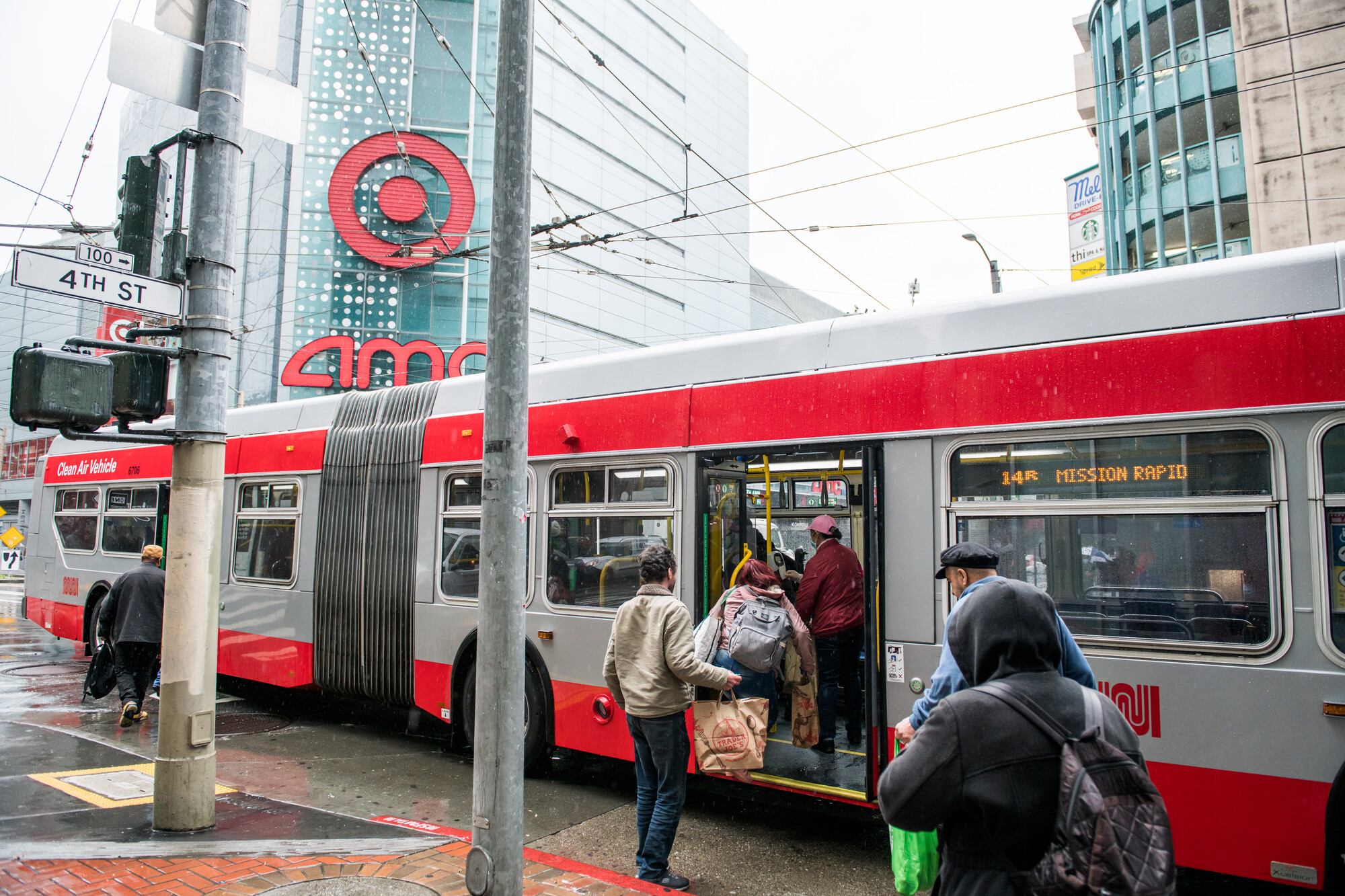
In a bid to crack down on drivers who block Muni bus stops and transit-only lanes, the San Francisco Municipal Transportation Agency Board of Directors is expected to vote Tuesday on whether to expand the number of bus-mounted cameras the agency uses to cite violators and integrate artificial intelligence.
The agency is considering a $55 million contract with Hayden AI, a San Francisco-based transportation software company, to help enforce the city’s bus zone laws.
”It’s a real challenge,” Viktoriya Wise, Director of Streets with SFMTA, said. “That means that our buses can’t pull up to the curb, and elderly people or people in wheelchairs have a hard time getting on. Additionally, when drivers park in transit-only lanes, buses have to slow down and get in a mixed lane of traffic.”
SFMTA has operated the Transit-Only Lane Enforcement program since 2008. It already uses continuously recording cameras mounted on buses that serve the city’s transit-only lane network to record drivers who illegally block bus stops and transit lanes. Wise said SFMTA parking control officers must manually retrieve the recordings from buses and review thousands of hours of footage each year to issue citations, which, the agency has claimed, limits the scale and consistency of enforcement.
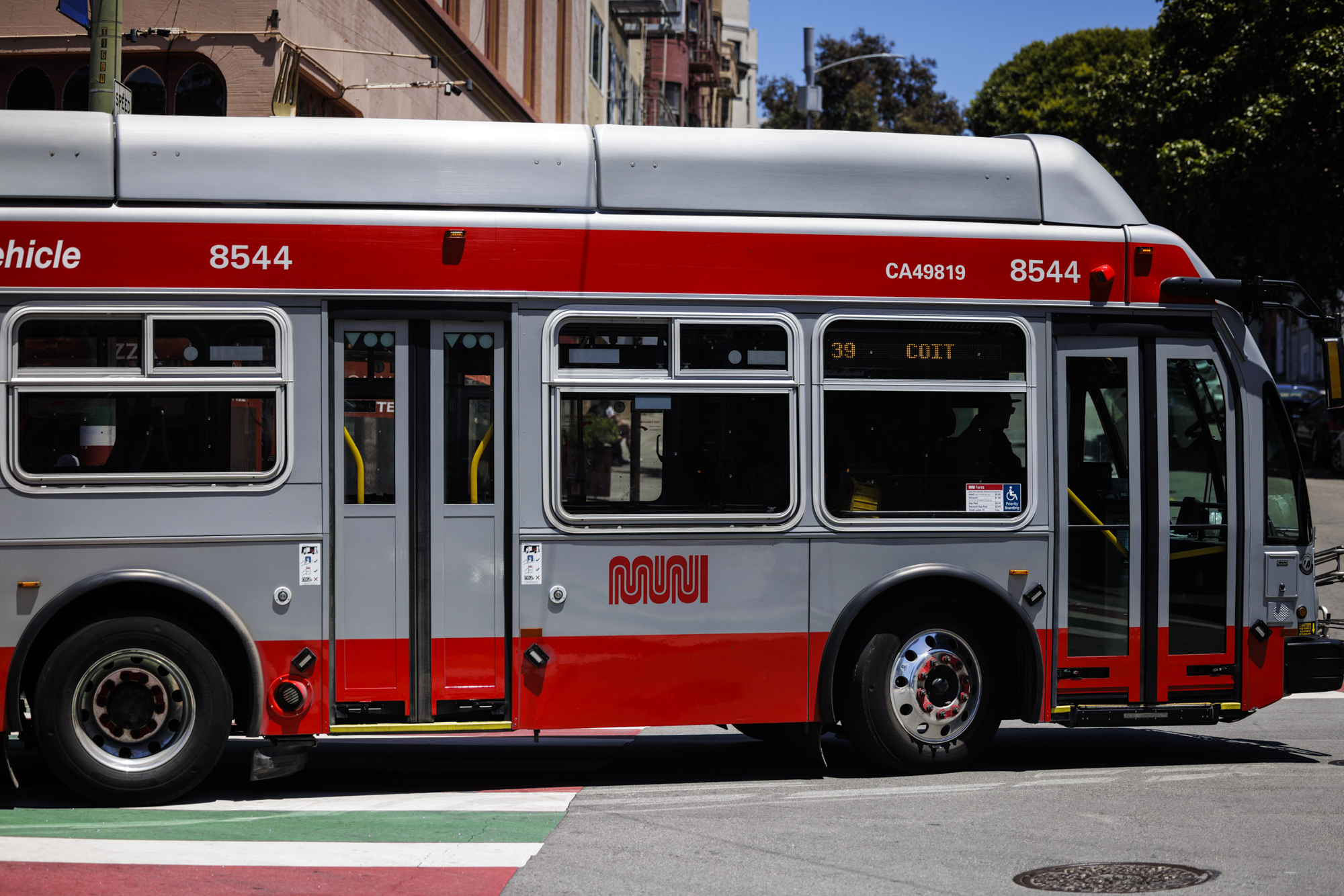
The proposed upgrade — called the “Next Generation Transit Lane and Transit Stop Enforcement System” — would use cameras powered by AI to automatically detect transit-lane and bus stop parking violations and digitally create and transmit “evidence packages” that would allow staff to process potentially up to five times more violations than the 6,000 to 8,000 currently processed each year.
The initial contract allows SFMTA to install the systems on 212 of its vehicles for a three-year contract period, with the option to extend for three one-year terms, and expand the cameras beyond buses that only serve transit-only lanes.
“Our technology is straightforward: We utilize forward-facing cameras (installed behind the windshield of the bus) and on-board edge processing to detect parking violations that obstruct bus lanes and bus stops, while the bus is moving. The only video that is recorded is short clips of potential violations,” said Charley Territo, chief growth officer at Hayden AI.

Twelve other transit agencies or municipalities nationwide, including AC Transit and New York City’s Metropolitan Transportation Authority, have contracted with Hayden AI to enforce bus zone violations.
Wise said SFMTA took “a lot of safety precautions” in terms of public privacy.
While the current cameras continuously record video, the new ones would only record video when they detect a violation. The cameras are designed to automatically blur pedestrians, drivers or unrelated license plates, and do not include any facial recognition or biometric identification, according to Wise.
SFMTA would own and control the data, and any citations would be reviewed by a parking control officer before being issued, Wise said.
If approved by the SFMTA Board of Directors, the program is expected to go before the San Francisco Board of Supervisors for final approval in February 2027. The SFMTA plans to tentatively launch a 60-day warning period and education campaign in May 2027, with citations expected to begin in July 2027.
The current fine for blocking a transit lane is $108, and $443 for blocking a bus stop. The SFMTA said it will be examining the fine schedule to propose reductions ahead of the program’s potential launch.
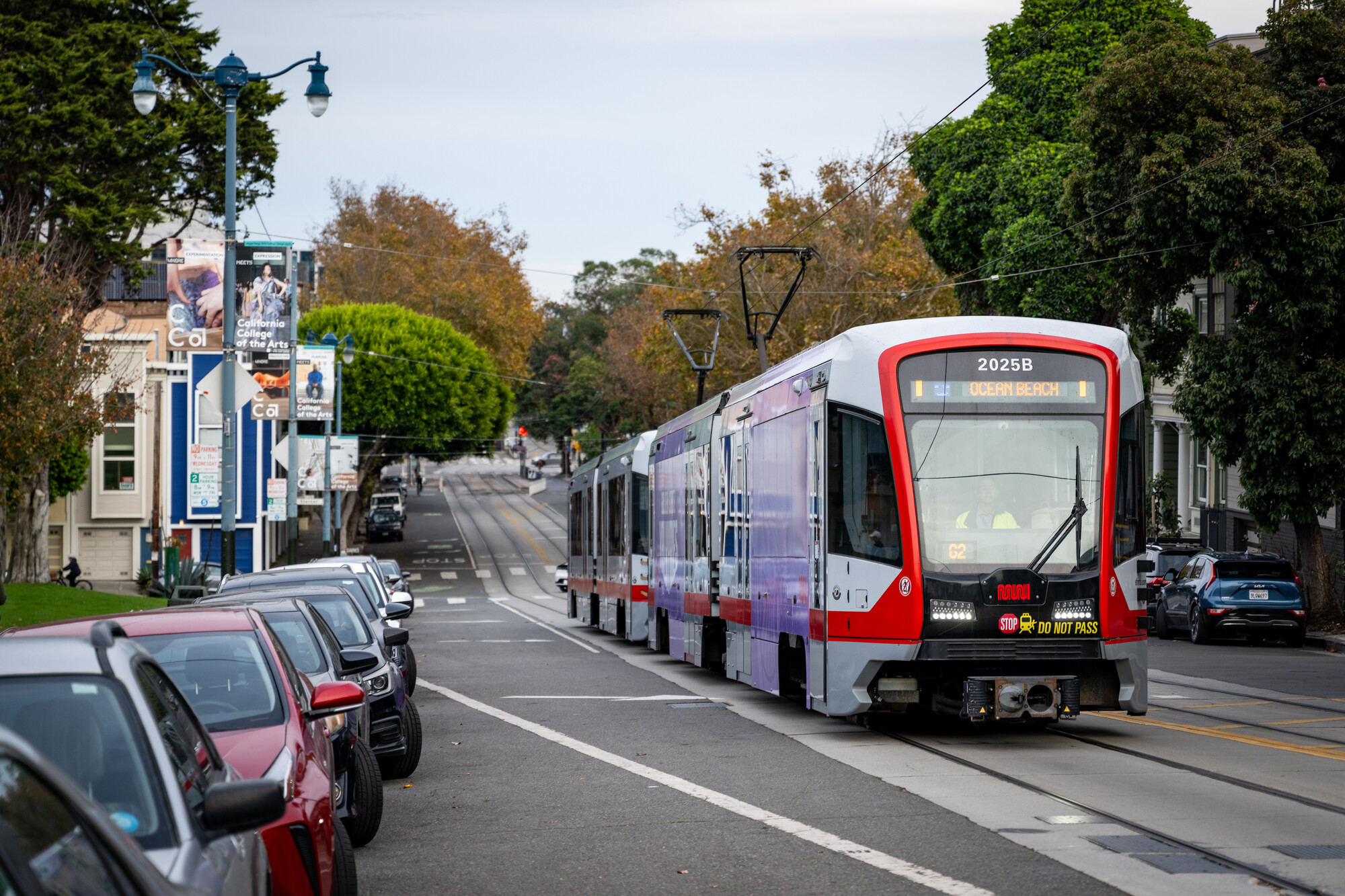
Wise pointed to the recent success of the city’s automated speed camera pilot, which has shown major drops in speeding at camera locations, as evidence that automated camera programs can lead to permanent behavior change in drivers.
Kip Oryall, 56, a resident of the city’s Tenderloin neighborhood, said he rides the 38-Geary Muni bus every day, and he often sees drivers blocking its transit-only lane.
“It’s for buses only, and it needs to be upheld,” Oryall said. “ People say, ‘Well, I want to get off here,’ and the driver can’t open the door. When there’s a car right in front of you, that’s frustrating.”