window.__IS_SSR__=true
window.__INITIAL_STATE__={
"attachmentsReducer": {
"audio_0": {
"type": "attachments",
"id": "audio_0",
"imgSizes": {
"kqedFullSize": {
"file": "https://ww2.kqed.org/news/wp-content/themes/KQED-unified/img/audio_bgs/background0.jpg"
}
}
},
"audio_1": {
"type": "attachments",
"id": "audio_1",
"imgSizes": {
"kqedFullSize": {
"file": "https://ww2.kqed.org/news/wp-content/themes/KQED-unified/img/audio_bgs/background1.jpg"
}
}
},
"audio_2": {
"type": "attachments",
"id": "audio_2",
"imgSizes": {
"kqedFullSize": {
"file": "https://ww2.kqed.org/news/wp-content/themes/KQED-unified/img/audio_bgs/background2.jpg"
}
}
},
"audio_3": {
"type": "attachments",
"id": "audio_3",
"imgSizes": {
"kqedFullSize": {
"file": "https://ww2.kqed.org/news/wp-content/themes/KQED-unified/img/audio_bgs/background3.jpg"
}
}
},
"audio_4": {
"type": "attachments",
"id": "audio_4",
"imgSizes": {
"kqedFullSize": {
"file": "https://ww2.kqed.org/news/wp-content/themes/KQED-unified/img/audio_bgs/background4.jpg"
}
}
},
"placeholder": {
"type": "attachments",
"id": "placeholder",
"imgSizes": {
"thumbnail": {
"file": "https://cdn.kqed.org/wp-content/uploads/2024/12/KQED-Default-Image-816638274-2000x1333-1-160x107.jpg",
"width": 160,
"height": 107,
"mimeType": "image/jpeg"
},
"medium": {
"file": "https://cdn.kqed.org/wp-content/uploads/2024/12/KQED-Default-Image-816638274-2000x1333-1-800x533.jpg",
"width": 800,
"height": 533,
"mimeType": "image/jpeg"
},
"medium_large": {
"file": "https://cdn.kqed.org/wp-content/uploads/2024/12/KQED-Default-Image-816638274-2000x1333-1-768x512.jpg",
"width": 768,
"height": 512,
"mimeType": "image/jpeg"
},
"large": {
"file": "https://cdn.kqed.org/wp-content/uploads/2024/12/KQED-Default-Image-816638274-2000x1333-1-1020x680.jpg",
"width": 1020,
"height": 680,
"mimeType": "image/jpeg"
},
"1536x1536": {
"file": "https://cdn.kqed.org/wp-content/uploads/2024/12/KQED-Default-Image-816638274-2000x1333-1-1536x1024.jpg",
"width": 1536,
"height": 1024,
"mimeType": "image/jpeg"
},
"fd-lrg": {
"file": "https://cdn.kqed.org/wp-content/uploads/2024/12/KQED-Default-Image-816638274-2000x1333-1-1536x1024.jpg",
"width": 1536,
"height": 1024,
"mimeType": "image/jpeg"
},
"fd-med": {
"file": "https://cdn.kqed.org/wp-content/uploads/2024/12/KQED-Default-Image-816638274-2000x1333-1-1020x680.jpg",
"width": 1020,
"height": 680,
"mimeType": "image/jpeg"
},
"fd-sm": {
"file": "https://cdn.kqed.org/wp-content/uploads/2024/12/KQED-Default-Image-816638274-2000x1333-1-800x533.jpg",
"width": 800,
"height": 533,
"mimeType": "image/jpeg"
},
"post-thumbnail": {
"file": "https://cdn.kqed.org/wp-content/uploads/2024/12/KQED-Default-Image-816638274-2000x1333-1-672x372.jpg",
"width": 672,
"height": 372,
"mimeType": "image/jpeg"
},
"twentyfourteen-full-width": {
"file": "https://cdn.kqed.org/wp-content/uploads/2024/12/KQED-Default-Image-816638274-2000x1333-1-1038x576.jpg",
"width": 1038,
"height": 576,
"mimeType": "image/jpeg"
},
"xxsmall": {
"file": "https://cdn.kqed.org/wp-content/uploads/2024/12/KQED-Default-Image-816638274-2000x1333-1-160x107.jpg",
"width": 160,
"height": 107,
"mimeType": "image/jpeg"
},
"xsmall": {
"file": "https://cdn.kqed.org/wp-content/uploads/2024/12/KQED-Default-Image-816638274-2000x1333-1-672x372.jpg",
"width": 672,
"height": 372,
"mimeType": "image/jpeg"
},
"small": {
"file": "https://cdn.kqed.org/wp-content/uploads/2024/12/KQED-Default-Image-816638274-2000x1333-1-672x372.jpg",
"width": 672,
"height": 372,
"mimeType": "image/jpeg"
},
"xlarge": {
"file": "https://cdn.kqed.org/wp-content/uploads/2024/12/KQED-Default-Image-816638274-2000x1333-1-1020x680.jpg",
"width": 1020,
"height": 680,
"mimeType": "image/jpeg"
},
"full-width": {
"file": "https://cdn.kqed.org/wp-content/uploads/2024/12/KQED-Default-Image-816638274-2000x1333-1-1920x1280.jpg",
"width": 1920,
"height": 1280,
"mimeType": "image/jpeg"
},
"guest-author-32": {
"file": "https://cdn.kqed.org/wp-content/uploads/2025/01/KQED-Default-Image-816638274-1333x1333-1-160x160.jpg",
"width": 32,
"height": 32,
"mimeType": "image/jpeg"
},
"guest-author-50": {
"file": "https://cdn.kqed.org/wp-content/uploads/2025/01/KQED-Default-Image-816638274-1333x1333-1-160x160.jpg",
"width": 50,
"height": 50,
"mimeType": "image/jpeg"
},
"guest-author-64": {
"file": "https://cdn.kqed.org/wp-content/uploads/2025/01/KQED-Default-Image-816638274-1333x1333-1-160x160.jpg",
"width": 64,
"height": 64,
"mimeType": "image/jpeg"
},
"guest-author-96": {
"file": "https://cdn.kqed.org/wp-content/uploads/2025/01/KQED-Default-Image-816638274-1333x1333-1-160x160.jpg",
"width": 96,
"height": 96,
"mimeType": "image/jpeg"
},
"guest-author-128": {
"file": "https://cdn.kqed.org/wp-content/uploads/2025/01/KQED-Default-Image-816638274-1333x1333-1-160x160.jpg",
"width": 128,
"height": 128,
"mimeType": "image/jpeg"
},
"detail": {
"file": "https://cdn.kqed.org/wp-content/uploads/2025/01/KQED-Default-Image-816638274-1333x1333-1-160x160.jpg",
"width": 160,
"height": 160,
"mimeType": "image/jpeg"
},
"kqedFullSize": {
"file": "https://cdn.kqed.org/wp-content/uploads/2024/12/KQED-Default-Image-816638274-2000x1333-1.jpg",
"width": 2000,
"height": 1333
}
}
},
"news_12061658": {
"type": "attachments",
"id": "news_12061658",
"meta": {
"index": "attachments_1716263798",
"site": "news",
"id": "12061658",
"found": true
},
"title": "072419-Rural-Doctor-AW-CM-10_scr",
"publishDate": 1761398405,
"status": "inherit",
"parent": 12061653,
"modified": 1761398442,
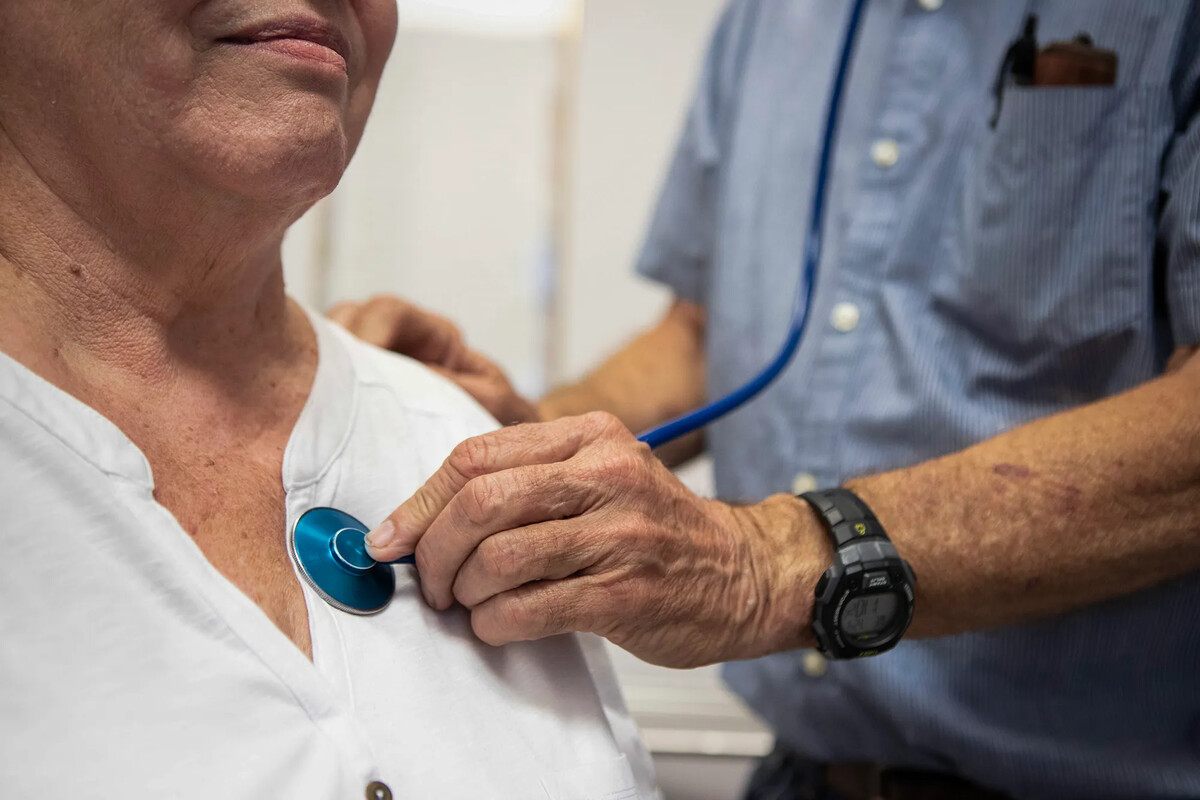
"caption": "A doctor listens to a patient's heartbeat at the Mountain Valley Health Center in Bieber on July 24, 2019. ",
"credit": "Anne Wernikoff for CalMatters",
"altTag": null,
"description": null,
"imgSizes": {
"thumbnail": {
"file": "https://cdn.kqed.org/wp-content/uploads/sites/10/2025/10/072419-Rural-Doctor-AW-CM-10_scr-160x107.jpg",
"width": 160,
"height": 107,
"mimeType": "image/jpeg"
},
"post-thumbnail": {
"file": "https://cdn.kqed.org/wp-content/uploads/sites/10/2025/10/072419-Rural-Doctor-AW-CM-10_scr-672x372.jpg",
"width": 672,
"height": 372,
"mimeType": "image/jpeg"
},
"twentyfourteen-full-width": {
"file": "https://cdn.kqed.org/wp-content/uploads/sites/10/2025/10/072419-Rural-Doctor-AW-CM-10_scr-1038x576.jpg",
"width": 1038,
"height": 576,
"mimeType": "image/jpeg"
},
"kqedFullSize": {
"file": "https://cdn.kqed.org/wp-content/uploads/sites/10/2025/10/072419-Rural-Doctor-AW-CM-10_scr.jpg",
"width": 1200,
"height": 800
}
},
"isLoading": false,
"fetchFailed": false
},
"news_12043126": {
"type": "attachments",
"id": "news_12043126",
"meta": {
"index": "attachments_1716263798",
"site": "news",
"id": "12043126",
"found": true
},
"title": "013_KQED_SanFranciscoMarinFoodBank_03182020_9229_qed",
"publishDate": 1749235559,
"status": "inherit",
"parent": 12043122,
"modified": 1749235572,
"caption": "Volunteers work to sort donated food at the San Francisco-Marin Food Bank in San Francisco's Dogpatch neighborhood on Wednesday, Mar. 18, 2020.",
"credit": "Beth LaBerge/KQED",
"altTag": null,
"description": null,
"imgSizes": {
"thumbnail": {
"file": "https://cdn.kqed.org/wp-content/uploads/sites/10/2025/06/013_KQED_SanFranciscoMarinFoodBank_03182020_9229_qed-160x107.jpg",
"width": 160,
"height": 107,
"mimeType": "image/jpeg"
},
"1536x1536": {
"file": "https://cdn.kqed.org/wp-content/uploads/sites/10/2025/06/013_KQED_SanFranciscoMarinFoodBank_03182020_9229_qed-1536x1024.jpg",
"width": 1536,
"height": 1024,
"mimeType": "image/jpeg"
},
"post-thumbnail": {
"file": "https://cdn.kqed.org/wp-content/uploads/sites/10/2025/06/013_KQED_SanFranciscoMarinFoodBank_03182020_9229_qed-672x372.jpg",
"width": 672,
"height": 372,
"mimeType": "image/jpeg"
},
"twentyfourteen-full-width": {
"file": "https://cdn.kqed.org/wp-content/uploads/sites/10/2025/06/013_KQED_SanFranciscoMarinFoodBank_03182020_9229_qed-1038x576.jpg",
"width": 1038,
"height": 576,
"mimeType": "image/jpeg"
},
"kqedFullSize": {
"file": "https://cdn.kqed.org/wp-content/uploads/sites/10/2025/06/013_KQED_SanFranciscoMarinFoodBank_03182020_9229_qed.jpg",
"width": 2000,
"height": 1333
}
},
"isLoading": false,
"fetchFailed": false
},
"news_12060772": {
"type": "attachments",
"id": "news_12060772",
"meta": {
"index": "attachments_1716263798",
"site": "news",
"id": "12060772",
"found": true
},
"title": "SNAP and EBT Accepted here sign. SNAP and Food Stamps provide nutrition benefits to supplement the budgets of disadvantaged families.",
"publishDate": 1761001618,
"status": "inherit",
"parent": 12060770,
"modified": 1761001667,
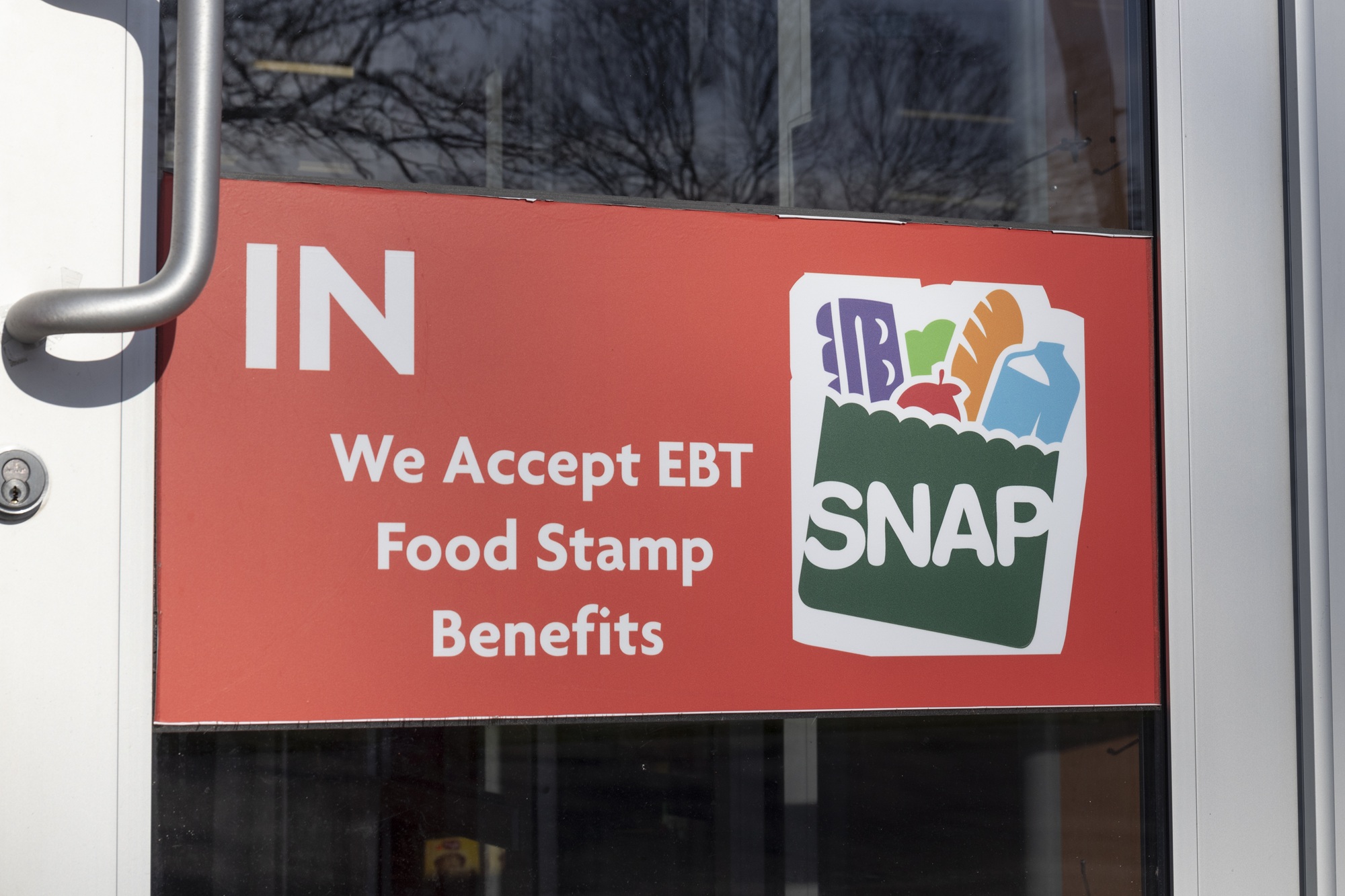
"caption": "SNAP and EBT Accepted here sign. SNAP and Food Stamps provide nutrition benefits to supplement the budgets of disadvantaged families.",
"credit": "Jet City Image/iStock Editorial via Getty Images Plus",
"altTag": null,
"description": null,
"imgSizes": {
"thumbnail": {
"file": "https://cdn.kqed.org/wp-content/uploads/sites/10/2025/10/SNAPGetty-160x107.jpg",
"width": 160,
"height": 107,
"mimeType": "image/jpeg"
},
"1536x1536": {
"file": "https://cdn.kqed.org/wp-content/uploads/sites/10/2025/10/SNAPGetty-1536x1024.jpg",
"width": 1536,
"height": 1024,
"mimeType": "image/jpeg"
},
"post-thumbnail": {
"file": "https://cdn.kqed.org/wp-content/uploads/sites/10/2025/10/SNAPGetty-672x372.jpg",
"width": 672,
"height": 372,
"mimeType": "image/jpeg"
},
"twentyfourteen-full-width": {
"file": "https://cdn.kqed.org/wp-content/uploads/sites/10/2025/10/SNAPGetty-1038x576.jpg",
"width": 1038,
"height": 576,
"mimeType": "image/jpeg"
},
"kqedFullSize": {
"file": "https://cdn.kqed.org/wp-content/uploads/sites/10/2025/10/SNAPGetty.jpg",
"width": 2000,
"height": 1333
}
},
"isLoading": false,
"fetchFailed": false
},
"news_12057954": {
"type": "attachments",
"id": "news_12057954",
"meta": {
"index": "attachments_1716263798",
"site": "news",
"id": "12057954",
"found": true
},
"title": "20250923_MEDICAIDDISABILITY_GC-15-KQED",
"publishDate": 1759164379,
"status": "inherit",
"parent": 0,
"modified": 1759165152,
"caption": "Art student Douglas Morales, left, works on a painting in the art studio at the Arc in San Francisco on Sept. 23, 2025.",
"credit": "Gina Castro/KQED",
"altTag": null,
"description": null,
"imgSizes": {
"thumbnail": {
"file": "https://cdn.kqed.org/wp-content/uploads/sites/10/2025/09/20250923_MEDICAIDDISABILITY_GC-15-KQED-160x107.jpg",
"width": 160,
"height": 107,
"mimeType": "image/jpeg"
},
"1536x1536": {
"file": "https://cdn.kqed.org/wp-content/uploads/sites/10/2025/09/20250923_MEDICAIDDISABILITY_GC-15-KQED-1536x1024.jpg",
"width": 1536,
"height": 1024,
"mimeType": "image/jpeg"
},
"post-thumbnail": {
"file": "https://cdn.kqed.org/wp-content/uploads/sites/10/2025/09/20250923_MEDICAIDDISABILITY_GC-15-KQED-672x372.jpg",
"width": 672,
"height": 372,
"mimeType": "image/jpeg"
},
"twentyfourteen-full-width": {
"file": "https://cdn.kqed.org/wp-content/uploads/sites/10/2025/09/20250923_MEDICAIDDISABILITY_GC-15-KQED-1038x576.jpg",
"width": 1038,
"height": 576,
"mimeType": "image/jpeg"
},
"kqedFullSize": {
"file": "https://cdn.kqed.org/wp-content/uploads/sites/10/2025/09/20250923_MEDICAIDDISABILITY_GC-15-KQED.jpg",
"width": 2000,
"height": 1333
}
},
"isLoading": false,
"fetchFailed": false
},
"news_12057950": {
"type": "attachments",
"id": "news_12057950",
"meta": {
"index": "attachments_1716263798",
"site": "news",
"id": "12057950",
"found": true
},
"title": "20250923_MEDICAIDDISABILITY_GC-7-KQED",
"publishDate": 1759164363,
"status": "inherit",
"parent": 12058930,
"modified": 1759880440,
"caption": "Students Ruth Defoe, left, and Douglas Morales, right, work on art in the art studio at the Arc in San Francisco on Sept. 23, 2025.",
"credit": "Gina Castro/KQED",
"altTag": null,
"description": null,
"imgSizes": {
"thumbnail": {
"file": "https://cdn.kqed.org/wp-content/uploads/sites/10/2025/09/20250923_MEDICAIDDISABILITY_GC-7-KQED-160x107.jpg",
"width": 160,
"height": 107,
"mimeType": "image/jpeg"
},
"1536x1536": {
"file": "https://cdn.kqed.org/wp-content/uploads/sites/10/2025/09/20250923_MEDICAIDDISABILITY_GC-7-KQED-1536x1024.jpg",
"width": 1536,
"height": 1024,
"mimeType": "image/jpeg"
},
"post-thumbnail": {
"file": "https://cdn.kqed.org/wp-content/uploads/sites/10/2025/09/20250923_MEDICAIDDISABILITY_GC-7-KQED-672x372.jpg",
"width": 672,
"height": 372,
"mimeType": "image/jpeg"
},
"twentyfourteen-full-width": {
"file": "https://cdn.kqed.org/wp-content/uploads/sites/10/2025/09/20250923_MEDICAIDDISABILITY_GC-7-KQED-1038x576.jpg",
"width": 1038,
"height": 576,
"mimeType": "image/jpeg"
},
"kqedFullSize": {
"file": "https://cdn.kqed.org/wp-content/uploads/sites/10/2025/09/20250923_MEDICAIDDISABILITY_GC-7-KQED.jpg",
"width": 2000,
"height": 1333
}
},
"isLoading": false,
"fetchFailed": false
},
"news_12052592": {
"type": "attachments",
"id": "news_12052592",
"meta": {
"index": "attachments_1716263798",
"site": "news",
"id": "12052592",
"found": true
},
"title": "Covered California Enroll Here signs are seen outside the Life Long West Berkeley Family Practice on Friday, January 13, 2017 in Berkeley, Calif.",
"publishDate": 1755474359,
"status": "inherit",
"parent": 12052590,
"modified": 1755630607,
"caption": "Carteles de Covered California en Berkeley el 13 de enero de 2017. A partir del 31 de agosto, los beneficiarios de DACA ya no podrán encontrar planes de salud a través de Covered California. Hay algunas opciones limitadas disponibles.",
"credit": "Lea Suzuki/The San Francisco Chronicle vía Getty Images",
"altTag": "Una persona camina sobre la acera, a lado del patio de una casa donde está el letrero de Covered California.",
"description": null,
"imgSizes": {
"thumbnail": {
"file": "https://cdn.kqed.org/wp-content/uploads/sites/10/2025/08/Covered-CA-lawn-sign-160x99.jpg",
"width": 160,
"height": 99,
"mimeType": "image/jpeg"
},
"1536x1536": {
"file": "https://cdn.kqed.org/wp-content/uploads/sites/10/2025/08/Covered-CA-lawn-sign-1536x946.jpg",
"width": 1536,
"height": 946,
"mimeType": "image/jpeg"
},
"post-thumbnail": {
"file": "https://cdn.kqed.org/wp-content/uploads/sites/10/2025/08/Covered-CA-lawn-sign-672x372.jpg",
"width": 672,
"height": 372,
"mimeType": "image/jpeg"
},
"twentyfourteen-full-width": {
"file": "https://cdn.kqed.org/wp-content/uploads/sites/10/2025/08/Covered-CA-lawn-sign-1038x576.jpg",
"width": 1038,
"height": 576,
"mimeType": "image/jpeg"
},
"kqedFullSize": {
"file": "https://cdn.kqed.org/wp-content/uploads/sites/10/2025/08/Covered-CA-lawn-sign.jpg",
"width": 2000,
"height": 1232
}
},
"isLoading": false,
"fetchFailed": false
},
"news_12051683": {
"type": "attachments",
"id": "news_12051683",
"meta": {
"index": "attachments_1716263798",
"site": "news",
"id": "12051683",
"found": true
},
"title": "medicaid-cuts-6899e99b95904",
"publishDate": 1754917318,
"status": "inherit",
"parent": 12051681,
"modified": 1754917376,
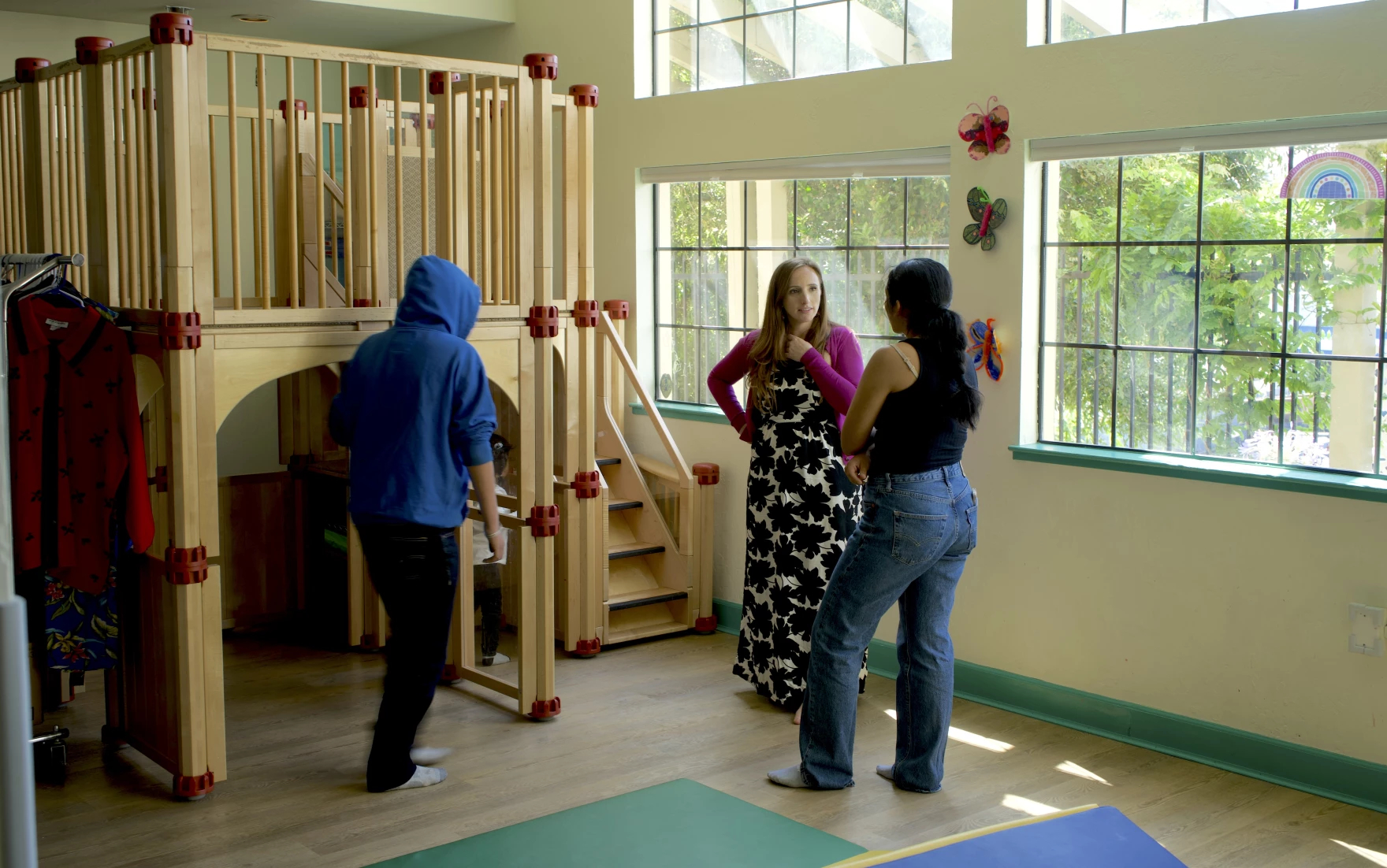
"caption": "Raíces y Cariño, a community center in Watsonville, offers supportive services for families, including recreational activities and support for new parents. Founder Nora Yerena (center) worries that cuts to Medi-Cal could affect their services.",
"credit": "Ngozi Cole/KAZU",
"altTag": null,
"description": null,
"imgSizes": {
"thumbnail": {
"file": "https://cdn.kqed.org/wp-content/uploads/sites/10/2025/08/medicaid-cuts-6899e99b95904-160x100.jpg",
"width": 160,
"height": 100,
"mimeType": "image/jpeg"
},
"1536x1536": {
"file": "https://cdn.kqed.org/wp-content/uploads/sites/10/2025/08/medicaid-cuts-6899e99b95904-1536x962.jpg",
"width": 1536,
"height": 962,
"mimeType": "image/jpeg"
},
"post-thumbnail": {
"file": "https://cdn.kqed.org/wp-content/uploads/sites/10/2025/08/medicaid-cuts-6899e99b95904-672x372.jpg",
"width": 672,
"height": 372,
"mimeType": "image/jpeg"
},
"twentyfourteen-full-width": {
"file": "https://cdn.kqed.org/wp-content/uploads/sites/10/2025/08/medicaid-cuts-6899e99b95904-1038x576.jpg",
"width": 1038,
"height": 576,
"mimeType": "image/jpeg"
},
"kqedFullSize": {
"file": "https://cdn.kqed.org/wp-content/uploads/sites/10/2025/08/medicaid-cuts-6899e99b95904.jpg",
"width": 1760,
"height": 1102
}
},
"isLoading": false,
"fetchFailed": false
},
"news_12051123": {
"type": "attachments",
"id": "news_12051123",
"meta": {
"index": "attachments_1716263798",
"site": "news",
"id": "12051123",
"found": true
},
"title": "Covered California Enroll Here signs are seen outside the Life Long West Berkeley Family Practice on Friday, January 13, 2017 in Berkeley, Calif.",
"publishDate": 1754503023,
"status": "inherit",
"parent": 12050242,
"modified": 1781122466,
"caption": "Covered California Enroll Here signs in Berkeley on Jan. 13, 2017.",
"credit": "Lea Suzuki/The San Francisco Chronicle via Getty Images",
"altTag": null,
"description": null,
"imgSizes": {
"thumbnail": {
"file": "https://cdn.kqed.org/wp-content/uploads/sites/10/2025/08/GETTYIMAGES-1322125650-KQED-160x99.jpg",
"width": 160,
"height": 99,
"mimeType": "image/jpeg"
},
"1536x1536": {
"file": "https://cdn.kqed.org/wp-content/uploads/sites/10/2025/08/GETTYIMAGES-1322125650-KQED-1536x946.jpg",
"width": 1536,
"height": 946,
"mimeType": "image/jpeg"
},
"post-thumbnail": {
"file": "https://cdn.kqed.org/wp-content/uploads/sites/10/2025/08/GETTYIMAGES-1322125650-KQED-672x372.jpg",
"width": 672,
"height": 372,
"mimeType": "image/jpeg"
},
"twentyfourteen-full-width": {
"file": "https://cdn.kqed.org/wp-content/uploads/sites/10/2025/08/GETTYIMAGES-1322125650-KQED-1038x576.jpg",
"width": 1038,
"height": 576,
"mimeType": "image/jpeg"
},
"kqedFullSize": {
"file": "https://cdn.kqed.org/wp-content/uploads/sites/10/2025/08/GETTYIMAGES-1322125650-KQED.jpg",
"width": 2000,
"height": 1232
}
},
"isLoading": false,
"fetchFailed": false
},
"news_12040284": {
"type": "attachments",
"id": "news_12040284",
"meta": {
"index": "attachments_1716263798",
"site": "news",
"id": "12040284",
"found": true
},
"title": "UCSF Medical Center at Mission Bay in San Francisco on April 24, 2025.",
"publishDate": 1747328580,
"status": "inherit",
"parent": 0,
"modified": 1747328602,
"caption": "UCSF Medical Center at Mission Bay in San Francisco on April 24, 2025.",
"credit": "Gina Castro/KQED",
"altTag": null,
"description": null,
"imgSizes": {
"medium": {
"file": "https://cdn.kqed.org/wp-content/uploads/sites/10/2025/05/20250424_UCSFFile_GC-16_qed-800x533.jpg",
"width": 800,
"height": 533,
"mimeType": "image/jpeg"
},
"large": {
"file": "https://cdn.kqed.org/wp-content/uploads/sites/10/2025/05/20250424_UCSFFile_GC-16_qed-1020x680.jpg",
"width": 1020,
"height": 680,
"mimeType": "image/jpeg"
},
"thumbnail": {
"file": "https://cdn.kqed.org/wp-content/uploads/sites/10/2025/05/20250424_UCSFFile_GC-16_qed-160x107.jpg",
"width": 160,
"height": 107,
"mimeType": "image/jpeg"
},
"1536x1536": {
"file": "https://cdn.kqed.org/wp-content/uploads/sites/10/2025/05/20250424_UCSFFile_GC-16_qed-1536x1024.jpg",
"width": 1536,
"height": 1024,
"mimeType": "image/jpeg"
},
"post-thumbnail": {
"file": "https://cdn.kqed.org/wp-content/uploads/sites/10/2025/05/20250424_UCSFFile_GC-16_qed-672x372.jpg",
"width": 672,
"height": 372,
"mimeType": "image/jpeg"
},
"twentyfourteen-full-width": {
"file": "https://cdn.kqed.org/wp-content/uploads/sites/10/2025/05/20250424_UCSFFile_GC-16_qed-1038x576.jpg",
"width": 1038,
"height": 576,
"mimeType": "image/jpeg"
},
"full-width": {
"file": "https://cdn.kqed.org/wp-content/uploads/sites/10/2025/05/20250424_UCSFFile_GC-16_qed-1920x1280.jpg",
"width": 1920,
"height": 1280,
"mimeType": "image/jpeg"
},
"kqedFullSize": {
"file": "https://cdn.kqed.org/wp-content/uploads/sites/10/2025/05/20250424_UCSFFile_GC-16_qed.jpg",
"width": 2000,
"height": 1333
}
},
"isLoading": false,
"fetchFailed": false
},
"news_12049853": {
"type": "attachments",
"id": "news_12049853",
"meta": {
"index": "attachments_1716263798",
"site": "news",
"id": "12049853",
"found": true
},
"title": "250725-Planned Parenthood Closures-MD-02-KQED",
"publishDate": 1753480985,
"status": "inherit",
"parent": 0,
"modified": 1753481051,
"caption": "A Planned Parenthood location in South San Francisco on July 25, 2025.",
"credit": "Martin do Nascimento/KQED",
"altTag": null,
"description": null,
"imgSizes": {
"thumbnail": {
"file": "https://cdn.kqed.org/wp-content/uploads/sites/10/2025/07/250725-Planned-Parenthood-Closures-MD-02-KQED-160x107.jpg",
"width": 160,
"height": 107,
"mimeType": "image/jpeg"
},
"1536x1536": {
"file": "https://cdn.kqed.org/wp-content/uploads/sites/10/2025/07/250725-Planned-Parenthood-Closures-MD-02-KQED-1536x1025.jpg",
"width": 1536,
"height": 1025,
"mimeType": "image/jpeg"
},
"post-thumbnail": {
"file": "https://cdn.kqed.org/wp-content/uploads/sites/10/2025/07/250725-Planned-Parenthood-Closures-MD-02-KQED-672x372.jpg",
"width": 672,
"height": 372,
"mimeType": "image/jpeg"
},
"twentyfourteen-full-width": {
"file": "https://cdn.kqed.org/wp-content/uploads/sites/10/2025/07/250725-Planned-Parenthood-Closures-MD-02-KQED-1038x576.jpg",
"width": 1038,
"height": 576,
"mimeType": "image/jpeg"
},
"kqedFullSize": {
"file": "https://cdn.kqed.org/wp-content/uploads/sites/10/2025/07/250725-Planned-Parenthood-Closures-MD-02-KQED.jpg",
"width": 2000,
"height": 1334
}
},
"isLoading": false,
"fetchFailed": false
},
"news_12049680": {
"type": "attachments",
"id": "news_12049680",
"meta": {
"index": "attachments_1716263798",
"site": "news",
"id": "12049680",
"found": true
},
"title": "033023-Hollister-Hospital-LV_CM_06",
"publishDate": 1753395671,
"status": "inherit",
"parent": 12049673,
"modified": 1759436131,
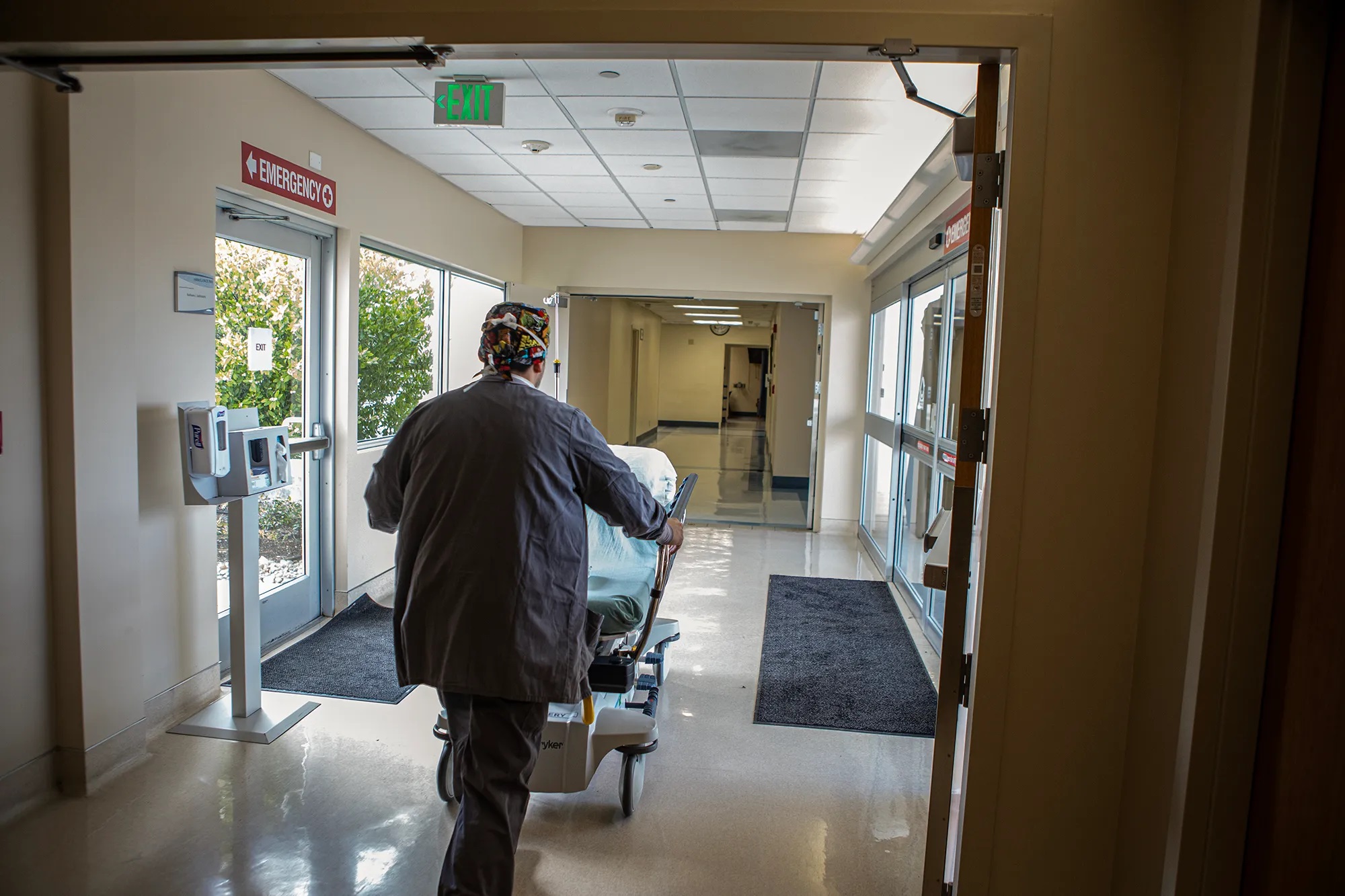
"caption": "A medical worker pushing a bed through the corridors of Hazel Hawkins Memorial Hospital in Hollister on March 30, 2023.",
"credit": "Larry Valenzuela, CalMatters/CatchLight Local",
"altTag": null,
"description": null,
"imgSizes": {
"thumbnail": {
"file": "https://cdn.kqed.org/wp-content/uploads/sites/10/2025/07/033023-Hollister-Hospital-LV_CM_06-160x107.jpg",
"width": 160,
"height": 107,
"mimeType": "image/jpeg"
},
"1536x1536": {
"file": "https://cdn.kqed.org/wp-content/uploads/sites/10/2025/07/033023-Hollister-Hospital-LV_CM_06-1536x1024.jpg",
"width": 1536,
"height": 1024,
"mimeType": "image/jpeg"
},
"post-thumbnail": {
"file": "https://cdn.kqed.org/wp-content/uploads/sites/10/2025/07/033023-Hollister-Hospital-LV_CM_06-672x372.jpg",
"width": 672,
"height": 372,
"mimeType": "image/jpeg"
},
"twentyfourteen-full-width": {
"file": "https://cdn.kqed.org/wp-content/uploads/sites/10/2025/07/033023-Hollister-Hospital-LV_CM_06-1038x576.jpg",
"width": 1038,
"height": 576,
"mimeType": "image/jpeg"
},
"kqedFullSize": {
"file": "https://cdn.kqed.org/wp-content/uploads/sites/10/2025/07/033023-Hollister-Hospital-LV_CM_06.jpg",
"width": 2000,
"height": 1333
}
},
"isLoading": false,
"fetchFailed": false
},
"news_12040844": {
"type": "attachments",
"id": "news_12040844",
"meta": {
"index": "attachments_1716263798",
"site": "news",
"id": "12040844",
"found": true
},
"title": "npr.brightspotcdn",
"publishDate": 1747752360,
"status": "inherit",
"parent": 12040842,
"modified": 1753218453,
"caption": "Protesters gather outside Kern Medical Hospital in Bakersfield. They're opposing proposed GOP cuts to Medicaid, which provides health insurance to lower-income Americans. \n",
"credit": "Joshua Yeager/KVPR",
"altTag": null,
"description": "Protesters gather outside of Kern Medical Hospital in Bakersfield. They're opposing proposed GOP cuts to Medicaid, which provides health insurance to lower-income Americans. \n",
"imgSizes": {
"medium": {
"file": "https://cdn.kqed.org/wp-content/uploads/sites/10/2025/05/npr.brightspotcdn-800x534.jpg",
"width": 800,
"height": 534,
"mimeType": "image/jpeg"
},
"large": {
"file": "https://cdn.kqed.org/wp-content/uploads/sites/10/2025/05/npr.brightspotcdn-1020x680.jpg",
"width": 1020,
"height": 680,
"mimeType": "image/jpeg"
},
"thumbnail": {
"file": "https://cdn.kqed.org/wp-content/uploads/sites/10/2025/05/npr.brightspotcdn-160x107.jpg",
"width": 160,
"height": 107,
"mimeType": "image/jpeg"
},
"1536x1536": {
"file": "https://cdn.kqed.org/wp-content/uploads/sites/10/2025/05/npr.brightspotcdn-1536x1025.jpg",
"width": 1536,
"height": 1025,
"mimeType": "image/jpeg"
},
"post-thumbnail": {
"file": "https://cdn.kqed.org/wp-content/uploads/sites/10/2025/05/npr.brightspotcdn-672x372.jpg",
"width": 672,
"height": 372,
"mimeType": "image/jpeg"
},
"twentyfourteen-full-width": {
"file": "https://cdn.kqed.org/wp-content/uploads/sites/10/2025/05/npr.brightspotcdn-1038x576.jpg",
"width": 1038,
"height": 576,
"mimeType": "image/jpeg"
},
"kqedFullSize": {
"file": "https://cdn.kqed.org/wp-content/uploads/sites/10/2025/05/npr.brightspotcdn.jpg",
"width": 1760,
"height": 1174
}
},
"isLoading": false,
"fetchFailed": false
}
},
"audioPlayerReducer": {
"postId": "stream_live",
"isPaused": true,
"isPlaying": false,
"pfsActive": false,
"pledgeModalIsOpen": true,
"playerDrawerIsOpen": false,
"liveAudioPlayStartedAt": 0,
"liveAudioPlayContext": ""
},
"authorsReducer": {
"byline_news_12061653": {
"type": "authors",
"id": "byline_news_12061653",
"meta": {
"override": true
},
"slug": "byline_news_12061653",
"name": "Kristen Hwang, CalMatters",
"isLoading": false
},
"byline_news_12049673": {
"type": "authors",
"id": "byline_news_12049673",
"meta": {
"override": true
},
"slug": "byline_news_12049673",
"name": "Ana B. Ibarra and Kristen Hwang, CalMatters",
"isLoading": false
},
"gmarzorati": {
"type": "authors",
"id": "227",
"meta": {
"index": "authors_1716337520",
"id": "227",
"found": true
},
"name": "Guy Marzorati",
"firstName": "Guy",
"lastName": "Marzorati",
"slug": "gmarzorati",
"email": "gmarzorati@KQED.org",
"display_author_email": true,
"staff_mastheads": [
"news"
],
"title": "Correspondent",
"bio": "Guy Marzorati is a correspondent on KQED's California Politics and Government Desk, based in San Jose. A graduate of Santa Clara University, Guy joined KQED in 2013. He reports on state and local politics and produces KQED's digital voter guide.",
"avatar": "https://secure.gravatar.com/avatar/e7038b8dbfd55b104369b76b1cd0b9de?s=600&d=blank&r=g",
"twitter": "guymarzorati",
"facebook": null,
"instagram": null,
"linkedin": null,
"sites": [
{
"site": "",
"roles": [
"editor"
]
},
{
"site": "news",
"roles": [
"editor"
]
},
{
"site": "science",
"roles": [
"editor"
]
},
{
"site": "forum",
"roles": [
"editor"
]
},
{
"site": "elections",
"roles": [
"editor"
]
},
{
"site": "liveblog",
"roles": [
"editor"
]
}
],
"headData": {
"title": "Guy Marzorati | KQED",
"description": "Correspondent",
"ogImgSrc": "https://secure.gravatar.com/avatar/e7038b8dbfd55b104369b76b1cd0b9de?s=600&d=blank&r=g",
"twImgSrc": "https://secure.gravatar.com/avatar/e7038b8dbfd55b104369b76b1cd0b9de?s=600&d=blank&r=g"
},
"isLoading": false,
"link": "/author/gmarzorati"
},
"carlysevern": {
"type": "authors",
"id": "3243",
"meta": {
"index": "authors_1716337520",
"id": "3243",
"found": true
},
"name": "Carly Severn",
"firstName": "Carly",
"lastName": "Severn",
"slug": "carlysevern",
"email": "csevern@kqed.org",
"display_author_email": false,
"staff_mastheads": [
"news"
],
"title": "Senior Editor, Audience News ",
"bio": "Carly is KQED's Senior Editor of Audience News on the Digital News team, and has reported for the California Report Magazine, Bay Curious and KQED Arts. She's formerly the host of \u003ca href=\"http://ww2.kqed.org/pop/category/the-cooler/\" rel=\"noopener noreferrer\">The Cooler\u003c/a> podcast.",
"avatar": "https://secure.gravatar.com/avatar/54037bf5c128fe678f0ef26cec97a93f2e7f220a22d7285703328f12c42c1b1d?s=600&d=blank&r=g",
"twitter": "teacupinthebay",
"bluesky": null,
"facebook": null,
"instagram": null,
"linkedin": null,
"sites": [
{
"site": "",
"roles": [
"editor"
]
},
{
"site": "arts",
"roles": [
"editor"
]
},
{
"site": "news",
"roles": [
"administrator"
]
},
{
"site": "pop",
"roles": [
"editor"
]
},
{
"site": "futureofyou",
"roles": [
"editor"
]
},
{
"site": "about",
"roles": [
"administrator"
]
},
{
"site": "mindshift",
"roles": [
"editor"
]
},
{
"site": "bayareabites",
"roles": [
"editor"
]
},
{
"site": "stateofhealth",
"roles": [
"editor"
]
},
{
"site": "science",
"roles": [
"editor"
]
},
{
"site": "food",
"roles": [
"contributor"
]
},
{
"site": "forum",
"roles": [
"editor"
]
},
{
"site": "perspectives",
"roles": [
"administrator"
]
},
{
"site": "liveblog",
"roles": [
"editor"
]
}
],
"headData": {
"title": "Carly Severn | KQED",
"description": "Senior Editor, Audience News ",
"ogImgSrc": "https://secure.gravatar.com/avatar/54037bf5c128fe678f0ef26cec97a93f2e7f220a22d7285703328f12c42c1b1d?s=600&d=blank&r=g",
"twImgSrc": "https://secure.gravatar.com/avatar/54037bf5c128fe678f0ef26cec97a93f2e7f220a22d7285703328f12c42c1b1d?s=600&d=blank&r=g"
},
"isLoading": false,
"link": "/author/carlysevern"
},
"ccabreralomeli": {
"type": "authors",
"id": "11708",
"meta": {
"index": "authors_1716337520",
"id": "11708",
"found": true
},
"name": "Carlos Cabrera-Lomelí",
"firstName": "Carlos",
"lastName": "Cabrera-Lomelí",
"slug": "ccabreralomeli",
"email": "ccabreralomeli@KQED.org",
"display_author_email": true,
"staff_mastheads": [
"news"
],
"title": "Community Reporter",
"bio": "Carlos Cabrera-Lomelí is a community reporter with KQED's digital engagement team. He also reports and co-produces for KQED's bilingual news hub KQED en Español. He grew up in San Francisco's Mission District and has previously worked with Univision, 48 Hills and REFORMA in Mexico City.",
"avatar": "https://secure.gravatar.com/avatar/c309be9665e484f887b818c89e273ecc673004f426f36b24d00a4d813a2e0518?s=600&d=blank&r=g",
"twitter": "@LomeliCabrera",
"bluesky": null,
"facebook": null,
"instagram": null,
"linkedin": null,
"sites": [
{
"site": "arts",
"roles": [
"editor"
]
},
{
"site": "news",
"roles": [
"editor"
]
},
{
"site": "about",
"roles": [
"editor"
]
},
{
"site": "science",
"roles": [
"editor"
]
},
{
"site": "perspectives",
"roles": [
"editor"
]
},
{
"site": "elections",
"roles": [
"editor"
]
},
{
"site": "liveblog",
"roles": [
"contributor"
]
}
],
"headData": {
"title": "Carlos Cabrera-Lomelí | KQED",
"description": "Community Reporter",
"ogImgSrc": "https://secure.gravatar.com/avatar/c309be9665e484f887b818c89e273ecc673004f426f36b24d00a4d813a2e0518?s=600&d=blank&r=g",
"twImgSrc": "https://secure.gravatar.com/avatar/c309be9665e484f887b818c89e273ecc673004f426f36b24d00a4d813a2e0518?s=600&d=blank&r=g"
},
"isLoading": false,
"link": "/author/ccabreralomeli"
},
"kmizuguchi": {
"type": "authors",
"id": "11739",
"meta": {
"index": "authors_1716337520",
"id": "11739",
"found": true
},
"name": "Keith Mizuguchi",
"firstName": "Keith",
"lastName": "Mizuguchi",
"slug": "kmizuguchi",
"email": "kmizuguchi@kqed.org",
"display_author_email": false,
"staff_mastheads": [],
"title": "KQED Contributor",
"bio": null,
"avatar": "https://secure.gravatar.com/avatar/64d8a7de0723d4099b9fe4e915136103febcc20809abce228ee4415bcb237023?s=600&d=blank&r=g",
"twitter": null,
"bluesky": null,
"facebook": null,
"instagram": null,
"linkedin": null,
"sites": [
{
"site": "news",
"roles": [
"editor"
]
},
{
"site": "science",
"roles": [
"editor"
]
}
],
"headData": {
"title": "Keith Mizuguchi | KQED",
"description": "KQED Contributor",
"ogImgSrc": "https://secure.gravatar.com/avatar/64d8a7de0723d4099b9fe4e915136103febcc20809abce228ee4415bcb237023?s=600&d=blank&r=g",
"twImgSrc": "https://secure.gravatar.com/avatar/64d8a7de0723d4099b9fe4e915136103febcc20809abce228ee4415bcb237023?s=600&d=blank&r=g"
},
"isLoading": false,
"link": "/author/kmizuguchi"
},
"ibloom": {
"type": "authors",
"id": "11805",
"meta": {
"index": "authors_1716337520",
"id": "11805",
"found": true
},
"name": "Izzy Bloom",
"firstName": "Izzy",
"lastName": "Bloom",
"slug": "ibloom",
"email": "ibloom@kqed.org",
"display_author_email": false,
"staff_mastheads": [],
"title": "KQED Reporter & Producer",
"bio": "Izzy is a reporter and producer on KQED's California Politics & Government Desk. She joined the desk in 2024 to produce Political Breakdown, covering local and national elections and attending the RNC and DNC in Milwaukee and Chicago. \r\n\r\nBefore that, Izzy was a producer on The California Report and reported long-form stories for The California Report Magazine. She was a finalist for the Third Coast/Richard H. Driehaus Foundation Competition and was awarded for her reporting on indigenous land back by the Society of Professional Journalists. Izzy received her master's in journalism from the University of California, Berkeley.",
"avatar": "https://secure.gravatar.com/avatar/cc4d272ca430783ee1a8efac470a6b1e0fdd082c3beb61da019801d0ff751c8c?s=600&d=blank&r=g",
"twitter": null,
"bluesky": null,
"facebook": null,
"instagram": null,
"linkedin": null,
"sites": [
{
"site": "news",
"roles": [
"editor"
]
},
{
"site": "perspectives",
"roles": [
"editor"
]
}
],
"headData": {
"title": "Izzy Bloom | KQED",
"description": "KQED Reporter & Producer",
"ogImgSrc": "https://secure.gravatar.com/avatar/cc4d272ca430783ee1a8efac470a6b1e0fdd082c3beb61da019801d0ff751c8c?s=600&d=blank&r=g",
"twImgSrc": "https://secure.gravatar.com/avatar/cc4d272ca430783ee1a8efac470a6b1e0fdd082c3beb61da019801d0ff751c8c?s=600&d=blank&r=g"
},
"isLoading": false,
"link": "/author/ibloom"
},
"nkhan": {
"type": "authors",
"id": "11867",
"meta": {
"index": "authors_1716337520",
"id": "11867",
"found": true
},
"name": "Nisa Khan",
"firstName": "Nisa",
"lastName": "Khan",
"slug": "nkhan",
"email": "nkhan@kqed.org",
"display_author_email": false,
"staff_mastheads": [],
"title": "KQED Contributor",
"bio": "Nisa Khan is a reporter for KQED's Audience News Desk. She was formerly a data reporter at Michigan Radio. She earned a Bachelor of Science in Information from the University of Michigan and a Master of Arts in Communication from Stanford University.",
"avatar": "https://secure.gravatar.com/avatar/8720459eef081ff64582b3506b124d58523e80e120704a0cbd9892533c914991?s=600&d=blank&r=g",
"twitter": "mnisakhan",
"bluesky": null,
"facebook": null,
"instagram": null,
"linkedin": null,
"sites": [
{
"site": "arts",
"roles": [
"editor"
]
},
{
"site": "news",
"roles": [
"editor"
]
},
{
"site": "science",
"roles": [
"editor",
"author"
]
},
{
"site": "forum",
"roles": [
"editor"
]
},
{
"site": "liveblog",
"roles": [
"contributor"
]
}
],
"headData": {
"title": "Nisa Khan | KQED",
"description": "KQED Contributor",
"ogImgSrc": "https://secure.gravatar.com/avatar/8720459eef081ff64582b3506b124d58523e80e120704a0cbd9892533c914991?s=600&d=blank&r=g",
"twImgSrc": "https://secure.gravatar.com/avatar/8720459eef081ff64582b3506b124d58523e80e120704a0cbd9892533c914991?s=600&d=blank&r=g"
},
"isLoading": false,
"link": "/author/nkhan"
},
"kdebenedetti": {
"type": "authors",
"id": "11913",
"meta": {
"index": "authors_1716337520",
"id": "11913",
"found": true
},
"name": "Katie DeBenedetti",
"firstName": "Katie",
"lastName": "DeBenedetti",
"slug": "kdebenedetti",
"email": "kdebenedetti@kqed.org",
"display_author_email": false,
"staff_mastheads": [
"news",
"science"
],
"title": "KQED Contributor",
"bio": "Katie DeBenedetti is a digital reporter covering daily news for the Express Desk. Prior to joining KQED as a culture reporting intern in January 2024, she covered education and city government for the Napa Valley Register.",
"avatar": "https://secure.gravatar.com/avatar/6e31073cb8f7e4214ab03f42771d0f45?s=600&d=blank&r=g",
"twitter": null,
"facebook": null,
"instagram": null,
"linkedin": null,
"sites": [
{
"site": "news",
"roles": [
"author"
]
},
{
"site": "science",
"roles": [
"author"
]
},
{
"site": "liveblog",
"roles": [
"author"
]
}
],
"headData": {
"title": "Katie DeBenedetti | KQED",
"description": "KQED Contributor",
"ogImgSrc": "https://secure.gravatar.com/avatar/6e31073cb8f7e4214ab03f42771d0f45?s=600&d=blank&r=g",
"twImgSrc": "https://secure.gravatar.com/avatar/6e31073cb8f7e4214ab03f42771d0f45?s=600&d=blank&r=g"
},
"isLoading": false,
"link": "/author/kdebenedetti"
},
"skennedy": {
"type": "authors",
"id": "11935",
"meta": {
"index": "authors_1716337520",
"id": "11935",
"found": true
},
"name": "Samantha Kennedy",
"firstName": "Samantha",
"lastName": "Kennedy",
"slug": "skennedy",
"email": "SKennedy@kqed.org",
"display_author_email": false,
"staff_mastheads": [],
"title": "KQED Contributor",
"bio": null,
"avatar": "https://secure.gravatar.com/avatar/adc7b14bf1e801793202a156ecc864d4ad505b0fd63162a2f3da0e5ba57222d0?s=600&d=blank&r=g",
"twitter": null,
"bluesky": null,
"facebook": null,
"instagram": null,
"linkedin": null,
"sites": [
{
"site": "arts",
"roles": [
"author"
]
},
{
"site": "news",
"roles": [
"editor"
]
},
{
"site": "science",
"roles": [
"editor"
]
}
],
"headData": {
"title": "Samantha Kennedy | KQED",
"description": "KQED Contributor",
"ogImgSrc": "https://secure.gravatar.com/avatar/adc7b14bf1e801793202a156ecc864d4ad505b0fd63162a2f3da0e5ba57222d0?s=600&d=blank&r=g",
"twImgSrc": "https://secure.gravatar.com/avatar/adc7b14bf1e801793202a156ecc864d4ad505b0fd63162a2f3da0e5ba57222d0?s=600&d=blank&r=g"
},
"isLoading": false,
"link": "/author/skennedy"
}
},
"pagesReducer": {
"news_tag_medi-cal": {
"type": "terms",
"id": "news_2605",
"meta": {
"index": "terms_1716263798",
"site": "news",
"id": "2605",
"score": 9.892363
},
"featImg": null,
"name": "Medi-Cal",
"description": null,
"taxonomy": "tag",
"headData": {
"twImgId": null,
"twTitle": null,
"ogTitle": null,
"ogImgId": null,
"twDescription": null,
"description": null,
"title": "Medi-Cal Archives | KQED News",
"ogDescription": null
},
"ttid": 2621,
"slug": "medi-cal",
"isLoading": false,
"title": "Medi-Cal",
"pageMeta": {
"site": "news",
"WpPageTemplate": "page-topic-editorial",
"currentPage": 2
},
"blocks": [
{
"blockName": "kqed/post-list",
"attrs": {
"layout": "cardArticle2",
"query": "posts/news?tag=medi-cal",
"seeMore": false,
"paginated": true,
"page": 2
}
},
{
"blockName": "kqed/ad"
}
]
}
},
"pfsSessionReducer": {},
"postsReducer": {
"stream_live": {
"type": "live",
"id": "stream_live",
"audioUrl": "https://streams.kqed.org/kqedradio",
"title": "Live Stream",
"excerpt": "Live Stream information currently unavailable.",
"link": "/radio",
"featImg": "",
"label": {
"name": "KQED Live",
"link": "/"
}
},
"stream_kqedNewscast": {
"type": "posts",
"id": "stream_kqedNewscast",
"audioUrl": "https://www.kqed.org/.stream/anon/radio/RDnews/newscast.mp3?_=1",
"title": "KQED Newscast",
"featImg": "",
"label": {
"name": "88.5 FM",
"link": "/"
}
},
"news_12061653": {
"type": "posts",
"id": "news_12061653",
"meta": {
"index": "posts_1716263798",
"site": "news",
"id": "12061653",
"score": null,
"sort": [
1761418841000
]
},
"guestAuthors": [],
"slug": "should-billionaires-pay-more-california-unions-want-voters-to-decide",
"title": "Should Billionaires Pay More? California Unions Want Voters to Decide",
"publishDate": 1761418841,
"format": "standard",
"headTitle": "Should Billionaires Pay More? California Unions Want Voters to Decide | KQED",
"labelTerm": {},
"content": "\u003cp>\u003cem>This story was originally published by \u003ca href=\"https://calmatters.org/\">CalMatters\u003c/a>. \u003ca href=\"https://calmatters.org/subscribe-to-calmatters/\">Sign up\u003c/a> for their newsletters.\u003c/em>\u003c/p>\n\u003cp>For years, Gov. Gavin Newsom has staunchly opposed increasing taxes on wealthy Californians even when the issue repeatedly reared its head during recent tough budget years. But faced with deep federal cuts to social services programs, labor and health care groups are asking voters to circumvent the governor — to tax a very small number of people.\u003c/p>\n\u003cp>Service Employees International Union-United Healthcare Workers West and St. John’s Community Health in Los Angeles want voters statewide to approve a \u003ca href=\"https://oag.ca.gov/system/files/initiatives/pdfs/25-0024%20%28Billionaire%20Tax%20%29.pdf\">“billionaires tax”\u003c/a> to help prop up the state’s health care and education systems.\u003c/p>\n\u003cp>The proposed ballot initiative would levy a one-time, 5% tax on the approximately 200 billionaires in the state, generating roughly $100 billion in revenue, according to proponents.\u003c/p>\n\u003cp>[ad fullwidth]\u003c/p>\n\u003cp>Going to the ballot is a common move for advocacy groups frustrated with Sacramento politics, which, while dominated by Democrats, can still be factious. Dave Regan, president of SEIU-UHW, said at a news conference the ballot initiative is the “only solution anyone can see.”\u003c/p>\n\u003cp>“We are facing literally a collapse of our health care system here in California and elsewhere,” Regan said. “This will help us keep health care facilities open. It will stabilize premiums and coverage for all Californians, protect health care jobs, and also improve public education.”\u003c/p>\n\u003cp>The proposed initiative would tax the 2025 net worth of billionaires residing in California, allowing them to pay off the obligation over five years. The revenue would go into a special fund with 90% reserved for health care spending and 10% reserved for K-12 education spending.\u003c/p>\n\u003cp>It needs 874,641 signatures to be placed before voters on the 2026 ballot, a number that the groups are confident they can reach. Getting voters to ultimately approve the tax, however, could be a hard sell.\u003c/p>\n\u003cp>[aside postID=forum_2010101911547 hero='https://cdn.kqed.org/wp-content/uploads/sites/43/2025/10/GettyImages-2231380415-2000x1333.jpg']\u003c/p>\n\u003cp>While California has \u003ca href=\"https://calmatters.org/health/mental-health/2023/07/california-mental-health-newsom-proposal/\">taxed the income of millionaires\u003c/a>, lawmakers have never successfully \u003ca href=\"https://calmatters.org/economy/2023/01/wealth-tax-migration/\">passed a wealth tax\u003c/a>. Instead of targeting earnings, the state would levy such a tax on the net worth of an individual, everything from investments to property value and even other assets, like jewelry and paintings.\u003c/p>\n\u003cp>The governor is a big reason why. Newsom has never supported a wealth tax, at times \u003ca href=\"https://www.politico.com/news/2024/01/10/newsom-wsj-wealth-tax-editorial-shameful-00134850\">angrily rejecting\u003c/a> conservative efforts to link him with one as “shameful.” He quashed the most recent legislative effort last year.\u003c/p>\n\u003cp>Democratic lawmakers this year had considered raising revenue to help support the state’s social services programs, which receive billions in federal funds annually, but pivoted to focus on \u003ca href=\"https://calmatters.org/tag/prop-50/\">Newsom’s Proposition 50 redistricting fight\u003c/a>.\u003c/p>\n\u003cp>Regan said there are no plans to cut a deal with state lawmakers and pull the initiative from the ballot.\u003c/p>\n\u003cp>President Donald Trump’s sweeping tax reform and budget bill — the One Big Beautiful Bill Act — is projected to \u003ca href=\"https://www.kff.org/medicaid/allocating-cbos-estimates-of-federal-medicaid-spending-reductions-across-the-states-enacted-reconciliation-package/\">cut nearly $1 trillion from Medicaid over a decade\u003c/a>. \u003ca href=\"https://calmatters.org/health/2025/07/federal-budget-health-care-medicaid-medi-cal/\">California is estimated to lose roughly $30 billion in federal Medicaid funds\u003c/a> annually as a result. The state’s Medicaid agency estimates 3.4 million people will lose coverage as a result of federal eligibility changes.\u003c/p>\n\u003cp>The bulk of cuts won’t take effect until 2027. But states, including California, are already taking steps to shrink their health insurance programs for lower-income and disabled individuals.\u003c/p>\n\u003cp>California lawmakers facing a $12 billion deficit earlier this year made \u003ca href=\"https://calmatters.org/health/2025/06/medi-cal-health-california-budget-legislature/\">cuts to the state’s insurance program for immigrants without legal status\u003c/a>, including a partial enrollment freeze that starts Jan. 1. They also \u003ca href=\"https://calmatters.org/health/2025/05/medi-cal-assets-newsom-health-insurance/\">reinstituted the Medi-Cal asset test\u003c/a>, which limits how much enrollees can have in property value and savings.\u003c/p>\n\u003cp>Susan Shelley, vice president of communications with the Howard Jarvis Taxpayers Association, said most Californians will probably assume that the tax will not affect them, but establishing a wealth tax in the state could create a troubling precedent.\u003c/p>\n\u003cp>“We tax income at a very high level, but we don’t tax wealth and assets,” Shelley said. Nearly half of the state’s personal income tax revenue \u003ca href=\"https://www.latimes.com/california/story/2024-04-22/column-californias-budget-relies-on-the-richest-taxpayers-and-were-paying-the-price\">comes from\u003c/a> just 1% of the state’s earners. Over time, she added, a wealth tax “could come all the way down to the middle class and they say you have too much equity in your house and we’re taking it.”\u003c/p>\n\u003cp>Shelley also said the proposed initiative would incentivize billionaires to leave the state, creating a “huge hole in the state budget” that would hurt the economy in the long term.\u003c/p>\n\u003cp>Proponents of the measure disagreed with that characterization of the proposal. They said that it would not levy taxes on the middle class nor would it affect businesses because it targets the net worth of ultra-wealthy individuals.\u003c/p>\n\u003cp>Emmanuel Saez, an economics professor at UC Berkeley and supporter of the proposal, said the tax is structured to prevent billionaires from avoiding the bill simply by leaving the state.\u003c/p>\n\u003cp>It would tax their wealth established in 2025, and any billionaires who moved to the state in 2026 would not be subject to the levy.\u003c/p>\n\u003cp>“California billionaires are not going to be able to avoid the tax by moving their assets outside of California,” Saez said.\u003c/p>\n\u003cp>\u003c/p>\n",
"blocks": [],
"excerpt": "Labor and health care groups are collecting signatures to put a measure that would levy a one-time 5% tax on the wealth of about 200 billionaires in California.",
"status": "publish",
"parent": 0,
"modified": 1761597449,
"stats": {
"hasAudio": false,
"hasVideo": false,
"hasChartOrMap": false,
"iframeSrcs": [],
"hasGoogleForm": false,
"hasGallery": false,
"hasHearkenModule": false,
"hasPolis": false,
"paragraphCount": 25,
"wordCount": 898
},
"headData": {
"title": "Should Billionaires Pay More? California Unions Want Voters to Decide | KQED",
"description": "Labor and health care groups are collecting signatures to put a measure that would levy a one-time 5% tax on the wealth of about 200 billionaires in California.",
"ogTitle": "",
"ogDescription": "",
"ogImgId": "",
"twTitle": "",
"twDescription": "",
"twImgId": "",
"schema": {
"@context": "https://schema.org",
"@type": "NewsArticle",
"headline": "Should Billionaires Pay More? California Unions Want Voters to Decide",
"datePublished": "2025-10-25T12:00:41-07:00",
"dateModified": "2025-10-27T13:37:29-07:00",
"image": "https://cdn.kqed.org/wp-content/uploads/2020/02/KQED-OG-Image@1x.png",
"isAccessibleForFree": "True",
"publisher": {
"@type": "NewsMediaOrganization",
"@id": "https://www.kqed.org/#organization",
"name": "KQED",
"logo": "https://cdn.kqed.org/wp-content/uploads/2020/02/KQED-OG-Image@1x.png",
"url": "https://www.kqed.org",
"sameAs": [
"https://www.facebook.com/KQED",
"https://twitter.com/KQED",
"https://www.instagram.com/kqed/",
"https://www.tiktok.com/@kqedofficial",
"https://www.linkedin.com/company/kqed",
"https://www.youtube.com/channel/UCeC0IOo7i1P_61zVUWbJ4nw"
]
}
}
},
"primaryCategory": {
"termId": 8,
"slug": "news",
"name": "News"
},
"source": "CALMATTERS",
"sticky": false,
"nprByline": "Kristen Hwang, CalMatters",
"nprStoryId": "kqed-12061653",
"templateType": "standard",
"featuredImageType": "standard",
"excludeFromSiteSearch": "Include",
"showOnAuthorArchivePages": "No",
"articleAge": "0",
"path": "/news/12061653/should-billionaires-pay-more-california-unions-want-voters-to-decide",
"audioTrackLength": null,
"parsedContent": [
{
"type": "contentString",
"content": "\u003cdiv class=\"post-body\">\u003cp>\u003cp>\u003cem>This story was originally published by \u003ca href=\"https://calmatters.org/\">CalMatters\u003c/a>. \u003ca href=\"https://calmatters.org/subscribe-to-calmatters/\">Sign up\u003c/a> for their newsletters.\u003c/em>\u003c/p>\n\u003cp>For years, Gov. Gavin Newsom has staunchly opposed increasing taxes on wealthy Californians even when the issue repeatedly reared its head during recent tough budget years. But faced with deep federal cuts to social services programs, labor and health care groups are asking voters to circumvent the governor — to tax a very small number of people.\u003c/p>\n\u003cp>Service Employees International Union-United Healthcare Workers West and St. John’s Community Health in Los Angeles want voters statewide to approve a \u003ca href=\"https://oag.ca.gov/system/files/initiatives/pdfs/25-0024%20%28Billionaire%20Tax%20%29.pdf\">“billionaires tax”\u003c/a> to help prop up the state’s health care and education systems.\u003c/p>\n\u003cp>The proposed ballot initiative would levy a one-time, 5% tax on the approximately 200 billionaires in the state, generating roughly $100 billion in revenue, according to proponents.\u003c/p>\n\u003cp>\u003c/p>\u003c/div>",
"attributes": {
"named": {},
"numeric": []
}
},
{
"type": "component",
"content": "",
"name": "ad",
"attributes": {
"named": {
"label": "fullwidth"
},
"numeric": [
"fullwidth"
]
}
},
{
"type": "contentString",
"content": "\u003cdiv class=\"post-body\">\u003cp>\u003c/p>\n\u003cp>Going to the ballot is a common move for advocacy groups frustrated with Sacramento politics, which, while dominated by Democrats, can still be factious. Dave Regan, president of SEIU-UHW, said at a news conference the ballot initiative is the “only solution anyone can see.”\u003c/p>\n\u003cp>“We are facing literally a collapse of our health care system here in California and elsewhere,” Regan said. “This will help us keep health care facilities open. It will stabilize premiums and coverage for all Californians, protect health care jobs, and also improve public education.”\u003c/p>\n\u003cp>The proposed initiative would tax the 2025 net worth of billionaires residing in California, allowing them to pay off the obligation over five years. The revenue would go into a special fund with 90% reserved for health care spending and 10% reserved for K-12 education spending.\u003c/p>\n\u003cp>It needs 874,641 signatures to be placed before voters on the 2026 ballot, a number that the groups are confident they can reach. Getting voters to ultimately approve the tax, however, could be a hard sell.\u003c/p>\n\u003cp>\u003c/p>\u003c/div>",
"attributes": {
"named": {},
"numeric": []
}
},
{
"type": "component",
"content": "",
"name": "aside",
"attributes": {
"named": {
"postid": "forum_2010101911547",
"hero": "https://cdn.kqed.org/wp-content/uploads/sites/43/2025/10/GettyImages-2231380415-2000x1333.jpg",
"label": ""
},
"numeric": []
}
},
{
"type": "contentString",
"content": "\u003cdiv class=\"post-body\">\u003cp>\u003c/p>\n\u003cp>While California has \u003ca href=\"https://calmatters.org/health/mental-health/2023/07/california-mental-health-newsom-proposal/\">taxed the income of millionaires\u003c/a>, lawmakers have never successfully \u003ca href=\"https://calmatters.org/economy/2023/01/wealth-tax-migration/\">passed a wealth tax\u003c/a>. Instead of targeting earnings, the state would levy such a tax on the net worth of an individual, everything from investments to property value and even other assets, like jewelry and paintings.\u003c/p>\n\u003cp>The governor is a big reason why. Newsom has never supported a wealth tax, at times \u003ca href=\"https://www.politico.com/news/2024/01/10/newsom-wsj-wealth-tax-editorial-shameful-00134850\">angrily rejecting\u003c/a> conservative efforts to link him with one as “shameful.” He quashed the most recent legislative effort last year.\u003c/p>\n\u003cp>Democratic lawmakers this year had considered raising revenue to help support the state’s social services programs, which receive billions in federal funds annually, but pivoted to focus on \u003ca href=\"https://calmatters.org/tag/prop-50/\">Newsom’s Proposition 50 redistricting fight\u003c/a>.\u003c/p>\n\u003cp>Regan said there are no plans to cut a deal with state lawmakers and pull the initiative from the ballot.\u003c/p>\n\u003cp>President Donald Trump’s sweeping tax reform and budget bill — the One Big Beautiful Bill Act — is projected to \u003ca href=\"https://www.kff.org/medicaid/allocating-cbos-estimates-of-federal-medicaid-spending-reductions-across-the-states-enacted-reconciliation-package/\">cut nearly $1 trillion from Medicaid over a decade\u003c/a>. \u003ca href=\"https://calmatters.org/health/2025/07/federal-budget-health-care-medicaid-medi-cal/\">California is estimated to lose roughly $30 billion in federal Medicaid funds\u003c/a> annually as a result. The state’s Medicaid agency estimates 3.4 million people will lose coverage as a result of federal eligibility changes.\u003c/p>\n\u003cp>The bulk of cuts won’t take effect until 2027. But states, including California, are already taking steps to shrink their health insurance programs for lower-income and disabled individuals.\u003c/p>\n\u003cp>California lawmakers facing a $12 billion deficit earlier this year made \u003ca href=\"https://calmatters.org/health/2025/06/medi-cal-health-california-budget-legislature/\">cuts to the state’s insurance program for immigrants without legal status\u003c/a>, including a partial enrollment freeze that starts Jan. 1. They also \u003ca href=\"https://calmatters.org/health/2025/05/medi-cal-assets-newsom-health-insurance/\">reinstituted the Medi-Cal asset test\u003c/a>, which limits how much enrollees can have in property value and savings.\u003c/p>\n\u003cp>Susan Shelley, vice president of communications with the Howard Jarvis Taxpayers Association, said most Californians will probably assume that the tax will not affect them, but establishing a wealth tax in the state could create a troubling precedent.\u003c/p>\n\u003cp>“We tax income at a very high level, but we don’t tax wealth and assets,” Shelley said. Nearly half of the state’s personal income tax revenue \u003ca href=\"https://www.latimes.com/california/story/2024-04-22/column-californias-budget-relies-on-the-richest-taxpayers-and-were-paying-the-price\">comes from\u003c/a> just 1% of the state’s earners. Over time, she added, a wealth tax “could come all the way down to the middle class and they say you have too much equity in your house and we’re taking it.”\u003c/p>\n\u003cp>Shelley also said the proposed initiative would incentivize billionaires to leave the state, creating a “huge hole in the state budget” that would hurt the economy in the long term.\u003c/p>\n\u003cp>Proponents of the measure disagreed with that characterization of the proposal. They said that it would not levy taxes on the middle class nor would it affect businesses because it targets the net worth of ultra-wealthy individuals.\u003c/p>\n\u003cp>Emmanuel Saez, an economics professor at UC Berkeley and supporter of the proposal, said the tax is structured to prevent billionaires from avoiding the bill simply by leaving the state.\u003c/p>\n\u003cp>It would tax their wealth established in 2025, and any billionaires who moved to the state in 2026 would not be subject to the levy.\u003c/p>\n\u003cp>“California billionaires are not going to be able to avoid the tax by moving their assets outside of California,” Saez said.\u003c/p>\n\u003cp>\u003c/p>\n\u003c/div>\u003c/p>",
"attributes": {
"named": {},
"numeric": []
}
}
],
"link": "/news/12061653/should-billionaires-pay-more-california-unions-want-voters-to-decide",
"authors": [
"byline_news_12061653"
],
"categories": [
"news_31795",
"news_457",
"news_8",
"news_13"
],
"tags": [
"news_18538",
"news_16",
"news_18543",
"news_2605",
"news_26763"
],
"featImg": "news_12061658",
"label": "source_news_12061653"
},
"news_12061440": {
"type": "posts",
"id": "news_12061440",
"meta": {
"index": "posts_1716263798",
"site": "news",
"id": "12061440",
"score": null,
"sort": [
1761329719000
]
},
"guestAuthors": [],
"slug": "calfresh-snap-ebt-shutdown-find-food-banks-near-me-san-francisco-bay-area-alameda-oakland-contra-costa-newsom-national-guard",
"title": "How to Find a Food Bank or Pantry Near You in the San Francisco Bay Area",
"publishDate": 1761329719,
"format": "standard",
"headTitle": "How to Find a Food Bank or Pantry Near You in the San Francisco Bay Area | KQED",
"labelTerm": {
"site": "news"
},
"content": "\u003cp>\u003cem>\u003ca href=\"https://www.kqed.org/news/12062427/como-encontrar-un-banco-de-alimentos-o-despensa-cerca-de-usted-en-el-area-de-la-bahia\">Leer en español\u003c/a>\u003c/em>\u003c/p>\n\u003cp>If you’re one of the 5.5 million Californians who use CalFresh — the state’s version of the Supplemental Nutrition Assistance Program, sometimes referred to as food stamps — you’ll have seen \u003ca href=\"https://www.kqed.org/news/12060770/snap-calfresh-food-stamps-government-shutdown-november-payments-ebt\">your November SNAP payments on your EBT card delayed \u003c/a>due to the \u003ca href=\"https://www.kqed.org/news/tag/government-shutdown\">ongoing federal government shutdown\u003c/a>, according to the state.\u003c/p>\n\u003cp>On Nov. 3, President Donald Trump’s administration said it would \u003ca href=\"https://www.npr.org/2025/11/03/nx-s1-5596121/snap-food-benefits-trump-government-shutdown\">use the U.S. Department of Agriculture’s contingency fund to provide SNAP payments\u003c/a> in November after all, having previously claimed that it could not tap this fund.\u003c/p>\n\u003cp>[ad fullwidth]\u003c/p>\n\u003cp>But the White House warned that payments would still only be half of people’s regular benefits, and that there could be lengthy delays before EBT cards are reloaded. And on Nov. 4, \u003ca href=\"https://www.nytimes.com/live/2025/11/04/us/trump-shutdown-news#cities-nonprofits-food-stamp-snap-payments\">Trump again threatened to withhold SNAP payments\u003c/a> entirely — before a judge \u003ca href=\"https://apnews.com/live/donald-trump-news-updates-11-6-2025#0000019a-5af9-d003-addb-deffec620000\">ruled a second time that the White House must pay these benefits in full by Nov. 7\u003c/a>.\u003c/p>\n\u003cp>On Nov. 6, Gov. Gavin Newsom’s office confirmed that \u003ca href=\"https://www.gov.ca.gov/2025/11/06/californians-are-beginning-to-see-cash-on-their-snap-cards-following-major-win-against-the-trump-administration/\">some CalFresh recipients have begun to see benefits payments\u003c/a> arrive in full onto their EBT cards, but it’s not yet clear how these funds will continue to roll out, especially since \u003ca href=\"https://apnews.com/article/snap-food-government-shutdown-trump-a807e9f0c0a7213e203c074553dc1f9b\">the Trump administration asked a federal appeals court on Nov. 7 to block the judge’s order\u003c/a>.\u003c/p>\n\u003cp>Around the state, food banks are working to meet the needs of people who have already seen their access to food greatly reduced with the Thanksgiving holidays fast approaching.\u003c/p>\n\u003cp>[ad fullwidth]\u003c/p>\n\u003cp>\u003cstrong>Jump straight to:\u003c/strong>\u003c/p>\n\u003cul>\n\u003cli>\u003cstrong>\u003ca href=\"#find-food-bank-near-me\">Where to find a food bank near you\u003c/a>\u003c/strong>\u003c/li>\n\u003cli>\u003cstrong>\u003ca href=\"#Whattoknow\">What to know about your first food bank visit\u003c/a>\u003c/strong>\u003c/li>\n\u003cli>\u003cstrong>\u003ca href=\"#find-free-food-shutdown\">Where to find other sources of free food during the shutdown\u003c/a>\u003c/strong>\u003c/li>\n\u003c/ul>\n\u003cp>\u003ca href=\"https://public.tableau.com/app/profile/california.department.of.social.services/viz/CFdashboard-PUBLIC/Home\">Hundreds of thousands of people on CalFresh\u003c/a> live in the Bay Area, with the largest number of participants in Alameda County — and \u003ca href=\"https://www.accfb.org/\">the Alameda County Community Food Bank\u003c/a> has especially braced for a surge in usage.\u003c/p>\n\u003cp>ACCFB has already seen a 12% increase since July in people using their food distribution sites, said Elizabeth Gomez, the food bank’s vice president of impact. And the CalFresh delays “couldn’t come at a worse time,” she said. “This is November: It’s a time for family, for food, for togetherness.”\u003c/p>\n\u003cp>Many people on CalFresh are particularly relying on these funds to feed their families at the holidays, noted Gomez, “especially during the winter months when not only our food prices go up, but electricity bills go up.”\u003c/p>\n\u003cul>\n\u003cli>\u003cstrong>Tell us: \u003ca href=\"#snap-calfresh-ebt-share\">Will your family be affected by the CalFresh delays?\u003c/a>\u003c/strong>\u003c/li>\n\u003c/ul>\n\u003cp>“There’s no other word that I can describe this as, but catastrophic,” said Gomez. “This is terrible for our communities and for people that rely on CalFresh benefits as a critical source.”\u003c/p>\n\u003cp>“Unfortunately, food insecurity is already at an all-time high in Silicon Valley and in the Bay Area in general,” said Leslie Bacho, CEO of \u003ca href=\"https://www.shfb.org/\">Second Harvest of Silicon Valley\u003c/a>. “It’s in fact higher than the national average, and that’s due to the incredibly high cost of living here.”\u003c/p>\n\u003cp>Bacho said the current situation mirrors the jump in demand she and her colleagues saw in 2023, when \u003ca href=\"https://www.kqed.org/news/11943420/your-calfresh-benefits-will-drop-in-april-heres-what-you-can-do\">COVID-19 era emergency allotments were removed from SNAP benefits\u003c/a>. “That’s really concerning, because we already are serving 1 in 6 of our neighbors,” she said.\u003c/p>\n\u003cp>“We’re back up to serving the same number of people we served at the height of the pandemic, about a half million people a month,” said Bacho.\u003c/p>\n\u003cfigure id=\"attachment_11969784\" class=\"wp-caption aligncenter\" style=\"max-width: 2000px\">\u003ca href=\"https://cdn.kqed.org/wp-content/uploads/sites/10/2023/12/060723-Food-Bank-SKN-CM_12.jpg\">\u003cimg loading=\"lazy\" decoding=\"async\" class=\"size-full wp-image-11969784\" src=\"https://cdn.kqed.org/wp-content/uploads/sites/10/2023/12/060723-Food-Bank-SKN-CM_12.jpg\" alt=\"Two arms place a bag of food in to the back of a vehicle.\" width=\"2000\" height=\"1333\" srcset=\"https://cdn.kqed.org/wp-content/uploads/sites/10/2023/12/060723-Food-Bank-SKN-CM_12.jpg 2000w, https://cdn.kqed.org/wp-content/uploads/sites/10/2023/12/060723-Food-Bank-SKN-CM_12-800x533.jpg 800w, https://cdn.kqed.org/wp-content/uploads/sites/10/2023/12/060723-Food-Bank-SKN-CM_12-1020x680.jpg 1020w, https://cdn.kqed.org/wp-content/uploads/sites/10/2023/12/060723-Food-Bank-SKN-CM_12-160x107.jpg 160w, https://cdn.kqed.org/wp-content/uploads/sites/10/2023/12/060723-Food-Bank-SKN-CM_12-1536x1024.jpg 1536w, https://cdn.kqed.org/wp-content/uploads/sites/10/2023/12/060723-Food-Bank-SKN-CM_12-1920x1280.jpg 1920w\" sizes=\"auto, (max-width: 2000px) 100vw, 2000px\">\u003c/a>\u003cfigcaption class=\"wp-caption-text\">Food Bank of Contra Costa and Solano volunteers and staff load groceries into cars in Vallejo on June 7, 2023. \u003ccite>(Shelby Knowles/CalMatters)\u003c/cite>\u003c/figcaption>\u003c/figure>\n\u003cp>Keep reading for where to find a food bank or food pantry near you at this time, as well as what staff want you to know about using a food bank if it’s your first time. You can also see \u003ca href=\"https://www.kqed.org/arts/13982957/snap-calfresh-ebt-november-shutdown-meals-food-assistance-san-francisco-bay-area\">our list of Bay Area restaurants offering free or discounted meals\u003c/a> to families using CalFresh during the shutdown.\u003c/p>\n\u003cp>(And if you’d like to support your local food bank at this time,\u003ca href=\"https://www.kqed.org/news/12062018/how-to-volunteer-donate-food-bank-near-me-thanksgiving-free-meals-san-francisco-bay-area-snap-calfresh-delays-ebt-november-shutdown\"> read our guide to how to effectively donate your time or your money right now\u003c/a>.)\u003c/p>\n\u003ch2>\u003ca id=\"Whattoknow\">\u003c/a>What to know about your first food bank visit\u003c/h2>\n\u003cp>\u003cstrong>You’ll typically pick up food itself from a food \u003cem>pantry\u003c/em> rather than a food bank\u003c/strong>\u003c/p>\n\u003cp>Although the two terms are often used interchangeably, \u003ca href=\"https://www.feedingamerica.org/hunger-blog/what-difference-between-food-bank-and-food-pantry\">a food bank is usually where food is stored in a warehouse\u003c/a>, to be delivered to local food programs, which include food pantries.\u003c/p>\n\u003cp>But don’t worry too much about the difference, as food banks specialize in helping connect you to where to actually physically pick up the food itself, and will be clear with you about the best locations near you to do so.\u003c/p>\n\u003cp>\u003cstrong>Make the most of helplines and online “find food” tools\u003c/strong>\u003c/p>\n\u003cp>Many food banks have phone hotlines that can assist callers in finding food nearby. ACCFB’s helpline — 1-510-635-3663, open Mon-Fri 9 a.m.–4 p.m. — is available in multiple languages and promises to connect callers “to a source for groceries or a hot meal the same day you call us.” You can also search online using ACCFB’s \u003ca href=\"http://foodnow.net\">FoodNow.net\u003c/a> tool for food sources near you.\u003c/p>\n\u003cp>Second Harvest similarly has \u003ca href=\"https://www.shfb.org/get-food/?filter_mode=distribution/\">a Find Food online search tool\u003c/a>, and you can call their Food Connection helpline at 1-800-984-3663 (or email foodconnection@shfb.org.)\u003c/p>\n\u003cp>Helplines like ACCFB and Second Harvest’s can help you find other sources of food nearby beyond the bigger food banks. “Definitely utilize the resources in the community, like our food pantries, if you can go,” said Maria Gutierrez, outreach associate at ACCFB.\u003c/p>\n\u003cp>\u003cstrong>Be aware of any guidelines or limits on how many times you can visit\u003c/strong>\u003c/p>\n\u003cp>Different food banks and pantries may have different rules on how often a person can pick up food, although some have no limits.\u003c/p>\n\u003cp>“I know for most of the pantries that we refer clients to, they can go once or twice a month,” said Gutierrez.\u003c/p>\n\u003cp>\u003cstrong>Know about home delivery options\u003c/strong>\u003c/p>\n\u003cp>\u003ca href=\"https://www.foodnow.net/do-you-need-food-delivered-to-your-home/\">Some food banks, including ACCFB, will make home deliveries\u003c/a> if you’re physically unable to get to the food bank location. ACCFB says it’s seeing a significant increase in home delivery requests right now, which \u003ca href=\"https://www.sfchronicle.com/politics/article/bay-area-snap-benefits-21122988.php\">Alameda County Supervisor Nikki Fortunato Bas has attributed to fears many immigrants have\u003c/a> about leaving their homes amid\u003ca href=\"https://www.kqed.org/news/12061545/bay-area-spared-from-federal-immigration-enforcement-surge-officials-say\"> recent threats of an immigration crackdown\u003c/a>.\u003c/p>\n\u003cp>Food delivery app \u003ca href=\"https://about.doordash.com/en-us/news/snap-shutdown-announcement\">DoorDash is also waiving delivery and service fees for SNAP recipients\u003c/a> on one order from certain grocery stores. CalFresh users will need to link their EBT card to their DoorDash account to see the fees waived.\u003c/p>\n\u003cp>\u003cstrong>Don’t be deterred or feel you shouldn’t use a food bank \u003c/strong>\u003c/p>\n\u003cp>“I would say to not be afraid to ask for resources,” said Gutierrez. “I know that there’s a lot of stigma around utilizing these resources.”[aside postID=news_12060770 hero='https://cdn.kqed.org/wp-content/uploads/sites/10/2025/10/SNAPGetty.jpg']“Just go, take advantage of the resources that are available to you,” she advised. “Stay positive and in community.”\u003c/p>\n\u003cp>Gomez wants first-time visitors to food banks to know that staff and volunteers that work at food banks “are providing the assistance with love and empathy,” she said.\u003c/p>\n\u003cp>“There are a lot of people that have big hearts and are doing everything that we can to ensure that people don’t miss meals,” said Gomez.\u003c/p>\n\u003cp>Gomez also confirms that you won’t be asked about your documentation status in the U.S. when using ACCFB, and that you can request information via their hotline and the \u003ca href=\"http://foodnow.net\">FoodNow.net\u003c/a> tool anonymously.\u003c/p>\n\u003cp>\u003cstrong>You may see the California National Guard behind the scenes\u003c/strong>\u003c/p>\n\u003cp>Gov. Gavin Newsom has activated the California National Guard \u003ca href=\"https://www.kqed.org/news/12061030/california-national-guard-to-support-food-banks-as-federal-shutdown-drags-on\">to support some food banks around the state\u003c/a> during \u003ca href=\"https://www.kqed.org/news/12060770/snap-calfresh-food-stamps-government-shutdown-november-payments-ebt\">the federal government shutdown\u003c/a>. This is similar to how the National Guard were used to assist California food banks in March 2020 at the start of the COVID-19 pandemic, said Major General Matthew P. Beevers, adjutant general for the California National Guard. “The California Military Department, under the direction of the Governor’s Office, is proud to support food bank operations across the state,” said Beevers.\u003c/p>\n\u003cp>But food banks will have to request or agree to the state guard’s presence. And Assemblymember Alex Lee (D-San José), who chairs the state Legislature’s Human Services Committee with oversight of CalFresh policy, said that per Newsom’s office, the state guard “won’t be armed” when serving at food banks and will be more in behind-the-scenes logistical roles rather than being “civilian-facing.”\u003c/p>\n\u003cp>Lee said he also anticipated that the state guard would be “very few in numbers” at each food bank, because of the sheer number of organizations around the state needing help. And people there to use the food bank’s services “should not confuse [them] with federal troop deployment, federal agents, or ICE,” he said.\u003c/p>\n\u003cp>The California National Guard won’t be at every food bank, either. For example, Gomez confirms that right now, “ACCFB is not planning to utilize that resource.”\u003c/p>\n\u003ch2>\u003ca id=\"find-food-bank-near-me\">\u003c/a>Where can I find a food bank or food pantry near me?\u003c/h2>\n\u003cp>Remember, most food banks are not the actual site to get your meals, but rather a distributor to participating food pantries, organizations, nonprofits and churches.\u003c/p>\n\u003cp>Major food banks, like the \u003ca href=\"https://www.sfmfoodbank.org/workplace-giving/?ea.tracking.id=DigAd2526-PMG&utm_source=google&utm_medium=pmax&utm_campaign=evergreen&utm_content=workplacegiving&ea.tracking.id=DigAd2526-PMG&utm_source=google&utm_medium=pmax&utm_campaign=evergreen&gad_source=1&gad_campaignid=22903428179&gbraid=0AAAAACKCveNd07Igg9N0gD73ISiw1-uWD&gclid=CjwKCAjwpOfHBhAxEiwAm1SwErwV4xaFN_FEK7A9GBHjFfCEezDoE97Ft7G8ZkERCFXMNDrJVQO7YhoCKBsQAvD_BwE\">SF-Marin Food Bank\u003c/a> or the \u003ca href=\"https://www.cafoodbanks.org/our-members/\">California Association of Food Banks\u003c/a>, will likely have \u003ca href=\"https://foodlocator.sfmfoodbank.org/?_gl=1*1lbew87*_gcl_au*MTkzNzUwMDUyLjE3NjEyNDUwMzE.&_ga=2.54192875.2143041145.1761245031-1508876033.1761245031\">a tool online that can help you locate food resources\u003c/a> near you. These maps or search engines can list locations ranging from large operations to small community fridges.\u003c/p>\n\u003cfigure id=\"attachment_11953002\" class=\"wp-caption aligncenter\" style=\"max-width: 2000px\">\u003ca href=\"https://cdn.kqed.org/wp-content/uploads/sites/10/2023/06/RS66300_230613-SFMarinFoodPantry-11-BL-KQED.jpg\">\u003cimg loading=\"lazy\" decoding=\"async\" class=\"size-full wp-image-11953002\" src=\"https://cdn.kqed.org/wp-content/uploads/sites/10/2023/06/RS66300_230613-SFMarinFoodPantry-11-BL-KQED.jpg\" alt=\"A woman with white hair and a warm coat picks through a huge box of ears of corn in a paved outdoor area where lots of other people are also circulating.\" width=\"2000\" height=\"1333\" srcset=\"https://cdn.kqed.org/wp-content/uploads/sites/10/2023/06/RS66300_230613-SFMarinFoodPantry-11-BL-KQED.jpg 2000w, https://cdn.kqed.org/wp-content/uploads/sites/10/2023/06/RS66300_230613-SFMarinFoodPantry-11-BL-KQED-800x533.jpg 800w, https://cdn.kqed.org/wp-content/uploads/sites/10/2023/06/RS66300_230613-SFMarinFoodPantry-11-BL-KQED-1020x680.jpg 1020w, https://cdn.kqed.org/wp-content/uploads/sites/10/2023/06/RS66300_230613-SFMarinFoodPantry-11-BL-KQED-160x107.jpg 160w, https://cdn.kqed.org/wp-content/uploads/sites/10/2023/06/RS66300_230613-SFMarinFoodPantry-11-BL-KQED-1536x1024.jpg 1536w, https://cdn.kqed.org/wp-content/uploads/sites/10/2023/06/RS66300_230613-SFMarinFoodPantry-11-BL-KQED-1920x1280.jpg 1920w\" sizes=\"auto, (max-width: 2000px) 100vw, 2000px\">\u003c/a>\u003cfigcaption class=\"wp-caption-text\">Volunteers distribute food items at a San Francisco-Marin Food Bank pop-up pantry in the Richmond District of San Francisco on June 13, 2023. \u003ccite>(Beth LaBerge/KQED)\u003c/cite>\u003c/figcaption>\u003c/figure>\n\u003cp>You can also:\u003c/p>\n\u003cul>\n\u003cli>Use \u003ca href=\"https://www.cafoodbanks.org/our-members/\">the California Association of Food Banks’ online tool\u003c/a>, which lists all the major food banks in the state\u003c/li>\n\u003cli>\u003ca href=\"https://211ca.org/\">Call the state’s 211 hotline\u003c/a>.\u003c/li>\n\u003c/ul>\n\u003cp>Once you find a spot, be sure to check out the food bank or pantry online before heading out. Note what hours they are open, and for how long. Some locations are open to anyone and to walk-ins, but some may require people to register for a spot beforehand or live in a specific zip code.\u003c/p>\n\u003cp>Here are just some of the food banks and pantries around the Bay Area:\u003c/p>\n\u003cp>\u003cstrong>San Francisco\u003c/strong>\u003c/p>\n\u003cul>\n\u003cli>\u003ca href=\"https://www.sfmfoodbank.org/\">\u003cstrong>SF-Marin Food Bank\u003c/strong>\u003c/a> \u003ca href=\"https://www.sfmfoodbank.org/faq/\">does \u003cem>not\u003c/em> directly\u003c/a> provide food from its warehouse. Instead, it distributes food to participating pantries organizations and has \u003ca href=\"https://foodlocator.sfmfoodbank.org/?_gl=1*1lbew87*_gcl_au*MTkzNzUwMDUyLjE3NjEyNDUwMzE.&_ga=2.54192875.2143041145.1761245031-1508876033.1761245031\">a tool to locate food\u003c/a> resources near you.\u003c/li>\n\u003cli>\u003cstrong>\u003ca href=\"https://www.cityteam.org/get-help/san-francisco\">CityTeam San Francisco\u003c/a> \u003c/strong>also has \u003ca href=\"https://www.cityteam.org/get-help/san-francisco\">a searchable database \u003c/a>of places to find food and other types of support.\u003c/li>\n\u003cli>\u003ca href=\"https://www.stanthonysf.org/services/dining-room/\">\u003cstrong>St. Anthony’s Foundation\u003c/strong>\u003c/a> at 121 Golden Gate Ave.\u003c/li>\n\u003cli>\u003ca href=\"https://www.glide.org/programs/daily-free-meals/\">\u003cstrong>Glide Memorial Church\u003c/strong>\u003c/a> at 330 Ellis St.\u003c/li>\n\u003cli>\u003cstrong>\u003ca href=\"https://www.missionfoodhub.org/our-programs\">Mission Food Hub\u003c/a>\u003c/strong>, located at 701 Alabama St., provides groceries on Fridays to registered residents living in zip code 94110.\u003c/li>\n\u003cli>\u003ca href=\"https://richmondsf.org/food-security/\">\u003cstrong>The Richmond Neighborhood Center\u003c/strong>\u003c/a>, located in various spaces throughout the week, including George Peabody Elementary, Lafayette Elementary and The Richmond Neighborhood Center.\u003c/li>\n\u003c/ul>\n\u003cp>\u003cstrong>East Bay\u003c/strong>\u003c/p>\n\u003cul>\n\u003cli>\u003cstrong>\u003ca href=\"https://www.foodnow.net/find-a-food-pantry/\">Alameda County Community Food Bank\u003c/a> \u003c/strong>has \u003ca href=\"https://www.foodnow.net/find-a-food-pantry/\">a tool to find food resources\u003c/a> in the area. You can also call 510-635-3663 for any emergencies.\u003c/li>\n\u003cli>\u003cstrong>\u003ca href=\"https://www.foodbankccs.org/find-food/foodbycity/?_gl=1*3ajdlo*_up*MQ..*_ga*MjA5ODkyMDQ5NS4xNzYxMjQ2NjU0*_ga_8BLR9BK6YN*czE3NjEyNDY2NTMkbzEkZzAkdDE3NjEyNDY2NTMkajYwJGwwJGgw\">Food Bank of Contra Costa and Solano\u003c/a> \u003c/strong>has \u003ca href=\"https://www.foodbankccs.org/find-food/foodbycity/?_gl=1*3ajdlo*_up*MQ..*_ga*MjA5ODkyMDQ5NS4xNzYxMjQ2NjU0*_ga_8BLR9BK6YN*czE3NjEyNDY2NTMkbzEkZzAkdDE3NjEyNDY2NTMkajYwJGwwJGgw\">a searchable database\u003c/a>. You can also call for help at 855-309-3663.\u003c/li>\n\u003cli>\u003ca href=\"https://www.alamedafoodbank.org/get-food/\">\u003cstrong>Alameda Food Bank\u003c/strong>\u003c/a> at 677 W. Ranger Ave. in Alameda.\u003c/li>\n\u003cli>\u003cstrong>\u003ca href=\"https://loavesfishescc.org/need-a-meal/dining-room-locations/\">Loaves and Fishes of Contra Costa\u003c/a>\u003c/strong> at 835 Ferry St. in Martinez.\u003c/li>\n\u003cli>\u003ca href=\"https://loavesfishescc.org/need-a-meal/dining-room-locations/\">\u003cstrong>The American Legion Hall\u003c/strong>\u003c/a> at 403 West Sixth St. in Antioch.\u003c/li>\n\u003cli>\u003ca href=\"https://loavesfishescc.org/need-a-meal/dining-room-locations/\">\u003cstrong>The Redman-Pocahontas Hall\u003c/strong>\u003c/a> at 1403 Main St. in Oakley.\u003c/li>\n\u003cli>\u003ca href=\"https://loavesfishescc.org/need-a-meal/dining-room-locations/\">\u003cstrong>Saint Vincent de Paul\u003c/strong>\u003c/a> at 1415 Simpson Court in Pittsburg.\u003c/li>\n\u003cli>\u003ca href=\"https://loavesfishescc.org/need-a-meal/dining-room-locations/\">\u003cstrong>Trinity Center\u003c/strong>\u003c/a> at 1888 Trinity Ave. in Walnut Creek.\u003c/li>\n\u003c/ul>\n\u003cp>\u003cstrong>North Bay\u003c/strong>\u003c/p>\n\u003cul>\n\u003cli>\u003ca href=\"https://www.vinnies.org/need-help/hungry/\">\u003cstrong>St. Vincent de Paul Society of Marin County\u003c/strong>\u003c/a> at 820 B St. in San Rafael.\u003c/li>\n\u003cli>\u003ca href=\"https://www.canv.org/food-pantry/\">\u003cstrong>Community Action of Napa County Food Bank\u003c/strong>\u003c/a> delivers to partnering food pantries listed on \u003ca href=\"https://www.canv.org/food-pantry/\">its website.\u003c/a>\u003c/li>\n\u003cli>\u003ca href=\"https://getfood.refb.org/getfood.html\">\u003cstrong>Redwood Empire\u003c/strong>\u003c/a> has a searchable map on its website. People can also text “FOOD” to 707-353-3882 to get a list of options in Sonoma County.\u003c/li>\n\u003cli>\u003ca href=\"https://www.canv.org/food-pantry/\">\u003cstrong>Napa Food Pantry\u003c/strong>\u003c/a> at 938 Kaiser Road in Napa.\u003c/li>\n\u003cli>\u003ca href=\"https://www.canv.org/food-pantry/\">\u003cstrong>American Canyon Food Pantry\u003c/strong>\u003c/a> at 240 Rio Del Mar in American Canyon. There is another branch located at 300 Napa Junction Road.\u003c/li>\n\u003cli>\u003ca href=\"https://www.canv.org/food-pantry/\">\u003cstrong>Angwin Pantry\u003c/strong>\u003c/a> at 1 Angwin Ave. in Angwin.\u003c/li>\n\u003cli>\u003ca href=\"https://www.canv.org/food-pantry/\">\u003cstrong>North of Yountville Pantry\u003c/strong>\u003c/a> at 1777 Main St. in St. Helena.\u003c/li>\n\u003cli>\u003ca href=\"https://www.canv.org/food-pantry/\">\u003cstrong>Pope Valley Pantry\u003c/strong>\u003c/a> at 5800 Pope Valley / Chiles Road in Pope Valley.\u003c/li>\n\u003cli>\u003ca href=\"https://www.canv.org/food-pantry/\">\u003cstrong>Berryessa Pantry\u003c/strong>\u003c/a> at 6004 Monticello Road in Lake Berryessa.\u003c/li>\n\u003cli>\u003ca href=\"https://www.canv.org/food-pantry/\">\u003cstrong>Calistoga Pantry\u003c/strong>\u003c/a> at 1435 North Oak St. in Calistoga.\u003c/li>\n\u003c/ul>\n\u003cp>\u003cstrong>South Bay\u003c/strong>\u003c/p>\n\u003cul>\n\u003cli>\u003ca href=\"https://www.shfb.org/get-food/?filter_mode=distribution/\">\u003cstrong>Second Harvest of Silicon Valley\u003c/strong>\u003c/a> maintains \u003ca href=\"https://www.shfb.org/get-food/?filter_mode=distribution/\">a searchable map tool\u003c/a> to find food assistance in the area.\u003c/li>\n\u003cli>\u003cstrong>\u003ca href=\"https://www.marthas-kitchen.org/ourservices\">Martha’s Kitchen\u003c/a> \u003c/strong>at 749 Story Road in San José.\u003c/li>\n\u003cli>\u003cstrong>\u003ca href=\"https://www.marthas-kitchen.org/san-benito-county\">San Benito County Food Programs\u003c/a> \u003c/strong>has a list of locations specifically for seniors.\u003c/li>\n\u003cli>\u003ca href=\"https://siliconvalley.salvationarmy.org/silicon_valley/emmanuel-house/\">\u003cstrong>The Emmanuel House Program\u003c/strong>\u003c/a> at 405 N 4th St in San José.\u003c/li>\n\u003cli>\u003ca href=\"https://www.mtolive.org/projects-7\">\u003cstrong>Mt. Olive \u003c/strong>\u003c/a>at 605 Hamilton Ave. in Menlo Park.\u003c/li>\n\u003c/ul>\n\u003ch2>\u003ca id=\"find-free-food-shutdown\">\u003c/a>Where else to find food assistance during the shutdown\u003c/h2>\n\u003cp>\u003cstrong>Check if you’re eligible for food assistance through WIC \u003c/strong>\u003c/p>\n\u003cp>The Women, Infants and Children Supplemental Nutrition Program (WIC) provides food assistance to lower-income families who have young children or are expecting a new child, including grandparents. Like CalFresh, it’s federally funded and income-based, and you can receive WIC benefits on top of your CalFresh benefits — but unlike CalFresh, \u003ca href=\"https://www.kqed.org/news/12061005/wic-snap-shutdown-california-november-payments\">the state has confirmed that November WIC payments \u003cem>won’t \u003c/em>be affected during the shutdown\u003c/a>.\u003c/p>\n\u003cp>\u003ca href=\"https://myfamily.wic.ca.gov/Home/HowCanIGetWIC\">See if you qualify for WIC.\u003c/a>\u003c/p>\n\u003cp>\u003cstrong>Look for restaurants near you offering meals to CalFresh families\u003c/strong>\u003c/p>\n\u003cp>A growing number of\u003ca href=\"https://www.kqed.org/arts/13982957/snap-calfresh-ebt-november-shutdown-meals-food-assistance-san-francisco-bay-area\"> Bay Area restaurants are offering free or discounted meals\u003c/a> during the government shutdown to families using SNAP.\u003c/p>\n\u003cp>\u003cstrong>Get your existing EBT balance doubled at a farmer’s market\u003c/strong>\u003c/p>\n\u003cp>\u003ca href=\"https://marketmatch.org/about/how-it-works/\">The Market Match program\u003c/a> allows CalFresh users to show their EBT card at certain farmer’s markets and receive tokens for double their chosen dollar amount from the card to spend at the market. Use \u003ca href=\"https://ecologycenter.org/fmfinder/\">the Farmers’ Market Finder online tool\u003c/a> to find Bay Area locations which accept Market Match.\u003c/p>\n\u003cp>Be aware you’ll need to have existing funds left on your EBT card ahead of the November CalFresh delay, and have a plan for how you’ll best store fresh produce to preserve it — like freezing it.\u003c/p>\n\u003cp>\u003cstrong>Look at your county’s own food access programs\u003c/strong>\u003c/p>\n\u003cp>Bay Area counties have some food assistance options that are separate from nonprofit food banks, although sometimes they work together. Your county may provide locations where you can pick up free food, or offer other ways of getting free or low-cost meals that include delivery:\u003c/p>\n\u003cp>\u003cem>Food assistance from the City and County of San Francisco:\u003c/em>\u003c/p>\n\u003cul>\n\u003cli>\u003ca href=\"https://www.sfhsa.org/services/food/free-food-locations\">Free food locations offering both groceries and meals\u003c/a>\u003c/li>\n\u003cli>\u003ca href=\"https://www.sfhsa.org/services/disability-aging-services/groceries-meals\">Options for having meals delivered to your home\u003c/a>\u003c/li>\n\u003cli>\u003ca href=\"https://www.sfhsa.org/services/disability-aging/groceries-meals/community-meals\">Locations where you can find a community meal \u003c/a>\u003c/li>\n\u003cli>\u003ca href=\"https://www.sfchampss.org/our-program/\">Choosing Healthy Appetizing Meal Plan Solution for Seniors (CHAMPSS)\u003c/a>, a restaurant partnership that offers adults age 60 and older ways to eat subsidized meals at designated restaurants in San Francisco, with a suggested (optional) contribution of $5\u003c/li>\n\u003c/ul>\n\u003cp>\u003cem>Food assistance from Contra Costa County:\u003c/em>\u003c/p>\n\u003cul>\n\u003cli>\u003ca href=\"https://www.cchealth.org/health-and-safety-information/nutrition-and-healthy-living/get-food/food-assistance-for-everyone\">A food assistance program\u003c/a> that provides one member of lower-income households in the county a box of food every month\u003c/li>\n\u003cli>\u003ca href=\"https://www.cchealth.org/health-and-safety-information/nutrition-and-healthy-living/get-food/food-assistance-for-everyone\">The Community Produce Program\u003c/a> that offers one member of each household one or two bags of fresh fruits and vegetables, twice a month (own bag is required)\u003c/li>\n\u003c/ul>\n\u003cp>Contra Costa County residents can call (855) 309-FOOD (3663) for more information.\u003c/p>\n\u003cp>\u003cem>Food assistance from Alameda County:\u003c/em>\u003c/p>\n\u003cul>\n\u003cli>\u003ca href=\"https://foodnow.net/\">FoodNow.net\u003c/a>: A site managed with the Alameda County Community Food Bank that connects county residents to different food sources, including emergency groceries\u003c/li>\n\u003cli>\u003ca href=\"http://www.acgov.org/maps/food-services.htm\">Map of food services and distribution locations in Alameda County\u003c/a>\u003c/li>\n\u003cli>\u003ca href=\"https://www.alamedacountysocialservices.org/ex/our-services/Work-and-Money/General-Assistance/index\">General Assistance\u003c/a>: Cash aid for certain residents of Alameda County\u003c/li>\n\u003c/ul>\n\u003cp>\u003cem>Food assistance from Marin County:\u003c/em>\u003c/p>\n\u003cul>\n\u003cli>\u003ca href=\"https://www.marinhhs.org/resources/Food/Congregate-Meals\">Congregate meal options in Marin County\u003c/a>\u003c/li>\n\u003cli>\u003ca href=\"https://www.marinhhs.org/resources/Food/Food-Pantries\">Food pantry and distribution options in Marin County\u003c/a>\u003c/li>\n\u003cli>\u003ca href=\"https://www.marinhhs.org/resources/Food/Home-Delivered-Meals%2C-Food\">Home-delivered meals in Marin County\u003c/a>\u003c/li>\n\u003c/ul>\n\u003cp>\u003cem>Food assistance from San Mateo County:\u003c/em>\u003c/p>\n\u003cul>\n\u003cli>\u003ca href=\"https://www.smcgov.org/hsa/food-resources\">Food assistance resources\u003c/a> on offer within San Mateo\u003c/li>\n\u003c/ul>\n\u003cp>\u003cem>Food assistance from Napa County:\u003c/em>\u003c/p>\n\u003cul>\n\u003cli>\u003ca href=\"https://www.napacounty.gov/DocumentCenter/View/35354/Food-Resource-List_English_10-2024?bidId=\">A list of food services and distribution locations, including groceries, in Napa County (PDF)\u003c/a>\u003c/li>\n\u003cli>\u003ca href=\"https://www.canv.org/food-pantry/\">A list of Napa food pantries\u003c/a>\u003c/li>\n\u003c/ul>\n\u003cp>\u003cem>Food assistance options in Solano County:\u003c/em>\u003c/p>\n\u003cul>\n\u003cli>\u003ca href=\"https://www.solanocounty.gov/government/health-social-services-hss/employment-eligibility/cash-aid/general-assistance\">Assistance available during the government shutdown\u003c/a>, including food resources\u003c/li>\n\u003cli>\u003ca href=\"https://www.solanocounty.gov/government/health-social-services-hss/employment-eligibility/cash-aid/general-assistance\">General Assistance\u003c/a>: Cash aid for certain residents of Solano County\u003c/li>\n\u003c/ul>\n\u003cp>\u003cem>Food assistance options in Sonoma County:\u003c/em>\u003c/p>\n\u003cul>\n\u003cli>\u003ca href=\"https://sonomacounty.ca.gov/health-and-human-services/human-services/divisions-and-services/economic-assistance/food-and-nutrition-benefits/other-food-programs\">Meals and food service resources in Sonoma County\u003c/a>\u003c/li>\n\u003c/ul>\n\u003cp>\u003cem>Food assistance options in Santa Clara County:\u003c/em>\u003c/p>\n\u003cul>\n\u003cli>\u003ca href=\"https://socialservices.sccgov.org/food-assistance\">Food resources, including delivery, for older adults in Santa Clara County\u003c/a>\u003c/li>\n\u003c/ul>\n\u003ch2>\u003ca id=\"snap-calfresh-ebt-share\">\u003c/a>Want to share your story?\u003c/h2>\n\u003cp>https://docs.google.com/forms/d/e/1FAIpQLSep1AINaCxvNFFW4Pay4HnOcCYWtNZUaietXl2725dD7l6m9g/viewform?embedded=true\u003c/p>\n\u003cp>\u003cem>KQED’s \u003ca href=\"https://www.kqed.org/author/nvoynovskaya\">Nastia Voynovskaya\u003c/a> and Amanda Hernandez contributed reporting to this story.\u003c/em>\u003c/p>\n\u003cp>[ad floatright]\u003c/p>\n",
"blocks": [],
"excerpt": "With November CalFresh payments “delayed” due to the government shutdown, here’s where to find free food assistance in the Bay Area.\r\n",
"status": "publish",
"parent": 0,
"modified": 1762542737,
"stats": {
"hasAudio": false,
"hasVideo": false,
"hasChartOrMap": false,
"iframeSrcs": [],
"hasGoogleForm": true,
"hasGallery": false,
"hasHearkenModule": false,
"hasPolis": false,
"paragraphCount": 72,
"wordCount": 2879
},
"headData": {
"title": "How to Find a Food Bank or Pantry Near You in the San Francisco Bay Area | KQED",
"description": "With November CalFresh payments “delayed” due to the government shutdown, here’s where to find free food assistance in the Bay Area.\r\n",
"ogTitle": "",
"ogDescription": "",
"ogImgId": "",
"twTitle": "",
"twDescription": "",
"twImgId": "",
"schema": {
"@context": "https://schema.org",
"@type": "NewsArticle",
"headline": "How to Find a Food Bank or Pantry Near You in the San Francisco Bay Area",
"datePublished": "2025-10-24T11:15:19-07:00",
"dateModified": "2025-11-07T11:12:17-08:00",
"image": "https://cdn.kqed.org/wp-content/uploads/2020/02/KQED-OG-Image@1x.png",
"isAccessibleForFree": "True",
"publisher": {
"@type": "NewsMediaOrganization",
"@id": "https://www.kqed.org/#organization",
"name": "KQED",
"logo": "https://cdn.kqed.org/wp-content/uploads/2020/02/KQED-OG-Image@1x.png",
"url": "https://www.kqed.org",
"sameAs": [
"https://www.facebook.com/KQED",
"https://twitter.com/KQED",
"https://www.instagram.com/kqed/",
"https://www.tiktok.com/@kqedofficial",
"https://www.linkedin.com/company/kqed",
"https://www.youtube.com/channel/UCeC0IOo7i1P_61zVUWbJ4nw"
]
}
}
},
"primaryCategory": {
"termId": 457,
"slug": "health",
"name": "Health"
},
"sticky": false,
"nprStoryId": "kqed-12061440",
"templateType": "standard",
"featuredImageType": "standard",
"excludeFromSiteSearch": "Include",
"articleAge": "0",
"path": "/news/12061440/calfresh-snap-ebt-shutdown-find-food-banks-near-me-san-francisco-bay-area-alameda-oakland-contra-costa-newsom-national-guard",
"audioTrackLength": null,
"parsedContent": [
{
"type": "contentString",
"content": "\u003cdiv class=\"post-body\">\u003cp>\u003cp>\u003cem>\u003ca href=\"https://www.kqed.org/news/12062427/como-encontrar-un-banco-de-alimentos-o-despensa-cerca-de-usted-en-el-area-de-la-bahia\">Leer en español\u003c/a>\u003c/em>\u003c/p>\n\u003cp>If you’re one of the 5.5 million Californians who use CalFresh — the state’s version of the Supplemental Nutrition Assistance Program, sometimes referred to as food stamps — you’ll have seen \u003ca href=\"https://www.kqed.org/news/12060770/snap-calfresh-food-stamps-government-shutdown-november-payments-ebt\">your November SNAP payments on your EBT card delayed \u003c/a>due to the \u003ca href=\"https://www.kqed.org/news/tag/government-shutdown\">ongoing federal government shutdown\u003c/a>, according to the state.\u003c/p>\n\u003cp>On Nov. 3, President Donald Trump’s administration said it would \u003ca href=\"https://www.npr.org/2025/11/03/nx-s1-5596121/snap-food-benefits-trump-government-shutdown\">use the U.S. Department of Agriculture’s contingency fund to provide SNAP payments\u003c/a> in November after all, having previously claimed that it could not tap this fund.\u003c/p>\n\u003cp>\u003c/p>\u003c/div>",
"attributes": {
"named": {},
"numeric": []
}
},
{
"type": "component",
"content": "",
"name": "ad",
"attributes": {
"named": {
"label": "fullwidth"
},
"numeric": [
"fullwidth"
]
}
},
{
"type": "contentString",
"content": "\u003cdiv class=\"post-body\">\u003cp>\u003c/p>\n\u003cp>But the White House warned that payments would still only be half of people’s regular benefits, and that there could be lengthy delays before EBT cards are reloaded. And on Nov. 4, \u003ca href=\"https://www.nytimes.com/live/2025/11/04/us/trump-shutdown-news#cities-nonprofits-food-stamp-snap-payments\">Trump again threatened to withhold SNAP payments\u003c/a> entirely — before a judge \u003ca href=\"https://apnews.com/live/donald-trump-news-updates-11-6-2025#0000019a-5af9-d003-addb-deffec620000\">ruled a second time that the White House must pay these benefits in full by Nov. 7\u003c/a>.\u003c/p>\n\u003cp>On Nov. 6, Gov. Gavin Newsom’s office confirmed that \u003ca href=\"https://www.gov.ca.gov/2025/11/06/californians-are-beginning-to-see-cash-on-their-snap-cards-following-major-win-against-the-trump-administration/\">some CalFresh recipients have begun to see benefits payments\u003c/a> arrive in full onto their EBT cards, but it’s not yet clear how these funds will continue to roll out, especially since \u003ca href=\"https://apnews.com/article/snap-food-government-shutdown-trump-a807e9f0c0a7213e203c074553dc1f9b\">the Trump administration asked a federal appeals court on Nov. 7 to block the judge’s order\u003c/a>.\u003c/p>\n\u003cp>Around the state, food banks are working to meet the needs of people who have already seen their access to food greatly reduced with the Thanksgiving holidays fast approaching.\u003c/p>\n\u003cp>\u003c/p>\u003c/div>",
"attributes": {
"named": {},
"numeric": []
}
},
{
"type": "component",
"content": "",
"name": "ad",
"attributes": {
"named": {
"label": "fullwidth"
},
"numeric": [
"fullwidth"
]
}
},
{
"type": "contentString",
"content": "\u003cdiv class=\"post-body\">\u003cp>\u003c/p>\n\u003cp>\u003cstrong>Jump straight to:\u003c/strong>\u003c/p>\n\u003cul>\n\u003cli>\u003cstrong>\u003ca href=\"#find-food-bank-near-me\">Where to find a food bank near you\u003c/a>\u003c/strong>\u003c/li>\n\u003cli>\u003cstrong>\u003ca href=\"#Whattoknow\">What to know about your first food bank visit\u003c/a>\u003c/strong>\u003c/li>\n\u003cli>\u003cstrong>\u003ca href=\"#find-free-food-shutdown\">Where to find other sources of free food during the shutdown\u003c/a>\u003c/strong>\u003c/li>\n\u003c/ul>\n\u003cp>\u003ca href=\"https://public.tableau.com/app/profile/california.department.of.social.services/viz/CFdashboard-PUBLIC/Home\">Hundreds of thousands of people on CalFresh\u003c/a> live in the Bay Area, with the largest number of participants in Alameda County — and \u003ca href=\"https://www.accfb.org/\">the Alameda County Community Food Bank\u003c/a> has especially braced for a surge in usage.\u003c/p>\n\u003cp>ACCFB has already seen a 12% increase since July in people using their food distribution sites, said Elizabeth Gomez, the food bank’s vice president of impact. And the CalFresh delays “couldn’t come at a worse time,” she said. “This is November: It’s a time for family, for food, for togetherness.”\u003c/p>\n\u003cp>Many people on CalFresh are particularly relying on these funds to feed their families at the holidays, noted Gomez, “especially during the winter months when not only our food prices go up, but electricity bills go up.”\u003c/p>\n\u003cul>\n\u003cli>\u003cstrong>Tell us: \u003ca href=\"#snap-calfresh-ebt-share\">Will your family be affected by the CalFresh delays?\u003c/a>\u003c/strong>\u003c/li>\n\u003c/ul>\n\u003cp>“There’s no other word that I can describe this as, but catastrophic,” said Gomez. “This is terrible for our communities and for people that rely on CalFresh benefits as a critical source.”\u003c/p>\n\u003cp>“Unfortunately, food insecurity is already at an all-time high in Silicon Valley and in the Bay Area in general,” said Leslie Bacho, CEO of \u003ca href=\"https://www.shfb.org/\">Second Harvest of Silicon Valley\u003c/a>. “It’s in fact higher than the national average, and that’s due to the incredibly high cost of living here.”\u003c/p>\n\u003cp>Bacho said the current situation mirrors the jump in demand she and her colleagues saw in 2023, when \u003ca href=\"https://www.kqed.org/news/11943420/your-calfresh-benefits-will-drop-in-april-heres-what-you-can-do\">COVID-19 era emergency allotments were removed from SNAP benefits\u003c/a>. “That’s really concerning, because we already are serving 1 in 6 of our neighbors,” she said.\u003c/p>\n\u003cp>“We’re back up to serving the same number of people we served at the height of the pandemic, about a half million people a month,” said Bacho.\u003c/p>\n\u003cfigure id=\"attachment_11969784\" class=\"wp-caption aligncenter\" style=\"max-width: 2000px\">\u003ca href=\"https://cdn.kqed.org/wp-content/uploads/sites/10/2023/12/060723-Food-Bank-SKN-CM_12.jpg\">\u003cimg loading=\"lazy\" decoding=\"async\" class=\"size-full wp-image-11969784\" src=\"https://cdn.kqed.org/wp-content/uploads/sites/10/2023/12/060723-Food-Bank-SKN-CM_12.jpg\" alt=\"Two arms place a bag of food in to the back of a vehicle.\" width=\"2000\" height=\"1333\" srcset=\"https://cdn.kqed.org/wp-content/uploads/sites/10/2023/12/060723-Food-Bank-SKN-CM_12.jpg 2000w, https://cdn.kqed.org/wp-content/uploads/sites/10/2023/12/060723-Food-Bank-SKN-CM_12-800x533.jpg 800w, https://cdn.kqed.org/wp-content/uploads/sites/10/2023/12/060723-Food-Bank-SKN-CM_12-1020x680.jpg 1020w, https://cdn.kqed.org/wp-content/uploads/sites/10/2023/12/060723-Food-Bank-SKN-CM_12-160x107.jpg 160w, https://cdn.kqed.org/wp-content/uploads/sites/10/2023/12/060723-Food-Bank-SKN-CM_12-1536x1024.jpg 1536w, https://cdn.kqed.org/wp-content/uploads/sites/10/2023/12/060723-Food-Bank-SKN-CM_12-1920x1280.jpg 1920w\" sizes=\"auto, (max-width: 2000px) 100vw, 2000px\">\u003c/a>\u003cfigcaption class=\"wp-caption-text\">Food Bank of Contra Costa and Solano volunteers and staff load groceries into cars in Vallejo on June 7, 2023. \u003ccite>(Shelby Knowles/CalMatters)\u003c/cite>\u003c/figcaption>\u003c/figure>\n\u003cp>Keep reading for where to find a food bank or food pantry near you at this time, as well as what staff want you to know about using a food bank if it’s your first time. You can also see \u003ca href=\"https://www.kqed.org/arts/13982957/snap-calfresh-ebt-november-shutdown-meals-food-assistance-san-francisco-bay-area\">our list of Bay Area restaurants offering free or discounted meals\u003c/a> to families using CalFresh during the shutdown.\u003c/p>\n\u003cp>(And if you’d like to support your local food bank at this time,\u003ca href=\"https://www.kqed.org/news/12062018/how-to-volunteer-donate-food-bank-near-me-thanksgiving-free-meals-san-francisco-bay-area-snap-calfresh-delays-ebt-november-shutdown\"> read our guide to how to effectively donate your time or your money right now\u003c/a>.)\u003c/p>\n\u003ch2>\u003ca id=\"Whattoknow\">\u003c/a>What to know about your first food bank visit\u003c/h2>\n\u003cp>\u003cstrong>You’ll typically pick up food itself from a food \u003cem>pantry\u003c/em> rather than a food bank\u003c/strong>\u003c/p>\n\u003cp>Although the two terms are often used interchangeably, \u003ca href=\"https://www.feedingamerica.org/hunger-blog/what-difference-between-food-bank-and-food-pantry\">a food bank is usually where food is stored in a warehouse\u003c/a>, to be delivered to local food programs, which include food pantries.\u003c/p>\n\u003cp>But don’t worry too much about the difference, as food banks specialize in helping connect you to where to actually physically pick up the food itself, and will be clear with you about the best locations near you to do so.\u003c/p>\n\u003cp>\u003cstrong>Make the most of helplines and online “find food” tools\u003c/strong>\u003c/p>\n\u003cp>Many food banks have phone hotlines that can assist callers in finding food nearby. ACCFB’s helpline — 1-510-635-3663, open Mon-Fri 9 a.m.–4 p.m. — is available in multiple languages and promises to connect callers “to a source for groceries or a hot meal the same day you call us.” You can also search online using ACCFB’s \u003ca href=\"http://foodnow.net\">FoodNow.net\u003c/a> tool for food sources near you.\u003c/p>\n\u003cp>Second Harvest similarly has \u003ca href=\"https://www.shfb.org/get-food/?filter_mode=distribution/\">a Find Food online search tool\u003c/a>, and you can call their Food Connection helpline at 1-800-984-3663 (or email foodconnection@shfb.org.)\u003c/p>\n\u003cp>Helplines like ACCFB and Second Harvest’s can help you find other sources of food nearby beyond the bigger food banks. “Definitely utilize the resources in the community, like our food pantries, if you can go,” said Maria Gutierrez, outreach associate at ACCFB.\u003c/p>\n\u003cp>\u003cstrong>Be aware of any guidelines or limits on how many times you can visit\u003c/strong>\u003c/p>\n\u003cp>Different food banks and pantries may have different rules on how often a person can pick up food, although some have no limits.\u003c/p>\n\u003cp>“I know for most of the pantries that we refer clients to, they can go once or twice a month,” said Gutierrez.\u003c/p>\n\u003cp>\u003cstrong>Know about home delivery options\u003c/strong>\u003c/p>\n\u003cp>\u003ca href=\"https://www.foodnow.net/do-you-need-food-delivered-to-your-home/\">Some food banks, including ACCFB, will make home deliveries\u003c/a> if you’re physically unable to get to the food bank location. ACCFB says it’s seeing a significant increase in home delivery requests right now, which \u003ca href=\"https://www.sfchronicle.com/politics/article/bay-area-snap-benefits-21122988.php\">Alameda County Supervisor Nikki Fortunato Bas has attributed to fears many immigrants have\u003c/a> about leaving their homes amid\u003ca href=\"https://www.kqed.org/news/12061545/bay-area-spared-from-federal-immigration-enforcement-surge-officials-say\"> recent threats of an immigration crackdown\u003c/a>.\u003c/p>\n\u003cp>Food delivery app \u003ca href=\"https://about.doordash.com/en-us/news/snap-shutdown-announcement\">DoorDash is also waiving delivery and service fees for SNAP recipients\u003c/a> on one order from certain grocery stores. CalFresh users will need to link their EBT card to their DoorDash account to see the fees waived.\u003c/p>\n\u003cp>\u003cstrong>Don’t be deterred or feel you shouldn’t use a food bank \u003c/strong>\u003c/p>\n\u003cp>“I would say to not be afraid to ask for resources,” said Gutierrez. “I know that there’s a lot of stigma around utilizing these resources.”\u003c/p>\u003c/div>",
"attributes": {
"named": {},
"numeric": []
}
},
{
"type": "component",
"content": "",
"name": "aside",
"attributes": {
"named": {
"postid": "news_12060770",
"hero": "https://cdn.kqed.org/wp-content/uploads/sites/10/2025/10/SNAPGetty.jpg",
"label": ""
},
"numeric": []
}
},
{
"type": "contentString",
"content": "\u003cdiv class=\"post-body\">\u003cp>“Just go, take advantage of the resources that are available to you,” she advised. “Stay positive and in community.”\u003c/p>\n\u003cp>Gomez wants first-time visitors to food banks to know that staff and volunteers that work at food banks “are providing the assistance with love and empathy,” she said.\u003c/p>\n\u003cp>“There are a lot of people that have big hearts and are doing everything that we can to ensure that people don’t miss meals,” said Gomez.\u003c/p>\n\u003cp>Gomez also confirms that you won’t be asked about your documentation status in the U.S. when using ACCFB, and that you can request information via their hotline and the \u003ca href=\"http://foodnow.net\">FoodNow.net\u003c/a> tool anonymously.\u003c/p>\n\u003cp>\u003cstrong>You may see the California National Guard behind the scenes\u003c/strong>\u003c/p>\n\u003cp>Gov. Gavin Newsom has activated the California National Guard \u003ca href=\"https://www.kqed.org/news/12061030/california-national-guard-to-support-food-banks-as-federal-shutdown-drags-on\">to support some food banks around the state\u003c/a> during \u003ca href=\"https://www.kqed.org/news/12060770/snap-calfresh-food-stamps-government-shutdown-november-payments-ebt\">the federal government shutdown\u003c/a>. This is similar to how the National Guard were used to assist California food banks in March 2020 at the start of the COVID-19 pandemic, said Major General Matthew P. Beevers, adjutant general for the California National Guard. “The California Military Department, under the direction of the Governor’s Office, is proud to support food bank operations across the state,” said Beevers.\u003c/p>\n\u003cp>But food banks will have to request or agree to the state guard’s presence. And Assemblymember Alex Lee (D-San José), who chairs the state Legislature’s Human Services Committee with oversight of CalFresh policy, said that per Newsom’s office, the state guard “won’t be armed” when serving at food banks and will be more in behind-the-scenes logistical roles rather than being “civilian-facing.”\u003c/p>\n\u003cp>Lee said he also anticipated that the state guard would be “very few in numbers” at each food bank, because of the sheer number of organizations around the state needing help. And people there to use the food bank’s services “should not confuse [them] with federal troop deployment, federal agents, or ICE,” he said.\u003c/p>\n\u003cp>The California National Guard won’t be at every food bank, either. For example, Gomez confirms that right now, “ACCFB is not planning to utilize that resource.”\u003c/p>\n\u003ch2>\u003ca id=\"find-food-bank-near-me\">\u003c/a>Where can I find a food bank or food pantry near me?\u003c/h2>\n\u003cp>Remember, most food banks are not the actual site to get your meals, but rather a distributor to participating food pantries, organizations, nonprofits and churches.\u003c/p>\n\u003cp>Major food banks, like the \u003ca href=\"https://www.sfmfoodbank.org/workplace-giving/?ea.tracking.id=DigAd2526-PMG&utm_source=google&utm_medium=pmax&utm_campaign=evergreen&utm_content=workplacegiving&ea.tracking.id=DigAd2526-PMG&utm_source=google&utm_medium=pmax&utm_campaign=evergreen&gad_source=1&gad_campaignid=22903428179&gbraid=0AAAAACKCveNd07Igg9N0gD73ISiw1-uWD&gclid=CjwKCAjwpOfHBhAxEiwAm1SwErwV4xaFN_FEK7A9GBHjFfCEezDoE97Ft7G8ZkERCFXMNDrJVQO7YhoCKBsQAvD_BwE\">SF-Marin Food Bank\u003c/a> or the \u003ca href=\"https://www.cafoodbanks.org/our-members/\">California Association of Food Banks\u003c/a>, will likely have \u003ca href=\"https://foodlocator.sfmfoodbank.org/?_gl=1*1lbew87*_gcl_au*MTkzNzUwMDUyLjE3NjEyNDUwMzE.&_ga=2.54192875.2143041145.1761245031-1508876033.1761245031\">a tool online that can help you locate food resources\u003c/a> near you. These maps or search engines can list locations ranging from large operations to small community fridges.\u003c/p>\n\u003cfigure id=\"attachment_11953002\" class=\"wp-caption aligncenter\" style=\"max-width: 2000px\">\u003ca href=\"https://cdn.kqed.org/wp-content/uploads/sites/10/2023/06/RS66300_230613-SFMarinFoodPantry-11-BL-KQED.jpg\">\u003cimg loading=\"lazy\" decoding=\"async\" class=\"size-full wp-image-11953002\" src=\"https://cdn.kqed.org/wp-content/uploads/sites/10/2023/06/RS66300_230613-SFMarinFoodPantry-11-BL-KQED.jpg\" alt=\"A woman with white hair and a warm coat picks through a huge box of ears of corn in a paved outdoor area where lots of other people are also circulating.\" width=\"2000\" height=\"1333\" srcset=\"https://cdn.kqed.org/wp-content/uploads/sites/10/2023/06/RS66300_230613-SFMarinFoodPantry-11-BL-KQED.jpg 2000w, https://cdn.kqed.org/wp-content/uploads/sites/10/2023/06/RS66300_230613-SFMarinFoodPantry-11-BL-KQED-800x533.jpg 800w, https://cdn.kqed.org/wp-content/uploads/sites/10/2023/06/RS66300_230613-SFMarinFoodPantry-11-BL-KQED-1020x680.jpg 1020w, https://cdn.kqed.org/wp-content/uploads/sites/10/2023/06/RS66300_230613-SFMarinFoodPantry-11-BL-KQED-160x107.jpg 160w, https://cdn.kqed.org/wp-content/uploads/sites/10/2023/06/RS66300_230613-SFMarinFoodPantry-11-BL-KQED-1536x1024.jpg 1536w, https://cdn.kqed.org/wp-content/uploads/sites/10/2023/06/RS66300_230613-SFMarinFoodPantry-11-BL-KQED-1920x1280.jpg 1920w\" sizes=\"auto, (max-width: 2000px) 100vw, 2000px\">\u003c/a>\u003cfigcaption class=\"wp-caption-text\">Volunteers distribute food items at a San Francisco-Marin Food Bank pop-up pantry in the Richmond District of San Francisco on June 13, 2023. \u003ccite>(Beth LaBerge/KQED)\u003c/cite>\u003c/figcaption>\u003c/figure>\n\u003cp>You can also:\u003c/p>\n\u003cul>\n\u003cli>Use \u003ca href=\"https://www.cafoodbanks.org/our-members/\">the California Association of Food Banks’ online tool\u003c/a>, which lists all the major food banks in the state\u003c/li>\n\u003cli>\u003ca href=\"https://211ca.org/\">Call the state’s 211 hotline\u003c/a>.\u003c/li>\n\u003c/ul>\n\u003cp>Once you find a spot, be sure to check out the food bank or pantry online before heading out. Note what hours they are open, and for how long. Some locations are open to anyone and to walk-ins, but some may require people to register for a spot beforehand or live in a specific zip code.\u003c/p>\n\u003cp>Here are just some of the food banks and pantries around the Bay Area:\u003c/p>\n\u003cp>\u003cstrong>San Francisco\u003c/strong>\u003c/p>\n\u003cul>\n\u003cli>\u003ca href=\"https://www.sfmfoodbank.org/\">\u003cstrong>SF-Marin Food Bank\u003c/strong>\u003c/a> \u003ca href=\"https://www.sfmfoodbank.org/faq/\">does \u003cem>not\u003c/em> directly\u003c/a> provide food from its warehouse. Instead, it distributes food to participating pantries organizations and has \u003ca href=\"https://foodlocator.sfmfoodbank.org/?_gl=1*1lbew87*_gcl_au*MTkzNzUwMDUyLjE3NjEyNDUwMzE.&_ga=2.54192875.2143041145.1761245031-1508876033.1761245031\">a tool to locate food\u003c/a> resources near you.\u003c/li>\n\u003cli>\u003cstrong>\u003ca href=\"https://www.cityteam.org/get-help/san-francisco\">CityTeam San Francisco\u003c/a> \u003c/strong>also has \u003ca href=\"https://www.cityteam.org/get-help/san-francisco\">a searchable database \u003c/a>of places to find food and other types of support.\u003c/li>\n\u003cli>\u003ca href=\"https://www.stanthonysf.org/services/dining-room/\">\u003cstrong>St. Anthony’s Foundation\u003c/strong>\u003c/a> at 121 Golden Gate Ave.\u003c/li>\n\u003cli>\u003ca href=\"https://www.glide.org/programs/daily-free-meals/\">\u003cstrong>Glide Memorial Church\u003c/strong>\u003c/a> at 330 Ellis St.\u003c/li>\n\u003cli>\u003cstrong>\u003ca href=\"https://www.missionfoodhub.org/our-programs\">Mission Food Hub\u003c/a>\u003c/strong>, located at 701 Alabama St., provides groceries on Fridays to registered residents living in zip code 94110.\u003c/li>\n\u003cli>\u003ca href=\"https://richmondsf.org/food-security/\">\u003cstrong>The Richmond Neighborhood Center\u003c/strong>\u003c/a>, located in various spaces throughout the week, including George Peabody Elementary, Lafayette Elementary and The Richmond Neighborhood Center.\u003c/li>\n\u003c/ul>\n\u003cp>\u003cstrong>East Bay\u003c/strong>\u003c/p>\n\u003cul>\n\u003cli>\u003cstrong>\u003ca href=\"https://www.foodnow.net/find-a-food-pantry/\">Alameda County Community Food Bank\u003c/a> \u003c/strong>has \u003ca href=\"https://www.foodnow.net/find-a-food-pantry/\">a tool to find food resources\u003c/a> in the area. You can also call 510-635-3663 for any emergencies.\u003c/li>\n\u003cli>\u003cstrong>\u003ca href=\"https://www.foodbankccs.org/find-food/foodbycity/?_gl=1*3ajdlo*_up*MQ..*_ga*MjA5ODkyMDQ5NS4xNzYxMjQ2NjU0*_ga_8BLR9BK6YN*czE3NjEyNDY2NTMkbzEkZzAkdDE3NjEyNDY2NTMkajYwJGwwJGgw\">Food Bank of Contra Costa and Solano\u003c/a> \u003c/strong>has \u003ca href=\"https://www.foodbankccs.org/find-food/foodbycity/?_gl=1*3ajdlo*_up*MQ..*_ga*MjA5ODkyMDQ5NS4xNzYxMjQ2NjU0*_ga_8BLR9BK6YN*czE3NjEyNDY2NTMkbzEkZzAkdDE3NjEyNDY2NTMkajYwJGwwJGgw\">a searchable database\u003c/a>. You can also call for help at 855-309-3663.\u003c/li>\n\u003cli>\u003ca href=\"https://www.alamedafoodbank.org/get-food/\">\u003cstrong>Alameda Food Bank\u003c/strong>\u003c/a> at 677 W. Ranger Ave. in Alameda.\u003c/li>\n\u003cli>\u003cstrong>\u003ca href=\"https://loavesfishescc.org/need-a-meal/dining-room-locations/\">Loaves and Fishes of Contra Costa\u003c/a>\u003c/strong> at 835 Ferry St. in Martinez.\u003c/li>\n\u003cli>\u003ca href=\"https://loavesfishescc.org/need-a-meal/dining-room-locations/\">\u003cstrong>The American Legion Hall\u003c/strong>\u003c/a> at 403 West Sixth St. in Antioch.\u003c/li>\n\u003cli>\u003ca href=\"https://loavesfishescc.org/need-a-meal/dining-room-locations/\">\u003cstrong>The Redman-Pocahontas Hall\u003c/strong>\u003c/a> at 1403 Main St. in Oakley.\u003c/li>\n\u003cli>\u003ca href=\"https://loavesfishescc.org/need-a-meal/dining-room-locations/\">\u003cstrong>Saint Vincent de Paul\u003c/strong>\u003c/a> at 1415 Simpson Court in Pittsburg.\u003c/li>\n\u003cli>\u003ca href=\"https://loavesfishescc.org/need-a-meal/dining-room-locations/\">\u003cstrong>Trinity Center\u003c/strong>\u003c/a> at 1888 Trinity Ave. in Walnut Creek.\u003c/li>\n\u003c/ul>\n\u003cp>\u003cstrong>North Bay\u003c/strong>\u003c/p>\n\u003cul>\n\u003cli>\u003ca href=\"https://www.vinnies.org/need-help/hungry/\">\u003cstrong>St. Vincent de Paul Society of Marin County\u003c/strong>\u003c/a> at 820 B St. in San Rafael.\u003c/li>\n\u003cli>\u003ca href=\"https://www.canv.org/food-pantry/\">\u003cstrong>Community Action of Napa County Food Bank\u003c/strong>\u003c/a> delivers to partnering food pantries listed on \u003ca href=\"https://www.canv.org/food-pantry/\">its website.\u003c/a>\u003c/li>\n\u003cli>\u003ca href=\"https://getfood.refb.org/getfood.html\">\u003cstrong>Redwood Empire\u003c/strong>\u003c/a> has a searchable map on its website. People can also text “FOOD” to 707-353-3882 to get a list of options in Sonoma County.\u003c/li>\n\u003cli>\u003ca href=\"https://www.canv.org/food-pantry/\">\u003cstrong>Napa Food Pantry\u003c/strong>\u003c/a> at 938 Kaiser Road in Napa.\u003c/li>\n\u003cli>\u003ca href=\"https://www.canv.org/food-pantry/\">\u003cstrong>American Canyon Food Pantry\u003c/strong>\u003c/a> at 240 Rio Del Mar in American Canyon. There is another branch located at 300 Napa Junction Road.\u003c/li>\n\u003cli>\u003ca href=\"https://www.canv.org/food-pantry/\">\u003cstrong>Angwin Pantry\u003c/strong>\u003c/a> at 1 Angwin Ave. in Angwin.\u003c/li>\n\u003cli>\u003ca href=\"https://www.canv.org/food-pantry/\">\u003cstrong>North of Yountville Pantry\u003c/strong>\u003c/a> at 1777 Main St. in St. Helena.\u003c/li>\n\u003cli>\u003ca href=\"https://www.canv.org/food-pantry/\">\u003cstrong>Pope Valley Pantry\u003c/strong>\u003c/a> at 5800 Pope Valley / Chiles Road in Pope Valley.\u003c/li>\n\u003cli>\u003ca href=\"https://www.canv.org/food-pantry/\">\u003cstrong>Berryessa Pantry\u003c/strong>\u003c/a> at 6004 Monticello Road in Lake Berryessa.\u003c/li>\n\u003cli>\u003ca href=\"https://www.canv.org/food-pantry/\">\u003cstrong>Calistoga Pantry\u003c/strong>\u003c/a> at 1435 North Oak St. in Calistoga.\u003c/li>\n\u003c/ul>\n\u003cp>\u003cstrong>South Bay\u003c/strong>\u003c/p>\n\u003cul>\n\u003cli>\u003ca href=\"https://www.shfb.org/get-food/?filter_mode=distribution/\">\u003cstrong>Second Harvest of Silicon Valley\u003c/strong>\u003c/a> maintains \u003ca href=\"https://www.shfb.org/get-food/?filter_mode=distribution/\">a searchable map tool\u003c/a> to find food assistance in the area.\u003c/li>\n\u003cli>\u003cstrong>\u003ca href=\"https://www.marthas-kitchen.org/ourservices\">Martha’s Kitchen\u003c/a> \u003c/strong>at 749 Story Road in San José.\u003c/li>\n\u003cli>\u003cstrong>\u003ca href=\"https://www.marthas-kitchen.org/san-benito-county\">San Benito County Food Programs\u003c/a> \u003c/strong>has a list of locations specifically for seniors.\u003c/li>\n\u003cli>\u003ca href=\"https://siliconvalley.salvationarmy.org/silicon_valley/emmanuel-house/\">\u003cstrong>The Emmanuel House Program\u003c/strong>\u003c/a> at 405 N 4th St in San José.\u003c/li>\n\u003cli>\u003ca href=\"https://www.mtolive.org/projects-7\">\u003cstrong>Mt. Olive \u003c/strong>\u003c/a>at 605 Hamilton Ave. in Menlo Park.\u003c/li>\n\u003c/ul>\n\u003ch2>\u003ca id=\"find-free-food-shutdown\">\u003c/a>Where else to find food assistance during the shutdown\u003c/h2>\n\u003cp>\u003cstrong>Check if you’re eligible for food assistance through WIC \u003c/strong>\u003c/p>\n\u003cp>The Women, Infants and Children Supplemental Nutrition Program (WIC) provides food assistance to lower-income families who have young children or are expecting a new child, including grandparents. Like CalFresh, it’s federally funded and income-based, and you can receive WIC benefits on top of your CalFresh benefits — but unlike CalFresh, \u003ca href=\"https://www.kqed.org/news/12061005/wic-snap-shutdown-california-november-payments\">the state has confirmed that November WIC payments \u003cem>won’t \u003c/em>be affected during the shutdown\u003c/a>.\u003c/p>\n\u003cp>\u003ca href=\"https://myfamily.wic.ca.gov/Home/HowCanIGetWIC\">See if you qualify for WIC.\u003c/a>\u003c/p>\n\u003cp>\u003cstrong>Look for restaurants near you offering meals to CalFresh families\u003c/strong>\u003c/p>\n\u003cp>A growing number of\u003ca href=\"https://www.kqed.org/arts/13982957/snap-calfresh-ebt-november-shutdown-meals-food-assistance-san-francisco-bay-area\"> Bay Area restaurants are offering free or discounted meals\u003c/a> during the government shutdown to families using SNAP.\u003c/p>\n\u003cp>\u003cstrong>Get your existing EBT balance doubled at a farmer’s market\u003c/strong>\u003c/p>\n\u003cp>\u003ca href=\"https://marketmatch.org/about/how-it-works/\">The Market Match program\u003c/a> allows CalFresh users to show their EBT card at certain farmer’s markets and receive tokens for double their chosen dollar amount from the card to spend at the market. Use \u003ca href=\"https://ecologycenter.org/fmfinder/\">the Farmers’ Market Finder online tool\u003c/a> to find Bay Area locations which accept Market Match.\u003c/p>\n\u003cp>Be aware you’ll need to have existing funds left on your EBT card ahead of the November CalFresh delay, and have a plan for how you’ll best store fresh produce to preserve it — like freezing it.\u003c/p>\n\u003cp>\u003cstrong>Look at your county’s own food access programs\u003c/strong>\u003c/p>\n\u003cp>Bay Area counties have some food assistance options that are separate from nonprofit food banks, although sometimes they work together. Your county may provide locations where you can pick up free food, or offer other ways of getting free or low-cost meals that include delivery:\u003c/p>\n\u003cp>\u003cem>Food assistance from the City and County of San Francisco:\u003c/em>\u003c/p>\n\u003cul>\n\u003cli>\u003ca href=\"https://www.sfhsa.org/services/food/free-food-locations\">Free food locations offering both groceries and meals\u003c/a>\u003c/li>\n\u003cli>\u003ca href=\"https://www.sfhsa.org/services/disability-aging-services/groceries-meals\">Options for having meals delivered to your home\u003c/a>\u003c/li>\n\u003cli>\u003ca href=\"https://www.sfhsa.org/services/disability-aging/groceries-meals/community-meals\">Locations where you can find a community meal \u003c/a>\u003c/li>\n\u003cli>\u003ca href=\"https://www.sfchampss.org/our-program/\">Choosing Healthy Appetizing Meal Plan Solution for Seniors (CHAMPSS)\u003c/a>, a restaurant partnership that offers adults age 60 and older ways to eat subsidized meals at designated restaurants in San Francisco, with a suggested (optional) contribution of $5\u003c/li>\n\u003c/ul>\n\u003cp>\u003cem>Food assistance from Contra Costa County:\u003c/em>\u003c/p>\n\u003cul>\n\u003cli>\u003ca href=\"https://www.cchealth.org/health-and-safety-information/nutrition-and-healthy-living/get-food/food-assistance-for-everyone\">A food assistance program\u003c/a> that provides one member of lower-income households in the county a box of food every month\u003c/li>\n\u003cli>\u003ca href=\"https://www.cchealth.org/health-and-safety-information/nutrition-and-healthy-living/get-food/food-assistance-for-everyone\">The Community Produce Program\u003c/a> that offers one member of each household one or two bags of fresh fruits and vegetables, twice a month (own bag is required)\u003c/li>\n\u003c/ul>\n\u003cp>Contra Costa County residents can call (855) 309-FOOD (3663) for more information.\u003c/p>\n\u003cp>\u003cem>Food assistance from Alameda County:\u003c/em>\u003c/p>\n\u003cul>\n\u003cli>\u003ca href=\"https://foodnow.net/\">FoodNow.net\u003c/a>: A site managed with the Alameda County Community Food Bank that connects county residents to different food sources, including emergency groceries\u003c/li>\n\u003cli>\u003ca href=\"http://www.acgov.org/maps/food-services.htm\">Map of food services and distribution locations in Alameda County\u003c/a>\u003c/li>\n\u003cli>\u003ca href=\"https://www.alamedacountysocialservices.org/ex/our-services/Work-and-Money/General-Assistance/index\">General Assistance\u003c/a>: Cash aid for certain residents of Alameda County\u003c/li>\n\u003c/ul>\n\u003cp>\u003cem>Food assistance from Marin County:\u003c/em>\u003c/p>\n\u003cul>\n\u003cli>\u003ca href=\"https://www.marinhhs.org/resources/Food/Congregate-Meals\">Congregate meal options in Marin County\u003c/a>\u003c/li>\n\u003cli>\u003ca href=\"https://www.marinhhs.org/resources/Food/Food-Pantries\">Food pantry and distribution options in Marin County\u003c/a>\u003c/li>\n\u003cli>\u003ca href=\"https://www.marinhhs.org/resources/Food/Home-Delivered-Meals%2C-Food\">Home-delivered meals in Marin County\u003c/a>\u003c/li>\n\u003c/ul>\n\u003cp>\u003cem>Food assistance from San Mateo County:\u003c/em>\u003c/p>\n\u003cul>\n\u003cli>\u003ca href=\"https://www.smcgov.org/hsa/food-resources\">Food assistance resources\u003c/a> on offer within San Mateo\u003c/li>\n\u003c/ul>\n\u003cp>\u003cem>Food assistance from Napa County:\u003c/em>\u003c/p>\n\u003cul>\n\u003cli>\u003ca href=\"https://www.napacounty.gov/DocumentCenter/View/35354/Food-Resource-List_English_10-2024?bidId=\">A list of food services and distribution locations, including groceries, in Napa County (PDF)\u003c/a>\u003c/li>\n\u003cli>\u003ca href=\"https://www.canv.org/food-pantry/\">A list of Napa food pantries\u003c/a>\u003c/li>\n\u003c/ul>\n\u003cp>\u003cem>Food assistance options in Solano County:\u003c/em>\u003c/p>\n\u003cul>\n\u003cli>\u003ca href=\"https://www.solanocounty.gov/government/health-social-services-hss/employment-eligibility/cash-aid/general-assistance\">Assistance available during the government shutdown\u003c/a>, including food resources\u003c/li>\n\u003cli>\u003ca href=\"https://www.solanocounty.gov/government/health-social-services-hss/employment-eligibility/cash-aid/general-assistance\">General Assistance\u003c/a>: Cash aid for certain residents of Solano County\u003c/li>\n\u003c/ul>\n\u003cp>\u003cem>Food assistance options in Sonoma County:\u003c/em>\u003c/p>\n\u003cul>\n\u003cli>\u003ca href=\"https://sonomacounty.ca.gov/health-and-human-services/human-services/divisions-and-services/economic-assistance/food-and-nutrition-benefits/other-food-programs\">Meals and food service resources in Sonoma County\u003c/a>\u003c/li>\n\u003c/ul>\n\u003cp>\u003cem>Food assistance options in Santa Clara County:\u003c/em>\u003c/p>\n\u003cul>\n\u003cli>\u003ca href=\"https://socialservices.sccgov.org/food-assistance\">Food resources, including delivery, for older adults in Santa Clara County\u003c/a>\u003c/li>\n\u003c/ul>\n\u003ch2>\u003ca id=\"snap-calfresh-ebt-share\">\u003c/a>Want to share your story?\u003c/h2>\u003c/p>\u003cp>\u003cdiv class='utils-parseShortcode-shortcodes-__shortcodes__shortcodeWrapper'>\n \u003ciframe\n src='https://docs.google.com/forms/d/e/1FAIpQLSep1AINaCxvNFFW4Pay4HnOcCYWtNZUaietXl2725dD7l6m9g/viewform?embedded=true?embedded=true'\n title='https://docs.google.com/forms/d/e/1FAIpQLSep1AINaCxvNFFW4Pay4HnOcCYWtNZUaietXl2725dD7l6m9g/viewform?embedded=true'\n width='760' height='500'\n frameborder='0'\n marginheight='0' marginwidth='0'>\u003c/iframe>\u003c/div>\u003c/p>\u003cp>\u003cp>\u003cem>KQED’s \u003ca href=\"https://www.kqed.org/author/nvoynovskaya\">Nastia Voynovskaya\u003c/a> and Amanda Hernandez contributed reporting to this story.\u003c/em>\u003c/p>\n\u003cp>\u003c/p>\u003c/div>",
"attributes": {
"named": {},
"numeric": []
}
},
{
"type": "component",
"content": "",
"name": "ad",
"attributes": {
"named": {
"label": "floatright"
},
"numeric": [
"floatright"
]
}
},
{
"type": "contentString",
"content": "\u003cdiv class=\"post-body\">\u003cp>\u003c/p>\n\u003c/div>\u003c/p>",
"attributes": {
"named": {},
"numeric": []
}
}
],
"link": "/news/12061440/calfresh-snap-ebt-shutdown-find-food-banks-near-me-san-francisco-bay-area-alameda-oakland-contra-costa-newsom-national-guard",
"authors": [
"3243",
"11867"
],
"categories": [
"news_31795",
"news_34168",
"news_457",
"news_28250",
"news_8",
"news_13"
],
"tags": [
"news_32707",
"news_36020",
"news_22578",
"news_18538",
"news_29806",
"news_18545",
"news_35888",
"news_23122",
"news_21602",
"news_1204",
"news_18543",
"news_35118",
"news_2605",
"news_22992"
],
"featImg": "news_12043126",
"label": "news"
},
"news_12060770": {
"type": "posts",
"id": "news_12060770",
"meta": {
"index": "posts_1716263798",
"site": "news",
"id": "12060770",
"score": null,
"sort": [
1761264943000
]
},
"guestAuthors": [],
"slug": "snap-calfresh-food-stamps-government-shutdown-november-payments-ebt",
"title": "CalFresh Benefits Will Be 'Delayed' in November by Shutdown. Here's What to Know",
"publishDate": 1761264943,
"format": "standard",
"headTitle": "CalFresh Benefits Will Be ‘Delayed’ in November by Shutdown. Here’s What to Know | KQED",
"labelTerm": {
"site": "news"
},
"content": "\u003cp>As \u003ca href=\"https://www.kqed.org/news/tag/government-shutdown\">the federal government shutdown\u003c/a> enters its second month, with no sign of ending any time soon, \u003ca href=\"https://www.ers.usda.gov/data-products/chart-gallery/chart-detail?chartId=55416\">around 42 million people in the United States\u003c/a> have already \u003ca href=\"https://www.politico.com/news/2025/11/01/millions-lose-food-aid-snap-trump-shutdown-00632404\">gone without their food benefits \u003c/a>from the Supplemental Nutrition Assistance Program, or SNAP.\u003c/p>\n\u003cp>On Nov. 6, Gov. Gavin Newsom’s office confirmed that \u003ca href=\"https://www.gov.ca.gov/2025/11/06/californians-are-beginning-to-see-cash-on-their-snap-cards-following-major-win-against-the-trump-administration/\">some CalFresh recipients \u003cem>have\u003c/em> begun to see benefits payments\u003c/a> arrive in full onto their EBT cards, after a judge \u003ca href=\"https://apnews.com/live/donald-trump-news-updates-11-6-2025#0000019a-5af9-d003-addb-deffec620000\">ruled a second time that the White House must pay these benefits\u003c/a> in full by Nov. 7. \u003ca href=\"https://www.fns.usda.gov/snap/updated-supplemental-nutrition-assistance-program-snap-november-benefit-issuance\">The U.S. Department of Agriculture announced\u003c/a> it will comply with the court order and start sending out full November SNAP benefits.\u003c/p>\n\u003cp>But it’s not yet clear how these funds will continue to roll out, especially since \u003ca href=\"https://apnews.com/article/snap-food-government-shutdown-trump-a807e9f0c0a7213e203c074553dc1f9b\">the Trump administration asked a federal appeals court on Nov. 7 to block the judge’s order\u003c/a>, and has \u003ca href=\"https://www.nytimes.com/live/2025/11/07/us/trump-news-shutdown?smid=nytcore-ios-share&referringSource=articleShare\">now appealed to the Supreme Court\u003c/a> after that request was denied.\u003c/p>\n\u003cp>[ad fullwidth]\u003c/p>\n\u003cp>How we got here: On Oct. 25, \u003ca href=\"https://www.fns.usda.gov/snap/supplemental-nutrition-assistance-program\">the USDA posted a notice to its site \u003c/a>stating that “the well has run dry” and “At this time, there will be no benefits issued November 01.”\u003c/p>\n\u003cp>On Nov. 3, President Donald Trump’s administration said it would \u003ca href=\"https://www.npr.org/2025/11/03/nx-s1-5596121/snap-food-benefits-trump-government-shutdown\">use the USDA’s contingency fund to provide SNAP payments\u003c/a> in November after all, having previously claimed that it could not tap this fund.\u003c/p>\n\u003cp>But the White House warned that payments would still only be half of people’s regular benefits, and that there could be lengthy delays before EBT cards are reloaded. And on Nov. 4, \u003ca href=\"https://www.nytimes.com/live/2025/11/04/us/trump-shutdown-news#cities-nonprofits-food-stamp-snap-payments\">Trump again threatened to withhold SNAP payments\u003c/a> entirely — before the judge \u003ca href=\"https://apnews.com/live/donald-trump-news-updates-11-6-2025#0000019a-5af9-d003-addb-deffec620000\">ruled that the White House must pay these benefits in full\u003c/a>.\u003c/p>\n\u003cp>\u003ca href=\"https://www.kqed.org/news/12062034/san-francisco-will-cover-full-snap-benefits-for-november-amid-federal-shutdown\">San Francisco mayor Daniel Lurie announced Oct. 29\u003c/a> that the city’s roughly 112,000 residents on SNAP will have their benefits covered in November through an $18 million public-private partnership.\u003c/p>\n\u003cp>In the week of Nov. 3, the city’s Human Services Agency will mail instructions to CalFresh users on how they can access pre-paid gift cards that will cover that month’s benefits.\u003c/p>\n\u003cp>\u003ca href=\"https://www.ktvu.com/news/grocery-debit-cards-going-107000-contra-costa-county-calfresh-recipients\">Contra Costa County has also announced plans\u003c/a> to provide alternative funding for its CalFresh users through grocery debit cards.\u003c/p>\n\u003cp>[ad fullwidth]\u003c/p>\n\u003cp>According to June state data, there are \u003ca href=\"https://public.tableau.com/app/profile/california.department.of.social.services/viz/CFdashboard-PUBLIC/Home\">5.5 million Californians on CalFresh\u003c/a>, the food nutrition program that supports lower-income residents and families. These include hundreds of thousands of people living in the Bay Area, where Alameda County has the highest share — 176,133 — of people using CalFresh.\u003c/p>\n\u003cul>\n\u003cli>\u003cstrong>Jump straight to: \u003ca href=\"#calfresh-ebt-snap-shutdown-delay\">What people on CalFresh should know right now\u003c/a>\u003c/strong>\u003c/li>\n\u003c/ul>\n\u003cp>USDA manages \u003ca href=\"https://calfresh.guide/how-the-calfresh-program-is-structured/\">SNAP on the national level\u003c/a> and handles the costs of all benefits distributed to participants through Electronic Benefit Transfer (EBT) cards using federal dollars. [aside postID=news_12061440 hero='https://cdn.kqed.org/wp-content/uploads/sites/10/2025/06/013_KQED_SanFranciscoMarinFoodBank_03182020_9229_qed.jpg']\u003c/p>\n\u003cp>All CalFresh enrollees will see their payments affected in November, but people newly enrolling in the program have already been affected and gone without October payments.\u003c/p>\n\u003cp>“If you signed up in the month of October, you’re more than likely not going to receive any CalFresh benefits for the month of October, nor likely November,” said Assemblymember Alex Lee, who chairs the state Legislature’s Human Services Committee with oversight of CalFresh policy.\u003c/p>\n\u003ch2>\u003ca id=\"calfresh-ebt-snap-shutdown-delay\">\u003c/a>What should people on CalFresh know right now?\u003c/h2>\n\u003cp>With so much uncertainty at the federal level, it’s not yet known what this SNAP “delay” could look like, and whether payments could still come through sometime in November on a later schedule.\u003c/p>\n\u003cp>As for CalFresh payments being back-issued when the government eventually reopens, “we’re not sure about retroactivity on certain things,” cautioned Lee.\u003c/p>\n\u003cul>\n\u003cli>\u003cstrong>Tell us: \u003ca href=\"#snap-calfresh-ebt-share\">Will your family be affected by the CalFresh delays?\u003c/a>\u003c/strong>\u003c/li>\n\u003c/ul>\n\u003cp>During the last government shutdown — the longest in U.S. history, lasting \u003ca href=\"https://www.theguardian.com/us-news/2025/oct/20/government-shutdown-republicans-longest-history\">35 days\u003c/a> from December 2018 to January 2019 during Trump’s first term — \u003ca href=\"https://www.cnn.com/2025/10/18/politics/snap-food-stamps-november-government-shutdown\">USDA initially said SNAP benefits would run out \u003c/a>by the end of January 2019. But February 2019 SNAP benefits were ultimately \u003ca href=\"https://www.crfb.org/papers/government-shutdowns-qa-everything-you-should-know\">distributed early\u003c/a> at the end of January, although food stamp beneficiaries then had to wait until March for the next round of payments.[aside postID=news_12061005 hero='https://cdn.kqed.org/wp-content/uploads/sites/10/2025/10/GettyImages-1457114961-2000x1333.jpg']\u003c/p>\n\u003cp>\u003ca href=\"https://www.bloomberg.com/news/articles/2025-10-23/firestorm-over-food-stamps-erupts-with-funds-set-to-expire\">According to reporting by Bloomberg\u003c/a>, this time around CalFresh recipients will still be able to use any benefits on their Electronic Benefit Transfer (EBT) cards in November, if they have leftover funds in their account. And the state says that “as of now, \u003ca href=\"https://www.cdss.ca.gov/benefits-services/food-nutrition-services/calfresh/calfresh-frequently-asked-questions\">you will be able to use your EBT card\u003c/a> with your existing benefits as usual through the federal government shutdown.”\u003c/p>\n\u003cp>But Lee warned that CalFresh users should ultimately decide what’s right for them and their families, when it comes to spending down their funds now to stock up ahead of November or to save that money.\u003c/p>\n\u003cp>He also warned of the risk that layoffs and furloughs among the federal workers who manage SNAP’s IT systems could potentially impact the EBT system over the coming weeks. While CalFresh users “may still be able to use their EBT cards for the time being, they will probably come to a point … probably relatively soon where that system won’t function,” said Lee.\u003c/p>\n\u003cp>Newsom’s Monday statement also warned of “further stress on local food banks” as the Thanksgiving holiday draws closer. On Wednesday, Newsom announced that he would be \u003ca href=\"https://www.gov.ca.gov/2025/10/22/california-to-deploy-national-guard-to-support-food-banks-fast-track-funding-as-trumps-shutdown-strips-families-of-food-benefits/\">“fast-tracking upwards of $80 million in state support”\u003c/a> for food banks during the shutdown.\u003c/p>\n\u003cp>You can \u003ca href=\"https://www.cafoodbanks.org/find-food/\">use the state’s tool to find a food bank near you\u003c/a> and \u003ca href=\"https://cdss.ca.gov/benefits-services/food-nutrition-services/calfresh/calfresh-frequently-asked-questions\">monitor the latest updates on CalFresh delays on the Department of Social Services site.\u003c/a>\u003c/p>\n\u003cp>You can also learn about \u003ca href=\"https://www.kqed.org/arts/13982957/snap-calfresh-ebt-november-shutdown-meals-food-assistance-san-francisco-bay-area\">restaurants near you offering free and discounted meals to CalFresh recipients\u003c/a> during the shutdown.\u003c/p>\n\u003ch2>Fears about hunger amid SNAP delays\u003c/h2>\n\u003cp>In California, seniors and children make up 63.2% of SNAP users, according to state data from last year. “More than likely, you know someone or you are someone that has needed CalFresh,” said Lee.\u003c/p>\n\u003cp>Advocates have expressed deep concern at the idea of CalFresh benefits being stopped or delayed in November because of the shutdown.\u003c/p>\n\u003cp>“CalFresh is a lifeline for more than 5 million Californians, including 2 million children,” said Shimica Gaskins, the president and CEO of End Child Poverty California. “It is unconscionable that families are just days away from major consequences to their November food benefits.”\u003c/p>\n\u003cp>Gaskins said that “even brief periods of hunger for children cause physical and psychological damage that brings lifelong harms to their growth and development,” and urged the USDA to “follow the law that SNAP is a federal entitlement, drawing on the contingency fund and any other resources, and direct states to issue full November benefits as soon as possible.”\u003c/p>\n\u003cfigure id=\"attachment_11792620\" class=\"wp-caption aligncenter\" style=\"max-width: 1920px\">\u003cimg loading=\"lazy\" decoding=\"async\" class=\"wp-image-11792620 size-full\" src=\"https://cdn.kqed.org/wp-content/uploads/sites/10/2019/12/ap_17271692702067-ea1b97e98e157d598fa245d9c752f917e6c25c57-e1576950264238.jpg\" alt=\"\" width=\"1920\" height=\"1440\">\u003cfigcaption class=\"wp-caption-text\">According to June state data, there are 5.5 million Californians on CalFresh, the food nutrition program that supports lower-income residents and families. \u003ccite>(Danny Moloshok/AP Photo)\u003c/cite>\u003c/figcaption>\u003c/figure>\n\u003ch2>How did we get here?\u003c/h2>\n\u003cp>According to \u003ca href=\"https://static.politico.com/f5/80/bc6534ea40138384f2dd885c83c5/snap-november-2025-issuance-file-guidance.pdf\">a letter obtained by Politico\u003c/a> dated Oct. 10, the United States Department of Agriculture \u003ca href=\"https://subscriber.politicopro.com/article/2025/10/snap-could-run-out-of-federal-support-within-weeks-trump-administration-warns-00604276\">warned state nutrition agencies\u003c/a> that it will run out of money if the shutdown continues to November.\u003c/p>\n\u003cp>USDA Acting Associate Administrator Ronald Ward wrote that “SNAP has funding available for benefits and operations through the month of October.”[aside postID=news_12058260 hero='https://cdn.kqed.org/wp-content/uploads/sites/10/2025/10/GettyImages-903911876-2000x1333.jpg']However, “if the current lapse in appropriations continues, there will be insufficient funds to pay full November SNAP benefits for approximately 42 million individuals across the Nation,” wrote Ward.\u003c/p>\n\u003cp>The letter instructed state agencies to delay sending November benefit issuance files to vendors, who then disperse funds to people on SNAP — which includes people on CalFresh in California.\u003c/p>\n\u003cp>Agriculture Secretary Brooke Rollins told reporters at the White House on Oct. 16 that \u003ca href=\"https://www.cnn.com/2025/10/18/politics/snap-food-stamps-november-government-shutdown\">SNAP would run out of money in two weeks\u003c/a> if the shutdown continued.\u003c/p>\n\u003cp>On Oct. 24, Axios reported that a memo from USDA stated \u003ca href=\"https://www.axios.com/2025/10/24/gov-shutdown-snap-payments-emergency-funds\">the agency wouldn’t use emergency money from its contingency funds\u003c/a> to pay for SNAP during the shutdown.\u003c/p>\n\u003cp>A banner message on the state’s \u003ca href=\"https://www.cdss.ca.gov/\">Department of Social Services website\u003c/a> attributes the shutdown to \u003ca href=\"https://www.cdss.ca.gov/\">“the failures of the President and Congress to continue government funding”\u003c/a> and warns Californians visiting government websites like \u003ca href=\"http://www.hhs.gov\">hhs.gov\u003c/a> for more information to “be wary of potential highly partisan political messaging while visiting federal government websites” — a response to\u003ca href=\"https://www.npr.org/2025/09/30/nx-s1-5558393/government-shutdown-trump-ethics-hatch-act\"> language posted to the official websites of various federal agencies\u003c/a> that refers to \u003ca href=\"https://apnews.com/live/donald-trump-news-updates-10-1-2025#00000199-a08e-de91-adfb-b8cf52820000\">“the Radical Left Democrat shutdown.”\u003c/a>\u003c/p>\n\u003cfigure id=\"attachment_11665754\" class=\"wp-caption aligncenter\" style=\"max-width: 1920px\">\u003cimg loading=\"lazy\" decoding=\"async\" class=\"size-full wp-image-11665754\" src=\"https://cdn.kqed.org/wp-content/uploads/sites/10/2018/05/ap_280051064851_custom-4b2f9763a560df0f3638e47794a33a8e40090371-e1525207334845.jpg\" alt=\"A box of food prepared at a food bank distribution in Petaluma. California ranks near the bottom in enrolling people for food assistance. To change that, it's taking lessons from its robust Medi-Cal health insurance program, which targets much the same population.\" width=\"1920\" height=\"1275\">\u003cfigcaption class=\"wp-caption-text\">A box of food prepared at a food bank distribution in Petaluma. \u003ccite>(Eric Risberg/AP)\u003c/cite>\u003c/figcaption>\u003c/figure>\n\u003ch2>How are other programs affected by the shutdown?\u003c/h2>\n\u003cp>On Oct. 10, \u003ca href=\"https://www.kqed.org/news/12061005/wic-snap-shutdown-california-november-payments\">the Women, Infants & Children Supplemental Nutrition Program (WIC)\u003c/a> received \u003ca href=\"https://apnews.com/article/government-shutdown-wic-food-a6d66fa0ce3d02257b5b43a79355b1bf\">a $300 million infusion\u003c/a> from President Donald Trump’s administration — which the White House said came from \u003ca href=\"https://apnews.com/article/government-shutdown-wic-food-a6d66fa0ce3d02257b5b43a79355b1bf\">unspent tariff revenue from the last fiscal year\u003c/a>. The California Department of Public Health has confirmed that \u003ca href=\"https://www.kqed.org/news/12061005/wic-snap-shutdown-california-november-payments\">these additional funds are allowing WIC to continue through the shutdown\u003c/a>, through at least Nov. 30.\u003c/p>\n\u003cp>WIC provides food assistance to lower-income families who have young children or are expecting a new child, including grandparents. Like CalFresh, it’s federally funded and income-based, but you can receive WIC benefits on top of your CalFresh benefits. \u003ca href=\"https://myfamily.wic.ca.gov/Home/HowCanIGetWIC\">See if you qualify for WIC.\u003c/a>\u003c/p>\n\u003cp>The state says \u003ca href=\"https://benefitscal.com/Dashboard/DBANN\">it expects “to fund CalWORKs [Temporary Assistance for Needy Families] benefits for November 2025,”\u003c/a> but that “a continued federal government shutdown will put December 2025 CalWORKs benefits at risk.”\u003c/p>\n\u003cp>The BenefitsCal website also warns that while “no immediate disruptions to Medi-Cal are expected, an extended federal shutdown lasting past December 2025 could impact the program.”\u003c/p>\n\u003cp>\u003ca href=\"https://www.kqed.org/news/12058260/will-my-social-security-be-affected-by-the-government-shutdown\">Social Security payments remain unaffected\u003c/a> during the shutdown.\u003c/p>\n\u003ch2>\u003ca id=\"snap-calfresh-ebt-share\">\u003c/a>Want to share your story?\u003c/h2>\n\u003cp>https://docs.google.com/forms/d/e/1FAIpQLSep1AINaCxvNFFW4Pay4HnOcCYWtNZUaietXl2725dD7l6m9g/viewform?embedded=true\u003c/p>\n\u003cp>[ad floatright]\u003c/p>\n",
"blocks": [],
"excerpt": "The 5.5 million people statewide using SNAP benefits — called CalFresh in California — will see their November payments delayed, according to the Department of Social Services. Here's what to know. ",
"status": "publish",
"parent": 0,
"modified": 1762561066,
"stats": {
"hasAudio": false,
"hasVideo": false,
"hasChartOrMap": false,
"iframeSrcs": [],
"hasGoogleForm": true,
"hasGallery": false,
"hasHearkenModule": false,
"hasPolis": false,
"paragraphCount": 40,
"wordCount": 1716
},
"headData": {
"title": "CalFresh Benefits Will Be 'Delayed' in November by Shutdown. Here's What to Know | KQED",
"description": "The 5.5 million people statewide using SNAP benefits — called CalFresh in California — will see their November payments delayed, according to the Department of Social Services. Here's what to know. ",
"ogTitle": "",
"ogDescription": "",
"ogImgId": "",
"twTitle": "",
"twDescription": "",
"twImgId": "",
"schema": {
"@context": "https://schema.org",
"@type": "NewsArticle",
"headline": "CalFresh Benefits Will Be 'Delayed' in November by Shutdown. Here's What to Know",
"datePublished": "2025-10-23T17:15:43-07:00",
"dateModified": "2025-11-07T16:17:46-08:00",
"image": "https://cdn.kqed.org/wp-content/uploads/2020/02/KQED-OG-Image@1x.png",
"isAccessibleForFree": "True",
"publisher": {
"@type": "NewsMediaOrganization",
"@id": "https://www.kqed.org/#organization",
"name": "KQED",
"logo": "https://cdn.kqed.org/wp-content/uploads/2020/02/KQED-OG-Image@1x.png",
"url": "https://www.kqed.org",
"sameAs": [
"https://www.facebook.com/KQED",
"https://twitter.com/KQED",
"https://www.instagram.com/kqed/",
"https://www.tiktok.com/@kqedofficial",
"https://www.linkedin.com/company/kqed",
"https://www.youtube.com/channel/UCeC0IOo7i1P_61zVUWbJ4nw"
]
}
}
},
"primaryCategory": {
"termId": 34168,
"slug": "guides-and-explainers",
"name": "Guides and Explainers"
},
"sticky": false,
"nprStoryId": "kqed-12060770",
"templateType": "standard",
"featuredImageType": "standard",
"excludeFromSiteSearch": "Include",
"articleAge": "0",
"path": "/news/12060770/snap-calfresh-food-stamps-government-shutdown-november-payments-ebt",
"audioTrackLength": null,
"parsedContent": [
{
"type": "contentString",
"content": "\u003cdiv class=\"post-body\">\u003cp>\u003cp>As \u003ca href=\"https://www.kqed.org/news/tag/government-shutdown\">the federal government shutdown\u003c/a> enters its second month, with no sign of ending any time soon, \u003ca href=\"https://www.ers.usda.gov/data-products/chart-gallery/chart-detail?chartId=55416\">around 42 million people in the United States\u003c/a> have already \u003ca href=\"https://www.politico.com/news/2025/11/01/millions-lose-food-aid-snap-trump-shutdown-00632404\">gone without their food benefits \u003c/a>from the Supplemental Nutrition Assistance Program, or SNAP.\u003c/p>\n\u003cp>On Nov. 6, Gov. Gavin Newsom’s office confirmed that \u003ca href=\"https://www.gov.ca.gov/2025/11/06/californians-are-beginning-to-see-cash-on-their-snap-cards-following-major-win-against-the-trump-administration/\">some CalFresh recipients \u003cem>have\u003c/em> begun to see benefits payments\u003c/a> arrive in full onto their EBT cards, after a judge \u003ca href=\"https://apnews.com/live/donald-trump-news-updates-11-6-2025#0000019a-5af9-d003-addb-deffec620000\">ruled a second time that the White House must pay these benefits\u003c/a> in full by Nov. 7. \u003ca href=\"https://www.fns.usda.gov/snap/updated-supplemental-nutrition-assistance-program-snap-november-benefit-issuance\">The U.S. Department of Agriculture announced\u003c/a> it will comply with the court order and start sending out full November SNAP benefits.\u003c/p>\n\u003cp>But it’s not yet clear how these funds will continue to roll out, especially since \u003ca href=\"https://apnews.com/article/snap-food-government-shutdown-trump-a807e9f0c0a7213e203c074553dc1f9b\">the Trump administration asked a federal appeals court on Nov. 7 to block the judge’s order\u003c/a>, and has \u003ca href=\"https://www.nytimes.com/live/2025/11/07/us/trump-news-shutdown?smid=nytcore-ios-share&referringSource=articleShare\">now appealed to the Supreme Court\u003c/a> after that request was denied.\u003c/p>\n\u003cp>\u003c/p>\u003c/div>",
"attributes": {
"named": {},
"numeric": []
}
},
{
"type": "component",
"content": "",
"name": "ad",
"attributes": {
"named": {
"label": "fullwidth"
},
"numeric": [
"fullwidth"
]
}
},
{
"type": "contentString",
"content": "\u003cdiv class=\"post-body\">\u003cp>\u003c/p>\n\u003cp>How we got here: On Oct. 25, \u003ca href=\"https://www.fns.usda.gov/snap/supplemental-nutrition-assistance-program\">the USDA posted a notice to its site \u003c/a>stating that “the well has run dry” and “At this time, there will be no benefits issued November 01.”\u003c/p>\n\u003cp>On Nov. 3, President Donald Trump’s administration said it would \u003ca href=\"https://www.npr.org/2025/11/03/nx-s1-5596121/snap-food-benefits-trump-government-shutdown\">use the USDA’s contingency fund to provide SNAP payments\u003c/a> in November after all, having previously claimed that it could not tap this fund.\u003c/p>\n\u003cp>But the White House warned that payments would still only be half of people’s regular benefits, and that there could be lengthy delays before EBT cards are reloaded. And on Nov. 4, \u003ca href=\"https://www.nytimes.com/live/2025/11/04/us/trump-shutdown-news#cities-nonprofits-food-stamp-snap-payments\">Trump again threatened to withhold SNAP payments\u003c/a> entirely — before the judge \u003ca href=\"https://apnews.com/live/donald-trump-news-updates-11-6-2025#0000019a-5af9-d003-addb-deffec620000\">ruled that the White House must pay these benefits in full\u003c/a>.\u003c/p>\n\u003cp>\u003ca href=\"https://www.kqed.org/news/12062034/san-francisco-will-cover-full-snap-benefits-for-november-amid-federal-shutdown\">San Francisco mayor Daniel Lurie announced Oct. 29\u003c/a> that the city’s roughly 112,000 residents on SNAP will have their benefits covered in November through an $18 million public-private partnership.\u003c/p>\n\u003cp>In the week of Nov. 3, the city’s Human Services Agency will mail instructions to CalFresh users on how they can access pre-paid gift cards that will cover that month’s benefits.\u003c/p>\n\u003cp>\u003ca href=\"https://www.ktvu.com/news/grocery-debit-cards-going-107000-contra-costa-county-calfresh-recipients\">Contra Costa County has also announced plans\u003c/a> to provide alternative funding for its CalFresh users through grocery debit cards.\u003c/p>\n\u003cp>\u003c/p>\u003c/div>",
"attributes": {
"named": {},
"numeric": []
}
},
{
"type": "component",
"content": "",
"name": "ad",
"attributes": {
"named": {
"label": "fullwidth"
},
"numeric": [
"fullwidth"
]
}
},
{
"type": "contentString",
"content": "\u003cdiv class=\"post-body\">\u003cp>\u003c/p>\n\u003cp>According to June state data, there are \u003ca href=\"https://public.tableau.com/app/profile/california.department.of.social.services/viz/CFdashboard-PUBLIC/Home\">5.5 million Californians on CalFresh\u003c/a>, the food nutrition program that supports lower-income residents and families. These include hundreds of thousands of people living in the Bay Area, where Alameda County has the highest share — 176,133 — of people using CalFresh.\u003c/p>\n\u003cul>\n\u003cli>\u003cstrong>Jump straight to: \u003ca href=\"#calfresh-ebt-snap-shutdown-delay\">What people on CalFresh should know right now\u003c/a>\u003c/strong>\u003c/li>\n\u003c/ul>\n\u003cp>USDA manages \u003ca href=\"https://calfresh.guide/how-the-calfresh-program-is-structured/\">SNAP on the national level\u003c/a> and handles the costs of all benefits distributed to participants through Electronic Benefit Transfer (EBT) cards using federal dollars. \u003c/p>\u003c/div>",
"attributes": {
"named": {},
"numeric": []
}
},
{
"type": "component",
"content": "",
"name": "aside",
"attributes": {
"named": {
"postid": "news_12061440",
"hero": "https://cdn.kqed.org/wp-content/uploads/sites/10/2025/06/013_KQED_SanFranciscoMarinFoodBank_03182020_9229_qed.jpg",
"label": ""
},
"numeric": []
}
},
{
"type": "contentString",
"content": "\u003cdiv class=\"post-body\">\u003cp>\u003c/p>\n\u003cp>All CalFresh enrollees will see their payments affected in November, but people newly enrolling in the program have already been affected and gone without October payments.\u003c/p>\n\u003cp>“If you signed up in the month of October, you’re more than likely not going to receive any CalFresh benefits for the month of October, nor likely November,” said Assemblymember Alex Lee, who chairs the state Legislature’s Human Services Committee with oversight of CalFresh policy.\u003c/p>\n\u003ch2>\u003ca id=\"calfresh-ebt-snap-shutdown-delay\">\u003c/a>What should people on CalFresh know right now?\u003c/h2>\n\u003cp>With so much uncertainty at the federal level, it’s not yet known what this SNAP “delay” could look like, and whether payments could still come through sometime in November on a later schedule.\u003c/p>\n\u003cp>As for CalFresh payments being back-issued when the government eventually reopens, “we’re not sure about retroactivity on certain things,” cautioned Lee.\u003c/p>\n\u003cul>\n\u003cli>\u003cstrong>Tell us: \u003ca href=\"#snap-calfresh-ebt-share\">Will your family be affected by the CalFresh delays?\u003c/a>\u003c/strong>\u003c/li>\n\u003c/ul>\n\u003cp>During the last government shutdown — the longest in U.S. history, lasting \u003ca href=\"https://www.theguardian.com/us-news/2025/oct/20/government-shutdown-republicans-longest-history\">35 days\u003c/a> from December 2018 to January 2019 during Trump’s first term — \u003ca href=\"https://www.cnn.com/2025/10/18/politics/snap-food-stamps-november-government-shutdown\">USDA initially said SNAP benefits would run out \u003c/a>by the end of January 2019. But February 2019 SNAP benefits were ultimately \u003ca href=\"https://www.crfb.org/papers/government-shutdowns-qa-everything-you-should-know\">distributed early\u003c/a> at the end of January, although food stamp beneficiaries then had to wait until March for the next round of payments.\u003c/p>\u003c/div>",
"attributes": {
"named": {},
"numeric": []
}
},
{
"type": "component",
"content": "",
"name": "aside",
"attributes": {
"named": {
"postid": "news_12061005",
"hero": "https://cdn.kqed.org/wp-content/uploads/sites/10/2025/10/GettyImages-1457114961-2000x1333.jpg",
"label": ""
},
"numeric": []
}
},
{
"type": "contentString",
"content": "\u003cdiv class=\"post-body\">\u003cp>\u003c/p>\n\u003cp>\u003ca href=\"https://www.bloomberg.com/news/articles/2025-10-23/firestorm-over-food-stamps-erupts-with-funds-set-to-expire\">According to reporting by Bloomberg\u003c/a>, this time around CalFresh recipients will still be able to use any benefits on their Electronic Benefit Transfer (EBT) cards in November, if they have leftover funds in their account. And the state says that “as of now, \u003ca href=\"https://www.cdss.ca.gov/benefits-services/food-nutrition-services/calfresh/calfresh-frequently-asked-questions\">you will be able to use your EBT card\u003c/a> with your existing benefits as usual through the federal government shutdown.”\u003c/p>\n\u003cp>But Lee warned that CalFresh users should ultimately decide what’s right for them and their families, when it comes to spending down their funds now to stock up ahead of November or to save that money.\u003c/p>\n\u003cp>He also warned of the risk that layoffs and furloughs among the federal workers who manage SNAP’s IT systems could potentially impact the EBT system over the coming weeks. While CalFresh users “may still be able to use their EBT cards for the time being, they will probably come to a point … probably relatively soon where that system won’t function,” said Lee.\u003c/p>\n\u003cp>Newsom’s Monday statement also warned of “further stress on local food banks” as the Thanksgiving holiday draws closer. On Wednesday, Newsom announced that he would be \u003ca href=\"https://www.gov.ca.gov/2025/10/22/california-to-deploy-national-guard-to-support-food-banks-fast-track-funding-as-trumps-shutdown-strips-families-of-food-benefits/\">“fast-tracking upwards of $80 million in state support”\u003c/a> for food banks during the shutdown.\u003c/p>\n\u003cp>You can \u003ca href=\"https://www.cafoodbanks.org/find-food/\">use the state’s tool to find a food bank near you\u003c/a> and \u003ca href=\"https://cdss.ca.gov/benefits-services/food-nutrition-services/calfresh/calfresh-frequently-asked-questions\">monitor the latest updates on CalFresh delays on the Department of Social Services site.\u003c/a>\u003c/p>\n\u003cp>You can also learn about \u003ca href=\"https://www.kqed.org/arts/13982957/snap-calfresh-ebt-november-shutdown-meals-food-assistance-san-francisco-bay-area\">restaurants near you offering free and discounted meals to CalFresh recipients\u003c/a> during the shutdown.\u003c/p>\n\u003ch2>Fears about hunger amid SNAP delays\u003c/h2>\n\u003cp>In California, seniors and children make up 63.2% of SNAP users, according to state data from last year. “More than likely, you know someone or you are someone that has needed CalFresh,” said Lee.\u003c/p>\n\u003cp>Advocates have expressed deep concern at the idea of CalFresh benefits being stopped or delayed in November because of the shutdown.\u003c/p>\n\u003cp>“CalFresh is a lifeline for more than 5 million Californians, including 2 million children,” said Shimica Gaskins, the president and CEO of End Child Poverty California. “It is unconscionable that families are just days away from major consequences to their November food benefits.”\u003c/p>\n\u003cp>Gaskins said that “even brief periods of hunger for children cause physical and psychological damage that brings lifelong harms to their growth and development,” and urged the USDA to “follow the law that SNAP is a federal entitlement, drawing on the contingency fund and any other resources, and direct states to issue full November benefits as soon as possible.”\u003c/p>\n\u003cfigure id=\"attachment_11792620\" class=\"wp-caption aligncenter\" style=\"max-width: 1920px\">\u003cimg loading=\"lazy\" decoding=\"async\" class=\"wp-image-11792620 size-full\" src=\"https://cdn.kqed.org/wp-content/uploads/sites/10/2019/12/ap_17271692702067-ea1b97e98e157d598fa245d9c752f917e6c25c57-e1576950264238.jpg\" alt=\"\" width=\"1920\" height=\"1440\">\u003cfigcaption class=\"wp-caption-text\">According to June state data, there are 5.5 million Californians on CalFresh, the food nutrition program that supports lower-income residents and families. \u003ccite>(Danny Moloshok/AP Photo)\u003c/cite>\u003c/figcaption>\u003c/figure>\n\u003ch2>How did we get here?\u003c/h2>\n\u003cp>According to \u003ca href=\"https://static.politico.com/f5/80/bc6534ea40138384f2dd885c83c5/snap-november-2025-issuance-file-guidance.pdf\">a letter obtained by Politico\u003c/a> dated Oct. 10, the United States Department of Agriculture \u003ca href=\"https://subscriber.politicopro.com/article/2025/10/snap-could-run-out-of-federal-support-within-weeks-trump-administration-warns-00604276\">warned state nutrition agencies\u003c/a> that it will run out of money if the shutdown continues to November.\u003c/p>\n\u003cp>USDA Acting Associate Administrator Ronald Ward wrote that “SNAP has funding available for benefits and operations through the month of October.”\u003c/p>\u003c/div>",
"attributes": {
"named": {},
"numeric": []
}
},
{
"type": "component",
"content": "",
"name": "aside",
"attributes": {
"named": {
"postid": "news_12058260",
"hero": "https://cdn.kqed.org/wp-content/uploads/sites/10/2025/10/GettyImages-903911876-2000x1333.jpg",
"label": ""
},
"numeric": []
}
},
{
"type": "contentString",
"content": "\u003cdiv class=\"post-body\">\u003cp>However, “if the current lapse in appropriations continues, there will be insufficient funds to pay full November SNAP benefits for approximately 42 million individuals across the Nation,” wrote Ward.\u003c/p>\n\u003cp>The letter instructed state agencies to delay sending November benefit issuance files to vendors, who then disperse funds to people on SNAP — which includes people on CalFresh in California.\u003c/p>\n\u003cp>Agriculture Secretary Brooke Rollins told reporters at the White House on Oct. 16 that \u003ca href=\"https://www.cnn.com/2025/10/18/politics/snap-food-stamps-november-government-shutdown\">SNAP would run out of money in two weeks\u003c/a> if the shutdown continued.\u003c/p>\n\u003cp>On Oct. 24, Axios reported that a memo from USDA stated \u003ca href=\"https://www.axios.com/2025/10/24/gov-shutdown-snap-payments-emergency-funds\">the agency wouldn’t use emergency money from its contingency funds\u003c/a> to pay for SNAP during the shutdown.\u003c/p>\n\u003cp>A banner message on the state’s \u003ca href=\"https://www.cdss.ca.gov/\">Department of Social Services website\u003c/a> attributes the shutdown to \u003ca href=\"https://www.cdss.ca.gov/\">“the failures of the President and Congress to continue government funding”\u003c/a> and warns Californians visiting government websites like \u003ca href=\"http://www.hhs.gov\">hhs.gov\u003c/a> for more information to “be wary of potential highly partisan political messaging while visiting federal government websites” — a response to\u003ca href=\"https://www.npr.org/2025/09/30/nx-s1-5558393/government-shutdown-trump-ethics-hatch-act\"> language posted to the official websites of various federal agencies\u003c/a> that refers to \u003ca href=\"https://apnews.com/live/donald-trump-news-updates-10-1-2025#00000199-a08e-de91-adfb-b8cf52820000\">“the Radical Left Democrat shutdown.”\u003c/a>\u003c/p>\n\u003cfigure id=\"attachment_11665754\" class=\"wp-caption aligncenter\" style=\"max-width: 1920px\">\u003cimg loading=\"lazy\" decoding=\"async\" class=\"size-full wp-image-11665754\" src=\"https://cdn.kqed.org/wp-content/uploads/sites/10/2018/05/ap_280051064851_custom-4b2f9763a560df0f3638e47794a33a8e40090371-e1525207334845.jpg\" alt=\"A box of food prepared at a food bank distribution in Petaluma. California ranks near the bottom in enrolling people for food assistance. To change that, it's taking lessons from its robust Medi-Cal health insurance program, which targets much the same population.\" width=\"1920\" height=\"1275\">\u003cfigcaption class=\"wp-caption-text\">A box of food prepared at a food bank distribution in Petaluma. \u003ccite>(Eric Risberg/AP)\u003c/cite>\u003c/figcaption>\u003c/figure>\n\u003ch2>How are other programs affected by the shutdown?\u003c/h2>\n\u003cp>On Oct. 10, \u003ca href=\"https://www.kqed.org/news/12061005/wic-snap-shutdown-california-november-payments\">the Women, Infants & Children Supplemental Nutrition Program (WIC)\u003c/a> received \u003ca href=\"https://apnews.com/article/government-shutdown-wic-food-a6d66fa0ce3d02257b5b43a79355b1bf\">a $300 million infusion\u003c/a> from President Donald Trump’s administration — which the White House said came from \u003ca href=\"https://apnews.com/article/government-shutdown-wic-food-a6d66fa0ce3d02257b5b43a79355b1bf\">unspent tariff revenue from the last fiscal year\u003c/a>. The California Department of Public Health has confirmed that \u003ca href=\"https://www.kqed.org/news/12061005/wic-snap-shutdown-california-november-payments\">these additional funds are allowing WIC to continue through the shutdown\u003c/a>, through at least Nov. 30.\u003c/p>\n\u003cp>WIC provides food assistance to lower-income families who have young children or are expecting a new child, including grandparents. Like CalFresh, it’s federally funded and income-based, but you can receive WIC benefits on top of your CalFresh benefits. \u003ca href=\"https://myfamily.wic.ca.gov/Home/HowCanIGetWIC\">See if you qualify for WIC.\u003c/a>\u003c/p>\n\u003cp>The state says \u003ca href=\"https://benefitscal.com/Dashboard/DBANN\">it expects “to fund CalWORKs [Temporary Assistance for Needy Families] benefits for November 2025,”\u003c/a> but that “a continued federal government shutdown will put December 2025 CalWORKs benefits at risk.”\u003c/p>\n\u003cp>The BenefitsCal website also warns that while “no immediate disruptions to Medi-Cal are expected, an extended federal shutdown lasting past December 2025 could impact the program.”\u003c/p>\n\u003cp>\u003ca href=\"https://www.kqed.org/news/12058260/will-my-social-security-be-affected-by-the-government-shutdown\">Social Security payments remain unaffected\u003c/a> during the shutdown.\u003c/p>\n\u003ch2>\u003ca id=\"snap-calfresh-ebt-share\">\u003c/a>Want to share your story?\u003c/h2>\u003c/p>\u003cp>\u003cdiv class='utils-parseShortcode-shortcodes-__shortcodes__shortcodeWrapper'>\n \u003ciframe\n src='https://docs.google.com/forms/d/e/1FAIpQLSep1AINaCxvNFFW4Pay4HnOcCYWtNZUaietXl2725dD7l6m9g/viewform?embedded=true?embedded=true'\n title='https://docs.google.com/forms/d/e/1FAIpQLSep1AINaCxvNFFW4Pay4HnOcCYWtNZUaietXl2725dD7l6m9g/viewform?embedded=true'\n width='760' height='500'\n frameborder='0'\n marginheight='0' marginwidth='0'>\u003c/iframe>\u003c/div>\u003c/p>\u003cp>\u003cp>\u003c/p>\u003c/div>",
"attributes": {
"named": {},
"numeric": []
}
},
{
"type": "component",
"content": "",
"name": "ad",
"attributes": {
"named": {
"label": "floatright"
},
"numeric": [
"floatright"
]
}
},
{
"type": "contentString",
"content": "\u003cdiv class=\"post-body\">\u003cp>\u003c/p>\n\u003c/div>\u003c/p>",
"attributes": {
"named": {},
"numeric": []
}
}
],
"link": "/news/12060770/snap-calfresh-food-stamps-government-shutdown-november-payments-ebt",
"authors": [
"11867",
"3243"
],
"categories": [
"news_31795",
"news_34168",
"news_457",
"news_28250",
"news_8",
"news_13"
],
"tags": [
"news_32707",
"news_36020",
"news_22578",
"news_18538",
"news_29806",
"news_18545",
"news_35888",
"news_23122",
"news_21602",
"news_1204",
"news_18543",
"news_35118",
"news_2605",
"news_22992"
],
"featImg": "news_12060772",
"label": "news"
},
"news_12058930": {
"type": "posts",
"id": "news_12058930",
"meta": {
"index": "posts_1716263798",
"site": "news",
"id": "12058930",
"score": null,
"sort": [
1759928407000
]
},
"guestAuthors": [],
"slug": "medicaid-cuts-could-put-services-for-disabled-californians-at-risk",
"title": "For Californians With Disabilities, Medicaid Cuts Could Mean Losing Not Just Services — But Freedom",
"publishDate": 1759928407,
"format": "standard",
"headTitle": "For Californians With Disabilities, Medicaid Cuts Could Mean Losing Not Just Services — But Freedom | KQED",
"labelTerm": {
"site": "news"
},
"content": "\u003cp>A fall-themed Snoopy jazz playlist hums throughout the art studio, rising just above the soft scratching of brushes on canvas. One person uses purple paint to carefully outline Squidward, his fourth SpongeBob-themed painting. Another artist prefers to paint airplanes, having previously worked at the airport.\u003c/p>\n\u003cp>Ron Ansley’s specialty is abstract paintings, often inspired by Tiggy, his cat who passed away. Today, he’s using oil pastels to outline an illustration of plates and cups sprouting cactuses.\u003c/p>\n\u003cp>“Making art is what I call a relaxation stress breaker,” Ansley said. “Mostly, I just like to express myself in painting.”\u003c/p>\n\u003cp>[ad fullwidth]\u003c/p>\n\u003cp>Ansley, 64, has autism and several physical disabilities, including deep vein thrombosis and cataracts. Since 2019, he’s been attending art classes three days a week at The Arc \u003ca href=\"https://www.kqed.org/news/tag/san-francisco\">San Francisco\u003c/a>. As the local chapter of the national Arc organization, the nonprofit serves about 800 adults with intellectual and developmental disabilities in the \u003ca href=\"https://www.kqed.org/news/tag/bay-area\">Bay Area\u003c/a>. In addition to art, music and cooking classes, The Arc helps clients find jobs, pursue higher education and navigate their health care.\u003c/p>\n\u003cp>Now, programs like these are at risk nationwide. When President Donald Trump signed into law his sweeping policy bill, dubbed the One Big Beautiful Bill, it included roughly $1 trillion in federal Medicaid cuts over the next decade.\u003c/p>\n\u003cfigure id=\"attachment_12057949\" class=\"wp-caption aligncenter\" style=\"max-width: 2000px\">\u003cimg loading=\"lazy\" decoding=\"async\" class=\"size-full wp-image-12057949\" src=\"https://cdn.kqed.org/wp-content/uploads/sites/10/2025/09/20250923_MEDICAIDDISABILITY_GC-2-KQED.jpg\" alt=\"\" width=\"2000\" height=\"1333\" srcset=\"https://cdn.kqed.org/wp-content/uploads/sites/10/2025/09/20250923_MEDICAIDDISABILITY_GC-2-KQED.jpg 2000w, https://cdn.kqed.org/wp-content/uploads/sites/10/2025/09/20250923_MEDICAIDDISABILITY_GC-2-KQED-160x107.jpg 160w, https://cdn.kqed.org/wp-content/uploads/sites/10/2025/09/20250923_MEDICAIDDISABILITY_GC-2-KQED-1536x1024.jpg 1536w\" sizes=\"auto, (max-width: 2000px) 100vw, 2000px\">\u003cfigcaption class=\"wp-caption-text\">Ronald Albert Ansley, a student in ArtReach, shows his painting of glass vases in the art studio at the Arc in San Francisco on Sept. 23, 2025. \u003ccite>(Gina Castro/KQED)\u003c/cite>\u003c/figcaption>\u003c/figure>\n\u003cp>Medicaid, called Medi-Cal in California, is best known for helping low-income people access health care, but it also funds services for people with disabilities.\u003c/p>\n\u003cp>The White House website claims Trump’s megabill \u003ca href=\"https://www.whitehouse.gov/articles/2025/06/myth-vs-fact-the-one-big-beautiful-bill/\">won’t impact Americans with disabilities\u003c/a>: “Rest assured, those with disabilities receiving Medicaid will receive no loss or change in coverage.”\u003c/p>\n\u003cp>Policy experts, however, say that while nothing in the bill specifically targets disability services, they’re unlikely to be left unscathed.\u003c/p>\n\u003cp>“Because people with disabilities are more likely to depend on Medi-Cal compared to the general population, we would argue that any cuts to this funding would disproportionately harm folks with a disability,” said Adriana Ramos-Yamamoto, a senior policy analyst at the California Budget and Policy Center. “They’re essentially destabilizing a whole program and system that supports these communities.”[aside postID=news_12058418 hero='https://cdn.kqed.org/wp-content/uploads/sites/10/2025/10/250924-ELECTION-SJ-MEASURE-A_00613_TV-KQED.jpg']The California Department of Health Care Services (DHCS) estimates the state could \u003ca href=\"https://ahea.assembly.ca.gov/system/files/2025-08/dhcs-slide-presentation.pdf\">lose $30 billion a year\u003c/a> in federal MediCal funding for the next decade. It falls to state legislators to close that gap when they take on next year’s budget.\u003c/p>\n\u003cp>Ramos-Yamamoto expects the state will drain money from a benefit known as home- and community-based care, which \u003ca href=\"https://www.dhcs.ca.gov/dataandstats/dashboards/Pages/LTSS-Dashboard.aspx\">serves more than 900,000 Californians\u003c/a>, according to 2022 data from DHCS.\u003c/p>\n\u003cp>Home- and community-based services are programs like those provided by The Arc, which allow people to live and work in their homes and communities rather than in institutions like nursing homes.\u003c/p>\n\u003cp>“During tough budget years, these home- and community-based services are at risk because they’re optional services and when budgets are tight, those are often times on the chopping block,” Ramos-Yamamoto said.\u003c/p>\n\u003cp>Federal law requires states to provide certain benefits, like nursing home services, to receive matching Medicaid dollars. Other benefits, like home- and community-based services, are considered optional. That means states can make changes to them — limiting enrollment, reducing benefits or cutting them entirely — when they face budgetary emergencies.\u003c/p>\n\u003cp>“During the Great Recession, just about every state in the country ended up cutting some of their home- and community-based services,” said William Dow, a professor at the UC Berkeley School of Public Health. “And these account for about half of the Medicaid optional service spending nationwide, and so they’re just ripe for cutting.”\u003c/p>\n\u003cfigure id=\"attachment_12057948\" class=\"wp-caption aligncenter\" style=\"max-width: 2000px\">\u003cimg loading=\"lazy\" decoding=\"async\" class=\"size-full wp-image-12057948\" src=\"https://cdn.kqed.org/wp-content/uploads/sites/10/2025/09/20250923_MEDICAIDDISABILITY_GC-1-KQED.jpg\" alt=\"\" width=\"2000\" height=\"1333\" srcset=\"https://cdn.kqed.org/wp-content/uploads/sites/10/2025/09/20250923_MEDICAIDDISABILITY_GC-1-KQED.jpg 2000w, https://cdn.kqed.org/wp-content/uploads/sites/10/2025/09/20250923_MEDICAIDDISABILITY_GC-1-KQED-160x107.jpg 160w, https://cdn.kqed.org/wp-content/uploads/sites/10/2025/09/20250923_MEDICAIDDISABILITY_GC-1-KQED-1536x1024.jpg 1536w\" sizes=\"auto, (max-width: 2000px) 100vw, 2000px\">\u003cfigcaption class=\"wp-caption-text\">Wecley Borges, a student in ArtReach, paints in the art studio at the Arc in San Francisco on Sept. 23, 2025. \u003ccite>(Gina Castro/KQED)\u003c/cite>\u003c/figcaption>\u003c/figure>\n\u003cp>In an email to KQED, the White House disputed that Medicaid changes will jeopardize home- and community-based services and pointed to a \u003ca href=\"https://www.kff.org/medicaid/health-provisions-in-the-2025-federal-budget-reconciliation-law/#2ca666ac-5d15-4454-8973-241566e22bb5\">provision in the bill\u003c/a> providing additional funding to expand access to this care.\u003c/p>\n\u003cp>However, Ramos-Yamamoto said it’s unlikely states will spend limited resources to make new investments in these services while facing billions of dollars in cuts elsewhere.\u003c/p>\n\u003cp>“Despite there being some promising revisions related to this HCBS expansion … it is really insignificant compared to the amount that Republicans in Congress and the Trump administration are cutting from Medicaid overall,” Ramos-Yamamoto said.\u003c/p>\n\u003cp>Kristen Pedersen, executive director of The Arc San Francisco, said even before these changes to Medicaid, disability services were underfunded. Most of The Arc’s programs have a 12-month waitlist with over 125 people waiting.[aside postID=news_12048636 hero='https://cdn.kqed.org/wp-content/uploads/sites/10/2025/05/npr.brightspotcdn-1020x680.jpg']“What’s really concerning for us is… knowing that funding is going to be sparse for a system that’s already pretty anemic as it is,” Pedersen said.\u003c/p>\n\u003cp>Pederson is most worried about their clients with complex needs, like Ansley.\u003c/p>\n\u003cp>“I think those folks are very much at risk of ending up in institutional settings,” she said. “As the funding depletes and you aren’t able to pay direct service workers for very skilled work that they do to support these individuals, I think that options are going to really decrease.”\u003c/p>\n\u003cp>In addition to attending art classes, Ansley lives at The Arc’s affordable housing project in San Francisco. He receives care from direct support professionals who take him to the grocery store and help him with his laundry, budgeting and medications.\u003c/p>\n\u003cp>For Ansley, the thought of losing his independent living services is terrifying.\u003c/p>\n\u003cp>“I’m an independent man. I just have to stay independent,” Ansley said. “I don’t want to end up in no nursing home. If I end up in a nursing home, I’m a nobody. I am just a number.”\u003c/p>\n\u003cp>Ansley also relies on a health advocate named Arlo Beckman, who takes him to doctor’s appointments and coordinates his health care services like insurance renewal. Beckman said that although home- and community-based care is deemed optional, it’s vital to people’s quality of life.\u003c/p>\n\u003cfigure id=\"attachment_12057950\" class=\"wp-caption aligncenter\" style=\"max-width: 2000px\">\u003cimg loading=\"lazy\" decoding=\"async\" class=\"size-full wp-image-12057950\" src=\"https://cdn.kqed.org/wp-content/uploads/sites/10/2025/09/20250923_MEDICAIDDISABILITY_GC-7-KQED.jpg\" alt=\"\" width=\"2000\" height=\"1333\" srcset=\"https://cdn.kqed.org/wp-content/uploads/sites/10/2025/09/20250923_MEDICAIDDISABILITY_GC-7-KQED.jpg 2000w, https://cdn.kqed.org/wp-content/uploads/sites/10/2025/09/20250923_MEDICAIDDISABILITY_GC-7-KQED-160x107.jpg 160w, https://cdn.kqed.org/wp-content/uploads/sites/10/2025/09/20250923_MEDICAIDDISABILITY_GC-7-KQED-1536x1024.jpg 1536w\" sizes=\"auto, (max-width: 2000px) 100vw, 2000px\">\u003cfigcaption class=\"wp-caption-text\">Students Ruth Defoe, left, and Douglas Morales, right, work on art in the art studio at the Arc in San Francisco on Sept. 23, 2025. \u003ccite>(Gina Castro/KQED)\u003c/cite>\u003c/figcaption>\u003c/figure>\n\u003cp>“In this world, we all consider in-home supportive services to be critical to our participants’ lives and their well-being,” Beckman said.\u003c/p>\n\u003cp>Many of The Arc’s clients rely on this support to hold jobs, volunteer in their communities and go to school. Any reductions in funding could mean less staff available for individualized services and even longer waitlists.\u003c/p>\n\u003cp>“I find that the clients that are more homebound are sad, more frequently struggle with mental health issues,” Beckman said. “I think we’re at a point where we understand how significantly being social and getting outside and just moving in general impacts both physical and mental health.”\u003c/p>\n\u003cp>Many of the changes to Medicaid don’t go into effect until after the 2026 midterm elections, but advocates are already pushing state leaders to uphold obligations as laid out in the \u003ca href=\"https://www.dds.ca.gov/transparency/laws-regulations/lanterman-act-and-related-laws/\">Lanterman Act\u003c/a>.\u003c/p>\n\u003cfigure id=\"attachment_12057951\" class=\"wp-caption aligncenter\" style=\"max-width: 2000px\">\u003cimg loading=\"lazy\" decoding=\"async\" class=\"size-full wp-image-12057951\" src=\"https://cdn.kqed.org/wp-content/uploads/sites/10/2025/09/20250923_MEDICAIDDISABILITY_GC-9-KQED.jpg\" alt=\"\" width=\"2000\" height=\"1333\" srcset=\"https://cdn.kqed.org/wp-content/uploads/sites/10/2025/09/20250923_MEDICAIDDISABILITY_GC-9-KQED.jpg 2000w, https://cdn.kqed.org/wp-content/uploads/sites/10/2025/09/20250923_MEDICAIDDISABILITY_GC-9-KQED-160x107.jpg 160w, https://cdn.kqed.org/wp-content/uploads/sites/10/2025/09/20250923_MEDICAIDDISABILITY_GC-9-KQED-1536x1024.jpg 1536w\" sizes=\"auto, (max-width: 2000px) 100vw, 2000px\">\u003cfigcaption class=\"wp-caption-text\">Drawers with art students’ names taped in ArtReach Studios at the Arc in San Francisco on Sept. 23, 2025. \u003ccite>(Gina Castro/KQED)\u003c/cite>\u003c/figcaption>\u003c/figure>\n\u003cp>The landmark law, passed in California in 1969, ensures people with developmental disabilities have the support to live full and inclusive lives.\u003c/p>\n\u003cp>“We just want to make sure that the balancing of the budget isn’t done on the backs of people with disabilities,” Pedersen said.\u003c/p>\n\u003cp>To offset the impending damage of federal cuts, some health care advocates have proposed a \u003ca href=\"https://www.sacbee.com/news/politics-government/capitol-alert/article311855234.html\">ballot measure to raise taxes on the ultra-rich\u003c/a>.\u003c/p>\n\u003cp>Santa Clara County has already put the question before voters, placing a \u003ca href=\"https://www.kqed.org/news/12058418/santa-clara-county-sales-tax-measure-a-pitched-to-offset-deep-medicaid-cuts-measure-a\">sales tax measure on a November special election ballot\u003c/a> to support the county’s health care system.\u003c/p>\n\u003cfigure id=\"attachment_12057952\" class=\"wp-caption aligncenter\" style=\"max-width: 2000px\">\u003cimg loading=\"lazy\" decoding=\"async\" class=\"size-full wp-image-12057952\" src=\"https://cdn.kqed.org/wp-content/uploads/sites/10/2025/09/20250923_MEDICAIDDISABILITY_GC-11-KQED.jpg\" alt=\"\" width=\"2000\" height=\"1333\" srcset=\"https://cdn.kqed.org/wp-content/uploads/sites/10/2025/09/20250923_MEDICAIDDISABILITY_GC-11-KQED.jpg 2000w, https://cdn.kqed.org/wp-content/uploads/sites/10/2025/09/20250923_MEDICAIDDISABILITY_GC-11-KQED-160x107.jpg 160w, https://cdn.kqed.org/wp-content/uploads/sites/10/2025/09/20250923_MEDICAIDDISABILITY_GC-11-KQED-1536x1024.jpg 1536w\" sizes=\"auto, (max-width: 2000px) 100vw, 2000px\">\u003cfigcaption class=\"wp-caption-text\">Ronald Albert Ansley poses for a portrait at the Arc in San Francisco on Sept. 23, 2025. \u003ccite>(Gina Castro/KQED)\u003c/cite>\u003c/figcaption>\u003c/figure>\n\u003cp>Pedersen said her organization is also approaching 2026 gubernatorial candidates, asking them to make a campaign pledge to prioritize disability services.\u003c/p>\n\u003cp>“We don’t really have someone right now who’s taking up that mantle,” Pedersen said. “That’s something we’re really working on at The Arc California level and just educating our new legislators.”\u003c/p>\n\u003cp>For now, as they wait for state lawmakers to unveil their budget plan, the disability community has to sit with uncertainty and the fear of what’s to come.\u003c/p>\n\u003cp>“It’s like you have to choose: medicine or food. Medicine or art supplies. Medicine or laundry money. Medicine or bus rides. Medicine or paying your bills,” Ansley said. “It’s the worst thing that is going to ruin people’s physical health and their mental health. I don’t like it at all.”\u003c/p>\n\u003cp>[ad floatright]\u003c/p>\n",
"blocks": [],
"excerpt": "Medicaid helps pay for programs that allow disabled Californians to live and work in their homes and communities, rather than in institutions. But federal cuts might endanger those services.",
"status": "publish",
"parent": 0,
"modified": 1759948659,
"stats": {
"hasAudio": false,
"hasVideo": false,
"hasChartOrMap": false,
"iframeSrcs": [],
"hasGoogleForm": false,
"hasGallery": false,
"hasHearkenModule": false,
"hasPolis": false,
"paragraphCount": 38,
"wordCount": 1597
},
"headData": {
"title": "For Californians With Disabilities, Medicaid Cuts Could Mean Losing Not Just Services — But Freedom | KQED",
"description": "Medicaid helps pay for programs that allow disabled Californians to live and work in their homes and communities, rather than in institutions. But federal cuts might endanger those services.",
"ogTitle": "",
"ogDescription": "",
"ogImgId": "",
"twTitle": "",
"twDescription": "",
"twImgId": "",
"schema": {
"@context": "https://schema.org",
"@type": "NewsArticle",
"headline": "For Californians With Disabilities, Medicaid Cuts Could Mean Losing Not Just Services — But Freedom",
"datePublished": "2025-10-08T06:00:07-07:00",
"dateModified": "2025-10-08T11:37:39-07:00",
"image": "https://cdn.kqed.org/wp-content/uploads/2020/02/KQED-OG-Image@1x.png",
"isAccessibleForFree": "True",
"publisher": {
"@type": "NewsMediaOrganization",
"@id": "https://www.kqed.org/#organization",
"name": "KQED",
"logo": "https://cdn.kqed.org/wp-content/uploads/2020/02/KQED-OG-Image@1x.png",
"url": "https://www.kqed.org",
"sameAs": [
"https://www.facebook.com/KQED",
"https://twitter.com/KQED",
"https://www.instagram.com/kqed/",
"https://www.tiktok.com/@kqedofficial",
"https://www.linkedin.com/company/kqed",
"https://www.youtube.com/channel/UCeC0IOo7i1P_61zVUWbJ4nw"
]
}
}
},
"primaryCategory": {
"termId": 13,
"slug": "politics",
"name": "Politics"
},
"audioUrl": "https://traffic.omny.fm/d/clips/0af137ef-751e-4b19-a055-aaef00d2d578/ffca7e9f-6831-4[…]f-aaef00f5a073/ec0bc706-7ec0-46d7-8459-b36e011225a3/audio.mp3",
"sticky": false,
"nprStoryId": "kqed-12058930",
"templateType": "standard",
"featuredImageType": "standard",
"excludeFromSiteSearch": "Include",
"articleAge": "0",
"path": "/news/12058930/medicaid-cuts-could-put-services-for-disabled-californians-at-risk",
"audioTrackLength": null,
"parsedContent": [
{
"type": "contentString",
"content": "\u003cdiv class=\"post-body\">\u003cp>\u003cp>A fall-themed Snoopy jazz playlist hums throughout the art studio, rising just above the soft scratching of brushes on canvas. One person uses purple paint to carefully outline Squidward, his fourth SpongeBob-themed painting. Another artist prefers to paint airplanes, having previously worked at the airport.\u003c/p>\n\u003cp>Ron Ansley’s specialty is abstract paintings, often inspired by Tiggy, his cat who passed away. Today, he’s using oil pastels to outline an illustration of plates and cups sprouting cactuses.\u003c/p>\n\u003cp>“Making art is what I call a relaxation stress breaker,” Ansley said. “Mostly, I just like to express myself in painting.”\u003c/p>\n\u003cp>\u003c/p>\u003c/div>",
"attributes": {
"named": {},
"numeric": []
}
},
{
"type": "component",
"content": "",
"name": "ad",
"attributes": {
"named": {
"label": "fullwidth"
},
"numeric": [
"fullwidth"
]
}
},
{
"type": "contentString",
"content": "\u003cdiv class=\"post-body\">\u003cp>\u003c/p>\n\u003cp>Ansley, 64, has autism and several physical disabilities, including deep vein thrombosis and cataracts. Since 2019, he’s been attending art classes three days a week at The Arc \u003ca href=\"https://www.kqed.org/news/tag/san-francisco\">San Francisco\u003c/a>. As the local chapter of the national Arc organization, the nonprofit serves about 800 adults with intellectual and developmental disabilities in the \u003ca href=\"https://www.kqed.org/news/tag/bay-area\">Bay Area\u003c/a>. In addition to art, music and cooking classes, The Arc helps clients find jobs, pursue higher education and navigate their health care.\u003c/p>\n\u003cp>Now, programs like these are at risk nationwide. When President Donald Trump signed into law his sweeping policy bill, dubbed the One Big Beautiful Bill, it included roughly $1 trillion in federal Medicaid cuts over the next decade.\u003c/p>\n\u003cfigure id=\"attachment_12057949\" class=\"wp-caption aligncenter\" style=\"max-width: 2000px\">\u003cimg loading=\"lazy\" decoding=\"async\" class=\"size-full wp-image-12057949\" src=\"https://cdn.kqed.org/wp-content/uploads/sites/10/2025/09/20250923_MEDICAIDDISABILITY_GC-2-KQED.jpg\" alt=\"\" width=\"2000\" height=\"1333\" srcset=\"https://cdn.kqed.org/wp-content/uploads/sites/10/2025/09/20250923_MEDICAIDDISABILITY_GC-2-KQED.jpg 2000w, https://cdn.kqed.org/wp-content/uploads/sites/10/2025/09/20250923_MEDICAIDDISABILITY_GC-2-KQED-160x107.jpg 160w, https://cdn.kqed.org/wp-content/uploads/sites/10/2025/09/20250923_MEDICAIDDISABILITY_GC-2-KQED-1536x1024.jpg 1536w\" sizes=\"auto, (max-width: 2000px) 100vw, 2000px\">\u003cfigcaption class=\"wp-caption-text\">Ronald Albert Ansley, a student in ArtReach, shows his painting of glass vases in the art studio at the Arc in San Francisco on Sept. 23, 2025. \u003ccite>(Gina Castro/KQED)\u003c/cite>\u003c/figcaption>\u003c/figure>\n\u003cp>Medicaid, called Medi-Cal in California, is best known for helping low-income people access health care, but it also funds services for people with disabilities.\u003c/p>\n\u003cp>The White House website claims Trump’s megabill \u003ca href=\"https://www.whitehouse.gov/articles/2025/06/myth-vs-fact-the-one-big-beautiful-bill/\">won’t impact Americans with disabilities\u003c/a>: “Rest assured, those with disabilities receiving Medicaid will receive no loss or change in coverage.”\u003c/p>\n\u003cp>Policy experts, however, say that while nothing in the bill specifically targets disability services, they’re unlikely to be left unscathed.\u003c/p>\n\u003cp>“Because people with disabilities are more likely to depend on Medi-Cal compared to the general population, we would argue that any cuts to this funding would disproportionately harm folks with a disability,” said Adriana Ramos-Yamamoto, a senior policy analyst at the California Budget and Policy Center. “They’re essentially destabilizing a whole program and system that supports these communities.”\u003c/p>\u003c/div>",
"attributes": {
"named": {},
"numeric": []
}
},
{
"type": "component",
"content": "",
"name": "aside",
"attributes": {
"named": {
"postid": "news_12058418",
"hero": "https://cdn.kqed.org/wp-content/uploads/sites/10/2025/10/250924-ELECTION-SJ-MEASURE-A_00613_TV-KQED.jpg",
"label": ""
},
"numeric": []
}
},
{
"type": "contentString",
"content": "\u003cdiv class=\"post-body\">\u003cp>The California Department of Health Care Services (DHCS) estimates the state could \u003ca href=\"https://ahea.assembly.ca.gov/system/files/2025-08/dhcs-slide-presentation.pdf\">lose $30 billion a year\u003c/a> in federal MediCal funding for the next decade. It falls to state legislators to close that gap when they take on next year’s budget.\u003c/p>\n\u003cp>Ramos-Yamamoto expects the state will drain money from a benefit known as home- and community-based care, which \u003ca href=\"https://www.dhcs.ca.gov/dataandstats/dashboards/Pages/LTSS-Dashboard.aspx\">serves more than 900,000 Californians\u003c/a>, according to 2022 data from DHCS.\u003c/p>\n\u003cp>Home- and community-based services are programs like those provided by The Arc, which allow people to live and work in their homes and communities rather than in institutions like nursing homes.\u003c/p>\n\u003cp>“During tough budget years, these home- and community-based services are at risk because they’re optional services and when budgets are tight, those are often times on the chopping block,” Ramos-Yamamoto said.\u003c/p>\n\u003cp>Federal law requires states to provide certain benefits, like nursing home services, to receive matching Medicaid dollars. Other benefits, like home- and community-based services, are considered optional. That means states can make changes to them — limiting enrollment, reducing benefits or cutting them entirely — when they face budgetary emergencies.\u003c/p>\n\u003cp>“During the Great Recession, just about every state in the country ended up cutting some of their home- and community-based services,” said William Dow, a professor at the UC Berkeley School of Public Health. “And these account for about half of the Medicaid optional service spending nationwide, and so they’re just ripe for cutting.”\u003c/p>\n\u003cfigure id=\"attachment_12057948\" class=\"wp-caption aligncenter\" style=\"max-width: 2000px\">\u003cimg loading=\"lazy\" decoding=\"async\" class=\"size-full wp-image-12057948\" src=\"https://cdn.kqed.org/wp-content/uploads/sites/10/2025/09/20250923_MEDICAIDDISABILITY_GC-1-KQED.jpg\" alt=\"\" width=\"2000\" height=\"1333\" srcset=\"https://cdn.kqed.org/wp-content/uploads/sites/10/2025/09/20250923_MEDICAIDDISABILITY_GC-1-KQED.jpg 2000w, https://cdn.kqed.org/wp-content/uploads/sites/10/2025/09/20250923_MEDICAIDDISABILITY_GC-1-KQED-160x107.jpg 160w, https://cdn.kqed.org/wp-content/uploads/sites/10/2025/09/20250923_MEDICAIDDISABILITY_GC-1-KQED-1536x1024.jpg 1536w\" sizes=\"auto, (max-width: 2000px) 100vw, 2000px\">\u003cfigcaption class=\"wp-caption-text\">Wecley Borges, a student in ArtReach, paints in the art studio at the Arc in San Francisco on Sept. 23, 2025. \u003ccite>(Gina Castro/KQED)\u003c/cite>\u003c/figcaption>\u003c/figure>\n\u003cp>In an email to KQED, the White House disputed that Medicaid changes will jeopardize home- and community-based services and pointed to a \u003ca href=\"https://www.kff.org/medicaid/health-provisions-in-the-2025-federal-budget-reconciliation-law/#2ca666ac-5d15-4454-8973-241566e22bb5\">provision in the bill\u003c/a> providing additional funding to expand access to this care.\u003c/p>\n\u003cp>However, Ramos-Yamamoto said it’s unlikely states will spend limited resources to make new investments in these services while facing billions of dollars in cuts elsewhere.\u003c/p>\n\u003cp>“Despite there being some promising revisions related to this HCBS expansion … it is really insignificant compared to the amount that Republicans in Congress and the Trump administration are cutting from Medicaid overall,” Ramos-Yamamoto said.\u003c/p>\n\u003cp>Kristen Pedersen, executive director of The Arc San Francisco, said even before these changes to Medicaid, disability services were underfunded. Most of The Arc’s programs have a 12-month waitlist with over 125 people waiting.\u003c/p>\u003c/div>",
"attributes": {
"named": {},
"numeric": []
}
},
{
"type": "component",
"content": "",
"name": "aside",
"attributes": {
"named": {
"postid": "news_12048636",
"hero": "https://cdn.kqed.org/wp-content/uploads/sites/10/2025/05/npr.brightspotcdn-1020x680.jpg",
"label": ""
},
"numeric": []
}
},
{
"type": "contentString",
"content": "\u003cdiv class=\"post-body\">\u003cp>“What’s really concerning for us is… knowing that funding is going to be sparse for a system that’s already pretty anemic as it is,” Pedersen said.\u003c/p>\n\u003cp>Pederson is most worried about their clients with complex needs, like Ansley.\u003c/p>\n\u003cp>“I think those folks are very much at risk of ending up in institutional settings,” she said. “As the funding depletes and you aren’t able to pay direct service workers for very skilled work that they do to support these individuals, I think that options are going to really decrease.”\u003c/p>\n\u003cp>In addition to attending art classes, Ansley lives at The Arc’s affordable housing project in San Francisco. He receives care from direct support professionals who take him to the grocery store and help him with his laundry, budgeting and medications.\u003c/p>\n\u003cp>For Ansley, the thought of losing his independent living services is terrifying.\u003c/p>\n\u003cp>“I’m an independent man. I just have to stay independent,” Ansley said. “I don’t want to end up in no nursing home. If I end up in a nursing home, I’m a nobody. I am just a number.”\u003c/p>\n\u003cp>Ansley also relies on a health advocate named Arlo Beckman, who takes him to doctor’s appointments and coordinates his health care services like insurance renewal. Beckman said that although home- and community-based care is deemed optional, it’s vital to people’s quality of life.\u003c/p>\n\u003cfigure id=\"attachment_12057950\" class=\"wp-caption aligncenter\" style=\"max-width: 2000px\">\u003cimg loading=\"lazy\" decoding=\"async\" class=\"size-full wp-image-12057950\" src=\"https://cdn.kqed.org/wp-content/uploads/sites/10/2025/09/20250923_MEDICAIDDISABILITY_GC-7-KQED.jpg\" alt=\"\" width=\"2000\" height=\"1333\" srcset=\"https://cdn.kqed.org/wp-content/uploads/sites/10/2025/09/20250923_MEDICAIDDISABILITY_GC-7-KQED.jpg 2000w, https://cdn.kqed.org/wp-content/uploads/sites/10/2025/09/20250923_MEDICAIDDISABILITY_GC-7-KQED-160x107.jpg 160w, https://cdn.kqed.org/wp-content/uploads/sites/10/2025/09/20250923_MEDICAIDDISABILITY_GC-7-KQED-1536x1024.jpg 1536w\" sizes=\"auto, (max-width: 2000px) 100vw, 2000px\">\u003cfigcaption class=\"wp-caption-text\">Students Ruth Defoe, left, and Douglas Morales, right, work on art in the art studio at the Arc in San Francisco on Sept. 23, 2025. \u003ccite>(Gina Castro/KQED)\u003c/cite>\u003c/figcaption>\u003c/figure>\n\u003cp>“In this world, we all consider in-home supportive services to be critical to our participants’ lives and their well-being,” Beckman said.\u003c/p>\n\u003cp>Many of The Arc’s clients rely on this support to hold jobs, volunteer in their communities and go to school. Any reductions in funding could mean less staff available for individualized services and even longer waitlists.\u003c/p>\n\u003cp>“I find that the clients that are more homebound are sad, more frequently struggle with mental health issues,” Beckman said. “I think we’re at a point where we understand how significantly being social and getting outside and just moving in general impacts both physical and mental health.”\u003c/p>\n\u003cp>Many of the changes to Medicaid don’t go into effect until after the 2026 midterm elections, but advocates are already pushing state leaders to uphold obligations as laid out in the \u003ca href=\"https://www.dds.ca.gov/transparency/laws-regulations/lanterman-act-and-related-laws/\">Lanterman Act\u003c/a>.\u003c/p>\n\u003cfigure id=\"attachment_12057951\" class=\"wp-caption aligncenter\" style=\"max-width: 2000px\">\u003cimg loading=\"lazy\" decoding=\"async\" class=\"size-full wp-image-12057951\" src=\"https://cdn.kqed.org/wp-content/uploads/sites/10/2025/09/20250923_MEDICAIDDISABILITY_GC-9-KQED.jpg\" alt=\"\" width=\"2000\" height=\"1333\" srcset=\"https://cdn.kqed.org/wp-content/uploads/sites/10/2025/09/20250923_MEDICAIDDISABILITY_GC-9-KQED.jpg 2000w, https://cdn.kqed.org/wp-content/uploads/sites/10/2025/09/20250923_MEDICAIDDISABILITY_GC-9-KQED-160x107.jpg 160w, https://cdn.kqed.org/wp-content/uploads/sites/10/2025/09/20250923_MEDICAIDDISABILITY_GC-9-KQED-1536x1024.jpg 1536w\" sizes=\"auto, (max-width: 2000px) 100vw, 2000px\">\u003cfigcaption class=\"wp-caption-text\">Drawers with art students’ names taped in ArtReach Studios at the Arc in San Francisco on Sept. 23, 2025. \u003ccite>(Gina Castro/KQED)\u003c/cite>\u003c/figcaption>\u003c/figure>\n\u003cp>The landmark law, passed in California in 1969, ensures people with developmental disabilities have the support to live full and inclusive lives.\u003c/p>\n\u003cp>“We just want to make sure that the balancing of the budget isn’t done on the backs of people with disabilities,” Pedersen said.\u003c/p>\n\u003cp>To offset the impending damage of federal cuts, some health care advocates have proposed a \u003ca href=\"https://www.sacbee.com/news/politics-government/capitol-alert/article311855234.html\">ballot measure to raise taxes on the ultra-rich\u003c/a>.\u003c/p>\n\u003cp>Santa Clara County has already put the question before voters, placing a \u003ca href=\"https://www.kqed.org/news/12058418/santa-clara-county-sales-tax-measure-a-pitched-to-offset-deep-medicaid-cuts-measure-a\">sales tax measure on a November special election ballot\u003c/a> to support the county’s health care system.\u003c/p>\n\u003cfigure id=\"attachment_12057952\" class=\"wp-caption aligncenter\" style=\"max-width: 2000px\">\u003cimg loading=\"lazy\" decoding=\"async\" class=\"size-full wp-image-12057952\" src=\"https://cdn.kqed.org/wp-content/uploads/sites/10/2025/09/20250923_MEDICAIDDISABILITY_GC-11-KQED.jpg\" alt=\"\" width=\"2000\" height=\"1333\" srcset=\"https://cdn.kqed.org/wp-content/uploads/sites/10/2025/09/20250923_MEDICAIDDISABILITY_GC-11-KQED.jpg 2000w, https://cdn.kqed.org/wp-content/uploads/sites/10/2025/09/20250923_MEDICAIDDISABILITY_GC-11-KQED-160x107.jpg 160w, https://cdn.kqed.org/wp-content/uploads/sites/10/2025/09/20250923_MEDICAIDDISABILITY_GC-11-KQED-1536x1024.jpg 1536w\" sizes=\"auto, (max-width: 2000px) 100vw, 2000px\">\u003cfigcaption class=\"wp-caption-text\">Ronald Albert Ansley poses for a portrait at the Arc in San Francisco on Sept. 23, 2025. \u003ccite>(Gina Castro/KQED)\u003c/cite>\u003c/figcaption>\u003c/figure>\n\u003cp>Pedersen said her organization is also approaching 2026 gubernatorial candidates, asking them to make a campaign pledge to prioritize disability services.\u003c/p>\n\u003cp>“We don’t really have someone right now who’s taking up that mantle,” Pedersen said. “That’s something we’re really working on at The Arc California level and just educating our new legislators.”\u003c/p>\n\u003cp>For now, as they wait for state lawmakers to unveil their budget plan, the disability community has to sit with uncertainty and the fear of what’s to come.\u003c/p>\n\u003cp>“It’s like you have to choose: medicine or food. Medicine or art supplies. Medicine or laundry money. Medicine or bus rides. Medicine or paying your bills,” Ansley said. “It’s the worst thing that is going to ruin people’s physical health and their mental health. I don’t like it at all.”\u003c/p>\n\u003cp>\u003c/p>\u003c/div>",
"attributes": {
"named": {},
"numeric": []
}
},
{
"type": "component",
"content": "",
"name": "ad",
"attributes": {
"named": {
"label": "floatright"
},
"numeric": [
"floatright"
]
}
},
{
"type": "contentString",
"content": "\u003cdiv class=\"post-body\">\u003cp>\u003c/p>\n\u003c/div>\u003c/p>",
"attributes": {
"named": {},
"numeric": []
}
}
],
"link": "/news/12058930/medicaid-cuts-could-put-services-for-disabled-californians-at-risk",
"authors": [
"11805"
],
"categories": [
"news_31795",
"news_457",
"news_28250",
"news_8",
"news_13"
],
"tags": [
"news_19133",
"news_18538",
"news_21845",
"news_25262",
"news_1323",
"news_34377",
"news_18543",
"news_35118",
"news_2605",
"news_30761",
"news_20666",
"news_26763",
"news_17968",
"news_38"
],
"featImg": "news_12057954",
"label": "news"
},
"news_12058726": {
"type": "posts",
"id": "news_12058726",
"meta": {
"index": "posts_1716263798",
"site": "news",
"id": "12058726",
"score": null,
"sort": [
1759772194000
]
},
"guestAuthors": [],
"slug": "following-medicaid-cuts-californians-with-intellectual-developmental-disabilities-face-uncertain-future",
"title": "Following Medicaid Cuts, Californians With Intellectual, Developmental Disabilities Face Uncertain Future",
"publishDate": 1759772194,
"format": "audio",
"headTitle": "Following Medicaid Cuts, Californians With Intellectual, Developmental Disabilities Face Uncertain Future | KQED",
"labelTerm": {},
"content": "\u003cp>\u003cb>Here are the morning’s top stories on Monday, October 6, 2025…\u003c/b>\u003c/p>\n\u003cul>\n\u003cli style=\"font-weight: 400\">\u003cspan style=\"font-weight: 400\">When President Donald Trump signed his sweeping policy bill this summer, it included $1 trillion in cuts to Medicaid, known here as Medi-Cal. The program is recognized for helping low-income people access health care, but it also funds services for people with intellectual and developmental disabilities. Now, \u003ca href=\"https://www.kqed.org/news/12058930/medicaid-cuts-could-put-services-for-disabled-californians-at-risk\">many Californians with disabilities\u003c/a> face an uncertain future.\u003c/span>\u003c/li>\n\u003cli>A federal judge \u003ca href=\"https://www.kqed.org/news/12058715/trumps-order-to-deploy-california-national-guard-to-oregon-sparks-legal-showdown\">has temporarily blocked\u003c/a> the Trump administration from deploying National Guard troops from California to Oregon.\u003c/li>\n\u003cli>California counties are allowed to inspect immigration detention centers under a state bill passed last year. But \u003ca href=\"https://calmatters.org/justice/2025/10/ice-detention-center-inspections/\">reporting from CalMatters\u003c/a> shows three of the four counties authorized to do inspections under state law haven’t done so.\u003c/li>\n\u003c/ul>\n\u003ch2>\u003ca href=\"https://www.kqed.org/news/12058930/medicaid-cuts-could-put-services-for-disabled-californians-at-risk\">\u003cstrong>Programs For Californians With Intellectual, Developmental Disabilities At Risk \u003c/strong>\u003c/a>\u003c/h2>\n\u003cp>A fall-themed Snoopy jazz playlist hums throughout the art studio, rising just above the soft scratching of brushes on canvas. One person uses purple paint to carefully outline Squidward, his fourth SpongeBob-themed painting. Another artist prefers to paint airplanes, having previously worked at the airport. Ron Ansley’s specialty is abstract paintings, often inspired by Tiggy, his cat who passed away. Today, he’s using oil pastels to outline an illustration of plates and cups sprouting cactuses. “Making art is what I call a relaxation stress breaker,” Ansley said. “Mostly, I just like to express myself in painting.”\u003c/p>\n\u003cp>Ansley, 64, has autism and several physical disabilities, including deep vein thrombosis and cataracts. Since 2019, he’s been attending art classes three days a week at The Arc \u003ca href=\"https://www.kqed.org/news/tag/san-francisco\">San Francisco\u003c/a>. As the local chapter of the national Arc organization, the nonprofit serves about 800 adults with intellectual and developmental disabilities in the \u003ca href=\"https://www.kqed.org/news/tag/bay-area\">Bay Area\u003c/a>. In addition to art, music and cooking classes, The Arc helps clients find jobs, pursue higher education and navigate their health care. Now, programs like these are at risk nationwide. When President Donald Trump signed into law his sweeping policy bill, dubbed the One Big Beautiful Bill, it included roughly $1 trillion in federal Medicaid cuts over the next decade.\u003c/p>\n\u003cp>Medicaid, called Medi-Cal in California, is best known for helping low-income people access health care, but it also funds services for people with disabilities. The White House website claims Trump’s megabill \u003ca href=\"https://www.whitehouse.gov/articles/2025/06/myth-vs-fact-the-one-big-beautiful-bill/\">won’t impact Americans with disabilities\u003c/a>: “Rest assured, those with disabilities receiving Medicaid will receive no loss or change in coverage.”\u003c/p>\n\u003cp>Policy experts, however, say that while nothing in the bill specifically targets disability services, they’re unlikely to be left unscathed. “Because people with disabilities are more likely to depend on Medi-Cal compared to the general population, we would argue that any cuts to this funding would disproportionately harm folks with a disability,” said Adriana Ramos-Yamamoto, a senior policy analyst at the California Budget and Policy Center. “They’re essentially destabilizing a whole program and system that supports these communities.”\u003c/p>\n\u003cp>[ad fullwidth]\u003c/p>\n\u003cp>The California Department of Health Care Services (DHCS) estimates the state could \u003ca href=\"https://ahea.assembly.ca.gov/system/files/2025-08/dhcs-slide-presentation.pdf\">lose $30 billion a year\u003c/a> in federal MediCal funding for the next decade. It falls to state legislators to close that gap when they take on next year’s budget. Ramos-Yamamoto expects the state will drain money from a benefit known as home- and community-based care, which \u003ca href=\"https://www.dhcs.ca.gov/dataandstats/dashboards/Pages/LTSS-Dashboard.aspx\">serves more than 900,000 Californians\u003c/a>, according to 2022 data from DHCS.\u003c/p>\n\u003ch2>\u003ca href=\"https://www.kqed.org/news/12058715/trumps-order-to-deploy-california-national-guard-to-oregon-sparks-legal-showdown\">\u003cstrong>Federal Judge Halts Trump’s Plan To Deploy California Troops To Oregon Protests\u003c/strong>\u003c/a>\u003c/h2>\n\u003cp>A federal judge in Oregon late Sunday halted the Trump administration from federalizing any out-of-state National Guard troops for \u003ca href=\"https://www.kqed.org/news/12058677/newsom-says-trump-is-sending-300-california-national-guard-members-to-oregon\">deployment to Oregon\u003c/a>, including hundreds from California. U.S. District Judge Karin Immergut held an emergency hearing after California joined Oregon’s lawsuit earlier in the day.\u003c/p>\n\u003cp>Gov. Gavin Newsom celebrated the ruling, calling it a “victory for American democracy itself.” In a post on X, he \u003ca href=\"https://x.com/CAgovernor/status/1975042264885035195\">wrote\u003c/a>, “Trump’s abuse of power won’t stand.”\u003c/p>\n\u003cp>The broader order comes a day after the same judge \u003ca href=\"https://www.opb.org/article/2025/10/04/portland-national-guard-deployment-judge-decision/\">temporarily blocked\u003c/a> the Trump administration from deploying Oregon’s National Guard in response to protests outside a U.S. Immigration and Customs Enforcement building in Portland.\u003c/p>\n\u003cp>The administration attempted to bypass that ruling by deploying troops from California. According to a memo from Defense Secretary Pete Hegseth filed in court, the president also ordered 400 Texas National Guard troops to “perform federal protection missions” in Chicago, Portland and potentially other major cities. The White House has increasingly turned to federalizing troops for deployment in U.S. cities, including earlier this summer in Los Angeles and Washington, D.C. President Donald Trump has also threatened to send troops to Chicago and on Tuesday mentioned San Francisco as a potential “training ground” during a speech to top military officials in Virginia.\u003c/p>\n\u003ch2 class=\"entry-title \">California Gave Counties Power To Inspect ICE Detention Centers. They’re Not Using It\u003c/h2>\n\u003cp>Three of the four California counties empowered to inspect federal \u003ca href=\"https://calmatters.org/tag/immigration/\" target=\"_blank\" rel=\"noreferrer noopener\">immigration\u003c/a> detention facilities have not done so, and the fourth has conducted only basic reviews of food this year, records obtained by CalMatters show.\u003c/p>\n\u003cp>If they were checking, local officials would be providing an additional layer of oversight at a time when the number of people held in detention centers has surged because of the \u003ca href=\"https://calmatters.org/justice/2025/08/immigrant-population-declines/\" target=\"_blank\" rel=\"noreferrer noopener\">Trump administration’s crackdown\u003c/a> on unauthorized immigrants.\u003c/p>\n\u003cp>Two state laws provide state, county and local officials the authority to review health and safety conditions in privately-run immigration detention facilities. The first, passed \u003ca href=\"https://legiscan.com/CA/text/AB103/id/1637414\" target=\"_blank\" rel=\"noreferrer noopener\">during the first Trump administration\u003c/a>, allows the attorney general’s office to inspect for violations of national detention standards and health or safety issues. The AG’s office has used that power to publish annual reports on conditions inside detention centers, including \u003ca href=\"https://calmatters.org/justice/2025/04/ice-detention-center-investigation/\" target=\"_blank\" rel=\"noreferrer noopener\">one this year\u003c/a> that alleged deficient mental health care. The second, a 2024 law, empowers counties to \u003ca href=\"https://calmatters.digitaldemocracy.org/bills/ca_202320240sb1132\" target=\"_blank\" rel=\"noreferrer noopener\">inspect privately run detention facilities\u003c/a>. In the past, counties have inspected jails and prisons, finding mold, rats, and other health violations. But county health officials have not used that power to inspect federal immigration detention facilities.\u003c/p>\n\u003cp>[ad floatright]\u003c/p>\n\u003cp>In Kern County — where three detention centers operate — the health officer, through an attorney, has said in testimony before a federal judge that he has “no intention” of exercising his new authority to inspect the facilities to ensure they comply with state and local health standards. The companies that manage the detention centers through contracts with the federal government say they take seriously their responsibility to adhere to federal standards and uphold human rights. One unsuccessfully sued to overturn the \u003ca href=\"https://californiahealthline.org/news/article/immigration-detention-centers-geo-group-health-inspection-lawsuit/\" target=\"_blank\" rel=\"noreferrer noopener\">new California inspection law\u003c/a>, alleging it was unnecessary and an intrusion on the federal government’s authority.\u003c/p>\n\n",
"blocks": [],
"excerpt": "Programs that help Californians with disabilities could face a significant cut in Medi-Cal funding.",
"status": "publish",
"parent": 0,
"modified": 1760122614,
"stats": {
"hasAudio": false,
"hasVideo": false,
"hasChartOrMap": false,
"iframeSrcs": [],
"hasGoogleForm": false,
"hasGallery": false,
"hasHearkenModule": false,
"hasPolis": false,
"paragraphCount": 16,
"wordCount": 1164
},
"headData": {
"title": "Following Medicaid Cuts, Californians With Intellectual, Developmental Disabilities Face Uncertain Future | KQED",
"description": "Programs that help Californians with disabilities could face a significant cut in Medi-Cal funding.",
"ogTitle": "",
"ogDescription": "",
"ogImgId": "",
"twTitle": "",
"twDescription": "",
"twImgId": "",
"schema": {
"@context": "https://schema.org",
"@type": "NewsArticle",
"headline": "Following Medicaid Cuts, Californians With Intellectual, Developmental Disabilities Face Uncertain Future",
"datePublished": "2025-10-06T10:36:34-07:00",
"dateModified": "2025-10-10T11:56:54-07:00",
"image": "https://cdn.kqed.org/wp-content/uploads/2020/02/KQED-OG-Image@1x.png",
"isAccessibleForFree": "True",
"publisher": {
"@type": "NewsMediaOrganization",
"@id": "https://www.kqed.org/#organization",
"name": "KQED",
"logo": "https://cdn.kqed.org/wp-content/uploads/2020/02/KQED-OG-Image@1x.png",
"url": "https://www.kqed.org",
"sameAs": [
"https://www.facebook.com/KQED",
"https://twitter.com/KQED",
"https://www.instagram.com/kqed/",
"https://www.tiktok.com/@kqedofficial",
"https://www.linkedin.com/company/kqed",
"https://www.youtube.com/channel/UCeC0IOo7i1P_61zVUWbJ4nw"
]
}
}
},
"primaryCategory": {
"termId": 33520,
"slug": "podcast",
"name": "Podcast"
},
"source": "The California Report",
"sourceUrl": "https://www.kqed.org/news/tag/tcrarchive/",
"audioUrl": "https://www.podtrac.com/pts/redirect.mp3/chrt.fm/track/G6C7C3/traffic.megaphone.fm/KQINC7983235874.mp3?updated=1759759326",
"sticky": false,
"nprStoryId": "kqed-12058726",
"templateType": "standard",
"featuredImageType": "standard",
"excludeFromSiteSearch": "Include",
"articleAge": "0",
"path": "/news/12058726/following-medicaid-cuts-californians-with-intellectual-developmental-disabilities-face-uncertain-future",
"audioTrackLength": null,
"parsedContent": [
{
"type": "contentString",
"content": "\u003cdiv class=\"post-body\">\u003cp>\u003cp>\u003cb>Here are the morning’s top stories on Monday, October 6, 2025…\u003c/b>\u003c/p>\n\u003cul>\n\u003cli style=\"font-weight: 400\">\u003cspan style=\"font-weight: 400\">When President Donald Trump signed his sweeping policy bill this summer, it included $1 trillion in cuts to Medicaid, known here as Medi-Cal. The program is recognized for helping low-income people access health care, but it also funds services for people with intellectual and developmental disabilities. Now, \u003ca href=\"https://www.kqed.org/news/12058930/medicaid-cuts-could-put-services-for-disabled-californians-at-risk\">many Californians with disabilities\u003c/a> face an uncertain future.\u003c/span>\u003c/li>\n\u003cli>A federal judge \u003ca href=\"https://www.kqed.org/news/12058715/trumps-order-to-deploy-california-national-guard-to-oregon-sparks-legal-showdown\">has temporarily blocked\u003c/a> the Trump administration from deploying National Guard troops from California to Oregon.\u003c/li>\n\u003cli>California counties are allowed to inspect immigration detention centers under a state bill passed last year. But \u003ca href=\"https://calmatters.org/justice/2025/10/ice-detention-center-inspections/\">reporting from CalMatters\u003c/a> shows three of the four counties authorized to do inspections under state law haven’t done so.\u003c/li>\n\u003c/ul>\n\u003ch2>\u003ca href=\"https://www.kqed.org/news/12058930/medicaid-cuts-could-put-services-for-disabled-californians-at-risk\">\u003cstrong>Programs For Californians With Intellectual, Developmental Disabilities At Risk \u003c/strong>\u003c/a>\u003c/h2>\n\u003cp>A fall-themed Snoopy jazz playlist hums throughout the art studio, rising just above the soft scratching of brushes on canvas. One person uses purple paint to carefully outline Squidward, his fourth SpongeBob-themed painting. Another artist prefers to paint airplanes, having previously worked at the airport. Ron Ansley’s specialty is abstract paintings, often inspired by Tiggy, his cat who passed away. Today, he’s using oil pastels to outline an illustration of plates and cups sprouting cactuses. “Making art is what I call a relaxation stress breaker,” Ansley said. “Mostly, I just like to express myself in painting.”\u003c/p>\n\u003cp>Ansley, 64, has autism and several physical disabilities, including deep vein thrombosis and cataracts. Since 2019, he’s been attending art classes three days a week at The Arc \u003ca href=\"https://www.kqed.org/news/tag/san-francisco\">San Francisco\u003c/a>. As the local chapter of the national Arc organization, the nonprofit serves about 800 adults with intellectual and developmental disabilities in the \u003ca href=\"https://www.kqed.org/news/tag/bay-area\">Bay Area\u003c/a>. In addition to art, music and cooking classes, The Arc helps clients find jobs, pursue higher education and navigate their health care. Now, programs like these are at risk nationwide. When President Donald Trump signed into law his sweeping policy bill, dubbed the One Big Beautiful Bill, it included roughly $1 trillion in federal Medicaid cuts over the next decade.\u003c/p>\n\u003cp>Medicaid, called Medi-Cal in California, is best known for helping low-income people access health care, but it also funds services for people with disabilities. The White House website claims Trump’s megabill \u003ca href=\"https://www.whitehouse.gov/articles/2025/06/myth-vs-fact-the-one-big-beautiful-bill/\">won’t impact Americans with disabilities\u003c/a>: “Rest assured, those with disabilities receiving Medicaid will receive no loss or change in coverage.”\u003c/p>\n\u003cp>Policy experts, however, say that while nothing in the bill specifically targets disability services, they’re unlikely to be left unscathed. “Because people with disabilities are more likely to depend on Medi-Cal compared to the general population, we would argue that any cuts to this funding would disproportionately harm folks with a disability,” said Adriana Ramos-Yamamoto, a senior policy analyst at the California Budget and Policy Center. “They’re essentially destabilizing a whole program and system that supports these communities.”\u003c/p>\n\u003cp>\u003c/p>\u003c/div>",
"attributes": {
"named": {},
"numeric": []
}
},
{
"type": "component",
"content": "",
"name": "ad",
"attributes": {
"named": {
"label": "fullwidth"
},
"numeric": [
"fullwidth"
]
}
},
{
"type": "contentString",
"content": "\u003cdiv class=\"post-body\">\u003cp>\u003c/p>\n\u003cp>The California Department of Health Care Services (DHCS) estimates the state could \u003ca href=\"https://ahea.assembly.ca.gov/system/files/2025-08/dhcs-slide-presentation.pdf\">lose $30 billion a year\u003c/a> in federal MediCal funding for the next decade. It falls to state legislators to close that gap when they take on next year’s budget. Ramos-Yamamoto expects the state will drain money from a benefit known as home- and community-based care, which \u003ca href=\"https://www.dhcs.ca.gov/dataandstats/dashboards/Pages/LTSS-Dashboard.aspx\">serves more than 900,000 Californians\u003c/a>, according to 2022 data from DHCS.\u003c/p>\n\u003ch2>\u003ca href=\"https://www.kqed.org/news/12058715/trumps-order-to-deploy-california-national-guard-to-oregon-sparks-legal-showdown\">\u003cstrong>Federal Judge Halts Trump’s Plan To Deploy California Troops To Oregon Protests\u003c/strong>\u003c/a>\u003c/h2>\n\u003cp>A federal judge in Oregon late Sunday halted the Trump administration from federalizing any out-of-state National Guard troops for \u003ca href=\"https://www.kqed.org/news/12058677/newsom-says-trump-is-sending-300-california-national-guard-members-to-oregon\">deployment to Oregon\u003c/a>, including hundreds from California. U.S. District Judge Karin Immergut held an emergency hearing after California joined Oregon’s lawsuit earlier in the day.\u003c/p>\n\u003cp>Gov. Gavin Newsom celebrated the ruling, calling it a “victory for American democracy itself.” In a post on X, he \u003ca href=\"https://x.com/CAgovernor/status/1975042264885035195\">wrote\u003c/a>, “Trump’s abuse of power won’t stand.”\u003c/p>\n\u003cp>The broader order comes a day after the same judge \u003ca href=\"https://www.opb.org/article/2025/10/04/portland-national-guard-deployment-judge-decision/\">temporarily blocked\u003c/a> the Trump administration from deploying Oregon’s National Guard in response to protests outside a U.S. Immigration and Customs Enforcement building in Portland.\u003c/p>\n\u003cp>The administration attempted to bypass that ruling by deploying troops from California. According to a memo from Defense Secretary Pete Hegseth filed in court, the president also ordered 400 Texas National Guard troops to “perform federal protection missions” in Chicago, Portland and potentially other major cities. The White House has increasingly turned to federalizing troops for deployment in U.S. cities, including earlier this summer in Los Angeles and Washington, D.C. President Donald Trump has also threatened to send troops to Chicago and on Tuesday mentioned San Francisco as a potential “training ground” during a speech to top military officials in Virginia.\u003c/p>\n\u003ch2 class=\"entry-title \">California Gave Counties Power To Inspect ICE Detention Centers. They’re Not Using It\u003c/h2>\n\u003cp>Three of the four California counties empowered to inspect federal \u003ca href=\"https://calmatters.org/tag/immigration/\" target=\"_blank\" rel=\"noreferrer noopener\">immigration\u003c/a> detention facilities have not done so, and the fourth has conducted only basic reviews of food this year, records obtained by CalMatters show.\u003c/p>\n\u003cp>If they were checking, local officials would be providing an additional layer of oversight at a time when the number of people held in detention centers has surged because of the \u003ca href=\"https://calmatters.org/justice/2025/08/immigrant-population-declines/\" target=\"_blank\" rel=\"noreferrer noopener\">Trump administration’s crackdown\u003c/a> on unauthorized immigrants.\u003c/p>\n\u003cp>Two state laws provide state, county and local officials the authority to review health and safety conditions in privately-run immigration detention facilities. The first, passed \u003ca href=\"https://legiscan.com/CA/text/AB103/id/1637414\" target=\"_blank\" rel=\"noreferrer noopener\">during the first Trump administration\u003c/a>, allows the attorney general’s office to inspect for violations of national detention standards and health or safety issues. The AG’s office has used that power to publish annual reports on conditions inside detention centers, including \u003ca href=\"https://calmatters.org/justice/2025/04/ice-detention-center-investigation/\" target=\"_blank\" rel=\"noreferrer noopener\">one this year\u003c/a> that alleged deficient mental health care. The second, a 2024 law, empowers counties to \u003ca href=\"https://calmatters.digitaldemocracy.org/bills/ca_202320240sb1132\" target=\"_blank\" rel=\"noreferrer noopener\">inspect privately run detention facilities\u003c/a>. In the past, counties have inspected jails and prisons, finding mold, rats, and other health violations. But county health officials have not used that power to inspect federal immigration detention facilities.\u003c/p>\n\u003cp>\u003c/p>\u003c/div>",
"attributes": {
"named": {},
"numeric": []
}
},
{
"type": "component",
"content": "",
"name": "ad",
"attributes": {
"named": {
"label": "floatright"
},
"numeric": [
"floatright"
]
}
},
{
"type": "contentString",
"content": "\u003cdiv class=\"post-body\">\u003cp>\u003c/p>\n\u003cp>In Kern County — where three detention centers operate — the health officer, through an attorney, has said in testimony before a federal judge that he has “no intention” of exercising his new authority to inspect the facilities to ensure they comply with state and local health standards. The companies that manage the detention centers through contracts with the federal government say they take seriously their responsibility to adhere to federal standards and uphold human rights. One unsuccessfully sued to overturn the \u003ca href=\"https://californiahealthline.org/news/article/immigration-detention-centers-geo-group-health-inspection-lawsuit/\" target=\"_blank\" rel=\"noreferrer noopener\">new California inspection law\u003c/a>, alleging it was unnecessary and an intrusion on the federal government’s authority.\u003c/p>\n\n\u003c/div>\u003c/p>",
"attributes": {
"named": {},
"numeric": []
}
}
],
"link": "/news/12058726/following-medicaid-cuts-californians-with-intellectual-developmental-disabilities-face-uncertain-future",
"authors": [
"11739"
],
"programs": [
"news_72"
],
"categories": [
"news_33520",
"news_34018"
],
"tags": [
"news_34553",
"news_20584",
"news_35950",
"news_35949",
"news_2605",
"news_20666",
"news_79",
"news_1024",
"news_21998",
"news_21268"
],
"featImg": "news_12057950",
"label": "source_news_12058726"
},
"news_12052590": {
"type": "posts",
"id": "news_12052590",
"meta": {
"index": "posts_1716263798",
"site": "news",
"id": "12052590",
"score": null,
"sort": [
1755630220000
]
},
"guestAuthors": [],
"slug": "fin-de-covered-california-para-beneficiarios-de-daca",
"title": "¿Tiene DACA? Prepárese para el fin de cobertura de Covered California",
"publishDate": 1755630220,
"format": "standard",
"headTitle": "¿Tiene DACA? Prepárese para el fin de cobertura de Covered California | KQED",
"labelTerm": {},
"content": "\u003cp>\u003ca href=\"https://www.kqed.org/news/12051104/covered-california-is-dropping-daca-recipients-whats-available-now\">\u003cem>Read in English\u003c/em>\u003c/a>\u003c/p>\n\u003cp>A partir del 31 de agosto, Covered California, el mercado estatal de seguros médicos, dejará de ofrecer cobertura a los residentes que forman parte del programa federal\u003ca href=\"https://www.kqed.org/news/tag/daca\"> \u003cspan style=\"font-weight: 400\">Acción Diferida para los Llegados en la Infancia\u003c/span>\u003c/a>\u003cspan style=\"font-weight: 400\"> (o DACA, por sus siglas en inglés).\u003c/span>\u003c/p>\n\u003cp>Esto significa que los beneficiarios de DACA que actualmente tienen seguro médico a través de Covered California perderán su cobertura actual a finales de mes. Se estima que 2 mil 300 personas en todo el estado se verían afectadas por este cambio.\u003c/p>\n\u003cp>Los funcionarios estatales\u003ca href=\"https://www.coveredca.com/newsroom/news-releases/2025/07/31/covered-california-offers-information-and-resources-for-daca-recipients-no-longer-eligible-for-affordable-care-act-coverage/\"> \u003cspan style=\"font-weight: 400\">están cumpliendo con las nuevas normas\u003c/span>\u003c/a>\u003cspan style=\"font-weight: 400\"> de la administración del presidente Donald Trump, que\u003c/span>\u003ca href=\"https://www.cms.gov/newsroom/fact-sheets/2025-marketplace-integrity-and-affordability-final-rule\"> \u003cspan style=\"font-weight: 400\">impiden a los beneficiarios de DACA\u003c/span>\u003c/a>\u003cspan style=\"font-weight: 400\"> solicitar un seguro en los mercados estatales creados por la Ley de Cuidado de Salud Asequible (mejor conocida como “Obamacare”) y que también los descalifican de los fondos federales que ayudan a pagar los planes de salud.\u003c/span>\u003c/p>\n\u003cp>“Estábamos iniciando el proceso para ampliar la cobertura a los beneficiarios de DACA y estábamos muy emocionados por hacerlo”, dijo Jessica Altman, directora ejecutiva de Covered California. “Desafortunadamente, tendremos que dar un paso atrás”.\u003c/p>\n\u003cp>Si usted es beneficiario de DACA o conoce a alguien que lo sea, siga leyendo para saber qué cambios se avecinan en Covered California.\u003cbr>\n[ad fullwidth]\u003c/p>\n\u003ch2>\u003cstrong>¿Qué beneficiarios de DACA se ven afectados por estas nuevas normas?\u003c/strong>\u003c/h2>\n\u003cp>Más de 164 mil beneficiarios de DACA viven en California y muchos de ellos se identifican con el término “DREAMer”. Muchos de ellos reciben cobertura médica a través de sus trabajos, sus familias o Medi-Cal (el programa estatal de Medicaid).\u003c/p>\n\u003cp>Si esta es su situación, estos cambios a nivel federal no afectarán su cobertura.\u003c/p>\n\u003cfigure id=\"attachment_12052593\" class=\"wp-caption aligncenter\" style=\"max-width: 2000px\">\u003cimg loading=\"lazy\" decoding=\"async\" class=\"size-full wp-image-12052593\" src=\"https://cdn.kqed.org/wp-content/uploads/sites/10/2025/08/CA-state-capitol.jpg\" alt=\"\" width=\"2000\" height=\"1333\" srcset=\"https://cdn.kqed.org/wp-content/uploads/sites/10/2025/08/CA-state-capitol.jpg 2000w, https://cdn.kqed.org/wp-content/uploads/sites/10/2025/08/CA-state-capitol-160x107.jpg 160w, https://cdn.kqed.org/wp-content/uploads/sites/10/2025/08/CA-state-capitol-1536x1024.jpg 1536w\" sizes=\"auto, (max-width: 2000px) 100vw, 2000px\">\u003cfigcaption class=\"wp-caption-text\">El Capitolio del Estado de California en Sacramento, el 6 de mayo de 2025. \u003ccite>(Beth LaBerge/KQE)\u003c/cite>\u003c/figcaption>\u003c/figure>\n\u003cp>Si compró su plan visitando la página web de Covered California o llamando al número de la agencia, o se inscribió con la ayuda de una organización comunitaria, en los próximos días recibirá una carta, un correo electrónico o una llamada de un representante de Covered California para informarle sobre el fin de su cobertura.\u003c/p>\n\u003cp>Si tiene seguro médico pero no recuerda cómo consiguió su plan, puede verificar este detalle intentando registrarse al \u003ca href=\"https://www.coveredca.com/\">sitio web de Covered California\u003c/a> o llamando directamente al 800-300-1506.\u003c/p>\n\u003cp>“La gran mayoría de los beneficiarios de DACA en California no verán cambios en su cobertura”, dijo Altman. “Siempre puede llamar a Covered California y verificar si desea estar seguro”.\u003c/p>\n\u003ch2>\u003cstrong>Si estoy a punto de perder mi cobertura médica porque tengo DACA, ¿qué puedo hacer?\u003c/strong>\u003c/h2>\n\u003cp>Lo mejor que puede hacer ahora mismo es informarse sobre cómo cambiará su plan de salud, dijo Altman. Después del 31 de agosto, los beneficiarios de DACA que pierdan sus planes de Covered California podrán seguir recibiendo atención médica por otras vías:\u003c/p>\n\u003cp>\u003cstrong>Un empleador\u003c/strong>\u003c/p>\n\u003cp>Si actualmente trabaja para una empreza u organización que ofrece planes de cobertura médica, pregunte a su jefe o al departamento de recursos humanos qué necesita para inscribirse en un plan.\u003c/p>\n\u003cp>\u003cstrong>Un familiar\u003c/strong>\u003c/p>\n\u003cp>Si el trabajo de sus padres o cónyuge les ofrece cobertura médica, consulte con ellos sobre la posibilidad de inscribirse en su plan como dependiente. Algunas empresas incluso permiten añadir a parejas que viven juntas pero no están casadas.\u003c/p>\n\u003cp>\u003cstrong>Medi-Cal (también conocido como Medicaid en California)\u003c/strong>\u003c/p>\n\u003cp>Más de 1.6 millones de californianos indocumentados de bajos ingresos tienen un plan de salud, gracias a un programa de Medi-Cal que es financiado exclusivamente por el estado, no por el gobierno federal. Después del 31 de agosto, los beneficiarios de DACA tendrán que ponerse en contacto directamente con \u003ca href=\"https://www.dhcs.ca.gov/services/medi-cal/Pages/CountyOffices.aspx\">la oficina de Medi-Cal de su condado\u003c/a> para solicitar la cobertura, ya no Covered California.\u003c/p>\n\u003cp>\u003ca href=\"https://www.dhcs.ca.gov/es/services/medi-cal/Pages/DoYouQualifyForMedi-Cal.aspx\">Verifique si su ingreso califica para Medi-Cal.\u003c/a>\u003c/p>\n\u003cp>Sin embargo, tenga en cuenta que queda poco tiempo para conseguir un plan de salud por esta vía: las autoridades estatales tienen previsto \u003ca href=\"https://www.kqed.org/news/12047647/trumps-health-law-spurs-big-medi-cal-changes-what-californians-need-to-know\">congelar las nuevas inscripciones en Medi-Cal\u003c/a> para los inmigrantes indocumentados mayores de 19 años a principios de 2026.\u003c/p>\n\u003cp>\u003cstrong>Su condado\u003c/strong>\u003c/p>\n\u003cp>Algunos condados del Área de la Bahía cuentan con programas que ayudan a cubrir los costos de servicios de salud específicos para personas sin seguro, y estos no excluyen a los beneficiarios de DACA, entre ellos:\u003c/p>\n\u003cp>\u003ca href=\"https://healthysanfrancisco.org/es/visitors/are-you-eligible/\">Healthy San Francisco\u003c/a>, que cubre la atención primaria y especializada para los residentes de San Francisco, quienes no cumplen los requisitos para Medi-Cal o Covered California, sin importar su estatus migratorio.\u003c/p>\n\u003cp>El programa \u003ca href=\"https://www.cchealth.org/health-insurance/get-insured/basic-health-care\">Basic Health Care\u003c/a> para los residentes del condado de Contra Costa, el cual ayuda a personas que ganan menos del 300 % del nivel federal de pobreza y no pueden inscribirse en Medi-Cal\u003c/p>\n\u003cp>Otros condados, como Santa Clara, \u003ca href=\"https://health.santaclaracounty.gov/get-help-finding-healthcare-coverage\">tienen sus propios sistemas de salud\u003c/a> y ofrecen ayuda financiera para determinados tratamientos, según sus ingresos.\u003c/p>\n\u003cp>\u003cstrong>Planes de salud individuales\u003c/strong>\u003c/p>\n\u003cp>Aunque los beneficiarios de DACA ya no pueden buscar nuevos planes de salud en la página de Covered California después del 25 de agosto, aún pueden visitar los sitios web de las compañías de seguros y comprar un plan. Sin embargo, usted tendría que pagar el costo total de las primas y los deducibles, ya que no puede recibir los subsidios de Covered California.\u003c/p>\n\u003ch2>\u003cstrong>Una opción de último recurso: Las clínicas comunitarias\u003c/strong>\u003c/h2>\n\u003cp>Si se queda sin seguro después del 31 de agosto, recuerde que hay varias clínicas comunitarias en California que ofrecen atención básica gratuita o con tarifas variables. Sin embargo, los servicios que prestan estas clínicas son limitados y no pueden igualar la cobertura de un plan de salud completo HMO o PPO.\u003c/p>\n\u003cfigure id=\"attachment_12052595\" class=\"wp-caption aligncenter\" style=\"max-width: 1999px\">\u003cimg loading=\"lazy\" decoding=\"async\" class=\"size-full wp-image-12052595\" src=\"https://cdn.kqed.org/wp-content/uploads/sites/10/2025/08/Covered-CA-website.jpg\" alt=\"\" width=\"1999\" height=\"1333\" srcset=\"https://cdn.kqed.org/wp-content/uploads/sites/10/2025/08/Covered-CA-website.jpg 1999w, https://cdn.kqed.org/wp-content/uploads/sites/10/2025/08/Covered-CA-website-160x107.jpg 160w, https://cdn.kqed.org/wp-content/uploads/sites/10/2025/08/Covered-CA-website-1536x1024.jpg 1536w\" sizes=\"auto, (max-width: 1999px) 100vw, 1999px\">\u003cfigcaption class=\"wp-caption-text\">La página web de Covered California se muestra durante una feria de inscripción en planes de salud en la oficina de SEIU-United Healthcare Workers West el 18 de marzo de 2014, en San Francisco, California. \u003ccite>(Justin Sullivan/Getty Images)\u003c/cite>\u003c/figcaption>\u003c/figure>\n\u003cp>En el Área de la Bahía, algunas clínicas comunitarias que atienden a residentes sin seguro son:\u003c/p>\n\u003cp>\u003cstrong>San Francisco Free Clinic:\u003c/strong> Ofrece atención primaria a personas sin seguro médico. Para programar una cita, llame al (415) 750-9894 de lunes a viernes, de 10:00 a. m. a 4:30 p. m. Ubicada en 4900 California St., en San Francisco.\u003c/p>\n\u003cp>\u003cstrong>RotaCare Bay Area Clinics:\u003c/strong> Una red de voluntarios recorre el Área de la Bahía para ofrecer diferentes servicios a residentes sin seguro médico. Visitan diferentes ciudades a lo largo del mes. Entre las localidades atendidas se incluyen Daly City, Half Moon Bay, Pittsburg, San José, San Pablo y San Rafael.\u003c/p>\n\u003cp>\u003cstrong>Ashland Free Medical Clinic:\u003c/strong> Ofrece \u003ca href=\"https://ashlandfreemedical.clinic/\">atención primaria a distancia y en persona\u003c/a>, optometría y servicios de salud mental los sábados en el Este de la Bahía. Llame al (510) 407-2362 con anticipación para verificar su elegibilidad. Ubicada en 6539 Ashland Ave., en San Lorenzo.\u003c/p>\n\u003cp>\u003cstrong>Jewish Community Free Clinic:\u003c/strong> Ofrece atención primaria, pruebas, acupuntura y servicios de terapia. Llene \u003ca href=\"https://www.jewishfreeclinic.org/contact-us-and-directions\">un formulario en línea para solicitar una cita\u003c/a>, que también puede ser virtual. Ubicada en 50 Montgomery Drive, en Santa Rosa.\u003c/p>\n\u003ch2>\u003cstrong>Manténgase en comunicación con sus médicos\u003c/strong>\u003c/h2>\n\u003cp>Mientras decide qué hará después del 31 de agosto, mantenga informado a su médico de atención primaria, así como a cualquier especialista que consulte, sobre su situación. Si finalmente cambia de proveedor de atención médica, informe a su médico con anticipación para que éste le aconseje sobre cómo puede acceder a su información médica una vez que haya realizado el cambio.[aside label='Más en español' tag='kqed-en-espanol']Si está recibiendo tratamiento para una afección crónica, haga un plan con su médico sobre cómo continuar recibiendo la atención que necesita después del 31 de agosto.\u003c/p>\n\u003cp>Si acude a terapia con su antiguo plan de salud y quedará sin seguro después del 31 de agosto, puede pedirle a su terapeuta que lo derive a servicios de terapia con tarifas variables o consulte \u003ca href=\"https://www.kqed.org/arts/13881725/where-to-find-affordable-culturally-competent-therapy-in-bay-area-and-beyond\">la guía de KQED sobre cómo encontrar terapia a bajo costo en el Área de la Bahía\u003c/a>.\u003c/p>\n\u003chr>\n\u003cp>\u003cem>Este artículo fue traducido por la periodista \u003ca href=\"https://www.kqed.org/author/mpena/\">María Peña\u003c/a> y esa traducción fue editada por el periodista \u003ca href=\"https://www.kqed.org/author/ccabreralomeli\">Carlos Cabrera-Lomelí\u003c/a>.\u003c/em>\u003c/p>\n\u003cp>[ad fullwidth]\u003c/p>\n\u003cp>[ad floatright]\u003c/p>\n",
"blocks": [],
"excerpt": "A partir del 31 de agosto, Covered California ya no permitirá que personas que forman parte de DACA consigan un plan de salud con la ayuda de este programa estatal. Te explicamos qué otras opciones existen.",
"status": "publish",
"parent": 0,
"modified": 1755630946,
"stats": {
"hasAudio": false,
"hasVideo": false,
"hasChartOrMap": false,
"iframeSrcs": [],
"hasGoogleForm": false,
"hasGallery": false,
"hasHearkenModule": false,
"hasPolis": false,
"paragraphCount": 38,
"wordCount": 1584
},
"headData": {
"title": "¿Tiene DACA? Prepárese para el fin de cobertura de Covered California | KQED",
"description": "A partir del 31 de agosto, Covered California ya no permitirá que personas que forman parte de DACA consigan un plan de salud con la ayuda de este programa estatal. Te explicamos qué otras opciones existen.",
"ogTitle": "",
"ogDescription": "",
"ogImgId": "",
"twTitle": "",
"twDescription": "",
"twImgId": "",
"translatedArticles": [
{
"path": "/news/12051104/covered-california-is-dropping-daca-recipients-whats-available-now",
"lang": "en"
},
{
"path": "/news/12052590/fin-de-covered-california-para-beneficiarios-de-daca",
"lang": "es"
}
],
"schema": {
"@context": "https://schema.org",
"@type": "NewsArticle",
"headline": "¿Tiene DACA? Prepárese para el fin de cobertura de Covered California",
"datePublished": "2025-08-19T12:03:40-07:00",
"dateModified": "2025-08-19T12:15:46-07:00",
"image": "https://cdn.kqed.org/wp-content/uploads/2020/02/KQED-OG-Image@1x.png",
"isAccessibleForFree": "True",
"publisher": {
"@type": "NewsMediaOrganization",
"@id": "https://www.kqed.org/#organization",
"name": "KQED",
"logo": "https://cdn.kqed.org/wp-content/uploads/2020/02/KQED-OG-Image@1x.png",
"url": "https://www.kqed.org",
"sameAs": [
"https://www.facebook.com/KQED",
"https://twitter.com/KQED",
"https://www.instagram.com/kqed/",
"https://www.tiktok.com/@kqedofficial",
"https://www.linkedin.com/company/kqed",
"https://www.youtube.com/channel/UCeC0IOo7i1P_61zVUWbJ4nw"
]
}
}
},
"primaryCategory": {
"termId": 28523,
"slug": "kqed-en-espanol",
"name": "KQED en Español"
},
"source": "KQED en Español",
"sourceUrl": "https://www.kqed.org/kqedenespanol",
"sticky": false,
"nprStoryId": "kqed-12052590",
"templateType": "standard",
"featuredImageType": "standard",
"excludeFromSiteSearch": "Include",
"articleAge": "0",
"path": "/news/12052590/fin-de-covered-california-para-beneficiarios-de-daca",
"audioTrackLength": null,
"parsedContent": [
{
"type": "contentString",
"content": "\u003cdiv class=\"post-body\">\u003cp>\u003cp>\u003ca href=\"https://www.kqed.org/news/12051104/covered-california-is-dropping-daca-recipients-whats-available-now\">\u003cem>Read in English\u003c/em>\u003c/a>\u003c/p>\n\u003cp>A partir del 31 de agosto, Covered California, el mercado estatal de seguros médicos, dejará de ofrecer cobertura a los residentes que forman parte del programa federal\u003ca href=\"https://www.kqed.org/news/tag/daca\"> \u003cspan style=\"font-weight: 400\">Acción Diferida para los Llegados en la Infancia\u003c/span>\u003c/a>\u003cspan style=\"font-weight: 400\"> (o DACA, por sus siglas en inglés).\u003c/span>\u003c/p>\n\u003cp>Esto significa que los beneficiarios de DACA que actualmente tienen seguro médico a través de Covered California perderán su cobertura actual a finales de mes. Se estima que 2 mil 300 personas en todo el estado se verían afectadas por este cambio.\u003c/p>\n\u003cp>Los funcionarios estatales\u003ca href=\"https://www.coveredca.com/newsroom/news-releases/2025/07/31/covered-california-offers-information-and-resources-for-daca-recipients-no-longer-eligible-for-affordable-care-act-coverage/\"> \u003cspan style=\"font-weight: 400\">están cumpliendo con las nuevas normas\u003c/span>\u003c/a>\u003cspan style=\"font-weight: 400\"> de la administración del presidente Donald Trump, que\u003c/span>\u003ca href=\"https://www.cms.gov/newsroom/fact-sheets/2025-marketplace-integrity-and-affordability-final-rule\"> \u003cspan style=\"font-weight: 400\">impiden a los beneficiarios de DACA\u003c/span>\u003c/a>\u003cspan style=\"font-weight: 400\"> solicitar un seguro en los mercados estatales creados por la Ley de Cuidado de Salud Asequible (mejor conocida como “Obamacare”) y que también los descalifican de los fondos federales que ayudan a pagar los planes de salud.\u003c/span>\u003c/p>\n\u003cp>“Estábamos iniciando el proceso para ampliar la cobertura a los beneficiarios de DACA y estábamos muy emocionados por hacerlo”, dijo Jessica Altman, directora ejecutiva de Covered California. “Desafortunadamente, tendremos que dar un paso atrás”.\u003c/p>\n\u003cp>Si usted es beneficiario de DACA o conoce a alguien que lo sea, siga leyendo para saber qué cambios se avecinan en Covered California.\u003cbr>\n\u003c/p>\u003c/div>",
"attributes": {
"named": {},
"numeric": []
}
},
{
"type": "component",
"content": "",
"name": "ad",
"attributes": {
"named": {
"label": "fullwidth"
},
"numeric": [
"fullwidth"
]
}
},
{
"type": "contentString",
"content": "\u003cdiv class=\"post-body\">\u003cp>\u003c/p>\n\u003ch2>\u003cstrong>¿Qué beneficiarios de DACA se ven afectados por estas nuevas normas?\u003c/strong>\u003c/h2>\n\u003cp>Más de 164 mil beneficiarios de DACA viven en California y muchos de ellos se identifican con el término “DREAMer”. Muchos de ellos reciben cobertura médica a través de sus trabajos, sus familias o Medi-Cal (el programa estatal de Medicaid).\u003c/p>\n\u003cp>Si esta es su situación, estos cambios a nivel federal no afectarán su cobertura.\u003c/p>\n\u003cfigure id=\"attachment_12052593\" class=\"wp-caption aligncenter\" style=\"max-width: 2000px\">\u003cimg loading=\"lazy\" decoding=\"async\" class=\"size-full wp-image-12052593\" src=\"https://cdn.kqed.org/wp-content/uploads/sites/10/2025/08/CA-state-capitol.jpg\" alt=\"\" width=\"2000\" height=\"1333\" srcset=\"https://cdn.kqed.org/wp-content/uploads/sites/10/2025/08/CA-state-capitol.jpg 2000w, https://cdn.kqed.org/wp-content/uploads/sites/10/2025/08/CA-state-capitol-160x107.jpg 160w, https://cdn.kqed.org/wp-content/uploads/sites/10/2025/08/CA-state-capitol-1536x1024.jpg 1536w\" sizes=\"auto, (max-width: 2000px) 100vw, 2000px\">\u003cfigcaption class=\"wp-caption-text\">El Capitolio del Estado de California en Sacramento, el 6 de mayo de 2025. \u003ccite>(Beth LaBerge/KQE)\u003c/cite>\u003c/figcaption>\u003c/figure>\n\u003cp>Si compró su plan visitando la página web de Covered California o llamando al número de la agencia, o se inscribió con la ayuda de una organización comunitaria, en los próximos días recibirá una carta, un correo electrónico o una llamada de un representante de Covered California para informarle sobre el fin de su cobertura.\u003c/p>\n\u003cp>Si tiene seguro médico pero no recuerda cómo consiguió su plan, puede verificar este detalle intentando registrarse al \u003ca href=\"https://www.coveredca.com/\">sitio web de Covered California\u003c/a> o llamando directamente al 800-300-1506.\u003c/p>\n\u003cp>“La gran mayoría de los beneficiarios de DACA en California no verán cambios en su cobertura”, dijo Altman. “Siempre puede llamar a Covered California y verificar si desea estar seguro”.\u003c/p>\n\u003ch2>\u003cstrong>Si estoy a punto de perder mi cobertura médica porque tengo DACA, ¿qué puedo hacer?\u003c/strong>\u003c/h2>\n\u003cp>Lo mejor que puede hacer ahora mismo es informarse sobre cómo cambiará su plan de salud, dijo Altman. Después del 31 de agosto, los beneficiarios de DACA que pierdan sus planes de Covered California podrán seguir recibiendo atención médica por otras vías:\u003c/p>\n\u003cp>\u003cstrong>Un empleador\u003c/strong>\u003c/p>\n\u003cp>Si actualmente trabaja para una empreza u organización que ofrece planes de cobertura médica, pregunte a su jefe o al departamento de recursos humanos qué necesita para inscribirse en un plan.\u003c/p>\n\u003cp>\u003cstrong>Un familiar\u003c/strong>\u003c/p>\n\u003cp>Si el trabajo de sus padres o cónyuge les ofrece cobertura médica, consulte con ellos sobre la posibilidad de inscribirse en su plan como dependiente. Algunas empresas incluso permiten añadir a parejas que viven juntas pero no están casadas.\u003c/p>\n\u003cp>\u003cstrong>Medi-Cal (también conocido como Medicaid en California)\u003c/strong>\u003c/p>\n\u003cp>Más de 1.6 millones de californianos indocumentados de bajos ingresos tienen un plan de salud, gracias a un programa de Medi-Cal que es financiado exclusivamente por el estado, no por el gobierno federal. Después del 31 de agosto, los beneficiarios de DACA tendrán que ponerse en contacto directamente con \u003ca href=\"https://www.dhcs.ca.gov/services/medi-cal/Pages/CountyOffices.aspx\">la oficina de Medi-Cal de su condado\u003c/a> para solicitar la cobertura, ya no Covered California.\u003c/p>\n\u003cp>\u003ca href=\"https://www.dhcs.ca.gov/es/services/medi-cal/Pages/DoYouQualifyForMedi-Cal.aspx\">Verifique si su ingreso califica para Medi-Cal.\u003c/a>\u003c/p>\n\u003cp>Sin embargo, tenga en cuenta que queda poco tiempo para conseguir un plan de salud por esta vía: las autoridades estatales tienen previsto \u003ca href=\"https://www.kqed.org/news/12047647/trumps-health-law-spurs-big-medi-cal-changes-what-californians-need-to-know\">congelar las nuevas inscripciones en Medi-Cal\u003c/a> para los inmigrantes indocumentados mayores de 19 años a principios de 2026.\u003c/p>\n\u003cp>\u003cstrong>Su condado\u003c/strong>\u003c/p>\n\u003cp>Algunos condados del Área de la Bahía cuentan con programas que ayudan a cubrir los costos de servicios de salud específicos para personas sin seguro, y estos no excluyen a los beneficiarios de DACA, entre ellos:\u003c/p>\n\u003cp>\u003ca href=\"https://healthysanfrancisco.org/es/visitors/are-you-eligible/\">Healthy San Francisco\u003c/a>, que cubre la atención primaria y especializada para los residentes de San Francisco, quienes no cumplen los requisitos para Medi-Cal o Covered California, sin importar su estatus migratorio.\u003c/p>\n\u003cp>El programa \u003ca href=\"https://www.cchealth.org/health-insurance/get-insured/basic-health-care\">Basic Health Care\u003c/a> para los residentes del condado de Contra Costa, el cual ayuda a personas que ganan menos del 300 % del nivel federal de pobreza y no pueden inscribirse en Medi-Cal\u003c/p>\n\u003cp>Otros condados, como Santa Clara, \u003ca href=\"https://health.santaclaracounty.gov/get-help-finding-healthcare-coverage\">tienen sus propios sistemas de salud\u003c/a> y ofrecen ayuda financiera para determinados tratamientos, según sus ingresos.\u003c/p>\n\u003cp>\u003cstrong>Planes de salud individuales\u003c/strong>\u003c/p>\n\u003cp>Aunque los beneficiarios de DACA ya no pueden buscar nuevos planes de salud en la página de Covered California después del 25 de agosto, aún pueden visitar los sitios web de las compañías de seguros y comprar un plan. Sin embargo, usted tendría que pagar el costo total de las primas y los deducibles, ya que no puede recibir los subsidios de Covered California.\u003c/p>\n\u003ch2>\u003cstrong>Una opción de último recurso: Las clínicas comunitarias\u003c/strong>\u003c/h2>\n\u003cp>Si se queda sin seguro después del 31 de agosto, recuerde que hay varias clínicas comunitarias en California que ofrecen atención básica gratuita o con tarifas variables. Sin embargo, los servicios que prestan estas clínicas son limitados y no pueden igualar la cobertura de un plan de salud completo HMO o PPO.\u003c/p>\n\u003cfigure id=\"attachment_12052595\" class=\"wp-caption aligncenter\" style=\"max-width: 1999px\">\u003cimg loading=\"lazy\" decoding=\"async\" class=\"size-full wp-image-12052595\" src=\"https://cdn.kqed.org/wp-content/uploads/sites/10/2025/08/Covered-CA-website.jpg\" alt=\"\" width=\"1999\" height=\"1333\" srcset=\"https://cdn.kqed.org/wp-content/uploads/sites/10/2025/08/Covered-CA-website.jpg 1999w, https://cdn.kqed.org/wp-content/uploads/sites/10/2025/08/Covered-CA-website-160x107.jpg 160w, https://cdn.kqed.org/wp-content/uploads/sites/10/2025/08/Covered-CA-website-1536x1024.jpg 1536w\" sizes=\"auto, (max-width: 1999px) 100vw, 1999px\">\u003cfigcaption class=\"wp-caption-text\">La página web de Covered California se muestra durante una feria de inscripción en planes de salud en la oficina de SEIU-United Healthcare Workers West el 18 de marzo de 2014, en San Francisco, California. \u003ccite>(Justin Sullivan/Getty Images)\u003c/cite>\u003c/figcaption>\u003c/figure>\n\u003cp>En el Área de la Bahía, algunas clínicas comunitarias que atienden a residentes sin seguro son:\u003c/p>\n\u003cp>\u003cstrong>San Francisco Free Clinic:\u003c/strong> Ofrece atención primaria a personas sin seguro médico. Para programar una cita, llame al (415) 750-9894 de lunes a viernes, de 10:00 a. m. a 4:30 p. m. Ubicada en 4900 California St., en San Francisco.\u003c/p>\n\u003cp>\u003cstrong>RotaCare Bay Area Clinics:\u003c/strong> Una red de voluntarios recorre el Área de la Bahía para ofrecer diferentes servicios a residentes sin seguro médico. Visitan diferentes ciudades a lo largo del mes. Entre las localidades atendidas se incluyen Daly City, Half Moon Bay, Pittsburg, San José, San Pablo y San Rafael.\u003c/p>\n\u003cp>\u003cstrong>Ashland Free Medical Clinic:\u003c/strong> Ofrece \u003ca href=\"https://ashlandfreemedical.clinic/\">atención primaria a distancia y en persona\u003c/a>, optometría y servicios de salud mental los sábados en el Este de la Bahía. Llame al (510) 407-2362 con anticipación para verificar su elegibilidad. Ubicada en 6539 Ashland Ave., en San Lorenzo.\u003c/p>\n\u003cp>\u003cstrong>Jewish Community Free Clinic:\u003c/strong> Ofrece atención primaria, pruebas, acupuntura y servicios de terapia. Llene \u003ca href=\"https://www.jewishfreeclinic.org/contact-us-and-directions\">un formulario en línea para solicitar una cita\u003c/a>, que también puede ser virtual. Ubicada en 50 Montgomery Drive, en Santa Rosa.\u003c/p>\n\u003ch2>\u003cstrong>Manténgase en comunicación con sus médicos\u003c/strong>\u003c/h2>\n\u003cp>Mientras decide qué hará después del 31 de agosto, mantenga informado a su médico de atención primaria, así como a cualquier especialista que consulte, sobre su situación. Si finalmente cambia de proveedor de atención médica, informe a su médico con anticipación para que éste le aconseje sobre cómo puede acceder a su información médica una vez que haya realizado el cambio.\u003c/p>\u003c/div>",
"attributes": {
"named": {},
"numeric": []
}
},
{
"type": "component",
"content": "",
"name": "aside",
"attributes": {
"named": {
"label": "Más en español ",
"tag": "kqed-en-espanol"
},
"numeric": []
}
},
{
"type": "contentString",
"content": "\u003cdiv class=\"post-body\">\u003cp>Si está recibiendo tratamiento para una afección crónica, haga un plan con su médico sobre cómo continuar recibiendo la atención que necesita después del 31 de agosto.\u003c/p>\n\u003cp>Si acude a terapia con su antiguo plan de salud y quedará sin seguro después del 31 de agosto, puede pedirle a su terapeuta que lo derive a servicios de terapia con tarifas variables o consulte \u003ca href=\"https://www.kqed.org/arts/13881725/where-to-find-affordable-culturally-competent-therapy-in-bay-area-and-beyond\">la guía de KQED sobre cómo encontrar terapia a bajo costo en el Área de la Bahía\u003c/a>.\u003c/p>\n\u003chr>\n\u003cp>\u003cem>Este artículo fue traducido por la periodista \u003ca href=\"https://www.kqed.org/author/mpena/\">María Peña\u003c/a> y esa traducción fue editada por el periodista \u003ca href=\"https://www.kqed.org/author/ccabreralomeli\">Carlos Cabrera-Lomelí\u003c/a>.\u003c/em>\u003c/p>\n\u003cp>\u003c/p>\u003c/div>",
"attributes": {
"named": {},
"numeric": []
}
},
{
"type": "component",
"content": "",
"name": "ad",
"attributes": {
"named": {
"label": "fullwidth"
},
"numeric": [
"fullwidth"
]
}
},
{
"type": "contentString",
"content": "\u003cdiv class=\"post-body\">\u003cp>\u003c/p>\n\u003cp>\u003c/p>\u003c/div>",
"attributes": {
"named": {},
"numeric": []
}
},
{
"type": "component",
"content": "",
"name": "ad",
"attributes": {
"named": {
"label": "floatright"
},
"numeric": [
"floatright"
]
}
},
{
"type": "contentString",
"content": "\u003cdiv class=\"post-body\">\u003cp>\u003c/p>\n\u003c/div>\u003c/p>",
"attributes": {
"named": {},
"numeric": []
}
}
],
"link": "/news/12052590/fin-de-covered-california-para-beneficiarios-de-daca",
"authors": [
"11708"
],
"series": [
"news_28487"
],
"categories": [
"news_31795",
"news_457",
"news_1169",
"news_28523",
"news_8"
],
"tags": [
"news_32707",
"news_5164",
"news_20226",
"news_28586",
"news_30152",
"news_20202",
"news_27775",
"news_28444",
"news_2605"
],
"featImg": "news_12052592",
"label": "source_news_12052590"
},
"news_12051681": {
"type": "posts",
"id": "news_12051681",
"meta": {
"index": "posts_1716263798",
"site": "news",
"id": "12051681",
"score": null,
"sort": [
1754933663000
]
},
"guestAuthors": [],
"slug": "local-health-providers-prepare-for-medi-cal-cuts",
"title": "Local Health Providers Prepare For Medi-Cal Cuts",
"publishDate": 1754933663,
"format": "audio",
"headTitle": "Local Health Providers Prepare For Medi-Cal Cuts | KQED",
"labelTerm": {},
"content": "\u003cp>\u003cb>Here are the morning’s top stories on Monday, August 11, 2025…\u003c/b>\u003c/p>\n\u003cul>\n\u003cli style=\"font-weight: 400\">\u003cspan style=\"font-weight: 400\">Local healthcare providers are \u003c/span>\u003ca href=\"https://www.kazu.org/kazu-news/2025-08-08/theres-parts-of-this-we-just-cant-prepare-for-local-health-providers-brace-for-medicaid-cuts\">\u003cspan style=\"font-weight: 400\">bracing for Medicaid cuts\u003c/span>\u003c/a>\u003cspan style=\"font-weight: 400\"> under a new federal spending law. They say the cuts will impact their ability to care for low-income patients.\u003c/span>\u003c/li>\n\u003cli style=\"font-weight: 400\">\u003cspan style=\"font-weight: 400\">The Trump administration is holding children in facilities along the border with Mexico– for longer periods than ever before. That’s according to a federal judge in LA, \u003c/span>\u003ca href=\"https://apnews.com/article/trump-immigration-detention-children-flores-settlement-91b9d5e1d7c6f6e06d775b952bbb4ae5\">\u003cspan style=\"font-weight: 400\">who suggested\u003c/span>\u003c/a>\u003cspan style=\"font-weight: 400\"> that could threaten the government’s push to end a decades-long agreement protecting children in immigration custody.\u003c/span>\u003c/li>\n\u003cli>Lawyers for California and the Trump administration are set to meet in federal court Monday. In question is whether the federal government violated the law when it \u003ca href=\"https://apnews.com/article/california-trump-national-guard-lawsuit-924491849641549828c4f52a41d54e6b\">deployed the National Guard and U.S. Marines\u003c/a> to Los Angeles in June.\u003c/li>\n\u003c/ul>\n\u003ch2 class=\"ArtP-headline\">\u003ca href=\"https://www.kazu.org/kazu-news/2025-08-08/theres-parts-of-this-we-just-cant-prepare-for-local-health-providers-brace-for-medicaid-cuts\">\u003cstrong>“There’s Parts Of This We Just Can’t Prepare For.” Health Providers Brace For Medicaid Cuts\u003c/strong>\u003c/a>\u003c/h2>\n\u003cp>Local health providers are bracing for Medicaid cuts under the new federal spending law. They say the cuts will impact their ability to care for low-income patients, potentially leading to financial strain.\u003c/p>\n\u003cp>At Raíces y Cariño, a community center in Watsonville, 39-year-old Cordelia (last name withheld to protect her privacy) watches her sons bounce on trampolines in the play room. She often brings the kids in after finishing her shift picking blackberries at a nearby farm. “By bringing them here, I’m also saving money and food at home, and that helps a lot,” she said in her native Mixteco. “And, the kids can come and distract themselves and have fun for a while.”\u003c/p>\n\u003cp>Raíces y Cariño provides \u003ca class=\"Link\" href=\"https://www.rcfam.com/information-in-english/about-us%20\" target=\"_blank\" rel=\"noopener\" data-cms-ai=\"0\">\u003cu>support\u003c/u>\u003c/a> for low-income families, especially farmworkers like Cordelia, by offering family recreational activities and community health services including doula support. Families donate what they can – up to $5 monthly, and the rest is covered by Medicaid, called Medi-Cal in California, which provides health insurance to millions of low-income people. Raíces y Cariño founder Nora Yerena is worried the cuts to Medi-Cal could mean they struggle to provide services for families like Cordelia’s. “It is a very serious risk that I’m aware of and fear that if we can’t have sustained funding for what we’re doing, it won’t exist,” Yerena said.\u003c/p>\n\u003cp>The changes in \u003ca class=\"Link\" href=\"https://www.congress.gov/bill/119th-congress/house-bill/1/text\" target=\"_blank\" rel=\"noopener\" data-cms-ai=\"0\">\u003cu>H.R.1\u003c/u>\u003c/a>\u003cu>,\u003c/u> signed by President Donald Trump in July, slash federal Medicaid funding by about $1 trillion over the next 10 years. The new law includes work requirements for adults and those who fail to meet them will not qualify for insurance. According to an analysis by health non-profit KFF, an estimated 1.7 million people in California will become \u003ca class=\"Link\" href=\"https://www.kff.org/affordable-care-act/issue-brief/how-will-the-2025-reconciliation-bill-affect-the-uninsured-rate-in-each-state-allocating-cbos-estimates-of-coverage-loss/\" target=\"_blank\" rel=\"noopener\" data-cms-ai=\"0\">\u003cu>uninsured\u003c/u>\u003c/a> by 2034, once the changes take effect. And when this happens, thousands in Central California could lose their individual healthcare coverage. That creates a lot of uncertainty.\u003c/p>\n\u003ch2 class=\"Page-headline\">\u003ca href=\"https://apnews.com/article/trump-immigration-detention-children-flores-settlement-91b9d5e1d7c6f6e06d775b952bbb4ae5\">\u003cstrong>Judge Weighs Trump Administration’s Request To End Protections For Immigrant Children\u003c/strong>\u003c/a>\u003c/h2>\n\u003cp>A judge on Friday was considering a Trump administration request to end a decades-old policy on protections for immigrant children in federal custody that the government says is inhibiting its immigration crackdown.\u003c/p>\n\u003cp>[ad fullwidth]\u003c/p>\n\u003cp>The administration asked U.S. District Judge Dolly Gee in Los Angeles during a hearing to \u003cspan class=\"LinkEnhancement\">\u003ca class=\"Link AnClick-LinkEnhancement\" href=\"https://apnews.com/article/immigration-child-migrants-protection-flores-trump-dhs-be793b0c864bd9a7ff593356a6f01f28\" data-gtm-enhancement-style=\"LinkEnhancementA\">dissolve the policy\u003c/a>\u003c/span>, which limits how long Customs and Border Protection can hold immigrant children and requires them to be kept in safe and sanitary conditions. Gee, who oversees what is known as the Flores agreement, expressed skepticism at the government’s request but did not immediately issue a ruling. It was not clear how soon she will rule.\u003c/p>\n\u003cp>The judge pressed government attorney Joshua McCroskey on why President Donald Trump’s administration was holding children at the border for longer than the 72 hours laid out in the agreement when border arrests have reached record lows. She said it seems like conditions should be improving but they “are deteriorating.” McCroskey said some children are being held for longer because Trump as part of his crackdown ended the Biden administration’s policy that allowed expedited releases of immigrants. McCroskey also pointed to logistical challenges that resulted from the closure of temporary facilities that were set up under President Joe Biden to handle an influx of immigrants.\u003c/p>\n\u003cp>In May, CBP held 46 children over a week, including six children held for over two weeks and four children held 19 days, according to data revealed in a court filing. In March and April, CPB reported that it had 213 children in custody for more than 72 hours. That included 14 children, including toddlers, who were held for over 20 days in April. Advocates for immigrant children asked the judge to keep protections and oversight in place and \u003cspan class=\"LinkEnhancement\">\u003ca class=\"Link AnClick-LinkEnhancement\" href=\"https://apnews.com/article/migrants-child-supervision-texas-e4994b2b6786717ea79a4be230e476bf\" data-gtm-enhancement-style=\"LinkEnhancementA\">submitted accounts\u003c/a>\u003c/span> from immigrants in Texas family detention centers who described adults fighting children for clean water, despondent toddlers and a child with swollen feet who was denied a medical exam. The advocates also want the judge to expand independent monitoring.\u003c/p>\n\u003ch2 class=\"Page-headline\">\u003ca href=\"https://apnews.com/article/california-trump-national-guard-lawsuit-924491849641549828c4f52a41d54e6b\">\u003cstrong>Trial To Start On Whether Deployment Of National Guard To LA Violated Federal Law\u003c/strong>\u003c/a>\u003c/h2>\n\u003cp>Starting Monday, a federal judge in San Francisco will consider evidence and hear arguments on whether the Trump administration violated federal law when it \u003cspan class=\"LinkEnhancement\">\u003ca class=\"Link AnClick-LinkEnhancement\" href=\"https://apnews.com/article/los-angeles-protests-national-guard-trump-14c9dda32663d7d2c45f2b1c5a1d219c\" data-gtm-enhancement-style=\"LinkEnhancementA\">deployed National Guard soldiers\u003c/a>\u003c/span> and U.S. Marines to Los Angeles following protests over immigration raids this summer.\u003c/p>\n\u003cp>The Trump administration federalized California National Guard members and sent them to LA over the objections of Gov. Gavin Newsom and city leaders, after \u003cspan class=\"LinkEnhancement\">\u003ca class=\"Link AnClick-LinkEnhancement\" href=\"https://apnews.com/article/immigration-raids-los-angeles-f8c4160e32be0ff77c5d4bf0ccef98cc\" data-gtm-enhancement-style=\"LinkEnhancementA\">protests erupted June 7\u003c/a>\u003c/span> when Immigration and Customs Enforcement officers arrested people at multiple locations. California is asking Judge Charles Breyer to order the Trump administration to return control of the remaining troops to the state and to stop the federal government from using military troops in California “to execute or assist in the execution of federal law or any civilian law enforcement functions by any federal agent or officer.”\u003c/p>\n\u003cp>The 1878 Posse Comitatus Act prevents the president from using the military as a domestic police force. The case could set precedent for how Trump can deploy the guard in the future in California or other states.\u003c/p>\n\u003cp>[ad floatright]\u003c/p>\n\u003cp>The Department of Defense ordered the deployment of roughly 4,000 California National Guard troops and 700 Marines. Most of the troops have since left but \u003cspan class=\"LinkEnhancement\">\u003ca class=\"Link AnClick-LinkEnhancement\" href=\"https://apnews.com/article/national-guard-los-angeles-immigration-raids-protests-8f668f3fbfd2a8b1f1408db840e9864d\" data-gtm-enhancement-style=\"LinkEnhancementA\">250 National Guard members remain\u003c/a>\u003c/span>, according to the latest figures provided by the Pentagon. The remaining troops are at the Joint Forces Training Base, in Los Alamitos, according to Newsom\u003c/p>\n\n",
"blocks": [],
"excerpt": "Thousands in Central California could lose their individual healthcare coverage.",
"status": "publish",
"parent": 0,
"modified": 1754933663,
"stats": {
"hasAudio": false,
"hasVideo": false,
"hasChartOrMap": false,
"iframeSrcs": [],
"hasGoogleForm": false,
"hasGallery": false,
"hasHearkenModule": false,
"hasPolis": false,
"paragraphCount": 15,
"wordCount": 1121
},
"headData": {
"title": "Local Health Providers Prepare For Medi-Cal Cuts | KQED",
"description": "Thousands in Central California could lose their individual healthcare coverage.",
"ogTitle": "",
"ogDescription": "",
"ogImgId": "",
"twTitle": "",
"twDescription": "",
"twImgId": "",
"schema": {
"@context": "https://schema.org",
"@type": "NewsArticle",
"headline": "Local Health Providers Prepare For Medi-Cal Cuts",
"datePublished": "2025-08-11T10:34:23-07:00",
"dateModified": "2025-08-11T10:34:23-07:00",
"image": "https://cdn.kqed.org/wp-content/uploads/2020/02/KQED-OG-Image@1x.png",
"isAccessibleForFree": "True",
"publisher": {
"@type": "NewsMediaOrganization",
"@id": "https://www.kqed.org/#organization",
"name": "KQED",
"logo": "https://cdn.kqed.org/wp-content/uploads/2020/02/KQED-OG-Image@1x.png",
"url": "https://www.kqed.org",
"sameAs": [
"https://www.facebook.com/KQED",
"https://twitter.com/KQED",
"https://www.instagram.com/kqed/",
"https://www.tiktok.com/@kqedofficial",
"https://www.linkedin.com/company/kqed",
"https://www.youtube.com/channel/UCeC0IOo7i1P_61zVUWbJ4nw"
]
}
}
},
"primaryCategory": {
"termId": 33520,
"slug": "podcast",
"name": "Podcast"
},
"source": "The California Report",
"sourceUrl": "https://www.kqed.org/news/tag/tcrarchive/",
"audioUrl": "https://www.podtrac.com/pts/redirect.mp3/chrt.fm/track/G6C7C3/traffic.megaphone.fm/KQINC1254864658.mp3?updated=1754918679",
"sticky": false,
"nprStoryId": "kqed-12051681",
"templateType": "standard",
"featuredImageType": "standard",
"excludeFromSiteSearch": "Include",
"articleAge": "0",
"path": "/news/12051681/local-health-providers-prepare-for-medi-cal-cuts",
"audioTrackLength": null,
"parsedContent": [
{
"type": "contentString",
"content": "\u003cdiv class=\"post-body\">\u003cp>\u003cp>\u003cb>Here are the morning’s top stories on Monday, August 11, 2025…\u003c/b>\u003c/p>\n\u003cul>\n\u003cli style=\"font-weight: 400\">\u003cspan style=\"font-weight: 400\">Local healthcare providers are \u003c/span>\u003ca href=\"https://www.kazu.org/kazu-news/2025-08-08/theres-parts-of-this-we-just-cant-prepare-for-local-health-providers-brace-for-medicaid-cuts\">\u003cspan style=\"font-weight: 400\">bracing for Medicaid cuts\u003c/span>\u003c/a>\u003cspan style=\"font-weight: 400\"> under a new federal spending law. They say the cuts will impact their ability to care for low-income patients.\u003c/span>\u003c/li>\n\u003cli style=\"font-weight: 400\">\u003cspan style=\"font-weight: 400\">The Trump administration is holding children in facilities along the border with Mexico– for longer periods than ever before. That’s according to a federal judge in LA, \u003c/span>\u003ca href=\"https://apnews.com/article/trump-immigration-detention-children-flores-settlement-91b9d5e1d7c6f6e06d775b952bbb4ae5\">\u003cspan style=\"font-weight: 400\">who suggested\u003c/span>\u003c/a>\u003cspan style=\"font-weight: 400\"> that could threaten the government’s push to end a decades-long agreement protecting children in immigration custody.\u003c/span>\u003c/li>\n\u003cli>Lawyers for California and the Trump administration are set to meet in federal court Monday. In question is whether the federal government violated the law when it \u003ca href=\"https://apnews.com/article/california-trump-national-guard-lawsuit-924491849641549828c4f52a41d54e6b\">deployed the National Guard and U.S. Marines\u003c/a> to Los Angeles in June.\u003c/li>\n\u003c/ul>\n\u003ch2 class=\"ArtP-headline\">\u003ca href=\"https://www.kazu.org/kazu-news/2025-08-08/theres-parts-of-this-we-just-cant-prepare-for-local-health-providers-brace-for-medicaid-cuts\">\u003cstrong>“There’s Parts Of This We Just Can’t Prepare For.” Health Providers Brace For Medicaid Cuts\u003c/strong>\u003c/a>\u003c/h2>\n\u003cp>Local health providers are bracing for Medicaid cuts under the new federal spending law. They say the cuts will impact their ability to care for low-income patients, potentially leading to financial strain.\u003c/p>\n\u003cp>At Raíces y Cariño, a community center in Watsonville, 39-year-old Cordelia (last name withheld to protect her privacy) watches her sons bounce on trampolines in the play room. She often brings the kids in after finishing her shift picking blackberries at a nearby farm. “By bringing them here, I’m also saving money and food at home, and that helps a lot,” she said in her native Mixteco. “And, the kids can come and distract themselves and have fun for a while.”\u003c/p>\n\u003cp>Raíces y Cariño provides \u003ca class=\"Link\" href=\"https://www.rcfam.com/information-in-english/about-us%20\" target=\"_blank\" rel=\"noopener\" data-cms-ai=\"0\">\u003cu>support\u003c/u>\u003c/a> for low-income families, especially farmworkers like Cordelia, by offering family recreational activities and community health services including doula support. Families donate what they can – up to $5 monthly, and the rest is covered by Medicaid, called Medi-Cal in California, which provides health insurance to millions of low-income people. Raíces y Cariño founder Nora Yerena is worried the cuts to Medi-Cal could mean they struggle to provide services for families like Cordelia’s. “It is a very serious risk that I’m aware of and fear that if we can’t have sustained funding for what we’re doing, it won’t exist,” Yerena said.\u003c/p>\n\u003cp>The changes in \u003ca class=\"Link\" href=\"https://www.congress.gov/bill/119th-congress/house-bill/1/text\" target=\"_blank\" rel=\"noopener\" data-cms-ai=\"0\">\u003cu>H.R.1\u003c/u>\u003c/a>\u003cu>,\u003c/u> signed by President Donald Trump in July, slash federal Medicaid funding by about $1 trillion over the next 10 years. The new law includes work requirements for adults and those who fail to meet them will not qualify for insurance. According to an analysis by health non-profit KFF, an estimated 1.7 million people in California will become \u003ca class=\"Link\" href=\"https://www.kff.org/affordable-care-act/issue-brief/how-will-the-2025-reconciliation-bill-affect-the-uninsured-rate-in-each-state-allocating-cbos-estimates-of-coverage-loss/\" target=\"_blank\" rel=\"noopener\" data-cms-ai=\"0\">\u003cu>uninsured\u003c/u>\u003c/a> by 2034, once the changes take effect. And when this happens, thousands in Central California could lose their individual healthcare coverage. That creates a lot of uncertainty.\u003c/p>\n\u003ch2 class=\"Page-headline\">\u003ca href=\"https://apnews.com/article/trump-immigration-detention-children-flores-settlement-91b9d5e1d7c6f6e06d775b952bbb4ae5\">\u003cstrong>Judge Weighs Trump Administration’s Request To End Protections For Immigrant Children\u003c/strong>\u003c/a>\u003c/h2>\n\u003cp>A judge on Friday was considering a Trump administration request to end a decades-old policy on protections for immigrant children in federal custody that the government says is inhibiting its immigration crackdown.\u003c/p>\n\u003cp>\u003c/p>\u003c/div>",
"attributes": {
"named": {},
"numeric": []
}
},
{
"type": "component",
"content": "",
"name": "ad",
"attributes": {
"named": {
"label": "fullwidth"
},
"numeric": [
"fullwidth"
]
}
},
{
"type": "contentString",
"content": "\u003cdiv class=\"post-body\">\u003cp>\u003c/p>\n\u003cp>The administration asked U.S. District Judge Dolly Gee in Los Angeles during a hearing to \u003cspan class=\"LinkEnhancement\">\u003ca class=\"Link AnClick-LinkEnhancement\" href=\"https://apnews.com/article/immigration-child-migrants-protection-flores-trump-dhs-be793b0c864bd9a7ff593356a6f01f28\" data-gtm-enhancement-style=\"LinkEnhancementA\">dissolve the policy\u003c/a>\u003c/span>, which limits how long Customs and Border Protection can hold immigrant children and requires them to be kept in safe and sanitary conditions. Gee, who oversees what is known as the Flores agreement, expressed skepticism at the government’s request but did not immediately issue a ruling. It was not clear how soon she will rule.\u003c/p>\n\u003cp>The judge pressed government attorney Joshua McCroskey on why President Donald Trump’s administration was holding children at the border for longer than the 72 hours laid out in the agreement when border arrests have reached record lows. She said it seems like conditions should be improving but they “are deteriorating.” McCroskey said some children are being held for longer because Trump as part of his crackdown ended the Biden administration’s policy that allowed expedited releases of immigrants. McCroskey also pointed to logistical challenges that resulted from the closure of temporary facilities that were set up under President Joe Biden to handle an influx of immigrants.\u003c/p>\n\u003cp>In May, CBP held 46 children over a week, including six children held for over two weeks and four children held 19 days, according to data revealed in a court filing. In March and April, CPB reported that it had 213 children in custody for more than 72 hours. That included 14 children, including toddlers, who were held for over 20 days in April. Advocates for immigrant children asked the judge to keep protections and oversight in place and \u003cspan class=\"LinkEnhancement\">\u003ca class=\"Link AnClick-LinkEnhancement\" href=\"https://apnews.com/article/migrants-child-supervision-texas-e4994b2b6786717ea79a4be230e476bf\" data-gtm-enhancement-style=\"LinkEnhancementA\">submitted accounts\u003c/a>\u003c/span> from immigrants in Texas family detention centers who described adults fighting children for clean water, despondent toddlers and a child with swollen feet who was denied a medical exam. The advocates also want the judge to expand independent monitoring.\u003c/p>\n\u003ch2 class=\"Page-headline\">\u003ca href=\"https://apnews.com/article/california-trump-national-guard-lawsuit-924491849641549828c4f52a41d54e6b\">\u003cstrong>Trial To Start On Whether Deployment Of National Guard To LA Violated Federal Law\u003c/strong>\u003c/a>\u003c/h2>\n\u003cp>Starting Monday, a federal judge in San Francisco will consider evidence and hear arguments on whether the Trump administration violated federal law when it \u003cspan class=\"LinkEnhancement\">\u003ca class=\"Link AnClick-LinkEnhancement\" href=\"https://apnews.com/article/los-angeles-protests-national-guard-trump-14c9dda32663d7d2c45f2b1c5a1d219c\" data-gtm-enhancement-style=\"LinkEnhancementA\">deployed National Guard soldiers\u003c/a>\u003c/span> and U.S. Marines to Los Angeles following protests over immigration raids this summer.\u003c/p>\n\u003cp>The Trump administration federalized California National Guard members and sent them to LA over the objections of Gov. Gavin Newsom and city leaders, after \u003cspan class=\"LinkEnhancement\">\u003ca class=\"Link AnClick-LinkEnhancement\" href=\"https://apnews.com/article/immigration-raids-los-angeles-f8c4160e32be0ff77c5d4bf0ccef98cc\" data-gtm-enhancement-style=\"LinkEnhancementA\">protests erupted June 7\u003c/a>\u003c/span> when Immigration and Customs Enforcement officers arrested people at multiple locations. California is asking Judge Charles Breyer to order the Trump administration to return control of the remaining troops to the state and to stop the federal government from using military troops in California “to execute or assist in the execution of federal law or any civilian law enforcement functions by any federal agent or officer.”\u003c/p>\n\u003cp>The 1878 Posse Comitatus Act prevents the president from using the military as a domestic police force. The case could set precedent for how Trump can deploy the guard in the future in California or other states.\u003c/p>\n\u003cp>\u003c/p>\u003c/div>",
"attributes": {
"named": {},
"numeric": []
}
},
{
"type": "component",
"content": "",
"name": "ad",
"attributes": {
"named": {
"label": "floatright"
},
"numeric": [
"floatright"
]
}
},
{
"type": "contentString",
"content": "\u003cdiv class=\"post-body\">\u003cp>\u003c/p>\n\u003cp>The Department of Defense ordered the deployment of roughly 4,000 California National Guard troops and 700 Marines. Most of the troops have since left but \u003cspan class=\"LinkEnhancement\">\u003ca class=\"Link AnClick-LinkEnhancement\" href=\"https://apnews.com/article/national-guard-los-angeles-immigration-raids-protests-8f668f3fbfd2a8b1f1408db840e9864d\" data-gtm-enhancement-style=\"LinkEnhancementA\">250 National Guard members remain\u003c/a>\u003c/span>, according to the latest figures provided by the Pentagon. The remaining troops are at the Joint Forces Training Base, in Los Alamitos, according to Newsom\u003c/p>\n\n\u003c/div>\u003c/p>",
"attributes": {
"named": {},
"numeric": []
}
}
],
"link": "/news/12051681/local-health-providers-prepare-for-medi-cal-cuts",
"authors": [
"11739"
],
"programs": [
"news_72"
],
"categories": [
"news_33520",
"news_34018"
],
"tags": [
"news_35258",
"news_6904",
"news_23687",
"news_4",
"news_2605",
"news_20666",
"news_79",
"news_21998",
"news_21268"
],
"featImg": "news_12051683",
"label": "source_news_12051681"
},
"news_12051104": {
"type": "posts",
"id": "news_12051104",
"meta": {
"index": "posts_1716263798",
"site": "news",
"id": "12051104",
"score": null,
"sort": [
1754564447000
]
},
"guestAuthors": [],
"slug": "covered-california-is-dropping-daca-recipients-whats-available-now",
"title": "Covered California Is Dropping DACA Recipients. What's Available Now?",
"publishDate": 1754564447,
"format": "standard",
"headTitle": "Covered California Is Dropping DACA Recipients. What’s Available Now? | KQED",
"labelTerm": {
"site": "news"
},
"content": "\u003cp>\u003ca href=\"https://www.kqed.org/news/12052590/fin-de-covered-california-para-beneficiarios-de-daca\">\u003cem>Leer en español\u003c/em>\u003c/a>\u003c/p>\n\u003cp>On Aug. 31, Covered California, the state’s health insurance marketplace, will stop offering coverage to residents who are part of the \u003ca href=\"https://www.kqed.org/news/tag/daca\">Deferred Action for Childhood Arrivals\u003c/a> program.\u003c/p>\n\u003cp>This means DACA recipients who currently have health insurance through Covered California, approximately 2,300 people statewide, will lose their existing coverage by the end of the month.\u003c/p>\n\u003cp>State officials \u003ca href=\"https://www.coveredca.com/newsroom/news-releases/2025/07/31/covered-california-offers-information-and-resources-for-daca-recipients-no-longer-eligible-for-affordable-care-act-coverage/\">are complying with new rules\u003c/a> from President Donald Trump’s administration, which \u003ca href=\"https://www.cms.gov/newsroom/fact-sheets/2025-marketplace-integrity-and-affordability-final-rule\">block DACA recipients\u003c/a> from seeking insurance in state marketplaces created by the Affordable Care Act and also disqualify them from federal funds to help pay for their health plans.\u003c/p>\n\u003cp>[ad fullwidth]\u003c/p>\n\u003cp>“We were at the start of a journey to expand coverage to our DACA recipients and were incredibly excited to do that,” said Jessica Altman, executive director of Covered California. “Unfortunately, we’re gonna have to move backwards.”\u003c/p>\n\u003cp>If you’re on DACA or you know someone who is, keep reading for what to know about these upcoming changes to Covered California.\u003c/p>\n\u003ch2>Which DACA recipients are affected by these new rules?\u003c/h2>\n\u003cp>More than 164,000 DACA recipients \u003ca href=\"https://www.uscis.gov/sites/default/files/document/data/Active_DACA_Recipients_March_FY23_qtr2.pdf\">live in California\u003c/a>. Many of them have health insurance through their jobs, their family or through Medi-Cal (the state’s Medicaid program).\u003c/p>\n\u003cp>If this is your situation, these changes at the federal level will \u003cem>not \u003c/em>impact your coverage.\u003c/p>\n\u003cfigure id=\"attachment_12040806\" class=\"wp-caption aligncenter\" style=\"max-width: 2000px\">\u003cimg loading=\"lazy\" decoding=\"async\" class=\"size-full wp-image-12040806\" src=\"https://cdn.kqed.org/wp-content/uploads/sites/10/2025/05/250506-SACRAMENTOFILE-04-BL-KQED.jpg\" alt=\"\" width=\"2000\" height=\"1333\" srcset=\"https://cdn.kqed.org/wp-content/uploads/sites/10/2025/05/250506-SACRAMENTOFILE-04-BL-KQED.jpg 2000w, https://cdn.kqed.org/wp-content/uploads/sites/10/2025/05/250506-SACRAMENTOFILE-04-BL-KQED-800x533.jpg 800w, https://cdn.kqed.org/wp-content/uploads/sites/10/2025/05/250506-SACRAMENTOFILE-04-BL-KQED-1020x680.jpg 1020w, https://cdn.kqed.org/wp-content/uploads/sites/10/2025/05/250506-SACRAMENTOFILE-04-BL-KQED-160x107.jpg 160w, https://cdn.kqed.org/wp-content/uploads/sites/10/2025/05/250506-SACRAMENTOFILE-04-BL-KQED-1536x1024.jpg 1536w, https://cdn.kqed.org/wp-content/uploads/sites/10/2025/05/250506-SACRAMENTOFILE-04-BL-KQED-1920x1280.jpg 1920w\" sizes=\"auto, (max-width: 2000px) 100vw, 2000px\">\u003cfigcaption class=\"wp-caption-text\">The California State Capitol in Sacramento on May 6, 2025. \u003ccite>(Beth LaBerge/KQED)\u003c/cite>\u003c/figcaption>\u003c/figure>\n\u003cp>If you bought your plan by visiting the Covered California website or calling the agency’s number or signed up with the help of a community organization, you’ll receive a letter, email or call in the coming days from a Covered California representative about your coverage ending.\u003c/p>\n\u003cp>If you have health insurance but don’t remember how you found your plan, you can double-check by logging into \u003ca href=\"https://www.coveredca.com/\">Covered California’s website\u003c/a> or calling directly at 800-300-1506.\u003c/p>\n\u003cp>“The vast majority of DACA recipients in California are not going to see changes in their coverage,” Altman said. “You can always call Covered California and double-check if you want to be sure.”\u003c/p>\n\u003ch2>If I’m about to lose my Covered California health care because I’m on DACA, what can I do?\u003c/h2>\n\u003cp>The best thing you can do right now is educate yourself on how your access to health care will change, Altman said. After Aug. 31, DACA recipients who lose their Covered California plans can still get health care through other methods:\u003c/p>\n\u003cp>\u003cstrong>An employer\u003c/strong>\u003c/p>\n\u003cp>If you currently work for an employer that offers health care benefits or you know you will in the future, ask your boss or human resources department about what you need to join a plan.\u003c/p>\n\u003cp>\u003cstrong>A family member\u003c/strong>\u003c/p>\n\u003cp>If their job covers your spouse or parents, check in with them about possibly joining their plan as a dependent. Some companies even allow domestic partners to be added, but this varies by employer.[aside postID=news_12050993 hero='https://cdn.kqed.org/wp-content/uploads/sites/10/2025/07/250718-RIDEALONGRAPIDRESPONSE-10-BL-KQED.jpg']\u003c/p>\n\u003cp>\u003cstrong>Medi-Cal (aka Medicaid in California)\u003c/strong>\u003c/p>\n\u003cp>More than 1.6 million low-income undocumented Californians are currently covered by an extension of Medi-Cal that is solely funded by the state, not the federal government. After Aug. 31, DACA recipients will have to contact \u003ca href=\"https://www.dhcs.ca.gov/services/medi-cal/Pages/CountyOffices.aspx\">their county’s Medi-Cal office\u003c/a> directly to apply for coverage. (\u003ca href=\"https://www.dhcs.ca.gov/services/medi-cal/Pages/DoYouQualifyForMedi-Cal.aspx\">Check the income-based eligibility limits for Medi-Cal\u003c/a>.)\u003c/p>\n\u003cp>Keep in mind, however, that time is running out for this option: state officials plan to \u003ca href=\"https://www.kqed.org/news/12047647/trumps-health-law-spurs-big-medi-cal-changes-what-californians-need-to-know\">freeze new Medi-Cal enrollment\u003c/a> for undocumented immigrants who are 19 and older at the start of 2026.\u003c/p>\n\u003cp>\u003cstrong>Your county\u003c/strong>\u003c/p>\n\u003cp>A few Bay Area counties have programs that help cover the costs of specific health services for uninsured people, which don’t exclude DACA recipients, including:\u003c/p>\n\u003cul>\n\u003cli>\u003ca href=\"https://healthysanfrancisco.org/visitors/are-you-eligible/\">Healthy San Francisco\u003c/a>, which covers primary and specialty care for city residents who don’t qualify for Medi-Cal or Covered California, regardless of immigration status\u003c/li>\n\u003cli>Contra Costa County’s \u003ca href=\"https://www.cchealth.org/health-insurance/get-insured/basic-health-care\">Basic Health Care\u003c/a> program for people making less than 300% of the federal poverty level who can’t join Medi-Cal\u003c/li>\n\u003c/ul>\n\u003cp>Other counties, like Santa Clara, \u003ca href=\"https://health.santaclaracounty.gov/get-help-finding-healthcare-coverage\">have their own health systems\u003c/a> and offer financial aid for certain treatments, depending on your income.\u003c/p>\n\u003cp>\u003cstrong>Individual health plans\u003c/strong>\u003c/p>\n\u003cp>While DACA recipients can no longer look for new health care plans on the Covered California website after Aug. 25, you can still go to the websites of individual insurance companies and buy a plan. But without the subsidies from Covered California, you would have to pay for the full cost of premiums and deductibles.\u003c/p>\n\u003cp>\u003cstrong>Community clinics\u003c/strong>\u003c/p>\n\u003cp>If you end up uninsured for some time after Aug. 31, remember that there are multiple community clinics in California that offer basic care for free or at a sliding scale. The services provided by these clinics, however, are limited and cannot match the range covered by an HMO or PPO plan.\u003c/p>\n\u003cp>In the Bay Area, some community clinics serving uninsured residents are:\u003c/p>\n\u003cfigure id=\"attachment_12051124\" class=\"wp-caption aligncenter\" style=\"max-width: 1999px\">\u003cimg loading=\"lazy\" decoding=\"async\" class=\"size-full wp-image-12051124\" src=\"https://cdn.kqed.org/wp-content/uploads/sites/10/2025/08/479421059_qed-1.jpg\" alt=\"\" width=\"1999\" height=\"1333\" srcset=\"https://cdn.kqed.org/wp-content/uploads/sites/10/2025/08/479421059_qed-1.jpg 1999w, https://cdn.kqed.org/wp-content/uploads/sites/10/2025/08/479421059_qed-1-160x107.jpg 160w, https://cdn.kqed.org/wp-content/uploads/sites/10/2025/08/479421059_qed-1-1536x1024.jpg 1536w\" sizes=\"auto, (max-width: 1999px) 100vw, 1999px\">\u003cfigcaption class=\"wp-caption-text\">The Covered California website is displayed during a health care enrollment fair at the office of SEIU-United Healthcare Workers West on March 18, 2014, in San Francisco, California. \u003ccite>(Justin Sullivan/Getty Images)\u003c/cite>\u003c/figcaption>\u003c/figure>\n\u003cp>\u003cstrong>San Francisco Free Clinic:\u003c/strong> Offers primary care to uninsured people. To make an appointment, call 415-750-9894 from 10 a.m. to 4:30 p.m., Monday through Friday. \u003cem>Located at 4900 California St., in San Francisco.\u003c/em>\u003c/p>\n\u003cp>\u003cstrong>RotaCare Bay Area Clinics:\u003c/strong> A network of volunteers travel around the Bay Area staffing clinics that serve uninsured residents a few times each month. \u003cem>Locations served include Daly City, Half Moon Bay, Pittsburg, San José, San Pablo and San Rafael.\u003c/em>\u003c/p>\n\u003cp>\u003cstrong>Ashland Free Medical Clinic:\u003c/strong> Offers remote and in-person primary care, optometry and mental health services on Saturdays. Call 510-407-2362 ahead of time to check eligibility. \u003cem>Located at 6539 Ashland Ave., in San Lorenzo.\u003c/em>\u003c/p>\n\u003cp>\u003cstrong>Jewish Community Free Clinic:\u003c/strong> Offers primary care, testing, acupuncture and therapy services. Fill out \u003ca href=\"https://www.jewishfreeclinic.org/contact-us-and-directions\">an online form to request an appointment\u003c/a>, which can also happen virtually. \u003cem>Located at 50 Montgomery Drive, in Santa Rosa.\u003c/em>\u003c/p>\n\u003ch2>Keep communicating with your doctors\u003c/h2>\n\u003cp>As you decide what you’ll do after Aug. 31, keep your primary care doctor, along with any specialists you see, in the loop about your situation. If you end up changing your healthcare provider, let your doctor know ahead of time so they can advise you on how you can access your medical information once you make the switch.\u003c/p>\n\u003cp>If you are receiving treatment for a chronic health condition, make a plan with your physician on how to continue receiving the care you need after Aug. 31.\u003c/p>\n\u003cp>If you go to therapy with your old health plan and will be uninsured after Aug. 31, you can ask your therapist to refer you to sliding-scale therapy services or check out \u003ca href=\"https://www.kqed.org/arts/13881725/where-to-find-affordable-culturally-competent-therapy-in-bay-area-and-beyond\">KQED’s guide on how to find affordable therapy in the Bay Area\u003c/a>.\u003c/p>\n\u003cp>[ad floatright]\u003c/p>\n",
"blocks": [],
"excerpt": "Starting Aug. 31, DACA recipients will no longer be able to find health care plans through Covered California. There are some limited options available.",
"status": "publish",
"parent": 0,
"modified": 1755630552,
"stats": {
"hasAudio": false,
"hasVideo": false,
"hasChartOrMap": false,
"iframeSrcs": [],
"hasGoogleForm": false,
"hasGallery": false,
"hasHearkenModule": false,
"hasPolis": false,
"paragraphCount": 36,
"wordCount": 1175
},
"headData": {
"title": "Covered California Is Dropping DACA Recipients. What's Available Now? | KQED",
"description": "Starting Aug. 31, DACA recipients will no longer be able to find health care plans through Covered California. There are some limited options available.",
"ogTitle": "",
"ogDescription": "",
"ogImgId": "",
"twTitle": "",
"twDescription": "",
"twImgId": "",
"translatedArticles": [
{
"path": "/news/12051104/covered-california-is-dropping-daca-recipients-whats-available-now",
"lang": "en"
},
{
"path": "/news/12052590/fin-de-covered-california-para-beneficiarios-de-daca",
"lang": "es"
}
],
"schema": {
"@context": "https://schema.org",
"@type": "NewsArticle",
"headline": "Covered California Is Dropping DACA Recipients. What's Available Now?",
"datePublished": "2025-08-07T04:00:47-07:00",
"dateModified": "2025-08-19T12:09:12-07:00",
"image": "https://cdn.kqed.org/wp-content/uploads/2020/02/KQED-OG-Image@1x.png",
"isAccessibleForFree": "True",
"publisher": {
"@type": "NewsMediaOrganization",
"@id": "https://www.kqed.org/#organization",
"name": "KQED",
"logo": "https://cdn.kqed.org/wp-content/uploads/2020/02/KQED-OG-Image@1x.png",
"url": "https://www.kqed.org",
"sameAs": [
"https://www.facebook.com/KQED",
"https://twitter.com/KQED",
"https://www.instagram.com/kqed/",
"https://www.tiktok.com/@kqedofficial",
"https://www.linkedin.com/company/kqed",
"https://www.youtube.com/channel/UCeC0IOo7i1P_61zVUWbJ4nw"
]
}
}
},
"primaryCategory": {
"termId": 8,
"slug": "news",
"name": "News"
},
"sticky": false,
"nprStoryId": "kqed-12051104",
"templateType": "standard",
"featuredImageType": "standard",
"excludeFromSiteSearch": "Include",
"articleAge": "0",
"path": "/news/12051104/covered-california-is-dropping-daca-recipients-whats-available-now",
"audioTrackLength": null,
"parsedContent": [
{
"type": "contentString",
"content": "\u003cdiv class=\"post-body\">\u003cp>\u003cp>\u003ca href=\"https://www.kqed.org/news/12052590/fin-de-covered-california-para-beneficiarios-de-daca\">\u003cem>Leer en español\u003c/em>\u003c/a>\u003c/p>\n\u003cp>On Aug. 31, Covered California, the state’s health insurance marketplace, will stop offering coverage to residents who are part of the \u003ca href=\"https://www.kqed.org/news/tag/daca\">Deferred Action for Childhood Arrivals\u003c/a> program.\u003c/p>\n\u003cp>This means DACA recipients who currently have health insurance through Covered California, approximately 2,300 people statewide, will lose their existing coverage by the end of the month.\u003c/p>\n\u003cp>State officials \u003ca href=\"https://www.coveredca.com/newsroom/news-releases/2025/07/31/covered-california-offers-information-and-resources-for-daca-recipients-no-longer-eligible-for-affordable-care-act-coverage/\">are complying with new rules\u003c/a> from President Donald Trump’s administration, which \u003ca href=\"https://www.cms.gov/newsroom/fact-sheets/2025-marketplace-integrity-and-affordability-final-rule\">block DACA recipients\u003c/a> from seeking insurance in state marketplaces created by the Affordable Care Act and also disqualify them from federal funds to help pay for their health plans.\u003c/p>\n\u003cp>\u003c/p>\u003c/div>",
"attributes": {
"named": {},
"numeric": []
}
},
{
"type": "component",
"content": "",
"name": "ad",
"attributes": {
"named": {
"label": "fullwidth"
},
"numeric": [
"fullwidth"
]
}
},
{
"type": "contentString",
"content": "\u003cdiv class=\"post-body\">\u003cp>\u003c/p>\n\u003cp>“We were at the start of a journey to expand coverage to our DACA recipients and were incredibly excited to do that,” said Jessica Altman, executive director of Covered California. “Unfortunately, we’re gonna have to move backwards.”\u003c/p>\n\u003cp>If you’re on DACA or you know someone who is, keep reading for what to know about these upcoming changes to Covered California.\u003c/p>\n\u003ch2>Which DACA recipients are affected by these new rules?\u003c/h2>\n\u003cp>More than 164,000 DACA recipients \u003ca href=\"https://www.uscis.gov/sites/default/files/document/data/Active_DACA_Recipients_March_FY23_qtr2.pdf\">live in California\u003c/a>. Many of them have health insurance through their jobs, their family or through Medi-Cal (the state’s Medicaid program).\u003c/p>\n\u003cp>If this is your situation, these changes at the federal level will \u003cem>not \u003c/em>impact your coverage.\u003c/p>\n\u003cfigure id=\"attachment_12040806\" class=\"wp-caption aligncenter\" style=\"max-width: 2000px\">\u003cimg loading=\"lazy\" decoding=\"async\" class=\"size-full wp-image-12040806\" src=\"https://cdn.kqed.org/wp-content/uploads/sites/10/2025/05/250506-SACRAMENTOFILE-04-BL-KQED.jpg\" alt=\"\" width=\"2000\" height=\"1333\" srcset=\"https://cdn.kqed.org/wp-content/uploads/sites/10/2025/05/250506-SACRAMENTOFILE-04-BL-KQED.jpg 2000w, https://cdn.kqed.org/wp-content/uploads/sites/10/2025/05/250506-SACRAMENTOFILE-04-BL-KQED-800x533.jpg 800w, https://cdn.kqed.org/wp-content/uploads/sites/10/2025/05/250506-SACRAMENTOFILE-04-BL-KQED-1020x680.jpg 1020w, https://cdn.kqed.org/wp-content/uploads/sites/10/2025/05/250506-SACRAMENTOFILE-04-BL-KQED-160x107.jpg 160w, https://cdn.kqed.org/wp-content/uploads/sites/10/2025/05/250506-SACRAMENTOFILE-04-BL-KQED-1536x1024.jpg 1536w, https://cdn.kqed.org/wp-content/uploads/sites/10/2025/05/250506-SACRAMENTOFILE-04-BL-KQED-1920x1280.jpg 1920w\" sizes=\"auto, (max-width: 2000px) 100vw, 2000px\">\u003cfigcaption class=\"wp-caption-text\">The California State Capitol in Sacramento on May 6, 2025. \u003ccite>(Beth LaBerge/KQED)\u003c/cite>\u003c/figcaption>\u003c/figure>\n\u003cp>If you bought your plan by visiting the Covered California website or calling the agency’s number or signed up with the help of a community organization, you’ll receive a letter, email or call in the coming days from a Covered California representative about your coverage ending.\u003c/p>\n\u003cp>If you have health insurance but don’t remember how you found your plan, you can double-check by logging into \u003ca href=\"https://www.coveredca.com/\">Covered California’s website\u003c/a> or calling directly at 800-300-1506.\u003c/p>\n\u003cp>“The vast majority of DACA recipients in California are not going to see changes in their coverage,” Altman said. “You can always call Covered California and double-check if you want to be sure.”\u003c/p>\n\u003ch2>If I’m about to lose my Covered California health care because I’m on DACA, what can I do?\u003c/h2>\n\u003cp>The best thing you can do right now is educate yourself on how your access to health care will change, Altman said. After Aug. 31, DACA recipients who lose their Covered California plans can still get health care through other methods:\u003c/p>\n\u003cp>\u003cstrong>An employer\u003c/strong>\u003c/p>\n\u003cp>If you currently work for an employer that offers health care benefits or you know you will in the future, ask your boss or human resources department about what you need to join a plan.\u003c/p>\n\u003cp>\u003cstrong>A family member\u003c/strong>\u003c/p>\n\u003cp>If their job covers your spouse or parents, check in with them about possibly joining their plan as a dependent. Some companies even allow domestic partners to be added, but this varies by employer.\u003c/p>\u003c/div>",
"attributes": {
"named": {},
"numeric": []
}
},
{
"type": "component",
"content": "",
"name": "aside",
"attributes": {
"named": {
"postid": "news_12050993",
"hero": "https://cdn.kqed.org/wp-content/uploads/sites/10/2025/07/250718-RIDEALONGRAPIDRESPONSE-10-BL-KQED.jpg",
"label": ""
},
"numeric": []
}
},
{
"type": "contentString",
"content": "\u003cdiv class=\"post-body\">\u003cp>\u003c/p>\n\u003cp>\u003cstrong>Medi-Cal (aka Medicaid in California)\u003c/strong>\u003c/p>\n\u003cp>More than 1.6 million low-income undocumented Californians are currently covered by an extension of Medi-Cal that is solely funded by the state, not the federal government. After Aug. 31, DACA recipients will have to contact \u003ca href=\"https://www.dhcs.ca.gov/services/medi-cal/Pages/CountyOffices.aspx\">their county’s Medi-Cal office\u003c/a> directly to apply for coverage. (\u003ca href=\"https://www.dhcs.ca.gov/services/medi-cal/Pages/DoYouQualifyForMedi-Cal.aspx\">Check the income-based eligibility limits for Medi-Cal\u003c/a>.)\u003c/p>\n\u003cp>Keep in mind, however, that time is running out for this option: state officials plan to \u003ca href=\"https://www.kqed.org/news/12047647/trumps-health-law-spurs-big-medi-cal-changes-what-californians-need-to-know\">freeze new Medi-Cal enrollment\u003c/a> for undocumented immigrants who are 19 and older at the start of 2026.\u003c/p>\n\u003cp>\u003cstrong>Your county\u003c/strong>\u003c/p>\n\u003cp>A few Bay Area counties have programs that help cover the costs of specific health services for uninsured people, which don’t exclude DACA recipients, including:\u003c/p>\n\u003cul>\n\u003cli>\u003ca href=\"https://healthysanfrancisco.org/visitors/are-you-eligible/\">Healthy San Francisco\u003c/a>, which covers primary and specialty care for city residents who don’t qualify for Medi-Cal or Covered California, regardless of immigration status\u003c/li>\n\u003cli>Contra Costa County’s \u003ca href=\"https://www.cchealth.org/health-insurance/get-insured/basic-health-care\">Basic Health Care\u003c/a> program for people making less than 300% of the federal poverty level who can’t join Medi-Cal\u003c/li>\n\u003c/ul>\n\u003cp>Other counties, like Santa Clara, \u003ca href=\"https://health.santaclaracounty.gov/get-help-finding-healthcare-coverage\">have their own health systems\u003c/a> and offer financial aid for certain treatments, depending on your income.\u003c/p>\n\u003cp>\u003cstrong>Individual health plans\u003c/strong>\u003c/p>\n\u003cp>While DACA recipients can no longer look for new health care plans on the Covered California website after Aug. 25, you can still go to the websites of individual insurance companies and buy a plan. But without the subsidies from Covered California, you would have to pay for the full cost of premiums and deductibles.\u003c/p>\n\u003cp>\u003cstrong>Community clinics\u003c/strong>\u003c/p>\n\u003cp>If you end up uninsured for some time after Aug. 31, remember that there are multiple community clinics in California that offer basic care for free or at a sliding scale. The services provided by these clinics, however, are limited and cannot match the range covered by an HMO or PPO plan.\u003c/p>\n\u003cp>In the Bay Area, some community clinics serving uninsured residents are:\u003c/p>\n\u003cfigure id=\"attachment_12051124\" class=\"wp-caption aligncenter\" style=\"max-width: 1999px\">\u003cimg loading=\"lazy\" decoding=\"async\" class=\"size-full wp-image-12051124\" src=\"https://cdn.kqed.org/wp-content/uploads/sites/10/2025/08/479421059_qed-1.jpg\" alt=\"\" width=\"1999\" height=\"1333\" srcset=\"https://cdn.kqed.org/wp-content/uploads/sites/10/2025/08/479421059_qed-1.jpg 1999w, https://cdn.kqed.org/wp-content/uploads/sites/10/2025/08/479421059_qed-1-160x107.jpg 160w, https://cdn.kqed.org/wp-content/uploads/sites/10/2025/08/479421059_qed-1-1536x1024.jpg 1536w\" sizes=\"auto, (max-width: 1999px) 100vw, 1999px\">\u003cfigcaption class=\"wp-caption-text\">The Covered California website is displayed during a health care enrollment fair at the office of SEIU-United Healthcare Workers West on March 18, 2014, in San Francisco, California. \u003ccite>(Justin Sullivan/Getty Images)\u003c/cite>\u003c/figcaption>\u003c/figure>\n\u003cp>\u003cstrong>San Francisco Free Clinic:\u003c/strong> Offers primary care to uninsured people. To make an appointment, call 415-750-9894 from 10 a.m. to 4:30 p.m., Monday through Friday. \u003cem>Located at 4900 California St., in San Francisco.\u003c/em>\u003c/p>\n\u003cp>\u003cstrong>RotaCare Bay Area Clinics:\u003c/strong> A network of volunteers travel around the Bay Area staffing clinics that serve uninsured residents a few times each month. \u003cem>Locations served include Daly City, Half Moon Bay, Pittsburg, San José, San Pablo and San Rafael.\u003c/em>\u003c/p>\n\u003cp>\u003cstrong>Ashland Free Medical Clinic:\u003c/strong> Offers remote and in-person primary care, optometry and mental health services on Saturdays. Call 510-407-2362 ahead of time to check eligibility. \u003cem>Located at 6539 Ashland Ave., in San Lorenzo.\u003c/em>\u003c/p>\n\u003cp>\u003cstrong>Jewish Community Free Clinic:\u003c/strong> Offers primary care, testing, acupuncture and therapy services. Fill out \u003ca href=\"https://www.jewishfreeclinic.org/contact-us-and-directions\">an online form to request an appointment\u003c/a>, which can also happen virtually. \u003cem>Located at 50 Montgomery Drive, in Santa Rosa.\u003c/em>\u003c/p>\n\u003ch2>Keep communicating with your doctors\u003c/h2>\n\u003cp>As you decide what you’ll do after Aug. 31, keep your primary care doctor, along with any specialists you see, in the loop about your situation. If you end up changing your healthcare provider, let your doctor know ahead of time so they can advise you on how you can access your medical information once you make the switch.\u003c/p>\n\u003cp>If you are receiving treatment for a chronic health condition, make a plan with your physician on how to continue receiving the care you need after Aug. 31.\u003c/p>\n\u003cp>If you go to therapy with your old health plan and will be uninsured after Aug. 31, you can ask your therapist to refer you to sliding-scale therapy services or check out \u003ca href=\"https://www.kqed.org/arts/13881725/where-to-find-affordable-culturally-competent-therapy-in-bay-area-and-beyond\">KQED’s guide on how to find affordable therapy in the Bay Area\u003c/a>.\u003c/p>\n\u003cp>\u003c/p>\u003c/div>",
"attributes": {
"named": {},
"numeric": []
}
},
{
"type": "component",
"content": "",
"name": "ad",
"attributes": {
"named": {
"label": "floatright"
},
"numeric": [
"floatright"
]
}
},
{
"type": "contentString",
"content": "\u003cdiv class=\"post-body\">\u003cp>\u003c/p>\n\u003c/div>\u003c/p>",
"attributes": {
"named": {},
"numeric": []
}
}
],
"link": "/news/12051104/covered-california-is-dropping-daca-recipients-whats-available-now",
"authors": [
"11708"
],
"categories": [
"news_31795",
"news_34168",
"news_457",
"news_1169",
"news_8",
"news_13"
],
"tags": [
"news_32707",
"news_18538",
"news_5164",
"news_20226",
"news_1323",
"news_27626",
"news_34377",
"news_35118",
"news_35606",
"news_17708",
"news_20202",
"news_2605",
"news_20666",
"news_26763",
"news_17968"
],
"featImg": "news_12051123",
"label": "news"
},
"news_12050453": {
"type": "posts",
"id": "news_12050453",
"meta": {
"index": "posts_1716263798",
"site": "news",
"id": "12050453",
"score": null,
"sort": [
1753996543000
]
},
"guestAuthors": [],
"slug": "ucsf-this-is-how-to-cut-hospital-visits-for-kids-with-eating-disorders",
"title": "This Is How to Cut Hospital Visits for Kids With Eating Disorders, UCSF Study Says",
"publishDate": 1753996543,
"format": "standard",
"headTitle": "This Is How to Cut Hospital Visits for Kids With Eating Disorders, UCSF Study Says | KQED",
"labelTerm": {
"site": "news"
},
"content": "\u003cp>Amid \u003ca href=\"https://www.kqed.org/mindshift/64715/youth-mental-health-is-declining-school-based-supports-can-help\">a mental health crisis\u003c/a> impacting the country’s young people, researchers at the University of California, San Francisco may have found a way to break the cycle of hospitalizations for eating disorders in youth — more therapy.\u003c/p>\n\u003cp>A new study led by researchers at UCSF shows that youths who receive more than eight therapy sessions after being hospitalized for an eating disorder are 25 times less likely to be rehospitalized than their peers who receive fewer than four sessions.\u003c/p>\n\u003cp>[ad fullwidth]\u003c/p>\n\u003cp>And providers who conduct the therapy don’t have to have any specialty or expertise in eating disorder treatment to see the impact of the sessions, the study found.\u003c/p>\n\u003cp>“A modest amount of outpatient therapy from any type of provider can help break the cycle of repeat hospitalizations,” said Erin Accurso, clinical director at UCSF’s Eating Disorder Program and one of the study’s authors.\u003c/p>\n\u003cfigure id=\"attachment_12010740\" class=\"wp-caption aligncenter\" style=\"max-width: 2120px\">\u003cimg loading=\"lazy\" decoding=\"async\" class=\"size-full wp-image-12010740\" src=\"https://cdn.kqed.org/wp-content/uploads/sites/10/2024/10/GettyImages-1292740035.jpg\" alt=\"A young white girl rests on her stomach on a bed, looking at a tablet.\" width=\"2120\" height=\"1414\" srcset=\"https://cdn.kqed.org/wp-content/uploads/sites/10/2024/10/GettyImages-1292740035.jpg 2120w, https://cdn.kqed.org/wp-content/uploads/sites/10/2024/10/GettyImages-1292740035-800x534.jpg 800w, https://cdn.kqed.org/wp-content/uploads/sites/10/2024/10/GettyImages-1292740035-1020x680.jpg 1020w, https://cdn.kqed.org/wp-content/uploads/sites/10/2024/10/GettyImages-1292740035-160x107.jpg 160w, https://cdn.kqed.org/wp-content/uploads/sites/10/2024/10/GettyImages-1292740035-1536x1024.jpg 1536w, https://cdn.kqed.org/wp-content/uploads/sites/10/2024/10/GettyImages-1292740035-2048x1366.jpg 2048w, https://cdn.kqed.org/wp-content/uploads/sites/10/2024/10/GettyImages-1292740035-1920x1281.jpg 1920w\" sizes=\"auto, (max-width: 2120px) 100vw, 2120px\">\u003cfigcaption class=\"wp-caption-text\">Studies have found that as young children get online at earlier ages, preteens spend over half of their waking days on screens and social media algorithms push harmful, addictive content to teen users, the threat of a dangerous interaction is often one unsolicited or derogatory message away. \u003ccite>(Finn Hafemann via Getty Images)\u003c/cite>\u003c/figcaption>\u003c/figure>\n\u003cp>More treatment could also save more than $7 million per year for the Medi-Cal program because of the reductions in rehospitalizations, the study said.\u003c/p>\n\u003cp>Eating disorders have one of the highest mortality rates of any mental illness, and the prevalence of the disease in youth has risen over the last decade, according to a study from \u003ca href=\"https://med.stanford.edu/news/insights/2024/01/kids-hospitalized-eating-disorders-why.html\">Stanford Medicine\u003c/a>.\u003c/p>\n\u003cp>After the COVID-19 pandemic, hospitalizations related to eating disorders increased — with more than 5% of youth now affected, according to UCSF.[aside postID=news_12041102 hero='https://cdn.kqed.org/wp-content/uploads/sites/10/2025/05/SocialMediaChildrenHealthGetty-1020x680.jpg']UCSF researchers used data from 920 youths hospitalized for an eating disorder between the ages of 7 and 18 enrolled in Medi-Cal in the study.\u003c/p>\n\u003cp>Youths who are enrolled in Medi-Cal typically have a harder time accessing care compared to their peers on private insurance because of fewer financial resources and schedules that are not always flexible enough, according to Megan Mikhail, one of the study’s authors.\u003c/p>\n\u003cp>With \u003ca href=\"https://www.kqed.org/news/12047342/how-healthcare-cuts-in-trumps-megabill-will-hurt-californians\">President Donald Trump’s cuts to Medicaid\u003c/a>, Accurso said she worries about what that means for treatments that serve those with conditions like eating disorders.\u003c/p>\n\u003cp>“It’s already such a challenge,” Accurso said. “Lack of access to care, that lack of access is really costly.”\u003c/p>\n\u003cp>The cuts, recently signed by Trump as part of the federal budget, are set to cut Medicaid spending by more than $910 billion over the next 10 years, according to \u003ca href=\"https://www.kff.org/medicaid/issue-brief/allocating-cbos-estimates-of-federal-medicaid-spending-reductions-across-the-states-enacted-reconciliation-package/\">an analysis by KFF\u003c/a>.\u003c/p>\n\u003cp>According to an estimate from state health officials and Gov. Gavin Newsom, that could mean more than 3.4 million residents in California would lose health coverage.\u003c/p>\n\u003cp>\u003cem>Aug. 1: A previous version of this story said youths who receive more than eight therapy sessions after being hospitalized for an eating disorder are 25% less likely to be rehospitalized than their peers who receive fewer than four sessions. The actual comparison is 25 times less likely.\u003c/em>\u003c/p>\n\u003cp>\u003c/p>\n",
"blocks": [],
"excerpt": "Hospitalization can be especially challenging for families on Medicaid, which will suffer even greater cuts due to President Trump’s new spending bill. ",
"status": "publish",
"parent": 0,
"modified": 1754080112,
"stats": {
"hasAudio": false,
"hasVideo": false,
"hasChartOrMap": false,
"iframeSrcs": [],
"hasGoogleForm": false,
"hasGallery": false,
"hasHearkenModule": false,
"hasPolis": false,
"paragraphCount": 15,
"wordCount": 538
},
"headData": {
"title": "This Is How to Cut Hospital Visits for Kids With Eating Disorders, UCSF Study Says | KQED",
"description": "Hospitalization can be especially challenging for families on Medicaid, which will suffer even greater cuts due to President Trump’s new spending bill. ",
"ogTitle": "",
"ogDescription": "",
"ogImgId": "",
"twTitle": "",
"twDescription": "",
"twImgId": "",
"schema": {
"@context": "https://schema.org",
"@type": "NewsArticle",
"headline": "This Is How to Cut Hospital Visits for Kids With Eating Disorders, UCSF Study Says",
"datePublished": "2025-07-31T14:15:43-07:00",
"dateModified": "2025-08-01T13:28:32-07:00",
"image": "https://cdn.kqed.org/wp-content/uploads/2020/02/KQED-OG-Image@1x.png",
"isAccessibleForFree": "True",
"publisher": {
"@type": "NewsMediaOrganization",
"@id": "https://www.kqed.org/#organization",
"name": "KQED",
"logo": "https://cdn.kqed.org/wp-content/uploads/2020/02/KQED-OG-Image@1x.png",
"url": "https://www.kqed.org",
"sameAs": [
"https://www.facebook.com/KQED",
"https://twitter.com/KQED",
"https://www.instagram.com/kqed/",
"https://www.tiktok.com/@kqedofficial",
"https://www.linkedin.com/company/kqed",
"https://www.youtube.com/channel/UCeC0IOo7i1P_61zVUWbJ4nw"
]
}
}
},
"primaryCategory": {
"termId": 8,
"slug": "news",
"name": "News"
},
"sticky": false,
"nprStoryId": "kqed-12050453",
"templateType": "standard",
"featuredImageType": "standard",
"excludeFromSiteSearch": "Include",
"articleAge": "0",
"path": "/news/12050453/ucsf-this-is-how-to-cut-hospital-visits-for-kids-with-eating-disorders",
"audioTrackLength": null,
"parsedContent": [
{
"type": "contentString",
"content": "\u003cdiv class=\"post-body\">\u003cp>\u003cp>Amid \u003ca href=\"https://www.kqed.org/mindshift/64715/youth-mental-health-is-declining-school-based-supports-can-help\">a mental health crisis\u003c/a> impacting the country’s young people, researchers at the University of California, San Francisco may have found a way to break the cycle of hospitalizations for eating disorders in youth — more therapy.\u003c/p>\n\u003cp>A new study led by researchers at UCSF shows that youths who receive more than eight therapy sessions after being hospitalized for an eating disorder are 25 times less likely to be rehospitalized than their peers who receive fewer than four sessions.\u003c/p>\n\u003cp>\u003c/p>\u003c/div>",
"attributes": {
"named": {},
"numeric": []
}
},
{
"type": "component",
"content": "",
"name": "ad",
"attributes": {
"named": {
"label": "fullwidth"
},
"numeric": [
"fullwidth"
]
}
},
{
"type": "contentString",
"content": "\u003cdiv class=\"post-body\">\u003cp>\u003c/p>\n\u003cp>And providers who conduct the therapy don’t have to have any specialty or expertise in eating disorder treatment to see the impact of the sessions, the study found.\u003c/p>\n\u003cp>“A modest amount of outpatient therapy from any type of provider can help break the cycle of repeat hospitalizations,” said Erin Accurso, clinical director at UCSF’s Eating Disorder Program and one of the study’s authors.\u003c/p>\n\u003cfigure id=\"attachment_12010740\" class=\"wp-caption aligncenter\" style=\"max-width: 2120px\">\u003cimg loading=\"lazy\" decoding=\"async\" class=\"size-full wp-image-12010740\" src=\"https://cdn.kqed.org/wp-content/uploads/sites/10/2024/10/GettyImages-1292740035.jpg\" alt=\"A young white girl rests on her stomach on a bed, looking at a tablet.\" width=\"2120\" height=\"1414\" srcset=\"https://cdn.kqed.org/wp-content/uploads/sites/10/2024/10/GettyImages-1292740035.jpg 2120w, https://cdn.kqed.org/wp-content/uploads/sites/10/2024/10/GettyImages-1292740035-800x534.jpg 800w, https://cdn.kqed.org/wp-content/uploads/sites/10/2024/10/GettyImages-1292740035-1020x680.jpg 1020w, https://cdn.kqed.org/wp-content/uploads/sites/10/2024/10/GettyImages-1292740035-160x107.jpg 160w, https://cdn.kqed.org/wp-content/uploads/sites/10/2024/10/GettyImages-1292740035-1536x1024.jpg 1536w, https://cdn.kqed.org/wp-content/uploads/sites/10/2024/10/GettyImages-1292740035-2048x1366.jpg 2048w, https://cdn.kqed.org/wp-content/uploads/sites/10/2024/10/GettyImages-1292740035-1920x1281.jpg 1920w\" sizes=\"auto, (max-width: 2120px) 100vw, 2120px\">\u003cfigcaption class=\"wp-caption-text\">Studies have found that as young children get online at earlier ages, preteens spend over half of their waking days on screens and social media algorithms push harmful, addictive content to teen users, the threat of a dangerous interaction is often one unsolicited or derogatory message away. \u003ccite>(Finn Hafemann via Getty Images)\u003c/cite>\u003c/figcaption>\u003c/figure>\n\u003cp>More treatment could also save more than $7 million per year for the Medi-Cal program because of the reductions in rehospitalizations, the study said.\u003c/p>\n\u003cp>Eating disorders have one of the highest mortality rates of any mental illness, and the prevalence of the disease in youth has risen over the last decade, according to a study from \u003ca href=\"https://med.stanford.edu/news/insights/2024/01/kids-hospitalized-eating-disorders-why.html\">Stanford Medicine\u003c/a>.\u003c/p>\n\u003cp>After the COVID-19 pandemic, hospitalizations related to eating disorders increased — with more than 5% of youth now affected, according to UCSF.\u003c/p>\u003c/div>",
"attributes": {
"named": {},
"numeric": []
}
},
{
"type": "component",
"content": "",
"name": "aside",
"attributes": {
"named": {
"postid": "news_12041102",
"hero": "https://cdn.kqed.org/wp-content/uploads/sites/10/2025/05/SocialMediaChildrenHealthGetty-1020x680.jpg",
"label": ""
},
"numeric": []
}
},
{
"type": "contentString",
"content": "\u003cdiv class=\"post-body\">\u003cp>UCSF researchers used data from 920 youths hospitalized for an eating disorder between the ages of 7 and 18 enrolled in Medi-Cal in the study.\u003c/p>\n\u003cp>Youths who are enrolled in Medi-Cal typically have a harder time accessing care compared to their peers on private insurance because of fewer financial resources and schedules that are not always flexible enough, according to Megan Mikhail, one of the study’s authors.\u003c/p>\n\u003cp>With \u003ca href=\"https://www.kqed.org/news/12047342/how-healthcare-cuts-in-trumps-megabill-will-hurt-californians\">President Donald Trump’s cuts to Medicaid\u003c/a>, Accurso said she worries about what that means for treatments that serve those with conditions like eating disorders.\u003c/p>\n\u003cp>“It’s already such a challenge,” Accurso said. “Lack of access to care, that lack of access is really costly.”\u003c/p>\n\u003cp>The cuts, recently signed by Trump as part of the federal budget, are set to cut Medicaid spending by more than $910 billion over the next 10 years, according to \u003ca href=\"https://www.kff.org/medicaid/issue-brief/allocating-cbos-estimates-of-federal-medicaid-spending-reductions-across-the-states-enacted-reconciliation-package/\">an analysis by KFF\u003c/a>.\u003c/p>\n\u003cp>According to an estimate from state health officials and Gov. Gavin Newsom, that could mean more than 3.4 million residents in California would lose health coverage.\u003c/p>\n\u003cp>\u003cem>Aug. 1: A previous version of this story said youths who receive more than eight therapy sessions after being hospitalized for an eating disorder are 25% less likely to be rehospitalized than their peers who receive fewer than four sessions. The actual comparison is 25 times less likely.\u003c/em>\u003c/p>\n\u003cp>\u003c/p>\n\u003c/div>\u003c/p>",
"attributes": {
"named": {},
"numeric": []
}
}
],
"link": "/news/12050453/ucsf-this-is-how-to-cut-hospital-visits-for-kids-with-eating-disorders",
"authors": [
"11935"
],
"categories": [
"news_31795",
"news_457",
"news_8",
"news_13"
],
"tags": [
"news_3854",
"news_18538",
"news_1323",
"news_18543",
"news_35118",
"news_2605",
"news_30761",
"news_20666",
"news_26763",
"news_2109",
"news_17968",
"news_20385",
"news_922",
"news_98"
],
"featImg": "news_12040284",
"label": "news"
},
"news_12049790": {
"type": "posts",
"id": "news_12049790",
"meta": {
"index": "posts_1716263798",
"site": "news",
"id": "12049790",
"score": null,
"sort": [
1753481232000
]
},
"guestAuthors": [],
"slug": "planned-parenthood-shutters-5-norcal-clinics-after-trump-slashes-funding",
"title": "Planned Parenthood Shutters 5 NorCal Clinics After Trump Slashes Funding",
"publishDate": 1753481232,
"format": "standard",
"headTitle": "Planned Parenthood Shutters 5 NorCal Clinics After Trump Slashes Funding | KQED",
"labelTerm": {
"site": "news"
},
"content": "\u003cp>\u003cem>Updated 4:45 p.m. Friday\u003c/em>\u003c/p>\n\u003cp>Just weeks after President Donald Trump signed \u003ca href=\"https://www.kqed.org/news/12047037/a-betrayal-bay-area-leaders-react-to-us-house-passing-trumps-tax-and-welfare-cuts\">a spending bill that effectively defunded Planned Parenthood\u003c/a>, the nonprofit’s largest affiliate is shutting down five clinics, including in South San Francisco and San Mateo.\u003c/p>\n\u003cp>Planned Parenthood Mar Monte, which serves Northern California, the Central Coast and Nevada, will also shutter its Santa Cruz, Gilroy and Madera centers, citing a drastic loss in funding since Trump signed the so-called “One Big Beautiful Bill” on July 4.\u003c/p>\n\u003cp>“This law is clearly a back-door ban on abortion in reproductive freedom states, and the drastic loss of funding has forced Planned Parenthood Mar Monte … to close five of its 35 health centers,” the organization wrote in a \u003ca href=\"https://www.instagram.com/p/DMgSedds0pq/?hl=en&img_index=1\">statement on social media\u003c/a> Thursday.\u003c/p>\n\u003cp>[ad fullwidth]\u003c/p>\n\u003cp>Trump’s new tax bill contains wide cuts to federally subsidized \u003ca href=\"https://www.kqed.org/science/1997707/how-will-trumps-mega-bill-impact-health-care-in-california\">health care\u003c/a> and \u003ca href=\"https://www.kqed.org/news/12048636/snap-and-medicaid-cuts-put-bakersfield-in-political-economic-crosshairs\">food assistance programs\u003c/a> and prohibits organizations that perform abortions and receive more than $800,000 in Medicaid reimbursements annually from recouping that money. In a statement, Mar Monte said the bill is “prohibiting Medicaid reimbursements to healthcare organizations that exactly match the description of Planned Parenthood.”\u003c/p>\n\u003cp>Medical clinics already can’t use federal dollars to fund abortion care, due to a \u003ca href=\"https://uscode.house.gov/statutes/pl/103/112.pdf\" target=\"_blank\" rel=\"noopener\">prohibition\u003c/a> dating back to 1977, but they can seek reimbursements for other services performed on patients who have Medicaid, like STI testing and routine health checks. Planned Parenthood Mar Monte said about 80% of patients across its 35 clinics rely on Medicaid, and it \u003ca href=\"https://www.kqed.org/news/12049727/riverside-county-hosts-midnight-adoption-event-to-help-clear-overcrowded-shelters\">gets about $100 million\u003c/a>, half of its annual revenue, through the federal reimbursements.\u003c/p>\n\u003cfigure id=\"attachment_12049852\" class=\"wp-caption aligncenter\" style=\"max-width: 2000px\">\u003cimg loading=\"lazy\" decoding=\"async\" class=\"size-full wp-image-12049852\" src=\"https://cdn.kqed.org/wp-content/uploads/sites/10/2025/07/250725-Planned-Parenthood-Closures-MD-01-KQED.jpg\" alt=\"\" width=\"2000\" height=\"1334\" srcset=\"https://cdn.kqed.org/wp-content/uploads/sites/10/2025/07/250725-Planned-Parenthood-Closures-MD-01-KQED.jpg 2000w, https://cdn.kqed.org/wp-content/uploads/sites/10/2025/07/250725-Planned-Parenthood-Closures-MD-01-KQED-160x107.jpg 160w, https://cdn.kqed.org/wp-content/uploads/sites/10/2025/07/250725-Planned-Parenthood-Closures-MD-01-KQED-1536x1025.jpg 1536w\" sizes=\"auto, (max-width: 2000px) 100vw, 2000px\">\u003cfigcaption class=\"wp-caption-text\">Planned Parenthood Mar Monte will also sunset 3 programs, including prenatal care and behavioral health, at its 30 remaining centers. \u003ccite>(Martin do Nascimento/KQED)\u003c/cite>\u003c/figcaption>\u003c/figure>\n\u003cp>The five shuttered centers served more than 22,000 patients over the last year, the organization said, many of whom have low income and rely on them for affordable health care.\u003c/p>\n\u003cp>“We’re witnessing the real-world ramifications of the shameful extremism embodied by the Republican House majority,” said Rep. Kevin Mullin (D-San Mateo), whose district includes two of the shuttered clinics. In a statement, he said the medical centers “have long served as a lifeline for thousands of patients in our community, many of whom are low-income, uninsured, or unable to access quality health care elsewhere.”\u003c/p>\n\u003cp>According to Mullin, people in his district, which spans much of the Bay Area’s Peninsula, have relied on Planned Parenthood for years for cancer screenings, contraception and general health services.[aside postID=news_12047147 hero='https://cdn.kqed.org/wp-content/uploads/sites/10/2025/07/PPNorcal.jpg']“Women will go without Pap smears, mammograms and prenatal care. Young people will lose access to birth control. Families will be denied basic preventative services,” added Assemblymember Dianne Papan (D-San Mateo) in a statement.\u003c/p>\n\u003cp>According to Mar Monte Spokesperson Andrew Adams, the organization chose to close health centers strategically where there are other nonprofit health options available and other Mar Monte clinics nearby.\u003c/p>\n\u003cp>He said he expects the vast majority of patients who have been seen at the shuttered clinics will get care at another of the organization’s facilities.\u003c/p>\n\u003cp>“When we closed yesterday at those five places, our staff got on the phone and for patients that had appointments today or next week, we let them know that they can continue to be seen and we’re happy to reschedule for nearby health centers,” he said.\u003c/p>\n\u003cp>Mar Monte will also sunset three programs, including prenatal care and behavioral health, at its 30 remaining centers.\u003c/p>\n\u003cp>“We are not backing down, but we must have the resources to continue this fight and to continue to provide care to the hundreds of thousands who rely on [Planned Parenthood Mar Monte],” the branch said in its statement.\u003c/p>\n\u003cp>Adams said Mar Monte has lost $1.7 million in reimbursements in one week as its clinics continued to administer care. By the end of July, he predicts the organization will lose nearly $5 million.\u003c/p>\n\u003cp>“We knew that that business model is not sustainable. We can’t keep doing that, unfortunately,” Adams told KQED Friday. “We knew that we had to close some health centers in order to remain sustainable.”\u003c/p>\n\u003cp>The organization will need to build up other funding streams to protect against deeper cuts, Adams said. Mar Monte is working with the state to see if they can still utilize state-level Medicaid funding — known as Medi-Cal — as well as considering new services that attract patients and can be paid for with cash and leaning more heavily on donors.\u003c/p>\n\u003cp>“We’re really relying on the state to help fill the gap and we’re asking our donors to help bridge this time period while we come up with a more sustainable business model,” Adams told KQED.\u003c/p>\n\u003cp>Planned Parenthood Federation of America has already sued the Trump administration over the budget bill, but a \u003ca href=\"https://litigationtracker.law.georgetown.edu/wp-content/uploads/2025/07/Planned-Parenthood-Federation-of-America_2025.07.21_MEMORANDUM-ORDER.pdf\">temporary order\u003c/a> issued by a district judge in Massachusetts this week will allow the federal government to withhold reimbursements to most clinics, including all in California, while the court case plays out.\u003c/p>\n\u003cp>Mar Monte said the legal challenge faces a tough road ahead, as it could likely advance to the Supreme Court, which it described as “adversarial” to Planned Parenthood and other abortion providers.\u003c/p>\n\u003cp>\u003c/p>\n",
"blocks": [],
"excerpt": "The nonprofit cited a loss in federal funding triggered by President Donald Trump’s massive tax bill as the primary reason for closing the clinics. ",
"status": "publish",
"parent": 0,
"modified": 1753487155,
"stats": {
"hasAudio": false,
"hasVideo": false,
"hasChartOrMap": false,
"iframeSrcs": [],
"hasGoogleForm": false,
"hasGallery": false,
"hasHearkenModule": false,
"hasPolis": false,
"paragraphCount": 22,
"wordCount": 911
},
"headData": {
"title": "Planned Parenthood Shutters 5 NorCal Clinics After Trump Slashes Funding | KQED",
"description": "The nonprofit cited a loss in federal funding triggered by President Donald Trump’s massive tax bill as the primary reason for closing the clinics. ",
"ogTitle": "",
"ogDescription": "",
"ogImgId": "",
"twTitle": "",
"twDescription": "",
"twImgId": "",
"schema": {
"@context": "https://schema.org",
"@type": "NewsArticle",
"headline": "Planned Parenthood Shutters 5 NorCal Clinics After Trump Slashes Funding",
"datePublished": "2025-07-25T15:07:12-07:00",
"dateModified": "2025-07-25T16:45:55-07:00",
"image": "https://cdn.kqed.org/wp-content/uploads/2020/02/KQED-OG-Image@1x.png",
"isAccessibleForFree": "True",
"publisher": {
"@type": "NewsMediaOrganization",
"@id": "https://www.kqed.org/#organization",
"name": "KQED",
"logo": "https://cdn.kqed.org/wp-content/uploads/2020/02/KQED-OG-Image@1x.png",
"url": "https://www.kqed.org",
"sameAs": [
"https://www.facebook.com/KQED",
"https://twitter.com/KQED",
"https://www.instagram.com/kqed/",
"https://www.tiktok.com/@kqedofficial",
"https://www.linkedin.com/company/kqed",
"https://www.youtube.com/channel/UCeC0IOo7i1P_61zVUWbJ4nw"
]
}
}
},
"primaryCategory": {
"termId": 8,
"slug": "news",
"name": "News"
},
"sticky": false,
"nprStoryId": "kqed-12049790",
"templateType": "standard",
"featuredImageType": "standard",
"excludeFromSiteSearch": "Include",
"articleAge": "0",
"path": "/news/12049790/planned-parenthood-shutters-5-norcal-clinics-after-trump-slashes-funding",
"audioTrackLength": null,
"parsedContent": [
{
"type": "contentString",
"content": "\u003cdiv class=\"post-body\">\u003cp>\u003cp>\u003cem>Updated 4:45 p.m. Friday\u003c/em>\u003c/p>\n\u003cp>Just weeks after President Donald Trump signed \u003ca href=\"https://www.kqed.org/news/12047037/a-betrayal-bay-area-leaders-react-to-us-house-passing-trumps-tax-and-welfare-cuts\">a spending bill that effectively defunded Planned Parenthood\u003c/a>, the nonprofit’s largest affiliate is shutting down five clinics, including in South San Francisco and San Mateo.\u003c/p>\n\u003cp>Planned Parenthood Mar Monte, which serves Northern California, the Central Coast and Nevada, will also shutter its Santa Cruz, Gilroy and Madera centers, citing a drastic loss in funding since Trump signed the so-called “One Big Beautiful Bill” on July 4.\u003c/p>\n\u003cp>“This law is clearly a back-door ban on abortion in reproductive freedom states, and the drastic loss of funding has forced Planned Parenthood Mar Monte … to close five of its 35 health centers,” the organization wrote in a \u003ca href=\"https://www.instagram.com/p/DMgSedds0pq/?hl=en&img_index=1\">statement on social media\u003c/a> Thursday.\u003c/p>\n\u003cp>\u003c/p>\u003c/div>",
"attributes": {
"named": {},
"numeric": []
}
},
{
"type": "component",
"content": "",
"name": "ad",
"attributes": {
"named": {
"label": "fullwidth"
},
"numeric": [
"fullwidth"
]
}
},
{
"type": "contentString",
"content": "\u003cdiv class=\"post-body\">\u003cp>\u003c/p>\n\u003cp>Trump’s new tax bill contains wide cuts to federally subsidized \u003ca href=\"https://www.kqed.org/science/1997707/how-will-trumps-mega-bill-impact-health-care-in-california\">health care\u003c/a> and \u003ca href=\"https://www.kqed.org/news/12048636/snap-and-medicaid-cuts-put-bakersfield-in-political-economic-crosshairs\">food assistance programs\u003c/a> and prohibits organizations that perform abortions and receive more than $800,000 in Medicaid reimbursements annually from recouping that money. In a statement, Mar Monte said the bill is “prohibiting Medicaid reimbursements to healthcare organizations that exactly match the description of Planned Parenthood.”\u003c/p>\n\u003cp>Medical clinics already can’t use federal dollars to fund abortion care, due to a \u003ca href=\"https://uscode.house.gov/statutes/pl/103/112.pdf\" target=\"_blank\" rel=\"noopener\">prohibition\u003c/a> dating back to 1977, but they can seek reimbursements for other services performed on patients who have Medicaid, like STI testing and routine health checks. Planned Parenthood Mar Monte said about 80% of patients across its 35 clinics rely on Medicaid, and it \u003ca href=\"https://www.kqed.org/news/12049727/riverside-county-hosts-midnight-adoption-event-to-help-clear-overcrowded-shelters\">gets about $100 million\u003c/a>, half of its annual revenue, through the federal reimbursements.\u003c/p>\n\u003cfigure id=\"attachment_12049852\" class=\"wp-caption aligncenter\" style=\"max-width: 2000px\">\u003cimg loading=\"lazy\" decoding=\"async\" class=\"size-full wp-image-12049852\" src=\"https://cdn.kqed.org/wp-content/uploads/sites/10/2025/07/250725-Planned-Parenthood-Closures-MD-01-KQED.jpg\" alt=\"\" width=\"2000\" height=\"1334\" srcset=\"https://cdn.kqed.org/wp-content/uploads/sites/10/2025/07/250725-Planned-Parenthood-Closures-MD-01-KQED.jpg 2000w, https://cdn.kqed.org/wp-content/uploads/sites/10/2025/07/250725-Planned-Parenthood-Closures-MD-01-KQED-160x107.jpg 160w, https://cdn.kqed.org/wp-content/uploads/sites/10/2025/07/250725-Planned-Parenthood-Closures-MD-01-KQED-1536x1025.jpg 1536w\" sizes=\"auto, (max-width: 2000px) 100vw, 2000px\">\u003cfigcaption class=\"wp-caption-text\">Planned Parenthood Mar Monte will also sunset 3 programs, including prenatal care and behavioral health, at its 30 remaining centers. \u003ccite>(Martin do Nascimento/KQED)\u003c/cite>\u003c/figcaption>\u003c/figure>\n\u003cp>The five shuttered centers served more than 22,000 patients over the last year, the organization said, many of whom have low income and rely on them for affordable health care.\u003c/p>\n\u003cp>“We’re witnessing the real-world ramifications of the shameful extremism embodied by the Republican House majority,” said Rep. Kevin Mullin (D-San Mateo), whose district includes two of the shuttered clinics. In a statement, he said the medical centers “have long served as a lifeline for thousands of patients in our community, many of whom are low-income, uninsured, or unable to access quality health care elsewhere.”\u003c/p>\n\u003cp>According to Mullin, people in his district, which spans much of the Bay Area’s Peninsula, have relied on Planned Parenthood for years for cancer screenings, contraception and general health services.\u003c/p>\u003c/div>",
"attributes": {
"named": {},
"numeric": []
}
},
{
"type": "component",
"content": "",
"name": "aside",
"attributes": {
"named": {
"postid": "news_12047147",
"hero": "https://cdn.kqed.org/wp-content/uploads/sites/10/2025/07/PPNorcal.jpg",
"label": ""
},
"numeric": []
}
},
{
"type": "contentString",
"content": "\u003cdiv class=\"post-body\">\u003cp>“Women will go without Pap smears, mammograms and prenatal care. Young people will lose access to birth control. Families will be denied basic preventative services,” added Assemblymember Dianne Papan (D-San Mateo) in a statement.\u003c/p>\n\u003cp>According to Mar Monte Spokesperson Andrew Adams, the organization chose to close health centers strategically where there are other nonprofit health options available and other Mar Monte clinics nearby.\u003c/p>\n\u003cp>He said he expects the vast majority of patients who have been seen at the shuttered clinics will get care at another of the organization’s facilities.\u003c/p>\n\u003cp>“When we closed yesterday at those five places, our staff got on the phone and for patients that had appointments today or next week, we let them know that they can continue to be seen and we’re happy to reschedule for nearby health centers,” he said.\u003c/p>\n\u003cp>Mar Monte will also sunset three programs, including prenatal care and behavioral health, at its 30 remaining centers.\u003c/p>\n\u003cp>“We are not backing down, but we must have the resources to continue this fight and to continue to provide care to the hundreds of thousands who rely on [Planned Parenthood Mar Monte],” the branch said in its statement.\u003c/p>\n\u003cp>Adams said Mar Monte has lost $1.7 million in reimbursements in one week as its clinics continued to administer care. By the end of July, he predicts the organization will lose nearly $5 million.\u003c/p>\n\u003cp>“We knew that that business model is not sustainable. We can’t keep doing that, unfortunately,” Adams told KQED Friday. “We knew that we had to close some health centers in order to remain sustainable.”\u003c/p>\n\u003cp>The organization will need to build up other funding streams to protect against deeper cuts, Adams said. Mar Monte is working with the state to see if they can still utilize state-level Medicaid funding — known as Medi-Cal — as well as considering new services that attract patients and can be paid for with cash and leaning more heavily on donors.\u003c/p>\n\u003cp>“We’re really relying on the state to help fill the gap and we’re asking our donors to help bridge this time period while we come up with a more sustainable business model,” Adams told KQED.\u003c/p>\n\u003cp>Planned Parenthood Federation of America has already sued the Trump administration over the budget bill, but a \u003ca href=\"https://litigationtracker.law.georgetown.edu/wp-content/uploads/2025/07/Planned-Parenthood-Federation-of-America_2025.07.21_MEMORANDUM-ORDER.pdf\">temporary order\u003c/a> issued by a district judge in Massachusetts this week will allow the federal government to withhold reimbursements to most clinics, including all in California, while the court case plays out.\u003c/p>\n\u003cp>Mar Monte said the legal challenge faces a tough road ahead, as it could likely advance to the Supreme Court, which it described as “adversarial” to Planned Parenthood and other abortion providers.\u003c/p>\n\u003cp>\u003c/p>\n\u003c/div>\u003c/p>",
"attributes": {
"named": {},
"numeric": []
}
}
],
"link": "/news/12049790/planned-parenthood-shutters-5-norcal-clinics-after-trump-slashes-funding",
"authors": [
"11913"
],
"categories": [
"news_31795",
"news_457",
"news_28250",
"news_8",
"news_13"
],
"tags": [
"news_30251",
"news_22880",
"news_1386",
"news_18538",
"news_1323",
"news_35063",
"news_34927",
"news_18543",
"news_2605",
"news_20666",
"news_20296",
"news_17968",
"news_19960",
"news_19192",
"news_551",
"news_1460",
"news_18077"
],
"featImg": "news_12049853",
"label": "news"
},
"news_12049673": {
"type": "posts",
"id": "news_12049673",
"meta": {
"index": "posts_1716263798",
"site": "news",
"id": "12049673",
"score": null,
"sort": [
1753396625000
]
},
"guestAuthors": [],
"slug": "get-insurance-on-covered-california-what-you-need-to-know-about-cost-increases",
"title": "Get Insurance on Covered California? What You Need to Know About Cost Increases",
"publishDate": 1753396625,
"format": "standard",
"headTitle": "Get Insurance on Covered California? What You Need to Know About Cost Increases | KQED",
"labelTerm": {
"term": 18481,
"site": "news"
},
"content": "\u003cp>\u003cem>This story was originally published by \u003ca href=\"https://calmatters.org/\">CalMatters\u003c/a>. \u003ca href=\"https://calmatters.org/subscribe-to-calmatters/\">Sign up\u003c/a> for their newsletters.\u003c/em>\u003c/p>\n\u003cp>The new federal budget signed into law by \u003ca href=\"https://www.kqed.org/news/tag/donald-trump\">President Donald Trump\u003c/a> is expected to raise some health care insurance premiums and force millions off coverage, reverberating the most in\u003ca href=\"https://www.kqed.org/news/12047647/trumps-health-law-spurs-big-medi-cal-changes-what-californians-need-to-know\"> lower-income families and communities\u003c/a> that are already struggling.\u003c/p>\n\u003cp>Trump’s new budget reduces spending for Medicaid — \u003ca href=\"https://www.kqed.org/news/12047635\">called Medi-Cal in California\u003c/a> — by $1 trillion over the next 10 years. These savings would happen in part because new requirements will result in people falling off coverage.\u003c/p>\n\u003cp>In addition, some people enrolled in Covered California, the state’s marketplace for subsidized health plans, can expect new rules and higher costs, which means more people will be unable to afford the insurance.\u003c/p>\n\u003cp>[ad fullwidth]\u003c/p>\n\u003cp>Over the next 10 years, the federal changes are estimated to cost the state $28.4 billion and result in 3.4 million Californians losing coverage, according to an estimate from Gov. Gavin Newsom and state health officials.\u003c/p>\n\u003cp>Less federal funding for Medi-Cal means California will have to make decisions on who is covered and which services are offered. That loss of coverage could be a big blow to California, where lawmakers like to boast about having one of the nation’s lowest uninsured rates.\u003c/p>\n\u003cfigure id=\"attachment_12031545\" class=\"wp-caption aligncenter\" style=\"max-width: 2000px\">\u003ca href=\"https://cdn.kqed.org/wp-content/uploads/sites/10/2025/03/033023_Hollister-Hospital_LV_CM_21-copy.jpg\">\u003cimg loading=\"lazy\" decoding=\"async\" class=\"size-full wp-image-12031545\" src=\"https://cdn.kqed.org/wp-content/uploads/sites/10/2025/03/033023_Hollister-Hospital_LV_CM_21-copy.jpg\" alt=\"\" width=\"2000\" height=\"1333\" srcset=\"https://cdn.kqed.org/wp-content/uploads/sites/10/2025/03/033023_Hollister-Hospital_LV_CM_21-copy.jpg 2000w, https://cdn.kqed.org/wp-content/uploads/sites/10/2025/03/033023_Hollister-Hospital_LV_CM_21-copy-800x533.jpg 800w, https://cdn.kqed.org/wp-content/uploads/sites/10/2025/03/033023_Hollister-Hospital_LV_CM_21-copy-1020x680.jpg 1020w, https://cdn.kqed.org/wp-content/uploads/sites/10/2025/03/033023_Hollister-Hospital_LV_CM_21-copy-160x107.jpg 160w, https://cdn.kqed.org/wp-content/uploads/sites/10/2025/03/033023_Hollister-Hospital_LV_CM_21-copy-1536x1024.jpg 1536w, https://cdn.kqed.org/wp-content/uploads/sites/10/2025/03/033023_Hollister-Hospital_LV_CM_21-copy-1920x1280.jpg 1920w\" sizes=\"auto, (max-width: 2000px) 100vw, 2000px\">\u003c/a>\u003cfigcaption class=\"wp-caption-text\">More Californians are using Medi-Cal for health care coverage than state officials expected, and the Newsom administration is moving money from the general fund to cover increased costs. Here, Medical personnel work in the emergency room unit at the Hazel Hawkins Memorial Hospital in Hollister on March 30, 2023. \u003ccite>(Larry Valenzuela/CalMatters/CatchLight Local)\u003c/cite>\u003c/figcaption>\u003c/figure>\n\u003cp>Alex Rossel, CEO of the community clinic Families Together of Orange County, says as people lose coverage, they’ll get sicker and be left in debt. “All that hard work that clinics have been doing to help people manage their chronic illnesses… is going to be in jeopardy,” he said.\u003c/p>\n\u003cp>And the effects of these changes could be felt beyond people enrolled in Medi-Cal and Covered California as clinics and hospitals warn that their financial challenges are likely to be exacerbated. Some may have to reduce services or close their doors.\u003c/p>\n\u003cp>Here are five things to know about how the new federal budget will affect Californians:\u003c/p>\n\u003ch2>\u003cstrong>Some Medi-Cal enrollees will have work requirements and co-pays \u003c/strong>\u003c/h2>\n\u003cp>Most notably, the new law requires adults ages 19 to 64 to report at least 80 hours a month of “community engagement,” which could be employment, school or volunteer work.\u003c/p>\n\u003cp>People who fail to do so will no longer qualify for Medi-Cal. Parents of children 13 and under and people with mental and physical disabilities will be exempt from the work requirements. The new requirement takes effect Dec. 31, 2026, although states could choose to start sooner.[aside postID=news_12047647 hero='https://ww2.kqed.org/app/uploads/sites/10/2017/03/hospital-1180x787.jpg']The Urban Institute estimates that this rule alone could force \u003ca href=\"https://calmatters.org/health/2025/05/medicaid-work-requirement-california-congress/\">up to 1.4 million Californians\u003c/a> off their Medi-Cal insurance in the first year of implementation — not necessarily because they don’t work, but because filing paperwork is likely to pose a challenge for many enrollees. Enrollment counselors say some workers, such as housekeepers and gardeners, don’t have regular paychecks or documentation to prove their employment.\u003c/p>\n\u003cp>This same group of adults will have to reapply for coverage every six months, instead of once a year. And those who earn more than $15,060 a year, starting in October 2028, may have a co-pay of up to $35 per visit — although the exact amount will be up to states. Some visits will be exempt, such as prenatal and primary care, pediatric care and emergency room visits. (A single adult qualifies for Medi-Cal with an annual income of up to $21,597.)\u003c/p>\n\u003ch2>\u003cstrong>Higher premiums for Covered California\u003c/strong>\u003c/h2>\n\u003cp>One of the most significant changes is by omission: The Republican-led Congress opted to not renew some Affordable Care Act subsidies that will expire at the end of this year.\u003c/p>\n\u003cp>Nearly 90% of Californians who purchase insurance through Covered California, the state’s Affordable Care Act insurance exchange, receive financial assistance from federal subsidies that help lower monthly premiums.[aside postID=news_12039102 hero='https://cdn.kqed.org/wp-content/uploads/sites/10/2025/03/072820-Doctor-Pediatrician-Kid-GETTY-CM-01-copy-1020x680.jpg']On average, for all enrollees, premiums are expected to increase by 66%, or $101, per month starting next year. Lower-income people will see the biggest premium increase because they receive more subsidies, said Covered California Executive Director Jessica Altman.\u003c/p>\n\u003cp>Those making less than 400% of the federal poverty level (about $60,240 per year for an individual) are \u003ca href=\"https://hbex.coveredca.com/data-research/library/Brief%201%20IRA%20ACA%20Premium%20Impacts%202025.pdf\">projected to pay an average of $191 more monthly\u003c/a>, according to Covered California data.\u003c/p>\n\u003cp>More than 170,000 middle-income enrollees will lose financial assistance entirely.\u003c/p>\n\u003cp>Other changes made in Trump’s sweeping budget and policy bill include the elimination of automatic renewal, more income verification requirements and limiting special enrollment periods. The groups most likely to forego coverage because of administrative barriers are those who are young and healthy, Altman said.\u003c/p>\n\u003cp>Combined, the added enrollment complexities, along with higher out-of-pocket costs, are expected to drive nearly 600,000 Californians off of coverage, according to Covered California projections.\u003c/p>\n\u003ch2>\u003cstrong>Hospital cuts could impact everyone\u003c/strong>\u003c/h2>\n\u003cp>When people lose coverage, they are likely to skip routine care; they wait until they are very sick and then visit an emergency room. And without insurance, most people cannot afford to pay their hospital bills.\u003c/p>\n\u003cp>For hospitals, more uninsured patients means less compensation.\u003c/p>\n\u003cfigure id=\"attachment_11944683\" class=\"wp-caption aligncenter\" style=\"max-width: 1920px\">\u003ca href=\"https://cdn.kqed.org/wp-content/uploads/sites/10/2023/03/pexels-thirdman-5327584.jpg\">\u003cimg loading=\"lazy\" decoding=\"async\" src=\"https://cdn.kqed.org/wp-content/uploads/sites/10/2023/03/pexels-thirdman-5327584.jpg\" alt=\"A photograph of a person with lighter skin in medical uniform wearing a stethoscope, attending to another person whose face we can't see, wearing a beige shirt.\" width=\"1920\" height=\"1280\" class=\"size-full wp-image-11944683\" srcset=\"https://cdn.kqed.org/wp-content/uploads/sites/10/2023/03/pexels-thirdman-5327584.jpg 1920w, https://cdn.kqed.org/wp-content/uploads/sites/10/2023/03/pexels-thirdman-5327584-800x533.jpg 800w, https://cdn.kqed.org/wp-content/uploads/sites/10/2023/03/pexels-thirdman-5327584-1020x680.jpg 1020w, https://cdn.kqed.org/wp-content/uploads/sites/10/2023/03/pexels-thirdman-5327584-160x107.jpg 160w, https://cdn.kqed.org/wp-content/uploads/sites/10/2023/03/pexels-thirdman-5327584-1536x1024.jpg 1536w\" sizes=\"auto, (max-width: 1920px) 100vw, 1920px\">\u003c/a>\u003cfigcaption class=\"wp-caption-text\">Medi-Cal eligibility changes mean you’ll need to take action to keep your coverage, starting April. \u003ccite>(Thirdman/Pexels)\u003c/cite>\u003c/figcaption>\u003c/figure>\n\u003cp>The law also adds new restrictions on provider taxes that states levy on hospitals and insurers to draw down matching federal funds to help pay for Medi-Cal. Hospitals receive payments from the revenue generated by these taxes that help them fill the gaps from traditional reimbursement.\u003c/p>\n\u003cp>Rural and community hospitals that care for a large share of low-income patients enrolled in Medi-Cal may have an especially difficult time absorbing the losses, so they may have to \u003ca href=\"https://www.aha.org/press-releases/2025-07-01-aha-statement-senate-passage-one-big-beautiful-bill-act\">cut services, reduce staff or close\u003c/a>, hospital leaders say.\u003c/p>\n\u003cp>“Hospitals will be forced to make difficult decisions, and access to vital health care services will be jeopardized for all Californians — not just those who rely on Medi-Cal for their health care coverage,” Carmela Coyle, the president of the California Hospital Association said in a statement.\u003c/p>\n\u003cp>In a recent press briefing, Newsom noted that a number of hospitals in California have been struggling for some time. In 2023, California \u003ca href=\"https://calmatters.org/health/2023/08/california-hospitals-bailout-loans/\">rolled out $300 million in interest-free loans\u003c/a> to bail out 17 distressed hospitals. The state, currently dealing with a budget deficit, would have a harder time helping hospitals again.\u003c/p>\n\u003cp>“Those distressed hospital loans came at a time of abundance. Those distressed hospital loans came at a time when we had much more stability with state funds and federal funds, and they were 3x the request for support,” Newsom said.\u003c/p>\n\u003ch2>\u003cstrong>A funding ban for Planned Parenthood\u003c/strong>\u003c/h2>\n\u003cp>Effective immediately after Trump signed the bill, Planned Parenthood clinics were banned from receiving federal Medi-Cal payments. Three days later, a federal judge \u003ca href=\"https://www.nytimes.com/2025/07/07/us/planned-parenthood-medicaid-funding.html\">temporarily blocked the funding cut\u003c/a> after Planned Parenthood sued.\u003c/p>\n\u003cp>But as the litigation plays out, advocates say the move could be financially devastating to clinics across the country. In California, a million people use Planned Parenthood clinics each year, and Medi-Cal makes up 80% of its patients.[aside postID=news_12048636 hero='https://cdn.kqed.org/wp-content/uploads/sites/10/2025/05/npr.brightspotcdn-1020x680.jpg']Federal law already prohibits the use of federal dollars to pay for abortions except in\u003ca href=\"https://www.kff.org/womens-health-policy/issue-brief/the-hyde-amendment-and-coverage-for-abortion-services-under-medicaid-in-the-post-roe-era/\"> extremely limited instances\u003c/a>. But Planned Parenthood does much more than that for patients. While it’s the largest abortion provider in the state, abortions account for less than 10% of its services. Contraceptives, sexually transmitted infection testing and treatment and check ups account for the vast majority of patient visits.\u003c/p>\n\u003cp>California Planned Parenthood clinics stand to lose more than $300 million, jeopardizing their ability to remain open. The national Planned Parenthood association estimates that 200 clinics across two dozen states are at risk of closure.\u003c/p>\n\u003cp>All clinics are open and taking patients, said Jodi Hicks, affiliate CEO and president. But the funding cuts could amount to a de facto abortion ban because in many California communities, Planned Parenthood is the only provider that performs abortions.\u003c/p>\n\u003cp>“People should be angry,” Hicks said. “We will fight back with every tool that we have to ensure that patients are able to be seen at our health centers, but the damage of defunding an entity that has such a large footprint in California is deep.”\u003c/p>\n\u003ch2>\u003cstrong>Some kids will lose health care and food stamps \u003c/strong>\u003c/h2>\n\u003cp>The vast majority of health and social services cuts in the federal budget are aimed at adults, but experts say \u003ca href=\"https://assets-us-01.kc-usercontent.com/9fd8e81d-74db-00ef-d0b1-5d17c12fdda9/2c986338-438c-491e-9420-e07c99ead14d/No%20Place%20to%20Hide%20-%20Children%20Will%20Be%20Hurt%20by%20Medicaid%20Cuts%20-%20Brief%20FINAL%2005%2006%202025.pdf\">kids will suffer as well\u003c/a>. That’s because many of the changes implemented for adults, like work requirements and more frequent income eligibility checks can impact the eligibility of the entire family.\u003c/p>\n\u003cp>“There are a lot of ways that kids can fall through the cracks,” said Mike Odeh, senior health policy director for Children Now.\u003c/p>\n\u003cp>About 5.5 million children in California, half of the state’s youths, use Medi-Cal. The state insurance program also pays for some school-based health services, such as counseling and speech therapy.[aside postID=news_12021287 hero='https://cdn.kqed.org/wp-content/uploads/sites/10/2024/11/20241112_TRADITIONALHEALING_GC-15-KQED-1020x680.jpg']One of the biggest health cuts targeting children specifically restricts eligibility for the Children’s Health Insurance Program to legal permanent residents, meaning other immigrant children with temporary legal status such as visas or refugee status could not qualify. California already provides health care for all children regardless of immigration status, but the federal prohibition means the state will have to pay more if it wants to continue covering them.\u003c/p>\n\u003cp>On top of the Medi-Cal cuts, the budget bill makes significant changes to the Supplemental Nutrition Assistance Program, often referred to as food stamps. It institutes stricter work requirements for many adults including veterans and parents of teenagers, ties future spending to inflation and shifts more of the cost-sharing onto states. Similar to the immigration requirement for children’s Medi-Cal, food stamp eligibility will also be restricted to legal permanent residents.\u003c/p>\n\u003cp>Newsom’s office estimates that 735,000 people will lose food stamps. Early estimates from the \u003ca href=\"https://www.urban.org/research/publication/how-senate-budget-reconciliation-snap-proposals-will-affect-families-every-us\">Urban Institute\u003c/a> project that 3.1 million California families will lose at least some of their food assistance. About a third of all newborns in California are enrolled in food stamp programs, according to the \u003ca href=\"https://www.ppic.org/publication/policy-brief-tracking-calfresh-participation-among-young-children/\">Public Policy Institute of California.\u003c/a>\u003c/p>\n\u003cp>\u003cem>Supported by the California Health Care Foundation (CHCF), which works to ensure that people have access to the care they need, when they need it, at a price they can afford. Visit \u003ca href=\"http://www.chcf.org/\">www.chcf.org\u003c/a> to learn more.\u003c/em>\u003c/p>\n\u003cp>This article was \u003ca href=\"https://calmatters.org/health/2025/07/federal-budget-health-care-medicaid-medi-cal/\">originally published on CalMatters\u003c/a> and was republished under the \u003ca href=\"https://creativecommons.org/licenses/by-nc-nd/4.0/\">Creative Commons Attribution-NonCommercial-NoDerivatives\u003c/a> license.\u003c/p>\n\u003cp>[ad floatright]\u003c/p>\n",
"blocks": [],
"excerpt": "Lower-income people will be the hardest hit. Over the next 10 years, 3.4 million Californians could lose coverage.",
"status": "publish",
"parent": 0,
"modified": 1753396625,
"stats": {
"hasAudio": false,
"hasVideo": false,
"hasChartOrMap": false,
"iframeSrcs": [],
"hasGoogleForm": false,
"hasGallery": false,
"hasHearkenModule": false,
"hasPolis": false,
"paragraphCount": 39,
"wordCount": 1895
},
"headData": {
"title": "Get Insurance on Covered California? What You Need to Know About Cost Increases | KQED",
"description": "Lower-income people will be the hardest hit. Over the next 10 years, 3.4 million Californians could lose coverage.",
"ogTitle": "",
"ogDescription": "",
"ogImgId": "",
"twTitle": "",
"twDescription": "",
"twImgId": "",
"schema": {
"@context": "https://schema.org",
"@type": "NewsArticle",
"headline": "Get Insurance on Covered California? What You Need to Know About Cost Increases",
"datePublished": "2025-07-24T15:37:05-07:00",
"dateModified": "2025-07-24T15:37:05-07:00",
"image": "https://cdn.kqed.org/wp-content/uploads/2020/02/KQED-OG-Image@1x.png",
"isAccessibleForFree": "True",
"publisher": {
"@type": "NewsMediaOrganization",
"@id": "https://www.kqed.org/#organization",
"name": "KQED",
"logo": "https://cdn.kqed.org/wp-content/uploads/2020/02/KQED-OG-Image@1x.png",
"url": "https://www.kqed.org",
"sameAs": [
"https://www.facebook.com/KQED",
"https://twitter.com/KQED",
"https://www.instagram.com/kqed/",
"https://www.tiktok.com/@kqedofficial",
"https://www.linkedin.com/company/kqed",
"https://www.youtube.com/channel/UCeC0IOo7i1P_61zVUWbJ4nw"
]
}
}
},
"primaryCategory": {
"termId": 8,
"slug": "news",
"name": "News"
},
"sticky": false,
"nprByline": "Ana B. Ibarra and Kristen Hwang, CalMatters",
"nprStoryId": "kqed-12049673",
"templateType": "standard",
"featuredImageType": "standard",
"excludeFromSiteSearch": "Include",
"showOnAuthorArchivePages": "No",
"articleAge": "0",
"path": "/news/12049673/get-insurance-on-covered-california-what-you-need-to-know-about-cost-increases",
"audioTrackLength": null,
"parsedContent": [
{
"type": "contentString",
"content": "\u003cdiv class=\"post-body\">\u003cp>\u003cp>\u003cem>This story was originally published by \u003ca href=\"https://calmatters.org/\">CalMatters\u003c/a>. \u003ca href=\"https://calmatters.org/subscribe-to-calmatters/\">Sign up\u003c/a> for their newsletters.\u003c/em>\u003c/p>\n\u003cp>The new federal budget signed into law by \u003ca href=\"https://www.kqed.org/news/tag/donald-trump\">President Donald Trump\u003c/a> is expected to raise some health care insurance premiums and force millions off coverage, reverberating the most in\u003ca href=\"https://www.kqed.org/news/12047647/trumps-health-law-spurs-big-medi-cal-changes-what-californians-need-to-know\"> lower-income families and communities\u003c/a> that are already struggling.\u003c/p>\n\u003cp>Trump’s new budget reduces spending for Medicaid — \u003ca href=\"https://www.kqed.org/news/12047635\">called Medi-Cal in California\u003c/a> — by $1 trillion over the next 10 years. These savings would happen in part because new requirements will result in people falling off coverage.\u003c/p>\n\u003cp>In addition, some people enrolled in Covered California, the state’s marketplace for subsidized health plans, can expect new rules and higher costs, which means more people will be unable to afford the insurance.\u003c/p>\n\u003cp>\u003c/p>\u003c/div>",
"attributes": {
"named": {},
"numeric": []
}
},
{
"type": "component",
"content": "",
"name": "ad",
"attributes": {
"named": {
"label": "fullwidth"
},
"numeric": [
"fullwidth"
]
}
},
{
"type": "contentString",
"content": "\u003cdiv class=\"post-body\">\u003cp>\u003c/p>\n\u003cp>Over the next 10 years, the federal changes are estimated to cost the state $28.4 billion and result in 3.4 million Californians losing coverage, according to an estimate from Gov. Gavin Newsom and state health officials.\u003c/p>\n\u003cp>Less federal funding for Medi-Cal means California will have to make decisions on who is covered and which services are offered. That loss of coverage could be a big blow to California, where lawmakers like to boast about having one of the nation’s lowest uninsured rates.\u003c/p>\n\u003cfigure id=\"attachment_12031545\" class=\"wp-caption aligncenter\" style=\"max-width: 2000px\">\u003ca href=\"https://cdn.kqed.org/wp-content/uploads/sites/10/2025/03/033023_Hollister-Hospital_LV_CM_21-copy.jpg\">\u003cimg loading=\"lazy\" decoding=\"async\" class=\"size-full wp-image-12031545\" src=\"https://cdn.kqed.org/wp-content/uploads/sites/10/2025/03/033023_Hollister-Hospital_LV_CM_21-copy.jpg\" alt=\"\" width=\"2000\" height=\"1333\" srcset=\"https://cdn.kqed.org/wp-content/uploads/sites/10/2025/03/033023_Hollister-Hospital_LV_CM_21-copy.jpg 2000w, https://cdn.kqed.org/wp-content/uploads/sites/10/2025/03/033023_Hollister-Hospital_LV_CM_21-copy-800x533.jpg 800w, https://cdn.kqed.org/wp-content/uploads/sites/10/2025/03/033023_Hollister-Hospital_LV_CM_21-copy-1020x680.jpg 1020w, https://cdn.kqed.org/wp-content/uploads/sites/10/2025/03/033023_Hollister-Hospital_LV_CM_21-copy-160x107.jpg 160w, https://cdn.kqed.org/wp-content/uploads/sites/10/2025/03/033023_Hollister-Hospital_LV_CM_21-copy-1536x1024.jpg 1536w, https://cdn.kqed.org/wp-content/uploads/sites/10/2025/03/033023_Hollister-Hospital_LV_CM_21-copy-1920x1280.jpg 1920w\" sizes=\"auto, (max-width: 2000px) 100vw, 2000px\">\u003c/a>\u003cfigcaption class=\"wp-caption-text\">More Californians are using Medi-Cal for health care coverage than state officials expected, and the Newsom administration is moving money from the general fund to cover increased costs. Here, Medical personnel work in the emergency room unit at the Hazel Hawkins Memorial Hospital in Hollister on March 30, 2023. \u003ccite>(Larry Valenzuela/CalMatters/CatchLight Local)\u003c/cite>\u003c/figcaption>\u003c/figure>\n\u003cp>Alex Rossel, CEO of the community clinic Families Together of Orange County, says as people lose coverage, they’ll get sicker and be left in debt. “All that hard work that clinics have been doing to help people manage their chronic illnesses… is going to be in jeopardy,” he said.\u003c/p>\n\u003cp>And the effects of these changes could be felt beyond people enrolled in Medi-Cal and Covered California as clinics and hospitals warn that their financial challenges are likely to be exacerbated. Some may have to reduce services or close their doors.\u003c/p>\n\u003cp>Here are five things to know about how the new federal budget will affect Californians:\u003c/p>\n\u003ch2>\u003cstrong>Some Medi-Cal enrollees will have work requirements and co-pays \u003c/strong>\u003c/h2>\n\u003cp>Most notably, the new law requires adults ages 19 to 64 to report at least 80 hours a month of “community engagement,” which could be employment, school or volunteer work.\u003c/p>\n\u003cp>People who fail to do so will no longer qualify for Medi-Cal. Parents of children 13 and under and people with mental and physical disabilities will be exempt from the work requirements. The new requirement takes effect Dec. 31, 2026, although states could choose to start sooner.\u003c/p>\u003c/div>",
"attributes": {
"named": {},
"numeric": []
}
},
{
"type": "component",
"content": "",
"name": "aside",
"attributes": {
"named": {
"postid": "news_12047647",
"hero": "https://ww2.kqed.org/app/uploads/sites/10/2017/03/hospital-1180x787.jpg",
"label": ""
},
"numeric": []
}
},
{
"type": "contentString",
"content": "\u003cdiv class=\"post-body\">\u003cp>The Urban Institute estimates that this rule alone could force \u003ca href=\"https://calmatters.org/health/2025/05/medicaid-work-requirement-california-congress/\">up to 1.4 million Californians\u003c/a> off their Medi-Cal insurance in the first year of implementation — not necessarily because they don’t work, but because filing paperwork is likely to pose a challenge for many enrollees. Enrollment counselors say some workers, such as housekeepers and gardeners, don’t have regular paychecks or documentation to prove their employment.\u003c/p>\n\u003cp>This same group of adults will have to reapply for coverage every six months, instead of once a year. And those who earn more than $15,060 a year, starting in October 2028, may have a co-pay of up to $35 per visit — although the exact amount will be up to states. Some visits will be exempt, such as prenatal and primary care, pediatric care and emergency room visits. (A single adult qualifies for Medi-Cal with an annual income of up to $21,597.)\u003c/p>\n\u003ch2>\u003cstrong>Higher premiums for Covered California\u003c/strong>\u003c/h2>\n\u003cp>One of the most significant changes is by omission: The Republican-led Congress opted to not renew some Affordable Care Act subsidies that will expire at the end of this year.\u003c/p>\n\u003cp>Nearly 90% of Californians who purchase insurance through Covered California, the state’s Affordable Care Act insurance exchange, receive financial assistance from federal subsidies that help lower monthly premiums.\u003c/p>\u003c/div>",
"attributes": {
"named": {},
"numeric": []
}
},
{
"type": "component",
"content": "",
"name": "aside",
"attributes": {
"named": {
"postid": "news_12039102",
"hero": "https://cdn.kqed.org/wp-content/uploads/sites/10/2025/03/072820-Doctor-Pediatrician-Kid-GETTY-CM-01-copy-1020x680.jpg",
"label": ""
},
"numeric": []
}
},
{
"type": "contentString",
"content": "\u003cdiv class=\"post-body\">\u003cp>On average, for all enrollees, premiums are expected to increase by 66%, or $101, per month starting next year. Lower-income people will see the biggest premium increase because they receive more subsidies, said Covered California Executive Director Jessica Altman.\u003c/p>\n\u003cp>Those making less than 400% of the federal poverty level (about $60,240 per year for an individual) are \u003ca href=\"https://hbex.coveredca.com/data-research/library/Brief%201%20IRA%20ACA%20Premium%20Impacts%202025.pdf\">projected to pay an average of $191 more monthly\u003c/a>, according to Covered California data.\u003c/p>\n\u003cp>More than 170,000 middle-income enrollees will lose financial assistance entirely.\u003c/p>\n\u003cp>Other changes made in Trump’s sweeping budget and policy bill include the elimination of automatic renewal, more income verification requirements and limiting special enrollment periods. The groups most likely to forego coverage because of administrative barriers are those who are young and healthy, Altman said.\u003c/p>\n\u003cp>Combined, the added enrollment complexities, along with higher out-of-pocket costs, are expected to drive nearly 600,000 Californians off of coverage, according to Covered California projections.\u003c/p>\n\u003ch2>\u003cstrong>Hospital cuts could impact everyone\u003c/strong>\u003c/h2>\n\u003cp>When people lose coverage, they are likely to skip routine care; they wait until they are very sick and then visit an emergency room. And without insurance, most people cannot afford to pay their hospital bills.\u003c/p>\n\u003cp>For hospitals, more uninsured patients means less compensation.\u003c/p>\n\u003cfigure id=\"attachment_11944683\" class=\"wp-caption aligncenter\" style=\"max-width: 1920px\">\u003ca href=\"https://cdn.kqed.org/wp-content/uploads/sites/10/2023/03/pexels-thirdman-5327584.jpg\">\u003cimg loading=\"lazy\" decoding=\"async\" src=\"https://cdn.kqed.org/wp-content/uploads/sites/10/2023/03/pexels-thirdman-5327584.jpg\" alt=\"A photograph of a person with lighter skin in medical uniform wearing a stethoscope, attending to another person whose face we can't see, wearing a beige shirt.\" width=\"1920\" height=\"1280\" class=\"size-full wp-image-11944683\" srcset=\"https://cdn.kqed.org/wp-content/uploads/sites/10/2023/03/pexels-thirdman-5327584.jpg 1920w, https://cdn.kqed.org/wp-content/uploads/sites/10/2023/03/pexels-thirdman-5327584-800x533.jpg 800w, https://cdn.kqed.org/wp-content/uploads/sites/10/2023/03/pexels-thirdman-5327584-1020x680.jpg 1020w, https://cdn.kqed.org/wp-content/uploads/sites/10/2023/03/pexels-thirdman-5327584-160x107.jpg 160w, https://cdn.kqed.org/wp-content/uploads/sites/10/2023/03/pexels-thirdman-5327584-1536x1024.jpg 1536w\" sizes=\"auto, (max-width: 1920px) 100vw, 1920px\">\u003c/a>\u003cfigcaption class=\"wp-caption-text\">Medi-Cal eligibility changes mean you’ll need to take action to keep your coverage, starting April. \u003ccite>(Thirdman/Pexels)\u003c/cite>\u003c/figcaption>\u003c/figure>\n\u003cp>The law also adds new restrictions on provider taxes that states levy on hospitals and insurers to draw down matching federal funds to help pay for Medi-Cal. Hospitals receive payments from the revenue generated by these taxes that help them fill the gaps from traditional reimbursement.\u003c/p>\n\u003cp>Rural and community hospitals that care for a large share of low-income patients enrolled in Medi-Cal may have an especially difficult time absorbing the losses, so they may have to \u003ca href=\"https://www.aha.org/press-releases/2025-07-01-aha-statement-senate-passage-one-big-beautiful-bill-act\">cut services, reduce staff or close\u003c/a>, hospital leaders say.\u003c/p>\n\u003cp>“Hospitals will be forced to make difficult decisions, and access to vital health care services will be jeopardized for all Californians — not just those who rely on Medi-Cal for their health care coverage,” Carmela Coyle, the president of the California Hospital Association said in a statement.\u003c/p>\n\u003cp>In a recent press briefing, Newsom noted that a number of hospitals in California have been struggling for some time. In 2023, California \u003ca href=\"https://calmatters.org/health/2023/08/california-hospitals-bailout-loans/\">rolled out $300 million in interest-free loans\u003c/a> to bail out 17 distressed hospitals. The state, currently dealing with a budget deficit, would have a harder time helping hospitals again.\u003c/p>\n\u003cp>“Those distressed hospital loans came at a time of abundance. Those distressed hospital loans came at a time when we had much more stability with state funds and federal funds, and they were 3x the request for support,” Newsom said.\u003c/p>\n\u003ch2>\u003cstrong>A funding ban for Planned Parenthood\u003c/strong>\u003c/h2>\n\u003cp>Effective immediately after Trump signed the bill, Planned Parenthood clinics were banned from receiving federal Medi-Cal payments. Three days later, a federal judge \u003ca href=\"https://www.nytimes.com/2025/07/07/us/planned-parenthood-medicaid-funding.html\">temporarily blocked the funding cut\u003c/a> after Planned Parenthood sued.\u003c/p>\n\u003cp>But as the litigation plays out, advocates say the move could be financially devastating to clinics across the country. In California, a million people use Planned Parenthood clinics each year, and Medi-Cal makes up 80% of its patients.\u003c/p>\u003c/div>",
"attributes": {
"named": {},
"numeric": []
}
},
{
"type": "component",
"content": "",
"name": "aside",
"attributes": {
"named": {
"postid": "news_12048636",
"hero": "https://cdn.kqed.org/wp-content/uploads/sites/10/2025/05/npr.brightspotcdn-1020x680.jpg",
"label": ""
},
"numeric": []
}
},
{
"type": "contentString",
"content": "\u003cdiv class=\"post-body\">\u003cp>Federal law already prohibits the use of federal dollars to pay for abortions except in\u003ca href=\"https://www.kff.org/womens-health-policy/issue-brief/the-hyde-amendment-and-coverage-for-abortion-services-under-medicaid-in-the-post-roe-era/\"> extremely limited instances\u003c/a>. But Planned Parenthood does much more than that for patients. While it’s the largest abortion provider in the state, abortions account for less than 10% of its services. Contraceptives, sexually transmitted infection testing and treatment and check ups account for the vast majority of patient visits.\u003c/p>\n\u003cp>California Planned Parenthood clinics stand to lose more than $300 million, jeopardizing their ability to remain open. The national Planned Parenthood association estimates that 200 clinics across two dozen states are at risk of closure.\u003c/p>\n\u003cp>All clinics are open and taking patients, said Jodi Hicks, affiliate CEO and president. But the funding cuts could amount to a de facto abortion ban because in many California communities, Planned Parenthood is the only provider that performs abortions.\u003c/p>\n\u003cp>“People should be angry,” Hicks said. “We will fight back with every tool that we have to ensure that patients are able to be seen at our health centers, but the damage of defunding an entity that has such a large footprint in California is deep.”\u003c/p>\n\u003ch2>\u003cstrong>Some kids will lose health care and food stamps \u003c/strong>\u003c/h2>\n\u003cp>The vast majority of health and social services cuts in the federal budget are aimed at adults, but experts say \u003ca href=\"https://assets-us-01.kc-usercontent.com/9fd8e81d-74db-00ef-d0b1-5d17c12fdda9/2c986338-438c-491e-9420-e07c99ead14d/No%20Place%20to%20Hide%20-%20Children%20Will%20Be%20Hurt%20by%20Medicaid%20Cuts%20-%20Brief%20FINAL%2005%2006%202025.pdf\">kids will suffer as well\u003c/a>. That’s because many of the changes implemented for adults, like work requirements and more frequent income eligibility checks can impact the eligibility of the entire family.\u003c/p>\n\u003cp>“There are a lot of ways that kids can fall through the cracks,” said Mike Odeh, senior health policy director for Children Now.\u003c/p>\n\u003cp>About 5.5 million children in California, half of the state’s youths, use Medi-Cal. The state insurance program also pays for some school-based health services, such as counseling and speech therapy.\u003c/p>\u003c/div>",
"attributes": {
"named": {},
"numeric": []
}
},
{
"type": "component",
"content": "",
"name": "aside",
"attributes": {
"named": {
"postid": "news_12021287",
"hero": "https://cdn.kqed.org/wp-content/uploads/sites/10/2024/11/20241112_TRADITIONALHEALING_GC-15-KQED-1020x680.jpg",
"label": ""
},
"numeric": []
}
},
{
"type": "contentString",
"content": "\u003cdiv class=\"post-body\">\u003cp>One of the biggest health cuts targeting children specifically restricts eligibility for the Children’s Health Insurance Program to legal permanent residents, meaning other immigrant children with temporary legal status such as visas or refugee status could not qualify. California already provides health care for all children regardless of immigration status, but the federal prohibition means the state will have to pay more if it wants to continue covering them.\u003c/p>\n\u003cp>On top of the Medi-Cal cuts, the budget bill makes significant changes to the Supplemental Nutrition Assistance Program, often referred to as food stamps. It institutes stricter work requirements for many adults including veterans and parents of teenagers, ties future spending to inflation and shifts more of the cost-sharing onto states. Similar to the immigration requirement for children’s Medi-Cal, food stamp eligibility will also be restricted to legal permanent residents.\u003c/p>\n\u003cp>Newsom’s office estimates that 735,000 people will lose food stamps. Early estimates from the \u003ca href=\"https://www.urban.org/research/publication/how-senate-budget-reconciliation-snap-proposals-will-affect-families-every-us\">Urban Institute\u003c/a> project that 3.1 million California families will lose at least some of their food assistance. About a third of all newborns in California are enrolled in food stamp programs, according to the \u003ca href=\"https://www.ppic.org/publication/policy-brief-tracking-calfresh-participation-among-young-children/\">Public Policy Institute of California.\u003c/a>\u003c/p>\n\u003cp>\u003cem>Supported by the California Health Care Foundation (CHCF), which works to ensure that people have access to the care they need, when they need it, at a price they can afford. Visit \u003ca href=\"http://www.chcf.org/\">www.chcf.org\u003c/a> to learn more.\u003c/em>\u003c/p>\n\u003cp>This article was \u003ca href=\"https://calmatters.org/health/2025/07/federal-budget-health-care-medicaid-medi-cal/\">originally published on CalMatters\u003c/a> and was republished under the \u003ca href=\"https://creativecommons.org/licenses/by-nc-nd/4.0/\">Creative Commons Attribution-NonCommercial-NoDerivatives\u003c/a> license.\u003c/p>\n\u003cp>\u003c/p>\u003c/div>",
"attributes": {
"named": {},
"numeric": []
}
},
{
"type": "component",
"content": "",
"name": "ad",
"attributes": {
"named": {
"label": "floatright"
},
"numeric": [
"floatright"
]
}
},
{
"type": "contentString",
"content": "\u003cdiv class=\"post-body\">\u003cp>\u003c/p>\n\u003c/div>\u003c/p>",
"attributes": {
"named": {},
"numeric": []
}
}
],
"link": "/news/12049673/get-insurance-on-covered-california-what-you-need-to-know-about-cost-increases",
"authors": [
"byline_news_12049673"
],
"categories": [
"news_31795",
"news_457",
"news_8"
],
"tags": [
"news_18538",
"news_5164",
"news_35258",
"news_2605",
"news_26763",
"news_35337"
],
"affiliates": [
"news_18481"
],
"featImg": "news_12049680",
"label": "news_18481"
},
"news_12048636": {
"type": "posts",
"id": "news_12048636",
"meta": {
"index": "posts_1716263798",
"site": "news",
"id": "12048636",
"score": null,
"sort": [
1753279241000
]
},
"guestAuthors": [],
"slug": "snap-and-medicaid-cuts-put-bakersfield-in-political-economic-crosshairs",
"title": "SNAP and Medicaid Cuts Put Bakersfield in Political, Economic Crosshairs",
"publishDate": 1753279241,
"format": "standard",
"headTitle": "SNAP and Medicaid Cuts Put Bakersfield in Political, Economic Crosshairs | KQED",
"labelTerm": {
"site": "news"
},
"content": "\u003cp>Emelia Reed has a front-row seat to the critical \u003ca href=\"https://www.kqed.org/news/12033802/how-cuts-medicaid-republican-gains-california\">safety-net needs\u003c/a> of Central Valley residents in her role as a student assistant at California State University, Bakersfield’s food pantry.\u003c/p>\n\u003cp>The pantry serves students and staff who need groceries like rice or milk — or even just a can of tuna or beans for a quick meal. It’s also an on-ramp for more reliable \u003ca href=\"https://www.kqed.org/news/12044713/food-stamps-at-risk-in-trump-budget-bill-bay-area-food-banks-warn\">food aid\u003c/a>: at checkout, patrons are asked if they would like to enroll in CalFresh, the state’s Supplemental Nutrition Assistance Program, or SNAP. The signup connects patrons with a campus basic needs coordinator who helps with their enrollment.\u003c/p>\n\u003cp>“A lot of communities in Bakersfield are multi-generational households, so you’ll have a student who is a parent and then also lives with their mother-in-law,” Reed said. “You get that three generations in one household, and that’s what will stress the food security in that home.”\u003c/p>\n\u003cp>[ad fullwidth]\u003c/p>\n\u003cp>A Bakersfield native, Reed said she views the commuter-heavy Cal State campus as a microcosm of the daily struggles facing Kern County residents.\u003c/p>\n\u003cp>“I see it as a reflection of my community,” she said. “And I know that the community is food insecure.”\u003c/p>\n\u003cp>Few places in California will feel the \u003ca href=\"https://www.kqed.org/news/12039102/californians-worried-about-medi-cal-congressional-republicans-consider-cuts\">squeeze\u003c/a> of recently approved federal cuts to SNAP and \u003ca href=\"https://www.kqed.org/news/tag/medicaid\">Medicaid\u003c/a> — the nation’s low-income healthcare program — more than Bakersfield and its surrounding communities. The fallout from those cuts, enacted as part of President Donald Trump’s One Big Beautiful Bill Act, \u003ca href=\"https://www.kqed.org/news/12032994/democrats-focus-their-message-on-gop-cuts-to-medicaid\">could play a key role\u003c/a> in next year’s election for the 22nd Congressional District seat held by Republican Rep. David Valadao, who voted for the legislation.\u003c/p>\n\u003cfigure id=\"attachment_12010091\" class=\"wp-caption aligncenter\" style=\"max-width: 2000px\">\u003cimg loading=\"lazy\" decoding=\"async\" class=\"size-full wp-image-12010091\" src=\"https://cdn.kqed.org/wp-content/uploads/sites/10/2024/10/GettyImages-1255046550-1-scaled-e1743452454384.jpg\" alt=\"\" width=\"2000\" height=\"1334\">\u003cfigcaption class=\"wp-caption-text\">Republican Rep. David Valadao pictured in 2022. \u003ccite>(Irfan Khan/Los Angeles Times via Getty Images)\u003c/cite>\u003c/figcaption>\u003c/figure>\n\u003cp>The bill \u003ca href=\"https://www.kqed.org/forum/2010101910533/what-the-big-beautiful-bill-means-for-california\">paired\u003c/a> an extension of personal and business income tax cuts and funding for immigration enforcement with reductions in health care and food assistance spending.\u003c/p>\n\u003cp>The 22nd District, which includes much of Bakersfield and cities to the north such as Delano, Porterville and Tulare, is \u003ca href=\"https://www.kqed.org/news/12033802/how-cuts-medicaid-republican-gains-california\">heavily reliant\u003c/a> on social safety-net programs.\u003c/p>\n\u003cp>Two-thirds of residents in the district are \u003ca href=\"https://laborcenter.berkeley.edu/medi-cal-enrollment-by-district-and-county-2024/\">enrolled in Medi-Cal\u003c/a>, the state’s Medicaid program — more than any other congressional district in the state, according to the UC Berkeley Labor Center.\u003c/p>\n\u003cp>The California Budget & Policy Center \u003ca href=\"https://calbudgetcenter.org/resources/how-republican-led-budget-cuts-could-impact-californians-in-every-congressional-district/\">found\u003c/a> that 27% of residents in the district receive nutrition assistance through CalFresh, the second-highest total of any district in the state.[aside postID=news_12033802 hero='https://cdn.kqed.org/wp-content/uploads/sites/10/2025/03/250323-DEM-TOWN-HALLS-MD-14-KQED-1-1020x680.jpg']The One Big Beautiful Bill Act will reduce federal SNAP spending by tightening exemptions for work requirements and requiring states to pick up a larger share of the program’s cost. The Center on Budget and Policy Priorities \u003ca href=\"https://www.cbpp.org/research/food-assistance/senate-agriculture-committees-revised-work-requirement-would-risk-taking\">estimated\u003c/a> that nearly 370,000 Californians are at risk of losing food stamp benefits because of the changes in work requirements.\u003c/p>\n\u003cp>Even deeper cuts are coming to Medicaid. The bill includes new requirements for recipients to prove they are working, volunteering or attending school, along with new limits on provider taxes — mechanisms that states such as California use to fund their Medicaid programs. Nonprofit health research group KFF \u003ca href=\"https://www.kff.org/medicaid/issue-brief/allocating-cbos-estimates-of-federal-medicaid-spending-reductions-across-the-states-senate-reconciliation-bill/\">estimates\u003c/a> that California will lose 19% of its federal Medicaid funding over the next decade — a total of $164 billion.\u003c/p>\n\u003cp>“Fewer people are going to have health insurance coverage, because the amount of money that’s available to finance that coverage has been cut at the federal level,” said Kristof Stremikis, director of market analysis and insight at the California Health Care Foundation. “The insurance that people have is going to be less comprehensive, and so with less money available, you just cannot cover as many services.”\u003c/p>\n\u003cp>The fate of hospitals in rural areas such as the Central Valley is a particular concern, Stremikis said. Kaweah Health Medical Center in Visalia receives more than 30% of its revenue from Medi-Cal. It’s not only the largest hospital in Tulare County — it’s also the largest employer.\u003c/p>\n\u003cfigure id=\"attachment_12045245\" class=\"wp-caption aligncenter\" style=\"max-width: 2560px\">\u003cimg loading=\"lazy\" decoding=\"async\" class=\"size-full wp-image-12045245\" src=\"https://cdn.kqed.org/wp-content/uploads/sites/10/2025/06/GettyImages-2208803787-scaled.jpg\" alt=\"\" width=\"2560\" height=\"1570\" srcset=\"https://cdn.kqed.org/wp-content/uploads/sites/10/2025/06/GettyImages-2208803787-scaled.jpg 2560w, https://cdn.kqed.org/wp-content/uploads/sites/10/2025/06/GettyImages-2208803787-2000x1226.jpg 2000w, https://cdn.kqed.org/wp-content/uploads/sites/10/2025/06/GettyImages-2208803787-160x98.jpg 160w, https://cdn.kqed.org/wp-content/uploads/sites/10/2025/06/GettyImages-2208803787-1536x942.jpg 1536w, https://cdn.kqed.org/wp-content/uploads/sites/10/2025/06/GettyImages-2208803787-2048x1256.jpg 2048w\" sizes=\"auto, (max-width: 2560px) 100vw, 2560px\">\u003cfigcaption class=\"wp-caption-text\">Farm workers labor in the fields south of Bakersfield, in Kern County, California’s breadbasket, on April 9, 2025. \u003ccite>(Frederic J. Brown/AFP via Getty Images)\u003c/cite>\u003c/figcaption>\u003c/figure>\n\u003cp>In addition to the limits on eligibility and provider taxes, the bill also reduces the amount that hospitals can be reimbursed for treating certain undocumented immigrants, such as single adults making up to $21,597 a year.\u003c/p>\n\u003cp>“Providers are going to get paid less,” Stremikis said. “When there’s less money in the system, there’s just less money to pay hospitals, health systems, nursing homes, physicians’ offices.”\u003c/p>\n\u003cp>In a statement, Valadao defended his vote in support of the bill, citing a new $50 billion fund for rural hospitals and promising to “engage with the Centers for Medicare and Medicaid Services [CMS] to identify specific risks to Valley hospitals and mitigate them.”[aside postID=news_12032994 hero='https://cdn.kqed.org/wp-content/uploads/sites/10/2025/03/250323-DEM-TOWN-HALLS-MD-07-KQED-1-1020x680.jpg']“Ultimately, I voted for this bill because it does preserve the Medicaid program for its intended recipients — children, pregnant women, the disabled and elderly,” Valadao said.\u003c/p>\n\u003cp>“The bill also includes dozens of other policy provisions that directly benefit CA-22, including blocking the largest tax hike on working families in American history, eliminating taxes on tips and overtime, expanding the Child Tax Credit, enhancing deductions for seniors, and keeping provisions in place that double the standard deduction for over 90% of taxpayers in my district,” he added.\u003c/p>\n\u003cp>Republicans are hoping the tax benefits of the bill will allow the party to build on the gains it made in the 22nd District in last year’s election.\u003c/p>\n\u003cp>In 2024, Trump improved his showing in the district by 19 points over 2020, the largest shift in California. With the highest share of Latino voters and the lowest share of college graduates of any seat in the state, the 22nd fits the mold of communities across the country that gravitated toward the GOP last year.\u003c/p>\n\u003cp>But Democratic consultant Jeff Gozzo said the budget bill will come back to haunt Republicans in the Central Valley next year.\u003c/p>\n\u003cp>“I can’t understate how enormous of an impact that this Big Beautiful Bill is going to have on races here in California,” Gozzo said. “You’re taking away that opportunity for that working mom in Merced to be able to see their doctor or access that care in Kern County for addiction treatment.”\u003c/p>\n\u003cp>In a sign of how motivated Democrats are to center the One Big Beautiful Bill vote in the midterms, Dr. Jasmeet Bains, a state Assemblymember, \u003ca href=\"https://www.kqed.org/news/12048676/democrats-plotting-a-path-out-of-the-political-wilderness\">launched\u003c/a> her campaign against Valadao last week, wearing a lab coat and stethoscope in a video decrying the health care cuts.\u003c/p>\n\u003cp>“Nowhere else has this much to lose,” Bains said.\u003c/p>\n\u003cp>[ad floatright]\u003c/p>\n",
"blocks": [],
"excerpt": "Federal cuts to SNAP and Medicaid could devastate California’s Central Valley, where reliance on safety-net programs is among the highest in the state.",
"status": "publish",
"parent": 0,
"modified": 1753284855,
"stats": {
"hasAudio": false,
"hasVideo": false,
"hasChartOrMap": false,
"iframeSrcs": [],
"hasGoogleForm": false,
"hasGallery": false,
"hasHearkenModule": false,
"hasPolis": false,
"paragraphCount": 25,
"wordCount": 1200
},
"headData": {
"title": "SNAP and Medicaid Cuts Put Bakersfield in Political, Economic Crosshairs | KQED",
"description": "Federal cuts to SNAP and Medicaid could devastate California’s Central Valley, where reliance on safety-net programs is among the highest in the state.",
"ogTitle": "",
"ogDescription": "",
"ogImgId": "",
"twTitle": "",
"twDescription": "",
"twImgId": "",
"schema": {
"@context": "https://schema.org",
"@type": "NewsArticle",
"headline": "SNAP and Medicaid Cuts Put Bakersfield in Political, Economic Crosshairs",
"datePublished": "2025-07-23T07:00:41-07:00",
"dateModified": "2025-07-23T08:34:15-07:00",
"image": "https://cdn.kqed.org/wp-content/uploads/2020/02/KQED-OG-Image@1x.png",
"isAccessibleForFree": "True",
"publisher": {
"@type": "NewsMediaOrganization",
"@id": "https://www.kqed.org/#organization",
"name": "KQED",
"logo": "https://cdn.kqed.org/wp-content/uploads/2020/02/KQED-OG-Image@1x.png",
"url": "https://www.kqed.org",
"sameAs": [
"https://www.facebook.com/KQED",
"https://twitter.com/KQED",
"https://www.instagram.com/kqed/",
"https://www.tiktok.com/@kqedofficial",
"https://www.linkedin.com/company/kqed",
"https://www.youtube.com/channel/UCeC0IOo7i1P_61zVUWbJ4nw"
]
}
}
},
"primaryCategory": {
"termId": 8,
"slug": "news",
"name": "News"
},
"sticky": false,
"nprStoryId": "kqed-12048636",
"templateType": "standard",
"featuredImageType": "standard",
"excludeFromSiteSearch": "Include",
"articleAge": "0",
"path": "/news/12048636/snap-and-medicaid-cuts-put-bakersfield-in-political-economic-crosshairs",
"audioTrackLength": null,
"parsedContent": [
{
"type": "contentString",
"content": "\u003cdiv class=\"post-body\">\u003cp>\u003cp>Emelia Reed has a front-row seat to the critical \u003ca href=\"https://www.kqed.org/news/12033802/how-cuts-medicaid-republican-gains-california\">safety-net needs\u003c/a> of Central Valley residents in her role as a student assistant at California State University, Bakersfield’s food pantry.\u003c/p>\n\u003cp>The pantry serves students and staff who need groceries like rice or milk — or even just a can of tuna or beans for a quick meal. It’s also an on-ramp for more reliable \u003ca href=\"https://www.kqed.org/news/12044713/food-stamps-at-risk-in-trump-budget-bill-bay-area-food-banks-warn\">food aid\u003c/a>: at checkout, patrons are asked if they would like to enroll in CalFresh, the state’s Supplemental Nutrition Assistance Program, or SNAP. The signup connects patrons with a campus basic needs coordinator who helps with their enrollment.\u003c/p>\n\u003cp>“A lot of communities in Bakersfield are multi-generational households, so you’ll have a student who is a parent and then also lives with their mother-in-law,” Reed said. “You get that three generations in one household, and that’s what will stress the food security in that home.”\u003c/p>\n\u003cp>\u003c/p>\u003c/div>",
"attributes": {
"named": {},
"numeric": []
}
},
{
"type": "component",
"content": "",
"name": "ad",
"attributes": {
"named": {
"label": "fullwidth"
},
"numeric": [
"fullwidth"
]
}
},
{
"type": "contentString",
"content": "\u003cdiv class=\"post-body\">\u003cp>\u003c/p>\n\u003cp>A Bakersfield native, Reed said she views the commuter-heavy Cal State campus as a microcosm of the daily struggles facing Kern County residents.\u003c/p>\n\u003cp>“I see it as a reflection of my community,” she said. “And I know that the community is food insecure.”\u003c/p>\n\u003cp>Few places in California will feel the \u003ca href=\"https://www.kqed.org/news/12039102/californians-worried-about-medi-cal-congressional-republicans-consider-cuts\">squeeze\u003c/a> of recently approved federal cuts to SNAP and \u003ca href=\"https://www.kqed.org/news/tag/medicaid\">Medicaid\u003c/a> — the nation’s low-income healthcare program — more than Bakersfield and its surrounding communities. The fallout from those cuts, enacted as part of President Donald Trump’s One Big Beautiful Bill Act, \u003ca href=\"https://www.kqed.org/news/12032994/democrats-focus-their-message-on-gop-cuts-to-medicaid\">could play a key role\u003c/a> in next year’s election for the 22nd Congressional District seat held by Republican Rep. David Valadao, who voted for the legislation.\u003c/p>\n\u003cfigure id=\"attachment_12010091\" class=\"wp-caption aligncenter\" style=\"max-width: 2000px\">\u003cimg loading=\"lazy\" decoding=\"async\" class=\"size-full wp-image-12010091\" src=\"https://cdn.kqed.org/wp-content/uploads/sites/10/2024/10/GettyImages-1255046550-1-scaled-e1743452454384.jpg\" alt=\"\" width=\"2000\" height=\"1334\">\u003cfigcaption class=\"wp-caption-text\">Republican Rep. David Valadao pictured in 2022. \u003ccite>(Irfan Khan/Los Angeles Times via Getty Images)\u003c/cite>\u003c/figcaption>\u003c/figure>\n\u003cp>The bill \u003ca href=\"https://www.kqed.org/forum/2010101910533/what-the-big-beautiful-bill-means-for-california\">paired\u003c/a> an extension of personal and business income tax cuts and funding for immigration enforcement with reductions in health care and food assistance spending.\u003c/p>\n\u003cp>The 22nd District, which includes much of Bakersfield and cities to the north such as Delano, Porterville and Tulare, is \u003ca href=\"https://www.kqed.org/news/12033802/how-cuts-medicaid-republican-gains-california\">heavily reliant\u003c/a> on social safety-net programs.\u003c/p>\n\u003cp>Two-thirds of residents in the district are \u003ca href=\"https://laborcenter.berkeley.edu/medi-cal-enrollment-by-district-and-county-2024/\">enrolled in Medi-Cal\u003c/a>, the state’s Medicaid program — more than any other congressional district in the state, according to the UC Berkeley Labor Center.\u003c/p>\n\u003cp>The California Budget & Policy Center \u003ca href=\"https://calbudgetcenter.org/resources/how-republican-led-budget-cuts-could-impact-californians-in-every-congressional-district/\">found\u003c/a> that 27% of residents in the district receive nutrition assistance through CalFresh, the second-highest total of any district in the state.\u003c/p>\u003c/div>",
"attributes": {
"named": {},
"numeric": []
}
},
{
"type": "component",
"content": "",
"name": "aside",
"attributes": {
"named": {
"postid": "news_12033802",
"hero": "https://cdn.kqed.org/wp-content/uploads/sites/10/2025/03/250323-DEM-TOWN-HALLS-MD-14-KQED-1-1020x680.jpg",
"label": ""
},
"numeric": []
}
},
{
"type": "contentString",
"content": "\u003cdiv class=\"post-body\">\u003cp>The One Big Beautiful Bill Act will reduce federal SNAP spending by tightening exemptions for work requirements and requiring states to pick up a larger share of the program’s cost. The Center on Budget and Policy Priorities \u003ca href=\"https://www.cbpp.org/research/food-assistance/senate-agriculture-committees-revised-work-requirement-would-risk-taking\">estimated\u003c/a> that nearly 370,000 Californians are at risk of losing food stamp benefits because of the changes in work requirements.\u003c/p>\n\u003cp>Even deeper cuts are coming to Medicaid. The bill includes new requirements for recipients to prove they are working, volunteering or attending school, along with new limits on provider taxes — mechanisms that states such as California use to fund their Medicaid programs. Nonprofit health research group KFF \u003ca href=\"https://www.kff.org/medicaid/issue-brief/allocating-cbos-estimates-of-federal-medicaid-spending-reductions-across-the-states-senate-reconciliation-bill/\">estimates\u003c/a> that California will lose 19% of its federal Medicaid funding over the next decade — a total of $164 billion.\u003c/p>\n\u003cp>“Fewer people are going to have health insurance coverage, because the amount of money that’s available to finance that coverage has been cut at the federal level,” said Kristof Stremikis, director of market analysis and insight at the California Health Care Foundation. “The insurance that people have is going to be less comprehensive, and so with less money available, you just cannot cover as many services.”\u003c/p>\n\u003cp>The fate of hospitals in rural areas such as the Central Valley is a particular concern, Stremikis said. Kaweah Health Medical Center in Visalia receives more than 30% of its revenue from Medi-Cal. It’s not only the largest hospital in Tulare County — it’s also the largest employer.\u003c/p>\n\u003cfigure id=\"attachment_12045245\" class=\"wp-caption aligncenter\" style=\"max-width: 2560px\">\u003cimg loading=\"lazy\" decoding=\"async\" class=\"size-full wp-image-12045245\" src=\"https://cdn.kqed.org/wp-content/uploads/sites/10/2025/06/GettyImages-2208803787-scaled.jpg\" alt=\"\" width=\"2560\" height=\"1570\" srcset=\"https://cdn.kqed.org/wp-content/uploads/sites/10/2025/06/GettyImages-2208803787-scaled.jpg 2560w, https://cdn.kqed.org/wp-content/uploads/sites/10/2025/06/GettyImages-2208803787-2000x1226.jpg 2000w, https://cdn.kqed.org/wp-content/uploads/sites/10/2025/06/GettyImages-2208803787-160x98.jpg 160w, https://cdn.kqed.org/wp-content/uploads/sites/10/2025/06/GettyImages-2208803787-1536x942.jpg 1536w, https://cdn.kqed.org/wp-content/uploads/sites/10/2025/06/GettyImages-2208803787-2048x1256.jpg 2048w\" sizes=\"auto, (max-width: 2560px) 100vw, 2560px\">\u003cfigcaption class=\"wp-caption-text\">Farm workers labor in the fields south of Bakersfield, in Kern County, California’s breadbasket, on April 9, 2025. \u003ccite>(Frederic J. Brown/AFP via Getty Images)\u003c/cite>\u003c/figcaption>\u003c/figure>\n\u003cp>In addition to the limits on eligibility and provider taxes, the bill also reduces the amount that hospitals can be reimbursed for treating certain undocumented immigrants, such as single adults making up to $21,597 a year.\u003c/p>\n\u003cp>“Providers are going to get paid less,” Stremikis said. “When there’s less money in the system, there’s just less money to pay hospitals, health systems, nursing homes, physicians’ offices.”\u003c/p>\n\u003cp>In a statement, Valadao defended his vote in support of the bill, citing a new $50 billion fund for rural hospitals and promising to “engage with the Centers for Medicare and Medicaid Services [CMS] to identify specific risks to Valley hospitals and mitigate them.”\u003c/p>\u003c/div>",
"attributes": {
"named": {},
"numeric": []
}
},
{
"type": "component",
"content": "",
"name": "aside",
"attributes": {
"named": {
"postid": "news_12032994",
"hero": "https://cdn.kqed.org/wp-content/uploads/sites/10/2025/03/250323-DEM-TOWN-HALLS-MD-07-KQED-1-1020x680.jpg",
"label": ""
},
"numeric": []
}
},
{
"type": "contentString",
"content": "\u003cdiv class=\"post-body\">\u003cp>“Ultimately, I voted for this bill because it does preserve the Medicaid program for its intended recipients — children, pregnant women, the disabled and elderly,” Valadao said.\u003c/p>\n\u003cp>“The bill also includes dozens of other policy provisions that directly benefit CA-22, including blocking the largest tax hike on working families in American history, eliminating taxes on tips and overtime, expanding the Child Tax Credit, enhancing deductions for seniors, and keeping provisions in place that double the standard deduction for over 90% of taxpayers in my district,” he added.\u003c/p>\n\u003cp>Republicans are hoping the tax benefits of the bill will allow the party to build on the gains it made in the 22nd District in last year’s election.\u003c/p>\n\u003cp>In 2024, Trump improved his showing in the district by 19 points over 2020, the largest shift in California. With the highest share of Latino voters and the lowest share of college graduates of any seat in the state, the 22nd fits the mold of communities across the country that gravitated toward the GOP last year.\u003c/p>\n\u003cp>But Democratic consultant Jeff Gozzo said the budget bill will come back to haunt Republicans in the Central Valley next year.\u003c/p>\n\u003cp>“I can’t understate how enormous of an impact that this Big Beautiful Bill is going to have on races here in California,” Gozzo said. “You’re taking away that opportunity for that working mom in Merced to be able to see their doctor or access that care in Kern County for addiction treatment.”\u003c/p>\n\u003cp>In a sign of how motivated Democrats are to center the One Big Beautiful Bill vote in the midterms, Dr. Jasmeet Bains, a state Assemblymember, \u003ca href=\"https://www.kqed.org/news/12048676/democrats-plotting-a-path-out-of-the-political-wilderness\">launched\u003c/a> her campaign against Valadao last week, wearing a lab coat and stethoscope in a video decrying the health care cuts.\u003c/p>\n\u003cp>“Nowhere else has this much to lose,” Bains said.\u003c/p>\n\u003cp>\u003c/p>\u003c/div>",
"attributes": {
"named": {},
"numeric": []
}
},
{
"type": "component",
"content": "",
"name": "ad",
"attributes": {
"named": {
"label": "floatright"
},
"numeric": [
"floatright"
]
}
},
{
"type": "contentString",
"content": "\u003cdiv class=\"post-body\">\u003cp>\u003c/p>\n\u003c/div>\u003c/p>",
"attributes": {
"named": {},
"numeric": []
}
}
],
"link": "/news/12048636/snap-and-medicaid-cuts-put-bakersfield-in-political-economic-crosshairs",
"authors": [
"227"
],
"categories": [
"news_31795",
"news_457",
"news_8",
"news_13"
],
"tags": [
"news_18538",
"news_1323",
"news_27626",
"news_34377",
"news_16",
"news_18543",
"news_35118",
"news_2605",
"news_30761",
"news_20666",
"news_17968",
"news_19960"
],
"featImg": "news_12040844",
"label": "news"
}
},
"podcastsReducer": {
"isFetching": false,
"fetchFailed": false,
"hasFetched": false,
"podcasts": {}
},
"radioProgramsReducer": {
"isFetching": false,
"fetchFailed": false,
"hasFetched": false,
"radioPrograms": {}
},
"radioSearchSegmentsReducer": {},
"programsReducer": {
"all-things-considered": {
"id": "all-things-considered",
"title": "All Things Considered",
"info": "Every weekday, \u003cem>All Things Considered\u003c/em> hosts Robert Siegel, Audie Cornish, Ari Shapiro, and Kelly McEvers present the program's trademark mix of news, interviews, commentaries, reviews, and offbeat features. Michel Martin hosts on the weekends.",
"airtime": "MON-FRI 1pm-2pm, 4:30pm-6:30pm\u003cbr />SAT-SUN 5pm-6pm",
"imageSrc": "https://cdn.kqed.org/wp-content/uploads/2024/04/All-Things-Considered-Podcast-Tile-360x360-1.jpg",
"officialWebsiteLink": "https://www.npr.org/programs/all-things-considered/",
"meta": {
"site": "news",
"source": "npr"
},
"link": "/radio/program/all-things-considered"
},
"american-suburb-podcast": {
"id": "american-suburb-podcast",
"title": "American Suburb: The Podcast",
"tagline": "The flip side of gentrification, told through one town",
"info": "Gentrification is changing cities across America, forcing people from neighborhoods they have long called home. Call them the displaced. Now those priced out of the Bay Area are looking for a better life in an unlikely place. American Suburb follows this migration to one California town along the Delta, 45 miles from San Francisco. But is this once sleepy suburb ready for them?",
"imageSrc": "https://cdn.kqed.org/wp-content/uploads/2024/04/American-Suburb-Podcast-Tile-703x703-1.jpg",
"officialWebsiteLink": "/news/series/american-suburb-podcast",
"meta": {
"site": "news",
"source": "kqed",
"order": 19
},
"link": "/news/series/american-suburb-podcast/",
"subscribe": {
"npr": "https://rpb3r.app.goo.gl/RBrW",
"apple": "https://itunes.apple.com/WebObjects/MZStore.woa/wa/viewPodcast?mt=2&id=1287748328",
"tuneIn": "https://tunein.com/radio/American-Suburb-p1086805/",
"rss": "https://ww2.kqed.org/news/series/american-suburb-podcast/feed/podcast",
"google": "https://podcasts.google.com/feed/aHR0cHM6Ly9mZWVkcy5tZWdhcGhvbmUuZm0vS1FJTkMzMDExODgxNjA5"
}
},
"baycurious": {
"id": "baycurious",
"title": "Bay Curious",
"tagline": "Exploring the Bay Area, one question at a time",
"info": "KQED’s new podcast, Bay Curious, gets to the bottom of the mysteries — both profound and peculiar — that give the Bay Area its unique identity. And we’ll do it with your help! You ask the questions. You decide what Bay Curious investigates. And you join us on the journey to find the answers.",
"imageSrc": "https://cdn.kqed.org/wp-content/uploads/2024/04/Bay-Curious-Podcast-Tile-703x703-1.jpg",
"imageAlt": "KQED Bay Curious",
"officialWebsiteLink": "/news/series/baycurious",
"meta": {
"site": "news",
"source": "kqed",
"order": 3
},
"link": "/podcasts/baycurious",
"subscribe": {
"apple": "https://podcasts.apple.com/us/podcast/bay-curious/id1172473406",
"npr": "https://www.npr.org/podcasts/500557090/bay-curious",
"rss": "https://ww2.kqed.org/news/category/bay-curious-podcast/feed/podcast",
"amazon": "https://music.amazon.com/podcasts/9a90d476-aa04-455d-9a4c-0871ed6216d4/bay-curious",
"stitcher": "https://www.stitcher.com/podcast/kqed/bay-curious",
"spotify": "https://open.spotify.com/show/6O76IdmhixfijmhTZLIJ8k"
}
},
"bbc-world-service": {
"id": "bbc-world-service",
"title": "BBC World Service",
"info": "The day's top stories from BBC News compiled twice daily in the week, once at weekends.",
"airtime": "MON-FRI 9pm-10pm, TUE-FRI 1am-2am",
"imageSrc": "https://cdn.kqed.org/wp-content/uploads/2024/04/BBC-World-Service-Podcast-Tile-360x360-1.jpg",
"officialWebsiteLink": "https://www.bbc.co.uk/sounds/play/live:bbc_world_service",
"meta": {
"site": "news",
"source": "BBC World Service"
},
"link": "/radio/program/bbc-world-service",
"subscribe": {
"apple": "https://itunes.apple.com/us/podcast/global-news-podcast/id135067274?mt=2",
"tuneIn": "https://tunein.com/radio/BBC-World-Service-p455581/",
"rss": "https://podcasts.files.bbci.co.uk/p02nq0gn.rss"
}
},
"californiareport": {
"id": "californiareport",
"title": "The California Report",
"tagline": "California, day by day",
"info": "KQED’s statewide radio news program providing daily coverage of issues, trends and public policy decisions.",
"imageSrc": "https://cdn.kqed.org/wp-content/uploads/2024/04/The-California-Report-Podcast-Tile-703x703-1.jpg",
"imageAlt": "KQED The California Report",
"officialWebsiteLink": "/californiareport",
"meta": {
"site": "news",
"source": "kqed",
"order": 8
},
"link": "/californiareport",
"subscribe": {
"apple": "https://podcasts.apple.com/us/podcast/kqeds-the-california-report/id79681292",
"amazon": "https://music.amazon.com/podcasts/26099305-72af-4542-9dde-ac1807fe36d5/kqed-s-the-california-report",
"npr": "https://www.npr.org/podcasts/432285393/the-california-report",
"stitcher": "https://www.stitcher.com/podcast/kqedfm-kqeds-the-california-report-podcast-8838",
"rss": "https://ww2.kqed.org/news/tag/tcram/feed/podcast"
}
},
"californiareportmagazine": {
"id": "californiareportmagazine",
"title": "The California Report Magazine",
"tagline": "Your state, your stories",
"info": "Every week, The California Report Magazine takes you on a road trip for the ears: to visit the places and meet the people who make California unique. The in-depth storytelling podcast from the California Report.",
"airtime": "FRI 4:30pm-5pm, 6:30pm-7pm, 11pm-11:30pm",
"imageSrc": "https://cdn.kqed.org/wp-content/uploads/2024/04/The-California-Report-Magazine-Podcast-Tile-703x703-1.jpg",
"imageAlt": "KQED The California Report Magazine",
"officialWebsiteLink": "/californiareportmagazine",
"meta": {
"site": "news",
"source": "kqed",
"order": 10
},
"link": "/californiareportmagazine",
"subscribe": {
"apple": "https://podcasts.apple.com/us/podcast/the-california-report-magazine/id1314750545",
"google": "https://podcasts.google.com/feed/aHR0cHM6Ly9mZWVkcy5tZWdhcGhvbmUuZm0vS1FJTkM3NjkwNjk1OTAz",
"npr": "https://www.npr.org/podcasts/564733126/the-california-report-magazine",
"stitcher": "https://www.stitcher.com/podcast/kqed/the-california-report-magazine",
"rss": "https://ww2.kqed.org/news/tag/tcrmag/feed/podcast"
}
},
"city-arts": {
"id": "city-arts",
"title": "City Arts & Lectures",
"info": "A one-hour radio program to hear celebrated writers, artists and thinkers address contemporary ideas and values, often discussing the creative process. Please note: tapes or transcripts are not available",
"imageSrc": "https://ww2.kqed.org/radio/wp-content/uploads/sites/50/2018/05/cityartsandlecture-300x300.jpg",
"officialWebsiteLink": "https://www.cityarts.net/",
"airtime": "SUN 1pm-2pm, TUE 10pm, WED 1am",
"meta": {
"site": "news",
"source": "City Arts & Lectures"
},
"link": "https://www.cityarts.net",
"subscribe": {
"tuneIn": "https://tunein.com/radio/City-Arts-and-Lectures-p692/",
"rss": "https://www.cityarts.net/feed/"
}
},
"closealltabs": {
"id": "closealltabs",
"title": "Close All Tabs",
"tagline": "Your irreverent guide to the trends redefining our world",
"info": "Close All Tabs breaks down how digital culture shapes our world through thoughtful insights and irreverent humor.",
"imageSrc": "https://cdn.kqed.org/wp-content/uploads/2025/02/CAT_2_Tile-scaled.jpg",
"imageAlt": "KQED Close All Tabs",
"officialWebsiteLink": "/podcasts/closealltabs",
"meta": {
"site": "news",
"source": "kqed",
"order": 1
},
"link": "/podcasts/closealltabs",
"subscribe": {
"apple": "https://podcasts.apple.com/us/podcast/close-all-tabs/id214663465",
"rss": "https://feeds.megaphone.fm/KQINC6993880386",
"amazon": "https://music.amazon.com/podcasts/92d9d4ac-67a3-4eed-b10a-fb45d45b1ef2/close-all-tabs",
"spotify": "https://open.spotify.com/show/6LAJFHnGK1pYXYzv6SIol6?si=deb0cae19813417c"
}
},
"code-switch-life-kit": {
"id": "code-switch-life-kit",
"title": "Code Switch / Life Kit",
"info": "\u003cem>Code Switch\u003c/em>, which listeners will hear in the first part of the hour, has fearless and much-needed conversations about race. Hosted by journalists of color, the show tackles the subject of race head-on, exploring how it impacts every part of society — from politics and pop culture to history, sports and more.\u003cbr />\u003cbr />\u003cem>Life Kit\u003c/em>, which will be in the second part of the hour, guides you through spaces and feelings no one prepares you for — from finances to mental health, from workplace microaggressions to imposter syndrome, from relationships to parenting. The show features experts with real world experience and shares their knowledge. Because everyone needs a little help being human.\u003cbr />\u003cbr />\u003ca href=\"https://www.npr.org/podcasts/510312/codeswitch\">\u003cem>Code Switch\u003c/em> offical site and podcast\u003c/a>\u003cbr />\u003ca href=\"https://www.npr.org/lifekit\">\u003cem>Life Kit\u003c/em> offical site and podcast\u003c/a>\u003cbr />",
"airtime": "SUN 9pm-10pm",
"imageSrc": "https://cdn.kqed.org/wp-content/uploads/2024/04/Code-Switch-Life-Kit-Podcast-Tile-360x360-1.jpg",
"meta": {
"site": "radio",
"source": "npr"
},
"link": "/radio/program/code-switch-life-kit",
"subscribe": {
"apple": "https://podcasts.apple.com/podcast/1112190608?mt=2&at=11l79Y&ct=nprdirectory",
"google": "https://podcasts.google.com/feed/aHR0cHM6Ly93d3cubnByLm9yZy9yc3MvcG9kY2FzdC5waHA_aWQ9NTEwMzEy",
"spotify": "https://open.spotify.com/show/3bExJ9JQpkwNhoHvaIIuyV",
"rss": "https://feeds.npr.org/510312/podcast.xml"
}
},
"commonwealth-club": {
"id": "commonwealth-club",
"title": "Commonwealth Club of California Podcast",
"info": "The Commonwealth Club of California is the nation's oldest and largest public affairs forum. As a non-partisan forum, The Club brings to the public airwaves diverse viewpoints on important topics. The Club's weekly radio broadcast - the oldest in the U.S., dating back to 1924 - is carried across the nation on public radio stations and is now podcasting. Our website archive features audio of our recent programs, as well as selected speeches from our long and distinguished history. This podcast feed is usually updated twice a week and is always un-edited.",
"airtime": "THU 10pm, FRI 1am",
"imageSrc": "https://cdn.kqed.org/wp-content/uploads/2024/04/Commonwealth-Club-Podcast-Tile-360x360-1.jpg",
"officialWebsiteLink": "https://www.commonwealthclub.org/podcasts",
"meta": {
"site": "news",
"source": "Commonwealth Club of California"
},
"link": "/radio/program/commonwealth-club",
"subscribe": {
"apple": "https://itunes.apple.com/us/podcast/commonwealth-club-of-california-podcast/id976334034?mt=2",
"google": "https://podcasts.google.com/feed/aHR0cDovL3d3dy5jb21tb253ZWFsdGhjbHViLm9yZy9hdWRpby9wb2RjYXN0L3dlZWtseS54bWw",
"tuneIn": "https://tunein.com/radio/Commonwealth-Club-of-California-p1060/"
}
},
"forum": {
"id": "forum",
"title": "Forum",
"tagline": "The conversation starts here",
"info": "KQED’s live call-in program discussing local, state, national and international issues, as well as in-depth interviews.",
"airtime": "MON-FRI 9am-11am, 10pm-11pm",
"imageSrc": "https://cdn.kqed.org/wp-content/uploads/2024/04/Forum-Podcast-Tile-703x703-1.jpg",
"imageAlt": "KQED Forum with Mina Kim and Alexis Madrigal",
"officialWebsiteLink": "/forum",
"meta": {
"site": "news",
"source": "kqed",
"order": 9
},
"link": "/forum",
"subscribe": {
"apple": "https://podcasts.apple.com/us/podcast/kqeds-forum/id73329719",
"google": "https://podcasts.google.com/feed/aHR0cHM6Ly9mZWVkcy5tZWdhcGhvbmUuZm0vS1FJTkM5NTU3MzgxNjMz",
"npr": "https://www.npr.org/podcasts/432307980/forum",
"stitcher": "https://www.stitcher.com/podcast/kqedfm-kqeds-forum-podcast",
"rss": "https://feeds.megaphone.fm/KQINC9557381633"
}
},
"freakonomics-radio": {
"id": "freakonomics-radio",
"title": "Freakonomics Radio",
"info": "Freakonomics Radio is a one-hour award-winning podcast and public-radio project hosted by Stephen Dubner, with co-author Steve Levitt as a regular guest. It is produced in partnership with WNYC.",
"imageSrc": "https://ww2.kqed.org/news/wp-content/uploads/sites/10/2018/05/freakonomicsRadio.png",
"officialWebsiteLink": "http://freakonomics.com/",
"airtime": "SUN 1am-2am, SAT 3pm-4pm",
"meta": {
"site": "radio",
"source": "WNYC"
},
"link": "/radio/program/freakonomics-radio",
"subscribe": {
"npr": "https://rpb3r.app.goo.gl/4s8b",
"apple": "https://itunes.apple.com/us/podcast/freakonomics-radio/id354668519",
"tuneIn": "https://tunein.com/podcasts/WNYC-Podcasts/Freakonomics-Radio-p272293/",
"rss": "https://feeds.feedburner.com/freakonomicsradio"
}
},
"fresh-air": {
"id": "fresh-air",
"title": "Fresh Air",
"info": "Hosted by Terry Gross, \u003cem>Fresh Air from WHYY\u003c/em> is the Peabody Award-winning weekday magazine of contemporary arts and issues. One of public radio's most popular programs, Fresh Air features intimate conversations with today's biggest luminaries.",
"airtime": "MON-FRI 7pm-8pm",
"imageSrc": "https://cdn.kqed.org/wp-content/uploads/2024/04/Fresh-Air-Podcast-Tile-360x360-1.jpg",
"officialWebsiteLink": "https://www.npr.org/programs/fresh-air/",
"meta": {
"site": "radio",
"source": "npr"
},
"link": "/radio/program/fresh-air",
"subscribe": {
"npr": "https://rpb3r.app.goo.gl/4s8b",
"apple": "https://itunes.apple.com/WebObjects/MZStore.woa/wa/viewPodcast?s=143441&mt=2&id=214089682&at=11l79Y&ct=nprdirectory",
"tuneIn": "https://tunein.com/radio/Fresh-Air-p17/",
"rss": "https://feeds.npr.org/381444908/podcast.xml"
}
},
"here-and-now": {
"id": "here-and-now",
"title": "Here & Now",
"info": "A live production of NPR and WBUR Boston, in collaboration with stations across the country, Here & Now reflects the fluid world of news as it's happening in the middle of the day, with timely, in-depth news, interviews and conversation. Hosted by Robin Young, Jeremy Hobson and Tonya Mosley.",
"airtime": "MON-THU 11am-12pm",
"imageSrc": "https://cdn.kqed.org/wp-content/uploads/2024/04/Here-And-Now-Podcast-Tile-360x360-1.jpg",
"officialWebsiteLink": "http://www.wbur.org/hereandnow",
"meta": {
"site": "news",
"source": "npr"
},
"link": "/radio/program/here-and-now",
"subsdcribe": {
"apple": "https://itunes.apple.com/WebObjects/MZStore.woa/wa/viewPodcast?mt=2&id=426698661",
"tuneIn": "https://tunein.com/radio/Here--Now-p211/",
"rss": "https://feeds.npr.org/510051/podcast.xml"
}
},
"hidden-brain": {
"id": "hidden-brain",
"title": "Hidden Brain",
"info": "Shankar Vedantam uses science and storytelling to reveal the unconscious patterns that drive human behavior, shape our choices and direct our relationships.",
"imageSrc": "https://ww2.kqed.org/radio/wp-content/uploads/sites/50/2018/05/hiddenbrain.jpg",
"officialWebsiteLink": "https://www.npr.org/series/423302056/hidden-brain",
"airtime": "SUN 7pm-8pm",
"meta": {
"site": "news",
"source": "NPR"
},
"link": "/radio/program/hidden-brain",
"subscribe": {
"apple": "https://itunes.apple.com/us/podcast/hidden-brain/id1028908750?mt=2",
"tuneIn": "https://tunein.com/podcasts/Science-Podcasts/Hidden-Brain-p787503/",
"rss": "https://feeds.npr.org/510308/podcast.xml"
}
},
"how-i-built-this": {
"id": "how-i-built-this",
"title": "How I Built This with Guy Raz",
"info": "Guy Raz dives into the stories behind some of the world's best known companies. How I Built This weaves a narrative journey about innovators, entrepreneurs and idealists—and the movements they built.",
"imageSrc": "https://ww2.kqed.org/news/wp-content/uploads/sites/10/2018/05/howIBuiltThis.png",
"officialWebsiteLink": "https://www.npr.org/podcasts/510313/how-i-built-this",
"airtime": "SUN 7:30pm-8pm",
"meta": {
"site": "news",
"source": "npr"
},
"link": "/radio/program/how-i-built-this",
"subscribe": {
"npr": "https://rpb3r.app.goo.gl/3zxy",
"apple": "https://itunes.apple.com/us/podcast/how-i-built-this-with-guy-raz/id1150510297?mt=2",
"tuneIn": "https://tunein.com/podcasts/Arts--Culture-Podcasts/How-I-Built-This-p910896/",
"rss": "https://feeds.npr.org/510313/podcast.xml"
}
},
"hyphenacion": {
"id": "hyphenacion",
"title": "Hyphenación",
"tagline": "Where conversation and cultura meet",
"info": "What kind of no sabo word is Hyphenación? For us, it’s about living within a hyphenation. Like being a third-gen Mexican-American from the Texas border now living that Bay Area Chicano life. Like Xorje! Each week we bring together a couple of hyphenated Latinos to talk all about personal life choices: family, careers, relationships, belonging … everything is on the table. ",
"imageSrc": "https://cdn.kqed.org/wp-content/uploads/2025/03/Hyphenacion_FinalAssets_PodcastTile.png",
"imageAlt": "KQED Hyphenación",
"officialWebsiteLink": "/podcasts/hyphenacion",
"meta": {
"site": "news",
"source": "kqed",
"order": 15
},
"link": "/podcasts/hyphenacion",
"subscribe": {
"apple": "https://podcasts.apple.com/us/podcast/hyphenaci%C3%B3n/id1191591838",
"spotify": "https://open.spotify.com/show/2p3Fifq96nw9BPcmFdIq0o?si=39209f7b25774f38",
"youtube": "https://www.youtube.com/c/kqedarts",
"amazon": "https://music.amazon.com/podcasts/6c3dd23c-93fb-4aab-97ba-1725fa6315f1/hyphenaci%C3%B3n",
"rss": "https://feeds.megaphone.fm/KQINC2275451163"
}
},
"jerrybrown": {
"id": "jerrybrown",
"title": "The Political Mind of Jerry Brown",
"tagline": "Lessons from a lifetime in politics",
"info": "The Political Mind of Jerry Brown brings listeners the wisdom of the former Governor, Mayor, and presidential candidate. Scott Shafer interviewed Brown for more than 40 hours, covering the former governor's life and half-century in the political game – and Brown has some lessons he'd like to share. ",
"imageSrc": "https://cdn.kqed.org/wp-content/uploads/2024/04/The-Political-Mind-of-Jerry-Brown-Podcast-Tile-703x703-1.jpg",
"imageAlt": "KQED The Political Mind of Jerry Brown",
"officialWebsiteLink": "/podcasts/jerrybrown",
"meta": {
"site": "news",
"source": "kqed",
"order": 18
},
"link": "/podcasts/jerrybrown",
"subscribe": {
"npr": "https://www.npr.org/podcasts/790253322/the-political-mind-of-jerry-brown",
"apple": "https://itunes.apple.com/us/podcast/id1492194549",
"rss": "https://ww2.kqed.org/news/series/jerrybrown/feed/podcast/",
"tuneIn": "http://tun.in/pjGcK",
"stitcher": "https://www.stitcher.com/podcast/kqed/the-political-mind-of-jerry-brown",
"spotify": "https://open.spotify.com/show/54C1dmuyFyKMFttY6X2j6r?si=K8SgRCoISNK6ZbjpXrX5-w",
"amazon": "https://music.amazon.com/podcasts/44420f75-3b0e-4301-ab3b-16da6b09e543/the-political-mind-of-jerry-brown"
}
},
"latino-usa": {
"id": "latino-usa",
"title": "Latino USA",
"airtime": "MON 1am-2am, SUN 6pm-7pm",
"info": "Latino USA, the radio journal of news and culture, is the only national, English-language radio program produced from a Latino perspective.",
"imageSrc": "https://ww2.kqed.org/radio/wp-content/uploads/sites/50/2018/04/latinoUsa.jpg",
"officialWebsiteLink": "http://latinousa.org/",
"meta": {
"site": "news",
"source": "npr"
},
"link": "/radio/program/latino-usa",
"subscribe": {
"npr": "https://rpb3r.app.goo.gl/xtTd",
"apple": "https://itunes.apple.com/WebObjects/MZStore.woa/wa/viewPodcast?s=143441&mt=2&id=79681317&at=11l79Y&ct=nprdirectory",
"tuneIn": "https://tunein.com/radio/Latino-USA-p621/",
"rss": "https://feeds.npr.org/510016/podcast.xml"
}
},
"marketplace": {
"id": "marketplace",
"title": "Marketplace",
"info": "Our flagship program, helmed by Kai Ryssdal, examines what the day in money delivered, through stories, conversations, newsworthy numbers and more. Updated Monday through Friday at about 3:30 p.m. PT.",
"airtime": "MON-FRI 4pm-4:30pm, MON-WED 6:30pm-7pm",
"imageSrc": "https://cdn.kqed.org/wp-content/uploads/2024/04/Marketplace-Podcast-Tile-360x360-1.jpg",
"officialWebsiteLink": "https://www.marketplace.org/",
"meta": {
"site": "news",
"source": "American Public Media"
},
"link": "/radio/program/marketplace",
"subscribe": {
"apple": "https://itunes.apple.com/WebObjects/MZStore.woa/wa/viewPodcast?s=143441&mt=2&id=201853034&at=11l79Y&ct=nprdirectory",
"tuneIn": "https://tunein.com/radio/APM-Marketplace-p88/",
"rss": "https://feeds.publicradio.org/public_feeds/marketplace-pm/rss/rss"
}
},
"masters-of-scale": {
"id": "masters-of-scale",
"title": "Masters of Scale",
"info": "Masters of Scale is an original podcast in which LinkedIn co-founder and Greylock Partner Reid Hoffman sets out to describe and prove theories that explain how great entrepreneurs take their companies from zero to a gazillion in ingenious fashion.",
"airtime": "Every other Wednesday June 12 through October 16 at 8pm (repeats Thursdays at 2am)",
"imageSrc": "https://cdn.kqed.org/wp-content/uploads/2024/04/Masters-of-Scale-Podcast-Tile-360x360-1.jpg",
"officialWebsiteLink": "https://mastersofscale.com/",
"meta": {
"site": "radio",
"source": "WaitWhat"
},
"link": "/radio/program/masters-of-scale",
"subscribe": {
"apple": "http://mastersofscale.app.link/",
"rss": "https://rss.art19.com/masters-of-scale"
}
},
"mindshift": {
"id": "mindshift",
"title": "MindShift",
"tagline": "A podcast about the future of learning and how we raise our kids",
"info": "The MindShift podcast explores the innovations in education that are shaping how kids learn. Hosts Ki Sung and Katrina Schwartz introduce listeners to educators, researchers, parents and students who are developing effective ways to improve how kids learn. We cover topics like how fed-up administrators are developing surprising tactics to deal with classroom disruptions; how listening to podcasts are helping kids develop reading skills; the consequences of overparenting; and why interdisciplinary learning can engage students on all ends of the traditional achievement spectrum. This podcast is part of the MindShift education site, a division of KQED News. KQED is an NPR/PBS member station based in San Francisco. You can also visit the MindShift website for episodes and supplemental blog posts or tweet us \u003ca href=\"https://twitter.com/MindShiftKQED\">@MindShiftKQED\u003c/a> or visit us at \u003ca href=\"/mindshift\">MindShift.KQED.org\u003c/a>",
"imageSrc": "https://cdn.kqed.org/wp-content/uploads/2024/04/Mindshift-Podcast-Tile-703x703-1.jpg",
"imageAlt": "KQED MindShift: How We Will Learn",
"officialWebsiteLink": "/mindshift/",
"meta": {
"site": "news",
"source": "kqed",
"order": 12
},
"link": "/podcasts/mindshift",
"subscribe": {
"apple": "https://podcasts.apple.com/us/podcast/mindshift-podcast/id1078765985",
"google": "https://podcasts.google.com/feed/aHR0cHM6Ly9mZWVkcy5tZWdhcGhvbmUuZm0vS1FJTkM1NzY0NjAwNDI5",
"npr": "https://www.npr.org/podcasts/464615685/mind-shift-podcast",
"stitcher": "https://www.stitcher.com/podcast/kqed/stories-teachers-share",
"spotify": "https://open.spotify.com/show/0MxSpNYZKNprFLCl7eEtyx"
}
},
"morning-edition": {
"id": "morning-edition",
"title": "Morning Edition",
"info": "\u003cem>Morning Edition\u003c/em> takes listeners around the country and the world with multi-faceted stories and commentaries every weekday. Hosts Steve Inskeep, David Greene and Rachel Martin bring you the latest breaking news and features to prepare you for the day.",
"airtime": "MON-FRI 3am-9am",
"imageSrc": "https://cdn.kqed.org/wp-content/uploads/2024/04/Morning-Edition-Podcast-Tile-360x360-1.jpg",
"officialWebsiteLink": "https://www.npr.org/programs/morning-edition/",
"meta": {
"site": "news",
"source": "npr"
},
"link": "/radio/program/morning-edition"
},
"onourwatch": {
"id": "onourwatch",
"title": "On Our Watch",
"tagline": "Deeply-reported investigative journalism",
"info": "For decades, the process for how police police themselves has been inconsistent – if not opaque. In some states, like California, these proceedings were completely hidden. After a new police transparency law unsealed scores of internal affairs files, our reporters set out to examine these cases and the shadow world of police discipline. On Our Watch brings listeners into the rooms where officers are questioned and witnesses are interrogated to find out who this system is really protecting. Is it the officers, or the public they've sworn to serve?",
"imageSrc": "https://cdn.kqed.org/wp-content/uploads/2024/04/On-Our-Watch-Podcast-Tile-703x703-1.jpg",
"imageAlt": "On Our Watch from NPR and KQED",
"officialWebsiteLink": "/podcasts/onourwatch",
"meta": {
"site": "news",
"source": "kqed",
"order": 11
},
"link": "/podcasts/onourwatch",
"subscribe": {
"apple": "https://podcasts.apple.com/podcast/id1567098962",
"google": "https://podcasts.google.com/feed/aHR0cHM6Ly9mZWVkcy5ucHIub3JnLzUxMDM2MC9wb2RjYXN0LnhtbD9zYz1nb29nbGVwb2RjYXN0cw",
"npr": "https://rpb3r.app.goo.gl/onourwatch",
"spotify": "https://open.spotify.com/show/0OLWoyizopu6tY1XiuX70x",
"tuneIn": "https://tunein.com/radio/On-Our-Watch-p1436229/",
"stitcher": "https://www.stitcher.com/show/on-our-watch",
"rss": "https://feeds.npr.org/510360/podcast.xml"
}
},
"on-the-media": {
"id": "on-the-media",
"title": "On The Media",
"info": "Our weekly podcast explores how the media 'sausage' is made, casts an incisive eye on fluctuations in the marketplace of ideas, and examines threats to the freedom of information and expression in America and abroad. For one hour a week, the show tries to lift the veil from the process of \"making media,\" especially news media, because it's through that lens that we see the world and the world sees us",
"airtime": "SUN 2pm-3pm, MON 12am-1am",
"imageSrc": "https://ww2.kqed.org/radio/wp-content/uploads/sites/50/2018/04/onTheMedia.png",
"officialWebsiteLink": "https://www.wnycstudios.org/shows/otm",
"meta": {
"site": "news",
"source": "wnyc"
},
"link": "/radio/program/on-the-media",
"subscribe": {
"apple": "https://itunes.apple.com/us/podcast/on-the-media/id73330715?mt=2",
"tuneIn": "https://tunein.com/radio/On-the-Media-p69/",
"rss": "http://feeds.wnyc.org/onthemedia"
}
},
"pbs-newshour": {
"id": "pbs-newshour",
"title": "PBS NewsHour",
"info": "Analysis, background reports and updates from the PBS NewsHour putting today's news in context.",
"airtime": "MON-FRI 3pm-4pm",
"imageSrc": "https://cdn.kqed.org/wp-content/uploads/2024/04/PBS-News-Hour-Podcast-Tile-360x360-1.jpg",
"officialWebsiteLink": "https://www.pbs.org/newshour/",
"meta": {
"site": "news",
"source": "pbs"
},
"link": "/radio/program/pbs-newshour",
"subscribe": {
"apple": "https://itunes.apple.com/us/podcast/pbs-newshour-full-show/id394432287?mt=2",
"tuneIn": "https://tunein.com/radio/PBS-NewsHour---Full-Show-p425698/",
"rss": "https://www.pbs.org/newshour/feeds/rss/podcasts/show"
}
},
"perspectives": {
"id": "perspectives",
"title": "Perspectives",
"tagline": "KQED's series of daily listener commentaries since 1991",
"info": "KQED's series of daily listener commentaries since 1991.",
"imageSrc": "https://cdn.kqed.org/wp-content/uploads/2025/01/Perspectives_Tile_Final.jpg",
"imageAlt": "KQED Perspectives",
"officialWebsiteLink": "/perspectives/",
"meta": {
"site": "radio",
"source": "kqed",
"order": 14
},
"link": "/perspectives",
"subscribe": {
"apple": "https://podcasts.apple.com/us/podcast/id73801135",
"npr": "https://www.npr.org/podcasts/432309616/perspectives",
"rss": "https://ww2.kqed.org/perspectives/category/perspectives/feed/",
"google": "https://podcasts.google.com/feed/aHR0cHM6Ly93dzIua3FlZC5vcmcvcGVyc3BlY3RpdmVzL2NhdGVnb3J5L3BlcnNwZWN0aXZlcy9mZWVkLw"
}
},
"planet-money": {
"id": "planet-money",
"title": "Planet Money",
"info": "The economy explained. Imagine you could call up a friend and say, Meet me at the bar and tell me what's going on with the economy. Now imagine that's actually a fun evening.",
"airtime": "SUN 3pm-4pm",
"imageSrc": "https://ww2.kqed.org/radio/wp-content/uploads/sites/50/2018/04/planetmoney.jpg",
"officialWebsiteLink": "https://www.npr.org/sections/money/",
"meta": {
"site": "news",
"source": "npr"
},
"link": "/radio/program/planet-money",
"subscribe": {
"npr": "https://rpb3r.app.goo.gl/M4f5",
"apple": "https://itunes.apple.com/us/podcast/planet-money/id290783428?mt=2",
"tuneIn": "https://tunein.com/podcasts/Business--Economics-Podcasts/Planet-Money-p164680/",
"rss": "https://feeds.npr.org/510289/podcast.xml"
}
},
"politicalbreakdown": {
"id": "politicalbreakdown",
"title": "Political Breakdown",
"tagline": "Politics from a personal perspective",
"info": "Political Breakdown is a new series that explores the political intersection of California and the nation. Each week hosts Scott Shafer and Marisa Lagos are joined with a new special guest to unpack politics -- with personality — and offer an insider’s glimpse at how politics happens.",
"airtime": "THU 6:30pm-7pm",
"imageSrc": "https://cdn.kqed.org/wp-content/uploads/2024/04/Political-Breakdown-2024-Podcast-Tile-703x703-1.jpg",
"imageAlt": "KQED Political Breakdown",
"officialWebsiteLink": "/podcasts/politicalbreakdown",
"meta": {
"site": "radio",
"source": "kqed",
"order": 5
},
"link": "/podcasts/politicalbreakdown",
"subscribe": {
"apple": "https://podcasts.apple.com/us/podcast/political-breakdown/id1327641087",
"amazon": "https://music.amazon.com/podcasts/e0c2d153-ad36-4c8d-901d-f1da6a724824/political-breakdown",
"npr": "https://www.npr.org/podcasts/572155894/political-breakdown",
"stitcher": "https://www.stitcher.com/podcast/kqed/political-breakdown",
"spotify": "https://open.spotify.com/show/07RVyIjIdk2WDuVehvBMoN",
"rss": "https://ww2.kqed.org/news/tag/political-breakdown/feed/podcast"
}
},
"possible": {
"id": "possible",
"title": "Possible",
"info": "Possible is hosted by entrepreneur Reid Hoffman and writer Aria Finger. Together in Possible, Hoffman and Finger lead enlightening discussions about building a brighter collective future. The show features interviews with visionary guests like Trevor Noah, Sam Altman and Janette Sadik-Khan. Possible paints an optimistic portrait of the world we can create through science, policy, business, art and our shared humanity. It asks: What if everything goes right for once? How can we get there? Each episode also includes a short fiction story generated by advanced AI GPT-4, serving as a thought-provoking springboard to speculate how humanity could leverage technology for good.",
"airtime": "SUN 2pm",
"imageSrc": "https://cdn.kqed.org/wp-content/uploads/2024/04/Possible-Podcast-Tile-360x360-1.jpg",
"officialWebsiteLink": "https://www.possible.fm/",
"meta": {
"site": "news",
"source": "Possible"
},
"link": "/radio/program/possible",
"subscribe": {
"apple": "https://podcasts.apple.com/us/podcast/possible/id1677184070",
"spotify": "https://open.spotify.com/show/730YpdUSNlMyPQwNnyjp4k"
}
},
"pri-the-world": {
"id": "pri-the-world",
"title": "PRI's The World: Latest Edition",
"info": "Each weekday, host Marco Werman and his team of producers bring you the world's most interesting stories in an hour of radio that reminds us just how small our planet really is.",
"airtime": "MON-FRI 2pm-3pm",
"imageSrc": "https://cdn.kqed.org/wp-content/uploads/2024/04/The-World-Podcast-Tile-360x360-1.jpg",
"officialWebsiteLink": "https://www.pri.org/programs/the-world",
"meta": {
"site": "news",
"source": "PRI"
},
"link": "/radio/program/pri-the-world",
"subscribe": {
"apple": "https://itunes.apple.com/us/podcast/pris-the-world-latest-edition/id278196007?mt=2",
"tuneIn": "https://tunein.com/podcasts/News--Politics-Podcasts/PRIs-The-World-p24/",
"rss": "http://feeds.feedburner.com/pri/theworld"
}
},
"radiolab": {
"id": "radiolab",
"title": "Radiolab",
"info": "A two-time Peabody Award-winner, Radiolab is an investigation told through sounds and stories, and centered around one big idea. In the Radiolab world, information sounds like music and science and culture collide. Hosted by Jad Abumrad and Robert Krulwich, the show is designed for listeners who demand skepticism, but appreciate wonder. WNYC Studios is the producer of other leading podcasts including Freakonomics Radio, Death, Sex & Money, On the Media and many more.",
"airtime": "SUN 12am-1am, SAT 2pm-3pm",
"imageSrc": "https://ww2.kqed.org/radio/wp-content/uploads/sites/50/2018/04/radiolab1400.png",
"officialWebsiteLink": "https://www.wnycstudios.org/shows/radiolab/",
"meta": {
"site": "science",
"source": "WNYC"
},
"link": "/radio/program/radiolab",
"subscribe": {
"apple": "https://itunes.apple.com/us/podcast/radiolab/id152249110?mt=2",
"tuneIn": "https://tunein.com/radio/RadioLab-p68032/",
"rss": "https://feeds.wnyc.org/radiolab"
}
},
"reveal": {
"id": "reveal",
"title": "Reveal",
"info": "Created by The Center for Investigative Reporting and PRX, Reveal is public radios first one-hour weekly radio show and podcast dedicated to investigative reporting. Credible, fact based and without a partisan agenda, Reveal combines the power and artistry of driveway moment storytelling with data-rich reporting on critically important issues. The result is stories that inform and inspire, arming our listeners with information to right injustices, hold the powerful accountable and improve lives.Reveal is hosted by Al Letson and showcases the award-winning work of CIR and newsrooms large and small across the nation. In a radio and podcast market crowded with choices, Reveal focuses on important and often surprising stories that illuminate the world for our listeners.",
"airtime": "SAT 4pm-5pm",
"imageSrc": "https://ww2.kqed.org/radio/wp-content/uploads/sites/50/2018/04/reveal300px.png",
"officialWebsiteLink": "https://www.revealnews.org/episodes/",
"meta": {
"site": "news",
"source": "npr"
},
"link": "/radio/program/reveal",
"subscribe": {
"apple": "https://itunes.apple.com/us/podcast/reveal/id886009669",
"tuneIn": "https://tunein.com/radio/Reveal-p679597/",
"rss": "http://feeds.revealradio.org/revealpodcast"
}
},
"rightnowish": {
"id": "rightnowish",
"title": "Rightnowish",
"tagline": "Art is where you find it",
"info": "Rightnowish digs into life in the Bay Area right now… ish. Journalist Pendarvis Harshaw takes us to galleries painted on the sides of liquor stores in West Oakland. We'll dance in warehouses in the Bayview, make smoothies with kids in South Berkeley, and listen to classical music in a 1984 Cutlass Supreme in Richmond. Every week, Pen talks to movers and shakers about how the Bay Area shapes what they create, and how they shape the place we call home.",
"imageSrc": "https://cdn.kqed.org/wp-content/uploads/2024/04/Rightnowish-Podcast-Tile-500x500-1.jpg",
"imageAlt": "KQED Rightnowish with Pendarvis Harshaw",
"officialWebsiteLink": "/podcasts/rightnowish",
"meta": {
"site": "arts",
"source": "kqed",
"order": 16
},
"link": "/podcasts/rightnowish",
"subscribe": {
"npr": "https://www.npr.org/podcasts/721590300/rightnowish",
"rss": "https://ww2.kqed.org/arts/programs/rightnowish/feed/podcast",
"apple": "https://podcasts.apple.com/us/podcast/rightnowish/id1482187648",
"stitcher": "https://www.stitcher.com/podcast/kqed/rightnowish",
"google": "https://podcasts.google.com/feed/aHR0cHM6Ly9mZWVkcy5tZWdhcGhvbmUuZm0vS1FJTkMxMjU5MTY3NDc4",
"spotify": "https://open.spotify.com/show/7kEJuafTzTVan7B78ttz1I"
}
},
"science-friday": {
"id": "science-friday",
"title": "Science Friday",
"info": "Science Friday is a weekly science talk show, broadcast live over public radio stations nationwide. Each week, the show focuses on science topics that are in the news and tries to bring an educated, balanced discussion to bear on the scientific issues at hand. Panels of expert guests join host Ira Flatow, a veteran science journalist, to discuss science and to take questions from listeners during the call-in portion of the program.",
"airtime": "FRI 11am-1pm",
"imageSrc": "https://cdn.kqed.org/wp-content/uploads/2024/04/Science-Friday-Podcast-Tile-360x360-1.jpg",
"officialWebsiteLink": "https://www.wnycstudios.org/shows/science-friday",
"meta": {
"site": "news",
"source": "npr"
},
"link": "/radio/program/science-friday",
"subscribe": {
"apple": "https://itunes.apple.com/WebObjects/MZStore.woa/wa/viewPodcast?s=143441&mt=2&id=73329284&at=11l79Y&ct=nprdirectory",
"tuneIn": "https://tunein.com/radio/Science-Friday-p394/",
"rss": "http://feeds.wnyc.org/science-friday"
}
},
"snap-judgment": {
"id": "snap-judgment",
"title": "Snap Judgment",
"tagline": "Real stories with killer beats",
"info": "The Snap Judgment radio show and podcast mixes real stories with killer beats to produce cinematic, dramatic radio. Snap's musical brand of storytelling dares listeners to see the world through the eyes of another. This is storytelling... with a BEAT!! Snap first aired on public radio stations nationwide in July 2010. Today, Snap Judgment airs on over 450 public radio stations and is brought to the airwaves by KQED & PRX.",
"airtime": "SAT 1pm-2pm, 9pm-10pm",
"imageSrc": "https://cdn.kqed.org/wp-content/uploads/2024/05/Snap-Judgment-Podcast-Tile-703x703-1.jpg",
"imageAlt": "KQED Snap Judgment",
"officialWebsiteLink": "https://snapjudgment.org",
"meta": {
"site": "arts",
"source": "kqed",
"order": 4
},
"link": "https://snapjudgment.org",
"subscribe": {
"apple": "https://podcasts.apple.com/us/podcast/snap-judgment/id283657561",
"npr": "https://www.npr.org/podcasts/449018144/snap-judgment",
"stitcher": "https://www.pandora.com/podcast/snap-judgment/PC:241?source=stitcher-sunset",
"spotify": "https://open.spotify.com/show/3Cct7ZWmxHNAtLgBTqjC5v",
"rss": "https://snap.feed.snapjudgment.org/"
}
},
"soldout": {
"id": "soldout",
"title": "SOLD OUT: Rethinking Housing in America",
"tagline": "A new future for housing",
"info": "Sold Out: Rethinking Housing in America",
"imageSrc": "https://cdn.kqed.org/wp-content/uploads/2024/04/Sold-Out-Podcast-Tile-703x703-1.jpg",
"imageAlt": "KQED Sold Out: Rethinking Housing in America",
"officialWebsiteLink": "/podcasts/soldout",
"meta": {
"site": "news",
"source": "kqed",
"order": 13
},
"link": "/podcasts/soldout",
"subscribe": {
"npr": "https://www.npr.org/podcasts/911586047/s-o-l-d-o-u-t-a-new-future-for-housing",
"apple": "https://podcasts.apple.com/us/podcast/introducing-sold-out-rethinking-housing-in-america/id1531354937",
"rss": "https://feeds.megaphone.fm/soldout",
"spotify": "https://open.spotify.com/show/38dTBSk2ISFoPiyYNoKn1X",
"stitcher": "https://www.stitcher.com/podcast/kqed/sold-out-rethinking-housing-in-america",
"tunein": "https://tunein.com/radio/SOLD-OUT-Rethinking-Housing-in-America-p1365871/"
}
},
"spooked": {
"id": "spooked",
"title": "Spooked",
"tagline": "True-life supernatural stories",
"info": "",
"imageSrc": "https://cdn.kqed.org/wp-content/uploads/2024/10/Spooked-Podcast-Tile-703x703-1.jpg",
"imageAlt": "KQED Spooked",
"officialWebsiteLink": "https://spookedpodcast.org/",
"meta": {
"site": "news",
"source": "kqed",
"order": 7
},
"link": "https://spookedpodcast.org/",
"subscribe": {
"apple": "https://podcasts.apple.com/us/podcast/spooked/id1279361017",
"npr": "https://www.npr.org/podcasts/549547848/snap-judgment-presents-spooked",
"spotify": "https://open.spotify.com/show/76571Rfl3m7PLJQZKQIGCT",
"rss": "https://feeds.simplecast.com/TBotaapn"
}
},
"tech-nation": {
"id": "tech-nation",
"title": "Tech Nation Radio Podcast",
"info": "Tech Nation is a weekly public radio program, hosted by Dr. Moira Gunn. Founded in 1993, it has grown from a simple interview show to a multi-faceted production, featuring conversations with noted technology and science leaders, and a weekly science and technology-related commentary.",
"airtime": "FRI 10pm",
"imageSrc": "https://cdn.kqed.org/wp-content/uploads/2024/04/Tech-Nation-Radio-Podcast-Tile-360x360-1.jpg",
"officialWebsiteLink": "http://technation.podomatic.com/",
"meta": {
"site": "science",
"source": "Tech Nation Media"
},
"link": "/radio/program/tech-nation",
"subscribe": {
"rss": "https://technation.podomatic.com/rss2.xml"
}
},
"ted-radio-hour": {
"id": "ted-radio-hour",
"title": "TED Radio Hour",
"info": "The TED Radio Hour is a journey through fascinating ideas, astonishing inventions, fresh approaches to old problems, and new ways to think and create.",
"airtime": "SUN 3pm-4pm, SAT 10pm-11pm",
"imageSrc": "https://ww2.kqed.org/radio/wp-content/uploads/sites/50/2018/04/tedRadioHour.jpg",
"officialWebsiteLink": "https://www.npr.org/programs/ted-radio-hour/?showDate=2018-06-22",
"meta": {
"site": "news",
"source": "npr"
},
"link": "/radio/program/ted-radio-hour",
"subscribe": {
"npr": "https://rpb3r.app.goo.gl/8vsS",
"apple": "https://itunes.apple.com/WebObjects/MZStore.woa/wa/viewPodcast?s=143441&mt=2&id=523121474&at=11l79Y&ct=nprdirectory",
"tuneIn": "https://tunein.com/radio/TED-Radio-Hour-p418021/",
"rss": "https://feeds.npr.org/510298/podcast.xml"
}
},
"thebay": {
"id": "thebay",
"title": "The Bay",
"tagline": "Local news to keep you rooted",
"info": "Host Devin Katayama walks you through the biggest story of the day with reporters and newsmakers.",
"imageSrc": "https://cdn.kqed.org/wp-content/uploads/2024/04/The-Bay-Podcast-Tile-703x703-1.jpg",
"imageAlt": "KQED The Bay",
"officialWebsiteLink": "/podcasts/thebay",
"meta": {
"site": "radio",
"source": "kqed",
"order": 2
},
"link": "/podcasts/thebay",
"subscribe": {
"apple": "https://podcasts.apple.com/us/podcast/the-bay/id1350043452",
"amazon": "https://music.amazon.com/podcasts/d800ea4c-7a2c-42f2-b861-edaf78a5db0b/the-bay",
"npr": "https://www.npr.org/podcasts/586725995/the-bay",
"stitcher": "https://www.stitcher.com/podcast/kqed/the-bay",
"spotify": "https://open.spotify.com/show/4BIKBKIujizLHlIlBNaAqQ",
"rss": "https://feeds.megaphone.fm/KQINC8259786327"
}
},
"thelatest": {
"id": "thelatest",
"title": "The Latest",
"tagline": "Trusted local news in real time",
"info": "",
"imageSrc": "https://cdn.kqed.org/wp-content/uploads/2025/05/The-Latest-2025-Podcast-Tile-703x703-1.jpg",
"imageAlt": "KQED The Latest",
"officialWebsiteLink": "/thelatest",
"meta": {
"site": "news",
"source": "kqed",
"order": 6
},
"link": "/thelatest",
"subscribe": {
"apple": "https://podcasts.apple.com/us/podcast/the-latest-from-kqed/id1197721799",
"npr": "https://www.npr.org/podcasts/1257949365/the-latest-from-k-q-e-d",
"spotify": "https://open.spotify.com/show/5KIIXMgM9GTi5AepwOYvIZ?si=bd3053fec7244dba",
"rss": "https://feeds.megaphone.fm/KQINC9137121918"
}
},
"theleap": {
"id": "theleap",
"title": "The Leap",
"tagline": "What if you closed your eyes, and jumped?",
"info": "Stories about people making dramatic, risky changes, told by award-winning public radio reporter Judy Campbell.",
"imageSrc": "https://cdn.kqed.org/wp-content/uploads/2024/04/The-Leap-Podcast-Tile-703x703-1.jpg",
"imageAlt": "KQED The Leap",
"officialWebsiteLink": "/podcasts/theleap",
"meta": {
"site": "news",
"source": "kqed",
"order": 17
},
"link": "/podcasts/theleap",
"subscribe": {
"apple": "https://podcasts.apple.com/us/podcast/the-leap/id1046668171",
"npr": "https://www.npr.org/podcasts/447248267/the-leap",
"stitcher": "https://www.stitcher.com/podcast/kqed/the-leap",
"spotify": "https://open.spotify.com/show/3sSlVHHzU0ytLwuGs1SD1U",
"rss": "https://ww2.kqed.org/news/programs/the-leap/feed/podcast"
}
},
"the-moth-radio-hour": {
"id": "the-moth-radio-hour",
"title": "The Moth Radio Hour",
"info": "Since its launch in 1997, The Moth has presented thousands of true stories, told live and without notes, to standing-room-only crowds worldwide. Moth storytellers stand alone, under a spotlight, with only a microphone and a roomful of strangers. The storyteller and the audience embark on a high-wire act of shared experience which is both terrifying and exhilarating. Since 2008, The Moth podcast has featured many of our favorite stories told live on Moth stages around the country. For information on all of our programs and live events, visit themoth.org.",
"airtime": "SAT 8pm-9pm and SUN 11am-12pm",
"imageSrc": "https://ww2.kqed.org/radio/wp-content/uploads/sites/50/2018/04/theMoth.jpg",
"officialWebsiteLink": "https://themoth.org/",
"meta": {
"site": "arts",
"source": "prx"
},
"link": "/radio/program/the-moth-radio-hour",
"subscribe": {
"apple": "https://itunes.apple.com/us/podcast/the-moth-podcast/id275699983?mt=2",
"tuneIn": "https://tunein.com/radio/The-Moth-p273888/",
"rss": "http://feeds.themoth.org/themothpodcast"
}
},
"the-new-yorker-radio-hour": {
"id": "the-new-yorker-radio-hour",
"title": "The New Yorker Radio Hour",
"info": "The New Yorker Radio Hour is a weekly program presented by the magazine's editor, David Remnick, and produced by WNYC Studios and The New Yorker. Each episode features a diverse mix of interviews, profiles, storytelling, and an occasional burst of humor inspired by the magazine, and shaped by its writers, artists, and editors. This isn't a radio version of a magazine, but something all its own, reflecting the rich possibilities of audio storytelling and conversation. Theme music for the show was composed and performed by Merrill Garbus of tUnE-YArDs.",
"airtime": "SAT 10am-11am",
"imageSrc": "https://cdn.kqed.org/wp-content/uploads/2024/04/The-New-Yorker-Podcast-Tile-360x360-1.jpg",
"officialWebsiteLink": "https://www.wnycstudios.org/shows/tnyradiohour",
"meta": {
"site": "arts",
"source": "WNYC"
},
"link": "/radio/program/the-new-yorker-radio-hour",
"subscribe": {
"apple": "https://itunes.apple.com/us/podcast/id1050430296",
"tuneIn": "https://tunein.com/podcasts/WNYC-Podcasts/New-Yorker-Radio-Hour-p803804/",
"rss": "https://feeds.feedburner.com/newyorkerradiohour"
}
},
"the-sam-sanders-show": {
"id": "the-sam-sanders-show",
"title": "The Sam Sanders Show",
"info": "One of public radio's most dynamic voices, Sam Sanders helped launch The NPR Politics Podcast and hosted NPR's hit show It's Been A Minute. Now, the award-winning host returns with something brand new, The Sam Sanders Show. Every week, Sam Sanders and friends dig into the culture that shapes our lives: what's driving the biggest trends, how artists really think, and even the memes you can't stop scrolling past. Sam is beloved for his way of unpacking the world and bringing you up close to fresh currents and engaging conversations. The Sam Sanders Show is smart, funny and always a good time.",
"airtime": "FRI 12-1pm AND SAT 11am-12pm",
"imageSrc": "https://cdn.kqed.org/wp-content/uploads/2025/11/The-Sam-Sanders-Show-Podcast-Tile-400x400-1.jpg",
"officialWebsiteLink": "https://www.kcrw.com/shows/the-sam-sanders-show/latest",
"meta": {
"site": "arts",
"source": "KCRW"
},
"link": "https://www.kcrw.com/shows/the-sam-sanders-show/latest",
"subscribe": {
"rss": "https://feed.cdnstream1.com/zjb/feed/download/ac/28/59/ac28594c-e1d0-4231-8728-61865cdc80e8.xml"
}
},
"the-splendid-table": {
"id": "the-splendid-table",
"title": "The Splendid Table",
"info": "\u003cem>The Splendid Table\u003c/em> hosts our nation's conversations about cooking, sustainability and food culture.",
"imageSrc": "https://cdn.kqed.org/wp-content/uploads/2024/04/The-Splendid-Table-Podcast-Tile-360x360-1.jpg",
"officialWebsiteLink": "https://www.splendidtable.org/",
"airtime": "SUN 10-11 pm",
"meta": {
"site": "radio",
"source": "npr"
},
"link": "/radio/program/the-splendid-table"
},
"this-american-life": {
"id": "this-american-life",
"title": "This American Life",
"info": "This American Life is a weekly public radio show, heard by 2.2 million people on more than 500 stations. Another 2.5 million people download the weekly podcast. It is hosted by Ira Glass, produced in collaboration with Chicago Public Media, delivered to stations by PRX The Public Radio Exchange, and has won all of the major broadcasting awards.",
"airtime": "SAT 12pm-1pm, 7pm-8pm",
"imageSrc": "https://ww2.kqed.org/radio/wp-content/uploads/sites/50/2018/04/thisAmericanLife.png",
"officialWebsiteLink": "https://www.thisamericanlife.org/",
"meta": {
"site": "news",
"source": "wbez"
},
"link": "/radio/program/this-american-life",
"subscribe": {
"apple": "https://itunes.apple.com/WebObjects/MZStore.woa/wa/viewPodcast?s=143441&mt=2&id=201671138&at=11l79Y&ct=nprdirectory",
"rss": "https://www.thisamericanlife.org/podcast/rss.xml"
}
},
"tinydeskradio": {
"id": "tinydeskradio",
"title": "Tiny Desk Radio",
"info": "We're bringing the best of Tiny Desk to the airwaves, only on public radio.",
"airtime": "SUN 8pm and SAT 9pm",
"imageSrc": "https://cdn.kqed.org/wp-content/uploads/2025/04/300x300-For-Member-Station-Logo-Tiny-Desk-Radio-@2x.png",
"officialWebsiteLink": "https://www.npr.org/series/g-s1-52030/tiny-desk-radio",
"meta": {
"site": "news",
"source": "npr"
},
"link": "/radio/program/tinydeskradio",
"subscribe": {
"rss": "https://feeds.npr.org/g-s1-52030/rss.xml"
}
},
"wait-wait-dont-tell-me": {
"id": "wait-wait-dont-tell-me",
"title": "Wait Wait... Don't Tell Me!",
"info": "Peter Sagal and Bill Kurtis host the weekly NPR News quiz show alongside some of the best and brightest news and entertainment personalities.",
"airtime": "SUN 10am-11am, SAT 11am-12pm, SAT 6pm-7pm",
"imageSrc": "https://cdn.kqed.org/wp-content/uploads/2024/04/Wait-Wait-Podcast-Tile-300x300-1.jpg",
"officialWebsiteLink": "https://www.npr.org/programs/wait-wait-dont-tell-me/",
"meta": {
"site": "news",
"source": "npr"
},
"link": "/radio/program/wait-wait-dont-tell-me",
"subscribe": {
"npr": "https://rpb3r.app.goo.gl/Xogv",
"apple": "https://itunes.apple.com/WebObjects/MZStore.woa/wa/viewPodcast?s=143441&mt=2&id=121493804&at=11l79Y&ct=nprdirectory",
"tuneIn": "https://tunein.com/radio/Wait-Wait-Dont-Tell-Me-p46/",
"rss": "https://feeds.npr.org/344098539/podcast.xml"
}
},
"weekend-edition-saturday": {
"id": "weekend-edition-saturday",
"title": "Weekend Edition Saturday",
"info": "Weekend Edition Saturday wraps up the week's news and offers a mix of analysis and features on a wide range of topics, including arts, sports, entertainment, and human interest stories. The two-hour program is hosted by NPR's Peabody Award-winning Scott Simon.",
"airtime": "SAT 5am-10am",
"imageSrc": "https://cdn.kqed.org/wp-content/uploads/2024/04/Weekend-Edition-Podcast-Tile-360x360-1.jpg",
"officialWebsiteLink": "https://www.npr.org/programs/weekend-edition-saturday/",
"meta": {
"site": "news",
"source": "npr"
},
"link": "/radio/program/weekend-edition-saturday"
},
"weekend-edition-sunday": {
"id": "weekend-edition-sunday",
"title": "Weekend Edition Sunday",
"info": "Weekend Edition Sunday features interviews with newsmakers, artists, scientists, politicians, musicians, writers, theologians and historians. The program has covered news events from Nelson Mandela's 1990 release from a South African prison to the capture of Saddam Hussein.",
"airtime": "SUN 5am-10am",
"imageSrc": "https://cdn.kqed.org/wp-content/uploads/2024/04/Weekend-Edition-Podcast-Tile-360x360-1.jpg",
"officialWebsiteLink": "https://www.npr.org/programs/weekend-edition-sunday/",
"meta": {
"site": "news",
"source": "npr"
},
"link": "/radio/program/weekend-edition-sunday"
}
},
"racesReducer": {},
"racesGenElectionReducer": {},
"racesGenElection2026Reducer": {},
"radioSchedulesReducer": {},
"listsReducer": {
"posts/news?tag=medi-cal": {
"isFetching": false,
"latestQuery": {
"from": 12,
"size": 12
},
"vitalsOnly": false,
"totalRequested": 12,
"isLoading": false,
"isLoadingMore": true,
"total": {
"value": 135,
"relation": "eq"
},
"items": [
"news_12061653",
"news_12061440",
"news_12060770",
"news_12058930",
"news_12058726",
"news_12052590",
"news_12051681",
"news_12051104",
"news_12050453",
"news_12049790",
"news_12049673",
"news_12048636"
],
"complete": true
}
},
"recallGuideReducer": {
"intros": {},
"policy": {},
"candidates": {}
},
"savedArticleReducer": {
"articles": [],
"status": {}
},
"newslettersReducer": {
"isFetching": false,
"fetchFailed": false,
"hasFetched": false,
"newsletters": {},
"isSubscribing": false,
"isUnsubscribing": false,
"subscribedNewsletters": {}
},
"termsReducer": {
"about": {
"name": "About",
"type": "terms",
"id": "about",
"slug": "about",
"link": "/about",
"taxonomy": "site"
},
"arts": {
"name": "Arts & Culture",
"grouping": [
"arts",
"pop",
"trulyca"
],
"description": "KQED Arts provides daily in-depth coverage of the Bay Area's music, art, film, performing arts, literature and arts news, as well as cultural commentary and criticism.",
"type": "terms",
"id": "arts",
"slug": "arts",
"link": "/arts",
"taxonomy": "site"
},
"artschool": {
"name": "Art School",
"parent": "arts",
"type": "terms",
"id": "artschool",
"slug": "artschool",
"link": "/artschool",
"taxonomy": "site"
},
"bayareabites": {
"name": "KQED food",
"grouping": [
"food",
"bayareabites",
"checkplease"
],
"parent": "food",
"type": "terms",
"id": "bayareabites",
"slug": "bayareabites",
"link": "/food",
"taxonomy": "site"
},
"bayareahiphop": {
"name": "Bay Area Hiphop",
"type": "terms",
"id": "bayareahiphop",
"slug": "bayareahiphop",
"link": "/bayareahiphop",
"taxonomy": "site"
},
"campaign21": {
"name": "Campaign 21",
"type": "terms",
"id": "campaign21",
"slug": "campaign21",
"link": "/campaign21",
"taxonomy": "site"
},
"careers": {
"name": "Careers",
"type": "terms",
"id": "careers",
"slug": "careers",
"link": "/careers",
"taxonomy": "site"
},
"checkplease": {
"name": "KQED food",
"grouping": [
"food",
"bayareabites",
"checkplease"
],
"parent": "food",
"type": "terms",
"id": "checkplease",
"slug": "checkplease",
"link": "/food",
"taxonomy": "site"
},
"education": {
"name": "Education",
"grouping": [
"education"
],
"type": "terms",
"id": "education",
"slug": "education",
"link": "/education",
"taxonomy": "site"
},
"elections": {
"name": "Elections",
"type": "terms",
"id": "elections",
"slug": "elections",
"link": "/elections",
"taxonomy": "site"
},
"events": {
"name": "Events",
"type": "terms",
"id": "events",
"slug": "events",
"link": "/events",
"taxonomy": "site"
},
"event": {
"name": "Event",
"alias": "events",
"type": "terms",
"id": "event",
"slug": "event",
"link": "/event",
"taxonomy": "site"
},
"filmschoolshorts": {
"name": "Film School Shorts",
"type": "terms",
"id": "filmschoolshorts",
"slug": "filmschoolshorts",
"link": "/filmschoolshorts",
"taxonomy": "site"
},
"food": {
"name": "KQED food",
"grouping": [
"food",
"bayareabites",
"checkplease"
],
"type": "terms",
"id": "food",
"slug": "food",
"link": "/food",
"taxonomy": "site"
},
"forum": {
"name": "Forum",
"relatedContentQuery": "posts/forum?",
"parent": "news",
"type": "terms",
"id": "forum",
"slug": "forum",
"link": "/forum",
"taxonomy": "site"
},
"futureofyou": {
"name": "Future of You",
"grouping": [
"science",
"futureofyou"
],
"parent": "science",
"type": "terms",
"id": "futureofyou",
"slug": "futureofyou",
"link": "/futureofyou",
"taxonomy": "site"
},
"jpepinheart": {
"name": "KQED food",
"relatedContentQuery": "posts/food,bayareabites,checkplease",
"parent": "food",
"type": "terms",
"id": "jpepinheart",
"slug": "jpepinheart",
"link": "/food",
"taxonomy": "site"
},
"liveblog": {
"name": "Live Blog",
"type": "terms",
"id": "liveblog",
"slug": "liveblog",
"link": "/liveblog",
"taxonomy": "site"
},
"livetv": {
"name": "Live TV",
"parent": "tv",
"type": "terms",
"id": "livetv",
"slug": "livetv",
"link": "/livetv",
"taxonomy": "site"
},
"lowdown": {
"name": "The Lowdown",
"relatedContentQuery": "posts/lowdown?",
"parent": "news",
"type": "terms",
"id": "lowdown",
"slug": "lowdown",
"link": "/lowdown",
"taxonomy": "site"
},
"mindshift": {
"name": "Mindshift",
"parent": "news",
"description": "MindShift explores the future of education by highlighting the innovative – and sometimes counterintuitive – ways educators and parents are helping all children succeed.",
"type": "terms",
"id": "mindshift",
"slug": "mindshift",
"link": "/mindshift",
"taxonomy": "site"
},
"news": {
"name": "News",
"grouping": [
"news",
"forum"
],
"type": "terms",
"id": "news",
"slug": "news",
"link": "/news",
"taxonomy": "site"
},
"newsletters": {
"name": "newsletters",
"type": "terms",
"id": "newsletters",
"slug": "newsletters",
"link": "/newsletters",
"taxonomy": "site"
},
"perspectives": {
"name": "Perspectives",
"parent": "radio",
"type": "terms",
"id": "perspectives",
"slug": "perspectives",
"link": "/perspectives",
"taxonomy": "site"
},
"podcasts": {
"name": "Podcasts",
"type": "terms",
"id": "podcasts",
"slug": "podcasts",
"link": "/podcasts",
"taxonomy": "site"
},
"pop": {
"name": "Pop",
"parent": "arts",
"type": "terms",
"id": "pop",
"slug": "pop",
"link": "/pop",
"taxonomy": "site"
},
"pressroom": {
"name": "Pressroom",
"type": "terms",
"id": "pressroom",
"slug": "pressroom",
"link": "/pressroom",
"taxonomy": "site"
},
"quest": {
"name": "Quest",
"parent": "science",
"type": "terms",
"id": "quest",
"slug": "quest",
"link": "/quest",
"taxonomy": "site"
},
"radio": {
"name": "Radio",
"grouping": [
"forum",
"perspectives"
],
"description": "Listen to KQED Public Radio – home of Forum and The California Report – on 88.5 FM in San Francisco, 89.3 FM in Sacramento, 88.3 FM in Santa Rosa and 88.1 FM in Martinez.",
"type": "terms",
"id": "radio",
"slug": "radio",
"link": "/radio",
"taxonomy": "site"
},
"root": {
"name": "KQED",
"image": "https://ww2.kqed.org/app/uploads/2020/02/KQED-OG-Image@1x.png",
"imageWidth": 1200,
"imageHeight": 630,
"headData": {
"title": "KQED | News, Radio, Podcasts, TV | Public Media for Northern California",
"description": "KQED provides public radio, television, and independent reporting on issues that matter to the Bay Area. We’re the NPR and PBS member station for Northern California."
},
"type": "terms",
"id": "root",
"slug": "root",
"link": "/root",
"taxonomy": "site"
},
"science": {
"name": "Science",
"grouping": [
"science",
"futureofyou"
],
"description": "KQED Science brings you award-winning science and environment coverage from the Bay Area and beyond.",
"type": "terms",
"id": "science",
"slug": "science",
"link": "/science",
"taxonomy": "site"
},
"stateofhealth": {
"name": "State of Health",
"parent": "science",
"type": "terms",
"id": "stateofhealth",
"slug": "stateofhealth",
"link": "/stateofhealth",
"taxonomy": "site"
},
"support": {
"name": "Support",
"type": "terms",
"id": "support",
"slug": "support",
"link": "/support",
"taxonomy": "site"
},
"thedolist": {
"name": "The Do List",
"parent": "arts",
"type": "terms",
"id": "thedolist",
"slug": "thedolist",
"link": "/thedolist",
"taxonomy": "site"
},
"trulyca": {
"name": "Truly CA",
"grouping": [
"arts",
"pop",
"trulyca"
],
"parent": "arts",
"type": "terms",
"id": "trulyca",
"slug": "trulyca",
"link": "/trulyca",
"taxonomy": "site"
},
"tv": {
"name": "TV",
"type": "terms",
"id": "tv",
"slug": "tv",
"link": "/tv",
"taxonomy": "site"
},
"voterguide": {
"name": "Voter Guide",
"parent": "elections",
"alias": "elections",
"type": "terms",
"id": "voterguide",
"slug": "voterguide",
"link": "/voterguide",
"taxonomy": "site"
},
"guiaelectoral": {
"name": "Guia Electoral",
"parent": "elections",
"alias": "elections",
"type": "terms",
"id": "guiaelectoral",
"slug": "guiaelectoral",
"link": "/guiaelectoral",
"taxonomy": "site"
},
"news_tag_medi-cal": {
"isLoading": true
},
"news_2605": {
"type": "terms",
"id": "news_2605",
"meta": {
"index": "terms_1716263798",
"site": "news",
"id": "2605",
"found": true
},
"relationships": {},
"featImg": null,
"name": "Medi-Cal",
"description": null,
"taxonomy": "tag",
"headData": {
"twImgId": null,
"twTitle": null,
"ogTitle": null,
"ogImgId": null,
"twDescription": null,
"description": null,
"title": "Medi-Cal Archives | KQED News",
"ogDescription": null
},
"ttid": 2621,
"slug": "medi-cal",
"isLoading": false,
"link": "/news/tag/medi-cal"
},
"source_news_12061653": {
"type": "terms",
"id": "source_news_12061653",
"meta": {
"override": true
},
"name": "CALMATTERS",
"isLoading": false
},
"source_news_12058726": {
"type": "terms",
"id": "source_news_12058726",
"meta": {
"override": true
},
"name": "The California Report",
"link": "https://www.kqed.org/news/tag/tcrarchive/",
"isLoading": false
},
"source_news_12052590": {
"type": "terms",
"id": "source_news_12052590",
"meta": {
"override": true
},
"name": "KQED en Español",
"link": "https://www.kqed.org/kqedenespanol",
"isLoading": false
},
"source_news_12051681": {
"type": "terms",
"id": "source_news_12051681",
"meta": {
"override": true
},
"name": "The California Report",
"link": "https://www.kqed.org/news/tag/tcrarchive/",
"isLoading": false
},
"news_31795": {
"type": "terms",
"id": "news_31795",
"meta": {
"index": "terms_1716263798",
"site": "news",
"id": "31795",
"found": true
},
"relationships": {},
"featImg": null,
"name": "California",
"description": null,
"taxonomy": "category",
"headData": {
"twImgId": null,
"twTitle": null,
"ogTitle": null,
"ogImgId": null,
"twDescription": null,
"description": null,
"title": "California Archives | KQED News",
"ogDescription": null
},
"ttid": 31812,
"slug": "california",
"isLoading": false,
"link": "/news/category/california"
},
"news_457": {
"type": "terms",
"id": "news_457",
"meta": {
"index": "terms_1716263798",
"site": "news",
"id": "457",
"found": true
},
"relationships": {},
"featImg": null,
"name": "Health",
"description": null,
"taxonomy": "category",
"headData": {
"twImgId": null,
"twTitle": null,
"ogTitle": null,
"ogImgId": null,
"twDescription": null,
"description": null,
"title": "Health Archives | KQED News",
"ogDescription": null
},
"ttid": 16998,
"slug": "health",
"isLoading": false,
"link": "/news/category/health"
},
"news_8": {
"type": "terms",
"id": "news_8",
"meta": {
"index": "terms_1716263798",
"site": "news",
"id": "8",
"found": true
},
"relationships": {},
"featImg": null,
"name": "News",
"description": null,
"taxonomy": "category",
"headData": {
"twImgId": null,
"twTitle": null,
"ogTitle": null,
"ogImgId": null,
"twDescription": null,
"description": null,
"title": "News Archives | KQED News",
"ogDescription": null
},
"ttid": 8,
"slug": "news",
"isLoading": false,
"link": "/news/category/news"
},
"news_13": {
"type": "terms",
"id": "news_13",
"meta": {
"index": "terms_1716263798",
"site": "news",
"id": "13",
"found": true
},
"relationships": {},
"name": "Politics",
"slug": "politics",
"taxonomy": "category",
"description": null,
"featImg": null,
"headData": {
"title": "Politics | KQED News",
"description": null,
"ogTitle": null,
"ogDescription": null,
"ogImgId": null,
"twTitle": null,
"twDescription": null,
"twImgId": null
},
"ttid": 13,
"isLoading": false,
"link": "/news/category/politics"
},
"news_18538": {
"type": "terms",
"id": "news_18538",
"meta": {
"index": "terms_1716263798",
"site": "news",
"id": "18538",
"found": true
},
"relationships": {},
"featImg": null,
"name": "California",
"description": null,
"taxonomy": "tag",
"headData": {
"twImgId": null,
"twTitle": null,
"ogTitle": null,
"ogImgId": null,
"twDescription": null,
"description": null,
"title": "California Archives | KQED News",
"ogDescription": null
},
"ttid": 31,
"slug": "california",
"isLoading": false,
"link": "/news/tag/california"
},
"news_16": {
"type": "terms",
"id": "news_16",
"meta": {
"index": "terms_1716263798",
"site": "news",
"id": "16",
"found": true
},
"relationships": {},
"featImg": null,
"name": "Gavin Newsom",
"description": null,
"taxonomy": "tag",
"headData": {
"twImgId": null,
"twTitle": null,
"ogTitle": null,
"ogImgId": null,
"twDescription": null,
"description": null,
"title": "Gavin Newsom Archives | KQED News",
"ogDescription": null
},
"ttid": 16,
"slug": "gavin-newsom",
"isLoading": false,
"link": "/news/tag/gavin-newsom"
},
"news_18543": {
"type": "terms",
"id": "news_18543",
"meta": {
"index": "terms_1716263798",
"site": "news",
"id": "18543",
"found": true
},
"relationships": {},
"featImg": null,
"name": "Health",
"description": null,
"taxonomy": "tag",
"headData": {
"twImgId": null,
"twTitle": null,
"ogTitle": null,
"ogImgId": null,
"twDescription": null,
"description": null,
"title": "Health Archives | KQED News",
"ogDescription": null
},
"ttid": 466,
"slug": "health",
"isLoading": false,
"link": "/news/tag/health"
},
"news_26763": {
"type": "terms",
"id": "news_26763",
"meta": {
"index": "terms_1716263798",
"site": "news",
"id": "26763",
"found": true
},
"relationships": {},
"featImg": null,
"name": "Medicare",
"description": null,
"taxonomy": "tag",
"headData": {
"twImgId": null,
"twTitle": null,
"ogTitle": null,
"ogImgId": null,
"twDescription": null,
"description": null,
"title": "Medicare Archives | KQED News",
"ogDescription": null
},
"ttid": 26780,
"slug": "medicare",
"isLoading": false,
"link": "/news/tag/medicare"
},
"news_33738": {
"type": "terms",
"id": "news_33738",
"meta": {
"index": "terms_1716263798",
"site": "news",
"id": "33738",
"found": true
},
"relationships": {},
"featImg": null,
"name": "California",
"description": null,
"taxonomy": "interest",
"headData": {
"twImgId": null,
"twTitle": null,
"ogTitle": null,
"ogImgId": null,
"twDescription": null,
"description": null,
"title": "California Archives | KQED News",
"ogDescription": null
},
"ttid": 33755,
"slug": "california",
"isLoading": false,
"link": "/news/interest/california"
},
"news_33747": {
"type": "terms",
"id": "news_33747",
"meta": {
"index": "terms_1716263798",
"site": "news",
"id": "33747",
"found": true
},
"relationships": {},
"featImg": null,
"name": "Health",
"description": null,
"taxonomy": "interest",
"headData": {
"twImgId": null,
"twTitle": null,
"ogTitle": null,
"ogImgId": null,
"twDescription": null,
"description": null,
"title": "Health Archives | KQED News",
"ogDescription": null
},
"ttid": 33764,
"slug": "health",
"isLoading": false,
"link": "/news/interest/health"
},
"news_33733": {
"type": "terms",
"id": "news_33733",
"meta": {
"index": "terms_1716263798",
"site": "news",
"id": "33733",
"found": true
},
"relationships": {},
"featImg": null,
"name": "News",
"description": null,
"taxonomy": "interest",
"headData": {
"twImgId": null,
"twTitle": null,
"ogTitle": null,
"ogImgId": null,
"twDescription": null,
"description": null,
"title": "News Archives | KQED News",
"ogDescription": null
},
"ttid": 33750,
"slug": "news",
"isLoading": false,
"link": "/news/interest/news"
},
"news_34168": {
"type": "terms",
"id": "news_34168",
"meta": {
"index": "terms_1716263798",
"site": "news",
"id": "34168",
"found": true
},
"relationships": {},
"name": "Guides and Explainers",
"slug": "guides-and-explainers",
"taxonomy": "category",
"description": null,
"featImg": null,
"headData": {
"title": "Guides and Explainers Archives | KQED News",
"description": null,
"ogTitle": null,
"ogDescription": null,
"ogImgId": null,
"twTitle": null,
"twDescription": null,
"twImgId": null
},
"ttid": 34185,
"isLoading": false,
"link": "/news/category/guides-and-explainers"
},
"news_28250": {
"type": "terms",
"id": "news_28250",
"meta": {
"index": "terms_1716263798",
"site": "news",
"id": "28250",
"found": true
},
"relationships": {},
"featImg": null,
"name": "Local",
"description": null,
"taxonomy": "category",
"headData": {
"twImgId": null,
"twTitle": null,
"ogTitle": null,
"ogImgId": null,
"twDescription": null,
"description": null,
"title": "Local Archives | KQED News",
"ogDescription": null
},
"ttid": 28267,
"slug": "local",
"isLoading": false,
"link": "/news/category/local"
},
"news_32707": {
"type": "terms",
"id": "news_32707",
"meta": {
"index": "terms_1716263798",
"site": "news",
"id": "32707",
"found": true
},
"relationships": {},
"featImg": null,
"name": "audience-news",
"description": null,
"taxonomy": "tag",
"headData": {
"twImgId": null,
"twTitle": null,
"ogTitle": null,
"ogImgId": null,
"twDescription": null,
"description": null,
"title": "audience-news Archives | KQED News",
"ogDescription": null
},
"ttid": 32724,
"slug": "audience-news",
"isLoading": false,
"link": "/news/tag/audience-news"
},
"news_36020": {
"type": "terms",
"id": "news_36020",
"meta": {
"index": "terms_1716263798",
"site": "news",
"id": "36020",
"found": true
},
"relationships": {},
"name": "audience-shutdown",
"slug": "audience-shutdown",
"taxonomy": "tag",
"description": null,
"featImg": null,
"headData": {
"title": "audience-shutdown | KQED News",
"description": null,
"ogTitle": null,
"ogDescription": null,
"ogImgId": null,
"twTitle": null,
"twDescription": null,
"twImgId": null
},
"ttid": 36037,
"isLoading": false,
"link": "/news/tag/audience-shutdown"
},
"news_22578": {
"type": "terms",
"id": "news_22578",
"meta": {
"index": "terms_1716263798",
"site": "news",
"id": "22578",
"found": true
},
"relationships": {},
"featImg": null,
"name": "CalFresh",
"description": null,
"taxonomy": "tag",
"headData": {
"twImgId": null,
"twTitle": null,
"ogTitle": null,
"ogImgId": null,
"twDescription": null,
"description": null,
"title": "CalFresh Archives | KQED News",
"ogDescription": null
},
"ttid": 22595,
"slug": "calfresh",
"isLoading": false,
"link": "/news/tag/calfresh"
},
"news_29806": {
"type": "terms",
"id": "news_29806",
"meta": {
"index": "terms_1716263798",
"site": "news",
"id": "29806",
"found": true
},
"relationships": {},
"name": "EBT",
"slug": "ebt",
"taxonomy": "tag",
"description": null,
"featImg": null,
"headData": {
"title": "EBT | KQED News",
"description": null,
"ogTitle": null,
"ogDescription": null,
"ogImgId": null,
"twTitle": null,
"twDescription": null,
"twImgId": null,
"metaRobotsNoIndex": "noindex"
},
"ttid": 29823,
"isLoading": false,
"link": "/news/tag/ebt"
},
"news_18545": {
"type": "terms",
"id": "news_18545",
"meta": {
"index": "terms_1716263798",
"site": "news",
"id": "18545",
"found": true
},
"relationships": {},
"featImg": null,
"name": "Economy",
"description": null,
"taxonomy": "tag",
"headData": {
"twImgId": null,
"twTitle": null,
"ogTitle": null,
"ogImgId": null,
"twDescription": null,
"description": null,
"title": "Economy Archives | KQED News",
"ogDescription": null
},
"ttid": 1771,
"slug": "economy",
"isLoading": false,
"link": "/news/tag/economy"
},
"news_35888": {
"type": "terms",
"id": "news_35888",
"meta": {
"index": "terms_1716263798",
"site": "news",
"id": "35888",
"found": true
},
"relationships": {},
"name": "featured-audience-news",
"slug": "featured-audience-news",
"taxonomy": "tag",
"description": null,
"featImg": null,
"headData": {
"title": "featured-audience-news | KQED News",
"description": null,
"ogTitle": null,
"ogDescription": null,
"ogImgId": null,
"twTitle": null,
"twDescription": null,
"twImgId": null
},
"ttid": 35905,
"isLoading": false,
"link": "/news/tag/featured-audience-news"
},
"news_23122": {
"type": "terms",
"id": "news_23122",
"meta": {
"index": "terms_1716263798",
"site": "news",
"id": "23122",
"found": true
},
"relationships": {},
"featImg": null,
"name": "food assistance",
"description": null,
"taxonomy": "tag",
"headData": {
"twImgId": null,
"twTitle": null,
"ogTitle": null,
"ogImgId": null,
"twDescription": null,
"description": null,
"title": "food assistance Archives | KQED News",
"ogDescription": null
},
"ttid": 23139,
"slug": "food-assistance",
"isLoading": false,
"link": "/news/tag/food-assistance"
},
"news_21602": {
"type": "terms",
"id": "news_21602",
"meta": {
"index": "terms_1716263798",
"site": "news",
"id": "21602",
"found": true
},
"relationships": {},
"featImg": null,
"name": "food insecurity",
"description": null,
"taxonomy": "tag",
"headData": {
"twImgId": null,
"twTitle": null,
"ogTitle": null,
"ogImgId": null,
"twDescription": null,
"description": null,
"title": "food insecurity Archives | KQED News",
"ogDescription": null
},
"ttid": 21619,
"slug": "food-insecurity",
"isLoading": false,
"link": "/news/tag/food-insecurity"
},
"news_1204": {
"type": "terms",
"id": "news_1204",
"meta": {
"index": "terms_1716263798",
"site": "news",
"id": "1204",
"found": true
},
"relationships": {},
"featImg": null,
"name": "government shutdown",
"description": null,
"taxonomy": "tag",
"headData": {
"twImgId": null,
"twTitle": null,
"ogTitle": null,
"ogImgId": null,
"twDescription": null,
"description": null,
"title": "government shutdown Archives | KQED News",
"ogDescription": null
},
"ttid": 1216,
"slug": "government-shutdown",
"isLoading": false,
"link": "/news/tag/government-shutdown"
},
"news_35118": {
"type": "terms",
"id": "news_35118",
"meta": {
"index": "terms_1716263798",
"site": "news",
"id": "35118",
"found": true
},
"relationships": {},
"name": "health care",
"slug": "health-care",
"taxonomy": "tag",
"description": null,
"featImg": null,
"headData": {
"title": "health care | KQED News",
"description": null,
"ogTitle": null,
"ogDescription": null,
"ogImgId": null,
"twTitle": null,
"twDescription": null,
"twImgId": null
},
"ttid": 35135,
"isLoading": false,
"link": "/news/tag/health-care"
},
"news_22992": {
"type": "terms",
"id": "news_22992",
"meta": {
"index": "terms_1716263798",
"site": "news",
"id": "22992",
"found": true
},
"relationships": {},
"featImg": null,
"name": "snap",
"description": null,
"taxonomy": "tag",
"headData": {
"twImgId": null,
"twTitle": null,
"ogTitle": null,
"ogImgId": null,
"twDescription": null,
"description": null,
"title": "snap Archives | KQED News",
"ogDescription": null
},
"ttid": 23009,
"slug": "snap",
"isLoading": false,
"link": "/news/tag/snap"
},
"news_33734": {
"type": "terms",
"id": "news_33734",
"meta": {
"index": "terms_1716263798",
"site": "news",
"id": "33734",
"found": true
},
"relationships": {},
"featImg": null,
"name": "Local Politics",
"description": null,
"taxonomy": "interest",
"headData": {
"twImgId": null,
"twTitle": null,
"ogTitle": null,
"ogImgId": null,
"twDescription": null,
"description": null,
"title": "Local Politics Archives | KQED News",
"ogDescription": null
},
"ttid": 33751,
"slug": "local-politics",
"isLoading": false,
"link": "/news/interest/local-politics"
},
"news_19133": {
"type": "terms",
"id": "news_19133",
"meta": {
"index": "terms_1716263798",
"site": "news",
"id": "19133",
"found": true
},
"relationships": {},
"featImg": null,
"name": "Arts",
"description": null,
"taxonomy": "tag",
"headData": {
"twImgId": null,
"twTitle": null,
"ogTitle": null,
"ogImgId": null,
"twDescription": null,
"description": null,
"title": "Arts Archives | KQED News",
"ogDescription": null
},
"ttid": 19150,
"slug": "arts",
"isLoading": false,
"link": "/news/tag/arts"
},
"news_21845": {
"type": "terms",
"id": "news_21845",
"meta": {
"index": "terms_1716263798",
"site": "news",
"id": "21845",
"found": true
},
"relationships": {},
"featImg": null,
"name": "disability",
"description": null,
"taxonomy": "tag",
"headData": {
"twImgId": null,
"twTitle": null,
"ogTitle": null,
"ogImgId": null,
"twDescription": null,
"description": null,
"title": "disability Archives | KQED News",
"ogDescription": null
},
"ttid": 21862,
"slug": "disability",
"isLoading": false,
"link": "/news/tag/disability"
},
"news_25262": {
"type": "terms",
"id": "news_25262",
"meta": {
"index": "terms_1716263798",
"site": "news",
"id": "25262",
"found": true
},
"relationships": {},
"featImg": null,
"name": "disability rights",
"description": null,
"taxonomy": "tag",
"headData": {
"twImgId": null,
"twTitle": null,
"ogTitle": null,
"ogImgId": null,
"twDescription": null,
"description": null,
"title": "disability rights Archives | KQED News",
"ogDescription": null
},
"ttid": 25279,
"slug": "disability-rights",
"isLoading": false,
"link": "/news/tag/disability-rights"
},
"news_1323": {
"type": "terms",
"id": "news_1323",
"meta": {
"index": "terms_1716263798",
"site": "news",
"id": "1323",
"found": true
},
"relationships": {},
"featImg": null,
"name": "Donald Trump",
"description": null,
"taxonomy": "tag",
"headData": {
"twImgId": null,
"twTitle": null,
"ogTitle": null,
"ogImgId": null,
"twDescription": null,
"description": null,
"title": "Donald Trump Archives | KQED News",
"ogDescription": null
},
"ttid": 1335,
"slug": "donald-trump",
"isLoading": false,
"link": "/news/tag/donald-trump"
},
"news_34377": {
"type": "terms",
"id": "news_34377",
"meta": {
"index": "terms_1716263798",
"site": "news",
"id": "34377",
"found": true
},
"relationships": {},
"name": "featured-politics",
"slug": "featured-politics",
"taxonomy": "tag",
"description": null,
"featImg": null,
"headData": {
"title": "featured-politics Archives | KQED News",
"description": null,
"ogTitle": null,
"ogDescription": null,
"ogImgId": null,
"twTitle": null,
"twDescription": null,
"twImgId": null
},
"ttid": 34394,
"isLoading": false,
"link": "/news/tag/featured-politics"
},
"news_30761": {
"type": "terms",
"id": "news_30761",
"meta": {
"index": "terms_1716263798",
"site": "news",
"id": "30761",
"found": true
},
"relationships": {},
"featImg": null,
"name": "Medi-Cal coverage",
"description": null,
"taxonomy": "tag",
"headData": {
"twImgId": null,
"twTitle": null,
"ogTitle": null,
"ogImgId": null,
"twDescription": null,
"description": null,
"title": "Medi-Cal coverage Archives | KQED News",
"ogDescription": null
},
"ttid": 30778,
"slug": "medi-cal-coverage",
"isLoading": false,
"link": "/news/tag/medi-cal-coverage"
},
"news_20666": {
"type": "terms",
"id": "news_20666",
"meta": {
"index": "terms_1716263798",
"site": "news",
"id": "20666",
"found": true
},
"relationships": {},
"featImg": null,
"name": "Medicaid",
"description": null,
"taxonomy": "tag",
"headData": {
"twImgId": null,
"twTitle": null,
"ogTitle": null,
"ogImgId": null,
"twDescription": null,
"description": null,
"title": "Medicaid Archives | KQED News",
"ogDescription": null
},
"ttid": 20683,
"slug": "medicaid",
"isLoading": false,
"link": "/news/tag/medicaid"
},
"news_17968": {
"type": "terms",
"id": "news_17968",
"meta": {
"index": "terms_1716263798",
"site": "news",
"id": "17968",
"found": true
},
"relationships": {},
"name": "Politics",
"slug": "politics",
"taxonomy": "tag",
"description": null,
"featImg": null,
"headData": {
"title": "Politics | KQED News",
"description": null,
"ogTitle": null,
"ogDescription": null,
"ogImgId": null,
"twTitle": null,
"twDescription": null,
"twImgId": null
},
"ttid": 18002,
"isLoading": false,
"link": "/news/tag/politics"
},
"news_38": {
"type": "terms",
"id": "news_38",
"meta": {
"index": "terms_1716263798",
"site": "news",
"id": "38",
"found": true
},
"relationships": {},
"featImg": null,
"name": "San Francisco",
"description": null,
"taxonomy": "tag",
"headData": {
"twImgId": null,
"twTitle": null,
"ogTitle": null,
"ogImgId": null,
"twDescription": null,
"description": null,
"title": "San Francisco Archives | KQED News",
"ogDescription": null
},
"ttid": 58,
"slug": "san-francisco",
"isLoading": false,
"link": "/news/tag/san-francisco"
},
"news_72": {
"type": "terms",
"id": "news_72",
"meta": {
"index": "terms_1716263798",
"site": "news",
"id": "72",
"found": true
},
"relationships": {},
"featImg": "https://ww2.kqed.org/app/uploads/sites/10/2014/10/TCR-2-Logo-Web-Banners-03.png",
"name": "The California Report",
"description": null,
"taxonomy": "program",
"headData": {
"twImgId": null,
"twTitle": null,
"ogTitle": null,
"ogImgId": null,
"twDescription": null,
"description": null,
"title": "The California Report Archives | KQED News",
"ogDescription": null
},
"ttid": 6969,
"slug": "the-california-report",
"isLoading": false,
"link": "/news/program/the-california-report"
},
"news_33520": {
"type": "terms",
"id": "news_33520",
"meta": {
"index": "terms_1716263798",
"site": "news",
"id": "33520",
"found": true
},
"relationships": {},
"featImg": null,
"name": "Podcast",
"description": null,
"taxonomy": "category",
"headData": {
"twImgId": null,
"twTitle": null,
"ogTitle": null,
"ogImgId": null,
"twDescription": null,
"description": null,
"title": "Podcast Archives | KQED News",
"ogDescription": null
},
"ttid": 33537,
"slug": "podcast",
"isLoading": false,
"link": "/news/category/podcast"
},
"news_34018": {
"type": "terms",
"id": "news_34018",
"meta": {
"index": "terms_1716263798",
"site": "news",
"id": "34018",
"found": true
},
"relationships": {},
"featImg": null,
"name": "tcr",
"description": null,
"taxonomy": "category",
"headData": {
"twImgId": null,
"twTitle": null,
"ogTitle": null,
"ogImgId": null,
"twDescription": null,
"description": null,
"title": "tcr Archives | KQED News",
"ogDescription": null
},
"ttid": 34035,
"slug": "tcr",
"isLoading": false,
"link": "/news/category/tcr"
},
"news_34553": {
"type": "terms",
"id": "news_34553",
"meta": {
"index": "terms_1716263798",
"site": "news",
"id": "34553",
"found": true
},
"relationships": {},
"name": "developmental disabilities",
"slug": "developmental-disabilities",
"taxonomy": "tag",
"description": null,
"featImg": null,
"headData": {
"title": "developmental disabilities | KQED News",
"description": null,
"ogTitle": null,
"ogDescription": null,
"ogImgId": null,
"twTitle": null,
"twDescription": null,
"twImgId": null,
"metaRobotsNoIndex": "noindex"
},
"ttid": 34570,
"isLoading": false,
"link": "/news/tag/developmental-disabilities"
},
"news_20584": {
"type": "terms",
"id": "news_20584",
"meta": {
"index": "terms_1716263798",
"site": "news",
"id": "20584",
"found": true
},
"relationships": {},
"featImg": null,
"name": "immigration detention",
"description": null,
"taxonomy": "tag",
"headData": {
"twImgId": null,
"twTitle": null,
"ogTitle": null,
"ogImgId": null,
"twDescription": null,
"description": null,
"title": "immigration detention Archives | KQED News",
"ogDescription": null
},
"ttid": 20601,
"slug": "immigration-detention",
"isLoading": false,
"link": "/news/tag/immigration-detention"
},
"news_35950": {
"type": "terms",
"id": "news_35950",
"meta": {
"index": "terms_1716263798",
"site": "news",
"id": "35950",
"found": true
},
"relationships": {},
"name": "inspections",
"slug": "inspections",
"taxonomy": "tag",
"description": null,
"featImg": null,
"headData": {
"title": "inspections | KQED News",
"description": null,
"ogTitle": null,
"ogDescription": null,
"ogImgId": null,
"twTitle": null,
"twDescription": null,
"twImgId": null
},
"ttid": 35967,
"isLoading": false,
"link": "/news/tag/inspections"
},
"news_35949": {
"type": "terms",
"id": "news_35949",
"meta": {
"index": "terms_1716263798",
"site": "news",
"id": "35949",
"found": true
},
"relationships": {},
"name": "Intellectual disabilities",
"slug": "intellectual-disabilities",
"taxonomy": "tag",
"description": null,
"featImg": null,
"headData": {
"title": "Intellectual disabilities | KQED News",
"description": null,
"ogTitle": null,
"ogDescription": null,
"ogImgId": null,
"twTitle": null,
"twDescription": null,
"twImgId": null
},
"ttid": 35966,
"isLoading": false,
"link": "/news/tag/intellectual-disabilities"
},
"news_79": {
"type": "terms",
"id": "news_79",
"meta": {
"index": "terms_1716263798",
"site": "news",
"id": "79",
"found": true
},
"relationships": {},
"featImg": null,
"name": "National Guard",
"description": null,
"taxonomy": "tag",
"headData": {
"twImgId": null,
"twTitle": null,
"ogTitle": null,
"ogImgId": null,
"twDescription": null,
"description": null,
"title": "National Guard Archives | KQED News",
"ogDescription": null
},
"ttid": 80,
"slug": "national-guard",
"isLoading": false,
"link": "/news/tag/national-guard"
},
"news_1024": {
"type": "terms",
"id": "news_1024",
"meta": {
"index": "terms_1716263798",
"site": "news",
"id": "1024",
"found": true
},
"relationships": {},
"featImg": null,
"name": "oregon",
"description": null,
"taxonomy": "tag",
"headData": {
"twImgId": null,
"twTitle": null,
"ogTitle": null,
"ogImgId": null,
"twDescription": null,
"description": null,
"title": "oregon Archives | KQED News",
"ogDescription": null
},
"ttid": 1034,
"slug": "oregon",
"isLoading": false,
"link": "/news/tag/oregon"
},
"news_21998": {
"type": "terms",
"id": "news_21998",
"meta": {
"index": "terms_1716263798",
"site": "news",
"id": "21998",
"found": true
},
"relationships": {},
"featImg": null,
"name": "TCRAM",
"description": null,
"taxonomy": "tag",
"headData": {
"twImgId": null,
"twTitle": null,
"ogTitle": null,
"ogImgId": null,
"twDescription": null,
"description": null,
"title": "TCRAM Archives | KQED News",
"ogDescription": null
},
"ttid": 22015,
"slug": "tcram",
"isLoading": false,
"link": "/news/tag/tcram"
},
"news_21268": {
"type": "terms",
"id": "news_21268",
"meta": {
"index": "terms_1716263798",
"site": "news",
"id": "21268",
"found": true
},
"relationships": {},
"featImg": null,
"name": "tcrarchive",
"description": null,
"taxonomy": "tag",
"headData": {
"twImgId": null,
"twTitle": null,
"ogTitle": null,
"ogImgId": null,
"twDescription": null,
"description": null,
"title": "tcrarchive Archives | KQED News",
"ogDescription": null
},
"ttid": 21285,
"slug": "tcrarchive",
"isLoading": false,
"link": "/news/tag/tcrarchive"
},
"news_28487": {
"type": "terms",
"id": "news_28487",
"meta": {
"index": "terms_1716263798",
"site": "news",
"id": "28487",
"found": true
},
"relationships": {},
"featImg": null,
"name": "KQED en Espanol",
"description": null,
"taxonomy": "series",
"headData": {
"twImgId": null,
"twTitle": null,
"ogTitle": null,
"ogImgId": null,
"twDescription": null,
"description": null,
"title": "KQED en Espanol Archives | KQED News",
"ogDescription": null
},
"ttid": 28504,
"slug": "kqed-en-espanol",
"isLoading": false,
"link": "/news/series/kqed-en-espanol"
},
"news_1169": {
"type": "terms",
"id": "news_1169",
"meta": {
"index": "terms_1716263798",
"site": "news",
"id": "1169",
"found": true
},
"relationships": {},
"featImg": null,
"name": "Immigration",
"description": null,
"taxonomy": "category",
"headData": {
"twImgId": null,
"twTitle": null,
"ogTitle": null,
"ogImgId": null,
"twDescription": null,
"description": null,
"title": "Immigration Archives | KQED News",
"ogDescription": null
},
"ttid": 1180,
"slug": "immigration",
"isLoading": false,
"link": "/news/category/immigration"
},
"news_28523": {
"type": "terms",
"id": "news_28523",
"meta": {
"index": "terms_1716263798",
"site": "news",
"id": "28523",
"found": true
},
"relationships": {},
"featImg": null,
"name": "KQED en Español",
"description": null,
"taxonomy": "category",
"headData": {
"twImgId": null,
"twTitle": null,
"ogTitle": null,
"ogImgId": null,
"twDescription": null,
"description": null,
"title": "KQED en Español Archives | KQED News",
"ogDescription": null
},
"ttid": 28540,
"slug": "kqed-en-espanol",
"isLoading": false,
"link": "/news/category/kqed-en-espanol"
},
"news_5164": {
"type": "terms",
"id": "news_5164",
"meta": {
"index": "terms_1716263798",
"site": "news",
"id": "5164",
"found": true
},
"relationships": {},
"featImg": null,
"name": "Covered California",
"description": null,
"taxonomy": "tag",
"headData": {
"twImgId": null,
"twTitle": null,
"ogTitle": null,
"ogImgId": null,
"twDescription": null,
"description": null,
"title": "Covered California Archives | KQED News",
"ogDescription": null
},
"ttid": 5185,
"slug": "covered-california",
"isLoading": false,
"link": "/news/tag/covered-california"
},
"news_20226": {
"type": "terms",
"id": "news_20226",
"meta": {
"index": "terms_1716263798",
"site": "news",
"id": "20226",
"found": true
},
"relationships": {},
"featImg": null,
"name": "DACA",
"description": null,
"taxonomy": "tag",
"headData": {
"twImgId": null,
"twTitle": null,
"ogTitle": null,
"ogImgId": null,
"twDescription": null,
"description": null,
"title": "DACA Archives | KQED News",
"ogDescription": null
},
"ttid": 20243,
"slug": "daca",
"isLoading": false,
"link": "/news/tag/daca"
},
"news_28586": {
"type": "terms",
"id": "news_28586",
"meta": {
"index": "terms_1716263798",
"site": "news",
"id": "28586",
"found": true
},
"relationships": {},
"featImg": null,
"name": "en español",
"description": null,
"taxonomy": "tag",
"headData": {
"twImgId": null,
"twTitle": null,
"ogTitle": null,
"ogImgId": null,
"twDescription": null,
"description": null,
"title": "en español Archives | KQED News",
"ogDescription": null
},
"ttid": 28603,
"slug": "en-espanol",
"isLoading": false,
"link": "/news/tag/en-espanol"
},
"news_30152": {
"type": "terms",
"id": "news_30152",
"meta": {
"index": "terms_1716263798",
"site": "news",
"id": "30152",
"found": true
},
"relationships": {},
"featImg": null,
"name": "guías de KQED",
"description": null,
"taxonomy": "tag",
"headData": {
"twImgId": null,
"twTitle": null,
"ogTitle": null,
"ogImgId": null,
"twDescription": null,
"description": null,
"title": "guías de KQED Archives | KQED News",
"ogDescription": null
},
"ttid": 30169,
"slug": "guias-de-kqed",
"isLoading": false,
"link": "/news/tag/guias-de-kqed"
},
"news_20202": {
"type": "terms",
"id": "news_20202",
"meta": {
"index": "terms_1716263798",
"site": "news",
"id": "20202",
"found": true
},
"relationships": {},
"featImg": null,
"name": "immigration",
"description": null,
"taxonomy": "tag",
"headData": {
"twImgId": null,
"twTitle": null,
"ogTitle": null,
"ogImgId": null,
"twDescription": null,
"description": null,
"title": "immigration Archives | KQED News",
"ogDescription": null
},
"ttid": 20219,
"slug": "immigration",
"isLoading": false,
"link": "/news/tag/immigration"
},
"news_27775": {
"type": "terms",
"id": "news_27775",
"meta": {
"index": "terms_1716263798",
"site": "news",
"id": "27775",
"found": true
},
"relationships": {},
"featImg": null,
"name": "kqed en español",
"description": null,
"taxonomy": "tag",
"headData": {
"twImgId": null,
"twTitle": null,
"ogTitle": null,
"ogImgId": null,
"twDescription": null,
"description": null,
"title": "kqed en español Archives | KQED News",
"ogDescription": null
},
"ttid": 27792,
"slug": "kqed-en-espanol",
"isLoading": false,
"link": "/news/tag/kqed-en-espanol"
},
"news_28444": {
"type": "terms",
"id": "news_28444",
"meta": {
"index": "terms_1716263798",
"site": "news",
"id": "28444",
"found": true
},
"relationships": {},
"featImg": null,
"name": "kqedenespanol",
"description": null,
"taxonomy": "tag",
"headData": {
"twImgId": null,
"twTitle": null,
"ogTitle": null,
"ogImgId": null,
"twDescription": null,
"description": null,
"title": "kqedenespanol Archives | KQED News",
"ogDescription": null
},
"ttid": 28461,
"slug": "kqedenespanol",
"isLoading": false,
"link": "/news/tag/kqedenespanol"
},
"news_33748": {
"type": "terms",
"id": "news_33748",
"meta": {
"index": "terms_1716263798",
"site": "news",
"id": "33748",
"found": true
},
"relationships": {},
"featImg": null,
"name": "Immigration",
"description": null,
"taxonomy": "interest",
"headData": {
"twImgId": null,
"twTitle": null,
"ogTitle": null,
"ogImgId": null,
"twDescription": null,
"description": null,
"title": "Immigration Archives | KQED News",
"ogDescription": null
},
"ttid": 33765,
"slug": "immigration",
"isLoading": false,
"link": "/news/interest/immigration"
},
"news_35258": {
"type": "terms",
"id": "news_35258",
"meta": {
"index": "terms_1716263798",
"site": "news",
"id": "35258",
"found": true
},
"relationships": {},
"name": "healthcare",
"slug": "healthcare",
"taxonomy": "tag",
"description": null,
"featImg": null,
"headData": {
"title": "healthcare | KQED News",
"description": null,
"ogTitle": null,
"ogDescription": null,
"ogImgId": null,
"twTitle": null,
"twDescription": null,
"twImgId": null
},
"ttid": 35275,
"isLoading": false,
"link": "/news/tag/healthcare"
},
"news_6904": {
"type": "terms",
"id": "news_6904",
"meta": {
"index": "terms_1716263798",
"site": "news",
"id": "6904",
"found": true
},
"relationships": {},
"featImg": null,
"name": "immigrant children",
"description": null,
"taxonomy": "tag",
"headData": {
"twImgId": null,
"twTitle": null,
"ogTitle": null,
"ogImgId": null,
"twDescription": null,
"description": null,
"title": "immigrant children Archives | KQED News",
"ogDescription": null
},
"ttid": 6928,
"slug": "immigrant-children",
"isLoading": false,
"link": "/news/tag/immigrant-children"
},
"news_23687": {
"type": "terms",
"id": "news_23687",
"meta": {
"index": "terms_1716263798",
"site": "news",
"id": "23687",
"found": true
},
"relationships": {},
"featImg": null,
"name": "immigrant detention",
"description": null,
"taxonomy": "tag",
"headData": {
"twImgId": null,
"twTitle": null,
"ogTitle": null,
"ogImgId": null,
"twDescription": null,
"description": null,
"title": "immigrant detention Archives | KQED News",
"ogDescription": null
},
"ttid": 23704,
"slug": "immigrant-detention",
"isLoading": false,
"link": "/news/tag/immigrant-detention"
},
"news_4": {
"type": "terms",
"id": "news_4",
"meta": {
"index": "terms_1716263798",
"site": "news",
"id": "4",
"found": true
},
"relationships": {},
"featImg": null,
"name": "los angeles",
"description": null,
"taxonomy": "tag",
"headData": {
"twImgId": null,
"twTitle": null,
"ogTitle": null,
"ogImgId": null,
"twDescription": null,
"description": null,
"title": "los angeles Archives | KQED News",
"ogDescription": null
},
"ttid": 4,
"slug": "los-angeles",
"isLoading": false,
"link": "/news/tag/los-angeles"
},
"news_27626": {
"type": "terms",
"id": "news_27626",
"meta": {
"index": "terms_1716263798",
"site": "news",
"id": "27626",
"found": true
},
"relationships": {},
"featImg": null,
"name": "featured-news",
"description": null,
"taxonomy": "tag",
"headData": {
"twImgId": null,
"twTitle": null,
"ogTitle": null,
"ogImgId": null,
"twDescription": null,
"description": null,
"title": "featured-news Archives | KQED News",
"ogDescription": null
},
"ttid": 27643,
"slug": "featured-news",
"isLoading": false,
"link": "/news/tag/featured-news"
},
"news_35606": {
"type": "terms",
"id": "news_35606",
"meta": {
"index": "terms_1716263798",
"site": "news",
"id": "35606",
"found": true
},
"relationships": {},
"name": "ICE raids",
"slug": "ice-raids",
"taxonomy": "tag",
"description": null,
"featImg": null,
"headData": {
"title": "ICE raids | KQED News",
"description": null,
"ogTitle": null,
"ogDescription": null,
"ogImgId": null,
"twTitle": null,
"twDescription": null,
"twImgId": null
},
"ttid": 35623,
"isLoading": false,
"link": "/news/tag/ice-raids"
},
"news_17708": {
"type": "terms",
"id": "news_17708",
"meta": {
"index": "terms_1716263798",
"site": "news",
"id": "17708",
"found": true
},
"relationships": {},
"featImg": null,
"name": "immigrants",
"description": null,
"taxonomy": "tag",
"headData": {
"twImgId": null,
"twTitle": null,
"ogTitle": null,
"ogImgId": null,
"twDescription": null,
"description": null,
"title": "immigrants Archives | KQED News",
"ogDescription": null
},
"ttid": 17742,
"slug": "immigrants",
"isLoading": false,
"link": "/news/tag/immigrants"
},
"news_3854": {
"type": "terms",
"id": "news_3854",
"meta": {
"index": "terms_1716263798",
"site": "news",
"id": "3854",
"found": true
},
"relationships": {},
"featImg": null,
"name": "budget cuts",
"description": null,
"taxonomy": "tag",
"headData": {
"twImgId": null,
"twTitle": null,
"ogTitle": null,
"ogImgId": null,
"twDescription": null,
"description": null,
"title": "budget cuts Archives | KQED News",
"ogDescription": null
},
"ttid": 3873,
"slug": "budget-cuts",
"isLoading": false,
"link": "/news/tag/budget-cuts"
},
"news_2109": {
"type": "terms",
"id": "news_2109",
"meta": {
"index": "terms_1716263798",
"site": "news",
"id": "2109",
"found": true
},
"relationships": {},
"featImg": null,
"name": "mental health",
"description": null,
"taxonomy": "tag",
"headData": {
"twImgId": null,
"twTitle": null,
"ogTitle": null,
"ogImgId": null,
"twDescription": null,
"description": null,
"title": "mental health Archives | KQED News",
"ogDescription": null
},
"ttid": 2124,
"slug": "mental-health",
"isLoading": false,
"link": "/news/tag/mental-health"
},
"news_20385": {
"type": "terms",
"id": "news_20385",
"meta": {
"index": "terms_1716263798",
"site": "news",
"id": "20385",
"found": true
},
"relationships": {},
"featImg": null,
"name": "teens",
"description": null,
"taxonomy": "tag",
"headData": {
"twImgId": null,
"twTitle": null,
"ogTitle": null,
"ogImgId": null,
"twDescription": null,
"description": null,
"title": "teens Archives | KQED News",
"ogDescription": null
},
"ttid": 20402,
"slug": "teens",
"isLoading": false,
"link": "/news/tag/teens"
},
"news_922": {
"type": "terms",
"id": "news_922",
"meta": {
"index": "terms_1716263798",
"site": "news",
"id": "922",
"found": true
},
"relationships": {},
"featImg": null,
"name": "ucsf",
"description": null,
"taxonomy": "tag",
"headData": {
"twImgId": null,
"twTitle": null,
"ogTitle": null,
"ogImgId": null,
"twDescription": null,
"description": null,
"title": "ucsf Archives | KQED News",
"ogDescription": null
},
"ttid": 932,
"slug": "ucsf",
"isLoading": false,
"link": "/news/tag/ucsf"
},
"news_98": {
"type": "terms",
"id": "news_98",
"meta": {
"index": "terms_1716263798",
"site": "news",
"id": "98",
"found": true
},
"relationships": {},
"featImg": null,
"name": "Youth",
"description": null,
"taxonomy": "tag",
"headData": {
"twImgId": null,
"twTitle": null,
"ogTitle": null,
"ogImgId": null,
"twDescription": null,
"description": null,
"title": "Youth Archives | KQED News",
"ogDescription": null
},
"ttid": 101,
"slug": "youth",
"isLoading": false,
"link": "/news/tag/youth"
},
"news_30251": {
"type": "terms",
"id": "news_30251",
"meta": {
"index": "terms_1716263798",
"site": "news",
"id": "30251",
"found": true
},
"relationships": {},
"featImg": null,
"name": "abortion access",
"description": null,
"taxonomy": "tag",
"headData": {
"twImgId": null,
"twTitle": null,
"ogTitle": null,
"ogImgId": null,
"twDescription": null,
"description": null,
"title": "abortion access Archives | KQED News",
"ogDescription": null
},
"ttid": 30268,
"slug": "abortion-access",
"isLoading": false,
"link": "/news/tag/abortion-access"
},
"news_22880": {
"type": "terms",
"id": "news_22880",
"meta": {
"index": "terms_1716263798",
"site": "news",
"id": "22880",
"found": true
},
"relationships": {},
"featImg": null,
"name": "abortion rights",
"description": null,
"taxonomy": "tag",
"headData": {
"twImgId": null,
"twTitle": null,
"ogTitle": null,
"ogImgId": null,
"twDescription": null,
"description": null,
"title": "abortion rights Archives | KQED News",
"ogDescription": null
},
"ttid": 22897,
"slug": "abortion-rights",
"isLoading": false,
"link": "/news/tag/abortion-rights"
},
"news_1386": {
"type": "terms",
"id": "news_1386",
"meta": {
"index": "terms_1716263798",
"site": "news",
"id": "1386",
"found": true
},
"relationships": {},
"featImg": null,
"name": "Bay Area",
"description": null,
"taxonomy": "tag",
"headData": {
"twImgId": null,
"twTitle": null,
"ogTitle": null,
"ogImgId": null,
"twDescription": null,
"description": null,
"title": "Bay Area Archives | KQED News",
"ogDescription": null
},
"ttid": 1398,
"slug": "bay-area",
"isLoading": false,
"link": "/news/tag/bay-area"
},
"news_35063": {
"type": "terms",
"id": "news_35063",
"meta": {
"index": "terms_1716263798",
"site": "news",
"id": "35063",
"found": true
},
"relationships": {},
"name": "federal funding",
"slug": "federal-funding",
"taxonomy": "tag",
"description": null,
"featImg": null,
"headData": {
"title": "federal funding | KQED News",
"description": null,
"ogTitle": null,
"ogDescription": null,
"ogImgId": null,
"twTitle": null,
"twDescription": null,
"twImgId": null
},
"ttid": 35080,
"isLoading": false,
"link": "/news/tag/federal-funding"
},
"news_34927": {
"type": "terms",
"id": "news_34927",
"meta": {
"index": "terms_1716263798",
"site": "news",
"id": "34927",
"found": true
},
"relationships": {},
"name": "federal funds",
"slug": "federal-funds",
"taxonomy": "tag",
"description": null,
"featImg": null,
"headData": {
"title": "federal funds | KQED News",
"description": null,
"ogTitle": null,
"ogDescription": null,
"ogImgId": null,
"twTitle": null,
"twDescription": null,
"twImgId": null
},
"ttid": 34944,
"isLoading": false,
"link": "/news/tag/federal-funds"
},
"news_20296": {
"type": "terms",
"id": "news_20296",
"meta": {
"index": "terms_1716263798",
"site": "news",
"id": "20296",
"found": true
},
"relationships": {},
"featImg": null,
"name": "planned parenthood",
"description": null,
"taxonomy": "tag",
"headData": {
"twImgId": null,
"twTitle": null,
"ogTitle": null,
"ogImgId": null,
"twDescription": null,
"description": null,
"title": "planned parenthood Archives | KQED News",
"ogDescription": null
},
"ttid": 20313,
"slug": "planned-parenthood",
"isLoading": false,
"link": "/news/tag/planned-parenthood"
},
"news_19960": {
"type": "terms",
"id": "news_19960",
"meta": {
"index": "terms_1716263798",
"site": "news",
"id": "19960",
"found": true
},
"relationships": {},
"featImg": null,
"name": "public health",
"description": null,
"taxonomy": "tag",
"headData": {
"twImgId": null,
"twTitle": null,
"ogTitle": null,
"ogImgId": null,
"twDescription": null,
"description": null,
"title": "public health Archives | KQED News",
"ogDescription": null
},
"ttid": 19977,
"slug": "public-health",
"isLoading": false,
"link": "/news/tag/public-health"
},
"news_19192": {
"type": "terms",
"id": "news_19192",
"meta": {
"index": "terms_1716263798",
"site": "news",
"id": "19192",
"found": true
},
"relationships": {},
"featImg": null,
"name": "San Mateo",
"description": null,
"taxonomy": "tag",
"headData": {
"twImgId": null,
"twTitle": null,
"ogTitle": null,
"ogImgId": null,
"twDescription": null,
"description": null,
"title": "San Mateo Archives | KQED News",
"ogDescription": null
},
"ttid": 19209,
"slug": "san-mateo",
"isLoading": false,
"link": "/news/tag/san-mateo"
},
"news_551": {
"type": "terms",
"id": "news_551",
"meta": {
"index": "terms_1716263798",
"site": "news",
"id": "551",
"found": true
},
"relationships": {},
"featImg": null,
"name": "San Mateo County",
"description": null,
"taxonomy": "tag",
"headData": {
"twImgId": null,
"twTitle": null,
"ogTitle": null,
"ogImgId": null,
"twDescription": null,
"description": null,
"title": "San Mateo County Archives | KQED News",
"ogDescription": null
},
"ttid": 560,
"slug": "san-mateo-county",
"isLoading": false,
"link": "/news/tag/san-mateo-county"
},
"news_1460": {
"type": "terms",
"id": "news_1460",
"meta": {
"index": "terms_1716263798",
"site": "news",
"id": "1460",
"found": true
},
"relationships": {},
"featImg": null,
"name": "South San Francisco",
"description": null,
"taxonomy": "tag",
"headData": {
"twImgId": null,
"twTitle": null,
"ogTitle": null,
"ogImgId": null,
"twDescription": null,
"description": null,
"title": "South San Francisco Archives | KQED News",
"ogDescription": null
},
"ttid": 1472,
"slug": "south-san-francisco",
"isLoading": false,
"link": "/news/tag/south-san-francisco"
},
"news_18077": {
"type": "terms",
"id": "news_18077",
"meta": {
"index": "terms_1716263798",
"site": "news",
"id": "18077",
"found": true
},
"relationships": {},
"featImg": null,
"name": "Women's Health",
"description": null,
"taxonomy": "tag",
"headData": {
"twImgId": null,
"twTitle": null,
"ogTitle": null,
"ogImgId": null,
"twDescription": null,
"description": null,
"title": "Women's Health Archives | KQED News",
"ogDescription": null
},
"ttid": 18111,
"slug": "womens-health",
"isLoading": false,
"link": "/news/tag/womens-health"
},
"news_35337": {
"type": "terms",
"id": "news_35337",
"meta": {
"index": "terms_1716263798",
"site": "news",
"id": "35337",
"found": true
},
"relationships": {},
"name": "President Donald Trump",
"slug": "president-donald-trump",
"taxonomy": "tag",
"description": null,
"featImg": null,
"headData": {
"title": "President Donald Trump | KQED News",
"description": null,
"ogTitle": null,
"ogDescription": null,
"ogImgId": null,
"twTitle": null,
"twDescription": null,
"twImgId": null
},
"ttid": 35354,
"isLoading": false,
"link": "/news/tag/president-donald-trump"
},
"news_18481": {
"type": "terms",
"id": "news_18481",
"meta": {
"index": "terms_1716263798",
"site": "news",
"id": "18481",
"found": true
},
"relationships": {},
"featImg": null,
"name": "CALmatters",
"description": null,
"taxonomy": "affiliate",
"headData": {
"twImgId": null,
"twTitle": null,
"ogTitle": null,
"ogImgId": null,
"twDescription": null,
"description": null,
"title": "CALmatters Archives | KQED Arts",
"ogDescription": null
},
"ttid": 18515,
"slug": "calmatters",
"isLoading": false,
"link": "/news/affiliate/calmatters"
}
},
"userPermissionsReducer": {
"wpLoggedIn": false
},
"eventsReducer": {},
"fssReducer": {},
"tvDailyScheduleReducer": {},
"tvWeeklyScheduleReducer": {},
"tvPrimetimeScheduleReducer": {},
"tvMonthlyScheduleReducer": {},
"userAccountReducer": {
"user": {
"email": null,
"emailStatus": "EMAIL_UNVALIDATED",
"loggedStatus": "LOGGED_OUT",
"loggingChecked": false,
"articles": [],
"firstName": null,
"lastName": null,
"phoneNumber": null,
"fetchingMembership": false,
"membershipError": false,
"memberships": [
{
"id": null,
"startDate": null,
"firstName": null,
"lastName": null,
"familyNumber": null,
"memberNumber": null,
"memberSince": null,
"expirationDate": null,
"pfsEligible": false,
"isSustaining": false,
"membershipLevel": "Prospect",
"membershipStatus": "Non Member",
"lastGiftDate": null,
"renewalDate": null,
"lastDonationAmount": null
}
]
},
"authModal": {
"isOpen": false,
"view": "LANDING_VIEW"
},
"error": null
},
"youthMediaReducer": {},
"checkPleaseReducer": {
"filterData": {
"region": {
"key": "Restaurant Region",
"filters": [
"Any Region"
]
},
"cuisine": {
"key": "Restaurant Cuisine",
"filters": [
"Any Cuisine"
]
}
},
"restaurantDataById": {},
"restaurantIdsSorted": [],
"error": null
},
"userAgentReducer": {
"userAgent": "Mozilla/5.0 AppleWebKit/537.36 (KHTML, like Gecko; compatible; ClaudeBot/1.0; +claudebot@anthropic.com)",
"isBot": true
},
"requestOutcomesReducer": {
"notFound": []
}
}