window.__IS_SSR__=true
window.__INITIAL_STATE__={
"attachmentsReducer": {
"audio_0": {
"type": "attachments",
"id": "audio_0",
"imgSizes": {
"kqedFullSize": {
"file": "https://ww2.kqed.org/news/wp-content/themes/KQED-unified/img/audio_bgs/background0.jpg"
}
}
},
"audio_1": {
"type": "attachments",
"id": "audio_1",
"imgSizes": {
"kqedFullSize": {
"file": "https://ww2.kqed.org/news/wp-content/themes/KQED-unified/img/audio_bgs/background1.jpg"
}
}
},
"audio_2": {
"type": "attachments",
"id": "audio_2",
"imgSizes": {
"kqedFullSize": {
"file": "https://ww2.kqed.org/news/wp-content/themes/KQED-unified/img/audio_bgs/background2.jpg"
}
}
},
"audio_3": {
"type": "attachments",
"id": "audio_3",
"imgSizes": {
"kqedFullSize": {
"file": "https://ww2.kqed.org/news/wp-content/themes/KQED-unified/img/audio_bgs/background3.jpg"
}
}
},
"audio_4": {
"type": "attachments",
"id": "audio_4",
"imgSizes": {
"kqedFullSize": {
"file": "https://ww2.kqed.org/news/wp-content/themes/KQED-unified/img/audio_bgs/background4.jpg"
}
}
},
"placeholder": {
"type": "attachments",
"id": "placeholder",
"imgSizes": {
"thumbnail": {
"file": "https://cdn.kqed.org/wp-content/uploads/2024/12/KQED-Default-Image-816638274-2000x1333-1-160x107.jpg",
"width": 160,
"height": 107,
"mimeType": "image/jpeg"
},
"medium": {
"file": "https://cdn.kqed.org/wp-content/uploads/2024/12/KQED-Default-Image-816638274-2000x1333-1-800x533.jpg",
"width": 800,
"height": 533,
"mimeType": "image/jpeg"
},
"medium_large": {
"file": "https://cdn.kqed.org/wp-content/uploads/2024/12/KQED-Default-Image-816638274-2000x1333-1-768x512.jpg",
"width": 768,
"height": 512,
"mimeType": "image/jpeg"
},
"large": {
"file": "https://cdn.kqed.org/wp-content/uploads/2024/12/KQED-Default-Image-816638274-2000x1333-1-1020x680.jpg",
"width": 1020,
"height": 680,
"mimeType": "image/jpeg"
},
"1536x1536": {
"file": "https://cdn.kqed.org/wp-content/uploads/2024/12/KQED-Default-Image-816638274-2000x1333-1-1536x1024.jpg",
"width": 1536,
"height": 1024,
"mimeType": "image/jpeg"
},
"fd-lrg": {
"file": "https://cdn.kqed.org/wp-content/uploads/2024/12/KQED-Default-Image-816638274-2000x1333-1-1536x1024.jpg",
"width": 1536,
"height": 1024,
"mimeType": "image/jpeg"
},
"fd-med": {
"file": "https://cdn.kqed.org/wp-content/uploads/2024/12/KQED-Default-Image-816638274-2000x1333-1-1020x680.jpg",
"width": 1020,
"height": 680,
"mimeType": "image/jpeg"
},
"fd-sm": {
"file": "https://cdn.kqed.org/wp-content/uploads/2024/12/KQED-Default-Image-816638274-2000x1333-1-800x533.jpg",
"width": 800,
"height": 533,
"mimeType": "image/jpeg"
},
"post-thumbnail": {
"file": "https://cdn.kqed.org/wp-content/uploads/2024/12/KQED-Default-Image-816638274-2000x1333-1-672x372.jpg",
"width": 672,
"height": 372,
"mimeType": "image/jpeg"
},
"twentyfourteen-full-width": {
"file": "https://cdn.kqed.org/wp-content/uploads/2024/12/KQED-Default-Image-816638274-2000x1333-1-1038x576.jpg",
"width": 1038,
"height": 576,
"mimeType": "image/jpeg"
},
"xxsmall": {
"file": "https://cdn.kqed.org/wp-content/uploads/2024/12/KQED-Default-Image-816638274-2000x1333-1-160x107.jpg",
"width": 160,
"height": 107,
"mimeType": "image/jpeg"
},
"xsmall": {
"file": "https://cdn.kqed.org/wp-content/uploads/2024/12/KQED-Default-Image-816638274-2000x1333-1-672x372.jpg",
"width": 672,
"height": 372,
"mimeType": "image/jpeg"
},
"small": {
"file": "https://cdn.kqed.org/wp-content/uploads/2024/12/KQED-Default-Image-816638274-2000x1333-1-672x372.jpg",
"width": 672,
"height": 372,
"mimeType": "image/jpeg"
},
"xlarge": {
"file": "https://cdn.kqed.org/wp-content/uploads/2024/12/KQED-Default-Image-816638274-2000x1333-1-1020x680.jpg",
"width": 1020,
"height": 680,
"mimeType": "image/jpeg"
},
"full-width": {
"file": "https://cdn.kqed.org/wp-content/uploads/2024/12/KQED-Default-Image-816638274-2000x1333-1-1920x1280.jpg",
"width": 1920,
"height": 1280,
"mimeType": "image/jpeg"
},
"guest-author-32": {
"file": "https://cdn.kqed.org/wp-content/uploads/2025/01/KQED-Default-Image-816638274-1333x1333-1-160x160.jpg",
"width": 32,
"height": 32,
"mimeType": "image/jpeg"
},
"guest-author-50": {
"file": "https://cdn.kqed.org/wp-content/uploads/2025/01/KQED-Default-Image-816638274-1333x1333-1-160x160.jpg",
"width": 50,
"height": 50,
"mimeType": "image/jpeg"
},
"guest-author-64": {
"file": "https://cdn.kqed.org/wp-content/uploads/2025/01/KQED-Default-Image-816638274-1333x1333-1-160x160.jpg",
"width": 64,
"height": 64,
"mimeType": "image/jpeg"
},
"guest-author-96": {
"file": "https://cdn.kqed.org/wp-content/uploads/2025/01/KQED-Default-Image-816638274-1333x1333-1-160x160.jpg",
"width": 96,
"height": 96,
"mimeType": "image/jpeg"
},
"guest-author-128": {
"file": "https://cdn.kqed.org/wp-content/uploads/2025/01/KQED-Default-Image-816638274-1333x1333-1-160x160.jpg",
"width": 128,
"height": 128,
"mimeType": "image/jpeg"
},
"detail": {
"file": "https://cdn.kqed.org/wp-content/uploads/2025/01/KQED-Default-Image-816638274-1333x1333-1-160x160.jpg",
"width": 160,
"height": 160,
"mimeType": "image/jpeg"
},
"kqedFullSize": {
"file": "https://cdn.kqed.org/wp-content/uploads/2024/12/KQED-Default-Image-816638274-2000x1333-1.jpg",
"width": 2000,
"height": 1333
}
}
},
"news_12039425": {
"type": "attachments",
"id": "news_12039425",
"meta": {
"index": "attachments_1716263798",
"site": "news",
"id": "12039425",
"found": true
},
"title": "250508-HYPHENACION-AT-01-KQED",
"publishDate": 1746741896,
"status": "inherit",
"parent": 0,
"modified": 1746742491,
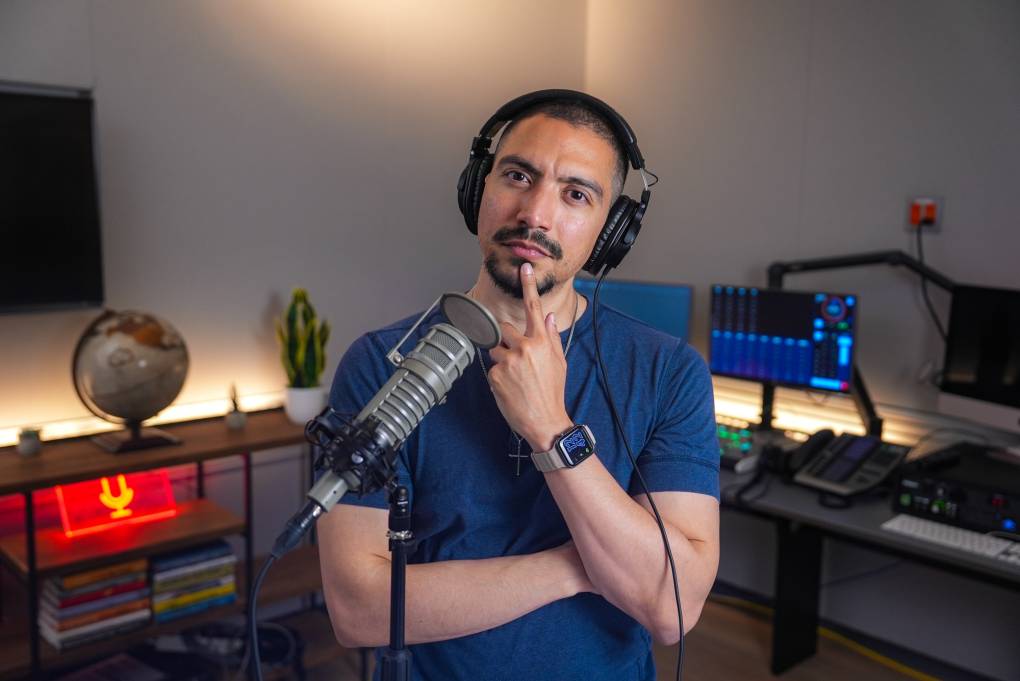
"caption": "Hyphenación host Xorje Olivares at KQED in San Francisco.",
"credit": "Alex Tran/KQED",
"altTag": null,
"description": null,
"imgSizes": {
"medium": {
"file": "https://cdn.kqed.org/wp-content/uploads/sites/10/2025/05/250508-HYPHENACION-AT-01-KQED-800x534.jpg",
"width": 800,
"height": 534,
"mimeType": "image/jpeg"
},
"large": {
"file": "https://cdn.kqed.org/wp-content/uploads/sites/10/2025/05/250508-HYPHENACION-AT-01-KQED-1020x681.jpg",
"width": 1020,
"height": 681,
"mimeType": "image/jpeg"
},
"thumbnail": {
"file": "https://cdn.kqed.org/wp-content/uploads/sites/10/2025/05/250508-HYPHENACION-AT-01-KQED-160x107.jpg",
"width": 160,
"height": 107,
"mimeType": "image/jpeg"
},
"1536x1536": {
"file": "https://cdn.kqed.org/wp-content/uploads/sites/10/2025/05/250508-HYPHENACION-AT-01-KQED-1536x1026.jpg",
"width": 1536,
"height": 1026,
"mimeType": "image/jpeg"
},
"post-thumbnail": {
"file": "https://cdn.kqed.org/wp-content/uploads/sites/10/2025/05/250508-HYPHENACION-AT-01-KQED-672x372.jpg",
"width": 672,
"height": 372,
"mimeType": "image/jpeg"
},
"twentyfourteen-full-width": {
"file": "https://cdn.kqed.org/wp-content/uploads/sites/10/2025/05/250508-HYPHENACION-AT-01-KQED-1038x576.jpg",
"width": 1038,
"height": 576,
"mimeType": "image/jpeg"
},
"full-width": {
"file": "https://cdn.kqed.org/wp-content/uploads/sites/10/2025/05/250508-HYPHENACION-AT-01-KQED-1920x1283.jpg",
"width": 1920,
"height": 1283,
"mimeType": "image/jpeg"
},
"kqedFullSize": {
"file": "https://cdn.kqed.org/wp-content/uploads/sites/10/2025/05/250508-HYPHENACION-AT-01-KQED.jpg",
"width": 2000,
"height": 1336
}
},
"isLoading": false,
"fetchFailed": false
},
"news_12034709": {
"type": "attachments",
"id": "news_12034709",
"meta": {
"index": "attachments_1716263798",
"site": "news",
"id": "12034709",
"found": true
},
"title": "005_KQEDARTS_ALAMEDA_LADONA_07202021-KQED",
"publishDate": 1744045536,
"status": "inherit",
"parent": 0,
"modified": 1744045589,
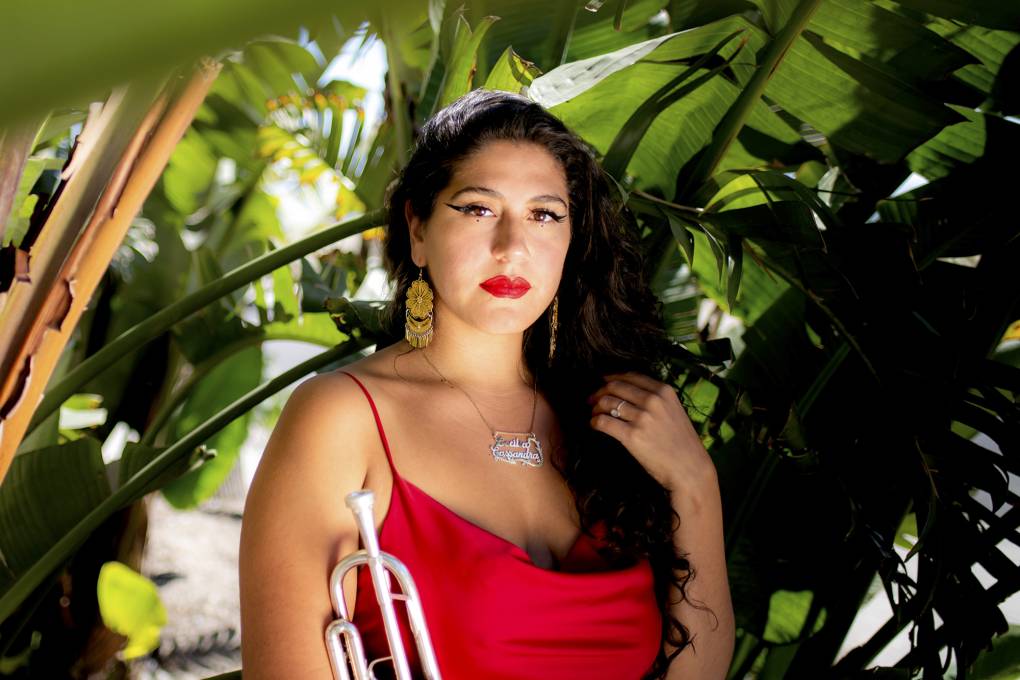
"caption": "San Francisco artist La Doña released \"Corrido Palestina\" on her 2024 album.",
"credit": "Beth La Berge/KQED",
"altTag": null,
"description": null,
"imgSizes": {
"medium": {
"file": "https://cdn.kqed.org/wp-content/uploads/sites/10/2025/04/005_KQEDARTS_ALAMEDA_LADONA_07202021-KQED-800x533.jpg",
"width": 800,
"height": 533,
"mimeType": "image/jpeg"
},
"large": {
"file": "https://cdn.kqed.org/wp-content/uploads/sites/10/2025/04/005_KQEDARTS_ALAMEDA_LADONA_07202021-KQED-1020x680.jpg",
"width": 1020,
"height": 680,
"mimeType": "image/jpeg"
},
"thumbnail": {
"file": "https://cdn.kqed.org/wp-content/uploads/sites/10/2025/04/005_KQEDARTS_ALAMEDA_LADONA_07202021-KQED-160x107.jpg",
"width": 160,
"height": 107,
"mimeType": "image/jpeg"
},
"1536x1536": {
"file": "https://cdn.kqed.org/wp-content/uploads/sites/10/2025/04/005_KQEDARTS_ALAMEDA_LADONA_07202021-KQED-1536x1024.jpg",
"width": 1536,
"height": 1024,
"mimeType": "image/jpeg"
},
"post-thumbnail": {
"file": "https://cdn.kqed.org/wp-content/uploads/sites/10/2025/04/005_KQEDARTS_ALAMEDA_LADONA_07202021-KQED-672x372.jpg",
"width": 672,
"height": 372,
"mimeType": "image/jpeg"
},
"twentyfourteen-full-width": {
"file": "https://cdn.kqed.org/wp-content/uploads/sites/10/2025/04/005_KQEDARTS_ALAMEDA_LADONA_07202021-KQED-1038x576.jpg",
"width": 1038,
"height": 576,
"mimeType": "image/jpeg"
},
"full-width": {
"file": "https://cdn.kqed.org/wp-content/uploads/sites/10/2025/04/005_KQEDARTS_ALAMEDA_LADONA_07202021-KQED-1920x1280.jpg",
"width": 1920,
"height": 1280,
"mimeType": "image/jpeg"
},
"kqedFullSize": {
"file": "https://cdn.kqed.org/wp-content/uploads/sites/10/2025/04/005_KQEDARTS_ALAMEDA_LADONA_07202021-KQED.jpg",
"width": 2000,
"height": 1333
}
},
"isLoading": false,
"fetchFailed": false
},
"news_11992083": {
"type": "attachments",
"id": "news_11992083",
"meta": {
"index": "attachments_1716263798",
"site": "news",
"id": "11992083",
"found": true
},
"title": "Susana Rojas outside of the Calle 24 Offices in San Francisco on June 26, 2024.",
"publishDate": 1719431731,
"status": "inherit",
"parent": 0,
"modified": 1719433248,
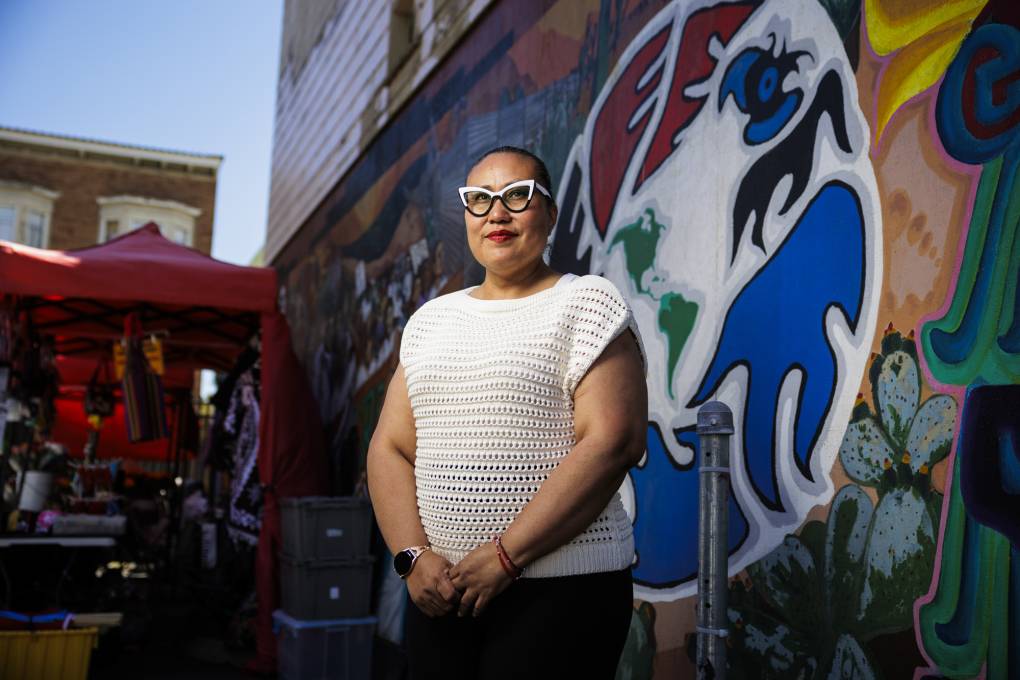
"caption": "Susana Rojas in La Placita on 24th Street in San Francisco on June 26, 2024.",
"credit": "Martin do Nascimento/KQED",
"altTag": null,
"description": null,
"imgSizes": {
"medium": {
"file": "https://cdn.kqed.org/wp-content/uploads/sites/10/2024/06/240626-SUSANA-ROJAS-MD-04-KQED-800x533.jpg",
"width": 800,
"height": 533,
"mimeType": "image/jpeg"
},
"large": {
"file": "https://cdn.kqed.org/wp-content/uploads/sites/10/2024/06/240626-SUSANA-ROJAS-MD-04-KQED-1020x680.jpg",
"width": 1020,
"height": 680,
"mimeType": "image/jpeg"
},
"thumbnail": {
"file": "https://cdn.kqed.org/wp-content/uploads/sites/10/2024/06/240626-SUSANA-ROJAS-MD-04-KQED-160x107.jpg",
"width": 160,
"height": 107,
"mimeType": "image/jpeg"
},
"1536x1536": {
"file": "https://cdn.kqed.org/wp-content/uploads/sites/10/2024/06/240626-SUSANA-ROJAS-MD-04-KQED-1536x1024.jpg",
"width": 1536,
"height": 1024,
"mimeType": "image/jpeg"
},
"post-thumbnail": {
"file": "https://cdn.kqed.org/wp-content/uploads/sites/10/2024/06/240626-SUSANA-ROJAS-MD-04-KQED-672x372.jpg",
"width": 672,
"height": 372,
"mimeType": "image/jpeg"
},
"twentyfourteen-full-width": {
"file": "https://cdn.kqed.org/wp-content/uploads/sites/10/2024/06/240626-SUSANA-ROJAS-MD-04-KQED-1038x576.jpg",
"width": 1038,
"height": 576,
"mimeType": "image/jpeg"
},
"full-width": {
"file": "https://cdn.kqed.org/wp-content/uploads/sites/10/2024/06/240626-SUSANA-ROJAS-MD-04-KQED-1920x1280.jpg",
"width": 1920,
"height": 1280,
"mimeType": "image/jpeg"
},
"kqedFullSize": {
"file": "https://cdn.kqed.org/wp-content/uploads/sites/10/2024/06/240626-SUSANA-ROJAS-MD-04-KQED.jpg",
"width": 2000,
"height": 1333
}
},
"isLoading": false,
"fetchFailed": false
},
"news_11953159": {
"type": "attachments",
"id": "news_11953159",
"meta": {
"index": "attachments_1716263798",
"site": "news",
"id": "11953159",
"found": true
},
"parent": 0,
"imgSizes": {
"twentyfourteen-full-width": {
"file": "https://ww2.kqed.org/app/uploads/sites/10/2023/06/RS66328_230613-RealtorMontanaHooks-06-BL-KQED-1038x576.jpg",
"width": 1038,
"mimeType": "image/jpeg",
"height": 576
},
"thumbnail": {
"file": "https://ww2.kqed.org/app/uploads/sites/10/2023/06/RS66328_230613-RealtorMontanaHooks-06-BL-KQED-160x107.jpg",
"width": 160,
"mimeType": "image/jpeg",
"height": 107
},
"post-thumbnail": {
"file": "https://ww2.kqed.org/app/uploads/sites/10/2023/06/RS66328_230613-RealtorMontanaHooks-06-BL-KQED-672x372.jpg",
"width": 672,
"mimeType": "image/jpeg",
"height": 372
},
"kqedFullSize": {
"file": "https://ww2.kqed.org/app/uploads/sites/10/2023/06/RS66328_230613-RealtorMontanaHooks-06-BL-KQED.jpg",
"width": 2000,
"height": 1333
},
"large": {
"file": "https://ww2.kqed.org/app/uploads/sites/10/2023/06/RS66328_230613-RealtorMontanaHooks-06-BL-KQED-1020x680.jpg",
"width": 1020,
"mimeType": "image/jpeg",
"height": 680
},
"1536x1536": {
"file": "https://ww2.kqed.org/app/uploads/sites/10/2023/06/RS66328_230613-RealtorMontanaHooks-06-BL-KQED-1536x1024.jpg",
"width": 1536,
"mimeType": "image/jpeg",
"height": 1024
},
"full-width": {
"file": "https://ww2.kqed.org/app/uploads/sites/10/2023/06/RS66328_230613-RealtorMontanaHooks-06-BL-KQED-1920x1280.jpg",
"width": 1920,
"mimeType": "image/jpeg",
"height": 1280
},
"medium": {
"file": "https://ww2.kqed.org/app/uploads/sites/10/2023/06/RS66328_230613-RealtorMontanaHooks-06-BL-KQED-800x533.jpg",
"width": 800,
"mimeType": "image/jpeg",
"height": 533
}
},
"publishDate": 1686929820,
"modified": 1686930219,
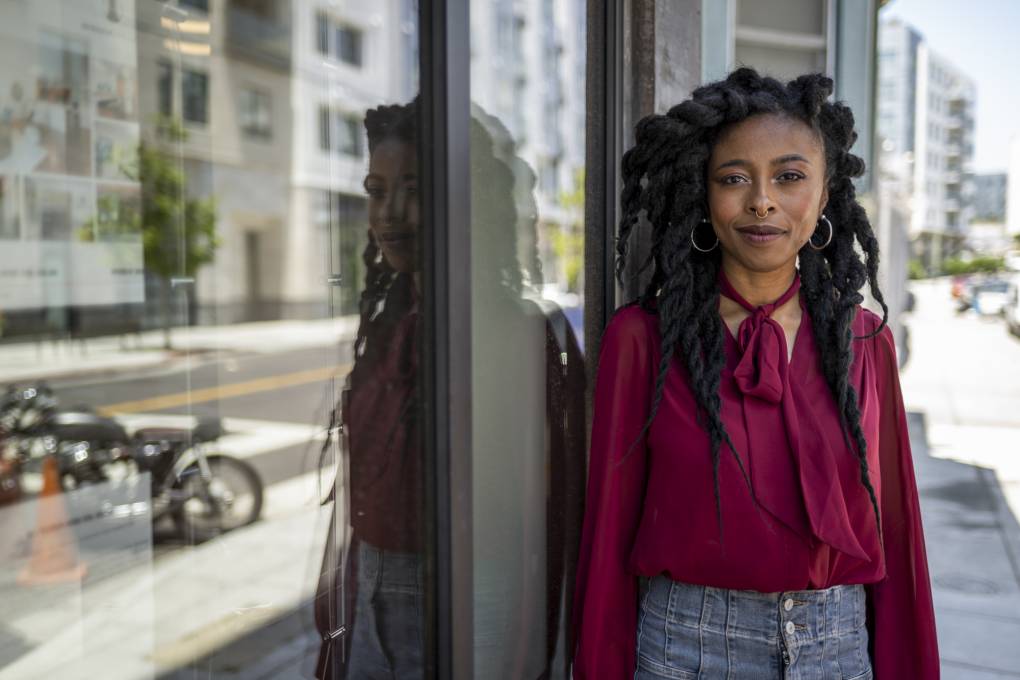
"caption": "Realtor Montana Gabrielle Hooks stands outside her realty office in the Uptown neighborhood of Oakland on June 15, 2023.",
"description": null,
"title": "RS66328_230613-RealtorMontanaHooks-06-BL-KQED",
"credit": "Beth LaBerge/KQED",
"status": "inherit",
"altTag": "A woman in a red top stands outdoors along a city sidewalk leaning against big pane glass windows and looking at the camera.",
"isLoading": false,
"fetchFailed": false
},
"news_11929294": {
"type": "attachments",
"id": "news_11929294",
"meta": {
"index": "attachments_1716263798",
"site": "news",
"id": "11929294",
"found": true
},
"parent": 11929283,
"imgSizes": {
"twentyfourteen-full-width": {
"file": "https://ww2.kqed.org/app/uploads/sites/10/2022/10/RS59318_Miriam_Mora_005-qut-1038x576.jpg",
"width": 1038,
"mimeType": "image/jpeg",
"height": 576
},
"thumbnail": {
"file": "https://ww2.kqed.org/app/uploads/sites/10/2022/10/RS59318_Miriam_Mora_005-qut-160x107.jpg",
"width": 160,
"mimeType": "image/jpeg",
"height": 107
},
"post-thumbnail": {
"file": "https://ww2.kqed.org/app/uploads/sites/10/2022/10/RS59318_Miriam_Mora_005-qut-672x372.jpg",
"width": 672,
"mimeType": "image/jpeg",
"height": 372
},
"kqedFullSize": {
"file": "https://ww2.kqed.org/app/uploads/sites/10/2022/10/RS59318_Miriam_Mora_005-qut.jpg",
"width": 1920,
"height": 1282
},
"large": {
"file": "https://ww2.kqed.org/app/uploads/sites/10/2022/10/RS59318_Miriam_Mora_005-qut-1020x681.jpg",
"width": 1020,
"mimeType": "image/jpeg",
"height": 681
},
"1536x1536": {
"file": "https://ww2.kqed.org/app/uploads/sites/10/2022/10/RS59318_Miriam_Mora_005-qut-1536x1026.jpg",
"width": 1536,
"mimeType": "image/jpeg",
"height": 1026
},
"medium": {
"file": "https://ww2.kqed.org/app/uploads/sites/10/2022/10/RS59318_Miriam_Mora_005-qut-800x534.jpg",
"width": 800,
"mimeType": "image/jpeg",
"height": 534
}
},
"publishDate": 1666050192,
"modified": 1666116196,
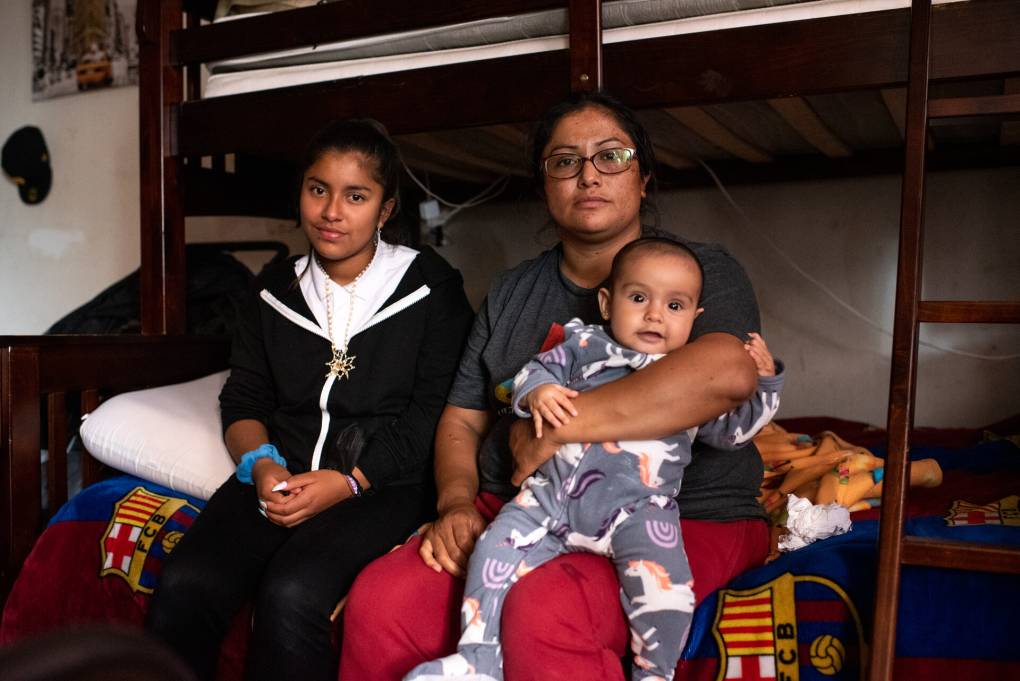
"caption": "Miriam Mora sits for a portrait with her daughters Miriam (5 months) and Julissa (9) at her brother's apartment in the Tenderloin neighborhood in San Francisco on Wednesday, Oct. 12, 2022. Mora lost her job during the pandemic and has been struggling to find affordable housing. Right now, Mora and her three children are staying with her brother, who already has several roommates, in his studio apartment. Latinos now make up 30% of the unhoused people in San Francisco, though they're only 16% of the overall population, according to the city's most recent count.",
"description": null,
"title": "KQED_Latino_Homelessness",
"credit": "Marlena Sloss/KQED",
"status": "inherit",
"altTag": "A woman wearing glasses holds a baby while sitting down next to a girl wearing a black hoodie in a room.",
"isLoading": false,
"fetchFailed": false
},
"news_11919713": {
"type": "attachments",
"id": "news_11919713",
"meta": {
"index": "attachments_1716263798",
"site": "news",
"id": "11919713",
"found": true
},
"parent": 11919649,
"imgSizes": {
"twentyfourteen-full-width": {
"file": "https://ww2.kqed.org/app/uploads/sites/10/2022/07/00080012OscarFeatured-1038x576.jpg",
"width": 1038,
"mimeType": "image/jpeg",
"height": 576
},
"thumbnail": {
"file": "https://ww2.kqed.org/app/uploads/sites/10/2022/07/00080012OscarFeatured-160x106.jpg",
"width": 160,
"mimeType": "image/jpeg",
"height": 106
},
"post-thumbnail": {
"file": "https://ww2.kqed.org/app/uploads/sites/10/2022/07/00080012OscarFeatured-672x372.jpg",
"width": 672,
"mimeType": "image/jpeg",
"height": 372
},
"kqedFullSize": {
"file": "https://ww2.kqed.org/app/uploads/sites/10/2022/07/00080012OscarFeatured.jpg",
"width": 1920,
"height": 1273
},
"large": {
"file": "https://ww2.kqed.org/app/uploads/sites/10/2022/07/00080012OscarFeatured-1020x676.jpg",
"width": 1020,
"mimeType": "image/jpeg",
"height": 676
},
"1536x1536": {
"file": "https://ww2.kqed.org/app/uploads/sites/10/2022/07/00080012OscarFeatured-1536x1018.jpg",
"width": 1536,
"mimeType": "image/jpeg",
"height": 1018
},
"medium": {
"file": "https://ww2.kqed.org/app/uploads/sites/10/2022/07/00080012OscarFeatured-800x530.jpg",
"width": 800,
"mimeType": "image/jpeg",
"height": 530
}
},
"publishDate": 1657925357,
"modified": 1657925481,
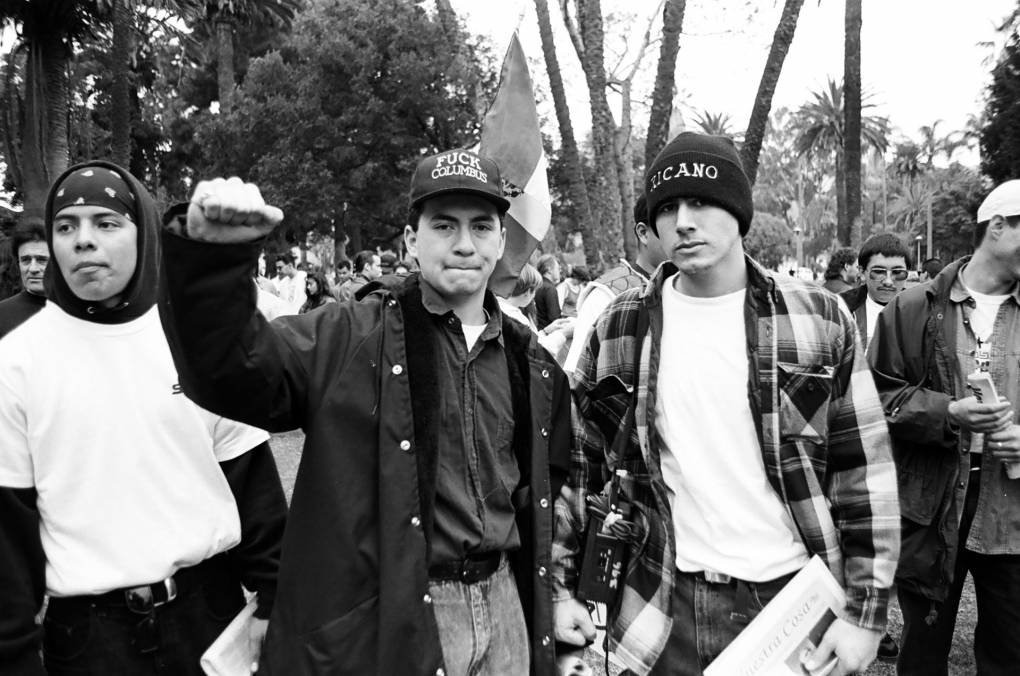
"caption": "Oscar Gomez (right) and his childhood friend Juan Gonzalez attend a protest in Santa Barbara on Feb. 1, 1992. The protest was in support of CSU Northridge Chicano studies scholar Rudy Acuña, who had been turned down for a faculty position at UC Santa Barbara and was challenging the decision.",
"description": null,
"title": "00080012OscarFeatured",
"credit": "Courtesy Gene Chavira",
"status": "inherit",
"altTag": "black and white photo showing two young men at a rally, one of them raising his fist in solidarity, wearing a black cap reading 'fuck Columbus'",
"isLoading": false,
"fetchFailed": false
},
"news_11907956": {
"type": "attachments",
"id": "news_11907956",
"meta": {
"index": "attachments_1716263798",
"site": "news",
"id": "11907956",
"found": true
},
"parent": 11907943,
"imgSizes": {
"twentyfourteen-full-width": {
"file": "https://ww2.kqed.org/app/uploads/sites/10/2022/03/delgado_031122_final-1038x576.png",
"width": 1038,
"mimeType": "image/png",
"height": 576
},
"thumbnail": {
"file": "https://ww2.kqed.org/app/uploads/sites/10/2022/03/delgado_031122_final-160x113.png",
"width": 160,
"mimeType": "image/png",
"height": 113
},
"post-thumbnail": {
"file": "https://ww2.kqed.org/app/uploads/sites/10/2022/03/delgado_031122_final-672x372.png",
"width": 672,
"mimeType": "image/png",
"height": 372
},
"kqedFullSize": {
"file": "https://ww2.kqed.org/app/uploads/sites/10/2022/03/delgado_031122_final.png",
"width": 1920,
"height": 1357
},
"large": {
"file": "https://ww2.kqed.org/app/uploads/sites/10/2022/03/delgado_031122_final-1020x721.png",
"width": 1020,
"mimeType": "image/png",
"height": 721
},
"1536x1536": {
"file": "https://ww2.kqed.org/app/uploads/sites/10/2022/03/delgado_031122_final-1536x1086.png",
"width": 1536,
"mimeType": "image/png",
"height": 1086
},
"medium": {
"file": "https://ww2.kqed.org/app/uploads/sites/10/2022/03/delgado_031122_final-800x565.png",
"width": 800,
"mimeType": "image/png",
"height": 565
}
},
"publishDate": 1647037957,
"modified": 1647038030,
"caption": null,
"description": null,
"title": "delgado_031122_final",
"credit": null,
"status": "inherit",
"altTag": "Cartoon: Sesame Street characters singing \"canta de cosas buenas no malas\" next to funeral flowers with a banner that reads, \"Emilio Delgado, 1940-2022.\"",
"isLoading": false,
"fetchFailed": false
},
"news_11896042": {
"type": "attachments",
"id": "news_11896042",
"meta": {
"index": "attachments_1716263798",
"site": "news",
"id": "11896042",
"found": true
},
"parent": 11896039,
"imgSizes": {
"twentyfourteen-full-width": {
"file": "https://ww2.kqed.org/app/uploads/sites/10/2021/11/GettyImages-1236495836-1024x576.jpg",
"width": 1024,
"mimeType": "image/jpeg",
"height": 576
},
"thumbnail": {
"file": "https://ww2.kqed.org/app/uploads/sites/10/2021/11/GettyImages-1236495836-160x107.jpg",
"width": 160,
"mimeType": "image/jpeg",
"height": 107
},
"post-thumbnail": {
"file": "https://ww2.kqed.org/app/uploads/sites/10/2021/11/GettyImages-1236495836-672x372.jpg",
"width": 672,
"mimeType": "image/jpeg",
"height": 372
},
"kqedFullSize": {
"file": "https://ww2.kqed.org/app/uploads/sites/10/2021/11/GettyImages-1236495836.jpg",
"width": 1024,
"height": 683
},
"large": {
"file": "https://ww2.kqed.org/app/uploads/sites/10/2021/11/GettyImages-1236495836-1020x680.jpg",
"width": 1020,
"mimeType": "image/jpeg",
"height": 680
},
"medium": {
"file": "https://ww2.kqed.org/app/uploads/sites/10/2021/11/GettyImages-1236495836-800x534.jpg",
"width": 800,
"mimeType": "image/jpeg",
"height": 534
}
},
"publishDate": 1636695880,
"modified": 1636695902,
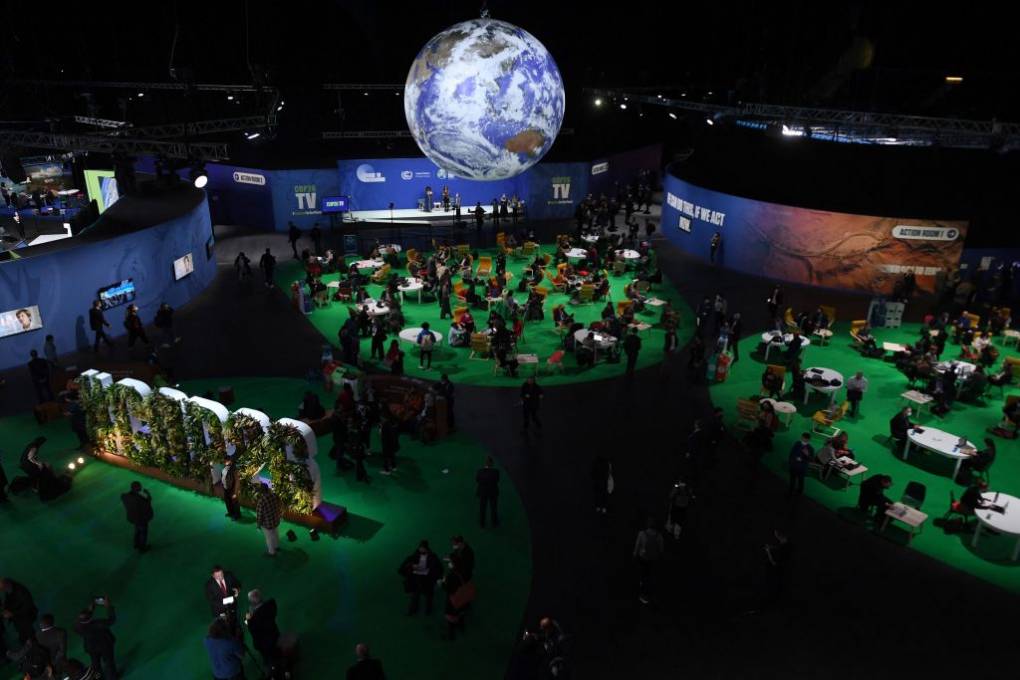
"caption": "A general view is seen of the Action Hub during the COP26 UN Climate Change Conference in Glasgow on November 11, 2021. - Experts on Thursday cautiously welcomed a joint pact by China and the United States to accelerate climate action this decade, as COP26 negotiations edged towards their end with no clear plan to limit heating to 1.5C.",
"description": null,
"title": "BRITAIN-UN-CLIMATE-COP26",
"credit": "(Photo by PAUL ELLIS/AFP via Getty Images)",
"status": "inherit",
"altTag": null,
"isLoading": false,
"fetchFailed": false
},
"news_11878329": {
"type": "attachments",
"id": "news_11878329",
"meta": {
"index": "attachments_1716263798",
"site": "news",
"id": "11878329",
"found": true
},
"parent": 11878318,
"imgSizes": {
"twentyfourteen-full-width": {
"file": "https://ww2.kqed.org/app/uploads/sites/10/2021/06/RS46106_014_KQED_SanFrancisco_COVIDTesting_11302020-qut-1038x576.jpg",
"width": 1038,
"mimeType": "image/jpeg",
"height": 576
},
"thumbnail": {
"file": "https://ww2.kqed.org/app/uploads/sites/10/2021/06/RS46106_014_KQED_SanFrancisco_COVIDTesting_11302020-qut-160x107.jpg",
"width": 160,
"mimeType": "image/jpeg",
"height": 107
},
"post-thumbnail": {
"file": "https://ww2.kqed.org/app/uploads/sites/10/2021/06/RS46106_014_KQED_SanFrancisco_COVIDTesting_11302020-qut-672x372.jpg",
"width": 672,
"mimeType": "image/jpeg",
"height": 372
},
"kqedFullSize": {
"file": "https://ww2.kqed.org/app/uploads/sites/10/2021/06/RS46106_014_KQED_SanFrancisco_COVIDTesting_11302020-qut.jpg",
"width": 1920,
"height": 1280
},
"large": {
"file": "https://ww2.kqed.org/app/uploads/sites/10/2021/06/RS46106_014_KQED_SanFrancisco_COVIDTesting_11302020-qut-1020x680.jpg",
"width": 1020,
"mimeType": "image/jpeg",
"height": 680
},
"1536x1536": {
"file": "https://ww2.kqed.org/app/uploads/sites/10/2021/06/RS46106_014_KQED_SanFrancisco_COVIDTesting_11302020-qut-1536x1024.jpg",
"width": 1536,
"mimeType": "image/jpeg",
"height": 1024
},
"medium": {
"file": "https://ww2.kqed.org/app/uploads/sites/10/2021/06/RS46106_014_KQED_SanFrancisco_COVIDTesting_11302020-qut-800x533.jpg",
"width": 800,
"mimeType": "image/jpeg",
"height": 533
}
},
"publishDate": 1623893220,
"modified": 1640643412,
"caption": "Health care worker Olga Duran tests a patient for COVID-19 at a Unidos en Salud (United in Health) testing site on 24th and Mission streets in San Francisco on Nov. 30, 2020. The effort is a collaboration between UCSF and the SF Latino Task Force to help vulnerable populations during the pandemic.",
"description": null,
"title": "RS46106_014_KQED_SanFrancisco_COVIDTesting_11302020-qut",
"credit": "Beth LaBerge/KQED",
"status": "inherit",
"altTag": "A healthcare worker in blue scrubs swabs a man whose back is turned to the camera.",
"isLoading": false,
"fetchFailed": false
},
"news_11877190": {
"type": "attachments",
"id": "news_11877190",
"meta": {
"index": "attachments_1716263798",
"site": "news",
"id": "11877190",
"found": true
},
"parent": 11877153,
"imgSizes": {
"twentyfourteen-full-width": {
"file": "https://ww2.kqed.org/app/uploads/sites/10/2021/06/052521_Colusa_AW_toned_19-1038x576.jpeg",
"width": 1038,
"mimeType": "image/jpeg",
"height": 576
},
"thumbnail": {
"file": "https://ww2.kqed.org/app/uploads/sites/10/2021/06/052521_Colusa_AW_toned_19-160x83.jpeg",
"width": 160,
"mimeType": "image/jpeg",
"height": 83
},
"post-thumbnail": {
"file": "https://ww2.kqed.org/app/uploads/sites/10/2021/06/052521_Colusa_AW_toned_19-672x372.jpeg",
"width": 672,
"mimeType": "image/jpeg",
"height": 372
},
"kqedFullSize": {
"file": "https://ww2.kqed.org/app/uploads/sites/10/2021/06/052521_Colusa_AW_toned_19.jpeg",
"width": 1200,
"height": 624
},
"large": {
"file": "https://ww2.kqed.org/app/uploads/sites/10/2021/06/052521_Colusa_AW_toned_19-1020x530.jpeg",
"width": 1020,
"mimeType": "image/jpeg",
"height": 530
},
"medium": {
"file": "https://ww2.kqed.org/app/uploads/sites/10/2021/06/052521_Colusa_AW_toned_19-800x416.jpeg",
"width": 800,
"mimeType": "image/jpeg",
"height": 416
}
},
"publishDate": 1623182494,
"modified": 1623182517,
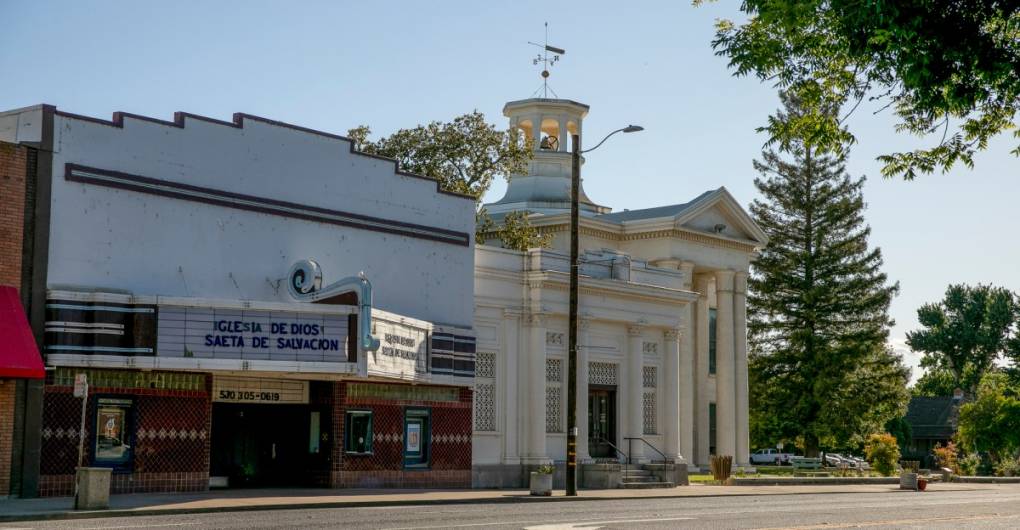
"caption": "A Spanish-language church marquee is seen next to the historic Colusa County courthouse. The county is 60% Latino and 27% foreign born, yet the county's Superior Court judges are white. ",
"description": null,
"title": "052521_Colusa_AW_toned_19",
"credit": "Anne Wernikoff/CalMatters",
"status": "inherit",
"altTag": null,
"isLoading": false,
"fetchFailed": false
},
"news_11866911": {
"type": "attachments",
"id": "news_11866911",
"meta": {
"index": "attachments_1716263798",
"site": "news",
"id": "11866911",
"found": true
},
"parent": 11866749,
"imgSizes": {
"twentyfourteen-full-width": {
"file": "https://ww2.kqed.org/app/uploads/sites/10/2021/03/LatinoCovidDeaths-1038x576.jpg",
"width": 1038,
"mimeType": "image/jpeg",
"height": 576
},
"thumbnail": {
"file": "https://ww2.kqed.org/app/uploads/sites/10/2021/03/LatinoCovidDeaths-160x108.jpg",
"width": 160,
"mimeType": "image/jpeg",
"height": 108
},
"post-thumbnail": {
"file": "https://ww2.kqed.org/app/uploads/sites/10/2021/03/LatinoCovidDeaths-672x372.jpg",
"width": 672,
"mimeType": "image/jpeg",
"height": 372
},
"kqedFullSize": {
"file": "https://ww2.kqed.org/app/uploads/sites/10/2021/03/LatinoCovidDeaths-e1617038108422.jpg",
"width": 1920,
"height": 1296
},
"large": {
"file": "https://ww2.kqed.org/app/uploads/sites/10/2021/03/LatinoCovidDeaths-1020x689.jpg",
"width": 1020,
"mimeType": "image/jpeg",
"height": 689
},
"1536x1536": {
"file": "https://ww2.kqed.org/app/uploads/sites/10/2021/03/LatinoCovidDeaths-1536x1037.jpg",
"width": 1536,
"mimeType": "image/jpeg",
"height": 1037
},
"full-width": {
"file": "https://ww2.kqed.org/app/uploads/sites/10/2021/03/LatinoCovidDeaths-1920x1296.jpg",
"width": 1920,
"mimeType": "image/jpeg",
"height": 1296
},
"medium": {
"file": "https://ww2.kqed.org/app/uploads/sites/10/2021/03/LatinoCovidDeaths-800x540.jpg",
"width": 800,
"mimeType": "image/jpeg",
"height": 540
}
},
"publishDate": 1617038095,
"modified": 1617121773,
"caption": "In Santa Clara County, more than half of the people under age 65 who died of the coronavirus were Latino, even though Latinos make up only a quarter of the population in that age group.",
"description": "In Santa Clara County, more than half of the people under age 65 who died of COVID-19 were Latino, even though Latinos make up only a quarter of the population in that age group. That’s according to an analysis of county records from Jan. 1, 2020, to March 2, 2021, conducted by KQED and the Documenting COVID-19 project at Columbia University's Brown Institute for Media Innovation.",
"title": "LatinoCovidDeaths",
"credit": "Anna Vignet/KQED",
"status": "inherit",
"altTag": null,
"isLoading": false,
"fetchFailed": false
},
"news_11863103": {
"type": "attachments",
"id": "news_11863103",
"meta": {
"index": "attachments_1716263798",
"site": "news",
"id": "11863103",
"found": true
},
"parent": 11863098,
"imgSizes": {
"apple_news_ca_landscape_5_5": {
"file": "https://ww2.kqed.org/app/uploads/sites/10/2021/03/RS47040_008_SanJose_COVIDTesting_02032021-qut-1044x783.jpg",
"width": 1044,
"mimeType": "image/jpeg",
"height": 783
},
"apple_news_ca_square_4_0": {
"file": "https://ww2.kqed.org/app/uploads/sites/10/2021/03/RS47040_008_SanJose_COVIDTesting_02032021-qut-470x470.jpg",
"width": 470,
"mimeType": "image/jpeg",
"height": 470
},
"twentyfourteen-full-width": {
"file": "https://ww2.kqed.org/app/uploads/sites/10/2021/03/RS47040_008_SanJose_COVIDTesting_02032021-qut-1038x576.jpg",
"width": 1038,
"mimeType": "image/jpeg",
"height": 576
},
"thumbnail": {
"file": "https://ww2.kqed.org/app/uploads/sites/10/2021/03/RS47040_008_SanJose_COVIDTesting_02032021-qut-160x107.jpg",
"width": 160,
"mimeType": "image/jpeg",
"height": 107
},
"post-thumbnail": {
"file": "https://ww2.kqed.org/app/uploads/sites/10/2021/03/RS47040_008_SanJose_COVIDTesting_02032021-qut-672x372.jpg",
"width": 672,
"mimeType": "image/jpeg",
"height": 372
},
"kqedFullSize": {
"file": "https://ww2.kqed.org/app/uploads/sites/10/2021/03/RS47040_008_SanJose_COVIDTesting_02032021-qut.jpg",
"width": 1920,
"height": 1280
},
"apple_news_ca_landscape_4_7": {
"file": "https://ww2.kqed.org/app/uploads/sites/10/2021/03/RS47040_008_SanJose_COVIDTesting_02032021-qut-632x474.jpg",
"width": 632,
"mimeType": "image/jpeg",
"height": 474
},
"large": {
"file": "https://ww2.kqed.org/app/uploads/sites/10/2021/03/RS47040_008_SanJose_COVIDTesting_02032021-qut-1020x680.jpg",
"width": 1020,
"mimeType": "image/jpeg",
"height": 680
},
"apple_news_ca_landscape_4_0": {
"file": "https://ww2.kqed.org/app/uploads/sites/10/2021/03/RS47040_008_SanJose_COVIDTesting_02032021-qut-536x402.jpg",
"width": 536,
"mimeType": "image/jpeg",
"height": 402
},
"apple_news_ca_portrait_12_9": {
"file": "https://ww2.kqed.org/app/uploads/sites/10/2021/03/RS47040_008_SanJose_COVIDTesting_02032021-qut-1122x1280.jpg",
"width": 1122,
"mimeType": "image/jpeg",
"height": 1280
},
"medium": {
"file": "https://ww2.kqed.org/app/uploads/sites/10/2021/03/RS47040_008_SanJose_COVIDTesting_02032021-qut-800x533.jpg",
"width": 800,
"mimeType": "image/jpeg",
"height": 533
},
"apple_news_ca_portrait_4_0": {
"file": "https://ww2.kqed.org/app/uploads/sites/10/2021/03/RS47040_008_SanJose_COVIDTesting_02032021-qut-354x472.jpg",
"width": 354,
"mimeType": "image/jpeg",
"height": 472
},
"apple_news_ca_portrait_9_7": {
"file": "https://ww2.kqed.org/app/uploads/sites/10/2021/03/RS47040_008_SanJose_COVIDTesting_02032021-qut-840x1120.jpg",
"width": 840,
"mimeType": "image/jpeg",
"height": 1120
},
"apple_news_ca_landscape_12_9": {
"file": "https://ww2.kqed.org/app/uploads/sites/10/2021/03/RS47040_008_SanJose_COVIDTesting_02032021-qut-1832x1280.jpg",
"width": 1832,
"mimeType": "image/jpeg",
"height": 1280
},
"apple_news_ca_square_9_7": {
"file": "https://ww2.kqed.org/app/uploads/sites/10/2021/03/RS47040_008_SanJose_COVIDTesting_02032021-qut-1104x1104.jpg",
"width": 1104,
"mimeType": "image/jpeg",
"height": 1104
},
"1536x1536": {
"file": "https://ww2.kqed.org/app/uploads/sites/10/2021/03/RS47040_008_SanJose_COVIDTesting_02032021-qut-1536x1024.jpg",
"width": 1536,
"mimeType": "image/jpeg",
"height": 1024
},
"apple_news_ca_portrait_4_7": {
"file": "https://ww2.kqed.org/app/uploads/sites/10/2021/03/RS47040_008_SanJose_COVIDTesting_02032021-qut-414x552.jpg",
"width": 414,
"mimeType": "image/jpeg",
"height": 552
},
"apple_news_ca_square_12_9": {
"file": "https://ww2.kqed.org/app/uploads/sites/10/2021/03/RS47040_008_SanJose_COVIDTesting_02032021-qut-1472x1280.jpg",
"width": 1472,
"mimeType": "image/jpeg",
"height": 1280
},
"apple_news_ca_portrait_5_5": {
"file": "https://ww2.kqed.org/app/uploads/sites/10/2021/03/RS47040_008_SanJose_COVIDTesting_02032021-qut-687x916.jpg",
"width": 687,
"mimeType": "image/jpeg",
"height": 916
},
"apple_news_ca_square_4_7": {
"file": "https://ww2.kqed.org/app/uploads/sites/10/2021/03/RS47040_008_SanJose_COVIDTesting_02032021-qut-550x550.jpg",
"width": 550,
"mimeType": "image/jpeg",
"height": 550
},
"apple_news_ca_landscape_9_7": {
"file": "https://ww2.kqed.org/app/uploads/sites/10/2021/03/RS47040_008_SanJose_COVIDTesting_02032021-qut-1376x1032.jpg",
"width": 1376,
"mimeType": "image/jpeg",
"height": 1032
},
"apple_news_ca_square_5_5": {
"file": "https://ww2.kqed.org/app/uploads/sites/10/2021/03/RS47040_008_SanJose_COVIDTesting_02032021-qut-912x912.jpg",
"width": 912,
"mimeType": "image/jpeg",
"height": 912
}
},
"publishDate": 1614815331,
"modified": 1614815453,
"caption": "La familia Orona Franco recibe una visita de los trabajadores de salud del condado de Santa Clara en San José el 3 de febrero de 2021. El condado se ha asociado con un grupo de promotoras de META, una organización sin fines de lucro con sede en el este de San José, para ofrecer pruebas en casa e información sobre la vacuna contra el coronavirus en una de las áreas más afectadas del condado.",
"description": null,
"title": "RS47040_008_SanJose_COVIDTesting_02032021-qut",
"credit": "Beth LaBerge/KQED",
"status": "inherit",
"altTag": null,
"isLoading": false,
"fetchFailed": false
},
"news_11860901": {
"type": "attachments",
"id": "news_11860901",
"meta": {
"index": "attachments_1716263798",
"site": "news",
"id": "11860901",
"found": true
},
"parent": 11860883,
"imgSizes": {
"apple_news_ca_landscape_5_5": {
"file": "https://ww2.kqed.org/app/uploads/sites/10/2021/02/RS47036_004_SanJose_COVIDTesting_02032021-qut-1044x783.jpg",
"width": 1044,
"mimeType": "image/jpeg",
"height": 783
},
"apple_news_ca_square_4_0": {
"file": "https://ww2.kqed.org/app/uploads/sites/10/2021/02/RS47036_004_SanJose_COVIDTesting_02032021-qut-470x470.jpg",
"width": 470,
"mimeType": "image/jpeg",
"height": 470
},
"twentyfourteen-full-width": {
"file": "https://ww2.kqed.org/app/uploads/sites/10/2021/02/RS47036_004_SanJose_COVIDTesting_02032021-qut-1038x576.jpg",
"width": 1038,
"mimeType": "image/jpeg",
"height": 576
},
"thumbnail": {
"file": "https://ww2.kqed.org/app/uploads/sites/10/2021/02/RS47036_004_SanJose_COVIDTesting_02032021-qut-160x107.jpg",
"width": 160,
"mimeType": "image/jpeg",
"height": 107
},
"post-thumbnail": {
"file": "https://ww2.kqed.org/app/uploads/sites/10/2021/02/RS47036_004_SanJose_COVIDTesting_02032021-qut-672x372.jpg",
"width": 672,
"mimeType": "image/jpeg",
"height": 372
},
"kqedFullSize": {
"file": "https://ww2.kqed.org/app/uploads/sites/10/2021/02/RS47036_004_SanJose_COVIDTesting_02032021-qut.jpg",
"width": 1920,
"height": 1280
},
"apple_news_ca_landscape_4_7": {
"file": "https://ww2.kqed.org/app/uploads/sites/10/2021/02/RS47036_004_SanJose_COVIDTesting_02032021-qut-632x474.jpg",
"width": 632,
"mimeType": "image/jpeg",
"height": 474
},
"large": {
"file": "https://ww2.kqed.org/app/uploads/sites/10/2021/02/RS47036_004_SanJose_COVIDTesting_02032021-qut-1020x680.jpg",
"width": 1020,
"mimeType": "image/jpeg",
"height": 680
},
"apple_news_ca_landscape_4_0": {
"file": "https://ww2.kqed.org/app/uploads/sites/10/2021/02/RS47036_004_SanJose_COVIDTesting_02032021-qut-536x402.jpg",
"width": 536,
"mimeType": "image/jpeg",
"height": 402
},
"apple_news_ca_portrait_12_9": {
"file": "https://ww2.kqed.org/app/uploads/sites/10/2021/02/RS47036_004_SanJose_COVIDTesting_02032021-qut-1122x1280.jpg",
"width": 1122,
"mimeType": "image/jpeg",
"height": 1280
},
"medium": {
"file": "https://ww2.kqed.org/app/uploads/sites/10/2021/02/RS47036_004_SanJose_COVIDTesting_02032021-qut-800x533.jpg",
"width": 800,
"mimeType": "image/jpeg",
"height": 533
},
"apple_news_ca_portrait_4_0": {
"file": "https://ww2.kqed.org/app/uploads/sites/10/2021/02/RS47036_004_SanJose_COVIDTesting_02032021-qut-354x472.jpg",
"width": 354,
"mimeType": "image/jpeg",
"height": 472
},
"apple_news_ca_portrait_9_7": {
"file": "https://ww2.kqed.org/app/uploads/sites/10/2021/02/RS47036_004_SanJose_COVIDTesting_02032021-qut-840x1120.jpg",
"width": 840,
"mimeType": "image/jpeg",
"height": 1120
},
"apple_news_ca_landscape_12_9": {
"file": "https://ww2.kqed.org/app/uploads/sites/10/2021/02/RS47036_004_SanJose_COVIDTesting_02032021-qut-1832x1280.jpg",
"width": 1832,
"mimeType": "image/jpeg",
"height": 1280
},
"apple_news_ca_square_9_7": {
"file": "https://ww2.kqed.org/app/uploads/sites/10/2021/02/RS47036_004_SanJose_COVIDTesting_02032021-qut-1104x1104.jpg",
"width": 1104,
"mimeType": "image/jpeg",
"height": 1104
},
"1536x1536": {
"file": "https://ww2.kqed.org/app/uploads/sites/10/2021/02/RS47036_004_SanJose_COVIDTesting_02032021-qut-1536x1024.jpg",
"width": 1536,
"mimeType": "image/jpeg",
"height": 1024
},
"apple_news_ca_portrait_4_7": {
"file": "https://ww2.kqed.org/app/uploads/sites/10/2021/02/RS47036_004_SanJose_COVIDTesting_02032021-qut-414x552.jpg",
"width": 414,
"mimeType": "image/jpeg",
"height": 552
},
"apple_news_ca_square_12_9": {
"file": "https://ww2.kqed.org/app/uploads/sites/10/2021/02/RS47036_004_SanJose_COVIDTesting_02032021-qut-1472x1280.jpg",
"width": 1472,
"mimeType": "image/jpeg",
"height": 1280
},
"apple_news_ca_portrait_5_5": {
"file": "https://ww2.kqed.org/app/uploads/sites/10/2021/02/RS47036_004_SanJose_COVIDTesting_02032021-qut-687x916.jpg",
"width": 687,
"mimeType": "image/jpeg",
"height": 916
},
"apple_news_ca_square_4_7": {
"file": "https://ww2.kqed.org/app/uploads/sites/10/2021/02/RS47036_004_SanJose_COVIDTesting_02032021-qut-550x550.jpg",
"width": 550,
"mimeType": "image/jpeg",
"height": 550
},
"apple_news_ca_landscape_9_7": {
"file": "https://ww2.kqed.org/app/uploads/sites/10/2021/02/RS47036_004_SanJose_COVIDTesting_02032021-qut-1376x1032.jpg",
"width": 1376,
"mimeType": "image/jpeg",
"height": 1032
},
"apple_news_ca_square_5_5": {
"file": "https://ww2.kqed.org/app/uploads/sites/10/2021/02/RS47036_004_SanJose_COVIDTesting_02032021-qut-912x912.jpg",
"width": 912,
"mimeType": "image/jpeg",
"height": 912
}
},
"publishDate": 1613671497,
"modified": 1613760689,
"caption": "The Orona Franco family receives a COVID-19 home testing visit by Santa Clara County Public Health workers in San Jose on Feb. 3, 2021. Santa Clara County has partnered up with a group of promotoras from META, a community nonprofit based in East San Jose, to offer home testing and information about the coronavirus vaccine in one of the county's worst affected areas.",
"description": "The Orona Franco family receives a COVID-19 home testing visit by Santa Clara County Public Health workers in San Jose on Feb. 3, 2021. Santa Clara County has partnered up with a group of promotoras from META, a community nonprofit based in East San Jose, to offer home testing and information about the coronavirus vaccine in one of the county's worst affected areas.",
"title": "RS47036_004_SanJose_COVIDTesting_02032021-qut",
"credit": "Beth LaBerge/KQED",
"status": "inherit",
"altTag": null,
"isLoading": false,
"fetchFailed": false
}
},
"audioPlayerReducer": {
"postId": "stream_live",
"isPaused": true,
"isPlaying": false,
"pfsActive": false,
"pledgeModalIsOpen": true,
"playerDrawerIsOpen": false,
"liveAudioPlayStartedAt": 0,
"liveAudioPlayContext": ""
},
"authorsReducer": {
"byline_news_11919649": {
"type": "authors",
"id": "byline_news_11919649",
"meta": {
"override": true
},
"slug": "byline_news_11919649",
"name": "\u003ca href=\"https://laist.com/people/adolfo-guzman-lopez\">Adolfo Guzman-Lopez\u003c/a>",
"isLoading": false
},
"byline_news_11878318": {
"type": "authors",
"id": "byline_news_11878318",
"meta": {
"override": true
},
"slug": "byline_news_11878318",
"name": "Marisa Lagos (KQED) and Caitie Switalski Muñoz (WLRN)",
"isLoading": false
},
"byline_news_11877153": {
"type": "authors",
"id": "byline_news_11877153",
"meta": {
"override": true
},
"slug": "byline_news_11877153",
"name": "Byrhonda Lyons",
"isLoading": false
},
"markfiore": {
"type": "authors",
"id": "3236",
"meta": {
"index": "authors_1716337520",
"id": "3236",
"found": true
},
"name": "Mark Fiore",
"firstName": "Mark",
"lastName": "Fiore",
"slug": "markfiore",
"email": "mark@markfiore.com",
"display_author_email": false,
"staff_mastheads": [
"news"
],
"title": "KQED News Cartoonist",
"bio": "\u003ca href=\"http://www.MarkFiore.com\">MarkFiore.com\u003c/a> | \u003ca href=\"https://twitter.com/markfiore\">Follow on Twitter\u003c/a> | \u003ca href=\"https://www.facebook.com/pages/Mark-Fiore-Animated-Political-Cartoons/94451707396?ref=bookmarks\">Facebook\u003c/a> | \u003ca href=\"mailto:mark@markfiore.com\">email\u003c/a>\r\n\r\nPulitzer Prize-winner, Mark Fiore, who the Wall Street Journal has called “the undisputed guru of the form,” creates animated political cartoons in San Francisco, where his work has been featured regularly on the San Francisco Chronicle’s web site, SFGate.com. His work has appeared on Newsweek.com, Slate.com, CBSNews.com, MotherJones.com, DailyKos.com and NPR’s web site. Fiore’s political animation has appeared on CNN, Frontline, Bill Moyers Journal, Salon.com and cable and broadcast outlets across the globe.\r\n\r\nBeginning his professional life by drawing traditional political cartoons for newspapers, Fiore’s work appeared in publications ranging from the Washington Post to the Los Angeles Times. In the late 1990s, he began to experiment with animating political cartoons and, after a short stint at the San Jose Mercury News as their staff cartoonist, Fiore devoted all his energies to animation.\r\nGrowing up in California, Fiore also spent a good portion of his life in the backwoods of Idaho. It was this combination that shaped him politically. Mark majored in political science at Colorado College, where, in a perfect send-off for a cartoonist, he received his diploma in 1991 as commencement speaker Dick Cheney smiled approvingly.\r\nMark Fiore was awarded the Pulitzer Prize for political cartooning in 2010, a Robert F. Kennedy Journalism Award in 2004 and has twice received an Online Journalism Award for commentary from the Online News Association (2002, 2008). Fiore has received two awards for his work in new media from the National Cartoonists Society (2001, 2002), and in 2006 received The James Madison Freedom of Information Award from The Society of Professional Journalists.",
"avatar": "https://secure.gravatar.com/avatar/fc4e2a612b15b67bad0c6f0e1db4ca9b?s=600&d=blank&r=g",
"twitter": "MarkFiore",
"facebook": null,
"instagram": "https://www.instagram.com/markfiore/?hl=en",
"linkedin": null,
"sites": [
{
"site": "arts",
"roles": [
"contributor"
]
},
{
"site": "news",
"roles": [
"editor"
]
},
{
"site": "futureofyou",
"roles": [
"editor"
]
},
{
"site": "science",
"roles": [
"editor"
]
}
],
"headData": {
"title": "Mark Fiore | KQED",
"description": "KQED News Cartoonist",
"ogImgSrc": "https://secure.gravatar.com/avatar/fc4e2a612b15b67bad0c6f0e1db4ca9b?s=600&d=blank&r=g",
"twImgSrc": "https://secure.gravatar.com/avatar/fc4e2a612b15b67bad0c6f0e1db4ca9b?s=600&d=blank&r=g"
},
"isLoading": false,
"link": "/author/markfiore"
},
"ecruzguevarra": {
"type": "authors",
"id": "8654",
"meta": {
"index": "authors_1716337520",
"id": "8654",
"found": true
},
"name": "Ericka Cruz Guevarra",
"firstName": "Ericka",
"lastName": "Cruz Guevarra",
"slug": "ecruzguevarra",
"email": "ecruzguevarra@kqed.org",
"display_author_email": true,
"staff_mastheads": [
"news"
],
"title": "Producer, The Bay Podcast",
"bio": "Ericka Cruz Guevarra is host of \u003ca href=\"https://www.kqed.org/podcasts/thebay\">\u003cem>The Bay\u003c/em>\u003c/a> podcast at KQED. Before host, she was the show’s producer. Her work in that capacity includes a three-part reported series on policing in Vallejo, which won a 2020 excellence in journalism award from the Society of Professional Journalists. Ericka has worked as a breaking news reporter at Oregon Public Broadcasting, helped produce the Code Switch podcast, and was KQED’s inaugural Raul Ramirez Diversity Fund intern. She’s also an alumna of NPR’s Next Generation Radio program. Send her an email if you have strong feelings about whether Fairfield and Suisun City are the Bay. Ericka is represented by SAG-AFTRA.",
"avatar": "https://secure.gravatar.com/avatar/accefc1de4bafc7e234b69bcb9b6f6536c130fd84709bc3069ef11a78787e1bb?s=600&d=blank&r=g",
"twitter": "NotoriousECG",
"bluesky": null,
"facebook": null,
"instagram": null,
"linkedin": null,
"sites": [
{
"site": "arts",
"roles": [
"subscriber"
]
},
{
"site": "news",
"roles": [
"editor",
"manage_categories"
]
},
{
"site": "futureofyou",
"roles": [
"subscriber"
]
},
{
"site": "stateofhealth",
"roles": [
"subscriber"
]
},
{
"site": "science",
"roles": [
"editor"
]
},
{
"site": "forum",
"roles": [
"subscriber"
]
}
],
"headData": {
"title": "Ericka Cruz Guevarra | KQED",
"description": "Producer, The Bay Podcast",
"ogImgSrc": "https://secure.gravatar.com/avatar/accefc1de4bafc7e234b69bcb9b6f6536c130fd84709bc3069ef11a78787e1bb?s=600&d=blank&r=g",
"twImgSrc": "https://secure.gravatar.com/avatar/accefc1de4bafc7e234b69bcb9b6f6536c130fd84709bc3069ef11a78787e1bb?s=600&d=blank&r=g"
},
"isLoading": false,
"link": "/author/ecruzguevarra"
},
"fjhabvala": {
"type": "authors",
"id": "8659",
"meta": {
"index": "authors_1716337520",
"id": "8659",
"found": true
},
"name": "Farida Jhabvala Romero",
"firstName": "Farida",
"lastName": "Jhabvala Romero",
"slug": "fjhabvala",
"email": "fjhabvala@kqed.org",
"display_author_email": true,
"staff_mastheads": [
"news"
],
"title": "KQED Contributor",
"bio": "Farida Jhabvala Romero is a Labor Correspondent for KQED. She previously covered immigration. Farida was \u003ca href=\"https://www.ccnma.org/2022-most-influential-latina-journalists\">named\u003c/a> one of the 10 Most Influential Latina Journalists in California in 2022 by the California Chicano News Media Association. Her work has won awards from the Society of Professional Journalists (Northern California), as well as a national and regional Edward M. Murrow Award for the collaborative reporting projects “Dangerous Air” and “Graying California.” Before joining KQED, Farida worked as a producer at Radio Bilingüe, a national public radio network. Farida earned her master’s degree in journalism from Stanford University.",
"avatar": "https://secure.gravatar.com/avatar/f9f022d4e2609741874222a1e9d41f48fea74011aa7c615eef91d9a50c944ebe?s=600&d=blank&r=g",
"twitter": "FaridaJhabvala",
"bluesky": null,
"facebook": null,
"instagram": null,
"linkedin": "https://www.linkedin.com/in/faridajhabvala/",
"sites": [
{
"site": "news",
"roles": [
"editor"
]
},
{
"site": "stateofhealth",
"roles": [
"author"
]
},
{
"site": "liveblog",
"roles": [
"author"
]
}
],
"headData": {
"title": "Farida Jhabvala Romero | KQED",
"description": "KQED Contributor",
"ogImgSrc": "https://secure.gravatar.com/avatar/f9f022d4e2609741874222a1e9d41f48fea74011aa7c615eef91d9a50c944ebe?s=600&d=blank&r=g",
"twImgSrc": "https://secure.gravatar.com/avatar/f9f022d4e2609741874222a1e9d41f48fea74011aa7c615eef91d9a50c944ebe?s=600&d=blank&r=g"
},
"isLoading": false,
"link": "/author/fjhabvala"
},
"vrancano": {
"type": "authors",
"id": "11276",
"meta": {
"index": "authors_1716337520",
"id": "11276",
"found": true
},
"name": "Vanessa Rancaño",
"firstName": "Vanessa",
"lastName": "Rancaño",
"slug": "vrancano",
"email": "vrancano@kqed.org",
"display_author_email": false,
"staff_mastheads": [
"news"
],
"title": "Reporter",
"bio": "Vanessa Rancaño is a features reporter for KQED. She’s also covered homelessness and education for the station and reported from the Central Valley. Her work has aired across public radio, from flagship national news shows to longform narrative podcasts. Before taking up a mic, she worked as a freelance print journalist. She’s been recognized with a number of national and regional awards. Vanessa grew up in California's Central Valley. She's a former NPR Kroc Fellow, and a graduate of the UC Berkeley Graduate School of Journalism.",
"avatar": "https://secure.gravatar.com/avatar/b3a383dfb0e7ee1c17568f2cf067904ab654d6e3de9743fc661f3c788ade1bed?s=600&d=blank&r=g",
"twitter": "vanessarancano",
"bluesky": null,
"facebook": null,
"instagram": null,
"linkedin": null,
"sites": [
{
"site": "arts",
"roles": [
"editor"
]
},
{
"site": "news",
"roles": [
"editor"
]
},
{
"site": "liveblog",
"roles": [
"contributor"
]
}
],
"headData": {
"title": "Vanessa Rancaño | KQED",
"description": "Reporter",
"ogImgSrc": "https://secure.gravatar.com/avatar/b3a383dfb0e7ee1c17568f2cf067904ab654d6e3de9743fc661f3c788ade1bed?s=600&d=blank&r=g",
"twImgSrc": "https://secure.gravatar.com/avatar/b3a383dfb0e7ee1c17568f2cf067904ab654d6e3de9743fc661f3c788ade1bed?s=600&d=blank&r=g"
},
"isLoading": false,
"link": "/author/vrancano"
},
"rdillon": {
"type": "authors",
"id": "11495",
"meta": {
"index": "authors_1716337520",
"id": "11495",
"found": true
},
"name": "Raquel Maria Dillon",
"firstName": "Raquel Maria",
"lastName": "Dillon",
"slug": "rdillon",
"email": "rdillon@kqed.org",
"display_author_email": false,
"staff_mastheads": [],
"title": null,
"bio": "Raquel Maria Dillon was a reporter and host for KQED News. Previously, she produced the daily statewide California Report, edited newscasts, and covered health and education stories. Before returning to the Bay Area in 2016, she worked in Los Angeles as a wire reporter and one-woman-band video journalist for the Associated Press, where she shot, edited and reported breaking news and features across the West. Her work has appeared online and in print around the globe, and also on NPR’s Morning Edition, All Things Considered, Here and Now, Marketplace, On The Media, and Studio 360. She previously edited and mentored up-and-coming reporters at KALW, produced social videos for Timeline.com, and was a local TV news videographer for KTVU and digital producer for KNTV. She got her start as a Radio News Trainee at KQED, produced a weekly public affairs roundtable show for OPB, and covered health and politics at New Hampshire Public Radio. She has a BA in political science from Barnard College and a MA in video journalism from UC Berkeley, where she was awarded the Faith Fancher Scholarship and a Student Emmy. She has received numerous local awards from the Associated Press and the Society of Professional Journalists.",
"avatar": "https://secure.gravatar.com/avatar/b8e02ae982913d0950df605910267c1b?s=600&d=blank&r=g",
"twitter": "RaquelMDillon",
"facebook": null,
"instagram": null,
"linkedin": null,
"sites": [
{
"site": "news",
"roles": [
"subscriber"
]
},
{
"site": "stateofhealth",
"roles": [
"editor"
]
},
{
"site": "science",
"roles": [
"editor"
]
},
{
"site": "forum",
"roles": [
"editor"
]
}
],
"headData": {
"title": "Raquel Maria Dillon | KQED",
"description": null,
"ogImgSrc": "https://secure.gravatar.com/avatar/b8e02ae982913d0950df605910267c1b?s=600&d=blank&r=g",
"twImgSrc": "https://secure.gravatar.com/avatar/b8e02ae982913d0950df605910267c1b?s=600&d=blank&r=g"
},
"isLoading": false,
"link": "/author/rdillon"
},
"mfharvin": {
"type": "authors",
"id": "11583",
"meta": {
"index": "authors_1716337520",
"id": "11583",
"found": true
},
"name": "Mary Franklin Harvin",
"firstName": "Mary Franklin",
"lastName": "Harvin",
"slug": "mfharvin",
"email": "mfharvin@KQED.org",
"display_author_email": false,
"staff_mastheads": [
"news"
],
"title": "KQED Contributor",
"bio": null,
"avatar": "https://secure.gravatar.com/avatar/0e53510a7d48cfbdebfc9b11357d845f?s=600&d=blank&r=g",
"twitter": "EmEffHarvin",
"facebook": null,
"instagram": null,
"linkedin": null,
"sites": [
{
"site": "news",
"roles": [
"author",
"edit_others_posts"
]
},
{
"site": "science",
"roles": [
"editor"
]
}
],
"headData": {
"title": "Mary Franklin Harvin | KQED",
"description": "KQED Contributor",
"ogImgSrc": "https://secure.gravatar.com/avatar/0e53510a7d48cfbdebfc9b11357d845f?s=600&d=blank&r=g",
"twImgSrc": "https://secure.gravatar.com/avatar/0e53510a7d48cfbdebfc9b11357d845f?s=600&d=blank&r=g"
},
"isLoading": false,
"link": "/author/mfharvin"
},
"amontecillo": {
"type": "authors",
"id": "11649",
"meta": {
"index": "authors_1716337520",
"id": "11649",
"found": true
},
"name": "Alan Montecillo",
"firstName": "Alan",
"lastName": "Montecillo",
"slug": "amontecillo",
"email": "amontecillo@kqed.org",
"display_author_email": false,
"staff_mastheads": [
"news"
],
"title": "KQED Contributor",
"bio": "Alan Montecillo is the senior editor of \u003cem>\u003ca href=\"http://kqed.org/thebay\">The Bay\u003c/a>, \u003c/em> KQED's local news podcast. Before moving to the Bay Area, he worked as a senior talk show producer for WILL in Champaign-Urbana, Illinois and at Oregon Public Broadcasting in Portland, Oregon. He has won journalism awards from the Society of Professional Journalists Northern California, the Public Media Journalists Association, The Signal Awards, and has also received a regional Edward R. Murrow award. Alan is a Filipino American from Hong Kong and a graduate of Reed College.",
"avatar": "https://secure.gravatar.com/avatar/268f53a2066899ea9efdd8a5900218b17c822d9862cbc9326cccec53ef41d349?s=600&d=blank&r=g",
"twitter": "alanmontecillo",
"bluesky": null,
"facebook": null,
"instagram": null,
"linkedin": null,
"sites": [
{
"site": "",
"roles": [
"editor"
]
},
{
"site": "news",
"roles": [
"editor",
"manage_categories"
]
}
],
"headData": {
"title": "Alan Montecillo | KQED",
"description": "KQED Contributor",
"ogImgSrc": "https://secure.gravatar.com/avatar/268f53a2066899ea9efdd8a5900218b17c822d9862cbc9326cccec53ef41d349?s=600&d=blank&r=g",
"twImgSrc": "https://secure.gravatar.com/avatar/268f53a2066899ea9efdd8a5900218b17c822d9862cbc9326cccec53ef41d349?s=600&d=blank&r=g"
},
"isLoading": false,
"link": "/author/amontecillo"
},
"btorres": {
"type": "authors",
"id": "11666",
"meta": {
"index": "authors_1716337520",
"id": "11666",
"found": true
},
"name": "Blanca Torres",
"firstName": "Blanca",
"lastName": "Torres",
"slug": "btorres",
"email": "btorres@kqed.org",
"display_author_email": true,
"staff_mastheads": [
"news"
],
"title": "Producer, Forum",
"bio": "Blanca Torres brings sharp news judgement and keen sense of lively conversation to her work as producer for Forum. She loves producing shows that leave listeners feeling like they heard distinctive voices, learned something new and gained a fresh perspective.\r\n\r\nShe joined KQED in January of 2020 after 16 years of working as a newspaper reporter most recently at the \u003cem>San Francisco Business Times,\u003c/em> where she wrote about real estate and economic development. Before that, she covered a variety of beats including crime, education, retail, workplace, the economy, consumer issues, and small business for the \u003cem>Contra Costa Times, Baltimore Sun\u003c/em> and\u003cem> The Seattle Times\u003c/em>. In addition to reporting, she worked as an editorial writer and columnist for the \u003cem>Seattle Times\u003c/em>. From 2017 to 2020, Blanca won a total of ten awards from the National Association of Real Estate Editors and won first place for land use reporting from the California News Publishers Association two years in a row. She is also a member and former board member for the National Association of Hispanic Journalists.\r\n\r\nA native of the Pacific Northwest, Blanca earned her bachelor's degree from Vanderbilt University in Nashville and a master's in fine arts in creative writing at Mills College. She lives in the East Bay with her family.",
"avatar": "https://secure.gravatar.com/avatar/50b49d19b14a1eed34f26ebf4681152cdd81574ed21851100871ccd29e578cdc?s=600&d=blank&r=g",
"twitter": "@blancawrites",
"bluesky": null,
"facebook": null,
"instagram": null,
"linkedin": null,
"sites": [
{
"site": "arts",
"roles": [
"editor"
]
},
{
"site": "news",
"roles": [
"editor"
]
},
{
"site": "forum",
"roles": [
"editor"
]
}
],
"headData": {
"title": "Blanca Torres | KQED",
"description": "Producer, Forum",
"ogImgSrc": "https://secure.gravatar.com/avatar/50b49d19b14a1eed34f26ebf4681152cdd81574ed21851100871ccd29e578cdc?s=600&d=blank&r=g",
"twImgSrc": "https://secure.gravatar.com/avatar/50b49d19b14a1eed34f26ebf4681152cdd81574ed21851100871ccd29e578cdc?s=600&d=blank&r=g"
},
"isLoading": false,
"link": "/author/btorres"
},
"ccabreralomeli": {
"type": "authors",
"id": "11708",
"meta": {
"index": "authors_1716337520",
"id": "11708",
"found": true
},
"name": "Carlos Cabrera-Lomelí",
"firstName": "Carlos",
"lastName": "Cabrera-Lomelí",
"slug": "ccabreralomeli",
"email": "ccabreralomeli@KQED.org",
"display_author_email": true,
"staff_mastheads": [
"news"
],
"title": "Community Reporter",
"bio": "Carlos Cabrera-Lomelí is a community reporter with KQED's digital engagement team. He also reports and co-produces for KQED's bilingual news hub KQED en Español. He grew up in San Francisco's Mission District and has previously worked with Univision, 48 Hills and REFORMA in Mexico City.",
"avatar": "https://secure.gravatar.com/avatar/c309be9665e484f887b818c89e273ecc673004f426f36b24d00a4d813a2e0518?s=600&d=blank&r=g",
"twitter": "@LomeliCabrera",
"bluesky": null,
"facebook": null,
"instagram": null,
"linkedin": null,
"sites": [
{
"site": "arts",
"roles": [
"editor"
]
},
{
"site": "news",
"roles": [
"editor"
]
},
{
"site": "about",
"roles": [
"editor"
]
},
{
"site": "science",
"roles": [
"editor"
]
},
{
"site": "perspectives",
"roles": [
"editor"
]
},
{
"site": "elections",
"roles": [
"editor"
]
},
{
"site": "liveblog",
"roles": [
"contributor"
]
}
],
"headData": {
"title": "Carlos Cabrera-Lomelí | KQED",
"description": "Community Reporter",
"ogImgSrc": "https://secure.gravatar.com/avatar/c309be9665e484f887b818c89e273ecc673004f426f36b24d00a4d813a2e0518?s=600&d=blank&r=g",
"twImgSrc": "https://secure.gravatar.com/avatar/c309be9665e484f887b818c89e273ecc673004f426f36b24d00a4d813a2e0518?s=600&d=blank&r=g"
},
"isLoading": false,
"link": "/author/ccabreralomeli"
}
},
"pagesReducer": {
"news_tag_latino": {
"type": "terms",
"id": "news_20605",
"meta": {
"index": "terms_1716263798",
"site": "news",
"id": "20605",
"score": 8.669906
},
"featImg": null,
"name": "Latino",
"description": null,
"taxonomy": "tag",
"headData": {
"twImgId": null,
"twTitle": null,
"ogTitle": null,
"ogImgId": null,
"twDescription": null,
"description": null,
"title": "Latino Archives | KQED News",
"ogDescription": null
},
"ttid": 20622,
"slug": "latino",
"isLoading": false,
"title": "Latino",
"pageMeta": {
"site": "news",
"WpPageTemplate": "page-topic-editorial",
"currentPage": 2
},
"blocks": [
{
"blockName": "kqed/post-list",
"attrs": {
"layout": "cardArticle2",
"query": "posts/news?tag=latino",
"seeMore": false,
"paginated": true,
"page": 2
}
},
{
"blockName": "kqed/ad"
}
]
}
},
"pfsSessionReducer": {},
"postsReducer": {
"stream_live": {
"type": "live",
"id": "stream_live",
"audioUrl": "https://streams.kqed.org/kqedradio",
"title": "Live Stream",
"excerpt": "Live Stream information currently unavailable.",
"link": "/radio",
"featImg": "",
"label": {
"name": "KQED Live",
"link": "/"
}
},
"stream_kqedNewscast": {
"type": "posts",
"id": "stream_kqedNewscast",
"audioUrl": "https://www.kqed.org/.stream/anon/radio/RDnews/newscast.mp3?_=1",
"title": "KQED Newscast",
"featImg": "",
"label": {
"name": "88.5 FM",
"link": "/"
}
},
"news_12039489": {
"type": "posts",
"id": "news_12039489",
"meta": {
"index": "posts_1716263798",
"site": "news",
"id": "12039489",
"score": null,
"sort": [
1747141210000
]
},
"guestAuthors": [],
"slug": "hyphenacion-spotlights-latinx-perspectives-family-gender-roles-belonging",
"title": "Hyphenación Spotlights Latinx Perspectives on Family, Gender Roles and Belonging",
"publishDate": 1747141210,
"format": "standard",
"headTitle": "Hyphenación Spotlights Latinx Perspectives on Family, Gender Roles and Belonging | KQED",
"labelTerm": {},
"content": "\u003cp>\u003cem>\u003cstrong>This story was reported for K Onda KQED, a monthly newsletter focused on the Bay Area’s Latinx community. \u003ca href=\"https://www.kqed.org/newsletters/k-onda\">Click here to subscribe\u003c/a>.\u003c/strong>\u003c/em>\u003c/p>\n\u003cp>During a recent episode of KQED’s \u003ca href=\"https://link.chtbl.com/HyphenacionPodcast\">Hyphenación\u003c/a> podcast, San José poet Yosimar Reyes talked about his childhood nickname, Gordo, which roughly translates to “fatty.”\u003c/p>\n\u003cp>“Usually your parents are your first bully, so you get conditioned to facing the world through them,” Reyes said, referring to Latinos, laughing.\u003c/p>\n\u003cp>The cultural insight is one of many he shared in the episode titled, “Are You a Bad Person if You Don’t Take Care of Your Family?” Host Xorje Olivares interviewed Reyes and Anita Tijerina Revilla, chair of the Chicanx and Latinx Studies Department at California State University, Los Angeles, about their roles as caretakers for family members.\u003c/p>\n\u003cp>[ad fullwidth]\u003c/p>\n\u003cp>Reyes became the primary caretaker of his grandmother in her final years, while Tijerina Revilla raised her niece and nephew from the time they were small children.\u003c/p>\n\u003cp>“It takes a really powerful person to raise a little queer child and to not murder their spirit and my grandma never did that,” Reyes said. “My grandma was an alcahueta. If I wanted something, she would make it work.”\u003c/p>\n\u003cp>The conversation was funny, heartfelt and deep — exactly what \u003ca href=\"https://link.chtbl.com/HyphenacionPodcast\">Hyphenación\u003c/a> promises to deliver while centering the Latinx experience. The show, which launched April 15, is available on both audio and video platforms, leading KQED’s foray into producing video podcasts for YouTube.\u003c/p>\n\u003cp>The eight-episode first season explores a wide range of topics, such as U.S citizenship, religion and looking Latino.\u003c/p>\n\u003cp>“I want folks to have aha moments the same way I have in the course of each episode and to really have a bunch of like thinkers,” Olivares said. “In each episode, I ask a question that is really how we focus ourselves within the course of the conversation. And, we’re not asking folks to have an answer by the end of it.\u003c/p>\n\u003cp>“We’ve created this open-ended opportunity for discourse.”\u003c/p>\n\u003cp>\u003ciframe loading=\"lazy\" width=\"560\" height=\"315\" src=\"https://www.youtube.com/embed/aWnoGBdpaRo?si=FuUpll8jLuSOT2PL\" title=\"YouTube video player\" frameborder=\"0\" allow=\"accelerometer; autoplay; clipboard-write; encrypted-media; gyroscope; picture-in-picture; web-share\" referrerpolicy=\"strict-origin-when-cross-origin\" allowfullscreen>\u003c/iframe>\u003c/p>\n\u003cp>Market research suggests that younger audiences want video content. They don’t just want to hear a podcast, they also want to see it.\u003c/p>\n\u003cp>Hyphenación is a portmanteau of hyphen and nación, which means nation in Spanish. It refers to the concept that U.S. Latinos live in a hyphenated space with lots of combinations of identities, whether that involves country of origin, race, religion or relationship status.\u003c/p>\n\u003cp>“Everything I do is as a Mexican-American. I can’t just separate that from my day-to-day existence,” Olivares said. “Based on the conversations we were having with guests, it was similar in that they couldn’t separate being Puerto Rican, Dominican-American and Colombian-American from their navigation through the world.\u003c/p>\n\u003cp>“And we said, ‘OK, Hyphenación is a place where hyphenated Latinos can come talk about life’s big questions.’”\u003c/p>\n\u003cp>What I find refreshing about Hyphenación is that the podcast dives into fascinating universal topics through a lens that treats Latine guests as experts. That remains rare in mainstream media, which continues to lack diversity in both the stories it highlights and the voices it elevates as experts.\u003c/p>\n\u003cp>The podcast also represents KQED’s efforts to reach younger people and the Latinx audience in the Bay Area, which is also why K Onda exists.\u003c/p>\n\u003cp>“[KQED] is a public media institution,” Olivares said. “Part of our goals is to better reflect the community in which we’re positioned. Right now in the Bay Area, a strong proportion of the residents are Latino, so how can we create programming that works for them?”\u003c/p>\n\u003cfigure id=\"attachment_12039618\" class=\"wp-caption aligncenter\" style=\"max-width: 1920px\">\u003cimg loading=\"lazy\" decoding=\"async\" class=\"size-full wp-image-12039618\" src=\"https://cdn.kqed.org/wp-content/uploads/sites/10/2025/05/250509-HYPHENACION-SCREENCAP-1-KQED.jpg\" alt=\"\" width=\"1920\" height=\"1071\" srcset=\"https://cdn.kqed.org/wp-content/uploads/sites/10/2025/05/250509-HYPHENACION-SCREENCAP-1-KQED.jpg 1920w, https://cdn.kqed.org/wp-content/uploads/sites/10/2025/05/250509-HYPHENACION-SCREENCAP-1-KQED-800x446.jpg 800w, https://cdn.kqed.org/wp-content/uploads/sites/10/2025/05/250509-HYPHENACION-SCREENCAP-1-KQED-1020x569.jpg 1020w, https://cdn.kqed.org/wp-content/uploads/sites/10/2025/05/250509-HYPHENACION-SCREENCAP-1-KQED-160x89.jpg 160w, https://cdn.kqed.org/wp-content/uploads/sites/10/2025/05/250509-HYPHENACION-SCREENCAP-1-KQED-1536x857.jpg 1536w\" sizes=\"auto, (max-width: 1920px) 100vw, 1920px\">\u003cfigcaption class=\"wp-caption-text\">KQED’s Xorje Olivares, top left, interviewed, clockwise, San José poet Yosimar Reyes and Anita Tijerina Revilla, chair of the Chicanx and Latinx Studies Department at CSU Los Angeles, for an episode of KQED’s Hyphenación. \u003ccite>(Hyphenación/KQED)\u003c/cite>\u003c/figcaption>\u003c/figure>\n\u003cp>Before coming to KQED, Olivares held a variety of roles — reporter, producer and host — at ABC News, Sirius FM Radio and Lemonada Media, where he helped produce podcasts, including one with Julián Castro, the former Secretary of Housing and Urban Development and now head of the San Francisco-based Latino Community Foundation.\u003c/p>\n\u003cp>Olivares was raised in Texas along the U.S.-Mexico border, which helps inform his approach to storytelling and examining identity. His work is shaped by the various facets of his identity: millennial, Mexican American, Tejano, queer and his experiences across different parts of the country.\u003c/p>\n\u003cp>“My experience of Latinidad is so specific that it is my job, I feel, to show you other points of views,” he said. “My job is to present folks with maybe people they would never have thought about looking up or reading their work or hearing them wax poetic on monogamy.”[aside postID=news_12034651 hero='https://cdn.kqed.org/wp-content/uploads/sites/10/2025/04/005_KQEDARTS_ALAMEDA_LADONA_07202021-KQED.jpg']Hyphenación’s videos feature Olivares and two guests streaming from different locations. The citizenship episode features writers Karla Cornejo Villavicencio, who wrote The Undocumented Americans and Catalina and Javier Zamora, a poet and author of the memoir Solito, talking about their experiences immigrating to and living in the United States without legal authorization.\u003c/p>\n\u003cp>An upcoming episode on the meaning of the American Dream will feature journalists Paola Ramos, author of Defectors: The Rise of the Latino Far Right and What It Means for America, and Los Angeles-based Brian de los Santos.\u003c/p>\n\u003cp>In the caregiving episode, Reyes and Tijerina Revilla spoke about how they didn’t necessarily seek out to become caregivers, but embraced those roles once they were in them and how they navigated cultural expectations. Tijerina Revilla had planned on having a “child-free” lifestyle until her sister became too ill to care for her two young children.\u003c/p>\n\u003cp>“We as women and even queer men have been socialized to be the caretakers, right? Ay, you’re not married, you’re just a queer living your life so go take care of your grandma, go take care of your mom, go take care of your nieces and nephews,” she said. “Even as a young person, I already had a lot of responsibility [placed] on me. Even as a grad student, I was making much more money than anybody in my whole family.”\u003c/p>\n\u003cp>[ad floatright]\u003c/p>\n",
"blocks": [],
"excerpt": "Hyphenación explores a wide range of topics, such as U.S citizenship, religion and looking Latino. ",
"status": "publish",
"parent": 0,
"modified": 1747107035,
"stats": {
"hasAudio": false,
"hasVideo": true,
"hasChartOrMap": false,
"iframeSrcs": [],
"hasGoogleForm": false,
"hasGallery": false,
"hasHearkenModule": false,
"hasPolis": false,
"paragraphCount": 26,
"wordCount": 1114
},
"headData": {
"title": "Hyphenación Spotlights Latinx Perspectives on Family, Gender Roles and Belonging | KQED",
"description": "Hyphenación explores a wide range of topics, such as U.S citizenship, religion and looking Latino. ",
"ogTitle": "",
"ogDescription": "",
"ogImgId": "",
"twTitle": "",
"twDescription": "",
"twImgId": "",
"schema": {
"@context": "https://schema.org",
"@type": "NewsArticle",
"headline": "Hyphenación Spotlights Latinx Perspectives on Family, Gender Roles and Belonging",
"datePublished": "2025-05-13T06:00:10-07:00",
"dateModified": "2025-05-12T20:30:35-07:00",
"image": "https://cdn.kqed.org/wp-content/uploads/2020/02/KQED-OG-Image@1x.png",
"isAccessibleForFree": "True",
"publisher": {
"@type": "NewsMediaOrganization",
"@id": "https://www.kqed.org/#organization",
"name": "KQED",
"logo": "https://cdn.kqed.org/wp-content/uploads/2020/02/KQED-OG-Image@1x.png",
"url": "https://www.kqed.org",
"sameAs": [
"https://www.facebook.com/KQED",
"https://twitter.com/KQED",
"https://www.instagram.com/kqed/",
"https://www.tiktok.com/@kqedofficial",
"https://www.linkedin.com/company/kqed",
"https://www.youtube.com/channel/UCeC0IOo7i1P_61zVUWbJ4nw"
]
}
}
},
"source": "COMMENTARY",
"sticky": false,
"templateType": "standard",
"featuredImageType": "standard",
"excludeFromSiteSearch": "Include",
"articleAge": "0",
"path": "/news/12039489/hyphenacion-spotlights-latinx-perspectives-family-gender-roles-belonging",
"audioTrackLength": null,
"parsedContent": [
{
"type": "contentString",
"content": "\u003cdiv class=\"post-body\">\u003cp>\u003cp>\u003cem>\u003cstrong>This story was reported for K Onda KQED, a monthly newsletter focused on the Bay Area’s Latinx community. \u003ca href=\"https://www.kqed.org/newsletters/k-onda\">Click here to subscribe\u003c/a>.\u003c/strong>\u003c/em>\u003c/p>\n\u003cp>During a recent episode of KQED’s \u003ca href=\"https://link.chtbl.com/HyphenacionPodcast\">Hyphenación\u003c/a> podcast, San José poet Yosimar Reyes talked about his childhood nickname, Gordo, which roughly translates to “fatty.”\u003c/p>\n\u003cp>“Usually your parents are your first bully, so you get conditioned to facing the world through them,” Reyes said, referring to Latinos, laughing.\u003c/p>\n\u003cp>The cultural insight is one of many he shared in the episode titled, “Are You a Bad Person if You Don’t Take Care of Your Family?” Host Xorje Olivares interviewed Reyes and Anita Tijerina Revilla, chair of the Chicanx and Latinx Studies Department at California State University, Los Angeles, about their roles as caretakers for family members.\u003c/p>\n\u003cp>\u003c/p>\u003c/div>",
"attributes": {
"named": {},
"numeric": []
}
},
{
"type": "component",
"content": "",
"name": "ad",
"attributes": {
"named": {
"label": "fullwidth"
},
"numeric": [
"fullwidth"
]
}
},
{
"type": "contentString",
"content": "\u003cdiv class=\"post-body\">\u003cp>\u003c/p>\n\u003cp>Reyes became the primary caretaker of his grandmother in her final years, while Tijerina Revilla raised her niece and nephew from the time they were small children.\u003c/p>\n\u003cp>“It takes a really powerful person to raise a little queer child and to not murder their spirit and my grandma never did that,” Reyes said. “My grandma was an alcahueta. If I wanted something, she would make it work.”\u003c/p>\n\u003cp>The conversation was funny, heartfelt and deep — exactly what \u003ca href=\"https://link.chtbl.com/HyphenacionPodcast\">Hyphenación\u003c/a> promises to deliver while centering the Latinx experience. The show, which launched April 15, is available on both audio and video platforms, leading KQED’s foray into producing video podcasts for YouTube.\u003c/p>\n\u003cp>The eight-episode first season explores a wide range of topics, such as U.S citizenship, religion and looking Latino.\u003c/p>\n\u003cp>“I want folks to have aha moments the same way I have in the course of each episode and to really have a bunch of like thinkers,” Olivares said. “In each episode, I ask a question that is really how we focus ourselves within the course of the conversation. And, we’re not asking folks to have an answer by the end of it.\u003c/p>\n\u003cp>“We’ve created this open-ended opportunity for discourse.”\u003c/p>\n\u003cp>\u003ciframe loading=\"lazy\" width=\"560\" height=\"315\" src=\"https://www.youtube.com/embed/aWnoGBdpaRo?si=FuUpll8jLuSOT2PL\" title=\"YouTube video player\" frameborder=\"0\" allow=\"accelerometer; autoplay; clipboard-write; encrypted-media; gyroscope; picture-in-picture; web-share\" referrerpolicy=\"strict-origin-when-cross-origin\" allowfullscreen>\u003c/iframe>\u003c/p>\n\u003cp>Market research suggests that younger audiences want video content. They don’t just want to hear a podcast, they also want to see it.\u003c/p>\n\u003cp>Hyphenación is a portmanteau of hyphen and nación, which means nation in Spanish. It refers to the concept that U.S. Latinos live in a hyphenated space with lots of combinations of identities, whether that involves country of origin, race, religion or relationship status.\u003c/p>\n\u003cp>“Everything I do is as a Mexican-American. I can’t just separate that from my day-to-day existence,” Olivares said. “Based on the conversations we were having with guests, it was similar in that they couldn’t separate being Puerto Rican, Dominican-American and Colombian-American from their navigation through the world.\u003c/p>\n\u003cp>“And we said, ‘OK, Hyphenación is a place where hyphenated Latinos can come talk about life’s big questions.’”\u003c/p>\n\u003cp>What I find refreshing about Hyphenación is that the podcast dives into fascinating universal topics through a lens that treats Latine guests as experts. That remains rare in mainstream media, which continues to lack diversity in both the stories it highlights and the voices it elevates as experts.\u003c/p>\n\u003cp>The podcast also represents KQED’s efforts to reach younger people and the Latinx audience in the Bay Area, which is also why K Onda exists.\u003c/p>\n\u003cp>“[KQED] is a public media institution,” Olivares said. “Part of our goals is to better reflect the community in which we’re positioned. Right now in the Bay Area, a strong proportion of the residents are Latino, so how can we create programming that works for them?”\u003c/p>\n\u003cfigure id=\"attachment_12039618\" class=\"wp-caption aligncenter\" style=\"max-width: 1920px\">\u003cimg loading=\"lazy\" decoding=\"async\" class=\"size-full wp-image-12039618\" src=\"https://cdn.kqed.org/wp-content/uploads/sites/10/2025/05/250509-HYPHENACION-SCREENCAP-1-KQED.jpg\" alt=\"\" width=\"1920\" height=\"1071\" srcset=\"https://cdn.kqed.org/wp-content/uploads/sites/10/2025/05/250509-HYPHENACION-SCREENCAP-1-KQED.jpg 1920w, https://cdn.kqed.org/wp-content/uploads/sites/10/2025/05/250509-HYPHENACION-SCREENCAP-1-KQED-800x446.jpg 800w, https://cdn.kqed.org/wp-content/uploads/sites/10/2025/05/250509-HYPHENACION-SCREENCAP-1-KQED-1020x569.jpg 1020w, https://cdn.kqed.org/wp-content/uploads/sites/10/2025/05/250509-HYPHENACION-SCREENCAP-1-KQED-160x89.jpg 160w, https://cdn.kqed.org/wp-content/uploads/sites/10/2025/05/250509-HYPHENACION-SCREENCAP-1-KQED-1536x857.jpg 1536w\" sizes=\"auto, (max-width: 1920px) 100vw, 1920px\">\u003cfigcaption class=\"wp-caption-text\">KQED’s Xorje Olivares, top left, interviewed, clockwise, San José poet Yosimar Reyes and Anita Tijerina Revilla, chair of the Chicanx and Latinx Studies Department at CSU Los Angeles, for an episode of KQED’s Hyphenación. \u003ccite>(Hyphenación/KQED)\u003c/cite>\u003c/figcaption>\u003c/figure>\n\u003cp>Before coming to KQED, Olivares held a variety of roles — reporter, producer and host — at ABC News, Sirius FM Radio and Lemonada Media, where he helped produce podcasts, including one with Julián Castro, the former Secretary of Housing and Urban Development and now head of the San Francisco-based Latino Community Foundation.\u003c/p>\n\u003cp>Olivares was raised in Texas along the U.S.-Mexico border, which helps inform his approach to storytelling and examining identity. His work is shaped by the various facets of his identity: millennial, Mexican American, Tejano, queer and his experiences across different parts of the country.\u003c/p>\n\u003cp>“My experience of Latinidad is so specific that it is my job, I feel, to show you other points of views,” he said. “My job is to present folks with maybe people they would never have thought about looking up or reading their work or hearing them wax poetic on monogamy.”\u003c/p>\u003c/div>",
"attributes": {
"named": {},
"numeric": []
}
},
{
"type": "component",
"content": "",
"name": "aside",
"attributes": {
"named": {
"postid": "news_12034651",
"hero": "https://cdn.kqed.org/wp-content/uploads/sites/10/2025/04/005_KQEDARTS_ALAMEDA_LADONA_07202021-KQED.jpg",
"label": ""
},
"numeric": []
}
},
{
"type": "contentString",
"content": "\u003cdiv class=\"post-body\">\u003cp>Hyphenación’s videos feature Olivares and two guests streaming from different locations. The citizenship episode features writers Karla Cornejo Villavicencio, who wrote The Undocumented Americans and Catalina and Javier Zamora, a poet and author of the memoir Solito, talking about their experiences immigrating to and living in the United States without legal authorization.\u003c/p>\n\u003cp>An upcoming episode on the meaning of the American Dream will feature journalists Paola Ramos, author of Defectors: The Rise of the Latino Far Right and What It Means for America, and Los Angeles-based Brian de los Santos.\u003c/p>\n\u003cp>In the caregiving episode, Reyes and Tijerina Revilla spoke about how they didn’t necessarily seek out to become caregivers, but embraced those roles once they were in them and how they navigated cultural expectations. Tijerina Revilla had planned on having a “child-free” lifestyle until her sister became too ill to care for her two young children.\u003c/p>\n\u003cp>“We as women and even queer men have been socialized to be the caretakers, right? Ay, you’re not married, you’re just a queer living your life so go take care of your grandma, go take care of your mom, go take care of your nieces and nephews,” she said. “Even as a young person, I already had a lot of responsibility [placed] on me. Even as a grad student, I was making much more money than anybody in my whole family.”\u003c/p>\n\u003cp>\u003c/p>\u003c/div>",
"attributes": {
"named": {},
"numeric": []
}
},
{
"type": "component",
"content": "",
"name": "ad",
"attributes": {
"named": {
"label": "floatright"
},
"numeric": [
"floatright"
]
}
},
{
"type": "contentString",
"content": "\u003cdiv class=\"post-body\">\u003cp>\u003c/p>\n\u003c/div>\u003c/p>",
"attributes": {
"named": {},
"numeric": []
}
}
],
"link": "/news/12039489/hyphenacion-spotlights-latinx-perspectives-family-gender-roles-belonging",
"authors": [
"11666"
],
"categories": [
"news_31795",
"news_1169",
"news_8"
],
"tags": [
"news_18538",
"news_20202",
"news_20605",
"news_25409"
],
"featImg": "news_12039425",
"label": "source_news_12039489"
},
"news_12034651": {
"type": "posts",
"id": "news_12034651",
"meta": {
"index": "posts_1716263798",
"site": "news",
"id": "12034651",
"score": null,
"sort": [
1744117224000
]
},
"guestAuthors": [],
"slug": "k-onda-april",
"title": "Bay Area Musicians Discuss How Corridos Are Connecting New Generations Across Cultures",
"publishDate": 1744117224,
"format": "standard",
"headTitle": "Bay Area Musicians Discuss How Corridos Are Connecting New Generations Across Cultures | KQED",
"labelTerm": {},
"content": "\u003cp>\u003cstrong>\u003cem>This story was reported for K Onda KQED, a monthly newsletter focused on the Bay Area’s Latinx community. \u003ca href=\"https://www.kqed.org/newsletters/k-onda\">Click here to subscribe\u003c/a>.\u003c/em>\u003c/strong>\u003c/p>\n\u003cp>Oakland artist DELACiiO’s latest EP features a corrido titled “R94,” which tells the story of a teenager who hustles to make money, only to find himself in trouble.\u003c/p>\n\u003cp>One verse contains the following lyrics in Spanish: “En las calles de East Oakland / Yo me he ganado el respeto / Muchos dan la mano /Pero te ponen el dedo (But they snitch on you).” In English, it translates to: “On the streets of East Oakland / I have earned respect / Many shake your hand / But they snitch on you.”\u003c/p>\n\u003cp>The song is one of many corridos that have come out of the Bay Area music scene since the 1960s. Corridos are a type of a narrative ballad — a song that tells a story — that is one of the most cherished traditions within the genre of Mexican regional music.\u003c/p>\n\u003cp>[ad fullwidth]\u003c/p>\n\u003cp>The 28-year-old DELACiiO, whose actual name is Ignacio Lopez Jr., started rapping as a teenager but \u003ca href=\"https://www.kqed.org/arts/13953430/oakland-delaciio-regional-mexican-music\">changed gears to Mexican music\u003c/a>.\u003c/p>\n\u003cp>“Once I started dabbling with corridos, it was just something super fun, natural and organic because I was writing what was going on around me in my neighborhood and in Oakland where I’m from,” he said.\u003c/p>\n\u003cp>I wanted to know more about how corridos have evolved and why younger generations think they are cool, so I talked to three Bay Area musicians who have recorded corridos, as well as a UC Berkeley professor who studies corridos as a tool for teaching literacy to young people.\u003c/p>\n\u003cp>“The corrido, as it emerged in the late 1800s in Northern Mexico, was really a type of oral tradition, oral storytelling and story sharing,” said San Francisco artist La Doña, whose real name is Cecilia Peña-Govea. La Doña, 32, grew up listening to and performing corridos with her family’s band.\u003c/p>\n\u003cp>“A big role of art, especially during times of social upheaval, is to witness and to document,” she said. “One of my favorite things about corridos is that it takes you into a time and place, a moment in that story.”\u003c/p>\n\u003cfigure id=\"attachment_12034711\" class=\"wp-caption aligncenter\" style=\"max-width: 2000px\">\u003cimg loading=\"lazy\" decoding=\"async\" class=\"size-full wp-image-12034711\" src=\"https://cdn.kqed.org/wp-content/uploads/sites/10/2025/04/CATI-DE-LOS-RIOS-HEADSHOT-KQED.jpg\" alt=\"\" width=\"2000\" height=\"1196\" srcset=\"https://cdn.kqed.org/wp-content/uploads/sites/10/2025/04/CATI-DE-LOS-RIOS-HEADSHOT-KQED.jpg 2000w, https://cdn.kqed.org/wp-content/uploads/sites/10/2025/04/CATI-DE-LOS-RIOS-HEADSHOT-KQED-800x478.jpg 800w, https://cdn.kqed.org/wp-content/uploads/sites/10/2025/04/CATI-DE-LOS-RIOS-HEADSHOT-KQED-1020x610.jpg 1020w, https://cdn.kqed.org/wp-content/uploads/sites/10/2025/04/CATI-DE-LOS-RIOS-HEADSHOT-KQED-160x96.jpg 160w, https://cdn.kqed.org/wp-content/uploads/sites/10/2025/04/CATI-DE-LOS-RIOS-HEADSHOT-KQED-1536x919.jpg 1536w, https://cdn.kqed.org/wp-content/uploads/sites/10/2025/04/CATI-DE-LOS-RIOS-HEADSHOT-KQED-1920x1148.jpg 1920w\" sizes=\"auto, (max-width: 2000px) 100vw, 2000px\">\u003cfigcaption class=\"wp-caption-text\">Cati de los Ríos is a professor at UC Berkeley who incorporates corridos as a teaching tool in the courses she teaches on literacy and multilingual education. \u003ccite>(Roger Viet Chung / Courtesy of Cati de los Ríos)\u003c/cite>\u003c/figcaption>\u003c/figure>\n\u003cp>Twenty years ago, Cati de los Ríos taught high school in Southern California to students who were mostly immigrants or children of immigrants who spoke Spanish at home. Schools, she said, often treated those students as if they hadn’t been exposed to literature or literary traditions, when in fact many of them were voracious consumers of corridos. She saw an opportunity to use corridos to teach literature and storytelling.\u003c/p>\n\u003cp>“I was so thirsty for materials,” to use in classrooms, she said. She created them through academic research, earning a doctorate from Columbia University. She now teaches courses on literacy and multilingual education at UC Berkeley.\u003c/p>\n\u003cp>“I felt this desire to enter the world of teacher education, get my PhD, and prepare future teachers to not just acknowledge these literacy practices, but sanction them as a legitimate academic practice,” she said.\u003c/p>\n\u003cfigure id=\"attachment_12034710\" class=\"wp-caption aligncenter\" style=\"max-width: 2000px\">\u003cimg loading=\"lazy\" decoding=\"async\" class=\"size-full wp-image-12034710\" src=\"https://cdn.kqed.org/wp-content/uploads/sites/10/2025/04/231101-MUSICTHERAPYHMBFARMWORKERS-43-BL_QED-KQED.jpg\" alt=\"\" width=\"2000\" height=\"1333\" srcset=\"https://cdn.kqed.org/wp-content/uploads/sites/10/2025/04/231101-MUSICTHERAPYHMBFARMWORKERS-43-BL_QED-KQED.jpg 2000w, https://cdn.kqed.org/wp-content/uploads/sites/10/2025/04/231101-MUSICTHERAPYHMBFARMWORKERS-43-BL_QED-KQED-800x533.jpg 800w, https://cdn.kqed.org/wp-content/uploads/sites/10/2025/04/231101-MUSICTHERAPYHMBFARMWORKERS-43-BL_QED-KQED-1020x680.jpg 1020w, https://cdn.kqed.org/wp-content/uploads/sites/10/2025/04/231101-MUSICTHERAPYHMBFARMWORKERS-43-BL_QED-KQED-160x107.jpg 160w, https://cdn.kqed.org/wp-content/uploads/sites/10/2025/04/231101-MUSICTHERAPYHMBFARMWORKERS-43-BL_QED-KQED-1536x1024.jpg 1536w, https://cdn.kqed.org/wp-content/uploads/sites/10/2025/04/231101-MUSICTHERAPYHMBFARMWORKERS-43-BL_QED-KQED-1920x1280.jpg 1920w\" sizes=\"auto, (max-width: 2000px) 100vw, 2000px\">\u003cfigcaption class=\"wp-caption-text\">Hernan Hernandez Jr. is the lead singer of Bay Area band Suenatron, which performs corridos and other musical styles. \u003ccite>(Beth LaBerge/KQED)\u003c/cite>\u003c/figcaption>\u003c/figure>\n\u003cp>Hernan Hernandez Jr. is the lead singer of the Bay Area band Suenatron, which blends a variety of musical genres from cumbia to norteño. The band plans to release a corrido later this year, titled “El Robo,” about a son who turns to crime to pay for his ailing mother’s medical care. Another song, “Bienvenidos,” explores the kinds of welcomes immigrants receive when they arrive in the U.S.\u003c/p>\n\u003cp>Hernandez grew up immersed in corridos, especially those popularized by his father’s group, Los Tigres Del Norte, a legendary band that formed in San José in the late 1960s. Some of Los Tigres’ biggest hits include “Contrabando Y Traición,” a story about a scorned woman who takes revenge, and “La Jaula de Oro,” about a man who feels trapped in the United States after his children assimilate.[aside postID=news_11904539 hero='https://cdn.kqed.org/wp-content/uploads/sites/10/2022/02/Chalino-master.jpg']“When I was a kid, I would see people bumping rap songs; now I see young kids bumping corridos. When I was a kid, people were embarrassed to talk about corridos,” said Hernandez, 45. “I like how corridos have evolved and how they are becoming something new and fresh. This younger generation in the United States, that’s how they connect with the culture, through food or art or music.”\u003c/p>\n\u003cp>DELACiiO agrees that there was a time when corridos were seen as music for family parties and parents.\u003c/p>\n\u003cp>“I compare corridos to reggaetón. Reggaetón had to break the walls and the barriers to get a worldwide platform and be accepted by everybody,” he said. “I feel like corrido is doing the same thing. You have artists like Natanael Cano and Peso Pluma that cross boundaries.”\u003c/p>\n\u003cp>Cano and Peso Pluma are known for corridos tumbados, a fusion of American hip-hop and trap music with Mexican norteño and banda rhythms.\u003c/p>\n\u003cfigure id=\"attachment_12034712\" class=\"wp-caption alignleft\" style=\"max-width: 800px\">\u003cimg loading=\"lazy\" decoding=\"async\" class=\"size-full wp-image-12034712\" src=\"https://cdn.kqed.org/wp-content/uploads/sites/10/2025/04/DELACiiO_KQED.jpg\" alt=\"\" width=\"800\" height=\"1066\" srcset=\"https://cdn.kqed.org/wp-content/uploads/sites/10/2025/04/DELACiiO_KQED.jpg 800w, https://cdn.kqed.org/wp-content/uploads/sites/10/2025/04/DELACiiO_KQED-160x213.jpg 160w\" sizes=\"auto, (max-width: 800px) 100vw, 800px\">\u003cfigcaption class=\"wp-caption-text\">Oakland artist DELACiiO’s latest EP features a corrido titled “R94.” \u003ccite>(Luis Montoya / Courtesy of DELACiiO)\u003c/cite>\u003c/figcaption>\u003c/figure>\n\u003cp>“This music slaps with everybody, right?” de los Ríos said. “When I am doing some research in the East Bay at different high schools, and I hear Southeast Asian kids blasting Peso Pluma, I hear African-American kids blasting Peso Pluma. The horn-driven sound, the accordion, the acoustic guitars — that sound really speaks to a lot of young people in different ways.\u003c/p>\n\u003cp>“But I’m also seeing for the first time a lot kids saying like, ‘Wow, my culture is at the center for once.’”\u003c/p>\n\u003cp>De los Ríos said that while corridos are a valuable art form, some go beyond telling a story to condoning and glorifying misogyny, crime and violence. The current president of Mexico, Claudia Sheinbaum, recently \u003ca href=\"https://www.latimes.com/delos/story/2025-04-02/mexican-corrido-band-us-government-cancel-visas\">called for an investigation\u003c/a> of a musical group that displayed the photo of a notorious cartel leader during a concert.\u003c/p>\n\u003cp>On the other hand, corridos, de los Ríos said, have also been a powerful tool for challenging authority.\u003c/p>\n\u003cp>“My favorite corrido that I’ve written is called ‘Corrido Palestina,’ and it’s about the genocide happening in Palestine, and it really takes to heart that role of truth telling, witnessing and documenting,” said La Doña.\u003c/p>\n\u003cp>The song talks calls for a cease fire and ends with “Viva Palestina.” After she \u003ca href=\"https://www.kqed.org/arts/13963789/la-dona-los-altos-de-la-soledad\">released the song last fall\u003c/a>, blowback was swift from supporters of Israel.\u003c/p>\n\u003cp>“I’ve lost a lot of gigs. I have lost performance opportunities. I have lost contact with certain people in the industry. It has definitely been felt financially, spiritually, and in a lot of ways,” she said. “I expected it, and it’s been difficult, but it’s also not a surprise.”\u003c/p>\n\u003cp>The fact that the song received pushback demonstrates the power of corridos today, La Doña said. She hopes young artists continue producing corridos and reinventing the art form.\u003c/p>\n\u003cp>“Representation of any type of Latinx stories is really important within the pop culture canon,” she said. “I also see a lot of opportunity for diversifying narratives like having more female stories, having more queer stories, having like a lot of different experiences being reflected in a genre that’s typically been very machista, male-dominated and patriarchal.”\u003c/p>\n\u003cp>[ad floatright]\u003c/p>\n",
"blocks": [],
"excerpt": "Corridos, one of the most cherished traditions in Mexican regional music, have become a powerful tool for challenging authority.",
"status": "publish",
"parent": 0,
"modified": 1744059204,
"stats": {
"hasAudio": false,
"hasVideo": false,
"hasChartOrMap": false,
"iframeSrcs": [],
"hasGoogleForm": false,
"hasGallery": false,
"hasHearkenModule": false,
"hasPolis": false,
"paragraphCount": 28,
"wordCount": 1365
},
"headData": {
"title": "Bay Area Musicians Discuss How Corridos Are Connecting New Generations Across Cultures | KQED",
"description": "Corridos, one of the most cherished traditions in Mexican regional music, have become a powerful tool for challenging authority.",
"ogTitle": "",
"ogDescription": "",
"ogImgId": "",
"twTitle": "",
"twDescription": "",
"twImgId": "",
"schema": {
"@context": "https://schema.org",
"@type": "NewsArticle",
"headline": "Bay Area Musicians Discuss How Corridos Are Connecting New Generations Across Cultures",
"datePublished": "2025-04-08T06:00:24-07:00",
"dateModified": "2025-04-07T13:53:24-07:00",
"image": "https://cdn.kqed.org/wp-content/uploads/2020/02/KQED-OG-Image@1x.png",
"isAccessibleForFree": "True",
"publisher": {
"@type": "NewsMediaOrganization",
"@id": "https://www.kqed.org/#organization",
"name": "KQED",
"logo": "https://cdn.kqed.org/wp-content/uploads/2020/02/KQED-OG-Image@1x.png",
"url": "https://www.kqed.org",
"sameAs": [
"https://www.facebook.com/KQED",
"https://twitter.com/KQED",
"https://www.instagram.com/kqed/",
"https://www.tiktok.com/@kqedofficial",
"https://www.linkedin.com/company/kqed",
"https://www.youtube.com/channel/UCeC0IOo7i1P_61zVUWbJ4nw"
]
}
}
},
"source": "COMMENTARY",
"sticky": false,
"templateType": "standard",
"featuredImageType": "standard",
"excludeFromSiteSearch": "Include",
"articleAge": "0",
"path": "/news/12034651/k-onda-april",
"audioTrackLength": null,
"parsedContent": [
{
"type": "contentString",
"content": "\u003cdiv class=\"post-body\">\u003cp>\u003cp>\u003cstrong>\u003cem>This story was reported for K Onda KQED, a monthly newsletter focused on the Bay Area’s Latinx community. \u003ca href=\"https://www.kqed.org/newsletters/k-onda\">Click here to subscribe\u003c/a>.\u003c/em>\u003c/strong>\u003c/p>\n\u003cp>Oakland artist DELACiiO’s latest EP features a corrido titled “R94,” which tells the story of a teenager who hustles to make money, only to find himself in trouble.\u003c/p>\n\u003cp>One verse contains the following lyrics in Spanish: “En las calles de East Oakland / Yo me he ganado el respeto / Muchos dan la mano /Pero te ponen el dedo (But they snitch on you).” In English, it translates to: “On the streets of East Oakland / I have earned respect / Many shake your hand / But they snitch on you.”\u003c/p>\n\u003cp>The song is one of many corridos that have come out of the Bay Area music scene since the 1960s. Corridos are a type of a narrative ballad — a song that tells a story — that is one of the most cherished traditions within the genre of Mexican regional music.\u003c/p>\n\u003cp>\u003c/p>\u003c/div>",
"attributes": {
"named": {},
"numeric": []
}
},
{
"type": "component",
"content": "",
"name": "ad",
"attributes": {
"named": {
"label": "fullwidth"
},
"numeric": [
"fullwidth"
]
}
},
{
"type": "contentString",
"content": "\u003cdiv class=\"post-body\">\u003cp>\u003c/p>\n\u003cp>The 28-year-old DELACiiO, whose actual name is Ignacio Lopez Jr., started rapping as a teenager but \u003ca href=\"https://www.kqed.org/arts/13953430/oakland-delaciio-regional-mexican-music\">changed gears to Mexican music\u003c/a>.\u003c/p>\n\u003cp>“Once I started dabbling with corridos, it was just something super fun, natural and organic because I was writing what was going on around me in my neighborhood and in Oakland where I’m from,” he said.\u003c/p>\n\u003cp>I wanted to know more about how corridos have evolved and why younger generations think they are cool, so I talked to three Bay Area musicians who have recorded corridos, as well as a UC Berkeley professor who studies corridos as a tool for teaching literacy to young people.\u003c/p>\n\u003cp>“The corrido, as it emerged in the late 1800s in Northern Mexico, was really a type of oral tradition, oral storytelling and story sharing,” said San Francisco artist La Doña, whose real name is Cecilia Peña-Govea. La Doña, 32, grew up listening to and performing corridos with her family’s band.\u003c/p>\n\u003cp>“A big role of art, especially during times of social upheaval, is to witness and to document,” she said. “One of my favorite things about corridos is that it takes you into a time and place, a moment in that story.”\u003c/p>\n\u003cfigure id=\"attachment_12034711\" class=\"wp-caption aligncenter\" style=\"max-width: 2000px\">\u003cimg loading=\"lazy\" decoding=\"async\" class=\"size-full wp-image-12034711\" src=\"https://cdn.kqed.org/wp-content/uploads/sites/10/2025/04/CATI-DE-LOS-RIOS-HEADSHOT-KQED.jpg\" alt=\"\" width=\"2000\" height=\"1196\" srcset=\"https://cdn.kqed.org/wp-content/uploads/sites/10/2025/04/CATI-DE-LOS-RIOS-HEADSHOT-KQED.jpg 2000w, https://cdn.kqed.org/wp-content/uploads/sites/10/2025/04/CATI-DE-LOS-RIOS-HEADSHOT-KQED-800x478.jpg 800w, https://cdn.kqed.org/wp-content/uploads/sites/10/2025/04/CATI-DE-LOS-RIOS-HEADSHOT-KQED-1020x610.jpg 1020w, https://cdn.kqed.org/wp-content/uploads/sites/10/2025/04/CATI-DE-LOS-RIOS-HEADSHOT-KQED-160x96.jpg 160w, https://cdn.kqed.org/wp-content/uploads/sites/10/2025/04/CATI-DE-LOS-RIOS-HEADSHOT-KQED-1536x919.jpg 1536w, https://cdn.kqed.org/wp-content/uploads/sites/10/2025/04/CATI-DE-LOS-RIOS-HEADSHOT-KQED-1920x1148.jpg 1920w\" sizes=\"auto, (max-width: 2000px) 100vw, 2000px\">\u003cfigcaption class=\"wp-caption-text\">Cati de los Ríos is a professor at UC Berkeley who incorporates corridos as a teaching tool in the courses she teaches on literacy and multilingual education. \u003ccite>(Roger Viet Chung / Courtesy of Cati de los Ríos)\u003c/cite>\u003c/figcaption>\u003c/figure>\n\u003cp>Twenty years ago, Cati de los Ríos taught high school in Southern California to students who were mostly immigrants or children of immigrants who spoke Spanish at home. Schools, she said, often treated those students as if they hadn’t been exposed to literature or literary traditions, when in fact many of them were voracious consumers of corridos. She saw an opportunity to use corridos to teach literature and storytelling.\u003c/p>\n\u003cp>“I was so thirsty for materials,” to use in classrooms, she said. She created them through academic research, earning a doctorate from Columbia University. She now teaches courses on literacy and multilingual education at UC Berkeley.\u003c/p>\n\u003cp>“I felt this desire to enter the world of teacher education, get my PhD, and prepare future teachers to not just acknowledge these literacy practices, but sanction them as a legitimate academic practice,” she said.\u003c/p>\n\u003cfigure id=\"attachment_12034710\" class=\"wp-caption aligncenter\" style=\"max-width: 2000px\">\u003cimg loading=\"lazy\" decoding=\"async\" class=\"size-full wp-image-12034710\" src=\"https://cdn.kqed.org/wp-content/uploads/sites/10/2025/04/231101-MUSICTHERAPYHMBFARMWORKERS-43-BL_QED-KQED.jpg\" alt=\"\" width=\"2000\" height=\"1333\" srcset=\"https://cdn.kqed.org/wp-content/uploads/sites/10/2025/04/231101-MUSICTHERAPYHMBFARMWORKERS-43-BL_QED-KQED.jpg 2000w, https://cdn.kqed.org/wp-content/uploads/sites/10/2025/04/231101-MUSICTHERAPYHMBFARMWORKERS-43-BL_QED-KQED-800x533.jpg 800w, https://cdn.kqed.org/wp-content/uploads/sites/10/2025/04/231101-MUSICTHERAPYHMBFARMWORKERS-43-BL_QED-KQED-1020x680.jpg 1020w, https://cdn.kqed.org/wp-content/uploads/sites/10/2025/04/231101-MUSICTHERAPYHMBFARMWORKERS-43-BL_QED-KQED-160x107.jpg 160w, https://cdn.kqed.org/wp-content/uploads/sites/10/2025/04/231101-MUSICTHERAPYHMBFARMWORKERS-43-BL_QED-KQED-1536x1024.jpg 1536w, https://cdn.kqed.org/wp-content/uploads/sites/10/2025/04/231101-MUSICTHERAPYHMBFARMWORKERS-43-BL_QED-KQED-1920x1280.jpg 1920w\" sizes=\"auto, (max-width: 2000px) 100vw, 2000px\">\u003cfigcaption class=\"wp-caption-text\">Hernan Hernandez Jr. is the lead singer of Bay Area band Suenatron, which performs corridos and other musical styles. \u003ccite>(Beth LaBerge/KQED)\u003c/cite>\u003c/figcaption>\u003c/figure>\n\u003cp>Hernan Hernandez Jr. is the lead singer of the Bay Area band Suenatron, which blends a variety of musical genres from cumbia to norteño. The band plans to release a corrido later this year, titled “El Robo,” about a son who turns to crime to pay for his ailing mother’s medical care. Another song, “Bienvenidos,” explores the kinds of welcomes immigrants receive when they arrive in the U.S.\u003c/p>\n\u003cp>Hernandez grew up immersed in corridos, especially those popularized by his father’s group, Los Tigres Del Norte, a legendary band that formed in San José in the late 1960s. Some of Los Tigres’ biggest hits include “Contrabando Y Traición,” a story about a scorned woman who takes revenge, and “La Jaula de Oro,” about a man who feels trapped in the United States after his children assimilate.\u003c/p>\u003c/div>",
"attributes": {
"named": {},
"numeric": []
}
},
{
"type": "component",
"content": "",
"name": "aside",
"attributes": {
"named": {
"postid": "news_11904539",
"hero": "https://cdn.kqed.org/wp-content/uploads/sites/10/2022/02/Chalino-master.jpg",
"label": ""
},
"numeric": []
}
},
{
"type": "contentString",
"content": "\u003cdiv class=\"post-body\">\u003cp>“When I was a kid, I would see people bumping rap songs; now I see young kids bumping corridos. When I was a kid, people were embarrassed to talk about corridos,” said Hernandez, 45. “I like how corridos have evolved and how they are becoming something new and fresh. This younger generation in the United States, that’s how they connect with the culture, through food or art or music.”\u003c/p>\n\u003cp>DELACiiO agrees that there was a time when corridos were seen as music for family parties and parents.\u003c/p>\n\u003cp>“I compare corridos to reggaetón. Reggaetón had to break the walls and the barriers to get a worldwide platform and be accepted by everybody,” he said. “I feel like corrido is doing the same thing. You have artists like Natanael Cano and Peso Pluma that cross boundaries.”\u003c/p>\n\u003cp>Cano and Peso Pluma are known for corridos tumbados, a fusion of American hip-hop and trap music with Mexican norteño and banda rhythms.\u003c/p>\n\u003cfigure id=\"attachment_12034712\" class=\"wp-caption alignleft\" style=\"max-width: 800px\">\u003cimg loading=\"lazy\" decoding=\"async\" class=\"size-full wp-image-12034712\" src=\"https://cdn.kqed.org/wp-content/uploads/sites/10/2025/04/DELACiiO_KQED.jpg\" alt=\"\" width=\"800\" height=\"1066\" srcset=\"https://cdn.kqed.org/wp-content/uploads/sites/10/2025/04/DELACiiO_KQED.jpg 800w, https://cdn.kqed.org/wp-content/uploads/sites/10/2025/04/DELACiiO_KQED-160x213.jpg 160w\" sizes=\"auto, (max-width: 800px) 100vw, 800px\">\u003cfigcaption class=\"wp-caption-text\">Oakland artist DELACiiO’s latest EP features a corrido titled “R94.” \u003ccite>(Luis Montoya / Courtesy of DELACiiO)\u003c/cite>\u003c/figcaption>\u003c/figure>\n\u003cp>“This music slaps with everybody, right?” de los Ríos said. “When I am doing some research in the East Bay at different high schools, and I hear Southeast Asian kids blasting Peso Pluma, I hear African-American kids blasting Peso Pluma. The horn-driven sound, the accordion, the acoustic guitars — that sound really speaks to a lot of young people in different ways.\u003c/p>\n\u003cp>“But I’m also seeing for the first time a lot kids saying like, ‘Wow, my culture is at the center for once.’”\u003c/p>\n\u003cp>De los Ríos said that while corridos are a valuable art form, some go beyond telling a story to condoning and glorifying misogyny, crime and violence. The current president of Mexico, Claudia Sheinbaum, recently \u003ca href=\"https://www.latimes.com/delos/story/2025-04-02/mexican-corrido-band-us-government-cancel-visas\">called for an investigation\u003c/a> of a musical group that displayed the photo of a notorious cartel leader during a concert.\u003c/p>\n\u003cp>On the other hand, corridos, de los Ríos said, have also been a powerful tool for challenging authority.\u003c/p>\n\u003cp>“My favorite corrido that I’ve written is called ‘Corrido Palestina,’ and it’s about the genocide happening in Palestine, and it really takes to heart that role of truth telling, witnessing and documenting,” said La Doña.\u003c/p>\n\u003cp>The song talks calls for a cease fire and ends with “Viva Palestina.” After she \u003ca href=\"https://www.kqed.org/arts/13963789/la-dona-los-altos-de-la-soledad\">released the song last fall\u003c/a>, blowback was swift from supporters of Israel.\u003c/p>\n\u003cp>“I’ve lost a lot of gigs. I have lost performance opportunities. I have lost contact with certain people in the industry. It has definitely been felt financially, spiritually, and in a lot of ways,” she said. “I expected it, and it’s been difficult, but it’s also not a surprise.”\u003c/p>\n\u003cp>The fact that the song received pushback demonstrates the power of corridos today, La Doña said. She hopes young artists continue producing corridos and reinventing the art form.\u003c/p>\n\u003cp>“Representation of any type of Latinx stories is really important within the pop culture canon,” she said. “I also see a lot of opportunity for diversifying narratives like having more female stories, having more queer stories, having like a lot of different experiences being reflected in a genre that’s typically been very machista, male-dominated and patriarchal.”\u003c/p>\n\u003cp>\u003c/p>\u003c/div>",
"attributes": {
"named": {},
"numeric": []
}
},
{
"type": "component",
"content": "",
"name": "ad",
"attributes": {
"named": {
"label": "floatright"
},
"numeric": [
"floatright"
]
}
},
{
"type": "contentString",
"content": "\u003cdiv class=\"post-body\">\u003cp>\u003c/p>\n\u003c/div>\u003c/p>",
"attributes": {
"named": {},
"numeric": []
}
}
],
"link": "/news/12034651/k-onda-april",
"authors": [
"11666"
],
"categories": [
"news_31795",
"news_34169",
"news_8"
],
"tags": [
"news_18538",
"news_34270",
"news_20202",
"news_20605",
"news_25409"
],
"featImg": "news_12034709",
"label": "source_news_12034651"
},
"news_11993172": {
"type": "posts",
"id": "news_11993172",
"meta": {
"index": "posts_1716263798",
"site": "news",
"id": "11993172",
"score": null,
"sort": [
1720522831000
]
},
"guestAuthors": [],
"slug": "susana-rojas-and-calle-24-embody-latinidad-in-sfs-mission-district",
"title": "Susana Rojas and Calle 24 Embody Latinidad in SF's Mission District",
"publishDate": 1720522831,
"format": "standard",
"headTitle": "Susana Rojas and Calle 24 Embody Latinidad in SF’s Mission District | KQED",
"labelTerm": {
"site": "news"
},
"content": "\u003cp>On a recent weekday afternoon, Susana Rojas showed me around La Placita, an outdoor marketplace in a city-owned parking lot at 24th and Capp streets in San Francisco.\u003c/p>\n\u003cp>Calle 24 Latino Cultural District assembled the site after the city \u003ca href=\"https://www.kqed.org/news/11968298/sfs-mission-street-vending-ban-begins\">banned street vending on Mission Street\u003c/a> in November. The parking lot was mostly vacant with only a few vendors displaying jewelry, clothes, accessories and toys on the day I visited. Rojas, Calle 24’s executive director, told me this was a good thing because vendors are now back on Mission Street “where they belong.”\u003c/p>\n\u003cp>“Whenever you go to any Latin American country, you will see street vendors. You see artesanias and colorful things,” Rojas said. “[Street vending] not only represents our culture, but it also provides diversity of economy in our community.”\u003c/p>\n\u003cp>Culture can’t thrive without economic support, Rojas explained. The belief is central to Calle 24’s purpose of fostering a neighborhood where Latinx residents, entrepreneurs and immigrants feel welcomed and celebrated.\u003c/p>\n\u003cfigure id=\"attachment_11968232\" class=\"wp-caption aligncenter\" style=\"max-width: 1920px\">\u003cimg loading=\"lazy\" decoding=\"async\" class=\"size-full wp-image-11968232\" src=\"https://cdn.kqed.org/wp-content/uploads/sites/10/2023/11/231122-MissionStVendors-06-BL.jpg\" alt=\"A man holds a neon green protest sign with several people around him on a city street.\" width=\"1920\" height=\"1280\" srcset=\"https://cdn.kqed.org/wp-content/uploads/sites/10/2023/11/231122-MissionStVendors-06-BL.jpg 1920w, https://cdn.kqed.org/wp-content/uploads/sites/10/2023/11/231122-MissionStVendors-06-BL-800x533.jpg 800w, https://cdn.kqed.org/wp-content/uploads/sites/10/2023/11/231122-MissionStVendors-06-BL-1020x680.jpg 1020w, https://cdn.kqed.org/wp-content/uploads/sites/10/2023/11/231122-MissionStVendors-06-BL-160x107.jpg 160w, https://cdn.kqed.org/wp-content/uploads/sites/10/2023/11/231122-MissionStVendors-06-BL-1536x1024.jpg 1536w\" sizes=\"(max-width: 1920px) 100vw, 1920px\">\u003cfigcaption class=\"wp-caption-text\">Members of the recently formed Mission Vendor Association gather at the 24th Street BART plaza for a press conference in San Francisco on Nov. 22, 2023, condemning an upcoming rule banning vending on Mission Street. The ban would extend from Cesar Chavez Street to 14th Street on Mission Street, with some exceptions, and is set to begin on November 27. \u003ccite>(Beth LaBerge/KQED)\u003c/cite>\u003c/figcaption>\u003c/figure>\n\u003cp>The Mission’s culture, however, has been under threat for decades. Many people think efforts to combat gentrification are aimless, but Rojas disagreed. She said the community needs an organization that elevates Latinx culture now more than ever.\u003c/p>\n\u003cp>“We try to stop gentrification,” Rojas said. “We try to stop it one event at a time, one business at a time.”\u003c/p>\n\u003cp>[ad fullwidth]\u003c/p>\n\u003cp>Calle 24’s future as an organization is also under siege. Last year, the group’s annual budget was $1.7 million. But with the city facing an $800 million budget deficit, Calle 24’s funding was slashed to $430,000 for the 2024 fiscal year. Since December, Rojas has laid off five staff members.\u003c/p>\n\u003cp>The group is one of nine cultural districts San Francisco funds to preserve cultural heritage, promote arts and culture, protect vulnerable tenants, have a say in land use decisions and support business and workforce development.\u003c/p>\n\u003cp>Calle 24, established a decade ago, spans from Mission Street to Potrero Avenue and covers the area between 22nd Street and Cesar Chavez Street.\u003c/p>\n\u003cp>Calle 24 sponsors numerous festivals throughout the year. It holds educational workshops on topics such as tenants rights to help struggling residents stay in their homes, and the organization is working to bring more affordable housing to the neighborhood. The group provides financial support in the form of vouchers residents can spend at nearby grocery stores.\u003c/p>\n\u003cp>“We give a lot of resources straight to the community to keep the money circulating in the community,” Rojas said.\u003c/p>\n\u003cp>Calle 24 also meets with prospective business owners to see how they would elevate the neighborhood’s cultural legacy.\u003c/p>\n\u003cp>“We don’t block the investment. We want investment,” Rojas said. “We’re trying to make sure that when you come to the Mission, and in particular to our district, that you are valuing and honoring the Latino heritage and you’re not looking to push us out.”\u003c/p>\n\u003cp>[aside label='Related Coverage' tag='latinx']Calle 24 was criticized for keeping Jon Jacobo, who has faced allegations of rape and abusive behavior from multiple women, on its board. Jacobo, who resigned in April, was first publicly accused of rape in August 2021, according to \u003ca href=\"https://missionlocal.org/2024/04/jon-jacobo-newly-accused-rape-sexual-assault-resigns-todco/\">reporting\u003c/a> by Mission Local. Rojas declined to comment on Jacobo, as the San Francisco Democratic Party \u003ca href=\"https://www.sfchronicle.com/sf/article/new-allegations-against-s-f-politico-democrats-19552577.php\">confronts\u003c/a> sexual assault and harassment in local politics.\u003c/p>\n\u003cp>When I first met Rojas last year, I questioned how a Colombian immigrant is running the influential Calle 24. The Mission is known as San Francisco’s Latino neighborhood, but the culture has been steeped in Mexican and Central American heritage for generations.\u003c/p>\n\u003cp>For Rojas, leaning into her Latinidad was a lifeline. She spent the early part of her life in Colombia before immigrating to New York City as a child.\u003c/p>\n\u003cp>Thirty years ago, she came to San Francisco for the first time to visit her older sister, who lived in the Mission. Rojas was 20, pregnant and engaged to a man she said was abusive. During the trip, he left a threatening voicemail on her sister’s answering machine. It was clear she needed to leave New York for her safety. A few months after her daughter was born, she moved to the Mission with $200 in her pocket.\u003c/p>\n\u003cp>She felt like she belonged.\u003c/p>\n\u003cp>“The Colombianness wasn’t there, but the Latin — that was there,” said Rojas, 51, who attended City College before building a career running programs for service organizations, including Mission Neighborhood Centers and the Boys and Girls Club of San Francisco. “You’re walking down the street and you’re hearing the music, you’re hearing your language, you’re smelling that delicious food and you just feel at home.”\u003c/p>\n\u003cp>For Rojas, the feeling of home doesn’t mean that a place replicates how or where you grew up. Home is a place that provides connection, comfort and belonging.\u003c/p>\n\u003cp>The Mission is still a hub for recent immigrants to find community and familiarity, but it’s also a neighborhood where skyrocketing rents and home prices have displaced thousands of former residents, Rojas among them. She now lives in the Tenderloin.\u003c/p>\n\u003cp>Rojas remains committed to her work on 24th Street, what she calls the heart of the Mission with its tree-lined streets, Victorian homes and low building heights that create a more intimate feeling than Mission Street.\u003c/p>\n\u003cp>When I think of 24th Street, I recall visiting Casa Lucas to stock up on Mexican produce when my mom was in town, La Reyna Bakery & Coffee Shop that made conchas for my wedding and shopping at Medicine for Nightmares, one of my favorite bookstores. Another destination for me was the original Philz Coffee, which closed last year.\u003c/p>\n\u003cp>Neighborhoods change over time. Residents and businesses inevitably come and go, but the feeling of home can remain — as long as people like Rojas fight for it. But in order to keep going, Rojas said she needs to recoup funding from the city and secure money from other sources.\u003c/p>\n\u003cp>“We’re fighting for the soul of what makes San Francisco the city that [it] is — the city where dreamers come. The city where artists want to be. The city where people with hopes are coming,” she said. “What makes this city great is at stake. And I’m excited to be part of the resistance.”\u003c/p>\n\u003cp>\u003cem>This story was reported for K Onda KQED, a monthly newsletter focused on the Bay Area’s Latinx community. \u003ca href=\"https://www.kqed.org/newsletters/k-onda\">Click here to subscribe\u003c/a>.\u003c/em>\u003c/p>\n\u003cp>[ad floatright]\u003c/p>\n",
"blocks": [],
"excerpt": "In the Mission, Calle 24 fosters a neighborhood where Latinx residents, entrepreneurs and immigrants feel welcomed and celebrated. \r\n",
"status": "publish",
"parent": 0,
"modified": 1720559424,
"stats": {
"hasAudio": false,
"hasVideo": false,
"hasChartOrMap": false,
"iframeSrcs": [],
"hasGoogleForm": false,
"hasGallery": false,
"hasHearkenModule": false,
"hasPolis": false,
"paragraphCount": 28,
"wordCount": 1185
},
"headData": {
"title": "Susana Rojas and Calle 24 Embody Latinidad in SF's Mission District | KQED",
"description": "In the Mission, Calle 24 fosters a neighborhood where Latinx residents, entrepreneurs and immigrants feel welcomed and celebrated. \r\n",
"ogTitle": "",
"ogDescription": "",
"ogImgId": "",
"twTitle": "",
"twDescription": "",
"twImgId": "",
"schema": {
"@context": "https://schema.org",
"@type": "NewsArticle",
"headline": "Susana Rojas and Calle 24 Embody Latinidad in SF's Mission District",
"datePublished": "2024-07-09T04:00:31-07:00",
"dateModified": "2024-07-09T14:10:24-07:00",
"image": "https://cdn.kqed.org/wp-content/uploads/2020/02/KQED-OG-Image@1x.png",
"isAccessibleForFree": "True",
"publisher": {
"@type": "NewsMediaOrganization",
"@id": "https://www.kqed.org/#organization",
"name": "KQED",
"logo": "https://cdn.kqed.org/wp-content/uploads/2020/02/KQED-OG-Image@1x.png",
"url": "https://www.kqed.org",
"sameAs": [
"https://www.facebook.com/KQED",
"https://twitter.com/KQED",
"https://www.instagram.com/kqed/",
"https://www.tiktok.com/@kqedofficial",
"https://www.linkedin.com/company/kqed",
"https://www.youtube.com/channel/UCeC0IOo7i1P_61zVUWbJ4nw"
]
}
}
},
"sticky": false,
"nprStoryId": "kqed-11993172",
"excludeFromSiteSearch": "Include",
"articleAge": "0",
"path": "/news/11993172/susana-rojas-and-calle-24-embody-latinidad-in-sfs-mission-district",
"audioTrackLength": null,
"parsedContent": [
{
"type": "contentString",
"content": "\u003cdiv class=\"post-body\">\u003cp>\u003cp>On a recent weekday afternoon, Susana Rojas showed me around La Placita, an outdoor marketplace in a city-owned parking lot at 24th and Capp streets in San Francisco.\u003c/p>\n\u003cp>Calle 24 Latino Cultural District assembled the site after the city \u003ca href=\"https://www.kqed.org/news/11968298/sfs-mission-street-vending-ban-begins\">banned street vending on Mission Street\u003c/a> in November. The parking lot was mostly vacant with only a few vendors displaying jewelry, clothes, accessories and toys on the day I visited. Rojas, Calle 24’s executive director, told me this was a good thing because vendors are now back on Mission Street “where they belong.”\u003c/p>\n\u003cp>“Whenever you go to any Latin American country, you will see street vendors. You see artesanias and colorful things,” Rojas said. “[Street vending] not only represents our culture, but it also provides diversity of economy in our community.”\u003c/p>\n\u003cp>Culture can’t thrive without economic support, Rojas explained. The belief is central to Calle 24’s purpose of fostering a neighborhood where Latinx residents, entrepreneurs and immigrants feel welcomed and celebrated.\u003c/p>\n\u003cfigure id=\"attachment_11968232\" class=\"wp-caption aligncenter\" style=\"max-width: 1920px\">\u003cimg loading=\"lazy\" decoding=\"async\" class=\"size-full wp-image-11968232\" src=\"https://cdn.kqed.org/wp-content/uploads/sites/10/2023/11/231122-MissionStVendors-06-BL.jpg\" alt=\"A man holds a neon green protest sign with several people around him on a city street.\" width=\"1920\" height=\"1280\" srcset=\"https://cdn.kqed.org/wp-content/uploads/sites/10/2023/11/231122-MissionStVendors-06-BL.jpg 1920w, https://cdn.kqed.org/wp-content/uploads/sites/10/2023/11/231122-MissionStVendors-06-BL-800x533.jpg 800w, https://cdn.kqed.org/wp-content/uploads/sites/10/2023/11/231122-MissionStVendors-06-BL-1020x680.jpg 1020w, https://cdn.kqed.org/wp-content/uploads/sites/10/2023/11/231122-MissionStVendors-06-BL-160x107.jpg 160w, https://cdn.kqed.org/wp-content/uploads/sites/10/2023/11/231122-MissionStVendors-06-BL-1536x1024.jpg 1536w\" sizes=\"(max-width: 1920px) 100vw, 1920px\">\u003cfigcaption class=\"wp-caption-text\">Members of the recently formed Mission Vendor Association gather at the 24th Street BART plaza for a press conference in San Francisco on Nov. 22, 2023, condemning an upcoming rule banning vending on Mission Street. The ban would extend from Cesar Chavez Street to 14th Street on Mission Street, with some exceptions, and is set to begin on November 27. \u003ccite>(Beth LaBerge/KQED)\u003c/cite>\u003c/figcaption>\u003c/figure>\n\u003cp>The Mission’s culture, however, has been under threat for decades. Many people think efforts to combat gentrification are aimless, but Rojas disagreed. She said the community needs an organization that elevates Latinx culture now more than ever.\u003c/p>\n\u003cp>“We try to stop gentrification,” Rojas said. “We try to stop it one event at a time, one business at a time.”\u003c/p>\n\u003cp>\u003c/p>\u003c/div>",
"attributes": {
"named": {},
"numeric": []
}
},
{
"type": "component",
"content": "",
"name": "ad",
"attributes": {
"named": {
"label": "fullwidth"
},
"numeric": [
"fullwidth"
]
}
},
{
"type": "contentString",
"content": "\u003cdiv class=\"post-body\">\u003cp>\u003c/p>\n\u003cp>Calle 24’s future as an organization is also under siege. Last year, the group’s annual budget was $1.7 million. But with the city facing an $800 million budget deficit, Calle 24’s funding was slashed to $430,000 for the 2024 fiscal year. Since December, Rojas has laid off five staff members.\u003c/p>\n\u003cp>The group is one of nine cultural districts San Francisco funds to preserve cultural heritage, promote arts and culture, protect vulnerable tenants, have a say in land use decisions and support business and workforce development.\u003c/p>\n\u003cp>Calle 24, established a decade ago, spans from Mission Street to Potrero Avenue and covers the area between 22nd Street and Cesar Chavez Street.\u003c/p>\n\u003cp>Calle 24 sponsors numerous festivals throughout the year. It holds educational workshops on topics such as tenants rights to help struggling residents stay in their homes, and the organization is working to bring more affordable housing to the neighborhood. The group provides financial support in the form of vouchers residents can spend at nearby grocery stores.\u003c/p>\n\u003cp>“We give a lot of resources straight to the community to keep the money circulating in the community,” Rojas said.\u003c/p>\n\u003cp>Calle 24 also meets with prospective business owners to see how they would elevate the neighborhood’s cultural legacy.\u003c/p>\n\u003cp>“We don’t block the investment. We want investment,” Rojas said. “We’re trying to make sure that when you come to the Mission, and in particular to our district, that you are valuing and honoring the Latino heritage and you’re not looking to push us out.”\u003c/p>\n\u003cp>\u003c/p>\u003c/div>",
"attributes": {
"named": {},
"numeric": []
}
},
{
"type": "component",
"content": "",
"name": "aside",
"attributes": {
"named": {
"label": "Related Coverage ",
"tag": "latinx"
},
"numeric": []
}
},
{
"type": "contentString",
"content": "\u003cdiv class=\"post-body\">\u003cp>Calle 24 was criticized for keeping Jon Jacobo, who has faced allegations of rape and abusive behavior from multiple women, on its board. Jacobo, who resigned in April, was first publicly accused of rape in August 2021, according to \u003ca href=\"https://missionlocal.org/2024/04/jon-jacobo-newly-accused-rape-sexual-assault-resigns-todco/\">reporting\u003c/a> by Mission Local. Rojas declined to comment on Jacobo, as the San Francisco Democratic Party \u003ca href=\"https://www.sfchronicle.com/sf/article/new-allegations-against-s-f-politico-democrats-19552577.php\">confronts\u003c/a> sexual assault and harassment in local politics.\u003c/p>\n\u003cp>When I first met Rojas last year, I questioned how a Colombian immigrant is running the influential Calle 24. The Mission is known as San Francisco’s Latino neighborhood, but the culture has been steeped in Mexican and Central American heritage for generations.\u003c/p>\n\u003cp>For Rojas, leaning into her Latinidad was a lifeline. She spent the early part of her life in Colombia before immigrating to New York City as a child.\u003c/p>\n\u003cp>Thirty years ago, she came to San Francisco for the first time to visit her older sister, who lived in the Mission. Rojas was 20, pregnant and engaged to a man she said was abusive. During the trip, he left a threatening voicemail on her sister’s answering machine. It was clear she needed to leave New York for her safety. A few months after her daughter was born, she moved to the Mission with $200 in her pocket.\u003c/p>\n\u003cp>She felt like she belonged.\u003c/p>\n\u003cp>“The Colombianness wasn’t there, but the Latin — that was there,” said Rojas, 51, who attended City College before building a career running programs for service organizations, including Mission Neighborhood Centers and the Boys and Girls Club of San Francisco. “You’re walking down the street and you’re hearing the music, you’re hearing your language, you’re smelling that delicious food and you just feel at home.”\u003c/p>\n\u003cp>For Rojas, the feeling of home doesn’t mean that a place replicates how or where you grew up. Home is a place that provides connection, comfort and belonging.\u003c/p>\n\u003cp>The Mission is still a hub for recent immigrants to find community and familiarity, but it’s also a neighborhood where skyrocketing rents and home prices have displaced thousands of former residents, Rojas among them. She now lives in the Tenderloin.\u003c/p>\n\u003cp>Rojas remains committed to her work on 24th Street, what she calls the heart of the Mission with its tree-lined streets, Victorian homes and low building heights that create a more intimate feeling than Mission Street.\u003c/p>\n\u003cp>When I think of 24th Street, I recall visiting Casa Lucas to stock up on Mexican produce when my mom was in town, La Reyna Bakery & Coffee Shop that made conchas for my wedding and shopping at Medicine for Nightmares, one of my favorite bookstores. Another destination for me was the original Philz Coffee, which closed last year.\u003c/p>\n\u003cp>Neighborhoods change over time. Residents and businesses inevitably come and go, but the feeling of home can remain — as long as people like Rojas fight for it. But in order to keep going, Rojas said she needs to recoup funding from the city and secure money from other sources.\u003c/p>\n\u003cp>“We’re fighting for the soul of what makes San Francisco the city that [it] is — the city where dreamers come. The city where artists want to be. The city where people with hopes are coming,” she said. “What makes this city great is at stake. And I’m excited to be part of the resistance.”\u003c/p>\n\u003cp>\u003cem>This story was reported for K Onda KQED, a monthly newsletter focused on the Bay Area’s Latinx community. \u003ca href=\"https://www.kqed.org/newsletters/k-onda\">Click here to subscribe\u003c/a>.\u003c/em>\u003c/p>\n\u003cp>\u003c/p>\u003c/div>",
"attributes": {
"named": {},
"numeric": []
}
},
{
"type": "component",
"content": "",
"name": "ad",
"attributes": {
"named": {
"label": "floatright"
},
"numeric": [
"floatright"
]
}
},
{
"type": "contentString",
"content": "\u003cdiv class=\"post-body\">\u003cp>\u003c/p>\n\u003c/div>\u003c/p>",
"attributes": {
"named": {},
"numeric": []
}
}
],
"link": "/news/11993172/susana-rojas-and-calle-24-embody-latinidad-in-sfs-mission-district",
"authors": [
"11666"
],
"categories": [
"news_34169",
"news_1169",
"news_28250",
"news_8",
"news_13"
],
"tags": [
"news_31116",
"news_27626",
"news_20605",
"news_25409"
],
"featImg": "news_11992083",
"label": "news"
},
"news_11959201": {
"type": "posts",
"id": "news_11959201",
"meta": {
"index": "posts_1716263798",
"site": "news",
"id": "11959201",
"score": null,
"sort": [
1693306820000
]
},
"guestAuthors": [],
"slug": "bay-area-black-latino-residents-struggle-most-to-become-homeowners",
"title": "Why Bay Area Black, Latino Residents Struggle Most to Become Homeowners",
"publishDate": 1693306820,
"format": "standard",
"headTitle": "Why Bay Area Black, Latino Residents Struggle Most to Become Homeowners | KQED",
"labelTerm": {
"site": "news"
},
"content": "\u003cp>Montana Hooks fondly remembers a childhood filled with open houses on the weekends.\u003c/p>\n\u003cp>But the Fremont native wasn’t peering into bedrooms, living rooms and kitchens with her house-hunting family. She often found herself dashing across streets to set up signs to attract prospective buyers for her realtor father.\u003c/p>\n\u003cp>On weekday nights, he taught her to run comps, the process of using home sales data to come up with a house price. Those lessons stayed with Hooks, but she didn’t plan on following in her father’s footsteps.\u003c/p>\n\u003cp>But Hooks, 34, has spent the last few years immersing herself in real estate after leaving a career in corporate marketing.\u003c/p>\n\u003cp>[ad fullwidth]\u003c/p>\n\u003cp>“Real estate wasn’t something I thought I would do as an adult,” said Hooks, a realtor with eXp Realty. “I always knew, and looking back to my time with my dad, that real estate is definitely a way to create huge transformative wealth in your family if you stick with it.”\u003c/p>\n\u003cp>Selling homes is about much more than properties changing owners, Hooks said. A home gives buyers stability and the feeling of being rooted in a community.\u003c/p>\n\u003cp>Hooks, who is Black, focuses on working with first-time buyers and people of color, mostly Black or Latinx — the type of buyers who struggle the most to purchase homes in the Bay Area.[pullquote size=\"medium\" align=\"right\" citation=\"Montana Hooks, realtor, eXp Realty\"]‘I don’t know if I will ever be able to afford Oakland. It’s like the hairdresser whose hair is always messy or the chef who eats macaroni and cheese at home.’[/pullquote]When she’s not working directly with clients, she writes articles to help buyers understand the home-buying process. A couple of years ago, she launched \u003ca href=\"https://www.bayareablackrealtors.com/\">bayareablackrealtors.com\u003c/a>, a website that matches Black buyers with agents.\u003c/p>\n\u003cp>In 2020, nationwide, just \u003ca href=\"https://datausa.io/profile/soc/real-estate-brokers-sales-agents?ethnicity-gender=genderAllE&races-filter=shareR\">6% of realtors and real estate agents identified as Black while 11% identified as Hispanic.\u003c/a>\u003c/p>\n\u003cp>“I can’t even tell you how infrequently I see another Black listing agent,” Hooks said. “And I can’t tell you how many times I’ve been looked at with a side-eye when I show up to sell a home, even in Oakland.”\u003c/p>\n\u003cp>She continued: “The more people of color that work in real estate on any of these sides of the transactions, the less inequity that buyers of color will feel when they’re going through the buying process or when they’re trying to sell their home.”\u003c/p>\n\u003cp>While Hooks is dedicated to selling homes to people of color, she has yet to buy one for herself.\u003c/p>\n\u003cp>“I don’t know if I will ever be able to afford Oakland,” she said. “It’s like the hairdresser whose hair is always messy or the chef who eats macaroni and cheese at home.”\u003c/p>\n\u003cp>Homeownership is the most common pathway to build wealth in the U.S., but the cost of owning a home is increasingly out of reach for first-time buyers. In August, the average 30-year mortgage rate reached the highest level — 7.23% — in more than two decades, according to mortgage buyer Freddie Mac. High interest rates and low inventory have combined to create a daunting atmosphere for people looking for their starter home.\u003c/p>\n\u003cp>Hooks’ experience underscores a paradox many would-be Latinx and Black buyers face: Not coming from generational wealth makes it harder to accumulate wealth. From 2011 to 2021, Black homeownership in the Bay Area ranged between 29% and 33%, according to U.S. Census data. For Latinos, the rate ranged between 35% and 39%. At around 60%, both white and Asian households, have the highest homeownership rates in the Bay Area.\u003c/p>\n\u003cp>Both Latino and Black households in the Bay Area own homes at lower rates than they do statewide or \u003ca href=\"https://www.jchs.harvard.edu/blog/nearly-every-state-people-color-are-less-likely-own-homes-compared-white-households#:~:text=However%2C%20the%20racial%20homeownership%20gap,points%20lower%20than%20white%20households.\">across the country.\u003c/a> More often than not, clients come to Hooks excited to shop for a house only to find that they don’t qualify for a mortgage, can’t afford the location they want or simply can’t find any houses in their price ranges.\u003c/p>\n\u003cp>\u003c!-- iframe plugin v.4.3 wordpress.org/plugins/iframe/ -->\u003cbr>\n\u003ciframe loading=\"lazy\" title=\"Bay Area Homeownership Rates by Race\" aria-label=\"Interactive line chart\" id=\"datawrapper-chart-PGYfC\" src=\"https://datawrapper.dwcdn.net/PGYfC/5/\" scrolling=\"no\" frameborder=\"0\" style=\"border: none;\" width=\"1000\" height=\"600\" data-external=\"1\" class=\"iframe-class\">\u003c/iframe>\u003c/p>\n\u003cp>The Black and Latinx rates are low, but it’s not because they don’t want to own homes, according to Rebecca Gallardo, a Latina realtor in San José for more than 30 years.\u003c/p>\n\u003cp>“At the end of the day, homeownership for Latinos and African Americans creates not just general generational wealth, but also contributes to the socialization of your family and creates sustainability,” said Gallardo, a former board member for the National Association of Hispanic Real Estate Professionals.\u003c/p>\n\u003cp>In California, more than half of all households — 54.4% — own homes, but Blacks and Latinos are the only demographic groups that have homeowner rates under 50% at 34.5% and 43.2%, respectively. The trend is related to the unaffordable market, according to Jung Hyun Choi, a senior research associate with the Housing Finance Policy Center at the Urban Institute, a think tank focused on economic and social equity.[pullquote size=\"medium\" align=\"right\" citation=\"Rebecca Gallardo, realtor, Intero Real Estate Services\"]‘At the end of the day, homeownership for Latinos and African Americans creates not just general generational wealth, but also contributes to the socialization of your family and creates sustainability.’[/pullquote]“In places like California, where homes are really unaffordable, it is really difficult for those with fewer financial resources to access homeownership,” she said. “Homeownership itself is creating greater wealth disparities and inequalities among those who have been able to access homeownership and those who have not, and that is likely to exacerbate over time.”\u003c/p>\n\u003cp>Many Black and Latino households also lack know-how about the buying process, according to Maria Michel-Ramirez, a Latina East Bay realtor. And even after educating potential buyers, realtors often contend with another barrier: fear. Michel-Ramirez, who owns a home in Pinole and several investment properties, said she can’t even convince her own mother to give up renting.\u003c/p>\n\u003cp>“I find that a lot of Latinos and African Americans tell me, ‘Well, if I buy a house, I’m responsible for everything. Right now, if my dishwasher breaks, I just call the landlord, or the property manager,’” she said. “They see the negative part of homeownership, not the positive part. They don’t think, like, ‘Oh, if I buy a home, I’m going to build equity. And, I can write off my property taxes and I can write off my insurance.’”\u003c/p>\n\u003cp>Michel-Ramirez recalls a couple that was paying $3,200 a month in rent. She found them a home to purchase in a better neighborhood for a total monthly payment of $3,400, including the mortgage, taxes and insurance. According to Michel-Ramirez, the couple initially balked at the higher monthly cost of $200.\u003c/p>\n\u003cp>“A lot of individuals just don’t have the education that comes with homeownership. They think it’s like a lot of money out and no money in,” she said. “A lot of Latino and African Americans come from parents who don’t own a house and have to be the first ones to make the move and that’s a little scary.”[aside label='More on Affordable Housing' tag='affordable-housing']Many Black and Latinx households just don’t have the income needed to keep up with the Bay Area’s rising home prices. In California, the median income for white households is 45% higher than Latino households and 65% higher than Black households, according to the Public Policy Institute of California.\u003c/p>\n\u003cp>Michel-Ramirez once represented a family of buyers — two parents, two grown children, a niece and nephew — who combined their incomes to qualify for a mortgage for a house in Richmond.\u003c/p>\n\u003cp>“With the incomes that many individuals have here, they have to come together and do this,” she said.\u003c/p>\n\u003cp>The median price of an existing home in the Bay Area is $1.3 million, according to the California Association of Realtors. Gallardo, the San José realtor, said the market doesn’t have inventory, especially at the low end.\u003c/p>\n\u003cp>The lack of inventory, she continued, “doesn’t affect just the first-time homebuyer, the Latino and African American community, but it affects our country as a whole because there’s just not enough inventory and not enough housing stock for every stretch of the imagination — from the homeless to the first-time home buyer to the moderate buyer.”\u003c/p>\n\u003cp>Issi Romem, a housing and real estate economist with MetroSight, an economics research company, said people who own homes tend to be more stable and engaged in their communities, but he added that renting is not inherently bad since it gives people more flexibility about where they want to live and for how long.\u003c/p>\n\u003cp>“What’s not OK is when people are forced into renting because they can’t afford to buy a home,” Romem, who also conducts research for the Terner Center for Housing Innovation at UC Berkeley, told KQED. “We want people to have both options. We don’t want their finances or, more correctly, the cost of housing as it relates to their finances, to prevent them from having access to all the good that can come with homeownership.”\u003c/p>\n\u003cp>Boosting the state’s housing inventory, especially at low price points, would make a huge difference. California gives every city housing goals at different levels of affordability, \u003ca href=\"https://www.kqed.org/news/11938267/to-meet-state-housing-goals-one-bay-area-city-had-to-overcome-its-nimby-past\">but cities rarely meet those goals, especially at the lower end of the market.\u003c/a>[pullquote size=\"medium\" align=\"right\" citation=\"Issi Romem, real estate economist, MetroSight\"]‘The most important fundamental fix is building more housing. … housing of all types, not housing geared at this population or that population. Build enough new housing, and it will keep price growth at bay.’[/pullquote]“The most important fundamental fix is building more housing,” Romem said. “That’s what matters — housing of all types, not housing geared at this population or that population. Build enough new housing, and it will keep price growth at bay.”\u003c/p>\n\u003cp>Hooks, who has deep knowledge and roots in real estate, still faces barriers to home ownership. Her father was a realtor, but her family didn’t own a home when she was growing up.\u003c/p>\n\u003cp>“I went to six different elementary schools and moved around a lot, so I understand the stability that homeownership can provide, and even tax benefits and just having something there to pass on,” she said. “But for me, it seems very difficult to do.”\u003c/p>\n\u003cp>Television shows such as \u003cem>Selling Sunset\u003c/em> on Netflix might make it seem like realtors are raking in millions in sales commissions, Hooks said. But as a single woman in her mid-30s, she said she doesn’t have enough income to buy a home on her own.\u003c/p>\n\u003cp>“I totally understand how difficult it is to scrounge up the funds for the down payment,” she said. “I have a lot of empathy for my buyers.”\u003c/p>\n\u003cp>Hooks is contemplating buying an investment property — out of state. For now, she prioritizes living in Oakland.\u003c/p>\n\u003cp>“The cost of living might be a bit more affordable elsewhere, [but] you’re going to be giving up some of that culture that you love or the nightlife or access to great restaurants and great food or proximity to nature,” she said. “So, there’s a lot to think about. And for me, I’m not sure I’m ready to make that trade yet.”\u003c/p>\n\u003cp>[ad floatright]\u003c/p>\n",
"blocks": [],
"excerpt": "Bay Area Black and Latino households own homes at lower rates compared to statewide and across the US. These local realtors are dedicated to changing that.",
"status": "publish",
"parent": 0,
"modified": 1721105643,
"stats": {
"hasAudio": false,
"hasVideo": false,
"hasChartOrMap": true,
"iframeSrcs": [
"https://datawrapper.dwcdn.net/PGYfC/5/"
],
"hasGoogleForm": false,
"hasGallery": false,
"hasHearkenModule": false,
"hasPolis": false,
"paragraphCount": 38,
"wordCount": 2012
},
"headData": {
"title": "Why Bay Area Black, Latino Residents Struggle Most to Become Homeowners | KQED",
"description": "Bay Area Black and Latino households own homes at lower rates compared to statewide and across the US. These local realtors are dedicated to changing that.",
"ogTitle": "",
"ogDescription": "",
"ogImgId": "",
"twTitle": "",
"twDescription": "",
"twImgId": "",
"schema": {
"@context": "https://schema.org",
"@type": "NewsArticle",
"headline": "Why Bay Area Black, Latino Residents Struggle Most to Become Homeowners",
"datePublished": "2023-08-29T04:00:20-07:00",
"dateModified": "2024-07-15T21:54:03-07:00",
"image": "https://cdn.kqed.org/wp-content/uploads/2020/02/KQED-OG-Image@1x.png",
"isAccessibleForFree": "True",
"publisher": {
"@type": "NewsMediaOrganization",
"@id": "https://www.kqed.org/#organization",
"name": "KQED",
"logo": "https://cdn.kqed.org/wp-content/uploads/2020/02/KQED-OG-Image@1x.png",
"url": "https://www.kqed.org",
"sameAs": [
"https://www.facebook.com/KQED",
"https://twitter.com/KQED",
"https://www.instagram.com/kqed/",
"https://www.tiktok.com/@kqedofficial",
"https://www.linkedin.com/company/kqed",
"https://www.youtube.com/channel/UCeC0IOo7i1P_61zVUWbJ4nw"
]
}
}
},
"sticky": false,
"excludeFromSiteSearch": "Include",
"articleAge": "0",
"path": "/news/11959201/bay-area-black-latino-residents-struggle-most-to-become-homeowners",
"audioTrackLength": null,
"parsedContent": [
{
"type": "contentString",
"content": "\u003cdiv class=\"post-body\">\u003cp>\u003cp>Montana Hooks fondly remembers a childhood filled with open houses on the weekends.\u003c/p>\n\u003cp>But the Fremont native wasn’t peering into bedrooms, living rooms and kitchens with her house-hunting family. She often found herself dashing across streets to set up signs to attract prospective buyers for her realtor father.\u003c/p>\n\u003cp>On weekday nights, he taught her to run comps, the process of using home sales data to come up with a house price. Those lessons stayed with Hooks, but she didn’t plan on following in her father’s footsteps.\u003c/p>\n\u003cp>But Hooks, 34, has spent the last few years immersing herself in real estate after leaving a career in corporate marketing.\u003c/p>\n\u003cp>\u003c/p>\u003c/div>",
"attributes": {
"named": {},
"numeric": []
}
},
{
"type": "component",
"content": "",
"name": "ad",
"attributes": {
"named": {
"label": "fullwidth"
},
"numeric": [
"fullwidth"
]
}
},
{
"type": "contentString",
"content": "\u003cdiv class=\"post-body\">\u003cp>\u003c/p>\n\u003cp>“Real estate wasn’t something I thought I would do as an adult,” said Hooks, a realtor with eXp Realty. “I always knew, and looking back to my time with my dad, that real estate is definitely a way to create huge transformative wealth in your family if you stick with it.”\u003c/p>\n\u003cp>Selling homes is about much more than properties changing owners, Hooks said. A home gives buyers stability and the feeling of being rooted in a community.\u003c/p>\n\u003cp>Hooks, who is Black, focuses on working with first-time buyers and people of color, mostly Black or Latinx — the type of buyers who struggle the most to purchase homes in the Bay Area.\u003c/p>\u003c/div>",
"attributes": {
"named": {},
"numeric": []
}
},
{
"type": "component",
"content": "‘I don’t know if I will ever be able to afford Oakland. It’s like the hairdresser whose hair is always messy or the chef who eats macaroni and cheese at home.’",
"name": "pullquote",
"attributes": {
"named": {
"size": "medium",
"align": "right",
"citation": "Montana Hooks, realtor, eXp Realty",
"label": ""
},
"numeric": []
}
},
{
"type": "contentString",
"content": "\u003cdiv class=\"post-body\">\u003cp>When she’s not working directly with clients, she writes articles to help buyers understand the home-buying process. A couple of years ago, she launched \u003ca href=\"https://www.bayareablackrealtors.com/\">bayareablackrealtors.com\u003c/a>, a website that matches Black buyers with agents.\u003c/p>\n\u003cp>In 2020, nationwide, just \u003ca href=\"https://datausa.io/profile/soc/real-estate-brokers-sales-agents?ethnicity-gender=genderAllE&races-filter=shareR\">6% of realtors and real estate agents identified as Black while 11% identified as Hispanic.\u003c/a>\u003c/p>\n\u003cp>“I can’t even tell you how infrequently I see another Black listing agent,” Hooks said. “And I can’t tell you how many times I’ve been looked at with a side-eye when I show up to sell a home, even in Oakland.”\u003c/p>\n\u003cp>She continued: “The more people of color that work in real estate on any of these sides of the transactions, the less inequity that buyers of color will feel when they’re going through the buying process or when they’re trying to sell their home.”\u003c/p>\n\u003cp>While Hooks is dedicated to selling homes to people of color, she has yet to buy one for herself.\u003c/p>\n\u003cp>“I don’t know if I will ever be able to afford Oakland,” she said. “It’s like the hairdresser whose hair is always messy or the chef who eats macaroni and cheese at home.”\u003c/p>\n\u003cp>Homeownership is the most common pathway to build wealth in the U.S., but the cost of owning a home is increasingly out of reach for first-time buyers. In August, the average 30-year mortgage rate reached the highest level — 7.23% — in more than two decades, according to mortgage buyer Freddie Mac. High interest rates and low inventory have combined to create a daunting atmosphere for people looking for their starter home.\u003c/p>\n\u003cp>Hooks’ experience underscores a paradox many would-be Latinx and Black buyers face: Not coming from generational wealth makes it harder to accumulate wealth. From 2011 to 2021, Black homeownership in the Bay Area ranged between 29% and 33%, according to U.S. Census data. For Latinos, the rate ranged between 35% and 39%. At around 60%, both white and Asian households, have the highest homeownership rates in the Bay Area.\u003c/p>\n\u003cp>Both Latino and Black households in the Bay Area own homes at lower rates than they do statewide or \u003ca href=\"https://www.jchs.harvard.edu/blog/nearly-every-state-people-color-are-less-likely-own-homes-compared-white-households#:~:text=However%2C%20the%20racial%20homeownership%20gap,points%20lower%20than%20white%20households.\">across the country.\u003c/a> More often than not, clients come to Hooks excited to shop for a house only to find that they don’t qualify for a mortgage, can’t afford the location they want or simply can’t find any houses in their price ranges.\u003c/p>\n\u003cp>\u003c!-- iframe plugin v.4.3 wordpress.org/plugins/iframe/ -->\u003cbr>\n\u003ciframe loading=\"lazy\" title=\"Bay Area Homeownership Rates by Race\" aria-label=\"Interactive line chart\" id=\"datawrapper-chart-PGYfC\" src=\"https://datawrapper.dwcdn.net/PGYfC/5/\" scrolling=\"no\" frameborder=\"0\" style=\"border: none;\" width=\"1000\" height=\"600\" data-external=\"1\" class=\"iframe-class\">\u003c/iframe>\u003c/p>\n\u003cp>The Black and Latinx rates are low, but it’s not because they don’t want to own homes, according to Rebecca Gallardo, a Latina realtor in San José for more than 30 years.\u003c/p>\n\u003cp>“At the end of the day, homeownership for Latinos and African Americans creates not just general generational wealth, but also contributes to the socialization of your family and creates sustainability,” said Gallardo, a former board member for the National Association of Hispanic Real Estate Professionals.\u003c/p>\n\u003cp>In California, more than half of all households — 54.4% — own homes, but Blacks and Latinos are the only demographic groups that have homeowner rates under 50% at 34.5% and 43.2%, respectively. The trend is related to the unaffordable market, according to Jung Hyun Choi, a senior research associate with the Housing Finance Policy Center at the Urban Institute, a think tank focused on economic and social equity.\u003c/p>\u003c/div>",
"attributes": {
"named": {},
"numeric": []
}
},
{
"type": "component",
"content": "‘At the end of the day, homeownership for Latinos and African Americans creates not just general generational wealth, but also contributes to the socialization of your family and creates sustainability.’",
"name": "pullquote",
"attributes": {
"named": {
"size": "medium",
"align": "right",
"citation": "Rebecca Gallardo, realtor, Intero Real Estate Services",
"label": ""
},
"numeric": []
}
},
{
"type": "contentString",
"content": "\u003cdiv class=\"post-body\">\u003cp>“In places like California, where homes are really unaffordable, it is really difficult for those with fewer financial resources to access homeownership,” she said. “Homeownership itself is creating greater wealth disparities and inequalities among those who have been able to access homeownership and those who have not, and that is likely to exacerbate over time.”\u003c/p>\n\u003cp>Many Black and Latino households also lack know-how about the buying process, according to Maria Michel-Ramirez, a Latina East Bay realtor. And even after educating potential buyers, realtors often contend with another barrier: fear. Michel-Ramirez, who owns a home in Pinole and several investment properties, said she can’t even convince her own mother to give up renting.\u003c/p>\n\u003cp>“I find that a lot of Latinos and African Americans tell me, ‘Well, if I buy a house, I’m responsible for everything. Right now, if my dishwasher breaks, I just call the landlord, or the property manager,’” she said. “They see the negative part of homeownership, not the positive part. They don’t think, like, ‘Oh, if I buy a home, I’m going to build equity. And, I can write off my property taxes and I can write off my insurance.’”\u003c/p>\n\u003cp>Michel-Ramirez recalls a couple that was paying $3,200 a month in rent. She found them a home to purchase in a better neighborhood for a total monthly payment of $3,400, including the mortgage, taxes and insurance. According to Michel-Ramirez, the couple initially balked at the higher monthly cost of $200.\u003c/p>\n\u003cp>“A lot of individuals just don’t have the education that comes with homeownership. They think it’s like a lot of money out and no money in,” she said. “A lot of Latino and African Americans come from parents who don’t own a house and have to be the first ones to make the move and that’s a little scary.”\u003c/p>\u003c/div>",
"attributes": {
"named": {},
"numeric": []
}
},
{
"type": "component",
"content": "",
"name": "aside",
"attributes": {
"named": {
"label": "More on Affordable Housing ",
"tag": "affordable-housing"
},
"numeric": []
}
},
{
"type": "contentString",
"content": "\u003cdiv class=\"post-body\">\u003cp>Many Black and Latinx households just don’t have the income needed to keep up with the Bay Area’s rising home prices. In California, the median income for white households is 45% higher than Latino households and 65% higher than Black households, according to the Public Policy Institute of California.\u003c/p>\n\u003cp>Michel-Ramirez once represented a family of buyers — two parents, two grown children, a niece and nephew — who combined their incomes to qualify for a mortgage for a house in Richmond.\u003c/p>\n\u003cp>“With the incomes that many individuals have here, they have to come together and do this,” she said.\u003c/p>\n\u003cp>The median price of an existing home in the Bay Area is $1.3 million, according to the California Association of Realtors. Gallardo, the San José realtor, said the market doesn’t have inventory, especially at the low end.\u003c/p>\n\u003cp>The lack of inventory, she continued, “doesn’t affect just the first-time homebuyer, the Latino and African American community, but it affects our country as a whole because there’s just not enough inventory and not enough housing stock for every stretch of the imagination — from the homeless to the first-time home buyer to the moderate buyer.”\u003c/p>\n\u003cp>Issi Romem, a housing and real estate economist with MetroSight, an economics research company, said people who own homes tend to be more stable and engaged in their communities, but he added that renting is not inherently bad since it gives people more flexibility about where they want to live and for how long.\u003c/p>\n\u003cp>“What’s not OK is when people are forced into renting because they can’t afford to buy a home,” Romem, who also conducts research for the Terner Center for Housing Innovation at UC Berkeley, told KQED. “We want people to have both options. We don’t want their finances or, more correctly, the cost of housing as it relates to their finances, to prevent them from having access to all the good that can come with homeownership.”\u003c/p>\n\u003cp>Boosting the state’s housing inventory, especially at low price points, would make a huge difference. California gives every city housing goals at different levels of affordability, \u003ca href=\"https://www.kqed.org/news/11938267/to-meet-state-housing-goals-one-bay-area-city-had-to-overcome-its-nimby-past\">but cities rarely meet those goals, especially at the lower end of the market.\u003c/a>\u003c/p>\u003c/div>",
"attributes": {
"named": {},
"numeric": []
}
},
{
"type": "component",
"content": "‘The most important fundamental fix is building more housing. … housing of all types, not housing geared at this population or that population. Build enough new housing, and it will keep price growth at bay.’",
"name": "pullquote",
"attributes": {
"named": {
"size": "medium",
"align": "right",
"citation": "Issi Romem, real estate economist, MetroSight",
"label": ""
},
"numeric": []
}
},
{
"type": "contentString",
"content": "\u003cdiv class=\"post-body\">\u003cp>“The most important fundamental fix is building more housing,” Romem said. “That’s what matters — housing of all types, not housing geared at this population or that population. Build enough new housing, and it will keep price growth at bay.”\u003c/p>\n\u003cp>Hooks, who has deep knowledge and roots in real estate, still faces barriers to home ownership. Her father was a realtor, but her family didn’t own a home when she was growing up.\u003c/p>\n\u003cp>“I went to six different elementary schools and moved around a lot, so I understand the stability that homeownership can provide, and even tax benefits and just having something there to pass on,” she said. “But for me, it seems very difficult to do.”\u003c/p>\n\u003cp>Television shows such as \u003cem>Selling Sunset\u003c/em> on Netflix might make it seem like realtors are raking in millions in sales commissions, Hooks said. But as a single woman in her mid-30s, she said she doesn’t have enough income to buy a home on her own.\u003c/p>\n\u003cp>“I totally understand how difficult it is to scrounge up the funds for the down payment,” she said. “I have a lot of empathy for my buyers.”\u003c/p>\n\u003cp>Hooks is contemplating buying an investment property — out of state. For now, she prioritizes living in Oakland.\u003c/p>\n\u003cp>“The cost of living might be a bit more affordable elsewhere, [but] you’re going to be giving up some of that culture that you love or the nightlife or access to great restaurants and great food or proximity to nature,” she said. “So, there’s a lot to think about. And for me, I’m not sure I’m ready to make that trade yet.”\u003c/p>\n\u003cp>\u003c/p>\u003c/div>",
"attributes": {
"named": {},
"numeric": []
}
},
{
"type": "component",
"content": "",
"name": "ad",
"attributes": {
"named": {
"label": "floatright"
},
"numeric": [
"floatright"
]
}
},
{
"type": "contentString",
"content": "\u003cdiv class=\"post-body\">\u003cp>\u003c/p>\n\u003c/div>\u003c/p>",
"attributes": {
"named": {},
"numeric": []
}
}
],
"link": "/news/11959201/bay-area-black-latino-residents-struggle-most-to-become-homeowners",
"authors": [
"11666"
],
"categories": [
"news_6266",
"news_8"
],
"tags": [
"news_3921",
"news_28272",
"news_18538",
"news_27626",
"news_1775",
"news_30796",
"news_20605",
"news_25409",
"news_137"
],
"featImg": "news_11953159",
"label": "news"
},
"news_11929283": {
"type": "posts",
"id": "news_11929283",
"meta": {
"index": "posts_1716263798",
"site": "news",
"id": "11929283",
"score": null,
"sort": [
1666108836000
]
},
"guestAuthors": [],
"slug": "whats-driving-the-spike-in-homelessness-for-latinos-in-san-francisco",
"title": "What's Driving the Spike in Homelessness for Latinos in San Francisco?",
"publishDate": 1666108836,
"format": "audio",
"headTitle": "What’s Driving the Spike in Homelessness for Latinos in San Francisco? | KQED",
"labelTerm": {
"site": "news"
},
"content": "\u003cp>Every Tuesday as the sun comes up, dozens of RV residents who call Winston Drive home prepare for a weekly ritual — avoiding the street sweeper. They dislodge their wheel chocks and rumble into the parking lot of a nearby shopping mall to wait out the parking control officer.\u003c/p>\n\u003cp>As the sweeper descends the sloped street, along the northern edge of the San Francisco State University campus, a line of RVs trails behind. One at a time, they lurch back into their designated spots.\u003c/p>\n\u003cp>“See, everyone has their place. We’re a community,” said resident Jose Luis Diaz, 40, in Spanish. With the weekly move done, he stands outside his RV, waiting for his kids to finish getting ready for school.\u003c/p>\n\u003cp>He’s got the spot with the tree because he was the first one out here, he says, about a month into the pandemic.[pullquote size=\"medium\" align=\"right\" citation=\"Miriam Mora, San Francisco resident\"]‘If we can contribute to the economy but we can’t have a safe place to live, it’s not a fair trade.’[/pullquote]\u003c/p>\n\u003cp>Diaz lost his job as a sous-chef in March of 2020. Within a few weeks, he’d moved into the RV with his wife and kids, who are 17 and 12. Later, he says, other families from the apartment building where they were living in Daly City came to scope out their new living arrangement.\u003c/p>\n\u003cp>Now they’re neighbors again out here. They’re among the growing ranks of Latinos living on San Francisco’s streets, or in RVs, cars or city shelters.\u003c/p>\n\u003cp>“There’s just a lot of ways that our community is very vulnerable,” said Laura Valdéz, executive director of Dolores Street Community Services, an organization that works with the Latino community in the Mission.\u003c/p>\n\u003cp>It was clear from the early days of the pandemic that its economic costs weren’t being felt equally, with Latinos being especially hit hard. The service industry jobs available to many Latinos — in the hotel industry, housekeeping or restaurants — were gutted, Valdez says.[aside postID=\"news_11922869,news_11914346,news_11927968\" label=\"Related Posts\"]“So when COVID happened and every single person in the household is losing their job, that really created a very dire situation,” she said.\u003c/p>\n\u003cp>Now the ripple effects are showing up as more people are becoming homeless. Despite measures meant to protect renters, homelessness among Latino residents has spiked around California.\u003c/p>\n\u003cp>In San Francisco, \u003ca href=\"https://hsh.sfgov.org/get-involved/2022-pit-count/#:~:text=Since%20the%202019%20PIT%20Count,in%20housing%20and%20shelter%20resources.\">homelessness among Latino residents is up 55%\u003c/a> since 2019, according to the latest point-in-time count, despite an overall drop in the homeless population. In Alameda County, Latino homelessness rose 73% during the same time period, according to the nonprofit EveryOneHome, which conducts the county’s tally. It \u003ca href=\"https://www.lahsa.org/documents?id=6545-2022-greater-los-angeles-homeless-count-deck\">jumped by 26%\u003c/a> in Los Angeles County and \u003ca href=\"https://bkrhc.org/wp-content/uploads/2021/07/2022-PIT-Report_2022_0426_Final.docx.pdf\">by 19%\u003c/a> in \u003ca href=\"https://bkrhc.org/wp-content/uploads/2020/09/2020-PIT-Count-Report.pdf\">Kern County\u003c/a>, since they did their last counts in 2020.\u003c/p>\n\u003cp>The recent counts also show that Black people continue to be \u003ca href=\"https://calmatters.org/california-divide/2019/10/black-people-disproportionately-homeless-in-california/\">overrepresented on California’s streets\u003c/a>.\u003c/p>\n\u003cp>Surveying his RV neighborhood, Jose Diaz offers one explanation for why more Latinos are becoming homeless.\u003c/p>\n\u003cp>“Remember, Americans get unemployment,” he said. “Most people here, they might be immigrants, they might not have papers, so there’s no help.”\u003c/p>\n\u003cp>It’s not just undocumented Latinos, though. Diaz has a \u003ca href=\"https://www.uscis.gov/humanitarian/victims-of-human-trafficking-and-other-crimes/victims-of-criminal-activity-u-nonimmigrant-status\">U visa\u003c/a> (for victims of crime who work with law enforcement on investigations) that allows him to work legally. But he didn’t apply for rent relief or unemployment because he worried it could hurt his pending application for permanent residency.\u003c/p>\n\u003cp>Earlier this year, UCLA researchers found \u003ca href=\"https://latino.ucla.edu/wp-content/uploads/2022/04/Renters-Report.pdf\">Latinos in California were about half as likely as whites to have applied for and received rent relief\u003c/a>.\u003c/p>\n\u003cp>“Our community is not accessing the homelessness response system,” Valdez said, including rent relief and legal aid. She attributes that in part to fears like Diaz’s, to language and cultural barriers and to the silencing effect of xenophobic political rhetoric.\u003c/p>\n\u003cp>Diaz is now working as a truck driver. He plans to stay in the RV, save money and move away from the city, because he doesn’t see a future here.\u003c/p>\n\u003cp>Before the pandemic, with Diaz and his wife working, he says they’d be left with $150 at the end of the month.\u003c/p>\n\u003cp>“Who can survive on that? Nobody,” he said. “Everyone who ended up out here is just trying to survive.”\u003c/p>\n\u003cp>Latinos now make up 30% of the unhoused people in San Francisco, though they’re only 16% of the overall population, according to the city’s most recent count.\u003c/p>\n\u003cp>As bad as those new numbers are, they don’t account for the homelessness that’s harder to see — the kind Miriam Mora is living.\u003c/p>\n\u003cp>The 32-year-old has been moving place to place for the past few weeks with her three kids, who are 14, 9 and 6 months old. After staying in her car for a stint, they moved into her sister’s living room. Now they’re living at her brother’s Tenderloin studio.\u003c/p>\n\u003cfigure id=\"attachment_11929297\" class=\"wp-caption aligncenter\" style=\"max-width: 800px\">\u003ca href=\"https://ww2.kqed.org/app/uploads/sites/10/2022/10/RS59328_Miriam_Mora_014-qut.jpg\">\u003cimg loading=\"lazy\" decoding=\"async\" class=\"size-medium wp-image-11929297\" src=\"https://ww2.kqed.org/app/uploads/sites/10/2022/10/RS59328_Miriam_Mora_014-qut-800x534.jpg\" alt=\"A woman standing next to a girl pushes a stroller with a baby wrapped in a yellow blanket past a person lying down on the sidewalk.\" width=\"800\" height=\"534\" srcset=\"https://cdn.kqed.org/wp-content/uploads/sites/10/2022/10/RS59328_Miriam_Mora_014-qut-800x534.jpg 800w, https://cdn.kqed.org/wp-content/uploads/sites/10/2022/10/RS59328_Miriam_Mora_014-qut-1020x681.jpg 1020w, https://cdn.kqed.org/wp-content/uploads/sites/10/2022/10/RS59328_Miriam_Mora_014-qut-160x107.jpg 160w, https://cdn.kqed.org/wp-content/uploads/sites/10/2022/10/RS59328_Miriam_Mora_014-qut-1536x1026.jpg 1536w, https://cdn.kqed.org/wp-content/uploads/sites/10/2022/10/RS59328_Miriam_Mora_014-qut.jpg 1920w\" sizes=\"(max-width: 800px) 100vw, 800px\">\u003c/a>\u003cfigcaption class=\"wp-caption-text\">Miriam Mora walks to visit her sister with her daughters Miriam (then 5 months) and Julissa (9), in the Tenderloin neighborhood in San Francisco on Wednesday, Oct. 12, 2022. Mora lost her job during the pandemic and has been struggling to find affordable housing. Right now she is staying with her brother, who already has several roommates in his studio apartment. Latinos now make up 30% of the unhoused people in San Francisco, though they’re only 16% of the overall population, according to the city’s most recent count. Mora said she would prefer to live in a different neighborhood where there are fewer people on the street and less drug use. \u003ccite>(Marlena Sloss/KQED)\u003c/cite>\u003c/figcaption>\u003c/figure>\n\u003cp>He already had five roommates, so it’s 10 of them in one room, sharing bunk beds. Mora says she left her last home, which she shared with roommates in the Excelsior, after her landlord raised the rent, intimidated her and threatened to evict her.\u003c/p>\n\u003cp>“We paid the rent, but the landlord still harassed us,” she said in Spanish.\u003c/p>\n\u003cp>These kinds of self-evictions aren’t officially tracked, but tenant advocates say they have been on the rise since the start of the pandemic, especially among Latino renters.\u003c/p>\n\u003cp>“We’ve got people who tell us their landlords tell them verbally to leave their units every day,” said Lucia Leal, a tenant counselor with Causa Justa/Just Cause. “They don’t want to deal with the harassment,” so they leave, even if they have the right to stay.\u003c/p>\n\u003cp>Latinos are also overrepresented in formal eviction data in San Francisco, even with eviction moratoriums in place during the pandemic. According to data collected by the Eviction Defense Collaborative, 20% of eviction filings between March of 2020 and March of 2022 were against Latino tenants.\u003c/p>\n\u003cp>When tenants don’t know their rights, don’t speak English, have an informal living arrangement without a lease or don’t have legal status, it gives landlords a lot of power, Leal says.\u003c/p>\n\u003cp>Mora lost her job doing hourly gig work at the start of the pandemic, but says her landlord demanded the rent no matter what. “He said, ‘Come rain or thunder, whatever happens, I want my rent on the first of the month,’” Mora said.\u003c/p>\n\u003cfigure id=\"attachment_11929296\" class=\"wp-caption aligncenter\" style=\"max-width: 800px\">\u003ca href=\"https://ww2.kqed.org/app/uploads/sites/10/2022/10/RS59324_Miriam_Mora_010-qut.jpg\">\u003cimg loading=\"lazy\" decoding=\"async\" class=\"size-medium wp-image-11929296\" src=\"https://ww2.kqed.org/app/uploads/sites/10/2022/10/RS59324_Miriam_Mora_010-qut-800x534.jpg\" alt=\"A woman wearing a black t-shirt with the Playstation logo descends the stairs holding a stroller.\" width=\"800\" height=\"534\" srcset=\"https://cdn.kqed.org/wp-content/uploads/sites/10/2022/10/RS59324_Miriam_Mora_010-qut-800x534.jpg 800w, https://cdn.kqed.org/wp-content/uploads/sites/10/2022/10/RS59324_Miriam_Mora_010-qut-1020x681.jpg 1020w, https://cdn.kqed.org/wp-content/uploads/sites/10/2022/10/RS59324_Miriam_Mora_010-qut-160x107.jpg 160w, https://cdn.kqed.org/wp-content/uploads/sites/10/2022/10/RS59324_Miriam_Mora_010-qut-1536x1026.jpg 1536w, https://cdn.kqed.org/wp-content/uploads/sites/10/2022/10/RS59324_Miriam_Mora_010-qut.jpg 1920w\" sizes=\"(max-width: 800px) 100vw, 800px\">\u003c/a>\u003cfigcaption class=\"wp-caption-text\">Miriam Mora walks down the stairs with her daughter, Miriam (then 5 months) at her brother’s apartment in the Tenderloin neighborhood in San Francisco on Wednesday, Oct. 12, 2022. \u003ccite>(Marlena Sloss/KQED)\u003c/cite>\u003c/figcaption>\u003c/figure>\n\u003cp>Mora applied for COVID rent relief, but got denied. She says her landlord wouldn’t cooperate with the application process. So she used her savings and borrowed money from a family member to cover her rent. She’s $21,000 in debt now.\u003c/p>\n\u003cp>After she moved out, Mora says, she tried to get into a family shelter, but was put on a waiting list. She went to Compass Family Services, one of the \u003ca href=\"https://hsh.sfgov.org/services/the-homelessness-response-system/coordinated-entry/family-coordinated-entry/\">access points for the city’s coordinated entry system\u003c/a>.\u003cem> \u003c/em>\u003c/p>\n\u003cp>Under the coordinated entry system, which is required by the federal government, people who are unhoused must go to an access point, meet with a case manager and answer a series of questions about their experiences. They are then ranked according to their level of need, and may or may not get placed in a shelter or other housing.\u003c/p>\n\u003cp>But that system creates its own barriers for Latinos, says Valdez. “If you just look at coordinated entry systems anywhere, not just here in San Francisco, they create structural disparities,” she said.\u003c/p>\n\u003cp>A 2022 city-commissioned report on the coordinated entry system found that \u003ca href=\"https://hsh.sfgov.org/get-involved/coordinated-entry-evaluation-report/\">Latinos were less likely to be prioritized for housing\u003c/a> than other groups and were underrepresented in the system.\u003c/p>\n\u003cp>Meanwhile, the Latino Task Force’s Street Needs Assessment Committee \u003ca href=\"https://www.ltfrespuestalatina.com/_files/ugd/bbc25b_99f10a84713449bd9e24e1ec89bb1c0c.pdf\">surveyed more than 100 unhoused residents\u003c/a> in the Mission earlier this year and found that almost a quarter became homeless during the pandemic, and 83% were not in the coordinated entry system.\u003c/p>\n\u003cp>Larisa Pedroncelli, co-chair of the committee, attributes this to a number of factors: distrust, especially among undocumented immigrants, the lack of access points in the Mission, and a dearth of linguistically and culturally competent service providers.\u003c/p>\n\u003cp>“You are being assessed by somebody you’ve never met and you’re asked to share some of your deepest traumas,” she said, noting that many people feel uncomfortable sharing those experiences, and that’s why they don’t get connected with the housing and services they need.\u003c/p>\n\u003cp>The committee’s report calls for empowering Mission-based organizations to facilitate coordinated entry access. “Because the relationships are there, they know the folks on the street, so it’s much easier for them to share their traumas and to be able to be properly assessed,” Pedroncelli said.\u003c/p>\n\u003cp>Emily Cohen, spokesperson for the Department of Homelessness and Supportive Housing, says the department is ramping up work in the Mission, in part by increasing partnerships with nonprofits that serve the Latino community and opening a new coordinated entry access point in the neighborhood.\u003c/p>\n\u003cp>Mora is also looking for more permanent housing. Every week, she goes to the Mission Economic Development Agency to \u003ca href=\"https://housing.sfgov.org/\">apply for one of the city’s few open affordable apartments\u003c/a>, but her chances of landing a spot are slim. On a visit in September, she’s one of 814 people who’ve applied for a single apartment.\u003c/p>\n\u003cfigure id=\"attachment_11929304\" class=\"wp-caption aligncenter\" style=\"max-width: 800px\">\u003ca href=\"https://ww2.kqed.org/app/uploads/sites/10/2022/10/RS59326_Miriam_Mora_012-qut.jpg\">\u003cimg loading=\"lazy\" decoding=\"async\" class=\"size-medium wp-image-11929304\" src=\"https://ww2.kqed.org/app/uploads/sites/10/2022/10/RS59326_Miriam_Mora_012-qut-800x534.jpg\" alt=\"A woman wearing a black t-shirt holding on to a stroller is next to a girl wearing a black hoodie. To the left of them is a man wearing a colorful tshirt and gray hat. To the right isa man wearing a black jacket and pants.\" width=\"800\" height=\"534\" srcset=\"https://cdn.kqed.org/wp-content/uploads/sites/10/2022/10/RS59326_Miriam_Mora_012-qut-800x534.jpg 800w, https://cdn.kqed.org/wp-content/uploads/sites/10/2022/10/RS59326_Miriam_Mora_012-qut-1020x681.jpg 1020w, https://cdn.kqed.org/wp-content/uploads/sites/10/2022/10/RS59326_Miriam_Mora_012-qut-160x107.jpg 160w, https://cdn.kqed.org/wp-content/uploads/sites/10/2022/10/RS59326_Miriam_Mora_012-qut-1536x1026.jpg 1536w, https://cdn.kqed.org/wp-content/uploads/sites/10/2022/10/RS59326_Miriam_Mora_012-qut.jpg 1920w\" sizes=\"(max-width: 800px) 100vw, 800px\">\u003c/a>\u003cfigcaption class=\"wp-caption-text\">Miriam Mora leaves her brother’s apartment building with her daughters Miriam (then 5 months) and Julissa (9) as two men who were sitting on the steps move aside in the Tenderloin neighborhood in San Francisco on Wednesday, Oct. 12, 2022. \u003ccite>(Marlena Sloss/KQED)\u003c/cite>\u003c/figcaption>\u003c/figure>\n\u003cp>Ultimately, the Latino Task Force says the city needs to focus more on building affordable housing,\u003c/p>\n\u003cp>They are calling for policy changes, like curbing market rate housing development in neighborhoods where residents are \u003ca href=\"https://www.urbandisplacement.org/maps/california-estimated-displacement-risk-model/\">most vulnerable to displacement\u003c/a>.\u003c/p>\n\u003cp>Valdez, who works with the task force, wants to see more efforts to prevent evictions and greater investments in affordable housing. Without them, she says, as the \u003ca href=\"https://medasf.org/what-does-displacement-look-like-part-1-census-2020-and-latinos-in-the-mission/\">Latino population in the city continues to grow\u003c/a>, “We’re just going to see larger and larger numbers of unhoused community members.”\u003c/p>\n\u003cp>Mora has worked service industry jobs since she came to this country alone as a teenager. She was doing gig work when the pandemic started, and when that dried up the state denied her unemployment claim. She says she feels exploited because she’s worked hard and paid taxes and she can’t afford to live here.\u003c/p>\n\u003cp>“If we can contribute to the economy but we can’t have a safe place to live, it’s not a fair trade,” she said.\u003c/p>\n\u003cp>Now, after 15 years in San Francisco, she’s considering going back to her hometown of Puebla in Mexico.\u003c/p>\n\u003cp>[ad fullwidth]\u003c/p>\n\u003cp>[ad floatright]\u003c/p>\n",
"blocks": [],
"excerpt": "In San Francisco, homelessness among Latino residents is up 55% since 2019, according to the latest point-in-time count, despite an overall drop in the unhoused population.",
"status": "publish",
"parent": 0,
"modified": 1725922427,
"stats": {
"hasAudio": false,
"hasVideo": false,
"hasChartOrMap": false,
"iframeSrcs": [],
"hasGoogleForm": false,
"hasGallery": false,
"hasHearkenModule": false,
"hasPolis": false,
"paragraphCount": 48,
"wordCount": 2047
},
"headData": {
"title": "What's Driving the Spike in Homelessness for Latinos in San Francisco? | KQED",
"description": "In San Francisco, homelessness among Latino residents is up 55% since 2019, according to the latest point-in-time count, despite an overall drop in the unhoused population.",
"ogTitle": "",
"ogDescription": "",
"ogImgId": "",
"twTitle": "",
"twDescription": "",
"twImgId": "",
"schema": {
"@context": "https://schema.org",
"@type": "NewsArticle",
"headline": "What's Driving the Spike in Homelessness for Latinos in San Francisco?",
"datePublished": "2022-10-18T09:00:36-07:00",
"dateModified": "2024-09-09T15:53:47-07:00",
"image": "https://cdn.kqed.org/wp-content/uploads/2020/02/KQED-OG-Image@1x.png",
"isAccessibleForFree": "True",
"publisher": {
"@type": "NewsMediaOrganization",
"@id": "https://www.kqed.org/#organization",
"name": "KQED",
"logo": "https://cdn.kqed.org/wp-content/uploads/2020/02/KQED-OG-Image@1x.png",
"url": "https://www.kqed.org",
"sameAs": [
"https://www.facebook.com/KQED",
"https://twitter.com/KQED",
"https://www.instagram.com/kqed/",
"https://www.tiktok.com/@kqedofficial",
"https://www.linkedin.com/company/kqed",
"https://www.youtube.com/channel/UCeC0IOo7i1P_61zVUWbJ4nw"
]
}
}
},
"audioUrl": "https://traffic.omny.fm/d/clips/0af137ef-751e-4b19-a055-aaef00d2d578/ffca7e9f-6831-41c5-bcaf-aaef00f5a073/48d6060e-c165-42c0-a595-b08a0119f34b/audio.mp3",
"sticky": false,
"excludeFromSiteSearch": "Include",
"articleAge": "0",
"path": "/news/11929283/whats-driving-the-spike-in-homelessness-for-latinos-in-san-francisco",
"audioTrackLength": null,
"parsedContent": [
{
"type": "contentString",
"content": "\u003cdiv class=\"post-body\">\u003cp>\u003cp>Every Tuesday as the sun comes up, dozens of RV residents who call Winston Drive home prepare for a weekly ritual — avoiding the street sweeper. They dislodge their wheel chocks and rumble into the parking lot of a nearby shopping mall to wait out the parking control officer.\u003c/p>\n\u003cp>As the sweeper descends the sloped street, along the northern edge of the San Francisco State University campus, a line of RVs trails behind. One at a time, they lurch back into their designated spots.\u003c/p>\n\u003cp>“See, everyone has their place. We’re a community,” said resident Jose Luis Diaz, 40, in Spanish. With the weekly move done, he stands outside his RV, waiting for his kids to finish getting ready for school.\u003c/p>\n\u003cp>He’s got the spot with the tree because he was the first one out here, he says, about a month into the pandemic.\u003c/p>\u003c/div>",
"attributes": {
"named": {},
"numeric": []
}
},
{
"type": "component",
"content": "‘If we can contribute to the economy but we can’t have a safe place to live, it’s not a fair trade.’",
"name": "pullquote",
"attributes": {
"named": {
"size": "medium",
"align": "right",
"citation": "Miriam Mora, San Francisco resident",
"label": ""
},
"numeric": []
}
},
{
"type": "contentString",
"content": "\u003cdiv class=\"post-body\">\u003cp>\u003c/p>\n\u003cp>Diaz lost his job as a sous-chef in March of 2020. Within a few weeks, he’d moved into the RV with his wife and kids, who are 17 and 12. Later, he says, other families from the apartment building where they were living in Daly City came to scope out their new living arrangement.\u003c/p>\n\u003cp>Now they’re neighbors again out here. They’re among the growing ranks of Latinos living on San Francisco’s streets, or in RVs, cars or city shelters.\u003c/p>\n\u003cp>“There’s just a lot of ways that our community is very vulnerable,” said Laura Valdéz, executive director of Dolores Street Community Services, an organization that works with the Latino community in the Mission.\u003c/p>\n\u003cp>It was clear from the early days of the pandemic that its economic costs weren’t being felt equally, with Latinos being especially hit hard. The service industry jobs available to many Latinos — in the hotel industry, housekeeping or restaurants — were gutted, Valdez says.\u003c/p>\u003c/div>",
"attributes": {
"named": {},
"numeric": []
}
},
{
"type": "component",
"content": "",
"name": "aside",
"attributes": {
"named": {
"postid": "news_11922869,news_11914346,news_11927968",
"label": "Related Posts "
},
"numeric": []
}
},
{
"type": "contentString",
"content": "\u003cdiv class=\"post-body\">\u003cp>“So when COVID happened and every single person in the household is losing their job, that really created a very dire situation,” she said.\u003c/p>\n\u003cp>Now the ripple effects are showing up as more people are becoming homeless. Despite measures meant to protect renters, homelessness among Latino residents has spiked around California.\u003c/p>\n\u003cp>In San Francisco, \u003ca href=\"https://hsh.sfgov.org/get-involved/2022-pit-count/#:~:text=Since%20the%202019%20PIT%20Count,in%20housing%20and%20shelter%20resources.\">homelessness among Latino residents is up 55%\u003c/a> since 2019, according to the latest point-in-time count, despite an overall drop in the homeless population. In Alameda County, Latino homelessness rose 73% during the same time period, according to the nonprofit EveryOneHome, which conducts the county’s tally. It \u003ca href=\"https://www.lahsa.org/documents?id=6545-2022-greater-los-angeles-homeless-count-deck\">jumped by 26%\u003c/a> in Los Angeles County and \u003ca href=\"https://bkrhc.org/wp-content/uploads/2021/07/2022-PIT-Report_2022_0426_Final.docx.pdf\">by 19%\u003c/a> in \u003ca href=\"https://bkrhc.org/wp-content/uploads/2020/09/2020-PIT-Count-Report.pdf\">Kern County\u003c/a>, since they did their last counts in 2020.\u003c/p>\n\u003cp>The recent counts also show that Black people continue to be \u003ca href=\"https://calmatters.org/california-divide/2019/10/black-people-disproportionately-homeless-in-california/\">overrepresented on California’s streets\u003c/a>.\u003c/p>\n\u003cp>Surveying his RV neighborhood, Jose Diaz offers one explanation for why more Latinos are becoming homeless.\u003c/p>\n\u003cp>“Remember, Americans get unemployment,” he said. “Most people here, they might be immigrants, they might not have papers, so there’s no help.”\u003c/p>\n\u003cp>It’s not just undocumented Latinos, though. Diaz has a \u003ca href=\"https://www.uscis.gov/humanitarian/victims-of-human-trafficking-and-other-crimes/victims-of-criminal-activity-u-nonimmigrant-status\">U visa\u003c/a> (for victims of crime who work with law enforcement on investigations) that allows him to work legally. But he didn’t apply for rent relief or unemployment because he worried it could hurt his pending application for permanent residency.\u003c/p>\n\u003cp>Earlier this year, UCLA researchers found \u003ca href=\"https://latino.ucla.edu/wp-content/uploads/2022/04/Renters-Report.pdf\">Latinos in California were about half as likely as whites to have applied for and received rent relief\u003c/a>.\u003c/p>\n\u003cp>“Our community is not accessing the homelessness response system,” Valdez said, including rent relief and legal aid. She attributes that in part to fears like Diaz’s, to language and cultural barriers and to the silencing effect of xenophobic political rhetoric.\u003c/p>\n\u003cp>Diaz is now working as a truck driver. He plans to stay in the RV, save money and move away from the city, because he doesn’t see a future here.\u003c/p>\n\u003cp>Before the pandemic, with Diaz and his wife working, he says they’d be left with $150 at the end of the month.\u003c/p>\n\u003cp>“Who can survive on that? Nobody,” he said. “Everyone who ended up out here is just trying to survive.”\u003c/p>\n\u003cp>Latinos now make up 30% of the unhoused people in San Francisco, though they’re only 16% of the overall population, according to the city’s most recent count.\u003c/p>\n\u003cp>As bad as those new numbers are, they don’t account for the homelessness that’s harder to see — the kind Miriam Mora is living.\u003c/p>\n\u003cp>The 32-year-old has been moving place to place for the past few weeks with her three kids, who are 14, 9 and 6 months old. After staying in her car for a stint, they moved into her sister’s living room. Now they’re living at her brother’s Tenderloin studio.\u003c/p>\n\u003cfigure id=\"attachment_11929297\" class=\"wp-caption aligncenter\" style=\"max-width: 800px\">\u003ca href=\"https://ww2.kqed.org/app/uploads/sites/10/2022/10/RS59328_Miriam_Mora_014-qut.jpg\">\u003cimg loading=\"lazy\" decoding=\"async\" class=\"size-medium wp-image-11929297\" src=\"https://ww2.kqed.org/app/uploads/sites/10/2022/10/RS59328_Miriam_Mora_014-qut-800x534.jpg\" alt=\"A woman standing next to a girl pushes a stroller with a baby wrapped in a yellow blanket past a person lying down on the sidewalk.\" width=\"800\" height=\"534\" srcset=\"https://cdn.kqed.org/wp-content/uploads/sites/10/2022/10/RS59328_Miriam_Mora_014-qut-800x534.jpg 800w, https://cdn.kqed.org/wp-content/uploads/sites/10/2022/10/RS59328_Miriam_Mora_014-qut-1020x681.jpg 1020w, https://cdn.kqed.org/wp-content/uploads/sites/10/2022/10/RS59328_Miriam_Mora_014-qut-160x107.jpg 160w, https://cdn.kqed.org/wp-content/uploads/sites/10/2022/10/RS59328_Miriam_Mora_014-qut-1536x1026.jpg 1536w, https://cdn.kqed.org/wp-content/uploads/sites/10/2022/10/RS59328_Miriam_Mora_014-qut.jpg 1920w\" sizes=\"(max-width: 800px) 100vw, 800px\">\u003c/a>\u003cfigcaption class=\"wp-caption-text\">Miriam Mora walks to visit her sister with her daughters Miriam (then 5 months) and Julissa (9), in the Tenderloin neighborhood in San Francisco on Wednesday, Oct. 12, 2022. Mora lost her job during the pandemic and has been struggling to find affordable housing. Right now she is staying with her brother, who already has several roommates in his studio apartment. Latinos now make up 30% of the unhoused people in San Francisco, though they’re only 16% of the overall population, according to the city’s most recent count. Mora said she would prefer to live in a different neighborhood where there are fewer people on the street and less drug use. \u003ccite>(Marlena Sloss/KQED)\u003c/cite>\u003c/figcaption>\u003c/figure>\n\u003cp>He already had five roommates, so it’s 10 of them in one room, sharing bunk beds. Mora says she left her last home, which she shared with roommates in the Excelsior, after her landlord raised the rent, intimidated her and threatened to evict her.\u003c/p>\n\u003cp>“We paid the rent, but the landlord still harassed us,” she said in Spanish.\u003c/p>\n\u003cp>These kinds of self-evictions aren’t officially tracked, but tenant advocates say they have been on the rise since the start of the pandemic, especially among Latino renters.\u003c/p>\n\u003cp>“We’ve got people who tell us their landlords tell them verbally to leave their units every day,” said Lucia Leal, a tenant counselor with Causa Justa/Just Cause. “They don’t want to deal with the harassment,” so they leave, even if they have the right to stay.\u003c/p>\n\u003cp>Latinos are also overrepresented in formal eviction data in San Francisco, even with eviction moratoriums in place during the pandemic. According to data collected by the Eviction Defense Collaborative, 20% of eviction filings between March of 2020 and March of 2022 were against Latino tenants.\u003c/p>\n\u003cp>When tenants don’t know their rights, don’t speak English, have an informal living arrangement without a lease or don’t have legal status, it gives landlords a lot of power, Leal says.\u003c/p>\n\u003cp>Mora lost her job doing hourly gig work at the start of the pandemic, but says her landlord demanded the rent no matter what. “He said, ‘Come rain or thunder, whatever happens, I want my rent on the first of the month,’” Mora said.\u003c/p>\n\u003cfigure id=\"attachment_11929296\" class=\"wp-caption aligncenter\" style=\"max-width: 800px\">\u003ca href=\"https://ww2.kqed.org/app/uploads/sites/10/2022/10/RS59324_Miriam_Mora_010-qut.jpg\">\u003cimg loading=\"lazy\" decoding=\"async\" class=\"size-medium wp-image-11929296\" src=\"https://ww2.kqed.org/app/uploads/sites/10/2022/10/RS59324_Miriam_Mora_010-qut-800x534.jpg\" alt=\"A woman wearing a black t-shirt with the Playstation logo descends the stairs holding a stroller.\" width=\"800\" height=\"534\" srcset=\"https://cdn.kqed.org/wp-content/uploads/sites/10/2022/10/RS59324_Miriam_Mora_010-qut-800x534.jpg 800w, https://cdn.kqed.org/wp-content/uploads/sites/10/2022/10/RS59324_Miriam_Mora_010-qut-1020x681.jpg 1020w, https://cdn.kqed.org/wp-content/uploads/sites/10/2022/10/RS59324_Miriam_Mora_010-qut-160x107.jpg 160w, https://cdn.kqed.org/wp-content/uploads/sites/10/2022/10/RS59324_Miriam_Mora_010-qut-1536x1026.jpg 1536w, https://cdn.kqed.org/wp-content/uploads/sites/10/2022/10/RS59324_Miriam_Mora_010-qut.jpg 1920w\" sizes=\"(max-width: 800px) 100vw, 800px\">\u003c/a>\u003cfigcaption class=\"wp-caption-text\">Miriam Mora walks down the stairs with her daughter, Miriam (then 5 months) at her brother’s apartment in the Tenderloin neighborhood in San Francisco on Wednesday, Oct. 12, 2022. \u003ccite>(Marlena Sloss/KQED)\u003c/cite>\u003c/figcaption>\u003c/figure>\n\u003cp>Mora applied for COVID rent relief, but got denied. She says her landlord wouldn’t cooperate with the application process. So she used her savings and borrowed money from a family member to cover her rent. She’s $21,000 in debt now.\u003c/p>\n\u003cp>After she moved out, Mora says, she tried to get into a family shelter, but was put on a waiting list. She went to Compass Family Services, one of the \u003ca href=\"https://hsh.sfgov.org/services/the-homelessness-response-system/coordinated-entry/family-coordinated-entry/\">access points for the city’s coordinated entry system\u003c/a>.\u003cem> \u003c/em>\u003c/p>\n\u003cp>Under the coordinated entry system, which is required by the federal government, people who are unhoused must go to an access point, meet with a case manager and answer a series of questions about their experiences. They are then ranked according to their level of need, and may or may not get placed in a shelter or other housing.\u003c/p>\n\u003cp>But that system creates its own barriers for Latinos, says Valdez. “If you just look at coordinated entry systems anywhere, not just here in San Francisco, they create structural disparities,” she said.\u003c/p>\n\u003cp>A 2022 city-commissioned report on the coordinated entry system found that \u003ca href=\"https://hsh.sfgov.org/get-involved/coordinated-entry-evaluation-report/\">Latinos were less likely to be prioritized for housing\u003c/a> than other groups and were underrepresented in the system.\u003c/p>\n\u003cp>Meanwhile, the Latino Task Force’s Street Needs Assessment Committee \u003ca href=\"https://www.ltfrespuestalatina.com/_files/ugd/bbc25b_99f10a84713449bd9e24e1ec89bb1c0c.pdf\">surveyed more than 100 unhoused residents\u003c/a> in the Mission earlier this year and found that almost a quarter became homeless during the pandemic, and 83% were not in the coordinated entry system.\u003c/p>\n\u003cp>Larisa Pedroncelli, co-chair of the committee, attributes this to a number of factors: distrust, especially among undocumented immigrants, the lack of access points in the Mission, and a dearth of linguistically and culturally competent service providers.\u003c/p>\n\u003cp>“You are being assessed by somebody you’ve never met and you’re asked to share some of your deepest traumas,” she said, noting that many people feel uncomfortable sharing those experiences, and that’s why they don’t get connected with the housing and services they need.\u003c/p>\n\u003cp>The committee’s report calls for empowering Mission-based organizations to facilitate coordinated entry access. “Because the relationships are there, they know the folks on the street, so it’s much easier for them to share their traumas and to be able to be properly assessed,” Pedroncelli said.\u003c/p>\n\u003cp>Emily Cohen, spokesperson for the Department of Homelessness and Supportive Housing, says the department is ramping up work in the Mission, in part by increasing partnerships with nonprofits that serve the Latino community and opening a new coordinated entry access point in the neighborhood.\u003c/p>\n\u003cp>Mora is also looking for more permanent housing. Every week, she goes to the Mission Economic Development Agency to \u003ca href=\"https://housing.sfgov.org/\">apply for one of the city’s few open affordable apartments\u003c/a>, but her chances of landing a spot are slim. On a visit in September, she’s one of 814 people who’ve applied for a single apartment.\u003c/p>\n\u003cfigure id=\"attachment_11929304\" class=\"wp-caption aligncenter\" style=\"max-width: 800px\">\u003ca href=\"https://ww2.kqed.org/app/uploads/sites/10/2022/10/RS59326_Miriam_Mora_012-qut.jpg\">\u003cimg loading=\"lazy\" decoding=\"async\" class=\"size-medium wp-image-11929304\" src=\"https://ww2.kqed.org/app/uploads/sites/10/2022/10/RS59326_Miriam_Mora_012-qut-800x534.jpg\" alt=\"A woman wearing a black t-shirt holding on to a stroller is next to a girl wearing a black hoodie. To the left of them is a man wearing a colorful tshirt and gray hat. To the right isa man wearing a black jacket and pants.\" width=\"800\" height=\"534\" srcset=\"https://cdn.kqed.org/wp-content/uploads/sites/10/2022/10/RS59326_Miriam_Mora_012-qut-800x534.jpg 800w, https://cdn.kqed.org/wp-content/uploads/sites/10/2022/10/RS59326_Miriam_Mora_012-qut-1020x681.jpg 1020w, https://cdn.kqed.org/wp-content/uploads/sites/10/2022/10/RS59326_Miriam_Mora_012-qut-160x107.jpg 160w, https://cdn.kqed.org/wp-content/uploads/sites/10/2022/10/RS59326_Miriam_Mora_012-qut-1536x1026.jpg 1536w, https://cdn.kqed.org/wp-content/uploads/sites/10/2022/10/RS59326_Miriam_Mora_012-qut.jpg 1920w\" sizes=\"(max-width: 800px) 100vw, 800px\">\u003c/a>\u003cfigcaption class=\"wp-caption-text\">Miriam Mora leaves her brother’s apartment building with her daughters Miriam (then 5 months) and Julissa (9) as two men who were sitting on the steps move aside in the Tenderloin neighborhood in San Francisco on Wednesday, Oct. 12, 2022. \u003ccite>(Marlena Sloss/KQED)\u003c/cite>\u003c/figcaption>\u003c/figure>\n\u003cp>Ultimately, the Latino Task Force says the city needs to focus more on building affordable housing,\u003c/p>\n\u003cp>They are calling for policy changes, like curbing market rate housing development in neighborhoods where residents are \u003ca href=\"https://www.urbandisplacement.org/maps/california-estimated-displacement-risk-model/\">most vulnerable to displacement\u003c/a>.\u003c/p>\n\u003cp>Valdez, who works with the task force, wants to see more efforts to prevent evictions and greater investments in affordable housing. Without them, she says, as the \u003ca href=\"https://medasf.org/what-does-displacement-look-like-part-1-census-2020-and-latinos-in-the-mission/\">Latino population in the city continues to grow\u003c/a>, “We’re just going to see larger and larger numbers of unhoused community members.”\u003c/p>\n\u003cp>Mora has worked service industry jobs since she came to this country alone as a teenager. She was doing gig work when the pandemic started, and when that dried up the state denied her unemployment claim. She says she feels exploited because she’s worked hard and paid taxes and she can’t afford to live here.\u003c/p>\n\u003cp>“If we can contribute to the economy but we can’t have a safe place to live, it’s not a fair trade,” she said.\u003c/p>\n\u003cp>Now, after 15 years in San Francisco, she’s considering going back to her hometown of Puebla in Mexico.\u003c/p>\n\u003cp>\u003c/p>\u003c/div>",
"attributes": {
"named": {},
"numeric": []
}
},
{
"type": "component",
"content": "",
"name": "ad",
"attributes": {
"named": {
"label": "fullwidth"
},
"numeric": [
"fullwidth"
]
}
},
{
"type": "contentString",
"content": "\u003cdiv class=\"post-body\">\u003cp>\u003c/p>\n\u003cp>\u003c/p>\u003c/div>",
"attributes": {
"named": {},
"numeric": []
}
},
{
"type": "component",
"content": "",
"name": "ad",
"attributes": {
"named": {
"label": "floatright"
},
"numeric": [
"floatright"
]
}
},
{
"type": "contentString",
"content": "\u003cdiv class=\"post-body\">\u003cp>\u003c/p>\n\u003c/div>\u003c/p>",
"attributes": {
"named": {},
"numeric": []
}
}
],
"link": "/news/11929283/whats-driving-the-spike-in-homelessness-for-latinos-in-san-francisco",
"authors": [
"11276"
],
"categories": [
"news_6266",
"news_8"
],
"tags": [
"news_27626",
"news_4020",
"news_1775",
"news_20605",
"news_25409",
"news_27660"
],
"featImg": "news_11929294",
"label": "news"
},
"news_11919649": {
"type": "posts",
"id": "news_11919649",
"meta": {
"index": "posts_1716263798",
"site": "news",
"id": "11919649",
"score": null,
"sort": [
1657930763000
]
},
"guestAuthors": [],
"slug": "i-told-the-story-of-a-forgotten-chicano-revolutionary-in-a-podcast-turns-out-it-was-my-story-too",
"title": "I Told the Story of a Forgotten Chicano Revolutionary in a Podcast. Turns Out It Was My Story, Too",
"publishDate": 1657930763,
"format": "standard",
"headTitle": "I Told the Story of a Forgotten Chicano Revolutionary in a Podcast. Turns Out It Was My Story, Too | KQED",
"labelTerm": {},
"content": "\u003cp>\u003cem>This week, \u003ca href=\"https://www.kqed.org/news/tag/tcrmag/\">The California Report Magazine\u003c/a> teamed up with LAist Studios to share an episode from the new season of their podcast “\u003ca href=\"https://podcasts.apple.com/us/podcast/1604648881\">Imperfect Paradise: The Forgotten Revolutionary\u003c/a>.” It’s the story of Oscar Gomez, a radio DJ and Chicano student leader during a time of explosive anti-immigrant political rhetoric in the early 1990s. Some people thought Gomez was going to be the next Cesar Chavez. But then he died near the UC Santa Barbara campus, under mysterious circumstances. \u003c/em>\u003c/p>\n\u003cp>\u003cem>KPCC reporter \u003ca href=\"https://laist.com/people/adolfo-guzman-lopez\">Adolfo Guzman-Lopez\u003c/a> first started digging into Gomez’s life and death back in 2019, when UC Davis awarded Gomez a posthumous degree. The new podcast investigates Gomez’s death and delves into his legacy — and reporting it prompted Guzman-Lopez to examine his own life, activism and journalism. \u003c/em>\u003c/p>\n\u003cp>[dropcap]I[/dropcap]n September of 2021, I and a team of producers set out to find answers to the mysterious death of a 1990s Chicano college activist and college radio DJ. Over the next 10 months, as we interviewed people and looked for documents, I came to the realization that three-decade-old activism fundamentally shaped my three-decade-long journalism career.\u003c/p>\n\u003cp>It’s certainly not what I expected to find when I first introduced our audience to Oscar Gomez in 2019. Oscar was a scholar-athlete at Baldwin Park High School who graduated in the spring of 1990, then enrolled at UC Davis that fall. In that same year California was entering a red-hot political climate driven by a backlash against increased immigration.\u003c/p>\n\u003cp>On Nov. 17, 1994, four years after Oscar’s freshman year, he was found dead on a Santa Barbara beach, apparently after a fall from a bluff near the UC Santa Barbara campus. My story \u003ca href=\"https://laist.com/news/25-years-after-his-tragic-death-oscar-gomez-gets-his-college-degree\">detailed how he was awarded a posthumous degree\u003c/a> by UC Davis 25 years after his death.\u003c/p>\n\u003cp>[pullquote size=\"medium\" align=\"right\" citation=\"Ralph Armbruster-Sandoval, professor of Chicana and Chicano studies, UCSB\"]‘I don’t think we’re at where we’re at today without these sacrifices and activism of the folks in the ’90s.’[/pullquote]I could have left the story there. I could have moved on. And I was about to move on. But the people I interviewed, Oscar’s activist friends, recounted stories of how Chicano college students resisted and reacted to the state’s politics, sometimes putting their own lives on the line, and that dislodged my own memories of my own activism in those years. In the past 30 years I’ve rarely talked publicly about how I was part of the early ’90s Chicano student movement, leading a student newspaper, producing a campus public affairs show and attending protests in California, some of the same protests that Oscar attended.\u003c/p>\n\u003cp>Those personal connections led me to dig deeper. I spent months searching for documents and engaging in a deep process of thinking about how the activist and journalism work I did back then affects me today. I similarly dug deep into Oscar’s college activism and found overlaps between Oscar’s work and mine. The results are in the eight-episode LAist Studios podcast “\u003ca href=\"https://laist.com/podcasts/imperfectparadise\">Imperfect Paradise: The Forgotten Revolutionary\u003c/a>.”\u003c/p>\n\u003ch2>Time traveling back to the early ’90s\u003c/h2>\n\u003cp>Doing this work has made me feel like I’ve been living in the years 1990-1994. Judith Segura-Mora was one of the people who triggered a waterfall of memories. She was the UC Davis student who recruited Oscar to a Chicano student organization on campus in 1990. We put two and two together and I recalled having seen her speak at the National Chicano Student Conference in Albuquerque in 1992. I paid my way there to write a story for Voz Fronteriza, the Chicano newspaper at UC San Diego. It was the first out-of-town reporting assignment in my fledgling reporting career.\u003c/p>\n\u003cp>I talked to Judith at a reception for the Gomez family a day before Oscar’s degree ceremony. She introduced me to Eddie Salas, who was DJing at the reception. He helped on Oscar’s Chicano public affairs radio show, “\u003ca href=\"https://soundcloud.com/user-532477086\">La Onda Xicana\u003c/a>” (also known as “La Onda Chicana”), and had many late-night conversations with Oscar about a variety of musicians. Hearing Eddie’s stories about “La Onda Chicana” took me back to my own public affairs college radio show, “Radio Califas.” My show sparked an interest in the new rock bands coming out of Mexico and Latin America, an interest that would lead me to write music and concert reviews for many years.\u003c/p>\n\u003cfigure id=\"attachment_11919735\" class=\"wp-caption aligncenter\" style=\"max-width: 1172px\">\u003cimg loading=\"lazy\" decoding=\"async\" class=\"size-full wp-image-11919735\" src=\"https://ww2.kqed.org/app/uploads/sites/10/2022/07/Adolfo-Guzman-Lopez-producing-Radio-Califas-at-UCSDs-station.jpg\" alt=\"young man behind a DJ booth wearing a leather jacket and glasses smiles into the camera as a record sits on a turntable in the foreground\" width=\"1172\" height=\"922\" srcset=\"https://cdn.kqed.org/wp-content/uploads/sites/10/2022/07/Adolfo-Guzman-Lopez-producing-Radio-Califas-at-UCSDs-station.jpg 1172w, https://cdn.kqed.org/wp-content/uploads/sites/10/2022/07/Adolfo-Guzman-Lopez-producing-Radio-Califas-at-UCSDs-station-800x629.jpg 800w, https://cdn.kqed.org/wp-content/uploads/sites/10/2022/07/Adolfo-Guzman-Lopez-producing-Radio-Califas-at-UCSDs-station-1020x802.jpg 1020w, https://cdn.kqed.org/wp-content/uploads/sites/10/2022/07/Adolfo-Guzman-Lopez-producing-Radio-Califas-at-UCSDs-station-160x126.jpg 160w\" sizes=\"(max-width: 1172px) 100vw, 1172px\">\u003cfigcaption class=\"wp-caption-text\">Adolfo Guzman-Lopez producing ‘Radio Califas’ at UCSD’s station, KSDT. \u003ccite>(Courtesy Adolfo Guzman-Lopez)\u003c/cite>\u003c/figcaption>\u003c/figure>\n\u003cp>I found a box of cassettes of my show. I was surprised at the list of interviews: the film director Robert Rodriguez talking about his first film, the LA poet Marisela Norte, the renowned Chicana journalist Elizabeth Martínez, ethnic studies scholar George Lipsitz guest-DJing while he talked about 1960s and ’70s music. And I remembered that I convinced UC San Diego ethnic studies professor Jorge Mariscal to give me and the other students working on the show academic credit for our efforts.\u003c/p>\n\u003cp>The class was Lit/Writing 121 Reportage. Its four units and the A grade I earned raised my grade-point average enough to allow me to graduate from UC San Diego in 1993. Looking at the diversity of Latino arts, culture and politics on the show, I’d say our Radio Califas production team delivered.\u003c/p>\n\u003cp>As the podcast production team and I tried to find out what happened to Oscar for “Forgotten Revolutionary,” we heard many more stories of 1990s activism.\u003c/p>\n\u003cp>[ad fullwidth]\u003cbr>\nValentino Gutierrez, now a high school teacher in Pico Rivera, told us of going on hunger strike to expand Chicano studies while he was an undergrad at UC Santa Barbara. Margarita Berta-Avila, a fellow student and friend of Oscar’s at UC Davis, told us how strongly she felt about the Chicano movement despite not being Mexican American (her parents are from El Salvador and Peru). Other friends of Oscar’s, like Sabrina Enrique, talked of the sexism of the 1990s movement that I believed then was a thing of the past.\u003c/p>\n\u003ch2>The emotional toll of activism\u003c/h2>\n\u003cp>I heard former activists, including Judith, talk about the emotional toll so much activism took on her and her fellow student activists. She said her grades and mental health suffered. Mining my own feelings and looking at my academic transcript, I remembered how mine did, too.\u003c/p>\n\u003cp>“I don’t think we’re at where we’re at today without these sacrifices and activism of the folks in the ’90s,” said Ralph Armbruster-Sandoval, a professor of Chicana and Chicano studies at UCSB.\u003c/p>\n\u003cp>“I don’t feel like they’ve always been properly recognized.”\u003c/p>\n\u003cp>The activism of 1990s college students survives in memories and on mostly analog platforms. These students’ newspapers, film print photographs and cassette audio recordings remain in dusty boxes in attics and garages, and in some university archives, if they’ve survived at all.\u003c/p>\n\u003cp>And that contributes, Ambruster-Sandoval said, to 1990s Chicano student activism being a “lost period.”\u003c/p>\n\u003cfigure id=\"attachment_11919727\" class=\"wp-caption aligncenter\" style=\"max-width: 1920px\">\u003cimg loading=\"lazy\" decoding=\"async\" class=\"size-full wp-image-11919727\" src=\"https://ww2.kqed.org/app/uploads/sites/10/2022/07/San-Ysidro-Anti-Columbus-protest-October-10-1992-Photo-by-Gene-Chavira.jpg\" alt=\"aerial black and white photo of young activists holding signs reading 'Columbus had no green card' and 'Chicano power' and 'brown is beautiful'\" width=\"1920\" height=\"1273\" srcset=\"https://cdn.kqed.org/wp-content/uploads/sites/10/2022/07/San-Ysidro-Anti-Columbus-protest-October-10-1992-Photo-by-Gene-Chavira.jpg 1920w, https://cdn.kqed.org/wp-content/uploads/sites/10/2022/07/San-Ysidro-Anti-Columbus-protest-October-10-1992-Photo-by-Gene-Chavira-800x530.jpg 800w, https://cdn.kqed.org/wp-content/uploads/sites/10/2022/07/San-Ysidro-Anti-Columbus-protest-October-10-1992-Photo-by-Gene-Chavira-1020x676.jpg 1020w, https://cdn.kqed.org/wp-content/uploads/sites/10/2022/07/San-Ysidro-Anti-Columbus-protest-October-10-1992-Photo-by-Gene-Chavira-160x106.jpg 160w, https://cdn.kqed.org/wp-content/uploads/sites/10/2022/07/San-Ysidro-Anti-Columbus-protest-October-10-1992-Photo-by-Gene-Chavira-1536x1018.jpg 1536w\" sizes=\"(max-width: 1920px) 100vw, 1920px\">\u003cfigcaption class=\"wp-caption-text\">Activists hold signs at an anti-Columbus protest on Oct. 10, 1992, in San Ysidro. \u003ccite>(Courtesy Gene Chavira)\u003c/cite>\u003c/figcaption>\u003c/figure>\n\u003cp>For about 25 years, that’s what the early 1990s college activist experience felt like to me. Every time I take out copies of the UC San Diego newspaper, Voz Fronteriza, that contain my writings, the pages seem to be more yellow and more brittle. I have cassette copies of my radio shows that need to be digitized before time erases their content.\u003c/p>\n\u003cp>As I began a mainstream journalism career in the late 1990s, I heard people in my first newsroom say journalism that came out of activism and even ethnic journalism fell into the category of “advocacy journalism.” There is some truth to that. But the comments left a chilling effect that led me to put away my college journalism experiences and lock them up in favor of a traditional “objective” approach. I was at the very beginning of a paid journalism career and I didn’t want another target on my back.\u003c/p>\n\u003cp>But to tell Oscar’s story for the podcast, I had to tell my own story as a 1990s activist because he and I moved in some of the same activist circles and attended some of the same marches, including the protest in downtown Santa Barbara to support Chicano Studies Professor Rudy Acuña on Feb. 1, 1992. Acuña had been turned down for a faculty position in Chicano studies at UC Santa Barbara the year before and \u003ca href=\"https://www.latimes.com/archives/la-xpm-1992-09-26-me-1047-story.html\">would sue the university\u003c/a>, alleging bias against him for his activism, race and age. Acuña’s 1972 book, “\u003ca href=\"https://www.zinnedproject.org/materials/occupied-america-history-of-chicanos\">Occupied America: A History of Chicanos\u003c/a>,” and subsequent scholarship led many to consider him a founder of Chicano studies.\u003c/p>\n\u003cp>That’s where I met Oscar and talked to him briefly.\u003c/p>\n\u003cp>California’s red-hot politics brought Oscar, me and thousands of other students to those Santa Barbara streets.\u003c/p>\n\u003cfigure id=\"attachment_11919724\" class=\"wp-caption aligncenter\" style=\"max-width: 1920px\">\u003cimg loading=\"lazy\" decoding=\"async\" class=\"size-full wp-image-11919724\" src=\"https://ww2.kqed.org/app/uploads/sites/10/2022/07/Adolfo-Guzman-Lopez-Voz.jpg\" alt=\"black and white photo of smiling students holding large banner reading 'voz fronteriza'\" width=\"1920\" height=\"1273\" srcset=\"https://cdn.kqed.org/wp-content/uploads/sites/10/2022/07/Adolfo-Guzman-Lopez-Voz.jpg 1920w, https://cdn.kqed.org/wp-content/uploads/sites/10/2022/07/Adolfo-Guzman-Lopez-Voz-800x530.jpg 800w, https://cdn.kqed.org/wp-content/uploads/sites/10/2022/07/Adolfo-Guzman-Lopez-Voz-1020x676.jpg 1020w, https://cdn.kqed.org/wp-content/uploads/sites/10/2022/07/Adolfo-Guzman-Lopez-Voz-160x106.jpg 160w, https://cdn.kqed.org/wp-content/uploads/sites/10/2022/07/Adolfo-Guzman-Lopez-Voz-1536x1018.jpg 1536w\" sizes=\"(max-width: 1920px) 100vw, 1920px\">\u003cfigcaption class=\"wp-caption-text\">Adolfo Guzman-Lopez (second from right, in vest) and other San Diego college students who collaborated on the UC San Diego Chicano student newspaper, Voz Fronteriza, attend a rally in Santa Barbara on Feb. 1, 1992. The tall man in the center is Arnulfo Casillas, a Chicano education and cultural activist in Los Angeles and Santa Barbara who had worked on Voz Fronteriza in the late 1970s. \u003ccite>(Courtesy Gene Chavira)\u003c/cite>\u003c/figcaption>\u003c/figure>\n\u003cp>The state’s institutions were being stretched to the limit after large numbers of people immigrated to the U.S. in the late 1980s to escape \u003ca href=\"https://www.federalreservehistory.org/essays/latin-american-debt-crisis#:~:text=The%20spark%20for%20the%20crisis,at%20that%20point%20totaled%20%2480\">economic crisis in Mexico\u003c/a> and violent civil wars in Central America, both situations stoked by U.S. policies. Anti-immigrant groups responded with nativist proposals to take away the civil rights of immigrants. They successfully proposed ballot measures like \u003ca href=\"https://laist.com/news/proposition-187-what-you-need-to-know\">Proposition 187\u003c/a> that targeted undocumented immigrants and their kids. (A federal judge ruled in 1997 that \u003ca href=\"https://www.latimes.com/archives/la-xpm-1997-nov-15-mn-54053-story.html\">Prop. 187 was unconstitutional\u003c/a>.)\u003c/p>\n\u003cp>Those anti-immigrant sentiments led me, Oscar and many other Chicano students to feel like we each had a target on our backs. And that environment spilled onto campuses, too, as Agustín Orozco, my friend from UC San Diego, describes\u003ca href=\"https://www.sandiegouniontribune.com/opinion/commentary/story/2022-07-07/opinion-agustin-orozco-activism?fbclid=IwAR1kOhMJRMLU5L0uLSdABE1qxNyIxZJLDV4d1B5wltj8F6De93gQORvBZwM\"> in this essay\u003c/a>.\u003c/p>\n\u003ch2>Our shared, yet different, backgrounds\u003c/h2>\n\u003cp>Oscar and I were both Chicanos but different in many ways. He was a middle-class U.S. citizen raised in the suburbs of LA County. My mother cleaned houses for a living. She and I moved to San Diego when I was 7 years old. We overstayed our tourist visas and only received the authorization to stay permanently about a decade later, when the Immigration Reform and Control Act of 1986, most often described as amnesty, became law in my senior year of high school.\u003c/p>\n\u003cp>Oscar responded to the xenophobia by joining the Chicano student organization on campus, then producing a weekly college radio show that mixed various types of music with in-studio interviews and field recordings from protests and marches he attended in different parts of the state.\u003c/p>\n\u003cp>Before this podcast, my identity as a Chicano felt stuck in the 1990s. But I’ve adopted a fuller understanding of what Chicano, Chicana, Chicanx, Latino and Latinx activism has led to. I now see how the student activism of the 1990s helped lead to the intersectional coalition building of current times, and the exploration of Indigenous philosophy.\u003c/p>\n\u003cp>“The more that we could find out about these people and what they went through and, you know, even in this case, how they passed away or were killed, you know, the more we can share truth with people,” said Israel Calderon, a history teacher at Oscar’s alma mater, Baldwin Park High School, and a childhood friend of Oscar.\u003c/p>\n\u003ch2>‘Liberate your mind’\u003c/h2>\n\u003cp>That’s one of the reasons Calderon and some of \u003ca href=\"https://www.facebook.com/luchascholar/\">Oscar’s friends and relatives created a foundation in Oscar’s name\u003c/a> to raise money and hand out scholarships to Baldwin Park area high school students.\u003c/p>\n\u003cp>They’re more interested in promoting Oscar’s message to “liberate your mind” and help those who need help than they are to mythologize Oscar.\u003c/p>\n\u003cfigure id=\"attachment_11919737\" class=\"wp-caption aligncenter\" style=\"max-width: 800px\">\u003cimg loading=\"lazy\" decoding=\"async\" class=\"size-full wp-image-11919737\" src=\"https://ww2.kqed.org/app/uploads/sites/10/2022/07/OscarGomezProfileCrouching.jpg\" alt=\"A black and white photo of a young man in a white shirt and black cap crouches on an empty roadway\" width=\"800\" height=\"559\" srcset=\"https://cdn.kqed.org/wp-content/uploads/sites/10/2022/07/OscarGomezProfileCrouching.jpg 800w, https://cdn.kqed.org/wp-content/uploads/sites/10/2022/07/OscarGomezProfileCrouching-160x112.jpg 160w\" sizes=\"(max-width: 800px) 100vw, 800px\">\u003cfigcaption class=\"wp-caption-text\">Oscar Gomez in an undated photo, circa 1992. \u003ccite>(Courtesy KCSB)\u003c/cite>\u003c/figcaption>\u003c/figure>\n\u003cp>A story that aired last year on NPR reminded me to keep my reporting focused on the human experience. It was a story about then-NPR host Lulu Garcia-Navarro leaving the network. The reporter described how Garcia-Navarro had \u003ca href=\"https://www.npr.org/sections/publiceditor/2006/06/05/5452082/are-npr-reporters-too-involved-in-their-stories\">defended her deeply personal interviewing and reporting approaches\u003c/a>.\u003c/p>\n\u003cp>“As journalists we do not check our humanity at the door. What we must do is try and give an accurate representation of what is happening before us to the best of our ability, leaving aside our prejudices,” she said.\u003c/p>\n\u003cp>How and whether I compartmentalize my humanity in the work I do is a question this podcast has raised for me and for others.\u003c/p>\n\u003cp>“Am I doing what we had set out to? Have I compromised?” said Margarita Berta-Avila, who’s now a leader with the California Faculty Association, the union for California State University professors.\u003c/p>\n\u003cp>She said thinking of Oscar, 28 years after his death, has been an opportunity to check her ideals from her college years and ask whether she’s become jaded.\u003c/p>\n\u003cp>I have spent 21 years telling people’s stories at Southern California Public Radio. I have, to the best of my ability, tried to tell stories about people living deep moments in their lives, and of policies that would affect people in one way or another.\u003c/p>\n\u003cp>I feel like I’ve kept a part of my humanity checked at the door at times, fearing that some kind of bias would creep in. There is no bias in connecting deeply with human experiences and letting my own humanity live in that moment, too.\u003c/p>\n\u003cp>For that insight, I have El Bandido de Aztlan, Oscar Gomez, to thank.\u003c/p>\n\u003cp>[ad floatright]\u003c/p>\n",
"blocks": [],
"excerpt": "Reporter Adolfo Guzman-Lopez first started digging into Oscar Gomez's life and death back in 2019, when UC Davis awarded Gomez a posthumous degree. Guzman-Lopez's reporting for the LAist podcast 'Imperfect Paradise: The Forgotten Revolutionary' prompted him to examine his own life, activism and journalism.",
"status": "publish",
"parent": 0,
"modified": 1721157604,
"stats": {
"hasAudio": false,
"hasVideo": false,
"hasChartOrMap": false,
"iframeSrcs": [],
"hasGoogleForm": false,
"hasGallery": false,
"hasHearkenModule": false,
"hasPolis": false,
"paragraphCount": 40,
"wordCount": 2406
},
"headData": {
"title": "I Told the Story of a Forgotten Chicano Revolutionary in a Podcast. Turns Out It Was My Story, Too | KQED",
"description": "Reporter Adolfo Guzman-Lopez first started digging into Oscar Gomez's life and death back in 2019, when UC Davis awarded Gomez a posthumous degree. Guzman-Lopez's reporting for the LAist podcast 'Imperfect Paradise: The Forgotten Revolutionary' prompted him to examine his own life, activism and journalism.",
"ogTitle": "",
"ogDescription": "",
"ogImgId": "",
"twTitle": "",
"twDescription": "",
"twImgId": "",
"schema": {
"@context": "https://schema.org",
"@type": "NewsArticle",
"headline": "I Told the Story of a Forgotten Chicano Revolutionary in a Podcast. Turns Out It Was My Story, Too",
"datePublished": "2022-07-15T17:19:23-07:00",
"dateModified": "2024-07-16T12:20:04-07:00",
"image": "https://cdn.kqed.org/wp-content/uploads/2020/02/KQED-OG-Image@1x.png",
"isAccessibleForFree": "True",
"publisher": {
"@type": "NewsMediaOrganization",
"@id": "https://www.kqed.org/#organization",
"name": "KQED",
"logo": "https://cdn.kqed.org/wp-content/uploads/2020/02/KQED-OG-Image@1x.png",
"url": "https://www.kqed.org",
"sameAs": [
"https://www.facebook.com/KQED",
"https://twitter.com/KQED",
"https://www.instagram.com/kqed/",
"https://www.tiktok.com/@kqedofficial",
"https://www.linkedin.com/company/kqed",
"https://www.youtube.com/channel/UCeC0IOo7i1P_61zVUWbJ4nw"
]
}
}
},
"source": "The California Report Magazine",
"sourceUrl": "https://www.kqed.org/californiareportmagazine",
"audioUrl": "https://www.podtrac.com/pts/redirect.mp3/traffic.megaphone.fm/KQINC6907931232.mp3?updated=1657838195",
"sticky": false,
"nprByline": "\u003ca href=\"https://laist.com/people/adolfo-guzman-lopez\">Adolfo Guzman-Lopez\u003c/a>",
"excludeFromSiteSearch": "Include",
"showOnAuthorArchivePages": "No",
"path": "/news/11919649/i-told-the-story-of-a-forgotten-chicano-revolutionary-in-a-podcast-turns-out-it-was-my-story-too",
"audioTrackLength": null,
"parsedContent": [
{
"type": "contentString",
"content": "\u003cdiv class=\"post-body\">\u003cp>\u003cp>\u003cem>This week, \u003ca href=\"https://www.kqed.org/news/tag/tcrmag/\">The California Report Magazine\u003c/a> teamed up with LAist Studios to share an episode from the new season of their podcast “\u003ca href=\"https://podcasts.apple.com/us/podcast/1604648881\">Imperfect Paradise: The Forgotten Revolutionary\u003c/a>.” It’s the story of Oscar Gomez, a radio DJ and Chicano student leader during a time of explosive anti-immigrant political rhetoric in the early 1990s. Some people thought Gomez was going to be the next Cesar Chavez. But then he died near the UC Santa Barbara campus, under mysterious circumstances. \u003c/em>\u003c/p>\n\u003cp>\u003cem>KPCC reporter \u003ca href=\"https://laist.com/people/adolfo-guzman-lopez\">Adolfo Guzman-Lopez\u003c/a> first started digging into Gomez’s life and death back in 2019, when UC Davis awarded Gomez a posthumous degree. The new podcast investigates Gomez’s death and delves into his legacy — and reporting it prompted Guzman-Lopez to examine his own life, activism and journalism. \u003c/em>\u003c/p>\n\u003cp>\u003c/p>\u003cp>\u003cspan class=\"utils-parseShortcode-shortcodes-__dropcapShortcode__dropcap\">I\u003c/span>\u003c/p>\u003cp>n September of 2021, I and a team of producers set out to find answers to the mysterious death of a 1990s Chicano college activist and college radio DJ. Over the next 10 months, as we interviewed people and looked for documents, I came to the realization that three-decade-old activism fundamentally shaped my three-decade-long journalism career.\u003c/p>\n\u003cp>It’s certainly not what I expected to find when I first introduced our audience to Oscar Gomez in 2019. Oscar was a scholar-athlete at Baldwin Park High School who graduated in the spring of 1990, then enrolled at UC Davis that fall. In that same year California was entering a red-hot political climate driven by a backlash against increased immigration.\u003c/p>\n\u003cp>On Nov. 17, 1994, four years after Oscar’s freshman year, he was found dead on a Santa Barbara beach, apparently after a fall from a bluff near the UC Santa Barbara campus. My story \u003ca href=\"https://laist.com/news/25-years-after-his-tragic-death-oscar-gomez-gets-his-college-degree\">detailed how he was awarded a posthumous degree\u003c/a> by UC Davis 25 years after his death.\u003c/p>\n\u003cp>\u003c/p>\u003c/div>",
"attributes": {
"named": {},
"numeric": []
}
},
{
"type": "component",
"content": "‘I don’t think we’re at where we’re at today without these sacrifices and activism of the folks in the ’90s.’",
"name": "pullquote",
"attributes": {
"named": {
"size": "medium",
"align": "right",
"citation": "Ralph Armbruster-Sandoval, professor of Chicana and Chicano studies, UCSB",
"label": ""
},
"numeric": []
}
},
{
"type": "contentString",
"content": "\u003cdiv class=\"post-body\">\u003cp>I could have left the story there. I could have moved on. And I was about to move on. But the people I interviewed, Oscar’s activist friends, recounted stories of how Chicano college students resisted and reacted to the state’s politics, sometimes putting their own lives on the line, and that dislodged my own memories of my own activism in those years. In the past 30 years I’ve rarely talked publicly about how I was part of the early ’90s Chicano student movement, leading a student newspaper, producing a campus public affairs show and attending protests in California, some of the same protests that Oscar attended.\u003c/p>\n\u003cp>Those personal connections led me to dig deeper. I spent months searching for documents and engaging in a deep process of thinking about how the activist and journalism work I did back then affects me today. I similarly dug deep into Oscar’s college activism and found overlaps between Oscar’s work and mine. The results are in the eight-episode LAist Studios podcast “\u003ca href=\"https://laist.com/podcasts/imperfectparadise\">Imperfect Paradise: The Forgotten Revolutionary\u003c/a>.”\u003c/p>\n\u003ch2>Time traveling back to the early ’90s\u003c/h2>\n\u003cp>Doing this work has made me feel like I’ve been living in the years 1990-1994. Judith Segura-Mora was one of the people who triggered a waterfall of memories. She was the UC Davis student who recruited Oscar to a Chicano student organization on campus in 1990. We put two and two together and I recalled having seen her speak at the National Chicano Student Conference in Albuquerque in 1992. I paid my way there to write a story for Voz Fronteriza, the Chicano newspaper at UC San Diego. It was the first out-of-town reporting assignment in my fledgling reporting career.\u003c/p>\n\u003cp>I talked to Judith at a reception for the Gomez family a day before Oscar’s degree ceremony. She introduced me to Eddie Salas, who was DJing at the reception. He helped on Oscar’s Chicano public affairs radio show, “\u003ca href=\"https://soundcloud.com/user-532477086\">La Onda Xicana\u003c/a>” (also known as “La Onda Chicana”), and had many late-night conversations with Oscar about a variety of musicians. Hearing Eddie’s stories about “La Onda Chicana” took me back to my own public affairs college radio show, “Radio Califas.” My show sparked an interest in the new rock bands coming out of Mexico and Latin America, an interest that would lead me to write music and concert reviews for many years.\u003c/p>\n\u003cfigure id=\"attachment_11919735\" class=\"wp-caption aligncenter\" style=\"max-width: 1172px\">\u003cimg loading=\"lazy\" decoding=\"async\" class=\"size-full wp-image-11919735\" src=\"https://ww2.kqed.org/app/uploads/sites/10/2022/07/Adolfo-Guzman-Lopez-producing-Radio-Califas-at-UCSDs-station.jpg\" alt=\"young man behind a DJ booth wearing a leather jacket and glasses smiles into the camera as a record sits on a turntable in the foreground\" width=\"1172\" height=\"922\" srcset=\"https://cdn.kqed.org/wp-content/uploads/sites/10/2022/07/Adolfo-Guzman-Lopez-producing-Radio-Califas-at-UCSDs-station.jpg 1172w, https://cdn.kqed.org/wp-content/uploads/sites/10/2022/07/Adolfo-Guzman-Lopez-producing-Radio-Califas-at-UCSDs-station-800x629.jpg 800w, https://cdn.kqed.org/wp-content/uploads/sites/10/2022/07/Adolfo-Guzman-Lopez-producing-Radio-Califas-at-UCSDs-station-1020x802.jpg 1020w, https://cdn.kqed.org/wp-content/uploads/sites/10/2022/07/Adolfo-Guzman-Lopez-producing-Radio-Califas-at-UCSDs-station-160x126.jpg 160w\" sizes=\"(max-width: 1172px) 100vw, 1172px\">\u003cfigcaption class=\"wp-caption-text\">Adolfo Guzman-Lopez producing ‘Radio Califas’ at UCSD’s station, KSDT. \u003ccite>(Courtesy Adolfo Guzman-Lopez)\u003c/cite>\u003c/figcaption>\u003c/figure>\n\u003cp>I found a box of cassettes of my show. I was surprised at the list of interviews: the film director Robert Rodriguez talking about his first film, the LA poet Marisela Norte, the renowned Chicana journalist Elizabeth Martínez, ethnic studies scholar George Lipsitz guest-DJing while he talked about 1960s and ’70s music. And I remembered that I convinced UC San Diego ethnic studies professor Jorge Mariscal to give me and the other students working on the show academic credit for our efforts.\u003c/p>\n\u003cp>The class was Lit/Writing 121 Reportage. Its four units and the A grade I earned raised my grade-point average enough to allow me to graduate from UC San Diego in 1993. Looking at the diversity of Latino arts, culture and politics on the show, I’d say our Radio Califas production team delivered.\u003c/p>\n\u003cp>As the podcast production team and I tried to find out what happened to Oscar for “Forgotten Revolutionary,” we heard many more stories of 1990s activism.\u003c/p>\n\u003cp>\u003c/p>\u003c/div>",
"attributes": {
"named": {},
"numeric": []
}
},
{
"type": "component",
"content": "",
"name": "ad",
"attributes": {
"named": {
"label": "fullwidth"
},
"numeric": [
"fullwidth"
]
}
},
{
"type": "contentString",
"content": "\u003cdiv class=\"post-body\">\u003cp>\u003cbr>\nValentino Gutierrez, now a high school teacher in Pico Rivera, told us of going on hunger strike to expand Chicano studies while he was an undergrad at UC Santa Barbara. Margarita Berta-Avila, a fellow student and friend of Oscar’s at UC Davis, told us how strongly she felt about the Chicano movement despite not being Mexican American (her parents are from El Salvador and Peru). Other friends of Oscar’s, like Sabrina Enrique, talked of the sexism of the 1990s movement that I believed then was a thing of the past.\u003c/p>\n\u003ch2>The emotional toll of activism\u003c/h2>\n\u003cp>I heard former activists, including Judith, talk about the emotional toll so much activism took on her and her fellow student activists. She said her grades and mental health suffered. Mining my own feelings and looking at my academic transcript, I remembered how mine did, too.\u003c/p>\n\u003cp>“I don’t think we’re at where we’re at today without these sacrifices and activism of the folks in the ’90s,” said Ralph Armbruster-Sandoval, a professor of Chicana and Chicano studies at UCSB.\u003c/p>\n\u003cp>“I don’t feel like they’ve always been properly recognized.”\u003c/p>\n\u003cp>The activism of 1990s college students survives in memories and on mostly analog platforms. These students’ newspapers, film print photographs and cassette audio recordings remain in dusty boxes in attics and garages, and in some university archives, if they’ve survived at all.\u003c/p>\n\u003cp>And that contributes, Ambruster-Sandoval said, to 1990s Chicano student activism being a “lost period.”\u003c/p>\n\u003cfigure id=\"attachment_11919727\" class=\"wp-caption aligncenter\" style=\"max-width: 1920px\">\u003cimg loading=\"lazy\" decoding=\"async\" class=\"size-full wp-image-11919727\" src=\"https://ww2.kqed.org/app/uploads/sites/10/2022/07/San-Ysidro-Anti-Columbus-protest-October-10-1992-Photo-by-Gene-Chavira.jpg\" alt=\"aerial black and white photo of young activists holding signs reading 'Columbus had no green card' and 'Chicano power' and 'brown is beautiful'\" width=\"1920\" height=\"1273\" srcset=\"https://cdn.kqed.org/wp-content/uploads/sites/10/2022/07/San-Ysidro-Anti-Columbus-protest-October-10-1992-Photo-by-Gene-Chavira.jpg 1920w, https://cdn.kqed.org/wp-content/uploads/sites/10/2022/07/San-Ysidro-Anti-Columbus-protest-October-10-1992-Photo-by-Gene-Chavira-800x530.jpg 800w, https://cdn.kqed.org/wp-content/uploads/sites/10/2022/07/San-Ysidro-Anti-Columbus-protest-October-10-1992-Photo-by-Gene-Chavira-1020x676.jpg 1020w, https://cdn.kqed.org/wp-content/uploads/sites/10/2022/07/San-Ysidro-Anti-Columbus-protest-October-10-1992-Photo-by-Gene-Chavira-160x106.jpg 160w, https://cdn.kqed.org/wp-content/uploads/sites/10/2022/07/San-Ysidro-Anti-Columbus-protest-October-10-1992-Photo-by-Gene-Chavira-1536x1018.jpg 1536w\" sizes=\"(max-width: 1920px) 100vw, 1920px\">\u003cfigcaption class=\"wp-caption-text\">Activists hold signs at an anti-Columbus protest on Oct. 10, 1992, in San Ysidro. \u003ccite>(Courtesy Gene Chavira)\u003c/cite>\u003c/figcaption>\u003c/figure>\n\u003cp>For about 25 years, that’s what the early 1990s college activist experience felt like to me. Every time I take out copies of the UC San Diego newspaper, Voz Fronteriza, that contain my writings, the pages seem to be more yellow and more brittle. I have cassette copies of my radio shows that need to be digitized before time erases their content.\u003c/p>\n\u003cp>As I began a mainstream journalism career in the late 1990s, I heard people in my first newsroom say journalism that came out of activism and even ethnic journalism fell into the category of “advocacy journalism.” There is some truth to that. But the comments left a chilling effect that led me to put away my college journalism experiences and lock them up in favor of a traditional “objective” approach. I was at the very beginning of a paid journalism career and I didn’t want another target on my back.\u003c/p>\n\u003cp>But to tell Oscar’s story for the podcast, I had to tell my own story as a 1990s activist because he and I moved in some of the same activist circles and attended some of the same marches, including the protest in downtown Santa Barbara to support Chicano Studies Professor Rudy Acuña on Feb. 1, 1992. Acuña had been turned down for a faculty position in Chicano studies at UC Santa Barbara the year before and \u003ca href=\"https://www.latimes.com/archives/la-xpm-1992-09-26-me-1047-story.html\">would sue the university\u003c/a>, alleging bias against him for his activism, race and age. Acuña’s 1972 book, “\u003ca href=\"https://www.zinnedproject.org/materials/occupied-america-history-of-chicanos\">Occupied America: A History of Chicanos\u003c/a>,” and subsequent scholarship led many to consider him a founder of Chicano studies.\u003c/p>\n\u003cp>That’s where I met Oscar and talked to him briefly.\u003c/p>\n\u003cp>California’s red-hot politics brought Oscar, me and thousands of other students to those Santa Barbara streets.\u003c/p>\n\u003cfigure id=\"attachment_11919724\" class=\"wp-caption aligncenter\" style=\"max-width: 1920px\">\u003cimg loading=\"lazy\" decoding=\"async\" class=\"size-full wp-image-11919724\" src=\"https://ww2.kqed.org/app/uploads/sites/10/2022/07/Adolfo-Guzman-Lopez-Voz.jpg\" alt=\"black and white photo of smiling students holding large banner reading 'voz fronteriza'\" width=\"1920\" height=\"1273\" srcset=\"https://cdn.kqed.org/wp-content/uploads/sites/10/2022/07/Adolfo-Guzman-Lopez-Voz.jpg 1920w, https://cdn.kqed.org/wp-content/uploads/sites/10/2022/07/Adolfo-Guzman-Lopez-Voz-800x530.jpg 800w, https://cdn.kqed.org/wp-content/uploads/sites/10/2022/07/Adolfo-Guzman-Lopez-Voz-1020x676.jpg 1020w, https://cdn.kqed.org/wp-content/uploads/sites/10/2022/07/Adolfo-Guzman-Lopez-Voz-160x106.jpg 160w, https://cdn.kqed.org/wp-content/uploads/sites/10/2022/07/Adolfo-Guzman-Lopez-Voz-1536x1018.jpg 1536w\" sizes=\"(max-width: 1920px) 100vw, 1920px\">\u003cfigcaption class=\"wp-caption-text\">Adolfo Guzman-Lopez (second from right, in vest) and other San Diego college students who collaborated on the UC San Diego Chicano student newspaper, Voz Fronteriza, attend a rally in Santa Barbara on Feb. 1, 1992. The tall man in the center is Arnulfo Casillas, a Chicano education and cultural activist in Los Angeles and Santa Barbara who had worked on Voz Fronteriza in the late 1970s. \u003ccite>(Courtesy Gene Chavira)\u003c/cite>\u003c/figcaption>\u003c/figure>\n\u003cp>The state’s institutions were being stretched to the limit after large numbers of people immigrated to the U.S. in the late 1980s to escape \u003ca href=\"https://www.federalreservehistory.org/essays/latin-american-debt-crisis#:~:text=The%20spark%20for%20the%20crisis,at%20that%20point%20totaled%20%2480\">economic crisis in Mexico\u003c/a> and violent civil wars in Central America, both situations stoked by U.S. policies. Anti-immigrant groups responded with nativist proposals to take away the civil rights of immigrants. They successfully proposed ballot measures like \u003ca href=\"https://laist.com/news/proposition-187-what-you-need-to-know\">Proposition 187\u003c/a> that targeted undocumented immigrants and their kids. (A federal judge ruled in 1997 that \u003ca href=\"https://www.latimes.com/archives/la-xpm-1997-nov-15-mn-54053-story.html\">Prop. 187 was unconstitutional\u003c/a>.)\u003c/p>\n\u003cp>Those anti-immigrant sentiments led me, Oscar and many other Chicano students to feel like we each had a target on our backs. And that environment spilled onto campuses, too, as Agustín Orozco, my friend from UC San Diego, describes\u003ca href=\"https://www.sandiegouniontribune.com/opinion/commentary/story/2022-07-07/opinion-agustin-orozco-activism?fbclid=IwAR1kOhMJRMLU5L0uLSdABE1qxNyIxZJLDV4d1B5wltj8F6De93gQORvBZwM\"> in this essay\u003c/a>.\u003c/p>\n\u003ch2>Our shared, yet different, backgrounds\u003c/h2>\n\u003cp>Oscar and I were both Chicanos but different in many ways. He was a middle-class U.S. citizen raised in the suburbs of LA County. My mother cleaned houses for a living. She and I moved to San Diego when I was 7 years old. We overstayed our tourist visas and only received the authorization to stay permanently about a decade later, when the Immigration Reform and Control Act of 1986, most often described as amnesty, became law in my senior year of high school.\u003c/p>\n\u003cp>Oscar responded to the xenophobia by joining the Chicano student organization on campus, then producing a weekly college radio show that mixed various types of music with in-studio interviews and field recordings from protests and marches he attended in different parts of the state.\u003c/p>\n\u003cp>Before this podcast, my identity as a Chicano felt stuck in the 1990s. But I’ve adopted a fuller understanding of what Chicano, Chicana, Chicanx, Latino and Latinx activism has led to. I now see how the student activism of the 1990s helped lead to the intersectional coalition building of current times, and the exploration of Indigenous philosophy.\u003c/p>\n\u003cp>“The more that we could find out about these people and what they went through and, you know, even in this case, how they passed away or were killed, you know, the more we can share truth with people,” said Israel Calderon, a history teacher at Oscar’s alma mater, Baldwin Park High School, and a childhood friend of Oscar.\u003c/p>\n\u003ch2>‘Liberate your mind’\u003c/h2>\n\u003cp>That’s one of the reasons Calderon and some of \u003ca href=\"https://www.facebook.com/luchascholar/\">Oscar’s friends and relatives created a foundation in Oscar’s name\u003c/a> to raise money and hand out scholarships to Baldwin Park area high school students.\u003c/p>\n\u003cp>They’re more interested in promoting Oscar’s message to “liberate your mind” and help those who need help than they are to mythologize Oscar.\u003c/p>\n\u003cfigure id=\"attachment_11919737\" class=\"wp-caption aligncenter\" style=\"max-width: 800px\">\u003cimg loading=\"lazy\" decoding=\"async\" class=\"size-full wp-image-11919737\" src=\"https://ww2.kqed.org/app/uploads/sites/10/2022/07/OscarGomezProfileCrouching.jpg\" alt=\"A black and white photo of a young man in a white shirt and black cap crouches on an empty roadway\" width=\"800\" height=\"559\" srcset=\"https://cdn.kqed.org/wp-content/uploads/sites/10/2022/07/OscarGomezProfileCrouching.jpg 800w, https://cdn.kqed.org/wp-content/uploads/sites/10/2022/07/OscarGomezProfileCrouching-160x112.jpg 160w\" sizes=\"(max-width: 800px) 100vw, 800px\">\u003cfigcaption class=\"wp-caption-text\">Oscar Gomez in an undated photo, circa 1992. \u003ccite>(Courtesy KCSB)\u003c/cite>\u003c/figcaption>\u003c/figure>\n\u003cp>A story that aired last year on NPR reminded me to keep my reporting focused on the human experience. It was a story about then-NPR host Lulu Garcia-Navarro leaving the network. The reporter described how Garcia-Navarro had \u003ca href=\"https://www.npr.org/sections/publiceditor/2006/06/05/5452082/are-npr-reporters-too-involved-in-their-stories\">defended her deeply personal interviewing and reporting approaches\u003c/a>.\u003c/p>\n\u003cp>“As journalists we do not check our humanity at the door. What we must do is try and give an accurate representation of what is happening before us to the best of our ability, leaving aside our prejudices,” she said.\u003c/p>\n\u003cp>How and whether I compartmentalize my humanity in the work I do is a question this podcast has raised for me and for others.\u003c/p>\n\u003cp>“Am I doing what we had set out to? Have I compromised?” said Margarita Berta-Avila, who’s now a leader with the California Faculty Association, the union for California State University professors.\u003c/p>\n\u003cp>She said thinking of Oscar, 28 years after his death, has been an opportunity to check her ideals from her college years and ask whether she’s become jaded.\u003c/p>\n\u003cp>I have spent 21 years telling people’s stories at Southern California Public Radio. I have, to the best of my ability, tried to tell stories about people living deep moments in their lives, and of policies that would affect people in one way or another.\u003c/p>\n\u003cp>I feel like I’ve kept a part of my humanity checked at the door at times, fearing that some kind of bias would creep in. There is no bias in connecting deeply with human experiences and letting my own humanity live in that moment, too.\u003c/p>\n\u003cp>For that insight, I have El Bandido de Aztlan, Oscar Gomez, to thank.\u003c/p>\n\u003cp>\u003c/p>\u003c/div>",
"attributes": {
"named": {},
"numeric": []
}
},
{
"type": "component",
"content": "",
"name": "ad",
"attributes": {
"named": {
"label": "floatright"
},
"numeric": [
"floatright"
]
}
},
{
"type": "contentString",
"content": "\u003cdiv class=\"post-body\">\u003cp>\u003c/p>\n\u003c/div>\u003c/p>",
"attributes": {
"named": {},
"numeric": []
}
}
],
"link": "/news/11919649/i-told-the-story-of-a-forgotten-chicano-revolutionary-in-a-podcast-turns-out-it-was-my-story-too",
"authors": [
"byline_news_11919649"
],
"programs": [
"news_72",
"news_26731"
],
"categories": [
"news_223",
"news_8"
],
"tags": [
"news_21077",
"news_18538",
"news_20397",
"news_20135",
"news_27626",
"news_160",
"news_20605",
"news_18142",
"news_25409",
"news_697"
],
"affiliates": [
"news_7055",
"news_24117"
],
"featImg": "news_11919713",
"label": "source_news_11919649"
},
"news_11907943": {
"type": "posts",
"id": "news_11907943",
"meta": {
"index": "posts_1716263798",
"site": "news",
"id": "11907943",
"score": null,
"sort": [
1647038850000
]
},
"parent": 0,
"labelTerm": {
"site": "news",
"term": 18515
},
"blocks": [],
"publishDate": 1647038850,
"format": "aside",
"disqusTitle": "Sing a Song for Emilio Delgado",
"title": "Sing a Song for Emilio Delgado",
"headTitle": "Mark Fiore: Drawn to the Bay | KQED News",
"content": "\u003cp>\u003ca href=\"https://ww2.kqed.org/app/uploads/sites/10/2022/03/delgado_031122_final.png\">\u003cimg class=\"alignnone size-full wp-image-11907956\" src=\"https://ww2.kqed.org/app/uploads/sites/10/2022/03/delgado_031122_final.png\" alt='Cartoon: Sesame Street characters singing \"canta de cosas buenas no malas\" next to funeral flowers with a banner that reads, \"Emilio Delgado, 1940-2022.\"' width=\"1920\" height=\"1357\" srcset=\"https://ww2.kqed.org/app/uploads/sites/10/2022/03/delgado_031122_final.png 1920w, https://ww2.kqed.org/app/uploads/sites/10/2022/03/delgado_031122_final-800x565.png 800w, https://ww2.kqed.org/app/uploads/sites/10/2022/03/delgado_031122_final-1020x721.png 1020w, https://ww2.kqed.org/app/uploads/sites/10/2022/03/delgado_031122_final-160x113.png 160w, https://ww2.kqed.org/app/uploads/sites/10/2022/03/delgado_031122_final-1536x1086.png 1536w\" sizes=\"(max-width: 1920px) 100vw, 1920px\">\u003c/a>Emilio Delgado, an actor born in the California border town of Calexico who played \u003ca href=\"https://bit.ly/fioreemiliodelgadoluis\">Luis the handyman on \"Sesame Street\" for over 40 years, died on Thursday at the age of 81\u003c/a>.\u003c/p>\n\u003cp>Delgado's Luis owned and operated the \"Fix-It Shop\" and helped bring diversity to television screens \u003ca href=\"https://www.youtube.com/watch?v=K5StTXQofqs\">in a time when there just wasn't much of it\u003c/a>.\u003c/p>\n\u003cp>Here's a heartwarming version of Delgado singing the classic \"Sesame Street\" song \"Sing\" in Spanish, which includes the line, \"Canta de cosas buenas, no malas,” or \"Sing of good things, not bad.\"\u003c/p>\n\u003cp>https://www.youtube.com/watch?v=QxOft5QZjDI&t=112s\u003c/p>\n\u003cp>[ad fullwidth]\u003c/p>\n\u003cp>\u003c/p>\n",
"disqusIdentifier": "11907943 https://ww2.kqed.org/news/?p=11907943",
"disqusUrl": "https://ww2.kqed.org/news/2022/03/11/sing-a-song-for-emilio-delgado/",
"stats": {
"hasVideo": true,
"hasChartOrMap": false,
"hasAudio": false,
"hasPolis": false,
"wordCount": 106,
"hasGoogleForm": false,
"hasGallery": false,
"hasHearkenModule": false,
"iframeSrcs": [],
"paragraphCount": 5
},
"modified": 1647042670,
"excerpt": "Emilio Delgado, who played the character Luis the handyman on \"Sesame Street\" for over 40 years, died on Thursday at the age of 81. ",
"headData": {
"twImgId": "",
"twTitle": "",
"ogTitle": "",
"ogImgId": "",
"twDescription": "",
"description": "Emilio Delgado, who played the character Luis the handyman on "Sesame Street" for over 40 years, died on Thursday at the age of 81. ",
"title": "Sing a Song for Emilio Delgado | KQED",
"ogDescription": "",
"schema": {
"@context": "https://schema.org",
"@type": "NewsArticle",
"headline": "Sing a Song for Emilio Delgado",
"datePublished": "2022-03-11T14:47:30-08:00",
"dateModified": "2022-03-11T15:51:10-08:00",
"image": "https://cdn.kqed.org/wp-content/uploads/2020/02/KQED-OG-Image@1x.png",
"isAccessibleForFree": "True",
"publisher": {
"@type": "NewsMediaOrganization",
"@id": "https://www.kqed.org/#organization",
"name": "KQED",
"logo": "https://cdn.kqed.org/wp-content/uploads/2020/02/KQED-OG-Image@1x.png",
"url": "https://www.kqed.org",
"sameAs": [
"https://www.facebook.com/KQED",
"https://twitter.com/KQED",
"https://www.instagram.com/kqed/",
"https://www.tiktok.com/@kqedofficial",
"https://www.linkedin.com/company/kqed",
"https://www.youtube.com/channel/UCeC0IOo7i1P_61zVUWbJ4nw"
]
}
}
},
"guestAuthors": [],
"slug": "sing-a-song-for-emilio-delgado",
"status": "publish",
"excludeFromSiteSearch": "Include",
"path": "/news/11907943/sing-a-song-for-emilio-delgado",
"audioTrackLength": null,
"parsedContent": [
{
"type": "contentString",
"content": "\u003cdiv class=\"post-body\">\u003cp>\u003cp>\u003ca href=\"https://ww2.kqed.org/app/uploads/sites/10/2022/03/delgado_031122_final.png\">\u003cimg class=\"alignnone size-full wp-image-11907956\" src=\"https://ww2.kqed.org/app/uploads/sites/10/2022/03/delgado_031122_final.png\" alt='Cartoon: Sesame Street characters singing \"canta de cosas buenas no malas\" next to funeral flowers with a banner that reads, \"Emilio Delgado, 1940-2022.\"' width=\"1920\" height=\"1357\" srcset=\"https://ww2.kqed.org/app/uploads/sites/10/2022/03/delgado_031122_final.png 1920w, https://ww2.kqed.org/app/uploads/sites/10/2022/03/delgado_031122_final-800x565.png 800w, https://ww2.kqed.org/app/uploads/sites/10/2022/03/delgado_031122_final-1020x721.png 1020w, https://ww2.kqed.org/app/uploads/sites/10/2022/03/delgado_031122_final-160x113.png 160w, https://ww2.kqed.org/app/uploads/sites/10/2022/03/delgado_031122_final-1536x1086.png 1536w\" sizes=\"(max-width: 1920px) 100vw, 1920px\">\u003c/a>Emilio Delgado, an actor born in the California border town of Calexico who played \u003ca href=\"https://bit.ly/fioreemiliodelgadoluis\">Luis the handyman on \"Sesame Street\" for over 40 years, died on Thursday at the age of 81\u003c/a>.\u003c/p>\n\u003cp>Delgado's Luis owned and operated the \"Fix-It Shop\" and helped bring diversity to television screens \u003ca href=\"https://www.youtube.com/watch?v=K5StTXQofqs\">in a time when there just wasn't much of it\u003c/a>.\u003c/p>\n\u003cp>Here's a heartwarming version of Delgado singing the classic \"Sesame Street\" song \"Sing\" in Spanish, which includes the line, \"Canta de cosas buenas, no malas,” or \"Sing of good things, not bad.\"\u003c/p>\u003c/p>\u003cp>\u003cspan class='utils-parseShortcode-shortcodes-__youtubeShortcode__embedYoutube'>\n \u003cspan class='utils-parseShortcode-shortcodes-__youtubeShortcode__embedYoutubeInside'>\n \u003ciframe\n loading='lazy'\n class='utils-parseShortcode-shortcodes-__youtubeShortcode__youtubePlayer'\n type='text/html'\n src='//www.youtube.com/embed/QxOft5QZjDI'\n title='//www.youtube.com/embed/QxOft5QZjDI'\n allowfullscreen='true'\n style='border:0;'>\u003c/iframe>\n \u003c/span>\n \u003c/span>\u003c/p>\u003cp>\u003cp>\u003c/p>\u003c/div>",
"attributes": {
"named": {},
"numeric": []
}
},
{
"type": "component",
"content": "",
"name": "ad",
"attributes": {
"named": {
"label": "fullwidth"
},
"numeric": [
"fullwidth"
]
}
},
{
"type": "contentString",
"content": "\u003cdiv class=\"post-body\">\u003cp>\u003c/p>\n\u003cp>\u003c/p>\n\u003c/div>\u003c/p>",
"attributes": {
"named": {},
"numeric": []
}
}
],
"link": "/news/11907943/sing-a-song-for-emilio-delgado",
"authors": [
"3236"
],
"series": [
"news_18515"
],
"categories": [
"news_223",
"news_18540",
"news_8"
],
"tags": [
"news_17687",
"news_2968",
"news_20605",
"news_25409",
"news_20949",
"news_3284"
],
"featImg": "news_11907956",
"label": "news_18515"
},
"news_11896039": {
"type": "posts",
"id": "news_11896039",
"meta": {
"index": "posts_1716263798",
"site": "news",
"id": "11896039",
"score": null,
"sort": [
1636714857000
]
},
"guestAuthors": [],
"slug": "the-california-latinos-at-cop26",
"title": "The California Latinos at COP26",
"publishDate": 1636714857,
"format": "audio",
"headTitle": "The California Latinos at COP26 | KQED",
"labelTerm": {},
"content": "\u003cp>California sent many representatives to the 2021 United Nations Climate Change Conference in Glasgow, Scotland — including many Latinos, who are California’s largest ethnic group and are also \u003ca href=\"https://www.pewresearch.org/fact-tank/2021/10/04/most-u-s-latinos-say-global-climate-change-and-other-environmental-issues-impact-their-local-communities/\" target=\"_blank\" rel=\"noopener noreferrer\">more likely to say that climate change affects their local community\u003c/a>.\u003c/p>\n\u003cp>They include some of the state’s most powerful people, academics, leaders of non-profits, and activists. They also include protesters who are skeptical that this summit will lead to meaningful climate action.\u003c/p>\n\u003cp>\u003cstrong>Guest: \u003c/strong>\u003ca href=\"https://twitter.com/RaquelMDillon\" target=\"_blank\" rel=\"noopener noreferrer\">Raquel Maria Dillon\u003c/a>, KQED reporter\u003c/p>\n\u003cp>\u003cem>This episode was produced by Alan Montecillo and Mary Franklin Harvin, and hosted by Ericka Cruz Guevarra.\u003c/em>\u003c/p>\n\u003cp id=\"embed-code\" class=\"inconsolata\">\n\u003c!-- iframe plugin v.4.3 wordpress.org/plugins/iframe/ -->\u003cbr>\n\u003ciframe loading=\"lazy\" frameborder=\"0\" height=\"200\" scrolling=\"no\" src=\"https://playlist.megaphone.fm?e=KQINC5643783190&light=true\" width=\"100%\" class=\"iframe-class\">\u003c/iframe>\n\u003c/p>\n\u003cp>[ad fullwidth]\u003c/p>\n\u003cp>\u003c/p>\n\u003cp>\u003ca href=\"https://kqed.applytojob.com/apply/2Sdl1NZQzF/FullTime-Producer-The-Bay-Podcast\" target=\"_blank\" rel=\"noopener noreferrer\">\u003cem>KQED is hiring a producer for The Bay.\u003c/em>\u003c/a>\u003cem> This is a full-time job with benefits, based in the Bay Area. Please apply by Dec. 1.\u003c/em>\u003c/p>\n\n",
"blocks": [],
"excerpt": null,
"status": "publish",
"parent": 0,
"modified": 1727905311,
"stats": {
"hasAudio": true,
"hasVideo": false,
"hasChartOrMap": false,
"iframeSrcs": [],
"hasGoogleForm": false,
"hasGallery": false,
"hasHearkenModule": false,
"hasPolis": false,
"paragraphCount": 7,
"wordCount": 126
},
"headData": {
"title": "The California Latinos at COP26 | KQED",
"description": "California sent many representatives to the 2021 United Nations Climate Change Conference in Glasgow, Scotland — including many Latinos, who are California's largest ethnic group and are also more likely to say that climate change affects their local community. They include some of the state's most powerful people, academics, leaders of non-profits, and activists. They also include protesters who are skeptical that this summit will lead to meaningful climate action. Guest: Raquel Maria Dillon, KQED reporter This episode was produced by Alan Montecillo and Mary Franklin Harvin, and hosted by Ericka Cruz Guevarra. KQED is hiring a producer for The",
"ogTitle": "",
"ogDescription": "",
"ogImgId": "",
"twTitle": "",
"twDescription": "",
"twImgId": "",
"schema": {
"@context": "https://schema.org",
"@type": "NewsArticle",
"headline": "The California Latinos at COP26",
"datePublished": "2021-11-12T03:00:57-08:00",
"dateModified": "2024-10-02T14:41:51-07:00",
"image": "https://cdn.kqed.org/wp-content/uploads/2020/02/KQED-OG-Image@1x.png",
"isAccessibleForFree": "True",
"publisher": {
"@type": "NewsMediaOrganization",
"@id": "https://www.kqed.org/#organization",
"name": "KQED",
"logo": "https://cdn.kqed.org/wp-content/uploads/2020/02/KQED-OG-Image@1x.png",
"url": "https://www.kqed.org",
"sameAs": [
"https://www.facebook.com/KQED",
"https://twitter.com/KQED",
"https://www.instagram.com/kqed/",
"https://www.tiktok.com/@kqedofficial",
"https://www.linkedin.com/company/kqed",
"https://www.youtube.com/channel/UCeC0IOo7i1P_61zVUWbJ4nw"
]
}
}
},
"source": "The Bay",
"sourceUrl": "https://www.kqed.org/podcasts/thebay",
"audioUrl": "https://www.podtrac.com/pts/redirect.mp3/traffic.megaphone.fm/KQINC5643783190.mp3?updated=1636696318",
"sticky": false,
"excludeFromSiteSearch": "Include",
"path": "/news/11896039/the-california-latinos-at-cop26",
"audioTrackLength": null,
"parsedContent": [
{
"type": "contentString",
"content": "\u003cdiv class=\"post-body\">\u003cp>\u003cp>California sent many representatives to the 2021 United Nations Climate Change Conference in Glasgow, Scotland — including many Latinos, who are California’s largest ethnic group and are also \u003ca href=\"https://www.pewresearch.org/fact-tank/2021/10/04/most-u-s-latinos-say-global-climate-change-and-other-environmental-issues-impact-their-local-communities/\" target=\"_blank\" rel=\"noopener noreferrer\">more likely to say that climate change affects their local community\u003c/a>.\u003c/p>\n\u003cp>They include some of the state’s most powerful people, academics, leaders of non-profits, and activists. They also include protesters who are skeptical that this summit will lead to meaningful climate action.\u003c/p>\n\u003cp>\u003cstrong>Guest: \u003c/strong>\u003ca href=\"https://twitter.com/RaquelMDillon\" target=\"_blank\" rel=\"noopener noreferrer\">Raquel Maria Dillon\u003c/a>, KQED reporter\u003c/p>\n\u003cp>\u003cem>This episode was produced by Alan Montecillo and Mary Franklin Harvin, and hosted by Ericka Cruz Guevarra.\u003c/em>\u003c/p>\n\u003cp id=\"embed-code\" class=\"inconsolata\">\n\u003c!-- iframe plugin v.4.3 wordpress.org/plugins/iframe/ -->\u003cbr>\n\u003ciframe loading=\"lazy\" frameborder=\"0\" height=\"200\" scrolling=\"no\" src=\"https://playlist.megaphone.fm?e=KQINC5643783190&light=true\" width=\"100%\" class=\"iframe-class\">\u003c/iframe>\n\u003c/p>\n\u003cp>\u003c/p>\u003c/div>",
"attributes": {
"named": {},
"numeric": []
}
},
{
"type": "component",
"content": "",
"name": "ad",
"attributes": {
"named": {
"label": "fullwidth"
},
"numeric": [
"fullwidth"
]
}
},
{
"type": "contentString",
"content": "\u003cdiv class=\"post-body\">\u003cp>\u003c/p>\n\u003cp>\u003c/p>\n\u003cp>\u003ca href=\"https://kqed.applytojob.com/apply/2Sdl1NZQzF/FullTime-Producer-The-Bay-Podcast\" target=\"_blank\" rel=\"noopener noreferrer\">\u003cem>KQED is hiring a producer for The Bay.\u003c/em>\u003c/a>\u003cem> This is a full-time job with benefits, based in the Bay Area. Please apply by Dec. 1.\u003c/em>\u003c/p>\n\n\u003c/div>\u003c/p>",
"attributes": {
"named": {},
"numeric": []
}
}
],
"link": "/news/11896039/the-california-latinos-at-cop26",
"authors": [
"8654",
"11495",
"11583",
"11649"
],
"programs": [
"news_28779"
],
"categories": [
"news_34165",
"news_8",
"news_33520"
],
"tags": [
"news_19204",
"news_20605",
"news_17968",
"news_22598"
],
"featImg": "news_11896042",
"label": "source_news_11896039"
},
"news_11878318": {
"type": "posts",
"id": "news_11878318",
"meta": {
"index": "posts_1716263798",
"site": "news",
"id": "11878318",
"score": null,
"sort": [
1623949960000
]
},
"guestAuthors": [],
"slug": "california-and-florida-took-dramatically-divergent-pandemic-paths-who-did-better",
"title": "California and Florida Took Dramatically Divergent Pandemic Paths. Who Did Better?",
"publishDate": 1623949960,
"format": "standard",
"headTitle": "California and Florida Took Dramatically Divergent Pandemic Paths. Who Did Better? | KQED",
"labelTerm": {
"site": "news"
},
"content": "\u003cp>From the outset of the coronavirus pandemic, the governors of California and Florida have taken almost polar opposite approaches to managing an unprecedented health crisis: California Gov. Gavin Newsom shut down his state early, prioritizing public health; Florida Gov. Ron DeSantis largely kept his state open for business, prioritizing the economy.\u003c/p>\n\u003cp>California just fully reopened on Tuesday, while Florida has been open all year, save for a short lockdown last spring.\u003c/p>\n\u003cp>The split mirrors the political divisions that have bedeviled the United States during the pandemic — with both sides claiming victory at various times. But now, more than a year of data is offering some clear takeaways on which state’s approach has produced better outcomes on a number of fronts.[pullquote align=\"right\" size=\"medium\" citation=\"Jon Jacobo, SF Latino Task Force health committee chair\"]‘We recruited volunteers. We knocked on 1,400 doors over four days and registered people at the door, handed out fliers. We phone-banked — treated it like a traditional political campaign.’[/pullquote]In short, thousands more people per capita in Florida have been infected with, and died from, COVID-19 than in California. And while unemployment remains about twice as high in California, some economists are now \u003ca href=\"https://www.latimes.com/business/story/2021-06-02/la-fi-california-economy-recovery-ucla-forecast-june-2021\">predicting a faster overall recovery\u003c/a> in states like California that locked down early and kept those restrictions in place.\u003c/p>\n\u003cp>Still, given the two states’ widely contrasting approaches to the pandemic, some experts say they would have expected even more disparate health outcomes.\u003c/p>\n\u003cp>“I think most public health officials would say that Florida humbles us and makes us realize there are parts of this that we understand and there are parts of this that we don’t exactly understand,” said Dr. Bob Wachter, a leading epidemiologist and chair of the Department of Medicine at UCSF.\u003c/p>\n\u003cp>“It’s easy to criticize California,” Wachter added. “The overall numbers of cases and deaths are so high. But that’s irrelevant, really. You have to look at the per capita rates because California is so much bigger than any other state.”\u003c/p>\n\u003cp>By Wachter’s math, if Florida’s COVID-19 death rate had been closer to California’s, there would have been nearly 2,400 fewer people dead there. As of this week, \u003ca href=\"https://covid.cdc.gov/covid-data-tracker/#cases_casesper100klast7days\">transmission rates in Florida remain five times higher than in California\u003c/a>, according to the Centers for Disease Control and Prevention. In all, 57% of all Californians have received at least one dose of the vaccine, compared to about 48% of all Floridians.\u003c/p>\n\u003cp>And beyond health and economic impacts, there have been other trade-offs each state made, with outcomes that may take years to fully evaluate: For one, most Florida kids have been back in school since the fall; most California students did not return until this spring, and even then, not always full time.\u003c/p>\n\u003cp>For Wachter, assessing the success or failure of each state is complicated — and to some extent subjective.\u003c/p>\n\u003cp>“I mean, I think some of that will come down to how you value human life,” he said. “I don’t want to sugarcoat it. The number of deaths in Florida per capita is significantly higher than they are in California.”\u003c/p>\n\u003cp>For community leaders on the ground in both states, the decisions made by DeSantis and Newsom had far-reaching implications — especially for communities of color, who were generally hardest hit by the pandemic.\u003c/p>\n\u003cp>One year \u003ca href=\"https://revealnews.org/article/how-a-national-health-crisis-fell-on-the-backs-of-local-leaders/\">after we first compared these two states\u003c/a>, in a collaboration between KQED in San Francisco, \u003ca href=\"https://www.wlrn.org/\">WLRN\u003c/a> in Miami and \u003ca href=\"https://revealnews.org/\">Reveal\u003c/a>, we visited communities in each state: the Mission District in San Francisco and the city of Miami Gardens in Florida.\u003c/p>\n\u003ch3>The Mission District\u003c/h3>\n\u003cp>Last spring, as the coronavirus was spreading across the nation, and the world, community leaders in San Francisco’s heavily Latino Mission District realized things were poised to get bad — quickly.\u003c/p>\n\u003cp>Although heavily gentrified in pockets, the Mission is still a largely working-class neighborhood. It’s home to many low-income families who often live in homes shared by multiple generations, allowing little room to quarantine if needed.\u003c/p>\n\u003cp>Jon Jacobo, who grew up here and is active in local politics, said he and others watched with concern in March 2020 as San Francisco officials, and then state leaders, announced some of the nation’s first stay-at home orders — even as spring break continued to draw tourists to Florida.\u003c/p>\n\u003cfigure id=\"attachment_11878395\" class=\"wp-caption aligncenter\" style=\"max-width: 1920px\">\u003ca href=\"https://ww2.kqed.org/app/uploads/sites/10/2021/06/RS46114_022_KQED_SanFrancisco_COVIDTesting_11302020-qut.jpg\">\u003cimg loading=\"lazy\" decoding=\"async\" class=\"size-full wp-image-11878395\" src=\"https://ww2.kqed.org/app/uploads/sites/10/2021/06/RS46114_022_KQED_SanFrancisco_COVIDTesting_11302020-qut.jpg\" alt=\"\" width=\"1920\" height=\"1280\" srcset=\"https://cdn.kqed.org/wp-content/uploads/sites/10/2021/06/RS46114_022_KQED_SanFrancisco_COVIDTesting_11302020-qut.jpg 1920w, https://cdn.kqed.org/wp-content/uploads/sites/10/2021/06/RS46114_022_KQED_SanFrancisco_COVIDTesting_11302020-qut-800x533.jpg 800w, https://cdn.kqed.org/wp-content/uploads/sites/10/2021/06/RS46114_022_KQED_SanFrancisco_COVIDTesting_11302020-qut-1020x680.jpg 1020w, https://cdn.kqed.org/wp-content/uploads/sites/10/2021/06/RS46114_022_KQED_SanFrancisco_COVIDTesting_11302020-qut-160x107.jpg 160w, https://cdn.kqed.org/wp-content/uploads/sites/10/2021/06/RS46114_022_KQED_SanFrancisco_COVIDTesting_11302020-qut-1536x1024.jpg 1536w\" sizes=\"auto, (max-width: 1920px) 100vw, 1920px\">\u003c/a>\u003cfigcaption class=\"wp-caption-text\">Volunteers from the San Francisco Latino Task Force help register people at a COVID-19 testing site on 24th and Mission streets in San Francisco on Nov. 30, 2020. \u003ccite>(Beth LaBerge/KQED)\u003c/cite>\u003c/figcaption>\u003c/figure>\n\u003cp>“The immediate thoughts, I think, for everybody were, ‘What is going to happen to the folks that are going to lose their jobs? … What’s going to happen to the individuals that have to go to work?’ ” he said. “Because there’s a lot of people that don’t have that luxury or that privilege.”\u003c/p>\n\u003cp>Jacobo and other volunteers — many of them Latino community members themselves — banded together to create what they called the Latino Task Force. Fearful of a coming wave of infections, they started asking the city for resources, including testing, tracing, rental assistance and food donations.\u003c/p>\n\u003cp>But at the time, tests were in short supply and the virus was spreading rapidly — more so in this neighborhood, it seemed to them, than in other nearby communities. So in April 2020, the Latino Task Force and other community leaders partnered with UCSF to set up a testing site in the neighborhood and put some numbers behind their hunch.\u003c/p>\n\u003cp>“We recruited volunteers. We knocked on 1,400 doors over four days and registered people at the door, handed out fliers. We phone-banked — treated it like a traditional political campaign,” Jacobo said.\u003c/p>\n\u003cp>In the end, over 4,000 people came to get tested. About 40% were Latino.\u003c/p>\n\u003cp>“The people that were positive — \u003ca href=\"https://www.ucsf.edu/news/2020/05/417356/initial-results-mission-district-covid-19-testing-announced\">it was 95% Latino, it was 100% people of color,\u003c/a>” Jacobo said.\u003c/p>\n\u003cp>[aside label=\"related coverage\" tag=\"coronavirus\"]In response, the city expanded testing opportunities and other help for people of color and essential workers throughout the city — in partnership with existing groups like the Latino Task Force, who already had deep ties to city neighborhoods. It’s a lesson San Francisco learned decades ago during the AIDS crisis: The best way to get to hard-to-reach populations, people who might distrust the government, is to use the networks they already trust.\u003c/p>\n\u003cp>The Latino Task Force did this in the Mission by not only focusing on testing: They set up a resource hub at a large building at 701 Alabama St. Funded by the city, the street outside morphs every Thursday into a pop-up COVID-19 testing site, and now, a place where people can make vaccine appointments.\u003c/p>\n\u003cp>But it’s also offering all the other things low-income residents have needed during the pandemic. For more than a year, the site has handed out groceries — serving as many as 9,000 families each week. There is also a community wellness team on-site that partners with families when someone tests positive to make sure they have the resources to survive quarantine. Mental health services and job training — all offered in multiple languages — are available as well.\u003c/p>\n\u003cp>San Francisco Mayor London Breed called the collaboration — one of many across the city — a game changer.\u003c/p>\n\u003cp>“Part of working with the Latino Task Force had everything to do with making people feel comfortable about getting tested, no questions asked,” she said recently.\u003c/p>\n\u003cp>All this government and community support didn’t erase the disproportionate burden of COVID-19 cases on Latinos in San Francisco during its summer and winter surges. But Jacobo said it did offer a safety net for vulnerable residents — and it left the city and community with a playbook when the vaccines started to roll out.\u003c/p>\n\u003cp>“We have a community health team providing info on what the vaccine is or what the vaccine isn’t. And we’ll literally sign you up for your appointment here,” Jacobo said. “So you don’t have to do anything.”\u003c/p>\n\u003cp>https://twitter.com/LondonBreed/status/1403425020303396865\u003c/p>\n\u003cp>It worked: By early June, San Francisco reported that \u003ca href=\"https://data.sfgov.org/stories/s/COVID-19-Vaccinations-Maps/uue2-6gdn/\">more than 70% of residents in the neighborhood\u003c/a> had received at least one dose. Citywide, more than two-thirds of Latinos are vaccinated. And as California lifts nearly all COVID-19 restrictions — San Francisco officials this week announced more 80% of residents have received at least one dose.\u003c/p>\n\u003cp>Breed credits San Franciscans for trusting the science, the data and one another.\u003c/p>\n\u003cp>“I must say, I am really proud of how San Franciscans, for the most part, handled this crisis, because if people didn’t comply and didn’t trust the information, we wouldn’t be here,” she said.\u003c/p>\n\u003cp>The same cannot be said across the country in Miami Gardens.\u003c/p>\n\u003ch3>Miami Gardens\u003c/h3>\n\u003cp>Located in Miami-Dade County, Miami Gardens is the largest Black-majority city in Florida — African Americans make up roughly 71% of the population. And like the Latino community in San Francisco’s Mission District, it is not a monolithic group — there are Bahamians, Jamaicans, Afro-Cubans, residents from West African countries like Nigeria and Ghana; some are Florida natives, some are immigrants.\u003c/p>\n\u003cp>Overall, Miami-Dade County is doing pretty well when it comes to vaccines: About 58% of the total population has received at least one dose, according to county data from June 3.\u003c/p>\n\u003cfigure id=\"attachment_11878385\" class=\"wp-caption aligncenter\" style=\"max-width: 1760px\">\u003ca href=\"https://ww2.kqed.org/app/uploads/sites/10/2021/06/Miami-G.jpeg\">\u003cimg loading=\"lazy\" decoding=\"async\" class=\"size-full wp-image-11878385\" src=\"https://ww2.kqed.org/app/uploads/sites/10/2021/06/Miami-G.jpeg\" alt=\"\" width=\"1760\" height=\"1320\" srcset=\"https://cdn.kqed.org/wp-content/uploads/sites/10/2021/06/Miami-G.jpeg 1760w, https://cdn.kqed.org/wp-content/uploads/sites/10/2021/06/Miami-G-800x600.jpeg 800w, https://cdn.kqed.org/wp-content/uploads/sites/10/2021/06/Miami-G-1020x765.jpeg 1020w, https://cdn.kqed.org/wp-content/uploads/sites/10/2021/06/Miami-G-160x120.jpeg 160w, https://cdn.kqed.org/wp-content/uploads/sites/10/2021/06/Miami-G-1536x1152.jpeg 1536w\" sizes=\"auto, (max-width: 1760px) 100vw, 1760px\">\u003c/a>\u003cfigcaption class=\"wp-caption-text\">On a Friday in May, only four or five people came to receive COVID-19 vaccinations at the Brentwood Pool vaccination site in Miami Gardens, Florida. \u003ccite>(Caitie Switalski Muñoz/WLRN)\u003c/cite>\u003c/figcaption>\u003c/figure>\n\u003cp>However, that number plummets among the county’s Black residents, only about 20% of whom have received at least one shot.\u003c/p>\n\u003cp>The vice mayor of Miami Gardens, Reggie Leon, said he feels that disparity is probably due to a combination of inaccessibility and mistrust.\u003c/p>\n\u003cp>“We knew that people of color had some trust issues, especially with vaccines. So [my office] started reaching out,” said Leon, who is Black. “We started reaching out to different groups.”\u003c/p>\n\u003cp>One of the major vaccination sites was a state-run location at the Hard Rock Stadium in the city — home to the Miami Dolphins and where the 2020 Super Bowl was held shortly before the coronavirus hit.\u003c/p>\n\u003cp>Despite the state previously offering testing at the site, Leon said the location just didn’t work for many residents of his city.\u003c/p>\n\u003cp>“The stadium wasn’t enough because you had people coming from everywhere to get into the stadium and the stadium didn’t have the flexibility for walk-ups and they didn’t have the flexibility for those people that didn’t have transportation,” he said.\u003c/p>\n\u003cp>It wasn’t just about access, said Dr. Dwight Reynolds, an emergency physician working with the city of Miami Gardens. Many Black men like him were uncomfortable with the stadium site, he said, noting that it was set up by the state with help from the National Guard, and had a lot of security.\u003c/p>\n\u003cp>“Imagine for a moment that you are a male of color. You go into a place where you see white officers — let’s tell it like it is — with guns,” Reynolds said. “OK, would you feel comfortable pulling up to that site although it’s free? Probably not.”\u003c/p>\n\u003cp>https://twitter.com/NPR/status/1394293659441500160\u003c/p>\n\u003cp>So to try to increase vaccination rates among residents, the city partnered with a Black-owned company to open its own pop-up vaccination site at Brentwood Community Pool, about 2 miles away from the Hard Rock Stadium. At its pop-up site, the city offers doses of the Moderna vaccine, with Black nurses and doctors, including Reynolds.\u003c/p>\n\u003cp>Reynolds said he regularly hears from Black Floridians that they feel more comfortable with him holding the needle.\u003c/p>\n\u003cp>“To have people that look like you, talk like you, that’s kind of important,” he said. “We look like them. We talk like them. And guess what? We are them.”\u003c/p>\n\u003cp>Faith Heywood, a Black nurse herself, got her first shot there in mid-May.\u003c/p>\n\u003cp>“I’ve been looking online and it’s, you know, very complicated,” she said. “I’m ready today. I don’t want to think about Monday or Tuesday.”\u003c/p>\n\u003cp>[ad fullwidth]Despite the location and ease, though, it’s been hard to attract people: On one Friday in May only about four or five people came for a shot all day.\u003c/p>\n\u003cp>Reynolds said he’s often been in the difficult position of deciding whether or not to open a vial — and risk having doses go bad.\u003c/p>\n\u003cp>“Let’s say at 3 o’clock, 4 o’clock — if you … can’t move those ones that you have left, then you end up having problems,” he said, adding he’s taken to driving extra doses as far as Coral Springs — some 30 miles away.\u003c/p>\n\u003cp>It’s been slower going here than in San Francisco, where a deeper level of trust had already been established in some lower-income communities by the time the vaccines arrived.\u003c/p>\n\u003cp>Local leaders in both Miami Gardens and San Francisco’s Mission District have centered their efforts around building trust on the ground, but say they have been both helped and stymied by the decisions made at their own state capitols.\u003c/p>\n\u003ch3>‘I Would Not Declare Victory Now’\u003c/h3>\n\u003cp>In Florida, Gov. DeSantis followed the lead of his ally, former President Donald Trump: He refused to institute many restrictions recommended by health experts, like a statewide mask mandate.\u003c/p>\n\u003cp>And by spring 2021, DeSantis also made it harder for local governments to enforce their own COVID-19 safety rules. In March, for example, he overturned fines cities and counties administered to individuals and businesses for breaking health restrictions.\u003c/p>\n\u003cp>Epidemiologists in both states agree that while the two governors’ decisions did influence health outcomes, so did the individual decisions of the millions of residents in each state — who sometimes acted in spite of their leaders’ examples.\u003c/p>\n\u003cp>Cindy Prins, a University of Florida epidemiologist, said that’s probably one reason why things aren’t as bad in Florida as some experts predicted they would be.\u003c/p>\n\u003cp>“I think a lot of people continued to wear masks, not go to restaurants, physically distance in some cases, in spite of the fact that things were opened up,” Prins said.[pullquote align=\"right\" size=\"medium\" citation=\"Dr. Dwight Reynolds, emergency physician in Miami Gardens, Florida\"]‘To have people that look like you, talk like you, that’s kind of important. We look like them. We talk like them. And guess what? We are them.’[/pullquote]“It’s very hard to judge success because we don’t have the comparison group of what would have happened if everything was open the whole time,” she continued. “What’s the comparison if everything’s closed?”\u003c/p>\n\u003cp>Still, Wachter, from UCSF, stressed that this pandemic isn’t over.\u003c/p>\n\u003cp>“I don’t think the Florida story is fully written yet,” he said. “There’s a lot of the variants down there. The variants are nastier. So I would not declare victory now in Florida.”\u003c/p>\n\u003cp>Meanwhile, the actions of individual Californians — especially at family gatherings over the holiday season — prompted a major winter surge. Yet Wachter said those outbreaks were notably worse in the southern half of the state, showing that Newsom’s restrictions only went so far.\u003c/p>\n\u003cp>“The state had the same rules and standards. But people in L.A. and people in some of the other southern counties were acting differently than the people in the Bay Area were tending to. And you saw a divergence,” he said.\u003c/p>\n\u003cp>This was the \u003ca href=\"https://revealnews.org/article/how-a-national-health-crisis-fell-on-the-backs-of-local-leaders/\">major finding\u003c/a> of our collaboration last spring, early in the pandemic: the huge significance of individual actions, particularly in the absence of a coordinated national response. We all ended up being the Dr. Fauci of our own homes, so to speak.\u003c/p>\n\u003ch3>Where We Go From Here\u003c/h3>\n\u003cp>Now, with vaccines widespread, the U.S. is entering a new phase of this pandemic.\u003c/p>\n\u003cp>But even now, DeSantis and Newsom are still being guided by their opposing ideologies.\u003c/p>\n\u003cp>After 15 months, California lifted nearly all restrictions Tuesday, but counties are still permitted to enforce their own, and all unvaccinated residents are still being asked to mask in most public spaces. Attendees at indoor events with more than 5,000 people will have to either show they’re fully vaccinated or provide a recent negative COVID-19 test result; and Newsom’s administration is in the process of creating a digital “vaccine verification system,” allowing businesses to more easily check people’s vaccination status (though he’s quick to stress that using it is not required).\u003c/p>\n\u003cfigure id=\"attachment_11878398\" class=\"wp-caption aligncenter\" style=\"max-width: 1920px\">\u003ca href=\"https://ww2.kqed.org/app/uploads/sites/10/2021/06/RS46130_038_KQED_SanFrancisco_COVIDTesting_11302020-qut.jpg\">\u003cimg loading=\"lazy\" decoding=\"async\" class=\"size-full wp-image-11878398\" src=\"https://ww2.kqed.org/app/uploads/sites/10/2021/06/RS46130_038_KQED_SanFrancisco_COVIDTesting_11302020-qut.jpg\" alt=\"\" width=\"1920\" height=\"1280\" srcset=\"https://cdn.kqed.org/wp-content/uploads/sites/10/2021/06/RS46130_038_KQED_SanFrancisco_COVIDTesting_11302020-qut.jpg 1920w, https://cdn.kqed.org/wp-content/uploads/sites/10/2021/06/RS46130_038_KQED_SanFrancisco_COVIDTesting_11302020-qut-800x533.jpg 800w, https://cdn.kqed.org/wp-content/uploads/sites/10/2021/06/RS46130_038_KQED_SanFrancisco_COVIDTesting_11302020-qut-1020x680.jpg 1020w, https://cdn.kqed.org/wp-content/uploads/sites/10/2021/06/RS46130_038_KQED_SanFrancisco_COVIDTesting_11302020-qut-160x107.jpg 160w, https://cdn.kqed.org/wp-content/uploads/sites/10/2021/06/RS46130_038_KQED_SanFrancisco_COVIDTesting_11302020-qut-1536x1024.jpg 1536w\" sizes=\"auto, (max-width: 1920px) 100vw, 1920px\">\u003c/a>\u003cfigcaption class=\"wp-caption-text\">Health care worker Jaden Anderson tests a child for COVID-19 at a Unidos en Salud testing site on 24th and Mission streets in San Francisco on Nov. 30, 2020. \u003ccite>(Beth LaBerge/KQED)\u003c/cite>\u003c/figcaption>\u003c/figure>\n\u003cp>Meanwhile, in Florida, DeSantis recently \u003ca href=\"//www.miamiherald.com/news/coronavirus/article251147909.html\">overrode\u003c/a> all remaining local emergency pandemic-related orders and restrictions. He also signed a bill making it illegal for businesses, schools and governments to require proof of vaccination. Recently, he’s been in a legal battle with the CDC over requiring vaccines on cruises.\u003c/p>\n\u003cp>In many ways, each governor is playing to his political base — with mixed results.\u003c/p>\n\u003cp>Despite better health outcomes in California, Newsom is facing a recall attempt largely fueled by anger over his strict lockdowns. Yet just months after the recall qualified, Newsom is looking increasingly strong as his state emerges from the pandemic.\u003c/p>\n\u003cp>Meanwhile, DeSantis’ star is also on the rise in the GOP — even though, or maybe because, he flouted many public health guidelines.\u003c/p>\n\u003cp>The coming months will be crucial from a public health perspective. But the debate over whether DeSantis or Newsom best led his state through this crisis will likely drag on, especially given the two governors’ ambitious political aspirations: Both are thought to have presidential hopes.\u003c/p>\n\u003cp>\u003cb>Correction\u003c/b>: Dr. Bob Wachter’s initial estimate of how many fewer COVID-19 deaths there would have been in Florida if it had the same death rate as in California was miscalculated. The original version of this story states: \u003c/p>\n\u003cp>\u003ci>By Wachter’s math, if Florida’s COVID-19 death rate had been closer to California’s, there would have been roughly 5,000 fewer people dead there.\u003c/i>\u003c/p>\n\u003cp>In fact, the correct estimate of fewer deaths (based on each state’s COVID death rate at the time of publication) is less than half that: 2,389. \u003c/p>\n\u003cp>\u003cem>WLRN’s Verónica Zaragovia contributed to this story.\u003c/em>\u003c/p>\n\u003cp>[ad floatright]\u003c/p>\n",
"blocks": [],
"excerpt": "A year ago, KQED and WLRN in Miami collaborated to document the dramatically contrasting policy decisions their state leaders made at the beginning of the pandemic. A year later, we evaluate how those decisions impacted public health and economic outcomes in each state.",
"status": "publish",
"parent": 0,
"modified": 1740615518,
"stats": {
"hasAudio": false,
"hasVideo": false,
"hasChartOrMap": false,
"iframeSrcs": [],
"hasGoogleForm": false,
"hasGallery": false,
"hasHearkenModule": false,
"hasPolis": false,
"paragraphCount": 75,
"wordCount": 3241
},
"headData": {
"title": "California and Florida Took Dramatically Divergent Pandemic Paths. Who Did Better? | KQED",
"description": "A year ago, KQED and WLRN in Miami collaborated to document the dramatically contrasting policy decisions their state leaders made at the beginning of the pandemic. A year later, we evaluate how those decisions impacted public health and economic outcomes in each state.",
"ogTitle": "",
"ogDescription": "",
"ogImgId": "",
"twTitle": "",
"twDescription": "",
"twImgId": "",
"schema": {
"@context": "https://schema.org",
"@type": "NewsArticle",
"headline": "California and Florida Took Dramatically Divergent Pandemic Paths. Who Did Better?",
"datePublished": "2021-06-17T10:12:40-07:00",
"dateModified": "2025-02-26T16:18:38-08:00",
"image": "https://cdn.kqed.org/wp-content/uploads/2020/02/KQED-OG-Image@1x.png",
"isAccessibleForFree": "True",
"publisher": {
"@type": "NewsMediaOrganization",
"@id": "https://www.kqed.org/#organization",
"name": "KQED",
"logo": "https://cdn.kqed.org/wp-content/uploads/2020/02/KQED-OG-Image@1x.png",
"url": "https://www.kqed.org",
"sameAs": [
"https://www.facebook.com/KQED",
"https://twitter.com/KQED",
"https://www.instagram.com/kqed/",
"https://www.tiktok.com/@kqedofficial",
"https://www.linkedin.com/company/kqed",
"https://www.youtube.com/channel/UCeC0IOo7i1P_61zVUWbJ4nw"
]
}
}
},
"audioUrl": "https://traffic.omny.fm/d/clips/0af137ef-751e-4b19-a055-aaef00d2d578/ffca7e9f-6831-4[…]f-aaef00f5a073/bc880a48-abac-44a2-8339-ad4a0122971e/audio.mp3",
"sticky": false,
"nprByline": "Marisa Lagos (KQED) and Caitie Switalski Muñoz (WLRN)",
"path": "/news/11878318/california-and-florida-took-dramatically-divergent-pandemic-paths-who-did-better",
"audioTrackLength": null,
"parsedContent": [
{
"type": "contentString",
"content": "\u003cdiv class=\"post-body\">\u003cp>\u003cp>From the outset of the coronavirus pandemic, the governors of California and Florida have taken almost polar opposite approaches to managing an unprecedented health crisis: California Gov. Gavin Newsom shut down his state early, prioritizing public health; Florida Gov. Ron DeSantis largely kept his state open for business, prioritizing the economy.\u003c/p>\n\u003cp>California just fully reopened on Tuesday, while Florida has been open all year, save for a short lockdown last spring.\u003c/p>\n\u003cp>The split mirrors the political divisions that have bedeviled the United States during the pandemic — with both sides claiming victory at various times. But now, more than a year of data is offering some clear takeaways on which state’s approach has produced better outcomes on a number of fronts.\u003c/p>\u003c/div>",
"attributes": {
"named": {},
"numeric": []
}
},
{
"type": "component",
"content": "‘We recruited volunteers. We knocked on 1,400 doors over four days and registered people at the door, handed out fliers. We phone-banked — treated it like a traditional political campaign.’",
"name": "pullquote",
"attributes": {
"named": {
"align": "right",
"size": "medium",
"citation": "Jon Jacobo, SF Latino Task Force health committee chair",
"label": ""
},
"numeric": []
}
},
{
"type": "contentString",
"content": "\u003cdiv class=\"post-body\">\u003cp>In short, thousands more people per capita in Florida have been infected with, and died from, COVID-19 than in California. And while unemployment remains about twice as high in California, some economists are now \u003ca href=\"https://www.latimes.com/business/story/2021-06-02/la-fi-california-economy-recovery-ucla-forecast-june-2021\">predicting a faster overall recovery\u003c/a> in states like California that locked down early and kept those restrictions in place.\u003c/p>\n\u003cp>Still, given the two states’ widely contrasting approaches to the pandemic, some experts say they would have expected even more disparate health outcomes.\u003c/p>\n\u003cp>“I think most public health officials would say that Florida humbles us and makes us realize there are parts of this that we understand and there are parts of this that we don’t exactly understand,” said Dr. Bob Wachter, a leading epidemiologist and chair of the Department of Medicine at UCSF.\u003c/p>\n\u003cp>“It’s easy to criticize California,” Wachter added. “The overall numbers of cases and deaths are so high. But that’s irrelevant, really. You have to look at the per capita rates because California is so much bigger than any other state.”\u003c/p>\n\u003cp>By Wachter’s math, if Florida’s COVID-19 death rate had been closer to California’s, there would have been nearly 2,400 fewer people dead there. As of this week, \u003ca href=\"https://covid.cdc.gov/covid-data-tracker/#cases_casesper100klast7days\">transmission rates in Florida remain five times higher than in California\u003c/a>, according to the Centers for Disease Control and Prevention. In all, 57% of all Californians have received at least one dose of the vaccine, compared to about 48% of all Floridians.\u003c/p>\n\u003cp>And beyond health and economic impacts, there have been other trade-offs each state made, with outcomes that may take years to fully evaluate: For one, most Florida kids have been back in school since the fall; most California students did not return until this spring, and even then, not always full time.\u003c/p>\n\u003cp>For Wachter, assessing the success or failure of each state is complicated — and to some extent subjective.\u003c/p>\n\u003cp>“I mean, I think some of that will come down to how you value human life,” he said. “I don’t want to sugarcoat it. The number of deaths in Florida per capita is significantly higher than they are in California.”\u003c/p>\n\u003cp>For community leaders on the ground in both states, the decisions made by DeSantis and Newsom had far-reaching implications — especially for communities of color, who were generally hardest hit by the pandemic.\u003c/p>\n\u003cp>One year \u003ca href=\"https://revealnews.org/article/how-a-national-health-crisis-fell-on-the-backs-of-local-leaders/\">after we first compared these two states\u003c/a>, in a collaboration between KQED in San Francisco, \u003ca href=\"https://www.wlrn.org/\">WLRN\u003c/a> in Miami and \u003ca href=\"https://revealnews.org/\">Reveal\u003c/a>, we visited communities in each state: the Mission District in San Francisco and the city of Miami Gardens in Florida.\u003c/p>\n\u003ch3>The Mission District\u003c/h3>\n\u003cp>Last spring, as the coronavirus was spreading across the nation, and the world, community leaders in San Francisco’s heavily Latino Mission District realized things were poised to get bad — quickly.\u003c/p>\n\u003cp>Although heavily gentrified in pockets, the Mission is still a largely working-class neighborhood. It’s home to many low-income families who often live in homes shared by multiple generations, allowing little room to quarantine if needed.\u003c/p>\n\u003cp>Jon Jacobo, who grew up here and is active in local politics, said he and others watched with concern in March 2020 as San Francisco officials, and then state leaders, announced some of the nation’s first stay-at home orders — even as spring break continued to draw tourists to Florida.\u003c/p>\n\u003cfigure id=\"attachment_11878395\" class=\"wp-caption aligncenter\" style=\"max-width: 1920px\">\u003ca href=\"https://ww2.kqed.org/app/uploads/sites/10/2021/06/RS46114_022_KQED_SanFrancisco_COVIDTesting_11302020-qut.jpg\">\u003cimg loading=\"lazy\" decoding=\"async\" class=\"size-full wp-image-11878395\" src=\"https://ww2.kqed.org/app/uploads/sites/10/2021/06/RS46114_022_KQED_SanFrancisco_COVIDTesting_11302020-qut.jpg\" alt=\"\" width=\"1920\" height=\"1280\" srcset=\"https://cdn.kqed.org/wp-content/uploads/sites/10/2021/06/RS46114_022_KQED_SanFrancisco_COVIDTesting_11302020-qut.jpg 1920w, https://cdn.kqed.org/wp-content/uploads/sites/10/2021/06/RS46114_022_KQED_SanFrancisco_COVIDTesting_11302020-qut-800x533.jpg 800w, https://cdn.kqed.org/wp-content/uploads/sites/10/2021/06/RS46114_022_KQED_SanFrancisco_COVIDTesting_11302020-qut-1020x680.jpg 1020w, https://cdn.kqed.org/wp-content/uploads/sites/10/2021/06/RS46114_022_KQED_SanFrancisco_COVIDTesting_11302020-qut-160x107.jpg 160w, https://cdn.kqed.org/wp-content/uploads/sites/10/2021/06/RS46114_022_KQED_SanFrancisco_COVIDTesting_11302020-qut-1536x1024.jpg 1536w\" sizes=\"auto, (max-width: 1920px) 100vw, 1920px\">\u003c/a>\u003cfigcaption class=\"wp-caption-text\">Volunteers from the San Francisco Latino Task Force help register people at a COVID-19 testing site on 24th and Mission streets in San Francisco on Nov. 30, 2020. \u003ccite>(Beth LaBerge/KQED)\u003c/cite>\u003c/figcaption>\u003c/figure>\n\u003cp>“The immediate thoughts, I think, for everybody were, ‘What is going to happen to the folks that are going to lose their jobs? … What’s going to happen to the individuals that have to go to work?’ ” he said. “Because there’s a lot of people that don’t have that luxury or that privilege.”\u003c/p>\n\u003cp>Jacobo and other volunteers — many of them Latino community members themselves — banded together to create what they called the Latino Task Force. Fearful of a coming wave of infections, they started asking the city for resources, including testing, tracing, rental assistance and food donations.\u003c/p>\n\u003cp>But at the time, tests were in short supply and the virus was spreading rapidly — more so in this neighborhood, it seemed to them, than in other nearby communities. So in April 2020, the Latino Task Force and other community leaders partnered with UCSF to set up a testing site in the neighborhood and put some numbers behind their hunch.\u003c/p>\n\u003cp>“We recruited volunteers. We knocked on 1,400 doors over four days and registered people at the door, handed out fliers. We phone-banked — treated it like a traditional political campaign,” Jacobo said.\u003c/p>\n\u003cp>In the end, over 4,000 people came to get tested. About 40% were Latino.\u003c/p>\n\u003cp>“The people that were positive — \u003ca href=\"https://www.ucsf.edu/news/2020/05/417356/initial-results-mission-district-covid-19-testing-announced\">it was 95% Latino, it was 100% people of color,\u003c/a>” Jacobo said.\u003c/p>\n\u003cp>\u003c/p>\u003c/div>",
"attributes": {
"named": {},
"numeric": []
}
},
{
"type": "component",
"content": "",
"name": "aside",
"attributes": {
"named": {
"label": "related coverage ",
"tag": "coronavirus"
},
"numeric": []
}
},
{
"type": "contentString",
"content": "\u003cdiv class=\"post-body\">\u003cp>In response, the city expanded testing opportunities and other help for people of color and essential workers throughout the city — in partnership with existing groups like the Latino Task Force, who already had deep ties to city neighborhoods. It’s a lesson San Francisco learned decades ago during the AIDS crisis: The best way to get to hard-to-reach populations, people who might distrust the government, is to use the networks they already trust.\u003c/p>\n\u003cp>The Latino Task Force did this in the Mission by not only focusing on testing: They set up a resource hub at a large building at 701 Alabama St. Funded by the city, the street outside morphs every Thursday into a pop-up COVID-19 testing site, and now, a place where people can make vaccine appointments.\u003c/p>\n\u003cp>But it’s also offering all the other things low-income residents have needed during the pandemic. For more than a year, the site has handed out groceries — serving as many as 9,000 families each week. There is also a community wellness team on-site that partners with families when someone tests positive to make sure they have the resources to survive quarantine. Mental health services and job training — all offered in multiple languages — are available as well.\u003c/p>\n\u003cp>San Francisco Mayor London Breed called the collaboration — one of many across the city — a game changer.\u003c/p>\n\u003cp>“Part of working with the Latino Task Force had everything to do with making people feel comfortable about getting tested, no questions asked,” she said recently.\u003c/p>\n\u003cp>All this government and community support didn’t erase the disproportionate burden of COVID-19 cases on Latinos in San Francisco during its summer and winter surges. But Jacobo said it did offer a safety net for vulnerable residents — and it left the city and community with a playbook when the vaccines started to roll out.\u003c/p>\n\u003cp>“We have a community health team providing info on what the vaccine is or what the vaccine isn’t. And we’ll literally sign you up for your appointment here,” Jacobo said. “So you don’t have to do anything.”\u003c/p>\u003c/p>\u003c/div>",
"attributes": {
"named": {},
"numeric": []
}
},
{
"type": "component",
"content": "",
"name": "singleTwitterStatus",
"attributes": {
"named": {
"id": "1403425020303396865"
},
"numeric": []
}
},
{
"type": "contentString",
"content": "\u003cdiv class=\"post-body\">\u003cp>\n\u003cp>It worked: By early June, San Francisco reported that \u003ca href=\"https://data.sfgov.org/stories/s/COVID-19-Vaccinations-Maps/uue2-6gdn/\">more than 70% of residents in the neighborhood\u003c/a> had received at least one dose. Citywide, more than two-thirds of Latinos are vaccinated. And as California lifts nearly all COVID-19 restrictions — San Francisco officials this week announced more 80% of residents have received at least one dose.\u003c/p>\n\u003cp>Breed credits San Franciscans for trusting the science, the data and one another.\u003c/p>\n\u003cp>“I must say, I am really proud of how San Franciscans, for the most part, handled this crisis, because if people didn’t comply and didn’t trust the information, we wouldn’t be here,” she said.\u003c/p>\n\u003cp>The same cannot be said across the country in Miami Gardens.\u003c/p>\n\u003ch3>Miami Gardens\u003c/h3>\n\u003cp>Located in Miami-Dade County, Miami Gardens is the largest Black-majority city in Florida — African Americans make up roughly 71% of the population. And like the Latino community in San Francisco’s Mission District, it is not a monolithic group — there are Bahamians, Jamaicans, Afro-Cubans, residents from West African countries like Nigeria and Ghana; some are Florida natives, some are immigrants.\u003c/p>\n\u003cp>Overall, Miami-Dade County is doing pretty well when it comes to vaccines: About 58% of the total population has received at least one dose, according to county data from June 3.\u003c/p>\n\u003cfigure id=\"attachment_11878385\" class=\"wp-caption aligncenter\" style=\"max-width: 1760px\">\u003ca href=\"https://ww2.kqed.org/app/uploads/sites/10/2021/06/Miami-G.jpeg\">\u003cimg loading=\"lazy\" decoding=\"async\" class=\"size-full wp-image-11878385\" src=\"https://ww2.kqed.org/app/uploads/sites/10/2021/06/Miami-G.jpeg\" alt=\"\" width=\"1760\" height=\"1320\" srcset=\"https://cdn.kqed.org/wp-content/uploads/sites/10/2021/06/Miami-G.jpeg 1760w, https://cdn.kqed.org/wp-content/uploads/sites/10/2021/06/Miami-G-800x600.jpeg 800w, https://cdn.kqed.org/wp-content/uploads/sites/10/2021/06/Miami-G-1020x765.jpeg 1020w, https://cdn.kqed.org/wp-content/uploads/sites/10/2021/06/Miami-G-160x120.jpeg 160w, https://cdn.kqed.org/wp-content/uploads/sites/10/2021/06/Miami-G-1536x1152.jpeg 1536w\" sizes=\"auto, (max-width: 1760px) 100vw, 1760px\">\u003c/a>\u003cfigcaption class=\"wp-caption-text\">On a Friday in May, only four or five people came to receive COVID-19 vaccinations at the Brentwood Pool vaccination site in Miami Gardens, Florida. \u003ccite>(Caitie Switalski Muñoz/WLRN)\u003c/cite>\u003c/figcaption>\u003c/figure>\n\u003cp>However, that number plummets among the county’s Black residents, only about 20% of whom have received at least one shot.\u003c/p>\n\u003cp>The vice mayor of Miami Gardens, Reggie Leon, said he feels that disparity is probably due to a combination of inaccessibility and mistrust.\u003c/p>\n\u003cp>“We knew that people of color had some trust issues, especially with vaccines. So [my office] started reaching out,” said Leon, who is Black. “We started reaching out to different groups.”\u003c/p>\n\u003cp>One of the major vaccination sites was a state-run location at the Hard Rock Stadium in the city — home to the Miami Dolphins and where the 2020 Super Bowl was held shortly before the coronavirus hit.\u003c/p>\n\u003cp>Despite the state previously offering testing at the site, Leon said the location just didn’t work for many residents of his city.\u003c/p>\n\u003cp>“The stadium wasn’t enough because you had people coming from everywhere to get into the stadium and the stadium didn’t have the flexibility for walk-ups and they didn’t have the flexibility for those people that didn’t have transportation,” he said.\u003c/p>\n\u003cp>It wasn’t just about access, said Dr. Dwight Reynolds, an emergency physician working with the city of Miami Gardens. Many Black men like him were uncomfortable with the stadium site, he said, noting that it was set up by the state with help from the National Guard, and had a lot of security.\u003c/p>\n\u003cp>“Imagine for a moment that you are a male of color. You go into a place where you see white officers — let’s tell it like it is — with guns,” Reynolds said. “OK, would you feel comfortable pulling up to that site although it’s free? Probably not.”\u003c/p>\u003c/p>\u003c/div>",
"attributes": {
"named": {},
"numeric": []
}
},
{
"type": "component",
"content": "",
"name": "singleTwitterStatus",
"attributes": {
"named": {
"id": "1394293659441500160"
},
"numeric": []
}
},
{
"type": "contentString",
"content": "\u003cdiv class=\"post-body\">\u003cp>\n\u003cp>So to try to increase vaccination rates among residents, the city partnered with a Black-owned company to open its own pop-up vaccination site at Brentwood Community Pool, about 2 miles away from the Hard Rock Stadium. At its pop-up site, the city offers doses of the Moderna vaccine, with Black nurses and doctors, including Reynolds.\u003c/p>\n\u003cp>Reynolds said he regularly hears from Black Floridians that they feel more comfortable with him holding the needle.\u003c/p>\n\u003cp>“To have people that look like you, talk like you, that’s kind of important,” he said. “We look like them. We talk like them. And guess what? We are them.”\u003c/p>\n\u003cp>Faith Heywood, a Black nurse herself, got her first shot there in mid-May.\u003c/p>\n\u003cp>“I’ve been looking online and it’s, you know, very complicated,” she said. “I’m ready today. I don’t want to think about Monday or Tuesday.”\u003c/p>\n\u003cp>\u003c/p>\u003c/div>",
"attributes": {
"named": {},
"numeric": []
}
},
{
"type": "component",
"content": "",
"name": "ad",
"attributes": {
"named": {
"label": "fullwidth"
},
"numeric": [
"fullwidth"
]
}
},
{
"type": "contentString",
"content": "\u003cdiv class=\"post-body\">\u003cp>Despite the location and ease, though, it’s been hard to attract people: On one Friday in May only about four or five people came for a shot all day.\u003c/p>\n\u003cp>Reynolds said he’s often been in the difficult position of deciding whether or not to open a vial — and risk having doses go bad.\u003c/p>\n\u003cp>“Let’s say at 3 o’clock, 4 o’clock — if you … can’t move those ones that you have left, then you end up having problems,” he said, adding he’s taken to driving extra doses as far as Coral Springs — some 30 miles away.\u003c/p>\n\u003cp>It’s been slower going here than in San Francisco, where a deeper level of trust had already been established in some lower-income communities by the time the vaccines arrived.\u003c/p>\n\u003cp>Local leaders in both Miami Gardens and San Francisco’s Mission District have centered their efforts around building trust on the ground, but say they have been both helped and stymied by the decisions made at their own state capitols.\u003c/p>\n\u003ch3>‘I Would Not Declare Victory Now’\u003c/h3>\n\u003cp>In Florida, Gov. DeSantis followed the lead of his ally, former President Donald Trump: He refused to institute many restrictions recommended by health experts, like a statewide mask mandate.\u003c/p>\n\u003cp>And by spring 2021, DeSantis also made it harder for local governments to enforce their own COVID-19 safety rules. In March, for example, he overturned fines cities and counties administered to individuals and businesses for breaking health restrictions.\u003c/p>\n\u003cp>Epidemiologists in both states agree that while the two governors’ decisions did influence health outcomes, so did the individual decisions of the millions of residents in each state — who sometimes acted in spite of their leaders’ examples.\u003c/p>\n\u003cp>Cindy Prins, a University of Florida epidemiologist, said that’s probably one reason why things aren’t as bad in Florida as some experts predicted they would be.\u003c/p>\n\u003cp>“I think a lot of people continued to wear masks, not go to restaurants, physically distance in some cases, in spite of the fact that things were opened up,” Prins said.\u003c/p>\u003c/div>",
"attributes": {
"named": {},
"numeric": []
}
},
{
"type": "component",
"content": "‘To have people that look like you, talk like you, that’s kind of important. We look like them. We talk like them. And guess what? We are them.’",
"name": "pullquote",
"attributes": {
"named": {
"align": "right",
"size": "medium",
"citation": "Dr. Dwight Reynolds, emergency physician in Miami Gardens, Florida",
"label": ""
},
"numeric": []
}
},
{
"type": "contentString",
"content": "\u003cdiv class=\"post-body\">\u003cp>“It’s very hard to judge success because we don’t have the comparison group of what would have happened if everything was open the whole time,” she continued. “What’s the comparison if everything’s closed?”\u003c/p>\n\u003cp>Still, Wachter, from UCSF, stressed that this pandemic isn’t over.\u003c/p>\n\u003cp>“I don’t think the Florida story is fully written yet,” he said. “There’s a lot of the variants down there. The variants are nastier. So I would not declare victory now in Florida.”\u003c/p>\n\u003cp>Meanwhile, the actions of individual Californians — especially at family gatherings over the holiday season — prompted a major winter surge. Yet Wachter said those outbreaks were notably worse in the southern half of the state, showing that Newsom’s restrictions only went so far.\u003c/p>\n\u003cp>“The state had the same rules and standards. But people in L.A. and people in some of the other southern counties were acting differently than the people in the Bay Area were tending to. And you saw a divergence,” he said.\u003c/p>\n\u003cp>This was the \u003ca href=\"https://revealnews.org/article/how-a-national-health-crisis-fell-on-the-backs-of-local-leaders/\">major finding\u003c/a> of our collaboration last spring, early in the pandemic: the huge significance of individual actions, particularly in the absence of a coordinated national response. We all ended up being the Dr. Fauci of our own homes, so to speak.\u003c/p>\n\u003ch3>Where We Go From Here\u003c/h3>\n\u003cp>Now, with vaccines widespread, the U.S. is entering a new phase of this pandemic.\u003c/p>\n\u003cp>But even now, DeSantis and Newsom are still being guided by their opposing ideologies.\u003c/p>\n\u003cp>After 15 months, California lifted nearly all restrictions Tuesday, but counties are still permitted to enforce their own, and all unvaccinated residents are still being asked to mask in most public spaces. Attendees at indoor events with more than 5,000 people will have to either show they’re fully vaccinated or provide a recent negative COVID-19 test result; and Newsom’s administration is in the process of creating a digital “vaccine verification system,” allowing businesses to more easily check people’s vaccination status (though he’s quick to stress that using it is not required).\u003c/p>\n\u003cfigure id=\"attachment_11878398\" class=\"wp-caption aligncenter\" style=\"max-width: 1920px\">\u003ca href=\"https://ww2.kqed.org/app/uploads/sites/10/2021/06/RS46130_038_KQED_SanFrancisco_COVIDTesting_11302020-qut.jpg\">\u003cimg loading=\"lazy\" decoding=\"async\" class=\"size-full wp-image-11878398\" src=\"https://ww2.kqed.org/app/uploads/sites/10/2021/06/RS46130_038_KQED_SanFrancisco_COVIDTesting_11302020-qut.jpg\" alt=\"\" width=\"1920\" height=\"1280\" srcset=\"https://cdn.kqed.org/wp-content/uploads/sites/10/2021/06/RS46130_038_KQED_SanFrancisco_COVIDTesting_11302020-qut.jpg 1920w, https://cdn.kqed.org/wp-content/uploads/sites/10/2021/06/RS46130_038_KQED_SanFrancisco_COVIDTesting_11302020-qut-800x533.jpg 800w, https://cdn.kqed.org/wp-content/uploads/sites/10/2021/06/RS46130_038_KQED_SanFrancisco_COVIDTesting_11302020-qut-1020x680.jpg 1020w, https://cdn.kqed.org/wp-content/uploads/sites/10/2021/06/RS46130_038_KQED_SanFrancisco_COVIDTesting_11302020-qut-160x107.jpg 160w, https://cdn.kqed.org/wp-content/uploads/sites/10/2021/06/RS46130_038_KQED_SanFrancisco_COVIDTesting_11302020-qut-1536x1024.jpg 1536w\" sizes=\"auto, (max-width: 1920px) 100vw, 1920px\">\u003c/a>\u003cfigcaption class=\"wp-caption-text\">Health care worker Jaden Anderson tests a child for COVID-19 at a Unidos en Salud testing site on 24th and Mission streets in San Francisco on Nov. 30, 2020. \u003ccite>(Beth LaBerge/KQED)\u003c/cite>\u003c/figcaption>\u003c/figure>\n\u003cp>Meanwhile, in Florida, DeSantis recently \u003ca href=\"//www.miamiherald.com/news/coronavirus/article251147909.html\">overrode\u003c/a> all remaining local emergency pandemic-related orders and restrictions. He also signed a bill making it illegal for businesses, schools and governments to require proof of vaccination. Recently, he’s been in a legal battle with the CDC over requiring vaccines on cruises.\u003c/p>\n\u003cp>In many ways, each governor is playing to his political base — with mixed results.\u003c/p>\n\u003cp>Despite better health outcomes in California, Newsom is facing a recall attempt largely fueled by anger over his strict lockdowns. Yet just months after the recall qualified, Newsom is looking increasingly strong as his state emerges from the pandemic.\u003c/p>\n\u003cp>Meanwhile, DeSantis’ star is also on the rise in the GOP — even though, or maybe because, he flouted many public health guidelines.\u003c/p>\n\u003cp>The coming months will be crucial from a public health perspective. But the debate over whether DeSantis or Newsom best led his state through this crisis will likely drag on, especially given the two governors’ ambitious political aspirations: Both are thought to have presidential hopes.\u003c/p>\n\u003cp>\u003cb>Correction\u003c/b>: Dr. Bob Wachter’s initial estimate of how many fewer COVID-19 deaths there would have been in Florida if it had the same death rate as in California was miscalculated. The original version of this story states: \u003c/p>\n\u003cp>\u003ci>By Wachter’s math, if Florida’s COVID-19 death rate had been closer to California’s, there would have been roughly 5,000 fewer people dead there.\u003c/i>\u003c/p>\n\u003cp>In fact, the correct estimate of fewer deaths (based on each state’s COVID death rate at the time of publication) is less than half that: 2,389. \u003c/p>\n\u003cp>\u003cem>WLRN’s Verónica Zaragovia contributed to this story.\u003c/em>\u003c/p>\n\u003cp>\u003c/p>\u003c/div>",
"attributes": {
"named": {},
"numeric": []
}
},
{
"type": "component",
"content": "",
"name": "ad",
"attributes": {
"named": {
"label": "floatright"
},
"numeric": [
"floatright"
]
}
},
{
"type": "contentString",
"content": "\u003cdiv class=\"post-body\">\u003cp>\u003c/p>\n\u003c/div>\u003c/p>",
"attributes": {
"named": {},
"numeric": []
}
}
],
"link": "/news/11878318/california-and-florida-took-dramatically-divergent-pandemic-paths-who-did-better",
"authors": [
"byline_news_11878318"
],
"categories": [
"news_457",
"news_8",
"news_13"
],
"tags": [
"news_27350",
"news_28801",
"news_27504",
"news_27626",
"news_22608",
"news_16",
"news_20605",
"news_5270",
"news_17968",
"news_29586",
"news_38"
],
"featImg": "news_11878329",
"label": "news"
},
"news_11877153": {
"type": "posts",
"id": "news_11877153",
"meta": {
"index": "posts_1716263798",
"site": "news",
"id": "11877153",
"score": null,
"sort": [
1623195302000
]
},
"parent": 0,
"labelTerm": {},
"blocks": [],
"publishDate": 1623195302,
"format": "image",
"disqusTitle": "In Absentia: Zero Latino Judges in These Majority-Latino California Counties",
"title": "In Absentia: Zero Latino Judges in These Majority-Latino California Counties",
"headTitle": "KQED News",
"content": "\u003cp>Outside the Colusa County Courthouse Annex, 21-year-old Lorenzo Acosta takes a few puffs from his vape cartridge to calm himself before walking into court to support a friend.\u003c/p>\n\u003cp>Acosta acknowledges he’s been “in the system,” so he knows how it all works here. He knows the police, the public defenders, the judge who, he says, hands out extended lectures. But Acosta has never before realized one of the most glaring facts about the local bench of judges who help determine people’s punishments:\u003c/p>\n\u003cp>In Colusa County, \u003ca href=\"https://www.census.gov/quickfacts/fact/table/colusacountycalifornia/PST045219\" target=\"_blank\" rel=\"noopener noreferrer\">where 60% of the population is Latino\u003c/a>, both of the Superior Court judges — who handle everything from disorderly conduct to murder trials — are white.\u003c/p>\n\u003cp>His eyes widen. “That’s crazy, for real? Deadass?” he asks. Then he slowly shakes his head. “Actually, thinking about it now, I’ve only seen white judges.”\u003c/p>\n\u003cp>Coulsa is one of four \u003ca href=\"https://www.census.gov/quickfacts/fact/table/mercedcountycalifornia,maderacountycalifornia,kingscountycalifornia,colusacountycalifornia/RHI725219\" target=\"_blank\" rel=\"noopener noreferrer\">majority-Latino California counties\u003c/a> — along with Kings, Madera, and Merced — with no Latino judges in any superior courtrooms. Latino representation on the bench in three of those counties has not improved much since the state began collecting judicial diversity data 14 years ago. And the fourth, Kings — which had one Latino judge in 2007 — is back down to zero.\u003c/p>\n\u003cfigure id=\"attachment_11877169\" class=\"wp-caption alignright\" style=\"max-width: 800px\">\u003cimg class=\"size-medium wp-image-11877169\" src=\"https://ww2.kqed.org/app/uploads/sites/10/2021/06/052721_Colusa_AW_sized_01-800x567.jpeg\" alt=\"\" width=\"800\" height=\"567\" srcset=\"https://ww2.kqed.org/app/uploads/sites/10/2021/06/052721_Colusa_AW_sized_01-800x567.jpeg 800w, https://ww2.kqed.org/app/uploads/sites/10/2021/06/052721_Colusa_AW_sized_01-1020x723.jpeg 1020w, https://ww2.kqed.org/app/uploads/sites/10/2021/06/052721_Colusa_AW_sized_01-160x113.jpeg 160w, https://ww2.kqed.org/app/uploads/sites/10/2021/06/052721_Colusa_AW_sized_01.jpeg 1024w\" sizes=\"(max-width: 800px) 100vw, 800px\">\u003cfigcaption class=\"wp-caption-text\">'Actually, thinking about it now, I’ve only seen white judges,' says Lorenzo Acosta. \u003ccite>(Anne Wernikoff/CalMatters)\u003c/cite>\u003c/figcaption>\u003c/figure>\n\u003cp>“I wouldn’t have expected it to be that bad,” said Lisa Pruitt, a law professor at the University of California, Davis who helped with the state’s research on attorney access in rural California.\u003c/p>\n\u003cp>In 13 other California counties, there’s a gap of 30 percentage points or more between the percentage of Latinos in the population and the percentage of Latino judges. The gaps tend to be greatest in the Central Valley, but also include counties such as Los Angeles, Monterey and San Bernardino.\u003c/p>\n\u003cp>For years, the focus on fairness and equity within the criminal justice system has been \u003ca href=\"https://calmatters.org/justice/2019/08/californias-new-police-law-explained/\" target=\"_blank\" rel=\"noopener noreferrer\">on policing\u003c/a>, with far less scrutiny to the component of the justice system that wields vast power over attorneys, defendants and how cases are viewed by juries.\u003c/p>\n\u003cp>Judges “often set rules for how the courts across the state or across the county will decide certain cases or how they’ll treat parties before them,” said Douglas Keith, an attorney for the Brennan Center for Justice, a progressive think tank on law and policy. “Who sits on these benches can have a significant impact.”\u003c/p>\n\u003cp>In California, \u003ca href=\"https://calmatters.org/justice/2021/03/california-judges-diversity-gaps/\" target=\"_blank\" rel=\"noopener noreferrer\">bench representation\u003c/a> is worse for Latinos than any other racial group.\u003c/p>\n\u003cp>And such disparities can have effects that ripple through individual lives and entire communities. \u003ca href=\"http://www.americanbarfoundation.org/uploads/cms/documents/weinberg_nielsen_-_examining_empathy.pdf\" target=\"_blank\" rel=\"noopener noreferrer\">Research indicates\u003c/a> that racially diverse judges and women judges tend to assess certain cases differently, on average, from their white and male counterparts.\u003c/p>\n\u003cp>And while roughly 60% of white and Asian-Americans felt \u003ca href=\"https://www.courts.ca.gov/documents/4_37pubtrust1.pdf\" target=\"_blank\" rel=\"noopener noreferrer\">California county courts\u003c/a> were fair over half the time, only about 40% of Latinos felt the same, according to a study commissioned by the California Judicial Council.\u003c/p>\n\u003cp>\u003c!-- iframe plugin v.4.3 wordpress.org/plugins/iframe/ -->\u003cbr>\n\u003ciframe scrolling=\"no\" frameborder=\"0\" title=\"Interactive or visual content\" sandbox=\"allow-same-origin allow-forms allow-scripts allow-downloads allow-popups allow-popups-to-escape-sandbox allow-top-navigation-by-user-activation\" style=\"width: 100%; height: 1050px;\" src=\"https://flo.uri.sh/visualisation/6368028/embed?auto=1\" height=\"1050\" width=\"100%\" class=\"iframe-class\">\u003c/iframe>\u003c/p>\n\u003cp>How has this situation persisted in some California counties? One clear factor is a lack of practicing Latino attorneys in the area — the pool from which judicial appointments are drawn. Others cite the appointments process itself — blaming a good ‘ole boy appointments system that, until recently, was shrouded in secrecy.\u003c/p>\n\u003cp>Regardless, years of planning and programs aimed at \u003ca href=\"https://calmatters.org/justice/2021/03/california-judges-diversity-gaps/\" target=\"_blank\" rel=\"noopener noreferrer\">diversifying the bench\u003c/a> have yielded exceptional results in some counties, decent results in others, and whites-only benches in a few.\u003c/p>\n\u003cp>There are roughly 1,600 superior court judges throughout California. The State Bar, the Hispanic Bar Association and the California Association of Black Lawyers have sounded the alarm about a lack of \u003ca href=\"http://calbar.ca.gov/Portals/0/documents/caf/2006_Diversity-Pipeline-Report.pdf?ver=2017-05-19-133238-773\" target=\"_blank\" rel=\"noopener noreferrer\">diversity on the bench\u003c/a> for years.\u003c/p>\n\u003cp>Since the \u003ca href=\"https://www.courts.ca.gov/13418.htm\" target=\"_blank\" rel=\"noopener noreferrer\">state began releasing judicial diversity data\u003c/a> in 2007, the number of Latino trial court judges, statewide, \u003ca href=\"https://www.courts.ca.gov/documents/2021-JO-Demographic-Data.pdf\" target=\"_blank\" rel=\"noopener noreferrer\">has nearly doubled\u003c/a>, going from 96 to 184. Although the percentage of white judges has dropped a bit, they still make up \u003ca href=\"https://www.courts.ca.gov/documents/2021-JO-Demographic-Data.pdf\" target=\"_blank\" rel=\"noopener noreferrer\">more than 60% of all trial court judges in California\u003c/a>, as they did 14 years ago.\u003c/p>\n\u003cp>While adding people from different backgrounds and life experiences can lead to litigants feeling more trustful of the judicial system, it’s not the only reason diversity is important.\u003c/p>\n\u003cfigure id=\"attachment_11877228\" class=\"wp-caption alignleft\" style=\"max-width: 240px\">\u003cimg class=\"size-full wp-image-11877228\" src=\"https://ww2.kqed.org/app/uploads/sites/10/2021/06/1024px-Sonia_Sotomayor_in_SCOTUS_robe.jpeg\" alt=\"\" width=\"240\" height=\"300\" srcset=\"https://ww2.kqed.org/app/uploads/sites/10/2021/06/1024px-Sonia_Sotomayor_in_SCOTUS_robe.jpeg 240w, https://ww2.kqed.org/app/uploads/sites/10/2021/06/1024px-Sonia_Sotomayor_in_SCOTUS_robe-160x200.jpeg 160w\" sizes=\"(max-width: 240px) 100vw, 240px\">\u003cfigcaption class=\"wp-caption-text\">U.S. Supreme Court Justice Sonia Sotomayor has noted the perspective a Latina justice might bring to the bench. \u003ccite>(Steve Petteway/Collection of the Supreme Court of the United States)\u003c/cite>\u003c/figcaption>\u003c/figure>\n\u003cp>It’s been more than a decade since then-President Barack Obama named to the U.S. Supreme Court a New Yorker, Sonia Sotomayor, who had famously — and controversially — said at a \u003ca href=\"https://www.npr.org/sections/thetwo-way/2009/05/sotomayors_wise_latina_line_ma.html\" target=\"_blank\" rel=\"noopener noreferrer\">UC Berkeley symposium\u003c/a>: “I would hope that a wise Latina woman with the richness of her experiences would more often than not reach a better conclusion than a white male who hasn’t lived that life.”\u003c/p>\n\u003cp>Several studies have attempted to tease out the \u003ca href=\"https://www.annualreviews.org/doi/full/10.1146/annurev-polisci-051617-090650\" target=\"_blank\" rel=\"noopener noreferrer\">link between a judge’s race or ethnicity and that judge’s rulings and sentencing behavior\u003c/a>. The reported results have been \u003ca href=\"https://journals.sagepub.com/doi/abs/10.1177/1532673X19867052?journalCode=aprb&\" target=\"_blank\" rel=\"noopener noreferrer\">mixed\u003c/a> — perhaps reflecting the interplay of a variety of factors that correlate to race and ethnicity, including political ideology.\u003c/p>\n\u003cp>\u003ca href=\"https://politicalscience.yale.edu/people/allison-harris\" target=\"_blank\" rel=\"noopener noreferrer\">Yale University professor Allison Harris’\u003c/a> research into Chicago’s Cook County found that having Black judges around made white judges more fair and led to sentencing equity for Black and white defendants. Among her conclusions: “increasing the number of judges who look like the majority of defendants could reduce those defendants’ likelihood of being imprisoned.”\u003cbr>\n[ad fullwidth]\u003c/p>\n\u003cp>A study published by the American Bar Foundation found that \u003ca href=\"http://www.americanbarfoundation.org/uploads/cms/documents/weinberg_nielsen_-_examining_empathy.pdf\" target=\"_blank\" rel=\"noopener noreferrer\">having a diverse bench can also affect judicial outcomes\u003c/a>: Researchers discovered that white judges dismissed 61% of federal cases in which employees alleged workplace discrimination, while judges of color dismissed a dramatically lower 38%. White judges also were particularly more likely to dismiss cases involving minority plaintiffs than those involving white plaintiffs. [pullquote size=\"medium\" align=\"right\" citation=\"Felicia Espinosa, Advocacy Director For Root & Rebound\"]'It is ... intimidating. It is infuriating. It is not shocking.”[/pullquote]\u003c/p>\n\u003cp>“We want to think of the law as kind of interchangeable and they just apply the law to the facts, but that’s not what all judges are doing,” said \u003ca href=\"https://sociology.northwestern.edu/people/faculty/core/laura-beth-nielsen.html#:~:text=Professor%20Nielsen's%20research%20focuses%20on,race%2C%20gender%2C%20and%20class.\" target=\"_blank\" rel=\"noopener noreferrer\">Northwestern University Law professor Laura Beth Nielsen,\u003c/a> who conducted the research.\u003c/p>\n\u003cp>In another \u003ca href=\"https://scholarship.law.cornell.edu/cgi/viewcontent.cgi?article=1691&context=facpub\" target=\"_blank\" rel=\"noopener noreferrer\">Cornell Law School study of implicit bias among trial court judges\u003c/a>, researchers presented several hypothetical cases and found that judges, like most people, have implicit biases that can affect their judgement. The study also found that judges can suppress those unconscious biases.\u003c/p>\n\u003cp>What may be research fodder for academics is palpable for attorneys, plaintiffs and defendants when they walk into a courtroom.\u003c/p>\n\u003cp>“It is…intimidating. It is infuriating. It is not shocking,” said Felicia Espinosa, describing what it feels like to be the only Latina attorney in court. She works in Fresno, where she’s one of \u003ca href=\"https://www.calbar.ca.gov/Portals/0/documents/accessJustice/Attorney-Desert-Policy-Brief.pdf\" target=\"_blank\" rel=\"noopener noreferrer\">roughly 2,200 attorneys in the county\u003c/a> for a population of nearly 1 million, according to data from the California State Bar.\u003c/p>\n\u003cp>“I’m both dealing with my own internal feelings and thinking about my client and how it impacts them,” said Espinosa, advocacy director for \u003ca href=\"https://www.rootandrebound.org/\" target=\"_blank\" rel=\"noopener noreferrer\">Roots and Rebound\u003c/a>, which offers legal aid for people who were once in jail or prison.\u003c/p>\n\u003chr>\n\u003cp>Along the hour drive from Sacramento to Colusa, rows of nut trees and farmland line Lone Star Road leading into town. Dotted with rice fields, almond trees and small farmworker communities, this small county grows about \u003ca href=\"https://www.countyofcolusa.org/DocumentCenter/View/12901/2019-Crop-Report?bidId=\" target=\"_blank\" rel=\"noopener noreferrer\">$1 billion worth of food a year\u003c/a>.\u003c/p>\n\u003cp>The town’s square has the feel of an old Western town with a touch of the plantation. That’s not an exaggeration: The towering courthouse, built in 1861, reflects the county’s heritage from the “ANTE-BELLUM SOUTH AND STATES RIGHTS SYMPATHIES DURING THE CIVIL WAR,” according to \u003ca href=\"https://ohp.parks.ca.gov/ListedResources/Detail/890\" target=\"_blank\" rel=\"noopener noreferrer\">a plaque added to the building\u003c/a> in 1976. It stood in for a Deep South courthouse in the 1962 classic film “To Kill a Mockingbird.”\u003c/p>\n\u003cp>Every week hundreds of people file into the courthouse for traffic court, land titles and the like. A couple of blocks away, outfitted with metal detectors and x-ray machines, the Annex is where many criminal cases are heard.\u003c/p>\n\u003cfigure id=\"attachment_11877195\" class=\"wp-caption alignnone\" style=\"max-width: 800px\">\u003cimg class=\"size-medium wp-image-11877195\" src=\"https://ww2.kqed.org/app/uploads/sites/10/2021/06/052721_Colusa_AW_sized_08-800x533.jpeg\" alt=\"\" width=\"800\" height=\"533\" srcset=\"https://ww2.kqed.org/app/uploads/sites/10/2021/06/052721_Colusa_AW_sized_08-800x533.jpeg 800w, https://ww2.kqed.org/app/uploads/sites/10/2021/06/052721_Colusa_AW_sized_08-1020x679.jpeg 1020w, https://ww2.kqed.org/app/uploads/sites/10/2021/06/052721_Colusa_AW_sized_08-160x107.jpeg 160w, https://ww2.kqed.org/app/uploads/sites/10/2021/06/052721_Colusa_AW_sized_08.jpeg 1024w\" sizes=\"(max-width: 800px) 100vw, 800px\">\u003cfigcaption class=\"wp-caption-text\">American flags hang from many of the homes in Colusa. \u003ccite>(Anne Wernikoff/CalMatters)\u003c/cite>\u003c/figcaption>\u003c/figure>\n\u003cp>From morning to afternoon in these COVID-affected days, dozens of mask-wearing litigants and their supporters wait in small wooden chairs, distanced by more chairs and plastic partitions, for their chance to address the court.\u003c/p>\n\u003cp>Case by case, individuals rise to speak. Often their eyes dart around, looking for the court interpreter who dashes over to translate the legal jargon into Spanish.\u003c/p>\n\u003cp>“¿Podría repetir la pregunta? No entiendo lo que quieres decir,” one defendant implores the judge through interpreter Juanita Ulloa — asking if a question could be repeated because he didn’t understand it.\u003c/p>\n\u003cp>Just beyond Ulloa, photos hang along the wall, marking a time in history when the bench was filled with white men. Things have changed a little since then. \u003ca href=\"https://www.appeal-democrat.com/first-woman-colusa-county-judge-sworn-in/article_1eb0f5bc-be15-5792-8b09-4650fcc6c625.html\" target=\"_blank\" rel=\"noopener noreferrer\">Colusa County welcomed its first woman judge in 2010\u003c/a>, an appointment by then-Gov. Arnold Schwarzenegger. But the bench has not caught up to the county’s demographics.\u003c/p>\n\u003cp>“I’ve always noticed that there were always white judges, white lawyers,” said Jessica Lopez, 32, of Williams, at the Colusa Annex to fight what she termed “a few” pending cases.\u003c/p>\n\u003chr>\n\u003cp>Of course it’s impossible to diversify the bench unless there are qualified Latino attorneys in these areas willing to trade in their briefcases for gavels.\u003c/p>\n\u003cp>In a state where Latinos make up 40% of the population — outnumbering all other groups — only 7% of \u003ca href=\"http://www.calbar.ca.gov/Portals/0/documents/reports/State-Bar-Annual-Diversity-Report.pdf\" target=\"_blank\" rel=\"noopener noreferrer\">California’s practicing attorneys are Latino\u003c/a>.\u003c/p>\n\u003cp>\u003c!-- iframe plugin v.4.3 wordpress.org/plugins/iframe/ -->\u003cbr>\n\u003ciframe src=\"https://e.infogram.com/f023fcff-fab2-49b8-a570-6442c8076847?src=embed\" title=\"Latino judges in the State Bar\" width=\"550\" height=\"750\" scrolling=\"no\" frameborder=\"0\" style=\"border:none;\" class=\"iframe-class\">\u003c/iframe>\u003c/p>\n\u003cp>Beyond its metropolitan areas, \u003ca href=\"https://www.calbar.ca.gov/Portals/0/documents/accessJustice/Attorney-Desert-Policy-Brief.pdf\" target=\"_blank\" rel=\"noopener noreferrer\">large swaths of California have too few attorneys to represent their population size\u003c/a>. This has fueled attorney deserts where clients and attorneys have to travel miles and miles for meetings and court proceedings.\u003c/p>\n\u003cp>The State Bar Association data doesn’t break down the number of practicing attorneys in an area by race or ethnicity, making it impossible to pinpoint gaps where lawyers of color — and thus potential judges — are in short supply. Several Latino attorneys would not speak to CalMatters on-the-record because they’re only “a few of us,” said one Latino attorney who often appears in several different counties.\u003c/p>\n\u003cp>“That’s obviously a problem,” said Pruitt, the UC Davis law professor. “It is probably related to the fact that there’s a deficit of attorneys and probably a deficit of Latinx attorneys in those areas. A lot of law students are just not interested in going and working in rural California.”\u003c/p>\n\u003chr>\n\u003cp>It’s around noon when criminal defense attorney Roberto Marquez parks and heads inside a Colusa courtroom, positioning himself in the back and pacing back and forth between his client and the prosecutor.\u003c/p>\n\u003cp>As soon as he finishes addressing the court on behalf of his client, Marquez grabs his things and heads out the door — on to his next stop.\u003c/p>\n\u003cp>“Today, I’m in Colusa County, this morning I was in Yuba, and tomorrow, I’ll be who knows where,” Marquez explains later, his cell phone connection sputtering as he travels the rural roads to his next meeting. For more than 30 years, he has traveled as north as Butte County and as south as Sacramento County defending clients. He says he used to think about becoming a judge, but that now is a distant memory and he no longer feels a desire for judicial robes, having grown to love traveling a wide territory as a criminal defense attorney.\u003c/p>\n\u003cp>He’s also not convinced more Latino judges would affect his cases.\u003c/p>\n\u003cp>“I don’t need (judges) to be Hispanic, white, Brown, Black or whatever,” said Marquez. “I just need them to be smart and follow the law, and I feel like I practice in front of some smart, fair-minded judges.”\u003c/p>\n\u003chr>\n\u003cp>Most Superior Court judges first get the job because the governor appoints them after a sitting judge retires. \u003ca href=\"https://www.courts.ca.gov/documents/California_Judicial_Branch.pdf\" target=\"_blank\" rel=\"noopener noreferrer\">The requirements:\u003c/a> have at least 10 years’ experience practicing law, and submit a formal application.\u003c/p>\n\u003cp>Last year, \u003ca href=\"http://www.calbar.ca.gov/Portals/0/documents/reports/JNE-Demographics-Report-2020.pdf\" target=\"_blank\" rel=\"noopener noreferrer\">14% of state judicial candidates applicants were Latino\u003c/a>. Deciding to leave practicing for judging is a difficult decision that can take a decade’s worth of planning, and some worry about a lack of Latino attorneys to back-fill them if they become judges.\u003c/p>\n\u003cp>\u003c!-- iframe plugin v.4.3 wordpress.org/plugins/iframe/ -->\u003cbr>\n\u003ciframe scrolling=\"no\" frameborder=\"0\" title=\"Interactive or visual content\" sandbox=\"allow-same-origin allow-forms allow-scripts allow-downloads allow-popups allow-popups-to-escape-sandbox allow-top-navigation-by-user-activation\" style=\"width: 100%; height: 600px;\" src=\"https://flo.uri.sh/visualisation/6344486/embed?auto=1\" height=\"600\" width=\"100%\" class=\"iframe-class\">\u003c/iframe>\u003c/p>\n\u003cp>For decades, judicial applicants had to know someone who knew someone to pitch themselves to regional Judicial Selection Advisory Committees, all composed of local attorneys and judges. These committees, the conduit to the governor’s office, have the power to make or break a judicial appointment.\u003c/p>\n\u003cp>The committee members were secret under former governors Arnold Schwarzenegger and Jerry Brown.\u003c/p>\n\u003cp>“It was an obstacle course,” said Judge Juan Ulloa, a judge in Imperial County, who once applied for a judicial appointment. “It was very political, very secret. People were able to make anonymous comments.” [pullquote size=\"medium\" align=\"right\" citation=\"Juan Ulloa, Imperial County Judge\"]'It was an obstacle course. It was very political, very secret.'[/pullquote]\u003c/p>\n\u003cp>However secretive the meetings were, comments about certain women applicants being “too difficult to work with” or applicants of color “not being hardworking and not seeking out challenging court assignments,” made their way around the judicial circles and often back to applicants, said retired Judge Brenda Harbin-Forte, who once spearheaded the state’s efforts to diversify the bench.\u003c/p>\n\u003cp>“I was told, ‘This lawyer says that you’re not qualified because you’re biased against people with money and property holders’,” said Ulloa, who once worked as a legal aid attorney. It didn’t take long, he said, for him to get the message.\u003c/p>\n\u003cp>Then, in 2019, Gov. Gavin Newsom lifted the veil, sharing the names of the state committee members. It didn’t require new laws or executive orders, and for the first time, Californians could see who was helping select \u003ca href=\"https://www.gov.ca.gov/2019/06/26/in-historic-move-for-transparency-governor-newsom-opens-judicial-selection-advisory-committees-to-identify-next-generation-of-california-judges/\" target=\"_blank\" rel=\"noopener noreferrer\">appointed judges\u003c/a>.\u003c/p>\n\u003cp>“The people of our state have little insight on the process by which judges are chosen, it is only fair that the public knows who is helping to select the people who will serve them,” said Newsom, whose own father had been one of the judges appointed by then-Gov. Jerry Brown.\u003c/p>\n\u003cp>The newfound transparency, however, didn’t extend to local bar associations, several of which are contracted with the governor’s office to evaluate judicial candidates. Local bar associations are not required to disclose who is on their evaluation committees.\u003c/p>\n\u003cfigure id=\"attachment_11877194\" class=\"wp-caption alignnone\" style=\"max-width: 800px\">\u003cimg class=\"size-medium wp-image-11877194\" src=\"https://ww2.kqed.org/app/uploads/sites/10/2021/06/052721_Colusa_AW_sized_16-800x533.jpeg\" alt=\"The Burchfield primary school marquee written in Spanish and English informing parents to call the school office to make a kindergarten entrance exam appointment in Colusa.\" width=\"800\" height=\"533\" srcset=\"https://ww2.kqed.org/app/uploads/sites/10/2021/06/052721_Colusa_AW_sized_16-800x533.jpeg 800w, https://ww2.kqed.org/app/uploads/sites/10/2021/06/052721_Colusa_AW_sized_16-1020x679.jpeg 1020w, https://ww2.kqed.org/app/uploads/sites/10/2021/06/052721_Colusa_AW_sized_16-160x107.jpeg 160w, https://ww2.kqed.org/app/uploads/sites/10/2021/06/052721_Colusa_AW_sized_16.jpeg 1024w\" sizes=\"(max-width: 800px) 100vw, 800px\">\u003cfigcaption class=\"wp-caption-text\">The Burchfield primary school marquee written in Spanish and English informing parents to call the school office to make a kindergarten entrance exam appointment in Colusa. \u003ccite>(Anne Wernikoff/CalMatters)\u003c/cite>\u003c/figcaption>\u003c/figure>\n\u003cp>In California, judicial appointments eventually face elections once their terms expire. While California Supreme Court and Courts of Appeal justices serve 12-year terms, Superior Court terms are six years.\u003c/p>\n\u003cp>Although the overwhelming majority of state Superior Court judges are appointed, the state constitution also allows qualified attorneys to run against a Superior Court judge who’s up for election. Absent that rare challenge, Superior Court judges are unopposed and their names do not appear on the ballot.\u003c/p>\n\u003cp>In the four counties that have no Latino judges, former Democratic Gov. Brown appointed a total of seven judges during his second tenure. Just one was a person of color.\u003c/p>\n\u003cp>Yet statewide, Brown made greater strides, with \u003ca href=\"https://web.archive.org/web/20190327212457/https://www.ca.gov/archive/gov39/2019/01/03/governor-brown-swears-in-justice-groban-to-california-supreme-court-releases-judicial-appointment-data/index.html\" target=\"_blank\" rel=\"noopener noreferrer\">16% of his appointments being Latinos\u003c/a>. So far, \u003ca href=\"https://www.gov.ca.gov/2021/03/01/governor-newsom-releases-2020-judicial-appointment-data/\" target=\"_blank\" rel=\"noopener noreferrer\">18% of Newsom’s judicial appointments\u003c/a> have gone to Latinos. 11% of former \u003ca href=\"https://www.courts.ca.gov/partners/documents/gov-2010appdata.pdf\" target=\"_blank\" rel=\"noopener noreferrer\">Gov. Arnold Schwarzenegger’s appointees were Latinos\u003c/a>.\u003c/p>\n\u003cp>Because challenges can happen, governors have to consider whether their appointees can withstand one.\u003c/p>\n\u003cp>After being appointed by Brown in 2018, Judge Monique Langhorne, a Black woman, faced an opponent in last year’s election — the first challenge to a sitting Napa County judge in three decades. “I’d never run in an election. None of the sitting judges here had ever run in an election, and I didn’t know who I could lean on to learn what to do,” she told the Napa Valley Register. \u003ca href=\"https://napavalleyregister.com/news/local/monique-langhorne-wins-napa-county-s-first-election-for-judge-s-seat-since-1980s/article_6426a270-f15b-5a64-a191-fe0dec9eb699.html\" target=\"_blank\" rel=\"noopener noreferrer\">She retained her judgeship\u003c/a>.\u003c/p>\n\u003cp>However uncommon, judges become politicians when they face a challenge — seeking campaign donations and votes.\u003c/p>\n\u003cp>And while a governor may make diversity a tenet for judicial appointments, local voters may have different priorities.\u003c/p>\n\u003cp>As researchers and politicians iron out what diversity on the courts mean and how the state should get there, residents who appear before judges are often left shrugging their shoulders.\u003c/p>\n\u003cp>“That’s just the way it is. I’ve been in the court system since I was 16, and they’ve all been white,” said a 28-year-old Latino before he gets into his black pickup and drives away from the Colusa courthouse.\u003c/p>\n\u003cp>“I’ve only seen a Latino judge on TV.”\u003c/p>\n\u003cp>\u003cem>\u003cstrong>Graphics by Liliana Michelena\u003c/strong>\u003c/em>\u003c/p>\n\u003cp>[ad floatright]\u003c/p>\n",
"disqusIdentifier": "11877153 https://ww2.kqed.org/news/?p=11877153",
"disqusUrl": "https://ww2.kqed.org/news/2021/06/08/in-absentia-zero-latino-judges-in-these-majority-latino-california-counties/",
"stats": {
"hasVideo": false,
"hasChartOrMap": true,
"hasAudio": false,
"hasPolis": false,
"wordCount": 2918,
"hasGoogleForm": false,
"hasGallery": false,
"hasHearkenModule": false,
"iframeSrcs": [
"https://flo.uri.sh/visualisation/6368028/embed",
"https://e.infogram.com/f023fcff-fab2-49b8-a570-6442c8076847",
"https://flo.uri.sh/visualisation/6344486/embed"
],
"paragraphCount": 70
},
"modified": 1623288203,
"excerpt": "While four mostly Latino counties lack any Latino Superior Court judges, another 13 counties have a more than 30 point gap between the percentage of Latinos in the population and on the bench. Here’s what that means.",
"headData": {
"twImgId": "",
"twTitle": "",
"ogTitle": "",
"ogImgId": "",
"twDescription": "",
"description": "While four mostly Latino counties lack any Latino Superior Court judges, another 13 counties have a more than 30 point gap between the percentage of Latinos in the population and on the bench. Here’s what that means.",
"title": "In Absentia: Zero Latino Judges in These Majority-Latino California Counties | KQED",
"ogDescription": "",
"schema": {
"@context": "https://schema.org",
"@type": "NewsArticle",
"headline": "In Absentia: Zero Latino Judges in These Majority-Latino California Counties",
"datePublished": "2021-06-08T16:35:02-07:00",
"dateModified": "2021-06-09T18:23:23-07:00",
"image": "https://cdn.kqed.org/wp-content/uploads/2020/02/KQED-OG-Image@1x.png",
"isAccessibleForFree": "True",
"publisher": {
"@type": "NewsMediaOrganization",
"@id": "https://www.kqed.org/#organization",
"name": "KQED",
"logo": "https://cdn.kqed.org/wp-content/uploads/2020/02/KQED-OG-Image@1x.png",
"url": "https://www.kqed.org",
"sameAs": [
"https://www.facebook.com/KQED",
"https://twitter.com/KQED",
"https://www.instagram.com/kqed/",
"https://www.tiktok.com/@kqedofficial",
"https://www.linkedin.com/company/kqed",
"https://www.youtube.com/channel/UCeC0IOo7i1P_61zVUWbJ4nw"
]
}
}
},
"guestAuthors": [],
"slug": "in-absentia-zero-latino-judges-in-these-majority-latino-california-counties",
"status": "publish",
"sourceUrl": "https://calmatters.org/",
"audioUrl": "https://www.kqed.org/.stream/anon/radio/RDnews/2021/06/NavarroLatinoJudgeDisparity.mp3",
"nprByline": "Byrhonda Lyons",
"source": "CalMatters",
"path": "/news/11877153/in-absentia-zero-latino-judges-in-these-majority-latino-california-counties",
"audioDuration": 224000,
"audioTrackLength": null,
"parsedContent": [
{
"type": "contentString",
"content": "\u003cdiv class=\"post-body\">\u003cp>\u003cp>Outside the Colusa County Courthouse Annex, 21-year-old Lorenzo Acosta takes a few puffs from his vape cartridge to calm himself before walking into court to support a friend.\u003c/p>\n\u003cp>Acosta acknowledges he’s been “in the system,” so he knows how it all works here. He knows the police, the public defenders, the judge who, he says, hands out extended lectures. But Acosta has never before realized one of the most glaring facts about the local bench of judges who help determine people’s punishments:\u003c/p>\n\u003cp>In Colusa County, \u003ca href=\"https://www.census.gov/quickfacts/fact/table/colusacountycalifornia/PST045219\" target=\"_blank\" rel=\"noopener noreferrer\">where 60% of the population is Latino\u003c/a>, both of the Superior Court judges — who handle everything from disorderly conduct to murder trials — are white.\u003c/p>\n\u003cp>His eyes widen. “That’s crazy, for real? Deadass?” he asks. Then he slowly shakes his head. “Actually, thinking about it now, I’ve only seen white judges.”\u003c/p>\n\u003cp>Coulsa is one of four \u003ca href=\"https://www.census.gov/quickfacts/fact/table/mercedcountycalifornia,maderacountycalifornia,kingscountycalifornia,colusacountycalifornia/RHI725219\" target=\"_blank\" rel=\"noopener noreferrer\">majority-Latino California counties\u003c/a> — along with Kings, Madera, and Merced — with no Latino judges in any superior courtrooms. Latino representation on the bench in three of those counties has not improved much since the state began collecting judicial diversity data 14 years ago. And the fourth, Kings — which had one Latino judge in 2007 — is back down to zero.\u003c/p>\n\u003cfigure id=\"attachment_11877169\" class=\"wp-caption alignright\" style=\"max-width: 800px\">\u003cimg class=\"size-medium wp-image-11877169\" src=\"https://ww2.kqed.org/app/uploads/sites/10/2021/06/052721_Colusa_AW_sized_01-800x567.jpeg\" alt=\"\" width=\"800\" height=\"567\" srcset=\"https://ww2.kqed.org/app/uploads/sites/10/2021/06/052721_Colusa_AW_sized_01-800x567.jpeg 800w, https://ww2.kqed.org/app/uploads/sites/10/2021/06/052721_Colusa_AW_sized_01-1020x723.jpeg 1020w, https://ww2.kqed.org/app/uploads/sites/10/2021/06/052721_Colusa_AW_sized_01-160x113.jpeg 160w, https://ww2.kqed.org/app/uploads/sites/10/2021/06/052721_Colusa_AW_sized_01.jpeg 1024w\" sizes=\"(max-width: 800px) 100vw, 800px\">\u003cfigcaption class=\"wp-caption-text\">'Actually, thinking about it now, I’ve only seen white judges,' says Lorenzo Acosta. \u003ccite>(Anne Wernikoff/CalMatters)\u003c/cite>\u003c/figcaption>\u003c/figure>\n\u003cp>“I wouldn’t have expected it to be that bad,” said Lisa Pruitt, a law professor at the University of California, Davis who helped with the state’s research on attorney access in rural California.\u003c/p>\n\u003cp>In 13 other California counties, there’s a gap of 30 percentage points or more between the percentage of Latinos in the population and the percentage of Latino judges. The gaps tend to be greatest in the Central Valley, but also include counties such as Los Angeles, Monterey and San Bernardino.\u003c/p>\n\u003cp>For years, the focus on fairness and equity within the criminal justice system has been \u003ca href=\"https://calmatters.org/justice/2019/08/californias-new-police-law-explained/\" target=\"_blank\" rel=\"noopener noreferrer\">on policing\u003c/a>, with far less scrutiny to the component of the justice system that wields vast power over attorneys, defendants and how cases are viewed by juries.\u003c/p>\n\u003cp>Judges “often set rules for how the courts across the state or across the county will decide certain cases or how they’ll treat parties before them,” said Douglas Keith, an attorney for the Brennan Center for Justice, a progressive think tank on law and policy. “Who sits on these benches can have a significant impact.”\u003c/p>\n\u003cp>In California, \u003ca href=\"https://calmatters.org/justice/2021/03/california-judges-diversity-gaps/\" target=\"_blank\" rel=\"noopener noreferrer\">bench representation\u003c/a> is worse for Latinos than any other racial group.\u003c/p>\n\u003cp>And such disparities can have effects that ripple through individual lives and entire communities. \u003ca href=\"http://www.americanbarfoundation.org/uploads/cms/documents/weinberg_nielsen_-_examining_empathy.pdf\" target=\"_blank\" rel=\"noopener noreferrer\">Research indicates\u003c/a> that racially diverse judges and women judges tend to assess certain cases differently, on average, from their white and male counterparts.\u003c/p>\n\u003cp>And while roughly 60% of white and Asian-Americans felt \u003ca href=\"https://www.courts.ca.gov/documents/4_37pubtrust1.pdf\" target=\"_blank\" rel=\"noopener noreferrer\">California county courts\u003c/a> were fair over half the time, only about 40% of Latinos felt the same, according to a study commissioned by the California Judicial Council.\u003c/p>\n\u003cp>\u003c!-- iframe plugin v.4.3 wordpress.org/plugins/iframe/ -->\u003cbr>\n\u003ciframe scrolling=\"no\" frameborder=\"0\" title=\"Interactive or visual content\" sandbox=\"allow-same-origin allow-forms allow-scripts allow-downloads allow-popups allow-popups-to-escape-sandbox allow-top-navigation-by-user-activation\" style=\"width: 100%; height: 1050px;\" src=\"https://flo.uri.sh/visualisation/6368028/embed?auto=1\" height=\"1050\" width=\"100%\" class=\"iframe-class\">\u003c/iframe>\u003c/p>\n\u003cp>How has this situation persisted in some California counties? One clear factor is a lack of practicing Latino attorneys in the area — the pool from which judicial appointments are drawn. Others cite the appointments process itself — blaming a good ‘ole boy appointments system that, until recently, was shrouded in secrecy.\u003c/p>\n\u003cp>Regardless, years of planning and programs aimed at \u003ca href=\"https://calmatters.org/justice/2021/03/california-judges-diversity-gaps/\" target=\"_blank\" rel=\"noopener noreferrer\">diversifying the bench\u003c/a> have yielded exceptional results in some counties, decent results in others, and whites-only benches in a few.\u003c/p>\n\u003cp>There are roughly 1,600 superior court judges throughout California. The State Bar, the Hispanic Bar Association and the California Association of Black Lawyers have sounded the alarm about a lack of \u003ca href=\"http://calbar.ca.gov/Portals/0/documents/caf/2006_Diversity-Pipeline-Report.pdf?ver=2017-05-19-133238-773\" target=\"_blank\" rel=\"noopener noreferrer\">diversity on the bench\u003c/a> for years.\u003c/p>\n\u003cp>Since the \u003ca href=\"https://www.courts.ca.gov/13418.htm\" target=\"_blank\" rel=\"noopener noreferrer\">state began releasing judicial diversity data\u003c/a> in 2007, the number of Latino trial court judges, statewide, \u003ca href=\"https://www.courts.ca.gov/documents/2021-JO-Demographic-Data.pdf\" target=\"_blank\" rel=\"noopener noreferrer\">has nearly doubled\u003c/a>, going from 96 to 184. Although the percentage of white judges has dropped a bit, they still make up \u003ca href=\"https://www.courts.ca.gov/documents/2021-JO-Demographic-Data.pdf\" target=\"_blank\" rel=\"noopener noreferrer\">more than 60% of all trial court judges in California\u003c/a>, as they did 14 years ago.\u003c/p>\n\u003cp>While adding people from different backgrounds and life experiences can lead to litigants feeling more trustful of the judicial system, it’s not the only reason diversity is important.\u003c/p>\n\u003cfigure id=\"attachment_11877228\" class=\"wp-caption alignleft\" style=\"max-width: 240px\">\u003cimg class=\"size-full wp-image-11877228\" src=\"https://ww2.kqed.org/app/uploads/sites/10/2021/06/1024px-Sonia_Sotomayor_in_SCOTUS_robe.jpeg\" alt=\"\" width=\"240\" height=\"300\" srcset=\"https://ww2.kqed.org/app/uploads/sites/10/2021/06/1024px-Sonia_Sotomayor_in_SCOTUS_robe.jpeg 240w, https://ww2.kqed.org/app/uploads/sites/10/2021/06/1024px-Sonia_Sotomayor_in_SCOTUS_robe-160x200.jpeg 160w\" sizes=\"(max-width: 240px) 100vw, 240px\">\u003cfigcaption class=\"wp-caption-text\">U.S. Supreme Court Justice Sonia Sotomayor has noted the perspective a Latina justice might bring to the bench. \u003ccite>(Steve Petteway/Collection of the Supreme Court of the United States)\u003c/cite>\u003c/figcaption>\u003c/figure>\n\u003cp>It’s been more than a decade since then-President Barack Obama named to the U.S. Supreme Court a New Yorker, Sonia Sotomayor, who had famously — and controversially — said at a \u003ca href=\"https://www.npr.org/sections/thetwo-way/2009/05/sotomayors_wise_latina_line_ma.html\" target=\"_blank\" rel=\"noopener noreferrer\">UC Berkeley symposium\u003c/a>: “I would hope that a wise Latina woman with the richness of her experiences would more often than not reach a better conclusion than a white male who hasn’t lived that life.”\u003c/p>\n\u003cp>Several studies have attempted to tease out the \u003ca href=\"https://www.annualreviews.org/doi/full/10.1146/annurev-polisci-051617-090650\" target=\"_blank\" rel=\"noopener noreferrer\">link between a judge’s race or ethnicity and that judge’s rulings and sentencing behavior\u003c/a>. The reported results have been \u003ca href=\"https://journals.sagepub.com/doi/abs/10.1177/1532673X19867052?journalCode=aprb&\" target=\"_blank\" rel=\"noopener noreferrer\">mixed\u003c/a> — perhaps reflecting the interplay of a variety of factors that correlate to race and ethnicity, including political ideology.\u003c/p>\n\u003cp>\u003ca href=\"https://politicalscience.yale.edu/people/allison-harris\" target=\"_blank\" rel=\"noopener noreferrer\">Yale University professor Allison Harris’\u003c/a> research into Chicago’s Cook County found that having Black judges around made white judges more fair and led to sentencing equity for Black and white defendants. Among her conclusions: “increasing the number of judges who look like the majority of defendants could reduce those defendants’ likelihood of being imprisoned.”\u003cbr>\n\u003c/p>\u003c/div>",
"attributes": {
"named": {},
"numeric": []
}
},
{
"type": "component",
"content": "",
"name": "ad",
"attributes": {
"named": {
"label": "fullwidth"
},
"numeric": [
"fullwidth"
]
}
},
{
"type": "contentString",
"content": "\u003cdiv class=\"post-body\">\u003cp>\u003c/p>\n\u003cp>A study published by the American Bar Foundation found that \u003ca href=\"http://www.americanbarfoundation.org/uploads/cms/documents/weinberg_nielsen_-_examining_empathy.pdf\" target=\"_blank\" rel=\"noopener noreferrer\">having a diverse bench can also affect judicial outcomes\u003c/a>: Researchers discovered that white judges dismissed 61% of federal cases in which employees alleged workplace discrimination, while judges of color dismissed a dramatically lower 38%. White judges also were particularly more likely to dismiss cases involving minority plaintiffs than those involving white plaintiffs. \u003c/p>\u003c/div>",
"attributes": {
"named": {},
"numeric": []
}
},
{
"type": "component",
"content": "'It is ... intimidating. It is infuriating. It is not shocking.”",
"name": "pullquote",
"attributes": {
"named": {
"size": "medium",
"align": "right",
"citation": "Felicia Espinosa, Advocacy Director For Root & Rebound",
"label": ""
},
"numeric": []
}
},
{
"type": "contentString",
"content": "\u003cdiv class=\"post-body\">\u003cp>\u003c/p>\n\u003cp>“We want to think of the law as kind of interchangeable and they just apply the law to the facts, but that’s not what all judges are doing,” said \u003ca href=\"https://sociology.northwestern.edu/people/faculty/core/laura-beth-nielsen.html#:~:text=Professor%20Nielsen's%20research%20focuses%20on,race%2C%20gender%2C%20and%20class.\" target=\"_blank\" rel=\"noopener noreferrer\">Northwestern University Law professor Laura Beth Nielsen,\u003c/a> who conducted the research.\u003c/p>\n\u003cp>In another \u003ca href=\"https://scholarship.law.cornell.edu/cgi/viewcontent.cgi?article=1691&context=facpub\" target=\"_blank\" rel=\"noopener noreferrer\">Cornell Law School study of implicit bias among trial court judges\u003c/a>, researchers presented several hypothetical cases and found that judges, like most people, have implicit biases that can affect their judgement. The study also found that judges can suppress those unconscious biases.\u003c/p>\n\u003cp>What may be research fodder for academics is palpable for attorneys, plaintiffs and defendants when they walk into a courtroom.\u003c/p>\n\u003cp>“It is…intimidating. It is infuriating. It is not shocking,” said Felicia Espinosa, describing what it feels like to be the only Latina attorney in court. She works in Fresno, where she’s one of \u003ca href=\"https://www.calbar.ca.gov/Portals/0/documents/accessJustice/Attorney-Desert-Policy-Brief.pdf\" target=\"_blank\" rel=\"noopener noreferrer\">roughly 2,200 attorneys in the county\u003c/a> for a population of nearly 1 million, according to data from the California State Bar.\u003c/p>\n\u003cp>“I’m both dealing with my own internal feelings and thinking about my client and how it impacts them,” said Espinosa, advocacy director for \u003ca href=\"https://www.rootandrebound.org/\" target=\"_blank\" rel=\"noopener noreferrer\">Roots and Rebound\u003c/a>, which offers legal aid for people who were once in jail or prison.\u003c/p>\n\u003chr>\n\u003cp>Along the hour drive from Sacramento to Colusa, rows of nut trees and farmland line Lone Star Road leading into town. Dotted with rice fields, almond trees and small farmworker communities, this small county grows about \u003ca href=\"https://www.countyofcolusa.org/DocumentCenter/View/12901/2019-Crop-Report?bidId=\" target=\"_blank\" rel=\"noopener noreferrer\">$1 billion worth of food a year\u003c/a>.\u003c/p>\n\u003cp>The town’s square has the feel of an old Western town with a touch of the plantation. That’s not an exaggeration: The towering courthouse, built in 1861, reflects the county’s heritage from the “ANTE-BELLUM SOUTH AND STATES RIGHTS SYMPATHIES DURING THE CIVIL WAR,” according to \u003ca href=\"https://ohp.parks.ca.gov/ListedResources/Detail/890\" target=\"_blank\" rel=\"noopener noreferrer\">a plaque added to the building\u003c/a> in 1976. It stood in for a Deep South courthouse in the 1962 classic film “To Kill a Mockingbird.”\u003c/p>\n\u003cp>Every week hundreds of people file into the courthouse for traffic court, land titles and the like. A couple of blocks away, outfitted with metal detectors and x-ray machines, the Annex is where many criminal cases are heard.\u003c/p>\n\u003cfigure id=\"attachment_11877195\" class=\"wp-caption alignnone\" style=\"max-width: 800px\">\u003cimg class=\"size-medium wp-image-11877195\" src=\"https://ww2.kqed.org/app/uploads/sites/10/2021/06/052721_Colusa_AW_sized_08-800x533.jpeg\" alt=\"\" width=\"800\" height=\"533\" srcset=\"https://ww2.kqed.org/app/uploads/sites/10/2021/06/052721_Colusa_AW_sized_08-800x533.jpeg 800w, https://ww2.kqed.org/app/uploads/sites/10/2021/06/052721_Colusa_AW_sized_08-1020x679.jpeg 1020w, https://ww2.kqed.org/app/uploads/sites/10/2021/06/052721_Colusa_AW_sized_08-160x107.jpeg 160w, https://ww2.kqed.org/app/uploads/sites/10/2021/06/052721_Colusa_AW_sized_08.jpeg 1024w\" sizes=\"(max-width: 800px) 100vw, 800px\">\u003cfigcaption class=\"wp-caption-text\">American flags hang from many of the homes in Colusa. \u003ccite>(Anne Wernikoff/CalMatters)\u003c/cite>\u003c/figcaption>\u003c/figure>\n\u003cp>From morning to afternoon in these COVID-affected days, dozens of mask-wearing litigants and their supporters wait in small wooden chairs, distanced by more chairs and plastic partitions, for their chance to address the court.\u003c/p>\n\u003cp>Case by case, individuals rise to speak. Often their eyes dart around, looking for the court interpreter who dashes over to translate the legal jargon into Spanish.\u003c/p>\n\u003cp>“¿Podría repetir la pregunta? No entiendo lo que quieres decir,” one defendant implores the judge through interpreter Juanita Ulloa — asking if a question could be repeated because he didn’t understand it.\u003c/p>\n\u003cp>Just beyond Ulloa, photos hang along the wall, marking a time in history when the bench was filled with white men. Things have changed a little since then. \u003ca href=\"https://www.appeal-democrat.com/first-woman-colusa-county-judge-sworn-in/article_1eb0f5bc-be15-5792-8b09-4650fcc6c625.html\" target=\"_blank\" rel=\"noopener noreferrer\">Colusa County welcomed its first woman judge in 2010\u003c/a>, an appointment by then-Gov. Arnold Schwarzenegger. But the bench has not caught up to the county’s demographics.\u003c/p>\n\u003cp>“I’ve always noticed that there were always white judges, white lawyers,” said Jessica Lopez, 32, of Williams, at the Colusa Annex to fight what she termed “a few” pending cases.\u003c/p>\n\u003chr>\n\u003cp>Of course it’s impossible to diversify the bench unless there are qualified Latino attorneys in these areas willing to trade in their briefcases for gavels.\u003c/p>\n\u003cp>In a state where Latinos make up 40% of the population — outnumbering all other groups — only 7% of \u003ca href=\"http://www.calbar.ca.gov/Portals/0/documents/reports/State-Bar-Annual-Diversity-Report.pdf\" target=\"_blank\" rel=\"noopener noreferrer\">California’s practicing attorneys are Latino\u003c/a>.\u003c/p>\n\u003cp>\u003c!-- iframe plugin v.4.3 wordpress.org/plugins/iframe/ -->\u003cbr>\n\u003ciframe src=\"https://e.infogram.com/f023fcff-fab2-49b8-a570-6442c8076847?src=embed\" title=\"Latino judges in the State Bar\" width=\"550\" height=\"750\" scrolling=\"no\" frameborder=\"0\" style=\"border:none;\" class=\"iframe-class\">\u003c/iframe>\u003c/p>\n\u003cp>Beyond its metropolitan areas, \u003ca href=\"https://www.calbar.ca.gov/Portals/0/documents/accessJustice/Attorney-Desert-Policy-Brief.pdf\" target=\"_blank\" rel=\"noopener noreferrer\">large swaths of California have too few attorneys to represent their population size\u003c/a>. This has fueled attorney deserts where clients and attorneys have to travel miles and miles for meetings and court proceedings.\u003c/p>\n\u003cp>The State Bar Association data doesn’t break down the number of practicing attorneys in an area by race or ethnicity, making it impossible to pinpoint gaps where lawyers of color — and thus potential judges — are in short supply. Several Latino attorneys would not speak to CalMatters on-the-record because they’re only “a few of us,” said one Latino attorney who often appears in several different counties.\u003c/p>\n\u003cp>“That’s obviously a problem,” said Pruitt, the UC Davis law professor. “It is probably related to the fact that there’s a deficit of attorneys and probably a deficit of Latinx attorneys in those areas. A lot of law students are just not interested in going and working in rural California.”\u003c/p>\n\u003chr>\n\u003cp>It’s around noon when criminal defense attorney Roberto Marquez parks and heads inside a Colusa courtroom, positioning himself in the back and pacing back and forth between his client and the prosecutor.\u003c/p>\n\u003cp>As soon as he finishes addressing the court on behalf of his client, Marquez grabs his things and heads out the door — on to his next stop.\u003c/p>\n\u003cp>“Today, I’m in Colusa County, this morning I was in Yuba, and tomorrow, I’ll be who knows where,” Marquez explains later, his cell phone connection sputtering as he travels the rural roads to his next meeting. For more than 30 years, he has traveled as north as Butte County and as south as Sacramento County defending clients. He says he used to think about becoming a judge, but that now is a distant memory and he no longer feels a desire for judicial robes, having grown to love traveling a wide territory as a criminal defense attorney.\u003c/p>\n\u003cp>He’s also not convinced more Latino judges would affect his cases.\u003c/p>\n\u003cp>“I don’t need (judges) to be Hispanic, white, Brown, Black or whatever,” said Marquez. “I just need them to be smart and follow the law, and I feel like I practice in front of some smart, fair-minded judges.”\u003c/p>\n\u003chr>\n\u003cp>Most Superior Court judges first get the job because the governor appoints them after a sitting judge retires. \u003ca href=\"https://www.courts.ca.gov/documents/California_Judicial_Branch.pdf\" target=\"_blank\" rel=\"noopener noreferrer\">The requirements:\u003c/a> have at least 10 years’ experience practicing law, and submit a formal application.\u003c/p>\n\u003cp>Last year, \u003ca href=\"http://www.calbar.ca.gov/Portals/0/documents/reports/JNE-Demographics-Report-2020.pdf\" target=\"_blank\" rel=\"noopener noreferrer\">14% of state judicial candidates applicants were Latino\u003c/a>. Deciding to leave practicing for judging is a difficult decision that can take a decade’s worth of planning, and some worry about a lack of Latino attorneys to back-fill them if they become judges.\u003c/p>\n\u003cp>\u003c!-- iframe plugin v.4.3 wordpress.org/plugins/iframe/ -->\u003cbr>\n\u003ciframe scrolling=\"no\" frameborder=\"0\" title=\"Interactive or visual content\" sandbox=\"allow-same-origin allow-forms allow-scripts allow-downloads allow-popups allow-popups-to-escape-sandbox allow-top-navigation-by-user-activation\" style=\"width: 100%; height: 600px;\" src=\"https://flo.uri.sh/visualisation/6344486/embed?auto=1\" height=\"600\" width=\"100%\" class=\"iframe-class\">\u003c/iframe>\u003c/p>\n\u003cp>For decades, judicial applicants had to know someone who knew someone to pitch themselves to regional Judicial Selection Advisory Committees, all composed of local attorneys and judges. These committees, the conduit to the governor’s office, have the power to make or break a judicial appointment.\u003c/p>\n\u003cp>The committee members were secret under former governors Arnold Schwarzenegger and Jerry Brown.\u003c/p>\n\u003cp>“It was an obstacle course,” said Judge Juan Ulloa, a judge in Imperial County, who once applied for a judicial appointment. “It was very political, very secret. People were able to make anonymous comments.” \u003c/p>\u003c/div>",
"attributes": {
"named": {},
"numeric": []
}
},
{
"type": "component",
"content": "'It was an obstacle course. It was very political, very secret.'",
"name": "pullquote",
"attributes": {
"named": {
"size": "medium",
"align": "right",
"citation": "Juan Ulloa, Imperial County Judge",
"label": ""
},
"numeric": []
}
},
{
"type": "contentString",
"content": "\u003cdiv class=\"post-body\">\u003cp>\u003c/p>\n\u003cp>However secretive the meetings were, comments about certain women applicants being “too difficult to work with” or applicants of color “not being hardworking and not seeking out challenging court assignments,” made their way around the judicial circles and often back to applicants, said retired Judge Brenda Harbin-Forte, who once spearheaded the state’s efforts to diversify the bench.\u003c/p>\n\u003cp>“I was told, ‘This lawyer says that you’re not qualified because you’re biased against people with money and property holders’,” said Ulloa, who once worked as a legal aid attorney. It didn’t take long, he said, for him to get the message.\u003c/p>\n\u003cp>Then, in 2019, Gov. Gavin Newsom lifted the veil, sharing the names of the state committee members. It didn’t require new laws or executive orders, and for the first time, Californians could see who was helping select \u003ca href=\"https://www.gov.ca.gov/2019/06/26/in-historic-move-for-transparency-governor-newsom-opens-judicial-selection-advisory-committees-to-identify-next-generation-of-california-judges/\" target=\"_blank\" rel=\"noopener noreferrer\">appointed judges\u003c/a>.\u003c/p>\n\u003cp>“The people of our state have little insight on the process by which judges are chosen, it is only fair that the public knows who is helping to select the people who will serve them,” said Newsom, whose own father had been one of the judges appointed by then-Gov. Jerry Brown.\u003c/p>\n\u003cp>The newfound transparency, however, didn’t extend to local bar associations, several of which are contracted with the governor’s office to evaluate judicial candidates. Local bar associations are not required to disclose who is on their evaluation committees.\u003c/p>\n\u003cfigure id=\"attachment_11877194\" class=\"wp-caption alignnone\" style=\"max-width: 800px\">\u003cimg class=\"size-medium wp-image-11877194\" src=\"https://ww2.kqed.org/app/uploads/sites/10/2021/06/052721_Colusa_AW_sized_16-800x533.jpeg\" alt=\"The Burchfield primary school marquee written in Spanish and English informing parents to call the school office to make a kindergarten entrance exam appointment in Colusa.\" width=\"800\" height=\"533\" srcset=\"https://ww2.kqed.org/app/uploads/sites/10/2021/06/052721_Colusa_AW_sized_16-800x533.jpeg 800w, https://ww2.kqed.org/app/uploads/sites/10/2021/06/052721_Colusa_AW_sized_16-1020x679.jpeg 1020w, https://ww2.kqed.org/app/uploads/sites/10/2021/06/052721_Colusa_AW_sized_16-160x107.jpeg 160w, https://ww2.kqed.org/app/uploads/sites/10/2021/06/052721_Colusa_AW_sized_16.jpeg 1024w\" sizes=\"(max-width: 800px) 100vw, 800px\">\u003cfigcaption class=\"wp-caption-text\">The Burchfield primary school marquee written in Spanish and English informing parents to call the school office to make a kindergarten entrance exam appointment in Colusa. \u003ccite>(Anne Wernikoff/CalMatters)\u003c/cite>\u003c/figcaption>\u003c/figure>\n\u003cp>In California, judicial appointments eventually face elections once their terms expire. While California Supreme Court and Courts of Appeal justices serve 12-year terms, Superior Court terms are six years.\u003c/p>\n\u003cp>Although the overwhelming majority of state Superior Court judges are appointed, the state constitution also allows qualified attorneys to run against a Superior Court judge who’s up for election. Absent that rare challenge, Superior Court judges are unopposed and their names do not appear on the ballot.\u003c/p>\n\u003cp>In the four counties that have no Latino judges, former Democratic Gov. Brown appointed a total of seven judges during his second tenure. Just one was a person of color.\u003c/p>\n\u003cp>Yet statewide, Brown made greater strides, with \u003ca href=\"https://web.archive.org/web/20190327212457/https://www.ca.gov/archive/gov39/2019/01/03/governor-brown-swears-in-justice-groban-to-california-supreme-court-releases-judicial-appointment-data/index.html\" target=\"_blank\" rel=\"noopener noreferrer\">16% of his appointments being Latinos\u003c/a>. So far, \u003ca href=\"https://www.gov.ca.gov/2021/03/01/governor-newsom-releases-2020-judicial-appointment-data/\" target=\"_blank\" rel=\"noopener noreferrer\">18% of Newsom’s judicial appointments\u003c/a> have gone to Latinos. 11% of former \u003ca href=\"https://www.courts.ca.gov/partners/documents/gov-2010appdata.pdf\" target=\"_blank\" rel=\"noopener noreferrer\">Gov. Arnold Schwarzenegger’s appointees were Latinos\u003c/a>.\u003c/p>\n\u003cp>Because challenges can happen, governors have to consider whether their appointees can withstand one.\u003c/p>\n\u003cp>After being appointed by Brown in 2018, Judge Monique Langhorne, a Black woman, faced an opponent in last year’s election — the first challenge to a sitting Napa County judge in three decades. “I’d never run in an election. None of the sitting judges here had ever run in an election, and I didn’t know who I could lean on to learn what to do,” she told the Napa Valley Register. \u003ca href=\"https://napavalleyregister.com/news/local/monique-langhorne-wins-napa-county-s-first-election-for-judge-s-seat-since-1980s/article_6426a270-f15b-5a64-a191-fe0dec9eb699.html\" target=\"_blank\" rel=\"noopener noreferrer\">She retained her judgeship\u003c/a>.\u003c/p>\n\u003cp>However uncommon, judges become politicians when they face a challenge — seeking campaign donations and votes.\u003c/p>\n\u003cp>And while a governor may make diversity a tenet for judicial appointments, local voters may have different priorities.\u003c/p>\n\u003cp>As researchers and politicians iron out what diversity on the courts mean and how the state should get there, residents who appear before judges are often left shrugging their shoulders.\u003c/p>\n\u003cp>“That’s just the way it is. I’ve been in the court system since I was 16, and they’ve all been white,” said a 28-year-old Latino before he gets into his black pickup and drives away from the Colusa courthouse.\u003c/p>\n\u003cp>“I’ve only seen a Latino judge on TV.”\u003c/p>\n\u003cp>\u003cem>\u003cstrong>Graphics by Liliana Michelena\u003c/strong>\u003c/em>\u003c/p>\n\u003cp>\u003c/p>\u003c/div>",
"attributes": {
"named": {},
"numeric": []
}
},
{
"type": "component",
"content": "",
"name": "ad",
"attributes": {
"named": {
"label": "floatright"
},
"numeric": [
"floatright"
]
}
},
{
"type": "contentString",
"content": "\u003cdiv class=\"post-body\">\u003cp>\u003c/p>\n\u003c/div>\u003c/p>",
"attributes": {
"named": {},
"numeric": []
}
}
],
"link": "/news/11877153/in-absentia-zero-latino-judges-in-these-majority-latino-california-counties",
"authors": [
"byline_news_11877153"
],
"categories": [
"news_6188",
"news_8"
],
"tags": [
"news_18538",
"news_47",
"news_20605",
"news_21442",
"news_29562"
],
"featImg": "news_11877190",
"label": "source_news_11877153"
},
"news_11866749": {
"type": "posts",
"id": "news_11866749",
"meta": {
"index": "posts_1716263798",
"site": "news",
"id": "11866749",
"score": null,
"sort": [
1617109229000
]
},
"parent": 0,
"labelTerm": {
"site": "news"
},
"blocks": [],
"publishDate": 1617109229,
"format": "standard",
"disqusTitle": "California's Working-Age Latinos Are Disproportionately Dying of COVID-19",
"title": "California's Working-Age Latinos Are Disproportionately Dying of COVID-19",
"headTitle": "KQED News",
"content": "\u003cp>On Dec. 20, as many Bay Area families prepared to celebrate an unusual pandemic Christmas, Maribel Alvarado’s family confronted some shocking news. The vibrant 38-year-old had died suddenly from COVID-19 that day, at a Kaiser Hospital in San Jose.\u003c/p>\n\u003cp>Alvarado had started feeling symptoms less than a week before, and her doctor had recommended bed rest, said her sister Carmen Bueno. Alvarado didn’t have any other illnesses or high-risk medical conditions.\u003c/p>\n\u003cp>“She was perfectly healthy. So I’m just confused and wondering why she didn’t survive,” said Bueno, 41. “It seemed like overnight. She wasn’t getting any better, and on Dec. 20, she was found kind of unresponsive by her daughter. And then she was taken to the hospital and she passed away.”\u003c/p>\n\u003cfigure id=\"attachment_11866909\" class=\"wp-caption alignright\" style=\"max-width: 360px\">\u003ca href=\"https://ww2.kqed.org/app/uploads/sites/10/2021/03/Untitled-1.jpg\">\u003cimg class=\"wp-image-11866909 size-full\" src=\"https://ww2.kqed.org/app/uploads/sites/10/2021/03/Untitled-1.jpg\" alt=\"\" width=\"360\" height=\"270\" srcset=\"https://ww2.kqed.org/app/uploads/sites/10/2021/03/Untitled-1.jpg 360w, https://ww2.kqed.org/app/uploads/sites/10/2021/03/Untitled-1-160x120.jpg 160w\" sizes=\"(max-width: 360px) 100vw, 360px\">\u003c/a>\u003cfigcaption class=\"wp-caption-text\">Maribel Alvarado died of COVID-19 at age 38, according to Santa Clara County records obtained by the Documenting COVID-19 project at Columbia University's Brown Institute for Media Innovation and shared with KQED. Alvarado left behind a daughter, and four nieces and nephews for whom she was legal guardian in San Jose. \u003ccite>(Courtesy of Carmen Bueno)\u003c/cite>\u003c/figcaption>\u003c/figure>\n\u003cp>Alvarado was a single mother, and she left behind a 15-year-old daughter, and four nieces and nephews, ages 8 to 17, for whom she was a legal guardian. She worked as an accountant, and she was the main breadwinner of her household in South San Jose, which also included two of her brothers, whom she had recently taken in to “help them get back on their feet,” said Bueno.\u003c/p>\n\u003cp>“She helped pretty much anybody that she could,” she said, her voice breaking. “We just miss her a lot.”\u003c/p>\n\u003cp>The majority of people who have died of COVID-19 were seniors ages 65 or older. But thousands of families in California are also grieving loved ones who died during their prime working years, often while caring for young children. Nowhere is that loss more evident than in the state’s Latino communities.\u003c/p>\n\u003cp>In Santa Clara County, more than half of the people under age 65 who died of the coronavirus were Latino, even though Latinos make up only a quarter of the population in that age group. That’s according to an analysis of county records from Jan. 1, 2020, to March 2, 2021, conducted by KQED and the \u003ca href=\"https://documentingcovid19.io/\">Documenting COVID-19\u003c/a> project at Columbia University's Brown Institute for Media Innovation.\u003c/p>\n\u003cp>\u003c!-- iframe plugin v.4.3 wordpress.org/plugins/iframe/ -->\u003cbr>\n\u003ciframe title=\"Younger Latinos Are Dying of COVID-19 at Higher Rates in Santa Clara County\" aria-label=\"Range Plot\" id=\"datawrapper-chart-jS0Lo\" src=\"https://datawrapper.dwcdn.net/jS0Lo/11/\" scrolling=\"no\" frameborder=\"0\" style=\"width: 0; min-width: 100% !important; border: none;\" height=\"350\" width=\"100%\" class=\"iframe-class\">\u003c/iframe>\u003cbr>\n[datawrapper]\u003c/p>\n\u003cp>The disparity is even greater statewide, according to California Department of Public Health \u003ca href=\"https://www.cdph.ca.gov/Programs/CID/DCDC/Pages/COVID-19/Race-Ethnicity.aspx\">figures\u003c/a>. As of March 24, nearly 10,000 Latinos under age 65 had died from COVID-19, four times the number of white Californians.\u003c/p>\n\u003cp>\u003c!-- iframe plugin v.4.3 wordpress.org/plugins/iframe/ -->\u003cbr>\n\u003ciframe title=\"Latinos Account for Nearly Three-Quarters of COVID-19 Deaths Among 35- to 49- Year Olds in California\" aria-label=\"Range Plot\" id=\"datawrapper-chart-4ikaa\" src=\"https://datawrapper.dwcdn.net/4ikaa/8/\" scrolling=\"no\" frameborder=\"0\" style=\"width: 0; min-width: 100% !important; border: none;\" height=\"350\" width=\"100%\" class=\"iframe-class\">\u003c/iframe>\u003cbr>\n[datawrapper]\u003c/p>\n\u003cp>In Alvarado’s age group, 35 to 49, fully 73% of people who’ve died of COVID-19 statewide are Latino, even though Latinos comprise just 41% of Californians that age.\u003c/p>\n\u003ch3>Concentration of Cases Lead to More Deaths\u003c/h3>\n\u003cp>Some chronic conditions increase the potential for death from COVID-19. But at its root, the issue starts with a massively higher risk of exposure for many Latinos in California, including in the Bay Area, said Dr. Kirsten Bibbins-Domingo, who chairs the Epidemiology and Biostatistics Department at UCSF.\u003c/p>\n\u003cp>“We sometimes think that younger age protects you, and it does,” she said. “But when a large number of younger people are infected, some proportion of them die. And that is what we're seeing with the case of Latinos and deaths under age 65 during this pandemic.”\u003c/p>\n\u003cp>[pullquote size=\"medium\" align=\"right\" citation=\"Carmen Bueno\"]’I just feel like it’s a horrible dream and I hope to wake up from it and they are still here.'[/pullquote]In lower-income communities, especially, people hold front-line jobs where they are more likely to be exposed to the virus. And because of the high cost of Bay Area rents, these same workers often live in crowded households, where infection can spread rapidly.\u003c/p>\n\u003cp>Low wages frequently go hand in hand with less formal education, and Bibbins-Domingo’s \u003ca href=\"https://epibiostat.ucsf.edu/sites/g/files/tkssra2066/f/COVID-19%20Deaths%20by%20Age%20and%20Demographics.pdf\" target=\"_blank\" rel=\"noopener noreferrer\">research\u003c/a> found that more than 90% of the people under 65 who died from the coronavirus from March through December last year lacked a bachelor’s degree. The analysis did not include deaths among health care workers and nursing residents.\u003c/p>\n\u003cp>Bibbins-Domingo said that high share of deaths is in part because vulnerable workers, such as undocumented immigrants, may not feel empowered to demand personal protective equipment or safe work environments.\u003c/p>\n\u003cp>[aside label=\"Related Stories\" postID=\"news_11862305,news_11813696,forum_2010101882069\"]“The virus has been circulating in the same communities disproportionately throughout the pandemic, and the people who live there are often Latinos,” she said.\u003c/p>\n\u003cp>Carmen Bueno said she doesn’t know how her sister became infected. But she said some of the family members with whom Alvarado had close contact worked in supermarkets and other essential jobs.\u003c/p>\n\u003cp>A few days after Alvarado died, their 83-year-old mother tested positive for the virus and was hospitalized but survived, said Bueno.\u003c/p>\n\u003cp>“If I had not called the ambulance, she would have died at home,” Bueno said of her mother.\u003c/p>\n\u003ch3>Race to Vaccinate\u003c/h3>\n\u003cp>By early May, the state should have enough vaccine supply for all adults, according to Gov. Gavin Newsom. Last week, he announced that, starting April 15, all Californians ages 16 and older will be eligible for vaccinations.\u003c/p>\n\u003cp>[ad fullwidth]\u003c/p>\n\u003cp>But over the past two weeks, Santa Clara County didn't have enough doses for everyone currently eligible, including younger essential workers. The county government and its community partners have the capacity to deliver about 30,000 shots per day, but were getting fewer than 8,000 doses, said County Supervisor Cindy Chavez.\u003c/p>\n\u003cp>Meanwhile, as of March 20, two dozen residents of Santa Clara County were confirmed to be infected with COVID-19 variants first detected in Brazil, South Africa and the United Kingdom. That leaves officials like Chavez worried about another surge of cases and deaths.\u003c/p>\n\u003cp>“As a nation, as a state and as a county, we have to move like lightning,” said Chavez, whose district includes \u003ca href=\"https://www.kqed.org/news/11862305/in-the-heart-of-the-pandemic-covid-19-deaths-loom-large-in-east-san-jose\">East San Jose\u003c/a>, one of the hardest-hit pockets of the whole Bay Area. “As soon as those vaccines become available, we want to get them out as quickly as possible. We’ve got to beat the variants and we’ve got to make sure that we save lives.”\u003c/p>\n\u003ch3>‘Horrible Dream’\u003c/h3>\n\u003cp>Many of the younger Latinos who’ve died from the coronavirus leave children behind. Photos on social media accounts and GoFundMe pages created to raise money for funeral expenses often show these parents hugging their kids. Some, like Maribel Alvarado, were single parents.\u003c/p>\n\u003cp>“It’s gut wrenching,” Chavez said. “The repercussions of COVID-19 are going to be impacting our families for the rest of their lives.”\u003c/p>\n\u003cp>[pullquote size=\"medium\" align=\"right\" citation=\"Dr. Kirsten Bibbins-Domingo, UCSF Department of Epidemiology and Biostatistics chair\"]'When a large number of younger people are infected, some proportion of them die. And that is what we're seeing with the case of Latinos and deaths under age 65 during this pandemic.'[/pullquote]\u003c/p>\n\u003cp>Bueno said that with her sister's passing, she lost her closest sibling, the person she’d go to first whenever things were good or bad. But Bueno suffered another blow shortly after, as the virus' deadly toll reached its highest peak in California. By the end of December, a good friend had also died of COVID-19 — and she was a woman in her 30s.\u003c/p>\n\u003cp>“I just feel like it’s a horrible dream and I hope to wake up from it and they are still here,” she said, and cried.\u003c/p>\n\u003cp>Without Alvarado’s income, her household — including the five kids — has struggled to afford food and rent, wrote Alvarado’s daughter, Esmie, on a GoFundMe \u003ca href=\"https://www.gofundme.com/f/vpu28-help-a-mourning-family\">page\u003c/a> she set up weeks after her mother died.\u003c/p>\n\u003cp>“She fed us, gave us a home, got us clothes, everything,” Esmie wrote on the fundraising platform. “I really hate having to ask for handouts, but we cannot continue the way we currently are.”\u003c/p>\n\u003cp>In addition to coping with the financial challenge, family members are also trying to support Esmie emotionally, said Bueno. But there’s no way they can fill the enormous void left by Alvarado’s death.\u003c/p>\n\u003cp>[aside label=\"Resources and FAQ\" postID=\"news_11864473,news_11859088,science_1972824\"]“Out of all the kids, she's having the harder time,” Bueno said. “She was the one who found her mother in that condition and that wasn't easy. And it's not going to be easy.”\u003c/p>\n\u003cp>Esmie’s grandfather has started the process to get legal custody of her. But Alvarado left no will or instructions for the care of her child or her belongings, and that is making this time of grief even more confusing, said Bueno.\u003c/p>\n\u003cp>Then she added some advice: Make a trust or will.\u003c/p>\n\u003cp>“[That’s] not something you think about having ... . It’s what ‘rich people do.’ At least that’s what we thought,” she said. “We were left with many unanswered questions. We hope what we managed to do for her is what she had wanted.”\u003c/p>\n\u003cp>\u003cem>Mohar Chatterjee and Kyra Senese with the \u003ca href=\"https://documentingcovid19.io/\">Documenting COVID-19\u003c/a> project contributed to this report.\u003c/em>\u003c/p>\n\u003cp>[ad floatright]\u003c/p>\n",
"disqusIdentifier": "11866749 https://ww2.kqed.org/news/?p=11866749",
"disqusUrl": "https://ww2.kqed.org/news/2021/03/30/californias-working-age-latinos-are-disproportionately-dying-of-covid-19/",
"stats": {
"hasVideo": false,
"hasChartOrMap": true,
"hasAudio": false,
"hasPolis": false,
"wordCount": 1602,
"hasGoogleForm": false,
"hasGallery": false,
"hasHearkenModule": false,
"iframeSrcs": [
"https://datawrapper.dwcdn.net/jS0Lo/11/",
"https://datawrapper.dwcdn.net/4ikaa/8/"
],
"paragraphCount": 39
},
"modified": 1617134416,
"excerpt": "As of March 24, nearly 10,000 Latinos under age 65 had died from COVID-19, four times the number of white Californians. ",
"headData": {
"twImgId": "",
"twTitle": "",
"ogTitle": "",
"ogImgId": "",
"twDescription": "",
"description": "As of March 24, nearly 10,000 Latinos under age 65 had died from COVID-19, four times the number of white Californians. ",
"title": "California's Working-Age Latinos Are Disproportionately Dying of COVID-19 | KQED",
"ogDescription": "",
"schema": {
"@context": "https://schema.org",
"@type": "NewsArticle",
"headline": "California's Working-Age Latinos Are Disproportionately Dying of COVID-19",
"datePublished": "2021-03-30T06:00:29-07:00",
"dateModified": "2021-03-30T13:00:16-07:00",
"image": "https://cdn.kqed.org/wp-content/uploads/2020/02/KQED-OG-Image@1x.png",
"isAccessibleForFree": "True",
"publisher": {
"@type": "NewsMediaOrganization",
"@id": "https://www.kqed.org/#organization",
"name": "KQED",
"logo": "https://cdn.kqed.org/wp-content/uploads/2020/02/KQED-OG-Image@1x.png",
"url": "https://www.kqed.org",
"sameAs": [
"https://www.facebook.com/KQED",
"https://twitter.com/KQED",
"https://www.instagram.com/kqed/",
"https://www.tiktok.com/@kqedofficial",
"https://www.linkedin.com/company/kqed",
"https://www.youtube.com/channel/UCeC0IOo7i1P_61zVUWbJ4nw"
]
}
}
},
"guestAuthors": [],
"slug": "californias-working-age-latinos-are-disproportionately-dying-of-covid-19",
"status": "publish",
"audioUrl": "https://traffic.omny.fm/d/clips/0af137ef-751e-4b19-a055-aaef00d2d578/ffca7e9f-6831-4[…]f-aaef00f5a073/7a8e48b2-a2e0-42f5-9bc9-acfb0126d18c/audio.mp3",
"path": "/news/11866749/californias-working-age-latinos-are-disproportionately-dying-of-covid-19",
"audioTrackLength": null,
"parsedContent": [
{
"type": "contentString",
"content": "\u003cdiv class=\"post-body\">\u003cp>\u003cp>On Dec. 20, as many Bay Area families prepared to celebrate an unusual pandemic Christmas, Maribel Alvarado’s family confronted some shocking news. The vibrant 38-year-old had died suddenly from COVID-19 that day, at a Kaiser Hospital in San Jose.\u003c/p>\n\u003cp>Alvarado had started feeling symptoms less than a week before, and her doctor had recommended bed rest, said her sister Carmen Bueno. Alvarado didn’t have any other illnesses or high-risk medical conditions.\u003c/p>\n\u003cp>“She was perfectly healthy. So I’m just confused and wondering why she didn’t survive,” said Bueno, 41. “It seemed like overnight. She wasn’t getting any better, and on Dec. 20, she was found kind of unresponsive by her daughter. And then she was taken to the hospital and she passed away.”\u003c/p>\n\u003cfigure id=\"attachment_11866909\" class=\"wp-caption alignright\" style=\"max-width: 360px\">\u003ca href=\"https://ww2.kqed.org/app/uploads/sites/10/2021/03/Untitled-1.jpg\">\u003cimg class=\"wp-image-11866909 size-full\" src=\"https://ww2.kqed.org/app/uploads/sites/10/2021/03/Untitled-1.jpg\" alt=\"\" width=\"360\" height=\"270\" srcset=\"https://ww2.kqed.org/app/uploads/sites/10/2021/03/Untitled-1.jpg 360w, https://ww2.kqed.org/app/uploads/sites/10/2021/03/Untitled-1-160x120.jpg 160w\" sizes=\"(max-width: 360px) 100vw, 360px\">\u003c/a>\u003cfigcaption class=\"wp-caption-text\">Maribel Alvarado died of COVID-19 at age 38, according to Santa Clara County records obtained by the Documenting COVID-19 project at Columbia University's Brown Institute for Media Innovation and shared with KQED. Alvarado left behind a daughter, and four nieces and nephews for whom she was legal guardian in San Jose. \u003ccite>(Courtesy of Carmen Bueno)\u003c/cite>\u003c/figcaption>\u003c/figure>\n\u003cp>Alvarado was a single mother, and she left behind a 15-year-old daughter, and four nieces and nephews, ages 8 to 17, for whom she was a legal guardian. She worked as an accountant, and she was the main breadwinner of her household in South San Jose, which also included two of her brothers, whom she had recently taken in to “help them get back on their feet,” said Bueno.\u003c/p>\n\u003cp>“She helped pretty much anybody that she could,” she said, her voice breaking. “We just miss her a lot.”\u003c/p>\n\u003cp>The majority of people who have died of COVID-19 were seniors ages 65 or older. But thousands of families in California are also grieving loved ones who died during their prime working years, often while caring for young children. Nowhere is that loss more evident than in the state’s Latino communities.\u003c/p>\n\u003cp>In Santa Clara County, more than half of the people under age 65 who died of the coronavirus were Latino, even though Latinos make up only a quarter of the population in that age group. That’s according to an analysis of county records from Jan. 1, 2020, to March 2, 2021, conducted by KQED and the \u003ca href=\"https://documentingcovid19.io/\">Documenting COVID-19\u003c/a> project at Columbia University's Brown Institute for Media Innovation.\u003c/p>\n\u003cp>\u003c!-- iframe plugin v.4.3 wordpress.org/plugins/iframe/ -->\u003cbr>\n\u003ciframe title=\"Younger Latinos Are Dying of COVID-19 at Higher Rates in Santa Clara County\" aria-label=\"Range Plot\" id=\"datawrapper-chart-jS0Lo\" src=\"https://datawrapper.dwcdn.net/jS0Lo/11/\" scrolling=\"no\" frameborder=\"0\" style=\"width: 0; min-width: 100% !important; border: none;\" height=\"350\" width=\"100%\" class=\"iframe-class\">\u003c/iframe>\u003cbr>\n\u003c/p>\u003c/div>",
"attributes": {
"named": {},
"numeric": []
}
},
{
"type": "component",
"content": "",
"name": "datawrapper",
"attributes": {
"named": {
"label": ""
},
"numeric": []
}
},
{
"type": "contentString",
"content": "\u003cdiv class=\"post-body\">\u003cp>\u003c/p>\n\u003cp>The disparity is even greater statewide, according to California Department of Public Health \u003ca href=\"https://www.cdph.ca.gov/Programs/CID/DCDC/Pages/COVID-19/Race-Ethnicity.aspx\">figures\u003c/a>. As of March 24, nearly 10,000 Latinos under age 65 had died from COVID-19, four times the number of white Californians.\u003c/p>\n\u003cp>\u003c!-- iframe plugin v.4.3 wordpress.org/plugins/iframe/ -->\u003cbr>\n\u003ciframe title=\"Latinos Account for Nearly Three-Quarters of COVID-19 Deaths Among 35- to 49- Year Olds in California\" aria-label=\"Range Plot\" id=\"datawrapper-chart-4ikaa\" src=\"https://datawrapper.dwcdn.net/4ikaa/8/\" scrolling=\"no\" frameborder=\"0\" style=\"width: 0; min-width: 100% !important; border: none;\" height=\"350\" width=\"100%\" class=\"iframe-class\">\u003c/iframe>\u003cbr>\n\u003c/p>\u003c/div>",
"attributes": {
"named": {},
"numeric": []
}
},
{
"type": "component",
"content": "",
"name": "datawrapper",
"attributes": {
"named": {
"label": ""
},
"numeric": []
}
},
{
"type": "contentString",
"content": "\u003cdiv class=\"post-body\">\u003cp>\u003c/p>\n\u003cp>In Alvarado’s age group, 35 to 49, fully 73% of people who’ve died of COVID-19 statewide are Latino, even though Latinos comprise just 41% of Californians that age.\u003c/p>\n\u003ch3>Concentration of Cases Lead to More Deaths\u003c/h3>\n\u003cp>Some chronic conditions increase the potential for death from COVID-19. But at its root, the issue starts with a massively higher risk of exposure for many Latinos in California, including in the Bay Area, said Dr. Kirsten Bibbins-Domingo, who chairs the Epidemiology and Biostatistics Department at UCSF.\u003c/p>\n\u003cp>“We sometimes think that younger age protects you, and it does,” she said. “But when a large number of younger people are infected, some proportion of them die. And that is what we're seeing with the case of Latinos and deaths under age 65 during this pandemic.”\u003c/p>\n\u003cp>\u003c/p>\u003c/div>",
"attributes": {
"named": {},
"numeric": []
}
},
{
"type": "component",
"content": "’I just feel like it’s a horrible dream and I hope to wake up from it and they are still here.'",
"name": "pullquote",
"attributes": {
"named": {
"size": "medium",
"align": "right",
"citation": "Carmen Bueno",
"label": ""
},
"numeric": []
}
},
{
"type": "contentString",
"content": "\u003cdiv class=\"post-body\">\u003cp>In lower-income communities, especially, people hold front-line jobs where they are more likely to be exposed to the virus. And because of the high cost of Bay Area rents, these same workers often live in crowded households, where infection can spread rapidly.\u003c/p>\n\u003cp>Low wages frequently go hand in hand with less formal education, and Bibbins-Domingo’s \u003ca href=\"https://epibiostat.ucsf.edu/sites/g/files/tkssra2066/f/COVID-19%20Deaths%20by%20Age%20and%20Demographics.pdf\" target=\"_blank\" rel=\"noopener noreferrer\">research\u003c/a> found that more than 90% of the people under 65 who died from the coronavirus from March through December last year lacked a bachelor’s degree. The analysis did not include deaths among health care workers and nursing residents.\u003c/p>\n\u003cp>Bibbins-Domingo said that high share of deaths is in part because vulnerable workers, such as undocumented immigrants, may not feel empowered to demand personal protective equipment or safe work environments.\u003c/p>\n\u003cp>\u003c/p>\u003c/div>",
"attributes": {
"named": {},
"numeric": []
}
},
{
"type": "component",
"content": "",
"name": "aside",
"attributes": {
"named": {
"label": "Related Stories ",
"postid": "news_11862305,news_11813696,forum_2010101882069"
},
"numeric": []
}
},
{
"type": "contentString",
"content": "\u003cdiv class=\"post-body\">\u003cp>“The virus has been circulating in the same communities disproportionately throughout the pandemic, and the people who live there are often Latinos,” she said.\u003c/p>\n\u003cp>Carmen Bueno said she doesn’t know how her sister became infected. But she said some of the family members with whom Alvarado had close contact worked in supermarkets and other essential jobs.\u003c/p>\n\u003cp>A few days after Alvarado died, their 83-year-old mother tested positive for the virus and was hospitalized but survived, said Bueno.\u003c/p>\n\u003cp>“If I had not called the ambulance, she would have died at home,” Bueno said of her mother.\u003c/p>\n\u003ch3>Race to Vaccinate\u003c/h3>\n\u003cp>By early May, the state should have enough vaccine supply for all adults, according to Gov. Gavin Newsom. Last week, he announced that, starting April 15, all Californians ages 16 and older will be eligible for vaccinations.\u003c/p>\n\u003cp>\u003c/p>\u003c/div>",
"attributes": {
"named": {},
"numeric": []
}
},
{
"type": "component",
"content": "",
"name": "ad",
"attributes": {
"named": {
"label": "fullwidth"
},
"numeric": [
"fullwidth"
]
}
},
{
"type": "contentString",
"content": "\u003cdiv class=\"post-body\">\u003cp>\u003c/p>\n\u003cp>But over the past two weeks, Santa Clara County didn't have enough doses for everyone currently eligible, including younger essential workers. The county government and its community partners have the capacity to deliver about 30,000 shots per day, but were getting fewer than 8,000 doses, said County Supervisor Cindy Chavez.\u003c/p>\n\u003cp>Meanwhile, as of March 20, two dozen residents of Santa Clara County were confirmed to be infected with COVID-19 variants first detected in Brazil, South Africa and the United Kingdom. That leaves officials like Chavez worried about another surge of cases and deaths.\u003c/p>\n\u003cp>“As a nation, as a state and as a county, we have to move like lightning,” said Chavez, whose district includes \u003ca href=\"https://www.kqed.org/news/11862305/in-the-heart-of-the-pandemic-covid-19-deaths-loom-large-in-east-san-jose\">East San Jose\u003c/a>, one of the hardest-hit pockets of the whole Bay Area. “As soon as those vaccines become available, we want to get them out as quickly as possible. We’ve got to beat the variants and we’ve got to make sure that we save lives.”\u003c/p>\n\u003ch3>‘Horrible Dream’\u003c/h3>\n\u003cp>Many of the younger Latinos who’ve died from the coronavirus leave children behind. Photos on social media accounts and GoFundMe pages created to raise money for funeral expenses often show these parents hugging their kids. Some, like Maribel Alvarado, were single parents.\u003c/p>\n\u003cp>“It’s gut wrenching,” Chavez said. “The repercussions of COVID-19 are going to be impacting our families for the rest of their lives.”\u003c/p>\n\u003cp>\u003c/p>\u003c/div>",
"attributes": {
"named": {},
"numeric": []
}
},
{
"type": "component",
"content": "'When a large number of younger people are infected, some proportion of them die. And that is what we're seeing with the case of Latinos and deaths under age 65 during this pandemic.'",
"name": "pullquote",
"attributes": {
"named": {
"size": "medium",
"align": "right",
"citation": "Dr. Kirsten Bibbins-Domingo, UCSF Department of Epidemiology and Biostatistics chair",
"label": ""
},
"numeric": []
}
},
{
"type": "contentString",
"content": "\u003cdiv class=\"post-body\">\u003cp>\u003c/p>\n\u003cp>Bueno said that with her sister's passing, she lost her closest sibling, the person she’d go to first whenever things were good or bad. But Bueno suffered another blow shortly after, as the virus' deadly toll reached its highest peak in California. By the end of December, a good friend had also died of COVID-19 — and she was a woman in her 30s.\u003c/p>\n\u003cp>“I just feel like it’s a horrible dream and I hope to wake up from it and they are still here,” she said, and cried.\u003c/p>\n\u003cp>Without Alvarado’s income, her household — including the five kids — has struggled to afford food and rent, wrote Alvarado’s daughter, Esmie, on a GoFundMe \u003ca href=\"https://www.gofundme.com/f/vpu28-help-a-mourning-family\">page\u003c/a> she set up weeks after her mother died.\u003c/p>\n\u003cp>“She fed us, gave us a home, got us clothes, everything,” Esmie wrote on the fundraising platform. “I really hate having to ask for handouts, but we cannot continue the way we currently are.”\u003c/p>\n\u003cp>In addition to coping with the financial challenge, family members are also trying to support Esmie emotionally, said Bueno. But there’s no way they can fill the enormous void left by Alvarado’s death.\u003c/p>\n\u003cp>\u003c/p>\u003c/div>",
"attributes": {
"named": {},
"numeric": []
}
},
{
"type": "component",
"content": "",
"name": "aside",
"attributes": {
"named": {
"label": "Resources and FAQ ",
"postid": "news_11864473,news_11859088,science_1972824"
},
"numeric": []
}
},
{
"type": "contentString",
"content": "\u003cdiv class=\"post-body\">\u003cp>“Out of all the kids, she's having the harder time,” Bueno said. “She was the one who found her mother in that condition and that wasn't easy. And it's not going to be easy.”\u003c/p>\n\u003cp>Esmie’s grandfather has started the process to get legal custody of her. But Alvarado left no will or instructions for the care of her child or her belongings, and that is making this time of grief even more confusing, said Bueno.\u003c/p>\n\u003cp>Then she added some advice: Make a trust or will.\u003c/p>\n\u003cp>“[That’s] not something you think about having ... . It’s what ‘rich people do.’ At least that’s what we thought,” she said. “We were left with many unanswered questions. We hope what we managed to do for her is what she had wanted.”\u003c/p>\n\u003cp>\u003cem>Mohar Chatterjee and Kyra Senese with the \u003ca href=\"https://documentingcovid19.io/\">Documenting COVID-19\u003c/a> project contributed to this report.\u003c/em>\u003c/p>\n\u003cp>\u003c/p>\u003c/div>",
"attributes": {
"named": {},
"numeric": []
}
},
{
"type": "component",
"content": "",
"name": "ad",
"attributes": {
"named": {
"label": "floatright"
},
"numeric": [
"floatright"
]
}
},
{
"type": "contentString",
"content": "\u003cdiv class=\"post-body\">\u003cp>\u003c/p>\n\u003c/div>\u003c/p>",
"attributes": {
"named": {},
"numeric": []
}
}
],
"link": "/news/11866749/californias-working-age-latinos-are-disproportionately-dying-of-covid-19",
"authors": [
"8659"
],
"categories": [
"news_457",
"news_8"
],
"tags": [
"news_28005",
"news_27626",
"news_20605"
],
"featImg": "news_11866911",
"label": "news"
},
"news_11863146": {
"type": "posts",
"id": "news_11863146",
"meta": {
"index": "posts_1716263798",
"site": "news",
"id": "11863146",
"score": null,
"sort": [
1614822899000
]
},
"guestAuthors": [],
"slug": "puerta-por-puerta-como-lideres-de-la-comunidad-afroamericana-y-latina-luchan-contra-la-desconfianza-por-la-vacuna-del-coronavirus",
"title": "Puerta por puerta: Cómo líderes de la comunidad afroamericana y latina luchan contra la desconfianza por la vacuna del coronavirus",
"publishDate": 1614822899,
"format": "image",
"headTitle": "Puerta por puerta: Cómo líderes de la comunidad afroamericana y latina luchan contra la desconfianza por la vacuna del coronavirus | KQED",
"labelTerm": {},
"content": "\u003cp>\u003ca href=\"https://www.kqed.org/news/11860883/trusted-leaders-are-fighting-covid-19-vaccine-fears-in-black-and-latino-communities\">\u003cem>Read in English\u003c/em>\u003c/a>\u003c/p>\n\u003cp>[dropcap]L[/dropcap]uz María Abonce llegó a San José hace más de 15 años. A lo largo del tiempo, ha asistido a graduaciones, quinceañeras y talleres, formando nuevas amistades por todo el este de la ciudad. Ahora, durante la pandemia, puede ver de nuevo a muchas de estas amistades, cuando ella toca sus puertas.\u003c/p>\n\u003cp>“Salimos a tocar las puertas con muchas ganas, tocamos, a veces nos abren, a veces no nos abren, pero allí estamos ofreciendo nuestros servicios los cuales son las pruebas de COVID-19”, dijo Abonce.\u003c/p>\n\u003cp>Ella es una promotora, una trabajadora de salud comunitaria que trabaja con META (Mujeres Emprendedoras Tomando Acción) y \u003ca href=\"https://www.somosmayfair.org/\">SOMOS Mayfair\u003c/a>, dos organizaciones sin fines de lucro que colaboran con el departamento de salud pública del condado de Santa Clara.\u003c/p>\n\u003cp>“Las promotoras son líderes confiables en la comunidad”, afirmó Analilia García, gerente de equidad racial y de salud del condado de Santa Clara. “Ellos tienen la confianza y las conexiones que nosotros como condado no tenemos”, dijo.\u003c/p>\n\u003cp>[pullquote align=\"right\" size=\"medium\" citation=\"Janet Franco Orona, residente de San José\"]‘Cuando la comunidad une todos sus esfuerzos, siempre vamos a abrir la puerta a uno de los nuestros.’[/pullquote]Los latinos representan el \u003ca href=\"https://www.sccgov.org/sites/covid19/Pages/dashboard-demographics-of-cases-and-deaths-es.aspx\">51% de los casos de coronavirus\u003c/a> en el condado de Santa Clara, pese a que tan sólo forman el 25.8% de la población de esa región. Algunos de los códigos postales que \u003ca href=\"https://www.sccgov.org/sites/covid19/Pages/dashboard-cases-by-zip-code-and-city.aspx\">reportan los índices de infecciones más altos\u003c/a> en el condado se encuentran en el este de San José y Gilroy, zonas mayormente latinas.\u003c/p>\n\u003cp>Según \u003ca href=\"https://www.sccgov.org/sites/covid19/Pages/dashboard-vaccine-CAIR2.aspx?mc_cid=fe1c613fca&mc_eid=555c140dcd\">datos del condado\u003c/a> publicados el 19 de febrero, 249 mil 442 residentes del condado de Santa Clara han recibido al menos una dosis de la vacuna. Alrededor del 20% de este grupo son latinos, una cifra por debajo del porcentaje de latinos que han sido contagiados o han muerto a causa de complicaciones relacionadas al COVID-19.\u003c/p>\n\u003cp>Las \u003ca href=\"https://www.sccgov.org/sites/covid19/Pages/press-release-2-11-2021-SCC-launches-drop-in-vaccine-clinic-expand-in-areas-hardest-hit.aspx\">autoridades de salud han expandido\u003c/a> los centros de pruebas y sitios de vacunaciones en estas áreas, cerca de lugares del vecindario muy conocidos como La Placita Tropicana y la Plaza de la herencia mexicana en el este de San José y el centro para adultos mayores en Gilroy.\u003c/p>\n\u003cp>Pero el condado reconoce que la apertura de un nuevo plantel no siempre resulta en que más residentes de ese vecindario se puedan vacunar o hacer la prueba de COVID-19.\u003c/p>\n\u003cp>“Para algunos, puede ser una brecha digital. Para otros, puede ser una cuestión de tiempo por los horarios del trabajo o quizás no se sientan cómodos al ir al sitio”, explicó García.\u003c/p>\n\u003cp>El programa de las promotoras cierra esa brecha, algo que métodos más tradicionales de salud pública no pueden hacer.\u003c/p>\n\u003cfigure id=\"attachment_11863110\" class=\"wp-caption alignnone\" style=\"max-width: 1920px\">\u003cimg loading=\"lazy\" decoding=\"async\" class=\"size-full wp-image-11863110\" src=\"https://ww2.kqed.org/app/uploads/sites/10/2021/03/RS47059_027_SanJose_COVIDTesting_02032021-qut.jpg\" alt=\"\" width=\"1920\" height=\"1280\" srcset=\"https://cdn.kqed.org/wp-content/uploads/sites/10/2021/03/RS47059_027_SanJose_COVIDTesting_02032021-qut.jpg 1920w, https://cdn.kqed.org/wp-content/uploads/sites/10/2021/03/RS47059_027_SanJose_COVIDTesting_02032021-qut-800x533.jpg 800w, https://cdn.kqed.org/wp-content/uploads/sites/10/2021/03/RS47059_027_SanJose_COVIDTesting_02032021-qut-1020x680.jpg 1020w, https://cdn.kqed.org/wp-content/uploads/sites/10/2021/03/RS47059_027_SanJose_COVIDTesting_02032021-qut-160x107.jpg 160w, https://cdn.kqed.org/wp-content/uploads/sites/10/2021/03/RS47059_027_SanJose_COVIDTesting_02032021-qut-1536x1024.jpg 1536w\" sizes=\"(max-width: 1920px) 100vw, 1920px\">\u003cfigcaption class=\"wp-caption-text\">La trabajadora de salud pública del condado de Santa Clara, Rocío Ramos, prepara un hisopo nasal para Antonio Orona para una prueba de COVID-19 autoadministrada en su casa en San José el 3 de febrero de 2021. El condado espera que a través de estos intercambios puerta por puerta, se formen relaciones personales que pueden limitar el impacto de la desinformación sobre el virus y la vacuna. \u003ccite>(Beth LaBerge/KQED)\u003c/cite>\u003c/figcaption>\u003c/figure>\n\u003cp>García señala que las promotoras forman conexiones profundas con las familias que conocen, algo que en cambio no siempre ocurre en el portal electrónico para agendar una prueba de coronavirus. A menudo, las promotoras logran convencer a familias enteras que se hagan la prueba. Una de esas familias era la de Janet Franco Orona, residente del este de San José. Ella vive con su marido, suegra e hijo de 1 año.\u003c/p>\n\u003cp>Aunque ya se ha hecho la prueba antes, Franco Orona se siente un poco nerviosa de llevar a su suegra, quien es una persona de la tercera edad, a uno de los centros de pruebas públicos. “¿Habrá mucha gente contagiada? ¿Nos van a cobrar? Todo esto nos preocupa cuando estamos planeado salir de la casa”, dijo ella.\u003c/p>\n\u003cp>Pero la promotora que tocó su puerta resultó ser una vieja amiga y ex vecina de su suegra.\u003c/p>\n\u003cp>“Cuando la comunidad une todos sus esfuerzos, siempre vamos a abrir la puerta a uno de los nuestros”, dijo Franco Orona.\u003c/p>\n\u003cp>Junto con Abonce, otras ocho promotoras van puerta por puerta en el este de San José. A cada residente se les ofrece la oportunidad de hacerse la prueba de COVID-19 sin que se tengan que salir de sus hogares. Las promotoras llevan consigo equipos de pruebas y son los habitantes que usan los hisopos para recolectar las muestras.\u003c/p>\n\u003cp>Mientras que los residentes se hacen la prueba, ella les responde cualquier pregunta que tengan. Muchos quieren saber sobre las nuevas cepas del virus o qué puede hacer el condado si\u003cbr>\nes que ellos dan positivo. Pero cada vez recibe más preguntas sobre la vacuna contra COVID-19.\u003c/p>\n\u003cp>“Hemos escuchado muchísimas cosas que a veces decimos, ‘wow, ¡cómo inventan!'”, ella explicó. “Nos dicen, ‘yo no me voy a vacunar, porque la sacaron bien rápido’, ‘porque me dijeron que sólo le están poniendo pura agua’, otros dicen que le están poniendo un chip a la vacuna”, dijo Abonce.\u003c/p>\n\u003cfigure id=\"attachment_11863114\" class=\"wp-caption alignnone\" style=\"max-width: 1920px\">\u003cimg loading=\"lazy\" decoding=\"async\" class=\"size-full wp-image-11863114\" src=\"https://ww2.kqed.org/app/uploads/sites/10/2021/03/RS47056_024_SanJose_COVIDTesting_02032021-qut.jpg\" alt=\"\" width=\"1920\" height=\"1280\" srcset=\"https://cdn.kqed.org/wp-content/uploads/sites/10/2021/03/RS47056_024_SanJose_COVIDTesting_02032021-qut.jpg 1920w, https://cdn.kqed.org/wp-content/uploads/sites/10/2021/03/RS47056_024_SanJose_COVIDTesting_02032021-qut-800x533.jpg 800w, https://cdn.kqed.org/wp-content/uploads/sites/10/2021/03/RS47056_024_SanJose_COVIDTesting_02032021-qut-1020x680.jpg 1020w, https://cdn.kqed.org/wp-content/uploads/sites/10/2021/03/RS47056_024_SanJose_COVIDTesting_02032021-qut-160x107.jpg 160w, https://cdn.kqed.org/wp-content/uploads/sites/10/2021/03/RS47056_024_SanJose_COVIDTesting_02032021-qut-1536x1024.jpg 1536w\" sizes=\"(max-width: 1920px) 100vw, 1920px\">\u003cfigcaption class=\"wp-caption-text\">Después de hacerse la prueba de COVID-19, los residentes pueden hacer preguntas a las promotoras sobre el virus o los recursos que ofrece el condado para quienes dan positivo. Sin embargo, las promotoras ahora escuchan a menudo los temores y desinformación de los residentes sobre la vacuna contra el coronavirus. \u003ccite>(Beth LaBerge/KQED)\u003c/cite>\u003c/figcaption>\u003c/figure>\n\u003ch3>“Me voy a vacunar pero no confío en la vacuna”: En donde la historia choca con los miedos\u003c/h3>\n\u003cp>Incluso antes de que la Administración de medicamentos y alimentos (o FDA por sus siglas en inglés) aprobara una vacuna contra coronavirus para usos de emergencia, activistas en favor de la equidad en la salud pública \u003ca href=\"https://www.kqed.org/news/11849892/california-may-consider-historical-injustice-in-deciding-how-to-allocate-coronavirus-vaccine\">aconsejaban a las autoridades estatales\u003c/a> que se modificara la estrategia para distribuir las vacunas.\u003c/p>\n\u003cp>Según estos grupos, cualquier plan de distribución \u003ca href=\"https://www.kqed.org/news/11849892/california-may-consider-historical-injustice-in-deciding-how-to-allocate-coronavirus-vaccine\">debería tomar en cuenta el impacto inmediato\u003c/a> que ha tenido la pandemia en las comunidades de color California y también las lecciones aprendidas de los esfuerzos para realizar pruebas dentro de estas poblaciones.\u003c/p>\n\u003cp>En California, \u003ca href=\"https://covid19.ca.gov/es/vaccines/\">ya se han otorgado\u003c/a> 9 millones de vacunas y tan sólo 2.9% de quienes han sido vacunados se consideran afroamericanos pese a que este grupo conforma el 6.2% de las muertes por coronavirus en el estado. Los latinos representan el 46.2% de las \u003ca href=\"https://covid19.ca.gov/es/state-dashboard/\">muertes relacionadas al COVID-19\u003c/a> en California pero sólo han recibido el 16% de las inmunizaciones.\u003c/p>\n\u003cp>[aside postID=\"news_11856006\" hero=\"https://ww2.kqed.org/app/uploads/sites/10/2021/02/Vaccination-Prep-1020x680.jpg\"]Cambios repentinos en el \u003ca href=\"https://www.kqed.org/news/11856006/cuando-y-donde-puede-vacunarse-contra-covid-19-en-el-area-de-la-bahia-aqui-tiene-las-respuestas\">plan de vacunación del estado\u003c/a> han provocado confusión entre los californianos y un bajo suministro de dosis ha limitado el impacto que pudiesen tener los centros de vacunación masiva, lo que podría complicar aún más el proceso para conectar las vacunas con las poblaciones que más las necesitan.\u003c/p>\n\u003cp>Maurice Foster y Paula Petty, una pareja de Oakland, tienen miedo de enfermarse y han hecho todo lo posible para evitar contraer COVID-19. Pero cuentan que perdieron la poca confianza que tenían en las autoridades federales y estatales para que estas provean una vacuna segura cuando vieron la manera en que California ha distribuido las dosis.\u003c/p>\n\u003cp>“Me voy a vacunar pero no confío en la vacuna”, dijo Foster. “Yo no confío en el gobierno. He visto que el Presidente y la primera dama se han vacunado pero aún así. Me voy a vacunar porque no quiero morir, no porque confío en la vacuna,” agregó.\u003c/p>\n\u003cp>Él cree que el proceso para desarrollar la vacuna no fue transparente y le preocupa que el gobierno de Donald Trump influyó la investigación por razones políticas.\u003c/p>\n\u003cp>“No pienso que los afroamericanos son más vulnerables a COVID-19”, él afirmó. “Pienso que el gobierno tiene más prejuicio en contra los afroamericanos”.\u003c/p>\n\u003cfigure id=\"attachment_11863123\" class=\"wp-caption alignnone\" style=\"max-width: 1971px\">\u003cimg loading=\"lazy\" decoding=\"async\" class=\"size-full wp-image-11863123\" src=\"https://ww2.kqed.org/app/uploads/sites/10/2021/03/152258286_756817738286257_6296328330243481974_n.jpg\" alt=\"\" width=\"1971\" height=\"1314\" srcset=\"https://cdn.kqed.org/wp-content/uploads/sites/10/2021/03/152258286_756817738286257_6296328330243481974_n.jpg 1971w, https://cdn.kqed.org/wp-content/uploads/sites/10/2021/03/152258286_756817738286257_6296328330243481974_n-800x533.jpg 800w, https://cdn.kqed.org/wp-content/uploads/sites/10/2021/03/152258286_756817738286257_6296328330243481974_n-1020x680.jpg 1020w, https://cdn.kqed.org/wp-content/uploads/sites/10/2021/03/152258286_756817738286257_6296328330243481974_n-160x107.jpg 160w, https://cdn.kqed.org/wp-content/uploads/sites/10/2021/03/152258286_756817738286257_6296328330243481974_n-1536x1024.jpg 1536w, https://cdn.kqed.org/wp-content/uploads/sites/10/2021/03/152258286_756817738286257_6296328330243481974_n-1920x1280.jpg 1920w\" sizes=\"(max-width: 1971px) 100vw, 1971px\">\u003cfigcaption class=\"wp-caption-text\">Paula Petty, izquierda, y Maurice Foster, residentes de Oakland, han hecho todo lo posible para evitar contraer COVID-19. Consideran que tomar la vacuna es un riesgo necesario pero peligroso. \u003ccite>(Carlos Cabrera-Lomelí/KQED)\u003c/cite>\u003c/figcaption>\u003c/figure>\n\u003cp>En San Francisco, Dara Montejo Chel es una estudiante del último año de preparatoria quien ha aprendido sobre los múltiples casos de negligencia médica en las comunidades de color, en especial los casos de esterilizaciones poco éticos que han reportado mujeres afroamericanas y latinas.\u003c/p>\n\u003cp>Cuando Dawn Wooten, una enfermera de un albergue de migrantes detenidos en Georgia, \u003ca href=\"https://www.univision.com/noticias/inmigracion/denuncian-irregularidades-en-carcel-de-ice-en-georgia-entre-ellas-histerectomias-a-indocumentadas\">presentó una queja\u003c/a> el septiembre pasado, el cual afirma que médicos del plantel estaban realizando histerectomías en las mujeres migrantes sin tener su consentimiento fundamentado, Montejo Chel sintió una corriente de ansiedad por todo su cuerpo.\u003c/p>\n\u003cp>Ella sabe que la vacuna contra COVID-19 no es una herramienta para esterilizar a la población y cree en la ciencia de la inmunidad. Pero esta historia prevalece en su mente. “Cuando hablamos de investigaciones médicas, nosotros las minorías siempre somos quienes corren más riesgo”, ella dijo. “Por mucho tiempo, el campo médico no ha demostrado que se preocupe por nosotros”.\u003c/p>\n\u003cp>[pullquote size=\"medium\" align=\"right\" citation=\"Dra. Alicia Fernández, UCSF\"]‘Reconozco que hay muchas razones para que la gente no confíe en sus doctores en este tipo de situación. Resurge la historia de los casos de abusos en Puerto Rico, como en la República Dominicana y otros lugares.’[/pullquote]La doctora \u003ca href=\"https://profiles.ucsf.edu/alicia.fernandez\">Alicia Fernández\u003c/a>, profesora de medicina en la Universidad de California en San Francisco (UCSF), ha escuchado algo similar cuando plática con sus pacientes.\u003c/p>\n\u003cp>Fernández investiga cómo expandir el acceso que tienen las comunidades inmigrantes y latinas a cuidados primarios y forma parte de la iniciativa ‘\u003ca href=\"https://unitedinhealth.org/\">Unidos en Salud\u003c/a>‘ que ha desarrollado varios centros de pruebas de COVID-19 en el distrito de la Misión en San Francisco y el distrito de Fruitvale en Oakland.\u003c/p>\n\u003cp>Los miedos por la vacuna, afirma Fernández, se encuentran en todos los sectores demográficos pero factores como el acceso a información médica de calidad y las experiencias de vida pueden crear distinciones entre estos sentimientos. Ella ha identificado unas cuantas categorías que le ayudan responder a estas ansiedades de una manera más efectiva.\u003c/p>\n\u003cp>“La primera categoría es la desinformación”, dijo ella. La desinformación incluye las creencias que la vacuna tiene efectos secundarios peligrosos (como la infertilidad y una mutación) o que fue desarrollada de una manera muy repentina.\u003c/p>\n\u003cp>La segunda categoría incluye lo que Fernández describe como creencias alternativas de la salud: ideas que están profundamente arraigadas sobre la medicina profesional o que complican que un individuo busque ser inoculado. Creencias alternativas sobre el bienestar algunas a veces pueden tener raíz en tradiciones familiares o la necesidad de recibir atención médica cuando no se puede ir al hospital a causa de falta de cobertura médica o fluidez del idioma en inglés.\u003c/p>\n\u003cp>“Una de estas creencias podría ser nunca vacunarse, nunca poner algo dentro de su cuerpo”, explicó ella.\u003c/p>\n\u003cp>Y luego hay todo lo demás, pero Fernández señaló que detrás de todas estas experiencias, existe una gran preocupación sobre la salud y la experiencia de recibir atención médica.\u003c/p>\n\u003cp>“Lo que trato de hacer es poner en orden todo lo que la gente está sintiendo. Reconozco que hay muchas razones para que la gente no confíe en sus doctores en este tipo de situación”, dijo ella. “Resurge la historia de los casos de abusos en Puerto Rico, como en la República Dominicana y otros lugares”, agregó.\u003c/p>\n\u003cp>[aside label ='Cobertura Relacionada' tag='kqed-en-espanol']A lo largo del siglo 20, el Consejo de eugenesia de Puerto Rico \u003ca href=\"https://www.lanoticia.com/estados-unidos-tiene-una-larga-historia-de-esterilizaciones-forzadas/\">impulsó y monitoreó cientos de miles de esterilizaciones\u003c/a> de mujeres en la isla como un método para controlar el crecimiento de la población. Muchas de estas mujeres no recibieron suficiente información por parte de su doctor sobre el procedimiento y tenían la impresión de que la cirugía podría ser revertida fácilmente.\u003c/p>\n\u003cp>Las pláticas en persona entre un paciente y su doctor son cruciales, sostiene Fernández, porque es en ese momento que un médico puede escuchar e intentar comprender todo lo que siente su paciente.\u003c/p>\n\u003cp>“Si el doctor se siente cómodo haciéndolo, es importante compartir un poco de nuestras historias de porque decidimos tomar la vacuna”, dijo ella.\u003c/p>\n\u003cp>Poder hablar de su propia experiencia con la vacuna ha resultado ser una estrategia bastante efectiva para el doctor Adrian James, jefe de medicina de la clínica \u003ca href=\"https://westoaklandhealth.org/\">West Oakland Health Council\u003c/a> (o WOHC por sus siglas en inglés), quien ha tenido que resolver las preocupaciones no sólo de sus pacientes sino también de su personal.\u003c/p>\n\u003cp>WOHC atiende a casi 8 mil pacientes al año, muchos de ellos son residentes afroamericanos del este de la Bahía. El pasado diciembre, WOHC anunció una colaboración con el sistema de salud estatal Covered California para enfrentar los miedos de la vacuna en las comunidades afroamericanas en el estado.\u003c/p>\n\u003cp>“Hago claro que este es un problema comunitario”, dijo James. “Esto es de todos. Esto no es el experimento Tuskegee, cuando sólo se trataba de hombres afroamericanos. Esta es una situación que involucra a toda la comunidad. Le estamos pidiendo a todos que se vacunen”, afirmó.\u003c/p>\n\u003cp>[pullquote align=\"right\" size=\"medium\" citation=\"Dr. Adrian James, jefe de médicina, West Oakland Health Council\"]‘Como pueblo, sí tenemos razón para tener dudas. Pero ahora no es el tiempo para eso. Hay mucha gente que se está muriendo.’[/pullquote]James se refiere al estudio de 1932 por el Servicio de salud pública de Estados Unidos y el Instituto de Tuskegee sobre la salud de un grupo de hombres afroamericanos que trabajaban como aparceros en Alabama. Se les informó a estos hombres que recibirían atención médica gratuita. Sin embargo, nunca se les dijo que en verdad eran parte de un estudio para observar los efectos de la sífilis cuando esta enfermedad no es tratada.\u003c/p>\n\u003cp>Cuando los detalles de este experimento salieron a la luz 40 años después, cientos de participantes murieron sin saber que tenían la enfermedad y nunca recibieron tratamiento. Ahora, \u003ca href=\"https://www.npr.org/2021/02/16/967011614/in-tuskegee-painful-history-shadows-efforts-to-vaccinate-african-americans\">líderes de la comunidad afroamericana en Alabama\u003c/a> laboran para recuperar la confianza de residentes que conectan el experimento de Tuskegee con la vacuna de COVID-19.\u003c/p>\n\u003cp>“Como pueblo, sí tenemos razón para tener dudas”, dijo James. “Pero ahora no es el tiempo para eso. Hay mucha gente que se está muriendo”.\u003cbr>\n[ad fullwidth]\u003c/p>\n\u003ch3>‘Yo quiero ser una de ellos que se está vacunando’\u003c/h3>\n\u003cp>Durante los últimos nueve meses, el grupo de trabajo Latino Task Force, una colaboración compuesta de decenas de organizaciones sin fines de lucro, el Departamento de salud pública de San Francisco y el programa Unidos en Salud de UCSF, ha ofrecido sitios de pruebas de COVID-19 cada semana.\u003c/p>\n\u003cp>En estos centros, Jon Jacobo, jefe de salud del grupo de trabajo, ha podido hablar con cientos de residentes latinos e inmigrantes mientras esperan hacer la prueba del coronavirus o ser vacunados contra la influenza. Ha notado que los sentimientos acerca de vacunarse, tanto para la influenza como para COVID-19, pueden diferir según la generación y la experiencia de inmigración.\u003c/p>\n\u003cp>“Cuando tuvimos el taller para recibir la vacuna contra la influenza el septiembre pasado, las personas que venían a vacunarse más eran por gran parte quienes sólo hablan español”, dijo él.\u003c/p>\n\u003cp>Según Jacobo, los inmigrantes que acababan de llegar al país eran los que estaban más entusiasmados.\u003c/p>\n\u003cp>“En nuestros países, quizás no tienes acceso a cuidado de salud gratuito. Y ahora que estás en Estados Unidos y esto se ofrece, podría ser una muy buena idea aprovechar de esta oportunidad”, explicó Jacobo.\u003c/p>\n\u003cp>[pullquote align=\"right\" size=\"medium\" citation=\"Jon Jacobo, jefe de salud, Latino Task Force\"]‘No creo que ninguno de nosotros quiera volver a ignorar las desigualdades y las dolorosas y flagrantes realidades que viven los desposeídos de la ciudad.’[/pullquote]Por otro lado, es entre los hijos y nietos de inmigrantes y los residentes más jóvenes en donde él ha notado que existen más dudas acerca de la vacuna.\u003c/p>\n\u003cp>“Para quienes nacieron y fueron criados aquí, hay mucha más desinformación en las redes sociales”, dijo Jacobo.\u003c/p>\n\u003cp>Sin embargo, él señala que a pesar de todo, estos sentimientos negativos son mucho menos comunes de lo esperado. El mes pasado, Latino Task Force logró sondear a más de 6 mil personas en su sitios de pruebas ubicado en la esquina de las calles Misión y 24. Jacobo calcula que más del 80% de quienes respondieron a la encuesta tienen una opinión muy favorable de la vacuna.\u003c/p>\n\u003cp>Él espera que su equipo pueda publicar todos los datos de la encuesta en los próximos meses, pero según Jacobo, los resultados iniciales indican que los encuestados confían mucho menos en las autoridades locales y estatales que en los doctores e iniciativas comunitarias como Latino Task Force.\u003c/p>\n\u003cp>“Creo que la ciudad debe de aprender que está bien no siempre tener todas las respuestas a cada momento”, explicó él. “A veces no siempre tenemos que tener una respuesta lista. Tenemos que sentirnos cómodos con decir, ‘Estamos trabajando en eso y llegaremos a ese punto’ “.\u003c/p>\n\u003cp>Pero factores como la confusión sobre dónde y cómo se puede vacunar uno y una falta de acceso a estos lugares puede provocar desconfianza para la vacuna en lugares en donde esto no existía antes, agregó Jacobo.\u003c/p>\n\u003cp>El primer centro comunitario de vacunación en San Francisco abrió sus puertas el pasado \u003ca href=\"https://www.kqed.org/coronavirusliveupdates/news/11858171/san-francisco-opens-mission-district-vaccine-site\">2 de febrero\u003c/a>, en el distrito de la Misión, gracias en parte a los esfuerzos de de Latino Task Force, que hizo claro la necesidad de proveer vacunas en el corazón de la Misión, a una cuadra de la estación del BART de la calle 24, donde se ofrecen pruebas cada semana.\u003c/p>\n\u003cp>Esfuerzos comunitarios, como Latino Task Force, necesitan a proveedores de salud y autoridades de salud pública tanto como estos necesitan a la comunidad para proveer confianza y credibilidad a los esfuerzos de vacunación, dijo Jacobo. Esta colaboración es efectiva cuando miembros de la comunidad lideran e influyen las iniciativas mientras que los otros dos colaboradores escuchan siguen y financian de una manera activa este trabajo.\u003c/p>\n\u003cp>“Como una médico académica, en verdad me ha ayudado mucho trabajar más de cerca con organizaciones de la comunidad”, dijo Fernández de UCSF. Ella piensa que este modelo diseñado para contener la pandemia y ampliar el acceso a la vacuna puede ser replicado para combatir otras crisis que afectan de manera desproporcionada a poblaciones afroamericanas y latinas, como la diabetes y la obesidad.\u003c/p>\n\u003cp>“Vamos a necesitar mucho más cambio estructural, que conlleva cambiar los factores determinantes de la salud y eso va a requerir que todos nosotros trabajemos juntos”, dijo ella.\u003c/p>\n\u003cp>En cuanto al futuro de la coalición, estos esfuerzos no deben terminar después de que termine la pandemia, dijo Jacobo. “Sé que a partir de ahora, vamos a estar trabajando con la ciudad en esta nueva normalidad”.\u003c/p>\n\u003cp>Agregó, “No creo que ninguno de nosotros quiera volver a ignorar las desigualdades y las dolorosas y flagrantes realidades que viven los desposeídos de la ciudad”.\u003c/p>\n\u003cfigure id=\"attachment_11863135\" class=\"wp-caption alignnone\" style=\"max-width: 2023px\">\u003cimg loading=\"lazy\" decoding=\"async\" class=\"size-full wp-image-11863135\" src=\"https://ww2.kqed.org/app/uploads/sites/10/2021/03/151211137_785673258823087_7892150034492824497_n.jpg\" alt=\"\" width=\"2023\" height=\"1349\" srcset=\"https://cdn.kqed.org/wp-content/uploads/sites/10/2021/03/151211137_785673258823087_7892150034492824497_n.jpg 2023w, https://cdn.kqed.org/wp-content/uploads/sites/10/2021/03/151211137_785673258823087_7892150034492824497_n-800x533.jpg 800w, https://cdn.kqed.org/wp-content/uploads/sites/10/2021/03/151211137_785673258823087_7892150034492824497_n-1020x680.jpg 1020w, https://cdn.kqed.org/wp-content/uploads/sites/10/2021/03/151211137_785673258823087_7892150034492824497_n-160x107.jpg 160w, https://cdn.kqed.org/wp-content/uploads/sites/10/2021/03/151211137_785673258823087_7892150034492824497_n-1536x1024.jpg 1536w, https://cdn.kqed.org/wp-content/uploads/sites/10/2021/03/151211137_785673258823087_7892150034492824497_n-1920x1280.jpg 1920w\" sizes=\"(max-width: 2023px) 100vw, 2023px\">\u003cfigcaption class=\"wp-caption-text\">Esteban Torres, un estudiante de primer año en City College of San Francisco, ayuda cada semana como voluntario en el centro de alimentos en ‘Mission Food Hub’, donde ha escuchado a los adultos mayores de su comunidad lo emocionados que están de recibir la vacuna. Pero no fue hasta que vio a los miembros de Latino Task Force vacunarse que se sintió completamente preparado para vacunarse (cuando esto sea una opción para él). \u003ccite>(Carlos Cabrera-Lomelí/KQED)\u003c/cite>\u003c/figcaption>\u003c/figure>\n\u003cp>En enero, Jacobo, junto con otros miembros de Latino Task Force que laboran en los esfuerzos para proveer pruebas, recibió su vacuna. Algunos voluntarios lograron presenciar el momento de primera mano. Uno de ellos era Esteban Torres, un estudiante de primer año de la universidad comunitaria City College of San Francisco.\u003c/p>\n\u003cp>Ya por varias semanas, Torres se había sentido inseguro de recibir la vacuna durante algunas semanas. Pero cuando vio a sus amigos y parientes más cercanos tomar la vacuna, sintió un gran alivio. Y también una gran responsabilidad.\u003c/p>\n\u003cp>“Cuando vi eso, supe en ese instante que quería ser parte de eso. Quería ser una de esas personas tomando la vacuna, haciendo lo necesario para mi familia y lo más que pueda para mi comunidad”, dijo él.\u003c/p>\n\u003chr>\n\u003cp>\u003cem>KQED ha preparado información sobre cómo y dónde puede vacunarse contra el coronavirus en el Área de la Bahía y está respondiendo las preguntas que tenga sobre el proceso. Revise nuestra guía, disponible en \u003ca href=\"https://www.kqed.org/news/11856006/cuando-y-donde-puede-vacunarse-contra-covid-19-en-el-area-de-la-bahia-aqui-tiene-las-respuestas\">español\u003c/a> e \u003ca href=\"https://www.kqed.org/news/11855623/where-can-i-get-a-covid-19-vaccine-in-the-bay-area-your-questions-answered\">inglés\u003c/a> aquí.\u003c/em>\u003c/p>\n\u003cp>[ad floatright]\u003c/p>\n",
"blocks": [],
"excerpt": "Desde San José a San Francisco hasta Oakland, líderes comunitarios están ayudando a combatir la desinformación sobre la vacuna contra el coronavirus en las poblaciones afroamericanas y latinas, usando estrategias originales.",
"status": "publish",
"parent": 0,
"modified": 1721128649,
"stats": {
"hasAudio": false,
"hasVideo": false,
"hasChartOrMap": false,
"iframeSrcs": [],
"hasGoogleForm": false,
"hasGallery": false,
"hasHearkenModule": false,
"hasPolis": false,
"paragraphCount": 68,
"wordCount": 3954
},
"headData": {
"title": "Puerta por puerta: Cómo líderes de la comunidad afroamericana y latina luchan contra la desconfianza por la vacuna del coronavirus | KQED",
"description": "Desde San José a San Francisco hasta Oakland, líderes comunitarios están ayudando a combatir la desinformación sobre la vacuna contra el coronavirus en las poblaciones afroamericanas y latinas, usando estrategias originales.",
"ogTitle": "",
"ogDescription": "",
"ogImgId": "news_11860901",
"twTitle": "",
"twDescription": "",
"twImgId": "news_11860901",
"schema": {
"@context": "https://schema.org",
"@type": "NewsArticle",
"headline": "Puerta por puerta: Cómo líderes de la comunidad afroamericana y latina luchan contra la desconfianza por la vacuna del coronavirus",
"datePublished": "2021-03-03T17:54:59-08:00",
"dateModified": "2024-07-16T04:17:29-07:00",
"image": "https://cdn.kqed.org/wp-content/uploads/2020/02/KQED-OG-Image@1x.png",
"isAccessibleForFree": "True",
"publisher": {
"@type": "NewsMediaOrganization",
"@id": "https://www.kqed.org/#organization",
"name": "KQED",
"logo": "https://cdn.kqed.org/wp-content/uploads/2020/02/KQED-OG-Image@1x.png",
"url": "https://www.kqed.org",
"sameAs": [
"https://www.facebook.com/KQED",
"https://twitter.com/KQED",
"https://www.instagram.com/kqed/",
"https://www.tiktok.com/@kqedofficial",
"https://www.linkedin.com/company/kqed",
"https://www.youtube.com/channel/UCeC0IOo7i1P_61zVUWbJ4nw"
]
}
}
},
"source": "KQED en Español",
"sourceUrl": "https://www.kqed.org/kqedenespanol",
"audioUrl": "https://traffic.omny.fm/d/clips/0af137ef-751e-4b19-a055-aaef00d2d578/ffca7e9f-6831-41c5-bcaf-aaef00f5a073/6a7df85e-d55c-49d3-9a4d-acd900fce52c/audio.mp3",
"sticky": false,
"path": "/news/11863146/puerta-por-puerta-como-lideres-de-la-comunidad-afroamericana-y-latina-luchan-contra-la-desconfianza-por-la-vacuna-del-coronavirus",
"audioTrackLength": null,
"parsedContent": [
{
"type": "contentString",
"content": "\u003cdiv class=\"post-body\">\u003cp>\u003cp>\u003ca href=\"https://www.kqed.org/news/11860883/trusted-leaders-are-fighting-covid-19-vaccine-fears-in-black-and-latino-communities\">\u003cem>Read in English\u003c/em>\u003c/a>\u003c/p>\n\u003cp>\u003c/p>\u003cp>\u003cspan class=\"utils-parseShortcode-shortcodes-__dropcapShortcode__dropcap\">L\u003c/span>\u003c/p>\u003cp>uz María Abonce llegó a San José hace más de 15 años. A lo largo del tiempo, ha asistido a graduaciones, quinceañeras y talleres, formando nuevas amistades por todo el este de la ciudad. Ahora, durante la pandemia, puede ver de nuevo a muchas de estas amistades, cuando ella toca sus puertas.\u003c/p>\n\u003cp>“Salimos a tocar las puertas con muchas ganas, tocamos, a veces nos abren, a veces no nos abren, pero allí estamos ofreciendo nuestros servicios los cuales son las pruebas de COVID-19”, dijo Abonce.\u003c/p>\n\u003cp>Ella es una promotora, una trabajadora de salud comunitaria que trabaja con META (Mujeres Emprendedoras Tomando Acción) y \u003ca href=\"https://www.somosmayfair.org/\">SOMOS Mayfair\u003c/a>, dos organizaciones sin fines de lucro que colaboran con el departamento de salud pública del condado de Santa Clara.\u003c/p>\n\u003cp>“Las promotoras son líderes confiables en la comunidad”, afirmó Analilia García, gerente de equidad racial y de salud del condado de Santa Clara. “Ellos tienen la confianza y las conexiones que nosotros como condado no tenemos”, dijo.\u003c/p>\n\u003cp>\u003c/p>\u003c/div>",
"attributes": {
"named": {},
"numeric": []
}
},
{
"type": "component",
"content": "‘Cuando la comunidad une todos sus esfuerzos, siempre vamos a abrir la puerta a uno de los nuestros.’",
"name": "pullquote",
"attributes": {
"named": {
"align": "right",
"size": "medium",
"citation": "Janet Franco Orona, residente de San José",
"label": ""
},
"numeric": []
}
},
{
"type": "contentString",
"content": "\u003cdiv class=\"post-body\">\u003cp>Los latinos representan el \u003ca href=\"https://www.sccgov.org/sites/covid19/Pages/dashboard-demographics-of-cases-and-deaths-es.aspx\">51% de los casos de coronavirus\u003c/a> en el condado de Santa Clara, pese a que tan sólo forman el 25.8% de la población de esa región. Algunos de los códigos postales que \u003ca href=\"https://www.sccgov.org/sites/covid19/Pages/dashboard-cases-by-zip-code-and-city.aspx\">reportan los índices de infecciones más altos\u003c/a> en el condado se encuentran en el este de San José y Gilroy, zonas mayormente latinas.\u003c/p>\n\u003cp>Según \u003ca href=\"https://www.sccgov.org/sites/covid19/Pages/dashboard-vaccine-CAIR2.aspx?mc_cid=fe1c613fca&mc_eid=555c140dcd\">datos del condado\u003c/a> publicados el 19 de febrero, 249 mil 442 residentes del condado de Santa Clara han recibido al menos una dosis de la vacuna. Alrededor del 20% de este grupo son latinos, una cifra por debajo del porcentaje de latinos que han sido contagiados o han muerto a causa de complicaciones relacionadas al COVID-19.\u003c/p>\n\u003cp>Las \u003ca href=\"https://www.sccgov.org/sites/covid19/Pages/press-release-2-11-2021-SCC-launches-drop-in-vaccine-clinic-expand-in-areas-hardest-hit.aspx\">autoridades de salud han expandido\u003c/a> los centros de pruebas y sitios de vacunaciones en estas áreas, cerca de lugares del vecindario muy conocidos como La Placita Tropicana y la Plaza de la herencia mexicana en el este de San José y el centro para adultos mayores en Gilroy.\u003c/p>\n\u003cp>Pero el condado reconoce que la apertura de un nuevo plantel no siempre resulta en que más residentes de ese vecindario se puedan vacunar o hacer la prueba de COVID-19.\u003c/p>\n\u003cp>“Para algunos, puede ser una brecha digital. Para otros, puede ser una cuestión de tiempo por los horarios del trabajo o quizás no se sientan cómodos al ir al sitio”, explicó García.\u003c/p>\n\u003cp>El programa de las promotoras cierra esa brecha, algo que métodos más tradicionales de salud pública no pueden hacer.\u003c/p>\n\u003cfigure id=\"attachment_11863110\" class=\"wp-caption alignnone\" style=\"max-width: 1920px\">\u003cimg loading=\"lazy\" decoding=\"async\" class=\"size-full wp-image-11863110\" src=\"https://ww2.kqed.org/app/uploads/sites/10/2021/03/RS47059_027_SanJose_COVIDTesting_02032021-qut.jpg\" alt=\"\" width=\"1920\" height=\"1280\" srcset=\"https://cdn.kqed.org/wp-content/uploads/sites/10/2021/03/RS47059_027_SanJose_COVIDTesting_02032021-qut.jpg 1920w, https://cdn.kqed.org/wp-content/uploads/sites/10/2021/03/RS47059_027_SanJose_COVIDTesting_02032021-qut-800x533.jpg 800w, https://cdn.kqed.org/wp-content/uploads/sites/10/2021/03/RS47059_027_SanJose_COVIDTesting_02032021-qut-1020x680.jpg 1020w, https://cdn.kqed.org/wp-content/uploads/sites/10/2021/03/RS47059_027_SanJose_COVIDTesting_02032021-qut-160x107.jpg 160w, https://cdn.kqed.org/wp-content/uploads/sites/10/2021/03/RS47059_027_SanJose_COVIDTesting_02032021-qut-1536x1024.jpg 1536w\" sizes=\"(max-width: 1920px) 100vw, 1920px\">\u003cfigcaption class=\"wp-caption-text\">La trabajadora de salud pública del condado de Santa Clara, Rocío Ramos, prepara un hisopo nasal para Antonio Orona para una prueba de COVID-19 autoadministrada en su casa en San José el 3 de febrero de 2021. El condado espera que a través de estos intercambios puerta por puerta, se formen relaciones personales que pueden limitar el impacto de la desinformación sobre el virus y la vacuna. \u003ccite>(Beth LaBerge/KQED)\u003c/cite>\u003c/figcaption>\u003c/figure>\n\u003cp>García señala que las promotoras forman conexiones profundas con las familias que conocen, algo que en cambio no siempre ocurre en el portal electrónico para agendar una prueba de coronavirus. A menudo, las promotoras logran convencer a familias enteras que se hagan la prueba. Una de esas familias era la de Janet Franco Orona, residente del este de San José. Ella vive con su marido, suegra e hijo de 1 año.\u003c/p>\n\u003cp>Aunque ya se ha hecho la prueba antes, Franco Orona se siente un poco nerviosa de llevar a su suegra, quien es una persona de la tercera edad, a uno de los centros de pruebas públicos. “¿Habrá mucha gente contagiada? ¿Nos van a cobrar? Todo esto nos preocupa cuando estamos planeado salir de la casa”, dijo ella.\u003c/p>\n\u003cp>Pero la promotora que tocó su puerta resultó ser una vieja amiga y ex vecina de su suegra.\u003c/p>\n\u003cp>“Cuando la comunidad une todos sus esfuerzos, siempre vamos a abrir la puerta a uno de los nuestros”, dijo Franco Orona.\u003c/p>\n\u003cp>Junto con Abonce, otras ocho promotoras van puerta por puerta en el este de San José. A cada residente se les ofrece la oportunidad de hacerse la prueba de COVID-19 sin que se tengan que salir de sus hogares. Las promotoras llevan consigo equipos de pruebas y son los habitantes que usan los hisopos para recolectar las muestras.\u003c/p>\n\u003cp>Mientras que los residentes se hacen la prueba, ella les responde cualquier pregunta que tengan. Muchos quieren saber sobre las nuevas cepas del virus o qué puede hacer el condado si\u003cbr>\nes que ellos dan positivo. Pero cada vez recibe más preguntas sobre la vacuna contra COVID-19.\u003c/p>\n\u003cp>“Hemos escuchado muchísimas cosas que a veces decimos, ‘wow, ¡cómo inventan!'”, ella explicó. “Nos dicen, ‘yo no me voy a vacunar, porque la sacaron bien rápido’, ‘porque me dijeron que sólo le están poniendo pura agua’, otros dicen que le están poniendo un chip a la vacuna”, dijo Abonce.\u003c/p>\n\u003cfigure id=\"attachment_11863114\" class=\"wp-caption alignnone\" style=\"max-width: 1920px\">\u003cimg loading=\"lazy\" decoding=\"async\" class=\"size-full wp-image-11863114\" src=\"https://ww2.kqed.org/app/uploads/sites/10/2021/03/RS47056_024_SanJose_COVIDTesting_02032021-qut.jpg\" alt=\"\" width=\"1920\" height=\"1280\" srcset=\"https://cdn.kqed.org/wp-content/uploads/sites/10/2021/03/RS47056_024_SanJose_COVIDTesting_02032021-qut.jpg 1920w, https://cdn.kqed.org/wp-content/uploads/sites/10/2021/03/RS47056_024_SanJose_COVIDTesting_02032021-qut-800x533.jpg 800w, https://cdn.kqed.org/wp-content/uploads/sites/10/2021/03/RS47056_024_SanJose_COVIDTesting_02032021-qut-1020x680.jpg 1020w, https://cdn.kqed.org/wp-content/uploads/sites/10/2021/03/RS47056_024_SanJose_COVIDTesting_02032021-qut-160x107.jpg 160w, https://cdn.kqed.org/wp-content/uploads/sites/10/2021/03/RS47056_024_SanJose_COVIDTesting_02032021-qut-1536x1024.jpg 1536w\" sizes=\"(max-width: 1920px) 100vw, 1920px\">\u003cfigcaption class=\"wp-caption-text\">Después de hacerse la prueba de COVID-19, los residentes pueden hacer preguntas a las promotoras sobre el virus o los recursos que ofrece el condado para quienes dan positivo. Sin embargo, las promotoras ahora escuchan a menudo los temores y desinformación de los residentes sobre la vacuna contra el coronavirus. \u003ccite>(Beth LaBerge/KQED)\u003c/cite>\u003c/figcaption>\u003c/figure>\n\u003ch3>“Me voy a vacunar pero no confío en la vacuna”: En donde la historia choca con los miedos\u003c/h3>\n\u003cp>Incluso antes de que la Administración de medicamentos y alimentos (o FDA por sus siglas en inglés) aprobara una vacuna contra coronavirus para usos de emergencia, activistas en favor de la equidad en la salud pública \u003ca href=\"https://www.kqed.org/news/11849892/california-may-consider-historical-injustice-in-deciding-how-to-allocate-coronavirus-vaccine\">aconsejaban a las autoridades estatales\u003c/a> que se modificara la estrategia para distribuir las vacunas.\u003c/p>\n\u003cp>Según estos grupos, cualquier plan de distribución \u003ca href=\"https://www.kqed.org/news/11849892/california-may-consider-historical-injustice-in-deciding-how-to-allocate-coronavirus-vaccine\">debería tomar en cuenta el impacto inmediato\u003c/a> que ha tenido la pandemia en las comunidades de color California y también las lecciones aprendidas de los esfuerzos para realizar pruebas dentro de estas poblaciones.\u003c/p>\n\u003cp>En California, \u003ca href=\"https://covid19.ca.gov/es/vaccines/\">ya se han otorgado\u003c/a> 9 millones de vacunas y tan sólo 2.9% de quienes han sido vacunados se consideran afroamericanos pese a que este grupo conforma el 6.2% de las muertes por coronavirus en el estado. Los latinos representan el 46.2% de las \u003ca href=\"https://covid19.ca.gov/es/state-dashboard/\">muertes relacionadas al COVID-19\u003c/a> en California pero sólo han recibido el 16% de las inmunizaciones.\u003c/p>\n\u003cp>\u003c/p>\u003c/div>",
"attributes": {
"named": {},
"numeric": []
}
},
{
"type": "component",
"content": "",
"name": "aside",
"attributes": {
"named": {
"postid": "news_11856006",
"hero": "https://ww2.kqed.org/app/uploads/sites/10/2021/02/Vaccination-Prep-1020x680.jpg",
"label": ""
},
"numeric": []
}
},
{
"type": "contentString",
"content": "\u003cdiv class=\"post-body\">\u003cp>Cambios repentinos en el \u003ca href=\"https://www.kqed.org/news/11856006/cuando-y-donde-puede-vacunarse-contra-covid-19-en-el-area-de-la-bahia-aqui-tiene-las-respuestas\">plan de vacunación del estado\u003c/a> han provocado confusión entre los californianos y un bajo suministro de dosis ha limitado el impacto que pudiesen tener los centros de vacunación masiva, lo que podría complicar aún más el proceso para conectar las vacunas con las poblaciones que más las necesitan.\u003c/p>\n\u003cp>Maurice Foster y Paula Petty, una pareja de Oakland, tienen miedo de enfermarse y han hecho todo lo posible para evitar contraer COVID-19. Pero cuentan que perdieron la poca confianza que tenían en las autoridades federales y estatales para que estas provean una vacuna segura cuando vieron la manera en que California ha distribuido las dosis.\u003c/p>\n\u003cp>“Me voy a vacunar pero no confío en la vacuna”, dijo Foster. “Yo no confío en el gobierno. He visto que el Presidente y la primera dama se han vacunado pero aún así. Me voy a vacunar porque no quiero morir, no porque confío en la vacuna,” agregó.\u003c/p>\n\u003cp>Él cree que el proceso para desarrollar la vacuna no fue transparente y le preocupa que el gobierno de Donald Trump influyó la investigación por razones políticas.\u003c/p>\n\u003cp>“No pienso que los afroamericanos son más vulnerables a COVID-19”, él afirmó. “Pienso que el gobierno tiene más prejuicio en contra los afroamericanos”.\u003c/p>\n\u003cfigure id=\"attachment_11863123\" class=\"wp-caption alignnone\" style=\"max-width: 1971px\">\u003cimg loading=\"lazy\" decoding=\"async\" class=\"size-full wp-image-11863123\" src=\"https://ww2.kqed.org/app/uploads/sites/10/2021/03/152258286_756817738286257_6296328330243481974_n.jpg\" alt=\"\" width=\"1971\" height=\"1314\" srcset=\"https://cdn.kqed.org/wp-content/uploads/sites/10/2021/03/152258286_756817738286257_6296328330243481974_n.jpg 1971w, https://cdn.kqed.org/wp-content/uploads/sites/10/2021/03/152258286_756817738286257_6296328330243481974_n-800x533.jpg 800w, https://cdn.kqed.org/wp-content/uploads/sites/10/2021/03/152258286_756817738286257_6296328330243481974_n-1020x680.jpg 1020w, https://cdn.kqed.org/wp-content/uploads/sites/10/2021/03/152258286_756817738286257_6296328330243481974_n-160x107.jpg 160w, https://cdn.kqed.org/wp-content/uploads/sites/10/2021/03/152258286_756817738286257_6296328330243481974_n-1536x1024.jpg 1536w, https://cdn.kqed.org/wp-content/uploads/sites/10/2021/03/152258286_756817738286257_6296328330243481974_n-1920x1280.jpg 1920w\" sizes=\"(max-width: 1971px) 100vw, 1971px\">\u003cfigcaption class=\"wp-caption-text\">Paula Petty, izquierda, y Maurice Foster, residentes de Oakland, han hecho todo lo posible para evitar contraer COVID-19. Consideran que tomar la vacuna es un riesgo necesario pero peligroso. \u003ccite>(Carlos Cabrera-Lomelí/KQED)\u003c/cite>\u003c/figcaption>\u003c/figure>\n\u003cp>En San Francisco, Dara Montejo Chel es una estudiante del último año de preparatoria quien ha aprendido sobre los múltiples casos de negligencia médica en las comunidades de color, en especial los casos de esterilizaciones poco éticos que han reportado mujeres afroamericanas y latinas.\u003c/p>\n\u003cp>Cuando Dawn Wooten, una enfermera de un albergue de migrantes detenidos en Georgia, \u003ca href=\"https://www.univision.com/noticias/inmigracion/denuncian-irregularidades-en-carcel-de-ice-en-georgia-entre-ellas-histerectomias-a-indocumentadas\">presentó una queja\u003c/a> el septiembre pasado, el cual afirma que médicos del plantel estaban realizando histerectomías en las mujeres migrantes sin tener su consentimiento fundamentado, Montejo Chel sintió una corriente de ansiedad por todo su cuerpo.\u003c/p>\n\u003cp>Ella sabe que la vacuna contra COVID-19 no es una herramienta para esterilizar a la población y cree en la ciencia de la inmunidad. Pero esta historia prevalece en su mente. “Cuando hablamos de investigaciones médicas, nosotros las minorías siempre somos quienes corren más riesgo”, ella dijo. “Por mucho tiempo, el campo médico no ha demostrado que se preocupe por nosotros”.\u003c/p>\n\u003cp>\u003c/p>\u003c/div>",
"attributes": {
"named": {},
"numeric": []
}
},
{
"type": "component",
"content": "‘Reconozco que hay muchas razones para que la gente no confíe en sus doctores en este tipo de situación. Resurge la historia de los casos de abusos en Puerto Rico, como en la República Dominicana y otros lugares.’",
"name": "pullquote",
"attributes": {
"named": {
"size": "medium",
"align": "right",
"citation": "Dra. Alicia Fernández, UCSF",
"label": ""
},
"numeric": []
}
},
{
"type": "contentString",
"content": "\u003cdiv class=\"post-body\">\u003cp>La doctora \u003ca href=\"https://profiles.ucsf.edu/alicia.fernandez\">Alicia Fernández\u003c/a>, profesora de medicina en la Universidad de California en San Francisco (UCSF), ha escuchado algo similar cuando plática con sus pacientes.\u003c/p>\n\u003cp>Fernández investiga cómo expandir el acceso que tienen las comunidades inmigrantes y latinas a cuidados primarios y forma parte de la iniciativa ‘\u003ca href=\"https://unitedinhealth.org/\">Unidos en Salud\u003c/a>‘ que ha desarrollado varios centros de pruebas de COVID-19 en el distrito de la Misión en San Francisco y el distrito de Fruitvale en Oakland.\u003c/p>\n\u003cp>Los miedos por la vacuna, afirma Fernández, se encuentran en todos los sectores demográficos pero factores como el acceso a información médica de calidad y las experiencias de vida pueden crear distinciones entre estos sentimientos. Ella ha identificado unas cuantas categorías que le ayudan responder a estas ansiedades de una manera más efectiva.\u003c/p>\n\u003cp>“La primera categoría es la desinformación”, dijo ella. La desinformación incluye las creencias que la vacuna tiene efectos secundarios peligrosos (como la infertilidad y una mutación) o que fue desarrollada de una manera muy repentina.\u003c/p>\n\u003cp>La segunda categoría incluye lo que Fernández describe como creencias alternativas de la salud: ideas que están profundamente arraigadas sobre la medicina profesional o que complican que un individuo busque ser inoculado. Creencias alternativas sobre el bienestar algunas a veces pueden tener raíz en tradiciones familiares o la necesidad de recibir atención médica cuando no se puede ir al hospital a causa de falta de cobertura médica o fluidez del idioma en inglés.\u003c/p>\n\u003cp>“Una de estas creencias podría ser nunca vacunarse, nunca poner algo dentro de su cuerpo”, explicó ella.\u003c/p>\n\u003cp>Y luego hay todo lo demás, pero Fernández señaló que detrás de todas estas experiencias, existe una gran preocupación sobre la salud y la experiencia de recibir atención médica.\u003c/p>\n\u003cp>“Lo que trato de hacer es poner en orden todo lo que la gente está sintiendo. Reconozco que hay muchas razones para que la gente no confíe en sus doctores en este tipo de situación”, dijo ella. “Resurge la historia de los casos de abusos en Puerto Rico, como en la República Dominicana y otros lugares”, agregó.\u003c/p>\n\u003cp>\u003c/p>\u003c/div>",
"attributes": {
"named": {},
"numeric": []
}
},
{
"type": "component",
"content": "",
"name": "aside",
"attributes": {
"named": {
"label": "Cobertura Relacionada ",
"tag": "kqed-en-espanol"
},
"numeric": []
}
},
{
"type": "contentString",
"content": "\u003cdiv class=\"post-body\">\u003cp>A lo largo del siglo 20, el Consejo de eugenesia de Puerto Rico \u003ca href=\"https://www.lanoticia.com/estados-unidos-tiene-una-larga-historia-de-esterilizaciones-forzadas/\">impulsó y monitoreó cientos de miles de esterilizaciones\u003c/a> de mujeres en la isla como un método para controlar el crecimiento de la población. Muchas de estas mujeres no recibieron suficiente información por parte de su doctor sobre el procedimiento y tenían la impresión de que la cirugía podría ser revertida fácilmente.\u003c/p>\n\u003cp>Las pláticas en persona entre un paciente y su doctor son cruciales, sostiene Fernández, porque es en ese momento que un médico puede escuchar e intentar comprender todo lo que siente su paciente.\u003c/p>\n\u003cp>“Si el doctor se siente cómodo haciéndolo, es importante compartir un poco de nuestras historias de porque decidimos tomar la vacuna”, dijo ella.\u003c/p>\n\u003cp>Poder hablar de su propia experiencia con la vacuna ha resultado ser una estrategia bastante efectiva para el doctor Adrian James, jefe de medicina de la clínica \u003ca href=\"https://westoaklandhealth.org/\">West Oakland Health Council\u003c/a> (o WOHC por sus siglas en inglés), quien ha tenido que resolver las preocupaciones no sólo de sus pacientes sino también de su personal.\u003c/p>\n\u003cp>WOHC atiende a casi 8 mil pacientes al año, muchos de ellos son residentes afroamericanos del este de la Bahía. El pasado diciembre, WOHC anunció una colaboración con el sistema de salud estatal Covered California para enfrentar los miedos de la vacuna en las comunidades afroamericanas en el estado.\u003c/p>\n\u003cp>“Hago claro que este es un problema comunitario”, dijo James. “Esto es de todos. Esto no es el experimento Tuskegee, cuando sólo se trataba de hombres afroamericanos. Esta es una situación que involucra a toda la comunidad. Le estamos pidiendo a todos que se vacunen”, afirmó.\u003c/p>\n\u003cp>\u003c/p>\u003c/div>",
"attributes": {
"named": {},
"numeric": []
}
},
{
"type": "component",
"content": "‘Como pueblo, sí tenemos razón para tener dudas. Pero ahora no es el tiempo para eso. Hay mucha gente que se está muriendo.’",
"name": "pullquote",
"attributes": {
"named": {
"align": "right",
"size": "medium",
"citation": "Dr. Adrian James, jefe de médicina, West Oakland Health Council",
"label": ""
},
"numeric": []
}
},
{
"type": "contentString",
"content": "\u003cdiv class=\"post-body\">\u003cp>James se refiere al estudio de 1932 por el Servicio de salud pública de Estados Unidos y el Instituto de Tuskegee sobre la salud de un grupo de hombres afroamericanos que trabajaban como aparceros en Alabama. Se les informó a estos hombres que recibirían atención médica gratuita. Sin embargo, nunca se les dijo que en verdad eran parte de un estudio para observar los efectos de la sífilis cuando esta enfermedad no es tratada.\u003c/p>\n\u003cp>Cuando los detalles de este experimento salieron a la luz 40 años después, cientos de participantes murieron sin saber que tenían la enfermedad y nunca recibieron tratamiento. Ahora, \u003ca href=\"https://www.npr.org/2021/02/16/967011614/in-tuskegee-painful-history-shadows-efforts-to-vaccinate-african-americans\">líderes de la comunidad afroamericana en Alabama\u003c/a> laboran para recuperar la confianza de residentes que conectan el experimento de Tuskegee con la vacuna de COVID-19.\u003c/p>\n\u003cp>“Como pueblo, sí tenemos razón para tener dudas”, dijo James. “Pero ahora no es el tiempo para eso. Hay mucha gente que se está muriendo”.\u003cbr>\n\u003c/p>\u003c/div>",
"attributes": {
"named": {},
"numeric": []
}
},
{
"type": "component",
"content": "",
"name": "ad",
"attributes": {
"named": {
"label": "fullwidth"
},
"numeric": [
"fullwidth"
]
}
},
{
"type": "contentString",
"content": "\u003cdiv class=\"post-body\">\u003cp>\u003c/p>\n\u003ch3>‘Yo quiero ser una de ellos que se está vacunando’\u003c/h3>\n\u003cp>Durante los últimos nueve meses, el grupo de trabajo Latino Task Force, una colaboración compuesta de decenas de organizaciones sin fines de lucro, el Departamento de salud pública de San Francisco y el programa Unidos en Salud de UCSF, ha ofrecido sitios de pruebas de COVID-19 cada semana.\u003c/p>\n\u003cp>En estos centros, Jon Jacobo, jefe de salud del grupo de trabajo, ha podido hablar con cientos de residentes latinos e inmigrantes mientras esperan hacer la prueba del coronavirus o ser vacunados contra la influenza. Ha notado que los sentimientos acerca de vacunarse, tanto para la influenza como para COVID-19, pueden diferir según la generación y la experiencia de inmigración.\u003c/p>\n\u003cp>“Cuando tuvimos el taller para recibir la vacuna contra la influenza el septiembre pasado, las personas que venían a vacunarse más eran por gran parte quienes sólo hablan español”, dijo él.\u003c/p>\n\u003cp>Según Jacobo, los inmigrantes que acababan de llegar al país eran los que estaban más entusiasmados.\u003c/p>\n\u003cp>“En nuestros países, quizás no tienes acceso a cuidado de salud gratuito. Y ahora que estás en Estados Unidos y esto se ofrece, podría ser una muy buena idea aprovechar de esta oportunidad”, explicó Jacobo.\u003c/p>\n\u003cp>\u003c/p>\u003c/div>",
"attributes": {
"named": {},
"numeric": []
}
},
{
"type": "component",
"content": "‘No creo que ninguno de nosotros quiera volver a ignorar las desigualdades y las dolorosas y flagrantes realidades que viven los desposeídos de la ciudad.’",
"name": "pullquote",
"attributes": {
"named": {
"align": "right",
"size": "medium",
"citation": "Jon Jacobo, jefe de salud, Latino Task Force",
"label": ""
},
"numeric": []
}
},
{
"type": "contentString",
"content": "\u003cdiv class=\"post-body\">\u003cp>Por otro lado, es entre los hijos y nietos de inmigrantes y los residentes más jóvenes en donde él ha notado que existen más dudas acerca de la vacuna.\u003c/p>\n\u003cp>“Para quienes nacieron y fueron criados aquí, hay mucha más desinformación en las redes sociales”, dijo Jacobo.\u003c/p>\n\u003cp>Sin embargo, él señala que a pesar de todo, estos sentimientos negativos son mucho menos comunes de lo esperado. El mes pasado, Latino Task Force logró sondear a más de 6 mil personas en su sitios de pruebas ubicado en la esquina de las calles Misión y 24. Jacobo calcula que más del 80% de quienes respondieron a la encuesta tienen una opinión muy favorable de la vacuna.\u003c/p>\n\u003cp>Él espera que su equipo pueda publicar todos los datos de la encuesta en los próximos meses, pero según Jacobo, los resultados iniciales indican que los encuestados confían mucho menos en las autoridades locales y estatales que en los doctores e iniciativas comunitarias como Latino Task Force.\u003c/p>\n\u003cp>“Creo que la ciudad debe de aprender que está bien no siempre tener todas las respuestas a cada momento”, explicó él. “A veces no siempre tenemos que tener una respuesta lista. Tenemos que sentirnos cómodos con decir, ‘Estamos trabajando en eso y llegaremos a ese punto’ “.\u003c/p>\n\u003cp>Pero factores como la confusión sobre dónde y cómo se puede vacunar uno y una falta de acceso a estos lugares puede provocar desconfianza para la vacuna en lugares en donde esto no existía antes, agregó Jacobo.\u003c/p>\n\u003cp>El primer centro comunitario de vacunación en San Francisco abrió sus puertas el pasado \u003ca href=\"https://www.kqed.org/coronavirusliveupdates/news/11858171/san-francisco-opens-mission-district-vaccine-site\">2 de febrero\u003c/a>, en el distrito de la Misión, gracias en parte a los esfuerzos de de Latino Task Force, que hizo claro la necesidad de proveer vacunas en el corazón de la Misión, a una cuadra de la estación del BART de la calle 24, donde se ofrecen pruebas cada semana.\u003c/p>\n\u003cp>Esfuerzos comunitarios, como Latino Task Force, necesitan a proveedores de salud y autoridades de salud pública tanto como estos necesitan a la comunidad para proveer confianza y credibilidad a los esfuerzos de vacunación, dijo Jacobo. Esta colaboración es efectiva cuando miembros de la comunidad lideran e influyen las iniciativas mientras que los otros dos colaboradores escuchan siguen y financian de una manera activa este trabajo.\u003c/p>\n\u003cp>“Como una médico académica, en verdad me ha ayudado mucho trabajar más de cerca con organizaciones de la comunidad”, dijo Fernández de UCSF. Ella piensa que este modelo diseñado para contener la pandemia y ampliar el acceso a la vacuna puede ser replicado para combatir otras crisis que afectan de manera desproporcionada a poblaciones afroamericanas y latinas, como la diabetes y la obesidad.\u003c/p>\n\u003cp>“Vamos a necesitar mucho más cambio estructural, que conlleva cambiar los factores determinantes de la salud y eso va a requerir que todos nosotros trabajemos juntos”, dijo ella.\u003c/p>\n\u003cp>En cuanto al futuro de la coalición, estos esfuerzos no deben terminar después de que termine la pandemia, dijo Jacobo. “Sé que a partir de ahora, vamos a estar trabajando con la ciudad en esta nueva normalidad”.\u003c/p>\n\u003cp>Agregó, “No creo que ninguno de nosotros quiera volver a ignorar las desigualdades y las dolorosas y flagrantes realidades que viven los desposeídos de la ciudad”.\u003c/p>\n\u003cfigure id=\"attachment_11863135\" class=\"wp-caption alignnone\" style=\"max-width: 2023px\">\u003cimg loading=\"lazy\" decoding=\"async\" class=\"size-full wp-image-11863135\" src=\"https://ww2.kqed.org/app/uploads/sites/10/2021/03/151211137_785673258823087_7892150034492824497_n.jpg\" alt=\"\" width=\"2023\" height=\"1349\" srcset=\"https://cdn.kqed.org/wp-content/uploads/sites/10/2021/03/151211137_785673258823087_7892150034492824497_n.jpg 2023w, https://cdn.kqed.org/wp-content/uploads/sites/10/2021/03/151211137_785673258823087_7892150034492824497_n-800x533.jpg 800w, https://cdn.kqed.org/wp-content/uploads/sites/10/2021/03/151211137_785673258823087_7892150034492824497_n-1020x680.jpg 1020w, https://cdn.kqed.org/wp-content/uploads/sites/10/2021/03/151211137_785673258823087_7892150034492824497_n-160x107.jpg 160w, https://cdn.kqed.org/wp-content/uploads/sites/10/2021/03/151211137_785673258823087_7892150034492824497_n-1536x1024.jpg 1536w, https://cdn.kqed.org/wp-content/uploads/sites/10/2021/03/151211137_785673258823087_7892150034492824497_n-1920x1280.jpg 1920w\" sizes=\"(max-width: 2023px) 100vw, 2023px\">\u003cfigcaption class=\"wp-caption-text\">Esteban Torres, un estudiante de primer año en City College of San Francisco, ayuda cada semana como voluntario en el centro de alimentos en ‘Mission Food Hub’, donde ha escuchado a los adultos mayores de su comunidad lo emocionados que están de recibir la vacuna. Pero no fue hasta que vio a los miembros de Latino Task Force vacunarse que se sintió completamente preparado para vacunarse (cuando esto sea una opción para él). \u003ccite>(Carlos Cabrera-Lomelí/KQED)\u003c/cite>\u003c/figcaption>\u003c/figure>\n\u003cp>En enero, Jacobo, junto con otros miembros de Latino Task Force que laboran en los esfuerzos para proveer pruebas, recibió su vacuna. Algunos voluntarios lograron presenciar el momento de primera mano. Uno de ellos era Esteban Torres, un estudiante de primer año de la universidad comunitaria City College of San Francisco.\u003c/p>\n\u003cp>Ya por varias semanas, Torres se había sentido inseguro de recibir la vacuna durante algunas semanas. Pero cuando vio a sus amigos y parientes más cercanos tomar la vacuna, sintió un gran alivio. Y también una gran responsabilidad.\u003c/p>\n\u003cp>“Cuando vi eso, supe en ese instante que quería ser parte de eso. Quería ser una de esas personas tomando la vacuna, haciendo lo necesario para mi familia y lo más que pueda para mi comunidad”, dijo él.\u003c/p>\n\u003chr>\n\u003cp>\u003cem>KQED ha preparado información sobre cómo y dónde puede vacunarse contra el coronavirus en el Área de la Bahía y está respondiendo las preguntas que tenga sobre el proceso. Revise nuestra guía, disponible en \u003ca href=\"https://www.kqed.org/news/11856006/cuando-y-donde-puede-vacunarse-contra-covid-19-en-el-area-de-la-bahia-aqui-tiene-las-respuestas\">español\u003c/a> e \u003ca href=\"https://www.kqed.org/news/11855623/where-can-i-get-a-covid-19-vaccine-in-the-bay-area-your-questions-answered\">inglés\u003c/a> aquí.\u003c/em>\u003c/p>\n\u003cp>\u003c/p>\u003c/div>",
"attributes": {
"named": {},
"numeric": []
}
},
{
"type": "component",
"content": "",
"name": "ad",
"attributes": {
"named": {
"label": "floatright"
},
"numeric": [
"floatright"
]
}
},
{
"type": "contentString",
"content": "\u003cdiv class=\"post-body\">\u003cp>\u003c/p>\n\u003c/div>\u003c/p>",
"attributes": {
"named": {},
"numeric": []
}
}
],
"link": "/news/11863146/puerta-por-puerta-como-lideres-de-la-comunidad-afroamericana-y-latina-luchan-contra-la-desconfianza-por-la-vacuna-del-coronavirus",
"authors": [
"11708"
],
"categories": [
"news_28523"
],
"tags": [
"news_18538",
"news_20013",
"news_27735",
"news_28586",
"news_20202",
"news_28535",
"news_27775",
"news_28444",
"news_20605",
"news_38",
"news_18541",
"news_28875",
"news_28935",
"news_28584"
],
"featImg": "news_11863103",
"label": "source_news_11863146"
}
},
"podcastsReducer": {
"isFetching": false,
"fetchFailed": false,
"hasFetched": false,
"podcasts": {}
},
"radioProgramsReducer": {
"isFetching": false,
"fetchFailed": false,
"hasFetched": false,
"radioPrograms": {}
},
"radioSearchSegmentsReducer": {},
"programsReducer": {
"all-things-considered": {
"id": "all-things-considered",
"title": "All Things Considered",
"info": "Every weekday, \u003cem>All Things Considered\u003c/em> hosts Robert Siegel, Audie Cornish, Ari Shapiro, and Kelly McEvers present the program's trademark mix of news, interviews, commentaries, reviews, and offbeat features. Michel Martin hosts on the weekends.",
"airtime": "MON-FRI 1pm-2pm, 4:30pm-6:30pm\u003cbr />SAT-SUN 5pm-6pm",
"imageSrc": "https://cdn.kqed.org/wp-content/uploads/2024/04/All-Things-Considered-Podcast-Tile-360x360-1.jpg",
"officialWebsiteLink": "https://www.npr.org/programs/all-things-considered/",
"meta": {
"site": "news",
"source": "npr"
},
"link": "/radio/program/all-things-considered"
},
"american-suburb-podcast": {
"id": "american-suburb-podcast",
"title": "American Suburb: The Podcast",
"tagline": "The flip side of gentrification, told through one town",
"info": "Gentrification is changing cities across America, forcing people from neighborhoods they have long called home. Call them the displaced. Now those priced out of the Bay Area are looking for a better life in an unlikely place. American Suburb follows this migration to one California town along the Delta, 45 miles from San Francisco. But is this once sleepy suburb ready for them?",
"imageSrc": "https://cdn.kqed.org/wp-content/uploads/2024/04/American-Suburb-Podcast-Tile-703x703-1.jpg",
"officialWebsiteLink": "/news/series/american-suburb-podcast",
"meta": {
"site": "news",
"source": "kqed",
"order": 19
},
"link": "/news/series/american-suburb-podcast/",
"subscribe": {
"npr": "https://rpb3r.app.goo.gl/RBrW",
"apple": "https://itunes.apple.com/WebObjects/MZStore.woa/wa/viewPodcast?mt=2&id=1287748328",
"tuneIn": "https://tunein.com/radio/American-Suburb-p1086805/",
"rss": "https://ww2.kqed.org/news/series/american-suburb-podcast/feed/podcast",
"google": "https://podcasts.google.com/feed/aHR0cHM6Ly9mZWVkcy5tZWdhcGhvbmUuZm0vS1FJTkMzMDExODgxNjA5"
}
},
"baycurious": {
"id": "baycurious",
"title": "Bay Curious",
"tagline": "Exploring the Bay Area, one question at a time",
"info": "KQED’s new podcast, Bay Curious, gets to the bottom of the mysteries — both profound and peculiar — that give the Bay Area its unique identity. And we’ll do it with your help! You ask the questions. You decide what Bay Curious investigates. And you join us on the journey to find the answers.",
"imageSrc": "https://cdn.kqed.org/wp-content/uploads/2024/04/Bay-Curious-Podcast-Tile-703x703-1.jpg",
"imageAlt": "KQED Bay Curious",
"officialWebsiteLink": "/news/series/baycurious",
"meta": {
"site": "news",
"source": "kqed",
"order": 3
},
"link": "/podcasts/baycurious",
"subscribe": {
"apple": "https://podcasts.apple.com/us/podcast/bay-curious/id1172473406",
"npr": "https://www.npr.org/podcasts/500557090/bay-curious",
"rss": "https://ww2.kqed.org/news/category/bay-curious-podcast/feed/podcast",
"amazon": "https://music.amazon.com/podcasts/9a90d476-aa04-455d-9a4c-0871ed6216d4/bay-curious",
"stitcher": "https://www.stitcher.com/podcast/kqed/bay-curious",
"spotify": "https://open.spotify.com/show/6O76IdmhixfijmhTZLIJ8k"
}
},
"bbc-world-service": {
"id": "bbc-world-service",
"title": "BBC World Service",
"info": "The day's top stories from BBC News compiled twice daily in the week, once at weekends.",
"airtime": "MON-FRI 9pm-10pm, TUE-FRI 1am-2am",
"imageSrc": "https://cdn.kqed.org/wp-content/uploads/2024/04/BBC-World-Service-Podcast-Tile-360x360-1.jpg",
"officialWebsiteLink": "https://www.bbc.co.uk/sounds/play/live:bbc_world_service",
"meta": {
"site": "news",
"source": "BBC World Service"
},
"link": "/radio/program/bbc-world-service",
"subscribe": {
"apple": "https://itunes.apple.com/us/podcast/global-news-podcast/id135067274?mt=2",
"tuneIn": "https://tunein.com/radio/BBC-World-Service-p455581/",
"rss": "https://podcasts.files.bbci.co.uk/p02nq0gn.rss"
}
},
"californiareport": {
"id": "californiareport",
"title": "The California Report",
"tagline": "California, day by day",
"info": "KQED’s statewide radio news program providing daily coverage of issues, trends and public policy decisions.",
"imageSrc": "https://cdn.kqed.org/wp-content/uploads/2024/04/The-California-Report-Podcast-Tile-703x703-1.jpg",
"imageAlt": "KQED The California Report",
"officialWebsiteLink": "/californiareport",
"meta": {
"site": "news",
"source": "kqed",
"order": 8
},
"link": "/californiareport",
"subscribe": {
"apple": "https://podcasts.apple.com/us/podcast/kqeds-the-california-report/id79681292",
"amazon": "https://music.amazon.com/podcasts/26099305-72af-4542-9dde-ac1807fe36d5/kqed-s-the-california-report",
"npr": "https://www.npr.org/podcasts/432285393/the-california-report",
"stitcher": "https://www.stitcher.com/podcast/kqedfm-kqeds-the-california-report-podcast-8838",
"rss": "https://ww2.kqed.org/news/tag/tcram/feed/podcast"
}
},
"californiareportmagazine": {
"id": "californiareportmagazine",
"title": "The California Report Magazine",
"tagline": "Your state, your stories",
"info": "Every week, The California Report Magazine takes you on a road trip for the ears: to visit the places and meet the people who make California unique. The in-depth storytelling podcast from the California Report.",
"airtime": "FRI 4:30pm-5pm, 6:30pm-7pm, 11pm-11:30pm",
"imageSrc": "https://cdn.kqed.org/wp-content/uploads/2024/04/The-California-Report-Magazine-Podcast-Tile-703x703-1.jpg",
"imageAlt": "KQED The California Report Magazine",
"officialWebsiteLink": "/californiareportmagazine",
"meta": {
"site": "news",
"source": "kqed",
"order": 10
},
"link": "/californiareportmagazine",
"subscribe": {
"apple": "https://podcasts.apple.com/us/podcast/the-california-report-magazine/id1314750545",
"google": "https://podcasts.google.com/feed/aHR0cHM6Ly9mZWVkcy5tZWdhcGhvbmUuZm0vS1FJTkM3NjkwNjk1OTAz",
"npr": "https://www.npr.org/podcasts/564733126/the-california-report-magazine",
"stitcher": "https://www.stitcher.com/podcast/kqed/the-california-report-magazine",
"rss": "https://ww2.kqed.org/news/tag/tcrmag/feed/podcast"
}
},
"city-arts": {
"id": "city-arts",
"title": "City Arts & Lectures",
"info": "A one-hour radio program to hear celebrated writers, artists and thinkers address contemporary ideas and values, often discussing the creative process. Please note: tapes or transcripts are not available",
"imageSrc": "https://ww2.kqed.org/radio/wp-content/uploads/sites/50/2018/05/cityartsandlecture-300x300.jpg",
"officialWebsiteLink": "https://www.cityarts.net/",
"airtime": "SUN 1pm-2pm, TUE 10pm, WED 1am",
"meta": {
"site": "news",
"source": "City Arts & Lectures"
},
"link": "https://www.cityarts.net",
"subscribe": {
"tuneIn": "https://tunein.com/radio/City-Arts-and-Lectures-p692/",
"rss": "https://www.cityarts.net/feed/"
}
},
"closealltabs": {
"id": "closealltabs",
"title": "Close All Tabs",
"tagline": "Your irreverent guide to the trends redefining our world",
"info": "Close All Tabs breaks down how digital culture shapes our world through thoughtful insights and irreverent humor.",
"imageSrc": "https://cdn.kqed.org/wp-content/uploads/2025/02/CAT_2_Tile-scaled.jpg",
"imageAlt": "KQED Close All Tabs",
"officialWebsiteLink": "/podcasts/closealltabs",
"meta": {
"site": "news",
"source": "kqed",
"order": 1
},
"link": "/podcasts/closealltabs",
"subscribe": {
"apple": "https://podcasts.apple.com/us/podcast/close-all-tabs/id214663465",
"rss": "https://feeds.megaphone.fm/KQINC6993880386",
"amazon": "https://music.amazon.com/podcasts/92d9d4ac-67a3-4eed-b10a-fb45d45b1ef2/close-all-tabs",
"spotify": "https://open.spotify.com/show/6LAJFHnGK1pYXYzv6SIol6?si=deb0cae19813417c"
}
},
"code-switch-life-kit": {
"id": "code-switch-life-kit",
"title": "Code Switch / Life Kit",
"info": "\u003cem>Code Switch\u003c/em>, which listeners will hear in the first part of the hour, has fearless and much-needed conversations about race. Hosted by journalists of color, the show tackles the subject of race head-on, exploring how it impacts every part of society — from politics and pop culture to history, sports and more.\u003cbr />\u003cbr />\u003cem>Life Kit\u003c/em>, which will be in the second part of the hour, guides you through spaces and feelings no one prepares you for — from finances to mental health, from workplace microaggressions to imposter syndrome, from relationships to parenting. The show features experts with real world experience and shares their knowledge. Because everyone needs a little help being human.\u003cbr />\u003cbr />\u003ca href=\"https://www.npr.org/podcasts/510312/codeswitch\">\u003cem>Code Switch\u003c/em> offical site and podcast\u003c/a>\u003cbr />\u003ca href=\"https://www.npr.org/lifekit\">\u003cem>Life Kit\u003c/em> offical site and podcast\u003c/a>\u003cbr />",
"airtime": "SUN 9pm-10pm",
"imageSrc": "https://cdn.kqed.org/wp-content/uploads/2024/04/Code-Switch-Life-Kit-Podcast-Tile-360x360-1.jpg",
"meta": {
"site": "radio",
"source": "npr"
},
"link": "/radio/program/code-switch-life-kit",
"subscribe": {
"apple": "https://podcasts.apple.com/podcast/1112190608?mt=2&at=11l79Y&ct=nprdirectory",
"google": "https://podcasts.google.com/feed/aHR0cHM6Ly93d3cubnByLm9yZy9yc3MvcG9kY2FzdC5waHA_aWQ9NTEwMzEy",
"spotify": "https://open.spotify.com/show/3bExJ9JQpkwNhoHvaIIuyV",
"rss": "https://feeds.npr.org/510312/podcast.xml"
}
},
"commonwealth-club": {
"id": "commonwealth-club",
"title": "Commonwealth Club of California Podcast",
"info": "The Commonwealth Club of California is the nation's oldest and largest public affairs forum. As a non-partisan forum, The Club brings to the public airwaves diverse viewpoints on important topics. The Club's weekly radio broadcast - the oldest in the U.S., dating back to 1924 - is carried across the nation on public radio stations and is now podcasting. Our website archive features audio of our recent programs, as well as selected speeches from our long and distinguished history. This podcast feed is usually updated twice a week and is always un-edited.",
"airtime": "THU 10pm, FRI 1am",
"imageSrc": "https://cdn.kqed.org/wp-content/uploads/2024/04/Commonwealth-Club-Podcast-Tile-360x360-1.jpg",
"officialWebsiteLink": "https://www.commonwealthclub.org/podcasts",
"meta": {
"site": "news",
"source": "Commonwealth Club of California"
},
"link": "/radio/program/commonwealth-club",
"subscribe": {
"apple": "https://itunes.apple.com/us/podcast/commonwealth-club-of-california-podcast/id976334034?mt=2",
"google": "https://podcasts.google.com/feed/aHR0cDovL3d3dy5jb21tb253ZWFsdGhjbHViLm9yZy9hdWRpby9wb2RjYXN0L3dlZWtseS54bWw",
"tuneIn": "https://tunein.com/radio/Commonwealth-Club-of-California-p1060/"
}
},
"forum": {
"id": "forum",
"title": "Forum",
"tagline": "The conversation starts here",
"info": "KQED’s live call-in program discussing local, state, national and international issues, as well as in-depth interviews.",
"airtime": "MON-FRI 9am-11am, 10pm-11pm",
"imageSrc": "https://cdn.kqed.org/wp-content/uploads/2024/04/Forum-Podcast-Tile-703x703-1.jpg",
"imageAlt": "KQED Forum with Mina Kim and Alexis Madrigal",
"officialWebsiteLink": "/forum",
"meta": {
"site": "news",
"source": "kqed",
"order": 9
},
"link": "/forum",
"subscribe": {
"apple": "https://podcasts.apple.com/us/podcast/kqeds-forum/id73329719",
"google": "https://podcasts.google.com/feed/aHR0cHM6Ly9mZWVkcy5tZWdhcGhvbmUuZm0vS1FJTkM5NTU3MzgxNjMz",
"npr": "https://www.npr.org/podcasts/432307980/forum",
"stitcher": "https://www.stitcher.com/podcast/kqedfm-kqeds-forum-podcast",
"rss": "https://feeds.megaphone.fm/KQINC9557381633"
}
},
"freakonomics-radio": {
"id": "freakonomics-radio",
"title": "Freakonomics Radio",
"info": "Freakonomics Radio is a one-hour award-winning podcast and public-radio project hosted by Stephen Dubner, with co-author Steve Levitt as a regular guest. It is produced in partnership with WNYC.",
"imageSrc": "https://ww2.kqed.org/news/wp-content/uploads/sites/10/2018/05/freakonomicsRadio.png",
"officialWebsiteLink": "http://freakonomics.com/",
"airtime": "SUN 1am-2am, SAT 3pm-4pm",
"meta": {
"site": "radio",
"source": "WNYC"
},
"link": "/radio/program/freakonomics-radio",
"subscribe": {
"npr": "https://rpb3r.app.goo.gl/4s8b",
"apple": "https://itunes.apple.com/us/podcast/freakonomics-radio/id354668519",
"tuneIn": "https://tunein.com/podcasts/WNYC-Podcasts/Freakonomics-Radio-p272293/",
"rss": "https://feeds.feedburner.com/freakonomicsradio"
}
},
"fresh-air": {
"id": "fresh-air",
"title": "Fresh Air",
"info": "Hosted by Terry Gross, \u003cem>Fresh Air from WHYY\u003c/em> is the Peabody Award-winning weekday magazine of contemporary arts and issues. One of public radio's most popular programs, Fresh Air features intimate conversations with today's biggest luminaries.",
"airtime": "MON-FRI 7pm-8pm",
"imageSrc": "https://cdn.kqed.org/wp-content/uploads/2024/04/Fresh-Air-Podcast-Tile-360x360-1.jpg",
"officialWebsiteLink": "https://www.npr.org/programs/fresh-air/",
"meta": {
"site": "radio",
"source": "npr"
},
"link": "/radio/program/fresh-air",
"subscribe": {
"npr": "https://rpb3r.app.goo.gl/4s8b",
"apple": "https://itunes.apple.com/WebObjects/MZStore.woa/wa/viewPodcast?s=143441&mt=2&id=214089682&at=11l79Y&ct=nprdirectory",
"tuneIn": "https://tunein.com/radio/Fresh-Air-p17/",
"rss": "https://feeds.npr.org/381444908/podcast.xml"
}
},
"here-and-now": {
"id": "here-and-now",
"title": "Here & Now",
"info": "A live production of NPR and WBUR Boston, in collaboration with stations across the country, Here & Now reflects the fluid world of news as it's happening in the middle of the day, with timely, in-depth news, interviews and conversation. Hosted by Robin Young, Jeremy Hobson and Tonya Mosley.",
"airtime": "MON-THU 11am-12pm",
"imageSrc": "https://cdn.kqed.org/wp-content/uploads/2024/04/Here-And-Now-Podcast-Tile-360x360-1.jpg",
"officialWebsiteLink": "http://www.wbur.org/hereandnow",
"meta": {
"site": "news",
"source": "npr"
},
"link": "/radio/program/here-and-now",
"subsdcribe": {
"apple": "https://itunes.apple.com/WebObjects/MZStore.woa/wa/viewPodcast?mt=2&id=426698661",
"tuneIn": "https://tunein.com/radio/Here--Now-p211/",
"rss": "https://feeds.npr.org/510051/podcast.xml"
}
},
"hidden-brain": {
"id": "hidden-brain",
"title": "Hidden Brain",
"info": "Shankar Vedantam uses science and storytelling to reveal the unconscious patterns that drive human behavior, shape our choices and direct our relationships.",
"imageSrc": "https://ww2.kqed.org/radio/wp-content/uploads/sites/50/2018/05/hiddenbrain.jpg",
"officialWebsiteLink": "https://www.npr.org/series/423302056/hidden-brain",
"airtime": "SUN 7pm-8pm",
"meta": {
"site": "news",
"source": "NPR"
},
"link": "/radio/program/hidden-brain",
"subscribe": {
"apple": "https://itunes.apple.com/us/podcast/hidden-brain/id1028908750?mt=2",
"tuneIn": "https://tunein.com/podcasts/Science-Podcasts/Hidden-Brain-p787503/",
"rss": "https://feeds.npr.org/510308/podcast.xml"
}
},
"how-i-built-this": {
"id": "how-i-built-this",
"title": "How I Built This with Guy Raz",
"info": "Guy Raz dives into the stories behind some of the world's best known companies. How I Built This weaves a narrative journey about innovators, entrepreneurs and idealists—and the movements they built.",
"imageSrc": "https://ww2.kqed.org/news/wp-content/uploads/sites/10/2018/05/howIBuiltThis.png",
"officialWebsiteLink": "https://www.npr.org/podcasts/510313/how-i-built-this",
"airtime": "SUN 7:30pm-8pm",
"meta": {
"site": "news",
"source": "npr"
},
"link": "/radio/program/how-i-built-this",
"subscribe": {
"npr": "https://rpb3r.app.goo.gl/3zxy",
"apple": "https://itunes.apple.com/us/podcast/how-i-built-this-with-guy-raz/id1150510297?mt=2",
"tuneIn": "https://tunein.com/podcasts/Arts--Culture-Podcasts/How-I-Built-This-p910896/",
"rss": "https://feeds.npr.org/510313/podcast.xml"
}
},
"hyphenacion": {
"id": "hyphenacion",
"title": "Hyphenación",
"tagline": "Where conversation and cultura meet",
"info": "What kind of no sabo word is Hyphenación? For us, it’s about living within a hyphenation. Like being a third-gen Mexican-American from the Texas border now living that Bay Area Chicano life. Like Xorje! Each week we bring together a couple of hyphenated Latinos to talk all about personal life choices: family, careers, relationships, belonging … everything is on the table. ",
"imageSrc": "https://cdn.kqed.org/wp-content/uploads/2025/03/Hyphenacion_FinalAssets_PodcastTile.png",
"imageAlt": "KQED Hyphenación",
"officialWebsiteLink": "/podcasts/hyphenacion",
"meta": {
"site": "news",
"source": "kqed",
"order": 15
},
"link": "/podcasts/hyphenacion",
"subscribe": {
"apple": "https://podcasts.apple.com/us/podcast/hyphenaci%C3%B3n/id1191591838",
"spotify": "https://open.spotify.com/show/2p3Fifq96nw9BPcmFdIq0o?si=39209f7b25774f38",
"youtube": "https://www.youtube.com/c/kqedarts",
"amazon": "https://music.amazon.com/podcasts/6c3dd23c-93fb-4aab-97ba-1725fa6315f1/hyphenaci%C3%B3n",
"rss": "https://feeds.megaphone.fm/KQINC2275451163"
}
},
"jerrybrown": {
"id": "jerrybrown",
"title": "The Political Mind of Jerry Brown",
"tagline": "Lessons from a lifetime in politics",
"info": "The Political Mind of Jerry Brown brings listeners the wisdom of the former Governor, Mayor, and presidential candidate. Scott Shafer interviewed Brown for more than 40 hours, covering the former governor's life and half-century in the political game – and Brown has some lessons he'd like to share. ",
"imageSrc": "https://cdn.kqed.org/wp-content/uploads/2024/04/The-Political-Mind-of-Jerry-Brown-Podcast-Tile-703x703-1.jpg",
"imageAlt": "KQED The Political Mind of Jerry Brown",
"officialWebsiteLink": "/podcasts/jerrybrown",
"meta": {
"site": "news",
"source": "kqed",
"order": 18
},
"link": "/podcasts/jerrybrown",
"subscribe": {
"npr": "https://www.npr.org/podcasts/790253322/the-political-mind-of-jerry-brown",
"apple": "https://itunes.apple.com/us/podcast/id1492194549",
"rss": "https://ww2.kqed.org/news/series/jerrybrown/feed/podcast/",
"tuneIn": "http://tun.in/pjGcK",
"stitcher": "https://www.stitcher.com/podcast/kqed/the-political-mind-of-jerry-brown",
"spotify": "https://open.spotify.com/show/54C1dmuyFyKMFttY6X2j6r?si=K8SgRCoISNK6ZbjpXrX5-w",
"amazon": "https://music.amazon.com/podcasts/44420f75-3b0e-4301-ab3b-16da6b09e543/the-political-mind-of-jerry-brown"
}
},
"latino-usa": {
"id": "latino-usa",
"title": "Latino USA",
"airtime": "MON 1am-2am, SUN 6pm-7pm",
"info": "Latino USA, the radio journal of news and culture, is the only national, English-language radio program produced from a Latino perspective.",
"imageSrc": "https://ww2.kqed.org/radio/wp-content/uploads/sites/50/2018/04/latinoUsa.jpg",
"officialWebsiteLink": "http://latinousa.org/",
"meta": {
"site": "news",
"source": "npr"
},
"link": "/radio/program/latino-usa",
"subscribe": {
"npr": "https://rpb3r.app.goo.gl/xtTd",
"apple": "https://itunes.apple.com/WebObjects/MZStore.woa/wa/viewPodcast?s=143441&mt=2&id=79681317&at=11l79Y&ct=nprdirectory",
"tuneIn": "https://tunein.com/radio/Latino-USA-p621/",
"rss": "https://feeds.npr.org/510016/podcast.xml"
}
},
"marketplace": {
"id": "marketplace",
"title": "Marketplace",
"info": "Our flagship program, helmed by Kai Ryssdal, examines what the day in money delivered, through stories, conversations, newsworthy numbers and more. Updated Monday through Friday at about 3:30 p.m. PT.",
"airtime": "MON-FRI 4pm-4:30pm, MON-WED 6:30pm-7pm",
"imageSrc": "https://cdn.kqed.org/wp-content/uploads/2024/04/Marketplace-Podcast-Tile-360x360-1.jpg",
"officialWebsiteLink": "https://www.marketplace.org/",
"meta": {
"site": "news",
"source": "American Public Media"
},
"link": "/radio/program/marketplace",
"subscribe": {
"apple": "https://itunes.apple.com/WebObjects/MZStore.woa/wa/viewPodcast?s=143441&mt=2&id=201853034&at=11l79Y&ct=nprdirectory",
"tuneIn": "https://tunein.com/radio/APM-Marketplace-p88/",
"rss": "https://feeds.publicradio.org/public_feeds/marketplace-pm/rss/rss"
}
},
"masters-of-scale": {
"id": "masters-of-scale",
"title": "Masters of Scale",
"info": "Masters of Scale is an original podcast in which LinkedIn co-founder and Greylock Partner Reid Hoffman sets out to describe and prove theories that explain how great entrepreneurs take their companies from zero to a gazillion in ingenious fashion.",
"airtime": "Every other Wednesday June 12 through October 16 at 8pm (repeats Thursdays at 2am)",
"imageSrc": "https://cdn.kqed.org/wp-content/uploads/2024/04/Masters-of-Scale-Podcast-Tile-360x360-1.jpg",
"officialWebsiteLink": "https://mastersofscale.com/",
"meta": {
"site": "radio",
"source": "WaitWhat"
},
"link": "/radio/program/masters-of-scale",
"subscribe": {
"apple": "http://mastersofscale.app.link/",
"rss": "https://rss.art19.com/masters-of-scale"
}
},
"mindshift": {
"id": "mindshift",
"title": "MindShift",
"tagline": "A podcast about the future of learning and how we raise our kids",
"info": "The MindShift podcast explores the innovations in education that are shaping how kids learn. Hosts Ki Sung and Katrina Schwartz introduce listeners to educators, researchers, parents and students who are developing effective ways to improve how kids learn. We cover topics like how fed-up administrators are developing surprising tactics to deal with classroom disruptions; how listening to podcasts are helping kids develop reading skills; the consequences of overparenting; and why interdisciplinary learning can engage students on all ends of the traditional achievement spectrum. This podcast is part of the MindShift education site, a division of KQED News. KQED is an NPR/PBS member station based in San Francisco. You can also visit the MindShift website for episodes and supplemental blog posts or tweet us \u003ca href=\"https://twitter.com/MindShiftKQED\">@MindShiftKQED\u003c/a> or visit us at \u003ca href=\"/mindshift\">MindShift.KQED.org\u003c/a>",
"imageSrc": "https://cdn.kqed.org/wp-content/uploads/2024/04/Mindshift-Podcast-Tile-703x703-1.jpg",
"imageAlt": "KQED MindShift: How We Will Learn",
"officialWebsiteLink": "/mindshift/",
"meta": {
"site": "news",
"source": "kqed",
"order": 12
},
"link": "/podcasts/mindshift",
"subscribe": {
"apple": "https://podcasts.apple.com/us/podcast/mindshift-podcast/id1078765985",
"google": "https://podcasts.google.com/feed/aHR0cHM6Ly9mZWVkcy5tZWdhcGhvbmUuZm0vS1FJTkM1NzY0NjAwNDI5",
"npr": "https://www.npr.org/podcasts/464615685/mind-shift-podcast",
"stitcher": "https://www.stitcher.com/podcast/kqed/stories-teachers-share",
"spotify": "https://open.spotify.com/show/0MxSpNYZKNprFLCl7eEtyx"
}
},
"morning-edition": {
"id": "morning-edition",
"title": "Morning Edition",
"info": "\u003cem>Morning Edition\u003c/em> takes listeners around the country and the world with multi-faceted stories and commentaries every weekday. Hosts Steve Inskeep, David Greene and Rachel Martin bring you the latest breaking news and features to prepare you for the day.",
"airtime": "MON-FRI 3am-9am",
"imageSrc": "https://cdn.kqed.org/wp-content/uploads/2024/04/Morning-Edition-Podcast-Tile-360x360-1.jpg",
"officialWebsiteLink": "https://www.npr.org/programs/morning-edition/",
"meta": {
"site": "news",
"source": "npr"
},
"link": "/radio/program/morning-edition"
},
"onourwatch": {
"id": "onourwatch",
"title": "On Our Watch",
"tagline": "Deeply-reported investigative journalism",
"info": "For decades, the process for how police police themselves has been inconsistent – if not opaque. In some states, like California, these proceedings were completely hidden. After a new police transparency law unsealed scores of internal affairs files, our reporters set out to examine these cases and the shadow world of police discipline. On Our Watch brings listeners into the rooms where officers are questioned and witnesses are interrogated to find out who this system is really protecting. Is it the officers, or the public they've sworn to serve?",
"imageSrc": "https://cdn.kqed.org/wp-content/uploads/2024/04/On-Our-Watch-Podcast-Tile-703x703-1.jpg",
"imageAlt": "On Our Watch from NPR and KQED",
"officialWebsiteLink": "/podcasts/onourwatch",
"meta": {
"site": "news",
"source": "kqed",
"order": 11
},
"link": "/podcasts/onourwatch",
"subscribe": {
"apple": "https://podcasts.apple.com/podcast/id1567098962",
"google": "https://podcasts.google.com/feed/aHR0cHM6Ly9mZWVkcy5ucHIub3JnLzUxMDM2MC9wb2RjYXN0LnhtbD9zYz1nb29nbGVwb2RjYXN0cw",
"npr": "https://rpb3r.app.goo.gl/onourwatch",
"spotify": "https://open.spotify.com/show/0OLWoyizopu6tY1XiuX70x",
"tuneIn": "https://tunein.com/radio/On-Our-Watch-p1436229/",
"stitcher": "https://www.stitcher.com/show/on-our-watch",
"rss": "https://feeds.npr.org/510360/podcast.xml"
}
},
"on-the-media": {
"id": "on-the-media",
"title": "On The Media",
"info": "Our weekly podcast explores how the media 'sausage' is made, casts an incisive eye on fluctuations in the marketplace of ideas, and examines threats to the freedom of information and expression in America and abroad. For one hour a week, the show tries to lift the veil from the process of \"making media,\" especially news media, because it's through that lens that we see the world and the world sees us",
"airtime": "SUN 2pm-3pm, MON 12am-1am",
"imageSrc": "https://ww2.kqed.org/radio/wp-content/uploads/sites/50/2018/04/onTheMedia.png",
"officialWebsiteLink": "https://www.wnycstudios.org/shows/otm",
"meta": {
"site": "news",
"source": "wnyc"
},
"link": "/radio/program/on-the-media",
"subscribe": {
"apple": "https://itunes.apple.com/us/podcast/on-the-media/id73330715?mt=2",
"tuneIn": "https://tunein.com/radio/On-the-Media-p69/",
"rss": "http://feeds.wnyc.org/onthemedia"
}
},
"pbs-newshour": {
"id": "pbs-newshour",
"title": "PBS NewsHour",
"info": "Analysis, background reports and updates from the PBS NewsHour putting today's news in context.",
"airtime": "MON-FRI 3pm-4pm",
"imageSrc": "https://cdn.kqed.org/wp-content/uploads/2024/04/PBS-News-Hour-Podcast-Tile-360x360-1.jpg",
"officialWebsiteLink": "https://www.pbs.org/newshour/",
"meta": {
"site": "news",
"source": "pbs"
},
"link": "/radio/program/pbs-newshour",
"subscribe": {
"apple": "https://itunes.apple.com/us/podcast/pbs-newshour-full-show/id394432287?mt=2",
"tuneIn": "https://tunein.com/radio/PBS-NewsHour---Full-Show-p425698/",
"rss": "https://www.pbs.org/newshour/feeds/rss/podcasts/show"
}
},
"perspectives": {
"id": "perspectives",
"title": "Perspectives",
"tagline": "KQED's series of daily listener commentaries since 1991",
"info": "KQED's series of daily listener commentaries since 1991.",
"imageSrc": "https://cdn.kqed.org/wp-content/uploads/2025/01/Perspectives_Tile_Final.jpg",
"imageAlt": "KQED Perspectives",
"officialWebsiteLink": "/perspectives/",
"meta": {
"site": "radio",
"source": "kqed",
"order": 14
},
"link": "/perspectives",
"subscribe": {
"apple": "https://podcasts.apple.com/us/podcast/id73801135",
"npr": "https://www.npr.org/podcasts/432309616/perspectives",
"rss": "https://ww2.kqed.org/perspectives/category/perspectives/feed/",
"google": "https://podcasts.google.com/feed/aHR0cHM6Ly93dzIua3FlZC5vcmcvcGVyc3BlY3RpdmVzL2NhdGVnb3J5L3BlcnNwZWN0aXZlcy9mZWVkLw"
}
},
"planet-money": {
"id": "planet-money",
"title": "Planet Money",
"info": "The economy explained. Imagine you could call up a friend and say, Meet me at the bar and tell me what's going on with the economy. Now imagine that's actually a fun evening.",
"airtime": "SUN 3pm-4pm",
"imageSrc": "https://ww2.kqed.org/radio/wp-content/uploads/sites/50/2018/04/planetmoney.jpg",
"officialWebsiteLink": "https://www.npr.org/sections/money/",
"meta": {
"site": "news",
"source": "npr"
},
"link": "/radio/program/planet-money",
"subscribe": {
"npr": "https://rpb3r.app.goo.gl/M4f5",
"apple": "https://itunes.apple.com/us/podcast/planet-money/id290783428?mt=2",
"tuneIn": "https://tunein.com/podcasts/Business--Economics-Podcasts/Planet-Money-p164680/",
"rss": "https://feeds.npr.org/510289/podcast.xml"
}
},
"politicalbreakdown": {
"id": "politicalbreakdown",
"title": "Political Breakdown",
"tagline": "Politics from a personal perspective",
"info": "Political Breakdown is a new series that explores the political intersection of California and the nation. Each week hosts Scott Shafer and Marisa Lagos are joined with a new special guest to unpack politics -- with personality — and offer an insider’s glimpse at how politics happens.",
"airtime": "THU 6:30pm-7pm",
"imageSrc": "https://cdn.kqed.org/wp-content/uploads/2024/04/Political-Breakdown-2024-Podcast-Tile-703x703-1.jpg",
"imageAlt": "KQED Political Breakdown",
"officialWebsiteLink": "/podcasts/politicalbreakdown",
"meta": {
"site": "radio",
"source": "kqed",
"order": 5
},
"link": "/podcasts/politicalbreakdown",
"subscribe": {
"apple": "https://podcasts.apple.com/us/podcast/political-breakdown/id1327641087",
"amazon": "https://music.amazon.com/podcasts/e0c2d153-ad36-4c8d-901d-f1da6a724824/political-breakdown",
"npr": "https://www.npr.org/podcasts/572155894/political-breakdown",
"stitcher": "https://www.stitcher.com/podcast/kqed/political-breakdown",
"spotify": "https://open.spotify.com/show/07RVyIjIdk2WDuVehvBMoN",
"rss": "https://ww2.kqed.org/news/tag/political-breakdown/feed/podcast"
}
},
"possible": {
"id": "possible",
"title": "Possible",
"info": "Possible is hosted by entrepreneur Reid Hoffman and writer Aria Finger. Together in Possible, Hoffman and Finger lead enlightening discussions about building a brighter collective future. The show features interviews with visionary guests like Trevor Noah, Sam Altman and Janette Sadik-Khan. Possible paints an optimistic portrait of the world we can create through science, policy, business, art and our shared humanity. It asks: What if everything goes right for once? How can we get there? Each episode also includes a short fiction story generated by advanced AI GPT-4, serving as a thought-provoking springboard to speculate how humanity could leverage technology for good.",
"airtime": "SUN 2pm",
"imageSrc": "https://cdn.kqed.org/wp-content/uploads/2024/04/Possible-Podcast-Tile-360x360-1.jpg",
"officialWebsiteLink": "https://www.possible.fm/",
"meta": {
"site": "news",
"source": "Possible"
},
"link": "/radio/program/possible",
"subscribe": {
"apple": "https://podcasts.apple.com/us/podcast/possible/id1677184070",
"spotify": "https://open.spotify.com/show/730YpdUSNlMyPQwNnyjp4k"
}
},
"pri-the-world": {
"id": "pri-the-world",
"title": "PRI's The World: Latest Edition",
"info": "Each weekday, host Marco Werman and his team of producers bring you the world's most interesting stories in an hour of radio that reminds us just how small our planet really is.",
"airtime": "MON-FRI 2pm-3pm",
"imageSrc": "https://cdn.kqed.org/wp-content/uploads/2024/04/The-World-Podcast-Tile-360x360-1.jpg",
"officialWebsiteLink": "https://www.pri.org/programs/the-world",
"meta": {
"site": "news",
"source": "PRI"
},
"link": "/radio/program/pri-the-world",
"subscribe": {
"apple": "https://itunes.apple.com/us/podcast/pris-the-world-latest-edition/id278196007?mt=2",
"tuneIn": "https://tunein.com/podcasts/News--Politics-Podcasts/PRIs-The-World-p24/",
"rss": "http://feeds.feedburner.com/pri/theworld"
}
},
"radiolab": {
"id": "radiolab",
"title": "Radiolab",
"info": "A two-time Peabody Award-winner, Radiolab is an investigation told through sounds and stories, and centered around one big idea. In the Radiolab world, information sounds like music and science and culture collide. Hosted by Jad Abumrad and Robert Krulwich, the show is designed for listeners who demand skepticism, but appreciate wonder. WNYC Studios is the producer of other leading podcasts including Freakonomics Radio, Death, Sex & Money, On the Media and many more.",
"airtime": "SUN 12am-1am, SAT 2pm-3pm",
"imageSrc": "https://ww2.kqed.org/radio/wp-content/uploads/sites/50/2018/04/radiolab1400.png",
"officialWebsiteLink": "https://www.wnycstudios.org/shows/radiolab/",
"meta": {
"site": "science",
"source": "WNYC"
},
"link": "/radio/program/radiolab",
"subscribe": {
"apple": "https://itunes.apple.com/us/podcast/radiolab/id152249110?mt=2",
"tuneIn": "https://tunein.com/radio/RadioLab-p68032/",
"rss": "https://feeds.wnyc.org/radiolab"
}
},
"reveal": {
"id": "reveal",
"title": "Reveal",
"info": "Created by The Center for Investigative Reporting and PRX, Reveal is public radios first one-hour weekly radio show and podcast dedicated to investigative reporting. Credible, fact based and without a partisan agenda, Reveal combines the power and artistry of driveway moment storytelling with data-rich reporting on critically important issues. The result is stories that inform and inspire, arming our listeners with information to right injustices, hold the powerful accountable and improve lives.Reveal is hosted by Al Letson and showcases the award-winning work of CIR and newsrooms large and small across the nation. In a radio and podcast market crowded with choices, Reveal focuses on important and often surprising stories that illuminate the world for our listeners.",
"airtime": "SAT 4pm-5pm",
"imageSrc": "https://ww2.kqed.org/radio/wp-content/uploads/sites/50/2018/04/reveal300px.png",
"officialWebsiteLink": "https://www.revealnews.org/episodes/",
"meta": {
"site": "news",
"source": "npr"
},
"link": "/radio/program/reveal",
"subscribe": {
"apple": "https://itunes.apple.com/us/podcast/reveal/id886009669",
"tuneIn": "https://tunein.com/radio/Reveal-p679597/",
"rss": "http://feeds.revealradio.org/revealpodcast"
}
},
"rightnowish": {
"id": "rightnowish",
"title": "Rightnowish",
"tagline": "Art is where you find it",
"info": "Rightnowish digs into life in the Bay Area right now… ish. Journalist Pendarvis Harshaw takes us to galleries painted on the sides of liquor stores in West Oakland. We'll dance in warehouses in the Bayview, make smoothies with kids in South Berkeley, and listen to classical music in a 1984 Cutlass Supreme in Richmond. Every week, Pen talks to movers and shakers about how the Bay Area shapes what they create, and how they shape the place we call home.",
"imageSrc": "https://cdn.kqed.org/wp-content/uploads/2024/04/Rightnowish-Podcast-Tile-500x500-1.jpg",
"imageAlt": "KQED Rightnowish with Pendarvis Harshaw",
"officialWebsiteLink": "/podcasts/rightnowish",
"meta": {
"site": "arts",
"source": "kqed",
"order": 16
},
"link": "/podcasts/rightnowish",
"subscribe": {
"npr": "https://www.npr.org/podcasts/721590300/rightnowish",
"rss": "https://ww2.kqed.org/arts/programs/rightnowish/feed/podcast",
"apple": "https://podcasts.apple.com/us/podcast/rightnowish/id1482187648",
"stitcher": "https://www.stitcher.com/podcast/kqed/rightnowish",
"google": "https://podcasts.google.com/feed/aHR0cHM6Ly9mZWVkcy5tZWdhcGhvbmUuZm0vS1FJTkMxMjU5MTY3NDc4",
"spotify": "https://open.spotify.com/show/7kEJuafTzTVan7B78ttz1I"
}
},
"science-friday": {
"id": "science-friday",
"title": "Science Friday",
"info": "Science Friday is a weekly science talk show, broadcast live over public radio stations nationwide. Each week, the show focuses on science topics that are in the news and tries to bring an educated, balanced discussion to bear on the scientific issues at hand. Panels of expert guests join host Ira Flatow, a veteran science journalist, to discuss science and to take questions from listeners during the call-in portion of the program.",
"airtime": "FRI 11am-1pm",
"imageSrc": "https://cdn.kqed.org/wp-content/uploads/2024/04/Science-Friday-Podcast-Tile-360x360-1.jpg",
"officialWebsiteLink": "https://www.wnycstudios.org/shows/science-friday",
"meta": {
"site": "news",
"source": "npr"
},
"link": "/radio/program/science-friday",
"subscribe": {
"apple": "https://itunes.apple.com/WebObjects/MZStore.woa/wa/viewPodcast?s=143441&mt=2&id=73329284&at=11l79Y&ct=nprdirectory",
"tuneIn": "https://tunein.com/radio/Science-Friday-p394/",
"rss": "http://feeds.wnyc.org/science-friday"
}
},
"snap-judgment": {
"id": "snap-judgment",
"title": "Snap Judgment",
"tagline": "Real stories with killer beats",
"info": "The Snap Judgment radio show and podcast mixes real stories with killer beats to produce cinematic, dramatic radio. Snap's musical brand of storytelling dares listeners to see the world through the eyes of another. This is storytelling... with a BEAT!! Snap first aired on public radio stations nationwide in July 2010. Today, Snap Judgment airs on over 450 public radio stations and is brought to the airwaves by KQED & PRX.",
"airtime": "SAT 1pm-2pm, 9pm-10pm",
"imageSrc": "https://cdn.kqed.org/wp-content/uploads/2024/05/Snap-Judgment-Podcast-Tile-703x703-1.jpg",
"imageAlt": "KQED Snap Judgment",
"officialWebsiteLink": "https://snapjudgment.org",
"meta": {
"site": "arts",
"source": "kqed",
"order": 4
},
"link": "https://snapjudgment.org",
"subscribe": {
"apple": "https://podcasts.apple.com/us/podcast/snap-judgment/id283657561",
"npr": "https://www.npr.org/podcasts/449018144/snap-judgment",
"stitcher": "https://www.pandora.com/podcast/snap-judgment/PC:241?source=stitcher-sunset",
"spotify": "https://open.spotify.com/show/3Cct7ZWmxHNAtLgBTqjC5v",
"rss": "https://snap.feed.snapjudgment.org/"
}
},
"soldout": {
"id": "soldout",
"title": "SOLD OUT: Rethinking Housing in America",
"tagline": "A new future for housing",
"info": "Sold Out: Rethinking Housing in America",
"imageSrc": "https://cdn.kqed.org/wp-content/uploads/2024/04/Sold-Out-Podcast-Tile-703x703-1.jpg",
"imageAlt": "KQED Sold Out: Rethinking Housing in America",
"officialWebsiteLink": "/podcasts/soldout",
"meta": {
"site": "news",
"source": "kqed",
"order": 13
},
"link": "/podcasts/soldout",
"subscribe": {
"npr": "https://www.npr.org/podcasts/911586047/s-o-l-d-o-u-t-a-new-future-for-housing",
"apple": "https://podcasts.apple.com/us/podcast/introducing-sold-out-rethinking-housing-in-america/id1531354937",
"rss": "https://feeds.megaphone.fm/soldout",
"spotify": "https://open.spotify.com/show/38dTBSk2ISFoPiyYNoKn1X",
"stitcher": "https://www.stitcher.com/podcast/kqed/sold-out-rethinking-housing-in-america",
"tunein": "https://tunein.com/radio/SOLD-OUT-Rethinking-Housing-in-America-p1365871/"
}
},
"spooked": {
"id": "spooked",
"title": "Spooked",
"tagline": "True-life supernatural stories",
"info": "",
"imageSrc": "https://cdn.kqed.org/wp-content/uploads/2024/10/Spooked-Podcast-Tile-703x703-1.jpg",
"imageAlt": "KQED Spooked",
"officialWebsiteLink": "https://spookedpodcast.org/",
"meta": {
"site": "news",
"source": "kqed",
"order": 7
},
"link": "https://spookedpodcast.org/",
"subscribe": {
"apple": "https://podcasts.apple.com/us/podcast/spooked/id1279361017",
"npr": "https://www.npr.org/podcasts/549547848/snap-judgment-presents-spooked",
"spotify": "https://open.spotify.com/show/76571Rfl3m7PLJQZKQIGCT",
"rss": "https://feeds.simplecast.com/TBotaapn"
}
},
"tech-nation": {
"id": "tech-nation",
"title": "Tech Nation Radio Podcast",
"info": "Tech Nation is a weekly public radio program, hosted by Dr. Moira Gunn. Founded in 1993, it has grown from a simple interview show to a multi-faceted production, featuring conversations with noted technology and science leaders, and a weekly science and technology-related commentary.",
"airtime": "FRI 10pm",
"imageSrc": "https://cdn.kqed.org/wp-content/uploads/2024/04/Tech-Nation-Radio-Podcast-Tile-360x360-1.jpg",
"officialWebsiteLink": "http://technation.podomatic.com/",
"meta": {
"site": "science",
"source": "Tech Nation Media"
},
"link": "/radio/program/tech-nation",
"subscribe": {
"rss": "https://technation.podomatic.com/rss2.xml"
}
},
"ted-radio-hour": {
"id": "ted-radio-hour",
"title": "TED Radio Hour",
"info": "The TED Radio Hour is a journey through fascinating ideas, astonishing inventions, fresh approaches to old problems, and new ways to think and create.",
"airtime": "SUN 3pm-4pm, SAT 10pm-11pm",
"imageSrc": "https://ww2.kqed.org/radio/wp-content/uploads/sites/50/2018/04/tedRadioHour.jpg",
"officialWebsiteLink": "https://www.npr.org/programs/ted-radio-hour/?showDate=2018-06-22",
"meta": {
"site": "news",
"source": "npr"
},
"link": "/radio/program/ted-radio-hour",
"subscribe": {
"npr": "https://rpb3r.app.goo.gl/8vsS",
"apple": "https://itunes.apple.com/WebObjects/MZStore.woa/wa/viewPodcast?s=143441&mt=2&id=523121474&at=11l79Y&ct=nprdirectory",
"tuneIn": "https://tunein.com/radio/TED-Radio-Hour-p418021/",
"rss": "https://feeds.npr.org/510298/podcast.xml"
}
},
"thebay": {
"id": "thebay",
"title": "The Bay",
"tagline": "Local news to keep you rooted",
"info": "Host Devin Katayama walks you through the biggest story of the day with reporters and newsmakers.",
"imageSrc": "https://cdn.kqed.org/wp-content/uploads/2024/04/The-Bay-Podcast-Tile-703x703-1.jpg",
"imageAlt": "KQED The Bay",
"officialWebsiteLink": "/podcasts/thebay",
"meta": {
"site": "radio",
"source": "kqed",
"order": 2
},
"link": "/podcasts/thebay",
"subscribe": {
"apple": "https://podcasts.apple.com/us/podcast/the-bay/id1350043452",
"amazon": "https://music.amazon.com/podcasts/d800ea4c-7a2c-42f2-b861-edaf78a5db0b/the-bay",
"npr": "https://www.npr.org/podcasts/586725995/the-bay",
"stitcher": "https://www.stitcher.com/podcast/kqed/the-bay",
"spotify": "https://open.spotify.com/show/4BIKBKIujizLHlIlBNaAqQ",
"rss": "https://feeds.megaphone.fm/KQINC8259786327"
}
},
"thelatest": {
"id": "thelatest",
"title": "The Latest",
"tagline": "Trusted local news in real time",
"info": "",
"imageSrc": "https://cdn.kqed.org/wp-content/uploads/2025/05/The-Latest-2025-Podcast-Tile-703x703-1.jpg",
"imageAlt": "KQED The Latest",
"officialWebsiteLink": "/thelatest",
"meta": {
"site": "news",
"source": "kqed",
"order": 6
},
"link": "/thelatest",
"subscribe": {
"apple": "https://podcasts.apple.com/us/podcast/the-latest-from-kqed/id1197721799",
"npr": "https://www.npr.org/podcasts/1257949365/the-latest-from-k-q-e-d",
"spotify": "https://open.spotify.com/show/5KIIXMgM9GTi5AepwOYvIZ?si=bd3053fec7244dba",
"rss": "https://feeds.megaphone.fm/KQINC9137121918"
}
},
"theleap": {
"id": "theleap",
"title": "The Leap",
"tagline": "What if you closed your eyes, and jumped?",
"info": "Stories about people making dramatic, risky changes, told by award-winning public radio reporter Judy Campbell.",
"imageSrc": "https://cdn.kqed.org/wp-content/uploads/2024/04/The-Leap-Podcast-Tile-703x703-1.jpg",
"imageAlt": "KQED The Leap",
"officialWebsiteLink": "/podcasts/theleap",
"meta": {
"site": "news",
"source": "kqed",
"order": 17
},
"link": "/podcasts/theleap",
"subscribe": {
"apple": "https://podcasts.apple.com/us/podcast/the-leap/id1046668171",
"npr": "https://www.npr.org/podcasts/447248267/the-leap",
"stitcher": "https://www.stitcher.com/podcast/kqed/the-leap",
"spotify": "https://open.spotify.com/show/3sSlVHHzU0ytLwuGs1SD1U",
"rss": "https://ww2.kqed.org/news/programs/the-leap/feed/podcast"
}
},
"the-moth-radio-hour": {
"id": "the-moth-radio-hour",
"title": "The Moth Radio Hour",
"info": "Since its launch in 1997, The Moth has presented thousands of true stories, told live and without notes, to standing-room-only crowds worldwide. Moth storytellers stand alone, under a spotlight, with only a microphone and a roomful of strangers. The storyteller and the audience embark on a high-wire act of shared experience which is both terrifying and exhilarating. Since 2008, The Moth podcast has featured many of our favorite stories told live on Moth stages around the country. For information on all of our programs and live events, visit themoth.org.",
"airtime": "SAT 8pm-9pm and SUN 11am-12pm",
"imageSrc": "https://ww2.kqed.org/radio/wp-content/uploads/sites/50/2018/04/theMoth.jpg",
"officialWebsiteLink": "https://themoth.org/",
"meta": {
"site": "arts",
"source": "prx"
},
"link": "/radio/program/the-moth-radio-hour",
"subscribe": {
"apple": "https://itunes.apple.com/us/podcast/the-moth-podcast/id275699983?mt=2",
"tuneIn": "https://tunein.com/radio/The-Moth-p273888/",
"rss": "http://feeds.themoth.org/themothpodcast"
}
},
"the-new-yorker-radio-hour": {
"id": "the-new-yorker-radio-hour",
"title": "The New Yorker Radio Hour",
"info": "The New Yorker Radio Hour is a weekly program presented by the magazine's editor, David Remnick, and produced by WNYC Studios and The New Yorker. Each episode features a diverse mix of interviews, profiles, storytelling, and an occasional burst of humor inspired by the magazine, and shaped by its writers, artists, and editors. This isn't a radio version of a magazine, but something all its own, reflecting the rich possibilities of audio storytelling and conversation. Theme music for the show was composed and performed by Merrill Garbus of tUnE-YArDs.",
"airtime": "SAT 10am-11am",
"imageSrc": "https://cdn.kqed.org/wp-content/uploads/2024/04/The-New-Yorker-Podcast-Tile-360x360-1.jpg",
"officialWebsiteLink": "https://www.wnycstudios.org/shows/tnyradiohour",
"meta": {
"site": "arts",
"source": "WNYC"
},
"link": "/radio/program/the-new-yorker-radio-hour",
"subscribe": {
"apple": "https://itunes.apple.com/us/podcast/id1050430296",
"tuneIn": "https://tunein.com/podcasts/WNYC-Podcasts/New-Yorker-Radio-Hour-p803804/",
"rss": "https://feeds.feedburner.com/newyorkerradiohour"
}
},
"the-sam-sanders-show": {
"id": "the-sam-sanders-show",
"title": "The Sam Sanders Show",
"info": "One of public radio's most dynamic voices, Sam Sanders helped launch The NPR Politics Podcast and hosted NPR's hit show It's Been A Minute. Now, the award-winning host returns with something brand new, The Sam Sanders Show. Every week, Sam Sanders and friends dig into the culture that shapes our lives: what's driving the biggest trends, how artists really think, and even the memes you can't stop scrolling past. Sam is beloved for his way of unpacking the world and bringing you up close to fresh currents and engaging conversations. The Sam Sanders Show is smart, funny and always a good time.",
"airtime": "FRI 12-1pm AND SAT 11am-12pm",
"imageSrc": "https://cdn.kqed.org/wp-content/uploads/2025/11/The-Sam-Sanders-Show-Podcast-Tile-400x400-1.jpg",
"officialWebsiteLink": "https://www.kcrw.com/shows/the-sam-sanders-show/latest",
"meta": {
"site": "arts",
"source": "KCRW"
},
"link": "https://www.kcrw.com/shows/the-sam-sanders-show/latest",
"subscribe": {
"rss": "https://feed.cdnstream1.com/zjb/feed/download/ac/28/59/ac28594c-e1d0-4231-8728-61865cdc80e8.xml"
}
},
"the-splendid-table": {
"id": "the-splendid-table",
"title": "The Splendid Table",
"info": "\u003cem>The Splendid Table\u003c/em> hosts our nation's conversations about cooking, sustainability and food culture.",
"imageSrc": "https://cdn.kqed.org/wp-content/uploads/2024/04/The-Splendid-Table-Podcast-Tile-360x360-1.jpg",
"officialWebsiteLink": "https://www.splendidtable.org/",
"airtime": "SUN 10-11 pm",
"meta": {
"site": "radio",
"source": "npr"
},
"link": "/radio/program/the-splendid-table"
},
"this-american-life": {
"id": "this-american-life",
"title": "This American Life",
"info": "This American Life is a weekly public radio show, heard by 2.2 million people on more than 500 stations. Another 2.5 million people download the weekly podcast. It is hosted by Ira Glass, produced in collaboration with Chicago Public Media, delivered to stations by PRX The Public Radio Exchange, and has won all of the major broadcasting awards.",
"airtime": "SAT 12pm-1pm, 7pm-8pm",
"imageSrc": "https://ww2.kqed.org/radio/wp-content/uploads/sites/50/2018/04/thisAmericanLife.png",
"officialWebsiteLink": "https://www.thisamericanlife.org/",
"meta": {
"site": "news",
"source": "wbez"
},
"link": "/radio/program/this-american-life",
"subscribe": {
"apple": "https://itunes.apple.com/WebObjects/MZStore.woa/wa/viewPodcast?s=143441&mt=2&id=201671138&at=11l79Y&ct=nprdirectory",
"rss": "https://www.thisamericanlife.org/podcast/rss.xml"
}
},
"tinydeskradio": {
"id": "tinydeskradio",
"title": "Tiny Desk Radio",
"info": "We're bringing the best of Tiny Desk to the airwaves, only on public radio.",
"airtime": "SUN 8pm and SAT 9pm",
"imageSrc": "https://cdn.kqed.org/wp-content/uploads/2025/04/300x300-For-Member-Station-Logo-Tiny-Desk-Radio-@2x.png",
"officialWebsiteLink": "https://www.npr.org/series/g-s1-52030/tiny-desk-radio",
"meta": {
"site": "news",
"source": "npr"
},
"link": "/radio/program/tinydeskradio",
"subscribe": {
"rss": "https://feeds.npr.org/g-s1-52030/rss.xml"
}
},
"wait-wait-dont-tell-me": {
"id": "wait-wait-dont-tell-me",
"title": "Wait Wait... Don't Tell Me!",
"info": "Peter Sagal and Bill Kurtis host the weekly NPR News quiz show alongside some of the best and brightest news and entertainment personalities.",
"airtime": "SUN 10am-11am, SAT 11am-12pm, SAT 6pm-7pm",
"imageSrc": "https://cdn.kqed.org/wp-content/uploads/2024/04/Wait-Wait-Podcast-Tile-300x300-1.jpg",
"officialWebsiteLink": "https://www.npr.org/programs/wait-wait-dont-tell-me/",
"meta": {
"site": "news",
"source": "npr"
},
"link": "/radio/program/wait-wait-dont-tell-me",
"subscribe": {
"npr": "https://rpb3r.app.goo.gl/Xogv",
"apple": "https://itunes.apple.com/WebObjects/MZStore.woa/wa/viewPodcast?s=143441&mt=2&id=121493804&at=11l79Y&ct=nprdirectory",
"tuneIn": "https://tunein.com/radio/Wait-Wait-Dont-Tell-Me-p46/",
"rss": "https://feeds.npr.org/344098539/podcast.xml"
}
},
"weekend-edition-saturday": {
"id": "weekend-edition-saturday",
"title": "Weekend Edition Saturday",
"info": "Weekend Edition Saturday wraps up the week's news and offers a mix of analysis and features on a wide range of topics, including arts, sports, entertainment, and human interest stories. The two-hour program is hosted by NPR's Peabody Award-winning Scott Simon.",
"airtime": "SAT 5am-10am",
"imageSrc": "https://cdn.kqed.org/wp-content/uploads/2024/04/Weekend-Edition-Podcast-Tile-360x360-1.jpg",
"officialWebsiteLink": "https://www.npr.org/programs/weekend-edition-saturday/",
"meta": {
"site": "news",
"source": "npr"
},
"link": "/radio/program/weekend-edition-saturday"
},
"weekend-edition-sunday": {
"id": "weekend-edition-sunday",
"title": "Weekend Edition Sunday",
"info": "Weekend Edition Sunday features interviews with newsmakers, artists, scientists, politicians, musicians, writers, theologians and historians. The program has covered news events from Nelson Mandela's 1990 release from a South African prison to the capture of Saddam Hussein.",
"airtime": "SUN 5am-10am",
"imageSrc": "https://cdn.kqed.org/wp-content/uploads/2024/04/Weekend-Edition-Podcast-Tile-360x360-1.jpg",
"officialWebsiteLink": "https://www.npr.org/programs/weekend-edition-sunday/",
"meta": {
"site": "news",
"source": "npr"
},
"link": "/radio/program/weekend-edition-sunday"
}
},
"racesReducer": {},
"racesGenElectionReducer": {},
"racesGenElection2026Reducer": {},
"racesGenElection2026PresidentialReducer": {},
"radioSchedulesReducer": {},
"listsReducer": {
"posts/news?tag=latino": {
"isFetching": false,
"latestQuery": {
"from": 12,
"size": 12
},
"vitalsOnly": false,
"totalRequested": 12,
"isLoading": false,
"isLoadingMore": true,
"total": {
"value": 40,
"relation": "eq"
},
"items": [
"news_12039489",
"news_12034651",
"news_11993172",
"news_11959201",
"news_11929283",
"news_11919649",
"news_11907943",
"news_11896039",
"news_11878318",
"news_11877153",
"news_11866749",
"news_11863146"
],
"complete": true
}
},
"recallGuideReducer": {
"intros": {},
"policy": {},
"candidates": {}
},
"savedArticleReducer": {
"articles": [],
"status": {}
},
"newslettersReducer": {
"isFetching": false,
"fetchFailed": false,
"hasFetched": false,
"newsletters": {},
"isSubscribing": false,
"isUnsubscribing": false,
"subscribedNewsletters": {}
},
"termsReducer": {
"about": {
"name": "About",
"type": "terms",
"id": "about",
"slug": "about",
"link": "/about",
"taxonomy": "site"
},
"arts": {
"name": "Arts & Culture",
"grouping": [
"arts",
"pop",
"trulyca"
],
"description": "KQED Arts provides daily in-depth coverage of the Bay Area's music, art, film, performing arts, literature and arts news, as well as cultural commentary and criticism.",
"type": "terms",
"id": "arts",
"slug": "arts",
"link": "/arts",
"taxonomy": "site"
},
"artschool": {
"name": "Art School",
"parent": "arts",
"type": "terms",
"id": "artschool",
"slug": "artschool",
"link": "/artschool",
"taxonomy": "site"
},
"bayareabites": {
"name": "KQED food",
"grouping": [
"food",
"bayareabites",
"checkplease"
],
"parent": "food",
"type": "terms",
"id": "bayareabites",
"slug": "bayareabites",
"link": "/food",
"taxonomy": "site"
},
"bayareahiphop": {
"name": "Bay Area Hiphop",
"type": "terms",
"id": "bayareahiphop",
"slug": "bayareahiphop",
"link": "/bayareahiphop",
"taxonomy": "site"
},
"campaign21": {
"name": "Campaign 21",
"type": "terms",
"id": "campaign21",
"slug": "campaign21",
"link": "/campaign21",
"taxonomy": "site"
},
"careers": {
"name": "Careers",
"type": "terms",
"id": "careers",
"slug": "careers",
"link": "/careers",
"taxonomy": "site"
},
"checkplease": {
"name": "KQED food",
"grouping": [
"food",
"bayareabites",
"checkplease"
],
"parent": "food",
"type": "terms",
"id": "checkplease",
"slug": "checkplease",
"link": "/food",
"taxonomy": "site"
},
"education": {
"name": "Education",
"grouping": [
"education"
],
"type": "terms",
"id": "education",
"slug": "education",
"link": "/education",
"taxonomy": "site"
},
"elections": {
"name": "Elections",
"type": "terms",
"id": "elections",
"slug": "elections",
"link": "/elections",
"taxonomy": "site"
},
"events": {
"name": "Events",
"type": "terms",
"id": "events",
"slug": "events",
"link": "/events",
"taxonomy": "site"
},
"event": {
"name": "Event",
"alias": "events",
"type": "terms",
"id": "event",
"slug": "event",
"link": "/event",
"taxonomy": "site"
},
"filmschoolshorts": {
"name": "Film School Shorts",
"type": "terms",
"id": "filmschoolshorts",
"slug": "filmschoolshorts",
"link": "/filmschoolshorts",
"taxonomy": "site"
},
"food": {
"name": "KQED food",
"grouping": [
"food",
"bayareabites",
"checkplease"
],
"type": "terms",
"id": "food",
"slug": "food",
"link": "/food",
"taxonomy": "site"
},
"forum": {
"name": "Forum",
"relatedContentQuery": "posts/forum?",
"parent": "news",
"type": "terms",
"id": "forum",
"slug": "forum",
"link": "/forum",
"taxonomy": "site"
},
"futureofyou": {
"name": "Future of You",
"grouping": [
"science",
"futureofyou"
],
"parent": "science",
"type": "terms",
"id": "futureofyou",
"slug": "futureofyou",
"link": "/futureofyou",
"taxonomy": "site"
},
"jpepinheart": {
"name": "KQED food",
"relatedContentQuery": "posts/food,bayareabites,checkplease",
"parent": "food",
"type": "terms",
"id": "jpepinheart",
"slug": "jpepinheart",
"link": "/food",
"taxonomy": "site"
},
"liveblog": {
"name": "Live Blog",
"type": "terms",
"id": "liveblog",
"slug": "liveblog",
"link": "/liveblog",
"taxonomy": "site"
},
"livetv": {
"name": "Live TV",
"parent": "tv",
"type": "terms",
"id": "livetv",
"slug": "livetv",
"link": "/livetv",
"taxonomy": "site"
},
"lowdown": {
"name": "The Lowdown",
"relatedContentQuery": "posts/lowdown?",
"parent": "news",
"type": "terms",
"id": "lowdown",
"slug": "lowdown",
"link": "/lowdown",
"taxonomy": "site"
},
"mindshift": {
"name": "Mindshift",
"parent": "news",
"description": "MindShift explores the future of education by highlighting the innovative – and sometimes counterintuitive – ways educators and parents are helping all children succeed.",
"type": "terms",
"id": "mindshift",
"slug": "mindshift",
"link": "/mindshift",
"taxonomy": "site"
},
"news": {
"name": "News",
"grouping": [
"news",
"forum"
],
"type": "terms",
"id": "news",
"slug": "news",
"link": "/news",
"taxonomy": "site"
},
"newsletters": {
"name": "newsletters",
"type": "terms",
"id": "newsletters",
"slug": "newsletters",
"link": "/newsletters",
"taxonomy": "site"
},
"perspectives": {
"name": "Perspectives",
"parent": "radio",
"type": "terms",
"id": "perspectives",
"slug": "perspectives",
"link": "/perspectives",
"taxonomy": "site"
},
"podcasts": {
"name": "Podcasts",
"type": "terms",
"id": "podcasts",
"slug": "podcasts",
"link": "/podcasts",
"taxonomy": "site"
},
"pop": {
"name": "Pop",
"parent": "arts",
"type": "terms",
"id": "pop",
"slug": "pop",
"link": "/pop",
"taxonomy": "site"
},
"pressroom": {
"name": "Pressroom",
"type": "terms",
"id": "pressroom",
"slug": "pressroom",
"link": "/pressroom",
"taxonomy": "site"
},
"quest": {
"name": "Quest",
"parent": "science",
"type": "terms",
"id": "quest",
"slug": "quest",
"link": "/quest",
"taxonomy": "site"
},
"radio": {
"name": "Radio",
"grouping": [
"forum",
"perspectives"
],
"description": "Listen to KQED Public Radio – home of Forum and The California Report – on 88.5 FM in San Francisco, 89.3 FM in Sacramento, 88.3 FM in Santa Rosa and 88.1 FM in Martinez.",
"type": "terms",
"id": "radio",
"slug": "radio",
"link": "/radio",
"taxonomy": "site"
},
"root": {
"name": "KQED",
"image": "https://ww2.kqed.org/app/uploads/2020/02/KQED-OG-Image@1x.png",
"imageWidth": 1200,
"imageHeight": 630,
"headData": {
"title": "KQED | News, Radio, Podcasts, TV | Public Media for Northern California",
"description": "KQED provides public radio, television, and independent reporting on issues that matter to the Bay Area. We’re the NPR and PBS member station for Northern California."
},
"type": "terms",
"id": "root",
"slug": "root",
"link": "/root",
"taxonomy": "site"
},
"science": {
"name": "Science",
"grouping": [
"science",
"futureofyou"
],
"description": "KQED Science brings you award-winning science and environment coverage from the Bay Area and beyond.",
"type": "terms",
"id": "science",
"slug": "science",
"link": "/science",
"taxonomy": "site"
},
"stateofhealth": {
"name": "State of Health",
"parent": "science",
"type": "terms",
"id": "stateofhealth",
"slug": "stateofhealth",
"link": "/stateofhealth",
"taxonomy": "site"
},
"support": {
"name": "Support",
"type": "terms",
"id": "support",
"slug": "support",
"link": "/support",
"taxonomy": "site"
},
"thedolist": {
"name": "The Do List",
"parent": "arts",
"type": "terms",
"id": "thedolist",
"slug": "thedolist",
"link": "/thedolist",
"taxonomy": "site"
},
"trulyca": {
"name": "Truly CA",
"grouping": [
"arts",
"pop",
"trulyca"
],
"parent": "arts",
"type": "terms",
"id": "trulyca",
"slug": "trulyca",
"link": "/trulyca",
"taxonomy": "site"
},
"tv": {
"name": "TV",
"type": "terms",
"id": "tv",
"slug": "tv",
"link": "/tv",
"taxonomy": "site"
},
"voterguide": {
"name": "Voter Guide",
"parent": "elections",
"alias": "elections",
"type": "terms",
"id": "voterguide",
"slug": "voterguide",
"link": "/voterguide",
"taxonomy": "site"
},
"guiaelectoral": {
"name": "Guia Electoral",
"parent": "elections",
"alias": "elections",
"type": "terms",
"id": "guiaelectoral",
"slug": "guiaelectoral",
"link": "/guiaelectoral",
"taxonomy": "site"
},
"news_tag_latino": {
"isLoading": true
},
"news_20605": {
"type": "terms",
"id": "news_20605",
"meta": {
"index": "terms_1716263798",
"site": "news",
"id": "20605",
"found": true
},
"relationships": {},
"featImg": null,
"name": "Latino",
"description": null,
"taxonomy": "tag",
"headData": {
"twImgId": null,
"twTitle": null,
"ogTitle": null,
"ogImgId": null,
"twDescription": null,
"description": null,
"title": "Latino Archives | KQED News",
"ogDescription": null
},
"ttid": 20622,
"slug": "latino",
"isLoading": false,
"link": "/news/tag/latino"
},
"source_news_12039489": {
"type": "terms",
"id": "source_news_12039489",
"meta": {
"override": true
},
"name": "COMMENTARY",
"isLoading": false
},
"source_news_12034651": {
"type": "terms",
"id": "source_news_12034651",
"meta": {
"override": true
},
"name": "COMMENTARY",
"isLoading": false
},
"source_news_11919649": {
"type": "terms",
"id": "source_news_11919649",
"meta": {
"override": true
},
"name": "The California Report Magazine",
"link": "https://www.kqed.org/californiareportmagazine",
"isLoading": false
},
"source_news_11896039": {
"type": "terms",
"id": "source_news_11896039",
"meta": {
"override": true
},
"name": "The Bay",
"link": "https://www.kqed.org/podcasts/thebay",
"isLoading": false
},
"source_news_11877153": {
"type": "terms",
"id": "source_news_11877153",
"meta": {
"override": true
},
"name": "CalMatters",
"link": "https://calmatters.org/",
"isLoading": false
},
"source_news_11863146": {
"type": "terms",
"id": "source_news_11863146",
"meta": {
"override": true
},
"name": "KQED en Español",
"link": "https://www.kqed.org/kqedenespanol",
"isLoading": false
},
"news_31795": {
"type": "terms",
"id": "news_31795",
"meta": {
"index": "terms_1716263798",
"site": "news",
"id": "31795",
"found": true
},
"relationships": {},
"featImg": null,
"name": "California",
"description": null,
"taxonomy": "category",
"headData": {
"twImgId": null,
"twTitle": null,
"ogTitle": null,
"ogImgId": null,
"twDescription": null,
"description": null,
"title": "California Archives | KQED News",
"ogDescription": null
},
"ttid": 31812,
"slug": "california",
"isLoading": false,
"link": "/news/category/california"
},
"news_1169": {
"type": "terms",
"id": "news_1169",
"meta": {
"index": "terms_1716263798",
"site": "news",
"id": "1169",
"found": true
},
"relationships": {},
"featImg": null,
"name": "Immigration",
"description": null,
"taxonomy": "category",
"headData": {
"twImgId": null,
"twTitle": null,
"ogTitle": null,
"ogImgId": null,
"twDescription": null,
"description": null,
"title": "Immigration Archives | KQED News",
"ogDescription": null
},
"ttid": 1180,
"slug": "immigration",
"isLoading": false,
"link": "/news/category/immigration"
},
"news_8": {
"type": "terms",
"id": "news_8",
"meta": {
"index": "terms_1716263798",
"site": "news",
"id": "8",
"found": true
},
"relationships": {},
"featImg": null,
"name": "News",
"description": null,
"taxonomy": "category",
"headData": {
"twImgId": null,
"twTitle": null,
"ogTitle": null,
"ogImgId": null,
"twDescription": null,
"description": null,
"title": "News Archives | KQED News",
"ogDescription": null
},
"ttid": 8,
"slug": "news",
"isLoading": false,
"link": "/news/category/news"
},
"news_18538": {
"type": "terms",
"id": "news_18538",
"meta": {
"index": "terms_1716263798",
"site": "news",
"id": "18538",
"found": true
},
"relationships": {},
"featImg": null,
"name": "California",
"description": null,
"taxonomy": "tag",
"headData": {
"twImgId": null,
"twTitle": null,
"ogTitle": null,
"ogImgId": null,
"twDescription": null,
"description": null,
"title": "California Archives | KQED News",
"ogDescription": null
},
"ttid": 31,
"slug": "california",
"isLoading": false,
"link": "/news/tag/california"
},
"news_20202": {
"type": "terms",
"id": "news_20202",
"meta": {
"index": "terms_1716263798",
"site": "news",
"id": "20202",
"found": true
},
"relationships": {},
"featImg": null,
"name": "immigration",
"description": null,
"taxonomy": "tag",
"headData": {
"twImgId": null,
"twTitle": null,
"ogTitle": null,
"ogImgId": null,
"twDescription": null,
"description": null,
"title": "immigration Archives | KQED News",
"ogDescription": null
},
"ttid": 20219,
"slug": "immigration",
"isLoading": false,
"link": "/news/tag/immigration"
},
"news_25409": {
"type": "terms",
"id": "news_25409",
"meta": {
"index": "terms_1716263798",
"site": "news",
"id": "25409",
"found": true
},
"relationships": {},
"featImg": null,
"name": "Latinx",
"description": null,
"taxonomy": "tag",
"headData": {
"twImgId": null,
"twTitle": null,
"ogTitle": null,
"ogImgId": null,
"twDescription": null,
"description": null,
"title": "Latinx Archives | KQED News",
"ogDescription": null
},
"ttid": 25426,
"slug": "latinx",
"isLoading": false,
"link": "/news/tag/latinx"
},
"news_33738": {
"type": "terms",
"id": "news_33738",
"meta": {
"index": "terms_1716263798",
"site": "news",
"id": "33738",
"found": true
},
"relationships": {},
"featImg": null,
"name": "California",
"description": null,
"taxonomy": "interest",
"headData": {
"twImgId": null,
"twTitle": null,
"ogTitle": null,
"ogImgId": null,
"twDescription": null,
"description": null,
"title": "California Archives | KQED News",
"ogDescription": null
},
"ttid": 33755,
"slug": "california",
"isLoading": false,
"link": "/news/interest/california"
},
"news_33748": {
"type": "terms",
"id": "news_33748",
"meta": {
"index": "terms_1716263798",
"site": "news",
"id": "33748",
"found": true
},
"relationships": {},
"featImg": null,
"name": "Immigration",
"description": null,
"taxonomy": "interest",
"headData": {
"twImgId": null,
"twTitle": null,
"ogTitle": null,
"ogImgId": null,
"twDescription": null,
"description": null,
"title": "Immigration Archives | KQED News",
"ogDescription": null
},
"ttid": 33765,
"slug": "immigration",
"isLoading": false,
"link": "/news/interest/immigration"
},
"news_33733": {
"type": "terms",
"id": "news_33733",
"meta": {
"index": "terms_1716263798",
"site": "news",
"id": "33733",
"found": true
},
"relationships": {},
"featImg": null,
"name": "News",
"description": null,
"taxonomy": "interest",
"headData": {
"twImgId": null,
"twTitle": null,
"ogTitle": null,
"ogImgId": null,
"twDescription": null,
"description": null,
"title": "News Archives | KQED News",
"ogDescription": null
},
"ttid": 33750,
"slug": "news",
"isLoading": false,
"link": "/news/interest/news"
},
"news_34169": {
"type": "terms",
"id": "news_34169",
"meta": {
"index": "terms_1716263798",
"site": "news",
"id": "34169",
"found": true
},
"relationships": {},
"name": "Cultural Commentary",
"slug": "cultural-commentary",
"taxonomy": "category",
"description": null,
"featImg": null,
"headData": {
"title": "Cultural Commentary Archives | KQED News",
"description": null,
"ogTitle": null,
"ogDescription": null,
"ogImgId": null,
"twTitle": null,
"twDescription": null,
"twImgId": null
},
"ttid": 34186,
"isLoading": false,
"link": "/news/category/cultural-commentary"
},
"news_34270": {
"type": "terms",
"id": "news_34270",
"meta": {
"index": "terms_1716263798",
"site": "news",
"id": "34270",
"found": true
},
"relationships": {},
"name": "corridos",
"slug": "corridos",
"taxonomy": "tag",
"description": null,
"featImg": null,
"headData": {
"title": "corridos Archives | KQED News",
"description": null,
"ogTitle": null,
"ogDescription": null,
"ogImgId": null,
"twTitle": null,
"twDescription": null,
"twImgId": null
},
"ttid": 34287,
"isLoading": false,
"link": "/news/tag/corridos"
},
"news_28250": {
"type": "terms",
"id": "news_28250",
"meta": {
"index": "terms_1716263798",
"site": "news",
"id": "28250",
"found": true
},
"relationships": {},
"featImg": null,
"name": "Local",
"description": null,
"taxonomy": "category",
"headData": {
"twImgId": null,
"twTitle": null,
"ogTitle": null,
"ogImgId": null,
"twDescription": null,
"description": null,
"title": "Local Archives | KQED News",
"ogDescription": null
},
"ttid": 28267,
"slug": "local",
"isLoading": false,
"link": "/news/category/local"
},
"news_13": {
"type": "terms",
"id": "news_13",
"meta": {
"index": "terms_1716263798",
"site": "news",
"id": "13",
"found": true
},
"relationships": {},
"name": "Politics",
"slug": "politics",
"taxonomy": "category",
"description": null,
"featImg": null,
"headData": {
"title": "Politics | KQED News",
"description": null,
"ogTitle": null,
"ogDescription": null,
"ogImgId": null,
"twTitle": null,
"twDescription": null,
"twImgId": null
},
"ttid": 13,
"isLoading": false,
"link": "/news/category/politics"
},
"news_31116": {
"type": "terms",
"id": "news_31116",
"meta": {
"index": "terms_1716263798",
"site": "news",
"id": "31116",
"found": true
},
"relationships": {},
"featImg": null,
"name": "commentary",
"description": null,
"taxonomy": "tag",
"headData": {
"twImgId": null,
"twTitle": null,
"ogTitle": null,
"ogImgId": null,
"twDescription": null,
"description": null,
"title": "commentary Archives | KQED News",
"ogDescription": null
},
"ttid": 31133,
"slug": "commentary",
"isLoading": false,
"link": "/news/tag/commentary"
},
"news_27626": {
"type": "terms",
"id": "news_27626",
"meta": {
"index": "terms_1716263798",
"site": "news",
"id": "27626",
"found": true
},
"relationships": {},
"featImg": null,
"name": "featured-news",
"description": null,
"taxonomy": "tag",
"headData": {
"twImgId": null,
"twTitle": null,
"ogTitle": null,
"ogImgId": null,
"twDescription": null,
"description": null,
"title": "featured-news Archives | KQED News",
"ogDescription": null
},
"ttid": 27643,
"slug": "featured-news",
"isLoading": false,
"link": "/news/tag/featured-news"
},
"news_33734": {
"type": "terms",
"id": "news_33734",
"meta": {
"index": "terms_1716263798",
"site": "news",
"id": "33734",
"found": true
},
"relationships": {},
"featImg": null,
"name": "Local Politics",
"description": null,
"taxonomy": "interest",
"headData": {
"twImgId": null,
"twTitle": null,
"ogTitle": null,
"ogImgId": null,
"twDescription": null,
"description": null,
"title": "Local Politics Archives | KQED News",
"ogDescription": null
},
"ttid": 33751,
"slug": "local-politics",
"isLoading": false,
"link": "/news/interest/local-politics"
},
"news_33729": {
"type": "terms",
"id": "news_33729",
"meta": {
"index": "terms_1716263798",
"site": "news",
"id": "33729",
"found": true
},
"relationships": {},
"featImg": null,
"name": "San Francisco",
"description": null,
"taxonomy": "interest",
"headData": {
"twImgId": null,
"twTitle": null,
"ogTitle": null,
"ogImgId": null,
"twDescription": null,
"description": null,
"title": "San Francisco Archives | KQED News",
"ogDescription": null
},
"ttid": 33746,
"slug": "san-francisco",
"isLoading": false,
"link": "/news/interest/san-francisco"
},
"news_6266": {
"type": "terms",
"id": "news_6266",
"meta": {
"index": "terms_1716263798",
"site": "news",
"id": "6266",
"found": true
},
"relationships": {},
"featImg": null,
"name": "Housing",
"description": null,
"taxonomy": "category",
"headData": {
"twImgId": null,
"twTitle": null,
"ogTitle": null,
"ogImgId": null,
"twDescription": null,
"description": null,
"title": "Housing Archives | KQED News",
"ogDescription": null
},
"ttid": 6290,
"slug": "housing",
"isLoading": false,
"link": "/news/category/housing"
},
"news_3921": {
"type": "terms",
"id": "news_3921",
"meta": {
"index": "terms_1716263798",
"site": "news",
"id": "3921",
"found": true
},
"relationships": {},
"featImg": null,
"name": "affordable housing",
"description": null,
"taxonomy": "tag",
"headData": {
"twImgId": null,
"twTitle": null,
"ogTitle": null,
"ogImgId": null,
"twDescription": null,
"description": null,
"title": "affordable housing Archives | KQED News",
"ogDescription": null
},
"ttid": 3940,
"slug": "affordable-housing",
"isLoading": false,
"link": "/news/tag/affordable-housing"
},
"news_28272": {
"type": "terms",
"id": "news_28272",
"meta": {
"index": "terms_1716263798",
"site": "news",
"id": "28272",
"found": true
},
"relationships": {},
"featImg": null,
"name": "black californians",
"description": null,
"taxonomy": "tag",
"headData": {
"twImgId": null,
"twTitle": null,
"ogTitle": null,
"ogImgId": null,
"twDescription": null,
"description": null,
"title": "black californians Archives | KQED News",
"ogDescription": null
},
"ttid": 28289,
"slug": "black-californians",
"isLoading": false,
"link": "/news/tag/black-californians"
},
"news_1775": {
"type": "terms",
"id": "news_1775",
"meta": {
"index": "terms_1716263798",
"site": "news",
"id": "1775",
"found": true
},
"relationships": {},
"featImg": null,
"name": "housing",
"description": null,
"taxonomy": "tag",
"headData": {
"twImgId": null,
"twTitle": null,
"ogTitle": null,
"ogImgId": null,
"twDescription": null,
"description": null,
"title": "housing Archives | KQED News",
"ogDescription": null
},
"ttid": 1790,
"slug": "housing",
"isLoading": false,
"link": "/news/tag/housing"
},
"news_30796": {
"type": "terms",
"id": "news_30796",
"meta": {
"index": "terms_1716263798",
"site": "news",
"id": "30796",
"found": true
},
"relationships": {},
"featImg": null,
"name": "housing market",
"description": null,
"taxonomy": "tag",
"headData": {
"twImgId": null,
"twTitle": null,
"ogTitle": null,
"ogImgId": null,
"twDescription": null,
"description": null,
"title": "housing market Archives | KQED News",
"ogDescription": null
},
"ttid": 30813,
"slug": "housing-market",
"isLoading": false,
"link": "/news/tag/housing-market"
},
"news_137": {
"type": "terms",
"id": "news_137",
"meta": {
"index": "terms_1716263798",
"site": "news",
"id": "137",
"found": true
},
"relationships": {},
"featImg": null,
"name": "real estate",
"description": null,
"taxonomy": "tag",
"headData": {
"twImgId": null,
"twTitle": null,
"ogTitle": null,
"ogImgId": null,
"twDescription": null,
"description": null,
"title": "real estate Archives | KQED News",
"ogDescription": null
},
"ttid": 141,
"slug": "real-estate",
"isLoading": false,
"link": "/news/tag/real-estate"
},
"news_4020": {
"type": "terms",
"id": "news_4020",
"meta": {
"index": "terms_1716263798",
"site": "news",
"id": "4020",
"found": true
},
"relationships": {},
"name": "Homelessness",
"slug": "homelessness",
"taxonomy": "tag",
"description": null,
"featImg": null,
"headData": {
"title": "Homelessness | KQED News",
"description": null,
"ogTitle": null,
"ogDescription": null,
"ogImgId": null,
"twTitle": null,
"twDescription": null,
"twImgId": null,
"metaRobotsNoIndex": "index"
},
"ttid": 4039,
"isLoading": false,
"link": "/news/tag/homelessness"
},
"news_27660": {
"type": "terms",
"id": "news_27660",
"meta": {
"index": "terms_1716263798",
"site": "news",
"id": "27660",
"found": true
},
"relationships": {},
"featImg": null,
"name": "pandemic",
"description": null,
"taxonomy": "tag",
"headData": {
"twImgId": null,
"twTitle": null,
"ogTitle": null,
"ogImgId": null,
"twDescription": null,
"description": null,
"title": "pandemic Archives | KQED News",
"ogDescription": null
},
"ttid": 27677,
"slug": "pandemic",
"isLoading": false,
"link": "/news/tag/pandemic"
},
"news_72": {
"type": "terms",
"id": "news_72",
"meta": {
"index": "terms_1716263798",
"site": "news",
"id": "72",
"found": true
},
"relationships": {},
"featImg": "https://ww2.kqed.org/app/uploads/sites/10/2014/10/TCR-2-Logo-Web-Banners-03.png",
"name": "The California Report",
"description": null,
"taxonomy": "program",
"headData": {
"twImgId": null,
"twTitle": null,
"ogTitle": null,
"ogImgId": null,
"twDescription": null,
"description": null,
"title": "The California Report Archives | KQED News",
"ogDescription": null
},
"ttid": 6969,
"slug": "the-california-report",
"isLoading": false,
"link": "/news/program/the-california-report"
},
"news_26731": {
"type": "terms",
"id": "news_26731",
"meta": {
"index": "terms_1716263798",
"site": "news",
"id": "26731",
"found": true
},
"relationships": {},
"featImg": null,
"name": "The California Report Magazine",
"description": null,
"taxonomy": "program",
"headData": {
"twImgId": null,
"twTitle": null,
"ogTitle": null,
"ogImgId": null,
"twDescription": null,
"description": null,
"title": "The California Report Magazine Archives | KQED News",
"ogDescription": null
},
"ttid": 26748,
"slug": "the-california-report-magazine",
"isLoading": false,
"link": "/news/program/the-california-report-magazine"
},
"news_223": {
"type": "terms",
"id": "news_223",
"meta": {
"index": "terms_1716263798",
"site": "news",
"id": "223",
"found": true
},
"relationships": {},
"featImg": null,
"name": "Arts and Culture",
"description": null,
"taxonomy": "category",
"headData": {
"twImgId": null,
"twTitle": null,
"ogTitle": null,
"ogImgId": null,
"twDescription": null,
"description": null,
"title": "Arts and Culture Archives | KQED News",
"ogDescription": null
},
"ttid": 231,
"slug": "arts-and-culture",
"isLoading": false,
"link": "/news/category/arts-and-culture"
},
"news_21077": {
"type": "terms",
"id": "news_21077",
"meta": {
"index": "terms_1716263798",
"site": "news",
"id": "21077",
"found": true
},
"relationships": {},
"featImg": null,
"name": "activism",
"description": null,
"taxonomy": "tag",
"headData": {
"twImgId": null,
"twTitle": null,
"ogTitle": null,
"ogImgId": null,
"twDescription": null,
"description": null,
"title": "activism Archives | KQED News",
"ogDescription": null
},
"ttid": 21094,
"slug": "activism",
"isLoading": false,
"link": "/news/tag/activism"
},
"news_20397": {
"type": "terms",
"id": "news_20397",
"meta": {
"index": "terms_1716263798",
"site": "news",
"id": "20397",
"found": true
},
"relationships": {},
"featImg": null,
"name": "California history",
"description": null,
"taxonomy": "tag",
"headData": {
"twImgId": null,
"twTitle": null,
"ogTitle": null,
"ogImgId": null,
"twDescription": null,
"description": null,
"title": "California history Archives | KQED News",
"ogDescription": null
},
"ttid": 20414,
"slug": "california-history",
"isLoading": false,
"link": "/news/tag/california-history"
},
"news_20135": {
"type": "terms",
"id": "news_20135",
"meta": {
"index": "terms_1716263798",
"site": "news",
"id": "20135",
"found": true
},
"relationships": {},
"featImg": null,
"name": "Chicano",
"description": null,
"taxonomy": "tag",
"headData": {
"twImgId": null,
"twTitle": null,
"ogTitle": null,
"ogImgId": null,
"twDescription": null,
"description": null,
"title": "Chicano Archives | KQED News",
"ogDescription": null
},
"ttid": 20152,
"slug": "chicano",
"isLoading": false,
"link": "/news/tag/chicano"
},
"news_160": {
"type": "terms",
"id": "news_160",
"meta": {
"index": "terms_1716263798",
"site": "news",
"id": "160",
"found": true
},
"relationships": {},
"featImg": null,
"name": "history",
"description": null,
"taxonomy": "tag",
"headData": {
"twImgId": null,
"twTitle": null,
"ogTitle": null,
"ogImgId": null,
"twDescription": null,
"description": null,
"title": "history Archives | KQED News",
"ogDescription": null
},
"ttid": 167,
"slug": "history",
"isLoading": false,
"link": "/news/tag/history"
},
"news_18142": {
"type": "terms",
"id": "news_18142",
"meta": {
"index": "terms_1716263798",
"site": "news",
"id": "18142",
"found": true
},
"relationships": {},
"featImg": null,
"name": "Latinos",
"description": null,
"taxonomy": "tag",
"headData": {
"twImgId": null,
"twTitle": null,
"ogTitle": null,
"ogImgId": null,
"twDescription": null,
"description": null,
"title": "Latinos Archives | KQED News",
"ogDescription": null
},
"ttid": 18176,
"slug": "latinos",
"isLoading": false,
"link": "/news/tag/latinos"
},
"news_697": {
"type": "terms",
"id": "news_697",
"meta": {
"index": "terms_1716263798",
"site": "news",
"id": "697",
"found": true
},
"relationships": {},
"featImg": null,
"name": "UC Davis",
"description": null,
"taxonomy": "tag",
"headData": {
"twImgId": null,
"twTitle": null,
"ogTitle": null,
"ogImgId": null,
"twDescription": null,
"description": null,
"title": "UC Davis Archives | KQED News",
"ogDescription": null
},
"ttid": 706,
"slug": "uc-davis",
"isLoading": false,
"link": "/news/tag/uc-davis"
},
"news_7055": {
"type": "terms",
"id": "news_7055",
"meta": {
"index": "terms_1716263798",
"site": "news",
"id": "7055",
"found": true
},
"relationships": {},
"featImg": null,
"name": "KPCC",
"description": null,
"taxonomy": "affiliate",
"headData": {
"twImgId": null,
"twTitle": null,
"ogTitle": null,
"ogImgId": null,
"twDescription": null,
"description": null,
"title": "KPCC Archives | KQED Arts",
"ogDescription": null
},
"ttid": 7082,
"slug": "kpcc",
"isLoading": false,
"link": "/news/affiliate/kpcc"
},
"news_24117": {
"type": "terms",
"id": "news_24117",
"meta": {
"index": "terms_1716263798",
"site": "news",
"id": "24117",
"found": true
},
"relationships": {},
"featImg": null,
"name": "LAist",
"description": null,
"taxonomy": "affiliate",
"headData": {
"twImgId": null,
"twTitle": null,
"ogTitle": null,
"ogImgId": null,
"twDescription": null,
"description": null,
"title": "LAist Archives | KQED Arts",
"ogDescription": null
},
"ttid": 24134,
"slug": "laist",
"isLoading": false,
"link": "/news/affiliate/laist"
},
"news_18515": {
"type": "terms",
"id": "news_18515",
"meta": {
"index": "terms_1716263798",
"site": "news",
"id": "18515",
"found": true
},
"relationships": {},
"featImg": "https://ww2.kqed.org/app/uploads/sites/10/2015/09/DrawnBayHeader.jpg",
"name": "Mark Fiore: Drawn to the Bay",
"description": "\"Mark Fiore: Drawn to the Bay\" is a look at the Bay Area through the eyes of a longtime local cartoonist. Sometimes current, sometimes quirky, always interesting and engaging, you can find Drawn to the Bay here and on KQED’s Facebook, Twitter and Instagram feeds Monday through Friday. Mark Fiore is a Pulitzer Prize-winning political animator and cartoonist who hatched in California before the Intertubes were even invented.\r\n",
"taxonomy": "series",
"headData": {
"twImgId": null,
"twTitle": null,
"ogTitle": null,
"ogImgId": null,
"twDescription": null,
"description": "\"Mark Fiore: Drawn to the Bay\" is a look at the Bay Area through the eyes of a longtime local cartoonist. Sometimes current, sometimes quirky, always interesting and engaging, you can find Drawn to the Bay here and on KQED’s Facebook, Twitter and Instagram feeds Monday through Friday. Mark Fiore is a Pulitzer Prize-winning political animator and cartoonist who hatched in California before the Intertubes were even invented.",
"title": "Mark Fiore: Drawn to the Bay Archives | KQED News",
"ogDescription": null
},
"ttid": 18549,
"slug": "mark-fiore-drawn-to-the-bay",
"isLoading": false,
"link": "/news/series/mark-fiore-drawn-to-the-bay"
},
"news_18540": {
"type": "terms",
"id": "news_18540",
"meta": {
"index": "terms_1716263798",
"site": "news",
"id": "18540",
"found": true
},
"relationships": {},
"featImg": null,
"name": "Education",
"description": null,
"taxonomy": "category",
"headData": {
"twImgId": null,
"twTitle": null,
"ogTitle": null,
"ogImgId": null,
"twDescription": null,
"description": null,
"title": "Education Archives | KQED News",
"ogDescription": null
},
"ttid": 2595,
"slug": "education",
"isLoading": false,
"link": "/news/category/education"
},
"news_17687": {
"type": "terms",
"id": "news_17687",
"meta": {
"index": "terms_1716263798",
"site": "news",
"id": "17687",
"found": true
},
"relationships": {},
"featImg": null,
"name": "diversity",
"description": null,
"taxonomy": "tag",
"headData": {
"twImgId": null,
"twTitle": null,
"ogTitle": null,
"ogImgId": null,
"twDescription": null,
"description": null,
"title": "diversity Archives | KQED News",
"ogDescription": null
},
"ttid": 17721,
"slug": "diversity",
"isLoading": false,
"link": "/news/tag/diversity"
},
"news_2968": {
"type": "terms",
"id": "news_2968",
"meta": {
"index": "terms_1716263798",
"site": "news",
"id": "2968",
"found": true
},
"relationships": {},
"name": "Hispanic",
"slug": "hispanic",
"taxonomy": "tag",
"description": null,
"featImg": null,
"headData": {
"title": "Hispanic | KQED News",
"description": null,
"ogTitle": null,
"ogDescription": null,
"ogImgId": null,
"twTitle": null,
"twDescription": null,
"twImgId": null,
"metaRobotsNoIndex": "noindex"
},
"ttid": 2986,
"isLoading": false,
"link": "/news/tag/hispanic"
},
"news_20949": {
"type": "terms",
"id": "news_20949",
"meta": {
"index": "terms_1716263798",
"site": "news",
"id": "20949",
"found": true
},
"relationships": {},
"featImg": null,
"name": "mark-fiore-drawn-to-the-bay-featured",
"description": null,
"taxonomy": "tag",
"headData": {
"twImgId": null,
"twTitle": null,
"ogTitle": null,
"ogImgId": null,
"twDescription": null,
"description": null,
"title": "mark-fiore-drawn-to-the-bay-featured Archives | KQED News",
"ogDescription": null
},
"ttid": 20966,
"slug": "mark-fiore-drawn-to-the-bay-featured",
"isLoading": false,
"link": "/news/tag/mark-fiore-drawn-to-the-bay-featured"
},
"news_3284": {
"type": "terms",
"id": "news_3284",
"meta": {
"index": "terms_1716263798",
"site": "news",
"id": "3284",
"found": true
},
"relationships": {},
"name": "Sesame Street",
"slug": "sesame-street",
"taxonomy": "tag",
"description": null,
"featImg": null,
"headData": {
"title": "Sesame Street | KQED News",
"description": null,
"ogTitle": null,
"ogDescription": null,
"ogImgId": null,
"twTitle": null,
"twDescription": null,
"twImgId": null,
"metaRobotsNoIndex": "noindex"
},
"ttid": 3302,
"isLoading": false,
"link": "/news/tag/sesame-street"
},
"news_28779": {
"type": "terms",
"id": "news_28779",
"meta": {
"index": "terms_1716263798",
"site": "news",
"id": "28779",
"found": true
},
"relationships": {},
"featImg": null,
"name": "The Bay",
"description": null,
"taxonomy": "program",
"headData": {
"twImgId": null,
"twTitle": null,
"ogTitle": null,
"ogImgId": null,
"twDescription": null,
"description": "The Bay is a daily news and culture program from KQED that covers the latest headlines, trends, and stories that matter to the Bay Area.",
"title": "The Bay Area Archives | KQED",
"ogDescription": null
},
"ttid": 28796,
"slug": "the-bay",
"isLoading": false,
"link": "/news/program/the-bay"
},
"news_34165": {
"type": "terms",
"id": "news_34165",
"meta": {
"index": "terms_1716263798",
"site": "news",
"id": "34165",
"found": true
},
"relationships": {},
"name": "Climate",
"slug": "climate",
"taxonomy": "category",
"description": null,
"featImg": null,
"headData": {
"title": "Climate Archives | KQED News",
"description": null,
"ogTitle": null,
"ogDescription": null,
"ogImgId": null,
"twTitle": null,
"twDescription": null,
"twImgId": null
},
"ttid": 34182,
"isLoading": false,
"link": "/news/category/climate"
},
"news_33520": {
"type": "terms",
"id": "news_33520",
"meta": {
"index": "terms_1716263798",
"site": "news",
"id": "33520",
"found": true
},
"relationships": {},
"featImg": null,
"name": "Podcast",
"description": null,
"taxonomy": "category",
"headData": {
"twImgId": null,
"twTitle": null,
"ogTitle": null,
"ogImgId": null,
"twDescription": null,
"description": null,
"title": "Podcast Archives | KQED News",
"ogDescription": null
},
"ttid": 33537,
"slug": "podcast",
"isLoading": false,
"link": "/news/category/podcast"
},
"news_19204": {
"type": "terms",
"id": "news_19204",
"meta": {
"index": "terms_1716263798",
"site": "news",
"id": "19204",
"found": true
},
"relationships": {},
"featImg": null,
"name": "climate",
"description": null,
"taxonomy": "tag",
"headData": {
"twImgId": null,
"twTitle": null,
"ogTitle": null,
"ogImgId": null,
"twDescription": null,
"description": null,
"title": "climate Archives | KQED News",
"ogDescription": null
},
"ttid": 19221,
"slug": "climate",
"isLoading": false,
"link": "/news/tag/climate"
},
"news_17968": {
"type": "terms",
"id": "news_17968",
"meta": {
"index": "terms_1716263798",
"site": "news",
"id": "17968",
"found": true
},
"relationships": {},
"name": "Politics",
"slug": "politics",
"taxonomy": "tag",
"description": null,
"featImg": null,
"headData": {
"title": "Politics | KQED News",
"description": null,
"ogTitle": null,
"ogDescription": null,
"ogImgId": null,
"twTitle": null,
"twDescription": null,
"twImgId": null
},
"ttid": 18002,
"isLoading": false,
"link": "/news/tag/politics"
},
"news_22598": {
"type": "terms",
"id": "news_22598",
"meta": {
"index": "terms_1716263798",
"site": "news",
"id": "22598",
"found": true
},
"relationships": {},
"featImg": null,
"name": "The Bay",
"description": "\u003cimg class=\"alignnone size-medium wp-image-11638190\" src=\"https://ww2.kqed.org/news/wp-content/uploads/sites/10/2018/02/TheBay_1200x6301.png\" alt=\"\" />\r\n\u003cbr/>\r\n\r\nEvery good story starts local. So that’s where we start. \u003ci>The Bay\u003c/i> is storytelling for daily news. KQED host Devin Katayama talks with reporters to help us make sense of what’s happening in the Bay Area. One story. One conversation. One idea.\r\n\r\n\u003cstrong>Subscribe to The Bay:\u003c/strong>\r\n\r\n\u003ca href=\"https://itunes.apple.com/us/podcast/the-bay/id1350043452?mt=2\">\u003cimg src=\"https://ww2.kqed.org/news/wp-content/uploads/sites/10/2018/01/Listen_on_Apple_Podcasts_sRGB_US-e1515635079510.png\" />\u003c/a>",
"taxonomy": "tag",
"headData": {
"twImgId": null,
"twTitle": null,
"ogTitle": null,
"ogImgId": null,
"twDescription": null,
"description": "Every good story starts local. So that’s where we start. The Bay is storytelling for daily news. KQED host Devin Katayama talks with reporters to help us make sense of what’s happening in the Bay Area. One story. One conversation. One idea. Subscribe to The Bay:",
"title": "The Bay Archives | KQED News",
"ogDescription": null
},
"ttid": 22615,
"slug": "the-bay",
"isLoading": false,
"link": "/news/tag/the-bay"
},
"news_457": {
"type": "terms",
"id": "news_457",
"meta": {
"index": "terms_1716263798",
"site": "news",
"id": "457",
"found": true
},
"relationships": {},
"featImg": null,
"name": "Health",
"description": null,
"taxonomy": "category",
"headData": {
"twImgId": null,
"twTitle": null,
"ogTitle": null,
"ogImgId": null,
"twDescription": null,
"description": null,
"title": "Health Archives | KQED News",
"ogDescription": null
},
"ttid": 16998,
"slug": "health",
"isLoading": false,
"link": "/news/category/health"
},
"news_27350": {
"type": "terms",
"id": "news_27350",
"meta": {
"index": "terms_1716263798",
"site": "news",
"id": "27350",
"found": true
},
"relationships": {},
"featImg": null,
"name": "coronavirus",
"description": null,
"taxonomy": "tag",
"headData": {
"twImgId": null,
"twTitle": null,
"ogTitle": null,
"ogImgId": null,
"twDescription": null,
"description": null,
"title": "coronavirus Archives | KQED News",
"ogDescription": null
},
"ttid": 27367,
"slug": "coronavirus",
"isLoading": false,
"link": "/news/tag/coronavirus"
},
"news_28801": {
"type": "terms",
"id": "news_28801",
"meta": {
"index": "terms_1716263798",
"site": "news",
"id": "28801",
"found": true
},
"relationships": {},
"name": "COVID vaccines",
"slug": "covid-vaccines",
"taxonomy": "tag",
"description": null,
"featImg": null,
"headData": {
"title": "COVID vaccines | KQED News",
"description": null,
"ogTitle": null,
"ogDescription": null,
"ogImgId": null,
"twTitle": null,
"twDescription": null,
"twImgId": null
},
"ttid": 28818,
"isLoading": false,
"link": "/news/tag/covid-vaccines"
},
"news_27504": {
"type": "terms",
"id": "news_27504",
"meta": {
"index": "terms_1716263798",
"site": "news",
"id": "27504",
"found": true
},
"relationships": {},
"featImg": null,
"name": "covid-19",
"description": null,
"taxonomy": "tag",
"headData": {
"twImgId": null,
"twTitle": null,
"ogTitle": null,
"ogImgId": null,
"twDescription": null,
"description": null,
"title": "covid-19 Archives | KQED News",
"ogDescription": null
},
"ttid": 27521,
"slug": "covid-19",
"isLoading": false,
"link": "/news/tag/covid-19"
},
"news_22608": {
"type": "terms",
"id": "news_22608",
"meta": {
"index": "terms_1716263798",
"site": "news",
"id": "22608",
"found": true
},
"relationships": {},
"featImg": null,
"name": "Florida",
"description": null,
"taxonomy": "tag",
"headData": {
"twImgId": null,
"twTitle": null,
"ogTitle": null,
"ogImgId": null,
"twDescription": null,
"description": null,
"title": "Florida Archives | KQED News",
"ogDescription": null
},
"ttid": 22625,
"slug": "florida",
"isLoading": false,
"link": "/news/tag/florida"
},
"news_16": {
"type": "terms",
"id": "news_16",
"meta": {
"index": "terms_1716263798",
"site": "news",
"id": "16",
"found": true
},
"relationships": {},
"featImg": null,
"name": "Gavin Newsom",
"description": null,
"taxonomy": "tag",
"headData": {
"twImgId": null,
"twTitle": null,
"ogTitle": null,
"ogImgId": null,
"twDescription": null,
"description": null,
"title": "Gavin Newsom Archives | KQED News",
"ogDescription": null
},
"ttid": 16,
"slug": "gavin-newsom",
"isLoading": false,
"link": "/news/tag/gavin-newsom"
},
"news_5270": {
"type": "terms",
"id": "news_5270",
"meta": {
"index": "terms_1716263798",
"site": "news",
"id": "5270",
"found": true
},
"relationships": {},
"featImg": null,
"name": "Mission District",
"description": null,
"taxonomy": "tag",
"headData": {
"twImgId": null,
"twTitle": null,
"ogTitle": null,
"ogImgId": null,
"twDescription": null,
"description": null,
"title": "Mission District Archives | KQED News",
"ogDescription": null
},
"ttid": 5292,
"slug": "mission-district",
"isLoading": false,
"link": "/news/tag/mission-district"
},
"news_29586": {
"type": "terms",
"id": "news_29586",
"meta": {
"index": "terms_1716263798",
"site": "news",
"id": "29586",
"found": true
},
"relationships": {},
"featImg": null,
"name": "ron desantis",
"description": null,
"taxonomy": "tag",
"headData": {
"twImgId": null,
"twTitle": null,
"ogTitle": null,
"ogImgId": null,
"twDescription": null,
"description": null,
"title": "ron desantis Archives | KQED News",
"ogDescription": null
},
"ttid": 29603,
"slug": "ron-desantis",
"isLoading": false,
"link": "/news/tag/ron-desantis"
},
"news_38": {
"type": "terms",
"id": "news_38",
"meta": {
"index": "terms_1716263798",
"site": "news",
"id": "38",
"found": true
},
"relationships": {},
"featImg": null,
"name": "San Francisco",
"description": null,
"taxonomy": "tag",
"headData": {
"twImgId": null,
"twTitle": null,
"ogTitle": null,
"ogImgId": null,
"twDescription": null,
"description": null,
"title": "San Francisco Archives | KQED News",
"ogDescription": null
},
"ttid": 58,
"slug": "san-francisco",
"isLoading": false,
"link": "/news/tag/san-francisco"
},
"news_6188": {
"type": "terms",
"id": "news_6188",
"meta": {
"index": "terms_1716263798",
"site": "news",
"id": "6188",
"found": true
},
"relationships": {},
"featImg": null,
"name": "Law and Justice",
"description": null,
"taxonomy": "category",
"headData": {
"twImgId": null,
"twTitle": null,
"ogTitle": null,
"ogImgId": null,
"twDescription": null,
"description": null,
"title": "Law and Justice Archives | KQED News",
"ogDescription": null
},
"ttid": 6212,
"slug": "law-and-justice",
"isLoading": false,
"link": "/news/category/law-and-justice"
},
"news_47": {
"type": "terms",
"id": "news_47",
"meta": {
"index": "terms_1716263798",
"site": "news",
"id": "47",
"found": true
},
"relationships": {},
"featImg": null,
"name": "judge",
"description": null,
"taxonomy": "tag",
"headData": {
"twImgId": null,
"twTitle": null,
"ogTitle": null,
"ogImgId": null,
"twDescription": null,
"description": null,
"title": "judge Archives | KQED News",
"ogDescription": null
},
"ttid": 47,
"slug": "judge",
"isLoading": false,
"link": "/news/tag/judge"
},
"news_21442": {
"type": "terms",
"id": "news_21442",
"meta": {
"index": "terms_1716263798",
"site": "news",
"id": "21442",
"found": true
},
"relationships": {},
"featImg": null,
"name": "law",
"description": null,
"taxonomy": "tag",
"headData": {
"twImgId": null,
"twTitle": null,
"ogTitle": null,
"ogImgId": null,
"twDescription": null,
"description": null,
"title": "law Archives | KQED News",
"ogDescription": null
},
"ttid": 21459,
"slug": "law",
"isLoading": false,
"link": "/news/tag/law"
},
"news_28005": {
"type": "terms",
"id": "news_28005",
"meta": {
"index": "terms_1716263798",
"site": "news",
"id": "28005",
"found": true
},
"relationships": {},
"featImg": null,
"name": "covid-19 deaths",
"description": null,
"taxonomy": "tag",
"headData": {
"twImgId": null,
"twTitle": null,
"ogTitle": null,
"ogImgId": null,
"twDescription": null,
"description": null,
"title": "covid-19 deaths Archives | KQED News",
"ogDescription": null
},
"ttid": 28022,
"slug": "covid-19-deaths",
"isLoading": false,
"link": "/news/tag/covid-19-deaths"
},
"news_28523": {
"type": "terms",
"id": "news_28523",
"meta": {
"index": "terms_1716263798",
"site": "news",
"id": "28523",
"found": true
},
"relationships": {},
"featImg": null,
"name": "KQED en Español",
"description": null,
"taxonomy": "category",
"headData": {
"twImgId": null,
"twTitle": null,
"ogTitle": null,
"ogImgId": null,
"twDescription": null,
"description": null,
"title": "KQED en Español Archives | KQED News",
"ogDescription": null
},
"ttid": 28540,
"slug": "kqed-en-espanol",
"isLoading": false,
"link": "/news/category/kqed-en-espanol"
},
"news_20013": {
"type": "terms",
"id": "news_20013",
"meta": {
"index": "terms_1716263798",
"site": "news",
"id": "20013",
"found": true
},
"relationships": {},
"featImg": null,
"name": "education",
"description": null,
"taxonomy": "tag",
"headData": {
"twImgId": null,
"twTitle": null,
"ogTitle": null,
"ogImgId": null,
"twDescription": null,
"description": null,
"title": "education Archives | KQED News",
"ogDescription": null
},
"ttid": 20030,
"slug": "education",
"isLoading": false,
"link": "/news/tag/education"
},
"news_27735": {
"type": "terms",
"id": "news_27735",
"meta": {
"index": "terms_1716263798",
"site": "news",
"id": "27735",
"found": true
},
"relationships": {},
"featImg": null,
"name": "elcoronavirus",
"description": null,
"taxonomy": "tag",
"headData": {
"twImgId": null,
"twTitle": null,
"ogTitle": null,
"ogImgId": null,
"twDescription": null,
"description": null,
"title": "elcoronavirus Archives | KQED News",
"ogDescription": null
},
"ttid": 27752,
"slug": "elcoronavirus",
"isLoading": false,
"link": "/news/tag/elcoronavirus"
},
"news_28586": {
"type": "terms",
"id": "news_28586",
"meta": {
"index": "terms_1716263798",
"site": "news",
"id": "28586",
"found": true
},
"relationships": {},
"featImg": null,
"name": "en español",
"description": null,
"taxonomy": "tag",
"headData": {
"twImgId": null,
"twTitle": null,
"ogTitle": null,
"ogImgId": null,
"twDescription": null,
"description": null,
"title": "en español Archives | KQED News",
"ogDescription": null
},
"ttid": 28603,
"slug": "en-espanol",
"isLoading": false,
"link": "/news/tag/en-espanol"
},
"news_28535": {
"type": "terms",
"id": "news_28535",
"meta": {
"index": "terms_1716263798",
"site": "news",
"id": "28535",
"found": true
},
"relationships": {},
"featImg": null,
"name": "inmigración",
"description": null,
"taxonomy": "tag",
"headData": {
"twImgId": null,
"twTitle": null,
"ogTitle": null,
"ogImgId": null,
"twDescription": null,
"description": null,
"title": "inmigración Archives | KQED News",
"ogDescription": null
},
"ttid": 28552,
"slug": "inmigracion",
"isLoading": false,
"link": "/news/tag/inmigracion"
},
"news_27775": {
"type": "terms",
"id": "news_27775",
"meta": {
"index": "terms_1716263798",
"site": "news",
"id": "27775",
"found": true
},
"relationships": {},
"featImg": null,
"name": "kqed en español",
"description": null,
"taxonomy": "tag",
"headData": {
"twImgId": null,
"twTitle": null,
"ogTitle": null,
"ogImgId": null,
"twDescription": null,
"description": null,
"title": "kqed en español Archives | KQED News",
"ogDescription": null
},
"ttid": 27792,
"slug": "kqed-en-espanol",
"isLoading": false,
"link": "/news/tag/kqed-en-espanol"
},
"news_28444": {
"type": "terms",
"id": "news_28444",
"meta": {
"index": "terms_1716263798",
"site": "news",
"id": "28444",
"found": true
},
"relationships": {},
"featImg": null,
"name": "kqedenespanol",
"description": null,
"taxonomy": "tag",
"headData": {
"twImgId": null,
"twTitle": null,
"ogTitle": null,
"ogImgId": null,
"twDescription": null,
"description": null,
"title": "kqedenespanol Archives | KQED News",
"ogDescription": null
},
"ttid": 28461,
"slug": "kqedenespanol",
"isLoading": false,
"link": "/news/tag/kqedenespanol"
},
"news_18541": {
"type": "terms",
"id": "news_18541",
"meta": {
"index": "terms_1716263798",
"site": "news",
"id": "18541",
"found": true
},
"relationships": {},
"featImg": null,
"name": "San Jose",
"description": null,
"taxonomy": "tag",
"headData": {
"twImgId": null,
"twTitle": null,
"ogTitle": null,
"ogImgId": null,
"twDescription": null,
"description": null,
"title": "San Jose Archives | KQED News",
"ogDescription": null
},
"ttid": 91,
"slug": "san-jose",
"isLoading": false,
"link": "/news/tag/san-jose"
},
"news_28875": {
"type": "terms",
"id": "news_28875",
"meta": {
"index": "terms_1716263798",
"site": "news",
"id": "28875",
"found": true
},
"relationships": {},
"featImg": null,
"name": "vacuna",
"description": null,
"taxonomy": "tag",
"headData": {
"twImgId": null,
"twTitle": null,
"ogTitle": null,
"ogImgId": null,
"twDescription": null,
"description": null,
"title": "vacuna Archives | KQED News",
"ogDescription": null
},
"ttid": 28892,
"slug": "vacuna",
"isLoading": false,
"link": "/news/tag/vacuna"
},
"news_28935": {
"type": "terms",
"id": "news_28935",
"meta": {
"index": "terms_1716263798",
"site": "news",
"id": "28935",
"found": true
},
"relationships": {},
"featImg": null,
"name": "vacuna contra covid-19",
"description": null,
"taxonomy": "tag",
"headData": {
"twImgId": null,
"twTitle": null,
"ogTitle": null,
"ogImgId": null,
"twDescription": null,
"description": null,
"title": "vacuna contra covid-19 Archives | KQED News",
"ogDescription": null
},
"ttid": 28952,
"slug": "vacuna-contra-covid-19",
"isLoading": false,
"link": "/news/tag/vacuna-contra-covid-19"
},
"news_28584": {
"type": "terms",
"id": "news_28584",
"meta": {
"index": "terms_1716263798",
"site": "news",
"id": "28584",
"found": true
},
"relationships": {},
"featImg": null,
"name": "vacunas",
"description": null,
"taxonomy": "tag",
"headData": {
"twImgId": null,
"twTitle": null,
"ogTitle": null,
"ogImgId": null,
"twDescription": null,
"description": null,
"title": "vacunas Archives | KQED News",
"ogDescription": null
},
"ttid": 28601,
"slug": "vacunas",
"isLoading": false,
"link": "/news/tag/vacunas"
}
},
"userPermissionsReducer": {
"wpLoggedIn": false
},
"eventsReducer": {},
"fssReducer": {},
"tvDailyScheduleReducer": {},
"tvWeeklyScheduleReducer": {},
"tvPrimetimeScheduleReducer": {},
"tvMonthlyScheduleReducer": {},
"userAccountReducer": {
"user": {
"email": null,
"emailStatus": "EMAIL_UNVALIDATED",
"loggedStatus": "LOGGED_OUT",
"loggingChecked": false,
"articles": [],
"firstName": null,
"lastName": null,
"phoneNumber": null,
"fetchingMembership": false,
"membershipError": false,
"memberships": [
{
"id": null,
"startDate": null,
"firstName": null,
"lastName": null,
"familyNumber": null,
"memberNumber": null,
"memberSince": null,
"expirationDate": null,
"pfsEligible": false,
"isSustaining": false,
"membershipLevel": "Prospect",
"membershipStatus": "Non Member",
"lastGiftDate": null,
"renewalDate": null,
"lastDonationAmount": null
}
]
},
"authModal": {
"isOpen": false,
"view": "LANDING_VIEW"
},
"error": null
},
"youthMediaReducer": {},
"checkPleaseReducer": {
"filterData": {
"region": {
"key": "Restaurant Region",
"filters": [
"Any Region"
]
},
"cuisine": {
"key": "Restaurant Cuisine",
"filters": [
"Any Cuisine"
]
}
},
"restaurantDataById": {},
"restaurantIdsSorted": [],
"error": null
},
"userAgentReducer": {
"userAgent": "Mozilla/5.0 AppleWebKit/537.36 (KHTML, like Gecko; compatible; ClaudeBot/1.0; +claudebot@anthropic.com)",
"isBot": true
},
"requestOutcomesReducer": {
"notFound": []
}
}