window.__IS_SSR__=true
window.__INITIAL_STATE__={
"attachmentsReducer": {
"audio_0": {
"type": "attachments",
"id": "audio_0",
"imgSizes": {
"kqedFullSize": {
"file": "https://ww2.kqed.org/news/wp-content/themes/KQED-unified/img/audio_bgs/background0.jpg"
}
}
},
"audio_1": {
"type": "attachments",
"id": "audio_1",
"imgSizes": {
"kqedFullSize": {
"file": "https://ww2.kqed.org/news/wp-content/themes/KQED-unified/img/audio_bgs/background1.jpg"
}
}
},
"audio_2": {
"type": "attachments",
"id": "audio_2",
"imgSizes": {
"kqedFullSize": {
"file": "https://ww2.kqed.org/news/wp-content/themes/KQED-unified/img/audio_bgs/background2.jpg"
}
}
},
"audio_3": {
"type": "attachments",
"id": "audio_3",
"imgSizes": {
"kqedFullSize": {
"file": "https://ww2.kqed.org/news/wp-content/themes/KQED-unified/img/audio_bgs/background3.jpg"
}
}
},
"audio_4": {
"type": "attachments",
"id": "audio_4",
"imgSizes": {
"kqedFullSize": {
"file": "https://ww2.kqed.org/news/wp-content/themes/KQED-unified/img/audio_bgs/background4.jpg"
}
}
},
"placeholder": {
"type": "attachments",
"id": "placeholder",
"imgSizes": {
"thumbnail": {
"file": "https://cdn.kqed.org/wp-content/uploads/2024/12/KQED-Default-Image-816638274-2000x1333-1-160x107.jpg",
"width": 160,
"height": 107,
"mimeType": "image/jpeg"
},
"medium": {
"file": "https://cdn.kqed.org/wp-content/uploads/2024/12/KQED-Default-Image-816638274-2000x1333-1-800x533.jpg",
"width": 800,
"height": 533,
"mimeType": "image/jpeg"
},
"medium_large": {
"file": "https://cdn.kqed.org/wp-content/uploads/2024/12/KQED-Default-Image-816638274-2000x1333-1-768x512.jpg",
"width": 768,
"height": 512,
"mimeType": "image/jpeg"
},
"large": {
"file": "https://cdn.kqed.org/wp-content/uploads/2024/12/KQED-Default-Image-816638274-2000x1333-1-1020x680.jpg",
"width": 1020,
"height": 680,
"mimeType": "image/jpeg"
},
"1536x1536": {
"file": "https://cdn.kqed.org/wp-content/uploads/2024/12/KQED-Default-Image-816638274-2000x1333-1-1536x1024.jpg",
"width": 1536,
"height": 1024,
"mimeType": "image/jpeg"
},
"fd-lrg": {
"file": "https://cdn.kqed.org/wp-content/uploads/2024/12/KQED-Default-Image-816638274-2000x1333-1-1536x1024.jpg",
"width": 1536,
"height": 1024,
"mimeType": "image/jpeg"
},
"fd-med": {
"file": "https://cdn.kqed.org/wp-content/uploads/2024/12/KQED-Default-Image-816638274-2000x1333-1-1020x680.jpg",
"width": 1020,
"height": 680,
"mimeType": "image/jpeg"
},
"fd-sm": {
"file": "https://cdn.kqed.org/wp-content/uploads/2024/12/KQED-Default-Image-816638274-2000x1333-1-800x533.jpg",
"width": 800,
"height": 533,
"mimeType": "image/jpeg"
},
"post-thumbnail": {
"file": "https://cdn.kqed.org/wp-content/uploads/2024/12/KQED-Default-Image-816638274-2000x1333-1-672x372.jpg",
"width": 672,
"height": 372,
"mimeType": "image/jpeg"
},
"twentyfourteen-full-width": {
"file": "https://cdn.kqed.org/wp-content/uploads/2024/12/KQED-Default-Image-816638274-2000x1333-1-1038x576.jpg",
"width": 1038,
"height": 576,
"mimeType": "image/jpeg"
},
"xxsmall": {
"file": "https://cdn.kqed.org/wp-content/uploads/2024/12/KQED-Default-Image-816638274-2000x1333-1-160x107.jpg",
"width": 160,
"height": 107,
"mimeType": "image/jpeg"
},
"xsmall": {
"file": "https://cdn.kqed.org/wp-content/uploads/2024/12/KQED-Default-Image-816638274-2000x1333-1-672x372.jpg",
"width": 672,
"height": 372,
"mimeType": "image/jpeg"
},
"small": {
"file": "https://cdn.kqed.org/wp-content/uploads/2024/12/KQED-Default-Image-816638274-2000x1333-1-672x372.jpg",
"width": 672,
"height": 372,
"mimeType": "image/jpeg"
},
"xlarge": {
"file": "https://cdn.kqed.org/wp-content/uploads/2024/12/KQED-Default-Image-816638274-2000x1333-1-1020x680.jpg",
"width": 1020,
"height": 680,
"mimeType": "image/jpeg"
},
"full-width": {
"file": "https://cdn.kqed.org/wp-content/uploads/2024/12/KQED-Default-Image-816638274-2000x1333-1-1920x1280.jpg",
"width": 1920,
"height": 1280,
"mimeType": "image/jpeg"
},
"guest-author-32": {
"file": "https://cdn.kqed.org/wp-content/uploads/2025/01/KQED-Default-Image-816638274-1333x1333-1-160x160.jpg",
"width": 32,
"height": 32,
"mimeType": "image/jpeg"
},
"guest-author-50": {
"file": "https://cdn.kqed.org/wp-content/uploads/2025/01/KQED-Default-Image-816638274-1333x1333-1-160x160.jpg",
"width": 50,
"height": 50,
"mimeType": "image/jpeg"
},
"guest-author-64": {
"file": "https://cdn.kqed.org/wp-content/uploads/2025/01/KQED-Default-Image-816638274-1333x1333-1-160x160.jpg",
"width": 64,
"height": 64,
"mimeType": "image/jpeg"
},
"guest-author-96": {
"file": "https://cdn.kqed.org/wp-content/uploads/2025/01/KQED-Default-Image-816638274-1333x1333-1-160x160.jpg",
"width": 96,
"height": 96,
"mimeType": "image/jpeg"
},
"guest-author-128": {
"file": "https://cdn.kqed.org/wp-content/uploads/2025/01/KQED-Default-Image-816638274-1333x1333-1-160x160.jpg",
"width": 128,
"height": 128,
"mimeType": "image/jpeg"
},
"detail": {
"file": "https://cdn.kqed.org/wp-content/uploads/2025/01/KQED-Default-Image-816638274-1333x1333-1-160x160.jpg",
"width": 160,
"height": 160,
"mimeType": "image/jpeg"
},
"kqedFullSize": {
"file": "https://cdn.kqed.org/wp-content/uploads/2024/12/KQED-Default-Image-816638274-2000x1333-1.jpg",
"width": 2000,
"height": 1333
}
}
},
"news_11650132": {
"type": "attachments",
"id": "news_11650132",
"meta": {
"index": "attachments_1716263798",
"site": "news",
"id": "11650132",
"found": true
},
"parent": 11650006,
"imgSizes": {
"small": {
"file": "https://ww2.kqed.org/app/uploads/sites/10/2018/02/RS29447_ICE-qut-520x347.jpg",
"width": 520,
"mimeType": "image/jpeg",
"height": 347
},
"twentyfourteen-full-width": {
"file": "https://ww2.kqed.org/app/uploads/sites/10/2018/02/RS29447_ICE-qut-1000x576.jpg",
"width": 1000,
"mimeType": "image/jpeg",
"height": 576
},
"thumbnail": {
"file": "https://ww2.kqed.org/app/uploads/sites/10/2018/02/RS29447_ICE-qut-160x107.jpg",
"width": 160,
"mimeType": "image/jpeg",
"height": 107
},
"fd-sm": {
"file": "https://ww2.kqed.org/app/uploads/sites/10/2018/02/RS29447_ICE-qut-960x640.jpg",
"width": 960,
"mimeType": "image/jpeg",
"height": 640
},
"post-thumbnail": {
"file": "https://ww2.kqed.org/app/uploads/sites/10/2018/02/RS29447_ICE-qut-672x372.jpg",
"width": 672,
"mimeType": "image/jpeg",
"height": 372
},
"xsmall": {
"file": "https://ww2.kqed.org/app/uploads/sites/10/2018/02/RS29447_ICE-qut-375x250.jpg",
"width": 375,
"mimeType": "image/jpeg",
"height": 250
},
"kqedFullSize": {
"file": "https://ww2.kqed.org/app/uploads/sites/10/2018/02/RS29447_ICE-qut.jpg",
"width": 1000,
"height": 667
},
"guest-author-50": {
"file": "https://ww2.kqed.org/app/uploads/sites/10/2018/02/RS29447_ICE-qut-50x50.jpg",
"width": 50,
"mimeType": "image/jpeg",
"height": 50
},
"guest-author-96": {
"file": "https://ww2.kqed.org/app/uploads/sites/10/2018/02/RS29447_ICE-qut-96x96.jpg",
"width": 96,
"mimeType": "image/jpeg",
"height": 96
},
"medium": {
"file": "https://ww2.kqed.org/app/uploads/sites/10/2018/02/RS29447_ICE-qut-800x534.jpg",
"width": 800,
"mimeType": "image/jpeg",
"height": 534
},
"guest-author-64": {
"file": "https://ww2.kqed.org/app/uploads/sites/10/2018/02/RS29447_ICE-qut-64x64.jpg",
"width": 64,
"mimeType": "image/jpeg",
"height": 64
},
"guest-author-32": {
"file": "https://ww2.kqed.org/app/uploads/sites/10/2018/02/RS29447_ICE-qut-32x32.jpg",
"width": 32,
"mimeType": "image/jpeg",
"height": 32
},
"detail": {
"file": "https://ww2.kqed.org/app/uploads/sites/10/2018/02/RS29447_ICE-qut-150x150.jpg",
"width": 150,
"mimeType": "image/jpeg",
"height": 150
},
"guest-author-128": {
"file": "https://ww2.kqed.org/app/uploads/sites/10/2018/02/RS29447_ICE-qut-128x128.jpg",
"width": 128,
"mimeType": "image/jpeg",
"height": 128
},
"xxsmall": {
"file": "https://ww2.kqed.org/app/uploads/sites/10/2018/02/RS29447_ICE-qut-240x160.jpg",
"width": 240,
"mimeType": "image/jpeg",
"height": 160
}
},
"publishDate": 1518652301,
"modified": 1518727936,
"caption": "Immigration and Customs Enforcement officers carry out a raid in Los Angeles on Feb. 11, 2018.",
"description": "Immigration and Customs Enforcement officers carry out a raid in Los Angeles on Feb. 11, 2018.",
"title": "RS29447_ICE-qut",
"credit": "Courtesy of U.S. Immigration and Customs Enforcement",
"status": "inherit",
"isLoading": false,
"fetchFailed": false
},
"news_11759360": {
"type": "attachments",
"id": "news_11759360",
"meta": {
"index": "attachments_1716263798",
"site": "news",
"id": "11759360",
"found": true
},
"parent": 11759291,
"imgSizes": {
"apple_news_ca_landscape_5_5": {
"file": "https://ww2.kqed.org/app/uploads/sites/10/2019/07/IMG_2943-1044x783.jpg",
"width": 1044,
"mimeType": "image/jpeg",
"height": 783
},
"apple_news_ca_square_4_0": {
"file": "https://ww2.kqed.org/app/uploads/sites/10/2019/07/IMG_2943-470x470.jpg",
"width": 470,
"mimeType": "image/jpeg",
"height": 470
},
"twentyfourteen-full-width": {
"file": "https://ww2.kqed.org/app/uploads/sites/10/2019/07/IMG_2943-1038x576.jpg",
"width": 1038,
"mimeType": "image/jpeg",
"height": 576
},
"thumbnail": {
"file": "https://ww2.kqed.org/app/uploads/sites/10/2019/07/IMG_2943-160x120.jpg",
"width": 160,
"mimeType": "image/jpeg",
"height": 120
},
"post-thumbnail": {
"file": "https://ww2.kqed.org/app/uploads/sites/10/2019/07/IMG_2943-672x372.jpg",
"width": 672,
"mimeType": "image/jpeg",
"height": 372
},
"kqedFullSize": {
"file": "https://ww2.kqed.org/app/uploads/sites/10/2019/07/IMG_2943-e1562367969202.jpg",
"width": 1920,
"height": 1440
},
"apple_news_ca_landscape_4_7": {
"file": "https://ww2.kqed.org/app/uploads/sites/10/2019/07/IMG_2943-632x474.jpg",
"width": 632,
"mimeType": "image/jpeg",
"height": 474
},
"large": {
"file": "https://ww2.kqed.org/app/uploads/sites/10/2019/07/IMG_2943-1020x765.jpg",
"width": 1020,
"mimeType": "image/jpeg",
"height": 765
},
"complete_open_graph": {
"file": "https://ww2.kqed.org/app/uploads/sites/10/2019/07/IMG_2943-1200x900.jpg",
"width": 1200,
"mimeType": "image/jpeg",
"height": 900
},
"apple_news_ca_landscape_4_0": {
"file": "https://ww2.kqed.org/app/uploads/sites/10/2019/07/IMG_2943-536x402.jpg",
"width": 536,
"mimeType": "image/jpeg",
"height": 402
},
"apple_news_ca_portrait_12_9": {
"file": "https://ww2.kqed.org/app/uploads/sites/10/2019/07/IMG_2943-1122x1496.jpg",
"width": 1122,
"mimeType": "image/jpeg",
"height": 1496
},
"medium": {
"file": "https://ww2.kqed.org/app/uploads/sites/10/2019/07/IMG_2943-800x600.jpg",
"width": 800,
"mimeType": "image/jpeg",
"height": 600
},
"apple_news_ca_portrait_4_0": {
"file": "https://ww2.kqed.org/app/uploads/sites/10/2019/07/IMG_2943-354x472.jpg",
"width": 354,
"mimeType": "image/jpeg",
"height": 472
},
"apple_news_ca_portrait_9_7": {
"file": "https://ww2.kqed.org/app/uploads/sites/10/2019/07/IMG_2943-840x1120.jpg",
"width": 840,
"mimeType": "image/jpeg",
"height": 1120
},
"apple_news_ca_landscape_12_9": {
"file": "https://ww2.kqed.org/app/uploads/sites/10/2019/07/IMG_2943-1832x1374.jpg",
"width": 1832,
"mimeType": "image/jpeg",
"height": 1374
},
"apple_news_ca_square_9_7": {
"file": "https://ww2.kqed.org/app/uploads/sites/10/2019/07/IMG_2943-1104x1104.jpg",
"width": 1104,
"mimeType": "image/jpeg",
"height": 1104
},
"apple_news_ca_portrait_4_7": {
"file": "https://ww2.kqed.org/app/uploads/sites/10/2019/07/IMG_2943-414x552.jpg",
"width": 414,
"mimeType": "image/jpeg",
"height": 552
},
"apple_news_ca_square_12_9": {
"file": "https://ww2.kqed.org/app/uploads/sites/10/2019/07/IMG_2943-1472x1472.jpg",
"width": 1472,
"mimeType": "image/jpeg",
"height": 1472
},
"apple_news_ca_portrait_5_5": {
"file": "https://ww2.kqed.org/app/uploads/sites/10/2019/07/IMG_2943-687x916.jpg",
"width": 687,
"mimeType": "image/jpeg",
"height": 916
},
"full-width": {
"file": "https://ww2.kqed.org/app/uploads/sites/10/2019/07/IMG_2943-1920x1440.jpg",
"width": 1920,
"mimeType": "image/jpeg",
"height": 1440
},
"apple_news_ca_square_4_7": {
"file": "https://ww2.kqed.org/app/uploads/sites/10/2019/07/IMG_2943-550x550.jpg",
"width": 550,
"mimeType": "image/jpeg",
"height": 550
},
"apple_news_ca_landscape_9_7": {
"file": "https://ww2.kqed.org/app/uploads/sites/10/2019/07/IMG_2943-1376x1032.jpg",
"width": 1376,
"mimeType": "image/jpeg",
"height": 1032
},
"apple_news_ca_square_5_5": {
"file": "https://ww2.kqed.org/app/uploads/sites/10/2019/07/IMG_2943-912x912.jpg",
"width": 912,
"mimeType": "image/jpeg",
"height": 912
}
},
"publishDate": 1562367939,
"modified": 1562372020,
"caption": "Protesters held up traffic as they marched along Market Street in San Francisco.",
"description": null,
"title": "IMG_2943",
"credit": "Chloe Veltman/KQED",
"status": "inherit",
"isLoading": false,
"fetchFailed": false
},
"news_11756674": {
"type": "attachments",
"id": "news_11756674",
"meta": {
"index": "attachments_1716263798",
"site": "news",
"id": "11756674",
"found": true
},
"parent": 11756670,
"imgSizes": {
"apple_news_ca_landscape_5_5": {
"file": "https://ww2.kqed.org/app/uploads/sites/10/2019/06/RS23894_GettyImages-632849048-qut-1044x783.jpg",
"width": 1044,
"mimeType": "image/jpeg",
"height": 783
},
"apple_news_ca_square_4_0": {
"file": "https://ww2.kqed.org/app/uploads/sites/10/2019/06/RS23894_GettyImages-632849048-qut-470x470.jpg",
"width": 470,
"mimeType": "image/jpeg",
"height": 470
},
"twentyfourteen-full-width": {
"file": "https://ww2.kqed.org/app/uploads/sites/10/2019/06/RS23894_GettyImages-632849048-qut-1038x576.jpg",
"width": 1038,
"mimeType": "image/jpeg",
"height": 576
},
"thumbnail": {
"file": "https://ww2.kqed.org/app/uploads/sites/10/2019/06/RS23894_GettyImages-632849048-qut-160x107.jpg",
"width": 160,
"mimeType": "image/jpeg",
"height": 107
},
"post-thumbnail": {
"file": "https://ww2.kqed.org/app/uploads/sites/10/2019/06/RS23894_GettyImages-632849048-qut-672x372.jpg",
"width": 672,
"mimeType": "image/jpeg",
"height": 372
},
"kqedFullSize": {
"file": "https://ww2.kqed.org/app/uploads/sites/10/2019/06/RS23894_GettyImages-632849048-qut.jpg",
"width": 1920,
"height": 1283
},
"apple_news_ca_landscape_4_7": {
"file": "https://ww2.kqed.org/app/uploads/sites/10/2019/06/RS23894_GettyImages-632849048-qut-632x474.jpg",
"width": 632,
"mimeType": "image/jpeg",
"height": 474
},
"large": {
"file": "https://ww2.kqed.org/app/uploads/sites/10/2019/06/RS23894_GettyImages-632849048-qut-1020x682.jpg",
"width": 1020,
"mimeType": "image/jpeg",
"height": 682
},
"complete_open_graph": {
"file": "https://ww2.kqed.org/app/uploads/sites/10/2019/06/RS23894_GettyImages-632849048-qut-1200x802.jpg",
"width": 1200,
"mimeType": "image/jpeg",
"height": 802
},
"apple_news_ca_landscape_4_0": {
"file": "https://ww2.kqed.org/app/uploads/sites/10/2019/06/RS23894_GettyImages-632849048-qut-536x402.jpg",
"width": 536,
"mimeType": "image/jpeg",
"height": 402
},
"apple_news_ca_portrait_12_9": {
"file": "https://ww2.kqed.org/app/uploads/sites/10/2019/06/RS23894_GettyImages-632849048-qut-1122x1283.jpg",
"width": 1122,
"mimeType": "image/jpeg",
"height": 1283
},
"medium": {
"file": "https://ww2.kqed.org/app/uploads/sites/10/2019/06/RS23894_GettyImages-632849048-qut-800x535.jpg",
"width": 800,
"mimeType": "image/jpeg",
"height": 535
},
"apple_news_ca_portrait_4_0": {
"file": "https://ww2.kqed.org/app/uploads/sites/10/2019/06/RS23894_GettyImages-632849048-qut-354x472.jpg",
"width": 354,
"mimeType": "image/jpeg",
"height": 472
},
"apple_news_ca_portrait_9_7": {
"file": "https://ww2.kqed.org/app/uploads/sites/10/2019/06/RS23894_GettyImages-632849048-qut-840x1120.jpg",
"width": 840,
"mimeType": "image/jpeg",
"height": 1120
},
"apple_news_ca_landscape_12_9": {
"file": "https://ww2.kqed.org/app/uploads/sites/10/2019/06/RS23894_GettyImages-632849048-qut-1832x1283.jpg",
"width": 1832,
"mimeType": "image/jpeg",
"height": 1283
},
"apple_news_ca_square_9_7": {
"file": "https://ww2.kqed.org/app/uploads/sites/10/2019/06/RS23894_GettyImages-632849048-qut-1104x1104.jpg",
"width": 1104,
"mimeType": "image/jpeg",
"height": 1104
},
"apple_news_ca_portrait_4_7": {
"file": "https://ww2.kqed.org/app/uploads/sites/10/2019/06/RS23894_GettyImages-632849048-qut-414x552.jpg",
"width": 414,
"mimeType": "image/jpeg",
"height": 552
},
"apple_news_ca_square_12_9": {
"file": "https://ww2.kqed.org/app/uploads/sites/10/2019/06/RS23894_GettyImages-632849048-qut-1472x1283.jpg",
"width": 1472,
"mimeType": "image/jpeg",
"height": 1283
},
"apple_news_ca_portrait_5_5": {
"file": "https://ww2.kqed.org/app/uploads/sites/10/2019/06/RS23894_GettyImages-632849048-qut-687x916.jpg",
"width": 687,
"mimeType": "image/jpeg",
"height": 916
},
"full-width": {
"file": "https://ww2.kqed.org/app/uploads/sites/10/2019/06/RS23894_GettyImages-632849048-qut-1920x1283.jpg",
"width": 1920,
"mimeType": "image/jpeg",
"height": 1283
},
"apple_news_ca_square_4_7": {
"file": "https://ww2.kqed.org/app/uploads/sites/10/2019/06/RS23894_GettyImages-632849048-qut-550x550.jpg",
"width": 550,
"mimeType": "image/jpeg",
"height": 550
},
"apple_news_ca_landscape_9_7": {
"file": "https://ww2.kqed.org/app/uploads/sites/10/2019/06/RS23894_GettyImages-632849048-qut-1376x1032.jpg",
"width": 1376,
"mimeType": "image/jpeg",
"height": 1032
},
"apple_news_ca_square_5_5": {
"file": "https://ww2.kqed.org/app/uploads/sites/10/2019/06/RS23894_GettyImages-632849048-qut-912x912.jpg",
"width": 912,
"mimeType": "image/jpeg",
"height": 912
}
},
"publishDate": 1561233329,
"modified": 1561233499,
"caption": "President Donald Trump speaks during a press conference in the White House on January 27, 2017 in Washington, DC. Trump tweeted on Saturday that deportations will proceed unless Congress finds a solution on the US-Mexico border.",
"description": null,
"title": "RS23894_GettyImages-632849048-qut",
"credit": "Mandel Ngan/AFP",
"status": "inherit",
"isLoading": false,
"fetchFailed": false
},
"news_11755560": {
"type": "attachments",
"id": "news_11755560",
"meta": {
"index": "attachments_1716263798",
"site": "news",
"id": "11755560",
"found": true
},
"parent": 11755550,
"imgSizes": {
"apple_news_ca_landscape_5_5": {
"file": "https://ww2.kqed.org/app/uploads/sites/10/2019/06/kickoff_061819_final-1044x783.jpg",
"width": 1044,
"mimeType": "image/jpeg",
"height": 783
},
"apple_news_ca_square_4_0": {
"file": "https://ww2.kqed.org/app/uploads/sites/10/2019/06/kickoff_061819_final-470x470.jpg",
"width": 470,
"mimeType": "image/jpeg",
"height": 470
},
"twentyfourteen-full-width": {
"file": "https://ww2.kqed.org/app/uploads/sites/10/2019/06/kickoff_061819_final-1038x576.jpg",
"width": 1038,
"mimeType": "image/jpeg",
"height": 576
},
"thumbnail": {
"file": "https://ww2.kqed.org/app/uploads/sites/10/2019/06/kickoff_061819_final-160x115.jpg",
"width": 160,
"mimeType": "image/jpeg",
"height": 115
},
"post-thumbnail": {
"file": "https://ww2.kqed.org/app/uploads/sites/10/2019/06/kickoff_061819_final-672x372.jpg",
"width": 672,
"mimeType": "image/jpeg",
"height": 372
},
"kqedFullSize": {
"file": "https://ww2.kqed.org/app/uploads/sites/10/2019/06/kickoff_061819_final.jpg",
"width": 1920,
"height": 1385
},
"apple_news_ca_landscape_4_7": {
"file": "https://ww2.kqed.org/app/uploads/sites/10/2019/06/kickoff_061819_final-632x474.jpg",
"width": 632,
"mimeType": "image/jpeg",
"height": 474
},
"large": {
"file": "https://ww2.kqed.org/app/uploads/sites/10/2019/06/kickoff_061819_final-1020x736.jpg",
"width": 1020,
"mimeType": "image/jpeg",
"height": 736
},
"complete_open_graph": {
"file": "https://ww2.kqed.org/app/uploads/sites/10/2019/06/kickoff_061819_final-1200x866.jpg",
"width": 1200,
"mimeType": "image/jpeg",
"height": 866
},
"apple_news_ca_landscape_4_0": {
"file": "https://ww2.kqed.org/app/uploads/sites/10/2019/06/kickoff_061819_final-536x402.jpg",
"width": 536,
"mimeType": "image/jpeg",
"height": 402
},
"apple_news_ca_portrait_12_9": {
"file": "https://ww2.kqed.org/app/uploads/sites/10/2019/06/kickoff_061819_final-1122x1385.jpg",
"width": 1122,
"mimeType": "image/jpeg",
"height": 1385
},
"medium": {
"file": "https://ww2.kqed.org/app/uploads/sites/10/2019/06/kickoff_061819_final-800x577.jpg",
"width": 800,
"mimeType": "image/jpeg",
"height": 577
},
"apple_news_ca_portrait_4_0": {
"file": "https://ww2.kqed.org/app/uploads/sites/10/2019/06/kickoff_061819_final-354x472.jpg",
"width": 354,
"mimeType": "image/jpeg",
"height": 472
},
"apple_news_ca_portrait_9_7": {
"file": "https://ww2.kqed.org/app/uploads/sites/10/2019/06/kickoff_061819_final-840x1120.jpg",
"width": 840,
"mimeType": "image/jpeg",
"height": 1120
},
"apple_news_ca_landscape_12_9": {
"file": "https://ww2.kqed.org/app/uploads/sites/10/2019/06/kickoff_061819_final-1832x1374.jpg",
"width": 1832,
"mimeType": "image/jpeg",
"height": 1374
},
"apple_news_ca_square_9_7": {
"file": "https://ww2.kqed.org/app/uploads/sites/10/2019/06/kickoff_061819_final-1104x1104.jpg",
"width": 1104,
"mimeType": "image/jpeg",
"height": 1104
},
"apple_news_ca_portrait_4_7": {
"file": "https://ww2.kqed.org/app/uploads/sites/10/2019/06/kickoff_061819_final-414x552.jpg",
"width": 414,
"mimeType": "image/jpeg",
"height": 552
},
"apple_news_ca_square_12_9": {
"file": "https://ww2.kqed.org/app/uploads/sites/10/2019/06/kickoff_061819_final-1472x1385.jpg",
"width": 1472,
"mimeType": "image/jpeg",
"height": 1385
},
"apple_news_ca_portrait_5_5": {
"file": "https://ww2.kqed.org/app/uploads/sites/10/2019/06/kickoff_061819_final-687x916.jpg",
"width": 687,
"mimeType": "image/jpeg",
"height": 916
},
"full-width": {
"file": "https://ww2.kqed.org/app/uploads/sites/10/2019/06/kickoff_061819_final-1920x1385.jpg",
"width": 1920,
"mimeType": "image/jpeg",
"height": 1385
},
"apple_news_ca_square_4_7": {
"file": "https://ww2.kqed.org/app/uploads/sites/10/2019/06/kickoff_061819_final-550x550.jpg",
"width": 550,
"mimeType": "image/jpeg",
"height": 550
},
"apple_news_ca_landscape_9_7": {
"file": "https://ww2.kqed.org/app/uploads/sites/10/2019/06/kickoff_061819_final-1376x1032.jpg",
"width": 1376,
"mimeType": "image/jpeg",
"height": 1032
},
"apple_news_ca_square_5_5": {
"file": "https://ww2.kqed.org/app/uploads/sites/10/2019/06/kickoff_061819_final-912x912.jpg",
"width": 912,
"mimeType": "image/jpeg",
"height": 912
}
},
"publishDate": 1560896551,
"modified": 1560896582,
"caption": null,
"description": null,
"title": "kickoff_061819_final",
"credit": null,
"status": "inherit",
"isLoading": false,
"fetchFailed": false
},
"news_11750447": {
"type": "attachments",
"id": "news_11750447",
"meta": {
"index": "attachments_1716263798",
"site": "news",
"id": "11750447",
"found": true
},
"parent": 11750296,
"imgSizes": {
"apple_news_ca_landscape_5_5": {
"file": "https://ww2.kqed.org/app/uploads/sites/10/2019/05/28-1044x783.jpg",
"width": 1044,
"mimeType": "image/jpeg",
"height": 783
},
"apple_news_ca_square_4_0": {
"file": "https://ww2.kqed.org/app/uploads/sites/10/2019/05/28-470x470.jpg",
"width": 470,
"mimeType": "image/jpeg",
"height": 470
},
"twentyfourteen-full-width": {
"file": "https://ww2.kqed.org/app/uploads/sites/10/2019/05/28-1038x576.jpg",
"width": 1038,
"mimeType": "image/jpeg",
"height": 576
},
"thumbnail": {
"file": "https://ww2.kqed.org/app/uploads/sites/10/2019/05/28-160x107.jpg",
"width": 160,
"mimeType": "image/jpeg",
"height": 107
},
"post-thumbnail": {
"file": "https://ww2.kqed.org/app/uploads/sites/10/2019/05/28-672x372.jpg",
"width": 672,
"mimeType": "image/jpeg",
"height": 372
},
"kqedFullSize": {
"file": "https://ww2.kqed.org/app/uploads/sites/10/2019/05/28-e1559078059936.jpg",
"width": 1920,
"height": 1280
},
"apple_news_ca_landscape_4_7": {
"file": "https://ww2.kqed.org/app/uploads/sites/10/2019/05/28-632x474.jpg",
"width": 632,
"mimeType": "image/jpeg",
"height": 474
},
"large": {
"file": "https://ww2.kqed.org/app/uploads/sites/10/2019/05/28-1020x680.jpg",
"width": 1020,
"mimeType": "image/jpeg",
"height": 680
},
"complete_open_graph": {
"file": "https://ww2.kqed.org/app/uploads/sites/10/2019/05/28-1200x800.jpg",
"width": 1200,
"mimeType": "image/jpeg",
"height": 800
},
"apple_news_ca_landscape_4_0": {
"file": "https://ww2.kqed.org/app/uploads/sites/10/2019/05/28-536x402.jpg",
"width": 536,
"mimeType": "image/jpeg",
"height": 402
},
"apple_news_ca_portrait_12_9": {
"file": "https://ww2.kqed.org/app/uploads/sites/10/2019/05/28-1122x1496.jpg",
"width": 1122,
"mimeType": "image/jpeg",
"height": 1496
},
"medium": {
"file": "https://ww2.kqed.org/app/uploads/sites/10/2019/05/28-800x533.jpg",
"width": 800,
"mimeType": "image/jpeg",
"height": 533
},
"apple_news_ca_portrait_4_0": {
"file": "https://ww2.kqed.org/app/uploads/sites/10/2019/05/28-354x472.jpg",
"width": 354,
"mimeType": "image/jpeg",
"height": 472
},
"apple_news_ca_portrait_9_7": {
"file": "https://ww2.kqed.org/app/uploads/sites/10/2019/05/28-840x1120.jpg",
"width": 840,
"mimeType": "image/jpeg",
"height": 1120
},
"apple_news_ca_landscape_12_9": {
"file": "https://ww2.kqed.org/app/uploads/sites/10/2019/05/28-1832x1374.jpg",
"width": 1832,
"mimeType": "image/jpeg",
"height": 1374
},
"apple_news_ca_square_9_7": {
"file": "https://ww2.kqed.org/app/uploads/sites/10/2019/05/28-1104x1104.jpg",
"width": 1104,
"mimeType": "image/jpeg",
"height": 1104
},
"apple_news_ca_portrait_4_7": {
"file": "https://ww2.kqed.org/app/uploads/sites/10/2019/05/28-414x552.jpg",
"width": 414,
"mimeType": "image/jpeg",
"height": 552
},
"apple_news_ca_square_12_9": {
"file": "https://ww2.kqed.org/app/uploads/sites/10/2019/05/28-1472x1472.jpg",
"width": 1472,
"mimeType": "image/jpeg",
"height": 1472
},
"apple_news_ca_portrait_5_5": {
"file": "https://ww2.kqed.org/app/uploads/sites/10/2019/05/28-687x916.jpg",
"width": 687,
"mimeType": "image/jpeg",
"height": 916
},
"full-width": {
"file": "https://ww2.kqed.org/app/uploads/sites/10/2019/05/28-1920x1280.jpg",
"width": 1920,
"mimeType": "image/jpeg",
"height": 1280
},
"apple_news_ca_square_4_7": {
"file": "https://ww2.kqed.org/app/uploads/sites/10/2019/05/28-550x550.jpg",
"width": 550,
"mimeType": "image/jpeg",
"height": 550
},
"apple_news_ca_landscape_9_7": {
"file": "https://ww2.kqed.org/app/uploads/sites/10/2019/05/28-1376x1032.jpg",
"width": 1376,
"mimeType": "image/jpeg",
"height": 1032
},
"apple_news_ca_square_5_5": {
"file": "https://ww2.kqed.org/app/uploads/sites/10/2019/05/28-912x912.jpg",
"width": 912,
"mimeType": "image/jpeg",
"height": 912
}
},
"publishDate": 1559077717,
"modified": 1559089826,
"caption": "A man wears an anti-viral face mask inside the migrant shelter run by Jewish Family Service of San Diego on May 24, 2019. ",
"description": "A man wears an anti-viral face mask inside the Jewish Family Service of San Diego on May 24, 2019. ",
"title": "28",
"credit": "Ariana Drehsler/KQED",
"status": "inherit",
"isLoading": false,
"fetchFailed": false
},
"news_11748814": {
"type": "attachments",
"id": "news_11748814",
"meta": {
"index": "attachments_1716263798",
"site": "news",
"id": "11748814",
"found": true
},
"parent": 11748722,
"imgSizes": {
"apple_news_ca_landscape_5_5": {
"file": "https://ww2.kqed.org/app/uploads/sites/10/2019/05/Migrants-Line-Up-Texas-1044x783.jpg",
"width": 1044,
"mimeType": "image/jpeg",
"height": 783
},
"apple_news_ca_square_4_0": {
"file": "https://ww2.kqed.org/app/uploads/sites/10/2019/05/Migrants-Line-Up-Texas-470x470.jpg",
"width": 470,
"mimeType": "image/jpeg",
"height": 470
},
"twentyfourteen-full-width": {
"file": "https://ww2.kqed.org/app/uploads/sites/10/2019/05/Migrants-Line-Up-Texas-1038x576.jpg",
"width": 1038,
"mimeType": "image/jpeg",
"height": 576
},
"thumbnail": {
"file": "https://ww2.kqed.org/app/uploads/sites/10/2019/05/Migrants-Line-Up-Texas-160x102.jpg",
"width": 160,
"mimeType": "image/jpeg",
"height": 102
},
"post-thumbnail": {
"file": "https://ww2.kqed.org/app/uploads/sites/10/2019/05/Migrants-Line-Up-Texas-672x372.jpg",
"width": 672,
"mimeType": "image/jpeg",
"height": 372
},
"kqedFullSize": {
"file": "https://ww2.kqed.org/app/uploads/sites/10/2019/05/Migrants-Line-Up-Texas.jpg",
"width": 1920,
"height": 1222
},
"apple_news_ca_landscape_4_7": {
"file": "https://ww2.kqed.org/app/uploads/sites/10/2019/05/Migrants-Line-Up-Texas-632x474.jpg",
"width": 632,
"mimeType": "image/jpeg",
"height": 474
},
"large": {
"file": "https://ww2.kqed.org/app/uploads/sites/10/2019/05/Migrants-Line-Up-Texas-1020x649.jpg",
"width": 1020,
"mimeType": "image/jpeg",
"height": 649
},
"complete_open_graph": {
"file": "https://ww2.kqed.org/app/uploads/sites/10/2019/05/Migrants-Line-Up-Texas-1200x764.jpg",
"width": 1200,
"mimeType": "image/jpeg",
"height": 764
},
"apple_news_ca_landscape_4_0": {
"file": "https://ww2.kqed.org/app/uploads/sites/10/2019/05/Migrants-Line-Up-Texas-536x402.jpg",
"width": 536,
"mimeType": "image/jpeg",
"height": 402
},
"apple_news_ca_portrait_12_9": {
"file": "https://ww2.kqed.org/app/uploads/sites/10/2019/05/Migrants-Line-Up-Texas-1122x1222.jpg",
"width": 1122,
"mimeType": "image/jpeg",
"height": 1222
},
"medium": {
"file": "https://ww2.kqed.org/app/uploads/sites/10/2019/05/Migrants-Line-Up-Texas-800x509.jpg",
"width": 800,
"mimeType": "image/jpeg",
"height": 509
},
"apple_news_ca_portrait_4_0": {
"file": "https://ww2.kqed.org/app/uploads/sites/10/2019/05/Migrants-Line-Up-Texas-354x472.jpg",
"width": 354,
"mimeType": "image/jpeg",
"height": 472
},
"apple_news_ca_portrait_9_7": {
"file": "https://ww2.kqed.org/app/uploads/sites/10/2019/05/Migrants-Line-Up-Texas-840x1120.jpg",
"width": 840,
"mimeType": "image/jpeg",
"height": 1120
},
"apple_news_ca_landscape_12_9": {
"file": "https://ww2.kqed.org/app/uploads/sites/10/2019/05/Migrants-Line-Up-Texas-1832x1222.jpg",
"width": 1832,
"mimeType": "image/jpeg",
"height": 1222
},
"apple_news_ca_square_9_7": {
"file": "https://ww2.kqed.org/app/uploads/sites/10/2019/05/Migrants-Line-Up-Texas-1104x1104.jpg",
"width": 1104,
"mimeType": "image/jpeg",
"height": 1104
},
"apple_news_ca_portrait_4_7": {
"file": "https://ww2.kqed.org/app/uploads/sites/10/2019/05/Migrants-Line-Up-Texas-414x552.jpg",
"width": 414,
"mimeType": "image/jpeg",
"height": 552
},
"apple_news_ca_square_12_9": {
"file": "https://ww2.kqed.org/app/uploads/sites/10/2019/05/Migrants-Line-Up-Texas-1472x1222.jpg",
"width": 1472,
"mimeType": "image/jpeg",
"height": 1222
},
"apple_news_ca_portrait_5_5": {
"file": "https://ww2.kqed.org/app/uploads/sites/10/2019/05/Migrants-Line-Up-Texas-687x916.jpg",
"width": 687,
"mimeType": "image/jpeg",
"height": 916
},
"full-width": {
"file": "https://ww2.kqed.org/app/uploads/sites/10/2019/05/Migrants-Line-Up-Texas-1920x1222.jpg",
"width": 1920,
"mimeType": "image/jpeg",
"height": 1222
},
"apple_news_ca_square_4_7": {
"file": "https://ww2.kqed.org/app/uploads/sites/10/2019/05/Migrants-Line-Up-Texas-550x550.jpg",
"width": 550,
"mimeType": "image/jpeg",
"height": 550
},
"apple_news_ca_landscape_9_7": {
"file": "https://ww2.kqed.org/app/uploads/sites/10/2019/05/Migrants-Line-Up-Texas-1376x1032.jpg",
"width": 1376,
"mimeType": "image/jpeg",
"height": 1032
},
"apple_news_ca_square_5_5": {
"file": "https://ww2.kqed.org/app/uploads/sites/10/2019/05/Migrants-Line-Up-Texas-912x912.jpg",
"width": 912,
"mimeType": "image/jpeg",
"height": 912
}
},
"publishDate": 1558465973,
"modified": 1558466072,
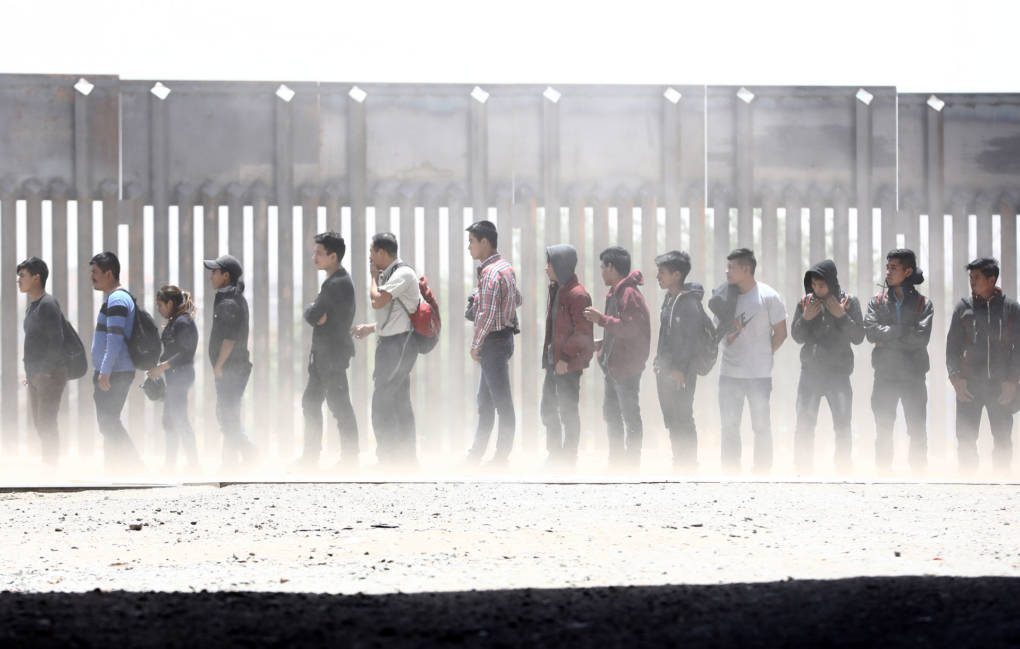
"caption": "Migrants stand while being detained by U.S. Border Patrol, after crossing the U.S.-Mexico border barrier on May 17, 2019 in El Paso, Texas.",
"description": "Migrants stand while being detained by U.S. Border Patrol, after crossing the U.S.-Mexico border barrier on May 17, 2019 in El Paso, Texas.",
"title": "Migrants-Line-Up-Texas",
"credit": "Mario Tama/Getty Images",
"status": "inherit",
"isLoading": false,
"fetchFailed": false
},
"news_11746833": {
"type": "attachments",
"id": "news_11746833",
"meta": {
"index": "attachments_1716263798",
"site": "news",
"id": "11746833",
"found": true
},
"parent": 11746698,
"imgSizes": {
"apple_news_ca_landscape_5_5": {
"file": "https://ww2.kqed.org/app/uploads/sites/10/2019/05/IMG_8935-1044x783.jpg",
"width": 1044,
"mimeType": "image/jpeg",
"height": 783
},
"apple_news_ca_square_4_0": {
"file": "https://ww2.kqed.org/app/uploads/sites/10/2019/05/IMG_8935-470x470.jpg",
"width": 470,
"mimeType": "image/jpeg",
"height": 470
},
"twentyfourteen-full-width": {
"file": "https://ww2.kqed.org/app/uploads/sites/10/2019/05/IMG_8935-1038x576.jpg",
"width": 1038,
"mimeType": "image/jpeg",
"height": 576
},
"thumbnail": {
"file": "https://ww2.kqed.org/app/uploads/sites/10/2019/05/IMG_8935-160x120.jpg",
"width": 160,
"mimeType": "image/jpeg",
"height": 120
},
"post-thumbnail": {
"file": "https://ww2.kqed.org/app/uploads/sites/10/2019/05/IMG_8935-672x372.jpg",
"width": 672,
"mimeType": "image/jpeg",
"height": 372
},
"kqedFullSize": {
"file": "https://ww2.kqed.org/app/uploads/sites/10/2019/05/IMG_8935-e1557865800116.jpg",
"width": 1920,
"height": 1440
},
"apple_news_ca_landscape_4_7": {
"file": "https://ww2.kqed.org/app/uploads/sites/10/2019/05/IMG_8935-632x474.jpg",
"width": 632,
"mimeType": "image/jpeg",
"height": 474
},
"large": {
"file": "https://ww2.kqed.org/app/uploads/sites/10/2019/05/IMG_8935-1020x765.jpg",
"width": 1020,
"mimeType": "image/jpeg",
"height": 765
},
"complete_open_graph": {
"file": "https://ww2.kqed.org/app/uploads/sites/10/2019/05/IMG_8935-1200x900.jpg",
"width": 1200,
"mimeType": "image/jpeg",
"height": 900
},
"apple_news_ca_landscape_4_0": {
"file": "https://ww2.kqed.org/app/uploads/sites/10/2019/05/IMG_8935-536x402.jpg",
"width": 536,
"mimeType": "image/jpeg",
"height": 402
},
"apple_news_ca_portrait_12_9": {
"file": "https://ww2.kqed.org/app/uploads/sites/10/2019/05/IMG_8935-1122x1496.jpg",
"width": 1122,
"mimeType": "image/jpeg",
"height": 1496
},
"medium": {
"file": "https://ww2.kqed.org/app/uploads/sites/10/2019/05/IMG_8935-800x600.jpg",
"width": 800,
"mimeType": "image/jpeg",
"height": 600
},
"apple_news_ca_portrait_4_0": {
"file": "https://ww2.kqed.org/app/uploads/sites/10/2019/05/IMG_8935-354x472.jpg",
"width": 354,
"mimeType": "image/jpeg",
"height": 472
},
"apple_news_ca_portrait_9_7": {
"file": "https://ww2.kqed.org/app/uploads/sites/10/2019/05/IMG_8935-840x1120.jpg",
"width": 840,
"mimeType": "image/jpeg",
"height": 1120
},
"apple_news_ca_landscape_12_9": {
"file": "https://ww2.kqed.org/app/uploads/sites/10/2019/05/IMG_8935-1832x1374.jpg",
"width": 1832,
"mimeType": "image/jpeg",
"height": 1374
},
"apple_news_ca_square_9_7": {
"file": "https://ww2.kqed.org/app/uploads/sites/10/2019/05/IMG_8935-1104x1104.jpg",
"width": 1104,
"mimeType": "image/jpeg",
"height": 1104
},
"apple_news_ca_portrait_4_7": {
"file": "https://ww2.kqed.org/app/uploads/sites/10/2019/05/IMG_8935-414x552.jpg",
"width": 414,
"mimeType": "image/jpeg",
"height": 552
},
"apple_news_ca_square_12_9": {
"file": "https://ww2.kqed.org/app/uploads/sites/10/2019/05/IMG_8935-1472x1472.jpg",
"width": 1472,
"mimeType": "image/jpeg",
"height": 1472
},
"apple_news_ca_portrait_5_5": {
"file": "https://ww2.kqed.org/app/uploads/sites/10/2019/05/IMG_8935-687x916.jpg",
"width": 687,
"mimeType": "image/jpeg",
"height": 916
},
"full-width": {
"file": "https://ww2.kqed.org/app/uploads/sites/10/2019/05/IMG_8935-1920x1440.jpg",
"width": 1920,
"mimeType": "image/jpeg",
"height": 1440
},
"apple_news_ca_square_4_7": {
"file": "https://ww2.kqed.org/app/uploads/sites/10/2019/05/IMG_8935-550x550.jpg",
"width": 550,
"mimeType": "image/jpeg",
"height": 550
},
"apple_news_ca_landscape_9_7": {
"file": "https://ww2.kqed.org/app/uploads/sites/10/2019/05/IMG_8935-1376x1032.jpg",
"width": 1376,
"mimeType": "image/jpeg",
"height": 1032
},
"apple_news_ca_square_5_5": {
"file": "https://ww2.kqed.org/app/uploads/sites/10/2019/05/IMG_8935-912x912.jpg",
"width": 912,
"mimeType": "image/jpeg",
"height": 912
}
},
"publishDate": 1557782149,
"modified": 1576883532,
"caption": "The South Texas Family Residential Center, the largest immigrant family detention facility in the U.S., can hold 2,400 mothers and children.",
"description": "The South Texas Family Residential Center, the largest immigrant family detention facility in the U.S., can hold up to 2,400 people.",
"title": "ICE family detention",
"credit": "Julie Small/KQED",
"status": "inherit",
"isLoading": false,
"fetchFailed": false
},
"news_11746417": {
"type": "attachments",
"id": "news_11746417",
"meta": {
"index": "attachments_1716263798",
"site": "news",
"id": "11746417",
"found": true
},
"parent": 11746399,
"imgSizes": {
"apple_news_ca_landscape_5_5": {
"file": "https://ww2.kqed.org/app/uploads/sites/10/2019/05/RS37036_GettyImages-1130761069-qut-1044x783.jpg",
"width": 1044,
"mimeType": "image/jpeg",
"height": 783
},
"apple_news_ca_square_4_0": {
"file": "https://ww2.kqed.org/app/uploads/sites/10/2019/05/RS37036_GettyImages-1130761069-qut-470x470.jpg",
"width": 470,
"mimeType": "image/jpeg",
"height": 470
},
"twentyfourteen-full-width": {
"file": "https://ww2.kqed.org/app/uploads/sites/10/2019/05/RS37036_GettyImages-1130761069-qut-1038x576.jpg",
"width": 1038,
"mimeType": "image/jpeg",
"height": 576
},
"thumbnail": {
"file": "https://ww2.kqed.org/app/uploads/sites/10/2019/05/RS37036_GettyImages-1130761069-qut-160x119.jpg",
"width": 160,
"mimeType": "image/jpeg",
"height": 119
},
"post-thumbnail": {
"file": "https://ww2.kqed.org/app/uploads/sites/10/2019/05/RS37036_GettyImages-1130761069-qut-672x372.jpg",
"width": 672,
"mimeType": "image/jpeg",
"height": 372
},
"kqedFullSize": {
"file": "https://ww2.kqed.org/app/uploads/sites/10/2019/05/RS37036_GettyImages-1130761069-qut.jpg",
"width": 1920,
"height": 1428
},
"apple_news_ca_landscape_4_7": {
"file": "https://ww2.kqed.org/app/uploads/sites/10/2019/05/RS37036_GettyImages-1130761069-qut-632x474.jpg",
"width": 632,
"mimeType": "image/jpeg",
"height": 474
},
"large": {
"file": "https://ww2.kqed.org/app/uploads/sites/10/2019/05/RS37036_GettyImages-1130761069-qut-1020x759.jpg",
"width": 1020,
"mimeType": "image/jpeg",
"height": 759
},
"complete_open_graph": {
"file": "https://ww2.kqed.org/app/uploads/sites/10/2019/05/RS37036_GettyImages-1130761069-qut-1200x893.jpg",
"width": 1200,
"mimeType": "image/jpeg",
"height": 893
},
"apple_news_ca_landscape_4_0": {
"file": "https://ww2.kqed.org/app/uploads/sites/10/2019/05/RS37036_GettyImages-1130761069-qut-536x402.jpg",
"width": 536,
"mimeType": "image/jpeg",
"height": 402
},
"apple_news_ca_portrait_12_9": {
"file": "https://ww2.kqed.org/app/uploads/sites/10/2019/05/RS37036_GettyImages-1130761069-qut-1122x1428.jpg",
"width": 1122,
"mimeType": "image/jpeg",
"height": 1428
},
"medium": {
"file": "https://ww2.kqed.org/app/uploads/sites/10/2019/05/RS37036_GettyImages-1130761069-qut-800x595.jpg",
"width": 800,
"mimeType": "image/jpeg",
"height": 595
},
"apple_news_ca_portrait_4_0": {
"file": "https://ww2.kqed.org/app/uploads/sites/10/2019/05/RS37036_GettyImages-1130761069-qut-354x472.jpg",
"width": 354,
"mimeType": "image/jpeg",
"height": 472
},
"apple_news_ca_portrait_9_7": {
"file": "https://ww2.kqed.org/app/uploads/sites/10/2019/05/RS37036_GettyImages-1130761069-qut-840x1120.jpg",
"width": 840,
"mimeType": "image/jpeg",
"height": 1120
},
"apple_news_ca_landscape_12_9": {
"file": "https://ww2.kqed.org/app/uploads/sites/10/2019/05/RS37036_GettyImages-1130761069-qut-1832x1374.jpg",
"width": 1832,
"mimeType": "image/jpeg",
"height": 1374
},
"apple_news_ca_square_9_7": {
"file": "https://ww2.kqed.org/app/uploads/sites/10/2019/05/RS37036_GettyImages-1130761069-qut-1104x1104.jpg",
"width": 1104,
"mimeType": "image/jpeg",
"height": 1104
},
"apple_news_ca_portrait_4_7": {
"file": "https://ww2.kqed.org/app/uploads/sites/10/2019/05/RS37036_GettyImages-1130761069-qut-414x552.jpg",
"width": 414,
"mimeType": "image/jpeg",
"height": 552
},
"apple_news_ca_square_12_9": {
"file": "https://ww2.kqed.org/app/uploads/sites/10/2019/05/RS37036_GettyImages-1130761069-qut-1472x1428.jpg",
"width": 1472,
"mimeType": "image/jpeg",
"height": 1428
},
"apple_news_ca_portrait_5_5": {
"file": "https://ww2.kqed.org/app/uploads/sites/10/2019/05/RS37036_GettyImages-1130761069-qut-687x916.jpg",
"width": 687,
"mimeType": "image/jpeg",
"height": 916
},
"full-width": {
"file": "https://ww2.kqed.org/app/uploads/sites/10/2019/05/RS37036_GettyImages-1130761069-qut-1920x1428.jpg",
"width": 1920,
"mimeType": "image/jpeg",
"height": 1428
},
"apple_news_ca_square_4_7": {
"file": "https://ww2.kqed.org/app/uploads/sites/10/2019/05/RS37036_GettyImages-1130761069-qut-550x550.jpg",
"width": 550,
"mimeType": "image/jpeg",
"height": 550
},
"apple_news_ca_landscape_9_7": {
"file": "https://ww2.kqed.org/app/uploads/sites/10/2019/05/RS37036_GettyImages-1130761069-qut-1376x1032.jpg",
"width": 1376,
"mimeType": "image/jpeg",
"height": 1032
},
"apple_news_ca_square_5_5": {
"file": "https://ww2.kqed.org/app/uploads/sites/10/2019/05/RS37036_GettyImages-1130761069-qut-912x912.jpg",
"width": 912,
"mimeType": "image/jpeg",
"height": 912
}
},
"publishDate": 1557531723,
"modified": 1557550663,
"caption": "Reps. Sylvia García, D-Texas (foreground) and Donna Shalala, D-Florida, tour the Homestead Temporary Shelter for Unaccompanied Migrant Children facility on February 19, 2019 in Homestead, Florida. The facility is the nation's largest for housing migrant children. ",
"description": null,
"title": "Congressional Hispanic Caucus Visits Shelter For Unaccompanied Migrant Children",
"credit": "Joe Raedle/Getty Images",
"status": "inherit",
"isLoading": false,
"fetchFailed": false
},
"news_11739788": {
"type": "attachments",
"id": "news_11739788",
"meta": {
"index": "attachments_1716263798",
"site": "news",
"id": "11739788",
"found": true
},
"parent": 11739785,
"imgSizes": {
"apple_news_ca_square_4_0": {
"file": "https://ww2.kqed.org/app/uploads/sites/10/2019/04/gettyimages-1135936611_custom-d672ee8b19c829003a8e26ddac8beb833b68cd35-s800-c85-470x470.jpg",
"width": 470,
"mimeType": "image/jpeg",
"height": 470
},
"thumbnail": {
"file": "https://ww2.kqed.org/app/uploads/sites/10/2019/04/gettyimages-1135936611_custom-d672ee8b19c829003a8e26ddac8beb833b68cd35-s800-c85-160x106.jpg",
"width": 160,
"mimeType": "image/jpeg",
"height": 106
},
"post-thumbnail": {
"file": "https://ww2.kqed.org/app/uploads/sites/10/2019/04/gettyimages-1135936611_custom-d672ee8b19c829003a8e26ddac8beb833b68cd35-s800-c85-672x372.jpg",
"width": 672,
"mimeType": "image/jpeg",
"height": 372
},
"kqedFullSize": {
"file": "https://ww2.kqed.org/app/uploads/sites/10/2019/04/gettyimages-1135936611_custom-d672ee8b19c829003a8e26ddac8beb833b68cd35-s800-c85.jpg",
"width": 800,
"height": 532
},
"apple_news_ca_landscape_4_7": {
"file": "https://ww2.kqed.org/app/uploads/sites/10/2019/04/gettyimages-1135936611_custom-d672ee8b19c829003a8e26ddac8beb833b68cd35-s800-c85-632x474.jpg",
"width": 632,
"mimeType": "image/jpeg",
"height": 474
},
"guest-author-50": {
"file": "https://ww2.kqed.org/app/uploads/sites/10/2019/04/gettyimages-1135936611_custom-d672ee8b19c829003a8e26ddac8beb833b68cd35-s800-c85-50x50.jpg",
"width": 50,
"mimeType": "image/jpeg",
"height": 50
},
"guest-author-96": {
"file": "https://ww2.kqed.org/app/uploads/sites/10/2019/04/gettyimages-1135936611_custom-d672ee8b19c829003a8e26ddac8beb833b68cd35-s800-c85-96x96.jpg",
"width": 96,
"mimeType": "image/jpeg",
"height": 96
},
"apple_news_ca_landscape_4_0": {
"file": "https://ww2.kqed.org/app/uploads/sites/10/2019/04/gettyimages-1135936611_custom-d672ee8b19c829003a8e26ddac8beb833b68cd35-s800-c85-536x402.jpg",
"width": 536,
"mimeType": "image/jpeg",
"height": 402
},
"medium": {
"file": "https://ww2.kqed.org/app/uploads/sites/10/2019/04/gettyimages-1135936611_custom-d672ee8b19c829003a8e26ddac8beb833b68cd35-s800-c85-800x532.jpg",
"width": 800,
"mimeType": "image/jpeg",
"height": 532
},
"guest-author-64": {
"file": "https://ww2.kqed.org/app/uploads/sites/10/2019/04/gettyimages-1135936611_custom-d672ee8b19c829003a8e26ddac8beb833b68cd35-s800-c85-64x64.jpg",
"width": 64,
"mimeType": "image/jpeg",
"height": 64
},
"guest-author-32": {
"file": "https://ww2.kqed.org/app/uploads/sites/10/2019/04/gettyimages-1135936611_custom-d672ee8b19c829003a8e26ddac8beb833b68cd35-s800-c85-32x32.jpg",
"width": 32,
"mimeType": "image/jpeg",
"height": 32
},
"apple_news_ca_portrait_4_0": {
"file": "https://ww2.kqed.org/app/uploads/sites/10/2019/04/gettyimages-1135936611_custom-d672ee8b19c829003a8e26ddac8beb833b68cd35-s800-c85-354x472.jpg",
"width": 354,
"mimeType": "image/jpeg",
"height": 472
},
"apple_news_ca_portrait_4_7": {
"file": "https://ww2.kqed.org/app/uploads/sites/10/2019/04/gettyimages-1135936611_custom-d672ee8b19c829003a8e26ddac8beb833b68cd35-s800-c85-414x532.jpg",
"width": 414,
"mimeType": "image/jpeg",
"height": 532
},
"apple_news_ca_portrait_5_5": {
"file": "https://ww2.kqed.org/app/uploads/sites/10/2019/04/gettyimages-1135936611_custom-d672ee8b19c829003a8e26ddac8beb833b68cd35-s800-c85-687x532.jpg",
"width": 687,
"mimeType": "image/jpeg",
"height": 532
},
"apple_news_ca_square_4_7": {
"file": "https://ww2.kqed.org/app/uploads/sites/10/2019/04/gettyimages-1135936611_custom-d672ee8b19c829003a8e26ddac8beb833b68cd35-s800-c85-550x532.jpg",
"width": 550,
"mimeType": "image/jpeg",
"height": 532
},
"guest-author-128": {
"file": "https://ww2.kqed.org/app/uploads/sites/10/2019/04/gettyimages-1135936611_custom-d672ee8b19c829003a8e26ddac8beb833b68cd35-s800-c85-128x128.jpg",
"width": 128,
"mimeType": "image/jpeg",
"height": 128
}
},
"publishDate": 1555093178,
"modified": 1555093221,
"caption": "A man outside El Chaparral port of entry in Tijuana, Mexico, waits to present himself to U.S. border authorities to request asylum. The Adelanto ICE Processing Center, a privately run immigration detention center in southern California, houses nearly 2,000 men and women, some of them seeking asylum.",
"description": "A man outside El Chaparral port of entry in Tijuana, Mexico, waits to present himself to U.S. border authorities to request asylum. The Adelanto ICE Processing Center, a privately run immigration detention center in southern California, houses nearly 2,000 men and women, some of them seeking asylum.",
"title": "gettyimages-1135936611_custom-d672ee8b19c829003a8e26ddac8beb833b68cd35-s800-c85",
"credit": "Guillermo Arias/Getty Images",
"status": "inherit",
"isLoading": false,
"fetchFailed": false
},
"news_11739830": {
"type": "attachments",
"id": "news_11739830",
"meta": {
"index": "attachments_1716263798",
"site": "news",
"id": "11739830",
"found": true
},
"parent": 11739653,
"imgSizes": {
"apple_news_ca_square_4_0": {
"file": "https://ww2.kqed.org/app/uploads/sites/10/2019/04/GettyImages-1141694605-470x470.jpg",
"width": 470,
"mimeType": "image/jpeg",
"height": 470
},
"twentyfourteen-full-width": {
"file": "https://ww2.kqed.org/app/uploads/sites/10/2019/04/GettyImages-1141694605-1024x576.jpg",
"width": 1024,
"mimeType": "image/jpeg",
"height": 576
},
"thumbnail": {
"file": "https://ww2.kqed.org/app/uploads/sites/10/2019/04/GettyImages-1141694605-160x107.jpg",
"width": 160,
"mimeType": "image/jpeg",
"height": 107
},
"post-thumbnail": {
"file": "https://ww2.kqed.org/app/uploads/sites/10/2019/04/GettyImages-1141694605-672x372.jpg",
"width": 672,
"mimeType": "image/jpeg",
"height": 372
},
"kqedFullSize": {
"file": "https://ww2.kqed.org/app/uploads/sites/10/2019/04/GettyImages-1141694605.jpg",
"width": 1024,
"height": 683
},
"apple_news_ca_landscape_4_7": {
"file": "https://ww2.kqed.org/app/uploads/sites/10/2019/04/GettyImages-1141694605-632x474.jpg",
"width": 632,
"mimeType": "image/jpeg",
"height": 474
},
"large": {
"file": "https://ww2.kqed.org/app/uploads/sites/10/2019/04/GettyImages-1141694605-1020x680.jpg",
"width": 1020,
"mimeType": "image/jpeg",
"height": 680
},
"guest-author-50": {
"file": "https://ww2.kqed.org/app/uploads/sites/10/2019/04/GettyImages-1141694605-50x50.jpg",
"width": 50,
"mimeType": "image/jpeg",
"height": 50
},
"guest-author-96": {
"file": "https://ww2.kqed.org/app/uploads/sites/10/2019/04/GettyImages-1141694605-96x96.jpg",
"width": 96,
"mimeType": "image/jpeg",
"height": 96
},
"apple_news_ca_landscape_4_0": {
"file": "https://ww2.kqed.org/app/uploads/sites/10/2019/04/GettyImages-1141694605-536x402.jpg",
"width": 536,
"mimeType": "image/jpeg",
"height": 402
},
"medium": {
"file": "https://ww2.kqed.org/app/uploads/sites/10/2019/04/GettyImages-1141694605-800x534.jpg",
"width": 800,
"mimeType": "image/jpeg",
"height": 534
},
"guest-author-64": {
"file": "https://ww2.kqed.org/app/uploads/sites/10/2019/04/GettyImages-1141694605-64x64.jpg",
"width": 64,
"mimeType": "image/jpeg",
"height": 64
},
"guest-author-32": {
"file": "https://ww2.kqed.org/app/uploads/sites/10/2019/04/GettyImages-1141694605-32x32.jpg",
"width": 32,
"mimeType": "image/jpeg",
"height": 32
},
"apple_news_ca_portrait_4_0": {
"file": "https://ww2.kqed.org/app/uploads/sites/10/2019/04/GettyImages-1141694605-354x472.jpg",
"width": 354,
"mimeType": "image/jpeg",
"height": 472
},
"apple_news_ca_portrait_9_7": {
"file": "https://ww2.kqed.org/app/uploads/sites/10/2019/04/GettyImages-1141694605-840x683.jpg",
"width": 840,
"mimeType": "image/jpeg",
"height": 683
},
"apple_news_ca_portrait_4_7": {
"file": "https://ww2.kqed.org/app/uploads/sites/10/2019/04/GettyImages-1141694605-414x552.jpg",
"width": 414,
"mimeType": "image/jpeg",
"height": 552
},
"apple_news_ca_portrait_5_5": {
"file": "https://ww2.kqed.org/app/uploads/sites/10/2019/04/GettyImages-1141694605-687x683.jpg",
"width": 687,
"mimeType": "image/jpeg",
"height": 683
},
"apple_news_ca_square_4_7": {
"file": "https://ww2.kqed.org/app/uploads/sites/10/2019/04/GettyImages-1141694605-550x550.jpg",
"width": 550,
"mimeType": "image/jpeg",
"height": 550
},
"guest-author-128": {
"file": "https://ww2.kqed.org/app/uploads/sites/10/2019/04/GettyImages-1141694605-128x128.jpg",
"width": 128,
"mimeType": "image/jpeg",
"height": 128
},
"apple_news_ca_square_5_5": {
"file": "https://ww2.kqed.org/app/uploads/sites/10/2019/04/GettyImages-1141694605-912x683.jpg",
"width": 912,
"mimeType": "image/jpeg",
"height": 683
}
},
"publishDate": 1555097039,
"modified": 1555097480,
"caption": "U.S. President Donald Trump departing the White House on April 10, 2019. Trump has long railed against sanctuary cities and their leaders.",
"description": null,
"title": "President Trump Departs White House En Route To Texas",
"credit": "Alex Wong/Getty Images",
"status": "inherit",
"isLoading": false,
"fetchFailed": false
},
"news_11739211": {
"type": "attachments",
"id": "news_11739211",
"meta": {
"index": "attachments_1716263798",
"site": "news",
"id": "11739211",
"found": true
},
"parent": 11739199,
"imgSizes": {
"post-thumbnail": {
"file": "https://ww2.kqed.org/app/uploads/sites/10/2019/04/04102019_jose-ibarra-immigrant-death-ice-adelanto-crop-672x372.jpg",
"width": 672,
"mimeType": "image/jpeg",
"height": 372
},
"kqedFullSize": {
"file": "https://ww2.kqed.org/app/uploads/sites/10/2019/04/04102019_jose-ibarra-immigrant-death-ice-adelanto-crop.jpg",
"width": 1920,
"height": 1655
},
"guest-author-50": {
"file": "https://ww2.kqed.org/app/uploads/sites/10/2019/04/04102019_jose-ibarra-immigrant-death-ice-adelanto-crop-50x50.jpg",
"width": 50,
"mimeType": "image/jpeg",
"height": 50
},
"guest-author-96": {
"file": "https://ww2.kqed.org/app/uploads/sites/10/2019/04/04102019_jose-ibarra-immigrant-death-ice-adelanto-crop-96x96.jpg",
"width": 96,
"mimeType": "image/jpeg",
"height": 96
},
"apple_news_ca_portrait_12_9": {
"file": "https://ww2.kqed.org/app/uploads/sites/10/2019/04/04102019_jose-ibarra-immigrant-death-ice-adelanto-crop-1122x1496.jpg",
"width": 1122,
"mimeType": "image/jpeg",
"height": 1496
},
"medium": {
"file": "https://ww2.kqed.org/app/uploads/sites/10/2019/04/04102019_jose-ibarra-immigrant-death-ice-adelanto-crop-800x690.jpg",
"width": 800,
"mimeType": "image/jpeg",
"height": 690
},
"guest-author-32": {
"file": "https://ww2.kqed.org/app/uploads/sites/10/2019/04/04102019_jose-ibarra-immigrant-death-ice-adelanto-crop-32x32.jpg",
"width": 32,
"mimeType": "image/jpeg",
"height": 32
},
"apple_news_ca_portrait_9_7": {
"file": "https://ww2.kqed.org/app/uploads/sites/10/2019/04/04102019_jose-ibarra-immigrant-death-ice-adelanto-crop-840x1120.jpg",
"width": 840,
"mimeType": "image/jpeg",
"height": 1120
},
"apple_news_ca_square_9_7": {
"file": "https://ww2.kqed.org/app/uploads/sites/10/2019/04/04102019_jose-ibarra-immigrant-death-ice-adelanto-crop-1104x1104.jpg",
"width": 1104,
"mimeType": "image/jpeg",
"height": 1104
},
"apple_news_ca_portrait_4_7": {
"file": "https://ww2.kqed.org/app/uploads/sites/10/2019/04/04102019_jose-ibarra-immigrant-death-ice-adelanto-crop-414x552.jpg",
"width": 414,
"mimeType": "image/jpeg",
"height": 552
},
"apple_news_ca_square_12_9": {
"file": "https://ww2.kqed.org/app/uploads/sites/10/2019/04/04102019_jose-ibarra-immigrant-death-ice-adelanto-crop-1472x1472.jpg",
"width": 1472,
"mimeType": "image/jpeg",
"height": 1472
},
"apple_news_ca_portrait_5_5": {
"file": "https://ww2.kqed.org/app/uploads/sites/10/2019/04/04102019_jose-ibarra-immigrant-death-ice-adelanto-crop-687x916.jpg",
"width": 687,
"mimeType": "image/jpeg",
"height": 916
},
"apple_news_ca_square_4_7": {
"file": "https://ww2.kqed.org/app/uploads/sites/10/2019/04/04102019_jose-ibarra-immigrant-death-ice-adelanto-crop-550x550.jpg",
"width": 550,
"mimeType": "image/jpeg",
"height": 550
},
"apple_news_ca_square_5_5": {
"file": "https://ww2.kqed.org/app/uploads/sites/10/2019/04/04102019_jose-ibarra-immigrant-death-ice-adelanto-crop-912x912.jpg",
"width": 912,
"mimeType": "image/jpeg",
"height": 912
},
"apple_news_ca_landscape_5_5": {
"file": "https://ww2.kqed.org/app/uploads/sites/10/2019/04/04102019_jose-ibarra-immigrant-death-ice-adelanto-crop-1044x783.jpg",
"width": 1044,
"mimeType": "image/jpeg",
"height": 783
},
"apple_news_ca_square_4_0": {
"file": "https://ww2.kqed.org/app/uploads/sites/10/2019/04/04102019_jose-ibarra-immigrant-death-ice-adelanto-crop-470x470.jpg",
"width": 470,
"mimeType": "image/jpeg",
"height": 470
},
"twentyfourteen-full-width": {
"file": "https://ww2.kqed.org/app/uploads/sites/10/2019/04/04102019_jose-ibarra-immigrant-death-ice-adelanto-crop-1038x576.jpg",
"width": 1038,
"mimeType": "image/jpeg",
"height": 576
},
"thumbnail": {
"file": "https://ww2.kqed.org/app/uploads/sites/10/2019/04/04102019_jose-ibarra-immigrant-death-ice-adelanto-crop-160x138.jpg",
"width": 160,
"mimeType": "image/jpeg",
"height": 138
},
"apple_news_ca_landscape_4_7": {
"file": "https://ww2.kqed.org/app/uploads/sites/10/2019/04/04102019_jose-ibarra-immigrant-death-ice-adelanto-crop-632x474.jpg",
"width": 632,
"mimeType": "image/jpeg",
"height": 474
},
"large": {
"file": "https://ww2.kqed.org/app/uploads/sites/10/2019/04/04102019_jose-ibarra-immigrant-death-ice-adelanto-crop-1020x879.jpg",
"width": 1020,
"mimeType": "image/jpeg",
"height": 879
},
"complete_open_graph": {
"file": "https://ww2.kqed.org/app/uploads/sites/10/2019/04/04102019_jose-ibarra-immigrant-death-ice-adelanto-crop-1200x1034.jpg",
"width": 1200,
"mimeType": "image/jpeg",
"height": 1034
},
"apple_news_ca_landscape_4_0": {
"file": "https://ww2.kqed.org/app/uploads/sites/10/2019/04/04102019_jose-ibarra-immigrant-death-ice-adelanto-crop-536x402.jpg",
"width": 536,
"mimeType": "image/jpeg",
"height": 402
},
"guest-author-64": {
"file": "https://ww2.kqed.org/app/uploads/sites/10/2019/04/04102019_jose-ibarra-immigrant-death-ice-adelanto-crop-64x64.jpg",
"width": 64,
"mimeType": "image/jpeg",
"height": 64
},
"apple_news_ca_portrait_4_0": {
"file": "https://ww2.kqed.org/app/uploads/sites/10/2019/04/04102019_jose-ibarra-immigrant-death-ice-adelanto-crop-354x472.jpg",
"width": 354,
"mimeType": "image/jpeg",
"height": 472
},
"apple_news_ca_landscape_12_9": {
"file": "https://ww2.kqed.org/app/uploads/sites/10/2019/04/04102019_jose-ibarra-immigrant-death-ice-adelanto-crop-1832x1374.jpg",
"width": 1832,
"mimeType": "image/jpeg",
"height": 1374
},
"full-width": {
"file": "https://ww2.kqed.org/app/uploads/sites/10/2019/04/04102019_jose-ibarra-immigrant-death-ice-adelanto-crop-1920x1655.jpg",
"width": 1920,
"mimeType": "image/jpeg",
"height": 1655
},
"guest-author-128": {
"file": "https://ww2.kqed.org/app/uploads/sites/10/2019/04/04102019_jose-ibarra-immigrant-death-ice-adelanto-crop-128x128.jpg",
"width": 128,
"mimeType": "image/jpeg",
"height": 128
},
"apple_news_ca_landscape_9_7": {
"file": "https://ww2.kqed.org/app/uploads/sites/10/2019/04/04102019_jose-ibarra-immigrant-death-ice-adelanto-crop-1376x1032.jpg",
"width": 1376,
"mimeType": "image/jpeg",
"height": 1032
}
},
"publishDate": 1554933572,
"modified": 1554936970,
"caption": "Jose Luis Ibarra Bucio in a coma from which he never awoke at Loma Linda University Hospital. He suffered a brain hemorrhage on Feb. 7, 2019, while he was detained by federal immigration officials at a facility in Adelanto. His family decided to remove him from life support and he died on March 21.",
"description": "Jose Luis Ibarra Bucio in a coma from which he never awoke at Loma Linda University Hospital. He suffered a brain hemorrhage on Feb. 7, 2019, while he was detained by federal immigration officials at a facility in Adelanto. His family decided to remove him from life support and he died on March 21.",
"title": "04102019_jose ibarra immigrant death ice adelanto crop",
"credit": "Coalition for Humane Immigrant Rights",
"status": "inherit",
"isLoading": false,
"fetchFailed": false
},
"news_11736596": {
"type": "attachments",
"id": "news_11736596",
"meta": {
"index": "attachments_1716263798",
"site": "news",
"id": "11736596",
"found": true
},
"parent": 11736531,
"imgSizes": {
"post-thumbnail": {
"file": "https://ww2.kqed.org/app/uploads/sites/10/2019/03/RS25061_GettyImages-450371267-qut-672x372.jpg",
"width": 672,
"mimeType": "image/jpeg",
"height": 372
},
"kqedFullSize": {
"file": "https://ww2.kqed.org/app/uploads/sites/10/2019/03/RS25061_GettyImages-450371267-qut.jpg",
"width": 1920,
"height": 1280
},
"guest-author-50": {
"file": "https://ww2.kqed.org/app/uploads/sites/10/2019/03/RS25061_GettyImages-450371267-qut-50x50.jpg",
"width": 50,
"mimeType": "image/jpeg",
"height": 50
},
"guest-author-96": {
"file": "https://ww2.kqed.org/app/uploads/sites/10/2019/03/RS25061_GettyImages-450371267-qut-96x96.jpg",
"width": 96,
"mimeType": "image/jpeg",
"height": 96
},
"apple_news_ca_portrait_12_9": {
"file": "https://ww2.kqed.org/app/uploads/sites/10/2019/03/RS25061_GettyImages-450371267-qut-1122x1280.jpg",
"width": 1122,
"mimeType": "image/jpeg",
"height": 1280
},
"medium": {
"file": "https://ww2.kqed.org/app/uploads/sites/10/2019/03/RS25061_GettyImages-450371267-qut-800x533.jpg",
"width": 800,
"mimeType": "image/jpeg",
"height": 533
},
"guest-author-32": {
"file": "https://ww2.kqed.org/app/uploads/sites/10/2019/03/RS25061_GettyImages-450371267-qut-32x32.jpg",
"width": 32,
"mimeType": "image/jpeg",
"height": 32
},
"apple_news_ca_portrait_9_7": {
"file": "https://ww2.kqed.org/app/uploads/sites/10/2019/03/RS25061_GettyImages-450371267-qut-840x1120.jpg",
"width": 840,
"mimeType": "image/jpeg",
"height": 1120
},
"apple_news_ca_square_9_7": {
"file": "https://ww2.kqed.org/app/uploads/sites/10/2019/03/RS25061_GettyImages-450371267-qut-1104x1104.jpg",
"width": 1104,
"mimeType": "image/jpeg",
"height": 1104
},
"apple_news_ca_portrait_4_7": {
"file": "https://ww2.kqed.org/app/uploads/sites/10/2019/03/RS25061_GettyImages-450371267-qut-414x552.jpg",
"width": 414,
"mimeType": "image/jpeg",
"height": 552
},
"apple_news_ca_square_12_9": {
"file": "https://ww2.kqed.org/app/uploads/sites/10/2019/03/RS25061_GettyImages-450371267-qut-1472x1280.jpg",
"width": 1472,
"mimeType": "image/jpeg",
"height": 1280
},
"apple_news_ca_portrait_5_5": {
"file": "https://ww2.kqed.org/app/uploads/sites/10/2019/03/RS25061_GettyImages-450371267-qut-687x916.jpg",
"width": 687,
"mimeType": "image/jpeg",
"height": 916
},
"apple_news_ca_square_4_7": {
"file": "https://ww2.kqed.org/app/uploads/sites/10/2019/03/RS25061_GettyImages-450371267-qut-550x550.jpg",
"width": 550,
"mimeType": "image/jpeg",
"height": 550
},
"apple_news_ca_square_5_5": {
"file": "https://ww2.kqed.org/app/uploads/sites/10/2019/03/RS25061_GettyImages-450371267-qut-912x912.jpg",
"width": 912,
"mimeType": "image/jpeg",
"height": 912
},
"apple_news_ca_landscape_5_5": {
"file": "https://ww2.kqed.org/app/uploads/sites/10/2019/03/RS25061_GettyImages-450371267-qut-1044x783.jpg",
"width": 1044,
"mimeType": "image/jpeg",
"height": 783
},
"apple_news_ca_square_4_0": {
"file": "https://ww2.kqed.org/app/uploads/sites/10/2019/03/RS25061_GettyImages-450371267-qut-470x470.jpg",
"width": 470,
"mimeType": "image/jpeg",
"height": 470
},
"twentyfourteen-full-width": {
"file": "https://ww2.kqed.org/app/uploads/sites/10/2019/03/RS25061_GettyImages-450371267-qut-1038x576.jpg",
"width": 1038,
"mimeType": "image/jpeg",
"height": 576
},
"thumbnail": {
"file": "https://ww2.kqed.org/app/uploads/sites/10/2019/03/RS25061_GettyImages-450371267-qut-160x107.jpg",
"width": 160,
"mimeType": "image/jpeg",
"height": 107
},
"apple_news_ca_landscape_4_7": {
"file": "https://ww2.kqed.org/app/uploads/sites/10/2019/03/RS25061_GettyImages-450371267-qut-632x474.jpg",
"width": 632,
"mimeType": "image/jpeg",
"height": 474
},
"large": {
"file": "https://ww2.kqed.org/app/uploads/sites/10/2019/03/RS25061_GettyImages-450371267-qut-1020x680.jpg",
"width": 1020,
"mimeType": "image/jpeg",
"height": 680
},
"complete_open_graph": {
"file": "https://ww2.kqed.org/app/uploads/sites/10/2019/03/RS25061_GettyImages-450371267-qut-1200x800.jpg",
"width": 1200,
"mimeType": "image/jpeg",
"height": 800
},
"apple_news_ca_landscape_4_0": {
"file": "https://ww2.kqed.org/app/uploads/sites/10/2019/03/RS25061_GettyImages-450371267-qut-536x402.jpg",
"width": 536,
"mimeType": "image/jpeg",
"height": 402
},
"guest-author-64": {
"file": "https://ww2.kqed.org/app/uploads/sites/10/2019/03/RS25061_GettyImages-450371267-qut-64x64.jpg",
"width": 64,
"mimeType": "image/jpeg",
"height": 64
},
"apple_news_ca_portrait_4_0": {
"file": "https://ww2.kqed.org/app/uploads/sites/10/2019/03/RS25061_GettyImages-450371267-qut-354x472.jpg",
"width": 354,
"mimeType": "image/jpeg",
"height": 472
},
"apple_news_ca_landscape_12_9": {
"file": "https://ww2.kqed.org/app/uploads/sites/10/2019/03/RS25061_GettyImages-450371267-qut-1832x1280.jpg",
"width": 1832,
"mimeType": "image/jpeg",
"height": 1280
},
"full-width": {
"file": "https://ww2.kqed.org/app/uploads/sites/10/2019/03/RS25061_GettyImages-450371267-qut-1920x1280.jpg",
"width": 1920,
"mimeType": "image/jpeg",
"height": 1280
},
"guest-author-128": {
"file": "https://ww2.kqed.org/app/uploads/sites/10/2019/03/RS25061_GettyImages-450371267-qut-128x128.jpg",
"width": 128,
"mimeType": "image/jpeg",
"height": 128
},
"apple_news_ca_landscape_9_7": {
"file": "https://ww2.kqed.org/app/uploads/sites/10/2019/03/RS25061_GettyImages-450371267-qut-1376x1032.jpg",
"width": 1376,
"mimeType": "image/jpeg",
"height": 1032
}
},
"publishDate": 1553901451,
"modified": 1553907210,
"caption": "A family member walks into the Adelanto Detention Facility on Nov. 15, 2013 in Adelanto, California.",
"description": "A family member walks into the Adelanto Detention Facility on November 15, 2013 in Adelanto, California.",
"title": "ICE Holds Immigrants At Adelanto Detention Facility",
"credit": "John Moore/Getty Images",
"status": "inherit",
"isLoading": false,
"fetchFailed": false
}
},
"audioPlayerReducer": {
"postId": "stream_live",
"isPaused": true,
"isPlaying": false,
"pfsActive": false,
"pledgeModalIsOpen": true,
"playerDrawerIsOpen": false,
"liveAudioPlayStartedAt": 0,
"liveAudioPlayContext": ""
},
"authorsReducer": {
"byline_news_11760445": {
"type": "authors",
"id": "byline_news_11760445",
"meta": {
"override": true
},
"slug": "byline_news_11760445",
"name": "Colleen Long and Sophia Tareen",
"isLoading": false
},
"byline_news_11756670": {
"type": "authors",
"id": "byline_news_11756670",
"meta": {
"override": true
},
"slug": "byline_news_11756670",
"name": "Colleen Long \u003cbr> Associated Press",
"isLoading": false
},
"byline_news_11748722": {
"type": "authors",
"id": "byline_news_11748722",
"meta": {
"override": true
},
"slug": "byline_news_11748722",
"name": "\u003ca href= \"https://www.kpbs.org/staff/andrew-bowen/\"> Andrew Bowen \u003ca/>",
"isLoading": false
},
"byline_news_11739785": {
"type": "authors",
"id": "byline_news_11739785",
"meta": {
"override": true
},
"slug": "byline_news_11739785",
"name": "\u003cstrong>Sarah Varney\u003cbr />Kaiser Health News\u003c/strong>",
"isLoading": false
},
"byline_news_11739653": {
"type": "authors",
"id": "byline_news_11739653",
"meta": {
"override": true
},
"slug": "byline_news_11739653",
"name": "Jill Colvin and Colleen Long, Associated Press",
"isLoading": false
},
"byline_news_11739199": {
"type": "authors",
"id": "byline_news_11739199",
"meta": {
"override": true
},
"slug": "byline_news_11739199",
"name": "\u003cstrong>The Associated Press\u003c/strong>",
"isLoading": false
},
"lisapickoffwhite-2": {
"type": "authors",
"id": "199",
"meta": {
"index": "authors_1716337520",
"id": "199",
"found": true
},
"name": "Lisa Pickoff-White",
"firstName": "Lisa",
"lastName": "Pickoff-White",
"slug": "lisapickoffwhite-2",
"email": "lpickoffwhite@kqed.org",
"display_author_email": false,
"staff_mastheads": [
"news"
],
"title": "Data Journalist, Senior Producer",
"bio": "Lisa Pickoff-White is KQED's data reporter. Lisa specializes in simplifying complex topics and bringing them to life through compelling visuals, including photography and data visualizations. She previously has worked at the Center for Investigative Reporting and other national outlets. Her work has been honored with awards from the Online News Association, Investigative Reporters and Editors, the Society of Professional Journalists and SXSW Interactive. \u003cstrong> \u003c/strong>",
"avatar": "https://secure.gravatar.com/avatar/5513c5f3967df792aa65bee2501e84d6?s=600&d=blank&r=g",
"twitter": "pickoffwhite",
"facebook": null,
"instagram": null,
"linkedin": null,
"sites": [
{
"site": "",
"roles": [
"editor"
]
},
{
"site": "arts",
"roles": []
},
{
"site": "news",
"roles": [
"administrator"
]
},
{
"site": "about",
"roles": [
"editor"
]
},
{
"site": "stateofhealth",
"roles": [
"administrator"
]
},
{
"site": "science",
"roles": [
"editor"
]
},
{
"site": "quest",
"roles": [
"editor"
]
},
{
"site": "forum",
"roles": [
"editor"
]
}
],
"headData": {
"title": "Lisa Pickoff-White | KQED",
"description": "Data Journalist, Senior Producer",
"ogImgSrc": "https://secure.gravatar.com/avatar/5513c5f3967df792aa65bee2501e84d6?s=600&d=blank&r=g",
"twImgSrc": "https://secure.gravatar.com/avatar/5513c5f3967df792aa65bee2501e84d6?s=600&d=blank&r=g"
},
"isLoading": false,
"link": "/author/lisapickoffwhite-2"
},
"markfiore": {
"type": "authors",
"id": "3236",
"meta": {
"index": "authors_1716337520",
"id": "3236",
"found": true
},
"name": "Mark Fiore",
"firstName": "Mark",
"lastName": "Fiore",
"slug": "markfiore",
"email": "mark@markfiore.com",
"display_author_email": false,
"staff_mastheads": [
"news"
],
"title": "KQED News Cartoonist",
"bio": "\u003ca href=\"http://www.MarkFiore.com\">MarkFiore.com\u003c/a> | \u003ca href=\"https://twitter.com/markfiore\">Follow on Twitter\u003c/a> | \u003ca href=\"https://www.facebook.com/pages/Mark-Fiore-Animated-Political-Cartoons/94451707396?ref=bookmarks\">Facebook\u003c/a> | \u003ca href=\"mailto:mark@markfiore.com\">email\u003c/a>\r\n\r\nPulitzer Prize-winner, Mark Fiore, who the Wall Street Journal has called “the undisputed guru of the form,” creates animated political cartoons in San Francisco, where his work has been featured regularly on the San Francisco Chronicle’s web site, SFGate.com. His work has appeared on Newsweek.com, Slate.com, CBSNews.com, MotherJones.com, DailyKos.com and NPR’s web site. Fiore’s political animation has appeared on CNN, Frontline, Bill Moyers Journal, Salon.com and cable and broadcast outlets across the globe.\r\n\r\nBeginning his professional life by drawing traditional political cartoons for newspapers, Fiore’s work appeared in publications ranging from the Washington Post to the Los Angeles Times. In the late 1990s, he began to experiment with animating political cartoons and, after a short stint at the San Jose Mercury News as their staff cartoonist, Fiore devoted all his energies to animation.\r\nGrowing up in California, Fiore also spent a good portion of his life in the backwoods of Idaho. It was this combination that shaped him politically. Mark majored in political science at Colorado College, where, in a perfect send-off for a cartoonist, he received his diploma in 1991 as commencement speaker Dick Cheney smiled approvingly.\r\nMark Fiore was awarded the Pulitzer Prize for political cartooning in 2010, a Robert F. Kennedy Journalism Award in 2004 and has twice received an Online Journalism Award for commentary from the Online News Association (2002, 2008). Fiore has received two awards for his work in new media from the National Cartoonists Society (2001, 2002), and in 2006 received The James Madison Freedom of Information Award from The Society of Professional Journalists.",
"avatar": "https://secure.gravatar.com/avatar/fc4e2a612b15b67bad0c6f0e1db4ca9b?s=600&d=blank&r=g",
"twitter": "MarkFiore",
"facebook": null,
"instagram": "https://www.instagram.com/markfiore/?hl=en",
"linkedin": null,
"sites": [
{
"site": "arts",
"roles": [
"contributor"
]
},
{
"site": "news",
"roles": [
"editor"
]
},
{
"site": "futureofyou",
"roles": [
"editor"
]
},
{
"site": "science",
"roles": [
"editor"
]
}
],
"headData": {
"title": "Mark Fiore | KQED",
"description": "KQED News Cartoonist",
"ogImgSrc": "https://secure.gravatar.com/avatar/fc4e2a612b15b67bad0c6f0e1db4ca9b?s=600&d=blank&r=g",
"twImgSrc": "https://secure.gravatar.com/avatar/fc4e2a612b15b67bad0c6f0e1db4ca9b?s=600&d=blank&r=g"
},
"isLoading": false,
"link": "/author/markfiore"
},
"jsmall": {
"type": "authors",
"id": "6625",
"meta": {
"index": "authors_1716337520",
"id": "6625",
"found": true
},
"name": "Julie Small",
"firstName": "Julie",
"lastName": "Small",
"slug": "jsmall",
"email": "jsmall@kqed.org",
"display_author_email": true,
"staff_mastheads": [
"news"
],
"title": "KQED Contributor",
"bio": "Julie Small reports on criminal justice and immigration.\r\n\r\nShe was part of a team at KQED awarded a regional 2019 Edward R. Murrow award for continuing coverage of the Trump Administration's family separation policy.\r\n\r\nThe Society for Professional Journalists recognized Julie's 2018 \u003ca href=\"https://www.kqed.org/news/11636262/the-officer-tased-him-31-times-the-sheriff-called-his-death-an-accident\">reporting\u003c/a> on the San Joaquin County Sheriff's \u003ca href=\"https://www.kqed.org/news/11634689/autopsy-doctors-sheriff-overrode-death-findings-to-protect-law-enforcement\">interference\u003c/a> in death investigations with an Excellence in Journalism Award for Ongoing Coverage.\r\n\r\nJulie's\u003ca href=\"https://www.kqed.org/news/11039666/two-mentally-ill-inmates-died-one-month-in-santa-clara\"> reporting\u003c/a> with Lisa Pickoff-White on the treatment of mentally ill offenders in California jails earned a 2017 regional Edward R. Murrow Award for news reporting and an investigative reporting award from the SPJ of Northern California.\r\n\r\nBefore joining KQED, Julie covered government and politics in Sacramento for Southern California Public Radio (SCPR). Her 2010 \u003ca href=\"https://www.scpr.org/specials/prisonmedical/\">series\u003c/a> on lapses in California’s prison medical care also won a regional Edward R. Murrow Award for investigative reporting and a Golden Mic Award from the RTNDA of Southern California.\r\n\r\nJulie began her career in journalism in 2000 as the deputy foreign editor for public radio's \u003cem>Marketplace, \u003c/em>while earning her master's degree in journalism from USC’s Annenberg School of Communication.",
"avatar": "https://secure.gravatar.com/avatar/4baedf201468df97be97c2a9dd7585d0?s=600&d=blank&r=g",
"twitter": "@SmallRadio2",
"facebook": null,
"instagram": null,
"linkedin": null,
"sites": [
{
"site": "news",
"roles": [
"editor"
]
},
{
"site": "stateofhealth",
"roles": [
"author"
]
},
{
"site": "science",
"roles": [
"author"
]
}
],
"headData": {
"title": "Julie Small | KQED",
"description": "KQED Contributor",
"ogImgSrc": "https://secure.gravatar.com/avatar/4baedf201468df97be97c2a9dd7585d0?s=600&d=blank&r=g",
"twImgSrc": "https://secure.gravatar.com/avatar/4baedf201468df97be97c2a9dd7585d0?s=600&d=blank&r=g"
},
"isLoading": false,
"link": "/author/jsmall"
},
"cveltman": {
"type": "authors",
"id": "8608",
"meta": {
"index": "authors_1716337520",
"id": "8608",
"found": true
},
"name": "Chloe Veltman",
"firstName": "Chloe",
"lastName": "Veltman",
"slug": "cveltman",
"email": "cveltman@kqed.org",
"display_author_email": true,
"staff_mastheads": [],
"title": "Arts and Culture Reporter",
"bio": "Chloe Veltman is a former arts and culture reporter for KQED. Prior to joining the organization, she launched and led the arts bureau at Colorado Public Radio, served as the Bay Area's culture columnist for the New York Times, and was the founder, host and executive producer of VoiceBox, a national award-winning weekly podcast/radio show and live events series all about the human voice. Chloe is the recipient of numerous prizes, grants and fellowships including a Webby Award for her work on interactive storytelling, both the John S Knight Journalism Fellowship and Humanities Center Fellowship at Stanford University, the Sundance Arts Writing Fellowship and a Library of Congress Research Fellowship. She is the author of the book \"On Acting\" and has appeared as a guest lecturer at Yale University and the San Francisco Conservatory of Music among other institutions. She holds a BA in english literature from King's College, Cambridge, and a Masters in Dramaturgy from the Central School of Speech and Drama/Harvard Institute for Advanced Theater Training.\r\n\u003ca href=\"https://www.chloeveltman.com\">www.chloeveltman.com\u003c/a>",
"avatar": "https://secure.gravatar.com/avatar/55403394b00a1ddab683952c2eb2cf85?s=600&d=blank&r=g",
"twitter": "chloeveltman",
"facebook": null,
"instagram": null,
"linkedin": null,
"sites": [
{
"site": "arts",
"roles": []
},
{
"site": "news",
"roles": [
"author"
]
},
{
"site": "pop",
"roles": [
"editor"
]
},
{
"site": "science",
"roles": []
}
],
"headData": {
"title": "Chloe Veltman | KQED",
"description": "Arts and Culture Reporter",
"ogImgSrc": "https://secure.gravatar.com/avatar/55403394b00a1ddab683952c2eb2cf85?s=600&d=blank&r=g",
"twImgSrc": "https://secure.gravatar.com/avatar/55403394b00a1ddab683952c2eb2cf85?s=600&d=blank&r=g"
},
"isLoading": false,
"link": "/author/cveltman"
},
"fjhabvala": {
"type": "authors",
"id": "8659",
"meta": {
"index": "authors_1716337520",
"id": "8659",
"found": true
},
"name": "Farida Jhabvala Romero",
"firstName": "Farida",
"lastName": "Jhabvala Romero",
"slug": "fjhabvala",
"email": "fjhabvala@kqed.org",
"display_author_email": true,
"staff_mastheads": [
"news"
],
"title": "KQED Contributor",
"bio": "Farida Jhabvala Romero is a Labor Correspondent for KQED. She previously covered immigration. Farida was \u003ca href=\"https://www.ccnma.org/2022-most-influential-latina-journalists\">named\u003c/a> one of the 10 Most Influential Latina Journalists in California in 2022 by the California Chicano News Media Association. Her work has won awards from the Society of Professional Journalists (Northern California), as well as a national and regional Edward M. Murrow Award for the collaborative reporting projects “Dangerous Air” and “Graying California.” Before joining KQED, Farida worked as a producer at Radio Bilingüe, a national public radio network. Farida earned her master’s degree in journalism from Stanford University.",
"avatar": "https://secure.gravatar.com/avatar/f9f022d4e2609741874222a1e9d41f48fea74011aa7c615eef91d9a50c944ebe?s=600&d=blank&r=g",
"twitter": "FaridaJhabvala",
"bluesky": null,
"facebook": null,
"instagram": null,
"linkedin": "https://www.linkedin.com/in/faridajhabvala/",
"sites": [
{
"site": "news",
"roles": [
"editor"
]
},
{
"site": "stateofhealth",
"roles": [
"author"
]
},
{
"site": "liveblog",
"roles": [
"author"
]
}
],
"headData": {
"title": "Farida Jhabvala Romero | KQED",
"description": "KQED Contributor",
"ogImgSrc": "https://secure.gravatar.com/avatar/f9f022d4e2609741874222a1e9d41f48fea74011aa7c615eef91d9a50c944ebe?s=600&d=blank&r=g",
"twImgSrc": "https://secure.gravatar.com/avatar/f9f022d4e2609741874222a1e9d41f48fea74011aa7c615eef91d9a50c944ebe?s=600&d=blank&r=g"
},
"isLoading": false,
"link": "/author/fjhabvala"
},
"agarces": {
"type": "authors",
"id": "11367",
"meta": {
"index": "authors_1716337520",
"id": "11367",
"found": true
},
"name": "Audrey Garces",
"firstName": "Audrey",
"lastName": "Garces",
"slug": "agarces",
"email": "agarces@kqed.org",
"display_author_email": false,
"staff_mastheads": [
"news"
],
"title": "Digital Producer",
"bio": "Audrey is a former digital producer at KQED News. Previously, she was a KQED Raul Ramirez Diversity Fund intern where she developed stories that focused on highlighting diverse voices in journalism. Prior to her work at KQED, she worked as a news intern at the San Francisco Examiner. Audrey graduated from San Francisco State University with a B.A. in journalism and a minor in political science.",
"avatar": "https://secure.gravatar.com/avatar/5211bc2e6a809b9956da169e35ce63d5?s=600&d=blank&r=g",
"twitter": "audgar",
"facebook": null,
"instagram": null,
"linkedin": null,
"sites": [
{
"site": "arts",
"roles": []
},
{
"site": "news",
"roles": [
"subscriber"
]
},
{
"site": "science",
"roles": [
"editor"
]
},
{
"site": "forum",
"roles": [
"editor"
]
},
{
"site": "perspectives",
"roles": [
"administrator"
]
}
],
"headData": {
"title": "Audrey Garces | KQED",
"description": "Digital Producer",
"ogImgSrc": "https://secure.gravatar.com/avatar/5211bc2e6a809b9956da169e35ce63d5?s=600&d=blank&r=g",
"twImgSrc": "https://secure.gravatar.com/avatar/5211bc2e6a809b9956da169e35ce63d5?s=600&d=blank&r=g"
},
"isLoading": false,
"link": "/author/agarces"
},
"ahall": {
"type": "authors",
"id": "11490",
"meta": {
"index": "authors_1716337520",
"id": "11490",
"found": true
},
"name": "Alex Hall",
"firstName": "Alex",
"lastName": "Hall",
"slug": "ahall",
"email": "ahall@kqed.org",
"display_author_email": false,
"staff_mastheads": [
"news"
],
"title": "KQED Enterprise & Accountability Reporter",
"bio": "Alex Hall is KQED's Enterprise and Accountability Reporter. She previously covered the Central Valley for five years from KQED's bureau in Fresno. Before joining KQED, Alex was an investigative reporting fellow at Wisconsin Public Radio and the Wisconsin Center for Investigative Journalism. She has also worked as a bilingual producer for NPR's investigative unit and freelance video producer for Reuters TV on the Latin America desk. She got her start in journalism in South America, where she worked as a radio producer and Spanish-English translator for CNN Chile. Her documentary and investigation into the series of deadly COVID-19 outbreaks at Foster Farms won a national Edward R. Murrow award and was named an Investigative Reporters & Editors award finalist. Alex's reporting for Reveal on the Wisconsin dairy industry's reliance on undocumented immigrant labor was made into a film, Los Lecheros, which won a regional Edward R. Murrow award for best news documentary.",
"avatar": "https://secure.gravatar.com/avatar/defcbeb88b0bf591ff9af41f22644051?s=600&d=blank&r=g",
"twitter": "@chalexhall",
"facebook": null,
"instagram": null,
"linkedin": null,
"sites": [
{
"site": "news",
"roles": [
"editor"
]
},
{
"site": "liveblog",
"roles": [
"author"
]
}
],
"headData": {
"title": "Alex Hall | KQED",
"description": "KQED Enterprise & Accountability Reporter",
"ogImgSrc": "https://secure.gravatar.com/avatar/defcbeb88b0bf591ff9af41f22644051?s=600&d=blank&r=g",
"twImgSrc": "https://secure.gravatar.com/avatar/defcbeb88b0bf591ff9af41f22644051?s=600&d=blank&r=g"
},
"isLoading": false,
"link": "/author/ahall"
}
},
"pagesReducer": {
"news_tag_ice": {
"type": "terms",
"id": "news_21027",
"meta": {
"index": "terms_1716263798",
"site": "news",
"id": "21027",
"score": 8.937623
},
"featImg": null,
"name": "ICE",
"description": null,
"taxonomy": "tag",
"headData": {
"twImgId": null,
"twTitle": null,
"ogTitle": null,
"ogImgId": null,
"twDescription": null,
"description": null,
"title": "ICE Archives | KQED News",
"ogDescription": null
},
"ttid": 21044,
"slug": "ice",
"isLoading": false,
"title": "ICE",
"pageMeta": {
"site": "news",
"WpPageTemplate": "page-topic-editorial",
"currentPage": 14
},
"blocks": [
{
"blockName": "kqed/post-list",
"attrs": {
"layout": "cardArticle2",
"query": "posts/news?tag=ice",
"seeMore": false,
"paginated": true,
"page": 14
}
},
{
"blockName": "kqed/ad"
}
]
}
},
"pfsSessionReducer": {},
"postsReducer": {
"stream_live": {
"type": "live",
"id": "stream_live",
"audioUrl": "https://streams.kqed.org/kqedradio",
"title": "Live Stream",
"excerpt": "Live Stream information currently unavailable.",
"link": "/radio",
"featImg": "",
"label": {
"name": "KQED Live",
"link": "/"
}
},
"stream_kqedNewscast": {
"type": "posts",
"id": "stream_kqedNewscast",
"audioUrl": "https://www.kqed.org/.stream/anon/radio/RDnews/newscast.mp3?_=1",
"title": "KQED Newscast",
"featImg": "",
"label": {
"name": "88.5 FM",
"link": "/"
}
},
"news_11760445": {
"type": "posts",
"id": "news_11760445",
"meta": {
"index": "posts_1716263798",
"site": "news",
"id": "11760445",
"score": null,
"sort": [
1562862086000
]
},
"guestAuthors": [],
"slug": "us-poised-to-begin-immigration-enforcement-operation",
"title": "U.S. Poised to Begin Enforcement Sweep Targeting Undocumented Immigrants, Including Families",
"publishDate": 1562862086,
"format": "standard",
"headTitle": "U.S. Poised to Begin Enforcement Sweep Targeting Undocumented Immigrants, Including Families | KQED",
"labelTerm": {},
"content": "\u003cp>A nationwide immigration enforcement operation targeting people who are in the United States illegally is expected to begin this weekend after it was postponed last month by President Donald Trump, according to two administration officials and immigrant activists.\u003c/p>\n\u003cp>The operation, which is sparking outrage and concern among immigrant advocates, would target people with final orders of removal, including families whose immigration cases had been fast-tracked by judges in 10 major cities.\u003c/p>\n\u003cp>The sweep remains in flux and possibly could begin later, according to the officials, who were not authorized to discuss the matter publicly and spoke on condition of anonymity. Activists are circulating information about hotlines for immigrants to call and bolstering know-your-rights training.\u003c/p>\n\u003cp>It’s unclear if the operation includes Oakland, but Mayor Libby Schaaf said she wanted to “assure members of our community not to panic but to be prepared, know your rights and responsibilities.”\u003c/p>\n\u003cp>“We are a proud sanctuary city here in Oakland and we know our rights and values,” she said in a \u003ca href=\"https://documentcloud.adobe.com/link/track?uri=urn%3Aaaid%3Ascds%3AUS%3A48ac28fd-b9f1-4c0a-ba3e-f442a0828474\" target=\"_blank\" rel=\"noopener\">statement\u003c/a>.\u003c/p>\n\u003cp>[pullquote size='small' align='right' citation='U.S. Sen. Kamala Harris']‘These reports of mass ICE raids are extremely disturbing. Targeting families does not make us safer.’[/pullquote]The operation is similar to ones conducted regularly since 2003 that often produce hundreds of arrests. It is slightly unusual to target families, as opposed to immigrants with criminal histories, but not unprecedented. The Obama and Trump administrations have targeted families in previous operations.\u003c/p>\n\u003cp>But this one is notable really because of the politics swirling around it.\u003c/p>\n\u003cp>Trump announced on Twitter last month that the sweep would mark the beginning of an effort to deport millions of people who are in the country illegally, a near-impossibility given the limited resources of U.S. Immigration and Customs Enforcement, which makes the arrests and carries out deportation orders.\u003c/p>\n\u003cp>Then he abruptly canceled it after a phone call with House Speaker Nancy Pelosi, while lawmakers worked to pass a $4.6 billion border aid package . Plus, details had leaked and authorities worried about the safety of ICE officers, railing against suspected leakers.\u003c/p>\n\u003cp>The agency said in a statement that it would not discuss specifics about enforcement operations.\u003c/p>\n\u003cp>“As always, ICE prioritizes the arrest and removal of unlawfully present aliens who pose a threat to national security, public safety and border security,” according to the statement.\u003c/p>\n\u003cp>Trump started hinting anew in recent days that more removals were coming. He said last weekend they would be starting “fairly soon.”\u003c/p>\n\u003cp>“Well, I don’t call them raids,” he said. “I say they came in illegally and we’re bringing them out legally.”\u003c/p>\n\u003cp>Ken Cuccinelli, the new head of Citizenship and Immigration Services, told CNN on Wednesday that the raids were “absolutely going to happen.”\u003c/p>\n\u003cp>Pelosi said she hoped the administration would think again about the operation. “Families belong together,” she said.\u003c/p>\n\u003cp>[pullquote size='small' align='right' citation='President Donald Trump']‘Well, I don’t call them raids. I say they came in illegally and we’re bringing them out legally.’[/pullquote]U.S. Senator Kamala Harris \u003ca href=\"https://twitter.com/SenKamalaHarris/status/1149323982325387264\" target=\"_blank\" rel=\"noopener\">tweeted\u003c/a>: “These reports of mass ICE raids are extremely disturbing. Targeting families does not make us safer.”\u003c/p>\n\u003cp>https://twitter.com/RepBarbaraLee/status/1149443212626550792\u003c/p>\n\u003cp>The administration has been straining to manage a border crisis, and some officials believe flashy shows of force in deporting families would deter others migrants from coming. But others have criticized drawing resources away from the border at a time when the Border Patrol is detaining four times the number of people it should. Also, a watchdog report found filthy, potentially dangerous conditions at some stations.\u003c/p>\n\u003cp>[aside tag='immigration' label='More Immigration Coverage']Democratic Rep. Pramila Jayapal of Washington state, co-chair of the Congressional Progressive Caucus and a former immigrant advocate, accused the administration of showing a “willingness to be cruel at every turn. It sickens me that this is this is the United States of America, we are so much better than this.”\u003c/p>\n\u003cp>Activists have been preparing for more raids, publicizing hotlines for immigrants to call and stepping up know-your-rights trainings on what to do if agents show up. Some said they were gearing up for them to start Sunday. Activists in Chicago planned a Saturday rally with roughly 10,000 people expected to attend.\u003c/p>\n\u003cp>Others said they continued to do what they had since Trump took office and were skeptical of him following through on the threat.\u003c/p>\n\u003cp>“We don’t want to alarm folks, but we want to alert folks,” said Melissa Taveras of the Florida Immigrant Coalition.\u003c/p>\n\u003cp>[ad fullwidth]\u003c/p>\n\u003cp>\u003c/p>\n",
"blocks": [],
"excerpt": "The nationwide immigration enforcement operation would target people with final orders of removal, including families whose immigration cases had been fast-tracked by judges in 10 major cities.",
"status": "publish",
"parent": 0,
"modified": 1738715942,
"stats": {
"hasAudio": false,
"hasVideo": false,
"hasChartOrMap": false,
"iframeSrcs": [],
"hasGoogleForm": false,
"hasGallery": false,
"hasHearkenModule": false,
"hasPolis": false,
"paragraphCount": 23,
"wordCount": 797
},
"headData": {
"title": "U.S. Poised to Begin Enforcement Sweep Targeting Undocumented Immigrants, Including Families | KQED",
"description": "The nationwide immigration enforcement operation would target people with final orders of removal, including families whose immigration cases had been fast-tracked by judges in 10 major cities.",
"ogTitle": "",
"ogDescription": "",
"ogImgId": "",
"twTitle": "",
"twDescription": "",
"twImgId": "",
"schema": {
"@context": "https://schema.org",
"@type": "NewsArticle",
"headline": "U.S. Poised to Begin Enforcement Sweep Targeting Undocumented Immigrants, Including Families",
"datePublished": "2019-07-11T09:21:26-07:00",
"dateModified": "2025-02-04T16:39:02-08:00",
"image": "https://cdn.kqed.org/wp-content/uploads/2020/02/KQED-OG-Image@1x.png",
"isAccessibleForFree": "True",
"publisher": {
"@type": "NewsMediaOrganization",
"@id": "https://www.kqed.org/#organization",
"name": "KQED",
"logo": "https://cdn.kqed.org/wp-content/uploads/2020/02/KQED-OG-Image@1x.png",
"url": "https://www.kqed.org",
"sameAs": [
"https://www.facebook.com/KQED",
"https://twitter.com/KQED",
"https://www.instagram.com/kqed/",
"https://www.tiktok.com/@kqedofficial",
"https://www.linkedin.com/company/kqed",
"https://www.youtube.com/channel/UCeC0IOo7i1P_61zVUWbJ4nw"
]
}
}
},
"source": "The Associated Press",
"sticky": false,
"nprByline": "Colleen Long and Sophia Tareen",
"path": "/news/11760445/us-poised-to-begin-immigration-enforcement-operation",
"audioTrackLength": null,
"parsedContent": [
{
"type": "contentString",
"content": "\u003cdiv class=\"post-body\">\u003cp>\u003cp>A nationwide immigration enforcement operation targeting people who are in the United States illegally is expected to begin this weekend after it was postponed last month by President Donald Trump, according to two administration officials and immigrant activists.\u003c/p>\n\u003cp>The operation, which is sparking outrage and concern among immigrant advocates, would target people with final orders of removal, including families whose immigration cases had been fast-tracked by judges in 10 major cities.\u003c/p>\n\u003cp>The sweep remains in flux and possibly could begin later, according to the officials, who were not authorized to discuss the matter publicly and spoke on condition of anonymity. Activists are circulating information about hotlines for immigrants to call and bolstering know-your-rights training.\u003c/p>\n\u003cp>It’s unclear if the operation includes Oakland, but Mayor Libby Schaaf said she wanted to “assure members of our community not to panic but to be prepared, know your rights and responsibilities.”\u003c/p>\n\u003cp>“We are a proud sanctuary city here in Oakland and we know our rights and values,” she said in a \u003ca href=\"https://documentcloud.adobe.com/link/track?uri=urn%3Aaaid%3Ascds%3AUS%3A48ac28fd-b9f1-4c0a-ba3e-f442a0828474\" target=\"_blank\" rel=\"noopener\">statement\u003c/a>.\u003c/p>\n\u003cp>\u003c/p>\u003c/div>",
"attributes": {
"named": {},
"numeric": []
}
},
{
"type": "component",
"content": "‘These reports of mass ICE raids are extremely disturbing. Targeting families does not make us safer.’",
"name": "pullquote",
"attributes": {
"named": {
"size": "small",
"align": "right",
"citation": "U.S. Sen. Kamala Harris",
"label": ""
},
"numeric": []
}
},
{
"type": "contentString",
"content": "\u003cdiv class=\"post-body\">\u003cp>The operation is similar to ones conducted regularly since 2003 that often produce hundreds of arrests. It is slightly unusual to target families, as opposed to immigrants with criminal histories, but not unprecedented. The Obama and Trump administrations have targeted families in previous operations.\u003c/p>\n\u003cp>But this one is notable really because of the politics swirling around it.\u003c/p>\n\u003cp>Trump announced on Twitter last month that the sweep would mark the beginning of an effort to deport millions of people who are in the country illegally, a near-impossibility given the limited resources of U.S. Immigration and Customs Enforcement, which makes the arrests and carries out deportation orders.\u003c/p>\n\u003cp>Then he abruptly canceled it after a phone call with House Speaker Nancy Pelosi, while lawmakers worked to pass a $4.6 billion border aid package . Plus, details had leaked and authorities worried about the safety of ICE officers, railing against suspected leakers.\u003c/p>\n\u003cp>The agency said in a statement that it would not discuss specifics about enforcement operations.\u003c/p>\n\u003cp>“As always, ICE prioritizes the arrest and removal of unlawfully present aliens who pose a threat to national security, public safety and border security,” according to the statement.\u003c/p>\n\u003cp>Trump started hinting anew in recent days that more removals were coming. He said last weekend they would be starting “fairly soon.”\u003c/p>\n\u003cp>“Well, I don’t call them raids,” he said. “I say they came in illegally and we’re bringing them out legally.”\u003c/p>\n\u003cp>Ken Cuccinelli, the new head of Citizenship and Immigration Services, told CNN on Wednesday that the raids were “absolutely going to happen.”\u003c/p>\n\u003cp>Pelosi said she hoped the administration would think again about the operation. “Families belong together,” she said.\u003c/p>\n\u003cp>\u003c/p>\u003c/div>",
"attributes": {
"named": {},
"numeric": []
}
},
{
"type": "component",
"content": "‘Well, I don’t call them raids. I say they came in illegally and we’re bringing them out legally.’",
"name": "pullquote",
"attributes": {
"named": {
"size": "small",
"align": "right",
"citation": "President Donald Trump",
"label": ""
},
"numeric": []
}
},
{
"type": "contentString",
"content": "\u003cdiv class=\"post-body\">\u003cp>U.S. Senator Kamala Harris \u003ca href=\"https://twitter.com/SenKamalaHarris/status/1149323982325387264\" target=\"_blank\" rel=\"noopener\">tweeted\u003c/a>: “These reports of mass ICE raids are extremely disturbing. Targeting families does not make us safer.”\u003c/p>\u003c/p>\u003c/div>",
"attributes": {
"named": {},
"numeric": []
}
},
{
"type": "component",
"content": "",
"name": "singleTwitterStatus",
"attributes": {
"named": {
"id": "1149443212626550792"
},
"numeric": []
}
},
{
"type": "contentString",
"content": "\u003cdiv class=\"post-body\">\u003cp>\n\u003cp>The administration has been straining to manage a border crisis, and some officials believe flashy shows of force in deporting families would deter others migrants from coming. But others have criticized drawing resources away from the border at a time when the Border Patrol is detaining four times the number of people it should. Also, a watchdog report found filthy, potentially dangerous conditions at some stations.\u003c/p>\n\u003cp>\u003c/p>\u003c/div>",
"attributes": {
"named": {},
"numeric": []
}
},
{
"type": "component",
"content": "",
"name": "aside",
"attributes": {
"named": {
"tag": "immigration",
"label": "More Immigration Coverage "
},
"numeric": []
}
},
{
"type": "contentString",
"content": "\u003cdiv class=\"post-body\">\u003cp>Democratic Rep. Pramila Jayapal of Washington state, co-chair of the Congressional Progressive Caucus and a former immigrant advocate, accused the administration of showing a “willingness to be cruel at every turn. It sickens me that this is this is the United States of America, we are so much better than this.”\u003c/p>\n\u003cp>Activists have been preparing for more raids, publicizing hotlines for immigrants to call and stepping up know-your-rights trainings on what to do if agents show up. Some said they were gearing up for them to start Sunday. Activists in Chicago planned a Saturday rally with roughly 10,000 people expected to attend.\u003c/p>\n\u003cp>Others said they continued to do what they had since Trump took office and were skeptical of him following through on the threat.\u003c/p>\n\u003cp>“We don’t want to alarm folks, but we want to alert folks,” said Melissa Taveras of the Florida Immigrant Coalition.\u003c/p>\n\u003cp>\u003c/p>\u003c/div>",
"attributes": {
"named": {},
"numeric": []
}
},
{
"type": "component",
"content": "",
"name": "ad",
"attributes": {
"named": {
"label": "fullwidth"
},
"numeric": [
"fullwidth"
]
}
},
{
"type": "contentString",
"content": "\u003cdiv class=\"post-body\">\u003cp>\u003c/p>\n\u003cp>\u003c/p>\n\u003c/div>\u003c/p>",
"attributes": {
"named": {},
"numeric": []
}
}
],
"link": "/news/11760445/us-poised-to-begin-immigration-enforcement-operation",
"authors": [
"byline_news_11760445"
],
"programs": [
"news_72"
],
"categories": [
"news_1169",
"news_6188",
"news_8",
"news_33520",
"news_13"
],
"tags": [
"news_21027",
"news_20202",
"news_23796",
"news_244"
],
"featImg": "news_11650132",
"label": "source_news_11760445"
},
"news_11759291": {
"type": "posts",
"id": "news_11759291",
"meta": {
"index": "posts_1716263798",
"site": "news",
"id": "11759291",
"score": null,
"sort": [
1562372661000
]
},
"guestAuthors": [],
"slug": "jewish-groups-protest-at-pelosis-office-demand-closure-of-border-migrant-facilities",
"title": "Jewish Groups Protest at Pelosi’s Office, Demand Closure of Border Migrant Facilities",
"publishDate": 1562372661,
"format": "audio",
"headTitle": "Jewish Groups Protest at Pelosi’s Office, Demand Closure of Border Migrant Facilities | KQED",
"labelTerm": {
"term": 72,
"site": "news"
},
"content": "\u003cp>Bay Area progressive Jewish groups protested outside House Speaker Nancy Pelosi’s San Francisco office Friday to demand the closure of border migrant facilities, echoing similar recent demonstrations on the East Coast.\u003c/p>\n\u003cp>[aside postID='news_11757807' label='Related Coverage']\u003c/p>\n\u003cp>More than 400 people from across the Bay Area marched to Pelosi’s office in the San Francisco Federal Building, waving banners with slogans like “Abolish ICE,” and singing and chanting in English, Hebrew and Spanish.\u003c/p>\n\u003cp>“We cannot be silent in the face of these atrocities,” said 16-year-old Kai Levenson-Cupp, from \u003ca href=\"http://jycajustice.org\" target=\"_blank\" rel=\"noopener\">Jewish Youth for Community Action\u003c/a>. “So how Jews end up spending our Shabbat is praying with our feet and marching.”\u003c/p>\n\u003cfigure id=\"attachment_11759362\" class=\"wp-caption alignnone\" style=\"max-width: 1920px\">\u003ca href=\"https://ww2.kqed.org/news/wp-content/uploads/sites/10/2019/07/IMG_2969-e1562368088228.jpg\">\u003cimg loading=\"lazy\" decoding=\"async\" class=\"wp-image-11759362 size-full\" src=\"https://ww2.kqed.org/news/wp-content/uploads/sites/10/2019/07/IMG_2969-e1562368088228.jpg\" alt=\"\" width=\"1920\" height=\"1440\">\u003c/a>\u003cfigcaption class=\"wp-caption-text\">Kai Levenson-Cupp, 16, of Jewish Youth for Community Action, makes a speech at a July 5 protest outside the San Francisco Federal Building demanding the closure of migrant detention centers. \u003ccite>(Chloe Veltman/KQED)\u003c/cite>\u003c/figcaption>\u003c/figure>\n\u003cp>Protesters linked arms outside the Federal Building, at 7th and Mission streets, where there were a variety of speakers from the Jewish community. They were joined by members of the Latino community and others opposing the Trump administration’s controversial handling of migrants at the border.\u003c/p>\n\u003cfigure id=\"attachment_11759363\" class=\"wp-caption alignright\" style=\"max-width: 1920px\">\u003ca href=\"https://ww2.kqed.org/news/wp-content/uploads/sites/10/2019/07/IMG_2956-e1562368166161.jpg\">\u003cimg loading=\"lazy\" decoding=\"async\" class=\"size-full wp-image-11759363\" src=\"https://ww2.kqed.org/news/wp-content/uploads/sites/10/2019/07/IMG_2956-e1562368166161.jpg\" alt=\"\" width=\"1920\" height=\"1440\">\u003c/a>\u003cfigcaption class=\"wp-caption-text\">Protesters link arms outside the San Francisco Federal Building. \u003ccite>(Chloe Veltman/KQED)\u003c/cite>\u003c/figcaption>\u003c/figure>\n\u003cp>“It is a moment in which the inhumanity has been brought to light in such a dramatic way that folks cannot turn away,” said Oakland resident Jill Marcellus.\u003c/p>\n\u003cp>Jews — with their history of being shut out —have been fighting broadly for immigrant rights for years. But the latest wave of protests marks new energy in the movement, Marcellus said.\u003c/p>\n\u003cp>Phyllis Bennis, an expert on the Middle East with the \u003ca href=\"https://ips-dc.org\" target=\"_blank\" rel=\"noopener\">Institute for Policy Studies\u003c/a>, agreed.\u003c/p>\n\u003cp>“These protests are only one aspect of the increasing progressive activism, that is saying that to be Jewish has to mean taking up progressive causes,” Bennis said.\u003c/p>\n\u003cp>Jewish activism has been on the rise in recent years, particularly as more young Jews speak out on a variety of issues, including Palestinian rights and environmental justice, she added.\u003c/p>\n\u003cfigure id=\"attachment_11759364\" class=\"wp-caption alignnone\" style=\"max-width: 1920px\">\u003ca href=\"https://ww2.kqed.org/news/wp-content/uploads/sites/10/2019/07/IMG_2940-e1562368224107.jpg\">\u003cimg loading=\"lazy\" decoding=\"async\" class=\"size-full wp-image-11759364\" src=\"https://ww2.kqed.org/news/wp-content/uploads/sites/10/2019/07/IMG_2940-e1562368224107.jpg\" alt=\"\" width=\"1920\" height=\"1440\">\u003c/a>\u003cfigcaption class=\"wp-caption-text\">More than 400 protesters from progressive Jewish groups marched in San Francisco to demand an end to migrant detention centers. \u003ccite>(Chloe Veltman/KQED)\u003c/cite>\u003c/figcaption>\u003c/figure>\n\u003cp>The march stopped traffic as it traveled along Market Street and people chanted “Never Again Is Now!” The police presence grew over the course of two hours, but no arrests were made.\u003c/p>\n\u003cp>Pelosi did not make an appearance during the demonstration.\u003c/p>\n\u003cp>Organizers in San Francisco said they are planning more protests against the Trump zdministration’s anti-immigration policies in the weeks and months ahead.\u003c/p>\n\u003cp>[ad fullwidth]\u003c/p>\n\u003cp>\u003c/p>\n",
"blocks": [],
"excerpt": "More than 400 demonstrators from across the Bay Area march to the Federal Building in San Francisco to protest the Trump administration’s controversial handling of migrants at the border.",
"status": "publish",
"parent": 0,
"modified": 1738715948,
"stats": {
"hasAudio": false,
"hasVideo": false,
"hasChartOrMap": false,
"iframeSrcs": [],
"hasGoogleForm": false,
"hasGallery": false,
"hasHearkenModule": false,
"hasPolis": false,
"paragraphCount": 15,
"wordCount": 449
},
"headData": {
"title": "Jewish Groups Protest at Pelosi’s Office, Demand Closure of Border Migrant Facilities | KQED",
"description": "More than 400 demonstrators from across the Bay Area march to the Federal Building in San Francisco to protest the Trump administration’s controversial handling of migrants at the border.",
"ogTitle": "",
"ogDescription": "",
"ogImgId": "",
"twTitle": "",
"twDescription": "",
"twImgId": "",
"schema": {
"@context": "https://schema.org",
"@type": "NewsArticle",
"headline": "Jewish Groups Protest at Pelosi’s Office, Demand Closure of Border Migrant Facilities",
"datePublished": "2019-07-05T17:24:21-07:00",
"dateModified": "2025-02-04T16:39:08-08:00",
"image": "https://cdn.kqed.org/wp-content/uploads/2020/02/KQED-OG-Image@1x.png",
"isAccessibleForFree": "True",
"publisher": {
"@type": "NewsMediaOrganization",
"@id": "https://www.kqed.org/#organization",
"name": "KQED",
"logo": "https://cdn.kqed.org/wp-content/uploads/2020/02/KQED-OG-Image@1x.png",
"url": "https://www.kqed.org",
"sameAs": [
"https://www.facebook.com/KQED",
"https://twitter.com/KQED",
"https://www.instagram.com/kqed/",
"https://www.tiktok.com/@kqedofficial",
"https://www.linkedin.com/company/kqed",
"https://www.youtube.com/channel/UCeC0IOo7i1P_61zVUWbJ4nw"
]
}
}
},
"audioUrl": "https://www.kqed.org/.stream/anon/radio/RDnews/2019/07/VeltmanJewishProtest.mp3",
"sticky": false,
"audioTrackLength": 64,
"path": "/news/11759291/jewish-groups-protest-at-pelosis-office-demand-closure-of-border-migrant-facilities",
"audioDuration": 64000,
"parsedContent": [
{
"type": "contentString",
"content": "\u003cdiv class=\"post-body\">\u003cp>\u003cp>Bay Area progressive Jewish groups protested outside House Speaker Nancy Pelosi’s San Francisco office Friday to demand the closure of border migrant facilities, echoing similar recent demonstrations on the East Coast.\u003c/p>\n\u003cp>\u003c/p>\u003c/div>",
"attributes": {
"named": {},
"numeric": []
}
},
{
"type": "component",
"content": "",
"name": "aside",
"attributes": {
"named": {
"postid": "news_11757807",
"label": "Related Coverage "
},
"numeric": []
}
},
{
"type": "contentString",
"content": "\u003cdiv class=\"post-body\">\u003cp>\u003c/p>\n\u003cp>More than 400 people from across the Bay Area marched to Pelosi’s office in the San Francisco Federal Building, waving banners with slogans like “Abolish ICE,” and singing and chanting in English, Hebrew and Spanish.\u003c/p>\n\u003cp>“We cannot be silent in the face of these atrocities,” said 16-year-old Kai Levenson-Cupp, from \u003ca href=\"http://jycajustice.org\" target=\"_blank\" rel=\"noopener\">Jewish Youth for Community Action\u003c/a>. “So how Jews end up spending our Shabbat is praying with our feet and marching.”\u003c/p>\n\u003cfigure id=\"attachment_11759362\" class=\"wp-caption alignnone\" style=\"max-width: 1920px\">\u003ca href=\"https://ww2.kqed.org/news/wp-content/uploads/sites/10/2019/07/IMG_2969-e1562368088228.jpg\">\u003cimg loading=\"lazy\" decoding=\"async\" class=\"wp-image-11759362 size-full\" src=\"https://ww2.kqed.org/news/wp-content/uploads/sites/10/2019/07/IMG_2969-e1562368088228.jpg\" alt=\"\" width=\"1920\" height=\"1440\">\u003c/a>\u003cfigcaption class=\"wp-caption-text\">Kai Levenson-Cupp, 16, of Jewish Youth for Community Action, makes a speech at a July 5 protest outside the San Francisco Federal Building demanding the closure of migrant detention centers. \u003ccite>(Chloe Veltman/KQED)\u003c/cite>\u003c/figcaption>\u003c/figure>\n\u003cp>Protesters linked arms outside the Federal Building, at 7th and Mission streets, where there were a variety of speakers from the Jewish community. They were joined by members of the Latino community and others opposing the Trump administration’s controversial handling of migrants at the border.\u003c/p>\n\u003cfigure id=\"attachment_11759363\" class=\"wp-caption alignright\" style=\"max-width: 1920px\">\u003ca href=\"https://ww2.kqed.org/news/wp-content/uploads/sites/10/2019/07/IMG_2956-e1562368166161.jpg\">\u003cimg loading=\"lazy\" decoding=\"async\" class=\"size-full wp-image-11759363\" src=\"https://ww2.kqed.org/news/wp-content/uploads/sites/10/2019/07/IMG_2956-e1562368166161.jpg\" alt=\"\" width=\"1920\" height=\"1440\">\u003c/a>\u003cfigcaption class=\"wp-caption-text\">Protesters link arms outside the San Francisco Federal Building. \u003ccite>(Chloe Veltman/KQED)\u003c/cite>\u003c/figcaption>\u003c/figure>\n\u003cp>“It is a moment in which the inhumanity has been brought to light in such a dramatic way that folks cannot turn away,” said Oakland resident Jill Marcellus.\u003c/p>\n\u003cp>Jews — with their history of being shut out —have been fighting broadly for immigrant rights for years. But the latest wave of protests marks new energy in the movement, Marcellus said.\u003c/p>\n\u003cp>Phyllis Bennis, an expert on the Middle East with the \u003ca href=\"https://ips-dc.org\" target=\"_blank\" rel=\"noopener\">Institute for Policy Studies\u003c/a>, agreed.\u003c/p>\n\u003cp>“These protests are only one aspect of the increasing progressive activism, that is saying that to be Jewish has to mean taking up progressive causes,” Bennis said.\u003c/p>\n\u003cp>Jewish activism has been on the rise in recent years, particularly as more young Jews speak out on a variety of issues, including Palestinian rights and environmental justice, she added.\u003c/p>\n\u003cfigure id=\"attachment_11759364\" class=\"wp-caption alignnone\" style=\"max-width: 1920px\">\u003ca href=\"https://ww2.kqed.org/news/wp-content/uploads/sites/10/2019/07/IMG_2940-e1562368224107.jpg\">\u003cimg loading=\"lazy\" decoding=\"async\" class=\"size-full wp-image-11759364\" src=\"https://ww2.kqed.org/news/wp-content/uploads/sites/10/2019/07/IMG_2940-e1562368224107.jpg\" alt=\"\" width=\"1920\" height=\"1440\">\u003c/a>\u003cfigcaption class=\"wp-caption-text\">More than 400 protesters from progressive Jewish groups marched in San Francisco to demand an end to migrant detention centers. \u003ccite>(Chloe Veltman/KQED)\u003c/cite>\u003c/figcaption>\u003c/figure>\n\u003cp>The march stopped traffic as it traveled along Market Street and people chanted “Never Again Is Now!” The police presence grew over the course of two hours, but no arrests were made.\u003c/p>\n\u003cp>Pelosi did not make an appearance during the demonstration.\u003c/p>\n\u003cp>Organizers in San Francisco said they are planning more protests against the Trump zdministration’s anti-immigration policies in the weeks and months ahead.\u003c/p>\n\u003cp>\u003c/p>\u003c/div>",
"attributes": {
"named": {},
"numeric": []
}
},
{
"type": "component",
"content": "",
"name": "ad",
"attributes": {
"named": {
"label": "fullwidth"
},
"numeric": [
"fullwidth"
]
}
},
{
"type": "contentString",
"content": "\u003cdiv class=\"post-body\">\u003cp>\u003c/p>\n\u003cp>\u003c/p>\n\u003c/div>\u003c/p>",
"attributes": {
"named": {},
"numeric": []
}
}
],
"link": "/news/11759291/jewish-groups-protest-at-pelosis-office-demand-closure-of-border-migrant-facilities",
"authors": [
"8608",
"11367"
],
"programs": [
"news_72"
],
"categories": [
"news_1169",
"news_8",
"news_33520",
"news_13"
],
"tags": [
"news_1323",
"news_21027",
"news_177",
"news_21038"
],
"featImg": "news_11759360",
"label": "news_72"
},
"news_11756670": {
"type": "posts",
"id": "news_11756670",
"meta": {
"index": "posts_1716263798",
"site": "news",
"id": "11756670",
"score": null,
"sort": [
1561233986000
]
},
"guestAuthors": [],
"slug": "trump-delays-nationwide-ice-raids-including-san-francisco",
"title": "Trump Delays Nationwide ICE Raids, Including San Francisco",
"publishDate": 1561233986,
"format": "standard",
"headTitle": "Trump Delays Nationwide ICE Raids, Including San Francisco | KQED",
"labelTerm": {},
"content": "\u003cp>President Donald Trump says he is delaying a nationwide sweep to deport people living in the U.S. illegally. San Francisco was among the cities likely being \u003ca href=\"https://www.kqed.org/news/11756483/trumps-threat-of-mass-deportations-could-test-bay-area-legal-aid-networks-for-immigrants\" target=\"_blank\" rel=\"noopener\">targeted\u003c/a>, along with Atlanta, Baltimore, Chicago, Denver, Houston, Los Angeles, Miami, New Orleans and New York.\u003c/p>\n\u003cp>He said in a tweet Saturday he would delay for two weeks to give lawmakers time to discuss border solutions.\u003c/p>\n\u003cp>https://twitter.com/realDonaldTrump/status/1142506687020130306\u003c/p>\n\u003cp>Three administration officials told The Associated Press the operation had been canceled because details had leaked in the media and officer safety could be jeopardized. The officials were not authorized to speak publicly on the operation and spoke on condition of anonymity.\u003c/p>\n\u003cp>The operation was expected to begin Sunday and would have targeted people with final orders of removal, including families whose immigration cases had been fast-tracked by judges.\u003c/p>\n\u003cdiv class=\"Article\">\n\u003cp>Trump earlier this week tweeted that an operation was upcoming and said the agency would begin to remove “millions” of people.\u003c/p>\n\u003cp>https://twitter.com/realDonaldTrump/status/1140791400658870274\u003c/p>\n\u003c/div>\n\u003cp>[ad fullwidth]\u003c/p>\u003cp>\u003c/p>\n",
"blocks": [],
"excerpt": "Earlier Saturday, Trump had defended the raids, arguing that targeted families have been running from the law.",
"status": "publish",
"parent": 0,
"modified": 1721114606,
"stats": {
"hasAudio": false,
"hasVideo": false,
"hasChartOrMap": false,
"iframeSrcs": [],
"hasGoogleForm": false,
"hasGallery": false,
"hasHearkenModule": false,
"hasPolis": false,
"paragraphCount": 7,
"wordCount": 172
},
"headData": {
"title": "Trump Delays Nationwide ICE Raids, Including San Francisco | KQED",
"description": "Earlier Saturday, Trump had defended the raids, arguing that targeted families have been running from the law.",
"ogTitle": "",
"ogDescription": "",
"ogImgId": "",
"twTitle": "",
"twDescription": "",
"twImgId": "",
"schema": {
"@context": "https://schema.org",
"@type": "NewsArticle",
"headline": "Trump Delays Nationwide ICE Raids, Including San Francisco",
"datePublished": "2019-06-22T13:06:26-07:00",
"dateModified": "2024-07-16T00:23:26-07:00",
"image": "https://cdn.kqed.org/wp-content/uploads/2020/02/KQED-OG-Image@1x.png",
"isAccessibleForFree": "True",
"publisher": {
"@type": "NewsMediaOrganization",
"@id": "https://www.kqed.org/#organization",
"name": "KQED",
"logo": "https://cdn.kqed.org/wp-content/uploads/2020/02/KQED-OG-Image@1x.png",
"url": "https://www.kqed.org",
"sameAs": [
"https://www.facebook.com/KQED",
"https://twitter.com/KQED",
"https://www.instagram.com/kqed/",
"https://www.tiktok.com/@kqedofficial",
"https://www.linkedin.com/company/kqed",
"https://www.youtube.com/channel/UCeC0IOo7i1P_61zVUWbJ4nw"
]
}
}
},
"source": "Associated Press",
"sticky": false,
"nprByline": "Colleen Long \u003cbr> Associated Press",
"excludeFromSiteSearch": "Include",
"showOnAuthorArchivePages": "No",
"articleAge": "0",
"path": "/news/11756670/trump-delays-nationwide-ice-raids-including-san-francisco",
"audioTrackLength": null,
"parsedContent": [
{
"type": "contentString",
"content": "\u003cdiv class=\"post-body\">\u003cp>\u003cp>President Donald Trump says he is delaying a nationwide sweep to deport people living in the U.S. illegally. San Francisco was among the cities likely being \u003ca href=\"https://www.kqed.org/news/11756483/trumps-threat-of-mass-deportations-could-test-bay-area-legal-aid-networks-for-immigrants\" target=\"_blank\" rel=\"noopener\">targeted\u003c/a>, along with Atlanta, Baltimore, Chicago, Denver, Houston, Los Angeles, Miami, New Orleans and New York.\u003c/p>\n\u003cp>He said in a tweet Saturday he would delay for two weeks to give lawmakers time to discuss border solutions.\u003c/p>\u003c/p>\u003c/div>",
"attributes": {
"named": {},
"numeric": []
}
},
{
"type": "component",
"content": "",
"name": "singleTwitterStatus",
"attributes": {
"named": {
"id": "1142506687020130306"
},
"numeric": []
}
},
{
"type": "contentString",
"content": "\u003cdiv class=\"post-body\">\u003cp>\n\u003cp>Three administration officials told The Associated Press the operation had been canceled because details had leaked in the media and officer safety could be jeopardized. The officials were not authorized to speak publicly on the operation and spoke on condition of anonymity.\u003c/p>\n\u003cp>The operation was expected to begin Sunday and would have targeted people with final orders of removal, including families whose immigration cases had been fast-tracked by judges.\u003c/p>\n\u003cdiv class=\"Article\">\n\u003cp>Trump earlier this week tweeted that an operation was upcoming and said the agency would begin to remove “millions” of people.\u003c/p>\u003c/p>\u003c/div>",
"attributes": {
"named": {},
"numeric": []
}
},
{
"type": "component",
"content": "",
"name": "singleTwitterStatus",
"attributes": {
"named": {
"id": "1140791400658870274"
},
"numeric": []
}
},
{
"type": "contentString",
"content": "\u003cdiv class=\"post-body\">\u003cp>\n\u003c/div>\n\u003cp>\u003c/p>\u003c/div>",
"attributes": {
"named": {},
"numeric": []
}
},
{
"type": "component",
"content": "",
"name": "ad",
"attributes": {
"named": {
"label": "fullwidth"
},
"numeric": [
"fullwidth"
]
}
},
{
"type": "contentString",
"content": "\u003cdiv class=\"post-body\">\u003cp>\u003c/p>\u003cp>\u003c/p>\n\u003c/div>\u003c/p>",
"attributes": {
"named": {},
"numeric": []
}
}
],
"link": "/news/11756670/trump-delays-nationwide-ice-raids-including-san-francisco",
"authors": [
"byline_news_11756670"
],
"categories": [
"news_1169",
"news_8"
],
"tags": [
"news_18123",
"news_1323",
"news_21027",
"news_20202"
],
"featImg": "news_11756674",
"label": "source_news_11756670"
},
"news_11755550": {
"type": "posts",
"id": "news_11755550",
"meta": {
"index": "posts_1716263798",
"site": "news",
"id": "11755550",
"score": null,
"sort": [
1560897531000
]
},
"guestAuthors": [],
"slug": "trump-threatens-to-deport-millions-as-campaign-begins",
"title": "Trump Threatens to Deport 'Millions' as Campaign Begins",
"publishDate": 1560897531,
"format": "standard",
"headTitle": "Trump Threatens to Deport ‘Millions’ as Campaign Begins | KQED",
"labelTerm": {
"term": 18515,
"site": "news"
},
"content": "\u003cp>As President Trump kicks off his election campaign, \u003ca href=\"https://twitter.com/realDonaldTrump/status/1140791400658870274\" target=\"_blank\" rel=\"noopener\">he stated that\u003c/a>, “ICE will begin the process of \u003ca href=\"https://www.kqed.org/news/11755562/schaaf-khanna-condemn-trumps-plan-to-deport-millions\">removing the millions of illegal aliens\u003c/a> who have illicitly found their way into the United States.”\u003c/p>\n\u003cp>Never mind that\u003ca href=\"https://www.kqed.org/news/11654570/trump-says-u-s-is-looking-into-oakland-mayor-libby-schaafs-immigration-raid-warning\" target=\"_blank\" rel=\"noopener\"> Trump took Oakland Mayor Libby Schaaf to task\u003c/a> and even threatened prosecution after she warned the public about impending immigration raids.\u003c/p>\n\u003cp>Even if this is another of the President’s saber-rattling tweets that go nowhere, it looks like he’s going with the tried-and-true \u003ca href=\"https://www.washingtonpost.com/news/post-politics/wp/2015/06/16/full-text-donald-trump-announces-a-presidential-bid/?utm_term=.8b5d681660d9\" target=\"_blank\" rel=\"noopener\">“Rapists and Criminals”\u003c/a> campaign launch that worked for him last time.\u003c/p>\n\u003cp>[ad fullwidth]\u003c/p>\u003cp>\u003c/p>\n",
"blocks": [],
"excerpt": "As President Donald Trump kicks off his election campaign he stated that, \"ICE will begin the process of removing the millions of illegal aliens who have illicitly found their way into the United States.\" ",
"status": "publish",
"parent": 0,
"modified": 1727475730,
"stats": {
"hasAudio": false,
"hasVideo": false,
"hasChartOrMap": false,
"iframeSrcs": [],
"hasGoogleForm": false,
"hasGallery": false,
"hasHearkenModule": false,
"hasPolis": false,
"paragraphCount": 5,
"wordCount": 103
},
"headData": {
"title": "Trump Threatens to Deport 'Millions' as Campaign Begins | KQED",
"description": "As President Donald Trump kicks off his election campaign he stated that, "ICE will begin the process of removing the millions of illegal aliens who have illicitly found their way into the United States." ",
"ogTitle": "",
"ogDescription": "",
"ogImgId": "",
"twTitle": "",
"twDescription": "",
"twImgId": "",
"schema": {
"@context": "https://schema.org",
"@type": "NewsArticle",
"headline": "Trump Threatens to Deport 'Millions' as Campaign Begins",
"datePublished": "2019-06-18T15:38:51-07:00",
"dateModified": "2024-09-27T15:22:10-07:00",
"image": "https://cdn.kqed.org/wp-content/uploads/2020/02/KQED-OG-Image@1x.png",
"isAccessibleForFree": "True",
"publisher": {
"@type": "NewsMediaOrganization",
"@id": "https://www.kqed.org/#organization",
"name": "KQED",
"logo": "https://cdn.kqed.org/wp-content/uploads/2020/02/KQED-OG-Image@1x.png",
"url": "https://www.kqed.org",
"sameAs": [
"https://www.facebook.com/KQED",
"https://twitter.com/KQED",
"https://www.instagram.com/kqed/",
"https://www.tiktok.com/@kqedofficial",
"https://www.linkedin.com/company/kqed",
"https://www.youtube.com/channel/UCeC0IOo7i1P_61zVUWbJ4nw"
]
}
}
},
"sticky": false,
"path": "/news/11755550/trump-threatens-to-deport-millions-as-campaign-begins",
"audioTrackLength": null,
"parsedContent": [
{
"type": "contentString",
"content": "\u003cdiv class=\"post-body\">\u003cp>\u003cp>As President Trump kicks off his election campaign, \u003ca href=\"https://twitter.com/realDonaldTrump/status/1140791400658870274\" target=\"_blank\" rel=\"noopener\">he stated that\u003c/a>, “ICE will begin the process of \u003ca href=\"https://www.kqed.org/news/11755562/schaaf-khanna-condemn-trumps-plan-to-deport-millions\">removing the millions of illegal aliens\u003c/a> who have illicitly found their way into the United States.”\u003c/p>\n\u003cp>Never mind that\u003ca href=\"https://www.kqed.org/news/11654570/trump-says-u-s-is-looking-into-oakland-mayor-libby-schaafs-immigration-raid-warning\" target=\"_blank\" rel=\"noopener\"> Trump took Oakland Mayor Libby Schaaf to task\u003c/a> and even threatened prosecution after she warned the public about impending immigration raids.\u003c/p>\n\u003cp>Even if this is another of the President’s saber-rattling tweets that go nowhere, it looks like he’s going with the tried-and-true \u003ca href=\"https://www.washingtonpost.com/news/post-politics/wp/2015/06/16/full-text-donald-trump-announces-a-presidential-bid/?utm_term=.8b5d681660d9\" target=\"_blank\" rel=\"noopener\">“Rapists and Criminals”\u003c/a> campaign launch that worked for him last time.\u003c/p>\n\u003cp>\u003c/p>\u003c/div>",
"attributes": {
"named": {},
"numeric": []
}
},
{
"type": "component",
"content": "",
"name": "ad",
"attributes": {
"named": {
"label": "fullwidth"
},
"numeric": [
"fullwidth"
]
}
},
{
"type": "contentString",
"content": "\u003cdiv class=\"post-body\">\u003cp>\u003c/p>\u003cp>\u003c/p>\n\u003c/div>\u003c/p>",
"attributes": {
"named": {},
"numeric": []
}
}
],
"link": "/news/11755550/trump-threatens-to-deport-millions-as-campaign-begins",
"authors": [
"3236"
],
"series": [
"news_18515"
],
"categories": [
"news_1169",
"news_6188",
"news_8",
"news_13"
],
"tags": [
"news_18123",
"news_1323",
"news_21027",
"news_6905",
"news_20949",
"news_210",
"news_20529"
],
"featImg": "news_11755560",
"label": "news_18515"
},
"news_11750296": {
"type": "posts",
"id": "news_11750296",
"meta": {
"index": "posts_1716263798",
"site": "news",
"id": "11750296",
"score": null,
"sort": [
1559087043000
]
},
"guestAuthors": [],
"slug": "we-have-no-choice-san-diego-officials-coping-with-influx-of-migrants-flu-outbreak",
"title": "‘We Have No Choice’: San Diego Officials Coping With Influx of Migrants, Flu Outbreak",
"publishDate": 1559087043,
"format": "standard",
"headTitle": "‘We Have No Choice’: San Diego Officials Coping With Influx of Migrants, Flu Outbreak | KQED",
"labelTerm": {
"term": 72,
"site": "news"
},
"content": "\u003cp>In a migrant shelter inside a former courthouse in downtown San Diego, medical personnel from local health clinics navigated through rows of green cots, stopping to check the temperatures and blood pressure of migrant parents and their children. Down the hall, physicians from the county and UC San Diego conducted initial health screenings for new arrivals.\u003c/p>\n\u003cp>[pullquote size='medium' align='right' citation='Michael Hopkins, Jewish Family Service CEO']‘I don’t think you’re gonna find a day that migrants are sleeping on the street because either the government or the nonprofit community has said we can’t handle them.’[/pullquote]\u003c/p>\n\u003cp>“Every single migrant that ICE (U.S. Immigration and Customs Enforcement) releases to our shelter, we’re sure that they have medical screening,” Jewish Family Service CEO Michael Hopkins explained, walking briskly from one floor of the shelter to another, passing charts showing how long it takes to get to different states by bus and plane.\u003c/p>\n\u003cp>“Ultimately we’re trying to figure out if they are healthy to travel, because we want to make sure that anyone who — if you’re on an airplane, you want to make sure the person next to you doesn’t have a communicable disease,” he said.\u003c/p>\n\u003cp>In one area, a group of children were clustered together on one cot to watch a movie. All of the adults were wearing electronic ankle monitors.\u003c/p>\n\u003cp>“I don’t think you’re gonna find a day that migrants are sleeping on the street because either the government or the nonprofit community has said we can’t handle them,” Hopkins said. “We’re pretty committed to figuring out a way to handle the migrants that are here.”\u003c/p>\n\u003cfigure id=\"attachment_11750453\" class=\"wp-caption alignnone\" style=\"max-width: 1920px\">\u003ca href=\"https://ww2.kqed.org/news/wp-content/uploads/sites/10/2019/05/5-e1559078173403.jpg\">\u003cimg loading=\"lazy\" decoding=\"async\" class=\"size-full wp-image-11750453\" src=\"https://ww2.kqed.org/news/wp-content/uploads/sites/10/2019/05/5-e1559078173403.jpg\" alt=\"\" width=\"1920\" height=\"1280\">\u003c/a>\u003cfigcaption class=\"wp-caption-text\">A woman sleeps wearing an ankle bracelet at the Jewish Family Service of San Diego on May 24, 2019. \u003ccite>(Ariana Drehsler/KQED)\u003c/cite>\u003c/figcaption>\u003c/figure>\n\u003ch3>Impact of Early Support\u003c/h3>\n\u003cp>In recent days, county health officials and a coalition of nonprofits and faith-based organizations known as the \u003ca href=\"http://www.rapidresponsesd.org\" target=\"_blank\" rel=\"noopener\">San Diego Rapid Response Network\u003c/a> have been responding to a flu outbreak among migrants recently arrived on government-chartered flights from south Texas Border Patrol facilities.\u003c/p>\n\u003cp>Hopkins and others say San Diego is well-equipped to deal with the flu outbreak because the immigrant service organizations have been getting support for months from the state and local governments to respond to the needs of earlier waves of migrants.\u003c/p>\n\u003cp>“We’re really pretty confident that the state of California will be the significant funder of this project,” Hopkins said. “In addition, we’ve literally raised over a million dollars through private philanthropy to help fund the operation.”\u003c/p>\n\u003cp>[ad fullwidth]\u003c/p>\n\u003cp>The shelter — run by Jewish Family Service — sprang into action last week after immigration authorities announced they’d be flying migrants from Texas to San Diego. At the time, they didn’t know that dozens of the arriving migrants would be suffering from the flu.\u003c/p>\n\u003cp>Migrant families from Texas began showing up at the shelter on May 19, the day before a 16-year-old Guatemalan boy with influenza died in Border Patrol custody in Texas.\u003c/p>\n\u003cp>So far, 47 migrants \u003ca href=\"https://www.countynewscenter.com/county-responds-to-flu-outbreak-at-migrant-shelter/\">have been diagnosed\u003c/a> with flu-like symptoms, according to the San Diego County Health and Human Services Agency. Fifteen are quarantined in hotels — down from two dozen. One person has been sent to the emergency room.\u003c/p>\n\u003cfigure id=\"attachment_11750449\" class=\"wp-caption alignnone\" style=\"max-width: 1920px\">\u003ca href=\"https://ww2.kqed.org/news/wp-content/uploads/sites/10/2019/05/29-e1559078443931.jpg\">\u003cimg loading=\"lazy\" decoding=\"async\" class=\"size-full wp-image-11750449\" src=\"https://ww2.kqed.org/news/wp-content/uploads/sites/10/2019/05/29-e1559078443931.jpg\" alt=\"\" width=\"1920\" height=\"1280\">\u003c/a>\u003cfigcaption class=\"wp-caption-text\">Check-in for volunteers at at the Jewish Family Service of San Diego on May 24, 2019. \u003ccite>(Ariana Drehsler/KQED)\u003c/cite>\u003c/figcaption>\u003c/figure>\n\u003ch3>One-Way Ticket to San Diego\u003c/h3>\n\u003cp>U.S. Customs and Border Protection (CBP) \u003ca href=\"https://www.cbp.gov/newsroom/speeches-and-statements/acting-commissioner-sanders-statement-transferring-people-border\">began flying\u003c/a> the migrants to San Diego on May 17 to relieve overwhelmed Border Patrol facilities in the Rio Grande Valley. \u003ca href=\"https://www.cbp.gov/sites/default/files/assets/documents/2017-Sep/CBP%20TEDS%20Policy%20Oct2015.pdf\">CBP standards\u003c/a> state that detainees should generally not be held in holding facilities for longer than 72 hours, although the time limit is often exceeded.\u003c/p>\n\u003cp>To date, San Diego has received eight flights carrying approximately 130 migrants each, according to a Border Patrol spokesman. A CBP spokesman said the agency expects up to three flights per week moving forward, with 120-135 migrants on each flight.\u003c/p>\n\u003cp>[aside postID='news_11748722,news_11743074,news_11736409' label='More on San Diego Migrant Response']\u003c/p>\n\u003cp>Once the migrants arrive, they are bused to Border Patrol stations for processing and then handed over to Immigration and Customs Enforcement. After ICE releases the migrants, they end up here at the shelter, where volunteers give them hot meals, fresh clothes and help them contact and eventually travel to relatives or sponsors in the U.S. to await their day in immigration court.\u003c/p>\n\u003cp>Some of the migrants arriving at the shelter have reported not having adequate access to food and water in government-run facilities. Medical staff have treated some for dehydration, Hopkins said.\u003c/p>\n\u003cp>“Depending on where they were — whether it’s a detention facility or Border Patrol station, it could be that they haven’t had food in 24 hours or 48 hours,” Hopkins explained.\u003c/p>\n\u003cp>It is unclear whether CBP plans to transport more migrants to other states and cities. Hopkins said he has received calls from county workers in Florida who anticipate they could receive migrants from federal immigration authorities next.\u003c/p>\n\u003cp>“The folks I was speaking with are preparing for hurricane season, not migrant season,” Hopkins said. “Even though they have a lot of experience running emergency shelters for hurricanes, obviously this work with migrants is a wee bit different. They wanted to learn what we’ve learned along the way, so that if in fact migrants are sent to other parts of the country, they could be prepared.”\u003c/p>\n\u003cfigure id=\"attachment_11750441\" class=\"wp-caption alignnone\" style=\"max-width: 1920px\">\u003ca href=\"https://ww2.kqed.org/news/wp-content/uploads/sites/10/2019/05/20-e1559078575381.jpg\">\u003cimg loading=\"lazy\" decoding=\"async\" class=\"size-full wp-image-11750441\" src=\"https://ww2.kqed.org/news/wp-content/uploads/sites/10/2019/05/20-e1559078575381.jpg\" alt=\"\" width=\"1920\" height=\"1280\">\u003c/a>\u003cfigcaption class=\"wp-caption-text\">Michael Hopkins, chief executive officer of the Jewish Family Service of San Diego, attends Migrant Crisis Working Group meeting on May 24, 2019. \u003ccite>(Ariana Drehsler/KQED)\u003c/cite>\u003c/figcaption>\u003c/figure>\n\u003ch3>‘We Have No Choice’\u003c/h3>\n\u003cp>The San Diego Rapid Response Network jumped into action last fall after the Trump administration ended a long-standing federal policy of helping migrants reach family in the U.S. upon release from ICE.\u003c/p>\n\u003cp>The shelter can house up to 200 people at a time and costs $450,000 a month to run. Jewish Family Service operates it with funding from the state as well as private donations. The county has made the \u003ca href=\"https://www.kqed.org/news/11736409/shelter-for-asylum-seeking-migrants-opens-in-vacant-san-diego-courthouse\">former courthouse\u003c/a> building available at virtually no cost. A new location is needed by the end of the year.\u003c/p>\n\u003cp>Since October, more than 14,000 migrants have received medical screenings from the County of San Diego Health and Human Services Agency, with help from UC San Diego.\u003c/p>\n\u003cp>Two local clinics that began volunteering medical care for the migrants are now being paid to provide health care with state funds that Gov. Gavin Newsom \u003ca href=\"https://www.gov.ca.gov/2019/01/31/asylum-seekers-and-refugees/\">pledged\u003c/a> earlier this year.\u003c/p>\n\u003cp>“I think it was late November when the county began to understand the numbers of individuals and the potential for health crisis if they weren’t involved,” Hopkins said.\u003c/p>\n\u003cp>County officials said if they had not had a system already in place, the flights and ensuing flu outbreak could have impacted San Diego’s hospitals.\u003c/p>\n\u003cp>“In reality, Border Patrol agents and so forth are not medical professionals,” said Dr. Nick Yphantides, San Diego County’s chief medical officer. “And if we didn’t have this in place, there would actually be a greater burden on our local emergency rooms.”\u003c/p>\n\u003cfigure id=\"attachment_11750451\" class=\"wp-caption alignnone\" style=\"max-width: 2048px\">\u003ca href=\"https://ww2.kqed.org/news/wp-content/uploads/sites/10/2019/05/15.jpg\">\u003cimg loading=\"lazy\" decoding=\"async\" class=\"size-full wp-image-11750451\" src=\"https://ww2.kqed.org/news/wp-content/uploads/sites/10/2019/05/15.jpg\" alt=\"\" width=\"2048\" height=\"1365\" srcset=\"https://cdn.kqed.org/wp-content/uploads/sites/10/2019/05/15.jpg 2048w, https://cdn.kqed.org/wp-content/uploads/sites/10/2019/05/15-160x107.jpg 160w, https://cdn.kqed.org/wp-content/uploads/sites/10/2019/05/15-800x533.jpg 800w, https://cdn.kqed.org/wp-content/uploads/sites/10/2019/05/15-1020x680.jpg 1020w, https://cdn.kqed.org/wp-content/uploads/sites/10/2019/05/15-1200x800.jpg 1200w, https://cdn.kqed.org/wp-content/uploads/sites/10/2019/05/15-1920x1280.jpg 1920w\" sizes=\"(max-width: 2048px) 100vw, 2048px\">\u003c/a>\u003cfigcaption class=\"wp-caption-text\">Drawings colored with crayons hang on the wall at the Jewish Family Service of San Diego on May 24, 2019. Staff and asylum-seekers meet in the room to discuss contact with sponsors in the United States, travel arrangements and immigration work. \u003ccite>(Ariana Drehsler/KQED)\u003c/cite>\u003c/figcaption>\u003c/figure>\n\u003cp>In April, the San Diego County Board of Supervisors filed a lawsuit against the Trump administration for “releasing thousands of asylum-seekers onto the streets of San Diego without any resources.”\u003c/p>\n\u003cp>San Diego County Supervisor Nathan Fletcher said the Trump administration’s decision to stop helping migrants with travel arrangements forced San Diego to step in and respond.\u003c/p>\n\u003cp>“We have no choice. Their failure to do their job does not alleviate … the impact of their irresponsible behavior,” Fletcher said. “We have 15,000 people who have come through here, and so our choice is to create a centralized center, provide the services and resources, or have 15,000 people wandering the streets of San Diego, which has serious implications on public health, health care, public safety. And so we’re stepping up to do the very best we can in the federal government’s failure.”\u003c/p>\n\u003cp>[pullquote size='medium' align='right' citation='Nathan Fletcher, San Diego County supervisor']‘We have no choice. [The Trump administration’s] failure to do their job does not alleviate … the impact of their irresponsible behavior.’[/pullquote]\u003c/p>\n\u003cp>Federal immigration authorities have for months reported that CBP facilities are overcrowded and unable to accommodate the \u003ca href=\"https://www.cbp.gov/newsroom/stats/sw-border-migration\">high volume\u003c/a> of parents and children showing up at the southern border.\u003c/p>\n\u003cp>“To mitigate the risk of holding family units past the time frame allotted to the government, ICE began curtailing all reviews of post-release plans from families apprehended along the southwest border starting on Tuesday, October 23,” ICE spokeswoman Lauren Mack told KQED.\u003c/p>\n\u003cp>“ICE continues to work with local and state officials and NGO partners in the area so they are prepared to provide assistance with transportation or other services,” Mack said.\u003c/p>\n\u003cp>Hopkins is not surprised that the San Diego shelter is where migrants from south Texas are ending up.\u003c/p>\n\u003cp>“I know that ICE and Border Patrol knows that we’ve got this down to a science,” Hopkins says. “And so if you were going to have planes drop off people anywhere in the country, it’s not a surprise that it’s here in San Diego because we’ve got this down.”\u003c/p>\n\u003cp>[ad floatright]\u003c/p>\n",
"blocks": [],
"excerpt": "Health officials and a coalition of nonprofits have been responding to a flu outbreak among hundreds of migrants recently arrived on government flights from overcrowded south Texas Border Patrol facilities.",
"status": "publish",
"parent": 0,
"modified": 1721154752,
"stats": {
"hasAudio": false,
"hasVideo": false,
"hasChartOrMap": false,
"iframeSrcs": [],
"hasGoogleForm": false,
"hasGallery": false,
"hasHearkenModule": false,
"hasPolis": false,
"paragraphCount": 38,
"wordCount": 1674
},
"headData": {
"title": "‘We Have No Choice’: San Diego Officials Coping With Influx of Migrants, Flu Outbreak | KQED",
"description": "Health officials and a coalition of nonprofits have been responding to a flu outbreak among hundreds of migrants recently arrived on government flights from overcrowded south Texas Border Patrol facilities.",
"ogTitle": "",
"ogDescription": "",
"ogImgId": "",
"twTitle": "",
"twDescription": "",
"twImgId": "",
"schema": {
"@context": "https://schema.org",
"@type": "NewsArticle",
"headline": "‘We Have No Choice’: San Diego Officials Coping With Influx of Migrants, Flu Outbreak",
"datePublished": "2019-05-28T16:44:03-07:00",
"dateModified": "2024-07-16T11:32:32-07:00",
"image": "https://cdn.kqed.org/wp-content/uploads/2020/02/KQED-OG-Image@1x.png",
"isAccessibleForFree": "True",
"publisher": {
"@type": "NewsMediaOrganization",
"@id": "https://www.kqed.org/#organization",
"name": "KQED",
"logo": "https://cdn.kqed.org/wp-content/uploads/2020/02/KQED-OG-Image@1x.png",
"url": "https://www.kqed.org",
"sameAs": [
"https://www.facebook.com/KQED",
"https://twitter.com/KQED",
"https://www.instagram.com/kqed/",
"https://www.tiktok.com/@kqedofficial",
"https://www.linkedin.com/company/kqed",
"https://www.youtube.com/channel/UCeC0IOo7i1P_61zVUWbJ4nw"
]
}
}
},
"audioUrl": "https://www.kqed.org/.stream/anon/radio/tcr/2019/05/HallSanDiegoFlu.mp3",
"sticky": false,
"audioTrackLength": 150,
"path": "/news/11750296/we-have-no-choice-san-diego-officials-coping-with-influx-of-migrants-flu-outbreak",
"audioDuration": 151000,
"parsedContent": [
{
"type": "contentString",
"content": "\u003cdiv class=\"post-body\">\u003cp>\u003cp>In a migrant shelter inside a former courthouse in downtown San Diego, medical personnel from local health clinics navigated through rows of green cots, stopping to check the temperatures and blood pressure of migrant parents and their children. Down the hall, physicians from the county and UC San Diego conducted initial health screenings for new arrivals.\u003c/p>\n\u003cp>\u003c/p>\u003c/div>",
"attributes": {
"named": {},
"numeric": []
}
},
{
"type": "component",
"content": "‘I don’t think you’re gonna find a day that migrants are sleeping on the street because either the government or the nonprofit community has said we can’t handle them.’",
"name": "pullquote",
"attributes": {
"named": {
"size": "medium",
"align": "right",
"citation": "Michael Hopkins, Jewish Family Service CEO",
"label": ""
},
"numeric": []
}
},
{
"type": "contentString",
"content": "\u003cdiv class=\"post-body\">\u003cp>\u003c/p>\n\u003cp>“Every single migrant that ICE (U.S. Immigration and Customs Enforcement) releases to our shelter, we’re sure that they have medical screening,” Jewish Family Service CEO Michael Hopkins explained, walking briskly from one floor of the shelter to another, passing charts showing how long it takes to get to different states by bus and plane.\u003c/p>\n\u003cp>“Ultimately we’re trying to figure out if they are healthy to travel, because we want to make sure that anyone who — if you’re on an airplane, you want to make sure the person next to you doesn’t have a communicable disease,” he said.\u003c/p>\n\u003cp>In one area, a group of children were clustered together on one cot to watch a movie. All of the adults were wearing electronic ankle monitors.\u003c/p>\n\u003cp>“I don’t think you’re gonna find a day that migrants are sleeping on the street because either the government or the nonprofit community has said we can’t handle them,” Hopkins said. “We’re pretty committed to figuring out a way to handle the migrants that are here.”\u003c/p>\n\u003cfigure id=\"attachment_11750453\" class=\"wp-caption alignnone\" style=\"max-width: 1920px\">\u003ca href=\"https://ww2.kqed.org/news/wp-content/uploads/sites/10/2019/05/5-e1559078173403.jpg\">\u003cimg loading=\"lazy\" decoding=\"async\" class=\"size-full wp-image-11750453\" src=\"https://ww2.kqed.org/news/wp-content/uploads/sites/10/2019/05/5-e1559078173403.jpg\" alt=\"\" width=\"1920\" height=\"1280\">\u003c/a>\u003cfigcaption class=\"wp-caption-text\">A woman sleeps wearing an ankle bracelet at the Jewish Family Service of San Diego on May 24, 2019. \u003ccite>(Ariana Drehsler/KQED)\u003c/cite>\u003c/figcaption>\u003c/figure>\n\u003ch3>Impact of Early Support\u003c/h3>\n\u003cp>In recent days, county health officials and a coalition of nonprofits and faith-based organizations known as the \u003ca href=\"http://www.rapidresponsesd.org\" target=\"_blank\" rel=\"noopener\">San Diego Rapid Response Network\u003c/a> have been responding to a flu outbreak among migrants recently arrived on government-chartered flights from south Texas Border Patrol facilities.\u003c/p>\n\u003cp>Hopkins and others say San Diego is well-equipped to deal with the flu outbreak because the immigrant service organizations have been getting support for months from the state and local governments to respond to the needs of earlier waves of migrants.\u003c/p>\n\u003cp>“We’re really pretty confident that the state of California will be the significant funder of this project,” Hopkins said. “In addition, we’ve literally raised over a million dollars through private philanthropy to help fund the operation.”\u003c/p>\n\u003cp>\u003c/p>\u003c/div>",
"attributes": {
"named": {},
"numeric": []
}
},
{
"type": "component",
"content": "",
"name": "ad",
"attributes": {
"named": {
"label": "fullwidth"
},
"numeric": [
"fullwidth"
]
}
},
{
"type": "contentString",
"content": "\u003cdiv class=\"post-body\">\u003cp>\u003c/p>\n\u003cp>The shelter — run by Jewish Family Service — sprang into action last week after immigration authorities announced they’d be flying migrants from Texas to San Diego. At the time, they didn’t know that dozens of the arriving migrants would be suffering from the flu.\u003c/p>\n\u003cp>Migrant families from Texas began showing up at the shelter on May 19, the day before a 16-year-old Guatemalan boy with influenza died in Border Patrol custody in Texas.\u003c/p>\n\u003cp>So far, 47 migrants \u003ca href=\"https://www.countynewscenter.com/county-responds-to-flu-outbreak-at-migrant-shelter/\">have been diagnosed\u003c/a> with flu-like symptoms, according to the San Diego County Health and Human Services Agency. Fifteen are quarantined in hotels — down from two dozen. One person has been sent to the emergency room.\u003c/p>\n\u003cfigure id=\"attachment_11750449\" class=\"wp-caption alignnone\" style=\"max-width: 1920px\">\u003ca href=\"https://ww2.kqed.org/news/wp-content/uploads/sites/10/2019/05/29-e1559078443931.jpg\">\u003cimg loading=\"lazy\" decoding=\"async\" class=\"size-full wp-image-11750449\" src=\"https://ww2.kqed.org/news/wp-content/uploads/sites/10/2019/05/29-e1559078443931.jpg\" alt=\"\" width=\"1920\" height=\"1280\">\u003c/a>\u003cfigcaption class=\"wp-caption-text\">Check-in for volunteers at at the Jewish Family Service of San Diego on May 24, 2019. \u003ccite>(Ariana Drehsler/KQED)\u003c/cite>\u003c/figcaption>\u003c/figure>\n\u003ch3>One-Way Ticket to San Diego\u003c/h3>\n\u003cp>U.S. Customs and Border Protection (CBP) \u003ca href=\"https://www.cbp.gov/newsroom/speeches-and-statements/acting-commissioner-sanders-statement-transferring-people-border\">began flying\u003c/a> the migrants to San Diego on May 17 to relieve overwhelmed Border Patrol facilities in the Rio Grande Valley. \u003ca href=\"https://www.cbp.gov/sites/default/files/assets/documents/2017-Sep/CBP%20TEDS%20Policy%20Oct2015.pdf\">CBP standards\u003c/a> state that detainees should generally not be held in holding facilities for longer than 72 hours, although the time limit is often exceeded.\u003c/p>\n\u003cp>To date, San Diego has received eight flights carrying approximately 130 migrants each, according to a Border Patrol spokesman. A CBP spokesman said the agency expects up to three flights per week moving forward, with 120-135 migrants on each flight.\u003c/p>\n\u003cp>\u003c/p>\u003c/div>",
"attributes": {
"named": {},
"numeric": []
}
},
{
"type": "component",
"content": "",
"name": "aside",
"attributes": {
"named": {
"postid": "news_11748722,news_11743074,news_11736409",
"label": "More on San Diego Migrant Response "
},
"numeric": []
}
},
{
"type": "contentString",
"content": "\u003cdiv class=\"post-body\">\u003cp>\u003c/p>\n\u003cp>Once the migrants arrive, they are bused to Border Patrol stations for processing and then handed over to Immigration and Customs Enforcement. After ICE releases the migrants, they end up here at the shelter, where volunteers give them hot meals, fresh clothes and help them contact and eventually travel to relatives or sponsors in the U.S. to await their day in immigration court.\u003c/p>\n\u003cp>Some of the migrants arriving at the shelter have reported not having adequate access to food and water in government-run facilities. Medical staff have treated some for dehydration, Hopkins said.\u003c/p>\n\u003cp>“Depending on where they were — whether it’s a detention facility or Border Patrol station, it could be that they haven’t had food in 24 hours or 48 hours,” Hopkins explained.\u003c/p>\n\u003cp>It is unclear whether CBP plans to transport more migrants to other states and cities. Hopkins said he has received calls from county workers in Florida who anticipate they could receive migrants from federal immigration authorities next.\u003c/p>\n\u003cp>“The folks I was speaking with are preparing for hurricane season, not migrant season,” Hopkins said. “Even though they have a lot of experience running emergency shelters for hurricanes, obviously this work with migrants is a wee bit different. They wanted to learn what we’ve learned along the way, so that if in fact migrants are sent to other parts of the country, they could be prepared.”\u003c/p>\n\u003cfigure id=\"attachment_11750441\" class=\"wp-caption alignnone\" style=\"max-width: 1920px\">\u003ca href=\"https://ww2.kqed.org/news/wp-content/uploads/sites/10/2019/05/20-e1559078575381.jpg\">\u003cimg loading=\"lazy\" decoding=\"async\" class=\"size-full wp-image-11750441\" src=\"https://ww2.kqed.org/news/wp-content/uploads/sites/10/2019/05/20-e1559078575381.jpg\" alt=\"\" width=\"1920\" height=\"1280\">\u003c/a>\u003cfigcaption class=\"wp-caption-text\">Michael Hopkins, chief executive officer of the Jewish Family Service of San Diego, attends Migrant Crisis Working Group meeting on May 24, 2019. \u003ccite>(Ariana Drehsler/KQED)\u003c/cite>\u003c/figcaption>\u003c/figure>\n\u003ch3>‘We Have No Choice’\u003c/h3>\n\u003cp>The San Diego Rapid Response Network jumped into action last fall after the Trump administration ended a long-standing federal policy of helping migrants reach family in the U.S. upon release from ICE.\u003c/p>\n\u003cp>The shelter can house up to 200 people at a time and costs $450,000 a month to run. Jewish Family Service operates it with funding from the state as well as private donations. The county has made the \u003ca href=\"https://www.kqed.org/news/11736409/shelter-for-asylum-seeking-migrants-opens-in-vacant-san-diego-courthouse\">former courthouse\u003c/a> building available at virtually no cost. A new location is needed by the end of the year.\u003c/p>\n\u003cp>Since October, more than 14,000 migrants have received medical screenings from the County of San Diego Health and Human Services Agency, with help from UC San Diego.\u003c/p>\n\u003cp>Two local clinics that began volunteering medical care for the migrants are now being paid to provide health care with state funds that Gov. Gavin Newsom \u003ca href=\"https://www.gov.ca.gov/2019/01/31/asylum-seekers-and-refugees/\">pledged\u003c/a> earlier this year.\u003c/p>\n\u003cp>“I think it was late November when the county began to understand the numbers of individuals and the potential for health crisis if they weren’t involved,” Hopkins said.\u003c/p>\n\u003cp>County officials said if they had not had a system already in place, the flights and ensuing flu outbreak could have impacted San Diego’s hospitals.\u003c/p>\n\u003cp>“In reality, Border Patrol agents and so forth are not medical professionals,” said Dr. Nick Yphantides, San Diego County’s chief medical officer. “And if we didn’t have this in place, there would actually be a greater burden on our local emergency rooms.”\u003c/p>\n\u003cfigure id=\"attachment_11750451\" class=\"wp-caption alignnone\" style=\"max-width: 2048px\">\u003ca href=\"https://ww2.kqed.org/news/wp-content/uploads/sites/10/2019/05/15.jpg\">\u003cimg loading=\"lazy\" decoding=\"async\" class=\"size-full wp-image-11750451\" src=\"https://ww2.kqed.org/news/wp-content/uploads/sites/10/2019/05/15.jpg\" alt=\"\" width=\"2048\" height=\"1365\" srcset=\"https://cdn.kqed.org/wp-content/uploads/sites/10/2019/05/15.jpg 2048w, https://cdn.kqed.org/wp-content/uploads/sites/10/2019/05/15-160x107.jpg 160w, https://cdn.kqed.org/wp-content/uploads/sites/10/2019/05/15-800x533.jpg 800w, https://cdn.kqed.org/wp-content/uploads/sites/10/2019/05/15-1020x680.jpg 1020w, https://cdn.kqed.org/wp-content/uploads/sites/10/2019/05/15-1200x800.jpg 1200w, https://cdn.kqed.org/wp-content/uploads/sites/10/2019/05/15-1920x1280.jpg 1920w\" sizes=\"(max-width: 2048px) 100vw, 2048px\">\u003c/a>\u003cfigcaption class=\"wp-caption-text\">Drawings colored with crayons hang on the wall at the Jewish Family Service of San Diego on May 24, 2019. Staff and asylum-seekers meet in the room to discuss contact with sponsors in the United States, travel arrangements and immigration work. \u003ccite>(Ariana Drehsler/KQED)\u003c/cite>\u003c/figcaption>\u003c/figure>\n\u003cp>In April, the San Diego County Board of Supervisors filed a lawsuit against the Trump administration for “releasing thousands of asylum-seekers onto the streets of San Diego without any resources.”\u003c/p>\n\u003cp>San Diego County Supervisor Nathan Fletcher said the Trump administration’s decision to stop helping migrants with travel arrangements forced San Diego to step in and respond.\u003c/p>\n\u003cp>“We have no choice. Their failure to do their job does not alleviate … the impact of their irresponsible behavior,” Fletcher said. “We have 15,000 people who have come through here, and so our choice is to create a centralized center, provide the services and resources, or have 15,000 people wandering the streets of San Diego, which has serious implications on public health, health care, public safety. And so we’re stepping up to do the very best we can in the federal government’s failure.”\u003c/p>\n\u003cp>\u003c/p>\u003c/div>",
"attributes": {
"named": {},
"numeric": []
}
},
{
"type": "component",
"content": "‘We have no choice. [The Trump administration’s] failure to do their job does not alleviate … the impact of their irresponsible behavior.’",
"name": "pullquote",
"attributes": {
"named": {
"size": "medium",
"align": "right",
"citation": "Nathan Fletcher, San Diego County supervisor",
"label": ""
},
"numeric": []
}
},
{
"type": "contentString",
"content": "\u003cdiv class=\"post-body\">\u003cp>\u003c/p>\n\u003cp>Federal immigration authorities have for months reported that CBP facilities are overcrowded and unable to accommodate the \u003ca href=\"https://www.cbp.gov/newsroom/stats/sw-border-migration\">high volume\u003c/a> of parents and children showing up at the southern border.\u003c/p>\n\u003cp>“To mitigate the risk of holding family units past the time frame allotted to the government, ICE began curtailing all reviews of post-release plans from families apprehended along the southwest border starting on Tuesday, October 23,” ICE spokeswoman Lauren Mack told KQED.\u003c/p>\n\u003cp>“ICE continues to work with local and state officials and NGO partners in the area so they are prepared to provide assistance with transportation or other services,” Mack said.\u003c/p>\n\u003cp>Hopkins is not surprised that the San Diego shelter is where migrants from south Texas are ending up.\u003c/p>\n\u003cp>“I know that ICE and Border Patrol knows that we’ve got this down to a science,” Hopkins says. “And so if you were going to have planes drop off people anywhere in the country, it’s not a surprise that it’s here in San Diego because we’ve got this down.”\u003c/p>\n\u003cp>\u003c/p>\u003c/div>",
"attributes": {
"named": {},
"numeric": []
}
},
{
"type": "component",
"content": "",
"name": "ad",
"attributes": {
"named": {
"label": "floatright"
},
"numeric": [
"floatright"
]
}
},
{
"type": "contentString",
"content": "\u003cdiv class=\"post-body\">\u003cp>\u003c/p>\n\u003c/div>\u003c/p>",
"attributes": {
"named": {},
"numeric": []
}
}
],
"link": "/news/11750296/we-have-no-choice-san-diego-officials-coping-with-influx-of-migrants-flu-outbreak",
"authors": [
"11490"
],
"programs": [
"news_72"
],
"categories": [
"news_457",
"news_1169",
"news_8",
"news_13"
],
"tags": [
"news_23653",
"news_21200",
"news_21027",
"news_23978",
"news_17041",
"news_20529",
"news_21038"
],
"featImg": "news_11750447",
"label": "news_72"
},
"news_11748722": {
"type": "posts",
"id": "news_11748722",
"meta": {
"index": "posts_1716263798",
"site": "news",
"id": "11748722",
"score": null,
"sort": [
1558466207000
]
},
"guestAuthors": [],
"slug": "san-diego-asks-for-federal-aid-as-border-patrol-flies-in-hundreds-of-migrants-from-texas",
"title": "San Diego Asks for Federal Aid as Border Patrol Flies in Hundreds of Migrants From Texas",
"publishDate": 1558466207,
"format": "audio",
"headTitle": "San Diego Asks for Federal Aid as Border Patrol Flies in Hundreds of Migrants From Texas | KQED",
"labelTerm": {},
"content": "\u003cp>San Diego officials asked for additional resources from the federal government on Monday to help deal with hundreds of migrant families expected to be flown to San Diego from Texas in the coming weeks.\u003c/p>\n\u003cp>[pullquote size='medium' align='right' citation='Dianne Jacob, San Diego County supervisor']‘Immigration is clearly the responsibility of the federal government, but now it’s sticking San Diego County with the bill.’[/pullquote]\u003c/p>\n\u003cp>U.S. Customs and Border Protection officials announced Friday that they would begin sending flights of between 120 and 135 migrants to San Diego from the Rio Grande Valley, saying Border Patrol stations there are overwhelmed by a surge in migrant apprehensions. \u003c/p>\n\u003cp>The flights began last week, and the agency said it is planning three such flights per week going forward.\u003c/p>\n\u003cp>San Diego County Supervisor Dianne Jacob said in an email she was “deeply concerned” that the additional migrants flown to San Diego would put an even greater strain on \u003ca href=\"https://www.npr.org/2018/12/14/676901089/asylum-seekers-awaiting-court-proceedings-turn-to-volunteer-organizations-for-he\" target=\"_blank\" rel=\"noopener\">local nonprofits\u003c/a> and taxpayers.\u003c/p>\n\u003cp>“Immigration is clearly the responsibility of the federal government, but now it’s sticking San Diego County with the bill,” Jacob said. “Since the opening of an emergency shelter downtown in October, the county has had to spend nearly $2 million to screen and process some 14,000 asylum seekers. Local taxpayers should not be on the hook for this.”\u003c/p>\n\u003cp>[ad fullwidth]\u003c/p>\n\u003cp>Since last fall, a group of nonprofits operating as the \u003ca href=\"http://www.rapidresponsesd.org\" target=\"_blank\" rel=\"noopener\">San Diego Rapid Response Network\u003c/a> has been operating a temporary shelter for migrants released from federal custody. The shelter is funded in part by county and state dollars.\u003c/p>\n\u003cp>[aside postID='news_11747705,news_11746698,news_11736409,news_11715117' label='migrant families']\u003c/p>\n\u003cp>County Supervisor Nathan Fletcher \u003ca href=\"https://twitter.com/SupFletcher/status/1129528361275936768\" target=\"_blank\" rel=\"noopener\">released a statement\u003c/a> on Friday saying the county would continue to do everything it could to help the families being flown to San Diego.\u003c/p>\n\u003cp>“Donald Trump has manufactured this immigration crisis to drive his political agenda,” Fletcher said. “His inability to lead has put undue burden on local communities. We stand ready to help immigrants and protect the public’s health.”\u003c/p>\n\u003cp>Mayor Kevin Faulconer said Monday the shelter’s operators were doing “tremendous work” under difficult circumstances, and that they should be getting federal resources.\u003c/p>\n\u003cp>“It’s incredibly important that the federal government jump in and … provide help and support, and that is the message that I will continue to be advocating in Washington, D.C.,” Faulconer said.\u003c/p>\n\u003cp>The flights to San Diego, which are operated by U.S. Immigration and Customs Enforcement, are part of a larger policy to transport migrants held on suspicion of illegal entry into the United States to sectors with excess capacity. \u003c/p>\n\u003cp>ICE is also transporting migrants by bus from the Yuma Sector to the El Centro Sector, and from the Rio Grande Valley Sector to the Laredo Sector.\u003c/p>\n\u003cp>\u003c/p>\n",
"blocks": [],
"excerpt": "San Diego officials called for additional resources from the federal government to help deal with hundreds of migrants expected to be flown to San Diego from Texas in the coming weeks.",
"status": "publish",
"parent": 0,
"modified": 1738715955,
"stats": {
"hasAudio": false,
"hasVideo": false,
"hasChartOrMap": false,
"iframeSrcs": [],
"hasGoogleForm": false,
"hasGallery": false,
"hasHearkenModule": false,
"hasPolis": false,
"paragraphCount": 16,
"wordCount": 480
},
"headData": {
"title": "San Diego Asks for Federal Aid as Border Patrol Flies in Hundreds of Migrants From Texas | KQED",
"description": "San Diego officials called for additional resources from the federal government to help deal with hundreds of migrants expected to be flown to San Diego from Texas in the coming weeks.",
"ogTitle": "",
"ogDescription": "",
"ogImgId": "",
"twTitle": "",
"twDescription": "",
"twImgId": "",
"schema": {
"@context": "https://schema.org",
"@type": "NewsArticle",
"headline": "San Diego Asks for Federal Aid as Border Patrol Flies in Hundreds of Migrants From Texas",
"datePublished": "2019-05-21T12:16:47-07:00",
"dateModified": "2025-02-04T16:39:15-08:00",
"image": "https://cdn.kqed.org/wp-content/uploads/2020/02/KQED-OG-Image@1x.png",
"isAccessibleForFree": "True",
"publisher": {
"@type": "NewsMediaOrganization",
"@id": "https://www.kqed.org/#organization",
"name": "KQED",
"logo": "https://cdn.kqed.org/wp-content/uploads/2020/02/KQED-OG-Image@1x.png",
"url": "https://www.kqed.org",
"sameAs": [
"https://www.facebook.com/KQED",
"https://twitter.com/KQED",
"https://www.instagram.com/kqed/",
"https://www.tiktok.com/@kqedofficial",
"https://www.linkedin.com/company/kqed",
"https://www.youtube.com/channel/UCeC0IOo7i1P_61zVUWbJ4nw"
]
}
}
},
"source": "KPBS",
"sourceUrl": "https://www.kpbs.org/",
"audioUrl": "https://www.kqed.org/.stream/anon/radio/tcr/2019/05/BowenMigrantFlights.mp3",
"sticky": false,
"nprByline": "\u003ca href= \"https://www.kpbs.org/staff/andrew-bowen/\"> Andrew Bowen \u003ca/>",
"audioTrackLength": 74,
"path": "/news/11748722/san-diego-asks-for-federal-aid-as-border-patrol-flies-in-hundreds-of-migrants-from-texas",
"parsedContent": [
{
"type": "contentString",
"content": "\u003cdiv class=\"post-body\">\u003cp>\u003cp>San Diego officials asked for additional resources from the federal government on Monday to help deal with hundreds of migrant families expected to be flown to San Diego from Texas in the coming weeks.\u003c/p>\n\u003cp>\u003c/p>\u003c/div>",
"attributes": {
"named": {},
"numeric": []
}
},
{
"type": "component",
"content": "‘Immigration is clearly the responsibility of the federal government, but now it’s sticking San Diego County with the bill.’",
"name": "pullquote",
"attributes": {
"named": {
"size": "medium",
"align": "right",
"citation": "Dianne Jacob, San Diego County supervisor",
"label": ""
},
"numeric": []
}
},
{
"type": "contentString",
"content": "\u003cdiv class=\"post-body\">\u003cp>\u003c/p>\n\u003cp>U.S. Customs and Border Protection officials announced Friday that they would begin sending flights of between 120 and 135 migrants to San Diego from the Rio Grande Valley, saying Border Patrol stations there are overwhelmed by a surge in migrant apprehensions. \u003c/p>\n\u003cp>The flights began last week, and the agency said it is planning three such flights per week going forward.\u003c/p>\n\u003cp>San Diego County Supervisor Dianne Jacob said in an email she was “deeply concerned” that the additional migrants flown to San Diego would put an even greater strain on \u003ca href=\"https://www.npr.org/2018/12/14/676901089/asylum-seekers-awaiting-court-proceedings-turn-to-volunteer-organizations-for-he\" target=\"_blank\" rel=\"noopener\">local nonprofits\u003c/a> and taxpayers.\u003c/p>\n\u003cp>“Immigration is clearly the responsibility of the federal government, but now it’s sticking San Diego County with the bill,” Jacob said. “Since the opening of an emergency shelter downtown in October, the county has had to spend nearly $2 million to screen and process some 14,000 asylum seekers. Local taxpayers should not be on the hook for this.”\u003c/p>\n\u003cp>\u003c/p>\u003c/div>",
"attributes": {
"named": {},
"numeric": []
}
},
{
"type": "component",
"content": "",
"name": "ad",
"attributes": {
"named": {
"label": "fullwidth"
},
"numeric": [
"fullwidth"
]
}
},
{
"type": "contentString",
"content": "\u003cdiv class=\"post-body\">\u003cp>\u003c/p>\n\u003cp>Since last fall, a group of nonprofits operating as the \u003ca href=\"http://www.rapidresponsesd.org\" target=\"_blank\" rel=\"noopener\">San Diego Rapid Response Network\u003c/a> has been operating a temporary shelter for migrants released from federal custody. The shelter is funded in part by county and state dollars.\u003c/p>\n\u003cp>\u003c/p>\u003c/div>",
"attributes": {
"named": {},
"numeric": []
}
},
{
"type": "component",
"content": "",
"name": "aside",
"attributes": {
"named": {
"postid": "news_11747705,news_11746698,news_11736409,news_11715117",
"label": "migrant families "
},
"numeric": []
}
},
{
"type": "contentString",
"content": "\u003cdiv class=\"post-body\">\u003cp>\u003c/p>\n\u003cp>County Supervisor Nathan Fletcher \u003ca href=\"https://twitter.com/SupFletcher/status/1129528361275936768\" target=\"_blank\" rel=\"noopener\">released a statement\u003c/a> on Friday saying the county would continue to do everything it could to help the families being flown to San Diego.\u003c/p>\n\u003cp>“Donald Trump has manufactured this immigration crisis to drive his political agenda,” Fletcher said. “His inability to lead has put undue burden on local communities. We stand ready to help immigrants and protect the public’s health.”\u003c/p>\n\u003cp>Mayor Kevin Faulconer said Monday the shelter’s operators were doing “tremendous work” under difficult circumstances, and that they should be getting federal resources.\u003c/p>\n\u003cp>“It’s incredibly important that the federal government jump in and … provide help and support, and that is the message that I will continue to be advocating in Washington, D.C.,” Faulconer said.\u003c/p>\n\u003cp>The flights to San Diego, which are operated by U.S. Immigration and Customs Enforcement, are part of a larger policy to transport migrants held on suspicion of illegal entry into the United States to sectors with excess capacity. \u003c/p>\n\u003cp>ICE is also transporting migrants by bus from the Yuma Sector to the El Centro Sector, and from the Rio Grande Valley Sector to the Laredo Sector.\u003c/p>\n\u003cp>\u003c/p>\n\u003c/div>\u003c/p>",
"attributes": {
"named": {},
"numeric": []
}
}
],
"link": "/news/11748722/san-diego-asks-for-federal-aid-as-border-patrol-flies-in-hundreds-of-migrants-from-texas",
"authors": [
"byline_news_11748722"
],
"programs": [
"news_72"
],
"categories": [
"news_1169",
"news_6188",
"news_8",
"news_33520",
"news_13"
],
"tags": [
"news_23653",
"news_20458",
"news_21200",
"news_21027",
"news_23138",
"news_23792",
"news_4486",
"news_21540",
"news_17041"
],
"affiliates": [
"news_7054"
],
"featImg": "news_11748814",
"label": "source_news_11748722"
},
"news_11746698": {
"type": "posts",
"id": "news_11746698",
"meta": {
"index": "posts_1716263798",
"site": "news",
"id": "11746698",
"score": null,
"sort": [
1557927034000
]
},
"guestAuthors": [],
"slug": "trumps-push-to-detain-more-migrant-families-is-risky-and-inhumane-advocates-warn",
"title": "Trump's Push to Detain More Migrant Families Is Risky and Inhumane, Advocates Warn",
"publishDate": 1557927034,
"format": "audio",
"headTitle": "Trump’s Push to Detain More Migrant Families Is Risky and Inhumane, Advocates Warn | KQED",
"labelTerm": {
"term": 72,
"site": "news"
},
"content": "\u003cp>[dropcap]A[/dropcap]s the number of families seeking asylum at the U.S.-Mexico border \u003ca href=\"https://www.cbp.gov/newsroom/stats/sw-border-migration\" target=\"_blank\" rel=\"noopener\">grows\u003c/a>, the Trump administration is contemplating the detention of more parents with their children while they wait to go before an immigration judge.\u003c/p>\n\u003cp>A new \u003ca href=\"https://www.justice.gov/eoir/file/1154747/download\" target=\"_blank\" rel=\"noopener\">directive\u003c/a> by U.S. Attorney General William Barr that takes effect in July requires U.S. Immigration and Customs Enforcement to detain all asylum-seekers for the months, or even years, it takes to decide their cases.\u003c/p>\n\u003cp>It’s not clear how the change in policy will be applied to families, whose children are protected from lengthy detention under a decades-old legal agreement.\u003c/p>\n\u003cp>Most of the families currently arriving from Central America are being released into the U.S. and given a notice to appear at an immigration court. A small minority — 627 mothers and children — are being detained together, according to an official with ICE; nearly all of them are being held at the South Texas Family Residential Center.\u003c/p>\n\u003cp>\u003cstrong>Most Migrant Families Detained in Rural Texas\u003c/strong>\u003c/p>\n\u003cp>The facility next to the rural city of Dilley can hold up to 2,400 mothers and their children and is the largest family detention center in the country, but it has come under scrutiny as inspectors and detained families report instances of inadequate care.\u003c/p>\n\u003cp>ICE refused KQED’s request to tour the facility to speak with staff and detainees.\u003c/p>\n\u003cfigure id=\"attachment_11746829\" class=\"wp-caption alignleft\" style=\"max-width: 309px\">\u003cimg loading=\"lazy\" decoding=\"async\" class=\"wp-image-11746829 \" src=\"https://ww2.kqed.org/news/wp-content/uploads/sites/10/2019/05/IMG_8923-800x600.jpg\" alt=\"Dilley detention center can hold up to 2,400 moms and kids and is the largest in the US\" width=\"309\" height=\"231\" srcset=\"https://cdn.kqed.org/wp-content/uploads/sites/10/2019/05/IMG_8923-800x600.jpg 800w, https://cdn.kqed.org/wp-content/uploads/sites/10/2019/05/IMG_8923-160x120.jpg 160w, https://cdn.kqed.org/wp-content/uploads/sites/10/2019/05/IMG_8923-1020x765.jpg 1020w, https://cdn.kqed.org/wp-content/uploads/sites/10/2019/05/IMG_8923-1200x900.jpg 1200w, https://cdn.kqed.org/wp-content/uploads/sites/10/2019/05/IMG_8923-1920x1440.jpg 1920w, https://cdn.kqed.org/wp-content/uploads/sites/10/2019/05/IMG_8923-1832x1374.jpg 1832w, https://cdn.kqed.org/wp-content/uploads/sites/10/2019/05/IMG_8923-1376x1032.jpg 1376w, https://cdn.kqed.org/wp-content/uploads/sites/10/2019/05/IMG_8923-1044x783.jpg 1044w, https://cdn.kqed.org/wp-content/uploads/sites/10/2019/05/IMG_8923-632x474.jpg 632w, https://cdn.kqed.org/wp-content/uploads/sites/10/2019/05/IMG_8923-536x402.jpg 536w, https://cdn.kqed.org/wp-content/uploads/sites/10/2019/05/IMG_8923.jpg 2048w\" sizes=\"auto, (max-width: 309px) 100vw, 309px\">\u003cfigcaption class=\"wp-caption-text\">Flood lights at the South Texas Family Residential Center for asylum-seeking mothers with children. \u003ccite>(Julie Small/KQED)\u003c/cite>\u003c/figcaption>\u003c/figure>\n\u003cp>From the outside, all that’s visible from the highway turnoff are the tops of large tents and numerous light poles.\u003c/p>\n\u003cp>Katy Murdza, an advocacy coordinator with the \u003ca href=\"https://www.immigrationjustice.us/about/our-mission\" target=\"_blank\" rel=\"noopener\">Dilley Pro Bono Project\u003c/a>, who helps families detained at Dilley, said the detention center’s floodlights are so bright, there’s a glow a mile away from it at night. Some of the mothers she has spoken with have complained that the lights, which are never turned off, make it hard to sleep.\u003c/p>\n\u003cp>The nonprofit Dilley Pro Bono Project helps families prepare for the first hurdle in the asylum process: convincing U.S. authorities they will be persecuted or tortured if they return to their home countries.\u003c/p>\n\u003cp>[pullquote size='small' align='right' citation='Katy Murdza, advocacy coordinator with the Dilley Pro Bono Project']‘ICE can choose whether or not to detain someone. And that’s why we are advocating for the end to family detention. It’s not something that’s required.’[/pullquote]\u003c/p>\n\u003cp>Every time legal advocates enter the detention center, they undergo a rigorous security check, Murdza said. Similar to an airport inspection, they have to take off belts and remove all of their belongings from their bags to show to staff.\u003c/p>\n\u003cp>“There’s a lot of things you can’t bring in,” Murdza said. “You can’t bring in makeup, hand sanitizer — anything that ICE considers contraband.”\u003c/p>\n\u003cp>To speed things up, Murdza and many of her colleagues cart their belongings in plastic, see-through backpacks.\u003c/p>\n\u003cp>Once inside, attorneys and legal advocates can only access meeting rooms inside a trailer, or a courtroom where mothers and children present their cases to a judge via video conferencing.\u003c/p>\n\u003cp>Murdza said one of the challenges when helping families is managing the needs of kids. Because they’re often too sick to go to day care, or too traumatized to be separated from their moms, children tag along to legal consultations.\u003c/p>\n\u003cp>“We’ve had kids throwing up in the meeting with the mom,” Murdza said. “Moms are deciding between going and waiting for hours at the clinic or meeting with their lawyer.”\u003c/p>\n\u003cp>\u003cstrong>Caring for Children in Detention\u003c/strong>\u003c/p>\n\u003cp>Part of Murdza’s day is spent filing email complaints to ICE on behalf of clients she said aren’t receiving the care they need, like mothers with pregnancy complications or children losing weight quickly.\u003c/p>\n\u003cp>[pullquote size='small' align='right' citation='Dr. Scott Allen']‘The government had great difficulty in keeping children safe and meeting their own standards.’[/pullquote]\u003c/p>\n\u003cp>In an April 23 email, ICE said the allegations were being made by “non-clinicians with very limited access and knowledge to the full range of services and care provided” and that migrants at Dilley who require a higher level of care “are referred to the local hospital network.”\u003c/p>\n\u003cp>But two doctors who investigated the care at Dilley in 2017 found it inadequate, especially for children.\u003c/p>\n\u003cp>“The government had great difficulty in keeping children safe and meeting their own standards,” said Dr. Scott Allen in a phone interview earlier this year.\u003c/p>\n\u003cp>Allen, who was contracted by the Department of Homeland Security’s \u003ca href=\"https://www.dhs.gov/data-complaints-received\" target=\"_blank\" rel=\"noopener\">Office of Civil Rights and Civil Liberties\u003c/a> in 2014 to investigate the quality of medical care in family detention, found many problems.\u003c/p>\n\u003cp>Allen and a child and adolescent psychiatrist, Dr. Pamela McPherson, visited all of the family detention facilities in the country over a three-year period to interview staff, detainees and review medical records.\u003c/p>\n\u003cp>In addition to Dilley, they toured the Karnes County Residential Center in Karnes, Texas, the Berks Family Residential Center in Berks, Pennsylvania, and a now-defunct detention facility in Artesia, New Mexico.\u003c/p>\n\u003cp>[aside tag='immigrant-detention-centers' label='More Coverage of Immigrant Detention Centers']\u003c/p>\n\u003cp>The doctors found problems with recruiting and retaining qualified pediatricians and mental health care providers, and a lack of access to emergency and specialty care, given the remote locations of most of the detention centers.\u003c/p>\n\u003cp>“That has been continuous across facilities and continued until our last investigation,” Allen said.\u003c/p>\n\u003cp>He said that dedicated medical and custody staff were not at fault.\u003c/p>\n\u003cp>“We found a lot of good people in these facilities, both from the contracting agencies and the government agencies, Homeland Security, who are working really hard trying to keep these children safe,” Allen said. “The problem is they are not being given adequate resources.”\u003c/p>\n\u003cp>Last June, after The Trump administration proposed to increase the number of beds for family detention from 3,400 to 15,000, Allen and McPherson sent a\u003ca href=\"https://www.whistleblower.org/press-release/dhswhistleblowersraisenewconcernstocongress/\" target=\"_blank\" rel=\"noopener\"> letter\u003c/a> to Congress cautioning against the move.\u003c/p>\n\u003cp>“Our concern is that if you rapidly expand, the logistical challenges are multiplied and the number of children placed at risk is also increased,” Allen said.\u003c/p>\n\u003cp>The doctors, who are represented by lawyers at the \u003ca href=\"https://www.whistleblower.org/\" target=\"_blank\" rel=\"noopener\">Government Accountability Project\u003c/a>, raised additional concerns this spring.\u003c/p>\n\u003cp>Both Allen and McPherson still work for Homeland Security as subject matter experts, but neither has been asked to investigate family detention since 2017. The doctors asked Congress to investigate whether Homeland Security has conducted any additional investigations of conditions in family detention.\u003c/p>\n\u003cp>\u003cstrong>Legal Limits to Family Detention\u003c/strong>\u003c/p>\n\u003cp>However, any expansion of family detention may be curtailed by a long-standing legal agreement. The 1997 \u003ca href=\"https://www.humanrightsfirst.org/resource/flores-settlement-and-family-incarceration-brief-history-and-next-steps\" target=\"_blank\" rel=\"noopener\">Flores settlement\u003c/a> set national standards for the humane treatment of migrant children in American custody.\u003c/p>\n\u003cp>“The settlement says you can detain children,” said Professor Bill Hing with the University of San Francisco School of Law. “But if you detain children, you’ve got to meet certain requirements.”\u003c/p>\n\u003cp>[ad fullwidth]\u003c/p>\n\u003cp>Hing has served as a monitor for the Flores lawsuit, visiting government facilities holding kids, including the South Texas Family Residential Center. He said the judge overseeing the settlement has made it clear that the facility in Dilley can only be used to hold children with their parents temporarily.\u003c/p>\n\u003cfigure id=\"attachment_11746826\" class=\"wp-caption alignleft\" style=\"max-width: 332px\">\u003cimg loading=\"lazy\" decoding=\"async\" class=\"wp-image-11746826 \" src=\"https://ww2.kqed.org/news/wp-content/uploads/sites/10/2019/05/IMG_8866-800x600.jpg\" alt=\"Dilley Pro Bono Project provides legal help to migrant families in detention in south Texas\" width=\"332\" height=\"249\" srcset=\"https://cdn.kqed.org/wp-content/uploads/sites/10/2019/05/IMG_8866-800x600.jpg 800w, https://cdn.kqed.org/wp-content/uploads/sites/10/2019/05/IMG_8866-160x120.jpg 160w, https://cdn.kqed.org/wp-content/uploads/sites/10/2019/05/IMG_8866-1020x765.jpg 1020w, https://cdn.kqed.org/wp-content/uploads/sites/10/2019/05/IMG_8866-1200x900.jpg 1200w, https://cdn.kqed.org/wp-content/uploads/sites/10/2019/05/IMG_8866-1920x1440.jpg 1920w, https://cdn.kqed.org/wp-content/uploads/sites/10/2019/05/IMG_8866-1832x1374.jpg 1832w, https://cdn.kqed.org/wp-content/uploads/sites/10/2019/05/IMG_8866-1376x1032.jpg 1376w, https://cdn.kqed.org/wp-content/uploads/sites/10/2019/05/IMG_8866-1044x783.jpg 1044w, https://cdn.kqed.org/wp-content/uploads/sites/10/2019/05/IMG_8866-632x474.jpg 632w, https://cdn.kqed.org/wp-content/uploads/sites/10/2019/05/IMG_8866-536x402.jpg 536w, https://cdn.kqed.org/wp-content/uploads/sites/10/2019/05/IMG_8866.jpg 2048w\" sizes=\"auto, (max-width: 332px) 100vw, 332px\">\u003cfigcaption class=\"wp-caption-text\">Katy Murdza shows Dilley Pro Bono Project’s banner to end detention of asylum-seeking families. \u003ccite>(Julie Small/KQED)\u003c/cite>\u003c/figcaption>\u003c/figure>\n\u003cp>The Trump administration has challenged that limit in the Central District Court of California, arguing that the protections for migrant minors should only apply to children who aren’t with a parent.\u003c/p>\n\u003cp>Hing said that reasoning misses the mark.\u003c/p>\n\u003cp>“Even if you’ve got your mom with you, you’re still a child,” he said.\u003c/p>\n\u003cp>Hing visited the family detention center in Dilley about a year ago. He said it looked like a campus, with clean classrooms, a library and places to exercise. But then he saw a group of mothers in an orientation meeting, with young, but lethargic children on their laps, many of them sick.\u003c/p>\n\u003cp>“They just didn’t have any energy, it was so sad,” Hing said. “That’s when you do say to yourself, ‘Really, in the United States we have this, where we’re detaining mothers and children?’ ”\u003c/p>\n\u003cp>[aside tag='immigration' label='More Immigration Coverage']\u003c/p>\n\u003cp>Back in Dilley, Murdza said no families have to be locked up.\u003c/p>\n\u003cp>“ICE can choose whether or not to detain someone,” she said. “And that’s why we are advocating for the end to family detention. It’s not something that’s required.”\u003c/p>\n\u003cp>The April 16 directive from Attorney General Barr, however, appears to require the detention of all families seeking asylum at least for the 20 days currently allowed under the Flores settlement during an influx of migrant families.\u003c/p>\n\u003cp>ICE has repeatedly described family detention as a “humane” way for families to stay together while their asylum case is resolved.\u003c/p>\n\u003cp>\u003cem>This story was reported in collaboration with Public Radio International’s \u003ca href=\"https://www.pri.org/programs/the-world\" target=\"_blank\" rel=\"noopener\">The World\u003c/a>.\u003c/em>\u003c/p>\n\u003cp>[ad floatright]\u003c/p>\n",
"blocks": [],
"excerpt": "A new federal directive, that takes effect in July, requires immigration officials to detain all asylum seekers for the months — or even years — it takes to decide their cases.",
"status": "publish",
"parent": 0,
"modified": 1738715961,
"stats": {
"hasAudio": false,
"hasVideo": false,
"hasChartOrMap": false,
"iframeSrcs": [],
"hasGoogleForm": false,
"hasGallery": false,
"hasHearkenModule": false,
"hasPolis": false,
"paragraphCount": 52,
"wordCount": 1568
},
"headData": {
"title": "Trump's Push to Detain More Migrant Families Is Risky and Inhumane, Advocates Warn | KQED",
"description": "A new federal directive, that takes effect in July, requires immigration officials to detain all asylum seekers for the months — or even years — it takes to decide their cases.",
"ogTitle": "",
"ogDescription": "",
"ogImgId": "",
"twTitle": "",
"twDescription": "",
"twImgId": "",
"schema": {
"@context": "https://schema.org",
"@type": "NewsArticle",
"headline": "Trump's Push to Detain More Migrant Families Is Risky and Inhumane, Advocates Warn",
"datePublished": "2019-05-15T06:30:34-07:00",
"dateModified": "2025-02-04T16:39:21-08:00",
"image": "https://cdn.kqed.org/wp-content/uploads/2020/02/KQED-OG-Image@1x.png",
"isAccessibleForFree": "True",
"publisher": {
"@type": "NewsMediaOrganization",
"@id": "https://www.kqed.org/#organization",
"name": "KQED",
"logo": "https://cdn.kqed.org/wp-content/uploads/2020/02/KQED-OG-Image@1x.png",
"url": "https://www.kqed.org",
"sameAs": [
"https://www.facebook.com/KQED",
"https://twitter.com/KQED",
"https://www.instagram.com/kqed/",
"https://www.tiktok.com/@kqedofficial",
"https://www.linkedin.com/company/kqed",
"https://www.youtube.com/channel/UCeC0IOo7i1P_61zVUWbJ4nw"
]
}
}
},
"audioUrl": "https://www.kqed.org/.stream/anon/radio/RDnews/2019/05/SmallFamilyDetention.mp3",
"sticky": false,
"audioTrackLength": 423,
"path": "/news/11746698/trumps-push-to-detain-more-migrant-families-is-risky-and-inhumane-advocates-warn",
"audioDuration": 423000,
"parsedContent": [
{
"type": "contentString",
"content": "\u003cdiv class=\"post-body\">\u003cp>\u003cp>\u003c/p>\u003cp>\u003cspan class=\"utils-parseShortcode-shortcodes-__dropcapShortcode__dropcap\">A\u003c/span>\u003c/p>\u003cp>s the number of families seeking asylum at the U.S.-Mexico border \u003ca href=\"https://www.cbp.gov/newsroom/stats/sw-border-migration\" target=\"_blank\" rel=\"noopener\">grows\u003c/a>, the Trump administration is contemplating the detention of more parents with their children while they wait to go before an immigration judge.\u003c/p>\n\u003cp>A new \u003ca href=\"https://www.justice.gov/eoir/file/1154747/download\" target=\"_blank\" rel=\"noopener\">directive\u003c/a> by U.S. Attorney General William Barr that takes effect in July requires U.S. Immigration and Customs Enforcement to detain all asylum-seekers for the months, or even years, it takes to decide their cases.\u003c/p>\n\u003cp>It’s not clear how the change in policy will be applied to families, whose children are protected from lengthy detention under a decades-old legal agreement.\u003c/p>\n\u003cp>Most of the families currently arriving from Central America are being released into the U.S. and given a notice to appear at an immigration court. A small minority — 627 mothers and children — are being detained together, according to an official with ICE; nearly all of them are being held at the South Texas Family Residential Center.\u003c/p>\n\u003cp>\u003cstrong>Most Migrant Families Detained in Rural Texas\u003c/strong>\u003c/p>\n\u003cp>The facility next to the rural city of Dilley can hold up to 2,400 mothers and their children and is the largest family detention center in the country, but it has come under scrutiny as inspectors and detained families report instances of inadequate care.\u003c/p>\n\u003cp>ICE refused KQED’s request to tour the facility to speak with staff and detainees.\u003c/p>\n\u003cfigure id=\"attachment_11746829\" class=\"wp-caption alignleft\" style=\"max-width: 309px\">\u003cimg loading=\"lazy\" decoding=\"async\" class=\"wp-image-11746829 \" src=\"https://ww2.kqed.org/news/wp-content/uploads/sites/10/2019/05/IMG_8923-800x600.jpg\" alt=\"Dilley detention center can hold up to 2,400 moms and kids and is the largest in the US\" width=\"309\" height=\"231\" srcset=\"https://cdn.kqed.org/wp-content/uploads/sites/10/2019/05/IMG_8923-800x600.jpg 800w, https://cdn.kqed.org/wp-content/uploads/sites/10/2019/05/IMG_8923-160x120.jpg 160w, https://cdn.kqed.org/wp-content/uploads/sites/10/2019/05/IMG_8923-1020x765.jpg 1020w, https://cdn.kqed.org/wp-content/uploads/sites/10/2019/05/IMG_8923-1200x900.jpg 1200w, https://cdn.kqed.org/wp-content/uploads/sites/10/2019/05/IMG_8923-1920x1440.jpg 1920w, https://cdn.kqed.org/wp-content/uploads/sites/10/2019/05/IMG_8923-1832x1374.jpg 1832w, https://cdn.kqed.org/wp-content/uploads/sites/10/2019/05/IMG_8923-1376x1032.jpg 1376w, https://cdn.kqed.org/wp-content/uploads/sites/10/2019/05/IMG_8923-1044x783.jpg 1044w, https://cdn.kqed.org/wp-content/uploads/sites/10/2019/05/IMG_8923-632x474.jpg 632w, https://cdn.kqed.org/wp-content/uploads/sites/10/2019/05/IMG_8923-536x402.jpg 536w, https://cdn.kqed.org/wp-content/uploads/sites/10/2019/05/IMG_8923.jpg 2048w\" sizes=\"auto, (max-width: 309px) 100vw, 309px\">\u003cfigcaption class=\"wp-caption-text\">Flood lights at the South Texas Family Residential Center for asylum-seeking mothers with children. \u003ccite>(Julie Small/KQED)\u003c/cite>\u003c/figcaption>\u003c/figure>\n\u003cp>From the outside, all that’s visible from the highway turnoff are the tops of large tents and numerous light poles.\u003c/p>\n\u003cp>Katy Murdza, an advocacy coordinator with the \u003ca href=\"https://www.immigrationjustice.us/about/our-mission\" target=\"_blank\" rel=\"noopener\">Dilley Pro Bono Project\u003c/a>, who helps families detained at Dilley, said the detention center’s floodlights are so bright, there’s a glow a mile away from it at night. Some of the mothers she has spoken with have complained that the lights, which are never turned off, make it hard to sleep.\u003c/p>\n\u003cp>The nonprofit Dilley Pro Bono Project helps families prepare for the first hurdle in the asylum process: convincing U.S. authorities they will be persecuted or tortured if they return to their home countries.\u003c/p>\n\u003cp>\u003c/p>\u003c/div>",
"attributes": {
"named": {},
"numeric": []
}
},
{
"type": "component",
"content": "‘ICE can choose whether or not to detain someone. And that’s why we are advocating for the end to family detention. It’s not something that’s required.’",
"name": "pullquote",
"attributes": {
"named": {
"size": "small",
"align": "right",
"citation": "Katy Murdza, advocacy coordinator with the Dilley Pro Bono Project",
"label": ""
},
"numeric": []
}
},
{
"type": "contentString",
"content": "\u003cdiv class=\"post-body\">\u003cp>\u003c/p>\n\u003cp>Every time legal advocates enter the detention center, they undergo a rigorous security check, Murdza said. Similar to an airport inspection, they have to take off belts and remove all of their belongings from their bags to show to staff.\u003c/p>\n\u003cp>“There’s a lot of things you can’t bring in,” Murdza said. “You can’t bring in makeup, hand sanitizer — anything that ICE considers contraband.”\u003c/p>\n\u003cp>To speed things up, Murdza and many of her colleagues cart their belongings in plastic, see-through backpacks.\u003c/p>\n\u003cp>Once inside, attorneys and legal advocates can only access meeting rooms inside a trailer, or a courtroom where mothers and children present their cases to a judge via video conferencing.\u003c/p>\n\u003cp>Murdza said one of the challenges when helping families is managing the needs of kids. Because they’re often too sick to go to day care, or too traumatized to be separated from their moms, children tag along to legal consultations.\u003c/p>\n\u003cp>“We’ve had kids throwing up in the meeting with the mom,” Murdza said. “Moms are deciding between going and waiting for hours at the clinic or meeting with their lawyer.”\u003c/p>\n\u003cp>\u003cstrong>Caring for Children in Detention\u003c/strong>\u003c/p>\n\u003cp>Part of Murdza’s day is spent filing email complaints to ICE on behalf of clients she said aren’t receiving the care they need, like mothers with pregnancy complications or children losing weight quickly.\u003c/p>\n\u003cp>\u003c/p>\u003c/div>",
"attributes": {
"named": {},
"numeric": []
}
},
{
"type": "component",
"content": "‘The government had great difficulty in keeping children safe and meeting their own standards.’",
"name": "pullquote",
"attributes": {
"named": {
"size": "small",
"align": "right",
"citation": "Dr. Scott Allen",
"label": ""
},
"numeric": []
}
},
{
"type": "contentString",
"content": "\u003cdiv class=\"post-body\">\u003cp>\u003c/p>\n\u003cp>In an April 23 email, ICE said the allegations were being made by “non-clinicians with very limited access and knowledge to the full range of services and care provided” and that migrants at Dilley who require a higher level of care “are referred to the local hospital network.”\u003c/p>\n\u003cp>But two doctors who investigated the care at Dilley in 2017 found it inadequate, especially for children.\u003c/p>\n\u003cp>“The government had great difficulty in keeping children safe and meeting their own standards,” said Dr. Scott Allen in a phone interview earlier this year.\u003c/p>\n\u003cp>Allen, who was contracted by the Department of Homeland Security’s \u003ca href=\"https://www.dhs.gov/data-complaints-received\" target=\"_blank\" rel=\"noopener\">Office of Civil Rights and Civil Liberties\u003c/a> in 2014 to investigate the quality of medical care in family detention, found many problems.\u003c/p>\n\u003cp>Allen and a child and adolescent psychiatrist, Dr. Pamela McPherson, visited all of the family detention facilities in the country over a three-year period to interview staff, detainees and review medical records.\u003c/p>\n\u003cp>In addition to Dilley, they toured the Karnes County Residential Center in Karnes, Texas, the Berks Family Residential Center in Berks, Pennsylvania, and a now-defunct detention facility in Artesia, New Mexico.\u003c/p>\n\u003cp>\u003c/p>\u003c/div>",
"attributes": {
"named": {},
"numeric": []
}
},
{
"type": "component",
"content": "",
"name": "aside",
"attributes": {
"named": {
"tag": "immigrant-detention-centers",
"label": "More Coverage of Immigrant Detention Centers "
},
"numeric": []
}
},
{
"type": "contentString",
"content": "\u003cdiv class=\"post-body\">\u003cp>\u003c/p>\n\u003cp>The doctors found problems with recruiting and retaining qualified pediatricians and mental health care providers, and a lack of access to emergency and specialty care, given the remote locations of most of the detention centers.\u003c/p>\n\u003cp>“That has been continuous across facilities and continued until our last investigation,” Allen said.\u003c/p>\n\u003cp>He said that dedicated medical and custody staff were not at fault.\u003c/p>\n\u003cp>“We found a lot of good people in these facilities, both from the contracting agencies and the government agencies, Homeland Security, who are working really hard trying to keep these children safe,” Allen said. “The problem is they are not being given adequate resources.”\u003c/p>\n\u003cp>Last June, after The Trump administration proposed to increase the number of beds for family detention from 3,400 to 15,000, Allen and McPherson sent a\u003ca href=\"https://www.whistleblower.org/press-release/dhswhistleblowersraisenewconcernstocongress/\" target=\"_blank\" rel=\"noopener\"> letter\u003c/a> to Congress cautioning against the move.\u003c/p>\n\u003cp>“Our concern is that if you rapidly expand, the logistical challenges are multiplied and the number of children placed at risk is also increased,” Allen said.\u003c/p>\n\u003cp>The doctors, who are represented by lawyers at the \u003ca href=\"https://www.whistleblower.org/\" target=\"_blank\" rel=\"noopener\">Government Accountability Project\u003c/a>, raised additional concerns this spring.\u003c/p>\n\u003cp>Both Allen and McPherson still work for Homeland Security as subject matter experts, but neither has been asked to investigate family detention since 2017. The doctors asked Congress to investigate whether Homeland Security has conducted any additional investigations of conditions in family detention.\u003c/p>\n\u003cp>\u003cstrong>Legal Limits to Family Detention\u003c/strong>\u003c/p>\n\u003cp>However, any expansion of family detention may be curtailed by a long-standing legal agreement. The 1997 \u003ca href=\"https://www.humanrightsfirst.org/resource/flores-settlement-and-family-incarceration-brief-history-and-next-steps\" target=\"_blank\" rel=\"noopener\">Flores settlement\u003c/a> set national standards for the humane treatment of migrant children in American custody.\u003c/p>\n\u003cp>“The settlement says you can detain children,” said Professor Bill Hing with the University of San Francisco School of Law. “But if you detain children, you’ve got to meet certain requirements.”\u003c/p>\n\u003cp>\u003c/p>\u003c/div>",
"attributes": {
"named": {},
"numeric": []
}
},
{
"type": "component",
"content": "",
"name": "ad",
"attributes": {
"named": {
"label": "fullwidth"
},
"numeric": [
"fullwidth"
]
}
},
{
"type": "contentString",
"content": "\u003cdiv class=\"post-body\">\u003cp>\u003c/p>\n\u003cp>Hing has served as a monitor for the Flores lawsuit, visiting government facilities holding kids, including the South Texas Family Residential Center. He said the judge overseeing the settlement has made it clear that the facility in Dilley can only be used to hold children with their parents temporarily.\u003c/p>\n\u003cfigure id=\"attachment_11746826\" class=\"wp-caption alignleft\" style=\"max-width: 332px\">\u003cimg loading=\"lazy\" decoding=\"async\" class=\"wp-image-11746826 \" src=\"https://ww2.kqed.org/news/wp-content/uploads/sites/10/2019/05/IMG_8866-800x600.jpg\" alt=\"Dilley Pro Bono Project provides legal help to migrant families in detention in south Texas\" width=\"332\" height=\"249\" srcset=\"https://cdn.kqed.org/wp-content/uploads/sites/10/2019/05/IMG_8866-800x600.jpg 800w, https://cdn.kqed.org/wp-content/uploads/sites/10/2019/05/IMG_8866-160x120.jpg 160w, https://cdn.kqed.org/wp-content/uploads/sites/10/2019/05/IMG_8866-1020x765.jpg 1020w, https://cdn.kqed.org/wp-content/uploads/sites/10/2019/05/IMG_8866-1200x900.jpg 1200w, https://cdn.kqed.org/wp-content/uploads/sites/10/2019/05/IMG_8866-1920x1440.jpg 1920w, https://cdn.kqed.org/wp-content/uploads/sites/10/2019/05/IMG_8866-1832x1374.jpg 1832w, https://cdn.kqed.org/wp-content/uploads/sites/10/2019/05/IMG_8866-1376x1032.jpg 1376w, https://cdn.kqed.org/wp-content/uploads/sites/10/2019/05/IMG_8866-1044x783.jpg 1044w, https://cdn.kqed.org/wp-content/uploads/sites/10/2019/05/IMG_8866-632x474.jpg 632w, https://cdn.kqed.org/wp-content/uploads/sites/10/2019/05/IMG_8866-536x402.jpg 536w, https://cdn.kqed.org/wp-content/uploads/sites/10/2019/05/IMG_8866.jpg 2048w\" sizes=\"auto, (max-width: 332px) 100vw, 332px\">\u003cfigcaption class=\"wp-caption-text\">Katy Murdza shows Dilley Pro Bono Project’s banner to end detention of asylum-seeking families. \u003ccite>(Julie Small/KQED)\u003c/cite>\u003c/figcaption>\u003c/figure>\n\u003cp>The Trump administration has challenged that limit in the Central District Court of California, arguing that the protections for migrant minors should only apply to children who aren’t with a parent.\u003c/p>\n\u003cp>Hing said that reasoning misses the mark.\u003c/p>\n\u003cp>“Even if you’ve got your mom with you, you’re still a child,” he said.\u003c/p>\n\u003cp>Hing visited the family detention center in Dilley about a year ago. He said it looked like a campus, with clean classrooms, a library and places to exercise. But then he saw a group of mothers in an orientation meeting, with young, but lethargic children on their laps, many of them sick.\u003c/p>\n\u003cp>“They just didn’t have any energy, it was so sad,” Hing said. “That’s when you do say to yourself, ‘Really, in the United States we have this, where we’re detaining mothers and children?’ ”\u003c/p>\n\u003cp>\u003c/p>\u003c/div>",
"attributes": {
"named": {},
"numeric": []
}
},
{
"type": "component",
"content": "",
"name": "aside",
"attributes": {
"named": {
"tag": "immigration",
"label": "More Immigration Coverage "
},
"numeric": []
}
},
{
"type": "contentString",
"content": "\u003cdiv class=\"post-body\">\u003cp>\u003c/p>\n\u003cp>Back in Dilley, Murdza said no families have to be locked up.\u003c/p>\n\u003cp>“ICE can choose whether or not to detain someone,” she said. “And that’s why we are advocating for the end to family detention. It’s not something that’s required.”\u003c/p>\n\u003cp>The April 16 directive from Attorney General Barr, however, appears to require the detention of all families seeking asylum at least for the 20 days currently allowed under the Flores settlement during an influx of migrant families.\u003c/p>\n\u003cp>ICE has repeatedly described family detention as a “humane” way for families to stay together while their asylum case is resolved.\u003c/p>\n\u003cp>\u003cem>This story was reported in collaboration with Public Radio International’s \u003ca href=\"https://www.pri.org/programs/the-world\" target=\"_blank\" rel=\"noopener\">The World\u003c/a>.\u003c/em>\u003c/p>\n\u003cp>\u003c/p>\u003c/div>",
"attributes": {
"named": {},
"numeric": []
}
},
{
"type": "component",
"content": "",
"name": "ad",
"attributes": {
"named": {
"label": "floatright"
},
"numeric": [
"floatright"
]
}
},
{
"type": "contentString",
"content": "\u003cdiv class=\"post-body\">\u003cp>\u003c/p>\n\u003c/div>\u003c/p>",
"attributes": {
"named": {},
"numeric": []
}
}
],
"link": "/news/11746698/trumps-push-to-detain-more-migrant-families-is-risky-and-inhumane-advocates-warn",
"authors": [
"6625"
],
"programs": [
"news_72"
],
"categories": [
"news_1169",
"news_6188",
"news_8",
"news_33520",
"news_13"
],
"tags": [
"news_24082",
"news_23573",
"news_19542",
"news_21027",
"news_22215",
"news_17708",
"news_20202",
"news_17041",
"news_21038"
],
"featImg": "news_11746833",
"label": "news_72"
},
"news_11746399": {
"type": "posts",
"id": "news_11746399",
"meta": {
"index": "posts_1716263798",
"site": "news",
"id": "11746399",
"score": null,
"sort": [
1557590426000
]
},
"guestAuthors": [],
"slug": "thousands-of-unaccompanied-migrant-kids-held-u-s-custody",
"title": "Wait Times for Migrant Children in U.S. Custody Spiked in Recent Years, Records Show",
"publishDate": 1557590426,
"format": "audio",
"headTitle": "Wait Times for Migrant Children in U.S. Custody Spiked in Recent Years, Records Show | KQED",
"labelTerm": {
"site": "news"
},
"content": "\u003cp>Unaccompanied migrant children are now being held in U.S. custody for more than twice as long, on average, than they were four years ago, according to government data.\u003c/p>\n\u003cp>[aside label=\"additional immigration coverage\" tag=\"immigration\"]\u003c/p>\n\u003cp>In the 2015 fiscal year, officials with the Office of Refugee Resettlement, the agency tasked with caring for unaccompanied minors, released children to sponsors within an average of 34 days. But in the first half of this fiscal year, that average jumped to 77 days.\u003c/p>\n\u003cp>While officials point to the surge of unaccompanied minors crossing the US.-Mexico border as contributing to delays, immigration advocates argue that stricter screening procedures have exacerbated the situation by deterring more sponsors from coming forward.\u003c/p>\n\u003cp>Regardless of the reason for the longer custody, care providers and advocates say children who have crossed the border without a parent or legal guardian have likely already endured trauma, and postponing their release can cause more damage, both psychologically and physically.\u003c/p>\n\u003cp>“The idea that we would take custody of a child and then put them in a dangerous position where they are undergoing more harm or trauma should be completely abhorrent to us as a nation,” said Milli Atkinson, supervising attorney at the Immigrant Center for Women and Children in San Francisco.\u003c/p>\n\u003cp>ORR officials reported in March that they had received about 32,000 children from immigration authorities in the last six months. If that surge continues, the number of unaccompanied children this year could be the largest in history, officials said.\u003c/p>\n\u003cp>Atkinson and others worry that as government-contracted facilities become more crowded and staff are stretched increasingly thin, minors face higher risk of abuse, depression and health problems.\u003c/p>\n\u003cp>“It’s just a recipe for disaster,” said Atkinson.\u003c/p>\n\u003cp>Last month, a 16-year-old boy from Guatemala \u003ca href=\"https://www.buzzfeednews.com/article/hamedaleaziz/unaccompanied-immigrant-boy-dies-us-custody\" target=\"_blank\" rel=\"noopener\">fell ill\u003c/a> and died while held at a shelter in Texas. And in recent years, thousands of migrant children have \u003ca href=\"https://www.npr.org/2019/02/26/698397631/sexual-assault-of-detained-migrant-children-reported-in-the-thousands-since-2015\" target=\"_blank\" rel=\"noopener\">reported\u003c/a> being sexually abused or harassed while in U.S. custody, often by other detained children.\u003c/p>\n\u003cp>\u003c!-- iframe plugin v.4.3 wordpress.org/plugins/iframe/ -->\u003cbr>\n\u003ciframe loading=\"lazy\" src=\"https://e.infogram.com/ae7d561d-adc8-4646-aac8-16cb80ec81d5?src=embed\" title=\"Length of care\" width=\"700\" height=\"630\" scrolling=\"no\" frameborder=\"0\" style=\"border:none;\" allowfullscreen=\"allowfullscreen\" class=\"iframe-class\">\u003c/iframe>\u003c/p>\n\u003cp>Pamela Baez, a former life-skills trainer at Cayuga Centers, a nonprofit agency serving upward of 900 unaccompanied minors in New York City, said the children she cared for were desperate to be reunited with their family members.\u003c/p>\n\u003cp>Between 2015 and 2018, when Baez worked for the agency, she said she saw a noticeable increase in the length of time children were detained.\u003c/p>\n\u003cp>“The case manager would come and be like, ‘Unfortunately, now you have to stay two more months,’ to the point that children started asking if they could be deported back to their country,” she said. “Because they were just over it, they were tired, they were emotionally drained.”\u003c/p>\n\u003cfigure id=\"attachment_11746419\" class=\"wp-caption aligncenter\" style=\"max-width: 1920px\">\u003cimg loading=\"lazy\" decoding=\"async\" class=\"size-full wp-image-11746419\" src=\"https://ww2.kqed.org/news/wp-content/uploads/sites/10/2019/05/RS37039_IMG_2095-qut.jpg\" alt=\"\" width=\"1920\" height=\"1280\" srcset=\"https://cdn.kqed.org/wp-content/uploads/sites/10/2019/05/RS37039_IMG_2095-qut.jpg 1920w, https://cdn.kqed.org/wp-content/uploads/sites/10/2019/05/RS37039_IMG_2095-qut-160x107.jpg 160w, https://cdn.kqed.org/wp-content/uploads/sites/10/2019/05/RS37039_IMG_2095-qut-800x533.jpg 800w, https://cdn.kqed.org/wp-content/uploads/sites/10/2019/05/RS37039_IMG_2095-qut-1020x680.jpg 1020w, https://cdn.kqed.org/wp-content/uploads/sites/10/2019/05/RS37039_IMG_2095-qut-1200x800.jpg 1200w\" sizes=\"auto, (max-width: 1920px) 100vw, 1920px\">\u003cfigcaption class=\"wp-caption-text\">Pamela Baez, 25, prepares to leave her kindergarten classroom at the Voices College-Bound Language Academy in Pinole, Calif. on May 1, 2019. Baez, 25, used to work as a life-skills trainer at an agency serving hundreds of unaccompanied minors in New York City.\u003c/figcaption>\u003c/figure>\n\u003cp>The children at Cayuga Centers are housed with foster parents and attend daily classes and mental health counseling at the agency. But Baez said many kids are traumatized, and keeping them away from their families aggravates their distress.\u003c/p>\n\u003cp>“I would see how they are suffering,” she said. “I would have kids in my classroom and the next day I’d find out that they had even harmed themselves. Some kids were even trying to commit suicide.”\u003c/p>\n\u003cp>A spokesman for Cayuga Centers said the safety and well-being of children is the agency’s top priority, and that children are better off with transitional foster families than being detained at residential shelters, where most unaccompanied minors end up.\u003c/p>\n\u003cp>Children apprehended at the border without a legal guardian are sent to one of over 100 facilities under contract with the U.S. Department of Health and Human Services, which oversees ORR, and they remain in custody until potential sponsors are vetted to ensure kids are released to a safe environment.\u003c/p>\n\u003cp>\u003c!-- iframe plugin v.4.3 wordpress.org/plugins/iframe/ -->\u003cbr>\n\u003ciframe loading=\"lazy\" src=\"https://e.infogram.com/0b6f797a-d522-4ef7-a7b0-1a3a2ee975a6?src=embed\" title=\"Kids in HHS Custody\" width=\"700\" height=\"630\" scrolling=\"no\" frameborder=\"0\" style=\"border:none;\" allowfullscreen=\"allowfullscreen\" class=\"iframe-class\">\u003c/iframe>\u003c/p>\n\u003cp>Angel, a 17-year-old Guatemalan boy, spent nearly three months detained at \u003ca href=\"https://www.npr.org/2019/02/13/694138106/inside-the-largest-and-most-controversial-shelter-for-migrant-children-in-the-u-\" target=\"_blank\" rel=\"noopener\">a shelter\u003c/a> run by a for-profit corporation in southern Florida. He recently attended a legal orientation program in San Francisco’s Mission district with his cousin Santos, who sponsored his release. (KQED is not using the family’s last name because of their immigration status.)\u003c/p>\n\u003cp>Santos, a construction worker, said Angel hasn’t talked much about what happened at the shelter.\u003c/p>\n\u003cp>“Time will heal his wounds, the trauma that he’s carrying,” said Santos, a father of two, who has lived in the Bay Area for 14 years.\u003c/p>\n\u003cp>To get custody of Angel, Santos and his wife had to provide the government with their fingerprints, biographical information, proof of income and a series of other documents.\u003c/p>\n\u003cp>“They know everything about me, they know where I live,” he said. “The government asks for a lot of paperwork, but if we don’t turn it in, they don’t give us the boy.”\u003c/p>\n\u003cp>Santos and his wife decided to risk providing their personal information, even though they knew it could land with immigration enforcement officials. But advocates say that since last year, when ORR agreed to share information about potential sponsors with Immigration and Customs Enforcement, many undocumented families are not claiming children out of fear they could be deported.\u003c/p>\n\u003cp>Previously, service providers felt comfortable reassuring undocumented sponsors that they and other household members wouldn’t become targets of immigration enforcement. But now, \u003ca href=\"https://justiceforimmigrants.org/what-we-are-working-on/unaccompanied-children/orr-and-dhs-information-sharing-agreement-its-consequences/\" target=\"_blank\" rel=\"noopener\">ICE runs\u003c/a> criminal and immigration background checks as part of the vetting process, said Melissa Hastings, a policy advisor at the U.S. Conference of Catholic Bishops in Washington, DC.\u003c/p>\n\u003cp>“While thorough vetting of sponsors is beneficial, we do remain deeply concerned about the information sharing between ORR and ICE,” said Hastings. “[It] continues to represent a significant shift in past practices and it is resulting in serious impacts to children, including prolonged stays in U.S. custody.”\u003c/p>\n\u003cp>In February, Congress limited the use of the ORR data for immigration enforcement after \u003ca href=\"https://www.sfchronicle.com/politics/article/ICE-arrested-undocumented-adults-who-sought-to-13455142.php?psid=3SJnP\" target=\"_blank\" rel=\"noopener\">reports\u003c/a> that ICE had arrested 170 immigrants who were trying to get minors out of U.S. custody. Most of those potential sponsors had no criminal record.\u003c/p>\n\u003cp>But advocates say those restrictions are set to expire in September.\u003c/p>\n\u003cp>“The climate towards immigration right now in this country is inducing a lot of fear for people who in the past may have stepped forward to sponsor a child,” said Atkinson, the San Francisco attorney.\u003c/p>\n\u003cp>Over the last year, the Trump administration expanded requirements for who must be fingerprinted in the sponsor’s household. But the government backtracked after the number of unaccompanied migrant children in U.S. custody ballooned to more than 14,700.\u003c/p>\n\u003cp>Currently, only sponsors who are not the child’s parents or legal guardians must submit their fingerprints for background checks — unless risks and other factors that could harm the child are revealed.\u003c/p>\n\u003cp>[ad fullwidth]\u003c/p>\n\u003cp>[ad floatright]\u003c/p>\n",
"blocks": [],
"excerpt": "Advocates say potential sponsors are fearful of coming forward to claim migrant children because their information would be shared with immigration enforcement authorities.",
"status": "publish",
"parent": 0,
"modified": 1738715967,
"stats": {
"hasAudio": false,
"hasVideo": false,
"hasChartOrMap": true,
"iframeSrcs": [
"https://e.infogram.com/ae7d561d-adc8-4646-aac8-16cb80ec81d5",
"https://e.infogram.com/0b6f797a-d522-4ef7-a7b0-1a3a2ee975a6"
],
"hasGoogleForm": false,
"hasGallery": false,
"hasHearkenModule": false,
"hasPolis": false,
"paragraphCount": 34,
"wordCount": 1182
},
"headData": {
"title": "Wait Times for Migrant Children in U.S. Custody Spiked in Recent Years, Records Show | KQED",
"description": "Advocates say potential sponsors are fearful of coming forward to claim migrant children because their information would be shared with immigration enforcement authorities.",
"ogTitle": "",
"ogDescription": "",
"ogImgId": "",
"twTitle": "",
"twDescription": "",
"twImgId": "",
"schema": {
"@context": "https://schema.org",
"@type": "NewsArticle",
"headline": "Wait Times for Migrant Children in U.S. Custody Spiked in Recent Years, Records Show",
"datePublished": "2019-05-11T09:00:26-07:00",
"dateModified": "2025-02-04T16:39:27-08:00",
"image": "https://cdn.kqed.org/wp-content/uploads/2020/02/KQED-OG-Image@1x.png",
"isAccessibleForFree": "True",
"publisher": {
"@type": "NewsMediaOrganization",
"@id": "https://www.kqed.org/#organization",
"name": "KQED",
"logo": "https://cdn.kqed.org/wp-content/uploads/2020/02/KQED-OG-Image@1x.png",
"url": "https://www.kqed.org",
"sameAs": [
"https://www.facebook.com/KQED",
"https://twitter.com/KQED",
"https://www.instagram.com/kqed/",
"https://www.tiktok.com/@kqedofficial",
"https://www.linkedin.com/company/kqed",
"https://www.youtube.com/channel/UCeC0IOo7i1P_61zVUWbJ4nw"
]
}
}
},
"audioUrl": "https://www.kqed.org/.stream/anon/radio/RDnews/2019/05/RomeroUnaccompaniedMinorsCaretaker.mp3",
"sticky": false,
"audioTrackLength": 244,
"path": "/news/11746399/thousands-of-unaccompanied-migrant-kids-held-u-s-custody",
"parsedContent": [
{
"type": "contentString",
"content": "\u003cdiv class=\"post-body\">\u003cp>\u003cp>Unaccompanied migrant children are now being held in U.S. custody for more than twice as long, on average, than they were four years ago, according to government data.\u003c/p>\n\u003cp>\u003c/p>\u003c/div>",
"attributes": {
"named": {},
"numeric": []
}
},
{
"type": "component",
"content": "",
"name": "aside",
"attributes": {
"named": {
"label": "additional immigration coverage ",
"tag": "immigration"
},
"numeric": []
}
},
{
"type": "contentString",
"content": "\u003cdiv class=\"post-body\">\u003cp>\u003c/p>\n\u003cp>In the 2015 fiscal year, officials with the Office of Refugee Resettlement, the agency tasked with caring for unaccompanied minors, released children to sponsors within an average of 34 days. But in the first half of this fiscal year, that average jumped to 77 days.\u003c/p>\n\u003cp>While officials point to the surge of unaccompanied minors crossing the US.-Mexico border as contributing to delays, immigration advocates argue that stricter screening procedures have exacerbated the situation by deterring more sponsors from coming forward.\u003c/p>\n\u003cp>Regardless of the reason for the longer custody, care providers and advocates say children who have crossed the border without a parent or legal guardian have likely already endured trauma, and postponing their release can cause more damage, both psychologically and physically.\u003c/p>\n\u003cp>“The idea that we would take custody of a child and then put them in a dangerous position where they are undergoing more harm or trauma should be completely abhorrent to us as a nation,” said Milli Atkinson, supervising attorney at the Immigrant Center for Women and Children in San Francisco.\u003c/p>\n\u003cp>ORR officials reported in March that they had received about 32,000 children from immigration authorities in the last six months. If that surge continues, the number of unaccompanied children this year could be the largest in history, officials said.\u003c/p>\n\u003cp>Atkinson and others worry that as government-contracted facilities become more crowded and staff are stretched increasingly thin, minors face higher risk of abuse, depression and health problems.\u003c/p>\n\u003cp>“It’s just a recipe for disaster,” said Atkinson.\u003c/p>\n\u003cp>Last month, a 16-year-old boy from Guatemala \u003ca href=\"https://www.buzzfeednews.com/article/hamedaleaziz/unaccompanied-immigrant-boy-dies-us-custody\" target=\"_blank\" rel=\"noopener\">fell ill\u003c/a> and died while held at a shelter in Texas. And in recent years, thousands of migrant children have \u003ca href=\"https://www.npr.org/2019/02/26/698397631/sexual-assault-of-detained-migrant-children-reported-in-the-thousands-since-2015\" target=\"_blank\" rel=\"noopener\">reported\u003c/a> being sexually abused or harassed while in U.S. custody, often by other detained children.\u003c/p>\n\u003cp>\u003c!-- iframe plugin v.4.3 wordpress.org/plugins/iframe/ -->\u003cbr>\n\u003ciframe loading=\"lazy\" src=\"https://e.infogram.com/ae7d561d-adc8-4646-aac8-16cb80ec81d5?src=embed\" title=\"Length of care\" width=\"700\" height=\"630\" scrolling=\"no\" frameborder=\"0\" style=\"border:none;\" allowfullscreen=\"allowfullscreen\" class=\"iframe-class\">\u003c/iframe>\u003c/p>\n\u003cp>Pamela Baez, a former life-skills trainer at Cayuga Centers, a nonprofit agency serving upward of 900 unaccompanied minors in New York City, said the children she cared for were desperate to be reunited with their family members.\u003c/p>\n\u003cp>Between 2015 and 2018, when Baez worked for the agency, she said she saw a noticeable increase in the length of time children were detained.\u003c/p>\n\u003cp>“The case manager would come and be like, ‘Unfortunately, now you have to stay two more months,’ to the point that children started asking if they could be deported back to their country,” she said. “Because they were just over it, they were tired, they were emotionally drained.”\u003c/p>\n\u003cfigure id=\"attachment_11746419\" class=\"wp-caption aligncenter\" style=\"max-width: 1920px\">\u003cimg loading=\"lazy\" decoding=\"async\" class=\"size-full wp-image-11746419\" src=\"https://ww2.kqed.org/news/wp-content/uploads/sites/10/2019/05/RS37039_IMG_2095-qut.jpg\" alt=\"\" width=\"1920\" height=\"1280\" srcset=\"https://cdn.kqed.org/wp-content/uploads/sites/10/2019/05/RS37039_IMG_2095-qut.jpg 1920w, https://cdn.kqed.org/wp-content/uploads/sites/10/2019/05/RS37039_IMG_2095-qut-160x107.jpg 160w, https://cdn.kqed.org/wp-content/uploads/sites/10/2019/05/RS37039_IMG_2095-qut-800x533.jpg 800w, https://cdn.kqed.org/wp-content/uploads/sites/10/2019/05/RS37039_IMG_2095-qut-1020x680.jpg 1020w, https://cdn.kqed.org/wp-content/uploads/sites/10/2019/05/RS37039_IMG_2095-qut-1200x800.jpg 1200w\" sizes=\"auto, (max-width: 1920px) 100vw, 1920px\">\u003cfigcaption class=\"wp-caption-text\">Pamela Baez, 25, prepares to leave her kindergarten classroom at the Voices College-Bound Language Academy in Pinole, Calif. on May 1, 2019. Baez, 25, used to work as a life-skills trainer at an agency serving hundreds of unaccompanied minors in New York City.\u003c/figcaption>\u003c/figure>\n\u003cp>The children at Cayuga Centers are housed with foster parents and attend daily classes and mental health counseling at the agency. But Baez said many kids are traumatized, and keeping them away from their families aggravates their distress.\u003c/p>\n\u003cp>“I would see how they are suffering,” she said. “I would have kids in my classroom and the next day I’d find out that they had even harmed themselves. Some kids were even trying to commit suicide.”\u003c/p>\n\u003cp>A spokesman for Cayuga Centers said the safety and well-being of children is the agency’s top priority, and that children are better off with transitional foster families than being detained at residential shelters, where most unaccompanied minors end up.\u003c/p>\n\u003cp>Children apprehended at the border without a legal guardian are sent to one of over 100 facilities under contract with the U.S. Department of Health and Human Services, which oversees ORR, and they remain in custody until potential sponsors are vetted to ensure kids are released to a safe environment.\u003c/p>\n\u003cp>\u003c!-- iframe plugin v.4.3 wordpress.org/plugins/iframe/ -->\u003cbr>\n\u003ciframe loading=\"lazy\" src=\"https://e.infogram.com/0b6f797a-d522-4ef7-a7b0-1a3a2ee975a6?src=embed\" title=\"Kids in HHS Custody\" width=\"700\" height=\"630\" scrolling=\"no\" frameborder=\"0\" style=\"border:none;\" allowfullscreen=\"allowfullscreen\" class=\"iframe-class\">\u003c/iframe>\u003c/p>\n\u003cp>Angel, a 17-year-old Guatemalan boy, spent nearly three months detained at \u003ca href=\"https://www.npr.org/2019/02/13/694138106/inside-the-largest-and-most-controversial-shelter-for-migrant-children-in-the-u-\" target=\"_blank\" rel=\"noopener\">a shelter\u003c/a> run by a for-profit corporation in southern Florida. He recently attended a legal orientation program in San Francisco’s Mission district with his cousin Santos, who sponsored his release. (KQED is not using the family’s last name because of their immigration status.)\u003c/p>\n\u003cp>Santos, a construction worker, said Angel hasn’t talked much about what happened at the shelter.\u003c/p>\n\u003cp>“Time will heal his wounds, the trauma that he’s carrying,” said Santos, a father of two, who has lived in the Bay Area for 14 years.\u003c/p>\n\u003cp>To get custody of Angel, Santos and his wife had to provide the government with their fingerprints, biographical information, proof of income and a series of other documents.\u003c/p>\n\u003cp>“They know everything about me, they know where I live,” he said. “The government asks for a lot of paperwork, but if we don’t turn it in, they don’t give us the boy.”\u003c/p>\n\u003cp>Santos and his wife decided to risk providing their personal information, even though they knew it could land with immigration enforcement officials. But advocates say that since last year, when ORR agreed to share information about potential sponsors with Immigration and Customs Enforcement, many undocumented families are not claiming children out of fear they could be deported.\u003c/p>\n\u003cp>Previously, service providers felt comfortable reassuring undocumented sponsors that they and other household members wouldn’t become targets of immigration enforcement. But now, \u003ca href=\"https://justiceforimmigrants.org/what-we-are-working-on/unaccompanied-children/orr-and-dhs-information-sharing-agreement-its-consequences/\" target=\"_blank\" rel=\"noopener\">ICE runs\u003c/a> criminal and immigration background checks as part of the vetting process, said Melissa Hastings, a policy advisor at the U.S. Conference of Catholic Bishops in Washington, DC.\u003c/p>\n\u003cp>“While thorough vetting of sponsors is beneficial, we do remain deeply concerned about the information sharing between ORR and ICE,” said Hastings. “[It] continues to represent a significant shift in past practices and it is resulting in serious impacts to children, including prolonged stays in U.S. custody.”\u003c/p>\n\u003cp>In February, Congress limited the use of the ORR data for immigration enforcement after \u003ca href=\"https://www.sfchronicle.com/politics/article/ICE-arrested-undocumented-adults-who-sought-to-13455142.php?psid=3SJnP\" target=\"_blank\" rel=\"noopener\">reports\u003c/a> that ICE had arrested 170 immigrants who were trying to get minors out of U.S. custody. Most of those potential sponsors had no criminal record.\u003c/p>\n\u003cp>But advocates say those restrictions are set to expire in September.\u003c/p>\n\u003cp>“The climate towards immigration right now in this country is inducing a lot of fear for people who in the past may have stepped forward to sponsor a child,” said Atkinson, the San Francisco attorney.\u003c/p>\n\u003cp>Over the last year, the Trump administration expanded requirements for who must be fingerprinted in the sponsor’s household. But the government backtracked after the number of unaccompanied migrant children in U.S. custody ballooned to more than 14,700.\u003c/p>\n\u003cp>Currently, only sponsors who are not the child’s parents or legal guardians must submit their fingerprints for background checks — unless risks and other factors that could harm the child are revealed.\u003c/p>\n\u003cp>\u003c/p>\u003c/div>",
"attributes": {
"named": {},
"numeric": []
}
},
{
"type": "component",
"content": "",
"name": "ad",
"attributes": {
"named": {
"label": "fullwidth"
},
"numeric": [
"fullwidth"
]
}
},
{
"type": "contentString",
"content": "\u003cdiv class=\"post-body\">\u003cp>\u003c/p>\n\u003cp>\u003c/p>\u003c/div>",
"attributes": {
"named": {},
"numeric": []
}
},
{
"type": "component",
"content": "",
"name": "ad",
"attributes": {
"named": {
"label": "floatright"
},
"numeric": [
"floatright"
]
}
},
{
"type": "contentString",
"content": "\u003cdiv class=\"post-body\">\u003cp>\u003c/p>\n\u003c/div>\u003c/p>",
"attributes": {
"named": {},
"numeric": []
}
}
],
"link": "/news/11746399/thousands-of-unaccompanied-migrant-kids-held-u-s-custody",
"authors": [
"8659"
],
"categories": [
"news_1169",
"news_8"
],
"tags": [
"news_21027",
"news_23687",
"news_6886"
],
"featImg": "news_11746417",
"label": "news"
},
"news_11739785": {
"type": "posts",
"id": "news_11739785",
"meta": {
"index": "posts_1716263798",
"site": "news",
"id": "11739785",
"score": null,
"sort": [
1555096112000
]
},
"parent": 0,
"labelTerm": {},
"blocks": [],
"publishDate": 1555096112,
"format": "standard",
"disqusTitle": "Watchdogs Cite Lax Medical and Mental Health Treatment of ICE Detainees",
"title": "Watchdogs Cite Lax Medical and Mental Health Treatment of ICE Detainees",
"headTitle": "NPR | KQED News",
"content": "\u003cp>It's Saturday morning and the women of the Contreras family are busy in Montclair, California, making pupusas, tamales and tacos. They're working to replace the income of José Contreras, who has been held since last June at Southern California's \u003ca href=\"https://www.ice.gov/detention-facility/adelanto-ice-processing-center\" target=\"_blank\">Adelanto ICE Processing Center\u003c/a>, a privately run immigration detention center.\u003c/p>\n\u003cp>[aside postID='news_11739199,news_11736531,news_11728992' label='Immigration Detention in California']\u003c/p>\n\u003cp>José's daughter, Giselle, drives around in an aging minivan collecting food orders. First a hospital, then a car wash, then a local bank.\u003c/p>\n\u003cp>Giselle's father crossed from Guatemala more than two decades ago, without authorization to enter the U.S. He worked in construction until agents picked him up and brought him to Adelanto.\u003c/p>\n\u003cp>Giselle says her father languished there for three months without his diabetes medication. Now, she says, the guards give it to him at odd times during the day and night. And, she says, U.S. Immigration and Customs Enforcement agents took his eyeglasses so he can't read legal documents or write letters.\u003c/p>\n\u003cp>\"My aunt tried to take in glasses for him but they don't allow for us to give them anything,\" Giselle tells me as she steers the minivan. \"They tell us that they give them everything they need.\" When I ask if her father has glasses now, she says, \"No, he doesn't. He doesn't have glasses.\"\u003c/p>\n\u003cfigure id=\"attachment_11739789\" class=\"wp-caption aligncenter\" style=\"max-width: 800px\">\u003cimg src=\"https://ww2.kqed.org/news/wp-content/uploads/sites/10/2019/04/img_7299_custom-1516b8f4d6def754da8f92583564101025e295f5-s800-c85-800x532.jpg\" alt=\"Maria Contreras, José's sister, makes papusas and other food for sale in Southern California — to help support the family while José is in detention at the ICE Adelanto Processing Center. He's been held there for months without his glasses or requested counseling for depression, she says, and doesn't get his diabetes medication when he needs it.\" width=\"800\" height=\"532\" class=\"size-medium wp-image-11739789\" srcset=\"https://ww2.kqed.org/app/uploads/sites/10/2019/04/img_7299_custom-1516b8f4d6def754da8f92583564101025e295f5-s800-c85.jpg 800w, https://ww2.kqed.org/app/uploads/sites/10/2019/04/img_7299_custom-1516b8f4d6def754da8f92583564101025e295f5-s800-c85-160x106.jpg 160w\" sizes=\"(max-width: 800px) 100vw, 800px\">\u003cfigcaption class=\"wp-caption-text\">Maria Contreras, José's sister, makes papusas and other food for sale in Southern California — to help support the family while José is in detention at the ICE Adelanto Processing Center. He's been held there for months without his glasses or requested counseling for depression, she says, and doesn't get his diabetes medication when he needs it. \u003ccite>(Sarah Varney/Kaiser Health News)\u003c/cite>\u003c/figcaption>\u003c/figure>\n\u003cp>Giselle says her father, who is 60 years old, is terrified of being deported, and she says the regimented world inside Adelanto is driving him into a deep depression.\u003c/p>\n\u003cp>\"His conversations now have become shorter,\" she says. \"He doesn't talk to us and ask, 'How's your day? How you been?' He's always looking down at the ground; he doesn't want to make eye contact for the same reason that he's so depressed.\"\u003c/p>\n\u003cp>José's sister, Maria Contreras, visits her brother every Saturday. She's urged him to see a psychologist at Adelanto, but he tells her that even though he filled out a medical request, he doesn't get any help. \"No response, or anything,\" Maria says.\u003c/p>\n\u003cp>Adelanto sits on a desolate stretch of road in the high desert about an hour north of the city of Riverside. Nearly 2,000 men and women are held here. Some arrived recently during the surge in border crossings. Others lived in the U.S. — undocumented and undetected — for years. In the visiting room, where detainees are brought in wearing blue, orange or red baggy pants and tops, a sign on the wall reads, \"Don't give up hope.\"\u003c/p>\n\u003cfigure id=\"attachment_11739790\" class=\"wp-caption aligncenter\" style=\"max-width: 800px\">\u003cimg src=\"https://ww2.kqed.org/news/wp-content/uploads/sites/10/2019/04/img_7307_custom-331d4955f1c80854c9bb9f3504873da5f6ca2e8f-s800-c85-800x599.jpg\" alt=\"José Contreras with his family, in happier times. He came to the U.S. from Guatemala without authorization more than two decades ago. He worked in construction until agents picked him up and took him to Adelanto.\" width=\"800\" height=\"599\" class=\"size-medium wp-image-11739790\" srcset=\"https://ww2.kqed.org/app/uploads/sites/10/2019/04/img_7307_custom-331d4955f1c80854c9bb9f3504873da5f6ca2e8f-s800-c85.jpg 800w, https://ww2.kqed.org/app/uploads/sites/10/2019/04/img_7307_custom-331d4955f1c80854c9bb9f3504873da5f6ca2e8f-s800-c85-160x120.jpg 160w, https://ww2.kqed.org/app/uploads/sites/10/2019/04/img_7307_custom-331d4955f1c80854c9bb9f3504873da5f6ca2e8f-s800-c85-632x474.jpg 632w, https://ww2.kqed.org/app/uploads/sites/10/2019/04/img_7307_custom-331d4955f1c80854c9bb9f3504873da5f6ca2e8f-s800-c85-536x402.jpg 536w\" sizes=\"(max-width: 800px) 100vw, 800px\">\u003cfigcaption class=\"wp-caption-text\">José Contreras with his family, in happier times. He came to the U.S. from Guatemala without authorization more than two decades ago. He worked in construction until agents picked him up and took him to Adelanto. \u003ccite>(Sarah Varney/Kaiser Health News)\u003c/cite>\u003c/figcaption>\u003c/figure>\n\u003cp>The facility, run by a federal contractor, \u003ca href=\"https://www.geogroup.com/\">GEO Group\u003c/a>, a for-profit company based in Boca Raton, Florida \u003ca href=\"https://www.npr.org/2017/11/21/565318778/big-money-as-private-immigrant-jails-boom\" target=\"_blank\">that runs private prisons\u003c/a> has a troubled past. During an unannounced visit last year, federal inspectors from the Department of Homeland Security's \u003ca href=\"https://www.oig.dhs.gov/sites/default/files/assets/2018-10/OIG-18-86-Sep18.pdf\" target=\"_blank\">Office of the Inspector General found\u003c/a> \"nooses\" made out of bed sheets in 15 out of 20 cells. The inspectors found guards overlooked the nooses even though a detainee had committed suicide using a bedsheet in 2017 and several others had attempted suicide using a similar method. The government audit concluded GEO Group guards improperly handcuffed and shackled detainees, unnecessarily placed detainees in solitary confinement and failed to provide adequate medical care.\u003c/p>\n\u003cp>A separate investigation of Adelanto and other immigration detention facilities in California released in February by California Attorney General Xavier Becerra found similar health and safety problems and concluded that detainees were treated like prisoners, some kept in their cells for 22 hours a day, even though they have not been charged with a crime. A state law passed in 2017 directs the state to inspect and report on the treatment of immigrant detainees held in California.\u003c/p>\n\u003cp>In a March 27 letter to GEO Group, Adelanto City Manager Jessie Flores informed the private prison operator that the contract would expire in 90 days, \u003ca href=\"https://www.kqed.org/news/11736531/adelanto-ending-contract-for-largest-immigration-detention-facility-in-california\" rel=\"noopener\" target=\"_blank\">KQED reported\u003c/a>.\u003c/p>\n\u003cp>[ad fullwidth]\u003c/p>\n\u003cp>The alleged cases documented in the \u003ca href=\"https://www.disabilityrightsca.org/system/files/file-attachments/DRC_REPORT_ADELANTO-IMMIG_DETENTION_MARCH2019.pdf\" target=\"_blank\">most recent report\u003c/a> by Disability Rights California, a watchdog group with legal oversight to protect people with disabilities in the Golden State, are grim: detainees slitting their wrists; discontinued medication for depression; and ignored requests for wheelchairs and walkers. At least one detainee claimed that guards pepper-sprayed him when he did not stand up, and a second time while he tried to hang himself.\u003c/p>\n\u003cp>In a written statement, GEO Group says it \"strongly disputes the claims\" in the report, and that the remedies recommended by Disability Rights California \"were already in place.\"\u003c/p>\n\u003cp>\"We are deeply committed,\" the company says, \"to delivering high-quality, culturally responsive services in safe and humane environments.\" An ICE spokesperson says, in an emailed statement, that GEO Group's Adelanto facility is in \"full compliance with the Americans with Disabilities Act.\"\u003c/p>\n\u003cp>But Mario, who was inside Adelanto for six months in 2018, says the report describes his own experiences there.\u003c/p>\n\u003cp>\"What's happening is all those claims that have been made against GEO and the staff in the medical department are finally being backed up by reports,\" Mario says.\u003c/p>\n\u003cp>He asked us not to use his last name since he's out on bond and still fighting deportation. Mario is now 32; he crossed the border with his parents without documentation when he was 5.\u003c/p>\n\u003cp>In 2017, he was convicted of a misdemeanor and ICE agents picked him up at his home in Ontario, California. At the time, Mario was seeing a therapist for depression and taking medication. It took three weeks to get back on antidepressants, he says, and the sessions with the psychologists at Adelanto were only cursory.\u003c/p>\n\u003cp>\"They keep their actual sessions to five to 10 minutes,\" he says. \"It's basically like a quick check-in. They just ask you, 'How are you? Do you have any suicidal thoughts? When is your next court date?' It's one of those things that I feel is basically done just to say, 'All right, we did it.' \"\u003c/p>\n\u003cp>Mario is gay and lived in a room with three other men, including a gay man from Mexico who was seeking asylum. The two men became close friends.\u003c/p>\n\u003cp>\"He was persecuted in Mexico because of being gay,\" Mario says. Months of detention \"and not getting any mental health care really took a toll on him. And that's when he cut himself. He cut his wrist with a razor blade that we get to shave. And after that he was placed in solitary confinement for about a week.\"\u003c/p>\n\u003cp>Mario says when his friend came back to their room, he was taking some sort of medication.\u003c/p>\n\u003cp>\"After that, all he did was sleep,\" Mario says. \"When the food was ready I'd go call him: 'OK, it's time to eat.' \"\u003c/p>\n\u003cp>Other detainees and immigration lawyers described a similar pattern, of GEO psychiatrists prescribing antipsychotic medications that make people sleep much of the time. It's one of the reasons people were reluctant to seek help, Mario says. But also, like other detainees, he was worried about being labeled as depressed.\u003c/p>\n\u003cp>\"I couldn't express whenever I was extremely feeling sad or depressed or anxious because I was afraid that would be used against me in court,\" he explains.\u003c/p>\n\u003cp>Judges cannot use mental health conditions to deny legal status to a detainee, according to immigration attorneys.\u003c/p>\n\u003cp>Last month, long after GEO Group says the company addressed any problems detailed in the Disability Rights California report, detainees in Adelanto staged a hunger strike. The detainees gave an attorney a handwritten note, which was released by the Inland Coalition for Immigrant Justice, an advocacy group.\u003c/p>\n\u003cp>Chief among their demands was speedier access to good medical care.\u003c/p>\n\u003cp>\u003ca href=\"https://khn.org/news/author/sarah-varney/\" target=\"_blank\">Sarah Varney\u003c/a>\u003cem> is a senior national correspondent at Kaiser Health News, a nonprofit health newsroom that is an editorially independent part of the Kaiser Family Foundation.\u003c/em>\u003c/p>\n\u003cp>\u003cem>Copyright 2019 Kaiser Health News. To see more, visit \u003ca href=\"http://www.kaiserhealthnews.org/\" target=\"_blank\">Kaiser Health News\u003c/a>.\u003c/em>\u003c/p>\n\u003cp>[ad floatright]\u003c/p>\n",
"disqusIdentifier": "11739785 https://ww2.kqed.org/news/?p=11739785",
"disqusUrl": "https://ww2.kqed.org/news/2019/04/12/watchdogs-cite-lax-medical-and-mental-health-treatment-of-ice-detainees/",
"stats": {
"hasVideo": false,
"hasChartOrMap": false,
"hasAudio": false,
"hasPolis": false,
"wordCount": 1428,
"hasGoogleForm": false,
"hasGallery": false,
"hasHearkenModule": false,
"iframeSrcs": [],
"paragraphCount": 34
},
"modified": 1555101802,
"excerpt": "The Adelanto ICE Processing Center houses nearly 2,000 people in California. Federal, state and watchdog reviews say the Florida-based firm that runs Adelanto fails to provide adequate health care.",
"headData": {
"twImgId": "",
"twTitle": "",
"ogTitle": "",
"ogImgId": "",
"twDescription": "",
"description": "The Adelanto ICE Processing Center houses nearly 2,000 people in California. Federal, state and watchdog reviews say the Florida-based firm that runs Adelanto fails to provide adequate health care.",
"title": "Watchdogs Cite Lax Medical and Mental Health Treatment of ICE Detainees | KQED",
"ogDescription": "",
"schema": {
"@context": "https://schema.org",
"@type": "NewsArticle",
"headline": "Watchdogs Cite Lax Medical and Mental Health Treatment of ICE Detainees",
"datePublished": "2019-04-12T12:08:32-07:00",
"dateModified": "2019-04-12T13:43:22-07:00",
"image": "https://cdn.kqed.org/wp-content/uploads/2020/02/KQED-OG-Image@1x.png",
"isAccessibleForFree": "True",
"publisher": {
"@type": "NewsMediaOrganization",
"@id": "https://www.kqed.org/#organization",
"name": "KQED",
"logo": "https://cdn.kqed.org/wp-content/uploads/2020/02/KQED-OG-Image@1x.png",
"url": "https://www.kqed.org",
"sameAs": [
"https://www.facebook.com/KQED",
"https://twitter.com/KQED",
"https://www.instagram.com/kqed/",
"https://www.tiktok.com/@kqedofficial",
"https://www.linkedin.com/company/kqed",
"https://www.youtube.com/channel/UCeC0IOo7i1P_61zVUWbJ4nw"
]
}
}
},
"guestAuthors": [],
"slug": "watchdogs-cite-lax-medical-and-mental-health-treatment-of-ice-detainees",
"status": "publish",
"sourceUrl": "https://www.npr.org",
"nprByline": "\u003cstrong>Sarah Varney\u003cbr />Kaiser Health News\u003c/strong>",
"source": "NPR",
"path": "/news/11739785/watchdogs-cite-lax-medical-and-mental-health-treatment-of-ice-detainees",
"audioTrackLength": null,
"parsedContent": [
{
"type": "contentString",
"content": "\u003cdiv class=\"post-body\">\u003cp>\u003cp>It's Saturday morning and the women of the Contreras family are busy in Montclair, California, making pupusas, tamales and tacos. They're working to replace the income of José Contreras, who has been held since last June at Southern California's \u003ca href=\"https://www.ice.gov/detention-facility/adelanto-ice-processing-center\" target=\"_blank\">Adelanto ICE Processing Center\u003c/a>, a privately run immigration detention center.\u003c/p>\n\u003cp>\u003c/p>\u003c/div>",
"attributes": {
"named": {},
"numeric": []
}
},
{
"type": "component",
"content": "",
"name": "aside",
"attributes": {
"named": {
"postid": "news_11739199,news_11736531,news_11728992",
"label": "Immigration Detention in California "
},
"numeric": []
}
},
{
"type": "contentString",
"content": "\u003cdiv class=\"post-body\">\u003cp>\u003c/p>\n\u003cp>José's daughter, Giselle, drives around in an aging minivan collecting food orders. First a hospital, then a car wash, then a local bank.\u003c/p>\n\u003cp>Giselle's father crossed from Guatemala more than two decades ago, without authorization to enter the U.S. He worked in construction until agents picked him up and brought him to Adelanto.\u003c/p>\n\u003cp>Giselle says her father languished there for three months without his diabetes medication. Now, she says, the guards give it to him at odd times during the day and night. And, she says, U.S. Immigration and Customs Enforcement agents took his eyeglasses so he can't read legal documents or write letters.\u003c/p>\n\u003cp>\"My aunt tried to take in glasses for him but they don't allow for us to give them anything,\" Giselle tells me as she steers the minivan. \"They tell us that they give them everything they need.\" When I ask if her father has glasses now, she says, \"No, he doesn't. He doesn't have glasses.\"\u003c/p>\n\u003cfigure id=\"attachment_11739789\" class=\"wp-caption aligncenter\" style=\"max-width: 800px\">\u003cimg src=\"https://ww2.kqed.org/news/wp-content/uploads/sites/10/2019/04/img_7299_custom-1516b8f4d6def754da8f92583564101025e295f5-s800-c85-800x532.jpg\" alt=\"Maria Contreras, José's sister, makes papusas and other food for sale in Southern California — to help support the family while José is in detention at the ICE Adelanto Processing Center. He's been held there for months without his glasses or requested counseling for depression, she says, and doesn't get his diabetes medication when he needs it.\" width=\"800\" height=\"532\" class=\"size-medium wp-image-11739789\" srcset=\"https://ww2.kqed.org/app/uploads/sites/10/2019/04/img_7299_custom-1516b8f4d6def754da8f92583564101025e295f5-s800-c85.jpg 800w, https://ww2.kqed.org/app/uploads/sites/10/2019/04/img_7299_custom-1516b8f4d6def754da8f92583564101025e295f5-s800-c85-160x106.jpg 160w\" sizes=\"(max-width: 800px) 100vw, 800px\">\u003cfigcaption class=\"wp-caption-text\">Maria Contreras, José's sister, makes papusas and other food for sale in Southern California — to help support the family while José is in detention at the ICE Adelanto Processing Center. He's been held there for months without his glasses or requested counseling for depression, she says, and doesn't get his diabetes medication when he needs it. \u003ccite>(Sarah Varney/Kaiser Health News)\u003c/cite>\u003c/figcaption>\u003c/figure>\n\u003cp>Giselle says her father, who is 60 years old, is terrified of being deported, and she says the regimented world inside Adelanto is driving him into a deep depression.\u003c/p>\n\u003cp>\"His conversations now have become shorter,\" she says. \"He doesn't talk to us and ask, 'How's your day? How you been?' He's always looking down at the ground; he doesn't want to make eye contact for the same reason that he's so depressed.\"\u003c/p>\n\u003cp>José's sister, Maria Contreras, visits her brother every Saturday. She's urged him to see a psychologist at Adelanto, but he tells her that even though he filled out a medical request, he doesn't get any help. \"No response, or anything,\" Maria says.\u003c/p>\n\u003cp>Adelanto sits on a desolate stretch of road in the high desert about an hour north of the city of Riverside. Nearly 2,000 men and women are held here. Some arrived recently during the surge in border crossings. Others lived in the U.S. — undocumented and undetected — for years. In the visiting room, where detainees are brought in wearing blue, orange or red baggy pants and tops, a sign on the wall reads, \"Don't give up hope.\"\u003c/p>\n\u003cfigure id=\"attachment_11739790\" class=\"wp-caption aligncenter\" style=\"max-width: 800px\">\u003cimg src=\"https://ww2.kqed.org/news/wp-content/uploads/sites/10/2019/04/img_7307_custom-331d4955f1c80854c9bb9f3504873da5f6ca2e8f-s800-c85-800x599.jpg\" alt=\"José Contreras with his family, in happier times. He came to the U.S. from Guatemala without authorization more than two decades ago. He worked in construction until agents picked him up and took him to Adelanto.\" width=\"800\" height=\"599\" class=\"size-medium wp-image-11739790\" srcset=\"https://ww2.kqed.org/app/uploads/sites/10/2019/04/img_7307_custom-331d4955f1c80854c9bb9f3504873da5f6ca2e8f-s800-c85.jpg 800w, https://ww2.kqed.org/app/uploads/sites/10/2019/04/img_7307_custom-331d4955f1c80854c9bb9f3504873da5f6ca2e8f-s800-c85-160x120.jpg 160w, https://ww2.kqed.org/app/uploads/sites/10/2019/04/img_7307_custom-331d4955f1c80854c9bb9f3504873da5f6ca2e8f-s800-c85-632x474.jpg 632w, https://ww2.kqed.org/app/uploads/sites/10/2019/04/img_7307_custom-331d4955f1c80854c9bb9f3504873da5f6ca2e8f-s800-c85-536x402.jpg 536w\" sizes=\"(max-width: 800px) 100vw, 800px\">\u003cfigcaption class=\"wp-caption-text\">José Contreras with his family, in happier times. He came to the U.S. from Guatemala without authorization more than two decades ago. He worked in construction until agents picked him up and took him to Adelanto. \u003ccite>(Sarah Varney/Kaiser Health News)\u003c/cite>\u003c/figcaption>\u003c/figure>\n\u003cp>The facility, run by a federal contractor, \u003ca href=\"https://www.geogroup.com/\">GEO Group\u003c/a>, a for-profit company based in Boca Raton, Florida \u003ca href=\"https://www.npr.org/2017/11/21/565318778/big-money-as-private-immigrant-jails-boom\" target=\"_blank\">that runs private prisons\u003c/a> has a troubled past. During an unannounced visit last year, federal inspectors from the Department of Homeland Security's \u003ca href=\"https://www.oig.dhs.gov/sites/default/files/assets/2018-10/OIG-18-86-Sep18.pdf\" target=\"_blank\">Office of the Inspector General found\u003c/a> \"nooses\" made out of bed sheets in 15 out of 20 cells. The inspectors found guards overlooked the nooses even though a detainee had committed suicide using a bedsheet in 2017 and several others had attempted suicide using a similar method. The government audit concluded GEO Group guards improperly handcuffed and shackled detainees, unnecessarily placed detainees in solitary confinement and failed to provide adequate medical care.\u003c/p>\n\u003cp>A separate investigation of Adelanto and other immigration detention facilities in California released in February by California Attorney General Xavier Becerra found similar health and safety problems and concluded that detainees were treated like prisoners, some kept in their cells for 22 hours a day, even though they have not been charged with a crime. A state law passed in 2017 directs the state to inspect and report on the treatment of immigrant detainees held in California.\u003c/p>\n\u003cp>In a March 27 letter to GEO Group, Adelanto City Manager Jessie Flores informed the private prison operator that the contract would expire in 90 days, \u003ca href=\"https://www.kqed.org/news/11736531/adelanto-ending-contract-for-largest-immigration-detention-facility-in-california\" rel=\"noopener\" target=\"_blank\">KQED reported\u003c/a>.\u003c/p>\n\u003cp>\u003c/p>\u003c/div>",
"attributes": {
"named": {},
"numeric": []
}
},
{
"type": "component",
"content": "",
"name": "ad",
"attributes": {
"named": {
"label": "fullwidth"
},
"numeric": [
"fullwidth"
]
}
},
{
"type": "contentString",
"content": "\u003cdiv class=\"post-body\">\u003cp>\u003c/p>\n\u003cp>The alleged cases documented in the \u003ca href=\"https://www.disabilityrightsca.org/system/files/file-attachments/DRC_REPORT_ADELANTO-IMMIG_DETENTION_MARCH2019.pdf\" target=\"_blank\">most recent report\u003c/a> by Disability Rights California, a watchdog group with legal oversight to protect people with disabilities in the Golden State, are grim: detainees slitting their wrists; discontinued medication for depression; and ignored requests for wheelchairs and walkers. At least one detainee claimed that guards pepper-sprayed him when he did not stand up, and a second time while he tried to hang himself.\u003c/p>\n\u003cp>In a written statement, GEO Group says it \"strongly disputes the claims\" in the report, and that the remedies recommended by Disability Rights California \"were already in place.\"\u003c/p>\n\u003cp>\"We are deeply committed,\" the company says, \"to delivering high-quality, culturally responsive services in safe and humane environments.\" An ICE spokesperson says, in an emailed statement, that GEO Group's Adelanto facility is in \"full compliance with the Americans with Disabilities Act.\"\u003c/p>\n\u003cp>But Mario, who was inside Adelanto for six months in 2018, says the report describes his own experiences there.\u003c/p>\n\u003cp>\"What's happening is all those claims that have been made against GEO and the staff in the medical department are finally being backed up by reports,\" Mario says.\u003c/p>\n\u003cp>He asked us not to use his last name since he's out on bond and still fighting deportation. Mario is now 32; he crossed the border with his parents without documentation when he was 5.\u003c/p>\n\u003cp>In 2017, he was convicted of a misdemeanor and ICE agents picked him up at his home in Ontario, California. At the time, Mario was seeing a therapist for depression and taking medication. It took three weeks to get back on antidepressants, he says, and the sessions with the psychologists at Adelanto were only cursory.\u003c/p>\n\u003cp>\"They keep their actual sessions to five to 10 minutes,\" he says. \"It's basically like a quick check-in. They just ask you, 'How are you? Do you have any suicidal thoughts? When is your next court date?' It's one of those things that I feel is basically done just to say, 'All right, we did it.' \"\u003c/p>\n\u003cp>Mario is gay and lived in a room with three other men, including a gay man from Mexico who was seeking asylum. The two men became close friends.\u003c/p>\n\u003cp>\"He was persecuted in Mexico because of being gay,\" Mario says. Months of detention \"and not getting any mental health care really took a toll on him. And that's when he cut himself. He cut his wrist with a razor blade that we get to shave. And after that he was placed in solitary confinement for about a week.\"\u003c/p>\n\u003cp>Mario says when his friend came back to their room, he was taking some sort of medication.\u003c/p>\n\u003cp>\"After that, all he did was sleep,\" Mario says. \"When the food was ready I'd go call him: 'OK, it's time to eat.' \"\u003c/p>\n\u003cp>Other detainees and immigration lawyers described a similar pattern, of GEO psychiatrists prescribing antipsychotic medications that make people sleep much of the time. It's one of the reasons people were reluctant to seek help, Mario says. But also, like other detainees, he was worried about being labeled as depressed.\u003c/p>\n\u003cp>\"I couldn't express whenever I was extremely feeling sad or depressed or anxious because I was afraid that would be used against me in court,\" he explains.\u003c/p>\n\u003cp>Judges cannot use mental health conditions to deny legal status to a detainee, according to immigration attorneys.\u003c/p>\n\u003cp>Last month, long after GEO Group says the company addressed any problems detailed in the Disability Rights California report, detainees in Adelanto staged a hunger strike. The detainees gave an attorney a handwritten note, which was released by the Inland Coalition for Immigrant Justice, an advocacy group.\u003c/p>\n\u003cp>Chief among their demands was speedier access to good medical care.\u003c/p>\n\u003cp>\u003ca href=\"https://khn.org/news/author/sarah-varney/\" target=\"_blank\">Sarah Varney\u003c/a>\u003cem> is a senior national correspondent at Kaiser Health News, a nonprofit health newsroom that is an editorially independent part of the Kaiser Family Foundation.\u003c/em>\u003c/p>\n\u003cp>\u003cem>Copyright 2019 Kaiser Health News. To see more, visit \u003ca href=\"http://www.kaiserhealthnews.org/\" target=\"_blank\">Kaiser Health News\u003c/a>.\u003c/em>\u003c/p>\n\u003cp>\u003c/p>\u003c/div>",
"attributes": {
"named": {},
"numeric": []
}
},
{
"type": "component",
"content": "",
"name": "ad",
"attributes": {
"named": {
"label": "floatright"
},
"numeric": [
"floatright"
]
}
},
{
"type": "contentString",
"content": "\u003cdiv class=\"post-body\">\u003cp>\u003c/p>\n\u003c/div>\u003c/p>",
"attributes": {
"named": {},
"numeric": []
}
}
],
"link": "/news/11739785/watchdogs-cite-lax-medical-and-mental-health-treatment-of-ice-detainees",
"authors": [
"byline_news_11739785"
],
"categories": [
"news_1169",
"news_6188",
"news_8"
],
"tags": [
"news_20901",
"news_21027",
"news_20202",
"news_20584",
"news_20529"
],
"affiliates": [
"news_253"
],
"featImg": "news_11739788",
"label": "source_news_11739785"
},
"news_11739653": {
"type": "posts",
"id": "news_11739653",
"meta": {
"index": "posts_1716263798",
"site": "news",
"id": "11739653",
"score": null,
"sort": [
1555095177000
]
},
"guestAuthors": [],
"slug": "trump-giving-strong-considerations-to-dumping-immigrant-detainees-in-sanctuary-cities",
"title": "Trump Considers Sending Immigrant Detainees to 'Sanctuary Cities'",
"publishDate": 1555095177,
"format": "standard",
"headTitle": "Trump Considers Sending Immigrant Detainees to ‘Sanctuary Cities’ | KQED",
"labelTerm": {
"term": 72,
"site": "news"
},
"content": "\u003cp>President Donald Trump says that he is “strongly looking at” the idea of transporting migrants to so-called “sanctuary cities” that don’t cooperate with federal immigration authorities.\u003c/p>\n\u003cp>Trump told reporters at the White House Friday that if leaders of those districts and municipalities really want to open their arms to immigrants, “we can give them an unlimited supply.”\u003c/p>\n\u003cp>He added, “They’re always saying they have open arms. Let’s see if they have open arms.”\u003c/p>\n\u003cp>White House and Homeland Security officials said as recently as Friday morning that the sanctuary cities idea has been discussed, but quickly dismissed, after DHS lawyers voiced strong opposition to it.\u003c/p>\n\u003cp>Trump nonetheless revived it in a pair of tweets on Friday morning that took DHS officials by surprise.\u003c/p>\n\u003cp>https://twitter.com/realDonaldTrump/status/1116742282286440448\u003c/p>\n\u003cp>The reversal, which appeared to catch officials at the Department of Homeland Security off guard, came as critics were blasting news that the White House had at least twice considered a plan to release detained immigrants into so-called sanctuary cities, using migrants as pawns to go after political opponents.\u003c/p>\n\u003cp>\u003ca href=\"https://www.kqed.org/lowdown/18799/explainer-what-are-sanctuary-cities\" target=\"_blank\" rel=\"noopener\">Sanctuary cities\u003c/a>, like San Francisco, New York and Los Angeles, are jurisdictions where authorities don’t work with Immigration and Customs Enforcement to round up people living in the country illegally. They have long been a target of Trump and his supporters, who claim they flagrantly violate the nation’s immigration laws and harbor dangerous criminals.\u003c/p>\n\u003cp>The idea of pressing immigration authorities to embrace the plan was discussed in November and then again in February as the Trump administration struggled with a surge of migrants at the border, according to three sources who spoke on condition of anonymity. Homeland Security and ICE lawyers quickly rejected the proposal and it was dropped on the grounds that it was complicated, too expensive and a misuse of funds, two of the sources said.\u003c/p>\n\u003cp>[aside label=\"Related Stories\" postID=lowdown_18799,news_11730319,news_11684223]\u003c/p>\n\u003cp>U.S. Immigration and Customs Enforcement Deputy Director Matt Albence denies the White House pressured immigration officials to implement the idea.\u003c/p>\n\u003cp>The plan, which was \u003ca href=\"https://www.washingtonpost.com/politics/trump-says-administration-giving-strong-consideration-to-releasing-immigrant-detainees-in-sanctuary-cities/2019/04/12/5c5f2504-5d2d-11e9-842d-7d3ed7eb3957_story.html?utm_term=.938b92b08fff\" target=\"_blank\" rel=\"noopener\">first reported\u003c/a> by the Washington Post, is one of many ideas considered by an increasingly frustrated White House in recent months as Trump has railed against the growing number of Central American migrant families crossing the southern border and is looking for new ways to increase leverage on congressional Democrats to change laws he insists are making the problem worse.\u003c/p>\n\u003cp>Officials say they are running out of options, and have proposed and recycled numerous ideas that have never come to fruition. Trump in recent weeks has discussed the idea of renewing his administration’s controversial family separation policy.\u003c/p>\n\u003cp>ICE is tasked with arresting people living in the country illegally — including some who have been here for decades. Under the Trump administration, ICE has significantly stepped up arrests, including of people who have no U.S. criminal records.\u003c/p>\n\u003cp>The surge of migrant families arriving at the southern border has been taxing the system, forcing ICE to set free more than 125,000 people as they await court hearings — a practice Trump has derided as “catch and release.” With immigrant processing and holding centers overwhelmed, the administration has also been busing people hundreds of miles inland and releasing them at Greyhound stations and churches in cities such as Albuquerque, San Antonio and Phoenix, because towns close to the border already have more than they can handle.\u003c/p>\n\u003cp>In response, some cities have banished ICE from jails where agents could easily pick up immigration violators. Police in most sanctuary cities rarely, if ever, disclose information about when suspected criminals in the U.S. illegally will be released from custody.\u003c/p>\n\u003cp>There were at least two versions of the sanctuary city plan that were considered, according to one of the people familiar with the effort. One would have moved people who had already been detained to places represented by Democratic opponents of the president, while the other would have transported migrants apprehended at the border directly to San Francisco, New York City, Los Angeles, Chicago and other sanctuary cities.\u003c/p>\n\u003cp>The Post reported that House Speaker Nancy Pelosi’s district in San Francisco was \u003ca href=\"https://www.washingtonpost.com/immigration/white-house-proposed-releasing-immigrant-detainees-in-sanctuary-cities-targeting-political-foes/2019/04/11/72839bc8-5c68-11e9-9625-01d48d50ef75_story.html?utm_term=.e53c9cce9bda\" target=\"_blank\" rel=\"noopener\">among the targets\u003c/a>.\u003c/p>\n\u003caside class=\"alignright noborder\">\n\u003ch2>Major sanctuary cities in California\u003c/h2>\n\u003cp>\u003c!-- iframe plugin v.4.3 wordpress.org/plugins/iframe/ -->\u003cbr>\n\u003ciframe loading=\"lazy\" width=\"100%\" height=\"700\" frameborder=\"0\" src=\"https://mgreen.carto.com/viz/f606fe7c-24fe-11e5-873a-0e853d047bba/embed_map\" scrolling=\"yes\" class=\"iframe-class\">\u003c/iframe>\u003c/p>\n\u003c/aside>\n\u003cp>The idea is “just another notion that is unworthy of the president of the United States and disrespectful of the challenges we face,” said House Speaker Nancy Pelosi, a California Democrat.\u003c/p>\n\u003cp>Democrats have said they will tackle immigration bills, possibly as soon as they return from their spring recess, and Senate Republican leader Mitch McConnell has indicated an interest in working on the issue.\u003c/p>\n\u003cp>Leaders in Bay Area sanctuary cities quickly issued statements blasting Trump’s idea.\u003c/p>\n\u003cp>“Like so many issues we are forced to talk about during this presidency, this isn’t a real idea or a real proposal, it’s just another scare tactic,” San Francisco Mayor London Breed in a statement. “Yes, immigration is an important issue and we need legislative reform, but that’s not what this President is talking about. We are proud to be a Sanctuary City and to continue to put forward proposals to support our immigrant communities.”\u003c/p>\n\u003cp>San Francisco District Attorney George Gascón noted that immigrants are \u003ca href=\"https://www.washingtonpost.com/news/wonk/wp/2018/06/19/two-charts-demolish-the-notion-that-immigrants-here-illegally-commit-more-crime/?utm_term=.9e25049221c3\" target=\"_blank\" rel=\"noopener\">less likely to commit crimes\u003c/a> than the U.S. born population, and that cities with sanctuary policies are overall \u003ca href=\"https://www.americanprogress.org/issues/immigration/reports/2017/01/26/297366/the-effects-of-sanctuary-policies-on-crime-and-the-economy/\" target=\"_blank\" rel=\"noopener\">safer and more economically productive\u003c/a> than their counterparts.\u003c/p>\n\u003cp>“The fact that such a proposal is being peddled by the leader of the free world is an all-time low for American discourse, and it’s the clearest sign yet that the president fully intends to chart a path to reelection on the back of racist rhetoric and policies intended to divide us,” Gascón said.\u003c/p>\n\u003cp>Berkeley Mayor Jesse Arreguin called the idea “outrageous and unethical.”\u003c/p>\n\u003cp>“Rather than supporting a real pathway to citizenship for the millions of immigrants in this country, he is fanning the flames of division,” he said.\u003c/p>\n\u003cp>[ad fullwidth]\u003c/p>\n\u003cp> \u003c/p>\n\u003cp>\u003c/p>\n",
"blocks": [],
"excerpt": "Trump continued to plug the idea, even after it was quickly rejected by administration lawyers.",
"status": "publish",
"parent": 0,
"modified": 1738715973,
"stats": {
"hasAudio": false,
"hasVideo": false,
"hasChartOrMap": true,
"iframeSrcs": [
"https://mgreen.carto.com/viz/f606fe7c-24fe-11e5-873a-0e853d047bba/embed_map"
],
"hasGoogleForm": false,
"hasGallery": false,
"hasHearkenModule": false,
"hasPolis": false,
"paragraphCount": 28,
"wordCount": 1029
},
"headData": {
"title": "Trump Considers Sending Immigrant Detainees to 'Sanctuary Cities' | KQED",
"description": "Trump continued to plug the idea, even after it was quickly rejected by administration lawyers.",
"ogTitle": "",
"ogDescription": "",
"ogImgId": "",
"twTitle": "",
"twDescription": "",
"twImgId": "",
"schema": {
"@context": "https://schema.org",
"@type": "NewsArticle",
"headline": "Trump Considers Sending Immigrant Detainees to 'Sanctuary Cities'",
"datePublished": "2019-04-12T11:52:57-07:00",
"dateModified": "2025-02-04T16:39:33-08:00",
"image": "https://cdn.kqed.org/wp-content/uploads/2020/02/KQED-OG-Image@1x.png",
"isAccessibleForFree": "True",
"publisher": {
"@type": "NewsMediaOrganization",
"@id": "https://www.kqed.org/#organization",
"name": "KQED",
"logo": "https://cdn.kqed.org/wp-content/uploads/2020/02/KQED-OG-Image@1x.png",
"url": "https://www.kqed.org",
"sameAs": [
"https://www.facebook.com/KQED",
"https://twitter.com/KQED",
"https://www.instagram.com/kqed/",
"https://www.tiktok.com/@kqedofficial",
"https://www.linkedin.com/company/kqed",
"https://www.youtube.com/channel/UCeC0IOo7i1P_61zVUWbJ4nw"
]
}
}
},
"sticky": false,
"nprByline": "Jill Colvin and Colleen Long, Associated Press",
"path": "/news/11739653/trump-giving-strong-considerations-to-dumping-immigrant-detainees-in-sanctuary-cities",
"audioTrackLength": null,
"parsedContent": [
{
"type": "contentString",
"content": "\u003cdiv class=\"post-body\">\u003cp>\u003cp>President Donald Trump says that he is “strongly looking at” the idea of transporting migrants to so-called “sanctuary cities” that don’t cooperate with federal immigration authorities.\u003c/p>\n\u003cp>Trump told reporters at the White House Friday that if leaders of those districts and municipalities really want to open their arms to immigrants, “we can give them an unlimited supply.”\u003c/p>\n\u003cp>He added, “They’re always saying they have open arms. Let’s see if they have open arms.”\u003c/p>\n\u003cp>White House and Homeland Security officials said as recently as Friday morning that the sanctuary cities idea has been discussed, but quickly dismissed, after DHS lawyers voiced strong opposition to it.\u003c/p>\n\u003cp>Trump nonetheless revived it in a pair of tweets on Friday morning that took DHS officials by surprise.\u003c/p>\u003c/p>\u003c/div>",
"attributes": {
"named": {},
"numeric": []
}
},
{
"type": "component",
"content": "",
"name": "singleTwitterStatus",
"attributes": {
"named": {
"id": "1116742282286440448"
},
"numeric": []
}
},
{
"type": "contentString",
"content": "\u003cdiv class=\"post-body\">\u003cp>\n\u003cp>The reversal, which appeared to catch officials at the Department of Homeland Security off guard, came as critics were blasting news that the White House had at least twice considered a plan to release detained immigrants into so-called sanctuary cities, using migrants as pawns to go after political opponents.\u003c/p>\n\u003cp>\u003ca href=\"https://www.kqed.org/lowdown/18799/explainer-what-are-sanctuary-cities\" target=\"_blank\" rel=\"noopener\">Sanctuary cities\u003c/a>, like San Francisco, New York and Los Angeles, are jurisdictions where authorities don’t work with Immigration and Customs Enforcement to round up people living in the country illegally. They have long been a target of Trump and his supporters, who claim they flagrantly violate the nation’s immigration laws and harbor dangerous criminals.\u003c/p>\n\u003cp>The idea of pressing immigration authorities to embrace the plan was discussed in November and then again in February as the Trump administration struggled with a surge of migrants at the border, according to three sources who spoke on condition of anonymity. Homeland Security and ICE lawyers quickly rejected the proposal and it was dropped on the grounds that it was complicated, too expensive and a misuse of funds, two of the sources said.\u003c/p>\n\u003cp>\u003c/p>\u003c/div>",
"attributes": {
"named": {},
"numeric": []
}
},
{
"type": "component",
"content": "",
"name": "aside",
"attributes": {
"named": {
"label": "Related Stories ",
"postid": "lowdown_18799,news_11730319,news_11684223"
},
"numeric": []
}
},
{
"type": "contentString",
"content": "\u003cdiv class=\"post-body\">\u003cp>\u003c/p>\n\u003cp>U.S. Immigration and Customs Enforcement Deputy Director Matt Albence denies the White House pressured immigration officials to implement the idea.\u003c/p>\n\u003cp>The plan, which was \u003ca href=\"https://www.washingtonpost.com/politics/trump-says-administration-giving-strong-consideration-to-releasing-immigrant-detainees-in-sanctuary-cities/2019/04/12/5c5f2504-5d2d-11e9-842d-7d3ed7eb3957_story.html?utm_term=.938b92b08fff\" target=\"_blank\" rel=\"noopener\">first reported\u003c/a> by the Washington Post, is one of many ideas considered by an increasingly frustrated White House in recent months as Trump has railed against the growing number of Central American migrant families crossing the southern border and is looking for new ways to increase leverage on congressional Democrats to change laws he insists are making the problem worse.\u003c/p>\n\u003cp>Officials say they are running out of options, and have proposed and recycled numerous ideas that have never come to fruition. Trump in recent weeks has discussed the idea of renewing his administration’s controversial family separation policy.\u003c/p>\n\u003cp>ICE is tasked with arresting people living in the country illegally — including some who have been here for decades. Under the Trump administration, ICE has significantly stepped up arrests, including of people who have no U.S. criminal records.\u003c/p>\n\u003cp>The surge of migrant families arriving at the southern border has been taxing the system, forcing ICE to set free more than 125,000 people as they await court hearings — a practice Trump has derided as “catch and release.” With immigrant processing and holding centers overwhelmed, the administration has also been busing people hundreds of miles inland and releasing them at Greyhound stations and churches in cities such as Albuquerque, San Antonio and Phoenix, because towns close to the border already have more than they can handle.\u003c/p>\n\u003cp>In response, some cities have banished ICE from jails where agents could easily pick up immigration violators. Police in most sanctuary cities rarely, if ever, disclose information about when suspected criminals in the U.S. illegally will be released from custody.\u003c/p>\n\u003cp>There were at least two versions of the sanctuary city plan that were considered, according to one of the people familiar with the effort. One would have moved people who had already been detained to places represented by Democratic opponents of the president, while the other would have transported migrants apprehended at the border directly to San Francisco, New York City, Los Angeles, Chicago and other sanctuary cities.\u003c/p>\n\u003cp>The Post reported that House Speaker Nancy Pelosi’s district in San Francisco was \u003ca href=\"https://www.washingtonpost.com/immigration/white-house-proposed-releasing-immigrant-detainees-in-sanctuary-cities-targeting-political-foes/2019/04/11/72839bc8-5c68-11e9-9625-01d48d50ef75_story.html?utm_term=.e53c9cce9bda\" target=\"_blank\" rel=\"noopener\">among the targets\u003c/a>.\u003c/p>\n\u003caside class=\"alignright noborder\">\n\u003ch2>Major sanctuary cities in California\u003c/h2>\n\u003cp>\u003c!-- iframe plugin v.4.3 wordpress.org/plugins/iframe/ -->\u003cbr>\n\u003ciframe loading=\"lazy\" width=\"100%\" height=\"700\" frameborder=\"0\" src=\"https://mgreen.carto.com/viz/f606fe7c-24fe-11e5-873a-0e853d047bba/embed_map\" scrolling=\"yes\" class=\"iframe-class\">\u003c/iframe>\u003c/p>\n\u003c/aside>\n\u003cp>The idea is “just another notion that is unworthy of the president of the United States and disrespectful of the challenges we face,” said House Speaker Nancy Pelosi, a California Democrat.\u003c/p>\n\u003cp>Democrats have said they will tackle immigration bills, possibly as soon as they return from their spring recess, and Senate Republican leader Mitch McConnell has indicated an interest in working on the issue.\u003c/p>\n\u003cp>Leaders in Bay Area sanctuary cities quickly issued statements blasting Trump’s idea.\u003c/p>\n\u003cp>“Like so many issues we are forced to talk about during this presidency, this isn’t a real idea or a real proposal, it’s just another scare tactic,” San Francisco Mayor London Breed in a statement. “Yes, immigration is an important issue and we need legislative reform, but that’s not what this President is talking about. We are proud to be a Sanctuary City and to continue to put forward proposals to support our immigrant communities.”\u003c/p>\n\u003cp>San Francisco District Attorney George Gascón noted that immigrants are \u003ca href=\"https://www.washingtonpost.com/news/wonk/wp/2018/06/19/two-charts-demolish-the-notion-that-immigrants-here-illegally-commit-more-crime/?utm_term=.9e25049221c3\" target=\"_blank\" rel=\"noopener\">less likely to commit crimes\u003c/a> than the U.S. born population, and that cities with sanctuary policies are overall \u003ca href=\"https://www.americanprogress.org/issues/immigration/reports/2017/01/26/297366/the-effects-of-sanctuary-policies-on-crime-and-the-economy/\" target=\"_blank\" rel=\"noopener\">safer and more economically productive\u003c/a> than their counterparts.\u003c/p>\n\u003cp>“The fact that such a proposal is being peddled by the leader of the free world is an all-time low for American discourse, and it’s the clearest sign yet that the president fully intends to chart a path to reelection on the back of racist rhetoric and policies intended to divide us,” Gascón said.\u003c/p>\n\u003cp>Berkeley Mayor Jesse Arreguin called the idea “outrageous and unethical.”\u003c/p>\n\u003cp>“Rather than supporting a real pathway to citizenship for the millions of immigrants in this country, he is fanning the flames of division,” he said.\u003c/p>\n\u003cp>\u003c/p>\u003c/div>",
"attributes": {
"named": {},
"numeric": []
}
},
{
"type": "component",
"content": "",
"name": "ad",
"attributes": {
"named": {
"label": "fullwidth"
},
"numeric": [
"fullwidth"
]
}
},
{
"type": "contentString",
"content": "\u003cdiv class=\"post-body\">\u003cp>\u003c/p>\n\u003cp> \u003c/p>\n\u003cp>\u003c/p>\n\u003c/div>\u003c/p>",
"attributes": {
"named": {},
"numeric": []
}
}
],
"link": "/news/11739653/trump-giving-strong-considerations-to-dumping-immigrant-detainees-in-sanctuary-cities",
"authors": [
"byline_news_11739653"
],
"programs": [
"news_72"
],
"categories": [
"news_8",
"news_33520",
"news_13"
],
"tags": [
"news_1323",
"news_21027",
"news_20445"
],
"featImg": "news_11739830",
"label": "news_72"
},
"news_11739199": {
"type": "posts",
"id": "news_11739199",
"meta": {
"index": "posts_1716263798",
"site": "news",
"id": "11739199",
"score": null,
"sort": [
1554937220000
]
},
"guestAuthors": [],
"slug": "man-held-in-immigration-detention-died-his-family-wants-to-know-why",
"title": "Man Held in Immigration Detention Died. His Family Wants to Know Why",
"publishDate": 1554937220,
"format": "audio",
"headTitle": "Man Held in Immigration Detention Died. His Family Wants to Know Why | KQED",
"labelTerm": {
"term": 72,
"site": "news"
},
"content": "\u003cp>A 27-year-old man died in a California hospital after suffering a brain hemorrhage while he was detained by federal immigration officials, his wife said Wednesday, while demanding to know what caused his injury and whether he received appropriate medical care in custody.\u003c/p>\n\u003cp>[pullquote size='medium' align='right' citation='Lucian Ibarra, sister of Jose Luis Ibarra Bucio']‘We are not the first family this has happened to, but we would like to be the last one.’[/pullquote]\u003c/p>\n\u003cp>Melissa Castro said she was called Feb. 8 by an Immigration and Customs Enforcement official and told that her husband had a “passing out episode” at a detention center in Adelanto (San Bernardino County) and was in a hospital.\u003c/p>\n\u003cp>Castro, who had delivered the couple’s baby five days earlier, said she found Jose Luis Ibarra Bucio in an intensive care unit in a coma from which he never awoke.\u003c/p>\n\u003cp>Castro said she wants to know what happened to her husband, who was young and had no prior health problems. She said she heard from doctors that he had been airlifted from another hospital.\u003c/p>\n\u003cp>[ad fullwidth]\u003c/p>\n\u003cp>She said she also wants to know why ICE had him shackled to his hospital bed in a coma and had signed papers releasing him from custody two weeks into his stay.\u003c/p>\n\u003cp>“Why wait the two weeks to release him when the state of health was even worse?” she asked in an interview with The Associated Press. “I think it might be because at that point they saw that the likelihood of him surviving wasn’t high at all.”\u003c/p>\n\u003cp>Immigration and Customs Enforcement said in a statement that Ibarra was released for humanitarian reasons. Officials at ICE and detention facility operator, The GEO Group, declined to discuss his health condition.\u003c/p>\n\u003cp>Ibarra was held at the facility in Adelanto for about a week until he collapsed on his way to an immigration court hearing on Feb. 7, immigrant advocates said.\u003c/p>\n\u003cp>When he was released from custody, Castro said, she initially was hopeful that someday Ibarra might be able to meet his son. In addition, she said, it was a relief to no longer have guards in his hospital room or to see him shackled.\u003c/p>\n\u003cp>But now she questions why authorities chose to release him when they did. His condition worsened and he died March 21 after the family removed life support.\u003c/p>\n\u003cp>It was at least the second time in two years that an immigrant detained at the privately run facility in Adelanto has fallen into a coma and been released.\u003c/p>\n\u003cp>Immigrant advocates have noted that releasing severely ill detainees means U.S. authorities aren’t subject to the same level of oversight as when an immigrant dies in custody.\u003c/p>\n\u003cp>[aside tag='adelanto' label='More coverage of the Adelanto detention center']\u003c/p>\n\u003cp>Ibarra — who came to the United States from Mexico as a young child and grew up in Southern California — was arrested in 2017 after fleeing traffic police, Castro said.\u003c/p>\n\u003cp>She said he told her that he hadn’t pulled over out of fear he could face deportation — though at that time he had permission to stay in the country under a President Barack Obama-era program for immigrants without legal status who were brought to the country as children.\u003c/p>\n\u003cp>Ibarra was convicted last year of evading or attempting to evade police while driving recklessly and sentenced to a year and four months, according to California’s Department of Corrections and Rehabilitation.\u003c/p>\n\u003cp>He was released from prison in January, taken into immigration custody and sent to Adelanto, immigration authorities said.\u003c/p>\n\u003cp>Ibarra, a truck driver, married Castro two years ago. She is a U.S. citizen, but they had not filed papers to sponsor him to stay in the country and knew he might end up in immigration custody after prison since his papers under the Deferred Action for Childhood Arrivals program had since expired, Castro said.\u003c/p>\n\u003cp>When her husband first got to immigration detention, he called and told her that he’d wait as long as it took if he could remain in the country with her and their soon-to-be-born son, Castro said.\u003c/p>\n\u003cp>A week later, she said he sounded frustrated on the phone and wanted to see how quickly he could get out, she said.\u003c/p>\n\u003cp>He had an immigration court hearing scheduled for Feb. 7 and said he would call her afterward, but he never did.\u003c/p>\n\u003cp>Castro said she got nervous and checked ICE’s website. She noticed her husband was still listed in custody but no longer at Adelanto.\u003c/p>\n\u003cp>Now she and Castro’s sister said they are grieving and dismayed that Ibarra will never meet his son.\u003c/p>\n\u003cp>\u003c/p>\n\u003cp>“We are not the first family this has happened to, but we would like to be the last one,” sister Lucian Ibarra told reporters in Spanish.\u003c/p>\n\n",
"blocks": [],
"excerpt": "A man died in a California hospital after suffering a brain hemorrhage while he was detained by federal immigration officials. His wife wants to know what caused his injury and if he got appropriate medical care in custody.",
"status": "publish",
"parent": 0,
"modified": 1738715976,
"stats": {
"hasAudio": false,
"hasVideo": false,
"hasChartOrMap": false,
"iframeSrcs": [],
"hasGoogleForm": false,
"hasGallery": false,
"hasHearkenModule": false,
"hasPolis": false,
"paragraphCount": 27,
"wordCount": 822
},
"headData": {
"title": "Man Held in Immigration Detention Died. His Family Wants to Know Why | KQED",
"description": "A man died in a California hospital after suffering a brain hemorrhage while he was detained by federal immigration officials. His wife wants to know what caused his injury and if he got appropriate medical care in custody.",
"ogTitle": "",
"ogDescription": "",
"ogImgId": "",
"twTitle": "",
"twDescription": "",
"twImgId": "",
"schema": {
"@context": "https://schema.org",
"@type": "NewsArticle",
"headline": "Man Held in Immigration Detention Died. His Family Wants to Know Why",
"datePublished": "2019-04-10T16:00:20-07:00",
"dateModified": "2025-02-04T16:39:36-08:00",
"image": "https://cdn.kqed.org/wp-content/uploads/2020/02/KQED-OG-Image@1x.png",
"isAccessibleForFree": "True",
"publisher": {
"@type": "NewsMediaOrganization",
"@id": "https://www.kqed.org/#organization",
"name": "KQED",
"logo": "https://cdn.kqed.org/wp-content/uploads/2020/02/KQED-OG-Image@1x.png",
"url": "https://www.kqed.org",
"sameAs": [
"https://www.facebook.com/KQED",
"https://twitter.com/KQED",
"https://www.instagram.com/kqed/",
"https://www.tiktok.com/@kqedofficial",
"https://www.linkedin.com/company/kqed",
"https://www.youtube.com/channel/UCeC0IOo7i1P_61zVUWbJ4nw"
]
}
}
},
"audioUrl": "https://www.kqed.org/.stream/anon/radio/tcr/2019/04/AdelantoSmalltcram190411.mp3",
"sticky": false,
"nprByline": "\u003cstrong>The Associated Press\u003c/strong>",
"audioTrackLength": 106,
"path": "/news/11739199/man-held-in-immigration-detention-died-his-family-wants-to-know-why",
"audioDuration": 108000,
"parsedContent": [
{
"type": "contentString",
"content": "\u003cdiv class=\"post-body\">\u003cp>\u003cp>A 27-year-old man died in a California hospital after suffering a brain hemorrhage while he was detained by federal immigration officials, his wife said Wednesday, while demanding to know what caused his injury and whether he received appropriate medical care in custody.\u003c/p>\n\u003cp>\u003c/p>\u003c/div>",
"attributes": {
"named": {},
"numeric": []
}
},
{
"type": "component",
"content": "‘We are not the first family this has happened to, but we would like to be the last one.’",
"name": "pullquote",
"attributes": {
"named": {
"size": "medium",
"align": "right",
"citation": "Lucian Ibarra, sister of Jose Luis Ibarra Bucio",
"label": ""
},
"numeric": []
}
},
{
"type": "contentString",
"content": "\u003cdiv class=\"post-body\">\u003cp>\u003c/p>\n\u003cp>Melissa Castro said she was called Feb. 8 by an Immigration and Customs Enforcement official and told that her husband had a “passing out episode” at a detention center in Adelanto (San Bernardino County) and was in a hospital.\u003c/p>\n\u003cp>Castro, who had delivered the couple’s baby five days earlier, said she found Jose Luis Ibarra Bucio in an intensive care unit in a coma from which he never awoke.\u003c/p>\n\u003cp>Castro said she wants to know what happened to her husband, who was young and had no prior health problems. She said she heard from doctors that he had been airlifted from another hospital.\u003c/p>\n\u003cp>\u003c/p>\u003c/div>",
"attributes": {
"named": {},
"numeric": []
}
},
{
"type": "component",
"content": "",
"name": "ad",
"attributes": {
"named": {
"label": "fullwidth"
},
"numeric": [
"fullwidth"
]
}
},
{
"type": "contentString",
"content": "\u003cdiv class=\"post-body\">\u003cp>\u003c/p>\n\u003cp>She said she also wants to know why ICE had him shackled to his hospital bed in a coma and had signed papers releasing him from custody two weeks into his stay.\u003c/p>\n\u003cp>“Why wait the two weeks to release him when the state of health was even worse?” she asked in an interview with The Associated Press. “I think it might be because at that point they saw that the likelihood of him surviving wasn’t high at all.”\u003c/p>\n\u003cp>Immigration and Customs Enforcement said in a statement that Ibarra was released for humanitarian reasons. Officials at ICE and detention facility operator, The GEO Group, declined to discuss his health condition.\u003c/p>\n\u003cp>Ibarra was held at the facility in Adelanto for about a week until he collapsed on his way to an immigration court hearing on Feb. 7, immigrant advocates said.\u003c/p>\n\u003cp>When he was released from custody, Castro said, she initially was hopeful that someday Ibarra might be able to meet his son. In addition, she said, it was a relief to no longer have guards in his hospital room or to see him shackled.\u003c/p>\n\u003cp>But now she questions why authorities chose to release him when they did. His condition worsened and he died March 21 after the family removed life support.\u003c/p>\n\u003cp>It was at least the second time in two years that an immigrant detained at the privately run facility in Adelanto has fallen into a coma and been released.\u003c/p>\n\u003cp>Immigrant advocates have noted that releasing severely ill detainees means U.S. authorities aren’t subject to the same level of oversight as when an immigrant dies in custody.\u003c/p>\n\u003cp>\u003c/p>\u003c/div>",
"attributes": {
"named": {},
"numeric": []
}
},
{
"type": "component",
"content": "",
"name": "aside",
"attributes": {
"named": {
"tag": "adelanto",
"label": "More coverage of the Adelanto detention center "
},
"numeric": []
}
},
{
"type": "contentString",
"content": "\u003cdiv class=\"post-body\">\u003cp>\u003c/p>\n\u003cp>Ibarra — who came to the United States from Mexico as a young child and grew up in Southern California — was arrested in 2017 after fleeing traffic police, Castro said.\u003c/p>\n\u003cp>She said he told her that he hadn’t pulled over out of fear he could face deportation — though at that time he had permission to stay in the country under a President Barack Obama-era program for immigrants without legal status who were brought to the country as children.\u003c/p>\n\u003cp>Ibarra was convicted last year of evading or attempting to evade police while driving recklessly and sentenced to a year and four months, according to California’s Department of Corrections and Rehabilitation.\u003c/p>\n\u003cp>He was released from prison in January, taken into immigration custody and sent to Adelanto, immigration authorities said.\u003c/p>\n\u003cp>Ibarra, a truck driver, married Castro two years ago. She is a U.S. citizen, but they had not filed papers to sponsor him to stay in the country and knew he might end up in immigration custody after prison since his papers under the Deferred Action for Childhood Arrivals program had since expired, Castro said.\u003c/p>\n\u003cp>When her husband first got to immigration detention, he called and told her that he’d wait as long as it took if he could remain in the country with her and their soon-to-be-born son, Castro said.\u003c/p>\n\u003cp>A week later, she said he sounded frustrated on the phone and wanted to see how quickly he could get out, she said.\u003c/p>\n\u003cp>He had an immigration court hearing scheduled for Feb. 7 and said he would call her afterward, but he never did.\u003c/p>\n\u003cp>Castro said she got nervous and checked ICE’s website. She noticed her husband was still listed in custody but no longer at Adelanto.\u003c/p>\n\u003cp>Now she and Castro’s sister said they are grieving and dismayed that Ibarra will never meet his son.\u003c/p>\n\u003cp>\u003c/p>\n\u003cp>“We are not the first family this has happened to, but we would like to be the last one,” sister Lucian Ibarra told reporters in Spanish.\u003c/p>\n\n\u003c/div>\u003c/p>",
"attributes": {
"named": {},
"numeric": []
}
}
],
"link": "/news/11739199/man-held-in-immigration-detention-died-his-family-wants-to-know-why",
"authors": [
"byline_news_11739199"
],
"programs": [
"news_72"
],
"categories": [
"news_1169",
"news_6188",
"news_8",
"news_33520",
"news_13"
],
"tags": [
"news_20901",
"news_21027",
"news_20529",
"news_25305",
"news_244"
],
"featImg": "news_11739211",
"label": "news_72"
},
"news_11736531": {
"type": "posts",
"id": "news_11736531",
"meta": {
"index": "posts_1716263798",
"site": "news",
"id": "11736531",
"score": null,
"sort": [
1553907654000
]
},
"parent": 0,
"labelTerm": {
"site": "news",
"term": 72
},
"blocks": [],
"publishDate": 1553907654,
"format": "audio",
"disqusTitle": "Adelanto Ending Contract for Largest Immigration Detention Facility in California",
"title": "Adelanto Ending Contract for Largest Immigration Detention Facility in California",
"headTitle": "The California Report | KQED News",
"content": "\u003cp>The city of Adelanto will terminate a long-standing contract with the operator of California's largest detention center, located in rural San Bernardino County.\u003c/p>\n\u003cp>Last fall, \u003ca href=\"https://www.kqed.org/news/11696870/scathing-report-on-california-immigration-jail-comes-amid-growing-calls-to-improve-conditions\">inspectors from the Department of Homeland Security found\u003c/a> inadequate medical care and other serious violations of U.S. Immigration and Customs Enforcement’s own detention standards at the facility. Activists have also \u003ca href=\"https://www.kqed.org/news/11440627/could-congress-and-california-thwart-trumps-mass-immigration-detention-plans\" target=\"_blank\" rel=\"noopener\">long complained\u003c/a> about conditions, including high suicide rates, lack of access to medical care and harsh conditions.[aside label=\"Immigration Detention in California\" tag=\"immigration-detention\"]\u003c/p>\n\u003cp>Thousands of immigrant detainees are currently being held in California, according to federal government data. The state holds the second-highest number of detainees after Texas.\u003c/p>\n\u003cp>In a March 27 letter to GEO Group, Adelanto City Manager Jessie Flores informed the private prison operator that the contract would expire in 90 days. GEO Group can detain up to 1,940 immigrants at the Adelanto facility.\u003c/p>\n\u003cp>ICE spokeswoman Lori Haley said in a statement that \"ICE plans to continue to use the Adelanto ICE Processing Center as long as a viable contract is in effect with the facility.\"\u003c/p>\n\u003cp>[ad fullwidth]\u003c/p>\n\u003cp>It's unclear what will happen to detainees if the facility is no longer available. Haley said that ICE will decide whether to continue to hold or transfer detainees on a case-by-case basis.\u003c/p>\n\u003cp>\"We are calling for a just and proper closure at all the facilities where ICE contracts have been terminated,\" said Liz Martinez with Freedom for Immigrants.\u003c/p>\n\u003cp>However, Martinez is concerned that the facility closure could make it harder for detainees' families to reach them if they are transferred out of state.\u003c/p>\n\u003cp>\"They [ICE] have prosecutorial discretion to detain someone in the first place, to release them as well,\" Martinez said. \"They don't have to transfer them at all.\"\u003c/p>\n\u003cp>Haley said that ICE considers where detainees were arrested when deciding where to transfer them.\u003c/p>\n\u003cp>\"Whenever possible, ICE seeks to house detainees within the geographical area of their arrest so they can be close to family and attorneys, and reduce the need for transfers,\" she said.\u003c/p>\n\u003cp>Advocates were also disappointed that the decision was made in closed session, with no public input.\u003c/p>\n\u003cp>City officials did not respond to requests for comment Friday. GEO Group referred all questions to ICE.\u003c/p>\n\u003cp>\u003cstrong>Local Leaders Shun Immigration Detention\u003c/strong>\u003c/p>\n\u003cp>In 2016, ICE held 16 contracts with California municipalities, but some were with agencies that lacked space to hold detainees.\u003c/p>\n\u003cp>After state lawmakers enacted \u003ca href=\"https://leginfo.legislature.ca.gov/faces/billTextClient.xhtml?bill_id=201720180SB29\" target=\"_blank\" rel=\"noopener\">SB 29\u003c/a>, which restricted local municipalities from expanding their contracts with ICE, there's been a string of terminated contracts. Since then, nearly all of the local government agencies in California that detained immigrants for the federal government decided to terminate those lucrative agreements.\u003c/p>\n\u003cp>Earlier this week \u003ca href=\"https://www.ocregister.com/2019/03/27/orange-county-sheriff-announces-early-end-to-ice-detainee-contract-and-temporary-closure-of-musick-jail-to-focus-on-mental-health-treatment-in-jails/\" target=\"_blank\" rel=\"noopener\">Orange County officials announced\u003c/a> they would no longer detain immigrants facing deportation in local jails. Last year, the city of McFarland ended its contract with GEO Group to run Mesa Verde, the second-largest immigrant detention facility in the state.\u003c/p>\n\u003cp>Contra Costa and Sacramento counties also ended contracts with Immigration and Customs Enforcement in 2018.\u003c/p>\n\u003cp>Santa Ana ended an agreement with the federal government in 2016, before the passage of SB 29.\u003c/p>\n\u003cp>Now, there are only three detention centers with contracts or subcontracts to hold detainees:\u003c/p>\n\u003cul>\n\u003cli>\u003cstrong>Imperial Regional Detention Facility\u003c/strong> is privately operated by Management Training Corp. through a subcontract with the city of Holtville. It can hold up 704 detainees.\u003c/li>\n\u003cli>\u003cstrong>Yolo County Juvenile Detention Facility\u003c/strong> is a juvenile hall operated by the Yolo County Probation Department. It can hold up to 24 detainees between 13 and 17 years old.\u003c/li>\n\u003cli>\u003cstrong>Yuba County Jail\u003c/strong> is a county jail operated by the Yuba County Sheriff's Office. It can hold up to 220 detainees.\u003c/li>\n\u003c/ul>\n\u003cp>\u003c/p>\n\u003cp>Hundreds of people are also still being held at the Otay Mesa Detention Facility, which is privately operated by CoreCivic, which directly contracts with the federal government. Because the contract does not go through a California municipality, it does not face the limits that SB 29 imposed on detention expansion in the state.\u003c/p>\n\n",
"disqusIdentifier": "11736531 https://ww2.kqed.org/news/?p=11736531",
"disqusUrl": "https://ww2.kqed.org/news/2019/03/29/adelanto-ending-contract-for-largest-immigration-detention-facility-in-california/",
"stats": {
"hasVideo": false,
"hasChartOrMap": false,
"hasAudio": false,
"hasPolis": false,
"wordCount": 671,
"hasGoogleForm": false,
"hasGallery": false,
"hasHearkenModule": false,
"iframeSrcs": [],
"paragraphCount": 23
},
"modified": 1554230007,
"excerpt": "Only three municipalities in the state will continue to detain people for U.S. Immigration and Customs Enforcement.",
"headData": {
"twImgId": "",
"twTitle": "",
"ogTitle": "",
"ogImgId": "",
"twDescription": "",
"description": "Only three municipalities in the state will continue to detain people for U.S. Immigration and Customs Enforcement.",
"title": "Adelanto Ending Contract for Largest Immigration Detention Facility in California | KQED",
"ogDescription": "",
"schema": {
"@context": "https://schema.org",
"@type": "NewsArticle",
"headline": "Adelanto Ending Contract for Largest Immigration Detention Facility in California",
"datePublished": "2019-03-29T18:00:54-07:00",
"dateModified": "2019-04-02T11:33:27-07:00",
"image": "https://cdn.kqed.org/wp-content/uploads/2020/02/KQED-OG-Image@1x.png",
"isAccessibleForFree": "True",
"publisher": {
"@type": "NewsMediaOrganization",
"@id": "https://www.kqed.org/#organization",
"name": "KQED",
"logo": "https://cdn.kqed.org/wp-content/uploads/2020/02/KQED-OG-Image@1x.png",
"url": "https://www.kqed.org",
"sameAs": [
"https://www.facebook.com/KQED",
"https://twitter.com/KQED",
"https://www.instagram.com/kqed/",
"https://www.tiktok.com/@kqedofficial",
"https://www.linkedin.com/company/kqed",
"https://www.youtube.com/channel/UCeC0IOo7i1P_61zVUWbJ4nw"
]
}
}
},
"guestAuthors": [],
"slug": "adelanto-ending-contract-for-largest-immigration-detention-facility-in-california",
"status": "publish",
"audioUrl": "https://www.kqed.org/.stream/anon/radio/tcr/2019/04/SmallAdelanto.mp3",
"audioTrackLength": 104,
"path": "/news/11736531/adelanto-ending-contract-for-largest-immigration-detention-facility-in-california",
"audioDuration": 106000,
"parsedContent": [
{
"type": "contentString",
"content": "\u003cdiv class=\"post-body\">\u003cp>\u003cp>The city of Adelanto will terminate a long-standing contract with the operator of California's largest detention center, located in rural San Bernardino County.\u003c/p>\n\u003cp>Last fall, \u003ca href=\"https://www.kqed.org/news/11696870/scathing-report-on-california-immigration-jail-comes-amid-growing-calls-to-improve-conditions\">inspectors from the Department of Homeland Security found\u003c/a> inadequate medical care and other serious violations of U.S. Immigration and Customs Enforcement’s own detention standards at the facility. Activists have also \u003ca href=\"https://www.kqed.org/news/11440627/could-congress-and-california-thwart-trumps-mass-immigration-detention-plans\" target=\"_blank\" rel=\"noopener\">long complained\u003c/a> about conditions, including high suicide rates, lack of access to medical care and harsh conditions.\u003c/p>\u003c/div>",
"attributes": {
"named": {},
"numeric": []
}
},
{
"type": "component",
"content": "",
"name": "aside",
"attributes": {
"named": {
"label": "Immigration Detention in California ",
"tag": "immigration-detention"
},
"numeric": []
}
},
{
"type": "contentString",
"content": "\u003cdiv class=\"post-body\">\u003cp>\u003c/p>\n\u003cp>Thousands of immigrant detainees are currently being held in California, according to federal government data. The state holds the second-highest number of detainees after Texas.\u003c/p>\n\u003cp>In a March 27 letter to GEO Group, Adelanto City Manager Jessie Flores informed the private prison operator that the contract would expire in 90 days. GEO Group can detain up to 1,940 immigrants at the Adelanto facility.\u003c/p>\n\u003cp>ICE spokeswoman Lori Haley said in a statement that \"ICE plans to continue to use the Adelanto ICE Processing Center as long as a viable contract is in effect with the facility.\"\u003c/p>\n\u003cp>\u003c/p>\u003c/div>",
"attributes": {
"named": {},
"numeric": []
}
},
{
"type": "component",
"content": "",
"name": "ad",
"attributes": {
"named": {
"label": "fullwidth"
},
"numeric": [
"fullwidth"
]
}
},
{
"type": "contentString",
"content": "\u003cdiv class=\"post-body\">\u003cp>\u003c/p>\n\u003cp>It's unclear what will happen to detainees if the facility is no longer available. Haley said that ICE will decide whether to continue to hold or transfer detainees on a case-by-case basis.\u003c/p>\n\u003cp>\"We are calling for a just and proper closure at all the facilities where ICE contracts have been terminated,\" said Liz Martinez with Freedom for Immigrants.\u003c/p>\n\u003cp>However, Martinez is concerned that the facility closure could make it harder for detainees' families to reach them if they are transferred out of state.\u003c/p>\n\u003cp>\"They [ICE] have prosecutorial discretion to detain someone in the first place, to release them as well,\" Martinez said. \"They don't have to transfer them at all.\"\u003c/p>\n\u003cp>Haley said that ICE considers where detainees were arrested when deciding where to transfer them.\u003c/p>\n\u003cp>\"Whenever possible, ICE seeks to house detainees within the geographical area of their arrest so they can be close to family and attorneys, and reduce the need for transfers,\" she said.\u003c/p>\n\u003cp>Advocates were also disappointed that the decision was made in closed session, with no public input.\u003c/p>\n\u003cp>City officials did not respond to requests for comment Friday. GEO Group referred all questions to ICE.\u003c/p>\n\u003cp>\u003cstrong>Local Leaders Shun Immigration Detention\u003c/strong>\u003c/p>\n\u003cp>In 2016, ICE held 16 contracts with California municipalities, but some were with agencies that lacked space to hold detainees.\u003c/p>\n\u003cp>After state lawmakers enacted \u003ca href=\"https://leginfo.legislature.ca.gov/faces/billTextClient.xhtml?bill_id=201720180SB29\" target=\"_blank\" rel=\"noopener\">SB 29\u003c/a>, which restricted local municipalities from expanding their contracts with ICE, there's been a string of terminated contracts. Since then, nearly all of the local government agencies in California that detained immigrants for the federal government decided to terminate those lucrative agreements.\u003c/p>\n\u003cp>Earlier this week \u003ca href=\"https://www.ocregister.com/2019/03/27/orange-county-sheriff-announces-early-end-to-ice-detainee-contract-and-temporary-closure-of-musick-jail-to-focus-on-mental-health-treatment-in-jails/\" target=\"_blank\" rel=\"noopener\">Orange County officials announced\u003c/a> they would no longer detain immigrants facing deportation in local jails. Last year, the city of McFarland ended its contract with GEO Group to run Mesa Verde, the second-largest immigrant detention facility in the state.\u003c/p>\n\u003cp>Contra Costa and Sacramento counties also ended contracts with Immigration and Customs Enforcement in 2018.\u003c/p>\n\u003cp>Santa Ana ended an agreement with the federal government in 2016, before the passage of SB 29.\u003c/p>\n\u003cp>Now, there are only three detention centers with contracts or subcontracts to hold detainees:\u003c/p>\n\u003cul>\n\u003cli>\u003cstrong>Imperial Regional Detention Facility\u003c/strong> is privately operated by Management Training Corp. through a subcontract with the city of Holtville. It can hold up 704 detainees.\u003c/li>\n\u003cli>\u003cstrong>Yolo County Juvenile Detention Facility\u003c/strong> is a juvenile hall operated by the Yolo County Probation Department. It can hold up to 24 detainees between 13 and 17 years old.\u003c/li>\n\u003cli>\u003cstrong>Yuba County Jail\u003c/strong> is a county jail operated by the Yuba County Sheriff's Office. It can hold up to 220 detainees.\u003c/li>\n\u003c/ul>\n\u003cp>\u003c/p>\n\u003cp>Hundreds of people are also still being held at the Otay Mesa Detention Facility, which is privately operated by CoreCivic, which directly contracts with the federal government. Because the contract does not go through a California municipality, it does not face the limits that SB 29 imposed on detention expansion in the state.\u003c/p>\n\n\u003c/div>\u003c/p>",
"attributes": {
"named": {},
"numeric": []
}
}
],
"link": "/news/11736531/adelanto-ending-contract-for-largest-immigration-detention-facility-in-california",
"authors": [
"6625",
"199"
],
"programs": [
"news_72"
],
"categories": [
"news_1169",
"news_6188",
"news_8",
"news_13"
],
"tags": [
"news_20901",
"news_21027",
"news_20584",
"news_20529",
"news_244"
],
"featImg": "news_11736596",
"label": "news_72"
}
},
"podcastsReducer": {
"isFetching": false,
"fetchFailed": false,
"hasFetched": false,
"podcasts": {}
},
"radioProgramsReducer": {
"isFetching": false,
"fetchFailed": false,
"hasFetched": false,
"radioPrograms": {}
},
"radioSearchSegmentsReducer": {},
"programsReducer": {
"all-things-considered": {
"id": "all-things-considered",
"title": "All Things Considered",
"info": "Every weekday, \u003cem>All Things Considered\u003c/em> hosts Robert Siegel, Audie Cornish, Ari Shapiro, and Kelly McEvers present the program's trademark mix of news, interviews, commentaries, reviews, and offbeat features. Michel Martin hosts on the weekends.",
"airtime": "MON-FRI 1pm-2pm, 4:30pm-6:30pm\u003cbr />SAT-SUN 5pm-6pm",
"imageSrc": "https://cdn.kqed.org/wp-content/uploads/2024/04/All-Things-Considered-Podcast-Tile-360x360-1.jpg",
"officialWebsiteLink": "https://www.npr.org/programs/all-things-considered/",
"meta": {
"site": "news",
"source": "npr"
},
"link": "/radio/program/all-things-considered"
},
"american-suburb-podcast": {
"id": "american-suburb-podcast",
"title": "American Suburb: The Podcast",
"tagline": "The flip side of gentrification, told through one town",
"info": "Gentrification is changing cities across America, forcing people from neighborhoods they have long called home. Call them the displaced. Now those priced out of the Bay Area are looking for a better life in an unlikely place. American Suburb follows this migration to one California town along the Delta, 45 miles from San Francisco. But is this once sleepy suburb ready for them?",
"imageSrc": "https://cdn.kqed.org/wp-content/uploads/2024/04/American-Suburb-Podcast-Tile-703x703-1.jpg",
"officialWebsiteLink": "/news/series/american-suburb-podcast",
"meta": {
"site": "news",
"source": "kqed",
"order": 19
},
"link": "/news/series/american-suburb-podcast/",
"subscribe": {
"npr": "https://rpb3r.app.goo.gl/RBrW",
"apple": "https://itunes.apple.com/WebObjects/MZStore.woa/wa/viewPodcast?mt=2&id=1287748328",
"tuneIn": "https://tunein.com/radio/American-Suburb-p1086805/",
"rss": "https://ww2.kqed.org/news/series/american-suburb-podcast/feed/podcast",
"google": "https://podcasts.google.com/feed/aHR0cHM6Ly9mZWVkcy5tZWdhcGhvbmUuZm0vS1FJTkMzMDExODgxNjA5"
}
},
"baycurious": {
"id": "baycurious",
"title": "Bay Curious",
"tagline": "Exploring the Bay Area, one question at a time",
"info": "KQED’s new podcast, Bay Curious, gets to the bottom of the mysteries — both profound and peculiar — that give the Bay Area its unique identity. And we’ll do it with your help! You ask the questions. You decide what Bay Curious investigates. And you join us on the journey to find the answers.",
"imageSrc": "https://cdn.kqed.org/wp-content/uploads/2024/04/Bay-Curious-Podcast-Tile-703x703-1.jpg",
"imageAlt": "KQED Bay Curious",
"officialWebsiteLink": "/news/series/baycurious",
"meta": {
"site": "news",
"source": "kqed",
"order": 3
},
"link": "/podcasts/baycurious",
"subscribe": {
"apple": "https://podcasts.apple.com/us/podcast/bay-curious/id1172473406",
"npr": "https://www.npr.org/podcasts/500557090/bay-curious",
"rss": "https://ww2.kqed.org/news/category/bay-curious-podcast/feed/podcast",
"amazon": "https://music.amazon.com/podcasts/9a90d476-aa04-455d-9a4c-0871ed6216d4/bay-curious",
"stitcher": "https://www.stitcher.com/podcast/kqed/bay-curious",
"spotify": "https://open.spotify.com/show/6O76IdmhixfijmhTZLIJ8k"
}
},
"bbc-world-service": {
"id": "bbc-world-service",
"title": "BBC World Service",
"info": "The day's top stories from BBC News compiled twice daily in the week, once at weekends.",
"airtime": "MON-FRI 9pm-10pm, TUE-FRI 1am-2am",
"imageSrc": "https://cdn.kqed.org/wp-content/uploads/2024/04/BBC-World-Service-Podcast-Tile-360x360-1.jpg",
"officialWebsiteLink": "https://www.bbc.co.uk/sounds/play/live:bbc_world_service",
"meta": {
"site": "news",
"source": "BBC World Service"
},
"link": "/radio/program/bbc-world-service",
"subscribe": {
"apple": "https://itunes.apple.com/us/podcast/global-news-podcast/id135067274?mt=2",
"tuneIn": "https://tunein.com/radio/BBC-World-Service-p455581/",
"rss": "https://podcasts.files.bbci.co.uk/p02nq0gn.rss"
}
},
"californiareport": {
"id": "californiareport",
"title": "The California Report",
"tagline": "California, day by day",
"info": "KQED’s statewide radio news program providing daily coverage of issues, trends and public policy decisions.",
"imageSrc": "https://cdn.kqed.org/wp-content/uploads/2024/04/The-California-Report-Podcast-Tile-703x703-1.jpg",
"imageAlt": "KQED The California Report",
"officialWebsiteLink": "/californiareport",
"meta": {
"site": "news",
"source": "kqed",
"order": 8
},
"link": "/californiareport",
"subscribe": {
"apple": "https://podcasts.apple.com/us/podcast/kqeds-the-california-report/id79681292",
"amazon": "https://music.amazon.com/podcasts/26099305-72af-4542-9dde-ac1807fe36d5/kqed-s-the-california-report",
"npr": "https://www.npr.org/podcasts/432285393/the-california-report",
"stitcher": "https://www.stitcher.com/podcast/kqedfm-kqeds-the-california-report-podcast-8838",
"rss": "https://ww2.kqed.org/news/tag/tcram/feed/podcast"
}
},
"californiareportmagazine": {
"id": "californiareportmagazine",
"title": "The California Report Magazine",
"tagline": "Your state, your stories",
"info": "Every week, The California Report Magazine takes you on a road trip for the ears: to visit the places and meet the people who make California unique. The in-depth storytelling podcast from the California Report.",
"airtime": "FRI 4:30pm-5pm, 6:30pm-7pm, 11pm-11:30pm",
"imageSrc": "https://cdn.kqed.org/wp-content/uploads/2024/04/The-California-Report-Magazine-Podcast-Tile-703x703-1.jpg",
"imageAlt": "KQED The California Report Magazine",
"officialWebsiteLink": "/californiareportmagazine",
"meta": {
"site": "news",
"source": "kqed",
"order": 10
},
"link": "/californiareportmagazine",
"subscribe": {
"apple": "https://podcasts.apple.com/us/podcast/the-california-report-magazine/id1314750545",
"google": "https://podcasts.google.com/feed/aHR0cHM6Ly9mZWVkcy5tZWdhcGhvbmUuZm0vS1FJTkM3NjkwNjk1OTAz",
"npr": "https://www.npr.org/podcasts/564733126/the-california-report-magazine",
"stitcher": "https://www.stitcher.com/podcast/kqed/the-california-report-magazine",
"rss": "https://ww2.kqed.org/news/tag/tcrmag/feed/podcast"
}
},
"city-arts": {
"id": "city-arts",
"title": "City Arts & Lectures",
"info": "A one-hour radio program to hear celebrated writers, artists and thinkers address contemporary ideas and values, often discussing the creative process. Please note: tapes or transcripts are not available",
"imageSrc": "https://ww2.kqed.org/radio/wp-content/uploads/sites/50/2018/05/cityartsandlecture-300x300.jpg",
"officialWebsiteLink": "https://www.cityarts.net/",
"airtime": "SUN 1pm-2pm, TUE 10pm, WED 1am",
"meta": {
"site": "news",
"source": "City Arts & Lectures"
},
"link": "https://www.cityarts.net",
"subscribe": {
"tuneIn": "https://tunein.com/radio/City-Arts-and-Lectures-p692/",
"rss": "https://www.cityarts.net/feed/"
}
},
"closealltabs": {
"id": "closealltabs",
"title": "Close All Tabs",
"tagline": "Your irreverent guide to the trends redefining our world",
"info": "Close All Tabs breaks down how digital culture shapes our world through thoughtful insights and irreverent humor.",
"imageSrc": "https://cdn.kqed.org/wp-content/uploads/2025/02/CAT_2_Tile-scaled.jpg",
"imageAlt": "KQED Close All Tabs",
"officialWebsiteLink": "/podcasts/closealltabs",
"meta": {
"site": "news",
"source": "kqed",
"order": 1
},
"link": "/podcasts/closealltabs",
"subscribe": {
"apple": "https://podcasts.apple.com/us/podcast/close-all-tabs/id214663465",
"rss": "https://feeds.megaphone.fm/KQINC6993880386",
"amazon": "https://music.amazon.com/podcasts/92d9d4ac-67a3-4eed-b10a-fb45d45b1ef2/close-all-tabs",
"spotify": "https://open.spotify.com/show/6LAJFHnGK1pYXYzv6SIol6?si=deb0cae19813417c"
}
},
"code-switch-life-kit": {
"id": "code-switch-life-kit",
"title": "Code Switch / Life Kit",
"info": "\u003cem>Code Switch\u003c/em>, which listeners will hear in the first part of the hour, has fearless and much-needed conversations about race. Hosted by journalists of color, the show tackles the subject of race head-on, exploring how it impacts every part of society — from politics and pop culture to history, sports and more.\u003cbr />\u003cbr />\u003cem>Life Kit\u003c/em>, which will be in the second part of the hour, guides you through spaces and feelings no one prepares you for — from finances to mental health, from workplace microaggressions to imposter syndrome, from relationships to parenting. The show features experts with real world experience and shares their knowledge. Because everyone needs a little help being human.\u003cbr />\u003cbr />\u003ca href=\"https://www.npr.org/podcasts/510312/codeswitch\">\u003cem>Code Switch\u003c/em> offical site and podcast\u003c/a>\u003cbr />\u003ca href=\"https://www.npr.org/lifekit\">\u003cem>Life Kit\u003c/em> offical site and podcast\u003c/a>\u003cbr />",
"airtime": "SUN 9pm-10pm",
"imageSrc": "https://cdn.kqed.org/wp-content/uploads/2024/04/Code-Switch-Life-Kit-Podcast-Tile-360x360-1.jpg",
"meta": {
"site": "radio",
"source": "npr"
},
"link": "/radio/program/code-switch-life-kit",
"subscribe": {
"apple": "https://podcasts.apple.com/podcast/1112190608?mt=2&at=11l79Y&ct=nprdirectory",
"google": "https://podcasts.google.com/feed/aHR0cHM6Ly93d3cubnByLm9yZy9yc3MvcG9kY2FzdC5waHA_aWQ9NTEwMzEy",
"spotify": "https://open.spotify.com/show/3bExJ9JQpkwNhoHvaIIuyV",
"rss": "https://feeds.npr.org/510312/podcast.xml"
}
},
"commonwealth-club": {
"id": "commonwealth-club",
"title": "Commonwealth Club of California Podcast",
"info": "The Commonwealth Club of California is the nation's oldest and largest public affairs forum. As a non-partisan forum, The Club brings to the public airwaves diverse viewpoints on important topics. The Club's weekly radio broadcast - the oldest in the U.S., dating back to 1924 - is carried across the nation on public radio stations and is now podcasting. Our website archive features audio of our recent programs, as well as selected speeches from our long and distinguished history. This podcast feed is usually updated twice a week and is always un-edited.",
"airtime": "THU 10pm, FRI 1am",
"imageSrc": "https://cdn.kqed.org/wp-content/uploads/2024/04/Commonwealth-Club-Podcast-Tile-360x360-1.jpg",
"officialWebsiteLink": "https://www.commonwealthclub.org/podcasts",
"meta": {
"site": "news",
"source": "Commonwealth Club of California"
},
"link": "/radio/program/commonwealth-club",
"subscribe": {
"apple": "https://itunes.apple.com/us/podcast/commonwealth-club-of-california-podcast/id976334034?mt=2",
"google": "https://podcasts.google.com/feed/aHR0cDovL3d3dy5jb21tb253ZWFsdGhjbHViLm9yZy9hdWRpby9wb2RjYXN0L3dlZWtseS54bWw",
"tuneIn": "https://tunein.com/radio/Commonwealth-Club-of-California-p1060/"
}
},
"forum": {
"id": "forum",
"title": "Forum",
"tagline": "The conversation starts here",
"info": "KQED’s live call-in program discussing local, state, national and international issues, as well as in-depth interviews.",
"airtime": "MON-FRI 9am-11am, 10pm-11pm",
"imageSrc": "https://cdn.kqed.org/wp-content/uploads/2024/04/Forum-Podcast-Tile-703x703-1.jpg",
"imageAlt": "KQED Forum with Mina Kim and Alexis Madrigal",
"officialWebsiteLink": "/forum",
"meta": {
"site": "news",
"source": "kqed",
"order": 9
},
"link": "/forum",
"subscribe": {
"apple": "https://podcasts.apple.com/us/podcast/kqeds-forum/id73329719",
"google": "https://podcasts.google.com/feed/aHR0cHM6Ly9mZWVkcy5tZWdhcGhvbmUuZm0vS1FJTkM5NTU3MzgxNjMz",
"npr": "https://www.npr.org/podcasts/432307980/forum",
"stitcher": "https://www.stitcher.com/podcast/kqedfm-kqeds-forum-podcast",
"rss": "https://feeds.megaphone.fm/KQINC9557381633"
}
},
"freakonomics-radio": {
"id": "freakonomics-radio",
"title": "Freakonomics Radio",
"info": "Freakonomics Radio is a one-hour award-winning podcast and public-radio project hosted by Stephen Dubner, with co-author Steve Levitt as a regular guest. It is produced in partnership with WNYC.",
"imageSrc": "https://ww2.kqed.org/news/wp-content/uploads/sites/10/2018/05/freakonomicsRadio.png",
"officialWebsiteLink": "http://freakonomics.com/",
"airtime": "SUN 1am-2am, SAT 3pm-4pm",
"meta": {
"site": "radio",
"source": "WNYC"
},
"link": "/radio/program/freakonomics-radio",
"subscribe": {
"npr": "https://rpb3r.app.goo.gl/4s8b",
"apple": "https://itunes.apple.com/us/podcast/freakonomics-radio/id354668519",
"tuneIn": "https://tunein.com/podcasts/WNYC-Podcasts/Freakonomics-Radio-p272293/",
"rss": "https://feeds.feedburner.com/freakonomicsradio"
}
},
"fresh-air": {
"id": "fresh-air",
"title": "Fresh Air",
"info": "Hosted by Terry Gross, \u003cem>Fresh Air from WHYY\u003c/em> is the Peabody Award-winning weekday magazine of contemporary arts and issues. One of public radio's most popular programs, Fresh Air features intimate conversations with today's biggest luminaries.",
"airtime": "MON-FRI 7pm-8pm",
"imageSrc": "https://cdn.kqed.org/wp-content/uploads/2024/04/Fresh-Air-Podcast-Tile-360x360-1.jpg",
"officialWebsiteLink": "https://www.npr.org/programs/fresh-air/",
"meta": {
"site": "radio",
"source": "npr"
},
"link": "/radio/program/fresh-air",
"subscribe": {
"npr": "https://rpb3r.app.goo.gl/4s8b",
"apple": "https://itunes.apple.com/WebObjects/MZStore.woa/wa/viewPodcast?s=143441&mt=2&id=214089682&at=11l79Y&ct=nprdirectory",
"tuneIn": "https://tunein.com/radio/Fresh-Air-p17/",
"rss": "https://feeds.npr.org/381444908/podcast.xml"
}
},
"here-and-now": {
"id": "here-and-now",
"title": "Here & Now",
"info": "A live production of NPR and WBUR Boston, in collaboration with stations across the country, Here & Now reflects the fluid world of news as it's happening in the middle of the day, with timely, in-depth news, interviews and conversation. Hosted by Robin Young, Jeremy Hobson and Tonya Mosley.",
"airtime": "MON-THU 11am-12pm",
"imageSrc": "https://cdn.kqed.org/wp-content/uploads/2024/04/Here-And-Now-Podcast-Tile-360x360-1.jpg",
"officialWebsiteLink": "http://www.wbur.org/hereandnow",
"meta": {
"site": "news",
"source": "npr"
},
"link": "/radio/program/here-and-now",
"subsdcribe": {
"apple": "https://itunes.apple.com/WebObjects/MZStore.woa/wa/viewPodcast?mt=2&id=426698661",
"tuneIn": "https://tunein.com/radio/Here--Now-p211/",
"rss": "https://feeds.npr.org/510051/podcast.xml"
}
},
"hidden-brain": {
"id": "hidden-brain",
"title": "Hidden Brain",
"info": "Shankar Vedantam uses science and storytelling to reveal the unconscious patterns that drive human behavior, shape our choices and direct our relationships.",
"imageSrc": "https://ww2.kqed.org/radio/wp-content/uploads/sites/50/2018/05/hiddenbrain.jpg",
"officialWebsiteLink": "https://www.npr.org/series/423302056/hidden-brain",
"airtime": "SUN 7pm-8pm",
"meta": {
"site": "news",
"source": "NPR"
},
"link": "/radio/program/hidden-brain",
"subscribe": {
"apple": "https://itunes.apple.com/us/podcast/hidden-brain/id1028908750?mt=2",
"tuneIn": "https://tunein.com/podcasts/Science-Podcasts/Hidden-Brain-p787503/",
"rss": "https://feeds.npr.org/510308/podcast.xml"
}
},
"how-i-built-this": {
"id": "how-i-built-this",
"title": "How I Built This with Guy Raz",
"info": "Guy Raz dives into the stories behind some of the world's best known companies. How I Built This weaves a narrative journey about innovators, entrepreneurs and idealists—and the movements they built.",
"imageSrc": "https://ww2.kqed.org/news/wp-content/uploads/sites/10/2018/05/howIBuiltThis.png",
"officialWebsiteLink": "https://www.npr.org/podcasts/510313/how-i-built-this",
"airtime": "SUN 7:30pm-8pm",
"meta": {
"site": "news",
"source": "npr"
},
"link": "/radio/program/how-i-built-this",
"subscribe": {
"npr": "https://rpb3r.app.goo.gl/3zxy",
"apple": "https://itunes.apple.com/us/podcast/how-i-built-this-with-guy-raz/id1150510297?mt=2",
"tuneIn": "https://tunein.com/podcasts/Arts--Culture-Podcasts/How-I-Built-This-p910896/",
"rss": "https://feeds.npr.org/510313/podcast.xml"
}
},
"hyphenacion": {
"id": "hyphenacion",
"title": "Hyphenación",
"tagline": "Where conversation and cultura meet",
"info": "What kind of no sabo word is Hyphenación? For us, it’s about living within a hyphenation. Like being a third-gen Mexican-American from the Texas border now living that Bay Area Chicano life. Like Xorje! Each week we bring together a couple of hyphenated Latinos to talk all about personal life choices: family, careers, relationships, belonging … everything is on the table. ",
"imageSrc": "https://cdn.kqed.org/wp-content/uploads/2025/03/Hyphenacion_FinalAssets_PodcastTile.png",
"imageAlt": "KQED Hyphenación",
"officialWebsiteLink": "/podcasts/hyphenacion",
"meta": {
"site": "news",
"source": "kqed",
"order": 15
},
"link": "/podcasts/hyphenacion",
"subscribe": {
"apple": "https://podcasts.apple.com/us/podcast/hyphenaci%C3%B3n/id1191591838",
"spotify": "https://open.spotify.com/show/2p3Fifq96nw9BPcmFdIq0o?si=39209f7b25774f38",
"youtube": "https://www.youtube.com/c/kqedarts",
"amazon": "https://music.amazon.com/podcasts/6c3dd23c-93fb-4aab-97ba-1725fa6315f1/hyphenaci%C3%B3n",
"rss": "https://feeds.megaphone.fm/KQINC2275451163"
}
},
"jerrybrown": {
"id": "jerrybrown",
"title": "The Political Mind of Jerry Brown",
"tagline": "Lessons from a lifetime in politics",
"info": "The Political Mind of Jerry Brown brings listeners the wisdom of the former Governor, Mayor, and presidential candidate. Scott Shafer interviewed Brown for more than 40 hours, covering the former governor's life and half-century in the political game – and Brown has some lessons he'd like to share. ",
"imageSrc": "https://cdn.kqed.org/wp-content/uploads/2024/04/The-Political-Mind-of-Jerry-Brown-Podcast-Tile-703x703-1.jpg",
"imageAlt": "KQED The Political Mind of Jerry Brown",
"officialWebsiteLink": "/podcasts/jerrybrown",
"meta": {
"site": "news",
"source": "kqed",
"order": 18
},
"link": "/podcasts/jerrybrown",
"subscribe": {
"npr": "https://www.npr.org/podcasts/790253322/the-political-mind-of-jerry-brown",
"apple": "https://itunes.apple.com/us/podcast/id1492194549",
"rss": "https://ww2.kqed.org/news/series/jerrybrown/feed/podcast/",
"tuneIn": "http://tun.in/pjGcK",
"stitcher": "https://www.stitcher.com/podcast/kqed/the-political-mind-of-jerry-brown",
"spotify": "https://open.spotify.com/show/54C1dmuyFyKMFttY6X2j6r?si=K8SgRCoISNK6ZbjpXrX5-w",
"amazon": "https://music.amazon.com/podcasts/44420f75-3b0e-4301-ab3b-16da6b09e543/the-political-mind-of-jerry-brown"
}
},
"latino-usa": {
"id": "latino-usa",
"title": "Latino USA",
"airtime": "MON 1am-2am, SUN 6pm-7pm",
"info": "Latino USA, the radio journal of news and culture, is the only national, English-language radio program produced from a Latino perspective.",
"imageSrc": "https://ww2.kqed.org/radio/wp-content/uploads/sites/50/2018/04/latinoUsa.jpg",
"officialWebsiteLink": "http://latinousa.org/",
"meta": {
"site": "news",
"source": "npr"
},
"link": "/radio/program/latino-usa",
"subscribe": {
"npr": "https://rpb3r.app.goo.gl/xtTd",
"apple": "https://itunes.apple.com/WebObjects/MZStore.woa/wa/viewPodcast?s=143441&mt=2&id=79681317&at=11l79Y&ct=nprdirectory",
"tuneIn": "https://tunein.com/radio/Latino-USA-p621/",
"rss": "https://feeds.npr.org/510016/podcast.xml"
}
},
"marketplace": {
"id": "marketplace",
"title": "Marketplace",
"info": "Our flagship program, helmed by Kai Ryssdal, examines what the day in money delivered, through stories, conversations, newsworthy numbers and more. Updated Monday through Friday at about 3:30 p.m. PT.",
"airtime": "MON-FRI 4pm-4:30pm, MON-WED 6:30pm-7pm",
"imageSrc": "https://cdn.kqed.org/wp-content/uploads/2024/04/Marketplace-Podcast-Tile-360x360-1.jpg",
"officialWebsiteLink": "https://www.marketplace.org/",
"meta": {
"site": "news",
"source": "American Public Media"
},
"link": "/radio/program/marketplace",
"subscribe": {
"apple": "https://itunes.apple.com/WebObjects/MZStore.woa/wa/viewPodcast?s=143441&mt=2&id=201853034&at=11l79Y&ct=nprdirectory",
"tuneIn": "https://tunein.com/radio/APM-Marketplace-p88/",
"rss": "https://feeds.publicradio.org/public_feeds/marketplace-pm/rss/rss"
}
},
"masters-of-scale": {
"id": "masters-of-scale",
"title": "Masters of Scale",
"info": "Masters of Scale is an original podcast in which LinkedIn co-founder and Greylock Partner Reid Hoffman sets out to describe and prove theories that explain how great entrepreneurs take their companies from zero to a gazillion in ingenious fashion.",
"airtime": "Every other Wednesday June 12 through October 16 at 8pm (repeats Thursdays at 2am)",
"imageSrc": "https://cdn.kqed.org/wp-content/uploads/2024/04/Masters-of-Scale-Podcast-Tile-360x360-1.jpg",
"officialWebsiteLink": "https://mastersofscale.com/",
"meta": {
"site": "radio",
"source": "WaitWhat"
},
"link": "/radio/program/masters-of-scale",
"subscribe": {
"apple": "http://mastersofscale.app.link/",
"rss": "https://rss.art19.com/masters-of-scale"
}
},
"mindshift": {
"id": "mindshift",
"title": "MindShift",
"tagline": "A podcast about the future of learning and how we raise our kids",
"info": "The MindShift podcast explores the innovations in education that are shaping how kids learn. Hosts Ki Sung and Katrina Schwartz introduce listeners to educators, researchers, parents and students who are developing effective ways to improve how kids learn. We cover topics like how fed-up administrators are developing surprising tactics to deal with classroom disruptions; how listening to podcasts are helping kids develop reading skills; the consequences of overparenting; and why interdisciplinary learning can engage students on all ends of the traditional achievement spectrum. This podcast is part of the MindShift education site, a division of KQED News. KQED is an NPR/PBS member station based in San Francisco. You can also visit the MindShift website for episodes and supplemental blog posts or tweet us \u003ca href=\"https://twitter.com/MindShiftKQED\">@MindShiftKQED\u003c/a> or visit us at \u003ca href=\"/mindshift\">MindShift.KQED.org\u003c/a>",
"imageSrc": "https://cdn.kqed.org/wp-content/uploads/2024/04/Mindshift-Podcast-Tile-703x703-1.jpg",
"imageAlt": "KQED MindShift: How We Will Learn",
"officialWebsiteLink": "/mindshift/",
"meta": {
"site": "news",
"source": "kqed",
"order": 12
},
"link": "/podcasts/mindshift",
"subscribe": {
"apple": "https://podcasts.apple.com/us/podcast/mindshift-podcast/id1078765985",
"google": "https://podcasts.google.com/feed/aHR0cHM6Ly9mZWVkcy5tZWdhcGhvbmUuZm0vS1FJTkM1NzY0NjAwNDI5",
"npr": "https://www.npr.org/podcasts/464615685/mind-shift-podcast",
"stitcher": "https://www.stitcher.com/podcast/kqed/stories-teachers-share",
"spotify": "https://open.spotify.com/show/0MxSpNYZKNprFLCl7eEtyx"
}
},
"morning-edition": {
"id": "morning-edition",
"title": "Morning Edition",
"info": "\u003cem>Morning Edition\u003c/em> takes listeners around the country and the world with multi-faceted stories and commentaries every weekday. Hosts Steve Inskeep, David Greene and Rachel Martin bring you the latest breaking news and features to prepare you for the day.",
"airtime": "MON-FRI 3am-9am",
"imageSrc": "https://cdn.kqed.org/wp-content/uploads/2024/04/Morning-Edition-Podcast-Tile-360x360-1.jpg",
"officialWebsiteLink": "https://www.npr.org/programs/morning-edition/",
"meta": {
"site": "news",
"source": "npr"
},
"link": "/radio/program/morning-edition"
},
"onourwatch": {
"id": "onourwatch",
"title": "On Our Watch",
"tagline": "Deeply-reported investigative journalism",
"info": "For decades, the process for how police police themselves has been inconsistent – if not opaque. In some states, like California, these proceedings were completely hidden. After a new police transparency law unsealed scores of internal affairs files, our reporters set out to examine these cases and the shadow world of police discipline. On Our Watch brings listeners into the rooms where officers are questioned and witnesses are interrogated to find out who this system is really protecting. Is it the officers, or the public they've sworn to serve?",
"imageSrc": "https://cdn.kqed.org/wp-content/uploads/2024/04/On-Our-Watch-Podcast-Tile-703x703-1.jpg",
"imageAlt": "On Our Watch from NPR and KQED",
"officialWebsiteLink": "/podcasts/onourwatch",
"meta": {
"site": "news",
"source": "kqed",
"order": 11
},
"link": "/podcasts/onourwatch",
"subscribe": {
"apple": "https://podcasts.apple.com/podcast/id1567098962",
"google": "https://podcasts.google.com/feed/aHR0cHM6Ly9mZWVkcy5ucHIub3JnLzUxMDM2MC9wb2RjYXN0LnhtbD9zYz1nb29nbGVwb2RjYXN0cw",
"npr": "https://rpb3r.app.goo.gl/onourwatch",
"spotify": "https://open.spotify.com/show/0OLWoyizopu6tY1XiuX70x",
"tuneIn": "https://tunein.com/radio/On-Our-Watch-p1436229/",
"stitcher": "https://www.stitcher.com/show/on-our-watch",
"rss": "https://feeds.npr.org/510360/podcast.xml"
}
},
"on-the-media": {
"id": "on-the-media",
"title": "On The Media",
"info": "Our weekly podcast explores how the media 'sausage' is made, casts an incisive eye on fluctuations in the marketplace of ideas, and examines threats to the freedom of information and expression in America and abroad. For one hour a week, the show tries to lift the veil from the process of \"making media,\" especially news media, because it's through that lens that we see the world and the world sees us",
"airtime": "SUN 2pm-3pm, MON 12am-1am",
"imageSrc": "https://ww2.kqed.org/radio/wp-content/uploads/sites/50/2018/04/onTheMedia.png",
"officialWebsiteLink": "https://www.wnycstudios.org/shows/otm",
"meta": {
"site": "news",
"source": "wnyc"
},
"link": "/radio/program/on-the-media",
"subscribe": {
"apple": "https://itunes.apple.com/us/podcast/on-the-media/id73330715?mt=2",
"tuneIn": "https://tunein.com/radio/On-the-Media-p69/",
"rss": "http://feeds.wnyc.org/onthemedia"
}
},
"pbs-newshour": {
"id": "pbs-newshour",
"title": "PBS NewsHour",
"info": "Analysis, background reports and updates from the PBS NewsHour putting today's news in context.",
"airtime": "MON-FRI 3pm-4pm",
"imageSrc": "https://cdn.kqed.org/wp-content/uploads/2024/04/PBS-News-Hour-Podcast-Tile-360x360-1.jpg",
"officialWebsiteLink": "https://www.pbs.org/newshour/",
"meta": {
"site": "news",
"source": "pbs"
},
"link": "/radio/program/pbs-newshour",
"subscribe": {
"apple": "https://itunes.apple.com/us/podcast/pbs-newshour-full-show/id394432287?mt=2",
"tuneIn": "https://tunein.com/radio/PBS-NewsHour---Full-Show-p425698/",
"rss": "https://www.pbs.org/newshour/feeds/rss/podcasts/show"
}
},
"perspectives": {
"id": "perspectives",
"title": "Perspectives",
"tagline": "KQED's series of daily listener commentaries since 1991",
"info": "KQED's series of daily listener commentaries since 1991.",
"imageSrc": "https://cdn.kqed.org/wp-content/uploads/2025/01/Perspectives_Tile_Final.jpg",
"imageAlt": "KQED Perspectives",
"officialWebsiteLink": "/perspectives/",
"meta": {
"site": "radio",
"source": "kqed",
"order": 14
},
"link": "/perspectives",
"subscribe": {
"apple": "https://podcasts.apple.com/us/podcast/id73801135",
"npr": "https://www.npr.org/podcasts/432309616/perspectives",
"rss": "https://ww2.kqed.org/perspectives/category/perspectives/feed/",
"google": "https://podcasts.google.com/feed/aHR0cHM6Ly93dzIua3FlZC5vcmcvcGVyc3BlY3RpdmVzL2NhdGVnb3J5L3BlcnNwZWN0aXZlcy9mZWVkLw"
}
},
"planet-money": {
"id": "planet-money",
"title": "Planet Money",
"info": "The economy explained. Imagine you could call up a friend and say, Meet me at the bar and tell me what's going on with the economy. Now imagine that's actually a fun evening.",
"airtime": "SUN 3pm-4pm",
"imageSrc": "https://ww2.kqed.org/radio/wp-content/uploads/sites/50/2018/04/planetmoney.jpg",
"officialWebsiteLink": "https://www.npr.org/sections/money/",
"meta": {
"site": "news",
"source": "npr"
},
"link": "/radio/program/planet-money",
"subscribe": {
"npr": "https://rpb3r.app.goo.gl/M4f5",
"apple": "https://itunes.apple.com/us/podcast/planet-money/id290783428?mt=2",
"tuneIn": "https://tunein.com/podcasts/Business--Economics-Podcasts/Planet-Money-p164680/",
"rss": "https://feeds.npr.org/510289/podcast.xml"
}
},
"politicalbreakdown": {
"id": "politicalbreakdown",
"title": "Political Breakdown",
"tagline": "Politics from a personal perspective",
"info": "Political Breakdown is a new series that explores the political intersection of California and the nation. Each week hosts Scott Shafer and Marisa Lagos are joined with a new special guest to unpack politics -- with personality — and offer an insider’s glimpse at how politics happens.",
"airtime": "THU 6:30pm-7pm",
"imageSrc": "https://cdn.kqed.org/wp-content/uploads/2024/04/Political-Breakdown-2024-Podcast-Tile-703x703-1.jpg",
"imageAlt": "KQED Political Breakdown",
"officialWebsiteLink": "/podcasts/politicalbreakdown",
"meta": {
"site": "radio",
"source": "kqed",
"order": 5
},
"link": "/podcasts/politicalbreakdown",
"subscribe": {
"apple": "https://podcasts.apple.com/us/podcast/political-breakdown/id1327641087",
"amazon": "https://music.amazon.com/podcasts/e0c2d153-ad36-4c8d-901d-f1da6a724824/political-breakdown",
"npr": "https://www.npr.org/podcasts/572155894/political-breakdown",
"stitcher": "https://www.stitcher.com/podcast/kqed/political-breakdown",
"spotify": "https://open.spotify.com/show/07RVyIjIdk2WDuVehvBMoN",
"rss": "https://ww2.kqed.org/news/tag/political-breakdown/feed/podcast"
}
},
"possible": {
"id": "possible",
"title": "Possible",
"info": "Possible is hosted by entrepreneur Reid Hoffman and writer Aria Finger. Together in Possible, Hoffman and Finger lead enlightening discussions about building a brighter collective future. The show features interviews with visionary guests like Trevor Noah, Sam Altman and Janette Sadik-Khan. Possible paints an optimistic portrait of the world we can create through science, policy, business, art and our shared humanity. It asks: What if everything goes right for once? How can we get there? Each episode also includes a short fiction story generated by advanced AI GPT-4, serving as a thought-provoking springboard to speculate how humanity could leverage technology for good.",
"airtime": "SUN 2pm",
"imageSrc": "https://cdn.kqed.org/wp-content/uploads/2024/04/Possible-Podcast-Tile-360x360-1.jpg",
"officialWebsiteLink": "https://www.possible.fm/",
"meta": {
"site": "news",
"source": "Possible"
},
"link": "/radio/program/possible",
"subscribe": {
"apple": "https://podcasts.apple.com/us/podcast/possible/id1677184070",
"spotify": "https://open.spotify.com/show/730YpdUSNlMyPQwNnyjp4k"
}
},
"pri-the-world": {
"id": "pri-the-world",
"title": "PRI's The World: Latest Edition",
"info": "Each weekday, host Marco Werman and his team of producers bring you the world's most interesting stories in an hour of radio that reminds us just how small our planet really is.",
"airtime": "MON-FRI 2pm-3pm",
"imageSrc": "https://cdn.kqed.org/wp-content/uploads/2024/04/The-World-Podcast-Tile-360x360-1.jpg",
"officialWebsiteLink": "https://www.pri.org/programs/the-world",
"meta": {
"site": "news",
"source": "PRI"
},
"link": "/radio/program/pri-the-world",
"subscribe": {
"apple": "https://itunes.apple.com/us/podcast/pris-the-world-latest-edition/id278196007?mt=2",
"tuneIn": "https://tunein.com/podcasts/News--Politics-Podcasts/PRIs-The-World-p24/",
"rss": "http://feeds.feedburner.com/pri/theworld"
}
},
"radiolab": {
"id": "radiolab",
"title": "Radiolab",
"info": "A two-time Peabody Award-winner, Radiolab is an investigation told through sounds and stories, and centered around one big idea. In the Radiolab world, information sounds like music and science and culture collide. Hosted by Jad Abumrad and Robert Krulwich, the show is designed for listeners who demand skepticism, but appreciate wonder. WNYC Studios is the producer of other leading podcasts including Freakonomics Radio, Death, Sex & Money, On the Media and many more.",
"airtime": "SUN 12am-1am, SAT 2pm-3pm",
"imageSrc": "https://ww2.kqed.org/radio/wp-content/uploads/sites/50/2018/04/radiolab1400.png",
"officialWebsiteLink": "https://www.wnycstudios.org/shows/radiolab/",
"meta": {
"site": "science",
"source": "WNYC"
},
"link": "/radio/program/radiolab",
"subscribe": {
"apple": "https://itunes.apple.com/us/podcast/radiolab/id152249110?mt=2",
"tuneIn": "https://tunein.com/radio/RadioLab-p68032/",
"rss": "https://feeds.wnyc.org/radiolab"
}
},
"reveal": {
"id": "reveal",
"title": "Reveal",
"info": "Created by The Center for Investigative Reporting and PRX, Reveal is public radios first one-hour weekly radio show and podcast dedicated to investigative reporting. Credible, fact based and without a partisan agenda, Reveal combines the power and artistry of driveway moment storytelling with data-rich reporting on critically important issues. The result is stories that inform and inspire, arming our listeners with information to right injustices, hold the powerful accountable and improve lives.Reveal is hosted by Al Letson and showcases the award-winning work of CIR and newsrooms large and small across the nation. In a radio and podcast market crowded with choices, Reveal focuses on important and often surprising stories that illuminate the world for our listeners.",
"airtime": "SAT 4pm-5pm",
"imageSrc": "https://ww2.kqed.org/radio/wp-content/uploads/sites/50/2018/04/reveal300px.png",
"officialWebsiteLink": "https://www.revealnews.org/episodes/",
"meta": {
"site": "news",
"source": "npr"
},
"link": "/radio/program/reveal",
"subscribe": {
"apple": "https://itunes.apple.com/us/podcast/reveal/id886009669",
"tuneIn": "https://tunein.com/radio/Reveal-p679597/",
"rss": "http://feeds.revealradio.org/revealpodcast"
}
},
"rightnowish": {
"id": "rightnowish",
"title": "Rightnowish",
"tagline": "Art is where you find it",
"info": "Rightnowish digs into life in the Bay Area right now… ish. Journalist Pendarvis Harshaw takes us to galleries painted on the sides of liquor stores in West Oakland. We'll dance in warehouses in the Bayview, make smoothies with kids in South Berkeley, and listen to classical music in a 1984 Cutlass Supreme in Richmond. Every week, Pen talks to movers and shakers about how the Bay Area shapes what they create, and how they shape the place we call home.",
"imageSrc": "https://cdn.kqed.org/wp-content/uploads/2024/04/Rightnowish-Podcast-Tile-500x500-1.jpg",
"imageAlt": "KQED Rightnowish with Pendarvis Harshaw",
"officialWebsiteLink": "/podcasts/rightnowish",
"meta": {
"site": "arts",
"source": "kqed",
"order": 16
},
"link": "/podcasts/rightnowish",
"subscribe": {
"npr": "https://www.npr.org/podcasts/721590300/rightnowish",
"rss": "https://ww2.kqed.org/arts/programs/rightnowish/feed/podcast",
"apple": "https://podcasts.apple.com/us/podcast/rightnowish/id1482187648",
"stitcher": "https://www.stitcher.com/podcast/kqed/rightnowish",
"google": "https://podcasts.google.com/feed/aHR0cHM6Ly9mZWVkcy5tZWdhcGhvbmUuZm0vS1FJTkMxMjU5MTY3NDc4",
"spotify": "https://open.spotify.com/show/7kEJuafTzTVan7B78ttz1I"
}
},
"science-friday": {
"id": "science-friday",
"title": "Science Friday",
"info": "Science Friday is a weekly science talk show, broadcast live over public radio stations nationwide. Each week, the show focuses on science topics that are in the news and tries to bring an educated, balanced discussion to bear on the scientific issues at hand. Panels of expert guests join host Ira Flatow, a veteran science journalist, to discuss science and to take questions from listeners during the call-in portion of the program.",
"airtime": "FRI 11am-1pm",
"imageSrc": "https://cdn.kqed.org/wp-content/uploads/2024/04/Science-Friday-Podcast-Tile-360x360-1.jpg",
"officialWebsiteLink": "https://www.wnycstudios.org/shows/science-friday",
"meta": {
"site": "news",
"source": "npr"
},
"link": "/radio/program/science-friday",
"subscribe": {
"apple": "https://itunes.apple.com/WebObjects/MZStore.woa/wa/viewPodcast?s=143441&mt=2&id=73329284&at=11l79Y&ct=nprdirectory",
"tuneIn": "https://tunein.com/radio/Science-Friday-p394/",
"rss": "http://feeds.wnyc.org/science-friday"
}
},
"snap-judgment": {
"id": "snap-judgment",
"title": "Snap Judgment",
"tagline": "Real stories with killer beats",
"info": "The Snap Judgment radio show and podcast mixes real stories with killer beats to produce cinematic, dramatic radio. Snap's musical brand of storytelling dares listeners to see the world through the eyes of another. This is storytelling... with a BEAT!! Snap first aired on public radio stations nationwide in July 2010. Today, Snap Judgment airs on over 450 public radio stations and is brought to the airwaves by KQED & PRX.",
"airtime": "SAT 1pm-2pm, 9pm-10pm",
"imageSrc": "https://cdn.kqed.org/wp-content/uploads/2024/05/Snap-Judgment-Podcast-Tile-703x703-1.jpg",
"imageAlt": "KQED Snap Judgment",
"officialWebsiteLink": "https://snapjudgment.org",
"meta": {
"site": "arts",
"source": "kqed",
"order": 4
},
"link": "https://snapjudgment.org",
"subscribe": {
"apple": "https://podcasts.apple.com/us/podcast/snap-judgment/id283657561",
"npr": "https://www.npr.org/podcasts/449018144/snap-judgment",
"stitcher": "https://www.pandora.com/podcast/snap-judgment/PC:241?source=stitcher-sunset",
"spotify": "https://open.spotify.com/show/3Cct7ZWmxHNAtLgBTqjC5v",
"rss": "https://snap.feed.snapjudgment.org/"
}
},
"soldout": {
"id": "soldout",
"title": "SOLD OUT: Rethinking Housing in America",
"tagline": "A new future for housing",
"info": "Sold Out: Rethinking Housing in America",
"imageSrc": "https://cdn.kqed.org/wp-content/uploads/2024/04/Sold-Out-Podcast-Tile-703x703-1.jpg",
"imageAlt": "KQED Sold Out: Rethinking Housing in America",
"officialWebsiteLink": "/podcasts/soldout",
"meta": {
"site": "news",
"source": "kqed",
"order": 13
},
"link": "/podcasts/soldout",
"subscribe": {
"npr": "https://www.npr.org/podcasts/911586047/s-o-l-d-o-u-t-a-new-future-for-housing",
"apple": "https://podcasts.apple.com/us/podcast/introducing-sold-out-rethinking-housing-in-america/id1531354937",
"rss": "https://feeds.megaphone.fm/soldout",
"spotify": "https://open.spotify.com/show/38dTBSk2ISFoPiyYNoKn1X",
"stitcher": "https://www.stitcher.com/podcast/kqed/sold-out-rethinking-housing-in-america",
"tunein": "https://tunein.com/radio/SOLD-OUT-Rethinking-Housing-in-America-p1365871/"
}
},
"spooked": {
"id": "spooked",
"title": "Spooked",
"tagline": "True-life supernatural stories",
"info": "",
"imageSrc": "https://cdn.kqed.org/wp-content/uploads/2024/10/Spooked-Podcast-Tile-703x703-1.jpg",
"imageAlt": "KQED Spooked",
"officialWebsiteLink": "https://spookedpodcast.org/",
"meta": {
"site": "news",
"source": "kqed",
"order": 7
},
"link": "https://spookedpodcast.org/",
"subscribe": {
"apple": "https://podcasts.apple.com/us/podcast/spooked/id1279361017",
"npr": "https://www.npr.org/podcasts/549547848/snap-judgment-presents-spooked",
"spotify": "https://open.spotify.com/show/76571Rfl3m7PLJQZKQIGCT",
"rss": "https://feeds.simplecast.com/TBotaapn"
}
},
"tech-nation": {
"id": "tech-nation",
"title": "Tech Nation Radio Podcast",
"info": "Tech Nation is a weekly public radio program, hosted by Dr. Moira Gunn. Founded in 1993, it has grown from a simple interview show to a multi-faceted production, featuring conversations with noted technology and science leaders, and a weekly science and technology-related commentary.",
"airtime": "FRI 10pm",
"imageSrc": "https://cdn.kqed.org/wp-content/uploads/2024/04/Tech-Nation-Radio-Podcast-Tile-360x360-1.jpg",
"officialWebsiteLink": "http://technation.podomatic.com/",
"meta": {
"site": "science",
"source": "Tech Nation Media"
},
"link": "/radio/program/tech-nation",
"subscribe": {
"rss": "https://technation.podomatic.com/rss2.xml"
}
},
"ted-radio-hour": {
"id": "ted-radio-hour",
"title": "TED Radio Hour",
"info": "The TED Radio Hour is a journey through fascinating ideas, astonishing inventions, fresh approaches to old problems, and new ways to think and create.",
"airtime": "SUN 3pm-4pm, SAT 10pm-11pm",
"imageSrc": "https://ww2.kqed.org/radio/wp-content/uploads/sites/50/2018/04/tedRadioHour.jpg",
"officialWebsiteLink": "https://www.npr.org/programs/ted-radio-hour/?showDate=2018-06-22",
"meta": {
"site": "news",
"source": "npr"
},
"link": "/radio/program/ted-radio-hour",
"subscribe": {
"npr": "https://rpb3r.app.goo.gl/8vsS",
"apple": "https://itunes.apple.com/WebObjects/MZStore.woa/wa/viewPodcast?s=143441&mt=2&id=523121474&at=11l79Y&ct=nprdirectory",
"tuneIn": "https://tunein.com/radio/TED-Radio-Hour-p418021/",
"rss": "https://feeds.npr.org/510298/podcast.xml"
}
},
"thebay": {
"id": "thebay",
"title": "The Bay",
"tagline": "Local news to keep you rooted",
"info": "Host Devin Katayama walks you through the biggest story of the day with reporters and newsmakers.",
"imageSrc": "https://cdn.kqed.org/wp-content/uploads/2024/04/The-Bay-Podcast-Tile-703x703-1.jpg",
"imageAlt": "KQED The Bay",
"officialWebsiteLink": "/podcasts/thebay",
"meta": {
"site": "radio",
"source": "kqed",
"order": 2
},
"link": "/podcasts/thebay",
"subscribe": {
"apple": "https://podcasts.apple.com/us/podcast/the-bay/id1350043452",
"amazon": "https://music.amazon.com/podcasts/d800ea4c-7a2c-42f2-b861-edaf78a5db0b/the-bay",
"npr": "https://www.npr.org/podcasts/586725995/the-bay",
"stitcher": "https://www.stitcher.com/podcast/kqed/the-bay",
"spotify": "https://open.spotify.com/show/4BIKBKIujizLHlIlBNaAqQ",
"rss": "https://feeds.megaphone.fm/KQINC8259786327"
}
},
"thelatest": {
"id": "thelatest",
"title": "The Latest",
"tagline": "Trusted local news in real time",
"info": "",
"imageSrc": "https://cdn.kqed.org/wp-content/uploads/2025/05/The-Latest-2025-Podcast-Tile-703x703-1.jpg",
"imageAlt": "KQED The Latest",
"officialWebsiteLink": "/thelatest",
"meta": {
"site": "news",
"source": "kqed",
"order": 6
},
"link": "/thelatest",
"subscribe": {
"apple": "https://podcasts.apple.com/us/podcast/the-latest-from-kqed/id1197721799",
"npr": "https://www.npr.org/podcasts/1257949365/the-latest-from-k-q-e-d",
"spotify": "https://open.spotify.com/show/5KIIXMgM9GTi5AepwOYvIZ?si=bd3053fec7244dba",
"rss": "https://feeds.megaphone.fm/KQINC9137121918"
}
},
"theleap": {
"id": "theleap",
"title": "The Leap",
"tagline": "What if you closed your eyes, and jumped?",
"info": "Stories about people making dramatic, risky changes, told by award-winning public radio reporter Judy Campbell.",
"imageSrc": "https://cdn.kqed.org/wp-content/uploads/2024/04/The-Leap-Podcast-Tile-703x703-1.jpg",
"imageAlt": "KQED The Leap",
"officialWebsiteLink": "/podcasts/theleap",
"meta": {
"site": "news",
"source": "kqed",
"order": 17
},
"link": "/podcasts/theleap",
"subscribe": {
"apple": "https://podcasts.apple.com/us/podcast/the-leap/id1046668171",
"npr": "https://www.npr.org/podcasts/447248267/the-leap",
"stitcher": "https://www.stitcher.com/podcast/kqed/the-leap",
"spotify": "https://open.spotify.com/show/3sSlVHHzU0ytLwuGs1SD1U",
"rss": "https://ww2.kqed.org/news/programs/the-leap/feed/podcast"
}
},
"the-moth-radio-hour": {
"id": "the-moth-radio-hour",
"title": "The Moth Radio Hour",
"info": "Since its launch in 1997, The Moth has presented thousands of true stories, told live and without notes, to standing-room-only crowds worldwide. Moth storytellers stand alone, under a spotlight, with only a microphone and a roomful of strangers. The storyteller and the audience embark on a high-wire act of shared experience which is both terrifying and exhilarating. Since 2008, The Moth podcast has featured many of our favorite stories told live on Moth stages around the country. For information on all of our programs and live events, visit themoth.org.",
"airtime": "SAT 8pm-9pm and SUN 11am-12pm",
"imageSrc": "https://ww2.kqed.org/radio/wp-content/uploads/sites/50/2018/04/theMoth.jpg",
"officialWebsiteLink": "https://themoth.org/",
"meta": {
"site": "arts",
"source": "prx"
},
"link": "/radio/program/the-moth-radio-hour",
"subscribe": {
"apple": "https://itunes.apple.com/us/podcast/the-moth-podcast/id275699983?mt=2",
"tuneIn": "https://tunein.com/radio/The-Moth-p273888/",
"rss": "http://feeds.themoth.org/themothpodcast"
}
},
"the-new-yorker-radio-hour": {
"id": "the-new-yorker-radio-hour",
"title": "The New Yorker Radio Hour",
"info": "The New Yorker Radio Hour is a weekly program presented by the magazine's editor, David Remnick, and produced by WNYC Studios and The New Yorker. Each episode features a diverse mix of interviews, profiles, storytelling, and an occasional burst of humor inspired by the magazine, and shaped by its writers, artists, and editors. This isn't a radio version of a magazine, but something all its own, reflecting the rich possibilities of audio storytelling and conversation. Theme music for the show was composed and performed by Merrill Garbus of tUnE-YArDs.",
"airtime": "SAT 10am-11am",
"imageSrc": "https://cdn.kqed.org/wp-content/uploads/2024/04/The-New-Yorker-Podcast-Tile-360x360-1.jpg",
"officialWebsiteLink": "https://www.wnycstudios.org/shows/tnyradiohour",
"meta": {
"site": "arts",
"source": "WNYC"
},
"link": "/radio/program/the-new-yorker-radio-hour",
"subscribe": {
"apple": "https://itunes.apple.com/us/podcast/id1050430296",
"tuneIn": "https://tunein.com/podcasts/WNYC-Podcasts/New-Yorker-Radio-Hour-p803804/",
"rss": "https://feeds.feedburner.com/newyorkerradiohour"
}
},
"the-sam-sanders-show": {
"id": "the-sam-sanders-show",
"title": "The Sam Sanders Show",
"info": "One of public radio's most dynamic voices, Sam Sanders helped launch The NPR Politics Podcast and hosted NPR's hit show It's Been A Minute. Now, the award-winning host returns with something brand new, The Sam Sanders Show. Every week, Sam Sanders and friends dig into the culture that shapes our lives: what's driving the biggest trends, how artists really think, and even the memes you can't stop scrolling past. Sam is beloved for his way of unpacking the world and bringing you up close to fresh currents and engaging conversations. The Sam Sanders Show is smart, funny and always a good time.",
"airtime": "FRI 12-1pm AND SAT 11am-12pm",
"imageSrc": "https://cdn.kqed.org/wp-content/uploads/2025/11/The-Sam-Sanders-Show-Podcast-Tile-400x400-1.jpg",
"officialWebsiteLink": "https://www.kcrw.com/shows/the-sam-sanders-show/latest",
"meta": {
"site": "arts",
"source": "KCRW"
},
"link": "https://www.kcrw.com/shows/the-sam-sanders-show/latest",
"subscribe": {
"rss": "https://feed.cdnstream1.com/zjb/feed/download/ac/28/59/ac28594c-e1d0-4231-8728-61865cdc80e8.xml"
}
},
"the-splendid-table": {
"id": "the-splendid-table",
"title": "The Splendid Table",
"info": "\u003cem>The Splendid Table\u003c/em> hosts our nation's conversations about cooking, sustainability and food culture.",
"imageSrc": "https://cdn.kqed.org/wp-content/uploads/2024/04/The-Splendid-Table-Podcast-Tile-360x360-1.jpg",
"officialWebsiteLink": "https://www.splendidtable.org/",
"airtime": "SUN 10-11 pm",
"meta": {
"site": "radio",
"source": "npr"
},
"link": "/radio/program/the-splendid-table"
},
"this-american-life": {
"id": "this-american-life",
"title": "This American Life",
"info": "This American Life is a weekly public radio show, heard by 2.2 million people on more than 500 stations. Another 2.5 million people download the weekly podcast. It is hosted by Ira Glass, produced in collaboration with Chicago Public Media, delivered to stations by PRX The Public Radio Exchange, and has won all of the major broadcasting awards.",
"airtime": "SAT 12pm-1pm, 7pm-8pm",
"imageSrc": "https://ww2.kqed.org/radio/wp-content/uploads/sites/50/2018/04/thisAmericanLife.png",
"officialWebsiteLink": "https://www.thisamericanlife.org/",
"meta": {
"site": "news",
"source": "wbez"
},
"link": "/radio/program/this-american-life",
"subscribe": {
"apple": "https://itunes.apple.com/WebObjects/MZStore.woa/wa/viewPodcast?s=143441&mt=2&id=201671138&at=11l79Y&ct=nprdirectory",
"rss": "https://www.thisamericanlife.org/podcast/rss.xml"
}
},
"tinydeskradio": {
"id": "tinydeskradio",
"title": "Tiny Desk Radio",
"info": "We're bringing the best of Tiny Desk to the airwaves, only on public radio.",
"airtime": "SUN 8pm and SAT 9pm",
"imageSrc": "https://cdn.kqed.org/wp-content/uploads/2025/04/300x300-For-Member-Station-Logo-Tiny-Desk-Radio-@2x.png",
"officialWebsiteLink": "https://www.npr.org/series/g-s1-52030/tiny-desk-radio",
"meta": {
"site": "news",
"source": "npr"
},
"link": "/radio/program/tinydeskradio",
"subscribe": {
"rss": "https://feeds.npr.org/g-s1-52030/rss.xml"
}
},
"wait-wait-dont-tell-me": {
"id": "wait-wait-dont-tell-me",
"title": "Wait Wait... Don't Tell Me!",
"info": "Peter Sagal and Bill Kurtis host the weekly NPR News quiz show alongside some of the best and brightest news and entertainment personalities.",
"airtime": "SUN 10am-11am, SAT 11am-12pm, SAT 6pm-7pm",
"imageSrc": "https://cdn.kqed.org/wp-content/uploads/2024/04/Wait-Wait-Podcast-Tile-300x300-1.jpg",
"officialWebsiteLink": "https://www.npr.org/programs/wait-wait-dont-tell-me/",
"meta": {
"site": "news",
"source": "npr"
},
"link": "/radio/program/wait-wait-dont-tell-me",
"subscribe": {
"npr": "https://rpb3r.app.goo.gl/Xogv",
"apple": "https://itunes.apple.com/WebObjects/MZStore.woa/wa/viewPodcast?s=143441&mt=2&id=121493804&at=11l79Y&ct=nprdirectory",
"tuneIn": "https://tunein.com/radio/Wait-Wait-Dont-Tell-Me-p46/",
"rss": "https://feeds.npr.org/344098539/podcast.xml"
}
},
"weekend-edition-saturday": {
"id": "weekend-edition-saturday",
"title": "Weekend Edition Saturday",
"info": "Weekend Edition Saturday wraps up the week's news and offers a mix of analysis and features on a wide range of topics, including arts, sports, entertainment, and human interest stories. The two-hour program is hosted by NPR's Peabody Award-winning Scott Simon.",
"airtime": "SAT 5am-10am",
"imageSrc": "https://cdn.kqed.org/wp-content/uploads/2024/04/Weekend-Edition-Podcast-Tile-360x360-1.jpg",
"officialWebsiteLink": "https://www.npr.org/programs/weekend-edition-saturday/",
"meta": {
"site": "news",
"source": "npr"
},
"link": "/radio/program/weekend-edition-saturday"
},
"weekend-edition-sunday": {
"id": "weekend-edition-sunday",
"title": "Weekend Edition Sunday",
"info": "Weekend Edition Sunday features interviews with newsmakers, artists, scientists, politicians, musicians, writers, theologians and historians. The program has covered news events from Nelson Mandela's 1990 release from a South African prison to the capture of Saddam Hussein.",
"airtime": "SUN 5am-10am",
"imageSrc": "https://cdn.kqed.org/wp-content/uploads/2024/04/Weekend-Edition-Podcast-Tile-360x360-1.jpg",
"officialWebsiteLink": "https://www.npr.org/programs/weekend-edition-sunday/",
"meta": {
"site": "news",
"source": "npr"
},
"link": "/radio/program/weekend-edition-sunday"
}
},
"racesReducer": {},
"racesGenElectionReducer": {},
"racesGenElection2026Reducer": {},
"radioSchedulesReducer": {},
"listsReducer": {
"posts/news?tag=ice": {
"isFetching": false,
"latestQuery": {
"from": 156,
"size": 12
},
"vitalsOnly": false,
"totalRequested": 12,
"isLoading": false,
"isLoadingMore": true,
"total": {
"value": 232,
"relation": "eq"
},
"items": [
"news_11760445",
"news_11759291",
"news_11756670",
"news_11755550",
"news_11750296",
"news_11748722",
"news_11746698",
"news_11746399",
"news_11739785",
"news_11739653",
"news_11739199",
"news_11736531"
],
"complete": true
}
},
"recallGuideReducer": {
"intros": {},
"policy": {},
"candidates": {}
},
"savedArticleReducer": {
"articles": [],
"status": {}
},
"newslettersReducer": {
"isFetching": false,
"fetchFailed": false,
"hasFetched": false,
"newsletters": {},
"isSubscribing": false,
"isUnsubscribing": false,
"subscribedNewsletters": {}
},
"termsReducer": {
"about": {
"name": "About",
"type": "terms",
"id": "about",
"slug": "about",
"link": "/about",
"taxonomy": "site"
},
"arts": {
"name": "Arts & Culture",
"grouping": [
"arts",
"pop",
"trulyca"
],
"description": "KQED Arts provides daily in-depth coverage of the Bay Area's music, art, film, performing arts, literature and arts news, as well as cultural commentary and criticism.",
"type": "terms",
"id": "arts",
"slug": "arts",
"link": "/arts",
"taxonomy": "site"
},
"artschool": {
"name": "Art School",
"parent": "arts",
"type": "terms",
"id": "artschool",
"slug": "artschool",
"link": "/artschool",
"taxonomy": "site"
},
"bayareabites": {
"name": "KQED food",
"grouping": [
"food",
"bayareabites",
"checkplease"
],
"parent": "food",
"type": "terms",
"id": "bayareabites",
"slug": "bayareabites",
"link": "/food",
"taxonomy": "site"
},
"bayareahiphop": {
"name": "Bay Area Hiphop",
"type": "terms",
"id": "bayareahiphop",
"slug": "bayareahiphop",
"link": "/bayareahiphop",
"taxonomy": "site"
},
"campaign21": {
"name": "Campaign 21",
"type": "terms",
"id": "campaign21",
"slug": "campaign21",
"link": "/campaign21",
"taxonomy": "site"
},
"careers": {
"name": "Careers",
"type": "terms",
"id": "careers",
"slug": "careers",
"link": "/careers",
"taxonomy": "site"
},
"checkplease": {
"name": "KQED food",
"grouping": [
"food",
"bayareabites",
"checkplease"
],
"parent": "food",
"type": "terms",
"id": "checkplease",
"slug": "checkplease",
"link": "/food",
"taxonomy": "site"
},
"education": {
"name": "Education",
"grouping": [
"education"
],
"type": "terms",
"id": "education",
"slug": "education",
"link": "/education",
"taxonomy": "site"
},
"elections": {
"name": "Elections",
"type": "terms",
"id": "elections",
"slug": "elections",
"link": "/elections",
"taxonomy": "site"
},
"events": {
"name": "Events",
"type": "terms",
"id": "events",
"slug": "events",
"link": "/events",
"taxonomy": "site"
},
"event": {
"name": "Event",
"alias": "events",
"type": "terms",
"id": "event",
"slug": "event",
"link": "/event",
"taxonomy": "site"
},
"filmschoolshorts": {
"name": "Film School Shorts",
"type": "terms",
"id": "filmschoolshorts",
"slug": "filmschoolshorts",
"link": "/filmschoolshorts",
"taxonomy": "site"
},
"food": {
"name": "KQED food",
"grouping": [
"food",
"bayareabites",
"checkplease"
],
"type": "terms",
"id": "food",
"slug": "food",
"link": "/food",
"taxonomy": "site"
},
"forum": {
"name": "Forum",
"relatedContentQuery": "posts/forum?",
"parent": "news",
"type": "terms",
"id": "forum",
"slug": "forum",
"link": "/forum",
"taxonomy": "site"
},
"futureofyou": {
"name": "Future of You",
"grouping": [
"science",
"futureofyou"
],
"parent": "science",
"type": "terms",
"id": "futureofyou",
"slug": "futureofyou",
"link": "/futureofyou",
"taxonomy": "site"
},
"jpepinheart": {
"name": "KQED food",
"relatedContentQuery": "posts/food,bayareabites,checkplease",
"parent": "food",
"type": "terms",
"id": "jpepinheart",
"slug": "jpepinheart",
"link": "/food",
"taxonomy": "site"
},
"liveblog": {
"name": "Live Blog",
"type": "terms",
"id": "liveblog",
"slug": "liveblog",
"link": "/liveblog",
"taxonomy": "site"
},
"livetv": {
"name": "Live TV",
"parent": "tv",
"type": "terms",
"id": "livetv",
"slug": "livetv",
"link": "/livetv",
"taxonomy": "site"
},
"lowdown": {
"name": "The Lowdown",
"relatedContentQuery": "posts/lowdown?",
"parent": "news",
"type": "terms",
"id": "lowdown",
"slug": "lowdown",
"link": "/lowdown",
"taxonomy": "site"
},
"mindshift": {
"name": "Mindshift",
"parent": "news",
"description": "MindShift explores the future of education by highlighting the innovative – and sometimes counterintuitive – ways educators and parents are helping all children succeed.",
"type": "terms",
"id": "mindshift",
"slug": "mindshift",
"link": "/mindshift",
"taxonomy": "site"
},
"news": {
"name": "News",
"grouping": [
"news",
"forum"
],
"type": "terms",
"id": "news",
"slug": "news",
"link": "/news",
"taxonomy": "site"
},
"newsletters": {
"name": "newsletters",
"type": "terms",
"id": "newsletters",
"slug": "newsletters",
"link": "/newsletters",
"taxonomy": "site"
},
"perspectives": {
"name": "Perspectives",
"parent": "radio",
"type": "terms",
"id": "perspectives",
"slug": "perspectives",
"link": "/perspectives",
"taxonomy": "site"
},
"podcasts": {
"name": "Podcasts",
"type": "terms",
"id": "podcasts",
"slug": "podcasts",
"link": "/podcasts",
"taxonomy": "site"
},
"pop": {
"name": "Pop",
"parent": "arts",
"type": "terms",
"id": "pop",
"slug": "pop",
"link": "/pop",
"taxonomy": "site"
},
"pressroom": {
"name": "Pressroom",
"type": "terms",
"id": "pressroom",
"slug": "pressroom",
"link": "/pressroom",
"taxonomy": "site"
},
"quest": {
"name": "Quest",
"parent": "science",
"type": "terms",
"id": "quest",
"slug": "quest",
"link": "/quest",
"taxonomy": "site"
},
"radio": {
"name": "Radio",
"grouping": [
"forum",
"perspectives"
],
"description": "Listen to KQED Public Radio – home of Forum and The California Report – on 88.5 FM in San Francisco, 89.3 FM in Sacramento, 88.3 FM in Santa Rosa and 88.1 FM in Martinez.",
"type": "terms",
"id": "radio",
"slug": "radio",
"link": "/radio",
"taxonomy": "site"
},
"root": {
"name": "KQED",
"image": "https://ww2.kqed.org/app/uploads/2020/02/KQED-OG-Image@1x.png",
"imageWidth": 1200,
"imageHeight": 630,
"headData": {
"title": "KQED | News, Radio, Podcasts, TV | Public Media for Northern California",
"description": "KQED provides public radio, television, and independent reporting on issues that matter to the Bay Area. We’re the NPR and PBS member station for Northern California."
},
"type": "terms",
"id": "root",
"slug": "root",
"link": "/root",
"taxonomy": "site"
},
"science": {
"name": "Science",
"grouping": [
"science",
"futureofyou"
],
"description": "KQED Science brings you award-winning science and environment coverage from the Bay Area and beyond.",
"type": "terms",
"id": "science",
"slug": "science",
"link": "/science",
"taxonomy": "site"
},
"stateofhealth": {
"name": "State of Health",
"parent": "science",
"type": "terms",
"id": "stateofhealth",
"slug": "stateofhealth",
"link": "/stateofhealth",
"taxonomy": "site"
},
"support": {
"name": "Support",
"type": "terms",
"id": "support",
"slug": "support",
"link": "/support",
"taxonomy": "site"
},
"thedolist": {
"name": "The Do List",
"parent": "arts",
"type": "terms",
"id": "thedolist",
"slug": "thedolist",
"link": "/thedolist",
"taxonomy": "site"
},
"trulyca": {
"name": "Truly CA",
"grouping": [
"arts",
"pop",
"trulyca"
],
"parent": "arts",
"type": "terms",
"id": "trulyca",
"slug": "trulyca",
"link": "/trulyca",
"taxonomy": "site"
},
"tv": {
"name": "TV",
"type": "terms",
"id": "tv",
"slug": "tv",
"link": "/tv",
"taxonomy": "site"
},
"voterguide": {
"name": "Voter Guide",
"parent": "elections",
"alias": "elections",
"type": "terms",
"id": "voterguide",
"slug": "voterguide",
"link": "/voterguide",
"taxonomy": "site"
},
"guiaelectoral": {
"name": "Guia Electoral",
"parent": "elections",
"alias": "elections",
"type": "terms",
"id": "guiaelectoral",
"slug": "guiaelectoral",
"link": "/guiaelectoral",
"taxonomy": "site"
},
"news_tag_ice": {
"isLoading": true
},
"news_21027": {
"type": "terms",
"id": "news_21027",
"meta": {
"index": "terms_1716263798",
"site": "news",
"id": "21027",
"found": true
},
"relationships": {},
"featImg": null,
"name": "ICE",
"description": null,
"taxonomy": "tag",
"headData": {
"twImgId": null,
"twTitle": null,
"ogTitle": null,
"ogImgId": null,
"twDescription": null,
"description": null,
"title": "ICE Archives | KQED News",
"ogDescription": null
},
"ttid": 21044,
"slug": "ice",
"isLoading": false,
"link": "/news/tag/ice"
},
"source_news_11760445": {
"type": "terms",
"id": "source_news_11760445",
"meta": {
"override": true
},
"name": "The Associated Press",
"isLoading": false
},
"source_news_11756670": {
"type": "terms",
"id": "source_news_11756670",
"meta": {
"override": true
},
"name": "Associated Press",
"isLoading": false
},
"source_news_11748722": {
"type": "terms",
"id": "source_news_11748722",
"meta": {
"override": true
},
"name": "KPBS",
"link": "https://www.kpbs.org/",
"isLoading": false
},
"source_news_11739785": {
"type": "terms",
"id": "source_news_11739785",
"meta": {
"override": true
},
"name": "NPR",
"link": "https://www.npr.org",
"isLoading": false
},
"news_72": {
"type": "terms",
"id": "news_72",
"meta": {
"index": "terms_1716263798",
"site": "news",
"id": "72",
"found": true
},
"relationships": {},
"featImg": "https://ww2.kqed.org/app/uploads/sites/10/2014/10/TCR-2-Logo-Web-Banners-03.png",
"name": "The California Report",
"description": null,
"taxonomy": "program",
"headData": {
"twImgId": null,
"twTitle": null,
"ogTitle": null,
"ogImgId": null,
"twDescription": null,
"description": null,
"title": "The California Report Archives | KQED News",
"ogDescription": null
},
"ttid": 6969,
"slug": "the-california-report",
"isLoading": false,
"link": "/news/program/the-california-report"
},
"news_1169": {
"type": "terms",
"id": "news_1169",
"meta": {
"index": "terms_1716263798",
"site": "news",
"id": "1169",
"found": true
},
"relationships": {},
"featImg": null,
"name": "Immigration",
"description": null,
"taxonomy": "category",
"headData": {
"twImgId": null,
"twTitle": null,
"ogTitle": null,
"ogImgId": null,
"twDescription": null,
"description": null,
"title": "Immigration Archives | KQED News",
"ogDescription": null
},
"ttid": 1180,
"slug": "immigration",
"isLoading": false,
"link": "/news/category/immigration"
},
"news_6188": {
"type": "terms",
"id": "news_6188",
"meta": {
"index": "terms_1716263798",
"site": "news",
"id": "6188",
"found": true
},
"relationships": {},
"featImg": null,
"name": "Law and Justice",
"description": null,
"taxonomy": "category",
"headData": {
"twImgId": null,
"twTitle": null,
"ogTitle": null,
"ogImgId": null,
"twDescription": null,
"description": null,
"title": "Law and Justice Archives | KQED News",
"ogDescription": null
},
"ttid": 6212,
"slug": "law-and-justice",
"isLoading": false,
"link": "/news/category/law-and-justice"
},
"news_8": {
"type": "terms",
"id": "news_8",
"meta": {
"index": "terms_1716263798",
"site": "news",
"id": "8",
"found": true
},
"relationships": {},
"featImg": null,
"name": "News",
"description": null,
"taxonomy": "category",
"headData": {
"twImgId": null,
"twTitle": null,
"ogTitle": null,
"ogImgId": null,
"twDescription": null,
"description": null,
"title": "News Archives | KQED News",
"ogDescription": null
},
"ttid": 8,
"slug": "news",
"isLoading": false,
"link": "/news/category/news"
},
"news_33520": {
"type": "terms",
"id": "news_33520",
"meta": {
"index": "terms_1716263798",
"site": "news",
"id": "33520",
"found": true
},
"relationships": {},
"featImg": null,
"name": "Podcast",
"description": null,
"taxonomy": "category",
"headData": {
"twImgId": null,
"twTitle": null,
"ogTitle": null,
"ogImgId": null,
"twDescription": null,
"description": null,
"title": "Podcast Archives | KQED News",
"ogDescription": null
},
"ttid": 33537,
"slug": "podcast",
"isLoading": false,
"link": "/news/category/podcast"
},
"news_13": {
"type": "terms",
"id": "news_13",
"meta": {
"index": "terms_1716263798",
"site": "news",
"id": "13",
"found": true
},
"relationships": {},
"name": "Politics",
"slug": "politics",
"taxonomy": "category",
"description": null,
"featImg": null,
"headData": {
"title": "Politics | KQED News",
"description": null,
"ogTitle": null,
"ogDescription": null,
"ogImgId": null,
"twTitle": null,
"twDescription": null,
"twImgId": null
},
"ttid": 13,
"isLoading": false,
"link": "/news/category/politics"
},
"news_20202": {
"type": "terms",
"id": "news_20202",
"meta": {
"index": "terms_1716263798",
"site": "news",
"id": "20202",
"found": true
},
"relationships": {},
"featImg": null,
"name": "immigration",
"description": null,
"taxonomy": "tag",
"headData": {
"twImgId": null,
"twTitle": null,
"ogTitle": null,
"ogImgId": null,
"twDescription": null,
"description": null,
"title": "immigration Archives | KQED News",
"ogDescription": null
},
"ttid": 20219,
"slug": "immigration",
"isLoading": false,
"link": "/news/tag/immigration"
},
"news_23796": {
"type": "terms",
"id": "news_23796",
"meta": {
"index": "terms_1716263798",
"site": "news",
"id": "23796",
"found": true
},
"relationships": {},
"featImg": null,
"name": "U.S. Border Patrol",
"description": null,
"taxonomy": "tag",
"headData": {
"twImgId": null,
"twTitle": null,
"ogTitle": null,
"ogImgId": null,
"twDescription": null,
"description": null,
"title": "U.S. Border Patrol Archives | KQED News",
"ogDescription": null
},
"ttid": 23813,
"slug": "u-s-border-patrol",
"isLoading": false,
"link": "/news/tag/u-s-border-patrol"
},
"news_244": {
"type": "terms",
"id": "news_244",
"meta": {
"index": "terms_1716263798",
"site": "news",
"id": "244",
"found": true
},
"relationships": {},
"featImg": null,
"name": "undocumented immigrants",
"description": null,
"taxonomy": "tag",
"headData": {
"twImgId": null,
"twTitle": null,
"ogTitle": null,
"ogImgId": null,
"twDescription": null,
"description": null,
"title": "undocumented immigrants Archives | KQED News",
"ogDescription": null
},
"ttid": 252,
"slug": "undocumented-immigrants",
"isLoading": false,
"link": "/news/tag/undocumented-immigrants"
},
"news_1323": {
"type": "terms",
"id": "news_1323",
"meta": {
"index": "terms_1716263798",
"site": "news",
"id": "1323",
"found": true
},
"relationships": {},
"featImg": null,
"name": "Donald Trump",
"description": null,
"taxonomy": "tag",
"headData": {
"twImgId": null,
"twTitle": null,
"ogTitle": null,
"ogImgId": null,
"twDescription": null,
"description": null,
"title": "Donald Trump Archives | KQED News",
"ogDescription": null
},
"ttid": 1335,
"slug": "donald-trump",
"isLoading": false,
"link": "/news/tag/donald-trump"
},
"news_177": {
"type": "terms",
"id": "news_177",
"meta": {
"index": "terms_1716263798",
"site": "news",
"id": "177",
"found": true
},
"relationships": {},
"featImg": null,
"name": "Nancy Pelosi",
"description": null,
"taxonomy": "tag",
"headData": {
"twImgId": null,
"twTitle": null,
"ogTitle": null,
"ogImgId": null,
"twDescription": null,
"description": null,
"title": "Nancy Pelosi Archives | KQED News",
"ogDescription": null
},
"ttid": 184,
"slug": "nancy-pelosi",
"isLoading": false,
"link": "/news/tag/nancy-pelosi"
},
"news_21038": {
"type": "terms",
"id": "news_21038",
"meta": {
"index": "terms_1716263798",
"site": "news",
"id": "21038",
"found": true
},
"relationships": {},
"featImg": null,
"name": "U.S. Mexico border",
"description": null,
"taxonomy": "tag",
"headData": {
"twImgId": null,
"twTitle": null,
"ogTitle": null,
"ogImgId": null,
"twDescription": null,
"description": null,
"title": "U.S. Mexico border Archives | KQED News",
"ogDescription": null
},
"ttid": 21055,
"slug": "u-s-mexico-border",
"isLoading": false,
"link": "/news/tag/u-s-mexico-border"
},
"news_18123": {
"type": "terms",
"id": "news_18123",
"meta": {
"index": "terms_1716263798",
"site": "news",
"id": "18123",
"found": true
},
"relationships": {},
"featImg": null,
"name": "deportation",
"description": null,
"taxonomy": "tag",
"headData": {
"twImgId": null,
"twTitle": null,
"ogTitle": null,
"ogImgId": null,
"twDescription": null,
"description": null,
"title": "deportation Archives | KQED News",
"ogDescription": null
},
"ttid": 18157,
"slug": "deportation",
"isLoading": false,
"link": "/news/tag/deportation"
},
"news_18515": {
"type": "terms",
"id": "news_18515",
"meta": {
"index": "terms_1716263798",
"site": "news",
"id": "18515",
"found": true
},
"relationships": {},
"featImg": "https://ww2.kqed.org/app/uploads/sites/10/2015/09/DrawnBayHeader.jpg",
"name": "Mark Fiore: Drawn to the Bay",
"description": "\"Mark Fiore: Drawn to the Bay\" is a look at the Bay Area through the eyes of a longtime local cartoonist. Sometimes current, sometimes quirky, always interesting and engaging, you can find Drawn to the Bay here and on KQED’s Facebook, Twitter and Instagram feeds Monday through Friday. Mark Fiore is a Pulitzer Prize-winning political animator and cartoonist who hatched in California before the Intertubes were even invented.\r\n",
"taxonomy": "series",
"headData": {
"twImgId": null,
"twTitle": null,
"ogTitle": null,
"ogImgId": null,
"twDescription": null,
"description": "\"Mark Fiore: Drawn to the Bay\" is a look at the Bay Area through the eyes of a longtime local cartoonist. Sometimes current, sometimes quirky, always interesting and engaging, you can find Drawn to the Bay here and on KQED’s Facebook, Twitter and Instagram feeds Monday through Friday. Mark Fiore is a Pulitzer Prize-winning political animator and cartoonist who hatched in California before the Intertubes were even invented.",
"title": "Mark Fiore: Drawn to the Bay Archives | KQED News",
"ogDescription": null
},
"ttid": 18549,
"slug": "mark-fiore-drawn-to-the-bay",
"isLoading": false,
"link": "/news/series/mark-fiore-drawn-to-the-bay"
},
"news_6905": {
"type": "terms",
"id": "news_6905",
"meta": {
"index": "terms_1716263798",
"site": "news",
"id": "6905",
"found": true
},
"relationships": {},
"featImg": null,
"name": "Libby Schaaf",
"description": null,
"taxonomy": "tag",
"headData": {
"twImgId": null,
"twTitle": null,
"ogTitle": null,
"ogImgId": null,
"twDescription": null,
"description": null,
"title": "Libby Schaaf Archives | KQED News",
"ogDescription": null
},
"ttid": 6929,
"slug": "libby-schaaf",
"isLoading": false,
"link": "/news/tag/libby-schaaf"
},
"news_20949": {
"type": "terms",
"id": "news_20949",
"meta": {
"index": "terms_1716263798",
"site": "news",
"id": "20949",
"found": true
},
"relationships": {},
"featImg": null,
"name": "mark-fiore-drawn-to-the-bay-featured",
"description": null,
"taxonomy": "tag",
"headData": {
"twImgId": null,
"twTitle": null,
"ogTitle": null,
"ogImgId": null,
"twDescription": null,
"description": null,
"title": "mark-fiore-drawn-to-the-bay-featured Archives | KQED News",
"ogDescription": null
},
"ttid": 20966,
"slug": "mark-fiore-drawn-to-the-bay-featured",
"isLoading": false,
"link": "/news/tag/mark-fiore-drawn-to-the-bay-featured"
},
"news_210": {
"type": "terms",
"id": "news_210",
"meta": {
"index": "terms_1716263798",
"site": "news",
"id": "210",
"found": true
},
"relationships": {},
"name": "Oakland Mayor Election",
"slug": "oakland-mayor-election",
"taxonomy": "tag",
"description": null,
"featImg": null,
"headData": {
"title": "Oakland Mayor Election | KQED News",
"description": null,
"ogTitle": null,
"ogDescription": null,
"ogImgId": null,
"twTitle": null,
"twDescription": null,
"twImgId": null
},
"ttid": 218,
"isLoading": false,
"link": "/news/tag/oakland-mayor-election"
},
"news_20529": {
"type": "terms",
"id": "news_20529",
"meta": {
"index": "terms_1716263798",
"site": "news",
"id": "20529",
"found": true
},
"relationships": {},
"featImg": null,
"name": "U.S. Immigration and Customs Enforcement",
"description": null,
"taxonomy": "tag",
"headData": {
"twImgId": null,
"twTitle": null,
"ogTitle": null,
"ogImgId": null,
"twDescription": null,
"description": null,
"title": "U.S. Immigration and Customs Enforcement Archives | KQED News",
"ogDescription": null
},
"ttid": 20546,
"slug": "u-s-immigration-and-customs-enforcement",
"isLoading": false,
"link": "/news/tag/u-s-immigration-and-customs-enforcement"
},
"news_457": {
"type": "terms",
"id": "news_457",
"meta": {
"index": "terms_1716263798",
"site": "news",
"id": "457",
"found": true
},
"relationships": {},
"featImg": null,
"name": "Health",
"description": null,
"taxonomy": "category",
"headData": {
"twImgId": null,
"twTitle": null,
"ogTitle": null,
"ogImgId": null,
"twDescription": null,
"description": null,
"title": "Health Archives | KQED News",
"ogDescription": null
},
"ttid": 16998,
"slug": "health",
"isLoading": false,
"link": "/news/category/health"
},
"news_23653": {
"type": "terms",
"id": "news_23653",
"meta": {
"index": "terms_1716263798",
"site": "news",
"id": "23653",
"found": true
},
"relationships": {},
"featImg": null,
"name": "Asylum-seekers",
"description": null,
"taxonomy": "tag",
"headData": {
"twImgId": null,
"twTitle": null,
"ogTitle": null,
"ogImgId": null,
"twDescription": null,
"description": null,
"title": "Asylum-seekers Archives | KQED News",
"ogDescription": null
},
"ttid": 23670,
"slug": "asylum-seekers",
"isLoading": false,
"link": "/news/tag/asylum-seekers"
},
"news_21200": {
"type": "terms",
"id": "news_21200",
"meta": {
"index": "terms_1716263798",
"site": "news",
"id": "21200",
"found": true
},
"relationships": {},
"featImg": null,
"name": "Customs and Border Protection",
"description": null,
"taxonomy": "tag",
"headData": {
"twImgId": null,
"twTitle": null,
"ogTitle": null,
"ogImgId": null,
"twDescription": null,
"description": null,
"title": "Customs and Border Protection Archives | KQED News",
"ogDescription": null
},
"ttid": 21217,
"slug": "customs-and-border-protection",
"isLoading": false,
"link": "/news/tag/customs-and-border-protection"
},
"news_23978": {
"type": "terms",
"id": "news_23978",
"meta": {
"index": "terms_1716263798",
"site": "news",
"id": "23978",
"found": true
},
"relationships": {},
"featImg": null,
"name": "migrants",
"description": null,
"taxonomy": "tag",
"headData": {
"twImgId": null,
"twTitle": null,
"ogTitle": null,
"ogImgId": null,
"twDescription": null,
"description": null,
"title": "migrants Archives | KQED News",
"ogDescription": null
},
"ttid": 23995,
"slug": "migrants",
"isLoading": false,
"link": "/news/tag/migrants"
},
"news_17041": {
"type": "terms",
"id": "news_17041",
"meta": {
"index": "terms_1716263798",
"site": "news",
"id": "17041",
"found": true
},
"relationships": {},
"featImg": null,
"name": "the-california-report-featured",
"description": null,
"taxonomy": "tag",
"headData": {
"twImgId": null,
"twTitle": null,
"ogTitle": null,
"ogImgId": null,
"twDescription": null,
"description": null,
"title": "the-california-report-featured Archives | KQED News",
"ogDescription": null
},
"ttid": 17067,
"slug": "the-california-report-featured",
"isLoading": false,
"link": "/news/tag/the-california-report-featured"
},
"news_20458": {
"type": "terms",
"id": "news_20458",
"meta": {
"index": "terms_1716263798",
"site": "news",
"id": "20458",
"found": true
},
"relationships": {},
"featImg": null,
"name": "border",
"description": null,
"taxonomy": "tag",
"headData": {
"twImgId": null,
"twTitle": null,
"ogTitle": null,
"ogImgId": null,
"twDescription": null,
"description": null,
"title": "border Archives | KQED News",
"ogDescription": null
},
"ttid": 20475,
"slug": "border",
"isLoading": false,
"link": "/news/tag/border"
},
"news_23138": {
"type": "terms",
"id": "news_23138",
"meta": {
"index": "terms_1716263798",
"site": "news",
"id": "23138",
"found": true
},
"relationships": {},
"featImg": null,
"name": "migrant caravan",
"description": null,
"taxonomy": "tag",
"headData": {
"twImgId": null,
"twTitle": null,
"ogTitle": null,
"ogImgId": null,
"twDescription": null,
"description": null,
"title": "migrant caravan Archives | KQED News",
"ogDescription": null
},
"ttid": 23155,
"slug": "migrant-caravan",
"isLoading": false,
"link": "/news/tag/migrant-caravan"
},
"news_23792": {
"type": "terms",
"id": "news_23792",
"meta": {
"index": "terms_1716263798",
"site": "news",
"id": "23792",
"found": true
},
"relationships": {},
"featImg": null,
"name": "migrant families",
"description": null,
"taxonomy": "tag",
"headData": {
"twImgId": null,
"twTitle": null,
"ogTitle": null,
"ogImgId": null,
"twDescription": null,
"description": null,
"title": "migrant families Archives | KQED News",
"ogDescription": null
},
"ttid": 23809,
"slug": "migrant-families",
"isLoading": false,
"link": "/news/tag/migrant-families"
},
"news_4486": {
"type": "terms",
"id": "news_4486",
"meta": {
"index": "terms_1716263798",
"site": "news",
"id": "4486",
"found": true
},
"relationships": {},
"featImg": null,
"name": "San Diego",
"description": null,
"taxonomy": "tag",
"headData": {
"twImgId": null,
"twTitle": null,
"ogTitle": null,
"ogImgId": null,
"twDescription": null,
"description": null,
"title": "San Diego Archives | KQED News",
"ogDescription": null
},
"ttid": 4505,
"slug": "san-diego",
"isLoading": false,
"link": "/news/tag/san-diego"
},
"news_21540": {
"type": "terms",
"id": "news_21540",
"meta": {
"index": "terms_1716263798",
"site": "news",
"id": "21540",
"found": true
},
"relationships": {},
"featImg": null,
"name": "Texas",
"description": null,
"taxonomy": "tag",
"headData": {
"twImgId": null,
"twTitle": null,
"ogTitle": null,
"ogImgId": null,
"twDescription": null,
"description": null,
"title": "Texas Archives | KQED News",
"ogDescription": null
},
"ttid": 21557,
"slug": "texas",
"isLoading": false,
"link": "/news/tag/texas"
},
"news_7054": {
"type": "terms",
"id": "news_7054",
"meta": {
"index": "terms_1716263798",
"site": "news",
"id": "7054",
"found": true
},
"relationships": {},
"featImg": null,
"name": "KPBS",
"description": null,
"taxonomy": "affiliate",
"headData": {
"twImgId": null,
"twTitle": null,
"ogTitle": null,
"ogImgId": null,
"twDescription": null,
"description": null,
"title": "KPBS Archives | KQED Arts",
"ogDescription": null
},
"ttid": 7081,
"slug": "kpbs",
"isLoading": false,
"link": "/news/affiliate/kpbs"
},
"news_24082": {
"type": "terms",
"id": "news_24082",
"meta": {
"index": "terms_1716263798",
"site": "news",
"id": "24082",
"found": true
},
"relationships": {},
"featImg": null,
"name": "child migrants",
"description": null,
"taxonomy": "tag",
"headData": {
"twImgId": null,
"twTitle": null,
"ogTitle": null,
"ogImgId": null,
"twDescription": null,
"description": null,
"title": "child migrants Archives | KQED News",
"ogDescription": null
},
"ttid": 24099,
"slug": "child-migrants",
"isLoading": false,
"link": "/news/tag/child-migrants"
},
"news_23573": {
"type": "terms",
"id": "news_23573",
"meta": {
"index": "terms_1716263798",
"site": "news",
"id": "23573",
"found": true
},
"relationships": {},
"featImg": null,
"name": "family detention",
"description": null,
"taxonomy": "tag",
"headData": {
"twImgId": null,
"twTitle": null,
"ogTitle": null,
"ogImgId": null,
"twDescription": null,
"description": null,
"title": "family detention Archives | KQED News",
"ogDescription": null
},
"ttid": 23590,
"slug": "family-detention",
"isLoading": false,
"link": "/news/tag/family-detention"
},
"news_19542": {
"type": "terms",
"id": "news_19542",
"meta": {
"index": "terms_1716263798",
"site": "news",
"id": "19542",
"found": true
},
"relationships": {},
"featImg": null,
"name": "featured",
"description": null,
"taxonomy": "tag",
"headData": {
"twImgId": null,
"twTitle": null,
"ogTitle": null,
"ogImgId": null,
"twDescription": null,
"description": null,
"title": "featured Archives | KQED News",
"ogDescription": null
},
"ttid": 19559,
"slug": "featured",
"isLoading": false,
"link": "/news/tag/featured"
},
"news_22215": {
"type": "terms",
"id": "news_22215",
"meta": {
"index": "terms_1716263798",
"site": "news",
"id": "22215",
"found": true
},
"relationships": {},
"featImg": null,
"name": "immigrant detention centers",
"description": null,
"taxonomy": "tag",
"headData": {
"twImgId": null,
"twTitle": null,
"ogTitle": null,
"ogImgId": null,
"twDescription": null,
"description": null,
"title": "immigrant detention centers Archives | KQED News",
"ogDescription": null
},
"ttid": 22232,
"slug": "immigrant-detention-centers",
"isLoading": false,
"link": "/news/tag/immigrant-detention-centers"
},
"news_17708": {
"type": "terms",
"id": "news_17708",
"meta": {
"index": "terms_1716263798",
"site": "news",
"id": "17708",
"found": true
},
"relationships": {},
"featImg": null,
"name": "immigrants",
"description": null,
"taxonomy": "tag",
"headData": {
"twImgId": null,
"twTitle": null,
"ogTitle": null,
"ogImgId": null,
"twDescription": null,
"description": null,
"title": "immigrants Archives | KQED News",
"ogDescription": null
},
"ttid": 17742,
"slug": "immigrants",
"isLoading": false,
"link": "/news/tag/immigrants"
},
"news_23687": {
"type": "terms",
"id": "news_23687",
"meta": {
"index": "terms_1716263798",
"site": "news",
"id": "23687",
"found": true
},
"relationships": {},
"featImg": null,
"name": "immigrant detention",
"description": null,
"taxonomy": "tag",
"headData": {
"twImgId": null,
"twTitle": null,
"ogTitle": null,
"ogImgId": null,
"twDescription": null,
"description": null,
"title": "immigrant detention Archives | KQED News",
"ogDescription": null
},
"ttid": 23704,
"slug": "immigrant-detention",
"isLoading": false,
"link": "/news/tag/immigrant-detention"
},
"news_6886": {
"type": "terms",
"id": "news_6886",
"meta": {
"index": "terms_1716263798",
"site": "news",
"id": "6886",
"found": true
},
"relationships": {},
"featImg": null,
"name": "unaccompanied minors",
"description": null,
"taxonomy": "tag",
"headData": {
"twImgId": null,
"twTitle": null,
"ogTitle": null,
"ogImgId": null,
"twDescription": null,
"description": null,
"title": "unaccompanied minors Archives | KQED News",
"ogDescription": null
},
"ttid": 6910,
"slug": "unaccompanied-minors",
"isLoading": false,
"link": "/news/tag/unaccompanied-minors"
},
"news_20901": {
"type": "terms",
"id": "news_20901",
"meta": {
"index": "terms_1716263798",
"site": "news",
"id": "20901",
"found": true
},
"relationships": {},
"name": "Adelanto",
"slug": "adelanto",
"taxonomy": "tag",
"description": null,
"featImg": null,
"headData": {
"title": "Adelanto | KQED News",
"description": null,
"ogTitle": null,
"ogDescription": null,
"ogImgId": null,
"twTitle": null,
"twDescription": null,
"twImgId": null,
"metaRobotsNoIndex": "noindex"
},
"ttid": 20918,
"isLoading": false,
"link": "/news/tag/adelanto"
},
"news_20584": {
"type": "terms",
"id": "news_20584",
"meta": {
"index": "terms_1716263798",
"site": "news",
"id": "20584",
"found": true
},
"relationships": {},
"featImg": null,
"name": "immigration detention",
"description": null,
"taxonomy": "tag",
"headData": {
"twImgId": null,
"twTitle": null,
"ogTitle": null,
"ogImgId": null,
"twDescription": null,
"description": null,
"title": "immigration detention Archives | KQED News",
"ogDescription": null
},
"ttid": 20601,
"slug": "immigration-detention",
"isLoading": false,
"link": "/news/tag/immigration-detention"
},
"news_253": {
"type": "terms",
"id": "news_253",
"meta": {
"index": "terms_1716263798",
"site": "news",
"id": "253",
"found": true
},
"relationships": {},
"featImg": null,
"name": "NPR",
"description": null,
"taxonomy": "affiliate",
"headData": {
"twImgId": null,
"twTitle": null,
"ogTitle": null,
"ogImgId": null,
"twDescription": null,
"description": "KQED is the NPR station for the Bay Area, providing award-winning news, programming, and community engagement.",
"title": "NPR Archives - Get the Latest News and Reports from California | KQED",
"ogDescription": null
},
"ttid": 7083,
"slug": "npr",
"isLoading": false,
"link": "/news/affiliate/npr"
},
"news_20445": {
"type": "terms",
"id": "news_20445",
"meta": {
"index": "terms_1716263798",
"site": "news",
"id": "20445",
"found": true
},
"relationships": {},
"featImg": null,
"name": "Sanctuary Cities",
"description": null,
"taxonomy": "tag",
"headData": {
"twImgId": null,
"twTitle": null,
"ogTitle": null,
"ogImgId": null,
"twDescription": null,
"description": null,
"title": "Sanctuary Cities Archives | KQED News",
"ogDescription": null
},
"ttid": 20462,
"slug": "sanctuary-cities",
"isLoading": false,
"link": "/news/tag/sanctuary-cities"
},
"news_25305": {
"type": "terms",
"id": "news_25305",
"meta": {
"index": "terms_1716263798",
"site": "news",
"id": "25305",
"found": true
},
"relationships": {},
"featImg": null,
"name": "undocumented immigrant",
"description": null,
"taxonomy": "tag",
"headData": {
"twImgId": null,
"twTitle": null,
"ogTitle": null,
"ogImgId": null,
"twDescription": null,
"description": null,
"title": "undocumented immigrant Archives | KQED News",
"ogDescription": null
},
"ttid": 25322,
"slug": "undocumented-immigrant",
"isLoading": false,
"link": "/news/tag/undocumented-immigrant"
}
},
"userPermissionsReducer": {
"wpLoggedIn": false
},
"eventsReducer": {},
"fssReducer": {},
"tvDailyScheduleReducer": {},
"tvWeeklyScheduleReducer": {},
"tvPrimetimeScheduleReducer": {},
"tvMonthlyScheduleReducer": {},
"userAccountReducer": {
"user": {
"email": null,
"emailStatus": "EMAIL_UNVALIDATED",
"loggedStatus": "LOGGED_OUT",
"loggingChecked": false,
"articles": [],
"firstName": null,
"lastName": null,
"phoneNumber": null,
"fetchingMembership": false,
"membershipError": false,
"memberships": [
{
"id": null,
"startDate": null,
"firstName": null,
"lastName": null,
"familyNumber": null,
"memberNumber": null,
"memberSince": null,
"expirationDate": null,
"pfsEligible": false,
"isSustaining": false,
"membershipLevel": "Prospect",
"membershipStatus": "Non Member",
"lastGiftDate": null,
"renewalDate": null,
"lastDonationAmount": null
}
]
},
"authModal": {
"isOpen": false,
"view": "LANDING_VIEW"
},
"error": null
},
"youthMediaReducer": {},
"checkPleaseReducer": {
"filterData": {
"region": {
"key": "Restaurant Region",
"filters": [
"Any Region"
]
},
"cuisine": {
"key": "Restaurant Cuisine",
"filters": [
"Any Cuisine"
]
}
},
"restaurantDataById": {},
"restaurantIdsSorted": [],
"error": null
},
"userAgentReducer": {
"userAgent": "Mozilla/5.0 AppleWebKit/537.36 (KHTML, like Gecko; compatible; ClaudeBot/1.0; +claudebot@anthropic.com)",
"isBot": true
},
"requestOutcomesReducer": {
"notFound": []
}
}