window.__IS_SSR__=true
window.__INITIAL_STATE__={
"attachmentsReducer": {
"audio_0": {
"type": "attachments",
"id": "audio_0",
"imgSizes": {
"kqedFullSize": {
"file": "https://ww2.kqed.org/news/wp-content/themes/KQED-unified/img/audio_bgs/background0.jpg"
}
}
},
"audio_1": {
"type": "attachments",
"id": "audio_1",
"imgSizes": {
"kqedFullSize": {
"file": "https://ww2.kqed.org/news/wp-content/themes/KQED-unified/img/audio_bgs/background1.jpg"
}
}
},
"audio_2": {
"type": "attachments",
"id": "audio_2",
"imgSizes": {
"kqedFullSize": {
"file": "https://ww2.kqed.org/news/wp-content/themes/KQED-unified/img/audio_bgs/background2.jpg"
}
}
},
"audio_3": {
"type": "attachments",
"id": "audio_3",
"imgSizes": {
"kqedFullSize": {
"file": "https://ww2.kqed.org/news/wp-content/themes/KQED-unified/img/audio_bgs/background3.jpg"
}
}
},
"audio_4": {
"type": "attachments",
"id": "audio_4",
"imgSizes": {
"kqedFullSize": {
"file": "https://ww2.kqed.org/news/wp-content/themes/KQED-unified/img/audio_bgs/background4.jpg"
}
}
},
"placeholder": {
"type": "attachments",
"id": "placeholder",
"imgSizes": {
"thumbnail": {
"file": "https://cdn.kqed.org/wp-content/uploads/2024/12/KQED-Default-Image-816638274-2000x1333-1-160x107.jpg",
"width": 160,
"height": 107,
"mimeType": "image/jpeg"
},
"medium": {
"file": "https://cdn.kqed.org/wp-content/uploads/2024/12/KQED-Default-Image-816638274-2000x1333-1-800x533.jpg",
"width": 800,
"height": 533,
"mimeType": "image/jpeg"
},
"medium_large": {
"file": "https://cdn.kqed.org/wp-content/uploads/2024/12/KQED-Default-Image-816638274-2000x1333-1-768x512.jpg",
"width": 768,
"height": 512,
"mimeType": "image/jpeg"
},
"large": {
"file": "https://cdn.kqed.org/wp-content/uploads/2024/12/KQED-Default-Image-816638274-2000x1333-1-1020x680.jpg",
"width": 1020,
"height": 680,
"mimeType": "image/jpeg"
},
"1536x1536": {
"file": "https://cdn.kqed.org/wp-content/uploads/2024/12/KQED-Default-Image-816638274-2000x1333-1-1536x1024.jpg",
"width": 1536,
"height": 1024,
"mimeType": "image/jpeg"
},
"fd-lrg": {
"file": "https://cdn.kqed.org/wp-content/uploads/2024/12/KQED-Default-Image-816638274-2000x1333-1-1536x1024.jpg",
"width": 1536,
"height": 1024,
"mimeType": "image/jpeg"
},
"fd-med": {
"file": "https://cdn.kqed.org/wp-content/uploads/2024/12/KQED-Default-Image-816638274-2000x1333-1-1020x680.jpg",
"width": 1020,
"height": 680,
"mimeType": "image/jpeg"
},
"fd-sm": {
"file": "https://cdn.kqed.org/wp-content/uploads/2024/12/KQED-Default-Image-816638274-2000x1333-1-800x533.jpg",
"width": 800,
"height": 533,
"mimeType": "image/jpeg"
},
"post-thumbnail": {
"file": "https://cdn.kqed.org/wp-content/uploads/2024/12/KQED-Default-Image-816638274-2000x1333-1-672x372.jpg",
"width": 672,
"height": 372,
"mimeType": "image/jpeg"
},
"twentyfourteen-full-width": {
"file": "https://cdn.kqed.org/wp-content/uploads/2024/12/KQED-Default-Image-816638274-2000x1333-1-1038x576.jpg",
"width": 1038,
"height": 576,
"mimeType": "image/jpeg"
},
"xxsmall": {
"file": "https://cdn.kqed.org/wp-content/uploads/2024/12/KQED-Default-Image-816638274-2000x1333-1-160x107.jpg",
"width": 160,
"height": 107,
"mimeType": "image/jpeg"
},
"xsmall": {
"file": "https://cdn.kqed.org/wp-content/uploads/2024/12/KQED-Default-Image-816638274-2000x1333-1-672x372.jpg",
"width": 672,
"height": 372,
"mimeType": "image/jpeg"
},
"small": {
"file": "https://cdn.kqed.org/wp-content/uploads/2024/12/KQED-Default-Image-816638274-2000x1333-1-672x372.jpg",
"width": 672,
"height": 372,
"mimeType": "image/jpeg"
},
"xlarge": {
"file": "https://cdn.kqed.org/wp-content/uploads/2024/12/KQED-Default-Image-816638274-2000x1333-1-1020x680.jpg",
"width": 1020,
"height": 680,
"mimeType": "image/jpeg"
},
"full-width": {
"file": "https://cdn.kqed.org/wp-content/uploads/2024/12/KQED-Default-Image-816638274-2000x1333-1-1920x1280.jpg",
"width": 1920,
"height": 1280,
"mimeType": "image/jpeg"
},
"guest-author-32": {
"file": "https://cdn.kqed.org/wp-content/uploads/2025/01/KQED-Default-Image-816638274-1333x1333-1-160x160.jpg",
"width": 32,
"height": 32,
"mimeType": "image/jpeg"
},
"guest-author-50": {
"file": "https://cdn.kqed.org/wp-content/uploads/2025/01/KQED-Default-Image-816638274-1333x1333-1-160x160.jpg",
"width": 50,
"height": 50,
"mimeType": "image/jpeg"
},
"guest-author-64": {
"file": "https://cdn.kqed.org/wp-content/uploads/2025/01/KQED-Default-Image-816638274-1333x1333-1-160x160.jpg",
"width": 64,
"height": 64,
"mimeType": "image/jpeg"
},
"guest-author-96": {
"file": "https://cdn.kqed.org/wp-content/uploads/2025/01/KQED-Default-Image-816638274-1333x1333-1-160x160.jpg",
"width": 96,
"height": 96,
"mimeType": "image/jpeg"
},
"guest-author-128": {
"file": "https://cdn.kqed.org/wp-content/uploads/2025/01/KQED-Default-Image-816638274-1333x1333-1-160x160.jpg",
"width": 128,
"height": 128,
"mimeType": "image/jpeg"
},
"detail": {
"file": "https://cdn.kqed.org/wp-content/uploads/2025/01/KQED-Default-Image-816638274-1333x1333-1-160x160.jpg",
"width": 160,
"height": 160,
"mimeType": "image/jpeg"
},
"kqedFullSize": {
"file": "https://cdn.kqed.org/wp-content/uploads/2024/12/KQED-Default-Image-816638274-2000x1333-1.jpg",
"width": 2000,
"height": 1333
}
}
},
"news_11723381": {
"type": "attachments",
"id": "news_11723381",
"meta": {
"index": "attachments_1716263798",
"site": "news",
"id": "11723381",
"found": true
},
"parent": 11723268,
"imgSizes": {
"thumbnail": {
"file": "https://ww2.kqed.org/app/uploads/sites/10/2019/02/67e331_eab4d73496c2473f9957aefb8a8fe1a9mv2_d_4000_2304_s_2-160x89.jpg",
"width": 160,
"mimeType": "image/jpeg",
"height": 89
},
"post-thumbnail": {
"file": "https://ww2.kqed.org/app/uploads/sites/10/2019/02/67e331_eab4d73496c2473f9957aefb8a8fe1a9mv2_d_4000_2304_s_2-672x372.jpg",
"width": 672,
"mimeType": "image/jpeg",
"height": 372
},
"kqedFullSize": {
"file": "https://ww2.kqed.org/app/uploads/sites/10/2019/02/67e331_eab4d73496c2473f9957aefb8a8fe1a9mv2_d_4000_2304_s_2.jpg",
"width": 940,
"height": 520
},
"guest-author-50": {
"file": "https://ww2.kqed.org/app/uploads/sites/10/2019/02/67e331_eab4d73496c2473f9957aefb8a8fe1a9mv2_d_4000_2304_s_2-50x50.jpg",
"width": 50,
"mimeType": "image/jpeg",
"height": 50
},
"guest-author-96": {
"file": "https://ww2.kqed.org/app/uploads/sites/10/2019/02/67e331_eab4d73496c2473f9957aefb8a8fe1a9mv2_d_4000_2304_s_2-96x96.jpg",
"width": 96,
"mimeType": "image/jpeg",
"height": 96
},
"medium": {
"file": "https://ww2.kqed.org/app/uploads/sites/10/2019/02/67e331_eab4d73496c2473f9957aefb8a8fe1a9mv2_d_4000_2304_s_2-800x443.jpg",
"width": 800,
"mimeType": "image/jpeg",
"height": 443
},
"guest-author-64": {
"file": "https://ww2.kqed.org/app/uploads/sites/10/2019/02/67e331_eab4d73496c2473f9957aefb8a8fe1a9mv2_d_4000_2304_s_2-64x64.jpg",
"width": 64,
"mimeType": "image/jpeg",
"height": 64
},
"detail": {
"file": "https://ww2.kqed.org/app/uploads/sites/10/2019/02/67e331_eab4d73496c2473f9957aefb8a8fe1a9mv2_d_4000_2304_s_2-150x150.jpg",
"width": 150,
"mimeType": "image/jpeg",
"height": 150
},
"guest-author-32": {
"file": "https://ww2.kqed.org/app/uploads/sites/10/2019/02/67e331_eab4d73496c2473f9957aefb8a8fe1a9mv2_d_4000_2304_s_2-32x32.jpg",
"width": 32,
"mimeType": "image/jpeg",
"height": 32
},
"guest-author-128": {
"file": "https://ww2.kqed.org/app/uploads/sites/10/2019/02/67e331_eab4d73496c2473f9957aefb8a8fe1a9mv2_d_4000_2304_s_2-128x128.jpg",
"width": 128,
"mimeType": "image/jpeg",
"height": 128
}
},
"publishDate": 1549324816,
"modified": 1549326218,
"caption": "First Community Housing proposed to build The Roosevelt Park Apartments — 80 units of multifamily housing in downtown San Jose.",
"description": null,
"title": "67e331_eab4d73496c2473f9957aefb8a8fe1a9~mv2_d_4000_2304_s_2",
"credit": "Courtesy of First Community Housing",
"status": "inherit",
"isLoading": false,
"fetchFailed": false
},
"news_11721499": {
"type": "attachments",
"id": "news_11721499",
"meta": {
"index": "attachments_1716263798",
"site": "news",
"id": "11721499",
"found": true
},
"parent": 11721460,
"imgSizes": {
"twentyfourteen-full-width": {
"file": "https://ww2.kqed.org/app/uploads/sites/10/2019/01/RS19958_160623_Florida-St-Encampment_bhs01-qut-1038x576.jpg",
"width": 1038,
"mimeType": "image/jpeg",
"height": 576
},
"thumbnail": {
"file": "https://ww2.kqed.org/app/uploads/sites/10/2019/01/RS19958_160623_Florida-St-Encampment_bhs01-qut-160x107.jpg",
"width": 160,
"mimeType": "image/jpeg",
"height": 107
},
"post-thumbnail": {
"file": "https://ww2.kqed.org/app/uploads/sites/10/2019/01/RS19958_160623_Florida-St-Encampment_bhs01-qut-672x372.jpg",
"width": 672,
"mimeType": "image/jpeg",
"height": 372
},
"kqedFullSize": {
"file": "https://ww2.kqed.org/app/uploads/sites/10/2019/01/RS19958_160623_Florida-St-Encampment_bhs01-qut.jpg",
"width": 1920,
"height": 1280
},
"large": {
"file": "https://ww2.kqed.org/app/uploads/sites/10/2019/01/RS19958_160623_Florida-St-Encampment_bhs01-qut-1020x680.jpg",
"width": 1020,
"mimeType": "image/jpeg",
"height": 680
},
"complete_open_graph": {
"file": "https://ww2.kqed.org/app/uploads/sites/10/2019/01/RS19958_160623_Florida-St-Encampment_bhs01-qut-1200x800.jpg",
"width": 1200,
"mimeType": "image/jpeg",
"height": 800
},
"guest-author-50": {
"file": "https://ww2.kqed.org/app/uploads/sites/10/2019/01/RS19958_160623_Florida-St-Encampment_bhs01-qut-50x50.jpg",
"width": 50,
"mimeType": "image/jpeg",
"height": 50
},
"guest-author-96": {
"file": "https://ww2.kqed.org/app/uploads/sites/10/2019/01/RS19958_160623_Florida-St-Encampment_bhs01-qut-96x96.jpg",
"width": 96,
"mimeType": "image/jpeg",
"height": 96
},
"medium": {
"file": "https://ww2.kqed.org/app/uploads/sites/10/2019/01/RS19958_160623_Florida-St-Encampment_bhs01-qut-800x533.jpg",
"width": 800,
"mimeType": "image/jpeg",
"height": 533
},
"guest-author-64": {
"file": "https://ww2.kqed.org/app/uploads/sites/10/2019/01/RS19958_160623_Florida-St-Encampment_bhs01-qut-64x64.jpg",
"width": 64,
"mimeType": "image/jpeg",
"height": 64
},
"guest-author-32": {
"file": "https://ww2.kqed.org/app/uploads/sites/10/2019/01/RS19958_160623_Florida-St-Encampment_bhs01-qut-32x32.jpg",
"width": 32,
"mimeType": "image/jpeg",
"height": 32
},
"full-width": {
"file": "https://ww2.kqed.org/app/uploads/sites/10/2019/01/RS19958_160623_Florida-St-Encampment_bhs01-qut-1920x1280.jpg",
"width": 1920,
"mimeType": "image/jpeg",
"height": 1280
},
"detail": {
"file": "https://ww2.kqed.org/app/uploads/sites/10/2019/01/RS19958_160623_Florida-St-Encampment_bhs01-qut-150x150.jpg",
"width": 150,
"mimeType": "image/jpeg",
"height": 150
},
"guest-author-128": {
"file": "https://ww2.kqed.org/app/uploads/sites/10/2019/01/RS19958_160623_Florida-St-Encampment_bhs01-qut-128x128.jpg",
"width": 128,
"mimeType": "image/jpeg",
"height": 128
}
},
"publishDate": 1548638286,
"modified": 1548638395,
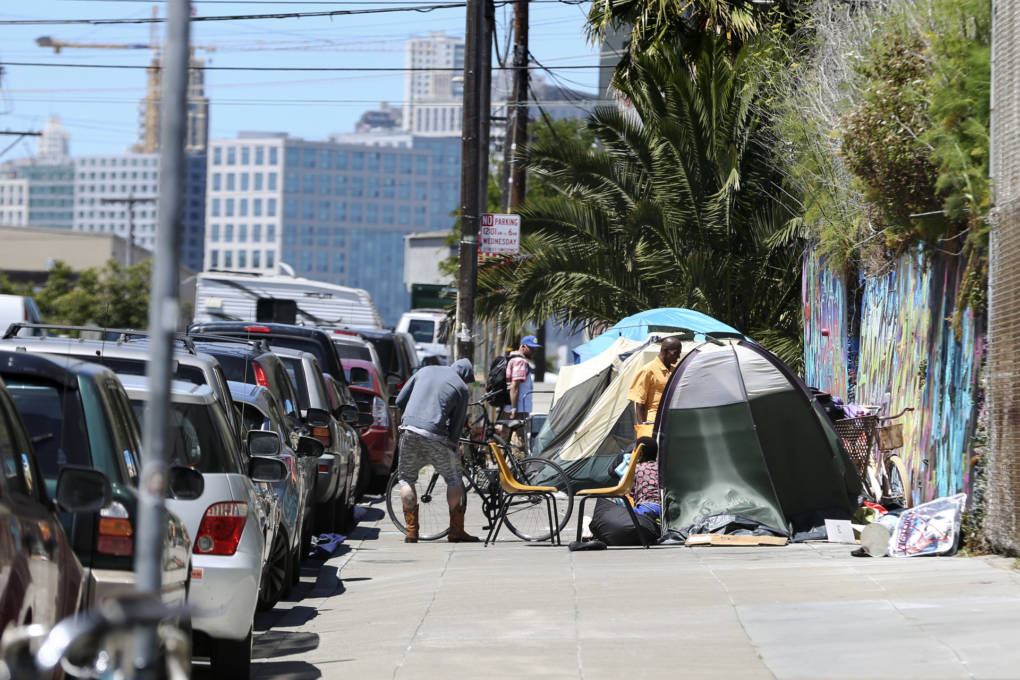
"caption": "What do you think you know about the homelessness crisis in California? ",
"description": "What do you think you know about the homelessness crisis in California? ",
"title": "RS19958_160623_Florida St Encampment_bhs01-qut",
"credit": "Brittany Hosea-Small/KQED",
"status": "inherit",
"isLoading": false,
"fetchFailed": false
},
"news_11721329": {
"type": "attachments",
"id": "news_11721329",
"meta": {
"index": "attachments_1716263798",
"site": "news",
"id": "11721329",
"found": true
},
"parent": 11721328,
"imgSizes": {
"twentyfourteen-full-width": {
"file": "https://ww2.kqed.org/app/uploads/sites/10/2019/01/GettyImages-1003529034-1038x576.jpg",
"width": 1038,
"mimeType": "image/jpeg",
"height": 576
},
"thumbnail": {
"file": "https://ww2.kqed.org/app/uploads/sites/10/2019/01/GettyImages-1003529034-160x102.jpg",
"width": 160,
"mimeType": "image/jpeg",
"height": 102
},
"post-thumbnail": {
"file": "https://ww2.kqed.org/app/uploads/sites/10/2019/01/GettyImages-1003529034-672x372.jpg",
"width": 672,
"mimeType": "image/jpeg",
"height": 372
},
"kqedFullSize": {
"file": "https://ww2.kqed.org/app/uploads/sites/10/2019/01/GettyImages-1003529034-e1548527247404.jpg",
"width": 1920,
"height": 1225
},
"large": {
"file": "https://ww2.kqed.org/app/uploads/sites/10/2019/01/GettyImages-1003529034-1020x651.jpg",
"width": 1020,
"mimeType": "image/jpeg",
"height": 651
},
"complete_open_graph": {
"file": "https://ww2.kqed.org/app/uploads/sites/10/2019/01/GettyImages-1003529034-1200x766.jpg",
"width": 1200,
"mimeType": "image/jpeg",
"height": 766
},
"guest-author-50": {
"file": "https://ww2.kqed.org/app/uploads/sites/10/2019/01/GettyImages-1003529034-50x50.jpg",
"width": 50,
"mimeType": "image/jpeg",
"height": 50
},
"guest-author-96": {
"file": "https://ww2.kqed.org/app/uploads/sites/10/2019/01/GettyImages-1003529034-96x96.jpg",
"width": 96,
"mimeType": "image/jpeg",
"height": 96
},
"medium": {
"file": "https://ww2.kqed.org/app/uploads/sites/10/2019/01/GettyImages-1003529034-800x510.jpg",
"width": 800,
"mimeType": "image/jpeg",
"height": 510
},
"guest-author-64": {
"file": "https://ww2.kqed.org/app/uploads/sites/10/2019/01/GettyImages-1003529034-64x64.jpg",
"width": 64,
"mimeType": "image/jpeg",
"height": 64
},
"guest-author-32": {
"file": "https://ww2.kqed.org/app/uploads/sites/10/2019/01/GettyImages-1003529034-32x32.jpg",
"width": 32,
"mimeType": "image/jpeg",
"height": 32
},
"full-width": {
"file": "https://ww2.kqed.org/app/uploads/sites/10/2019/01/GettyImages-1003529034-1920x1225.jpg",
"width": 1920,
"mimeType": "image/jpeg",
"height": 1225
},
"detail": {
"file": "https://ww2.kqed.org/app/uploads/sites/10/2019/01/GettyImages-1003529034-150x150.jpg",
"width": 150,
"mimeType": "image/jpeg",
"height": 150
},
"guest-author-128": {
"file": "https://ww2.kqed.org/app/uploads/sites/10/2019/01/GettyImages-1003529034-128x128.jpg",
"width": 128,
"mimeType": "image/jpeg",
"height": 128
}
},
"publishDate": 1548527216,
"modified": 1548527270,
"caption": "Children play beside a lifeguard tower as sunset approaches at Sunset Beach in Huntington Beach.",
"description": "Children play beside a lifeguard tower as sunset approaches at Sunset Beach in Huntington Beach.",
"title": "TOPSHOT-US-WEATHER-SUNSET-FEATURE",
"credit": "FREDERIC J. BROWN/AFP/Getty Images",
"status": "inherit",
"isLoading": false,
"fetchFailed": false
},
"news_11720155": {
"type": "attachments",
"id": "news_11720155",
"meta": {
"index": "attachments_1716263798",
"site": "news",
"id": "11720155",
"found": true
},
"parent": 11719937,
"imgSizes": {
"twentyfourteen-full-width": {
"file": "https://ww2.kqed.org/app/uploads/sites/10/2019/01/GettyImages-1046169802-1038x576.jpg",
"width": 1038,
"mimeType": "image/jpeg",
"height": 576
},
"thumbnail": {
"file": "https://ww2.kqed.org/app/uploads/sites/10/2019/01/GettyImages-1046169802-160x107.jpg",
"width": 160,
"mimeType": "image/jpeg",
"height": 107
},
"post-thumbnail": {
"file": "https://ww2.kqed.org/app/uploads/sites/10/2019/01/GettyImages-1046169802-672x372.jpg",
"width": 672,
"mimeType": "image/jpeg",
"height": 372
},
"kqedFullSize": {
"file": "https://ww2.kqed.org/app/uploads/sites/10/2019/01/GettyImages-1046169802-e1548291343650.jpg",
"width": 1920,
"height": 1280
},
"large": {
"file": "https://ww2.kqed.org/app/uploads/sites/10/2019/01/GettyImages-1046169802-1020x680.jpg",
"width": 1020,
"mimeType": "image/jpeg",
"height": 680
},
"complete_open_graph": {
"file": "https://ww2.kqed.org/app/uploads/sites/10/2019/01/GettyImages-1046169802-1200x800.jpg",
"width": 1200,
"mimeType": "image/jpeg",
"height": 800
},
"guest-author-50": {
"file": "https://ww2.kqed.org/app/uploads/sites/10/2019/01/GettyImages-1046169802-50x50.jpg",
"width": 50,
"mimeType": "image/jpeg",
"height": 50
},
"guest-author-96": {
"file": "https://ww2.kqed.org/app/uploads/sites/10/2019/01/GettyImages-1046169802-96x96.jpg",
"width": 96,
"mimeType": "image/jpeg",
"height": 96
},
"medium": {
"file": "https://ww2.kqed.org/app/uploads/sites/10/2019/01/GettyImages-1046169802-800x533.jpg",
"width": 800,
"mimeType": "image/jpeg",
"height": 533
},
"guest-author-64": {
"file": "https://ww2.kqed.org/app/uploads/sites/10/2019/01/GettyImages-1046169802-64x64.jpg",
"width": 64,
"mimeType": "image/jpeg",
"height": 64
},
"guest-author-32": {
"file": "https://ww2.kqed.org/app/uploads/sites/10/2019/01/GettyImages-1046169802-32x32.jpg",
"width": 32,
"mimeType": "image/jpeg",
"height": 32
},
"full-width": {
"file": "https://ww2.kqed.org/app/uploads/sites/10/2019/01/GettyImages-1046169802-1920x1280.jpg",
"width": 1920,
"mimeType": "image/jpeg",
"height": 1280
},
"detail": {
"file": "https://ww2.kqed.org/app/uploads/sites/10/2019/01/GettyImages-1046169802-150x150.jpg",
"width": 150,
"mimeType": "image/jpeg",
"height": 150
},
"guest-author-128": {
"file": "https://ww2.kqed.org/app/uploads/sites/10/2019/01/GettyImages-1046169802-128x128.jpg",
"width": 128,
"mimeType": "image/jpeg",
"height": 128
}
},
"publishDate": 1548223639,
"modified": 1548286418,
"caption": "Construction cranes hang over a building under construction on Oct. 5, 2018, in San Francisco, California. ",
"description": null,
"title": "U.S. Economy Adds Jobs In September, Unemployment Rate Drops To 3.7 Percent",
"credit": "Justin Sullivan/Getty Images",
"status": "inherit",
"isLoading": false,
"fetchFailed": false
},
"news_11717707": {
"type": "attachments",
"id": "news_11717707",
"meta": {
"index": "attachments_1716263798",
"site": "news",
"id": "11717707",
"found": true
},
"parent": 11717692,
"imgSizes": {
"twentyfourteen-full-width": {
"file": "https://ww2.kqed.org/app/uploads/sites/10/2019/01/GettyImages-1021414352-1038x576.jpg",
"width": 1038,
"mimeType": "image/jpeg",
"height": 576
},
"thumbnail": {
"file": "https://ww2.kqed.org/app/uploads/sites/10/2019/01/GettyImages-1021414352-160x109.jpg",
"width": 160,
"mimeType": "image/jpeg",
"height": 109
},
"post-thumbnail": {
"file": "https://ww2.kqed.org/app/uploads/sites/10/2019/01/GettyImages-1021414352-672x372.jpg",
"width": 672,
"mimeType": "image/jpeg",
"height": 372
},
"kqedFullSize": {
"file": "https://ww2.kqed.org/app/uploads/sites/10/2019/01/GettyImages-1021414352.jpg",
"width": 3000,
"height": 2045
},
"large": {
"file": "https://ww2.kqed.org/app/uploads/sites/10/2019/01/GettyImages-1021414352-1020x695.jpg",
"width": 1020,
"mimeType": "image/jpeg",
"height": 695
},
"complete_open_graph": {
"file": "https://ww2.kqed.org/app/uploads/sites/10/2019/01/GettyImages-1021414352-1200x818.jpg",
"width": 1200,
"mimeType": "image/jpeg",
"height": 818
},
"guest-author-50": {
"file": "https://ww2.kqed.org/app/uploads/sites/10/2019/01/GettyImages-1021414352-50x50.jpg",
"width": 50,
"mimeType": "image/jpeg",
"height": 50
},
"guest-author-96": {
"file": "https://ww2.kqed.org/app/uploads/sites/10/2019/01/GettyImages-1021414352-96x96.jpg",
"width": 96,
"mimeType": "image/jpeg",
"height": 96
},
"medium": {
"file": "https://ww2.kqed.org/app/uploads/sites/10/2019/01/GettyImages-1021414352-800x545.jpg",
"width": 800,
"mimeType": "image/jpeg",
"height": 545
},
"guest-author-64": {
"file": "https://ww2.kqed.org/app/uploads/sites/10/2019/01/GettyImages-1021414352-64x64.jpg",
"width": 64,
"mimeType": "image/jpeg",
"height": 64
},
"guest-author-32": {
"file": "https://ww2.kqed.org/app/uploads/sites/10/2019/01/GettyImages-1021414352-32x32.jpg",
"width": 32,
"mimeType": "image/jpeg",
"height": 32
},
"full-width": {
"file": "https://ww2.kqed.org/app/uploads/sites/10/2019/01/GettyImages-1021414352-1920x1309.jpg",
"width": 1920,
"mimeType": "image/jpeg",
"height": 1309
},
"detail": {
"file": "https://ww2.kqed.org/app/uploads/sites/10/2019/01/GettyImages-1021414352-150x150.jpg",
"width": 150,
"mimeType": "image/jpeg",
"height": 150
},
"guest-author-128": {
"file": "https://ww2.kqed.org/app/uploads/sites/10/2019/01/GettyImages-1021414352-128x128.jpg",
"width": 128,
"mimeType": "image/jpeg",
"height": 128
}
},
"publishDate": 1547242947,
"modified": 1547243498,
"caption": "Gavin Newsom, during his tenure as California lieutenant governor, spoke with residents at a low-income apartment complex in San Francisco on August 22, 2018.",
"description": "Gavin Newsom, during his tenure as California lieutenant governor, spoke with residents at a low-income apartment complex in San Francisco on August 22, 2018.",
"title": "California Gubernatorial Candidate Gavin Newsom Tours Low-Income Apartment Complex With SF Mayor London Breed",
"credit": "Justin Sullivan/Getty Images",
"status": "inherit",
"isLoading": false,
"fetchFailed": false
},
"news_11712713": {
"type": "attachments",
"id": "news_11712713",
"meta": {
"index": "attachments_1716263798",
"site": "news",
"id": "11712713",
"found": true
},
"parent": 11711689,
"imgSizes": {
"twentyfourteen-full-width": {
"file": "https://ww2.kqed.org/app/uploads/sites/10/2018/12/RS9650_9303339141_3f3db8e6d2_o-e1544831315188-1038x576.jpg",
"width": 1038,
"mimeType": "image/jpeg",
"height": 576
},
"thumbnail": {
"file": "https://ww2.kqed.org/app/uploads/sites/10/2018/12/RS9650_9303339141_3f3db8e6d2_o-e1544831315188-160x107.jpg",
"width": 160,
"mimeType": "image/jpeg",
"height": 107
},
"post-thumbnail": {
"file": "https://ww2.kqed.org/app/uploads/sites/10/2018/12/RS9650_9303339141_3f3db8e6d2_o-e1544831315188-672x372.jpg",
"width": 672,
"mimeType": "image/jpeg",
"height": 372
},
"kqedFullSize": {
"file": "https://ww2.kqed.org/app/uploads/sites/10/2018/12/RS9650_9303339141_3f3db8e6d2_o-e1544831315188.jpg",
"width": 1920,
"height": 1280
},
"large": {
"file": "https://ww2.kqed.org/app/uploads/sites/10/2018/12/RS9650_9303339141_3f3db8e6d2_o-e1544831315188-1020x680.jpg",
"width": 1020,
"mimeType": "image/jpeg",
"height": 680
},
"complete_open_graph": {
"file": "https://ww2.kqed.org/app/uploads/sites/10/2018/12/RS9650_9303339141_3f3db8e6d2_o-e1544831315188-1200x800.jpg",
"width": 1200,
"mimeType": "image/jpeg",
"height": 800
},
"guest-author-50": {
"file": "https://ww2.kqed.org/app/uploads/sites/10/2018/12/RS9650_9303339141_3f3db8e6d2_o-e1544831315188-50x50.jpg",
"width": 50,
"mimeType": "image/jpeg",
"height": 50
},
"guest-author-96": {
"file": "https://ww2.kqed.org/app/uploads/sites/10/2018/12/RS9650_9303339141_3f3db8e6d2_o-e1544831315188-96x96.jpg",
"width": 96,
"mimeType": "image/jpeg",
"height": 96
},
"medium": {
"file": "https://ww2.kqed.org/app/uploads/sites/10/2018/12/RS9650_9303339141_3f3db8e6d2_o-e1544831315188-800x533.jpg",
"width": 800,
"mimeType": "image/jpeg",
"height": 533
},
"guest-author-64": {
"file": "https://ww2.kqed.org/app/uploads/sites/10/2018/12/RS9650_9303339141_3f3db8e6d2_o-e1544831315188-64x64.jpg",
"width": 64,
"mimeType": "image/jpeg",
"height": 64
},
"guest-author-32": {
"file": "https://ww2.kqed.org/app/uploads/sites/10/2018/12/RS9650_9303339141_3f3db8e6d2_o-e1544831315188-32x32.jpg",
"width": 32,
"mimeType": "image/jpeg",
"height": 32
},
"full-width": {
"file": "https://ww2.kqed.org/app/uploads/sites/10/2018/12/RS9650_9303339141_3f3db8e6d2_o-e1544831315188-1920x1280.jpg",
"width": 1920,
"mimeType": "image/jpeg",
"height": 1280
},
"detail": {
"file": "https://ww2.kqed.org/app/uploads/sites/10/2018/12/RS9650_9303339141_3f3db8e6d2_o-e1544831315188-150x150.jpg",
"width": 150,
"mimeType": "image/jpeg",
"height": 150
},
"guest-author-128": {
"file": "https://ww2.kqed.org/app/uploads/sites/10/2018/12/RS9650_9303339141_3f3db8e6d2_o-e1544831315188-128x128.jpg",
"width": 128,
"mimeType": "image/jpeg",
"height": 128
}
},
"publishDate": 1544827034,
"modified": 1544831306,
"caption": "Oakland, and the Bay Area in general, is one of the areas hit hardest by California's housing shortage.",
"description": "Oakland, and the Bay Area in general, is one of the areas hit hardest by California's housing shortage.",
"title": "RS9650_9303339141_3f3db8e6d2_o",
"credit": "Justin Sullivan/Getty Images",
"status": "inherit",
"isLoading": false,
"fetchFailed": false
},
"news_11677426": {
"type": "attachments",
"id": "news_11677426",
"meta": {
"index": "attachments_1716263798",
"site": "news",
"id": "11677426",
"found": true
},
"parent": 11677380,
"imgSizes": {
"small": {
"file": "https://ww2.kqed.org/app/uploads/sites/10/2018/06/AptForRent-1020x647-520x330.jpg",
"width": 520,
"mimeType": "image/jpeg",
"height": 330
},
"twentyfourteen-full-width": {
"file": "https://ww2.kqed.org/app/uploads/sites/10/2018/06/AptForRent-1020x647-1020x576.jpg",
"width": 1020,
"mimeType": "image/jpeg",
"height": 576
},
"thumbnail": {
"file": "https://ww2.kqed.org/app/uploads/sites/10/2018/06/AptForRent-1020x647-160x101.jpg",
"width": 160,
"mimeType": "image/jpeg",
"height": 101
},
"fd-sm": {
"file": "https://ww2.kqed.org/app/uploads/sites/10/2018/06/AptForRent-1020x647-960x609.jpg",
"width": 960,
"mimeType": "image/jpeg",
"height": 609
},
"post-thumbnail": {
"file": "https://ww2.kqed.org/app/uploads/sites/10/2018/06/AptForRent-1020x647-672x372.jpg",
"width": 672,
"mimeType": "image/jpeg",
"height": 372
},
"xsmall": {
"file": "https://ww2.kqed.org/app/uploads/sites/10/2018/06/AptForRent-1020x647-375x238.jpg",
"width": 375,
"mimeType": "image/jpeg",
"height": 238
},
"kqedFullSize": {
"file": "https://ww2.kqed.org/app/uploads/sites/10/2018/06/AptForRent-1020x647.jpg",
"width": 1020,
"height": 647
},
"large": {
"file": "https://ww2.kqed.org/app/uploads/sites/10/2018/06/AptForRent-1020x647-1020x647.jpg",
"width": 1020,
"mimeType": "image/jpeg",
"height": 647
},
"guest-author-50": {
"file": "https://ww2.kqed.org/app/uploads/sites/10/2018/06/AptForRent-1020x647-50x50.jpg",
"width": 50,
"mimeType": "image/jpeg",
"height": 50
},
"guest-author-96": {
"file": "https://ww2.kqed.org/app/uploads/sites/10/2018/06/AptForRent-1020x647-96x96.jpg",
"width": 96,
"mimeType": "image/jpeg",
"height": 96
},
"medium": {
"file": "https://ww2.kqed.org/app/uploads/sites/10/2018/06/AptForRent-1020x647-800x507.jpg",
"width": 800,
"mimeType": "image/jpeg",
"height": 507
},
"guest-author-64": {
"file": "https://ww2.kqed.org/app/uploads/sites/10/2018/06/AptForRent-1020x647-64x64.jpg",
"width": 64,
"mimeType": "image/jpeg",
"height": 64
},
"guest-author-32": {
"file": "https://ww2.kqed.org/app/uploads/sites/10/2018/06/AptForRent-1020x647-32x32.jpg",
"width": 32,
"mimeType": "image/jpeg",
"height": 32
},
"detail": {
"file": "https://ww2.kqed.org/app/uploads/sites/10/2018/06/AptForRent-1020x647-150x150.jpg",
"width": 150,
"mimeType": "image/jpeg",
"height": 150
},
"guest-author-128": {
"file": "https://ww2.kqed.org/app/uploads/sites/10/2018/06/AptForRent-1020x647-128x128.jpg",
"width": 128,
"mimeType": "image/jpeg",
"height": 128
},
"xxsmall": {
"file": "https://ww2.kqed.org/app/uploads/sites/10/2018/06/AptForRent-1020x647-240x152.jpg",
"width": 240,
"mimeType": "image/jpeg",
"height": 152
}
},
"publishDate": 1530046657,
"modified": 1530207712,
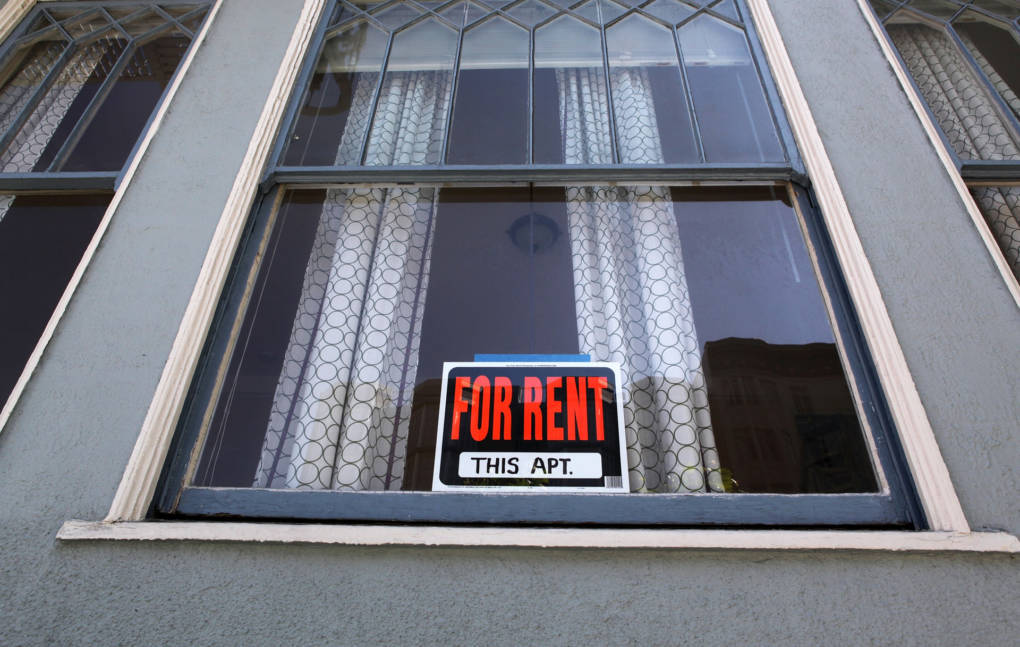
"caption": "Justin Sullivan/Getty Images",
"description": null,
"title": "AptForRent-1020x647",
"credit": null,
"status": "inherit",
"isLoading": false,
"fetchFailed": false
},
"news_11710776": {
"type": "attachments",
"id": "news_11710776",
"meta": {
"index": "attachments_1716263798",
"site": "news",
"id": "11710776",
"found": true
},
"parent": 11710454,
"imgSizes": {
"twentyfourteen-full-width": {
"file": "https://ww2.kqed.org/app/uploads/sites/10/2018/12/HomelessCamp-1038x576.jpg",
"width": 1038,
"mimeType": "image/jpeg",
"height": 576
},
"thumbnail": {
"file": "https://ww2.kqed.org/app/uploads/sites/10/2018/12/HomelessCamp-160x106.jpg",
"width": 160,
"mimeType": "image/jpeg",
"height": 106
},
"post-thumbnail": {
"file": "https://ww2.kqed.org/app/uploads/sites/10/2018/12/HomelessCamp-672x372.jpg",
"width": 672,
"mimeType": "image/jpeg",
"height": 372
},
"kqedFullSize": {
"file": "https://ww2.kqed.org/app/uploads/sites/10/2018/12/HomelessCamp.jpg",
"width": 1920,
"height": 1268
},
"large": {
"file": "https://ww2.kqed.org/app/uploads/sites/10/2018/12/HomelessCamp-1020x674.jpg",
"width": 1020,
"mimeType": "image/jpeg",
"height": 674
},
"complete_open_graph": {
"file": "https://ww2.kqed.org/app/uploads/sites/10/2018/12/HomelessCamp-1200x793.jpg",
"width": 1200,
"mimeType": "image/jpeg",
"height": 793
},
"guest-author-50": {
"file": "https://ww2.kqed.org/app/uploads/sites/10/2018/12/HomelessCamp-50x50.jpg",
"width": 50,
"mimeType": "image/jpeg",
"height": 50
},
"guest-author-96": {
"file": "https://ww2.kqed.org/app/uploads/sites/10/2018/12/HomelessCamp-96x96.jpg",
"width": 96,
"mimeType": "image/jpeg",
"height": 96
},
"medium": {
"file": "https://ww2.kqed.org/app/uploads/sites/10/2018/12/HomelessCamp-800x528.jpg",
"width": 800,
"mimeType": "image/jpeg",
"height": 528
},
"guest-author-64": {
"file": "https://ww2.kqed.org/app/uploads/sites/10/2018/12/HomelessCamp-64x64.jpg",
"width": 64,
"mimeType": "image/jpeg",
"height": 64
},
"guest-author-32": {
"file": "https://ww2.kqed.org/app/uploads/sites/10/2018/12/HomelessCamp-32x32.jpg",
"width": 32,
"mimeType": "image/jpeg",
"height": 32
},
"full-width": {
"file": "https://ww2.kqed.org/app/uploads/sites/10/2018/12/HomelessCamp-1920x1268.jpg",
"width": 1920,
"mimeType": "image/jpeg",
"height": 1268
},
"detail": {
"file": "https://ww2.kqed.org/app/uploads/sites/10/2018/12/HomelessCamp-150x150.jpg",
"width": 150,
"mimeType": "image/jpeg",
"height": 150
},
"guest-author-128": {
"file": "https://ww2.kqed.org/app/uploads/sites/10/2018/12/HomelessCamp-128x128.jpg",
"width": 128,
"mimeType": "image/jpeg",
"height": 128
}
},
"publishDate": 1544207983,
"modified": 1544208166,
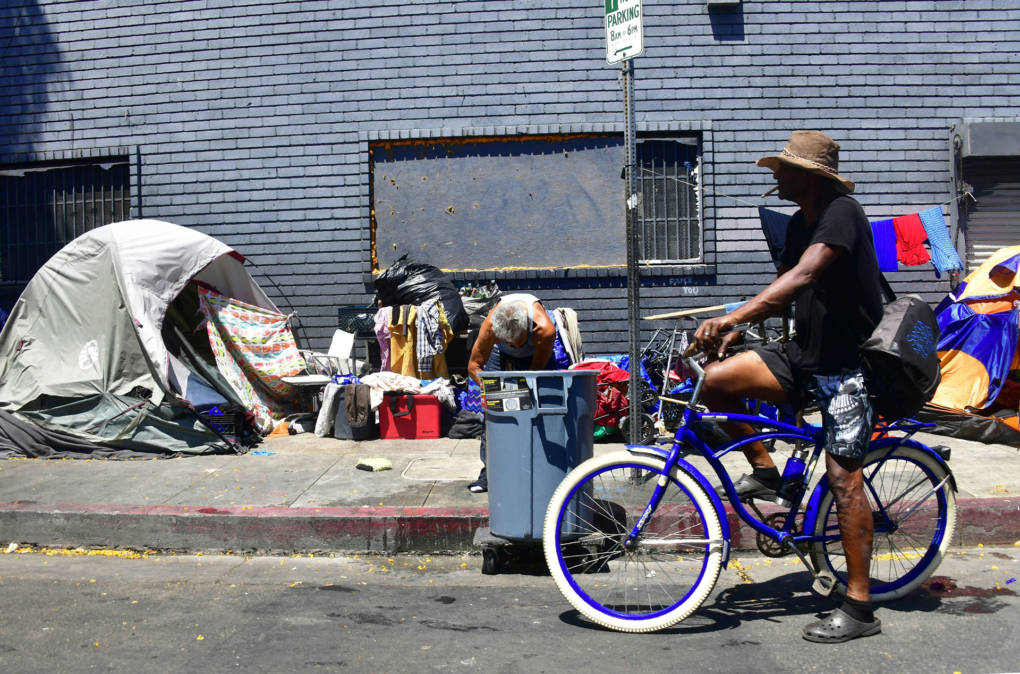
"caption": "A homeless camp lines a street in downtown Los Angeles on June 25, 2018.",
"description": "A homeless camp lines a street in downtown Los Angeles on June 25, 2018.",
"title": "HomelessCamp",
"credit": "FREDERIC J. BROWN/AFP/Getty Images",
"status": "inherit",
"isLoading": false,
"fetchFailed": false
},
"news_11709686": {
"type": "attachments",
"id": "news_11709686",
"meta": {
"index": "attachments_1716263798",
"site": "news",
"id": "11709686",
"found": true
},
"parent": 11709680,
"imgSizes": {
"small": {
"file": "https://ww2.kqed.org/app/uploads/sites/10/2018/12/RS33306_101818_AW_Prop1and2_03-qut-520x347.jpg",
"width": 520,
"mimeType": "image/jpeg",
"height": 347
},
"twentyfourteen-full-width": {
"file": "https://ww2.kqed.org/app/uploads/sites/10/2018/12/RS33306_101818_AW_Prop1and2_03-qut-1038x576.jpg",
"width": 1038,
"mimeType": "image/jpeg",
"height": 576
},
"thumbnail": {
"file": "https://ww2.kqed.org/app/uploads/sites/10/2018/12/RS33306_101818_AW_Prop1and2_03-qut-160x107.jpg",
"width": 160,
"mimeType": "image/jpeg",
"height": 107
},
"fd-sm": {
"file": "https://ww2.kqed.org/app/uploads/sites/10/2018/12/RS33306_101818_AW_Prop1and2_03-qut-960x640.jpg",
"width": 960,
"mimeType": "image/jpeg",
"height": 640
},
"post-thumbnail": {
"file": "https://ww2.kqed.org/app/uploads/sites/10/2018/12/RS33306_101818_AW_Prop1and2_03-qut-672x372.jpg",
"width": 672,
"mimeType": "image/jpeg",
"height": 372
},
"xsmall": {
"file": "https://ww2.kqed.org/app/uploads/sites/10/2018/12/RS33306_101818_AW_Prop1and2_03-qut-375x250.jpg",
"width": 375,
"mimeType": "image/jpeg",
"height": 250
},
"kqedFullSize": {
"file": "https://ww2.kqed.org/app/uploads/sites/10/2018/12/RS33306_101818_AW_Prop1and2_03-qut.jpg",
"width": 1920,
"height": 1280
},
"large": {
"file": "https://ww2.kqed.org/app/uploads/sites/10/2018/12/RS33306_101818_AW_Prop1and2_03-qut-1020x680.jpg",
"width": 1020,
"mimeType": "image/jpeg",
"height": 680
},
"xlarge": {
"file": "https://ww2.kqed.org/app/uploads/sites/10/2018/12/RS33306_101818_AW_Prop1and2_03-qut-1180x787.jpg",
"width": 1180,
"mimeType": "image/jpeg",
"height": 787
},
"complete_open_graph": {
"file": "https://ww2.kqed.org/app/uploads/sites/10/2018/12/RS33306_101818_AW_Prop1and2_03-qut-1200x800.jpg",
"width": 1200,
"mimeType": "image/jpeg",
"height": 800
},
"guest-author-50": {
"file": "https://ww2.kqed.org/app/uploads/sites/10/2018/12/RS33306_101818_AW_Prop1and2_03-qut-50x50.jpg",
"width": 50,
"mimeType": "image/jpeg",
"height": 50
},
"guest-author-96": {
"file": "https://ww2.kqed.org/app/uploads/sites/10/2018/12/RS33306_101818_AW_Prop1and2_03-qut-96x96.jpg",
"width": 96,
"mimeType": "image/jpeg",
"height": 96
},
"medium": {
"file": "https://ww2.kqed.org/app/uploads/sites/10/2018/12/RS33306_101818_AW_Prop1and2_03-qut-800x533.jpg",
"width": 800,
"mimeType": "image/jpeg",
"height": 533
},
"guest-author-64": {
"file": "https://ww2.kqed.org/app/uploads/sites/10/2018/12/RS33306_101818_AW_Prop1and2_03-qut-64x64.jpg",
"width": 64,
"mimeType": "image/jpeg",
"height": 64
},
"guest-author-32": {
"file": "https://ww2.kqed.org/app/uploads/sites/10/2018/12/RS33306_101818_AW_Prop1and2_03-qut-32x32.jpg",
"width": 32,
"mimeType": "image/jpeg",
"height": 32
},
"fd-lrg": {
"file": "https://ww2.kqed.org/app/uploads/sites/10/2018/12/RS33306_101818_AW_Prop1and2_03-qut-1920x1280.jpg",
"width": 1920,
"mimeType": "image/jpeg",
"height": 1280
},
"fd-med": {
"file": "https://ww2.kqed.org/app/uploads/sites/10/2018/12/RS33306_101818_AW_Prop1and2_03-qut-1180x787.jpg",
"width": 1180,
"mimeType": "image/jpeg",
"height": 787
},
"full-width": {
"file": "https://ww2.kqed.org/app/uploads/sites/10/2018/12/RS33306_101818_AW_Prop1and2_03-qut-1920x1280.jpg",
"width": 1920,
"mimeType": "image/jpeg",
"height": 1280
},
"detail": {
"file": "https://ww2.kqed.org/app/uploads/sites/10/2018/12/RS33306_101818_AW_Prop1and2_03-qut-150x150.jpg",
"width": 150,
"mimeType": "image/jpeg",
"height": 150
},
"guest-author-128": {
"file": "https://ww2.kqed.org/app/uploads/sites/10/2018/12/RS33306_101818_AW_Prop1and2_03-qut-128x128.jpg",
"width": 128,
"mimeType": "image/jpeg",
"height": 128
},
"xxsmall": {
"file": "https://ww2.kqed.org/app/uploads/sites/10/2018/12/RS33306_101818_AW_Prop1and2_03-qut-240x160.jpg",
"width": 240,
"mimeType": "image/jpeg",
"height": 160
}
},
"publishDate": 1543797776,
"modified": 1543797843,
"caption": "David Chiu, D-San Francisco, is introducing legislation to bring back redevelopment agencies.",
"description": null,
"title": "RS33306_101818_AW_Prop1and2_03-qut",
"credit": "Anne Wernikoff/KQED",
"status": "inherit",
"isLoading": false,
"fetchFailed": false
},
"news_11708635": {
"type": "attachments",
"id": "news_11708635",
"meta": {
"index": "attachments_1716263798",
"site": "news",
"id": "11708635",
"found": true
},
"parent": 11708578,
"imgSizes": {
"small": {
"file": "https://ww2.kqed.org/app/uploads/sites/10/2018/11/tuesday_revised_112718-520x331.jpg",
"width": 520,
"mimeType": "image/jpeg",
"height": 331
},
"twentyfourteen-full-width": {
"file": "https://ww2.kqed.org/app/uploads/sites/10/2018/11/tuesday_revised_112718-1038x576.jpg",
"width": 1038,
"mimeType": "image/jpeg",
"height": 576
},
"thumbnail": {
"file": "https://ww2.kqed.org/app/uploads/sites/10/2018/11/tuesday_revised_112718-160x102.jpg",
"width": 160,
"mimeType": "image/jpeg",
"height": 102
},
"fd-sm": {
"file": "https://ww2.kqed.org/app/uploads/sites/10/2018/11/tuesday_revised_112718-960x612.jpg",
"width": 960,
"mimeType": "image/jpeg",
"height": 612
},
"post-thumbnail": {
"file": "https://ww2.kqed.org/app/uploads/sites/10/2018/11/tuesday_revised_112718-672x372.jpg",
"width": 672,
"mimeType": "image/jpeg",
"height": 372
},
"xsmall": {
"file": "https://ww2.kqed.org/app/uploads/sites/10/2018/11/tuesday_revised_112718-375x239.jpg",
"width": 375,
"mimeType": "image/jpeg",
"height": 239
},
"kqedFullSize": {
"file": "https://ww2.kqed.org/app/uploads/sites/10/2018/11/tuesday_revised_112718.jpg",
"width": 1920,
"height": 1223
},
"large": {
"file": "https://ww2.kqed.org/app/uploads/sites/10/2018/11/tuesday_revised_112718-1020x650.jpg",
"width": 1020,
"mimeType": "image/jpeg",
"height": 650
},
"xlarge": {
"file": "https://ww2.kqed.org/app/uploads/sites/10/2018/11/tuesday_revised_112718-1180x752.jpg",
"width": 1180,
"mimeType": "image/jpeg",
"height": 752
},
"complete_open_graph": {
"file": "https://ww2.kqed.org/app/uploads/sites/10/2018/11/tuesday_revised_112718-1200x764.jpg",
"width": 1200,
"mimeType": "image/jpeg",
"height": 764
},
"guest-author-50": {
"file": "https://ww2.kqed.org/app/uploads/sites/10/2018/11/tuesday_revised_112718-50x50.jpg",
"width": 50,
"mimeType": "image/jpeg",
"height": 50
},
"guest-author-96": {
"file": "https://ww2.kqed.org/app/uploads/sites/10/2018/11/tuesday_revised_112718-96x96.jpg",
"width": 96,
"mimeType": "image/jpeg",
"height": 96
},
"medium": {
"file": "https://ww2.kqed.org/app/uploads/sites/10/2018/11/tuesday_revised_112718-800x510.jpg",
"width": 800,
"mimeType": "image/jpeg",
"height": 510
},
"guest-author-64": {
"file": "https://ww2.kqed.org/app/uploads/sites/10/2018/11/tuesday_revised_112718-64x64.jpg",
"width": 64,
"mimeType": "image/jpeg",
"height": 64
},
"guest-author-32": {
"file": "https://ww2.kqed.org/app/uploads/sites/10/2018/11/tuesday_revised_112718-32x32.jpg",
"width": 32,
"mimeType": "image/jpeg",
"height": 32
},
"fd-lrg": {
"file": "https://ww2.kqed.org/app/uploads/sites/10/2018/11/tuesday_revised_112718-1920x1223.jpg",
"width": 1920,
"mimeType": "image/jpeg",
"height": 1223
},
"fd-med": {
"file": "https://ww2.kqed.org/app/uploads/sites/10/2018/11/tuesday_revised_112718-1180x752.jpg",
"width": 1180,
"mimeType": "image/jpeg",
"height": 752
},
"full-width": {
"file": "https://ww2.kqed.org/app/uploads/sites/10/2018/11/tuesday_revised_112718-1920x1223.jpg",
"width": 1920,
"mimeType": "image/jpeg",
"height": 1223
},
"detail": {
"file": "https://ww2.kqed.org/app/uploads/sites/10/2018/11/tuesday_revised_112718-150x150.jpg",
"width": 150,
"mimeType": "image/jpeg",
"height": 150
},
"guest-author-128": {
"file": "https://ww2.kqed.org/app/uploads/sites/10/2018/11/tuesday_revised_112718-128x128.jpg",
"width": 128,
"mimeType": "image/jpeg",
"height": 128
},
"xxsmall": {
"file": "https://ww2.kqed.org/app/uploads/sites/10/2018/11/tuesday_revised_112718-240x153.jpg",
"width": 240,
"mimeType": "image/jpeg",
"height": 153
}
},
"publishDate": 1543367334,
"modified": 1543367351,
"caption": null,
"description": null,
"title": "tuesday_revised_112718",
"credit": null,
"status": "inherit",
"isLoading": false,
"fetchFailed": false
},
"news_11706704": {
"type": "attachments",
"id": "news_11706704",
"meta": {
"index": "attachments_1716263798",
"site": "news",
"id": "11706704",
"found": true
},
"parent": 11706501,
"imgSizes": {
"twentyfourteen-full-width": {
"file": "https://ww2.kqed.org/app/uploads/sites/10/2018/11/Paradise-Apartment-1020x576.jpg",
"width": 1020,
"mimeType": "image/jpeg",
"height": 576
},
"thumbnail": {
"file": "https://ww2.kqed.org/app/uploads/sites/10/2018/11/Paradise-Apartment-160x120.jpg",
"width": 160,
"mimeType": "image/jpeg",
"height": 120
},
"post-thumbnail": {
"file": "https://ww2.kqed.org/app/uploads/sites/10/2018/11/Paradise-Apartment-672x372.jpg",
"width": 672,
"mimeType": "image/jpeg",
"height": 372
},
"kqedFullSize": {
"file": "https://ww2.kqed.org/app/uploads/sites/10/2018/11/Paradise-Apartment.jpg",
"width": 1020,
"height": 765
},
"large": {
"file": "https://ww2.kqed.org/app/uploads/sites/10/2018/11/Paradise-Apartment-1020x765.jpg",
"width": 1020,
"mimeType": "image/jpeg",
"height": 765
},
"guest-author-50": {
"file": "https://ww2.kqed.org/app/uploads/sites/10/2018/11/Paradise-Apartment-50x50.jpg",
"width": 50,
"mimeType": "image/jpeg",
"height": 50
},
"guest-author-96": {
"file": "https://ww2.kqed.org/app/uploads/sites/10/2018/11/Paradise-Apartment-96x96.jpg",
"width": 96,
"mimeType": "image/jpeg",
"height": 96
},
"medium": {
"file": "https://ww2.kqed.org/app/uploads/sites/10/2018/11/Paradise-Apartment-800x600.jpg",
"width": 800,
"mimeType": "image/jpeg",
"height": 600
},
"guest-author-64": {
"file": "https://ww2.kqed.org/app/uploads/sites/10/2018/11/Paradise-Apartment-64x64.jpg",
"width": 64,
"mimeType": "image/jpeg",
"height": 64
},
"detail": {
"file": "https://ww2.kqed.org/app/uploads/sites/10/2018/11/Paradise-Apartment-150x150.jpg",
"width": 150,
"mimeType": "image/jpeg",
"height": 150
},
"guest-author-32": {
"file": "https://ww2.kqed.org/app/uploads/sites/10/2018/11/Paradise-Apartment-32x32.jpg",
"width": 32,
"mimeType": "image/jpeg",
"height": 32
},
"guest-author-128": {
"file": "https://ww2.kqed.org/app/uploads/sites/10/2018/11/Paradise-Apartment-128x128.jpg",
"width": 128,
"mimeType": "image/jpeg",
"height": 128
}
},
"publishDate": 1542331182,
"modified": 1542392130,
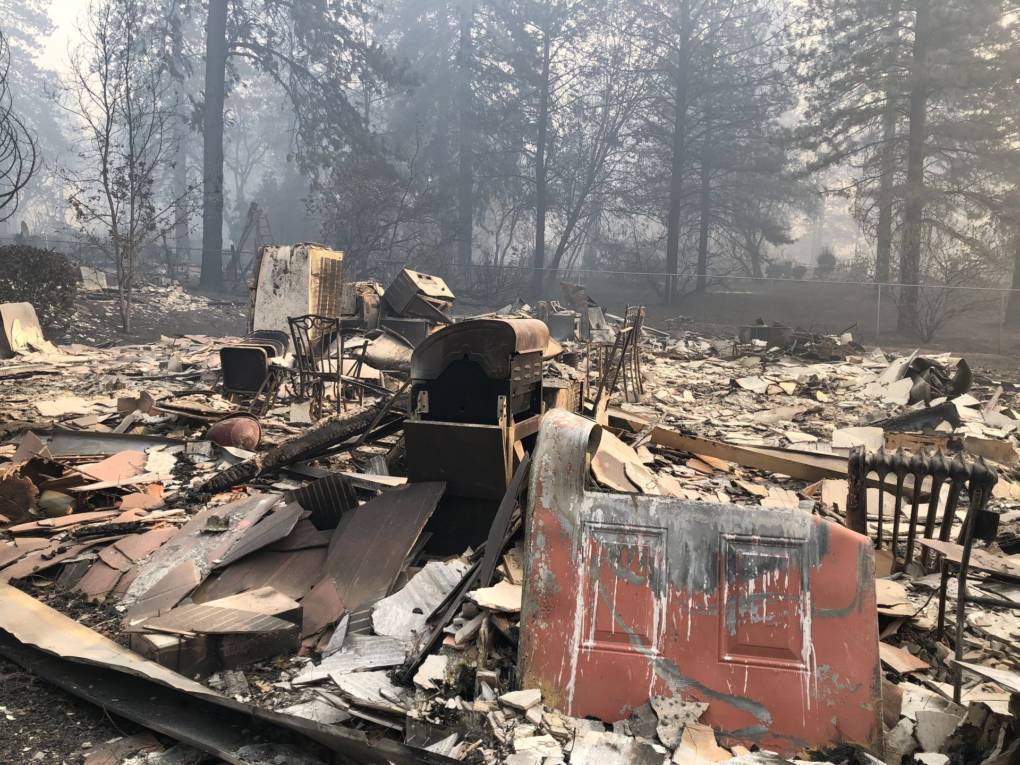
"caption": "Paradise Apartments completely burned to the ground in the Camp Fire.",
"description": null,
"title": "Paradise Apartment",
"credit": "Sonja Hutson/KQED",
"status": "inherit",
"isLoading": false,
"fetchFailed": false
},
"news_11700803": {
"type": "attachments",
"id": "news_11700803",
"meta": {
"index": "attachments_1716263798",
"site": "news",
"id": "11700803",
"found": true
},
"parent": 0,
"imgSizes": {
"small": {
"file": "https://ww2.kqed.org/app/uploads/sites/10/2018/10/fairness-jas-portrait-520x347.jpg",
"width": 520,
"mimeType": "image/jpeg",
"height": 347
},
"twentyfourteen-full-width": {
"file": "https://ww2.kqed.org/app/uploads/sites/10/2018/10/fairness-jas-portrait-1038x576.jpg",
"width": 1038,
"mimeType": "image/jpeg",
"height": 576
},
"thumbnail": {
"file": "https://ww2.kqed.org/app/uploads/sites/10/2018/10/fairness-jas-portrait-160x107.jpg",
"width": 160,
"mimeType": "image/jpeg",
"height": 107
},
"fd-sm": {
"file": "https://ww2.kqed.org/app/uploads/sites/10/2018/10/fairness-jas-portrait-960x640.jpg",
"width": 960,
"mimeType": "image/jpeg",
"height": 640
},
"post-thumbnail": {
"file": "https://ww2.kqed.org/app/uploads/sites/10/2018/10/fairness-jas-portrait-672x372.jpg",
"width": 672,
"mimeType": "image/jpeg",
"height": 372
},
"xsmall": {
"file": "https://ww2.kqed.org/app/uploads/sites/10/2018/10/fairness-jas-portrait-375x250.jpg",
"width": 375,
"mimeType": "image/jpeg",
"height": 250
},
"kqedFullSize": {
"file": "https://ww2.kqed.org/app/uploads/sites/10/2018/10/fairness-jas-portrait.jpg",
"width": 5472,
"height": 3648
},
"large": {
"file": "https://ww2.kqed.org/app/uploads/sites/10/2018/10/fairness-jas-portrait-1020x680.jpg",
"width": 1020,
"mimeType": "image/jpeg",
"height": 680
},
"xlarge": {
"file": "https://ww2.kqed.org/app/uploads/sites/10/2018/10/fairness-jas-portrait-1180x787.jpg",
"width": 1180,
"mimeType": "image/jpeg",
"height": 787
},
"complete_open_graph": {
"file": "https://ww2.kqed.org/app/uploads/sites/10/2018/10/fairness-jas-portrait-1200x800.jpg",
"width": 1200,
"mimeType": "image/jpeg",
"height": 800
},
"guest-author-50": {
"file": "https://ww2.kqed.org/app/uploads/sites/10/2018/10/fairness-jas-portrait-50x50.jpg",
"width": 50,
"mimeType": "image/jpeg",
"height": 50
},
"guest-author-96": {
"file": "https://ww2.kqed.org/app/uploads/sites/10/2018/10/fairness-jas-portrait-96x96.jpg",
"width": 96,
"mimeType": "image/jpeg",
"height": 96
},
"medium": {
"file": "https://ww2.kqed.org/app/uploads/sites/10/2018/10/fairness-jas-portrait-800x533.jpg",
"width": 800,
"mimeType": "image/jpeg",
"height": 533
},
"guest-author-64": {
"file": "https://ww2.kqed.org/app/uploads/sites/10/2018/10/fairness-jas-portrait-64x64.jpg",
"width": 64,
"mimeType": "image/jpeg",
"height": 64
},
"guest-author-32": {
"file": "https://ww2.kqed.org/app/uploads/sites/10/2018/10/fairness-jas-portrait-32x32.jpg",
"width": 32,
"mimeType": "image/jpeg",
"height": 32
},
"fd-lrg": {
"file": "https://ww2.kqed.org/app/uploads/sites/10/2018/10/fairness-jas-portrait-1920x1280.jpg",
"width": 1920,
"mimeType": "image/jpeg",
"height": 1280
},
"fd-med": {
"file": "https://ww2.kqed.org/app/uploads/sites/10/2018/10/fairness-jas-portrait-1180x787.jpg",
"width": 1180,
"mimeType": "image/jpeg",
"height": 787
},
"full-width": {
"file": "https://ww2.kqed.org/app/uploads/sites/10/2018/10/fairness-jas-portrait-1920x1280.jpg",
"width": 1920,
"mimeType": "image/jpeg",
"height": 1280
},
"detail": {
"file": "https://ww2.kqed.org/app/uploads/sites/10/2018/10/fairness-jas-portrait-150x150.jpg",
"width": 150,
"mimeType": "image/jpeg",
"height": 150
},
"guest-author-128": {
"file": "https://ww2.kqed.org/app/uploads/sites/10/2018/10/fairness-jas-portrait-128x128.jpg",
"width": 128,
"mimeType": "image/jpeg",
"height": 128
},
"xxsmall": {
"file": "https://ww2.kqed.org/app/uploads/sites/10/2018/10/fairness-jas-portrait-240x160.jpg",
"width": 240,
"mimeType": "image/jpeg",
"height": 160
}
},
"publishDate": 1540339899,
"modified": 1540340023,
"caption": "Jas Johl in the living room of her home in North Oakland. Johl pays about $13,000 a year in property taxes, far more than many of her neighbors.",
"description": "Jas Johl in the living room of her home in North Oakland. Johl pays about $13,000 a year in property taxes, far more than many of her neighbors.",
"title": "Jas Johl 56th St",
"credit": "Sean Havey for California Dream",
"status": "inherit",
"isLoading": false,
"fetchFailed": false
}
},
"audioPlayerReducer": {
"postId": "stream_live",
"isPaused": true,
"isPlaying": false,
"pfsActive": false,
"pledgeModalIsOpen": true,
"playerDrawerIsOpen": false,
"liveAudioPlayStartedAt": 0,
"liveAudioPlayContext": ""
},
"authorsReducer": {
"byline_news_11721328": {
"type": "authors",
"id": "byline_news_11721328",
"meta": {
"override": true
},
"slug": "byline_news_11721328",
"name": "Don Thompson\u003c/br>Associated Press",
"isLoading": false
},
"byline_news_11717692": {
"type": "authors",
"id": "byline_news_11717692",
"meta": {
"override": true
},
"slug": "byline_news_11717692",
"name": "Matt Levin\u003cbr>CALmatters",
"isLoading": false
},
"byline_news_11700810": {
"type": "authors",
"id": "byline_news_11700810",
"meta": {
"override": true
},
"slug": "byline_news_11700810",
"name": "\u003ca href=\"https://calmatters.org/articles/author/matt-levin/\" target=\"_blank\" rel=\"noopener\">Matt Levin/CALmatters\u003c/a>",
"isLoading": false
},
"gmarzorati": {
"type": "authors",
"id": "227",
"meta": {
"index": "authors_1716337520",
"id": "227",
"found": true
},
"name": "Guy Marzorati",
"firstName": "Guy",
"lastName": "Marzorati",
"slug": "gmarzorati",
"email": "gmarzorati@KQED.org",
"display_author_email": true,
"staff_mastheads": [
"news"
],
"title": "Correspondent",
"bio": "Guy Marzorati is a correspondent on KQED's California Politics and Government Desk, based in San Jose. A graduate of Santa Clara University, Guy joined KQED in 2013. He reports on state and local politics and produces KQED's digital voter guide.",
"avatar": "https://secure.gravatar.com/avatar/e7038b8dbfd55b104369b76b1cd0b9de?s=600&d=blank&r=g",
"twitter": "guymarzorati",
"facebook": null,
"instagram": null,
"linkedin": null,
"sites": [
{
"site": "",
"roles": [
"editor"
]
},
{
"site": "news",
"roles": [
"editor"
]
},
{
"site": "science",
"roles": [
"editor"
]
},
{
"site": "forum",
"roles": [
"editor"
]
},
{
"site": "elections",
"roles": [
"editor"
]
},
{
"site": "liveblog",
"roles": [
"editor"
]
}
],
"headData": {
"title": "Guy Marzorati | KQED",
"description": "Correspondent",
"ogImgSrc": "https://secure.gravatar.com/avatar/e7038b8dbfd55b104369b76b1cd0b9de?s=600&d=blank&r=g",
"twImgSrc": "https://secure.gravatar.com/avatar/e7038b8dbfd55b104369b76b1cd0b9de?s=600&d=blank&r=g"
},
"isLoading": false,
"link": "/author/gmarzorati"
},
"rachael-myrow": {
"type": "authors",
"id": "251",
"meta": {
"index": "authors_1716337520",
"id": "251",
"found": true
},
"name": "Rachael Myrow",
"firstName": "Rachael",
"lastName": "Myrow",
"slug": "rachael-myrow",
"email": "rmyrow@kqed.org",
"display_author_email": true,
"staff_mastheads": [
"news"
],
"title": "Senior Editor of KQED's Silicon Valley News Desk",
"bio": "• I write and edit stories about how Silicon Valley power and policies shape everyday life in California. I’m also passionate about making Bay Area history and culture more accessible to a broad public. • I’ve been a journalist for most of my life, starting in high school with The Franklin Press in Los Angeles, where I grew up. While earning my first degree in English at UC Berkeley, I got my start in public radio at KALX-FM. After completing a second degree in journalism at Cal, I landed my first professional job at Marketplace, then moved on to KPCC (now LAist), and then KQED, where I hosted The California Report for more than seven years. • My reporting has appeared on NPR, The World, WBUR’s \u003ci>Here & Now\u003c/i>, and the BBC. I also guest host for KQED’s \u003ci>Forum\u003c/i>, as well as the Commonwealth Club in San Francisco. • I speak periodically on media, democracy and technology issues, and do voiceover work for documentaries and educational video projects. • Outside of the studio, you'll find me hiking Bay Area trails and whipping up Insta-ready meals in my kitchen. • I do not accept gifts, money, or favors from anyone connected to my reporting, I don't pay people for information, and I do not support or donate to political causes. • I strive to treat the people I report on with fairness, honesty, and respect. I also recognize there are often multiple sides to a story and work to verify information through multiple sources and documentation. If I get something wrong, I correct it.",
"avatar": "https://secure.gravatar.com/avatar/3ed8a3c5f26025e4a805ba634cda8cd764906b97438a6d9ce216b044e340da4e?s=600&d=blank&r=g",
"twitter": "rachaelmyrow",
"bluesky": null,
"facebook": null,
"instagram": null,
"linkedin": "https://www.linkedin.com/in/rachaelmyrow/",
"sites": [
{
"site": "arts",
"roles": [
"administrator"
]
},
{
"site": "news",
"roles": [
"edit_others_posts",
"editor"
]
},
{
"site": "futureofyou",
"roles": [
"editor"
]
},
{
"site": "bayareabites",
"roles": [
"editor"
]
},
{
"site": "stateofhealth",
"roles": [
"editor"
]
},
{
"site": "science",
"roles": [
"editor"
]
},
{
"site": "food",
"roles": [
"editor"
]
},
{
"site": "forum",
"roles": [
"editor"
]
},
{
"site": "liveblog",
"roles": [
"author"
]
}
],
"headData": {
"title": "Rachael Myrow | KQED",
"description": "Senior Editor of KQED's Silicon Valley News Desk",
"ogImgSrc": "https://secure.gravatar.com/avatar/3ed8a3c5f26025e4a805ba634cda8cd764906b97438a6d9ce216b044e340da4e?s=600&d=blank&r=g",
"twImgSrc": "https://secure.gravatar.com/avatar/3ed8a3c5f26025e4a805ba634cda8cd764906b97438a6d9ce216b044e340da4e?s=600&d=blank&r=g"
},
"isLoading": false,
"link": "/author/rachael-myrow"
},
"vinneetong": {
"type": "authors",
"id": "260",
"meta": {
"index": "authors_1716337520",
"id": "260",
"found": true
},
"name": "Vinnee Tong",
"firstName": "Vinnee",
"lastName": "Tong",
"slug": "vinneetong",
"email": "vtong@kqed.org",
"display_author_email": false,
"staff_mastheads": [
"news"
],
"title": "KQED Contributor",
"bio": "\u003cspan style=\"font-weight: 400;\">Vinnee Tong is the managing editor of news at KQED. She oversees editorial standards \u003cspan class=\"s2\">and works to highlight underrepresented voices and perspectives\u003c/span>\u003cspan class=\"s3\">.\u003c/span>\u003cspan class=\"s2\"> She was founding editor\u003c/span>\u003c/span>\u003cspan style=\"font-weight: 400;\"> of \u003ca href=\"http://bit.ly/thebaykqed\">\u003cem>The Bay,\u003c/em>\u003c/a> a storytelling news podcast from KQED\u003c/span>\u003cspan style=\"font-weight: 400;\">. Previously, she was a producer on the \u003ca href=\"http://baycurious.org\">\u003cem>Bay Curious\u003c/em> podcast\u003c/a> and the lead producer of \u003c/span>\u003cspan style=\"font-weight: 400;\">\u003cem>Truth Be Told,\u003c/em> an award-winning KQED series on race and identity distributed nationally by Public Radio International. \u003c/span>\u003cspan style=\"font-weight: 400;\">Before KQED, Vinnee was a print reporter at the Associated Press and newspapers. \u003cspan class=\"s4\">She covered local news from city hall and planning commission hearings as well as business news from New York, like the financial meltdown of 2008. \u003c/span>She has won a\u003c/span>\u003cspan style=\"font-weight: 400;\">wards for her reporting including an RTNDA Edward R. Murrow Award, as well as awards from the New York Press Club and the Society of American Business Editors and Writers. She is a graduate of the Columbia University Graduate School of Journalism and the University of California at Berkeley, \u003cspan class=\"s4\">where she was editor-in-chief of \u003ci>The Daily Californian\u003c/i>.\u003c/span>\u003c/span>",
"avatar": "https://secure.gravatar.com/avatar/02245596ef0333bf29265e2fd547f108?s=600&d=blank&r=g",
"twitter": "vinneetong",
"facebook": null,
"instagram": null,
"linkedin": null,
"sites": [
{
"site": "news",
"roles": [
"editor",
"edit_others_pages",
"edit_others_posts"
]
},
{
"site": "stateofhealth",
"roles": [
"author"
]
}
],
"headData": {
"title": "Vinnee Tong | KQED",
"description": "KQED Contributor",
"ogImgSrc": "https://secure.gravatar.com/avatar/02245596ef0333bf29265e2fd547f108?s=600&d=blank&r=g",
"twImgSrc": "https://secure.gravatar.com/avatar/02245596ef0333bf29265e2fd547f108?s=600&d=blank&r=g"
},
"isLoading": false,
"link": "/author/vinneetong"
},
"markfiore": {
"type": "authors",
"id": "3236",
"meta": {
"index": "authors_1716337520",
"id": "3236",
"found": true
},
"name": "Mark Fiore",
"firstName": "Mark",
"lastName": "Fiore",
"slug": "markfiore",
"email": "mark@markfiore.com",
"display_author_email": false,
"staff_mastheads": [
"news"
],
"title": "KQED News Cartoonist",
"bio": "\u003ca href=\"http://www.MarkFiore.com\">MarkFiore.com\u003c/a> | \u003ca href=\"https://twitter.com/markfiore\">Follow on Twitter\u003c/a> | \u003ca href=\"https://www.facebook.com/pages/Mark-Fiore-Animated-Political-Cartoons/94451707396?ref=bookmarks\">Facebook\u003c/a> | \u003ca href=\"mailto:mark@markfiore.com\">email\u003c/a>\r\n\r\nPulitzer Prize-winner, Mark Fiore, who the Wall Street Journal has called “the undisputed guru of the form,” creates animated political cartoons in San Francisco, where his work has been featured regularly on the San Francisco Chronicle’s web site, SFGate.com. His work has appeared on Newsweek.com, Slate.com, CBSNews.com, MotherJones.com, DailyKos.com and NPR’s web site. Fiore’s political animation has appeared on CNN, Frontline, Bill Moyers Journal, Salon.com and cable and broadcast outlets across the globe.\r\n\r\nBeginning his professional life by drawing traditional political cartoons for newspapers, Fiore’s work appeared in publications ranging from the Washington Post to the Los Angeles Times. In the late 1990s, he began to experiment with animating political cartoons and, after a short stint at the San Jose Mercury News as their staff cartoonist, Fiore devoted all his energies to animation.\r\nGrowing up in California, Fiore also spent a good portion of his life in the backwoods of Idaho. It was this combination that shaped him politically. Mark majored in political science at Colorado College, where, in a perfect send-off for a cartoonist, he received his diploma in 1991 as commencement speaker Dick Cheney smiled approvingly.\r\nMark Fiore was awarded the Pulitzer Prize for political cartooning in 2010, a Robert F. Kennedy Journalism Award in 2004 and has twice received an Online Journalism Award for commentary from the Online News Association (2002, 2008). Fiore has received two awards for his work in new media from the National Cartoonists Society (2001, 2002), and in 2006 received The James Madison Freedom of Information Award from The Society of Professional Journalists.",
"avatar": "https://secure.gravatar.com/avatar/fc4e2a612b15b67bad0c6f0e1db4ca9b?s=600&d=blank&r=g",
"twitter": "MarkFiore",
"facebook": null,
"instagram": "https://www.instagram.com/markfiore/?hl=en",
"linkedin": null,
"sites": [
{
"site": "arts",
"roles": [
"contributor"
]
},
{
"site": "news",
"roles": [
"editor"
]
},
{
"site": "futureofyou",
"roles": [
"editor"
]
},
{
"site": "science",
"roles": [
"editor"
]
}
],
"headData": {
"title": "Mark Fiore | KQED",
"description": "KQED News Cartoonist",
"ogImgSrc": "https://secure.gravatar.com/avatar/fc4e2a612b15b67bad0c6f0e1db4ca9b?s=600&d=blank&r=g",
"twImgSrc": "https://secure.gravatar.com/avatar/fc4e2a612b15b67bad0c6f0e1db4ca9b?s=600&d=blank&r=g"
},
"isLoading": false,
"link": "/author/markfiore"
},
"dkatayama": {
"type": "authors",
"id": "7240",
"meta": {
"index": "authors_1716337520",
"id": "7240",
"found": true
},
"name": "Devin Katayama",
"firstName": "Devin",
"lastName": "Katayama",
"slug": "dkatayama",
"email": "dkatayama@kqed.org",
"display_author_email": true,
"staff_mastheads": [
"news"
],
"title": "Editor of Talent and Development",
"bio": "Devin Katayama is former Editor of Talent and Development for KQED. He supported our internship program and on-call staff by looking for equitable opportunities to improve the newsroom.\r\n\r\nHe previously hosted The Bay and American Suburb podcasts from KQED News. Prior to returning to the Bay Area in 2015, Devin was the education reporter for WFPL in Louisville and worked as a producer with radio stations in Chicago and Portland, OR. His work has appeared on NPR’s \u003cem>Morning Edition, All Things Considered, The Takeaway\u003c/em> and \u003cem>Here and Now.\u003c/em>\r\n\r\nDevin earned his MA in Journalism from Columbia College Chicago, where he was a Follett Fellow and the recipient of the 2011 Studs Terkel Community Media Workshop Scholarship for his story on Chicago's homeless youth. He won WBUR's 2014 Daniel Schorr award and a regional RTNDA Edward R. Murrow Award for his documentary \"At Risk\" that looked at issues facing some of Louisville's students. Devin has also received numerous local awards from the Associated Press and the Society of Professional Journalists.",
"avatar": "https://secure.gravatar.com/avatar/d0d2978a31002fb2de107921a8e18405?s=600&d=blank&r=g",
"twitter": "RadioDevin",
"facebook": null,
"instagram": null,
"linkedin": null,
"sites": [
{
"site": "arts",
"roles": []
},
{
"site": "news",
"roles": [
"author"
]
},
{
"site": "stateofhealth",
"roles": [
"author"
]
},
{
"site": "forum",
"roles": [
"editor"
]
},
{
"site": "perspectives",
"roles": [
"editor"
]
}
],
"headData": {
"title": "Devin Katayama | KQED",
"description": "Editor of Talent and Development",
"ogImgSrc": "https://secure.gravatar.com/avatar/d0d2978a31002fb2de107921a8e18405?s=600&d=blank&r=g",
"twImgSrc": "https://secure.gravatar.com/avatar/d0d2978a31002fb2de107921a8e18405?s=600&d=blank&r=g"
},
"isLoading": false,
"link": "/author/dkatayama"
},
"shutson": {
"type": "authors",
"id": "11216",
"meta": {
"index": "authors_1716337520",
"id": "11216",
"found": true
},
"name": "Sonja Hutson",
"firstName": "Sonja",
"lastName": "Hutson",
"slug": "shutson",
"email": "shutson@kqed.org",
"display_author_email": false,
"staff_mastheads": [],
"title": "KQED Contributor",
"bio": "Sonja Hutson is a former reporter for KQED's Silicon Valley desk and weekend newscasts. She primarily covers tech and housing. Sonja is a Bay Area native and now lives in San Francisco. When she's not working, you can find her camping, skiing, scuba diving, and struggling with the New York Times Crossword. Email: \u003ca href=\"mailto:shutson@kqed.org\">shutson@kqed.org. \u003c/a>Twitter: \u003ca href=\"https://twitter.com/SonjaHutson\">@SonjaHutson\u003c/a>",
"avatar": "https://secure.gravatar.com/avatar/7537c5e36818614e599b6c0f41d72b7a?s=600&d=blank&r=g",
"twitter": "SonjaHutson",
"facebook": null,
"instagram": null,
"linkedin": null,
"sites": [
{
"site": "arts",
"roles": [
"author"
]
},
{
"site": "news",
"roles": [
"subscriber"
]
}
],
"headData": {
"title": "Sonja Hutson | KQED",
"description": "KQED Contributor",
"ogImgSrc": "https://secure.gravatar.com/avatar/7537c5e36818614e599b6c0f41d72b7a?s=600&d=blank&r=g",
"twImgSrc": "https://secure.gravatar.com/avatar/7537c5e36818614e599b6c0f41d72b7a?s=600&d=blank&r=g"
},
"isLoading": false,
"link": "/author/shutson"
},
"btaylor": {
"type": "authors",
"id": "11365",
"meta": {
"index": "authors_1716337520",
"id": "11365",
"found": true
},
"name": "Bianca Taylor",
"firstName": "Bianca",
"lastName": "Taylor",
"slug": "btaylor",
"email": "btaylor@KQED.org",
"display_author_email": false,
"staff_mastheads": [
"news"
],
"title": "Host and Producer ",
"bio": "Bianca Taylor is a news producer and host of KQED's The Latest podcast.\r\n\r\nHer work with KQED has been honored by the Society of Professional Journalists NorCal, the Webby's, the Regional Murrow Awards, and ONA. She has also worked with NPR, the BBC World Service, and the Washington Post Creative Group.\r\n\r\nBianca is represented by SAG-AFTRA.",
"avatar": "https://secure.gravatar.com/avatar/6b9d3f6552dd10470c5d1c2e58cfe717?s=600&d=blank&r=g",
"twitter": "SoundsLkeBianca",
"facebook": null,
"instagram": null,
"linkedin": null,
"sites": [
{
"site": "arts",
"roles": [
"editor"
]
},
{
"site": "news",
"roles": [
"edit_others_posts",
"editor"
]
},
{
"site": "pop",
"roles": [
"editor"
]
},
{
"site": "bayareabites",
"roles": [
"author"
]
},
{
"site": "science",
"roles": [
"editor"
]
},
{
"site": "forum",
"roles": [
"editor"
]
},
{
"site": "radio",
"roles": [
"editor"
]
},
{
"site": "podcasts",
"roles": [
"editor"
]
}
],
"headData": {
"title": "Bianca Taylor | KQED",
"description": "Host and Producer ",
"ogImgSrc": "https://secure.gravatar.com/avatar/6b9d3f6552dd10470c5d1c2e58cfe717?s=600&d=blank&r=g",
"twImgSrc": "https://secure.gravatar.com/avatar/6b9d3f6552dd10470c5d1c2e58cfe717?s=600&d=blank&r=g"
},
"isLoading": false,
"link": "/author/btaylor"
}
},
"pagesReducer": {
"news_tag_housing": {
"type": "terms",
"id": "news_1775",
"meta": {
"index": "terms_1716263798",
"site": "news",
"id": "1775",
"score": 7.0362396
},
"featImg": null,
"name": "housing",
"description": null,
"taxonomy": "tag",
"headData": {
"twImgId": null,
"twTitle": null,
"ogTitle": null,
"ogImgId": null,
"twDescription": null,
"description": null,
"title": "housing Archives | KQED News",
"ogDescription": null
},
"ttid": 1790,
"slug": "housing",
"isLoading": false,
"title": "housing",
"pageMeta": {
"site": "news",
"WpPageTemplate": "page-topic-editorial",
"currentPage": 70
},
"blocks": [
{
"blockName": "kqed/post-list",
"attrs": {
"layout": "cardArticle2",
"query": "posts/news?tag=housing",
"seeMore": false,
"paginated": true,
"page": 70
}
},
{
"blockName": "kqed/ad"
}
]
}
},
"pfsSessionReducer": {},
"postsReducer": {
"stream_live": {
"type": "live",
"id": "stream_live",
"audioUrl": "https://streams.kqed.org/kqedradio",
"title": "Live Stream",
"excerpt": "Live Stream information currently unavailable.",
"link": "/radio",
"featImg": "",
"label": {
"name": "KQED Live",
"link": "/"
}
},
"stream_kqedNewscast": {
"type": "posts",
"id": "stream_kqedNewscast",
"audioUrl": "https://www.kqed.org/.stream/anon/radio/RDnews/newscast.mp3?_=1",
"title": "KQED Newscast",
"featImg": "",
"label": {
"name": "88.5 FM",
"link": "/"
}
},
"news_11723268": {
"type": "posts",
"id": "news_11723268",
"meta": {
"index": "posts_1716263798",
"site": "news",
"id": "11723268",
"score": null,
"sort": [
1549327276000
]
},
"guestAuthors": [],
"slug": "details-emerge-on-san-joses-100-million-pledge-to-build-more-affordable-housing",
"title": "Details Emerge on San Jose's $100 Million Pledge to Build More Affordable Housing",
"publishDate": 1549327276,
"format": "audio",
"headTitle": "Details Emerge on San Jose’s $100 Million Pledge to Build More Affordable Housing | KQED",
"labelTerm": {
"term": 72,
"site": "news"
},
"content": "\u003cp>The city of San Jose has \u003ca href=\"https://files.constantcontact.com/7a210436601/3d250fd4-b4e7-4c02-856a-54c63286c524.pdf\" target=\"_blank\" rel=\"noopener\">announced details\u003c/a> for how it plans to spend $100 million on affordable housing. Providing that the City Council approves them, 11 proposed developments promise to add 1,144 apartments to San Jose’s housing inventory.\u003c/p>\n\u003caside class=\"alignright\">\n\u003ch3>\u003ca href=\"https://www.kqed.org/news/11719212/despite-strong-opposition-bay-area-officials-endorse-ambitious-regional-affordable-housing-plan\">Despite Opposition, Bay Area Officials Endorse Ambitious Affordable Housing Plan\u003c/a>\u003c/h3>\n\u003cfigure>\u003ca href=\"https://www.kqed.org/news/11719212/despite-strong-opposition-bay-area-officials-endorse-ambitious-regional-affordable-housing-plan\">\u003cimg decoding=\"async\" src=\"https://ww2.kqed.org/wp-content/uploads/sites/10/2018/12/RS9650_9303339141_3f3db8e6d2_o-e1544831315188-1020x680.jpg\" alt=\"\">\u003c/a>\u003c/figure>\n\u003c/aside>\n\u003cp>Roughly half of the funding comes from loan repayments from previous affordable housing projects; the other half from inclusionary housing fees that market rate developers are required to pay.\u003c/p>\n\u003cp>“All those are going to be low-, very low-, or extremely low-income units,” said San Jose Mayor Sam Liccardo, who anticipates trying to get voters to pass an affordable housing bond again in 2020.\u003c/p>\n\u003cp>“We came very close in the last election to passing a half a billion dollar bond,” he said. \u003ca href=\"https://results.enr.clarityelections.com/CA/Santa_Clara/92418/Web02.222611/#/\" target=\"_blank\" rel=\"noopener\">Sixty-four percent was close\u003c/a>, but not the two thirds required to pass that bond last November.\u003c/p>\n\u003cp>Even if all the affordable housing announced today gets built, San Jose will still be just 20 percent of the way to meeting its goal of 10,000 affordable units by 2022.\u003c/p>\n\u003cp>[ad fullwidth]\u003c/p>\n\u003cp>“This is a very challenging crisis we’re in, and it’s going to take many years to get out of it,” Liccardo said.\u003c/p>\n\u003cp>Liccardo has talked personally with Gov. Gavin Newsom, who has made housing one of his top priorities.\u003c/p>\n\u003cp>“I’m thrilled that we’ve got a governor who gets it about the challenge about the magnitude of the crisis and about the need to go big, if we’re going to be able to tackle this problem in a significant way,” Liccardo said.\u003c/p>\n\u003cp>Teachers, nurses, firefighters — even some tech workers — struggle to find affordable housing in San Jose, despite the fact it has a bigger geographic footprint than most cities in the Bay Area.\u003c/p>\n\u003cfigure id=\"attachment_11723329\" class=\"wp-caption alignright\" style=\"max-width: 800px\">\u003cimg loading=\"lazy\" decoding=\"async\" class=\"size-medium wp-image-11723329\" src=\"https://ww2.kqed.org/news/wp-content/uploads/sites/10/2019/02/RS35112_IMG_4514-qut-800x600.jpg\" alt=\"San Jose Mayor Sam Liccardo, who's still in a body brace after an SUV hit him while he was cycling in the city January 1, 2019. \" width=\"800\" height=\"600\" srcset=\"https://cdn.kqed.org/wp-content/uploads/sites/10/2019/02/RS35112_IMG_4514-qut-800x600.jpg 800w, https://cdn.kqed.org/wp-content/uploads/sites/10/2019/02/RS35112_IMG_4514-qut-160x120.jpg 160w, https://cdn.kqed.org/wp-content/uploads/sites/10/2019/02/RS35112_IMG_4514-qut-1020x766.jpg 1020w, https://cdn.kqed.org/wp-content/uploads/sites/10/2019/02/RS35112_IMG_4514-qut-1200x901.jpg 1200w, https://cdn.kqed.org/wp-content/uploads/sites/10/2019/02/RS35112_IMG_4514-qut.jpg 1920w\" sizes=\"(max-width: 800px) 100vw, 800px\">\u003cfigcaption class=\"wp-caption-text\">San Jose Mayor Sam Liccardo, who’s still in a body brace after an SUV hit him while he was cycling in the city January 1, 2019. \u003ccite>(Rachael Myrow/KQED)\u003c/cite>\u003c/figcaption>\u003c/figure>\n\u003cp>According to the Committee to House the Bay Area, a group promoting a \u003ca title=\"Read the CASA plan\" href=\"https://mtc.ca.gov/sites/default/files/CASA_Compact.pdf\" target=\"_blank\" rel=\"nofollow noopener\">regional plan\u003c/a> to address the crisis, this region has added 722,000 jobs since 2010, but only created 106,000 new units of housing.\u003c/p>\n\u003caside class=\"pullquote alignright\">‘I’m the first to recognize what we have is a multibillion dollar problem, and $10 million here and there isn’t going to solve it, but every bit helps.’\u003ccite> San Jose Mayor Sam Liccardo, \u003c/cite>\u003c/aside>\n\u003cp>Liccardo is also looking to philanthropic and corporate support, like the recent pledge from the \u003ca href=\"https://chanzuckerberg.com/story/a-new-housing-partnership-for-the-bays-future/\" target=\"_blank\" rel=\"noopener\">Chan Zuckerberg Initiative\u003c/a>. The Partnership for the Bay’s Future — which the Chan Zuckerberg Initiative is starting in conjunction with the \u003ca href=\"https://sff.org\" target=\"_blank\" rel=\"noopener\">San Francisco Foundation\u003c/a>, the \u003ca href=\"https://www.fordfoundation.org\" target=\"_blank\" rel=\"noopener\">Ford Foundation\u003c/a> and other groups — will seek to bolster affordable housing through a new $500 million investment fund. Facebook and Genentech are among the companies making contributions.\u003c/p>\n\u003cp>Though some may criticize Silicon Valley tech and biotech companies for only recently starting to spend big to help solve a problem they helped create, Liccardo said, “The more the merrier. I’m the first to recognize what we have is a multibillion dollar problem, and $10 million here and there isn’t going to solve it, but every bit helps.”\u003c/p>\n\u003cp>Much of the affordable housing is destined for downtown San Jose along transit corridors.\u003c/p>\n\u003cp>\u003c/p>\n\u003cp>“What we have today is a testament to many years of very bad planning,” Liccardo said. “We’re now tasked with retrofitting this city that has really been built for automobiles into a city built for people.”\u003c/p>\n\n",
"blocks": [],
"excerpt": "San Jose has added more residents than jobs during the recent economic expansion, and the city is trying to expand affording housing options. ",
"status": "publish",
"parent": 0,
"modified": 1729028994,
"stats": {
"hasAudio": false,
"hasVideo": false,
"hasChartOrMap": false,
"iframeSrcs": [],
"hasGoogleForm": false,
"hasGallery": false,
"hasHearkenModule": false,
"hasPolis": false,
"paragraphCount": 16,
"wordCount": 620
},
"headData": {
"title": "Details Emerge on San Jose's $100 Million Pledge to Build More Affordable Housing | KQED",
"description": "San Jose has added more residents than jobs during the recent economic expansion, and the city is trying to expand affording housing options. ",
"ogTitle": "",
"ogDescription": "",
"ogImgId": "",
"twTitle": "",
"twDescription": "",
"twImgId": "",
"schema": {
"@context": "https://schema.org",
"@type": "NewsArticle",
"headline": "Details Emerge on San Jose's $100 Million Pledge to Build More Affordable Housing",
"datePublished": "2019-02-04T16:41:16-08:00",
"dateModified": "2024-10-15T14:49:54-07:00",
"image": "https://cdn.kqed.org/wp-content/uploads/2020/02/KQED-OG-Image@1x.png",
"isAccessibleForFree": "True",
"publisher": {
"@type": "NewsMediaOrganization",
"@id": "https://www.kqed.org/#organization",
"name": "KQED",
"logo": "https://cdn.kqed.org/wp-content/uploads/2020/02/KQED-OG-Image@1x.png",
"url": "https://www.kqed.org",
"sameAs": [
"https://www.facebook.com/KQED",
"https://twitter.com/KQED",
"https://www.instagram.com/kqed/",
"https://www.tiktok.com/@kqedofficial",
"https://www.linkedin.com/company/kqed",
"https://www.youtube.com/channel/UCeC0IOo7i1P_61zVUWbJ4nw"
]
}
}
},
"audioUrl": "https://www.kqed.org/.stream/anon/radio/RDnews/2019/02/MyrowSJHousingLiccardo.mp3",
"sticky": false,
"audioTrackLength": 198,
"path": "/news/11723268/details-emerge-on-san-joses-100-million-pledge-to-build-more-affordable-housing",
"parsedContent": [
{
"type": "contentString",
"content": "\u003cdiv class=\"post-body\">\u003cp>\u003cp>The city of San Jose has \u003ca href=\"https://files.constantcontact.com/7a210436601/3d250fd4-b4e7-4c02-856a-54c63286c524.pdf\" target=\"_blank\" rel=\"noopener\">announced details\u003c/a> for how it plans to spend $100 million on affordable housing. Providing that the City Council approves them, 11 proposed developments promise to add 1,144 apartments to San Jose’s housing inventory.\u003c/p>\n\u003caside class=\"alignright\">\n\u003ch3>\u003ca href=\"https://www.kqed.org/news/11719212/despite-strong-opposition-bay-area-officials-endorse-ambitious-regional-affordable-housing-plan\">Despite Opposition, Bay Area Officials Endorse Ambitious Affordable Housing Plan\u003c/a>\u003c/h3>\n\u003cfigure>\u003ca href=\"https://www.kqed.org/news/11719212/despite-strong-opposition-bay-area-officials-endorse-ambitious-regional-affordable-housing-plan\">\u003cimg decoding=\"async\" src=\"https://ww2.kqed.org/wp-content/uploads/sites/10/2018/12/RS9650_9303339141_3f3db8e6d2_o-e1544831315188-1020x680.jpg\" alt=\"\">\u003c/a>\u003c/figure>\n\u003c/aside>\n\u003cp>Roughly half of the funding comes from loan repayments from previous affordable housing projects; the other half from inclusionary housing fees that market rate developers are required to pay.\u003c/p>\n\u003cp>“All those are going to be low-, very low-, or extremely low-income units,” said San Jose Mayor Sam Liccardo, who anticipates trying to get voters to pass an affordable housing bond again in 2020.\u003c/p>\n\u003cp>“We came very close in the last election to passing a half a billion dollar bond,” he said. \u003ca href=\"https://results.enr.clarityelections.com/CA/Santa_Clara/92418/Web02.222611/#/\" target=\"_blank\" rel=\"noopener\">Sixty-four percent was close\u003c/a>, but not the two thirds required to pass that bond last November.\u003c/p>\n\u003cp>Even if all the affordable housing announced today gets built, San Jose will still be just 20 percent of the way to meeting its goal of 10,000 affordable units by 2022.\u003c/p>\n\u003cp>\u003c/p>\u003c/div>",
"attributes": {
"named": {},
"numeric": []
}
},
{
"type": "component",
"content": "",
"name": "ad",
"attributes": {
"named": {
"label": "fullwidth"
},
"numeric": [
"fullwidth"
]
}
},
{
"type": "contentString",
"content": "\u003cdiv class=\"post-body\">\u003cp>\u003c/p>\n\u003cp>“This is a very challenging crisis we’re in, and it’s going to take many years to get out of it,” Liccardo said.\u003c/p>\n\u003cp>Liccardo has talked personally with Gov. Gavin Newsom, who has made housing one of his top priorities.\u003c/p>\n\u003cp>“I’m thrilled that we’ve got a governor who gets it about the challenge about the magnitude of the crisis and about the need to go big, if we’re going to be able to tackle this problem in a significant way,” Liccardo said.\u003c/p>\n\u003cp>Teachers, nurses, firefighters — even some tech workers — struggle to find affordable housing in San Jose, despite the fact it has a bigger geographic footprint than most cities in the Bay Area.\u003c/p>\n\u003cfigure id=\"attachment_11723329\" class=\"wp-caption alignright\" style=\"max-width: 800px\">\u003cimg loading=\"lazy\" decoding=\"async\" class=\"size-medium wp-image-11723329\" src=\"https://ww2.kqed.org/news/wp-content/uploads/sites/10/2019/02/RS35112_IMG_4514-qut-800x600.jpg\" alt=\"San Jose Mayor Sam Liccardo, who's still in a body brace after an SUV hit him while he was cycling in the city January 1, 2019. \" width=\"800\" height=\"600\" srcset=\"https://cdn.kqed.org/wp-content/uploads/sites/10/2019/02/RS35112_IMG_4514-qut-800x600.jpg 800w, https://cdn.kqed.org/wp-content/uploads/sites/10/2019/02/RS35112_IMG_4514-qut-160x120.jpg 160w, https://cdn.kqed.org/wp-content/uploads/sites/10/2019/02/RS35112_IMG_4514-qut-1020x766.jpg 1020w, https://cdn.kqed.org/wp-content/uploads/sites/10/2019/02/RS35112_IMG_4514-qut-1200x901.jpg 1200w, https://cdn.kqed.org/wp-content/uploads/sites/10/2019/02/RS35112_IMG_4514-qut.jpg 1920w\" sizes=\"(max-width: 800px) 100vw, 800px\">\u003cfigcaption class=\"wp-caption-text\">San Jose Mayor Sam Liccardo, who’s still in a body brace after an SUV hit him while he was cycling in the city January 1, 2019. \u003ccite>(Rachael Myrow/KQED)\u003c/cite>\u003c/figcaption>\u003c/figure>\n\u003cp>According to the Committee to House the Bay Area, a group promoting a \u003ca title=\"Read the CASA plan\" href=\"https://mtc.ca.gov/sites/default/files/CASA_Compact.pdf\" target=\"_blank\" rel=\"nofollow noopener\">regional plan\u003c/a> to address the crisis, this region has added 722,000 jobs since 2010, but only created 106,000 new units of housing.\u003c/p>\n\u003caside class=\"pullquote alignright\">‘I’m the first to recognize what we have is a multibillion dollar problem, and $10 million here and there isn’t going to solve it, but every bit helps.’\u003ccite> San Jose Mayor Sam Liccardo, \u003c/cite>\u003c/aside>\n\u003cp>Liccardo is also looking to philanthropic and corporate support, like the recent pledge from the \u003ca href=\"https://chanzuckerberg.com/story/a-new-housing-partnership-for-the-bays-future/\" target=\"_blank\" rel=\"noopener\">Chan Zuckerberg Initiative\u003c/a>. The Partnership for the Bay’s Future — which the Chan Zuckerberg Initiative is starting in conjunction with the \u003ca href=\"https://sff.org\" target=\"_blank\" rel=\"noopener\">San Francisco Foundation\u003c/a>, the \u003ca href=\"https://www.fordfoundation.org\" target=\"_blank\" rel=\"noopener\">Ford Foundation\u003c/a> and other groups — will seek to bolster affordable housing through a new $500 million investment fund. Facebook and Genentech are among the companies making contributions.\u003c/p>\n\u003cp>Though some may criticize Silicon Valley tech and biotech companies for only recently starting to spend big to help solve a problem they helped create, Liccardo said, “The more the merrier. I’m the first to recognize what we have is a multibillion dollar problem, and $10 million here and there isn’t going to solve it, but every bit helps.”\u003c/p>\n\u003cp>Much of the affordable housing is destined for downtown San Jose along transit corridors.\u003c/p>\n\u003cp>\u003c/p>\n\u003cp>“What we have today is a testament to many years of very bad planning,” Liccardo said. “We’re now tasked with retrofitting this city that has really been built for automobiles into a city built for people.”\u003c/p>\n\n\u003c/div>\u003c/p>",
"attributes": {
"named": {},
"numeric": []
}
}
],
"link": "/news/11723268/details-emerge-on-san-joses-100-million-pledge-to-build-more-affordable-housing",
"authors": [
"251"
],
"programs": [
"news_72"
],
"categories": [
"news_1758",
"news_6266",
"news_8",
"news_33520",
"news_248"
],
"tags": [
"news_3921",
"news_24805",
"news_1775",
"news_2011",
"news_18541",
"news_1631"
],
"featImg": "news_11723381",
"label": "news_72"
},
"news_11721460": {
"type": "posts",
"id": "news_11721460",
"meta": {
"index": "posts_1716263798",
"site": "news",
"id": "11721460",
"score": null,
"sort": [
1548710446000
]
},
"guestAuthors": [],
"slug": "why-do-these-4-myths-about-homelessness-persist",
"title": "Why Do These 4 Myths About Homelessness Persist?",
"publishDate": 1548710446,
"format": "image",
"headTitle": "Why Do These 4 Myths About Homelessness Persist? | KQED",
"labelTerm": {
"term": 72,
"site": "news"
},
"content": "\u003cp>This time of year, many California counties are conducting point-in-time counts to figure out who is homeless and why. The U.S. Department of Housing and Urban Development requires these counts from any community that wants federal funding for housing and other services for the homeless.\u003c/p>\n\u003cp>But if governments and service providers have developed a more data-based understanding of who’s living in shelters, vehicles and on the streets, the rest of us often operate off our gut instincts. Are you willing to check yourself?\u003c/p>\n\u003ch3>Myth #1: They’re not from around here\u003c/h3>\n\u003cp>Experts say this is one of the most common misconceptions about homelessness, and it is often paired with another idea, explained Mark Shotwell, executive director of the \u003ca href=\"http://rittercenter.org\" target=\"_blank\" rel=\"noopener\">Ritter Center\u003c/a> in Marin County. \u003c/p>\n\u003cp>“I’ve worked in four Bay Area counties, and in all of the counties that I’ve worked in, the belief is that if you create certain kinds of services, it will attract people who are homeless to come from other communities,” Shotwell said.\u003c/p>\n\u003cp>Generally, no. Shotwell directs your attention to the last point-in-time survey in Marin County in \u003ca href=\"https://www.marinhhs.org/point-time-count-marin\" target=\"_blank\" rel=\"noopener\">2017\u003c/a>, which he said is not substantially different from the survey two years before.\u003c/p>\n\u003cfigure id=\"attachment_11721464\" class=\"wp-caption aligncenter\" style=\"max-width: 800px\">\u003cimg loading=\"lazy\" decoding=\"async\" class=\"size-medium wp-image-11721464\" src=\"https://ww2.kqed.org/news/wp-content/uploads/sites/10/2019/01/Screen-Shot-2019-01-27-at-3.18.18-PM-800x320.png\" alt=\"Mark Shotwell of the Ritter Center in San Rafael said there are many different reasons why people become homeless in Marin County, but most homeless people are locals.\" width=\"800\" height=\"320\" srcset=\"https://cdn.kqed.org/wp-content/uploads/sites/10/2019/01/Screen-Shot-2019-01-27-at-3.18.18-PM-800x320.png 800w, https://cdn.kqed.org/wp-content/uploads/sites/10/2019/01/Screen-Shot-2019-01-27-at-3.18.18-PM-160x64.png 160w, https://cdn.kqed.org/wp-content/uploads/sites/10/2019/01/Screen-Shot-2019-01-27-at-3.18.18-PM-1020x408.png 1020w, https://cdn.kqed.org/wp-content/uploads/sites/10/2019/01/Screen-Shot-2019-01-27-at-3.18.18-PM.png 1154w\" sizes=\"auto, (max-width: 800px) 100vw, 800px\">\u003cfigcaption class=\"wp-caption-text\">Mark Shotwell of the Ritter Center in San Rafael said there are many different reasons why people become homeless in Marin County, but most homeless people are locals. \u003ccite>(Source: Applied Survey Research. (2017). Marin County Homeless Census & Survey. )\u003c/cite>\u003c/figcaption>\u003c/figure>\n\u003cp>Shotwell said “a series of unfortunate events” explained each neighbor’s story, though the particulars vary: a lost job, mental or physical disability, addiction, divorce, domestic violence, eviction, etc. The rising cost of housing plays a key role, too. “Losing one paycheck, losing one job, really could result in instability.”\u003c/p>\n\u003cp>[ad fullwidth]\u003c/p>\n\u003cp>Tempted to insist Marin County is an outlier? Let’s look at a couple more California counties that top the lists in any discussion of homelessness in California.\u003c/p>\n\u003cfigure id=\"attachment_11721469\" class=\"wp-caption aligncenter\" style=\"max-width: 800px\">\u003cimg loading=\"lazy\" decoding=\"async\" class=\"size-medium wp-image-11721469\" src=\"https://ww2.kqed.org/news/wp-content/uploads/sites/10/2019/01/Screen-Shot-2019-01-27-at-3.36.05-PM-800x343.png\" alt=\"In 2017, 69% of respondents reported they were living in San Francisco at the time they most recently became homeless. This is similar to the survey findings in 2015.\" width=\"800\" height=\"343\" srcset=\"https://cdn.kqed.org/wp-content/uploads/sites/10/2019/01/Screen-Shot-2019-01-27-at-3.36.05-PM-800x343.png 800w, https://cdn.kqed.org/wp-content/uploads/sites/10/2019/01/Screen-Shot-2019-01-27-at-3.36.05-PM-160x69.png 160w, https://cdn.kqed.org/wp-content/uploads/sites/10/2019/01/Screen-Shot-2019-01-27-at-3.36.05-PM-1020x437.png 1020w, https://cdn.kqed.org/wp-content/uploads/sites/10/2019/01/Screen-Shot-2019-01-27-at-3.36.05-PM-1200x515.png 1200w, https://cdn.kqed.org/wp-content/uploads/sites/10/2019/01/Screen-Shot-2019-01-27-at-3.36.05-PM.png 1250w\" sizes=\"auto, (max-width: 800px) 100vw, 800px\">\u003cfigcaption class=\"wp-caption-text\">In 2017, 69% of respondents reported they were living in \u003ca href=\"http://hsh.sfgov.org/wp-content/uploads/2017/06/2017-SF-Point-in-Time-Count-General-FINAL-6.21.17.pdf\" target=\"_blank\" rel=\"noopener\">San Francisco County\u003c/a> at the time they most recently became homeless. This is similar to the survey findings in 2015. \u003ccite>(Source: Applied Survey Research. (2017). San Francisco County Homeless Count & Survey.)\u003c/cite>\u003c/figcaption>\u003c/figure>\n\u003cfigure id=\"attachment_11721470\" class=\"wp-caption aligncenter\" style=\"max-width: 800px\">\u003cimg loading=\"lazy\" decoding=\"async\" class=\"size-medium wp-image-11721470\" src=\"https://ww2.kqed.org/news/wp-content/uploads/sites/10/2019/01/Screen-Shot-2019-01-27-at-3.42.41-PM-800x297.png\" alt=\""What about the remaining group that wasn't living locally? Where do they come from?"\" width=\"800\" height=\"297\" srcset=\"https://cdn.kqed.org/wp-content/uploads/sites/10/2019/01/Screen-Shot-2019-01-27-at-3.42.41-PM-800x297.png 800w, https://cdn.kqed.org/wp-content/uploads/sites/10/2019/01/Screen-Shot-2019-01-27-at-3.42.41-PM-160x59.png 160w, https://cdn.kqed.org/wp-content/uploads/sites/10/2019/01/Screen-Shot-2019-01-27-at-3.42.41-PM-1020x378.png 1020w, https://cdn.kqed.org/wp-content/uploads/sites/10/2019/01/Screen-Shot-2019-01-27-at-3.42.41-PM-1200x445.png 1200w, https://cdn.kqed.org/wp-content/uploads/sites/10/2019/01/Screen-Shot-2019-01-27-at-3.42.41-PM.png 1876w\" sizes=\"auto, (max-width: 800px) 100vw, 800px\">\u003cfigcaption class=\"wp-caption-text\">“What about the remaining group that wasn’t living locally? Where do they come from?” \u003ccite>(Source: Applied Survey Research. (2017). San Francisco Homeless Count. )\u003c/cite>\u003c/figcaption>\u003c/figure>\n\u003cp>Of the roughly 30 percent of homeless people surveyed in San Francisco two years ago, the bulk of those not from San Francisco were from California. That may not technically be anybody’s idea of a “neighbor,” but it does suggest a recalibration is in order for those of harboring suspicions “they” came “here” from far away.\u003c/p>\n\u003cfigure id=\"attachment_11721468\" class=\"wp-caption aligncenter\" style=\"max-width: 800px\">\u003cimg loading=\"lazy\" decoding=\"async\" class=\"size-medium wp-image-11721468\" src=\"https://ww2.kqed.org/news/wp-content/uploads/sites/10/2019/01/Screen-Shot-2019-01-27-at-3.33.05-PM-800x900.png\" alt=\"Los Angeles County has the largest homeless population by far of any county in California.\" width=\"800\" height=\"900\" srcset=\"https://cdn.kqed.org/wp-content/uploads/sites/10/2019/01/Screen-Shot-2019-01-27-at-3.33.05-PM-800x900.png 800w, https://cdn.kqed.org/wp-content/uploads/sites/10/2019/01/Screen-Shot-2019-01-27-at-3.33.05-PM-160x180.png 160w, https://cdn.kqed.org/wp-content/uploads/sites/10/2019/01/Screen-Shot-2019-01-27-at-3.33.05-PM.png 876w\" sizes=\"auto, (max-width: 800px) 100vw, 800px\">\u003cfigcaption class=\"wp-caption-text\">\u003ca href=\"https://www.lahsa.org/documents?id=2059-2018-greater-los-angeles-homeless-count-presentation.pdf\" target=\"_blank\" rel=\"noopener\">Los Angeles County\u003c/a> has the largest homeless population by far of any county in California. \u003ccite>(Source: Los Angeles Homeless Services Authority)\u003c/cite>\u003c/figcaption>\u003c/figure>\n\u003ch3>Myth #2: Homeless people don’t want to be housed\u003c/h3>\n\u003cp>One or two personal \u003ca href=\"https://www.kqed.org/news/10729141/reaching-out-to-the-homeless-woman-sleeping-on-your-san-francisco-doorstep\" target=\"_blank\" rel=\"noopener\">conversations with individuals\u003c/a> who insist on the freedom of the streets does not necessarily give you an accurate picture of how most homeless people feel.\u003c/p>\n\u003cp>For one thing, social service providers say, the isolation and physical hardships of homelessness can prompt many people to find ways to justify their suffering or at least resign themselves to it, for sheer psychological survival (see Myth #3 for more on that). For another thing, living on the streets brings with it \u003ca href=\"https://www.kqed.org/news/10761651/a-year-after-the-jungle-san-joses-new-approach-to-homelessness\" target=\"_blank\" rel=\"noopener\">logistical complications\u003c/a> that make it hard to imagine getting off the streets.\u003c/p>\n\u003cp>Summer-Lee Bettencourt used to be homeless herself before social service workers helped her get back on her feet. She was sold to human traffickers as a teenager, and while she eventually managed to escape, she needed help building a new life for herself.\u003c/p>\n\u003cfigure id=\"attachment_11721496\" class=\"wp-caption aligncenter\" style=\"max-width: 800px\">\u003cimg loading=\"lazy\" decoding=\"async\" class=\"size-medium wp-image-11721496\" src=\"https://ww2.kqed.org/news/wp-content/uploads/sites/10/2019/01/RS34894_IMG_4511-qut-800x540.jpg\" alt='Summer Lee-Bettencourt, outside EHC LifeBuilders James Boccardo Reception Center in San Jose. Once homeless herself, Lee-Bettencourt now helps others get off the streets. \"It’s actually a breath of fresh air being able to give something back that people did for you, you know?\"' width=\"800\" height=\"540\" srcset=\"https://cdn.kqed.org/wp-content/uploads/sites/10/2019/01/RS34894_IMG_4511-qut-800x540.jpg 800w, https://cdn.kqed.org/wp-content/uploads/sites/10/2019/01/RS34894_IMG_4511-qut-160x108.jpg 160w, https://cdn.kqed.org/wp-content/uploads/sites/10/2019/01/RS34894_IMG_4511-qut-1020x688.jpg 1020w, https://cdn.kqed.org/wp-content/uploads/sites/10/2019/01/RS34894_IMG_4511-qut-1200x809.jpg 1200w, https://cdn.kqed.org/wp-content/uploads/sites/10/2019/01/RS34894_IMG_4511-qut.jpg 1920w\" sizes=\"auto, (max-width: 800px) 100vw, 800px\">\u003cfigcaption class=\"wp-caption-text\">Summer Lee-Bettencourt, outside EHC LifeBuilders James Boccardo Reception Center in San Jose. Once homeless herself, Lee-Bettencourt now helps others get off the streets. “It’s actually a breath of fresh air being able to give something back that people did for you, you know?” \u003ccite>(Rachael Myrow/KQED)\u003c/cite>\u003c/figcaption>\u003c/figure>\n\u003cp>She works now for \u003ca href=\"https://www.sccgov.org/sites/osh/NeedAssistance/Veterans/Pages/home.aspx\" target=\"_blank\" rel=\"noopener\">Supportive Services for Veteran Families\u003c/a> in Santa Clara County, and explained that the longer you are homeless, the harder it is to conceptualize what steps are necessary to build, or rebuild, a life in housing.\u003c/p>\n\u003cp>“A lot of people, they don’t know where to go. They don’t know what to do. And they need help being connected to housing first. I mean, how can you go on an interview if you can’t take a shower? If you don’t have clothing? So they feel lost. They just need a lot of support, compassion, understanding,” Lee Bettencourt said.\u003c/p>\n\u003cfigure id=\"attachment_11721526\" class=\"wp-caption aligncenter\" style=\"max-width: 800px\">\u003cimg loading=\"lazy\" decoding=\"async\" class=\"size-medium wp-image-11721526\" src=\"https://ww2.kqed.org/news/wp-content/uploads/sites/10/2019/01/Screen-Shot-2019-01-28-at-8.20.41-AM-800x333.png\" alt=\"Many of the people surveyed in Santa Clara County in recent years said they were new to homelessness.\" width=\"800\" height=\"333\" srcset=\"https://cdn.kqed.org/wp-content/uploads/sites/10/2019/01/Screen-Shot-2019-01-28-at-8.20.41-AM-800x333.png 800w, https://cdn.kqed.org/wp-content/uploads/sites/10/2019/01/Screen-Shot-2019-01-28-at-8.20.41-AM-160x67.png 160w, https://cdn.kqed.org/wp-content/uploads/sites/10/2019/01/Screen-Shot-2019-01-28-at-8.20.41-AM-1020x425.png 1020w, https://cdn.kqed.org/wp-content/uploads/sites/10/2019/01/Screen-Shot-2019-01-28-at-8.20.41-AM-1200x500.png 1200w, https://cdn.kqed.org/wp-content/uploads/sites/10/2019/01/Screen-Shot-2019-01-28-at-8.20.41-AM.png 1450w\" sizes=\"auto, (max-width: 800px) 100vw, 800px\">\u003cfigcaption class=\"wp-caption-text\">Many of the people surveyed in \u003ca href=\"https://www.sccgov.org/sites/osh/ContinuumofCare/ReportsandPublications/Documents/2017%20Santa%20Clara%20County%20Homeless%20Census%20and%20Survey%20Report.pdf\" target=\"_blank\" rel=\"noopener\">Santa Clara County\u003c/a> in recent years said they were new to homelessness. \u003ccite>(Source: Applied Survey Research. (2009-2017). Santa Clara County Homeless Census and Survey.)\u003c/cite>\u003c/figcaption>\u003c/figure>\n\u003ch3>Myth #3: Mentally ill people could pull themselves out of homelessness if they just agreed to take their medications\u003c/h3>\n\u003cp>Dr. Jeffrey Seal is the medical director for \u003ca href=\"https://www.achch.org\" target=\"_blank\" rel=\"noopener\">Alameda County Healthcare for the Homeless\u003c/a>, and he’s also a psychiatrist who helps manage the Trust Clinic in Alameda County.\u003c/p>\n\u003cp>“Every morning, we have a line of patients waiting to be seen here, and you can imagine: schizophrenia, bipolar — and one that commonly gets left out when we’re talking about homeless populations is the trauma related disorders,” Dr. Seal said. “You know, a lot of people who have suffered a significant amount of trauma since early childhood end up out there. If you could possibly think of the environment that would make their symptoms worse, this would be it. Right? Put somebody into a park. Make the situation unpredictable. Put them at risk of violence.”\u003c/p>\n\u003cfigure id=\"attachment_11721502\" class=\"wp-caption aligncenter\" style=\"max-width: 800px\">\u003cimg loading=\"lazy\" decoding=\"async\" class=\"wp-image-11721502 size-medium\" src=\"https://ww2.kqed.org/news/wp-content/uploads/sites/10/2019/01/Screen-Shot-2019-01-27-at-5.27.51-PM-800x265.png\" alt=\"22 percent of those surveyed in Alameda County two years ago said mental health services might have prevented their homelessness.\" width=\"800\" height=\"265\" srcset=\"https://cdn.kqed.org/wp-content/uploads/sites/10/2019/01/Screen-Shot-2019-01-27-at-5.27.51-PM-800x265.png 800w, https://cdn.kqed.org/wp-content/uploads/sites/10/2019/01/Screen-Shot-2019-01-27-at-5.27.51-PM-160x53.png 160w, https://cdn.kqed.org/wp-content/uploads/sites/10/2019/01/Screen-Shot-2019-01-27-at-5.27.51-PM-1020x337.png 1020w, https://cdn.kqed.org/wp-content/uploads/sites/10/2019/01/Screen-Shot-2019-01-27-at-5.27.51-PM-1200x397.png 1200w, https://cdn.kqed.org/wp-content/uploads/sites/10/2019/01/Screen-Shot-2019-01-27-at-5.27.51-PM-1920x635.png 1920w\" sizes=\"auto, (max-width: 800px) 100vw, 800px\">\u003cfigcaption class=\"wp-caption-text\">Of those surveyed in \u003ca href=\"http://everyonehome.org/wp-content/uploads/2017/06/ALAEMDA_7-1.pdf\" target=\"_blank\" rel=\"noopener\">Alameda County\u003c/a> two years ago, 22 percent said mental health services might have prevented their homelessness. \u003ccite>(Source: Applied Survey Research. (2017). Alameda County Homeless Census & Survey. )\u003c/cite>\u003c/figcaption>\u003c/figure>\n\u003cp>He added, “Psychiatric medications were tested on people who have stable environments, they’re housed, they’re middle class people who were put into randomized, controlled trials. So [medications] can certainly be helpful, but it’s really a joke to say that psychiatric medications would lift someone out of homelessness.”\u003c/p>\n\u003cp>He’s not arguing against medications, but seeing them as a solution outside the context of other supportive services.\u003c/p>\n\u003ch3>Myth #4: There’s nothing I can do to help\u003c/h3>\n\u003cp>Think you’ve got nothing to offer other than your spare change? Think again, said Donna Colombo, executive director of the \u003ca href=\"http://www.trinitycenterwc.org\" target=\"_blank\" rel=\"noopener\">Trinity Center\u003c/a> in Contra Costa County. \u003c/p>\n\u003cp>“Come talk to me. All homeless service organizations need volunteers to help do a lot of things. All you need to do is show up,” Colombo said. \u003c/p>\n\u003cfigure id=\"attachment_11721492\" class=\"wp-caption aligncenter\" style=\"max-width: 800px\">\u003cimg loading=\"lazy\" decoding=\"async\" class=\"size-medium wp-image-11721492\" src=\"https://ww2.kqed.org/news/wp-content/uploads/sites/10/2019/01/RS34893_IMG_0215-qut-800x600.jpg\" alt='81 year-old Horace Crawford volunteers at Trinity Center in Walnut Creek. The retired architectural engineer considers himself and his Ford truck \"on call to help anybody who needs to get someplace, or to move something, or to get some part time day work.\"' width=\"800\" height=\"600\" srcset=\"https://cdn.kqed.org/wp-content/uploads/sites/10/2019/01/RS34893_IMG_0215-qut-800x600.jpg 800w, https://cdn.kqed.org/wp-content/uploads/sites/10/2019/01/RS34893_IMG_0215-qut-160x120.jpg 160w, https://cdn.kqed.org/wp-content/uploads/sites/10/2019/01/RS34893_IMG_0215-qut-1020x765.jpg 1020w, https://cdn.kqed.org/wp-content/uploads/sites/10/2019/01/RS34893_IMG_0215-qut-1200x900.jpg 1200w, https://cdn.kqed.org/wp-content/uploads/sites/10/2019/01/RS34893_IMG_0215-qut.jpg 1920w\" sizes=\"auto, (max-width: 800px) 100vw, 800px\">\u003cfigcaption class=\"wp-caption-text\">81-year-old Horace Crawford volunteers at Trinity Center in Walnut Creek. The retired architectural engineer considers himself and his Ford truck “on call to help anybody who needs to get someplace, or to move something, or to get some part time day work.” \u003ccite>(Ryan Levi/KQED)\u003c/cite>\u003c/figcaption>\u003c/figure>\n\u003cp>Horace Crawford has been showing up for about ten years now. The 81-year-old retired architectural engineer said many people get overwhelmed by the “big picture” and fail to see how they can deliver practical help in all sorts of ways.\u003c/p>\n\u003cp>For the past few years, Crawford has made himself personally available to homeless individuals in the area, using his truck to help move people’s belongings or drive someone to a medical appointment. He’s also taken it upon himself to coordinate day work for homeless people, building a local network between them and those who want to help.\u003c/p>\n\u003cp>He recognizes there can be an intimidation factor to working so closely with homeless people.\u003c/p>\n\u003cp>[ad floatright]\u003c/p>\n\u003cp>“People are a bit afraid of working with a homeless person, but if they know me, and I vouch for someone, they’re OK. Result is, I’ve got a bunch of friends that I’ve never had before!” he said. \u003c/p>\n\u003cfigure id=\"attachment_11721530\" class=\"wp-caption aligncenter\" style=\"max-width: 800px\">\u003cimg loading=\"lazy\" decoding=\"async\" class=\"size-medium wp-image-11721530\" src=\"https://ww2.kqed.org/news/wp-content/uploads/sites/10/2019/01/Screen-Shot-2019-01-28-at-8.36.49-AM-800x389.png\" alt=\"The 2018 Point In Time count identified 627 more individuals experiencing homelessness than the previous year's count.\" width=\"800\" height=\"389\" srcset=\"https://cdn.kqed.org/wp-content/uploads/sites/10/2019/01/Screen-Shot-2019-01-28-at-8.36.49-AM-800x389.png 800w, https://cdn.kqed.org/wp-content/uploads/sites/10/2019/01/Screen-Shot-2019-01-28-at-8.36.49-AM-160x78.png 160w, https://cdn.kqed.org/wp-content/uploads/sites/10/2019/01/Screen-Shot-2019-01-28-at-8.36.49-AM-1020x496.png 1020w, https://cdn.kqed.org/wp-content/uploads/sites/10/2019/01/Screen-Shot-2019-01-28-at-8.36.49-AM-1200x583.png 1200w, https://cdn.kqed.org/wp-content/uploads/sites/10/2019/01/Screen-Shot-2019-01-28-at-8.36.49-AM.png 1412w\" sizes=\"auto, (max-width: 800px) 100vw, 800px\">\u003cfigcaption class=\"wp-caption-text\">The 2018 Point In Time count identified 627 more individuals experiencing homelessness in \u003ca href=\"https://cchealth.org/h3/coc/pdf/PIT-report-2018.pdf\" target=\"_blank\" rel=\"noopener\">Contra Costa County\u003c/a> than the previous year’s count. \u003ccite>(Source: Contra Costa Health Housing & Homeless)\u003c/cite>\u003c/figcaption>\u003c/figure>\n\n",
"blocks": [],
"excerpt": "Our gut instincts about homelessness are often wrong. Are you willing to check yourself? Do you want to know?",
"status": "publish",
"parent": 0,
"modified": 1740611942,
"stats": {
"hasAudio": false,
"hasVideo": false,
"hasChartOrMap": false,
"iframeSrcs": [],
"hasGoogleForm": false,
"hasGallery": false,
"hasHearkenModule": false,
"hasPolis": false,
"paragraphCount": 25,
"wordCount": 1407
},
"headData": {
"title": "Why Do These 4 Myths About Homelessness Persist? | KQED",
"description": "Our gut instincts about homelessness are often wrong. Are you willing to check yourself? Do you want to know?",
"ogTitle": "",
"ogDescription": "",
"ogImgId": "",
"twTitle": "",
"twDescription": "",
"twImgId": "",
"schema": {
"@context": "https://schema.org",
"@type": "NewsArticle",
"headline": "Why Do These 4 Myths About Homelessness Persist?",
"datePublished": "2019-01-28T13:20:46-08:00",
"dateModified": "2025-02-26T15:19:02-08:00",
"image": "https://cdn.kqed.org/wp-content/uploads/2020/02/KQED-OG-Image@1x.png",
"isAccessibleForFree": "True",
"publisher": {
"@type": "NewsMediaOrganization",
"@id": "https://www.kqed.org/#organization",
"name": "KQED",
"logo": "https://cdn.kqed.org/wp-content/uploads/2020/02/KQED-OG-Image@1x.png",
"url": "https://www.kqed.org",
"sameAs": [
"https://www.facebook.com/KQED",
"https://twitter.com/KQED",
"https://www.instagram.com/kqed/",
"https://www.tiktok.com/@kqedofficial",
"https://www.linkedin.com/company/kqed",
"https://www.youtube.com/channel/UCeC0IOo7i1P_61zVUWbJ4nw"
]
}
}
},
"audioUrl": "https://www.kqed.org/.stream/anon/radio/tcr/2019/01/MyrowHomelessnessMyths.mp3",
"sticky": false,
"audioTrackLength": 163,
"path": "/news/11721460/why-do-these-4-myths-about-homelessness-persist",
"parsedContent": [
{
"type": "contentString",
"content": "\u003cdiv class=\"post-body\">\u003cp>\u003cp>This time of year, many California counties are conducting point-in-time counts to figure out who is homeless and why. The U.S. Department of Housing and Urban Development requires these counts from any community that wants federal funding for housing and other services for the homeless.\u003c/p>\n\u003cp>But if governments and service providers have developed a more data-based understanding of who’s living in shelters, vehicles and on the streets, the rest of us often operate off our gut instincts. Are you willing to check yourself?\u003c/p>\n\u003ch3>Myth #1: They’re not from around here\u003c/h3>\n\u003cp>Experts say this is one of the most common misconceptions about homelessness, and it is often paired with another idea, explained Mark Shotwell, executive director of the \u003ca href=\"http://rittercenter.org\" target=\"_blank\" rel=\"noopener\">Ritter Center\u003c/a> in Marin County. \u003c/p>\n\u003cp>“I’ve worked in four Bay Area counties, and in all of the counties that I’ve worked in, the belief is that if you create certain kinds of services, it will attract people who are homeless to come from other communities,” Shotwell said.\u003c/p>\n\u003cp>Generally, no. Shotwell directs your attention to the last point-in-time survey in Marin County in \u003ca href=\"https://www.marinhhs.org/point-time-count-marin\" target=\"_blank\" rel=\"noopener\">2017\u003c/a>, which he said is not substantially different from the survey two years before.\u003c/p>\n\u003cfigure id=\"attachment_11721464\" class=\"wp-caption aligncenter\" style=\"max-width: 800px\">\u003cimg loading=\"lazy\" decoding=\"async\" class=\"size-medium wp-image-11721464\" src=\"https://ww2.kqed.org/news/wp-content/uploads/sites/10/2019/01/Screen-Shot-2019-01-27-at-3.18.18-PM-800x320.png\" alt=\"Mark Shotwell of the Ritter Center in San Rafael said there are many different reasons why people become homeless in Marin County, but most homeless people are locals.\" width=\"800\" height=\"320\" srcset=\"https://cdn.kqed.org/wp-content/uploads/sites/10/2019/01/Screen-Shot-2019-01-27-at-3.18.18-PM-800x320.png 800w, https://cdn.kqed.org/wp-content/uploads/sites/10/2019/01/Screen-Shot-2019-01-27-at-3.18.18-PM-160x64.png 160w, https://cdn.kqed.org/wp-content/uploads/sites/10/2019/01/Screen-Shot-2019-01-27-at-3.18.18-PM-1020x408.png 1020w, https://cdn.kqed.org/wp-content/uploads/sites/10/2019/01/Screen-Shot-2019-01-27-at-3.18.18-PM.png 1154w\" sizes=\"auto, (max-width: 800px) 100vw, 800px\">\u003cfigcaption class=\"wp-caption-text\">Mark Shotwell of the Ritter Center in San Rafael said there are many different reasons why people become homeless in Marin County, but most homeless people are locals. \u003ccite>(Source: Applied Survey Research. (2017). Marin County Homeless Census & Survey. )\u003c/cite>\u003c/figcaption>\u003c/figure>\n\u003cp>Shotwell said “a series of unfortunate events” explained each neighbor’s story, though the particulars vary: a lost job, mental or physical disability, addiction, divorce, domestic violence, eviction, etc. The rising cost of housing plays a key role, too. “Losing one paycheck, losing one job, really could result in instability.”\u003c/p>\n\u003cp>\u003c/p>\u003c/div>",
"attributes": {
"named": {},
"numeric": []
}
},
{
"type": "component",
"content": "",
"name": "ad",
"attributes": {
"named": {
"label": "fullwidth"
},
"numeric": [
"fullwidth"
]
}
},
{
"type": "contentString",
"content": "\u003cdiv class=\"post-body\">\u003cp>\u003c/p>\n\u003cp>Tempted to insist Marin County is an outlier? Let’s look at a couple more California counties that top the lists in any discussion of homelessness in California.\u003c/p>\n\u003cfigure id=\"attachment_11721469\" class=\"wp-caption aligncenter\" style=\"max-width: 800px\">\u003cimg loading=\"lazy\" decoding=\"async\" class=\"size-medium wp-image-11721469\" src=\"https://ww2.kqed.org/news/wp-content/uploads/sites/10/2019/01/Screen-Shot-2019-01-27-at-3.36.05-PM-800x343.png\" alt=\"In 2017, 69% of respondents reported they were living in San Francisco at the time they most recently became homeless. This is similar to the survey findings in 2015.\" width=\"800\" height=\"343\" srcset=\"https://cdn.kqed.org/wp-content/uploads/sites/10/2019/01/Screen-Shot-2019-01-27-at-3.36.05-PM-800x343.png 800w, https://cdn.kqed.org/wp-content/uploads/sites/10/2019/01/Screen-Shot-2019-01-27-at-3.36.05-PM-160x69.png 160w, https://cdn.kqed.org/wp-content/uploads/sites/10/2019/01/Screen-Shot-2019-01-27-at-3.36.05-PM-1020x437.png 1020w, https://cdn.kqed.org/wp-content/uploads/sites/10/2019/01/Screen-Shot-2019-01-27-at-3.36.05-PM-1200x515.png 1200w, https://cdn.kqed.org/wp-content/uploads/sites/10/2019/01/Screen-Shot-2019-01-27-at-3.36.05-PM.png 1250w\" sizes=\"auto, (max-width: 800px) 100vw, 800px\">\u003cfigcaption class=\"wp-caption-text\">In 2017, 69% of respondents reported they were living in \u003ca href=\"http://hsh.sfgov.org/wp-content/uploads/2017/06/2017-SF-Point-in-Time-Count-General-FINAL-6.21.17.pdf\" target=\"_blank\" rel=\"noopener\">San Francisco County\u003c/a> at the time they most recently became homeless. This is similar to the survey findings in 2015. \u003ccite>(Source: Applied Survey Research. (2017). San Francisco County Homeless Count & Survey.)\u003c/cite>\u003c/figcaption>\u003c/figure>\n\u003cfigure id=\"attachment_11721470\" class=\"wp-caption aligncenter\" style=\"max-width: 800px\">\u003cimg loading=\"lazy\" decoding=\"async\" class=\"size-medium wp-image-11721470\" src=\"https://ww2.kqed.org/news/wp-content/uploads/sites/10/2019/01/Screen-Shot-2019-01-27-at-3.42.41-PM-800x297.png\" alt=\""What about the remaining group that wasn't living locally? Where do they come from?"\" width=\"800\" height=\"297\" srcset=\"https://cdn.kqed.org/wp-content/uploads/sites/10/2019/01/Screen-Shot-2019-01-27-at-3.42.41-PM-800x297.png 800w, https://cdn.kqed.org/wp-content/uploads/sites/10/2019/01/Screen-Shot-2019-01-27-at-3.42.41-PM-160x59.png 160w, https://cdn.kqed.org/wp-content/uploads/sites/10/2019/01/Screen-Shot-2019-01-27-at-3.42.41-PM-1020x378.png 1020w, https://cdn.kqed.org/wp-content/uploads/sites/10/2019/01/Screen-Shot-2019-01-27-at-3.42.41-PM-1200x445.png 1200w, https://cdn.kqed.org/wp-content/uploads/sites/10/2019/01/Screen-Shot-2019-01-27-at-3.42.41-PM.png 1876w\" sizes=\"auto, (max-width: 800px) 100vw, 800px\">\u003cfigcaption class=\"wp-caption-text\">“What about the remaining group that wasn’t living locally? Where do they come from?” \u003ccite>(Source: Applied Survey Research. (2017). San Francisco Homeless Count. )\u003c/cite>\u003c/figcaption>\u003c/figure>\n\u003cp>Of the roughly 30 percent of homeless people surveyed in San Francisco two years ago, the bulk of those not from San Francisco were from California. That may not technically be anybody’s idea of a “neighbor,” but it does suggest a recalibration is in order for those of harboring suspicions “they” came “here” from far away.\u003c/p>\n\u003cfigure id=\"attachment_11721468\" class=\"wp-caption aligncenter\" style=\"max-width: 800px\">\u003cimg loading=\"lazy\" decoding=\"async\" class=\"size-medium wp-image-11721468\" src=\"https://ww2.kqed.org/news/wp-content/uploads/sites/10/2019/01/Screen-Shot-2019-01-27-at-3.33.05-PM-800x900.png\" alt=\"Los Angeles County has the largest homeless population by far of any county in California.\" width=\"800\" height=\"900\" srcset=\"https://cdn.kqed.org/wp-content/uploads/sites/10/2019/01/Screen-Shot-2019-01-27-at-3.33.05-PM-800x900.png 800w, https://cdn.kqed.org/wp-content/uploads/sites/10/2019/01/Screen-Shot-2019-01-27-at-3.33.05-PM-160x180.png 160w, https://cdn.kqed.org/wp-content/uploads/sites/10/2019/01/Screen-Shot-2019-01-27-at-3.33.05-PM.png 876w\" sizes=\"auto, (max-width: 800px) 100vw, 800px\">\u003cfigcaption class=\"wp-caption-text\">\u003ca href=\"https://www.lahsa.org/documents?id=2059-2018-greater-los-angeles-homeless-count-presentation.pdf\" target=\"_blank\" rel=\"noopener\">Los Angeles County\u003c/a> has the largest homeless population by far of any county in California. \u003ccite>(Source: Los Angeles Homeless Services Authority)\u003c/cite>\u003c/figcaption>\u003c/figure>\n\u003ch3>Myth #2: Homeless people don’t want to be housed\u003c/h3>\n\u003cp>One or two personal \u003ca href=\"https://www.kqed.org/news/10729141/reaching-out-to-the-homeless-woman-sleeping-on-your-san-francisco-doorstep\" target=\"_blank\" rel=\"noopener\">conversations with individuals\u003c/a> who insist on the freedom of the streets does not necessarily give you an accurate picture of how most homeless people feel.\u003c/p>\n\u003cp>For one thing, social service providers say, the isolation and physical hardships of homelessness can prompt many people to find ways to justify their suffering or at least resign themselves to it, for sheer psychological survival (see Myth #3 for more on that). For another thing, living on the streets brings with it \u003ca href=\"https://www.kqed.org/news/10761651/a-year-after-the-jungle-san-joses-new-approach-to-homelessness\" target=\"_blank\" rel=\"noopener\">logistical complications\u003c/a> that make it hard to imagine getting off the streets.\u003c/p>\n\u003cp>Summer-Lee Bettencourt used to be homeless herself before social service workers helped her get back on her feet. She was sold to human traffickers as a teenager, and while she eventually managed to escape, she needed help building a new life for herself.\u003c/p>\n\u003cfigure id=\"attachment_11721496\" class=\"wp-caption aligncenter\" style=\"max-width: 800px\">\u003cimg loading=\"lazy\" decoding=\"async\" class=\"size-medium wp-image-11721496\" src=\"https://ww2.kqed.org/news/wp-content/uploads/sites/10/2019/01/RS34894_IMG_4511-qut-800x540.jpg\" alt='Summer Lee-Bettencourt, outside EHC LifeBuilders James Boccardo Reception Center in San Jose. Once homeless herself, Lee-Bettencourt now helps others get off the streets. \"It’s actually a breath of fresh air being able to give something back that people did for you, you know?\"' width=\"800\" height=\"540\" srcset=\"https://cdn.kqed.org/wp-content/uploads/sites/10/2019/01/RS34894_IMG_4511-qut-800x540.jpg 800w, https://cdn.kqed.org/wp-content/uploads/sites/10/2019/01/RS34894_IMG_4511-qut-160x108.jpg 160w, https://cdn.kqed.org/wp-content/uploads/sites/10/2019/01/RS34894_IMG_4511-qut-1020x688.jpg 1020w, https://cdn.kqed.org/wp-content/uploads/sites/10/2019/01/RS34894_IMG_4511-qut-1200x809.jpg 1200w, https://cdn.kqed.org/wp-content/uploads/sites/10/2019/01/RS34894_IMG_4511-qut.jpg 1920w\" sizes=\"auto, (max-width: 800px) 100vw, 800px\">\u003cfigcaption class=\"wp-caption-text\">Summer Lee-Bettencourt, outside EHC LifeBuilders James Boccardo Reception Center in San Jose. Once homeless herself, Lee-Bettencourt now helps others get off the streets. “It’s actually a breath of fresh air being able to give something back that people did for you, you know?” \u003ccite>(Rachael Myrow/KQED)\u003c/cite>\u003c/figcaption>\u003c/figure>\n\u003cp>She works now for \u003ca href=\"https://www.sccgov.org/sites/osh/NeedAssistance/Veterans/Pages/home.aspx\" target=\"_blank\" rel=\"noopener\">Supportive Services for Veteran Families\u003c/a> in Santa Clara County, and explained that the longer you are homeless, the harder it is to conceptualize what steps are necessary to build, or rebuild, a life in housing.\u003c/p>\n\u003cp>“A lot of people, they don’t know where to go. They don’t know what to do. And they need help being connected to housing first. I mean, how can you go on an interview if you can’t take a shower? If you don’t have clothing? So they feel lost. They just need a lot of support, compassion, understanding,” Lee Bettencourt said.\u003c/p>\n\u003cfigure id=\"attachment_11721526\" class=\"wp-caption aligncenter\" style=\"max-width: 800px\">\u003cimg loading=\"lazy\" decoding=\"async\" class=\"size-medium wp-image-11721526\" src=\"https://ww2.kqed.org/news/wp-content/uploads/sites/10/2019/01/Screen-Shot-2019-01-28-at-8.20.41-AM-800x333.png\" alt=\"Many of the people surveyed in Santa Clara County in recent years said they were new to homelessness.\" width=\"800\" height=\"333\" srcset=\"https://cdn.kqed.org/wp-content/uploads/sites/10/2019/01/Screen-Shot-2019-01-28-at-8.20.41-AM-800x333.png 800w, https://cdn.kqed.org/wp-content/uploads/sites/10/2019/01/Screen-Shot-2019-01-28-at-8.20.41-AM-160x67.png 160w, https://cdn.kqed.org/wp-content/uploads/sites/10/2019/01/Screen-Shot-2019-01-28-at-8.20.41-AM-1020x425.png 1020w, https://cdn.kqed.org/wp-content/uploads/sites/10/2019/01/Screen-Shot-2019-01-28-at-8.20.41-AM-1200x500.png 1200w, https://cdn.kqed.org/wp-content/uploads/sites/10/2019/01/Screen-Shot-2019-01-28-at-8.20.41-AM.png 1450w\" sizes=\"auto, (max-width: 800px) 100vw, 800px\">\u003cfigcaption class=\"wp-caption-text\">Many of the people surveyed in \u003ca href=\"https://www.sccgov.org/sites/osh/ContinuumofCare/ReportsandPublications/Documents/2017%20Santa%20Clara%20County%20Homeless%20Census%20and%20Survey%20Report.pdf\" target=\"_blank\" rel=\"noopener\">Santa Clara County\u003c/a> in recent years said they were new to homelessness. \u003ccite>(Source: Applied Survey Research. (2009-2017). Santa Clara County Homeless Census and Survey.)\u003c/cite>\u003c/figcaption>\u003c/figure>\n\u003ch3>Myth #3: Mentally ill people could pull themselves out of homelessness if they just agreed to take their medications\u003c/h3>\n\u003cp>Dr. Jeffrey Seal is the medical director for \u003ca href=\"https://www.achch.org\" target=\"_blank\" rel=\"noopener\">Alameda County Healthcare for the Homeless\u003c/a>, and he’s also a psychiatrist who helps manage the Trust Clinic in Alameda County.\u003c/p>\n\u003cp>“Every morning, we have a line of patients waiting to be seen here, and you can imagine: schizophrenia, bipolar — and one that commonly gets left out when we’re talking about homeless populations is the trauma related disorders,” Dr. Seal said. “You know, a lot of people who have suffered a significant amount of trauma since early childhood end up out there. If you could possibly think of the environment that would make their symptoms worse, this would be it. Right? Put somebody into a park. Make the situation unpredictable. Put them at risk of violence.”\u003c/p>\n\u003cfigure id=\"attachment_11721502\" class=\"wp-caption aligncenter\" style=\"max-width: 800px\">\u003cimg loading=\"lazy\" decoding=\"async\" class=\"wp-image-11721502 size-medium\" src=\"https://ww2.kqed.org/news/wp-content/uploads/sites/10/2019/01/Screen-Shot-2019-01-27-at-5.27.51-PM-800x265.png\" alt=\"22 percent of those surveyed in Alameda County two years ago said mental health services might have prevented their homelessness.\" width=\"800\" height=\"265\" srcset=\"https://cdn.kqed.org/wp-content/uploads/sites/10/2019/01/Screen-Shot-2019-01-27-at-5.27.51-PM-800x265.png 800w, https://cdn.kqed.org/wp-content/uploads/sites/10/2019/01/Screen-Shot-2019-01-27-at-5.27.51-PM-160x53.png 160w, https://cdn.kqed.org/wp-content/uploads/sites/10/2019/01/Screen-Shot-2019-01-27-at-5.27.51-PM-1020x337.png 1020w, https://cdn.kqed.org/wp-content/uploads/sites/10/2019/01/Screen-Shot-2019-01-27-at-5.27.51-PM-1200x397.png 1200w, https://cdn.kqed.org/wp-content/uploads/sites/10/2019/01/Screen-Shot-2019-01-27-at-5.27.51-PM-1920x635.png 1920w\" sizes=\"auto, (max-width: 800px) 100vw, 800px\">\u003cfigcaption class=\"wp-caption-text\">Of those surveyed in \u003ca href=\"http://everyonehome.org/wp-content/uploads/2017/06/ALAEMDA_7-1.pdf\" target=\"_blank\" rel=\"noopener\">Alameda County\u003c/a> two years ago, 22 percent said mental health services might have prevented their homelessness. \u003ccite>(Source: Applied Survey Research. (2017). Alameda County Homeless Census & Survey. )\u003c/cite>\u003c/figcaption>\u003c/figure>\n\u003cp>He added, “Psychiatric medications were tested on people who have stable environments, they’re housed, they’re middle class people who were put into randomized, controlled trials. So [medications] can certainly be helpful, but it’s really a joke to say that psychiatric medications would lift someone out of homelessness.”\u003c/p>\n\u003cp>He’s not arguing against medications, but seeing them as a solution outside the context of other supportive services.\u003c/p>\n\u003ch3>Myth #4: There’s nothing I can do to help\u003c/h3>\n\u003cp>Think you’ve got nothing to offer other than your spare change? Think again, said Donna Colombo, executive director of the \u003ca href=\"http://www.trinitycenterwc.org\" target=\"_blank\" rel=\"noopener\">Trinity Center\u003c/a> in Contra Costa County. \u003c/p>\n\u003cp>“Come talk to me. All homeless service organizations need volunteers to help do a lot of things. All you need to do is show up,” Colombo said. \u003c/p>\n\u003cfigure id=\"attachment_11721492\" class=\"wp-caption aligncenter\" style=\"max-width: 800px\">\u003cimg loading=\"lazy\" decoding=\"async\" class=\"size-medium wp-image-11721492\" src=\"https://ww2.kqed.org/news/wp-content/uploads/sites/10/2019/01/RS34893_IMG_0215-qut-800x600.jpg\" alt='81 year-old Horace Crawford volunteers at Trinity Center in Walnut Creek. The retired architectural engineer considers himself and his Ford truck \"on call to help anybody who needs to get someplace, or to move something, or to get some part time day work.\"' width=\"800\" height=\"600\" srcset=\"https://cdn.kqed.org/wp-content/uploads/sites/10/2019/01/RS34893_IMG_0215-qut-800x600.jpg 800w, https://cdn.kqed.org/wp-content/uploads/sites/10/2019/01/RS34893_IMG_0215-qut-160x120.jpg 160w, https://cdn.kqed.org/wp-content/uploads/sites/10/2019/01/RS34893_IMG_0215-qut-1020x765.jpg 1020w, https://cdn.kqed.org/wp-content/uploads/sites/10/2019/01/RS34893_IMG_0215-qut-1200x900.jpg 1200w, https://cdn.kqed.org/wp-content/uploads/sites/10/2019/01/RS34893_IMG_0215-qut.jpg 1920w\" sizes=\"auto, (max-width: 800px) 100vw, 800px\">\u003cfigcaption class=\"wp-caption-text\">81-year-old Horace Crawford volunteers at Trinity Center in Walnut Creek. The retired architectural engineer considers himself and his Ford truck “on call to help anybody who needs to get someplace, or to move something, or to get some part time day work.” \u003ccite>(Ryan Levi/KQED)\u003c/cite>\u003c/figcaption>\u003c/figure>\n\u003cp>Horace Crawford has been showing up for about ten years now. The 81-year-old retired architectural engineer said many people get overwhelmed by the “big picture” and fail to see how they can deliver practical help in all sorts of ways.\u003c/p>\n\u003cp>For the past few years, Crawford has made himself personally available to homeless individuals in the area, using his truck to help move people’s belongings or drive someone to a medical appointment. He’s also taken it upon himself to coordinate day work for homeless people, building a local network between them and those who want to help.\u003c/p>\n\u003cp>He recognizes there can be an intimidation factor to working so closely with homeless people.\u003c/p>\n\u003cp>\u003c/p>\u003c/div>",
"attributes": {
"named": {},
"numeric": []
}
},
{
"type": "component",
"content": "",
"name": "ad",
"attributes": {
"named": {
"label": "floatright"
},
"numeric": [
"floatright"
]
}
},
{
"type": "contentString",
"content": "\u003cdiv class=\"post-body\">\u003cp>\u003c/p>\n\u003cp>“People are a bit afraid of working with a homeless person, but if they know me, and I vouch for someone, they’re OK. Result is, I’ve got a bunch of friends that I’ve never had before!” he said. \u003c/p>\n\u003cfigure id=\"attachment_11721530\" class=\"wp-caption aligncenter\" style=\"max-width: 800px\">\u003cimg loading=\"lazy\" decoding=\"async\" class=\"size-medium wp-image-11721530\" src=\"https://ww2.kqed.org/news/wp-content/uploads/sites/10/2019/01/Screen-Shot-2019-01-28-at-8.36.49-AM-800x389.png\" alt=\"The 2018 Point In Time count identified 627 more individuals experiencing homelessness than the previous year's count.\" width=\"800\" height=\"389\" srcset=\"https://cdn.kqed.org/wp-content/uploads/sites/10/2019/01/Screen-Shot-2019-01-28-at-8.36.49-AM-800x389.png 800w, https://cdn.kqed.org/wp-content/uploads/sites/10/2019/01/Screen-Shot-2019-01-28-at-8.36.49-AM-160x78.png 160w, https://cdn.kqed.org/wp-content/uploads/sites/10/2019/01/Screen-Shot-2019-01-28-at-8.36.49-AM-1020x496.png 1020w, https://cdn.kqed.org/wp-content/uploads/sites/10/2019/01/Screen-Shot-2019-01-28-at-8.36.49-AM-1200x583.png 1200w, https://cdn.kqed.org/wp-content/uploads/sites/10/2019/01/Screen-Shot-2019-01-28-at-8.36.49-AM.png 1412w\" sizes=\"auto, (max-width: 800px) 100vw, 800px\">\u003cfigcaption class=\"wp-caption-text\">The 2018 Point In Time count identified 627 more individuals experiencing homelessness in \u003ca href=\"https://cchealth.org/h3/coc/pdf/PIT-report-2018.pdf\" target=\"_blank\" rel=\"noopener\">Contra Costa County\u003c/a> than the previous year’s count. \u003ccite>(Source: Contra Costa Health Housing & Homeless)\u003c/cite>\u003c/figcaption>\u003c/figure>\n\n\u003c/div>\u003c/p>",
"attributes": {
"named": {},
"numeric": []
}
}
],
"link": "/news/11721460/why-do-these-4-myths-about-homelessness-persist",
"authors": [
"251"
],
"programs": [
"news_72"
],
"categories": [
"news_1758",
"news_457",
"news_6266",
"news_8",
"news_33520",
"news_13"
],
"tags": [
"news_24805",
"news_4020",
"news_1775",
"news_17983",
"news_17041"
],
"featImg": "news_11721499",
"label": "news_72"
},
"news_11721328": {
"type": "posts",
"id": "news_11721328",
"meta": {
"index": "posts_1716263798",
"site": "news",
"id": "11721328",
"score": null,
"sort": [
1548528163000
]
},
"guestAuthors": [],
"slug": "state-sues-huntington-beach-over-low-income-housing",
"title": "State Sues Huntington Beach Over Low-Income Housing",
"publishDate": 1548528163,
"format": "standard",
"headTitle": "State Sues Huntington Beach Over Low-Income Housing | KQED",
"labelTerm": {},
"content": "\u003cp>Gov. Gavin Newsom used a new law for the first time Friday to try to force a wealthy Southern California coastal city to end its years of opposition to meeting low-income housing goals.\u003c/p>\n\u003cp>Newsom’s administration sued the Orange County city of Huntington Beach under the law that took effect Jan. 1 after passing in a 2017 package of measures intended to alleviate the state’s severe housing shortage and homelessness problem.\u003c/p>\n\u003caside class=\"alignright\">\n\u003ch3>\u003ca href=\"https://www.kqed.org/news/11656882/in-reversal-orange-county-supervisors-vote-for-more-homeless-shelters\" target=\"_blank\" rel=\"noopener\">In Reversal, Orange County Supervisors Vote for More Homeless Shelters\u003c/a>\u003c/h3>\n\u003cfigure>\u003ca href=\"https://www.kqed.org/news/11656882/in-reversal-orange-county-supervisors-vote-for-more-homeless-shelters\" target=\"_blank\" rel=\"noopener\">\u003cimg decoding=\"async\" src=\"https://ww2.kqed.org/wp-content/uploads/sites/10/2018/03/HomelessRiverbedBikes-1180x755.jpg\" alt=\"\">\u003c/a>\u003c/figure>\n\u003cp>In March, supervisors voted to set up as many as three new temporary shelters in Irvine, Huntington Beach and Laguna Niguel.\u003cbr>\n\u003c/p>\u003c/aside>\n\u003cp>California has more homeless people than any other state and the nation’s highest poverty rate when soaring housing and rental costs are taken into account. Newsom, who took office this month, has proposed building 3.5 million housing units in the state with nearly 40 million residents.\u003c/p>\n\u003cp>The lawsuit says leaders in Huntington Beach, home to about 200,000 people, have repeatedly refused to amend the city’s housing plan to add state-required low-income housing and are fighting a separate lawsuit by housing advocates. The city says it’s complying with state housing and zoning laws.\u003c/p>\n\u003cp>It’s the second major issue facing California that the self-styled “Surf City USA” is battling the state over. Huntington Beach also is challenging the \u003ca href=\"https://www.kqed.org/news/11695486/judge-huntington-beach-not-bound-by-state-sanctuary-law\" rel=\"noopener\" target=\"_blank\">sanctuary law\u003c/a> that limits cooperation with federal immigration officials.\u003c/p>\n\u003cp>[ad fullwidth]\u003c/p>\n\u003cp>The city is in a traditionally Republican area that has been \u003ca href=\"https://www.kqed.org/news/11379015/despite-pro-trump-rally-is-orange-county-becoming-less-conservative\" rel=\"noopener\" target=\"_blank\">shifting more Democratic\u003c/a> like the rest of California. State officials say housing negotiations began before Huntington Beach challenged the immigration law and the lawsuit isn’t retaliatory.\u003c/p>\n\u003cp>“Many cities are taking herculean efforts to meet this crisis head on,” the Democratic governor said in a statement. “But some cities are refusing to do their part.”\u003c/p>\n\u003cp>City Attorney Michael Gates said it’s following the law, pointing to a victory in a related lawsuit. An appeals court ruled in 2017 that cities like Huntington Beach that have their own charters can approve plans that don’t meet the state’s housing requirements and can eliminate sites zoned for affordable housing.\u003c/p>\n\u003cp>Former Gov. Jerry Brown signed a law last year closing what housing advocates described as a legal loophole for charter cities. Huntington Beach’s charter led an Orange County judge to rule that it isn’t bound by the state’s sanctuary law because it has greater autonomy to enforce local laws. The state has appealed that ruling.\u003c/p>\n\u003cp>Gates said the city has approved more than 2,500 new housing units since 2014, including about 100 low-income units, leaving the city about 400 units short of state goals for low-income housing.\u003c/p>\n\u003cp>Republican state Sen. John Moorlach, who represents Huntington Beach, criticized Newsom’s “heavy-handed litigation tactics that will divert the city’s time, energy and resources to respond to obstructive and otherwise frivolous lawsuits.”\u003c/p>\n\u003cp>Democratic lawmakers, including Senate President Pro Tem Toni Atkins of San Diego, praised Newsom for opening what she called “a new chapter for housing in California” against cities that “have flouted their legal and ethical obligations.”\u003c/p>\n\u003cp>Huntington Beach was deemed out of compliance in 2015, and state officials most recently notified the city in November that it was still breaking state law. California sued in Orange County Superior Court under the new law strengthening its ability to require local governments to meet housing goals.\u003c/p>\n\u003cp>The California Department of Housing and Community Development sets the number of new housing units that a region is projected to need to provide homes for all income levels.\u003c/p>\n\u003cp>The department says 90 percent of housing plans statewide are in compliance, while Huntington Beach is one of 51 cities and counties that are not.\u003c/p>\n\u003cp>Newsom said high housing costs and rents “are eroding quality of life for families across this state.” He said the problem is “an existential threat to our state’s future and demands an urgent and comprehensive response.”\u003c/p>\n\u003cp>\u003c/p>\n\u003cp>He has promised several moves to increase affordable housing, including giving cities more money for housing shelters but taking away transportation money if they fail to meet their goals. The Democratic governor’s budget proposal seeks $1.75 billion to combat homelessness by encouraging new affordable housing.\u003c/p>\n\n",
"blocks": [],
"excerpt": "Gov. Gavin Newsom's administration is using a new law for the first time in an attempt to force Southern California's self-styled \"Surf City USA\" to meet housing goals.",
"status": "publish",
"parent": 0,
"modified": 1721119364,
"stats": {
"hasAudio": false,
"hasVideo": false,
"hasChartOrMap": false,
"iframeSrcs": [],
"hasGoogleForm": false,
"hasGallery": false,
"hasHearkenModule": false,
"hasPolis": false,
"paragraphCount": 20,
"wordCount": 742
},
"headData": {
"title": "State Sues Huntington Beach Over Low-Income Housing | KQED",
"description": "Gov. Gavin Newsom's administration is using a new law for the first time in an attempt to force Southern California's self-styled "Surf City USA" to meet housing goals.",
"ogTitle": "",
"ogDescription": "",
"ogImgId": "",
"twTitle": "",
"twDescription": "",
"twImgId": "",
"schema": {
"@context": "https://schema.org",
"@type": "NewsArticle",
"headline": "State Sues Huntington Beach Over Low-Income Housing",
"datePublished": "2019-01-26T10:42:43-08:00",
"dateModified": "2024-07-16T01:42:44-07:00",
"image": "https://cdn.kqed.org/wp-content/uploads/2020/02/KQED-OG-Image@1x.png",
"isAccessibleForFree": "True",
"publisher": {
"@type": "NewsMediaOrganization",
"@id": "https://www.kqed.org/#organization",
"name": "KQED",
"logo": "https://cdn.kqed.org/wp-content/uploads/2020/02/KQED-OG-Image@1x.png",
"url": "https://www.kqed.org",
"sameAs": [
"https://www.facebook.com/KQED",
"https://twitter.com/KQED",
"https://www.instagram.com/kqed/",
"https://www.tiktok.com/@kqedofficial",
"https://www.linkedin.com/company/kqed",
"https://www.youtube.com/channel/UCeC0IOo7i1P_61zVUWbJ4nw"
]
}
}
},
"source": "Associated Press",
"sticky": false,
"nprByline": "Don Thompson\u003c/br>Associated Press",
"path": "/news/11721328/state-sues-huntington-beach-over-low-income-housing",
"audioTrackLength": null,
"parsedContent": [
{
"type": "contentString",
"content": "\u003cdiv class=\"post-body\">\u003cp>\u003cp>Gov. Gavin Newsom used a new law for the first time Friday to try to force a wealthy Southern California coastal city to end its years of opposition to meeting low-income housing goals.\u003c/p>\n\u003cp>Newsom’s administration sued the Orange County city of Huntington Beach under the law that took effect Jan. 1 after passing in a 2017 package of measures intended to alleviate the state’s severe housing shortage and homelessness problem.\u003c/p>\n\u003caside class=\"alignright\">\n\u003ch3>\u003ca href=\"https://www.kqed.org/news/11656882/in-reversal-orange-county-supervisors-vote-for-more-homeless-shelters\" target=\"_blank\" rel=\"noopener\">In Reversal, Orange County Supervisors Vote for More Homeless Shelters\u003c/a>\u003c/h3>\n\u003cfigure>\u003ca href=\"https://www.kqed.org/news/11656882/in-reversal-orange-county-supervisors-vote-for-more-homeless-shelters\" target=\"_blank\" rel=\"noopener\">\u003cimg decoding=\"async\" src=\"https://ww2.kqed.org/wp-content/uploads/sites/10/2018/03/HomelessRiverbedBikes-1180x755.jpg\" alt=\"\">\u003c/a>\u003c/figure>\n\u003cp>In March, supervisors voted to set up as many as three new temporary shelters in Irvine, Huntington Beach and Laguna Niguel.\u003cbr>\n\u003c/p>\u003c/aside>\n\u003cp>California has more homeless people than any other state and the nation’s highest poverty rate when soaring housing and rental costs are taken into account. Newsom, who took office this month, has proposed building 3.5 million housing units in the state with nearly 40 million residents.\u003c/p>\n\u003cp>The lawsuit says leaders in Huntington Beach, home to about 200,000 people, have repeatedly refused to amend the city’s housing plan to add state-required low-income housing and are fighting a separate lawsuit by housing advocates. The city says it’s complying with state housing and zoning laws.\u003c/p>\n\u003cp>It’s the second major issue facing California that the self-styled “Surf City USA” is battling the state over. Huntington Beach also is challenging the \u003ca href=\"https://www.kqed.org/news/11695486/judge-huntington-beach-not-bound-by-state-sanctuary-law\" rel=\"noopener\" target=\"_blank\">sanctuary law\u003c/a> that limits cooperation with federal immigration officials.\u003c/p>\n\u003cp>\u003c/p>\u003c/div>",
"attributes": {
"named": {},
"numeric": []
}
},
{
"type": "component",
"content": "",
"name": "ad",
"attributes": {
"named": {
"label": "fullwidth"
},
"numeric": [
"fullwidth"
]
}
},
{
"type": "contentString",
"content": "\u003cdiv class=\"post-body\">\u003cp>\u003c/p>\n\u003cp>The city is in a traditionally Republican area that has been \u003ca href=\"https://www.kqed.org/news/11379015/despite-pro-trump-rally-is-orange-county-becoming-less-conservative\" rel=\"noopener\" target=\"_blank\">shifting more Democratic\u003c/a> like the rest of California. State officials say housing negotiations began before Huntington Beach challenged the immigration law and the lawsuit isn’t retaliatory.\u003c/p>\n\u003cp>“Many cities are taking herculean efforts to meet this crisis head on,” the Democratic governor said in a statement. “But some cities are refusing to do their part.”\u003c/p>\n\u003cp>City Attorney Michael Gates said it’s following the law, pointing to a victory in a related lawsuit. An appeals court ruled in 2017 that cities like Huntington Beach that have their own charters can approve plans that don’t meet the state’s housing requirements and can eliminate sites zoned for affordable housing.\u003c/p>\n\u003cp>Former Gov. Jerry Brown signed a law last year closing what housing advocates described as a legal loophole for charter cities. Huntington Beach’s charter led an Orange County judge to rule that it isn’t bound by the state’s sanctuary law because it has greater autonomy to enforce local laws. The state has appealed that ruling.\u003c/p>\n\u003cp>Gates said the city has approved more than 2,500 new housing units since 2014, including about 100 low-income units, leaving the city about 400 units short of state goals for low-income housing.\u003c/p>\n\u003cp>Republican state Sen. John Moorlach, who represents Huntington Beach, criticized Newsom’s “heavy-handed litigation tactics that will divert the city’s time, energy and resources to respond to obstructive and otherwise frivolous lawsuits.”\u003c/p>\n\u003cp>Democratic lawmakers, including Senate President Pro Tem Toni Atkins of San Diego, praised Newsom for opening what she called “a new chapter for housing in California” against cities that “have flouted their legal and ethical obligations.”\u003c/p>\n\u003cp>Huntington Beach was deemed out of compliance in 2015, and state officials most recently notified the city in November that it was still breaking state law. California sued in Orange County Superior Court under the new law strengthening its ability to require local governments to meet housing goals.\u003c/p>\n\u003cp>The California Department of Housing and Community Development sets the number of new housing units that a region is projected to need to provide homes for all income levels.\u003c/p>\n\u003cp>The department says 90 percent of housing plans statewide are in compliance, while Huntington Beach is one of 51 cities and counties that are not.\u003c/p>\n\u003cp>Newsom said high housing costs and rents “are eroding quality of life for families across this state.” He said the problem is “an existential threat to our state’s future and demands an urgent and comprehensive response.”\u003c/p>\n\u003cp>\u003c/p>\n\u003cp>He has promised several moves to increase affordable housing, including giving cities more money for housing shelters but taking away transportation money if they fail to meet their goals. The Democratic governor’s budget proposal seeks $1.75 billion to combat homelessness by encouraging new affordable housing.\u003c/p>\n\n\u003c/div>\u003c/p>",
"attributes": {
"named": {},
"numeric": []
}
}
],
"link": "/news/11721328/state-sues-huntington-beach-over-low-income-housing",
"authors": [
"byline_news_11721328"
],
"programs": [
"news_72"
],
"categories": [
"news_6266",
"news_6188",
"news_8",
"news_13"
],
"tags": [
"news_3921",
"news_19542",
"news_16",
"news_1775",
"news_24221",
"news_18371",
"news_17041"
],
"featImg": "news_11721329",
"label": "source_news_11721328"
},
"news_11719937": {
"type": "posts",
"id": "news_11719937",
"meta": {
"index": "posts_1716263798",
"site": "news",
"id": "11719937",
"score": null,
"sort": [
1548287096000
]
},
"guestAuthors": [],
"slug": "controversial-bay-area-housing-plan-heads-to-state-legislature",
"title": "Controversial Bay Area Housing Plan Heads to State Legislature",
"publishDate": 1548287096,
"format": "standard",
"headTitle": "Controversial Bay Area Housing Plan Heads to State Legislature | KQED",
"labelTerm": {
"term": 72,
"site": "news"
},
"content": "\u003cp>An ambitious plan to tackle the Bay Area’s housing crisis is making its way to the state Capitol, where lawmakers could advance a wide-ranging set of compromises drafted by a coalition of often divergent local interests.\u003c/p>\n\u003cp>Seeking a nine-county solution to a seemingly intractable problem, a broad coalition of developers, tenant advocates, elected officials, business leaders and labor interests created a 10-point plan to address regional housing affordability.\u003c/p>\n\u003cp>But making the proposal — known as the \u003ca href=\"https://mtc.ca.gov/sites/default/files/CASA_Compact.pdf\" target=\"_blank\" rel=\"noopener\">CASA Compact\u003c/a> —a reality will require the approval and deft maneuvering of state lawmakers, who are already hearing opposition to various components of the agreement.\u003c/p>\n\u003ch2>A rising tide?\u003c/h2>\n\u003cp>Supporters of CASA (which looks like an acronym but actually doesn’t stand for anything other than the Spanish word for “house”) argue that the plan is the rising tide that will lift all ships, and that collective action will allow stakeholders with less political clout (read: tenants) to achieve meaningful policy gains.\u003c/p>\n\u003cp>“I think we need to have a regional approach,” said Assemblyman David Chiu, D-San Francisco, the chair of the Assembly Committee on Housing and Community Development. “We are an economic region, we are a social and a cultural region, and we are a region with the most intense manifestation of the housing crisis.”\u003c/p>\n\u003cp>[ad fullwidth]\u003c/p>\n\u003cp>The CASA Compact includes proposals aimed at both spurring new housing construction and protecting existing tenants.\u003c/p>\n\u003cp>Developers would be able to tap into streamlined approvals and tax incentives for more housing projects, and minimum zoning standards would be established around transit stops to increase density.\u003c/p>\n\u003cp>Under the plan, vulnerable tenants would be aided by a supply of emergency cash and legal assistance, as well as the establishment of a regionwide rent cap and protections against certain kinds of evictions.\u003c/p>\n\u003cp>Some of the plan’s less controversial proposals push for greater transparency around impact fees charged to developers and encourage the use of surplus public properties for affordable housing.\u003c/p>\n\u003cp>To raise money for the proposals, the compact suggests the creation of a new Bay Area housing agency, led by elected officials but also including developers and tenant activists, which would levy regional taxes and distribute funds.\u003c/p>\n\u003caside class=\"alignright\">\n\u003ch3>\u003ca href=\"https://www.kqed.org/forum/2010101869236/major-housing-plan-gets-approval-from-mtc-association-of-bay-area-governments\">Forum: Major Housing Plan Gets Approval\u003c/a>\u003c/h3>\n\u003cfigure>\u003ca href=\"https://www.kqed.org/forum/2010101869236/major-housing-plan-gets-approval-from-mtc-association-of-bay-area-governments\">\u003cimg decoding=\"async\" src=\"https://ww2.kqed.org/wp-content/uploads/sites/43/2017/07/construction-job-1180x664.jpg\" alt=\"\">\u003c/a>\u003c/figure>\n\u003c/aside>\n\u003cp>Members of the Committee to House the Bay Area, which created the plan, suggest a variety of tax options, including a fee on developers, a tax on businesses, a regionwide sales tax or parcel tax increase, and regional revenue sharing. The goal, they say, is to place a regional tax measure on the November 2020 ballot.\u003c/p>\n\u003ch2>No shortage of critics\u003c/h2>\n\u003cp>Critics of the plan question the very idea of a regional approach to the Bay Area’s formidable housing crisis and argue that key constituencies were excluded from the process of drafting the proposals.\u003c/p>\n\u003cp>Susan Kirsch, founder of the group Livable California, which advocates for local control in planning, said the compact was created “without input from those communities that value and cherish the character and quality of life in their small communities.”\u003c/p>\n\u003cp>“The fact that the majority of the cities were excluded, that’s unfair,” Kirsch added. “It’s a stacked deck.”\u003c/p>\n\u003cp>The CASA compact received the endorsement of two regional planning agencies, the Metropolitan Transit Commission (MTC) and the Association of Bay Area Governments (ABAG). Both votes, though \u003ca href=\"https://www.kqed.org/news/11719212/despite-strong-opposition-bay-area-officials-endorse-ambitious-regional-affordable-housing-plan\" target=\"_blank\" rel=\"noopener\">nonbinding, \u003c/a>were preceded by hours of fierce public debate.\u003c/p>\n\u003cp>At both hearings, representatives from the region’s smaller cities voiced concern over forfeiting any housing decisions to a regional entity. And speakers from Peninsula towns hinted at the political perils of ceding local control. In Mountain View, Palo Alto and Los Altos, mayors and council members were defeated in November by challengers advocating slower growth.\u003c/p>\n\u003cp>“I am in the growing wave of voter pushback against state mandates to remove local control,” Los Altos City Councilwoman Anita Enander told the MTC. “I defeated our mayor on a platform of listening to residents and keeping land-use decisions in the hands of local officials.”\u003c/p>\n\u003ch2>Delicate juggling act\u003c/h2>\n\u003cp>A key tenet of the compact is that all proposals advance in unison at the state Capitol.\u003c/p>\n\u003cp>“Our premise is, if you put them together, they have a better chance of passing,” said Michael Covarrubias, head of TMG Partners, a local developer, who co-chaired the CASA committee.\u003c/p>\n\u003cp>But that commitment to policy unity is merely aspirational. There’s nothing stopping only certain pieces of the agreement from moving forward.\u003c/p>\n\u003cp>Figuring out the appropriate protections for renters could be particularly difficult on the heels of the \u003ca href=\"https://www.kqed.org/news/11702293/early-results-show-rent-control-measure-trailing-at-polls\" target=\"_blank\" rel=\"noopener\">defeat of Proposition 10\u003c/a> in November, a measure that sought to expand rent control statewide.\u003c/p>\n\u003caside class=\"pullquote alignright\">‘Our premise is, if you put them together, they have a better chance of passing.’\u003ccite>Michael Covarrubias, TMG Partners\u003c/cite>\u003c/aside>\n\u003cp>Tenant groups and the California Apartment Association, which represents landlords, both participated in the CASA process, but have distanced themselves from the final proposal.\u003c/p>\n\u003cp>“Unless the rent control and just-cause eviction elements are removed in their entirety, CAA cannot endorse the proposed CASA Compact and will oppose any related legislation aimed at implementing the rent control and just cause eviction elements,” wrote Joshua Howard, senior vice president of CAA, in a \u003ca href=\"https://caanet.org/app/uploads/2018/12/CASA-Dec-18-2018_MTC-Letter.pdf\" target=\"_blank\" rel=\"noopener\">December letter\u003c/a> to the MTC.\u003c/p>\n\u003cp>The agreement also proposes a regionwide rent cap that would be equal to the Consumer Price Index plus 5 percent. For a tenant paying $1,500 per month, the maximum allowable increase in monthly rent would be roughly $140.\u003c/p>\n\u003cp>Additionally, a regionwide just-cause eviction policy would require landlords to cite specific causes for eviction, and provide relocation assistance for tenants evicted through no fault of their own.\u003c/p>\n\u003cp>Some tenant groups have argued that these protections are too weak to help Bay Area renters.\u003c/p>\n\u003cp>Paola Laverde, chair of the Berkeley Rent Stabilization Board, said the plan was a great starting point, but called the rent cap a “laughable increase.”\u003c/p>\n\u003cp>“As written, these policies will not protect the most vulnerable that need protection,” she said.\u003c/p>\n\u003ch2>Nod from Newsom\u003c/h2>\n\u003cp>There are some indications, though, that the plan could get a warmer reception among key leaders in Sacramento. During his budget press conference last week, Gov. Gavin Newsom praised the general idea of the plan, although he offered few specifics about what the next steps would be.\u003c/p>\n\u003cp>“I love the regional approach. The issues of homelessness and housing have to be looked at from a regional perspective,” he said. “That’s exactly the spirit of what they’re trying to advance. I haven’t looked into the details of any legislative package, but it’s certainly the spirit I’m embracing.”\u003c/p>\n\u003cp>The chairs of the Legislature’s two housing committees, Chiu and state Sen. Scott Wiener, D-San Francisco, are both eager to advance the plan.\u003c/p>\n\u003cp>“CASA would have been unthinkable five or ten years ago,” Wiener said. “These recommendations are bold, aggressive and necessary, and the fact that we’ve achieved such broad regional buy-in shows how quickly the politics of housing has shifted.”\u003c/p>\n\u003cp>A handful of the compact recommendations have \u003ca href=\"http://leginfo.legislature.ca.gov/faces/billNavClient.xhtml?bill_id=201920200SB18\" target=\"_blank\" rel=\"noopener\">already been introduced in the Legislature\u003c/a>. Others proposals are expected to be hashed out and unveiled after the Legislature’s Bay Area caucus holds its retreat next week.\u003c/p>\n\u003cp>Lawmakers will also have to figure out what form the recommended regional housing entity will take, or whether the new responsibilities (and the power of the purse) can be folded into an existing regional body like ABAG.\u003c/p>\n\u003cp>[ad floatright]\u003c/p>\n\u003cp>“It’s a little bit unclear to me what direction that’s going to go in,” Wiener said. “It may be a great idea, but we haven’t really analyzed it yet.”\u003c/p>\n\n",
"blocks": [],
"excerpt": "The CASA Compact, created by a tenuous alliance of housing interests, has support from key state leaders.",
"status": "publish",
"parent": 0,
"modified": 1721119450,
"stats": {
"hasAudio": false,
"hasVideo": false,
"hasChartOrMap": false,
"iframeSrcs": [],
"hasGoogleForm": false,
"hasGallery": false,
"hasHearkenModule": false,
"hasPolis": false,
"paragraphCount": 37,
"wordCount": 1322
},
"headData": {
"title": "Controversial Bay Area Housing Plan Heads to State Legislature | KQED",
"description": "The CASA Compact, created by a tenuous alliance of housing interests, has support from key state leaders.",
"ogTitle": "",
"ogDescription": "",
"ogImgId": "",
"twTitle": "",
"twDescription": "",
"twImgId": "",
"schema": {
"@context": "https://schema.org",
"@type": "NewsArticle",
"headline": "Controversial Bay Area Housing Plan Heads to State Legislature",
"datePublished": "2019-01-23T15:44:56-08:00",
"dateModified": "2024-07-16T01:44:10-07:00",
"image": "https://cdn.kqed.org/wp-content/uploads/2020/02/KQED-OG-Image@1x.png",
"isAccessibleForFree": "True",
"publisher": {
"@type": "NewsMediaOrganization",
"@id": "https://www.kqed.org/#organization",
"name": "KQED",
"logo": "https://cdn.kqed.org/wp-content/uploads/2020/02/KQED-OG-Image@1x.png",
"url": "https://www.kqed.org",
"sameAs": [
"https://www.facebook.com/KQED",
"https://twitter.com/KQED",
"https://www.instagram.com/kqed/",
"https://www.tiktok.com/@kqedofficial",
"https://www.linkedin.com/company/kqed",
"https://www.youtube.com/channel/UCeC0IOo7i1P_61zVUWbJ4nw"
]
}
}
},
"sticky": false,
"path": "/news/11719937/controversial-bay-area-housing-plan-heads-to-state-legislature",
"audioTrackLength": null,
"parsedContent": [
{
"type": "contentString",
"content": "\u003cdiv class=\"post-body\">\u003cp>\u003cp>An ambitious plan to tackle the Bay Area’s housing crisis is making its way to the state Capitol, where lawmakers could advance a wide-ranging set of compromises drafted by a coalition of often divergent local interests.\u003c/p>\n\u003cp>Seeking a nine-county solution to a seemingly intractable problem, a broad coalition of developers, tenant advocates, elected officials, business leaders and labor interests created a 10-point plan to address regional housing affordability.\u003c/p>\n\u003cp>But making the proposal — known as the \u003ca href=\"https://mtc.ca.gov/sites/default/files/CASA_Compact.pdf\" target=\"_blank\" rel=\"noopener\">CASA Compact\u003c/a> —a reality will require the approval and deft maneuvering of state lawmakers, who are already hearing opposition to various components of the agreement.\u003c/p>\n\u003ch2>A rising tide?\u003c/h2>\n\u003cp>Supporters of CASA (which looks like an acronym but actually doesn’t stand for anything other than the Spanish word for “house”) argue that the plan is the rising tide that will lift all ships, and that collective action will allow stakeholders with less political clout (read: tenants) to achieve meaningful policy gains.\u003c/p>\n\u003cp>“I think we need to have a regional approach,” said Assemblyman David Chiu, D-San Francisco, the chair of the Assembly Committee on Housing and Community Development. “We are an economic region, we are a social and a cultural region, and we are a region with the most intense manifestation of the housing crisis.”\u003c/p>\n\u003cp>\u003c/p>\u003c/div>",
"attributes": {
"named": {},
"numeric": []
}
},
{
"type": "component",
"content": "",
"name": "ad",
"attributes": {
"named": {
"label": "fullwidth"
},
"numeric": [
"fullwidth"
]
}
},
{
"type": "contentString",
"content": "\u003cdiv class=\"post-body\">\u003cp>\u003c/p>\n\u003cp>The CASA Compact includes proposals aimed at both spurring new housing construction and protecting existing tenants.\u003c/p>\n\u003cp>Developers would be able to tap into streamlined approvals and tax incentives for more housing projects, and minimum zoning standards would be established around transit stops to increase density.\u003c/p>\n\u003cp>Under the plan, vulnerable tenants would be aided by a supply of emergency cash and legal assistance, as well as the establishment of a regionwide rent cap and protections against certain kinds of evictions.\u003c/p>\n\u003cp>Some of the plan’s less controversial proposals push for greater transparency around impact fees charged to developers and encourage the use of surplus public properties for affordable housing.\u003c/p>\n\u003cp>To raise money for the proposals, the compact suggests the creation of a new Bay Area housing agency, led by elected officials but also including developers and tenant activists, which would levy regional taxes and distribute funds.\u003c/p>\n\u003caside class=\"alignright\">\n\u003ch3>\u003ca href=\"https://www.kqed.org/forum/2010101869236/major-housing-plan-gets-approval-from-mtc-association-of-bay-area-governments\">Forum: Major Housing Plan Gets Approval\u003c/a>\u003c/h3>\n\u003cfigure>\u003ca href=\"https://www.kqed.org/forum/2010101869236/major-housing-plan-gets-approval-from-mtc-association-of-bay-area-governments\">\u003cimg decoding=\"async\" src=\"https://ww2.kqed.org/wp-content/uploads/sites/43/2017/07/construction-job-1180x664.jpg\" alt=\"\">\u003c/a>\u003c/figure>\n\u003c/aside>\n\u003cp>Members of the Committee to House the Bay Area, which created the plan, suggest a variety of tax options, including a fee on developers, a tax on businesses, a regionwide sales tax or parcel tax increase, and regional revenue sharing. The goal, they say, is to place a regional tax measure on the November 2020 ballot.\u003c/p>\n\u003ch2>No shortage of critics\u003c/h2>\n\u003cp>Critics of the plan question the very idea of a regional approach to the Bay Area’s formidable housing crisis and argue that key constituencies were excluded from the process of drafting the proposals.\u003c/p>\n\u003cp>Susan Kirsch, founder of the group Livable California, which advocates for local control in planning, said the compact was created “without input from those communities that value and cherish the character and quality of life in their small communities.”\u003c/p>\n\u003cp>“The fact that the majority of the cities were excluded, that’s unfair,” Kirsch added. “It’s a stacked deck.”\u003c/p>\n\u003cp>The CASA compact received the endorsement of two regional planning agencies, the Metropolitan Transit Commission (MTC) and the Association of Bay Area Governments (ABAG). Both votes, though \u003ca href=\"https://www.kqed.org/news/11719212/despite-strong-opposition-bay-area-officials-endorse-ambitious-regional-affordable-housing-plan\" target=\"_blank\" rel=\"noopener\">nonbinding, \u003c/a>were preceded by hours of fierce public debate.\u003c/p>\n\u003cp>At both hearings, representatives from the region’s smaller cities voiced concern over forfeiting any housing decisions to a regional entity. And speakers from Peninsula towns hinted at the political perils of ceding local control. In Mountain View, Palo Alto and Los Altos, mayors and council members were defeated in November by challengers advocating slower growth.\u003c/p>\n\u003cp>“I am in the growing wave of voter pushback against state mandates to remove local control,” Los Altos City Councilwoman Anita Enander told the MTC. “I defeated our mayor on a platform of listening to residents and keeping land-use decisions in the hands of local officials.”\u003c/p>\n\u003ch2>Delicate juggling act\u003c/h2>\n\u003cp>A key tenet of the compact is that all proposals advance in unison at the state Capitol.\u003c/p>\n\u003cp>“Our premise is, if you put them together, they have a better chance of passing,” said Michael Covarrubias, head of TMG Partners, a local developer, who co-chaired the CASA committee.\u003c/p>\n\u003cp>But that commitment to policy unity is merely aspirational. There’s nothing stopping only certain pieces of the agreement from moving forward.\u003c/p>\n\u003cp>Figuring out the appropriate protections for renters could be particularly difficult on the heels of the \u003ca href=\"https://www.kqed.org/news/11702293/early-results-show-rent-control-measure-trailing-at-polls\" target=\"_blank\" rel=\"noopener\">defeat of Proposition 10\u003c/a> in November, a measure that sought to expand rent control statewide.\u003c/p>\n\u003caside class=\"pullquote alignright\">‘Our premise is, if you put them together, they have a better chance of passing.’\u003ccite>Michael Covarrubias, TMG Partners\u003c/cite>\u003c/aside>\n\u003cp>Tenant groups and the California Apartment Association, which represents landlords, both participated in the CASA process, but have distanced themselves from the final proposal.\u003c/p>\n\u003cp>“Unless the rent control and just-cause eviction elements are removed in their entirety, CAA cannot endorse the proposed CASA Compact and will oppose any related legislation aimed at implementing the rent control and just cause eviction elements,” wrote Joshua Howard, senior vice president of CAA, in a \u003ca href=\"https://caanet.org/app/uploads/2018/12/CASA-Dec-18-2018_MTC-Letter.pdf\" target=\"_blank\" rel=\"noopener\">December letter\u003c/a> to the MTC.\u003c/p>\n\u003cp>The agreement also proposes a regionwide rent cap that would be equal to the Consumer Price Index plus 5 percent. For a tenant paying $1,500 per month, the maximum allowable increase in monthly rent would be roughly $140.\u003c/p>\n\u003cp>Additionally, a regionwide just-cause eviction policy would require landlords to cite specific causes for eviction, and provide relocation assistance for tenants evicted through no fault of their own.\u003c/p>\n\u003cp>Some tenant groups have argued that these protections are too weak to help Bay Area renters.\u003c/p>\n\u003cp>Paola Laverde, chair of the Berkeley Rent Stabilization Board, said the plan was a great starting point, but called the rent cap a “laughable increase.”\u003c/p>\n\u003cp>“As written, these policies will not protect the most vulnerable that need protection,” she said.\u003c/p>\n\u003ch2>Nod from Newsom\u003c/h2>\n\u003cp>There are some indications, though, that the plan could get a warmer reception among key leaders in Sacramento. During his budget press conference last week, Gov. Gavin Newsom praised the general idea of the plan, although he offered few specifics about what the next steps would be.\u003c/p>\n\u003cp>“I love the regional approach. The issues of homelessness and housing have to be looked at from a regional perspective,” he said. “That’s exactly the spirit of what they’re trying to advance. I haven’t looked into the details of any legislative package, but it’s certainly the spirit I’m embracing.”\u003c/p>\n\u003cp>The chairs of the Legislature’s two housing committees, Chiu and state Sen. Scott Wiener, D-San Francisco, are both eager to advance the plan.\u003c/p>\n\u003cp>“CASA would have been unthinkable five or ten years ago,” Wiener said. “These recommendations are bold, aggressive and necessary, and the fact that we’ve achieved such broad regional buy-in shows how quickly the politics of housing has shifted.”\u003c/p>\n\u003cp>A handful of the compact recommendations have \u003ca href=\"http://leginfo.legislature.ca.gov/faces/billNavClient.xhtml?bill_id=201920200SB18\" target=\"_blank\" rel=\"noopener\">already been introduced in the Legislature\u003c/a>. Others proposals are expected to be hashed out and unveiled after the Legislature’s Bay Area caucus holds its retreat next week.\u003c/p>\n\u003cp>Lawmakers will also have to figure out what form the recommended regional housing entity will take, or whether the new responsibilities (and the power of the purse) can be folded into an existing regional body like ABAG.\u003c/p>\n\u003cp>\u003c/p>\u003c/div>",
"attributes": {
"named": {},
"numeric": []
}
},
{
"type": "component",
"content": "",
"name": "ad",
"attributes": {
"named": {
"label": "floatright"
},
"numeric": [
"floatright"
]
}
},
{
"type": "contentString",
"content": "\u003cdiv class=\"post-body\">\u003cp>\u003c/p>\n\u003cp>“It’s a little bit unclear to me what direction that’s going to go in,” Wiener said. “It may be a great idea, but we haven’t really analyzed it yet.”\u003c/p>\n\n\u003c/div>\u003c/p>",
"attributes": {
"named": {},
"numeric": []
}
}
],
"link": "/news/11719937/controversial-bay-area-housing-plan-heads-to-state-legislature",
"authors": [
"227"
],
"programs": [
"news_72"
],
"categories": [
"news_1758",
"news_6266",
"news_8"
],
"tags": [
"news_24805",
"news_2704",
"news_167",
"news_19542",
"news_1775",
"news_1217",
"news_17041"
],
"featImg": "news_11720155",
"label": "news_72"
},
"news_11717692": {
"type": "posts",
"id": "news_11717692",
"meta": {
"index": "posts_1716263798",
"site": "news",
"id": "11717692",
"score": null,
"sort": [
1547301638000
]
},
"guestAuthors": [],
"slug": "its-a-big-deal-newsoms-housing-budget-explained",
"title": "It’s a Big Deal: Newsom’s Housing Budget, Explained",
"publishDate": 1547301638,
"format": "standard",
"headTitle": "It’s a Big Deal: Newsom’s Housing Budget, Explained | KQED",
"labelTerm": {},
"content": "\u003cp>No wonder Gov. Gavin Newsom dropped those hints earlier this week about an upcoming “Marshall Plan” for affordable housing.\u003c/p>\n\u003cp>Sure, he’d made ambitious campaign promises to combat California’s housing crisis: leading the effort to build 3.5 million units over the next seven years (an unprecedented rate), jacking up state subsidies for housing reserved for lower-income Californians, and easing regulations so it would be easier to build all types of new housing. But what would he deliver?\u003c/p>\n\u003cp>We got the first glimpses of his plans Thursday, as Newsom \u003ca href=\"https://www.kqed.org/news/11717355/gavin-newsom-looks-to-spend-and-save-in-first-budget-proposal\" rel=\"noopener\" target=\"_blank\">unveiled his first governor’s budget\u003c/a>. And yeah, it’s a big deal.\u003c/p>\n\u003cp>For those not intimately aware of the chronology of the state’s fiscal planning process (I’m jealous of you), please remember that these are just proposals. The Legislature may tweak, change, expand or kill many of these.\u003c/p>\n\u003cp>Still, they give you a good idea of Newsom’s priorities to combat what he has called “the issue when it comes to California poverty.”\u003c/p>\n\u003cp>[ad fullwidth]\u003c/p>\n\u003cp>Here are the key takeaways from Newsom’s first major housing proposals.\u003c/p>\n\u003ch3>Housing’s not taking a back seat to other priorities\u003c/h3>\n\u003cp>Housing advocates frequently criticized former Gov. Jerry Brown for placing the issue on the back burner while focusing on the state’s fiscal health and other priorities like climate change.\u003c/p>\n\u003caside class=\"alignright\">\n\u003ch3>\u003ca href=\"https://www.kqed.org/news/11713988/jerry-browns-two-legacies-on-housing\">Jerry Brown’s ‘Two Legacies’ on Housing\u003c/a>\u003c/h3>\n\u003cfigure>\u003ca href=\"https://www.kqed.org/news/11713988/jerry-browns-two-legacies-on-housing\">\u003cimg decoding=\"async\" src=\"https://ww2.kqed.org/news/wp-content/uploads/sites/10/2019/01/brown2-e1547245280683.jpg\" alt=\"\">\u003c/a>\u003c/figure>\n\u003c/aside>\n\u003cp>No one will accuse Newsom of doing the same.\u003c/p>\n\u003cp>From major funding increases for affordable housing, to his threat to take away any city’s transportation dollars if it doesn’t meet its housing quota, Newsom’s plans match the audacious ambitions he outlined in the campaign.\u003c/p>\n\u003cp>“We are not playing small ball with housing,” said Newsom.\u003c/p>\n\u003cp>Not that his plan includes everything (more on that later), but collectively Newsom’s proposals reveal that housing and homelessness will be at the forefront of his legislative agenda, and will not take a backseat to other campaign promises such as universal health care or early childhood education. At least not yet.\u003c/p>\n\u003ch3>No governor in recent memory has proposed this big a budget boost for housing and homelessness\u003c/h3>\n\u003cp>It takes a lot of money to build housing reserved for lower-income Californians—roughly $330,000 per unit, by one estimate. Affordable housing and homelessness advocates have been complaining for years that they are receiving nowhere near the level of financial support they need from the state.\u003c/p>\n\u003cp>Newsom’s budget proposals include a major infusion of more than $1.7 billion in one-time and ongoing affordable housing cash. \u003c/p>\n\u003cp>That includes:\u003c/p>\n\u003cul>\n\u003cli>$500 million in one-time cash for local governments to combat homelessness—of that $300 million will go towards regional planning, and $200 million as awards for cities that build new shelters or permanent supportive housing\u003c/li>\n\u003cli>A quintupling of ongoing cash (from $80 million to $500 million) for the state’s most important low-income housing financing tool, the low-income housing tax credit\u003c/li>\n\u003cli>$500 million in one-time cash for “moderate-income” housing production, or the so-called “missing middle” of housing for California’s middle class; Newsom said he has also urged Silicon Valley firms to match this funding\u003c/li>\n\u003cli>$25 million to get more homeless Californians on federal disability programs\u003c/li>\n\u003c/ul>\n\u003cp>“I have never seen this kind of attention paid in the budget to homelessness and affordable housing issues,” said Anya Lawler, a housing policy advocate for the Western Center on Law and Poverty. “Just the page count alone is a little unprecedented.”\u003c/p>\n\u003cp>Newsom also said he would appoint a new homelessness czar in the next few days to help coordinate state, regional and local initiatives. Included in the budget is a policy tweak that would allow new homeless shelters to avoid prolonged environmental reviews—a regulatory hurdle that often holds up new housing plans.\u003c/p>\n\u003cp>Affordable housing advocates caution that they’re waiting to see details—especially how much will actually go towards the production of new housing.\u003c/p>\n\u003ch3>Newsom threatened cities that aren’t building enough housing—and cities are nervous\u003c/h3>\n\u003cp>Cities and the NIMBY homeowners who populate them are often blamed as the biggest obstacle to producing more low-income and market-rate housing.\u003c/p>\n\u003cp>To incentivize cities to approve more projects, Newsom has proposed $500 million in awards to cities and counties that meet new, short-term housing goals.\u003c/p>\n\u003cp>The housing quotas assigned to local governments are often laughably flawed. Beverly Hills, for example, met its state-mandate affordable housing target last year with three measly low-income units.\u003c/p>\n\u003cp>Newsom wants to revamp the whole housing-goal setting process. Statewide, the goals are are going to bigger than what they used to be.\u003c/p>\n\u003cp>That $500 million is the carrot, and most cities are eager to revamp the seemingly senseless way in which they’re assigned housing quotas. But along with that carrot could be a thorny stick.\u003c/p>\n\u003cp>Newsom proposes taking away transportation funding—including revenue generated by the recently enacted gas tax—from cities that fail to meet longer-term housing goals.\u003c/p>\n\u003cp>Cities are not happy. They say much of housing production is out of their control, and dependent on market conditions and developer proclivities.\u003c/p>\n\u003cp>“You can’t set a goal that’s not achievable, and then penalize us with transportation dollars that aren’t there,” said Jason Rhine, assistant legislative director for the League of California Cities.\u003c/p>\n\u003ch3>Left unmentioned: rent control, zoning reform, and that pesky ‘3.5 million units’ promise\u003c/h3>\n\u003cp>One number that didn’t make its way into Newsom’s first budget: 3.5 million. That’s how many new homes he has pledged California will build under his watch—a number that most housing experts say is unrealistic. The Newsom administration did not publicly estimate how many new units his new proposals would generate—perhaps an indication that the new governor is distancing himself from the figure.\u003c/p>\n\u003cp>Also missing from the budget or the governor’s comments: any reference to rent control or stronger tenant protections, despite his earlier pledge that he would try to broker a compromise. In fairness, the budget unveiling might not be the appropriate venue to talk about that. But a source briefed on the budget said that while Newsom’s team expressed enthusiasm for legislators to take up rent control, they weren’t leading on the issue.\u003c/p>\n\u003cp>Newsom may be taking a wait-and-see approach on the most controversial piece of housing legislation he’ll encounter this year: an attempt to force cities to allow apartment buildings to be built around transit stops. San Francisco Democratic state Sen. Scott Wiener’s second attempt at “zoning reform”—which would strip cities of their ability to block denser housing in areas previously reserved for single family homes—will need Newsom’s support to actually become law.\u003c/p>\n\u003cp>[ad floatright]\u003c/p>\n\u003cp>When asked about Wiener’s new legislation, Newsom said he hadn’t read it yet—the same response he gave to questions about last year’s bill during the campaign. But he did say he “appreciates the spirit” of the bill.\u003c/p>\n\n",
"blocks": [],
"excerpt": "California Governor Gavin Newsom’s budget proposals include a major infusion of more than $1.7 billion in one-time and ongoing affordable housing cash. ",
"status": "publish",
"parent": 0,
"modified": 1721119369,
"stats": {
"hasAudio": false,
"hasVideo": false,
"hasChartOrMap": false,
"iframeSrcs": [],
"hasGoogleForm": false,
"hasGallery": false,
"hasHearkenModule": false,
"hasPolis": false,
"paragraphCount": 31,
"wordCount": 1236
},
"headData": {
"title": "It’s a Big Deal: Newsom’s Housing Budget, Explained | KQED",
"description": "California Governor Gavin Newsom’s budget proposals include a major infusion of more than $1.7 billion in one-time and ongoing affordable housing cash. ",
"ogTitle": "",
"ogDescription": "",
"ogImgId": "",
"twTitle": "",
"twDescription": "",
"twImgId": "",
"schema": {
"@context": "https://schema.org",
"@type": "NewsArticle",
"headline": "It’s a Big Deal: Newsom’s Housing Budget, Explained",
"datePublished": "2019-01-12T06:00:38-08:00",
"dateModified": "2024-07-16T01:42:49-07:00",
"image": "https://cdn.kqed.org/wp-content/uploads/2020/02/KQED-OG-Image@1x.png",
"isAccessibleForFree": "True",
"publisher": {
"@type": "NewsMediaOrganization",
"@id": "https://www.kqed.org/#organization",
"name": "KQED",
"logo": "https://cdn.kqed.org/wp-content/uploads/2020/02/KQED-OG-Image@1x.png",
"url": "https://www.kqed.org",
"sameAs": [
"https://www.facebook.com/KQED",
"https://twitter.com/KQED",
"https://www.instagram.com/kqed/",
"https://www.tiktok.com/@kqedofficial",
"https://www.linkedin.com/company/kqed",
"https://www.youtube.com/channel/UCeC0IOo7i1P_61zVUWbJ4nw"
]
}
}
},
"source": "CALmatters",
"sourceUrl": "https://calmatters.org/",
"sticky": false,
"nprByline": "Matt Levin\u003cbr>CALmatters",
"path": "/news/11717692/its-a-big-deal-newsoms-housing-budget-explained",
"audioTrackLength": null,
"parsedContent": [
{
"type": "contentString",
"content": "\u003cdiv class=\"post-body\">\u003cp>\u003cp>No wonder Gov. Gavin Newsom dropped those hints earlier this week about an upcoming “Marshall Plan” for affordable housing.\u003c/p>\n\u003cp>Sure, he’d made ambitious campaign promises to combat California’s housing crisis: leading the effort to build 3.5 million units over the next seven years (an unprecedented rate), jacking up state subsidies for housing reserved for lower-income Californians, and easing regulations so it would be easier to build all types of new housing. But what would he deliver?\u003c/p>\n\u003cp>We got the first glimpses of his plans Thursday, as Newsom \u003ca href=\"https://www.kqed.org/news/11717355/gavin-newsom-looks-to-spend-and-save-in-first-budget-proposal\" rel=\"noopener\" target=\"_blank\">unveiled his first governor’s budget\u003c/a>. And yeah, it’s a big deal.\u003c/p>\n\u003cp>For those not intimately aware of the chronology of the state’s fiscal planning process (I’m jealous of you), please remember that these are just proposals. The Legislature may tweak, change, expand or kill many of these.\u003c/p>\n\u003cp>Still, they give you a good idea of Newsom’s priorities to combat what he has called “the issue when it comes to California poverty.”\u003c/p>\n\u003cp>\u003c/p>\u003c/div>",
"attributes": {
"named": {},
"numeric": []
}
},
{
"type": "component",
"content": "",
"name": "ad",
"attributes": {
"named": {
"label": "fullwidth"
},
"numeric": [
"fullwidth"
]
}
},
{
"type": "contentString",
"content": "\u003cdiv class=\"post-body\">\u003cp>\u003c/p>\n\u003cp>Here are the key takeaways from Newsom’s first major housing proposals.\u003c/p>\n\u003ch3>Housing’s not taking a back seat to other priorities\u003c/h3>\n\u003cp>Housing advocates frequently criticized former Gov. Jerry Brown for placing the issue on the back burner while focusing on the state’s fiscal health and other priorities like climate change.\u003c/p>\n\u003caside class=\"alignright\">\n\u003ch3>\u003ca href=\"https://www.kqed.org/news/11713988/jerry-browns-two-legacies-on-housing\">Jerry Brown’s ‘Two Legacies’ on Housing\u003c/a>\u003c/h3>\n\u003cfigure>\u003ca href=\"https://www.kqed.org/news/11713988/jerry-browns-two-legacies-on-housing\">\u003cimg decoding=\"async\" src=\"https://ww2.kqed.org/news/wp-content/uploads/sites/10/2019/01/brown2-e1547245280683.jpg\" alt=\"\">\u003c/a>\u003c/figure>\n\u003c/aside>\n\u003cp>No one will accuse Newsom of doing the same.\u003c/p>\n\u003cp>From major funding increases for affordable housing, to his threat to take away any city’s transportation dollars if it doesn’t meet its housing quota, Newsom’s plans match the audacious ambitions he outlined in the campaign.\u003c/p>\n\u003cp>“We are not playing small ball with housing,” said Newsom.\u003c/p>\n\u003cp>Not that his plan includes everything (more on that later), but collectively Newsom’s proposals reveal that housing and homelessness will be at the forefront of his legislative agenda, and will not take a backseat to other campaign promises such as universal health care or early childhood education. At least not yet.\u003c/p>\n\u003ch3>No governor in recent memory has proposed this big a budget boost for housing and homelessness\u003c/h3>\n\u003cp>It takes a lot of money to build housing reserved for lower-income Californians—roughly $330,000 per unit, by one estimate. Affordable housing and homelessness advocates have been complaining for years that they are receiving nowhere near the level of financial support they need from the state.\u003c/p>\n\u003cp>Newsom’s budget proposals include a major infusion of more than $1.7 billion in one-time and ongoing affordable housing cash. \u003c/p>\n\u003cp>That includes:\u003c/p>\n\u003cul>\n\u003cli>$500 million in one-time cash for local governments to combat homelessness—of that $300 million will go towards regional planning, and $200 million as awards for cities that build new shelters or permanent supportive housing\u003c/li>\n\u003cli>A quintupling of ongoing cash (from $80 million to $500 million) for the state’s most important low-income housing financing tool, the low-income housing tax credit\u003c/li>\n\u003cli>$500 million in one-time cash for “moderate-income” housing production, or the so-called “missing middle” of housing for California’s middle class; Newsom said he has also urged Silicon Valley firms to match this funding\u003c/li>\n\u003cli>$25 million to get more homeless Californians on federal disability programs\u003c/li>\n\u003c/ul>\n\u003cp>“I have never seen this kind of attention paid in the budget to homelessness and affordable housing issues,” said Anya Lawler, a housing policy advocate for the Western Center on Law and Poverty. “Just the page count alone is a little unprecedented.”\u003c/p>\n\u003cp>Newsom also said he would appoint a new homelessness czar in the next few days to help coordinate state, regional and local initiatives. Included in the budget is a policy tweak that would allow new homeless shelters to avoid prolonged environmental reviews—a regulatory hurdle that often holds up new housing plans.\u003c/p>\n\u003cp>Affordable housing advocates caution that they’re waiting to see details—especially how much will actually go towards the production of new housing.\u003c/p>\n\u003ch3>Newsom threatened cities that aren’t building enough housing—and cities are nervous\u003c/h3>\n\u003cp>Cities and the NIMBY homeowners who populate them are often blamed as the biggest obstacle to producing more low-income and market-rate housing.\u003c/p>\n\u003cp>To incentivize cities to approve more projects, Newsom has proposed $500 million in awards to cities and counties that meet new, short-term housing goals.\u003c/p>\n\u003cp>The housing quotas assigned to local governments are often laughably flawed. Beverly Hills, for example, met its state-mandate affordable housing target last year with three measly low-income units.\u003c/p>\n\u003cp>Newsom wants to revamp the whole housing-goal setting process. Statewide, the goals are are going to bigger than what they used to be.\u003c/p>\n\u003cp>That $500 million is the carrot, and most cities are eager to revamp the seemingly senseless way in which they’re assigned housing quotas. But along with that carrot could be a thorny stick.\u003c/p>\n\u003cp>Newsom proposes taking away transportation funding—including revenue generated by the recently enacted gas tax—from cities that fail to meet longer-term housing goals.\u003c/p>\n\u003cp>Cities are not happy. They say much of housing production is out of their control, and dependent on market conditions and developer proclivities.\u003c/p>\n\u003cp>“You can’t set a goal that’s not achievable, and then penalize us with transportation dollars that aren’t there,” said Jason Rhine, assistant legislative director for the League of California Cities.\u003c/p>\n\u003ch3>Left unmentioned: rent control, zoning reform, and that pesky ‘3.5 million units’ promise\u003c/h3>\n\u003cp>One number that didn’t make its way into Newsom’s first budget: 3.5 million. That’s how many new homes he has pledged California will build under his watch—a number that most housing experts say is unrealistic. The Newsom administration did not publicly estimate how many new units his new proposals would generate—perhaps an indication that the new governor is distancing himself from the figure.\u003c/p>\n\u003cp>Also missing from the budget or the governor’s comments: any reference to rent control or stronger tenant protections, despite his earlier pledge that he would try to broker a compromise. In fairness, the budget unveiling might not be the appropriate venue to talk about that. But a source briefed on the budget said that while Newsom’s team expressed enthusiasm for legislators to take up rent control, they weren’t leading on the issue.\u003c/p>\n\u003cp>Newsom may be taking a wait-and-see approach on the most controversial piece of housing legislation he’ll encounter this year: an attempt to force cities to allow apartment buildings to be built around transit stops. San Francisco Democratic state Sen. Scott Wiener’s second attempt at “zoning reform”—which would strip cities of their ability to block denser housing in areas previously reserved for single family homes—will need Newsom’s support to actually become law.\u003c/p>\n\u003cp>\u003c/p>\u003c/div>",
"attributes": {
"named": {},
"numeric": []
}
},
{
"type": "component",
"content": "",
"name": "ad",
"attributes": {
"named": {
"label": "floatright"
},
"numeric": [
"floatright"
]
}
},
{
"type": "contentString",
"content": "\u003cdiv class=\"post-body\">\u003cp>\u003c/p>\n\u003cp>When asked about Wiener’s new legislation, Newsom said he hadn’t read it yet—the same response he gave to questions about last year’s bill during the campaign. But he did say he “appreciates the spirit” of the bill.\u003c/p>\n\n\u003c/div>\u003c/p>",
"attributes": {
"named": {},
"numeric": []
}
}
],
"link": "/news/11717692/its-a-big-deal-newsoms-housing-budget-explained",
"authors": [
"byline_news_11717692"
],
"categories": [
"news_6266",
"news_8",
"news_13"
],
"tags": [
"news_16",
"news_1775",
"news_21358",
"news_1585"
],
"featImg": "news_11717707",
"label": "source_news_11717692"
},
"news_11711689": {
"type": "posts",
"id": "news_11711689",
"meta": {
"index": "posts_1716263798",
"site": "news",
"id": "11711689",
"score": null,
"sort": [
1544833801000
]
},
"guestAuthors": [],
"slug": "40-years-on-how-does-proposition-13-impact-the-california-dream",
"title": "40 Years on, How Does Proposition 13 Impact the California Dream?",
"publishDate": 1544833801,
"format": "image",
"headTitle": "40 Years on, How Does Proposition 13 Impact the California Dream? | KQED",
"labelTerm": {},
"content": "\u003cp>[dropcap]D[/dropcap]o you know how much your neighbor’s house cost? How about how much they pay in property taxes? We usually don’t pry into our neighbors’ lives and ask these questions, but as part of our special on California’s Proposition 13, that’s exactly what we did.\u003c/p>\n\u003cp>This year marks the 40th anniversary of Proposition 13, which essentially locks in a homeowner’s property tax to the year they bought their home — no matter how much their home increases in value.\u003c/p>\n\u003cp>To get a sense of Proposition 13’s impact on Californians, KQED Education Reporter Vanessa Rancaño looked at her own neighborhood in North Oakland, where she rents a home.\u003c/p>\n\u003cfigure id=\"attachment_11711712\" class=\"wp-caption aligncenter\" style=\"max-width: 800px\">\u003cimg loading=\"lazy\" decoding=\"async\" class=\"size-medium wp-image-11711712\" src=\"https://ww2.kqed.org/news/wp-content/uploads/sites/10/2018/12/RS34431_TCR-120118_PROP13-_101-qut-800x533.jpg\" alt=\"\" width=\"800\" height=\"533\" srcset=\"https://cdn.kqed.org/wp-content/uploads/sites/10/2018/12/RS34431_TCR-120118_PROP13-_101-qut-800x533.jpg 800w, https://cdn.kqed.org/wp-content/uploads/sites/10/2018/12/RS34431_TCR-120118_PROP13-_101-qut-160x107.jpg 160w, https://cdn.kqed.org/wp-content/uploads/sites/10/2018/12/RS34431_TCR-120118_PROP13-_101-qut-1020x680.jpg 1020w, https://cdn.kqed.org/wp-content/uploads/sites/10/2018/12/RS34431_TCR-120118_PROP13-_101-qut-1200x800.jpg 1200w, https://cdn.kqed.org/wp-content/uploads/sites/10/2018/12/RS34431_TCR-120118_PROP13-_101-qut.jpg 1920w\" sizes=\"auto, (max-width: 800px) 100vw, 800px\">\u003cfigcaption class=\"wp-caption-text\">KQED Education Reporter Vanessa Rancaño invited her North Oakland neighbors over to talk about the impact Proposition 13 has had on their lives. \u003ccite>(Sean Havey/KQED)\u003c/cite>\u003c/figcaption>\u003c/figure>\n\u003cp>On a rainy day in late November, three of her neighbors and a fellow Oakland resident met in Rancaño’s living room for brunch and a conversation about how Proposition 13 affects each of them differently — even though they live just doors away from each other.\u003c/p>\n\u003cp>\u003ca href=\"https://www.kqed.org/news/11700683/too-few-homes-is-proposition-13-to-blame-for-californias-housing-shortage\" target=\"_blank\" rel=\"noopener noreferrer\">\u003cstrong>Michelle Krasowski\u003c/strong>\u003c/a>\u003c/p>\n\u003cfigure id=\"attachment_11711718\" class=\"wp-caption aligncenter\" style=\"max-width: 800px\">\u003cimg loading=\"lazy\" decoding=\"async\" class=\"size-medium wp-image-11711718\" src=\"https://ww2.kqed.org/news/wp-content/uploads/sites/10/2018/12/RS34435_TCR-120118_PROP13-_205-qut-800x533.jpg\" alt=\"Michelle Krasowski is a librarian who rents an apartment in North Oakland.\" width=\"800\" height=\"533\" srcset=\"https://cdn.kqed.org/wp-content/uploads/sites/10/2018/12/RS34435_TCR-120118_PROP13-_205-qut-800x533.jpg 800w, https://cdn.kqed.org/wp-content/uploads/sites/10/2018/12/RS34435_TCR-120118_PROP13-_205-qut-160x107.jpg 160w, https://cdn.kqed.org/wp-content/uploads/sites/10/2018/12/RS34435_TCR-120118_PROP13-_205-qut-1020x680.jpg 1020w, https://cdn.kqed.org/wp-content/uploads/sites/10/2018/12/RS34435_TCR-120118_PROP13-_205-qut-1200x800.jpg 1200w, https://cdn.kqed.org/wp-content/uploads/sites/10/2018/12/RS34435_TCR-120118_PROP13-_205-qut.jpg 1920w\" sizes=\"auto, (max-width: 800px) 100vw, 800px\">\u003cfigcaption class=\"wp-caption-text\">Michelle Krasowski is a librarian who rents an apartment in North Oakland. \u003ccite>(Sean Havey/KQED)\u003c/cite>\u003c/figcaption>\u003c/figure>\n\u003caside class=\"alignright\">\n\u003ch3>\u003ca href=\"http://projects.scpr.org/prop-13/\">The California Dream: The Oakland Block That Proposition 13 Built\u003c/a>\u003c/h3>\n\u003cfigure>\u003ca href=\"http://projects.scpr.org/prop-13/\">\u003cimg decoding=\"async\" src=\"https://u.s.kqed.net/2018/10/23/Prop13600.jpg\" alt=\"\">\u003c/a>\u003c/figure>\n\u003cp>Since 1978, Proposition 13 has played an outsized role in who can afford to live in California. Did it save the California Dream, or spoil it? To answer that question, we focused on a single block in a middle-class neighborhood in North Oakland.\u003c/p>\n\u003c/aside>\n\u003cp>Michelle Krasowski works as the Librarian Specialist in support of Adult Services for the Contra Costa County Library System. She has rented an apartment on the block for two years, and says she spends most of her paycheck on rent. She says she was shocked when she found out how her rent compares to what her landlord is paying in property taxes.\u003c/p>\n\u003cp>\u003cem>“I feel like he’s he’s getting a lot out of this and I’m getting a lot sucked out of me and my life. I’m here to serve the public and my community, I’m invested in improving people’s quality of life — especially for people like me who are government workers. I can’t negotiate a higher salary. I have a salary cap. There is no rent cap, there is no home sales cap. So in this particular climate I’ll never be able to own a home. And that’s really sad to me as somebody who really cares about the people around me.”\u003c/em>\u003c/p>\n\u003cp>\u003cstrong>Ken Wilkins\u003c/strong>\u003c/p>\n\u003cfigure id=\"attachment_11711749\" class=\"wp-caption aligncenter\" style=\"max-width: 800px\">\u003cimg loading=\"lazy\" decoding=\"async\" class=\"size-medium wp-image-11711749\" src=\"https://ww2.kqed.org/news/wp-content/uploads/sites/10/2018/12/RS34430_TCR-120118_PROP13-_147-qut-800x533.jpg\" alt=\"Ken Wilkens is retired. He bought his house in Oakland in 1976.\" width=\"800\" height=\"533\" srcset=\"https://cdn.kqed.org/wp-content/uploads/sites/10/2018/12/RS34430_TCR-120118_PROP13-_147-qut-800x533.jpg 800w, https://cdn.kqed.org/wp-content/uploads/sites/10/2018/12/RS34430_TCR-120118_PROP13-_147-qut-160x107.jpg 160w, https://cdn.kqed.org/wp-content/uploads/sites/10/2018/12/RS34430_TCR-120118_PROP13-_147-qut-1020x680.jpg 1020w, https://cdn.kqed.org/wp-content/uploads/sites/10/2018/12/RS34430_TCR-120118_PROP13-_147-qut-1200x800.jpg 1200w, https://cdn.kqed.org/wp-content/uploads/sites/10/2018/12/RS34430_TCR-120118_PROP13-_147-qut.jpg 1920w\" sizes=\"auto, (max-width: 800px) 100vw, 800px\">\u003cfigcaption class=\"wp-caption-text\">Ken Wilkins is retired. He bought his house in Oakland in 1976. \u003ccite>(Sean Havey/KQED)\u003c/cite>\u003c/figcaption>\u003c/figure>\n\u003cp>In 1976 (two years before Proposition 13 passed), Ken Wilkins bought his home for $18,500. That was $2,000 less than he paid for the car he drives now. Now, he pays only $1,800 in property taxes, which helps him stay in the neighborhood as a retired senior.\u003c/p>\n\u003cp>\u003cem>“I think I [voted for Proposition 13], but I really didn’t think it out really well. I think there should have been some other compromise like businesses should not have had that break at all. But I actually am happy to be under Proposition 13. [If Proposition 13 were theoretically repealed], I think I would move to Nebraska!”\u003c/em>\u003c/p>\n\u003cp>[ad fullwidth]\u003c/p>\n\u003cp>\u003ca href=\"https://www.kqed.org/news/11700810/similar-homes-different-taxes-is-proposition-13-fair-to-new-homeowners\" target=\"_blank\" rel=\"noopener noreferrer\">\u003cstrong>Jas Johl\u003c/strong>\u003c/a>\u003c/p>\n\u003cfigure id=\"attachment_11711756\" class=\"wp-caption aligncenter\" style=\"max-width: 800px\">\u003cimg loading=\"lazy\" decoding=\"async\" class=\"size-medium wp-image-11711756\" src=\"https://ww2.kqed.org/news/wp-content/uploads/sites/10/2018/12/RS34432_TCR-120118_PROP13-_292-qut-800x533.jpg\" alt=\"Jas Johl got a job in the tech industry so she could buy her house.\" width=\"800\" height=\"533\" srcset=\"https://cdn.kqed.org/wp-content/uploads/sites/10/2018/12/RS34432_TCR-120118_PROP13-_292-qut-800x533.jpg 800w, https://cdn.kqed.org/wp-content/uploads/sites/10/2018/12/RS34432_TCR-120118_PROP13-_292-qut-160x107.jpg 160w, https://cdn.kqed.org/wp-content/uploads/sites/10/2018/12/RS34432_TCR-120118_PROP13-_292-qut-1020x680.jpg 1020w, https://cdn.kqed.org/wp-content/uploads/sites/10/2018/12/RS34432_TCR-120118_PROP13-_292-qut-1200x800.jpg 1200w, https://cdn.kqed.org/wp-content/uploads/sites/10/2018/12/RS34432_TCR-120118_PROP13-_292-qut.jpg 1920w\" sizes=\"auto, (max-width: 800px) 100vw, 800px\">\u003cfigcaption class=\"wp-caption-text\">Jas Johl got a job in the tech industry so she could buy her house. \u003ccite>(Sean Havey/KQED)\u003c/cite>\u003c/figcaption>\u003c/figure>\n\u003cp>Jas Johl grew up in Sacramento and got a needs-based scholarship to attend UC Berkeley for college. She chose to work in the tech industry because she wanted to own a home in Oakland. She says she is more willing to pay her hefty property taxes ($13,000), because they go toward funding public education. Still, she says, it doesn’t seem right that so few people have the chance to be homeowners.\u003c/p>\n\u003cp>\u003cem>“My parents were immigrants, I grew up in a family of seven on a $35,000 income. And now I am a family of one with…I don’t know how many times that income. I do think I’m very lucky but I also feel like it shouldn’t be this hard. I like the job I have now. But I mean, would I be a teacher if being a teacher paid the same amount?”\u003c/em>\u003c/p>\n\u003cp>\u003cstrong>Henry Gardner\u003c/strong>\u003c/p>\n\u003cfigure id=\"attachment_11711766\" class=\"wp-caption aligncenter\" style=\"max-width: 800px\">\u003cimg loading=\"lazy\" decoding=\"async\" class=\"size-medium wp-image-11711766\" src=\"https://ww2.kqed.org/news/wp-content/uploads/sites/10/2018/12/RS34433_TCR-120118_PROP13-_257-qut-1-800x533.jpg\" alt=\"Henry Gardner was Oakland's Assistant City Manager in 1978 when Prop 13 passed.\" width=\"800\" height=\"533\" srcset=\"https://cdn.kqed.org/wp-content/uploads/sites/10/2018/12/RS34433_TCR-120118_PROP13-_257-qut-1-800x533.jpg 800w, https://cdn.kqed.org/wp-content/uploads/sites/10/2018/12/RS34433_TCR-120118_PROP13-_257-qut-1-160x107.jpg 160w, https://cdn.kqed.org/wp-content/uploads/sites/10/2018/12/RS34433_TCR-120118_PROP13-_257-qut-1-1020x680.jpg 1020w, https://cdn.kqed.org/wp-content/uploads/sites/10/2018/12/RS34433_TCR-120118_PROP13-_257-qut-1-1200x800.jpg 1200w, https://cdn.kqed.org/wp-content/uploads/sites/10/2018/12/RS34433_TCR-120118_PROP13-_257-qut-1.jpg 1920w\" sizes=\"auto, (max-width: 800px) 100vw, 800px\">\u003cfigcaption class=\"wp-caption-text\">Henry Gardner was Oakland’s Assistant City Manager in 1978 when Prop 13 passed. \u003ccite>(Sean Havey/KQED)\u003c/cite>\u003c/figcaption>\u003c/figure>\n\u003cp>Henry Gardner has lived in Oakland since 1971. He was Assistant City Manager when Proposition 13 passed and became City Manager three years later. He says as a homeowner, he benefits from Proposition 13 — even though he says it has hurt the city “tremendously.” Gardner is a strong advocate of a split roll tax, which would adjust property taxes more frequently. It will be on the ballot in 2020.\u003c/p>\n\u003cp>\u003cem>“[The] California dream is to expose our children to arts, to culture, to music, to have high-quality libraries, to have communities that are safe. Those are all California dreams. It’s not just ownership. It’s an opportunity to advance, and we have lost a lot of that. Not all of it’s due to Proposition 13, but a lot of it is.”\u003c/em>\u003c/p>\n\u003cp>\u003c/p>\n",
"blocks": [],
"excerpt": "How has the controversial law - which essentially locks in a homeowner's property tax to the year they bought their home - affected four different Oakland residents? Reporter Vanessa Rancaño invited them over to find out.",
"status": "publish",
"parent": 0,
"modified": 1740179080,
"stats": {
"hasAudio": false,
"hasVideo": false,
"hasChartOrMap": false,
"iframeSrcs": [],
"hasGoogleForm": false,
"hasGallery": false,
"hasHearkenModule": false,
"hasPolis": false,
"paragraphCount": 19,
"wordCount": 929
},
"headData": {
"title": "40 Years on, How Does Proposition 13 Impact the California Dream? | KQED",
"description": "How has the controversial law - which essentially locks in a homeowner's property tax to the year they bought their home - affected four different Oakland residents? Reporter Vanessa Rancaño invited them over to find out.",
"ogTitle": "",
"ogDescription": "",
"ogImgId": "",
"twTitle": "",
"twDescription": "",
"twImgId": "",
"schema": {
"@context": "https://schema.org",
"@type": "NewsArticle",
"headline": "40 Years on, How Does Proposition 13 Impact the California Dream?",
"datePublished": "2018-12-14T16:30:01-08:00",
"dateModified": "2025-02-21T15:04:40-08:00",
"image": "https://cdn.kqed.org/wp-content/uploads/2020/02/KQED-OG-Image@1x.png",
"isAccessibleForFree": "True",
"publisher": {
"@type": "NewsMediaOrganization",
"@id": "https://www.kqed.org/#organization",
"name": "KQED",
"logo": "https://cdn.kqed.org/wp-content/uploads/2020/02/KQED-OG-Image@1x.png",
"url": "https://www.kqed.org",
"sameAs": [
"https://www.facebook.com/KQED",
"https://twitter.com/KQED",
"https://www.instagram.com/kqed/",
"https://www.tiktok.com/@kqedofficial",
"https://www.linkedin.com/company/kqed",
"https://www.youtube.com/channel/UCeC0IOo7i1P_61zVUWbJ4nw"
]
}
}
},
"source": "The California Report Magazine",
"sourceUrl": "https://www.kqed.org/news/tag/tcrarchive/",
"audioUrl": "https://www.kqed.org/.stream/anon/radio/tcrmag/2018/12/TCRMAG20181214.mp3",
"sticky": false,
"audioTrackLength": 1730,
"path": "/news/11711689/40-years-on-how-does-proposition-13-impact-the-california-dream",
"parsedContent": [
{
"type": "contentString",
"content": "\u003cdiv class=\"post-body\">\u003cp>\u003cp>\u003c/p>\u003cp>\u003cspan class=\"utils-parseShortcode-shortcodes-__dropcapShortcode__dropcap\">D\u003c/span>\u003c/p>\u003cp>o you know how much your neighbor’s house cost? How about how much they pay in property taxes? We usually don’t pry into our neighbors’ lives and ask these questions, but as part of our special on California’s Proposition 13, that’s exactly what we did.\u003c/p>\n\u003cp>This year marks the 40th anniversary of Proposition 13, which essentially locks in a homeowner’s property tax to the year they bought their home — no matter how much their home increases in value.\u003c/p>\n\u003cp>To get a sense of Proposition 13’s impact on Californians, KQED Education Reporter Vanessa Rancaño looked at her own neighborhood in North Oakland, where she rents a home.\u003c/p>\n\u003cfigure id=\"attachment_11711712\" class=\"wp-caption aligncenter\" style=\"max-width: 800px\">\u003cimg loading=\"lazy\" decoding=\"async\" class=\"size-medium wp-image-11711712\" src=\"https://ww2.kqed.org/news/wp-content/uploads/sites/10/2018/12/RS34431_TCR-120118_PROP13-_101-qut-800x533.jpg\" alt=\"\" width=\"800\" height=\"533\" srcset=\"https://cdn.kqed.org/wp-content/uploads/sites/10/2018/12/RS34431_TCR-120118_PROP13-_101-qut-800x533.jpg 800w, https://cdn.kqed.org/wp-content/uploads/sites/10/2018/12/RS34431_TCR-120118_PROP13-_101-qut-160x107.jpg 160w, https://cdn.kqed.org/wp-content/uploads/sites/10/2018/12/RS34431_TCR-120118_PROP13-_101-qut-1020x680.jpg 1020w, https://cdn.kqed.org/wp-content/uploads/sites/10/2018/12/RS34431_TCR-120118_PROP13-_101-qut-1200x800.jpg 1200w, https://cdn.kqed.org/wp-content/uploads/sites/10/2018/12/RS34431_TCR-120118_PROP13-_101-qut.jpg 1920w\" sizes=\"auto, (max-width: 800px) 100vw, 800px\">\u003cfigcaption class=\"wp-caption-text\">KQED Education Reporter Vanessa Rancaño invited her North Oakland neighbors over to talk about the impact Proposition 13 has had on their lives. \u003ccite>(Sean Havey/KQED)\u003c/cite>\u003c/figcaption>\u003c/figure>\n\u003cp>On a rainy day in late November, three of her neighbors and a fellow Oakland resident met in Rancaño’s living room for brunch and a conversation about how Proposition 13 affects each of them differently — even though they live just doors away from each other.\u003c/p>\n\u003cp>\u003ca href=\"https://www.kqed.org/news/11700683/too-few-homes-is-proposition-13-to-blame-for-californias-housing-shortage\" target=\"_blank\" rel=\"noopener noreferrer\">\u003cstrong>Michelle Krasowski\u003c/strong>\u003c/a>\u003c/p>\n\u003cfigure id=\"attachment_11711718\" class=\"wp-caption aligncenter\" style=\"max-width: 800px\">\u003cimg loading=\"lazy\" decoding=\"async\" class=\"size-medium wp-image-11711718\" src=\"https://ww2.kqed.org/news/wp-content/uploads/sites/10/2018/12/RS34435_TCR-120118_PROP13-_205-qut-800x533.jpg\" alt=\"Michelle Krasowski is a librarian who rents an apartment in North Oakland.\" width=\"800\" height=\"533\" srcset=\"https://cdn.kqed.org/wp-content/uploads/sites/10/2018/12/RS34435_TCR-120118_PROP13-_205-qut-800x533.jpg 800w, https://cdn.kqed.org/wp-content/uploads/sites/10/2018/12/RS34435_TCR-120118_PROP13-_205-qut-160x107.jpg 160w, https://cdn.kqed.org/wp-content/uploads/sites/10/2018/12/RS34435_TCR-120118_PROP13-_205-qut-1020x680.jpg 1020w, https://cdn.kqed.org/wp-content/uploads/sites/10/2018/12/RS34435_TCR-120118_PROP13-_205-qut-1200x800.jpg 1200w, https://cdn.kqed.org/wp-content/uploads/sites/10/2018/12/RS34435_TCR-120118_PROP13-_205-qut.jpg 1920w\" sizes=\"auto, (max-width: 800px) 100vw, 800px\">\u003cfigcaption class=\"wp-caption-text\">Michelle Krasowski is a librarian who rents an apartment in North Oakland. \u003ccite>(Sean Havey/KQED)\u003c/cite>\u003c/figcaption>\u003c/figure>\n\u003caside class=\"alignright\">\n\u003ch3>\u003ca href=\"http://projects.scpr.org/prop-13/\">The California Dream: The Oakland Block That Proposition 13 Built\u003c/a>\u003c/h3>\n\u003cfigure>\u003ca href=\"http://projects.scpr.org/prop-13/\">\u003cimg decoding=\"async\" src=\"https://u.s.kqed.net/2018/10/23/Prop13600.jpg\" alt=\"\">\u003c/a>\u003c/figure>\n\u003cp>Since 1978, Proposition 13 has played an outsized role in who can afford to live in California. Did it save the California Dream, or spoil it? To answer that question, we focused on a single block in a middle-class neighborhood in North Oakland.\u003c/p>\n\u003c/aside>\n\u003cp>Michelle Krasowski works as the Librarian Specialist in support of Adult Services for the Contra Costa County Library System. She has rented an apartment on the block for two years, and says she spends most of her paycheck on rent. She says she was shocked when she found out how her rent compares to what her landlord is paying in property taxes.\u003c/p>\n\u003cp>\u003cem>“I feel like he’s he’s getting a lot out of this and I’m getting a lot sucked out of me and my life. I’m here to serve the public and my community, I’m invested in improving people’s quality of life — especially for people like me who are government workers. I can’t negotiate a higher salary. I have a salary cap. There is no rent cap, there is no home sales cap. So in this particular climate I’ll never be able to own a home. And that’s really sad to me as somebody who really cares about the people around me.”\u003c/em>\u003c/p>\n\u003cp>\u003cstrong>Ken Wilkins\u003c/strong>\u003c/p>\n\u003cfigure id=\"attachment_11711749\" class=\"wp-caption aligncenter\" style=\"max-width: 800px\">\u003cimg loading=\"lazy\" decoding=\"async\" class=\"size-medium wp-image-11711749\" src=\"https://ww2.kqed.org/news/wp-content/uploads/sites/10/2018/12/RS34430_TCR-120118_PROP13-_147-qut-800x533.jpg\" alt=\"Ken Wilkens is retired. He bought his house in Oakland in 1976.\" width=\"800\" height=\"533\" srcset=\"https://cdn.kqed.org/wp-content/uploads/sites/10/2018/12/RS34430_TCR-120118_PROP13-_147-qut-800x533.jpg 800w, https://cdn.kqed.org/wp-content/uploads/sites/10/2018/12/RS34430_TCR-120118_PROP13-_147-qut-160x107.jpg 160w, https://cdn.kqed.org/wp-content/uploads/sites/10/2018/12/RS34430_TCR-120118_PROP13-_147-qut-1020x680.jpg 1020w, https://cdn.kqed.org/wp-content/uploads/sites/10/2018/12/RS34430_TCR-120118_PROP13-_147-qut-1200x800.jpg 1200w, https://cdn.kqed.org/wp-content/uploads/sites/10/2018/12/RS34430_TCR-120118_PROP13-_147-qut.jpg 1920w\" sizes=\"auto, (max-width: 800px) 100vw, 800px\">\u003cfigcaption class=\"wp-caption-text\">Ken Wilkins is retired. He bought his house in Oakland in 1976. \u003ccite>(Sean Havey/KQED)\u003c/cite>\u003c/figcaption>\u003c/figure>\n\u003cp>In 1976 (two years before Proposition 13 passed), Ken Wilkins bought his home for $18,500. That was $2,000 less than he paid for the car he drives now. Now, he pays only $1,800 in property taxes, which helps him stay in the neighborhood as a retired senior.\u003c/p>\n\u003cp>\u003cem>“I think I [voted for Proposition 13], but I really didn’t think it out really well. I think there should have been some other compromise like businesses should not have had that break at all. But I actually am happy to be under Proposition 13. [If Proposition 13 were theoretically repealed], I think I would move to Nebraska!”\u003c/em>\u003c/p>\n\u003cp>\u003c/p>\u003c/div>",
"attributes": {
"named": {},
"numeric": []
}
},
{
"type": "component",
"content": "",
"name": "ad",
"attributes": {
"named": {
"label": "fullwidth"
},
"numeric": [
"fullwidth"
]
}
},
{
"type": "contentString",
"content": "\u003cdiv class=\"post-body\">\u003cp>\u003c/p>\n\u003cp>\u003ca href=\"https://www.kqed.org/news/11700810/similar-homes-different-taxes-is-proposition-13-fair-to-new-homeowners\" target=\"_blank\" rel=\"noopener noreferrer\">\u003cstrong>Jas Johl\u003c/strong>\u003c/a>\u003c/p>\n\u003cfigure id=\"attachment_11711756\" class=\"wp-caption aligncenter\" style=\"max-width: 800px\">\u003cimg loading=\"lazy\" decoding=\"async\" class=\"size-medium wp-image-11711756\" src=\"https://ww2.kqed.org/news/wp-content/uploads/sites/10/2018/12/RS34432_TCR-120118_PROP13-_292-qut-800x533.jpg\" alt=\"Jas Johl got a job in the tech industry so she could buy her house.\" width=\"800\" height=\"533\" srcset=\"https://cdn.kqed.org/wp-content/uploads/sites/10/2018/12/RS34432_TCR-120118_PROP13-_292-qut-800x533.jpg 800w, https://cdn.kqed.org/wp-content/uploads/sites/10/2018/12/RS34432_TCR-120118_PROP13-_292-qut-160x107.jpg 160w, https://cdn.kqed.org/wp-content/uploads/sites/10/2018/12/RS34432_TCR-120118_PROP13-_292-qut-1020x680.jpg 1020w, https://cdn.kqed.org/wp-content/uploads/sites/10/2018/12/RS34432_TCR-120118_PROP13-_292-qut-1200x800.jpg 1200w, https://cdn.kqed.org/wp-content/uploads/sites/10/2018/12/RS34432_TCR-120118_PROP13-_292-qut.jpg 1920w\" sizes=\"auto, (max-width: 800px) 100vw, 800px\">\u003cfigcaption class=\"wp-caption-text\">Jas Johl got a job in the tech industry so she could buy her house. \u003ccite>(Sean Havey/KQED)\u003c/cite>\u003c/figcaption>\u003c/figure>\n\u003cp>Jas Johl grew up in Sacramento and got a needs-based scholarship to attend UC Berkeley for college. She chose to work in the tech industry because she wanted to own a home in Oakland. She says she is more willing to pay her hefty property taxes ($13,000), because they go toward funding public education. Still, she says, it doesn’t seem right that so few people have the chance to be homeowners.\u003c/p>\n\u003cp>\u003cem>“My parents were immigrants, I grew up in a family of seven on a $35,000 income. And now I am a family of one with…I don’t know how many times that income. I do think I’m very lucky but I also feel like it shouldn’t be this hard. I like the job I have now. But I mean, would I be a teacher if being a teacher paid the same amount?”\u003c/em>\u003c/p>\n\u003cp>\u003cstrong>Henry Gardner\u003c/strong>\u003c/p>\n\u003cfigure id=\"attachment_11711766\" class=\"wp-caption aligncenter\" style=\"max-width: 800px\">\u003cimg loading=\"lazy\" decoding=\"async\" class=\"size-medium wp-image-11711766\" src=\"https://ww2.kqed.org/news/wp-content/uploads/sites/10/2018/12/RS34433_TCR-120118_PROP13-_257-qut-1-800x533.jpg\" alt=\"Henry Gardner was Oakland's Assistant City Manager in 1978 when Prop 13 passed.\" width=\"800\" height=\"533\" srcset=\"https://cdn.kqed.org/wp-content/uploads/sites/10/2018/12/RS34433_TCR-120118_PROP13-_257-qut-1-800x533.jpg 800w, https://cdn.kqed.org/wp-content/uploads/sites/10/2018/12/RS34433_TCR-120118_PROP13-_257-qut-1-160x107.jpg 160w, https://cdn.kqed.org/wp-content/uploads/sites/10/2018/12/RS34433_TCR-120118_PROP13-_257-qut-1-1020x680.jpg 1020w, https://cdn.kqed.org/wp-content/uploads/sites/10/2018/12/RS34433_TCR-120118_PROP13-_257-qut-1-1200x800.jpg 1200w, https://cdn.kqed.org/wp-content/uploads/sites/10/2018/12/RS34433_TCR-120118_PROP13-_257-qut-1.jpg 1920w\" sizes=\"auto, (max-width: 800px) 100vw, 800px\">\u003cfigcaption class=\"wp-caption-text\">Henry Gardner was Oakland’s Assistant City Manager in 1978 when Prop 13 passed. \u003ccite>(Sean Havey/KQED)\u003c/cite>\u003c/figcaption>\u003c/figure>\n\u003cp>Henry Gardner has lived in Oakland since 1971. He was Assistant City Manager when Proposition 13 passed and became City Manager three years later. He says as a homeowner, he benefits from Proposition 13 — even though he says it has hurt the city “tremendously.” Gardner is a strong advocate of a split roll tax, which would adjust property taxes more frequently. It will be on the ballot in 2020.\u003c/p>\n\u003cp>\u003cem>“[The] California dream is to expose our children to arts, to culture, to music, to have high-quality libraries, to have communities that are safe. Those are all California dreams. It’s not just ownership. It’s an opportunity to advance, and we have lost a lot of that. Not all of it’s due to Proposition 13, but a lot of it is.”\u003c/em>\u003c/p>\n\u003cp>\u003c/p>\n\u003c/div>\u003c/p>",
"attributes": {
"named": {},
"numeric": []
}
}
],
"link": "/news/11711689/40-years-on-how-does-proposition-13-impact-the-california-dream",
"authors": [
"11365"
],
"programs": [
"news_72"
],
"series": [
"news_21879"
],
"categories": [
"news_1758",
"news_18540",
"news_6266",
"news_8",
"news_33520",
"news_13"
],
"tags": [
"news_21840",
"news_20472",
"news_20013",
"news_1775",
"news_725",
"news_20967",
"news_21268",
"news_22018",
"news_28234",
"news_1631",
"news_17041"
],
"featImg": "news_11712713",
"label": "source_news_11711689"
},
"news_11711944": {
"type": "posts",
"id": "news_11711944",
"meta": {
"index": "posts_1716263798",
"site": "news",
"id": "11711944",
"score": null,
"sort": [
1544612419000
]
},
"guestAuthors": [],
"slug": "no-section-8",
"title": "'No Section 8'",
"publishDate": 1544612419,
"format": "audio",
"headTitle": "‘No Section 8’ | KQED",
"labelTerm": {},
"content": "\u003cp>Most landlords in San Jose don’t take Section 8 housing vouchers. And housing advocates see the vouchers as a proxy for race, or keeping out people of color. As a possible remedy, the San Jose city council wants to tweak the law to encourage more landlords to take the vouchers. The proposal has some holes, though.\u003c/p>\n\u003cp>Guest: \u003ca href=\"https://twitter.com/emily_deruy?lang=en\">Emily DeRuy\u003c/a>, Mercury News reporter covering San Jose\u003c/p>\n\u003cp>[ad fullwidth]\u003c/p>\u003cp>\u003c/p>\n",
"blocks": [],
"excerpt": null,
"status": "publish",
"parent": 0,
"modified": 1725923113,
"stats": {
"hasAudio": false,
"hasVideo": false,
"hasChartOrMap": false,
"iframeSrcs": [],
"hasGoogleForm": false,
"hasGallery": false,
"hasHearkenModule": false,
"hasPolis": false,
"paragraphCount": 4,
"wordCount": 69
},
"headData": {
"title": "'No Section 8' | KQED",
"description": "Most landlords in San Jose don't take Section 8 housing vouchers. And housing advocates see the vouchers as a proxy for race, or keeping out people of color. As a possible remedy, the San Jose city council wants to tweak the law to encourage more landlords to take the vouchers. The proposal has some holes, though. Guest: Emily DeRuy, Mercury News reporter covering San Jose",
"ogTitle": "",
"ogDescription": "",
"ogImgId": "",
"twTitle": "",
"twDescription": "",
"twImgId": "",
"schema": {
"@context": "https://schema.org",
"@type": "NewsArticle",
"headline": "'No Section 8'",
"datePublished": "2018-12-12T03:00:19-08:00",
"dateModified": "2024-09-09T16:05:13-07:00",
"image": "https://cdn.kqed.org/wp-content/uploads/2020/02/KQED-OG-Image@1x.png",
"isAccessibleForFree": "True",
"publisher": {
"@type": "NewsMediaOrganization",
"@id": "https://www.kqed.org/#organization",
"name": "KQED",
"logo": "https://cdn.kqed.org/wp-content/uploads/2020/02/KQED-OG-Image@1x.png",
"url": "https://www.kqed.org",
"sameAs": [
"https://www.facebook.com/KQED",
"https://twitter.com/KQED",
"https://www.instagram.com/kqed/",
"https://www.tiktok.com/@kqedofficial",
"https://www.linkedin.com/company/kqed",
"https://www.youtube.com/channel/UCeC0IOo7i1P_61zVUWbJ4nw"
]
}
}
},
"source": "The Bay",
"sourceUrl": "https://www.kqed.org/news/tag/the-bay",
"audioUrl": "https://od1.kqed.org/anon.kqed/radio/thebay/2018/12/SJSection8MIX2MASTER2.mp3",
"sticky": false,
"audioTrackLength": 508,
"path": "/news/11711944/no-section-8",
"audioDuration": 510000,
"parsedContent": [
{
"type": "contentString",
"content": "\u003cdiv class=\"post-body\">\u003cp>\u003cp>Most landlords in San Jose don’t take Section 8 housing vouchers. And housing advocates see the vouchers as a proxy for race, or keeping out people of color. As a possible remedy, the San Jose city council wants to tweak the law to encourage more landlords to take the vouchers. The proposal has some holes, though.\u003c/p>\n\u003cp>Guest: \u003ca href=\"https://twitter.com/emily_deruy?lang=en\">Emily DeRuy\u003c/a>, Mercury News reporter covering San Jose\u003c/p>\n\u003cp>\u003c/p>\u003c/div>",
"attributes": {
"named": {},
"numeric": []
}
},
{
"type": "component",
"content": "",
"name": "ad",
"attributes": {
"named": {
"label": "fullwidth"
},
"numeric": [
"fullwidth"
]
}
},
{
"type": "contentString",
"content": "\u003cdiv class=\"post-body\">\u003cp>\u003c/p>\u003cp>\u003c/p>\n\u003c/div>\u003c/p>",
"attributes": {
"named": {},
"numeric": []
}
}
],
"link": "/news/11711944/no-section-8",
"authors": [
"7240",
"260"
],
"programs": [
"news_28779"
],
"categories": [
"news_6266",
"news_8",
"news_33520"
],
"tags": [
"news_1775",
"news_20265",
"news_22598"
],
"featImg": "news_11677426",
"label": "source_news_11711944"
},
"news_11710454": {
"type": "posts",
"id": "news_11710454",
"meta": {
"index": "posts_1716263798",
"site": "news",
"id": "11710454",
"score": null,
"sort": [
1544141597000
]
},
"guestAuthors": [],
"slug": "california-lawmakers-propose-bills-to-help-low-income-renters-and-the-homeless",
"title": "California Lawmakers Propose Host of Bills to Help Low-Income Renters and the Homeless",
"publishDate": 1544141597,
"format": "standard",
"headTitle": "California Lawmakers Propose Host of Bills to Help Low-Income Renters and the Homeless | KQED",
"labelTerm": {
"term": 72,
"site": "news"
},
"content": "\u003cp>Lawmakers in Sacramento kicked off the new legislative session this week with a handful of proposals to help low-income residents avoid homelessness, and help get the tens of thousands of Californians without shelter off the streets.\u003c/p>\n\u003cp>Legislators and advocates are encouraged by the presence of an incoming governor focusing on homelessness and low-income renters, but acknowledge that shelters and supportive and low-income housing will have to compete for state dollars with other top priorities.\u003c/p>\n\u003cp>“I think the biggest thing is around the budget,” said Sharon Rapport, associate director of the Corporation for Supportive Housing. “We are hoping to get ongoing funding to address the affordable housing crisis and homelessness.”\u003c/p>\n\u003cp>Last year, a group of \u003ca href=\"https://www.kqed.org/news/11677958/big-city-mayors-welcome-state-money-for-homeless-services\" target=\"_blank\" rel=\"noopener\">11 big-city mayors\u003c/a> rallied for the inclusion of $1.5 billion in the state budget for emergency housing and homeless services. The final budget included only a third of that amount, which would be sent to local governments and nonprofits on a one-time basis.\u003c/p>\n\u003cp>“It was much more directed towards those who are already homeless,” said state Sen. Nancy Skinner, D-Berkeley.\u003c/p>\n\u003cp>[ad fullwidth]\u003c/p>\n\u003cp>And while the $500 million was a historic expenditure, advocates are hoping for longer-term funding this year that can help pay for the construction of low-income housing.\u003c/p>\n\u003cp>And they see promise in two ideas that incoming governor Gavin Newsom voiced support for on the campaign trail.\u003c/p>\n\u003cp>Assembly Bill 10, from Assemblyman David Chiu, D-San Francisco, would increase the state’s Low-Income Housing Tax Credit by $500 million.\u003c/p>\n\u003cp>Another bill from Chiu, Assembly Bill 11, would \u003ca href=\"https://www.kqed.org/news/11709680/state-lawmakers-eye-redevelopment-2-0-to-build-affordable-housing\" target=\"_blank\" rel=\"noopener\">bring back redevelopment, \u003c/a>a program formerly used by local governments to capture billions of dollars for low-income housing.\u003c/p>\n\u003cp>Gov. Jerry Brown ended redevelopment when he took office in 2011, and vetoed a previous proposal to expand the tax credits available for affordable housing developers.\u003c/p>\n\u003cp>“We are coming out of an eight-year period with Jerry Brown where it didn’t seem like he wanted to address this on the investment side,” said Tyrone Buckley, policy director for Housing California, which is sponsoring the tax credit expansion. “We want to take advantage of a new energy in the horseshoe.”\u003c/p>\n\u003cp>Additional investments in low-income and supportive housing are also on the way with the passage of Propositions 1 and 2 in November, which will launch billions of dollars in construction bonds.\u003c/p>\n\u003cp>But even before those developments get underway, Skinner said she wants to make it easier to build low-income housing. One idea she has is to suspend minimum parking requirements, which can often add costs and delays to a housing proposal. Another proposal from housing groups includes pushing to ease local energy-efficiency rules, like solar panel mandates, for low-income housing.\u003c/p>\n\u003cp>And because supportive and low-income housing construction can take years, some lawmakers are also focusing on prevention: making sure more Californians do not slip into homelessness to begin with.\u003c/p>\n\u003cp>“One of the very important things for us to do is keep people from being displaced,” Skinner said. “The main reason individuals become homeless is they couldn’t pay rent.”\u003c/p>\n\u003cfigure id=\"attachment_11289268\" class=\"wp-caption aligncenter\" style=\"max-width: 800px\">\u003cimg loading=\"lazy\" decoding=\"async\" src=\"https://ww2.kqed.org/news/wp-content/uploads/sites/10/2017/01/skht-STREET-800x533.jpg\" alt=\"One of the permanent supportive housing complexes in downtown Los Angeles, which rely in part on rental subsides for formerly homeless tenants.\" width=\"800\" height=\"533\" class=\"size-medium wp-image-11289268\" srcset=\"https://cdn.kqed.org/wp-content/uploads/sites/10/2017/01/skht-STREET-800x533.jpg 800w, https://cdn.kqed.org/wp-content/uploads/sites/10/2017/01/skht-STREET-160x107.jpg 160w, https://cdn.kqed.org/wp-content/uploads/sites/10/2017/01/skht-STREET-1020x680.jpg 1020w, https://cdn.kqed.org/wp-content/uploads/sites/10/2017/01/skht-STREET.jpg 1920w, https://cdn.kqed.org/wp-content/uploads/sites/10/2017/01/skht-STREET-1180x787.jpg 1180w, https://cdn.kqed.org/wp-content/uploads/sites/10/2017/01/skht-STREET-960x640.jpg 960w, https://cdn.kqed.org/wp-content/uploads/sites/10/2017/01/skht-STREET-240x160.jpg 240w, https://cdn.kqed.org/wp-content/uploads/sites/10/2017/01/skht-STREET-375x250.jpg 375w, https://cdn.kqed.org/wp-content/uploads/sites/10/2017/01/skht-STREET-520x347.jpg 520w\" sizes=\"(max-width: 800px) 100vw, 800px\">\u003cfigcaption class=\"wp-caption-text\">One of the permanent supportive housing complexes in downtown Los Angeles, which rely in part on rental subsidies for formerly homeless tenants. \u003ccite>(Steven Cuevas/KQED)\u003c/cite>\u003c/figcaption>\u003c/figure>\n\u003cp>More than half of California renters are \u003ca href=\"https://calbudgetcenter.org/resources/californians-parts-state-pay-can-afford-housing/\" target=\"_blank\" rel=\"noopener\">“rent-burdened,”\u003c/a> meaning they spend more than a third of their income on housing.\u003c/p>\n\u003cp>Senate Bill 18, introduced by Skinner, would use state funds to pay for rental and legal assistance for tenants facing eviction.\u003c/p>\n\u003cp>It’s still unclear, however, if lawmakers will attempt to take on what is perhaps the most controversial form of eviction protection: rent control. Proposition 10, a statewide ballot measure to expand rent limits, was \u003ca href=\"https://www.kqed.org/news/11702293/early-results-show-rent-control-measure-trailing-at-polls\" target=\"_blank\" rel=\"noopener\">resoundingly defeated\u003c/a> in November, and efforts to repeal the Costa-Hawkins Rental Housing Act failed in the Legislature last session.\u003c/p>\n\u003cp>Skinner said she thinks some conversation around eviction protection laws will still happen next year.\u003c/p>\n\u003cp>“Maybe they are not necessary statewide,” she added. “Maybe they are more targeted.”\u003c/p>\n\u003cp>Assemblyman Richard Bloom, D-Santa Monica, who authored last year’s failed \u003ca href=\"https://www.kqed.org/forum/2010101863343/a-bill-to-repeal-longstanding-rent-control-limits-gets-a-public-hearing\" target=\"_blank\" rel=\"noopener\">Costa-Hawkins repeal\u003c/a>, has introduced “intent” legislation, which would “stabilize rental prices and increase the availability of affordable rental housing.”\u003c/p>\n\u003cp>A spokesman for Bloom said it’s still being determined whether \u003ca href=\"http://leginfo.legislature.ca.gov/faces/billNavClient.xhtml?bill_id=201920200AB36\" target=\"_blank\" rel=\"noopener\">Assembly Bill 36\u003c/a> would include proposals to change rent control law.\u003c/p>\n\u003cp>For Californians currently living on the street, an ambitious proposal is taking shape to mandate a “right to shelter.”\u003c/p>\n\u003cp>State Sen. Scott Wiener, author of Senate Bill 48, acknowledges that the proposal is in its early stages.\u003c/p>\n\u003cp>But establishing that right could be a way to expand shelters to areas of the state that currently don’t have them.\u003c/p>\n\u003cp>“It’s important that we not have local communities opting out of providing support to homeless people,” Wiener said. “The state, of course, has to be part of that solution because there are many communities that don’t have the resources to do what they need to do.”\u003c/p>\n\u003cp>Wiener and supportive housing advocates caution that any proposal around a right to shelter must avoid what has happened in New York City.\u003c/p>\n\u003cp>There, a court-ordered shelter obligation has forced the city to continually appropriate millions toward temporary housing.\u003c/p>\n\u003cp>“The problem is that if you have a right to shelter it means you are spending all your money on shelters,” said Rapport, from the Corporation for Supportive Housing. “We don’t have enough permanent housing, so are you going to prioritize shelters over permanent housing? People are still technically homeless when they are living in a shelter.”\u003c/p>\n\u003cp>\u003c/p>\n\u003cp>Proposals for homeless and low-income Californians will also have to compete for oxygen with Wiener’s \u003ca href=\"https://www.kqed.org/news/11709817/its-sb-827-take-2-wiener-introduces-revamped-bill-to-require-more-housing-near-transit\" target=\"_blank\" rel=\"noopener\">much-discussed bill\u003c/a> to require denser development, as well as ongoing \u003ca href=\"http://leginfo.legislature.ca.gov/faces/billTextClient.xhtml?bill_id=201920200SB25\" target=\"_blank\" rel=\"noopener\">discussions about reforms\u003c/a> to the California Environmental Quality Act (CEQA), which some blame for impeding construction of housing.\u003c/p>\n\n",
"blocks": [],
"excerpt": "Legislators and advocates are encouraged by Gov.-elect Gavin Newsom's focus on homelessness and low-income renters. ",
"status": "publish",
"parent": 0,
"modified": 1725923118,
"stats": {
"hasAudio": false,
"hasVideo": false,
"hasChartOrMap": false,
"iframeSrcs": [],
"hasGoogleForm": false,
"hasGallery": false,
"hasHearkenModule": false,
"hasPolis": false,
"paragraphCount": 32,
"wordCount": 1022
},
"headData": {
"title": "California Lawmakers Propose Host of Bills to Help Low-Income Renters and the Homeless | KQED",
"description": "Legislators and advocates are encouraged by Gov.-elect Gavin Newsom's focus on homelessness and low-income renters. ",
"ogTitle": "",
"ogDescription": "",
"ogImgId": "",
"twTitle": "",
"twDescription": "",
"twImgId": "",
"schema": {
"@context": "https://schema.org",
"@type": "NewsArticle",
"headline": "California Lawmakers Propose Host of Bills to Help Low-Income Renters and the Homeless",
"datePublished": "2018-12-06T16:13:17-08:00",
"dateModified": "2024-09-09T16:05:18-07:00",
"image": "https://cdn.kqed.org/wp-content/uploads/2020/02/KQED-OG-Image@1x.png",
"isAccessibleForFree": "True",
"publisher": {
"@type": "NewsMediaOrganization",
"@id": "https://www.kqed.org/#organization",
"name": "KQED",
"logo": "https://cdn.kqed.org/wp-content/uploads/2020/02/KQED-OG-Image@1x.png",
"url": "https://www.kqed.org",
"sameAs": [
"https://www.facebook.com/KQED",
"https://twitter.com/KQED",
"https://www.instagram.com/kqed/",
"https://www.tiktok.com/@kqedofficial",
"https://www.linkedin.com/company/kqed",
"https://www.youtube.com/channel/UCeC0IOo7i1P_61zVUWbJ4nw"
]
}
}
},
"sticky": false,
"path": "/news/11710454/california-lawmakers-propose-bills-to-help-low-income-renters-and-the-homeless",
"audioTrackLength": null,
"parsedContent": [
{
"type": "contentString",
"content": "\u003cdiv class=\"post-body\">\u003cp>\u003cp>Lawmakers in Sacramento kicked off the new legislative session this week with a handful of proposals to help low-income residents avoid homelessness, and help get the tens of thousands of Californians without shelter off the streets.\u003c/p>\n\u003cp>Legislators and advocates are encouraged by the presence of an incoming governor focusing on homelessness and low-income renters, but acknowledge that shelters and supportive and low-income housing will have to compete for state dollars with other top priorities.\u003c/p>\n\u003cp>“I think the biggest thing is around the budget,” said Sharon Rapport, associate director of the Corporation for Supportive Housing. “We are hoping to get ongoing funding to address the affordable housing crisis and homelessness.”\u003c/p>\n\u003cp>Last year, a group of \u003ca href=\"https://www.kqed.org/news/11677958/big-city-mayors-welcome-state-money-for-homeless-services\" target=\"_blank\" rel=\"noopener\">11 big-city mayors\u003c/a> rallied for the inclusion of $1.5 billion in the state budget for emergency housing and homeless services. The final budget included only a third of that amount, which would be sent to local governments and nonprofits on a one-time basis.\u003c/p>\n\u003cp>“It was much more directed towards those who are already homeless,” said state Sen. Nancy Skinner, D-Berkeley.\u003c/p>\n\u003cp>\u003c/p>\u003c/div>",
"attributes": {
"named": {},
"numeric": []
}
},
{
"type": "component",
"content": "",
"name": "ad",
"attributes": {
"named": {
"label": "fullwidth"
},
"numeric": [
"fullwidth"
]
}
},
{
"type": "contentString",
"content": "\u003cdiv class=\"post-body\">\u003cp>\u003c/p>\n\u003cp>And while the $500 million was a historic expenditure, advocates are hoping for longer-term funding this year that can help pay for the construction of low-income housing.\u003c/p>\n\u003cp>And they see promise in two ideas that incoming governor Gavin Newsom voiced support for on the campaign trail.\u003c/p>\n\u003cp>Assembly Bill 10, from Assemblyman David Chiu, D-San Francisco, would increase the state’s Low-Income Housing Tax Credit by $500 million.\u003c/p>\n\u003cp>Another bill from Chiu, Assembly Bill 11, would \u003ca href=\"https://www.kqed.org/news/11709680/state-lawmakers-eye-redevelopment-2-0-to-build-affordable-housing\" target=\"_blank\" rel=\"noopener\">bring back redevelopment, \u003c/a>a program formerly used by local governments to capture billions of dollars for low-income housing.\u003c/p>\n\u003cp>Gov. Jerry Brown ended redevelopment when he took office in 2011, and vetoed a previous proposal to expand the tax credits available for affordable housing developers.\u003c/p>\n\u003cp>“We are coming out of an eight-year period with Jerry Brown where it didn’t seem like he wanted to address this on the investment side,” said Tyrone Buckley, policy director for Housing California, which is sponsoring the tax credit expansion. “We want to take advantage of a new energy in the horseshoe.”\u003c/p>\n\u003cp>Additional investments in low-income and supportive housing are also on the way with the passage of Propositions 1 and 2 in November, which will launch billions of dollars in construction bonds.\u003c/p>\n\u003cp>But even before those developments get underway, Skinner said she wants to make it easier to build low-income housing. One idea she has is to suspend minimum parking requirements, which can often add costs and delays to a housing proposal. Another proposal from housing groups includes pushing to ease local energy-efficiency rules, like solar panel mandates, for low-income housing.\u003c/p>\n\u003cp>And because supportive and low-income housing construction can take years, some lawmakers are also focusing on prevention: making sure more Californians do not slip into homelessness to begin with.\u003c/p>\n\u003cp>“One of the very important things for us to do is keep people from being displaced,” Skinner said. “The main reason individuals become homeless is they couldn’t pay rent.”\u003c/p>\n\u003cfigure id=\"attachment_11289268\" class=\"wp-caption aligncenter\" style=\"max-width: 800px\">\u003cimg loading=\"lazy\" decoding=\"async\" src=\"https://ww2.kqed.org/news/wp-content/uploads/sites/10/2017/01/skht-STREET-800x533.jpg\" alt=\"One of the permanent supportive housing complexes in downtown Los Angeles, which rely in part on rental subsides for formerly homeless tenants.\" width=\"800\" height=\"533\" class=\"size-medium wp-image-11289268\" srcset=\"https://cdn.kqed.org/wp-content/uploads/sites/10/2017/01/skht-STREET-800x533.jpg 800w, https://cdn.kqed.org/wp-content/uploads/sites/10/2017/01/skht-STREET-160x107.jpg 160w, https://cdn.kqed.org/wp-content/uploads/sites/10/2017/01/skht-STREET-1020x680.jpg 1020w, https://cdn.kqed.org/wp-content/uploads/sites/10/2017/01/skht-STREET.jpg 1920w, https://cdn.kqed.org/wp-content/uploads/sites/10/2017/01/skht-STREET-1180x787.jpg 1180w, https://cdn.kqed.org/wp-content/uploads/sites/10/2017/01/skht-STREET-960x640.jpg 960w, https://cdn.kqed.org/wp-content/uploads/sites/10/2017/01/skht-STREET-240x160.jpg 240w, https://cdn.kqed.org/wp-content/uploads/sites/10/2017/01/skht-STREET-375x250.jpg 375w, https://cdn.kqed.org/wp-content/uploads/sites/10/2017/01/skht-STREET-520x347.jpg 520w\" sizes=\"(max-width: 800px) 100vw, 800px\">\u003cfigcaption class=\"wp-caption-text\">One of the permanent supportive housing complexes in downtown Los Angeles, which rely in part on rental subsidies for formerly homeless tenants. \u003ccite>(Steven Cuevas/KQED)\u003c/cite>\u003c/figcaption>\u003c/figure>\n\u003cp>More than half of California renters are \u003ca href=\"https://calbudgetcenter.org/resources/californians-parts-state-pay-can-afford-housing/\" target=\"_blank\" rel=\"noopener\">“rent-burdened,”\u003c/a> meaning they spend more than a third of their income on housing.\u003c/p>\n\u003cp>Senate Bill 18, introduced by Skinner, would use state funds to pay for rental and legal assistance for tenants facing eviction.\u003c/p>\n\u003cp>It’s still unclear, however, if lawmakers will attempt to take on what is perhaps the most controversial form of eviction protection: rent control. Proposition 10, a statewide ballot measure to expand rent limits, was \u003ca href=\"https://www.kqed.org/news/11702293/early-results-show-rent-control-measure-trailing-at-polls\" target=\"_blank\" rel=\"noopener\">resoundingly defeated\u003c/a> in November, and efforts to repeal the Costa-Hawkins Rental Housing Act failed in the Legislature last session.\u003c/p>\n\u003cp>Skinner said she thinks some conversation around eviction protection laws will still happen next year.\u003c/p>\n\u003cp>“Maybe they are not necessary statewide,” she added. “Maybe they are more targeted.”\u003c/p>\n\u003cp>Assemblyman Richard Bloom, D-Santa Monica, who authored last year’s failed \u003ca href=\"https://www.kqed.org/forum/2010101863343/a-bill-to-repeal-longstanding-rent-control-limits-gets-a-public-hearing\" target=\"_blank\" rel=\"noopener\">Costa-Hawkins repeal\u003c/a>, has introduced “intent” legislation, which would “stabilize rental prices and increase the availability of affordable rental housing.”\u003c/p>\n\u003cp>A spokesman for Bloom said it’s still being determined whether \u003ca href=\"http://leginfo.legislature.ca.gov/faces/billNavClient.xhtml?bill_id=201920200AB36\" target=\"_blank\" rel=\"noopener\">Assembly Bill 36\u003c/a> would include proposals to change rent control law.\u003c/p>\n\u003cp>For Californians currently living on the street, an ambitious proposal is taking shape to mandate a “right to shelter.”\u003c/p>\n\u003cp>State Sen. Scott Wiener, author of Senate Bill 48, acknowledges that the proposal is in its early stages.\u003c/p>\n\u003cp>But establishing that right could be a way to expand shelters to areas of the state that currently don’t have them.\u003c/p>\n\u003cp>“It’s important that we not have local communities opting out of providing support to homeless people,” Wiener said. “The state, of course, has to be part of that solution because there are many communities that don’t have the resources to do what they need to do.”\u003c/p>\n\u003cp>Wiener and supportive housing advocates caution that any proposal around a right to shelter must avoid what has happened in New York City.\u003c/p>\n\u003cp>There, a court-ordered shelter obligation has forced the city to continually appropriate millions toward temporary housing.\u003c/p>\n\u003cp>“The problem is that if you have a right to shelter it means you are spending all your money on shelters,” said Rapport, from the Corporation for Supportive Housing. “We don’t have enough permanent housing, so are you going to prioritize shelters over permanent housing? People are still technically homeless when they are living in a shelter.”\u003c/p>\n\u003cp>\u003c/p>\n\u003cp>Proposals for homeless and low-income Californians will also have to compete for oxygen with Wiener’s \u003ca href=\"https://www.kqed.org/news/11709817/its-sb-827-take-2-wiener-introduces-revamped-bill-to-require-more-housing-near-transit\" target=\"_blank\" rel=\"noopener\">much-discussed bill\u003c/a> to require denser development, as well as ongoing \u003ca href=\"http://leginfo.legislature.ca.gov/faces/billTextClient.xhtml?bill_id=201920200SB25\" target=\"_blank\" rel=\"noopener\">discussions about reforms\u003c/a> to the California Environmental Quality Act (CEQA), which some blame for impeding construction of housing.\u003c/p>\n\n\u003c/div>\u003c/p>",
"attributes": {
"named": {},
"numeric": []
}
}
],
"link": "/news/11710454/california-lawmakers-propose-bills-to-help-low-income-renters-and-the-homeless",
"authors": [
"227"
],
"programs": [
"news_72"
],
"categories": [
"news_6266",
"news_6188",
"news_8",
"news_13"
],
"tags": [
"news_2704",
"news_167",
"news_16",
"news_1775",
"news_3673",
"news_1217"
],
"featImg": "news_11710776",
"label": "news_72"
},
"news_11709680": {
"type": "posts",
"id": "news_11709680",
"meta": {
"index": "posts_1716263798",
"site": "news",
"id": "11709680",
"score": null,
"sort": [
1543827701000
]
},
"guestAuthors": [],
"slug": "state-lawmakers-eye-redevelopment-2-0-to-build-affordable-housing",
"title": "State Lawmakers Eye 'Redevelopment 2.0' to Build Affordable Housing",
"publishDate": 1543827701,
"format": "audio",
"headTitle": "State Lawmakers Eye ‘Redevelopment 2.0’ to Build Affordable Housing | KQED",
"labelTerm": {
"term": 72,
"site": "news"
},
"content": "\u003cp>Democrats in the California state Legislature want to revive a controversial community renovation program, and with it, bring back billions of dollars for affordable housing.\u003c/p>\n\u003cp>The program, called redevelopment, was ended in 2011 by Gov. Jerry Brown and a Legislature intent on closing a massive budget hole. Democrats believe their proposal will get a boost next year by the support of the state’s new governor, Gavin Newsom.\u003c/p>\n\u003cp>“We think it is the right time to bring back a new version of redevelopment,” said Assemblyman David Chiu, D-San Francisco.\u003c/p>\n\u003cp>Chiu is introducing legislation on Monday, the first day of the new legislative session, that aims to bring back redevelopment agencies and the roughly $1 billion they \u003ca href=\"https://www.kqed.org/news/126834/brentwood-like-many-towns-in-california-caught-up-in-legal-fight-over-redevelopment-funds\" target=\"_blank\" rel=\"noopener\">provided annually \u003c/a>for affordable housing.\u003c/p>\n\u003cp>“None of the [other] funding measures are as robust as the ongoing significant funding that redevelopment provided in the past,” he added.\u003c/p>\n\u003cp>[ad fullwidth]\u003c/p>\n\u003cp>Redevelopment agencies were created in the 1940s to fight neighborhood blight. Under a method called tax-increment financing, the agencies were allowed to keep property taxes within their borders that would have otherwise gone to local governments and schools. At least 20 percent of those funds were dedicated to low-income housing.\u003c/p>\n\u003cp>Facing a $25 billion deficit, one of Brown’s first moves in office was to propose the elimination of redevelopment.\u003c/p>\n\u003cp>“Redevelopment funds come directly from local property taxes that would otherwise pay for schools and core city and county services,” Brown told lawmakers in his \u003ca href=\"https://www.gov.ca.gov/2011/01/31/news16897/\" target=\"_blank\" rel=\"noopener\">2011 State of the State\u003c/a> address. “So it is a matter of hard choices, and I come down on the side of those who believe that core functions of government must be funded first.”\u003c/p>\n\u003cp>A 2011 \u003ca href=\"https://lao.ca.gov/analysis/2011/realignment/redevelopment_020911.aspx\" target=\"_blank\" rel=\"noopener\">analysis\u003c/a> of the governor’s proposal to end redevelopment agencies won positive reviews from the nonpartisan Legislative Analyst’s Office, which supported Brown’s proposal given “significant policy shortcomings” of redevelopment and the need for the state to close a massive budget deficit.\u003c/p>\n\u003cp>Even as the state’s economy improved, Brown showed little interest in reviving redevelopment. Now, Chiu and other housing-focused Democrats have an ally on redevelopment in the governor’s office. Governor-elect Newsom mentioned the program as a top priority during his campaign.\u003c/p>\n\u003cp>“Mayors have perverse disincentives for housing. Cities collect retail sales tax, they don’t collect property tax,” Newsom said in \u003ca href=\"https://www.kqed.org/forum/2010101867627/cox-newsom-face-off-in-final-california-gubernatorial-debate\" target=\"_blank\" rel=\"noopener\">KQED’s gubernatorial debate\u003c/a>. “We would like to have that debate about reallocating that tax base.”\u003c/p>\n\u003cp>That position may not sit well with California’s counties, which cheered the end of redevelopment. When the agencies were dissolved, counties regained that stream of property tax revenue, said Dorothy Johnson, legislative representative for the California State Association of Counties.\u003c/p>\n\u003cp>“When local revenue is diverted for purposes without the consent or the option of that local agency, that’s going to be a consistent problem,” Johnson said.\u003c/p>\n\u003cp>While counties would have to participate in the redevelopment process under Chiu’s bill, he said cities would refund counties the tax dollars they stand to lose.\u003c/p>\n\u003cp>Taxpayer advocates are wary of the long-term spending that could come from the new legislation. Redevelopment agencies were allowed to bond against the property taxes they captured, in order to fund housing and infrastructure improvements.\u003c/p>\n\u003cp>“We’re talking about borrowing against property tax revenue that in some cases will be on property tax bills for as long as 30 to 40 years,” said David Wolfe, legislative director with the Howard Jarvis Taxpayers Association. “Local politicians ultimately are not going to have accountability for that.”\u003c/p>\n\u003cp>Wolfe said any projects requiring those bonds should go directly before voters.\u003c/p>\n\u003cp>It’s unclear how much distrust of past redevelopment spending remains in the Legislature. By the time they were eliminated, the earlier agencies had become ripe political targets, with examples emerging of \u003ca href=\"https://www.mercurynews.com/2011/02/28/redevelopment-agencies-criticized-for-using-funds-to-pay-for-city-services/\" target=\"_blank\" rel=\"noopener\">abuse\u003c/a> and \u003ca href=\"http://articles.latimes.com/2010/oct/03/local/me-redevelop-housing-20101003\" target=\"_blank\" rel=\"noopener\">gratuitous spending\u003c/a>.\u003c/p>\n\u003cp>“Redevelopment 1.0 had billions of dollars spent on so-called economic development with very little oversight and record-keeping requirements,” Chiu said. “Our bill focuses solely on housing and infrastructure.”\u003c/p>\n\u003cp>Chiu’s legislation proposes a yearly audit of the redevelopment agencies, reviewed by the state controller.\u003c/p>\n\u003cp>\u003c/p>\n\u003cp>A bill introduced by Chiu \u003ca href=\"https://leginfo.legislature.ca.gov/faces/billStatusClient.xhtml?bill_id=201720180AB3037\" target=\"_blank\" rel=\"noopener\">last session\u003c/a> to bring back redevelopment failed to advance out of the Assembly.\u003c/p>\n\n",
"blocks": [],
"excerpt": "Democrats hope support from Gov.-elect Gavin Newsom will propel the proposal to bring back redevelopment agencies. ",
"status": "publish",
"parent": 0,
"modified": 1725923120,
"stats": {
"hasAudio": false,
"hasVideo": false,
"hasChartOrMap": false,
"iframeSrcs": [],
"hasGoogleForm": false,
"hasGallery": false,
"hasHearkenModule": false,
"hasPolis": false,
"paragraphCount": 23,
"wordCount": 738
},
"headData": {
"title": "State Lawmakers Eye 'Redevelopment 2.0' to Build Affordable Housing | KQED",
"description": "Democrats hope support from Gov.-elect Gavin Newsom will propel the proposal to bring back redevelopment agencies. ",
"ogTitle": "",
"ogDescription": "",
"ogImgId": "",
"twTitle": "",
"twDescription": "",
"twImgId": "",
"schema": {
"@context": "https://schema.org",
"@type": "NewsArticle",
"headline": "State Lawmakers Eye 'Redevelopment 2.0' to Build Affordable Housing",
"datePublished": "2018-12-03T01:01:41-08:00",
"dateModified": "2024-09-09T16:05:20-07:00",
"image": "https://cdn.kqed.org/wp-content/uploads/2020/02/KQED-OG-Image@1x.png",
"isAccessibleForFree": "True",
"publisher": {
"@type": "NewsMediaOrganization",
"@id": "https://www.kqed.org/#organization",
"name": "KQED",
"logo": "https://cdn.kqed.org/wp-content/uploads/2020/02/KQED-OG-Image@1x.png",
"url": "https://www.kqed.org",
"sameAs": [
"https://www.facebook.com/KQED",
"https://twitter.com/KQED",
"https://www.instagram.com/kqed/",
"https://www.tiktok.com/@kqedofficial",
"https://www.linkedin.com/company/kqed",
"https://www.youtube.com/channel/UCeC0IOo7i1P_61zVUWbJ4nw"
]
}
}
},
"audioUrl": "https://www.kqed.org/.stream/anon/radio/tcr/2018/12/TCRAM20181203MarzoratiRDA.mp3",
"sticky": false,
"audioTrackLength": 136,
"path": "/news/11709680/state-lawmakers-eye-redevelopment-2-0-to-build-affordable-housing",
"parsedContent": [
{
"type": "contentString",
"content": "\u003cdiv class=\"post-body\">\u003cp>\u003cp>Democrats in the California state Legislature want to revive a controversial community renovation program, and with it, bring back billions of dollars for affordable housing.\u003c/p>\n\u003cp>The program, called redevelopment, was ended in 2011 by Gov. Jerry Brown and a Legislature intent on closing a massive budget hole. Democrats believe their proposal will get a boost next year by the support of the state’s new governor, Gavin Newsom.\u003c/p>\n\u003cp>“We think it is the right time to bring back a new version of redevelopment,” said Assemblyman David Chiu, D-San Francisco.\u003c/p>\n\u003cp>Chiu is introducing legislation on Monday, the first day of the new legislative session, that aims to bring back redevelopment agencies and the roughly $1 billion they \u003ca href=\"https://www.kqed.org/news/126834/brentwood-like-many-towns-in-california-caught-up-in-legal-fight-over-redevelopment-funds\" target=\"_blank\" rel=\"noopener\">provided annually \u003c/a>for affordable housing.\u003c/p>\n\u003cp>“None of the [other] funding measures are as robust as the ongoing significant funding that redevelopment provided in the past,” he added.\u003c/p>\n\u003cp>\u003c/p>\u003c/div>",
"attributes": {
"named": {},
"numeric": []
}
},
{
"type": "component",
"content": "",
"name": "ad",
"attributes": {
"named": {
"label": "fullwidth"
},
"numeric": [
"fullwidth"
]
}
},
{
"type": "contentString",
"content": "\u003cdiv class=\"post-body\">\u003cp>\u003c/p>\n\u003cp>Redevelopment agencies were created in the 1940s to fight neighborhood blight. Under a method called tax-increment financing, the agencies were allowed to keep property taxes within their borders that would have otherwise gone to local governments and schools. At least 20 percent of those funds were dedicated to low-income housing.\u003c/p>\n\u003cp>Facing a $25 billion deficit, one of Brown’s first moves in office was to propose the elimination of redevelopment.\u003c/p>\n\u003cp>“Redevelopment funds come directly from local property taxes that would otherwise pay for schools and core city and county services,” Brown told lawmakers in his \u003ca href=\"https://www.gov.ca.gov/2011/01/31/news16897/\" target=\"_blank\" rel=\"noopener\">2011 State of the State\u003c/a> address. “So it is a matter of hard choices, and I come down on the side of those who believe that core functions of government must be funded first.”\u003c/p>\n\u003cp>A 2011 \u003ca href=\"https://lao.ca.gov/analysis/2011/realignment/redevelopment_020911.aspx\" target=\"_blank\" rel=\"noopener\">analysis\u003c/a> of the governor’s proposal to end redevelopment agencies won positive reviews from the nonpartisan Legislative Analyst’s Office, which supported Brown’s proposal given “significant policy shortcomings” of redevelopment and the need for the state to close a massive budget deficit.\u003c/p>\n\u003cp>Even as the state’s economy improved, Brown showed little interest in reviving redevelopment. Now, Chiu and other housing-focused Democrats have an ally on redevelopment in the governor’s office. Governor-elect Newsom mentioned the program as a top priority during his campaign.\u003c/p>\n\u003cp>“Mayors have perverse disincentives for housing. Cities collect retail sales tax, they don’t collect property tax,” Newsom said in \u003ca href=\"https://www.kqed.org/forum/2010101867627/cox-newsom-face-off-in-final-california-gubernatorial-debate\" target=\"_blank\" rel=\"noopener\">KQED’s gubernatorial debate\u003c/a>. “We would like to have that debate about reallocating that tax base.”\u003c/p>\n\u003cp>That position may not sit well with California’s counties, which cheered the end of redevelopment. When the agencies were dissolved, counties regained that stream of property tax revenue, said Dorothy Johnson, legislative representative for the California State Association of Counties.\u003c/p>\n\u003cp>“When local revenue is diverted for purposes without the consent or the option of that local agency, that’s going to be a consistent problem,” Johnson said.\u003c/p>\n\u003cp>While counties would have to participate in the redevelopment process under Chiu’s bill, he said cities would refund counties the tax dollars they stand to lose.\u003c/p>\n\u003cp>Taxpayer advocates are wary of the long-term spending that could come from the new legislation. Redevelopment agencies were allowed to bond against the property taxes they captured, in order to fund housing and infrastructure improvements.\u003c/p>\n\u003cp>“We’re talking about borrowing against property tax revenue that in some cases will be on property tax bills for as long as 30 to 40 years,” said David Wolfe, legislative director with the Howard Jarvis Taxpayers Association. “Local politicians ultimately are not going to have accountability for that.”\u003c/p>\n\u003cp>Wolfe said any projects requiring those bonds should go directly before voters.\u003c/p>\n\u003cp>It’s unclear how much distrust of past redevelopment spending remains in the Legislature. By the time they were eliminated, the earlier agencies had become ripe political targets, with examples emerging of \u003ca href=\"https://www.mercurynews.com/2011/02/28/redevelopment-agencies-criticized-for-using-funds-to-pay-for-city-services/\" target=\"_blank\" rel=\"noopener\">abuse\u003c/a> and \u003ca href=\"http://articles.latimes.com/2010/oct/03/local/me-redevelop-housing-20101003\" target=\"_blank\" rel=\"noopener\">gratuitous spending\u003c/a>.\u003c/p>\n\u003cp>“Redevelopment 1.0 had billions of dollars spent on so-called economic development with very little oversight and record-keeping requirements,” Chiu said. “Our bill focuses solely on housing and infrastructure.”\u003c/p>\n\u003cp>Chiu’s legislation proposes a yearly audit of the redevelopment agencies, reviewed by the state controller.\u003c/p>\n\u003cp>\u003c/p>\n\u003cp>A bill introduced by Chiu \u003ca href=\"https://leginfo.legislature.ca.gov/faces/billStatusClient.xhtml?bill_id=201720180AB3037\" target=\"_blank\" rel=\"noopener\">last session\u003c/a> to bring back redevelopment failed to advance out of the Assembly.\u003c/p>\n\n\u003c/div>\u003c/p>",
"attributes": {
"named": {},
"numeric": []
}
}
],
"link": "/news/11709680/state-lawmakers-eye-redevelopment-2-0-to-build-affordable-housing",
"authors": [
"227"
],
"programs": [
"news_72"
],
"categories": [
"news_6266",
"news_6188",
"news_8",
"news_13"
],
"tags": [
"news_2704",
"news_167",
"news_1775"
],
"featImg": "news_11709686",
"label": "news_72"
},
"news_11708578": {
"type": "posts",
"id": "news_11708578",
"meta": {
"index": "posts_1716263798",
"site": "news",
"id": "11708578",
"score": null,
"sort": [
1543367441000
]
},
"guestAuthors": [],
"slug": "givingtuesday-every-day",
"title": "#GivingTuesday Every Day",
"publishDate": 1543367441,
"format": "standard",
"headTitle": "#GivingTuesday Every Day | KQED",
"labelTerm": {},
"content": "\u003cp>On #GivingTuesday, here is\u003ca href=\"http://bit.ly/2PkMB88\" target=\"_blank\" rel=\"noopener\"> how you can help\u003c/a> victims of the Camp Fire.\u003c/p>\n\u003cp>With over 50,000 people displaced by the \u003ca href=\"https://www.kqed.org/science/1934332/the-largest-deadliest-and-most-destructive-fires-in-california-history\" target=\"_blank\" rel=\"noopener\">deadliest and most destructive wildfire\u003c/a> in California history, there is an increased focus on poverty and the state’s housing shortage.\u003c/p>\n\u003cp>There are also\u003ca href=\"https://www.kqed.org/news/11707330/a-guide-to-bay-area-food-banks-donating-volunteering\" target=\"_blank\" rel=\"noopener\"> plenty of ways\u003c/a> you can help people in the Bay Area’s urban areas.\u003c/p>\n\u003cp>[ad fullwidth]\u003c/p>\u003cp>\u003c/p>\n",
"blocks": [],
"excerpt": "On #GivingTuesday, here is how you can help victims of the Camp Fire.",
"status": "publish",
"parent": 0,
"modified": 1722640549,
"stats": {
"hasAudio": false,
"hasVideo": false,
"hasChartOrMap": false,
"iframeSrcs": [],
"hasGoogleForm": false,
"hasGallery": false,
"hasHearkenModule": false,
"hasPolis": false,
"paragraphCount": 5,
"wordCount": 63
},
"headData": {
"title": "#GivingTuesday Every Day | KQED",
"description": "On #GivingTuesday, here is how you can help victims of the Camp Fire.",
"ogTitle": "",
"ogDescription": "",
"ogImgId": "",
"twTitle": "",
"twDescription": "",
"twImgId": "",
"schema": {
"@context": "https://schema.org",
"@type": "NewsArticle",
"headline": "#GivingTuesday Every Day",
"datePublished": "2018-11-27T17:10:41-08:00",
"dateModified": "2024-08-02T16:15:49-07:00",
"image": "https://cdn.kqed.org/wp-content/uploads/2020/02/KQED-OG-Image@1x.png",
"isAccessibleForFree": "True",
"publisher": {
"@type": "NewsMediaOrganization",
"@id": "https://www.kqed.org/#organization",
"name": "KQED",
"logo": "https://cdn.kqed.org/wp-content/uploads/2020/02/KQED-OG-Image@1x.png",
"url": "https://www.kqed.org",
"sameAs": [
"https://www.facebook.com/KQED",
"https://twitter.com/KQED",
"https://www.instagram.com/kqed/",
"https://www.tiktok.com/@kqedofficial",
"https://www.linkedin.com/company/kqed",
"https://www.youtube.com/channel/UCeC0IOo7i1P_61zVUWbJ4nw"
]
}
}
},
"source": "Food",
"sourceUrl": "https://www.kqed.org/food",
"sticky": false,
"path": "/news/11708578/givingtuesday-every-day",
"audioTrackLength": null,
"parsedContent": [
{
"type": "contentString",
"content": "\u003cdiv class=\"post-body\">\u003cp>\u003cp>On #GivingTuesday, here is\u003ca href=\"http://bit.ly/2PkMB88\" target=\"_blank\" rel=\"noopener\"> how you can help\u003c/a> victims of the Camp Fire.\u003c/p>\n\u003cp>With over 50,000 people displaced by the \u003ca href=\"https://www.kqed.org/science/1934332/the-largest-deadliest-and-most-destructive-fires-in-california-history\" target=\"_blank\" rel=\"noopener\">deadliest and most destructive wildfire\u003c/a> in California history, there is an increased focus on poverty and the state’s housing shortage.\u003c/p>\n\u003cp>There are also\u003ca href=\"https://www.kqed.org/news/11707330/a-guide-to-bay-area-food-banks-donating-volunteering\" target=\"_blank\" rel=\"noopener\"> plenty of ways\u003c/a> you can help people in the Bay Area’s urban areas.\u003c/p>\n\u003cp>\u003c/p>\u003c/div>",
"attributes": {
"named": {},
"numeric": []
}
},
{
"type": "component",
"content": "",
"name": "ad",
"attributes": {
"named": {
"label": "fullwidth"
},
"numeric": [
"fullwidth"
]
}
},
{
"type": "contentString",
"content": "\u003cdiv class=\"post-body\">\u003cp>\u003c/p>\u003cp>\u003c/p>\n\u003c/div>\u003c/p>",
"attributes": {
"named": {},
"numeric": []
}
}
],
"link": "/news/11708578/givingtuesday-every-day",
"authors": [
"3236"
],
"series": [
"news_18515"
],
"categories": [
"news_24114",
"news_457",
"news_6266",
"news_8"
],
"tags": [
"news_24483",
"news_4020",
"news_1775",
"news_20949",
"news_4463"
],
"featImg": "news_11708635",
"label": "source_news_11708578"
},
"news_11706501": {
"type": "posts",
"id": "news_11706501",
"meta": {
"index": "posts_1716263798",
"site": "news",
"id": "11706501",
"score": null,
"sort": [
1542392204000
]
},
"guestAuthors": [],
"slug": "camp-fire-worsens-housing-crises-in-butte-county",
"title": "Camp Fire Worsens Housing Crises in Butte County",
"publishDate": 1542392204,
"format": "image",
"headTitle": "Camp Fire Worsens Housing Crises in Butte County | KQED",
"labelTerm": {
"term": 72,
"site": "news"
},
"content": "\u003cp>\u003cem>\u003ca href=\"https://www.kqed.org/news/tag/wildfires/\" target=\"_blank\" rel=\"noopener\">Follow KQED’s ongoing wildfire coverage.\u003c/a>\u003c/em>\u003c/p>\n\u003cp>Before the \u003ca href=\"https://www.kqed.org/news/11705243/california-wildfires-what-you-need-to-know\" rel=\"noopener\" target=\"_blank\">Camp Fire\u003c/a> destroyed much of Paradise, Caroline Bolin lived in a low-income Section 8 housing complex in the mountain town. Her rent was $236 a month, a payment she could afford on her $930-a-month disability check.\u003c/p>\n\u003cp>Bolin is still waiting to see what happened to her apartment complex. If it burned to the ground, like so many homes in Paradise, Bolin is afraid that she has run out of housing options.\u003c/p>\n\u003cp>“I don’t know what kind of home we’re going to have and what can we afford,” Bolin said. “We can’t stay in a hotel all the time. I might be out on the streets with two cats. Oh my God.”\u003c/p>\n\u003cp>Unfortunately, Bolin won’t be the only Butte resident facing this dilemma. The Camp Fire destroyed more than 9,800 residences in a region that was already experiencing a housing crunch. Before the wildfire, Butte County’s vacancy rate was 1.5 percent.\u003c/p>\n\u003cp>[ad fullwidth]\u003c/p>\n\u003cp>In practical terms, that meant the the county was experiencing an extreme housing shortage before the fire, said Ed Mayer, executive director of the Butte County Housing Authority.\u003c/p>\n\u003cp>“We’ve been underproducing housing for our citizenry for any number of years,” Mayer said. “So the capacity of California and local communities to absorb such a disaster is very very limited.”\u003c/p>\n\u003cp>Paradise sits in the foothills of the Sierra Nevada. It’s known for its natural beauty and for being affordable. With Chico just 15 miles to the east, Paradise was also close to many “big city” services like hospitals.\u003c/p>\n\u003cp>“Now, with Paradise wiped out, where do they go?” Mayer asked. “They’re not going to find many other places in California that offered the same combination of affordability and proximity to services.”\u003c/p>\n\u003cp>The Camp Fire hasn’t just exacerbated the county’s housing shortage, it could leave many of the thousands of fire victims homeless. As of Friday morning, 9,700 single residences and 144 multiple residences were destroyed in the Camp Fire, and officials estimate there are about 1,000 housing units available in Butte County.\u003c/p>\n\u003cp>Mayer said the county is considering opening temporary housing at fairgrounds where people can park RVs or live in large walled tents.\u003c/p>\n\u003cp>But that is little consolation to Luis Batres, who lived in Magalia, a small town just north of Paradise. The Camp Fire also ravaged most of the town and Batres’s house is probably gone.\u003c/p>\n\u003cfigure id=\"attachment_11706503\" class=\"wp-caption aligncenter\" style=\"max-width: 640px\">\u003cimg loading=\"lazy\" decoding=\"async\" class=\"size-large wp-image-11706503\" src=\"https://ww2.kqed.org/news/wp-content/uploads/sites/10/2018/11/RS33961_Image-from-iOS-4-qut-1020x765.jpg\" alt=\"\" width=\"640\" height=\"480\" srcset=\"https://cdn.kqed.org/wp-content/uploads/sites/10/2018/11/RS33961_Image-from-iOS-4-qut-1020x765.jpg 1020w, https://cdn.kqed.org/wp-content/uploads/sites/10/2018/11/RS33961_Image-from-iOS-4-qut-160x120.jpg 160w, https://cdn.kqed.org/wp-content/uploads/sites/10/2018/11/RS33961_Image-from-iOS-4-qut-800x600.jpg 800w, https://cdn.kqed.org/wp-content/uploads/sites/10/2018/11/RS33961_Image-from-iOS-4-qut-1200x900.jpg 1200w, https://cdn.kqed.org/wp-content/uploads/sites/10/2018/11/RS33961_Image-from-iOS-4-qut.jpg 1920w\" sizes=\"(max-width: 640px) 100vw, 640px\">\u003cfigcaption class=\"wp-caption-text\">Luis Batres and his daughter stand near a roadblock at the entrance to an evacuation zone that their home is in. They wanted to go up to Magalia to see if their home survived the Camp Fire. \u003ccite>(Sonja Hutson/KQED)\u003c/cite>\u003c/figcaption>\u003c/figure>\n\u003cp>“Right now, I don’t know what I’ve got,” he said while standing in front of a roadblock leading to the evacuation zone. Batres was waiting for the roadblock to open so he could see if his home was still standing.\u003c/p>\n\u003cp>Batres didn’t have a plan if it wasn’t. Would he find a new rental in Chico?\u003c/p>\n\u003cp>\u003c/p>\n\u003cp>“I hope,” Batres said with a note of hopelessness. “I hope.”\u003c/p>\n\n",
"blocks": [],
"excerpt": "Butte County was already experiencing a housing shortage before the Camp Fire. Now it's become worse, and thousands could end up homeless.",
"status": "publish",
"parent": 0,
"modified": 1722632865,
"stats": {
"hasAudio": false,
"hasVideo": false,
"hasChartOrMap": false,
"iframeSrcs": [],
"hasGoogleForm": false,
"hasGallery": false,
"hasHearkenModule": false,
"hasPolis": false,
"paragraphCount": 17,
"wordCount": 562
},
"headData": {
"title": "Camp Fire Worsens Housing Crises in Butte County | KQED",
"description": "Butte County was already experiencing a housing shortage before the Camp Fire. Now it's become worse, and thousands could end up homeless.",
"ogTitle": "",
"ogDescription": "",
"ogImgId": "",
"twTitle": "",
"twDescription": "",
"twImgId": "",
"schema": {
"@context": "https://schema.org",
"@type": "NewsArticle",
"headline": "Camp Fire Worsens Housing Crises in Butte County",
"datePublished": "2018-11-16T10:16:44-08:00",
"dateModified": "2024-08-02T14:07:45-07:00",
"image": "https://cdn.kqed.org/wp-content/uploads/2020/02/KQED-OG-Image@1x.png",
"isAccessibleForFree": "True",
"publisher": {
"@type": "NewsMediaOrganization",
"@id": "https://www.kqed.org/#organization",
"name": "KQED",
"logo": "https://cdn.kqed.org/wp-content/uploads/2020/02/KQED-OG-Image@1x.png",
"url": "https://www.kqed.org",
"sameAs": [
"https://www.facebook.com/KQED",
"https://twitter.com/KQED",
"https://www.instagram.com/kqed/",
"https://www.tiktok.com/@kqedofficial",
"https://www.linkedin.com/company/kqed",
"https://www.youtube.com/channel/UCeC0IOo7i1P_61zVUWbJ4nw"
]
}
}
},
"audioUrl": "https://www.kqed.org/.stream/anon/radio/RDnews/2018/11/HutsonButteHousing.mp3",
"sticky": false,
"audioTrackLength": 168,
"path": "/news/11706501/camp-fire-worsens-housing-crises-in-butte-county",
"audioDuration": 155000,
"parsedContent": [
{
"type": "contentString",
"content": "\u003cdiv class=\"post-body\">\u003cp>\u003cp>\u003cem>\u003ca href=\"https://www.kqed.org/news/tag/wildfires/\" target=\"_blank\" rel=\"noopener\">Follow KQED’s ongoing wildfire coverage.\u003c/a>\u003c/em>\u003c/p>\n\u003cp>Before the \u003ca href=\"https://www.kqed.org/news/11705243/california-wildfires-what-you-need-to-know\" rel=\"noopener\" target=\"_blank\">Camp Fire\u003c/a> destroyed much of Paradise, Caroline Bolin lived in a low-income Section 8 housing complex in the mountain town. Her rent was $236 a month, a payment she could afford on her $930-a-month disability check.\u003c/p>\n\u003cp>Bolin is still waiting to see what happened to her apartment complex. If it burned to the ground, like so many homes in Paradise, Bolin is afraid that she has run out of housing options.\u003c/p>\n\u003cp>“I don’t know what kind of home we’re going to have and what can we afford,” Bolin said. “We can’t stay in a hotel all the time. I might be out on the streets with two cats. Oh my God.”\u003c/p>\n\u003cp>Unfortunately, Bolin won’t be the only Butte resident facing this dilemma. The Camp Fire destroyed more than 9,800 residences in a region that was already experiencing a housing crunch. Before the wildfire, Butte County’s vacancy rate was 1.5 percent.\u003c/p>\n\u003cp>\u003c/p>\u003c/div>",
"attributes": {
"named": {},
"numeric": []
}
},
{
"type": "component",
"content": "",
"name": "ad",
"attributes": {
"named": {
"label": "fullwidth"
},
"numeric": [
"fullwidth"
]
}
},
{
"type": "contentString",
"content": "\u003cdiv class=\"post-body\">\u003cp>\u003c/p>\n\u003cp>In practical terms, that meant the the county was experiencing an extreme housing shortage before the fire, said Ed Mayer, executive director of the Butte County Housing Authority.\u003c/p>\n\u003cp>“We’ve been underproducing housing for our citizenry for any number of years,” Mayer said. “So the capacity of California and local communities to absorb such a disaster is very very limited.”\u003c/p>\n\u003cp>Paradise sits in the foothills of the Sierra Nevada. It’s known for its natural beauty and for being affordable. With Chico just 15 miles to the east, Paradise was also close to many “big city” services like hospitals.\u003c/p>\n\u003cp>“Now, with Paradise wiped out, where do they go?” Mayer asked. “They’re not going to find many other places in California that offered the same combination of affordability and proximity to services.”\u003c/p>\n\u003cp>The Camp Fire hasn’t just exacerbated the county’s housing shortage, it could leave many of the thousands of fire victims homeless. As of Friday morning, 9,700 single residences and 144 multiple residences were destroyed in the Camp Fire, and officials estimate there are about 1,000 housing units available in Butte County.\u003c/p>\n\u003cp>Mayer said the county is considering opening temporary housing at fairgrounds where people can park RVs or live in large walled tents.\u003c/p>\n\u003cp>But that is little consolation to Luis Batres, who lived in Magalia, a small town just north of Paradise. The Camp Fire also ravaged most of the town and Batres’s house is probably gone.\u003c/p>\n\u003cfigure id=\"attachment_11706503\" class=\"wp-caption aligncenter\" style=\"max-width: 640px\">\u003cimg loading=\"lazy\" decoding=\"async\" class=\"size-large wp-image-11706503\" src=\"https://ww2.kqed.org/news/wp-content/uploads/sites/10/2018/11/RS33961_Image-from-iOS-4-qut-1020x765.jpg\" alt=\"\" width=\"640\" height=\"480\" srcset=\"https://cdn.kqed.org/wp-content/uploads/sites/10/2018/11/RS33961_Image-from-iOS-4-qut-1020x765.jpg 1020w, https://cdn.kqed.org/wp-content/uploads/sites/10/2018/11/RS33961_Image-from-iOS-4-qut-160x120.jpg 160w, https://cdn.kqed.org/wp-content/uploads/sites/10/2018/11/RS33961_Image-from-iOS-4-qut-800x600.jpg 800w, https://cdn.kqed.org/wp-content/uploads/sites/10/2018/11/RS33961_Image-from-iOS-4-qut-1200x900.jpg 1200w, https://cdn.kqed.org/wp-content/uploads/sites/10/2018/11/RS33961_Image-from-iOS-4-qut.jpg 1920w\" sizes=\"(max-width: 640px) 100vw, 640px\">\u003cfigcaption class=\"wp-caption-text\">Luis Batres and his daughter stand near a roadblock at the entrance to an evacuation zone that their home is in. They wanted to go up to Magalia to see if their home survived the Camp Fire. \u003ccite>(Sonja Hutson/KQED)\u003c/cite>\u003c/figcaption>\u003c/figure>\n\u003cp>“Right now, I don’t know what I’ve got,” he said while standing in front of a roadblock leading to the evacuation zone. Batres was waiting for the roadblock to open so he could see if his home was still standing.\u003c/p>\n\u003cp>Batres didn’t have a plan if it wasn’t. Would he find a new rental in Chico?\u003c/p>\n\u003cp>\u003c/p>\n\u003cp>“I hope,” Batres said with a note of hopelessness. “I hope.”\u003c/p>\n\n\u003c/div>\u003c/p>",
"attributes": {
"named": {},
"numeric": []
}
}
],
"link": "/news/11706501/camp-fire-worsens-housing-crises-in-butte-county",
"authors": [
"11216"
],
"programs": [
"news_72"
],
"categories": [
"news_1758",
"news_19906",
"news_6266",
"news_8"
],
"tags": [
"news_24483",
"news_1775",
"news_4463"
],
"featImg": "news_11706704",
"label": "news_72"
},
"news_11700810": {
"type": "posts",
"id": "news_11700810",
"meta": {
"index": "posts_1716263798",
"site": "news",
"id": "11700810",
"score": null,
"sort": [
1540418429000
]
},
"guestAuthors": [],
"slug": "similar-homes-different-taxes-is-proposition-13-fair-to-new-homeowners",
"title": "Similar Homes, Different Taxes: Is Proposition 13 Fair to New Homeowners?",
"publishDate": 1540418429,
"format": "image",
"headTitle": "Similar Homes, Different Taxes: Is Proposition 13 Fair to New Homeowners? | KQED",
"labelTerm": {
"term": 72,
"site": "news"
},
"content": "\u003cp>Like so many younger Californians, Jas Johl struggled to buy her first house.\u003c/p>\n\u003cp>During a yearlong hunt for something in her budget, she placed bids on about 10 houses in the Bay Area. She was outbid with all-cash offers nearly every time.\u003c/p>\n\u003caside class=\"pullquote alignright\">‘I feel like it’s just the price I pay for living here.’\u003ccite>Jas Johl, North Oakland homeowner\u003c/cite>\u003c/aside>\n\u003cp>Johl, who works for the tech giant Salesforce, finally found a place in a neighborhood in North Oakland in 2016. It was pricey — $850,000 — but she thought it was a pretty good bargain for the area.\u003c/p>\n\u003cp>She also knew that a hefty property tax bill would accompany the price tag. And because Johl was a new homeowner, she’d be paying a lot more than many of her neighbors.\u003c/p>\n\u003cp>“I was expecting it, but I wasn’t expecting how much it would be, I guess,” says Johl.\u003c/p>\n\u003cp>[ad fullwidth]\u003c/p>\n\u003cp>Johl paid nearly $13,000 in property taxes last year. It put a crimp in her budget — she rents out a room to help her afford her mortgage. But she was OK with paying that much because she knew the local schools needed tax dollars.\u003c/p>\n\u003caside class=\"alignright\">\n\u003ch3>\u003ca href=\"http://projects.scpr.org/prop-13/\">The California Dream: The Oakland Block That Proposition 13 Built\u003c/a>\u003c/h3>\n\u003cfigure>\u003ca href=\"http://projects.scpr.org/prop-13/\">\u003cimg decoding=\"async\" src=\"https://u.s.kqed.net/2018/10/23/Prop13600.jpg\" alt=\"\">\u003c/a>\u003c/figure>\n\u003cp>Since 1978, Proposition 13 has played an outsized role in who can afford to live in California. Did it save the California Dream, or spoil it? To answer that question, we focused on a single block in a middle-class neighborhood in North Oakland.\u003c/p>\n\u003c/aside>\n\u003cp>“I feel like it’s just the price I pay for living here,” says Johl.\u003c/p>\n\u003cp>Just around the corner, less than 300 feet from Johl’s house, is a duplex owned by Don Weinger.\u003c/p>\n\u003cp>The properties are about the same square size — Johl’s house is 1,400 square feet, while Weinger’s is 1,600, including the downstairs rental unit. The real estate listing site Zillow estimates both houses are worth around $900,000.\u003c/p>\n\u003cp>But because of Proposition 13, Weinger’s property taxes are 40 percent lower than Johl’s — he paid a little over $7,000 last year.\u003c/p>\n\u003cp>That’s because Weinger bought his house in 2002, for $365,000. Under Proposition 13, homeowners pay property taxes based on the original purchase price, not the current market value.\u003c/p>\n\u003cp>Weinger and Johl were unaware that they were paying wildly different property taxes than their neighbors. Weinger, a speech pathologist for the Oakland Unified School District, says he couldn’t really afford to pay property taxes on what his duplex is currently worth. But at the same time, he’s not sure that his discount is fair.\u003c/p>\n\u003cp>“I absolutely sympathize,” says Weinger. “I’m happy to benefit from [Proposition 13], but I don’t think it’s good for California as a whole.”\u003c/p>\n\u003cp>Weinger’s property tax bill is by no means an outlier in this neighborhood. One decades-long owner of a 1,300-square-foot home up the street paid only $1,168 in taxes last year. Zillow estimates that house to be worth more than $700,000. Several other longtime homeowners who no longer live in the neighborhood, but instead rent their properties, are paying less than $2,000 in property taxes.\u003c/p>\n\u003cfigure id=\"attachment_11700802\" class=\"wp-caption aligncenter\" style=\"max-width: 800px\">\u003cimg loading=\"lazy\" decoding=\"async\" class=\"size-medium wp-image-11700802\" src=\"https://ww2.kqed.org/news/wp-content/uploads/sites/10/2018/10/fairness-don-home-800x533.jpg\" alt=\"don-home\" width=\"800\" height=\"533\" srcset=\"https://cdn.kqed.org/wp-content/uploads/sites/10/2018/10/fairness-don-home-800x533.jpg 800w, https://cdn.kqed.org/wp-content/uploads/sites/10/2018/10/fairness-don-home-160x107.jpg 160w, https://cdn.kqed.org/wp-content/uploads/sites/10/2018/10/fairness-don-home-1020x680.jpg 1020w, https://cdn.kqed.org/wp-content/uploads/sites/10/2018/10/fairness-don-home-1200x800.jpg 1200w, https://cdn.kqed.org/wp-content/uploads/sites/10/2018/10/fairness-don-home-1920x1280.jpg 1920w, https://cdn.kqed.org/wp-content/uploads/sites/10/2018/10/fairness-don-home-1180x787.jpg 1180w, https://cdn.kqed.org/wp-content/uploads/sites/10/2018/10/fairness-don-home-960x640.jpg 960w, https://cdn.kqed.org/wp-content/uploads/sites/10/2018/10/fairness-don-home-240x160.jpg 240w, https://cdn.kqed.org/wp-content/uploads/sites/10/2018/10/fairness-don-home-375x250.jpg 375w, https://cdn.kqed.org/wp-content/uploads/sites/10/2018/10/fairness-don-home-520x347.jpg 520w\" sizes=\"(max-width: 800px) 100vw, 800px\">\u003cfigcaption class=\"wp-caption-text\">Because of Proposition 13, Don Weinger pays 40 percent less in property taxes than Johl, even though both of their homes are worth about $900,000 today. \u003ccite>(Sean Havey for California Dream)\u003c/cite>\u003c/figcaption>\u003c/figure>\n\u003cp>“How strict the assessment limits are is what makes California unique,” says Richard Auxier, a research associate with the Washington, D.C.-based Tax Policy Center. “You could have two neighbors earning the same amount of income, in roughly the same value home. And one is paying exponentially more in taxes.”\u003c/p>\n\u003cp>When voters passed Proposition 13 in 1978, part of the rationale was to protect older homeowners from rising property taxes they couldn’t afford. Defenders of Proposition 13 argue that it’s still an essential tool to preserve neighborhood stability.\u003c/p>\n\u003cp>“It allows people to remain in their homes who otherwise might be driven out by taxes,” says David Kline, a spokesman for the California Taxpayers Association. “The low-income homeowner is the most at risk of not being able to afford escalating property taxes. It’s the biggest help to those at risk.”\u003c/p>\n\u003cp>But as California home prices reach staggering new highs, the growing disparity between what newer and older homeowners pay on similarly valued property has renewed a problematic question: Is Proposition 13 fair?\u003c/p>\n\u003ch3>Who Benefits From Proposition 13?\u003c/h3>\n\u003cp>Overall, polling suggests Californians like Proposition 13, at least in theory. \u003ca href=\"http://www.ppic.org/publication/proposition-13-40-years-later/\" target=\"_blank\" rel=\"noopener\">About 57 percent\u003c/a> of Californians say Proposition 13 has been mostly good for the state, according to a Public Policy Institute of California survey conducted in March.\u003c/p>\n\u003caside class=\"pullquote alignright\">\u003cem>‘This version of property tax relief is very poorly targeted.’\u003ccite>Richard Auxier, Tax Policy Center\u003c/cite>\u003c/em>\u003c/aside>\n\u003cp>But voters are more conflicted about how Proposition 13 treats newer and older homeowners. Only \u003ca href=\"https://calmatters.org/articles/california-proposition-13-approval-rating/\" target=\"_blank\" rel=\"noopener\">41 percent\u003c/a> of Californians believe someone who recently bought a home should pay higher property taxes than someone who bought an identical home decades ago.\u003c/p>\n\u003cp>California isn’t the only place that provides major property tax breaks to longtime homeowners. Many other states limit how much local governments can tax homes, especially for low-income or senior homeowners.\u003c/p>\n\u003cp>But property tax relief in other states is typically more tailored to vulnerable populations than it is here, says Auxier. Proposition 13 provides benefits to anyone fortunate enough to own a home, regardless of their income.\u003c/p>\n\u003cp>“This version of property tax relief is very poorly targeted,” says Auxier. “The problem is that it does nothing but reward homeowners who have been in their homes a long time, no matter who those homeowners are.”\u003c/p>\n\u003cp>Because homeownership is generally correlated with higher incomes, and because Proposition 13 provides more benefits in the long term to more expensive homes, the vast majority of tax relief goes to higher-income households.\u003c/p>\n\u003cp>The nonpartisan Legislative Analyst’s Office \u003ca href=\"https://lao.ca.gov/publications/report/3497#Do_Proposition_13.2019s_Benefits_for_Property_Owners_Vary_With_Income.3F\" target=\"_blank\" rel=\"noopener\">estimates\u003c/a> that roughly 50 percent of the tax savings provided by Proposition 13 goes to households that make over $120,000. Those estimates don’t take into account any tax benefit landlords may pass on to renters, however.\u003c/p>\n\u003cp>Defenders of Proposition 13 say that’s the wrong way of looking at who is benefiting most from the measure.\u003c/p>\n\u003cp>In gentrifying neighborhoods like this one in North Oakland, some of the biggest beneficiaries of Proposition 13 are not higher-income households, but middle-class families who bought decades earlier when houses in the area were much more affordable.\u003c/p>\n\u003cfigure id=\"attachment_11700806\" class=\"wp-caption aligncenter\" style=\"max-width: 800px\">\u003cimg loading=\"lazy\" decoding=\"async\" class=\"size-medium wp-image-11700806\" src=\"https://ww2.kqed.org/news/wp-content/uploads/sites/10/2018/10/scenes-garages-800x533.jpg\" alt=\"scenes-garages\" width=\"800\" height=\"533\" srcset=\"https://cdn.kqed.org/wp-content/uploads/sites/10/2018/10/scenes-garages-800x533.jpg 800w, https://cdn.kqed.org/wp-content/uploads/sites/10/2018/10/scenes-garages-160x107.jpg 160w, https://cdn.kqed.org/wp-content/uploads/sites/10/2018/10/scenes-garages-1020x680.jpg 1020w, https://cdn.kqed.org/wp-content/uploads/sites/10/2018/10/scenes-garages-1200x800.jpg 1200w, https://cdn.kqed.org/wp-content/uploads/sites/10/2018/10/scenes-garages-1920x1280.jpg 1920w, https://cdn.kqed.org/wp-content/uploads/sites/10/2018/10/scenes-garages-1180x787.jpg 1180w, https://cdn.kqed.org/wp-content/uploads/sites/10/2018/10/scenes-garages-960x640.jpg 960w, https://cdn.kqed.org/wp-content/uploads/sites/10/2018/10/scenes-garages-240x160.jpg 240w, https://cdn.kqed.org/wp-content/uploads/sites/10/2018/10/scenes-garages-375x250.jpg 375w, https://cdn.kqed.org/wp-content/uploads/sites/10/2018/10/scenes-garages-520x347.jpg 520w\" sizes=\"(max-width: 800px) 100vw, 800px\">\u003cfigcaption class=\"wp-caption-text\">The median property value on this North Oakland block was three quarters of a million dollars last year. \u003ccite>(Sean Havey for California Dream)\u003c/cite>\u003c/figcaption>\u003c/figure>\n\u003cp>That’s part of the reason why Johl feels mostly OK about paying higher property taxes than some of her neighbors.\u003c/p>\n\u003cp>“I don’t think it would be fair to ask a family down the street who bought their house 20 years ago to pay more,” says Johl. “Because how would you know if they could afford it?”\u003c/p>\n\u003cp>Auxier concedes that some truly middle-class families from traditionally marginalized communities may benefit from Proposition 13. But he stresses that it’s more an exception to the rule, and to remember the costs associated with that benefit.\u003c/p>\n\u003cp>“Those are tax dollars that aren’t going to education programs or health care programs that could help other parts of those communities that don’t own incredibly expensive homes,” says Auxier.\u003c/p>\n\u003ch3>Certainty for New Homeowners, at a Cost\u003c/h3>\n\u003cp>New homeowners like Johl may be paying way more in property taxes this year than their neighbors. But Proposition 13 provides a great deal of certainty for her going forward. Regardless of how much her home’s value rises, Johl knows her property tax base will not increase more than 2 percent per year.\u003c/p>\n\u003cp>“Prop. 13 provides certainty for every property owner,” says Kline. “So when you buy your property you know exactly what your tax is going to be that year and what it’s going to be for years to come. And you can put those numbers in your budget and know what your bills will be going forward.”\u003c/p>\n\u003cp>Critics say those savings are mitigated by other taxes state and local governments levy to make up for lost property tax revenue. California has some of the highest income and sales taxes in the country.\u003c/p>\n\u003ch3>A Proposition 13 Poster Child (Who Loathes It)\u003c/h3>\n\u003cp>In 1988, Stephanie Nordlinger became a first-time homeowner. She bought a small house in the Los Angeles neighborhood of Baldwin Hills for $170,000.\u003c/p>\n\u003caside class=\"pullquote alignright\">‘It’s not fair. It’s clearly not fair.’\u003ccite>Stephanie Nordlinger, homeowner\u003c/cite>\u003c/aside>\n\u003cp>Nordlinger, an attorney, was never a fan of Proposition 13. When it passed, she feared that government services like parks and schools would suffer. But she also thought it was fundamentally wrong that she was paying more in property taxes than richer residents of the city, just because of when she bought.\u003c/p>\n\u003cp>After Nordlinger got her first property tax bill, she sued on the grounds that Proposition 13 violated the 14th Amendment: equal protection under the law.\u003c/p>\n\u003cp>“Someone is paying a lot more than another for getting the same services from government agencies,” says Nordlinger. “It’s not fair. It’s clearly not fair.”\u003c/p>\n\u003cfigure id=\"attachment_11700805\" class=\"wp-caption aligncenter\" style=\"max-width: 800px\">\u003cimg loading=\"lazy\" decoding=\"async\" class=\"size-medium wp-image-11700805\" src=\"https://ww2.kqed.org/news/wp-content/uploads/sites/10/2018/10/fairness-stephanie-portrait-800x533.jpg\" alt=\"stephanie\" width=\"800\" height=\"533\" srcset=\"https://cdn.kqed.org/wp-content/uploads/sites/10/2018/10/fairness-stephanie-portrait-800x533.jpg 800w, https://cdn.kqed.org/wp-content/uploads/sites/10/2018/10/fairness-stephanie-portrait-160x107.jpg 160w, https://cdn.kqed.org/wp-content/uploads/sites/10/2018/10/fairness-stephanie-portrait-1020x680.jpg 1020w, https://cdn.kqed.org/wp-content/uploads/sites/10/2018/10/fairness-stephanie-portrait-1200x800.jpg 1200w, https://cdn.kqed.org/wp-content/uploads/sites/10/2018/10/fairness-stephanie-portrait-1920x1280.jpg 1920w, https://cdn.kqed.org/wp-content/uploads/sites/10/2018/10/fairness-stephanie-portrait-1180x787.jpg 1180w, https://cdn.kqed.org/wp-content/uploads/sites/10/2018/10/fairness-stephanie-portrait-960x640.jpg 960w, https://cdn.kqed.org/wp-content/uploads/sites/10/2018/10/fairness-stephanie-portrait-240x160.jpg 240w, https://cdn.kqed.org/wp-content/uploads/sites/10/2018/10/fairness-stephanie-portrait-375x250.jpg 375w, https://cdn.kqed.org/wp-content/uploads/sites/10/2018/10/fairness-stephanie-portrait-520x347.jpg 520w\" sizes=\"(max-width: 800px) 100vw, 800px\">\u003cfigcaption class=\"wp-caption-text\">Stephanie Nordlinger’s challenge to Proposition 13 went all the way to the Supreme Court. She’s pictured here in the backyard of her home. \u003ccite>(Adriene Hill/California Dream)\u003c/cite>\u003c/figcaption>\u003c/figure>\n\u003cp>\u003ca href=\"https://www.oyez.org/cases/1991/90-1912\" target=\"_blank\" rel=\"noopener\">Nordlinger’s case\u003c/a> went all the way to the U.S. Supreme Court. While multiple justices expressed concern that Proposition 13 was unwise policy, Nordlinger lost her case.\u003c/p>\n\u003cp>Thirty years later, still at her Baldwin Hills home, Nordlinger is in many ways a poster child for the type of Californian Proposition 13 defenders say the initiative helps the most.\u003c/p>\n\u003cp>She’s a senior citizen on a limited income. Her house is valued around $900,000, but she pays just $3,400 in property taxes. She benefits enormously from Proposition 13.\u003c/p>\n\u003cp>But Nordlinger’s attitude toward the initiative hasn’t changed. She would welcome being taxed at a rate the new homeowners down the street are taxed, if it meant local government services would improve.\u003c/p>\n\u003cp>“When I was a kid, California was on top,” says Nordlinger. “Some parts of California are perfect, and very nice, and as good as anything in the world. But other parts of California are just not what they should be.”\u003c/p>\n\u003cp>\u003cem>\u003ca href=\"https://www.kqed.org/news/series/californiadream/\" target=\"_blank\" rel=\"noopener\">The California Dream series\u003c/a> is a statewide media collaboration of CALmatters, KPBS, KPCC, KQED and Capital Public Radio with support from the Corporation for Public Broadcasting, the James Irvine Foundation and the College Futures Foundation.\u003c/em>\u003c/p>\n\u003cp>[ad floatright]\u003c/p>\n\u003cp>\u003cimg loading=\"lazy\" decoding=\"async\" class=\"aligncenter size-full wp-image-11660142\" src=\"https://ww2.kqed.org/news/wp-content/uploads/sites/10/2018/04/CADreamBanner.jpg\" alt=\"\" width=\"1867\" height=\"512\" srcset=\"https://cdn.kqed.org/wp-content/uploads/sites/10/2018/04/CADreamBanner.jpg 1867w, https://cdn.kqed.org/wp-content/uploads/sites/10/2018/04/CADreamBanner-160x44.jpg 160w, https://cdn.kqed.org/wp-content/uploads/sites/10/2018/04/CADreamBanner-800x219.jpg 800w, https://cdn.kqed.org/wp-content/uploads/sites/10/2018/04/CADreamBanner-1020x280.jpg 1020w, https://cdn.kqed.org/wp-content/uploads/sites/10/2018/04/CADreamBanner-1180x324.jpg 1180w, https://cdn.kqed.org/wp-content/uploads/sites/10/2018/04/CADreamBanner-960x263.jpg 960w, https://cdn.kqed.org/wp-content/uploads/sites/10/2018/04/CADreamBanner-240x66.jpg 240w, https://cdn.kqed.org/wp-content/uploads/sites/10/2018/04/CADreamBanner-375x103.jpg 375w, https://cdn.kqed.org/wp-content/uploads/sites/10/2018/04/CADreamBanner-520x143.jpg 520w\" sizes=\"(max-width: 1867px) 100vw, 1867px\">\u003c/p>\n\n",
"blocks": [],
"excerpt": "Defenders say the law was intended to protect older homeowners from rising property taxes. But with property values skyrocketing, there's a growing disparity among taxpayers.",
"status": "publish",
"parent": 0,
"modified": 1721117874,
"stats": {
"hasAudio": false,
"hasVideo": false,
"hasChartOrMap": false,
"iframeSrcs": [],
"hasGoogleForm": false,
"hasGallery": false,
"hasHearkenModule": false,
"hasPolis": false,
"paragraphCount": 48,
"wordCount": 1863
},
"headData": {
"title": "Similar Homes, Different Taxes: Is Proposition 13 Fair to New Homeowners? | KQED",
"description": "Defenders say the law was intended to protect older homeowners from rising property taxes. But with property values skyrocketing, there's a growing disparity among taxpayers.",
"ogTitle": "",
"ogDescription": "",
"ogImgId": "",
"twTitle": "",
"twDescription": "",
"twImgId": "",
"schema": {
"@context": "https://schema.org",
"@type": "NewsArticle",
"headline": "Similar Homes, Different Taxes: Is Proposition 13 Fair to New Homeowners?",
"datePublished": "2018-10-24T15:00:29-07:00",
"dateModified": "2024-07-16T01:17:54-07:00",
"image": "https://cdn.kqed.org/wp-content/uploads/2020/02/KQED-OG-Image@1x.png",
"isAccessibleForFree": "True",
"publisher": {
"@type": "NewsMediaOrganization",
"@id": "https://www.kqed.org/#organization",
"name": "KQED",
"logo": "https://cdn.kqed.org/wp-content/uploads/2020/02/KQED-OG-Image@1x.png",
"url": "https://www.kqed.org",
"sameAs": [
"https://www.facebook.com/KQED",
"https://twitter.com/KQED",
"https://www.instagram.com/kqed/",
"https://www.tiktok.com/@kqedofficial",
"https://www.linkedin.com/company/kqed",
"https://www.youtube.com/channel/UCeC0IOo7i1P_61zVUWbJ4nw"
]
}
}
},
"sticky": false,
"nprByline": "\u003ca href=\"https://calmatters.org/articles/author/matt-levin/\" target=\"_blank\" rel=\"noopener\">Matt Levin/CALmatters\u003c/a>",
"path": "/news/11700810/similar-homes-different-taxes-is-proposition-13-fair-to-new-homeowners",
"audioTrackLength": null,
"parsedContent": [
{
"type": "contentString",
"content": "\u003cdiv class=\"post-body\">\u003cp>\u003cp>Like so many younger Californians, Jas Johl struggled to buy her first house.\u003c/p>\n\u003cp>During a yearlong hunt for something in her budget, she placed bids on about 10 houses in the Bay Area. She was outbid with all-cash offers nearly every time.\u003c/p>\n\u003caside class=\"pullquote alignright\">‘I feel like it’s just the price I pay for living here.’\u003ccite>Jas Johl, North Oakland homeowner\u003c/cite>\u003c/aside>\n\u003cp>Johl, who works for the tech giant Salesforce, finally found a place in a neighborhood in North Oakland in 2016. It was pricey — $850,000 — but she thought it was a pretty good bargain for the area.\u003c/p>\n\u003cp>She also knew that a hefty property tax bill would accompany the price tag. And because Johl was a new homeowner, she’d be paying a lot more than many of her neighbors.\u003c/p>\n\u003cp>“I was expecting it, but I wasn’t expecting how much it would be, I guess,” says Johl.\u003c/p>\n\u003cp>\u003c/p>\u003c/div>",
"attributes": {
"named": {},
"numeric": []
}
},
{
"type": "component",
"content": "",
"name": "ad",
"attributes": {
"named": {
"label": "fullwidth"
},
"numeric": [
"fullwidth"
]
}
},
{
"type": "contentString",
"content": "\u003cdiv class=\"post-body\">\u003cp>\u003c/p>\n\u003cp>Johl paid nearly $13,000 in property taxes last year. It put a crimp in her budget — she rents out a room to help her afford her mortgage. But she was OK with paying that much because she knew the local schools needed tax dollars.\u003c/p>\n\u003caside class=\"alignright\">\n\u003ch3>\u003ca href=\"http://projects.scpr.org/prop-13/\">The California Dream: The Oakland Block That Proposition 13 Built\u003c/a>\u003c/h3>\n\u003cfigure>\u003ca href=\"http://projects.scpr.org/prop-13/\">\u003cimg decoding=\"async\" src=\"https://u.s.kqed.net/2018/10/23/Prop13600.jpg\" alt=\"\">\u003c/a>\u003c/figure>\n\u003cp>Since 1978, Proposition 13 has played an outsized role in who can afford to live in California. Did it save the California Dream, or spoil it? To answer that question, we focused on a single block in a middle-class neighborhood in North Oakland.\u003c/p>\n\u003c/aside>\n\u003cp>“I feel like it’s just the price I pay for living here,” says Johl.\u003c/p>\n\u003cp>Just around the corner, less than 300 feet from Johl’s house, is a duplex owned by Don Weinger.\u003c/p>\n\u003cp>The properties are about the same square size — Johl’s house is 1,400 square feet, while Weinger’s is 1,600, including the downstairs rental unit. The real estate listing site Zillow estimates both houses are worth around $900,000.\u003c/p>\n\u003cp>But because of Proposition 13, Weinger’s property taxes are 40 percent lower than Johl’s — he paid a little over $7,000 last year.\u003c/p>\n\u003cp>That’s because Weinger bought his house in 2002, for $365,000. Under Proposition 13, homeowners pay property taxes based on the original purchase price, not the current market value.\u003c/p>\n\u003cp>Weinger and Johl were unaware that they were paying wildly different property taxes than their neighbors. Weinger, a speech pathologist for the Oakland Unified School District, says he couldn’t really afford to pay property taxes on what his duplex is currently worth. But at the same time, he’s not sure that his discount is fair.\u003c/p>\n\u003cp>“I absolutely sympathize,” says Weinger. “I’m happy to benefit from [Proposition 13], but I don’t think it’s good for California as a whole.”\u003c/p>\n\u003cp>Weinger’s property tax bill is by no means an outlier in this neighborhood. One decades-long owner of a 1,300-square-foot home up the street paid only $1,168 in taxes last year. Zillow estimates that house to be worth more than $700,000. Several other longtime homeowners who no longer live in the neighborhood, but instead rent their properties, are paying less than $2,000 in property taxes.\u003c/p>\n\u003cfigure id=\"attachment_11700802\" class=\"wp-caption aligncenter\" style=\"max-width: 800px\">\u003cimg loading=\"lazy\" decoding=\"async\" class=\"size-medium wp-image-11700802\" src=\"https://ww2.kqed.org/news/wp-content/uploads/sites/10/2018/10/fairness-don-home-800x533.jpg\" alt=\"don-home\" width=\"800\" height=\"533\" srcset=\"https://cdn.kqed.org/wp-content/uploads/sites/10/2018/10/fairness-don-home-800x533.jpg 800w, https://cdn.kqed.org/wp-content/uploads/sites/10/2018/10/fairness-don-home-160x107.jpg 160w, https://cdn.kqed.org/wp-content/uploads/sites/10/2018/10/fairness-don-home-1020x680.jpg 1020w, https://cdn.kqed.org/wp-content/uploads/sites/10/2018/10/fairness-don-home-1200x800.jpg 1200w, https://cdn.kqed.org/wp-content/uploads/sites/10/2018/10/fairness-don-home-1920x1280.jpg 1920w, https://cdn.kqed.org/wp-content/uploads/sites/10/2018/10/fairness-don-home-1180x787.jpg 1180w, https://cdn.kqed.org/wp-content/uploads/sites/10/2018/10/fairness-don-home-960x640.jpg 960w, https://cdn.kqed.org/wp-content/uploads/sites/10/2018/10/fairness-don-home-240x160.jpg 240w, https://cdn.kqed.org/wp-content/uploads/sites/10/2018/10/fairness-don-home-375x250.jpg 375w, https://cdn.kqed.org/wp-content/uploads/sites/10/2018/10/fairness-don-home-520x347.jpg 520w\" sizes=\"(max-width: 800px) 100vw, 800px\">\u003cfigcaption class=\"wp-caption-text\">Because of Proposition 13, Don Weinger pays 40 percent less in property taxes than Johl, even though both of their homes are worth about $900,000 today. \u003ccite>(Sean Havey for California Dream)\u003c/cite>\u003c/figcaption>\u003c/figure>\n\u003cp>“How strict the assessment limits are is what makes California unique,” says Richard Auxier, a research associate with the Washington, D.C.-based Tax Policy Center. “You could have two neighbors earning the same amount of income, in roughly the same value home. And one is paying exponentially more in taxes.”\u003c/p>\n\u003cp>When voters passed Proposition 13 in 1978, part of the rationale was to protect older homeowners from rising property taxes they couldn’t afford. Defenders of Proposition 13 argue that it’s still an essential tool to preserve neighborhood stability.\u003c/p>\n\u003cp>“It allows people to remain in their homes who otherwise might be driven out by taxes,” says David Kline, a spokesman for the California Taxpayers Association. “The low-income homeowner is the most at risk of not being able to afford escalating property taxes. It’s the biggest help to those at risk.”\u003c/p>\n\u003cp>But as California home prices reach staggering new highs, the growing disparity between what newer and older homeowners pay on similarly valued property has renewed a problematic question: Is Proposition 13 fair?\u003c/p>\n\u003ch3>Who Benefits From Proposition 13?\u003c/h3>\n\u003cp>Overall, polling suggests Californians like Proposition 13, at least in theory. \u003ca href=\"http://www.ppic.org/publication/proposition-13-40-years-later/\" target=\"_blank\" rel=\"noopener\">About 57 percent\u003c/a> of Californians say Proposition 13 has been mostly good for the state, according to a Public Policy Institute of California survey conducted in March.\u003c/p>\n\u003caside class=\"pullquote alignright\">\u003cem>‘This version of property tax relief is very poorly targeted.’\u003ccite>Richard Auxier, Tax Policy Center\u003c/cite>\u003c/em>\u003c/aside>\n\u003cp>But voters are more conflicted about how Proposition 13 treats newer and older homeowners. Only \u003ca href=\"https://calmatters.org/articles/california-proposition-13-approval-rating/\" target=\"_blank\" rel=\"noopener\">41 percent\u003c/a> of Californians believe someone who recently bought a home should pay higher property taxes than someone who bought an identical home decades ago.\u003c/p>\n\u003cp>California isn’t the only place that provides major property tax breaks to longtime homeowners. Many other states limit how much local governments can tax homes, especially for low-income or senior homeowners.\u003c/p>\n\u003cp>But property tax relief in other states is typically more tailored to vulnerable populations than it is here, says Auxier. Proposition 13 provides benefits to anyone fortunate enough to own a home, regardless of their income.\u003c/p>\n\u003cp>“This version of property tax relief is very poorly targeted,” says Auxier. “The problem is that it does nothing but reward homeowners who have been in their homes a long time, no matter who those homeowners are.”\u003c/p>\n\u003cp>Because homeownership is generally correlated with higher incomes, and because Proposition 13 provides more benefits in the long term to more expensive homes, the vast majority of tax relief goes to higher-income households.\u003c/p>\n\u003cp>The nonpartisan Legislative Analyst’s Office \u003ca href=\"https://lao.ca.gov/publications/report/3497#Do_Proposition_13.2019s_Benefits_for_Property_Owners_Vary_With_Income.3F\" target=\"_blank\" rel=\"noopener\">estimates\u003c/a> that roughly 50 percent of the tax savings provided by Proposition 13 goes to households that make over $120,000. Those estimates don’t take into account any tax benefit landlords may pass on to renters, however.\u003c/p>\n\u003cp>Defenders of Proposition 13 say that’s the wrong way of looking at who is benefiting most from the measure.\u003c/p>\n\u003cp>In gentrifying neighborhoods like this one in North Oakland, some of the biggest beneficiaries of Proposition 13 are not higher-income households, but middle-class families who bought decades earlier when houses in the area were much more affordable.\u003c/p>\n\u003cfigure id=\"attachment_11700806\" class=\"wp-caption aligncenter\" style=\"max-width: 800px\">\u003cimg loading=\"lazy\" decoding=\"async\" class=\"size-medium wp-image-11700806\" src=\"https://ww2.kqed.org/news/wp-content/uploads/sites/10/2018/10/scenes-garages-800x533.jpg\" alt=\"scenes-garages\" width=\"800\" height=\"533\" srcset=\"https://cdn.kqed.org/wp-content/uploads/sites/10/2018/10/scenes-garages-800x533.jpg 800w, https://cdn.kqed.org/wp-content/uploads/sites/10/2018/10/scenes-garages-160x107.jpg 160w, https://cdn.kqed.org/wp-content/uploads/sites/10/2018/10/scenes-garages-1020x680.jpg 1020w, https://cdn.kqed.org/wp-content/uploads/sites/10/2018/10/scenes-garages-1200x800.jpg 1200w, https://cdn.kqed.org/wp-content/uploads/sites/10/2018/10/scenes-garages-1920x1280.jpg 1920w, https://cdn.kqed.org/wp-content/uploads/sites/10/2018/10/scenes-garages-1180x787.jpg 1180w, https://cdn.kqed.org/wp-content/uploads/sites/10/2018/10/scenes-garages-960x640.jpg 960w, https://cdn.kqed.org/wp-content/uploads/sites/10/2018/10/scenes-garages-240x160.jpg 240w, https://cdn.kqed.org/wp-content/uploads/sites/10/2018/10/scenes-garages-375x250.jpg 375w, https://cdn.kqed.org/wp-content/uploads/sites/10/2018/10/scenes-garages-520x347.jpg 520w\" sizes=\"(max-width: 800px) 100vw, 800px\">\u003cfigcaption class=\"wp-caption-text\">The median property value on this North Oakland block was three quarters of a million dollars last year. \u003ccite>(Sean Havey for California Dream)\u003c/cite>\u003c/figcaption>\u003c/figure>\n\u003cp>That’s part of the reason why Johl feels mostly OK about paying higher property taxes than some of her neighbors.\u003c/p>\n\u003cp>“I don’t think it would be fair to ask a family down the street who bought their house 20 years ago to pay more,” says Johl. “Because how would you know if they could afford it?”\u003c/p>\n\u003cp>Auxier concedes that some truly middle-class families from traditionally marginalized communities may benefit from Proposition 13. But he stresses that it’s more an exception to the rule, and to remember the costs associated with that benefit.\u003c/p>\n\u003cp>“Those are tax dollars that aren’t going to education programs or health care programs that could help other parts of those communities that don’t own incredibly expensive homes,” says Auxier.\u003c/p>\n\u003ch3>Certainty for New Homeowners, at a Cost\u003c/h3>\n\u003cp>New homeowners like Johl may be paying way more in property taxes this year than their neighbors. But Proposition 13 provides a great deal of certainty for her going forward. Regardless of how much her home’s value rises, Johl knows her property tax base will not increase more than 2 percent per year.\u003c/p>\n\u003cp>“Prop. 13 provides certainty for every property owner,” says Kline. “So when you buy your property you know exactly what your tax is going to be that year and what it’s going to be for years to come. And you can put those numbers in your budget and know what your bills will be going forward.”\u003c/p>\n\u003cp>Critics say those savings are mitigated by other taxes state and local governments levy to make up for lost property tax revenue. California has some of the highest income and sales taxes in the country.\u003c/p>\n\u003ch3>A Proposition 13 Poster Child (Who Loathes It)\u003c/h3>\n\u003cp>In 1988, Stephanie Nordlinger became a first-time homeowner. She bought a small house in the Los Angeles neighborhood of Baldwin Hills for $170,000.\u003c/p>\n\u003caside class=\"pullquote alignright\">‘It’s not fair. It’s clearly not fair.’\u003ccite>Stephanie Nordlinger, homeowner\u003c/cite>\u003c/aside>\n\u003cp>Nordlinger, an attorney, was never a fan of Proposition 13. When it passed, she feared that government services like parks and schools would suffer. But she also thought it was fundamentally wrong that she was paying more in property taxes than richer residents of the city, just because of when she bought.\u003c/p>\n\u003cp>After Nordlinger got her first property tax bill, she sued on the grounds that Proposition 13 violated the 14th Amendment: equal protection under the law.\u003c/p>\n\u003cp>“Someone is paying a lot more than another for getting the same services from government agencies,” says Nordlinger. “It’s not fair. It’s clearly not fair.”\u003c/p>\n\u003cfigure id=\"attachment_11700805\" class=\"wp-caption aligncenter\" style=\"max-width: 800px\">\u003cimg loading=\"lazy\" decoding=\"async\" class=\"size-medium wp-image-11700805\" src=\"https://ww2.kqed.org/news/wp-content/uploads/sites/10/2018/10/fairness-stephanie-portrait-800x533.jpg\" alt=\"stephanie\" width=\"800\" height=\"533\" srcset=\"https://cdn.kqed.org/wp-content/uploads/sites/10/2018/10/fairness-stephanie-portrait-800x533.jpg 800w, https://cdn.kqed.org/wp-content/uploads/sites/10/2018/10/fairness-stephanie-portrait-160x107.jpg 160w, https://cdn.kqed.org/wp-content/uploads/sites/10/2018/10/fairness-stephanie-portrait-1020x680.jpg 1020w, https://cdn.kqed.org/wp-content/uploads/sites/10/2018/10/fairness-stephanie-portrait-1200x800.jpg 1200w, https://cdn.kqed.org/wp-content/uploads/sites/10/2018/10/fairness-stephanie-portrait-1920x1280.jpg 1920w, https://cdn.kqed.org/wp-content/uploads/sites/10/2018/10/fairness-stephanie-portrait-1180x787.jpg 1180w, https://cdn.kqed.org/wp-content/uploads/sites/10/2018/10/fairness-stephanie-portrait-960x640.jpg 960w, https://cdn.kqed.org/wp-content/uploads/sites/10/2018/10/fairness-stephanie-portrait-240x160.jpg 240w, https://cdn.kqed.org/wp-content/uploads/sites/10/2018/10/fairness-stephanie-portrait-375x250.jpg 375w, https://cdn.kqed.org/wp-content/uploads/sites/10/2018/10/fairness-stephanie-portrait-520x347.jpg 520w\" sizes=\"(max-width: 800px) 100vw, 800px\">\u003cfigcaption class=\"wp-caption-text\">Stephanie Nordlinger’s challenge to Proposition 13 went all the way to the Supreme Court. She’s pictured here in the backyard of her home. \u003ccite>(Adriene Hill/California Dream)\u003c/cite>\u003c/figcaption>\u003c/figure>\n\u003cp>\u003ca href=\"https://www.oyez.org/cases/1991/90-1912\" target=\"_blank\" rel=\"noopener\">Nordlinger’s case\u003c/a> went all the way to the U.S. Supreme Court. While multiple justices expressed concern that Proposition 13 was unwise policy, Nordlinger lost her case.\u003c/p>\n\u003cp>Thirty years later, still at her Baldwin Hills home, Nordlinger is in many ways a poster child for the type of Californian Proposition 13 defenders say the initiative helps the most.\u003c/p>\n\u003cp>She’s a senior citizen on a limited income. Her house is valued around $900,000, but she pays just $3,400 in property taxes. She benefits enormously from Proposition 13.\u003c/p>\n\u003cp>But Nordlinger’s attitude toward the initiative hasn’t changed. She would welcome being taxed at a rate the new homeowners down the street are taxed, if it meant local government services would improve.\u003c/p>\n\u003cp>“When I was a kid, California was on top,” says Nordlinger. “Some parts of California are perfect, and very nice, and as good as anything in the world. But other parts of California are just not what they should be.”\u003c/p>\n\u003cp>\u003cem>\u003ca href=\"https://www.kqed.org/news/series/californiadream/\" target=\"_blank\" rel=\"noopener\">The California Dream series\u003c/a> is a statewide media collaboration of CALmatters, KPBS, KPCC, KQED and Capital Public Radio with support from the Corporation for Public Broadcasting, the James Irvine Foundation and the College Futures Foundation.\u003c/em>\u003c/p>\n\u003cp>\u003c/p>\u003c/div>",
"attributes": {
"named": {},
"numeric": []
}
},
{
"type": "component",
"content": "",
"name": "ad",
"attributes": {
"named": {
"label": "floatright"
},
"numeric": [
"floatright"
]
}
},
{
"type": "contentString",
"content": "\u003cdiv class=\"post-body\">\u003cp>\u003c/p>\n\u003cp>\u003cimg loading=\"lazy\" decoding=\"async\" class=\"aligncenter size-full wp-image-11660142\" src=\"https://ww2.kqed.org/news/wp-content/uploads/sites/10/2018/04/CADreamBanner.jpg\" alt=\"\" width=\"1867\" height=\"512\" srcset=\"https://cdn.kqed.org/wp-content/uploads/sites/10/2018/04/CADreamBanner.jpg 1867w, https://cdn.kqed.org/wp-content/uploads/sites/10/2018/04/CADreamBanner-160x44.jpg 160w, https://cdn.kqed.org/wp-content/uploads/sites/10/2018/04/CADreamBanner-800x219.jpg 800w, https://cdn.kqed.org/wp-content/uploads/sites/10/2018/04/CADreamBanner-1020x280.jpg 1020w, https://cdn.kqed.org/wp-content/uploads/sites/10/2018/04/CADreamBanner-1180x324.jpg 1180w, https://cdn.kqed.org/wp-content/uploads/sites/10/2018/04/CADreamBanner-960x263.jpg 960w, https://cdn.kqed.org/wp-content/uploads/sites/10/2018/04/CADreamBanner-240x66.jpg 240w, https://cdn.kqed.org/wp-content/uploads/sites/10/2018/04/CADreamBanner-375x103.jpg 375w, https://cdn.kqed.org/wp-content/uploads/sites/10/2018/04/CADreamBanner-520x143.jpg 520w\" sizes=\"(max-width: 1867px) 100vw, 1867px\">\u003c/p>\n\n\u003c/div>\u003c/p>",
"attributes": {
"named": {},
"numeric": []
}
}
],
"link": "/news/11700810/similar-homes-different-taxes-is-proposition-13-fair-to-new-homeowners",
"authors": [
"byline_news_11700810"
],
"programs": [
"news_72"
],
"series": [
"news_21879"
],
"categories": [
"news_6266",
"news_8",
"news_13"
],
"tags": [
"news_20191",
"news_1775",
"news_34054",
"news_23484",
"news_725",
"news_137"
],
"affiliates": [
"news_18481"
],
"featImg": "news_11700803",
"label": "news_72"
}
},
"podcastsReducer": {
"isFetching": false,
"fetchFailed": false,
"hasFetched": false,
"podcasts": {}
},
"radioProgramsReducer": {
"isFetching": false,
"fetchFailed": false,
"hasFetched": false,
"radioPrograms": {}
},
"radioSearchSegmentsReducer": {},
"programsReducer": {
"all-things-considered": {
"id": "all-things-considered",
"title": "All Things Considered",
"info": "Every weekday, \u003cem>All Things Considered\u003c/em> hosts Robert Siegel, Audie Cornish, Ari Shapiro, and Kelly McEvers present the program's trademark mix of news, interviews, commentaries, reviews, and offbeat features. Michel Martin hosts on the weekends.",
"airtime": "MON-FRI 1pm-2pm, 4:30pm-6:30pm\u003cbr />SAT-SUN 5pm-6pm",
"imageSrc": "https://cdn.kqed.org/wp-content/uploads/2024/04/All-Things-Considered-Podcast-Tile-360x360-1.jpg",
"officialWebsiteLink": "https://www.npr.org/programs/all-things-considered/",
"meta": {
"site": "news",
"source": "npr"
},
"link": "/radio/program/all-things-considered"
},
"american-suburb-podcast": {
"id": "american-suburb-podcast",
"title": "American Suburb: The Podcast",
"tagline": "The flip side of gentrification, told through one town",
"info": "Gentrification is changing cities across America, forcing people from neighborhoods they have long called home. Call them the displaced. Now those priced out of the Bay Area are looking for a better life in an unlikely place. American Suburb follows this migration to one California town along the Delta, 45 miles from San Francisco. But is this once sleepy suburb ready for them?",
"imageSrc": "https://cdn.kqed.org/wp-content/uploads/2024/04/American-Suburb-Podcast-Tile-703x703-1.jpg",
"officialWebsiteLink": "/news/series/american-suburb-podcast",
"meta": {
"site": "news",
"source": "kqed",
"order": 19
},
"link": "/news/series/american-suburb-podcast/",
"subscribe": {
"npr": "https://rpb3r.app.goo.gl/RBrW",
"apple": "https://itunes.apple.com/WebObjects/MZStore.woa/wa/viewPodcast?mt=2&id=1287748328",
"tuneIn": "https://tunein.com/radio/American-Suburb-p1086805/",
"rss": "https://ww2.kqed.org/news/series/american-suburb-podcast/feed/podcast",
"google": "https://podcasts.google.com/feed/aHR0cHM6Ly9mZWVkcy5tZWdhcGhvbmUuZm0vS1FJTkMzMDExODgxNjA5"
}
},
"baycurious": {
"id": "baycurious",
"title": "Bay Curious",
"tagline": "Exploring the Bay Area, one question at a time",
"info": "KQED’s new podcast, Bay Curious, gets to the bottom of the mysteries — both profound and peculiar — that give the Bay Area its unique identity. And we’ll do it with your help! You ask the questions. You decide what Bay Curious investigates. And you join us on the journey to find the answers.",
"imageSrc": "https://cdn.kqed.org/wp-content/uploads/2024/04/Bay-Curious-Podcast-Tile-703x703-1.jpg",
"imageAlt": "KQED Bay Curious",
"officialWebsiteLink": "/news/series/baycurious",
"meta": {
"site": "news",
"source": "kqed",
"order": 3
},
"link": "/podcasts/baycurious",
"subscribe": {
"apple": "https://podcasts.apple.com/us/podcast/bay-curious/id1172473406",
"npr": "https://www.npr.org/podcasts/500557090/bay-curious",
"rss": "https://ww2.kqed.org/news/category/bay-curious-podcast/feed/podcast",
"amazon": "https://music.amazon.com/podcasts/9a90d476-aa04-455d-9a4c-0871ed6216d4/bay-curious",
"stitcher": "https://www.stitcher.com/podcast/kqed/bay-curious",
"spotify": "https://open.spotify.com/show/6O76IdmhixfijmhTZLIJ8k"
}
},
"bbc-world-service": {
"id": "bbc-world-service",
"title": "BBC World Service",
"info": "The day's top stories from BBC News compiled twice daily in the week, once at weekends.",
"airtime": "MON-FRI 9pm-10pm, TUE-FRI 1am-2am",
"imageSrc": "https://cdn.kqed.org/wp-content/uploads/2024/04/BBC-World-Service-Podcast-Tile-360x360-1.jpg",
"officialWebsiteLink": "https://www.bbc.co.uk/sounds/play/live:bbc_world_service",
"meta": {
"site": "news",
"source": "BBC World Service"
},
"link": "/radio/program/bbc-world-service",
"subscribe": {
"apple": "https://itunes.apple.com/us/podcast/global-news-podcast/id135067274?mt=2",
"tuneIn": "https://tunein.com/radio/BBC-World-Service-p455581/",
"rss": "https://podcasts.files.bbci.co.uk/p02nq0gn.rss"
}
},
"californiareport": {
"id": "californiareport",
"title": "The California Report",
"tagline": "California, day by day",
"info": "KQED’s statewide radio news program providing daily coverage of issues, trends and public policy decisions.",
"imageSrc": "https://cdn.kqed.org/wp-content/uploads/2024/04/The-California-Report-Podcast-Tile-703x703-1.jpg",
"imageAlt": "KQED The California Report",
"officialWebsiteLink": "/californiareport",
"meta": {
"site": "news",
"source": "kqed",
"order": 8
},
"link": "/californiareport",
"subscribe": {
"apple": "https://podcasts.apple.com/us/podcast/kqeds-the-california-report/id79681292",
"amazon": "https://music.amazon.com/podcasts/26099305-72af-4542-9dde-ac1807fe36d5/kqed-s-the-california-report",
"npr": "https://www.npr.org/podcasts/432285393/the-california-report",
"stitcher": "https://www.stitcher.com/podcast/kqedfm-kqeds-the-california-report-podcast-8838",
"rss": "https://ww2.kqed.org/news/tag/tcram/feed/podcast"
}
},
"californiareportmagazine": {
"id": "californiareportmagazine",
"title": "The California Report Magazine",
"tagline": "Your state, your stories",
"info": "Every week, The California Report Magazine takes you on a road trip for the ears: to visit the places and meet the people who make California unique. The in-depth storytelling podcast from the California Report.",
"airtime": "FRI 4:30pm-5pm, 6:30pm-7pm, 11pm-11:30pm",
"imageSrc": "https://cdn.kqed.org/wp-content/uploads/2024/04/The-California-Report-Magazine-Podcast-Tile-703x703-1.jpg",
"imageAlt": "KQED The California Report Magazine",
"officialWebsiteLink": "/californiareportmagazine",
"meta": {
"site": "news",
"source": "kqed",
"order": 10
},
"link": "/californiareportmagazine",
"subscribe": {
"apple": "https://podcasts.apple.com/us/podcast/the-california-report-magazine/id1314750545",
"google": "https://podcasts.google.com/feed/aHR0cHM6Ly9mZWVkcy5tZWdhcGhvbmUuZm0vS1FJTkM3NjkwNjk1OTAz",
"npr": "https://www.npr.org/podcasts/564733126/the-california-report-magazine",
"stitcher": "https://www.stitcher.com/podcast/kqed/the-california-report-magazine",
"rss": "https://ww2.kqed.org/news/tag/tcrmag/feed/podcast"
}
},
"city-arts": {
"id": "city-arts",
"title": "City Arts & Lectures",
"info": "A one-hour radio program to hear celebrated writers, artists and thinkers address contemporary ideas and values, often discussing the creative process. Please note: tapes or transcripts are not available",
"imageSrc": "https://ww2.kqed.org/radio/wp-content/uploads/sites/50/2018/05/cityartsandlecture-300x300.jpg",
"officialWebsiteLink": "https://www.cityarts.net/",
"airtime": "SUN 1pm-2pm, TUE 10pm, WED 1am",
"meta": {
"site": "news",
"source": "City Arts & Lectures"
},
"link": "https://www.cityarts.net",
"subscribe": {
"tuneIn": "https://tunein.com/radio/City-Arts-and-Lectures-p692/",
"rss": "https://www.cityarts.net/feed/"
}
},
"closealltabs": {
"id": "closealltabs",
"title": "Close All Tabs",
"tagline": "Your irreverent guide to the trends redefining our world",
"info": "Close All Tabs breaks down how digital culture shapes our world through thoughtful insights and irreverent humor.",
"imageSrc": "https://cdn.kqed.org/wp-content/uploads/2025/02/CAT_2_Tile-scaled.jpg",
"imageAlt": "KQED Close All Tabs",
"officialWebsiteLink": "/podcasts/closealltabs",
"meta": {
"site": "news",
"source": "kqed",
"order": 1
},
"link": "/podcasts/closealltabs",
"subscribe": {
"apple": "https://podcasts.apple.com/us/podcast/close-all-tabs/id214663465",
"rss": "https://feeds.megaphone.fm/KQINC6993880386",
"amazon": "https://music.amazon.com/podcasts/92d9d4ac-67a3-4eed-b10a-fb45d45b1ef2/close-all-tabs",
"spotify": "https://open.spotify.com/show/6LAJFHnGK1pYXYzv6SIol6?si=deb0cae19813417c"
}
},
"code-switch-life-kit": {
"id": "code-switch-life-kit",
"title": "Code Switch / Life Kit",
"info": "\u003cem>Code Switch\u003c/em>, which listeners will hear in the first part of the hour, has fearless and much-needed conversations about race. Hosted by journalists of color, the show tackles the subject of race head-on, exploring how it impacts every part of society — from politics and pop culture to history, sports and more.\u003cbr />\u003cbr />\u003cem>Life Kit\u003c/em>, which will be in the second part of the hour, guides you through spaces and feelings no one prepares you for — from finances to mental health, from workplace microaggressions to imposter syndrome, from relationships to parenting. The show features experts with real world experience and shares their knowledge. Because everyone needs a little help being human.\u003cbr />\u003cbr />\u003ca href=\"https://www.npr.org/podcasts/510312/codeswitch\">\u003cem>Code Switch\u003c/em> offical site and podcast\u003c/a>\u003cbr />\u003ca href=\"https://www.npr.org/lifekit\">\u003cem>Life Kit\u003c/em> offical site and podcast\u003c/a>\u003cbr />",
"airtime": "SUN 9pm-10pm",
"imageSrc": "https://cdn.kqed.org/wp-content/uploads/2024/04/Code-Switch-Life-Kit-Podcast-Tile-360x360-1.jpg",
"meta": {
"site": "radio",
"source": "npr"
},
"link": "/radio/program/code-switch-life-kit",
"subscribe": {
"apple": "https://podcasts.apple.com/podcast/1112190608?mt=2&at=11l79Y&ct=nprdirectory",
"google": "https://podcasts.google.com/feed/aHR0cHM6Ly93d3cubnByLm9yZy9yc3MvcG9kY2FzdC5waHA_aWQ9NTEwMzEy",
"spotify": "https://open.spotify.com/show/3bExJ9JQpkwNhoHvaIIuyV",
"rss": "https://feeds.npr.org/510312/podcast.xml"
}
},
"commonwealth-club": {
"id": "commonwealth-club",
"title": "Commonwealth Club of California Podcast",
"info": "The Commonwealth Club of California is the nation's oldest and largest public affairs forum. As a non-partisan forum, The Club brings to the public airwaves diverse viewpoints on important topics. The Club's weekly radio broadcast - the oldest in the U.S., dating back to 1924 - is carried across the nation on public radio stations and is now podcasting. Our website archive features audio of our recent programs, as well as selected speeches from our long and distinguished history. This podcast feed is usually updated twice a week and is always un-edited.",
"airtime": "THU 10pm, FRI 1am",
"imageSrc": "https://cdn.kqed.org/wp-content/uploads/2024/04/Commonwealth-Club-Podcast-Tile-360x360-1.jpg",
"officialWebsiteLink": "https://www.commonwealthclub.org/podcasts",
"meta": {
"site": "news",
"source": "Commonwealth Club of California"
},
"link": "/radio/program/commonwealth-club",
"subscribe": {
"apple": "https://itunes.apple.com/us/podcast/commonwealth-club-of-california-podcast/id976334034?mt=2",
"google": "https://podcasts.google.com/feed/aHR0cDovL3d3dy5jb21tb253ZWFsdGhjbHViLm9yZy9hdWRpby9wb2RjYXN0L3dlZWtseS54bWw",
"tuneIn": "https://tunein.com/radio/Commonwealth-Club-of-California-p1060/"
}
},
"forum": {
"id": "forum",
"title": "Forum",
"tagline": "The conversation starts here",
"info": "KQED’s live call-in program discussing local, state, national and international issues, as well as in-depth interviews.",
"airtime": "MON-FRI 9am-11am, 10pm-11pm",
"imageSrc": "https://cdn.kqed.org/wp-content/uploads/2024/04/Forum-Podcast-Tile-703x703-1.jpg",
"imageAlt": "KQED Forum with Mina Kim and Alexis Madrigal",
"officialWebsiteLink": "/forum",
"meta": {
"site": "news",
"source": "kqed",
"order": 9
},
"link": "/forum",
"subscribe": {
"apple": "https://podcasts.apple.com/us/podcast/kqeds-forum/id73329719",
"google": "https://podcasts.google.com/feed/aHR0cHM6Ly9mZWVkcy5tZWdhcGhvbmUuZm0vS1FJTkM5NTU3MzgxNjMz",
"npr": "https://www.npr.org/podcasts/432307980/forum",
"stitcher": "https://www.stitcher.com/podcast/kqedfm-kqeds-forum-podcast",
"rss": "https://feeds.megaphone.fm/KQINC9557381633"
}
},
"freakonomics-radio": {
"id": "freakonomics-radio",
"title": "Freakonomics Radio",
"info": "Freakonomics Radio is a one-hour award-winning podcast and public-radio project hosted by Stephen Dubner, with co-author Steve Levitt as a regular guest. It is produced in partnership with WNYC.",
"imageSrc": "https://ww2.kqed.org/news/wp-content/uploads/sites/10/2018/05/freakonomicsRadio.png",
"officialWebsiteLink": "http://freakonomics.com/",
"airtime": "SUN 1am-2am, SAT 3pm-4pm",
"meta": {
"site": "radio",
"source": "WNYC"
},
"link": "/radio/program/freakonomics-radio",
"subscribe": {
"npr": "https://rpb3r.app.goo.gl/4s8b",
"apple": "https://itunes.apple.com/us/podcast/freakonomics-radio/id354668519",
"tuneIn": "https://tunein.com/podcasts/WNYC-Podcasts/Freakonomics-Radio-p272293/",
"rss": "https://feeds.feedburner.com/freakonomicsradio"
}
},
"fresh-air": {
"id": "fresh-air",
"title": "Fresh Air",
"info": "Hosted by Terry Gross, \u003cem>Fresh Air from WHYY\u003c/em> is the Peabody Award-winning weekday magazine of contemporary arts and issues. One of public radio's most popular programs, Fresh Air features intimate conversations with today's biggest luminaries.",
"airtime": "MON-FRI 7pm-8pm",
"imageSrc": "https://cdn.kqed.org/wp-content/uploads/2024/04/Fresh-Air-Podcast-Tile-360x360-1.jpg",
"officialWebsiteLink": "https://www.npr.org/programs/fresh-air/",
"meta": {
"site": "radio",
"source": "npr"
},
"link": "/radio/program/fresh-air",
"subscribe": {
"npr": "https://rpb3r.app.goo.gl/4s8b",
"apple": "https://itunes.apple.com/WebObjects/MZStore.woa/wa/viewPodcast?s=143441&mt=2&id=214089682&at=11l79Y&ct=nprdirectory",
"tuneIn": "https://tunein.com/radio/Fresh-Air-p17/",
"rss": "https://feeds.npr.org/381444908/podcast.xml"
}
},
"here-and-now": {
"id": "here-and-now",
"title": "Here & Now",
"info": "A live production of NPR and WBUR Boston, in collaboration with stations across the country, Here & Now reflects the fluid world of news as it's happening in the middle of the day, with timely, in-depth news, interviews and conversation. Hosted by Robin Young, Jeremy Hobson and Tonya Mosley.",
"airtime": "MON-THU 11am-12pm",
"imageSrc": "https://cdn.kqed.org/wp-content/uploads/2024/04/Here-And-Now-Podcast-Tile-360x360-1.jpg",
"officialWebsiteLink": "http://www.wbur.org/hereandnow",
"meta": {
"site": "news",
"source": "npr"
},
"link": "/radio/program/here-and-now",
"subsdcribe": {
"apple": "https://itunes.apple.com/WebObjects/MZStore.woa/wa/viewPodcast?mt=2&id=426698661",
"tuneIn": "https://tunein.com/radio/Here--Now-p211/",
"rss": "https://feeds.npr.org/510051/podcast.xml"
}
},
"hidden-brain": {
"id": "hidden-brain",
"title": "Hidden Brain",
"info": "Shankar Vedantam uses science and storytelling to reveal the unconscious patterns that drive human behavior, shape our choices and direct our relationships.",
"imageSrc": "https://ww2.kqed.org/radio/wp-content/uploads/sites/50/2018/05/hiddenbrain.jpg",
"officialWebsiteLink": "https://www.npr.org/series/423302056/hidden-brain",
"airtime": "SUN 7pm-8pm",
"meta": {
"site": "news",
"source": "NPR"
},
"link": "/radio/program/hidden-brain",
"subscribe": {
"apple": "https://itunes.apple.com/us/podcast/hidden-brain/id1028908750?mt=2",
"tuneIn": "https://tunein.com/podcasts/Science-Podcasts/Hidden-Brain-p787503/",
"rss": "https://feeds.npr.org/510308/podcast.xml"
}
},
"how-i-built-this": {
"id": "how-i-built-this",
"title": "How I Built This with Guy Raz",
"info": "Guy Raz dives into the stories behind some of the world's best known companies. How I Built This weaves a narrative journey about innovators, entrepreneurs and idealists—and the movements they built.",
"imageSrc": "https://ww2.kqed.org/news/wp-content/uploads/sites/10/2018/05/howIBuiltThis.png",
"officialWebsiteLink": "https://www.npr.org/podcasts/510313/how-i-built-this",
"airtime": "SUN 7:30pm-8pm",
"meta": {
"site": "news",
"source": "npr"
},
"link": "/radio/program/how-i-built-this",
"subscribe": {
"npr": "https://rpb3r.app.goo.gl/3zxy",
"apple": "https://itunes.apple.com/us/podcast/how-i-built-this-with-guy-raz/id1150510297?mt=2",
"tuneIn": "https://tunein.com/podcasts/Arts--Culture-Podcasts/How-I-Built-This-p910896/",
"rss": "https://feeds.npr.org/510313/podcast.xml"
}
},
"hyphenacion": {
"id": "hyphenacion",
"title": "Hyphenación",
"tagline": "Where conversation and cultura meet",
"info": "What kind of no sabo word is Hyphenación? For us, it’s about living within a hyphenation. Like being a third-gen Mexican-American from the Texas border now living that Bay Area Chicano life. Like Xorje! Each week we bring together a couple of hyphenated Latinos to talk all about personal life choices: family, careers, relationships, belonging … everything is on the table. ",
"imageSrc": "https://cdn.kqed.org/wp-content/uploads/2025/03/Hyphenacion_FinalAssets_PodcastTile.png",
"imageAlt": "KQED Hyphenación",
"officialWebsiteLink": "/podcasts/hyphenacion",
"meta": {
"site": "news",
"source": "kqed",
"order": 15
},
"link": "/podcasts/hyphenacion",
"subscribe": {
"apple": "https://podcasts.apple.com/us/podcast/hyphenaci%C3%B3n/id1191591838",
"spotify": "https://open.spotify.com/show/2p3Fifq96nw9BPcmFdIq0o?si=39209f7b25774f38",
"youtube": "https://www.youtube.com/c/kqedarts",
"amazon": "https://music.amazon.com/podcasts/6c3dd23c-93fb-4aab-97ba-1725fa6315f1/hyphenaci%C3%B3n",
"rss": "https://feeds.megaphone.fm/KQINC2275451163"
}
},
"jerrybrown": {
"id": "jerrybrown",
"title": "The Political Mind of Jerry Brown",
"tagline": "Lessons from a lifetime in politics",
"info": "The Political Mind of Jerry Brown brings listeners the wisdom of the former Governor, Mayor, and presidential candidate. Scott Shafer interviewed Brown for more than 40 hours, covering the former governor's life and half-century in the political game – and Brown has some lessons he'd like to share. ",
"imageSrc": "https://cdn.kqed.org/wp-content/uploads/2024/04/The-Political-Mind-of-Jerry-Brown-Podcast-Tile-703x703-1.jpg",
"imageAlt": "KQED The Political Mind of Jerry Brown",
"officialWebsiteLink": "/podcasts/jerrybrown",
"meta": {
"site": "news",
"source": "kqed",
"order": 18
},
"link": "/podcasts/jerrybrown",
"subscribe": {
"npr": "https://www.npr.org/podcasts/790253322/the-political-mind-of-jerry-brown",
"apple": "https://itunes.apple.com/us/podcast/id1492194549",
"rss": "https://ww2.kqed.org/news/series/jerrybrown/feed/podcast/",
"tuneIn": "http://tun.in/pjGcK",
"stitcher": "https://www.stitcher.com/podcast/kqed/the-political-mind-of-jerry-brown",
"spotify": "https://open.spotify.com/show/54C1dmuyFyKMFttY6X2j6r?si=K8SgRCoISNK6ZbjpXrX5-w",
"amazon": "https://music.amazon.com/podcasts/44420f75-3b0e-4301-ab3b-16da6b09e543/the-political-mind-of-jerry-brown"
}
},
"latino-usa": {
"id": "latino-usa",
"title": "Latino USA",
"airtime": "MON 1am-2am, SUN 6pm-7pm",
"info": "Latino USA, the radio journal of news and culture, is the only national, English-language radio program produced from a Latino perspective.",
"imageSrc": "https://ww2.kqed.org/radio/wp-content/uploads/sites/50/2018/04/latinoUsa.jpg",
"officialWebsiteLink": "http://latinousa.org/",
"meta": {
"site": "news",
"source": "npr"
},
"link": "/radio/program/latino-usa",
"subscribe": {
"npr": "https://rpb3r.app.goo.gl/xtTd",
"apple": "https://itunes.apple.com/WebObjects/MZStore.woa/wa/viewPodcast?s=143441&mt=2&id=79681317&at=11l79Y&ct=nprdirectory",
"tuneIn": "https://tunein.com/radio/Latino-USA-p621/",
"rss": "https://feeds.npr.org/510016/podcast.xml"
}
},
"marketplace": {
"id": "marketplace",
"title": "Marketplace",
"info": "Our flagship program, helmed by Kai Ryssdal, examines what the day in money delivered, through stories, conversations, newsworthy numbers and more. Updated Monday through Friday at about 3:30 p.m. PT.",
"airtime": "MON-FRI 4pm-4:30pm, MON-WED 6:30pm-7pm",
"imageSrc": "https://cdn.kqed.org/wp-content/uploads/2024/04/Marketplace-Podcast-Tile-360x360-1.jpg",
"officialWebsiteLink": "https://www.marketplace.org/",
"meta": {
"site": "news",
"source": "American Public Media"
},
"link": "/radio/program/marketplace",
"subscribe": {
"apple": "https://itunes.apple.com/WebObjects/MZStore.woa/wa/viewPodcast?s=143441&mt=2&id=201853034&at=11l79Y&ct=nprdirectory",
"tuneIn": "https://tunein.com/radio/APM-Marketplace-p88/",
"rss": "https://feeds.publicradio.org/public_feeds/marketplace-pm/rss/rss"
}
},
"masters-of-scale": {
"id": "masters-of-scale",
"title": "Masters of Scale",
"info": "Masters of Scale is an original podcast in which LinkedIn co-founder and Greylock Partner Reid Hoffman sets out to describe and prove theories that explain how great entrepreneurs take their companies from zero to a gazillion in ingenious fashion.",
"airtime": "Every other Wednesday June 12 through October 16 at 8pm (repeats Thursdays at 2am)",
"imageSrc": "https://cdn.kqed.org/wp-content/uploads/2024/04/Masters-of-Scale-Podcast-Tile-360x360-1.jpg",
"officialWebsiteLink": "https://mastersofscale.com/",
"meta": {
"site": "radio",
"source": "WaitWhat"
},
"link": "/radio/program/masters-of-scale",
"subscribe": {
"apple": "http://mastersofscale.app.link/",
"rss": "https://rss.art19.com/masters-of-scale"
}
},
"mindshift": {
"id": "mindshift",
"title": "MindShift",
"tagline": "A podcast about the future of learning and how we raise our kids",
"info": "The MindShift podcast explores the innovations in education that are shaping how kids learn. Hosts Ki Sung and Katrina Schwartz introduce listeners to educators, researchers, parents and students who are developing effective ways to improve how kids learn. We cover topics like how fed-up administrators are developing surprising tactics to deal with classroom disruptions; how listening to podcasts are helping kids develop reading skills; the consequences of overparenting; and why interdisciplinary learning can engage students on all ends of the traditional achievement spectrum. This podcast is part of the MindShift education site, a division of KQED News. KQED is an NPR/PBS member station based in San Francisco. You can also visit the MindShift website for episodes and supplemental blog posts or tweet us \u003ca href=\"https://twitter.com/MindShiftKQED\">@MindShiftKQED\u003c/a> or visit us at \u003ca href=\"/mindshift\">MindShift.KQED.org\u003c/a>",
"imageSrc": "https://cdn.kqed.org/wp-content/uploads/2024/04/Mindshift-Podcast-Tile-703x703-1.jpg",
"imageAlt": "KQED MindShift: How We Will Learn",
"officialWebsiteLink": "/mindshift/",
"meta": {
"site": "news",
"source": "kqed",
"order": 12
},
"link": "/podcasts/mindshift",
"subscribe": {
"apple": "https://podcasts.apple.com/us/podcast/mindshift-podcast/id1078765985",
"google": "https://podcasts.google.com/feed/aHR0cHM6Ly9mZWVkcy5tZWdhcGhvbmUuZm0vS1FJTkM1NzY0NjAwNDI5",
"npr": "https://www.npr.org/podcasts/464615685/mind-shift-podcast",
"stitcher": "https://www.stitcher.com/podcast/kqed/stories-teachers-share",
"spotify": "https://open.spotify.com/show/0MxSpNYZKNprFLCl7eEtyx"
}
},
"morning-edition": {
"id": "morning-edition",
"title": "Morning Edition",
"info": "\u003cem>Morning Edition\u003c/em> takes listeners around the country and the world with multi-faceted stories and commentaries every weekday. Hosts Steve Inskeep, David Greene and Rachel Martin bring you the latest breaking news and features to prepare you for the day.",
"airtime": "MON-FRI 3am-9am",
"imageSrc": "https://cdn.kqed.org/wp-content/uploads/2024/04/Morning-Edition-Podcast-Tile-360x360-1.jpg",
"officialWebsiteLink": "https://www.npr.org/programs/morning-edition/",
"meta": {
"site": "news",
"source": "npr"
},
"link": "/radio/program/morning-edition"
},
"onourwatch": {
"id": "onourwatch",
"title": "On Our Watch",
"tagline": "Deeply-reported investigative journalism",
"info": "For decades, the process for how police police themselves has been inconsistent – if not opaque. In some states, like California, these proceedings were completely hidden. After a new police transparency law unsealed scores of internal affairs files, our reporters set out to examine these cases and the shadow world of police discipline. On Our Watch brings listeners into the rooms where officers are questioned and witnesses are interrogated to find out who this system is really protecting. Is it the officers, or the public they've sworn to serve?",
"imageSrc": "https://cdn.kqed.org/wp-content/uploads/2024/04/On-Our-Watch-Podcast-Tile-703x703-1.jpg",
"imageAlt": "On Our Watch from NPR and KQED",
"officialWebsiteLink": "/podcasts/onourwatch",
"meta": {
"site": "news",
"source": "kqed",
"order": 11
},
"link": "/podcasts/onourwatch",
"subscribe": {
"apple": "https://podcasts.apple.com/podcast/id1567098962",
"google": "https://podcasts.google.com/feed/aHR0cHM6Ly9mZWVkcy5ucHIub3JnLzUxMDM2MC9wb2RjYXN0LnhtbD9zYz1nb29nbGVwb2RjYXN0cw",
"npr": "https://rpb3r.app.goo.gl/onourwatch",
"spotify": "https://open.spotify.com/show/0OLWoyizopu6tY1XiuX70x",
"tuneIn": "https://tunein.com/radio/On-Our-Watch-p1436229/",
"stitcher": "https://www.stitcher.com/show/on-our-watch",
"rss": "https://feeds.npr.org/510360/podcast.xml"
}
},
"on-the-media": {
"id": "on-the-media",
"title": "On The Media",
"info": "Our weekly podcast explores how the media 'sausage' is made, casts an incisive eye on fluctuations in the marketplace of ideas, and examines threats to the freedom of information and expression in America and abroad. For one hour a week, the show tries to lift the veil from the process of \"making media,\" especially news media, because it's through that lens that we see the world and the world sees us",
"airtime": "SUN 2pm-3pm, MON 12am-1am",
"imageSrc": "https://ww2.kqed.org/radio/wp-content/uploads/sites/50/2018/04/onTheMedia.png",
"officialWebsiteLink": "https://www.wnycstudios.org/shows/otm",
"meta": {
"site": "news",
"source": "wnyc"
},
"link": "/radio/program/on-the-media",
"subscribe": {
"apple": "https://itunes.apple.com/us/podcast/on-the-media/id73330715?mt=2",
"tuneIn": "https://tunein.com/radio/On-the-Media-p69/",
"rss": "http://feeds.wnyc.org/onthemedia"
}
},
"pbs-newshour": {
"id": "pbs-newshour",
"title": "PBS NewsHour",
"info": "Analysis, background reports and updates from the PBS NewsHour putting today's news in context.",
"airtime": "MON-FRI 3pm-4pm",
"imageSrc": "https://cdn.kqed.org/wp-content/uploads/2024/04/PBS-News-Hour-Podcast-Tile-360x360-1.jpg",
"officialWebsiteLink": "https://www.pbs.org/newshour/",
"meta": {
"site": "news",
"source": "pbs"
},
"link": "/radio/program/pbs-newshour",
"subscribe": {
"apple": "https://itunes.apple.com/us/podcast/pbs-newshour-full-show/id394432287?mt=2",
"tuneIn": "https://tunein.com/radio/PBS-NewsHour---Full-Show-p425698/",
"rss": "https://www.pbs.org/newshour/feeds/rss/podcasts/show"
}
},
"perspectives": {
"id": "perspectives",
"title": "Perspectives",
"tagline": "KQED's series of daily listener commentaries since 1991",
"info": "KQED's series of daily listener commentaries since 1991.",
"imageSrc": "https://cdn.kqed.org/wp-content/uploads/2025/01/Perspectives_Tile_Final.jpg",
"imageAlt": "KQED Perspectives",
"officialWebsiteLink": "/perspectives/",
"meta": {
"site": "radio",
"source": "kqed",
"order": 14
},
"link": "/perspectives",
"subscribe": {
"apple": "https://podcasts.apple.com/us/podcast/id73801135",
"npr": "https://www.npr.org/podcasts/432309616/perspectives",
"rss": "https://ww2.kqed.org/perspectives/category/perspectives/feed/",
"google": "https://podcasts.google.com/feed/aHR0cHM6Ly93dzIua3FlZC5vcmcvcGVyc3BlY3RpdmVzL2NhdGVnb3J5L3BlcnNwZWN0aXZlcy9mZWVkLw"
}
},
"planet-money": {
"id": "planet-money",
"title": "Planet Money",
"info": "The economy explained. Imagine you could call up a friend and say, Meet me at the bar and tell me what's going on with the economy. Now imagine that's actually a fun evening.",
"airtime": "SUN 3pm-4pm",
"imageSrc": "https://ww2.kqed.org/radio/wp-content/uploads/sites/50/2018/04/planetmoney.jpg",
"officialWebsiteLink": "https://www.npr.org/sections/money/",
"meta": {
"site": "news",
"source": "npr"
},
"link": "/radio/program/planet-money",
"subscribe": {
"npr": "https://rpb3r.app.goo.gl/M4f5",
"apple": "https://itunes.apple.com/us/podcast/planet-money/id290783428?mt=2",
"tuneIn": "https://tunein.com/podcasts/Business--Economics-Podcasts/Planet-Money-p164680/",
"rss": "https://feeds.npr.org/510289/podcast.xml"
}
},
"politicalbreakdown": {
"id": "politicalbreakdown",
"title": "Political Breakdown",
"tagline": "Politics from a personal perspective",
"info": "Political Breakdown is a new series that explores the political intersection of California and the nation. Each week hosts Scott Shafer and Marisa Lagos are joined with a new special guest to unpack politics -- with personality — and offer an insider’s glimpse at how politics happens.",
"airtime": "THU 6:30pm-7pm",
"imageSrc": "https://cdn.kqed.org/wp-content/uploads/2024/04/Political-Breakdown-2024-Podcast-Tile-703x703-1.jpg",
"imageAlt": "KQED Political Breakdown",
"officialWebsiteLink": "/podcasts/politicalbreakdown",
"meta": {
"site": "radio",
"source": "kqed",
"order": 5
},
"link": "/podcasts/politicalbreakdown",
"subscribe": {
"apple": "https://podcasts.apple.com/us/podcast/political-breakdown/id1327641087",
"amazon": "https://music.amazon.com/podcasts/e0c2d153-ad36-4c8d-901d-f1da6a724824/political-breakdown",
"npr": "https://www.npr.org/podcasts/572155894/political-breakdown",
"stitcher": "https://www.stitcher.com/podcast/kqed/political-breakdown",
"spotify": "https://open.spotify.com/show/07RVyIjIdk2WDuVehvBMoN",
"rss": "https://ww2.kqed.org/news/tag/political-breakdown/feed/podcast"
}
},
"possible": {
"id": "possible",
"title": "Possible",
"info": "Possible is hosted by entrepreneur Reid Hoffman and writer Aria Finger. Together in Possible, Hoffman and Finger lead enlightening discussions about building a brighter collective future. The show features interviews with visionary guests like Trevor Noah, Sam Altman and Janette Sadik-Khan. Possible paints an optimistic portrait of the world we can create through science, policy, business, art and our shared humanity. It asks: What if everything goes right for once? How can we get there? Each episode also includes a short fiction story generated by advanced AI GPT-4, serving as a thought-provoking springboard to speculate how humanity could leverage technology for good.",
"airtime": "SUN 2pm",
"imageSrc": "https://cdn.kqed.org/wp-content/uploads/2024/04/Possible-Podcast-Tile-360x360-1.jpg",
"officialWebsiteLink": "https://www.possible.fm/",
"meta": {
"site": "news",
"source": "Possible"
},
"link": "/radio/program/possible",
"subscribe": {
"apple": "https://podcasts.apple.com/us/podcast/possible/id1677184070",
"spotify": "https://open.spotify.com/show/730YpdUSNlMyPQwNnyjp4k"
}
},
"pri-the-world": {
"id": "pri-the-world",
"title": "PRI's The World: Latest Edition",
"info": "Each weekday, host Marco Werman and his team of producers bring you the world's most interesting stories in an hour of radio that reminds us just how small our planet really is.",
"airtime": "MON-FRI 2pm-3pm",
"imageSrc": "https://cdn.kqed.org/wp-content/uploads/2024/04/The-World-Podcast-Tile-360x360-1.jpg",
"officialWebsiteLink": "https://www.pri.org/programs/the-world",
"meta": {
"site": "news",
"source": "PRI"
},
"link": "/radio/program/pri-the-world",
"subscribe": {
"apple": "https://itunes.apple.com/us/podcast/pris-the-world-latest-edition/id278196007?mt=2",
"tuneIn": "https://tunein.com/podcasts/News--Politics-Podcasts/PRIs-The-World-p24/",
"rss": "http://feeds.feedburner.com/pri/theworld"
}
},
"radiolab": {
"id": "radiolab",
"title": "Radiolab",
"info": "A two-time Peabody Award-winner, Radiolab is an investigation told through sounds and stories, and centered around one big idea. In the Radiolab world, information sounds like music and science and culture collide. Hosted by Jad Abumrad and Robert Krulwich, the show is designed for listeners who demand skepticism, but appreciate wonder. WNYC Studios is the producer of other leading podcasts including Freakonomics Radio, Death, Sex & Money, On the Media and many more.",
"airtime": "SUN 12am-1am, SAT 2pm-3pm",
"imageSrc": "https://ww2.kqed.org/radio/wp-content/uploads/sites/50/2018/04/radiolab1400.png",
"officialWebsiteLink": "https://www.wnycstudios.org/shows/radiolab/",
"meta": {
"site": "science",
"source": "WNYC"
},
"link": "/radio/program/radiolab",
"subscribe": {
"apple": "https://itunes.apple.com/us/podcast/radiolab/id152249110?mt=2",
"tuneIn": "https://tunein.com/radio/RadioLab-p68032/",
"rss": "https://feeds.wnyc.org/radiolab"
}
},
"reveal": {
"id": "reveal",
"title": "Reveal",
"info": "Created by The Center for Investigative Reporting and PRX, Reveal is public radios first one-hour weekly radio show and podcast dedicated to investigative reporting. Credible, fact based and without a partisan agenda, Reveal combines the power and artistry of driveway moment storytelling with data-rich reporting on critically important issues. The result is stories that inform and inspire, arming our listeners with information to right injustices, hold the powerful accountable and improve lives.Reveal is hosted by Al Letson and showcases the award-winning work of CIR and newsrooms large and small across the nation. In a radio and podcast market crowded with choices, Reveal focuses on important and often surprising stories that illuminate the world for our listeners.",
"airtime": "SAT 4pm-5pm",
"imageSrc": "https://ww2.kqed.org/radio/wp-content/uploads/sites/50/2018/04/reveal300px.png",
"officialWebsiteLink": "https://www.revealnews.org/episodes/",
"meta": {
"site": "news",
"source": "npr"
},
"link": "/radio/program/reveal",
"subscribe": {
"apple": "https://itunes.apple.com/us/podcast/reveal/id886009669",
"tuneIn": "https://tunein.com/radio/Reveal-p679597/",
"rss": "http://feeds.revealradio.org/revealpodcast"
}
},
"rightnowish": {
"id": "rightnowish",
"title": "Rightnowish",
"tagline": "Art is where you find it",
"info": "Rightnowish digs into life in the Bay Area right now… ish. Journalist Pendarvis Harshaw takes us to galleries painted on the sides of liquor stores in West Oakland. We'll dance in warehouses in the Bayview, make smoothies with kids in South Berkeley, and listen to classical music in a 1984 Cutlass Supreme in Richmond. Every week, Pen talks to movers and shakers about how the Bay Area shapes what they create, and how they shape the place we call home.",
"imageSrc": "https://cdn.kqed.org/wp-content/uploads/2024/04/Rightnowish-Podcast-Tile-500x500-1.jpg",
"imageAlt": "KQED Rightnowish with Pendarvis Harshaw",
"officialWebsiteLink": "/podcasts/rightnowish",
"meta": {
"site": "arts",
"source": "kqed",
"order": 16
},
"link": "/podcasts/rightnowish",
"subscribe": {
"npr": "https://www.npr.org/podcasts/721590300/rightnowish",
"rss": "https://ww2.kqed.org/arts/programs/rightnowish/feed/podcast",
"apple": "https://podcasts.apple.com/us/podcast/rightnowish/id1482187648",
"stitcher": "https://www.stitcher.com/podcast/kqed/rightnowish",
"google": "https://podcasts.google.com/feed/aHR0cHM6Ly9mZWVkcy5tZWdhcGhvbmUuZm0vS1FJTkMxMjU5MTY3NDc4",
"spotify": "https://open.spotify.com/show/7kEJuafTzTVan7B78ttz1I"
}
},
"science-friday": {
"id": "science-friday",
"title": "Science Friday",
"info": "Science Friday is a weekly science talk show, broadcast live over public radio stations nationwide. Each week, the show focuses on science topics that are in the news and tries to bring an educated, balanced discussion to bear on the scientific issues at hand. Panels of expert guests join host Ira Flatow, a veteran science journalist, to discuss science and to take questions from listeners during the call-in portion of the program.",
"airtime": "FRI 11am-1pm",
"imageSrc": "https://cdn.kqed.org/wp-content/uploads/2024/04/Science-Friday-Podcast-Tile-360x360-1.jpg",
"officialWebsiteLink": "https://www.wnycstudios.org/shows/science-friday",
"meta": {
"site": "news",
"source": "npr"
},
"link": "/radio/program/science-friday",
"subscribe": {
"apple": "https://itunes.apple.com/WebObjects/MZStore.woa/wa/viewPodcast?s=143441&mt=2&id=73329284&at=11l79Y&ct=nprdirectory",
"tuneIn": "https://tunein.com/radio/Science-Friday-p394/",
"rss": "http://feeds.wnyc.org/science-friday"
}
},
"snap-judgment": {
"id": "snap-judgment",
"title": "Snap Judgment",
"tagline": "Real stories with killer beats",
"info": "The Snap Judgment radio show and podcast mixes real stories with killer beats to produce cinematic, dramatic radio. Snap's musical brand of storytelling dares listeners to see the world through the eyes of another. This is storytelling... with a BEAT!! Snap first aired on public radio stations nationwide in July 2010. Today, Snap Judgment airs on over 450 public radio stations and is brought to the airwaves by KQED & PRX.",
"airtime": "SAT 1pm-2pm, 9pm-10pm",
"imageSrc": "https://cdn.kqed.org/wp-content/uploads/2024/05/Snap-Judgment-Podcast-Tile-703x703-1.jpg",
"imageAlt": "KQED Snap Judgment",
"officialWebsiteLink": "https://snapjudgment.org",
"meta": {
"site": "arts",
"source": "kqed",
"order": 4
},
"link": "https://snapjudgment.org",
"subscribe": {
"apple": "https://podcasts.apple.com/us/podcast/snap-judgment/id283657561",
"npr": "https://www.npr.org/podcasts/449018144/snap-judgment",
"stitcher": "https://www.pandora.com/podcast/snap-judgment/PC:241?source=stitcher-sunset",
"spotify": "https://open.spotify.com/show/3Cct7ZWmxHNAtLgBTqjC5v",
"rss": "https://snap.feed.snapjudgment.org/"
}
},
"soldout": {
"id": "soldout",
"title": "SOLD OUT: Rethinking Housing in America",
"tagline": "A new future for housing",
"info": "Sold Out: Rethinking Housing in America",
"imageSrc": "https://cdn.kqed.org/wp-content/uploads/2024/04/Sold-Out-Podcast-Tile-703x703-1.jpg",
"imageAlt": "KQED Sold Out: Rethinking Housing in America",
"officialWebsiteLink": "/podcasts/soldout",
"meta": {
"site": "news",
"source": "kqed",
"order": 13
},
"link": "/podcasts/soldout",
"subscribe": {
"npr": "https://www.npr.org/podcasts/911586047/s-o-l-d-o-u-t-a-new-future-for-housing",
"apple": "https://podcasts.apple.com/us/podcast/introducing-sold-out-rethinking-housing-in-america/id1531354937",
"rss": "https://feeds.megaphone.fm/soldout",
"spotify": "https://open.spotify.com/show/38dTBSk2ISFoPiyYNoKn1X",
"stitcher": "https://www.stitcher.com/podcast/kqed/sold-out-rethinking-housing-in-america",
"tunein": "https://tunein.com/radio/SOLD-OUT-Rethinking-Housing-in-America-p1365871/"
}
},
"spooked": {
"id": "spooked",
"title": "Spooked",
"tagline": "True-life supernatural stories",
"info": "",
"imageSrc": "https://cdn.kqed.org/wp-content/uploads/2024/10/Spooked-Podcast-Tile-703x703-1.jpg",
"imageAlt": "KQED Spooked",
"officialWebsiteLink": "https://spookedpodcast.org/",
"meta": {
"site": "news",
"source": "kqed",
"order": 7
},
"link": "https://spookedpodcast.org/",
"subscribe": {
"apple": "https://podcasts.apple.com/us/podcast/spooked/id1279361017",
"npr": "https://www.npr.org/podcasts/549547848/snap-judgment-presents-spooked",
"spotify": "https://open.spotify.com/show/76571Rfl3m7PLJQZKQIGCT",
"rss": "https://feeds.simplecast.com/TBotaapn"
}
},
"tech-nation": {
"id": "tech-nation",
"title": "Tech Nation Radio Podcast",
"info": "Tech Nation is a weekly public radio program, hosted by Dr. Moira Gunn. Founded in 1993, it has grown from a simple interview show to a multi-faceted production, featuring conversations with noted technology and science leaders, and a weekly science and technology-related commentary.",
"airtime": "FRI 10pm",
"imageSrc": "https://cdn.kqed.org/wp-content/uploads/2024/04/Tech-Nation-Radio-Podcast-Tile-360x360-1.jpg",
"officialWebsiteLink": "http://technation.podomatic.com/",
"meta": {
"site": "science",
"source": "Tech Nation Media"
},
"link": "/radio/program/tech-nation",
"subscribe": {
"rss": "https://technation.podomatic.com/rss2.xml"
}
},
"ted-radio-hour": {
"id": "ted-radio-hour",
"title": "TED Radio Hour",
"info": "The TED Radio Hour is a journey through fascinating ideas, astonishing inventions, fresh approaches to old problems, and new ways to think and create.",
"airtime": "SUN 3pm-4pm, SAT 10pm-11pm",
"imageSrc": "https://ww2.kqed.org/radio/wp-content/uploads/sites/50/2018/04/tedRadioHour.jpg",
"officialWebsiteLink": "https://www.npr.org/programs/ted-radio-hour/?showDate=2018-06-22",
"meta": {
"site": "news",
"source": "npr"
},
"link": "/radio/program/ted-radio-hour",
"subscribe": {
"npr": "https://rpb3r.app.goo.gl/8vsS",
"apple": "https://itunes.apple.com/WebObjects/MZStore.woa/wa/viewPodcast?s=143441&mt=2&id=523121474&at=11l79Y&ct=nprdirectory",
"tuneIn": "https://tunein.com/radio/TED-Radio-Hour-p418021/",
"rss": "https://feeds.npr.org/510298/podcast.xml"
}
},
"thebay": {
"id": "thebay",
"title": "The Bay",
"tagline": "Local news to keep you rooted",
"info": "Host Devin Katayama walks you through the biggest story of the day with reporters and newsmakers.",
"imageSrc": "https://cdn.kqed.org/wp-content/uploads/2024/04/The-Bay-Podcast-Tile-703x703-1.jpg",
"imageAlt": "KQED The Bay",
"officialWebsiteLink": "/podcasts/thebay",
"meta": {
"site": "radio",
"source": "kqed",
"order": 2
},
"link": "/podcasts/thebay",
"subscribe": {
"apple": "https://podcasts.apple.com/us/podcast/the-bay/id1350043452",
"amazon": "https://music.amazon.com/podcasts/d800ea4c-7a2c-42f2-b861-edaf78a5db0b/the-bay",
"npr": "https://www.npr.org/podcasts/586725995/the-bay",
"stitcher": "https://www.stitcher.com/podcast/kqed/the-bay",
"spotify": "https://open.spotify.com/show/4BIKBKIujizLHlIlBNaAqQ",
"rss": "https://feeds.megaphone.fm/KQINC8259786327"
}
},
"thelatest": {
"id": "thelatest",
"title": "The Latest",
"tagline": "Trusted local news in real time",
"info": "",
"imageSrc": "https://cdn.kqed.org/wp-content/uploads/2025/05/The-Latest-2025-Podcast-Tile-703x703-1.jpg",
"imageAlt": "KQED The Latest",
"officialWebsiteLink": "/thelatest",
"meta": {
"site": "news",
"source": "kqed",
"order": 6
},
"link": "/thelatest",
"subscribe": {
"apple": "https://podcasts.apple.com/us/podcast/the-latest-from-kqed/id1197721799",
"npr": "https://www.npr.org/podcasts/1257949365/the-latest-from-k-q-e-d",
"spotify": "https://open.spotify.com/show/5KIIXMgM9GTi5AepwOYvIZ?si=bd3053fec7244dba",
"rss": "https://feeds.megaphone.fm/KQINC9137121918"
}
},
"theleap": {
"id": "theleap",
"title": "The Leap",
"tagline": "What if you closed your eyes, and jumped?",
"info": "Stories about people making dramatic, risky changes, told by award-winning public radio reporter Judy Campbell.",
"imageSrc": "https://cdn.kqed.org/wp-content/uploads/2024/04/The-Leap-Podcast-Tile-703x703-1.jpg",
"imageAlt": "KQED The Leap",
"officialWebsiteLink": "/podcasts/theleap",
"meta": {
"site": "news",
"source": "kqed",
"order": 17
},
"link": "/podcasts/theleap",
"subscribe": {
"apple": "https://podcasts.apple.com/us/podcast/the-leap/id1046668171",
"npr": "https://www.npr.org/podcasts/447248267/the-leap",
"stitcher": "https://www.stitcher.com/podcast/kqed/the-leap",
"spotify": "https://open.spotify.com/show/3sSlVHHzU0ytLwuGs1SD1U",
"rss": "https://ww2.kqed.org/news/programs/the-leap/feed/podcast"
}
},
"the-moth-radio-hour": {
"id": "the-moth-radio-hour",
"title": "The Moth Radio Hour",
"info": "Since its launch in 1997, The Moth has presented thousands of true stories, told live and without notes, to standing-room-only crowds worldwide. Moth storytellers stand alone, under a spotlight, with only a microphone and a roomful of strangers. The storyteller and the audience embark on a high-wire act of shared experience which is both terrifying and exhilarating. Since 2008, The Moth podcast has featured many of our favorite stories told live on Moth stages around the country. For information on all of our programs and live events, visit themoth.org.",
"airtime": "SAT 8pm-9pm and SUN 11am-12pm",
"imageSrc": "https://ww2.kqed.org/radio/wp-content/uploads/sites/50/2018/04/theMoth.jpg",
"officialWebsiteLink": "https://themoth.org/",
"meta": {
"site": "arts",
"source": "prx"
},
"link": "/radio/program/the-moth-radio-hour",
"subscribe": {
"apple": "https://itunes.apple.com/us/podcast/the-moth-podcast/id275699983?mt=2",
"tuneIn": "https://tunein.com/radio/The-Moth-p273888/",
"rss": "http://feeds.themoth.org/themothpodcast"
}
},
"the-new-yorker-radio-hour": {
"id": "the-new-yorker-radio-hour",
"title": "The New Yorker Radio Hour",
"info": "The New Yorker Radio Hour is a weekly program presented by the magazine's editor, David Remnick, and produced by WNYC Studios and The New Yorker. Each episode features a diverse mix of interviews, profiles, storytelling, and an occasional burst of humor inspired by the magazine, and shaped by its writers, artists, and editors. This isn't a radio version of a magazine, but something all its own, reflecting the rich possibilities of audio storytelling and conversation. Theme music for the show was composed and performed by Merrill Garbus of tUnE-YArDs.",
"airtime": "SAT 10am-11am",
"imageSrc": "https://cdn.kqed.org/wp-content/uploads/2024/04/The-New-Yorker-Podcast-Tile-360x360-1.jpg",
"officialWebsiteLink": "https://www.wnycstudios.org/shows/tnyradiohour",
"meta": {
"site": "arts",
"source": "WNYC"
},
"link": "/radio/program/the-new-yorker-radio-hour",
"subscribe": {
"apple": "https://itunes.apple.com/us/podcast/id1050430296",
"tuneIn": "https://tunein.com/podcasts/WNYC-Podcasts/New-Yorker-Radio-Hour-p803804/",
"rss": "https://feeds.feedburner.com/newyorkerradiohour"
}
},
"the-sam-sanders-show": {
"id": "the-sam-sanders-show",
"title": "The Sam Sanders Show",
"info": "One of public radio's most dynamic voices, Sam Sanders helped launch The NPR Politics Podcast and hosted NPR's hit show It's Been A Minute. Now, the award-winning host returns with something brand new, The Sam Sanders Show. Every week, Sam Sanders and friends dig into the culture that shapes our lives: what's driving the biggest trends, how artists really think, and even the memes you can't stop scrolling past. Sam is beloved for his way of unpacking the world and bringing you up close to fresh currents and engaging conversations. The Sam Sanders Show is smart, funny and always a good time.",
"airtime": "FRI 12-1pm AND SAT 11am-12pm",
"imageSrc": "https://cdn.kqed.org/wp-content/uploads/2025/11/The-Sam-Sanders-Show-Podcast-Tile-400x400-1.jpg",
"officialWebsiteLink": "https://www.kcrw.com/shows/the-sam-sanders-show/latest",
"meta": {
"site": "arts",
"source": "KCRW"
},
"link": "https://www.kcrw.com/shows/the-sam-sanders-show/latest",
"subscribe": {
"rss": "https://feed.cdnstream1.com/zjb/feed/download/ac/28/59/ac28594c-e1d0-4231-8728-61865cdc80e8.xml"
}
},
"the-splendid-table": {
"id": "the-splendid-table",
"title": "The Splendid Table",
"info": "\u003cem>The Splendid Table\u003c/em> hosts our nation's conversations about cooking, sustainability and food culture.",
"imageSrc": "https://cdn.kqed.org/wp-content/uploads/2024/04/The-Splendid-Table-Podcast-Tile-360x360-1.jpg",
"officialWebsiteLink": "https://www.splendidtable.org/",
"airtime": "SUN 10-11 pm",
"meta": {
"site": "radio",
"source": "npr"
},
"link": "/radio/program/the-splendid-table"
},
"this-american-life": {
"id": "this-american-life",
"title": "This American Life",
"info": "This American Life is a weekly public radio show, heard by 2.2 million people on more than 500 stations. Another 2.5 million people download the weekly podcast. It is hosted by Ira Glass, produced in collaboration with Chicago Public Media, delivered to stations by PRX The Public Radio Exchange, and has won all of the major broadcasting awards.",
"airtime": "SAT 12pm-1pm, 7pm-8pm",
"imageSrc": "https://ww2.kqed.org/radio/wp-content/uploads/sites/50/2018/04/thisAmericanLife.png",
"officialWebsiteLink": "https://www.thisamericanlife.org/",
"meta": {
"site": "news",
"source": "wbez"
},
"link": "/radio/program/this-american-life",
"subscribe": {
"apple": "https://itunes.apple.com/WebObjects/MZStore.woa/wa/viewPodcast?s=143441&mt=2&id=201671138&at=11l79Y&ct=nprdirectory",
"rss": "https://www.thisamericanlife.org/podcast/rss.xml"
}
},
"tinydeskradio": {
"id": "tinydeskradio",
"title": "Tiny Desk Radio",
"info": "We're bringing the best of Tiny Desk to the airwaves, only on public radio.",
"airtime": "SUN 8pm and SAT 9pm",
"imageSrc": "https://cdn.kqed.org/wp-content/uploads/2025/04/300x300-For-Member-Station-Logo-Tiny-Desk-Radio-@2x.png",
"officialWebsiteLink": "https://www.npr.org/series/g-s1-52030/tiny-desk-radio",
"meta": {
"site": "news",
"source": "npr"
},
"link": "/radio/program/tinydeskradio",
"subscribe": {
"rss": "https://feeds.npr.org/g-s1-52030/rss.xml"
}
},
"wait-wait-dont-tell-me": {
"id": "wait-wait-dont-tell-me",
"title": "Wait Wait... Don't Tell Me!",
"info": "Peter Sagal and Bill Kurtis host the weekly NPR News quiz show alongside some of the best and brightest news and entertainment personalities.",
"airtime": "SUN 10am-11am, SAT 11am-12pm, SAT 6pm-7pm",
"imageSrc": "https://cdn.kqed.org/wp-content/uploads/2024/04/Wait-Wait-Podcast-Tile-300x300-1.jpg",
"officialWebsiteLink": "https://www.npr.org/programs/wait-wait-dont-tell-me/",
"meta": {
"site": "news",
"source": "npr"
},
"link": "/radio/program/wait-wait-dont-tell-me",
"subscribe": {
"npr": "https://rpb3r.app.goo.gl/Xogv",
"apple": "https://itunes.apple.com/WebObjects/MZStore.woa/wa/viewPodcast?s=143441&mt=2&id=121493804&at=11l79Y&ct=nprdirectory",
"tuneIn": "https://tunein.com/radio/Wait-Wait-Dont-Tell-Me-p46/",
"rss": "https://feeds.npr.org/344098539/podcast.xml"
}
},
"weekend-edition-saturday": {
"id": "weekend-edition-saturday",
"title": "Weekend Edition Saturday",
"info": "Weekend Edition Saturday wraps up the week's news and offers a mix of analysis and features on a wide range of topics, including arts, sports, entertainment, and human interest stories. The two-hour program is hosted by NPR's Peabody Award-winning Scott Simon.",
"airtime": "SAT 5am-10am",
"imageSrc": "https://cdn.kqed.org/wp-content/uploads/2024/04/Weekend-Edition-Podcast-Tile-360x360-1.jpg",
"officialWebsiteLink": "https://www.npr.org/programs/weekend-edition-saturday/",
"meta": {
"site": "news",
"source": "npr"
},
"link": "/radio/program/weekend-edition-saturday"
},
"weekend-edition-sunday": {
"id": "weekend-edition-sunday",
"title": "Weekend Edition Sunday",
"info": "Weekend Edition Sunday features interviews with newsmakers, artists, scientists, politicians, musicians, writers, theologians and historians. The program has covered news events from Nelson Mandela's 1990 release from a South African prison to the capture of Saddam Hussein.",
"airtime": "SUN 5am-10am",
"imageSrc": "https://cdn.kqed.org/wp-content/uploads/2024/04/Weekend-Edition-Podcast-Tile-360x360-1.jpg",
"officialWebsiteLink": "https://www.npr.org/programs/weekend-edition-sunday/",
"meta": {
"site": "news",
"source": "npr"
},
"link": "/radio/program/weekend-edition-sunday"
}
},
"racesReducer": {},
"racesGenElectionReducer": {},
"racesGenElection2026Reducer": {},
"radioSchedulesReducer": {},
"listsReducer": {
"posts/news?tag=housing": {
"isFetching": false,
"latestQuery": {
"from": 828,
"size": 12
},
"vitalsOnly": false,
"totalRequested": 12,
"isLoading": false,
"isLoadingMore": true,
"total": {
"value": 907,
"relation": "eq"
},
"items": [
"news_11723268",
"news_11721460",
"news_11721328",
"news_11719937",
"news_11717692",
"news_11711689",
"news_11711944",
"news_11710454",
"news_11709680",
"news_11708578",
"news_11706501",
"news_11700810"
],
"complete": true
}
},
"recallGuideReducer": {
"intros": {},
"policy": {},
"candidates": {}
},
"savedArticleReducer": {
"articles": [],
"status": {}
},
"newslettersReducer": {
"isFetching": false,
"fetchFailed": false,
"hasFetched": false,
"newsletters": {},
"isSubscribing": false,
"isUnsubscribing": false,
"subscribedNewsletters": {}
},
"termsReducer": {
"about": {
"name": "About",
"type": "terms",
"id": "about",
"slug": "about",
"link": "/about",
"taxonomy": "site"
},
"arts": {
"name": "Arts & Culture",
"grouping": [
"arts",
"pop",
"trulyca"
],
"description": "KQED Arts provides daily in-depth coverage of the Bay Area's music, art, film, performing arts, literature and arts news, as well as cultural commentary and criticism.",
"type": "terms",
"id": "arts",
"slug": "arts",
"link": "/arts",
"taxonomy": "site"
},
"artschool": {
"name": "Art School",
"parent": "arts",
"type": "terms",
"id": "artschool",
"slug": "artschool",
"link": "/artschool",
"taxonomy": "site"
},
"bayareabites": {
"name": "KQED food",
"grouping": [
"food",
"bayareabites",
"checkplease"
],
"parent": "food",
"type": "terms",
"id": "bayareabites",
"slug": "bayareabites",
"link": "/food",
"taxonomy": "site"
},
"bayareahiphop": {
"name": "Bay Area Hiphop",
"type": "terms",
"id": "bayareahiphop",
"slug": "bayareahiphop",
"link": "/bayareahiphop",
"taxonomy": "site"
},
"campaign21": {
"name": "Campaign 21",
"type": "terms",
"id": "campaign21",
"slug": "campaign21",
"link": "/campaign21",
"taxonomy": "site"
},
"careers": {
"name": "Careers",
"type": "terms",
"id": "careers",
"slug": "careers",
"link": "/careers",
"taxonomy": "site"
},
"checkplease": {
"name": "KQED food",
"grouping": [
"food",
"bayareabites",
"checkplease"
],
"parent": "food",
"type": "terms",
"id": "checkplease",
"slug": "checkplease",
"link": "/food",
"taxonomy": "site"
},
"education": {
"name": "Education",
"grouping": [
"education"
],
"type": "terms",
"id": "education",
"slug": "education",
"link": "/education",
"taxonomy": "site"
},
"elections": {
"name": "Elections",
"type": "terms",
"id": "elections",
"slug": "elections",
"link": "/elections",
"taxonomy": "site"
},
"events": {
"name": "Events",
"type": "terms",
"id": "events",
"slug": "events",
"link": "/events",
"taxonomy": "site"
},
"event": {
"name": "Event",
"alias": "events",
"type": "terms",
"id": "event",
"slug": "event",
"link": "/event",
"taxonomy": "site"
},
"filmschoolshorts": {
"name": "Film School Shorts",
"type": "terms",
"id": "filmschoolshorts",
"slug": "filmschoolshorts",
"link": "/filmschoolshorts",
"taxonomy": "site"
},
"food": {
"name": "KQED food",
"grouping": [
"food",
"bayareabites",
"checkplease"
],
"type": "terms",
"id": "food",
"slug": "food",
"link": "/food",
"taxonomy": "site"
},
"forum": {
"name": "Forum",
"relatedContentQuery": "posts/forum?",
"parent": "news",
"type": "terms",
"id": "forum",
"slug": "forum",
"link": "/forum",
"taxonomy": "site"
},
"futureofyou": {
"name": "Future of You",
"grouping": [
"science",
"futureofyou"
],
"parent": "science",
"type": "terms",
"id": "futureofyou",
"slug": "futureofyou",
"link": "/futureofyou",
"taxonomy": "site"
},
"jpepinheart": {
"name": "KQED food",
"relatedContentQuery": "posts/food,bayareabites,checkplease",
"parent": "food",
"type": "terms",
"id": "jpepinheart",
"slug": "jpepinheart",
"link": "/food",
"taxonomy": "site"
},
"liveblog": {
"name": "Live Blog",
"type": "terms",
"id": "liveblog",
"slug": "liveblog",
"link": "/liveblog",
"taxonomy": "site"
},
"livetv": {
"name": "Live TV",
"parent": "tv",
"type": "terms",
"id": "livetv",
"slug": "livetv",
"link": "/livetv",
"taxonomy": "site"
},
"lowdown": {
"name": "The Lowdown",
"relatedContentQuery": "posts/lowdown?",
"parent": "news",
"type": "terms",
"id": "lowdown",
"slug": "lowdown",
"link": "/lowdown",
"taxonomy": "site"
},
"mindshift": {
"name": "Mindshift",
"parent": "news",
"description": "MindShift explores the future of education by highlighting the innovative – and sometimes counterintuitive – ways educators and parents are helping all children succeed.",
"type": "terms",
"id": "mindshift",
"slug": "mindshift",
"link": "/mindshift",
"taxonomy": "site"
},
"news": {
"name": "News",
"grouping": [
"news",
"forum"
],
"type": "terms",
"id": "news",
"slug": "news",
"link": "/news",
"taxonomy": "site"
},
"newsletters": {
"name": "newsletters",
"type": "terms",
"id": "newsletters",
"slug": "newsletters",
"link": "/newsletters",
"taxonomy": "site"
},
"perspectives": {
"name": "Perspectives",
"parent": "radio",
"type": "terms",
"id": "perspectives",
"slug": "perspectives",
"link": "/perspectives",
"taxonomy": "site"
},
"podcasts": {
"name": "Podcasts",
"type": "terms",
"id": "podcasts",
"slug": "podcasts",
"link": "/podcasts",
"taxonomy": "site"
},
"pop": {
"name": "Pop",
"parent": "arts",
"type": "terms",
"id": "pop",
"slug": "pop",
"link": "/pop",
"taxonomy": "site"
},
"pressroom": {
"name": "Pressroom",
"type": "terms",
"id": "pressroom",
"slug": "pressroom",
"link": "/pressroom",
"taxonomy": "site"
},
"quest": {
"name": "Quest",
"parent": "science",
"type": "terms",
"id": "quest",
"slug": "quest",
"link": "/quest",
"taxonomy": "site"
},
"radio": {
"name": "Radio",
"grouping": [
"forum",
"perspectives"
],
"description": "Listen to KQED Public Radio – home of Forum and The California Report – on 88.5 FM in San Francisco, 89.3 FM in Sacramento, 88.3 FM in Santa Rosa and 88.1 FM in Martinez.",
"type": "terms",
"id": "radio",
"slug": "radio",
"link": "/radio",
"taxonomy": "site"
},
"root": {
"name": "KQED",
"image": "https://ww2.kqed.org/app/uploads/2020/02/KQED-OG-Image@1x.png",
"imageWidth": 1200,
"imageHeight": 630,
"headData": {
"title": "KQED | News, Radio, Podcasts, TV | Public Media for Northern California",
"description": "KQED provides public radio, television, and independent reporting on issues that matter to the Bay Area. We’re the NPR and PBS member station for Northern California."
},
"type": "terms",
"id": "root",
"slug": "root",
"link": "/root",
"taxonomy": "site"
},
"science": {
"name": "Science",
"grouping": [
"science",
"futureofyou"
],
"description": "KQED Science brings you award-winning science and environment coverage from the Bay Area and beyond.",
"type": "terms",
"id": "science",
"slug": "science",
"link": "/science",
"taxonomy": "site"
},
"stateofhealth": {
"name": "State of Health",
"parent": "science",
"type": "terms",
"id": "stateofhealth",
"slug": "stateofhealth",
"link": "/stateofhealth",
"taxonomy": "site"
},
"support": {
"name": "Support",
"type": "terms",
"id": "support",
"slug": "support",
"link": "/support",
"taxonomy": "site"
},
"thedolist": {
"name": "The Do List",
"parent": "arts",
"type": "terms",
"id": "thedolist",
"slug": "thedolist",
"link": "/thedolist",
"taxonomy": "site"
},
"trulyca": {
"name": "Truly CA",
"grouping": [
"arts",
"pop",
"trulyca"
],
"parent": "arts",
"type": "terms",
"id": "trulyca",
"slug": "trulyca",
"link": "/trulyca",
"taxonomy": "site"
},
"tv": {
"name": "TV",
"type": "terms",
"id": "tv",
"slug": "tv",
"link": "/tv",
"taxonomy": "site"
},
"voterguide": {
"name": "Voter Guide",
"parent": "elections",
"alias": "elections",
"type": "terms",
"id": "voterguide",
"slug": "voterguide",
"link": "/voterguide",
"taxonomy": "site"
},
"guiaelectoral": {
"name": "Guia Electoral",
"parent": "elections",
"alias": "elections",
"type": "terms",
"id": "guiaelectoral",
"slug": "guiaelectoral",
"link": "/guiaelectoral",
"taxonomy": "site"
},
"news_tag_housing": {
"isLoading": true
},
"news_1775": {
"type": "terms",
"id": "news_1775",
"meta": {
"index": "terms_1716263798",
"site": "news",
"id": "1775",
"found": true
},
"relationships": {},
"featImg": null,
"name": "housing",
"description": null,
"taxonomy": "tag",
"headData": {
"twImgId": null,
"twTitle": null,
"ogTitle": null,
"ogImgId": null,
"twDescription": null,
"description": null,
"title": "housing Archives | KQED News",
"ogDescription": null
},
"ttid": 1790,
"slug": "housing",
"isLoading": false,
"link": "/news/tag/housing"
},
"source_news_11721328": {
"type": "terms",
"id": "source_news_11721328",
"meta": {
"override": true
},
"name": "Associated Press",
"isLoading": false
},
"source_news_11717692": {
"type": "terms",
"id": "source_news_11717692",
"meta": {
"override": true
},
"name": "CALmatters",
"link": "https://calmatters.org/",
"isLoading": false
},
"source_news_11711689": {
"type": "terms",
"id": "source_news_11711689",
"meta": {
"override": true
},
"name": "The California Report Magazine",
"link": "https://www.kqed.org/news/tag/tcrarchive/",
"isLoading": false
},
"source_news_11711944": {
"type": "terms",
"id": "source_news_11711944",
"meta": {
"override": true
},
"name": "The Bay",
"link": "https://www.kqed.org/news/tag/the-bay",
"isLoading": false
},
"source_news_11708578": {
"type": "terms",
"id": "source_news_11708578",
"meta": {
"override": true
},
"name": "Food",
"link": "https://www.kqed.org/food",
"isLoading": false
},
"news_72": {
"type": "terms",
"id": "news_72",
"meta": {
"index": "terms_1716263798",
"site": "news",
"id": "72",
"found": true
},
"relationships": {},
"featImg": "https://ww2.kqed.org/app/uploads/sites/10/2014/10/TCR-2-Logo-Web-Banners-03.png",
"name": "The California Report",
"description": null,
"taxonomy": "program",
"headData": {
"twImgId": null,
"twTitle": null,
"ogTitle": null,
"ogImgId": null,
"twDescription": null,
"description": null,
"title": "The California Report Archives | KQED News",
"ogDescription": null
},
"ttid": 6969,
"slug": "the-california-report",
"isLoading": false,
"link": "/news/program/the-california-report"
},
"news_1758": {
"type": "terms",
"id": "news_1758",
"meta": {
"index": "terms_1716263798",
"site": "news",
"id": "1758",
"found": true
},
"relationships": {},
"featImg": null,
"name": "Economy",
"description": null,
"taxonomy": "category",
"headData": {
"twImgId": null,
"twTitle": null,
"ogTitle": null,
"ogImgId": null,
"twDescription": null,
"description": "Full coverage of the economy",
"title": "Economy Archives | KQED News",
"ogDescription": null
},
"ttid": 2648,
"slug": "economy",
"isLoading": false,
"link": "/news/category/economy"
},
"news_6266": {
"type": "terms",
"id": "news_6266",
"meta": {
"index": "terms_1716263798",
"site": "news",
"id": "6266",
"found": true
},
"relationships": {},
"featImg": null,
"name": "Housing",
"description": null,
"taxonomy": "category",
"headData": {
"twImgId": null,
"twTitle": null,
"ogTitle": null,
"ogImgId": null,
"twDescription": null,
"description": null,
"title": "Housing Archives | KQED News",
"ogDescription": null
},
"ttid": 6290,
"slug": "housing",
"isLoading": false,
"link": "/news/category/housing"
},
"news_8": {
"type": "terms",
"id": "news_8",
"meta": {
"index": "terms_1716263798",
"site": "news",
"id": "8",
"found": true
},
"relationships": {},
"featImg": null,
"name": "News",
"description": null,
"taxonomy": "category",
"headData": {
"twImgId": null,
"twTitle": null,
"ogTitle": null,
"ogImgId": null,
"twDescription": null,
"description": null,
"title": "News Archives | KQED News",
"ogDescription": null
},
"ttid": 8,
"slug": "news",
"isLoading": false,
"link": "/news/category/news"
},
"news_33520": {
"type": "terms",
"id": "news_33520",
"meta": {
"index": "terms_1716263798",
"site": "news",
"id": "33520",
"found": true
},
"relationships": {},
"featImg": null,
"name": "Podcast",
"description": null,
"taxonomy": "category",
"headData": {
"twImgId": null,
"twTitle": null,
"ogTitle": null,
"ogImgId": null,
"twDescription": null,
"description": null,
"title": "Podcast Archives | KQED News",
"ogDescription": null
},
"ttid": 33537,
"slug": "podcast",
"isLoading": false,
"link": "/news/category/podcast"
},
"news_248": {
"type": "terms",
"id": "news_248",
"meta": {
"index": "terms_1716263798",
"site": "news",
"id": "248",
"found": true
},
"relationships": {},
"featImg": null,
"name": "Technology",
"description": null,
"taxonomy": "category",
"headData": {
"twImgId": null,
"twTitle": null,
"ogTitle": null,
"ogImgId": null,
"twDescription": null,
"description": null,
"title": "Technology Archives | KQED News",
"ogDescription": null
},
"ttid": 256,
"slug": "technology",
"isLoading": false,
"link": "/news/category/technology"
},
"news_3921": {
"type": "terms",
"id": "news_3921",
"meta": {
"index": "terms_1716263798",
"site": "news",
"id": "3921",
"found": true
},
"relationships": {},
"featImg": null,
"name": "affordable housing",
"description": null,
"taxonomy": "tag",
"headData": {
"twImgId": null,
"twTitle": null,
"ogTitle": null,
"ogImgId": null,
"twDescription": null,
"description": null,
"title": "affordable housing Archives | KQED News",
"ogDescription": null
},
"ttid": 3940,
"slug": "affordable-housing",
"isLoading": false,
"link": "/news/tag/affordable-housing"
},
"news_24805": {
"type": "terms",
"id": "news_24805",
"meta": {
"index": "terms_1716263798",
"site": "news",
"id": "24805",
"found": true
},
"relationships": {},
"featImg": null,
"name": "affordable housing crisis",
"description": null,
"taxonomy": "tag",
"headData": {
"twImgId": null,
"twTitle": null,
"ogTitle": null,
"ogImgId": null,
"twDescription": null,
"description": null,
"title": "affordable housing crisis Archives | KQED News",
"ogDescription": null
},
"ttid": 24822,
"slug": "affordable-housing-crisis",
"isLoading": false,
"link": "/news/tag/affordable-housing-crisis"
},
"news_2011": {
"type": "terms",
"id": "news_2011",
"meta": {
"index": "terms_1716263798",
"site": "news",
"id": "2011",
"found": true
},
"relationships": {},
"featImg": null,
"name": "Rachael Myrow",
"description": null,
"taxonomy": "tag",
"headData": {
"twImgId": null,
"twTitle": null,
"ogTitle": null,
"ogImgId": null,
"twDescription": null,
"description": null,
"title": "Rachael Myrow Archives | KQED News",
"ogDescription": null
},
"ttid": 2026,
"slug": "rachael-myrow-2",
"isLoading": false,
"link": "/news/tag/rachael-myrow-2"
},
"news_18541": {
"type": "terms",
"id": "news_18541",
"meta": {
"index": "terms_1716263798",
"site": "news",
"id": "18541",
"found": true
},
"relationships": {},
"featImg": null,
"name": "San Jose",
"description": null,
"taxonomy": "tag",
"headData": {
"twImgId": null,
"twTitle": null,
"ogTitle": null,
"ogImgId": null,
"twDescription": null,
"description": null,
"title": "San Jose Archives | KQED News",
"ogDescription": null
},
"ttid": 91,
"slug": "san-jose",
"isLoading": false,
"link": "/news/tag/san-jose"
},
"news_1631": {
"type": "terms",
"id": "news_1631",
"meta": {
"index": "terms_1716263798",
"site": "news",
"id": "1631",
"found": true
},
"relationships": {},
"name": "Technology",
"slug": "technology",
"taxonomy": "tag",
"description": null,
"featImg": null,
"headData": {
"title": "Technology | KQED News",
"description": null,
"ogTitle": null,
"ogDescription": null,
"ogImgId": null,
"twTitle": null,
"twDescription": null,
"twImgId": null
},
"ttid": 1643,
"isLoading": false,
"link": "/news/tag/technology"
},
"news_457": {
"type": "terms",
"id": "news_457",
"meta": {
"index": "terms_1716263798",
"site": "news",
"id": "457",
"found": true
},
"relationships": {},
"featImg": null,
"name": "Health",
"description": null,
"taxonomy": "category",
"headData": {
"twImgId": null,
"twTitle": null,
"ogTitle": null,
"ogImgId": null,
"twDescription": null,
"description": null,
"title": "Health Archives | KQED News",
"ogDescription": null
},
"ttid": 16998,
"slug": "health",
"isLoading": false,
"link": "/news/category/health"
},
"news_13": {
"type": "terms",
"id": "news_13",
"meta": {
"index": "terms_1716263798",
"site": "news",
"id": "13",
"found": true
},
"relationships": {},
"name": "Politics",
"slug": "politics",
"taxonomy": "category",
"description": null,
"featImg": null,
"headData": {
"title": "Politics | KQED News",
"description": null,
"ogTitle": null,
"ogDescription": null,
"ogImgId": null,
"twTitle": null,
"twDescription": null,
"twImgId": null
},
"ttid": 13,
"isLoading": false,
"link": "/news/category/politics"
},
"news_4020": {
"type": "terms",
"id": "news_4020",
"meta": {
"index": "terms_1716263798",
"site": "news",
"id": "4020",
"found": true
},
"relationships": {},
"name": "Homelessness",
"slug": "homelessness",
"taxonomy": "tag",
"description": null,
"featImg": null,
"headData": {
"title": "Homelessness | KQED News",
"description": null,
"ogTitle": null,
"ogDescription": null,
"ogImgId": null,
"twTitle": null,
"twDescription": null,
"twImgId": null,
"metaRobotsNoIndex": "index"
},
"ttid": 4039,
"isLoading": false,
"link": "/news/tag/homelessness"
},
"news_17983": {
"type": "terms",
"id": "news_17983",
"meta": {
"index": "terms_1716263798",
"site": "news",
"id": "17983",
"found": true
},
"relationships": {},
"featImg": null,
"name": "mental illness",
"description": null,
"taxonomy": "tag",
"headData": {
"twImgId": null,
"twTitle": null,
"ogTitle": null,
"ogImgId": null,
"twDescription": null,
"description": null,
"title": "mental illness Archives | KQED News",
"ogDescription": null
},
"ttid": 18017,
"slug": "mental-illness",
"isLoading": false,
"link": "/news/tag/mental-illness"
},
"news_17041": {
"type": "terms",
"id": "news_17041",
"meta": {
"index": "terms_1716263798",
"site": "news",
"id": "17041",
"found": true
},
"relationships": {},
"featImg": null,
"name": "the-california-report-featured",
"description": null,
"taxonomy": "tag",
"headData": {
"twImgId": null,
"twTitle": null,
"ogTitle": null,
"ogImgId": null,
"twDescription": null,
"description": null,
"title": "the-california-report-featured Archives | KQED News",
"ogDescription": null
},
"ttid": 17067,
"slug": "the-california-report-featured",
"isLoading": false,
"link": "/news/tag/the-california-report-featured"
},
"news_6188": {
"type": "terms",
"id": "news_6188",
"meta": {
"index": "terms_1716263798",
"site": "news",
"id": "6188",
"found": true
},
"relationships": {},
"featImg": null,
"name": "Law and Justice",
"description": null,
"taxonomy": "category",
"headData": {
"twImgId": null,
"twTitle": null,
"ogTitle": null,
"ogImgId": null,
"twDescription": null,
"description": null,
"title": "Law and Justice Archives | KQED News",
"ogDescription": null
},
"ttid": 6212,
"slug": "law-and-justice",
"isLoading": false,
"link": "/news/category/law-and-justice"
},
"news_19542": {
"type": "terms",
"id": "news_19542",
"meta": {
"index": "terms_1716263798",
"site": "news",
"id": "19542",
"found": true
},
"relationships": {},
"featImg": null,
"name": "featured",
"description": null,
"taxonomy": "tag",
"headData": {
"twImgId": null,
"twTitle": null,
"ogTitle": null,
"ogImgId": null,
"twDescription": null,
"description": null,
"title": "featured Archives | KQED News",
"ogDescription": null
},
"ttid": 19559,
"slug": "featured",
"isLoading": false,
"link": "/news/tag/featured"
},
"news_16": {
"type": "terms",
"id": "news_16",
"meta": {
"index": "terms_1716263798",
"site": "news",
"id": "16",
"found": true
},
"relationships": {},
"featImg": null,
"name": "Gavin Newsom",
"description": null,
"taxonomy": "tag",
"headData": {
"twImgId": null,
"twTitle": null,
"ogTitle": null,
"ogImgId": null,
"twDescription": null,
"description": null,
"title": "Gavin Newsom Archives | KQED News",
"ogDescription": null
},
"ttid": 16,
"slug": "gavin-newsom",
"isLoading": false,
"link": "/news/tag/gavin-newsom"
},
"news_24221": {
"type": "terms",
"id": "news_24221",
"meta": {
"index": "terms_1716263798",
"site": "news",
"id": "24221",
"found": true
},
"relationships": {},
"featImg": null,
"name": "huntington beach",
"description": null,
"taxonomy": "tag",
"headData": {
"twImgId": null,
"twTitle": null,
"ogTitle": null,
"ogImgId": null,
"twDescription": null,
"description": null,
"title": "huntington beach Archives | KQED News",
"ogDescription": null
},
"ttid": 24238,
"slug": "huntington-beach",
"isLoading": false,
"link": "/news/tag/huntington-beach"
},
"news_18371": {
"type": "terms",
"id": "news_18371",
"meta": {
"index": "terms_1716263798",
"site": "news",
"id": "18371",
"found": true
},
"relationships": {},
"featImg": null,
"name": "orange county",
"description": null,
"taxonomy": "tag",
"headData": {
"twImgId": null,
"twTitle": null,
"ogTitle": null,
"ogImgId": null,
"twDescription": null,
"description": null,
"title": "orange county Archives | KQED News",
"ogDescription": null
},
"ttid": 18405,
"slug": "orange-county",
"isLoading": false,
"link": "/news/tag/orange-county"
},
"news_2704": {
"type": "terms",
"id": "news_2704",
"meta": {
"index": "terms_1716263798",
"site": "news",
"id": "2704",
"found": true
},
"relationships": {},
"featImg": null,
"name": "California Legislature",
"description": null,
"taxonomy": "tag",
"headData": {
"twImgId": null,
"twTitle": null,
"ogTitle": null,
"ogImgId": null,
"twDescription": null,
"description": null,
"title": "California Legislature Archives | KQED News",
"ogDescription": null
},
"ttid": 2722,
"slug": "california-legislature",
"isLoading": false,
"link": "/news/tag/california-legislature"
},
"news_167": {
"type": "terms",
"id": "news_167",
"meta": {
"index": "terms_1716263798",
"site": "news",
"id": "167",
"found": true
},
"relationships": {},
"featImg": null,
"name": "David Chiu",
"description": null,
"taxonomy": "tag",
"headData": {
"twImgId": null,
"twTitle": null,
"ogTitle": null,
"ogImgId": null,
"twDescription": null,
"description": null,
"title": "David Chiu Archives | KQED News",
"ogDescription": null
},
"ttid": 174,
"slug": "david-chiu",
"isLoading": false,
"link": "/news/tag/david-chiu"
},
"news_1217": {
"type": "terms",
"id": "news_1217",
"meta": {
"index": "terms_1716263798",
"site": "news",
"id": "1217",
"found": true
},
"relationships": {},
"featImg": null,
"name": "Scott Wiener",
"description": null,
"taxonomy": "tag",
"headData": {
"twImgId": null,
"twTitle": null,
"ogTitle": null,
"ogImgId": null,
"twDescription": null,
"description": null,
"title": "Scott Wiener Archives | KQED News",
"ogDescription": null
},
"ttid": 1229,
"slug": "scott-wiener",
"isLoading": false,
"link": "/news/tag/scott-wiener"
},
"news_21358": {
"type": "terms",
"id": "news_21358",
"meta": {
"index": "terms_1716263798",
"site": "news",
"id": "21358",
"found": true
},
"relationships": {},
"featImg": null,
"name": "housing crisis",
"description": null,
"taxonomy": "tag",
"headData": {
"twImgId": null,
"twTitle": null,
"ogTitle": null,
"ogImgId": null,
"twDescription": null,
"description": null,
"title": "housing crisis Archives | KQED News",
"ogDescription": null
},
"ttid": 21375,
"slug": "housing-crisis",
"isLoading": false,
"link": "/news/tag/housing-crisis"
},
"news_1585": {
"type": "terms",
"id": "news_1585",
"meta": {
"index": "terms_1716263798",
"site": "news",
"id": "1585",
"found": true
},
"relationships": {},
"featImg": null,
"name": "poverty",
"description": null,
"taxonomy": "tag",
"headData": {
"twImgId": null,
"twTitle": null,
"ogTitle": null,
"ogImgId": null,
"twDescription": null,
"description": null,
"title": "poverty Archives | KQED News",
"ogDescription": null
},
"ttid": 1597,
"slug": "poverty",
"isLoading": false,
"link": "/news/tag/poverty"
},
"news_21879": {
"type": "terms",
"id": "news_21879",
"meta": {
"index": "terms_1716263798",
"site": "news",
"id": "21879",
"found": true
},
"relationships": {},
"featImg": "https://ww2.kqed.org/app/uploads/sites/10/2017/10/interstate-1920x1080-tight-crop.jpg",
"name": "The California Dream",
"description": "\u003ch1>The California Dream\u003c/h1>\r\nYou became a Californian because someone in your family believed in a dream. A strong public education. The promise of a job. The weather. (Ahhh, the weather.) In its long history, the California Dream has meant different things to different people. Today, the state’s identity is in marked contrast to the rest of the country. The dream may still be alive, but it’s challenged at every corner.\r\n\r\nWhat does it mean today?\r\n\r\nKQED and mission-driven media organizations around the state will explore the California Dream starting this year. Reporters and producers will tell the personal stories and discuss the ideas that make up the history, future and current state of the California Dream.\r\n\r\nIs the dream still attainable for most people who live here? \u003ca href=\"https://www.kqed.org/news/11671006/what-was-your-familys-california-dream\">\u003cstrong>Tell us your California Dream story\u003c/strong>\u003c/a>.\r\n\r\n\u003ca href=\"https://www.kqed.org/news/11671006/what-was-your-familys-california-dream\">\u003cimg class=\"aligncenter size-medium wp-image-11660152\" src=\"https://ww2.kqed.org/news/wp-content/uploads/sites/10/2018/04/CADreamBanner-1-800x219.jpg\" alt=\"\" width=\"800\" height=\"219\" />\u003c/a>",
"taxonomy": "series",
"headData": {
"twImgId": null,
"twTitle": null,
"ogTitle": null,
"ogImgId": null,
"twDescription": null,
"description": "The California Dream You became a Californian because someone in your family believed in a dream. A strong public education. The promise of a job. The weather. (Ahhh, the weather.) In its long history, the California Dream has meant different things to different people. Today, the state’s identity is in marked contrast to the rest of the country. The dream may still be alive, but it’s challenged at every corner. What does it mean today? KQED and mission-driven media organizations around the state will explore the California Dream starting this year. Reporters and producers will tell the personal stories and discuss the ideas that make up the history, future and current state of the California Dream. Is the dream still attainable for most people who live here? Tell us your California Dream story.",
"title": "The California Dream Archives | KQED News",
"ogDescription": null
},
"ttid": 21896,
"slug": "californiadream",
"isLoading": false,
"link": "/news/series/californiadream"
},
"news_18540": {
"type": "terms",
"id": "news_18540",
"meta": {
"index": "terms_1716263798",
"site": "news",
"id": "18540",
"found": true
},
"relationships": {},
"featImg": null,
"name": "Education",
"description": null,
"taxonomy": "category",
"headData": {
"twImgId": null,
"twTitle": null,
"ogTitle": null,
"ogImgId": null,
"twDescription": null,
"description": null,
"title": "Education Archives | KQED News",
"ogDescription": null
},
"ttid": 2595,
"slug": "education",
"isLoading": false,
"link": "/news/category/education"
},
"news_21840": {
"type": "terms",
"id": "news_21840",
"meta": {
"index": "terms_1716263798",
"site": "news",
"id": "21840",
"found": true
},
"relationships": {},
"featImg": null,
"name": "California Dream",
"description": null,
"taxonomy": "tag",
"headData": {
"twImgId": null,
"twTitle": null,
"ogTitle": null,
"ogImgId": null,
"twDescription": null,
"description": null,
"title": "California Dream Archives | KQED News",
"ogDescription": null
},
"ttid": 21857,
"slug": "california-dream",
"isLoading": false,
"link": "/news/tag/california-dream"
},
"news_20472": {
"type": "terms",
"id": "news_20472",
"meta": {
"index": "terms_1716263798",
"site": "news",
"id": "20472",
"found": true
},
"relationships": {},
"featImg": null,
"name": "california housing",
"description": null,
"taxonomy": "tag",
"headData": {
"twImgId": null,
"twTitle": null,
"ogTitle": null,
"ogImgId": null,
"twDescription": null,
"description": null,
"title": "california housing Archives | KQED News",
"ogDescription": null
},
"ttid": 20489,
"slug": "california-housing",
"isLoading": false,
"link": "/news/tag/california-housing"
},
"news_20013": {
"type": "terms",
"id": "news_20013",
"meta": {
"index": "terms_1716263798",
"site": "news",
"id": "20013",
"found": true
},
"relationships": {},
"featImg": null,
"name": "education",
"description": null,
"taxonomy": "tag",
"headData": {
"twImgId": null,
"twTitle": null,
"ogTitle": null,
"ogImgId": null,
"twDescription": null,
"description": null,
"title": "education Archives | KQED News",
"ogDescription": null
},
"ttid": 20030,
"slug": "education",
"isLoading": false,
"link": "/news/tag/education"
},
"news_725": {
"type": "terms",
"id": "news_725",
"meta": {
"index": "terms_1716263798",
"site": "news",
"id": "725",
"found": true
},
"relationships": {},
"featImg": null,
"name": "Proposition 13",
"description": null,
"taxonomy": "tag",
"headData": {
"twImgId": null,
"twTitle": null,
"ogTitle": null,
"ogImgId": null,
"twDescription": null,
"description": null,
"title": "Proposition 13 Archives | KQED News",
"ogDescription": null
},
"ttid": 734,
"slug": "proposition-13",
"isLoading": false,
"link": "/news/tag/proposition-13"
},
"news_20967": {
"type": "terms",
"id": "news_20967",
"meta": {
"index": "terms_1716263798",
"site": "news",
"id": "20967",
"found": true
},
"relationships": {},
"featImg": null,
"name": "Rent",
"description": null,
"taxonomy": "tag",
"headData": {
"twImgId": null,
"twTitle": null,
"ogTitle": null,
"ogImgId": null,
"twDescription": null,
"description": null,
"title": "Rent Archives | KQED News",
"ogDescription": null
},
"ttid": 20984,
"slug": "rent",
"isLoading": false,
"link": "/news/tag/rent"
},
"news_21268": {
"type": "terms",
"id": "news_21268",
"meta": {
"index": "terms_1716263798",
"site": "news",
"id": "21268",
"found": true
},
"relationships": {},
"featImg": null,
"name": "tcrarchive",
"description": null,
"taxonomy": "tag",
"headData": {
"twImgId": null,
"twTitle": null,
"ogTitle": null,
"ogImgId": null,
"twDescription": null,
"description": null,
"title": "tcrarchive Archives | KQED News",
"ogDescription": null
},
"ttid": 21285,
"slug": "tcrarchive",
"isLoading": false,
"link": "/news/tag/tcrarchive"
},
"news_22018": {
"type": "terms",
"id": "news_22018",
"meta": {
"index": "terms_1716263798",
"site": "news",
"id": "22018",
"found": true
},
"relationships": {},
"featImg": null,
"name": "TCRMag",
"description": null,
"taxonomy": "tag",
"headData": {
"twImgId": null,
"twTitle": null,
"ogTitle": null,
"ogImgId": null,
"twDescription": null,
"description": null,
"title": "TCRMag Archives | KQED News",
"ogDescription": null
},
"ttid": 22035,
"slug": "tcrmag",
"isLoading": false,
"link": "/news/tag/tcrmag"
},
"news_28234": {
"type": "terms",
"id": "news_28234",
"meta": {
"index": "terms_1716263798",
"site": "news",
"id": "28234",
"found": true
},
"relationships": {},
"featImg": null,
"name": "tcrmag3",
"description": null,
"taxonomy": "tag",
"headData": {
"twImgId": null,
"twTitle": null,
"ogTitle": null,
"ogImgId": null,
"twDescription": null,
"description": null,
"title": "tcrmag3 Archives | KQED News",
"ogDescription": null
},
"ttid": 28251,
"slug": "tcrmag3",
"isLoading": false,
"link": "/news/tag/tcrmag3"
},
"news_28779": {
"type": "terms",
"id": "news_28779",
"meta": {
"index": "terms_1716263798",
"site": "news",
"id": "28779",
"found": true
},
"relationships": {},
"featImg": null,
"name": "The Bay",
"description": null,
"taxonomy": "program",
"headData": {
"twImgId": null,
"twTitle": null,
"ogTitle": null,
"ogImgId": null,
"twDescription": null,
"description": "The Bay is a daily news and culture program from KQED that covers the latest headlines, trends, and stories that matter to the Bay Area.",
"title": "The Bay Area Archives | KQED",
"ogDescription": null
},
"ttid": 28796,
"slug": "the-bay",
"isLoading": false,
"link": "/news/program/the-bay"
},
"news_20265": {
"type": "terms",
"id": "news_20265",
"meta": {
"index": "terms_1716263798",
"site": "news",
"id": "20265",
"found": true
},
"relationships": {},
"featImg": null,
"name": "housing insecurity",
"description": null,
"taxonomy": "tag",
"headData": {
"twImgId": null,
"twTitle": null,
"ogTitle": null,
"ogImgId": null,
"twDescription": null,
"description": null,
"title": "housing insecurity Archives | KQED News",
"ogDescription": null
},
"ttid": 20282,
"slug": "housing-insecurity",
"isLoading": false,
"link": "/news/tag/housing-insecurity"
},
"news_22598": {
"type": "terms",
"id": "news_22598",
"meta": {
"index": "terms_1716263798",
"site": "news",
"id": "22598",
"found": true
},
"relationships": {},
"featImg": null,
"name": "The Bay",
"description": "\u003cimg class=\"alignnone size-medium wp-image-11638190\" src=\"https://ww2.kqed.org/news/wp-content/uploads/sites/10/2018/02/TheBay_1200x6301.png\" alt=\"\" />\r\n\u003cbr/>\r\n\r\nEvery good story starts local. So that’s where we start. \u003ci>The Bay\u003c/i> is storytelling for daily news. KQED host Devin Katayama talks with reporters to help us make sense of what’s happening in the Bay Area. One story. One conversation. One idea.\r\n\r\n\u003cstrong>Subscribe to The Bay:\u003c/strong>\r\n\r\n\u003ca href=\"https://itunes.apple.com/us/podcast/the-bay/id1350043452?mt=2\">\u003cimg src=\"https://ww2.kqed.org/news/wp-content/uploads/sites/10/2018/01/Listen_on_Apple_Podcasts_sRGB_US-e1515635079510.png\" />\u003c/a>",
"taxonomy": "tag",
"headData": {
"twImgId": null,
"twTitle": null,
"ogTitle": null,
"ogImgId": null,
"twDescription": null,
"description": "Every good story starts local. So that’s where we start. The Bay is storytelling for daily news. KQED host Devin Katayama talks with reporters to help us make sense of what’s happening in the Bay Area. One story. One conversation. One idea. Subscribe to The Bay:",
"title": "The Bay Archives | KQED News",
"ogDescription": null
},
"ttid": 22615,
"slug": "the-bay",
"isLoading": false,
"link": "/news/tag/the-bay"
},
"news_3673": {
"type": "terms",
"id": "news_3673",
"meta": {
"index": "terms_1716263798",
"site": "news",
"id": "3673",
"found": true
},
"relationships": {},
"featImg": null,
"name": "Nancy Skinner",
"description": null,
"taxonomy": "tag",
"headData": {
"twImgId": null,
"twTitle": null,
"ogTitle": null,
"ogImgId": null,
"twDescription": null,
"description": null,
"title": "Nancy Skinner Archives | KQED News",
"ogDescription": null
},
"ttid": 3691,
"slug": "nancy-skinner",
"isLoading": false,
"link": "/news/tag/nancy-skinner"
},
"news_18515": {
"type": "terms",
"id": "news_18515",
"meta": {
"index": "terms_1716263798",
"site": "news",
"id": "18515",
"found": true
},
"relationships": {},
"featImg": "https://ww2.kqed.org/app/uploads/sites/10/2015/09/DrawnBayHeader.jpg",
"name": "Mark Fiore: Drawn to the Bay",
"description": "\"Mark Fiore: Drawn to the Bay\" is a look at the Bay Area through the eyes of a longtime local cartoonist. Sometimes current, sometimes quirky, always interesting and engaging, you can find Drawn to the Bay here and on KQED’s Facebook, Twitter and Instagram feeds Monday through Friday. Mark Fiore is a Pulitzer Prize-winning political animator and cartoonist who hatched in California before the Intertubes were even invented.\r\n",
"taxonomy": "series",
"headData": {
"twImgId": null,
"twTitle": null,
"ogTitle": null,
"ogImgId": null,
"twDescription": null,
"description": "\"Mark Fiore: Drawn to the Bay\" is a look at the Bay Area through the eyes of a longtime local cartoonist. Sometimes current, sometimes quirky, always interesting and engaging, you can find Drawn to the Bay here and on KQED’s Facebook, Twitter and Instagram feeds Monday through Friday. Mark Fiore is a Pulitzer Prize-winning political animator and cartoonist who hatched in California before the Intertubes were even invented.",
"title": "Mark Fiore: Drawn to the Bay Archives | KQED News",
"ogDescription": null
},
"ttid": 18549,
"slug": "mark-fiore-drawn-to-the-bay",
"isLoading": false,
"link": "/news/series/mark-fiore-drawn-to-the-bay"
},
"news_24114": {
"type": "terms",
"id": "news_24114",
"meta": {
"index": "terms_1716263798",
"site": "news",
"id": "24114",
"found": true
},
"relationships": {},
"featImg": null,
"name": "Food",
"description": null,
"taxonomy": "category",
"headData": {
"twImgId": null,
"twTitle": null,
"ogTitle": null,
"ogImgId": null,
"twDescription": null,
"description": null,
"title": "Food Archives | KQED News",
"ogDescription": null
},
"ttid": 24131,
"slug": "food",
"isLoading": false,
"link": "/news/category/food"
},
"news_24483": {
"type": "terms",
"id": "news_24483",
"meta": {
"index": "terms_1716263798",
"site": "news",
"id": "24483",
"found": true
},
"relationships": {},
"featImg": null,
"name": "Camp Fire",
"description": null,
"taxonomy": "tag",
"headData": {
"twImgId": null,
"twTitle": null,
"ogTitle": null,
"ogImgId": null,
"twDescription": null,
"description": null,
"title": "Camp Fire Archives | KQED News",
"ogDescription": null
},
"ttid": 24500,
"slug": "camp-fire",
"isLoading": false,
"link": "/news/tag/camp-fire"
},
"news_20949": {
"type": "terms",
"id": "news_20949",
"meta": {
"index": "terms_1716263798",
"site": "news",
"id": "20949",
"found": true
},
"relationships": {},
"featImg": null,
"name": "mark-fiore-drawn-to-the-bay-featured",
"description": null,
"taxonomy": "tag",
"headData": {
"twImgId": null,
"twTitle": null,
"ogTitle": null,
"ogImgId": null,
"twDescription": null,
"description": null,
"title": "mark-fiore-drawn-to-the-bay-featured Archives | KQED News",
"ogDescription": null
},
"ttid": 20966,
"slug": "mark-fiore-drawn-to-the-bay-featured",
"isLoading": false,
"link": "/news/tag/mark-fiore-drawn-to-the-bay-featured"
},
"news_4463": {
"type": "terms",
"id": "news_4463",
"meta": {
"index": "terms_1716263798",
"site": "news",
"id": "4463",
"found": true
},
"relationships": {},
"featImg": null,
"name": "wildfires",
"description": null,
"taxonomy": "tag",
"headData": {
"twImgId": null,
"twTitle": null,
"ogTitle": null,
"ogImgId": null,
"twDescription": null,
"description": null,
"title": "wildfires Archives | KQED News",
"ogDescription": null
},
"ttid": 4482,
"slug": "wildfires",
"isLoading": false,
"link": "/news/tag/wildfires"
},
"news_19906": {
"type": "terms",
"id": "news_19906",
"meta": {
"index": "terms_1716263798",
"site": "news",
"id": "19906",
"found": true
},
"relationships": {},
"featImg": null,
"name": "Environment",
"description": null,
"taxonomy": "category",
"headData": {
"twImgId": null,
"twTitle": null,
"ogTitle": null,
"ogImgId": null,
"twDescription": null,
"description": null,
"title": "Environment Archives | KQED News",
"ogDescription": null
},
"ttid": 19923,
"slug": "environment",
"isLoading": false,
"link": "/news/category/environment"
},
"news_20191": {
"type": "terms",
"id": "news_20191",
"meta": {
"index": "terms_1716263798",
"site": "news",
"id": "20191",
"found": true
},
"relationships": {},
"featImg": null,
"name": "election 2018",
"description": null,
"taxonomy": "tag",
"headData": {
"twImgId": null,
"twTitle": null,
"ogTitle": null,
"ogImgId": null,
"twDescription": null,
"description": null,
"title": "election 2018 Archives | KQED News",
"ogDescription": null
},
"ttid": 20208,
"slug": "election-2018",
"isLoading": false,
"link": "/news/tag/election-2018"
},
"news_34054": {
"type": "terms",
"id": "news_34054",
"meta": {
"index": "terms_1716263798",
"site": "news",
"id": "34054",
"found": true
},
"relationships": {},
"featImg": null,
"name": "oakland",
"description": null,
"taxonomy": "tag",
"headData": {
"twImgId": null,
"twTitle": null,
"ogTitle": null,
"ogImgId": null,
"twDescription": null,
"description": null,
"title": "oakland Archives | KQED News",
"ogDescription": null
},
"ttid": 34071,
"slug": "oakland",
"isLoading": false,
"link": "/news/tag/oakland"
},
"news_23484": {
"type": "terms",
"id": "news_23484",
"meta": {
"index": "terms_1716263798",
"site": "news",
"id": "23484",
"found": true
},
"relationships": {},
"featImg": null,
"name": "Prop 13",
"description": null,
"taxonomy": "tag",
"headData": {
"twImgId": null,
"twTitle": null,
"ogTitle": null,
"ogImgId": null,
"twDescription": null,
"description": null,
"title": "Prop 13 Archives | KQED News",
"ogDescription": null
},
"ttid": 23501,
"slug": "prop-13",
"isLoading": false,
"link": "/news/tag/prop-13"
},
"news_137": {
"type": "terms",
"id": "news_137",
"meta": {
"index": "terms_1716263798",
"site": "news",
"id": "137",
"found": true
},
"relationships": {},
"featImg": null,
"name": "real estate",
"description": null,
"taxonomy": "tag",
"headData": {
"twImgId": null,
"twTitle": null,
"ogTitle": null,
"ogImgId": null,
"twDescription": null,
"description": null,
"title": "real estate Archives | KQED News",
"ogDescription": null
},
"ttid": 141,
"slug": "real-estate",
"isLoading": false,
"link": "/news/tag/real-estate"
},
"news_18481": {
"type": "terms",
"id": "news_18481",
"meta": {
"index": "terms_1716263798",
"site": "news",
"id": "18481",
"found": true
},
"relationships": {},
"featImg": null,
"name": "CALmatters",
"description": null,
"taxonomy": "affiliate",
"headData": {
"twImgId": null,
"twTitle": null,
"ogTitle": null,
"ogImgId": null,
"twDescription": null,
"description": null,
"title": "CALmatters Archives | KQED Arts",
"ogDescription": null
},
"ttid": 18515,
"slug": "calmatters",
"isLoading": false,
"link": "/news/affiliate/calmatters"
}
},
"userPermissionsReducer": {
"wpLoggedIn": false
},
"eventsReducer": {},
"fssReducer": {},
"tvDailyScheduleReducer": {},
"tvWeeklyScheduleReducer": {},
"tvPrimetimeScheduleReducer": {},
"tvMonthlyScheduleReducer": {},
"userAccountReducer": {
"user": {
"email": null,
"emailStatus": "EMAIL_UNVALIDATED",
"loggedStatus": "LOGGED_OUT",
"loggingChecked": false,
"articles": [],
"firstName": null,
"lastName": null,
"phoneNumber": null,
"fetchingMembership": false,
"membershipError": false,
"memberships": [
{
"id": null,
"startDate": null,
"firstName": null,
"lastName": null,
"familyNumber": null,
"memberNumber": null,
"memberSince": null,
"expirationDate": null,
"pfsEligible": false,
"isSustaining": false,
"membershipLevel": "Prospect",
"membershipStatus": "Non Member",
"lastGiftDate": null,
"renewalDate": null,
"lastDonationAmount": null
}
]
},
"authModal": {
"isOpen": false,
"view": "LANDING_VIEW"
},
"error": null
},
"youthMediaReducer": {},
"checkPleaseReducer": {
"filterData": {
"region": {
"key": "Restaurant Region",
"filters": [
"Any Region"
]
},
"cuisine": {
"key": "Restaurant Cuisine",
"filters": [
"Any Cuisine"
]
}
},
"restaurantDataById": {},
"restaurantIdsSorted": [],
"error": null
},
"userAgentReducer": {
"userAgent": "Mozilla/5.0 AppleWebKit/537.36 (KHTML, like Gecko; compatible; ClaudeBot/1.0; +claudebot@anthropic.com)",
"isBot": true
},
"requestOutcomesReducer": {
"notFound": []
}
}