window.__IS_SSR__=true
window.__INITIAL_STATE__={
"attachmentsReducer": {
"audio_0": {
"type": "attachments",
"id": "audio_0",
"imgSizes": {
"kqedFullSize": {
"file": "https://ww2.kqed.org/news/wp-content/themes/KQED-unified/img/audio_bgs/background0.jpg"
}
}
},
"audio_1": {
"type": "attachments",
"id": "audio_1",
"imgSizes": {
"kqedFullSize": {
"file": "https://ww2.kqed.org/news/wp-content/themes/KQED-unified/img/audio_bgs/background1.jpg"
}
}
},
"audio_2": {
"type": "attachments",
"id": "audio_2",
"imgSizes": {
"kqedFullSize": {
"file": "https://ww2.kqed.org/news/wp-content/themes/KQED-unified/img/audio_bgs/background2.jpg"
}
}
},
"audio_3": {
"type": "attachments",
"id": "audio_3",
"imgSizes": {
"kqedFullSize": {
"file": "https://ww2.kqed.org/news/wp-content/themes/KQED-unified/img/audio_bgs/background3.jpg"
}
}
},
"audio_4": {
"type": "attachments",
"id": "audio_4",
"imgSizes": {
"kqedFullSize": {
"file": "https://ww2.kqed.org/news/wp-content/themes/KQED-unified/img/audio_bgs/background4.jpg"
}
}
},
"placeholder": {
"type": "attachments",
"id": "placeholder",
"imgSizes": {
"thumbnail": {
"file": "https://cdn.kqed.org/wp-content/uploads/2024/12/KQED-Default-Image-816638274-2000x1333-1-160x107.jpg",
"width": 160,
"height": 107,
"mimeType": "image/jpeg"
},
"medium": {
"file": "https://cdn.kqed.org/wp-content/uploads/2024/12/KQED-Default-Image-816638274-2000x1333-1-800x533.jpg",
"width": 800,
"height": 533,
"mimeType": "image/jpeg"
},
"medium_large": {
"file": "https://cdn.kqed.org/wp-content/uploads/2024/12/KQED-Default-Image-816638274-2000x1333-1-768x512.jpg",
"width": 768,
"height": 512,
"mimeType": "image/jpeg"
},
"large": {
"file": "https://cdn.kqed.org/wp-content/uploads/2024/12/KQED-Default-Image-816638274-2000x1333-1-1020x680.jpg",
"width": 1020,
"height": 680,
"mimeType": "image/jpeg"
},
"1536x1536": {
"file": "https://cdn.kqed.org/wp-content/uploads/2024/12/KQED-Default-Image-816638274-2000x1333-1-1536x1024.jpg",
"width": 1536,
"height": 1024,
"mimeType": "image/jpeg"
},
"fd-lrg": {
"file": "https://cdn.kqed.org/wp-content/uploads/2024/12/KQED-Default-Image-816638274-2000x1333-1-1536x1024.jpg",
"width": 1536,
"height": 1024,
"mimeType": "image/jpeg"
},
"fd-med": {
"file": "https://cdn.kqed.org/wp-content/uploads/2024/12/KQED-Default-Image-816638274-2000x1333-1-1020x680.jpg",
"width": 1020,
"height": 680,
"mimeType": "image/jpeg"
},
"fd-sm": {
"file": "https://cdn.kqed.org/wp-content/uploads/2024/12/KQED-Default-Image-816638274-2000x1333-1-800x533.jpg",
"width": 800,
"height": 533,
"mimeType": "image/jpeg"
},
"post-thumbnail": {
"file": "https://cdn.kqed.org/wp-content/uploads/2024/12/KQED-Default-Image-816638274-2000x1333-1-672x372.jpg",
"width": 672,
"height": 372,
"mimeType": "image/jpeg"
},
"twentyfourteen-full-width": {
"file": "https://cdn.kqed.org/wp-content/uploads/2024/12/KQED-Default-Image-816638274-2000x1333-1-1038x576.jpg",
"width": 1038,
"height": 576,
"mimeType": "image/jpeg"
},
"xxsmall": {
"file": "https://cdn.kqed.org/wp-content/uploads/2024/12/KQED-Default-Image-816638274-2000x1333-1-160x107.jpg",
"width": 160,
"height": 107,
"mimeType": "image/jpeg"
},
"xsmall": {
"file": "https://cdn.kqed.org/wp-content/uploads/2024/12/KQED-Default-Image-816638274-2000x1333-1-672x372.jpg",
"width": 672,
"height": 372,
"mimeType": "image/jpeg"
},
"small": {
"file": "https://cdn.kqed.org/wp-content/uploads/2024/12/KQED-Default-Image-816638274-2000x1333-1-672x372.jpg",
"width": 672,
"height": 372,
"mimeType": "image/jpeg"
},
"xlarge": {
"file": "https://cdn.kqed.org/wp-content/uploads/2024/12/KQED-Default-Image-816638274-2000x1333-1-1020x680.jpg",
"width": 1020,
"height": 680,
"mimeType": "image/jpeg"
},
"full-width": {
"file": "https://cdn.kqed.org/wp-content/uploads/2024/12/KQED-Default-Image-816638274-2000x1333-1-1920x1280.jpg",
"width": 1920,
"height": 1280,
"mimeType": "image/jpeg"
},
"guest-author-32": {
"file": "https://cdn.kqed.org/wp-content/uploads/2025/01/KQED-Default-Image-816638274-1333x1333-1-160x160.jpg",
"width": 32,
"height": 32,
"mimeType": "image/jpeg"
},
"guest-author-50": {
"file": "https://cdn.kqed.org/wp-content/uploads/2025/01/KQED-Default-Image-816638274-1333x1333-1-160x160.jpg",
"width": 50,
"height": 50,
"mimeType": "image/jpeg"
},
"guest-author-64": {
"file": "https://cdn.kqed.org/wp-content/uploads/2025/01/KQED-Default-Image-816638274-1333x1333-1-160x160.jpg",
"width": 64,
"height": 64,
"mimeType": "image/jpeg"
},
"guest-author-96": {
"file": "https://cdn.kqed.org/wp-content/uploads/2025/01/KQED-Default-Image-816638274-1333x1333-1-160x160.jpg",
"width": 96,
"height": 96,
"mimeType": "image/jpeg"
},
"guest-author-128": {
"file": "https://cdn.kqed.org/wp-content/uploads/2025/01/KQED-Default-Image-816638274-1333x1333-1-160x160.jpg",
"width": 128,
"height": 128,
"mimeType": "image/jpeg"
},
"detail": {
"file": "https://cdn.kqed.org/wp-content/uploads/2025/01/KQED-Default-Image-816638274-1333x1333-1-160x160.jpg",
"width": 160,
"height": 160,
"mimeType": "image/jpeg"
},
"kqedFullSize": {
"file": "https://cdn.kqed.org/wp-content/uploads/2024/12/KQED-Default-Image-816638274-2000x1333-1.jpg",
"width": 2000,
"height": 1333
}
}
},
"news_11691517": {
"type": "attachments",
"id": "news_11691517",
"meta": {
"index": "attachments_1716263798",
"site": "news",
"id": "11691517",
"found": true
},
"parent": 11691500,
"imgSizes": {
"small": {
"file": "https://ww2.kqed.org/app/uploads/sites/10/2018/09/GettyImages-492064780-520x351.jpg",
"width": 520,
"mimeType": "image/jpeg",
"height": 351
},
"twentyfourteen-full-width": {
"file": "https://ww2.kqed.org/app/uploads/sites/10/2018/09/GettyImages-492064780-1038x576.jpg",
"width": 1038,
"mimeType": "image/jpeg",
"height": 576
},
"thumbnail": {
"file": "https://ww2.kqed.org/app/uploads/sites/10/2018/09/GettyImages-492064780-160x108.jpg",
"width": 160,
"mimeType": "image/jpeg",
"height": 108
},
"fd-sm": {
"file": "https://ww2.kqed.org/app/uploads/sites/10/2018/09/GettyImages-492064780-960x648.jpg",
"width": 960,
"mimeType": "image/jpeg",
"height": 648
},
"post-thumbnail": {
"file": "https://ww2.kqed.org/app/uploads/sites/10/2018/09/GettyImages-492064780-672x372.jpg",
"width": 672,
"mimeType": "image/jpeg",
"height": 372
},
"xsmall": {
"file": "https://ww2.kqed.org/app/uploads/sites/10/2018/09/GettyImages-492064780-375x253.jpg",
"width": 375,
"mimeType": "image/jpeg",
"height": 253
},
"kqedFullSize": {
"file": "https://ww2.kqed.org/app/uploads/sites/10/2018/09/GettyImages-492064780-e1536605131668.jpg",
"width": 1920,
"height": 1295
},
"large": {
"file": "https://ww2.kqed.org/app/uploads/sites/10/2018/09/GettyImages-492064780-1020x688.jpg",
"width": 1020,
"mimeType": "image/jpeg",
"height": 688
},
"xlarge": {
"file": "https://ww2.kqed.org/app/uploads/sites/10/2018/09/GettyImages-492064780-1180x796.jpg",
"width": 1180,
"mimeType": "image/jpeg",
"height": 796
},
"complete_open_graph": {
"file": "https://ww2.kqed.org/app/uploads/sites/10/2018/09/GettyImages-492064780-1200x810.jpg",
"width": 1200,
"mimeType": "image/jpeg",
"height": 810
},
"guest-author-50": {
"file": "https://ww2.kqed.org/app/uploads/sites/10/2018/09/GettyImages-492064780-50x50.jpg",
"width": 50,
"mimeType": "image/jpeg",
"height": 50
},
"guest-author-96": {
"file": "https://ww2.kqed.org/app/uploads/sites/10/2018/09/GettyImages-492064780-96x96.jpg",
"width": 96,
"mimeType": "image/jpeg",
"height": 96
},
"medium": {
"file": "https://ww2.kqed.org/app/uploads/sites/10/2018/09/GettyImages-492064780-800x540.jpg",
"width": 800,
"mimeType": "image/jpeg",
"height": 540
},
"guest-author-64": {
"file": "https://ww2.kqed.org/app/uploads/sites/10/2018/09/GettyImages-492064780-64x64.jpg",
"width": 64,
"mimeType": "image/jpeg",
"height": 64
},
"guest-author-32": {
"file": "https://ww2.kqed.org/app/uploads/sites/10/2018/09/GettyImages-492064780-32x32.jpg",
"width": 32,
"mimeType": "image/jpeg",
"height": 32
},
"fd-lrg": {
"file": "https://ww2.kqed.org/app/uploads/sites/10/2018/09/GettyImages-492064780-1920x1295.jpg",
"width": 1920,
"mimeType": "image/jpeg",
"height": 1295
},
"fd-med": {
"file": "https://ww2.kqed.org/app/uploads/sites/10/2018/09/GettyImages-492064780-1180x796.jpg",
"width": 1180,
"mimeType": "image/jpeg",
"height": 796
},
"full-width": {
"file": "https://ww2.kqed.org/app/uploads/sites/10/2018/09/GettyImages-492064780-1920x1295.jpg",
"width": 1920,
"mimeType": "image/jpeg",
"height": 1295
},
"detail": {
"file": "https://ww2.kqed.org/app/uploads/sites/10/2018/09/GettyImages-492064780-150x150.jpg",
"width": 150,
"mimeType": "image/jpeg",
"height": 150
},
"guest-author-128": {
"file": "https://ww2.kqed.org/app/uploads/sites/10/2018/09/GettyImages-492064780-128x128.jpg",
"width": 128,
"mimeType": "image/jpeg",
"height": 128
},
"xxsmall": {
"file": "https://ww2.kqed.org/app/uploads/sites/10/2018/09/GettyImages-492064780-240x162.jpg",
"width": 240,
"mimeType": "image/jpeg",
"height": 162
}
},
"publishDate": 1536605072,
"modified": 1536792342,
"caption": "The Golden Gate Bridge and San Francisco Bay are seen from above in San Francisco, California. ",
"description": "The Golden Gate Bridge and the San Francisco Bay are seen from above in San Francisco, California. ",
"title": "GettyImages-492064780",
"credit": "Josh Edelson/AFP/Getty Images",
"status": "inherit",
"isLoading": false,
"fetchFailed": false
},
"news_11691511": {
"type": "attachments",
"id": "news_11691511",
"meta": {
"index": "attachments_1716263798",
"site": "news",
"id": "11691511",
"found": true
},
"parent": 11691407,
"imgSizes": {
"small": {
"file": "https://ww2.kqed.org/app/uploads/sites/10/2018/09/RS31453_LondonBreed_06.14.18_9-qut-520x293.jpg",
"width": 520,
"mimeType": "image/jpeg",
"height": 293
},
"twentyfourteen-full-width": {
"file": "https://ww2.kqed.org/app/uploads/sites/10/2018/09/RS31453_LondonBreed_06.14.18_9-qut-1038x576.jpg",
"width": 1038,
"mimeType": "image/jpeg",
"height": 576
},
"thumbnail": {
"file": "https://ww2.kqed.org/app/uploads/sites/10/2018/09/RS31453_LondonBreed_06.14.18_9-qut-160x90.jpg",
"width": 160,
"mimeType": "image/jpeg",
"height": 90
},
"fd-sm": {
"file": "https://ww2.kqed.org/app/uploads/sites/10/2018/09/RS31453_LondonBreed_06.14.18_9-qut-960x540.jpg",
"width": 960,
"mimeType": "image/jpeg",
"height": 540
},
"post-thumbnail": {
"file": "https://ww2.kqed.org/app/uploads/sites/10/2018/09/RS31453_LondonBreed_06.14.18_9-qut-672x372.jpg",
"width": 672,
"mimeType": "image/jpeg",
"height": 372
},
"xsmall": {
"file": "https://ww2.kqed.org/app/uploads/sites/10/2018/09/RS31453_LondonBreed_06.14.18_9-qut-375x211.jpg",
"width": 375,
"mimeType": "image/jpeg",
"height": 211
},
"kqedFullSize": {
"file": "https://ww2.kqed.org/app/uploads/sites/10/2018/09/RS31453_LondonBreed_06.14.18_9-qut.jpg",
"width": 1920,
"height": 1080
},
"large": {
"file": "https://ww2.kqed.org/app/uploads/sites/10/2018/09/RS31453_LondonBreed_06.14.18_9-qut-1020x574.jpg",
"width": 1020,
"mimeType": "image/jpeg",
"height": 574
},
"xlarge": {
"file": "https://ww2.kqed.org/app/uploads/sites/10/2018/09/RS31453_LondonBreed_06.14.18_9-qut-1180x664.jpg",
"width": 1180,
"mimeType": "image/jpeg",
"height": 664
},
"complete_open_graph": {
"file": "https://ww2.kqed.org/app/uploads/sites/10/2018/09/RS31453_LondonBreed_06.14.18_9-qut-1200x675.jpg",
"width": 1200,
"mimeType": "image/jpeg",
"height": 675
},
"guest-author-50": {
"file": "https://ww2.kqed.org/app/uploads/sites/10/2018/09/RS31453_LondonBreed_06.14.18_9-qut-50x50.jpg",
"width": 50,
"mimeType": "image/jpeg",
"height": 50
},
"guest-author-96": {
"file": "https://ww2.kqed.org/app/uploads/sites/10/2018/09/RS31453_LondonBreed_06.14.18_9-qut-96x96.jpg",
"width": 96,
"mimeType": "image/jpeg",
"height": 96
},
"medium": {
"file": "https://ww2.kqed.org/app/uploads/sites/10/2018/09/RS31453_LondonBreed_06.14.18_9-qut-800x450.jpg",
"width": 800,
"mimeType": "image/jpeg",
"height": 450
},
"guest-author-64": {
"file": "https://ww2.kqed.org/app/uploads/sites/10/2018/09/RS31453_LondonBreed_06.14.18_9-qut-64x64.jpg",
"width": 64,
"mimeType": "image/jpeg",
"height": 64
},
"guest-author-32": {
"file": "https://ww2.kqed.org/app/uploads/sites/10/2018/09/RS31453_LondonBreed_06.14.18_9-qut-32x32.jpg",
"width": 32,
"mimeType": "image/jpeg",
"height": 32
},
"fd-lrg": {
"file": "https://ww2.kqed.org/app/uploads/sites/10/2018/09/RS31453_LondonBreed_06.14.18_9-qut-1920x1080.jpg",
"width": 1920,
"mimeType": "image/jpeg",
"height": 1080
},
"fd-med": {
"file": "https://ww2.kqed.org/app/uploads/sites/10/2018/09/RS31453_LondonBreed_06.14.18_9-qut-1180x664.jpg",
"width": 1180,
"mimeType": "image/jpeg",
"height": 664
},
"full-width": {
"file": "https://ww2.kqed.org/app/uploads/sites/10/2018/09/RS31453_LondonBreed_06.14.18_9-qut-1920x1080.jpg",
"width": 1920,
"mimeType": "image/jpeg",
"height": 1080
},
"detail": {
"file": "https://ww2.kqed.org/app/uploads/sites/10/2018/09/RS31453_LondonBreed_06.14.18_9-qut-150x150.jpg",
"width": 150,
"mimeType": "image/jpeg",
"height": 150
},
"guest-author-128": {
"file": "https://ww2.kqed.org/app/uploads/sites/10/2018/09/RS31453_LondonBreed_06.14.18_9-qut-128x128.jpg",
"width": 128,
"mimeType": "image/jpeg",
"height": 128
},
"xxsmall": {
"file": "https://ww2.kqed.org/app/uploads/sites/10/2018/09/RS31453_LondonBreed_06.14.18_9-qut-240x135.jpg",
"width": 240,
"mimeType": "image/jpeg",
"height": 135
}
},
"publishDate": 1536604172,
"modified": 1536616580,
"caption": "San Francisco Mayor London Breed, interviewed on the set of KQED Newsroom on June 14, 2018.",
"description": null,
"title": "RS31453_LondonBreed_06.14.18_9-qut",
"credit": "Sheraz Sadiq/KQED",
"status": "inherit",
"isLoading": false,
"fetchFailed": false
},
"news_11691024": {
"type": "attachments",
"id": "news_11691024",
"meta": {
"index": "attachments_1716263798",
"site": "news",
"id": "11691024",
"found": true
},
"parent": 11691013,
"imgSizes": {
"small": {
"file": "https://ww2.kqed.org/app/uploads/sites/10/2018/09/RS17219_GettyImages-452873424-qut-520x346.jpg",
"width": 520,
"mimeType": "image/jpeg",
"height": 346
},
"twentyfourteen-full-width": {
"file": "https://ww2.kqed.org/app/uploads/sites/10/2018/09/RS17219_GettyImages-452873424-qut-1038x576.jpg",
"width": 1038,
"mimeType": "image/jpeg",
"height": 576
},
"thumbnail": {
"file": "https://ww2.kqed.org/app/uploads/sites/10/2018/09/RS17219_GettyImages-452873424-qut-160x107.jpg",
"width": 160,
"mimeType": "image/jpeg",
"height": 107
},
"fd-sm": {
"file": "https://ww2.kqed.org/app/uploads/sites/10/2018/09/RS17219_GettyImages-452873424-qut-960x640.jpg",
"width": 960,
"mimeType": "image/jpeg",
"height": 640
},
"post-thumbnail": {
"file": "https://ww2.kqed.org/app/uploads/sites/10/2018/09/RS17219_GettyImages-452873424-qut-672x372.jpg",
"width": 672,
"mimeType": "image/jpeg",
"height": 372
},
"xsmall": {
"file": "https://ww2.kqed.org/app/uploads/sites/10/2018/09/RS17219_GettyImages-452873424-qut-375x250.jpg",
"width": 375,
"mimeType": "image/jpeg",
"height": 250
},
"kqedFullSize": {
"file": "https://ww2.kqed.org/app/uploads/sites/10/2018/09/RS17219_GettyImages-452873424-qut.jpg",
"width": 1920,
"height": 1279
},
"large": {
"file": "https://ww2.kqed.org/app/uploads/sites/10/2018/09/RS17219_GettyImages-452873424-qut-1020x679.jpg",
"width": 1020,
"mimeType": "image/jpeg",
"height": 679
},
"xlarge": {
"file": "https://ww2.kqed.org/app/uploads/sites/10/2018/09/RS17219_GettyImages-452873424-qut-1180x786.jpg",
"width": 1180,
"mimeType": "image/jpeg",
"height": 786
},
"complete_open_graph": {
"file": "https://ww2.kqed.org/app/uploads/sites/10/2018/09/RS17219_GettyImages-452873424-qut-1200x799.jpg",
"width": 1200,
"mimeType": "image/jpeg",
"height": 799
},
"guest-author-50": {
"file": "https://ww2.kqed.org/app/uploads/sites/10/2018/09/RS17219_GettyImages-452873424-qut-50x50.jpg",
"width": 50,
"mimeType": "image/jpeg",
"height": 50
},
"guest-author-96": {
"file": "https://ww2.kqed.org/app/uploads/sites/10/2018/09/RS17219_GettyImages-452873424-qut-96x96.jpg",
"width": 96,
"mimeType": "image/jpeg",
"height": 96
},
"medium": {
"file": "https://ww2.kqed.org/app/uploads/sites/10/2018/09/RS17219_GettyImages-452873424-qut-800x533.jpg",
"width": 800,
"mimeType": "image/jpeg",
"height": 533
},
"guest-author-64": {
"file": "https://ww2.kqed.org/app/uploads/sites/10/2018/09/RS17219_GettyImages-452873424-qut-64x64.jpg",
"width": 64,
"mimeType": "image/jpeg",
"height": 64
},
"guest-author-32": {
"file": "https://ww2.kqed.org/app/uploads/sites/10/2018/09/RS17219_GettyImages-452873424-qut-32x32.jpg",
"width": 32,
"mimeType": "image/jpeg",
"height": 32
},
"fd-lrg": {
"file": "https://ww2.kqed.org/app/uploads/sites/10/2018/09/RS17219_GettyImages-452873424-qut-1920x1279.jpg",
"width": 1920,
"mimeType": "image/jpeg",
"height": 1279
},
"fd-med": {
"file": "https://ww2.kqed.org/app/uploads/sites/10/2018/09/RS17219_GettyImages-452873424-qut-1180x786.jpg",
"width": 1180,
"mimeType": "image/jpeg",
"height": 786
},
"full-width": {
"file": "https://ww2.kqed.org/app/uploads/sites/10/2018/09/RS17219_GettyImages-452873424-qut-1920x1279.jpg",
"width": 1920,
"mimeType": "image/jpeg",
"height": 1279
},
"detail": {
"file": "https://ww2.kqed.org/app/uploads/sites/10/2018/09/RS17219_GettyImages-452873424-qut-150x150.jpg",
"width": 150,
"mimeType": "image/jpeg",
"height": 150
},
"guest-author-128": {
"file": "https://ww2.kqed.org/app/uploads/sites/10/2018/09/RS17219_GettyImages-452873424-qut-128x128.jpg",
"width": 128,
"mimeType": "image/jpeg",
"height": 128
},
"xxsmall": {
"file": "https://ww2.kqed.org/app/uploads/sites/10/2018/09/RS17219_GettyImages-452873424-qut-240x160.jpg",
"width": 240,
"mimeType": "image/jpeg",
"height": 160
}
},
"publishDate": 1536347601,
"modified": 1556216989,
"caption": "Californians have a strong and somewhat contradictory affinity for Prop. 13.",
"description": "Californians have a strong and somewhat contradictory affinity for Prop. 13.",
"title": "RS17219_GettyImages-452873424-qut",
"credit": "Sean Gallup/Getty Images",
"status": "inherit",
"isLoading": false,
"fetchFailed": false
},
"news_11689754": {
"type": "attachments",
"id": "news_11689754",
"meta": {
"index": "attachments_1716263798",
"site": "news",
"id": "11689754",
"found": true
},
"parent": 0,
"imgSizes": {
"small": {
"file": "https://ww2.kqed.org/app/uploads/sites/10/2018/08/Photo-1-520x347.jpg",
"width": 520,
"mimeType": "image/jpeg",
"height": 347
},
"twentyfourteen-full-width": {
"file": "https://ww2.kqed.org/app/uploads/sites/10/2018/08/Photo-1-1038x576.jpg",
"width": 1038,
"mimeType": "image/jpeg",
"height": 576
},
"thumbnail": {
"file": "https://ww2.kqed.org/app/uploads/sites/10/2018/08/Photo-1-160x107.jpg",
"width": 160,
"mimeType": "image/jpeg",
"height": 107
},
"fd-sm": {
"file": "https://ww2.kqed.org/app/uploads/sites/10/2018/08/Photo-1-960x640.jpg",
"width": 960,
"mimeType": "image/jpeg",
"height": 640
},
"post-thumbnail": {
"file": "https://ww2.kqed.org/app/uploads/sites/10/2018/08/Photo-1-672x372.jpg",
"width": 672,
"mimeType": "image/jpeg",
"height": 372
},
"xsmall": {
"file": "https://ww2.kqed.org/app/uploads/sites/10/2018/08/Photo-1-375x250.jpg",
"width": 375,
"mimeType": "image/jpeg",
"height": 250
},
"kqedFullSize": {
"file": "https://ww2.kqed.org/app/uploads/sites/10/2018/08/Photo-1-e1535740862793.jpg",
"width": 1920,
"height": 1280
},
"large": {
"file": "https://ww2.kqed.org/app/uploads/sites/10/2018/08/Photo-1-1020x680.jpg",
"width": 1020,
"mimeType": "image/jpeg",
"height": 680
},
"xlarge": {
"file": "https://ww2.kqed.org/app/uploads/sites/10/2018/08/Photo-1-1180x787.jpg",
"width": 1180,
"mimeType": "image/jpeg",
"height": 787
},
"complete_open_graph": {
"file": "https://ww2.kqed.org/app/uploads/sites/10/2018/08/Photo-1-1200x800.jpg",
"width": 1200,
"mimeType": "image/jpeg",
"height": 800
},
"guest-author-50": {
"file": "https://ww2.kqed.org/app/uploads/sites/10/2018/08/Photo-1-50x50.jpg",
"width": 50,
"mimeType": "image/jpeg",
"height": 50
},
"guest-author-96": {
"file": "https://ww2.kqed.org/app/uploads/sites/10/2018/08/Photo-1-96x96.jpg",
"width": 96,
"mimeType": "image/jpeg",
"height": 96
},
"medium": {
"file": "https://ww2.kqed.org/app/uploads/sites/10/2018/08/Photo-1-800x533.jpg",
"width": 800,
"mimeType": "image/jpeg",
"height": 533
},
"guest-author-64": {
"file": "https://ww2.kqed.org/app/uploads/sites/10/2018/08/Photo-1-64x64.jpg",
"width": 64,
"mimeType": "image/jpeg",
"height": 64
},
"guest-author-32": {
"file": "https://ww2.kqed.org/app/uploads/sites/10/2018/08/Photo-1-32x32.jpg",
"width": 32,
"mimeType": "image/jpeg",
"height": 32
},
"fd-lrg": {
"file": "https://ww2.kqed.org/app/uploads/sites/10/2018/08/Photo-1-1920x1280.jpg",
"width": 1920,
"mimeType": "image/jpeg",
"height": 1280
},
"fd-med": {
"file": "https://ww2.kqed.org/app/uploads/sites/10/2018/08/Photo-1-1180x787.jpg",
"width": 1180,
"mimeType": "image/jpeg",
"height": 787
},
"full-width": {
"file": "https://ww2.kqed.org/app/uploads/sites/10/2018/08/Photo-1-1920x1280.jpg",
"width": 1920,
"mimeType": "image/jpeg",
"height": 1280
},
"detail": {
"file": "https://ww2.kqed.org/app/uploads/sites/10/2018/08/Photo-1-150x150.jpg",
"width": 150,
"mimeType": "image/jpeg",
"height": 150
},
"guest-author-128": {
"file": "https://ww2.kqed.org/app/uploads/sites/10/2018/08/Photo-1-128x128.jpg",
"width": 128,
"mimeType": "image/jpeg",
"height": 128
},
"xxsmall": {
"file": "https://ww2.kqed.org/app/uploads/sites/10/2018/08/Photo-1-240x160.jpg",
"width": 240,
"mimeType": "image/jpeg",
"height": 160
}
},
"publishDate": 1535740762,
"modified": 1535822469,
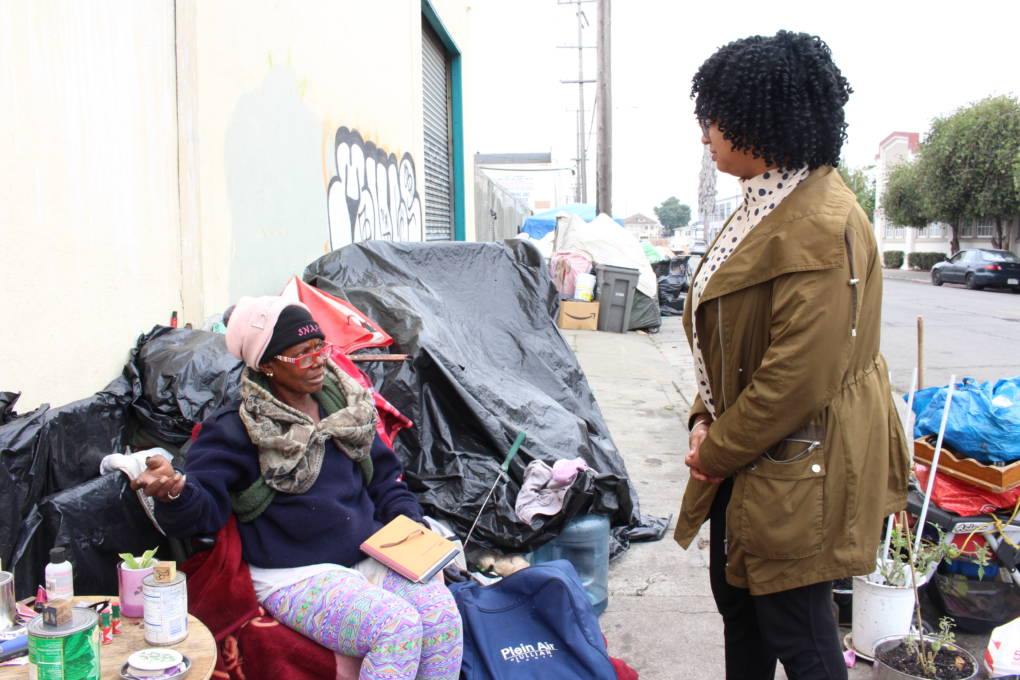
"caption": "Homeless advocate Candice Elder, 34, checks in with Dorothy Smith, 65, at an encampment in Oakland on Aug. 24, 2018. Smith, who raised her children in the city, said her disability benefits are not enough to afford housing. 'It just don’t support me,' she said.\n",
"description": null,
"title": "Photo 1",
"credit": "Farida Jhabvala Romero/KQED",
"status": "inherit",
"isLoading": false,
"fetchFailed": false
},
"news_11677399": {
"type": "attachments",
"id": "news_11677399",
"meta": {
"index": "attachments_1716263798",
"site": "news",
"id": "11677399",
"found": true
},
"parent": 11677380,
"imgSizes": {
"small": {
"file": "https://ww2.kqed.org/app/uploads/sites/10/2018/06/25267941258_635ff7d26e_k-520x347.jpg",
"width": 520,
"mimeType": "image/jpeg",
"height": 347
},
"twentyfourteen-full-width": {
"file": "https://ww2.kqed.org/app/uploads/sites/10/2018/06/25267941258_635ff7d26e_k-1038x576.jpg",
"width": 1038,
"mimeType": "image/jpeg",
"height": 576
},
"thumbnail": {
"file": "https://ww2.kqed.org/app/uploads/sites/10/2018/06/25267941258_635ff7d26e_k-160x107.jpg",
"width": 160,
"mimeType": "image/jpeg",
"height": 107
},
"fd-sm": {
"file": "https://ww2.kqed.org/app/uploads/sites/10/2018/06/25267941258_635ff7d26e_k-960x640.jpg",
"width": 960,
"mimeType": "image/jpeg",
"height": 640
},
"post-thumbnail": {
"file": "https://ww2.kqed.org/app/uploads/sites/10/2018/06/25267941258_635ff7d26e_k-672x372.jpg",
"width": 672,
"mimeType": "image/jpeg",
"height": 372
},
"xsmall": {
"file": "https://ww2.kqed.org/app/uploads/sites/10/2018/06/25267941258_635ff7d26e_k-375x250.jpg",
"width": 375,
"mimeType": "image/jpeg",
"height": 250
},
"kqedFullSize": {
"file": "https://ww2.kqed.org/app/uploads/sites/10/2018/06/25267941258_635ff7d26e_k.jpg",
"width": 2048,
"height": 1365
},
"large": {
"file": "https://ww2.kqed.org/app/uploads/sites/10/2018/06/25267941258_635ff7d26e_k-1020x680.jpg",
"width": 1020,
"mimeType": "image/jpeg",
"height": 680
},
"xlarge": {
"file": "https://ww2.kqed.org/app/uploads/sites/10/2018/06/25267941258_635ff7d26e_k-1180x786.jpg",
"width": 1180,
"mimeType": "image/jpeg",
"height": 786
},
"complete_open_graph": {
"file": "https://ww2.kqed.org/app/uploads/sites/10/2018/06/25267941258_635ff7d26e_k-1200x800.jpg",
"width": 1200,
"mimeType": "image/jpeg",
"height": 800
},
"guest-author-50": {
"file": "https://ww2.kqed.org/app/uploads/sites/10/2018/06/25267941258_635ff7d26e_k-50x50.jpg",
"width": 50,
"mimeType": "image/jpeg",
"height": 50
},
"guest-author-96": {
"file": "https://ww2.kqed.org/app/uploads/sites/10/2018/06/25267941258_635ff7d26e_k-96x96.jpg",
"width": 96,
"mimeType": "image/jpeg",
"height": 96
},
"medium": {
"file": "https://ww2.kqed.org/app/uploads/sites/10/2018/06/25267941258_635ff7d26e_k-800x533.jpg",
"width": 800,
"mimeType": "image/jpeg",
"height": 533
},
"guest-author-64": {
"file": "https://ww2.kqed.org/app/uploads/sites/10/2018/06/25267941258_635ff7d26e_k-64x64.jpg",
"width": 64,
"mimeType": "image/jpeg",
"height": 64
},
"guest-author-32": {
"file": "https://ww2.kqed.org/app/uploads/sites/10/2018/06/25267941258_635ff7d26e_k-32x32.jpg",
"width": 32,
"mimeType": "image/jpeg",
"height": 32
},
"fd-lrg": {
"file": "https://ww2.kqed.org/app/uploads/sites/10/2018/06/25267941258_635ff7d26e_k-1920x1280.jpg",
"width": 1920,
"mimeType": "image/jpeg",
"height": 1280
},
"fd-med": {
"file": "https://ww2.kqed.org/app/uploads/sites/10/2018/06/25267941258_635ff7d26e_k-1180x786.jpg",
"width": 1180,
"mimeType": "image/jpeg",
"height": 786
},
"full-width": {
"file": "https://ww2.kqed.org/app/uploads/sites/10/2018/06/25267941258_635ff7d26e_k-1920x1280.jpg",
"width": 1920,
"mimeType": "image/jpeg",
"height": 1280
},
"detail": {
"file": "https://ww2.kqed.org/app/uploads/sites/10/2018/06/25267941258_635ff7d26e_k-150x150.jpg",
"width": 150,
"mimeType": "image/jpeg",
"height": 150
},
"guest-author-128": {
"file": "https://ww2.kqed.org/app/uploads/sites/10/2018/06/25267941258_635ff7d26e_k-128x128.jpg",
"width": 128,
"mimeType": "image/jpeg",
"height": 128
},
"xxsmall": {
"file": "https://ww2.kqed.org/app/uploads/sites/10/2018/06/25267941258_635ff7d26e_k-240x160.jpg",
"width": 240,
"mimeType": "image/jpeg",
"height": 160
}
},
"publishDate": 1530043643,
"modified": 1530423616,
"caption": "The Painted Ladies in San Francisco.",
"description": "The Painted Ladies in San Francisco.",
"title": "The Painted Ladies in San Francisco",
"credit": "soomness/flickr",
"status": "inherit",
"isLoading": false,
"fetchFailed": false
},
"news_11652466": {
"type": "attachments",
"id": "news_11652466",
"meta": {
"index": "attachments_1716263798",
"site": "news",
"id": "11652466",
"found": true
},
"parent": 11652431,
"imgSizes": {
"small": {
"file": "https://ww2.kqed.org/app/uploads/sites/10/2018/02/TheBay_1200x630-520x273.jpg",
"width": 520,
"mimeType": "image/jpeg",
"height": 273
},
"twentyfourteen-full-width": {
"file": "https://ww2.kqed.org/app/uploads/sites/10/2018/02/TheBay_1200x630-1038x576.jpg",
"width": 1038,
"mimeType": "image/jpeg",
"height": 576
},
"thumbnail": {
"file": "https://ww2.kqed.org/app/uploads/sites/10/2018/02/TheBay_1200x630-160x84.jpg",
"width": 160,
"mimeType": "image/jpeg",
"height": 84
},
"fd-sm": {
"file": "https://ww2.kqed.org/app/uploads/sites/10/2018/02/TheBay_1200x630-960x504.jpg",
"width": 960,
"mimeType": "image/jpeg",
"height": 504
},
"post-thumbnail": {
"file": "https://ww2.kqed.org/app/uploads/sites/10/2018/02/TheBay_1200x630-672x372.jpg",
"width": 672,
"mimeType": "image/jpeg",
"height": 372
},
"xsmall": {
"file": "https://ww2.kqed.org/app/uploads/sites/10/2018/02/TheBay_1200x630-375x197.jpg",
"width": 375,
"mimeType": "image/jpeg",
"height": 197
},
"kqedFullSize": {
"file": "https://ww2.kqed.org/app/uploads/sites/10/2018/02/TheBay_1200x630.jpg",
"width": 1200,
"height": 630
},
"large": {
"file": "https://ww2.kqed.org/app/uploads/sites/10/2018/02/TheBay_1200x630-1020x536.jpg",
"width": 1020,
"mimeType": "image/jpeg",
"height": 536
},
"xlarge": {
"file": "https://ww2.kqed.org/app/uploads/sites/10/2018/02/TheBay_1200x630-1180x620.jpg",
"width": 1180,
"mimeType": "image/jpeg",
"height": 620
},
"guest-author-50": {
"file": "https://ww2.kqed.org/app/uploads/sites/10/2018/02/TheBay_1200x630-50x50.jpg",
"width": 50,
"mimeType": "image/jpeg",
"height": 50
},
"guest-author-96": {
"file": "https://ww2.kqed.org/app/uploads/sites/10/2018/02/TheBay_1200x630-96x96.jpg",
"width": 96,
"mimeType": "image/jpeg",
"height": 96
},
"medium": {
"file": "https://ww2.kqed.org/app/uploads/sites/10/2018/02/TheBay_1200x630-800x420.jpg",
"width": 800,
"mimeType": "image/jpeg",
"height": 420
},
"guest-author-64": {
"file": "https://ww2.kqed.org/app/uploads/sites/10/2018/02/TheBay_1200x630-64x64.jpg",
"width": 64,
"mimeType": "image/jpeg",
"height": 64
},
"guest-author-32": {
"file": "https://ww2.kqed.org/app/uploads/sites/10/2018/02/TheBay_1200x630-32x32.jpg",
"width": 32,
"mimeType": "image/jpeg",
"height": 32
},
"fd-med": {
"file": "https://ww2.kqed.org/app/uploads/sites/10/2018/02/TheBay_1200x630-1180x620.jpg",
"width": 1180,
"mimeType": "image/jpeg",
"height": 620
},
"detail": {
"file": "https://ww2.kqed.org/app/uploads/sites/10/2018/02/TheBay_1200x630-150x150.jpg",
"width": 150,
"mimeType": "image/jpeg",
"height": 150
},
"guest-author-128": {
"file": "https://ww2.kqed.org/app/uploads/sites/10/2018/02/TheBay_1200x630-128x128.jpg",
"width": 128,
"mimeType": "image/jpeg",
"height": 128
},
"xxsmall": {
"file": "https://ww2.kqed.org/app/uploads/sites/10/2018/02/TheBay_1200x630-240x126.jpg",
"width": 240,
"mimeType": "image/jpeg",
"height": 126
}
},
"publishDate": 1519750457,
"modified": 1519750457,
"caption": null,
"description": null,
"title": "TheBay_1200x630",
"credit": null,
"status": "inherit",
"isLoading": false,
"fetchFailed": false
},
"news_11540909": {
"type": "attachments",
"id": "news_11540909",
"meta": {
"index": "attachments_1716263798",
"site": "news",
"id": "11540909",
"found": true
},
"parent": 11538907,
"imgSizes": {
"small": {
"file": "https://ww2.kqed.org/app/uploads/sites/10/2017/06/Daniel-Yapo-520x390.jpg",
"width": 520,
"mimeType": "image/jpeg",
"height": 390
},
"twentyfourteen-full-width": {
"file": "https://ww2.kqed.org/app/uploads/sites/10/2017/06/Daniel-Yapo-1038x576.jpg",
"width": 1038,
"mimeType": "image/jpeg",
"height": 576
},
"thumbnail": {
"file": "https://ww2.kqed.org/app/uploads/sites/10/2017/06/Daniel-Yapo-160x120.jpg",
"width": 160,
"mimeType": "image/jpeg",
"height": 120
},
"fd-sm": {
"file": "https://ww2.kqed.org/app/uploads/sites/10/2017/06/Daniel-Yapo-960x720.jpg",
"width": 960,
"mimeType": "image/jpeg",
"height": 720
},
"post-thumbnail": {
"file": "https://ww2.kqed.org/app/uploads/sites/10/2017/06/Daniel-Yapo-672x372.jpg",
"width": 672,
"mimeType": "image/jpeg",
"height": 372
},
"xsmall": {
"file": "https://ww2.kqed.org/app/uploads/sites/10/2017/06/Daniel-Yapo-375x281.jpg",
"width": 375,
"mimeType": "image/jpeg",
"height": 281
},
"kqedFullSize": {
"file": "https://ww2.kqed.org/app/uploads/sites/10/2017/06/Daniel-Yapo.jpg",
"width": 4032,
"height": 3024
},
"large": {
"file": "https://ww2.kqed.org/app/uploads/sites/10/2017/06/Daniel-Yapo-1020x765.jpg",
"width": 1020,
"mimeType": "image/jpeg",
"height": 765
},
"xlarge": {
"file": "https://ww2.kqed.org/app/uploads/sites/10/2017/06/Daniel-Yapo-1180x885.jpg",
"width": 1180,
"mimeType": "image/jpeg",
"height": 885
},
"guest-author-50": {
"file": "https://ww2.kqed.org/app/uploads/sites/10/2017/06/Daniel-Yapo-50x50.jpg",
"width": 50,
"mimeType": "image/jpeg",
"height": 50
},
"guest-author-96": {
"file": "https://ww2.kqed.org/app/uploads/sites/10/2017/06/Daniel-Yapo-96x96.jpg",
"width": 96,
"mimeType": "image/jpeg",
"height": 96
},
"medium": {
"file": "https://ww2.kqed.org/app/uploads/sites/10/2017/06/Daniel-Yapo-800x600.jpg",
"width": 800,
"mimeType": "image/jpeg",
"height": 600
},
"guest-author-64": {
"file": "https://ww2.kqed.org/app/uploads/sites/10/2017/06/Daniel-Yapo-64x64.jpg",
"width": 64,
"mimeType": "image/jpeg",
"height": 64
},
"guest-author-32": {
"file": "https://ww2.kqed.org/app/uploads/sites/10/2017/06/Daniel-Yapo-32x32.jpg",
"width": 32,
"mimeType": "image/jpeg",
"height": 32
},
"fd-lrg": {
"file": "https://ww2.kqed.org/app/uploads/sites/10/2017/06/Daniel-Yapo-1920x1440.jpg",
"width": 1920,
"mimeType": "image/jpeg",
"height": 1440
},
"fd-med": {
"file": "https://ww2.kqed.org/app/uploads/sites/10/2017/06/Daniel-Yapo-1180x885.jpg",
"width": 1180,
"mimeType": "image/jpeg",
"height": 885
},
"full-width": {
"file": "https://ww2.kqed.org/app/uploads/sites/10/2017/06/Daniel-Yapo-1920x1440.jpg",
"width": 1920,
"mimeType": "image/jpeg",
"height": 1440
},
"detail": {
"file": "https://ww2.kqed.org/app/uploads/sites/10/2017/06/Daniel-Yapo-150x150.jpg",
"width": 150,
"mimeType": "image/jpeg",
"height": 150
},
"guest-author-128": {
"file": "https://ww2.kqed.org/app/uploads/sites/10/2017/06/Daniel-Yapo-128x128.jpg",
"width": 128,
"mimeType": "image/jpeg",
"height": 128
},
"xxsmall": {
"file": "https://ww2.kqed.org/app/uploads/sites/10/2017/06/Daniel-Yapo-240x180.jpg",
"width": 240,
"mimeType": "image/jpeg",
"height": 180
}
},
"publishDate": 1498847294,
"modified": 1498847338,
"caption": "Daniel Yapo, in the backyard of his new home in Oakland. ",
"description": null,
"title": "Daniel Yapo",
"credit": "Guy Marzorati/KQED",
"status": "inherit",
"isLoading": false,
"fetchFailed": false
},
"news_11405673": {
"type": "attachments",
"id": "news_11405673",
"meta": {
"index": "attachments_1716263798",
"site": "news",
"id": "11405673",
"found": true
},
"parent": 11404914,
"imgSizes": {
"small": {
"file": "https://ww2.kqed.org/app/uploads/sites/10/2017/04/for-rent-1920-520x347.jpg",
"width": 520,
"mimeType": "image/jpeg",
"height": 347
},
"twentyfourteen-full-width": {
"file": "https://ww2.kqed.org/app/uploads/sites/10/2017/04/for-rent-1920-1038x576.jpg",
"width": 1038,
"mimeType": "image/jpeg",
"height": 576
},
"thumbnail": {
"file": "https://ww2.kqed.org/app/uploads/sites/10/2017/04/for-rent-1920-160x107.jpg",
"width": 160,
"mimeType": "image/jpeg",
"height": 107
},
"fd-sm": {
"file": "https://ww2.kqed.org/app/uploads/sites/10/2017/04/for-rent-1920-960x640.jpg",
"width": 960,
"mimeType": "image/jpeg",
"height": 640
},
"post-thumbnail": {
"file": "https://ww2.kqed.org/app/uploads/sites/10/2017/04/for-rent-1920-672x372.jpg",
"width": 672,
"mimeType": "image/jpeg",
"height": 372
},
"xsmall": {
"file": "https://ww2.kqed.org/app/uploads/sites/10/2017/04/for-rent-1920-375x250.jpg",
"width": 375,
"mimeType": "image/jpeg",
"height": 250
},
"kqedFullSize": {
"file": "https://ww2.kqed.org/app/uploads/sites/10/2017/04/for-rent-1920.jpg",
"width": 1920,
"height": 1280
},
"large": {
"file": "https://ww2.kqed.org/app/uploads/sites/10/2017/04/for-rent-1920-1020x680.jpg",
"width": 1020,
"mimeType": "image/jpeg",
"height": 680
},
"xlarge": {
"file": "https://ww2.kqed.org/app/uploads/sites/10/2017/04/for-rent-1920-1180x787.jpg",
"width": 1180,
"mimeType": "image/jpeg",
"height": 787
},
"guest-author-50": {
"file": "https://ww2.kqed.org/app/uploads/sites/10/2017/04/for-rent-1920-50x50.jpg",
"width": 50,
"mimeType": "image/jpeg",
"height": 50
},
"guest-author-96": {
"file": "https://ww2.kqed.org/app/uploads/sites/10/2017/04/for-rent-1920-96x96.jpg",
"width": 96,
"mimeType": "image/jpeg",
"height": 96
},
"medium": {
"file": "https://ww2.kqed.org/app/uploads/sites/10/2017/04/for-rent-1920-800x533.jpg",
"width": 800,
"mimeType": "image/jpeg",
"height": 533
},
"guest-author-64": {
"file": "https://ww2.kqed.org/app/uploads/sites/10/2017/04/for-rent-1920-64x64.jpg",
"width": 64,
"mimeType": "image/jpeg",
"height": 64
},
"guest-author-32": {
"file": "https://ww2.kqed.org/app/uploads/sites/10/2017/04/for-rent-1920-32x32.jpg",
"width": 32,
"mimeType": "image/jpeg",
"height": 32
},
"fd-lrg": {
"file": "https://ww2.kqed.org/app/uploads/sites/10/2017/04/for-rent-1920-1920x1280.jpg",
"width": 1920,
"mimeType": "image/jpeg",
"height": 1280
},
"fd-med": {
"file": "https://ww2.kqed.org/app/uploads/sites/10/2017/04/for-rent-1920-1180x787.jpg",
"width": 1180,
"mimeType": "image/jpeg",
"height": 787
},
"full-width": {
"file": "https://ww2.kqed.org/app/uploads/sites/10/2017/04/for-rent-1920-1920x1280.jpg",
"width": 1920,
"mimeType": "image/jpeg",
"height": 1280
},
"detail": {
"file": "https://ww2.kqed.org/app/uploads/sites/10/2017/04/for-rent-1920-150x150.jpg",
"width": 150,
"mimeType": "image/jpeg",
"height": 150
},
"guest-author-128": {
"file": "https://ww2.kqed.org/app/uploads/sites/10/2017/04/for-rent-1920-128x128.jpg",
"width": 128,
"mimeType": "image/jpeg",
"height": 128
},
"xxsmall": {
"file": "https://ww2.kqed.org/app/uploads/sites/10/2017/04/for-rent-1920-240x160.jpg",
"width": 240,
"mimeType": "image/jpeg",
"height": 160
}
},
"publishDate": 1492046097,
"modified": 1524526410,
"caption": null,
"description": null,
"title": "for-rent-1920",
"credit": "Getty Images",
"status": "inherit",
"isLoading": false,
"fetchFailed": false
},
"news_11232769": {
"type": "attachments",
"id": "news_11232769",
"meta": {
"index": "attachments_1716263798",
"site": "news",
"id": "11232769",
"found": true
},
"parent": 11228042,
"imgSizes": {
"small": {
"file": "https://ww2.kqed.org/app/uploads/sites/10/2016/12/homeless_families_final01-520x278.png",
"width": 520,
"mimeType": "image/png",
"height": 278
},
"twentyfourteen-full-width": {
"file": "https://ww2.kqed.org/app/uploads/sites/10/2016/12/homeless_families_final01-1038x576.png",
"width": 1038,
"mimeType": "image/png",
"height": 576
},
"thumbnail": {
"file": "https://ww2.kqed.org/app/uploads/sites/10/2016/12/homeless_families_final01-160x86.png",
"width": 160,
"mimeType": "image/png",
"height": 86
},
"fd-sm": {
"file": "https://ww2.kqed.org/app/uploads/sites/10/2016/12/homeless_families_final01-960x514.png",
"width": 960,
"mimeType": "image/png",
"height": 514
},
"post-thumbnail": {
"file": "https://ww2.kqed.org/app/uploads/sites/10/2016/12/homeless_families_final01-672x372.png",
"width": 672,
"mimeType": "image/png",
"height": 372
},
"xsmall": {
"file": "https://ww2.kqed.org/app/uploads/sites/10/2016/12/homeless_families_final01-375x201.png",
"width": 375,
"mimeType": "image/png",
"height": 201
},
"kqedFullSize": {
"file": "https://ww2.kqed.org/app/uploads/sites/10/2016/12/homeless_families_final01-e1482439406779.png",
"width": 1920,
"height": 1028
},
"large": {
"file": "https://ww2.kqed.org/app/uploads/sites/10/2016/12/homeless_families_final01-1020x546.png",
"width": 1020,
"mimeType": "image/png",
"height": 546
},
"xlarge": {
"file": "https://ww2.kqed.org/app/uploads/sites/10/2016/12/homeless_families_final01-1180x632.png",
"width": 1180,
"mimeType": "image/png",
"height": 632
},
"guest-author-50": {
"file": "https://ww2.kqed.org/app/uploads/sites/10/2016/12/homeless_families_final01-50x50.png",
"width": 50,
"mimeType": "image/png",
"height": 50
},
"guest-author-96": {
"file": "https://ww2.kqed.org/app/uploads/sites/10/2016/12/homeless_families_final01-96x96.png",
"width": 96,
"mimeType": "image/png",
"height": 96
},
"medium": {
"file": "https://ww2.kqed.org/app/uploads/sites/10/2016/12/homeless_families_final01-800x428.png",
"width": 800,
"mimeType": "image/png",
"height": 428
},
"guest-author-64": {
"file": "https://ww2.kqed.org/app/uploads/sites/10/2016/12/homeless_families_final01-64x64.png",
"width": 64,
"mimeType": "image/png",
"height": 64
},
"guest-author-32": {
"file": "https://ww2.kqed.org/app/uploads/sites/10/2016/12/homeless_families_final01-32x32.png",
"width": 32,
"mimeType": "image/png",
"height": 32
},
"jmtc-small-thumb": {
"file": "https://ww2.kqed.org/app/uploads/sites/10/2016/12/homeless_families_final01-280x150.png",
"width": 280,
"mimeType": "image/png",
"height": 150
},
"fd-lrg": {
"file": "https://ww2.kqed.org/app/uploads/sites/10/2016/12/homeless_families_final01-1920x1028.png",
"width": 1920,
"mimeType": "image/png",
"height": 1028
},
"fd-med": {
"file": "https://ww2.kqed.org/app/uploads/sites/10/2016/12/homeless_families_final01-1180x632.png",
"width": 1180,
"mimeType": "image/png",
"height": 632
},
"full-width": {
"file": "https://ww2.kqed.org/app/uploads/sites/10/2016/12/homeless_families_final01-1920x1028.png",
"width": 1920,
"mimeType": "image/png",
"height": 1028
},
"detail": {
"file": "https://ww2.kqed.org/app/uploads/sites/10/2016/12/homeless_families_final01-150x150.png",
"width": 150,
"mimeType": "image/png",
"height": 150
},
"guest-author-128": {
"file": "https://ww2.kqed.org/app/uploads/sites/10/2016/12/homeless_families_final01-128x128.png",
"width": 128,
"mimeType": "image/png",
"height": 128
},
"xxsmall": {
"file": "https://ww2.kqed.org/app/uploads/sites/10/2016/12/homeless_families_final01-240x128.png",
"width": 240,
"mimeType": "image/png",
"height": 128
}
},
"publishDate": 1482433471,
"modified": 1482445158,
"caption": "San Francisco Mayor Ed Lee promised to get homeless students and their families into permanent housing by 2020.",
"description": null,
"title": "homeless_families_final01",
"credit": "Mark Fiore/KQED News",
"status": "inherit",
"isLoading": false,
"fetchFailed": false
},
"news_11120420": {
"type": "attachments",
"id": "news_11120420",
"meta": {
"index": "attachments_1716263798",
"site": "news",
"id": "11120420",
"found": true
},
"parent": 11120258,
"imgSizes": {
"twentyfourteen-full-width": {
"file": "https://ww2.kqed.org/app/uploads/sites/10/2016/10/Florida-St-1038x576.jpg",
"width": 1038,
"mimeType": "image/jpeg",
"height": 576
},
"thumbnail": {
"file": "https://ww2.kqed.org/app/uploads/sites/10/2016/10/Florida-St-400x267.jpg",
"width": 400,
"mimeType": "image/jpeg",
"height": 267
},
"fd-sm": {
"file": "https://ww2.kqed.org/app/uploads/sites/10/2016/10/Florida-St-960x640.jpg",
"width": 960,
"mimeType": "image/jpeg",
"height": 640
},
"post-thumbnail": {
"file": "https://ww2.kqed.org/app/uploads/sites/10/2016/10/Florida-St-672x372.jpg",
"width": 672,
"mimeType": "image/jpeg",
"height": 372
},
"kqedFullSize": {
"file": "https://ww2.kqed.org/app/uploads/sites/10/2016/10/Florida-St.jpg",
"width": 1920,
"height": 1280
},
"large": {
"file": "https://ww2.kqed.org/app/uploads/sites/10/2016/10/Florida-St-1920x1280.jpg",
"width": 1920,
"mimeType": "image/jpeg",
"height": 1280
},
"guest-author-50": {
"file": "https://ww2.kqed.org/app/uploads/sites/10/2016/10/Florida-St-50x50.jpg",
"width": 50,
"mimeType": "image/jpeg",
"height": 50
},
"guest-author-96": {
"file": "https://ww2.kqed.org/app/uploads/sites/10/2016/10/Florida-St-96x96.jpg",
"width": 96,
"mimeType": "image/jpeg",
"height": 96
},
"medium": {
"file": "https://ww2.kqed.org/app/uploads/sites/10/2016/10/Florida-St-800x533.jpg",
"width": 800,
"mimeType": "image/jpeg",
"height": 533
},
"guest-author-64": {
"file": "https://ww2.kqed.org/app/uploads/sites/10/2016/10/Florida-St-64x64.jpg",
"width": 64,
"mimeType": "image/jpeg",
"height": 64
},
"guest-author-32": {
"file": "https://ww2.kqed.org/app/uploads/sites/10/2016/10/Florida-St-32x32.jpg",
"width": 32,
"mimeType": "image/jpeg",
"height": 32
},
"jmtc-small-thumb": {
"file": "https://ww2.kqed.org/app/uploads/sites/10/2016/10/Florida-St-280x150.jpg",
"width": 280,
"mimeType": "image/jpeg",
"height": 150
},
"fd-lrg": {
"file": "https://ww2.kqed.org/app/uploads/sites/10/2016/10/Florida-St-1920x1280.jpg",
"width": 1920,
"mimeType": "image/jpeg",
"height": 1280
},
"fd-med": {
"file": "https://ww2.kqed.org/app/uploads/sites/10/2016/10/Florida-St-1180x787.jpg",
"width": 1180,
"mimeType": "image/jpeg",
"height": 787
},
"detail": {
"file": "https://ww2.kqed.org/app/uploads/sites/10/2016/10/Florida-St-150x150.jpg",
"width": 150,
"mimeType": "image/jpeg",
"height": 150
},
"guest-author-128": {
"file": "https://ww2.kqed.org/app/uploads/sites/10/2016/10/Florida-St-128x128.jpg",
"width": 128,
"mimeType": "image/jpeg",
"height": 128
}
},
"publishDate": 1475884790,
"modified": 1475884850,
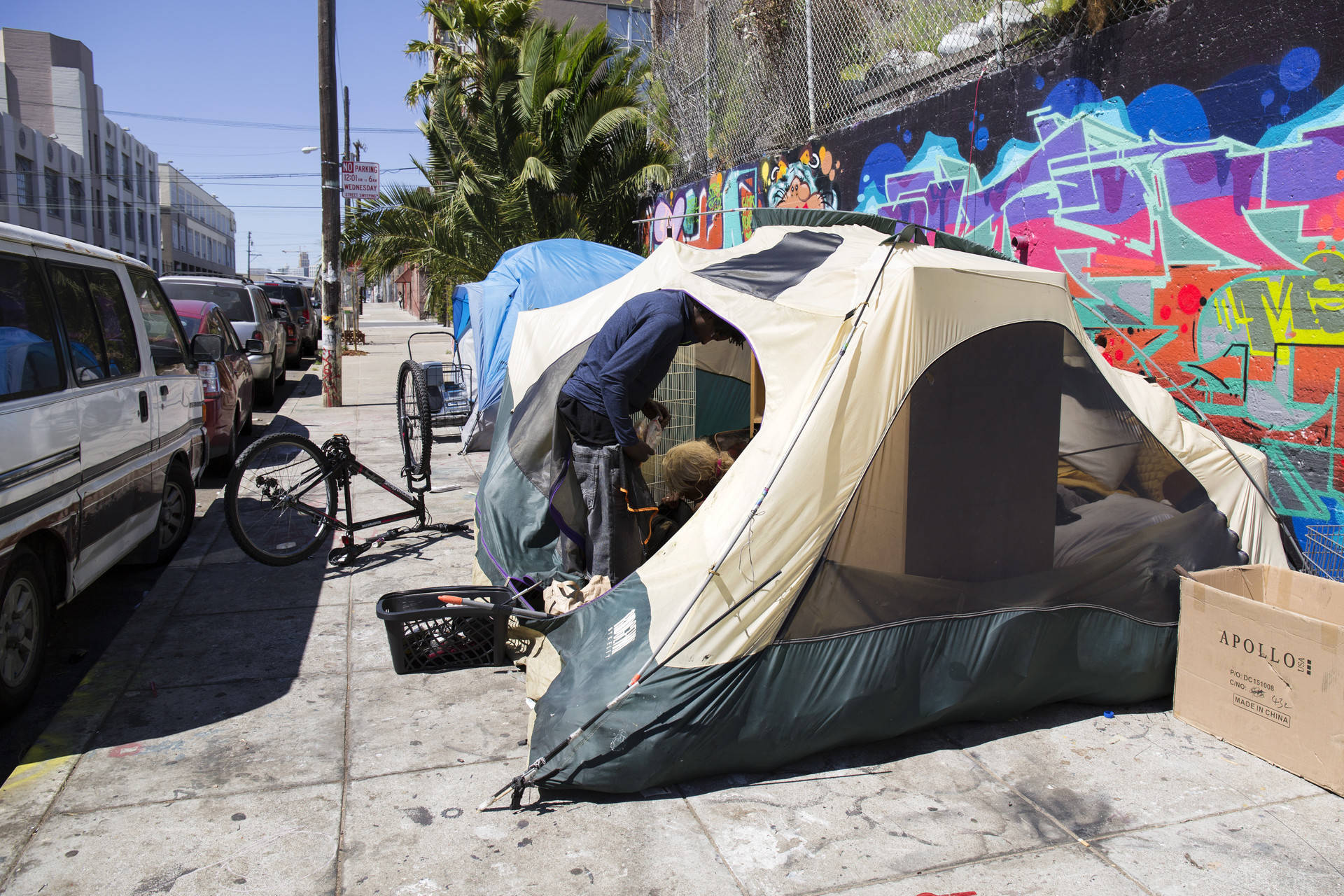
"caption": "An encampment on Florida Street in San Francisco's Mission District on June 23.",
"description": "A homeless encampment located on Florida St in the Mission District of San Francisco, Calif. on Thursday, June 23, 2016.",
"title": "Florida St",
"credit": "Brittany Hosea-Small/KQED",
"status": "inherit",
"isLoading": false,
"fetchFailed": false
},
"forum_2010101856797": {
"type": "attachments",
"id": "forum_2010101856797",
"meta": {
"index": "attachments_1716263798",
"site": "forum",
"id": "2010101856797",
"found": true
},
"parent": 2010101856796,
"imgSizes": {
"twentyfourteen-full-width": {
"file": "https://ww2.kqed.org/app/uploads/sites/43/2016/09/Rent-Control-for-Forum-1038x576.jpg",
"width": 1038,
"mimeType": "image/jpeg",
"height": 576
},
"thumbnail": {
"file": "https://ww2.kqed.org/app/uploads/sites/43/2016/09/Rent-Control-for-Forum-400x225.jpg",
"width": 400,
"mimeType": "image/jpeg",
"height": 225
},
"fd-sm": {
"file": "https://ww2.kqed.org/app/uploads/sites/43/2016/09/Rent-Control-for-Forum-960x540.jpg",
"width": 960,
"mimeType": "image/jpeg",
"height": 540
},
"post-thumbnail": {
"file": "https://ww2.kqed.org/app/uploads/sites/43/2016/09/Rent-Control-for-Forum-672x372.jpg",
"width": 672,
"mimeType": "image/jpeg",
"height": 372
},
"kqedFullSize": {
"file": "https://ww2.kqed.org/app/uploads/sites/43/2016/09/Rent-Control-for-Forum.jpg",
"width": 1920,
"height": 1080
},
"large": {
"file": "https://ww2.kqed.org/app/uploads/sites/43/2016/09/Rent-Control-for-Forum-1180x664.jpg",
"width": 1180,
"mimeType": "image/jpeg",
"height": 664
},
"guest-author-50": {
"file": "https://ww2.kqed.org/app/uploads/sites/43/2016/09/Rent-Control-for-Forum-50x50.jpg",
"width": 50,
"mimeType": "image/jpeg",
"height": 50
},
"guest-author-96": {
"file": "https://ww2.kqed.org/app/uploads/sites/43/2016/09/Rent-Control-for-Forum-96x96.jpg",
"width": 96,
"mimeType": "image/jpeg",
"height": 96
},
"medium": {
"file": "https://ww2.kqed.org/app/uploads/sites/43/2016/09/Rent-Control-for-Forum-800x450.jpg",
"width": 800,
"mimeType": "image/jpeg",
"height": 450
},
"guest-author-64": {
"file": "https://ww2.kqed.org/app/uploads/sites/43/2016/09/Rent-Control-for-Forum-64x64.jpg",
"width": 64,
"mimeType": "image/jpeg",
"height": 64
},
"guest-author-32": {
"file": "https://ww2.kqed.org/app/uploads/sites/43/2016/09/Rent-Control-for-Forum-32x32.jpg",
"width": 32,
"mimeType": "image/jpeg",
"height": 32
},
"fd-lrg": {
"file": "https://ww2.kqed.org/app/uploads/sites/43/2016/09/Rent-Control-for-Forum-1920x1080.jpg",
"width": 1920,
"mimeType": "image/jpeg",
"height": 1080
},
"fd-med": {
"file": "https://ww2.kqed.org/app/uploads/sites/43/2016/09/Rent-Control-for-Forum-1180x664.jpg",
"width": 1180,
"mimeType": "image/jpeg",
"height": 664
},
"detail": {
"file": "https://ww2.kqed.org/app/uploads/sites/43/2016/09/Rent-Control-for-Forum-150x150.jpg",
"width": 150,
"mimeType": "image/jpeg",
"height": 150
},
"medium_large": {
"file": "https://ww2.kqed.org/app/uploads/sites/43/2016/09/Rent-Control-for-Forum-768x432.jpg",
"width": 768,
"mimeType": "image/jpeg",
"height": 432
},
"guest-author-128": {
"file": "https://ww2.kqed.org/app/uploads/sites/43/2016/09/Rent-Control-for-Forum-128x128.jpg",
"width": 128,
"mimeType": "image/jpeg",
"height": 128
}
},
"publishDate": 1474671927,
"modified": 1474671975,
"caption": null,
"description": null,
"title": "Rent-Control-for-Forum",
"credit": "Photo: Justin Sullivan/Getty Images",
"status": "inherit",
"isLoading": false,
"fetchFailed": false
},
"news_11085716": {
"type": "attachments",
"id": "news_11085716",
"meta": {
"index": "attachments_1716263798",
"site": "news",
"id": "11085716",
"found": true
},
"parent": 11085585,
"imgSizes": {
"twentyfourteen-full-width": {
"file": "https://ww2.kqed.org/app/uploads/sites/10/2016/09/MapView-1038x576.png",
"width": 1038,
"mimeType": "image/png",
"height": 576
},
"thumbnail": {
"file": "https://ww2.kqed.org/app/uploads/sites/10/2016/09/MapView-400x214.png",
"width": 400,
"mimeType": "image/png",
"height": 214
},
"fd-sm": {
"file": "https://ww2.kqed.org/app/uploads/sites/10/2016/09/MapView-960x514.png",
"width": 960,
"mimeType": "image/png",
"height": 514
},
"post-thumbnail": {
"file": "https://ww2.kqed.org/app/uploads/sites/10/2016/09/MapView-672x372.png",
"width": 672,
"mimeType": "image/png",
"height": 372
},
"kqedFullSize": {
"file": "https://ww2.kqed.org/app/uploads/sites/10/2016/09/MapView.png",
"width": 1355,
"height": 725
},
"guest-author-50": {
"file": "https://ww2.kqed.org/app/uploads/sites/10/2016/09/MapView-50x50.png",
"width": 50,
"mimeType": "image/png",
"height": 50
},
"guest-author-96": {
"file": "https://ww2.kqed.org/app/uploads/sites/10/2016/09/MapView-96x96.png",
"width": 96,
"mimeType": "image/png",
"height": 96
},
"medium": {
"file": "https://ww2.kqed.org/app/uploads/sites/10/2016/09/MapView-800x428.png",
"width": 800,
"mimeType": "image/png",
"height": 428
},
"guest-author-64": {
"file": "https://ww2.kqed.org/app/uploads/sites/10/2016/09/MapView-64x64.png",
"width": 64,
"mimeType": "image/png",
"height": 64
},
"guest-author-32": {
"file": "https://ww2.kqed.org/app/uploads/sites/10/2016/09/MapView-32x32.png",
"width": 32,
"mimeType": "image/png",
"height": 32
},
"jmtc-small-thumb": {
"file": "https://ww2.kqed.org/app/uploads/sites/10/2016/09/MapView-280x150.png",
"width": 280,
"mimeType": "image/png",
"height": 150
},
"fd-med": {
"file": "https://ww2.kqed.org/app/uploads/sites/10/2016/09/MapView-1180x631.png",
"width": 1180,
"mimeType": "image/png",
"height": 631
},
"detail": {
"file": "https://ww2.kqed.org/app/uploads/sites/10/2016/09/MapView-150x150.png",
"width": 150,
"mimeType": "image/png",
"height": 150
},
"guest-author-128": {
"file": "https://ww2.kqed.org/app/uploads/sites/10/2016/09/MapView-128x128.png",
"width": 128,
"mimeType": "image/png",
"height": 128
}
},
"publishDate": 1473733520,
"modified": 1473781875,
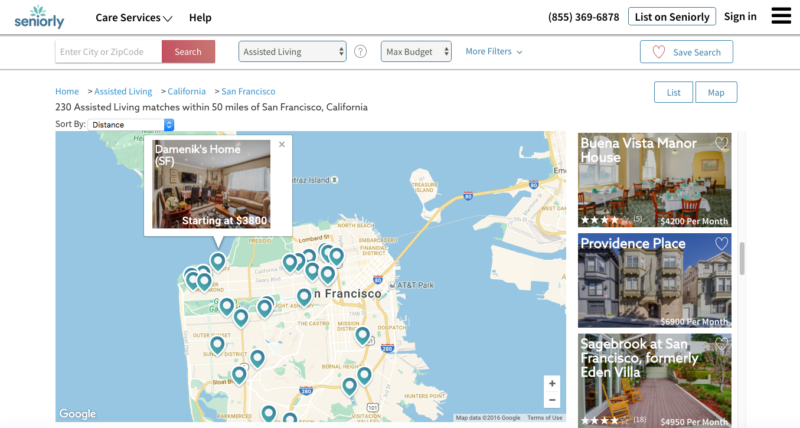
"caption": "Seniorly search tool maps care facilities according to users' preferences",
"description": null,
"title": "MapView",
"credit": "Courtesy Seniorly",
"status": "inherit",
"isLoading": false,
"fetchFailed": false
}
},
"audioPlayerReducer": {
"postId": "stream_live",
"isPaused": true,
"isPlaying": false,
"pfsActive": false,
"pledgeModalIsOpen": true,
"playerDrawerIsOpen": false,
"liveAudioPlayStartedAt": 0,
"liveAudioPlayContext": ""
},
"authorsReducer": {
"byline_news_11691013": {
"type": "authors",
"id": "byline_news_11691013",
"meta": {
"override": true
},
"slug": "byline_news_11691013",
"name": "\u003ca href=\"https://calmatters.org/articles/author/matt-levin/\">Matt Levin\u003c/a>\u003c/br>CALmatters",
"isLoading": false
},
"smartin": {
"type": "authors",
"id": "89",
"meta": {
"index": "authors_1716337520",
"id": "89",
"found": true
},
"name": "Stephanie Martin Taylor",
"firstName": "Stephanie Martin",
"lastName": "Taylor",
"slug": "smartin",
"email": "smartin@kqed.org",
"display_author_email": false,
"staff_mastheads": [],
"title": null,
"bio": "Stephanie Martin is a radio news reporter and anchor, and an occasional host of the \u003cem>KQED Newsroom \u003c/em>television program. While she currently focuses on housing and development issues, she has also reported on topics ranging from state and local politics to religion to arts and culture.\r\n\r\nPrior to joining KQED in 2005, Stephanie was an anchor and reporter for WFDD, the NPR affiliate in Winston-Salem, NC. She also spent several years as a television anchor, reporter and producer at various stations around the country.\r\n\r\nStephanie has received numerous awards for her reporting, including two National Headliner Awards, the Religion Newswriters Association's Best Radio Reporting Award and honors from the Associated Press and the Radio and Television Digital News Association. A series she produced from Iraq in 2005 earned a Best of Radio Award from the Society of Professional Journalists.\r\n\r\nStephanie received a graduate degree in Journalism from Columbia University. As an undergraduate at Colgate University, she worked and studied in Paris and Dijon, France, and spent a summer interning in the White House Press Office.\r\n\r\nStephanie grew up in Dallas, TX, and now lives with her husband in San Francisco.",
"avatar": "https://secure.gravatar.com/avatar/9fd3f8e9af01e14afde39822c19646e0?s=600&d=blank&r=g",
"twitter": "SMartinTaylor",
"facebook": null,
"instagram": null,
"linkedin": null,
"sites": [
{
"site": "arts",
"roles": [
"Contributor",
"subscriber"
]
},
{
"site": "news",
"roles": [
"subscriber"
]
},
{
"site": "stateofhealth",
"roles": [
"subscriber"
]
}
],
"headData": {
"title": "Stephanie Martin Taylor | KQED",
"description": null,
"ogImgSrc": "https://secure.gravatar.com/avatar/9fd3f8e9af01e14afde39822c19646e0?s=600&d=blank&r=g",
"twImgSrc": "https://secure.gravatar.com/avatar/9fd3f8e9af01e14afde39822c19646e0?s=600&d=blank&r=g"
},
"isLoading": false,
"link": "/author/smartin"
},
"gmarzorati": {
"type": "authors",
"id": "227",
"meta": {
"index": "authors_1716337520",
"id": "227",
"found": true
},
"name": "Guy Marzorati",
"firstName": "Guy",
"lastName": "Marzorati",
"slug": "gmarzorati",
"email": "gmarzorati@KQED.org",
"display_author_email": true,
"staff_mastheads": [
"news"
],
"title": "Correspondent",
"bio": "Guy Marzorati is a correspondent on KQED's California Politics and Government Desk, based in San Jose. A graduate of Santa Clara University, Guy joined KQED in 2013. He reports on state and local politics and produces KQED's digital voter guide.",
"avatar": "https://secure.gravatar.com/avatar/e7038b8dbfd55b104369b76b1cd0b9de?s=600&d=blank&r=g",
"twitter": "guymarzorati",
"facebook": null,
"instagram": null,
"linkedin": null,
"sites": [
{
"site": "",
"roles": [
"editor"
]
},
{
"site": "news",
"roles": [
"editor"
]
},
{
"site": "science",
"roles": [
"editor"
]
},
{
"site": "forum",
"roles": [
"editor"
]
},
{
"site": "elections",
"roles": [
"editor"
]
},
{
"site": "liveblog",
"roles": [
"editor"
]
}
],
"headData": {
"title": "Guy Marzorati | KQED",
"description": "Correspondent",
"ogImgSrc": "https://secure.gravatar.com/avatar/e7038b8dbfd55b104369b76b1cd0b9de?s=600&d=blank&r=g",
"twImgSrc": "https://secure.gravatar.com/avatar/e7038b8dbfd55b104369b76b1cd0b9de?s=600&d=blank&r=g"
},
"isLoading": false,
"link": "/author/gmarzorati"
},
"dkatayama": {
"type": "authors",
"id": "7240",
"meta": {
"index": "authors_1716337520",
"id": "7240",
"found": true
},
"name": "Devin Katayama",
"firstName": "Devin",
"lastName": "Katayama",
"slug": "dkatayama",
"email": "dkatayama@kqed.org",
"display_author_email": true,
"staff_mastheads": [
"news"
],
"title": "Editor of Talent and Development",
"bio": "Devin Katayama is former Editor of Talent and Development for KQED. He supported our internship program and on-call staff by looking for equitable opportunities to improve the newsroom.\r\n\r\nHe previously hosted The Bay and American Suburb podcasts from KQED News. Prior to returning to the Bay Area in 2015, Devin was the education reporter for WFPL in Louisville and worked as a producer with radio stations in Chicago and Portland, OR. His work has appeared on NPR’s \u003cem>Morning Edition, All Things Considered, The Takeaway\u003c/em> and \u003cem>Here and Now.\u003c/em>\r\n\r\nDevin earned his MA in Journalism from Columbia College Chicago, where he was a Follett Fellow and the recipient of the 2011 Studs Terkel Community Media Workshop Scholarship for his story on Chicago's homeless youth. He won WBUR's 2014 Daniel Schorr award and a regional RTNDA Edward R. Murrow Award for his documentary \"At Risk\" that looked at issues facing some of Louisville's students. Devin has also received numerous local awards from the Associated Press and the Society of Professional Journalists.",
"avatar": "https://secure.gravatar.com/avatar/d0d2978a31002fb2de107921a8e18405?s=600&d=blank&r=g",
"twitter": "RadioDevin",
"facebook": null,
"instagram": null,
"linkedin": null,
"sites": [
{
"site": "arts",
"roles": []
},
{
"site": "news",
"roles": [
"author"
]
},
{
"site": "stateofhealth",
"roles": [
"author"
]
},
{
"site": "forum",
"roles": [
"editor"
]
},
{
"site": "perspectives",
"roles": [
"editor"
]
}
],
"headData": {
"title": "Devin Katayama | KQED",
"description": "Editor of Talent and Development",
"ogImgSrc": "https://secure.gravatar.com/avatar/d0d2978a31002fb2de107921a8e18405?s=600&d=blank&r=g",
"twImgSrc": "https://secure.gravatar.com/avatar/d0d2978a31002fb2de107921a8e18405?s=600&d=blank&r=g"
},
"isLoading": false,
"link": "/author/dkatayama"
},
"jplaczek": {
"type": "authors",
"id": "8606",
"meta": {
"index": "authors_1716337520",
"id": "8606",
"found": true
},
"name": "Jessica Placzek",
"firstName": "Jessica",
"lastName": "Placzek",
"slug": "jplaczek",
"email": "jessicalplaczek@gmail.com",
"display_author_email": false,
"staff_mastheads": [
"news"
],
"title": "KQED Contributor",
"bio": "Jessica Placzek is a former senior editor of podcasts at KQED where she served as the editorial lead of the podcast department. She worked with shows like MindShift, Rightnowish, Consider This, SOLD OUT, Bay Curious and The Bay. She’s also been a reporter and audio producer at KQED, KPFA, and KALW. She taught audio production to men incarcerated at California State Prison Solano and edited pieces they produced for the Uncuffed podcast through KALW. In 2018 she co-hosted and produced the third season of Raw Material for SFMOMA. In New Orleans she wrote for the Nola Defender. Her work has also appeared on Marketplace, All Things Considered, The California Report, and Vice. You can find more at jessicaplaczek.com",
"avatar": "https://secure.gravatar.com/avatar/5ead103b5880f672eceb84ce75eecd1b4b6f74a47edc457684a73ad5b8b158e9?s=600&d=blank&r=g",
"twitter": null,
"bluesky": null,
"facebook": null,
"instagram": null,
"linkedin": null,
"sites": [
{
"site": "arts",
"roles": [
"subscriber"
]
},
{
"site": "news",
"roles": [
"subscriber"
]
},
{
"site": "stateofhealth",
"roles": [
"editor"
]
},
{
"site": "forum",
"roles": [
"editor"
]
}
],
"headData": {
"title": "Jessica Placzek | KQED",
"description": "KQED Contributor",
"ogImgSrc": "https://secure.gravatar.com/avatar/5ead103b5880f672eceb84ce75eecd1b4b6f74a47edc457684a73ad5b8b158e9?s=600&d=blank&r=g",
"twImgSrc": "https://secure.gravatar.com/avatar/5ead103b5880f672eceb84ce75eecd1b4b6f74a47edc457684a73ad5b8b158e9?s=600&d=blank&r=g"
},
"isLoading": false,
"link": "/author/jplaczek"
},
"fjhabvala": {
"type": "authors",
"id": "8659",
"meta": {
"index": "authors_1716337520",
"id": "8659",
"found": true
},
"name": "Farida Jhabvala Romero",
"firstName": "Farida",
"lastName": "Jhabvala Romero",
"slug": "fjhabvala",
"email": "fjhabvala@kqed.org",
"display_author_email": true,
"staff_mastheads": [
"news"
],
"title": "KQED Contributor",
"bio": "Farida Jhabvala Romero is a Labor Correspondent for KQED. She previously covered immigration. Farida was \u003ca href=\"https://www.ccnma.org/2022-most-influential-latina-journalists\">named\u003c/a> one of the 10 Most Influential Latina Journalists in California in 2022 by the California Chicano News Media Association. Her work has won awards from the Society of Professional Journalists (Northern California), as well as a national and regional Edward M. Murrow Award for the collaborative reporting projects “Dangerous Air” and “Graying California.” Before joining KQED, Farida worked as a producer at Radio Bilingüe, a national public radio network. Farida earned her master’s degree in journalism from Stanford University.",
"avatar": "https://secure.gravatar.com/avatar/f9f022d4e2609741874222a1e9d41f48fea74011aa7c615eef91d9a50c944ebe?s=600&d=blank&r=g",
"twitter": "FaridaJhabvala",
"bluesky": null,
"facebook": null,
"instagram": null,
"linkedin": "https://www.linkedin.com/in/faridajhabvala/",
"sites": [
{
"site": "news",
"roles": [
"editor"
]
},
{
"site": "stateofhealth",
"roles": [
"author"
]
},
{
"site": "liveblog",
"roles": [
"author"
]
}
],
"headData": {
"title": "Farida Jhabvala Romero | KQED",
"description": "KQED Contributor",
"ogImgSrc": "https://secure.gravatar.com/avatar/f9f022d4e2609741874222a1e9d41f48fea74011aa7c615eef91d9a50c944ebe?s=600&d=blank&r=g",
"twImgSrc": "https://secure.gravatar.com/avatar/f9f022d4e2609741874222a1e9d41f48fea74011aa7c615eef91d9a50c944ebe?s=600&d=blank&r=g"
},
"isLoading": false,
"link": "/author/fjhabvala"
},
"mkrasny": {
"type": "authors",
"id": "11247",
"meta": {
"index": "authors_1716337520",
"id": "11247",
"found": true
},
"name": "Michael Krasny",
"firstName": "Michael",
"lastName": "Krasny",
"slug": "mkrasny",
"email": "mkrasny@kqed.org",
"display_author_email": false,
"staff_mastheads": [],
"title": "KQED Contributor",
"bio": "Michael Krasny was the former host of the program, Forum. He was with ABC in both radio and television and migrated to public broadcasting in 1993. He was a Professor of English at San Francisco State University and also taught at Stanford, the University of San Francisco and the University of California, as well as in the Fulbright International Institutes. A veteran interviewer for the nationally broadcast City Arts and Lectures, he is the author of a number of books, including “Off Mike: A Memoir of Talk Radio and Literary Life” (Stanford University Press) “Spiritual Envy” (New World); “Sound Ideas” (with M.E. Sokolik/ McGraw-Hill); “Let There Be Laughter” (Harper-Collins) as well as the twenty-four lecture series in DVD, audio and book, “Short Story Masterpieces” (The Teaching Company). He has interviewed many of the world’s leading political, cultural, literary, science and technology figures, as well as major figures from the world of entertainment. He is the recipient of many awards and honors including the S.Y. Agnon Medal for Intellectual Achievement; The Eugene Block Award for Human Rights Journalism; the James Madison Freedom of Information Award; the Excellence in Journalism Award from the National Lesbian and Gay Journalists Association; Career Achievement Award from the Society of Professional Journalists and an award from the Radio and Television News Directors Association. He holds a B.A. (cum laude) and M.A. from Ohio University and a PhD from the University of Wisconsin.",
"avatar": "https://secure.gravatar.com/avatar/243c9ef51f3b90a42850d3a766d24865?s=600&d=blank&r=g",
"twitter": null,
"facebook": null,
"instagram": null,
"linkedin": null,
"sites": [
{
"site": "forum",
"roles": [
"subscriber"
]
}
],
"headData": {
"title": "Michael Krasny | KQED",
"description": "KQED Contributor",
"ogImgSrc": "https://secure.gravatar.com/avatar/243c9ef51f3b90a42850d3a766d24865?s=600&d=blank&r=g",
"twImgSrc": "https://secure.gravatar.com/avatar/243c9ef51f3b90a42850d3a766d24865?s=600&d=blank&r=g"
},
"isLoading": false,
"link": "/author/mkrasny"
},
"rlevi": {
"type": "authors",
"id": "11260",
"meta": {
"index": "authors_1716337520",
"id": "11260",
"found": true
},
"name": "Ryan Levi",
"firstName": "Ryan",
"lastName": "Levi",
"slug": "rlevi",
"email": "rlevi@KQED.org",
"display_author_email": false,
"staff_mastheads": [],
"title": "KQED Contributor",
"bio": "Ryan Levi was a reporter and podcast producer at KQED News from 2016-2019. He worked on \u003ca href=\"https://www.kqed.org/news/series/baycurious\">Bay Curious\u003c/a>, \u003ca href=\"https://www.kqed.org/news/tag/the-bay/\">The Bay, \u003c/a>and \u003ca href=\"https://podcasts.apple.com/us/podcast/the-california-report-magazine/id1314750545\">The California Report Magazine\u003c/a>, as well as hosting and producing the weekly \u003ca href=\"https://www.kqed.org/news/program/qedup/\">Q'ed Up podcast. \u003c/a>He also helped inaugurate KQED's weekend news coverage in 2017 as one of two original digital producers. Ryan holds degrees in multimedia journalism and Spanish from the University of Missouri.",
"avatar": "https://secure.gravatar.com/avatar/4cb2ddd028ac8807d1adf09609c5555d?s=600&d=blank&r=g",
"twitter": "ryan_levi",
"facebook": null,
"instagram": null,
"linkedin": null,
"sites": [
{
"site": "arts",
"roles": [
"editor"
]
},
{
"site": "news",
"roles": [
"subscriber"
]
},
{
"site": "stateofhealth",
"roles": [
"editor"
]
},
{
"site": "science",
"roles": [
"editor"
]
},
{
"site": "forum",
"roles": [
"administrator"
]
},
{
"site": "perspectives",
"roles": [
"administrator"
]
}
],
"headData": {
"title": "Ryan Levi | KQED",
"description": "KQED Contributor",
"ogImgSrc": "https://secure.gravatar.com/avatar/4cb2ddd028ac8807d1adf09609c5555d?s=600&d=blank&r=g",
"twImgSrc": "https://secure.gravatar.com/avatar/4cb2ddd028ac8807d1adf09609c5555d?s=600&d=blank&r=g"
},
"isLoading": false,
"link": "/author/rlevi"
},
"mwiley": {
"type": "authors",
"id": "11526",
"meta": {
"index": "authors_1716337520",
"id": "11526",
"found": true
},
"name": "Michelle Wiley",
"firstName": "Michelle",
"lastName": "Wiley",
"slug": "mwiley",
"email": "mwiley@KQED.org",
"display_author_email": true,
"staff_mastheads": [],
"title": null,
"bio": "Michelle Wiley was the senior editor of weekends.",
"avatar": "https://secure.gravatar.com/avatar/3b897d82a09e8587e8e73fa69fbcc635?s=600&d=blank&r=g",
"twitter": "michelleewiley",
"facebook": null,
"instagram": null,
"linkedin": null,
"sites": [
{
"site": "",
"roles": [
"editor"
]
},
{
"site": "arts",
"roles": [
"editor"
]
},
{
"site": "news",
"roles": [
"subscriber"
]
},
{
"site": "lowdown",
"roles": [
"editor"
]
},
{
"site": "science",
"roles": [
"editor"
]
},
{
"site": "podcasts",
"roles": [
"editor"
]
}
],
"headData": {
"title": "Michelle Wiley | KQED",
"description": null,
"ogImgSrc": "https://secure.gravatar.com/avatar/3b897d82a09e8587e8e73fa69fbcc635?s=600&d=blank&r=g",
"twImgSrc": "https://secure.gravatar.com/avatar/3b897d82a09e8587e8e73fa69fbcc635?s=600&d=blank&r=g"
},
"isLoading": false,
"link": "/author/mwiley"
}
},
"pagesReducer": {
"news_tag_housing": {
"type": "terms",
"id": "news_1775",
"meta": {
"index": "terms_1716263798",
"site": "news",
"id": "1775",
"score": 7.0362806
},
"featImg": null,
"name": "housing",
"description": null,
"taxonomy": "tag",
"headData": {
"twImgId": null,
"twTitle": null,
"ogTitle": null,
"ogImgId": null,
"twDescription": null,
"description": null,
"title": "housing Archives | KQED News",
"ogDescription": null
},
"ttid": 1790,
"slug": "housing",
"isLoading": false,
"title": "housing",
"pageMeta": {
"site": "news",
"WpPageTemplate": "page-topic-editorial",
"currentPage": 71
},
"blocks": [
{
"blockName": "kqed/post-list",
"attrs": {
"layout": "cardArticle2",
"query": "posts/news?tag=housing",
"seeMore": false,
"paginated": true,
"page": 71
}
},
{
"blockName": "kqed/ad"
}
]
}
},
"pfsSessionReducer": {},
"postsReducer": {
"stream_live": {
"type": "live",
"id": "stream_live",
"audioUrl": "https://streams.kqed.org/kqedradio",
"title": "Live Stream",
"excerpt": "Live Stream information currently unavailable.",
"link": "/radio",
"featImg": "",
"label": {
"name": "KQED Live",
"link": "/"
}
},
"stream_kqedNewscast": {
"type": "posts",
"id": "stream_kqedNewscast",
"audioUrl": "https://www.kqed.org/.stream/anon/radio/RDnews/newscast.mp3?_=1",
"title": "KQED Newscast",
"featImg": "",
"label": {
"name": "88.5 FM",
"link": "/"
}
},
"news_11691500": {
"type": "posts",
"id": "news_11691500",
"meta": {
"index": "posts_1716263798",
"site": "news",
"id": "11691500",
"score": null,
"sort": [
1536832808000
]
},
"guestAuthors": [],
"slug": "could-creating-one-bay-area-city-solve-the-housing-crisis",
"title": "Could Creating One Bay Area City Solve the Housing Crisis?",
"publishDate": 1536832808,
"format": "image",
"headTitle": "Could Creating One Bay Area City Solve the Housing Crisis? | KQED",
"labelTerm": {},
"content": "\u003cp>Reid Williamson is an urban planning nerd. He lives in Oakland and was recently on a trip to Los Angeles and was struck by it’s size and how long you could take to cross that single city.\u003c/p>\n\u003cp>Whereas up here, many people drive through multiple cities just to get to work each day. And those cities aren’t always working together.\u003c/p>\n\u003cp>“So Cupertino adds jobs at Apple, and Cupertino says, ‘We’ll pass on housing, it’s not our thing.’ And then the next town over says, ‘That’s not our thing either.’ And all of a sudden you’re all the way in Tracy,” he says.\u003c/p>\n\u003cp>Reid wonders if there’s a way to stop cities from “passing” on building housing.\u003c/p>\n\u003cp>He asked Bay Curious: “If the Bay Area united to become one city, would that solve some of our problems?”\u003c/p>\n\u003ch3>How Things Are Now\u003c/h3>\n\u003cp>Downtown Redwood City has a lot to offer its residents — transit lines that connect to all over the Bay Area, a variety of restaurants and shops, and plenty of jobs in its many office buildings. To Maureen Sedonaen, CEO at Habitat for Humanity Greater San Francisco, it was an ideal place for a new affordable housing project.\u003c/p>\n\u003cp>[ad fullwidth]\u003c/p>\n\u003cp>In 2014, Sedonaen proposed a nine-story building with 46 units.\u003c/p>\n\u003cp>“[The housing crisis] is a national problem. It’s a statewide problem. And in particular it’s heightened and underlined in our region,” Sedonaen says.\u003c/p>\n\u003cp>But to win approval from the city, Habitat’s proposal was cut by more than half — down to 20 units.\u003c/p>\n\u003cp>Then a neighbor, with a history of obstructing development projects, \u003ca href=\"http://www.capradio.org/articles/2018/07/09/is-californias-legacy-environmental-law-protecting-the-states-beauty-or-blocking-affordable-housing/\">halted the project\u003c/a> for more than a year. He cited an environmental concern, saying the building would increase traffic.\u003c/p>\n\u003cp>More than three years later, the lot Sedonaen hopes to build on still sits empty with a price tag that keeps on growing.\u003c/p>\n\u003cp>“Folks are going to live next door to people who tried to stop them from having their home. And that’s hard,” Sedonaen says.\u003c/p>\n\u003cp>While the housing crisis is a regional problem, local governments and their constituents have a huge say on how much affordable housing to allow.\u003c/p>\n\u003cp>“A lot of people in the Bay Area, particularly those that have stable housing, are very comfortable. They like what they have. When they see something new, they see only the downsides of the new,” says Egon Terplan, regional planning director at SPUR, a nonprofit focused on planning and government in the Bay Area. “We in California have turned over the idea of how much housing effectively to allow to the smallest unit of government, to a local government, which is the city, or the county in unincorporated areas.”\u003c/p>\n\u003cp>[baycuriouspodcastinfo]\u003c/p>\n\u003cp>When land use is decided by local governments, it’s easier for vocal locals to protest projects.\u003c/p>\n\u003cp>“The people that are making the decision about how much growth to have in a community are the people who are there now,” Terplan says. “These voters tend to be slightly older and tend to be homeowners. … They’re not necessarily thinking about the next generation, or the millions of people who would like to be a part of this region.”\u003c/p>\n\u003cp>Locals protest new buildings for all kinds of reasons. They might say that a development is ugly, it blocks the sun, it isn’t affordable or it will create traffic. Terplan says while traffic fears could be addressed by building densely around transit, or creating more bike-friendly streets, for some it still might be too much change too fast.\u003c/p>\n\u003cfigure id=\"attachment_11691520\" class=\"wp-caption alignleft\" style=\"max-width: 640px\">\u003cimg loading=\"lazy\" decoding=\"async\" class=\"size-large wp-image-11691520\" src=\"https://ww2.kqed.org/news/wp-content/uploads/sites/10/2018/09/15766762449_e9aa1ebc7a_h-1020x695.jpg\" alt=\"The flow of traffic on the Bay Bridge\" width=\"640\" height=\"436\" srcset=\"https://cdn.kqed.org/wp-content/uploads/sites/10/2018/09/15766762449_e9aa1ebc7a_h-1020x695.jpg 1020w, https://cdn.kqed.org/wp-content/uploads/sites/10/2018/09/15766762449_e9aa1ebc7a_h-160x109.jpg 160w, https://cdn.kqed.org/wp-content/uploads/sites/10/2018/09/15766762449_e9aa1ebc7a_h-800x545.jpg 800w, https://cdn.kqed.org/wp-content/uploads/sites/10/2018/09/15766762449_e9aa1ebc7a_h-1200x818.jpg 1200w, https://cdn.kqed.org/wp-content/uploads/sites/10/2018/09/15766762449_e9aa1ebc7a_h-1180x804.jpg 1180w, https://cdn.kqed.org/wp-content/uploads/sites/10/2018/09/15766762449_e9aa1ebc7a_h-960x654.jpg 960w, https://cdn.kqed.org/wp-content/uploads/sites/10/2018/09/15766762449_e9aa1ebc7a_h-240x164.jpg 240w, https://cdn.kqed.org/wp-content/uploads/sites/10/2018/09/15766762449_e9aa1ebc7a_h-375x255.jpg 375w, https://cdn.kqed.org/wp-content/uploads/sites/10/2018/09/15766762449_e9aa1ebc7a_h-520x354.jpg 520w, https://cdn.kqed.org/wp-content/uploads/sites/10/2018/09/15766762449_e9aa1ebc7a_h.jpg 1600w\" sizes=\"(max-width: 640px) 100vw, 640px\">\u003cfigcaption class=\"wp-caption-text\">The flow of traffic on the Bay Bridge \u003ccite>(David Yu/Flickr)\u003c/cite>\u003c/figcaption>\u003c/figure>\n\u003cp>Politicians have lost their jobs for being to willing to develop.\u003c/p>\n\u003cp>“Redwood City had a very good plan for growing its downtown, and evolving and enabling growth around rail. Lots of people moving there weren’t driving their cars. But a bunch of [politicians] that supported that development got thrown out,” Terplan says.\u003c/p>\n\u003cp>There’s resistance to change in cities across the Bay Area. You can find NIMBYism in Mountain View, Berkeley, Brisbane, the list goes on, and all that can compound — and we end up with less housing.\u003c/p>\n\u003cp>But what if it wasn’t local governments who had the power? What if, as Reid asked, plans came from the region instead?\u003c/p>\n\u003cfigure id=\"attachment_11691521\" class=\"wp-caption alignright\" style=\"max-width: 640px\">\u003cimg loading=\"lazy\" decoding=\"async\" class=\"wp-image-11691521 size-large\" src=\"https://ww2.kqed.org/news/wp-content/uploads/sites/10/2018/09/GettyImages-674538260-1020x680.jpg\" alt=\"An aerial view of the new Apple headquarters on April 28, 2017 in Cupertino, California. Apple's new 'spaceship' 175-acre campus dubbed "Apple Park" is nearing completion and is set to begin moving in Apple employees. The new headquarters, designed by Lord Norman Foster and costing roughly $5 billion, will house 13,000 employees in over 2.8 million square feet of office space and will have nearly 80 acres of parking to accommodate 11,000 cars. \" width=\"640\" height=\"427\" srcset=\"https://cdn.kqed.org/wp-content/uploads/sites/10/2018/09/GettyImages-674538260-1020x680.jpg 1020w, https://cdn.kqed.org/wp-content/uploads/sites/10/2018/09/GettyImages-674538260-160x107.jpg 160w, https://cdn.kqed.org/wp-content/uploads/sites/10/2018/09/GettyImages-674538260-800x534.jpg 800w, https://cdn.kqed.org/wp-content/uploads/sites/10/2018/09/GettyImages-674538260-960x640.jpg 960w, https://cdn.kqed.org/wp-content/uploads/sites/10/2018/09/GettyImages-674538260-240x160.jpg 240w, https://cdn.kqed.org/wp-content/uploads/sites/10/2018/09/GettyImages-674538260-375x250.jpg 375w, https://cdn.kqed.org/wp-content/uploads/sites/10/2018/09/GettyImages-674538260-520x347.jpg 520w, https://cdn.kqed.org/wp-content/uploads/sites/10/2018/09/GettyImages-674538260.jpg 1024w\" sizes=\"(max-width: 640px) 100vw, 640px\">\u003cfigcaption class=\"wp-caption-text\">An aerial view of the new Apple headquarters on April 28, 2017, in Cupertino, California. The new headquarters will house 13,000 employees in over 2.8 million square feet of office space and will have nearly 80 acres of parking to accommodate 11,000 cars. \u003ccite>(Justin Sullivan/Getty Images)\u003c/cite>\u003c/figcaption>\u003c/figure>\n\u003ch3>If We Were One City\u003c/h3>\n\u003cp>There are no serious proposals to unite the Bay Area into one city, but we thought it was an interesting question. After all, this region has a legacy of regional projects like the Save the Bay movement, which halted large-scale polluters and stopped cities from paving over the San Francisco Bay. Our regional parks are another example, which preserved the hills of the East Bay and the coast of Marin.\u003c/p>\n\u003cp>So what if we looked at a regional approach to housing? Could we save millennials, seniors, locals and future locals like we saved the bay?\u003c/p>\n\u003ch3>Creating a City\u003c/h3>\n\u003cp>We’re creating a hypothetical city. Let’s call it Reid Land (named after the question asker).\u003c/p>\n\u003cp>What are the boundaries of Reid Land? This is an oversimplification, but let’s say it includes all nine counties of the Bay Area. That would include 101 cities, around 7,000 square miles and an estimated 7.7 million people. For comparison, the city of Los Angeles has almost 4 million people on about 470 square miles.\u003c/p>\n\u003cp>The budget of Reid Land would be huge. According to the \u003ca href=\"http://www.bayareaeconomy.org/files/pdf/BayAreaEconomicProfile2018Web.pdf\" target=\"_blank\" rel=\"noopener\">Bay Area Council Economic Institute\u003c/a>, if the Bay Area were a country, it’d be the 19th largest economy in the world — smaller than the Netherlands, larger than Switzerland. Money collected from regional taxes would be spent regionally.\u003c/p>\n\u003cp>“You would be thinking about where are the best places to grow in such a way we’re really getting development around our transportation infrastructure so that people aren’t going to drive as much,” Terplan says.\u003c/p>\n\u003cfigure id=\"attachment_11691530\" class=\"wp-caption alignright\" style=\"max-width: 640px\">\u003cimg loading=\"lazy\" decoding=\"async\" class=\"size-large wp-image-11691530\" src=\"https://ww2.kqed.org/news/wp-content/uploads/sites/10/2018/09/92733663_d2efaa401c_b-1020x651.jpg\" alt=\"Sunrise at an Oakland BART station\" width=\"640\" height=\"408\" srcset=\"https://cdn.kqed.org/wp-content/uploads/sites/10/2018/09/92733663_d2efaa401c_b-1020x651.jpg 1020w, https://cdn.kqed.org/wp-content/uploads/sites/10/2018/09/92733663_d2efaa401c_b-160x102.jpg 160w, https://cdn.kqed.org/wp-content/uploads/sites/10/2018/09/92733663_d2efaa401c_b-800x511.jpg 800w, https://cdn.kqed.org/wp-content/uploads/sites/10/2018/09/92733663_d2efaa401c_b-960x613.jpg 960w, https://cdn.kqed.org/wp-content/uploads/sites/10/2018/09/92733663_d2efaa401c_b-240x153.jpg 240w, https://cdn.kqed.org/wp-content/uploads/sites/10/2018/09/92733663_d2efaa401c_b-375x240.jpg 375w, https://cdn.kqed.org/wp-content/uploads/sites/10/2018/09/92733663_d2efaa401c_b-520x332.jpg 520w, https://cdn.kqed.org/wp-content/uploads/sites/10/2018/09/92733663_d2efaa401c_b.jpg 1024w\" sizes=\"(max-width: 640px) 100vw, 640px\">\u003cfigcaption class=\"wp-caption-text\">Sunrise at an Oakland BART station \u003ccite>(Thomas Hawk/Flickr)\u003c/cite>\u003c/figcaption>\u003c/figure>\n\u003cp>In this fictional scenario, the city might take underutilized land and build tall mixed-housing developments. Each building would have affordable housing, and there would be businesses and green space. Bike lanes would cross these super-dense neighborhoods and a train stop would be conveniently located at each neighborhood center. These trains could whisk you across the whole region, so traffic would be reduced and people could move about Reid Land easier and cheaper.\u003c/p>\n\u003cp>“Just think about all the things that New York City accomplished that didn’t happen here — 24-hour rail service connecting across these places,” Terplan says.\u003c/p>\n\u003ch3>Drawbacks to One City\u003c/h3>\n\u003cp>There are drawbacks to Reid Land.\u003c/p>\n\u003cp>For example, “If all transit was merged together, you might not have as much bus service in San Francisco as you do today because you would start spreading those resources across a bigger geography. And so for people that rely on transit in San Francisco, they would see that as a loss,” Terplan says.\u003c/p>\n\u003cp>Another consequence of amalgamating all these cities is that it would change voting demographics. People might not have their local interests represented. For example, urban constituents might be outvoted by suburban constituents.\u003c/p>\n\u003cp>“I would point to Toronto as a city that kind of did this to a certain extent. They expanded outward and had a much larger city. And at times you would have a mayor who represented a much different perspective from the traditional urban core,” Terplan says.\u003c/p>\n\u003cp>When Metropolitan Toronto amalgamated its six boroughs in 1998, it was very controversial. Twenty years later, people still debate if it was a good decision.\u003c/p>\n\u003cp>It’s also not clear if creating a single city would solve our housing problems. City council members might still find ways to block projects that would threaten the character of their neighborhoods, and vocal residents could continue to find ways to stop projects they found objectionable.\u003c/p>\n\u003cp>In fact, this whole thing is pretty unrealistic — 101 cities are unlikely to give up control to a single governing body.\u003c/p>\n\u003cp>[baycuriouspodcastinfo]\u003c/p>\n\u003ch3>Alternatives\u003c/h3>\n\u003cp>We don’t need to have a single megacity to solve regional problems.\u003c/p>\n\u003cp>We have regional institutions that are thinking about big-picture issues facing the Bay Area. The problem is they don’t enforce plans or dole out consequences if cities don’t comply.\u003c/p>\n\u003cp>An alternative might be that regional plans and goals for housing become binding for cities.\u003c/p>\n\u003cp>One idea is a cap-and-trade program, but with housing. Each community would have a certain amount of housing and affordable housing it must build, and if a community doesn’t want to see that development in its own backyard, it could give money to an adjacent community to build that housing.\u003c/p>\n\u003cp>Perhaps, most realistically, it might just mean more collaboration, like in the case of transportation.\u003c/p>\n\u003cp>“How would it work if all the rail systems in the Bay Area really felt like one? You don’t have to merge them all together. But from a customer, it’s got to feel like a merger,” Terplan says.\u003c/p>\n\u003cp>There are collaborations currently underway. \u003ca href=\"https://mtc.ca.gov/our-work/plans-projects/casa-committee-house-bay-area\">CASA\u003c/a> (The Committee to House the Bay Area) meets roughly once a month with an aim to build actionable political consensus among Bay Area leaders. That said, in all likelihood, it wouldn’t support a single Bay Area city.\u003c/p>\n\u003cp>What does the question asker, Reid, make of all of this?\u003c/p>\n\u003cp>“If California is growing at X percent a year, we need X percent more gas stations we need X percent more day cares we need X percent more grocery stores. … We need X percent of everything. And so it’s how do we convince each area to grow at that rate? Or how do you do the cap-and-trade … which is pretty cool.”\u003c/p>\n\u003cp>\u003cem>Thanks to Ben Bradford for his reporting on Redwood City.\u003c/em>\u003c/p>\n\u003cp>\u003cem>Correction: the drive from the Getty to Manhattan beach goes through multiple cities, not just Los Angeles.\u003c/em>\u003c/p>\n\u003cp>[ad floatright]\u003c/p>\n\u003cp>[baycuriousquestion]\u003c/p>\n\n",
"blocks": [],
"excerpt": "What if we looked at a regional approach to housing? Could we save millennials, seniors, locals and future locals like we saved the bay?",
"status": "publish",
"parent": 0,
"modified": 1725923124,
"stats": {
"hasAudio": false,
"hasVideo": false,
"hasChartOrMap": false,
"iframeSrcs": [],
"hasGoogleForm": false,
"hasGallery": false,
"hasHearkenModule": true,
"hasPolis": false,
"paragraphCount": 52,
"wordCount": 1771
},
"headData": {
"title": "Could Creating One Bay Area City Solve the Housing Crisis? | KQED",
"description": "What if we looked at a regional approach to housing? Could we save millennials, seniors, locals and future locals like we saved the bay?",
"ogTitle": "",
"ogDescription": "",
"ogImgId": "",
"twTitle": "",
"twDescription": "",
"twImgId": "",
"schema": {
"@context": "https://schema.org",
"@type": "NewsArticle",
"headline": "Could Creating One Bay Area City Solve the Housing Crisis?",
"datePublished": "2018-09-13T03:00:08-07:00",
"dateModified": "2024-09-09T16:05:24-07:00",
"image": "https://cdn.kqed.org/wp-content/uploads/2020/02/KQED-OG-Image@1x.png",
"isAccessibleForFree": "True",
"publisher": {
"@type": "NewsMediaOrganization",
"@id": "https://www.kqed.org/#organization",
"name": "KQED",
"logo": "https://cdn.kqed.org/wp-content/uploads/2020/02/KQED-OG-Image@1x.png",
"url": "https://www.kqed.org",
"sameAs": [
"https://www.facebook.com/KQED",
"https://twitter.com/KQED",
"https://www.instagram.com/kqed/",
"https://www.tiktok.com/@kqedofficial",
"https://www.linkedin.com/company/kqed",
"https://www.youtube.com/channel/UCeC0IOo7i1P_61zVUWbJ4nw"
]
}
}
},
"source": "Bay Curious",
"sourceUrl": "https://www.kqed.org/news/series/baycurious",
"audioUrl": "https://www.kqed.org/.stream/anon/radio/new-bay-curious/2018/09/OneCity.mp3",
"sticky": false,
"audioTrackLength": 564,
"path": "/news/11691500/could-creating-one-bay-area-city-solve-the-housing-crisis",
"audioDuration": 579000,
"parsedContent": [
{
"type": "contentString",
"content": "\u003cdiv class=\"post-body\">\u003cp>\u003cp>Reid Williamson is an urban planning nerd. He lives in Oakland and was recently on a trip to Los Angeles and was struck by it’s size and how long you could take to cross that single city.\u003c/p>\n\u003cp>Whereas up here, many people drive through multiple cities just to get to work each day. And those cities aren’t always working together.\u003c/p>\n\u003cp>“So Cupertino adds jobs at Apple, and Cupertino says, ‘We’ll pass on housing, it’s not our thing.’ And then the next town over says, ‘That’s not our thing either.’ And all of a sudden you’re all the way in Tracy,” he says.\u003c/p>\n\u003cp>Reid wonders if there’s a way to stop cities from “passing” on building housing.\u003c/p>\n\u003cp>He asked Bay Curious: “If the Bay Area united to become one city, would that solve some of our problems?”\u003c/p>\n\u003ch3>How Things Are Now\u003c/h3>\n\u003cp>Downtown Redwood City has a lot to offer its residents — transit lines that connect to all over the Bay Area, a variety of restaurants and shops, and plenty of jobs in its many office buildings. To Maureen Sedonaen, CEO at Habitat for Humanity Greater San Francisco, it was an ideal place for a new affordable housing project.\u003c/p>\n\u003cp>\u003c/p>\u003c/div>",
"attributes": {
"named": {},
"numeric": []
}
},
{
"type": "component",
"content": "",
"name": "ad",
"attributes": {
"named": {
"label": "fullwidth"
},
"numeric": [
"fullwidth"
]
}
},
{
"type": "contentString",
"content": "\u003cdiv class=\"post-body\">\u003cp>\u003c/p>\n\u003cp>In 2014, Sedonaen proposed a nine-story building with 46 units.\u003c/p>\n\u003cp>“[The housing crisis] is a national problem. It’s a statewide problem. And in particular it’s heightened and underlined in our region,” Sedonaen says.\u003c/p>\n\u003cp>But to win approval from the city, Habitat’s proposal was cut by more than half — down to 20 units.\u003c/p>\n\u003cp>Then a neighbor, with a history of obstructing development projects, \u003ca href=\"http://www.capradio.org/articles/2018/07/09/is-californias-legacy-environmental-law-protecting-the-states-beauty-or-blocking-affordable-housing/\">halted the project\u003c/a> for more than a year. He cited an environmental concern, saying the building would increase traffic.\u003c/p>\n\u003cp>More than three years later, the lot Sedonaen hopes to build on still sits empty with a price tag that keeps on growing.\u003c/p>\n\u003cp>“Folks are going to live next door to people who tried to stop them from having their home. And that’s hard,” Sedonaen says.\u003c/p>\n\u003cp>While the housing crisis is a regional problem, local governments and their constituents have a huge say on how much affordable housing to allow.\u003c/p>\n\u003cp>“A lot of people in the Bay Area, particularly those that have stable housing, are very comfortable. They like what they have. When they see something new, they see only the downsides of the new,” says Egon Terplan, regional planning director at SPUR, a nonprofit focused on planning and government in the Bay Area. “We in California have turned over the idea of how much housing effectively to allow to the smallest unit of government, to a local government, which is the city, or the county in unincorporated areas.”\u003c/p>\n\u003cp>\u003c/p>\u003cp>\u003caside class=\"alignleft utils-parseShortcode-shortcodes-__bayCuriousPodcastShortcode__bayCurious\">\u003cimg src=https://cdn.kqed.org/wp-content/uploads/2023/02/bayCuriousLogo.png alt=\"Bay Curious Podcast\" loading=\"lazy\" />\n \u003ca href=\"/news/series/baycurious\">Bay Curious\u003c/a> is a podcast that answers your questions about the Bay Area.\n Subscribe on \u003ca href=\"https://itunes.apple.com/us/podcast/bay-curious/id1172473406\" target=\"_blank\" rel=\"noopener noreferrer\">Apple Podcasts\u003c/a>,\n \u003ca href=\"http://www.npr.org/podcasts/500557090/bay-curious\" target=\"_blank\" rel=\"noopener noreferrer\">NPR One\u003c/a> or your favorite podcast platform.\u003c/aside>\u003c/p>\u003cp>\u003c/p>\n\u003cp>When land use is decided by local governments, it’s easier for vocal locals to protest projects.\u003c/p>\n\u003cp>“The people that are making the decision about how much growth to have in a community are the people who are there now,” Terplan says. “These voters tend to be slightly older and tend to be homeowners. … They’re not necessarily thinking about the next generation, or the millions of people who would like to be a part of this region.”\u003c/p>\n\u003cp>Locals protest new buildings for all kinds of reasons. They might say that a development is ugly, it blocks the sun, it isn’t affordable or it will create traffic. Terplan says while traffic fears could be addressed by building densely around transit, or creating more bike-friendly streets, for some it still might be too much change too fast.\u003c/p>\n\u003cfigure id=\"attachment_11691520\" class=\"wp-caption alignleft\" style=\"max-width: 640px\">\u003cimg loading=\"lazy\" decoding=\"async\" class=\"size-large wp-image-11691520\" src=\"https://ww2.kqed.org/news/wp-content/uploads/sites/10/2018/09/15766762449_e9aa1ebc7a_h-1020x695.jpg\" alt=\"The flow of traffic on the Bay Bridge\" width=\"640\" height=\"436\" srcset=\"https://cdn.kqed.org/wp-content/uploads/sites/10/2018/09/15766762449_e9aa1ebc7a_h-1020x695.jpg 1020w, https://cdn.kqed.org/wp-content/uploads/sites/10/2018/09/15766762449_e9aa1ebc7a_h-160x109.jpg 160w, https://cdn.kqed.org/wp-content/uploads/sites/10/2018/09/15766762449_e9aa1ebc7a_h-800x545.jpg 800w, https://cdn.kqed.org/wp-content/uploads/sites/10/2018/09/15766762449_e9aa1ebc7a_h-1200x818.jpg 1200w, https://cdn.kqed.org/wp-content/uploads/sites/10/2018/09/15766762449_e9aa1ebc7a_h-1180x804.jpg 1180w, https://cdn.kqed.org/wp-content/uploads/sites/10/2018/09/15766762449_e9aa1ebc7a_h-960x654.jpg 960w, https://cdn.kqed.org/wp-content/uploads/sites/10/2018/09/15766762449_e9aa1ebc7a_h-240x164.jpg 240w, https://cdn.kqed.org/wp-content/uploads/sites/10/2018/09/15766762449_e9aa1ebc7a_h-375x255.jpg 375w, https://cdn.kqed.org/wp-content/uploads/sites/10/2018/09/15766762449_e9aa1ebc7a_h-520x354.jpg 520w, https://cdn.kqed.org/wp-content/uploads/sites/10/2018/09/15766762449_e9aa1ebc7a_h.jpg 1600w\" sizes=\"(max-width: 640px) 100vw, 640px\">\u003cfigcaption class=\"wp-caption-text\">The flow of traffic on the Bay Bridge \u003ccite>(David Yu/Flickr)\u003c/cite>\u003c/figcaption>\u003c/figure>\n\u003cp>Politicians have lost their jobs for being to willing to develop.\u003c/p>\n\u003cp>“Redwood City had a very good plan for growing its downtown, and evolving and enabling growth around rail. Lots of people moving there weren’t driving their cars. But a bunch of [politicians] that supported that development got thrown out,” Terplan says.\u003c/p>\n\u003cp>There’s resistance to change in cities across the Bay Area. You can find NIMBYism in Mountain View, Berkeley, Brisbane, the list goes on, and all that can compound — and we end up with less housing.\u003c/p>\n\u003cp>But what if it wasn’t local governments who had the power? What if, as Reid asked, plans came from the region instead?\u003c/p>\n\u003cfigure id=\"attachment_11691521\" class=\"wp-caption alignright\" style=\"max-width: 640px\">\u003cimg loading=\"lazy\" decoding=\"async\" class=\"wp-image-11691521 size-large\" src=\"https://ww2.kqed.org/news/wp-content/uploads/sites/10/2018/09/GettyImages-674538260-1020x680.jpg\" alt=\"An aerial view of the new Apple headquarters on April 28, 2017 in Cupertino, California. Apple's new 'spaceship' 175-acre campus dubbed "Apple Park" is nearing completion and is set to begin moving in Apple employees. The new headquarters, designed by Lord Norman Foster and costing roughly $5 billion, will house 13,000 employees in over 2.8 million square feet of office space and will have nearly 80 acres of parking to accommodate 11,000 cars. \" width=\"640\" height=\"427\" srcset=\"https://cdn.kqed.org/wp-content/uploads/sites/10/2018/09/GettyImages-674538260-1020x680.jpg 1020w, https://cdn.kqed.org/wp-content/uploads/sites/10/2018/09/GettyImages-674538260-160x107.jpg 160w, https://cdn.kqed.org/wp-content/uploads/sites/10/2018/09/GettyImages-674538260-800x534.jpg 800w, https://cdn.kqed.org/wp-content/uploads/sites/10/2018/09/GettyImages-674538260-960x640.jpg 960w, https://cdn.kqed.org/wp-content/uploads/sites/10/2018/09/GettyImages-674538260-240x160.jpg 240w, https://cdn.kqed.org/wp-content/uploads/sites/10/2018/09/GettyImages-674538260-375x250.jpg 375w, https://cdn.kqed.org/wp-content/uploads/sites/10/2018/09/GettyImages-674538260-520x347.jpg 520w, https://cdn.kqed.org/wp-content/uploads/sites/10/2018/09/GettyImages-674538260.jpg 1024w\" sizes=\"(max-width: 640px) 100vw, 640px\">\u003cfigcaption class=\"wp-caption-text\">An aerial view of the new Apple headquarters on April 28, 2017, in Cupertino, California. The new headquarters will house 13,000 employees in over 2.8 million square feet of office space and will have nearly 80 acres of parking to accommodate 11,000 cars. \u003ccite>(Justin Sullivan/Getty Images)\u003c/cite>\u003c/figcaption>\u003c/figure>\n\u003ch3>If We Were One City\u003c/h3>\n\u003cp>There are no serious proposals to unite the Bay Area into one city, but we thought it was an interesting question. After all, this region has a legacy of regional projects like the Save the Bay movement, which halted large-scale polluters and stopped cities from paving over the San Francisco Bay. Our regional parks are another example, which preserved the hills of the East Bay and the coast of Marin.\u003c/p>\n\u003cp>So what if we looked at a regional approach to housing? Could we save millennials, seniors, locals and future locals like we saved the bay?\u003c/p>\n\u003ch3>Creating a City\u003c/h3>\n\u003cp>We’re creating a hypothetical city. Let’s call it Reid Land (named after the question asker).\u003c/p>\n\u003cp>What are the boundaries of Reid Land? This is an oversimplification, but let’s say it includes all nine counties of the Bay Area. That would include 101 cities, around 7,000 square miles and an estimated 7.7 million people. For comparison, the city of Los Angeles has almost 4 million people on about 470 square miles.\u003c/p>\n\u003cp>The budget of Reid Land would be huge. According to the \u003ca href=\"http://www.bayareaeconomy.org/files/pdf/BayAreaEconomicProfile2018Web.pdf\" target=\"_blank\" rel=\"noopener\">Bay Area Council Economic Institute\u003c/a>, if the Bay Area were a country, it’d be the 19th largest economy in the world — smaller than the Netherlands, larger than Switzerland. Money collected from regional taxes would be spent regionally.\u003c/p>\n\u003cp>“You would be thinking about where are the best places to grow in such a way we’re really getting development around our transportation infrastructure so that people aren’t going to drive as much,” Terplan says.\u003c/p>\n\u003cfigure id=\"attachment_11691530\" class=\"wp-caption alignright\" style=\"max-width: 640px\">\u003cimg loading=\"lazy\" decoding=\"async\" class=\"size-large wp-image-11691530\" src=\"https://ww2.kqed.org/news/wp-content/uploads/sites/10/2018/09/92733663_d2efaa401c_b-1020x651.jpg\" alt=\"Sunrise at an Oakland BART station\" width=\"640\" height=\"408\" srcset=\"https://cdn.kqed.org/wp-content/uploads/sites/10/2018/09/92733663_d2efaa401c_b-1020x651.jpg 1020w, https://cdn.kqed.org/wp-content/uploads/sites/10/2018/09/92733663_d2efaa401c_b-160x102.jpg 160w, https://cdn.kqed.org/wp-content/uploads/sites/10/2018/09/92733663_d2efaa401c_b-800x511.jpg 800w, https://cdn.kqed.org/wp-content/uploads/sites/10/2018/09/92733663_d2efaa401c_b-960x613.jpg 960w, https://cdn.kqed.org/wp-content/uploads/sites/10/2018/09/92733663_d2efaa401c_b-240x153.jpg 240w, https://cdn.kqed.org/wp-content/uploads/sites/10/2018/09/92733663_d2efaa401c_b-375x240.jpg 375w, https://cdn.kqed.org/wp-content/uploads/sites/10/2018/09/92733663_d2efaa401c_b-520x332.jpg 520w, https://cdn.kqed.org/wp-content/uploads/sites/10/2018/09/92733663_d2efaa401c_b.jpg 1024w\" sizes=\"(max-width: 640px) 100vw, 640px\">\u003cfigcaption class=\"wp-caption-text\">Sunrise at an Oakland BART station \u003ccite>(Thomas Hawk/Flickr)\u003c/cite>\u003c/figcaption>\u003c/figure>\n\u003cp>In this fictional scenario, the city might take underutilized land and build tall mixed-housing developments. Each building would have affordable housing, and there would be businesses and green space. Bike lanes would cross these super-dense neighborhoods and a train stop would be conveniently located at each neighborhood center. These trains could whisk you across the whole region, so traffic would be reduced and people could move about Reid Land easier and cheaper.\u003c/p>\n\u003cp>“Just think about all the things that New York City accomplished that didn’t happen here — 24-hour rail service connecting across these places,” Terplan says.\u003c/p>\n\u003ch3>Drawbacks to One City\u003c/h3>\n\u003cp>There are drawbacks to Reid Land.\u003c/p>\n\u003cp>For example, “If all transit was merged together, you might not have as much bus service in San Francisco as you do today because you would start spreading those resources across a bigger geography. And so for people that rely on transit in San Francisco, they would see that as a loss,” Terplan says.\u003c/p>\n\u003cp>Another consequence of amalgamating all these cities is that it would change voting demographics. People might not have their local interests represented. For example, urban constituents might be outvoted by suburban constituents.\u003c/p>\n\u003cp>“I would point to Toronto as a city that kind of did this to a certain extent. They expanded outward and had a much larger city. And at times you would have a mayor who represented a much different perspective from the traditional urban core,” Terplan says.\u003c/p>\n\u003cp>When Metropolitan Toronto amalgamated its six boroughs in 1998, it was very controversial. Twenty years later, people still debate if it was a good decision.\u003c/p>\n\u003cp>It’s also not clear if creating a single city would solve our housing problems. City council members might still find ways to block projects that would threaten the character of their neighborhoods, and vocal residents could continue to find ways to stop projects they found objectionable.\u003c/p>\n\u003cp>In fact, this whole thing is pretty unrealistic — 101 cities are unlikely to give up control to a single governing body.\u003c/p>\n\u003cp>\u003c/p>\u003cp>\u003caside class=\"alignleft utils-parseShortcode-shortcodes-__bayCuriousPodcastShortcode__bayCurious\">\u003cimg src=https://cdn.kqed.org/wp-content/uploads/2023/02/bayCuriousLogo.png alt=\"Bay Curious Podcast\" loading=\"lazy\" />\n \u003ca href=\"/news/series/baycurious\">Bay Curious\u003c/a> is a podcast that answers your questions about the Bay Area.\n Subscribe on \u003ca href=\"https://itunes.apple.com/us/podcast/bay-curious/id1172473406\" target=\"_blank\" rel=\"noopener noreferrer\">Apple Podcasts\u003c/a>,\n \u003ca href=\"http://www.npr.org/podcasts/500557090/bay-curious\" target=\"_blank\" rel=\"noopener noreferrer\">NPR One\u003c/a> or your favorite podcast platform.\u003c/aside>\u003c/p>\u003cp>\u003c/p>\n\u003ch3>Alternatives\u003c/h3>\n\u003cp>We don’t need to have a single megacity to solve regional problems.\u003c/p>\n\u003cp>We have regional institutions that are thinking about big-picture issues facing the Bay Area. The problem is they don’t enforce plans or dole out consequences if cities don’t comply.\u003c/p>\n\u003cp>An alternative might be that regional plans and goals for housing become binding for cities.\u003c/p>\n\u003cp>One idea is a cap-and-trade program, but with housing. Each community would have a certain amount of housing and affordable housing it must build, and if a community doesn’t want to see that development in its own backyard, it could give money to an adjacent community to build that housing.\u003c/p>\n\u003cp>Perhaps, most realistically, it might just mean more collaboration, like in the case of transportation.\u003c/p>\n\u003cp>“How would it work if all the rail systems in the Bay Area really felt like one? You don’t have to merge them all together. But from a customer, it’s got to feel like a merger,” Terplan says.\u003c/p>\n\u003cp>There are collaborations currently underway. \u003ca href=\"https://mtc.ca.gov/our-work/plans-projects/casa-committee-house-bay-area\">CASA\u003c/a> (The Committee to House the Bay Area) meets roughly once a month with an aim to build actionable political consensus among Bay Area leaders. That said, in all likelihood, it wouldn’t support a single Bay Area city.\u003c/p>\n\u003cp>What does the question asker, Reid, make of all of this?\u003c/p>\n\u003cp>“If California is growing at X percent a year, we need X percent more gas stations we need X percent more day cares we need X percent more grocery stores. … We need X percent of everything. And so it’s how do we convince each area to grow at that rate? Or how do you do the cap-and-trade … which is pretty cool.”\u003c/p>\n\u003cp>\u003cem>Thanks to Ben Bradford for his reporting on Redwood City.\u003c/em>\u003c/p>\n\u003cp>\u003cem>Correction: the drive from the Getty to Manhattan beach goes through multiple cities, not just Los Angeles.\u003c/em>\u003c/p>\n\u003cp>\u003c/p>\u003c/div>",
"attributes": {
"named": {},
"numeric": []
}
},
{
"type": "component",
"content": "",
"name": "ad",
"attributes": {
"named": {
"label": "floatright"
},
"numeric": [
"floatright"
]
}
},
{
"type": "contentString",
"content": "\u003cdiv class=\"post-body\">\u003cp>\u003c/p>\n\u003cp>\u003c/p>\u003c/div>",
"attributes": {
"named": {},
"numeric": []
}
},
{
"type": "component",
"content": "",
"name": "baycuriousquestion",
"attributes": {
"named": {
"label": ""
},
"numeric": []
}
},
{
"type": "contentString",
"content": "\u003cdiv class=\"post-body\">\u003cp>\u003c/p>\n\n\u003c/div>\u003c/p>",
"attributes": {
"named": {},
"numeric": []
}
}
],
"link": "/news/11691500/could-creating-one-bay-area-city-solve-the-housing-crisis",
"authors": [
"8606"
],
"programs": [
"news_72",
"news_33523"
],
"series": [
"news_17986"
],
"categories": [
"news_6266",
"news_8",
"news_33520"
],
"tags": [
"news_1386",
"news_18426",
"news_20472",
"news_1775"
],
"featImg": "news_11691517",
"label": "source_news_11691500"
},
"news_11691407": {
"type": "posts",
"id": "news_11691407",
"meta": {
"index": "posts_1716263798",
"site": "news",
"id": "11691407",
"score": null,
"sort": [
1536606172000
]
},
"guestAuthors": [],
"slug": "san-francisco-mayor-breed-commits-100-million-to-modular-housing-project",
"title": "San Francisco Mayor Breed Commits $100 Million to Modular Housing Project",
"publishDate": 1536606172,
"format": "standard",
"headTitle": "San Francisco Mayor Breed Commits $100 Million to Modular Housing Project | KQED",
"labelTerm": {
"term": 72,
"site": "news"
},
"content": "\u003cp>San Francisco Mayor London Breed announced Monday that the city is pledging to spend $100 million on affordable housing orders from a proposed modular building factory in the coming years.\u003c/p>\n\u003cp>Modular building is a method of construction where the components are built somewhere else and then transported to the construction site for assembly.\u003c/p>\n\u003cp>Breed said the city, which continues to reel from a housing affordability crisis, needs new ways to quickly construct cheaper homes.\u003c/p>\n\u003cp>“We could actually build housing faster and less expensive with modular,” Breed said in an interview. “We’re in a crisis. We need more housing in San Francisco so we have to be open to exploring every opportunity to produce more and produce more faster.”\u003c/p>\n\u003cp>The first phase of an economic feasibility study is currently underway for a proposed factory to be built on industrial land overseen by the Port of San Francisco.\u003c/p>\n\u003cp>[ad fullwidth]\u003c/p>\n\u003cp>\u003ca href=\"http://www.nelsononline.com/\" target=\"_blank\" rel=\"noopener\">Nelson Worldwide\u003c/a>, an international design firm, is conducting the study, city officials said.\u003c/p>\n\u003cp>The second phase will involve developing a business plan for the factory, which could start operating in a few years.\u003c/p>\n\u003cp>Breed said San Francisco will be the facility’s first customer.\u003c/p>\n\u003cp>The project is part of the city’s goal to create housing for people living on the streets, according to one of the mayor’s top housing officials.\u003c/p>\n\u003cp>\u003c/p>\n\u003cp>“Providing new homes for people experiencing homelessness as fast as we can is essential to creating a compassionate and livable city for all San Franciscans,” said Kate Hartley, director of the Mayor’s Office of Housing and Community Development, in a statement.\u003c/p>\n\n",
"blocks": [],
"excerpt": "Mayor said the city, which continues to reel from a housing affordability crisis, needs new ways to quickly construct cheaper homes.",
"status": "publish",
"parent": 0,
"modified": 1721117924,
"stats": {
"hasAudio": false,
"hasVideo": false,
"hasChartOrMap": false,
"iframeSrcs": [],
"hasGoogleForm": false,
"hasGallery": false,
"hasHearkenModule": false,
"hasPolis": false,
"paragraphCount": 12,
"wordCount": 276
},
"headData": {
"title": "San Francisco Mayor Breed Commits $100 Million to Modular Housing Project | KQED",
"description": "Mayor said the city, which continues to reel from a housing affordability crisis, needs new ways to quickly construct cheaper homes.",
"ogTitle": "",
"ogDescription": "",
"ogImgId": "",
"twTitle": "",
"twDescription": "",
"twImgId": "",
"schema": {
"@context": "https://schema.org",
"@type": "NewsArticle",
"headline": "San Francisco Mayor Breed Commits $100 Million to Modular Housing Project",
"datePublished": "2018-09-10T12:02:52-07:00",
"dateModified": "2024-07-16T01:18:44-07:00",
"image": "https://cdn.kqed.org/wp-content/uploads/2020/02/KQED-OG-Image@1x.png",
"isAccessibleForFree": "True",
"publisher": {
"@type": "NewsMediaOrganization",
"@id": "https://www.kqed.org/#organization",
"name": "KQED",
"logo": "https://cdn.kqed.org/wp-content/uploads/2020/02/KQED-OG-Image@1x.png",
"url": "https://www.kqed.org",
"sameAs": [
"https://www.facebook.com/KQED",
"https://twitter.com/KQED",
"https://www.instagram.com/kqed/",
"https://www.tiktok.com/@kqedofficial",
"https://www.linkedin.com/company/kqed",
"https://www.youtube.com/channel/UCeC0IOo7i1P_61zVUWbJ4nw"
]
}
}
},
"sticky": false,
"path": "/news/11691407/san-francisco-mayor-breed-commits-100-million-to-modular-housing-project",
"audioTrackLength": null,
"parsedContent": [
{
"type": "contentString",
"content": "\u003cdiv class=\"post-body\">\u003cp>\u003cp>San Francisco Mayor London Breed announced Monday that the city is pledging to spend $100 million on affordable housing orders from a proposed modular building factory in the coming years.\u003c/p>\n\u003cp>Modular building is a method of construction where the components are built somewhere else and then transported to the construction site for assembly.\u003c/p>\n\u003cp>Breed said the city, which continues to reel from a housing affordability crisis, needs new ways to quickly construct cheaper homes.\u003c/p>\n\u003cp>“We could actually build housing faster and less expensive with modular,” Breed said in an interview. “We’re in a crisis. We need more housing in San Francisco so we have to be open to exploring every opportunity to produce more and produce more faster.”\u003c/p>\n\u003cp>The first phase of an economic feasibility study is currently underway for a proposed factory to be built on industrial land overseen by the Port of San Francisco.\u003c/p>\n\u003cp>\u003c/p>\u003c/div>",
"attributes": {
"named": {},
"numeric": []
}
},
{
"type": "component",
"content": "",
"name": "ad",
"attributes": {
"named": {
"label": "fullwidth"
},
"numeric": [
"fullwidth"
]
}
},
{
"type": "contentString",
"content": "\u003cdiv class=\"post-body\">\u003cp>\u003c/p>\n\u003cp>\u003ca href=\"http://www.nelsononline.com/\" target=\"_blank\" rel=\"noopener\">Nelson Worldwide\u003c/a>, an international design firm, is conducting the study, city officials said.\u003c/p>\n\u003cp>The second phase will involve developing a business plan for the factory, which could start operating in a few years.\u003c/p>\n\u003cp>Breed said San Francisco will be the facility’s first customer.\u003c/p>\n\u003cp>The project is part of the city’s goal to create housing for people living on the streets, according to one of the mayor’s top housing officials.\u003c/p>\n\u003cp>\u003c/p>\n\u003cp>“Providing new homes for people experiencing homelessness as fast as we can is essential to creating a compassionate and livable city for all San Franciscans,” said Kate Hartley, director of the Mayor’s Office of Housing and Community Development, in a statement.\u003c/p>\n\n\u003c/div>\u003c/p>",
"attributes": {
"named": {},
"numeric": []
}
}
],
"link": "/news/11691407/san-francisco-mayor-breed-commits-100-million-to-modular-housing-project",
"authors": [
"11526"
],
"programs": [
"news_72"
],
"categories": [
"news_6266",
"news_8"
],
"tags": [
"news_3921",
"news_1775",
"news_6931",
"news_38"
],
"featImg": "news_11691511",
"label": "news_72"
},
"news_11691013": {
"type": "posts",
"id": "news_11691013",
"meta": {
"index": "posts_1716263798",
"site": "news",
"id": "11691013",
"score": null,
"sort": [
1536348389000
]
},
"guestAuthors": [],
"slug": "californians-still-like-prop-13-except-for-the-big-parts-they-dont-like",
"title": "Californians Still Like Prop. 13, Except for The Big Parts They Don’t Like",
"publishDate": 1536348389,
"format": "image",
"headTitle": "Californians Still Like Prop. 13, Except for The Big Parts They Don’t Like | KQED",
"labelTerm": {},
"content": "\u003cp>California looks differently than it did a generation ago. Its residents are far more diverse, and they live in a far more expensive state. There are way more renters and proportionately way less Republicans.\u003c/p>\n\u003cp>Yet today’s Californians have at least one thing in common with their late 1970s forebears: They still really like Proposition 13.\u003c/p>\n\u003cp>In 1978 California voters approved Prop. 13 with a whopping 65 percent of the vote. A populist backlash to soaring property values and their attendant taxes, the ballot measure placed stringent caps on how much local governments could charge homeowners and businesses for the land they own. Overnight, Californians enjoyed some of the lowest property taxes in the country.\u003c/p>\n\u003cp>Since then, Prop. 13 has been blamed for everything from the \u003ca href=\"https://www.pe.com/2017/11/07/reform-prop-13-to-increase-californias-investment-in-public-education/\" target=\"_blank\" rel=\"noopener noreferrer\">poor performance\u003c/a> of California public schools to \u003ca href=\"https://techcrunch.com/2014/04/14/sf-housing/\" target=\"_blank\" rel=\"noopener noreferrer\">a shortage of affordable homes\u003c/a> to the perpetuation of \u003ca href=\"https://www.kqed.org/news/11624431/after-tax-cuts-derailed-the-california-dream-can-the-state-get-back-on-track\" target=\"_blank\" rel=\"noopener noreferrer\">racial inequality\u003c/a>. In progressive quarters, the initiative has become a poster child for bad ballot-box policy.\u003c/p>\n\u003cp>But this year, when the nonpartisan \u003ca href=\"http://www.ppic.org/publication/proposition-13-40-years-later/\" target=\"_blank\" rel=\"noopener noreferrer\">Public Policy Institute of California\u003c/a> surveyed voters about Prop. 13, 65 percent said it had been mostly a good thing. Yes, the exact same proportion that voted for the measure 40 years ago.\u003c/p>\n\u003cp>[ad fullwidth]\u003c/p>\n\u003cp>That’s a pretty stunning approval rating. By comparison, Gov. Jerry Brown—one of the most popular California political figures in recent memory—has never seen his job approval breach 60 percent over the past eight years. In 2016, Hillary Clinton beat Donald Trump here by a margin not seen since the days of Franklin Roosevelt, although she got less than 65 percent of the vote.\u003c/p>\n\u003cp>\u003cimg loading=\"lazy\" decoding=\"async\" class=\"aligncenter size-full wp-image-11691020\" src=\"https://ww2.kqed.org/news/wp-content/uploads/sites/10/2018/09/copy-ca-approval-ratings.png\" alt=\"\" width=\"2380\" height=\"3052\" srcset=\"https://cdn.kqed.org/wp-content/uploads/sites/10/2018/09/copy-ca-approval-ratings.png 2380w, https://cdn.kqed.org/wp-content/uploads/sites/10/2018/09/copy-ca-approval-ratings-160x205.png 160w, https://cdn.kqed.org/wp-content/uploads/sites/10/2018/09/copy-ca-approval-ratings-800x1026.png 800w, https://cdn.kqed.org/wp-content/uploads/sites/10/2018/09/copy-ca-approval-ratings-1020x1308.png 1020w, https://cdn.kqed.org/wp-content/uploads/sites/10/2018/09/copy-ca-approval-ratings-936x1200.png 936w, https://cdn.kqed.org/wp-content/uploads/sites/10/2018/09/copy-ca-approval-ratings-1920x2462.png 1920w, https://cdn.kqed.org/wp-content/uploads/sites/10/2018/09/copy-ca-approval-ratings-1180x1513.png 1180w, https://cdn.kqed.org/wp-content/uploads/sites/10/2018/09/copy-ca-approval-ratings-960x1231.png 960w, https://cdn.kqed.org/wp-content/uploads/sites/10/2018/09/copy-ca-approval-ratings-240x308.png 240w, https://cdn.kqed.org/wp-content/uploads/sites/10/2018/09/copy-ca-approval-ratings-375x481.png 375w, https://cdn.kqed.org/wp-content/uploads/sites/10/2018/09/copy-ca-approval-ratings-520x667.png 520w\" sizes=\"(max-width: 2380px) 100vw, 2380px\">\u003c/p>\n\u003cp>Such enduring popularity has led officials to long regard Prop. 13 as the untouchable third rail of California politics—yet voters may have a chance to repeatedly touch it in the not-too-distant future. \u003ca href=\"https://calmatters.org/articles/blog/prop-13-could-be-party-undone-in-2020-heres-what-you-should-know/\" target=\"_blank\" rel=\"noopener noreferrer\">A major proposed crimp in its tax-cutting power\u003c/a> is likely headed for the 2020 ballot, and voters will decide on \u003ca href=\"https://calmatters.org/articles/should-baby-boomers-get-a-property-tax-break-to-move-the-pros-and-cons-of-prop-5/\" target=\"_blank\" rel=\"noopener noreferrer\">a possible expansion of Prop. 13\u003c/a> benefits this fall. With those battles on the horizon, here’s a breakdown of just how broadly, deeply and consistently Californians love their cheap property taxes.\u003c/p>\n\u003cp>\u003cstrong>Prop. 13’s popularity has been remarkably consistent—nothing really moves it much, not even house prices.\u003c/strong>\u003c/p>\n\u003cp>Prop. 13 features many controversial components, but the part that hits taxpayers’ pocketbooks directly is arguably the most important. Prop. 13 caps a homeowner’s property tax bill at 1 percent of its market value when the new home is bought, and then indexes that value to inflation. In other words, if you bought your home in 1998, in real terms you’re still essentially being taxed on the price you paid back then—not on what it’s worth 20 years later, which is likely a lot more.\u003c/p>\n\u003cp>Given that the benefits of Prop. 13 are bigger in a hotter housing market—the more your house is worth, the more Prop. 13 saves you on your property tax bill—you might expect a strong relationship between housing prices and Prop. 13’s approval rating.\u003c/p>\n\u003cp>You’d be wrong.\u003c/p>\n\u003cp>\u003cimg loading=\"lazy\" decoding=\"async\" class=\"aligncenter size-full wp-image-11691019\" src=\"https://ww2.kqed.org/news/wp-content/uploads/sites/10/2018/09/prop_13_scatter_price-1.png\" alt=\"\" width=\"2200\" height=\"5428\" srcset=\"https://cdn.kqed.org/wp-content/uploads/sites/10/2018/09/prop_13_scatter_price-1.png 2200w, https://cdn.kqed.org/wp-content/uploads/sites/10/2018/09/prop_13_scatter_price-1-160x395.png 160w, https://cdn.kqed.org/wp-content/uploads/sites/10/2018/09/prop_13_scatter_price-1-800x1974.png 800w, https://cdn.kqed.org/wp-content/uploads/sites/10/2018/09/prop_13_scatter_price-1-1020x2517.png 1020w, https://cdn.kqed.org/wp-content/uploads/sites/10/2018/09/prop_13_scatter_price-1-486x1200.png 486w, https://cdn.kqed.org/wp-content/uploads/sites/10/2018/09/prop_13_scatter_price-1-1920x4737.png 1920w, https://cdn.kqed.org/wp-content/uploads/sites/10/2018/09/prop_13_scatter_price-1-1180x2911.png 1180w, https://cdn.kqed.org/wp-content/uploads/sites/10/2018/09/prop_13_scatter_price-1-960x2369.png 960w, https://cdn.kqed.org/wp-content/uploads/sites/10/2018/09/prop_13_scatter_price-1-240x592.png 240w, https://cdn.kqed.org/wp-content/uploads/sites/10/2018/09/prop_13_scatter_price-1-375x925.png 375w, https://cdn.kqed.org/wp-content/uploads/sites/10/2018/09/prop_13_scatter_price-1-520x1283.png 520w\" sizes=\"(max-width: 2200px) 100vw, 2200px\">\u003c/p>\n\u003cp>Since the institute began polling on Prop. 13 in the early 2000s, the initiative’s approval rating has consistently hovered around the high 50s. That’s true through housing booms and busts.\u003c/p>\n\u003cp>When California’s housing market was cratering in 2008, 59 percent of those polled thought Prop. 13 had worked well for California. Ten years later, with home prices in many parts of the state at all-time highs, 56 percent of those polled thought Prop. 13 had worked out well. (These marks are for all Californians. Likely voters give Prop. 13 that approval rating of 65 percent).\u003c/p>\n\u003cp>Support for Prop. 13 is unsurprisingly strongest among those voting blocs you associate with wanting lower taxes—older, whiter, more conservative homeowners. More than 70 percent of Republicans said Prop. 13 was working out well, as did 70 percent of homeowners.\u003c/p>\n\u003cp>But the landmark initiative enjoys widespread support among pretty much every other major partisan and demographic group. A clear majority of Democrats, independents, self-identified liberals, younger voters, and those with household income below $40,000 give Prop. 13 good marks. Perhaps most shockingly, 57 percent of renters support Prop. 13.\u003c/p>\n\u003cp>\u003cimg loading=\"lazy\" decoding=\"async\" class=\"aligncenter size-full wp-image-11691021\" src=\"https://ww2.kqed.org/news/wp-content/uploads/sites/10/2018/09/demographics-1.gif\" alt=\"\" width=\"550\" height=\"675\">\u003c/p>\n\u003cp>\u003cstrong>How Prop. 13 is like ‘Obamacare’—no, really \u003c/strong>\u003c/p>\n\u003cp>Those who wish to revise Prop. 13 can find a bright spot in the relatively high percentage of Californians who may not know much about the initiative or its consequences. Nearly one in five Californians surveyed couldn’t say whether Prop. 13 has been good or bad for the state.\u003c/p>\n\u003cp>In the years following the passage of the Affordable Care Act (aka Obamacare) in 2010, national polls revealed a consistent contradiction. While most polls found a majority of respondents saying they didn’t like the law writ large, the same polls saw \u003ca href=\"https://www.theguardian.com/commentisfree/2013/oct/01/healthcare-obamacare-affordable-care-act\" target=\"_blank\" rel=\"noopener noreferrer\">fairly high approval ratings\u003c/a> for most of the Affordable Care Act’s specific provisions—keeping adult children on family health plans, for example, or prohibiting price discrimination against people with pre-existing health conditions.\u003c/p>\n\u003cp>Polling on Prop. 13 has suggested a similar disconnect between how Californians feel about the initiative overall and how they feel about individual components.\u003c/p>\n\u003cp>Back in 2008 (unfortunately the last year this question was asked), PPIC explained a key consequence of Prop 13 to respondents—the fact that someone who recently bought a home will typically pay much higher property taxes then someone who bought a nearly identical home decades ago in the same neighborhood. Only 41 percent said they supported that defining feature of Prop. 13.\u003c/p>\n\u003cp>A similar pattern surfaces based on public attitudes about “split-roll”—the idea possibly headed for the 2020 ballot that commercial properties should be taxed at market value. Prop. 13 treats business and residential properties essentially the same.\u003c/p>\n\u003cp>\u003cimg loading=\"lazy\" decoding=\"async\" class=\"aligncenter size-full wp-image-11691022\" src=\"https://ww2.kqed.org/news/wp-content/uploads/sites/10/2018/09/prop-13-in-parts.png\" alt=\"\" width=\"2200\" height=\"5452\" srcset=\"https://cdn.kqed.org/wp-content/uploads/sites/10/2018/09/prop-13-in-parts.png 2200w, https://cdn.kqed.org/wp-content/uploads/sites/10/2018/09/prop-13-in-parts-160x397.png 160w, https://cdn.kqed.org/wp-content/uploads/sites/10/2018/09/prop-13-in-parts-800x1983.png 800w, https://cdn.kqed.org/wp-content/uploads/sites/10/2018/09/prop-13-in-parts-1020x2528.png 1020w, https://cdn.kqed.org/wp-content/uploads/sites/10/2018/09/prop-13-in-parts-484x1200.png 484w, https://cdn.kqed.org/wp-content/uploads/sites/10/2018/09/prop-13-in-parts-1920x4758.png 1920w, https://cdn.kqed.org/wp-content/uploads/sites/10/2018/09/prop-13-in-parts-1180x2924.png 1180w, https://cdn.kqed.org/wp-content/uploads/sites/10/2018/09/prop-13-in-parts-960x2379.png 960w, https://cdn.kqed.org/wp-content/uploads/sites/10/2018/09/prop-13-in-parts-240x595.png 240w, https://cdn.kqed.org/wp-content/uploads/sites/10/2018/09/prop-13-in-parts-375x929.png 375w, https://cdn.kqed.org/wp-content/uploads/sites/10/2018/09/prop-13-in-parts-520x1289.png 520w\" sizes=\"(max-width: 2200px) 100vw, 2200px\">\u003c/p>\n\u003cp>For most of the past decade, a clear majority of Californians supported the “split roll” idea. But that support isn’t as strong as it used to be. Back in 2012, 60 percent of likely voters wanted to modify Prop. 13 to tax commercial properties at their market value. In January of this year, supporters had dipped to 46 percent.\u003c/p>\n\u003cp>\u003c/p>\n\u003cp>\u003cem>\u003ca href=\"https://calmatters.org/\" target=\"_blank\" rel=\"noopener noreferrer\">CALmatters.org\u003c/a> is a nonprofit, nonpartisan media venture explaining California policies and politics.\u003c/em>\u003c/p>\n\n",
"blocks": [],
"excerpt": "Voters will soon have a chance to touch the third rail of California politics. Here’s a breakdown of how broadly and deeply Californians love their cheap property taxes.",
"status": "publish",
"parent": 0,
"modified": 1721117879,
"stats": {
"hasAudio": false,
"hasVideo": false,
"hasChartOrMap": false,
"iframeSrcs": [],
"hasGoogleForm": false,
"hasGallery": false,
"hasHearkenModule": false,
"hasPolis": false,
"paragraphCount": 29,
"wordCount": 1068
},
"headData": {
"title": "Californians Still Like Prop. 13, Except for The Big Parts They Don’t Like | KQED",
"description": "Voters will soon have a chance to touch the third rail of California politics. Here’s a breakdown of how broadly and deeply Californians love their cheap property taxes.",
"ogTitle": "",
"ogDescription": "",
"ogImgId": "",
"twTitle": "",
"twDescription": "",
"twImgId": "",
"schema": {
"@context": "https://schema.org",
"@type": "NewsArticle",
"headline": "Californians Still Like Prop. 13, Except for The Big Parts They Don’t Like",
"datePublished": "2018-09-07T12:26:29-07:00",
"dateModified": "2024-07-16T01:17:59-07:00",
"image": "https://cdn.kqed.org/wp-content/uploads/2020/02/KQED-OG-Image@1x.png",
"isAccessibleForFree": "True",
"publisher": {
"@type": "NewsMediaOrganization",
"@id": "https://www.kqed.org/#organization",
"name": "KQED",
"logo": "https://cdn.kqed.org/wp-content/uploads/2020/02/KQED-OG-Image@1x.png",
"url": "https://www.kqed.org",
"sameAs": [
"https://www.facebook.com/KQED",
"https://twitter.com/KQED",
"https://www.instagram.com/kqed/",
"https://www.tiktok.com/@kqedofficial",
"https://www.linkedin.com/company/kqed",
"https://www.youtube.com/channel/UCeC0IOo7i1P_61zVUWbJ4nw"
]
}
}
},
"source": "CALmatters",
"sourceUrl": "https://calmatters.org/",
"sticky": false,
"nprByline": "\u003ca href=\"https://calmatters.org/articles/author/matt-levin/\">Matt Levin\u003c/a>\u003c/br>CALmatters",
"templateType": "standard",
"featuredImageType": "standard",
"path": "/news/11691013/californians-still-like-prop-13-except-for-the-big-parts-they-dont-like",
"audioTrackLength": null,
"parsedContent": [
{
"type": "contentString",
"content": "\u003cdiv class=\"post-body\">\u003cp>\u003cp>California looks differently than it did a generation ago. Its residents are far more diverse, and they live in a far more expensive state. There are way more renters and proportionately way less Republicans.\u003c/p>\n\u003cp>Yet today’s Californians have at least one thing in common with their late 1970s forebears: They still really like Proposition 13.\u003c/p>\n\u003cp>In 1978 California voters approved Prop. 13 with a whopping 65 percent of the vote. A populist backlash to soaring property values and their attendant taxes, the ballot measure placed stringent caps on how much local governments could charge homeowners and businesses for the land they own. Overnight, Californians enjoyed some of the lowest property taxes in the country.\u003c/p>\n\u003cp>Since then, Prop. 13 has been blamed for everything from the \u003ca href=\"https://www.pe.com/2017/11/07/reform-prop-13-to-increase-californias-investment-in-public-education/\" target=\"_blank\" rel=\"noopener noreferrer\">poor performance\u003c/a> of California public schools to \u003ca href=\"https://techcrunch.com/2014/04/14/sf-housing/\" target=\"_blank\" rel=\"noopener noreferrer\">a shortage of affordable homes\u003c/a> to the perpetuation of \u003ca href=\"https://www.kqed.org/news/11624431/after-tax-cuts-derailed-the-california-dream-can-the-state-get-back-on-track\" target=\"_blank\" rel=\"noopener noreferrer\">racial inequality\u003c/a>. In progressive quarters, the initiative has become a poster child for bad ballot-box policy.\u003c/p>\n\u003cp>But this year, when the nonpartisan \u003ca href=\"http://www.ppic.org/publication/proposition-13-40-years-later/\" target=\"_blank\" rel=\"noopener noreferrer\">Public Policy Institute of California\u003c/a> surveyed voters about Prop. 13, 65 percent said it had been mostly a good thing. Yes, the exact same proportion that voted for the measure 40 years ago.\u003c/p>\n\u003cp>\u003c/p>\u003c/div>",
"attributes": {
"named": {},
"numeric": []
}
},
{
"type": "component",
"content": "",
"name": "ad",
"attributes": {
"named": {
"label": "fullwidth"
},
"numeric": [
"fullwidth"
]
}
},
{
"type": "contentString",
"content": "\u003cdiv class=\"post-body\">\u003cp>\u003c/p>\n\u003cp>That’s a pretty stunning approval rating. By comparison, Gov. Jerry Brown—one of the most popular California political figures in recent memory—has never seen his job approval breach 60 percent over the past eight years. In 2016, Hillary Clinton beat Donald Trump here by a margin not seen since the days of Franklin Roosevelt, although she got less than 65 percent of the vote.\u003c/p>\n\u003cp>\u003cimg loading=\"lazy\" decoding=\"async\" class=\"aligncenter size-full wp-image-11691020\" src=\"https://ww2.kqed.org/news/wp-content/uploads/sites/10/2018/09/copy-ca-approval-ratings.png\" alt=\"\" width=\"2380\" height=\"3052\" srcset=\"https://cdn.kqed.org/wp-content/uploads/sites/10/2018/09/copy-ca-approval-ratings.png 2380w, https://cdn.kqed.org/wp-content/uploads/sites/10/2018/09/copy-ca-approval-ratings-160x205.png 160w, https://cdn.kqed.org/wp-content/uploads/sites/10/2018/09/copy-ca-approval-ratings-800x1026.png 800w, https://cdn.kqed.org/wp-content/uploads/sites/10/2018/09/copy-ca-approval-ratings-1020x1308.png 1020w, https://cdn.kqed.org/wp-content/uploads/sites/10/2018/09/copy-ca-approval-ratings-936x1200.png 936w, https://cdn.kqed.org/wp-content/uploads/sites/10/2018/09/copy-ca-approval-ratings-1920x2462.png 1920w, https://cdn.kqed.org/wp-content/uploads/sites/10/2018/09/copy-ca-approval-ratings-1180x1513.png 1180w, https://cdn.kqed.org/wp-content/uploads/sites/10/2018/09/copy-ca-approval-ratings-960x1231.png 960w, https://cdn.kqed.org/wp-content/uploads/sites/10/2018/09/copy-ca-approval-ratings-240x308.png 240w, https://cdn.kqed.org/wp-content/uploads/sites/10/2018/09/copy-ca-approval-ratings-375x481.png 375w, https://cdn.kqed.org/wp-content/uploads/sites/10/2018/09/copy-ca-approval-ratings-520x667.png 520w\" sizes=\"(max-width: 2380px) 100vw, 2380px\">\u003c/p>\n\u003cp>Such enduring popularity has led officials to long regard Prop. 13 as the untouchable third rail of California politics—yet voters may have a chance to repeatedly touch it in the not-too-distant future. \u003ca href=\"https://calmatters.org/articles/blog/prop-13-could-be-party-undone-in-2020-heres-what-you-should-know/\" target=\"_blank\" rel=\"noopener noreferrer\">A major proposed crimp in its tax-cutting power\u003c/a> is likely headed for the 2020 ballot, and voters will decide on \u003ca href=\"https://calmatters.org/articles/should-baby-boomers-get-a-property-tax-break-to-move-the-pros-and-cons-of-prop-5/\" target=\"_blank\" rel=\"noopener noreferrer\">a possible expansion of Prop. 13\u003c/a> benefits this fall. With those battles on the horizon, here’s a breakdown of just how broadly, deeply and consistently Californians love their cheap property taxes.\u003c/p>\n\u003cp>\u003cstrong>Prop. 13’s popularity has been remarkably consistent—nothing really moves it much, not even house prices.\u003c/strong>\u003c/p>\n\u003cp>Prop. 13 features many controversial components, but the part that hits taxpayers’ pocketbooks directly is arguably the most important. Prop. 13 caps a homeowner’s property tax bill at 1 percent of its market value when the new home is bought, and then indexes that value to inflation. In other words, if you bought your home in 1998, in real terms you’re still essentially being taxed on the price you paid back then—not on what it’s worth 20 years later, which is likely a lot more.\u003c/p>\n\u003cp>Given that the benefits of Prop. 13 are bigger in a hotter housing market—the more your house is worth, the more Prop. 13 saves you on your property tax bill—you might expect a strong relationship between housing prices and Prop. 13’s approval rating.\u003c/p>\n\u003cp>You’d be wrong.\u003c/p>\n\u003cp>\u003cimg loading=\"lazy\" decoding=\"async\" class=\"aligncenter size-full wp-image-11691019\" src=\"https://ww2.kqed.org/news/wp-content/uploads/sites/10/2018/09/prop_13_scatter_price-1.png\" alt=\"\" width=\"2200\" height=\"5428\" srcset=\"https://cdn.kqed.org/wp-content/uploads/sites/10/2018/09/prop_13_scatter_price-1.png 2200w, https://cdn.kqed.org/wp-content/uploads/sites/10/2018/09/prop_13_scatter_price-1-160x395.png 160w, https://cdn.kqed.org/wp-content/uploads/sites/10/2018/09/prop_13_scatter_price-1-800x1974.png 800w, https://cdn.kqed.org/wp-content/uploads/sites/10/2018/09/prop_13_scatter_price-1-1020x2517.png 1020w, https://cdn.kqed.org/wp-content/uploads/sites/10/2018/09/prop_13_scatter_price-1-486x1200.png 486w, https://cdn.kqed.org/wp-content/uploads/sites/10/2018/09/prop_13_scatter_price-1-1920x4737.png 1920w, https://cdn.kqed.org/wp-content/uploads/sites/10/2018/09/prop_13_scatter_price-1-1180x2911.png 1180w, https://cdn.kqed.org/wp-content/uploads/sites/10/2018/09/prop_13_scatter_price-1-960x2369.png 960w, https://cdn.kqed.org/wp-content/uploads/sites/10/2018/09/prop_13_scatter_price-1-240x592.png 240w, https://cdn.kqed.org/wp-content/uploads/sites/10/2018/09/prop_13_scatter_price-1-375x925.png 375w, https://cdn.kqed.org/wp-content/uploads/sites/10/2018/09/prop_13_scatter_price-1-520x1283.png 520w\" sizes=\"(max-width: 2200px) 100vw, 2200px\">\u003c/p>\n\u003cp>Since the institute began polling on Prop. 13 in the early 2000s, the initiative’s approval rating has consistently hovered around the high 50s. That’s true through housing booms and busts.\u003c/p>\n\u003cp>When California’s housing market was cratering in 2008, 59 percent of those polled thought Prop. 13 had worked well for California. Ten years later, with home prices in many parts of the state at all-time highs, 56 percent of those polled thought Prop. 13 had worked out well. (These marks are for all Californians. Likely voters give Prop. 13 that approval rating of 65 percent).\u003c/p>\n\u003cp>Support for Prop. 13 is unsurprisingly strongest among those voting blocs you associate with wanting lower taxes—older, whiter, more conservative homeowners. More than 70 percent of Republicans said Prop. 13 was working out well, as did 70 percent of homeowners.\u003c/p>\n\u003cp>But the landmark initiative enjoys widespread support among pretty much every other major partisan and demographic group. A clear majority of Democrats, independents, self-identified liberals, younger voters, and those with household income below $40,000 give Prop. 13 good marks. Perhaps most shockingly, 57 percent of renters support Prop. 13.\u003c/p>\n\u003cp>\u003cimg loading=\"lazy\" decoding=\"async\" class=\"aligncenter size-full wp-image-11691021\" src=\"https://ww2.kqed.org/news/wp-content/uploads/sites/10/2018/09/demographics-1.gif\" alt=\"\" width=\"550\" height=\"675\">\u003c/p>\n\u003cp>\u003cstrong>How Prop. 13 is like ‘Obamacare’—no, really \u003c/strong>\u003c/p>\n\u003cp>Those who wish to revise Prop. 13 can find a bright spot in the relatively high percentage of Californians who may not know much about the initiative or its consequences. Nearly one in five Californians surveyed couldn’t say whether Prop. 13 has been good or bad for the state.\u003c/p>\n\u003cp>In the years following the passage of the Affordable Care Act (aka Obamacare) in 2010, national polls revealed a consistent contradiction. While most polls found a majority of respondents saying they didn’t like the law writ large, the same polls saw \u003ca href=\"https://www.theguardian.com/commentisfree/2013/oct/01/healthcare-obamacare-affordable-care-act\" target=\"_blank\" rel=\"noopener noreferrer\">fairly high approval ratings\u003c/a> for most of the Affordable Care Act’s specific provisions—keeping adult children on family health plans, for example, or prohibiting price discrimination against people with pre-existing health conditions.\u003c/p>\n\u003cp>Polling on Prop. 13 has suggested a similar disconnect between how Californians feel about the initiative overall and how they feel about individual components.\u003c/p>\n\u003cp>Back in 2008 (unfortunately the last year this question was asked), PPIC explained a key consequence of Prop 13 to respondents—the fact that someone who recently bought a home will typically pay much higher property taxes then someone who bought a nearly identical home decades ago in the same neighborhood. Only 41 percent said they supported that defining feature of Prop. 13.\u003c/p>\n\u003cp>A similar pattern surfaces based on public attitudes about “split-roll”—the idea possibly headed for the 2020 ballot that commercial properties should be taxed at market value. Prop. 13 treats business and residential properties essentially the same.\u003c/p>\n\u003cp>\u003cimg loading=\"lazy\" decoding=\"async\" class=\"aligncenter size-full wp-image-11691022\" src=\"https://ww2.kqed.org/news/wp-content/uploads/sites/10/2018/09/prop-13-in-parts.png\" alt=\"\" width=\"2200\" height=\"5452\" srcset=\"https://cdn.kqed.org/wp-content/uploads/sites/10/2018/09/prop-13-in-parts.png 2200w, https://cdn.kqed.org/wp-content/uploads/sites/10/2018/09/prop-13-in-parts-160x397.png 160w, https://cdn.kqed.org/wp-content/uploads/sites/10/2018/09/prop-13-in-parts-800x1983.png 800w, https://cdn.kqed.org/wp-content/uploads/sites/10/2018/09/prop-13-in-parts-1020x2528.png 1020w, https://cdn.kqed.org/wp-content/uploads/sites/10/2018/09/prop-13-in-parts-484x1200.png 484w, https://cdn.kqed.org/wp-content/uploads/sites/10/2018/09/prop-13-in-parts-1920x4758.png 1920w, https://cdn.kqed.org/wp-content/uploads/sites/10/2018/09/prop-13-in-parts-1180x2924.png 1180w, https://cdn.kqed.org/wp-content/uploads/sites/10/2018/09/prop-13-in-parts-960x2379.png 960w, https://cdn.kqed.org/wp-content/uploads/sites/10/2018/09/prop-13-in-parts-240x595.png 240w, https://cdn.kqed.org/wp-content/uploads/sites/10/2018/09/prop-13-in-parts-375x929.png 375w, https://cdn.kqed.org/wp-content/uploads/sites/10/2018/09/prop-13-in-parts-520x1289.png 520w\" sizes=\"(max-width: 2200px) 100vw, 2200px\">\u003c/p>\n\u003cp>For most of the past decade, a clear majority of Californians supported the “split roll” idea. But that support isn’t as strong as it used to be. Back in 2012, 60 percent of likely voters wanted to modify Prop. 13 to tax commercial properties at their market value. In January of this year, supporters had dipped to 46 percent.\u003c/p>\n\u003cp>\u003c/p>\n\u003cp>\u003cem>\u003ca href=\"https://calmatters.org/\" target=\"_blank\" rel=\"noopener noreferrer\">CALmatters.org\u003c/a> is a nonprofit, nonpartisan media venture explaining California policies and politics.\u003c/em>\u003c/p>\n\n\u003c/div>\u003c/p>",
"attributes": {
"named": {},
"numeric": []
}
}
],
"link": "/news/11691013/californians-still-like-prop-13-except-for-the-big-parts-they-dont-like",
"authors": [
"byline_news_11691013"
],
"programs": [
"news_72"
],
"categories": [
"news_6266",
"news_6188",
"news_8",
"news_13"
],
"tags": [
"news_1775",
"news_23484"
],
"affiliates": [
"news_18481"
],
"featImg": "news_11691024",
"label": "source_news_11691013"
},
"news_11689739": {
"type": "posts",
"id": "news_11689739",
"meta": {
"index": "posts_1716263798",
"site": "news",
"id": "11689739",
"score": null,
"sort": [
1535822619000
]
},
"guestAuthors": [],
"slug": "oakland-wants-to-tax-vacant-properties-to-help-ease-homelessness",
"title": "Oakland Wants to Tax Vacant Properties to Help Ease Homelessness",
"publishDate": 1535822619,
"format": "image",
"headTitle": "Oakland Wants to Tax Vacant Properties to Help Ease Homelessness | KQED",
"labelTerm": {
"term": 72,
"site": "news"
},
"content": "\u003cp>Like many Oakland residents, Candice Elder, 34, is alarmed at the rapidly increasing number of people pitching tents on sidewalks and under freeways in the city.\u003c/p>\n\u003cp>Unlike most residents, Elder has worked at dozens of homeless encampments as part of a team providing “rapid response services on call 24-7,” including food, crisis management and medical assistance.\u003c/p>\n\u003cp>“The rate of homelessness has dramatically increased in the last few years. And you can correlate that to the affordability crisis,” said Elder, founder and director of \u003ca href=\"http://www.eastoaklandcollective.com/\" target=\"_blank\" rel=\"noopener\">The East Oakland Collective\u003c/a> nonprofit, as she visited a 65-year old woman sitting on a corner, surrounded by piles of belongings.\u003c/p>\n\u003cp>It could take years to build more affordable housing, but Elder sees a faster way to relieve homelessness in the city.\u003c/p>\n\u003cp>“There’s a lot of vacant properties that haven’t been used for years,” said Elder, as she pointed to a fenced, empty parcel next to the encampment she visited on a recent morning. “As a city and as a community, we need to take a look at these vacant public and private lands and see how we can use them.”\u003c/p>\n\u003cp>[ad fullwidth]\u003c/p>\n\u003cp>\u003cstrong>Voters To Decide on Taxing Owners of Vacant Properties\u003c/strong>\u003c/p>\n\u003cp>Oakland voters could approve the state’s first tax on privately-owned vacant properties in November. The city estimates the tax could raise as much as $10 million annually for homeless services, blight remediation and to stem illegal dumping. Tax revenue would also go toward new affordable housing.\u003c/p>\n\u003cfigure id=\"attachment_11689756\" class=\"wp-caption aligncenter\" style=\"max-width: 800px\">\u003cimg loading=\"lazy\" decoding=\"async\" class=\"size-medium wp-image-11689756\" src=\"https://ww2.kqed.org/news/wp-content/uploads/sites/10/2018/08/Photo-3-800x533.jpg\" alt=\"\" width=\"800\" height=\"533\">\u003cfigcaption class=\"wp-caption-text\">The belongings of people living on a sidewalk in East Oakland sprawl next to an empty lot on Aug. 24, 2018. Homeless advocate Candice Elder, 34, said vacant properties dot the area. “A lot of properties were vacant when I was growing up, and they are still vacant now,” said Elder, a native of the city. \u003ccite>(Farida Jhabvala Romero/KQED)\u003c/cite>\u003c/figcaption>\u003c/figure>\n\u003cp>Owners of properties in use fewer than 50 days per year would be taxed as much as $6,000 per parcel annually, if two-thirds of voters approve \u003ca href=\"https://www.documentcloud.org/documents/4801970-Vacant-Property-Tax-Measure-2018-07-24.html\" target=\"_blank\" rel=\"noopener\">the measure\u003c/a> in November.\u003c/p>\n\u003cp>Two weeks after the Oakland City Council voted 6-2 to place the tax on the ballot, officials in the neighboring city of Richmond greenlighted a similar proposal.\u003c/p>\n\u003cp>Owners of vacant properties would pay the same amount of additional tax, regardless of the size or worth of their property. Under California law, cities cannot legally tie a parcel tax to market values.\u003c/p>\n\u003cp>Critics worry the tax could disproportionately hurt small landowners, pushing some to sell their property to investors that can pay Oakland’s skyrocketing market values. But proponents praise the tax as a creative incentive to transform thousands of vacant lots and buildings into homes or businesses, and at the same time decrease blight.\u003c/p>\n\u003cp>“We are looking not only to get rid of the trash, the weeds, the types of problems you might see, but also to encourage people to do something that would be of benefit to the community,” said Councilwoman Rebecca Kaplan, who authored the measure.\u003c/p>\n\u003cp>In just two years, the city’s homeless population increased by 25 percent to nearly 2,800 people, according to the most \u003ca href=\"http://everyonehome.org/wp-content/uploads/2016/02/City-of-Oakland-ES.pdf\" target=\"_blank\" rel=\"noopener\">recent survey\u003c/a> of Alameda County. But some homeless advocates say that’s a severe undercount because many people who are couch surfing or sleeping in cars were not included.\u003c/p>\n\u003cp>\u003cstrong>Property Owner Sees Benefits, but Objects to Tax\u003c/strong>\u003c/p>\n\u003cp>Oakland resident Francisco Acosta agrees with the goal of encouraging more productive uses for vacant properties.\u003c/p>\n\u003cp>The father of three said an empty parcel next to his home attracts trash and drug use. A gunfight in the lot once sent a stray bullet through a bedroom in his house, he said.\u003c/p>\n\u003cfigure id=\"attachment_11689766\" class=\"wp-caption aligncenter\" style=\"max-width: 800px\">\u003cimg loading=\"lazy\" decoding=\"async\" class=\"size-medium wp-image-11689766\" src=\"https://ww2.kqed.org/news/wp-content/uploads/sites/10/2018/08/Photo4-800x533.jpg\" alt=\"\" width=\"800\" height=\"533\">\u003cfigcaption class=\"wp-caption-text\">Councilmember Rebecca Kaplan speaks with property owner Francisco Acosta in front of a vacant lot in West Oakland on Aug. 20, 2018. Kaplan authored a proposed tax on vacant properties to help ease homelessness in the city. \u003ccite>(Farida Jhabvala Romero/KQED)\u003c/cite>\u003c/figcaption>\u003c/figure>\n\u003cp>But Acosta, who also owns a lot labeled as vacant by the county assessor’s office, doubted the tax would encourage him to build the duplex he previously planned for his land. He was dismayed after learning city permits would cost about $35,000 and take a year to process.\u003c/p>\n\u003cp>“It doesn’t make sense to just try to penalize people with taxes for not having something built on their lot when they are making it difficult for everybody to build something,” said Acosta, who is growing potatoes, bell peppers and other vegetables on the plot instead.\u003c/p>\n\u003cp>He might not be subject to the tax if the city defines gardening as an active use of property. But Acosta contemplated that if he is faced with a new $6,000 tax assessment each year, he would likely sell.\u003c/p>\n\u003cp>“It’d be too much money to pay,” he said. “The tax will pressure people into selling or building, but most likely selling for those who don’t have time, money and energy to deal with the tax.”\u003c/p>\n\u003cp>Building new housing in Oakland is an expensive proposition. While construction costs can vary significantly based on the size and amenities of a project, the city estimates 1,000 square feet of new construction costs about $200,000.\u003c/p>\n\u003cp>Permitting fees for a three-bedroom home can total more than $25,000, according to Oakland’s planning and building department.\u003c/p>\n\u003cp>Councilwoman Kaplan said she understands small property owners face barriers to build housing the city desperately needs. Her tax measure would give them financial assistance to design and construct affordable units.\u003c/p>\n\u003cp>Nonprofits and low-income owners would be exempt from the tax, as well as others who can prove financial hardship.\u003c/p>\n\u003cp>Kaplan suspects the majority of vacant properties are being held by owners as a speculative investment in Oakland’s hot real estate market.\u003c/p>\n\u003cp>“People who may not have the connection and the motivation to do something with them, and especially a lot of big corporate speculators,” Kaplan said. “And so the vacant property tax will help us keep track of who owns them, what they’re doing with them.”\u003c/p>\n\u003cp>\u003cstrong>Measure Lacks Clarity, Critics Say\u003c/strong>\u003c/p>\n\u003cp>About 4,400 bare lots could be subject to the tax plus an unknown number of vacant residential, commercial and industrial buildings, according to \u003ca href=\"https://www.documentcloud.org/documents/4797561-View-Supplemental-Report-5-11-218.html\" target=\"_blank\" rel=\"noopener\">a report\u003c/a> by Katano Kasaine, Oakland’s finance director.\u003c/p>\n\u003cp>Critics decried that lack of clarity, arguing it’s unfair to ask voters to decide on the tax in November.\u003c/p>\n\u003cp>“It’d be great to have a list first before you went about taxing people on it,” said Kiran Shenoy, government affairs director for the \u003ca href=\"http://oaklandberkeleyaor.com/\" target=\"_blank\" rel=\"noopener\">Oakland Berkeley Association of Realtors\u003c/a>. “We don’t know whether or not this is going to end up disenfranchising a lot of small Oakland property owners.”\u003c/p>\n\u003cp>He stressed that although the measure has several exemptions, it will be up to the landowners to prove they qualify.\u003c/p>\n\u003cp>A recent \u003ca href=\"http://ternercenter.berkeley.edu/uploads/H.Raetz_Vacant_Parcels_Final.pdf\" target=\"_blank\" rel=\"noopener\">study\u003c/a> by the Terner Center for Housing Innovation at UC Berkeley found most vacant parcels in the city are small, fit for a single family house or duplex.\u003c/p>\n\u003cp>Author Hayley Raetz dug through county data that suggests 57 percent of vacant land owners in the city only hold one parcel. But she cautions that percentage is likely overblown in part because owners can create individual LLCs or limited liability companies for each property they buy.\u003c/p>\n\u003cp>“That’s where it gets tricky unfortunately. Sometimes you see lots that have owners with different first names and the same last name. But it’s hard to tell if that’s a family or if it’s just a common last name,” Raetz said.\u003c/p>\n\u003cp>\u003cstrong>Implementing Tax Measure Will Be Key\u003c/strong>\u003c/p>\n\u003cp>Land use experts and others following the debate said that while they support the concept of the tax, much of the proposal’s effectiveness depends on how the city would put it into action.\u003c/p>\n\u003cp>“We do have some concerns about how it will be implemented, starting with the definition of what constitutes vacancy,” said Sarah Karlinsky, senior policy adviser at SPUR, a think tank focused on urban planning in the San Francisco Bay Area. The organization sent \u003ca href=\"https://www.spur.org/publications/policy-letter/2018-05-07/spur-comments-vacant-parcel-tax-oakland\" target=\"_blank\" rel=\"noopener\">a letter\u003c/a> to city leaders recommending they clarify that definition.\u003c/p>\n\u003cp>A parcel that hosts a farmers market once a week would be considered active, said Councilwoman Kaplan. But Karlinsky said enforcement even in that scenario could prove difficult.\u003c/p>\n\u003cp>“Monitoring that from the public sector side is really tough,” she said. “Like, are they going to send people out every week to make sure Joe had his farmers market?”\u003c/p>\n\u003cp>Proponents for the tax point to other cities that have tried taxing empty homes and blighted properties, such as \u003ca href=\"https://vancouver.ca/home-property-development/empty-homes-tax.aspx\" target=\"_blank\" rel=\"noopener\">Vancouver, British Columbia\u003c/a> and \u003ca href=\"https://otr.cfo.dc.gov/page/otr-vacant-real-property\" target=\"_blank\" rel=\"noopener\">Washington, D.C.\u003c/a> as examples of efforts to make land more productive while funding city services.\u003c/p>\n\u003cp>“I think this vacant property tax is brilliant,” said Paula Hawthorn, adding that she is tired of walking by abandoned-looking storefronts near her Oakland home. “It’s a good way to stop people from holding on to their property for speculation.”\u003c/p>\n\u003cfigure id=\"attachment_11689759\" class=\"wp-caption aligncenter\" style=\"max-width: 800px\">\u003cimg loading=\"lazy\" decoding=\"async\" class=\"size-medium wp-image-11689759\" src=\"https://ww2.kqed.org/news/wp-content/uploads/sites/10/2018/08/Photo-5-800x533.jpg\" alt=\"\" width=\"800\" height=\"533\">\u003cfigcaption class=\"wp-caption-text\">James Vann, a retired architect who pushed for the proposed tax on vacant properties, near downtown Oakland on Aug. 23, 2018. “We’ve got to tackle homelessness now with whatever means we can,” he said. \u003ccite>(Farida Jhabvala Romero/KQED)\u003c/cite>\u003c/figcaption>\u003c/figure>\n\u003cp>For James Vann, a retired architect who pushed for the tax, the exemptions in Oakland’s measure, and the city’s promise to work out the details, are enough to move forward.\u003c/p>\n\u003cp>The tax would be in place no sooner than 2020, giving the city time to ramp up the effort and create a registry of properties.\u003c/p>\n\u003cp>Vann believes the measure, which would expire in 20 years, represents an opportunity to fund homeless services the city is struggling to afford.\u003c/p>\n\u003cp>“There’s just no money there in the budget,” said Vann, a member of the Homeless Advocacy Working Group. “The homelessness problem is one that we are facing now, that is critical. We can’t wait.”\u003c/p>\n\u003cp>\u003cem>\u003ca href=\"https://www.kqed.org/news/series/californiadream/\" target=\"_blank\" rel=\"noopener\">The California Dream series\u003c/a> is a statewide media collaboration of CALmatters, KPBS, KPCC, KQED and Capital Public Radio with support from the Corporation for Public Broadcasting, the James Irvine Foundation and the College Futures Foundation.\u003c/em>\u003c/p>\n\u003cp>[ad floatright]\u003c/p>\n\u003cp>\u003cimg loading=\"lazy\" decoding=\"async\" class=\"aligncenter size-full wp-image-11660142\" src=\"https://ww2.kqed.org/news/wp-content/uploads/sites/10/2018/04/CADreamBanner.jpg\" alt=\"\" width=\"1867\" height=\"512\" srcset=\"https://cdn.kqed.org/wp-content/uploads/sites/10/2018/04/CADreamBanner.jpg 1867w, https://cdn.kqed.org/wp-content/uploads/sites/10/2018/04/CADreamBanner-160x44.jpg 160w, https://cdn.kqed.org/wp-content/uploads/sites/10/2018/04/CADreamBanner-800x219.jpg 800w, https://cdn.kqed.org/wp-content/uploads/sites/10/2018/04/CADreamBanner-1020x280.jpg 1020w, https://cdn.kqed.org/wp-content/uploads/sites/10/2018/04/CADreamBanner-1180x324.jpg 1180w, https://cdn.kqed.org/wp-content/uploads/sites/10/2018/04/CADreamBanner-960x263.jpg 960w, https://cdn.kqed.org/wp-content/uploads/sites/10/2018/04/CADreamBanner-240x66.jpg 240w, https://cdn.kqed.org/wp-content/uploads/sites/10/2018/04/CADreamBanner-375x103.jpg 375w, https://cdn.kqed.org/wp-content/uploads/sites/10/2018/04/CADreamBanner-520x143.jpg 520w\" sizes=\"auto, (max-width: 1867px) 100vw, 1867px\">\u003c/p>\n\n",
"blocks": [],
"excerpt": "Oakland voters could approve the state’s first tax on privately owned vacant properties in November.",
"status": "publish",
"parent": 0,
"modified": 1740517619,
"stats": {
"hasAudio": false,
"hasVideo": false,
"hasChartOrMap": false,
"iframeSrcs": [],
"hasGoogleForm": false,
"hasGallery": false,
"hasHearkenModule": false,
"hasPolis": false,
"paragraphCount": 49,
"wordCount": 1750
},
"headData": {
"title": "Oakland Wants to Tax Vacant Properties to Help Ease Homelessness | KQED",
"description": "Oakland voters could approve the state’s first tax on privately owned vacant properties in November.",
"ogTitle": "",
"ogDescription": "",
"ogImgId": "",
"twTitle": "",
"twDescription": "",
"twImgId": "",
"schema": {
"@context": "https://schema.org",
"@type": "NewsArticle",
"headline": "Oakland Wants to Tax Vacant Properties to Help Ease Homelessness",
"datePublished": "2018-09-01T10:23:39-07:00",
"dateModified": "2025-02-25T13:06:59-08:00",
"image": "https://cdn.kqed.org/wp-content/uploads/2020/02/KQED-OG-Image@1x.png",
"isAccessibleForFree": "True",
"publisher": {
"@type": "NewsMediaOrganization",
"@id": "https://www.kqed.org/#organization",
"name": "KQED",
"logo": "https://cdn.kqed.org/wp-content/uploads/2020/02/KQED-OG-Image@1x.png",
"url": "https://www.kqed.org",
"sameAs": [
"https://www.facebook.com/KQED",
"https://twitter.com/KQED",
"https://www.instagram.com/kqed/",
"https://www.tiktok.com/@kqedofficial",
"https://www.linkedin.com/company/kqed",
"https://www.youtube.com/channel/UCeC0IOo7i1P_61zVUWbJ4nw"
]
}
}
},
"sticky": false,
"audioTrackLength": 256,
"path": "/news/11689739/oakland-wants-to-tax-vacant-properties-to-help-ease-homelessness",
"audioUrl": "https://www.kqed.org/.stream/anon/radio/RDnews/2018/09/RomeroOaklandVacantTax.mp3",
"audioDuration": 243000,
"parsedContent": [
{
"type": "contentString",
"content": "\u003cdiv class=\"post-body\">\u003cp>\u003cp>Like many Oakland residents, Candice Elder, 34, is alarmed at the rapidly increasing number of people pitching tents on sidewalks and under freeways in the city.\u003c/p>\n\u003cp>Unlike most residents, Elder has worked at dozens of homeless encampments as part of a team providing “rapid response services on call 24-7,” including food, crisis management and medical assistance.\u003c/p>\n\u003cp>“The rate of homelessness has dramatically increased in the last few years. And you can correlate that to the affordability crisis,” said Elder, founder and director of \u003ca href=\"http://www.eastoaklandcollective.com/\" target=\"_blank\" rel=\"noopener\">The East Oakland Collective\u003c/a> nonprofit, as she visited a 65-year old woman sitting on a corner, surrounded by piles of belongings.\u003c/p>\n\u003cp>It could take years to build more affordable housing, but Elder sees a faster way to relieve homelessness in the city.\u003c/p>\n\u003cp>“There’s a lot of vacant properties that haven’t been used for years,” said Elder, as she pointed to a fenced, empty parcel next to the encampment she visited on a recent morning. “As a city and as a community, we need to take a look at these vacant public and private lands and see how we can use them.”\u003c/p>\n\u003cp>\u003c/p>\u003c/div>",
"attributes": {
"named": {},
"numeric": []
}
},
{
"type": "component",
"content": "",
"name": "ad",
"attributes": {
"named": {
"label": "fullwidth"
},
"numeric": [
"fullwidth"
]
}
},
{
"type": "contentString",
"content": "\u003cdiv class=\"post-body\">\u003cp>\u003c/p>\n\u003cp>\u003cstrong>Voters To Decide on Taxing Owners of Vacant Properties\u003c/strong>\u003c/p>\n\u003cp>Oakland voters could approve the state’s first tax on privately-owned vacant properties in November. The city estimates the tax could raise as much as $10 million annually for homeless services, blight remediation and to stem illegal dumping. Tax revenue would also go toward new affordable housing.\u003c/p>\n\u003cfigure id=\"attachment_11689756\" class=\"wp-caption aligncenter\" style=\"max-width: 800px\">\u003cimg loading=\"lazy\" decoding=\"async\" class=\"size-medium wp-image-11689756\" src=\"https://ww2.kqed.org/news/wp-content/uploads/sites/10/2018/08/Photo-3-800x533.jpg\" alt=\"\" width=\"800\" height=\"533\">\u003cfigcaption class=\"wp-caption-text\">The belongings of people living on a sidewalk in East Oakland sprawl next to an empty lot on Aug. 24, 2018. Homeless advocate Candice Elder, 34, said vacant properties dot the area. “A lot of properties were vacant when I was growing up, and they are still vacant now,” said Elder, a native of the city. \u003ccite>(Farida Jhabvala Romero/KQED)\u003c/cite>\u003c/figcaption>\u003c/figure>\n\u003cp>Owners of properties in use fewer than 50 days per year would be taxed as much as $6,000 per parcel annually, if two-thirds of voters approve \u003ca href=\"https://www.documentcloud.org/documents/4801970-Vacant-Property-Tax-Measure-2018-07-24.html\" target=\"_blank\" rel=\"noopener\">the measure\u003c/a> in November.\u003c/p>\n\u003cp>Two weeks after the Oakland City Council voted 6-2 to place the tax on the ballot, officials in the neighboring city of Richmond greenlighted a similar proposal.\u003c/p>\n\u003cp>Owners of vacant properties would pay the same amount of additional tax, regardless of the size or worth of their property. Under California law, cities cannot legally tie a parcel tax to market values.\u003c/p>\n\u003cp>Critics worry the tax could disproportionately hurt small landowners, pushing some to sell their property to investors that can pay Oakland’s skyrocketing market values. But proponents praise the tax as a creative incentive to transform thousands of vacant lots and buildings into homes or businesses, and at the same time decrease blight.\u003c/p>\n\u003cp>“We are looking not only to get rid of the trash, the weeds, the types of problems you might see, but also to encourage people to do something that would be of benefit to the community,” said Councilwoman Rebecca Kaplan, who authored the measure.\u003c/p>\n\u003cp>In just two years, the city’s homeless population increased by 25 percent to nearly 2,800 people, according to the most \u003ca href=\"http://everyonehome.org/wp-content/uploads/2016/02/City-of-Oakland-ES.pdf\" target=\"_blank\" rel=\"noopener\">recent survey\u003c/a> of Alameda County. But some homeless advocates say that’s a severe undercount because many people who are couch surfing or sleeping in cars were not included.\u003c/p>\n\u003cp>\u003cstrong>Property Owner Sees Benefits, but Objects to Tax\u003c/strong>\u003c/p>\n\u003cp>Oakland resident Francisco Acosta agrees with the goal of encouraging more productive uses for vacant properties.\u003c/p>\n\u003cp>The father of three said an empty parcel next to his home attracts trash and drug use. A gunfight in the lot once sent a stray bullet through a bedroom in his house, he said.\u003c/p>\n\u003cfigure id=\"attachment_11689766\" class=\"wp-caption aligncenter\" style=\"max-width: 800px\">\u003cimg loading=\"lazy\" decoding=\"async\" class=\"size-medium wp-image-11689766\" src=\"https://ww2.kqed.org/news/wp-content/uploads/sites/10/2018/08/Photo4-800x533.jpg\" alt=\"\" width=\"800\" height=\"533\">\u003cfigcaption class=\"wp-caption-text\">Councilmember Rebecca Kaplan speaks with property owner Francisco Acosta in front of a vacant lot in West Oakland on Aug. 20, 2018. Kaplan authored a proposed tax on vacant properties to help ease homelessness in the city. \u003ccite>(Farida Jhabvala Romero/KQED)\u003c/cite>\u003c/figcaption>\u003c/figure>\n\u003cp>But Acosta, who also owns a lot labeled as vacant by the county assessor’s office, doubted the tax would encourage him to build the duplex he previously planned for his land. He was dismayed after learning city permits would cost about $35,000 and take a year to process.\u003c/p>\n\u003cp>“It doesn’t make sense to just try to penalize people with taxes for not having something built on their lot when they are making it difficult for everybody to build something,” said Acosta, who is growing potatoes, bell peppers and other vegetables on the plot instead.\u003c/p>\n\u003cp>He might not be subject to the tax if the city defines gardening as an active use of property. But Acosta contemplated that if he is faced with a new $6,000 tax assessment each year, he would likely sell.\u003c/p>\n\u003cp>“It’d be too much money to pay,” he said. “The tax will pressure people into selling or building, but most likely selling for those who don’t have time, money and energy to deal with the tax.”\u003c/p>\n\u003cp>Building new housing in Oakland is an expensive proposition. While construction costs can vary significantly based on the size and amenities of a project, the city estimates 1,000 square feet of new construction costs about $200,000.\u003c/p>\n\u003cp>Permitting fees for a three-bedroom home can total more than $25,000, according to Oakland’s planning and building department.\u003c/p>\n\u003cp>Councilwoman Kaplan said she understands small property owners face barriers to build housing the city desperately needs. Her tax measure would give them financial assistance to design and construct affordable units.\u003c/p>\n\u003cp>Nonprofits and low-income owners would be exempt from the tax, as well as others who can prove financial hardship.\u003c/p>\n\u003cp>Kaplan suspects the majority of vacant properties are being held by owners as a speculative investment in Oakland’s hot real estate market.\u003c/p>\n\u003cp>“People who may not have the connection and the motivation to do something with them, and especially a lot of big corporate speculators,” Kaplan said. “And so the vacant property tax will help us keep track of who owns them, what they’re doing with them.”\u003c/p>\n\u003cp>\u003cstrong>Measure Lacks Clarity, Critics Say\u003c/strong>\u003c/p>\n\u003cp>About 4,400 bare lots could be subject to the tax plus an unknown number of vacant residential, commercial and industrial buildings, according to \u003ca href=\"https://www.documentcloud.org/documents/4797561-View-Supplemental-Report-5-11-218.html\" target=\"_blank\" rel=\"noopener\">a report\u003c/a> by Katano Kasaine, Oakland’s finance director.\u003c/p>\n\u003cp>Critics decried that lack of clarity, arguing it’s unfair to ask voters to decide on the tax in November.\u003c/p>\n\u003cp>“It’d be great to have a list first before you went about taxing people on it,” said Kiran Shenoy, government affairs director for the \u003ca href=\"http://oaklandberkeleyaor.com/\" target=\"_blank\" rel=\"noopener\">Oakland Berkeley Association of Realtors\u003c/a>. “We don’t know whether or not this is going to end up disenfranchising a lot of small Oakland property owners.”\u003c/p>\n\u003cp>He stressed that although the measure has several exemptions, it will be up to the landowners to prove they qualify.\u003c/p>\n\u003cp>A recent \u003ca href=\"http://ternercenter.berkeley.edu/uploads/H.Raetz_Vacant_Parcels_Final.pdf\" target=\"_blank\" rel=\"noopener\">study\u003c/a> by the Terner Center for Housing Innovation at UC Berkeley found most vacant parcels in the city are small, fit for a single family house or duplex.\u003c/p>\n\u003cp>Author Hayley Raetz dug through county data that suggests 57 percent of vacant land owners in the city only hold one parcel. But she cautions that percentage is likely overblown in part because owners can create individual LLCs or limited liability companies for each property they buy.\u003c/p>\n\u003cp>“That’s where it gets tricky unfortunately. Sometimes you see lots that have owners with different first names and the same last name. But it’s hard to tell if that’s a family or if it’s just a common last name,” Raetz said.\u003c/p>\n\u003cp>\u003cstrong>Implementing Tax Measure Will Be Key\u003c/strong>\u003c/p>\n\u003cp>Land use experts and others following the debate said that while they support the concept of the tax, much of the proposal’s effectiveness depends on how the city would put it into action.\u003c/p>\n\u003cp>“We do have some concerns about how it will be implemented, starting with the definition of what constitutes vacancy,” said Sarah Karlinsky, senior policy adviser at SPUR, a think tank focused on urban planning in the San Francisco Bay Area. The organization sent \u003ca href=\"https://www.spur.org/publications/policy-letter/2018-05-07/spur-comments-vacant-parcel-tax-oakland\" target=\"_blank\" rel=\"noopener\">a letter\u003c/a> to city leaders recommending they clarify that definition.\u003c/p>\n\u003cp>A parcel that hosts a farmers market once a week would be considered active, said Councilwoman Kaplan. But Karlinsky said enforcement even in that scenario could prove difficult.\u003c/p>\n\u003cp>“Monitoring that from the public sector side is really tough,” she said. “Like, are they going to send people out every week to make sure Joe had his farmers market?”\u003c/p>\n\u003cp>Proponents for the tax point to other cities that have tried taxing empty homes and blighted properties, such as \u003ca href=\"https://vancouver.ca/home-property-development/empty-homes-tax.aspx\" target=\"_blank\" rel=\"noopener\">Vancouver, British Columbia\u003c/a> and \u003ca href=\"https://otr.cfo.dc.gov/page/otr-vacant-real-property\" target=\"_blank\" rel=\"noopener\">Washington, D.C.\u003c/a> as examples of efforts to make land more productive while funding city services.\u003c/p>\n\u003cp>“I think this vacant property tax is brilliant,” said Paula Hawthorn, adding that she is tired of walking by abandoned-looking storefronts near her Oakland home. “It’s a good way to stop people from holding on to their property for speculation.”\u003c/p>\n\u003cfigure id=\"attachment_11689759\" class=\"wp-caption aligncenter\" style=\"max-width: 800px\">\u003cimg loading=\"lazy\" decoding=\"async\" class=\"size-medium wp-image-11689759\" src=\"https://ww2.kqed.org/news/wp-content/uploads/sites/10/2018/08/Photo-5-800x533.jpg\" alt=\"\" width=\"800\" height=\"533\">\u003cfigcaption class=\"wp-caption-text\">James Vann, a retired architect who pushed for the proposed tax on vacant properties, near downtown Oakland on Aug. 23, 2018. “We’ve got to tackle homelessness now with whatever means we can,” he said. \u003ccite>(Farida Jhabvala Romero/KQED)\u003c/cite>\u003c/figcaption>\u003c/figure>\n\u003cp>For James Vann, a retired architect who pushed for the tax, the exemptions in Oakland’s measure, and the city’s promise to work out the details, are enough to move forward.\u003c/p>\n\u003cp>The tax would be in place no sooner than 2020, giving the city time to ramp up the effort and create a registry of properties.\u003c/p>\n\u003cp>Vann believes the measure, which would expire in 20 years, represents an opportunity to fund homeless services the city is struggling to afford.\u003c/p>\n\u003cp>“There’s just no money there in the budget,” said Vann, a member of the Homeless Advocacy Working Group. “The homelessness problem is one that we are facing now, that is critical. We can’t wait.”\u003c/p>\n\u003cp>\u003cem>\u003ca href=\"https://www.kqed.org/news/series/californiadream/\" target=\"_blank\" rel=\"noopener\">The California Dream series\u003c/a> is a statewide media collaboration of CALmatters, KPBS, KPCC, KQED and Capital Public Radio with support from the Corporation for Public Broadcasting, the James Irvine Foundation and the College Futures Foundation.\u003c/em>\u003c/p>\n\u003cp>\u003c/p>\u003c/div>",
"attributes": {
"named": {},
"numeric": []
}
},
{
"type": "component",
"content": "",
"name": "ad",
"attributes": {
"named": {
"label": "floatright"
},
"numeric": [
"floatright"
]
}
},
{
"type": "contentString",
"content": "\u003cdiv class=\"post-body\">\u003cp>\u003c/p>\n\u003cp>\u003cimg loading=\"lazy\" decoding=\"async\" class=\"aligncenter size-full wp-image-11660142\" src=\"https://ww2.kqed.org/news/wp-content/uploads/sites/10/2018/04/CADreamBanner.jpg\" alt=\"\" width=\"1867\" height=\"512\" srcset=\"https://cdn.kqed.org/wp-content/uploads/sites/10/2018/04/CADreamBanner.jpg 1867w, https://cdn.kqed.org/wp-content/uploads/sites/10/2018/04/CADreamBanner-160x44.jpg 160w, https://cdn.kqed.org/wp-content/uploads/sites/10/2018/04/CADreamBanner-800x219.jpg 800w, https://cdn.kqed.org/wp-content/uploads/sites/10/2018/04/CADreamBanner-1020x280.jpg 1020w, https://cdn.kqed.org/wp-content/uploads/sites/10/2018/04/CADreamBanner-1180x324.jpg 1180w, https://cdn.kqed.org/wp-content/uploads/sites/10/2018/04/CADreamBanner-960x263.jpg 960w, https://cdn.kqed.org/wp-content/uploads/sites/10/2018/04/CADreamBanner-240x66.jpg 240w, https://cdn.kqed.org/wp-content/uploads/sites/10/2018/04/CADreamBanner-375x103.jpg 375w, https://cdn.kqed.org/wp-content/uploads/sites/10/2018/04/CADreamBanner-520x143.jpg 520w\" sizes=\"auto, (max-width: 1867px) 100vw, 1867px\">\u003c/p>\n\n\u003c/div>\u003c/p>",
"attributes": {
"named": {},
"numeric": []
}
}
],
"link": "/news/11689739/oakland-wants-to-tax-vacant-properties-to-help-ease-homelessness",
"authors": [
"8659"
],
"programs": [
"news_72"
],
"series": [
"news_21879"
],
"categories": [
"news_1758",
"news_18540",
"news_6266",
"news_8",
"news_33520"
],
"tags": [
"news_20013",
"news_20191",
"news_19542",
"news_4020",
"news_1775",
"news_24446",
"news_2679",
"news_17041"
],
"featImg": "news_11689754",
"label": "news_72"
},
"news_11677380": {
"type": "posts",
"id": "news_11677380",
"meta": {
"index": "posts_1716263798",
"site": "news",
"id": "11677380",
"score": null,
"sort": [
1530180006000
]
},
"parent": 0,
"labelTerm": {},
"blocks": [],
"publishDate": 1530180006,
"format": "audio",
"title": "Is Rent Control Working and Should We Have More or Less of It?",
"headTitle": "Is Rent Control Working and Should We Have More or Less of It? | KQED",
"content": "\u003cp>We all know the refrain: “The rent is too damn high.”\u003c/p>\n\u003cp>[baycuriouspodcastinfo]\u003c/p>\n\u003cp>In San Francisco, the average rent for a one-bedroom apartment is more than $3,000.\u003c/p>\n\u003cp>But some living in rent-controlled apartments pay \u003cem>way less\u003c/em> than that. That’s because their landlords are limited in how much they can raise rental prices each year.\u003c/p>\n\u003cp>As California’s housing crisis continues to roar on, some wonder if expanding rent control could help.\u003c/p>\n\u003cp>[ad fullwidth]\u003c/p>\n\u003cp>But how exactly does it work? And is it effective?\u003c/p>\n\u003ch3>Where You Can Find Rent Control\u003c/h3>\n\u003cp>Right now at least 15 cities in California have some form of rent control. Most of them also have rent control laws that limit when landlords can force tenants to leave.\u003c/p>\n\u003cp>In the Bay Area, San Francisco, San Jose, Oakland and Berkeley have had rent control for decades. But even in those cities, not every home is under rent control because there is this law that limits the reach of rent control.\u003c/p>\n\u003ch3>The Costa-Hawkins Rental Housing Act\u003c/h3>\n\u003cp>In the mid-’90s, California was going through an affordable housing crisis. To encourage more housing development, two politicians, Democratic Sen. Jim Costa of Fresno and Republican Assemblyman Phil Hawkins of Bellflower, wanted to curb rent control.\u003c/p>\n\u003caside class=\"alignright\">\n\u003ch4 style=\"text-align: center\">\u003ca href=\"https://www.kqed.org/news/series/sf-homeless-project\" target=\"_blank\" rel=\"noopener\">\u003cspan style=\"color: #000000\">Read More of KQED’s Coverage for the SF Homeless Project\u003c/span>\u003c/a>\u003c/h4>\n\u003cfigure>\u003ca href=\"https://www.kqed.org/news/series/sf-homeless-project\" target=\"_blank\" rel=\"noopener\">\u003cimg decoding=\"async\" src=\"https://ww2.kqed.org/news/wp-content/uploads/sites/10/2016/06/SFHomeless_long_Horizontal-02-e1467163328567.png\" alt=\"\">\u003c/a>\u003c/figure>\n\u003c/aside>\n\u003cp>They drafted\u003ca href=\"https://leginfo.legislature.ca.gov/faces/codes_displayText.xhtml?lawCode=CIV&division=3.&title=5.&part=4.&chapter=2.7.&article\"> the Costa-Hawkins Rental Housing Act\u003c/a>, and in 1995 it passed by one vote.\u003c/p>\n\u003cp>Costa-Hawkins shaped rent control across the state in two big ways.\u003c/p>\n\u003cp>First, it allowed landlords to raise the rent to whatever they want after a tenant moves out of a rent-controlled apartment. This is called vacancy decontrol.\u003c/p>\n\u003cp>“I see apartments all the time, they’re total pieces of crap. And they’re charging like a bazillion dollars, right? But once you get into that apartment, they’re limited in how much more they can raise it. Every time a person moves out they can reset it,” says Matt Levin, a data reporter for \u003ca href=\"https://calmatters.org/\">CALmatters\u003c/a> and co-host of the housing podcast “\u003ca href=\"https://calmatters.org/articles/category/podcasts/gimme-shelter/\">Gimme Shelter\u003c/a>.”\u003c/p>\n\u003cfigure id=\"attachment_11677412\" class=\"wp-caption alignleft\" style=\"max-width: 640px\">\u003cimg decoding=\"async\" loading=\"lazy\" class=\"wp-image-11677412 size-large\" src=\"https://ww2.kqed.org/news/wp-content/uploads/sites/10/2018/06/FioreBeardoRents-1920x1920-1020x1020.jpg\" alt=\"\" width=\"640\" height=\"640\" srcset=\"https://ww2.kqed.org/app/uploads/sites/10/2018/06/FioreBeardoRents-1920x1920-1020x1020.jpg 1020w, https://ww2.kqed.org/app/uploads/sites/10/2018/06/FioreBeardoRents-1920x1920-160x160.jpg 160w, https://ww2.kqed.org/app/uploads/sites/10/2018/06/FioreBeardoRents-1920x1920-800x800.jpg 800w, https://ww2.kqed.org/app/uploads/sites/10/2018/06/FioreBeardoRents-1920x1920-1200x1200.jpg 1200w, https://ww2.kqed.org/app/uploads/sites/10/2018/06/FioreBeardoRents-1920x1920.jpg 1920w, https://ww2.kqed.org/app/uploads/sites/10/2018/06/FioreBeardoRents-1920x1920-1180x1180.jpg 1180w, https://ww2.kqed.org/app/uploads/sites/10/2018/06/FioreBeardoRents-1920x1920-960x960.jpg 960w, https://ww2.kqed.org/app/uploads/sites/10/2018/06/FioreBeardoRents-1920x1920-240x240.jpg 240w, https://ww2.kqed.org/app/uploads/sites/10/2018/06/FioreBeardoRents-1920x1920-375x375.jpg 375w, https://ww2.kqed.org/app/uploads/sites/10/2018/06/FioreBeardoRents-1920x1920-520x520.jpg 520w, https://ww2.kqed.org/app/uploads/sites/10/2018/06/FioreBeardoRents-1920x1920-32x32.jpg 32w, https://ww2.kqed.org/app/uploads/sites/10/2018/06/FioreBeardoRents-1920x1920-50x50.jpg 50w, https://ww2.kqed.org/app/uploads/sites/10/2018/06/FioreBeardoRents-1920x1920-64x64.jpg 64w, https://ww2.kqed.org/app/uploads/sites/10/2018/06/FioreBeardoRents-1920x1920-96x96.jpg 96w, https://ww2.kqed.org/app/uploads/sites/10/2018/06/FioreBeardoRents-1920x1920-128x128.jpg 128w, https://ww2.kqed.org/app/uploads/sites/10/2018/06/FioreBeardoRents-1920x1920-150x150.jpg 150w\" sizes=\"(max-width: 640px) 100vw, 640px\">\u003cfigcaption class=\"wp-caption-text\">March 25, 2016\u003c/figcaption>\u003c/figure>\n\u003cp>Before Costa-Hawkins was adopted, some cities had vacancy control, which caps the rent on a unit even after a tenant moves out.\u003c/p>\n\u003cp>Second, Costa-Hawkins barred certain kinds of housing, like most single-family homes and condos, from being rent-controlled. It also doesn’t allow rent control on buildings built after Feb. 1, 1995.\u003c/p>\n\u003cp>For the cities that already had rent control on the books, Costa-Hawkins froze their construction cutoff dates where they stood. In Oakland nothing built after 1983 can have rent control, Berkeley is 1980, and in San Jose and San Francisco it’s 1979.\u003c/p>\n\u003cp>“So anything new and nice-looking in San Francisco is not going to have rent control on it,” says Levin.\u003c/p>\n\u003cfigure id=\"attachment_11677426\" class=\"wp-caption aligncenter\" style=\"max-width: 800px\">\u003cimg decoding=\"async\" loading=\"lazy\" class=\"wp-image-11677426 size-medium\" src=\"https://ww2.kqed.org/news/wp-content/uploads/sites/10/2018/06/AptForRent-1020x647-800x507.jpg\" alt=\"\" width=\"800\" height=\"507\" srcset=\"https://ww2.kqed.org/app/uploads/sites/10/2018/06/AptForRent-1020x647-800x507.jpg 800w, https://ww2.kqed.org/app/uploads/sites/10/2018/06/AptForRent-1020x647-160x101.jpg 160w, https://ww2.kqed.org/app/uploads/sites/10/2018/06/AptForRent-1020x647.jpg 1020w, https://ww2.kqed.org/app/uploads/sites/10/2018/06/AptForRent-1020x647-960x609.jpg 960w, https://ww2.kqed.org/app/uploads/sites/10/2018/06/AptForRent-1020x647-240x152.jpg 240w, https://ww2.kqed.org/app/uploads/sites/10/2018/06/AptForRent-1020x647-375x238.jpg 375w, https://ww2.kqed.org/app/uploads/sites/10/2018/06/AptForRent-1020x647-520x330.jpg 520w\" sizes=\"(max-width: 800px) 100vw, 800px\">\u003cfigcaption class=\"wp-caption-text\">Justin Sullivan/Getty Images\u003c/figcaption>\u003c/figure>\n\u003ch3>Studying Rent Control\u003c/h3>\n\u003cp>“There is not as much really great research on the effects of rent control as you might think,” Levin says. “One of the best studies that has been done in my opinion, and in the opinion of a lot of people who research this topic, is a \u003ca href=\"http://conference.nber.org/confer//2017/PEf17/Diamond_McQuade_Qian.pdf\">Stanford University study.”\u003c/a>\u003c/p>\n\u003cp>The study is by Rebecca Diamond, Tim McQuade and Franklin Qian.\u003c/p>\n\u003cp>Diamond says that many arguments for or against rent control are theoretical, but reality doesn’t always match the theory. Diamond, McQuade and Qian got data showing the address changes of San Franciscans over about 18 years, starting in 1994 when rent control expanded to small multifamily housing.\u003c/p>\n\u003ch3>Who Benefits?\u003c/h3>\n\u003cp>“We find for the tenants that were living in San Francisco at the time of the law change, [that became covered by rent control,] they benefit dramatically,” says Diamond.\u003c/p>\n\u003cp>People who ended up in rent-controlled apartments at the time of the law change saved $7 billion over 18 years.\u003c/p>\n\u003cp>People over 40 saved the most, and saw three times the benefit of younger people — probably because young people can’t stay put in the same way. They need to leave those rent-controlled apartments because of new jobs, marriages and growing families.\u003c/p>\n\u003cp>“[Rent control] can create big distortions of forcing people to stay in the ‘wrong’ apartment. You can imagine an old lady living in a four- bedroom apartment because it’s so much cheaper than a one bedroom, and on the flip side you can imagine a young person who has kids staying in a studio because they can’t pay super expensive rent elsewhere,” says Diamond.\u003c/p>\n\u003ch3>Who Does Not Benefit\u003c/h3>\n\u003cp>“Landlords really, really dislike rent control,” says Diamond. “This is a very costly policy for them. It forces them to provide these subsidies.”\u003c/p>\n\u003caside class=\"alignright\">\n\u003ch5>While the price ceiling of rent control limits earnings, rent control cannot impede landlords’ ability to get a “fair market return” on their property. If landlords who own rent controlled properties want to charge tenants more, they need to present reasoning. For example, if the landlord adds a pool and sauna to an apartment building in Berkeley, that landlord could petition the rent board to increase the rent ceiling.\u003c/h5>\n\u003c/aside>\n\u003cp>With their earnings capped, some landlords decided to leave the rental business altogether by selling or converting their apartments. In 18 years of the study, Diamond found that 15 percent of those newly rent-controlled apartments had been taken off the rental market entirely.\u003c/p>\n\u003cp>“That decreases the supply of rental housing,” Diamond says, creating a new group of people who don’t benefit — other renters. “If supply goes down, prices have to go up for supply to equal demand.”\u003c/p>\n\u003cp>With more people trying to get into fewer apartments, landlords can charge more for those apartments. Diamond’s study found that across the city rent went up by 7 percent and cost $5 billion.\u003c/p>\n\u003cp>Meaning newcomers and renters without rent control end up paying more.\u003c/p>\n\u003ch3>Should We Get Rid of Rent Control?\u003c/h3>\n\u003cp>Because our form of rent control can create market distortions and drive costs up for many people, Diamond and her colleagues think it needs to change. They propose that the state find another way to provide cost stability to renters without placing the burden on landlords.\u003c/p>\n\u003cp>Many economists believe rent control should be eliminated, because developers would build more and that new housing would reduce demand and lower prices.\u003c/p>\n\u003cp>\u003cspan style=\"font-weight: 400\">While rent control may worsen affordability in the long term, some say we are in a crisis and low-income renters need these kinds of protections. \u003c/span>\u003c/p>\n\u003cp>[baycuriouspodcastinfo]\u003c/p>\n\u003cp>“The Bay Area Economic Institute — which is not a bastion of socialism but it is more aligned with the business interests of the Bay Area — did a simulation of all these different types of housing policies and what it would do to San Franciscans,” says Levin. “They found if you did away with rent control, that is the worst thing you could do if you wanted to preserve the affordability of the people currently in the city.”\u003c/p>\n\u003cp>The simulation found that getting rid of rent control would mean more than \u003ca href=\"http://www.bayareaeconomy.org/report/solving-the-housing-affordability-crisis-san-francisco/\">16,000 households\u003c/a> would find themselves in unaffordable housing overnight.\u003c/p>\n\u003cp>Tenant advocates say that rent control is important for preserving diversity in cities by protecting vulnerable populations.\u003c/p>\n\u003cp>Tony Samara of the advocacy group Urban Habitat says this is a civil rights issue and that rent control is a frontline defense against resegregation in the Bay Area. “When you look at where the impact [of displacement] is most heavy, it’s disproportionately on black and brown communities,” says Samara.\u003c/p>\n\u003cp>“Renters are generally lower-income than homeowners, so rent control targets the appropriate demographic,” says Leslie Gordon of Urban Habitat. “That said, all renters regardless of income are deserving of stable rents.”\u003c/p>\n\u003ch3>Should We Expand Rent Control?\u003c/h3>\n\u003cp>Samara argues that the problem with rent control causing market rate rents to get more expensive isn’t the result of too much rent control, but not enough.\u003c/p>\n\u003cp>“If you have a city that passes controls on pollution and then the polluting industries pick up and move to the next city, do you blame the regulation against pollution or do you blame the polluter who’s trying to get around the regulation?” Samara asks.\u003c/p>\n\u003cfigure id=\"attachment_11159628\" class=\"wp-caption aligncenter\" style=\"max-width: 640px\">\u003cimg decoding=\"async\" loading=\"lazy\" class=\"size-large wp-image-11159628\" src=\"https://ww2.kqed.org/news/wp-content/uploads/sites/10/2016/11/rent-control-1920a-1020x680.jpg\" alt=\"Giselle Penuela, 10, and Alexander Penuela, 6 attend an October 2015 vigil in Redwood City outside the City Council chamber calling for rent control and other renter protections.\" width=\"640\" height=\"427\" srcset=\"https://ww2.kqed.org/app/uploads/sites/10/2016/11/rent-control-1920a-1020x680.jpg 1020w, https://ww2.kqed.org/app/uploads/sites/10/2016/11/rent-control-1920a-160x107.jpg 160w, https://ww2.kqed.org/app/uploads/sites/10/2016/11/rent-control-1920a-800x533.jpg 800w, https://ww2.kqed.org/app/uploads/sites/10/2016/11/rent-control-1920a.jpg 1920w, https://ww2.kqed.org/app/uploads/sites/10/2016/11/rent-control-1920a-1180x787.jpg 1180w, https://ww2.kqed.org/app/uploads/sites/10/2016/11/rent-control-1920a-960x640.jpg 960w, https://ww2.kqed.org/app/uploads/sites/10/2016/11/rent-control-1920a-240x160.jpg 240w, https://ww2.kqed.org/app/uploads/sites/10/2016/11/rent-control-1920a-375x250.jpg 375w, https://ww2.kqed.org/app/uploads/sites/10/2016/11/rent-control-1920a-520x347.jpg 520w\" sizes=\"(max-width: 640px) 100vw, 640px\">\u003cfigcaption class=\"wp-caption-text\">Giselle Penuela, 10, and Alexander Penuela, 6, attend an October 2015 vigil in Redwood City outside the City Council chamber calling for rent control and other renter protections. \u003ccite>(Farida Jhabvala Romero/KQED)\u003c/cite>\u003c/figcaption>\u003c/figure>\n\u003cp>While landlords of rent controlled apartments don’t earn the maximum possible profit, Gordon believes they are making enough.\u003c/p>\n\u003cp>“In a scarcity rent situation landlords can make tons of money simply because they own a property. It’s not because they’re investing in it or providing a better good to their tenants, it’s because they own property in a period where urban land values are rising rapidly,” says Gordon.\u003c/p>\n\u003cp>Some groups are working to expand rent control. A measure to overturn Costa-Hawkins will be on the November ballot in 2018. If passed, it opens the door for cities to expand rent control to every single unit, if they elect to do so.\u003c/p>\n\u003ch3>Potential Consequences of Expansion\u003c/h3>\n\u003cp>Landlords, developers and their representatives are deeply opposed to the expansion of rent control.\u003c/p>\n\u003cp>“Developers already face a number of hurdles when building, like nimbyism, environmental restrictions and the soaring costs of land and labor,” says Tom Bannon, CEO of the California Apartment Association.\u003c/p>\n\u003caside class=\"pullquote alignright\">\n\u003ch5>Tenant advocates say just building isn’t enough. New luxury housing depreciates too slowly to adequately alleviate the housing burden of low-income people. Some say cities should focus on building low-income housing while preserving and protecting affordable housing that already exists.\u003c/h5>\n\u003c/aside>\n\u003cp>California’s high costs of building disincentivize developers, and Bannon worries that if rent control expands to new construction, investors might leave the state entirely.\u003c/p>\n\u003cp>“You would have a serious reduction in the construction of any new apartments because builders and banks and individuals would not be willing to take the risk,” he says.\u003c/p>\n\u003cp>That’s housing we really need.\u003c/p>\n\u003cp>Just to keep up with population growth California needs 180,000 new homes each year. And California has been averaging less than 80,000 new homes.\u003c/p>\n\u003cfigure id=\"attachment_11677409\" class=\"wp-caption aligncenter\" style=\"max-width: 640px\">\u003cimg decoding=\"async\" loading=\"lazy\" class=\"size-large wp-image-11677409\" src=\"https://ww2.kqed.org/news/wp-content/uploads/sites/10/2018/06/HousingConstruction-1020x642-1020x642.jpg\" alt=\"A construction worker builds a home in Petaluma in March, 2017.\" width=\"640\" height=\"403\" srcset=\"https://ww2.kqed.org/app/uploads/sites/10/2018/06/HousingConstruction-1020x642.jpg 1020w, https://ww2.kqed.org/app/uploads/sites/10/2018/06/HousingConstruction-1020x642-160x101.jpg 160w, https://ww2.kqed.org/app/uploads/sites/10/2018/06/HousingConstruction-1020x642-800x504.jpg 800w, https://ww2.kqed.org/app/uploads/sites/10/2018/06/HousingConstruction-1020x642-960x604.jpg 960w, https://ww2.kqed.org/app/uploads/sites/10/2018/06/HousingConstruction-1020x642-240x151.jpg 240w, https://ww2.kqed.org/app/uploads/sites/10/2018/06/HousingConstruction-1020x642-375x236.jpg 375w, https://ww2.kqed.org/app/uploads/sites/10/2018/06/HousingConstruction-1020x642-520x327.jpg 520w\" sizes=\"(max-width: 640px) 100vw, 640px\">\u003cfigcaption class=\"wp-caption-text\">A construction worker builds a home in Petaluma in March, 2017. \u003ccite>(Justin Sullivan/Getty Images)\u003c/cite>\u003c/figcaption>\u003c/figure>\n\u003cp>[ad floatright]\u003c/p>\n\u003cp>\u003c!-- iframe plugin v.4.3 wordpress.org/plugins/iframe/ -->\u003cbr>\n\u003ciframe loading=\"lazy\" id=\"mv-widget-dFk0bqki2Z8cQ8A86QZvW2Mv7ma\" style=\"width:100%; min-width:280px; height:750px;\" frameborder=\"0\" border=\"none\" src=\"https://api.qzzr.com/widget/poll/dFk0bqki2Z8cQ8A86QZvW2Mv7ma\" width=\"100%\" height=\"500\" scrolling=\"yes\" class=\"iframe-class\">\u003c/iframe>\u003c/p>\n\n",
"stats": {
"hasVideo": false,
"hasChartOrMap": true,
"hasAudio": false,
"hasPolis": false,
"wordCount": 1760,
"hasGoogleForm": false,
"hasGallery": false,
"hasHearkenModule": false,
"iframeSrcs": [
"https://api.qzzr.com/widget/poll/dFk0bqki2Z8cQ8A86QZvW2Mv7ma"
],
"paragraphCount": 52
},
"modified": 1700596795,
"excerpt": "Rent control is in at least 15 California cities, but even in those cities there are many limits on what can be rent controlled. A proposition on the November ballot could get rid of those limits, but should it?",
"headData": {
"twImgId": "",
"twTitle": "",
"ogTitle": "",
"ogImgId": "",
"twDescription": "",
"description": "Rent control is in at least 15 California cities, but even in those cities there are many limits on what can be rent controlled. A proposition on the November ballot could get rid of those limits, but should it?",
"title": "Is Rent Control Working and Should We Have More or Less of It? | KQED",
"ogDescription": "",
"schema": {
"@context": "https://schema.org",
"@type": "NewsArticle",
"headline": "Is Rent Control Working and Should We Have More or Less of It?",
"datePublished": "2018-06-28T03:00:06-07:00",
"dateModified": "2023-11-21T11:59:55-08:00",
"image": "https://cdn.kqed.org/wp-content/uploads/2020/02/KQED-OG-Image@1x.png",
"isAccessibleForFree": "True",
"publisher": {
"@type": "NewsMediaOrganization",
"@id": "https://www.kqed.org/#organization",
"name": "KQED",
"logo": "https://cdn.kqed.org/wp-content/uploads/2020/02/KQED-OG-Image@1x.png",
"url": "https://www.kqed.org",
"sameAs": [
"https://www.facebook.com/KQED",
"https://twitter.com/KQED",
"https://www.instagram.com/kqed/",
"https://www.tiktok.com/@kqedofficial",
"https://www.linkedin.com/company/kqed",
"https://www.youtube.com/channel/UCeC0IOo7i1P_61zVUWbJ4nw"
]
}
}
},
"guestAuthors": [],
"slug": "is-rent-control-working-and-should-we-have-more-or-less-of-it",
"status": "publish",
"sourceUrl": "https://www.kqed.org/news/series/baycurious",
"audioTrackLength": 589,
"source": "Bay Curious",
"path": "/news/11677380/is-rent-control-working-and-should-we-have-more-or-less-of-it",
"audioUrl": "https://www.kqed.org/.stream/anon/radio/new-bay-curious/2018/06/RentControl.mp3",
"audioDuration": 591000,
"parsedContent": [
{
"type": "contentString",
"content": "\u003cdiv class=\"post-body\">\u003cp>\u003cp>We all know the refrain: “The rent is too damn high.”\u003c/p>\n\u003cp>\u003c/p>\u003cp>\u003caside class=\"alignleft utils-parseShortcode-shortcodes-__bayCuriousPodcastShortcode__bayCurious\">\u003cimg src=https://cdn.kqed.org/wp-content/uploads/2023/02/bayCuriousLogo.png alt=\"Bay Curious Podcast\" loading=\"lazy\" />\n \u003ca href=\"/news/series/baycurious\">Bay Curious\u003c/a> is a podcast that answers your questions about the Bay Area.\n Subscribe on \u003ca href=\"https://itunes.apple.com/us/podcast/bay-curious/id1172473406\" target=\"_blank\" rel=\"noopener noreferrer\">Apple Podcasts\u003c/a>,\n \u003ca href=\"http://www.npr.org/podcasts/500557090/bay-curious\" target=\"_blank\" rel=\"noopener noreferrer\">NPR One\u003c/a> or your favorite podcast platform.\u003c/aside>\u003c/p>\u003cp>\u003c/p>\n\u003cp>In San Francisco, the average rent for a one-bedroom apartment is more than $3,000.\u003c/p>\n\u003cp>But some living in rent-controlled apartments pay \u003cem>way less\u003c/em> than that. That’s because their landlords are limited in how much they can raise rental prices each year.\u003c/p>\n\u003cp>As California’s housing crisis continues to roar on, some wonder if expanding rent control could help.\u003c/p>\n\u003cp>\u003c/p>\u003c/div>",
"attributes": {
"named": {},
"numeric": []
}
},
{
"type": "component",
"content": "",
"name": "ad",
"attributes": {
"named": {
"label": "fullwidth"
},
"numeric": [
"fullwidth"
]
}
},
{
"type": "contentString",
"content": "\u003cdiv class=\"post-body\">\u003cp>\u003c/p>\n\u003cp>But how exactly does it work? And is it effective?\u003c/p>\n\u003ch3>Where You Can Find Rent Control\u003c/h3>\n\u003cp>Right now at least 15 cities in California have some form of rent control. Most of them also have rent control laws that limit when landlords can force tenants to leave.\u003c/p>\n\u003cp>In the Bay Area, San Francisco, San Jose, Oakland and Berkeley have had rent control for decades. But even in those cities, not every home is under rent control because there is this law that limits the reach of rent control.\u003c/p>\n\u003ch3>The Costa-Hawkins Rental Housing Act\u003c/h3>\n\u003cp>In the mid-’90s, California was going through an affordable housing crisis. To encourage more housing development, two politicians, Democratic Sen. Jim Costa of Fresno and Republican Assemblyman Phil Hawkins of Bellflower, wanted to curb rent control.\u003c/p>\n\u003caside class=\"alignright\">\n\u003ch4 style=\"text-align: center\">\u003ca href=\"https://www.kqed.org/news/series/sf-homeless-project\" target=\"_blank\" rel=\"noopener\">\u003cspan style=\"color: #000000\">Read More of KQED’s Coverage for the SF Homeless Project\u003c/span>\u003c/a>\u003c/h4>\n\u003cfigure>\u003ca href=\"https://www.kqed.org/news/series/sf-homeless-project\" target=\"_blank\" rel=\"noopener\">\u003cimg decoding=\"async\" src=\"https://ww2.kqed.org/news/wp-content/uploads/sites/10/2016/06/SFHomeless_long_Horizontal-02-e1467163328567.png\" alt=\"\">\u003c/a>\u003c/figure>\n\u003c/aside>\n\u003cp>They drafted\u003ca href=\"https://leginfo.legislature.ca.gov/faces/codes_displayText.xhtml?lawCode=CIV&division=3.&title=5.&part=4.&chapter=2.7.&article\"> the Costa-Hawkins Rental Housing Act\u003c/a>, and in 1995 it passed by one vote.\u003c/p>\n\u003cp>Costa-Hawkins shaped rent control across the state in two big ways.\u003c/p>\n\u003cp>First, it allowed landlords to raise the rent to whatever they want after a tenant moves out of a rent-controlled apartment. This is called vacancy decontrol.\u003c/p>\n\u003cp>“I see apartments all the time, they’re total pieces of crap. And they’re charging like a bazillion dollars, right? But once you get into that apartment, they’re limited in how much more they can raise it. Every time a person moves out they can reset it,” says Matt Levin, a data reporter for \u003ca href=\"https://calmatters.org/\">CALmatters\u003c/a> and co-host of the housing podcast “\u003ca href=\"https://calmatters.org/articles/category/podcasts/gimme-shelter/\">Gimme Shelter\u003c/a>.”\u003c/p>\n\u003cfigure id=\"attachment_11677412\" class=\"wp-caption alignleft\" style=\"max-width: 640px\">\u003cimg decoding=\"async\" loading=\"lazy\" class=\"wp-image-11677412 size-large\" src=\"https://ww2.kqed.org/news/wp-content/uploads/sites/10/2018/06/FioreBeardoRents-1920x1920-1020x1020.jpg\" alt=\"\" width=\"640\" height=\"640\" srcset=\"https://ww2.kqed.org/app/uploads/sites/10/2018/06/FioreBeardoRents-1920x1920-1020x1020.jpg 1020w, https://ww2.kqed.org/app/uploads/sites/10/2018/06/FioreBeardoRents-1920x1920-160x160.jpg 160w, https://ww2.kqed.org/app/uploads/sites/10/2018/06/FioreBeardoRents-1920x1920-800x800.jpg 800w, https://ww2.kqed.org/app/uploads/sites/10/2018/06/FioreBeardoRents-1920x1920-1200x1200.jpg 1200w, https://ww2.kqed.org/app/uploads/sites/10/2018/06/FioreBeardoRents-1920x1920.jpg 1920w, https://ww2.kqed.org/app/uploads/sites/10/2018/06/FioreBeardoRents-1920x1920-1180x1180.jpg 1180w, https://ww2.kqed.org/app/uploads/sites/10/2018/06/FioreBeardoRents-1920x1920-960x960.jpg 960w, https://ww2.kqed.org/app/uploads/sites/10/2018/06/FioreBeardoRents-1920x1920-240x240.jpg 240w, https://ww2.kqed.org/app/uploads/sites/10/2018/06/FioreBeardoRents-1920x1920-375x375.jpg 375w, https://ww2.kqed.org/app/uploads/sites/10/2018/06/FioreBeardoRents-1920x1920-520x520.jpg 520w, https://ww2.kqed.org/app/uploads/sites/10/2018/06/FioreBeardoRents-1920x1920-32x32.jpg 32w, https://ww2.kqed.org/app/uploads/sites/10/2018/06/FioreBeardoRents-1920x1920-50x50.jpg 50w, https://ww2.kqed.org/app/uploads/sites/10/2018/06/FioreBeardoRents-1920x1920-64x64.jpg 64w, https://ww2.kqed.org/app/uploads/sites/10/2018/06/FioreBeardoRents-1920x1920-96x96.jpg 96w, https://ww2.kqed.org/app/uploads/sites/10/2018/06/FioreBeardoRents-1920x1920-128x128.jpg 128w, https://ww2.kqed.org/app/uploads/sites/10/2018/06/FioreBeardoRents-1920x1920-150x150.jpg 150w\" sizes=\"(max-width: 640px) 100vw, 640px\">\u003cfigcaption class=\"wp-caption-text\">March 25, 2016\u003c/figcaption>\u003c/figure>\n\u003cp>Before Costa-Hawkins was adopted, some cities had vacancy control, which caps the rent on a unit even after a tenant moves out.\u003c/p>\n\u003cp>Second, Costa-Hawkins barred certain kinds of housing, like most single-family homes and condos, from being rent-controlled. It also doesn’t allow rent control on buildings built after Feb. 1, 1995.\u003c/p>\n\u003cp>For the cities that already had rent control on the books, Costa-Hawkins froze their construction cutoff dates where they stood. In Oakland nothing built after 1983 can have rent control, Berkeley is 1980, and in San Jose and San Francisco it’s 1979.\u003c/p>\n\u003cp>“So anything new and nice-looking in San Francisco is not going to have rent control on it,” says Levin.\u003c/p>\n\u003cfigure id=\"attachment_11677426\" class=\"wp-caption aligncenter\" style=\"max-width: 800px\">\u003cimg decoding=\"async\" loading=\"lazy\" class=\"wp-image-11677426 size-medium\" src=\"https://ww2.kqed.org/news/wp-content/uploads/sites/10/2018/06/AptForRent-1020x647-800x507.jpg\" alt=\"\" width=\"800\" height=\"507\" srcset=\"https://ww2.kqed.org/app/uploads/sites/10/2018/06/AptForRent-1020x647-800x507.jpg 800w, https://ww2.kqed.org/app/uploads/sites/10/2018/06/AptForRent-1020x647-160x101.jpg 160w, https://ww2.kqed.org/app/uploads/sites/10/2018/06/AptForRent-1020x647.jpg 1020w, https://ww2.kqed.org/app/uploads/sites/10/2018/06/AptForRent-1020x647-960x609.jpg 960w, https://ww2.kqed.org/app/uploads/sites/10/2018/06/AptForRent-1020x647-240x152.jpg 240w, https://ww2.kqed.org/app/uploads/sites/10/2018/06/AptForRent-1020x647-375x238.jpg 375w, https://ww2.kqed.org/app/uploads/sites/10/2018/06/AptForRent-1020x647-520x330.jpg 520w\" sizes=\"(max-width: 800px) 100vw, 800px\">\u003cfigcaption class=\"wp-caption-text\">Justin Sullivan/Getty Images\u003c/figcaption>\u003c/figure>\n\u003ch3>Studying Rent Control\u003c/h3>\n\u003cp>“There is not as much really great research on the effects of rent control as you might think,” Levin says. “One of the best studies that has been done in my opinion, and in the opinion of a lot of people who research this topic, is a \u003ca href=\"http://conference.nber.org/confer//2017/PEf17/Diamond_McQuade_Qian.pdf\">Stanford University study.”\u003c/a>\u003c/p>\n\u003cp>The study is by Rebecca Diamond, Tim McQuade and Franklin Qian.\u003c/p>\n\u003cp>Diamond says that many arguments for or against rent control are theoretical, but reality doesn’t always match the theory. Diamond, McQuade and Qian got data showing the address changes of San Franciscans over about 18 years, starting in 1994 when rent control expanded to small multifamily housing.\u003c/p>\n\u003ch3>Who Benefits?\u003c/h3>\n\u003cp>“We find for the tenants that were living in San Francisco at the time of the law change, [that became covered by rent control,] they benefit dramatically,” says Diamond.\u003c/p>\n\u003cp>People who ended up in rent-controlled apartments at the time of the law change saved $7 billion over 18 years.\u003c/p>\n\u003cp>People over 40 saved the most, and saw three times the benefit of younger people — probably because young people can’t stay put in the same way. They need to leave those rent-controlled apartments because of new jobs, marriages and growing families.\u003c/p>\n\u003cp>“[Rent control] can create big distortions of forcing people to stay in the ‘wrong’ apartment. You can imagine an old lady living in a four- bedroom apartment because it’s so much cheaper than a one bedroom, and on the flip side you can imagine a young person who has kids staying in a studio because they can’t pay super expensive rent elsewhere,” says Diamond.\u003c/p>\n\u003ch3>Who Does Not Benefit\u003c/h3>\n\u003cp>“Landlords really, really dislike rent control,” says Diamond. “This is a very costly policy for them. It forces them to provide these subsidies.”\u003c/p>\n\u003caside class=\"alignright\">\n\u003ch5>While the price ceiling of rent control limits earnings, rent control cannot impede landlords’ ability to get a “fair market return” on their property. If landlords who own rent controlled properties want to charge tenants more, they need to present reasoning. For example, if the landlord adds a pool and sauna to an apartment building in Berkeley, that landlord could petition the rent board to increase the rent ceiling.\u003c/h5>\n\u003c/aside>\n\u003cp>With their earnings capped, some landlords decided to leave the rental business altogether by selling or converting their apartments. In 18 years of the study, Diamond found that 15 percent of those newly rent-controlled apartments had been taken off the rental market entirely.\u003c/p>\n\u003cp>“That decreases the supply of rental housing,” Diamond says, creating a new group of people who don’t benefit — other renters. “If supply goes down, prices have to go up for supply to equal demand.”\u003c/p>\n\u003cp>With more people trying to get into fewer apartments, landlords can charge more for those apartments. Diamond’s study found that across the city rent went up by 7 percent and cost $5 billion.\u003c/p>\n\u003cp>Meaning newcomers and renters without rent control end up paying more.\u003c/p>\n\u003ch3>Should We Get Rid of Rent Control?\u003c/h3>\n\u003cp>Because our form of rent control can create market distortions and drive costs up for many people, Diamond and her colleagues think it needs to change. They propose that the state find another way to provide cost stability to renters without placing the burden on landlords.\u003c/p>\n\u003cp>Many economists believe rent control should be eliminated, because developers would build more and that new housing would reduce demand and lower prices.\u003c/p>\n\u003cp>\u003cspan style=\"font-weight: 400\">While rent control may worsen affordability in the long term, some say we are in a crisis and low-income renters need these kinds of protections. \u003c/span>\u003c/p>\n\u003cp>\u003c/p>\u003cp>\u003caside class=\"alignleft utils-parseShortcode-shortcodes-__bayCuriousPodcastShortcode__bayCurious\">\u003cimg src=https://cdn.kqed.org/wp-content/uploads/2023/02/bayCuriousLogo.png alt=\"Bay Curious Podcast\" loading=\"lazy\" />\n \u003ca href=\"/news/series/baycurious\">Bay Curious\u003c/a> is a podcast that answers your questions about the Bay Area.\n Subscribe on \u003ca href=\"https://itunes.apple.com/us/podcast/bay-curious/id1172473406\" target=\"_blank\" rel=\"noopener noreferrer\">Apple Podcasts\u003c/a>,\n \u003ca href=\"http://www.npr.org/podcasts/500557090/bay-curious\" target=\"_blank\" rel=\"noopener noreferrer\">NPR One\u003c/a> or your favorite podcast platform.\u003c/aside>\u003c/p>\u003cp>\u003c/p>\n\u003cp>“The Bay Area Economic Institute — which is not a bastion of socialism but it is more aligned with the business interests of the Bay Area — did a simulation of all these different types of housing policies and what it would do to San Franciscans,” says Levin. “They found if you did away with rent control, that is the worst thing you could do if you wanted to preserve the affordability of the people currently in the city.”\u003c/p>\n\u003cp>The simulation found that getting rid of rent control would mean more than \u003ca href=\"http://www.bayareaeconomy.org/report/solving-the-housing-affordability-crisis-san-francisco/\">16,000 households\u003c/a> would find themselves in unaffordable housing overnight.\u003c/p>\n\u003cp>Tenant advocates say that rent control is important for preserving diversity in cities by protecting vulnerable populations.\u003c/p>\n\u003cp>Tony Samara of the advocacy group Urban Habitat says this is a civil rights issue and that rent control is a frontline defense against resegregation in the Bay Area. “When you look at where the impact [of displacement] is most heavy, it’s disproportionately on black and brown communities,” says Samara.\u003c/p>\n\u003cp>“Renters are generally lower-income than homeowners, so rent control targets the appropriate demographic,” says Leslie Gordon of Urban Habitat. “That said, all renters regardless of income are deserving of stable rents.”\u003c/p>\n\u003ch3>Should We Expand Rent Control?\u003c/h3>\n\u003cp>Samara argues that the problem with rent control causing market rate rents to get more expensive isn’t the result of too much rent control, but not enough.\u003c/p>\n\u003cp>“If you have a city that passes controls on pollution and then the polluting industries pick up and move to the next city, do you blame the regulation against pollution or do you blame the polluter who’s trying to get around the regulation?” Samara asks.\u003c/p>\n\u003cfigure id=\"attachment_11159628\" class=\"wp-caption aligncenter\" style=\"max-width: 640px\">\u003cimg decoding=\"async\" loading=\"lazy\" class=\"size-large wp-image-11159628\" src=\"https://ww2.kqed.org/news/wp-content/uploads/sites/10/2016/11/rent-control-1920a-1020x680.jpg\" alt=\"Giselle Penuela, 10, and Alexander Penuela, 6 attend an October 2015 vigil in Redwood City outside the City Council chamber calling for rent control and other renter protections.\" width=\"640\" height=\"427\" srcset=\"https://ww2.kqed.org/app/uploads/sites/10/2016/11/rent-control-1920a-1020x680.jpg 1020w, https://ww2.kqed.org/app/uploads/sites/10/2016/11/rent-control-1920a-160x107.jpg 160w, https://ww2.kqed.org/app/uploads/sites/10/2016/11/rent-control-1920a-800x533.jpg 800w, https://ww2.kqed.org/app/uploads/sites/10/2016/11/rent-control-1920a.jpg 1920w, https://ww2.kqed.org/app/uploads/sites/10/2016/11/rent-control-1920a-1180x787.jpg 1180w, https://ww2.kqed.org/app/uploads/sites/10/2016/11/rent-control-1920a-960x640.jpg 960w, https://ww2.kqed.org/app/uploads/sites/10/2016/11/rent-control-1920a-240x160.jpg 240w, https://ww2.kqed.org/app/uploads/sites/10/2016/11/rent-control-1920a-375x250.jpg 375w, https://ww2.kqed.org/app/uploads/sites/10/2016/11/rent-control-1920a-520x347.jpg 520w\" sizes=\"(max-width: 640px) 100vw, 640px\">\u003cfigcaption class=\"wp-caption-text\">Giselle Penuela, 10, and Alexander Penuela, 6, attend an October 2015 vigil in Redwood City outside the City Council chamber calling for rent control and other renter protections. \u003ccite>(Farida Jhabvala Romero/KQED)\u003c/cite>\u003c/figcaption>\u003c/figure>\n\u003cp>While landlords of rent controlled apartments don’t earn the maximum possible profit, Gordon believes they are making enough.\u003c/p>\n\u003cp>“In a scarcity rent situation landlords can make tons of money simply because they own a property. It’s not because they’re investing in it or providing a better good to their tenants, it’s because they own property in a period where urban land values are rising rapidly,” says Gordon.\u003c/p>\n\u003cp>Some groups are working to expand rent control. A measure to overturn Costa-Hawkins will be on the November ballot in 2018. If passed, it opens the door for cities to expand rent control to every single unit, if they elect to do so.\u003c/p>\n\u003ch3>Potential Consequences of Expansion\u003c/h3>\n\u003cp>Landlords, developers and their representatives are deeply opposed to the expansion of rent control.\u003c/p>\n\u003cp>“Developers already face a number of hurdles when building, like nimbyism, environmental restrictions and the soaring costs of land and labor,” says Tom Bannon, CEO of the California Apartment Association.\u003c/p>\n\u003caside class=\"pullquote alignright\">\n\u003ch5>Tenant advocates say just building isn’t enough. New luxury housing depreciates too slowly to adequately alleviate the housing burden of low-income people. Some say cities should focus on building low-income housing while preserving and protecting affordable housing that already exists.\u003c/h5>\n\u003c/aside>\n\u003cp>California’s high costs of building disincentivize developers, and Bannon worries that if rent control expands to new construction, investors might leave the state entirely.\u003c/p>\n\u003cp>“You would have a serious reduction in the construction of any new apartments because builders and banks and individuals would not be willing to take the risk,” he says.\u003c/p>\n\u003cp>That’s housing we really need.\u003c/p>\n\u003cp>Just to keep up with population growth California needs 180,000 new homes each year. And California has been averaging less than 80,000 new homes.\u003c/p>\n\u003cfigure id=\"attachment_11677409\" class=\"wp-caption aligncenter\" style=\"max-width: 640px\">\u003cimg decoding=\"async\" loading=\"lazy\" class=\"size-large wp-image-11677409\" src=\"https://ww2.kqed.org/news/wp-content/uploads/sites/10/2018/06/HousingConstruction-1020x642-1020x642.jpg\" alt=\"A construction worker builds a home in Petaluma in March, 2017.\" width=\"640\" height=\"403\" srcset=\"https://ww2.kqed.org/app/uploads/sites/10/2018/06/HousingConstruction-1020x642.jpg 1020w, https://ww2.kqed.org/app/uploads/sites/10/2018/06/HousingConstruction-1020x642-160x101.jpg 160w, https://ww2.kqed.org/app/uploads/sites/10/2018/06/HousingConstruction-1020x642-800x504.jpg 800w, https://ww2.kqed.org/app/uploads/sites/10/2018/06/HousingConstruction-1020x642-960x604.jpg 960w, https://ww2.kqed.org/app/uploads/sites/10/2018/06/HousingConstruction-1020x642-240x151.jpg 240w, https://ww2.kqed.org/app/uploads/sites/10/2018/06/HousingConstruction-1020x642-375x236.jpg 375w, https://ww2.kqed.org/app/uploads/sites/10/2018/06/HousingConstruction-1020x642-520x327.jpg 520w\" sizes=\"(max-width: 640px) 100vw, 640px\">\u003cfigcaption class=\"wp-caption-text\">A construction worker builds a home in Petaluma in March, 2017. \u003ccite>(Justin Sullivan/Getty Images)\u003c/cite>\u003c/figcaption>\u003c/figure>\n\u003cp>\u003c/p>\u003c/div>",
"attributes": {
"named": {},
"numeric": []
}
},
{
"type": "component",
"content": "",
"name": "ad",
"attributes": {
"named": {
"label": "floatright"
},
"numeric": [
"floatright"
]
}
},
{
"type": "contentString",
"content": "\u003cdiv class=\"post-body\">\u003cp>\u003c/p>\n\u003cp>\u003c!-- iframe plugin v.4.3 wordpress.org/plugins/iframe/ -->\u003cbr>\n\u003ciframe loading=\"lazy\" id=\"mv-widget-dFk0bqki2Z8cQ8A86QZvW2Mv7ma\" style=\"width:100%; min-width:280px; height:750px;\" frameborder=\"0\" border=\"none\" src=\"https://api.qzzr.com/widget/poll/dFk0bqki2Z8cQ8A86QZvW2Mv7ma\" width=\"100%\" height=\"500\" scrolling=\"yes\" class=\"iframe-class\">\u003c/iframe>\u003c/p>\n\n\u003c/div>\u003c/p>",
"attributes": {
"named": {},
"numeric": []
}
}
],
"link": "/news/11677380/is-rent-control-working-and-should-we-have-more-or-less-of-it",
"authors": [
"8606"
],
"programs": [
"news_72",
"news_33523"
],
"series": [
"news_17986",
"news_19491"
],
"categories": [
"news_6266",
"news_8",
"news_33520"
],
"tags": [
"news_18426",
"news_23068",
"news_23547",
"news_19542",
"news_1775",
"news_3924",
"news_17041"
],
"featImg": "news_11677399",
"label": "source_news_11677380"
},
"news_11658379": {
"type": "posts",
"id": "news_11658379",
"meta": {
"index": "posts_1716263798",
"site": "news",
"id": "11658379",
"score": null,
"sort": [
1522231243000
]
},
"guestAuthors": [],
"slug": "for-sale-but-not-for-you",
"title": "For Sale (But Not For You)",
"publishDate": 1522231243,
"format": "audio",
"headTitle": "For Sale (But Not For You) | KQED",
"labelTerm": {},
"content": "\u003cp>Buying a home in the Bay sucks. That’s why Sally Kuchar is tweeting about it. And her message has gone viral. Here’s her story.\u003c/p>\n\u003cp>Guest: \u003ca href=\"http://@sallykuchar\">Sally Kuchar\u003c/a>, editor for Curbed\u003c/p>\n\u003cp>\u003cstrong>Subscribe to The Bay\u003cbr>\n\u003ca href=\"https://itunes.apple.com/us/podcast/the-bay/id1350043452?mt=2\">\u003cimg decoding=\"async\" src=\"https://ww2.kqed.org/news/wp-content/uploads/sites/10/2018/01/Listen_on_Apple_Podcasts_sRGB_US-e1515635079510.png\"> \u003c/a> \u003ca href=\"https://play.google.com/music/m/I4n2qepiu5z3mcloidj7ajqluoi?t=The_Bay&utm_source=global_co&utm_medium=prtnr&utm_content=Mar2515&utm_campaign=PartBadge&pcampaignid=MKT-Other-global-all-co-prtnr-mu-PartBadge-Mar2515-1\">\u003cimg decoding=\"async\" src=\"https://play.google.com/intl/en_us/badges-music/images/badges/en_badge_web_music.eps\" alt=\"Listen on Google Play Music\">\u003c/a> \u003ca href=\"https://www.stitcher.com/s?fid=%20177001&refid=stpr\"> \u003cimg loading=\"lazy\" decoding=\"async\" src=\"https://secureimg.stitcher.com/promo.assets/stitcher-banner-88x31.jpg\" alt=\"Listen to Stitcher\" width=\"88\" height=\"31\">\u003c/a>\u003c/strong>\u003c/p>\n\u003cp>[ad fullwidth]\u003c/p>\u003cp>\u003c/p>\n",
"blocks": [],
"excerpt": "Here’s the link to the Twitter thread: https://twitter.com/sallykuchar/status/978332798275616768",
"status": "publish",
"parent": 0,
"modified": 1725923127,
"stats": {
"hasAudio": false,
"hasVideo": false,
"hasChartOrMap": false,
"iframeSrcs": [],
"hasGoogleForm": false,
"hasGallery": false,
"hasHearkenModule": false,
"hasPolis": false,
"paragraphCount": 5,
"wordCount": 48
},
"headData": {
"title": "For Sale (But Not For You) | KQED",
"description": "Here’s the link to the Twitter thread: https://twitter.com/sallykuchar/status/978332798275616768",
"ogTitle": "",
"ogDescription": "",
"ogImgId": "",
"twTitle": "",
"twDescription": "",
"twImgId": "",
"schema": {
"@context": "https://schema.org",
"@type": "NewsArticle",
"headline": "For Sale (But Not For You)",
"datePublished": "2018-03-28T03:00:43-07:00",
"dateModified": "2024-09-09T16:05:27-07:00",
"image": "https://cdn.kqed.org/wp-content/uploads/2020/02/KQED-OG-Image@1x.png",
"isAccessibleForFree": "True",
"publisher": {
"@type": "NewsMediaOrganization",
"@id": "https://www.kqed.org/#organization",
"name": "KQED",
"logo": "https://cdn.kqed.org/wp-content/uploads/2020/02/KQED-OG-Image@1x.png",
"url": "https://www.kqed.org",
"sameAs": [
"https://www.facebook.com/KQED",
"https://twitter.com/KQED",
"https://www.instagram.com/kqed/",
"https://www.tiktok.com/@kqedofficial",
"https://www.linkedin.com/company/kqed",
"https://www.youtube.com/channel/UCeC0IOo7i1P_61zVUWbJ4nw"
]
}
}
},
"source": "The Bay",
"sourceUrl": "https://www.kqed.org/news/tag/the-bay",
"audioUrl": "https://od1.kqed.org/anon.kqed/radio/thebay/2018/03/ForSaleNotForYou.mp3",
"sticky": false,
"audioTrackLength": 521,
"path": "/news/11658379/for-sale-but-not-for-you",
"audioDuration": 521000,
"parsedContent": [
{
"type": "contentString",
"content": "\u003cdiv class=\"post-body\">\u003cp>\u003cp>Buying a home in the Bay sucks. That’s why Sally Kuchar is tweeting about it. And her message has gone viral. Here’s her story.\u003c/p>\n\u003cp>Guest: \u003ca href=\"http://@sallykuchar\">Sally Kuchar\u003c/a>, editor for Curbed\u003c/p>\n\u003cp>\u003cstrong>Subscribe to The Bay\u003cbr>\n\u003ca href=\"https://itunes.apple.com/us/podcast/the-bay/id1350043452?mt=2\">\u003cimg decoding=\"async\" src=\"https://ww2.kqed.org/news/wp-content/uploads/sites/10/2018/01/Listen_on_Apple_Podcasts_sRGB_US-e1515635079510.png\"> \u003c/a> \u003ca href=\"https://play.google.com/music/m/I4n2qepiu5z3mcloidj7ajqluoi?t=The_Bay&utm_source=global_co&utm_medium=prtnr&utm_content=Mar2515&utm_campaign=PartBadge&pcampaignid=MKT-Other-global-all-co-prtnr-mu-PartBadge-Mar2515-1\">\u003cimg decoding=\"async\" src=\"https://play.google.com/intl/en_us/badges-music/images/badges/en_badge_web_music.eps\" alt=\"Listen on Google Play Music\">\u003c/a> \u003ca href=\"https://www.stitcher.com/s?fid=%20177001&refid=stpr\"> \u003cimg loading=\"lazy\" decoding=\"async\" src=\"https://secureimg.stitcher.com/promo.assets/stitcher-banner-88x31.jpg\" alt=\"Listen to Stitcher\" width=\"88\" height=\"31\">\u003c/a>\u003c/strong>\u003c/p>\n\u003cp>\u003c/p>\u003c/div>",
"attributes": {
"named": {},
"numeric": []
}
},
{
"type": "component",
"content": "",
"name": "ad",
"attributes": {
"named": {
"label": "fullwidth"
},
"numeric": [
"fullwidth"
]
}
},
{
"type": "contentString",
"content": "\u003cdiv class=\"post-body\">\u003cp>\u003c/p>\u003cp>\u003c/p>\n\u003c/div>\u003c/p>",
"attributes": {
"named": {},
"numeric": []
}
}
],
"link": "/news/11658379/for-sale-but-not-for-you",
"authors": [
"7240"
],
"programs": [
"news_28779"
],
"categories": [
"news_6266",
"news_8",
"news_33520"
],
"tags": [
"news_1775",
"news_22598"
],
"featImg": "news_11652466",
"label": "source_news_11658379"
},
"news_11538907": {
"type": "posts",
"id": "news_11538907",
"meta": {
"index": "posts_1716263798",
"site": "news",
"id": "11538907",
"score": null,
"sort": [
1499066119000
]
},
"guestAuthors": [],
"slug": "california-taps-health-care-money-to-pay-for-homeless-services",
"title": "California Taps Health Care Money to Pay for Homeless Services",
"publishDate": 1499066119,
"format": "audio",
"headTitle": "California Taps Health Care Money to Pay for Homeless Services | KQED",
"labelTerm": {
"term": 72,
"site": "news"
},
"content": "\u003cp>Standing in his new apartment, on the top of a two-level building in Oakland, Daniel Yapo admits his journey from homelessness to housing took a lot of help.\u003c/p>\n\u003cp>Yapo spent years bouncing between temporary homes and jail, even spending time living on a roof in nearby Hayward. Service providers helped him find a place of his own, navigate treatment for mental illness and handle the tasks that come with independent living.\u003c/p>\n\u003cp>“Whatever problem I had, whether it be courts, or my license, or anything that I had a problem with, they assigned somebody to help me with that,” Yapo said. “They just keep on helping me!”\u003c/p>\n\u003caside class=\"pullquote alignright\">‘We really think that housing is health care.’\u003ccite>Maria X. Martinez, Whole Person Care\u003c/cite>\u003c/aside>\n\u003cp>A new program \u003ca href=\"https://ww2.kqed.org/stateofhealth/2016/12/23/california-hopes-3-billion-experiment-will-improve-health-of-neediest/\">launching\u003c/a> around the state this summer aims to help more Medi-Cal recipients like Yapo by using federal health dollars to pay for supportive housing services.\u003c/p>\n\u003cp>The \u003ca href=\"http://www.dhcs.ca.gov/services/Pages/WholePersonCarePilots.aspx\">Whole Person Care\u003c/a> program represents a breakthrough in using health care money for housing services, which the federal government had long been wary of doing. The five-year pilot program allows local governments to pay for support services, but not actual rental costs, through a matching grant from Medicaid.\u003c/p>\n\u003cp>[ad fullwidth]\u003c/p>\n\u003cp>State lawmakers are now hoping to take the program a step further, and fund rental assistance for vulnerable Medi-Cal recipients.\u003c/p>\n\u003cp>“We really think that housing is health care,” said Maria X. Martinez, who is running the Whole Person Care pilot in San Francisco. “There’s a small number of homeless folks who are not only very poor, they’re very sick, either from living on the streets for so long or maybe their illness precipitated their homelessness.”\u003cbr>\n[contextly_sidebar id=”OJIO66ohKoFH8HlklOnc7mRoHCaUe7dk”]\u003cbr>\nThe program could save taxpayers money by treating people early on, so they won’t end up requiring expensive emergency room care.\u003c/p>\n\u003cp>Counties and cities are planning to use the $1.5 billion of matching funds in a variety of ways — from creating a tool to evaluate the health of residents on the street and share that data among service providers, to boosting services to help the homeless find and stay in housing, In Alameda County, the grant will bring the total supportive housing slots in the county from 2,000 to 3,000.\u003c/p>\n\u003cp>It means that the newly housed homeless like Daniel Yapo can get help from local providers such as \u003ca href=\"http://www.abodeservices.org/\">Abode Services\u003c/a> that extend beyond traditional medical care.\u003c/p>\n\u003cp>“I feel like they enveloped me and took care of me,” Yapo says. “They took me to a lot of activities that I might of missed when I was a child. Simple things like movies, beach, plays, creative writing classes.”\u003c/p>\n\u003cp>The latter seems to have paid dividends for Yapo, who eagerly recited a poem he wrote entitled “Careful What You Wish For” about his journey out of homelessness.\u003c/p>\n\u003cp>[audio src=\"https://ww2.kqed.org/news/wp-content/uploads/sites/10/2017/06/Yapo-Poem.mp3\" Image=\"https://ww2.kqed.org/news/wp-content/uploads/sites/10/2017/06/Daniel-Yapo-800x600.jpg\" Title=\"Daniel Yapo Reads ‘Careful What You Wish For’\" program=\"The California Report\"]\u003c/p>\n\u003cp>Services around supportive housing aren’t new, but the idea of paying for them with health care dollars had traditionally been rejected by the federal government. That changed when the federal Centers for Medicare & Medicaid Services approved California’s waiver to create the program in 2015. Other states, including New York and Washington, are taking a similar approach with federal waivers.\u003c/p>\n\u003cp>“Homelessness is considered a social determinant. It’s not really health related,” said Sharon Rapport, associate director for California policy with the Corporation for Supportive Housing. “But it is health related in that when somebody is homeless, they are going to experience health conditions, even if they were healthy before.”\u003c/p>\n\u003cp>Rapport said that state health officials were unable to convince the Obama administration to use Medicaid dollars to actually pay the rent of homeless Medi-Cal recipients.\u003c/p>\n\u003cp>“The federal government was really nervous about doing that,” she said.\u003c/p>\n\u003cp>As a result, participants in Whole Person Care will have to rely on a variety of categorical funding sources to pay rent, from the federal Department of Housing and Urban Development, to state sources like the Mental Health Services Act.\u003c/p>\n\u003cp>“It’s a doughnut,” said Dr. Kathleen Clanon, who is leading the Whole Person Care pilot in Alameda County, adding there’s a need to fill the “hole in the middle of our doughnut.”\u003c/p>\n\u003cfigure id=\"attachment_11540913\" class=\"wp-caption alignnone\" style=\"max-width: 800px\">\u003cimg loading=\"lazy\" decoding=\"async\" class=\"wp-image-11540913 size-medium\" src=\"https://ww2.kqed.org/news/wp-content/uploads/sites/10/2017/06/RS25439_20170515_StateCapitol_Assemblymember_DavidChiu_credit_BertJohnson-1-qut-1-1-800x533.jpg\" alt=\"\" width=\"800\" height=\"533\" srcset=\"https://cdn.kqed.org/wp-content/uploads/sites/10/2017/06/RS25439_20170515_StateCapitol_Assemblymember_DavidChiu_credit_BertJohnson-1-qut-1-1-800x533.jpg 800w, https://cdn.kqed.org/wp-content/uploads/sites/10/2017/06/RS25439_20170515_StateCapitol_Assemblymember_DavidChiu_credit_BertJohnson-1-qut-1-1-160x107.jpg 160w, https://cdn.kqed.org/wp-content/uploads/sites/10/2017/06/RS25439_20170515_StateCapitol_Assemblymember_DavidChiu_credit_BertJohnson-1-qut-1-1-1020x680.jpg 1020w, https://cdn.kqed.org/wp-content/uploads/sites/10/2017/06/RS25439_20170515_StateCapitol_Assemblymember_DavidChiu_credit_BertJohnson-1-qut-1-1.jpg 1920w, https://cdn.kqed.org/wp-content/uploads/sites/10/2017/06/RS25439_20170515_StateCapitol_Assemblymember_DavidChiu_credit_BertJohnson-1-qut-1-1-1180x787.jpg 1180w, https://cdn.kqed.org/wp-content/uploads/sites/10/2017/06/RS25439_20170515_StateCapitol_Assemblymember_DavidChiu_credit_BertJohnson-1-qut-1-1-960x640.jpg 960w, https://cdn.kqed.org/wp-content/uploads/sites/10/2017/06/RS25439_20170515_StateCapitol_Assemblymember_DavidChiu_credit_BertJohnson-1-qut-1-1-240x160.jpg 240w, https://cdn.kqed.org/wp-content/uploads/sites/10/2017/06/RS25439_20170515_StateCapitol_Assemblymember_DavidChiu_credit_BertJohnson-1-qut-1-1-375x250.jpg 375w, https://cdn.kqed.org/wp-content/uploads/sites/10/2017/06/RS25439_20170515_StateCapitol_Assemblymember_DavidChiu_credit_BertJohnson-1-qut-1-1-520x347.jpg 520w\" sizes=\"auto, (max-width: 800px) 100vw, 800px\">\u003cfigcaption class=\"wp-caption-text\">Asm. David Chiu (D-San Francisco) is hoping to fund rental assistance for homeless Californians on Medi-Cal. \u003ccite>(Guy Marzorati/KQED)\u003c/cite>\u003c/figcaption>\u003c/figure>\n\u003cp>The effort to fill the funding doughnut has been adopted in the state Legislature by Assemblyman David Chiu (D-San Francisco). His \u003ca href=\"https://leginfo.legislature.ca.gov/faces/billTextClient.xhtml?bill_id=201720180AB74\">Assembly Bill 74\u003c/a> would use general fund money to pay for rental assistance for Whole Person Care recipients.\u003c/p>\n\u003cp>An identical bill passed the Legislature last year, but was \u003ca href=\"https://www.gov.ca.gov/docs/AB_2821_Veto_Message.pdf\">vetoed\u003c/a> by Gov. Jerry Brown.\u003c/p>\n\u003cp>“While the goal of this bill is laudable and the policy could lead to savings in the health care system, codifying a program without an identified funding source raises false expectations,” the governor wrote in his veto message. “This grant program, like any new expenditure, is best left to budget discussions.”\u003c/p>\n\u003cp>The $90 million that Chiu and Assembly Democrats pushed for in this year’s budget was dropped in negotiations. Chiu is hopeful that the plan can be included in a larger legislative deal around housing that legislators are currently discussing with the governor’s office.\u003c/p>\n\u003cp>\u003c/p>\n\u003cp>“If we make an investment in rental assistance and housing for these folks, in the long run that is far cheaper, more effective, and more humane for those individuals than what we are currently doing today,” Chiu said.\u003c/p>\n\n",
"blocks": [],
"excerpt": "AB 74 from San Francisco Assemblyman David Chiu would fund rental assistance through the Whole Person Care pilot.",
"status": "publish",
"parent": 0,
"modified": 1738187105,
"stats": {
"hasAudio": true,
"hasVideo": false,
"hasChartOrMap": false,
"iframeSrcs": [],
"hasGoogleForm": false,
"hasGallery": false,
"hasHearkenModule": false,
"hasPolis": false,
"paragraphCount": 24,
"wordCount": 1012
},
"headData": {
"title": "California Taps Health Care Money to Pay for Homeless Services | KQED",
"description": "AB 74 from San Francisco Assemblyman David Chiu would fund rental assistance through the Whole Person Care pilot.",
"ogTitle": "",
"ogDescription": "",
"ogImgId": "",
"twTitle": "",
"twDescription": "",
"twImgId": "",
"schema": {
"@context": "https://schema.org",
"@type": "NewsArticle",
"headline": "California Taps Health Care Money to Pay for Homeless Services",
"datePublished": "2017-07-03T00:15:19-07:00",
"dateModified": "2025-01-29T13:45:05-08:00",
"image": "https://cdn.kqed.org/wp-content/uploads/2020/02/KQED-OG-Image@1x.png",
"isAccessibleForFree": "True",
"publisher": {
"@type": "NewsMediaOrganization",
"@id": "https://www.kqed.org/#organization",
"name": "KQED",
"logo": "https://cdn.kqed.org/wp-content/uploads/2020/02/KQED-OG-Image@1x.png",
"url": "https://www.kqed.org",
"sameAs": [
"https://www.facebook.com/KQED",
"https://twitter.com/KQED",
"https://www.instagram.com/kqed/",
"https://www.tiktok.com/@kqedofficial",
"https://www.linkedin.com/company/kqed",
"https://www.youtube.com/channel/UCeC0IOo7i1P_61zVUWbJ4nw"
]
}
}
},
"audioUrl": "https://ww2.kqed.org/news/wp-content/uploads/sites/10/2017/06/Yapo-Poem.mp3",
"guestFields": "0",
"sticky": false,
"path": "/news/11538907/california-taps-health-care-money-to-pay-for-homeless-services",
"audioDuration": null,
"audioTrackLength": null,
"parsedContent": [
{
"type": "contentString",
"content": "\u003cdiv class=\"post-body\">\u003cp>\u003cp>Standing in his new apartment, on the top of a two-level building in Oakland, Daniel Yapo admits his journey from homelessness to housing took a lot of help.\u003c/p>\n\u003cp>Yapo spent years bouncing between temporary homes and jail, even spending time living on a roof in nearby Hayward. Service providers helped him find a place of his own, navigate treatment for mental illness and handle the tasks that come with independent living.\u003c/p>\n\u003cp>“Whatever problem I had, whether it be courts, or my license, or anything that I had a problem with, they assigned somebody to help me with that,” Yapo said. “They just keep on helping me!”\u003c/p>\n\u003caside class=\"pullquote alignright\">‘We really think that housing is health care.’\u003ccite>Maria X. Martinez, Whole Person Care\u003c/cite>\u003c/aside>\n\u003cp>A new program \u003ca href=\"https://ww2.kqed.org/stateofhealth/2016/12/23/california-hopes-3-billion-experiment-will-improve-health-of-neediest/\">launching\u003c/a> around the state this summer aims to help more Medi-Cal recipients like Yapo by using federal health dollars to pay for supportive housing services.\u003c/p>\n\u003cp>The \u003ca href=\"http://www.dhcs.ca.gov/services/Pages/WholePersonCarePilots.aspx\">Whole Person Care\u003c/a> program represents a breakthrough in using health care money for housing services, which the federal government had long been wary of doing. The five-year pilot program allows local governments to pay for support services, but not actual rental costs, through a matching grant from Medicaid.\u003c/p>\n\u003cp>\u003c/p>\u003c/div>",
"attributes": {
"named": {},
"numeric": []
}
},
{
"type": "component",
"content": "",
"name": "ad",
"attributes": {
"named": {
"label": "fullwidth"
},
"numeric": [
"fullwidth"
]
}
},
{
"type": "contentString",
"content": "\u003cdiv class=\"post-body\">\u003cp>\u003c/p>\n\u003cp>State lawmakers are now hoping to take the program a step further, and fund rental assistance for vulnerable Medi-Cal recipients.\u003c/p>\n\u003cp>“We really think that housing is health care,” said Maria X. Martinez, who is running the Whole Person Care pilot in San Francisco. “There’s a small number of homeless folks who are not only very poor, they’re very sick, either from living on the streets for so long or maybe their illness precipitated their homelessness.”\u003cbr>\n\u003c/p>\u003cp>\u003c/p>\u003cp>\u003cbr>\nThe program could save taxpayers money by treating people early on, so they won’t end up requiring expensive emergency room care.\u003c/p>\n\u003cp>Counties and cities are planning to use the $1.5 billion of matching funds in a variety of ways — from creating a tool to evaluate the health of residents on the street and share that data among service providers, to boosting services to help the homeless find and stay in housing, In Alameda County, the grant will bring the total supportive housing slots in the county from 2,000 to 3,000.\u003c/p>\n\u003cp>It means that the newly housed homeless like Daniel Yapo can get help from local providers such as \u003ca href=\"http://www.abodeservices.org/\">Abode Services\u003c/a> that extend beyond traditional medical care.\u003c/p>\n\u003cp>“I feel like they enveloped me and took care of me,” Yapo says. “They took me to a lot of activities that I might of missed when I was a child. Simple things like movies, beach, plays, creative writing classes.”\u003c/p>\n\u003cp>The latter seems to have paid dividends for Yapo, who eagerly recited a poem he wrote entitled “Careful What You Wish For” about his journey out of homelessness.\u003c/p>\n\u003cp>\u003c/p>\u003c/div>",
"attributes": {
"named": {},
"numeric": []
}
},
{
"type": "component",
"content": "",
"name": "audio",
"attributes": {
"named": {
"src": "https://ww2.kqed.org/news/wp-content/uploads/sites/10/2017/06/Yapo-Poem.mp3",
"image": "https://ww2.kqed.org/news/wp-content/uploads/sites/10/2017/06/Daniel-Yapo-800x600.jpg",
"title": "Daniel Yapo Reads ‘Careful What You Wish For’",
"program": "The California Report",
"label": ""
},
"numeric": []
}
},
{
"type": "contentString",
"content": "\u003cdiv class=\"post-body\">\u003cp>\u003c/p>\n\u003cp>Services around supportive housing aren’t new, but the idea of paying for them with health care dollars had traditionally been rejected by the federal government. That changed when the federal Centers for Medicare & Medicaid Services approved California’s waiver to create the program in 2015. Other states, including New York and Washington, are taking a similar approach with federal waivers.\u003c/p>\n\u003cp>“Homelessness is considered a social determinant. It’s not really health related,” said Sharon Rapport, associate director for California policy with the Corporation for Supportive Housing. “But it is health related in that when somebody is homeless, they are going to experience health conditions, even if they were healthy before.”\u003c/p>\n\u003cp>Rapport said that state health officials were unable to convince the Obama administration to use Medicaid dollars to actually pay the rent of homeless Medi-Cal recipients.\u003c/p>\n\u003cp>“The federal government was really nervous about doing that,” she said.\u003c/p>\n\u003cp>As a result, participants in Whole Person Care will have to rely on a variety of categorical funding sources to pay rent, from the federal Department of Housing and Urban Development, to state sources like the Mental Health Services Act.\u003c/p>\n\u003cp>“It’s a doughnut,” said Dr. Kathleen Clanon, who is leading the Whole Person Care pilot in Alameda County, adding there’s a need to fill the “hole in the middle of our doughnut.”\u003c/p>\n\u003cfigure id=\"attachment_11540913\" class=\"wp-caption alignnone\" style=\"max-width: 800px\">\u003cimg loading=\"lazy\" decoding=\"async\" class=\"wp-image-11540913 size-medium\" src=\"https://ww2.kqed.org/news/wp-content/uploads/sites/10/2017/06/RS25439_20170515_StateCapitol_Assemblymember_DavidChiu_credit_BertJohnson-1-qut-1-1-800x533.jpg\" alt=\"\" width=\"800\" height=\"533\" srcset=\"https://cdn.kqed.org/wp-content/uploads/sites/10/2017/06/RS25439_20170515_StateCapitol_Assemblymember_DavidChiu_credit_BertJohnson-1-qut-1-1-800x533.jpg 800w, https://cdn.kqed.org/wp-content/uploads/sites/10/2017/06/RS25439_20170515_StateCapitol_Assemblymember_DavidChiu_credit_BertJohnson-1-qut-1-1-160x107.jpg 160w, https://cdn.kqed.org/wp-content/uploads/sites/10/2017/06/RS25439_20170515_StateCapitol_Assemblymember_DavidChiu_credit_BertJohnson-1-qut-1-1-1020x680.jpg 1020w, https://cdn.kqed.org/wp-content/uploads/sites/10/2017/06/RS25439_20170515_StateCapitol_Assemblymember_DavidChiu_credit_BertJohnson-1-qut-1-1.jpg 1920w, https://cdn.kqed.org/wp-content/uploads/sites/10/2017/06/RS25439_20170515_StateCapitol_Assemblymember_DavidChiu_credit_BertJohnson-1-qut-1-1-1180x787.jpg 1180w, https://cdn.kqed.org/wp-content/uploads/sites/10/2017/06/RS25439_20170515_StateCapitol_Assemblymember_DavidChiu_credit_BertJohnson-1-qut-1-1-960x640.jpg 960w, https://cdn.kqed.org/wp-content/uploads/sites/10/2017/06/RS25439_20170515_StateCapitol_Assemblymember_DavidChiu_credit_BertJohnson-1-qut-1-1-240x160.jpg 240w, https://cdn.kqed.org/wp-content/uploads/sites/10/2017/06/RS25439_20170515_StateCapitol_Assemblymember_DavidChiu_credit_BertJohnson-1-qut-1-1-375x250.jpg 375w, https://cdn.kqed.org/wp-content/uploads/sites/10/2017/06/RS25439_20170515_StateCapitol_Assemblymember_DavidChiu_credit_BertJohnson-1-qut-1-1-520x347.jpg 520w\" sizes=\"auto, (max-width: 800px) 100vw, 800px\">\u003cfigcaption class=\"wp-caption-text\">Asm. David Chiu (D-San Francisco) is hoping to fund rental assistance for homeless Californians on Medi-Cal. \u003ccite>(Guy Marzorati/KQED)\u003c/cite>\u003c/figcaption>\u003c/figure>\n\u003cp>The effort to fill the funding doughnut has been adopted in the state Legislature by Assemblyman David Chiu (D-San Francisco). His \u003ca href=\"https://leginfo.legislature.ca.gov/faces/billTextClient.xhtml?bill_id=201720180AB74\">Assembly Bill 74\u003c/a> would use general fund money to pay for rental assistance for Whole Person Care recipients.\u003c/p>\n\u003cp>An identical bill passed the Legislature last year, but was \u003ca href=\"https://www.gov.ca.gov/docs/AB_2821_Veto_Message.pdf\">vetoed\u003c/a> by Gov. Jerry Brown.\u003c/p>\n\u003cp>“While the goal of this bill is laudable and the policy could lead to savings in the health care system, codifying a program without an identified funding source raises false expectations,” the governor wrote in his veto message. “This grant program, like any new expenditure, is best left to budget discussions.”\u003c/p>\n\u003cp>The $90 million that Chiu and Assembly Democrats pushed for in this year’s budget was dropped in negotiations. Chiu is hopeful that the plan can be included in a larger legislative deal around housing that legislators are currently discussing with the governor’s office.\u003c/p>\n\u003cp>\u003c/p>\n\u003cp>“If we make an investment in rental assistance and housing for these folks, in the long run that is far cheaper, more effective, and more humane for those individuals than what we are currently doing today,” Chiu said.\u003c/p>\n\n\u003c/div>\u003c/p>",
"attributes": {
"named": {},
"numeric": []
}
}
],
"link": "/news/11538907/california-taps-health-care-money-to-pay-for-homeless-services",
"authors": [
"227"
],
"programs": [
"news_72"
],
"series": [
"news_19491"
],
"categories": [
"news_457",
"news_6266",
"news_8",
"news_33520",
"news_13"
],
"tags": [
"news_19542",
"news_18543",
"news_4020",
"news_1775",
"news_17286",
"news_17041"
],
"featImg": "news_11540909",
"label": "news_72"
},
"news_11418012": {
"type": "posts",
"id": "news_11418012",
"meta": {
"index": "posts_1716263798",
"site": "news",
"id": "11418012",
"score": null,
"sort": [
1492697870000
]
},
"guestAuthors": [],
"slug": "fresh-from-court-win-mountain-view-green-lights-rent-control",
"title": "Fresh From Court Win, Mountain View Green Lights Rent Control",
"publishDate": 1492697870,
"format": "standard",
"headTitle": "Fresh From Court Win, Mountain View Green Lights Rent Control | KQED",
"labelTerm": {
"term": 6944,
"site": "news"
},
"content": "\u003cp>Mountain View is beginning to implement its new rent control and tenant protection laws.\u003c/p>\n\u003cp>Earlier this month a judge denied a \u003ca href=\"https://ww2.kqed.org/news/2017/04/05/judge-to-decide-soon-whether-rent-control-in-mountain-view-can-proceed/\">request for a preliminary injunction\u003c/a> from the California Apartment Association and landlords who claim Measure V, which was passed by voters last November, is unconstitutional and unfairly harms rental property owners.\u003c/p>\n\u003cp>Measure V – \u003ca href=\"http://www.mountainview.gov/depts/comdev/preservation/rentstabilization.asp\">which is now in effect\u003c/a> – limits rent increases to the consumer price index for certain properties. The law rolls back rents to October 2015 levels for tenants who were in their rentals before that time. It affirms the city’s just cause eviction ordinance and gives power to the Rental Housing Committee to rule over disputes between tenants and landlords.\u003c/p>\n\u003cp>The City Council on Tuesday night approved the five new members and alternatives of the committee, which will be responsible for setting new rent levels and overseeing all things related to Measure V.\u003c/p>\n\u003cp>A coalition of legal counselors plans to hold a \u003ca href=\"https://mvtenantscoalition.files.wordpress.com/2017/04/mv-events-flyer-1.pdf\">series of tenant education workshops \u003c/a>beginning Thursday.\u003c/p>\n\u003cp>[ad fullwidth]\u003c/p>\n\u003cp>“We know that folks have questions about what this new law means to them,” said Stanford law professor Juliet Brodie, an attorney for the Mountain View tenants. “We just want to make ourselves available for information and help the city get this thing operational as smoothly as possible.”\u003c/p>\n\u003cp>The city is also hosting a \u003ca href=\"http://www.mountainview.gov/depts/comdev/preservation/rentstabilization.asp\">series of tenant and landlord workshops\u003c/a> in May.\u003c/p>\n\u003cp>Around 14,000 tenants are protected by the new rent control laws, said Brodie.\u003c/p>\n\u003cp>The California Apartment Association and private landlords continue to challenge Measure V in Santa Clara County Superior Court.\u003c/p>\n\u003cp>“Obviously, we are disappointed by the court’s decision, but this is only a temporary setback in our efforts. The merits of our challenges have not been decided, which will occur in the next stage of the proceedings,” said Joshua Howard, CAA’s senior vice president for Northern California, on the association’s \u003ca href=\"https://caanet.org/mountain-view-rent-control-takes-effect-judge-denies-preliminary-injunction/\">website\u003c/a>.\u003c/p>\n\u003cp>\u003c/p>\n\u003cp>The CAA adds that it’s important that Mountain View rental property owners follow the law as the case continues to move towards trial.\u003c/p>\n\n",
"blocks": [],
"excerpt": "Tenant advocates say the new laws will protect thousands of Mountain View renters. ",
"status": "publish",
"parent": 0,
"modified": 1725923130,
"stats": {
"hasAudio": false,
"hasVideo": false,
"hasChartOrMap": false,
"iframeSrcs": [],
"hasGoogleForm": false,
"hasGallery": false,
"hasHearkenModule": false,
"hasPolis": false,
"paragraphCount": 13,
"wordCount": 358
},
"headData": {
"title": "Fresh From Court Win, Mountain View Green Lights Rent Control | KQED",
"description": "Tenant advocates say the new laws will protect thousands of Mountain View renters. ",
"ogTitle": "",
"ogDescription": "",
"ogImgId": "",
"twTitle": "",
"twDescription": "",
"twImgId": "",
"schema": {
"@context": "https://schema.org",
"@type": "NewsArticle",
"headline": "Fresh From Court Win, Mountain View Green Lights Rent Control",
"datePublished": "2017-04-20T07:17:50-07:00",
"dateModified": "2024-09-09T16:05:30-07:00",
"image": "https://cdn.kqed.org/wp-content/uploads/2020/02/KQED-OG-Image@1x.png",
"isAccessibleForFree": "True",
"publisher": {
"@type": "NewsMediaOrganization",
"@id": "https://www.kqed.org/#organization",
"name": "KQED",
"logo": "https://cdn.kqed.org/wp-content/uploads/2020/02/KQED-OG-Image@1x.png",
"url": "https://www.kqed.org",
"sameAs": [
"https://www.facebook.com/KQED",
"https://twitter.com/KQED",
"https://www.instagram.com/kqed/",
"https://www.tiktok.com/@kqedofficial",
"https://www.linkedin.com/company/kqed",
"https://www.youtube.com/channel/UCeC0IOo7i1P_61zVUWbJ4nw"
]
}
}
},
"sticky": false,
"path": "/news/11418012/fresh-from-court-win-mountain-view-green-lights-rent-control",
"audioTrackLength": null,
"parsedContent": [
{
"type": "contentString",
"content": "\u003cdiv class=\"post-body\">\u003cp>\u003cp>Mountain View is beginning to implement its new rent control and tenant protection laws.\u003c/p>\n\u003cp>Earlier this month a judge denied a \u003ca href=\"https://ww2.kqed.org/news/2017/04/05/judge-to-decide-soon-whether-rent-control-in-mountain-view-can-proceed/\">request for a preliminary injunction\u003c/a> from the California Apartment Association and landlords who claim Measure V, which was passed by voters last November, is unconstitutional and unfairly harms rental property owners.\u003c/p>\n\u003cp>Measure V – \u003ca href=\"http://www.mountainview.gov/depts/comdev/preservation/rentstabilization.asp\">which is now in effect\u003c/a> – limits rent increases to the consumer price index for certain properties. The law rolls back rents to October 2015 levels for tenants who were in their rentals before that time. It affirms the city’s just cause eviction ordinance and gives power to the Rental Housing Committee to rule over disputes between tenants and landlords.\u003c/p>\n\u003cp>The City Council on Tuesday night approved the five new members and alternatives of the committee, which will be responsible for setting new rent levels and overseeing all things related to Measure V.\u003c/p>\n\u003cp>A coalition of legal counselors plans to hold a \u003ca href=\"https://mvtenantscoalition.files.wordpress.com/2017/04/mv-events-flyer-1.pdf\">series of tenant education workshops \u003c/a>beginning Thursday.\u003c/p>\n\u003cp>\u003c/p>\u003c/div>",
"attributes": {
"named": {},
"numeric": []
}
},
{
"type": "component",
"content": "",
"name": "ad",
"attributes": {
"named": {
"label": "fullwidth"
},
"numeric": [
"fullwidth"
]
}
},
{
"type": "contentString",
"content": "\u003cdiv class=\"post-body\">\u003cp>\u003c/p>\n\u003cp>“We know that folks have questions about what this new law means to them,” said Stanford law professor Juliet Brodie, an attorney for the Mountain View tenants. “We just want to make ourselves available for information and help the city get this thing operational as smoothly as possible.”\u003c/p>\n\u003cp>The city is also hosting a \u003ca href=\"http://www.mountainview.gov/depts/comdev/preservation/rentstabilization.asp\">series of tenant and landlord workshops\u003c/a> in May.\u003c/p>\n\u003cp>Around 14,000 tenants are protected by the new rent control laws, said Brodie.\u003c/p>\n\u003cp>The California Apartment Association and private landlords continue to challenge Measure V in Santa Clara County Superior Court.\u003c/p>\n\u003cp>“Obviously, we are disappointed by the court’s decision, but this is only a temporary setback in our efforts. The merits of our challenges have not been decided, which will occur in the next stage of the proceedings,” said Joshua Howard, CAA’s senior vice president for Northern California, on the association’s \u003ca href=\"https://caanet.org/mountain-view-rent-control-takes-effect-judge-denies-preliminary-injunction/\">website\u003c/a>.\u003c/p>\n\u003cp>\u003c/p>\n\u003cp>The CAA adds that it’s important that Mountain View rental property owners follow the law as the case continues to move towards trial.\u003c/p>\n\n\u003c/div>\u003c/p>",
"attributes": {
"named": {},
"numeric": []
}
}
],
"link": "/news/11418012/fresh-from-court-win-mountain-view-green-lights-rent-control",
"authors": [
"7240"
],
"programs": [
"news_6944"
],
"categories": [
"news_6266",
"news_8"
],
"tags": [
"news_4613",
"news_1775",
"news_3924"
],
"featImg": "news_11405673",
"label": "news_6944"
},
"news_11228042": {
"type": "posts",
"id": "news_11228042",
"meta": {
"index": "posts_1716263798",
"site": "news",
"id": "11228042",
"score": null,
"sort": [
1482451673000
]
},
"guestAuthors": [],
"slug": "for-homeless-families-finding-a-home-is-a-give-and-take",
"title": "For Homeless Families, Finding a Home is a Give-and-Take",
"publishDate": 1482451673,
"format": "image",
"headTitle": "For Homeless Families, Finding a Home is a Give-and-Take | KQED",
"labelTerm": {
"term": 6944,
"site": "news"
},
"content": "\u003cp>When classes let out for the day at \u003ca href=\"https://fec-sfusd-ca.schoolloop.com/\">Bessie Carmichael Elementary\u003c/a> in San Francisco’s South of Market neighborhood, Principal Tina Lagdamen high-fives each boy and girl and says the same thing, over and over again: “See you tomorrow.”\u003c/p>\n\u003cp>This seemingly simple phrase is an important reassurance for many of these kids, Lagdamen explains. Roughly 80 families at this school are homeless, which translates to more than 100 children here who are living in shelters, couch-surfing with family and friends, or even sleeping in cars.\u003c/p>\n\u003cp>“I always say, ‘See you tomorrow,’ so they know that there’s one person they know they can count on that they can see \u003cem>tomorrow\u003c/em>,” Lagdamen says. “Because sometimes in their lives they have to get up from a shelter or they get evicted.”\u003c/p>\n\u003cfigure id=\"attachment_11232931\" class=\"wp-caption aligncenter\" style=\"max-width: 640px\">\u003cimg loading=\"lazy\" decoding=\"async\" class=\"wp-image-11232931 size-large\" src=\"http://ww2.kqed.org/news/wp-content/uploads/sites/10/2016/12/RS23184_161205_BessieCarmichael_bhs04-1020x725.jpg\" alt=\"Tina Lagdamen, the Principal at Bessie Carmichael Elementary School in San Francisco, says goodbye to each of her students at the end of the school day with a high-five and a smile.\" width=\"640\" height=\"455\" srcset=\"https://cdn.kqed.org/wp-content/uploads/sites/10/2016/12/RS23184_161205_BessieCarmichael_bhs04-1020x725.jpg 1020w, https://cdn.kqed.org/wp-content/uploads/sites/10/2016/12/RS23184_161205_BessieCarmichael_bhs04-160x114.jpg 160w, https://cdn.kqed.org/wp-content/uploads/sites/10/2016/12/RS23184_161205_BessieCarmichael_bhs04-800x568.jpg 800w, https://cdn.kqed.org/wp-content/uploads/sites/10/2016/12/RS23184_161205_BessieCarmichael_bhs04.jpg 1920w, https://cdn.kqed.org/wp-content/uploads/sites/10/2016/12/RS23184_161205_BessieCarmichael_bhs04-1180x838.jpg 1180w, https://cdn.kqed.org/wp-content/uploads/sites/10/2016/12/RS23184_161205_BessieCarmichael_bhs04-960x682.jpg 960w, https://cdn.kqed.org/wp-content/uploads/sites/10/2016/12/RS23184_161205_BessieCarmichael_bhs04-240x171.jpg 240w, https://cdn.kqed.org/wp-content/uploads/sites/10/2016/12/RS23184_161205_BessieCarmichael_bhs04-375x266.jpg 375w, https://cdn.kqed.org/wp-content/uploads/sites/10/2016/12/RS23184_161205_BessieCarmichael_bhs04-520x369.jpg 520w\" sizes=\"auto, (max-width: 640px) 100vw, 640px\">\u003cfigcaption class=\"wp-caption-text\">Tina Lagdamen, the principal at Bessie Carmichael Elementary School in San Francisco, says goodbye to each of her students at the end of the school day with a high-five and a smile. \u003ccite>(Brittany Hosea-Small/KQED)\u003c/cite>\u003c/figcaption>\u003c/figure>\n\u003cp>Most families don’t tell Lagdamen right away that they’re homeless. She relies on her security guard, Dante Washington, to help her figure out who needs help. The telltale signs usually appear in the morning, when the kids first arrive.\u003c/p>\n\u003cp>“You can tell when they get to school, they don’t really feel great. You know, they’re not happy, smiling.” Washington says, pausing to greet a small boy who flashes a bright smile. “This is one of my little people right here. When they’re not like this in the morning, I can tell something’s up.”\u003c/p>\n\u003cp>[ad fullwidth]\u003c/p>\n\u003cp>\u003cstrong>Fundraiser Focuses on Families\u003cbr>\n\u003c/strong>\u003c/p>\n\u003cp>There are nearly 2,000 homeless schoolchildren in San Francisco. Earlier this month, \u003ca href=\"http://sfmayor.org/article/mayor-lee-announces-innovative-public-private-partnership-dramatically-reduce-family\">San Francisco Mayor Ed Lee made a bold promise \u003c/a>to get most of them — and their families — into permanent housing by 2020. To do it, he’s asking schools to refer homeless parents to \u003ca href=\"https://hamiltonfamilies.org/\">Hamilton Families,\u003c/a> a local nonprofit.\u003c/p>\n\u003cp>Hamilton is in the midst of a $30 million fundraising campaign to expand its signature “rapid rehousing” program. The program attempts to move families out of shelters and into their own homes as quickly as possible through the use of rental subsidies and partnerships with landlords willing to help homeless families find stability.\u003c/p>\n\u003cfigure id=\"attachment_11232932\" class=\"wp-caption aligncenter\" style=\"max-width: 640px\">\u003cimg loading=\"lazy\" decoding=\"async\" class=\"wp-image-11232932 size-large\" src=\"http://ww2.kqed.org/news/wp-content/uploads/sites/10/2016/12/RS23182_161205_BessieCarmichael_bhs02-1020x680.jpg\" alt=\"Dante Washington, a security guard at Bessie Carmichael Elementary School, poses for a photo.\" width=\"640\" height=\"427\" srcset=\"https://cdn.kqed.org/wp-content/uploads/sites/10/2016/12/RS23182_161205_BessieCarmichael_bhs02-1020x680.jpg 1020w, https://cdn.kqed.org/wp-content/uploads/sites/10/2016/12/RS23182_161205_BessieCarmichael_bhs02-160x107.jpg 160w, https://cdn.kqed.org/wp-content/uploads/sites/10/2016/12/RS23182_161205_BessieCarmichael_bhs02-800x533.jpg 800w, https://cdn.kqed.org/wp-content/uploads/sites/10/2016/12/RS23182_161205_BessieCarmichael_bhs02.jpg 1920w, https://cdn.kqed.org/wp-content/uploads/sites/10/2016/12/RS23182_161205_BessieCarmichael_bhs02-1180x787.jpg 1180w, https://cdn.kqed.org/wp-content/uploads/sites/10/2016/12/RS23182_161205_BessieCarmichael_bhs02-960x640.jpg 960w, https://cdn.kqed.org/wp-content/uploads/sites/10/2016/12/RS23182_161205_BessieCarmichael_bhs02-240x160.jpg 240w, https://cdn.kqed.org/wp-content/uploads/sites/10/2016/12/RS23182_161205_BessieCarmichael_bhs02-375x250.jpg 375w, https://cdn.kqed.org/wp-content/uploads/sites/10/2016/12/RS23182_161205_BessieCarmichael_bhs02-520x347.jpg 520w\" sizes=\"auto, (max-width: 640px) 100vw, 640px\">\u003cfigcaption class=\"wp-caption-text\">Dante Washington, a security guard at Bessie Carmichael Elementary School, poses for a photo. \u003ccite>(Brittany Hosea-Small/KQED)\u003c/cite>\u003c/figcaption>\u003c/figure>\n\u003cp>“The number of families who are entering the system seeking services isn’t changing that dramatically now,” says Hamilton Families Director of Housing Elizabeth Hewson.\u003c/p>\n\u003cp>“But there is this backlog of families who’ve been experiencing homelessness and unstable situations for a long period of time. We believe we can clear the backlog by stepping up our services,” she adds.\u003c/p>\n\u003cp>\u003cstrong>Housing — Yes, But Not Near Jobs\u003cbr>\n\u003c/strong>\u003c/p>\n\u003cp>The initiative could put people like Ibrahima Bangoura and his 16-year-old son, Mustapha, on a faster track out of homelessness. But staying in — or near — San Francisco is more challenging. Bangoura, a single father from Guinea, came to San Francisco six years ago and has been homeless for much of that time.\u003c/p>\n\u003cp>“It’s not easy,” Bangoura says in halting English. “It’s stressful, not having a house.” When Mustapha joined his father in the U.S. in September, they couldn’t find a shelter that would take them both. The pair often spent the night at the airport, where they pretended to be stranded travelers.\u003c/p>\n\u003cp>“Like we are waiting, but not really,” Bangoura laughs.\u003c/p>\n\u003cp>Now, father and son share a bunk bed in a family shelter run by Hamilton. A caseworker is making sure Mustapha gets after-school tutoring while she works with Ibrahima to find a job and permanent housing, preferably in San Francisco.\u003c/p>\n\u003cfigure id=\"attachment_11232933\" class=\"wp-caption aligncenter\" style=\"max-width: 640px\">\u003cimg loading=\"lazy\" decoding=\"async\" class=\"wp-image-11232933 size-large\" src=\"http://ww2.kqed.org/news/wp-content/uploads/sites/10/2016/12/RS23186_161202_homelessfamilies_bhs01-1020x680.jpg\" alt=\"Ibrahima Soriba Bangoura sits for a photo at the Hamilton Family Center in San Francisco, California. Bangoura stays at the family shelter with his 16-year-old son Moustapha.\" width=\"640\" height=\"427\" srcset=\"https://cdn.kqed.org/wp-content/uploads/sites/10/2016/12/RS23186_161202_homelessfamilies_bhs01-1020x680.jpg 1020w, https://cdn.kqed.org/wp-content/uploads/sites/10/2016/12/RS23186_161202_homelessfamilies_bhs01-160x107.jpg 160w, https://cdn.kqed.org/wp-content/uploads/sites/10/2016/12/RS23186_161202_homelessfamilies_bhs01-800x533.jpg 800w, https://cdn.kqed.org/wp-content/uploads/sites/10/2016/12/RS23186_161202_homelessfamilies_bhs01.jpg 1920w, https://cdn.kqed.org/wp-content/uploads/sites/10/2016/12/RS23186_161202_homelessfamilies_bhs01-1180x787.jpg 1180w, https://cdn.kqed.org/wp-content/uploads/sites/10/2016/12/RS23186_161202_homelessfamilies_bhs01-960x640.jpg 960w, https://cdn.kqed.org/wp-content/uploads/sites/10/2016/12/RS23186_161202_homelessfamilies_bhs01-240x160.jpg 240w, https://cdn.kqed.org/wp-content/uploads/sites/10/2016/12/RS23186_161202_homelessfamilies_bhs01-375x250.jpg 375w, https://cdn.kqed.org/wp-content/uploads/sites/10/2016/12/RS23186_161202_homelessfamilies_bhs01-520x347.jpg 520w\" sizes=\"auto, (max-width: 640px) 100vw, 640px\">\u003cfigcaption class=\"wp-caption-text\">Ibrahima Soriba Bangoura sits for a photo at the Hamilton Family Center in San Francisco. Bangoura stays at the family shelter with his 16-year-old son, Moustapha. \u003ccite>(Brittany Hosea-Small/KQED)\u003c/cite>\u003c/figcaption>\u003c/figure>\n\u003cp>Finding affordable homes in this pricey city remains no easy feat. In fact, Hamilton is currently placing only about one in five families in the city. The rest are sent to more affordable cities, such as Vallejo and Sacramento.\u003c/p>\n\u003cp>That’s one of the flaws in the city’s initiatives, says Coalition on Homelessness Director Jennifer Friedenbach, who worries families who move to San Francisco’s suburbs and exurbs will encounter fewer resources to pull themselves out of poverty. “There’s just not the job base we have in San Francisco,” she says.\u003c/p>\n\u003cp>Indeed, there’s no firm guarantee that families will continue to stay afloat once their subsidies expire — the $30 million being raised through public and private sources is finite. But right now, the data show Hamilton’s model \u003cem>does\u003c/em> succeed at getting children into more stable environments. [contextly_sidebar id=”yuDfCgvJuemuhC1jIlnXjDhDZMYzMCDF”] Hamilton reports that 92 percent of the families they house are still in their homes a year after their subsidies end.\u003c/p>\n\u003cp>“There is no perfect solution in the Bay Area with our housing market,” says Hewson, adding that Hamilton is making the most out of limited resources. And for this fundraising campaign, private companies, faith communities and private philanthropists seem eager to answer the mayor’s call to house homeless families now.\u003c/p>\n\u003cp>\u003c/p>\n\u003cp>\u003ca href=\"https://hamiltonfamilies.org/what-we-do/heading-home-campaign/\">The fundraising is already more than two-thirds of the way there\u003c/a>, with big-name donors that include philanthropists Marc and Lynne Benioff, Salesforce, Google and the San Francisco Giants.\u003c/p>\n\n",
"blocks": [],
"excerpt": "The cost of housing in San Francisco is making it difficult for nonprofits to house homeless families in the city.",
"status": "publish",
"parent": 0,
"modified": 1740530156,
"stats": {
"hasAudio": false,
"hasVideo": false,
"hasChartOrMap": false,
"iframeSrcs": [],
"hasGoogleForm": false,
"hasGallery": false,
"hasHearkenModule": false,
"hasPolis": false,
"paragraphCount": 22,
"wordCount": 955
},
"headData": {
"title": "For Homeless Families, Finding a Home is a Give-and-Take | KQED",
"description": "The cost of housing in San Francisco is making it difficult for nonprofits to house homeless families in the city.",
"ogTitle": "",
"ogDescription": "",
"ogImgId": "",
"twTitle": "",
"twDescription": "",
"twImgId": "",
"schema": {
"@context": "https://schema.org",
"@type": "NewsArticle",
"headline": "For Homeless Families, Finding a Home is a Give-and-Take",
"datePublished": "2016-12-22T16:07:53-08:00",
"dateModified": "2025-02-25T16:35:56-08:00",
"image": "https://cdn.kqed.org/wp-content/uploads/2020/02/KQED-OG-Image@1x.png",
"isAccessibleForFree": "True",
"publisher": {
"@type": "NewsMediaOrganization",
"@id": "https://www.kqed.org/#organization",
"name": "KQED",
"logo": "https://cdn.kqed.org/wp-content/uploads/2020/02/KQED-OG-Image@1x.png",
"url": "https://www.kqed.org",
"sameAs": [
"https://www.facebook.com/KQED",
"https://twitter.com/KQED",
"https://www.instagram.com/kqed/",
"https://www.tiktok.com/@kqedofficial",
"https://www.linkedin.com/company/kqed",
"https://www.youtube.com/channel/UCeC0IOo7i1P_61zVUWbJ4nw"
]
}
}
},
"sticky": false,
"path": "/news/11228042/for-homeless-families-finding-a-home-is-a-give-and-take",
"audioTrackLength": null,
"parsedContent": [
{
"type": "contentString",
"content": "\u003cdiv class=\"post-body\">\u003cp>\u003cp>When classes let out for the day at \u003ca href=\"https://fec-sfusd-ca.schoolloop.com/\">Bessie Carmichael Elementary\u003c/a> in San Francisco’s South of Market neighborhood, Principal Tina Lagdamen high-fives each boy and girl and says the same thing, over and over again: “See you tomorrow.”\u003c/p>\n\u003cp>This seemingly simple phrase is an important reassurance for many of these kids, Lagdamen explains. Roughly 80 families at this school are homeless, which translates to more than 100 children here who are living in shelters, couch-surfing with family and friends, or even sleeping in cars.\u003c/p>\n\u003cp>“I always say, ‘See you tomorrow,’ so they know that there’s one person they know they can count on that they can see \u003cem>tomorrow\u003c/em>,” Lagdamen says. “Because sometimes in their lives they have to get up from a shelter or they get evicted.”\u003c/p>\n\u003cfigure id=\"attachment_11232931\" class=\"wp-caption aligncenter\" style=\"max-width: 640px\">\u003cimg loading=\"lazy\" decoding=\"async\" class=\"wp-image-11232931 size-large\" src=\"http://ww2.kqed.org/news/wp-content/uploads/sites/10/2016/12/RS23184_161205_BessieCarmichael_bhs04-1020x725.jpg\" alt=\"Tina Lagdamen, the Principal at Bessie Carmichael Elementary School in San Francisco, says goodbye to each of her students at the end of the school day with a high-five and a smile.\" width=\"640\" height=\"455\" srcset=\"https://cdn.kqed.org/wp-content/uploads/sites/10/2016/12/RS23184_161205_BessieCarmichael_bhs04-1020x725.jpg 1020w, https://cdn.kqed.org/wp-content/uploads/sites/10/2016/12/RS23184_161205_BessieCarmichael_bhs04-160x114.jpg 160w, https://cdn.kqed.org/wp-content/uploads/sites/10/2016/12/RS23184_161205_BessieCarmichael_bhs04-800x568.jpg 800w, https://cdn.kqed.org/wp-content/uploads/sites/10/2016/12/RS23184_161205_BessieCarmichael_bhs04.jpg 1920w, https://cdn.kqed.org/wp-content/uploads/sites/10/2016/12/RS23184_161205_BessieCarmichael_bhs04-1180x838.jpg 1180w, https://cdn.kqed.org/wp-content/uploads/sites/10/2016/12/RS23184_161205_BessieCarmichael_bhs04-960x682.jpg 960w, https://cdn.kqed.org/wp-content/uploads/sites/10/2016/12/RS23184_161205_BessieCarmichael_bhs04-240x171.jpg 240w, https://cdn.kqed.org/wp-content/uploads/sites/10/2016/12/RS23184_161205_BessieCarmichael_bhs04-375x266.jpg 375w, https://cdn.kqed.org/wp-content/uploads/sites/10/2016/12/RS23184_161205_BessieCarmichael_bhs04-520x369.jpg 520w\" sizes=\"auto, (max-width: 640px) 100vw, 640px\">\u003cfigcaption class=\"wp-caption-text\">Tina Lagdamen, the principal at Bessie Carmichael Elementary School in San Francisco, says goodbye to each of her students at the end of the school day with a high-five and a smile. \u003ccite>(Brittany Hosea-Small/KQED)\u003c/cite>\u003c/figcaption>\u003c/figure>\n\u003cp>Most families don’t tell Lagdamen right away that they’re homeless. She relies on her security guard, Dante Washington, to help her figure out who needs help. The telltale signs usually appear in the morning, when the kids first arrive.\u003c/p>\n\u003cp>“You can tell when they get to school, they don’t really feel great. You know, they’re not happy, smiling.” Washington says, pausing to greet a small boy who flashes a bright smile. “This is one of my little people right here. When they’re not like this in the morning, I can tell something’s up.”\u003c/p>\n\u003cp>\u003c/p>\u003c/div>",
"attributes": {
"named": {},
"numeric": []
}
},
{
"type": "component",
"content": "",
"name": "ad",
"attributes": {
"named": {
"label": "fullwidth"
},
"numeric": [
"fullwidth"
]
}
},
{
"type": "contentString",
"content": "\u003cdiv class=\"post-body\">\u003cp>\u003c/p>\n\u003cp>\u003cstrong>Fundraiser Focuses on Families\u003cbr>\n\u003c/strong>\u003c/p>\n\u003cp>There are nearly 2,000 homeless schoolchildren in San Francisco. Earlier this month, \u003ca href=\"http://sfmayor.org/article/mayor-lee-announces-innovative-public-private-partnership-dramatically-reduce-family\">San Francisco Mayor Ed Lee made a bold promise \u003c/a>to get most of them — and their families — into permanent housing by 2020. To do it, he’s asking schools to refer homeless parents to \u003ca href=\"https://hamiltonfamilies.org/\">Hamilton Families,\u003c/a> a local nonprofit.\u003c/p>\n\u003cp>Hamilton is in the midst of a $30 million fundraising campaign to expand its signature “rapid rehousing” program. The program attempts to move families out of shelters and into their own homes as quickly as possible through the use of rental subsidies and partnerships with landlords willing to help homeless families find stability.\u003c/p>\n\u003cfigure id=\"attachment_11232932\" class=\"wp-caption aligncenter\" style=\"max-width: 640px\">\u003cimg loading=\"lazy\" decoding=\"async\" class=\"wp-image-11232932 size-large\" src=\"http://ww2.kqed.org/news/wp-content/uploads/sites/10/2016/12/RS23182_161205_BessieCarmichael_bhs02-1020x680.jpg\" alt=\"Dante Washington, a security guard at Bessie Carmichael Elementary School, poses for a photo.\" width=\"640\" height=\"427\" srcset=\"https://cdn.kqed.org/wp-content/uploads/sites/10/2016/12/RS23182_161205_BessieCarmichael_bhs02-1020x680.jpg 1020w, https://cdn.kqed.org/wp-content/uploads/sites/10/2016/12/RS23182_161205_BessieCarmichael_bhs02-160x107.jpg 160w, https://cdn.kqed.org/wp-content/uploads/sites/10/2016/12/RS23182_161205_BessieCarmichael_bhs02-800x533.jpg 800w, https://cdn.kqed.org/wp-content/uploads/sites/10/2016/12/RS23182_161205_BessieCarmichael_bhs02.jpg 1920w, https://cdn.kqed.org/wp-content/uploads/sites/10/2016/12/RS23182_161205_BessieCarmichael_bhs02-1180x787.jpg 1180w, https://cdn.kqed.org/wp-content/uploads/sites/10/2016/12/RS23182_161205_BessieCarmichael_bhs02-960x640.jpg 960w, https://cdn.kqed.org/wp-content/uploads/sites/10/2016/12/RS23182_161205_BessieCarmichael_bhs02-240x160.jpg 240w, https://cdn.kqed.org/wp-content/uploads/sites/10/2016/12/RS23182_161205_BessieCarmichael_bhs02-375x250.jpg 375w, https://cdn.kqed.org/wp-content/uploads/sites/10/2016/12/RS23182_161205_BessieCarmichael_bhs02-520x347.jpg 520w\" sizes=\"auto, (max-width: 640px) 100vw, 640px\">\u003cfigcaption class=\"wp-caption-text\">Dante Washington, a security guard at Bessie Carmichael Elementary School, poses for a photo. \u003ccite>(Brittany Hosea-Small/KQED)\u003c/cite>\u003c/figcaption>\u003c/figure>\n\u003cp>“The number of families who are entering the system seeking services isn’t changing that dramatically now,” says Hamilton Families Director of Housing Elizabeth Hewson.\u003c/p>\n\u003cp>“But there is this backlog of families who’ve been experiencing homelessness and unstable situations for a long period of time. We believe we can clear the backlog by stepping up our services,” she adds.\u003c/p>\n\u003cp>\u003cstrong>Housing — Yes, But Not Near Jobs\u003cbr>\n\u003c/strong>\u003c/p>\n\u003cp>The initiative could put people like Ibrahima Bangoura and his 16-year-old son, Mustapha, on a faster track out of homelessness. But staying in — or near — San Francisco is more challenging. Bangoura, a single father from Guinea, came to San Francisco six years ago and has been homeless for much of that time.\u003c/p>\n\u003cp>“It’s not easy,” Bangoura says in halting English. “It’s stressful, not having a house.” When Mustapha joined his father in the U.S. in September, they couldn’t find a shelter that would take them both. The pair often spent the night at the airport, where they pretended to be stranded travelers.\u003c/p>\n\u003cp>“Like we are waiting, but not really,” Bangoura laughs.\u003c/p>\n\u003cp>Now, father and son share a bunk bed in a family shelter run by Hamilton. A caseworker is making sure Mustapha gets after-school tutoring while she works with Ibrahima to find a job and permanent housing, preferably in San Francisco.\u003c/p>\n\u003cfigure id=\"attachment_11232933\" class=\"wp-caption aligncenter\" style=\"max-width: 640px\">\u003cimg loading=\"lazy\" decoding=\"async\" class=\"wp-image-11232933 size-large\" src=\"http://ww2.kqed.org/news/wp-content/uploads/sites/10/2016/12/RS23186_161202_homelessfamilies_bhs01-1020x680.jpg\" alt=\"Ibrahima Soriba Bangoura sits for a photo at the Hamilton Family Center in San Francisco, California. Bangoura stays at the family shelter with his 16-year-old son Moustapha.\" width=\"640\" height=\"427\" srcset=\"https://cdn.kqed.org/wp-content/uploads/sites/10/2016/12/RS23186_161202_homelessfamilies_bhs01-1020x680.jpg 1020w, https://cdn.kqed.org/wp-content/uploads/sites/10/2016/12/RS23186_161202_homelessfamilies_bhs01-160x107.jpg 160w, https://cdn.kqed.org/wp-content/uploads/sites/10/2016/12/RS23186_161202_homelessfamilies_bhs01-800x533.jpg 800w, https://cdn.kqed.org/wp-content/uploads/sites/10/2016/12/RS23186_161202_homelessfamilies_bhs01.jpg 1920w, https://cdn.kqed.org/wp-content/uploads/sites/10/2016/12/RS23186_161202_homelessfamilies_bhs01-1180x787.jpg 1180w, https://cdn.kqed.org/wp-content/uploads/sites/10/2016/12/RS23186_161202_homelessfamilies_bhs01-960x640.jpg 960w, https://cdn.kqed.org/wp-content/uploads/sites/10/2016/12/RS23186_161202_homelessfamilies_bhs01-240x160.jpg 240w, https://cdn.kqed.org/wp-content/uploads/sites/10/2016/12/RS23186_161202_homelessfamilies_bhs01-375x250.jpg 375w, https://cdn.kqed.org/wp-content/uploads/sites/10/2016/12/RS23186_161202_homelessfamilies_bhs01-520x347.jpg 520w\" sizes=\"auto, (max-width: 640px) 100vw, 640px\">\u003cfigcaption class=\"wp-caption-text\">Ibrahima Soriba Bangoura sits for a photo at the Hamilton Family Center in San Francisco. Bangoura stays at the family shelter with his 16-year-old son, Moustapha. \u003ccite>(Brittany Hosea-Small/KQED)\u003c/cite>\u003c/figcaption>\u003c/figure>\n\u003cp>Finding affordable homes in this pricey city remains no easy feat. In fact, Hamilton is currently placing only about one in five families in the city. The rest are sent to more affordable cities, such as Vallejo and Sacramento.\u003c/p>\n\u003cp>That’s one of the flaws in the city’s initiatives, says Coalition on Homelessness Director Jennifer Friedenbach, who worries families who move to San Francisco’s suburbs and exurbs will encounter fewer resources to pull themselves out of poverty. “There’s just not the job base we have in San Francisco,” she says.\u003c/p>\n\u003cp>Indeed, there’s no firm guarantee that families will continue to stay afloat once their subsidies expire — the $30 million being raised through public and private sources is finite. But right now, the data show Hamilton’s model \u003cem>does\u003c/em> succeed at getting children into more stable environments. \u003c/p>\u003cp>\u003c/p>\u003cp> Hamilton reports that 92 percent of the families they house are still in their homes a year after their subsidies end.\u003c/p>\n\u003cp>“There is no perfect solution in the Bay Area with our housing market,” says Hewson, adding that Hamilton is making the most out of limited resources. And for this fundraising campaign, private companies, faith communities and private philanthropists seem eager to answer the mayor’s call to house homeless families now.\u003c/p>\n\u003cp>\u003c/p>\n\u003cp>\u003ca href=\"https://hamiltonfamilies.org/what-we-do/heading-home-campaign/\">The fundraising is already more than two-thirds of the way there\u003c/a>, with big-name donors that include philanthropists Marc and Lynne Benioff, Salesforce, Google and the San Francisco Giants.\u003c/p>\n\n\u003c/div>\u003c/p>",
"attributes": {
"named": {},
"numeric": []
}
}
],
"link": "/news/11228042/for-homeless-families-finding-a-home-is-a-give-and-take",
"authors": [
"89"
],
"programs": [
"news_6944"
],
"categories": [
"news_18540",
"news_6266",
"news_8"
],
"tags": [
"news_19542",
"news_4020",
"news_1775"
],
"featImg": "news_11232769",
"label": "news_6944"
},
"news_11120258": {
"type": "posts",
"id": "news_11120258",
"meta": {
"index": "posts_1716263798",
"site": "news",
"id": "11120258",
"score": null,
"sort": [
1475887214000
]
},
"guestAuthors": [],
"slug": "efforts-continue-to-clear-homeless-encampments-in-the-mission",
"title": "Efforts Continue to Clear Homeless Encampments in the Mission",
"publishDate": 1475887214,
"format": "standard",
"headTitle": "Efforts Continue to Clear Homeless Encampments in the Mission | KQED",
"labelTerm": {
"term": 6944,
"site": "news"
},
"content": "\u003cp>City officials say they have moved more than three dozen homeless individuals out of tent encampments in San Francisco’s Mission neighborhood over the past month.\u003c/p>\n\u003cp>The city reports that workers “resolved” the encampment between 16th and 19th streets and Bryant Street and South Van Ness Avenue Wednesday after the interagency Encampment Resolution Team spent the previous 3½ weeks working to connect the people living in those tents with shelter and other services.\u003c/p>\n\u003cp>“It’s very easy for people to relocate in this area,” said Sam Dodge, deputy director of the city’s Department of Homelessness and Supportive Housing. “It’s not about criminalizing people or never seeing encampments again. It’s about having concerted efforts to resolve them to the best of our ability and to try to set up a new baseline that doesn’t have street-level encampments as just the furniture of our city.”\u003c/p>\n\u003cp>The team also includes the city departments of Public Works, Public Health and the Police Department’s homeless outreach unit.\u003c/p>\n\u003cp>“We came to know everybody who was in these tents,” said Jason Albertson, the Encampment Resolution Team coordinator.\u003c/p>\n\u003cp>[ad fullwidth]\u003c/p>\n\u003cp>The team documented 37 tents in the area with between 40 and 50 regular residents. Thirty-three people were taken to the \u003ca href=\"https://ww2.kqed.org/news/2015/12/28/san-franciscos-homeless-navigation-center-draws-interest-from-around-world/\" target=\"_blank\">Mission Navigation Center\u003c/a> — one of two nontraditional shelters in the city that place fewer restrictions on clients. Two entered residential drug treatment and two more were placed in traditional shelter beds. Some refused services due to legal status, extreme mental illness or a desire to remain independent, city officials said.\u003c/p>\n\u003cp>“[Homelessness] is a complicated issue, but it is also an issue where you can make a difference,” said Supervisor David Campos, who represents the Mission and spent time at the encampments during the past three weeks. “I think this is a strategy that works, and we have to take it to other parts of the city.”\u003c/p>\n\u003cp>\u003ca href=\"https://ww2.kqed.org/news/2016/09/13/supervisor-campos-mission-homeless-tents-gone-in-4-months/\" target=\"_blank\">Last month\u003c/a>, Campos said that all tent encampments in the neighborhood would be dismantled within four months.\u003c/p>\n\u003cp>The Mission District encampments were the second group to be “resolved” by the interagency team. Around 50 residents were removed from a similar gathering of tents south of the Dogpatch neighborhood at the \u003ca href=\"http://www.sfgate.com/bayarea/article/SF-homeless-uprooted-from-sprawling-creekside-9191417.php\" target=\"_blank\">end of August\u003c/a>, after a similar weeks-long outreach effort.\u003c/p>\n\u003cp>“Now that some of the major encampments have been resolved in this area, the plan really moves to a second stage, which is to try and prevent re-encampment and have rapid response for people who are in crisis in this area,” Dodge said, adding that they are working with property owners in the area — specifically Pacific Gas & Electric Co. — to prevent the tents from returning.\u003c/p>\n\u003cp>\u003c/p>\n\u003cp>The next encampment on the team’s list is also in the Mission. Dodge said the team will start outreach to people living in tents between 14th and 16th streets next week.\u003c/p>\n\n",
"blocks": [],
"excerpt": "Officials say more than three dozen individuals were moved out of tents and into treatment or shelter.",
"status": "publish",
"parent": 0,
"modified": 1740528378,
"stats": {
"hasAudio": false,
"hasVideo": false,
"hasChartOrMap": false,
"iframeSrcs": [],
"hasGoogleForm": false,
"hasGallery": false,
"hasHearkenModule": false,
"hasPolis": false,
"paragraphCount": 13,
"wordCount": 513
},
"headData": {
"title": "Efforts Continue to Clear Homeless Encampments in the Mission | KQED",
"description": "Officials say more than three dozen individuals were moved out of tents and into treatment or shelter.",
"ogTitle": "",
"ogDescription": "",
"ogImgId": "",
"twTitle": "",
"twDescription": "",
"twImgId": "",
"schema": {
"@context": "https://schema.org",
"@type": "NewsArticle",
"headline": "Efforts Continue to Clear Homeless Encampments in the Mission",
"datePublished": "2016-10-07T17:40:14-07:00",
"dateModified": "2025-02-25T16:06:18-08:00",
"image": "https://cdn.kqed.org/wp-content/uploads/2020/02/KQED-OG-Image@1x.png",
"isAccessibleForFree": "True",
"publisher": {
"@type": "NewsMediaOrganization",
"@id": "https://www.kqed.org/#organization",
"name": "KQED",
"logo": "https://cdn.kqed.org/wp-content/uploads/2020/02/KQED-OG-Image@1x.png",
"url": "https://www.kqed.org",
"sameAs": [
"https://www.facebook.com/KQED",
"https://twitter.com/KQED",
"https://www.instagram.com/kqed/",
"https://www.tiktok.com/@kqedofficial",
"https://www.linkedin.com/company/kqed",
"https://www.youtube.com/channel/UCeC0IOo7i1P_61zVUWbJ4nw"
]
}
}
},
"sticky": false,
"nprStoryId": "497120858",
"path": "/news/11120258/efforts-continue-to-clear-homeless-encampments-in-the-mission",
"audioTrackLength": null,
"parsedContent": [
{
"type": "contentString",
"content": "\u003cdiv class=\"post-body\">\u003cp>\u003cp>City officials say they have moved more than three dozen homeless individuals out of tent encampments in San Francisco’s Mission neighborhood over the past month.\u003c/p>\n\u003cp>The city reports that workers “resolved” the encampment between 16th and 19th streets and Bryant Street and South Van Ness Avenue Wednesday after the interagency Encampment Resolution Team spent the previous 3½ weeks working to connect the people living in those tents with shelter and other services.\u003c/p>\n\u003cp>“It’s very easy for people to relocate in this area,” said Sam Dodge, deputy director of the city’s Department of Homelessness and Supportive Housing. “It’s not about criminalizing people or never seeing encampments again. It’s about having concerted efforts to resolve them to the best of our ability and to try to set up a new baseline that doesn’t have street-level encampments as just the furniture of our city.”\u003c/p>\n\u003cp>The team also includes the city departments of Public Works, Public Health and the Police Department’s homeless outreach unit.\u003c/p>\n\u003cp>“We came to know everybody who was in these tents,” said Jason Albertson, the Encampment Resolution Team coordinator.\u003c/p>\n\u003cp>\u003c/p>\u003c/div>",
"attributes": {
"named": {},
"numeric": []
}
},
{
"type": "component",
"content": "",
"name": "ad",
"attributes": {
"named": {
"label": "fullwidth"
},
"numeric": [
"fullwidth"
]
}
},
{
"type": "contentString",
"content": "\u003cdiv class=\"post-body\">\u003cp>\u003c/p>\n\u003cp>The team documented 37 tents in the area with between 40 and 50 regular residents. Thirty-three people were taken to the \u003ca href=\"https://ww2.kqed.org/news/2015/12/28/san-franciscos-homeless-navigation-center-draws-interest-from-around-world/\" target=\"_blank\">Mission Navigation Center\u003c/a> — one of two nontraditional shelters in the city that place fewer restrictions on clients. Two entered residential drug treatment and two more were placed in traditional shelter beds. Some refused services due to legal status, extreme mental illness or a desire to remain independent, city officials said.\u003c/p>\n\u003cp>“[Homelessness] is a complicated issue, but it is also an issue where you can make a difference,” said Supervisor David Campos, who represents the Mission and spent time at the encampments during the past three weeks. “I think this is a strategy that works, and we have to take it to other parts of the city.”\u003c/p>\n\u003cp>\u003ca href=\"https://ww2.kqed.org/news/2016/09/13/supervisor-campos-mission-homeless-tents-gone-in-4-months/\" target=\"_blank\">Last month\u003c/a>, Campos said that all tent encampments in the neighborhood would be dismantled within four months.\u003c/p>\n\u003cp>The Mission District encampments were the second group to be “resolved” by the interagency team. Around 50 residents were removed from a similar gathering of tents south of the Dogpatch neighborhood at the \u003ca href=\"http://www.sfgate.com/bayarea/article/SF-homeless-uprooted-from-sprawling-creekside-9191417.php\" target=\"_blank\">end of August\u003c/a>, after a similar weeks-long outreach effort.\u003c/p>\n\u003cp>“Now that some of the major encampments have been resolved in this area, the plan really moves to a second stage, which is to try and prevent re-encampment and have rapid response for people who are in crisis in this area,” Dodge said, adding that they are working with property owners in the area — specifically Pacific Gas & Electric Co. — to prevent the tents from returning.\u003c/p>\n\u003cp>\u003c/p>\n\u003cp>The next encampment on the team’s list is also in the Mission. Dodge said the team will start outreach to people living in tents between 14th and 16th streets next week.\u003c/p>\n\n\u003c/div>\u003c/p>",
"attributes": {
"named": {},
"numeric": []
}
}
],
"link": "/news/11120258/efforts-continue-to-clear-homeless-encampments-in-the-mission",
"authors": [
"11260"
],
"programs": [
"news_6944"
],
"categories": [
"news_6266",
"news_8"
],
"tags": [
"news_21214",
"news_4020",
"news_1775",
"news_3986"
],
"featImg": "news_11120420",
"label": "news_6944"
},
"forum_2010101856796": {
"type": "posts",
"id": "forum_2010101856796",
"meta": {
"index": "posts_1716263798",
"site": "forum",
"id": "2010101856796",
"score": null,
"sort": [
1474905600000
]
},
"parent": 0,
"labelTerm": {
"site": "forum",
"term": 3
},
"blocks": [],
"publishDate": 1474672002,
"format": "audio",
"title": "Bay Area Cities, Struggling with Soaring Rents, Vote on Rent Control Measures",
"headTitle": "Bay Area Cities, Struggling with Soaring Rents, Vote on Rent Control Measures | KQED",
"content": "\u003cp>In Mountain View, where nearly 60% of residents are renters, the average monthly rent jumped more than 50% from 2011 to 2015. In response, advocates in many small Bay Area cities, including Mountain View, Burlingame and San Mateo, have put rent control measures on November’s ballot. Forum debates these measures and discusses what it means that campaigns for rent control — normally found in large urban areas — are migrating to the suburbs.\u003c/p>\n\u003cp>\u003cstrong>More Information:\u003c/strong>\u003c/p>\n\u003cp>\u003ca href=\"https://ww2.kqed.org/news/series/election-2016/\">KQED Complete Election Coverage\u003c/a>\u003c/p>\n\u003cp>[ad fullwidth]\u003c/p>\u003cp>\u003c/p>\n",
"stats": {
"hasVideo": false,
"hasChartOrMap": false,
"hasAudio": false,
"hasPolis": false,
"wordCount": 83,
"hasGoogleForm": false,
"hasGallery": false,
"hasHearkenModule": false,
"iframeSrcs": [],
"paragraphCount": 5
},
"modified": 1704434999,
"excerpt": "In Mountain View, where nearly 60% of residents are renters, the average monthly rent jumped more than 50% from 2011 to 2015. In response, advocates in many small Bay Area cities, including Mountain View, Burlingame and San Mateo, have put rent control measures on November's ballot. Forum debates these measures and discusses what it means that campaigns for rent control -- normally found in large urban areas -- are migrating to the suburbs.",
"headData": {
"twImgId": "",
"twTitle": "",
"ogTitle": "",
"ogImgId": "",
"twDescription": "",
"description": "In Mountain View, where nearly 60% of residents are renters, the average monthly rent jumped more than 50% from 2011 to 2015. In response, advocates in many small Bay Area cities, including Mountain View, Burlingame and San Mateo, have put rent control measures on November's ballot. Forum debates these measures and discusses what it means that campaigns for rent control -- normally found in large urban areas -- are migrating to the suburbs.",
"title": "Bay Area Cities, Struggling with Soaring Rents, Vote on Rent Control Measures | KQED",
"ogDescription": "",
"schema": {
"@context": "https://schema.org",
"@type": "Article",
"headline": "Bay Area Cities, Struggling with Soaring Rents, Vote on Rent Control Measures",
"datePublished": "2016-09-23T16:06:42-07:00",
"dateModified": "2024-01-04T22:09:59-08:00",
"image": "https://cdn.kqed.org/wp-content/uploads/2020/02/KQED-OG-Image@1x.png"
}
},
"guestAuthors": [],
"slug": "silicon-valley-cities-struggling-with-soaring-rents-vote-on-rent-control-measures",
"status": "publish",
"audioUrl": "https://www.kqed.org/.stream/mp3splice/radio/forum/2016/09/Forum20160926a.mp3",
"forumGuests": [
{
"name": "Tom Bannon",
"bio": "CEO, California Apartment Association"
},
{
"name": "Juliet Brodie",
"bio": "professor of law, Stanford University; director, Stanford Community Law Clinic"
},
{
"name": "Devin Katayama",
"bio": "east bay reporter, KQED"
}
],
"airdate": 1474905600,
"sticky": false,
"nprStoryId": "495254665",
"path": "/forum/2010101856796/silicon-valley-cities-struggling-with-soaring-rents-vote-on-rent-control-measures",
"audioDuration": 3103000,
"audioTrackLength": null,
"parsedContent": [
{
"type": "contentString",
"content": "\u003cdiv class=\"post-body\">\u003cp>\u003cp>In Mountain View, where nearly 60% of residents are renters, the average monthly rent jumped more than 50% from 2011 to 2015. In response, advocates in many small Bay Area cities, including Mountain View, Burlingame and San Mateo, have put rent control measures on November’s ballot. Forum debates these measures and discusses what it means that campaigns for rent control — normally found in large urban areas — are migrating to the suburbs.\u003c/p>\n\u003cp>\u003cstrong>More Information:\u003c/strong>\u003c/p>\n\u003cp>\u003ca href=\"https://ww2.kqed.org/news/series/election-2016/\">KQED Complete Election Coverage\u003c/a>\u003c/p>\n\u003cp>\u003c/p>\u003c/div>",
"attributes": {
"named": {},
"numeric": []
}
},
{
"type": "component",
"content": "",
"name": "ad",
"attributes": {
"named": {
"label": "fullwidth"
},
"numeric": [
"fullwidth"
]
}
},
{
"type": "contentString",
"content": "\u003cdiv class=\"post-body\">\u003cp>\u003c/p>\u003cp>\u003c/p>\n\u003c/div>\u003c/p>",
"attributes": {
"named": {},
"numeric": []
}
}
],
"link": "/forum/2010101856796/silicon-valley-cities-struggling-with-soaring-rents-vote-on-rent-control-measures",
"authors": [
"11247"
],
"programs": [
"forum_3"
],
"series": [
"forum_157"
],
"categories": [
"forum_1623"
],
"tags": [
"forum_208",
"forum_168",
"forum_341"
],
"featImg": "forum_2010101856797",
"label": "forum_3"
},
"news_11085585": {
"type": "posts",
"id": "news_11085585",
"meta": {
"index": "posts_1716263798",
"site": "news",
"id": "11085585",
"score": null,
"sort": [
1473735536000
]
},
"guestAuthors": [],
"slug": "new-tool-aims-to-simplify-finding-senior-care",
"title": "New Tool Aims to Simplify Finding Senior Care",
"publishDate": 1473735536,
"format": "standard",
"headTitle": "New Tool Aims to Simplify Finding Senior Care | KQED",
"labelTerm": {
"term": 6944,
"site": "news"
},
"content": "\u003cp>A few months ago my dad called me in a panic from his home in Texas. My 73-year-old mom had just had knee surgery and the hospital was about to release her. Problem was, she was still feeble and wobbly — not at all ready to go home. Would I get on the internet and find a place where she could safely stabilize?\u003c/p>\n\u003cp>Sounded easy enough, but after several hours searching the web for nursing homes in my mom’s ZIP code, perusing outdated websites and calling around to find out which facilities had openings, I felt frustrated and confused. If our society is aging as rapidly as everyone says, why hasn’t the technology caught up to meet the impending need? And, when time was of the essence (as it was for my mom), why would finding a place be such a time-consuming process?\u003c/p>\n\u003cp>[soundcloud url=”https://api.soundcloud.com/tracks/282750868″ params=”color=ff5500&auto_play=false&hide_related=false&show_comments=true&show_user=true&show_reposts=false” width=”100%” height=”166″ iframe=”true” /]\u003c/p>\n\u003cp>So, no surprise that the story of \u003ca href=\"https://www.seniorly.com/\">Seniorly \u003c/a>— a startup that’s tackling some of these issues — caught my attention. Specifically, it’s launching a new tool designed to make booking a short-term stay in an assisted living community as easy as booking a room on a site like Hotels.com or Airbnb.\u003c/p>\n\u003cp>“The senior housing industry is a highly fragmented industry,” says Arthur Bretschneider, Seniorly’s founder and CEO. “There are just so many options out there. And it’s really hard to find all these options.”\u003c/p>\n\u003cp>[ad fullwidth]\u003c/p>\n\u003cp>Technology in the senior housing industry \u003cem>has\u003c/em> been moving at a slower pace, Bretschneider says. A lot of assisted living facilities are small, family-run businesses. Even in tech-savvy San Francisco, many still don’t have websites.\u003c/p>\n\u003cp>The new search tool, launching first in San Francisco, Los Angeles and Sacramento, does a number of things that will feel familiar to customers of online hotel booking sites. Along with a comprehensive list of local facilities, users will be able to find pricing information, and conduct cost comparisons, book rooms directly through the site, take virtual video tours of communities and schedule in-person tours.\u003c/p>\n\u003cp>“I see this unmet need of technology meeting the busy lives of professionals to support their parents,” says Daniele Farnedi, former Chief Technology Officer of Trulia who now serves as one of Seniorly’s advisors. Farnedi says his support is largely driven by his own experience trying to help his father-in-law find supportive care.\u003c/p>\n\u003cp>\u003c/p>\n\u003cp>“(He) was remote, in Florida and it was a nightmare for us to really find the right location, the right place,” he says. “It was just very, very, very painful.”\u003c/p>\n\n",
"blocks": [],
"excerpt": "Startup tries to bring online hotel-booking convenience to the senior care industry.",
"status": "publish",
"parent": 0,
"modified": 1721149297,
"stats": {
"hasAudio": false,
"hasVideo": false,
"hasChartOrMap": false,
"iframeSrcs": [],
"hasGoogleForm": false,
"hasGallery": false,
"hasHearkenModule": false,
"hasPolis": false,
"paragraphCount": 11,
"wordCount": 495
},
"headData": {
"title": "New Tool Aims to Simplify Finding Senior Care | KQED",
"description": "Startup tries to bring online hotel-booking convenience to the senior care industry.",
"ogTitle": "",
"ogDescription": "",
"ogImgId": "",
"twTitle": "",
"twDescription": "",
"twImgId": "",
"schema": {
"@context": "https://schema.org",
"@type": "NewsArticle",
"headline": "New Tool Aims to Simplify Finding Senior Care",
"datePublished": "2016-09-12T19:58:56-07:00",
"dateModified": "2024-07-16T10:01:37-07:00",
"image": "https://cdn.kqed.org/wp-content/uploads/2020/02/KQED-OG-Image@1x.png",
"isAccessibleForFree": "True",
"publisher": {
"@type": "NewsMediaOrganization",
"@id": "https://www.kqed.org/#organization",
"name": "KQED",
"logo": "https://cdn.kqed.org/wp-content/uploads/2020/02/KQED-OG-Image@1x.png",
"url": "https://www.kqed.org",
"sameAs": [
"https://www.facebook.com/KQED",
"https://twitter.com/KQED",
"https://www.instagram.com/kqed/",
"https://www.tiktok.com/@kqedofficial",
"https://www.linkedin.com/company/kqed",
"https://www.youtube.com/channel/UCeC0IOo7i1P_61zVUWbJ4nw"
]
}
}
},
"sticky": false,
"nprStoryId": "493702614",
"path": "/news/11085585/new-tool-aims-to-simplify-finding-senior-care",
"audioTrackLength": null,
"parsedContent": [
{
"type": "contentString",
"content": "\u003cdiv class=\"post-body\">\u003cp>\u003cp>A few months ago my dad called me in a panic from his home in Texas. My 73-year-old mom had just had knee surgery and the hospital was about to release her. Problem was, she was still feeble and wobbly — not at all ready to go home. Would I get on the internet and find a place where she could safely stabilize?\u003c/p>\n\u003cp>Sounded easy enough, but after several hours searching the web for nursing homes in my mom’s ZIP code, perusing outdated websites and calling around to find out which facilities had openings, I felt frustrated and confused. If our society is aging as rapidly as everyone says, why hasn’t the technology caught up to meet the impending need? And, when time was of the essence (as it was for my mom), why would finding a place be such a time-consuming process?\u003c/p>\n\u003cp>\u003c/p>\u003cp>\u003cdiv class='utils-parseShortcode-shortcodes-__shortcodes__shortcodeWrapper'>\n \u003ciframe width='”100%”' height='”166″'\n scrolling='no' frameborder='no'\n src='https://w.soundcloud.com/player/?url=”https://api.soundcloud.com/tracks/282750868″&visual=true&”color=ff5500&auto_play=false&hide_related=false&show_comments=true&show_user=true&show_reposts=false”'\n title='”https://api.soundcloud.com/tracks/282750868″'>\n \u003c/iframe>\n \u003c/div>\u003c/p>\u003cp>\u003c/p>\n\u003cp>So, no surprise that the story of \u003ca href=\"https://www.seniorly.com/\">Seniorly \u003c/a>— a startup that’s tackling some of these issues — caught my attention. Specifically, it’s launching a new tool designed to make booking a short-term stay in an assisted living community as easy as booking a room on a site like Hotels.com or Airbnb.\u003c/p>\n\u003cp>“The senior housing industry is a highly fragmented industry,” says Arthur Bretschneider, Seniorly’s founder and CEO. “There are just so many options out there. And it’s really hard to find all these options.”\u003c/p>\n\u003cp>\u003c/p>\u003c/div>",
"attributes": {
"named": {},
"numeric": []
}
},
{
"type": "component",
"content": "",
"name": "ad",
"attributes": {
"named": {
"label": "fullwidth"
},
"numeric": [
"fullwidth"
]
}
},
{
"type": "contentString",
"content": "\u003cdiv class=\"post-body\">\u003cp>\u003c/p>\n\u003cp>Technology in the senior housing industry \u003cem>has\u003c/em> been moving at a slower pace, Bretschneider says. A lot of assisted living facilities are small, family-run businesses. Even in tech-savvy San Francisco, many still don’t have websites.\u003c/p>\n\u003cp>The new search tool, launching first in San Francisco, Los Angeles and Sacramento, does a number of things that will feel familiar to customers of online hotel booking sites. Along with a comprehensive list of local facilities, users will be able to find pricing information, and conduct cost comparisons, book rooms directly through the site, take virtual video tours of communities and schedule in-person tours.\u003c/p>\n\u003cp>“I see this unmet need of technology meeting the busy lives of professionals to support their parents,” says Daniele Farnedi, former Chief Technology Officer of Trulia who now serves as one of Seniorly’s advisors. Farnedi says his support is largely driven by his own experience trying to help his father-in-law find supportive care.\u003c/p>\n\u003cp>\u003c/p>\n\u003cp>“(He) was remote, in Florida and it was a nightmare for us to really find the right location, the right place,” he says. “It was just very, very, very painful.”\u003c/p>\n\n\u003c/div>\u003c/p>",
"attributes": {
"named": {},
"numeric": []
}
}
],
"link": "/news/11085585/new-tool-aims-to-simplify-finding-senior-care",
"authors": [
"89"
],
"programs": [
"news_6944"
],
"categories": [
"news_457",
"news_6266",
"news_8",
"news_248"
],
"tags": [
"news_1775",
"news_2081"
],
"featImg": "news_11085716",
"label": "news_6944"
}
},
"podcastsReducer": {
"isFetching": false,
"fetchFailed": false,
"hasFetched": false,
"podcasts": {}
},
"radioProgramsReducer": {
"isFetching": false,
"fetchFailed": false,
"hasFetched": false,
"radioPrograms": {}
},
"radioSearchSegmentsReducer": {},
"programsReducer": {
"all-things-considered": {
"id": "all-things-considered",
"title": "All Things Considered",
"info": "Every weekday, \u003cem>All Things Considered\u003c/em> hosts Robert Siegel, Audie Cornish, Ari Shapiro, and Kelly McEvers present the program's trademark mix of news, interviews, commentaries, reviews, and offbeat features. Michel Martin hosts on the weekends.",
"airtime": "MON-FRI 1pm-2pm, 4:30pm-6:30pm\u003cbr />SAT-SUN 5pm-6pm",
"imageSrc": "https://cdn.kqed.org/wp-content/uploads/2024/04/All-Things-Considered-Podcast-Tile-360x360-1.jpg",
"officialWebsiteLink": "https://www.npr.org/programs/all-things-considered/",
"meta": {
"site": "news",
"source": "npr"
},
"link": "/radio/program/all-things-considered"
},
"american-suburb-podcast": {
"id": "american-suburb-podcast",
"title": "American Suburb: The Podcast",
"tagline": "The flip side of gentrification, told through one town",
"info": "Gentrification is changing cities across America, forcing people from neighborhoods they have long called home. Call them the displaced. Now those priced out of the Bay Area are looking for a better life in an unlikely place. American Suburb follows this migration to one California town along the Delta, 45 miles from San Francisco. But is this once sleepy suburb ready for them?",
"imageSrc": "https://cdn.kqed.org/wp-content/uploads/2024/04/American-Suburb-Podcast-Tile-703x703-1.jpg",
"officialWebsiteLink": "/news/series/american-suburb-podcast",
"meta": {
"site": "news",
"source": "kqed",
"order": 19
},
"link": "/news/series/american-suburb-podcast/",
"subscribe": {
"npr": "https://rpb3r.app.goo.gl/RBrW",
"apple": "https://itunes.apple.com/WebObjects/MZStore.woa/wa/viewPodcast?mt=2&id=1287748328",
"tuneIn": "https://tunein.com/radio/American-Suburb-p1086805/",
"rss": "https://ww2.kqed.org/news/series/american-suburb-podcast/feed/podcast",
"google": "https://podcasts.google.com/feed/aHR0cHM6Ly9mZWVkcy5tZWdhcGhvbmUuZm0vS1FJTkMzMDExODgxNjA5"
}
},
"baycurious": {
"id": "baycurious",
"title": "Bay Curious",
"tagline": "Exploring the Bay Area, one question at a time",
"info": "KQED’s new podcast, Bay Curious, gets to the bottom of the mysteries — both profound and peculiar — that give the Bay Area its unique identity. And we’ll do it with your help! You ask the questions. You decide what Bay Curious investigates. And you join us on the journey to find the answers.",
"imageSrc": "https://cdn.kqed.org/wp-content/uploads/2024/04/Bay-Curious-Podcast-Tile-703x703-1.jpg",
"imageAlt": "KQED Bay Curious",
"officialWebsiteLink": "/news/series/baycurious",
"meta": {
"site": "news",
"source": "kqed",
"order": 3
},
"link": "/podcasts/baycurious",
"subscribe": {
"apple": "https://podcasts.apple.com/us/podcast/bay-curious/id1172473406",
"npr": "https://www.npr.org/podcasts/500557090/bay-curious",
"rss": "https://ww2.kqed.org/news/category/bay-curious-podcast/feed/podcast",
"amazon": "https://music.amazon.com/podcasts/9a90d476-aa04-455d-9a4c-0871ed6216d4/bay-curious",
"stitcher": "https://www.stitcher.com/podcast/kqed/bay-curious",
"spotify": "https://open.spotify.com/show/6O76IdmhixfijmhTZLIJ8k"
}
},
"bbc-world-service": {
"id": "bbc-world-service",
"title": "BBC World Service",
"info": "The day's top stories from BBC News compiled twice daily in the week, once at weekends.",
"airtime": "MON-FRI 9pm-10pm, TUE-FRI 1am-2am",
"imageSrc": "https://cdn.kqed.org/wp-content/uploads/2024/04/BBC-World-Service-Podcast-Tile-360x360-1.jpg",
"officialWebsiteLink": "https://www.bbc.co.uk/sounds/play/live:bbc_world_service",
"meta": {
"site": "news",
"source": "BBC World Service"
},
"link": "/radio/program/bbc-world-service",
"subscribe": {
"apple": "https://itunes.apple.com/us/podcast/global-news-podcast/id135067274?mt=2",
"tuneIn": "https://tunein.com/radio/BBC-World-Service-p455581/",
"rss": "https://podcasts.files.bbci.co.uk/p02nq0gn.rss"
}
},
"californiareport": {
"id": "californiareport",
"title": "The California Report",
"tagline": "California, day by day",
"info": "KQED’s statewide radio news program providing daily coverage of issues, trends and public policy decisions.",
"imageSrc": "https://cdn.kqed.org/wp-content/uploads/2024/04/The-California-Report-Podcast-Tile-703x703-1.jpg",
"imageAlt": "KQED The California Report",
"officialWebsiteLink": "/californiareport",
"meta": {
"site": "news",
"source": "kqed",
"order": 8
},
"link": "/californiareport",
"subscribe": {
"apple": "https://podcasts.apple.com/us/podcast/kqeds-the-california-report/id79681292",
"amazon": "https://music.amazon.com/podcasts/26099305-72af-4542-9dde-ac1807fe36d5/kqed-s-the-california-report",
"npr": "https://www.npr.org/podcasts/432285393/the-california-report",
"stitcher": "https://www.stitcher.com/podcast/kqedfm-kqeds-the-california-report-podcast-8838",
"rss": "https://ww2.kqed.org/news/tag/tcram/feed/podcast"
}
},
"californiareportmagazine": {
"id": "californiareportmagazine",
"title": "The California Report Magazine",
"tagline": "Your state, your stories",
"info": "Every week, The California Report Magazine takes you on a road trip for the ears: to visit the places and meet the people who make California unique. The in-depth storytelling podcast from the California Report.",
"airtime": "FRI 4:30pm-5pm, 6:30pm-7pm, 11pm-11:30pm",
"imageSrc": "https://cdn.kqed.org/wp-content/uploads/2024/04/The-California-Report-Magazine-Podcast-Tile-703x703-1.jpg",
"imageAlt": "KQED The California Report Magazine",
"officialWebsiteLink": "/californiareportmagazine",
"meta": {
"site": "news",
"source": "kqed",
"order": 10
},
"link": "/californiareportmagazine",
"subscribe": {
"apple": "https://podcasts.apple.com/us/podcast/the-california-report-magazine/id1314750545",
"google": "https://podcasts.google.com/feed/aHR0cHM6Ly9mZWVkcy5tZWdhcGhvbmUuZm0vS1FJTkM3NjkwNjk1OTAz",
"npr": "https://www.npr.org/podcasts/564733126/the-california-report-magazine",
"stitcher": "https://www.stitcher.com/podcast/kqed/the-california-report-magazine",
"rss": "https://ww2.kqed.org/news/tag/tcrmag/feed/podcast"
}
},
"city-arts": {
"id": "city-arts",
"title": "City Arts & Lectures",
"info": "A one-hour radio program to hear celebrated writers, artists and thinkers address contemporary ideas and values, often discussing the creative process. Please note: tapes or transcripts are not available",
"imageSrc": "https://ww2.kqed.org/radio/wp-content/uploads/sites/50/2018/05/cityartsandlecture-300x300.jpg",
"officialWebsiteLink": "https://www.cityarts.net/",
"airtime": "SUN 1pm-2pm, TUE 10pm, WED 1am",
"meta": {
"site": "news",
"source": "City Arts & Lectures"
},
"link": "https://www.cityarts.net",
"subscribe": {
"tuneIn": "https://tunein.com/radio/City-Arts-and-Lectures-p692/",
"rss": "https://www.cityarts.net/feed/"
}
},
"closealltabs": {
"id": "closealltabs",
"title": "Close All Tabs",
"tagline": "Your irreverent guide to the trends redefining our world",
"info": "Close All Tabs breaks down how digital culture shapes our world through thoughtful insights and irreverent humor.",
"imageSrc": "https://cdn.kqed.org/wp-content/uploads/2025/02/CAT_2_Tile-scaled.jpg",
"imageAlt": "KQED Close All Tabs",
"officialWebsiteLink": "/podcasts/closealltabs",
"meta": {
"site": "news",
"source": "kqed",
"order": 1
},
"link": "/podcasts/closealltabs",
"subscribe": {
"apple": "https://podcasts.apple.com/us/podcast/close-all-tabs/id214663465",
"rss": "https://feeds.megaphone.fm/KQINC6993880386",
"amazon": "https://music.amazon.com/podcasts/92d9d4ac-67a3-4eed-b10a-fb45d45b1ef2/close-all-tabs",
"spotify": "https://open.spotify.com/show/6LAJFHnGK1pYXYzv6SIol6?si=deb0cae19813417c"
}
},
"code-switch-life-kit": {
"id": "code-switch-life-kit",
"title": "Code Switch / Life Kit",
"info": "\u003cem>Code Switch\u003c/em>, which listeners will hear in the first part of the hour, has fearless and much-needed conversations about race. Hosted by journalists of color, the show tackles the subject of race head-on, exploring how it impacts every part of society — from politics and pop culture to history, sports and more.\u003cbr />\u003cbr />\u003cem>Life Kit\u003c/em>, which will be in the second part of the hour, guides you through spaces and feelings no one prepares you for — from finances to mental health, from workplace microaggressions to imposter syndrome, from relationships to parenting. The show features experts with real world experience and shares their knowledge. Because everyone needs a little help being human.\u003cbr />\u003cbr />\u003ca href=\"https://www.npr.org/podcasts/510312/codeswitch\">\u003cem>Code Switch\u003c/em> offical site and podcast\u003c/a>\u003cbr />\u003ca href=\"https://www.npr.org/lifekit\">\u003cem>Life Kit\u003c/em> offical site and podcast\u003c/a>\u003cbr />",
"airtime": "SUN 9pm-10pm",
"imageSrc": "https://cdn.kqed.org/wp-content/uploads/2024/04/Code-Switch-Life-Kit-Podcast-Tile-360x360-1.jpg",
"meta": {
"site": "radio",
"source": "npr"
},
"link": "/radio/program/code-switch-life-kit",
"subscribe": {
"apple": "https://podcasts.apple.com/podcast/1112190608?mt=2&at=11l79Y&ct=nprdirectory",
"google": "https://podcasts.google.com/feed/aHR0cHM6Ly93d3cubnByLm9yZy9yc3MvcG9kY2FzdC5waHA_aWQ9NTEwMzEy",
"spotify": "https://open.spotify.com/show/3bExJ9JQpkwNhoHvaIIuyV",
"rss": "https://feeds.npr.org/510312/podcast.xml"
}
},
"commonwealth-club": {
"id": "commonwealth-club",
"title": "Commonwealth Club of California Podcast",
"info": "The Commonwealth Club of California is the nation's oldest and largest public affairs forum. As a non-partisan forum, The Club brings to the public airwaves diverse viewpoints on important topics. The Club's weekly radio broadcast - the oldest in the U.S., dating back to 1924 - is carried across the nation on public radio stations and is now podcasting. Our website archive features audio of our recent programs, as well as selected speeches from our long and distinguished history. This podcast feed is usually updated twice a week and is always un-edited.",
"airtime": "THU 10pm, FRI 1am",
"imageSrc": "https://cdn.kqed.org/wp-content/uploads/2024/04/Commonwealth-Club-Podcast-Tile-360x360-1.jpg",
"officialWebsiteLink": "https://www.commonwealthclub.org/podcasts",
"meta": {
"site": "news",
"source": "Commonwealth Club of California"
},
"link": "/radio/program/commonwealth-club",
"subscribe": {
"apple": "https://itunes.apple.com/us/podcast/commonwealth-club-of-california-podcast/id976334034?mt=2",
"google": "https://podcasts.google.com/feed/aHR0cDovL3d3dy5jb21tb253ZWFsdGhjbHViLm9yZy9hdWRpby9wb2RjYXN0L3dlZWtseS54bWw",
"tuneIn": "https://tunein.com/radio/Commonwealth-Club-of-California-p1060/"
}
},
"forum": {
"id": "forum",
"title": "Forum",
"tagline": "The conversation starts here",
"info": "KQED’s live call-in program discussing local, state, national and international issues, as well as in-depth interviews.",
"airtime": "MON-FRI 9am-11am, 10pm-11pm",
"imageSrc": "https://cdn.kqed.org/wp-content/uploads/2024/04/Forum-Podcast-Tile-703x703-1.jpg",
"imageAlt": "KQED Forum with Mina Kim and Alexis Madrigal",
"officialWebsiteLink": "/forum",
"meta": {
"site": "news",
"source": "kqed",
"order": 9
},
"link": "/forum",
"subscribe": {
"apple": "https://podcasts.apple.com/us/podcast/kqeds-forum/id73329719",
"google": "https://podcasts.google.com/feed/aHR0cHM6Ly9mZWVkcy5tZWdhcGhvbmUuZm0vS1FJTkM5NTU3MzgxNjMz",
"npr": "https://www.npr.org/podcasts/432307980/forum",
"stitcher": "https://www.stitcher.com/podcast/kqedfm-kqeds-forum-podcast",
"rss": "https://feeds.megaphone.fm/KQINC9557381633"
}
},
"freakonomics-radio": {
"id": "freakonomics-radio",
"title": "Freakonomics Radio",
"info": "Freakonomics Radio is a one-hour award-winning podcast and public-radio project hosted by Stephen Dubner, with co-author Steve Levitt as a regular guest. It is produced in partnership with WNYC.",
"imageSrc": "https://ww2.kqed.org/news/wp-content/uploads/sites/10/2018/05/freakonomicsRadio.png",
"officialWebsiteLink": "http://freakonomics.com/",
"airtime": "SUN 1am-2am, SAT 3pm-4pm",
"meta": {
"site": "radio",
"source": "WNYC"
},
"link": "/radio/program/freakonomics-radio",
"subscribe": {
"npr": "https://rpb3r.app.goo.gl/4s8b",
"apple": "https://itunes.apple.com/us/podcast/freakonomics-radio/id354668519",
"tuneIn": "https://tunein.com/podcasts/WNYC-Podcasts/Freakonomics-Radio-p272293/",
"rss": "https://feeds.feedburner.com/freakonomicsradio"
}
},
"fresh-air": {
"id": "fresh-air",
"title": "Fresh Air",
"info": "Hosted by Terry Gross, \u003cem>Fresh Air from WHYY\u003c/em> is the Peabody Award-winning weekday magazine of contemporary arts and issues. One of public radio's most popular programs, Fresh Air features intimate conversations with today's biggest luminaries.",
"airtime": "MON-FRI 7pm-8pm",
"imageSrc": "https://cdn.kqed.org/wp-content/uploads/2024/04/Fresh-Air-Podcast-Tile-360x360-1.jpg",
"officialWebsiteLink": "https://www.npr.org/programs/fresh-air/",
"meta": {
"site": "radio",
"source": "npr"
},
"link": "/radio/program/fresh-air",
"subscribe": {
"npr": "https://rpb3r.app.goo.gl/4s8b",
"apple": "https://itunes.apple.com/WebObjects/MZStore.woa/wa/viewPodcast?s=143441&mt=2&id=214089682&at=11l79Y&ct=nprdirectory",
"tuneIn": "https://tunein.com/radio/Fresh-Air-p17/",
"rss": "https://feeds.npr.org/381444908/podcast.xml"
}
},
"here-and-now": {
"id": "here-and-now",
"title": "Here & Now",
"info": "A live production of NPR and WBUR Boston, in collaboration with stations across the country, Here & Now reflects the fluid world of news as it's happening in the middle of the day, with timely, in-depth news, interviews and conversation. Hosted by Robin Young, Jeremy Hobson and Tonya Mosley.",
"airtime": "MON-THU 11am-12pm",
"imageSrc": "https://cdn.kqed.org/wp-content/uploads/2024/04/Here-And-Now-Podcast-Tile-360x360-1.jpg",
"officialWebsiteLink": "http://www.wbur.org/hereandnow",
"meta": {
"site": "news",
"source": "npr"
},
"link": "/radio/program/here-and-now",
"subsdcribe": {
"apple": "https://itunes.apple.com/WebObjects/MZStore.woa/wa/viewPodcast?mt=2&id=426698661",
"tuneIn": "https://tunein.com/radio/Here--Now-p211/",
"rss": "https://feeds.npr.org/510051/podcast.xml"
}
},
"hidden-brain": {
"id": "hidden-brain",
"title": "Hidden Brain",
"info": "Shankar Vedantam uses science and storytelling to reveal the unconscious patterns that drive human behavior, shape our choices and direct our relationships.",
"imageSrc": "https://ww2.kqed.org/radio/wp-content/uploads/sites/50/2018/05/hiddenbrain.jpg",
"officialWebsiteLink": "https://www.npr.org/series/423302056/hidden-brain",
"airtime": "SUN 7pm-8pm",
"meta": {
"site": "news",
"source": "NPR"
},
"link": "/radio/program/hidden-brain",
"subscribe": {
"apple": "https://itunes.apple.com/us/podcast/hidden-brain/id1028908750?mt=2",
"tuneIn": "https://tunein.com/podcasts/Science-Podcasts/Hidden-Brain-p787503/",
"rss": "https://feeds.npr.org/510308/podcast.xml"
}
},
"how-i-built-this": {
"id": "how-i-built-this",
"title": "How I Built This with Guy Raz",
"info": "Guy Raz dives into the stories behind some of the world's best known companies. How I Built This weaves a narrative journey about innovators, entrepreneurs and idealists—and the movements they built.",
"imageSrc": "https://ww2.kqed.org/news/wp-content/uploads/sites/10/2018/05/howIBuiltThis.png",
"officialWebsiteLink": "https://www.npr.org/podcasts/510313/how-i-built-this",
"airtime": "SUN 7:30pm-8pm",
"meta": {
"site": "news",
"source": "npr"
},
"link": "/radio/program/how-i-built-this",
"subscribe": {
"npr": "https://rpb3r.app.goo.gl/3zxy",
"apple": "https://itunes.apple.com/us/podcast/how-i-built-this-with-guy-raz/id1150510297?mt=2",
"tuneIn": "https://tunein.com/podcasts/Arts--Culture-Podcasts/How-I-Built-This-p910896/",
"rss": "https://feeds.npr.org/510313/podcast.xml"
}
},
"hyphenacion": {
"id": "hyphenacion",
"title": "Hyphenación",
"tagline": "Where conversation and cultura meet",
"info": "What kind of no sabo word is Hyphenación? For us, it’s about living within a hyphenation. Like being a third-gen Mexican-American from the Texas border now living that Bay Area Chicano life. Like Xorje! Each week we bring together a couple of hyphenated Latinos to talk all about personal life choices: family, careers, relationships, belonging … everything is on the table. ",
"imageSrc": "https://cdn.kqed.org/wp-content/uploads/2025/03/Hyphenacion_FinalAssets_PodcastTile.png",
"imageAlt": "KQED Hyphenación",
"officialWebsiteLink": "/podcasts/hyphenacion",
"meta": {
"site": "news",
"source": "kqed",
"order": 15
},
"link": "/podcasts/hyphenacion",
"subscribe": {
"apple": "https://podcasts.apple.com/us/podcast/hyphenaci%C3%B3n/id1191591838",
"spotify": "https://open.spotify.com/show/2p3Fifq96nw9BPcmFdIq0o?si=39209f7b25774f38",
"youtube": "https://www.youtube.com/c/kqedarts",
"amazon": "https://music.amazon.com/podcasts/6c3dd23c-93fb-4aab-97ba-1725fa6315f1/hyphenaci%C3%B3n",
"rss": "https://feeds.megaphone.fm/KQINC2275451163"
}
},
"jerrybrown": {
"id": "jerrybrown",
"title": "The Political Mind of Jerry Brown",
"tagline": "Lessons from a lifetime in politics",
"info": "The Political Mind of Jerry Brown brings listeners the wisdom of the former Governor, Mayor, and presidential candidate. Scott Shafer interviewed Brown for more than 40 hours, covering the former governor's life and half-century in the political game – and Brown has some lessons he'd like to share. ",
"imageSrc": "https://cdn.kqed.org/wp-content/uploads/2024/04/The-Political-Mind-of-Jerry-Brown-Podcast-Tile-703x703-1.jpg",
"imageAlt": "KQED The Political Mind of Jerry Brown",
"officialWebsiteLink": "/podcasts/jerrybrown",
"meta": {
"site": "news",
"source": "kqed",
"order": 18
},
"link": "/podcasts/jerrybrown",
"subscribe": {
"npr": "https://www.npr.org/podcasts/790253322/the-political-mind-of-jerry-brown",
"apple": "https://itunes.apple.com/us/podcast/id1492194549",
"rss": "https://ww2.kqed.org/news/series/jerrybrown/feed/podcast/",
"tuneIn": "http://tun.in/pjGcK",
"stitcher": "https://www.stitcher.com/podcast/kqed/the-political-mind-of-jerry-brown",
"spotify": "https://open.spotify.com/show/54C1dmuyFyKMFttY6X2j6r?si=K8SgRCoISNK6ZbjpXrX5-w",
"amazon": "https://music.amazon.com/podcasts/44420f75-3b0e-4301-ab3b-16da6b09e543/the-political-mind-of-jerry-brown"
}
},
"latino-usa": {
"id": "latino-usa",
"title": "Latino USA",
"airtime": "MON 1am-2am, SUN 6pm-7pm",
"info": "Latino USA, the radio journal of news and culture, is the only national, English-language radio program produced from a Latino perspective.",
"imageSrc": "https://ww2.kqed.org/radio/wp-content/uploads/sites/50/2018/04/latinoUsa.jpg",
"officialWebsiteLink": "http://latinousa.org/",
"meta": {
"site": "news",
"source": "npr"
},
"link": "/radio/program/latino-usa",
"subscribe": {
"npr": "https://rpb3r.app.goo.gl/xtTd",
"apple": "https://itunes.apple.com/WebObjects/MZStore.woa/wa/viewPodcast?s=143441&mt=2&id=79681317&at=11l79Y&ct=nprdirectory",
"tuneIn": "https://tunein.com/radio/Latino-USA-p621/",
"rss": "https://feeds.npr.org/510016/podcast.xml"
}
},
"marketplace": {
"id": "marketplace",
"title": "Marketplace",
"info": "Our flagship program, helmed by Kai Ryssdal, examines what the day in money delivered, through stories, conversations, newsworthy numbers and more. Updated Monday through Friday at about 3:30 p.m. PT.",
"airtime": "MON-FRI 4pm-4:30pm, MON-WED 6:30pm-7pm",
"imageSrc": "https://cdn.kqed.org/wp-content/uploads/2024/04/Marketplace-Podcast-Tile-360x360-1.jpg",
"officialWebsiteLink": "https://www.marketplace.org/",
"meta": {
"site": "news",
"source": "American Public Media"
},
"link": "/radio/program/marketplace",
"subscribe": {
"apple": "https://itunes.apple.com/WebObjects/MZStore.woa/wa/viewPodcast?s=143441&mt=2&id=201853034&at=11l79Y&ct=nprdirectory",
"tuneIn": "https://tunein.com/radio/APM-Marketplace-p88/",
"rss": "https://feeds.publicradio.org/public_feeds/marketplace-pm/rss/rss"
}
},
"masters-of-scale": {
"id": "masters-of-scale",
"title": "Masters of Scale",
"info": "Masters of Scale is an original podcast in which LinkedIn co-founder and Greylock Partner Reid Hoffman sets out to describe and prove theories that explain how great entrepreneurs take their companies from zero to a gazillion in ingenious fashion.",
"airtime": "Every other Wednesday June 12 through October 16 at 8pm (repeats Thursdays at 2am)",
"imageSrc": "https://cdn.kqed.org/wp-content/uploads/2024/04/Masters-of-Scale-Podcast-Tile-360x360-1.jpg",
"officialWebsiteLink": "https://mastersofscale.com/",
"meta": {
"site": "radio",
"source": "WaitWhat"
},
"link": "/radio/program/masters-of-scale",
"subscribe": {
"apple": "http://mastersofscale.app.link/",
"rss": "https://rss.art19.com/masters-of-scale"
}
},
"mindshift": {
"id": "mindshift",
"title": "MindShift",
"tagline": "A podcast about the future of learning and how we raise our kids",
"info": "The MindShift podcast explores the innovations in education that are shaping how kids learn. Hosts Ki Sung and Katrina Schwartz introduce listeners to educators, researchers, parents and students who are developing effective ways to improve how kids learn. We cover topics like how fed-up administrators are developing surprising tactics to deal with classroom disruptions; how listening to podcasts are helping kids develop reading skills; the consequences of overparenting; and why interdisciplinary learning can engage students on all ends of the traditional achievement spectrum. This podcast is part of the MindShift education site, a division of KQED News. KQED is an NPR/PBS member station based in San Francisco. You can also visit the MindShift website for episodes and supplemental blog posts or tweet us \u003ca href=\"https://twitter.com/MindShiftKQED\">@MindShiftKQED\u003c/a> or visit us at \u003ca href=\"/mindshift\">MindShift.KQED.org\u003c/a>",
"imageSrc": "https://cdn.kqed.org/wp-content/uploads/2024/04/Mindshift-Podcast-Tile-703x703-1.jpg",
"imageAlt": "KQED MindShift: How We Will Learn",
"officialWebsiteLink": "/mindshift/",
"meta": {
"site": "news",
"source": "kqed",
"order": 12
},
"link": "/podcasts/mindshift",
"subscribe": {
"apple": "https://podcasts.apple.com/us/podcast/mindshift-podcast/id1078765985",
"google": "https://podcasts.google.com/feed/aHR0cHM6Ly9mZWVkcy5tZWdhcGhvbmUuZm0vS1FJTkM1NzY0NjAwNDI5",
"npr": "https://www.npr.org/podcasts/464615685/mind-shift-podcast",
"stitcher": "https://www.stitcher.com/podcast/kqed/stories-teachers-share",
"spotify": "https://open.spotify.com/show/0MxSpNYZKNprFLCl7eEtyx"
}
},
"morning-edition": {
"id": "morning-edition",
"title": "Morning Edition",
"info": "\u003cem>Morning Edition\u003c/em> takes listeners around the country and the world with multi-faceted stories and commentaries every weekday. Hosts Steve Inskeep, David Greene and Rachel Martin bring you the latest breaking news and features to prepare you for the day.",
"airtime": "MON-FRI 3am-9am",
"imageSrc": "https://cdn.kqed.org/wp-content/uploads/2024/04/Morning-Edition-Podcast-Tile-360x360-1.jpg",
"officialWebsiteLink": "https://www.npr.org/programs/morning-edition/",
"meta": {
"site": "news",
"source": "npr"
},
"link": "/radio/program/morning-edition"
},
"onourwatch": {
"id": "onourwatch",
"title": "On Our Watch",
"tagline": "Deeply-reported investigative journalism",
"info": "For decades, the process for how police police themselves has been inconsistent – if not opaque. In some states, like California, these proceedings were completely hidden. After a new police transparency law unsealed scores of internal affairs files, our reporters set out to examine these cases and the shadow world of police discipline. On Our Watch brings listeners into the rooms where officers are questioned and witnesses are interrogated to find out who this system is really protecting. Is it the officers, or the public they've sworn to serve?",
"imageSrc": "https://cdn.kqed.org/wp-content/uploads/2024/04/On-Our-Watch-Podcast-Tile-703x703-1.jpg",
"imageAlt": "On Our Watch from NPR and KQED",
"officialWebsiteLink": "/podcasts/onourwatch",
"meta": {
"site": "news",
"source": "kqed",
"order": 11
},
"link": "/podcasts/onourwatch",
"subscribe": {
"apple": "https://podcasts.apple.com/podcast/id1567098962",
"google": "https://podcasts.google.com/feed/aHR0cHM6Ly9mZWVkcy5ucHIub3JnLzUxMDM2MC9wb2RjYXN0LnhtbD9zYz1nb29nbGVwb2RjYXN0cw",
"npr": "https://rpb3r.app.goo.gl/onourwatch",
"spotify": "https://open.spotify.com/show/0OLWoyizopu6tY1XiuX70x",
"tuneIn": "https://tunein.com/radio/On-Our-Watch-p1436229/",
"stitcher": "https://www.stitcher.com/show/on-our-watch",
"rss": "https://feeds.npr.org/510360/podcast.xml"
}
},
"on-the-media": {
"id": "on-the-media",
"title": "On The Media",
"info": "Our weekly podcast explores how the media 'sausage' is made, casts an incisive eye on fluctuations in the marketplace of ideas, and examines threats to the freedom of information and expression in America and abroad. For one hour a week, the show tries to lift the veil from the process of \"making media,\" especially news media, because it's through that lens that we see the world and the world sees us",
"airtime": "SUN 2pm-3pm, MON 12am-1am",
"imageSrc": "https://ww2.kqed.org/radio/wp-content/uploads/sites/50/2018/04/onTheMedia.png",
"officialWebsiteLink": "https://www.wnycstudios.org/shows/otm",
"meta": {
"site": "news",
"source": "wnyc"
},
"link": "/radio/program/on-the-media",
"subscribe": {
"apple": "https://itunes.apple.com/us/podcast/on-the-media/id73330715?mt=2",
"tuneIn": "https://tunein.com/radio/On-the-Media-p69/",
"rss": "http://feeds.wnyc.org/onthemedia"
}
},
"pbs-newshour": {
"id": "pbs-newshour",
"title": "PBS NewsHour",
"info": "Analysis, background reports and updates from the PBS NewsHour putting today's news in context.",
"airtime": "MON-FRI 3pm-4pm",
"imageSrc": "https://cdn.kqed.org/wp-content/uploads/2024/04/PBS-News-Hour-Podcast-Tile-360x360-1.jpg",
"officialWebsiteLink": "https://www.pbs.org/newshour/",
"meta": {
"site": "news",
"source": "pbs"
},
"link": "/radio/program/pbs-newshour",
"subscribe": {
"apple": "https://itunes.apple.com/us/podcast/pbs-newshour-full-show/id394432287?mt=2",
"tuneIn": "https://tunein.com/radio/PBS-NewsHour---Full-Show-p425698/",
"rss": "https://www.pbs.org/newshour/feeds/rss/podcasts/show"
}
},
"perspectives": {
"id": "perspectives",
"title": "Perspectives",
"tagline": "KQED's series of daily listener commentaries since 1991",
"info": "KQED's series of daily listener commentaries since 1991.",
"imageSrc": "https://cdn.kqed.org/wp-content/uploads/2025/01/Perspectives_Tile_Final.jpg",
"imageAlt": "KQED Perspectives",
"officialWebsiteLink": "/perspectives/",
"meta": {
"site": "radio",
"source": "kqed",
"order": 14
},
"link": "/perspectives",
"subscribe": {
"apple": "https://podcasts.apple.com/us/podcast/id73801135",
"npr": "https://www.npr.org/podcasts/432309616/perspectives",
"rss": "https://ww2.kqed.org/perspectives/category/perspectives/feed/",
"google": "https://podcasts.google.com/feed/aHR0cHM6Ly93dzIua3FlZC5vcmcvcGVyc3BlY3RpdmVzL2NhdGVnb3J5L3BlcnNwZWN0aXZlcy9mZWVkLw"
}
},
"planet-money": {
"id": "planet-money",
"title": "Planet Money",
"info": "The economy explained. Imagine you could call up a friend and say, Meet me at the bar and tell me what's going on with the economy. Now imagine that's actually a fun evening.",
"airtime": "SUN 3pm-4pm",
"imageSrc": "https://ww2.kqed.org/radio/wp-content/uploads/sites/50/2018/04/planetmoney.jpg",
"officialWebsiteLink": "https://www.npr.org/sections/money/",
"meta": {
"site": "news",
"source": "npr"
},
"link": "/radio/program/planet-money",
"subscribe": {
"npr": "https://rpb3r.app.goo.gl/M4f5",
"apple": "https://itunes.apple.com/us/podcast/planet-money/id290783428?mt=2",
"tuneIn": "https://tunein.com/podcasts/Business--Economics-Podcasts/Planet-Money-p164680/",
"rss": "https://feeds.npr.org/510289/podcast.xml"
}
},
"politicalbreakdown": {
"id": "politicalbreakdown",
"title": "Political Breakdown",
"tagline": "Politics from a personal perspective",
"info": "Political Breakdown is a new series that explores the political intersection of California and the nation. Each week hosts Scott Shafer and Marisa Lagos are joined with a new special guest to unpack politics -- with personality — and offer an insider’s glimpse at how politics happens.",
"airtime": "THU 6:30pm-7pm",
"imageSrc": "https://cdn.kqed.org/wp-content/uploads/2024/04/Political-Breakdown-2024-Podcast-Tile-703x703-1.jpg",
"imageAlt": "KQED Political Breakdown",
"officialWebsiteLink": "/podcasts/politicalbreakdown",
"meta": {
"site": "radio",
"source": "kqed",
"order": 5
},
"link": "/podcasts/politicalbreakdown",
"subscribe": {
"apple": "https://podcasts.apple.com/us/podcast/political-breakdown/id1327641087",
"amazon": "https://music.amazon.com/podcasts/e0c2d153-ad36-4c8d-901d-f1da6a724824/political-breakdown",
"npr": "https://www.npr.org/podcasts/572155894/political-breakdown",
"stitcher": "https://www.stitcher.com/podcast/kqed/political-breakdown",
"spotify": "https://open.spotify.com/show/07RVyIjIdk2WDuVehvBMoN",
"rss": "https://ww2.kqed.org/news/tag/political-breakdown/feed/podcast"
}
},
"possible": {
"id": "possible",
"title": "Possible",
"info": "Possible is hosted by entrepreneur Reid Hoffman and writer Aria Finger. Together in Possible, Hoffman and Finger lead enlightening discussions about building a brighter collective future. The show features interviews with visionary guests like Trevor Noah, Sam Altman and Janette Sadik-Khan. Possible paints an optimistic portrait of the world we can create through science, policy, business, art and our shared humanity. It asks: What if everything goes right for once? How can we get there? Each episode also includes a short fiction story generated by advanced AI GPT-4, serving as a thought-provoking springboard to speculate how humanity could leverage technology for good.",
"airtime": "SUN 2pm",
"imageSrc": "https://cdn.kqed.org/wp-content/uploads/2024/04/Possible-Podcast-Tile-360x360-1.jpg",
"officialWebsiteLink": "https://www.possible.fm/",
"meta": {
"site": "news",
"source": "Possible"
},
"link": "/radio/program/possible",
"subscribe": {
"apple": "https://podcasts.apple.com/us/podcast/possible/id1677184070",
"spotify": "https://open.spotify.com/show/730YpdUSNlMyPQwNnyjp4k"
}
},
"pri-the-world": {
"id": "pri-the-world",
"title": "PRI's The World: Latest Edition",
"info": "Each weekday, host Marco Werman and his team of producers bring you the world's most interesting stories in an hour of radio that reminds us just how small our planet really is.",
"airtime": "MON-FRI 2pm-3pm",
"imageSrc": "https://cdn.kqed.org/wp-content/uploads/2024/04/The-World-Podcast-Tile-360x360-1.jpg",
"officialWebsiteLink": "https://www.pri.org/programs/the-world",
"meta": {
"site": "news",
"source": "PRI"
},
"link": "/radio/program/pri-the-world",
"subscribe": {
"apple": "https://itunes.apple.com/us/podcast/pris-the-world-latest-edition/id278196007?mt=2",
"tuneIn": "https://tunein.com/podcasts/News--Politics-Podcasts/PRIs-The-World-p24/",
"rss": "http://feeds.feedburner.com/pri/theworld"
}
},
"radiolab": {
"id": "radiolab",
"title": "Radiolab",
"info": "A two-time Peabody Award-winner, Radiolab is an investigation told through sounds and stories, and centered around one big idea. In the Radiolab world, information sounds like music and science and culture collide. Hosted by Jad Abumrad and Robert Krulwich, the show is designed for listeners who demand skepticism, but appreciate wonder. WNYC Studios is the producer of other leading podcasts including Freakonomics Radio, Death, Sex & Money, On the Media and many more.",
"airtime": "SUN 12am-1am, SAT 2pm-3pm",
"imageSrc": "https://ww2.kqed.org/radio/wp-content/uploads/sites/50/2018/04/radiolab1400.png",
"officialWebsiteLink": "https://www.wnycstudios.org/shows/radiolab/",
"meta": {
"site": "science",
"source": "WNYC"
},
"link": "/radio/program/radiolab",
"subscribe": {
"apple": "https://itunes.apple.com/us/podcast/radiolab/id152249110?mt=2",
"tuneIn": "https://tunein.com/radio/RadioLab-p68032/",
"rss": "https://feeds.wnyc.org/radiolab"
}
},
"reveal": {
"id": "reveal",
"title": "Reveal",
"info": "Created by The Center for Investigative Reporting and PRX, Reveal is public radios first one-hour weekly radio show and podcast dedicated to investigative reporting. Credible, fact based and without a partisan agenda, Reveal combines the power and artistry of driveway moment storytelling with data-rich reporting on critically important issues. The result is stories that inform and inspire, arming our listeners with information to right injustices, hold the powerful accountable and improve lives.Reveal is hosted by Al Letson and showcases the award-winning work of CIR and newsrooms large and small across the nation. In a radio and podcast market crowded with choices, Reveal focuses on important and often surprising stories that illuminate the world for our listeners.",
"airtime": "SAT 4pm-5pm",
"imageSrc": "https://ww2.kqed.org/radio/wp-content/uploads/sites/50/2018/04/reveal300px.png",
"officialWebsiteLink": "https://www.revealnews.org/episodes/",
"meta": {
"site": "news",
"source": "npr"
},
"link": "/radio/program/reveal",
"subscribe": {
"apple": "https://itunes.apple.com/us/podcast/reveal/id886009669",
"tuneIn": "https://tunein.com/radio/Reveal-p679597/",
"rss": "http://feeds.revealradio.org/revealpodcast"
}
},
"rightnowish": {
"id": "rightnowish",
"title": "Rightnowish",
"tagline": "Art is where you find it",
"info": "Rightnowish digs into life in the Bay Area right now… ish. Journalist Pendarvis Harshaw takes us to galleries painted on the sides of liquor stores in West Oakland. We'll dance in warehouses in the Bayview, make smoothies with kids in South Berkeley, and listen to classical music in a 1984 Cutlass Supreme in Richmond. Every week, Pen talks to movers and shakers about how the Bay Area shapes what they create, and how they shape the place we call home.",
"imageSrc": "https://cdn.kqed.org/wp-content/uploads/2024/04/Rightnowish-Podcast-Tile-500x500-1.jpg",
"imageAlt": "KQED Rightnowish with Pendarvis Harshaw",
"officialWebsiteLink": "/podcasts/rightnowish",
"meta": {
"site": "arts",
"source": "kqed",
"order": 16
},
"link": "/podcasts/rightnowish",
"subscribe": {
"npr": "https://www.npr.org/podcasts/721590300/rightnowish",
"rss": "https://ww2.kqed.org/arts/programs/rightnowish/feed/podcast",
"apple": "https://podcasts.apple.com/us/podcast/rightnowish/id1482187648",
"stitcher": "https://www.stitcher.com/podcast/kqed/rightnowish",
"google": "https://podcasts.google.com/feed/aHR0cHM6Ly9mZWVkcy5tZWdhcGhvbmUuZm0vS1FJTkMxMjU5MTY3NDc4",
"spotify": "https://open.spotify.com/show/7kEJuafTzTVan7B78ttz1I"
}
},
"science-friday": {
"id": "science-friday",
"title": "Science Friday",
"info": "Science Friday is a weekly science talk show, broadcast live over public radio stations nationwide. Each week, the show focuses on science topics that are in the news and tries to bring an educated, balanced discussion to bear on the scientific issues at hand. Panels of expert guests join host Ira Flatow, a veteran science journalist, to discuss science and to take questions from listeners during the call-in portion of the program.",
"airtime": "FRI 11am-1pm",
"imageSrc": "https://cdn.kqed.org/wp-content/uploads/2024/04/Science-Friday-Podcast-Tile-360x360-1.jpg",
"officialWebsiteLink": "https://www.wnycstudios.org/shows/science-friday",
"meta": {
"site": "news",
"source": "npr"
},
"link": "/radio/program/science-friday",
"subscribe": {
"apple": "https://itunes.apple.com/WebObjects/MZStore.woa/wa/viewPodcast?s=143441&mt=2&id=73329284&at=11l79Y&ct=nprdirectory",
"tuneIn": "https://tunein.com/radio/Science-Friday-p394/",
"rss": "http://feeds.wnyc.org/science-friday"
}
},
"snap-judgment": {
"id": "snap-judgment",
"title": "Snap Judgment",
"tagline": "Real stories with killer beats",
"info": "The Snap Judgment radio show and podcast mixes real stories with killer beats to produce cinematic, dramatic radio. Snap's musical brand of storytelling dares listeners to see the world through the eyes of another. This is storytelling... with a BEAT!! Snap first aired on public radio stations nationwide in July 2010. Today, Snap Judgment airs on over 450 public radio stations and is brought to the airwaves by KQED & PRX.",
"airtime": "SAT 1pm-2pm, 9pm-10pm",
"imageSrc": "https://cdn.kqed.org/wp-content/uploads/2024/05/Snap-Judgment-Podcast-Tile-703x703-1.jpg",
"imageAlt": "KQED Snap Judgment",
"officialWebsiteLink": "https://snapjudgment.org",
"meta": {
"site": "arts",
"source": "kqed",
"order": 4
},
"link": "https://snapjudgment.org",
"subscribe": {
"apple": "https://podcasts.apple.com/us/podcast/snap-judgment/id283657561",
"npr": "https://www.npr.org/podcasts/449018144/snap-judgment",
"stitcher": "https://www.pandora.com/podcast/snap-judgment/PC:241?source=stitcher-sunset",
"spotify": "https://open.spotify.com/show/3Cct7ZWmxHNAtLgBTqjC5v",
"rss": "https://snap.feed.snapjudgment.org/"
}
},
"soldout": {
"id": "soldout",
"title": "SOLD OUT: Rethinking Housing in America",
"tagline": "A new future for housing",
"info": "Sold Out: Rethinking Housing in America",
"imageSrc": "https://cdn.kqed.org/wp-content/uploads/2024/04/Sold-Out-Podcast-Tile-703x703-1.jpg",
"imageAlt": "KQED Sold Out: Rethinking Housing in America",
"officialWebsiteLink": "/podcasts/soldout",
"meta": {
"site": "news",
"source": "kqed",
"order": 13
},
"link": "/podcasts/soldout",
"subscribe": {
"npr": "https://www.npr.org/podcasts/911586047/s-o-l-d-o-u-t-a-new-future-for-housing",
"apple": "https://podcasts.apple.com/us/podcast/introducing-sold-out-rethinking-housing-in-america/id1531354937",
"rss": "https://feeds.megaphone.fm/soldout",
"spotify": "https://open.spotify.com/show/38dTBSk2ISFoPiyYNoKn1X",
"stitcher": "https://www.stitcher.com/podcast/kqed/sold-out-rethinking-housing-in-america",
"tunein": "https://tunein.com/radio/SOLD-OUT-Rethinking-Housing-in-America-p1365871/"
}
},
"spooked": {
"id": "spooked",
"title": "Spooked",
"tagline": "True-life supernatural stories",
"info": "",
"imageSrc": "https://cdn.kqed.org/wp-content/uploads/2024/10/Spooked-Podcast-Tile-703x703-1.jpg",
"imageAlt": "KQED Spooked",
"officialWebsiteLink": "https://spookedpodcast.org/",
"meta": {
"site": "news",
"source": "kqed",
"order": 7
},
"link": "https://spookedpodcast.org/",
"subscribe": {
"apple": "https://podcasts.apple.com/us/podcast/spooked/id1279361017",
"npr": "https://www.npr.org/podcasts/549547848/snap-judgment-presents-spooked",
"spotify": "https://open.spotify.com/show/76571Rfl3m7PLJQZKQIGCT",
"rss": "https://feeds.simplecast.com/TBotaapn"
}
},
"tech-nation": {
"id": "tech-nation",
"title": "Tech Nation Radio Podcast",
"info": "Tech Nation is a weekly public radio program, hosted by Dr. Moira Gunn. Founded in 1993, it has grown from a simple interview show to a multi-faceted production, featuring conversations with noted technology and science leaders, and a weekly science and technology-related commentary.",
"airtime": "FRI 10pm",
"imageSrc": "https://cdn.kqed.org/wp-content/uploads/2024/04/Tech-Nation-Radio-Podcast-Tile-360x360-1.jpg",
"officialWebsiteLink": "http://technation.podomatic.com/",
"meta": {
"site": "science",
"source": "Tech Nation Media"
},
"link": "/radio/program/tech-nation",
"subscribe": {
"rss": "https://technation.podomatic.com/rss2.xml"
}
},
"ted-radio-hour": {
"id": "ted-radio-hour",
"title": "TED Radio Hour",
"info": "The TED Radio Hour is a journey through fascinating ideas, astonishing inventions, fresh approaches to old problems, and new ways to think and create.",
"airtime": "SUN 3pm-4pm, SAT 10pm-11pm",
"imageSrc": "https://ww2.kqed.org/radio/wp-content/uploads/sites/50/2018/04/tedRadioHour.jpg",
"officialWebsiteLink": "https://www.npr.org/programs/ted-radio-hour/?showDate=2018-06-22",
"meta": {
"site": "news",
"source": "npr"
},
"link": "/radio/program/ted-radio-hour",
"subscribe": {
"npr": "https://rpb3r.app.goo.gl/8vsS",
"apple": "https://itunes.apple.com/WebObjects/MZStore.woa/wa/viewPodcast?s=143441&mt=2&id=523121474&at=11l79Y&ct=nprdirectory",
"tuneIn": "https://tunein.com/radio/TED-Radio-Hour-p418021/",
"rss": "https://feeds.npr.org/510298/podcast.xml"
}
},
"thebay": {
"id": "thebay",
"title": "The Bay",
"tagline": "Local news to keep you rooted",
"info": "Host Devin Katayama walks you through the biggest story of the day with reporters and newsmakers.",
"imageSrc": "https://cdn.kqed.org/wp-content/uploads/2024/04/The-Bay-Podcast-Tile-703x703-1.jpg",
"imageAlt": "KQED The Bay",
"officialWebsiteLink": "/podcasts/thebay",
"meta": {
"site": "radio",
"source": "kqed",
"order": 2
},
"link": "/podcasts/thebay",
"subscribe": {
"apple": "https://podcasts.apple.com/us/podcast/the-bay/id1350043452",
"amazon": "https://music.amazon.com/podcasts/d800ea4c-7a2c-42f2-b861-edaf78a5db0b/the-bay",
"npr": "https://www.npr.org/podcasts/586725995/the-bay",
"stitcher": "https://www.stitcher.com/podcast/kqed/the-bay",
"spotify": "https://open.spotify.com/show/4BIKBKIujizLHlIlBNaAqQ",
"rss": "https://feeds.megaphone.fm/KQINC8259786327"
}
},
"thelatest": {
"id": "thelatest",
"title": "The Latest",
"tagline": "Trusted local news in real time",
"info": "",
"imageSrc": "https://cdn.kqed.org/wp-content/uploads/2025/05/The-Latest-2025-Podcast-Tile-703x703-1.jpg",
"imageAlt": "KQED The Latest",
"officialWebsiteLink": "/thelatest",
"meta": {
"site": "news",
"source": "kqed",
"order": 6
},
"link": "/thelatest",
"subscribe": {
"apple": "https://podcasts.apple.com/us/podcast/the-latest-from-kqed/id1197721799",
"npr": "https://www.npr.org/podcasts/1257949365/the-latest-from-k-q-e-d",
"spotify": "https://open.spotify.com/show/5KIIXMgM9GTi5AepwOYvIZ?si=bd3053fec7244dba",
"rss": "https://feeds.megaphone.fm/KQINC9137121918"
}
},
"theleap": {
"id": "theleap",
"title": "The Leap",
"tagline": "What if you closed your eyes, and jumped?",
"info": "Stories about people making dramatic, risky changes, told by award-winning public radio reporter Judy Campbell.",
"imageSrc": "https://cdn.kqed.org/wp-content/uploads/2024/04/The-Leap-Podcast-Tile-703x703-1.jpg",
"imageAlt": "KQED The Leap",
"officialWebsiteLink": "/podcasts/theleap",
"meta": {
"site": "news",
"source": "kqed",
"order": 17
},
"link": "/podcasts/theleap",
"subscribe": {
"apple": "https://podcasts.apple.com/us/podcast/the-leap/id1046668171",
"npr": "https://www.npr.org/podcasts/447248267/the-leap",
"stitcher": "https://www.stitcher.com/podcast/kqed/the-leap",
"spotify": "https://open.spotify.com/show/3sSlVHHzU0ytLwuGs1SD1U",
"rss": "https://ww2.kqed.org/news/programs/the-leap/feed/podcast"
}
},
"the-moth-radio-hour": {
"id": "the-moth-radio-hour",
"title": "The Moth Radio Hour",
"info": "Since its launch in 1997, The Moth has presented thousands of true stories, told live and without notes, to standing-room-only crowds worldwide. Moth storytellers stand alone, under a spotlight, with only a microphone and a roomful of strangers. The storyteller and the audience embark on a high-wire act of shared experience which is both terrifying and exhilarating. Since 2008, The Moth podcast has featured many of our favorite stories told live on Moth stages around the country. For information on all of our programs and live events, visit themoth.org.",
"airtime": "SAT 8pm-9pm and SUN 11am-12pm",
"imageSrc": "https://ww2.kqed.org/radio/wp-content/uploads/sites/50/2018/04/theMoth.jpg",
"officialWebsiteLink": "https://themoth.org/",
"meta": {
"site": "arts",
"source": "prx"
},
"link": "/radio/program/the-moth-radio-hour",
"subscribe": {
"apple": "https://itunes.apple.com/us/podcast/the-moth-podcast/id275699983?mt=2",
"tuneIn": "https://tunein.com/radio/The-Moth-p273888/",
"rss": "http://feeds.themoth.org/themothpodcast"
}
},
"the-new-yorker-radio-hour": {
"id": "the-new-yorker-radio-hour",
"title": "The New Yorker Radio Hour",
"info": "The New Yorker Radio Hour is a weekly program presented by the magazine's editor, David Remnick, and produced by WNYC Studios and The New Yorker. Each episode features a diverse mix of interviews, profiles, storytelling, and an occasional burst of humor inspired by the magazine, and shaped by its writers, artists, and editors. This isn't a radio version of a magazine, but something all its own, reflecting the rich possibilities of audio storytelling and conversation. Theme music for the show was composed and performed by Merrill Garbus of tUnE-YArDs.",
"airtime": "SAT 10am-11am",
"imageSrc": "https://cdn.kqed.org/wp-content/uploads/2024/04/The-New-Yorker-Podcast-Tile-360x360-1.jpg",
"officialWebsiteLink": "https://www.wnycstudios.org/shows/tnyradiohour",
"meta": {
"site": "arts",
"source": "WNYC"
},
"link": "/radio/program/the-new-yorker-radio-hour",
"subscribe": {
"apple": "https://itunes.apple.com/us/podcast/id1050430296",
"tuneIn": "https://tunein.com/podcasts/WNYC-Podcasts/New-Yorker-Radio-Hour-p803804/",
"rss": "https://feeds.feedburner.com/newyorkerradiohour"
}
},
"the-sam-sanders-show": {
"id": "the-sam-sanders-show",
"title": "The Sam Sanders Show",
"info": "One of public radio's most dynamic voices, Sam Sanders helped launch The NPR Politics Podcast and hosted NPR's hit show It's Been A Minute. Now, the award-winning host returns with something brand new, The Sam Sanders Show. Every week, Sam Sanders and friends dig into the culture that shapes our lives: what's driving the biggest trends, how artists really think, and even the memes you can't stop scrolling past. Sam is beloved for his way of unpacking the world and bringing you up close to fresh currents and engaging conversations. The Sam Sanders Show is smart, funny and always a good time.",
"airtime": "FRI 12-1pm AND SAT 11am-12pm",
"imageSrc": "https://cdn.kqed.org/wp-content/uploads/2025/11/The-Sam-Sanders-Show-Podcast-Tile-400x400-1.jpg",
"officialWebsiteLink": "https://www.kcrw.com/shows/the-sam-sanders-show/latest",
"meta": {
"site": "arts",
"source": "KCRW"
},
"link": "https://www.kcrw.com/shows/the-sam-sanders-show/latest",
"subscribe": {
"rss": "https://feed.cdnstream1.com/zjb/feed/download/ac/28/59/ac28594c-e1d0-4231-8728-61865cdc80e8.xml"
}
},
"the-splendid-table": {
"id": "the-splendid-table",
"title": "The Splendid Table",
"info": "\u003cem>The Splendid Table\u003c/em> hosts our nation's conversations about cooking, sustainability and food culture.",
"imageSrc": "https://cdn.kqed.org/wp-content/uploads/2024/04/The-Splendid-Table-Podcast-Tile-360x360-1.jpg",
"officialWebsiteLink": "https://www.splendidtable.org/",
"airtime": "SUN 10-11 pm",
"meta": {
"site": "radio",
"source": "npr"
},
"link": "/radio/program/the-splendid-table"
},
"this-american-life": {
"id": "this-american-life",
"title": "This American Life",
"info": "This American Life is a weekly public radio show, heard by 2.2 million people on more than 500 stations. Another 2.5 million people download the weekly podcast. It is hosted by Ira Glass, produced in collaboration with Chicago Public Media, delivered to stations by PRX The Public Radio Exchange, and has won all of the major broadcasting awards.",
"airtime": "SAT 12pm-1pm, 7pm-8pm",
"imageSrc": "https://ww2.kqed.org/radio/wp-content/uploads/sites/50/2018/04/thisAmericanLife.png",
"officialWebsiteLink": "https://www.thisamericanlife.org/",
"meta": {
"site": "news",
"source": "wbez"
},
"link": "/radio/program/this-american-life",
"subscribe": {
"apple": "https://itunes.apple.com/WebObjects/MZStore.woa/wa/viewPodcast?s=143441&mt=2&id=201671138&at=11l79Y&ct=nprdirectory",
"rss": "https://www.thisamericanlife.org/podcast/rss.xml"
}
},
"tinydeskradio": {
"id": "tinydeskradio",
"title": "Tiny Desk Radio",
"info": "We're bringing the best of Tiny Desk to the airwaves, only on public radio.",
"airtime": "SUN 8pm and SAT 9pm",
"imageSrc": "https://cdn.kqed.org/wp-content/uploads/2025/04/300x300-For-Member-Station-Logo-Tiny-Desk-Radio-@2x.png",
"officialWebsiteLink": "https://www.npr.org/series/g-s1-52030/tiny-desk-radio",
"meta": {
"site": "news",
"source": "npr"
},
"link": "/radio/program/tinydeskradio",
"subscribe": {
"rss": "https://feeds.npr.org/g-s1-52030/rss.xml"
}
},
"wait-wait-dont-tell-me": {
"id": "wait-wait-dont-tell-me",
"title": "Wait Wait... Don't Tell Me!",
"info": "Peter Sagal and Bill Kurtis host the weekly NPR News quiz show alongside some of the best and brightest news and entertainment personalities.",
"airtime": "SUN 10am-11am, SAT 11am-12pm, SAT 6pm-7pm",
"imageSrc": "https://cdn.kqed.org/wp-content/uploads/2024/04/Wait-Wait-Podcast-Tile-300x300-1.jpg",
"officialWebsiteLink": "https://www.npr.org/programs/wait-wait-dont-tell-me/",
"meta": {
"site": "news",
"source": "npr"
},
"link": "/radio/program/wait-wait-dont-tell-me",
"subscribe": {
"npr": "https://rpb3r.app.goo.gl/Xogv",
"apple": "https://itunes.apple.com/WebObjects/MZStore.woa/wa/viewPodcast?s=143441&mt=2&id=121493804&at=11l79Y&ct=nprdirectory",
"tuneIn": "https://tunein.com/radio/Wait-Wait-Dont-Tell-Me-p46/",
"rss": "https://feeds.npr.org/344098539/podcast.xml"
}
},
"weekend-edition-saturday": {
"id": "weekend-edition-saturday",
"title": "Weekend Edition Saturday",
"info": "Weekend Edition Saturday wraps up the week's news and offers a mix of analysis and features on a wide range of topics, including arts, sports, entertainment, and human interest stories. The two-hour program is hosted by NPR's Peabody Award-winning Scott Simon.",
"airtime": "SAT 5am-10am",
"imageSrc": "https://cdn.kqed.org/wp-content/uploads/2024/04/Weekend-Edition-Podcast-Tile-360x360-1.jpg",
"officialWebsiteLink": "https://www.npr.org/programs/weekend-edition-saturday/",
"meta": {
"site": "news",
"source": "npr"
},
"link": "/radio/program/weekend-edition-saturday"
},
"weekend-edition-sunday": {
"id": "weekend-edition-sunday",
"title": "Weekend Edition Sunday",
"info": "Weekend Edition Sunday features interviews with newsmakers, artists, scientists, politicians, musicians, writers, theologians and historians. The program has covered news events from Nelson Mandela's 1990 release from a South African prison to the capture of Saddam Hussein.",
"airtime": "SUN 5am-10am",
"imageSrc": "https://cdn.kqed.org/wp-content/uploads/2024/04/Weekend-Edition-Podcast-Tile-360x360-1.jpg",
"officialWebsiteLink": "https://www.npr.org/programs/weekend-edition-sunday/",
"meta": {
"site": "news",
"source": "npr"
},
"link": "/radio/program/weekend-edition-sunday"
}
},
"racesReducer": {},
"racesGenElectionReducer": {},
"racesGenElection2026Reducer": {},
"radioSchedulesReducer": {},
"listsReducer": {
"posts/news?tag=housing": {
"isFetching": false,
"latestQuery": {
"from": 840,
"size": 12
},
"vitalsOnly": false,
"totalRequested": 12,
"isLoading": false,
"isLoadingMore": true,
"total": {
"value": 907,
"relation": "eq"
},
"items": [
"news_11691500",
"news_11691407",
"news_11691013",
"news_11689739",
"news_11677380",
"news_11658379",
"news_11538907",
"news_11418012",
"news_11228042",
"news_11120258",
"forum_2010101856796",
"news_11085585"
],
"complete": true
}
},
"recallGuideReducer": {
"intros": {},
"policy": {},
"candidates": {}
},
"savedArticleReducer": {
"articles": [],
"status": {}
},
"newslettersReducer": {
"isFetching": false,
"fetchFailed": false,
"hasFetched": false,
"newsletters": {},
"isSubscribing": false,
"isUnsubscribing": false,
"subscribedNewsletters": {}
},
"termsReducer": {
"about": {
"name": "About",
"type": "terms",
"id": "about",
"slug": "about",
"link": "/about",
"taxonomy": "site"
},
"arts": {
"name": "Arts & Culture",
"grouping": [
"arts",
"pop",
"trulyca"
],
"description": "KQED Arts provides daily in-depth coverage of the Bay Area's music, art, film, performing arts, literature and arts news, as well as cultural commentary and criticism.",
"type": "terms",
"id": "arts",
"slug": "arts",
"link": "/arts",
"taxonomy": "site"
},
"artschool": {
"name": "Art School",
"parent": "arts",
"type": "terms",
"id": "artschool",
"slug": "artschool",
"link": "/artschool",
"taxonomy": "site"
},
"bayareabites": {
"name": "KQED food",
"grouping": [
"food",
"bayareabites",
"checkplease"
],
"parent": "food",
"type": "terms",
"id": "bayareabites",
"slug": "bayareabites",
"link": "/food",
"taxonomy": "site"
},
"bayareahiphop": {
"name": "Bay Area Hiphop",
"type": "terms",
"id": "bayareahiphop",
"slug": "bayareahiphop",
"link": "/bayareahiphop",
"taxonomy": "site"
},
"campaign21": {
"name": "Campaign 21",
"type": "terms",
"id": "campaign21",
"slug": "campaign21",
"link": "/campaign21",
"taxonomy": "site"
},
"careers": {
"name": "Careers",
"type": "terms",
"id": "careers",
"slug": "careers",
"link": "/careers",
"taxonomy": "site"
},
"checkplease": {
"name": "KQED food",
"grouping": [
"food",
"bayareabites",
"checkplease"
],
"parent": "food",
"type": "terms",
"id": "checkplease",
"slug": "checkplease",
"link": "/food",
"taxonomy": "site"
},
"education": {
"name": "Education",
"grouping": [
"education"
],
"type": "terms",
"id": "education",
"slug": "education",
"link": "/education",
"taxonomy": "site"
},
"elections": {
"name": "Elections",
"type": "terms",
"id": "elections",
"slug": "elections",
"link": "/elections",
"taxonomy": "site"
},
"events": {
"name": "Events",
"type": "terms",
"id": "events",
"slug": "events",
"link": "/events",
"taxonomy": "site"
},
"event": {
"name": "Event",
"alias": "events",
"type": "terms",
"id": "event",
"slug": "event",
"link": "/event",
"taxonomy": "site"
},
"filmschoolshorts": {
"name": "Film School Shorts",
"type": "terms",
"id": "filmschoolshorts",
"slug": "filmschoolshorts",
"link": "/filmschoolshorts",
"taxonomy": "site"
},
"food": {
"name": "KQED food",
"grouping": [
"food",
"bayareabites",
"checkplease"
],
"type": "terms",
"id": "food",
"slug": "food",
"link": "/food",
"taxonomy": "site"
},
"forum": {
"name": "Forum",
"relatedContentQuery": "posts/forum?",
"parent": "news",
"type": "terms",
"id": "forum",
"slug": "forum",
"link": "/forum",
"taxonomy": "site"
},
"futureofyou": {
"name": "Future of You",
"grouping": [
"science",
"futureofyou"
],
"parent": "science",
"type": "terms",
"id": "futureofyou",
"slug": "futureofyou",
"link": "/futureofyou",
"taxonomy": "site"
},
"jpepinheart": {
"name": "KQED food",
"relatedContentQuery": "posts/food,bayareabites,checkplease",
"parent": "food",
"type": "terms",
"id": "jpepinheart",
"slug": "jpepinheart",
"link": "/food",
"taxonomy": "site"
},
"liveblog": {
"name": "Live Blog",
"type": "terms",
"id": "liveblog",
"slug": "liveblog",
"link": "/liveblog",
"taxonomy": "site"
},
"livetv": {
"name": "Live TV",
"parent": "tv",
"type": "terms",
"id": "livetv",
"slug": "livetv",
"link": "/livetv",
"taxonomy": "site"
},
"lowdown": {
"name": "The Lowdown",
"relatedContentQuery": "posts/lowdown?",
"parent": "news",
"type": "terms",
"id": "lowdown",
"slug": "lowdown",
"link": "/lowdown",
"taxonomy": "site"
},
"mindshift": {
"name": "Mindshift",
"parent": "news",
"description": "MindShift explores the future of education by highlighting the innovative – and sometimes counterintuitive – ways educators and parents are helping all children succeed.",
"type": "terms",
"id": "mindshift",
"slug": "mindshift",
"link": "/mindshift",
"taxonomy": "site"
},
"news": {
"name": "News",
"grouping": [
"news",
"forum"
],
"type": "terms",
"id": "news",
"slug": "news",
"link": "/news",
"taxonomy": "site"
},
"newsletters": {
"name": "newsletters",
"type": "terms",
"id": "newsletters",
"slug": "newsletters",
"link": "/newsletters",
"taxonomy": "site"
},
"perspectives": {
"name": "Perspectives",
"parent": "radio",
"type": "terms",
"id": "perspectives",
"slug": "perspectives",
"link": "/perspectives",
"taxonomy": "site"
},
"podcasts": {
"name": "Podcasts",
"type": "terms",
"id": "podcasts",
"slug": "podcasts",
"link": "/podcasts",
"taxonomy": "site"
},
"pop": {
"name": "Pop",
"parent": "arts",
"type": "terms",
"id": "pop",
"slug": "pop",
"link": "/pop",
"taxonomy": "site"
},
"pressroom": {
"name": "Pressroom",
"type": "terms",
"id": "pressroom",
"slug": "pressroom",
"link": "/pressroom",
"taxonomy": "site"
},
"quest": {
"name": "Quest",
"parent": "science",
"type": "terms",
"id": "quest",
"slug": "quest",
"link": "/quest",
"taxonomy": "site"
},
"radio": {
"name": "Radio",
"grouping": [
"forum",
"perspectives"
],
"description": "Listen to KQED Public Radio – home of Forum and The California Report – on 88.5 FM in San Francisco, 89.3 FM in Sacramento, 88.3 FM in Santa Rosa and 88.1 FM in Martinez.",
"type": "terms",
"id": "radio",
"slug": "radio",
"link": "/radio",
"taxonomy": "site"
},
"root": {
"name": "KQED",
"image": "https://ww2.kqed.org/app/uploads/2020/02/KQED-OG-Image@1x.png",
"imageWidth": 1200,
"imageHeight": 630,
"headData": {
"title": "KQED | News, Radio, Podcasts, TV | Public Media for Northern California",
"description": "KQED provides public radio, television, and independent reporting on issues that matter to the Bay Area. We’re the NPR and PBS member station for Northern California."
},
"type": "terms",
"id": "root",
"slug": "root",
"link": "/root",
"taxonomy": "site"
},
"science": {
"name": "Science",
"grouping": [
"science",
"futureofyou"
],
"description": "KQED Science brings you award-winning science and environment coverage from the Bay Area and beyond.",
"type": "terms",
"id": "science",
"slug": "science",
"link": "/science",
"taxonomy": "site"
},
"stateofhealth": {
"name": "State of Health",
"parent": "science",
"type": "terms",
"id": "stateofhealth",
"slug": "stateofhealth",
"link": "/stateofhealth",
"taxonomy": "site"
},
"support": {
"name": "Support",
"type": "terms",
"id": "support",
"slug": "support",
"link": "/support",
"taxonomy": "site"
},
"thedolist": {
"name": "The Do List",
"parent": "arts",
"type": "terms",
"id": "thedolist",
"slug": "thedolist",
"link": "/thedolist",
"taxonomy": "site"
},
"trulyca": {
"name": "Truly CA",
"grouping": [
"arts",
"pop",
"trulyca"
],
"parent": "arts",
"type": "terms",
"id": "trulyca",
"slug": "trulyca",
"link": "/trulyca",
"taxonomy": "site"
},
"tv": {
"name": "TV",
"type": "terms",
"id": "tv",
"slug": "tv",
"link": "/tv",
"taxonomy": "site"
},
"voterguide": {
"name": "Voter Guide",
"parent": "elections",
"alias": "elections",
"type": "terms",
"id": "voterguide",
"slug": "voterguide",
"link": "/voterguide",
"taxonomy": "site"
},
"guiaelectoral": {
"name": "Guia Electoral",
"parent": "elections",
"alias": "elections",
"type": "terms",
"id": "guiaelectoral",
"slug": "guiaelectoral",
"link": "/guiaelectoral",
"taxonomy": "site"
},
"news_tag_housing": {
"isLoading": true
},
"news_1775": {
"type": "terms",
"id": "news_1775",
"meta": {
"index": "terms_1716263798",
"site": "news",
"id": "1775",
"found": true
},
"relationships": {},
"featImg": null,
"name": "housing",
"description": null,
"taxonomy": "tag",
"headData": {
"twImgId": null,
"twTitle": null,
"ogTitle": null,
"ogImgId": null,
"twDescription": null,
"description": null,
"title": "housing Archives | KQED News",
"ogDescription": null
},
"ttid": 1790,
"slug": "housing",
"isLoading": false,
"link": "/news/tag/housing"
},
"source_news_11691500": {
"type": "terms",
"id": "source_news_11691500",
"meta": {
"override": true
},
"name": "Bay Curious",
"link": "https://www.kqed.org/news/series/baycurious",
"isLoading": false
},
"source_news_11691013": {
"type": "terms",
"id": "source_news_11691013",
"meta": {
"override": true
},
"name": "CALmatters",
"link": "https://calmatters.org/",
"isLoading": false
},
"source_news_11677380": {
"type": "terms",
"id": "source_news_11677380",
"meta": {
"override": true
},
"name": "Bay Curious",
"link": "https://www.kqed.org/news/series/baycurious",
"isLoading": false
},
"source_news_11658379": {
"type": "terms",
"id": "source_news_11658379",
"meta": {
"override": true
},
"name": "The Bay",
"link": "https://www.kqed.org/news/tag/the-bay",
"isLoading": false
},
"news_72": {
"type": "terms",
"id": "news_72",
"meta": {
"index": "terms_1716263798",
"site": "news",
"id": "72",
"found": true
},
"relationships": {},
"featImg": "https://ww2.kqed.org/app/uploads/sites/10/2014/10/TCR-2-Logo-Web-Banners-03.png",
"name": "The California Report",
"description": null,
"taxonomy": "program",
"headData": {
"twImgId": null,
"twTitle": null,
"ogTitle": null,
"ogImgId": null,
"twDescription": null,
"description": null,
"title": "The California Report Archives | KQED News",
"ogDescription": null
},
"ttid": 6969,
"slug": "the-california-report",
"isLoading": false,
"link": "/news/program/the-california-report"
},
"news_33523": {
"type": "terms",
"id": "news_33523",
"meta": {
"index": "terms_1716263798",
"site": "news",
"id": "33523",
"found": true
},
"relationships": {},
"featImg": null,
"name": "Bay Curious",
"description": null,
"taxonomy": "program",
"headData": {
"twImgId": null,
"twTitle": null,
"ogTitle": null,
"ogImgId": null,
"twDescription": null,
"description": null,
"title": "Bay Curious Archives | KQED News",
"ogDescription": null
},
"ttid": 33540,
"slug": "bay-curious",
"isLoading": false,
"link": "/news/program/bay-curious"
},
"news_17986": {
"type": "terms",
"id": "news_17986",
"meta": {
"index": "terms_1716263798",
"site": "news",
"id": "17986",
"found": true
},
"relationships": {},
"featImg": "https://ww2.kqed.org/app/uploads/sites/10/2016/11/BayCuriousLogoFinal01-e1493662037229.png",
"name": "Bay Curious",
"description": "\u003ch2>A podcast exploring the Bay Area one question at a time\u003c/h2>\r\n\r\n\u003caside>\r\n\u003cdiv style=\"width: 100%; padding-right: 20px;\">\r\n\r\nKQED’s \u003cstrong>Bay Curious\u003c/strong> gets to the bottom of the mysteries — both profound and peculiar — that give the Bay Area its unique identity. And we’ll do it with your help! You ask the questions. You decide what Bay Curious investigates. And you join us on the journey to find the answers.\r\n\u003cbr />\r\n\u003cspan class=\"alignleft\">\u003ca href=\"https://itunes.apple.com/us/podcast/id1172473406\">\u003cimg width=\"75px\" src=\"https://ww2.kqed.org/news/wp-content/uploads/sites/10/2016/11/DownloadOniTunes_100x100.png\">\u003c/a> \u003ca href=\"https://goo.gl/app/playmusic?ibi=com.google.PlayMusic&isi=691797987&ius=googleplaymusic&link=https://play.google.com/music/m/Ipi2mc5aqfen4nr2daayiziiyuy?t%3DBay_Curious\">\u003cimg width=\"75px\" src=\"https://ww2.kqed.org/news/wp-content/uploads/sites/10/2016/11/Google_Play_100x100.png\">\u003c/a>\u003c/span>\u003c/div>\r\n\u003c/aside> \r\n\u003ch2>What's your question?\u003c/h2>\r\n\u003cdiv id=\"huxq6\" class=\"curiosity-module\" data-pym-src=\"//modules.wearehearken.com/kqed/curiosity_modules/133\">\u003c/div>\r\n\u003cscript src=\"//assets.wearehearken.com/production/thirdparty/p.m.js\">\u003c/script>\r\n\u003ch2>Bay Curious monthly newsletter\u003c/h2>\r\nWe're launching it soon! \u003ca href=\"https://docs.google.com/forms/d/e/1FAIpQLSdEtzbyNbSQkRHCCAkKhoGiAl3Bd0zWxhk0ZseJ1KH_o_ZDjQ/viewform\" target=\"_blank\">Sign up\u003c/a> so you don't miss it when it drops.\r\n",
"taxonomy": "series",
"headData": {
"twImgId": null,
"twTitle": null,
"ogTitle": null,
"ogImgId": null,
"twDescription": null,
"description": "A podcast exploring the Bay Area one question at a time KQED’s Bay Curious gets to the bottom of the mysteries — both profound and peculiar — that give the Bay Area its unique identity. And we’ll do it with your help! You ask the questions. You decide what Bay Curious investigates. And you join us on the journey to find the answers. What's your question? Bay Curious monthly newsletter We're launching it soon! Sign up so you don't miss it when it drops.",
"title": "Bay Curious Archives | KQED News",
"ogDescription": null
},
"ttid": 18020,
"slug": "baycurious",
"isLoading": false,
"link": "/news/series/baycurious"
},
"news_6266": {
"type": "terms",
"id": "news_6266",
"meta": {
"index": "terms_1716263798",
"site": "news",
"id": "6266",
"found": true
},
"relationships": {},
"featImg": null,
"name": "Housing",
"description": null,
"taxonomy": "category",
"headData": {
"twImgId": null,
"twTitle": null,
"ogTitle": null,
"ogImgId": null,
"twDescription": null,
"description": null,
"title": "Housing Archives | KQED News",
"ogDescription": null
},
"ttid": 6290,
"slug": "housing",
"isLoading": false,
"link": "/news/category/housing"
},
"news_8": {
"type": "terms",
"id": "news_8",
"meta": {
"index": "terms_1716263798",
"site": "news",
"id": "8",
"found": true
},
"relationships": {},
"featImg": null,
"name": "News",
"description": null,
"taxonomy": "category",
"headData": {
"twImgId": null,
"twTitle": null,
"ogTitle": null,
"ogImgId": null,
"twDescription": null,
"description": null,
"title": "News Archives | KQED News",
"ogDescription": null
},
"ttid": 8,
"slug": "news",
"isLoading": false,
"link": "/news/category/news"
},
"news_33520": {
"type": "terms",
"id": "news_33520",
"meta": {
"index": "terms_1716263798",
"site": "news",
"id": "33520",
"found": true
},
"relationships": {},
"featImg": null,
"name": "Podcast",
"description": null,
"taxonomy": "category",
"headData": {
"twImgId": null,
"twTitle": null,
"ogTitle": null,
"ogImgId": null,
"twDescription": null,
"description": null,
"title": "Podcast Archives | KQED News",
"ogDescription": null
},
"ttid": 33537,
"slug": "podcast",
"isLoading": false,
"link": "/news/category/podcast"
},
"news_1386": {
"type": "terms",
"id": "news_1386",
"meta": {
"index": "terms_1716263798",
"site": "news",
"id": "1386",
"found": true
},
"relationships": {},
"featImg": null,
"name": "Bay Area",
"description": null,
"taxonomy": "tag",
"headData": {
"twImgId": null,
"twTitle": null,
"ogTitle": null,
"ogImgId": null,
"twDescription": null,
"description": null,
"title": "Bay Area Archives | KQED News",
"ogDescription": null
},
"ttid": 1398,
"slug": "bay-area",
"isLoading": false,
"link": "/news/tag/bay-area"
},
"news_18426": {
"type": "terms",
"id": "news_18426",
"meta": {
"index": "terms_1716263798",
"site": "news",
"id": "18426",
"found": true
},
"relationships": {},
"featImg": null,
"name": "Bay Curious",
"description": null,
"taxonomy": "tag",
"headData": {
"twImgId": null,
"twTitle": null,
"ogTitle": null,
"ogImgId": null,
"twDescription": null,
"description": null,
"title": "Bay Curious Archives | KQED News",
"ogDescription": null
},
"ttid": 18460,
"slug": "bay-curious",
"isLoading": false,
"link": "/news/tag/bay-curious"
},
"news_20472": {
"type": "terms",
"id": "news_20472",
"meta": {
"index": "terms_1716263798",
"site": "news",
"id": "20472",
"found": true
},
"relationships": {},
"featImg": null,
"name": "california housing",
"description": null,
"taxonomy": "tag",
"headData": {
"twImgId": null,
"twTitle": null,
"ogTitle": null,
"ogImgId": null,
"twDescription": null,
"description": null,
"title": "california housing Archives | KQED News",
"ogDescription": null
},
"ttid": 20489,
"slug": "california-housing",
"isLoading": false,
"link": "/news/tag/california-housing"
},
"news_3921": {
"type": "terms",
"id": "news_3921",
"meta": {
"index": "terms_1716263798",
"site": "news",
"id": "3921",
"found": true
},
"relationships": {},
"featImg": null,
"name": "affordable housing",
"description": null,
"taxonomy": "tag",
"headData": {
"twImgId": null,
"twTitle": null,
"ogTitle": null,
"ogImgId": null,
"twDescription": null,
"description": null,
"title": "affordable housing Archives | KQED News",
"ogDescription": null
},
"ttid": 3940,
"slug": "affordable-housing",
"isLoading": false,
"link": "/news/tag/affordable-housing"
},
"news_6931": {
"type": "terms",
"id": "news_6931",
"meta": {
"index": "terms_1716263798",
"site": "news",
"id": "6931",
"found": true
},
"relationships": {},
"featImg": null,
"name": "London Breed",
"description": null,
"taxonomy": "tag",
"headData": {
"twImgId": null,
"twTitle": null,
"ogTitle": null,
"ogImgId": null,
"twDescription": null,
"description": null,
"title": "London Breed Archives | KQED News",
"ogDescription": null
},
"ttid": 6955,
"slug": "london-breed",
"isLoading": false,
"link": "/news/tag/london-breed"
},
"news_38": {
"type": "terms",
"id": "news_38",
"meta": {
"index": "terms_1716263798",
"site": "news",
"id": "38",
"found": true
},
"relationships": {},
"featImg": null,
"name": "San Francisco",
"description": null,
"taxonomy": "tag",
"headData": {
"twImgId": null,
"twTitle": null,
"ogTitle": null,
"ogImgId": null,
"twDescription": null,
"description": null,
"title": "San Francisco Archives | KQED News",
"ogDescription": null
},
"ttid": 58,
"slug": "san-francisco",
"isLoading": false,
"link": "/news/tag/san-francisco"
},
"news_6188": {
"type": "terms",
"id": "news_6188",
"meta": {
"index": "terms_1716263798",
"site": "news",
"id": "6188",
"found": true
},
"relationships": {},
"featImg": null,
"name": "Law and Justice",
"description": null,
"taxonomy": "category",
"headData": {
"twImgId": null,
"twTitle": null,
"ogTitle": null,
"ogImgId": null,
"twDescription": null,
"description": null,
"title": "Law and Justice Archives | KQED News",
"ogDescription": null
},
"ttid": 6212,
"slug": "law-and-justice",
"isLoading": false,
"link": "/news/category/law-and-justice"
},
"news_13": {
"type": "terms",
"id": "news_13",
"meta": {
"index": "terms_1716263798",
"site": "news",
"id": "13",
"found": true
},
"relationships": {},
"name": "Politics",
"slug": "politics",
"taxonomy": "category",
"description": null,
"featImg": null,
"headData": {
"title": "Politics | KQED News",
"description": null,
"ogTitle": null,
"ogDescription": null,
"ogImgId": null,
"twTitle": null,
"twDescription": null,
"twImgId": null
},
"ttid": 13,
"isLoading": false,
"link": "/news/category/politics"
},
"news_23484": {
"type": "terms",
"id": "news_23484",
"meta": {
"index": "terms_1716263798",
"site": "news",
"id": "23484",
"found": true
},
"relationships": {},
"featImg": null,
"name": "Prop 13",
"description": null,
"taxonomy": "tag",
"headData": {
"twImgId": null,
"twTitle": null,
"ogTitle": null,
"ogImgId": null,
"twDescription": null,
"description": null,
"title": "Prop 13 Archives | KQED News",
"ogDescription": null
},
"ttid": 23501,
"slug": "prop-13",
"isLoading": false,
"link": "/news/tag/prop-13"
},
"news_18481": {
"type": "terms",
"id": "news_18481",
"meta": {
"index": "terms_1716263798",
"site": "news",
"id": "18481",
"found": true
},
"relationships": {},
"featImg": null,
"name": "CALmatters",
"description": null,
"taxonomy": "affiliate",
"headData": {
"twImgId": null,
"twTitle": null,
"ogTitle": null,
"ogImgId": null,
"twDescription": null,
"description": null,
"title": "CALmatters Archives | KQED Arts",
"ogDescription": null
},
"ttid": 18515,
"slug": "calmatters",
"isLoading": false,
"link": "/news/affiliate/calmatters"
},
"news_21879": {
"type": "terms",
"id": "news_21879",
"meta": {
"index": "terms_1716263798",
"site": "news",
"id": "21879",
"found": true
},
"relationships": {},
"featImg": "https://ww2.kqed.org/app/uploads/sites/10/2017/10/interstate-1920x1080-tight-crop.jpg",
"name": "The California Dream",
"description": "\u003ch1>The California Dream\u003c/h1>\r\nYou became a Californian because someone in your family believed in a dream. A strong public education. The promise of a job. The weather. (Ahhh, the weather.) In its long history, the California Dream has meant different things to different people. Today, the state’s identity is in marked contrast to the rest of the country. The dream may still be alive, but it’s challenged at every corner.\r\n\r\nWhat does it mean today?\r\n\r\nKQED and mission-driven media organizations around the state will explore the California Dream starting this year. Reporters and producers will tell the personal stories and discuss the ideas that make up the history, future and current state of the California Dream.\r\n\r\nIs the dream still attainable for most people who live here? \u003ca href=\"https://www.kqed.org/news/11671006/what-was-your-familys-california-dream\">\u003cstrong>Tell us your California Dream story\u003c/strong>\u003c/a>.\r\n\r\n\u003ca href=\"https://www.kqed.org/news/11671006/what-was-your-familys-california-dream\">\u003cimg class=\"aligncenter size-medium wp-image-11660152\" src=\"https://ww2.kqed.org/news/wp-content/uploads/sites/10/2018/04/CADreamBanner-1-800x219.jpg\" alt=\"\" width=\"800\" height=\"219\" />\u003c/a>",
"taxonomy": "series",
"headData": {
"twImgId": null,
"twTitle": null,
"ogTitle": null,
"ogImgId": null,
"twDescription": null,
"description": "The California Dream You became a Californian because someone in your family believed in a dream. A strong public education. The promise of a job. The weather. (Ahhh, the weather.) In its long history, the California Dream has meant different things to different people. Today, the state’s identity is in marked contrast to the rest of the country. The dream may still be alive, but it’s challenged at every corner. What does it mean today? KQED and mission-driven media organizations around the state will explore the California Dream starting this year. Reporters and producers will tell the personal stories and discuss the ideas that make up the history, future and current state of the California Dream. Is the dream still attainable for most people who live here? Tell us your California Dream story.",
"title": "The California Dream Archives | KQED News",
"ogDescription": null
},
"ttid": 21896,
"slug": "californiadream",
"isLoading": false,
"link": "/news/series/californiadream"
},
"news_1758": {
"type": "terms",
"id": "news_1758",
"meta": {
"index": "terms_1716263798",
"site": "news",
"id": "1758",
"found": true
},
"relationships": {},
"featImg": null,
"name": "Economy",
"description": null,
"taxonomy": "category",
"headData": {
"twImgId": null,
"twTitle": null,
"ogTitle": null,
"ogImgId": null,
"twDescription": null,
"description": "Full coverage of the economy",
"title": "Economy Archives | KQED News",
"ogDescription": null
},
"ttid": 2648,
"slug": "economy",
"isLoading": false,
"link": "/news/category/economy"
},
"news_18540": {
"type": "terms",
"id": "news_18540",
"meta": {
"index": "terms_1716263798",
"site": "news",
"id": "18540",
"found": true
},
"relationships": {},
"featImg": null,
"name": "Education",
"description": null,
"taxonomy": "category",
"headData": {
"twImgId": null,
"twTitle": null,
"ogTitle": null,
"ogImgId": null,
"twDescription": null,
"description": null,
"title": "Education Archives | KQED News",
"ogDescription": null
},
"ttid": 2595,
"slug": "education",
"isLoading": false,
"link": "/news/category/education"
},
"news_20013": {
"type": "terms",
"id": "news_20013",
"meta": {
"index": "terms_1716263798",
"site": "news",
"id": "20013",
"found": true
},
"relationships": {},
"featImg": null,
"name": "education",
"description": null,
"taxonomy": "tag",
"headData": {
"twImgId": null,
"twTitle": null,
"ogTitle": null,
"ogImgId": null,
"twDescription": null,
"description": null,
"title": "education Archives | KQED News",
"ogDescription": null
},
"ttid": 20030,
"slug": "education",
"isLoading": false,
"link": "/news/tag/education"
},
"news_20191": {
"type": "terms",
"id": "news_20191",
"meta": {
"index": "terms_1716263798",
"site": "news",
"id": "20191",
"found": true
},
"relationships": {},
"featImg": null,
"name": "election 2018",
"description": null,
"taxonomy": "tag",
"headData": {
"twImgId": null,
"twTitle": null,
"ogTitle": null,
"ogImgId": null,
"twDescription": null,
"description": null,
"title": "election 2018 Archives | KQED News",
"ogDescription": null
},
"ttid": 20208,
"slug": "election-2018",
"isLoading": false,
"link": "/news/tag/election-2018"
},
"news_19542": {
"type": "terms",
"id": "news_19542",
"meta": {
"index": "terms_1716263798",
"site": "news",
"id": "19542",
"found": true
},
"relationships": {},
"featImg": null,
"name": "featured",
"description": null,
"taxonomy": "tag",
"headData": {
"twImgId": null,
"twTitle": null,
"ogTitle": null,
"ogImgId": null,
"twDescription": null,
"description": null,
"title": "featured Archives | KQED News",
"ogDescription": null
},
"ttid": 19559,
"slug": "featured",
"isLoading": false,
"link": "/news/tag/featured"
},
"news_4020": {
"type": "terms",
"id": "news_4020",
"meta": {
"index": "terms_1716263798",
"site": "news",
"id": "4020",
"found": true
},
"relationships": {},
"name": "Homelessness",
"slug": "homelessness",
"taxonomy": "tag",
"description": null,
"featImg": null,
"headData": {
"title": "Homelessness | KQED News",
"description": null,
"ogTitle": null,
"ogDescription": null,
"ogImgId": null,
"twTitle": null,
"twDescription": null,
"twImgId": null,
"metaRobotsNoIndex": "index"
},
"ttid": 4039,
"isLoading": false,
"link": "/news/tag/homelessness"
},
"news_24446": {
"type": "terms",
"id": "news_24446",
"meta": {
"index": "terms_1716263798",
"site": "news",
"id": "24446",
"found": true
},
"relationships": {},
"featImg": null,
"name": "local 2018",
"description": null,
"taxonomy": "tag",
"headData": {
"twImgId": null,
"twTitle": null,
"ogTitle": null,
"ogImgId": null,
"twDescription": null,
"description": null,
"title": "local 2018 Archives | KQED News",
"ogDescription": null
},
"ttid": 24463,
"slug": "local-2018",
"isLoading": false,
"link": "/news/tag/local-2018"
},
"news_2679": {
"type": "terms",
"id": "news_2679",
"meta": {
"index": "terms_1716263798",
"site": "news",
"id": "2679",
"found": true
},
"relationships": {},
"featImg": null,
"name": "tax",
"description": null,
"taxonomy": "tag",
"headData": {
"twImgId": null,
"twTitle": null,
"ogTitle": null,
"ogImgId": null,
"twDescription": null,
"description": null,
"title": "tax Archives | KQED News",
"ogDescription": null
},
"ttid": 2696,
"slug": "tax",
"isLoading": false,
"link": "/news/tag/tax"
},
"news_17041": {
"type": "terms",
"id": "news_17041",
"meta": {
"index": "terms_1716263798",
"site": "news",
"id": "17041",
"found": true
},
"relationships": {},
"featImg": null,
"name": "the-california-report-featured",
"description": null,
"taxonomy": "tag",
"headData": {
"twImgId": null,
"twTitle": null,
"ogTitle": null,
"ogImgId": null,
"twDescription": null,
"description": null,
"title": "the-california-report-featured Archives | KQED News",
"ogDescription": null
},
"ttid": 17067,
"slug": "the-california-report-featured",
"isLoading": false,
"link": "/news/tag/the-california-report-featured"
},
"news_19491": {
"type": "terms",
"id": "news_19491",
"meta": {
"index": "terms_1716263798",
"site": "news",
"id": "19491",
"found": true
},
"relationships": {},
"featImg": "https://ww2.kqed.org/app/uploads/sites/10/2016/06/SFHomeless_long_Horizontal-02-e1467163328567.png",
"name": "SF Homeless Project",
"description": "Thousands of people are homeless in San Francisco, and even more throughout the Bay Area. Despite years of concern and millions of dollars of investment, the problem persists.\r\n\r\nWho are the people who live on the streets and on the edge of homelessness? Why have we failed to create lasting change? And are there solutions that offer hope for the future? \u003cstrong>As part of a collaboration with dozens of Bay Area news organizations, KQED is exploring these questions, and more.\u003c/strong>",
"taxonomy": "series",
"headData": {
"twImgId": null,
"twTitle": null,
"ogTitle": null,
"ogImgId": null,
"twDescription": null,
"description": "KQED's SF Homeless Project is an in-depth look at homelessness in SF. We explore the causes, the challenges, and the efforts being made to address this crisis.",
"title": "SF Homeless Project: Diving into Homelessness in SF | KQED",
"ogDescription": null
},
"ttid": 19508,
"slug": "sf-homeless-project",
"isLoading": false,
"link": "/news/series/sf-homeless-project"
},
"news_23068": {
"type": "terms",
"id": "news_23068",
"meta": {
"index": "terms_1716263798",
"site": "news",
"id": "23068",
"found": true
},
"relationships": {},
"featImg": null,
"name": "Costa-Hawkins",
"description": null,
"taxonomy": "tag",
"headData": {
"twImgId": null,
"twTitle": null,
"ogTitle": null,
"ogImgId": null,
"twDescription": null,
"description": null,
"title": "Costa-Hawkins Archives | KQED News",
"ogDescription": null
},
"ttid": 23085,
"slug": "costa-hawkins",
"isLoading": false,
"link": "/news/tag/costa-hawkins"
},
"news_23547": {
"type": "terms",
"id": "news_23547",
"meta": {
"index": "terms_1716263798",
"site": "news",
"id": "23547",
"found": true
},
"relationships": {},
"featImg": null,
"name": "Costa-Hawkins Rental Housing Act",
"description": null,
"taxonomy": "tag",
"headData": {
"twImgId": null,
"twTitle": null,
"ogTitle": null,
"ogImgId": null,
"twDescription": null,
"description": null,
"title": "Costa-Hawkins Rental Housing Act Archives | KQED News",
"ogDescription": null
},
"ttid": 23564,
"slug": "costa-hawkins-rental-housing-act",
"isLoading": false,
"link": "/news/tag/costa-hawkins-rental-housing-act"
},
"news_3924": {
"type": "terms",
"id": "news_3924",
"meta": {
"index": "terms_1716263798",
"site": "news",
"id": "3924",
"found": true
},
"relationships": {},
"name": "Rent Control",
"slug": "rent-control",
"taxonomy": "tag",
"description": null,
"featImg": null,
"headData": {
"title": "Rent Control | KQED News",
"description": null,
"ogTitle": null,
"ogDescription": null,
"ogImgId": null,
"twTitle": null,
"twDescription": null,
"twImgId": null
},
"ttid": 3943,
"isLoading": false,
"link": "/news/tag/rent-control"
},
"news_28779": {
"type": "terms",
"id": "news_28779",
"meta": {
"index": "terms_1716263798",
"site": "news",
"id": "28779",
"found": true
},
"relationships": {},
"featImg": null,
"name": "The Bay",
"description": null,
"taxonomy": "program",
"headData": {
"twImgId": null,
"twTitle": null,
"ogTitle": null,
"ogImgId": null,
"twDescription": null,
"description": "The Bay is a daily news and culture program from KQED that covers the latest headlines, trends, and stories that matter to the Bay Area.",
"title": "The Bay Area Archives | KQED",
"ogDescription": null
},
"ttid": 28796,
"slug": "the-bay",
"isLoading": false,
"link": "/news/program/the-bay"
},
"news_22598": {
"type": "terms",
"id": "news_22598",
"meta": {
"index": "terms_1716263798",
"site": "news",
"id": "22598",
"found": true
},
"relationships": {},
"featImg": null,
"name": "The Bay",
"description": "\u003cimg class=\"alignnone size-medium wp-image-11638190\" src=\"https://ww2.kqed.org/news/wp-content/uploads/sites/10/2018/02/TheBay_1200x6301.png\" alt=\"\" />\r\n\u003cbr/>\r\n\r\nEvery good story starts local. So that’s where we start. \u003ci>The Bay\u003c/i> is storytelling for daily news. KQED host Devin Katayama talks with reporters to help us make sense of what’s happening in the Bay Area. One story. One conversation. One idea.\r\n\r\n\u003cstrong>Subscribe to The Bay:\u003c/strong>\r\n\r\n\u003ca href=\"https://itunes.apple.com/us/podcast/the-bay/id1350043452?mt=2\">\u003cimg src=\"https://ww2.kqed.org/news/wp-content/uploads/sites/10/2018/01/Listen_on_Apple_Podcasts_sRGB_US-e1515635079510.png\" />\u003c/a>",
"taxonomy": "tag",
"headData": {
"twImgId": null,
"twTitle": null,
"ogTitle": null,
"ogImgId": null,
"twDescription": null,
"description": "Every good story starts local. So that’s where we start. The Bay is storytelling for daily news. KQED host Devin Katayama talks with reporters to help us make sense of what’s happening in the Bay Area. One story. One conversation. One idea. Subscribe to The Bay:",
"title": "The Bay Archives | KQED News",
"ogDescription": null
},
"ttid": 22615,
"slug": "the-bay",
"isLoading": false,
"link": "/news/tag/the-bay"
},
"news_457": {
"type": "terms",
"id": "news_457",
"meta": {
"index": "terms_1716263798",
"site": "news",
"id": "457",
"found": true
},
"relationships": {},
"featImg": null,
"name": "Health",
"description": null,
"taxonomy": "category",
"headData": {
"twImgId": null,
"twTitle": null,
"ogTitle": null,
"ogImgId": null,
"twDescription": null,
"description": null,
"title": "Health Archives | KQED News",
"ogDescription": null
},
"ttid": 16998,
"slug": "health",
"isLoading": false,
"link": "/news/category/health"
},
"news_18543": {
"type": "terms",
"id": "news_18543",
"meta": {
"index": "terms_1716263798",
"site": "news",
"id": "18543",
"found": true
},
"relationships": {},
"featImg": null,
"name": "Health",
"description": null,
"taxonomy": "tag",
"headData": {
"twImgId": null,
"twTitle": null,
"ogTitle": null,
"ogImgId": null,
"twDescription": null,
"description": null,
"title": "Health Archives | KQED News",
"ogDescription": null
},
"ttid": 466,
"slug": "health",
"isLoading": false,
"link": "/news/tag/health"
},
"news_17286": {
"type": "terms",
"id": "news_17286",
"meta": {
"index": "terms_1716263798",
"site": "news",
"id": "17286",
"found": true
},
"relationships": {},
"featImg": null,
"name": "tcr",
"description": null,
"taxonomy": "tag",
"headData": {
"twImgId": null,
"twTitle": null,
"ogTitle": null,
"ogImgId": null,
"twDescription": null,
"description": null,
"title": "tcr Archives | KQED News",
"ogDescription": null
},
"ttid": 17318,
"slug": "tcr",
"isLoading": false,
"link": "/news/tag/tcr"
},
"news_6944": {
"type": "terms",
"id": "news_6944",
"meta": {
"index": "terms_1716263798",
"site": "news",
"id": "6944",
"found": true
},
"relationships": {},
"featImg": "https://ww2.kqed.org/app/uploads/sites/10/2014/10/News-Fix-Logo-Web-Banners-04.png",
"name": "News Fix",
"description": null,
"taxonomy": "program",
"headData": {
"twImgId": null,
"twTitle": null,
"ogTitle": null,
"ogImgId": null,
"twDescription": null,
"description": "The News Fix is a daily news podcast from KQED that breaks down the latest headlines and provides in-depth analysis of the stories that matter to the Bay Area.",
"title": "News Fix - Daily Dose of Bay Area News | KQED",
"ogDescription": null
},
"ttid": 6968,
"slug": "news-fix",
"isLoading": false,
"link": "/news/program/news-fix"
},
"news_4613": {
"type": "terms",
"id": "news_4613",
"meta": {
"index": "terms_1716263798",
"site": "news",
"id": "4613",
"found": true
},
"relationships": {},
"featImg": null,
"name": "gentrification",
"description": null,
"taxonomy": "tag",
"headData": {
"twImgId": null,
"twTitle": null,
"ogTitle": null,
"ogImgId": null,
"twDescription": null,
"description": null,
"title": "gentrification Archives | KQED News",
"ogDescription": null
},
"ttid": 4632,
"slug": "gentrification",
"isLoading": false,
"link": "/news/tag/gentrification"
},
"news_21214": {
"type": "terms",
"id": "news_21214",
"meta": {
"index": "terms_1716263798",
"site": "news",
"id": "21214",
"found": true
},
"relationships": {},
"featImg": null,
"name": "homeless encampments",
"description": null,
"taxonomy": "tag",
"headData": {
"twImgId": null,
"twTitle": null,
"ogTitle": null,
"ogImgId": null,
"twDescription": null,
"description": null,
"title": "homeless encampments Archives | KQED News",
"ogDescription": null
},
"ttid": 21231,
"slug": "homeless-encampments",
"isLoading": false,
"link": "/news/tag/homeless-encampments"
},
"news_3986": {
"type": "terms",
"id": "news_3986",
"meta": {
"index": "terms_1716263798",
"site": "news",
"id": "3986",
"found": true
},
"relationships": {},
"featImg": null,
"name": "Mission",
"description": null,
"taxonomy": "tag",
"headData": {
"twImgId": null,
"twTitle": null,
"ogTitle": null,
"ogImgId": null,
"twDescription": null,
"description": null,
"title": "Mission Archives | KQED News",
"ogDescription": null
},
"ttid": 4005,
"slug": "mission",
"isLoading": false,
"link": "/news/tag/mission"
},
"forum_3": {
"type": "terms",
"id": "forum_3",
"meta": {
"index": "terms_1716263798",
"site": "forum",
"id": "3",
"found": true
},
"relationships": {},
"featImg": null,
"name": "Forum",
"description": "\u003cp>\u003cem>Forum\u003c/em> finds the most interesting stories about where we live and who we are, and charts where our region and world are headed. Hosts Mina Kim and Alexis Madrigal invite communities in the Bay Area and California to engage in meaningful conversation in a two-hour live show that informs and challenges listeners with big ideas and different viewpoints.\u003c/p>\r\n\u003cp>At 9 a.m., Alexis gives the mic to the Bay Area, from San Rafael to San Jose, and at 10 a.m. with Mina, the perspective widens to all of California.Want to call/submit your comments during our live \u003cem>Forum\u003c/em> program Mon-Fri, 9am-11am? We'd love to hear from you! Please dial 866.SF.FORUM or \u003cstrong>(866) 733-6786\u003c/strong>, email \u003ca href=\"mailto:forum@kqed.org\" target=\"_blank\" rel=\"noreferrer noopener\">forum@kqed.org\u003c/a>, \u003ca href=\"https://twitter.com/search?q=%40kqedforum\" target=\"_blank\" rel=\"noreferrer noopener\">tweet\u003c/a>, or post on \u003ca href=\"https://www.facebook.com/KQEDForum/\" target=\"_blank\" rel=\"noreferrer noopener\">Facebook\u003c/a>.\u003c/p>",
"taxonomy": "program",
"headData": {
"twImgId": null,
"twTitle": null,
"ogTitle": null,
"ogImgId": null,
"twDescription": null,
"description": "Forum finds the most interesting stories about where we live and who we are, and charts where our region and world are headed. Hosts Mina Kim and Alexis Madrigal invite communities in the Bay Area and California to engage in meaningful conversation in a two-hour live show that informs and challenges listeners with big ideas and different viewpoints. At 9 a.m., Alexis gives the mic to the Bay Area, from San Rafael to San Jose, and at 10 a.m. with Mina, the perspective widens to all of California.Want to call/submit your comments during our live Forum program Mon-Fri, 9am-11am? We'd love to hear from you! Please dial 866.SF.FORUM or (866) 733-6786, email forum@kqed.org, tweet, or post on Facebook.",
"title": "Forum Archives | KQED Arts",
"ogDescription": null
},
"ttid": 3,
"slug": "forum",
"isLoading": false,
"link": "/forum/program/forum"
},
"forum_157": {
"type": "terms",
"id": "forum_157",
"meta": {
"index": "terms_1716263798",
"site": "forum",
"id": "157",
"found": true
},
"relationships": {},
"featImg": null,
"name": "Election 2016",
"description": null,
"taxonomy": "series",
"headData": {
"twImgId": null,
"twTitle": null,
"ogTitle": null,
"ogImgId": null,
"twDescription": null,
"description": null,
"title": "Election 2016 Archives | KQED Arts",
"ogDescription": null
},
"ttid": 157,
"slug": "election-2016",
"isLoading": false,
"link": "/forum/series/election-2016"
},
"forum_1623": {
"type": "terms",
"id": "forum_1623",
"meta": {
"index": "terms_1716263798",
"site": "forum",
"id": "1623",
"found": true
},
"relationships": {},
"featImg": null,
"name": "Podcast",
"description": null,
"taxonomy": "category",
"headData": {
"twImgId": null,
"twTitle": null,
"ogTitle": null,
"ogImgId": null,
"twDescription": null,
"description": null,
"title": "Podcast Archives - KQED Forum",
"ogDescription": null
},
"ttid": 1623,
"slug": "podcast",
"isLoading": false,
"link": "/forum/category/podcast"
},
"forum_208": {
"type": "terms",
"id": "forum_208",
"meta": {
"index": "terms_1716263798",
"site": "forum",
"id": "208",
"found": true
},
"relationships": {},
"featImg": null,
"name": "Bay Area",
"description": null,
"taxonomy": "tag",
"headData": {
"twImgId": null,
"twTitle": null,
"ogTitle": null,
"ogImgId": null,
"twDescription": null,
"description": null,
"title": "Bay Area Archives | KQED Forum",
"ogDescription": null
},
"ttid": 208,
"slug": "bay-area",
"isLoading": false,
"link": "/forum/tag/bay-area"
},
"forum_168": {
"type": "terms",
"id": "forum_168",
"meta": {
"index": "terms_1716263798",
"site": "forum",
"id": "168",
"found": true
},
"relationships": {},
"featImg": null,
"name": "housing",
"description": null,
"taxonomy": "tag",
"headData": {
"twImgId": null,
"twTitle": null,
"ogTitle": null,
"ogImgId": null,
"twDescription": null,
"description": null,
"title": "housing Archives | KQED Forum",
"ogDescription": null
},
"ttid": 168,
"slug": "housing",
"isLoading": false,
"link": "/forum/tag/housing"
},
"forum_341": {
"type": "terms",
"id": "forum_341",
"meta": {
"index": "terms_1716263798",
"site": "forum",
"id": "341",
"found": true
},
"relationships": {},
"featImg": null,
"name": "local elections",
"description": null,
"taxonomy": "tag",
"headData": {
"twImgId": null,
"twTitle": null,
"ogTitle": null,
"ogImgId": null,
"twDescription": null,
"description": null,
"title": "local elections Archives | KQED Forum",
"ogDescription": null
},
"ttid": 341,
"slug": "local-elections",
"isLoading": false,
"link": "/forum/tag/local-elections"
},
"news_248": {
"type": "terms",
"id": "news_248",
"meta": {
"index": "terms_1716263798",
"site": "news",
"id": "248",
"found": true
},
"relationships": {},
"featImg": null,
"name": "Technology",
"description": null,
"taxonomy": "category",
"headData": {
"twImgId": null,
"twTitle": null,
"ogTitle": null,
"ogImgId": null,
"twDescription": null,
"description": null,
"title": "Technology Archives | KQED News",
"ogDescription": null
},
"ttid": 256,
"slug": "technology",
"isLoading": false,
"link": "/news/category/technology"
},
"news_2081": {
"type": "terms",
"id": "news_2081",
"meta": {
"index": "terms_1716263798",
"site": "news",
"id": "2081",
"found": true
},
"relationships": {},
"featImg": null,
"name": "Seniors",
"description": null,
"taxonomy": "tag",
"headData": {
"twImgId": null,
"twTitle": null,
"ogTitle": null,
"ogImgId": null,
"twDescription": null,
"description": null,
"title": "Seniors Archives | KQED News",
"ogDescription": null
},
"ttid": 2096,
"slug": "seniors",
"isLoading": false,
"link": "/news/tag/seniors"
}
},
"userPermissionsReducer": {
"wpLoggedIn": false
},
"eventsReducer": {},
"fssReducer": {},
"tvDailyScheduleReducer": {},
"tvWeeklyScheduleReducer": {},
"tvPrimetimeScheduleReducer": {},
"tvMonthlyScheduleReducer": {},
"userAccountReducer": {
"user": {
"email": null,
"emailStatus": "EMAIL_UNVALIDATED",
"loggedStatus": "LOGGED_OUT",
"loggingChecked": false,
"articles": [],
"firstName": null,
"lastName": null,
"phoneNumber": null,
"fetchingMembership": false,
"membershipError": false,
"memberships": [
{
"id": null,
"startDate": null,
"firstName": null,
"lastName": null,
"familyNumber": null,
"memberNumber": null,
"memberSince": null,
"expirationDate": null,
"pfsEligible": false,
"isSustaining": false,
"membershipLevel": "Prospect",
"membershipStatus": "Non Member",
"lastGiftDate": null,
"renewalDate": null,
"lastDonationAmount": null
}
]
},
"authModal": {
"isOpen": false,
"view": "LANDING_VIEW"
},
"error": null
},
"youthMediaReducer": {},
"checkPleaseReducer": {
"filterData": {
"region": {
"key": "Restaurant Region",
"filters": [
"Any Region"
]
},
"cuisine": {
"key": "Restaurant Cuisine",
"filters": [
"Any Cuisine"
]
}
},
"restaurantDataById": {},
"restaurantIdsSorted": [],
"error": null
},
"userAgentReducer": {
"userAgent": "Mozilla/5.0 AppleWebKit/537.36 (KHTML, like Gecko; compatible; ClaudeBot/1.0; +claudebot@anthropic.com)",
"isBot": true
},
"requestOutcomesReducer": {
"notFound": []
}
}