window.__IS_SSR__=true
window.__INITIAL_STATE__={
"attachmentsReducer": {
"audio_0": {
"type": "attachments",
"id": "audio_0",
"imgSizes": {
"kqedFullSize": {
"file": "https://ww2.kqed.org/news/wp-content/themes/KQED-unified/img/audio_bgs/background0.jpg"
}
}
},
"audio_1": {
"type": "attachments",
"id": "audio_1",
"imgSizes": {
"kqedFullSize": {
"file": "https://ww2.kqed.org/news/wp-content/themes/KQED-unified/img/audio_bgs/background1.jpg"
}
}
},
"audio_2": {
"type": "attachments",
"id": "audio_2",
"imgSizes": {
"kqedFullSize": {
"file": "https://ww2.kqed.org/news/wp-content/themes/KQED-unified/img/audio_bgs/background2.jpg"
}
}
},
"audio_3": {
"type": "attachments",
"id": "audio_3",
"imgSizes": {
"kqedFullSize": {
"file": "https://ww2.kqed.org/news/wp-content/themes/KQED-unified/img/audio_bgs/background3.jpg"
}
}
},
"audio_4": {
"type": "attachments",
"id": "audio_4",
"imgSizes": {
"kqedFullSize": {
"file": "https://ww2.kqed.org/news/wp-content/themes/KQED-unified/img/audio_bgs/background4.jpg"
}
}
},
"placeholder": {
"type": "attachments",
"id": "placeholder",
"imgSizes": {
"thumbnail": {
"file": "https://cdn.kqed.org/wp-content/uploads/2024/12/KQED-Default-Image-816638274-2000x1333-1-160x107.jpg",
"width": 160,
"height": 107,
"mimeType": "image/jpeg"
},
"medium": {
"file": "https://cdn.kqed.org/wp-content/uploads/2024/12/KQED-Default-Image-816638274-2000x1333-1-800x533.jpg",
"width": 800,
"height": 533,
"mimeType": "image/jpeg"
},
"medium_large": {
"file": "https://cdn.kqed.org/wp-content/uploads/2024/12/KQED-Default-Image-816638274-2000x1333-1-768x512.jpg",
"width": 768,
"height": 512,
"mimeType": "image/jpeg"
},
"large": {
"file": "https://cdn.kqed.org/wp-content/uploads/2024/12/KQED-Default-Image-816638274-2000x1333-1-1020x680.jpg",
"width": 1020,
"height": 680,
"mimeType": "image/jpeg"
},
"1536x1536": {
"file": "https://cdn.kqed.org/wp-content/uploads/2024/12/KQED-Default-Image-816638274-2000x1333-1-1536x1024.jpg",
"width": 1536,
"height": 1024,
"mimeType": "image/jpeg"
},
"fd-lrg": {
"file": "https://cdn.kqed.org/wp-content/uploads/2024/12/KQED-Default-Image-816638274-2000x1333-1-1536x1024.jpg",
"width": 1536,
"height": 1024,
"mimeType": "image/jpeg"
},
"fd-med": {
"file": "https://cdn.kqed.org/wp-content/uploads/2024/12/KQED-Default-Image-816638274-2000x1333-1-1020x680.jpg",
"width": 1020,
"height": 680,
"mimeType": "image/jpeg"
},
"fd-sm": {
"file": "https://cdn.kqed.org/wp-content/uploads/2024/12/KQED-Default-Image-816638274-2000x1333-1-800x533.jpg",
"width": 800,
"height": 533,
"mimeType": "image/jpeg"
},
"post-thumbnail": {
"file": "https://cdn.kqed.org/wp-content/uploads/2024/12/KQED-Default-Image-816638274-2000x1333-1-672x372.jpg",
"width": 672,
"height": 372,
"mimeType": "image/jpeg"
},
"twentyfourteen-full-width": {
"file": "https://cdn.kqed.org/wp-content/uploads/2024/12/KQED-Default-Image-816638274-2000x1333-1-1038x576.jpg",
"width": 1038,
"height": 576,
"mimeType": "image/jpeg"
},
"xxsmall": {
"file": "https://cdn.kqed.org/wp-content/uploads/2024/12/KQED-Default-Image-816638274-2000x1333-1-160x107.jpg",
"width": 160,
"height": 107,
"mimeType": "image/jpeg"
},
"xsmall": {
"file": "https://cdn.kqed.org/wp-content/uploads/2024/12/KQED-Default-Image-816638274-2000x1333-1-672x372.jpg",
"width": 672,
"height": 372,
"mimeType": "image/jpeg"
},
"small": {
"file": "https://cdn.kqed.org/wp-content/uploads/2024/12/KQED-Default-Image-816638274-2000x1333-1-672x372.jpg",
"width": 672,
"height": 372,
"mimeType": "image/jpeg"
},
"xlarge": {
"file": "https://cdn.kqed.org/wp-content/uploads/2024/12/KQED-Default-Image-816638274-2000x1333-1-1020x680.jpg",
"width": 1020,
"height": 680,
"mimeType": "image/jpeg"
},
"full-width": {
"file": "https://cdn.kqed.org/wp-content/uploads/2024/12/KQED-Default-Image-816638274-2000x1333-1-1920x1280.jpg",
"width": 1920,
"height": 1280,
"mimeType": "image/jpeg"
},
"guest-author-32": {
"file": "https://cdn.kqed.org/wp-content/uploads/2025/01/KQED-Default-Image-816638274-1333x1333-1-160x160.jpg",
"width": 32,
"height": 32,
"mimeType": "image/jpeg"
},
"guest-author-50": {
"file": "https://cdn.kqed.org/wp-content/uploads/2025/01/KQED-Default-Image-816638274-1333x1333-1-160x160.jpg",
"width": 50,
"height": 50,
"mimeType": "image/jpeg"
},
"guest-author-64": {
"file": "https://cdn.kqed.org/wp-content/uploads/2025/01/KQED-Default-Image-816638274-1333x1333-1-160x160.jpg",
"width": 64,
"height": 64,
"mimeType": "image/jpeg"
},
"guest-author-96": {
"file": "https://cdn.kqed.org/wp-content/uploads/2025/01/KQED-Default-Image-816638274-1333x1333-1-160x160.jpg",
"width": 96,
"height": 96,
"mimeType": "image/jpeg"
},
"guest-author-128": {
"file": "https://cdn.kqed.org/wp-content/uploads/2025/01/KQED-Default-Image-816638274-1333x1333-1-160x160.jpg",
"width": 128,
"height": 128,
"mimeType": "image/jpeg"
},
"detail": {
"file": "https://cdn.kqed.org/wp-content/uploads/2025/01/KQED-Default-Image-816638274-1333x1333-1-160x160.jpg",
"width": 160,
"height": 160,
"mimeType": "image/jpeg"
},
"kqedFullSize": {
"file": "https://cdn.kqed.org/wp-content/uploads/2024/12/KQED-Default-Image-816638274-2000x1333-1.jpg",
"width": 2000,
"height": 1333
}
}
},
"forum_2010101855429": {
"type": "attachments",
"id": "forum_2010101855429",
"meta": {
"index": "attachments_1716263798",
"site": "forum",
"id": "2010101855429",
"found": true
},
"parent": 2010101855428,
"imgSizes": {
"twentyfourteen-full-width": {
"file": "https://ww2.kqed.org/app/uploads/sites/43/2016/06/homeless-man-1038x576.jpg",
"width": 1038,
"mimeType": "image/jpeg",
"height": 576
},
"thumbnail": {
"file": "https://ww2.kqed.org/app/uploads/sites/43/2016/06/homeless-man-400x225.jpg",
"width": 400,
"mimeType": "image/jpeg",
"height": 225
},
"fd-sm": {
"file": "https://ww2.kqed.org/app/uploads/sites/43/2016/06/homeless-man-960x541.jpg",
"width": 960,
"mimeType": "image/jpeg",
"height": 541
},
"post-thumbnail": {
"file": "https://ww2.kqed.org/app/uploads/sites/43/2016/06/homeless-man-672x372.jpg",
"width": 672,
"mimeType": "image/jpeg",
"height": 372
},
"kqedFullSize": {
"file": "https://ww2.kqed.org/app/uploads/sites/43/2016/06/homeless-man.jpg",
"width": 1920,
"height": 1081
},
"large": {
"file": "https://ww2.kqed.org/app/uploads/sites/43/2016/06/homeless-man-1180x664.jpg",
"width": 1180,
"mimeType": "image/jpeg",
"height": 664
},
"guest-author-50": {
"file": "https://ww2.kqed.org/app/uploads/sites/43/2016/06/homeless-man-50x50.jpg",
"width": 50,
"mimeType": "image/jpeg",
"height": 50
},
"guest-author-96": {
"file": "https://ww2.kqed.org/app/uploads/sites/43/2016/06/homeless-man-96x96.jpg",
"width": 96,
"mimeType": "image/jpeg",
"height": 96
},
"medium": {
"file": "https://ww2.kqed.org/app/uploads/sites/43/2016/06/homeless-man-800x450.jpg",
"width": 800,
"mimeType": "image/jpeg",
"height": 450
},
"guest-author-64": {
"file": "https://ww2.kqed.org/app/uploads/sites/43/2016/06/homeless-man-64x64.jpg",
"width": 64,
"mimeType": "image/jpeg",
"height": 64
},
"guest-author-32": {
"file": "https://ww2.kqed.org/app/uploads/sites/43/2016/06/homeless-man-32x32.jpg",
"width": 32,
"mimeType": "image/jpeg",
"height": 32
},
"fd-lrg": {
"file": "https://ww2.kqed.org/app/uploads/sites/43/2016/06/homeless-man-1920x1081.jpg",
"width": 1920,
"mimeType": "image/jpeg",
"height": 1081
},
"fd-med": {
"file": "https://ww2.kqed.org/app/uploads/sites/43/2016/06/homeless-man-1180x664.jpg",
"width": 1180,
"mimeType": "image/jpeg",
"height": 664
},
"detail": {
"file": "https://ww2.kqed.org/app/uploads/sites/43/2016/06/homeless-man-150x150.jpg",
"width": 150,
"mimeType": "image/jpeg",
"height": 150
},
"medium_large": {
"file": "https://ww2.kqed.org/app/uploads/sites/43/2016/06/homeless-man-768x432.jpg",
"width": 768,
"mimeType": "image/jpeg",
"height": 432
},
"guest-author-128": {
"file": "https://ww2.kqed.org/app/uploads/sites/43/2016/06/homeless-man-128x128.jpg",
"width": 128,
"mimeType": "image/jpeg",
"height": 128
}
},
"publishDate": 1467158765,
"modified": 1467158814,
"caption": "A homeless man begs for change on December 10, 2012 in San Francisco, California. ",
"description": "A homeless man begs for change on December 10, 2012 in San Francisco, California. ",
"title": "Homeless Numbers Remain Unchanged From 2011 Despite Increase In Funding",
"credit": "Photo: Justin Sullivan/Getty Images",
"status": "inherit",
"isLoading": false,
"fetchFailed": false
},
"news_10982188": {
"type": "attachments",
"id": "news_10982188",
"meta": {
"index": "attachments_1716263798",
"site": "news",
"id": "10982188",
"found": true
},
"parent": 10982185,
"imgSizes": {
"twentyfourteen-full-width": {
"file": "https://ww2.kqed.org/app/uploads/sites/10/2016/06/VotingRichmond-1038x576.jpg",
"width": 1038,
"mimeType": "image/jpeg",
"height": 576
},
"thumbnail": {
"file": "https://ww2.kqed.org/app/uploads/sites/10/2016/06/VotingRichmond-400x300.jpg",
"width": 400,
"mimeType": "image/jpeg",
"height": 300
},
"fd-sm": {
"file": "https://ww2.kqed.org/app/uploads/sites/10/2016/06/VotingRichmond-960x720.jpg",
"width": 960,
"mimeType": "image/jpeg",
"height": 720
},
"post-thumbnail": {
"file": "https://ww2.kqed.org/app/uploads/sites/10/2016/06/VotingRichmond-672x372.jpg",
"width": 672,
"mimeType": "image/jpeg",
"height": 372
},
"kqedFullSize": {
"file": "https://ww2.kqed.org/app/uploads/sites/10/2016/06/VotingRichmond.jpg",
"width": 3264,
"height": 2448
},
"large": {
"file": "https://ww2.kqed.org/app/uploads/sites/10/2016/06/VotingRichmond-1920x1440.jpg",
"width": 1920,
"mimeType": "image/jpeg",
"height": 1440
},
"guest-author-50": {
"file": "https://ww2.kqed.org/app/uploads/sites/10/2016/06/VotingRichmond-50x50.jpg",
"width": 50,
"mimeType": "image/jpeg",
"height": 50
},
"guest-author-96": {
"file": "https://ww2.kqed.org/app/uploads/sites/10/2016/06/VotingRichmond-96x96.jpg",
"width": 96,
"mimeType": "image/jpeg",
"height": 96
},
"medium": {
"file": "https://ww2.kqed.org/app/uploads/sites/10/2016/06/VotingRichmond-800x600.jpg",
"width": 800,
"mimeType": "image/jpeg",
"height": 600
},
"guest-author-64": {
"file": "https://ww2.kqed.org/app/uploads/sites/10/2016/06/VotingRichmond-64x64.jpg",
"width": 64,
"mimeType": "image/jpeg",
"height": 64
},
"guest-author-32": {
"file": "https://ww2.kqed.org/app/uploads/sites/10/2016/06/VotingRichmond-32x32.jpg",
"width": 32,
"mimeType": "image/jpeg",
"height": 32
},
"jmtc-small-thumb": {
"file": "https://ww2.kqed.org/app/uploads/sites/10/2016/06/VotingRichmond-280x150.jpg",
"width": 280,
"mimeType": "image/jpeg",
"height": 150
},
"fd-lrg": {
"file": "https://ww2.kqed.org/app/uploads/sites/10/2016/06/VotingRichmond-1920x1440.jpg",
"width": 1920,
"mimeType": "image/jpeg",
"height": 1440
},
"fd-med": {
"file": "https://ww2.kqed.org/app/uploads/sites/10/2016/06/VotingRichmond-1180x885.jpg",
"width": 1180,
"mimeType": "image/jpeg",
"height": 885
},
"detail": {
"file": "https://ww2.kqed.org/app/uploads/sites/10/2016/06/VotingRichmond-150x150.jpg",
"width": 150,
"mimeType": "image/jpeg",
"height": 150
},
"guest-author-128": {
"file": "https://ww2.kqed.org/app/uploads/sites/10/2016/06/VotingRichmond-128x128.jpg",
"width": 128,
"mimeType": "image/jpeg",
"height": 128
}
},
"publishDate": 1465374215,
"modified": 1465423416,
"caption": "Richmond voters turned out at polling places to vote on local measures N and O. ",
"description": "Richmond voters turned out at polling places to vote on two local measures N and O. ",
"title": "VotingRichmond",
"credit": "Sukey Lewis/KQED",
"status": "inherit",
"isLoading": false,
"fetchFailed": false
},
"news_10922768": {
"type": "attachments",
"id": "news_10922768",
"meta": {
"index": "attachments_1716263798",
"site": "news",
"id": "10922768",
"found": true
},
"parent": 10922660,
"imgSizes": {
"twentyfourteen-full-width": {
"file": "https://ww2.kqed.org/app/uploads/sites/10/2016/04/RS1928_sanjose080811-1038x576.jpg",
"width": 1038,
"mimeType": "image/jpeg",
"height": 576
},
"thumbnail": {
"file": "https://ww2.kqed.org/app/uploads/sites/10/2016/04/RS1928_sanjose080811-400x300.jpg",
"width": 400,
"mimeType": "image/jpeg",
"height": 300
},
"fd-sm": {
"file": "https://ww2.kqed.org/app/uploads/sites/10/2016/04/RS1928_sanjose080811-960x720.jpg",
"width": 960,
"mimeType": "image/jpeg",
"height": 720
},
"post-thumbnail": {
"file": "https://ww2.kqed.org/app/uploads/sites/10/2016/04/RS1928_sanjose080811-672x372.jpg",
"width": 672,
"mimeType": "image/jpeg",
"height": 372
},
"kqedFullSize": {
"file": "https://ww2.kqed.org/app/uploads/sites/10/2016/04/RS1928_sanjose080811.jpg",
"width": 2048,
"height": 1536
},
"large": {
"file": "https://ww2.kqed.org/app/uploads/sites/10/2016/04/RS1928_sanjose080811-1920x1440.jpg",
"width": 1920,
"mimeType": "image/jpeg",
"height": 1440
},
"guest-author-96": {
"file": "https://ww2.kqed.org/app/uploads/sites/10/2016/04/RS1928_sanjose080811-96x96.jpg",
"width": 96,
"mimeType": "image/jpeg",
"height": 96
},
"medium": {
"file": "https://ww2.kqed.org/app/uploads/sites/10/2016/04/RS1928_sanjose080811-800x600.jpg",
"width": 800,
"mimeType": "image/jpeg",
"height": 600
},
"guest-author-64": {
"file": "https://ww2.kqed.org/app/uploads/sites/10/2016/04/RS1928_sanjose080811-64x64.jpg",
"width": 64,
"mimeType": "image/jpeg",
"height": 64
},
"guest-author-32": {
"file": "https://ww2.kqed.org/app/uploads/sites/10/2016/04/RS1928_sanjose080811-32x32.jpg",
"width": 32,
"mimeType": "image/jpeg",
"height": 32
},
"jmtc-small-thumb": {
"file": "https://ww2.kqed.org/app/uploads/sites/10/2016/04/RS1928_sanjose080811-280x150.jpg",
"width": 280,
"mimeType": "image/jpeg",
"height": 150
},
"fd-lrg": {
"file": "https://ww2.kqed.org/app/uploads/sites/10/2016/04/RS1928_sanjose080811-1920x1440.jpg",
"width": 1920,
"mimeType": "image/jpeg",
"height": 1440
},
"fd-med": {
"file": "https://ww2.kqed.org/app/uploads/sites/10/2016/04/RS1928_sanjose080811-1180x885.jpg",
"width": 1180,
"mimeType": "image/jpeg",
"height": 885
},
"detail": {
"file": "https://ww2.kqed.org/app/uploads/sites/10/2016/04/RS1928_sanjose080811-75x75.jpg",
"width": 75,
"mimeType": "image/jpeg",
"height": 75
},
"guest-author-128": {
"file": "https://ww2.kqed.org/app/uploads/sites/10/2016/04/RS1928_sanjose080811-128x128.jpg",
"width": 128,
"mimeType": "image/jpeg",
"height": 128
}
},
"publishDate": 1460054420,
"modified": 1460066103,
"caption": "San Jose is undergoing extensive construction to meet demand.",
"description": null,
"title": "TO GO WITH AFP STORY-TECHNOLOGY-US-IT BY",
"credit": "Helene Labriet-Gross/AFP/Getty Images",
"status": "inherit",
"isLoading": false,
"fetchFailed": false
},
"news_10762231": {
"type": "attachments",
"id": "news_10762231",
"meta": {
"index": "attachments_1716263798",
"site": "news",
"id": "10762231",
"found": true
},
"parent": 10761651,
"imgSizes": {
"twentyfourteen-full-width": {
"file": "https://ww2.kqed.org/app/uploads/sites/10/2015/11/20151111_homeless_jt-7-1038x576.jpg",
"width": 1038,
"mimeType": "image/jpeg",
"height": 576
},
"thumbnail": {
"file": "https://ww2.kqed.org/app/uploads/sites/10/2015/11/20151111_homeless_jt-7-400x287.jpg",
"width": 400,
"mimeType": "image/jpeg",
"height": 287
},
"fd-sm": {
"file": "https://ww2.kqed.org/app/uploads/sites/10/2015/11/20151111_homeless_jt-7-960x689.jpg",
"width": 960,
"mimeType": "image/jpeg",
"height": 689
},
"post-thumbnail": {
"file": "https://ww2.kqed.org/app/uploads/sites/10/2015/11/20151111_homeless_jt-7-672x372.jpg",
"width": 672,
"mimeType": "image/jpeg",
"height": 372
},
"kqedFullSize": {
"file": "https://ww2.kqed.org/app/uploads/sites/10/2015/11/20151111_homeless_jt-7.jpg",
"width": 2800,
"height": 2009
},
"large": {
"file": "https://ww2.kqed.org/app/uploads/sites/10/2015/11/20151111_homeless_jt-7-1440x1033.jpg",
"width": 1440,
"mimeType": "image/jpeg",
"height": 1033
},
"guest-author-96": {
"file": "https://ww2.kqed.org/app/uploads/sites/10/2015/11/20151111_homeless_jt-7-96x96.jpg",
"width": 96,
"mimeType": "image/jpeg",
"height": 96
},
"medium": {
"file": "https://ww2.kqed.org/app/uploads/sites/10/2015/11/20151111_homeless_jt-7-800x574.jpg",
"width": 800,
"mimeType": "image/jpeg",
"height": 574
},
"guest-author-64": {
"file": "https://ww2.kqed.org/app/uploads/sites/10/2015/11/20151111_homeless_jt-7-64x64.jpg",
"width": 64,
"mimeType": "image/jpeg",
"height": 64
},
"guest-author-32": {
"file": "https://ww2.kqed.org/app/uploads/sites/10/2015/11/20151111_homeless_jt-7-32x32.jpg",
"width": 32,
"mimeType": "image/jpeg",
"height": 32
},
"jmtc-small-thumb": {
"file": "https://ww2.kqed.org/app/uploads/sites/10/2015/11/20151111_homeless_jt-7-280x150.jpg",
"width": 280,
"mimeType": "image/jpeg",
"height": 150
},
"fd-lrg": {
"file": "https://ww2.kqed.org/app/uploads/sites/10/2015/11/20151111_homeless_jt-7-1920x1378.jpg",
"width": 1920,
"mimeType": "image/jpeg",
"height": 1378
},
"fd-med": {
"file": "https://ww2.kqed.org/app/uploads/sites/10/2015/11/20151111_homeless_jt-7-1180x847.jpg",
"width": 1180,
"mimeType": "image/jpeg",
"height": 847
},
"detail": {
"file": "https://ww2.kqed.org/app/uploads/sites/10/2015/11/20151111_homeless_jt-7-75x75.jpg",
"width": 75,
"mimeType": "image/jpeg",
"height": 75
},
"guest-author-128": {
"file": "https://ww2.kqed.org/app/uploads/sites/10/2015/11/20151111_homeless_jt-7-128x128.jpg",
"width": 128,
"mimeType": "image/jpeg",
"height": 128
}
},
"publishDate": 1447778919,
"modified": 1447778946,
"caption": "Brian and Andrea Rodriguez have been living on San Jose's streets and creeks for the better part of two years now, keeping each other's spirits up as they fight to get back into paying jobs and permanent housing.",
"description": "Brian and Andrea Rodriguez have been living on San Jose's streets and creeks for the better part of two years now, keeping each other's spirits up as they fight to get back into paying jobs and permanent housing.",
"title": "20151111_homeless_jt-7",
"credit": "James Tensuan/KQED",
"status": "inherit",
"isLoading": false,
"fetchFailed": false
},
"news_10622853": {
"type": "attachments",
"id": "news_10622853",
"meta": {
"index": "attachments_1716263798",
"site": "news",
"id": "10622853",
"found": true
},
"parent": 10622785,
"imgSizes": {
"twentyfourteen-full-width": {
"file": "https://ww2.kqed.org/app/uploads/sites/10/2015/07/treasureisland-1038x576.jpg",
"width": 1038,
"mimeType": "image/jpeg",
"height": 576
},
"thumbnail": {
"file": "https://ww2.kqed.org/app/uploads/sites/10/2015/07/treasureisland-400x251.jpg",
"width": 400,
"mimeType": "image/jpeg",
"height": 251
},
"fd-sm": {
"file": "https://ww2.kqed.org/app/uploads/sites/10/2015/07/treasureisland-960x602.jpg",
"width": 960,
"mimeType": "image/jpeg",
"height": 602
},
"post-thumbnail": {
"file": "https://ww2.kqed.org/app/uploads/sites/10/2015/07/treasureisland-672x372.jpg",
"width": 672,
"mimeType": "image/jpeg",
"height": 372
},
"kqedFullSize": {
"file": "https://ww2.kqed.org/app/uploads/sites/10/2015/07/treasureisland.jpg",
"width": 1310,
"height": 822
},
"guest-author-96": {
"file": "https://ww2.kqed.org/app/uploads/sites/10/2015/07/treasureisland-96x96.jpg",
"width": 96,
"mimeType": "image/jpeg",
"height": 96
},
"medium": {
"file": "https://ww2.kqed.org/app/uploads/sites/10/2015/07/treasureisland-800x502.jpg",
"width": 800,
"mimeType": "image/jpeg",
"height": 502
},
"guest-author-64": {
"file": "https://ww2.kqed.org/app/uploads/sites/10/2015/07/treasureisland-64x64.jpg",
"width": 64,
"mimeType": "image/jpeg",
"height": 64
},
"guest-author-32": {
"file": "https://ww2.kqed.org/app/uploads/sites/10/2015/07/treasureisland-32x32.jpg",
"width": 32,
"mimeType": "image/jpeg",
"height": 32
},
"jmtc-small-thumb": {
"file": "https://ww2.kqed.org/app/uploads/sites/10/2015/07/treasureisland-280x150.jpg",
"width": 280,
"mimeType": "image/jpeg",
"height": 150
},
"fd-med": {
"file": "https://ww2.kqed.org/app/uploads/sites/10/2015/07/treasureisland-1180x740.jpg",
"width": 1180,
"mimeType": "image/jpeg",
"height": 740
},
"detail": {
"file": "https://ww2.kqed.org/app/uploads/sites/10/2015/07/treasureisland-75x75.jpg",
"width": 75,
"mimeType": "image/jpeg",
"height": 75
},
"guest-author-128": {
"file": "https://ww2.kqed.org/app/uploads/sites/10/2015/07/treasureisland-128x128.jpg",
"width": 128,
"mimeType": "image/jpeg",
"height": 128
}
},
"publishDate": 1438292321,
"modified": 1438292379,
"caption": "Built on landfill for the 1939 Golden Gate International Exposition, Treasure Island will get 8,000 homes, 235,000 square feet of retail and three hotels, plus 300 acres of open space. \nDevelopers plan to protect against seas 3 feet higher with a berm that could be raised over \ndecades. ",
"description": "Built on landfill for the 1939 Golden Gate International Exposition, Treasure Island will get 8,000 homes, 235,000 square feet of retail and three hotels, plus 300 acres of open space. \nDevelopers plan to protect against seas 3 feet higher with a berm that could be raised over \ndecades. ",
"title": "treasureisland",
"credit": "Peter Snarr/San Francisco Public Press.",
"status": "inherit",
"isLoading": false,
"fetchFailed": false
},
"news_10581042": {
"type": "attachments",
"id": "news_10581042",
"meta": {
"index": "attachments_1716263798",
"site": "news",
"id": "10581042",
"found": true
},
"parent": 10580997,
"imgSizes": {
"twentyfourteen-full-width": {
"file": "https://ww2.kqed.org/app/uploads/sites/10/2015/06/RS15898_WFM-San-Jose-opening-day-qut-1038x576.jpg",
"width": 1038,
"mimeType": "image/jpeg",
"height": 576
},
"thumbnail": {
"file": "https://ww2.kqed.org/app/uploads/sites/10/2015/06/RS15898_WFM-San-Jose-opening-day-qut-400x267.jpg",
"width": 400,
"mimeType": "image/jpeg",
"height": 267
},
"fd-sm": {
"file": "https://ww2.kqed.org/app/uploads/sites/10/2015/06/RS15898_WFM-San-Jose-opening-day-qut-960x640.jpg",
"width": 960,
"mimeType": "image/jpeg",
"height": 640
},
"post-thumbnail": {
"file": "https://ww2.kqed.org/app/uploads/sites/10/2015/06/RS15898_WFM-San-Jose-opening-day-qut-672x372.jpg",
"width": 672,
"mimeType": "image/jpeg",
"height": 372
},
"kqedFullSize": {
"file": "https://ww2.kqed.org/app/uploads/sites/10/2015/06/RS15898_WFM-San-Jose-opening-day-qut.jpg",
"width": 1200,
"height": 800
},
"guest-author-96": {
"file": "https://ww2.kqed.org/app/uploads/sites/10/2015/06/RS15898_WFM-San-Jose-opening-day-qut-96x96.jpg",
"width": 96,
"mimeType": "image/jpeg",
"height": 96
},
"medium": {
"file": "https://ww2.kqed.org/app/uploads/sites/10/2015/06/RS15898_WFM-San-Jose-opening-day-qut-800x533.jpg",
"width": 800,
"mimeType": "image/jpeg",
"height": 533
},
"guest-author-64": {
"file": "https://ww2.kqed.org/app/uploads/sites/10/2015/06/RS15898_WFM-San-Jose-opening-day-qut-64x64.jpg",
"width": 64,
"mimeType": "image/jpeg",
"height": 64
},
"guest-author-32": {
"file": "https://ww2.kqed.org/app/uploads/sites/10/2015/06/RS15898_WFM-San-Jose-opening-day-qut-32x32.jpg",
"width": 32,
"mimeType": "image/jpeg",
"height": 32
},
"jmtc-small-thumb": {
"file": "https://ww2.kqed.org/app/uploads/sites/10/2015/06/RS15898_WFM-San-Jose-opening-day-qut-280x150.jpg",
"width": 280,
"mimeType": "image/jpeg",
"height": 150
},
"fd-med": {
"file": "https://ww2.kqed.org/app/uploads/sites/10/2015/06/RS15898_WFM-San-Jose-opening-day-qut-1180x787.jpg",
"width": 1180,
"mimeType": "image/jpeg",
"height": 787
},
"detail": {
"file": "https://ww2.kqed.org/app/uploads/sites/10/2015/06/RS15898_WFM-San-Jose-opening-day-qut-75x75.jpg",
"width": 75,
"mimeType": "image/jpeg",
"height": 75
},
"guest-author-128": {
"file": "https://ww2.kqed.org/app/uploads/sites/10/2015/06/RS15898_WFM-San-Jose-opening-day-qut-128x128.jpg",
"width": 128,
"mimeType": "image/jpeg",
"height": 128
}
},
"publishDate": 1435540766,
"modified": 1435856094,
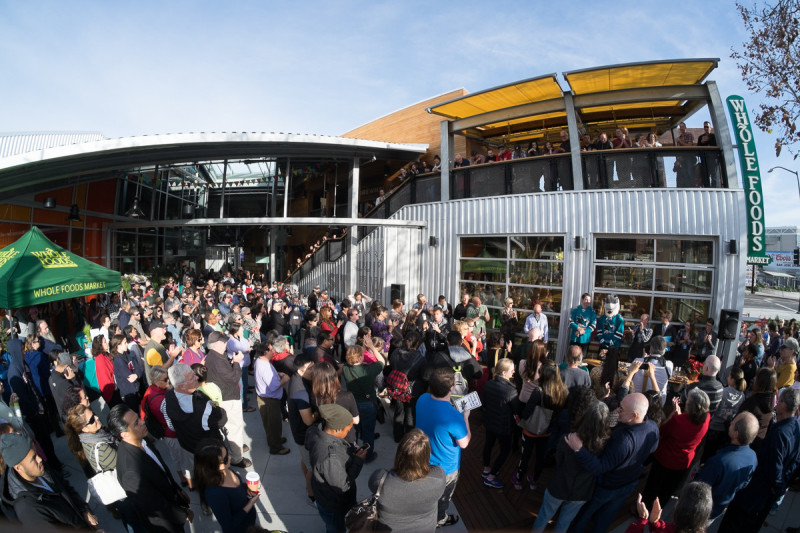
"caption": "Opening day at the Whole Foods in Downtown San Jose. In many Bay Area cities, locals roll their eyes at yet another store from this national chain. But in San Jose, regional manager Rob Tweiman says \"People were so excited. I had customers coming up to me and saying 'Thank you for opening up here.'\"",
"description": "Opening day at the Whole Foods in Downtown San Jose. In many Bay Area cities, locals roll their eyes at yet another store from this national chain. But in San Jose, regional manager Rob Tweiman says \"People were so excited. I had customers coming up to me and saying 'Thank you for opening up here.'\"",
"title": "RS15898_WFM San Jose opening day-qut",
"credit": "Courtesy of Whole Foods Market; photo by Phil Bond Photography",
"status": "inherit",
"isLoading": false,
"fetchFailed": false
},
"news_137517": {
"type": "attachments",
"id": "news_137517",
"meta": {
"index": "attachments_1716263798",
"site": "news",
"id": "137517",
"found": true
},
"parent": 137511,
"imgSizes": {
"kqedFullSize": {
"file": "https://ww2.kqed.org/app/uploads/sites/10/2014/05/SF-real-estate.jpg",
"width": 1279,
"height": 900
}
},
"publishDate": 1401405677,
"modified": 1482262043,
"caption": "New Study Names San Francisco As Most Expensive To Buy A Home",
"description": null,
"title": "New Study Names San Francisco As Most Expensive To Buy A Home",
"credit": null,
"status": "inherit",
"isLoading": false,
"fetchFailed": false
},
"news_10518302": {
"type": "attachments",
"id": "news_10518302",
"meta": {
"index": "attachments_1716263798",
"site": "news",
"id": "10518302",
"found": true
},
"parent": 10517326,
"imgSizes": {
"twentyfourteen-full-width": {
"file": "https://ww2.kqed.org/app/uploads/sites/10/2015/05/Drawing_LiftedGarden-1038x576.jpg",
"width": 1038,
"mimeType": "image/jpeg",
"height": 576
},
"thumbnail": {
"file": "https://ww2.kqed.org/app/uploads/sites/10/2015/05/Drawing_LiftedGarden-400x276.jpg",
"width": 400,
"mimeType": "image/jpeg",
"height": 276
},
"fd-sm": {
"file": "https://ww2.kqed.org/app/uploads/sites/10/2015/05/Drawing_LiftedGarden-960x663.jpg",
"width": 960,
"mimeType": "image/jpeg",
"height": 663
},
"post-thumbnail": {
"file": "https://ww2.kqed.org/app/uploads/sites/10/2015/05/Drawing_LiftedGarden-672x372.jpg",
"width": 672,
"mimeType": "image/jpeg",
"height": 372
},
"kqedFullSize": {
"file": "https://ww2.kqed.org/app/uploads/sites/10/2015/05/Drawing_LiftedGarden.jpg",
"width": 2268,
"height": 1566
},
"large": {
"file": "https://ww2.kqed.org/app/uploads/sites/10/2015/05/Drawing_LiftedGarden-1440x994.jpg",
"width": 1440,
"mimeType": "image/jpeg",
"height": 994
},
"guest-author-96": {
"file": "https://ww2.kqed.org/app/uploads/sites/10/2015/05/Drawing_LiftedGarden-96x96.jpg",
"width": 96,
"mimeType": "image/jpeg",
"height": 96
},
"medium": {
"file": "https://ww2.kqed.org/app/uploads/sites/10/2015/05/Drawing_LiftedGarden-800x552.jpg",
"width": 800,
"mimeType": "image/jpeg",
"height": 552
},
"guest-author-64": {
"file": "https://ww2.kqed.org/app/uploads/sites/10/2015/05/Drawing_LiftedGarden-64x64.jpg",
"width": 64,
"mimeType": "image/jpeg",
"height": 64
},
"guest-author-32": {
"file": "https://ww2.kqed.org/app/uploads/sites/10/2015/05/Drawing_LiftedGarden-32x32.jpg",
"width": 32,
"mimeType": "image/jpeg",
"height": 32
},
"fd-med": {
"file": "https://ww2.kqed.org/app/uploads/sites/10/2015/05/Drawing_LiftedGarden-1180x815.jpg",
"width": 1180,
"mimeType": "image/jpeg",
"height": 815
},
"detail": {
"file": "https://ww2.kqed.org/app/uploads/sites/10/2015/05/Drawing_LiftedGarden-75x75.jpg",
"width": 75,
"mimeType": "image/jpeg",
"height": 75
},
"guest-author-128": {
"file": "https://ww2.kqed.org/app/uploads/sites/10/2015/05/Drawing_LiftedGarden-128x128.jpg",
"width": 128,
"mimeType": "image/jpeg",
"height": 128
}
},
"publishDate": 1431109696,
"modified": 1431122239,
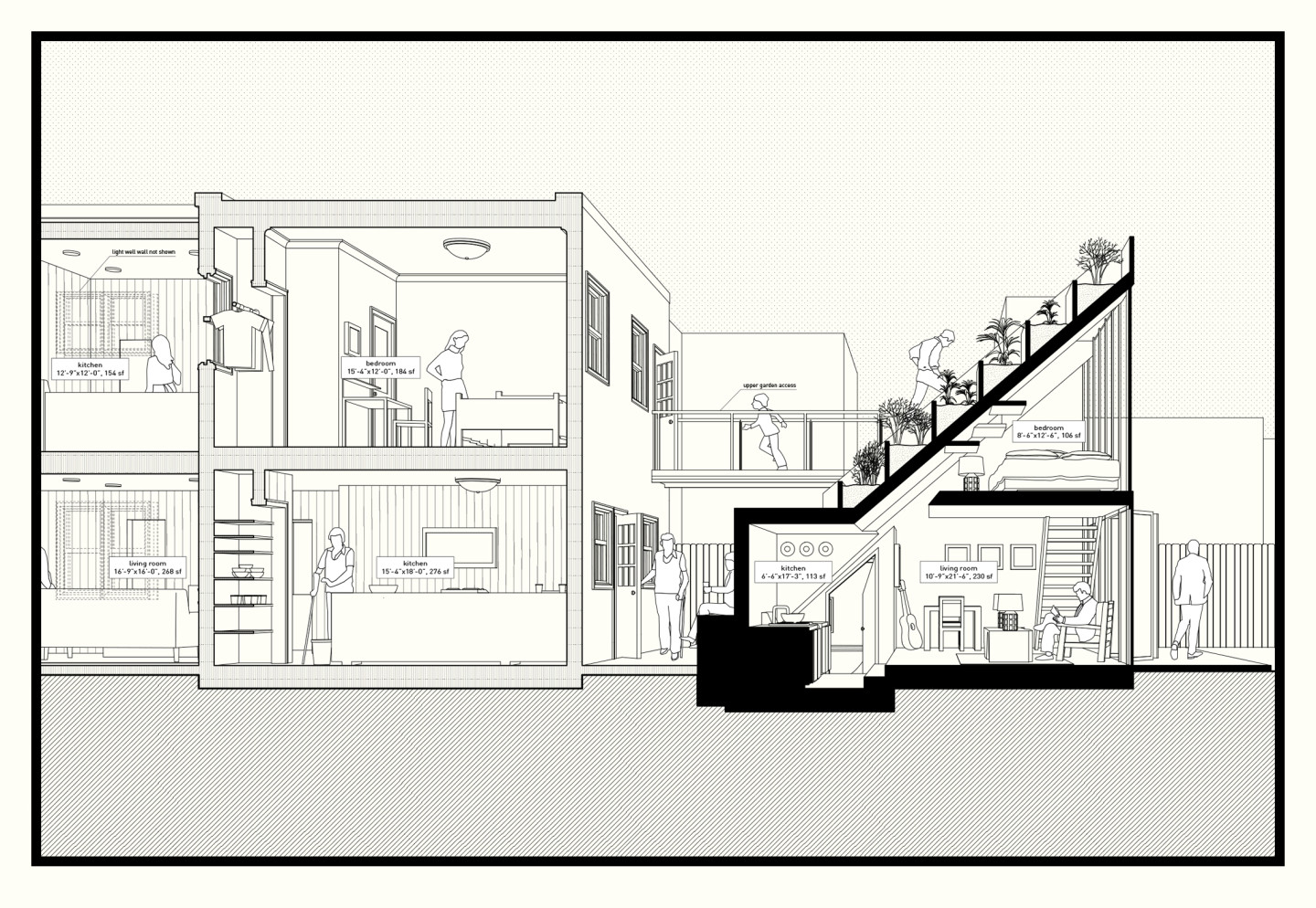
"caption": "'The Lifted Garden' preserves green space by adding a terrace over the unit",
"description": "Drawing by CCA architecture student Blake Stevenson",
"title": "Drawing_LiftedGarden",
"credit": "The Urban Works Agency, California College of the Arts; drawing by Blake Stevenson",
"status": "inherit",
"isLoading": false,
"fetchFailed": false
},
"news_10411517": {
"type": "attachments",
"id": "news_10411517",
"meta": {
"index": "attachments_1716263798",
"site": "news",
"id": "10411517",
"found": true
},
"parent": 10406255,
"imgSizes": {
"twentyfourteen-full-width": {
"file": "https://ww2.kqed.org/app/uploads/sites/10/2015/01/RS14035_FreeWheel-qut-1038x576.jpg",
"width": 1038,
"mimeType": "image/jpeg",
"height": 576
},
"thumbnail": {
"file": "https://ww2.kqed.org/app/uploads/sites/10/2015/01/RS14035_FreeWheel-qut-400x300.jpg",
"width": 400,
"mimeType": "image/jpeg",
"height": 300
},
"post-thumbnail": {
"file": "https://ww2.kqed.org/app/uploads/sites/10/2015/01/RS14035_FreeWheel-qut-672x372.jpg",
"width": 672,
"mimeType": "image/jpeg",
"height": 372
},
"kqedFullSize": {
"file": "https://ww2.kqed.org/app/uploads/sites/10/2015/01/RS14035_FreeWheel-qut.jpg",
"width": 1440,
"height": 1080
},
"guest-author-96": {
"file": "https://ww2.kqed.org/app/uploads/sites/10/2015/01/RS14035_FreeWheel-qut-96x96.jpg",
"width": 96,
"mimeType": "image/jpeg",
"height": 96
},
"medium": {
"file": "https://ww2.kqed.org/app/uploads/sites/10/2015/01/RS14035_FreeWheel-qut-800x600.jpg",
"width": 800,
"mimeType": "image/jpeg",
"height": 600
},
"guest-author-64": {
"file": "https://ww2.kqed.org/app/uploads/sites/10/2015/01/RS14035_FreeWheel-qut-64x64.jpg",
"width": 64,
"mimeType": "image/jpeg",
"height": 64
},
"detail": {
"file": "https://ww2.kqed.org/app/uploads/sites/10/2015/01/RS14035_FreeWheel-qut-75x75.jpg",
"width": 75,
"mimeType": "image/jpeg",
"height": 75
},
"guest-author-32": {
"file": "https://ww2.kqed.org/app/uploads/sites/10/2015/01/RS14035_FreeWheel-qut-32x32.jpg",
"width": 32,
"mimeType": "image/jpeg",
"height": 32
},
"guest-author-128": {
"file": "https://ww2.kqed.org/app/uploads/sites/10/2015/01/RS14035_FreeWheel-qut-128x128.jpg",
"width": 128,
"mimeType": "image/jpeg",
"height": 128
}
},
"publishDate": 1421777509,
"modified": 1421969970,
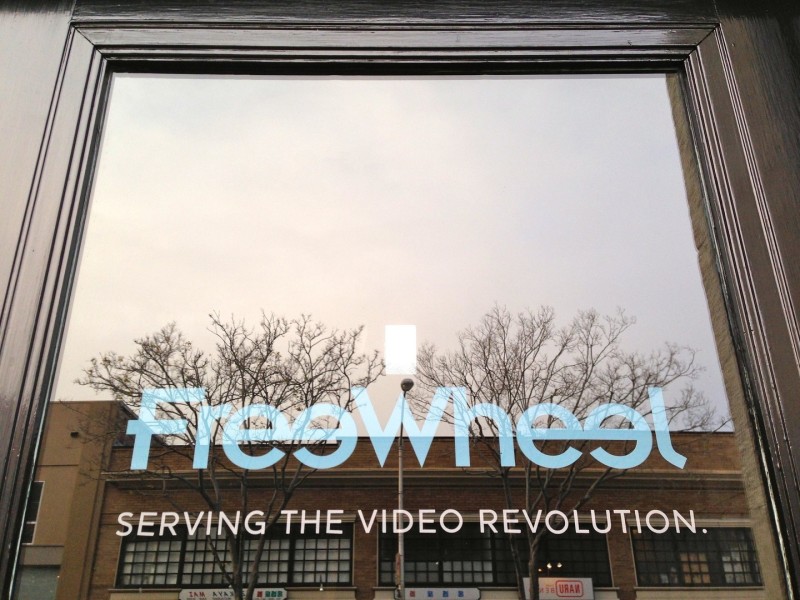
"caption": "Many of downtown San Mateo's older office buildings now house tech startups and restaurants. FreeWheel is in a 1925 Greek Revival that used to be a bank. In the window's reflection you can see another 1925 building across the street that's home to several Japanese restaurants.",
"description": "Many of downtown San Mateo's older office buildings now house tech startups and restaurants. FreeWheel is in a 1925 Greek Revival that used to be a bank. In the window's reflection you can see another 1925 building across the street that's home to several Japanese restaurants.",
"title": "RS14035_FreeWheel-qut",
"credit": "Rachael Myrow/KQED",
"status": "inherit",
"isLoading": false,
"fetchFailed": false
},
"news_106283": {
"type": "attachments",
"id": "news_106283",
"meta": {
"index": "attachments_1716263798",
"site": "news",
"id": "106283",
"found": true
},
"parent": 106270,
"imgSizes": {
"kqedFullSize": {
"file": "https://ww2.kqed.org/app/uploads/sites/10/2013/08/RS612_foreclosure20120511-scr-e1376067103153.jpg",
"width": 640,
"height": 418
}
},
"publishDate": 1376066320,
"modified": 1513207884,
"caption": "Richmond could be the first city to use eminent domain to address its housing crisis. ",
"description": "Richmond could be the first city to use eminent domain to address its housing crisis. (Justin Sullivan/Getty Images)",
"title": "Richmond Eminent domain",
"credit": "Justin Sullivan/Getty Images",
"status": "inherit",
"isLoading": false,
"fetchFailed": false
},
"news_138517": {
"type": "attachments",
"id": "news_138517",
"meta": {
"index": "attachments_1716263798",
"site": "news",
"id": "138517",
"found": true
},
"parent": 138512,
"imgSizes": {
"kqedFullSize": {
"file": "https://ww2.kqed.org/app/uploads/sites/10/2014/06/demos.png",
"width": 535,
"height": 400
}
},
"publishDate": 1402338502,
"modified": 1402338502,
"caption": "Paragon Realty Demographics Report.",
"description": null,
"title": "demos",
"credit": null,
"status": "inherit",
"isLoading": false,
"fetchFailed": false
},
"news_136900": {
"type": "attachments",
"id": "news_136900",
"meta": {
"index": "attachments_1716263798",
"site": "news",
"id": "136900",
"found": true
},
"parent": 136802,
"imgSizes": {
"kqedFullSize": {
"file": "https://ww2.kqed.org/app/uploads/sites/10/2014/05/RS10251_75399828-lpr.jpg",
"width": 2000,
"height": 1333
}
},
"publishDate": 1400804118,
"modified": 1400804118,
"caption": "A homeless veteran sleeps in a tent in San Diego in 2007. (Sandy Huffaker/Getty Images)",
"description": null,
"title": "Prop. 41",
"credit": null,
"status": "inherit",
"isLoading": false,
"fetchFailed": false
}
},
"audioPlayerReducer": {
"postId": "stream_live",
"isPaused": true,
"isPlaying": false,
"pfsActive": false,
"pledgeModalIsOpen": true,
"playerDrawerIsOpen": false,
"liveAudioPlayStartedAt": 0,
"liveAudioPlayContext": ""
},
"authorsReducer": {
"byline_news_10922660": {
"type": "authors",
"id": "byline_news_10922660",
"meta": {
"override": true
},
"slug": "byline_news_10922660",
"name": "Jeff Barrera, \u003ca href=\"http://peninsulapress.com/2016/04/06/silicon-valley-long-commutes-cost-of-living/\">Peninsula Press\u003c/a>",
"isLoading": false
},
"byline_news_10622785": {
"type": "authors",
"id": "byline_news_10622785",
"meta": {
"override": true
},
"slug": "byline_news_10622785",
"name": "\u003cstrong>Kevin Stark, Winifred Bird and Michael Stoll\u003cbr />San Francisco Public Press \u003c/strong>",
"isLoading": false
},
"smartin": {
"type": "authors",
"id": "89",
"meta": {
"index": "authors_1716337520",
"id": "89",
"found": true
},
"name": "Stephanie Martin Taylor",
"firstName": "Stephanie Martin",
"lastName": "Taylor",
"slug": "smartin",
"email": "smartin@kqed.org",
"display_author_email": false,
"staff_mastheads": [],
"title": null,
"bio": "Stephanie Martin is a radio news reporter and anchor, and an occasional host of the \u003cem>KQED Newsroom \u003c/em>television program. While she currently focuses on housing and development issues, she has also reported on topics ranging from state and local politics to religion to arts and culture.\r\n\r\nPrior to joining KQED in 2005, Stephanie was an anchor and reporter for WFDD, the NPR affiliate in Winston-Salem, NC. She also spent several years as a television anchor, reporter and producer at various stations around the country.\r\n\r\nStephanie has received numerous awards for her reporting, including two National Headliner Awards, the Religion Newswriters Association's Best Radio Reporting Award and honors from the Associated Press and the Radio and Television Digital News Association. A series she produced from Iraq in 2005 earned a Best of Radio Award from the Society of Professional Journalists.\r\n\r\nStephanie received a graduate degree in Journalism from Columbia University. As an undergraduate at Colgate University, she worked and studied in Paris and Dijon, France, and spent a summer interning in the White House Press Office.\r\n\r\nStephanie grew up in Dallas, TX, and now lives with her husband in San Francisco.",
"avatar": "https://secure.gravatar.com/avatar/9fd3f8e9af01e14afde39822c19646e0?s=600&d=blank&r=g",
"twitter": "SMartinTaylor",
"facebook": null,
"instagram": null,
"linkedin": null,
"sites": [
{
"site": "arts",
"roles": [
"Contributor",
"subscriber"
]
},
{
"site": "news",
"roles": [
"subscriber"
]
},
{
"site": "stateofhealth",
"roles": [
"subscriber"
]
}
],
"headData": {
"title": "Stephanie Martin Taylor | KQED",
"description": null,
"ogImgSrc": "https://secure.gravatar.com/avatar/9fd3f8e9af01e14afde39822c19646e0?s=600&d=blank&r=g",
"twImgSrc": "https://secure.gravatar.com/avatar/9fd3f8e9af01e14afde39822c19646e0?s=600&d=blank&r=g"
},
"isLoading": false,
"link": "/author/smartin"
},
"iangell": {
"type": "authors",
"id": "229",
"meta": {
"index": "authors_1716337520",
"id": "229",
"found": true
},
"name": "Isabel Angell",
"firstName": "Isabel",
"lastName": "Angell",
"slug": "iangell",
"email": "iangell@KQED.org",
"display_author_email": false,
"staff_mastheads": [],
"title": null,
"bio": "Isabel Angell is an on-call reporter for KQED. She joined the station as a newsroom intern in 2013. \u003ca href=\"https://twitter.com/IsabeltheAngell\" target=\"_blank\" rel=\"noopener\">@IsabeltheAngell \u003c/a>",
"avatar": "https://secure.gravatar.com/avatar/e5d0b523fbffce6592a52f1dccafabe5?s=600&d=blank&r=g",
"twitter": null,
"facebook": null,
"instagram": null,
"linkedin": null,
"sites": [
{
"site": "news",
"roles": [
"subscriber"
]
}
],
"headData": {
"title": "Isabel Angell | KQED",
"description": null,
"ogImgSrc": "https://secure.gravatar.com/avatar/e5d0b523fbffce6592a52f1dccafabe5?s=600&d=blank&r=g",
"twImgSrc": "https://secure.gravatar.com/avatar/e5d0b523fbffce6592a52f1dccafabe5?s=600&d=blank&r=g"
},
"isLoading": false,
"link": "/author/iangell"
},
"kqed": {
"type": "authors",
"id": "236",
"meta": {
"index": "authors_1716337520",
"id": "236",
"found": true
},
"name": "KQED News Staff",
"firstName": "KQED News Staff",
"lastName": null,
"slug": "kqed",
"email": "faq@kqed.org",
"display_author_email": false,
"staff_mastheads": [],
"title": null,
"bio": null,
"avatar": "https://secure.gravatar.com/avatar/ef0e801a68c4c54afa9180db14084167?s=600&d=blank&r=g",
"twitter": null,
"facebook": null,
"instagram": null,
"linkedin": null,
"sites": [
{
"site": "arts",
"roles": [
"contributor"
]
},
{
"site": "news",
"roles": [
"editor"
]
},
{
"site": "futureofyou",
"roles": [
"author"
]
}
],
"headData": {
"title": "KQED News Staff | KQED",
"description": null,
"ogImgSrc": "https://secure.gravatar.com/avatar/ef0e801a68c4c54afa9180db14084167?s=600&d=blank&r=g",
"twImgSrc": "https://secure.gravatar.com/avatar/ef0e801a68c4c54afa9180db14084167?s=600&d=blank&r=g"
},
"isLoading": false,
"link": "/author/kqed"
},
"mlam": {
"type": "authors",
"id": "244",
"meta": {
"index": "authors_1716337520",
"id": "244",
"found": true
},
"name": "Monica Lam",
"firstName": "Monica Z.",
"lastName": "Lam",
"slug": "mlam",
"email": "mlam@kqed.org",
"display_author_email": true,
"staff_mastheads": [
"news"
],
"title": "KQED Senior Producer",
"bio": "Monica is senior producer of the weekly current affairs program, \"KQED Newsroom.\" She's also served as senior editor of digital content at KQED. She likes to report and edit as well as produce video and take photos.\r\n\r\nBefore joining KQED, Monica worked at the Center for Investigative Reporting, where she examined conditions inside \u003cspan style=\"font-weight: 400;\">maximum security \u003c/span>prisons and abuse in state-run institutions for the developmentally disabled. Prior to that, she produced and directed \u003cem>Journey of the Bonesetter's Daughter,\u003c/em> a documentary that follows novelist Amy Tan as she creates an opera based on her family history.\r\n\r\nMonica's work has been honored with a duPont Award, five Emmys, regional and national Murrow Awards, and has been recognized by Investigative Reporters and Editors, the Society of Professional Journalists, Religion Newswriters Association and the San Francisco Peninsula Press Club. Monica studied urban studies at Stanford University and earned a master's in journalism at University of California at Berkeley. Follow her on twitter: @monicazlam",
"avatar": "https://secure.gravatar.com/avatar/018c474b2b71f43e0e6ca9b15a0ad36f?s=600&d=blank&r=g",
"twitter": "@monicazlam",
"facebook": null,
"instagram": null,
"linkedin": null,
"sites": [
{
"site": "arts",
"roles": [
"administrator"
]
},
{
"site": "news",
"roles": [
"editor"
]
},
{
"site": "trulyca",
"roles": [
"editor"
]
},
{
"site": "science",
"roles": [
"editor"
]
},
{
"site": "breakingnews",
"roles": [
"editor"
]
}
],
"headData": {
"title": "Monica Lam | KQED",
"description": "KQED Senior Producer",
"ogImgSrc": "https://secure.gravatar.com/avatar/018c474b2b71f43e0e6ca9b15a0ad36f?s=600&d=blank&r=g",
"twImgSrc": "https://secure.gravatar.com/avatar/018c474b2b71f43e0e6ca9b15a0ad36f?s=600&d=blank&r=g"
},
"isLoading": false,
"link": "/author/mlam"
},
"rachael-myrow": {
"type": "authors",
"id": "251",
"meta": {
"index": "authors_1716337520",
"id": "251",
"found": true
},
"name": "Rachael Myrow",
"firstName": "Rachael",
"lastName": "Myrow",
"slug": "rachael-myrow",
"email": "rmyrow@kqed.org",
"display_author_email": true,
"staff_mastheads": [
"news"
],
"title": "Senior Editor of KQED's Silicon Valley News Desk",
"bio": "• I write and edit stories about how Silicon Valley power and policies shape everyday life in California. I’m also passionate about making Bay Area history and culture more accessible to a broad public. • I’ve been a journalist for most of my life, starting in high school with The Franklin Press in Los Angeles, where I grew up. While earning my first degree in English at UC Berkeley, I got my start in public radio at KALX-FM. After completing a second degree in journalism at Cal, I landed my first professional job at Marketplace, then moved on to KPCC (now LAist), and then KQED, where I hosted The California Report for more than seven years. • My reporting has appeared on NPR, The World, WBUR’s \u003ci>Here & Now\u003c/i>, and the BBC. I also guest host for KQED’s \u003ci>Forum\u003c/i>, as well as the Commonwealth Club in San Francisco. • I speak periodically on media, democracy and technology issues, and do voiceover work for documentaries and educational video projects. • Outside of the studio, you'll find me hiking Bay Area trails and whipping up Insta-ready meals in my kitchen. • I do not accept gifts, money, or favors from anyone connected to my reporting, I don't pay people for information, and I do not support or donate to political causes. • I strive to treat the people I report on with fairness, honesty, and respect. I also recognize there are often multiple sides to a story and work to verify information through multiple sources and documentation. If I get something wrong, I correct it.",
"avatar": "https://secure.gravatar.com/avatar/3ed8a3c5f26025e4a805ba634cda8cd764906b97438a6d9ce216b044e340da4e?s=600&d=blank&r=g",
"twitter": "rachaelmyrow",
"bluesky": null,
"facebook": null,
"instagram": null,
"linkedin": "https://www.linkedin.com/in/rachaelmyrow/",
"sites": [
{
"site": "arts",
"roles": [
"administrator"
]
},
{
"site": "news",
"roles": [
"edit_others_posts",
"editor"
]
},
{
"site": "futureofyou",
"roles": [
"editor"
]
},
{
"site": "bayareabites",
"roles": [
"editor"
]
},
{
"site": "stateofhealth",
"roles": [
"editor"
]
},
{
"site": "science",
"roles": [
"editor"
]
},
{
"site": "food",
"roles": [
"editor"
]
},
{
"site": "forum",
"roles": [
"editor"
]
},
{
"site": "liveblog",
"roles": [
"author"
]
}
],
"headData": {
"title": "Rachael Myrow | KQED",
"description": "Senior Editor of KQED's Silicon Valley News Desk",
"ogImgSrc": "https://secure.gravatar.com/avatar/3ed8a3c5f26025e4a805ba634cda8cd764906b97438a6d9ce216b044e340da4e?s=600&d=blank&r=g",
"twImgSrc": "https://secure.gravatar.com/avatar/3ed8a3c5f26025e4a805ba634cda8cd764906b97438a6d9ce216b044e340da4e?s=600&d=blank&r=g"
},
"isLoading": false,
"link": "/author/rachael-myrow"
},
"ekelly": {
"type": "authors",
"id": "3211",
"meta": {
"index": "authors_1716337520",
"id": "3211",
"found": true
},
"name": "Erika Kelly",
"firstName": "Erika",
"lastName": "Kelly",
"slug": "ekelly",
"email": "ekelly@KQED.org",
"display_author_email": true,
"staff_mastheads": [
"news"
],
"title": "Deputy Managing Editor",
"bio": "Erika Kelly is deputy managing editor of KQED's newsroom, working with teams covering housing, climate, health, labor and the arts. Previously, she was the senior editor of KQED’s housing affordability desk, leading the team that produced the award winning podcast Sold Out: Rethinking Housing in America. She is a graduate of the Medill School of Journalism and a native of the Greater Chicagoland Area.",
"avatar": "https://secure.gravatar.com/avatar/3653973f475e2af06d52444628a0023a48f83905a9d7ce3a4e45e5ecebcb4230?s=600&d=blank&r=g",
"twitter": null,
"bluesky": null,
"facebook": null,
"instagram": null,
"linkedin": null,
"sites": [
{
"site": "",
"roles": [
"editor"
]
},
{
"site": "arts",
"roles": [
"administrator"
]
},
{
"site": "news",
"roles": [
"administrator"
]
},
{
"site": "science",
"roles": [
"administrator"
]
},
{
"site": "liveblog",
"roles": [
"administrator"
]
}
],
"headData": {
"title": "Erika Kelly | KQED",
"description": "Deputy Managing Editor",
"ogImgSrc": "https://secure.gravatar.com/avatar/3653973f475e2af06d52444628a0023a48f83905a9d7ce3a4e45e5ecebcb4230?s=600&d=blank&r=g",
"twImgSrc": "https://secure.gravatar.com/avatar/3653973f475e2af06d52444628a0023a48f83905a9d7ce3a4e45e5ecebcb4230?s=600&d=blank&r=g"
},
"isLoading": false,
"link": "/author/ekelly"
},
"nreinert": {
"type": "authors",
"id": "8626",
"meta": {
"index": "authors_1716337520",
"id": "8626",
"found": true
},
"name": "Nicole Reinert",
"firstName": "Nicole",
"lastName": "Reinert",
"slug": "nreinert",
"email": "nreinert@kqed.org",
"display_author_email": false,
"staff_mastheads": [],
"title": "KQED Contributor",
"bio": "Nicole Reinert is an associate producer for the current affairs television show \u003cem>KQED Newsroom\u003c/em>. Prior to joining KQED in 2015, she worked for the Canadian Broadcasting Corporation's national investigative team in Vancouver and Toronto, Canada.\r\n\r\nNicole’s work was recently honored by the Canadian Screen Awards for best editorial research and in 2014 she shared in an Investigative Reporters and Editors Award for her contribution to the ICIJ project “Secrecy for Sale: Inside the Global Offshore Money Maze.” She is also a Canadian Association of Journalists award finalist.\r\n\r\nNicole graduated with distinction from the broadcast and online journalism program at the British Columbia Institute of Technology and she holds a bachelor’s degree in English and minor in film studies from the University of Victoria.\r\n\r\nEmail: \u003ca href=\"mailto:nreinert@kqed.org\">nreinert@kqed.org\u003c/a> Twitter: @nicreinert",
"avatar": "https://secure.gravatar.com/avatar/96f8d309080b943711c47c404202d0c7335aaa6a3bf1137411a65f0a31c0a6bf?s=600&d=blank&r=g",
"twitter": null,
"bluesky": null,
"facebook": null,
"instagram": null,
"linkedin": null,
"sites": [
{
"site": "news",
"roles": [
"subscriber"
]
}
],
"headData": {
"title": "Nicole Reinert | KQED",
"description": "KQED Contributor",
"ogImgSrc": "https://secure.gravatar.com/avatar/96f8d309080b943711c47c404202d0c7335aaa6a3bf1137411a65f0a31c0a6bf?s=600&d=blank&r=g",
"twImgSrc": "https://secure.gravatar.com/avatar/96f8d309080b943711c47c404202d0c7335aaa6a3bf1137411a65f0a31c0a6bf?s=600&d=blank&r=g"
},
"isLoading": false,
"link": "/author/nreinert"
},
"slewis": {
"type": "authors",
"id": "8676",
"meta": {
"index": "authors_1716337520",
"id": "8676",
"found": true
},
"name": "Sukey Lewis",
"firstName": "Sukey",
"lastName": "Lewis",
"slug": "slewis",
"email": "slewis@kqed.org",
"display_author_email": true,
"staff_mastheads": [
"news"
],
"title": "KQED Contributor",
"bio": "Sukey Lewis is a criminal justice reporter and host of \u003cem>On Our Watch\u003c/em>, a new podcast from NPR and KQED about the shadow world of police discipline. In 2018, she co-founded the California Reporting Project, a coalition of newsrooms across the state focused on obtaining previously sealed internal affairs records from law enforcement. In addition to her reporting on police accountability, Sukey has investigated the bail bonds industry, California's wildfires and the high cost of prison phone calls. Sukey earned a master's degree in journalism from the University of California at Berkeley. Send news tips to slewis@kqed.org.",
"avatar": "https://secure.gravatar.com/avatar/03fd6b21024f99d8b0a1966654586de7?s=600&d=blank&r=g",
"twitter": "SukeyLewis",
"facebook": null,
"instagram": null,
"linkedin": null,
"sites": [
{
"site": "news",
"roles": [
"author",
"edit_others_posts"
]
}
],
"headData": {
"title": "Sukey Lewis | KQED",
"description": "KQED Contributor",
"ogImgSrc": "https://secure.gravatar.com/avatar/03fd6b21024f99d8b0a1966654586de7?s=600&d=blank&r=g",
"twImgSrc": "https://secure.gravatar.com/avatar/03fd6b21024f99d8b0a1966654586de7?s=600&d=blank&r=g"
},
"isLoading": false,
"link": "/author/slewis"
},
"mkrasny": {
"type": "authors",
"id": "11247",
"meta": {
"index": "authors_1716337520",
"id": "11247",
"found": true
},
"name": "Michael Krasny",
"firstName": "Michael",
"lastName": "Krasny",
"slug": "mkrasny",
"email": "mkrasny@kqed.org",
"display_author_email": false,
"staff_mastheads": [],
"title": "KQED Contributor",
"bio": "Michael Krasny was the former host of the program, Forum. He was with ABC in both radio and television and migrated to public broadcasting in 1993. He was a Professor of English at San Francisco State University and also taught at Stanford, the University of San Francisco and the University of California, as well as in the Fulbright International Institutes. A veteran interviewer for the nationally broadcast City Arts and Lectures, he is the author of a number of books, including “Off Mike: A Memoir of Talk Radio and Literary Life” (Stanford University Press) “Spiritual Envy” (New World); “Sound Ideas” (with M.E. Sokolik/ McGraw-Hill); “Let There Be Laughter” (Harper-Collins) as well as the twenty-four lecture series in DVD, audio and book, “Short Story Masterpieces” (The Teaching Company). He has interviewed many of the world’s leading political, cultural, literary, science and technology figures, as well as major figures from the world of entertainment. He is the recipient of many awards and honors including the S.Y. Agnon Medal for Intellectual Achievement; The Eugene Block Award for Human Rights Journalism; the James Madison Freedom of Information Award; the Excellence in Journalism Award from the National Lesbian and Gay Journalists Association; Career Achievement Award from the Society of Professional Journalists and an award from the Radio and Television News Directors Association. He holds a B.A. (cum laude) and M.A. from Ohio University and a PhD from the University of Wisconsin.",
"avatar": "https://secure.gravatar.com/avatar/243c9ef51f3b90a42850d3a766d24865?s=600&d=blank&r=g",
"twitter": null,
"facebook": null,
"instagram": null,
"linkedin": null,
"sites": [
{
"site": "forum",
"roles": [
"subscriber"
]
}
],
"headData": {
"title": "Michael Krasny | KQED",
"description": "KQED Contributor",
"ogImgSrc": "https://secure.gravatar.com/avatar/243c9ef51f3b90a42850d3a766d24865?s=600&d=blank&r=g",
"twImgSrc": "https://secure.gravatar.com/avatar/243c9ef51f3b90a42850d3a766d24865?s=600&d=blank&r=g"
},
"isLoading": false,
"link": "/author/mkrasny"
}
},
"pagesReducer": {
"news_tag_housing": {
"type": "terms",
"id": "news_1775",
"meta": {
"index": "terms_1716263798",
"site": "news",
"id": "1775",
"score": 7.0362806
},
"featImg": null,
"name": "housing",
"description": null,
"taxonomy": "tag",
"headData": {
"twImgId": null,
"twTitle": null,
"ogTitle": null,
"ogImgId": null,
"twDescription": null,
"description": null,
"title": "housing Archives | KQED News",
"ogDescription": null
},
"ttid": 1790,
"slug": "housing",
"isLoading": false,
"title": "housing",
"pageMeta": {
"site": "news",
"WpPageTemplate": "page-topic-editorial",
"currentPage": 72
},
"blocks": [
{
"blockName": "kqed/post-list",
"attrs": {
"layout": "cardArticle2",
"query": "posts/news?tag=housing",
"seeMore": false,
"paginated": true,
"page": 72
}
},
{
"blockName": "kqed/ad"
}
]
}
},
"pfsSessionReducer": {},
"postsReducer": {
"stream_live": {
"type": "live",
"id": "stream_live",
"audioUrl": "https://streams.kqed.org/kqedradio",
"title": "Live Stream",
"excerpt": "Live Stream information currently unavailable.",
"link": "/radio",
"featImg": "",
"label": {
"name": "KQED Live",
"link": "/"
}
},
"stream_kqedNewscast": {
"type": "posts",
"id": "stream_kqedNewscast",
"audioUrl": "https://www.kqed.org/.stream/anon/radio/RDnews/newscast.mp3?_=1",
"title": "KQED Newscast",
"featImg": "",
"label": {
"name": "88.5 FM",
"link": "/"
}
},
"forum_2010101855428": {
"type": "posts",
"id": "forum_2010101855428",
"meta": {
"index": "posts_1716263798",
"site": "forum",
"id": "2010101855428",
"score": null,
"sort": [
1467216000000
]
},
"parent": 0,
"labelTerm": {
"site": "forum",
"term": 3
},
"blocks": [],
"publishDate": 1467159095,
"format": "audio",
"title": "Searching for the Hows, Whats and Whys of Homelessness",
"headTitle": "Searching for the Hows, Whats and Whys of Homelessness | KQED",
"content": "\u003cp>As part of SF Project Homeless, a week of coordinated media coverage on homelessness in the Bay Area, KQED asked our listeners what questions they have about homelessness. We received more than 1,200 responses, with questions ranging from what are the root causes of homelessness to how to respond when someone is passed out on the sidewalk. In this hour, we’ve gathered a group of people who work with the homeless across a variety of disciplines to answer those questions.\u003c/p>\n\u003ch3>Interview Highlights\u003c/h3>\n\u003cp>\u003cstrong>On What Causes Homelessness\u003c/strong>\u003c/p>\n\u003cp>“We have a poverty problem in this country. Thirty percent of Americans are at or near the poverty level. When you have that level of poverty, you’re not going to eliminate homelessness; you’re fixing homelessness on the other end. If we had the kind of affordable housing funding we had way back, decades ago, it’d be a different picture. If the minimum wage paid what it paid decades ago, instead of half what it did in 1980 in terms of buying power, we’d have a different picture. So we’re essentially bailing the tide out.” – Kevin Fagan\u003c/p>\n\u003cp>\u003cstrong>On Other Cities Sending Homeless People to the Bay Area\u003c/strong>\u003c/p>\n\u003cp>“Through my years of coverage, I’ve visited homeless enclaves all over the country. Every city says that people are sending their homeless people to them, even cold cities. The weather’s good out here, so you get a few more. But I don’t think there’s a giant influx of people coming out here … I just don’t buy the idea that if you do better, you’re going to become the Disneyland of Homelessness.” -Kevin Fagan\u003c/p>\n\u003cp>[ad fullwidth]\u003c/p>\n\u003cp>\u003cstrong>On Why San Francisco’s Homeless Problem Seems So Bad\u003c/strong>\u003c/p>\n\u003cp>“It is very visible here, I think in part because we’re in such a small confined space. The more we develop the city, the more people will come out of the shadows and become more visible.” -Scott Prentice\u003c/p>\n\u003cp>“We have the most visible homeless problem in the country, because it’s right downtown.” -Kevin Fagane\u003c/p>\n\u003cp>\u003cstrong>On Whether to Call 9-1-1 or 3-1-1\u003c/strong>\u003c/p>\n\u003cp>“If [the person] appears to be in any type of distress whatsoever or you have any doubts whatsoever, just call 9-1-1. An ambulance can respond much faster than the homeless outreach team. If the person’s okay, the ambulance or police responder may just call us afterwards.\u003c/p>\n\u003cp>Personally, I’m more interested in connecting people to services. I encourage people to call 3-1-1 and get in touch with the [Homeless Outreach Team] if they’re concerned about someone on the street.” -Scott Prentice\u003c/p>\n\u003cp>\u003cstrong>On How SF’s Homeless Outreach Team Responds to Calls\u003c/strong>\u003c/p>\n\u003cp>“We’ll send somebody out, hopefully that day, to check on them. We’ll come back in, we’ll discuss them, we’ll reengage them time and time again until we’ve built a relationship with that person, and then we’ll try our best to either get them into a shelter or medical care.” -Scott Prentice\u003c/p>\n\u003cp>\u003c/p>\n\u003cp>\u003cstrong>Resources and Related Links\u003c/strong>\u003c/p>\n\u003cul>\n\u003cli>311\u003c/li>\n\u003cli>San Francisco Homeless Outreach Team: 415-734-4233\u003c/li>\n\u003cli>\u003ca href=\"http://ww2.kqed.org/news/2014/07/help-homeless-san-francisco/\">When Do You Call for Help for the Homeless?\u003c/a> (KQED News)\u003c/li>\n\u003cli>\u003ca href=\"http://ww2.kqed.org/news/2016/06/27/endless-efforts-meager-results\">S.F. Homeless Problem Looks the Same as It Did 20 Years Ago\u003c/a> (San Francisco Chronicle)\u003c/li>\n\u003c/ul>\n\n",
"stats": {
"hasVideo": false,
"hasChartOrMap": false,
"hasAudio": false,
"hasPolis": false,
"wordCount": 594,
"hasGoogleForm": false,
"hasGallery": false,
"hasHearkenModule": false,
"iframeSrcs": [],
"paragraphCount": 16
},
"modified": 1704435596,
"excerpt": "As part of SF Project Homeless, a week of coordinated media coverage on homelessness in the Bay Area, KQED asked our listeners what questions they have about homelessness. We received more than 1,200 responses, with questions ranging from what are the root causes of homelessness to how to respond when someone is passed out on the sidewalk. In this hour, we've gathered a group of people who work with the homeless across a variety of disciplines to answer those questions.",
"headData": {
"twImgId": "",
"twTitle": "",
"ogTitle": "",
"ogImgId": "",
"twDescription": "",
"description": "As part of SF Project Homeless, a week of coordinated media coverage on homelessness in the Bay Area, KQED asked our listeners what questions they have about homelessness. We received more than 1,200 responses, with questions ranging from what are the root causes of homelessness to how to respond when someone is passed out on the sidewalk. In this hour, we've gathered a group of people who work with the homeless across a variety of disciplines to answer those questions.",
"title": "Searching for the Hows, Whats and Whys of Homelessness | KQED",
"ogDescription": "",
"schema": {
"@context": "https://schema.org",
"@type": "Article",
"headline": "Searching for the Hows, Whats and Whys of Homelessness",
"datePublished": "2016-06-28T17:11:35-07:00",
"dateModified": "2024-01-04T22:19:56-08:00",
"image": "https://cdn.kqed.org/wp-content/uploads/2020/02/KQED-OG-Image@1x.png"
}
},
"guestAuthors": [],
"slug": "searching-for-the-hows-whats-and-whys-of-homelessness",
"status": "publish",
"audioUrl": "https://www.kqed.org/.stream/mp3splice/radio/forum/2016/06/Forum20160629A.mp3",
"forumGuests": [
{
"name": "Kevin Fagan",
"bio": "reporter, San Francisco Chronicle"
},
{
"name": "Scott Prentice",
"bio": "program coordinator, SF Homeless Outreach Team"
},
{
"name": "Ken Reggio",
"bio": "executive director, Episcopal Community Services"
},
{
"name": "Dr. Pamela Swedlow ",
"bio": "director of behavioral health, Tom Waddell Urban Health Clinic "
}
],
"airdate": 1467216000,
"sticky": false,
"path": "/forum/2010101855428/searching-for-the-hows-whats-and-whys-of-homelessness",
"audioDuration": 3169000,
"audioTrackLength": null,
"parsedContent": [
{
"type": "contentString",
"content": "\u003cdiv class=\"post-body\">\u003cp>\u003cp>As part of SF Project Homeless, a week of coordinated media coverage on homelessness in the Bay Area, KQED asked our listeners what questions they have about homelessness. We received more than 1,200 responses, with questions ranging from what are the root causes of homelessness to how to respond when someone is passed out on the sidewalk. In this hour, we’ve gathered a group of people who work with the homeless across a variety of disciplines to answer those questions.\u003c/p>\n\u003ch3>Interview Highlights\u003c/h3>\n\u003cp>\u003cstrong>On What Causes Homelessness\u003c/strong>\u003c/p>\n\u003cp>“We have a poverty problem in this country. Thirty percent of Americans are at or near the poverty level. When you have that level of poverty, you’re not going to eliminate homelessness; you’re fixing homelessness on the other end. If we had the kind of affordable housing funding we had way back, decades ago, it’d be a different picture. If the minimum wage paid what it paid decades ago, instead of half what it did in 1980 in terms of buying power, we’d have a different picture. So we’re essentially bailing the tide out.” – Kevin Fagan\u003c/p>\n\u003cp>\u003cstrong>On Other Cities Sending Homeless People to the Bay Area\u003c/strong>\u003c/p>\n\u003cp>“Through my years of coverage, I’ve visited homeless enclaves all over the country. Every city says that people are sending their homeless people to them, even cold cities. The weather’s good out here, so you get a few more. But I don’t think there’s a giant influx of people coming out here … I just don’t buy the idea that if you do better, you’re going to become the Disneyland of Homelessness.” -Kevin Fagan\u003c/p>\n\u003cp>\u003c/p>\u003c/div>",
"attributes": {
"named": {},
"numeric": []
}
},
{
"type": "component",
"content": "",
"name": "ad",
"attributes": {
"named": {
"label": "fullwidth"
},
"numeric": [
"fullwidth"
]
}
},
{
"type": "contentString",
"content": "\u003cdiv class=\"post-body\">\u003cp>\u003c/p>\n\u003cp>\u003cstrong>On Why San Francisco’s Homeless Problem Seems So Bad\u003c/strong>\u003c/p>\n\u003cp>“It is very visible here, I think in part because we’re in such a small confined space. The more we develop the city, the more people will come out of the shadows and become more visible.” -Scott Prentice\u003c/p>\n\u003cp>“We have the most visible homeless problem in the country, because it’s right downtown.” -Kevin Fagane\u003c/p>\n\u003cp>\u003cstrong>On Whether to Call 9-1-1 or 3-1-1\u003c/strong>\u003c/p>\n\u003cp>“If [the person] appears to be in any type of distress whatsoever or you have any doubts whatsoever, just call 9-1-1. An ambulance can respond much faster than the homeless outreach team. If the person’s okay, the ambulance or police responder may just call us afterwards.\u003c/p>\n\u003cp>Personally, I’m more interested in connecting people to services. I encourage people to call 3-1-1 and get in touch with the [Homeless Outreach Team] if they’re concerned about someone on the street.” -Scott Prentice\u003c/p>\n\u003cp>\u003cstrong>On How SF’s Homeless Outreach Team Responds to Calls\u003c/strong>\u003c/p>\n\u003cp>“We’ll send somebody out, hopefully that day, to check on them. We’ll come back in, we’ll discuss them, we’ll reengage them time and time again until we’ve built a relationship with that person, and then we’ll try our best to either get them into a shelter or medical care.” -Scott Prentice\u003c/p>\n\u003cp>\u003c/p>\n\u003cp>\u003cstrong>Resources and Related Links\u003c/strong>\u003c/p>\n\u003cul>\n\u003cli>311\u003c/li>\n\u003cli>San Francisco Homeless Outreach Team: 415-734-4233\u003c/li>\n\u003cli>\u003ca href=\"http://ww2.kqed.org/news/2014/07/help-homeless-san-francisco/\">When Do You Call for Help for the Homeless?\u003c/a> (KQED News)\u003c/li>\n\u003cli>\u003ca href=\"http://ww2.kqed.org/news/2016/06/27/endless-efforts-meager-results\">S.F. Homeless Problem Looks the Same as It Did 20 Years Ago\u003c/a> (San Francisco Chronicle)\u003c/li>\n\u003c/ul>\n\n\u003c/div>\u003c/p>",
"attributes": {
"named": {},
"numeric": []
}
}
],
"link": "/forum/2010101855428/searching-for-the-hows-whats-and-whys-of-homelessness",
"authors": [
"11247"
],
"programs": [
"forum_3"
],
"series": [
"forum_211"
],
"categories": [
"forum_1623"
],
"tags": [
"forum_168",
"forum_207"
],
"featImg": "forum_2010101855429",
"label": "forum_3"
},
"news_10982185": {
"type": "posts",
"id": "news_10982185",
"meta": {
"index": "posts_1716263798",
"site": "news",
"id": "10982185",
"score": null,
"sort": [
1465399620000
]
},
"guestAuthors": [],
"slug": "richmond-voters-turn-out-to-reject-local-measures-n-and-o",
"title": "Richmond Voters Turn Out to Reject Local Measures N and O",
"publishDate": 1465399620,
"format": "standard",
"headTitle": "Richmond Voters Turn Out to Reject Local Measures N and O | KQED",
"labelTerm": {
"term": 6944,
"site": "news"
},
"content": "\u003cp>\u003cstrong>Measure N\u003c/strong>\u003c/p>\n\u003cp>Richmond residents have rejected \u003ca href=\"http://www.ci.richmond.ca.us/DocumentCenter/View/36831\">Measure N\u003c/a>, which would have paved the way for a development of 59 single-family homes along the waterfront in Richmond’s Marina Bay, with more than 65 percent voting against it. Developer Richard Poe took his plan to voters after his project met resistance from the city’s planning commission because the development didn’t comply with Richmond’s general plan.\u003c/p>\n\u003cp>The 5-acre plot of land where Poe sought to build single-family homes is seen by the city as a potential key economic and transit hub in the East Bay. It is right next to the \u003ca href=\"https://www.nps.gov/rori/index.htm\">Rosie the Riveter Visitor Education Center\u003c/a> and the planned ferry terminal. It is also zoned for high-density housing, aimed at helping mitigate the Bay Area’s growing housing crisis.\u003c/p>\n\u003cp>In the run-up to the election, Poe \u003ca href=\"http://ww2.kqed.org/news/2016/06/02/richmond-measures-highlight-debate-over-housing\">touted\u003c/a> his high-end housing project as a win-win for local residents and the city, saying it would bring in much-needed tax revenue and protect the shoreline from high-rise development.\u003c/p>\n\u003cp>Stanly Anderson, president of the \u003ca href=\"http://marinabaycouncil.org/\" target=\"_blank\" rel=\"noopener\">Marina Bay Neighborhood Council\u003c/a>, held a community forum about Measure N a few weeks ago. He said residents had mixed reactions to the proposal.\u003c/p>\n\u003cp>[ad fullwidth]\u003c/p>\n\u003cp>“There are people that are very happy with a small community on that property,” Anderson said. “There are people who feel that a small community on that property is inappropriate because it’s basically in a commercial area and it’s removed from the rest of the development in Marina Bay.”\u003c/p>\n\u003cp>Anderson says many local residents, regardless of whether they like Poe’s development or not, are uncomfortable with the way the developer tried to circumvent the city planning commission.\u003c/p>\n\u003cp>“The planning department put a lot of time and effort into figuring out what the grand plan for the city is,” he said. “And the City Council looked at it and liked it and the planning department looked at it and liked it, and there are issues that go beyond a single development.”\u003c/p>\n\u003cp>Poe has said if Measure N fails, he might opt to build office buildings on the land.\u003c/p>\n\u003cp>\u003cstrong>Measure O\u003c/strong>\u003c/p>\n\u003cp>Richmond’s \u003ca href=\"http://www.ci.richmond.ca.us/DocumentCenter/View/36833\">Measure O\u003c/a>, which sought to limit the city manager’s pay, appears to have been narrowly defeated by just a few hundred votes, with 50.97 percent of voters rejecting it.\u003c/p>\n\u003cp>The measure would have limited the city manager’s pay to five times the median income in the city, or about $275,000. Currently, City Manager Bill Lindsay makes about $380,000, but he’s not the top-paid manager in the East Bay.\u003c/p>\n\u003cp>Local resident Claudia Madiro said the city needed Measure O to rein in city compensation packages that she says are out of control. “That’s part of my frustration. That government reasons its salaries ought to match private sector plus gov [sic] retirement perks,” Madiro said via text.\u003c/p>\n\u003cp>But, local resident Scott Littlehale says he voted against the measure because it would make it hard to attract top talent to the city.\u003c/p>\n\u003cp>\u003c/p>\n\u003cp>“It’s unreasonable to think that Richmond’s city manager’s salary should be capped at levels that would be equal to cities that are much,much smaller than Richmond’s, much less complex than Richmond, and it’s a flat-out harmful proposal,” Littlehale said.\u003c/p>\n\n",
"blocks": [],
"excerpt": "Two local measures in Richmond appear to have been rejected Tuesday night by voters.",
"status": "publish",
"parent": 0,
"modified": 1725923312,
"stats": {
"hasAudio": false,
"hasVideo": false,
"hasChartOrMap": false,
"iframeSrcs": [],
"hasGoogleForm": false,
"hasGallery": false,
"hasHearkenModule": false,
"hasPolis": false,
"paragraphCount": 17,
"wordCount": 584
},
"headData": {
"title": "Richmond Voters Turn Out to Reject Local Measures N and O | KQED",
"description": "Two local measures in Richmond appear to have been rejected Tuesday night by voters.",
"ogTitle": "",
"ogDescription": "",
"ogImgId": "",
"twTitle": "",
"twDescription": "",
"twImgId": "",
"schema": {
"@context": "https://schema.org",
"@type": "NewsArticle",
"headline": "Richmond Voters Turn Out to Reject Local Measures N and O",
"datePublished": "2016-06-08T08:27:00-07:00",
"dateModified": "2024-09-09T16:08:32-07:00",
"image": "https://cdn.kqed.org/wp-content/uploads/2020/02/KQED-OG-Image@1x.png",
"isAccessibleForFree": "True",
"publisher": {
"@type": "NewsMediaOrganization",
"@id": "https://www.kqed.org/#organization",
"name": "KQED",
"logo": "https://cdn.kqed.org/wp-content/uploads/2020/02/KQED-OG-Image@1x.png",
"url": "https://www.kqed.org",
"sameAs": [
"https://www.facebook.com/KQED",
"https://twitter.com/KQED",
"https://www.instagram.com/kqed/",
"https://www.tiktok.com/@kqedofficial",
"https://www.linkedin.com/company/kqed",
"https://www.youtube.com/channel/UCeC0IOo7i1P_61zVUWbJ4nw"
]
}
}
},
"sticky": false,
"path": "/news/10982185/richmond-voters-turn-out-to-reject-local-measures-n-and-o",
"audioTrackLength": null,
"parsedContent": [
{
"type": "contentString",
"content": "\u003cdiv class=\"post-body\">\u003cp>\u003cp>\u003cstrong>Measure N\u003c/strong>\u003c/p>\n\u003cp>Richmond residents have rejected \u003ca href=\"http://www.ci.richmond.ca.us/DocumentCenter/View/36831\">Measure N\u003c/a>, which would have paved the way for a development of 59 single-family homes along the waterfront in Richmond’s Marina Bay, with more than 65 percent voting against it. Developer Richard Poe took his plan to voters after his project met resistance from the city’s planning commission because the development didn’t comply with Richmond’s general plan.\u003c/p>\n\u003cp>The 5-acre plot of land where Poe sought to build single-family homes is seen by the city as a potential key economic and transit hub in the East Bay. It is right next to the \u003ca href=\"https://www.nps.gov/rori/index.htm\">Rosie the Riveter Visitor Education Center\u003c/a> and the planned ferry terminal. It is also zoned for high-density housing, aimed at helping mitigate the Bay Area’s growing housing crisis.\u003c/p>\n\u003cp>In the run-up to the election, Poe \u003ca href=\"http://ww2.kqed.org/news/2016/06/02/richmond-measures-highlight-debate-over-housing\">touted\u003c/a> his high-end housing project as a win-win for local residents and the city, saying it would bring in much-needed tax revenue and protect the shoreline from high-rise development.\u003c/p>\n\u003cp>Stanly Anderson, president of the \u003ca href=\"http://marinabaycouncil.org/\" target=\"_blank\" rel=\"noopener\">Marina Bay Neighborhood Council\u003c/a>, held a community forum about Measure N a few weeks ago. He said residents had mixed reactions to the proposal.\u003c/p>\n\u003cp>\u003c/p>\u003c/div>",
"attributes": {
"named": {},
"numeric": []
}
},
{
"type": "component",
"content": "",
"name": "ad",
"attributes": {
"named": {
"label": "fullwidth"
},
"numeric": [
"fullwidth"
]
}
},
{
"type": "contentString",
"content": "\u003cdiv class=\"post-body\">\u003cp>\u003c/p>\n\u003cp>“There are people that are very happy with a small community on that property,” Anderson said. “There are people who feel that a small community on that property is inappropriate because it’s basically in a commercial area and it’s removed from the rest of the development in Marina Bay.”\u003c/p>\n\u003cp>Anderson says many local residents, regardless of whether they like Poe’s development or not, are uncomfortable with the way the developer tried to circumvent the city planning commission.\u003c/p>\n\u003cp>“The planning department put a lot of time and effort into figuring out what the grand plan for the city is,” he said. “And the City Council looked at it and liked it and the planning department looked at it and liked it, and there are issues that go beyond a single development.”\u003c/p>\n\u003cp>Poe has said if Measure N fails, he might opt to build office buildings on the land.\u003c/p>\n\u003cp>\u003cstrong>Measure O\u003c/strong>\u003c/p>\n\u003cp>Richmond’s \u003ca href=\"http://www.ci.richmond.ca.us/DocumentCenter/View/36833\">Measure O\u003c/a>, which sought to limit the city manager’s pay, appears to have been narrowly defeated by just a few hundred votes, with 50.97 percent of voters rejecting it.\u003c/p>\n\u003cp>The measure would have limited the city manager’s pay to five times the median income in the city, or about $275,000. Currently, City Manager Bill Lindsay makes about $380,000, but he’s not the top-paid manager in the East Bay.\u003c/p>\n\u003cp>Local resident Claudia Madiro said the city needed Measure O to rein in city compensation packages that she says are out of control. “That’s part of my frustration. That government reasons its salaries ought to match private sector plus gov [sic] retirement perks,” Madiro said via text.\u003c/p>\n\u003cp>But, local resident Scott Littlehale says he voted against the measure because it would make it hard to attract top talent to the city.\u003c/p>\n\u003cp>\u003c/p>\n\u003cp>“It’s unreasonable to think that Richmond’s city manager’s salary should be capped at levels that would be equal to cities that are much,much smaller than Richmond’s, much less complex than Richmond, and it’s a flat-out harmful proposal,” Littlehale said.\u003c/p>\n\n\u003c/div>\u003c/p>",
"attributes": {
"named": {},
"numeric": []
}
}
],
"link": "/news/10982185/richmond-voters-turn-out-to-reject-local-measures-n-and-o",
"authors": [
"8676"
],
"programs": [
"news_6944"
],
"series": [
"news_19101"
],
"categories": [
"news_6266",
"news_8",
"news_13"
],
"tags": [
"news_1775",
"news_17968",
"news_579"
],
"featImg": "news_10982188",
"label": "news_6944"
},
"news_10922660": {
"type": "posts",
"id": "news_10922660",
"meta": {
"index": "posts_1716263798",
"site": "news",
"id": "10922660",
"score": null,
"sort": [
1460054719000
]
},
"guestAuthors": [],
"slug": "in-search-of-cheaper-housing-silicon-valley-workers-face-long-commutes",
"title": "In Search of Cheaper Housing, Silicon Valley Workers Face Long Commutes",
"publishDate": 1460054719,
"format": "standard",
"headTitle": "In Search of Cheaper Housing, Silicon Valley Workers Face Long Commutes | KQED",
"labelTerm": {
"term": 6944,
"site": "news"
},
"content": "\u003cp>Sean MacDonald’s shift as a Palo Alto fire captain starts at 8 a.m. By 4 a.m. he’s out the door and on the road. It’s 147 miles from his home in Roseville — northeast of Sacramento — to the fire station. Leave any later, and he risks getting stuck in traffic.\u003c/p>\n\u003cp>“The drive stinks, no easy way about it,” he said, but “that’s the price you pay to have a job in the Bay Area and raise a family.”\u003c/p>\n\u003cp>Facing sky-high housing costs in the cities they serve, long commutes have become the norm among MacDonald’s fellow firefighters. “We’ve got guys living in Shingle Springs, Rocklin, Citrus Heights, Grass Valley,” he said, ticking off a dozen places over 100 miles from Palo Alto.\u003c/p>\n\u003cp>Some of the younger firefighters live closer to Palo Alto, but they share apartments to save on rent. And even then, MacDonald said, “what they’re paying in rent is more than what I’m paying on a mortgage.”\u003c/p>\n\u003cp>“Housing prices here are so, so expensive,” agreed firefighter Matt Goglio, who makes a 105-mile journey from Oakdale, past Modesto. “We’re basically being driven out of the area just due to the wages and the housing costs.”\u003c/p>\n\u003cp>[ad fullwidth]\u003c/p>\n\u003cp>It’s not just firefighters who are being priced out by Silicon Valley’s cost of living. As the Peninsula struggles to house a rapidly growing population, many people — especially the middle-class public servants and low-wage workers who keep the region running smoothly — have been moving away to more affordable places.\u003c/p>\n\u003cp>Yet since their jobs are still back on the Peninsula, these workers are spending more time behind the wheel — at least an hour each way for over 200,000 people.\u003c/p>\n\u003ch2>Rising Rents\u003c/h2>\n\u003cp>The booming tech economy has drawn more workers to Silicon Valley, but housing construction hasn’t kept pace. Between 2010 and 2014, Santa Clara and San Mateo counties gained around 167,000 new jobs, but added only 22,000 additional housing units.\u003c/p>\n\u003cp>\u003cimg loading=\"lazy\" decoding=\"async\" class=\"size-full wp-image-10922735 aligncenter\" src=\"http://ww2.kqed.org/news/wp-content/uploads/sites/10/2016/04/1.png\" alt=\"1\" width=\"1040\" height=\"515\" srcset=\"https://cdn.kqed.org/wp-content/uploads/sites/10/2016/04/1.png 1040w, https://cdn.kqed.org/wp-content/uploads/sites/10/2016/04/1-400x198.png 400w, https://cdn.kqed.org/wp-content/uploads/sites/10/2016/04/1-800x396.png 800w, https://cdn.kqed.org/wp-content/uploads/sites/10/2016/04/1-960x475.png 960w, https://cdn.kqed.org/wp-content/uploads/sites/10/2016/04/1-1038x515.png 1038w\" sizes=\"(max-width: 1040px) 100vw, 1040px\">\u003c/p>\n\u003cp>This imbalance between jobs and housing is even worse at the local level. The region’s jobs tend to be clustered in affluent cities such as Palo Alto, Mountain View and Santa Clara, which don’t have nearly enough homes for their workforces.\u003c/p>\n\u003cp>\u003cimg loading=\"lazy\" decoding=\"async\" class=\"aligncenter size-full wp-image-10922753\" src=\"http://ww2.kqed.org/news/wp-content/uploads/sites/10/2016/04/2.png\" alt=\"2\" width=\"1174\" height=\"980\" srcset=\"https://cdn.kqed.org/wp-content/uploads/sites/10/2016/04/2.png 1174w, https://cdn.kqed.org/wp-content/uploads/sites/10/2016/04/2-400x334.png 400w, https://cdn.kqed.org/wp-content/uploads/sites/10/2016/04/2-800x668.png 800w, https://cdn.kqed.org/wp-content/uploads/sites/10/2016/04/2-960x801.png 960w\" sizes=\"(max-width: 1174px) 100vw, 1174px\">\u003c/p>\n\u003cp>“The amount of housing being built is so small, compared to the growth in demand that it is causing the region to become much more unaffordable,” said Dave Vautin, a planner for the regional \u003ca href=\"http://mtc.ca.gov/\" target=\"_blank\" rel=\"noopener\">Metropolitan Transportation Commission\u003c/a>.\u003c/p>\n\u003cp>With more people jockeying for a home near work, rents have climbed across the Peninsula — especially in the cities with the worst worker-to-housing imbalances:\u003c/p>\n\u003cp>\u003cimg loading=\"lazy\" decoding=\"async\" class=\"aligncenter size-full wp-image-10922754\" src=\"http://ww2.kqed.org/news/wp-content/uploads/sites/10/2016/04/3.png\" alt=\"3\" width=\"1396\" height=\"805\" srcset=\"https://cdn.kqed.org/wp-content/uploads/sites/10/2016/04/3.png 1396w, https://cdn.kqed.org/wp-content/uploads/sites/10/2016/04/3-400x231.png 400w, https://cdn.kqed.org/wp-content/uploads/sites/10/2016/04/3-800x461.png 800w, https://cdn.kqed.org/wp-content/uploads/sites/10/2016/04/3-1180x680.png 1180w, https://cdn.kqed.org/wp-content/uploads/sites/10/2016/04/3-960x554.png 960w\" sizes=\"(max-width: 1396px) 100vw, 1396px\">\u003c/p>\n\u003ch2>Moving Away\u003c/h2>\n\u003cp>Priced out of these expensive mid-Peninsula cities, Silicon Valley workers have been moving to places with more affordable living costs. Within Santa Clara and San Mateo counties, the population grew faster between 2010 and 2014 in areas with lower median rents and household incomes:\u003c/p>\n\u003cp>\u003cimg loading=\"lazy\" decoding=\"async\" class=\"aligncenter size-full wp-image-10922755\" src=\"http://ww2.kqed.org/news/wp-content/uploads/sites/10/2016/04/4.png\" alt=\"4\" width=\"1271\" height=\"896\" srcset=\"https://cdn.kqed.org/wp-content/uploads/sites/10/2016/04/4.png 1271w, https://cdn.kqed.org/wp-content/uploads/sites/10/2016/04/4-400x282.png 400w, https://cdn.kqed.org/wp-content/uploads/sites/10/2016/04/4-800x564.png 800w, https://cdn.kqed.org/wp-content/uploads/sites/10/2016/04/4-1180x832.png 1180w, https://cdn.kqed.org/wp-content/uploads/sites/10/2016/04/4-960x677.png 960w\" sizes=\"(max-width: 1271px) 100vw, 1271px\">\u003c/p>\n\u003cp>\u003cimg loading=\"lazy\" decoding=\"async\" class=\"aligncenter size-full wp-image-10922756\" src=\"http://ww2.kqed.org/news/wp-content/uploads/sites/10/2016/04/Screen-Shot-2016-04-07-at-11.21.32-AM.png\" alt=\"Screen Shot 2016-04-07 at 11.21.32 AM\" width=\"1021\" height=\"635\" srcset=\"https://cdn.kqed.org/wp-content/uploads/sites/10/2016/04/Screen-Shot-2016-04-07-at-11.21.32-AM.png 1021w, https://cdn.kqed.org/wp-content/uploads/sites/10/2016/04/Screen-Shot-2016-04-07-at-11.21.32-AM-400x249.png 400w, https://cdn.kqed.org/wp-content/uploads/sites/10/2016/04/Screen-Shot-2016-04-07-at-11.21.32-AM-800x498.png 800w, https://cdn.kqed.org/wp-content/uploads/sites/10/2016/04/Screen-Shot-2016-04-07-at-11.21.32-AM-960x597.png 960w\" sizes=\"(max-width: 1021px) 100vw, 1021px\">\u003c/p>\n\u003cp>Down at the south end of Santa Clara County, for example, Gilroy — where the median household income was $81,056 — grew 10 percent over that time period. In Menlo Park, where the average household made $115,650, the population dropped by about 100 people.\u003c/p>\n\u003cp>Many workers are moving even further out, to the East Bay or beyond, noted Matt Regan, a regional planning expert at the business-backed \u003ca href=\"http://www.bayareacouncil.org/\" target=\"_blank\" rel=\"noopener\">Bay Area Council\u003c/a>.\u003c/p>\n\u003cp>“You only have to drive on (Interstate) 580 at 4:30 in the morning and just look at the headlights coming over the Altamont Pass,” he said, “to know that that’s where we’re building our affordable housing, on the other side of the hill.”\u003c/p>\n\u003ch2>Disparate Commutes\u003c/h2>\n\u003cp>This growth in places far from core Peninsula cities has driven up commute times, since more workers are traveling longer distances on increasingly congested roads. Between 2010 and 2014, the proportion of workers who spent an hour or more getting to their jobs jumped from 10 to nearly 15 percent.\u003c/p>\n\u003cp>Vautin noted that there’s an important income disparity in those commute times. The highly paid technical and business services workers who live in Silicon Valley have relatively short commute times, since they typically work nearby. It’s middle- and lower-income workers — teachers and firefighters, security guards at tech campuses, waiters at restaurants — who have been priced out of the Peninsula and are spending much more time in traffic:\u003c/p>\n\u003cp>\u003cimg loading=\"lazy\" decoding=\"async\" class=\"aligncenter size-full wp-image-10922757\" src=\"http://ww2.kqed.org/news/wp-content/uploads/sites/10/2016/04/5.png\" alt=\"5\" width=\"1430\" height=\"470\" srcset=\"https://cdn.kqed.org/wp-content/uploads/sites/10/2016/04/5.png 1430w, https://cdn.kqed.org/wp-content/uploads/sites/10/2016/04/5-400x131.png 400w, https://cdn.kqed.org/wp-content/uploads/sites/10/2016/04/5-800x263.png 800w, https://cdn.kqed.org/wp-content/uploads/sites/10/2016/04/5-1180x388.png 1180w, https://cdn.kqed.org/wp-content/uploads/sites/10/2016/04/5-960x316.png 960w\" sizes=\"(max-width: 1430px) 100vw, 1430px\">\u003c/p>\n\u003cp>At the local level, the disparity is even more apparent. Expensive job centers such as Mountain View and Menlo Park have the highest proportion of workers who travel for an hour or more, yet have some of the lowest shares of residents with long commutes:\u003c/p>\n\u003cp>\u003cimg loading=\"lazy\" decoding=\"async\" class=\"aligncenter size-full wp-image-10922758\" src=\"http://ww2.kqed.org/news/wp-content/uploads/sites/10/2016/04/6.png\" alt=\"6\" width=\"1320\" height=\"885\" srcset=\"https://cdn.kqed.org/wp-content/uploads/sites/10/2016/04/6.png 1320w, https://cdn.kqed.org/wp-content/uploads/sites/10/2016/04/6-400x268.png 400w, https://cdn.kqed.org/wp-content/uploads/sites/10/2016/04/6-800x536.png 800w, https://cdn.kqed.org/wp-content/uploads/sites/10/2016/04/6-1180x791.png 1180w, https://cdn.kqed.org/wp-content/uploads/sites/10/2016/04/6-960x644.png 960w\" sizes=\"(max-width: 1320px) 100vw, 1320px\">\u003c/p>\n\u003cp>\u003cimg loading=\"lazy\" decoding=\"async\" class=\"aligncenter size-full wp-image-10922759\" src=\"http://ww2.kqed.org/news/wp-content/uploads/sites/10/2016/04/Screen-Shot-2016-04-07-at-11.23.24-AM.png\" alt=\"Screen Shot 2016-04-07 at 11.23.24 AM\" width=\"1026\" height=\"635\" srcset=\"https://cdn.kqed.org/wp-content/uploads/sites/10/2016/04/Screen-Shot-2016-04-07-at-11.23.24-AM.png 1026w, https://cdn.kqed.org/wp-content/uploads/sites/10/2016/04/Screen-Shot-2016-04-07-at-11.23.24-AM-400x248.png 400w, https://cdn.kqed.org/wp-content/uploads/sites/10/2016/04/Screen-Shot-2016-04-07-at-11.23.24-AM-800x495.png 800w, https://cdn.kqed.org/wp-content/uploads/sites/10/2016/04/Screen-Shot-2016-04-07-at-11.23.24-AM-960x594.png 960w\" sizes=\"(max-width: 1026px) 100vw, 1026px\">\u003c/p>\n\u003cp>“If you can afford to live in Silicon Valley, you’re actually in pretty good shape when it comes to commuting,” said Vautin. “It’s the folks who can’t afford it and thus have to live really far away that are suffering.”\u003c/p>\n\u003ch2>Stemming the Sprawl\u003c/h2>\n\u003cp>Policy experts argue that the key to bringing commute times under control is to address the underlying housing shortage. By building higher-density apartment buildings and townhouses near worksites and along public transit corridors, planners hope to house more workers on the Peninsula and reduce the need to commute from outlying areas.\u003c/p>\n\u003cp>That kind of dense housing can be a hard sell in suburban Silicon Valley, where residents often fight new construction they fear will worsen traffic and change the character of their communities.\u003c/p>\n\u003cp>“As soon as a project proponent arrives at City Hall with a multifamily development idea, the pitchforks are sharpened and the flaming torches are lit,” said Regan. Because of such opposition, many attempts to build new housing have been scaled down or abandoned altogether.\u003c/p>\n\u003cp>Still, there are signs the worsening housing crunch is making residents more amenable to growth. Voters in Mountain View elected a pro-housing majority to the City Council in 2014, community groups in several Peninsula cities are organizing to support new development, and Redwood City is building a cluster of tall new office and apartment buildings near its downtown Caltrain station.\u003c/p>\n\u003cp>Ultimately, how much Silicon Valley cities are willing to grow will affect everything from the region’s carbon footprint, to whether it can retain teachers, to whether firefighters like Goglio will be around in a disaster.\u003c/p>\n\u003cp>“The Bay Area traditionally has not been the fastest-growing region in the state,” said Vautin, and so it has been ill-prepared for the influx of new arrivals. “This is the critical issue of the decade here.”\u003c/p>\n\u003cp>Updated to correctly identify firefighters Sean MacDonald and Matt Goglio.\u003c/p>\n\u003cp>\u003cem>\u003cstrong>Data Sources\u003c/strong>\u003c/em>\u003c/p>\n\u003cp>\u003cem>Data on household incomes, population growth, housing units and commute times come from the U.S. Census Bureau’s American Community Survey. To ensure sufficiently large sample sizes in small places like East Palo Alto, most numbers are five-year rolling averages — an estimate for 2013, for example, will be the average of responses from 2009 through 2013. This means that changes over time are likely under-estimated, and may in fact be higher than the numbers shown here.\u003c/em>\u003c/p>\n\u003cp>[ad floatright]\u003c/p>\n\u003cp>\u003cem>Rent data are from the Zillow Rent Index, a measure of the median asking rent for multifamily apartments.\u003c/em>\u003c/p>\n\n",
"blocks": [],
"excerpt": "As the number of jobs has surpassed the number of houses, middle-class workers in Silicon Valley are being pushed farther out.",
"status": "publish",
"parent": 0,
"modified": 1729029652,
"stats": {
"hasAudio": false,
"hasVideo": false,
"hasChartOrMap": false,
"iframeSrcs": [],
"hasGoogleForm": false,
"hasGallery": false,
"hasHearkenModule": false,
"hasPolis": false,
"paragraphCount": 39,
"wordCount": 1256
},
"headData": {
"title": "In Search of Cheaper Housing, Silicon Valley Workers Face Long Commutes | KQED",
"description": "As the number of jobs has surpassed the number of houses, middle-class workers in Silicon Valley are being pushed farther out.",
"ogTitle": "",
"ogDescription": "",
"ogImgId": "",
"twTitle": "",
"twDescription": "",
"twImgId": "",
"schema": {
"@context": "https://schema.org",
"@type": "NewsArticle",
"headline": "In Search of Cheaper Housing, Silicon Valley Workers Face Long Commutes",
"datePublished": "2016-04-07T11:45:19-07:00",
"dateModified": "2024-10-15T15:00:52-07:00",
"image": "https://cdn.kqed.org/wp-content/uploads/2020/02/KQED-OG-Image@1x.png",
"isAccessibleForFree": "True",
"publisher": {
"@type": "NewsMediaOrganization",
"@id": "https://www.kqed.org/#organization",
"name": "KQED",
"logo": "https://cdn.kqed.org/wp-content/uploads/2020/02/KQED-OG-Image@1x.png",
"url": "https://www.kqed.org",
"sameAs": [
"https://www.facebook.com/KQED",
"https://twitter.com/KQED",
"https://www.instagram.com/kqed/",
"https://www.tiktok.com/@kqedofficial",
"https://www.linkedin.com/company/kqed",
"https://www.youtube.com/channel/UCeC0IOo7i1P_61zVUWbJ4nw"
]
}
}
},
"sticky": false,
"nprByline": "Jeff Barrera, \u003ca href=\"http://peninsulapress.com/2016/04/06/silicon-valley-long-commutes-cost-of-living/\">Peninsula Press\u003c/a>",
"path": "/news/10922660/in-search-of-cheaper-housing-silicon-valley-workers-face-long-commutes",
"audioTrackLength": null,
"parsedContent": [
{
"type": "contentString",
"content": "\u003cdiv class=\"post-body\">\u003cp>\u003cp>Sean MacDonald’s shift as a Palo Alto fire captain starts at 8 a.m. By 4 a.m. he’s out the door and on the road. It’s 147 miles from his home in Roseville — northeast of Sacramento — to the fire station. Leave any later, and he risks getting stuck in traffic.\u003c/p>\n\u003cp>“The drive stinks, no easy way about it,” he said, but “that’s the price you pay to have a job in the Bay Area and raise a family.”\u003c/p>\n\u003cp>Facing sky-high housing costs in the cities they serve, long commutes have become the norm among MacDonald’s fellow firefighters. “We’ve got guys living in Shingle Springs, Rocklin, Citrus Heights, Grass Valley,” he said, ticking off a dozen places over 100 miles from Palo Alto.\u003c/p>\n\u003cp>Some of the younger firefighters live closer to Palo Alto, but they share apartments to save on rent. And even then, MacDonald said, “what they’re paying in rent is more than what I’m paying on a mortgage.”\u003c/p>\n\u003cp>“Housing prices here are so, so expensive,” agreed firefighter Matt Goglio, who makes a 105-mile journey from Oakdale, past Modesto. “We’re basically being driven out of the area just due to the wages and the housing costs.”\u003c/p>\n\u003cp>\u003c/p>\u003c/div>",
"attributes": {
"named": {},
"numeric": []
}
},
{
"type": "component",
"content": "",
"name": "ad",
"attributes": {
"named": {
"label": "fullwidth"
},
"numeric": [
"fullwidth"
]
}
},
{
"type": "contentString",
"content": "\u003cdiv class=\"post-body\">\u003cp>\u003c/p>\n\u003cp>It’s not just firefighters who are being priced out by Silicon Valley’s cost of living. As the Peninsula struggles to house a rapidly growing population, many people — especially the middle-class public servants and low-wage workers who keep the region running smoothly — have been moving away to more affordable places.\u003c/p>\n\u003cp>Yet since their jobs are still back on the Peninsula, these workers are spending more time behind the wheel — at least an hour each way for over 200,000 people.\u003c/p>\n\u003ch2>Rising Rents\u003c/h2>\n\u003cp>The booming tech economy has drawn more workers to Silicon Valley, but housing construction hasn’t kept pace. Between 2010 and 2014, Santa Clara and San Mateo counties gained around 167,000 new jobs, but added only 22,000 additional housing units.\u003c/p>\n\u003cp>\u003cimg loading=\"lazy\" decoding=\"async\" class=\"size-full wp-image-10922735 aligncenter\" src=\"http://ww2.kqed.org/news/wp-content/uploads/sites/10/2016/04/1.png\" alt=\"1\" width=\"1040\" height=\"515\" srcset=\"https://cdn.kqed.org/wp-content/uploads/sites/10/2016/04/1.png 1040w, https://cdn.kqed.org/wp-content/uploads/sites/10/2016/04/1-400x198.png 400w, https://cdn.kqed.org/wp-content/uploads/sites/10/2016/04/1-800x396.png 800w, https://cdn.kqed.org/wp-content/uploads/sites/10/2016/04/1-960x475.png 960w, https://cdn.kqed.org/wp-content/uploads/sites/10/2016/04/1-1038x515.png 1038w\" sizes=\"(max-width: 1040px) 100vw, 1040px\">\u003c/p>\n\u003cp>This imbalance between jobs and housing is even worse at the local level. The region’s jobs tend to be clustered in affluent cities such as Palo Alto, Mountain View and Santa Clara, which don’t have nearly enough homes for their workforces.\u003c/p>\n\u003cp>\u003cimg loading=\"lazy\" decoding=\"async\" class=\"aligncenter size-full wp-image-10922753\" src=\"http://ww2.kqed.org/news/wp-content/uploads/sites/10/2016/04/2.png\" alt=\"2\" width=\"1174\" height=\"980\" srcset=\"https://cdn.kqed.org/wp-content/uploads/sites/10/2016/04/2.png 1174w, https://cdn.kqed.org/wp-content/uploads/sites/10/2016/04/2-400x334.png 400w, https://cdn.kqed.org/wp-content/uploads/sites/10/2016/04/2-800x668.png 800w, https://cdn.kqed.org/wp-content/uploads/sites/10/2016/04/2-960x801.png 960w\" sizes=\"(max-width: 1174px) 100vw, 1174px\">\u003c/p>\n\u003cp>“The amount of housing being built is so small, compared to the growth in demand that it is causing the region to become much more unaffordable,” said Dave Vautin, a planner for the regional \u003ca href=\"http://mtc.ca.gov/\" target=\"_blank\" rel=\"noopener\">Metropolitan Transportation Commission\u003c/a>.\u003c/p>\n\u003cp>With more people jockeying for a home near work, rents have climbed across the Peninsula — especially in the cities with the worst worker-to-housing imbalances:\u003c/p>\n\u003cp>\u003cimg loading=\"lazy\" decoding=\"async\" class=\"aligncenter size-full wp-image-10922754\" src=\"http://ww2.kqed.org/news/wp-content/uploads/sites/10/2016/04/3.png\" alt=\"3\" width=\"1396\" height=\"805\" srcset=\"https://cdn.kqed.org/wp-content/uploads/sites/10/2016/04/3.png 1396w, https://cdn.kqed.org/wp-content/uploads/sites/10/2016/04/3-400x231.png 400w, https://cdn.kqed.org/wp-content/uploads/sites/10/2016/04/3-800x461.png 800w, https://cdn.kqed.org/wp-content/uploads/sites/10/2016/04/3-1180x680.png 1180w, https://cdn.kqed.org/wp-content/uploads/sites/10/2016/04/3-960x554.png 960w\" sizes=\"(max-width: 1396px) 100vw, 1396px\">\u003c/p>\n\u003ch2>Moving Away\u003c/h2>\n\u003cp>Priced out of these expensive mid-Peninsula cities, Silicon Valley workers have been moving to places with more affordable living costs. Within Santa Clara and San Mateo counties, the population grew faster between 2010 and 2014 in areas with lower median rents and household incomes:\u003c/p>\n\u003cp>\u003cimg loading=\"lazy\" decoding=\"async\" class=\"aligncenter size-full wp-image-10922755\" src=\"http://ww2.kqed.org/news/wp-content/uploads/sites/10/2016/04/4.png\" alt=\"4\" width=\"1271\" height=\"896\" srcset=\"https://cdn.kqed.org/wp-content/uploads/sites/10/2016/04/4.png 1271w, https://cdn.kqed.org/wp-content/uploads/sites/10/2016/04/4-400x282.png 400w, https://cdn.kqed.org/wp-content/uploads/sites/10/2016/04/4-800x564.png 800w, https://cdn.kqed.org/wp-content/uploads/sites/10/2016/04/4-1180x832.png 1180w, https://cdn.kqed.org/wp-content/uploads/sites/10/2016/04/4-960x677.png 960w\" sizes=\"(max-width: 1271px) 100vw, 1271px\">\u003c/p>\n\u003cp>\u003cimg loading=\"lazy\" decoding=\"async\" class=\"aligncenter size-full wp-image-10922756\" src=\"http://ww2.kqed.org/news/wp-content/uploads/sites/10/2016/04/Screen-Shot-2016-04-07-at-11.21.32-AM.png\" alt=\"Screen Shot 2016-04-07 at 11.21.32 AM\" width=\"1021\" height=\"635\" srcset=\"https://cdn.kqed.org/wp-content/uploads/sites/10/2016/04/Screen-Shot-2016-04-07-at-11.21.32-AM.png 1021w, https://cdn.kqed.org/wp-content/uploads/sites/10/2016/04/Screen-Shot-2016-04-07-at-11.21.32-AM-400x249.png 400w, https://cdn.kqed.org/wp-content/uploads/sites/10/2016/04/Screen-Shot-2016-04-07-at-11.21.32-AM-800x498.png 800w, https://cdn.kqed.org/wp-content/uploads/sites/10/2016/04/Screen-Shot-2016-04-07-at-11.21.32-AM-960x597.png 960w\" sizes=\"(max-width: 1021px) 100vw, 1021px\">\u003c/p>\n\u003cp>Down at the south end of Santa Clara County, for example, Gilroy — where the median household income was $81,056 — grew 10 percent over that time period. In Menlo Park, where the average household made $115,650, the population dropped by about 100 people.\u003c/p>\n\u003cp>Many workers are moving even further out, to the East Bay or beyond, noted Matt Regan, a regional planning expert at the business-backed \u003ca href=\"http://www.bayareacouncil.org/\" target=\"_blank\" rel=\"noopener\">Bay Area Council\u003c/a>.\u003c/p>\n\u003cp>“You only have to drive on (Interstate) 580 at 4:30 in the morning and just look at the headlights coming over the Altamont Pass,” he said, “to know that that’s where we’re building our affordable housing, on the other side of the hill.”\u003c/p>\n\u003ch2>Disparate Commutes\u003c/h2>\n\u003cp>This growth in places far from core Peninsula cities has driven up commute times, since more workers are traveling longer distances on increasingly congested roads. Between 2010 and 2014, the proportion of workers who spent an hour or more getting to their jobs jumped from 10 to nearly 15 percent.\u003c/p>\n\u003cp>Vautin noted that there’s an important income disparity in those commute times. The highly paid technical and business services workers who live in Silicon Valley have relatively short commute times, since they typically work nearby. It’s middle- and lower-income workers — teachers and firefighters, security guards at tech campuses, waiters at restaurants — who have been priced out of the Peninsula and are spending much more time in traffic:\u003c/p>\n\u003cp>\u003cimg loading=\"lazy\" decoding=\"async\" class=\"aligncenter size-full wp-image-10922757\" src=\"http://ww2.kqed.org/news/wp-content/uploads/sites/10/2016/04/5.png\" alt=\"5\" width=\"1430\" height=\"470\" srcset=\"https://cdn.kqed.org/wp-content/uploads/sites/10/2016/04/5.png 1430w, https://cdn.kqed.org/wp-content/uploads/sites/10/2016/04/5-400x131.png 400w, https://cdn.kqed.org/wp-content/uploads/sites/10/2016/04/5-800x263.png 800w, https://cdn.kqed.org/wp-content/uploads/sites/10/2016/04/5-1180x388.png 1180w, https://cdn.kqed.org/wp-content/uploads/sites/10/2016/04/5-960x316.png 960w\" sizes=\"(max-width: 1430px) 100vw, 1430px\">\u003c/p>\n\u003cp>At the local level, the disparity is even more apparent. Expensive job centers such as Mountain View and Menlo Park have the highest proportion of workers who travel for an hour or more, yet have some of the lowest shares of residents with long commutes:\u003c/p>\n\u003cp>\u003cimg loading=\"lazy\" decoding=\"async\" class=\"aligncenter size-full wp-image-10922758\" src=\"http://ww2.kqed.org/news/wp-content/uploads/sites/10/2016/04/6.png\" alt=\"6\" width=\"1320\" height=\"885\" srcset=\"https://cdn.kqed.org/wp-content/uploads/sites/10/2016/04/6.png 1320w, https://cdn.kqed.org/wp-content/uploads/sites/10/2016/04/6-400x268.png 400w, https://cdn.kqed.org/wp-content/uploads/sites/10/2016/04/6-800x536.png 800w, https://cdn.kqed.org/wp-content/uploads/sites/10/2016/04/6-1180x791.png 1180w, https://cdn.kqed.org/wp-content/uploads/sites/10/2016/04/6-960x644.png 960w\" sizes=\"(max-width: 1320px) 100vw, 1320px\">\u003c/p>\n\u003cp>\u003cimg loading=\"lazy\" decoding=\"async\" class=\"aligncenter size-full wp-image-10922759\" src=\"http://ww2.kqed.org/news/wp-content/uploads/sites/10/2016/04/Screen-Shot-2016-04-07-at-11.23.24-AM.png\" alt=\"Screen Shot 2016-04-07 at 11.23.24 AM\" width=\"1026\" height=\"635\" srcset=\"https://cdn.kqed.org/wp-content/uploads/sites/10/2016/04/Screen-Shot-2016-04-07-at-11.23.24-AM.png 1026w, https://cdn.kqed.org/wp-content/uploads/sites/10/2016/04/Screen-Shot-2016-04-07-at-11.23.24-AM-400x248.png 400w, https://cdn.kqed.org/wp-content/uploads/sites/10/2016/04/Screen-Shot-2016-04-07-at-11.23.24-AM-800x495.png 800w, https://cdn.kqed.org/wp-content/uploads/sites/10/2016/04/Screen-Shot-2016-04-07-at-11.23.24-AM-960x594.png 960w\" sizes=\"(max-width: 1026px) 100vw, 1026px\">\u003c/p>\n\u003cp>“If you can afford to live in Silicon Valley, you’re actually in pretty good shape when it comes to commuting,” said Vautin. “It’s the folks who can’t afford it and thus have to live really far away that are suffering.”\u003c/p>\n\u003ch2>Stemming the Sprawl\u003c/h2>\n\u003cp>Policy experts argue that the key to bringing commute times under control is to address the underlying housing shortage. By building higher-density apartment buildings and townhouses near worksites and along public transit corridors, planners hope to house more workers on the Peninsula and reduce the need to commute from outlying areas.\u003c/p>\n\u003cp>That kind of dense housing can be a hard sell in suburban Silicon Valley, where residents often fight new construction they fear will worsen traffic and change the character of their communities.\u003c/p>\n\u003cp>“As soon as a project proponent arrives at City Hall with a multifamily development idea, the pitchforks are sharpened and the flaming torches are lit,” said Regan. Because of such opposition, many attempts to build new housing have been scaled down or abandoned altogether.\u003c/p>\n\u003cp>Still, there are signs the worsening housing crunch is making residents more amenable to growth. Voters in Mountain View elected a pro-housing majority to the City Council in 2014, community groups in several Peninsula cities are organizing to support new development, and Redwood City is building a cluster of tall new office and apartment buildings near its downtown Caltrain station.\u003c/p>\n\u003cp>Ultimately, how much Silicon Valley cities are willing to grow will affect everything from the region’s carbon footprint, to whether it can retain teachers, to whether firefighters like Goglio will be around in a disaster.\u003c/p>\n\u003cp>“The Bay Area traditionally has not been the fastest-growing region in the state,” said Vautin, and so it has been ill-prepared for the influx of new arrivals. “This is the critical issue of the decade here.”\u003c/p>\n\u003cp>Updated to correctly identify firefighters Sean MacDonald and Matt Goglio.\u003c/p>\n\u003cp>\u003cem>\u003cstrong>Data Sources\u003c/strong>\u003c/em>\u003c/p>\n\u003cp>\u003cem>Data on household incomes, population growth, housing units and commute times come from the U.S. Census Bureau’s American Community Survey. To ensure sufficiently large sample sizes in small places like East Palo Alto, most numbers are five-year rolling averages — an estimate for 2013, for example, will be the average of responses from 2009 through 2013. This means that changes over time are likely under-estimated, and may in fact be higher than the numbers shown here.\u003c/em>\u003c/p>\n\u003cp>\u003c/p>\u003c/div>",
"attributes": {
"named": {},
"numeric": []
}
},
{
"type": "component",
"content": "",
"name": "ad",
"attributes": {
"named": {
"label": "floatright"
},
"numeric": [
"floatright"
]
}
},
{
"type": "contentString",
"content": "\u003cdiv class=\"post-body\">\u003cp>\u003c/p>\n\u003cp>\u003cem>Rent data are from the Zillow Rent Index, a measure of the median asking rent for multifamily apartments.\u003c/em>\u003c/p>\n\n\u003c/div>\u003c/p>",
"attributes": {
"named": {},
"numeric": []
}
}
],
"link": "/news/10922660/in-search-of-cheaper-housing-silicon-valley-workers-face-long-commutes",
"authors": [
"byline_news_10922660"
],
"programs": [
"news_6944"
],
"categories": [
"news_6266",
"news_248"
],
"tags": [
"news_1775",
"news_1631"
],
"affiliates": [
"news_5933"
],
"featImg": "news_10922768",
"label": "news_6944"
},
"news_10761651": {
"type": "posts",
"id": "news_10761651",
"meta": {
"index": "posts_1716263798",
"site": "news",
"id": "10761651",
"score": null,
"sort": [
1448035205000
]
},
"guestAuthors": [],
"slug": "a-year-after-the-jungle-san-joses-new-approach-to-homelessness",
"title": "A Year After 'The Jungle,' San Jose's New Approach to Homelessness",
"publishDate": 1448035205,
"format": "standard",
"headTitle": "A Year After ‘The Jungle,’ San Jose’s New Approach to Homelessness | KQED",
"labelTerm": {
"term": 72,
"site": "news"
},
"content": "\u003cp>As the winter turns wet and cold, it’s hard not to notice the people living on the streets. Around this time last year, San Jose shut down “The Jungle,” one of the largest homeless encampments in the nation. The forced exit of more than 300 people living along the banks of Coyote Creek garnered international headlines, as well as local coverage.\u003c/p>\n\u003cp>A year later, The Jungle is fenced off, but thousands of people are still camping out in creekbeds and freeway underpasses all over the city. In the most recent \u003ca href=\"https://www.sccgov.org/sites/opa/nr/Documents/SantaClaraCounty_HomelessReport_2015_FINAL.pdf\" target=\"_blank\" rel=\"noopener noreferrer\">point-in-time survey\u003c/a> conducted for the Department of Housing and Urban Development, Santa Clara County had 6,556 homeless people. That represents a drop of more than 1,000 people from 2014, but it’s still a substantial population. San Jose’s share of that was 4,063.\u003c/p>\n\u003cp>[soundcloud url=”https://api.soundcloud.com/tracks/234020500″ params=”color=ff5500&auto_play=false&hide_related=false&show_comments=true&show_user=true&show_reposts=false” width=”100%” height=”166″ iframe=”true” /]\u003c/p>\n\u003cp>And while Silicon Valley’s explosive economic growth didn’t create the homeless problem, experts say it made it worse for the homeless — and the working poor, who struggle to pay the cost of rising rents. Many of the working poor are just one job loss or health crisis away from becoming homeless themselves.\u003c/p>\n\u003cp>\u003cstrong>The Chronically Homeless\u003cbr>\n\u003c/strong>\u003c/p>\n\u003cp>[ad fullwidth]\u003c/p>\n\u003cp>Brian and Andrea Rodriquez fell into that situation. They used to own a five-bedroom house in San Jose. But a complicated series of job and health setbacks led them from that home to motel rooms, then a car, and then the creeks, including The Jungle.\u003c/p>\n\u003cp>Brian recalls that day they first wandered into The Jungle. “My wife was clinging to me, but we had nowhere to go,” he says.\u003c/p>\n\u003cp>He’s 50, she’s 49, and they’ve been homeless for the better part of two years now. These days, you’ll find them camping on the grounds around \u003ca href=\"http://www.graceinsanjose.org/\" target=\"_blank\" rel=\"noopener noreferrer\">Grace Baptist Church\u003c/a>. Depending on the weather, up to 20 people camp out on this busy streetcorner in return for signing a promise not to drink or take drugs.\u003c/p>\n\u003cfigure id=\"attachment_10763488\" class=\"wp-caption aligncenter\" style=\"max-width: 800px\">\u003ca href=\"http://ww2.kqed.org/news/wp-content/uploads/sites/10/2015/11/HomelessGraceChurch.jpg\">\u003cimg loading=\"lazy\" decoding=\"async\" class=\"size-medium wp-image-10763488\" src=\"http://ww2.kqed.org/news/wp-content/uploads/sites/10/2015/11/HomelessGraceChurch-800x534.jpg\" alt=\"Grace Baptist Church in San Jose set up a shed on the side of the property for the homeless to store their belongings.\" width=\"800\" height=\"534\" srcset=\"https://cdn.kqed.org/wp-content/uploads/sites/10/2015/11/HomelessGraceChurch-800x534.jpg 800w, https://cdn.kqed.org/wp-content/uploads/sites/10/2015/11/HomelessGraceChurch-400x267.jpg 400w, https://cdn.kqed.org/wp-content/uploads/sites/10/2015/11/HomelessGraceChurch-1440x961.jpg 1440w, https://cdn.kqed.org/wp-content/uploads/sites/10/2015/11/HomelessGraceChurch-1920x1282.jpg 1920w, https://cdn.kqed.org/wp-content/uploads/sites/10/2015/11/HomelessGraceChurch-1180x788.jpg 1180w, https://cdn.kqed.org/wp-content/uploads/sites/10/2015/11/HomelessGraceChurch-960x641.jpg 960w\" sizes=\"(max-width: 800px) 100vw, 800px\">\u003c/a>\u003cfigcaption class=\"wp-caption-text\">Grace Baptist Church in San Jose set up a shed on the side of the property for the homeless to store their belongings. \u003ccite>(James Tensuan/KQED)\u003c/cite>\u003c/figcaption>\u003c/figure>\n\u003cp>Andrea has advanced arthritis. She needs to replace her knees, but even though she has Medi-Cal, she has no place to recuperate from the operations. Brian has Medi-Cal, too. He can’t refrigerate the insulin he takes for diabetes. He’s learned the hard way: If insulin cooks in the South Bay heat, it’s no good.\u003c/p>\n\u003cp>“He’s been in the hospital several times,” says Andrea\u003c/p>\n\u003cp>The challenge facing Andrea and Brian is not to become “chronically homeless.” Unlike people who dip in and out of homelessness, the chronically homeless are stuck on the streets, in large part because of serious physical and mental health issues.\u003c/p>\n\u003cp>To address this problem, many California cities with large homeless populations — Los Angeles, San Francisco and San Diego — have committed to a strategy called “housing first.” The idea is that providing a chronically homeless person a place to live is less expensive for the government in the long run, not to mention a more compassionate approach. Housing first is one of the key concepts in the recently adopted \u003ca href=\"https://www.sccgov.org/sites/oah/coc/census/Documents/2015%20Homeless%20Count%20press%20release%206-22-15.pdf\" target=\"_blank\" rel=\"noopener noreferrer\">Community Plan to End Homelessness in Santa Clara County\u003c/a> 2015-2020.\u003c/p>\n\u003cp>“For that population, it costs anywhere from $60,000 or $70,000 a person \u003cem>not\u003c/em> to be housed,” says Geoff Morgan, president of San Jose-based First Community Housing. “They go to the emergency rooms, sometimes 80 or more times in a year. Or there are police calls. There’s a lot of criminalization of the homeless. People are out on a park bench, and they’re cited for being on a park bench.\u003cstrong>“\u003c/strong>\u003c/p>\n\u003cfigure id=\"attachment_10763500\" class=\"wp-caption aligncenter\" style=\"max-width: 800px\">\u003ca href=\"http://ww2.kqed.org/news/wp-content/uploads/sites/10/2015/11/RS17474_FullSizeRender-qut.jpg\">\u003cimg loading=\"lazy\" decoding=\"async\" class=\"wp-image-10763500 size-medium\" src=\"http://ww2.kqed.org/news/wp-content/uploads/sites/10/2015/11/RS17474_FullSizeRender-qut-800x600.jpg\" alt=\"A homeless man’s belongings sit outside the fenced pit where First Community Housing plans to build an apartment complex entirely dedicated to housing the homeless.\" width=\"800\" height=\"600\" srcset=\"https://cdn.kqed.org/wp-content/uploads/sites/10/2015/11/RS17474_FullSizeRender-qut-800x600.jpg 800w, https://cdn.kqed.org/wp-content/uploads/sites/10/2015/11/RS17474_FullSizeRender-qut-400x300.jpg 400w, https://cdn.kqed.org/wp-content/uploads/sites/10/2015/11/RS17474_FullSizeRender-qut-1440x1080.jpg 1440w, https://cdn.kqed.org/wp-content/uploads/sites/10/2015/11/RS17474_FullSizeRender-qut.jpg 1920w, https://cdn.kqed.org/wp-content/uploads/sites/10/2015/11/RS17474_FullSizeRender-qut-1180x885.jpg 1180w, https://cdn.kqed.org/wp-content/uploads/sites/10/2015/11/RS17474_FullSizeRender-qut-960x720.jpg 960w\" sizes=\"(max-width: 800px) 100vw, 800px\">\u003c/a>\u003cfigcaption class=\"wp-caption-text\">A homeless man’s belongings sit outside the fenced pit where First Community Housing plans to build an apartment complex entirely dedicated to housing the homeless. \u003ccite>(Rachael Myrow/KQED)\u003c/cite>\u003c/figcaption>\u003c/figure>\n\u003cp>First Community Housing is one of several nonprofits in California that build and manage housing developments specifically for people who would otherwise be chronically homeless. Two blocks from where Brian and Andrea camp, First Community plans to build Second Street Studios: 134 apartments dedicated to permanent supportive housing for the chronically homeless in Santa Clara County. It would be the city’s first housing project totally dedicated to the homeless.\u003c/p>\n\u003cp>“Permanent” marks a key strategy shift away from emergency shelter beds and transitional housing. “Supportive” also marks a shift. \u003ca href=\"http://www.firsthousing.com/blog/2009/05/08/secondstreet/\" target=\"_blank\" rel=\"noopener noreferrer\">Second Street Studios\u003c/a> will have nearly 9,000 square feet of ground-floor space for a health clinic and office space for case managers, one for every 20 residents.\u003c/p>\n\u003cp>“It’s more efficient, frankly, for service providers to come in and do what they do. They don’t have to travel to individual homes or to people out on the street,” says Morgan.\u003c/p>\n\u003cp>Permanent supportive housing may be relatively new to San Jose — there are roughly 50 such units in the city now — but you can find numerous examples in California’s other big homeless population centers. They include \u003ca href=\"http://www.sdconnections.org/SD/about_2.html\" target=\"_blank\" rel=\"noopener noreferrer\">Connections Housing\u003c/a> in San Diego, \u003ca href=\"http://www.lampcommunity.org/housing.php\" target=\"_blank\" rel=\"noopener noreferrer\">Lamp Lodge\u003c/a> in Los Angeles and the \u003ca href=\"http://www.chcsb.com/about.html\" target=\"_blank\" rel=\"noopener noreferrer\">Faulding Hotel\u003c/a> in Santa Barbara.\u003c/p>\n\u003cfigure id=\"attachment_10763491\" class=\"wp-caption alignnone\" style=\"max-width: 800px\">\u003ca href=\"http://ww2.kqed.org/news/wp-content/uploads/sites/10/2015/11/RS17471_HomelessSanJoseCityHall.JPG-qut.jpg\">\u003cimg loading=\"lazy\" decoding=\"async\" class=\"wp-image-10763491 size-medium\" src=\"http://ww2.kqed.org/news/wp-content/uploads/sites/10/2015/11/RS17471_HomelessSanJoseCityHall.JPG-qut-800x600.jpg\" alt=\"A homeless man's belongings city on the grounds of San Jose City Hall.\" width=\"800\" height=\"600\" srcset=\"https://cdn.kqed.org/wp-content/uploads/sites/10/2015/11/RS17471_HomelessSanJoseCityHall.JPG-qut-800x600.jpg 800w, https://cdn.kqed.org/wp-content/uploads/sites/10/2015/11/RS17471_HomelessSanJoseCityHall.JPG-qut-400x300.jpg 400w, https://cdn.kqed.org/wp-content/uploads/sites/10/2015/11/RS17471_HomelessSanJoseCityHall.JPG-qut-1440x1080.jpg 1440w, https://cdn.kqed.org/wp-content/uploads/sites/10/2015/11/RS17471_HomelessSanJoseCityHall.JPG-qut.jpg 1920w, https://cdn.kqed.org/wp-content/uploads/sites/10/2015/11/RS17471_HomelessSanJoseCityHall.JPG-qut-1180x885.jpg 1180w, https://cdn.kqed.org/wp-content/uploads/sites/10/2015/11/RS17471_HomelessSanJoseCityHall.JPG-qut-960x720.jpg 960w\" sizes=\"(max-width: 800px) 100vw, 800px\">\u003c/a>\u003cfigcaption class=\"wp-caption-text\">A homeless man’s belongings city on the grounds of San Jose City Hall. \u003ccite>(Rachael Myrow/KQED)\u003c/cite>\u003c/figcaption>\u003c/figure>\n\u003cp>Ray Bramson, who heads the \u003ca href=\"https://www.sanjoseca.gov/index.aspx?NID=738\" target=\"_blank\" rel=\"noopener noreferrer\">Homelessness Response Team for San Jose, \u003c/a>says this year San Jose plans to commit more than $40 million to nearly 600 units of interim housing and permanent supportive housing.\u003c/p>\n\u003cp>That’s enough money to get the ball rolling, but not enough money to meet the demand. San Jose is still home to 1,400 chronically homeless people. You’d need 10 Second Street Studios to accommodate that population.\u003c/p>\n\u003cp>\u003cstrong>What the Neighbors Think\u003c/strong>\u003c/p>\n\u003cp>The housing-first approach has support from some in the neighborhood. Aurelia Sanchez, president of the Spartan Keyes Association, says she wants the homeless housed. “You’ll get no argument from me there,” she says.\u003c/p>\n\u003cp>She supports the construction of Second Street Studios, especially since First Community Housing promised to install security cameras and provide 24/7 front-desk service.\u003c/p>\n\u003cfigure id=\"attachment_10763495\" class=\"wp-caption alignnone\" style=\"max-width: 800px\">\u003ca href=\"http://ww2.kqed.org/news/wp-content/uploads/sites/10/2015/11/Aurelia.jpg\">\u003cimg loading=\"lazy\" decoding=\"async\" class=\"wp-image-10763495 size-medium\" src=\"http://ww2.kqed.org/news/wp-content/uploads/sites/10/2015/11/Aurelia-800x600.jpg\" alt=\"Aurelia Sanchez is president of the Spartan Keyes Association, the area once home to the Jungle. “Maybe if people had them in their creek and their neighborhood they would be telling their cities “You know what? Let’s do something about this.”\" width=\"800\" height=\"600\" srcset=\"https://cdn.kqed.org/wp-content/uploads/sites/10/2015/11/Aurelia-800x600.jpg 800w, https://cdn.kqed.org/wp-content/uploads/sites/10/2015/11/Aurelia-400x300.jpg 400w, https://cdn.kqed.org/wp-content/uploads/sites/10/2015/11/Aurelia-1440x1080.jpg 1440w, https://cdn.kqed.org/wp-content/uploads/sites/10/2015/11/Aurelia-1920x1440.jpg 1920w, https://cdn.kqed.org/wp-content/uploads/sites/10/2015/11/Aurelia-1180x885.jpg 1180w, https://cdn.kqed.org/wp-content/uploads/sites/10/2015/11/Aurelia-960x720.jpg 960w, https://cdn.kqed.org/wp-content/uploads/sites/10/2015/11/Aurelia.jpg 2048w\" sizes=\"(max-width: 800px) 100vw, 800px\">\u003c/a>\u003cfigcaption class=\"wp-caption-text\">Aurelia Sanchez is president of the Spartan Keyes Association, the area once home to The Jungle. “Maybe if people had them in their creek and their neighborhood they would be telling their cities, ‘You know what? Let’s do something about this.’ ” \u003ccite>(Rachael Myrow/KQED)\u003c/cite>\u003c/figcaption>\u003c/figure>\n\u003cp>Sanchez is concerned, however, that her neighborhood not be overly burdened with services and homes for the homeless. She says other neighborhoods have to share in the solutions.\u003c/p>\n\u003cp>Jennifer Loving can sympathize with Sanchez. “Frankly, no city in our county is doing their fair share of supportive housing,” says the executive director of \u003ca href=\"http://destinationhomescc.org/\" target=\"_blank\" rel=\"noopener noreferrer\">Destination: Home\u003c/a>. “This is a strategy that’s been employed for only four, five years, so it’s just getting underway. We’ve built a lot of affordable housing and it’s still not enough.”\u003c/p>\n\u003cp>[ad floatright]\u003c/p>\n\u003cp>So what’s to become of Brian and Andrea Rodriguez? Is an apartment at Second Street Studios in their future? They hope not. The development doesn’t expect to open its doors until 2018, and the couple hopes to be off the streets long before then. Brian still has a valid commercial driver’s license, and he’s actively looking for work. Ideally, he’ll find something before the rains of El Niño hit.\u003c/p>\n\u003cfigure id=\"attachment_10762599\" class=\"wp-caption aligncenter\" style=\"max-width: 800px\">\u003ca href=\"http://ww2.kqed.org/news/wp-content/uploads/sites/10/2015/11/RS17469_Cost-study-infographic-4-qut.jpg\">\u003cimg loading=\"lazy\" decoding=\"async\" class=\"size-medium wp-image-10762599\" src=\"http://ww2.kqed.org/news/wp-content/uploads/sites/10/2015/11/RS17469_Cost-study-infographic-4-qut-800x1035.jpg\" alt=\"A recent study by the San Jose-based non-profit Destination: Home tracked more than 104,000 homeless people to examine their cost to Santa Clara County over six years.\" width=\"800\" height=\"1035\" srcset=\"https://cdn.kqed.org/wp-content/uploads/sites/10/2015/11/RS17469_Cost-study-infographic-4-qut-800x1035.jpg 800w, https://cdn.kqed.org/wp-content/uploads/sites/10/2015/11/RS17469_Cost-study-infographic-4-qut-400x518.jpg 400w, https://cdn.kqed.org/wp-content/uploads/sites/10/2015/11/RS17469_Cost-study-infographic-4-qut-1440x1864.jpg 1440w, https://cdn.kqed.org/wp-content/uploads/sites/10/2015/11/RS17469_Cost-study-infographic-4-qut-1180x1527.jpg 1180w, https://cdn.kqed.org/wp-content/uploads/sites/10/2015/11/RS17469_Cost-study-infographic-4-qut-960x1242.jpg 960w, https://cdn.kqed.org/wp-content/uploads/sites/10/2015/11/RS17469_Cost-study-infographic-4-qut.jpg 1700w\" sizes=\"(max-width: 800px) 100vw, 800px\">\u003c/a>\u003cfigcaption class=\"wp-caption-text\">A recent study by the San Jose-based nonprofit Destination: Home tracked more than 104,000 homeless people to examine their cost to Santa Clara County over six years. \u003ccite>(Courtesy of Destination: Home)\u003c/cite>\u003c/figcaption>\u003c/figure>\n\n",
"blocks": [],
"excerpt": "Second Street Studios would be city's first apartment complex totally dedicated to the chronically homeless.",
"status": "publish",
"parent": 0,
"modified": 1729029680,
"stats": {
"hasAudio": false,
"hasVideo": false,
"hasChartOrMap": false,
"iframeSrcs": [],
"hasGoogleForm": false,
"hasGallery": false,
"hasHearkenModule": false,
"hasPolis": false,
"paragraphCount": 27,
"wordCount": 1389
},
"headData": {
"title": "A Year After 'The Jungle,' San Jose's New Approach to Homelessness | KQED",
"description": "Second Street Studios would be city's first apartment complex totally dedicated to the chronically homeless.",
"ogTitle": "",
"ogDescription": "",
"ogImgId": "",
"twTitle": "",
"twDescription": "",
"twImgId": "",
"schema": {
"@context": "https://schema.org",
"@type": "NewsArticle",
"headline": "A Year After 'The Jungle,' San Jose's New Approach to Homelessness",
"datePublished": "2015-11-20T08:00:05-08:00",
"dateModified": "2024-10-15T15:01:20-07:00",
"image": "https://cdn.kqed.org/wp-content/uploads/2020/02/KQED-OG-Image@1x.png",
"isAccessibleForFree": "True",
"publisher": {
"@type": "NewsMediaOrganization",
"@id": "https://www.kqed.org/#organization",
"name": "KQED",
"logo": "https://cdn.kqed.org/wp-content/uploads/2020/02/KQED-OG-Image@1x.png",
"url": "https://www.kqed.org",
"sameAs": [
"https://www.facebook.com/KQED",
"https://twitter.com/KQED",
"https://www.instagram.com/kqed/",
"https://www.tiktok.com/@kqedofficial",
"https://www.linkedin.com/company/kqed",
"https://www.youtube.com/channel/UCeC0IOo7i1P_61zVUWbJ4nw"
]
}
}
},
"sticky": false,
"path": "/news/10761651/a-year-after-the-jungle-san-joses-new-approach-to-homelessness",
"audioTrackLength": null,
"parsedContent": [
{
"type": "contentString",
"content": "\u003cdiv class=\"post-body\">\u003cp>\u003cp>As the winter turns wet and cold, it’s hard not to notice the people living on the streets. Around this time last year, San Jose shut down “The Jungle,” one of the largest homeless encampments in the nation. The forced exit of more than 300 people living along the banks of Coyote Creek garnered international headlines, as well as local coverage.\u003c/p>\n\u003cp>A year later, The Jungle is fenced off, but thousands of people are still camping out in creekbeds and freeway underpasses all over the city. In the most recent \u003ca href=\"https://www.sccgov.org/sites/opa/nr/Documents/SantaClaraCounty_HomelessReport_2015_FINAL.pdf\" target=\"_blank\" rel=\"noopener noreferrer\">point-in-time survey\u003c/a> conducted for the Department of Housing and Urban Development, Santa Clara County had 6,556 homeless people. That represents a drop of more than 1,000 people from 2014, but it’s still a substantial population. San Jose’s share of that was 4,063.\u003c/p>\n\u003cp>\u003c/p>\u003cp>\u003cdiv class='utils-parseShortcode-shortcodes-__shortcodes__shortcodeWrapper'>\n \u003ciframe width='”100%”' height='”166″'\n scrolling='no' frameborder='no'\n src='https://w.soundcloud.com/player/?url=”https://api.soundcloud.com/tracks/234020500″&visual=true&”color=ff5500&auto_play=false&hide_related=false&show_comments=true&show_user=true&show_reposts=false”'\n title='”https://api.soundcloud.com/tracks/234020500″'>\n \u003c/iframe>\n \u003c/div>\u003c/p>\u003cp>\u003c/p>\n\u003cp>And while Silicon Valley’s explosive economic growth didn’t create the homeless problem, experts say it made it worse for the homeless — and the working poor, who struggle to pay the cost of rising rents. Many of the working poor are just one job loss or health crisis away from becoming homeless themselves.\u003c/p>\n\u003cp>\u003cstrong>The Chronically Homeless\u003cbr>\n\u003c/strong>\u003c/p>\n\u003cp>\u003c/p>\u003c/div>",
"attributes": {
"named": {},
"numeric": []
}
},
{
"type": "component",
"content": "",
"name": "ad",
"attributes": {
"named": {
"label": "fullwidth"
},
"numeric": [
"fullwidth"
]
}
},
{
"type": "contentString",
"content": "\u003cdiv class=\"post-body\">\u003cp>\u003c/p>\n\u003cp>Brian and Andrea Rodriquez fell into that situation. They used to own a five-bedroom house in San Jose. But a complicated series of job and health setbacks led them from that home to motel rooms, then a car, and then the creeks, including The Jungle.\u003c/p>\n\u003cp>Brian recalls that day they first wandered into The Jungle. “My wife was clinging to me, but we had nowhere to go,” he says.\u003c/p>\n\u003cp>He’s 50, she’s 49, and they’ve been homeless for the better part of two years now. These days, you’ll find them camping on the grounds around \u003ca href=\"http://www.graceinsanjose.org/\" target=\"_blank\" rel=\"noopener noreferrer\">Grace Baptist Church\u003c/a>. Depending on the weather, up to 20 people camp out on this busy streetcorner in return for signing a promise not to drink or take drugs.\u003c/p>\n\u003cfigure id=\"attachment_10763488\" class=\"wp-caption aligncenter\" style=\"max-width: 800px\">\u003ca href=\"http://ww2.kqed.org/news/wp-content/uploads/sites/10/2015/11/HomelessGraceChurch.jpg\">\u003cimg loading=\"lazy\" decoding=\"async\" class=\"size-medium wp-image-10763488\" src=\"http://ww2.kqed.org/news/wp-content/uploads/sites/10/2015/11/HomelessGraceChurch-800x534.jpg\" alt=\"Grace Baptist Church in San Jose set up a shed on the side of the property for the homeless to store their belongings.\" width=\"800\" height=\"534\" srcset=\"https://cdn.kqed.org/wp-content/uploads/sites/10/2015/11/HomelessGraceChurch-800x534.jpg 800w, https://cdn.kqed.org/wp-content/uploads/sites/10/2015/11/HomelessGraceChurch-400x267.jpg 400w, https://cdn.kqed.org/wp-content/uploads/sites/10/2015/11/HomelessGraceChurch-1440x961.jpg 1440w, https://cdn.kqed.org/wp-content/uploads/sites/10/2015/11/HomelessGraceChurch-1920x1282.jpg 1920w, https://cdn.kqed.org/wp-content/uploads/sites/10/2015/11/HomelessGraceChurch-1180x788.jpg 1180w, https://cdn.kqed.org/wp-content/uploads/sites/10/2015/11/HomelessGraceChurch-960x641.jpg 960w\" sizes=\"(max-width: 800px) 100vw, 800px\">\u003c/a>\u003cfigcaption class=\"wp-caption-text\">Grace Baptist Church in San Jose set up a shed on the side of the property for the homeless to store their belongings. \u003ccite>(James Tensuan/KQED)\u003c/cite>\u003c/figcaption>\u003c/figure>\n\u003cp>Andrea has advanced arthritis. She needs to replace her knees, but even though she has Medi-Cal, she has no place to recuperate from the operations. Brian has Medi-Cal, too. He can’t refrigerate the insulin he takes for diabetes. He’s learned the hard way: If insulin cooks in the South Bay heat, it’s no good.\u003c/p>\n\u003cp>“He’s been in the hospital several times,” says Andrea\u003c/p>\n\u003cp>The challenge facing Andrea and Brian is not to become “chronically homeless.” Unlike people who dip in and out of homelessness, the chronically homeless are stuck on the streets, in large part because of serious physical and mental health issues.\u003c/p>\n\u003cp>To address this problem, many California cities with large homeless populations — Los Angeles, San Francisco and San Diego — have committed to a strategy called “housing first.” The idea is that providing a chronically homeless person a place to live is less expensive for the government in the long run, not to mention a more compassionate approach. Housing first is one of the key concepts in the recently adopted \u003ca href=\"https://www.sccgov.org/sites/oah/coc/census/Documents/2015%20Homeless%20Count%20press%20release%206-22-15.pdf\" target=\"_blank\" rel=\"noopener noreferrer\">Community Plan to End Homelessness in Santa Clara County\u003c/a> 2015-2020.\u003c/p>\n\u003cp>“For that population, it costs anywhere from $60,000 or $70,000 a person \u003cem>not\u003c/em> to be housed,” says Geoff Morgan, president of San Jose-based First Community Housing. “They go to the emergency rooms, sometimes 80 or more times in a year. Or there are police calls. There’s a lot of criminalization of the homeless. People are out on a park bench, and they’re cited for being on a park bench.\u003cstrong>“\u003c/strong>\u003c/p>\n\u003cfigure id=\"attachment_10763500\" class=\"wp-caption aligncenter\" style=\"max-width: 800px\">\u003ca href=\"http://ww2.kqed.org/news/wp-content/uploads/sites/10/2015/11/RS17474_FullSizeRender-qut.jpg\">\u003cimg loading=\"lazy\" decoding=\"async\" class=\"wp-image-10763500 size-medium\" src=\"http://ww2.kqed.org/news/wp-content/uploads/sites/10/2015/11/RS17474_FullSizeRender-qut-800x600.jpg\" alt=\"A homeless man’s belongings sit outside the fenced pit where First Community Housing plans to build an apartment complex entirely dedicated to housing the homeless.\" width=\"800\" height=\"600\" srcset=\"https://cdn.kqed.org/wp-content/uploads/sites/10/2015/11/RS17474_FullSizeRender-qut-800x600.jpg 800w, https://cdn.kqed.org/wp-content/uploads/sites/10/2015/11/RS17474_FullSizeRender-qut-400x300.jpg 400w, https://cdn.kqed.org/wp-content/uploads/sites/10/2015/11/RS17474_FullSizeRender-qut-1440x1080.jpg 1440w, https://cdn.kqed.org/wp-content/uploads/sites/10/2015/11/RS17474_FullSizeRender-qut.jpg 1920w, https://cdn.kqed.org/wp-content/uploads/sites/10/2015/11/RS17474_FullSizeRender-qut-1180x885.jpg 1180w, https://cdn.kqed.org/wp-content/uploads/sites/10/2015/11/RS17474_FullSizeRender-qut-960x720.jpg 960w\" sizes=\"(max-width: 800px) 100vw, 800px\">\u003c/a>\u003cfigcaption class=\"wp-caption-text\">A homeless man’s belongings sit outside the fenced pit where First Community Housing plans to build an apartment complex entirely dedicated to housing the homeless. \u003ccite>(Rachael Myrow/KQED)\u003c/cite>\u003c/figcaption>\u003c/figure>\n\u003cp>First Community Housing is one of several nonprofits in California that build and manage housing developments specifically for people who would otherwise be chronically homeless. Two blocks from where Brian and Andrea camp, First Community plans to build Second Street Studios: 134 apartments dedicated to permanent supportive housing for the chronically homeless in Santa Clara County. It would be the city’s first housing project totally dedicated to the homeless.\u003c/p>\n\u003cp>“Permanent” marks a key strategy shift away from emergency shelter beds and transitional housing. “Supportive” also marks a shift. \u003ca href=\"http://www.firsthousing.com/blog/2009/05/08/secondstreet/\" target=\"_blank\" rel=\"noopener noreferrer\">Second Street Studios\u003c/a> will have nearly 9,000 square feet of ground-floor space for a health clinic and office space for case managers, one for every 20 residents.\u003c/p>\n\u003cp>“It’s more efficient, frankly, for service providers to come in and do what they do. They don’t have to travel to individual homes or to people out on the street,” says Morgan.\u003c/p>\n\u003cp>Permanent supportive housing may be relatively new to San Jose — there are roughly 50 such units in the city now — but you can find numerous examples in California’s other big homeless population centers. They include \u003ca href=\"http://www.sdconnections.org/SD/about_2.html\" target=\"_blank\" rel=\"noopener noreferrer\">Connections Housing\u003c/a> in San Diego, \u003ca href=\"http://www.lampcommunity.org/housing.php\" target=\"_blank\" rel=\"noopener noreferrer\">Lamp Lodge\u003c/a> in Los Angeles and the \u003ca href=\"http://www.chcsb.com/about.html\" target=\"_blank\" rel=\"noopener noreferrer\">Faulding Hotel\u003c/a> in Santa Barbara.\u003c/p>\n\u003cfigure id=\"attachment_10763491\" class=\"wp-caption alignnone\" style=\"max-width: 800px\">\u003ca href=\"http://ww2.kqed.org/news/wp-content/uploads/sites/10/2015/11/RS17471_HomelessSanJoseCityHall.JPG-qut.jpg\">\u003cimg loading=\"lazy\" decoding=\"async\" class=\"wp-image-10763491 size-medium\" src=\"http://ww2.kqed.org/news/wp-content/uploads/sites/10/2015/11/RS17471_HomelessSanJoseCityHall.JPG-qut-800x600.jpg\" alt=\"A homeless man's belongings city on the grounds of San Jose City Hall.\" width=\"800\" height=\"600\" srcset=\"https://cdn.kqed.org/wp-content/uploads/sites/10/2015/11/RS17471_HomelessSanJoseCityHall.JPG-qut-800x600.jpg 800w, https://cdn.kqed.org/wp-content/uploads/sites/10/2015/11/RS17471_HomelessSanJoseCityHall.JPG-qut-400x300.jpg 400w, https://cdn.kqed.org/wp-content/uploads/sites/10/2015/11/RS17471_HomelessSanJoseCityHall.JPG-qut-1440x1080.jpg 1440w, https://cdn.kqed.org/wp-content/uploads/sites/10/2015/11/RS17471_HomelessSanJoseCityHall.JPG-qut.jpg 1920w, https://cdn.kqed.org/wp-content/uploads/sites/10/2015/11/RS17471_HomelessSanJoseCityHall.JPG-qut-1180x885.jpg 1180w, https://cdn.kqed.org/wp-content/uploads/sites/10/2015/11/RS17471_HomelessSanJoseCityHall.JPG-qut-960x720.jpg 960w\" sizes=\"(max-width: 800px) 100vw, 800px\">\u003c/a>\u003cfigcaption class=\"wp-caption-text\">A homeless man’s belongings city on the grounds of San Jose City Hall. \u003ccite>(Rachael Myrow/KQED)\u003c/cite>\u003c/figcaption>\u003c/figure>\n\u003cp>Ray Bramson, who heads the \u003ca href=\"https://www.sanjoseca.gov/index.aspx?NID=738\" target=\"_blank\" rel=\"noopener noreferrer\">Homelessness Response Team for San Jose, \u003c/a>says this year San Jose plans to commit more than $40 million to nearly 600 units of interim housing and permanent supportive housing.\u003c/p>\n\u003cp>That’s enough money to get the ball rolling, but not enough money to meet the demand. San Jose is still home to 1,400 chronically homeless people. You’d need 10 Second Street Studios to accommodate that population.\u003c/p>\n\u003cp>\u003cstrong>What the Neighbors Think\u003c/strong>\u003c/p>\n\u003cp>The housing-first approach has support from some in the neighborhood. Aurelia Sanchez, president of the Spartan Keyes Association, says she wants the homeless housed. “You’ll get no argument from me there,” she says.\u003c/p>\n\u003cp>She supports the construction of Second Street Studios, especially since First Community Housing promised to install security cameras and provide 24/7 front-desk service.\u003c/p>\n\u003cfigure id=\"attachment_10763495\" class=\"wp-caption alignnone\" style=\"max-width: 800px\">\u003ca href=\"http://ww2.kqed.org/news/wp-content/uploads/sites/10/2015/11/Aurelia.jpg\">\u003cimg loading=\"lazy\" decoding=\"async\" class=\"wp-image-10763495 size-medium\" src=\"http://ww2.kqed.org/news/wp-content/uploads/sites/10/2015/11/Aurelia-800x600.jpg\" alt=\"Aurelia Sanchez is president of the Spartan Keyes Association, the area once home to the Jungle. “Maybe if people had them in their creek and their neighborhood they would be telling their cities “You know what? Let’s do something about this.”\" width=\"800\" height=\"600\" srcset=\"https://cdn.kqed.org/wp-content/uploads/sites/10/2015/11/Aurelia-800x600.jpg 800w, https://cdn.kqed.org/wp-content/uploads/sites/10/2015/11/Aurelia-400x300.jpg 400w, https://cdn.kqed.org/wp-content/uploads/sites/10/2015/11/Aurelia-1440x1080.jpg 1440w, https://cdn.kqed.org/wp-content/uploads/sites/10/2015/11/Aurelia-1920x1440.jpg 1920w, https://cdn.kqed.org/wp-content/uploads/sites/10/2015/11/Aurelia-1180x885.jpg 1180w, https://cdn.kqed.org/wp-content/uploads/sites/10/2015/11/Aurelia-960x720.jpg 960w, https://cdn.kqed.org/wp-content/uploads/sites/10/2015/11/Aurelia.jpg 2048w\" sizes=\"(max-width: 800px) 100vw, 800px\">\u003c/a>\u003cfigcaption class=\"wp-caption-text\">Aurelia Sanchez is president of the Spartan Keyes Association, the area once home to The Jungle. “Maybe if people had them in their creek and their neighborhood they would be telling their cities, ‘You know what? Let’s do something about this.’ ” \u003ccite>(Rachael Myrow/KQED)\u003c/cite>\u003c/figcaption>\u003c/figure>\n\u003cp>Sanchez is concerned, however, that her neighborhood not be overly burdened with services and homes for the homeless. She says other neighborhoods have to share in the solutions.\u003c/p>\n\u003cp>Jennifer Loving can sympathize with Sanchez. “Frankly, no city in our county is doing their fair share of supportive housing,” says the executive director of \u003ca href=\"http://destinationhomescc.org/\" target=\"_blank\" rel=\"noopener noreferrer\">Destination: Home\u003c/a>. “This is a strategy that’s been employed for only four, five years, so it’s just getting underway. We’ve built a lot of affordable housing and it’s still not enough.”\u003c/p>\n\u003cp>\u003c/p>\u003c/div>",
"attributes": {
"named": {},
"numeric": []
}
},
{
"type": "component",
"content": "",
"name": "ad",
"attributes": {
"named": {
"label": "floatright"
},
"numeric": [
"floatright"
]
}
},
{
"type": "contentString",
"content": "\u003cdiv class=\"post-body\">\u003cp>\u003c/p>\n\u003cp>So what’s to become of Brian and Andrea Rodriguez? Is an apartment at Second Street Studios in their future? They hope not. The development doesn’t expect to open its doors until 2018, and the couple hopes to be off the streets long before then. Brian still has a valid commercial driver’s license, and he’s actively looking for work. Ideally, he’ll find something before the rains of El Niño hit.\u003c/p>\n\u003cfigure id=\"attachment_10762599\" class=\"wp-caption aligncenter\" style=\"max-width: 800px\">\u003ca href=\"http://ww2.kqed.org/news/wp-content/uploads/sites/10/2015/11/RS17469_Cost-study-infographic-4-qut.jpg\">\u003cimg loading=\"lazy\" decoding=\"async\" class=\"size-medium wp-image-10762599\" src=\"http://ww2.kqed.org/news/wp-content/uploads/sites/10/2015/11/RS17469_Cost-study-infographic-4-qut-800x1035.jpg\" alt=\"A recent study by the San Jose-based non-profit Destination: Home tracked more than 104,000 homeless people to examine their cost to Santa Clara County over six years.\" width=\"800\" height=\"1035\" srcset=\"https://cdn.kqed.org/wp-content/uploads/sites/10/2015/11/RS17469_Cost-study-infographic-4-qut-800x1035.jpg 800w, https://cdn.kqed.org/wp-content/uploads/sites/10/2015/11/RS17469_Cost-study-infographic-4-qut-400x518.jpg 400w, https://cdn.kqed.org/wp-content/uploads/sites/10/2015/11/RS17469_Cost-study-infographic-4-qut-1440x1864.jpg 1440w, https://cdn.kqed.org/wp-content/uploads/sites/10/2015/11/RS17469_Cost-study-infographic-4-qut-1180x1527.jpg 1180w, https://cdn.kqed.org/wp-content/uploads/sites/10/2015/11/RS17469_Cost-study-infographic-4-qut-960x1242.jpg 960w, https://cdn.kqed.org/wp-content/uploads/sites/10/2015/11/RS17469_Cost-study-infographic-4-qut.jpg 1700w\" sizes=\"(max-width: 800px) 100vw, 800px\">\u003c/a>\u003cfigcaption class=\"wp-caption-text\">A recent study by the San Jose-based nonprofit Destination: Home tracked more than 104,000 homeless people to examine their cost to Santa Clara County over six years. \u003ccite>(Courtesy of Destination: Home)\u003c/cite>\u003c/figcaption>\u003c/figure>\n\n\u003c/div>\u003c/p>",
"attributes": {
"named": {},
"numeric": []
}
}
],
"link": "/news/10761651/a-year-after-the-jungle-san-joses-new-approach-to-homelessness",
"authors": [
"251"
],
"programs": [
"news_6944",
"news_72"
],
"series": [
"news_19491"
],
"categories": [
"news_1758",
"news_6266",
"news_8",
"news_33520",
"news_13",
"news_248"
],
"tags": [
"news_3921",
"news_4020",
"news_1775",
"news_2011",
"news_18541",
"news_17286",
"news_1631"
],
"featImg": "news_10762231",
"label": "news_72"
},
"news_10622785": {
"type": "posts",
"id": "news_10622785",
"meta": {
"index": "posts_1716263798",
"site": "news",
"id": "10622785",
"score": null,
"sort": [
1438293276000
]
},
"guestAuthors": [],
"slug": "major-s-f-bayfront-developments-advance-despite-sea-rise-warnings",
"title": "Major S.F. Bayfront Developments Advance Despite Sea Rise Warnings",
"publishDate": 1438293276,
"format": "standard",
"headTitle": "Major S.F. Bayfront Developments Advance Despite Sea Rise Warnings | KQED",
"labelTerm": {
"term": 6944,
"site": "news"
},
"content": "\u003cp>\u003ci>This project was produced by the \u003c/i>\u003ca href=\"http://sfpublicpress.org/\">\u003ci>San Francisco Public Press\u003c/i>\u003c/a>\u003ci>, a community-supported nonprofit news organization dedicated to public interest journalism. \u003c/i>\u003c/p>\n\u003cp>Like every body of water that opens onto a global ocean, San Francisco Bay is virtually guaranteed to rise several feet in coming decades, climate scientists say. But that has not deterred real estate developers from proposing and building billions of dollars worth of new homes and offices in bayfront areas that current climate change predictions show could flood by century’s end.\u003c/p>\n\u003cp>Land-use records and environmental applications reveal that the building boom, fueled by a white-hot tech economy, is moving too fast for regulators to keep pace. Most cities and regional agencies have not yet adopted tools to address flooding in areas where thousands of acres are threatened by sea level rise.\u003c/p>\n\u003caside class=\"alignright pullquote\">Even the scenario widely considered ‘most likely’ would put thousands of acres of the current shoreline underwater.\n\u003cp>\u003ca href=\"http://sfpublicpress.org/\">\u003cimg loading=\"lazy\" decoding=\"async\" src=\"http://ww2.kqed.org/news/wp-content/uploads/sites/10/2015/07/Orange_motto-copy-400x162.jpg\" alt=\"sfpp-duke-v4\" width=\"400\" height=\"162\" class=\"aligncenter size-thumbnail wp-image-10622862\">\u003c/a>\u003c/p>\u003c/aside>\n\u003cp>Developers say they have engineering and financial solutions to deal with any reasonable future flooding risk. But critics, including climate scientists, urban planners and environmental activists, say the current wave of construction might leave taxpayers on the hook for enormously expensive emergency protections and repairs.\u003c/p>\n\u003cp>Researchers studying climate change predict that the rise in ocean levels will accelerate later this century as the atmosphere heats the ocean and melts glaciers. Many of their models show that by 2100, occasional flooding could reach as high as 8 feet above current high tide, in the event of a severe coastal storm.\u003c/p>\n\u003cp>[ad fullwidth]\u003c/p>\n\u003cp>Even the scenario widely considered “most likely” — 3 feet of permanent rise — would put thousands of acres of the current shoreline underwater.\u003c/p>\n\u003cp>Developers are planning or currently building at least 27 major commercial and residential complexes around the bay on land lower than 8 feet above high tide, as estimated by recent aerial surveys. And more than a dozen Bay Area cities continue to issue permits for plans that address future flood risks vaguely, if at all.\u003c/p>\n\u003cdiv>\u003ca href=\"http://ww2.kqed.org/news/wp-content/uploads/sites/10/2015/07/SFPP_issue_17_B4-5_medium.jpg\">\u003cimg loading=\"lazy\" decoding=\"async\" src=\"http://ww2.kqed.org/news/wp-content/uploads/sites/10/2015/07/SFPP_issue_17_B4-5_medium.jpg\" alt=\"SFPP_issue_17_B4-5_medium\" width=\"1310\" height=\"980\" class=\"aligncenter size-full wp-image-10622857\" srcset=\"https://cdn.kqed.org/wp-content/uploads/sites/10/2015/07/SFPP_issue_17_B4-5_medium.jpg 1310w, https://cdn.kqed.org/wp-content/uploads/sites/10/2015/07/SFPP_issue_17_B4-5_medium-400x299.jpg 400w, https://cdn.kqed.org/wp-content/uploads/sites/10/2015/07/SFPP_issue_17_B4-5_medium-800x598.jpg 800w, https://cdn.kqed.org/wp-content/uploads/sites/10/2015/07/SFPP_issue_17_B4-5_medium-1180x883.jpg 1180w, https://cdn.kqed.org/wp-content/uploads/sites/10/2015/07/SFPP_issue_17_B4-5_medium-960x718.jpg 960w\" sizes=\"(max-width: 1310px) 100vw, 1310px\">\u003c/a>\u003c/div>\n\u003cp>Google, Microsoft, LinkedIn and Facebook are among the marquee corporate names driving the bayfront explosion. Some cities are even courting companies to build near sea level, often on landfill created in the mid-20th century in former salt marshes. Much of that land could return to the sea, unless cities erect seawalls, levees and other monumental edifices.\u003c/p>\n\u003cp>Kristina Hill, a professor of environmental planning at the University of California, Berkeley, said more experimentation is needed in waterfront construction techniques. But few businesses are invested in fortifying the properties they build beyond midcentury. It is hard to fund resilient architecture, Hill said, when developers “do not have a shared interest with the public about what will happen with those properties in the future.”\u003c/p>\n\u003cp>In many areas, new development includes desperately needed housing. Projects now in the pipeline in San Francisco would add 25,000 new apartments. On Treasure Island alone, developers are ready to break ground on a forest of residential towers that could house 12,000 people, and at Mission Rock and Pier 70, developers have pledged to build more affordable apartments than the city requires.\u003c/p>\n\u003cp>Corporate and government data show that the highest-profile building projects on the shorelines of San Francisco, Silicon Valley and the East Bay will cost more than $21 billion to build, excluding the value of the land underneath them.\u003c/p>\n\u003cp>That does not account for the likely public cost, coming within decades, of protecting these settlements with dikes, levees and artificial wetlands — or for the economic toll of abandoning development in designated buffer zones as waves rise.\u003c/p>\n\u003cp>A few local governments, including Mountain View, are beginning to spend money on sea level rise infrastructure projects that can protect waterfront business districts.\u003c/p>\n\u003cfigure id=\"attachment_10622860\" class=\"wp-caption alignleft\" style=\"max-width: 772px\">\u003ca href=\"http://ww2.kqed.org/news/wp-content/uploads/sites/10/2015/07/DSC_0186.jpg\">\u003cimg loading=\"lazy\" decoding=\"async\" src=\"http://ww2.kqed.org/news/wp-content/uploads/sites/10/2015/07/DSC_0186.jpg\" alt=\"An apartment tower rises in Mission Bay, bringing new neighbors for Jack Wickert, 78, a retired music teacher and playwright who lives in a houseboat on Mission Creek. Asked if he was \" width=\"772\" height=\"1158\" class=\"size-full wp-image-10622860\" srcset=\"https://cdn.kqed.org/wp-content/uploads/sites/10/2015/07/DSC_0186.jpg 772w, https://cdn.kqed.org/wp-content/uploads/sites/10/2015/07/DSC_0186-400x600.jpg 400w\" sizes=\"(max-width: 772px) 100vw, 772px\">\u003c/a>\u003cfigcaption class=\"wp-caption-text\">An apartment tower rises in Mission Bay, bringing new neighbors for Jack Wickert, 78, a retired music teacher and playwright who lives in a houseboat on Mission Creek. Asked if he was\u003cbr>worried about sea level rise, he quipped: ‘I’ll rise with it.’ \u003ccite>(Peter Snarr, San Francisco Public Press.)\u003c/cite>\u003c/figcaption>\u003c/figure>\n\u003cp>And San Francisco is in its second year of interdepartmental planning to address sea rise. But the city has yet to update its flood plain ordinance or planning and building codes to address increasing flood risk on the waterfront.\u003c/p>\n\u003cp>Creating consistent rules governing private property could be a challenge. “Regulations around climate change are in their infancy, or nonexistent,” said David Behar, climate program director for the San Francisco Public Utilities Commission.\u003c/p>\n\u003cp>The San Francisco Public Utilities Commission has updated its flood maps, which guide public works investments, but other agencies do not impose those guidelines on private property.\u003c/p>\n\u003cp>Mayor Ed Lee and the Board of Supervisors last year resisted a call from the chair of the city’s civil grand jury to stop approving new shoreline development until stricter building rules are passed. Officials said that changes to city codes might be necessary, though until now state environmental laws and reviews have been sufficient.\u003c/p>\n\u003cp>Official maps upon which the city’s 2008 flood ordinance is based do not account for future sea rise. Developers say this means the city lacks the legal grounds to prevent building there.\u003c/p>\n\u003cp>In the past five years, San Francisco land-use agencies have approved residential, entertainment, retail, medical and office projects on nearly 50 waterfront parcels that are less than 8 feet above sea level. Major projects are somewhere in the approval process for Treasure Island and in parts of South of Market, Pier 70, Candlestick Point and Hunters Point.\u003c/p>\n\u003cp>The most contentious is the Golden State Warriors’ $1 billion plan for a mixed-use facility in the Mission Bay neighborhood south of downtown. Opponents of the project, centered around an arena for the 2015 NBA champions, have focused on how it would affect traffic and bay views.\u003c/p>\n\u003cp>In a survey of 13 communities around the bay with the most intense waterfront development, the Public Press found that six had progressed beyond studying the threat of sea rise but none had an action plan. And only two — San Francisco and San Jose — had changed rules for any departments that oversee land use.\u003c/p>\n\u003cp>In a 2009 report for the California Energy Commission, the Pacific Institute, an Oakland-based research group advocating for corporate environmental stewardship and social equity, estimated that property lost in the event of 4.6 feet of sea rise by 2099 would cost the Bay Area $62 billion (nearly two-thirds the cost for all of California).\u003c/p>\n\u003cp>This inundation would require rebuilding the airports serving San Francisco and Oakland, and moving parts of interstates 101 on the Peninsula and 80 in the East Bay. It could also put 270,000 people in danger during severe floods, the report warned, and “continued development in vulnerable areas will put additional areas at risk and raise protection costs.”\u003c/p>\n\u003cfigure id=\"attachment_10622865\" class=\"wp-caption alignright\" style=\"max-width: 800px\">\u003ca href=\"http://ww2.kqed.org/news/wp-content/uploads/sites/10/2015/07/KINGTIDES_locations_06.jpg\">\u003cimg loading=\"lazy\" decoding=\"async\" src=\"http://ww2.kqed.org/news/wp-content/uploads/sites/10/2015/07/KINGTIDES_locations_06-800x533.jpg\" alt=\"During king tides, which occur when the gravity of the sun and the moon align, 'We can get an idea of what a permanent rise in sea level might look like in our communities,' says the California King Tides Project. In these stills from a timelapse video, the tide at Heron’s Head Park near Hunters Point rose 5.75 feet over 5.5 hours.\" width=\"800\" height=\"533\" class=\"size-medium wp-image-10622865\" srcset=\"https://cdn.kqed.org/wp-content/uploads/sites/10/2015/07/KINGTIDES_locations_06-800x533.jpg 800w, https://cdn.kqed.org/wp-content/uploads/sites/10/2015/07/KINGTIDES_locations_06-400x267.jpg 400w, https://cdn.kqed.org/wp-content/uploads/sites/10/2015/07/KINGTIDES_locations_06-1180x786.jpg 1180w, https://cdn.kqed.org/wp-content/uploads/sites/10/2015/07/KINGTIDES_locations_06-960x640.jpg 960w, https://cdn.kqed.org/wp-content/uploads/sites/10/2015/07/KINGTIDES_locations_06.jpg 1310w\" sizes=\"(max-width: 800px) 100vw, 800px\">\u003c/a>\u003cfigcaption class=\"wp-caption-text\">During king tides, which occur when the gravity of the sun and the moon align, “We can get an idea of what a permanent rise in sea level might look like in our communities,” says the California King Tides Project. In these stills from a timelapse video, the tide at Heron’s Head Park near Hunters Point rose 5.75 feet over 5.5 hours. \u003ccite>(Eric Lawson/San Francisco Public Press.)\u003c/cite>\u003c/figcaption>\u003c/figure>\n\u003cp>“Now is the time to look seriously at what will happen 50 or 100 years down the road,” said Gary Griggs, who directs the Institute of Marine Sciences at the University of California, Santa Cruz, and contributed to the National Research Council’s most recent report on sea level rise on the West Coast. “What is the value of making a development, housing project or mall if we know it will have to be removed later, except for some short-term temporary gains?”\u003c/p>\n\u003cp>Developers stand to profit handsomely from the waterfront land rush, but governments also benefit in the short run. The proposed megaprojects promise tens of millions of dollars in tax revenue. Some cities are offering developers tax credits, low-cost land and flood-control infrastructure to encourage building on their shorelines.\u003c/p>\n\u003cp>Acting alone, cities risk pushing floodwaters into neighboring areas. In the short term, to avoid ringing the whole bay with barriers, communities could surround themselves with small levees and extend them inland up creeks. This would keep water from neighboring communities out, until it got too high.\u003c/p>\n\u003cp>The common roadblocks that environmentalists face nationwide in raising concern over adaptation to climate change, such as distrust of science or lobbying by the fossil fuel industry, play only a small role in Bay Area politics. Here, the obstacles involve pressure from the real estate, construction and tech businesses emphasizing short-term economic opportunity over more precautionary environmental perspectives.\u003c/p>\n\u003cp>San Francisco planning staffers say they evaluate each application for its response to the threat of sea level rise and suggest a range of adaptation strategies. According to public records, in the last five years the city has approved more than 50 projects, each worth at least $1 million, in low-lying waterfront areas. The estimated development costs of these projects exceed $4.5 billion.\u003c/p>\n\u003cp>A report in June 2014 from San Francisco’s civil grand jury — a volunteer committee that examines local government — concluded that San Francisco was not moving nearly fast enough to protect public safety in the event of sea rise. Behar, who last year headed the city’s interagency Sea Level Rise Technical Committee, said scientists’ increasing confidence in their projections and the degree of agreement among them support taking action.\u003c/p>\n\u003cp>This year, Mayor Ed Lee convened a new panel, the Sea Level Rise Coordinating Committee, chaired by Gil Kelley, the director of citywide planning, and Fuad Sweiss, the city engineer. He said the group would produce a “high-level assessment” of risks and vulnerabilities, and consider recommending stricter rules for private development.\u003c/p>\n\u003cp>Maryta Piazza, corresponding secretary of the civil grand jury, told a Board of Supervisors committee in September 2014 that the city should impose a moratorium on private developments until its codes are updated.\u003c/p>\n\u003cp>“If we don’t stay ahead of the trend,” Piazza said, “as we are now we’ll be forever catching up, fixing up, and ending up spending much more money in the long run.”\u003c/p>\n\u003cp>[ad floatright]\u003c/p>\n\u003cp>\u003ci>Visit \u003c/i>\u003ca href=\"http://sfpublicpress.org/searise\">\u003ci>sfpublicpress.org/searise\u003c/i>\u003c/a>\u003ci> for a longer version of this story, including accompanying articles, graphics, photos and maps that appear in the summer 2015 print edition of the San Francisco Public Press. Find out where to buy a copy or order online at \u003c/i>\u003ca href=\"http://sfpr.es/buypaper\">\u003ci>sfpr.es/buypaper\u003c/i>\u003c/a>\u003c/p>\n\n",
"blocks": [],
"excerpt": "Developers are planning or building at least 27 major commercial and residential complexes on land that could be at risk.",
"status": "publish",
"parent": 0,
"modified": 1721106899,
"stats": {
"hasAudio": false,
"hasVideo": false,
"hasChartOrMap": false,
"iframeSrcs": [],
"hasGoogleForm": false,
"hasGallery": false,
"hasHearkenModule": false,
"hasPolis": false,
"paragraphCount": 36,
"wordCount": 1786
},
"headData": {
"title": "Major S.F. Bayfront Developments Advance Despite Sea Rise Warnings | KQED",
"description": "Developers are planning or building at least 27 major commercial and residential complexes on land that could be at risk.",
"ogTitle": "",
"ogDescription": "",
"ogImgId": "",
"twTitle": "",
"twDescription": "",
"twImgId": "",
"schema": {
"@context": "https://schema.org",
"@type": "NewsArticle",
"headline": "Major S.F. Bayfront Developments Advance Despite Sea Rise Warnings",
"datePublished": "2015-07-30T14:54:36-07:00",
"dateModified": "2024-07-15T22:14:59-07:00",
"image": "https://cdn.kqed.org/wp-content/uploads/2020/02/KQED-OG-Image@1x.png",
"isAccessibleForFree": "True",
"publisher": {
"@type": "NewsMediaOrganization",
"@id": "https://www.kqed.org/#organization",
"name": "KQED",
"logo": "https://cdn.kqed.org/wp-content/uploads/2020/02/KQED-OG-Image@1x.png",
"url": "https://www.kqed.org",
"sameAs": [
"https://www.facebook.com/KQED",
"https://twitter.com/KQED",
"https://www.instagram.com/kqed/",
"https://www.tiktok.com/@kqedofficial",
"https://www.linkedin.com/company/kqed",
"https://www.youtube.com/channel/UCeC0IOo7i1P_61zVUWbJ4nw"
]
}
}
},
"sticky": false,
"nprByline": "\u003cstrong>Kevin Stark, Winifred Bird and Michael Stoll\u003cbr />San Francisco Public Press \u003c/strong>",
"path": "/news/10622785/major-s-f-bayfront-developments-advance-despite-sea-rise-warnings",
"audioTrackLength": null,
"parsedContent": [
{
"type": "contentString",
"content": "\u003cdiv class=\"post-body\">\u003cp>\u003cp>\u003ci>This project was produced by the \u003c/i>\u003ca href=\"http://sfpublicpress.org/\">\u003ci>San Francisco Public Press\u003c/i>\u003c/a>\u003ci>, a community-supported nonprofit news organization dedicated to public interest journalism. \u003c/i>\u003c/p>\n\u003cp>Like every body of water that opens onto a global ocean, San Francisco Bay is virtually guaranteed to rise several feet in coming decades, climate scientists say. But that has not deterred real estate developers from proposing and building billions of dollars worth of new homes and offices in bayfront areas that current climate change predictions show could flood by century’s end.\u003c/p>\n\u003cp>Land-use records and environmental applications reveal that the building boom, fueled by a white-hot tech economy, is moving too fast for regulators to keep pace. Most cities and regional agencies have not yet adopted tools to address flooding in areas where thousands of acres are threatened by sea level rise.\u003c/p>\n\u003caside class=\"alignright pullquote\">Even the scenario widely considered ‘most likely’ would put thousands of acres of the current shoreline underwater.\n\u003cp>\u003ca href=\"http://sfpublicpress.org/\">\u003cimg loading=\"lazy\" decoding=\"async\" src=\"http://ww2.kqed.org/news/wp-content/uploads/sites/10/2015/07/Orange_motto-copy-400x162.jpg\" alt=\"sfpp-duke-v4\" width=\"400\" height=\"162\" class=\"aligncenter size-thumbnail wp-image-10622862\">\u003c/a>\u003c/p>\u003c/aside>\n\u003cp>Developers say they have engineering and financial solutions to deal with any reasonable future flooding risk. But critics, including climate scientists, urban planners and environmental activists, say the current wave of construction might leave taxpayers on the hook for enormously expensive emergency protections and repairs.\u003c/p>\n\u003cp>Researchers studying climate change predict that the rise in ocean levels will accelerate later this century as the atmosphere heats the ocean and melts glaciers. Many of their models show that by 2100, occasional flooding could reach as high as 8 feet above current high tide, in the event of a severe coastal storm.\u003c/p>\n\u003cp>\u003c/p>\u003c/div>",
"attributes": {
"named": {},
"numeric": []
}
},
{
"type": "component",
"content": "",
"name": "ad",
"attributes": {
"named": {
"label": "fullwidth"
},
"numeric": [
"fullwidth"
]
}
},
{
"type": "contentString",
"content": "\u003cdiv class=\"post-body\">\u003cp>\u003c/p>\n\u003cp>Even the scenario widely considered “most likely” — 3 feet of permanent rise — would put thousands of acres of the current shoreline underwater.\u003c/p>\n\u003cp>Developers are planning or currently building at least 27 major commercial and residential complexes around the bay on land lower than 8 feet above high tide, as estimated by recent aerial surveys. And more than a dozen Bay Area cities continue to issue permits for plans that address future flood risks vaguely, if at all.\u003c/p>\n\u003cdiv>\u003ca href=\"http://ww2.kqed.org/news/wp-content/uploads/sites/10/2015/07/SFPP_issue_17_B4-5_medium.jpg\">\u003cimg loading=\"lazy\" decoding=\"async\" src=\"http://ww2.kqed.org/news/wp-content/uploads/sites/10/2015/07/SFPP_issue_17_B4-5_medium.jpg\" alt=\"SFPP_issue_17_B4-5_medium\" width=\"1310\" height=\"980\" class=\"aligncenter size-full wp-image-10622857\" srcset=\"https://cdn.kqed.org/wp-content/uploads/sites/10/2015/07/SFPP_issue_17_B4-5_medium.jpg 1310w, https://cdn.kqed.org/wp-content/uploads/sites/10/2015/07/SFPP_issue_17_B4-5_medium-400x299.jpg 400w, https://cdn.kqed.org/wp-content/uploads/sites/10/2015/07/SFPP_issue_17_B4-5_medium-800x598.jpg 800w, https://cdn.kqed.org/wp-content/uploads/sites/10/2015/07/SFPP_issue_17_B4-5_medium-1180x883.jpg 1180w, https://cdn.kqed.org/wp-content/uploads/sites/10/2015/07/SFPP_issue_17_B4-5_medium-960x718.jpg 960w\" sizes=\"(max-width: 1310px) 100vw, 1310px\">\u003c/a>\u003c/div>\n\u003cp>Google, Microsoft, LinkedIn and Facebook are among the marquee corporate names driving the bayfront explosion. Some cities are even courting companies to build near sea level, often on landfill created in the mid-20th century in former salt marshes. Much of that land could return to the sea, unless cities erect seawalls, levees and other monumental edifices.\u003c/p>\n\u003cp>Kristina Hill, a professor of environmental planning at the University of California, Berkeley, said more experimentation is needed in waterfront construction techniques. But few businesses are invested in fortifying the properties they build beyond midcentury. It is hard to fund resilient architecture, Hill said, when developers “do not have a shared interest with the public about what will happen with those properties in the future.”\u003c/p>\n\u003cp>In many areas, new development includes desperately needed housing. Projects now in the pipeline in San Francisco would add 25,000 new apartments. On Treasure Island alone, developers are ready to break ground on a forest of residential towers that could house 12,000 people, and at Mission Rock and Pier 70, developers have pledged to build more affordable apartments than the city requires.\u003c/p>\n\u003cp>Corporate and government data show that the highest-profile building projects on the shorelines of San Francisco, Silicon Valley and the East Bay will cost more than $21 billion to build, excluding the value of the land underneath them.\u003c/p>\n\u003cp>That does not account for the likely public cost, coming within decades, of protecting these settlements with dikes, levees and artificial wetlands — or for the economic toll of abandoning development in designated buffer zones as waves rise.\u003c/p>\n\u003cp>A few local governments, including Mountain View, are beginning to spend money on sea level rise infrastructure projects that can protect waterfront business districts.\u003c/p>\n\u003cfigure id=\"attachment_10622860\" class=\"wp-caption alignleft\" style=\"max-width: 772px\">\u003ca href=\"http://ww2.kqed.org/news/wp-content/uploads/sites/10/2015/07/DSC_0186.jpg\">\u003cimg loading=\"lazy\" decoding=\"async\" src=\"http://ww2.kqed.org/news/wp-content/uploads/sites/10/2015/07/DSC_0186.jpg\" alt=\"An apartment tower rises in Mission Bay, bringing new neighbors for Jack Wickert, 78, a retired music teacher and playwright who lives in a houseboat on Mission Creek. Asked if he was \" width=\"772\" height=\"1158\" class=\"size-full wp-image-10622860\" srcset=\"https://cdn.kqed.org/wp-content/uploads/sites/10/2015/07/DSC_0186.jpg 772w, https://cdn.kqed.org/wp-content/uploads/sites/10/2015/07/DSC_0186-400x600.jpg 400w\" sizes=\"(max-width: 772px) 100vw, 772px\">\u003c/a>\u003cfigcaption class=\"wp-caption-text\">An apartment tower rises in Mission Bay, bringing new neighbors for Jack Wickert, 78, a retired music teacher and playwright who lives in a houseboat on Mission Creek. Asked if he was\u003cbr>worried about sea level rise, he quipped: ‘I’ll rise with it.’ \u003ccite>(Peter Snarr, San Francisco Public Press.)\u003c/cite>\u003c/figcaption>\u003c/figure>\n\u003cp>And San Francisco is in its second year of interdepartmental planning to address sea rise. But the city has yet to update its flood plain ordinance or planning and building codes to address increasing flood risk on the waterfront.\u003c/p>\n\u003cp>Creating consistent rules governing private property could be a challenge. “Regulations around climate change are in their infancy, or nonexistent,” said David Behar, climate program director for the San Francisco Public Utilities Commission.\u003c/p>\n\u003cp>The San Francisco Public Utilities Commission has updated its flood maps, which guide public works investments, but other agencies do not impose those guidelines on private property.\u003c/p>\n\u003cp>Mayor Ed Lee and the Board of Supervisors last year resisted a call from the chair of the city’s civil grand jury to stop approving new shoreline development until stricter building rules are passed. Officials said that changes to city codes might be necessary, though until now state environmental laws and reviews have been sufficient.\u003c/p>\n\u003cp>Official maps upon which the city’s 2008 flood ordinance is based do not account for future sea rise. Developers say this means the city lacks the legal grounds to prevent building there.\u003c/p>\n\u003cp>In the past five years, San Francisco land-use agencies have approved residential, entertainment, retail, medical and office projects on nearly 50 waterfront parcels that are less than 8 feet above sea level. Major projects are somewhere in the approval process for Treasure Island and in parts of South of Market, Pier 70, Candlestick Point and Hunters Point.\u003c/p>\n\u003cp>The most contentious is the Golden State Warriors’ $1 billion plan for a mixed-use facility in the Mission Bay neighborhood south of downtown. Opponents of the project, centered around an arena for the 2015 NBA champions, have focused on how it would affect traffic and bay views.\u003c/p>\n\u003cp>In a survey of 13 communities around the bay with the most intense waterfront development, the Public Press found that six had progressed beyond studying the threat of sea rise but none had an action plan. And only two — San Francisco and San Jose — had changed rules for any departments that oversee land use.\u003c/p>\n\u003cp>In a 2009 report for the California Energy Commission, the Pacific Institute, an Oakland-based research group advocating for corporate environmental stewardship and social equity, estimated that property lost in the event of 4.6 feet of sea rise by 2099 would cost the Bay Area $62 billion (nearly two-thirds the cost for all of California).\u003c/p>\n\u003cp>This inundation would require rebuilding the airports serving San Francisco and Oakland, and moving parts of interstates 101 on the Peninsula and 80 in the East Bay. It could also put 270,000 people in danger during severe floods, the report warned, and “continued development in vulnerable areas will put additional areas at risk and raise protection costs.”\u003c/p>\n\u003cfigure id=\"attachment_10622865\" class=\"wp-caption alignright\" style=\"max-width: 800px\">\u003ca href=\"http://ww2.kqed.org/news/wp-content/uploads/sites/10/2015/07/KINGTIDES_locations_06.jpg\">\u003cimg loading=\"lazy\" decoding=\"async\" src=\"http://ww2.kqed.org/news/wp-content/uploads/sites/10/2015/07/KINGTIDES_locations_06-800x533.jpg\" alt=\"During king tides, which occur when the gravity of the sun and the moon align, 'We can get an idea of what a permanent rise in sea level might look like in our communities,' says the California King Tides Project. In these stills from a timelapse video, the tide at Heron’s Head Park near Hunters Point rose 5.75 feet over 5.5 hours.\" width=\"800\" height=\"533\" class=\"size-medium wp-image-10622865\" srcset=\"https://cdn.kqed.org/wp-content/uploads/sites/10/2015/07/KINGTIDES_locations_06-800x533.jpg 800w, https://cdn.kqed.org/wp-content/uploads/sites/10/2015/07/KINGTIDES_locations_06-400x267.jpg 400w, https://cdn.kqed.org/wp-content/uploads/sites/10/2015/07/KINGTIDES_locations_06-1180x786.jpg 1180w, https://cdn.kqed.org/wp-content/uploads/sites/10/2015/07/KINGTIDES_locations_06-960x640.jpg 960w, https://cdn.kqed.org/wp-content/uploads/sites/10/2015/07/KINGTIDES_locations_06.jpg 1310w\" sizes=\"(max-width: 800px) 100vw, 800px\">\u003c/a>\u003cfigcaption class=\"wp-caption-text\">During king tides, which occur when the gravity of the sun and the moon align, “We can get an idea of what a permanent rise in sea level might look like in our communities,” says the California King Tides Project. In these stills from a timelapse video, the tide at Heron’s Head Park near Hunters Point rose 5.75 feet over 5.5 hours. \u003ccite>(Eric Lawson/San Francisco Public Press.)\u003c/cite>\u003c/figcaption>\u003c/figure>\n\u003cp>“Now is the time to look seriously at what will happen 50 or 100 years down the road,” said Gary Griggs, who directs the Institute of Marine Sciences at the University of California, Santa Cruz, and contributed to the National Research Council’s most recent report on sea level rise on the West Coast. “What is the value of making a development, housing project or mall if we know it will have to be removed later, except for some short-term temporary gains?”\u003c/p>\n\u003cp>Developers stand to profit handsomely from the waterfront land rush, but governments also benefit in the short run. The proposed megaprojects promise tens of millions of dollars in tax revenue. Some cities are offering developers tax credits, low-cost land and flood-control infrastructure to encourage building on their shorelines.\u003c/p>\n\u003cp>Acting alone, cities risk pushing floodwaters into neighboring areas. In the short term, to avoid ringing the whole bay with barriers, communities could surround themselves with small levees and extend them inland up creeks. This would keep water from neighboring communities out, until it got too high.\u003c/p>\n\u003cp>The common roadblocks that environmentalists face nationwide in raising concern over adaptation to climate change, such as distrust of science or lobbying by the fossil fuel industry, play only a small role in Bay Area politics. Here, the obstacles involve pressure from the real estate, construction and tech businesses emphasizing short-term economic opportunity over more precautionary environmental perspectives.\u003c/p>\n\u003cp>San Francisco planning staffers say they evaluate each application for its response to the threat of sea level rise and suggest a range of adaptation strategies. According to public records, in the last five years the city has approved more than 50 projects, each worth at least $1 million, in low-lying waterfront areas. The estimated development costs of these projects exceed $4.5 billion.\u003c/p>\n\u003cp>A report in June 2014 from San Francisco’s civil grand jury — a volunteer committee that examines local government — concluded that San Francisco was not moving nearly fast enough to protect public safety in the event of sea rise. Behar, who last year headed the city’s interagency Sea Level Rise Technical Committee, said scientists’ increasing confidence in their projections and the degree of agreement among them support taking action.\u003c/p>\n\u003cp>This year, Mayor Ed Lee convened a new panel, the Sea Level Rise Coordinating Committee, chaired by Gil Kelley, the director of citywide planning, and Fuad Sweiss, the city engineer. He said the group would produce a “high-level assessment” of risks and vulnerabilities, and consider recommending stricter rules for private development.\u003c/p>\n\u003cp>Maryta Piazza, corresponding secretary of the civil grand jury, told a Board of Supervisors committee in September 2014 that the city should impose a moratorium on private developments until its codes are updated.\u003c/p>\n\u003cp>“If we don’t stay ahead of the trend,” Piazza said, “as we are now we’ll be forever catching up, fixing up, and ending up spending much more money in the long run.”\u003c/p>\n\u003cp>\u003c/p>\u003c/div>",
"attributes": {
"named": {},
"numeric": []
}
},
{
"type": "component",
"content": "",
"name": "ad",
"attributes": {
"named": {
"label": "floatright"
},
"numeric": [
"floatright"
]
}
},
{
"type": "contentString",
"content": "\u003cdiv class=\"post-body\">\u003cp>\u003c/p>\n\u003cp>\u003ci>Visit \u003c/i>\u003ca href=\"http://sfpublicpress.org/searise\">\u003ci>sfpublicpress.org/searise\u003c/i>\u003c/a>\u003ci> for a longer version of this story, including accompanying articles, graphics, photos and maps that appear in the summer 2015 print edition of the San Francisco Public Press. Find out where to buy a copy or order online at \u003c/i>\u003ca href=\"http://sfpr.es/buypaper\">\u003ci>sfpr.es/buypaper\u003c/i>\u003c/a>\u003c/p>\n\n\u003c/div>\u003c/p>",
"attributes": {
"named": {},
"numeric": []
}
}
],
"link": "/news/10622785/major-s-f-bayfront-developments-advance-despite-sea-rise-warnings",
"authors": [
"byline_news_10622785"
],
"programs": [
"news_6944"
],
"categories": [
"news_19906",
"news_6266",
"news_8",
"news_356"
],
"tags": [
"news_1775"
],
"affiliates": [
"news_5933"
],
"featImg": "news_10622853",
"label": "news_6944"
},
"news_10580997": {
"type": "posts",
"id": "news_10580997",
"meta": {
"index": "posts_1716263798",
"site": "news",
"id": "10580997",
"score": null,
"sort": [
1436407991000
]
},
"guestAuthors": [],
"slug": "finally-san-jose-starts-to-capitalize-on-tech-boom",
"title": "Finally: San Jose Starts to Capitalize on Tech Boom",
"publishDate": 1436407991,
"format": "standard",
"headTitle": "Finally: San Jose Starts to Capitalize on Tech Boom | KQED",
"labelTerm": {
"term": 6944,
"site": "news"
},
"content": "\u003cp>\u003cstrong>Update, Thursday 3:50 p.m.: \u003c/strong>The \u003ca href=\"http://www.bizjournals.com/sanjose/news/2015/07/09/exclusiveapple-signs-major-lease-in-north-san-jose.html?ana=twt\" target=\"_blank\" rel=\"noopener\">Silicon Valley Business Journal\u003c/a> has reported that Apple Inc. signed a major lease for space in San Jose. Citing unnamed sources, the business publication said the Cupertino-based company has reached an agreement to lease nearly 300,000 square feet in North San Jose. The deal, if confirmed, would mark Apple’s first major entry into San Jose in quite some time. Apple wouldn’t comment on the story.\u003c/p>\n\u003cp>\u003cem>This is Part 2 of two-part series looking at why San Jose, the third largest city in California, has faced fiscal problems while the tech boom is enriching the Silicon Valley communities around it. Read \u003ca href=\"http://ww2.kqed.org/news/2015/07/07/why-san-jose-is-barely-in-the-black-despite-the-tech-boom\" target=\"_blank\" rel=\"noopener\">Part 1 here\u003c/a>.\u003c/em>\u003c/p>\n\u003cp>San Jose, the self-described “Capitol of Silicon Valley,” is \u003ca href=\"http://ww2.kqed.org/news/2015/07/07/why-san-jose-is-barely-in-the-black-despite-the-tech-boom\" target=\"_blank\" rel=\"noopener\">barely in the black\u003c/a> after years of deep deficits and painful cutbacks. Why?\u003c/p>\n\u003cp>You could say San Jose didn’t have the luck to be home to one of the tech firms that blew up in this latest boom, like Google, headquartered in Mountain View, or Facebook, based in Menlo Park. But the longer the boom goes on, the more San Jose finally may be getting a piece of the economic action.\u003c/p>\n\u003cp>[contextly_sidebar id=”amQD6ZjYu8t2YRGCmpFryBtpOyytyVJQ”]\u003c/p>\n\u003cp>Consider the \u003ca href=\"http://www.wholefoodsmarket.com/stores/sanjose\" target=\"_blank\" rel=\"noopener\">Whole Foods\u003c/a> in downtown San Jose that opened last December. It’s got its own brewery, and it’s steps away from the \u003ca href=\"http://www.sapcenteratsanjose.com/about\" target=\"_blank\" rel=\"noopener\">SAP Center\u003c/a>, a massive arena home to the San Jose Sharks. On warm summer nights, the open-air tap room is packed with people like Oz Rosario and his wife Jaime.\u003c/p>\n\u003cp>[ad fullwidth]\u003c/p>\n\u003cp>“They did a tremendous job here,” says Oz Rosario between sips of beer. “It’s just a great ambiance to come and catch some of the city vibe of what’s going on here — the re-gentrification.”\u003c/p>\n\u003cp>The Rosarios came to San Jose two years ago because of his job in tech. He’s in product development at Verizon. They’ve got two kids under three years old. In many ways, they’re exactly the kind of affluent family Whole Foods expected to attract to this store when it signed the lease seven years ago.\u003c/p>\n\u003cp>Rob Twyman, regional president for Whole Foods Northern California, explains the calculation. “We want to be sure it’s a fairly densely populated area: high proportion of college grads proportionately, and that the site itself is strong in terms of its access, visibility and there’s an affinity for natural foods.”\u003c/p>\n\u003cp>According to the US Census, the median household income in San Jose is $81,829. Compare that to $75,604 in San Francisco. But San Jose lags other cities in the region in capitalizing on sales tax revenues. People shop regionally without regard for city borders. So while Whole Foods has stores in nearby small cities — Campbell and Los Gatos, and another coming soon in Santa Clara — San Jose has only two.\u003c/p>\n\u003cp>San Jose officials say this city of a million people serves as a bedroom community for the region. But in order to provide those residents with the city services they require, urban planners say San Jose needs to pull in more retail and corporate development.\u003c/p>\n\u003cp>Silicon Valley tech companies are the city’s natural target. To start with, the city is home to tech giants from previous tech booms.\u003c/p>\n\u003cp>“To be fair, Cisco Systems in North San Jose isn’t something to sneeze at,” says Paul Krutko, who was San Jose’s Chief Development Officer for eight years. “Adobe headquartering in San Jose is nothing to sneeze at. Ebay, Pay Pal. Two IBM research centers.”\u003c/p>\n\u003cp>But San Jose \u003ca href=\"http://ww2.kqed.org/news/2015/01/07/big-tech-changes-character-of-downtown-redwood-city\" target=\"_blank\" rel=\"noopener\">has been slower\u003c/a> to draw in tech companies from this latest boom, even though many of them have expanded across the region with multiple campuses.\u003c/p>\n\u003cp>That said, the very fact San Jose has lagged behind the rest of the region may now prove to be its saving grace. Much of the rest of Silicon Valley is tapped out for big spaces, and San Jose now seems relatively open and cheap by comparison.\u003c/p>\n\u003cfigure id=\"attachment_10584721\" class=\"wp-caption aligncenter\" style=\"max-width: 800px\">\u003ca href=\"http://ww2.kqed.org/news/wp-content/uploads/sites/10/2015/07/RS15942_Silicon-Valley-Class-A-Asking-Rates-Q2-2015_aerial-qut.jpg\">\u003cimg loading=\"lazy\" decoding=\"async\" class=\"size-medium wp-image-10584721\" src=\"http://ww2.kqed.org/news/wp-content/uploads/sites/10/2015/07/RS15942_Silicon-Valley-Class-A-Asking-Rates-Q2-2015_aerial-qut-800x518.jpg\" alt=\"Going shopping for Class A office space in Silicon Valley? There's a wide range of geographic options, and prices.\" width=\"800\" height=\"518\" srcset=\"https://cdn.kqed.org/wp-content/uploads/sites/10/2015/07/RS15942_Silicon-Valley-Class-A-Asking-Rates-Q2-2015_aerial-qut-800x518.jpg 800w, https://cdn.kqed.org/wp-content/uploads/sites/10/2015/07/RS15942_Silicon-Valley-Class-A-Asking-Rates-Q2-2015_aerial-qut-400x259.jpg 400w, https://cdn.kqed.org/wp-content/uploads/sites/10/2015/07/RS15942_Silicon-Valley-Class-A-Asking-Rates-Q2-2015_aerial-qut-1440x932.jpg 1440w, https://cdn.kqed.org/wp-content/uploads/sites/10/2015/07/RS15942_Silicon-Valley-Class-A-Asking-Rates-Q2-2015_aerial-qut-1180x763.jpg 1180w, https://cdn.kqed.org/wp-content/uploads/sites/10/2015/07/RS15942_Silicon-Valley-Class-A-Asking-Rates-Q2-2015_aerial-qut-960x621.jpg 960w, https://cdn.kqed.org/wp-content/uploads/sites/10/2015/07/RS15942_Silicon-Valley-Class-A-Asking-Rates-Q2-2015_aerial-qut.jpg 1920w\" sizes=\"auto, (max-width: 800px) 100vw, 800px\">\u003c/a>\u003cfigcaption class=\"wp-caption-text\">Going shopping for Class A office space in Silicon Valley? There’s a wide range of geographic options, and prices. \u003ccite>(Courtesy of Clark Steele and Laura Tu, Newmark Cornish & Carey)\u003c/cite>\u003c/figcaption>\u003c/figure>\n\u003cp>At least one marquee firm that essentially sidestepped San Jose in the past is now reportedly \u003ca href=\"http://www.bizjournals.com/sanjose/news/2015/05/20/apple-contemplates-san-jose-expansion-hat-it-means.html\" target=\"_blank\" rel=\"noopener\">circling back\u003c/a> to sniff out big properties: Apple Inc. has been looking at two locations in San Jose for expansion, according to the Silicon Valley Business Journal. The Journal, citing unnamed real estate sources, also reported that Tesla Motors Inc. had looked at one of the same sites.\u003c/p>\n\u003cp>Apple and Tesla both declined to comment.\u003c/p>\n\u003cp>“I think San Jose has been able to attract a number of companies that couldn’t afford the rents in the higher priced areas,” says Joe Horwedel, a former planning director for San Jose.\u003c/p>\n\u003cp>According to \u003cspan class=\"Subhead2\">Kim Walesh, \u003c/span>Director of Economic Development for San Jose, some of the tech companies that have moved into the city in the last 18 months include:\u003c/p>\n\u003cul>\n\u003cli>ABB\u003c/li>\n\u003cli>Barracuda Networks\u003c/li>\n\u003cli>Dice\u003c/li>\n\u003cli>Datawise\u003c/li>\n\u003cli>Naprotek\u003c/li>\n\u003cli>Protein Simple\u003c/li>\n\u003cli>Quanta Cloud Technologies\u003c/li>\n\u003cli>Univision\u003c/li>\n\u003cli>Spiraledge\u003c/li>\n\u003cli>Vander-Bend\u003c/li>\n\u003cli>Verizon\u003c/li>\n\u003c/ul>\n\u003cp>There’s no telling whether Apple or Tesla will be added to the list, but news that they’re considering San Jose is gratifying to Horwedel because it suggests his 31 years spent preparing the way for development in San Jose have been worth it.\u003c/p>\n\u003cp>“We worked through a lot of traffic mitigation,” Horwedel says. “We worked through streamlining the approval process to go and be able to approve projects very quickly. So we set the table.”\u003c/p>\n\u003cfigure id=\"attachment_10593412\" class=\"wp-caption aligncenter\" style=\"max-width: 800px\">\u003ca href=\"http://ww2.kqed.org/news/wp-content/uploads/sites/10/2015/07/RS15897_IMG_9728-qut.jpg\">\u003cimg loading=\"lazy\" decoding=\"async\" class=\"size-medium wp-image-10593412\" src=\"http://ww2.kqed.org/news/wp-content/uploads/sites/10/2015/07/RS15897_IMG_9728-qut-800x600.jpg\" alt=\"From San Jose's perspective, too many tech buses head out of the city every work day. \" width=\"800\" height=\"600\" srcset=\"https://cdn.kqed.org/wp-content/uploads/sites/10/2015/07/RS15897_IMG_9728-qut-800x600.jpg 800w, https://cdn.kqed.org/wp-content/uploads/sites/10/2015/07/RS15897_IMG_9728-qut-400x300.jpg 400w, https://cdn.kqed.org/wp-content/uploads/sites/10/2015/07/RS15897_IMG_9728-qut-1440x1080.jpg 1440w, https://cdn.kqed.org/wp-content/uploads/sites/10/2015/07/RS15897_IMG_9728-qut-1180x885.jpg 1180w, https://cdn.kqed.org/wp-content/uploads/sites/10/2015/07/RS15897_IMG_9728-qut-960x720.jpg 960w, https://cdn.kqed.org/wp-content/uploads/sites/10/2015/07/RS15897_IMG_9728-qut.jpg 1920w\" sizes=\"auto, (max-width: 800px) 100vw, 800px\">\u003c/a>\u003cfigcaption class=\"wp-caption-text\">From San Jose’s perspective, too many tech buses head out of the city every work day. \u003ccite>(Rachael Myrow/KQED)\u003c/cite>\u003c/figcaption>\u003c/figure>\n\u003cp>Paul Krutko, who was San Jose’s Chief Development Officer for eight years, agrees. “You have to do some of this work way in advance. Because if you aren’t prepared, if we didn’t do anything on the site [that Apple is examining], Apple [might say] ‘We’d like to locate there,’ and you don’t have the proper zoning, the entitlements, whatever, then they can’t develop it there. They’re going to go to another site.”\u003c/p>\n\u003cp class=\"x_MsoNormal\">A big table has been set. According to the mayor’s office, 10.3 million square feet of office and R&D space is in the pipeline in North San Jose alone, the neighborhood Apple is considering.\u003c/p>\n\u003cp>“We’ve been growing at a record clip for really the last two or three years in terms of jobs,” says Mayor Sam Liccardo. “What we’re seeing in terms of demand for sites from employers has been incredible.”\u003c/p>\n\u003cp>Santa Clara County Assessor Larry Stone says from the time he moved to Sunnyvale in 1970, “Everything historically has rolled from north to south: high tech companies, occupancies, vacancies, rents, roll from Palo Alto south to San Jose.”\u003c/p>\n\u003cp>He says it is important that San Jose takes advantage of the current boom to lock in new tech companies. That’s because while he doesn’t think this tech boom is a bubble, he says he’s seen enough economic busts to doubt that any boom lasts forever.\u003c/p>\n\u003cp>[ad floatright]\u003c/p>\n\u003cp>“Because our cycles tend to be steeper, there’s more pressure for cities to get with it before the inevitable downturn to come.”\u003c/p>\n\n",
"blocks": [],
"excerpt": "The longer this tech boom goes on, the more San Jose is getting a piece of the economic action.",
"status": "publish",
"parent": 0,
"modified": 1763406935,
"stats": {
"hasAudio": false,
"hasVideo": false,
"hasChartOrMap": false,
"iframeSrcs": [],
"hasGoogleForm": false,
"hasGallery": false,
"hasHearkenModule": false,
"hasPolis": false,
"paragraphCount": 28,
"wordCount": 1287
},
"headData": {
"title": "Finally: San Jose Starts to Capitalize on Tech Boom | KQED",
"description": "The longer this tech boom goes on, the more San Jose is getting a piece of the economic action.",
"ogTitle": "",
"ogDescription": "",
"ogImgId": "",
"twTitle": "",
"twDescription": "",
"twImgId": "",
"schema": {
"@context": "https://schema.org",
"@type": "NewsArticle",
"headline": "Finally: San Jose Starts to Capitalize on Tech Boom",
"datePublished": "2015-07-08T19:13:11-07:00",
"dateModified": "2025-11-17T11:15:35-08:00",
"image": "https://cdn.kqed.org/wp-content/uploads/2020/02/KQED-OG-Image@1x.png",
"isAccessibleForFree": "True",
"publisher": {
"@type": "NewsMediaOrganization",
"@id": "https://www.kqed.org/#organization",
"name": "KQED",
"logo": "https://cdn.kqed.org/wp-content/uploads/2020/02/KQED-OG-Image@1x.png",
"url": "https://www.kqed.org",
"sameAs": [
"https://www.facebook.com/KQED",
"https://twitter.com/KQED",
"https://www.instagram.com/kqed/",
"https://www.tiktok.com/@kqedofficial",
"https://www.linkedin.com/company/kqed",
"https://www.youtube.com/channel/UCeC0IOo7i1P_61zVUWbJ4nw"
]
}
}
},
"primaryCategory": {
"termId": 1758,
"slug": "economy",
"name": "Economy"
},
"sticky": false,
"nprStoryId": "kqed-10580997",
"templateType": "standard",
"featuredImageType": "standard",
"excludeFromSiteSearch": "Include",
"articleAge": "0",
"path": "/news/10580997/finally-san-jose-starts-to-capitalize-on-tech-boom",
"audioTrackLength": null,
"parsedContent": [
{
"type": "contentString",
"content": "\u003cdiv class=\"post-body\">\u003cp>\u003cp>\u003cstrong>Update, Thursday 3:50 p.m.: \u003c/strong>The \u003ca href=\"http://www.bizjournals.com/sanjose/news/2015/07/09/exclusiveapple-signs-major-lease-in-north-san-jose.html?ana=twt\" target=\"_blank\" rel=\"noopener\">Silicon Valley Business Journal\u003c/a> has reported that Apple Inc. signed a major lease for space in San Jose. Citing unnamed sources, the business publication said the Cupertino-based company has reached an agreement to lease nearly 300,000 square feet in North San Jose. The deal, if confirmed, would mark Apple’s first major entry into San Jose in quite some time. Apple wouldn’t comment on the story.\u003c/p>\n\u003cp>\u003cem>This is Part 2 of two-part series looking at why San Jose, the third largest city in California, has faced fiscal problems while the tech boom is enriching the Silicon Valley communities around it. Read \u003ca href=\"http://ww2.kqed.org/news/2015/07/07/why-san-jose-is-barely-in-the-black-despite-the-tech-boom\" target=\"_blank\" rel=\"noopener\">Part 1 here\u003c/a>.\u003c/em>\u003c/p>\n\u003cp>San Jose, the self-described “Capitol of Silicon Valley,” is \u003ca href=\"http://ww2.kqed.org/news/2015/07/07/why-san-jose-is-barely-in-the-black-despite-the-tech-boom\" target=\"_blank\" rel=\"noopener\">barely in the black\u003c/a> after years of deep deficits and painful cutbacks. Why?\u003c/p>\n\u003cp>You could say San Jose didn’t have the luck to be home to one of the tech firms that blew up in this latest boom, like Google, headquartered in Mountain View, or Facebook, based in Menlo Park. But the longer the boom goes on, the more San Jose finally may be getting a piece of the economic action.\u003c/p>\n\u003cp>\u003c/p>\u003cp>\u003c/p>\u003cp>\u003c/p>\n\u003cp>Consider the \u003ca href=\"http://www.wholefoodsmarket.com/stores/sanjose\" target=\"_blank\" rel=\"noopener\">Whole Foods\u003c/a> in downtown San Jose that opened last December. It’s got its own brewery, and it’s steps away from the \u003ca href=\"http://www.sapcenteratsanjose.com/about\" target=\"_blank\" rel=\"noopener\">SAP Center\u003c/a>, a massive arena home to the San Jose Sharks. On warm summer nights, the open-air tap room is packed with people like Oz Rosario and his wife Jaime.\u003c/p>\n\u003cp>\u003c/p>\u003c/div>",
"attributes": {
"named": {},
"numeric": []
}
},
{
"type": "component",
"content": "",
"name": "ad",
"attributes": {
"named": {
"label": "fullwidth"
},
"numeric": [
"fullwidth"
]
}
},
{
"type": "contentString",
"content": "\u003cdiv class=\"post-body\">\u003cp>\u003c/p>\n\u003cp>“They did a tremendous job here,” says Oz Rosario between sips of beer. “It’s just a great ambiance to come and catch some of the city vibe of what’s going on here — the re-gentrification.”\u003c/p>\n\u003cp>The Rosarios came to San Jose two years ago because of his job in tech. He’s in product development at Verizon. They’ve got two kids under three years old. In many ways, they’re exactly the kind of affluent family Whole Foods expected to attract to this store when it signed the lease seven years ago.\u003c/p>\n\u003cp>Rob Twyman, regional president for Whole Foods Northern California, explains the calculation. “We want to be sure it’s a fairly densely populated area: high proportion of college grads proportionately, and that the site itself is strong in terms of its access, visibility and there’s an affinity for natural foods.”\u003c/p>\n\u003cp>According to the US Census, the median household income in San Jose is $81,829. Compare that to $75,604 in San Francisco. But San Jose lags other cities in the region in capitalizing on sales tax revenues. People shop regionally without regard for city borders. So while Whole Foods has stores in nearby small cities — Campbell and Los Gatos, and another coming soon in Santa Clara — San Jose has only two.\u003c/p>\n\u003cp>San Jose officials say this city of a million people serves as a bedroom community for the region. But in order to provide those residents with the city services they require, urban planners say San Jose needs to pull in more retail and corporate development.\u003c/p>\n\u003cp>Silicon Valley tech companies are the city’s natural target. To start with, the city is home to tech giants from previous tech booms.\u003c/p>\n\u003cp>“To be fair, Cisco Systems in North San Jose isn’t something to sneeze at,” says Paul Krutko, who was San Jose’s Chief Development Officer for eight years. “Adobe headquartering in San Jose is nothing to sneeze at. Ebay, Pay Pal. Two IBM research centers.”\u003c/p>\n\u003cp>But San Jose \u003ca href=\"http://ww2.kqed.org/news/2015/01/07/big-tech-changes-character-of-downtown-redwood-city\" target=\"_blank\" rel=\"noopener\">has been slower\u003c/a> to draw in tech companies from this latest boom, even though many of them have expanded across the region with multiple campuses.\u003c/p>\n\u003cp>That said, the very fact San Jose has lagged behind the rest of the region may now prove to be its saving grace. Much of the rest of Silicon Valley is tapped out for big spaces, and San Jose now seems relatively open and cheap by comparison.\u003c/p>\n\u003cfigure id=\"attachment_10584721\" class=\"wp-caption aligncenter\" style=\"max-width: 800px\">\u003ca href=\"http://ww2.kqed.org/news/wp-content/uploads/sites/10/2015/07/RS15942_Silicon-Valley-Class-A-Asking-Rates-Q2-2015_aerial-qut.jpg\">\u003cimg loading=\"lazy\" decoding=\"async\" class=\"size-medium wp-image-10584721\" src=\"http://ww2.kqed.org/news/wp-content/uploads/sites/10/2015/07/RS15942_Silicon-Valley-Class-A-Asking-Rates-Q2-2015_aerial-qut-800x518.jpg\" alt=\"Going shopping for Class A office space in Silicon Valley? There's a wide range of geographic options, and prices.\" width=\"800\" height=\"518\" srcset=\"https://cdn.kqed.org/wp-content/uploads/sites/10/2015/07/RS15942_Silicon-Valley-Class-A-Asking-Rates-Q2-2015_aerial-qut-800x518.jpg 800w, https://cdn.kqed.org/wp-content/uploads/sites/10/2015/07/RS15942_Silicon-Valley-Class-A-Asking-Rates-Q2-2015_aerial-qut-400x259.jpg 400w, https://cdn.kqed.org/wp-content/uploads/sites/10/2015/07/RS15942_Silicon-Valley-Class-A-Asking-Rates-Q2-2015_aerial-qut-1440x932.jpg 1440w, https://cdn.kqed.org/wp-content/uploads/sites/10/2015/07/RS15942_Silicon-Valley-Class-A-Asking-Rates-Q2-2015_aerial-qut-1180x763.jpg 1180w, https://cdn.kqed.org/wp-content/uploads/sites/10/2015/07/RS15942_Silicon-Valley-Class-A-Asking-Rates-Q2-2015_aerial-qut-960x621.jpg 960w, https://cdn.kqed.org/wp-content/uploads/sites/10/2015/07/RS15942_Silicon-Valley-Class-A-Asking-Rates-Q2-2015_aerial-qut.jpg 1920w\" sizes=\"auto, (max-width: 800px) 100vw, 800px\">\u003c/a>\u003cfigcaption class=\"wp-caption-text\">Going shopping for Class A office space in Silicon Valley? There’s a wide range of geographic options, and prices. \u003ccite>(Courtesy of Clark Steele and Laura Tu, Newmark Cornish & Carey)\u003c/cite>\u003c/figcaption>\u003c/figure>\n\u003cp>At least one marquee firm that essentially sidestepped San Jose in the past is now reportedly \u003ca href=\"http://www.bizjournals.com/sanjose/news/2015/05/20/apple-contemplates-san-jose-expansion-hat-it-means.html\" target=\"_blank\" rel=\"noopener\">circling back\u003c/a> to sniff out big properties: Apple Inc. has been looking at two locations in San Jose for expansion, according to the Silicon Valley Business Journal. The Journal, citing unnamed real estate sources, also reported that Tesla Motors Inc. had looked at one of the same sites.\u003c/p>\n\u003cp>Apple and Tesla both declined to comment.\u003c/p>\n\u003cp>“I think San Jose has been able to attract a number of companies that couldn’t afford the rents in the higher priced areas,” says Joe Horwedel, a former planning director for San Jose.\u003c/p>\n\u003cp>According to \u003cspan class=\"Subhead2\">Kim Walesh, \u003c/span>Director of Economic Development for San Jose, some of the tech companies that have moved into the city in the last 18 months include:\u003c/p>\n\u003cul>\n\u003cli>ABB\u003c/li>\n\u003cli>Barracuda Networks\u003c/li>\n\u003cli>Dice\u003c/li>\n\u003cli>Datawise\u003c/li>\n\u003cli>Naprotek\u003c/li>\n\u003cli>Protein Simple\u003c/li>\n\u003cli>Quanta Cloud Technologies\u003c/li>\n\u003cli>Univision\u003c/li>\n\u003cli>Spiraledge\u003c/li>\n\u003cli>Vander-Bend\u003c/li>\n\u003cli>Verizon\u003c/li>\n\u003c/ul>\n\u003cp>There’s no telling whether Apple or Tesla will be added to the list, but news that they’re considering San Jose is gratifying to Horwedel because it suggests his 31 years spent preparing the way for development in San Jose have been worth it.\u003c/p>\n\u003cp>“We worked through a lot of traffic mitigation,” Horwedel says. “We worked through streamlining the approval process to go and be able to approve projects very quickly. So we set the table.”\u003c/p>\n\u003cfigure id=\"attachment_10593412\" class=\"wp-caption aligncenter\" style=\"max-width: 800px\">\u003ca href=\"http://ww2.kqed.org/news/wp-content/uploads/sites/10/2015/07/RS15897_IMG_9728-qut.jpg\">\u003cimg loading=\"lazy\" decoding=\"async\" class=\"size-medium wp-image-10593412\" src=\"http://ww2.kqed.org/news/wp-content/uploads/sites/10/2015/07/RS15897_IMG_9728-qut-800x600.jpg\" alt=\"From San Jose's perspective, too many tech buses head out of the city every work day. \" width=\"800\" height=\"600\" srcset=\"https://cdn.kqed.org/wp-content/uploads/sites/10/2015/07/RS15897_IMG_9728-qut-800x600.jpg 800w, https://cdn.kqed.org/wp-content/uploads/sites/10/2015/07/RS15897_IMG_9728-qut-400x300.jpg 400w, https://cdn.kqed.org/wp-content/uploads/sites/10/2015/07/RS15897_IMG_9728-qut-1440x1080.jpg 1440w, https://cdn.kqed.org/wp-content/uploads/sites/10/2015/07/RS15897_IMG_9728-qut-1180x885.jpg 1180w, https://cdn.kqed.org/wp-content/uploads/sites/10/2015/07/RS15897_IMG_9728-qut-960x720.jpg 960w, https://cdn.kqed.org/wp-content/uploads/sites/10/2015/07/RS15897_IMG_9728-qut.jpg 1920w\" sizes=\"auto, (max-width: 800px) 100vw, 800px\">\u003c/a>\u003cfigcaption class=\"wp-caption-text\">From San Jose’s perspective, too many tech buses head out of the city every work day. \u003ccite>(Rachael Myrow/KQED)\u003c/cite>\u003c/figcaption>\u003c/figure>\n\u003cp>Paul Krutko, who was San Jose’s Chief Development Officer for eight years, agrees. “You have to do some of this work way in advance. Because if you aren’t prepared, if we didn’t do anything on the site [that Apple is examining], Apple [might say] ‘We’d like to locate there,’ and you don’t have the proper zoning, the entitlements, whatever, then they can’t develop it there. They’re going to go to another site.”\u003c/p>\n\u003cp class=\"x_MsoNormal\">A big table has been set. According to the mayor’s office, 10.3 million square feet of office and R&D space is in the pipeline in North San Jose alone, the neighborhood Apple is considering.\u003c/p>\n\u003cp>“We’ve been growing at a record clip for really the last two or three years in terms of jobs,” says Mayor Sam Liccardo. “What we’re seeing in terms of demand for sites from employers has been incredible.”\u003c/p>\n\u003cp>Santa Clara County Assessor Larry Stone says from the time he moved to Sunnyvale in 1970, “Everything historically has rolled from north to south: high tech companies, occupancies, vacancies, rents, roll from Palo Alto south to San Jose.”\u003c/p>\n\u003cp>He says it is important that San Jose takes advantage of the current boom to lock in new tech companies. That’s because while he doesn’t think this tech boom is a bubble, he says he’s seen enough economic busts to doubt that any boom lasts forever.\u003c/p>\n\u003cp>\u003c/p>\u003c/div>",
"attributes": {
"named": {},
"numeric": []
}
},
{
"type": "component",
"content": "",
"name": "ad",
"attributes": {
"named": {
"label": "floatright"
},
"numeric": [
"floatright"
]
}
},
{
"type": "contentString",
"content": "\u003cdiv class=\"post-body\">\u003cp>\u003c/p>\n\u003cp>“Because our cycles tend to be steeper, there’s more pressure for cities to get with it before the inevitable downturn to come.”\u003c/p>\n\n\u003c/div>\u003c/p>",
"attributes": {
"named": {},
"numeric": []
}
}
],
"link": "/news/10580997/finally-san-jose-starts-to-capitalize-on-tech-boom",
"authors": [
"251"
],
"programs": [
"news_6944"
],
"categories": [
"news_1758",
"news_6266",
"news_248"
],
"tags": [
"news_3631",
"news_1775",
"news_803",
"news_18541",
"news_1631",
"news_57"
],
"featImg": "news_10581042",
"label": "news_6944"
},
"news_10568312": {
"type": "posts",
"id": "news_10568312",
"meta": {
"index": "posts_1716263798",
"site": "news",
"id": "10568312",
"score": null,
"sort": [
1434670523000
]
},
"guestAuthors": [],
"slug": "priced-out",
"title": "Priced Out",
"publishDate": 1434670523,
"format": "video",
"headTitle": "Priced Out | KQED",
"labelTerm": {
"term": 7052,
"site": "news"
},
"content": "\u003cp>As Bay Area rents and home prices continue to rise, more residents are considering leaving the region. Reporter Monica Lam discusses who is leaving the Bay Area and where they are heading.\u003c/p>\n\u003cp>\u003cem>\u003ca href=\"http://www.kqed.org/tv/programs/newsroom/\" target=\"_blank\" rel=\"noopener\">KQED NEWSROOM\u003c/a> is a weekly news magazine program that airs on television, radio and online. Watch Fridays at 8 p.m. on KQED Public Television 9, listen on Sundays at 6 p.m. on KQED Public Radio 88.5 FM, or watch online \u003ca href=\"http://www.kqed.org/tv/programs/newsroom/\" target=\"_blank\" rel=\"noopener\">here\u003c/a>.\u003c/em>\u003c/p>\n\u003cp>[ad fullwidth]\u003c/p>\u003cp>\u003c/p>\n",
"blocks": [],
"excerpt": "As Bay Area rents and home prices continue to rise, more residents are considering leaving the region.",
"status": "publish",
"parent": 0,
"modified": 1725923315,
"stats": {
"hasAudio": false,
"hasVideo": false,
"hasChartOrMap": false,
"iframeSrcs": [],
"hasGoogleForm": false,
"hasGallery": false,
"hasHearkenModule": false,
"hasPolis": false,
"paragraphCount": 4,
"wordCount": 78
},
"headData": {
"title": "Priced Out | KQED",
"description": "As Bay Area rents and home prices continue to rise, more residents are considering leaving the region.",
"ogTitle": "",
"ogDescription": "",
"ogImgId": "",
"twTitle": "",
"twDescription": "",
"twImgId": "",
"schema": {
"@context": "https://schema.org",
"@type": "NewsArticle",
"headline": "Priced Out",
"datePublished": "2015-06-18T16:35:23-07:00",
"dateModified": "2024-09-09T16:08:35-07:00",
"image": "https://cdn.kqed.org/wp-content/uploads/2020/02/KQED-OG-Image@1x.png",
"isAccessibleForFree": "True",
"publisher": {
"@type": "NewsMediaOrganization",
"@id": "https://www.kqed.org/#organization",
"name": "KQED",
"logo": "https://cdn.kqed.org/wp-content/uploads/2020/02/KQED-OG-Image@1x.png",
"url": "https://www.kqed.org",
"sameAs": [
"https://www.facebook.com/KQED",
"https://twitter.com/KQED",
"https://www.instagram.com/kqed/",
"https://www.tiktok.com/@kqedofficial",
"https://www.linkedin.com/company/kqed",
"https://www.youtube.com/channel/UCeC0IOo7i1P_61zVUWbJ4nw"
]
}
}
},
"videoEmbed": "https://youtu.be/6QZ2_WOXszo",
"sticky": false,
"path": "/news/10568312/priced-out",
"audioTrackLength": null,
"parsedContent": [
{
"type": "contentString",
"content": "\u003cdiv class=\"post-body\">\u003cp>\u003cp>As Bay Area rents and home prices continue to rise, more residents are considering leaving the region. Reporter Monica Lam discusses who is leaving the Bay Area and where they are heading.\u003c/p>\n\u003cp>\u003cem>\u003ca href=\"http://www.kqed.org/tv/programs/newsroom/\" target=\"_blank\" rel=\"noopener\">KQED NEWSROOM\u003c/a> is a weekly news magazine program that airs on television, radio and online. Watch Fridays at 8 p.m. on KQED Public Television 9, listen on Sundays at 6 p.m. on KQED Public Radio 88.5 FM, or watch online \u003ca href=\"http://www.kqed.org/tv/programs/newsroom/\" target=\"_blank\" rel=\"noopener\">here\u003c/a>.\u003c/em>\u003c/p>\n\u003cp>\u003c/p>\u003c/div>",
"attributes": {
"named": {},
"numeric": []
}
},
{
"type": "component",
"content": "",
"name": "ad",
"attributes": {
"named": {
"label": "fullwidth"
},
"numeric": [
"fullwidth"
]
}
},
{
"type": "contentString",
"content": "\u003cdiv class=\"post-body\">\u003cp>\u003c/p>\u003cp>\u003c/p>\n\u003c/div>\u003c/p>",
"attributes": {
"named": {},
"numeric": []
}
}
],
"link": "/news/10568312/priced-out",
"authors": [
"244",
"8626"
],
"programs": [
"news_7052"
],
"categories": [
"news_6266",
"news_8"
],
"tags": [
"news_1386",
"news_1775"
],
"featImg": "news_137517",
"label": "news_7052"
},
"news_10517326": {
"type": "posts",
"id": "news_10517326",
"meta": {
"index": "posts_1716263798",
"site": "news",
"id": "10517326",
"score": null,
"sort": [
1431280842000
]
},
"guestAuthors": [],
"slug": "meet-your-new-in-laws",
"title": "Hey, San Francisco, Meet Your New In-Laws",
"publishDate": 1431280842,
"format": "standard",
"headTitle": "Hey, San Francisco, Meet Your New In-Laws | KQED",
"labelTerm": {},
"content": "\u003cp>Tens of thousands of San Francisco residents live in small dwelling spaces popularly known as \u003ca href=\"http://homeguides.sfgate.com/inlaw-apartment-45307.html\" target=\"_blank\" rel=\"noopener\">in-law units. \u003c/a>Until recently, most of these converted garages, attics and basements were technically illegal. But the current housing crunch has prompted city leaders to not only bring them out of the shadows, but also find ways to create new in-law apartments in underused spaces.\u003c/p>\n\u003cp>“We’re really just at the infancy of this movement,” says building contractor Kurt Beale.\u003c/p>\n\u003cp>Beale and his team are currently giving an apartment building in the city’s Haight-Ashbury neighborhood its first big makeover since the 1967 “Summer of Love.” It’s a boxy three-story, painted a muddy harvest gold. For the ultimate 1960s throwback, Beale says, look at all the space. There’s a parking lot out back, plus additional parking and storage on the ground floor, and only six apartments to share it all.\u003c/p>\n\u003cp>[soundcloud url=”https://api.soundcloud.com/tracks/204986059″ params=”color=ff5500&auto_play=false&hide_related=false&show_comments=true&show_user=true&show_reposts=false” width=”100%” height=”166″ iframe=”true” /]\u003c/p>\n\u003cp>“In the ’60s when all the kids came out, they were affordable. They were these huge flats and you could get all these people in,” Beale says. “There’s a lot of space underneath these buildings that could be accessed.”\u003c/p>\n\u003cp>[ad fullwidth]\u003c/p>\n\u003cp>Beale’s renovation project includes converting an old first-floor laundry room into an in-law apartment. The city now allows this as a bonus for property owners who strengthen their buildings for earthquake safety.\u003c/p>\n\u003cp>Retrofits are pricy, and Beale says the promise of the extra rental income should take some of the sting out of it for property owners.\u003c/p>\n\u003cp>“Once people start seeing that they can get an asset out of this, I think that property owners will jump to it,” he says.\u003c/p>\n\u003cp>San Francisco’s \u003ca href=\"http://sfdbi.org/legalize-your-illegal-units-today\" target=\"_blank\" rel=\"noopener\">recent moves to legalize in-law units\u003c/a> mark a major policy shift. For years, concerns about neighborhood density, parking and public transit kept the units in the shadows. But the housing crunch has softened those attitudes.\u003c/p>\n\u003cp>Supervisor Scott Wiener says his pilot program allowing new in-law units in the Castro district and the seismic retrofit legislation, which he also authored, both passed with little pushback.\u003c/p>\n\u003cp>“Given the situation that we are in today in San Francisco, people are open to a lot of housing ideas, including in-law units, that they may have been skeptical of, even a few years ago,” he adds.\u003c/p>\n\u003cp>Many architects and designers are eager to get in on the new wave and overthrow, once and for all, the image of a dark and cramped basement with a Murphy bed and a hot plate.\u003c/p>\n\u003cp>Young housing professionals and students swarmed a recent \u003ca href=\"http://issuu.com/theurbanworksagency/docs/iu_exhibition_catalog_digital_publi\">gallery show\u003c/a> at the urban policy think tank \u003ca href=\"http://www.spur.org\" target=\"_blank\" rel=\"noopener\">SPUR,\u003c/a> which featured a series of sleek, modern in-law unit designs.\u003c/p>\n\u003cp>Students from the \u003ca href=\"https://www.cca.edu\" target=\"_blank\" rel=\"noopener\">California College of the Arts\u003c/a> drew many of the plans. Architecture student Blake Stevenson named his design “The Lifted Garden.” It shows a terraced garden angled over a new in-law unit, which Stevenson imagines placing in the backyard of a two-story house.\u003c/p>\n\u003cp>“Even though you’re putting a new unit in the backyard, it’s angled in such a way that the light can get to the lower unit in front,” Stevenson explains.\u003c/p>\n\u003cp>“So everybody has light access, everybody has garden space or green space and, hopefully, everybody’s happy,” he adds.\u003c/p>\n\u003cfigure id=\"attachment_10521886\" class=\"wp-caption aligncenter\" style=\"max-width: 800px\">\u003ca href=\"http://ww2.kqed.org/news/wp-content/uploads/sites/10/2015/05/Drawing_ThickenedWall.jpg\">\u003cimg loading=\"lazy\" decoding=\"async\" src=\"http://ww2.kqed.org/news/wp-content/uploads/sites/10/2015/05/Drawing_ThickenedWall-800x552.jpg\" alt='\"Thickened Wall\" by Christopher Baile & Shawn Komlos ' width=\"800\" height=\"552\" class=\"size-medium wp-image-10521886\" srcset=\"https://cdn.kqed.org/wp-content/uploads/sites/10/2015/05/Drawing_ThickenedWall-800x552.jpg 800w, https://cdn.kqed.org/wp-content/uploads/sites/10/2015/05/Drawing_ThickenedWall-400x276.jpg 400w, https://cdn.kqed.org/wp-content/uploads/sites/10/2015/05/Drawing_ThickenedWall-1440x994.jpg 1440w, https://cdn.kqed.org/wp-content/uploads/sites/10/2015/05/Drawing_ThickenedWall-1180x815.jpg 1180w, https://cdn.kqed.org/wp-content/uploads/sites/10/2015/05/Drawing_ThickenedWall-960x663.jpg 960w\" sizes=\"(max-width: 800px) 100vw, 800px\">\u003c/a>\u003cfigcaption class=\"wp-caption-text\">“Thickened Wall” by Christopher Baile & Shawn Komlos \u003ccite>(Image Courtesy of: The Urban Works Agency, California College of the Arts)\u003c/cite>\u003c/figcaption>\u003c/figure>\n\u003cp>A design called “The Public Interface” depicts garages converted into live-work spaces for artists, with large windows to showcase artwork to people passing by.\u003c/p>\n\u003cp>Another one, “The Thickened Wall,” depicts a light-filled attic in an old Victorian with a private, staircase entrance.\u003c/p>\n\u003cp>Architect and urban designer Neeraj Bhatia, also a CCA professor, asked students to think about who would live in each space and consider what it would feel like to call it home.\u003c/p>\n\u003cp>“How do you make someone feel that they’re not living in a hidden area of the city that they’re not supposed to be in?” Bhatia says. “How do they feel proud of where they are and how do they carve out their space within a city?”\u003c/p>\n\u003cp>\u003c/p>\n\u003cp>The answers came naturally to many students. Bhatia says many live in the city’s once-illegal law units or have been priced out of San Francisco’s housing market altogether.\u003c/p>\n\u003cfigure id=\"attachment_10521885\" class=\"wp-caption aligncenter\" style=\"max-width: 800px\">\u003ca href=\"http://ww2.kqed.org/news/wp-content/uploads/sites/10/2015/05/Drawing_DoubleDecker.jpg\">\u003cimg loading=\"lazy\" decoding=\"async\" src=\"http://ww2.kqed.org/news/wp-content/uploads/sites/10/2015/05/Drawing_DoubleDecker-800x552.jpg\" alt=\"Arts Drawing by: Shawn Komlos and Jeff Maeshiro\" width=\"800\" height=\"552\" class=\"size-medium wp-image-10521885\" srcset=\"https://cdn.kqed.org/wp-content/uploads/sites/10/2015/05/Drawing_DoubleDecker-800x552.jpg 800w, https://cdn.kqed.org/wp-content/uploads/sites/10/2015/05/Drawing_DoubleDecker-400x276.jpg 400w, https://cdn.kqed.org/wp-content/uploads/sites/10/2015/05/Drawing_DoubleDecker-1440x994.jpg 1440w, https://cdn.kqed.org/wp-content/uploads/sites/10/2015/05/Drawing_DoubleDecker-1180x815.jpg 1180w, https://cdn.kqed.org/wp-content/uploads/sites/10/2015/05/Drawing_DoubleDecker-960x663.jpg 960w\" sizes=\"(max-width: 800px) 100vw, 800px\">\u003c/a>\u003cfigcaption class=\"wp-caption-text\">Arts Drawing by: Shawn Komlos and Jeff Maeshiro \u003ccite>(Image Courtesy of: The Urban Works Agency, California College of the Arts )\u003c/cite>\u003c/figcaption>\u003c/figure>\n\u003cfigure id=\"attachment_10521887\" class=\"wp-caption aligncenter\" style=\"max-width: 800px\">\u003ca href=\"http://ww2.kqed.org/news/wp-content/uploads/sites/10/2015/05/Drawing_HorizontalCore.jpg\">\u003cimg loading=\"lazy\" decoding=\"async\" src=\"http://ww2.kqed.org/news/wp-content/uploads/sites/10/2015/05/Drawing_HorizontalCore-800x552.jpg\" alt=\"Drawing by Jared Clifton. \" width=\"800\" height=\"552\" class=\"size-medium wp-image-10521887\" srcset=\"https://cdn.kqed.org/wp-content/uploads/sites/10/2015/05/Drawing_HorizontalCore-800x552.jpg 800w, https://cdn.kqed.org/wp-content/uploads/sites/10/2015/05/Drawing_HorizontalCore-400x276.jpg 400w, https://cdn.kqed.org/wp-content/uploads/sites/10/2015/05/Drawing_HorizontalCore-1440x994.jpg 1440w, https://cdn.kqed.org/wp-content/uploads/sites/10/2015/05/Drawing_HorizontalCore-1180x815.jpg 1180w, https://cdn.kqed.org/wp-content/uploads/sites/10/2015/05/Drawing_HorizontalCore-960x663.jpg 960w\" sizes=\"(max-width: 800px) 100vw, 800px\">\u003c/a>\u003cfigcaption class=\"wp-caption-text\">Drawing by Jared Clifton. \u003ccite>(Image Courtesy of: The Urban Works Agency, California College of the Arts)\u003c/cite>\u003c/figcaption>\u003c/figure>\n\n",
"blocks": [],
"excerpt": "San Francisco's in-law apartments are emerging from the shadows and inspiring a flurry of creativity.\r\n",
"status": "publish",
"parent": 0,
"modified": 1721105891,
"stats": {
"hasAudio": false,
"hasVideo": false,
"hasChartOrMap": false,
"iframeSrcs": [],
"hasGoogleForm": false,
"hasGallery": false,
"hasHearkenModule": false,
"hasPolis": false,
"paragraphCount": 23,
"wordCount": 843
},
"headData": {
"title": "Hey, San Francisco, Meet Your New In-Laws | KQED",
"description": "San Francisco's in-law apartments are emerging from the shadows and inspiring a flurry of creativity.\r\n",
"ogTitle": "",
"ogDescription": "",
"ogImgId": "",
"twTitle": "",
"twDescription": "",
"twImgId": "",
"schema": {
"@context": "https://schema.org",
"@type": "NewsArticle",
"headline": "Hey, San Francisco, Meet Your New In-Laws",
"datePublished": "2015-05-10T11:00:42-07:00",
"dateModified": "2024-07-15T21:58:11-07:00",
"image": "https://cdn.kqed.org/wp-content/uploads/2020/02/KQED-OG-Image@1x.png",
"isAccessibleForFree": "True",
"publisher": {
"@type": "NewsMediaOrganization",
"@id": "https://www.kqed.org/#organization",
"name": "KQED",
"logo": "https://cdn.kqed.org/wp-content/uploads/2020/02/KQED-OG-Image@1x.png",
"url": "https://www.kqed.org",
"sameAs": [
"https://www.facebook.com/KQED",
"https://twitter.com/KQED",
"https://www.instagram.com/kqed/",
"https://www.tiktok.com/@kqedofficial",
"https://www.linkedin.com/company/kqed",
"https://www.youtube.com/channel/UCeC0IOo7i1P_61zVUWbJ4nw"
]
}
}
},
"source": "Boomtown",
"sticky": false,
"path": "/news/10517326/meet-your-new-in-laws",
"audioTrackLength": null,
"parsedContent": [
{
"type": "contentString",
"content": "\u003cdiv class=\"post-body\">\u003cp>\u003cp>Tens of thousands of San Francisco residents live in small dwelling spaces popularly known as \u003ca href=\"http://homeguides.sfgate.com/inlaw-apartment-45307.html\" target=\"_blank\" rel=\"noopener\">in-law units. \u003c/a>Until recently, most of these converted garages, attics and basements were technically illegal. But the current housing crunch has prompted city leaders to not only bring them out of the shadows, but also find ways to create new in-law apartments in underused spaces.\u003c/p>\n\u003cp>“We’re really just at the infancy of this movement,” says building contractor Kurt Beale.\u003c/p>\n\u003cp>Beale and his team are currently giving an apartment building in the city’s Haight-Ashbury neighborhood its first big makeover since the 1967 “Summer of Love.” It’s a boxy three-story, painted a muddy harvest gold. For the ultimate 1960s throwback, Beale says, look at all the space. There’s a parking lot out back, plus additional parking and storage on the ground floor, and only six apartments to share it all.\u003c/p>\n\u003cp>\u003c/p>\u003cp>\u003cdiv class='utils-parseShortcode-shortcodes-__shortcodes__shortcodeWrapper'>\n \u003ciframe width='”100%”' height='”166″'\n scrolling='no' frameborder='no'\n src='https://w.soundcloud.com/player/?url=”https://api.soundcloud.com/tracks/204986059″&visual=true&”color=ff5500&auto_play=false&hide_related=false&show_comments=true&show_user=true&show_reposts=false”'\n title='”https://api.soundcloud.com/tracks/204986059″'>\n \u003c/iframe>\n \u003c/div>\u003c/p>\u003cp>\u003c/p>\n\u003cp>“In the ’60s when all the kids came out, they were affordable. They were these huge flats and you could get all these people in,” Beale says. “There’s a lot of space underneath these buildings that could be accessed.”\u003c/p>\n\u003cp>\u003c/p>\u003c/div>",
"attributes": {
"named": {},
"numeric": []
}
},
{
"type": "component",
"content": "",
"name": "ad",
"attributes": {
"named": {
"label": "fullwidth"
},
"numeric": [
"fullwidth"
]
}
},
{
"type": "contentString",
"content": "\u003cdiv class=\"post-body\">\u003cp>\u003c/p>\n\u003cp>Beale’s renovation project includes converting an old first-floor laundry room into an in-law apartment. The city now allows this as a bonus for property owners who strengthen their buildings for earthquake safety.\u003c/p>\n\u003cp>Retrofits are pricy, and Beale says the promise of the extra rental income should take some of the sting out of it for property owners.\u003c/p>\n\u003cp>“Once people start seeing that they can get an asset out of this, I think that property owners will jump to it,” he says.\u003c/p>\n\u003cp>San Francisco’s \u003ca href=\"http://sfdbi.org/legalize-your-illegal-units-today\" target=\"_blank\" rel=\"noopener\">recent moves to legalize in-law units\u003c/a> mark a major policy shift. For years, concerns about neighborhood density, parking and public transit kept the units in the shadows. But the housing crunch has softened those attitudes.\u003c/p>\n\u003cp>Supervisor Scott Wiener says his pilot program allowing new in-law units in the Castro district and the seismic retrofit legislation, which he also authored, both passed with little pushback.\u003c/p>\n\u003cp>“Given the situation that we are in today in San Francisco, people are open to a lot of housing ideas, including in-law units, that they may have been skeptical of, even a few years ago,” he adds.\u003c/p>\n\u003cp>Many architects and designers are eager to get in on the new wave and overthrow, once and for all, the image of a dark and cramped basement with a Murphy bed and a hot plate.\u003c/p>\n\u003cp>Young housing professionals and students swarmed a recent \u003ca href=\"http://issuu.com/theurbanworksagency/docs/iu_exhibition_catalog_digital_publi\">gallery show\u003c/a> at the urban policy think tank \u003ca href=\"http://www.spur.org\" target=\"_blank\" rel=\"noopener\">SPUR,\u003c/a> which featured a series of sleek, modern in-law unit designs.\u003c/p>\n\u003cp>Students from the \u003ca href=\"https://www.cca.edu\" target=\"_blank\" rel=\"noopener\">California College of the Arts\u003c/a> drew many of the plans. Architecture student Blake Stevenson named his design “The Lifted Garden.” It shows a terraced garden angled over a new in-law unit, which Stevenson imagines placing in the backyard of a two-story house.\u003c/p>\n\u003cp>“Even though you’re putting a new unit in the backyard, it’s angled in such a way that the light can get to the lower unit in front,” Stevenson explains.\u003c/p>\n\u003cp>“So everybody has light access, everybody has garden space or green space and, hopefully, everybody’s happy,” he adds.\u003c/p>\n\u003cfigure id=\"attachment_10521886\" class=\"wp-caption aligncenter\" style=\"max-width: 800px\">\u003ca href=\"http://ww2.kqed.org/news/wp-content/uploads/sites/10/2015/05/Drawing_ThickenedWall.jpg\">\u003cimg loading=\"lazy\" decoding=\"async\" src=\"http://ww2.kqed.org/news/wp-content/uploads/sites/10/2015/05/Drawing_ThickenedWall-800x552.jpg\" alt='\"Thickened Wall\" by Christopher Baile & Shawn Komlos ' width=\"800\" height=\"552\" class=\"size-medium wp-image-10521886\" srcset=\"https://cdn.kqed.org/wp-content/uploads/sites/10/2015/05/Drawing_ThickenedWall-800x552.jpg 800w, https://cdn.kqed.org/wp-content/uploads/sites/10/2015/05/Drawing_ThickenedWall-400x276.jpg 400w, https://cdn.kqed.org/wp-content/uploads/sites/10/2015/05/Drawing_ThickenedWall-1440x994.jpg 1440w, https://cdn.kqed.org/wp-content/uploads/sites/10/2015/05/Drawing_ThickenedWall-1180x815.jpg 1180w, https://cdn.kqed.org/wp-content/uploads/sites/10/2015/05/Drawing_ThickenedWall-960x663.jpg 960w\" sizes=\"(max-width: 800px) 100vw, 800px\">\u003c/a>\u003cfigcaption class=\"wp-caption-text\">“Thickened Wall” by Christopher Baile & Shawn Komlos \u003ccite>(Image Courtesy of: The Urban Works Agency, California College of the Arts)\u003c/cite>\u003c/figcaption>\u003c/figure>\n\u003cp>A design called “The Public Interface” depicts garages converted into live-work spaces for artists, with large windows to showcase artwork to people passing by.\u003c/p>\n\u003cp>Another one, “The Thickened Wall,” depicts a light-filled attic in an old Victorian with a private, staircase entrance.\u003c/p>\n\u003cp>Architect and urban designer Neeraj Bhatia, also a CCA professor, asked students to think about who would live in each space and consider what it would feel like to call it home.\u003c/p>\n\u003cp>“How do you make someone feel that they’re not living in a hidden area of the city that they’re not supposed to be in?” Bhatia says. “How do they feel proud of where they are and how do they carve out their space within a city?”\u003c/p>\n\u003cp>\u003c/p>\n\u003cp>The answers came naturally to many students. Bhatia says many live in the city’s once-illegal law units or have been priced out of San Francisco’s housing market altogether.\u003c/p>\n\u003cfigure id=\"attachment_10521885\" class=\"wp-caption aligncenter\" style=\"max-width: 800px\">\u003ca href=\"http://ww2.kqed.org/news/wp-content/uploads/sites/10/2015/05/Drawing_DoubleDecker.jpg\">\u003cimg loading=\"lazy\" decoding=\"async\" src=\"http://ww2.kqed.org/news/wp-content/uploads/sites/10/2015/05/Drawing_DoubleDecker-800x552.jpg\" alt=\"Arts Drawing by: Shawn Komlos and Jeff Maeshiro\" width=\"800\" height=\"552\" class=\"size-medium wp-image-10521885\" srcset=\"https://cdn.kqed.org/wp-content/uploads/sites/10/2015/05/Drawing_DoubleDecker-800x552.jpg 800w, https://cdn.kqed.org/wp-content/uploads/sites/10/2015/05/Drawing_DoubleDecker-400x276.jpg 400w, https://cdn.kqed.org/wp-content/uploads/sites/10/2015/05/Drawing_DoubleDecker-1440x994.jpg 1440w, https://cdn.kqed.org/wp-content/uploads/sites/10/2015/05/Drawing_DoubleDecker-1180x815.jpg 1180w, https://cdn.kqed.org/wp-content/uploads/sites/10/2015/05/Drawing_DoubleDecker-960x663.jpg 960w\" sizes=\"(max-width: 800px) 100vw, 800px\">\u003c/a>\u003cfigcaption class=\"wp-caption-text\">Arts Drawing by: Shawn Komlos and Jeff Maeshiro \u003ccite>(Image Courtesy of: The Urban Works Agency, California College of the Arts )\u003c/cite>\u003c/figcaption>\u003c/figure>\n\u003cfigure id=\"attachment_10521887\" class=\"wp-caption aligncenter\" style=\"max-width: 800px\">\u003ca href=\"http://ww2.kqed.org/news/wp-content/uploads/sites/10/2015/05/Drawing_HorizontalCore.jpg\">\u003cimg loading=\"lazy\" decoding=\"async\" src=\"http://ww2.kqed.org/news/wp-content/uploads/sites/10/2015/05/Drawing_HorizontalCore-800x552.jpg\" alt=\"Drawing by Jared Clifton. \" width=\"800\" height=\"552\" class=\"size-medium wp-image-10521887\" srcset=\"https://cdn.kqed.org/wp-content/uploads/sites/10/2015/05/Drawing_HorizontalCore-800x552.jpg 800w, https://cdn.kqed.org/wp-content/uploads/sites/10/2015/05/Drawing_HorizontalCore-400x276.jpg 400w, https://cdn.kqed.org/wp-content/uploads/sites/10/2015/05/Drawing_HorizontalCore-1440x994.jpg 1440w, https://cdn.kqed.org/wp-content/uploads/sites/10/2015/05/Drawing_HorizontalCore-1180x815.jpg 1180w, https://cdn.kqed.org/wp-content/uploads/sites/10/2015/05/Drawing_HorizontalCore-960x663.jpg 960w\" sizes=\"(max-width: 800px) 100vw, 800px\">\u003c/a>\u003cfigcaption class=\"wp-caption-text\">Drawing by Jared Clifton. \u003ccite>(Image Courtesy of: The Urban Works Agency, California College of the Arts)\u003c/cite>\u003c/figcaption>\u003c/figure>\n\n\u003c/div>\u003c/p>",
"attributes": {
"named": {},
"numeric": []
}
}
],
"link": "/news/10517326/meet-your-new-in-laws",
"authors": [
"89"
],
"programs": [
"news_6944"
],
"series": [
"news_17411",
"news_18549"
],
"categories": [
"news_6266",
"news_8"
],
"tags": [
"news_1775"
],
"featImg": "news_10518302",
"label": "source_news_10517326"
},
"news_10406255": {
"type": "posts",
"id": "news_10406255",
"meta": {
"index": "posts_1716263798",
"site": "news",
"id": "10406255",
"score": null,
"sort": [
1422367233000
]
},
"guestAuthors": [],
"slug": "new-tech-in-old-buildings-san-mateo-rides-boom-but-keeps-small-town-feel",
"title": "San Mateo Rides Tech Boom But Keeps Small-Town Feel",
"publishDate": 1422367233,
"format": "standard",
"headTitle": "San Mateo Rides Tech Boom But Keeps Small-Town Feel | KQED",
"labelTerm": {
"term": 6944,
"site": "news"
},
"content": "\u003cp>San Mateo has long been a bedroom community for tech hubs to the north and south. But in recent years, it’s built a niche for itself as a home to tech startups such as \u003ca href=\"http://gopro.com\" target=\"_blank\" rel=\"noopener\">GoPro\u003c/a> and \u003ca href=\"http://www.solarcity.com\" target=\"_blank\" rel=\"noopener\">Solar City\u003c/a>, among hundreds of others.\u003c/p>\n\u003cp>Unlike in other cities, such as San Francisco or Redwood City, the boom hasn’t altered the character of San Mateo all that much, says Rafat Haddad, who owns \u003ca href=\"https://www.facebook.com/pages/3-Bees-Coffee/145882248783885\" target=\"_blank\" rel=\"noopener\">3 Bees Coffee\u003c/a> downtown. “It has the feeling of a small town,” he says, “but it’s a big downtown.”\u003c/p>\n\u003cp>[soundcloud url=”https://api.soundcloud.com/tracks/188179768″ params=”color=ff5500&auto_play=false&hide_related=false&show_comments=true&show_user=true&show_reposts=false” width=”100%” height=”166″ iframe=”true” /]\u003c/p>\n\u003cp>Haddad used to be on the board of the \u003ca href=\"http://dsma.org/\" target=\"_blank\" rel=\"noopener\">Downtown San Mateo Association\u003c/a>, and his coffee house functions as a social hub for many of the town’s movers and shakers. \u003ca href=\"https://www.youtube.com/\" target=\"_blank\" rel=\"noopener\">YouTube\u003c/a> began in San Mateo, and its founders (PayPal alums Chad Hurley, Steve Chen and Jawed Karim) used to hang out at 3 Bees. Haddad remembers when there were just the three founders, then 60 employees, then 100. Then Google snapped them up.\u003c/p>\n\u003cfigure id=\"attachment_10406261\" class=\"wp-caption alignleft\" style=\"max-width: 375px\">\u003ca href=\"http://ww2.kqed.org/news/wp-content/uploads/sites/10/2015/01/RS13971_FullSizeRender-qut.jpg\">\u003cimg loading=\"lazy\" decoding=\"async\" class=\"wp-image-10406261\" src=\"http://ww2.kqed.org/news/wp-content/uploads/sites/10/2015/01/RS13971_FullSizeRender-qut-400x362.jpg\" alt='Rafat Haddad, owner of 3 Bees Coffee, says San Mateo has been attracting tech start ups. Large firms? Not so much, \"Because we don’t have big spaces. So if they get big, they move on to another big space. So they keep the opportunity for others to come again.\"' width=\"375\" height=\"340\" srcset=\"https://cdn.kqed.org/wp-content/uploads/sites/10/2015/01/RS13971_FullSizeRender-qut-400x362.jpg 400w, https://cdn.kqed.org/wp-content/uploads/sites/10/2015/01/RS13971_FullSizeRender-qut-800x725.jpg 800w, https://cdn.kqed.org/wp-content/uploads/sites/10/2015/01/RS13971_FullSizeRender-qut.jpg 1440w\" sizes=\"auto, (max-width: 375px) 100vw, 375px\">\u003c/a>\u003cfigcaption class=\"wp-caption-text\">Rafat Haddad, owner of 3 Bees Coffee, says San Mateo doesn’t have spaces big enough to attract large firms. \u003ccite>(Rachael Myrow/KQED)\u003c/cite>\u003c/figcaption>\u003c/figure>\n\u003cp>“You know,” he muses, “you’d never know that they were gonna make it. Some of them, they do, and some of them, they don’t.”\u003c/p>\n\u003cp>[ad fullwidth]\u003c/p>\n\u003cp>\u003cstrong>Small Spaces Attract Tech Startups\u003c/strong>\u003c/p>\n\u003cp>San Mateo doesn’t have the massive commercial footprints that are driving tech development in other cities, such as San Francisco and Redwood City. The downtown is \u003cspan class=\"st\">chockablock\u003c/span> with older buildings that date as far back as \u003ca href=\"http://dsma.org/wp-content/uploads/2013/05/ka_dsm_walking_tour.pdf\" target=\"_blank\" rel=\"noopener\">1893\u003c/a>. They’re charming, and still functional, but they’re also “very, very small,” says Marcus Clarke, laughing. Clarke is San Mateo’s economic development manager.\u003c/p>\n\u003cp>“Who can fit in those?” he says. “They used to be key shops and those kind of things. And now, a lot of boba tea shops can fit. They’re the only ones who can fit in 300 square feet!”\u003c/p>\n\u003caside class=\"alignright pullquote\">Tech is incorporating into the historic structures downtown, which is really fascinating. \u003ccite>Marcus Clarke,\u003cbr>\nSan Mateo economic development manager\u003c/cite>\u003c/aside>\n\u003cp>The commercial spaces upstairs from boba tea shops and other small businesses turn out to be just the right size for tech startups. “If they get big,” Haddad says, “they move on to another big space. So they keep the opportunity for others to come again.”\u003c/p>\n\u003cp>Haddad says it was about five years ago when tech companies starting flooding into downtown. In 2013, 144 tech companies applied for new business licenses in San Mateo. Last year, 151 applied.\u003c/p>\n\u003cp>Not that everything’s small. Venture capitalist Tim Draper spotted an existing large building, the landmark Benjamin Franklin Hotel, and retrofitted it to become \u003ca href=\"http://draperuniversity.com/about/\" target=\"_blank\" rel=\"noopener\">Draper University\u003c/a>, a school for would-be tech entrepreneurs.\u003c/p>\n\u003cp>“Tech is incorporating into the historic structures downtown,” Clarke says, “which is really fascinating.”\u003c/p>\n\u003cp>\u003cstrong>Steering Clear of Corporate Silos\u003cbr>\n\u003c/strong>\u003c/p>\n\u003cp>San Mateo’s tech boom is nowhere near as big as San Francisco’s. The \u003ca href=\"http://www.labormarketinfo.edd.ca.gov/Content.asp?pageid=1014\" target=\"_blank\" rel=\"noopener\">California Employment Development Department\u003c/a> reports San Francisco added more than 18,000 jobs last year in tech. San Mateo added 2,000. Still, that puts San Mateo ahead of most cities in the Bay Area.\u003c/p>\n\u003cfigure id=\"attachment_10408579\" class=\"wp-caption aligncenter\" style=\"max-width: 762px\">\u003ca href=\"http://ww2.kqed.org/news/wp-content/uploads/sites/10/2015/01/Screen-Shot-2015-01-16-at-7.26.34-PM.png\">\u003cimg loading=\"lazy\" decoding=\"async\" class=\"wp-image-10408579 size-full\" src=\"http://ww2.kqed.org/news/wp-content/uploads/sites/10/2015/01/Screen-Shot-2015-01-16-at-7.26.34-PM.png\" alt=\"Screen Shot 2015-01-16 at 7.26.34 PM\" width=\"762\" height=\"781\" srcset=\"https://cdn.kqed.org/wp-content/uploads/sites/10/2015/01/Screen-Shot-2015-01-16-at-7.26.34-PM.png 762w, https://cdn.kqed.org/wp-content/uploads/sites/10/2015/01/Screen-Shot-2015-01-16-at-7.26.34-PM-400x409.png 400w, https://cdn.kqed.org/wp-content/uploads/sites/10/2015/01/Screen-Shot-2015-01-16-at-7.26.34-PM-32x32.png 32w\" sizes=\"auto, (max-width: 762px) 100vw, 762px\">\u003c/a>\u003cfigcaption class=\"wp-caption-text\">This map shows the growth in tech jobs in 2014, over the previous year. Source data: California Employment Development Department. (Courtesy of The Concord Group)\u003c/figcaption>\u003c/figure>\n\u003cp>“We’re going through some changes right now because everything changes,” says Rick Bonilla, a San Mateo planning commissioner and former union organizer who’s running for a vacant seat on the City Council.\u003c/p>\n\u003cp>Bonilla’s big on that favorite phrase of urban planners: “smart” growth. Among other things, that means putting jobs near transit.\u003c/p>\n\u003cp>“We’re seeing some higher heights and some larger developments,” he says, “but we’ve been smart in \u003ca href=\"http://www.cityofsanmateo.org/index.aspx?nid=1894\" target=\"_blank\" rel=\"noopener\">planning \u003c/a>for this to happen along our transit corridor. So all this work is centered around our three train stations on the Caltrain line.”\u003c/p>\n\u003cp>That means people can leave their cars behind, and the hope is they’d be more inclined to step out and engage with the city. San Mateo has some of those self-contained corporate campuses, silos that provide no reason for employees to leave. But Bonilla says city planners prefer buildings that contribute to the life of the community.\u003c/p>\n\u003cfigure id=\"attachment_10411550\" class=\"wp-caption alignright\" style=\"max-width: 300px\">\u003ca href=\"http://ww2.kqed.org/news/wp-content/uploads/sites/10/2015/01/RS14036_SanMateoTraffic-qut.jpg\">\u003cimg loading=\"lazy\" decoding=\"async\" class=\"wp-image-10411550\" title=\"Rachael Myrow/KQED\" src=\"http://ww2.kqed.org/news/wp-content/uploads/sites/10/2015/01/RS14036_SanMateoTraffic-qut-400x629.jpg\" alt=\"RS14036_SanMateoTraffic-qut\" width=\"300\" height=\"472\" srcset=\"https://cdn.kqed.org/wp-content/uploads/sites/10/2015/01/RS14036_SanMateoTraffic-qut-400x629.jpg 400w, https://cdn.kqed.org/wp-content/uploads/sites/10/2015/01/RS14036_SanMateoTraffic-qut.jpg 640w\" sizes=\"auto, (max-width: 300px) 100vw, 300px\">\u003c/a>\u003cfigcaption class=\"wp-caption-text\">San Mateo is not immune to the regional effects of the booming economy. That includes high housing costs and awful traffic. This iPhone screen shot was saved on a Friday night at 6:13.\u003c/figcaption>\u003c/figure>\n\u003cp>“So the people need to come out and walk around and go to our local restaurants to eat,” he says. “If they want to exercise, there are several different spots here downtown. You can just take a walk. It’s a beautiful place.”\u003c/p>\n\u003cp>San Mateo is a place locals will proudly tell you is ethnically diverse, by which, they explain, they mean Asian and specifically Japanese.\u003c/p>\n\u003cp>In the early 20\u003csup>th\u003c/sup> century, Japanese immigrants came to San Mateo to work in the \u003ca href=\"http://www.atlasobscura.com/places/salt-ponds-san-francisco\" target=\"_blank\" rel=\"noopener\">salt ponds\u003c/a> and the \u003ca href=\"https://www.facebook.com/pages/Japanese-Americans-in-the-Produce-Floral-Industry/1493553414229774\" target=\"_blank\" rel=\"noopener\">flower industry\u003c/a>. Today, Japanese-Americans make up only 2.2 percent of San Mateo’s population, but they’re still a major cultural influence and a draw for the rest of the region. In the downtown area alone, there are roughly 30 Japanese restaurants.\u003c/p>\n\u003cp>The line forms early outside \u003ca href=\"http://www.foodspotting.com/places/19895-ramen-dojo-san-mateo\" target=\"_blank\" rel=\"noopener\">Ramen Dojo\u003c/a> at lunchtime. That’s because if you show up when the place opens at 11:30 a.m., you could be in for an hour-and-a-half wait. On one recent day, the people in line came from Fremont, Mountain View, New York City and Jakarta, Indonesia. The locals were mostly tech workers from Gilead Sciences, Genentech, Oracle, Zinga and GoPro.\u003c/p>\n\u003cp>As they waited across the street from — what else? — a construction site, I asked why it doesn’t seem like San Mateo sees the kind of tech-boom blowback you see in San Francisco.\u003c/p>\n\u003cp>“I think San Francisco, because it’s such a dense city – in that there’s a finite amount of space – basically, when they develop, it raises rent prices across the board,” says Danny Gold, who commutes from San Francisco for his job at GoPro. “People who have been living there a long time kind of get edged out. San Mateo, because it’s a little bit bigger, I don’t think the effects are as pronounced.”\u003c/p>\n\u003cp>\u003cstrong>Limits to What San Mateo Can Do\u003c/strong>\u003c/p>\n\u003cp>But people on the Peninsula are getting edged out of the housing market, too. Marcus Clarke worries that an increasing number of people working here can’t afford to live here.\u003c/p>\n\u003cp>“A lot of our workforce lives in Hayward and even farther out,” he says. “They have to leave at 6 in the morning just to make it here by 8. You wonder about the quality of life for that. What kind of region does Silicon Valley want to be and who is it for?”\u003c/p>\n\u003cp>If San Mateo wanted to meet the demand, it would need to build 3,100 units over the next eight years, according to the \u003ca href=\"http://www.abag.ca.gov/planning/housingneeds/pdfs/Final%20RHNA%20(2014-2022).pdf\" target=\"_blank\" rel=\"noopener\">Association of Bay Area Governments.\u003c/a> At \u003ca href=\"http://baymeadows.com/\" target=\"_blank\" rel=\"noopener\">Bay Meadows\u003c/a>, the biggest new development in San Mateo, 1,100 housing units are going up, along with commercial space, 18 acres of parks and a private high school.\u003c/p>\n\u003cfigure id=\"attachment_10411513\" class=\"wp-caption aligncenter\" style=\"max-width: 800px\">\u003ca href=\"http://ww2.kqed.org/news/wp-content/uploads/sites/10/2015/01/RS14034_Bay-Meadows-Sales-Sign-qut.jpg\">\u003cimg loading=\"lazy\" decoding=\"async\" class=\"size-medium wp-image-10411513\" src=\"http://ww2.kqed.org/news/wp-content/uploads/sites/10/2015/01/RS14034_Bay-Meadows-Sales-Sign-qut-800x600.jpg\" alt=\"Bay Meadows, still under construction, is the biggest new development in San Mateo: 1,100 new housing units, along with commercial space, parks, and a high school, on land that used to house a racetrack.\" width=\"800\" height=\"600\" srcset=\"https://cdn.kqed.org/wp-content/uploads/sites/10/2015/01/RS14034_Bay-Meadows-Sales-Sign-qut-800x600.jpg 800w, https://cdn.kqed.org/wp-content/uploads/sites/10/2015/01/RS14034_Bay-Meadows-Sales-Sign-qut-400x300.jpg 400w, https://cdn.kqed.org/wp-content/uploads/sites/10/2015/01/RS14034_Bay-Meadows-Sales-Sign-qut.jpg 1440w\" sizes=\"auto, (max-width: 800px) 100vw, 800px\">\u003c/a>\u003cfigcaption class=\"wp-caption-text\">Bay Meadows, still under construction, is the biggest new development in San Mateo, a 10-minute drive from downtown. \u003ccite>(Rachael Myrow/KQED)\u003c/cite>\u003c/figcaption>\u003c/figure>\n\u003cp>But these condos are not options for the commuters Clarke worries about. Two-bedroom units here are going for $900,000. Ultimately, housing, like traffic, is dependent on regional and international economic pressures far beyond the control of the city of San Mateo.\u003c/p>\n\u003cp>[ad floatright]\u003c/p>\n\u003cp>\u003cem>Curious about the boom/bust cycle that is reshaping the Bay Area? Check out our \u003ca href=\"http://www.kqed.org/boomtown\" target=\"_blank\" rel=\"noopener\">Boomtown series\u003c/a>.\u003c/em>\u003c/p>\n\n",
"blocks": [],
"excerpt": "San Mateo is attracting tech startups, in a bite-size tech boom that keeps the city's character intact.",
"status": "publish",
"parent": 0,
"modified": 1740180272,
"stats": {
"hasAudio": false,
"hasVideo": false,
"hasChartOrMap": false,
"iframeSrcs": [],
"hasGoogleForm": false,
"hasGallery": false,
"hasHearkenModule": false,
"hasPolis": false,
"paragraphCount": 32,
"wordCount": 1404
},
"headData": {
"title": "San Mateo Rides Tech Boom But Keeps Small-Town Feel | KQED",
"description": "San Mateo is attracting tech startups, in a bite-size tech boom that keeps the city's character intact.",
"ogTitle": "",
"ogDescription": "",
"ogImgId": "",
"twTitle": "",
"twDescription": "",
"twImgId": "",
"schema": {
"@context": "https://schema.org",
"@type": "NewsArticle",
"headline": "San Mateo Rides Tech Boom But Keeps Small-Town Feel",
"datePublished": "2015-01-27T06:00:33-08:00",
"dateModified": "2025-02-21T15:24:32-08:00",
"image": "https://cdn.kqed.org/wp-content/uploads/2020/02/KQED-OG-Image@1x.png",
"isAccessibleForFree": "True",
"publisher": {
"@type": "NewsMediaOrganization",
"@id": "https://www.kqed.org/#organization",
"name": "KQED",
"logo": "https://cdn.kqed.org/wp-content/uploads/2020/02/KQED-OG-Image@1x.png",
"url": "https://www.kqed.org",
"sameAs": [
"https://www.facebook.com/KQED",
"https://twitter.com/KQED",
"https://www.instagram.com/kqed/",
"https://www.tiktok.com/@kqedofficial",
"https://www.linkedin.com/company/kqed",
"https://www.youtube.com/channel/UCeC0IOo7i1P_61zVUWbJ4nw"
]
}
}
},
"sticky": false,
"customPermalink": "2015/01/27/new-tech-in-old-buildings-san-mateo-rides-boom-but-keeps-small-town-feel/",
"path": "/news/10406255/new-tech-in-old-buildings-san-mateo-rides-boom-but-keeps-small-town-feel",
"audioTrackLength": null,
"parsedContent": [
{
"type": "contentString",
"content": "\u003cdiv class=\"post-body\">\u003cp>\u003cp>San Mateo has long been a bedroom community for tech hubs to the north and south. But in recent years, it’s built a niche for itself as a home to tech startups such as \u003ca href=\"http://gopro.com\" target=\"_blank\" rel=\"noopener\">GoPro\u003c/a> and \u003ca href=\"http://www.solarcity.com\" target=\"_blank\" rel=\"noopener\">Solar City\u003c/a>, among hundreds of others.\u003c/p>\n\u003cp>Unlike in other cities, such as San Francisco or Redwood City, the boom hasn’t altered the character of San Mateo all that much, says Rafat Haddad, who owns \u003ca href=\"https://www.facebook.com/pages/3-Bees-Coffee/145882248783885\" target=\"_blank\" rel=\"noopener\">3 Bees Coffee\u003c/a> downtown. “It has the feeling of a small town,” he says, “but it’s a big downtown.”\u003c/p>\n\u003cp>\u003c/p>\u003cp>\u003cdiv class='utils-parseShortcode-shortcodes-__shortcodes__shortcodeWrapper'>\n \u003ciframe width='”100%”' height='”166″'\n scrolling='no' frameborder='no'\n src='https://w.soundcloud.com/player/?url=”https://api.soundcloud.com/tracks/188179768″&visual=true&”color=ff5500&auto_play=false&hide_related=false&show_comments=true&show_user=true&show_reposts=false”'\n title='”https://api.soundcloud.com/tracks/188179768″'>\n \u003c/iframe>\n \u003c/div>\u003c/p>\u003cp>\u003c/p>\n\u003cp>Haddad used to be on the board of the \u003ca href=\"http://dsma.org/\" target=\"_blank\" rel=\"noopener\">Downtown San Mateo Association\u003c/a>, and his coffee house functions as a social hub for many of the town’s movers and shakers. \u003ca href=\"https://www.youtube.com/\" target=\"_blank\" rel=\"noopener\">YouTube\u003c/a> began in San Mateo, and its founders (PayPal alums Chad Hurley, Steve Chen and Jawed Karim) used to hang out at 3 Bees. Haddad remembers when there were just the three founders, then 60 employees, then 100. Then Google snapped them up.\u003c/p>\n\u003cfigure id=\"attachment_10406261\" class=\"wp-caption alignleft\" style=\"max-width: 375px\">\u003ca href=\"http://ww2.kqed.org/news/wp-content/uploads/sites/10/2015/01/RS13971_FullSizeRender-qut.jpg\">\u003cimg loading=\"lazy\" decoding=\"async\" class=\"wp-image-10406261\" src=\"http://ww2.kqed.org/news/wp-content/uploads/sites/10/2015/01/RS13971_FullSizeRender-qut-400x362.jpg\" alt='Rafat Haddad, owner of 3 Bees Coffee, says San Mateo has been attracting tech start ups. Large firms? Not so much, \"Because we don’t have big spaces. So if they get big, they move on to another big space. So they keep the opportunity for others to come again.\"' width=\"375\" height=\"340\" srcset=\"https://cdn.kqed.org/wp-content/uploads/sites/10/2015/01/RS13971_FullSizeRender-qut-400x362.jpg 400w, https://cdn.kqed.org/wp-content/uploads/sites/10/2015/01/RS13971_FullSizeRender-qut-800x725.jpg 800w, https://cdn.kqed.org/wp-content/uploads/sites/10/2015/01/RS13971_FullSizeRender-qut.jpg 1440w\" sizes=\"auto, (max-width: 375px) 100vw, 375px\">\u003c/a>\u003cfigcaption class=\"wp-caption-text\">Rafat Haddad, owner of 3 Bees Coffee, says San Mateo doesn’t have spaces big enough to attract large firms. \u003ccite>(Rachael Myrow/KQED)\u003c/cite>\u003c/figcaption>\u003c/figure>\n\u003cp>“You know,” he muses, “you’d never know that they were gonna make it. Some of them, they do, and some of them, they don’t.”\u003c/p>\n\u003cp>\u003c/p>\u003c/div>",
"attributes": {
"named": {},
"numeric": []
}
},
{
"type": "component",
"content": "",
"name": "ad",
"attributes": {
"named": {
"label": "fullwidth"
},
"numeric": [
"fullwidth"
]
}
},
{
"type": "contentString",
"content": "\u003cdiv class=\"post-body\">\u003cp>\u003c/p>\n\u003cp>\u003cstrong>Small Spaces Attract Tech Startups\u003c/strong>\u003c/p>\n\u003cp>San Mateo doesn’t have the massive commercial footprints that are driving tech development in other cities, such as San Francisco and Redwood City. The downtown is \u003cspan class=\"st\">chockablock\u003c/span> with older buildings that date as far back as \u003ca href=\"http://dsma.org/wp-content/uploads/2013/05/ka_dsm_walking_tour.pdf\" target=\"_blank\" rel=\"noopener\">1893\u003c/a>. They’re charming, and still functional, but they’re also “very, very small,” says Marcus Clarke, laughing. Clarke is San Mateo’s economic development manager.\u003c/p>\n\u003cp>“Who can fit in those?” he says. “They used to be key shops and those kind of things. And now, a lot of boba tea shops can fit. They’re the only ones who can fit in 300 square feet!”\u003c/p>\n\u003caside class=\"alignright pullquote\">Tech is incorporating into the historic structures downtown, which is really fascinating. \u003ccite>Marcus Clarke,\u003cbr>\nSan Mateo economic development manager\u003c/cite>\u003c/aside>\n\u003cp>The commercial spaces upstairs from boba tea shops and other small businesses turn out to be just the right size for tech startups. “If they get big,” Haddad says, “they move on to another big space. So they keep the opportunity for others to come again.”\u003c/p>\n\u003cp>Haddad says it was about five years ago when tech companies starting flooding into downtown. In 2013, 144 tech companies applied for new business licenses in San Mateo. Last year, 151 applied.\u003c/p>\n\u003cp>Not that everything’s small. Venture capitalist Tim Draper spotted an existing large building, the landmark Benjamin Franklin Hotel, and retrofitted it to become \u003ca href=\"http://draperuniversity.com/about/\" target=\"_blank\" rel=\"noopener\">Draper University\u003c/a>, a school for would-be tech entrepreneurs.\u003c/p>\n\u003cp>“Tech is incorporating into the historic structures downtown,” Clarke says, “which is really fascinating.”\u003c/p>\n\u003cp>\u003cstrong>Steering Clear of Corporate Silos\u003cbr>\n\u003c/strong>\u003c/p>\n\u003cp>San Mateo’s tech boom is nowhere near as big as San Francisco’s. The \u003ca href=\"http://www.labormarketinfo.edd.ca.gov/Content.asp?pageid=1014\" target=\"_blank\" rel=\"noopener\">California Employment Development Department\u003c/a> reports San Francisco added more than 18,000 jobs last year in tech. San Mateo added 2,000. Still, that puts San Mateo ahead of most cities in the Bay Area.\u003c/p>\n\u003cfigure id=\"attachment_10408579\" class=\"wp-caption aligncenter\" style=\"max-width: 762px\">\u003ca href=\"http://ww2.kqed.org/news/wp-content/uploads/sites/10/2015/01/Screen-Shot-2015-01-16-at-7.26.34-PM.png\">\u003cimg loading=\"lazy\" decoding=\"async\" class=\"wp-image-10408579 size-full\" src=\"http://ww2.kqed.org/news/wp-content/uploads/sites/10/2015/01/Screen-Shot-2015-01-16-at-7.26.34-PM.png\" alt=\"Screen Shot 2015-01-16 at 7.26.34 PM\" width=\"762\" height=\"781\" srcset=\"https://cdn.kqed.org/wp-content/uploads/sites/10/2015/01/Screen-Shot-2015-01-16-at-7.26.34-PM.png 762w, https://cdn.kqed.org/wp-content/uploads/sites/10/2015/01/Screen-Shot-2015-01-16-at-7.26.34-PM-400x409.png 400w, https://cdn.kqed.org/wp-content/uploads/sites/10/2015/01/Screen-Shot-2015-01-16-at-7.26.34-PM-32x32.png 32w\" sizes=\"auto, (max-width: 762px) 100vw, 762px\">\u003c/a>\u003cfigcaption class=\"wp-caption-text\">This map shows the growth in tech jobs in 2014, over the previous year. Source data: California Employment Development Department. (Courtesy of The Concord Group)\u003c/figcaption>\u003c/figure>\n\u003cp>“We’re going through some changes right now because everything changes,” says Rick Bonilla, a San Mateo planning commissioner and former union organizer who’s running for a vacant seat on the City Council.\u003c/p>\n\u003cp>Bonilla’s big on that favorite phrase of urban planners: “smart” growth. Among other things, that means putting jobs near transit.\u003c/p>\n\u003cp>“We’re seeing some higher heights and some larger developments,” he says, “but we’ve been smart in \u003ca href=\"http://www.cityofsanmateo.org/index.aspx?nid=1894\" target=\"_blank\" rel=\"noopener\">planning \u003c/a>for this to happen along our transit corridor. So all this work is centered around our three train stations on the Caltrain line.”\u003c/p>\n\u003cp>That means people can leave their cars behind, and the hope is they’d be more inclined to step out and engage with the city. San Mateo has some of those self-contained corporate campuses, silos that provide no reason for employees to leave. But Bonilla says city planners prefer buildings that contribute to the life of the community.\u003c/p>\n\u003cfigure id=\"attachment_10411550\" class=\"wp-caption alignright\" style=\"max-width: 300px\">\u003ca href=\"http://ww2.kqed.org/news/wp-content/uploads/sites/10/2015/01/RS14036_SanMateoTraffic-qut.jpg\">\u003cimg loading=\"lazy\" decoding=\"async\" class=\"wp-image-10411550\" title=\"Rachael Myrow/KQED\" src=\"http://ww2.kqed.org/news/wp-content/uploads/sites/10/2015/01/RS14036_SanMateoTraffic-qut-400x629.jpg\" alt=\"RS14036_SanMateoTraffic-qut\" width=\"300\" height=\"472\" srcset=\"https://cdn.kqed.org/wp-content/uploads/sites/10/2015/01/RS14036_SanMateoTraffic-qut-400x629.jpg 400w, https://cdn.kqed.org/wp-content/uploads/sites/10/2015/01/RS14036_SanMateoTraffic-qut.jpg 640w\" sizes=\"auto, (max-width: 300px) 100vw, 300px\">\u003c/a>\u003cfigcaption class=\"wp-caption-text\">San Mateo is not immune to the regional effects of the booming economy. That includes high housing costs and awful traffic. This iPhone screen shot was saved on a Friday night at 6:13.\u003c/figcaption>\u003c/figure>\n\u003cp>“So the people need to come out and walk around and go to our local restaurants to eat,” he says. “If they want to exercise, there are several different spots here downtown. You can just take a walk. It’s a beautiful place.”\u003c/p>\n\u003cp>San Mateo is a place locals will proudly tell you is ethnically diverse, by which, they explain, they mean Asian and specifically Japanese.\u003c/p>\n\u003cp>In the early 20\u003csup>th\u003c/sup> century, Japanese immigrants came to San Mateo to work in the \u003ca href=\"http://www.atlasobscura.com/places/salt-ponds-san-francisco\" target=\"_blank\" rel=\"noopener\">salt ponds\u003c/a> and the \u003ca href=\"https://www.facebook.com/pages/Japanese-Americans-in-the-Produce-Floral-Industry/1493553414229774\" target=\"_blank\" rel=\"noopener\">flower industry\u003c/a>. Today, Japanese-Americans make up only 2.2 percent of San Mateo’s population, but they’re still a major cultural influence and a draw for the rest of the region. In the downtown area alone, there are roughly 30 Japanese restaurants.\u003c/p>\n\u003cp>The line forms early outside \u003ca href=\"http://www.foodspotting.com/places/19895-ramen-dojo-san-mateo\" target=\"_blank\" rel=\"noopener\">Ramen Dojo\u003c/a> at lunchtime. That’s because if you show up when the place opens at 11:30 a.m., you could be in for an hour-and-a-half wait. On one recent day, the people in line came from Fremont, Mountain View, New York City and Jakarta, Indonesia. The locals were mostly tech workers from Gilead Sciences, Genentech, Oracle, Zinga and GoPro.\u003c/p>\n\u003cp>As they waited across the street from — what else? — a construction site, I asked why it doesn’t seem like San Mateo sees the kind of tech-boom blowback you see in San Francisco.\u003c/p>\n\u003cp>“I think San Francisco, because it’s such a dense city – in that there’s a finite amount of space – basically, when they develop, it raises rent prices across the board,” says Danny Gold, who commutes from San Francisco for his job at GoPro. “People who have been living there a long time kind of get edged out. San Mateo, because it’s a little bit bigger, I don’t think the effects are as pronounced.”\u003c/p>\n\u003cp>\u003cstrong>Limits to What San Mateo Can Do\u003c/strong>\u003c/p>\n\u003cp>But people on the Peninsula are getting edged out of the housing market, too. Marcus Clarke worries that an increasing number of people working here can’t afford to live here.\u003c/p>\n\u003cp>“A lot of our workforce lives in Hayward and even farther out,” he says. “They have to leave at 6 in the morning just to make it here by 8. You wonder about the quality of life for that. What kind of region does Silicon Valley want to be and who is it for?”\u003c/p>\n\u003cp>If San Mateo wanted to meet the demand, it would need to build 3,100 units over the next eight years, according to the \u003ca href=\"http://www.abag.ca.gov/planning/housingneeds/pdfs/Final%20RHNA%20(2014-2022).pdf\" target=\"_blank\" rel=\"noopener\">Association of Bay Area Governments.\u003c/a> At \u003ca href=\"http://baymeadows.com/\" target=\"_blank\" rel=\"noopener\">Bay Meadows\u003c/a>, the biggest new development in San Mateo, 1,100 housing units are going up, along with commercial space, 18 acres of parks and a private high school.\u003c/p>\n\u003cfigure id=\"attachment_10411513\" class=\"wp-caption aligncenter\" style=\"max-width: 800px\">\u003ca href=\"http://ww2.kqed.org/news/wp-content/uploads/sites/10/2015/01/RS14034_Bay-Meadows-Sales-Sign-qut.jpg\">\u003cimg loading=\"lazy\" decoding=\"async\" class=\"size-medium wp-image-10411513\" src=\"http://ww2.kqed.org/news/wp-content/uploads/sites/10/2015/01/RS14034_Bay-Meadows-Sales-Sign-qut-800x600.jpg\" alt=\"Bay Meadows, still under construction, is the biggest new development in San Mateo: 1,100 new housing units, along with commercial space, parks, and a high school, on land that used to house a racetrack.\" width=\"800\" height=\"600\" srcset=\"https://cdn.kqed.org/wp-content/uploads/sites/10/2015/01/RS14034_Bay-Meadows-Sales-Sign-qut-800x600.jpg 800w, https://cdn.kqed.org/wp-content/uploads/sites/10/2015/01/RS14034_Bay-Meadows-Sales-Sign-qut-400x300.jpg 400w, https://cdn.kqed.org/wp-content/uploads/sites/10/2015/01/RS14034_Bay-Meadows-Sales-Sign-qut.jpg 1440w\" sizes=\"auto, (max-width: 800px) 100vw, 800px\">\u003c/a>\u003cfigcaption class=\"wp-caption-text\">Bay Meadows, still under construction, is the biggest new development in San Mateo, a 10-minute drive from downtown. \u003ccite>(Rachael Myrow/KQED)\u003c/cite>\u003c/figcaption>\u003c/figure>\n\u003cp>But these condos are not options for the commuters Clarke worries about. Two-bedroom units here are going for $900,000. Ultimately, housing, like traffic, is dependent on regional and international economic pressures far beyond the control of the city of San Mateo.\u003c/p>\n\u003cp>\u003c/p>\u003c/div>",
"attributes": {
"named": {},
"numeric": []
}
},
{
"type": "component",
"content": "",
"name": "ad",
"attributes": {
"named": {
"label": "floatright"
},
"numeric": [
"floatright"
]
}
},
{
"type": "contentString",
"content": "\u003cdiv class=\"post-body\">\u003cp>\u003c/p>\n\u003cp>\u003cem>Curious about the boom/bust cycle that is reshaping the Bay Area? Check out our \u003ca href=\"http://www.kqed.org/boomtown\" target=\"_blank\" rel=\"noopener\">Boomtown series\u003c/a>.\u003c/em>\u003c/p>\n\n\u003c/div>\u003c/p>",
"attributes": {
"named": {},
"numeric": []
}
}
],
"link": "/news/10406255/new-tech-in-old-buildings-san-mateo-rides-boom-but-keeps-small-town-feel",
"authors": [
"251"
],
"programs": [
"news_6944"
],
"series": [
"news_17411"
],
"categories": [
"news_1758",
"news_6266",
"news_8",
"news_248"
],
"tags": [
"news_1775",
"news_1631"
],
"featImg": "news_10411517",
"label": "news_6944"
},
"news_141475": {
"type": "posts",
"id": "news_141475",
"meta": {
"index": "posts_1716263798",
"site": "news",
"id": "141475",
"score": null,
"sort": [
1405007416000
]
},
"guestAuthors": [],
"slug": "san-francisco-weighs-joining-richmond-to-help-underwater-homeowners",
"title": "San Francisco Weighs Joining Richmond to Help 'Underwater' Homeowners",
"publishDate": 1405007416,
"format": "aside",
"headTitle": "San Francisco Weighs Joining Richmond to Help ‘Underwater’ Homeowners | KQED",
"labelTerm": {
"term": 6944,
"site": "news"
},
"content": "\u003cfigure id=\"attachment_106283\" class=\"wp-caption alignnone\" style=\"max-width: 640px\">\u003ca href=\"http://ww2.kqed.org/news/wp-content/uploads/sites/10/2013/08/RS612_foreclosure20120511-scr-e1376067103153.jpg\">\u003cimg loading=\"lazy\" decoding=\"async\" class=\"size-full wp-image-106283\" src=\"http://ww2.kqed.org/news/wp-content/uploads/sites/10/2013/08/RS612_foreclosure20120511-scr-e1376067103153.jpg\" alt=\"Richmond is attempting to use eminent domain to help 'underwater' mortgage holders. (Justin Sullivan/Getty Images)\" width=\"640\" height=\"418\">\u003c/a>\u003cfigcaption class=\"wp-caption-text\">Richmond is attempting to use eminent domain to help ‘underwater’ mortgage holders. (Justin Sullivan/Getty Images) \u003ccite>(Justin Sullivan/Getty Images)\u003c/cite>\u003c/figcaption>\u003c/figure>\n\u003cp>Members of the San Francisco Board of Supervisors say they want the city to join Richmond in a controversial effort to help homeowners facing foreclosure. In a program facing legal threats and stalled by a City Council minority, Richmond wants to use its power of eminent domain to seize \u003ca href=\"http://ww2.kqed.org/news/uc-berkeley-report-calls-for-action-on-underwater-homes\" target=\"_blank\" rel=\"noopener\">“underwater” homes\u003c/a> — properties for which mortgage holders owe more than the homes are currently worth.\u003c/p>\n\u003cp>San Francisco Supervisor John Avalos says he’s working with the city attorney’s office to draft legislation to create a joint powers authority with Richmond that could help deflect lawsuit threats and allow the program to go ahead. At the Board of Supervisors meeting Tuesday, Avalos postponed a vote on \u003ca href=\"https://sfgov.legistar.com/View.ashx?M=F&ID=3149680&GUID=8C59104B-8F73-4AA7-A5A1-AA141A85CF03\" target=\"_blank\" rel=\"noopener\">a resolution commending Richmond\u003c/a> for its eminent domain program and declaring San Francisco’s intention to sign on to a joint powers authority. Co-sponsors include Supervisors David Campos, Jane Kim and Eric Mar.\u003c/p>\n\u003cp>Under Richmond’s plan, the city would work with an outside investment firm to take over as many as 600 underwater properties or buy them at current market value, and then grant new, affordable mortgages. The banking and real estate industries and federal home loan authorities oppose the plan. Supporters of the plan on the Richmond City Council, which voted to set up the program last year, have been unable to get the supermajority of members they’d need to actually go ahead with seizing properties. The main worry expressed by opponents: the city’s possible liability if it’s sued.\u003c/p>\n\u003cp>But the program might proceed if other cities sign on to the plan — especially one with the financial clout of San Francisco.\u003c/p>\n\u003cp>“San Francisco joining that effort, especially when we are a center of financial institutions, would send a strong message that creating these tools to protect households against defaults and foreclosures is essential,” Avalos said Wednesday.\u003c/p>\n\u003cp>[ad fullwidth]\u003c/p>\n\u003cp>Avalos said the program would also help people San Francisco residents. He hopes to introduce the legislation to the board by the end of the month.\u003c/p>\n\u003cp>“This will be an enormous boon for a lot of working-class communities of color,” he said. “We have a huge out-migration of African-Americans in San Francisco, and many African-American households see this as a real strong tool that will enable them to stay in the city.”\u003c/p>\n\u003cp>Richmond City Councilman Tom Butt has supported the \u003ca href=\"http://ww2.kqed.org/news/2013/08/09/106270/Richmond-eminent-domain-underwater-mortgages\" target=\"_blank\" rel=\"noopener\">eminent domain plan\u003c/a> from the beginning — he calls it a creative and brilliant solution to the city’s housing problems. But he says he’s not expecting San Francisco or any other city to join Richmond soon.\u003c/p>\n\u003cp>“We’ve been two weeks away from having a partner for the last nine months,” he said. “So every time some city takes an interest in this, I sort of take it with a grain of salt. It’d be great if it happened but it would also, I think, surprise me.”\u003c/p>\n\u003cp>\u003c/p>\n\u003cp>Butt said even if another city signs on immediately, unresolved legal issues mean it could take years before eminent domain could bail out a single household.\u003c/p>\n\n",
"blocks": [],
"excerpt": "East Bay city needs partner to go ahead with plan to use eminent domain to get mortgage relief. ",
"status": "publish",
"parent": 0,
"modified": 1721105232,
"stats": {
"hasAudio": false,
"hasVideo": false,
"hasChartOrMap": false,
"iframeSrcs": [],
"hasGoogleForm": false,
"hasGallery": false,
"hasHearkenModule": false,
"hasPolis": false,
"paragraphCount": 12,
"wordCount": 558
},
"headData": {
"title": "San Francisco Weighs Joining Richmond to Help 'Underwater' Homeowners | KQED",
"description": "East Bay city needs partner to go ahead with plan to use eminent domain to get mortgage relief. ",
"ogTitle": "",
"ogDescription": "",
"ogImgId": "",
"twTitle": "",
"twDescription": "",
"twImgId": "",
"schema": {
"@context": "https://schema.org",
"@type": "NewsArticle",
"headline": "San Francisco Weighs Joining Richmond to Help 'Underwater' Homeowners",
"datePublished": "2014-07-10T08:50:16-07:00",
"dateModified": "2024-07-15T21:47:12-07:00",
"image": "https://cdn.kqed.org/wp-content/uploads/2020/02/KQED-OG-Image@1x.png",
"isAccessibleForFree": "True",
"publisher": {
"@type": "NewsMediaOrganization",
"@id": "https://www.kqed.org/#organization",
"name": "KQED",
"logo": "https://cdn.kqed.org/wp-content/uploads/2020/02/KQED-OG-Image@1x.png",
"url": "https://www.kqed.org",
"sameAs": [
"https://www.facebook.com/KQED",
"https://twitter.com/KQED",
"https://www.instagram.com/kqed/",
"https://www.tiktok.com/@kqedofficial",
"https://www.linkedin.com/company/kqed",
"https://www.youtube.com/channel/UCeC0IOo7i1P_61zVUWbJ4nw"
]
}
}
},
"sticky": false,
"customPermalink": "2014/07/10/san-francisco-eyes-eminent-domain-buy-underwater-mortgages-richmond/",
"path": "/news/141475/san-francisco-weighs-joining-richmond-to-help-underwater-homeowners",
"audioTrackLength": null,
"parsedContent": [
{
"type": "contentString",
"content": "\u003cdiv class=\"post-body\">\u003cp>\u003cfigure id=\"attachment_106283\" class=\"wp-caption alignnone\" style=\"max-width: 640px\">\u003ca href=\"http://ww2.kqed.org/news/wp-content/uploads/sites/10/2013/08/RS612_foreclosure20120511-scr-e1376067103153.jpg\">\u003cimg loading=\"lazy\" decoding=\"async\" class=\"size-full wp-image-106283\" src=\"http://ww2.kqed.org/news/wp-content/uploads/sites/10/2013/08/RS612_foreclosure20120511-scr-e1376067103153.jpg\" alt=\"Richmond is attempting to use eminent domain to help 'underwater' mortgage holders. (Justin Sullivan/Getty Images)\" width=\"640\" height=\"418\">\u003c/a>\u003cfigcaption class=\"wp-caption-text\">Richmond is attempting to use eminent domain to help ‘underwater’ mortgage holders. (Justin Sullivan/Getty Images) \u003ccite>(Justin Sullivan/Getty Images)\u003c/cite>\u003c/figcaption>\u003c/figure>\n\u003cp>Members of the San Francisco Board of Supervisors say they want the city to join Richmond in a controversial effort to help homeowners facing foreclosure. In a program facing legal threats and stalled by a City Council minority, Richmond wants to use its power of eminent domain to seize \u003ca href=\"http://ww2.kqed.org/news/uc-berkeley-report-calls-for-action-on-underwater-homes\" target=\"_blank\" rel=\"noopener\">“underwater” homes\u003c/a> — properties for which mortgage holders owe more than the homes are currently worth.\u003c/p>\n\u003cp>San Francisco Supervisor John Avalos says he’s working with the city attorney’s office to draft legislation to create a joint powers authority with Richmond that could help deflect lawsuit threats and allow the program to go ahead. At the Board of Supervisors meeting Tuesday, Avalos postponed a vote on \u003ca href=\"https://sfgov.legistar.com/View.ashx?M=F&ID=3149680&GUID=8C59104B-8F73-4AA7-A5A1-AA141A85CF03\" target=\"_blank\" rel=\"noopener\">a resolution commending Richmond\u003c/a> for its eminent domain program and declaring San Francisco’s intention to sign on to a joint powers authority. Co-sponsors include Supervisors David Campos, Jane Kim and Eric Mar.\u003c/p>\n\u003cp>Under Richmond’s plan, the city would work with an outside investment firm to take over as many as 600 underwater properties or buy them at current market value, and then grant new, affordable mortgages. The banking and real estate industries and federal home loan authorities oppose the plan. Supporters of the plan on the Richmond City Council, which voted to set up the program last year, have been unable to get the supermajority of members they’d need to actually go ahead with seizing properties. The main worry expressed by opponents: the city’s possible liability if it’s sued.\u003c/p>\n\u003cp>But the program might proceed if other cities sign on to the plan — especially one with the financial clout of San Francisco.\u003c/p>\n\u003cp>“San Francisco joining that effort, especially when we are a center of financial institutions, would send a strong message that creating these tools to protect households against defaults and foreclosures is essential,” Avalos said Wednesday.\u003c/p>\n\u003cp>\u003c/p>\u003c/div>",
"attributes": {
"named": {},
"numeric": []
}
},
{
"type": "component",
"content": "",
"name": "ad",
"attributes": {
"named": {
"label": "fullwidth"
},
"numeric": [
"fullwidth"
]
}
},
{
"type": "contentString",
"content": "\u003cdiv class=\"post-body\">\u003cp>\u003c/p>\n\u003cp>Avalos said the program would also help people San Francisco residents. He hopes to introduce the legislation to the board by the end of the month.\u003c/p>\n\u003cp>“This will be an enormous boon for a lot of working-class communities of color,” he said. “We have a huge out-migration of African-Americans in San Francisco, and many African-American households see this as a real strong tool that will enable them to stay in the city.”\u003c/p>\n\u003cp>Richmond City Councilman Tom Butt has supported the \u003ca href=\"http://ww2.kqed.org/news/2013/08/09/106270/Richmond-eminent-domain-underwater-mortgages\" target=\"_blank\" rel=\"noopener\">eminent domain plan\u003c/a> from the beginning — he calls it a creative and brilliant solution to the city’s housing problems. But he says he’s not expecting San Francisco or any other city to join Richmond soon.\u003c/p>\n\u003cp>“We’ve been two weeks away from having a partner for the last nine months,” he said. “So every time some city takes an interest in this, I sort of take it with a grain of salt. It’d be great if it happened but it would also, I think, surprise me.”\u003c/p>\n\u003cp>\u003c/p>\n\u003cp>Butt said even if another city signs on immediately, unresolved legal issues mean it could take years before eminent domain could bail out a single household.\u003c/p>\n\n\u003c/div>\u003c/p>",
"attributes": {
"named": {},
"numeric": []
}
}
],
"link": "/news/141475/san-francisco-weighs-joining-richmond-to-help-underwater-homeowners",
"authors": [
"229"
],
"programs": [
"news_6944"
],
"series": [
"news_18549"
],
"categories": [
"news_6266"
],
"tags": [
"news_1775",
"news_579"
],
"featImg": "news_106283",
"label": "news_6944"
},
"news_138512": {
"type": "posts",
"id": "news_138512",
"meta": {
"index": "posts_1716263798",
"site": "news",
"id": "138512",
"score": null,
"sort": [
1402347709000
]
},
"guestAuthors": [],
"slug": "see-san-francisco-median-household-income-by-zip-code",
"title": "See San Francisco Median Household Income by Zip Code",
"publishDate": 1402347709,
"format": "aside",
"headTitle": "See San Francisco Median Household Income by Zip Code | KQED",
"labelTerm": {
"term": 6944,
"site": "news"
},
"content": "\u003cp>\u003cstrong>By Lydia Chavez\u003cbr>\nMission Local\u003c/strong>\u003c/p>\n\u003cfigure id=\"attachment_138517\" class=\"wp-caption aligncenter\" style=\"max-width: 535px\">\u003ca href=\"http://missionlocal.org/2014/06/demographics-real-estate-and-ownership/\">\u003cimg loading=\"lazy\" decoding=\"async\" class=\"wp-image-138517 size-full\" src=\"http://ww2.kqed.org/news/wp-content/uploads/sites/10/2014/06/demos.png\" alt=\"Paragon Realty Demographics Report.\" width=\"535\" height=\"400\">\u003c/a>\u003cfigcaption class=\"wp-caption-text\">Paragon Realty Demographics Report. Click on the image for full list of zip codes.\u003c/figcaption>\u003c/figure>\n\u003cp>Paragon Realty released a report on San Francisco’s changing demographics that details trends by Zip codes.\u003c/p>\n\u003cp>The numbers made me remember how, when Mission Local first started in 2008, the Mission had a higher percentage of tenant-occupied units than the rest of the city. That is changing.\u003c/p>\n\u003cp>I went back to the 2000 U.S. Census to compare some numbers with Paragon’s report. Owner-occupied units have risen in the Mission/Bernal Zip code of 94110 to 35 percent, compared with 30 percent in 2000.\u003c/p>\n\u003cp>\u003ca href=\"http://missionlocal.org/2014/06/demographics-real-estate-and-ownership/\" target=\"_blank\" rel=\"noopener\">Click here to read the full story.\u003c/a>\u003c/p>\n\u003cp>[ad fullwidth]\u003c/p>\u003cp>\u003c/p>\n",
"blocks": [],
"excerpt": "A look at the city's changing demographics and rates of home ownership by Zip code.",
"status": "publish",
"parent": 0,
"modified": 1721105648,
"stats": {
"hasAudio": false,
"hasVideo": false,
"hasChartOrMap": false,
"iframeSrcs": [],
"hasGoogleForm": false,
"hasGallery": false,
"hasHearkenModule": false,
"hasPolis": false,
"paragraphCount": 7,
"wordCount": 118
},
"headData": {
"title": "See San Francisco Median Household Income by Zip Code | KQED",
"description": "A look at the city's changing demographics and rates of home ownership by Zip code.",
"ogTitle": "",
"ogDescription": "",
"ogImgId": "",
"twTitle": "",
"twDescription": "",
"twImgId": "",
"schema": {
"@context": "https://schema.org",
"@type": "NewsArticle",
"headline": "See San Francisco Median Household Income by Zip Code",
"datePublished": "2014-06-09T14:01:49-07:00",
"dateModified": "2024-07-15T21:54:08-07:00",
"image": "https://cdn.kqed.org/wp-content/uploads/2020/02/KQED-OG-Image@1x.png",
"isAccessibleForFree": "True",
"publisher": {
"@type": "NewsMediaOrganization",
"@id": "https://www.kqed.org/#organization",
"name": "KQED",
"logo": "https://cdn.kqed.org/wp-content/uploads/2020/02/KQED-OG-Image@1x.png",
"url": "https://www.kqed.org",
"sameAs": [
"https://www.facebook.com/KQED",
"https://twitter.com/KQED",
"https://www.instagram.com/kqed/",
"https://www.tiktok.com/@kqedofficial",
"https://www.linkedin.com/company/kqed",
"https://www.youtube.com/channel/UCeC0IOo7i1P_61zVUWbJ4nw"
]
}
}
},
"sticky": false,
"customPermalink": "San-Francisco-home-ownership-demographics/",
"path": "/news/138512/see-san-francisco-median-household-income-by-zip-code",
"audioTrackLength": null,
"parsedContent": [
{
"type": "contentString",
"content": "\u003cdiv class=\"post-body\">\u003cp>\u003cp>\u003cstrong>By Lydia Chavez\u003cbr>\nMission Local\u003c/strong>\u003c/p>\n\u003cfigure id=\"attachment_138517\" class=\"wp-caption aligncenter\" style=\"max-width: 535px\">\u003ca href=\"http://missionlocal.org/2014/06/demographics-real-estate-and-ownership/\">\u003cimg loading=\"lazy\" decoding=\"async\" class=\"wp-image-138517 size-full\" src=\"http://ww2.kqed.org/news/wp-content/uploads/sites/10/2014/06/demos.png\" alt=\"Paragon Realty Demographics Report.\" width=\"535\" height=\"400\">\u003c/a>\u003cfigcaption class=\"wp-caption-text\">Paragon Realty Demographics Report. Click on the image for full list of zip codes.\u003c/figcaption>\u003c/figure>\n\u003cp>Paragon Realty released a report on San Francisco’s changing demographics that details trends by Zip codes.\u003c/p>\n\u003cp>The numbers made me remember how, when Mission Local first started in 2008, the Mission had a higher percentage of tenant-occupied units than the rest of the city. That is changing.\u003c/p>\n\u003cp>I went back to the 2000 U.S. Census to compare some numbers with Paragon’s report. Owner-occupied units have risen in the Mission/Bernal Zip code of 94110 to 35 percent, compared with 30 percent in 2000.\u003c/p>\n\u003cp>\u003ca href=\"http://missionlocal.org/2014/06/demographics-real-estate-and-ownership/\" target=\"_blank\" rel=\"noopener\">Click here to read the full story.\u003c/a>\u003c/p>\n\u003cp>\u003c/p>\u003c/div>",
"attributes": {
"named": {},
"numeric": []
}
},
{
"type": "component",
"content": "",
"name": "ad",
"attributes": {
"named": {
"label": "fullwidth"
},
"numeric": [
"fullwidth"
]
}
},
{
"type": "contentString",
"content": "\u003cdiv class=\"post-body\">\u003cp>\u003c/p>\u003cp>\u003c/p>\n\u003c/div>\u003c/p>",
"attributes": {
"named": {},
"numeric": []
}
}
],
"link": "/news/138512/see-san-francisco-median-household-income-by-zip-code",
"authors": [
"236"
],
"programs": [
"news_6944"
],
"categories": [
"news_6266"
],
"tags": [
"news_1775"
],
"featImg": "news_138517",
"label": "news_6944"
},
"news_136802": {
"type": "posts",
"id": "news_136802",
"meta": {
"index": "posts_1716263798",
"site": "news",
"id": "136802",
"score": null,
"sort": [
1400848222000
]
},
"guestAuthors": [],
"slug": "prop-41-wants-to-create-affordable-housing-for-homeless-vets",
"title": "Prop. 41 Wants to Create Affordable Housing for Low-income, Homeless Vets",
"publishDate": 1400848222,
"format": "aside",
"headTitle": "Prop. 41 Wants to Create Affordable Housing for Low-income, Homeless Vets | KQED",
"labelTerm": {
"term": 6944,
"site": "news"
},
"content": "\u003cfigure id=\"attachment_136900\" class=\"wp-caption aligncenter\" style=\"max-width: 640px\">\u003ca href=\"http://ww2.kqed.org/news/wp-content/uploads/sites/10/2014/05/RS10251_75399828-lpr.jpg\">\u003cimg loading=\"lazy\" decoding=\"async\" class=\"size-medium wp-image-136900\" src=\"http://ww2.kqed.org/news/wp-content/uploads/sites/10/2014/05/RS10251_75399828-lpr-640x426.jpg\" alt=\"A homeless veteran sleeps in a tent in San Diego in 2007. (Sandy Huffaker/Getty Images)\" width=\"640\" height=\"426\">\u003c/a>\u003cfigcaption class=\"wp-caption-text\">A homeless veteran sleeps in a tent in San Diego in 2007. (Sandy Huffaker/Getty Images)\u003c/figcaption>\u003c/figure>\n\u003cp>This June’s primary ballot is a short one, with only two statewide propositions. Advocates for veterans hope \u003ca href=\"http://voterguide.sos.ca.gov/propositions/41/\">Proposition 41\u003c/a> will catch the attention of California voters. It would allow the state to sell $600 million in bonds to fund housing for low-income and homeless veterans. \u003c/p>\n\u003cp>One of the goals is to create more places like \u003ca href=\"http://www.sfgate.com/bayarea/article/New-S-F-digs-for-veterans-in-need-4025450.php\">Veterans Commons at 150 Otis St\u003c/a>. in San Francisco. It opened less than two years ago and is now home to 75 veterans who once lived on the street or teetered on the edge of homelessness. That includes veterans like Dav Pate, who had a bumpy housing history. \u003c/p>\n\u003cp>“For 10 years I lived up in the Castro, taking care of people and getting room at their place, couch surfing,” says Pate. “That’s a way of life in San Francisco — for those of us who are lucky enough to have friends who allow that.” Pate has multiple sclerosis and now uses a motorized wheelchair. Veterans Commons at 150 Otis gives him a permanent home and the support of a social worker, who helps him get the care and services he needs. \u003c/p>\n\u003cp>“Most of our veterans have, in addition to possible mental health, substance abuse issues, physical disabilities, some with HIV and AIDS,” says Tramecia Garner, director of residential programs for \u003ca href=\"http://www.swords-to-plowshares.org/\">Swords to Plowshares\u003c/a>, the nonprofit that runs the place. “The hope was veterans could live out the rest of their lives in a quality place, and not be homeless for the rest of their lives.” \u003c/p>\n\u003cp>Pate says getting his own apartment was a godsend. “I thought I was one of the chosen,” Pate says. “We need in San Francisco a dozen more like this.” \u003c/p>\n\u003cp>[ad fullwidth]\u003c/p>\n\u003cp>He is just about right. At the \u003ca href=\"http://www.sfgov3.org/modules/showdocument.aspx?documentid=4819\">last official count\u003c/a>, San Francisco had more than 700 chronically homeless veterans. \u003ca href=\"https://www.onecpd.info/resources/documents/ahar-2013-part1.pdf\">Statewide\u003c/a>, the number is 15,000, mostly in Los Angeles, San Diego and San Jose.\u003c/p>\n\u003caside class=\"pullquote alignleft\">‘This allows us to have a much more responsive approach to the real day-to-day needs of veterans.’\u003ccite>John Pérez, former Assembly speaker\u003c/cite>\u003c/aside>\n\u003cp>But housing like 150 Otis doesn’t come cheap. It cost $30 million to renovate. That’s why veterans’ advocates are pushing for Proposition 41. It would allow California to sell $600 million in bonds. That money would act as a catalyst to developers and nonprofits to create affordable rental housing for low-income vets and their families. “Whatever we can do to create a broader base of housing options is the key. And this will do that,” says Michael Blecker, director of Swords to Plowshares. \u003c/p>\n\u003cp>\u003cstrong>A Big Change: Renting Instead of Buying\u003c/strong> \u003c/p>\n\u003cp>Some of the housing created under Prop. 41 would include social services to help vets get back on their feet. And it would be available for rent. That’s a real change from how it’s been done in California. \u003c/p>\n\u003cp>For over 100 years, the state has helped vets to buy houses, farms and mobile homes through the CalVet Home Loans program. But demand for those loans has fallen significantly since 2000. Observers give many reasons. Some vets can’t afford to buy a home because they lack a stable income or they’ve been priced out of California’s real estate market. And those who can buy may find better mortgages on the open market. Blecker says the loan program is a relic. “A lot of these state veteran loan programs were a legacy of World War II, when there was a tremendous push for home ownership when the World War II veterans came back,” says Blecker. “How many veterans are coming back wanting to purchase a farm in the state of California? Not too many.” \u003c/p>\n\u003cp>As a result, veterans housing bonds that voters approved in 2008 have never been sold. So, earlier this year, the Legislature voted to de-authorize $600 million in bonds — more than half of what’s sitting in the CalVet loan pot. Assembly Speaker Emeritus John \u003cspan style=\"color: #222222\">Pérez (D-Los Angeles), \u003c/span>who led the effort, says Prop. 41 would redirect the money where it’s needed most. “This allows us to have a much more responsive approach to the real day-to-day needs of veterans,” he says. \u003c/p>\n\u003cp>Prop. 41 has no vocal critics. But voters may want to consider what it will cost the state to pay back those bonds — $50 million a year for 15 years — from the general fund. \u003c/p>\n\u003cp>\u003cspan style=\"color: #222222\">Pérez\u003c/span> says it’s well worth it. “In San Diego, to deal with the issues of someone who is homeless on average costs the county $2,800 a month,” says \u003cspan style=\"color: #222222\">Pérez\u003c/span>. “Housing a vet through something like this costs us $685 a month. When you balance out the number of people who you can house through Prop 41, and the savings in housing them, it more than balances out the differences of the finance costs that the state will incur.” \u003c/p>\n\u003cp>\u003cstrong>Will Voters Go For It?\u003c/strong> \u003c/p>\n\u003cp>The measure’s fate will depend on who turns out to vote and their appetite for state debt. Only one in three registered voters is likely to show up to this primary election, says Mark Baldassare, of the Public Policy Institute of California. \u003c/p>\n\u003cp>\u003c/p>\n\u003cp>“These will be voters who are frequent voters who tend to be older and more conservative. Bond measures are going to be looked at with some skepticism,” says Baldassare. He says public support for veterans may help Prop. 41 pass. And advocates say that if it does, it could help meet the national goal of \u003ca href=\"http://www.va.gov/homeless/about_the_initiative.asp\">ending veteran homelessness by 2015\u003c/a>.\u003c/p>\n\n",
"blocks": [],
"excerpt": "It would allow California to sell $600 million in bonds as a catalyst to create rental units.\r\n",
"status": "publish",
"parent": 0,
"modified": 1783963397,
"stats": {
"hasAudio": false,
"hasVideo": false,
"hasChartOrMap": false,
"iframeSrcs": [],
"hasGoogleForm": false,
"hasGallery": false,
"hasHearkenModule": false,
"hasPolis": false,
"paragraphCount": 18,
"wordCount": 992
},
"headData": {
"title": "Prop. 41 Wants to Create Affordable Housing for Low-income, Homeless Vets | KQED",
"description": "It would allow California to sell $600 million in bonds as a catalyst to create rental units.\r\n",
"ogTitle": "",
"ogDescription": "",
"ogImgId": "",
"twTitle": "",
"twDescription": "",
"twImgId": "",
"schema": {
"@context": "https://schema.org",
"@type": "NewsArticle",
"headline": "Prop. 41 Wants to Create Affordable Housing for Low-income, Homeless Vets",
"datePublished": "2014-05-23T05:30:22-07:00",
"dateModified": "2026-07-13T10:23:17-07:00",
"image": "https://cdn.kqed.org/wp-content/uploads/2020/02/KQED-OG-Image@1x.png",
"isAccessibleForFree": "True",
"publisher": {
"@type": "NewsMediaOrganization",
"@id": "https://www.kqed.org/#organization",
"name": "KQED",
"logo": "https://cdn.kqed.org/wp-content/uploads/2020/02/KQED-OG-Image@1x.png",
"url": "https://www.kqed.org",
"sameAs": [
"https://www.facebook.com/KQED",
"https://twitter.com/KQED",
"https://www.instagram.com/kqed/",
"https://www.tiktok.com/@kqedofficial",
"https://www.linkedin.com/company/kqed",
"https://www.youtube.com/channel/UCeC0IOo7i1P_61zVUWbJ4nw"
]
}
}
},
"primaryCategory": {
"termId": 6266,
"slug": "housing",
"name": "Housing"
},
"sticky": false,
"customPermalink": "2014/05/22/prop-41-wants-to+create-housing-for-vets/",
"nprStoryId": "kqed-136802",
"excludeFromSiteSearch": "Include",
"articleAge": "0",
"path": "/news/136802/prop-41-wants-to-create-affordable-housing-for-homeless-vets",
"audioTrackLength": null,
"parsedContent": [
{
"type": "contentString",
"content": "\u003cdiv class=\"post-body\">\u003cp>\u003cfigure id=\"attachment_136900\" class=\"wp-caption aligncenter\" style=\"max-width: 640px\">\u003ca href=\"http://ww2.kqed.org/news/wp-content/uploads/sites/10/2014/05/RS10251_75399828-lpr.jpg\">\u003cimg loading=\"lazy\" decoding=\"async\" class=\"size-medium wp-image-136900\" src=\"http://ww2.kqed.org/news/wp-content/uploads/sites/10/2014/05/RS10251_75399828-lpr-640x426.jpg\" alt=\"A homeless veteran sleeps in a tent in San Diego in 2007. (Sandy Huffaker/Getty Images)\" width=\"640\" height=\"426\">\u003c/a>\u003cfigcaption class=\"wp-caption-text\">A homeless veteran sleeps in a tent in San Diego in 2007. (Sandy Huffaker/Getty Images)\u003c/figcaption>\u003c/figure>\n\u003cp>This June’s primary ballot is a short one, with only two statewide propositions. Advocates for veterans hope \u003ca href=\"http://voterguide.sos.ca.gov/propositions/41/\">Proposition 41\u003c/a> will catch the attention of California voters. It would allow the state to sell $600 million in bonds to fund housing for low-income and homeless veterans. \u003c/p>\n\u003cp>One of the goals is to create more places like \u003ca href=\"http://www.sfgate.com/bayarea/article/New-S-F-digs-for-veterans-in-need-4025450.php\">Veterans Commons at 150 Otis St\u003c/a>. in San Francisco. It opened less than two years ago and is now home to 75 veterans who once lived on the street or teetered on the edge of homelessness. That includes veterans like Dav Pate, who had a bumpy housing history. \u003c/p>\n\u003cp>“For 10 years I lived up in the Castro, taking care of people and getting room at their place, couch surfing,” says Pate. “That’s a way of life in San Francisco — for those of us who are lucky enough to have friends who allow that.” Pate has multiple sclerosis and now uses a motorized wheelchair. Veterans Commons at 150 Otis gives him a permanent home and the support of a social worker, who helps him get the care and services he needs. \u003c/p>\n\u003cp>“Most of our veterans have, in addition to possible mental health, substance abuse issues, physical disabilities, some with HIV and AIDS,” says Tramecia Garner, director of residential programs for \u003ca href=\"http://www.swords-to-plowshares.org/\">Swords to Plowshares\u003c/a>, the nonprofit that runs the place. “The hope was veterans could live out the rest of their lives in a quality place, and not be homeless for the rest of their lives.” \u003c/p>\n\u003cp>Pate says getting his own apartment was a godsend. “I thought I was one of the chosen,” Pate says. “We need in San Francisco a dozen more like this.” \u003c/p>\n\u003cp>\u003c/p>\u003c/div>",
"attributes": {
"named": {},
"numeric": []
}
},
{
"type": "component",
"content": "",
"name": "ad",
"attributes": {
"named": {
"label": "fullwidth"
},
"numeric": [
"fullwidth"
]
}
},
{
"type": "contentString",
"content": "\u003cdiv class=\"post-body\">\u003cp>\u003c/p>\n\u003cp>He is just about right. At the \u003ca href=\"http://www.sfgov3.org/modules/showdocument.aspx?documentid=4819\">last official count\u003c/a>, San Francisco had more than 700 chronically homeless veterans. \u003ca href=\"https://www.onecpd.info/resources/documents/ahar-2013-part1.pdf\">Statewide\u003c/a>, the number is 15,000, mostly in Los Angeles, San Diego and San Jose.\u003c/p>\n\u003caside class=\"pullquote alignleft\">‘This allows us to have a much more responsive approach to the real day-to-day needs of veterans.’\u003ccite>John Pérez, former Assembly speaker\u003c/cite>\u003c/aside>\n\u003cp>But housing like 150 Otis doesn’t come cheap. It cost $30 million to renovate. That’s why veterans’ advocates are pushing for Proposition 41. It would allow California to sell $600 million in bonds. That money would act as a catalyst to developers and nonprofits to create affordable rental housing for low-income vets and their families. “Whatever we can do to create a broader base of housing options is the key. And this will do that,” says Michael Blecker, director of Swords to Plowshares. \u003c/p>\n\u003cp>\u003cstrong>A Big Change: Renting Instead of Buying\u003c/strong> \u003c/p>\n\u003cp>Some of the housing created under Prop. 41 would include social services to help vets get back on their feet. And it would be available for rent. That’s a real change from how it’s been done in California. \u003c/p>\n\u003cp>For over 100 years, the state has helped vets to buy houses, farms and mobile homes through the CalVet Home Loans program. But demand for those loans has fallen significantly since 2000. Observers give many reasons. Some vets can’t afford to buy a home because they lack a stable income or they’ve been priced out of California’s real estate market. And those who can buy may find better mortgages on the open market. Blecker says the loan program is a relic. “A lot of these state veteran loan programs were a legacy of World War II, when there was a tremendous push for home ownership when the World War II veterans came back,” says Blecker. “How many veterans are coming back wanting to purchase a farm in the state of California? Not too many.” \u003c/p>\n\u003cp>As a result, veterans housing bonds that voters approved in 2008 have never been sold. So, earlier this year, the Legislature voted to de-authorize $600 million in bonds — more than half of what’s sitting in the CalVet loan pot. Assembly Speaker Emeritus John \u003cspan style=\"color: #222222\">Pérez (D-Los Angeles), \u003c/span>who led the effort, says Prop. 41 would redirect the money where it’s needed most. “This allows us to have a much more responsive approach to the real day-to-day needs of veterans,” he says. \u003c/p>\n\u003cp>Prop. 41 has no vocal critics. But voters may want to consider what it will cost the state to pay back those bonds — $50 million a year for 15 years — from the general fund. \u003c/p>\n\u003cp>\u003cspan style=\"color: #222222\">Pérez\u003c/span> says it’s well worth it. “In San Diego, to deal with the issues of someone who is homeless on average costs the county $2,800 a month,” says \u003cspan style=\"color: #222222\">Pérez\u003c/span>. “Housing a vet through something like this costs us $685 a month. When you balance out the number of people who you can house through Prop 41, and the savings in housing them, it more than balances out the differences of the finance costs that the state will incur.” \u003c/p>\n\u003cp>\u003cstrong>Will Voters Go For It?\u003c/strong> \u003c/p>\n\u003cp>The measure’s fate will depend on who turns out to vote and their appetite for state debt. Only one in three registered voters is likely to show up to this primary election, says Mark Baldassare, of the Public Policy Institute of California. \u003c/p>\n\u003cp>\u003c/p>\n\u003cp>“These will be voters who are frequent voters who tend to be older and more conservative. Bond measures are going to be looked at with some skepticism,” says Baldassare. He says public support for veterans may help Prop. 41 pass. And advocates say that if it does, it could help meet the national goal of \u003ca href=\"http://www.va.gov/homeless/about_the_initiative.asp\">ending veteran homelessness by 2015\u003c/a>.\u003c/p>\n\n\u003c/div>\u003c/p>",
"attributes": {
"named": {},
"numeric": []
}
}
],
"link": "/news/136802/prop-41-wants-to-create-affordable-housing-for-homeless-vets",
"authors": [
"3211"
],
"programs": [
"news_6944"
],
"series": [
"news_6304"
],
"categories": [
"news_6266",
"news_8"
],
"tags": [
"news_1775",
"news_6363"
],
"featImg": "news_136900",
"label": "news_6944"
}
},
"podcastsReducer": {
"isFetching": false,
"fetchFailed": false,
"hasFetched": false,
"podcasts": {}
},
"radioProgramsReducer": {
"isFetching": false,
"fetchFailed": false,
"hasFetched": false,
"radioPrograms": {}
},
"radioSearchSegmentsReducer": {},
"programsReducer": {
"all-things-considered": {
"id": "all-things-considered",
"title": "All Things Considered",
"info": "Every weekday, \u003cem>All Things Considered\u003c/em> hosts Robert Siegel, Audie Cornish, Ari Shapiro, and Kelly McEvers present the program's trademark mix of news, interviews, commentaries, reviews, and offbeat features. Michel Martin hosts on the weekends.",
"airtime": "MON-FRI 1pm-2pm, 4:30pm-6:30pm\u003cbr />SAT-SUN 5pm-6pm",
"imageSrc": "https://cdn.kqed.org/wp-content/uploads/2024/04/All-Things-Considered-Podcast-Tile-360x360-1.jpg",
"officialWebsiteLink": "https://www.npr.org/programs/all-things-considered/",
"meta": {
"site": "news",
"source": "npr"
},
"link": "/radio/program/all-things-considered"
},
"american-suburb-podcast": {
"id": "american-suburb-podcast",
"title": "American Suburb: The Podcast",
"tagline": "The flip side of gentrification, told through one town",
"info": "Gentrification is changing cities across America, forcing people from neighborhoods they have long called home. Call them the displaced. Now those priced out of the Bay Area are looking for a better life in an unlikely place. American Suburb follows this migration to one California town along the Delta, 45 miles from San Francisco. But is this once sleepy suburb ready for them?",
"imageSrc": "https://cdn.kqed.org/wp-content/uploads/2024/04/American-Suburb-Podcast-Tile-703x703-1.jpg",
"officialWebsiteLink": "/news/series/american-suburb-podcast",
"meta": {
"site": "news",
"source": "kqed",
"order": 19
},
"link": "/news/series/american-suburb-podcast/",
"subscribe": {
"npr": "https://rpb3r.app.goo.gl/RBrW",
"apple": "https://itunes.apple.com/WebObjects/MZStore.woa/wa/viewPodcast?mt=2&id=1287748328",
"tuneIn": "https://tunein.com/radio/American-Suburb-p1086805/",
"rss": "https://ww2.kqed.org/news/series/american-suburb-podcast/feed/podcast",
"google": "https://podcasts.google.com/feed/aHR0cHM6Ly9mZWVkcy5tZWdhcGhvbmUuZm0vS1FJTkMzMDExODgxNjA5"
}
},
"baycurious": {
"id": "baycurious",
"title": "Bay Curious",
"tagline": "Exploring the Bay Area, one question at a time",
"info": "KQED’s new podcast, Bay Curious, gets to the bottom of the mysteries — both profound and peculiar — that give the Bay Area its unique identity. And we’ll do it with your help! You ask the questions. You decide what Bay Curious investigates. And you join us on the journey to find the answers.",
"imageSrc": "https://cdn.kqed.org/wp-content/uploads/2024/04/Bay-Curious-Podcast-Tile-703x703-1.jpg",
"imageAlt": "KQED Bay Curious",
"officialWebsiteLink": "/news/series/baycurious",
"meta": {
"site": "news",
"source": "kqed",
"order": 3
},
"link": "/podcasts/baycurious",
"subscribe": {
"apple": "https://podcasts.apple.com/us/podcast/bay-curious/id1172473406",
"npr": "https://www.npr.org/podcasts/500557090/bay-curious",
"rss": "https://ww2.kqed.org/news/category/bay-curious-podcast/feed/podcast",
"amazon": "https://music.amazon.com/podcasts/9a90d476-aa04-455d-9a4c-0871ed6216d4/bay-curious",
"stitcher": "https://www.stitcher.com/podcast/kqed/bay-curious",
"spotify": "https://open.spotify.com/show/6O76IdmhixfijmhTZLIJ8k"
}
},
"bbc-world-service": {
"id": "bbc-world-service",
"title": "BBC World Service",
"info": "The day's top stories from BBC News compiled twice daily in the week, once at weekends.",
"airtime": "MON-FRI 9pm-10pm, TUE-FRI 1am-2am",
"imageSrc": "https://cdn.kqed.org/wp-content/uploads/2024/04/BBC-World-Service-Podcast-Tile-360x360-1.jpg",
"officialWebsiteLink": "https://www.bbc.co.uk/sounds/play/live:bbc_world_service",
"meta": {
"site": "news",
"source": "BBC World Service"
},
"link": "/radio/program/bbc-world-service",
"subscribe": {
"apple": "https://itunes.apple.com/us/podcast/global-news-podcast/id135067274?mt=2",
"tuneIn": "https://tunein.com/radio/BBC-World-Service-p455581/",
"rss": "https://podcasts.files.bbci.co.uk/p02nq0gn.rss"
}
},
"californiareport": {
"id": "californiareport",
"title": "The California Report",
"tagline": "California, day by day",
"info": "KQED’s statewide radio news program providing daily coverage of issues, trends and public policy decisions.",
"imageSrc": "https://cdn.kqed.org/wp-content/uploads/2024/04/The-California-Report-Podcast-Tile-703x703-1.jpg",
"imageAlt": "KQED The California Report",
"officialWebsiteLink": "/californiareport",
"meta": {
"site": "news",
"source": "kqed",
"order": 8
},
"link": "/californiareport",
"subscribe": {
"apple": "https://podcasts.apple.com/us/podcast/kqeds-the-california-report/id79681292",
"amazon": "https://music.amazon.com/podcasts/26099305-72af-4542-9dde-ac1807fe36d5/kqed-s-the-california-report",
"npr": "https://www.npr.org/podcasts/432285393/the-california-report",
"stitcher": "https://www.stitcher.com/podcast/kqedfm-kqeds-the-california-report-podcast-8838",
"rss": "https://ww2.kqed.org/news/tag/tcram/feed/podcast"
}
},
"californiareportmagazine": {
"id": "californiareportmagazine",
"title": "The California Report Magazine",
"tagline": "Your state, your stories",
"info": "Every week, The California Report Magazine takes you on a road trip for the ears: to visit the places and meet the people who make California unique. The in-depth storytelling podcast from the California Report.",
"airtime": "FRI 4:30pm-5pm, 6:30pm-7pm, 11pm-11:30pm",
"imageSrc": "https://cdn.kqed.org/wp-content/uploads/2024/04/The-California-Report-Magazine-Podcast-Tile-703x703-1.jpg",
"imageAlt": "KQED The California Report Magazine",
"officialWebsiteLink": "/californiareportmagazine",
"meta": {
"site": "news",
"source": "kqed",
"order": 10
},
"link": "/californiareportmagazine",
"subscribe": {
"apple": "https://podcasts.apple.com/us/podcast/the-california-report-magazine/id1314750545",
"google": "https://podcasts.google.com/feed/aHR0cHM6Ly9mZWVkcy5tZWdhcGhvbmUuZm0vS1FJTkM3NjkwNjk1OTAz",
"npr": "https://www.npr.org/podcasts/564733126/the-california-report-magazine",
"stitcher": "https://www.stitcher.com/podcast/kqed/the-california-report-magazine",
"rss": "https://ww2.kqed.org/news/tag/tcrmag/feed/podcast"
}
},
"city-arts": {
"id": "city-arts",
"title": "City Arts & Lectures",
"info": "A one-hour radio program to hear celebrated writers, artists and thinkers address contemporary ideas and values, often discussing the creative process. Please note: tapes or transcripts are not available",
"imageSrc": "https://ww2.kqed.org/radio/wp-content/uploads/sites/50/2018/05/cityartsandlecture-300x300.jpg",
"officialWebsiteLink": "https://www.cityarts.net/",
"airtime": "SUN 1pm-2pm, TUE 10pm, WED 1am",
"meta": {
"site": "news",
"source": "City Arts & Lectures"
},
"link": "https://www.cityarts.net",
"subscribe": {
"tuneIn": "https://tunein.com/radio/City-Arts-and-Lectures-p692/",
"rss": "https://www.cityarts.net/feed/"
}
},
"closealltabs": {
"id": "closealltabs",
"title": "Close All Tabs",
"tagline": "Your irreverent guide to the trends redefining our world",
"info": "Close All Tabs breaks down how digital culture shapes our world through thoughtful insights and irreverent humor.",
"imageSrc": "https://cdn.kqed.org/wp-content/uploads/2025/02/CAT_2_Tile-scaled.jpg",
"imageAlt": "KQED Close All Tabs",
"officialWebsiteLink": "/podcasts/closealltabs",
"meta": {
"site": "news",
"source": "kqed",
"order": 1
},
"link": "/podcasts/closealltabs",
"subscribe": {
"apple": "https://podcasts.apple.com/us/podcast/close-all-tabs/id214663465",
"rss": "https://feeds.megaphone.fm/KQINC6993880386",
"amazon": "https://music.amazon.com/podcasts/92d9d4ac-67a3-4eed-b10a-fb45d45b1ef2/close-all-tabs",
"spotify": "https://open.spotify.com/show/6LAJFHnGK1pYXYzv6SIol6?si=deb0cae19813417c"
}
},
"code-switch-life-kit": {
"id": "code-switch-life-kit",
"title": "Code Switch / Life Kit",
"info": "\u003cem>Code Switch\u003c/em>, which listeners will hear in the first part of the hour, has fearless and much-needed conversations about race. Hosted by journalists of color, the show tackles the subject of race head-on, exploring how it impacts every part of society — from politics and pop culture to history, sports and more.\u003cbr />\u003cbr />\u003cem>Life Kit\u003c/em>, which will be in the second part of the hour, guides you through spaces and feelings no one prepares you for — from finances to mental health, from workplace microaggressions to imposter syndrome, from relationships to parenting. The show features experts with real world experience and shares their knowledge. Because everyone needs a little help being human.\u003cbr />\u003cbr />\u003ca href=\"https://www.npr.org/podcasts/510312/codeswitch\">\u003cem>Code Switch\u003c/em> offical site and podcast\u003c/a>\u003cbr />\u003ca href=\"https://www.npr.org/lifekit\">\u003cem>Life Kit\u003c/em> offical site and podcast\u003c/a>\u003cbr />",
"airtime": "SUN 9pm-10pm",
"imageSrc": "https://cdn.kqed.org/wp-content/uploads/2024/04/Code-Switch-Life-Kit-Podcast-Tile-360x360-1.jpg",
"meta": {
"site": "radio",
"source": "npr"
},
"link": "/radio/program/code-switch-life-kit",
"subscribe": {
"apple": "https://podcasts.apple.com/podcast/1112190608?mt=2&at=11l79Y&ct=nprdirectory",
"google": "https://podcasts.google.com/feed/aHR0cHM6Ly93d3cubnByLm9yZy9yc3MvcG9kY2FzdC5waHA_aWQ9NTEwMzEy",
"spotify": "https://open.spotify.com/show/3bExJ9JQpkwNhoHvaIIuyV",
"rss": "https://feeds.npr.org/510312/podcast.xml"
}
},
"commonwealth-club": {
"id": "commonwealth-club",
"title": "Commonwealth Club of California Podcast",
"info": "The Commonwealth Club of California is the nation's oldest and largest public affairs forum. As a non-partisan forum, The Club brings to the public airwaves diverse viewpoints on important topics. The Club's weekly radio broadcast - the oldest in the U.S., dating back to 1924 - is carried across the nation on public radio stations and is now podcasting. Our website archive features audio of our recent programs, as well as selected speeches from our long and distinguished history. This podcast feed is usually updated twice a week and is always un-edited.",
"airtime": "THU 10pm, FRI 1am",
"imageSrc": "https://cdn.kqed.org/wp-content/uploads/2024/04/Commonwealth-Club-Podcast-Tile-360x360-1.jpg",
"officialWebsiteLink": "https://www.commonwealthclub.org/podcasts",
"meta": {
"site": "news",
"source": "Commonwealth Club of California"
},
"link": "/radio/program/commonwealth-club",
"subscribe": {
"apple": "https://itunes.apple.com/us/podcast/commonwealth-club-of-california-podcast/id976334034?mt=2",
"google": "https://podcasts.google.com/feed/aHR0cDovL3d3dy5jb21tb253ZWFsdGhjbHViLm9yZy9hdWRpby9wb2RjYXN0L3dlZWtseS54bWw",
"tuneIn": "https://tunein.com/radio/Commonwealth-Club-of-California-p1060/"
}
},
"forum": {
"id": "forum",
"title": "Forum",
"tagline": "The conversation starts here",
"info": "KQED’s live call-in program discussing local, state, national and international issues, as well as in-depth interviews.",
"airtime": "MON-FRI 9am-11am, 10pm-11pm",
"imageSrc": "https://cdn.kqed.org/wp-content/uploads/2024/04/Forum-Podcast-Tile-703x703-1.jpg",
"imageAlt": "KQED Forum with Mina Kim and Alexis Madrigal",
"officialWebsiteLink": "/forum",
"meta": {
"site": "news",
"source": "kqed",
"order": 9
},
"link": "/forum",
"subscribe": {
"apple": "https://podcasts.apple.com/us/podcast/kqeds-forum/id73329719",
"google": "https://podcasts.google.com/feed/aHR0cHM6Ly9mZWVkcy5tZWdhcGhvbmUuZm0vS1FJTkM5NTU3MzgxNjMz",
"npr": "https://www.npr.org/podcasts/432307980/forum",
"stitcher": "https://www.stitcher.com/podcast/kqedfm-kqeds-forum-podcast",
"rss": "https://feeds.megaphone.fm/KQINC9557381633"
}
},
"freakonomics-radio": {
"id": "freakonomics-radio",
"title": "Freakonomics Radio",
"info": "Freakonomics Radio is a one-hour award-winning podcast and public-radio project hosted by Stephen Dubner, with co-author Steve Levitt as a regular guest. It is produced in partnership with WNYC.",
"imageSrc": "https://ww2.kqed.org/news/wp-content/uploads/sites/10/2018/05/freakonomicsRadio.png",
"officialWebsiteLink": "http://freakonomics.com/",
"airtime": "SUN 1am-2am, SAT 3pm-4pm",
"meta": {
"site": "radio",
"source": "WNYC"
},
"link": "/radio/program/freakonomics-radio",
"subscribe": {
"npr": "https://rpb3r.app.goo.gl/4s8b",
"apple": "https://itunes.apple.com/us/podcast/freakonomics-radio/id354668519",
"tuneIn": "https://tunein.com/podcasts/WNYC-Podcasts/Freakonomics-Radio-p272293/",
"rss": "https://feeds.feedburner.com/freakonomicsradio"
}
},
"fresh-air": {
"id": "fresh-air",
"title": "Fresh Air",
"info": "Hosted by Terry Gross, \u003cem>Fresh Air from WHYY\u003c/em> is the Peabody Award-winning weekday magazine of contemporary arts and issues. One of public radio's most popular programs, Fresh Air features intimate conversations with today's biggest luminaries.",
"airtime": "MON-FRI 7pm-8pm",
"imageSrc": "https://cdn.kqed.org/wp-content/uploads/2024/04/Fresh-Air-Podcast-Tile-360x360-1.jpg",
"officialWebsiteLink": "https://www.npr.org/programs/fresh-air/",
"meta": {
"site": "radio",
"source": "npr"
},
"link": "/radio/program/fresh-air",
"subscribe": {
"npr": "https://rpb3r.app.goo.gl/4s8b",
"apple": "https://itunes.apple.com/WebObjects/MZStore.woa/wa/viewPodcast?s=143441&mt=2&id=214089682&at=11l79Y&ct=nprdirectory",
"tuneIn": "https://tunein.com/radio/Fresh-Air-p17/",
"rss": "https://feeds.npr.org/381444908/podcast.xml"
}
},
"here-and-now": {
"id": "here-and-now",
"title": "Here & Now",
"info": "A live production of NPR and WBUR Boston, in collaboration with stations across the country, Here & Now reflects the fluid world of news as it's happening in the middle of the day, with timely, in-depth news, interviews and conversation. Hosted by Robin Young, Jeremy Hobson and Tonya Mosley.",
"airtime": "MON-THU 11am-12pm",
"imageSrc": "https://cdn.kqed.org/wp-content/uploads/2024/04/Here-And-Now-Podcast-Tile-360x360-1.jpg",
"officialWebsiteLink": "http://www.wbur.org/hereandnow",
"meta": {
"site": "news",
"source": "npr"
},
"link": "/radio/program/here-and-now",
"subsdcribe": {
"apple": "https://itunes.apple.com/WebObjects/MZStore.woa/wa/viewPodcast?mt=2&id=426698661",
"tuneIn": "https://tunein.com/radio/Here--Now-p211/",
"rss": "https://feeds.npr.org/510051/podcast.xml"
}
},
"hidden-brain": {
"id": "hidden-brain",
"title": "Hidden Brain",
"info": "Shankar Vedantam uses science and storytelling to reveal the unconscious patterns that drive human behavior, shape our choices and direct our relationships.",
"imageSrc": "https://ww2.kqed.org/radio/wp-content/uploads/sites/50/2018/05/hiddenbrain.jpg",
"officialWebsiteLink": "https://www.npr.org/series/423302056/hidden-brain",
"airtime": "SUN 7pm-8pm",
"meta": {
"site": "news",
"source": "NPR"
},
"link": "/radio/program/hidden-brain",
"subscribe": {
"apple": "https://itunes.apple.com/us/podcast/hidden-brain/id1028908750?mt=2",
"tuneIn": "https://tunein.com/podcasts/Science-Podcasts/Hidden-Brain-p787503/",
"rss": "https://feeds.npr.org/510308/podcast.xml"
}
},
"how-i-built-this": {
"id": "how-i-built-this",
"title": "How I Built This with Guy Raz",
"info": "Guy Raz dives into the stories behind some of the world's best known companies. How I Built This weaves a narrative journey about innovators, entrepreneurs and idealists—and the movements they built.",
"imageSrc": "https://ww2.kqed.org/news/wp-content/uploads/sites/10/2018/05/howIBuiltThis.png",
"officialWebsiteLink": "https://www.npr.org/podcasts/510313/how-i-built-this",
"airtime": "SUN 7:30pm-8pm",
"meta": {
"site": "news",
"source": "npr"
},
"link": "/radio/program/how-i-built-this",
"subscribe": {
"npr": "https://rpb3r.app.goo.gl/3zxy",
"apple": "https://itunes.apple.com/us/podcast/how-i-built-this-with-guy-raz/id1150510297?mt=2",
"tuneIn": "https://tunein.com/podcasts/Arts--Culture-Podcasts/How-I-Built-This-p910896/",
"rss": "https://feeds.npr.org/510313/podcast.xml"
}
},
"hyphenacion": {
"id": "hyphenacion",
"title": "Hyphenación",
"tagline": "Where conversation and cultura meet",
"info": "What kind of no sabo word is Hyphenación? For us, it’s about living within a hyphenation. Like being a third-gen Mexican-American from the Texas border now living that Bay Area Chicano life. Like Xorje! Each week we bring together a couple of hyphenated Latinos to talk all about personal life choices: family, careers, relationships, belonging … everything is on the table. ",
"imageSrc": "https://cdn.kqed.org/wp-content/uploads/2025/03/Hyphenacion_FinalAssets_PodcastTile.png",
"imageAlt": "KQED Hyphenación",
"officialWebsiteLink": "/podcasts/hyphenacion",
"meta": {
"site": "news",
"source": "kqed",
"order": 15
},
"link": "/podcasts/hyphenacion",
"subscribe": {
"apple": "https://podcasts.apple.com/us/podcast/hyphenaci%C3%B3n/id1191591838",
"spotify": "https://open.spotify.com/show/2p3Fifq96nw9BPcmFdIq0o?si=39209f7b25774f38",
"youtube": "https://www.youtube.com/c/kqedarts",
"amazon": "https://music.amazon.com/podcasts/6c3dd23c-93fb-4aab-97ba-1725fa6315f1/hyphenaci%C3%B3n",
"rss": "https://feeds.megaphone.fm/KQINC2275451163"
}
},
"jerrybrown": {
"id": "jerrybrown",
"title": "The Political Mind of Jerry Brown",
"tagline": "Lessons from a lifetime in politics",
"info": "The Political Mind of Jerry Brown brings listeners the wisdom of the former Governor, Mayor, and presidential candidate. Scott Shafer interviewed Brown for more than 40 hours, covering the former governor's life and half-century in the political game – and Brown has some lessons he'd like to share. ",
"imageSrc": "https://cdn.kqed.org/wp-content/uploads/2024/04/The-Political-Mind-of-Jerry-Brown-Podcast-Tile-703x703-1.jpg",
"imageAlt": "KQED The Political Mind of Jerry Brown",
"officialWebsiteLink": "/podcasts/jerrybrown",
"meta": {
"site": "news",
"source": "kqed",
"order": 18
},
"link": "/podcasts/jerrybrown",
"subscribe": {
"npr": "https://www.npr.org/podcasts/790253322/the-political-mind-of-jerry-brown",
"apple": "https://itunes.apple.com/us/podcast/id1492194549",
"rss": "https://ww2.kqed.org/news/series/jerrybrown/feed/podcast/",
"tuneIn": "http://tun.in/pjGcK",
"stitcher": "https://www.stitcher.com/podcast/kqed/the-political-mind-of-jerry-brown",
"spotify": "https://open.spotify.com/show/54C1dmuyFyKMFttY6X2j6r?si=K8SgRCoISNK6ZbjpXrX5-w",
"amazon": "https://music.amazon.com/podcasts/44420f75-3b0e-4301-ab3b-16da6b09e543/the-political-mind-of-jerry-brown"
}
},
"latino-usa": {
"id": "latino-usa",
"title": "Latino USA",
"airtime": "MON 1am-2am, SUN 6pm-7pm",
"info": "Latino USA, the radio journal of news and culture, is the only national, English-language radio program produced from a Latino perspective.",
"imageSrc": "https://ww2.kqed.org/radio/wp-content/uploads/sites/50/2018/04/latinoUsa.jpg",
"officialWebsiteLink": "http://latinousa.org/",
"meta": {
"site": "news",
"source": "npr"
},
"link": "/radio/program/latino-usa",
"subscribe": {
"npr": "https://rpb3r.app.goo.gl/xtTd",
"apple": "https://itunes.apple.com/WebObjects/MZStore.woa/wa/viewPodcast?s=143441&mt=2&id=79681317&at=11l79Y&ct=nprdirectory",
"tuneIn": "https://tunein.com/radio/Latino-USA-p621/",
"rss": "https://feeds.npr.org/510016/podcast.xml"
}
},
"marketplace": {
"id": "marketplace",
"title": "Marketplace",
"info": "Our flagship program, helmed by Kai Ryssdal, examines what the day in money delivered, through stories, conversations, newsworthy numbers and more. Updated Monday through Friday at about 3:30 p.m. PT.",
"airtime": "MON-FRI 4pm-4:30pm, MON-WED 6:30pm-7pm",
"imageSrc": "https://cdn.kqed.org/wp-content/uploads/2024/04/Marketplace-Podcast-Tile-360x360-1.jpg",
"officialWebsiteLink": "https://www.marketplace.org/",
"meta": {
"site": "news",
"source": "American Public Media"
},
"link": "/radio/program/marketplace",
"subscribe": {
"apple": "https://itunes.apple.com/WebObjects/MZStore.woa/wa/viewPodcast?s=143441&mt=2&id=201853034&at=11l79Y&ct=nprdirectory",
"tuneIn": "https://tunein.com/radio/APM-Marketplace-p88/",
"rss": "https://feeds.publicradio.org/public_feeds/marketplace-pm/rss/rss"
}
},
"masters-of-scale": {
"id": "masters-of-scale",
"title": "Masters of Scale",
"info": "Masters of Scale is an original podcast in which LinkedIn co-founder and Greylock Partner Reid Hoffman sets out to describe and prove theories that explain how great entrepreneurs take their companies from zero to a gazillion in ingenious fashion.",
"airtime": "Every other Wednesday June 12 through October 16 at 8pm (repeats Thursdays at 2am)",
"imageSrc": "https://cdn.kqed.org/wp-content/uploads/2024/04/Masters-of-Scale-Podcast-Tile-360x360-1.jpg",
"officialWebsiteLink": "https://mastersofscale.com/",
"meta": {
"site": "radio",
"source": "WaitWhat"
},
"link": "/radio/program/masters-of-scale",
"subscribe": {
"apple": "http://mastersofscale.app.link/",
"rss": "https://rss.art19.com/masters-of-scale"
}
},
"mindshift": {
"id": "mindshift",
"title": "MindShift",
"tagline": "A podcast about the future of learning and how we raise our kids",
"info": "The MindShift podcast explores the innovations in education that are shaping how kids learn. Hosts Ki Sung and Katrina Schwartz introduce listeners to educators, researchers, parents and students who are developing effective ways to improve how kids learn. We cover topics like how fed-up administrators are developing surprising tactics to deal with classroom disruptions; how listening to podcasts are helping kids develop reading skills; the consequences of overparenting; and why interdisciplinary learning can engage students on all ends of the traditional achievement spectrum. This podcast is part of the MindShift education site, a division of KQED News. KQED is an NPR/PBS member station based in San Francisco. You can also visit the MindShift website for episodes and supplemental blog posts or tweet us \u003ca href=\"https://twitter.com/MindShiftKQED\">@MindShiftKQED\u003c/a> or visit us at \u003ca href=\"/mindshift\">MindShift.KQED.org\u003c/a>",
"imageSrc": "https://cdn.kqed.org/wp-content/uploads/2024/04/Mindshift-Podcast-Tile-703x703-1.jpg",
"imageAlt": "KQED MindShift: How We Will Learn",
"officialWebsiteLink": "/mindshift/",
"meta": {
"site": "news",
"source": "kqed",
"order": 12
},
"link": "/podcasts/mindshift",
"subscribe": {
"apple": "https://podcasts.apple.com/us/podcast/mindshift-podcast/id1078765985",
"google": "https://podcasts.google.com/feed/aHR0cHM6Ly9mZWVkcy5tZWdhcGhvbmUuZm0vS1FJTkM1NzY0NjAwNDI5",
"npr": "https://www.npr.org/podcasts/464615685/mind-shift-podcast",
"stitcher": "https://www.stitcher.com/podcast/kqed/stories-teachers-share",
"spotify": "https://open.spotify.com/show/0MxSpNYZKNprFLCl7eEtyx"
}
},
"morning-edition": {
"id": "morning-edition",
"title": "Morning Edition",
"info": "\u003cem>Morning Edition\u003c/em> takes listeners around the country and the world with multi-faceted stories and commentaries every weekday. Hosts Steve Inskeep, David Greene and Rachel Martin bring you the latest breaking news and features to prepare you for the day.",
"airtime": "MON-FRI 3am-9am",
"imageSrc": "https://cdn.kqed.org/wp-content/uploads/2024/04/Morning-Edition-Podcast-Tile-360x360-1.jpg",
"officialWebsiteLink": "https://www.npr.org/programs/morning-edition/",
"meta": {
"site": "news",
"source": "npr"
},
"link": "/radio/program/morning-edition"
},
"onourwatch": {
"id": "onourwatch",
"title": "On Our Watch",
"tagline": "Deeply-reported investigative journalism",
"info": "For decades, the process for how police police themselves has been inconsistent – if not opaque. In some states, like California, these proceedings were completely hidden. After a new police transparency law unsealed scores of internal affairs files, our reporters set out to examine these cases and the shadow world of police discipline. On Our Watch brings listeners into the rooms where officers are questioned and witnesses are interrogated to find out who this system is really protecting. Is it the officers, or the public they've sworn to serve?",
"imageSrc": "https://cdn.kqed.org/wp-content/uploads/2024/04/On-Our-Watch-Podcast-Tile-703x703-1.jpg",
"imageAlt": "On Our Watch from NPR and KQED",
"officialWebsiteLink": "/podcasts/onourwatch",
"meta": {
"site": "news",
"source": "kqed",
"order": 11
},
"link": "/podcasts/onourwatch",
"subscribe": {
"apple": "https://podcasts.apple.com/podcast/id1567098962",
"google": "https://podcasts.google.com/feed/aHR0cHM6Ly9mZWVkcy5ucHIub3JnLzUxMDM2MC9wb2RjYXN0LnhtbD9zYz1nb29nbGVwb2RjYXN0cw",
"npr": "https://rpb3r.app.goo.gl/onourwatch",
"spotify": "https://open.spotify.com/show/0OLWoyizopu6tY1XiuX70x",
"tuneIn": "https://tunein.com/radio/On-Our-Watch-p1436229/",
"stitcher": "https://www.stitcher.com/show/on-our-watch",
"rss": "https://feeds.npr.org/510360/podcast.xml"
}
},
"on-the-media": {
"id": "on-the-media",
"title": "On The Media",
"info": "Our weekly podcast explores how the media 'sausage' is made, casts an incisive eye on fluctuations in the marketplace of ideas, and examines threats to the freedom of information and expression in America and abroad. For one hour a week, the show tries to lift the veil from the process of \"making media,\" especially news media, because it's through that lens that we see the world and the world sees us",
"airtime": "SUN 2pm-3pm, MON 12am-1am",
"imageSrc": "https://ww2.kqed.org/radio/wp-content/uploads/sites/50/2018/04/onTheMedia.png",
"officialWebsiteLink": "https://www.wnycstudios.org/shows/otm",
"meta": {
"site": "news",
"source": "wnyc"
},
"link": "/radio/program/on-the-media",
"subscribe": {
"apple": "https://itunes.apple.com/us/podcast/on-the-media/id73330715?mt=2",
"tuneIn": "https://tunein.com/radio/On-the-Media-p69/",
"rss": "http://feeds.wnyc.org/onthemedia"
}
},
"pbs-newshour": {
"id": "pbs-newshour",
"title": "PBS NewsHour",
"info": "Analysis, background reports and updates from the PBS NewsHour putting today's news in context.",
"airtime": "MON-FRI 3pm-4pm",
"imageSrc": "https://cdn.kqed.org/wp-content/uploads/2024/04/PBS-News-Hour-Podcast-Tile-360x360-1.jpg",
"officialWebsiteLink": "https://www.pbs.org/newshour/",
"meta": {
"site": "news",
"source": "pbs"
},
"link": "/radio/program/pbs-newshour",
"subscribe": {
"apple": "https://itunes.apple.com/us/podcast/pbs-newshour-full-show/id394432287?mt=2",
"tuneIn": "https://tunein.com/radio/PBS-NewsHour---Full-Show-p425698/",
"rss": "https://www.pbs.org/newshour/feeds/rss/podcasts/show"
}
},
"perspectives": {
"id": "perspectives",
"title": "Perspectives",
"tagline": "KQED's series of daily listener commentaries since 1991",
"info": "KQED's series of daily listener commentaries since 1991.",
"imageSrc": "https://cdn.kqed.org/wp-content/uploads/2025/01/Perspectives_Tile_Final.jpg",
"imageAlt": "KQED Perspectives",
"officialWebsiteLink": "/perspectives/",
"meta": {
"site": "radio",
"source": "kqed",
"order": 14
},
"link": "/perspectives",
"subscribe": {
"apple": "https://podcasts.apple.com/us/podcast/id73801135",
"npr": "https://www.npr.org/podcasts/432309616/perspectives",
"rss": "https://ww2.kqed.org/perspectives/category/perspectives/feed/",
"google": "https://podcasts.google.com/feed/aHR0cHM6Ly93dzIua3FlZC5vcmcvcGVyc3BlY3RpdmVzL2NhdGVnb3J5L3BlcnNwZWN0aXZlcy9mZWVkLw"
}
},
"planet-money": {
"id": "planet-money",
"title": "Planet Money",
"info": "The economy explained. Imagine you could call up a friend and say, Meet me at the bar and tell me what's going on with the economy. Now imagine that's actually a fun evening.",
"airtime": "SUN 3pm-4pm",
"imageSrc": "https://ww2.kqed.org/radio/wp-content/uploads/sites/50/2018/04/planetmoney.jpg",
"officialWebsiteLink": "https://www.npr.org/sections/money/",
"meta": {
"site": "news",
"source": "npr"
},
"link": "/radio/program/planet-money",
"subscribe": {
"npr": "https://rpb3r.app.goo.gl/M4f5",
"apple": "https://itunes.apple.com/us/podcast/planet-money/id290783428?mt=2",
"tuneIn": "https://tunein.com/podcasts/Business--Economics-Podcasts/Planet-Money-p164680/",
"rss": "https://feeds.npr.org/510289/podcast.xml"
}
},
"politicalbreakdown": {
"id": "politicalbreakdown",
"title": "Political Breakdown",
"tagline": "Politics from a personal perspective",
"info": "Political Breakdown is a new series that explores the political intersection of California and the nation. Each week hosts Scott Shafer and Marisa Lagos are joined with a new special guest to unpack politics -- with personality — and offer an insider’s glimpse at how politics happens.",
"airtime": "THU 6:30pm-7pm",
"imageSrc": "https://cdn.kqed.org/wp-content/uploads/2024/04/Political-Breakdown-2024-Podcast-Tile-703x703-1.jpg",
"imageAlt": "KQED Political Breakdown",
"officialWebsiteLink": "/podcasts/politicalbreakdown",
"meta": {
"site": "radio",
"source": "kqed",
"order": 5
},
"link": "/podcasts/politicalbreakdown",
"subscribe": {
"apple": "https://podcasts.apple.com/us/podcast/political-breakdown/id1327641087",
"amazon": "https://music.amazon.com/podcasts/e0c2d153-ad36-4c8d-901d-f1da6a724824/political-breakdown",
"npr": "https://www.npr.org/podcasts/572155894/political-breakdown",
"stitcher": "https://www.stitcher.com/podcast/kqed/political-breakdown",
"spotify": "https://open.spotify.com/show/07RVyIjIdk2WDuVehvBMoN",
"rss": "https://ww2.kqed.org/news/tag/political-breakdown/feed/podcast"
}
},
"possible": {
"id": "possible",
"title": "Possible",
"info": "Possible is hosted by entrepreneur Reid Hoffman and writer Aria Finger. Together in Possible, Hoffman and Finger lead enlightening discussions about building a brighter collective future. The show features interviews with visionary guests like Trevor Noah, Sam Altman and Janette Sadik-Khan. Possible paints an optimistic portrait of the world we can create through science, policy, business, art and our shared humanity. It asks: What if everything goes right for once? How can we get there? Each episode also includes a short fiction story generated by advanced AI GPT-4, serving as a thought-provoking springboard to speculate how humanity could leverage technology for good.",
"airtime": "SUN 2pm",
"imageSrc": "https://cdn.kqed.org/wp-content/uploads/2024/04/Possible-Podcast-Tile-360x360-1.jpg",
"officialWebsiteLink": "https://www.possible.fm/",
"meta": {
"site": "news",
"source": "Possible"
},
"link": "/radio/program/possible",
"subscribe": {
"apple": "https://podcasts.apple.com/us/podcast/possible/id1677184070",
"spotify": "https://open.spotify.com/show/730YpdUSNlMyPQwNnyjp4k"
}
},
"pri-the-world": {
"id": "pri-the-world",
"title": "PRI's The World: Latest Edition",
"info": "Each weekday, host Marco Werman and his team of producers bring you the world's most interesting stories in an hour of radio that reminds us just how small our planet really is.",
"airtime": "MON-FRI 2pm-3pm",
"imageSrc": "https://cdn.kqed.org/wp-content/uploads/2024/04/The-World-Podcast-Tile-360x360-1.jpg",
"officialWebsiteLink": "https://www.pri.org/programs/the-world",
"meta": {
"site": "news",
"source": "PRI"
},
"link": "/radio/program/pri-the-world",
"subscribe": {
"apple": "https://itunes.apple.com/us/podcast/pris-the-world-latest-edition/id278196007?mt=2",
"tuneIn": "https://tunein.com/podcasts/News--Politics-Podcasts/PRIs-The-World-p24/",
"rss": "http://feeds.feedburner.com/pri/theworld"
}
},
"radiolab": {
"id": "radiolab",
"title": "Radiolab",
"info": "A two-time Peabody Award-winner, Radiolab is an investigation told through sounds and stories, and centered around one big idea. In the Radiolab world, information sounds like music and science and culture collide. Hosted by Jad Abumrad and Robert Krulwich, the show is designed for listeners who demand skepticism, but appreciate wonder. WNYC Studios is the producer of other leading podcasts including Freakonomics Radio, Death, Sex & Money, On the Media and many more.",
"airtime": "SUN 12am-1am, SAT 2pm-3pm",
"imageSrc": "https://ww2.kqed.org/radio/wp-content/uploads/sites/50/2018/04/radiolab1400.png",
"officialWebsiteLink": "https://www.wnycstudios.org/shows/radiolab/",
"meta": {
"site": "science",
"source": "WNYC"
},
"link": "/radio/program/radiolab",
"subscribe": {
"apple": "https://itunes.apple.com/us/podcast/radiolab/id152249110?mt=2",
"tuneIn": "https://tunein.com/radio/RadioLab-p68032/",
"rss": "https://feeds.wnyc.org/radiolab"
}
},
"reveal": {
"id": "reveal",
"title": "Reveal",
"info": "Created by The Center for Investigative Reporting and PRX, Reveal is public radios first one-hour weekly radio show and podcast dedicated to investigative reporting. Credible, fact based and without a partisan agenda, Reveal combines the power and artistry of driveway moment storytelling with data-rich reporting on critically important issues. The result is stories that inform and inspire, arming our listeners with information to right injustices, hold the powerful accountable and improve lives.Reveal is hosted by Al Letson and showcases the award-winning work of CIR and newsrooms large and small across the nation. In a radio and podcast market crowded with choices, Reveal focuses on important and often surprising stories that illuminate the world for our listeners.",
"airtime": "SAT 4pm-5pm",
"imageSrc": "https://ww2.kqed.org/radio/wp-content/uploads/sites/50/2018/04/reveal300px.png",
"officialWebsiteLink": "https://www.revealnews.org/episodes/",
"meta": {
"site": "news",
"source": "npr"
},
"link": "/radio/program/reveal",
"subscribe": {
"apple": "https://itunes.apple.com/us/podcast/reveal/id886009669",
"tuneIn": "https://tunein.com/radio/Reveal-p679597/",
"rss": "http://feeds.revealradio.org/revealpodcast"
}
},
"rightnowish": {
"id": "rightnowish",
"title": "Rightnowish",
"tagline": "Art is where you find it",
"info": "Rightnowish digs into life in the Bay Area right now… ish. Journalist Pendarvis Harshaw takes us to galleries painted on the sides of liquor stores in West Oakland. We'll dance in warehouses in the Bayview, make smoothies with kids in South Berkeley, and listen to classical music in a 1984 Cutlass Supreme in Richmond. Every week, Pen talks to movers and shakers about how the Bay Area shapes what they create, and how they shape the place we call home.",
"imageSrc": "https://cdn.kqed.org/wp-content/uploads/2024/04/Rightnowish-Podcast-Tile-500x500-1.jpg",
"imageAlt": "KQED Rightnowish with Pendarvis Harshaw",
"officialWebsiteLink": "/podcasts/rightnowish",
"meta": {
"site": "arts",
"source": "kqed",
"order": 16
},
"link": "/podcasts/rightnowish",
"subscribe": {
"npr": "https://www.npr.org/podcasts/721590300/rightnowish",
"rss": "https://ww2.kqed.org/arts/programs/rightnowish/feed/podcast",
"apple": "https://podcasts.apple.com/us/podcast/rightnowish/id1482187648",
"stitcher": "https://www.stitcher.com/podcast/kqed/rightnowish",
"google": "https://podcasts.google.com/feed/aHR0cHM6Ly9mZWVkcy5tZWdhcGhvbmUuZm0vS1FJTkMxMjU5MTY3NDc4",
"spotify": "https://open.spotify.com/show/7kEJuafTzTVan7B78ttz1I"
}
},
"science-friday": {
"id": "science-friday",
"title": "Science Friday",
"info": "Science Friday is a weekly science talk show, broadcast live over public radio stations nationwide. Each week, the show focuses on science topics that are in the news and tries to bring an educated, balanced discussion to bear on the scientific issues at hand. Panels of expert guests join host Ira Flatow, a veteran science journalist, to discuss science and to take questions from listeners during the call-in portion of the program.",
"airtime": "FRI 11am-1pm",
"imageSrc": "https://cdn.kqed.org/wp-content/uploads/2024/04/Science-Friday-Podcast-Tile-360x360-1.jpg",
"officialWebsiteLink": "https://www.wnycstudios.org/shows/science-friday",
"meta": {
"site": "news",
"source": "npr"
},
"link": "/radio/program/science-friday",
"subscribe": {
"apple": "https://itunes.apple.com/WebObjects/MZStore.woa/wa/viewPodcast?s=143441&mt=2&id=73329284&at=11l79Y&ct=nprdirectory",
"tuneIn": "https://tunein.com/radio/Science-Friday-p394/",
"rss": "http://feeds.wnyc.org/science-friday"
}
},
"snap-judgment": {
"id": "snap-judgment",
"title": "Snap Judgment",
"tagline": "Real stories with killer beats",
"info": "The Snap Judgment radio show and podcast mixes real stories with killer beats to produce cinematic, dramatic radio. Snap's musical brand of storytelling dares listeners to see the world through the eyes of another. This is storytelling... with a BEAT!! Snap first aired on public radio stations nationwide in July 2010. Today, Snap Judgment airs on over 450 public radio stations and is brought to the airwaves by KQED & PRX.",
"airtime": "SAT 1pm-2pm, 9pm-10pm",
"imageSrc": "https://cdn.kqed.org/wp-content/uploads/2024/05/Snap-Judgment-Podcast-Tile-703x703-1.jpg",
"imageAlt": "KQED Snap Judgment",
"officialWebsiteLink": "https://snapjudgment.org",
"meta": {
"site": "arts",
"source": "kqed",
"order": 4
},
"link": "https://snapjudgment.org",
"subscribe": {
"apple": "https://podcasts.apple.com/us/podcast/snap-judgment/id283657561",
"npr": "https://www.npr.org/podcasts/449018144/snap-judgment",
"stitcher": "https://www.pandora.com/podcast/snap-judgment/PC:241?source=stitcher-sunset",
"spotify": "https://open.spotify.com/show/3Cct7ZWmxHNAtLgBTqjC5v",
"rss": "https://snap.feed.snapjudgment.org/"
}
},
"soldout": {
"id": "soldout",
"title": "SOLD OUT: Rethinking Housing in America",
"tagline": "A new future for housing",
"info": "Sold Out: Rethinking Housing in America",
"imageSrc": "https://cdn.kqed.org/wp-content/uploads/2024/04/Sold-Out-Podcast-Tile-703x703-1.jpg",
"imageAlt": "KQED Sold Out: Rethinking Housing in America",
"officialWebsiteLink": "/podcasts/soldout",
"meta": {
"site": "news",
"source": "kqed",
"order": 13
},
"link": "/podcasts/soldout",
"subscribe": {
"npr": "https://www.npr.org/podcasts/911586047/s-o-l-d-o-u-t-a-new-future-for-housing",
"apple": "https://podcasts.apple.com/us/podcast/introducing-sold-out-rethinking-housing-in-america/id1531354937",
"rss": "https://feeds.megaphone.fm/soldout",
"spotify": "https://open.spotify.com/show/38dTBSk2ISFoPiyYNoKn1X",
"stitcher": "https://www.stitcher.com/podcast/kqed/sold-out-rethinking-housing-in-america",
"tunein": "https://tunein.com/radio/SOLD-OUT-Rethinking-Housing-in-America-p1365871/"
}
},
"spooked": {
"id": "spooked",
"title": "Spooked",
"tagline": "True-life supernatural stories",
"info": "",
"imageSrc": "https://cdn.kqed.org/wp-content/uploads/2024/10/Spooked-Podcast-Tile-703x703-1.jpg",
"imageAlt": "KQED Spooked",
"officialWebsiteLink": "https://spookedpodcast.org/",
"meta": {
"site": "news",
"source": "kqed",
"order": 7
},
"link": "https://spookedpodcast.org/",
"subscribe": {
"apple": "https://podcasts.apple.com/us/podcast/spooked/id1279361017",
"npr": "https://www.npr.org/podcasts/549547848/snap-judgment-presents-spooked",
"spotify": "https://open.spotify.com/show/76571Rfl3m7PLJQZKQIGCT",
"rss": "https://feeds.simplecast.com/TBotaapn"
}
},
"tech-nation": {
"id": "tech-nation",
"title": "Tech Nation Radio Podcast",
"info": "Tech Nation is a weekly public radio program, hosted by Dr. Moira Gunn. Founded in 1993, it has grown from a simple interview show to a multi-faceted production, featuring conversations with noted technology and science leaders, and a weekly science and technology-related commentary.",
"airtime": "FRI 10pm",
"imageSrc": "https://cdn.kqed.org/wp-content/uploads/2024/04/Tech-Nation-Radio-Podcast-Tile-360x360-1.jpg",
"officialWebsiteLink": "http://technation.podomatic.com/",
"meta": {
"site": "science",
"source": "Tech Nation Media"
},
"link": "/radio/program/tech-nation",
"subscribe": {
"rss": "https://technation.podomatic.com/rss2.xml"
}
},
"ted-radio-hour": {
"id": "ted-radio-hour",
"title": "TED Radio Hour",
"info": "The TED Radio Hour is a journey through fascinating ideas, astonishing inventions, fresh approaches to old problems, and new ways to think and create.",
"airtime": "SUN 3pm-4pm, SAT 10pm-11pm",
"imageSrc": "https://ww2.kqed.org/radio/wp-content/uploads/sites/50/2018/04/tedRadioHour.jpg",
"officialWebsiteLink": "https://www.npr.org/programs/ted-radio-hour/?showDate=2018-06-22",
"meta": {
"site": "news",
"source": "npr"
},
"link": "/radio/program/ted-radio-hour",
"subscribe": {
"npr": "https://rpb3r.app.goo.gl/8vsS",
"apple": "https://itunes.apple.com/WebObjects/MZStore.woa/wa/viewPodcast?s=143441&mt=2&id=523121474&at=11l79Y&ct=nprdirectory",
"tuneIn": "https://tunein.com/radio/TED-Radio-Hour-p418021/",
"rss": "https://feeds.npr.org/510298/podcast.xml"
}
},
"thebay": {
"id": "thebay",
"title": "The Bay",
"tagline": "Local news to keep you rooted",
"info": "Host Devin Katayama walks you through the biggest story of the day with reporters and newsmakers.",
"imageSrc": "https://cdn.kqed.org/wp-content/uploads/2024/04/The-Bay-Podcast-Tile-703x703-1.jpg",
"imageAlt": "KQED The Bay",
"officialWebsiteLink": "/podcasts/thebay",
"meta": {
"site": "radio",
"source": "kqed",
"order": 2
},
"link": "/podcasts/thebay",
"subscribe": {
"apple": "https://podcasts.apple.com/us/podcast/the-bay/id1350043452",
"amazon": "https://music.amazon.com/podcasts/d800ea4c-7a2c-42f2-b861-edaf78a5db0b/the-bay",
"npr": "https://www.npr.org/podcasts/586725995/the-bay",
"stitcher": "https://www.stitcher.com/podcast/kqed/the-bay",
"spotify": "https://open.spotify.com/show/4BIKBKIujizLHlIlBNaAqQ",
"rss": "https://feeds.megaphone.fm/KQINC8259786327"
}
},
"thelatest": {
"id": "thelatest",
"title": "The Latest",
"tagline": "Trusted local news in real time",
"info": "",
"imageSrc": "https://cdn.kqed.org/wp-content/uploads/2025/05/The-Latest-2025-Podcast-Tile-703x703-1.jpg",
"imageAlt": "KQED The Latest",
"officialWebsiteLink": "/thelatest",
"meta": {
"site": "news",
"source": "kqed",
"order": 6
},
"link": "/thelatest",
"subscribe": {
"apple": "https://podcasts.apple.com/us/podcast/the-latest-from-kqed/id1197721799",
"npr": "https://www.npr.org/podcasts/1257949365/the-latest-from-k-q-e-d",
"spotify": "https://open.spotify.com/show/5KIIXMgM9GTi5AepwOYvIZ?si=bd3053fec7244dba",
"rss": "https://feeds.megaphone.fm/KQINC9137121918"
}
},
"theleap": {
"id": "theleap",
"title": "The Leap",
"tagline": "What if you closed your eyes, and jumped?",
"info": "Stories about people making dramatic, risky changes, told by award-winning public radio reporter Judy Campbell.",
"imageSrc": "https://cdn.kqed.org/wp-content/uploads/2024/04/The-Leap-Podcast-Tile-703x703-1.jpg",
"imageAlt": "KQED The Leap",
"officialWebsiteLink": "/podcasts/theleap",
"meta": {
"site": "news",
"source": "kqed",
"order": 17
},
"link": "/podcasts/theleap",
"subscribe": {
"apple": "https://podcasts.apple.com/us/podcast/the-leap/id1046668171",
"npr": "https://www.npr.org/podcasts/447248267/the-leap",
"stitcher": "https://www.stitcher.com/podcast/kqed/the-leap",
"spotify": "https://open.spotify.com/show/3sSlVHHzU0ytLwuGs1SD1U",
"rss": "https://ww2.kqed.org/news/programs/the-leap/feed/podcast"
}
},
"the-moth-radio-hour": {
"id": "the-moth-radio-hour",
"title": "The Moth Radio Hour",
"info": "Since its launch in 1997, The Moth has presented thousands of true stories, told live and without notes, to standing-room-only crowds worldwide. Moth storytellers stand alone, under a spotlight, with only a microphone and a roomful of strangers. The storyteller and the audience embark on a high-wire act of shared experience which is both terrifying and exhilarating. Since 2008, The Moth podcast has featured many of our favorite stories told live on Moth stages around the country. For information on all of our programs and live events, visit themoth.org.",
"airtime": "SAT 8pm-9pm and SUN 11am-12pm",
"imageSrc": "https://ww2.kqed.org/radio/wp-content/uploads/sites/50/2018/04/theMoth.jpg",
"officialWebsiteLink": "https://themoth.org/",
"meta": {
"site": "arts",
"source": "prx"
},
"link": "/radio/program/the-moth-radio-hour",
"subscribe": {
"apple": "https://itunes.apple.com/us/podcast/the-moth-podcast/id275699983?mt=2",
"tuneIn": "https://tunein.com/radio/The-Moth-p273888/",
"rss": "http://feeds.themoth.org/themothpodcast"
}
},
"the-new-yorker-radio-hour": {
"id": "the-new-yorker-radio-hour",
"title": "The New Yorker Radio Hour",
"info": "The New Yorker Radio Hour is a weekly program presented by the magazine's editor, David Remnick, and produced by WNYC Studios and The New Yorker. Each episode features a diverse mix of interviews, profiles, storytelling, and an occasional burst of humor inspired by the magazine, and shaped by its writers, artists, and editors. This isn't a radio version of a magazine, but something all its own, reflecting the rich possibilities of audio storytelling and conversation. Theme music for the show was composed and performed by Merrill Garbus of tUnE-YArDs.",
"airtime": "SAT 10am-11am",
"imageSrc": "https://cdn.kqed.org/wp-content/uploads/2024/04/The-New-Yorker-Podcast-Tile-360x360-1.jpg",
"officialWebsiteLink": "https://www.wnycstudios.org/shows/tnyradiohour",
"meta": {
"site": "arts",
"source": "WNYC"
},
"link": "/radio/program/the-new-yorker-radio-hour",
"subscribe": {
"apple": "https://itunes.apple.com/us/podcast/id1050430296",
"tuneIn": "https://tunein.com/podcasts/WNYC-Podcasts/New-Yorker-Radio-Hour-p803804/",
"rss": "https://feeds.feedburner.com/newyorkerradiohour"
}
},
"the-sam-sanders-show": {
"id": "the-sam-sanders-show",
"title": "The Sam Sanders Show",
"info": "One of public radio's most dynamic voices, Sam Sanders helped launch The NPR Politics Podcast and hosted NPR's hit show It's Been A Minute. Now, the award-winning host returns with something brand new, The Sam Sanders Show. Every week, Sam Sanders and friends dig into the culture that shapes our lives: what's driving the biggest trends, how artists really think, and even the memes you can't stop scrolling past. Sam is beloved for his way of unpacking the world and bringing you up close to fresh currents and engaging conversations. The Sam Sanders Show is smart, funny and always a good time.",
"airtime": "FRI 12-1pm AND SAT 11am-12pm",
"imageSrc": "https://cdn.kqed.org/wp-content/uploads/2025/11/The-Sam-Sanders-Show-Podcast-Tile-400x400-1.jpg",
"officialWebsiteLink": "https://www.kcrw.com/shows/the-sam-sanders-show/latest",
"meta": {
"site": "arts",
"source": "KCRW"
},
"link": "https://www.kcrw.com/shows/the-sam-sanders-show/latest",
"subscribe": {
"rss": "https://feed.cdnstream1.com/zjb/feed/download/ac/28/59/ac28594c-e1d0-4231-8728-61865cdc80e8.xml"
}
},
"the-splendid-table": {
"id": "the-splendid-table",
"title": "The Splendid Table",
"info": "\u003cem>The Splendid Table\u003c/em> hosts our nation's conversations about cooking, sustainability and food culture.",
"imageSrc": "https://cdn.kqed.org/wp-content/uploads/2024/04/The-Splendid-Table-Podcast-Tile-360x360-1.jpg",
"officialWebsiteLink": "https://www.splendidtable.org/",
"airtime": "SUN 10-11 pm",
"meta": {
"site": "radio",
"source": "npr"
},
"link": "/radio/program/the-splendid-table"
},
"this-american-life": {
"id": "this-american-life",
"title": "This American Life",
"info": "This American Life is a weekly public radio show, heard by 2.2 million people on more than 500 stations. Another 2.5 million people download the weekly podcast. It is hosted by Ira Glass, produced in collaboration with Chicago Public Media, delivered to stations by PRX The Public Radio Exchange, and has won all of the major broadcasting awards.",
"airtime": "SAT 12pm-1pm, 7pm-8pm",
"imageSrc": "https://ww2.kqed.org/radio/wp-content/uploads/sites/50/2018/04/thisAmericanLife.png",
"officialWebsiteLink": "https://www.thisamericanlife.org/",
"meta": {
"site": "news",
"source": "wbez"
},
"link": "/radio/program/this-american-life",
"subscribe": {
"apple": "https://itunes.apple.com/WebObjects/MZStore.woa/wa/viewPodcast?s=143441&mt=2&id=201671138&at=11l79Y&ct=nprdirectory",
"rss": "https://www.thisamericanlife.org/podcast/rss.xml"
}
},
"tinydeskradio": {
"id": "tinydeskradio",
"title": "Tiny Desk Radio",
"info": "We're bringing the best of Tiny Desk to the airwaves, only on public radio.",
"airtime": "SUN 8pm and SAT 9pm",
"imageSrc": "https://cdn.kqed.org/wp-content/uploads/2025/04/300x300-For-Member-Station-Logo-Tiny-Desk-Radio-@2x.png",
"officialWebsiteLink": "https://www.npr.org/series/g-s1-52030/tiny-desk-radio",
"meta": {
"site": "news",
"source": "npr"
},
"link": "/radio/program/tinydeskradio",
"subscribe": {
"rss": "https://feeds.npr.org/g-s1-52030/rss.xml"
}
},
"wait-wait-dont-tell-me": {
"id": "wait-wait-dont-tell-me",
"title": "Wait Wait... Don't Tell Me!",
"info": "Peter Sagal and Bill Kurtis host the weekly NPR News quiz show alongside some of the best and brightest news and entertainment personalities.",
"airtime": "SUN 10am-11am, SAT 11am-12pm, SAT 6pm-7pm",
"imageSrc": "https://cdn.kqed.org/wp-content/uploads/2024/04/Wait-Wait-Podcast-Tile-300x300-1.jpg",
"officialWebsiteLink": "https://www.npr.org/programs/wait-wait-dont-tell-me/",
"meta": {
"site": "news",
"source": "npr"
},
"link": "/radio/program/wait-wait-dont-tell-me",
"subscribe": {
"npr": "https://rpb3r.app.goo.gl/Xogv",
"apple": "https://itunes.apple.com/WebObjects/MZStore.woa/wa/viewPodcast?s=143441&mt=2&id=121493804&at=11l79Y&ct=nprdirectory",
"tuneIn": "https://tunein.com/radio/Wait-Wait-Dont-Tell-Me-p46/",
"rss": "https://feeds.npr.org/344098539/podcast.xml"
}
},
"weekend-edition-saturday": {
"id": "weekend-edition-saturday",
"title": "Weekend Edition Saturday",
"info": "Weekend Edition Saturday wraps up the week's news and offers a mix of analysis and features on a wide range of topics, including arts, sports, entertainment, and human interest stories. The two-hour program is hosted by NPR's Peabody Award-winning Scott Simon.",
"airtime": "SAT 5am-10am",
"imageSrc": "https://cdn.kqed.org/wp-content/uploads/2024/04/Weekend-Edition-Podcast-Tile-360x360-1.jpg",
"officialWebsiteLink": "https://www.npr.org/programs/weekend-edition-saturday/",
"meta": {
"site": "news",
"source": "npr"
},
"link": "/radio/program/weekend-edition-saturday"
},
"weekend-edition-sunday": {
"id": "weekend-edition-sunday",
"title": "Weekend Edition Sunday",
"info": "Weekend Edition Sunday features interviews with newsmakers, artists, scientists, politicians, musicians, writers, theologians and historians. The program has covered news events from Nelson Mandela's 1990 release from a South African prison to the capture of Saddam Hussein.",
"airtime": "SUN 5am-10am",
"imageSrc": "https://cdn.kqed.org/wp-content/uploads/2024/04/Weekend-Edition-Podcast-Tile-360x360-1.jpg",
"officialWebsiteLink": "https://www.npr.org/programs/weekend-edition-sunday/",
"meta": {
"site": "news",
"source": "npr"
},
"link": "/radio/program/weekend-edition-sunday"
}
},
"racesReducer": {},
"racesGenElectionReducer": {},
"racesGenElection2026Reducer": {},
"radioSchedulesReducer": {},
"listsReducer": {
"posts/news?tag=housing": {
"isFetching": false,
"latestQuery": {
"from": 852,
"size": 12
},
"vitalsOnly": false,
"totalRequested": 12,
"isLoading": false,
"isLoadingMore": true,
"total": {
"value": 907,
"relation": "eq"
},
"items": [
"forum_2010101855428",
"news_10982185",
"news_10922660",
"news_10761651",
"news_10622785",
"news_10580997",
"news_10568312",
"news_10517326",
"news_10406255",
"news_141475",
"news_138512",
"news_136802"
],
"complete": true
}
},
"recallGuideReducer": {
"intros": {},
"policy": {},
"candidates": {}
},
"savedArticleReducer": {
"articles": [],
"status": {}
},
"newslettersReducer": {
"isFetching": false,
"fetchFailed": false,
"hasFetched": false,
"newsletters": {},
"isSubscribing": false,
"isUnsubscribing": false,
"subscribedNewsletters": {}
},
"termsReducer": {
"about": {
"name": "About",
"type": "terms",
"id": "about",
"slug": "about",
"link": "/about",
"taxonomy": "site"
},
"arts": {
"name": "Arts & Culture",
"grouping": [
"arts",
"pop",
"trulyca"
],
"description": "KQED Arts provides daily in-depth coverage of the Bay Area's music, art, film, performing arts, literature and arts news, as well as cultural commentary and criticism.",
"type": "terms",
"id": "arts",
"slug": "arts",
"link": "/arts",
"taxonomy": "site"
},
"artschool": {
"name": "Art School",
"parent": "arts",
"type": "terms",
"id": "artschool",
"slug": "artschool",
"link": "/artschool",
"taxonomy": "site"
},
"bayareabites": {
"name": "KQED food",
"grouping": [
"food",
"bayareabites",
"checkplease"
],
"parent": "food",
"type": "terms",
"id": "bayareabites",
"slug": "bayareabites",
"link": "/food",
"taxonomy": "site"
},
"bayareahiphop": {
"name": "Bay Area Hiphop",
"type": "terms",
"id": "bayareahiphop",
"slug": "bayareahiphop",
"link": "/bayareahiphop",
"taxonomy": "site"
},
"campaign21": {
"name": "Campaign 21",
"type": "terms",
"id": "campaign21",
"slug": "campaign21",
"link": "/campaign21",
"taxonomy": "site"
},
"careers": {
"name": "Careers",
"type": "terms",
"id": "careers",
"slug": "careers",
"link": "/careers",
"taxonomy": "site"
},
"checkplease": {
"name": "KQED food",
"grouping": [
"food",
"bayareabites",
"checkplease"
],
"parent": "food",
"type": "terms",
"id": "checkplease",
"slug": "checkplease",
"link": "/food",
"taxonomy": "site"
},
"education": {
"name": "Education",
"grouping": [
"education"
],
"type": "terms",
"id": "education",
"slug": "education",
"link": "/education",
"taxonomy": "site"
},
"elections": {
"name": "Elections",
"type": "terms",
"id": "elections",
"slug": "elections",
"link": "/elections",
"taxonomy": "site"
},
"events": {
"name": "Events",
"type": "terms",
"id": "events",
"slug": "events",
"link": "/events",
"taxonomy": "site"
},
"event": {
"name": "Event",
"alias": "events",
"type": "terms",
"id": "event",
"slug": "event",
"link": "/event",
"taxonomy": "site"
},
"filmschoolshorts": {
"name": "Film School Shorts",
"type": "terms",
"id": "filmschoolshorts",
"slug": "filmschoolshorts",
"link": "/filmschoolshorts",
"taxonomy": "site"
},
"food": {
"name": "KQED food",
"grouping": [
"food",
"bayareabites",
"checkplease"
],
"type": "terms",
"id": "food",
"slug": "food",
"link": "/food",
"taxonomy": "site"
},
"forum": {
"name": "Forum",
"relatedContentQuery": "posts/forum?",
"parent": "news",
"type": "terms",
"id": "forum",
"slug": "forum",
"link": "/forum",
"taxonomy": "site"
},
"futureofyou": {
"name": "Future of You",
"grouping": [
"science",
"futureofyou"
],
"parent": "science",
"type": "terms",
"id": "futureofyou",
"slug": "futureofyou",
"link": "/futureofyou",
"taxonomy": "site"
},
"jpepinheart": {
"name": "KQED food",
"relatedContentQuery": "posts/food,bayareabites,checkplease",
"parent": "food",
"type": "terms",
"id": "jpepinheart",
"slug": "jpepinheart",
"link": "/food",
"taxonomy": "site"
},
"liveblog": {
"name": "Live Blog",
"type": "terms",
"id": "liveblog",
"slug": "liveblog",
"link": "/liveblog",
"taxonomy": "site"
},
"livetv": {
"name": "Live TV",
"parent": "tv",
"type": "terms",
"id": "livetv",
"slug": "livetv",
"link": "/livetv",
"taxonomy": "site"
},
"lowdown": {
"name": "The Lowdown",
"relatedContentQuery": "posts/lowdown?",
"parent": "news",
"type": "terms",
"id": "lowdown",
"slug": "lowdown",
"link": "/lowdown",
"taxonomy": "site"
},
"mindshift": {
"name": "Mindshift",
"parent": "news",
"description": "MindShift explores the future of education by highlighting the innovative – and sometimes counterintuitive – ways educators and parents are helping all children succeed.",
"type": "terms",
"id": "mindshift",
"slug": "mindshift",
"link": "/mindshift",
"taxonomy": "site"
},
"news": {
"name": "News",
"grouping": [
"news",
"forum"
],
"type": "terms",
"id": "news",
"slug": "news",
"link": "/news",
"taxonomy": "site"
},
"newsletters": {
"name": "newsletters",
"type": "terms",
"id": "newsletters",
"slug": "newsletters",
"link": "/newsletters",
"taxonomy": "site"
},
"perspectives": {
"name": "Perspectives",
"parent": "radio",
"type": "terms",
"id": "perspectives",
"slug": "perspectives",
"link": "/perspectives",
"taxonomy": "site"
},
"podcasts": {
"name": "Podcasts",
"type": "terms",
"id": "podcasts",
"slug": "podcasts",
"link": "/podcasts",
"taxonomy": "site"
},
"pop": {
"name": "Pop",
"parent": "arts",
"type": "terms",
"id": "pop",
"slug": "pop",
"link": "/pop",
"taxonomy": "site"
},
"pressroom": {
"name": "Pressroom",
"type": "terms",
"id": "pressroom",
"slug": "pressroom",
"link": "/pressroom",
"taxonomy": "site"
},
"quest": {
"name": "Quest",
"parent": "science",
"type": "terms",
"id": "quest",
"slug": "quest",
"link": "/quest",
"taxonomy": "site"
},
"radio": {
"name": "Radio",
"grouping": [
"forum",
"perspectives"
],
"description": "Listen to KQED Public Radio – home of Forum and The California Report – on 88.5 FM in San Francisco, 89.3 FM in Sacramento, 88.3 FM in Santa Rosa and 88.1 FM in Martinez.",
"type": "terms",
"id": "radio",
"slug": "radio",
"link": "/radio",
"taxonomy": "site"
},
"root": {
"name": "KQED",
"image": "https://ww2.kqed.org/app/uploads/2020/02/KQED-OG-Image@1x.png",
"imageWidth": 1200,
"imageHeight": 630,
"headData": {
"title": "KQED | News, Radio, Podcasts, TV | Public Media for Northern California",
"description": "KQED provides public radio, television, and independent reporting on issues that matter to the Bay Area. We’re the NPR and PBS member station for Northern California."
},
"type": "terms",
"id": "root",
"slug": "root",
"link": "/root",
"taxonomy": "site"
},
"science": {
"name": "Science",
"grouping": [
"science",
"futureofyou"
],
"description": "KQED Science brings you award-winning science and environment coverage from the Bay Area and beyond.",
"type": "terms",
"id": "science",
"slug": "science",
"link": "/science",
"taxonomy": "site"
},
"stateofhealth": {
"name": "State of Health",
"parent": "science",
"type": "terms",
"id": "stateofhealth",
"slug": "stateofhealth",
"link": "/stateofhealth",
"taxonomy": "site"
},
"support": {
"name": "Support",
"type": "terms",
"id": "support",
"slug": "support",
"link": "/support",
"taxonomy": "site"
},
"thedolist": {
"name": "The Do List",
"parent": "arts",
"type": "terms",
"id": "thedolist",
"slug": "thedolist",
"link": "/thedolist",
"taxonomy": "site"
},
"trulyca": {
"name": "Truly CA",
"grouping": [
"arts",
"pop",
"trulyca"
],
"parent": "arts",
"type": "terms",
"id": "trulyca",
"slug": "trulyca",
"link": "/trulyca",
"taxonomy": "site"
},
"tv": {
"name": "TV",
"type": "terms",
"id": "tv",
"slug": "tv",
"link": "/tv",
"taxonomy": "site"
},
"voterguide": {
"name": "Voter Guide",
"parent": "elections",
"alias": "elections",
"type": "terms",
"id": "voterguide",
"slug": "voterguide",
"link": "/voterguide",
"taxonomy": "site"
},
"guiaelectoral": {
"name": "Guia Electoral",
"parent": "elections",
"alias": "elections",
"type": "terms",
"id": "guiaelectoral",
"slug": "guiaelectoral",
"link": "/guiaelectoral",
"taxonomy": "site"
},
"news_tag_housing": {
"isLoading": true
},
"news_1775": {
"type": "terms",
"id": "news_1775",
"meta": {
"index": "terms_1716263798",
"site": "news",
"id": "1775",
"found": true
},
"relationships": {},
"featImg": null,
"name": "housing",
"description": null,
"taxonomy": "tag",
"headData": {
"twImgId": null,
"twTitle": null,
"ogTitle": null,
"ogImgId": null,
"twDescription": null,
"description": null,
"title": "housing Archives | KQED News",
"ogDescription": null
},
"ttid": 1790,
"slug": "housing",
"isLoading": false,
"link": "/news/tag/housing"
},
"source_news_10517326": {
"type": "terms",
"id": "source_news_10517326",
"meta": {
"override": true
},
"name": "Boomtown",
"isLoading": false
},
"forum_3": {
"type": "terms",
"id": "forum_3",
"meta": {
"index": "terms_1716263798",
"site": "forum",
"id": "3",
"found": true
},
"relationships": {},
"featImg": null,
"name": "Forum",
"description": "\u003cp>\u003cem>Forum\u003c/em> finds the most interesting stories about where we live and who we are, and charts where our region and world are headed. Hosts Mina Kim and Alexis Madrigal invite communities in the Bay Area and California to engage in meaningful conversation in a two-hour live show that informs and challenges listeners with big ideas and different viewpoints.\u003c/p>\r\n\u003cp>At 9 a.m., Alexis gives the mic to the Bay Area, from San Rafael to San Jose, and at 10 a.m. with Mina, the perspective widens to all of California.Want to call/submit your comments during our live \u003cem>Forum\u003c/em> program Mon-Fri, 9am-11am? We'd love to hear from you! Please dial 866.SF.FORUM or \u003cstrong>(866) 733-6786\u003c/strong>, email \u003ca href=\"mailto:forum@kqed.org\" target=\"_blank\" rel=\"noreferrer noopener\">forum@kqed.org\u003c/a>, \u003ca href=\"https://twitter.com/search?q=%40kqedforum\" target=\"_blank\" rel=\"noreferrer noopener\">tweet\u003c/a>, or post on \u003ca href=\"https://www.facebook.com/KQEDForum/\" target=\"_blank\" rel=\"noreferrer noopener\">Facebook\u003c/a>.\u003c/p>",
"taxonomy": "program",
"headData": {
"twImgId": null,
"twTitle": null,
"ogTitle": null,
"ogImgId": null,
"twDescription": null,
"description": "Forum finds the most interesting stories about where we live and who we are, and charts where our region and world are headed. Hosts Mina Kim and Alexis Madrigal invite communities in the Bay Area and California to engage in meaningful conversation in a two-hour live show that informs and challenges listeners with big ideas and different viewpoints. At 9 a.m., Alexis gives the mic to the Bay Area, from San Rafael to San Jose, and at 10 a.m. with Mina, the perspective widens to all of California.Want to call/submit your comments during our live Forum program Mon-Fri, 9am-11am? We'd love to hear from you! Please dial 866.SF.FORUM or (866) 733-6786, email forum@kqed.org, tweet, or post on Facebook.",
"title": "Forum Archives | KQED Arts",
"ogDescription": null
},
"ttid": 3,
"slug": "forum",
"isLoading": false,
"link": "/forum/program/forum"
},
"forum_211": {
"type": "terms",
"id": "forum_211",
"meta": {
"index": "terms_1716263798",
"site": "forum",
"id": "211",
"found": true
},
"relationships": {},
"featImg": null,
"name": "SF Homeless Project",
"description": null,
"taxonomy": "series",
"headData": {
"twImgId": null,
"twTitle": null,
"ogTitle": null,
"ogImgId": null,
"twDescription": null,
"description": null,
"title": "SF Homeless Project Archives | KQED Arts",
"ogDescription": null
},
"ttid": 211,
"slug": "sf-homeless-project",
"isLoading": false,
"link": "/forum/series/sf-homeless-project"
},
"forum_1623": {
"type": "terms",
"id": "forum_1623",
"meta": {
"index": "terms_1716263798",
"site": "forum",
"id": "1623",
"found": true
},
"relationships": {},
"featImg": null,
"name": "Podcast",
"description": null,
"taxonomy": "category",
"headData": {
"twImgId": null,
"twTitle": null,
"ogTitle": null,
"ogImgId": null,
"twDescription": null,
"description": null,
"title": "Podcast Archives - KQED Forum",
"ogDescription": null
},
"ttid": 1623,
"slug": "podcast",
"isLoading": false,
"link": "/forum/category/podcast"
},
"forum_168": {
"type": "terms",
"id": "forum_168",
"meta": {
"index": "terms_1716263798",
"site": "forum",
"id": "168",
"found": true
},
"relationships": {},
"featImg": null,
"name": "housing",
"description": null,
"taxonomy": "tag",
"headData": {
"twImgId": null,
"twTitle": null,
"ogTitle": null,
"ogImgId": null,
"twDescription": null,
"description": null,
"title": "housing Archives | KQED Forum",
"ogDescription": null
},
"ttid": 168,
"slug": "housing",
"isLoading": false,
"link": "/forum/tag/housing"
},
"forum_207": {
"type": "terms",
"id": "forum_207",
"meta": {
"index": "terms_1716263798",
"site": "forum",
"id": "207",
"found": true
},
"relationships": {},
"featImg": null,
"name": "SF Homeless Project",
"description": null,
"taxonomy": "tag",
"headData": {
"twImgId": null,
"twTitle": null,
"ogTitle": null,
"ogImgId": null,
"twDescription": null,
"description": null,
"title": "SF Homeless Project Archives | KQED Forum",
"ogDescription": null
},
"ttid": 207,
"slug": "sf-homeless-project",
"isLoading": false,
"link": "/forum/tag/sf-homeless-project"
},
"news_6944": {
"type": "terms",
"id": "news_6944",
"meta": {
"index": "terms_1716263798",
"site": "news",
"id": "6944",
"found": true
},
"relationships": {},
"featImg": "https://ww2.kqed.org/app/uploads/sites/10/2014/10/News-Fix-Logo-Web-Banners-04.png",
"name": "News Fix",
"description": null,
"taxonomy": "program",
"headData": {
"twImgId": null,
"twTitle": null,
"ogTitle": null,
"ogImgId": null,
"twDescription": null,
"description": "The News Fix is a daily news podcast from KQED that breaks down the latest headlines and provides in-depth analysis of the stories that matter to the Bay Area.",
"title": "News Fix - Daily Dose of Bay Area News | KQED",
"ogDescription": null
},
"ttid": 6968,
"slug": "news-fix",
"isLoading": false,
"link": "/news/program/news-fix"
},
"news_19101": {
"type": "terms",
"id": "news_19101",
"meta": {
"index": "terms_1716263798",
"site": "news",
"id": "19101",
"found": true
},
"relationships": {},
"featImg": "https://ww2.kqed.org/app/uploads/sites/10/2016/04/election2016_hor.png",
"name": "Election 2016",
"description": null,
"taxonomy": "series",
"headData": {
"twImgId": null,
"twTitle": null,
"ogTitle": null,
"ogImgId": null,
"twDescription": null,
"description": null,
"title": "Election 2016 Archives | KQED News",
"ogDescription": null
},
"ttid": 19118,
"slug": "election-2016",
"isLoading": false,
"link": "/news/series/election-2016"
},
"news_6266": {
"type": "terms",
"id": "news_6266",
"meta": {
"index": "terms_1716263798",
"site": "news",
"id": "6266",
"found": true
},
"relationships": {},
"featImg": null,
"name": "Housing",
"description": null,
"taxonomy": "category",
"headData": {
"twImgId": null,
"twTitle": null,
"ogTitle": null,
"ogImgId": null,
"twDescription": null,
"description": null,
"title": "Housing Archives | KQED News",
"ogDescription": null
},
"ttid": 6290,
"slug": "housing",
"isLoading": false,
"link": "/news/category/housing"
},
"news_8": {
"type": "terms",
"id": "news_8",
"meta": {
"index": "terms_1716263798",
"site": "news",
"id": "8",
"found": true
},
"relationships": {},
"featImg": null,
"name": "News",
"description": null,
"taxonomy": "category",
"headData": {
"twImgId": null,
"twTitle": null,
"ogTitle": null,
"ogImgId": null,
"twDescription": null,
"description": null,
"title": "News Archives | KQED News",
"ogDescription": null
},
"ttid": 8,
"slug": "news",
"isLoading": false,
"link": "/news/category/news"
},
"news_13": {
"type": "terms",
"id": "news_13",
"meta": {
"index": "terms_1716263798",
"site": "news",
"id": "13",
"found": true
},
"relationships": {},
"name": "Politics",
"slug": "politics",
"taxonomy": "category",
"description": null,
"featImg": null,
"headData": {
"title": "Politics | KQED News",
"description": null,
"ogTitle": null,
"ogDescription": null,
"ogImgId": null,
"twTitle": null,
"twDescription": null,
"twImgId": null
},
"ttid": 13,
"isLoading": false,
"link": "/news/category/politics"
},
"news_17968": {
"type": "terms",
"id": "news_17968",
"meta": {
"index": "terms_1716263798",
"site": "news",
"id": "17968",
"found": true
},
"relationships": {},
"name": "Politics",
"slug": "politics",
"taxonomy": "tag",
"description": null,
"featImg": null,
"headData": {
"title": "Politics | KQED News",
"description": null,
"ogTitle": null,
"ogDescription": null,
"ogImgId": null,
"twTitle": null,
"twDescription": null,
"twImgId": null
},
"ttid": 18002,
"isLoading": false,
"link": "/news/tag/politics"
},
"news_579": {
"type": "terms",
"id": "news_579",
"meta": {
"index": "terms_1716263798",
"site": "news",
"id": "579",
"found": true
},
"relationships": {},
"featImg": null,
"name": "Richmond",
"description": null,
"taxonomy": "tag",
"headData": {
"twImgId": null,
"twTitle": null,
"ogTitle": null,
"ogImgId": null,
"twDescription": null,
"description": null,
"title": "Richmond Archives | KQED News",
"ogDescription": null
},
"ttid": 2717,
"slug": "richmond",
"isLoading": false,
"link": "/news/tag/richmond"
},
"news_248": {
"type": "terms",
"id": "news_248",
"meta": {
"index": "terms_1716263798",
"site": "news",
"id": "248",
"found": true
},
"relationships": {},
"featImg": null,
"name": "Technology",
"description": null,
"taxonomy": "category",
"headData": {
"twImgId": null,
"twTitle": null,
"ogTitle": null,
"ogImgId": null,
"twDescription": null,
"description": null,
"title": "Technology Archives | KQED News",
"ogDescription": null
},
"ttid": 256,
"slug": "technology",
"isLoading": false,
"link": "/news/category/technology"
},
"news_1631": {
"type": "terms",
"id": "news_1631",
"meta": {
"index": "terms_1716263798",
"site": "news",
"id": "1631",
"found": true
},
"relationships": {},
"name": "Technology",
"slug": "technology",
"taxonomy": "tag",
"description": null,
"featImg": null,
"headData": {
"title": "Technology | KQED News",
"description": null,
"ogTitle": null,
"ogDescription": null,
"ogImgId": null,
"twTitle": null,
"twDescription": null,
"twImgId": null
},
"ttid": 1643,
"isLoading": false,
"link": "/news/tag/technology"
},
"news_5933": {
"type": "terms",
"id": "news_5933",
"meta": {
"index": "terms_1716263798",
"site": "news",
"id": "5933",
"found": true
},
"relationships": {},
"featImg": null,
"name": "Peninsula Press",
"description": null,
"taxonomy": "affiliate",
"headData": {
"twImgId": null,
"twTitle": null,
"ogTitle": null,
"ogImgId": null,
"twDescription": null,
"description": null,
"title": "Peninsula Press Archives | KQED Arts",
"ogDescription": null
},
"ttid": 7088,
"slug": "peninsula-press",
"isLoading": false,
"link": "/news/affiliate/peninsula-press"
},
"news_72": {
"type": "terms",
"id": "news_72",
"meta": {
"index": "terms_1716263798",
"site": "news",
"id": "72",
"found": true
},
"relationships": {},
"featImg": "https://ww2.kqed.org/app/uploads/sites/10/2014/10/TCR-2-Logo-Web-Banners-03.png",
"name": "The California Report",
"description": null,
"taxonomy": "program",
"headData": {
"twImgId": null,
"twTitle": null,
"ogTitle": null,
"ogImgId": null,
"twDescription": null,
"description": null,
"title": "The California Report Archives | KQED News",
"ogDescription": null
},
"ttid": 6969,
"slug": "the-california-report",
"isLoading": false,
"link": "/news/program/the-california-report"
},
"news_19491": {
"type": "terms",
"id": "news_19491",
"meta": {
"index": "terms_1716263798",
"site": "news",
"id": "19491",
"found": true
},
"relationships": {},
"featImg": "https://ww2.kqed.org/app/uploads/sites/10/2016/06/SFHomeless_long_Horizontal-02-e1467163328567.png",
"name": "SF Homeless Project",
"description": "Thousands of people are homeless in San Francisco, and even more throughout the Bay Area. Despite years of concern and millions of dollars of investment, the problem persists.\r\n\r\nWho are the people who live on the streets and on the edge of homelessness? Why have we failed to create lasting change? And are there solutions that offer hope for the future? \u003cstrong>As part of a collaboration with dozens of Bay Area news organizations, KQED is exploring these questions, and more.\u003c/strong>",
"taxonomy": "series",
"headData": {
"twImgId": null,
"twTitle": null,
"ogTitle": null,
"ogImgId": null,
"twDescription": null,
"description": "KQED's SF Homeless Project is an in-depth look at homelessness in SF. We explore the causes, the challenges, and the efforts being made to address this crisis.",
"title": "SF Homeless Project: Diving into Homelessness in SF | KQED",
"ogDescription": null
},
"ttid": 19508,
"slug": "sf-homeless-project",
"isLoading": false,
"link": "/news/series/sf-homeless-project"
},
"news_1758": {
"type": "terms",
"id": "news_1758",
"meta": {
"index": "terms_1716263798",
"site": "news",
"id": "1758",
"found": true
},
"relationships": {},
"featImg": null,
"name": "Economy",
"description": null,
"taxonomy": "category",
"headData": {
"twImgId": null,
"twTitle": null,
"ogTitle": null,
"ogImgId": null,
"twDescription": null,
"description": "Full coverage of the economy",
"title": "Economy Archives | KQED News",
"ogDescription": null
},
"ttid": 2648,
"slug": "economy",
"isLoading": false,
"link": "/news/category/economy"
},
"news_33520": {
"type": "terms",
"id": "news_33520",
"meta": {
"index": "terms_1716263798",
"site": "news",
"id": "33520",
"found": true
},
"relationships": {},
"featImg": null,
"name": "Podcast",
"description": null,
"taxonomy": "category",
"headData": {
"twImgId": null,
"twTitle": null,
"ogTitle": null,
"ogImgId": null,
"twDescription": null,
"description": null,
"title": "Podcast Archives | KQED News",
"ogDescription": null
},
"ttid": 33537,
"slug": "podcast",
"isLoading": false,
"link": "/news/category/podcast"
},
"news_3921": {
"type": "terms",
"id": "news_3921",
"meta": {
"index": "terms_1716263798",
"site": "news",
"id": "3921",
"found": true
},
"relationships": {},
"featImg": null,
"name": "affordable housing",
"description": null,
"taxonomy": "tag",
"headData": {
"twImgId": null,
"twTitle": null,
"ogTitle": null,
"ogImgId": null,
"twDescription": null,
"description": null,
"title": "affordable housing Archives | KQED News",
"ogDescription": null
},
"ttid": 3940,
"slug": "affordable-housing",
"isLoading": false,
"link": "/news/tag/affordable-housing"
},
"news_4020": {
"type": "terms",
"id": "news_4020",
"meta": {
"index": "terms_1716263798",
"site": "news",
"id": "4020",
"found": true
},
"relationships": {},
"name": "Homelessness",
"slug": "homelessness",
"taxonomy": "tag",
"description": null,
"featImg": null,
"headData": {
"title": "Homelessness | KQED News",
"description": null,
"ogTitle": null,
"ogDescription": null,
"ogImgId": null,
"twTitle": null,
"twDescription": null,
"twImgId": null,
"metaRobotsNoIndex": "index"
},
"ttid": 4039,
"isLoading": false,
"link": "/news/tag/homelessness"
},
"news_2011": {
"type": "terms",
"id": "news_2011",
"meta": {
"index": "terms_1716263798",
"site": "news",
"id": "2011",
"found": true
},
"relationships": {},
"featImg": null,
"name": "Rachael Myrow",
"description": null,
"taxonomy": "tag",
"headData": {
"twImgId": null,
"twTitle": null,
"ogTitle": null,
"ogImgId": null,
"twDescription": null,
"description": null,
"title": "Rachael Myrow Archives | KQED News",
"ogDescription": null
},
"ttid": 2026,
"slug": "rachael-myrow-2",
"isLoading": false,
"link": "/news/tag/rachael-myrow-2"
},
"news_18541": {
"type": "terms",
"id": "news_18541",
"meta": {
"index": "terms_1716263798",
"site": "news",
"id": "18541",
"found": true
},
"relationships": {},
"featImg": null,
"name": "San Jose",
"description": null,
"taxonomy": "tag",
"headData": {
"twImgId": null,
"twTitle": null,
"ogTitle": null,
"ogImgId": null,
"twDescription": null,
"description": null,
"title": "San Jose Archives | KQED News",
"ogDescription": null
},
"ttid": 91,
"slug": "san-jose",
"isLoading": false,
"link": "/news/tag/san-jose"
},
"news_17286": {
"type": "terms",
"id": "news_17286",
"meta": {
"index": "terms_1716263798",
"site": "news",
"id": "17286",
"found": true
},
"relationships": {},
"featImg": null,
"name": "tcr",
"description": null,
"taxonomy": "tag",
"headData": {
"twImgId": null,
"twTitle": null,
"ogTitle": null,
"ogImgId": null,
"twDescription": null,
"description": null,
"title": "tcr Archives | KQED News",
"ogDescription": null
},
"ttid": 17318,
"slug": "tcr",
"isLoading": false,
"link": "/news/tag/tcr"
},
"news_19906": {
"type": "terms",
"id": "news_19906",
"meta": {
"index": "terms_1716263798",
"site": "news",
"id": "19906",
"found": true
},
"relationships": {},
"featImg": null,
"name": "Environment",
"description": null,
"taxonomy": "category",
"headData": {
"twImgId": null,
"twTitle": null,
"ogTitle": null,
"ogImgId": null,
"twDescription": null,
"description": null,
"title": "Environment Archives | KQED News",
"ogDescription": null
},
"ttid": 19923,
"slug": "environment",
"isLoading": false,
"link": "/news/category/environment"
},
"news_356": {
"type": "terms",
"id": "news_356",
"meta": {
"index": "terms_1716263798",
"site": "news",
"id": "356",
"found": true
},
"relationships": {},
"featImg": null,
"name": "Science",
"description": null,
"taxonomy": "category",
"headData": {
"twImgId": null,
"twTitle": null,
"ogTitle": null,
"ogImgId": null,
"twDescription": null,
"description": null,
"title": "Science Archives | KQED News",
"ogDescription": null
},
"ttid": 364,
"slug": "science",
"isLoading": false,
"link": "/news/category/science"
},
"news_3631": {
"type": "terms",
"id": "news_3631",
"meta": {
"index": "terms_1716263798",
"site": "news",
"id": "3631",
"found": true
},
"relationships": {},
"featImg": null,
"name": "Bay Area History",
"description": null,
"taxonomy": "tag",
"headData": {
"twImgId": null,
"twTitle": null,
"ogTitle": null,
"ogImgId": null,
"twDescription": null,
"description": null,
"title": "Bay Area History Archives | KQED News",
"ogDescription": null
},
"ttid": 3649,
"slug": "bay-area-history",
"isLoading": false,
"link": "/news/tag/bay-area-history"
},
"news_803": {
"type": "terms",
"id": "news_803",
"meta": {
"index": "terms_1716263798",
"site": "news",
"id": "803",
"found": true
},
"relationships": {},
"featImg": null,
"name": "Palo Alto",
"description": null,
"taxonomy": "tag",
"headData": {
"twImgId": null,
"twTitle": null,
"ogTitle": null,
"ogImgId": null,
"twDescription": null,
"description": null,
"title": "Palo Alto Archives | KQED News",
"ogDescription": null
},
"ttid": 813,
"slug": "palo-alto",
"isLoading": false,
"link": "/news/tag/palo-alto"
},
"news_57": {
"type": "terms",
"id": "news_57",
"meta": {
"index": "terms_1716263798",
"site": "news",
"id": "57",
"found": true
},
"relationships": {},
"featImg": null,
"name": "Tesla",
"description": null,
"taxonomy": "tag",
"headData": {
"twImgId": null,
"twTitle": null,
"ogTitle": null,
"ogImgId": null,
"twDescription": null,
"description": null,
"title": "Tesla Archives | KQED News",
"ogDescription": null
},
"ttid": 57,
"slug": "tesla",
"isLoading": false,
"link": "/news/tag/tesla"
},
"news_7052": {
"type": "terms",
"id": "news_7052",
"meta": {
"index": "terms_1716263798",
"site": "news",
"id": "7052",
"found": true
},
"relationships": {
"ogImgId": {
"data": {
"type": "attachments",
"id": "news_117396"
}
}
},
"featImg": "https://ww2.kqed.org/app/uploads/sites/10/2014/10/KQED-Newsroom-Logo-Web-Banners-051.png",
"name": "KQED Newsroom",
"description": null,
"taxonomy": "program",
"headData": {
"twImgId": null,
"twTitle": null,
"ogTitle": "KQED Newsroom",
"ogImgId": "news_117396",
"twDescription": null,
"description": "KQED Newsroom airs every Friday on KQED-9",
"title": "KQED Newsroom | KQED Arts",
"ogDescription": "KQED Newsroom is our weekly show highlighting the issues that matter most to the people of Northern California."
},
"ttid": 7078,
"slug": "kqed-newsroom",
"isLoading": false,
"link": "/news/program/kqed-newsroom"
},
"news_1386": {
"type": "terms",
"id": "news_1386",
"meta": {
"index": "terms_1716263798",
"site": "news",
"id": "1386",
"found": true
},
"relationships": {},
"featImg": null,
"name": "Bay Area",
"description": null,
"taxonomy": "tag",
"headData": {
"twImgId": null,
"twTitle": null,
"ogTitle": null,
"ogImgId": null,
"twDescription": null,
"description": null,
"title": "Bay Area Archives | KQED News",
"ogDescription": null
},
"ttid": 1398,
"slug": "bay-area",
"isLoading": false,
"link": "/news/tag/bay-area"
},
"news_17411": {
"type": "terms",
"id": "news_17411",
"meta": {
"index": "terms_1716263798",
"site": "news",
"id": "17411",
"found": true
},
"relationships": {},
"featImg": "https://ww2.kqed.org/app/uploads/sites/10/2014/12/boomtown-logo-series.jpg",
"name": "Boomtown",
"description": "Boom-bust. Starting with the Gold Rush in 1849, the Bay Area has experienced dramatic up-and-down cycles that generate tremendous new wealth for some and trouble for others. Exhibit A is the current tech boom.\r\n\r\nKQED’s “Boomtown” series seeks to identify not only what is happening in real time in this boom but drawing out the causes and possible solutions to the conflicts and pressures between the old and the new.",
"taxonomy": "series",
"headData": {
"twImgId": null,
"twTitle": null,
"ogTitle": null,
"ogImgId": null,
"twDescription": null,
"description": "Boom-bust. Starting with the Gold Rush in 1849, the Bay Area has experienced dramatic up-and-down cycles that generate tremendous new wealth for some and trouble for others. Exhibit A is the current tech boom. KQED’s “Boomtown” series seeks to identify not only what is happening in real time in this boom but drawing out the causes and possible solutions to the conflicts and pressures between the old and the new.",
"title": "Boomtown Archives | KQED News",
"ogDescription": null
},
"ttid": 17444,
"slug": "boomtown",
"isLoading": false,
"link": "/news/series/boomtown"
},
"news_18549": {
"type": "terms",
"id": "news_18549",
"meta": {
"index": "terms_1716263798",
"site": "news",
"id": "18549",
"found": true
},
"relationships": {},
"featImg": null,
"name": "Priced Out",
"description": "It seems that almost everyone in the Bay Area has a housing horror story to tell. Anecdotes abound of renters spending months looking for a new place, and the pound of flesh extracted when they do find one. Equally scary are the stories from aspiring, seemingly qualified homeowners who are turned away by banks. \r\n \r\nThroughout 2014, KQED brought out the facts and stories behind the Bay Area housing crisis as part of our series called ‘Priced Out.’ We told the stories of people struggling and surviving amidst the increasing cost of living. We examined the changing neighborhoods and cities in the Bay Area, looked at who is getting evicted and why, as well as the potential solutions that have emerged.",
"taxonomy": "series",
"headData": {
"twImgId": null,
"twTitle": null,
"ogTitle": null,
"ogImgId": null,
"twDescription": null,
"description": "It seems that almost everyone in the Bay Area has a housing horror story to tell. Anecdotes abound of renters spending months looking for a new place, and the pound of flesh extracted when they do find one. Equally scary are the stories from aspiring, seemingly qualified homeowners who are turned away by banks. Throughout 2014, KQED brought out the facts and stories behind the Bay Area housing crisis as part of our series called ‘Priced Out.’ We told the stories of people struggling and surviving amidst the increasing cost of living. We examined the changing neighborhoods and cities in the Bay Area, looked at who is getting evicted and why, as well as the potential solutions that have emerged.",
"title": "Priced Out Archives | KQED News",
"ogDescription": null
},
"ttid": 5066,
"slug": "priced-out",
"isLoading": false,
"link": "/news/series/priced-out"
},
"news_6304": {
"type": "terms",
"id": "news_6304",
"meta": {
"index": "terms_1716263798",
"site": "news",
"id": "6304",
"found": true
},
"relationships": {},
"featImg": null,
"name": "California Election Watch 2014",
"description": "\u003cstyle>\r\n.column-left{ float: left; width: 33%; }\r\n.column-right{ float: right; width: 33%; }\r\n.column-center{ display: inline-block; width: 33%; }\r\n.archive-title{display:none;}\r\n@media screen and (max-width: 680px) {\r\n.column-left, .column-right, .column-center { float: none; width: auto; }\r\n}\r\n\u003c/style>\r\n\u003cimg class=\"aligncenter size-medium wp-image-10343791\" src=\"http://u.s.kqed.net/2014/10/14/cewseries.png\" alt=\"\" width=\"500px\" />\r\n\u003cdiv class=\"column-left\">\r\n\u003ch3>Get The Latest\u003c/h3>\r\n\u003cul>\r\n\u003cli>\u003ca href=\"https://twitter.com/kqednews\" target=\"_blank\">Follow @KQEDNews\u003c/a>\u003c/li>\r\n\u003c/ul>\r\n\u003ch3>Propositions\u003c/h3>\r\n\u003cul>\r\n\u003cli>\u003ca href=\"http://ww2.kqed.org/news/tag/proposition-1/\" target=\"_blank\">Prop 1\u003c/a>\u003c/li>\r\n\u003cli>\u003ca href=\"http://ww2.kqed.org/news/tag/proposition-2/\" target=\"_blank\">Prop 2\u003c/a>\u003c/li>\r\n\u003cli>\u003ca href=\"http://ww2.kqed.org/news/tag/proposition-45/\" target=\"_blank\">Prop 45\u003c/a>\u003c/li>\r\n\u003cli>\u003ca href=\"http://ww2.kqed.org/news/tag/proposition-46/\" target=\"_blank\">Prop 46\u003c/a>\u003c/li>\r\n\u003cli>\u003ca href=\"http://ww2.kqed.org/news/tag/proposition-47/\" target=\"_blank\">Prop 47\u003c/a>\u003c/li>\r\n\u003cli>\u003ca href=\"http://ww2.kqed.org/news/tag/proposition-48/\" target=\"_blank\">Prop 48\u003c/a>\u003c/li>\r\n\u003c/ul>\r\n\u003c/div>\r\n\u003cdiv class=\"column-center\">\r\n\u003ch3>Statewide Races\u003c/h3>\r\n\u003cul>\r\n\u003cli>\u003ca href=\"http://ww2.kqed.org/news/tag/governor/\" target=\"_blank\">Governor\u003c/a>\u003c/li>\r\n\u003cli>\u003ca href=\"http://ww2.kqed.org/news/tag/lieutenant-governor/\" target=\"_blank\">Lieutenant Governor\u003c/a>\u003c/li>\r\n\u003cli>\u003ca href=\"http://ww2.kqed.org/news/tag/attorney-general/\" target=\"_blank\">Attorney General\u003c/a>\u003c/li>\r\n\u003cli>\u003ca href=\"http://ww2.kqed.org/news/tag/secretary-of-state\" target=\"_blank\">Secretary of State\u003c/a>\u003c/li>\r\n\u003cli>\u003ca href=\"http://ww2.kqed.org/news/tag/controller\" target=\"_blank\">Controller\u003c/a>\u003c/li>\r\n\u003cli>\u003ca href=\"http://ww2.kqed.org/news/tag/treasurer\" target=\"_blank\">Treasurer\u003c/a>\u003c/li>\r\n\u003cli>\u003ca href=\"http://ww2.kqed.org/news/tag/insurance-commissioner\" target=\"_blank\">Insurance Commissioner\u003c/a>\u003c/li>\r\n\u003cli>\u003ca href=\"http://ww2.kqed.org/news/tag/Superintendent-of-Public-Instruction\" target=\"_blank\">Superintendent of Public Instruction\u003c/a>\u003c/li>\r\n\u003c/ul>\r\n\u003c/div>\r\n\u003cdiv class=\"column-right\">\r\n\u003ch3>Local Measures & Races\u003c/h3>\r\n\u003cul>\r\n\u003cli>\u003ca href=\"http://ww2.kqed.org/news/tag/soda-tax\" target=\"_blank\">Soda Tax\u003c/a>\u003c/li>\r\n\u003cli>\u003ca href=\"http://ww2.kqed.org/news/tag/17th-congressional-district\" target=\"_blank\">Congressional District 17\u003c/a>\u003c/li>\r\n\u003cli>\u003ca href=\"http://ww2.kqed.org/news/tag/district-17\" target=\"_blank\">Assembly District 17\u003c/a>\u003c/li>\r\n\u003cli>\u003ca href=\"http://ww2.kqed.org/news/tag/oakland-mayor\" target=\"_blank\">Oakland Mayoral\u003c/a>\u003c/li>\r\n\u003cli>\u003ca href=\"http://ww2.kqed.org/news/tag/san-jose-mayor\" target=\"_blank\">San Jose Mayoral\u003c/a>\u003c/li>\r\n\u003c/ul>\r\n\u003ch3>Guides\u003c/h3>\r\n\u003cul>\r\n\u003cli>\u003ca href=\"http://ww2.kqed.org/news/2014/10/03/california-watch-2014-election-guide\" target=\"_blank\">KQED Election Guide\u003c/a>\u003c/li>\r\n\u003cbr />\r\n\u003c/ul>\r\n\u003c/div>\r\n\u003ch2>Latest Coverage\u003c/h2>",
"taxonomy": "series",
"headData": {
"twImgId": null,
"twTitle": null,
"ogTitle": null,
"ogImgId": null,
"twDescription": null,
"description": "Get The Latest Follow @KQEDNews Propositions Prop 1 Prop 2 Prop 45 Prop 46 Prop 47 Prop 48 Statewide Races Governor Lieutenant Governor Attorney General Secretary of State Controller Treasurer Insurance Commissioner Superintendent of Public Instruction Local Measures & Races Soda Tax Congressional District 17 Assembly District 17 Oakland Mayoral San Jose Mayoral Guides KQED Election Guide Latest Coverage",
"title": "California Election Watch 2014 Archives | KQED News",
"ogDescription": null
},
"ttid": 6328,
"slug": "election-watch-2014",
"isLoading": false,
"link": "/news/series/election-watch-2014"
},
"news_6363": {
"type": "terms",
"id": "news_6363",
"meta": {
"index": "terms_1716263798",
"site": "news",
"id": "6363",
"found": true
},
"relationships": {},
"name": "Proposition 41",
"slug": "proposition-41",
"taxonomy": "tag",
"description": null,
"featImg": null,
"headData": {
"title": "Proposition 41 | KQED News",
"description": null,
"ogTitle": null,
"ogDescription": null,
"ogImgId": null,
"twTitle": null,
"twDescription": null,
"twImgId": null,
"metaRobotsNoIndex": "noindex"
},
"ttid": 6387,
"isLoading": false,
"link": "/news/tag/proposition-41"
}
},
"userPermissionsReducer": {
"wpLoggedIn": false
},
"eventsReducer": {},
"fssReducer": {},
"tvDailyScheduleReducer": {},
"tvWeeklyScheduleReducer": {},
"tvPrimetimeScheduleReducer": {},
"tvMonthlyScheduleReducer": {},
"userAccountReducer": {
"user": {
"email": null,
"emailStatus": "EMAIL_UNVALIDATED",
"loggedStatus": "LOGGED_OUT",
"loggingChecked": false,
"articles": [],
"firstName": null,
"lastName": null,
"phoneNumber": null,
"fetchingMembership": false,
"membershipError": false,
"memberships": [
{
"id": null,
"startDate": null,
"firstName": null,
"lastName": null,
"familyNumber": null,
"memberNumber": null,
"memberSince": null,
"expirationDate": null,
"pfsEligible": false,
"isSustaining": false,
"membershipLevel": "Prospect",
"membershipStatus": "Non Member",
"lastGiftDate": null,
"renewalDate": null,
"lastDonationAmount": null
}
]
},
"authModal": {
"isOpen": false,
"view": "LANDING_VIEW"
},
"error": null
},
"youthMediaReducer": {},
"checkPleaseReducer": {
"filterData": {
"region": {
"key": "Restaurant Region",
"filters": [
"Any Region"
]
},
"cuisine": {
"key": "Restaurant Cuisine",
"filters": [
"Any Cuisine"
]
}
},
"restaurantDataById": {},
"restaurantIdsSorted": [],
"error": null
},
"userAgentReducer": {
"userAgent": "Mozilla/5.0 AppleWebKit/537.36 (KHTML, like Gecko; compatible; ClaudeBot/1.0; +claudebot@anthropic.com)",
"isBot": true
},
"requestOutcomesReducer": {
"notFound": []
}
}