window.__IS_SSR__=true
window.__INITIAL_STATE__={
"attachmentsReducer": {
"audio_0": {
"type": "attachments",
"id": "audio_0",
"imgSizes": {
"kqedFullSize": {
"file": "https://ww2.kqed.org/news/wp-content/themes/KQED-unified/img/audio_bgs/background0.jpg"
}
}
},
"audio_1": {
"type": "attachments",
"id": "audio_1",
"imgSizes": {
"kqedFullSize": {
"file": "https://ww2.kqed.org/news/wp-content/themes/KQED-unified/img/audio_bgs/background1.jpg"
}
}
},
"audio_2": {
"type": "attachments",
"id": "audio_2",
"imgSizes": {
"kqedFullSize": {
"file": "https://ww2.kqed.org/news/wp-content/themes/KQED-unified/img/audio_bgs/background2.jpg"
}
}
},
"audio_3": {
"type": "attachments",
"id": "audio_3",
"imgSizes": {
"kqedFullSize": {
"file": "https://ww2.kqed.org/news/wp-content/themes/KQED-unified/img/audio_bgs/background3.jpg"
}
}
},
"audio_4": {
"type": "attachments",
"id": "audio_4",
"imgSizes": {
"kqedFullSize": {
"file": "https://ww2.kqed.org/news/wp-content/themes/KQED-unified/img/audio_bgs/background4.jpg"
}
}
},
"placeholder": {
"type": "attachments",
"id": "placeholder",
"imgSizes": {
"thumbnail": {
"file": "https://cdn.kqed.org/wp-content/uploads/2024/12/KQED-Default-Image-816638274-2000x1333-1-160x107.jpg",
"width": 160,
"height": 107,
"mimeType": "image/jpeg"
},
"medium": {
"file": "https://cdn.kqed.org/wp-content/uploads/2024/12/KQED-Default-Image-816638274-2000x1333-1-800x533.jpg",
"width": 800,
"height": 533,
"mimeType": "image/jpeg"
},
"medium_large": {
"file": "https://cdn.kqed.org/wp-content/uploads/2024/12/KQED-Default-Image-816638274-2000x1333-1-768x512.jpg",
"width": 768,
"height": 512,
"mimeType": "image/jpeg"
},
"large": {
"file": "https://cdn.kqed.org/wp-content/uploads/2024/12/KQED-Default-Image-816638274-2000x1333-1-1020x680.jpg",
"width": 1020,
"height": 680,
"mimeType": "image/jpeg"
},
"1536x1536": {
"file": "https://cdn.kqed.org/wp-content/uploads/2024/12/KQED-Default-Image-816638274-2000x1333-1-1536x1024.jpg",
"width": 1536,
"height": 1024,
"mimeType": "image/jpeg"
},
"fd-lrg": {
"file": "https://cdn.kqed.org/wp-content/uploads/2024/12/KQED-Default-Image-816638274-2000x1333-1-1536x1024.jpg",
"width": 1536,
"height": 1024,
"mimeType": "image/jpeg"
},
"fd-med": {
"file": "https://cdn.kqed.org/wp-content/uploads/2024/12/KQED-Default-Image-816638274-2000x1333-1-1020x680.jpg",
"width": 1020,
"height": 680,
"mimeType": "image/jpeg"
},
"fd-sm": {
"file": "https://cdn.kqed.org/wp-content/uploads/2024/12/KQED-Default-Image-816638274-2000x1333-1-800x533.jpg",
"width": 800,
"height": 533,
"mimeType": "image/jpeg"
},
"post-thumbnail": {
"file": "https://cdn.kqed.org/wp-content/uploads/2024/12/KQED-Default-Image-816638274-2000x1333-1-672x372.jpg",
"width": 672,
"height": 372,
"mimeType": "image/jpeg"
},
"twentyfourteen-full-width": {
"file": "https://cdn.kqed.org/wp-content/uploads/2024/12/KQED-Default-Image-816638274-2000x1333-1-1038x576.jpg",
"width": 1038,
"height": 576,
"mimeType": "image/jpeg"
},
"xxsmall": {
"file": "https://cdn.kqed.org/wp-content/uploads/2024/12/KQED-Default-Image-816638274-2000x1333-1-160x107.jpg",
"width": 160,
"height": 107,
"mimeType": "image/jpeg"
},
"xsmall": {
"file": "https://cdn.kqed.org/wp-content/uploads/2024/12/KQED-Default-Image-816638274-2000x1333-1-672x372.jpg",
"width": 672,
"height": 372,
"mimeType": "image/jpeg"
},
"small": {
"file": "https://cdn.kqed.org/wp-content/uploads/2024/12/KQED-Default-Image-816638274-2000x1333-1-672x372.jpg",
"width": 672,
"height": 372,
"mimeType": "image/jpeg"
},
"xlarge": {
"file": "https://cdn.kqed.org/wp-content/uploads/2024/12/KQED-Default-Image-816638274-2000x1333-1-1020x680.jpg",
"width": 1020,
"height": 680,
"mimeType": "image/jpeg"
},
"full-width": {
"file": "https://cdn.kqed.org/wp-content/uploads/2024/12/KQED-Default-Image-816638274-2000x1333-1-1920x1280.jpg",
"width": 1920,
"height": 1280,
"mimeType": "image/jpeg"
},
"guest-author-32": {
"file": "https://cdn.kqed.org/wp-content/uploads/2025/01/KQED-Default-Image-816638274-1333x1333-1-160x160.jpg",
"width": 32,
"height": 32,
"mimeType": "image/jpeg"
},
"guest-author-50": {
"file": "https://cdn.kqed.org/wp-content/uploads/2025/01/KQED-Default-Image-816638274-1333x1333-1-160x160.jpg",
"width": 50,
"height": 50,
"mimeType": "image/jpeg"
},
"guest-author-64": {
"file": "https://cdn.kqed.org/wp-content/uploads/2025/01/KQED-Default-Image-816638274-1333x1333-1-160x160.jpg",
"width": 64,
"height": 64,
"mimeType": "image/jpeg"
},
"guest-author-96": {
"file": "https://cdn.kqed.org/wp-content/uploads/2025/01/KQED-Default-Image-816638274-1333x1333-1-160x160.jpg",
"width": 96,
"height": 96,
"mimeType": "image/jpeg"
},
"guest-author-128": {
"file": "https://cdn.kqed.org/wp-content/uploads/2025/01/KQED-Default-Image-816638274-1333x1333-1-160x160.jpg",
"width": 128,
"height": 128,
"mimeType": "image/jpeg"
},
"detail": {
"file": "https://cdn.kqed.org/wp-content/uploads/2025/01/KQED-Default-Image-816638274-1333x1333-1-160x160.jpg",
"width": 160,
"height": 160,
"mimeType": "image/jpeg"
},
"kqedFullSize": {
"file": "https://cdn.kqed.org/wp-content/uploads/2024/12/KQED-Default-Image-816638274-2000x1333-1.jpg",
"width": 2000,
"height": 1333
}
}
},
"news_11828297": {
"type": "attachments",
"id": "news_11828297",
"meta": {
"index": "attachments_1716263798",
"site": "news",
"id": "11828297",
"found": true
},
"parent": 11828243,
"imgSizes": {
"apple_news_ca_landscape_5_5": {
"file": "https://ww2.kqed.org/app/uploads/sites/10/2020/07/RS43901_014_KQED_Oakland_WarriorsHouse_07092020-qut-1044x783.jpg",
"width": 1044,
"mimeType": "image/jpeg",
"height": 783
},
"apple_news_ca_square_4_0": {
"file": "https://ww2.kqed.org/app/uploads/sites/10/2020/07/RS43901_014_KQED_Oakland_WarriorsHouse_07092020-qut-470x470.jpg",
"width": 470,
"mimeType": "image/jpeg",
"height": 470
},
"twentyfourteen-full-width": {
"file": "https://ww2.kqed.org/app/uploads/sites/10/2020/07/RS43901_014_KQED_Oakland_WarriorsHouse_07092020-qut-1038x576.jpg",
"width": 1038,
"mimeType": "image/jpeg",
"height": 576
},
"thumbnail": {
"file": "https://ww2.kqed.org/app/uploads/sites/10/2020/07/RS43901_014_KQED_Oakland_WarriorsHouse_07092020-qut-160x107.jpg",
"width": 160,
"mimeType": "image/jpeg",
"height": 107
},
"post-thumbnail": {
"file": "https://ww2.kqed.org/app/uploads/sites/10/2020/07/RS43901_014_KQED_Oakland_WarriorsHouse_07092020-qut-672x372.jpg",
"width": 672,
"mimeType": "image/jpeg",
"height": 372
},
"kqedFullSize": {
"file": "https://ww2.kqed.org/app/uploads/sites/10/2020/07/RS43901_014_KQED_Oakland_WarriorsHouse_07092020-qut.jpg",
"width": 1920,
"height": 1280
},
"apple_news_ca_landscape_4_7": {
"file": "https://ww2.kqed.org/app/uploads/sites/10/2020/07/RS43901_014_KQED_Oakland_WarriorsHouse_07092020-qut-632x474.jpg",
"width": 632,
"mimeType": "image/jpeg",
"height": 474
},
"large": {
"file": "https://ww2.kqed.org/app/uploads/sites/10/2020/07/RS43901_014_KQED_Oakland_WarriorsHouse_07092020-qut-1020x680.jpg",
"width": 1020,
"mimeType": "image/jpeg",
"height": 680
},
"apple_news_ca_landscape_4_0": {
"file": "https://ww2.kqed.org/app/uploads/sites/10/2020/07/RS43901_014_KQED_Oakland_WarriorsHouse_07092020-qut-536x402.jpg",
"width": 536,
"mimeType": "image/jpeg",
"height": 402
},
"apple_news_ca_portrait_12_9": {
"file": "https://ww2.kqed.org/app/uploads/sites/10/2020/07/RS43901_014_KQED_Oakland_WarriorsHouse_07092020-qut-1122x1280.jpg",
"width": 1122,
"mimeType": "image/jpeg",
"height": 1280
},
"medium": {
"file": "https://ww2.kqed.org/app/uploads/sites/10/2020/07/RS43901_014_KQED_Oakland_WarriorsHouse_07092020-qut-800x533.jpg",
"width": 800,
"mimeType": "image/jpeg",
"height": 533
},
"apple_news_ca_portrait_4_0": {
"file": "https://ww2.kqed.org/app/uploads/sites/10/2020/07/RS43901_014_KQED_Oakland_WarriorsHouse_07092020-qut-354x472.jpg",
"width": 354,
"mimeType": "image/jpeg",
"height": 472
},
"apple_news_ca_portrait_9_7": {
"file": "https://ww2.kqed.org/app/uploads/sites/10/2020/07/RS43901_014_KQED_Oakland_WarriorsHouse_07092020-qut-840x1120.jpg",
"width": 840,
"mimeType": "image/jpeg",
"height": 1120
},
"apple_news_ca_landscape_12_9": {
"file": "https://ww2.kqed.org/app/uploads/sites/10/2020/07/RS43901_014_KQED_Oakland_WarriorsHouse_07092020-qut-1832x1280.jpg",
"width": 1832,
"mimeType": "image/jpeg",
"height": 1280
},
"apple_news_ca_square_9_7": {
"file": "https://ww2.kqed.org/app/uploads/sites/10/2020/07/RS43901_014_KQED_Oakland_WarriorsHouse_07092020-qut-1104x1104.jpg",
"width": 1104,
"mimeType": "image/jpeg",
"height": 1104
},
"1536x1536": {
"file": "https://ww2.kqed.org/app/uploads/sites/10/2020/07/RS43901_014_KQED_Oakland_WarriorsHouse_07092020-qut-1536x1024.jpg",
"width": 1536,
"mimeType": "image/jpeg",
"height": 1024
},
"apple_news_ca_portrait_4_7": {
"file": "https://ww2.kqed.org/app/uploads/sites/10/2020/07/RS43901_014_KQED_Oakland_WarriorsHouse_07092020-qut-414x552.jpg",
"width": 414,
"mimeType": "image/jpeg",
"height": 552
},
"apple_news_ca_square_12_9": {
"file": "https://ww2.kqed.org/app/uploads/sites/10/2020/07/RS43901_014_KQED_Oakland_WarriorsHouse_07092020-qut-1472x1280.jpg",
"width": 1472,
"mimeType": "image/jpeg",
"height": 1280
},
"apple_news_ca_portrait_5_5": {
"file": "https://ww2.kqed.org/app/uploads/sites/10/2020/07/RS43901_014_KQED_Oakland_WarriorsHouse_07092020-qut-687x916.jpg",
"width": 687,
"mimeType": "image/jpeg",
"height": 916
},
"apple_news_ca_square_4_7": {
"file": "https://ww2.kqed.org/app/uploads/sites/10/2020/07/RS43901_014_KQED_Oakland_WarriorsHouse_07092020-qut-550x550.jpg",
"width": 550,
"mimeType": "image/jpeg",
"height": 550
},
"apple_news_ca_landscape_9_7": {
"file": "https://ww2.kqed.org/app/uploads/sites/10/2020/07/RS43901_014_KQED_Oakland_WarriorsHouse_07092020-qut-1376x1032.jpg",
"width": 1376,
"mimeType": "image/jpeg",
"height": 1032
},
"apple_news_ca_square_5_5": {
"file": "https://ww2.kqed.org/app/uploads/sites/10/2020/07/RS43901_014_KQED_Oakland_WarriorsHouse_07092020-qut-912x912.jpg",
"width": 912,
"mimeType": "image/jpeg",
"height": 912
}
},
"publishDate": 1594353386,
"modified": 1594353496,
"caption": "Lloyd Canamore poses for a portrait outside of his home, known as the Warriors House, in West Oakland on July 9, 2020.",
"description": null,
"title": "RS43901_014_KQED_Oakland_WarriorsHouse_07092020-qut",
"credit": "Beth LaBerge/KQED",
"status": "inherit",
"isLoading": false,
"fetchFailed": false
},
"news_11819874": {
"type": "attachments",
"id": "news_11819874",
"meta": {
"index": "attachments_1716263798",
"site": "news",
"id": "11819874",
"found": true
},
"parent": 11819593,
"imgSizes": {
"apple_news_ca_landscape_5_5": {
"file": "https://ww2.kqed.org/app/uploads/sites/10/2020/05/RS20978_capitol-building-qut-1044x783.jpg",
"width": 1044,
"mimeType": "image/jpeg",
"height": 783
},
"apple_news_ca_square_4_0": {
"file": "https://ww2.kqed.org/app/uploads/sites/10/2020/05/RS20978_capitol-building-qut-470x470.jpg",
"width": 470,
"mimeType": "image/jpeg",
"height": 470
},
"twentyfourteen-full-width": {
"file": "https://ww2.kqed.org/app/uploads/sites/10/2020/05/RS20978_capitol-building-qut-1038x576.jpg",
"width": 1038,
"mimeType": "image/jpeg",
"height": 576
},
"thumbnail": {
"file": "https://ww2.kqed.org/app/uploads/sites/10/2020/05/RS20978_capitol-building-qut-160x120.jpg",
"width": 160,
"mimeType": "image/jpeg",
"height": 120
},
"post-thumbnail": {
"file": "https://ww2.kqed.org/app/uploads/sites/10/2020/05/RS20978_capitol-building-qut-672x372.jpg",
"width": 672,
"mimeType": "image/jpeg",
"height": 372
},
"kqedFullSize": {
"file": "https://ww2.kqed.org/app/uploads/sites/10/2020/05/RS20978_capitol-building-qut.jpg",
"width": 1280,
"height": 960
},
"apple_news_ca_landscape_4_7": {
"file": "https://ww2.kqed.org/app/uploads/sites/10/2020/05/RS20978_capitol-building-qut-632x474.jpg",
"width": 632,
"mimeType": "image/jpeg",
"height": 474
},
"large": {
"file": "https://ww2.kqed.org/app/uploads/sites/10/2020/05/RS20978_capitol-building-qut-1020x765.jpg",
"width": 1020,
"mimeType": "image/jpeg",
"height": 765
},
"apple_news_ca_landscape_4_0": {
"file": "https://ww2.kqed.org/app/uploads/sites/10/2020/05/RS20978_capitol-building-qut-536x402.jpg",
"width": 536,
"mimeType": "image/jpeg",
"height": 402
},
"apple_news_ca_portrait_12_9": {
"file": "https://ww2.kqed.org/app/uploads/sites/10/2020/05/RS20978_capitol-building-qut-1122x960.jpg",
"width": 1122,
"mimeType": "image/jpeg",
"height": 960
},
"medium": {
"file": "https://ww2.kqed.org/app/uploads/sites/10/2020/05/RS20978_capitol-building-qut-800x600.jpg",
"width": 800,
"mimeType": "image/jpeg",
"height": 600
},
"apple_news_ca_portrait_4_0": {
"file": "https://ww2.kqed.org/app/uploads/sites/10/2020/05/RS20978_capitol-building-qut-354x472.jpg",
"width": 354,
"mimeType": "image/jpeg",
"height": 472
},
"apple_news_ca_portrait_9_7": {
"file": "https://ww2.kqed.org/app/uploads/sites/10/2020/05/RS20978_capitol-building-qut-840x960.jpg",
"width": 840,
"mimeType": "image/jpeg",
"height": 960
},
"apple_news_ca_square_9_7": {
"file": "https://ww2.kqed.org/app/uploads/sites/10/2020/05/RS20978_capitol-building-qut-1104x960.jpg",
"width": 1104,
"mimeType": "image/jpeg",
"height": 960
},
"apple_news_ca_portrait_4_7": {
"file": "https://ww2.kqed.org/app/uploads/sites/10/2020/05/RS20978_capitol-building-qut-414x552.jpg",
"width": 414,
"mimeType": "image/jpeg",
"height": 552
},
"apple_news_ca_portrait_5_5": {
"file": "https://ww2.kqed.org/app/uploads/sites/10/2020/05/RS20978_capitol-building-qut-687x916.jpg",
"width": 687,
"mimeType": "image/jpeg",
"height": 916
},
"apple_news_ca_square_4_7": {
"file": "https://ww2.kqed.org/app/uploads/sites/10/2020/05/RS20978_capitol-building-qut-550x550.jpg",
"width": 550,
"mimeType": "image/jpeg",
"height": 550
},
"apple_news_ca_square_5_5": {
"file": "https://ww2.kqed.org/app/uploads/sites/10/2020/05/RS20978_capitol-building-qut-912x912.jpg",
"width": 912,
"mimeType": "image/jpeg",
"height": 912
}
},
"publishDate": 1590075447,
"modified": 1625059821,
"caption": null,
"description": "Sacramento Capitol",
"title": "RS20978_capitol building-qut",
"credit": "Vanessa Rancaño/KQED",
"status": "inherit",
"altTag": "The Capitol building in Sacramento.",
"isLoading": false,
"fetchFailed": false
},
"news_11826677": {
"type": "attachments",
"id": "news_11826677",
"meta": {
"index": "attachments_1716263798",
"site": "news",
"id": "11826677",
"found": true
},
"parent": 11826632,
"imgSizes": {
"apple_news_ca_landscape_5_5": {
"file": "https://ww2.kqed.org/app/uploads/sites/10/2020/06/RS43831_010_KQED_Oakland_Evictions_06262020-qut-1044x783.jpg",
"width": 1044,
"mimeType": "image/jpeg",
"height": 783
},
"apple_news_ca_square_4_0": {
"file": "https://ww2.kqed.org/app/uploads/sites/10/2020/06/RS43831_010_KQED_Oakland_Evictions_06262020-qut-470x470.jpg",
"width": 470,
"mimeType": "image/jpeg",
"height": 470
},
"twentyfourteen-full-width": {
"file": "https://ww2.kqed.org/app/uploads/sites/10/2020/06/RS43831_010_KQED_Oakland_Evictions_06262020-qut-1038x576.jpg",
"width": 1038,
"mimeType": "image/jpeg",
"height": 576
},
"thumbnail": {
"file": "https://ww2.kqed.org/app/uploads/sites/10/2020/06/RS43831_010_KQED_Oakland_Evictions_06262020-qut-160x107.jpg",
"width": 160,
"mimeType": "image/jpeg",
"height": 107
},
"post-thumbnail": {
"file": "https://ww2.kqed.org/app/uploads/sites/10/2020/06/RS43831_010_KQED_Oakland_Evictions_06262020-qut-672x372.jpg",
"width": 672,
"mimeType": "image/jpeg",
"height": 372
},
"kqedFullSize": {
"file": "https://ww2.kqed.org/app/uploads/sites/10/2020/06/RS43831_010_KQED_Oakland_Evictions_06262020-qut.jpg",
"width": 1920,
"height": 1280
},
"apple_news_ca_landscape_4_7": {
"file": "https://ww2.kqed.org/app/uploads/sites/10/2020/06/RS43831_010_KQED_Oakland_Evictions_06262020-qut-632x474.jpg",
"width": 632,
"mimeType": "image/jpeg",
"height": 474
},
"large": {
"file": "https://ww2.kqed.org/app/uploads/sites/10/2020/06/RS43831_010_KQED_Oakland_Evictions_06262020-qut-1020x680.jpg",
"width": 1020,
"mimeType": "image/jpeg",
"height": 680
},
"apple_news_ca_landscape_4_0": {
"file": "https://ww2.kqed.org/app/uploads/sites/10/2020/06/RS43831_010_KQED_Oakland_Evictions_06262020-qut-536x402.jpg",
"width": 536,
"mimeType": "image/jpeg",
"height": 402
},
"apple_news_ca_portrait_12_9": {
"file": "https://ww2.kqed.org/app/uploads/sites/10/2020/06/RS43831_010_KQED_Oakland_Evictions_06262020-qut-1122x1280.jpg",
"width": 1122,
"mimeType": "image/jpeg",
"height": 1280
},
"medium": {
"file": "https://ww2.kqed.org/app/uploads/sites/10/2020/06/RS43831_010_KQED_Oakland_Evictions_06262020-qut-800x533.jpg",
"width": 800,
"mimeType": "image/jpeg",
"height": 533
},
"apple_news_ca_portrait_4_0": {
"file": "https://ww2.kqed.org/app/uploads/sites/10/2020/06/RS43831_010_KQED_Oakland_Evictions_06262020-qut-354x472.jpg",
"width": 354,
"mimeType": "image/jpeg",
"height": 472
},
"apple_news_ca_portrait_9_7": {
"file": "https://ww2.kqed.org/app/uploads/sites/10/2020/06/RS43831_010_KQED_Oakland_Evictions_06262020-qut-840x1120.jpg",
"width": 840,
"mimeType": "image/jpeg",
"height": 1120
},
"apple_news_ca_landscape_12_9": {
"file": "https://ww2.kqed.org/app/uploads/sites/10/2020/06/RS43831_010_KQED_Oakland_Evictions_06262020-qut-1832x1280.jpg",
"width": 1832,
"mimeType": "image/jpeg",
"height": 1280
},
"apple_news_ca_square_9_7": {
"file": "https://ww2.kqed.org/app/uploads/sites/10/2020/06/RS43831_010_KQED_Oakland_Evictions_06262020-qut-1104x1104.jpg",
"width": 1104,
"mimeType": "image/jpeg",
"height": 1104
},
"1536x1536": {
"file": "https://ww2.kqed.org/app/uploads/sites/10/2020/06/RS43831_010_KQED_Oakland_Evictions_06262020-qut-1536x1024.jpg",
"width": 1536,
"mimeType": "image/jpeg",
"height": 1024
},
"apple_news_ca_portrait_4_7": {
"file": "https://ww2.kqed.org/app/uploads/sites/10/2020/06/RS43831_010_KQED_Oakland_Evictions_06262020-qut-414x552.jpg",
"width": 414,
"mimeType": "image/jpeg",
"height": 552
},
"apple_news_ca_square_12_9": {
"file": "https://ww2.kqed.org/app/uploads/sites/10/2020/06/RS43831_010_KQED_Oakland_Evictions_06262020-qut-1472x1280.jpg",
"width": 1472,
"mimeType": "image/jpeg",
"height": 1280
},
"apple_news_ca_portrait_5_5": {
"file": "https://ww2.kqed.org/app/uploads/sites/10/2020/06/RS43831_010_KQED_Oakland_Evictions_06262020-qut-687x916.jpg",
"width": 687,
"mimeType": "image/jpeg",
"height": 916
},
"apple_news_ca_square_4_7": {
"file": "https://ww2.kqed.org/app/uploads/sites/10/2020/06/RS43831_010_KQED_Oakland_Evictions_06262020-qut-550x550.jpg",
"width": 550,
"mimeType": "image/jpeg",
"height": 550
},
"apple_news_ca_landscape_9_7": {
"file": "https://ww2.kqed.org/app/uploads/sites/10/2020/06/RS43831_010_KQED_Oakland_Evictions_06262020-qut-1376x1032.jpg",
"width": 1376,
"mimeType": "image/jpeg",
"height": 1032
},
"apple_news_ca_square_5_5": {
"file": "https://ww2.kqed.org/app/uploads/sites/10/2020/06/RS43831_010_KQED_Oakland_Evictions_06262020-qut-912x912.jpg",
"width": 912,
"mimeType": "image/jpeg",
"height": 912
}
},
"publishDate": 1593461435,
"modified": 1593478318,
"caption": "The Castillo-Gutierréz family at their home in Oakland on June 26, 2020.",
"description": "The Castillo-Gutierréz family at their home in Oakland on June 26, 2020.",
"title": "The Castillo Gutierréz family at their home in Oakland on June 26, 2020.",
"credit": "Beth LaBerge/KQED",
"status": "inherit",
"isLoading": false,
"fetchFailed": false
},
"news_11788525": {
"type": "attachments",
"id": "news_11788525",
"meta": {
"index": "attachments_1716263798",
"site": "news",
"id": "11788525",
"found": true
},
"parent": 11788237,
"imgSizes": {
"apple_news_ca_square_4_0": {
"file": "https://ww2.kqed.org/app/uploads/sites/10/2019/11/moms4housing-470x470.jpg",
"width": 470,
"mimeType": "image/jpeg",
"height": 470
},
"twentyfourteen-full-width": {
"file": "https://ww2.kqed.org/app/uploads/sites/10/2019/11/moms4housing-1037x576.jpg",
"width": 1037,
"mimeType": "image/jpeg",
"height": 576
},
"thumbnail": {
"file": "https://ww2.kqed.org/app/uploads/sites/10/2019/11/moms4housing-160x107.jpg",
"width": 160,
"mimeType": "image/jpeg",
"height": 107
},
"post-thumbnail": {
"file": "https://ww2.kqed.org/app/uploads/sites/10/2019/11/moms4housing-672x372.jpg",
"width": 672,
"mimeType": "image/jpeg",
"height": 372
},
"kqedFullSize": {
"file": "https://ww2.kqed.org/app/uploads/sites/10/2019/11/moms4housing.jpg",
"width": 1037,
"height": 692
},
"apple_news_ca_landscape_4_7": {
"file": "https://ww2.kqed.org/app/uploads/sites/10/2019/11/moms4housing-632x474.jpg",
"width": 632,
"mimeType": "image/jpeg",
"height": 474
},
"large": {
"file": "https://ww2.kqed.org/app/uploads/sites/10/2019/11/moms4housing-1020x681.jpg",
"width": 1020,
"mimeType": "image/jpeg",
"height": 681
},
"apple_news_ca_landscape_4_0": {
"file": "https://ww2.kqed.org/app/uploads/sites/10/2019/11/moms4housing-536x402.jpg",
"width": 536,
"mimeType": "image/jpeg",
"height": 402
},
"medium": {
"file": "https://ww2.kqed.org/app/uploads/sites/10/2019/11/moms4housing-800x534.jpg",
"width": 800,
"mimeType": "image/jpeg",
"height": 534
},
"apple_news_ca_portrait_4_0": {
"file": "https://ww2.kqed.org/app/uploads/sites/10/2019/11/moms4housing-354x472.jpg",
"width": 354,
"mimeType": "image/jpeg",
"height": 472
},
"apple_news_ca_portrait_9_7": {
"file": "https://ww2.kqed.org/app/uploads/sites/10/2019/11/moms4housing-840x692.jpg",
"width": 840,
"mimeType": "image/jpeg",
"height": 692
},
"apple_news_ca_portrait_4_7": {
"file": "https://ww2.kqed.org/app/uploads/sites/10/2019/11/moms4housing-414x552.jpg",
"width": 414,
"mimeType": "image/jpeg",
"height": 552
},
"apple_news_ca_portrait_5_5": {
"file": "https://ww2.kqed.org/app/uploads/sites/10/2019/11/moms4housing-687x692.jpg",
"width": 687,
"mimeType": "image/jpeg",
"height": 692
},
"apple_news_ca_square_4_7": {
"file": "https://ww2.kqed.org/app/uploads/sites/10/2019/11/moms4housing-550x550.jpg",
"width": 550,
"mimeType": "image/jpeg",
"height": 550
},
"apple_news_ca_square_5_5": {
"file": "https://ww2.kqed.org/app/uploads/sites/10/2019/11/moms4housing-912x692.jpg",
"width": 912,
"mimeType": "image/jpeg",
"height": 692
}
},
"publishDate": 1574716317,
"modified": 1592866294,
"caption": "Dominique Walker, a member of Moms 4 Housing, sits in a West Oakland home that's been vacant for two years. Walker and other homeless mothers have been occupying the home since November 2019. ",
"description": "Dominique Walker, a member of the group Moms 4 Housing, sits in a West Oakland home that's been vacant for two years. Walker and other homeless mothers have been occupying the home since November.",
"title": "moms4housing",
"credit": "Ericka Cruz Guevarra/KQED",
"status": "inherit",
"isLoading": false,
"fetchFailed": false
},
"news_11821638": {
"type": "attachments",
"id": "news_11821638",
"meta": {
"index": "attachments_1716263798",
"site": "news",
"id": "11821638",
"found": true
},
"parent": 11821421,
"imgSizes": {
"apple_news_ca_landscape_5_5": {
"file": "https://ww2.kqed.org/app/uploads/sites/10/2020/05/illo4-2-1044x783.jpg",
"width": 1044,
"mimeType": "image/jpeg",
"height": 783
},
"apple_news_ca_square_4_0": {
"file": "https://ww2.kqed.org/app/uploads/sites/10/2020/05/illo4-2-470x470.jpg",
"width": 470,
"mimeType": "image/jpeg",
"height": 470
},
"twentyfourteen-full-width": {
"file": "https://ww2.kqed.org/app/uploads/sites/10/2020/05/illo4-2-1038x576.jpg",
"width": 1038,
"mimeType": "image/jpeg",
"height": 576
},
"thumbnail": {
"file": "https://ww2.kqed.org/app/uploads/sites/10/2020/05/illo4-2-160x100.jpg",
"width": 160,
"mimeType": "image/jpeg",
"height": 100
},
"post-thumbnail": {
"file": "https://ww2.kqed.org/app/uploads/sites/10/2020/05/illo4-2-672x372.jpg",
"width": 672,
"mimeType": "image/jpeg",
"height": 372
},
"kqedFullSize": {
"file": "https://ww2.kqed.org/app/uploads/sites/10/2020/05/illo4-2-e1590768933509.jpg",
"width": 1919,
"height": 1199
},
"apple_news_ca_landscape_4_7": {
"file": "https://ww2.kqed.org/app/uploads/sites/10/2020/05/illo4-2-632x474.jpg",
"width": 632,
"mimeType": "image/jpeg",
"height": 474
},
"large": {
"file": "https://ww2.kqed.org/app/uploads/sites/10/2020/05/illo4-2-1020x638.jpg",
"width": 1020,
"mimeType": "image/jpeg",
"height": 638
},
"apple_news_ca_landscape_4_0": {
"file": "https://ww2.kqed.org/app/uploads/sites/10/2020/05/illo4-2-536x402.jpg",
"width": 536,
"mimeType": "image/jpeg",
"height": 402
},
"apple_news_ca_portrait_12_9": {
"file": "https://ww2.kqed.org/app/uploads/sites/10/2020/05/illo4-2-1122x1200.jpg",
"width": 1122,
"mimeType": "image/jpeg",
"height": 1200
},
"medium": {
"file": "https://ww2.kqed.org/app/uploads/sites/10/2020/05/illo4-2-800x500.jpg",
"width": 800,
"mimeType": "image/jpeg",
"height": 500
},
"apple_news_ca_portrait_4_0": {
"file": "https://ww2.kqed.org/app/uploads/sites/10/2020/05/illo4-2-354x472.jpg",
"width": 354,
"mimeType": "image/jpeg",
"height": 472
},
"apple_news_ca_portrait_9_7": {
"file": "https://ww2.kqed.org/app/uploads/sites/10/2020/05/illo4-2-840x1120.jpg",
"width": 840,
"mimeType": "image/jpeg",
"height": 1120
},
"apple_news_ca_landscape_12_9": {
"file": "https://ww2.kqed.org/app/uploads/sites/10/2020/05/illo4-2-1832x1200.jpg",
"width": 1832,
"mimeType": "image/jpeg",
"height": 1200
},
"apple_news_ca_square_9_7": {
"file": "https://ww2.kqed.org/app/uploads/sites/10/2020/05/illo4-2-1104x1104.jpg",
"width": 1104,
"mimeType": "image/jpeg",
"height": 1104
},
"apple_news_ca_portrait_4_7": {
"file": "https://ww2.kqed.org/app/uploads/sites/10/2020/05/illo4-2-414x552.jpg",
"width": 414,
"mimeType": "image/jpeg",
"height": 552
},
"apple_news_ca_square_12_9": {
"file": "https://ww2.kqed.org/app/uploads/sites/10/2020/05/illo4-2-1472x1200.jpg",
"width": 1472,
"mimeType": "image/jpeg",
"height": 1200
},
"apple_news_ca_portrait_5_5": {
"file": "https://ww2.kqed.org/app/uploads/sites/10/2020/05/illo4-2-687x916.jpg",
"width": 687,
"mimeType": "image/jpeg",
"height": 916
},
"full-width": {
"file": "https://ww2.kqed.org/app/uploads/sites/10/2020/05/illo4-2-1920x1200.jpg",
"width": 1920,
"mimeType": "image/jpeg",
"height": 1200
},
"apple_news_ca_square_4_7": {
"file": "https://ww2.kqed.org/app/uploads/sites/10/2020/05/illo4-2-550x550.jpg",
"width": 550,
"mimeType": "image/jpeg",
"height": 550
},
"apple_news_ca_landscape_9_7": {
"file": "https://ww2.kqed.org/app/uploads/sites/10/2020/05/illo4-2-1376x1032.jpg",
"width": 1376,
"mimeType": "image/jpeg",
"height": 1032
},
"apple_news_ca_square_5_5": {
"file": "https://ww2.kqed.org/app/uploads/sites/10/2020/05/illo4-2-912x912.jpg",
"width": 912,
"mimeType": "image/jpeg",
"height": 912
}
},
"publishDate": 1590768895,
"modified": 1590768925,
"caption": null,
"description": null,
"title": "illo4-2",
"credit": "Anna Vignet/KQED",
"status": "inherit",
"isLoading": false,
"fetchFailed": false
},
"news_11821075": {
"type": "attachments",
"id": "news_11821075",
"meta": {
"index": "attachments_1716263798",
"site": "news",
"id": "11821075",
"found": true
},
"parent": 0,
"imgSizes": {
"apple_news_ca_landscape_5_5": {
"file": "https://ww2.kqed.org/app/uploads/sites/10/2020/05/Operation-HomeBase-Oakland-RV-quarantine-1044x783.jpg",
"width": 1044,
"mimeType": "image/jpeg",
"height": 783
},
"apple_news_ca_square_4_0": {
"file": "https://ww2.kqed.org/app/uploads/sites/10/2020/05/Operation-HomeBase-Oakland-RV-quarantine-470x470.jpg",
"width": 470,
"mimeType": "image/jpeg",
"height": 470
},
"twentyfourteen-full-width": {
"file": "https://ww2.kqed.org/app/uploads/sites/10/2020/05/Operation-HomeBase-Oakland-RV-quarantine-1038x576.jpg",
"width": 1038,
"mimeType": "image/jpeg",
"height": 576
},
"thumbnail": {
"file": "https://ww2.kqed.org/app/uploads/sites/10/2020/05/Operation-HomeBase-Oakland-RV-quarantine-160x106.jpg",
"width": 160,
"mimeType": "image/jpeg",
"height": 106
},
"post-thumbnail": {
"file": "https://ww2.kqed.org/app/uploads/sites/10/2020/05/Operation-HomeBase-Oakland-RV-quarantine-672x372.jpg",
"width": 672,
"mimeType": "image/jpeg",
"height": 372
},
"kqedFullSize": {
"file": "https://ww2.kqed.org/app/uploads/sites/10/2020/05/Operation-HomeBase-Oakland-RV-quarantine.jpg",
"width": 1920,
"height": 1276
},
"apple_news_ca_landscape_4_7": {
"file": "https://ww2.kqed.org/app/uploads/sites/10/2020/05/Operation-HomeBase-Oakland-RV-quarantine-632x474.jpg",
"width": 632,
"mimeType": "image/jpeg",
"height": 474
},
"large": {
"file": "https://ww2.kqed.org/app/uploads/sites/10/2020/05/Operation-HomeBase-Oakland-RV-quarantine-1020x678.jpg",
"width": 1020,
"mimeType": "image/jpeg",
"height": 678
},
"apple_news_ca_landscape_4_0": {
"file": "https://ww2.kqed.org/app/uploads/sites/10/2020/05/Operation-HomeBase-Oakland-RV-quarantine-536x402.jpg",
"width": 536,
"mimeType": "image/jpeg",
"height": 402
},
"apple_news_ca_portrait_12_9": {
"file": "https://ww2.kqed.org/app/uploads/sites/10/2020/05/Operation-HomeBase-Oakland-RV-quarantine-1122x1276.jpg",
"width": 1122,
"mimeType": "image/jpeg",
"height": 1276
},
"medium": {
"file": "https://ww2.kqed.org/app/uploads/sites/10/2020/05/Operation-HomeBase-Oakland-RV-quarantine-800x532.jpg",
"width": 800,
"mimeType": "image/jpeg",
"height": 532
},
"apple_news_ca_portrait_4_0": {
"file": "https://ww2.kqed.org/app/uploads/sites/10/2020/05/Operation-HomeBase-Oakland-RV-quarantine-354x472.jpg",
"width": 354,
"mimeType": "image/jpeg",
"height": 472
},
"apple_news_ca_portrait_9_7": {
"file": "https://ww2.kqed.org/app/uploads/sites/10/2020/05/Operation-HomeBase-Oakland-RV-quarantine-840x1120.jpg",
"width": 840,
"mimeType": "image/jpeg",
"height": 1120
},
"apple_news_ca_landscape_12_9": {
"file": "https://ww2.kqed.org/app/uploads/sites/10/2020/05/Operation-HomeBase-Oakland-RV-quarantine-1832x1276.jpg",
"width": 1832,
"mimeType": "image/jpeg",
"height": 1276
},
"apple_news_ca_square_9_7": {
"file": "https://ww2.kqed.org/app/uploads/sites/10/2020/05/Operation-HomeBase-Oakland-RV-quarantine-1104x1104.jpg",
"width": 1104,
"mimeType": "image/jpeg",
"height": 1104
},
"apple_news_ca_portrait_4_7": {
"file": "https://ww2.kqed.org/app/uploads/sites/10/2020/05/Operation-HomeBase-Oakland-RV-quarantine-414x552.jpg",
"width": 414,
"mimeType": "image/jpeg",
"height": 552
},
"apple_news_ca_square_12_9": {
"file": "https://ww2.kqed.org/app/uploads/sites/10/2020/05/Operation-HomeBase-Oakland-RV-quarantine-1472x1276.jpg",
"width": 1472,
"mimeType": "image/jpeg",
"height": 1276
},
"apple_news_ca_portrait_5_5": {
"file": "https://ww2.kqed.org/app/uploads/sites/10/2020/05/Operation-HomeBase-Oakland-RV-quarantine-687x916.jpg",
"width": 687,
"mimeType": "image/jpeg",
"height": 916
},
"full-width": {
"file": "https://ww2.kqed.org/app/uploads/sites/10/2020/05/Operation-HomeBase-Oakland-RV-quarantine-1920x1276.jpg",
"width": 1920,
"mimeType": "image/jpeg",
"height": 1276
},
"apple_news_ca_square_4_7": {
"file": "https://ww2.kqed.org/app/uploads/sites/10/2020/05/Operation-HomeBase-Oakland-RV-quarantine-550x550.jpg",
"width": 550,
"mimeType": "image/jpeg",
"height": 550
},
"apple_news_ca_landscape_9_7": {
"file": "https://ww2.kqed.org/app/uploads/sites/10/2020/05/Operation-HomeBase-Oakland-RV-quarantine-1376x1032.jpg",
"width": 1376,
"mimeType": "image/jpeg",
"height": 1032
},
"apple_news_ca_square_5_5": {
"file": "https://ww2.kqed.org/app/uploads/sites/10/2020/05/Operation-HomeBase-Oakland-RV-quarantine-912x912.jpg",
"width": 912,
"mimeType": "image/jpeg",
"height": 912
}
},
"publishDate": 1590606699,
"modified": 1590686906,
"caption": "On May 5, city officials officially opened Operation HomeBase, an RV site with 91 trailers in Oakland, to safely quarantine people over the age of 65 or who have medical conditions that make them vulnerable to the coronavirus. Residents have been complaining about the lack of power during the day, trouble with the water systems and lack of hand rails that make the tight quarters difficult for the elderly residents to navigate.",
"description": "On May 5, city officials officially opened Operation HomeBase, an RV site with 91 trailers in Oakland, to safely quarantine people over the age of 65 or who have medical conditions that make them vulnerable to the coronavirus. Residents have been complaining about the lack of power during the day, trouble with the water systems, and lack of hand rails that make the tight quarters difficult for the elderly residents to navigate.",
"title": "Operation-HomeBase-Oakland-RV-quarantine",
"credit": "Courtesy City of Oakland",
"status": "inherit",
"isLoading": false,
"fetchFailed": false
},
"news_11818490": {
"type": "attachments",
"id": "news_11818490",
"meta": {
"index": "attachments_1716263798",
"site": "news",
"id": "11818490",
"found": true
},
"parent": 11818462,
"imgSizes": {
"apple_news_ca_landscape_5_5": {
"file": "https://ww2.kqed.org/app/uploads/sites/10/2020/05/RS43187_005_KQED_SanFrancisco_SafeSleepingVillage_05142020-qut-1044x783.jpg",
"width": 1044,
"mimeType": "image/jpeg",
"height": 783
},
"apple_news_ca_square_4_0": {
"file": "https://ww2.kqed.org/app/uploads/sites/10/2020/05/RS43187_005_KQED_SanFrancisco_SafeSleepingVillage_05142020-qut-470x470.jpg",
"width": 470,
"mimeType": "image/jpeg",
"height": 470
},
"twentyfourteen-full-width": {
"file": "https://ww2.kqed.org/app/uploads/sites/10/2020/05/RS43187_005_KQED_SanFrancisco_SafeSleepingVillage_05142020-qut-1038x576.jpg",
"width": 1038,
"mimeType": "image/jpeg",
"height": 576
},
"thumbnail": {
"file": "https://ww2.kqed.org/app/uploads/sites/10/2020/05/RS43187_005_KQED_SanFrancisco_SafeSleepingVillage_05142020-qut-160x107.jpg",
"width": 160,
"mimeType": "image/jpeg",
"height": 107
},
"post-thumbnail": {
"file": "https://ww2.kqed.org/app/uploads/sites/10/2020/05/RS43187_005_KQED_SanFrancisco_SafeSleepingVillage_05142020-qut-672x372.jpg",
"width": 672,
"mimeType": "image/jpeg",
"height": 372
},
"kqedFullSize": {
"file": "https://ww2.kqed.org/app/uploads/sites/10/2020/05/RS43187_005_KQED_SanFrancisco_SafeSleepingVillage_05142020-qut.jpg",
"width": 1920,
"height": 1280
},
"apple_news_ca_landscape_4_7": {
"file": "https://ww2.kqed.org/app/uploads/sites/10/2020/05/RS43187_005_KQED_SanFrancisco_SafeSleepingVillage_05142020-qut-632x474.jpg",
"width": 632,
"mimeType": "image/jpeg",
"height": 474
},
"large": {
"file": "https://ww2.kqed.org/app/uploads/sites/10/2020/05/RS43187_005_KQED_SanFrancisco_SafeSleepingVillage_05142020-qut-1020x680.jpg",
"width": 1020,
"mimeType": "image/jpeg",
"height": 680
},
"apple_news_ca_landscape_4_0": {
"file": "https://ww2.kqed.org/app/uploads/sites/10/2020/05/RS43187_005_KQED_SanFrancisco_SafeSleepingVillage_05142020-qut-536x402.jpg",
"width": 536,
"mimeType": "image/jpeg",
"height": 402
},
"apple_news_ca_portrait_12_9": {
"file": "https://ww2.kqed.org/app/uploads/sites/10/2020/05/RS43187_005_KQED_SanFrancisco_SafeSleepingVillage_05142020-qut-1122x1280.jpg",
"width": 1122,
"mimeType": "image/jpeg",
"height": 1280
},
"medium": {
"file": "https://ww2.kqed.org/app/uploads/sites/10/2020/05/RS43187_005_KQED_SanFrancisco_SafeSleepingVillage_05142020-qut-800x533.jpg",
"width": 800,
"mimeType": "image/jpeg",
"height": 533
},
"apple_news_ca_portrait_4_0": {
"file": "https://ww2.kqed.org/app/uploads/sites/10/2020/05/RS43187_005_KQED_SanFrancisco_SafeSleepingVillage_05142020-qut-354x472.jpg",
"width": 354,
"mimeType": "image/jpeg",
"height": 472
},
"apple_news_ca_portrait_9_7": {
"file": "https://ww2.kqed.org/app/uploads/sites/10/2020/05/RS43187_005_KQED_SanFrancisco_SafeSleepingVillage_05142020-qut-840x1120.jpg",
"width": 840,
"mimeType": "image/jpeg",
"height": 1120
},
"apple_news_ca_landscape_12_9": {
"file": "https://ww2.kqed.org/app/uploads/sites/10/2020/05/RS43187_005_KQED_SanFrancisco_SafeSleepingVillage_05142020-qut-1832x1280.jpg",
"width": 1832,
"mimeType": "image/jpeg",
"height": 1280
},
"apple_news_ca_square_9_7": {
"file": "https://ww2.kqed.org/app/uploads/sites/10/2020/05/RS43187_005_KQED_SanFrancisco_SafeSleepingVillage_05142020-qut-1104x1104.jpg",
"width": 1104,
"mimeType": "image/jpeg",
"height": 1104
},
"apple_news_ca_portrait_4_7": {
"file": "https://ww2.kqed.org/app/uploads/sites/10/2020/05/RS43187_005_KQED_SanFrancisco_SafeSleepingVillage_05142020-qut-414x552.jpg",
"width": 414,
"mimeType": "image/jpeg",
"height": 552
},
"apple_news_ca_square_12_9": {
"file": "https://ww2.kqed.org/app/uploads/sites/10/2020/05/RS43187_005_KQED_SanFrancisco_SafeSleepingVillage_05142020-qut-1472x1280.jpg",
"width": 1472,
"mimeType": "image/jpeg",
"height": 1280
},
"apple_news_ca_portrait_5_5": {
"file": "https://ww2.kqed.org/app/uploads/sites/10/2020/05/RS43187_005_KQED_SanFrancisco_SafeSleepingVillage_05142020-qut-687x916.jpg",
"width": 687,
"mimeType": "image/jpeg",
"height": 916
},
"full-width": {
"file": "https://ww2.kqed.org/app/uploads/sites/10/2020/05/RS43187_005_KQED_SanFrancisco_SafeSleepingVillage_05142020-qut-1920x1280.jpg",
"width": 1920,
"mimeType": "image/jpeg",
"height": 1280
},
"apple_news_ca_square_4_7": {
"file": "https://ww2.kqed.org/app/uploads/sites/10/2020/05/RS43187_005_KQED_SanFrancisco_SafeSleepingVillage_05142020-qut-550x550.jpg",
"width": 550,
"mimeType": "image/jpeg",
"height": 550
},
"apple_news_ca_landscape_9_7": {
"file": "https://ww2.kqed.org/app/uploads/sites/10/2020/05/RS43187_005_KQED_SanFrancisco_SafeSleepingVillage_05142020-qut-1376x1032.jpg",
"width": 1376,
"mimeType": "image/jpeg",
"height": 1032
},
"apple_news_ca_square_5_5": {
"file": "https://ww2.kqed.org/app/uploads/sites/10/2020/05/RS43187_005_KQED_SanFrancisco_SafeSleepingVillage_05142020-qut-912x912.jpg",
"width": 912,
"mimeType": "image/jpeg",
"height": 912
}
},
"publishDate": 1589503556,
"modified": 1589586822,
"caption": "San Francisco’s first city-sanctioned safe sleeping site, known as the Safe Sleeping Village, on Fulton Street between Larkin and Hyde street in the Civic Center on April 14, 2020.",
"description": "San Francisco’s first city-sanctioned safe sleeping site, known as the Safe Sleeping Village, on Fulton Street between Larkin and Hyde Street in the Civic Center on April 14, 2020.",
"title": "RS43187_005_KQED_SanFrancisco_SafeSleepingVillage_05142020-qut",
"credit": "Beth LaBerge/KQED",
"status": "inherit",
"isLoading": false,
"fetchFailed": false
},
"news_11816695": {
"type": "attachments",
"id": "news_11816695",
"meta": {
"index": "attachments_1716263798",
"site": "news",
"id": "11816695",
"found": true
},
"parent": 11816648,
"imgSizes": {
"apple_news_ca_landscape_5_5": {
"file": "https://ww2.kqed.org/app/uploads/sites/10/2020/05/BayView-Tents-1044x783.jpg",
"width": 1044,
"mimeType": "image/jpeg",
"height": 783
},
"apple_news_ca_square_4_0": {
"file": "https://ww2.kqed.org/app/uploads/sites/10/2020/05/BayView-Tents-470x470.jpg",
"width": 470,
"mimeType": "image/jpeg",
"height": 470
},
"twentyfourteen-full-width": {
"file": "https://ww2.kqed.org/app/uploads/sites/10/2020/05/BayView-Tents-1038x576.jpg",
"width": 1038,
"mimeType": "image/jpeg",
"height": 576
},
"thumbnail": {
"file": "https://ww2.kqed.org/app/uploads/sites/10/2020/05/BayView-Tents-160x98.jpg",
"width": 160,
"mimeType": "image/jpeg",
"height": 98
},
"post-thumbnail": {
"file": "https://ww2.kqed.org/app/uploads/sites/10/2020/05/BayView-Tents-672x372.jpg",
"width": 672,
"mimeType": "image/jpeg",
"height": 372
},
"kqedFullSize": {
"file": "https://ww2.kqed.org/app/uploads/sites/10/2020/05/BayView-Tents.jpg",
"width": 1920,
"height": 1170
},
"apple_news_ca_landscape_4_7": {
"file": "https://ww2.kqed.org/app/uploads/sites/10/2020/05/BayView-Tents-632x474.jpg",
"width": 632,
"mimeType": "image/jpeg",
"height": 474
},
"large": {
"file": "https://ww2.kqed.org/app/uploads/sites/10/2020/05/BayView-Tents-1020x622.jpg",
"width": 1020,
"mimeType": "image/jpeg",
"height": 622
},
"apple_news_ca_landscape_4_0": {
"file": "https://ww2.kqed.org/app/uploads/sites/10/2020/05/BayView-Tents-536x402.jpg",
"width": 536,
"mimeType": "image/jpeg",
"height": 402
},
"apple_news_ca_portrait_12_9": {
"file": "https://ww2.kqed.org/app/uploads/sites/10/2020/05/BayView-Tents-1122x1170.jpg",
"width": 1122,
"mimeType": "image/jpeg",
"height": 1170
},
"medium": {
"file": "https://ww2.kqed.org/app/uploads/sites/10/2020/05/BayView-Tents-800x488.jpg",
"width": 800,
"mimeType": "image/jpeg",
"height": 488
},
"apple_news_ca_portrait_4_0": {
"file": "https://ww2.kqed.org/app/uploads/sites/10/2020/05/BayView-Tents-354x472.jpg",
"width": 354,
"mimeType": "image/jpeg",
"height": 472
},
"apple_news_ca_portrait_9_7": {
"file": "https://ww2.kqed.org/app/uploads/sites/10/2020/05/BayView-Tents-840x1120.jpg",
"width": 840,
"mimeType": "image/jpeg",
"height": 1120
},
"apple_news_ca_landscape_12_9": {
"file": "https://ww2.kqed.org/app/uploads/sites/10/2020/05/BayView-Tents-1832x1170.jpg",
"width": 1832,
"mimeType": "image/jpeg",
"height": 1170
},
"apple_news_ca_square_9_7": {
"file": "https://ww2.kqed.org/app/uploads/sites/10/2020/05/BayView-Tents-1104x1104.jpg",
"width": 1104,
"mimeType": "image/jpeg",
"height": 1104
},
"apple_news_ca_portrait_4_7": {
"file": "https://ww2.kqed.org/app/uploads/sites/10/2020/05/BayView-Tents-414x552.jpg",
"width": 414,
"mimeType": "image/jpeg",
"height": 552
},
"apple_news_ca_square_12_9": {
"file": "https://ww2.kqed.org/app/uploads/sites/10/2020/05/BayView-Tents-1472x1170.jpg",
"width": 1472,
"mimeType": "image/jpeg",
"height": 1170
},
"apple_news_ca_portrait_5_5": {
"file": "https://ww2.kqed.org/app/uploads/sites/10/2020/05/BayView-Tents-687x916.jpg",
"width": 687,
"mimeType": "image/jpeg",
"height": 916
},
"full-width": {
"file": "https://ww2.kqed.org/app/uploads/sites/10/2020/05/BayView-Tents-1920x1170.jpg",
"width": 1920,
"mimeType": "image/jpeg",
"height": 1170
},
"apple_news_ca_square_4_7": {
"file": "https://ww2.kqed.org/app/uploads/sites/10/2020/05/BayView-Tents-550x550.jpg",
"width": 550,
"mimeType": "image/jpeg",
"height": 550
},
"apple_news_ca_landscape_9_7": {
"file": "https://ww2.kqed.org/app/uploads/sites/10/2020/05/BayView-Tents-1376x1032.jpg",
"width": 1376,
"mimeType": "image/jpeg",
"height": 1032
},
"apple_news_ca_square_5_5": {
"file": "https://ww2.kqed.org/app/uploads/sites/10/2020/05/BayView-Tents-912x912.jpg",
"width": 912,
"mimeType": "image/jpeg",
"height": 912
}
},
"publishDate": 1588812569,
"modified": 1588812609,
"caption": "Tents are spaced for social distancing at Bay View Park K.C. Jones Playground on May 5, 2020.",
"description": "Tents are spaced for social distancing at Bay View Park K.C. Jones Playground on May 5, 2020.",
"title": "BayView-Tents",
"credit": "Beth LaBerge/KQED",
"status": "inherit",
"isLoading": false,
"fetchFailed": false
},
"news_11815347": {
"type": "attachments",
"id": "news_11815347",
"meta": {
"index": "attachments_1716263798",
"site": "news",
"id": "11815347",
"found": true
},
"parent": 11815334,
"imgSizes": {
"apple_news_ca_landscape_5_5": {
"file": "https://ww2.kqed.org/app/uploads/sites/10/2020/04/RS42473_007_KQED_SanFrancisco_RentStrike_03312020-qut-1-1044x783.jpg",
"width": 1044,
"mimeType": "image/jpeg",
"height": 783
},
"apple_news_ca_square_4_0": {
"file": "https://ww2.kqed.org/app/uploads/sites/10/2020/04/RS42473_007_KQED_SanFrancisco_RentStrike_03312020-qut-1-470x470.jpg",
"width": 470,
"mimeType": "image/jpeg",
"height": 470
},
"twentyfourteen-full-width": {
"file": "https://ww2.kqed.org/app/uploads/sites/10/2020/04/RS42473_007_KQED_SanFrancisco_RentStrike_03312020-qut-1-1038x576.jpg",
"width": 1038,
"mimeType": "image/jpeg",
"height": 576
},
"thumbnail": {
"file": "https://ww2.kqed.org/app/uploads/sites/10/2020/04/RS42473_007_KQED_SanFrancisco_RentStrike_03312020-qut-1-160x107.jpg",
"width": 160,
"mimeType": "image/jpeg",
"height": 107
},
"post-thumbnail": {
"file": "https://ww2.kqed.org/app/uploads/sites/10/2020/04/RS42473_007_KQED_SanFrancisco_RentStrike_03312020-qut-1-672x372.jpg",
"width": 672,
"mimeType": "image/jpeg",
"height": 372
},
"kqedFullSize": {
"file": "https://ww2.kqed.org/app/uploads/sites/10/2020/04/RS42473_007_KQED_SanFrancisco_RentStrike_03312020-qut-1.jpg",
"width": 1920,
"height": 1280
},
"apple_news_ca_landscape_4_7": {
"file": "https://ww2.kqed.org/app/uploads/sites/10/2020/04/RS42473_007_KQED_SanFrancisco_RentStrike_03312020-qut-1-632x474.jpg",
"width": 632,
"mimeType": "image/jpeg",
"height": 474
},
"large": {
"file": "https://ww2.kqed.org/app/uploads/sites/10/2020/04/RS42473_007_KQED_SanFrancisco_RentStrike_03312020-qut-1-1020x680.jpg",
"width": 1020,
"mimeType": "image/jpeg",
"height": 680
},
"apple_news_ca_landscape_4_0": {
"file": "https://ww2.kqed.org/app/uploads/sites/10/2020/04/RS42473_007_KQED_SanFrancisco_RentStrike_03312020-qut-1-536x402.jpg",
"width": 536,
"mimeType": "image/jpeg",
"height": 402
},
"apple_news_ca_portrait_12_9": {
"file": "https://ww2.kqed.org/app/uploads/sites/10/2020/04/RS42473_007_KQED_SanFrancisco_RentStrike_03312020-qut-1-1122x1280.jpg",
"width": 1122,
"mimeType": "image/jpeg",
"height": 1280
},
"medium": {
"file": "https://ww2.kqed.org/app/uploads/sites/10/2020/04/RS42473_007_KQED_SanFrancisco_RentStrike_03312020-qut-1-800x533.jpg",
"width": 800,
"mimeType": "image/jpeg",
"height": 533
},
"apple_news_ca_portrait_4_0": {
"file": "https://ww2.kqed.org/app/uploads/sites/10/2020/04/RS42473_007_KQED_SanFrancisco_RentStrike_03312020-qut-1-354x472.jpg",
"width": 354,
"mimeType": "image/jpeg",
"height": 472
},
"apple_news_ca_portrait_9_7": {
"file": "https://ww2.kqed.org/app/uploads/sites/10/2020/04/RS42473_007_KQED_SanFrancisco_RentStrike_03312020-qut-1-840x1120.jpg",
"width": 840,
"mimeType": "image/jpeg",
"height": 1120
},
"apple_news_ca_landscape_12_9": {
"file": "https://ww2.kqed.org/app/uploads/sites/10/2020/04/RS42473_007_KQED_SanFrancisco_RentStrike_03312020-qut-1-1832x1280.jpg",
"width": 1832,
"mimeType": "image/jpeg",
"height": 1280
},
"apple_news_ca_square_9_7": {
"file": "https://ww2.kqed.org/app/uploads/sites/10/2020/04/RS42473_007_KQED_SanFrancisco_RentStrike_03312020-qut-1-1104x1104.jpg",
"width": 1104,
"mimeType": "image/jpeg",
"height": 1104
},
"apple_news_ca_portrait_4_7": {
"file": "https://ww2.kqed.org/app/uploads/sites/10/2020/04/RS42473_007_KQED_SanFrancisco_RentStrike_03312020-qut-1-414x552.jpg",
"width": 414,
"mimeType": "image/jpeg",
"height": 552
},
"apple_news_ca_square_12_9": {
"file": "https://ww2.kqed.org/app/uploads/sites/10/2020/04/RS42473_007_KQED_SanFrancisco_RentStrike_03312020-qut-1-1472x1280.jpg",
"width": 1472,
"mimeType": "image/jpeg",
"height": 1280
},
"apple_news_ca_portrait_5_5": {
"file": "https://ww2.kqed.org/app/uploads/sites/10/2020/04/RS42473_007_KQED_SanFrancisco_RentStrike_03312020-qut-1-687x916.jpg",
"width": 687,
"mimeType": "image/jpeg",
"height": 916
},
"full-width": {
"file": "https://ww2.kqed.org/app/uploads/sites/10/2020/04/RS42473_007_KQED_SanFrancisco_RentStrike_03312020-qut-1-1920x1280.jpg",
"width": 1920,
"mimeType": "image/jpeg",
"height": 1280
},
"apple_news_ca_square_4_7": {
"file": "https://ww2.kqed.org/app/uploads/sites/10/2020/04/RS42473_007_KQED_SanFrancisco_RentStrike_03312020-qut-1-550x550.jpg",
"width": 550,
"mimeType": "image/jpeg",
"height": 550
},
"apple_news_ca_landscape_9_7": {
"file": "https://ww2.kqed.org/app/uploads/sites/10/2020/04/RS42473_007_KQED_SanFrancisco_RentStrike_03312020-qut-1-1376x1032.jpg",
"width": 1376,
"mimeType": "image/jpeg",
"height": 1032
},
"apple_news_ca_square_5_5": {
"file": "https://ww2.kqed.org/app/uploads/sites/10/2020/04/RS42473_007_KQED_SanFrancisco_RentStrike_03312020-qut-1-912x912.jpg",
"width": 912,
"mimeType": "image/jpeg",
"height": 912
}
},
"publishDate": 1588268779,
"modified": 1593474691,
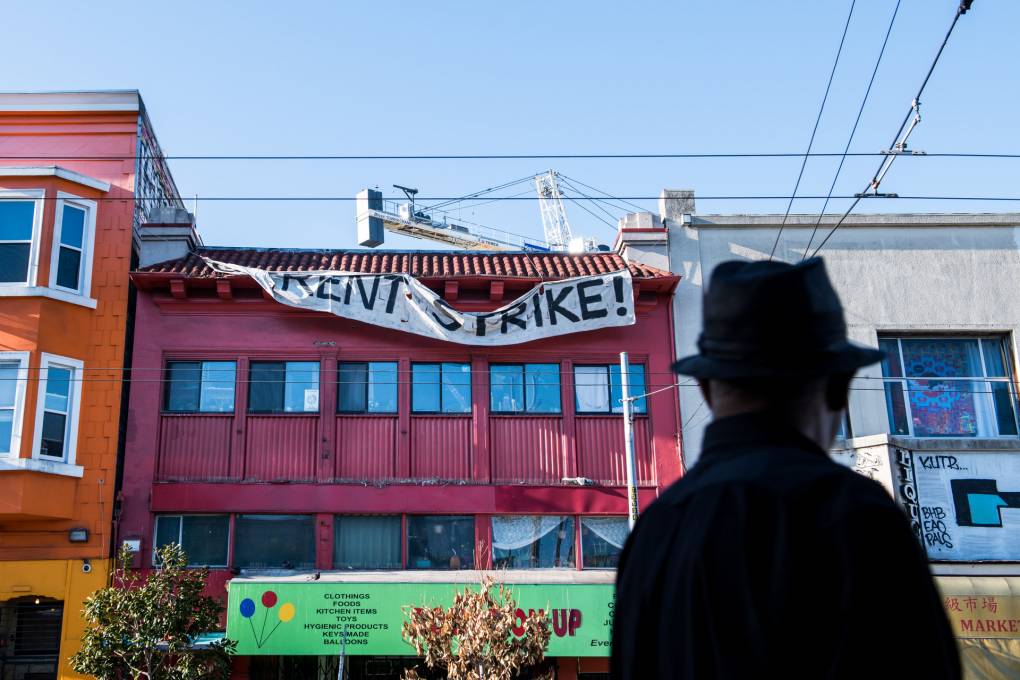
"caption": "A 'Rent Strike!' sign in the Mission District on March 31, 2020. ",
"description": "A 'Rent Strike!' sign in the Mission District on March 31, 2020. ",
"title": "RS42473_007_KQED_SanFrancisco_RentStrike_03312020-qut",
"credit": "Beth LaBerge/KQED",
"status": "inherit",
"isLoading": false,
"fetchFailed": false
},
"news_11813092": {
"type": "attachments",
"id": "news_11813092",
"meta": {
"index": "attachments_1716263798",
"site": "news",
"id": "11813092",
"found": true
},
"parent": 11813091,
"imgSizes": {
"apple_news_ca_landscape_5_5": {
"file": "https://ww2.kqed.org/app/uploads/sites/10/2020/04/RS42834_016_KQED_SanFrancisco_HandSanitizer_04172020-qut-1044x783.jpg",
"width": 1044,
"mimeType": "image/jpeg",
"height": 783
},
"apple_news_ca_square_4_0": {
"file": "https://ww2.kqed.org/app/uploads/sites/10/2020/04/RS42834_016_KQED_SanFrancisco_HandSanitizer_04172020-qut-470x470.jpg",
"width": 470,
"mimeType": "image/jpeg",
"height": 470
},
"twentyfourteen-full-width": {
"file": "https://ww2.kqed.org/app/uploads/sites/10/2020/04/RS42834_016_KQED_SanFrancisco_HandSanitizer_04172020-qut-1038x576.jpg",
"width": 1038,
"mimeType": "image/jpeg",
"height": 576
},
"thumbnail": {
"file": "https://ww2.kqed.org/app/uploads/sites/10/2020/04/RS42834_016_KQED_SanFrancisco_HandSanitizer_04172020-qut-160x107.jpg",
"width": 160,
"mimeType": "image/jpeg",
"height": 107
},
"post-thumbnail": {
"file": "https://ww2.kqed.org/app/uploads/sites/10/2020/04/RS42834_016_KQED_SanFrancisco_HandSanitizer_04172020-qut-672x372.jpg",
"width": 672,
"mimeType": "image/jpeg",
"height": 372
},
"kqedFullSize": {
"file": "https://ww2.kqed.org/app/uploads/sites/10/2020/04/RS42834_016_KQED_SanFrancisco_HandSanitizer_04172020-qut.jpg",
"width": 1920,
"height": 1280
},
"apple_news_ca_landscape_4_7": {
"file": "https://ww2.kqed.org/app/uploads/sites/10/2020/04/RS42834_016_KQED_SanFrancisco_HandSanitizer_04172020-qut-632x474.jpg",
"width": 632,
"mimeType": "image/jpeg",
"height": 474
},
"large": {
"file": "https://ww2.kqed.org/app/uploads/sites/10/2020/04/RS42834_016_KQED_SanFrancisco_HandSanitizer_04172020-qut-1020x680.jpg",
"width": 1020,
"mimeType": "image/jpeg",
"height": 680
},
"apple_news_ca_landscape_4_0": {
"file": "https://ww2.kqed.org/app/uploads/sites/10/2020/04/RS42834_016_KQED_SanFrancisco_HandSanitizer_04172020-qut-536x402.jpg",
"width": 536,
"mimeType": "image/jpeg",
"height": 402
},
"apple_news_ca_portrait_12_9": {
"file": "https://ww2.kqed.org/app/uploads/sites/10/2020/04/RS42834_016_KQED_SanFrancisco_HandSanitizer_04172020-qut-1122x1280.jpg",
"width": 1122,
"mimeType": "image/jpeg",
"height": 1280
},
"medium": {
"file": "https://ww2.kqed.org/app/uploads/sites/10/2020/04/RS42834_016_KQED_SanFrancisco_HandSanitizer_04172020-qut-800x533.jpg",
"width": 800,
"mimeType": "image/jpeg",
"height": 533
},
"apple_news_ca_portrait_4_0": {
"file": "https://ww2.kqed.org/app/uploads/sites/10/2020/04/RS42834_016_KQED_SanFrancisco_HandSanitizer_04172020-qut-354x472.jpg",
"width": 354,
"mimeType": "image/jpeg",
"height": 472
},
"apple_news_ca_portrait_9_7": {
"file": "https://ww2.kqed.org/app/uploads/sites/10/2020/04/RS42834_016_KQED_SanFrancisco_HandSanitizer_04172020-qut-840x1120.jpg",
"width": 840,
"mimeType": "image/jpeg",
"height": 1120
},
"apple_news_ca_landscape_12_9": {
"file": "https://ww2.kqed.org/app/uploads/sites/10/2020/04/RS42834_016_KQED_SanFrancisco_HandSanitizer_04172020-qut-1832x1280.jpg",
"width": 1832,
"mimeType": "image/jpeg",
"height": 1280
},
"apple_news_ca_square_9_7": {
"file": "https://ww2.kqed.org/app/uploads/sites/10/2020/04/RS42834_016_KQED_SanFrancisco_HandSanitizer_04172020-qut-1104x1104.jpg",
"width": 1104,
"mimeType": "image/jpeg",
"height": 1104
},
"apple_news_ca_portrait_4_7": {
"file": "https://ww2.kqed.org/app/uploads/sites/10/2020/04/RS42834_016_KQED_SanFrancisco_HandSanitizer_04172020-qut-414x552.jpg",
"width": 414,
"mimeType": "image/jpeg",
"height": 552
},
"apple_news_ca_square_12_9": {
"file": "https://ww2.kqed.org/app/uploads/sites/10/2020/04/RS42834_016_KQED_SanFrancisco_HandSanitizer_04172020-qut-1472x1280.jpg",
"width": 1472,
"mimeType": "image/jpeg",
"height": 1280
},
"apple_news_ca_portrait_5_5": {
"file": "https://ww2.kqed.org/app/uploads/sites/10/2020/04/RS42834_016_KQED_SanFrancisco_HandSanitizer_04172020-qut-687x916.jpg",
"width": 687,
"mimeType": "image/jpeg",
"height": 916
},
"full-width": {
"file": "https://ww2.kqed.org/app/uploads/sites/10/2020/04/RS42834_016_KQED_SanFrancisco_HandSanitizer_04172020-qut-1920x1280.jpg",
"width": 1920,
"mimeType": "image/jpeg",
"height": 1280
},
"apple_news_ca_square_4_7": {
"file": "https://ww2.kqed.org/app/uploads/sites/10/2020/04/RS42834_016_KQED_SanFrancisco_HandSanitizer_04172020-qut-550x550.jpg",
"width": 550,
"mimeType": "image/jpeg",
"height": 550
},
"apple_news_ca_landscape_9_7": {
"file": "https://ww2.kqed.org/app/uploads/sites/10/2020/04/RS42834_016_KQED_SanFrancisco_HandSanitizer_04172020-qut-1376x1032.jpg",
"width": 1376,
"mimeType": "image/jpeg",
"height": 1032
},
"apple_news_ca_square_5_5": {
"file": "https://ww2.kqed.org/app/uploads/sites/10/2020/04/RS42834_016_KQED_SanFrancisco_HandSanitizer_04172020-qut-912x912.jpg",
"width": 912,
"mimeType": "image/jpeg",
"height": 912
}
},
"publishDate": 1587345442,
"modified": 1587345476,
"caption": "Jamal Trulove gives out hand sanitizer to Fillmore residents, local workers and those in need on Fillmore Street on April 17, 2020. The sanitizer is manufactured by The Science Policy Group at UCSF.",
"description": null,
"title": "RS42834_016_KQED_SanFrancisco_HandSanitizer_04172020-qut",
"credit": "Beth LaBerge/KQED",
"status": "inherit",
"isLoading": false,
"fetchFailed": false
},
"news_11812769": {
"type": "attachments",
"id": "news_11812769",
"meta": {
"index": "attachments_1716263798",
"site": "news",
"id": "11812769",
"found": true
},
"parent": 11812716,
"imgSizes": {
"apple_news_ca_landscape_5_5": {
"file": "https://ww2.kqed.org/app/uploads/sites/10/2020/04/RS42804_002_KQED_Oakland_Rent_JamieBagley_04162020-qut-1044x783.jpg",
"width": 1044,
"mimeType": "image/jpeg",
"height": 783
},
"apple_news_ca_square_4_0": {
"file": "https://ww2.kqed.org/app/uploads/sites/10/2020/04/RS42804_002_KQED_Oakland_Rent_JamieBagley_04162020-qut-470x470.jpg",
"width": 470,
"mimeType": "image/jpeg",
"height": 470
},
"twentyfourteen-full-width": {
"file": "https://ww2.kqed.org/app/uploads/sites/10/2020/04/RS42804_002_KQED_Oakland_Rent_JamieBagley_04162020-qut-1038x576.jpg",
"width": 1038,
"mimeType": "image/jpeg",
"height": 576
},
"thumbnail": {
"file": "https://ww2.kqed.org/app/uploads/sites/10/2020/04/RS42804_002_KQED_Oakland_Rent_JamieBagley_04162020-qut-160x107.jpg",
"width": 160,
"mimeType": "image/jpeg",
"height": 107
},
"post-thumbnail": {
"file": "https://ww2.kqed.org/app/uploads/sites/10/2020/04/RS42804_002_KQED_Oakland_Rent_JamieBagley_04162020-qut-672x372.jpg",
"width": 672,
"mimeType": "image/jpeg",
"height": 372
},
"kqedFullSize": {
"file": "https://ww2.kqed.org/app/uploads/sites/10/2020/04/RS42804_002_KQED_Oakland_Rent_JamieBagley_04162020-qut.jpg",
"width": 1920,
"height": 1280
},
"apple_news_ca_landscape_4_7": {
"file": "https://ww2.kqed.org/app/uploads/sites/10/2020/04/RS42804_002_KQED_Oakland_Rent_JamieBagley_04162020-qut-632x474.jpg",
"width": 632,
"mimeType": "image/jpeg",
"height": 474
},
"large": {
"file": "https://ww2.kqed.org/app/uploads/sites/10/2020/04/RS42804_002_KQED_Oakland_Rent_JamieBagley_04162020-qut-1020x680.jpg",
"width": 1020,
"mimeType": "image/jpeg",
"height": 680
},
"apple_news_ca_landscape_4_0": {
"file": "https://ww2.kqed.org/app/uploads/sites/10/2020/04/RS42804_002_KQED_Oakland_Rent_JamieBagley_04162020-qut-536x402.jpg",
"width": 536,
"mimeType": "image/jpeg",
"height": 402
},
"apple_news_ca_portrait_12_9": {
"file": "https://ww2.kqed.org/app/uploads/sites/10/2020/04/RS42804_002_KQED_Oakland_Rent_JamieBagley_04162020-qut-1122x1280.jpg",
"width": 1122,
"mimeType": "image/jpeg",
"height": 1280
},
"medium": {
"file": "https://ww2.kqed.org/app/uploads/sites/10/2020/04/RS42804_002_KQED_Oakland_Rent_JamieBagley_04162020-qut-800x533.jpg",
"width": 800,
"mimeType": "image/jpeg",
"height": 533
},
"apple_news_ca_portrait_4_0": {
"file": "https://ww2.kqed.org/app/uploads/sites/10/2020/04/RS42804_002_KQED_Oakland_Rent_JamieBagley_04162020-qut-354x472.jpg",
"width": 354,
"mimeType": "image/jpeg",
"height": 472
},
"apple_news_ca_portrait_9_7": {
"file": "https://ww2.kqed.org/app/uploads/sites/10/2020/04/RS42804_002_KQED_Oakland_Rent_JamieBagley_04162020-qut-840x1120.jpg",
"width": 840,
"mimeType": "image/jpeg",
"height": 1120
},
"apple_news_ca_landscape_12_9": {
"file": "https://ww2.kqed.org/app/uploads/sites/10/2020/04/RS42804_002_KQED_Oakland_Rent_JamieBagley_04162020-qut-1832x1280.jpg",
"width": 1832,
"mimeType": "image/jpeg",
"height": 1280
},
"apple_news_ca_square_9_7": {
"file": "https://ww2.kqed.org/app/uploads/sites/10/2020/04/RS42804_002_KQED_Oakland_Rent_JamieBagley_04162020-qut-1104x1104.jpg",
"width": 1104,
"mimeType": "image/jpeg",
"height": 1104
},
"apple_news_ca_portrait_4_7": {
"file": "https://ww2.kqed.org/app/uploads/sites/10/2020/04/RS42804_002_KQED_Oakland_Rent_JamieBagley_04162020-qut-414x552.jpg",
"width": 414,
"mimeType": "image/jpeg",
"height": 552
},
"apple_news_ca_square_12_9": {
"file": "https://ww2.kqed.org/app/uploads/sites/10/2020/04/RS42804_002_KQED_Oakland_Rent_JamieBagley_04162020-qut-1472x1280.jpg",
"width": 1472,
"mimeType": "image/jpeg",
"height": 1280
},
"apple_news_ca_portrait_5_5": {
"file": "https://ww2.kqed.org/app/uploads/sites/10/2020/04/RS42804_002_KQED_Oakland_Rent_JamieBagley_04162020-qut-687x916.jpg",
"width": 687,
"mimeType": "image/jpeg",
"height": 916
},
"full-width": {
"file": "https://ww2.kqed.org/app/uploads/sites/10/2020/04/RS42804_002_KQED_Oakland_Rent_JamieBagley_04162020-qut-1920x1280.jpg",
"width": 1920,
"mimeType": "image/jpeg",
"height": 1280
},
"apple_news_ca_square_4_7": {
"file": "https://ww2.kqed.org/app/uploads/sites/10/2020/04/RS42804_002_KQED_Oakland_Rent_JamieBagley_04162020-qut-550x550.jpg",
"width": 550,
"mimeType": "image/jpeg",
"height": 550
},
"apple_news_ca_landscape_9_7": {
"file": "https://ww2.kqed.org/app/uploads/sites/10/2020/04/RS42804_002_KQED_Oakland_Rent_JamieBagley_04162020-qut-1376x1032.jpg",
"width": 1376,
"mimeType": "image/jpeg",
"height": 1032
},
"apple_news_ca_square_5_5": {
"file": "https://ww2.kqed.org/app/uploads/sites/10/2020/04/RS42804_002_KQED_Oakland_Rent_JamieBagley_04162020-qut-912x912.jpg",
"width": 912,
"mimeType": "image/jpeg",
"height": 912
}
},
"publishDate": 1587089734,
"modified": 1587089797,
"caption": "Jamie Bagley at her apartment in Oakland on April 16, 2020.",
"description": null,
"title": "Jamie Bagley at her apartment in Oakland on April 16, 2020.",
"credit": "Beth LaBerge/KQED",
"status": "inherit",
"isLoading": false,
"fetchFailed": false
},
"news_11811558": {
"type": "attachments",
"id": "news_11811558",
"meta": {
"index": "attachments_1716263798",
"site": "news",
"id": "11811558",
"found": true
},
"parent": 11811552,
"imgSizes": {
"apple_news_ca_landscape_5_5": {
"file": "https://ww2.kqed.org/app/uploads/sites/10/2020/04/RS27919_GettyImages-74418004-qut-1044x783.jpg",
"width": 1044,
"mimeType": "image/jpeg",
"height": 783
},
"apple_news_ca_square_4_0": {
"file": "https://ww2.kqed.org/app/uploads/sites/10/2020/04/RS27919_GettyImages-74418004-qut-470x470.jpg",
"width": 470,
"mimeType": "image/jpeg",
"height": 470
},
"twentyfourteen-full-width": {
"file": "https://ww2.kqed.org/app/uploads/sites/10/2020/04/RS27919_GettyImages-74418004-qut-1038x576.jpg",
"width": 1038,
"mimeType": "image/jpeg",
"height": 576
},
"thumbnail": {
"file": "https://ww2.kqed.org/app/uploads/sites/10/2020/04/RS27919_GettyImages-74418004-qut-160x103.jpg",
"width": 160,
"mimeType": "image/jpeg",
"height": 103
},
"post-thumbnail": {
"file": "https://ww2.kqed.org/app/uploads/sites/10/2020/04/RS27919_GettyImages-74418004-qut-672x372.jpg",
"width": 672,
"mimeType": "image/jpeg",
"height": 372
},
"kqedFullSize": {
"file": "https://ww2.kqed.org/app/uploads/sites/10/2020/04/RS27919_GettyImages-74418004-qut.jpg",
"width": 1920,
"height": 1236
},
"apple_news_ca_landscape_4_7": {
"file": "https://ww2.kqed.org/app/uploads/sites/10/2020/04/RS27919_GettyImages-74418004-qut-632x474.jpg",
"width": 632,
"mimeType": "image/jpeg",
"height": 474
},
"large": {
"file": "https://ww2.kqed.org/app/uploads/sites/10/2020/04/RS27919_GettyImages-74418004-qut-1020x657.jpg",
"width": 1020,
"mimeType": "image/jpeg",
"height": 657
},
"apple_news_ca_landscape_4_0": {
"file": "https://ww2.kqed.org/app/uploads/sites/10/2020/04/RS27919_GettyImages-74418004-qut-536x402.jpg",
"width": 536,
"mimeType": "image/jpeg",
"height": 402
},
"apple_news_ca_portrait_12_9": {
"file": "https://ww2.kqed.org/app/uploads/sites/10/2020/04/RS27919_GettyImages-74418004-qut-1122x1236.jpg",
"width": 1122,
"mimeType": "image/jpeg",
"height": 1236
},
"medium": {
"file": "https://ww2.kqed.org/app/uploads/sites/10/2020/04/RS27919_GettyImages-74418004-qut-800x515.jpg",
"width": 800,
"mimeType": "image/jpeg",
"height": 515
},
"apple_news_ca_portrait_4_0": {
"file": "https://ww2.kqed.org/app/uploads/sites/10/2020/04/RS27919_GettyImages-74418004-qut-354x472.jpg",
"width": 354,
"mimeType": "image/jpeg",
"height": 472
},
"apple_news_ca_portrait_9_7": {
"file": "https://ww2.kqed.org/app/uploads/sites/10/2020/04/RS27919_GettyImages-74418004-qut-840x1120.jpg",
"width": 840,
"mimeType": "image/jpeg",
"height": 1120
},
"apple_news_ca_landscape_12_9": {
"file": "https://ww2.kqed.org/app/uploads/sites/10/2020/04/RS27919_GettyImages-74418004-qut-1832x1236.jpg",
"width": 1832,
"mimeType": "image/jpeg",
"height": 1236
},
"apple_news_ca_square_9_7": {
"file": "https://ww2.kqed.org/app/uploads/sites/10/2020/04/RS27919_GettyImages-74418004-qut-1104x1104.jpg",
"width": 1104,
"mimeType": "image/jpeg",
"height": 1104
},
"apple_news_ca_portrait_4_7": {
"file": "https://ww2.kqed.org/app/uploads/sites/10/2020/04/RS27919_GettyImages-74418004-qut-414x552.jpg",
"width": 414,
"mimeType": "image/jpeg",
"height": 552
},
"apple_news_ca_square_12_9": {
"file": "https://ww2.kqed.org/app/uploads/sites/10/2020/04/RS27919_GettyImages-74418004-qut-1472x1236.jpg",
"width": 1472,
"mimeType": "image/jpeg",
"height": 1236
},
"apple_news_ca_portrait_5_5": {
"file": "https://ww2.kqed.org/app/uploads/sites/10/2020/04/RS27919_GettyImages-74418004-qut-687x916.jpg",
"width": 687,
"mimeType": "image/jpeg",
"height": 916
},
"full-width": {
"file": "https://ww2.kqed.org/app/uploads/sites/10/2020/04/RS27919_GettyImages-74418004-qut-1920x1236.jpg",
"width": 1920,
"mimeType": "image/jpeg",
"height": 1236
},
"apple_news_ca_square_4_7": {
"file": "https://ww2.kqed.org/app/uploads/sites/10/2020/04/RS27919_GettyImages-74418004-qut-550x550.jpg",
"width": 550,
"mimeType": "image/jpeg",
"height": 550
},
"apple_news_ca_landscape_9_7": {
"file": "https://ww2.kqed.org/app/uploads/sites/10/2020/04/RS27919_GettyImages-74418004-qut-1376x1032.jpg",
"width": 1376,
"mimeType": "image/jpeg",
"height": 1032
},
"apple_news_ca_square_5_5": {
"file": "https://ww2.kqed.org/app/uploads/sites/10/2020/04/RS27919_GettyImages-74418004-qut-912x912.jpg",
"width": 912,
"mimeType": "image/jpeg",
"height": 912
}
},
"publishDate": 1586453263,
"modified": 1589412040,
"caption": "SAN FRANCISCO - JUNE 06: Rows of houses stand June 6, 2007 in San Francisco, California. (Photo by Justin Sullivan/Getty Images)",
"description": null,
"title": "Realtors Lower Housing Market Sales Forecast",
"credit": null,
"status": "inherit",
"isLoading": false,
"fetchFailed": false
}
},
"audioPlayerReducer": {
"postId": "stream_live",
"isPaused": true,
"isPlaying": false,
"pfsActive": false,
"pledgeModalIsOpen": true,
"playerDrawerIsOpen": false,
"liveAudioPlayStartedAt": 0,
"liveAudioPlayContext": ""
},
"authorsReducer": {
"byline_news_11825550": {
"type": "authors",
"id": "byline_news_11825550",
"meta": {
"override": true
},
"slug": "byline_news_11825550",
"name": "Matt Levin \u003cbr />CalMatters\u003cbr>",
"isLoading": false
},
"fjhabvala": {
"type": "authors",
"id": "8659",
"meta": {
"index": "authors_1716337520",
"id": "8659",
"found": true
},
"name": "Farida Jhabvala Romero",
"firstName": "Farida",
"lastName": "Jhabvala Romero",
"slug": "fjhabvala",
"email": "fjhabvala@kqed.org",
"display_author_email": true,
"staff_mastheads": [
"news"
],
"title": "KQED Contributor",
"bio": "Farida Jhabvala Romero is a Labor Correspondent for KQED. She previously covered immigration. Farida was \u003ca href=\"https://www.ccnma.org/2022-most-influential-latina-journalists\">named\u003c/a> one of the 10 Most Influential Latina Journalists in California in 2022 by the California Chicano News Media Association. Her work has won awards from the Society of Professional Journalists (Northern California), as well as a national and regional Edward M. Murrow Award for the collaborative reporting projects “Dangerous Air” and “Graying California.” Before joining KQED, Farida worked as a producer at Radio Bilingüe, a national public radio network. Farida earned her master’s degree in journalism from Stanford University.",
"avatar": "https://secure.gravatar.com/avatar/f9f022d4e2609741874222a1e9d41f48fea74011aa7c615eef91d9a50c944ebe?s=600&d=blank&r=g",
"twitter": "FaridaJhabvala",
"bluesky": null,
"facebook": null,
"instagram": null,
"linkedin": "https://www.linkedin.com/in/faridajhabvala/",
"sites": [
{
"site": "news",
"roles": [
"editor"
]
},
{
"site": "stateofhealth",
"roles": [
"author"
]
},
{
"site": "liveblog",
"roles": [
"author"
]
}
],
"headData": {
"title": "Farida Jhabvala Romero | KQED",
"description": "KQED Contributor",
"ogImgSrc": "https://secure.gravatar.com/avatar/f9f022d4e2609741874222a1e9d41f48fea74011aa7c615eef91d9a50c944ebe?s=600&d=blank&r=g",
"twImgSrc": "https://secure.gravatar.com/avatar/f9f022d4e2609741874222a1e9d41f48fea74011aa7c615eef91d9a50c944ebe?s=600&d=blank&r=g"
},
"isLoading": false,
"link": "/author/fjhabvala"
},
"lsarah": {
"type": "authors",
"id": "11626",
"meta": {
"index": "authors_1716337520",
"id": "11626",
"found": true
},
"name": "Lakshmi Sarah",
"firstName": "Lakshmi",
"lastName": "Sarah",
"slug": "lsarah",
"email": "lsarah@kqed.org",
"display_author_email": false,
"staff_mastheads": [],
"title": "Digital Producer",
"bio": "Lakshmi Sarah is an educator, author and journalist with a focus on innovative storytelling. She has worked with newspapers, radio and magazines from Ahmedabad, India to Los Angeles, California. She has written and produced for Die Zeit, Global Voices, AJ+, KQED, Fusion Media Group and the New York Times.",
"avatar": "https://secure.gravatar.com/avatar/652dcaecd8b28826fc17a8b2d6bb4e93?s=600&d=blank&r=g",
"twitter": "lakitalki",
"facebook": null,
"instagram": "https://www.instagram.com/laki.talki/",
"linkedin": "https://www.linkedin.com/in/lakisarah/",
"sites": [
{
"site": "arts",
"roles": []
},
{
"site": "news",
"roles": []
},
{
"site": "bayareabites",
"roles": []
},
{
"site": "science",
"roles": []
}
],
"headData": {
"title": "Lakshmi Sarah | KQED",
"description": "Digital Producer",
"ogImgSrc": "https://secure.gravatar.com/avatar/652dcaecd8b28826fc17a8b2d6bb4e93?s=600&d=blank&r=g",
"twImgSrc": "https://secure.gravatar.com/avatar/652dcaecd8b28826fc17a8b2d6bb4e93?s=600&d=blank&r=g"
},
"isLoading": false,
"link": "/author/lsarah"
},
"msolomon": {
"type": "authors",
"id": "11651",
"meta": {
"index": "authors_1716337520",
"id": "11651",
"found": true
},
"name": "Molly Solomon",
"firstName": "Molly",
"lastName": "Solomon",
"slug": "msolomon",
"email": "msolomon@KQED.org",
"display_author_email": false,
"staff_mastheads": [
"news"
],
"title": "Senior Editor",
"bio": "Molly Solomon is the senior editor of KQED's California Politics and Government Desk. Previously, she was the station's editor-at-large, with a focus on editing early childhood education, politics, and criminal justice. Before that, she managed and edited statewide election coverage for The California Newsroom, a collaboration of local public radio stations, CalMatters and NPR. Molly joined KQED in 2019 to launch the station’s housing affordability desk, where she reported on homelessness, evictions and is the co-host of KQED’s housing podcast, SOLD OUT: Rethinking Housing in America. Before that, she was the Southwest Washington Bureau Chief for Oregon Public Broadcasting and a reporter at Hawaii Public Radio. Her stories have aired on NPR’s \u003cem>Morning Edition\u003c/em>, \u003cem>All Things Considered\u003c/em>, \u003cem>Here & Now\u003c/em>, \u003cem>Science Friday\u003c/em> and \u003cem>Marketplace\u003c/em>. Molly's award-winning reporting has been honored by the Best of the West, Edward R. Murrow awards, Society of Professional Journalists, National Headliner Awards, and the Asian American Journalists Association. Born and raised in Berkeley, Molly is a big fan of burritos and her scruffy terrier, Ollie.",
"avatar": "https://secure.gravatar.com/avatar/9ad9794616923d81c9a79897161545bd?s=600&d=blank&r=g",
"twitter": "solomonout",
"facebook": null,
"instagram": null,
"linkedin": null,
"sites": [
{
"site": "news",
"roles": [
"editor"
]
},
{
"site": "science",
"roles": [
"editor"
]
}
],
"headData": {
"title": "Molly Solomon | KQED",
"description": "Senior Editor",
"ogImgSrc": "https://secure.gravatar.com/avatar/9ad9794616923d81c9a79897161545bd?s=600&d=blank&r=g",
"twImgSrc": "https://secure.gravatar.com/avatar/9ad9794616923d81c9a79897161545bd?s=600&d=blank&r=g"
},
"isLoading": false,
"link": "/author/msolomon"
},
"ebaldassari": {
"type": "authors",
"id": "11652",
"meta": {
"index": "authors_1716337520",
"id": "11652",
"found": true
},
"name": "Erin Baldassari",
"firstName": "Erin",
"lastName": "Baldassari",
"slug": "ebaldassari",
"email": "ebaldassari@KQED.org",
"display_author_email": true,
"staff_mastheads": [
"news"
],
"title": "Staff Writer",
"bio": "Erin Baldassari covers housing for KQED. She's a former print journalist and most recently worked as the transportation reporter for the \u003cem>Mercury News\u003c/em> and \u003cem>East Bay Times. \u003c/em>There, she focused on how the Bay Area’s housing shortage has changed the way people move around the region. She also served on the \u003cem>East Bay Times\u003c/em>’ 2017 Pulitzer Prize-winning team for coverage of the Ghost Ship Fire in Oakland. Prior to that, Erin worked as a breaking news and general assignment reporter for a variety of outlets in the Bay Area and the greater Boston area. A Tufts University alumna, Erin grew up in the foothills of the Sierra Nevada mountains and in Sonoma County. She is a life-long KQED listener.",
"avatar": "https://secure.gravatar.com/avatar/5e95cad64a8ca08288082212e199d2b0cbeb4fd8e8ef5339395f361032bbe005?s=600&d=blank&r=g",
"twitter": "e_baldi",
"bluesky": null,
"facebook": null,
"instagram": null,
"linkedin": null,
"sites": [
{
"site": "news",
"roles": [
"edit_others_posts",
"editor"
]
},
{
"site": "science",
"roles": [
"editor"
]
},
{
"site": "liveblog",
"roles": [
"editor"
]
}
],
"headData": {
"title": "Erin Baldassari | KQED",
"description": "Staff Writer",
"ogImgSrc": "https://secure.gravatar.com/avatar/5e95cad64a8ca08288082212e199d2b0cbeb4fd8e8ef5339395f361032bbe005?s=600&d=blank&r=g",
"twImgSrc": "https://secure.gravatar.com/avatar/5e95cad64a8ca08288082212e199d2b0cbeb4fd8e8ef5339395f361032bbe005?s=600&d=blank&r=g"
},
"isLoading": false,
"link": "/author/ebaldassari"
},
"mgonzalessiler": {
"type": "authors",
"id": "11657",
"meta": {
"index": "authors_1716337520",
"id": "11657",
"found": true
},
"name": "Marco Siler-Gonzales",
"firstName": "Marco",
"lastName": "Siler-Gonzales",
"slug": "mgonzalessiler",
"email": "mgonzalessiler@kqed.org",
"display_author_email": false,
"staff_mastheads": [],
"title": "KQED Contributor",
"bio": null,
"avatar": "https://secure.gravatar.com/avatar/e960972bbaa44ee0e051b1f68c97753c?s=600&d=blank&r=g",
"twitter": null,
"facebook": null,
"instagram": null,
"linkedin": null,
"sites": [
{
"site": "news",
"roles": [
"author"
]
}
],
"headData": {
"title": "Marco Siler-Gonzales | KQED",
"description": "KQED Contributor",
"ogImgSrc": "https://secure.gravatar.com/avatar/e960972bbaa44ee0e051b1f68c97753c?s=600&d=blank&r=g",
"twImgSrc": "https://secure.gravatar.com/avatar/e960972bbaa44ee0e051b1f68c97753c?s=600&d=blank&r=g"
},
"isLoading": false,
"link": "/author/mgonzalessiler"
},
"jrodriguez": {
"type": "authors",
"id": "11690",
"meta": {
"index": "authors_1716337520",
"id": "11690",
"found": true
},
"name": "Joe Fitzgerald Rodriguez",
"firstName": "Joe",
"lastName": "Fitzgerald Rodriguez",
"slug": "jrodriguez",
"email": "jrodriguez@kqed.org",
"display_author_email": true,
"staff_mastheads": [
"news"
],
"title": "Reporter and Producer",
"bio": "Joe Fitzgerald Rodriguez is a reporter and digital producer for KQED covering politics. Joe most recently wrote for the \u003cem>San Francisco Examiner\u003c/em> as a political columnist covering The City. He was raised in San Francisco and has spent his reporting career in his beloved, foggy, city by the bay. Joe was 12-years-old when he conducted his first interview in journalism, grilling former San Francisco Mayor Willie Brown for the Marina Middle School newspaper, \u003cem>The Penguin Press, \u003c/em>and he continues to report on the San Francisco Bay Area to this day.",
"avatar": "https://secure.gravatar.com/avatar/2247beb0564c1e9c62228d5649d2edac?s=600&d=blank&r=g",
"twitter": "FitztheReporter",
"facebook": null,
"instagram": "https://www.instagram.com/fitzthereporter/",
"linkedin": null,
"sites": [
{
"site": "",
"roles": [
"editor"
]
},
{
"site": "arts",
"roles": [
"editor"
]
},
{
"site": "news",
"roles": [
"editor"
]
},
{
"site": "science",
"roles": [
"editor"
]
},
{
"site": "elections",
"roles": [
"editor"
]
},
{
"site": "liveblog",
"roles": [
"editor"
]
}
],
"headData": {
"title": "Joe Fitzgerald Rodriguez | KQED",
"description": "Reporter and Producer",
"ogImgSrc": "https://secure.gravatar.com/avatar/2247beb0564c1e9c62228d5649d2edac?s=600&d=blank&r=g",
"twImgSrc": "https://secure.gravatar.com/avatar/2247beb0564c1e9c62228d5649d2edac?s=600&d=blank&r=g"
},
"isLoading": false,
"link": "/author/jrodriguez"
}
},
"pagesReducer": {
"news_tag_housing": {
"type": "terms",
"id": "news_1775",
"meta": {
"index": "terms_1716263798",
"site": "news",
"id": "1775",
"score": 7.0362396
},
"featImg": null,
"name": "housing",
"description": null,
"taxonomy": "tag",
"headData": {
"twImgId": null,
"twTitle": null,
"ogTitle": null,
"ogImgId": null,
"twDescription": null,
"description": null,
"title": "housing Archives | KQED News",
"ogDescription": null
},
"ttid": 1790,
"slug": "housing",
"isLoading": false,
"title": "housing",
"pageMeta": {
"site": "news",
"WpPageTemplate": "page-topic-editorial",
"currentPage": 63
},
"blocks": [
{
"blockName": "kqed/post-list",
"attrs": {
"layout": "cardArticle2",
"query": "posts/news?tag=housing",
"seeMore": false,
"paginated": true,
"page": 63
}
},
{
"blockName": "kqed/ad"
}
]
}
},
"pfsSessionReducer": {},
"postsReducer": {
"stream_live": {
"type": "live",
"id": "stream_live",
"audioUrl": "https://streams.kqed.org/kqedradio",
"title": "Live Stream",
"excerpt": "Live Stream information currently unavailable.",
"link": "/radio",
"featImg": "",
"label": {
"name": "KQED Live",
"link": "/"
}
},
"stream_kqedNewscast": {
"type": "posts",
"id": "stream_kqedNewscast",
"audioUrl": "https://www.kqed.org/.stream/anon/radio/RDnews/newscast.mp3?_=1",
"title": "KQED Newscast",
"featImg": "",
"label": {
"name": "88.5 FM",
"link": "/"
}
},
"news_11828243": {
"type": "posts",
"id": "news_11828243",
"meta": {
"index": "posts_1716263798",
"site": "news",
"id": "11828243",
"score": null,
"sort": [
1594386600000
]
},
"guestAuthors": [],
"slug": "neighbors-rally-to-help-warriors-fan-keep-his-iconic-home",
"title": "Neighbors and Big Names Rally to Help Warriors Fan Keep His Iconic Oakland Home",
"publishDate": 1594386600,
"format": "audio",
"headTitle": "Neighbors and Big Names Rally to Help Warriors Fan Keep His Iconic Oakland Home | KQED",
"labelTerm": {},
"content": "\u003cp>The man who lives in the unofficial Warriors House of Oakland says he is at risk of losing the home to mortgage lenders who are seeking to collect a massive debt.\u003c/p>\n\u003cp>Lloyd Canamore has lived in the home, painted bright blue and gold, for more than half a century. With Golden State Warriors banners hanging out front, the home on 35th Street and adjacent to an Interstate 580 on-ramp has become an icon for fans and neighbors.\u003c/p>\n\u003cp>“The house is my locker room. When I come out of the house, here comes the Warrior man,” Canamore said.\u003c/p>\n\u003cp>His connection with the Warriors goes back to high school, when he took a job as a food vendor at the Oakland Coliseum, selling peanuts and hot dogs.\u003c/p>\n\u003cp>“I was comfortable (at the Coliseum), it was like being at home — after the games I was able to play on the court,” he said.\u003c/p>\n\u003cp>[ad fullwidth]\u003c/p>\n\u003cp>His childhood fandom has carried through to his adult life and has helped him through tough times. He lost one of his sons to cancer in the late ’90s. Since then, he’s lost all three of his brothers.\u003c/p>\n\u003cfigure id=\"attachment_11828304\" class=\"wp-caption alignnone\" style=\"max-width: 800px\">\u003cimg loading=\"lazy\" decoding=\"async\" class=\"size-medium wp-image-11828304\" src=\"https://ww2.kqed.org/app/uploads/sites/10/2020/07/RS43892_002_KQED_Oakland_WarriorsHouse_07092020-qut-800x533.jpg\" alt=\"\" width=\"800\" height=\"533\" srcset=\"https://cdn.kqed.org/wp-content/uploads/sites/10/2020/07/RS43892_002_KQED_Oakland_WarriorsHouse_07092020-qut-800x533.jpg 800w, https://cdn.kqed.org/wp-content/uploads/sites/10/2020/07/RS43892_002_KQED_Oakland_WarriorsHouse_07092020-qut-1020x680.jpg 1020w, https://cdn.kqed.org/wp-content/uploads/sites/10/2020/07/RS43892_002_KQED_Oakland_WarriorsHouse_07092020-qut-160x107.jpg 160w, https://cdn.kqed.org/wp-content/uploads/sites/10/2020/07/RS43892_002_KQED_Oakland_WarriorsHouse_07092020-qut-1536x1024.jpg 1536w, https://cdn.kqed.org/wp-content/uploads/sites/10/2020/07/RS43892_002_KQED_Oakland_WarriorsHouse_07092020-qut.jpg 1920w\" sizes=\"(max-width: 800px) 100vw, 800px\">\u003cfigcaption class=\"wp-caption-text\">Lloyd Canamore holds a photo of his mother, who passed away last year, outside of his home in West Oakland on July 9, 2020. He lived in the house with his mother until her passing. \u003ccite>(Beth LaBerge/KQED)\u003c/cite>\u003c/figcaption>\u003c/figure>\n\u003cp>For Canamore, the colors blue and gold are therapeutic. They represent a Warriors mentality to get through grief.\u003c/p>\n\u003cp>Now, the 58-year-old faces another set of hurdles. Just after his mother died last year, Canamore discovered that she had taken out a reverse mortgage, and now the $350,000 debt has fallen to him. [aside tag=\"housing, inequality\" label=\"More Related Stories\"]\u003c/p>\n\u003cp>“What is the world coming to? Now I gotta sell the house? Now I gotta live in the tents? … I know I can’t live in no apartments, ’cause I got too many dogs,” he said.\u003c/p>\n\u003cp>Canamore suspects that a caretaker who was in charge of his mother’s finances might have coerced her into a reverse mortgage back in 2005. Unbeknownst to Canamore, that debt had been racking up for 15 years.\u003c/p>\n\u003cp>“(She) tricked my momma doing that … and where all that money went then? I know that $350,000 didn’t come through here,” Canamore said.\u003c/p>\n\u003cp>A reverse mortgage is an arrangement where a homeowner can receive payments in exchange for giving up some of the equity in their home. Leah Simon-Weisberg, the legal director for Alliance for Californians For Community Empowerment Action (ACCE), an Oakland-based tenants’ rights group, said the loans can be predatory schemes that banks deploy in Black and brown communities.\u003c/p>\n\u003cp>“What’s troubling about this situation is that none of the family members were aware that this had happened and that it is from a company that most people have never heard of,” Simon said.\u003c/p>\n\u003cp>Canamore’s neighbor, Ali Roth, created a \u003ca href=\"https://www.gofundme.com/f/warriors-house\" target=\"_blank\" rel=\"noopener noreferrer\">GoFundMe\u003c/a> page in an effort to save the house.\u003c/p>\n\u003cp>“I posted it at night, and by the time I woke up, it already had $10,000,” Roth said.\u003c/p>\n\u003cfigure id=\"attachment_11828309\" class=\"wp-caption alignnone\" style=\"max-width: 800px\">\u003cimg loading=\"lazy\" decoding=\"async\" class=\"size-medium wp-image-11828309\" src=\"https://ww2.kqed.org/app/uploads/sites/10/2020/07/RS43899_011_KQED_Oakland_WarriorsHouse_07092020-qut-800x533.jpg\" alt=\"\" width=\"800\" height=\"533\" srcset=\"https://cdn.kqed.org/wp-content/uploads/sites/10/2020/07/RS43899_011_KQED_Oakland_WarriorsHouse_07092020-qut-800x533.jpg 800w, https://cdn.kqed.org/wp-content/uploads/sites/10/2020/07/RS43899_011_KQED_Oakland_WarriorsHouse_07092020-qut-1020x680.jpg 1020w, https://cdn.kqed.org/wp-content/uploads/sites/10/2020/07/RS43899_011_KQED_Oakland_WarriorsHouse_07092020-qut-160x107.jpg 160w, https://cdn.kqed.org/wp-content/uploads/sites/10/2020/07/RS43899_011_KQED_Oakland_WarriorsHouse_07092020-qut-1536x1024.jpg 1536w, https://cdn.kqed.org/wp-content/uploads/sites/10/2020/07/RS43899_011_KQED_Oakland_WarriorsHouse_07092020-qut.jpg 1920w\" sizes=\"(max-width: 800px) 100vw, 800px\">\u003cfigcaption class=\"wp-caption-text\">Lloyd Canamore walks into his home, known as the Warriors House, in West Oakland on July 9, 2020. \u003ccite>(Beth LaBerge/KQED)\u003c/cite>\u003c/figcaption>\u003c/figure>\n\u003cp>The page has raised over $170,000 in two days, with more than 4,000 donations. Big names like Golden State Warriors star Stephen Curry and Bay Area resident and comedian W. Kamau Bell have reposted Roth’s fundraising page on their Instagram accounts.\u003c/p>\n\u003cp>\u003c/p>\n\u003cp>ACCE said it’s willing to fight to save Canamore’s house if the fundraising effort falls short.\u003c/p>\n\n",
"blocks": [],
"excerpt": "The man who lives in the unofficial Warriors House in Oakland said he's at risk of losing his home to mortgage lenders who are seeking to collect a massive debt.",
"status": "publish",
"parent": 0,
"modified": 1721121285,
"stats": {
"hasAudio": false,
"hasVideo": false,
"hasChartOrMap": false,
"iframeSrcs": [],
"hasGoogleForm": false,
"hasGallery": false,
"hasHearkenModule": false,
"hasPolis": false,
"paragraphCount": 19,
"wordCount": 631
},
"headData": {
"title": "Neighbors and Big Names Rally to Help Warriors Fan Keep His Iconic Oakland Home | KQED",
"description": "The man who lives in the unofficial Warriors House in Oakland said he's at risk of losing his home to mortgage lenders who are seeking to collect a massive debt.",
"ogTitle": "",
"ogDescription": "",
"ogImgId": "",
"twTitle": "",
"twDescription": "",
"twImgId": "",
"schema": {
"@context": "https://schema.org",
"@type": "NewsArticle",
"headline": "Neighbors and Big Names Rally to Help Warriors Fan Keep His Iconic Oakland Home",
"datePublished": "2020-07-10T06:10:00-07:00",
"dateModified": "2024-07-16T02:14:45-07:00",
"image": "https://cdn.kqed.org/wp-content/uploads/2020/02/KQED-OG-Image@1x.png",
"isAccessibleForFree": "True",
"publisher": {
"@type": "NewsMediaOrganization",
"@id": "https://www.kqed.org/#organization",
"name": "KQED",
"logo": "https://cdn.kqed.org/wp-content/uploads/2020/02/KQED-OG-Image@1x.png",
"url": "https://www.kqed.org",
"sameAs": [
"https://www.facebook.com/KQED",
"https://twitter.com/KQED",
"https://www.instagram.com/kqed/",
"https://www.tiktok.com/@kqedofficial",
"https://www.linkedin.com/company/kqed",
"https://www.youtube.com/channel/UCeC0IOo7i1P_61zVUWbJ4nw"
]
}
}
},
"source": "News",
"sourceUrl": "kqed.org",
"audioUrl": "https://www.kqed.org/.stream/anon/radio/RDnews/2020/07/SilerGonzalesWarriorsHouseFolo.mp3",
"sticky": false,
"templateType": "standard",
"featuredImageType": "standard",
"path": "/news/11828243/neighbors-rally-to-help-warriors-fan-keep-his-iconic-home",
"audioDuration": 105000,
"audioTrackLength": null,
"parsedContent": [
{
"type": "contentString",
"content": "\u003cdiv class=\"post-body\">\u003cp>\u003cp>The man who lives in the unofficial Warriors House of Oakland says he is at risk of losing the home to mortgage lenders who are seeking to collect a massive debt.\u003c/p>\n\u003cp>Lloyd Canamore has lived in the home, painted bright blue and gold, for more than half a century. With Golden State Warriors banners hanging out front, the home on 35th Street and adjacent to an Interstate 580 on-ramp has become an icon for fans and neighbors.\u003c/p>\n\u003cp>“The house is my locker room. When I come out of the house, here comes the Warrior man,” Canamore said.\u003c/p>\n\u003cp>His connection with the Warriors goes back to high school, when he took a job as a food vendor at the Oakland Coliseum, selling peanuts and hot dogs.\u003c/p>\n\u003cp>“I was comfortable (at the Coliseum), it was like being at home — after the games I was able to play on the court,” he said.\u003c/p>\n\u003cp>\u003c/p>\u003c/div>",
"attributes": {
"named": {},
"numeric": []
}
},
{
"type": "component",
"content": "",
"name": "ad",
"attributes": {
"named": {
"label": "fullwidth"
},
"numeric": [
"fullwidth"
]
}
},
{
"type": "contentString",
"content": "\u003cdiv class=\"post-body\">\u003cp>\u003c/p>\n\u003cp>His childhood fandom has carried through to his adult life and has helped him through tough times. He lost one of his sons to cancer in the late ’90s. Since then, he’s lost all three of his brothers.\u003c/p>\n\u003cfigure id=\"attachment_11828304\" class=\"wp-caption alignnone\" style=\"max-width: 800px\">\u003cimg loading=\"lazy\" decoding=\"async\" class=\"size-medium wp-image-11828304\" src=\"https://ww2.kqed.org/app/uploads/sites/10/2020/07/RS43892_002_KQED_Oakland_WarriorsHouse_07092020-qut-800x533.jpg\" alt=\"\" width=\"800\" height=\"533\" srcset=\"https://cdn.kqed.org/wp-content/uploads/sites/10/2020/07/RS43892_002_KQED_Oakland_WarriorsHouse_07092020-qut-800x533.jpg 800w, https://cdn.kqed.org/wp-content/uploads/sites/10/2020/07/RS43892_002_KQED_Oakland_WarriorsHouse_07092020-qut-1020x680.jpg 1020w, https://cdn.kqed.org/wp-content/uploads/sites/10/2020/07/RS43892_002_KQED_Oakland_WarriorsHouse_07092020-qut-160x107.jpg 160w, https://cdn.kqed.org/wp-content/uploads/sites/10/2020/07/RS43892_002_KQED_Oakland_WarriorsHouse_07092020-qut-1536x1024.jpg 1536w, https://cdn.kqed.org/wp-content/uploads/sites/10/2020/07/RS43892_002_KQED_Oakland_WarriorsHouse_07092020-qut.jpg 1920w\" sizes=\"(max-width: 800px) 100vw, 800px\">\u003cfigcaption class=\"wp-caption-text\">Lloyd Canamore holds a photo of his mother, who passed away last year, outside of his home in West Oakland on July 9, 2020. He lived in the house with his mother until her passing. \u003ccite>(Beth LaBerge/KQED)\u003c/cite>\u003c/figcaption>\u003c/figure>\n\u003cp>For Canamore, the colors blue and gold are therapeutic. They represent a Warriors mentality to get through grief.\u003c/p>\n\u003cp>Now, the 58-year-old faces another set of hurdles. Just after his mother died last year, Canamore discovered that she had taken out a reverse mortgage, and now the $350,000 debt has fallen to him. \u003c/p>\u003c/div>",
"attributes": {
"named": {},
"numeric": []
}
},
{
"type": "component",
"content": "",
"name": "aside",
"attributes": {
"named": {
"tag": "housing, inequality",
"label": "More Related Stories "
},
"numeric": []
}
},
{
"type": "contentString",
"content": "\u003cdiv class=\"post-body\">\u003cp>\u003c/p>\n\u003cp>“What is the world coming to? Now I gotta sell the house? Now I gotta live in the tents? … I know I can’t live in no apartments, ’cause I got too many dogs,” he said.\u003c/p>\n\u003cp>Canamore suspects that a caretaker who was in charge of his mother’s finances might have coerced her into a reverse mortgage back in 2005. Unbeknownst to Canamore, that debt had been racking up for 15 years.\u003c/p>\n\u003cp>“(She) tricked my momma doing that … and where all that money went then? I know that $350,000 didn’t come through here,” Canamore said.\u003c/p>\n\u003cp>A reverse mortgage is an arrangement where a homeowner can receive payments in exchange for giving up some of the equity in their home. Leah Simon-Weisberg, the legal director for Alliance for Californians For Community Empowerment Action (ACCE), an Oakland-based tenants’ rights group, said the loans can be predatory schemes that banks deploy in Black and brown communities.\u003c/p>\n\u003cp>“What’s troubling about this situation is that none of the family members were aware that this had happened and that it is from a company that most people have never heard of,” Simon said.\u003c/p>\n\u003cp>Canamore’s neighbor, Ali Roth, created a \u003ca href=\"https://www.gofundme.com/f/warriors-house\" target=\"_blank\" rel=\"noopener noreferrer\">GoFundMe\u003c/a> page in an effort to save the house.\u003c/p>\n\u003cp>“I posted it at night, and by the time I woke up, it already had $10,000,” Roth said.\u003c/p>\n\u003cfigure id=\"attachment_11828309\" class=\"wp-caption alignnone\" style=\"max-width: 800px\">\u003cimg loading=\"lazy\" decoding=\"async\" class=\"size-medium wp-image-11828309\" src=\"https://ww2.kqed.org/app/uploads/sites/10/2020/07/RS43899_011_KQED_Oakland_WarriorsHouse_07092020-qut-800x533.jpg\" alt=\"\" width=\"800\" height=\"533\" srcset=\"https://cdn.kqed.org/wp-content/uploads/sites/10/2020/07/RS43899_011_KQED_Oakland_WarriorsHouse_07092020-qut-800x533.jpg 800w, https://cdn.kqed.org/wp-content/uploads/sites/10/2020/07/RS43899_011_KQED_Oakland_WarriorsHouse_07092020-qut-1020x680.jpg 1020w, https://cdn.kqed.org/wp-content/uploads/sites/10/2020/07/RS43899_011_KQED_Oakland_WarriorsHouse_07092020-qut-160x107.jpg 160w, https://cdn.kqed.org/wp-content/uploads/sites/10/2020/07/RS43899_011_KQED_Oakland_WarriorsHouse_07092020-qut-1536x1024.jpg 1536w, https://cdn.kqed.org/wp-content/uploads/sites/10/2020/07/RS43899_011_KQED_Oakland_WarriorsHouse_07092020-qut.jpg 1920w\" sizes=\"(max-width: 800px) 100vw, 800px\">\u003cfigcaption class=\"wp-caption-text\">Lloyd Canamore walks into his home, known as the Warriors House, in West Oakland on July 9, 2020. \u003ccite>(Beth LaBerge/KQED)\u003c/cite>\u003c/figcaption>\u003c/figure>\n\u003cp>The page has raised over $170,000 in two days, with more than 4,000 donations. Big names like Golden State Warriors star Stephen Curry and Bay Area resident and comedian W. Kamau Bell have reposted Roth’s fundraising page on their Instagram accounts.\u003c/p>\n\u003cp>\u003c/p>\n\u003cp>ACCE said it’s willing to fight to save Canamore’s house if the fundraising effort falls short.\u003c/p>\n\n\u003c/div>\u003c/p>",
"attributes": {
"named": {},
"numeric": []
}
}
],
"link": "/news/11828243/neighbors-rally-to-help-warriors-fan-keep-his-iconic-home",
"authors": [
"11657"
],
"categories": [
"news_6266",
"news_28250",
"news_8"
],
"tags": [
"news_3921",
"news_20013",
"news_935",
"news_1775",
"news_21358",
"news_18185"
],
"featImg": "news_11828297",
"label": "source_news_11828243"
},
"news_11826718": {
"type": "posts",
"id": "news_11826718",
"meta": {
"index": "posts_1716263798",
"site": "news",
"id": "11826718",
"score": null,
"sort": [
1593522020000
]
},
"guestAuthors": [],
"slug": "housing-homelessness-were-california-lawmakers-top-priorities-before-pandemic-where-do-they-stand-now",
"title": "Housing, Homelessness Were California Lawmakers' Top Priorities Before Pandemic. Where Do They Stand Now?",
"publishDate": 1593522020,
"format": "standard",
"headTitle": "Housing, Homelessness Were California Lawmakers’ Top Priorities Before Pandemic. Where Do They Stand Now? | KQED",
"labelTerm": {
"site": "news"
},
"content": "\u003cp>2020 was supposed to be the year of bold action and big changes for housing and homelessness in California.\u003c/p>\n\u003cp>Gov. Gavin Newsom began the year with a tour of homeless and mental health services providers around the state, ending in Oakland, where \u003ca href=\"https://www.kqed.org/news/11796428/newsom-to-unveil-travel-trailers-for-homeless-in-oakland\" target=\"_blank\" rel=\"noopener noreferrer\">he declared\u003c/a> homelessness “the issue of our time.”\u003c/p>\n\u003cp>With \u003ca href=\"https://www.usich.gov/homelessness-statistics/ca/#:~:text=California%20Homelessness%20Statistics,and%20Urban%20Development%20(HUD).\" target=\"_blank\" rel=\"noopener noreferrer\">more than 151,000 people\u003c/a> living in tents, RVs, cars and shelters across the state, the governor announced a one-time allocation of \u003ca href=\"https://www.kqed.org/news/11802334/gov-newsom-focuses-singularly-on-homelessness-in-state-of-the-state\" target=\"_blank\" rel=\"noopener noreferrer\">$750 million\u003c/a> aimed at reducing homelessness — something his predecessor, Gov. Jerry Brown, had been loath to do.\u003c/p>\n\u003cp>“It was really a sea change from the previous governor and from the Legislature,” said Chris Martin, policy director for Housing California, a Sacramento-based affordable housing nonprofit.\u003c/p>\n\u003cp>Around the same time, advocates on all sides of the housing debate watched closely as one controversial bill to promote housing production — SB 50 — \u003ca href=\"https://www.kqed.org/news/11798945/__trashed-4\" target=\"_blank\" rel=\"noopener noreferrer\">drew its last breath\u003c/a> following two tense days of voting.\u003c/p>\n\u003cfigure id=\"attachment_11613002\" class=\"wp-caption aligncenter\" style=\"max-width: 1920px\">\u003ca href=\"https://ww2.kqed.org/app/uploads/sites/10/2017/08/RS25468_20170515_StateCapitol_Sen_ScottWeiner_credit_BertJohnson-2-qut.jpg\">\u003cimg loading=\"lazy\" decoding=\"async\" class=\"wp-image-11613002 size-full\" src=\"https://ww2.kqed.org/app/uploads/sites/10/2017/08/RS25468_20170515_StateCapitol_Sen_ScottWeiner_credit_BertJohnson-2-qut.jpg\" alt=\"\" width=\"1920\" height=\"1280\" srcset=\"https://cdn.kqed.org/wp-content/uploads/sites/10/2017/08/RS25468_20170515_StateCapitol_Sen_ScottWeiner_credit_BertJohnson-2-qut.jpg 1920w, https://cdn.kqed.org/wp-content/uploads/sites/10/2017/08/RS25468_20170515_StateCapitol_Sen_ScottWeiner_credit_BertJohnson-2-qut-160x107.jpg 160w, https://cdn.kqed.org/wp-content/uploads/sites/10/2017/08/RS25468_20170515_StateCapitol_Sen_ScottWeiner_credit_BertJohnson-2-qut-800x533.jpg 800w, https://cdn.kqed.org/wp-content/uploads/sites/10/2017/08/RS25468_20170515_StateCapitol_Sen_ScottWeiner_credit_BertJohnson-2-qut-1020x680.jpg 1020w, https://cdn.kqed.org/wp-content/uploads/sites/10/2017/08/RS25468_20170515_StateCapitol_Sen_ScottWeiner_credit_BertJohnson-2-qut-1180x787.jpg 1180w, https://cdn.kqed.org/wp-content/uploads/sites/10/2017/08/RS25468_20170515_StateCapitol_Sen_ScottWeiner_credit_BertJohnson-2-qut-960x640.jpg 960w, https://cdn.kqed.org/wp-content/uploads/sites/10/2017/08/RS25468_20170515_StateCapitol_Sen_ScottWeiner_credit_BertJohnson-2-qut-240x160.jpg 240w, https://cdn.kqed.org/wp-content/uploads/sites/10/2017/08/RS25468_20170515_StateCapitol_Sen_ScottWeiner_credit_BertJohnson-2-qut-375x250.jpg 375w, https://cdn.kqed.org/wp-content/uploads/sites/10/2017/08/RS25468_20170515_StateCapitol_Sen_ScottWeiner_credit_BertJohnson-2-qut-520x347.jpg 520w\" sizes=\"(max-width: 1920px) 100vw, 1920px\">\u003c/a>\u003cfigcaption class=\"wp-caption-text\">Sen. Scott Wiener, D-San Francisco), the author of SB 50. \u003ccite>(Bert Johnson/KQED)\u003c/cite>\u003c/figcaption>\u003c/figure>\n\u003cp>Authored by state Sen. Scott Wiener, D-San Francisco, the bill would have allowed for taller apartment buildings near transit hubs and in job-rich areas, and fourplexes in neighborhoods where only single-family homes are currently permitted.\u003c/p>\n\u003cp>Following the bill’s defeat, Senate Pro Tem Toni Atkins, D-San Diego, vowed to pass an “historic housing production bill.”\u003c/p>\n\u003cp>Then came the coronavirus.\u003c/p>\n\u003cp>California’s economy suddenly shut down. As attention turned to easing the worst impacts of an expected economic crisis, hopes for dramatically advancing housing construction and reducing homelessness grew dim.\u003c/p>\n\u003cp>[pullquote align=\"right\" size=\"medium\" citation=\"state Sen. Scott Wiener\"]‘It’s not a grand slam. But it’s a solid double.’[/pullquote]\u003c/p>\n\u003cp>But advocates involved in housing work across the state say all was not lost in the truncated legislative session, which is now in heading into summer recess. The Legislature still has some three dozen housing bills — albeit not as ambitious as some lawmakers initially hoped — that have been approved by their house of origin and are now moving on to the next chamber.\u003c/p>\n\u003cp>“It’s not a grand slam,” Wiener said in a phone call last week. “But it’s a solid double.”\u003c/p>\n\u003ch3>Housing Production\u003c/h3>\n\u003cp>While no single bill in this legislative session is as sweeping or controversial as SB 50, \u003ca href=\"https://sd39.senate.ca.gov/news/20200520-senate-leaders-detail-housing-production-legislation-intended-increase-supply-aid\" target=\"_blank\" rel=\"noopener noreferrer\">several\u003c/a> attempt to \u003ca href=\"https://a17.asmdc.org/press-releases/assembly-leaders-push-increased-housing-production\" target=\"_blank\" rel=\"noopener noreferrer\">boost housing\u003c/a> production through some like-minded proposals.\u003c/p>\n\u003cp>The state Senate and Assembly, for instance, are each considering a proposal to eliminate single-family zoning in the state, by allowing either two duplexes (SB 1120) or a single fourplex (AB 3040) on parcels where only one house is currently allowed.\u003c/p>\n\u003cfigure id=\"attachment_11823916\" class=\"wp-caption aligncenter\" style=\"max-width: 1920px\">\u003ca href=\"https://ww2.kqed.org/app/uploads/sites/10/2020/06/RS41398_005_KQED_Housing_MountainView_02192020_3321-qut.jpg\">\u003cimg loading=\"lazy\" decoding=\"async\" class=\"wp-image-11823916 size-full\" src=\"https://ww2.kqed.org/app/uploads/sites/10/2020/06/RS41398_005_KQED_Housing_MountainView_02192020_3321-qut.jpg\" alt=\"Houses in Mountain View, pictured on Feb. 19, 2020.\" width=\"1920\" height=\"1280\" srcset=\"https://cdn.kqed.org/wp-content/uploads/sites/10/2020/06/RS41398_005_KQED_Housing_MountainView_02192020_3321-qut.jpg 1920w, https://cdn.kqed.org/wp-content/uploads/sites/10/2020/06/RS41398_005_KQED_Housing_MountainView_02192020_3321-qut-160x107.jpg 160w, https://cdn.kqed.org/wp-content/uploads/sites/10/2020/06/RS41398_005_KQED_Housing_MountainView_02192020_3321-qut-800x533.jpg 800w, https://cdn.kqed.org/wp-content/uploads/sites/10/2020/06/RS41398_005_KQED_Housing_MountainView_02192020_3321-qut-1020x680.jpg 1020w\" sizes=\"(max-width: 1920px) 100vw, 1920px\">\u003c/a>\u003cfigcaption class=\"wp-caption-text\">A house for sale in Mountain View, on Feb. 19, 2020. \u003ccite>(Beth LaBerge/KQED)\u003c/cite>\u003c/figcaption>\u003c/figure>\n\u003cp>Another bill, SB 902, would give cities the option to circumvent state environmental reviews for construction of apartment buildings with up to 10 units that are near transit or in job-rich areas. It’s not the four- to five-story apartment buildings Weiner had hoped for in SB 50, he said, but it’s a start.\u003c/p>\n\u003cp>“It will be a solid step forward in addressing the crisis,” he said. “More work will remain.”\u003c/p>\n\u003cp>Assemblyman Richard Bloom’s AB 1279, a revision of SB 50, targets wealthy enclaves typically averse to providing low-income housing. Unlike SB 50, which proposed taller buildings near transit, Bloom’s bill would put those four- and five-story buildings in “high-opportunity areas,” which the state’s Department of Housing and Community Development would have to specifically define by 2022.\u003c/p>\n\u003cp>[aside label=\"more housing coverage\" tag=\"housing\"]The idea is to focus new housing construction in neighborhoods with better access to jobs, schools, air quality and other factors that lead to better health and that low-income renters and homeowners have long been excluded from. Developers who take advantage of the bill would have to offer the homes or rentals at affordable prices, construct some affordable housing on site or pay a fee to fund affordable housing construction elsewhere.\u003c/p>\n\u003cp>“AB 1279 removes barriers to equitable and inclusive development,” said Frank Martinez, policy director with the Southern California Association of Nonprofit Housing. “Stopping some of the income and racial segregation in housing would be a big move.”\u003c/p>\n\u003cp>There are also two bills under consideration that would allow developers to turn vacant offices, dying malls and big box stores into housing. The Assembly’s version, AB 3107, requires 20% of the new housing in those commercial areas to be affordable. The Senate’s version, SB 1385, requires affordable housing only in specific circumstances.\u003c/p>\n\u003cp>Two other bills in the Senate and Assembly would expand the state’s “density bonus” law, which allows developers to build taller buildings in exchange for providing affordable housing. The Senate’s version, SB 1085, focuses on “missing middle” housing that is more affordable to middle-income earners. The proposal allows developers to build taller buildings in exchange for rental housing that is at least 30% less expensive than the median rent. The Assembly’s version, AB 2345, focuses more on boosting low-income housing.\u003c/p>\n\u003cfigure id=\"attachment_11718377\" class=\"wp-caption aligncenter\" style=\"max-width: 1920px\">\u003ca href=\"https://ww2.kqed.org/app/uploads/sites/10/2019/01/GettyImages-973691890-e1547589744990.jpg\">\u003cimg loading=\"lazy\" decoding=\"async\" class=\"wp-image-11718377 size-full\" src=\"https://ww2.kqed.org/app/uploads/sites/10/2019/01/GettyImages-973691890-e1547589744990.jpg\" alt=\"\" width=\"1920\" height=\"1280\" srcset=\"https://cdn.kqed.org/wp-content/uploads/sites/10/2019/01/GettyImages-973691890-e1547589744990.jpg 1920w, https://cdn.kqed.org/wp-content/uploads/sites/10/2019/01/GettyImages-973691890-e1547589744990-160x107.jpg 160w, https://cdn.kqed.org/wp-content/uploads/sites/10/2019/01/GettyImages-973691890-e1547589744990-800x533.jpg 800w, https://cdn.kqed.org/wp-content/uploads/sites/10/2019/01/GettyImages-973691890-e1547589744990-1020x680.jpg 1020w, https://cdn.kqed.org/wp-content/uploads/sites/10/2019/01/GettyImages-973691890-e1547589744990-1200x800.jpg 1200w\" sizes=\"(max-width: 1920px) 100vw, 1920px\">\u003c/a>\u003cfigcaption class=\"wp-caption-text\">A view of homes and apartments on June 13, 2018 in San Francisco, California. According to a new survey by the National Low Income Housing Coalition, renters in San Francisco need an income of $60 per hour to afford a two bedroom apartment in the city. San Francisco is followed by San Jose at $48 per hour and Oakland at $45 per hour. \u003ccite>(Justin Sullivan/Getty Images)\u003c/cite>\u003c/figcaption>\u003c/figure>\n\u003cp>And, finally, Weiner has also proposed a bill that would allow 100% affordable housing developments on parking lots owned by religious or educational institutions. SB 899 could open up around 38,000 acres of land statewide — an area roughly the size of Stockton — according to a \u003ca href=\"http://ternercenter.berkeley.edu/uploads/Mapping_the_Potential_and_Identifying_the_Barriers_to_Faith-Based_Housing_Development_May_2020.pdf\" target=\"_blank\" rel=\"noopener noreferrer\">recent study\u003c/a> by the Terner Center for Housing Innovation at UC Berkeley.\u003c/p>\n\u003cp>“It’s something we consider quite significant in terms of opening up other opportunities to affordable housing,” said Pedro Galvao, policy director for the Non-Profit Housing Association of Northern California.\u003c/p>\n\u003cp>These housing production bills, though, have rankled members of Livable California — a citizens group that champions local control and was one of SB 50’s chief opponents.\u003c/p>\n\u003cp>“It’s pretty much a divide and conquer approach,” said Livable California board member Keith Gurnee. “It’s not as much on steroids as SB 50 was, but no one is really looking at how they interact with each other.”\u003c/p>\n\u003ch3>COVID-19 Relief for Renters and Landlords\u003c/h3>\n\u003cp>Responding to the crisis at hand, several lawmakers have proposed bills to ensure that tenants and homeowners who lost some or all of their wages as a result of the pandemic don’t also lose their homes.\u003c/p>\n\u003cp>Assemblyman David Chiu’s AB 1436, if passed, would prevent landlords from evicting tenants during the current state of emergency, as well as 90 days after, if they’ve missed rent payments because of lost wages due to the pandemic. Tenants would then be allowed to pay back missed rent over 15 months.\u003c/p>\n\u003cp>A separate proposal by Assemblyman Phil Ting, AB 828, would freeze evictions and foreclosures during the state of emergency and for 15 days after. It would require tenants to pay 10% of back rent each month, beginning one month after the emergency order lifts.\u003c/p>\n\u003cfigure id=\"attachment_11775409\" class=\"wp-caption aligncenter\" style=\"max-width: 1920px\">\u003ca href=\"https://ww2.kqed.org/app/uploads/sites/10/2019/09/RS25187_GettyImages-88900792-qut.jpg\">\u003cimg loading=\"lazy\" decoding=\"async\" class=\"size-full wp-image-11775409\" src=\"https://ww2.kqed.org/app/uploads/sites/10/2019/09/RS25187_GettyImages-88900792-qut.jpg\" alt=\"\" width=\"1920\" height=\"1217\" srcset=\"https://cdn.kqed.org/wp-content/uploads/sites/10/2019/09/RS25187_GettyImages-88900792-qut.jpg 1920w, https://cdn.kqed.org/wp-content/uploads/sites/10/2019/09/RS25187_GettyImages-88900792-qut-160x101.jpg 160w, https://cdn.kqed.org/wp-content/uploads/sites/10/2019/09/RS25187_GettyImages-88900792-qut-800x507.jpg 800w, https://cdn.kqed.org/wp-content/uploads/sites/10/2019/09/RS25187_GettyImages-88900792-qut-1020x647.jpg 1020w, https://cdn.kqed.org/wp-content/uploads/sites/10/2019/09/RS25187_GettyImages-88900792-qut-1200x761.jpg 1200w\" sizes=\"(max-width: 1920px) 100vw, 1920px\">\u003c/a>\u003cfigcaption class=\"wp-caption-text\">The Bay Area’s rental market is notoriously expensive — not to mention competitive. \u003ccite>(Justin Sullivan/Getty Images)\u003c/cite>\u003c/figcaption>\u003c/figure>\n\u003cp>“This is the thing we see as the highest priority right now,” said Anya Lawler of the nonprofit Western Center on Law and Poverty. “We want to give tenants security that income lost during the pandemic will not be the basis for an eviction; but that needs to be coupled with money to make sure landlords don’t lose their property, either.”\u003c/p>\n\u003cp>One bill, Atkins’ SB 1410, would provide \u003ca href=\"https://sd39.senate.ca.gov/news/20200512-senate-leaders-unveil-proposed-state-budget-approach-proposal-aid-california%E2%80%99s\" target=\"_blank\" rel=\"noopener noreferrer\">tax credits to landlords\u003c/a> equal to the value of missed rental payments. The landlords could get cash now if they sell their tax credits to investors, or use them in later years. Tenants would then be on the hook for paying the state back for the missed rent over the course of the next ten years. Very low-income tenants unable to pay could have their loans forgiven.\u003c/p>\n\u003ch3>Homelessness\u003c/h3>\n\u003cp>Without bills to protect tenants from eviction, homeless advocates fear the state will see a surge in homelessness, which had been growing, and was on the minds of lawmakers, even before the pandemic.\u003c/p>\n\u003cp>Two bills in the Assembly establish ambitious goals for addressing homelessness: AB 2405 by Assemblywoman Autumn Burke, D-Marina del Rey, would make housing a human right for families and children by 2026. And AB 3269 by Chiu and Assemblyman Miguel Santiago, D-Los Angeles, would require cities and counties to create plans to reduce homelessness in their communities by 90% by 2028, based on 2019 rates.\u003c/p>\n\u003cp>Similarly, AB 1845 by Assemblymembers Chiu and Luz Rivas would create a new state “Office to End Homelessness,” along with a new position the governor’s office to coordinate state agencies that fund homeless housing and services.\u003c/p>\n\u003cp>[ad fullwidth]\u003c/p>\n\u003cp>But the biggest question has always been where to get the money to pay for these new state mandates and programs, especially during the current economic fallout.\u003c/p>\n\u003cp>Although the $750 million Newsom proposed at the beginning of the year is no more, the governor did steer $600 million from the federal CARES ACT to acquire and rehab hotels, motels and other buildings for permanent supportive housing for the formerly homeless —\u003ca href=\"https://www.kqed.org/news/11825653/california-found-hotels-for-10000-homeless-residents-what-next\" target=\"_blank\" rel=\"noopener noreferrer\"> dubbed Project Roomkey\u003c/a>.\u003c/p>\n\u003cfigure id=\"attachment_11820447\" class=\"wp-caption aligncenter\" style=\"max-width: 3861px\">\u003ca href=\"https://ww2.kqed.org/app/uploads/sites/10/2020/05/200522-37MLK-Palms-Motel-Takeover_04_WEB.jpg\">\u003cimg loading=\"lazy\" decoding=\"async\" class=\"size-full wp-image-11820447\" src=\"https://ww2.kqed.org/app/uploads/sites/10/2020/05/200522-37MLK-Palms-Motel-Takeover_04_WEB.jpg\" alt=\"\" width=\"3861\" height=\"2574\" srcset=\"https://cdn.kqed.org/wp-content/uploads/sites/10/2020/05/200522-37MLK-Palms-Motel-Takeover_04_WEB.jpg 3861w, https://cdn.kqed.org/wp-content/uploads/sites/10/2020/05/200522-37MLK-Palms-Motel-Takeover_04_WEB-160x107.jpg 160w, https://cdn.kqed.org/wp-content/uploads/sites/10/2020/05/200522-37MLK-Palms-Motel-Takeover_04_WEB-800x533.jpg 800w, https://cdn.kqed.org/wp-content/uploads/sites/10/2020/05/200522-37MLK-Palms-Motel-Takeover_04_WEB-1020x680.jpg 1020w, https://cdn.kqed.org/wp-content/uploads/sites/10/2020/05/200522-37MLK-Palms-Motel-Takeover_04_WEB-1920x1280.jpg 1920w\" sizes=\"(max-width: 3861px) 100vw, 3861px\">\u003c/a>\u003cfigcaption class=\"wp-caption-text\">Romelita Bautista, a homeless resident of Oakland, joined in a demonstration outside the Palms Motel in Oakland on Friday, May 22, 2020. Activist Stefani Echeverría-Fenn chained herself to a window in one of the rooms at the motel to call attention to the need for more hotel rooms during the pandemic. \u003ccite>(Erin Baldassari/KQED)\u003c/cite>\u003c/figcaption>\u003c/figure>\n\u003cp>Another proposal in the Assembly, AB 3300, by Assemblyman Miguel Santiago and a number of other co-signers would build off this year’s funding for homelessness programs and commit an additional $2 billion annually. But that’s only if the Legislature approves that amount in next year’s budget, which could be a tall order depending on how the economy is faring.\u003c/p>\n\u003cp>Part of it may hinge on whether the federal government passes another stimulus bill. But even if that doesn’t happen, there’s talk of proposing new taxes — a 1% tax on millionaires, for example — to help pay for housing and shelters for people experiencing homelessness and for services related to that housing.\u003c/p>\n\u003cp>Even if no new money is found next year, the bill could still have an impact by reforming the state’s labyrinthine funding process for homeless services, said Chris Martin from Housing California. Agencies typically must apply separately to one of 30 programs split between six different state agencies, each with its own application process and funding timelines. AB 3300 would streamline that process by creating one application and allowing applicants to receive ongoing funding, so they don’t have to apply for the same money year after year.\u003c/p>\n\u003cp>“It would be quite significant,” said Pedro Galvao of the Nonprofit Housing Association of Northern California, “and could be really impactful, if adopted.”\u003c/p>\n\u003cp>[ad floatright]\u003c/p>\n",
"blocks": [],
"excerpt": "A roundup of some three dozen bills on the state legislative docket, including proposals to end single-family neighborhoods as we know them, put apartments in church parking lots and make housing a human right for children and families. ",
"status": "publish",
"parent": 0,
"modified": 1721109413,
"stats": {
"hasAudio": false,
"hasVideo": false,
"hasChartOrMap": false,
"iframeSrcs": [],
"hasGoogleForm": false,
"hasGallery": false,
"hasHearkenModule": false,
"hasPolis": false,
"paragraphCount": 41,
"wordCount": 1953
},
"headData": {
"title": "Housing, Homelessness Were California Lawmakers' Top Priorities Before Pandemic. Where Do They Stand Now? | KQED",
"description": "A roundup of some three dozen bills on the state legislative docket, including proposals to end single-family neighborhoods as we know them, put apartments in church parking lots and make housing a human right for children and families. ",
"ogTitle": "",
"ogDescription": "",
"ogImgId": "",
"twTitle": "",
"twDescription": "",
"twImgId": "",
"schema": {
"@context": "https://schema.org",
"@type": "NewsArticle",
"headline": "Housing, Homelessness Were California Lawmakers' Top Priorities Before Pandemic. Where Do They Stand Now?",
"datePublished": "2020-06-30T06:00:20-07:00",
"dateModified": "2024-07-15T22:56:53-07:00",
"image": "https://cdn.kqed.org/wp-content/uploads/2020/02/KQED-OG-Image@1x.png",
"isAccessibleForFree": "True",
"publisher": {
"@type": "NewsMediaOrganization",
"@id": "https://www.kqed.org/#organization",
"name": "KQED",
"logo": "https://cdn.kqed.org/wp-content/uploads/2020/02/KQED-OG-Image@1x.png",
"url": "https://www.kqed.org",
"sameAs": [
"https://www.facebook.com/KQED",
"https://twitter.com/KQED",
"https://www.instagram.com/kqed/",
"https://www.tiktok.com/@kqedofficial",
"https://www.linkedin.com/company/kqed",
"https://www.youtube.com/channel/UCeC0IOo7i1P_61zVUWbJ4nw"
]
}
}
},
"sticky": false,
"path": "/news/11826718/housing-homelessness-were-california-lawmakers-top-priorities-before-pandemic-where-do-they-stand-now",
"audioTrackLength": null,
"parsedContent": [
{
"type": "contentString",
"content": "\u003cdiv class=\"post-body\">\u003cp>\u003cp>2020 was supposed to be the year of bold action and big changes for housing and homelessness in California.\u003c/p>\n\u003cp>Gov. Gavin Newsom began the year with a tour of homeless and mental health services providers around the state, ending in Oakland, where \u003ca href=\"https://www.kqed.org/news/11796428/newsom-to-unveil-travel-trailers-for-homeless-in-oakland\" target=\"_blank\" rel=\"noopener noreferrer\">he declared\u003c/a> homelessness “the issue of our time.”\u003c/p>\n\u003cp>With \u003ca href=\"https://www.usich.gov/homelessness-statistics/ca/#:~:text=California%20Homelessness%20Statistics,and%20Urban%20Development%20(HUD).\" target=\"_blank\" rel=\"noopener noreferrer\">more than 151,000 people\u003c/a> living in tents, RVs, cars and shelters across the state, the governor announced a one-time allocation of \u003ca href=\"https://www.kqed.org/news/11802334/gov-newsom-focuses-singularly-on-homelessness-in-state-of-the-state\" target=\"_blank\" rel=\"noopener noreferrer\">$750 million\u003c/a> aimed at reducing homelessness — something his predecessor, Gov. Jerry Brown, had been loath to do.\u003c/p>\n\u003cp>“It was really a sea change from the previous governor and from the Legislature,” said Chris Martin, policy director for Housing California, a Sacramento-based affordable housing nonprofit.\u003c/p>\n\u003cp>Around the same time, advocates on all sides of the housing debate watched closely as one controversial bill to promote housing production — SB 50 — \u003ca href=\"https://www.kqed.org/news/11798945/__trashed-4\" target=\"_blank\" rel=\"noopener noreferrer\">drew its last breath\u003c/a> following two tense days of voting.\u003c/p>\n\u003cfigure id=\"attachment_11613002\" class=\"wp-caption aligncenter\" style=\"max-width: 1920px\">\u003ca href=\"https://ww2.kqed.org/app/uploads/sites/10/2017/08/RS25468_20170515_StateCapitol_Sen_ScottWeiner_credit_BertJohnson-2-qut.jpg\">\u003cimg loading=\"lazy\" decoding=\"async\" class=\"wp-image-11613002 size-full\" src=\"https://ww2.kqed.org/app/uploads/sites/10/2017/08/RS25468_20170515_StateCapitol_Sen_ScottWeiner_credit_BertJohnson-2-qut.jpg\" alt=\"\" width=\"1920\" height=\"1280\" srcset=\"https://cdn.kqed.org/wp-content/uploads/sites/10/2017/08/RS25468_20170515_StateCapitol_Sen_ScottWeiner_credit_BertJohnson-2-qut.jpg 1920w, https://cdn.kqed.org/wp-content/uploads/sites/10/2017/08/RS25468_20170515_StateCapitol_Sen_ScottWeiner_credit_BertJohnson-2-qut-160x107.jpg 160w, https://cdn.kqed.org/wp-content/uploads/sites/10/2017/08/RS25468_20170515_StateCapitol_Sen_ScottWeiner_credit_BertJohnson-2-qut-800x533.jpg 800w, https://cdn.kqed.org/wp-content/uploads/sites/10/2017/08/RS25468_20170515_StateCapitol_Sen_ScottWeiner_credit_BertJohnson-2-qut-1020x680.jpg 1020w, https://cdn.kqed.org/wp-content/uploads/sites/10/2017/08/RS25468_20170515_StateCapitol_Sen_ScottWeiner_credit_BertJohnson-2-qut-1180x787.jpg 1180w, https://cdn.kqed.org/wp-content/uploads/sites/10/2017/08/RS25468_20170515_StateCapitol_Sen_ScottWeiner_credit_BertJohnson-2-qut-960x640.jpg 960w, https://cdn.kqed.org/wp-content/uploads/sites/10/2017/08/RS25468_20170515_StateCapitol_Sen_ScottWeiner_credit_BertJohnson-2-qut-240x160.jpg 240w, https://cdn.kqed.org/wp-content/uploads/sites/10/2017/08/RS25468_20170515_StateCapitol_Sen_ScottWeiner_credit_BertJohnson-2-qut-375x250.jpg 375w, https://cdn.kqed.org/wp-content/uploads/sites/10/2017/08/RS25468_20170515_StateCapitol_Sen_ScottWeiner_credit_BertJohnson-2-qut-520x347.jpg 520w\" sizes=\"(max-width: 1920px) 100vw, 1920px\">\u003c/a>\u003cfigcaption class=\"wp-caption-text\">Sen. Scott Wiener, D-San Francisco), the author of SB 50. \u003ccite>(Bert Johnson/KQED)\u003c/cite>\u003c/figcaption>\u003c/figure>\n\u003cp>Authored by state Sen. Scott Wiener, D-San Francisco, the bill would have allowed for taller apartment buildings near transit hubs and in job-rich areas, and fourplexes in neighborhoods where only single-family homes are currently permitted.\u003c/p>\n\u003cp>Following the bill’s defeat, Senate Pro Tem Toni Atkins, D-San Diego, vowed to pass an “historic housing production bill.”\u003c/p>\n\u003cp>Then came the coronavirus.\u003c/p>\n\u003cp>California’s economy suddenly shut down. As attention turned to easing the worst impacts of an expected economic crisis, hopes for dramatically advancing housing construction and reducing homelessness grew dim.\u003c/p>\n\u003cp>\u003c/p>\u003c/div>",
"attributes": {
"named": {},
"numeric": []
}
},
{
"type": "component",
"content": "‘It’s not a grand slam. But it’s a solid double.’",
"name": "pullquote",
"attributes": {
"named": {
"align": "right",
"size": "medium",
"citation": "state Sen. Scott Wiener",
"label": ""
},
"numeric": []
}
},
{
"type": "contentString",
"content": "\u003cdiv class=\"post-body\">\u003cp>\u003c/p>\n\u003cp>But advocates involved in housing work across the state say all was not lost in the truncated legislative session, which is now in heading into summer recess. The Legislature still has some three dozen housing bills — albeit not as ambitious as some lawmakers initially hoped — that have been approved by their house of origin and are now moving on to the next chamber.\u003c/p>\n\u003cp>“It’s not a grand slam,” Wiener said in a phone call last week. “But it’s a solid double.”\u003c/p>\n\u003ch3>Housing Production\u003c/h3>\n\u003cp>While no single bill in this legislative session is as sweeping or controversial as SB 50, \u003ca href=\"https://sd39.senate.ca.gov/news/20200520-senate-leaders-detail-housing-production-legislation-intended-increase-supply-aid\" target=\"_blank\" rel=\"noopener noreferrer\">several\u003c/a> attempt to \u003ca href=\"https://a17.asmdc.org/press-releases/assembly-leaders-push-increased-housing-production\" target=\"_blank\" rel=\"noopener noreferrer\">boost housing\u003c/a> production through some like-minded proposals.\u003c/p>\n\u003cp>The state Senate and Assembly, for instance, are each considering a proposal to eliminate single-family zoning in the state, by allowing either two duplexes (SB 1120) or a single fourplex (AB 3040) on parcels where only one house is currently allowed.\u003c/p>\n\u003cfigure id=\"attachment_11823916\" class=\"wp-caption aligncenter\" style=\"max-width: 1920px\">\u003ca href=\"https://ww2.kqed.org/app/uploads/sites/10/2020/06/RS41398_005_KQED_Housing_MountainView_02192020_3321-qut.jpg\">\u003cimg loading=\"lazy\" decoding=\"async\" class=\"wp-image-11823916 size-full\" src=\"https://ww2.kqed.org/app/uploads/sites/10/2020/06/RS41398_005_KQED_Housing_MountainView_02192020_3321-qut.jpg\" alt=\"Houses in Mountain View, pictured on Feb. 19, 2020.\" width=\"1920\" height=\"1280\" srcset=\"https://cdn.kqed.org/wp-content/uploads/sites/10/2020/06/RS41398_005_KQED_Housing_MountainView_02192020_3321-qut.jpg 1920w, https://cdn.kqed.org/wp-content/uploads/sites/10/2020/06/RS41398_005_KQED_Housing_MountainView_02192020_3321-qut-160x107.jpg 160w, https://cdn.kqed.org/wp-content/uploads/sites/10/2020/06/RS41398_005_KQED_Housing_MountainView_02192020_3321-qut-800x533.jpg 800w, https://cdn.kqed.org/wp-content/uploads/sites/10/2020/06/RS41398_005_KQED_Housing_MountainView_02192020_3321-qut-1020x680.jpg 1020w\" sizes=\"(max-width: 1920px) 100vw, 1920px\">\u003c/a>\u003cfigcaption class=\"wp-caption-text\">A house for sale in Mountain View, on Feb. 19, 2020. \u003ccite>(Beth LaBerge/KQED)\u003c/cite>\u003c/figcaption>\u003c/figure>\n\u003cp>Another bill, SB 902, would give cities the option to circumvent state environmental reviews for construction of apartment buildings with up to 10 units that are near transit or in job-rich areas. It’s not the four- to five-story apartment buildings Weiner had hoped for in SB 50, he said, but it’s a start.\u003c/p>\n\u003cp>“It will be a solid step forward in addressing the crisis,” he said. “More work will remain.”\u003c/p>\n\u003cp>Assemblyman Richard Bloom’s AB 1279, a revision of SB 50, targets wealthy enclaves typically averse to providing low-income housing. Unlike SB 50, which proposed taller buildings near transit, Bloom’s bill would put those four- and five-story buildings in “high-opportunity areas,” which the state’s Department of Housing and Community Development would have to specifically define by 2022.\u003c/p>\n\u003cp>\u003c/p>\u003c/div>",
"attributes": {
"named": {},
"numeric": []
}
},
{
"type": "component",
"content": "",
"name": "aside",
"attributes": {
"named": {
"label": "more housing coverage ",
"tag": "housing"
},
"numeric": []
}
},
{
"type": "contentString",
"content": "\u003cdiv class=\"post-body\">\u003cp>The idea is to focus new housing construction in neighborhoods with better access to jobs, schools, air quality and other factors that lead to better health and that low-income renters and homeowners have long been excluded from. Developers who take advantage of the bill would have to offer the homes or rentals at affordable prices, construct some affordable housing on site or pay a fee to fund affordable housing construction elsewhere.\u003c/p>\n\u003cp>“AB 1279 removes barriers to equitable and inclusive development,” said Frank Martinez, policy director with the Southern California Association of Nonprofit Housing. “Stopping some of the income and racial segregation in housing would be a big move.”\u003c/p>\n\u003cp>There are also two bills under consideration that would allow developers to turn vacant offices, dying malls and big box stores into housing. The Assembly’s version, AB 3107, requires 20% of the new housing in those commercial areas to be affordable. The Senate’s version, SB 1385, requires affordable housing only in specific circumstances.\u003c/p>\n\u003cp>Two other bills in the Senate and Assembly would expand the state’s “density bonus” law, which allows developers to build taller buildings in exchange for providing affordable housing. The Senate’s version, SB 1085, focuses on “missing middle” housing that is more affordable to middle-income earners. The proposal allows developers to build taller buildings in exchange for rental housing that is at least 30% less expensive than the median rent. The Assembly’s version, AB 2345, focuses more on boosting low-income housing.\u003c/p>\n\u003cfigure id=\"attachment_11718377\" class=\"wp-caption aligncenter\" style=\"max-width: 1920px\">\u003ca href=\"https://ww2.kqed.org/app/uploads/sites/10/2019/01/GettyImages-973691890-e1547589744990.jpg\">\u003cimg loading=\"lazy\" decoding=\"async\" class=\"wp-image-11718377 size-full\" src=\"https://ww2.kqed.org/app/uploads/sites/10/2019/01/GettyImages-973691890-e1547589744990.jpg\" alt=\"\" width=\"1920\" height=\"1280\" srcset=\"https://cdn.kqed.org/wp-content/uploads/sites/10/2019/01/GettyImages-973691890-e1547589744990.jpg 1920w, https://cdn.kqed.org/wp-content/uploads/sites/10/2019/01/GettyImages-973691890-e1547589744990-160x107.jpg 160w, https://cdn.kqed.org/wp-content/uploads/sites/10/2019/01/GettyImages-973691890-e1547589744990-800x533.jpg 800w, https://cdn.kqed.org/wp-content/uploads/sites/10/2019/01/GettyImages-973691890-e1547589744990-1020x680.jpg 1020w, https://cdn.kqed.org/wp-content/uploads/sites/10/2019/01/GettyImages-973691890-e1547589744990-1200x800.jpg 1200w\" sizes=\"(max-width: 1920px) 100vw, 1920px\">\u003c/a>\u003cfigcaption class=\"wp-caption-text\">A view of homes and apartments on June 13, 2018 in San Francisco, California. According to a new survey by the National Low Income Housing Coalition, renters in San Francisco need an income of $60 per hour to afford a two bedroom apartment in the city. San Francisco is followed by San Jose at $48 per hour and Oakland at $45 per hour. \u003ccite>(Justin Sullivan/Getty Images)\u003c/cite>\u003c/figcaption>\u003c/figure>\n\u003cp>And, finally, Weiner has also proposed a bill that would allow 100% affordable housing developments on parking lots owned by religious or educational institutions. SB 899 could open up around 38,000 acres of land statewide — an area roughly the size of Stockton — according to a \u003ca href=\"http://ternercenter.berkeley.edu/uploads/Mapping_the_Potential_and_Identifying_the_Barriers_to_Faith-Based_Housing_Development_May_2020.pdf\" target=\"_blank\" rel=\"noopener noreferrer\">recent study\u003c/a> by the Terner Center for Housing Innovation at UC Berkeley.\u003c/p>\n\u003cp>“It’s something we consider quite significant in terms of opening up other opportunities to affordable housing,” said Pedro Galvao, policy director for the Non-Profit Housing Association of Northern California.\u003c/p>\n\u003cp>These housing production bills, though, have rankled members of Livable California — a citizens group that champions local control and was one of SB 50’s chief opponents.\u003c/p>\n\u003cp>“It’s pretty much a divide and conquer approach,” said Livable California board member Keith Gurnee. “It’s not as much on steroids as SB 50 was, but no one is really looking at how they interact with each other.”\u003c/p>\n\u003ch3>COVID-19 Relief for Renters and Landlords\u003c/h3>\n\u003cp>Responding to the crisis at hand, several lawmakers have proposed bills to ensure that tenants and homeowners who lost some or all of their wages as a result of the pandemic don’t also lose their homes.\u003c/p>\n\u003cp>Assemblyman David Chiu’s AB 1436, if passed, would prevent landlords from evicting tenants during the current state of emergency, as well as 90 days after, if they’ve missed rent payments because of lost wages due to the pandemic. Tenants would then be allowed to pay back missed rent over 15 months.\u003c/p>\n\u003cp>A separate proposal by Assemblyman Phil Ting, AB 828, would freeze evictions and foreclosures during the state of emergency and for 15 days after. It would require tenants to pay 10% of back rent each month, beginning one month after the emergency order lifts.\u003c/p>\n\u003cfigure id=\"attachment_11775409\" class=\"wp-caption aligncenter\" style=\"max-width: 1920px\">\u003ca href=\"https://ww2.kqed.org/app/uploads/sites/10/2019/09/RS25187_GettyImages-88900792-qut.jpg\">\u003cimg loading=\"lazy\" decoding=\"async\" class=\"size-full wp-image-11775409\" src=\"https://ww2.kqed.org/app/uploads/sites/10/2019/09/RS25187_GettyImages-88900792-qut.jpg\" alt=\"\" width=\"1920\" height=\"1217\" srcset=\"https://cdn.kqed.org/wp-content/uploads/sites/10/2019/09/RS25187_GettyImages-88900792-qut.jpg 1920w, https://cdn.kqed.org/wp-content/uploads/sites/10/2019/09/RS25187_GettyImages-88900792-qut-160x101.jpg 160w, https://cdn.kqed.org/wp-content/uploads/sites/10/2019/09/RS25187_GettyImages-88900792-qut-800x507.jpg 800w, https://cdn.kqed.org/wp-content/uploads/sites/10/2019/09/RS25187_GettyImages-88900792-qut-1020x647.jpg 1020w, https://cdn.kqed.org/wp-content/uploads/sites/10/2019/09/RS25187_GettyImages-88900792-qut-1200x761.jpg 1200w\" sizes=\"(max-width: 1920px) 100vw, 1920px\">\u003c/a>\u003cfigcaption class=\"wp-caption-text\">The Bay Area’s rental market is notoriously expensive — not to mention competitive. \u003ccite>(Justin Sullivan/Getty Images)\u003c/cite>\u003c/figcaption>\u003c/figure>\n\u003cp>“This is the thing we see as the highest priority right now,” said Anya Lawler of the nonprofit Western Center on Law and Poverty. “We want to give tenants security that income lost during the pandemic will not be the basis for an eviction; but that needs to be coupled with money to make sure landlords don’t lose their property, either.”\u003c/p>\n\u003cp>One bill, Atkins’ SB 1410, would provide \u003ca href=\"https://sd39.senate.ca.gov/news/20200512-senate-leaders-unveil-proposed-state-budget-approach-proposal-aid-california%E2%80%99s\" target=\"_blank\" rel=\"noopener noreferrer\">tax credits to landlords\u003c/a> equal to the value of missed rental payments. The landlords could get cash now if they sell their tax credits to investors, or use them in later years. Tenants would then be on the hook for paying the state back for the missed rent over the course of the next ten years. Very low-income tenants unable to pay could have their loans forgiven.\u003c/p>\n\u003ch3>Homelessness\u003c/h3>\n\u003cp>Without bills to protect tenants from eviction, homeless advocates fear the state will see a surge in homelessness, which had been growing, and was on the minds of lawmakers, even before the pandemic.\u003c/p>\n\u003cp>Two bills in the Assembly establish ambitious goals for addressing homelessness: AB 2405 by Assemblywoman Autumn Burke, D-Marina del Rey, would make housing a human right for families and children by 2026. And AB 3269 by Chiu and Assemblyman Miguel Santiago, D-Los Angeles, would require cities and counties to create plans to reduce homelessness in their communities by 90% by 2028, based on 2019 rates.\u003c/p>\n\u003cp>Similarly, AB 1845 by Assemblymembers Chiu and Luz Rivas would create a new state “Office to End Homelessness,” along with a new position the governor’s office to coordinate state agencies that fund homeless housing and services.\u003c/p>\n\u003cp>\u003c/p>\u003c/div>",
"attributes": {
"named": {},
"numeric": []
}
},
{
"type": "component",
"content": "",
"name": "ad",
"attributes": {
"named": {
"label": "fullwidth"
},
"numeric": [
"fullwidth"
]
}
},
{
"type": "contentString",
"content": "\u003cdiv class=\"post-body\">\u003cp>\u003c/p>\n\u003cp>But the biggest question has always been where to get the money to pay for these new state mandates and programs, especially during the current economic fallout.\u003c/p>\n\u003cp>Although the $750 million Newsom proposed at the beginning of the year is no more, the governor did steer $600 million from the federal CARES ACT to acquire and rehab hotels, motels and other buildings for permanent supportive housing for the formerly homeless —\u003ca href=\"https://www.kqed.org/news/11825653/california-found-hotels-for-10000-homeless-residents-what-next\" target=\"_blank\" rel=\"noopener noreferrer\"> dubbed Project Roomkey\u003c/a>.\u003c/p>\n\u003cfigure id=\"attachment_11820447\" class=\"wp-caption aligncenter\" style=\"max-width: 3861px\">\u003ca href=\"https://ww2.kqed.org/app/uploads/sites/10/2020/05/200522-37MLK-Palms-Motel-Takeover_04_WEB.jpg\">\u003cimg loading=\"lazy\" decoding=\"async\" class=\"size-full wp-image-11820447\" src=\"https://ww2.kqed.org/app/uploads/sites/10/2020/05/200522-37MLK-Palms-Motel-Takeover_04_WEB.jpg\" alt=\"\" width=\"3861\" height=\"2574\" srcset=\"https://cdn.kqed.org/wp-content/uploads/sites/10/2020/05/200522-37MLK-Palms-Motel-Takeover_04_WEB.jpg 3861w, https://cdn.kqed.org/wp-content/uploads/sites/10/2020/05/200522-37MLK-Palms-Motel-Takeover_04_WEB-160x107.jpg 160w, https://cdn.kqed.org/wp-content/uploads/sites/10/2020/05/200522-37MLK-Palms-Motel-Takeover_04_WEB-800x533.jpg 800w, https://cdn.kqed.org/wp-content/uploads/sites/10/2020/05/200522-37MLK-Palms-Motel-Takeover_04_WEB-1020x680.jpg 1020w, https://cdn.kqed.org/wp-content/uploads/sites/10/2020/05/200522-37MLK-Palms-Motel-Takeover_04_WEB-1920x1280.jpg 1920w\" sizes=\"(max-width: 3861px) 100vw, 3861px\">\u003c/a>\u003cfigcaption class=\"wp-caption-text\">Romelita Bautista, a homeless resident of Oakland, joined in a demonstration outside the Palms Motel in Oakland on Friday, May 22, 2020. Activist Stefani Echeverría-Fenn chained herself to a window in one of the rooms at the motel to call attention to the need for more hotel rooms during the pandemic. \u003ccite>(Erin Baldassari/KQED)\u003c/cite>\u003c/figcaption>\u003c/figure>\n\u003cp>Another proposal in the Assembly, AB 3300, by Assemblyman Miguel Santiago and a number of other co-signers would build off this year’s funding for homelessness programs and commit an additional $2 billion annually. But that’s only if the Legislature approves that amount in next year’s budget, which could be a tall order depending on how the economy is faring.\u003c/p>\n\u003cp>Part of it may hinge on whether the federal government passes another stimulus bill. But even if that doesn’t happen, there’s talk of proposing new taxes — a 1% tax on millionaires, for example — to help pay for housing and shelters for people experiencing homelessness and for services related to that housing.\u003c/p>\n\u003cp>Even if no new money is found next year, the bill could still have an impact by reforming the state’s labyrinthine funding process for homeless services, said Chris Martin from Housing California. Agencies typically must apply separately to one of 30 programs split between six different state agencies, each with its own application process and funding timelines. AB 3300 would streamline that process by creating one application and allowing applicants to receive ongoing funding, so they don’t have to apply for the same money year after year.\u003c/p>\n\u003cp>“It would be quite significant,” said Pedro Galvao of the Nonprofit Housing Association of Northern California, “and could be really impactful, if adopted.”\u003c/p>\n\u003cp>\u003c/p>\u003c/div>",
"attributes": {
"named": {},
"numeric": []
}
},
{
"type": "component",
"content": "",
"name": "ad",
"attributes": {
"named": {
"label": "floatright"
},
"numeric": [
"floatright"
]
}
},
{
"type": "contentString",
"content": "\u003cdiv class=\"post-body\">\u003cp>\u003c/p>\n\u003c/div>\u003c/p>",
"attributes": {
"named": {},
"numeric": []
}
}
],
"link": "/news/11826718/housing-homelessness-were-california-lawmakers-top-priorities-before-pandemic-where-do-they-stand-now",
"authors": [
"11652"
],
"categories": [
"news_6266",
"news_8",
"news_13"
],
"tags": [
"news_3921",
"news_2704",
"news_167",
"news_27626",
"news_16",
"news_4020",
"news_1775",
"news_25160",
"news_1217"
],
"featImg": "news_11819874",
"label": "news"
},
"news_11826632": {
"type": "posts",
"id": "news_11826632",
"meta": {
"index": "posts_1716263798",
"site": "news",
"id": "11826632",
"score": null,
"sort": [
1593470583000
]
},
"guestAuthors": [],
"slug": "renegade-landlords-despite-bay-area-moratoriums-tenants-still-face-evictions",
"title": "Renegade Landlords: Despite Bay Area Moratoriums, Tenants Still Face Evictions",
"publishDate": 1593470583,
"format": "standard",
"headTitle": "Renegade Landlords: Despite Bay Area Moratoriums, Tenants Still Face Evictions | KQED",
"labelTerm": {
"site": "news"
},
"content": "\u003cp>The Castillo-Gutierréz family came to Oakland five years ago, by way of Los Angeles, for the reason many people move anywhere: Work.\u003c/p>\n\u003cp>Anastacio Castillo, 47, the patriarch of the family, started out selling tamales and corn not in a shop, not at a stand, but by hand, person to person, hitting the streets eager to earn for his wife and three children. Eventually, he found a job as a handyman.\u003c/p>\n\u003cp>The Castillo-Gutierréz’s earn their living and reside in a single-family home in Oakland. But Anastacio lost work just before the pandemic shelter-in-place orders hit, making it doubly hard to recover.\u003c/p>\n\u003cp>The family fell behind on their rent, and now their landlord is trying to evict them, despite an Oakland eviction moratorium barring exactly that.\u003c/p>\n\u003cp>“Since the beginning, since my dad didn’t pay two months, [they] started asking for the house,” 16-year-old Gisselle Castillo said, translating for her father, who speaks Spanish. “He said he’s starting to get a [new] job already, but he’s scared because he doesn’t know what will happen.”\u003c/p>\n\u003cp>[ad fullwidth]\u003c/p>\n\u003cp>The Castillo-Gutierréz family is far from alone.\u003c/p>\n\u003cp>Bay Area tenants groups and a prominent San Francisco tenants law firm say they’ve seen a surge in evictions, or high pressure from landlords meant to squeeze tenants out, as people across California file for unemployment in droves.\u003c/p>\n\u003cp>“We get 200 calls a week at our firm, new client calls, and a lot of them are [landlords] taking this into their own hands,” said Joe Tobener, a partner at Tobener Ravenscroft, a tenants law firm. And \u003ca href=\"https://www.kqed.org/news/11823891/california-courts-halt-plan-to-lift-eviction-moratorium-in-august\">as KQED previously reported\u003c/a>, The Law Foundation of Silicon Valley fielded roughly 1,400 calls from renters by early June related to the pandemic.\u003c/p>\n\u003cfigure id=\"attachment_11826680\" class=\"wp-caption alignnone\" style=\"max-width: 800px\">\u003cimg loading=\"lazy\" decoding=\"async\" class=\"size-medium wp-image-11826680\" src=\"https://ww2.kqed.org/app/uploads/sites/10/2020/06/RS43828_007_KQED_Oakland_Evictions_06262020-qut-800x533.jpg\" alt=\"\" width=\"800\" height=\"533\" srcset=\"https://cdn.kqed.org/wp-content/uploads/sites/10/2020/06/RS43828_007_KQED_Oakland_Evictions_06262020-qut-800x533.jpg 800w, https://cdn.kqed.org/wp-content/uploads/sites/10/2020/06/RS43828_007_KQED_Oakland_Evictions_06262020-qut-1020x680.jpg 1020w, https://cdn.kqed.org/wp-content/uploads/sites/10/2020/06/RS43828_007_KQED_Oakland_Evictions_06262020-qut-160x107.jpg 160w, https://cdn.kqed.org/wp-content/uploads/sites/10/2020/06/RS43828_007_KQED_Oakland_Evictions_06262020-qut-1536x1024.jpg 1536w, https://cdn.kqed.org/wp-content/uploads/sites/10/2020/06/RS43828_007_KQED_Oakland_Evictions_06262020-qut.jpg 1920w\" sizes=\"(max-width: 800px) 100vw, 800px\">\u003cfigcaption class=\"wp-caption-text\">The Castillo-Gutierréz home in Oakland on June 26, 2020. \u003ccite>(Beth LaBerge/KQED)\u003c/cite>\u003c/figcaption>\u003c/figure>\n\u003cp>The California Employment Development Department has processed more than 6.7 million unemployment claims since the beginning of the pandemic, perhaps pushing many tenants into the same situation as the Castillo-Gutierréz family.\u003c/p>\n\u003cp>There is a\u003ca href=\"https://www.kqed.org/news/11823891/california-courts-halt-plan-to-lift-eviction-moratorium-in-august\"> statewide eviction moratorium\u003c/a> in place, and many cities and counties across the Bay Area have passed their own renter protections, including Alameda, Marin, San Mateo, San Francisco, Solano and Sonoma.\u003c/p>\n\u003cp>But that hasn’t stopped landlords from pushing ahead with evictions anyhow.\u003c/p>\n\u003ch3>\u003cstrong>‘Grave Violations’\u003c/strong>\u003c/h3>\n\u003cp>On March 27, the Oakland City Council passed an eviction moratorium. Not paying your rent in Oakland could no longer prompt a landlord to evict you during the coronavirus pandemic.\u003c/p>\n\u003cp>Also on March 27, Christina and Ramiro Nava, who own the single family home the Castillo-Gutierréz’s live in, issued a 60-day notice to vacate for not paying their rent. The Nava’s declined to comment.\u003c/p>\n\u003cp>While the family explored their options, Christina Nava allegedly told the family the locks on their home needed to be changed. By May, the Nava’s tried to enforce their 60-day notice, now expired, by force — they tried to lock the Castillo-Gutierréz’s front gate, barring them from their home.\u003c/p>\n\u003cp>When the family got into the home anyhow and changed the lock again, the Nava’s tried a new tactic to regain access to the house: They removed the Castillo-Gutierréz’s fence, which the family recorded on video. When the Castillo-Gutierréz ’s put up boards to replace that fence, the Nava’s came back, this time flanked by two men on motorcycles.\u003c/p>\n\u003cp>[pullquote size=\"medium\" align=\"right\" citation=\"Jackie Zaneri, an attorney with ACCE, the group representing the Castillo-Gutierréz family\"]‘Harassment and lockouts seem to have dramatically increased during the pandemic.’[/pullquote]\u003c/p>\n\u003cp>“They were staring at us,” Anastacio said.\u003c/p>\n\u003cp>The unknown men sat atop their motorcycles, engines thrumming, as other men tore down the boards around the family’s rented home. They chained the remaining pieces of the fence together, so the landlords could have unrestricted access.\u003c/p>\n\u003cp>After intervention from the Alliance of Californians for Community Empowerment (ACCE), a tenants group, the Oakland City Attorney’s Office stepped in to help.\u003c/p>\n\u003cp>In a June 24 letter to Christina and Ramiro Nava, Oakland City Attorney Barbara Parker and the office’s Neighborhood Law Corps Attorney Axell Hernandez wrote that the allegations against the Nava’s, “if true, constitute grave violations of local and state law.”\u003c/p>\n\u003cp>The 60-day eviction notice the Nava’s filed was “invalid,” the incident with the motorcycles was “an effort to intimidate the tenants into leaving” and statements that the Nava’s intend to sell the property support the idea that the Nava’s were attempting to “harass and intimidate your tenants into giving up their right to possession,” the City Attorney’s Office wrote.\u003c/p>\n\u003cp>While such high-stakes intervention may help the Castillo-Gutierréz’s win out in the end, they said their landlords’ efforts to oust them have mounted their stress, stunted their sleep and stoked their fears.\u003c/p>\n\u003ch3>\u003cstrong>Desperate Times\u003c/strong>\u003c/h3>\n\u003cp>Joshua Howard, executive vice president in local government affairs for the California Apartment Association, which represents landlords, noted COVID-19 has impacted tenants and landlords alike. And the economic plight of tenants ripples. Mortgages, property taxes and employee payroll for larger landlords all go unpaid.\u003c/p>\n\u003cp>“That’s a situation that’s tough for everybody,” Howard said.\u003c/p>\n\u003cp>It’s also a situation that has turned the California Apartment Association, usually viewed as a political opponent of tenants, into their unlikely ally.\u003c/p>\n\u003cp>Howard said the association is “working closely” with the state legislature on a bill that would prompt the California government to assume the financial risks of tenants who owe back rent. That only makes sense — it helps landlords too.\u003c/p>\n\u003cfigure id=\"attachment_11826678\" class=\"wp-caption alignnone\" style=\"max-width: 800px\">\u003cimg loading=\"lazy\" decoding=\"async\" class=\"size-medium wp-image-11826678\" src=\"https://ww2.kqed.org/app/uploads/sites/10/2020/06/RS43823_002_KQED_Oakland_Evictions_06262020-qut-800x533.jpg\" alt=\"\" width=\"800\" height=\"533\" srcset=\"https://cdn.kqed.org/wp-content/uploads/sites/10/2020/06/RS43823_002_KQED_Oakland_Evictions_06262020-qut-800x533.jpg 800w, https://cdn.kqed.org/wp-content/uploads/sites/10/2020/06/RS43823_002_KQED_Oakland_Evictions_06262020-qut-1020x680.jpg 1020w, https://cdn.kqed.org/wp-content/uploads/sites/10/2020/06/RS43823_002_KQED_Oakland_Evictions_06262020-qut-160x107.jpg 160w, https://cdn.kqed.org/wp-content/uploads/sites/10/2020/06/RS43823_002_KQED_Oakland_Evictions_06262020-qut-1536x1024.jpg 1536w, https://cdn.kqed.org/wp-content/uploads/sites/10/2020/06/RS43823_002_KQED_Oakland_Evictions_06262020-qut.jpg 1920w\" sizes=\"(max-width: 800px) 100vw, 800px\">\u003cfigcaption class=\"wp-caption-text\">A makeshift fence that Anastacio Castillo built after the landlord of their building took down the front fence that enclosed their house from the street, in Oakland on June 26, 2020. \u003ccite>(Bath LaBerge/KQED)\u003c/cite>\u003c/figcaption>\u003c/figure>\n\u003cp>State Senate Bill 1410 would give tenants 10 years to pay landlords back. If for some reason the tenant is unable to do so, landlords would then receive tax credits backed by California in equal amounts to any unpaid rent.\u003c/p>\n\u003cp>In the meantime, if there’s a case where a resident is unable to pay their rent due to COVID-19, “we would hope the owner works with the resident to form a payment plan or a resolution that benefits all parties,” Howard said.\u003c/p>\n\u003cp>Not everyone is heeding that advice. Tobener, the tenants attorney, had a simple explanation as to why.\u003c/p>\n\u003cp>“Landlords are feeling desperate,” he said.\u003c/p>\n\u003cp>The Judicial Council of California postponed a vote in early June to remove the statewide eviction moratorium, but court closures prompted the council to delay.\u003c/p>\n\u003ch3>\u003cstrong>Consequences Multiply\u003c/strong>\u003c/h3>\n\u003cp>Jackie Zaneri, an attorney with ACCE, the group representing the Castillo-Gutierréz family, said their story is far from unique.\u003c/p>\n\u003cp>“Harassment and lockouts seem to have dramatically increased during the pandemic,” Zaneri said. “Unfortunately, it seems a lot of landlords are resorting to extralegal means to try and remove tenants from their homes [amid the pandemic].”\u003c/p>\n\u003cp>[aside tag=\"eviction-moratorium\" label=\"related coverage\"]\u003c/p>\n\u003cp>And those means are not always as obvious as an eviction notice.\u003c/p>\n\u003cp>Tobener said he’s seen cases across the Bay Area where landlords tell tenants they have to vacate for construction, try to lock them out completely or tell them to vacate “without just cause.” All of these methods are “trying to get them out through de facto means.”\u003c/p>\n\u003cp>But under many of the local eviction moratorium rules, those extralegal evictions, and even straightforward evictions, carry incredible consequences for landlords, Tobener said in some cities, like Oakland and San Francisco, damages awarded to tenants may triple that of normal.\u003c/p>\n\u003cp>That includes a return of rent “for having to live with the harassment,” emotional distress damages also awarded for harassment, damages awarded for the stress of having to move, the moving costs themselves and the cost of rent for having lost a rent controlled unit — plus attorneys fees.\u003c/p>\n\u003cp>In the case of the Castillo-Gutierréz family, the landlords may end up owing hundreds of thousands of dollars, Tobener said.\u003c/p>\n\u003cp>[ad floatright]\u003c/p>\n\u003cp>“This landlord,” he added, “has made a huge mistake.”\u003c/p>\n\n",
"blocks": [],
"excerpt": "Bay Area tenants groups and a prominent San Francisco tenants law firm say they’ve seen a surge in evictions, or high pressure from landlords meant to squeeze tenants out, as people across California file for unemployment in droves.",
"status": "publish",
"parent": 0,
"modified": 1725922928,
"stats": {
"hasAudio": false,
"hasVideo": false,
"hasChartOrMap": false,
"iframeSrcs": [],
"hasGoogleForm": false,
"hasGallery": false,
"hasHearkenModule": false,
"hasPolis": false,
"paragraphCount": 42,
"wordCount": 1447
},
"headData": {
"title": "Renegade Landlords: Despite Bay Area Moratoriums, Tenants Still Face Evictions | KQED",
"description": "Bay Area tenants groups and a prominent San Francisco tenants law firm say they’ve seen a surge in evictions, or high pressure from landlords meant to squeeze tenants out, as people across California file for unemployment in droves.",
"ogTitle": "",
"ogDescription": "",
"ogImgId": "",
"twTitle": "",
"twDescription": "",
"twImgId": "",
"schema": {
"@context": "https://schema.org",
"@type": "NewsArticle",
"headline": "Renegade Landlords: Despite Bay Area Moratoriums, Tenants Still Face Evictions",
"datePublished": "2020-06-29T15:43:03-07:00",
"dateModified": "2024-09-09T16:02:08-07:00",
"image": "https://cdn.kqed.org/wp-content/uploads/2020/02/KQED-OG-Image@1x.png",
"isAccessibleForFree": "True",
"publisher": {
"@type": "NewsMediaOrganization",
"@id": "https://www.kqed.org/#organization",
"name": "KQED",
"logo": "https://cdn.kqed.org/wp-content/uploads/2020/02/KQED-OG-Image@1x.png",
"url": "https://www.kqed.org",
"sameAs": [
"https://www.facebook.com/KQED",
"https://twitter.com/KQED",
"https://www.instagram.com/kqed/",
"https://www.tiktok.com/@kqedofficial",
"https://www.linkedin.com/company/kqed",
"https://www.youtube.com/channel/UCeC0IOo7i1P_61zVUWbJ4nw"
]
}
}
},
"sticky": false,
"path": "/news/11826632/renegade-landlords-despite-bay-area-moratoriums-tenants-still-face-evictions",
"audioTrackLength": null,
"parsedContent": [
{
"type": "contentString",
"content": "\u003cdiv class=\"post-body\">\u003cp>\u003cp>The Castillo-Gutierréz family came to Oakland five years ago, by way of Los Angeles, for the reason many people move anywhere: Work.\u003c/p>\n\u003cp>Anastacio Castillo, 47, the patriarch of the family, started out selling tamales and corn not in a shop, not at a stand, but by hand, person to person, hitting the streets eager to earn for his wife and three children. Eventually, he found a job as a handyman.\u003c/p>\n\u003cp>The Castillo-Gutierréz’s earn their living and reside in a single-family home in Oakland. But Anastacio lost work just before the pandemic shelter-in-place orders hit, making it doubly hard to recover.\u003c/p>\n\u003cp>The family fell behind on their rent, and now their landlord is trying to evict them, despite an Oakland eviction moratorium barring exactly that.\u003c/p>\n\u003cp>“Since the beginning, since my dad didn’t pay two months, [they] started asking for the house,” 16-year-old Gisselle Castillo said, translating for her father, who speaks Spanish. “He said he’s starting to get a [new] job already, but he’s scared because he doesn’t know what will happen.”\u003c/p>\n\u003cp>\u003c/p>\u003c/div>",
"attributes": {
"named": {},
"numeric": []
}
},
{
"type": "component",
"content": "",
"name": "ad",
"attributes": {
"named": {
"label": "fullwidth"
},
"numeric": [
"fullwidth"
]
}
},
{
"type": "contentString",
"content": "\u003cdiv class=\"post-body\">\u003cp>\u003c/p>\n\u003cp>The Castillo-Gutierréz family is far from alone.\u003c/p>\n\u003cp>Bay Area tenants groups and a prominent San Francisco tenants law firm say they’ve seen a surge in evictions, or high pressure from landlords meant to squeeze tenants out, as people across California file for unemployment in droves.\u003c/p>\n\u003cp>“We get 200 calls a week at our firm, new client calls, and a lot of them are [landlords] taking this into their own hands,” said Joe Tobener, a partner at Tobener Ravenscroft, a tenants law firm. And \u003ca href=\"https://www.kqed.org/news/11823891/california-courts-halt-plan-to-lift-eviction-moratorium-in-august\">as KQED previously reported\u003c/a>, The Law Foundation of Silicon Valley fielded roughly 1,400 calls from renters by early June related to the pandemic.\u003c/p>\n\u003cfigure id=\"attachment_11826680\" class=\"wp-caption alignnone\" style=\"max-width: 800px\">\u003cimg loading=\"lazy\" decoding=\"async\" class=\"size-medium wp-image-11826680\" src=\"https://ww2.kqed.org/app/uploads/sites/10/2020/06/RS43828_007_KQED_Oakland_Evictions_06262020-qut-800x533.jpg\" alt=\"\" width=\"800\" height=\"533\" srcset=\"https://cdn.kqed.org/wp-content/uploads/sites/10/2020/06/RS43828_007_KQED_Oakland_Evictions_06262020-qut-800x533.jpg 800w, https://cdn.kqed.org/wp-content/uploads/sites/10/2020/06/RS43828_007_KQED_Oakland_Evictions_06262020-qut-1020x680.jpg 1020w, https://cdn.kqed.org/wp-content/uploads/sites/10/2020/06/RS43828_007_KQED_Oakland_Evictions_06262020-qut-160x107.jpg 160w, https://cdn.kqed.org/wp-content/uploads/sites/10/2020/06/RS43828_007_KQED_Oakland_Evictions_06262020-qut-1536x1024.jpg 1536w, https://cdn.kqed.org/wp-content/uploads/sites/10/2020/06/RS43828_007_KQED_Oakland_Evictions_06262020-qut.jpg 1920w\" sizes=\"(max-width: 800px) 100vw, 800px\">\u003cfigcaption class=\"wp-caption-text\">The Castillo-Gutierréz home in Oakland on June 26, 2020. \u003ccite>(Beth LaBerge/KQED)\u003c/cite>\u003c/figcaption>\u003c/figure>\n\u003cp>The California Employment Development Department has processed more than 6.7 million unemployment claims since the beginning of the pandemic, perhaps pushing many tenants into the same situation as the Castillo-Gutierréz family.\u003c/p>\n\u003cp>There is a\u003ca href=\"https://www.kqed.org/news/11823891/california-courts-halt-plan-to-lift-eviction-moratorium-in-august\"> statewide eviction moratorium\u003c/a> in place, and many cities and counties across the Bay Area have passed their own renter protections, including Alameda, Marin, San Mateo, San Francisco, Solano and Sonoma.\u003c/p>\n\u003cp>But that hasn’t stopped landlords from pushing ahead with evictions anyhow.\u003c/p>\n\u003ch3>\u003cstrong>‘Grave Violations’\u003c/strong>\u003c/h3>\n\u003cp>On March 27, the Oakland City Council passed an eviction moratorium. Not paying your rent in Oakland could no longer prompt a landlord to evict you during the coronavirus pandemic.\u003c/p>\n\u003cp>Also on March 27, Christina and Ramiro Nava, who own the single family home the Castillo-Gutierréz’s live in, issued a 60-day notice to vacate for not paying their rent. The Nava’s declined to comment.\u003c/p>\n\u003cp>While the family explored their options, Christina Nava allegedly told the family the locks on their home needed to be changed. By May, the Nava’s tried to enforce their 60-day notice, now expired, by force — they tried to lock the Castillo-Gutierréz’s front gate, barring them from their home.\u003c/p>\n\u003cp>When the family got into the home anyhow and changed the lock again, the Nava’s tried a new tactic to regain access to the house: They removed the Castillo-Gutierréz’s fence, which the family recorded on video. When the Castillo-Gutierréz ’s put up boards to replace that fence, the Nava’s came back, this time flanked by two men on motorcycles.\u003c/p>\n\u003cp>\u003c/p>\u003c/div>",
"attributes": {
"named": {},
"numeric": []
}
},
{
"type": "component",
"content": "‘Harassment and lockouts seem to have dramatically increased during the pandemic.’",
"name": "pullquote",
"attributes": {
"named": {
"size": "medium",
"align": "right",
"citation": "Jackie Zaneri, an attorney with ACCE, the group representing the Castillo-Gutierréz family",
"label": ""
},
"numeric": []
}
},
{
"type": "contentString",
"content": "\u003cdiv class=\"post-body\">\u003cp>\u003c/p>\n\u003cp>“They were staring at us,” Anastacio said.\u003c/p>\n\u003cp>The unknown men sat atop their motorcycles, engines thrumming, as other men tore down the boards around the family’s rented home. They chained the remaining pieces of the fence together, so the landlords could have unrestricted access.\u003c/p>\n\u003cp>After intervention from the Alliance of Californians for Community Empowerment (ACCE), a tenants group, the Oakland City Attorney’s Office stepped in to help.\u003c/p>\n\u003cp>In a June 24 letter to Christina and Ramiro Nava, Oakland City Attorney Barbara Parker and the office’s Neighborhood Law Corps Attorney Axell Hernandez wrote that the allegations against the Nava’s, “if true, constitute grave violations of local and state law.”\u003c/p>\n\u003cp>The 60-day eviction notice the Nava’s filed was “invalid,” the incident with the motorcycles was “an effort to intimidate the tenants into leaving” and statements that the Nava’s intend to sell the property support the idea that the Nava’s were attempting to “harass and intimidate your tenants into giving up their right to possession,” the City Attorney’s Office wrote.\u003c/p>\n\u003cp>While such high-stakes intervention may help the Castillo-Gutierréz’s win out in the end, they said their landlords’ efforts to oust them have mounted their stress, stunted their sleep and stoked their fears.\u003c/p>\n\u003ch3>\u003cstrong>Desperate Times\u003c/strong>\u003c/h3>\n\u003cp>Joshua Howard, executive vice president in local government affairs for the California Apartment Association, which represents landlords, noted COVID-19 has impacted tenants and landlords alike. And the economic plight of tenants ripples. Mortgages, property taxes and employee payroll for larger landlords all go unpaid.\u003c/p>\n\u003cp>“That’s a situation that’s tough for everybody,” Howard said.\u003c/p>\n\u003cp>It’s also a situation that has turned the California Apartment Association, usually viewed as a political opponent of tenants, into their unlikely ally.\u003c/p>\n\u003cp>Howard said the association is “working closely” with the state legislature on a bill that would prompt the California government to assume the financial risks of tenants who owe back rent. That only makes sense — it helps landlords too.\u003c/p>\n\u003cfigure id=\"attachment_11826678\" class=\"wp-caption alignnone\" style=\"max-width: 800px\">\u003cimg loading=\"lazy\" decoding=\"async\" class=\"size-medium wp-image-11826678\" src=\"https://ww2.kqed.org/app/uploads/sites/10/2020/06/RS43823_002_KQED_Oakland_Evictions_06262020-qut-800x533.jpg\" alt=\"\" width=\"800\" height=\"533\" srcset=\"https://cdn.kqed.org/wp-content/uploads/sites/10/2020/06/RS43823_002_KQED_Oakland_Evictions_06262020-qut-800x533.jpg 800w, https://cdn.kqed.org/wp-content/uploads/sites/10/2020/06/RS43823_002_KQED_Oakland_Evictions_06262020-qut-1020x680.jpg 1020w, https://cdn.kqed.org/wp-content/uploads/sites/10/2020/06/RS43823_002_KQED_Oakland_Evictions_06262020-qut-160x107.jpg 160w, https://cdn.kqed.org/wp-content/uploads/sites/10/2020/06/RS43823_002_KQED_Oakland_Evictions_06262020-qut-1536x1024.jpg 1536w, https://cdn.kqed.org/wp-content/uploads/sites/10/2020/06/RS43823_002_KQED_Oakland_Evictions_06262020-qut.jpg 1920w\" sizes=\"(max-width: 800px) 100vw, 800px\">\u003cfigcaption class=\"wp-caption-text\">A makeshift fence that Anastacio Castillo built after the landlord of their building took down the front fence that enclosed their house from the street, in Oakland on June 26, 2020. \u003ccite>(Bath LaBerge/KQED)\u003c/cite>\u003c/figcaption>\u003c/figure>\n\u003cp>State Senate Bill 1410 would give tenants 10 years to pay landlords back. If for some reason the tenant is unable to do so, landlords would then receive tax credits backed by California in equal amounts to any unpaid rent.\u003c/p>\n\u003cp>In the meantime, if there’s a case where a resident is unable to pay their rent due to COVID-19, “we would hope the owner works with the resident to form a payment plan or a resolution that benefits all parties,” Howard said.\u003c/p>\n\u003cp>Not everyone is heeding that advice. Tobener, the tenants attorney, had a simple explanation as to why.\u003c/p>\n\u003cp>“Landlords are feeling desperate,” he said.\u003c/p>\n\u003cp>The Judicial Council of California postponed a vote in early June to remove the statewide eviction moratorium, but court closures prompted the council to delay.\u003c/p>\n\u003ch3>\u003cstrong>Consequences Multiply\u003c/strong>\u003c/h3>\n\u003cp>Jackie Zaneri, an attorney with ACCE, the group representing the Castillo-Gutierréz family, said their story is far from unique.\u003c/p>\n\u003cp>“Harassment and lockouts seem to have dramatically increased during the pandemic,” Zaneri said. “Unfortunately, it seems a lot of landlords are resorting to extralegal means to try and remove tenants from their homes [amid the pandemic].”\u003c/p>\n\u003cp>\u003c/p>\u003c/div>",
"attributes": {
"named": {},
"numeric": []
}
},
{
"type": "component",
"content": "",
"name": "aside",
"attributes": {
"named": {
"tag": "eviction-moratorium",
"label": "related coverage "
},
"numeric": []
}
},
{
"type": "contentString",
"content": "\u003cdiv class=\"post-body\">\u003cp>\u003c/p>\n\u003cp>And those means are not always as obvious as an eviction notice.\u003c/p>\n\u003cp>Tobener said he’s seen cases across the Bay Area where landlords tell tenants they have to vacate for construction, try to lock them out completely or tell them to vacate “without just cause.” All of these methods are “trying to get them out through de facto means.”\u003c/p>\n\u003cp>But under many of the local eviction moratorium rules, those extralegal evictions, and even straightforward evictions, carry incredible consequences for landlords, Tobener said in some cities, like Oakland and San Francisco, damages awarded to tenants may triple that of normal.\u003c/p>\n\u003cp>That includes a return of rent “for having to live with the harassment,” emotional distress damages also awarded for harassment, damages awarded for the stress of having to move, the moving costs themselves and the cost of rent for having lost a rent controlled unit — plus attorneys fees.\u003c/p>\n\u003cp>In the case of the Castillo-Gutierréz family, the landlords may end up owing hundreds of thousands of dollars, Tobener said.\u003c/p>\n\u003cp>\u003c/p>\u003c/div>",
"attributes": {
"named": {},
"numeric": []
}
},
{
"type": "component",
"content": "",
"name": "ad",
"attributes": {
"named": {
"label": "floatright"
},
"numeric": [
"floatright"
]
}
},
{
"type": "contentString",
"content": "\u003cdiv class=\"post-body\">\u003cp>\u003c/p>\n\u003cp>“This landlord,” he added, “has made a huge mistake.”\u003c/p>\n\n\u003c/div>\u003c/p>",
"attributes": {
"named": {},
"numeric": []
}
}
],
"link": "/news/11826632/renegade-landlords-despite-bay-area-moratoriums-tenants-still-face-evictions",
"authors": [
"11690"
],
"categories": [
"news_6266",
"news_8"
],
"tags": [
"news_27350",
"news_27504",
"news_20013",
"news_27701",
"news_1775"
],
"featImg": "news_11826677",
"label": "news"
},
"news_11825550": {
"type": "posts",
"id": "news_11825550",
"meta": {
"index": "posts_1716263798",
"site": "news",
"id": "11825550",
"score": null,
"sort": [
1592701912000
]
},
"guestAuthors": [],
"slug": "black-californians-housing-crisis-by-the-numbers",
"title": "Black Californians’ Housing Crisis, by the Numbers",
"publishDate": 1592701912,
"format": "standard",
"headTitle": "Black Californians’ Housing Crisis, by the Numbers | KQED",
"labelTerm": {},
"content": "\u003cp>California’s housing crisis is nothing new for many Black Californians. Systemic racism in public policy and the private housing market has long made finding a safe, stable and affordable home in the Golden State a more difficult prospect for its roughly 2.2 million Black residents than for white people.\u003c/p>\n\u003cp>The legacy of New Deal-era \u003ca href=\"https://www.urbandisplacement.org/redlining\">redlining\u003c/a> — which deemed Black neighborhoods undesirable for federally-backed mortgages — is demonstrably visible not only where Black Californians live now, but where gentrification and displacement pressures across the state are most acute.\u003c/p>\n\u003cp>\u003ca href=\"https://www.latimes.com/politics/la-pol-ca-affordable-housing-constitution-20190203-story.html\">Article 34\u003c/a>, a still unrepealed clause in the state Constitution that requires local referendums before lower-income housing can be built in a California city, kept subsidized housing disproportionately utilized by Black and brown residents out of affluent, predominantly white communities for decades.\u003c/p>\n\u003cp>And while state leaders champion the strides the state has made toward diversity and equality relative to other parts of the country, evidence of overt racial bias in California’s housing market persists, including in its progressive coastal bastions. A home in a Black-majority part of the Bay Area is worth about \u003ca href=\"https://www.brookings.edu/research/devaluation-of-assets-in-black-neighborhoods/\">$164,000 less\u003c/a> than an equivalent home — same size, same quality of school system, same access to parks and other neighborhood amenities — in a neighborhood with very few Black people.\u003c/p>\n\u003cp>“When they say real estate is about location, location, location — it’s actually about race,” said Mary M. Lee, former deputy director for the equity-focused research and advocacy group PolicyLink and veteran advocate for fair housing policies in Los Angeles.\u003c/p>\n\u003cp>[ad fullwidth]\u003c/p>\n\u003cp>“It isn’t the South, it’s not Cleveland, but historically (Los Angeles) has been segregated,” said Lee. “And California — I like to say people live next to each other, not with each other.”\u003c/p>\n\u003cp>Over the past decade, the astronomical rise in California’s rent and home prices have added a new dimension to the housing crisis experienced by generations of Black Californians. Here’s what that looks like.\u003c/p>\n\u003cp>\u003cstrong>Over-represented in homeless counts\u003c/strong>\u003c/p>\n\u003cp>Overall, California has a relatively small Black population compared to other states. While non-Hispanic Black residents comprise more than 10% of highly-populated places like New York and Texas, they make up only about 5.5% of Californians, a proportion similar to the Black populations of Kansas or Wisconsin.[pullquote size=\"medium\" align=\"right\" citation=\"Mary M. Lee, deputy director, PolicyLink\"]‘The public sector, public systems are killing Black people everyday in broad daylight when they don’t house them.’[/pullquote]\u003c/p>\n\u003cp>But of the more than \u003ca href=\"https://calmatters.org/explainers/californias-homelessness-crisis-explained/\">150,000 Californians\u003c/a> who experience homelessness on any given night, nearly 30% are Black people. Several Bay Area regions, including San Francisco and Marin County, have some of the highest rates of Black homelessness in the country. No major California ethnic group is as over-represented in the state’s homeless count as Black people.\u003c/p>\n\u003cp>\u003cimg loading=\"lazy\" decoding=\"async\" class=\"alignnone size-medium wp-image-11825555\" src=\"https://ww2.kqed.org/app/uploads/sites/10/2020/06/CalMattersChart1-800x628.jpg\" alt=\"\" width=\"800\" height=\"628\" srcset=\"https://cdn.kqed.org/wp-content/uploads/sites/10/2020/06/CalMattersChart1-800x628.jpg 800w, https://cdn.kqed.org/wp-content/uploads/sites/10/2020/06/CalMattersChart1-160x126.jpg 160w, https://cdn.kqed.org/wp-content/uploads/sites/10/2020/06/CalMattersChart1.jpg 989w\" sizes=\"(max-width: 800px) 100vw, 800px\">\u003cbr>\nWhile the overrepresentation of Black people among the unhoused is a national trend, homeless Black Californians are more likely to be sleeping outside than unhoused Black residents of other states.\u003c/p>\n\u003cp>“The public sector, public systems are killing Black people everyday in broad daylight when they don’t house them,” said Lee.\u003c/p>\n\u003cp>A constellation of factors contribute to high rates of Black homelessness in California beyond the high cost of living: higher rates of poverty, lack of employment opportunities and systemic disparities in California’s mental health and criminal justice systems.[aside tag=\"housing, homelessness\" label=\"More housing coverage\"]\u003c/p>\n\u003cp>But racial disparities are also prevalent in efforts to keep Black Californians off the streets once they’ve been rehoused. \u003ca href=\"https://www.lahsa.org/news?article=514-groundbreaking-report-on-black-people-and-homelessness-released\">An analysis\u003c/a> of Black homelessness in Los Angeles County found that while Black people were rehoused at the same rates as other ethnic groups, they were more likely to return to homelessness than any other demographic.\u003c/p>\n\u003cp>\u003cstrong>Housing cost burden falls on Black Californians\u003c/strong>\u003c/p>\n\u003cp>California is an extremely expensive state. More than 40% of its households fit the federal definition of “housing cost-burdened,” with rent or mortgage payments eating up more than 30% of residents’ income.\u003c/p>\n\u003cp>On average, Black Californians see a larger chunk of their paychecks going to housing costs than any of the state’s other major demographic groups. Nearly 50% of Black Californians lived in households that were cost-burdened in 2018; nearly a quarter paid more than 50% of their income towards housing costs.\u003c/p>\n\u003cp>\u003cimg loading=\"lazy\" decoding=\"async\" class=\"alignnone size-medium wp-image-11825556\" src=\"https://ww2.kqed.org/app/uploads/sites/10/2020/06/CalMattersChart2-800x630.jpg\" alt=\"\" width=\"800\" height=\"630\" srcset=\"https://cdn.kqed.org/wp-content/uploads/sites/10/2020/06/CalMattersChart2-800x630.jpg 800w, https://cdn.kqed.org/wp-content/uploads/sites/10/2020/06/CalMattersChart2-160x126.jpg 160w, https://cdn.kqed.org/wp-content/uploads/sites/10/2020/06/CalMattersChart2.jpg 987w\" sizes=\"(max-width: 800px) 100vw, 800px\">\u003cbr>\n\u003cstrong>Black households pushed to suburbs\u003c/strong>\u003c/p>\n\u003cp>When comparing how far apart Black, white and other ethnic groups live from one another, California cities are typically less segregated than their counterparts in the Northeast or Midwest. Most parts of the state have also seen improving rates of residential integration over the past half-century, mirroring a national trend.\u003c/p>\n\u003cp>But part of the decline in California racial segregation is driven by gentrification and displacement pressures upon Black communities in urban cores.\u003c/p>\n\u003cp>It’s not just more affluent, younger, white Californians moving into recently redeveloped downtowns that are paradoxically driving down segregation rates. Rapid accelerations in housing costs over the past few decades have driven many Black renters out of larger coastal cities and into older, formerly predominantly white suburbs. While the Black populations of parts of major cities like Los Angeles and Oakland have declined, far-flung suburbs like Palmdale in Southern California and \u003ca href=\"https://www.urbandisplacement.org/past-projects\">Antioch in the Bay Area\u003c/a> have seen rising numbers of Black families.\u003c/p>\n\u003cp>“African Americans and to a lesser extent Latinos are moving to suburban areas at the fastest clip we’ve observed since the civil rights era,” said Michael Stoll, professor of public policy at the UCLA Luskin School of Public Affairs.\u003c/p>\n\u003cp>\u003cimg loading=\"lazy\" decoding=\"async\" class=\"alignnone size-medium wp-image-11825557\" src=\"https://ww2.kqed.org/app/uploads/sites/10/2020/06/CalMattersChart3-800x365.jpg\" alt=\"\" width=\"800\" height=\"365\" srcset=\"https://cdn.kqed.org/wp-content/uploads/sites/10/2020/06/CalMattersChart3-800x365.jpg 800w, https://cdn.kqed.org/wp-content/uploads/sites/10/2020/06/CalMattersChart3-160x73.jpg 160w, https://cdn.kqed.org/wp-content/uploads/sites/10/2020/06/CalMattersChart3.jpg 992w\" sizes=\"(max-width: 800px) 100vw, 800px\">\u003cbr>\nWhile more diverse now than they were in the mid-20th century, these suburbs are not the high-opportunity enclaves associated with high-quality school systems and upward economic mobility. And Stoll stresses that continued patterns of segregation, gentrification and displacement have practical impacts for how white, Black and other ethnic groups view one another.\u003c/p>\n\u003cp>“There are consequences to segregation,” said Stoll. “There are questions around social cohesion, and that can’t be any more important than what we’re observing in the current debates we’re having around racial and social justice. It’s hard to become a socially cohesive place if people are living in different neighborhoods and not being able to communicate and work together around common interests.”\u003c/p>\n\u003cp>\u003cstrong>Wealth gap starker than income gap\u003c/strong>\u003c/p>\n\u003cp>Income gaps aside, disparities in wealth are even starker — and more consequential.\u003c/p>\n\u003cp>“Wealth gives a cushion if something unexpected happens. If your car breaks down or something happens to your house, you don’t dip into your income, you dip into your savings” said Esi Hutchful, policy analyst at the California Budget and Policy Center. “It’s your wealth that allows you to invest in yourself, in your business, in the next generation.”\u003c/p>\n\u003cp>Reliable wealth data is unfortunately severely lacking at the state level. But results from one financial survey of households in the Los Angeles metro area illustrates just how dramatic the wealth gap is for Black households.\u003c/p>\n\u003cp>\u003cimg loading=\"lazy\" decoding=\"async\" class=\"alignnone size-medium wp-image-11825558\" src=\"https://ww2.kqed.org/app/uploads/sites/10/2020/06/CalMattersChart4-800x610.jpg\" alt=\"\" width=\"800\" height=\"610\" srcset=\"https://cdn.kqed.org/wp-content/uploads/sites/10/2020/06/CalMattersChart4-800x610.jpg 800w, https://cdn.kqed.org/wp-content/uploads/sites/10/2020/06/CalMattersChart4-160x122.jpg 160w, https://cdn.kqed.org/wp-content/uploads/sites/10/2020/06/CalMattersChart4.jpg 1002w\" sizes=\"(max-width: 800px) 100vw, 800px\">\u003cbr>\nThe key to wealth accumulation for most U.S. households is owning a home. That’s especially true in California, where skyrocketing home values have transformed homes in formerly middle-class neighborhoods into million-dollar nest eggs.\u003c/p>\n\u003cp>Those wealth gains have largely been accrued by non-Black homeowners. While more than 60% of white California households and 58% of Asian California households are homeowners, only 33% of Black households own the home they live in.\u003c/p>\n\u003cp>As predatory lenders disproportionately targeted Black would-be homeowners across the country, the late 2000’s foreclosure crisis decimated Black homeownership nationally. While homeownership rates have somewhat rebounded for other demographic groups, Black homeownership has flatlined (although \u003ca href=\"http://zillow.mediaroom.com/2020-02-18-Encouraging-Signs-For-Black-Homeownership-Rate-as-it-Rebounds-From-Historic-Lows\">very recent data\u003c/a> suggest some gains).\u003c/p>\n\u003cp>\u003cstrong>Lost equity in Black homes\u003c/strong>\u003c/p>\n\u003cp>You can also see signs of systemic racism in the home values for Black households that do own homes\u003c/p>\n\u003cp>Homes in majority Black neighborhoods across the country are \u003ca href=\"https://www.brookings.edu/research/devaluation-of-assets-in-black-neighborhoods/\">undervalued\u003c/a> compared to equivalent homes in neighborhoods with few Black residents, controlling for factors like the quality of the local school district and access to neighborhood amenities like parks.\u003c/p>\n\u003cp>The San Francisco Bay Area has the largest equity gap of any major metro area in the country between comparable homes in comparable Black and non-Black neighborhoods: On average, homes in Black-majority neighborhoods are devalued by about $164,000. In the Los Angeles area, homes in Black-majority neighborhoods are devalued by about $70,000.\u003c/p>\n\u003cp>“You have appraisals, you have lending practices, you have real estate agent behavior,” said Andre Perry, researcher at the Brookings Institute. “We clearly see that there is discrimination baked in the practices that come out in the research.”\u003c/p>\n\u003cp>How the pandemic could exacerbate the housing crisis\u003cbr>\nThe economic fallout from the novel coronavirus pandemic has added a new, pressing dimension to Black Californians’ housing crisis.\u003c/p>\n\u003cp>With Black households already disproportionately more likely to have high rent burdens, tenants’ rights groups fear a wave of evictions from missed rent payments could be coming as expanded unemployment benefits are scheduled to expire next month. In a Census survey conducted at the beginning of June, less than half of Black California renters who responded to the question expressed high confidence they would be able to make next month’s rent.\u003c/p>\n\u003cp>\u003cimg loading=\"lazy\" decoding=\"async\" class=\"alignnone size-medium wp-image-11825559\" src=\"https://ww2.kqed.org/app/uploads/sites/10/2020/06/CalMattersChart5-800x599.jpg\" alt=\"\" width=\"800\" height=\"599\" srcset=\"https://cdn.kqed.org/wp-content/uploads/sites/10/2020/06/CalMattersChart5-800x599.jpg 800w, https://cdn.kqed.org/wp-content/uploads/sites/10/2020/06/CalMattersChart5-160x120.jpg 160w, https://cdn.kqed.org/wp-content/uploads/sites/10/2020/06/CalMattersChart5-632x474.jpg 632w, https://cdn.kqed.org/wp-content/uploads/sites/10/2020/06/CalMattersChart5-536x402.jpg 536w, https://cdn.kqed.org/wp-content/uploads/sites/10/2020/06/CalMattersChart5.jpg 1004w\" sizes=\"(max-width: 800px) 100vw, 800px\">\u003cbr>\nLee says the pandemic has laid bare the racial divides the state has long struggled to close.\u003c/p>\n\u003cp>“These systems aren’t broken, this is how they were designed to work,” she said. “We’re catching up to the reality and understanding of how horrible that really is.”\u003c/p>\n\u003cp>[ad floatright]\u003c/p>\n\u003cp>\u003cem>\u003ca href=\"https://calmatters.org/\">CalMatters.org\u003c/a> is a nonprofit, nonpartisan media venture explaining California policies and politics.\u003c/em>\u003c/p>\n\n",
"blocks": [],
"excerpt": "The legacy of New Deal-era redlining — which deemed Black neighborhoods undesirable for federally-backed mortgages — is demonstrably visible not only where Black Californians live now, but where gentrification and displacement pressures across the state are most acute.",
"status": "publish",
"parent": 0,
"modified": 1721125406,
"stats": {
"hasAudio": false,
"hasVideo": false,
"hasChartOrMap": false,
"iframeSrcs": [],
"hasGoogleForm": false,
"hasGallery": false,
"hasHearkenModule": false,
"hasPolis": false,
"paragraphCount": 43,
"wordCount": 1661
},
"headData": {
"title": "Black Californians’ Housing Crisis, by the Numbers | KQED",
"description": "The legacy of New Deal-era redlining — which deemed Black neighborhoods undesirable for federally-backed mortgages — is demonstrably visible not only where Black Californians live now, but where gentrification and displacement pressures across the state are most acute.",
"ogTitle": "",
"ogDescription": "",
"ogImgId": "",
"twTitle": "",
"twDescription": "",
"twImgId": "",
"schema": {
"@context": "https://schema.org",
"@type": "NewsArticle",
"headline": "Black Californians’ Housing Crisis, by the Numbers",
"datePublished": "2020-06-20T18:11:52-07:00",
"dateModified": "2024-07-16T03:23:26-07:00",
"image": "https://cdn.kqed.org/wp-content/uploads/2020/02/KQED-OG-Image@1x.png",
"isAccessibleForFree": "True",
"publisher": {
"@type": "NewsMediaOrganization",
"@id": "https://www.kqed.org/#organization",
"name": "KQED",
"logo": "https://cdn.kqed.org/wp-content/uploads/2020/02/KQED-OG-Image@1x.png",
"url": "https://www.kqed.org",
"sameAs": [
"https://www.facebook.com/KQED",
"https://twitter.com/KQED",
"https://www.instagram.com/kqed/",
"https://www.tiktok.com/@kqedofficial",
"https://www.linkedin.com/company/kqed",
"https://www.youtube.com/channel/UCeC0IOo7i1P_61zVUWbJ4nw"
]
}
}
},
"source": "CalMatters",
"sourceUrl": "http://www.calmatters.org/",
"sticky": false,
"nprByline": "Matt Levin \u003cbr />CalMatters\u003cbr>",
"path": "/news/11825550/black-californians-housing-crisis-by-the-numbers",
"audioTrackLength": null,
"parsedContent": [
{
"type": "contentString",
"content": "\u003cdiv class=\"post-body\">\u003cp>\u003cp>California’s housing crisis is nothing new for many Black Californians. Systemic racism in public policy and the private housing market has long made finding a safe, stable and affordable home in the Golden State a more difficult prospect for its roughly 2.2 million Black residents than for white people.\u003c/p>\n\u003cp>The legacy of New Deal-era \u003ca href=\"https://www.urbandisplacement.org/redlining\">redlining\u003c/a> — which deemed Black neighborhoods undesirable for federally-backed mortgages — is demonstrably visible not only where Black Californians live now, but where gentrification and displacement pressures across the state are most acute.\u003c/p>\n\u003cp>\u003ca href=\"https://www.latimes.com/politics/la-pol-ca-affordable-housing-constitution-20190203-story.html\">Article 34\u003c/a>, a still unrepealed clause in the state Constitution that requires local referendums before lower-income housing can be built in a California city, kept subsidized housing disproportionately utilized by Black and brown residents out of affluent, predominantly white communities for decades.\u003c/p>\n\u003cp>And while state leaders champion the strides the state has made toward diversity and equality relative to other parts of the country, evidence of overt racial bias in California’s housing market persists, including in its progressive coastal bastions. A home in a Black-majority part of the Bay Area is worth about \u003ca href=\"https://www.brookings.edu/research/devaluation-of-assets-in-black-neighborhoods/\">$164,000 less\u003c/a> than an equivalent home — same size, same quality of school system, same access to parks and other neighborhood amenities — in a neighborhood with very few Black people.\u003c/p>\n\u003cp>“When they say real estate is about location, location, location — it’s actually about race,” said Mary M. Lee, former deputy director for the equity-focused research and advocacy group PolicyLink and veteran advocate for fair housing policies in Los Angeles.\u003c/p>\n\u003cp>\u003c/p>\u003c/div>",
"attributes": {
"named": {},
"numeric": []
}
},
{
"type": "component",
"content": "",
"name": "ad",
"attributes": {
"named": {
"label": "fullwidth"
},
"numeric": [
"fullwidth"
]
}
},
{
"type": "contentString",
"content": "\u003cdiv class=\"post-body\">\u003cp>\u003c/p>\n\u003cp>“It isn’t the South, it’s not Cleveland, but historically (Los Angeles) has been segregated,” said Lee. “And California — I like to say people live next to each other, not with each other.”\u003c/p>\n\u003cp>Over the past decade, the astronomical rise in California’s rent and home prices have added a new dimension to the housing crisis experienced by generations of Black Californians. Here’s what that looks like.\u003c/p>\n\u003cp>\u003cstrong>Over-represented in homeless counts\u003c/strong>\u003c/p>\n\u003cp>Overall, California has a relatively small Black population compared to other states. While non-Hispanic Black residents comprise more than 10% of highly-populated places like New York and Texas, they make up only about 5.5% of Californians, a proportion similar to the Black populations of Kansas or Wisconsin.\u003c/p>\u003c/div>",
"attributes": {
"named": {},
"numeric": []
}
},
{
"type": "component",
"content": "‘The public sector, public systems are killing Black people everyday in broad daylight when they don’t house them.’",
"name": "pullquote",
"attributes": {
"named": {
"size": "medium",
"align": "right",
"citation": "Mary M. Lee, deputy director, PolicyLink",
"label": ""
},
"numeric": []
}
},
{
"type": "contentString",
"content": "\u003cdiv class=\"post-body\">\u003cp>\u003c/p>\n\u003cp>But of the more than \u003ca href=\"https://calmatters.org/explainers/californias-homelessness-crisis-explained/\">150,000 Californians\u003c/a> who experience homelessness on any given night, nearly 30% are Black people. Several Bay Area regions, including San Francisco and Marin County, have some of the highest rates of Black homelessness in the country. No major California ethnic group is as over-represented in the state’s homeless count as Black people.\u003c/p>\n\u003cp>\u003cimg loading=\"lazy\" decoding=\"async\" class=\"alignnone size-medium wp-image-11825555\" src=\"https://ww2.kqed.org/app/uploads/sites/10/2020/06/CalMattersChart1-800x628.jpg\" alt=\"\" width=\"800\" height=\"628\" srcset=\"https://cdn.kqed.org/wp-content/uploads/sites/10/2020/06/CalMattersChart1-800x628.jpg 800w, https://cdn.kqed.org/wp-content/uploads/sites/10/2020/06/CalMattersChart1-160x126.jpg 160w, https://cdn.kqed.org/wp-content/uploads/sites/10/2020/06/CalMattersChart1.jpg 989w\" sizes=\"(max-width: 800px) 100vw, 800px\">\u003cbr>\nWhile the overrepresentation of Black people among the unhoused is a national trend, homeless Black Californians are more likely to be sleeping outside than unhoused Black residents of other states.\u003c/p>\n\u003cp>“The public sector, public systems are killing Black people everyday in broad daylight when they don’t house them,” said Lee.\u003c/p>\n\u003cp>A constellation of factors contribute to high rates of Black homelessness in California beyond the high cost of living: higher rates of poverty, lack of employment opportunities and systemic disparities in California’s mental health and criminal justice systems.\u003c/p>\u003c/div>",
"attributes": {
"named": {},
"numeric": []
}
},
{
"type": "component",
"content": "",
"name": "aside",
"attributes": {
"named": {
"tag": "housing, homelessness",
"label": "More housing coverage "
},
"numeric": []
}
},
{
"type": "contentString",
"content": "\u003cdiv class=\"post-body\">\u003cp>\u003c/p>\n\u003cp>But racial disparities are also prevalent in efforts to keep Black Californians off the streets once they’ve been rehoused. \u003ca href=\"https://www.lahsa.org/news?article=514-groundbreaking-report-on-black-people-and-homelessness-released\">An analysis\u003c/a> of Black homelessness in Los Angeles County found that while Black people were rehoused at the same rates as other ethnic groups, they were more likely to return to homelessness than any other demographic.\u003c/p>\n\u003cp>\u003cstrong>Housing cost burden falls on Black Californians\u003c/strong>\u003c/p>\n\u003cp>California is an extremely expensive state. More than 40% of its households fit the federal definition of “housing cost-burdened,” with rent or mortgage payments eating up more than 30% of residents’ income.\u003c/p>\n\u003cp>On average, Black Californians see a larger chunk of their paychecks going to housing costs than any of the state’s other major demographic groups. Nearly 50% of Black Californians lived in households that were cost-burdened in 2018; nearly a quarter paid more than 50% of their income towards housing costs.\u003c/p>\n\u003cp>\u003cimg loading=\"lazy\" decoding=\"async\" class=\"alignnone size-medium wp-image-11825556\" src=\"https://ww2.kqed.org/app/uploads/sites/10/2020/06/CalMattersChart2-800x630.jpg\" alt=\"\" width=\"800\" height=\"630\" srcset=\"https://cdn.kqed.org/wp-content/uploads/sites/10/2020/06/CalMattersChart2-800x630.jpg 800w, https://cdn.kqed.org/wp-content/uploads/sites/10/2020/06/CalMattersChart2-160x126.jpg 160w, https://cdn.kqed.org/wp-content/uploads/sites/10/2020/06/CalMattersChart2.jpg 987w\" sizes=\"(max-width: 800px) 100vw, 800px\">\u003cbr>\n\u003cstrong>Black households pushed to suburbs\u003c/strong>\u003c/p>\n\u003cp>When comparing how far apart Black, white and other ethnic groups live from one another, California cities are typically less segregated than their counterparts in the Northeast or Midwest. Most parts of the state have also seen improving rates of residential integration over the past half-century, mirroring a national trend.\u003c/p>\n\u003cp>But part of the decline in California racial segregation is driven by gentrification and displacement pressures upon Black communities in urban cores.\u003c/p>\n\u003cp>It’s not just more affluent, younger, white Californians moving into recently redeveloped downtowns that are paradoxically driving down segregation rates. Rapid accelerations in housing costs over the past few decades have driven many Black renters out of larger coastal cities and into older, formerly predominantly white suburbs. While the Black populations of parts of major cities like Los Angeles and Oakland have declined, far-flung suburbs like Palmdale in Southern California and \u003ca href=\"https://www.urbandisplacement.org/past-projects\">Antioch in the Bay Area\u003c/a> have seen rising numbers of Black families.\u003c/p>\n\u003cp>“African Americans and to a lesser extent Latinos are moving to suburban areas at the fastest clip we’ve observed since the civil rights era,” said Michael Stoll, professor of public policy at the UCLA Luskin School of Public Affairs.\u003c/p>\n\u003cp>\u003cimg loading=\"lazy\" decoding=\"async\" class=\"alignnone size-medium wp-image-11825557\" src=\"https://ww2.kqed.org/app/uploads/sites/10/2020/06/CalMattersChart3-800x365.jpg\" alt=\"\" width=\"800\" height=\"365\" srcset=\"https://cdn.kqed.org/wp-content/uploads/sites/10/2020/06/CalMattersChart3-800x365.jpg 800w, https://cdn.kqed.org/wp-content/uploads/sites/10/2020/06/CalMattersChart3-160x73.jpg 160w, https://cdn.kqed.org/wp-content/uploads/sites/10/2020/06/CalMattersChart3.jpg 992w\" sizes=\"(max-width: 800px) 100vw, 800px\">\u003cbr>\nWhile more diverse now than they were in the mid-20th century, these suburbs are not the high-opportunity enclaves associated with high-quality school systems and upward economic mobility. And Stoll stresses that continued patterns of segregation, gentrification and displacement have practical impacts for how white, Black and other ethnic groups view one another.\u003c/p>\n\u003cp>“There are consequences to segregation,” said Stoll. “There are questions around social cohesion, and that can’t be any more important than what we’re observing in the current debates we’re having around racial and social justice. It’s hard to become a socially cohesive place if people are living in different neighborhoods and not being able to communicate and work together around common interests.”\u003c/p>\n\u003cp>\u003cstrong>Wealth gap starker than income gap\u003c/strong>\u003c/p>\n\u003cp>Income gaps aside, disparities in wealth are even starker — and more consequential.\u003c/p>\n\u003cp>“Wealth gives a cushion if something unexpected happens. If your car breaks down or something happens to your house, you don’t dip into your income, you dip into your savings” said Esi Hutchful, policy analyst at the California Budget and Policy Center. “It’s your wealth that allows you to invest in yourself, in your business, in the next generation.”\u003c/p>\n\u003cp>Reliable wealth data is unfortunately severely lacking at the state level. But results from one financial survey of households in the Los Angeles metro area illustrates just how dramatic the wealth gap is for Black households.\u003c/p>\n\u003cp>\u003cimg loading=\"lazy\" decoding=\"async\" class=\"alignnone size-medium wp-image-11825558\" src=\"https://ww2.kqed.org/app/uploads/sites/10/2020/06/CalMattersChart4-800x610.jpg\" alt=\"\" width=\"800\" height=\"610\" srcset=\"https://cdn.kqed.org/wp-content/uploads/sites/10/2020/06/CalMattersChart4-800x610.jpg 800w, https://cdn.kqed.org/wp-content/uploads/sites/10/2020/06/CalMattersChart4-160x122.jpg 160w, https://cdn.kqed.org/wp-content/uploads/sites/10/2020/06/CalMattersChart4.jpg 1002w\" sizes=\"(max-width: 800px) 100vw, 800px\">\u003cbr>\nThe key to wealth accumulation for most U.S. households is owning a home. That’s especially true in California, where skyrocketing home values have transformed homes in formerly middle-class neighborhoods into million-dollar nest eggs.\u003c/p>\n\u003cp>Those wealth gains have largely been accrued by non-Black homeowners. While more than 60% of white California households and 58% of Asian California households are homeowners, only 33% of Black households own the home they live in.\u003c/p>\n\u003cp>As predatory lenders disproportionately targeted Black would-be homeowners across the country, the late 2000’s foreclosure crisis decimated Black homeownership nationally. While homeownership rates have somewhat rebounded for other demographic groups, Black homeownership has flatlined (although \u003ca href=\"http://zillow.mediaroom.com/2020-02-18-Encouraging-Signs-For-Black-Homeownership-Rate-as-it-Rebounds-From-Historic-Lows\">very recent data\u003c/a> suggest some gains).\u003c/p>\n\u003cp>\u003cstrong>Lost equity in Black homes\u003c/strong>\u003c/p>\n\u003cp>You can also see signs of systemic racism in the home values for Black households that do own homes\u003c/p>\n\u003cp>Homes in majority Black neighborhoods across the country are \u003ca href=\"https://www.brookings.edu/research/devaluation-of-assets-in-black-neighborhoods/\">undervalued\u003c/a> compared to equivalent homes in neighborhoods with few Black residents, controlling for factors like the quality of the local school district and access to neighborhood amenities like parks.\u003c/p>\n\u003cp>The San Francisco Bay Area has the largest equity gap of any major metro area in the country between comparable homes in comparable Black and non-Black neighborhoods: On average, homes in Black-majority neighborhoods are devalued by about $164,000. In the Los Angeles area, homes in Black-majority neighborhoods are devalued by about $70,000.\u003c/p>\n\u003cp>“You have appraisals, you have lending practices, you have real estate agent behavior,” said Andre Perry, researcher at the Brookings Institute. “We clearly see that there is discrimination baked in the practices that come out in the research.”\u003c/p>\n\u003cp>How the pandemic could exacerbate the housing crisis\u003cbr>\nThe economic fallout from the novel coronavirus pandemic has added a new, pressing dimension to Black Californians’ housing crisis.\u003c/p>\n\u003cp>With Black households already disproportionately more likely to have high rent burdens, tenants’ rights groups fear a wave of evictions from missed rent payments could be coming as expanded unemployment benefits are scheduled to expire next month. In a Census survey conducted at the beginning of June, less than half of Black California renters who responded to the question expressed high confidence they would be able to make next month’s rent.\u003c/p>\n\u003cp>\u003cimg loading=\"lazy\" decoding=\"async\" class=\"alignnone size-medium wp-image-11825559\" src=\"https://ww2.kqed.org/app/uploads/sites/10/2020/06/CalMattersChart5-800x599.jpg\" alt=\"\" width=\"800\" height=\"599\" srcset=\"https://cdn.kqed.org/wp-content/uploads/sites/10/2020/06/CalMattersChart5-800x599.jpg 800w, https://cdn.kqed.org/wp-content/uploads/sites/10/2020/06/CalMattersChart5-160x120.jpg 160w, https://cdn.kqed.org/wp-content/uploads/sites/10/2020/06/CalMattersChart5-632x474.jpg 632w, https://cdn.kqed.org/wp-content/uploads/sites/10/2020/06/CalMattersChart5-536x402.jpg 536w, https://cdn.kqed.org/wp-content/uploads/sites/10/2020/06/CalMattersChart5.jpg 1004w\" sizes=\"(max-width: 800px) 100vw, 800px\">\u003cbr>\nLee says the pandemic has laid bare the racial divides the state has long struggled to close.\u003c/p>\n\u003cp>“These systems aren’t broken, this is how they were designed to work,” she said. “We’re catching up to the reality and understanding of how horrible that really is.”\u003c/p>\n\u003cp>\u003c/p>\u003c/div>",
"attributes": {
"named": {},
"numeric": []
}
},
{
"type": "component",
"content": "",
"name": "ad",
"attributes": {
"named": {
"label": "floatright"
},
"numeric": [
"floatright"
]
}
},
{
"type": "contentString",
"content": "\u003cdiv class=\"post-body\">\u003cp>\u003c/p>\n\u003cp>\u003cem>\u003ca href=\"https://calmatters.org/\">CalMatters.org\u003c/a> is a nonprofit, nonpartisan media venture explaining California policies and politics.\u003c/em>\u003c/p>\n\n\u003c/div>\u003c/p>",
"attributes": {
"named": {},
"numeric": []
}
}
],
"link": "/news/11825550/black-californians-housing-crisis-by-the-numbers",
"authors": [
"byline_news_11825550"
],
"categories": [
"news_6266",
"news_8"
],
"tags": [
"news_19971",
"news_22772",
"news_22973",
"news_4020",
"news_1775",
"news_4611",
"news_21028"
],
"affiliates": [
"news_18481"
],
"featImg": "news_11788525",
"label": "source_news_11825550"
},
"news_11821421": {
"type": "posts",
"id": "news_11821421",
"meta": {
"index": "posts_1716263798",
"site": "news",
"id": "11821421",
"score": null,
"sort": [
1590788834000
]
},
"guestAuthors": [],
"slug": "13-people-1-bathroom-how-a-bay-area-mom-is-surviving-covid-19",
"title": "13 People, 1 Bathroom: How a Bay Area Immigrant Mom Is Surviving COVID-19",
"publishDate": 1590788834,
"format": "audio",
"headTitle": "13 People, 1 Bathroom: How a Bay Area Immigrant Mom Is Surviving COVID-19 | KQED",
"labelTerm": {},
"content": "\u003cp>Blanca Aleman, an asylum-seeker from El Salvador, first came to the U.S. in the summer of 2016 to reunite with relatives living in the San Francisco Bay Area.\u003c/p>\n\u003cp>Today, Aleman’s family — her two daughters, mom, aunts, brothers and nephews — live together: a total of 13 people in a three-bedroom, one-bathroom house in Richmond.\u003c/p>\n\u003cp>“It’s very difficult,” said Aleman, 35, in Spanish. “Sometimes we have to wait in line to use the bathroom, or to cook in the kitchen.”\u003c/p>\n\u003cp>During the pandemic, those inconveniences also mean Aleman’s entire household is at higher risk of getting sick and transmitting the coronavirus. In April, Aleman’s aunt tested positive for COVID-19. Shortly after, her 13-year-old daughter, Lindsay, also had it.\u003c/p>\n\u003cp>“How am I going to distance her?” asked Aleman, who shares a bed with Lindsay and her youngest, Megan, who is 3 years old. “You can’t do it. There’s not enough space at home.”\u003c/p>\n\u003cp>[pullquote size=\"medium\" align=\"right\" citation=\"Dr. Kirsten Bibbins-Domingo, UCSF\"]‘This is a twin epidemic … An epidemic of the virus and an epidemic of the economic crisis. And it’s the latter that I think will really make it much more difficult to keep the former under control.’[/pullquote]\u003c/p>\n\u003cp>Aleman, who is five months pregnant, also fears for her unborn baby. Her doctor at Lifelong Brookside Richmond Health Center said there are \u003ca href=\"https://www.cdc.gov/coronavirus/2019-ncov/need-extra-precautions/pregnancy-breastfeeding.html\" target=\"_blank\" rel=\"noopener noreferrer\">not enough data\u003c/a> to know if or how the coronavirus could hurt Aleman’s pregnancy or baby.\u003c/p>\n\u003cp>“It can affect me. But they don’t know to what degree,” Aleman said.\u003c/p>\n\u003cp>Medical professionals advise patients recovering at home from COVID-19 to stay in a room by themselves if they live with others, and avoid sharing a bathroom and kitchen utensils. But those guidelines are practically impossible to follow for many low-income immigrants doubling or tripling up to afford rent in the San Francisco Bay Area.\u003c/p>\n\u003cp>[ad fullwidth]\u003c/p>\n\u003cp>Because of high housing costs, California’s overcrowding rate is more than double the national average, according to the \u003ca href=\"https://www.ppic.org/blog/overcrowded-housing-and-covid-19-risk-among-essential-workers/\" target=\"_blank\" rel=\"noopener noreferrer\">Public Policy Institute of California\u003c/a>. Latinos are also much more likely to live in overcrowded, multigenerational homes than other racial or ethnic groups.\u003c/p>\n\u003cp>“They often don’t have the luxury to be in settings where they can really maintain the type of distance that’s required to keep themselves safe and the people around them safe,” said Dr. Kirsten Bibbins-Domingo, a professor of medicine and epidemiology at UCSF.\u003c/p>\n\u003cp>As state officials loosen stay-at-home orders and slowly reopen the economy, Bibbins-Domingo expects more outbreaks of the virus at a time when millions of Californians have lost their jobs and may struggle to afford the basics.\u003c/p>\n\u003cp>“This is a twin epidemic,” she said. “This is an epidemic of the virus and an epidemic of the economic crisis. And it’s the latter that I think will really make it much more difficult to keep the former under control, particularly in the communities that are hardest hit.”\u003c/p>\n\u003cp>Statewide, Latinos represent \u003ca href=\"https://www.cdph.ca.gov/Programs/CID/DCDC/Pages/COVID-19/Race-Ethnicity.aspx\" target=\"_blank\" rel=\"noopener noreferrer\">more than half\u003c/a> of 71,000 confirmed cases where race or ethnicity was identified. In Contra Costa County, where Aleman lives, Latinos comprise about a quarter of the population, but nearly 40% of confirmed COVID-19 cases, according to \u003ca href=\"https://www.coronavirus.cchealth.org/dashboard\" target=\"_blank\" rel=\"noopener noreferrer\">Contra Costa Health Services\u003c/a>.\u003c/p>\n\u003cp>Living in close quarters, such as in congregate settings or overcrowded homes, increases the risk of exposure to the virus after someone brings it in, said Dr. Ori Tzvieli, Contra Costa County deputy health officer and a family practitioner.\u003c/p>\n\u003cp>“The more densely people are living, the higher their risks that they would transmit coronavirus to one another,” said Tzvieli. “Most of the cases that we have seen in China and many in the United States have been through household contact.”\u003c/p>\n\u003cp>[aside label='Latest News on Coronavirus' tag='coronavirus']Contra Costa, like other counties in the Bay Area, offers free hotel stays for people who don’t have a safe place to quarantine and are confirmed positive for coronavirus or considered “under investigation” by public health officials while they await test results.\u003c/p>\n\u003cp>So far, the county has placed more than 300 high-risk people experiencing homelessness in hotels under the state’s “\u003ca href=\"https://www.coronavirus.cchealth.org/for-the-homeless\" target=\"_blank\" rel=\"noopener noreferrer\">Project Roomkey\u003c/a>” initiative, according to health officials. But Tzvieli said only a few patients with homes of their own have taken up that option.\u003c/p>\n\u003cp>“For most people, we have found a way to help them effectively isolate in their home,” he said. “But it’s good to have that option … the benefit is to the patient, their housemates and the entire community knowing that the people have a safe place to stay.”\u003c/p>\n\u003cp>Aleman said she tried to find another place to live before the pandemic. But she said smaller apartments, even in less desirable neighborhoods, were too expensive.\u003c/p>\n\u003cp>Under normal circumstances, she and her family pitch in to cover the $2,600 in monthly rent for their house. Aleman’s portion for the room she shares with her daughters is $850.\u003c/p>\n\u003cp>But after Aleman’s work as an office cleaner dried up in March and other adults in her household also lost income, the family worries about how they’ll pay June’s rent.\u003c/p>\n\u003cp>Aleman considered applying for unemployment benefits, for which she is eligible, but believed her request would be denied because the state requires a valid work authorization, and her work permit was set to expire soon.\u003c/p>\n\u003cp>It wasn’t until this month that she learned U.S. Citizenship and Immigration Services \u003ca href=\"https://www.uscis.gov/working-united-states/automatic-employment-authorization-document-ead-extension\" target=\"_blank\" rel=\"noopener noreferrer\">automatically extends\u003c/a> work permits for asylum-seekers and other immigrants who properly file renewal requests, as the agency takes several months to process those applications. Aleman submitted her renewal request in April, about a month before her permit expired.\u003c/p>\n\u003cp>For now, without having secured wage replacement benefits, Aleman relies on nearby food banks to contribute to the staples her family prepares: beans, fried rice, cheese, eggs and Aleman’s favorite — fresh, hand-made tortillas.\u003c/p>\n\u003cp>Living together helps Aleman’s family save on rent and other expenses, and they are able to support one another by taking turns to cook meals, clean the home and care for each other’s children.\u003c/p>\n\u003cp>“We live as family and that’s a great help,” Aleman said. “We have each other.”\u003c/p>\n\u003cp>Aleman is also relying on her relatives in a new way. Recently, she started feeling sick and experiencing shortness of breath and bad headaches, she said.\u003c/p>\n\u003cp>Like her daughter and aunt before her, Aleman tested positive for COVID-19 this month and became one of the nearly 37,000 Latinos so far confirmed with the coronavirus in California.\u003c/p>\n\u003cp>[ad floatright]\u003c/p>\n",
"blocks": [],
"excerpt": "Doctors advise patients recovering at home from COVID-19 to stay in a room by themselves and avoid sharing a bathroom — but for some, those guidelines are practically impossible to follow.",
"status": "publish",
"parent": 0,
"modified": 1721149200,
"stats": {
"hasAudio": false,
"hasVideo": false,
"hasChartOrMap": false,
"iframeSrcs": [],
"hasGoogleForm": false,
"hasGallery": false,
"hasHearkenModule": false,
"hasPolis": false,
"paragraphCount": 31,
"wordCount": 1163
},
"headData": {
"title": "13 People, 1 Bathroom: How a Bay Area Immigrant Mom Is Surviving COVID-19 | KQED",
"description": "Doctors advise patients recovering from COVID-19 to stay in a room by themselves and avoid sharing a bathroom — but for some, that's practically impossible.",
"ogTitle": "",
"ogDescription": "",
"ogImgId": "",
"twTitle": "",
"twDescription": "",
"twImgId": "",
"socialDescription": "Doctors advise patients recovering from COVID-19 to stay in a room by themselves and avoid sharing a bathroom — but for some, that's practically impossible.",
"schema": {
"@context": "https://schema.org",
"@type": "NewsArticle",
"headline": "13 People, 1 Bathroom: How a Bay Area Immigrant Mom Is Surviving COVID-19",
"datePublished": "2020-05-29T14:47:14-07:00",
"dateModified": "2024-07-16T10:00:00-07:00",
"image": "https://cdn.kqed.org/wp-content/uploads/2020/02/KQED-OG-Image@1x.png",
"isAccessibleForFree": "True",
"publisher": {
"@type": "NewsMediaOrganization",
"@id": "https://www.kqed.org/#organization",
"name": "KQED",
"logo": "https://cdn.kqed.org/wp-content/uploads/2020/02/KQED-OG-Image@1x.png",
"url": "https://www.kqed.org",
"sameAs": [
"https://www.facebook.com/KQED",
"https://twitter.com/KQED",
"https://www.instagram.com/kqed/",
"https://www.tiktok.com/@kqedofficial",
"https://www.linkedin.com/company/kqed",
"https://www.youtube.com/channel/UCeC0IOo7i1P_61zVUWbJ4nw"
]
}
}
},
"source": "Coronavirus",
"sourceUrl": "https://www.kqed.org/coronavirus",
"audioUrl": "https://traffic.omny.fm/d/clips/0af137ef-751e-4b19-a055-aaef00d2d578/ffca7e9f-6831-41c5-bcaf-aaef00f5a073/e6db5c18-3e7b-4c4c-bcb9-abc9010917fa/audio.mp3",
"sticky": false,
"path": "/news/11821421/13-people-1-bathroom-how-a-bay-area-mom-is-surviving-covid-19",
"audioDuration": 216000,
"audioTrackLength": null,
"parsedContent": [
{
"type": "contentString",
"content": "\u003cdiv class=\"post-body\">\u003cp>\u003cp>Blanca Aleman, an asylum-seeker from El Salvador, first came to the U.S. in the summer of 2016 to reunite with relatives living in the San Francisco Bay Area.\u003c/p>\n\u003cp>Today, Aleman’s family — her two daughters, mom, aunts, brothers and nephews — live together: a total of 13 people in a three-bedroom, one-bathroom house in Richmond.\u003c/p>\n\u003cp>“It’s very difficult,” said Aleman, 35, in Spanish. “Sometimes we have to wait in line to use the bathroom, or to cook in the kitchen.”\u003c/p>\n\u003cp>During the pandemic, those inconveniences also mean Aleman’s entire household is at higher risk of getting sick and transmitting the coronavirus. In April, Aleman’s aunt tested positive for COVID-19. Shortly after, her 13-year-old daughter, Lindsay, also had it.\u003c/p>\n\u003cp>“How am I going to distance her?” asked Aleman, who shares a bed with Lindsay and her youngest, Megan, who is 3 years old. “You can’t do it. There’s not enough space at home.”\u003c/p>\n\u003cp>\u003c/p>\u003c/div>",
"attributes": {
"named": {},
"numeric": []
}
},
{
"type": "component",
"content": "‘This is a twin epidemic … An epidemic of the virus and an epidemic of the economic crisis. And it’s the latter that I think will really make it much more difficult to keep the former under control.’",
"name": "pullquote",
"attributes": {
"named": {
"size": "medium",
"align": "right",
"citation": "Dr. Kirsten Bibbins-Domingo, UCSF",
"label": ""
},
"numeric": []
}
},
{
"type": "contentString",
"content": "\u003cdiv class=\"post-body\">\u003cp>\u003c/p>\n\u003cp>Aleman, who is five months pregnant, also fears for her unborn baby. Her doctor at Lifelong Brookside Richmond Health Center said there are \u003ca href=\"https://www.cdc.gov/coronavirus/2019-ncov/need-extra-precautions/pregnancy-breastfeeding.html\" target=\"_blank\" rel=\"noopener noreferrer\">not enough data\u003c/a> to know if or how the coronavirus could hurt Aleman’s pregnancy or baby.\u003c/p>\n\u003cp>“It can affect me. But they don’t know to what degree,” Aleman said.\u003c/p>\n\u003cp>Medical professionals advise patients recovering at home from COVID-19 to stay in a room by themselves if they live with others, and avoid sharing a bathroom and kitchen utensils. But those guidelines are practically impossible to follow for many low-income immigrants doubling or tripling up to afford rent in the San Francisco Bay Area.\u003c/p>\n\u003cp>\u003c/p>\u003c/div>",
"attributes": {
"named": {},
"numeric": []
}
},
{
"type": "component",
"content": "",
"name": "ad",
"attributes": {
"named": {
"label": "fullwidth"
},
"numeric": [
"fullwidth"
]
}
},
{
"type": "contentString",
"content": "\u003cdiv class=\"post-body\">\u003cp>\u003c/p>\n\u003cp>Because of high housing costs, California’s overcrowding rate is more than double the national average, according to the \u003ca href=\"https://www.ppic.org/blog/overcrowded-housing-and-covid-19-risk-among-essential-workers/\" target=\"_blank\" rel=\"noopener noreferrer\">Public Policy Institute of California\u003c/a>. Latinos are also much more likely to live in overcrowded, multigenerational homes than other racial or ethnic groups.\u003c/p>\n\u003cp>“They often don’t have the luxury to be in settings where they can really maintain the type of distance that’s required to keep themselves safe and the people around them safe,” said Dr. Kirsten Bibbins-Domingo, a professor of medicine and epidemiology at UCSF.\u003c/p>\n\u003cp>As state officials loosen stay-at-home orders and slowly reopen the economy, Bibbins-Domingo expects more outbreaks of the virus at a time when millions of Californians have lost their jobs and may struggle to afford the basics.\u003c/p>\n\u003cp>“This is a twin epidemic,” she said. “This is an epidemic of the virus and an epidemic of the economic crisis. And it’s the latter that I think will really make it much more difficult to keep the former under control, particularly in the communities that are hardest hit.”\u003c/p>\n\u003cp>Statewide, Latinos represent \u003ca href=\"https://www.cdph.ca.gov/Programs/CID/DCDC/Pages/COVID-19/Race-Ethnicity.aspx\" target=\"_blank\" rel=\"noopener noreferrer\">more than half\u003c/a> of 71,000 confirmed cases where race or ethnicity was identified. In Contra Costa County, where Aleman lives, Latinos comprise about a quarter of the population, but nearly 40% of confirmed COVID-19 cases, according to \u003ca href=\"https://www.coronavirus.cchealth.org/dashboard\" target=\"_blank\" rel=\"noopener noreferrer\">Contra Costa Health Services\u003c/a>.\u003c/p>\n\u003cp>Living in close quarters, such as in congregate settings or overcrowded homes, increases the risk of exposure to the virus after someone brings it in, said Dr. Ori Tzvieli, Contra Costa County deputy health officer and a family practitioner.\u003c/p>\n\u003cp>“The more densely people are living, the higher their risks that they would transmit coronavirus to one another,” said Tzvieli. “Most of the cases that we have seen in China and many in the United States have been through household contact.”\u003c/p>\n\u003cp>\u003c/p>\u003c/div>",
"attributes": {
"named": {},
"numeric": []
}
},
{
"type": "component",
"content": "",
"name": "aside",
"attributes": {
"named": {
"label": "Latest News on Coronavirus ",
"tag": "coronavirus"
},
"numeric": []
}
},
{
"type": "contentString",
"content": "\u003cdiv class=\"post-body\">\u003cp>Contra Costa, like other counties in the Bay Area, offers free hotel stays for people who don’t have a safe place to quarantine and are confirmed positive for coronavirus or considered “under investigation” by public health officials while they await test results.\u003c/p>\n\u003cp>So far, the county has placed more than 300 high-risk people experiencing homelessness in hotels under the state’s “\u003ca href=\"https://www.coronavirus.cchealth.org/for-the-homeless\" target=\"_blank\" rel=\"noopener noreferrer\">Project Roomkey\u003c/a>” initiative, according to health officials. But Tzvieli said only a few patients with homes of their own have taken up that option.\u003c/p>\n\u003cp>“For most people, we have found a way to help them effectively isolate in their home,” he said. “But it’s good to have that option … the benefit is to the patient, their housemates and the entire community knowing that the people have a safe place to stay.”\u003c/p>\n\u003cp>Aleman said she tried to find another place to live before the pandemic. But she said smaller apartments, even in less desirable neighborhoods, were too expensive.\u003c/p>\n\u003cp>Under normal circumstances, she and her family pitch in to cover the $2,600 in monthly rent for their house. Aleman’s portion for the room she shares with her daughters is $850.\u003c/p>\n\u003cp>But after Aleman’s work as an office cleaner dried up in March and other adults in her household also lost income, the family worries about how they’ll pay June’s rent.\u003c/p>\n\u003cp>Aleman considered applying for unemployment benefits, for which she is eligible, but believed her request would be denied because the state requires a valid work authorization, and her work permit was set to expire soon.\u003c/p>\n\u003cp>It wasn’t until this month that she learned U.S. Citizenship and Immigration Services \u003ca href=\"https://www.uscis.gov/working-united-states/automatic-employment-authorization-document-ead-extension\" target=\"_blank\" rel=\"noopener noreferrer\">automatically extends\u003c/a> work permits for asylum-seekers and other immigrants who properly file renewal requests, as the agency takes several months to process those applications. Aleman submitted her renewal request in April, about a month before her permit expired.\u003c/p>\n\u003cp>For now, without having secured wage replacement benefits, Aleman relies on nearby food banks to contribute to the staples her family prepares: beans, fried rice, cheese, eggs and Aleman’s favorite — fresh, hand-made tortillas.\u003c/p>\n\u003cp>Living together helps Aleman’s family save on rent and other expenses, and they are able to support one another by taking turns to cook meals, clean the home and care for each other’s children.\u003c/p>\n\u003cp>“We live as family and that’s a great help,” Aleman said. “We have each other.”\u003c/p>\n\u003cp>Aleman is also relying on her relatives in a new way. Recently, she started feeling sick and experiencing shortness of breath and bad headaches, she said.\u003c/p>\n\u003cp>Like her daughter and aunt before her, Aleman tested positive for COVID-19 this month and became one of the nearly 37,000 Latinos so far confirmed with the coronavirus in California.\u003c/p>\n\u003cp>\u003c/p>\u003c/div>",
"attributes": {
"named": {},
"numeric": []
}
},
{
"type": "component",
"content": "",
"name": "ad",
"attributes": {
"named": {
"label": "floatright"
},
"numeric": [
"floatright"
]
}
},
{
"type": "contentString",
"content": "\u003cdiv class=\"post-body\">\u003cp>\u003c/p>\n\u003c/div>\u003c/p>",
"attributes": {
"named": {},
"numeric": []
}
}
],
"link": "/news/11821421/13-people-1-bathroom-how-a-bay-area-mom-is-surviving-covid-19",
"authors": [
"8659"
],
"programs": [
"news_72"
],
"categories": [
"news_457",
"news_6266",
"news_1169",
"news_8"
],
"tags": [
"news_3921",
"news_26233",
"news_1386",
"news_18538",
"news_27350",
"news_27504",
"news_27626",
"news_1775",
"news_20605",
"news_27660"
],
"featImg": "news_11821638",
"label": "source_news_11821421"
},
"news_11821007": {
"type": "posts",
"id": "news_11821007",
"meta": {
"index": "posts_1716263798",
"site": "news",
"id": "11821007",
"score": null,
"sort": [
1590626249000
]
},
"guestAuthors": [],
"slug": "residents-at-oakland-safe-quarantine-rv-site-complain-of-power-water-and-safety-issues",
"title": "Residents at Oakland 'Safe Quarantine' RV Site Complain of Power, Water and Safety Issues",
"publishDate": 1590626249,
"format": "standard",
"headTitle": "Residents at Oakland ‘Safe Quarantine’ RV Site Complain of Power, Water and Safety Issues | KQED",
"labelTerm": {
"site": "news"
},
"content": "\u003cp>\u003cem>This report contains a clarification. \u003c/em>\u003c/p>\n\u003cp>Less than a month after homeless residents began moving into 91 RVs in Oakland, residents are complaining about electricity that cuts out during the daytime, problems with water leaks and a lack of hand railings on steep steps.\u003c/p>\n\u003cp>The trailers are part of Operation HomeBase, a safe quarantine site on Hegenberger Road near Oakland International Airport, which city officials established for people over the age of 65 or who have health conditions that make them especially vulnerable to the coronavirus.\u003c/p>\n\u003cp>City officials said they expected some growing pains and are working to correct the problems.\u003c/p>\n\u003cp>“In setting up a brand new facility from scratch so quickly, we expected adjustments,” said Karen Boyd, a city spokesperson. “And [we] are working with residents and maintenance crews to address them.”\u003c/p>\n\u003cp>Oakland resident Delbra Taylor, 68, moved in with her ex-husband on May 11, about a week after the city officially opened the site. It’s been one struggle after the other, she said.\u003c/p>\n\u003cp>When she moved in, she had to buy her own sheets, pillows and towels because there were none there, she said, using her own precious Social Security income on the items.\u003c/p>\n\u003cp>The RV she was in lacked hot water, so they were moved to another one. The RV she is in now has a leak, so Taylor has been forced to use towels to soak up water that streams from the bathroom sink whenever it’s in use.\u003c/p>\n\u003cp>Two weeks ago, she fractured her arm coming out of her RV because it has no hand rails.\u003c/p>\n\u003cp>“I told them, I said, ‘This is dangerous,’ ” Taylor said in a phone interview. But, she said, nothing was done. Days later, she slipped.\u003c/p>\n\u003cp>“My whole body bounced on the ground, and I knew in that moment I was not getting up,” she said.\u003c/p>\n\u003cp>[ad fullwidth]\u003c/p>\n\u003cp>Then on Saturday, the power started going out during the daytime. Some of the residents are on oxygen tanks, Taylor said, and need a constant source of electricity to power their tanks.\u003c/p>\n\u003cp>Boyd said site managers were working onsite Wednesday with PG&E and electricians to alleviate the problem.\u003c/p>\n\u003cp>“Moving unsheltered residents onto a new site with air conditioned units drew more power than expected,” Boyd said.\u003c/p>\n\u003cp>She added that the city is also working collaboratively with the manufacturer of the RVs on how best to install handrails and ensure residents’ safety. No other trailer had issues with water leaking, Boyd said.\u003c/p>\n\u003cp>Derrick Soo, a case manager for people experiencing homelessness at Alameda Health System, \u003ca href=\"https://www.youtube.com/watch?v=kdTGIQYlJHs\">posted an interview\u003c/a> with one of his clients, Rachel Shook, complaining of similar conditions at Operation HomeBase.\u003c/p>\n\u003cp>“They aren’t really giving us answers on what they are going to do or how they are going to fix it,” Shook said in the video posted to YouTube. “So we’re just taking it day by day.”\u003c/p>\n\u003cp>Shook, who uses they/them pronouns, stays in the RV with their partner, Gina Shook, 47, who has chronic obstructive pulmonary disease (COPD) and congestive heart failure. Gina relies on an oxygen tank to breathe. On Wednesday afternoon, Soo said Rachel was driving Gina to the hospital because the power had been out in the trailer since the morning.\u003c/p>\n\u003cp>“The heat inside has dehydrated her, exacerbating her medical situation,” Soo said. “She hasn’t had the machine to assist her with breathing and she’s now almost passed out.”\u003c/p>\n\u003cp>[aside label='Related Coverage' tag='homelessness']\u003c/p>\n\u003cp>The new trailers were donated by the state as part of Gov. Gavin Newsom’s \u003ca href=\"https://www.kqed.org/news/11807409/coronavirus-what-bay-area-counties-are-doing-for-homeless-residents-and-how-you-can-help\" target=\"_blank\" rel=\"noopener noreferrer\">plan\u003c/a> to open more areas for people to self-isolate.\u003c/p>\n\u003cp>The $1.5 million trailer site can house up to 134 people and costs approximately $1.8 million annually to operate, according to city officials.\u003c/p>\n\u003cp>It’s being funded through California’s emergency COVID-19 response funds with a $500,000 grant from Taube Philanthropies. The donation was initially part of a $1.5 million grant pledged in January for \u003ca href=\"https://www.kqed.org/news/11796428/newsom-to-unveil-travel-trailers-for-homeless-in-oakland\" target=\"_blank\" rel=\"noopener noreferrer\">an RV site in the same location\u003c/a> that would have housed homeless families.\u003c/p>\n\u003cp>Housing Consortium of the East Bay, a nonprofit homeless services provider that has operated some of the city’s \u003ca href=\"https://www.kqed.org/news/11677912/inside-one-of-oaklands-tuff-shed-homeless-communities\" target=\"_blank\" rel=\"noopener noreferrer\">Tuff Shed\u003c/a> locations, is staffing the RV site. Calls on Wednesday to staff at the nonprofit were not immediately returned.\u003c/p>\n\u003cp>More than her fractured arm and the leaking trailer, Taylor says it’s the heat that bothers her most.\u003c/p>\n\u003cp>The recent high temperatures, coupled with the fact that the RVs sit on top of an asphalt parking lot with no shade, makes it especially hot inside the trailers.\u003c/p>\n\u003cp>Taylor said staff at the site told residents to turn off the air conditioning during the day because it was overloading the power supply, she said.\u003c/p>\n\u003cp>“How do you expect people who have air conditions units to not turn them on?” Taylor said. “(Monday), it was so hot, I felt sick.”\u003c/p>\n\u003cp>\u003cem>June 2nd:\u003c/em> \u003ci data-stringify-type=\"italic\">Derrick Soo incorrectly identified himself as a caseworker for Alameda Health System. He has since clarified that he is a volunteer caseworker with Alameda County Health Care for the Homeless. He sits on the Co-Applicant Board for the Homeless Health Center at Alameda Health System.\u003c/i>\u003c/p>\n\u003cp>\u003c/p>\n",
"blocks": [],
"excerpt": "Operation HomeBase was supposed to be a refuge for the medically vulnerable and elderly to self-isolate. Residents say the city didn't do enough to ensure the site was ready before moving people in. ",
"status": "publish",
"parent": 0,
"modified": 1740517237,
"stats": {
"hasAudio": false,
"hasVideo": false,
"hasChartOrMap": false,
"iframeSrcs": [],
"hasGoogleForm": false,
"hasGallery": false,
"hasHearkenModule": false,
"hasPolis": false,
"paragraphCount": 31,
"wordCount": 896
},
"headData": {
"title": "Residents at Oakland 'Safe Quarantine' RV Site Complain of Power, Water and Safety Issues | KQED",
"description": "It was supposed to be a refuge for the medically vulnerable and elderly to self-isolate. But residents say the city didn't ensure the site was ready.",
"ogTitle": "",
"ogDescription": "",
"ogImgId": "",
"twTitle": "",
"twDescription": "",
"twImgId": "",
"socialDescription": "It was supposed to be a refuge for the medically vulnerable and elderly to self-isolate. But residents say the city didn't ensure the site was ready.",
"schema": {
"@context": "https://schema.org",
"@type": "NewsArticle",
"headline": "Residents at Oakland 'Safe Quarantine' RV Site Complain of Power, Water and Safety Issues",
"datePublished": "2020-05-27T17:37:29-07:00",
"dateModified": "2025-02-25T13:00:37-08:00",
"image": "https://cdn.kqed.org/wp-content/uploads/2020/02/KQED-OG-Image@1x.png",
"isAccessibleForFree": "True",
"publisher": {
"@type": "NewsMediaOrganization",
"@id": "https://www.kqed.org/#organization",
"name": "KQED",
"logo": "https://cdn.kqed.org/wp-content/uploads/2020/02/KQED-OG-Image@1x.png",
"url": "https://www.kqed.org",
"sameAs": [
"https://www.facebook.com/KQED",
"https://twitter.com/KQED",
"https://www.instagram.com/kqed/",
"https://www.tiktok.com/@kqedofficial",
"https://www.linkedin.com/company/kqed",
"https://www.youtube.com/channel/UCeC0IOo7i1P_61zVUWbJ4nw"
]
}
}
},
"sticky": false,
"path": "/news/11821007/residents-at-oakland-safe-quarantine-rv-site-complain-of-power-water-and-safety-issues",
"audioTrackLength": null,
"parsedContent": [
{
"type": "contentString",
"content": "\u003cdiv class=\"post-body\">\u003cp>\u003cp>\u003cem>This report contains a clarification. \u003c/em>\u003c/p>\n\u003cp>Less than a month after homeless residents began moving into 91 RVs in Oakland, residents are complaining about electricity that cuts out during the daytime, problems with water leaks and a lack of hand railings on steep steps.\u003c/p>\n\u003cp>The trailers are part of Operation HomeBase, a safe quarantine site on Hegenberger Road near Oakland International Airport, which city officials established for people over the age of 65 or who have health conditions that make them especially vulnerable to the coronavirus.\u003c/p>\n\u003cp>City officials said they expected some growing pains and are working to correct the problems.\u003c/p>\n\u003cp>“In setting up a brand new facility from scratch so quickly, we expected adjustments,” said Karen Boyd, a city spokesperson. “And [we] are working with residents and maintenance crews to address them.”\u003c/p>\n\u003cp>Oakland resident Delbra Taylor, 68, moved in with her ex-husband on May 11, about a week after the city officially opened the site. It’s been one struggle after the other, she said.\u003c/p>\n\u003cp>When she moved in, she had to buy her own sheets, pillows and towels because there were none there, she said, using her own precious Social Security income on the items.\u003c/p>\n\u003cp>The RV she was in lacked hot water, so they were moved to another one. The RV she is in now has a leak, so Taylor has been forced to use towels to soak up water that streams from the bathroom sink whenever it’s in use.\u003c/p>\n\u003cp>Two weeks ago, she fractured her arm coming out of her RV because it has no hand rails.\u003c/p>\n\u003cp>“I told them, I said, ‘This is dangerous,’ ” Taylor said in a phone interview. But, she said, nothing was done. Days later, she slipped.\u003c/p>\n\u003cp>“My whole body bounced on the ground, and I knew in that moment I was not getting up,” she said.\u003c/p>\n\u003cp>\u003c/p>\u003c/div>",
"attributes": {
"named": {},
"numeric": []
}
},
{
"type": "component",
"content": "",
"name": "ad",
"attributes": {
"named": {
"label": "fullwidth"
},
"numeric": [
"fullwidth"
]
}
},
{
"type": "contentString",
"content": "\u003cdiv class=\"post-body\">\u003cp>\u003c/p>\n\u003cp>Then on Saturday, the power started going out during the daytime. Some of the residents are on oxygen tanks, Taylor said, and need a constant source of electricity to power their tanks.\u003c/p>\n\u003cp>Boyd said site managers were working onsite Wednesday with PG&E and electricians to alleviate the problem.\u003c/p>\n\u003cp>“Moving unsheltered residents onto a new site with air conditioned units drew more power than expected,” Boyd said.\u003c/p>\n\u003cp>She added that the city is also working collaboratively with the manufacturer of the RVs on how best to install handrails and ensure residents’ safety. No other trailer had issues with water leaking, Boyd said.\u003c/p>\n\u003cp>Derrick Soo, a case manager for people experiencing homelessness at Alameda Health System, \u003ca href=\"https://www.youtube.com/watch?v=kdTGIQYlJHs\">posted an interview\u003c/a> with one of his clients, Rachel Shook, complaining of similar conditions at Operation HomeBase.\u003c/p>\n\u003cp>“They aren’t really giving us answers on what they are going to do or how they are going to fix it,” Shook said in the video posted to YouTube. “So we’re just taking it day by day.”\u003c/p>\n\u003cp>Shook, who uses they/them pronouns, stays in the RV with their partner, Gina Shook, 47, who has chronic obstructive pulmonary disease (COPD) and congestive heart failure. Gina relies on an oxygen tank to breathe. On Wednesday afternoon, Soo said Rachel was driving Gina to the hospital because the power had been out in the trailer since the morning.\u003c/p>\n\u003cp>“The heat inside has dehydrated her, exacerbating her medical situation,” Soo said. “She hasn’t had the machine to assist her with breathing and she’s now almost passed out.”\u003c/p>\n\u003cp>\u003c/p>\u003c/div>",
"attributes": {
"named": {},
"numeric": []
}
},
{
"type": "component",
"content": "",
"name": "aside",
"attributes": {
"named": {
"label": "Related Coverage ",
"tag": "homelessness"
},
"numeric": []
}
},
{
"type": "contentString",
"content": "\u003cdiv class=\"post-body\">\u003cp>\u003c/p>\n\u003cp>The new trailers were donated by the state as part of Gov. Gavin Newsom’s \u003ca href=\"https://www.kqed.org/news/11807409/coronavirus-what-bay-area-counties-are-doing-for-homeless-residents-and-how-you-can-help\" target=\"_blank\" rel=\"noopener noreferrer\">plan\u003c/a> to open more areas for people to self-isolate.\u003c/p>\n\u003cp>The $1.5 million trailer site can house up to 134 people and costs approximately $1.8 million annually to operate, according to city officials.\u003c/p>\n\u003cp>It’s being funded through California’s emergency COVID-19 response funds with a $500,000 grant from Taube Philanthropies. The donation was initially part of a $1.5 million grant pledged in January for \u003ca href=\"https://www.kqed.org/news/11796428/newsom-to-unveil-travel-trailers-for-homeless-in-oakland\" target=\"_blank\" rel=\"noopener noreferrer\">an RV site in the same location\u003c/a> that would have housed homeless families.\u003c/p>\n\u003cp>Housing Consortium of the East Bay, a nonprofit homeless services provider that has operated some of the city’s \u003ca href=\"https://www.kqed.org/news/11677912/inside-one-of-oaklands-tuff-shed-homeless-communities\" target=\"_blank\" rel=\"noopener noreferrer\">Tuff Shed\u003c/a> locations, is staffing the RV site. Calls on Wednesday to staff at the nonprofit were not immediately returned.\u003c/p>\n\u003cp>More than her fractured arm and the leaking trailer, Taylor says it’s the heat that bothers her most.\u003c/p>\n\u003cp>The recent high temperatures, coupled with the fact that the RVs sit on top of an asphalt parking lot with no shade, makes it especially hot inside the trailers.\u003c/p>\n\u003cp>Taylor said staff at the site told residents to turn off the air conditioning during the day because it was overloading the power supply, she said.\u003c/p>\n\u003cp>“How do you expect people who have air conditions units to not turn them on?” Taylor said. “(Monday), it was so hot, I felt sick.”\u003c/p>\n\u003cp>\u003cem>June 2nd:\u003c/em> \u003ci data-stringify-type=\"italic\">Derrick Soo incorrectly identified himself as a caseworker for Alameda Health System. He has since clarified that he is a volunteer caseworker with Alameda County Health Care for the Homeless. He sits on the Co-Applicant Board for the Homeless Health Center at Alameda Health System.\u003c/i>\u003c/p>\n\u003cp>\u003c/p>\n\u003c/div>\u003c/p>",
"attributes": {
"named": {},
"numeric": []
}
}
],
"link": "/news/11821007/residents-at-oakland-safe-quarantine-rv-site-complain-of-power-water-and-safety-issues",
"authors": [
"11652"
],
"categories": [
"news_18540",
"news_457",
"news_6266",
"news_8"
],
"tags": [
"news_27350",
"news_27504",
"news_20013",
"news_4020",
"news_1775",
"news_6905",
"news_25551"
],
"featImg": "news_11821075",
"label": "news"
},
"news_11818462": {
"type": "posts",
"id": "news_11818462",
"meta": {
"index": "posts_1716263798",
"site": "news",
"id": "11818462",
"score": null,
"sort": [
1589503707000
]
},
"guestAuthors": [],
"slug": "newsoms-budget-puts-new-focus-on-buying-hotels-to-house-homeless",
"title": "Newsom’s Budget Puts New Focus on Buying Hotels to House Homeless",
"publishDate": 1589503707,
"format": "standard",
"headTitle": "Newsom’s Budget Puts New Focus on Buying Hotels to House Homeless | KQED",
"labelTerm": {},
"content": "\u003cp>California Gov. Gavin Newsom unveiled Thursday a scaled-back plan to address housing and homelessness in California as part of a revised budget that attempts to tackle a projected $54.3 billion deficit brought on by the economic impact of COVID-19.\u003c/p>\n\u003cp>“We’re going to be dealing with challenges we haven’t faced in some time,” Newsom said.\u003c/p>\n\u003cp>Under his revised plan, the state will use $750 million, which his office says was procured through a federal relief package, to buy hotels and motels that are now leased through \u003ca href=\"https://www.gov.ca.gov/2020/04/03/at-newly-converted-motel-governor-newsom-launches-project-roomkey-a-first-in-the-nation-initiative-to-secure-hotel-motel-rooms-to-protect-homeless-individuals-from-covid-19/\" target=\"_blank\" rel=\"noopener noreferrer\">Project Roomkey\u003c/a>, a program to house homeless people during the coronavirus pandemic. The state will then turn them over to local governments to transition into permanent supportive housing.\u003c/p>\n\u003cp>“Purchasing the hotels is really a tremendous opportunity,” said Anya Lawler, a housing policy advocate with the Western Center on Law & Poverty.\u003c/p>\n\u003cp>What’s gone from the budget is a $1 billion homelessness fund Newsom originally proposed to pay for rental assistance, support communities to build more affordable housing and help stabilize board and care homes.\u003c/p>\n\u003cp>[ad fullwidth]\u003c/p>\n\u003cp>“I am disappointed to see funding for cities to address homelessness eliminated,” said Assemblyman David Chiu, D-San Francisco, who chairs of the Assembly’s housing committee.\u003c/p>\n\u003cp>“Our housing crisis has made people poorer, sicker and more vulnerable to COVID-19. We cannot let up on addressing this issue,” he said in a statement.\u003c/p>\n\u003cp>Housing advocates were relieved to see that Newsom had committed to keeping $500 million for the state’s low-income housing tax credit program, a key tool used to spur affordable housing development.\u003c/p>\n\u003cp>“I am really impressed at the governor’s commitment to not sacrifice critical investments in housing the homeless and creating more affordable homes when we most need them, despite the record deficits the state is facing,” said Matt Schwartz, president and CEO of the nonprofit California Housing Partnership.\u003c/p>\n\u003cp>California will also receive $532 million in federal CARES Act funding for housing and homelessness programs. The additional money will be used for “acquiring housing for people experiencing homelessness, as well as securing low- and moderate-income housing in response to the COVID-19 pandemic.”\u003c/p>\n\u003cp>An additional $331 million from the National Mortgage Settlement will be used to help homeowners avoid foreclosures and provide legal aid to renters facing eviction. The budget did not include emergency rent relief, which tenants’ rights groups have been fighting for as many renters have lost income during shelter-in-place orders.\u003c/p>\n\u003cp>The revised budget also slashed nearly half a million dollars for mixed-income developments and urban affordable housing projects.\u003c/p>\n\u003cp>The economic outlook for housing production remained bleak, according to the state’s Department of Finance. The department predicted shrinking homeownership, a 21% reduction in housing construction permits this year and a reluctance to build homes during an economic downturn.\u003c/p>\n\u003cp>“I don’t want us to lose sight, even in this moment, that we still have to set some pretty audacious goals in bringing homeless people indoors,” said Tomiquia Moss, founder and chief executive of All Home, a Bay Area organization dedicated to tackling homelessness.\u003c/p>\n\u003cp>\u003c/p>\n\u003cp>“We need to look at who’s at risk of homelessness and make sure we’re helping those people first,” Moss said. “Otherwise the bottom will just keep sinking further down.”\u003c/p>\n\n",
"blocks": [],
"excerpt": "$750 million procured through a federal relief package would buy hotels for local governments to convert into permanent supportive housing.",
"status": "publish",
"parent": 0,
"modified": 1721124811,
"stats": {
"hasAudio": false,
"hasVideo": false,
"hasChartOrMap": false,
"iframeSrcs": [],
"hasGoogleForm": false,
"hasGallery": false,
"hasHearkenModule": false,
"hasPolis": false,
"paragraphCount": 17,
"wordCount": 574
},
"headData": {
"title": "Newsom’s Budget Puts New Focus on Buying Hotels to House Homeless | KQED",
"description": "$750 million procured through a federal relief package would buy hotels for local governments to convert into permanent supportive housing.",
"ogTitle": "",
"ogDescription": "",
"ogImgId": "",
"twTitle": "",
"twDescription": "",
"twImgId": "",
"schema": {
"@context": "https://schema.org",
"@type": "NewsArticle",
"headline": "Newsom’s Budget Puts New Focus on Buying Hotels to House Homeless",
"datePublished": "2020-05-14T17:48:27-07:00",
"dateModified": "2024-07-16T03:13:31-07:00",
"image": "https://cdn.kqed.org/wp-content/uploads/2020/02/KQED-OG-Image@1x.png",
"isAccessibleForFree": "True",
"publisher": {
"@type": "NewsMediaOrganization",
"@id": "https://www.kqed.org/#organization",
"name": "KQED",
"logo": "https://cdn.kqed.org/wp-content/uploads/2020/02/KQED-OG-Image@1x.png",
"url": "https://www.kqed.org",
"sameAs": [
"https://www.facebook.com/KQED",
"https://twitter.com/KQED",
"https://www.instagram.com/kqed/",
"https://www.tiktok.com/@kqedofficial",
"https://www.linkedin.com/company/kqed",
"https://www.youtube.com/channel/UCeC0IOo7i1P_61zVUWbJ4nw"
]
}
}
},
"source": "Coronavirus",
"sourceUrl": "https://www.kqed.org/coronavirus",
"audioUrl": "https://traffic.omny.fm/d/clips/0af137ef-751e-4b19-a055-aaef00d2d578/ffca7e9f-6831-41c5-bcaf-aaef00f5a073/f99af479-7918-4600-b771-abbc0115921e/audio.mp3",
"sticky": false,
"path": "/news/11818462/newsoms-budget-puts-new-focus-on-buying-hotels-to-house-homeless",
"audioTrackLength": null,
"parsedContent": [
{
"type": "contentString",
"content": "\u003cdiv class=\"post-body\">\u003cp>\u003cp>California Gov. Gavin Newsom unveiled Thursday a scaled-back plan to address housing and homelessness in California as part of a revised budget that attempts to tackle a projected $54.3 billion deficit brought on by the economic impact of COVID-19.\u003c/p>\n\u003cp>“We’re going to be dealing with challenges we haven’t faced in some time,” Newsom said.\u003c/p>\n\u003cp>Under his revised plan, the state will use $750 million, which his office says was procured through a federal relief package, to buy hotels and motels that are now leased through \u003ca href=\"https://www.gov.ca.gov/2020/04/03/at-newly-converted-motel-governor-newsom-launches-project-roomkey-a-first-in-the-nation-initiative-to-secure-hotel-motel-rooms-to-protect-homeless-individuals-from-covid-19/\" target=\"_blank\" rel=\"noopener noreferrer\">Project Roomkey\u003c/a>, a program to house homeless people during the coronavirus pandemic. The state will then turn them over to local governments to transition into permanent supportive housing.\u003c/p>\n\u003cp>“Purchasing the hotels is really a tremendous opportunity,” said Anya Lawler, a housing policy advocate with the Western Center on Law & Poverty.\u003c/p>\n\u003cp>What’s gone from the budget is a $1 billion homelessness fund Newsom originally proposed to pay for rental assistance, support communities to build more affordable housing and help stabilize board and care homes.\u003c/p>\n\u003cp>\u003c/p>\u003c/div>",
"attributes": {
"named": {},
"numeric": []
}
},
{
"type": "component",
"content": "",
"name": "ad",
"attributes": {
"named": {
"label": "fullwidth"
},
"numeric": [
"fullwidth"
]
}
},
{
"type": "contentString",
"content": "\u003cdiv class=\"post-body\">\u003cp>\u003c/p>\n\u003cp>“I am disappointed to see funding for cities to address homelessness eliminated,” said Assemblyman David Chiu, D-San Francisco, who chairs of the Assembly’s housing committee.\u003c/p>\n\u003cp>“Our housing crisis has made people poorer, sicker and more vulnerable to COVID-19. We cannot let up on addressing this issue,” he said in a statement.\u003c/p>\n\u003cp>Housing advocates were relieved to see that Newsom had committed to keeping $500 million for the state’s low-income housing tax credit program, a key tool used to spur affordable housing development.\u003c/p>\n\u003cp>“I am really impressed at the governor’s commitment to not sacrifice critical investments in housing the homeless and creating more affordable homes when we most need them, despite the record deficits the state is facing,” said Matt Schwartz, president and CEO of the nonprofit California Housing Partnership.\u003c/p>\n\u003cp>California will also receive $532 million in federal CARES Act funding for housing and homelessness programs. The additional money will be used for “acquiring housing for people experiencing homelessness, as well as securing low- and moderate-income housing in response to the COVID-19 pandemic.”\u003c/p>\n\u003cp>An additional $331 million from the National Mortgage Settlement will be used to help homeowners avoid foreclosures and provide legal aid to renters facing eviction. The budget did not include emergency rent relief, which tenants’ rights groups have been fighting for as many renters have lost income during shelter-in-place orders.\u003c/p>\n\u003cp>The revised budget also slashed nearly half a million dollars for mixed-income developments and urban affordable housing projects.\u003c/p>\n\u003cp>The economic outlook for housing production remained bleak, according to the state’s Department of Finance. The department predicted shrinking homeownership, a 21% reduction in housing construction permits this year and a reluctance to build homes during an economic downturn.\u003c/p>\n\u003cp>“I don’t want us to lose sight, even in this moment, that we still have to set some pretty audacious goals in bringing homeless people indoors,” said Tomiquia Moss, founder and chief executive of All Home, a Bay Area organization dedicated to tackling homelessness.\u003c/p>\n\u003cp>\u003c/p>\n\u003cp>“We need to look at who’s at risk of homelessness and make sure we’re helping those people first,” Moss said. “Otherwise the bottom will just keep sinking further down.”\u003c/p>\n\n\u003c/div>\u003c/p>",
"attributes": {
"named": {},
"numeric": []
}
}
],
"link": "/news/11818462/newsoms-budget-puts-new-focus-on-buying-hotels-to-house-homeless",
"authors": [
"11651"
],
"categories": [
"news_1758",
"news_6266",
"news_8",
"news_13"
],
"tags": [
"news_27350",
"news_27504",
"news_16",
"news_4020",
"news_1775",
"news_17968",
"news_28146"
],
"featImg": "news_11818490",
"label": "source_news_11818462"
},
"news_11816648": {
"type": "posts",
"id": "news_11816648",
"meta": {
"index": "posts_1716263798",
"site": "news",
"id": "11816648",
"score": null,
"sort": [
1588817392000
]
},
"guestAuthors": [],
"slug": "sf-used-to-trash-homeless-tents-now-the-city-will-sanction-these-safe-sleeping-sites",
"title": "SF Used to Trash Homeless Tents – Now the City Will Sanction These 'Safe Sleeping Sites'",
"publishDate": 1588817392,
"format": "image",
"headTitle": "SF Used to Trash Homeless Tents – Now the City Will Sanction These ‘Safe Sleeping Sites’ | KQED",
"labelTerm": {},
"content": "\u003cp>San Francisco is set to enact a homelessness solution it once thought unthinkable: city-sanctioned open-air encampments.\u003c/p>\n\u003cp>For years, San Francisco police have ordered tents removed from city streets, even at times \u003ca href=\"https://www.sfexaminer.com/news/shotwell-tents-destroyed-as-friends-mourn-homeless-man-shot-by-sfpd/\">slashing them with knives themselves\u003c/a>. Public Works employees have tossed the ever-ubiquitous nylon homes of desperate people into dump trucks on a weekly basis.\u003c/p>\n\u003cp>This week, however, San Francisco will launch the first of five planned “Safe Sleeping Sites,” KQED News has confirmed, with the hope that unhoused people will be kept socially distant amid the COVID-19 pandemic in a controlled location, replete with services like showers and food.\u003c/p>\n\u003cp>Tents, once an ultimate bogeyman of San Francisco’s government, will be revered as lifesaving.\u003c/p>\n\u003cp>The first location was announced Wednesday by Mayor London Breed: an encampment of roughly 90 tents piled nearly on top of each other near the Asian Art Museum – on City Hall’s front doorstep – will be officially sanctioned and allowed to expand onto Fulton Street, between the museum and the Main Library.\u003c/p>\n\u003cp>Safe, healthy, social distance will finally come to Civic Center’s homeless.\u003c/p>\n\u003cfigure id=\"attachment_11816697\" class=\"wp-caption aligncenter\" style=\"max-width: 1920px\">\u003cimg loading=\"lazy\" decoding=\"async\" class=\"size-full wp-image-11816697\" src=\"https://ww2.kqed.org/app/uploads/sites/10/2020/05/RS43039_009_KQED_SanFrancisco_TentEncampments_05052020-qut.jpg\" alt=\"Tents line a gravel sidewalk off Fulton Street near City Hall on May 5, 2020. On Wednesday, city staffers started drawing out socially distant spaces with chalk on the street for the tents to stay.\" width=\"1920\" height=\"1280\" srcset=\"https://cdn.kqed.org/wp-content/uploads/sites/10/2020/05/RS43039_009_KQED_SanFrancisco_TentEncampments_05052020-qut.jpg 1920w, https://cdn.kqed.org/wp-content/uploads/sites/10/2020/05/RS43039_009_KQED_SanFrancisco_TentEncampments_05052020-qut-160x107.jpg 160w, https://cdn.kqed.org/wp-content/uploads/sites/10/2020/05/RS43039_009_KQED_SanFrancisco_TentEncampments_05052020-qut-800x533.jpg 800w, https://cdn.kqed.org/wp-content/uploads/sites/10/2020/05/RS43039_009_KQED_SanFrancisco_TentEncampments_05052020-qut-1020x680.jpg 1020w\" sizes=\"auto, (max-width: 1920px) 100vw, 1920px\">\u003cfigcaption class=\"wp-caption-text\">Tents line a gravel sidewalk off Fulton Street near City Hall on May 5, 2020. On Wednesday, city staffers started drawing out socially distant spaces with chalk on the street for the tents to stay. \u003ccite>(Beth LaBerge/KQED)\u003c/cite>\u003c/figcaption>\u003c/figure>\n\u003cp>The second city-sanctioned safe sleeping site is already under operation by a local nonprofit, Mother Brown’s Dining Room in the Bayview, at a park known locally as MLK Park, on Third Street and Armstrong Avenue.\u003c/p>\n\u003cp>For now it’s a rogue operation, but later this week the official OK from San Francisco City Hall will see services, showers and other resources blow in like a breeze under the sails of that existing effort, Gwendolyn Westbrook, Mother Brown’s executive director told KQED News.\u003c/p>\n\u003cp>Those wrap-around services are planned for all of the city-sanctioned sleeping sites.\u003c/p>\n\u003cp>“I went into the park and set up the tents,” said Westbrook, who had help from Bayview advocates Gloria Berry and Michelle Pierce. “The city left us alone, and now, as a matter of fact, they’re going to help us a lot.”\u003c/p>\n\u003cp>Three other sites are now under various phases of negotiation to potentially become San Francisco’s next wave of safe sleeping sites, public documents and City Hall insiders confirmed:\u003c/p>\n\u003cul>\n\u003cli>The former Temporary Transbay Terminal at Howard and Main streets\u003c/li>\n\u003cli>Everett Middle School on Church Street\u003c/li>\n\u003cli>A former McDonald’s restaurant on Haight and Stanyan streets near an entrance to Golden Gate Park\u003c/li>\n\u003c/ul>\n\u003cp>\u003c!-- iframe plugin v.4.3 wordpress.org/plugins/iframe/ -->\u003cbr>\n\u003ciframe loading=\"lazy\" src=\"https://www.google.com/maps/d/embed?mid=1jjbKOIgxK7WIUAoDuTcW4FXVMbQgXMUM\" width=\"800\" height=\"640\" scrolling=\"yes\" class=\"iframe-class\" frameborder=\"0\">\u003c/iframe>\u003c/p>\n\u003ch3>Bayview Neighbors United\u003c/h3>\n\u003cp>Mother Brown’s shelter, nestled on Jennings Street and Van Dyke Avenue in the Bayview, sees nearly 70 people sleeping in it nightly. Westbrook, the shelter’s proprietor, said homelessness has grown in the Bayview so precipitously that people sometimes sleep in Mother Brown’s dining room and hallways.\u003c/p>\n\u003cp>But the COVID-19 pandemic has required many San Francisco establishments to close, or maintain strict social distancing, and Mother Brown’s shelter was no different.\u003c/p>\n\u003cp>[pullquote size=\"medium\" align=\"right\" citation=\"Gwendolyn Westbrook, director of Mother Brown's Dining Room in the Bayview\"]‘No one wants to die from this coronavirus. But if I had waited on the city, people out here might’ve been dead.’[/pullquote]\u003c/p>\n\u003cp>So Westbrook and other women from the Bayview took matters into their own hands. They walked over to what locals call MLK Park – which on city documentation is called Bay View Park – and measured out the distance between plots themselves.\u003c/p>\n\u003cp>A renegade camping site was born, from the community, serving the community, with roughly 60 souls sleeping there in tents for weeks.\u003c/p>\n\u003cp>“When I came in early, they were all piled up in the [shelter’s] doorway … that wasn’t working for us,” Westbrook told KQED News.\u003c/p>\n\u003cp>So she set up the open-air encampment without city approval.\u003c/p>\n\u003cp>“No one wants to die from this coronavirus,” Westbrook said. “But if I had waited on the city, people out here might’ve been dead.”\u003c/p>\n\u003cp>Eddie Tillman, 65, slipped his N95 respirator mask over and under his 49ers hat while sitting inside his blue tent on Tuesday. Tillman told KQED News that he is only a few years out of prison, where he was for “decades” after stealing cars in his troubled youth.\u003c/p>\n\u003cfigure id=\"attachment_11816699\" class=\"wp-caption aligncenter\" style=\"max-width: 1920px\">\u003cimg loading=\"lazy\" decoding=\"async\" class=\"size-full wp-image-11816699\" src=\"https://ww2.kqed.org/app/uploads/sites/10/2020/05/RS43032_002_KQED_SanFrancisco_TentEncampments_05052020-qut.jpg\" alt=\"Eddie Tillman stands outside his tent at Bay View Park K.C. Jones Playground - also known as MLK Park - on May 5, 2020.\" width=\"1920\" height=\"1280\" srcset=\"https://cdn.kqed.org/wp-content/uploads/sites/10/2020/05/RS43032_002_KQED_SanFrancisco_TentEncampments_05052020-qut.jpg 1920w, https://cdn.kqed.org/wp-content/uploads/sites/10/2020/05/RS43032_002_KQED_SanFrancisco_TentEncampments_05052020-qut-160x107.jpg 160w, https://cdn.kqed.org/wp-content/uploads/sites/10/2020/05/RS43032_002_KQED_SanFrancisco_TentEncampments_05052020-qut-800x533.jpg 800w, https://cdn.kqed.org/wp-content/uploads/sites/10/2020/05/RS43032_002_KQED_SanFrancisco_TentEncampments_05052020-qut-1020x680.jpg 1020w\" sizes=\"auto, (max-width: 1920px) 100vw, 1920px\">\u003cfigcaption class=\"wp-caption-text\">Eddie Tillman stands outside his tent at Bay View Park K.C. Jones Playground – also known as MLK Park – on May 5, 2020. \u003ccite>(Beth LaBerge/KQED)\u003c/cite>\u003c/figcaption>\u003c/figure>\n\u003cp>Tillman was raised in the Bayview – it is his home – but his extended family is largely dead or gone. He also said he doesn’t want to “burden” his adult children with his own life choices. So Tillman has been living on the streets, slowly withering away, he said. Then he found the MLK Park encampment. It not only saved him from COVID-19, he said, but from his darkest thoughts.\u003c/p>\n\u003cp>“I don’t say I was going to kill myself. But I didn’t want to live,” he said.\u003c/p>\n\u003cp>Now he says he feels upbeat once again and is better prepared to find a job. Work is also a concern for Tasha Swift, 33, who is sleeping in a tent with her boyfriend on the other side of MLK Park.\u003c/p>\n\u003cp>Swift is an Oakland native who was living with her sister in San Francisco’s Sunnydale neighborhood so the pair could support each other financially. The two parted ways amid some acrimony, and Swift found herself living in her car while still working daily shifts at Split Bread, a San Francisco restaurant.\u003c/p>\n\u003cfigure id=\"attachment_11816710\" class=\"wp-caption aligncenter\" style=\"max-width: 1920px\">\u003cimg loading=\"lazy\" decoding=\"async\" class=\"size-full wp-image-11816710\" src=\"https://ww2.kqed.org/app/uploads/sites/10/2020/05/RS43038_004_KQED_SanFrancisco_TentEncampments_05052020-qut.jpg\" alt=\"Tasha Swift sits inside her tent at the Bay View Park K.C. Jones Playground on May 5, 2020.\" width=\"1920\" height=\"1280\" srcset=\"https://cdn.kqed.org/wp-content/uploads/sites/10/2020/05/RS43038_004_KQED_SanFrancisco_TentEncampments_05052020-qut.jpg 1920w, https://cdn.kqed.org/wp-content/uploads/sites/10/2020/05/RS43038_004_KQED_SanFrancisco_TentEncampments_05052020-qut-160x107.jpg 160w, https://cdn.kqed.org/wp-content/uploads/sites/10/2020/05/RS43038_004_KQED_SanFrancisco_TentEncampments_05052020-qut-800x533.jpg 800w, https://cdn.kqed.org/wp-content/uploads/sites/10/2020/05/RS43038_004_KQED_SanFrancisco_TentEncampments_05052020-qut-1020x680.jpg 1020w\" sizes=\"auto, (max-width: 1920px) 100vw, 1920px\">\u003cfigcaption class=\"wp-caption-text\">Tasha Swift sits inside her tent at the Bay View Park K.C. Jones Playground on May 5, 2020. \u003ccite>(Beth LaBerge/KQED)\u003c/cite>\u003c/figcaption>\u003c/figure>\n\u003cp>In early March, Swift was only one tantalizing paycheck away from saving enough money with her boyfriend to go apartment hunting. The cramped confines of her car would be a dreary distant memory, her locked-up knees could heal. They saved every penny, cut every expense.\u003c/p>\n\u003cp>“You know all the things ‘normal’ people do to make themselves happy? I couldn’t do them. I didn’t even get one soda. No eating out. I cut everything,” she said.\u003c/p>\n\u003cp>Then COVID-19 hit. The Bay Area-wide shelter-in-place order was instituted March 17, and Split Bread furloughed its workers, at least, Swift still hopes, temporarily. She and her boyfriend reached into their savings to weather the financial storm, their housing dream dashed.\u003c/p>\n\u003cp>Living in her car was “really scary, I don’t like it. You never know when someone will come up to your window and rob you.” But at MLK Park she’s safer. Now she feels ready to get back to work.\u003c/p>\n\u003cp>“This isn’t a whole home, but it feels like it,” Swift said.\u003c/p>\n\u003cp>Soon, more San Francisco neighborhoods could become homes for other folks who’ve been sheltering in cars, doorways and tents.\u003c/p>\n\u003ch3>Citywide Sites in the Works\u003c/h3>\n\u003cp>Three sites across San Francisco are in the works to become safe sleeping sites like MLK Park. While not locked down as moving forward – various entities are still negotiating these safe sleep sites – KQED News has confirmed they are under consideration.\u003c/p>\n\u003cp>Perhaps the furthest along in planning stages is the former site of the Temporary Transbay Terminal. An \u003ca href=\"https://www.documentcloud.org/documents/6883382-Safe-Sleeping-Site-License-Agmt-Temp-Terminal-4.html\">agreement\u003c/a> between the Transbay Joint Powers Authority, which holds the lease to that parcel, and the City and County of San Francisco outlines the city’s right to operate it as a safe sleeping site. The document is dated April 14.\u003c/p>\n\u003cp>[ad fullwidth]\u003c/p>\n\u003cp>While a neighborhood group represented by lobbyist Chris Gruwell has not formally announced opposition, sources close to the matter say it spells a threat to the Temporary Transbay Terminal safe sleep site.\u003c/p>\n\u003cp>“Sitting on an open space in the Temporary Transbay Center is basically the same thing as being in a shelter,” said Gloria Li, a neighbor in South of Market who sits on the citizen advisory committee of the TJPA, and wrote to the agency to voice her concerns. “They’re sharing common space. It will be a train wreck for everybody.”\u003c/p>\n\u003cp>San Francisco Supervisor Matt Haney, who represents the South of Market neighborhood where the former Temporary Transbay Terminal resides, does not support the site.\u003c/p>\n\u003cp>“I think we should bring people into hotel rooms,” Haney said. “That’s safer, more cost-effective and better for public health.”\u003c/p>\n\u003cp>Everett Middle School is another site in the works. After a non-binding resolution authored by Supervisor Rafael Mandelman called for safe sleeping sites, Mandelman called for Everett Middle School’s parking lot to be open to homeless folks sleeping there.\u003c/p>\n\u003cp>“These makeshift encampments lack adequate social distancing as well as access to hygiene and sanitation, creating a public health hazard for encampment occupants and neighbors,” Mandelman said in a statement.\u003c/p>\n\u003cp>https://twitter.com/RafaelMandelman/status/1254884450330001408?s=20\u003c/p>\n\u003cp>Mark Sanchez, president of the San Francisco Board of Education, agrees. He crafted a resolution for the school board allowing the San Francisco Unified School District to enter into an agreement with the city to allow school property to be used for safe sleeping sites.\u003c/p>\n\u003cp>While he emphasized that Everett was not yet a done deal, he did say the district is looking at only “one site” – Everett.\u003c/p>\n\u003cp>“It does look like it will be a good site because of the growing number of people on the streets in that area,” he said, adding that ultimately it will need more outreach to neighbors and a vote by the Board of Education to enact.\u003c/p>\n\u003cp>The last site in the works is probably the least far along: a former McDonald’s site in the Haight neighborhood, near Golden Gate Park, on Haight and Stanyan streets. Supervisor Dean Preston has publicly touted the site, but did not respond to KQED News to speak about the effort.\u003c/p>\n\u003ch3>‘Camp Breed’ Echoes Loma Prieta Past\u003c/h3>\n\u003cp>At City Hall’s front door, just past its grand lawn, lies a homeless encampment of roughly 90 tents sitting nearly on top of one another, bunched together in a nearly textbook example of how not to socially distance safely amid a pandemic.\u003c/p>\n\u003cp>That worries Kelley Cutler, a human rights organizer with the Coalition on Homelessness. San Francisco police have parked at the encampment, and barricades have gone up, keeping people sleeping in tents penned into a tight area next to the Asian Art Museum.\u003c/p>\n\u003cp>“They’re still being contained in these small areas so they can’t socially distance,” Cutler said.\u003c/p>\n\u003cfigure id=\"attachment_11816673\" class=\"wp-caption aligncenter\" style=\"max-width: 1920px\">\u003cimg loading=\"lazy\" decoding=\"async\" class=\"size-full wp-image-11816673\" src=\"https://ww2.kqed.org/app/uploads/sites/10/2020/05/RS43046_018_KQED_SanFrancisco_TentEncampments_05052020-qut.jpg\" alt=\"Tents line a gravel sidewalk off Fulton Street near City Hall on May 5, 2020. On Wednesday, city staffers started drawing out socially distant spaces with chalk on the street for the tents to stay.\" width=\"1920\" height=\"1280\" srcset=\"https://cdn.kqed.org/wp-content/uploads/sites/10/2020/05/RS43046_018_KQED_SanFrancisco_TentEncampments_05052020-qut.jpg 1920w, https://cdn.kqed.org/wp-content/uploads/sites/10/2020/05/RS43046_018_KQED_SanFrancisco_TentEncampments_05052020-qut-160x107.jpg 160w, https://cdn.kqed.org/wp-content/uploads/sites/10/2020/05/RS43046_018_KQED_SanFrancisco_TentEncampments_05052020-qut-800x533.jpg 800w, https://cdn.kqed.org/wp-content/uploads/sites/10/2020/05/RS43046_018_KQED_SanFrancisco_TentEncampments_05052020-qut-1020x680.jpg 1020w\" sizes=\"auto, (max-width: 1920px) 100vw, 1920px\">\u003cfigcaption class=\"wp-caption-text\">Tents line a gravel sidewalk off Fulton Street near City Hall on May 5, 2020. On Wednesday, city staffers started drawing out socially distant spaces with chalk on the street for the tents to stay. \u003ccite>(Beth LaBerge/KQED)\u003c/cite>\u003c/figcaption>\u003c/figure>\n\u003cp>A woman named Stephanie, who declined to give her last name, is from Daly City but went to high school in San Francisco. She had an apartment in San Francisco before falling into a drug habit and becoming homeless. She lives in the encampment near the Asian Art Museum.\u003c/p>\n\u003cp>Stephanie wishes San Francisco would bring more services into the encampment. She spent time in a local hospital for a newly discovered diabetes diagnosis, and said navigating city services to get shelter is difficult.\u003c/p>\n\u003cp>“I’ve had highs and lows. I’ve had five years of sobriety,” Stephanie said. Now, though, she wishes she could have “harm reduction services, support services, just easy access to vocational training,” so she can work.\u003c/p>\n\u003cp>Brandon Conrad, 29, from Pacifica, also struggles with a drug problem. His mother thinks he has housing, and he doesn’t want to tell her he’s homeless. He’s trying to help himself, but wishes the city could give him a leg up to stay safe from COVID-19 during the pandemic.\u003c/p>\n\u003cp>“They won’t give the shelter. They won’t give us no hotel vouchers because not everybody here has a so-called chronic diagnosis,” he said. “You know, we’re just kind of stuck.”\u003c/p>\n\u003cfigure id=\"attachment_11816722\" class=\"wp-caption aligncenter\" style=\"max-width: 1920px\">\u003cimg loading=\"lazy\" decoding=\"async\" class=\"size-full wp-image-11816722\" src=\"https://ww2.kqed.org/app/uploads/sites/10/2020/05/RS43042_013_KQED_SanFrancisco_TentEncampments_05052020-qut.jpg\" alt=\"Brandon Conrad at a tent encampment where he currently lives on Fulton Street near City Hall on May 5, 2020.\" width=\"1920\" height=\"1280\" srcset=\"https://cdn.kqed.org/wp-content/uploads/sites/10/2020/05/RS43042_013_KQED_SanFrancisco_TentEncampments_05052020-qut.jpg 1920w, https://cdn.kqed.org/wp-content/uploads/sites/10/2020/05/RS43042_013_KQED_SanFrancisco_TentEncampments_05052020-qut-160x107.jpg 160w, https://cdn.kqed.org/wp-content/uploads/sites/10/2020/05/RS43042_013_KQED_SanFrancisco_TentEncampments_05052020-qut-800x533.jpg 800w, https://cdn.kqed.org/wp-content/uploads/sites/10/2020/05/RS43042_013_KQED_SanFrancisco_TentEncampments_05052020-qut-1020x680.jpg 1020w\" sizes=\"auto, (max-width: 1920px) 100vw, 1920px\">\u003cfigcaption class=\"wp-caption-text\">Brandon Conrad at a tent encampment where he currently lives on Fulton Street near City Hall on May 5, 2020. \u003ccite>(Beth LaBerge/KQED)\u003c/cite>\u003c/figcaption>\u003c/figure>\n\u003cp>Without adequate staffing, Conrad said, the encampment is “dangerous.”\u003c/p>\n\u003cp>Perhaps its most disturbing feature is a single bathroom for its 200 homeless dwellers.\u003c/p>\n\u003cp>“A hundred tents and just one porta-potty in it? The bathrooms are all the way filled up with, you know, remains. It’s just disgusting. Absolutely disgusting,” Conrad said.\u003c/p>\n\u003cp>People in the homeless community talking to Cutler have come up with a new name for the encampment Stephanie and Conrad live in, due to its proximity to City Hall: “Camp Breed.”\u003c/p>\n\u003cp>“Camp Breed is making it even more challenging to provide needed resources for people,” Cutler said.\u003c/p>\n\u003cp>That nickname is derived from “Camp Agnos,” the name given to a homeless encampment in front of City Hall that arose in 1989 after the Loma Prieta earthquake made San Francisco homeless shelters unlivable.\u003c/p>\n\u003cp>[aside postID=news_11765010 hero='https://ww2.kqed.org/app/uploads/sites/10/2019/08/homeless-1020x663.jpg']\u003c/p>\n\u003cp>The growing homeless camps also torpedoed Mayor Art Agnos’ second mayoral run, as his political opponents laid the burgeoning homeless problem at his feet.\u003c/p>\n\u003cp>“As Yogi Berra said famously, it’s deja vu all over again!” Agnos said.\u003c/p>\n\u003cp>Agnos likened the COVID-19 pandemic’s effect on homeless people to what happened during his tenure, post-earthquake. Shelters were unavailable then, much as they are now.\u003c/p>\n\u003cp>“The city is struggling with a much bigger number of people than I had to deal with,” he added. So will “Camp Breed” also torpedo Breed’s political future? Agnos didn’t think so.\u003c/p>\n\u003cp>And touching on the fight between the San Francisco Board of Supervisors and Mayor Breed – the former who wants the homeless to be housed in hotels, and the latter who is enacting safe sleeping sites while calling hotels for homeless unreasonable – Agnos was magnanimous to all involved.\u003c/p>\n\u003cp>“There are nuances between all their strategies, but they’re all working their asses off,” Agnos said.\u003c/p>\n\u003cp>[ad floatright]\u003c/p>\n",
"blocks": [],
"excerpt": "San Francisco is planning five city-sanctioned, open-air homeless encampments to encourage social distancing during the COVID-19 pandemic.",
"status": "publish",
"parent": 0,
"modified": 1740517243,
"stats": {
"hasAudio": false,
"hasVideo": false,
"hasChartOrMap": true,
"iframeSrcs": [
"https://www.google.com/maps/d/embed"
],
"hasGoogleForm": false,
"hasGallery": false,
"hasHearkenModule": false,
"hasPolis": false,
"paragraphCount": 66,
"wordCount": 2462
},
"headData": {
"title": "SF Used to Trash Homeless Tents – Now the City Will Sanction These 'Safe Sleeping Sites' | KQED",
"description": "San Francisco is planning five city-sanctioned, open-air homeless encampments to encourage social distancing during the COVID-19 pandemic.",
"ogTitle": "",
"ogDescription": "",
"ogImgId": "",
"twTitle": "",
"twDescription": "",
"twImgId": "",
"schema": {
"@context": "https://schema.org",
"@type": "NewsArticle",
"headline": "SF Used to Trash Homeless Tents – Now the City Will Sanction These 'Safe Sleeping Sites'",
"datePublished": "2020-05-06T19:09:52-07:00",
"dateModified": "2025-02-25T13:00:43-08:00",
"image": "https://cdn.kqed.org/wp-content/uploads/2020/02/KQED-OG-Image@1x.png",
"isAccessibleForFree": "True",
"publisher": {
"@type": "NewsMediaOrganization",
"@id": "https://www.kqed.org/#organization",
"name": "KQED",
"logo": "https://cdn.kqed.org/wp-content/uploads/2020/02/KQED-OG-Image@1x.png",
"url": "https://www.kqed.org",
"sameAs": [
"https://www.facebook.com/KQED",
"https://twitter.com/KQED",
"https://www.instagram.com/kqed/",
"https://www.tiktok.com/@kqedofficial",
"https://www.linkedin.com/company/kqed",
"https://www.youtube.com/channel/UCeC0IOo7i1P_61zVUWbJ4nw"
]
}
}
},
"source": "Coronavirus",
"sourceUrl": "https://www.kqed.org/coronavirus",
"sticky": false,
"path": "/news/11816648/sf-used-to-trash-homeless-tents-now-the-city-will-sanction-these-safe-sleeping-sites",
"audioTrackLength": null,
"parsedContent": [
{
"type": "contentString",
"content": "\u003cdiv class=\"post-body\">\u003cp>\u003cp>San Francisco is set to enact a homelessness solution it once thought unthinkable: city-sanctioned open-air encampments.\u003c/p>\n\u003cp>For years, San Francisco police have ordered tents removed from city streets, even at times \u003ca href=\"https://www.sfexaminer.com/news/shotwell-tents-destroyed-as-friends-mourn-homeless-man-shot-by-sfpd/\">slashing them with knives themselves\u003c/a>. Public Works employees have tossed the ever-ubiquitous nylon homes of desperate people into dump trucks on a weekly basis.\u003c/p>\n\u003cp>This week, however, San Francisco will launch the first of five planned “Safe Sleeping Sites,” KQED News has confirmed, with the hope that unhoused people will be kept socially distant amid the COVID-19 pandemic in a controlled location, replete with services like showers and food.\u003c/p>\n\u003cp>Tents, once an ultimate bogeyman of San Francisco’s government, will be revered as lifesaving.\u003c/p>\n\u003cp>The first location was announced Wednesday by Mayor London Breed: an encampment of roughly 90 tents piled nearly on top of each other near the Asian Art Museum – on City Hall’s front doorstep – will be officially sanctioned and allowed to expand onto Fulton Street, between the museum and the Main Library.\u003c/p>\n\u003cp>Safe, healthy, social distance will finally come to Civic Center’s homeless.\u003c/p>\n\u003cfigure id=\"attachment_11816697\" class=\"wp-caption aligncenter\" style=\"max-width: 1920px\">\u003cimg loading=\"lazy\" decoding=\"async\" class=\"size-full wp-image-11816697\" src=\"https://ww2.kqed.org/app/uploads/sites/10/2020/05/RS43039_009_KQED_SanFrancisco_TentEncampments_05052020-qut.jpg\" alt=\"Tents line a gravel sidewalk off Fulton Street near City Hall on May 5, 2020. On Wednesday, city staffers started drawing out socially distant spaces with chalk on the street for the tents to stay.\" width=\"1920\" height=\"1280\" srcset=\"https://cdn.kqed.org/wp-content/uploads/sites/10/2020/05/RS43039_009_KQED_SanFrancisco_TentEncampments_05052020-qut.jpg 1920w, https://cdn.kqed.org/wp-content/uploads/sites/10/2020/05/RS43039_009_KQED_SanFrancisco_TentEncampments_05052020-qut-160x107.jpg 160w, https://cdn.kqed.org/wp-content/uploads/sites/10/2020/05/RS43039_009_KQED_SanFrancisco_TentEncampments_05052020-qut-800x533.jpg 800w, https://cdn.kqed.org/wp-content/uploads/sites/10/2020/05/RS43039_009_KQED_SanFrancisco_TentEncampments_05052020-qut-1020x680.jpg 1020w\" sizes=\"auto, (max-width: 1920px) 100vw, 1920px\">\u003cfigcaption class=\"wp-caption-text\">Tents line a gravel sidewalk off Fulton Street near City Hall on May 5, 2020. On Wednesday, city staffers started drawing out socially distant spaces with chalk on the street for the tents to stay. \u003ccite>(Beth LaBerge/KQED)\u003c/cite>\u003c/figcaption>\u003c/figure>\n\u003cp>The second city-sanctioned safe sleeping site is already under operation by a local nonprofit, Mother Brown’s Dining Room in the Bayview, at a park known locally as MLK Park, on Third Street and Armstrong Avenue.\u003c/p>\n\u003cp>For now it’s a rogue operation, but later this week the official OK from San Francisco City Hall will see services, showers and other resources blow in like a breeze under the sails of that existing effort, Gwendolyn Westbrook, Mother Brown’s executive director told KQED News.\u003c/p>\n\u003cp>Those wrap-around services are planned for all of the city-sanctioned sleeping sites.\u003c/p>\n\u003cp>“I went into the park and set up the tents,” said Westbrook, who had help from Bayview advocates Gloria Berry and Michelle Pierce. “The city left us alone, and now, as a matter of fact, they’re going to help us a lot.”\u003c/p>\n\u003cp>Three other sites are now under various phases of negotiation to potentially become San Francisco’s next wave of safe sleeping sites, public documents and City Hall insiders confirmed:\u003c/p>\n\u003cul>\n\u003cli>The former Temporary Transbay Terminal at Howard and Main streets\u003c/li>\n\u003cli>Everett Middle School on Church Street\u003c/li>\n\u003cli>A former McDonald’s restaurant on Haight and Stanyan streets near an entrance to Golden Gate Park\u003c/li>\n\u003c/ul>\n\u003cp>\u003c!-- iframe plugin v.4.3 wordpress.org/plugins/iframe/ -->\u003cbr>\n\u003ciframe loading=\"lazy\" src=\"https://www.google.com/maps/d/embed?mid=1jjbKOIgxK7WIUAoDuTcW4FXVMbQgXMUM\" width=\"800\" height=\"640\" scrolling=\"yes\" class=\"iframe-class\" frameborder=\"0\">\u003c/iframe>\u003c/p>\n\u003ch3>Bayview Neighbors United\u003c/h3>\n\u003cp>Mother Brown’s shelter, nestled on Jennings Street and Van Dyke Avenue in the Bayview, sees nearly 70 people sleeping in it nightly. Westbrook, the shelter’s proprietor, said homelessness has grown in the Bayview so precipitously that people sometimes sleep in Mother Brown’s dining room and hallways.\u003c/p>\n\u003cp>But the COVID-19 pandemic has required many San Francisco establishments to close, or maintain strict social distancing, and Mother Brown’s shelter was no different.\u003c/p>\n\u003cp>\u003c/p>\u003c/div>",
"attributes": {
"named": {},
"numeric": []
}
},
{
"type": "component",
"content": "‘No one wants to die from this coronavirus. But if I had waited on the city, people out here might’ve been dead.’",
"name": "pullquote",
"attributes": {
"named": {
"size": "medium",
"align": "right",
"citation": "Gwendolyn Westbrook, director of Mother Brown's Dining Room in the Bayview",
"label": ""
},
"numeric": []
}
},
{
"type": "contentString",
"content": "\u003cdiv class=\"post-body\">\u003cp>\u003c/p>\n\u003cp>So Westbrook and other women from the Bayview took matters into their own hands. They walked over to what locals call MLK Park – which on city documentation is called Bay View Park – and measured out the distance between plots themselves.\u003c/p>\n\u003cp>A renegade camping site was born, from the community, serving the community, with roughly 60 souls sleeping there in tents for weeks.\u003c/p>\n\u003cp>“When I came in early, they were all piled up in the [shelter’s] doorway … that wasn’t working for us,” Westbrook told KQED News.\u003c/p>\n\u003cp>So she set up the open-air encampment without city approval.\u003c/p>\n\u003cp>“No one wants to die from this coronavirus,” Westbrook said. “But if I had waited on the city, people out here might’ve been dead.”\u003c/p>\n\u003cp>Eddie Tillman, 65, slipped his N95 respirator mask over and under his 49ers hat while sitting inside his blue tent on Tuesday. Tillman told KQED News that he is only a few years out of prison, where he was for “decades” after stealing cars in his troubled youth.\u003c/p>\n\u003cfigure id=\"attachment_11816699\" class=\"wp-caption aligncenter\" style=\"max-width: 1920px\">\u003cimg loading=\"lazy\" decoding=\"async\" class=\"size-full wp-image-11816699\" src=\"https://ww2.kqed.org/app/uploads/sites/10/2020/05/RS43032_002_KQED_SanFrancisco_TentEncampments_05052020-qut.jpg\" alt=\"Eddie Tillman stands outside his tent at Bay View Park K.C. Jones Playground - also known as MLK Park - on May 5, 2020.\" width=\"1920\" height=\"1280\" srcset=\"https://cdn.kqed.org/wp-content/uploads/sites/10/2020/05/RS43032_002_KQED_SanFrancisco_TentEncampments_05052020-qut.jpg 1920w, https://cdn.kqed.org/wp-content/uploads/sites/10/2020/05/RS43032_002_KQED_SanFrancisco_TentEncampments_05052020-qut-160x107.jpg 160w, https://cdn.kqed.org/wp-content/uploads/sites/10/2020/05/RS43032_002_KQED_SanFrancisco_TentEncampments_05052020-qut-800x533.jpg 800w, https://cdn.kqed.org/wp-content/uploads/sites/10/2020/05/RS43032_002_KQED_SanFrancisco_TentEncampments_05052020-qut-1020x680.jpg 1020w\" sizes=\"auto, (max-width: 1920px) 100vw, 1920px\">\u003cfigcaption class=\"wp-caption-text\">Eddie Tillman stands outside his tent at Bay View Park K.C. Jones Playground – also known as MLK Park – on May 5, 2020. \u003ccite>(Beth LaBerge/KQED)\u003c/cite>\u003c/figcaption>\u003c/figure>\n\u003cp>Tillman was raised in the Bayview – it is his home – but his extended family is largely dead or gone. He also said he doesn’t want to “burden” his adult children with his own life choices. So Tillman has been living on the streets, slowly withering away, he said. Then he found the MLK Park encampment. It not only saved him from COVID-19, he said, but from his darkest thoughts.\u003c/p>\n\u003cp>“I don’t say I was going to kill myself. But I didn’t want to live,” he said.\u003c/p>\n\u003cp>Now he says he feels upbeat once again and is better prepared to find a job. Work is also a concern for Tasha Swift, 33, who is sleeping in a tent with her boyfriend on the other side of MLK Park.\u003c/p>\n\u003cp>Swift is an Oakland native who was living with her sister in San Francisco’s Sunnydale neighborhood so the pair could support each other financially. The two parted ways amid some acrimony, and Swift found herself living in her car while still working daily shifts at Split Bread, a San Francisco restaurant.\u003c/p>\n\u003cfigure id=\"attachment_11816710\" class=\"wp-caption aligncenter\" style=\"max-width: 1920px\">\u003cimg loading=\"lazy\" decoding=\"async\" class=\"size-full wp-image-11816710\" src=\"https://ww2.kqed.org/app/uploads/sites/10/2020/05/RS43038_004_KQED_SanFrancisco_TentEncampments_05052020-qut.jpg\" alt=\"Tasha Swift sits inside her tent at the Bay View Park K.C. Jones Playground on May 5, 2020.\" width=\"1920\" height=\"1280\" srcset=\"https://cdn.kqed.org/wp-content/uploads/sites/10/2020/05/RS43038_004_KQED_SanFrancisco_TentEncampments_05052020-qut.jpg 1920w, https://cdn.kqed.org/wp-content/uploads/sites/10/2020/05/RS43038_004_KQED_SanFrancisco_TentEncampments_05052020-qut-160x107.jpg 160w, https://cdn.kqed.org/wp-content/uploads/sites/10/2020/05/RS43038_004_KQED_SanFrancisco_TentEncampments_05052020-qut-800x533.jpg 800w, https://cdn.kqed.org/wp-content/uploads/sites/10/2020/05/RS43038_004_KQED_SanFrancisco_TentEncampments_05052020-qut-1020x680.jpg 1020w\" sizes=\"auto, (max-width: 1920px) 100vw, 1920px\">\u003cfigcaption class=\"wp-caption-text\">Tasha Swift sits inside her tent at the Bay View Park K.C. Jones Playground on May 5, 2020. \u003ccite>(Beth LaBerge/KQED)\u003c/cite>\u003c/figcaption>\u003c/figure>\n\u003cp>In early March, Swift was only one tantalizing paycheck away from saving enough money with her boyfriend to go apartment hunting. The cramped confines of her car would be a dreary distant memory, her locked-up knees could heal. They saved every penny, cut every expense.\u003c/p>\n\u003cp>“You know all the things ‘normal’ people do to make themselves happy? I couldn’t do them. I didn’t even get one soda. No eating out. I cut everything,” she said.\u003c/p>\n\u003cp>Then COVID-19 hit. The Bay Area-wide shelter-in-place order was instituted March 17, and Split Bread furloughed its workers, at least, Swift still hopes, temporarily. She and her boyfriend reached into their savings to weather the financial storm, their housing dream dashed.\u003c/p>\n\u003cp>Living in her car was “really scary, I don’t like it. You never know when someone will come up to your window and rob you.” But at MLK Park she’s safer. Now she feels ready to get back to work.\u003c/p>\n\u003cp>“This isn’t a whole home, but it feels like it,” Swift said.\u003c/p>\n\u003cp>Soon, more San Francisco neighborhoods could become homes for other folks who’ve been sheltering in cars, doorways and tents.\u003c/p>\n\u003ch3>Citywide Sites in the Works\u003c/h3>\n\u003cp>Three sites across San Francisco are in the works to become safe sleeping sites like MLK Park. While not locked down as moving forward – various entities are still negotiating these safe sleep sites – KQED News has confirmed they are under consideration.\u003c/p>\n\u003cp>Perhaps the furthest along in planning stages is the former site of the Temporary Transbay Terminal. An \u003ca href=\"https://www.documentcloud.org/documents/6883382-Safe-Sleeping-Site-License-Agmt-Temp-Terminal-4.html\">agreement\u003c/a> between the Transbay Joint Powers Authority, which holds the lease to that parcel, and the City and County of San Francisco outlines the city’s right to operate it as a safe sleeping site. The document is dated April 14.\u003c/p>\n\u003cp>\u003c/p>\u003c/div>",
"attributes": {
"named": {},
"numeric": []
}
},
{
"type": "component",
"content": "",
"name": "ad",
"attributes": {
"named": {
"label": "fullwidth"
},
"numeric": [
"fullwidth"
]
}
},
{
"type": "contentString",
"content": "\u003cdiv class=\"post-body\">\u003cp>\u003c/p>\n\u003cp>While a neighborhood group represented by lobbyist Chris Gruwell has not formally announced opposition, sources close to the matter say it spells a threat to the Temporary Transbay Terminal safe sleep site.\u003c/p>\n\u003cp>“Sitting on an open space in the Temporary Transbay Center is basically the same thing as being in a shelter,” said Gloria Li, a neighbor in South of Market who sits on the citizen advisory committee of the TJPA, and wrote to the agency to voice her concerns. “They’re sharing common space. It will be a train wreck for everybody.”\u003c/p>\n\u003cp>San Francisco Supervisor Matt Haney, who represents the South of Market neighborhood where the former Temporary Transbay Terminal resides, does not support the site.\u003c/p>\n\u003cp>“I think we should bring people into hotel rooms,” Haney said. “That’s safer, more cost-effective and better for public health.”\u003c/p>\n\u003cp>Everett Middle School is another site in the works. After a non-binding resolution authored by Supervisor Rafael Mandelman called for safe sleeping sites, Mandelman called for Everett Middle School’s parking lot to be open to homeless folks sleeping there.\u003c/p>\n\u003cp>“These makeshift encampments lack adequate social distancing as well as access to hygiene and sanitation, creating a public health hazard for encampment occupants and neighbors,” Mandelman said in a statement.\u003c/p>\u003c/p>\u003c/div>",
"attributes": {
"named": {},
"numeric": []
}
},
{
"type": "component",
"content": "",
"name": "singleTwitterStatus",
"attributes": {
"named": {
"id": "1254884450330001408"
},
"numeric": []
}
},
{
"type": "contentString",
"content": "\u003cdiv class=\"post-body\">\u003cp>\n\u003cp>Mark Sanchez, president of the San Francisco Board of Education, agrees. He crafted a resolution for the school board allowing the San Francisco Unified School District to enter into an agreement with the city to allow school property to be used for safe sleeping sites.\u003c/p>\n\u003cp>While he emphasized that Everett was not yet a done deal, he did say the district is looking at only “one site” – Everett.\u003c/p>\n\u003cp>“It does look like it will be a good site because of the growing number of people on the streets in that area,” he said, adding that ultimately it will need more outreach to neighbors and a vote by the Board of Education to enact.\u003c/p>\n\u003cp>The last site in the works is probably the least far along: a former McDonald’s site in the Haight neighborhood, near Golden Gate Park, on Haight and Stanyan streets. Supervisor Dean Preston has publicly touted the site, but did not respond to KQED News to speak about the effort.\u003c/p>\n\u003ch3>‘Camp Breed’ Echoes Loma Prieta Past\u003c/h3>\n\u003cp>At City Hall’s front door, just past its grand lawn, lies a homeless encampment of roughly 90 tents sitting nearly on top of one another, bunched together in a nearly textbook example of how not to socially distance safely amid a pandemic.\u003c/p>\n\u003cp>That worries Kelley Cutler, a human rights organizer with the Coalition on Homelessness. San Francisco police have parked at the encampment, and barricades have gone up, keeping people sleeping in tents penned into a tight area next to the Asian Art Museum.\u003c/p>\n\u003cp>“They’re still being contained in these small areas so they can’t socially distance,” Cutler said.\u003c/p>\n\u003cfigure id=\"attachment_11816673\" class=\"wp-caption aligncenter\" style=\"max-width: 1920px\">\u003cimg loading=\"lazy\" decoding=\"async\" class=\"size-full wp-image-11816673\" src=\"https://ww2.kqed.org/app/uploads/sites/10/2020/05/RS43046_018_KQED_SanFrancisco_TentEncampments_05052020-qut.jpg\" alt=\"Tents line a gravel sidewalk off Fulton Street near City Hall on May 5, 2020. On Wednesday, city staffers started drawing out socially distant spaces with chalk on the street for the tents to stay.\" width=\"1920\" height=\"1280\" srcset=\"https://cdn.kqed.org/wp-content/uploads/sites/10/2020/05/RS43046_018_KQED_SanFrancisco_TentEncampments_05052020-qut.jpg 1920w, https://cdn.kqed.org/wp-content/uploads/sites/10/2020/05/RS43046_018_KQED_SanFrancisco_TentEncampments_05052020-qut-160x107.jpg 160w, https://cdn.kqed.org/wp-content/uploads/sites/10/2020/05/RS43046_018_KQED_SanFrancisco_TentEncampments_05052020-qut-800x533.jpg 800w, https://cdn.kqed.org/wp-content/uploads/sites/10/2020/05/RS43046_018_KQED_SanFrancisco_TentEncampments_05052020-qut-1020x680.jpg 1020w\" sizes=\"auto, (max-width: 1920px) 100vw, 1920px\">\u003cfigcaption class=\"wp-caption-text\">Tents line a gravel sidewalk off Fulton Street near City Hall on May 5, 2020. On Wednesday, city staffers started drawing out socially distant spaces with chalk on the street for the tents to stay. \u003ccite>(Beth LaBerge/KQED)\u003c/cite>\u003c/figcaption>\u003c/figure>\n\u003cp>A woman named Stephanie, who declined to give her last name, is from Daly City but went to high school in San Francisco. She had an apartment in San Francisco before falling into a drug habit and becoming homeless. She lives in the encampment near the Asian Art Museum.\u003c/p>\n\u003cp>Stephanie wishes San Francisco would bring more services into the encampment. She spent time in a local hospital for a newly discovered diabetes diagnosis, and said navigating city services to get shelter is difficult.\u003c/p>\n\u003cp>“I’ve had highs and lows. I’ve had five years of sobriety,” Stephanie said. Now, though, she wishes she could have “harm reduction services, support services, just easy access to vocational training,” so she can work.\u003c/p>\n\u003cp>Brandon Conrad, 29, from Pacifica, also struggles with a drug problem. His mother thinks he has housing, and he doesn’t want to tell her he’s homeless. He’s trying to help himself, but wishes the city could give him a leg up to stay safe from COVID-19 during the pandemic.\u003c/p>\n\u003cp>“They won’t give the shelter. They won’t give us no hotel vouchers because not everybody here has a so-called chronic diagnosis,” he said. “You know, we’re just kind of stuck.”\u003c/p>\n\u003cfigure id=\"attachment_11816722\" class=\"wp-caption aligncenter\" style=\"max-width: 1920px\">\u003cimg loading=\"lazy\" decoding=\"async\" class=\"size-full wp-image-11816722\" src=\"https://ww2.kqed.org/app/uploads/sites/10/2020/05/RS43042_013_KQED_SanFrancisco_TentEncampments_05052020-qut.jpg\" alt=\"Brandon Conrad at a tent encampment where he currently lives on Fulton Street near City Hall on May 5, 2020.\" width=\"1920\" height=\"1280\" srcset=\"https://cdn.kqed.org/wp-content/uploads/sites/10/2020/05/RS43042_013_KQED_SanFrancisco_TentEncampments_05052020-qut.jpg 1920w, https://cdn.kqed.org/wp-content/uploads/sites/10/2020/05/RS43042_013_KQED_SanFrancisco_TentEncampments_05052020-qut-160x107.jpg 160w, https://cdn.kqed.org/wp-content/uploads/sites/10/2020/05/RS43042_013_KQED_SanFrancisco_TentEncampments_05052020-qut-800x533.jpg 800w, https://cdn.kqed.org/wp-content/uploads/sites/10/2020/05/RS43042_013_KQED_SanFrancisco_TentEncampments_05052020-qut-1020x680.jpg 1020w\" sizes=\"auto, (max-width: 1920px) 100vw, 1920px\">\u003cfigcaption class=\"wp-caption-text\">Brandon Conrad at a tent encampment where he currently lives on Fulton Street near City Hall on May 5, 2020. \u003ccite>(Beth LaBerge/KQED)\u003c/cite>\u003c/figcaption>\u003c/figure>\n\u003cp>Without adequate staffing, Conrad said, the encampment is “dangerous.”\u003c/p>\n\u003cp>Perhaps its most disturbing feature is a single bathroom for its 200 homeless dwellers.\u003c/p>\n\u003cp>“A hundred tents and just one porta-potty in it? The bathrooms are all the way filled up with, you know, remains. It’s just disgusting. Absolutely disgusting,” Conrad said.\u003c/p>\n\u003cp>People in the homeless community talking to Cutler have come up with a new name for the encampment Stephanie and Conrad live in, due to its proximity to City Hall: “Camp Breed.”\u003c/p>\n\u003cp>“Camp Breed is making it even more challenging to provide needed resources for people,” Cutler said.\u003c/p>\n\u003cp>That nickname is derived from “Camp Agnos,” the name given to a homeless encampment in front of City Hall that arose in 1989 after the Loma Prieta earthquake made San Francisco homeless shelters unlivable.\u003c/p>\n\u003cp>\u003c/p>\u003c/div>",
"attributes": {
"named": {},
"numeric": []
}
},
{
"type": "component",
"content": "",
"name": "aside",
"attributes": {
"named": {
"postid": "news_11765010",
"hero": "https://ww2.kqed.org/app/uploads/sites/10/2019/08/homeless-1020x663.jpg",
"label": ""
},
"numeric": []
}
},
{
"type": "contentString",
"content": "\u003cdiv class=\"post-body\">\u003cp>\u003c/p>\n\u003cp>The growing homeless camps also torpedoed Mayor Art Agnos’ second mayoral run, as his political opponents laid the burgeoning homeless problem at his feet.\u003c/p>\n\u003cp>“As Yogi Berra said famously, it’s deja vu all over again!” Agnos said.\u003c/p>\n\u003cp>Agnos likened the COVID-19 pandemic’s effect on homeless people to what happened during his tenure, post-earthquake. Shelters were unavailable then, much as they are now.\u003c/p>\n\u003cp>“The city is struggling with a much bigger number of people than I had to deal with,” he added. So will “Camp Breed” also torpedo Breed’s political future? Agnos didn’t think so.\u003c/p>\n\u003cp>And touching on the fight between the San Francisco Board of Supervisors and Mayor Breed – the former who wants the homeless to be housed in hotels, and the latter who is enacting safe sleeping sites while calling hotels for homeless unreasonable – Agnos was magnanimous to all involved.\u003c/p>\n\u003cp>“There are nuances between all their strategies, but they’re all working their asses off,” Agnos said.\u003c/p>\n\u003cp>\u003c/p>\u003c/div>",
"attributes": {
"named": {},
"numeric": []
}
},
{
"type": "component",
"content": "",
"name": "ad",
"attributes": {
"named": {
"label": "floatright"
},
"numeric": [
"floatright"
]
}
},
{
"type": "contentString",
"content": "\u003cdiv class=\"post-body\">\u003cp>\u003c/p>\n\u003c/div>\u003c/p>",
"attributes": {
"named": {},
"numeric": []
}
}
],
"link": "/news/11816648/sf-used-to-trash-homeless-tents-now-the-city-will-sanction-these-safe-sleeping-sites",
"authors": [
"11690"
],
"categories": [
"news_457",
"news_6266",
"news_8",
"news_13"
],
"tags": [
"news_27350",
"news_27504",
"news_27626",
"news_4020",
"news_1775",
"news_38"
],
"featImg": "news_11816695",
"label": "source_news_11816648"
},
"news_11815334": {
"type": "posts",
"id": "news_11815334",
"meta": {
"index": "posts_1716263798",
"site": "news",
"id": "11815334",
"score": null,
"sort": [
1588292220000
]
},
"guestAuthors": [],
"slug": "coronavirus-catalyzes-tenant-organizing-across-california",
"title": "Coronavirus Catalyzes Tenant Organizing Across California",
"publishDate": 1588292220,
"format": "standard",
"headTitle": "Coronavirus Catalyzes Tenant Organizing Across California | KQED",
"labelTerm": {},
"content": "\u003cp>It started with a message Jason Krueger taped to the laundry room wall: “Tenant mutual aid and support!”\u003c/p>\n\u003cp>It was late March, and Krueger, who uses they/them pronouns, was looking for ways neighbors in their eight-unit Alameda apartment building could help each other during the pandemic. California’s shelter-in-place order had been in effect for a little over a week, but Krueger was already thinking of the recession that was sure to follow.\u003c/p>\n\u003cp>Millions would soon be out of work, so Krueger thought the next step would be to organize a rent strike — withholding rent as a form of protest.\u003c/p>\n\u003cp>“Here, of all the places, it seemed like rent strikes would be a life-preserving measure,” Krueger said. “I just don’t see how else you would get property owners to respond without that large level of collective action and solidarity.”\u003c/p>\n\u003cp>[pullquote align=\"right\" size=\"medium\" citation=\"Nick Thacker, tenant organizer\"]‘For many people, the housing market was already a crisis in their lives. When the pandemic came down, it just brought that crisis much closer to many more people.’[/pullquote]\u003c/p>\n\u003cp>So, to start, Krueger decided to try to form a tenants’ council, an organization representing residents in a single building, or who share the same landlord, to bargain collectively.\u003c/p>\n\u003cp>Krueger’s not alone. Tenants’ rights organizers say they are seeing more tenants, like Krueger, turn to collective action. And on Friday, hundreds of protests are planned across the country to decry high rents, mounting debt due to the pandemic and growing income inequality.\u003c/p>\n\u003cp>Discontent over growing financial inequality had already been simmering since the Great Recession. Now activists say the pandemic could be the spark that ignites a nationwide movement for housing affordability.\u003c/p>\n\u003cfigure id=\"attachment_11815353\" class=\"wp-caption aligncenter\" style=\"max-width: 2608px\">\u003cimg loading=\"lazy\" decoding=\"async\" class=\"size-full wp-image-11815353\" src=\"https://ww2.kqed.org/app/uploads/sites/10/2020/04/IMG_1300.jpg\" alt=\"\" width=\"2608\" height=\"1268\" srcset=\"https://cdn.kqed.org/wp-content/uploads/sites/10/2020/04/IMG_1300.jpg 2608w, https://cdn.kqed.org/wp-content/uploads/sites/10/2020/04/IMG_1300-160x78.jpg 160w, https://cdn.kqed.org/wp-content/uploads/sites/10/2020/04/IMG_1300-800x389.jpg 800w, https://cdn.kqed.org/wp-content/uploads/sites/10/2020/04/IMG_1300-1020x496.jpg 1020w, https://cdn.kqed.org/wp-content/uploads/sites/10/2020/04/IMG_1300-1920x933.jpg 1920w\" sizes=\"(max-width: 2608px) 100vw, 2608px\">\u003cfigcaption class=\"wp-caption-text\">Jason Krueger posted this note in late March inside the laundry room to connect to tenants. (Photo courtesy Jason Krueger)\u003c/figcaption>\u003c/figure>\n\u003cp>Nick Thacker, a tenant organizer with the Bay Area Tenant and Neighborhood Councils, or Bay TANC, said his organization has grown tenfold, from 25 members to around 240, since shelter-in-place orders were issued last month.\u003c/p>\n\u003cp>“For many people, the housing market was already a crisis in their lives,” Thacker said. “When the pandemic came down, it just brought that crisis much closer to many more people.”\u003c/p>\n\u003cp>As of April 18, \u003ca href=\"https://www.edd.ca.gov/newsroom.htm\" target=\"_blank\" rel=\"noopener noreferrer\">nearly 3.3 million Californians\u003c/a> had filed for unemployment insurance. And close to 11% of renters in the state weren’t able to pay rent at all in April, according to \u003ca href=\"https://www.apartmentlist.com/rentonomics/many-americans-couldnt-pay-april-rent/\">a recent Apartment List survey\u003c/a>, a figure that \u003ca href=\"https://www.kqed.org/news/11812716/a-renters-market-power-shifts-from-landlords-to-tenants-with-evictions-off-the-table-in-california\">property managers in the Bay Area expect to double next month.\u003c/a>\u003c/p>\n\u003cp>The Alliance of Californians for Community Empowerment, or ACCE, is one in a coalition of groups across the state organizing a campaign to withhold rent in May with the goal of getting 10,000 Californians to participate.\u003c/p>\n\u003cp>Vanessa Bulnes, who lives in East Oakland, is withholding her May rent as part of the strike. The early-childhood educator lost her job when the shelter-in-place order began. She and her husband rely on her income to pay their $2,600 rent.\u003c/p>\n\u003cp>It’s not enough to simply suspend evictions during the shelter in place, Bulnes said.\u003c/p>\n\u003cp>“We’re asking for rent forgiveness,” she said, adding that without it, she and her husband could end up homeless. “We want to get back to a normal life.”\u003c/p>\n\u003cfigure id=\"attachment_11815355\" class=\"wp-caption alignnone\" style=\"max-width: 1920px\">\u003cimg loading=\"lazy\" decoding=\"async\" class=\"size-full wp-image-11815355\" src=\"https://ww2.kqed.org/app/uploads/sites/10/2020/04/RS25508__MG_2317-qut.jpg\" alt=\"\" width=\"1920\" height=\"1280\" srcset=\"https://cdn.kqed.org/wp-content/uploads/sites/10/2020/04/RS25508__MG_2317-qut.jpg 1920w, https://cdn.kqed.org/wp-content/uploads/sites/10/2020/04/RS25508__MG_2317-qut-160x107.jpg 160w, https://cdn.kqed.org/wp-content/uploads/sites/10/2020/04/RS25508__MG_2317-qut-800x533.jpg 800w, https://cdn.kqed.org/wp-content/uploads/sites/10/2020/04/RS25508__MG_2317-qut-1020x680.jpg 1020w\" sizes=\"(max-width: 1920px) 100vw, 1920px\">\u003cfigcaption class=\"wp-caption-text\">Vanessa Bulnes’ children’s day care center, which she runs out of her East Oakland home. \u003ccite>(Deborah Svoboda/KQED)\u003c/cite>\u003c/figcaption>\u003c/figure>\n\u003ch3>Cancel Rent\u003c/h3>\n\u003cp>The rent strike is part of the so-called “cancel rent” movement, a national call to landlords, financial institutions and legislators to forgive rental or mortgage debt, and a \u003ca href=\"https://www.kqed.org/news/11810140/coronavirus-rent-strike-in-the-bay-area-tenants-giving-the-governor-notice\" target=\"_blank\" rel=\"noopener noreferrer\">continuation of similar strikes\u003c/a> that occurred on April 1.\u003c/p>\n\u003cp>Maria Zamudio, associate director of the Housing Rights Committee of San Francisco, said tenants shouldn’t be forced to take on a mountain of debt due to the shelter-in-place orders that are meant to keep everyone safe.\u003c/p>\n\u003cp>“When people get laid off, that’s 100% lost income,” Zamudio said. “It’s not deferred income.”\u003c/p>\n\u003cp>But any effort to cancel rent entirely could run into legal roadblocks. UCLA law professor Scott Cummings said landlords could argue rent cancellation strips them of their property rights.\u003c/p>\n\u003cp>“It will invite challenges around taking property that landlords believe they have a vested interest in,” Cummings said.\u003c/p>\n\u003cp>Cummings said it’s not clear if local, state or federal governments have the power to break contracts between renters and property owners, or between financial institutions and mortgage holders, even during times of emergency.\u003c/p>\n\u003cp>“I think the idea of canceling rent is appealing politically and as a matter of solidarity,” he said. “But you do run into more significant legal problems.”\u003c/p>\n\u003cfigure id=\"attachment_11815346\" class=\"wp-caption aligncenter\" style=\"max-width: 1920px\">\u003cimg loading=\"lazy\" decoding=\"async\" class=\"size-full wp-image-11815346\" src=\"https://ww2.kqed.org/app/uploads/sites/10/2020/04/RS42492_007_KQED_Oakland_RentStrike_04012020-qut.jpg\" alt=\"\" width=\"1920\" height=\"1280\" srcset=\"https://cdn.kqed.org/wp-content/uploads/sites/10/2020/04/RS42492_007_KQED_Oakland_RentStrike_04012020-qut.jpg 1920w, https://cdn.kqed.org/wp-content/uploads/sites/10/2020/04/RS42492_007_KQED_Oakland_RentStrike_04012020-qut-160x107.jpg 160w, https://cdn.kqed.org/wp-content/uploads/sites/10/2020/04/RS42492_007_KQED_Oakland_RentStrike_04012020-qut-800x533.jpg 800w, https://cdn.kqed.org/wp-content/uploads/sites/10/2020/04/RS42492_007_KQED_Oakland_RentStrike_04012020-qut-1020x680.jpg 1020w\" sizes=\"(max-width: 1920px) 100vw, 1920px\">\u003cfigcaption class=\"wp-caption-text\">Terra Thomas hangs a ‘Rent Strike’ banner at her apartment building in Oakland on April 1, 2020. Thomas is withholding her rent in April because she doesn’t think it’s fair to have to decide between rent and food. She said, “That’s a choice that a lot of people are having to make this month.” Organizers are hoping more tenants will join the strike in May. (Beth LaBerge/KQED).\u003c/figcaption>\u003c/figure>\n\u003cp>Cummings and others believe a more realistic — and legally feasible — option would be for the government to set up a renter relief fund, to provide financial support for tenants unable to make payments during shelter-in-place orders.\u003c/p>\n\u003cp>The California Rental Housing Association, which represents landlords, is calling on the state to do just that. Landlords need rental income to pay property taxes and maintain their buildings, among other expenses, said Sid Lakireddy, the group’s president.\u003c/p>\n\u003cp>“If we stop paying our bills, there will be huge ripple effects on the economy,” he said.\u003c/p>\n\u003cp>https://twitter.com/i/status/1256277955237408768\u003c/p>\n\u003cp>In the meantime, the association has urged landlords to work with their tenants to get through the state of emergency. Jim Siegel, a property owner and owner of Distractions, a clothing store in San Francisco’s Haight-Ashbury neighborhood, has offered his tenants who were laid off or furloughed a 25% reduction in the rent, or the opportunity to repay the full balance within a year.\u003c/p>\n\u003cp>“Landlords are people, too,” Siegel said, “with expenses like everyone else.”\u003c/p>\n\u003ch3>Aid on the Way?\u003c/h3>\n\u003cp>In California, advocates are urging Gov. Gavin Newsom to issue an executive order to forgive rent and mortgage debts, but he’s so far shown no signs he plans to do that. And legislators say it’s unlikely there will be support for a statewide fund to pay for missed rent.\u003c/p>\n\u003cp>California does have a $20 billion “rainy day” fund, but state Sen. Scott Wiener, D-San Francisco, said that money will likely be used to prop up schools, hospitals, homeless services, mental health care and other social welfare programs where residents rely on the state. Unlike the federal government, California’s constitution requires legislators to approve a balanced budget each year, meaning it can’t take on debt to provide temporary relief.\u003c/p>\n\u003cp>“We will have to make very, very hard choices,” Wiener said. “That’s why it’s all the more important for the federal government to step up with even more stimulus, including strong support for states that cannot deficit spend.”\u003c/p>\n\u003cfigure id=\"attachment_11815345\" class=\"wp-caption aligncenter\" style=\"max-width: 1920px\">\u003cimg loading=\"lazy\" decoding=\"async\" class=\"size-full wp-image-11815345\" src=\"https://ww2.kqed.org/app/uploads/sites/10/2020/04/RS42496_008_KQED_Oakland_RentStrike_04012020-qut.jpg\" alt=\"\" width=\"1920\" height=\"1280\" srcset=\"https://cdn.kqed.org/wp-content/uploads/sites/10/2020/04/RS42496_008_KQED_Oakland_RentStrike_04012020-qut.jpg 1920w, https://cdn.kqed.org/wp-content/uploads/sites/10/2020/04/RS42496_008_KQED_Oakland_RentStrike_04012020-qut-160x107.jpg 160w, https://cdn.kqed.org/wp-content/uploads/sites/10/2020/04/RS42496_008_KQED_Oakland_RentStrike_04012020-qut-800x533.jpg 800w, https://cdn.kqed.org/wp-content/uploads/sites/10/2020/04/RS42496_008_KQED_Oakland_RentStrike_04012020-qut-1020x680.jpg 1020w\" sizes=\"(max-width: 1920px) 100vw, 1920px\">\u003cfigcaption class=\"wp-caption-text\">An ‘Oakland Rent Strike’ banner hangs in the window of a home in Oakland on April 1, 2020. Tenants’ rights groups are organizing a second round of protests for May 1, 2020. (Beth LaBerge/KQED)\u003c/figcaption>\u003c/figure>\n\u003cp>Wiener and Assemblymember Phil Ting, D-San Francisco, have co-authored legislation that would provide renters with some relief, while still acknowledging owners’ expenses. The bill offers a 25% rent reduction and calls on judges to impose a payment plan for tenants. It would only apply in cases where tenants are facing eviction.\u003c/p>\n\u003cp>In late March, Congress passed historic national emergency relief packages to fund hospitals, stabilize small businesses and bailout entire industries. But the 43 million Americans who rent their houses and apartments have so far been left out of those efforts. Needless to say, the $1,200 federal stimulus checks that many tenants are eligible for don’t go very far in the Bay Area: The median rent for a two-bedroom apartment in San Francisco was $3,094 in April, according to Apartment List.\u003cbr>\n[ad fullwidth]\u003cbr>\nMeanwhile, \u003ca href=\"https://www.urban.org/urban-wire/its-time-reinforce-housing-safety-net-adopting-universal-vouchers-low-income-renters\">a report from the Urban Institute\u003c/a> estimates that struggling U.S. households with a job loss would need a boost of at least $100 billion to continue paying their rent during the pandemic.\u003c/p>\n\u003cp>“And it’ll just continue to grow if we don’t find a permanent way of providing rental assistance to those renters that really need the assistance most,” said Urban Institute researcher Corianne Scally.\u003c/p>\n\u003cp>[aside label=\"Related Stories\" postID=news_11812716,news_11810140,news_11809833]U.S. Rep. Ilhan Omar, D-Minnesota, also recently introduced the \u003ca href=\"https://www.congress.gov/bill/116th-congress/house-bill/6515?s=1&r=9\">Rent and Mortgage Cancellation Act\u003c/a>, which would include a federally financed relief fund to compensate landlords and mortgage holders for missed rent, extending through the pandemic for up to a year. However, it’s unlikely the bill will get much traction with a Republican-controlled Senate and White House both previously been opposed to such measures.\u003c/p>\n\u003ch3>\u003cstrong>Local Action\u003c/strong>\u003c/h3>\n\u003cp>In the meantime, tenants are largely working building-by-building to organize and respond to the needs of their neighbors. In Alameda, Jason Krueger threatened to withhold rent in an effort to help negotiate rent forgiveness for another neighbor, a woman in her 70s whose catering business was forced to close during the shelter-in-place order. As a result, the woman didn’t have to pay rent in April and will have reduced rent payments in May and June, Krueger said.\u003c/p>\n\u003cp>Krueger is working to convince neighbors to enter into a formal tenants’ council and then plans to pitch the idea to renters in the landlord’s 10 other buildings. Together, they might petition the landlord to remove the rental increase that was due to take place in April, Krueger said.\u003c/p>\n\u003cp>“I was wanting to take giant steps and do a strike and ask for a lot. But I learned that probably wasn’t the best approach,” Krueger said.\u003c/p>\n\u003cp>Better to start with small steps, Krueger added, and build from there.\u003c/p>\n\u003cp>Tenant organizer Nick Thacker thinks the pandemic could be a turning point for a more unified tenants’ rights movement both within California and across the nation. As more tenants become organized, they will demand larger concessions from landlords.\u003c/p>\n\u003cp>“The contradictions in society are more apparent than ever before,” he said. “This is just the beginning.”\u003c/p>\n\u003cp>[ad floatright]\u003c/p>\n",
"blocks": [],
"excerpt": "Discontent over growing financial inequality had already been simmering since the Great Recession, but now tenants' rights activists say the pandemic is sparking a nationwide movement to demand affordable housing for more Americans. ",
"status": "publish",
"parent": 0,
"modified": 1721124509,
"stats": {
"hasAudio": false,
"hasVideo": false,
"hasChartOrMap": false,
"iframeSrcs": [],
"hasGoogleForm": false,
"hasGallery": false,
"hasHearkenModule": false,
"hasPolis": false,
"paragraphCount": 41,
"wordCount": 1836
},
"headData": {
"title": "Coronavirus Catalyzes Tenant Organizing Across California | KQED",
"description": "Discontent over growing financial inequality had already been simmering since the Great Recession, but now tenants' rights activists say the pandemic is sparking a nationwide movement to demand affordable housing for more Americans. ",
"ogTitle": "",
"ogDescription": "",
"ogImgId": "",
"twTitle": "",
"twDescription": "",
"twImgId": "",
"schema": {
"@context": "https://schema.org",
"@type": "NewsArticle",
"headline": "Coronavirus Catalyzes Tenant Organizing Across California",
"datePublished": "2020-04-30T17:17:00-07:00",
"dateModified": "2024-07-16T03:08:29-07:00",
"image": "https://cdn.kqed.org/wp-content/uploads/2020/02/KQED-OG-Image@1x.png",
"isAccessibleForFree": "True",
"publisher": {
"@type": "NewsMediaOrganization",
"@id": "https://www.kqed.org/#organization",
"name": "KQED",
"logo": "https://cdn.kqed.org/wp-content/uploads/2020/02/KQED-OG-Image@1x.png",
"url": "https://www.kqed.org",
"sameAs": [
"https://www.facebook.com/KQED",
"https://twitter.com/KQED",
"https://www.instagram.com/kqed/",
"https://www.tiktok.com/@kqedofficial",
"https://www.linkedin.com/company/kqed",
"https://www.youtube.com/channel/UCeC0IOo7i1P_61zVUWbJ4nw"
]
}
}
},
"source": "Coronavirus",
"sourceUrl": "https://www.kqed.org/coronavirus",
"audioUrl": "https://traffic.omny.fm/d/clips/0af137ef-751e-4b19-a055-aaef00d2d578/ffca7e9f-6831-41c5-bcaf-aaef00f5a073/254ea8cb-0b72-42dc-a4c7-abae01058a92/audio.mp3",
"sticky": false,
"path": "/news/11815334/coronavirus-catalyzes-tenant-organizing-across-california",
"audioTrackLength": null,
"parsedContent": [
{
"type": "contentString",
"content": "\u003cdiv class=\"post-body\">\u003cp>\u003cp>It started with a message Jason Krueger taped to the laundry room wall: “Tenant mutual aid and support!”\u003c/p>\n\u003cp>It was late March, and Krueger, who uses they/them pronouns, was looking for ways neighbors in their eight-unit Alameda apartment building could help each other during the pandemic. California’s shelter-in-place order had been in effect for a little over a week, but Krueger was already thinking of the recession that was sure to follow.\u003c/p>\n\u003cp>Millions would soon be out of work, so Krueger thought the next step would be to organize a rent strike — withholding rent as a form of protest.\u003c/p>\n\u003cp>“Here, of all the places, it seemed like rent strikes would be a life-preserving measure,” Krueger said. “I just don’t see how else you would get property owners to respond without that large level of collective action and solidarity.”\u003c/p>\n\u003cp>\u003c/p>\u003c/div>",
"attributes": {
"named": {},
"numeric": []
}
},
{
"type": "component",
"content": "‘For many people, the housing market was already a crisis in their lives. When the pandemic came down, it just brought that crisis much closer to many more people.’",
"name": "pullquote",
"attributes": {
"named": {
"align": "right",
"size": "medium",
"citation": "Nick Thacker, tenant organizer",
"label": ""
},
"numeric": []
}
},
{
"type": "contentString",
"content": "\u003cdiv class=\"post-body\">\u003cp>\u003c/p>\n\u003cp>So, to start, Krueger decided to try to form a tenants’ council, an organization representing residents in a single building, or who share the same landlord, to bargain collectively.\u003c/p>\n\u003cp>Krueger’s not alone. Tenants’ rights organizers say they are seeing more tenants, like Krueger, turn to collective action. And on Friday, hundreds of protests are planned across the country to decry high rents, mounting debt due to the pandemic and growing income inequality.\u003c/p>\n\u003cp>Discontent over growing financial inequality had already been simmering since the Great Recession. Now activists say the pandemic could be the spark that ignites a nationwide movement for housing affordability.\u003c/p>\n\u003cfigure id=\"attachment_11815353\" class=\"wp-caption aligncenter\" style=\"max-width: 2608px\">\u003cimg loading=\"lazy\" decoding=\"async\" class=\"size-full wp-image-11815353\" src=\"https://ww2.kqed.org/app/uploads/sites/10/2020/04/IMG_1300.jpg\" alt=\"\" width=\"2608\" height=\"1268\" srcset=\"https://cdn.kqed.org/wp-content/uploads/sites/10/2020/04/IMG_1300.jpg 2608w, https://cdn.kqed.org/wp-content/uploads/sites/10/2020/04/IMG_1300-160x78.jpg 160w, https://cdn.kqed.org/wp-content/uploads/sites/10/2020/04/IMG_1300-800x389.jpg 800w, https://cdn.kqed.org/wp-content/uploads/sites/10/2020/04/IMG_1300-1020x496.jpg 1020w, https://cdn.kqed.org/wp-content/uploads/sites/10/2020/04/IMG_1300-1920x933.jpg 1920w\" sizes=\"(max-width: 2608px) 100vw, 2608px\">\u003cfigcaption class=\"wp-caption-text\">Jason Krueger posted this note in late March inside the laundry room to connect to tenants. (Photo courtesy Jason Krueger)\u003c/figcaption>\u003c/figure>\n\u003cp>Nick Thacker, a tenant organizer with the Bay Area Tenant and Neighborhood Councils, or Bay TANC, said his organization has grown tenfold, from 25 members to around 240, since shelter-in-place orders were issued last month.\u003c/p>\n\u003cp>“For many people, the housing market was already a crisis in their lives,” Thacker said. “When the pandemic came down, it just brought that crisis much closer to many more people.”\u003c/p>\n\u003cp>As of April 18, \u003ca href=\"https://www.edd.ca.gov/newsroom.htm\" target=\"_blank\" rel=\"noopener noreferrer\">nearly 3.3 million Californians\u003c/a> had filed for unemployment insurance. And close to 11% of renters in the state weren’t able to pay rent at all in April, according to \u003ca href=\"https://www.apartmentlist.com/rentonomics/many-americans-couldnt-pay-april-rent/\">a recent Apartment List survey\u003c/a>, a figure that \u003ca href=\"https://www.kqed.org/news/11812716/a-renters-market-power-shifts-from-landlords-to-tenants-with-evictions-off-the-table-in-california\">property managers in the Bay Area expect to double next month.\u003c/a>\u003c/p>\n\u003cp>The Alliance of Californians for Community Empowerment, or ACCE, is one in a coalition of groups across the state organizing a campaign to withhold rent in May with the goal of getting 10,000 Californians to participate.\u003c/p>\n\u003cp>Vanessa Bulnes, who lives in East Oakland, is withholding her May rent as part of the strike. The early-childhood educator lost her job when the shelter-in-place order began. She and her husband rely on her income to pay their $2,600 rent.\u003c/p>\n\u003cp>It’s not enough to simply suspend evictions during the shelter in place, Bulnes said.\u003c/p>\n\u003cp>“We’re asking for rent forgiveness,” she said, adding that without it, she and her husband could end up homeless. “We want to get back to a normal life.”\u003c/p>\n\u003cfigure id=\"attachment_11815355\" class=\"wp-caption alignnone\" style=\"max-width: 1920px\">\u003cimg loading=\"lazy\" decoding=\"async\" class=\"size-full wp-image-11815355\" src=\"https://ww2.kqed.org/app/uploads/sites/10/2020/04/RS25508__MG_2317-qut.jpg\" alt=\"\" width=\"1920\" height=\"1280\" srcset=\"https://cdn.kqed.org/wp-content/uploads/sites/10/2020/04/RS25508__MG_2317-qut.jpg 1920w, https://cdn.kqed.org/wp-content/uploads/sites/10/2020/04/RS25508__MG_2317-qut-160x107.jpg 160w, https://cdn.kqed.org/wp-content/uploads/sites/10/2020/04/RS25508__MG_2317-qut-800x533.jpg 800w, https://cdn.kqed.org/wp-content/uploads/sites/10/2020/04/RS25508__MG_2317-qut-1020x680.jpg 1020w\" sizes=\"(max-width: 1920px) 100vw, 1920px\">\u003cfigcaption class=\"wp-caption-text\">Vanessa Bulnes’ children’s day care center, which she runs out of her East Oakland home. \u003ccite>(Deborah Svoboda/KQED)\u003c/cite>\u003c/figcaption>\u003c/figure>\n\u003ch3>Cancel Rent\u003c/h3>\n\u003cp>The rent strike is part of the so-called “cancel rent” movement, a national call to landlords, financial institutions and legislators to forgive rental or mortgage debt, and a \u003ca href=\"https://www.kqed.org/news/11810140/coronavirus-rent-strike-in-the-bay-area-tenants-giving-the-governor-notice\" target=\"_blank\" rel=\"noopener noreferrer\">continuation of similar strikes\u003c/a> that occurred on April 1.\u003c/p>\n\u003cp>Maria Zamudio, associate director of the Housing Rights Committee of San Francisco, said tenants shouldn’t be forced to take on a mountain of debt due to the shelter-in-place orders that are meant to keep everyone safe.\u003c/p>\n\u003cp>“When people get laid off, that’s 100% lost income,” Zamudio said. “It’s not deferred income.”\u003c/p>\n\u003cp>But any effort to cancel rent entirely could run into legal roadblocks. UCLA law professor Scott Cummings said landlords could argue rent cancellation strips them of their property rights.\u003c/p>\n\u003cp>“It will invite challenges around taking property that landlords believe they have a vested interest in,” Cummings said.\u003c/p>\n\u003cp>Cummings said it’s not clear if local, state or federal governments have the power to break contracts between renters and property owners, or between financial institutions and mortgage holders, even during times of emergency.\u003c/p>\n\u003cp>“I think the idea of canceling rent is appealing politically and as a matter of solidarity,” he said. “But you do run into more significant legal problems.”\u003c/p>\n\u003cfigure id=\"attachment_11815346\" class=\"wp-caption aligncenter\" style=\"max-width: 1920px\">\u003cimg loading=\"lazy\" decoding=\"async\" class=\"size-full wp-image-11815346\" src=\"https://ww2.kqed.org/app/uploads/sites/10/2020/04/RS42492_007_KQED_Oakland_RentStrike_04012020-qut.jpg\" alt=\"\" width=\"1920\" height=\"1280\" srcset=\"https://cdn.kqed.org/wp-content/uploads/sites/10/2020/04/RS42492_007_KQED_Oakland_RentStrike_04012020-qut.jpg 1920w, https://cdn.kqed.org/wp-content/uploads/sites/10/2020/04/RS42492_007_KQED_Oakland_RentStrike_04012020-qut-160x107.jpg 160w, https://cdn.kqed.org/wp-content/uploads/sites/10/2020/04/RS42492_007_KQED_Oakland_RentStrike_04012020-qut-800x533.jpg 800w, https://cdn.kqed.org/wp-content/uploads/sites/10/2020/04/RS42492_007_KQED_Oakland_RentStrike_04012020-qut-1020x680.jpg 1020w\" sizes=\"(max-width: 1920px) 100vw, 1920px\">\u003cfigcaption class=\"wp-caption-text\">Terra Thomas hangs a ‘Rent Strike’ banner at her apartment building in Oakland on April 1, 2020. Thomas is withholding her rent in April because she doesn’t think it’s fair to have to decide between rent and food. She said, “That’s a choice that a lot of people are having to make this month.” Organizers are hoping more tenants will join the strike in May. (Beth LaBerge/KQED).\u003c/figcaption>\u003c/figure>\n\u003cp>Cummings and others believe a more realistic — and legally feasible — option would be for the government to set up a renter relief fund, to provide financial support for tenants unable to make payments during shelter-in-place orders.\u003c/p>\n\u003cp>The California Rental Housing Association, which represents landlords, is calling on the state to do just that. Landlords need rental income to pay property taxes and maintain their buildings, among other expenses, said Sid Lakireddy, the group’s president.\u003c/p>\n\u003cp>“If we stop paying our bills, there will be huge ripple effects on the economy,” he said.\u003c/p>\u003c/p>\u003c/div>",
"attributes": {
"named": {},
"numeric": []
}
},
{
"type": "component",
"content": "",
"name": "singleTwitterStatus",
"attributes": {
"named": {
"id": "1256277955237408768"
},
"numeric": []
}
},
{
"type": "contentString",
"content": "\u003cdiv class=\"post-body\">\u003cp>\n\u003cp>In the meantime, the association has urged landlords to work with their tenants to get through the state of emergency. Jim Siegel, a property owner and owner of Distractions, a clothing store in San Francisco’s Haight-Ashbury neighborhood, has offered his tenants who were laid off or furloughed a 25% reduction in the rent, or the opportunity to repay the full balance within a year.\u003c/p>\n\u003cp>“Landlords are people, too,” Siegel said, “with expenses like everyone else.”\u003c/p>\n\u003ch3>Aid on the Way?\u003c/h3>\n\u003cp>In California, advocates are urging Gov. Gavin Newsom to issue an executive order to forgive rent and mortgage debts, but he’s so far shown no signs he plans to do that. And legislators say it’s unlikely there will be support for a statewide fund to pay for missed rent.\u003c/p>\n\u003cp>California does have a $20 billion “rainy day” fund, but state Sen. Scott Wiener, D-San Francisco, said that money will likely be used to prop up schools, hospitals, homeless services, mental health care and other social welfare programs where residents rely on the state. Unlike the federal government, California’s constitution requires legislators to approve a balanced budget each year, meaning it can’t take on debt to provide temporary relief.\u003c/p>\n\u003cp>“We will have to make very, very hard choices,” Wiener said. “That’s why it’s all the more important for the federal government to step up with even more stimulus, including strong support for states that cannot deficit spend.”\u003c/p>\n\u003cfigure id=\"attachment_11815345\" class=\"wp-caption aligncenter\" style=\"max-width: 1920px\">\u003cimg loading=\"lazy\" decoding=\"async\" class=\"size-full wp-image-11815345\" src=\"https://ww2.kqed.org/app/uploads/sites/10/2020/04/RS42496_008_KQED_Oakland_RentStrike_04012020-qut.jpg\" alt=\"\" width=\"1920\" height=\"1280\" srcset=\"https://cdn.kqed.org/wp-content/uploads/sites/10/2020/04/RS42496_008_KQED_Oakland_RentStrike_04012020-qut.jpg 1920w, https://cdn.kqed.org/wp-content/uploads/sites/10/2020/04/RS42496_008_KQED_Oakland_RentStrike_04012020-qut-160x107.jpg 160w, https://cdn.kqed.org/wp-content/uploads/sites/10/2020/04/RS42496_008_KQED_Oakland_RentStrike_04012020-qut-800x533.jpg 800w, https://cdn.kqed.org/wp-content/uploads/sites/10/2020/04/RS42496_008_KQED_Oakland_RentStrike_04012020-qut-1020x680.jpg 1020w\" sizes=\"(max-width: 1920px) 100vw, 1920px\">\u003cfigcaption class=\"wp-caption-text\">An ‘Oakland Rent Strike’ banner hangs in the window of a home in Oakland on April 1, 2020. Tenants’ rights groups are organizing a second round of protests for May 1, 2020. (Beth LaBerge/KQED)\u003c/figcaption>\u003c/figure>\n\u003cp>Wiener and Assemblymember Phil Ting, D-San Francisco, have co-authored legislation that would provide renters with some relief, while still acknowledging owners’ expenses. The bill offers a 25% rent reduction and calls on judges to impose a payment plan for tenants. It would only apply in cases where tenants are facing eviction.\u003c/p>\n\u003cp>In late March, Congress passed historic national emergency relief packages to fund hospitals, stabilize small businesses and bailout entire industries. But the 43 million Americans who rent their houses and apartments have so far been left out of those efforts. Needless to say, the $1,200 federal stimulus checks that many tenants are eligible for don’t go very far in the Bay Area: The median rent for a two-bedroom apartment in San Francisco was $3,094 in April, according to Apartment List.\u003cbr>\n\u003c/p>\u003c/div>",
"attributes": {
"named": {},
"numeric": []
}
},
{
"type": "component",
"content": "",
"name": "ad",
"attributes": {
"named": {
"label": "fullwidth"
},
"numeric": [
"fullwidth"
]
}
},
{
"type": "contentString",
"content": "\u003cdiv class=\"post-body\">\u003cp>\u003cbr>\nMeanwhile, \u003ca href=\"https://www.urban.org/urban-wire/its-time-reinforce-housing-safety-net-adopting-universal-vouchers-low-income-renters\">a report from the Urban Institute\u003c/a> estimates that struggling U.S. households with a job loss would need a boost of at least $100 billion to continue paying their rent during the pandemic.\u003c/p>\n\u003cp>“And it’ll just continue to grow if we don’t find a permanent way of providing rental assistance to those renters that really need the assistance most,” said Urban Institute researcher Corianne Scally.\u003c/p>\n\u003cp>\u003c/p>\u003c/div>",
"attributes": {
"named": {},
"numeric": []
}
},
{
"type": "component",
"content": "",
"name": "aside",
"attributes": {
"named": {
"label": "Related Stories ",
"postid": "news_11812716,news_11810140,news_11809833"
},
"numeric": []
}
},
{
"type": "contentString",
"content": "\u003cdiv class=\"post-body\">\u003cp>U.S. Rep. Ilhan Omar, D-Minnesota, also recently introduced the \u003ca href=\"https://www.congress.gov/bill/116th-congress/house-bill/6515?s=1&r=9\">Rent and Mortgage Cancellation Act\u003c/a>, which would include a federally financed relief fund to compensate landlords and mortgage holders for missed rent, extending through the pandemic for up to a year. However, it’s unlikely the bill will get much traction with a Republican-controlled Senate and White House both previously been opposed to such measures.\u003c/p>\n\u003ch3>\u003cstrong>Local Action\u003c/strong>\u003c/h3>\n\u003cp>In the meantime, tenants are largely working building-by-building to organize and respond to the needs of their neighbors. In Alameda, Jason Krueger threatened to withhold rent in an effort to help negotiate rent forgiveness for another neighbor, a woman in her 70s whose catering business was forced to close during the shelter-in-place order. As a result, the woman didn’t have to pay rent in April and will have reduced rent payments in May and June, Krueger said.\u003c/p>\n\u003cp>Krueger is working to convince neighbors to enter into a formal tenants’ council and then plans to pitch the idea to renters in the landlord’s 10 other buildings. Together, they might petition the landlord to remove the rental increase that was due to take place in April, Krueger said.\u003c/p>\n\u003cp>“I was wanting to take giant steps and do a strike and ask for a lot. But I learned that probably wasn’t the best approach,” Krueger said.\u003c/p>\n\u003cp>Better to start with small steps, Krueger added, and build from there.\u003c/p>\n\u003cp>Tenant organizer Nick Thacker thinks the pandemic could be a turning point for a more unified tenants’ rights movement both within California and across the nation. As more tenants become organized, they will demand larger concessions from landlords.\u003c/p>\n\u003cp>“The contradictions in society are more apparent than ever before,” he said. “This is just the beginning.”\u003c/p>\n\u003cp>\u003c/p>\u003c/div>",
"attributes": {
"named": {},
"numeric": []
}
},
{
"type": "component",
"content": "",
"name": "ad",
"attributes": {
"named": {
"label": "floatright"
},
"numeric": [
"floatright"
]
}
},
{
"type": "contentString",
"content": "\u003cdiv class=\"post-body\">\u003cp>\u003c/p>\n\u003c/div>\u003c/p>",
"attributes": {
"named": {},
"numeric": []
}
}
],
"link": "/news/11815334/coronavirus-catalyzes-tenant-organizing-across-california",
"authors": [
"11652",
"11651"
],
"categories": [
"news_6266",
"news_8"
],
"tags": [
"news_3921",
"news_27626",
"news_1775"
],
"featImg": "news_11815347",
"label": "source_news_11815334"
},
"news_11813091": {
"type": "posts",
"id": "news_11813091",
"meta": {
"index": "posts_1716263798",
"site": "news",
"id": "11813091",
"score": null,
"sort": [
1587346351000
]
},
"guestAuthors": [],
"slug": "hand-sanitizer-for-the-people-the-allyship-of-an-actor-and-phd-student",
"title": "Hand Sanitizer for the People: The Allyship of an Actor and PhD Student",
"publishDate": 1587346351,
"format": "standard",
"headTitle": "Hand Sanitizer for the People: The Allyship of an Actor and PhD Student | KQED",
"labelTerm": {},
"content": "\u003cp>Jamal Trulove and Elina Kostyanovskaya were both working in different ways to serve marginalized communities in the Bay Area before the coronavirus hit.\u003c/p>\n\u003cp>Trulove, an actor, activist and San Francisco resident notable for his role in “The Last Black Man in San Francisco,” is focused on the criminal justice system: He spent over six years in prison before being acquitted in a 2015 retrial. (\u003ca href=\"https://www.npr.org/2019/03/20/705019611/san-francisco-to-pay-13-1-million-to-man-framed-by-police-for-murder\" target=\"_blank\" rel=\"noopener noreferrer\">He received a $13.1 million settlement for being framed by police for murder\u003c/a>.)\u003c/p>\n\u003cp>Kostyanovskaya, a Ph.D. candidate in developmental and stem cell biology at UCSF, has worked as an organizer on issues of housing and justice.\u003c/p>\n\u003cp>The dire need for supplies like masks and hand sanitizer has now forged an alliance between the two. They, along with a group of volunteers, have been producing and distributing hand sanitizer to incarcerated people and low-income neighborhoods in the Bay Area since mid-March, working to get crucial supplies to those who need them the most.\u003c/p>\n\u003cp>Trulove said at the beginning of the crisis he looked for hand sanitizer and face masks in many local stores without any success. For many low-income people, he said, there’s a lot more to worry about with the coronavirus.\u003c/p>\n\u003cp>[ad fullwidth]\u003c/p>\n\u003cp>“People are worried about food, people are worried about rent … And a lot of these families, they’re living five to six people in a two bedroom, it’s tough,” Trulove said. “If there’s not attention being shown in our communities,” in regards to prevention and testing, “we won’t find out the cases, we’ll only find out about the deaths.”\u003c/p>\n\u003cp>Trulove noted that the \u003ca href=\"https://apnews.com/c45118f1f0e98e35a3d89742c751a7f2\" target=\"_blank\" rel=\"noopener noreferrer\">African American\u003c/a>, \u003ca href=\"https://www.npr.org/2020/04/08/829726964/new-york-citys-latinx-residents-hit-hardest-by-coronavirus-deaths\" target=\"_blank\" rel=\"noopener noreferrer\">Latinx\u003c/a> and \u003ca href=\"http://www.pbs.org/wnet/amanpour-and-company/video/pandemics-toll-native-american-community-utdemt/\" target=\"_blank\" rel=\"noopener noreferrer\">Native American\u003c/a> communities have been hit the hardest.\u003c/p>\n\u003cp>Kostyanovskaya and Trulove were linked up through recently elected San Francisco District Attorney Chesa Boudin. Trulove said he reached out to Boudin to find out if the city had hand sanitizer or masks he could bring to underserved communities. Boudin then connected him to Kostyanovskaya, who had previously worked on the Boudin election campaign and was just beginning to make hand sanitizer as part of a project with the UCSF Science Policy Group.\u003c/p>\n\u003cfigure id=\"attachment_11813093\" class=\"wp-caption alignnone\" style=\"max-width: 800px\">\u003cimg loading=\"lazy\" decoding=\"async\" class=\"size-medium wp-image-11813093\" src=\"https://ww2.kqed.org/app/uploads/sites/10/2020/04/RS42830_008_KQED_SanFrancisco_HandSanitizer_04172020-qut-800x533.jpg\" alt=\"\" width=\"800\" height=\"533\" srcset=\"https://cdn.kqed.org/wp-content/uploads/sites/10/2020/04/RS42830_008_KQED_SanFrancisco_HandSanitizer_04172020-qut-800x533.jpg 800w, https://cdn.kqed.org/wp-content/uploads/sites/10/2020/04/RS42830_008_KQED_SanFrancisco_HandSanitizer_04172020-qut-160x107.jpg 160w, https://cdn.kqed.org/wp-content/uploads/sites/10/2020/04/RS42830_008_KQED_SanFrancisco_HandSanitizer_04172020-qut-1020x680.jpg 1020w, https://cdn.kqed.org/wp-content/uploads/sites/10/2020/04/RS42830_008_KQED_SanFrancisco_HandSanitizer_04172020-qut.jpg 1920w\" sizes=\"(max-width: 800px) 100vw, 800px\">\u003cfigcaption class=\"wp-caption-text\">UCSF Ph.D. student Elina Kostyanovskaya and actor and social activist Jamal Trulove give out hand sanitizer and face masks on Fillmore Street on April 17, 2020. \u003ccite>(Beth LaBerge/KQED)\u003c/cite>\u003c/figcaption>\u003c/figure>\n\u003cp>Kostyanovskaya said that her project initially began in collaboration with the San Francisco Democratic Socialists of America (DSA) chapter. The DSA had heard from incarcerated people in the Bay Area that there was little, if any, information sharing about what the coronavirus is, or how to prevent people from getting sick.\u003c/p>\n\u003cp>So, she took action.\u003c/p>\n\u003cp>“This is one thing I know how to do. I can make hand sanitizer, I can make it in a lab,” Kostyanovskaya said. After some initial funding from the DSA and the California Wellness Foundation, lab space from a fellow UCSF student and a materials order — they began.\u003c/p>\n\u003cp>“It took us about a week to get up and running,” Kostyanovskaya said. After mixing everything together in the lab, the group bottles, labels and distributes sanitizer, along with a pamphlet explaining a bit more about the virus, social distancing and hand washing.\u003c/p>\n\u003cp>Kostyanovskaya said they can make about a thousand bottles in a day.\u003c/p>\n\u003cp>“For San Quentin, we got stuff [materials] on Tuesday night and there were three of us, so we worked from Tuesday at 3:30 p.m. until the next morning, Wednesday at 4:15 a.m.,” she said. Santa Rita Jail did not accept a donation, \u003ca href=\"https://abc7news.com/health/live-coronavirus-updates-more-than-a-dozen-new-cases-reported-in-solano-county/6115103/\" target=\"_blank\" rel=\"noopener noreferrer\">despite 14 people reportedly infected with the virus\u003c/a>, but San Quentin and San Francisco County Jail have accepted the free hand sanitizer.\u003c/p>\n\u003cp>Thus far, the project has distributed over 250 gallons and 8,300 four-ounce bottles of sanitizer. The group has started a \u003ca href=\"https://www.gofundme.com/f/gqgve-hand-sanitizer-for-vulnerable-groups-amid-covid19?\" target=\"_blank\" rel=\"noopener noreferrer\">GoFundMe\u003c/a> page to continue their work, but Kostyanovskaya says they’ve also racked up some personal debt to keep the project up and running.\u003c/p>\n\u003cp>Though the focus is on hand sanitizer, the project is also providing masks. Trulove says he’s seen people begin to use masks and hand sanitizer more often.\u003c/p>\n\u003cp>“After passing out these masks, and hand sanitizer, you start seeing more people wearing the masks,” Trulove said. “And it’s almost teaching people’s minds.”\u003c/p>\n\u003cp>He likens it to the “new shoe effect,” when someone wears a new pair of Jordans.\u003c/p>\n\u003cp>“You see one person with the new Jordans, and you’re like, ‘Oh, them is tight as hell.’ Next thing you know, it’s like, ‘Man, I gotta get those. I don’t want to be without those.’ Don’t be without your face mask and your hand sanitizer, because it could save your life,” Trulove said.\u003c/p>\n\u003cfigure id=\"attachment_11813094\" class=\"wp-caption alignnone\" style=\"max-width: 800px\">\u003cimg loading=\"lazy\" decoding=\"async\" class=\"size-medium wp-image-11813094\" src=\"https://ww2.kqed.org/app/uploads/sites/10/2020/04/RS42832_012_KQED_SanFrancisco_HandSanitizer_04172020-qut-800x533.jpg\" alt=\"\" width=\"800\" height=\"533\" srcset=\"https://cdn.kqed.org/wp-content/uploads/sites/10/2020/04/RS42832_012_KQED_SanFrancisco_HandSanitizer_04172020-qut-800x533.jpg 800w, https://cdn.kqed.org/wp-content/uploads/sites/10/2020/04/RS42832_012_KQED_SanFrancisco_HandSanitizer_04172020-qut-160x107.jpg 160w, https://cdn.kqed.org/wp-content/uploads/sites/10/2020/04/RS42832_012_KQED_SanFrancisco_HandSanitizer_04172020-qut-1020x680.jpg 1020w, https://cdn.kqed.org/wp-content/uploads/sites/10/2020/04/RS42832_012_KQED_SanFrancisco_HandSanitizer_04172020-qut.jpg 1920w\" sizes=\"(max-width: 800px) 100vw, 800px\">\u003cfigcaption class=\"wp-caption-text\">Everett Butler holds a sign that says, ‘Free Hand Sanitizer & Masks,’ in the Fillmore on April 17, 2020. \u003ccite>(Beth LaBerge/KQED)\u003c/cite>\u003c/figcaption>\u003c/figure>\n\u003cp>Kostyanovskaya said they will be serving two large prisons next week. And while she thinks mutual aid projects are great, she also said these kinds of projects are “usually something that you have to do only when someone — and in this case, the government — fails to fulfill a critical role.”\u003c/p>\n\u003cp>\u003c/p>\n\u003cp>“I can’t just sit on it, and do nothing,” Kostyanovskaya said.\u003c/p>\n\n",
"blocks": [],
"excerpt": "Actor and activist Jamal Trulove and UCSF Ph.D. candidate Elina Kostyanovskaya are working to manufacture and distribute hand sanitizer for incarcerated people, as well as those in transitional housing, public housing and shelters.",
"status": "publish",
"parent": 0,
"modified": 1725922931,
"stats": {
"hasAudio": false,
"hasVideo": false,
"hasChartOrMap": false,
"iframeSrcs": [],
"hasGoogleForm": false,
"hasGallery": false,
"hasHearkenModule": false,
"hasPolis": false,
"paragraphCount": 23,
"wordCount": 919
},
"headData": {
"title": "Hand Sanitizer for the People: The Allyship of an Actor and PhD Student | KQED",
"description": "Actor and activist Jamal Trulove and UCSF Ph.D. candidate Elina Kostyanovskaya are working to manufacture and distribute hand sanitizer for incarcerated people, as well as those in transitional housing, public housing and shelters.",
"ogTitle": "",
"ogDescription": "",
"ogImgId": "",
"twTitle": "",
"twDescription": "",
"twImgId": "",
"schema": {
"@context": "https://schema.org",
"@type": "NewsArticle",
"headline": "Hand Sanitizer for the People: The Allyship of an Actor and PhD Student",
"datePublished": "2020-04-19T18:32:31-07:00",
"dateModified": "2024-09-09T16:02:11-07:00",
"image": "https://cdn.kqed.org/wp-content/uploads/2020/02/KQED-OG-Image@1x.png",
"isAccessibleForFree": "True",
"publisher": {
"@type": "NewsMediaOrganization",
"@id": "https://www.kqed.org/#organization",
"name": "KQED",
"logo": "https://cdn.kqed.org/wp-content/uploads/2020/02/KQED-OG-Image@1x.png",
"url": "https://www.kqed.org",
"sameAs": [
"https://www.facebook.com/KQED",
"https://twitter.com/KQED",
"https://www.instagram.com/kqed/",
"https://www.tiktok.com/@kqedofficial",
"https://www.linkedin.com/company/kqed",
"https://www.youtube.com/channel/UCeC0IOo7i1P_61zVUWbJ4nw"
]
}
}
},
"source": "Coronavirus",
"sourceUrl": "https://www.kqed.org/coronavirus",
"sticky": false,
"path": "/news/11813091/hand-sanitizer-for-the-people-the-allyship-of-an-actor-and-phd-student",
"audioTrackLength": null,
"parsedContent": [
{
"type": "contentString",
"content": "\u003cdiv class=\"post-body\">\u003cp>\u003cp>Jamal Trulove and Elina Kostyanovskaya were both working in different ways to serve marginalized communities in the Bay Area before the coronavirus hit.\u003c/p>\n\u003cp>Trulove, an actor, activist and San Francisco resident notable for his role in “The Last Black Man in San Francisco,” is focused on the criminal justice system: He spent over six years in prison before being acquitted in a 2015 retrial. (\u003ca href=\"https://www.npr.org/2019/03/20/705019611/san-francisco-to-pay-13-1-million-to-man-framed-by-police-for-murder\" target=\"_blank\" rel=\"noopener noreferrer\">He received a $13.1 million settlement for being framed by police for murder\u003c/a>.)\u003c/p>\n\u003cp>Kostyanovskaya, a Ph.D. candidate in developmental and stem cell biology at UCSF, has worked as an organizer on issues of housing and justice.\u003c/p>\n\u003cp>The dire need for supplies like masks and hand sanitizer has now forged an alliance between the two. They, along with a group of volunteers, have been producing and distributing hand sanitizer to incarcerated people and low-income neighborhoods in the Bay Area since mid-March, working to get crucial supplies to those who need them the most.\u003c/p>\n\u003cp>Trulove said at the beginning of the crisis he looked for hand sanitizer and face masks in many local stores without any success. For many low-income people, he said, there’s a lot more to worry about with the coronavirus.\u003c/p>\n\u003cp>\u003c/p>\u003c/div>",
"attributes": {
"named": {},
"numeric": []
}
},
{
"type": "component",
"content": "",
"name": "ad",
"attributes": {
"named": {
"label": "fullwidth"
},
"numeric": [
"fullwidth"
]
}
},
{
"type": "contentString",
"content": "\u003cdiv class=\"post-body\">\u003cp>\u003c/p>\n\u003cp>“People are worried about food, people are worried about rent … And a lot of these families, they’re living five to six people in a two bedroom, it’s tough,” Trulove said. “If there’s not attention being shown in our communities,” in regards to prevention and testing, “we won’t find out the cases, we’ll only find out about the deaths.”\u003c/p>\n\u003cp>Trulove noted that the \u003ca href=\"https://apnews.com/c45118f1f0e98e35a3d89742c751a7f2\" target=\"_blank\" rel=\"noopener noreferrer\">African American\u003c/a>, \u003ca href=\"https://www.npr.org/2020/04/08/829726964/new-york-citys-latinx-residents-hit-hardest-by-coronavirus-deaths\" target=\"_blank\" rel=\"noopener noreferrer\">Latinx\u003c/a> and \u003ca href=\"http://www.pbs.org/wnet/amanpour-and-company/video/pandemics-toll-native-american-community-utdemt/\" target=\"_blank\" rel=\"noopener noreferrer\">Native American\u003c/a> communities have been hit the hardest.\u003c/p>\n\u003cp>Kostyanovskaya and Trulove were linked up through recently elected San Francisco District Attorney Chesa Boudin. Trulove said he reached out to Boudin to find out if the city had hand sanitizer or masks he could bring to underserved communities. Boudin then connected him to Kostyanovskaya, who had previously worked on the Boudin election campaign and was just beginning to make hand sanitizer as part of a project with the UCSF Science Policy Group.\u003c/p>\n\u003cfigure id=\"attachment_11813093\" class=\"wp-caption alignnone\" style=\"max-width: 800px\">\u003cimg loading=\"lazy\" decoding=\"async\" class=\"size-medium wp-image-11813093\" src=\"https://ww2.kqed.org/app/uploads/sites/10/2020/04/RS42830_008_KQED_SanFrancisco_HandSanitizer_04172020-qut-800x533.jpg\" alt=\"\" width=\"800\" height=\"533\" srcset=\"https://cdn.kqed.org/wp-content/uploads/sites/10/2020/04/RS42830_008_KQED_SanFrancisco_HandSanitizer_04172020-qut-800x533.jpg 800w, https://cdn.kqed.org/wp-content/uploads/sites/10/2020/04/RS42830_008_KQED_SanFrancisco_HandSanitizer_04172020-qut-160x107.jpg 160w, https://cdn.kqed.org/wp-content/uploads/sites/10/2020/04/RS42830_008_KQED_SanFrancisco_HandSanitizer_04172020-qut-1020x680.jpg 1020w, https://cdn.kqed.org/wp-content/uploads/sites/10/2020/04/RS42830_008_KQED_SanFrancisco_HandSanitizer_04172020-qut.jpg 1920w\" sizes=\"(max-width: 800px) 100vw, 800px\">\u003cfigcaption class=\"wp-caption-text\">UCSF Ph.D. student Elina Kostyanovskaya and actor and social activist Jamal Trulove give out hand sanitizer and face masks on Fillmore Street on April 17, 2020. \u003ccite>(Beth LaBerge/KQED)\u003c/cite>\u003c/figcaption>\u003c/figure>\n\u003cp>Kostyanovskaya said that her project initially began in collaboration with the San Francisco Democratic Socialists of America (DSA) chapter. The DSA had heard from incarcerated people in the Bay Area that there was little, if any, information sharing about what the coronavirus is, or how to prevent people from getting sick.\u003c/p>\n\u003cp>So, she took action.\u003c/p>\n\u003cp>“This is one thing I know how to do. I can make hand sanitizer, I can make it in a lab,” Kostyanovskaya said. After some initial funding from the DSA and the California Wellness Foundation, lab space from a fellow UCSF student and a materials order — they began.\u003c/p>\n\u003cp>“It took us about a week to get up and running,” Kostyanovskaya said. After mixing everything together in the lab, the group bottles, labels and distributes sanitizer, along with a pamphlet explaining a bit more about the virus, social distancing and hand washing.\u003c/p>\n\u003cp>Kostyanovskaya said they can make about a thousand bottles in a day.\u003c/p>\n\u003cp>“For San Quentin, we got stuff [materials] on Tuesday night and there were three of us, so we worked from Tuesday at 3:30 p.m. until the next morning, Wednesday at 4:15 a.m.,” she said. Santa Rita Jail did not accept a donation, \u003ca href=\"https://abc7news.com/health/live-coronavirus-updates-more-than-a-dozen-new-cases-reported-in-solano-county/6115103/\" target=\"_blank\" rel=\"noopener noreferrer\">despite 14 people reportedly infected with the virus\u003c/a>, but San Quentin and San Francisco County Jail have accepted the free hand sanitizer.\u003c/p>\n\u003cp>Thus far, the project has distributed over 250 gallons and 8,300 four-ounce bottles of sanitizer. The group has started a \u003ca href=\"https://www.gofundme.com/f/gqgve-hand-sanitizer-for-vulnerable-groups-amid-covid19?\" target=\"_blank\" rel=\"noopener noreferrer\">GoFundMe\u003c/a> page to continue their work, but Kostyanovskaya says they’ve also racked up some personal debt to keep the project up and running.\u003c/p>\n\u003cp>Though the focus is on hand sanitizer, the project is also providing masks. Trulove says he’s seen people begin to use masks and hand sanitizer more often.\u003c/p>\n\u003cp>“After passing out these masks, and hand sanitizer, you start seeing more people wearing the masks,” Trulove said. “And it’s almost teaching people’s minds.”\u003c/p>\n\u003cp>He likens it to the “new shoe effect,” when someone wears a new pair of Jordans.\u003c/p>\n\u003cp>“You see one person with the new Jordans, and you’re like, ‘Oh, them is tight as hell.’ Next thing you know, it’s like, ‘Man, I gotta get those. I don’t want to be without those.’ Don’t be without your face mask and your hand sanitizer, because it could save your life,” Trulove said.\u003c/p>\n\u003cfigure id=\"attachment_11813094\" class=\"wp-caption alignnone\" style=\"max-width: 800px\">\u003cimg loading=\"lazy\" decoding=\"async\" class=\"size-medium wp-image-11813094\" src=\"https://ww2.kqed.org/app/uploads/sites/10/2020/04/RS42832_012_KQED_SanFrancisco_HandSanitizer_04172020-qut-800x533.jpg\" alt=\"\" width=\"800\" height=\"533\" srcset=\"https://cdn.kqed.org/wp-content/uploads/sites/10/2020/04/RS42832_012_KQED_SanFrancisco_HandSanitizer_04172020-qut-800x533.jpg 800w, https://cdn.kqed.org/wp-content/uploads/sites/10/2020/04/RS42832_012_KQED_SanFrancisco_HandSanitizer_04172020-qut-160x107.jpg 160w, https://cdn.kqed.org/wp-content/uploads/sites/10/2020/04/RS42832_012_KQED_SanFrancisco_HandSanitizer_04172020-qut-1020x680.jpg 1020w, https://cdn.kqed.org/wp-content/uploads/sites/10/2020/04/RS42832_012_KQED_SanFrancisco_HandSanitizer_04172020-qut.jpg 1920w\" sizes=\"(max-width: 800px) 100vw, 800px\">\u003cfigcaption class=\"wp-caption-text\">Everett Butler holds a sign that says, ‘Free Hand Sanitizer & Masks,’ in the Fillmore on April 17, 2020. \u003ccite>(Beth LaBerge/KQED)\u003c/cite>\u003c/figcaption>\u003c/figure>\n\u003cp>Kostyanovskaya said they will be serving two large prisons next week. And while she thinks mutual aid projects are great, she also said these kinds of projects are “usually something that you have to do only when someone — and in this case, the government — fails to fulfill a critical role.”\u003c/p>\n\u003cp>\u003c/p>\n\u003cp>“I can’t just sit on it, and do nothing,” Kostyanovskaya said.\u003c/p>\n\n\u003c/div>\u003c/p>",
"attributes": {
"named": {},
"numeric": []
}
}
],
"link": "/news/11813091/hand-sanitizer-for-the-people-the-allyship-of-an-actor-and-phd-student",
"authors": [
"11626"
],
"categories": [
"news_6266",
"news_8"
],
"tags": [
"news_27350",
"news_27504",
"news_27626",
"news_1775",
"news_2997",
"news_27851"
],
"featImg": "news_11813092",
"label": "source_news_11813091"
},
"news_11812716": {
"type": "posts",
"id": "news_11812716",
"meta": {
"index": "posts_1716263798",
"site": "news",
"id": "11812716",
"score": null,
"sort": [
1587128455000
]
},
"guestAuthors": [],
"slug": "a-renters-market-power-shifts-from-landlords-to-tenants-with-evictions-off-the-table-in-california",
"title": "‘A Renters’ Market:' Power Shifts From Landlords to Tenants With Evictions Off the Table in California",
"publishDate": 1587128455,
"format": "standard",
"headTitle": "‘A Renters’ Market:’ Power Shifts From Landlords to Tenants With Evictions Off the Table in California | KQED",
"labelTerm": {},
"content": "\u003cp>It was Jamie Bagley’s first apartment without roommates: a newly refurbished one-bedroom in downtown Oakland with sunlight streaming into the living room and a patio for her collection of outdoor plants.\u003c/p>\n\u003cp>At $2,195 per month, the veteran hairdresser felt like years of hard work were finally paying off. She moved in on February 9.\u003c/p>\n\u003cp>Then came the coronavirus, and, one by one, clients canceled appointments. Her income dried up. Now, Bagley, 42, is worried she may have to leave the apartment she worked so hard to rent.\u003c/p>\n\u003cp>“It seemed like I had just landed, that I finally had just come to this point in life where I was starting to get ahead,” Bagley said. “Now when I look into the future, it looks like I might have some hard decisions to make.”\u003c/p>\n\u003cp>Bagley is one of \u003ca href=\"https://www.kqed.org/news/11809833/stressed-about-paying-your-april-rent-check-here-first\">thousands of Californians who didn’t pay rent this month\u003c/a> — a number that’s only expected to grow the longer workers are ordered to stay home. She and fellow renters are safe for now: On April 6, \u003ca href=\"https://www.kqed.org/news/11811012/california-court-leaders-suspend-evictions-amid-pandemic\" target=\"_blank\" rel=\"noopener noreferrer\">the state Judicial Council suspended new eviction filings\u003c/a> for 90 days after the state of emergency is lifted.\u003c/p>\n\u003cp>[ad fullwidth]\u003c/p>\n\u003cp>It was a decision that tipped the balance of power in favor of tenants, according to attorneys who represent both landlords and renters, and one that property law experts and activists say could have major ripple effects across California’s housing market for months, if not years, to come.\u003c/p>\n\u003cp>“It used to be a landlords’ market, but now it’s a renters’ market,” said Gustavo Lopez, a realtor and property manager for a dozen rentals in the San Francisco Bay Area. “Nobody saw this coming.”\u003c/p>\n\u003cp>Tenant rights attorney Joseph Tobener said he’s been getting about 100 calls a week from people who’ve lost their jobs and won’t be able to pay rent. [aside postID=\"news_11810140\" label=\"More Related Coverage\"]\u003c/p>\n\u003cp>Tobener said the big shift came after the Judicial Council’s decision to halt eviction proceedings statewide.\u003c/p>\n\u003cp>“A lightbulb went off,” Tobener said. “I was like, ‘are you kidding me? What are people supposed to do?’”\u003c/p>\n\u003ch3>\u003cstrong>Power to the Tenants\u003c/strong>\u003c/h3>\n\u003cp>Tobener’s firm, Tobener Ravenscroft LLP, is recommending tenants negotiate a rent deferment plan — even rent forgiveness — during the health emergency. The firm \u003ca href=\"https://www.tobenerlaw.com/cant-afford-rent-covid-19/\" target=\"_blank\" rel=\"noopener noreferrer\">recently published a legal toolkit\u003c/a> for tenants who have been financially burdened because of COVID-19, which also advises tenants with no other options to stop paying rent and refuse to leave.\u003c/p>\n\u003cp>Tobener predicts tenants likely won’t see an eviction judgement until sometime in 2021, because even when the courts do open, there will be a huge backlog of cases and the potential limitations of holding jury trials.[pullquote size=\"medium\" align=\"right\" citation=\"Joseph Tobener, Tenant rights attorney\"]‘It’s a real mess… It’s like the perfect shitstorm with the courts being closed.’[/pullquote]\u003c/p>\n\u003cp>“It’s a real mess,” Tobener said. “It’s like the perfect shitstorm with the courts being closed.”\u003c/p>\n\u003cp>Jeff Woo, a San Francisco-based property attorney who represents landlords with Cooper White & Cooper LLP, also sees a backlog of cases in the courts’ future, and said that means time is now on the tenants’ side. The Judicial Council’s decision was just one more in a bevy of tenant protections cities and counties had already approved, he said.\u003c/p>\n\u003cp>“What this order has done is, it has shifted the whole timing to at least 120 days longer,” Woo said, “and that is to the advantage of the tenant.”\u003c/p>\n\u003cp>Evictions were one way to get tenants to negotiate a payment plan if they were not making rent, Woo said. But rent will be due eventually, and Woo is advising clients to work out a deal with their tenants to pay some rent now.\u003c/p>\n\u003cp>Some property management companies, however, have tried more aggressive tactics to get their tenants to pay. Greg August, of San Francisco, was laid off in March from his job as a hotel convention waiter and bartender. He’s applied for unemployment but still hasn’t received a payment yet.\u003c/p>\n\u003cp>The property managers for Normandy Apartments in San Francisco, where August lives, slipped a letter under the door asking for a phone number for tenants’ employers to verify they are unemployed. They also requested a statement, under penalty of perjury, declaring the tenant does not have sufficient savings to cover rent. Attorneys for tenants say that it’s illegal to request those items.\u003c/p>\n\u003cp>August said the letter made him really nervous.\u003c/p>\n\u003cp>“I don’t feel like getting up in the morning,” he said. “I’m afraid there will be a knock on my door demanding I pay, and I’m worried about someone approaching me in the laundry room.”\u003c/p>\n\u003cp>David Kimmel, one of the property managers for Normandy Apartments, said they’ve since agreed to only ask tenants for a letter from their employers stating their hours were reduced or that they were laid off. Then, like many other property managers, he’ll try to work out a payment plan when the tenants can go back to work.\u003c/p>\n\u003cp>“We’re all in the same boat here,” Kimmel said.\u003c/p>\n\u003ch3>\u003cstrong>Striking a Deal\u003c/strong>\u003c/h3>\n\u003cp>\u003ca href=\"https://www.apartmentlist.com/rentonomics/many-americans-couldnt-pay-april-rent/\">A recent survey by Apartment List\u003c/a> of nearly 1,000 California residents found nearly 11 percent of tenants were unable to pay any rent in April. Another 14 percent of renters could only make a partial payment.\u003c/p>\n\u003cp>That’s pretty consistent with what Bill Rosetti, the CEO of J & R Associates, an Oakland-based property management firm, said he’s seeing, with about 10 percent of the tenants in the 700 or 800 units his company owns unable to pay rent this month.\u003c/p>\n\u003cp>Rosetti is offering his tenants a 60-day deferral on rent and is using that time to figure out a payment plan. A five-decade veteran of the industry, Rosetti has seen recessions come and go. But he’s never experienced anything like this.\u003c/p>\n\u003cp>“This is way worse,” he said, “because in other cycles, it’s just a small percentage of people — 5 or 10 percent of tenants who can’t pay — but in this circumstance, every one of our tenants is impacted.”\u003c/p>\n\u003cp>He expects 30 percent of his tenants won’t be able to pay come June if the shelter in place continues, which will make it difficult to keep up with maintenance on the buildings and seismic retrofit work he had planned to do this year.\u003c/p>\n\u003cp>The burden falls especially hard on small landlords who have just a few properties they rent out.\u003c/p>\n\u003cp>Andy Kim and his wife purchased a four-unit apartment building in Oakland’s Eastmont neighborhood last year. Most of the tenants use Section 8 vouchers to subsidize their rents, Kim said. And two of them couldn’t make payments this month.\u003c/p>\n\u003cp>Kim said he has no plans to evict his tenants. But he doesn’t know how long he can cover his mortgage without their rent.\u003c/p>\n\u003cp>“We can do maybe six months, and then we’ll be forced to sell the building,” he said, adding that the time frame includes getting his bank to agree to a forbearance on the mortgage and taking out loans.\u003c/p>\n\u003cp>“If I don’t pay for April, May and June, my bank won’t charge interest, but come July, I have to pay in full,” he said. “And if I don’t pay anything until then, I will have a really big bill.”\u003c/p>\n\u003ch3>\u003cstrong>Ripple Effects\u003c/strong>\u003c/h3>\n\u003cp>If property owners can’t pay their mortgages or maintain their properties, a housing disaster could be looming.\u003c/p>\n\u003cp>“It’s not just renters that get hurt by this,” said Carol Galante, faculty director for the Terner Center for Housing Innovation at UC Berkeley and the former federal housing commissioner during the Obama administration. “I think people really don’t understand how much of the rent goes to covering the basics of owning and running a building.”\u003c/p>\n\u003cp>In a worst case scenario, Galante said that if landlords start missing their payments, we could see an extended drop in rents and home values. On top of that, a spike in unemployment and an uncertain economic forecast could spell bad news for the housing market.\u003c/p>\n\u003cp>“You don’t want to see a dramatic distressed market,” Galante said. “That’s not good for anybody.”\u003c/p>\n\u003cp>But just as landlords are feeling uncertain about being able to pay their mortgages, electricity bills and maintenance, tenants are uncertain when they will go back to work — or even if they will go back.\u003c/p>\n\u003cp>Jamie Bagley always thought hairdressing was a recession-proof profession. Even during the Great Depression, some people were getting their hair done, she said. Now, she’s not sure when she’ll be allowed to go back to work or what the economy will look like when she does.\u003c/p>\n\u003cp>In the meantime, she doesn’t want to use the little savings she has on rent.\u003c/p>\n\u003cp>[ad floatright]\u003c/p>\n\u003cp>“I feel better hanging on to what I have,” Bagley said, acknowledging that landlords are in a tough spot, too. “I feel like there has to be some sort of debt forgiveness here, otherwise everyone is going to end up in a really bad place.”\u003c/p>\n\u003ch3>Resources for Tenants\u003c/h3>\n\u003cul>\n\u003cli>KQED’s collection of resources for renters, with a breakdown by county are available \u003ca href=\"https://www.kqed.org/news/11809833/stressed-about-paying-your-april-rent-check-here-first\" target=\"_blank\" rel=\"noopener noreferrer\">here\u003c/a>.\u003c/li>\n\u003cli>For additional assistance with bills see KQED’s \u003ca href=\"https://www.kqed.org/news/11812172/how-to-navigate-bills-right-now-from-student-loans-to-phone-plans#4\" target=\"_blank\" rel=\"noopener noreferrer\">How to Navigate Bills Right Now, From Student Loans to Phone Plans. \u003c/a>\u003c/li>\n\u003cli>A \u003ca href=\"https://www.mynd.co/situation-room/tenant/coronavirus/\" target=\"_blank\" rel=\"noopener noreferrer\">collection of resources\u003c/a> on COVID-19 for renters and residents compiled by Mynd Property Management.\u003c/li>\n\u003cli>\u003ca href=\"https://docs.google.com/document/d/1R9y8KLbU-oZTJheoqobmqg6TJxkwSjTkJvm6WywHURk/edit\" target=\"_blank\" rel=\"noopener noreferrer\">Bay Area Mass Resource List\u003c/a> is a continuously updated document with additional housing and health information.\u003c/li>\n\u003c/ul>\n\n",
"blocks": [],
"excerpt": "A recent ruling by the state Judicial Council to suspend evictions could have ripple effects for months, if not years, to come. ",
"status": "publish",
"parent": 0,
"modified": 1725922934,
"stats": {
"hasAudio": false,
"hasVideo": false,
"hasChartOrMap": false,
"iframeSrcs": [],
"hasGoogleForm": false,
"hasGallery": false,
"hasHearkenModule": false,
"hasPolis": false,
"paragraphCount": 42,
"wordCount": 1709
},
"headData": {
"title": "‘A Renters’ Market:' Power Shifts From Landlords to Tenants With Evictions Off the Table in California | KQED",
"description": "A recent ruling by the state Judicial Council to suspend evictions could have ripple effects for months, if not years, to come. ",
"ogTitle": "",
"ogDescription": "",
"ogImgId": "",
"twTitle": "",
"twDescription": "",
"twImgId": "",
"schema": {
"@context": "https://schema.org",
"@type": "NewsArticle",
"headline": "‘A Renters’ Market:' Power Shifts From Landlords to Tenants With Evictions Off the Table in California",
"datePublished": "2020-04-17T06:00:55-07:00",
"dateModified": "2024-09-09T16:02:14-07:00",
"image": "https://cdn.kqed.org/wp-content/uploads/2020/02/KQED-OG-Image@1x.png",
"isAccessibleForFree": "True",
"publisher": {
"@type": "NewsMediaOrganization",
"@id": "https://www.kqed.org/#organization",
"name": "KQED",
"logo": "https://cdn.kqed.org/wp-content/uploads/2020/02/KQED-OG-Image@1x.png",
"url": "https://www.kqed.org",
"sameAs": [
"https://www.facebook.com/KQED",
"https://twitter.com/KQED",
"https://www.instagram.com/kqed/",
"https://www.tiktok.com/@kqedofficial",
"https://www.linkedin.com/company/kqed",
"https://www.youtube.com/channel/UCeC0IOo7i1P_61zVUWbJ4nw"
]
}
}
},
"source": "Coronavirus",
"sourceUrl": "https://www.kqed.org/coronavirus",
"sticky": false,
"path": "/news/11812716/a-renters-market-power-shifts-from-landlords-to-tenants-with-evictions-off-the-table-in-california",
"audioTrackLength": null,
"parsedContent": [
{
"type": "contentString",
"content": "\u003cdiv class=\"post-body\">\u003cp>\u003cp>It was Jamie Bagley’s first apartment without roommates: a newly refurbished one-bedroom in downtown Oakland with sunlight streaming into the living room and a patio for her collection of outdoor plants.\u003c/p>\n\u003cp>At $2,195 per month, the veteran hairdresser felt like years of hard work were finally paying off. She moved in on February 9.\u003c/p>\n\u003cp>Then came the coronavirus, and, one by one, clients canceled appointments. Her income dried up. Now, Bagley, 42, is worried she may have to leave the apartment she worked so hard to rent.\u003c/p>\n\u003cp>“It seemed like I had just landed, that I finally had just come to this point in life where I was starting to get ahead,” Bagley said. “Now when I look into the future, it looks like I might have some hard decisions to make.”\u003c/p>\n\u003cp>Bagley is one of \u003ca href=\"https://www.kqed.org/news/11809833/stressed-about-paying-your-april-rent-check-here-first\">thousands of Californians who didn’t pay rent this month\u003c/a> — a number that’s only expected to grow the longer workers are ordered to stay home. She and fellow renters are safe for now: On April 6, \u003ca href=\"https://www.kqed.org/news/11811012/california-court-leaders-suspend-evictions-amid-pandemic\" target=\"_blank\" rel=\"noopener noreferrer\">the state Judicial Council suspended new eviction filings\u003c/a> for 90 days after the state of emergency is lifted.\u003c/p>\n\u003cp>\u003c/p>\u003c/div>",
"attributes": {
"named": {},
"numeric": []
}
},
{
"type": "component",
"content": "",
"name": "ad",
"attributes": {
"named": {
"label": "fullwidth"
},
"numeric": [
"fullwidth"
]
}
},
{
"type": "contentString",
"content": "\u003cdiv class=\"post-body\">\u003cp>\u003c/p>\n\u003cp>It was a decision that tipped the balance of power in favor of tenants, according to attorneys who represent both landlords and renters, and one that property law experts and activists say could have major ripple effects across California’s housing market for months, if not years, to come.\u003c/p>\n\u003cp>“It used to be a landlords’ market, but now it’s a renters’ market,” said Gustavo Lopez, a realtor and property manager for a dozen rentals in the San Francisco Bay Area. “Nobody saw this coming.”\u003c/p>\n\u003cp>Tenant rights attorney Joseph Tobener said he’s been getting about 100 calls a week from people who’ve lost their jobs and won’t be able to pay rent. \u003c/p>\u003c/div>",
"attributes": {
"named": {},
"numeric": []
}
},
{
"type": "component",
"content": "",
"name": "aside",
"attributes": {
"named": {
"postid": "news_11810140",
"label": "More Related Coverage "
},
"numeric": []
}
},
{
"type": "contentString",
"content": "\u003cdiv class=\"post-body\">\u003cp>\u003c/p>\n\u003cp>Tobener said the big shift came after the Judicial Council’s decision to halt eviction proceedings statewide.\u003c/p>\n\u003cp>“A lightbulb went off,” Tobener said. “I was like, ‘are you kidding me? What are people supposed to do?’”\u003c/p>\n\u003ch3>\u003cstrong>Power to the Tenants\u003c/strong>\u003c/h3>\n\u003cp>Tobener’s firm, Tobener Ravenscroft LLP, is recommending tenants negotiate a rent deferment plan — even rent forgiveness — during the health emergency. The firm \u003ca href=\"https://www.tobenerlaw.com/cant-afford-rent-covid-19/\" target=\"_blank\" rel=\"noopener noreferrer\">recently published a legal toolkit\u003c/a> for tenants who have been financially burdened because of COVID-19, which also advises tenants with no other options to stop paying rent and refuse to leave.\u003c/p>\n\u003cp>Tobener predicts tenants likely won’t see an eviction judgement until sometime in 2021, because even when the courts do open, there will be a huge backlog of cases and the potential limitations of holding jury trials.\u003c/p>\u003c/div>",
"attributes": {
"named": {},
"numeric": []
}
},
{
"type": "component",
"content": "‘It’s a real mess… It’s like the perfect shitstorm with the courts being closed.’",
"name": "pullquote",
"attributes": {
"named": {
"size": "medium",
"align": "right",
"citation": "Joseph Tobener, Tenant rights attorney",
"label": ""
},
"numeric": []
}
},
{
"type": "contentString",
"content": "\u003cdiv class=\"post-body\">\u003cp>\u003c/p>\n\u003cp>“It’s a real mess,” Tobener said. “It’s like the perfect shitstorm with the courts being closed.”\u003c/p>\n\u003cp>Jeff Woo, a San Francisco-based property attorney who represents landlords with Cooper White & Cooper LLP, also sees a backlog of cases in the courts’ future, and said that means time is now on the tenants’ side. The Judicial Council’s decision was just one more in a bevy of tenant protections cities and counties had already approved, he said.\u003c/p>\n\u003cp>“What this order has done is, it has shifted the whole timing to at least 120 days longer,” Woo said, “and that is to the advantage of the tenant.”\u003c/p>\n\u003cp>Evictions were one way to get tenants to negotiate a payment plan if they were not making rent, Woo said. But rent will be due eventually, and Woo is advising clients to work out a deal with their tenants to pay some rent now.\u003c/p>\n\u003cp>Some property management companies, however, have tried more aggressive tactics to get their tenants to pay. Greg August, of San Francisco, was laid off in March from his job as a hotel convention waiter and bartender. He’s applied for unemployment but still hasn’t received a payment yet.\u003c/p>\n\u003cp>The property managers for Normandy Apartments in San Francisco, where August lives, slipped a letter under the door asking for a phone number for tenants’ employers to verify they are unemployed. They also requested a statement, under penalty of perjury, declaring the tenant does not have sufficient savings to cover rent. Attorneys for tenants say that it’s illegal to request those items.\u003c/p>\n\u003cp>August said the letter made him really nervous.\u003c/p>\n\u003cp>“I don’t feel like getting up in the morning,” he said. “I’m afraid there will be a knock on my door demanding I pay, and I’m worried about someone approaching me in the laundry room.”\u003c/p>\n\u003cp>David Kimmel, one of the property managers for Normandy Apartments, said they’ve since agreed to only ask tenants for a letter from their employers stating their hours were reduced or that they were laid off. Then, like many other property managers, he’ll try to work out a payment plan when the tenants can go back to work.\u003c/p>\n\u003cp>“We’re all in the same boat here,” Kimmel said.\u003c/p>\n\u003ch3>\u003cstrong>Striking a Deal\u003c/strong>\u003c/h3>\n\u003cp>\u003ca href=\"https://www.apartmentlist.com/rentonomics/many-americans-couldnt-pay-april-rent/\">A recent survey by Apartment List\u003c/a> of nearly 1,000 California residents found nearly 11 percent of tenants were unable to pay any rent in April. Another 14 percent of renters could only make a partial payment.\u003c/p>\n\u003cp>That’s pretty consistent with what Bill Rosetti, the CEO of J & R Associates, an Oakland-based property management firm, said he’s seeing, with about 10 percent of the tenants in the 700 or 800 units his company owns unable to pay rent this month.\u003c/p>\n\u003cp>Rosetti is offering his tenants a 60-day deferral on rent and is using that time to figure out a payment plan. A five-decade veteran of the industry, Rosetti has seen recessions come and go. But he’s never experienced anything like this.\u003c/p>\n\u003cp>“This is way worse,” he said, “because in other cycles, it’s just a small percentage of people — 5 or 10 percent of tenants who can’t pay — but in this circumstance, every one of our tenants is impacted.”\u003c/p>\n\u003cp>He expects 30 percent of his tenants won’t be able to pay come June if the shelter in place continues, which will make it difficult to keep up with maintenance on the buildings and seismic retrofit work he had planned to do this year.\u003c/p>\n\u003cp>The burden falls especially hard on small landlords who have just a few properties they rent out.\u003c/p>\n\u003cp>Andy Kim and his wife purchased a four-unit apartment building in Oakland’s Eastmont neighborhood last year. Most of the tenants use Section 8 vouchers to subsidize their rents, Kim said. And two of them couldn’t make payments this month.\u003c/p>\n\u003cp>Kim said he has no plans to evict his tenants. But he doesn’t know how long he can cover his mortgage without their rent.\u003c/p>\n\u003cp>“We can do maybe six months, and then we’ll be forced to sell the building,” he said, adding that the time frame includes getting his bank to agree to a forbearance on the mortgage and taking out loans.\u003c/p>\n\u003cp>“If I don’t pay for April, May and June, my bank won’t charge interest, but come July, I have to pay in full,” he said. “And if I don’t pay anything until then, I will have a really big bill.”\u003c/p>\n\u003ch3>\u003cstrong>Ripple Effects\u003c/strong>\u003c/h3>\n\u003cp>If property owners can’t pay their mortgages or maintain their properties, a housing disaster could be looming.\u003c/p>\n\u003cp>“It’s not just renters that get hurt by this,” said Carol Galante, faculty director for the Terner Center for Housing Innovation at UC Berkeley and the former federal housing commissioner during the Obama administration. “I think people really don’t understand how much of the rent goes to covering the basics of owning and running a building.”\u003c/p>\n\u003cp>In a worst case scenario, Galante said that if landlords start missing their payments, we could see an extended drop in rents and home values. On top of that, a spike in unemployment and an uncertain economic forecast could spell bad news for the housing market.\u003c/p>\n\u003cp>“You don’t want to see a dramatic distressed market,” Galante said. “That’s not good for anybody.”\u003c/p>\n\u003cp>But just as landlords are feeling uncertain about being able to pay their mortgages, electricity bills and maintenance, tenants are uncertain when they will go back to work — or even if they will go back.\u003c/p>\n\u003cp>Jamie Bagley always thought hairdressing was a recession-proof profession. Even during the Great Depression, some people were getting their hair done, she said. Now, she’s not sure when she’ll be allowed to go back to work or what the economy will look like when she does.\u003c/p>\n\u003cp>In the meantime, she doesn’t want to use the little savings she has on rent.\u003c/p>\n\u003cp>\u003c/p>\u003c/div>",
"attributes": {
"named": {},
"numeric": []
}
},
{
"type": "component",
"content": "",
"name": "ad",
"attributes": {
"named": {
"label": "floatright"
},
"numeric": [
"floatright"
]
}
},
{
"type": "contentString",
"content": "\u003cdiv class=\"post-body\">\u003cp>\u003c/p>\n\u003cp>“I feel better hanging on to what I have,” Bagley said, acknowledging that landlords are in a tough spot, too. “I feel like there has to be some sort of debt forgiveness here, otherwise everyone is going to end up in a really bad place.”\u003c/p>\n\u003ch3>Resources for Tenants\u003c/h3>\n\u003cul>\n\u003cli>KQED’s collection of resources for renters, with a breakdown by county are available \u003ca href=\"https://www.kqed.org/news/11809833/stressed-about-paying-your-april-rent-check-here-first\" target=\"_blank\" rel=\"noopener noreferrer\">here\u003c/a>.\u003c/li>\n\u003cli>For additional assistance with bills see KQED’s \u003ca href=\"https://www.kqed.org/news/11812172/how-to-navigate-bills-right-now-from-student-loans-to-phone-plans#4\" target=\"_blank\" rel=\"noopener noreferrer\">How to Navigate Bills Right Now, From Student Loans to Phone Plans. \u003c/a>\u003c/li>\n\u003cli>A \u003ca href=\"https://www.mynd.co/situation-room/tenant/coronavirus/\" target=\"_blank\" rel=\"noopener noreferrer\">collection of resources\u003c/a> on COVID-19 for renters and residents compiled by Mynd Property Management.\u003c/li>\n\u003cli>\u003ca href=\"https://docs.google.com/document/d/1R9y8KLbU-oZTJheoqobmqg6TJxkwSjTkJvm6WywHURk/edit\" target=\"_blank\" rel=\"noopener noreferrer\">Bay Area Mass Resource List\u003c/a> is a continuously updated document with additional housing and health information.\u003c/li>\n\u003c/ul>\n\n\u003c/div>\u003c/p>",
"attributes": {
"named": {},
"numeric": []
}
}
],
"link": "/news/11812716/a-renters-market-power-shifts-from-landlords-to-tenants-with-evictions-off-the-table-in-california",
"authors": [
"11652",
"11651"
],
"categories": [
"news_6266",
"news_8"
],
"tags": [
"news_3921",
"news_27350",
"news_27504",
"news_21883",
"news_27626",
"news_1775",
"news_20967",
"news_27707"
],
"featImg": "news_11812769",
"label": "source_news_11812716"
},
"news_11811552": {
"type": "posts",
"id": "news_11811552",
"meta": {
"index": "posts_1716263798",
"site": "news",
"id": "11811552",
"score": null,
"sort": [
1586471785000
]
},
"guestAuthors": [],
"slug": "most-property-taxes-are-still-due-april-10-heres-what-you-need-to-know",
"title": "Most Property Taxes Are Still Due April 10 — Here's What You Need to Know",
"publishDate": 1586471785,
"format": "aside",
"headTitle": "Most Property Taxes Are Still Due April 10 — Here’s What You Need to Know | KQED",
"labelTerm": {},
"content": "\u003cp>Property taxes are still due on April 10 in most California counties — despite the fact that county offices are closed.\u003c/p>\n\u003cp>Nearly all counties across the state have agreed to waive penalties for late payments though if you can demonstrate you’ve been impacted by the COVID-19 emergency and can’t pay right now. Those exceptions will be determined on a case-by-case basis.\u003c/p>\n\u003cp>There are some exceptions to the due date — San Mateo and San Francisco counties both extended their deadlines to May 4. But those who are able to pay are encouraged to pay now.\u003c/p>\n\u003cp>Property taxes make up a huge portion of local governments’ revenue, said Graham Knaus, the executive director of the California State Association of Counties.\u003c/p>\n\u003cp>“It’s local revenue for local services,” he said. “It is the primary funding source for critical services in the community, like public health and public safety.”\u003c/p>\n\u003cp>[ad fullwidth]\u003c/p>\n\u003cp>Local schools and county hospitals are also impacted.\u003c/p>\n\u003cp>Not paying taxes could lead to cash flow problems, Knaus said, causing some cities or counties to default on their loans, which could have serious long-term impacts. You might recall when \u003ca href=\"https://www.washingtonpost.com/news/wonk/wp/2013/07/18/detroit-isnt-alone-the-u-s-cities-that-have-gone-bankrupt-in-one-map/\" target=\"_blank\" rel=\"noopener noreferrer\">some cities went bankrupt\u003c/a> following the Great Recession.\u003c/p>\n\u003cp>Here’s what you need to know if you live in one of the nine Bay Area counties. Jump to the county where you live: \u003ca href=\"#alameda\">Alameda\u003c/a>, \u003ca href=\"#contra\">Contra Costa\u003c/a>, \u003ca href=\"#marin\">Marin\u003c/a>, \u003ca href=\"#napa\">Napa\u003c/a>, \u003ca href=\"#sf\">San Francisco\u003c/a>, \u003ca href=\"#sm\">San Mateo\u003c/a>, \u003ca href=\"#sc\">Santa Clara\u003c/a>, \u003ca href=\"#solano\">Solano\u003c/a> or \u003ca href=\"#sonoma\">Sonoma\u003c/a>.\u003c/p>\n\u003cp> \u003c/p>\n\u003ch3>Alameda\u003c/h3>\n\u003cp>\u003cstrong>Property tax due date:\u003c/strong> April 10\u003cbr>\n\u003cstrong>What if I can’t pay?\u003c/strong> Beginning April 10, the Treasurer-Tax Collector’s Office will post an online form property owners can fill out to request to waive late-payment penalties. Taxpayers will need to fill out the form and sign a statement under penalty of perjury detailing why they are unable to pay on time for reasons related to the coronavirus that are beyond their control. That could include illness, unemployment, business losses or loss of rental income. Responses will be given within 60 days.\u003cbr>\n\u003cstrong>Who’s eligible for penalty forgiveness?\u003c/strong> Homeowners, small businesses and small landlords.\u003cbr>\n\u003cstrong>I can pay. How do I do that?\u003c/strong> There are no in-person payments at this time. Pay \u003ca href=\"https://acgov.org/propertytax/online.htm\" target=\"_blank\" rel=\"noopener noreferrer\">online\u003c/a>, over the phone by calling 510-272-6800 or email \u003ca href=\"mailto:ttaxpublicmail@acgov.org\">ttaxpublicmail@acgov.org\u003c/a>. You can also pay by mail by sending checks to Alameda County Treasurer & Tax Collector at 1221 Oak Street, Room 131, Oakland, CA, 94612.\u003c/p>\n\u003cp> \u003c/p>\n\u003ch3>Contra Costa\u003c/h3>\n\u003cp>\u003cstrong>Property tax due date:\u003c/strong> April 10\u003cbr>\n\u003cstrong>What if I can’t pay?\u003c/strong> You have until June 30, 2020, to request a late-payment penalty cancellation, if you make your payment in full. Partial tax payments will not be accepted. You’ll need to provide documentation demonstrating why you were late. That could include, but is not limited to, a note from a physician or medical staff, hospital release form or employer notification letter for business closure, layoff, furlough or reduced hours. The request form for a penalty cancellation will be available online or the county can mail you a copy.\u003cbr>\n\u003cstrong>Who’s eligible for penalty forgiveness?\u003c/strong> Taxpayers who can demonstrate lost income or revenue due to the coronavirus pandemic.\u003cbr>\n\u003cstrong>I can pay. How do I do that?\u003c/strong> There is no in-person payment at this time. Cash payments are not accepted. Pay \u003ca href=\"https://taxcolp.cccounty.us/taxpaymentrev3/lookup\" target=\"_blank\" rel=\"noopener noreferrer\">online \u003c/a>or through an automated phone system at (925) 957-5280. If you need a receipt for proof of payment, a copy of your tax bill with the installment’s payment date is available in “View Bill” under \u003ca href=\"https://taxcolp.cccounty.us/taxpaymentrev3/lookup\" target=\"_blank\" rel=\"noopener noreferrer\">Account Lookup\u003c/a>. You can also email \u003ca href=\"mailto:taxinfo@tax.cccounty.us\">taxinfo@tax.cccounty.us\u003c/a>. You can pay by mail by sending checks to the Contra Costa Tax Treasurer-Tax Collector’s Office at P.O. Box 631, Martinez, CA, 94553.\u003c/p>\n\u003cp> \u003c/p>\n\u003ch3>Marin\u003c/h3>\n\u003cp>\u003cstrong>Property tax due date:\u003c/strong> April 10\u003cbr>\n\u003cstrong>What if I can’t pay?\u003c/strong> Property owners in Marin County have until May 15 to request a waiver for a late-payment penalty. You must provide documentation that demonstrates you were impacted by the coronavirus either through illness, or lost income or revenue. Tax payments should be made by June 10. Waivers will be considered on a case-by-case basis.\u003cbr>\n\u003cstrong>Who’s eligible for penalty forgiveness?\u003c/strong> Homeowners, small landlords and small businesses that have fewer than 25 employees and had annual gross receipts of $7.5 million or less over the past three years.\u003cbr>\n\u003cstrong>I can pay. How do I do that?\u003c/strong> Pay \u003ca href=\"https://www.marincounty.org/depts/df/divisions/tax-collector/cancellation-of-property-tax-penalty\" target=\"_blank\" rel=\"noopener noreferrer\">online\u003c/a>, over the phone at (800) 985-7277 or by mail postmarked April 10. Answers to frequently asked questions can be \u003ca href=\"https://www.marincounty.org/depts/df/divisions/tax-collector/cancellation-of-property-tax-penalty\">found here\u003c/a>. Send checks to Marin County Tax Collector at P.O. Box 4220, San Rafael, CA, 94913.\u003c/p>\n\u003cp> \u003c/p>\n\u003ch3>Napa\u003c/h3>\n\u003cp>\u003cstrong>Property tax due date:\u003c/strong> April 10\u003cbr>\n\u003cstrong>What if I can’t pay?\u003c/strong> Beginning April 11, property owners unable to pay on time for reasons related to COVID-19 may submit a \u003ca href=\"https://www.countyofnapa.org/DocumentCenter/View/16783/Penalty-Cancellation-Request-Form\" target=\"_blank\" rel=\"noopener noreferrer\">request for penalty cancellation online\u003c/a>. The county’s Tax Collector’s Office has set up a special team to process requests for those who can demonstrate they were affected by the outbreak.\u003cbr>\n\u003cstrong>Who’s eligible for penalty forgiveness?\u003c/strong> Property owners impacted by COVID-19.\u003cbr>\n\u003cstrong>I can pay. How do I do that?\u003c/strong> Pay \u003ca href=\"https://common2.mptsweb.com/mbc/napa/tax/search/\" target=\"_blank\" rel=\"noopener noreferrer\">online here\u003c/a> or call (855) 627-2121 to pay by phone. More information about how to pay your taxes can be found \u003ca href=\"https://www.countyofnapa.org/1260/Property-Tax-Payments\" target=\"_blank\" rel=\"noopener noreferrer\">here\u003c/a>. In-person payments are discouraged, but you can mail checks to the County Administration Building at 1195 Third Street, Suite 108, Napa, CA, 94559.\u003c/p>\n\u003cp> \u003c/p>\n\u003ch3>San Francisco\u003c/h3>\n\u003cp>\u003cstrong>Property tax due date:\u003c/strong> May 4\u003cbr>\n\u003cstrong>What if I can’t pay?\u003c/strong> If you are unable to pay by May 4, you may request a waiver for a late payment at that time. You can’t request the waiver before the date that taxes are due. You should provide documentation demonstrating why you weren’t able to pay. You can submit your request \u003ca href=\"https://sftreasurer.org/business/manage-your-business/penalty-waiver-refund-request\" target=\"_blank\" rel=\"noopener noreferrer\">here\u003c/a>.\u003cbr>\n\u003cstrong>Who’s eligible for penalty forgiveness?\u003c/strong> Any taxpayers who are unable to pay their property taxes.\u003cbr>\n\u003cstrong>I can pay. How do I do that?\u003c/strong> City Hall offices are closed, but you can pay \u003ca href=\"https://www.sftreasurer.org/property/make-property-tax-payment\" target=\"_blank\" rel=\"noopener noreferrer\">online\u003c/a>. There is no cost for e-check payments. Don’t send cash. Send checks by mail to Office of the Treasurer & Tax Collector at P.O. Box 7426, San Francisco, CA, 94120-7426.\u003c/p>\n\u003cp> \u003c/p>\n\u003ch3>San Mateo\u003c/h3>\n\u003cp>\u003cstrong>Property tax due date:\u003c/strong> May 4\u003cbr>\n\u003cstrong>What if I can’t pay?\u003c/strong> Penalty forgiveness will be determined on a case-by-case basis. Penalty waiver forms can be requested after May 4, when taxes are due.\u003cbr>\n\u003cstrong>Who’s eligible for penalty forgiveness?\u003c/strong> Taxpayers who can demonstrate causes beyond their control necessitate a late payment.\u003cbr>\n\u003cstrong>I can pay. How do I do that?\u003c/strong> If you can pay now, you are encouraged to do so by \u003ca href=\"https://tax.smcgov.org/using-tax-payment-system\" target=\"_blank\" rel=\"noopener noreferrer\">paying online here\u003c/a>. Do not come to the office to pay in person. Do not send cash. You can pay by phone at (866) 220-0308. Make checks payable to Sandie Arnott, San Mateo County Tax Collector. You can mail those checks to the San Mateo County Tax Collector at PO Box 45878, San Francisco, CA 94145-0878.\u003c/p>\n\u003cp> \u003c/p>\n\u003ch3>Santa Clara\u003c/h3>\n\u003cp>\u003cstrong>Property tax due date:\u003c/strong> April 10\u003cbr>\n\u003cstrong>What if I can’t pay?\u003c/strong> Property owners who cannot pay at this time can \u003ca href=\"https://www.sccgov.org/sites/dtac/tax/Pages/request-penalty-cancellation.aspx\" target=\"_blank\" rel=\"noopener noreferrer\">request a penalty cancellation online\u003c/a>. The forms should be submitted after April 10. You can also make partial payments until your balance is paid in full, but the full balance needs to be paid by June 30. There will still be penalties for an unpaid balance after April 10, but you might be eligible for a penalty cancellation. You will have to provide documentation demonstrating why you were unable to pay on time.\u003cbr>\n\u003cstrong>Who’s eligible for penalty forgiveness?\u003c/strong> Property owners who can demonstrate they were impacted by the COVID-19 emergency.\u003cbr>\n\u003cstrong>I can pay. How do I do that?\u003c/strong> Pay \u003ca href=\"https://payments.sccgov.org/propertytax/\" target=\"_blank\" rel=\"noopener noreferrer\">online here\u003c/a> or using the county’s \u003ca href=\"https://www.sccgov.org/sites/dtac/tax/Pages/property-tax-mobile-app.aspx\" target=\"_blank\" rel=\"noopener noreferrer\">mobile phone app\u003c/a>. Send a check to the Department of Tax and Collections at PO Box 60534, City of Industry, CA 91716-0534 or Department of Tax and Collections at 70 W Hedding St., East Wing, 6th Floor, San Jose, CA 95110-1767. For more information, visit the county’s \u003ca href=\"https://www.sccgov.org/sites/dtac/tax/Pages/property-taxes-FAQ.aspx\">FAQ page\u003c/a>.\u003c/p>\n\u003cp> \u003c/p>\n\u003ch3>Solano\u003c/h3>\n\u003cp>\u003cstrong>Property tax due date:\u003c/strong> April 10\u003cbr>\n\u003cstrong>What if I can’t pay?\u003c/strong> Penalty forgiveness will be determined on a case-by-case basis. Questions can be directed to the Treasurer-Tax Collector’s Office by phone at (707) 784-7485 or by e-mail at \u003ca href=\"mailto:ttccc@solanocounty.com\">ttccc@solanocounty.com\u003c/a>.\u003cbr>\n\u003cstrong>Who’s eligible for penalty forgiveness?\u003c/strong> Taxpayers who can demonstrate causes beyond their control necessitate a late payment.\u003cbr>\n\u003cstrong>I can pay. How do I do that?\u003c/strong> Pay \u003ca href=\"http://mpay.solanocounty.com/\" target=\"_blank\" rel=\"noopener noreferrer\">online here\u003c/a>. Send a check to the mailing address indicated on the bill or through bill-pay at your bank. There are also two payment drop boxes located at 675 Texas Street, Fairfield, CA 94533 — one inside the first floor main lobby and a 24-hour drop box located on the outside of the building’s Union Street entrance.\u003c/p>\n\u003cp> \u003c/p>\n\u003ch3>Sonoma\u003c/h3>\n\u003cp>[ad floatright]\u003c/p>\n\u003cp>\u003cstrong>Property tax due date:\u003c/strong> April 10\u003cbr>\n\u003cstrong>What if I can’t pay?\u003c/strong> After April 10, the Treasurer-Tax Collector’s Office will consider written requests for a penalty waiver on a case-by-case basis for property owners who can demonstrate they were impacted by the COVID-19 emergency.\u003cbr>\n\u003cstrong>Who’s eligible for penalty forgiveness?\u003c/strong> Property owners who can demonstrate they were impacted by the coronavirus outbreak.\u003cbr>\n\u003cstrong>I can pay. How do I do that?\u003c/strong> Pay \u003ca href=\"http://sonomacounty.ca.gov/ACTTC/Revenue-Accounting/Property-Tax-Payments/\" target=\"_blank\" rel=\"noopener noreferrer\">online here\u003c/a> or by calling toll-free at (888) 636-8418 or (707) 565-2281. Checks, cashier’s checks and money order payments can be sent to the County of Sonoma Auditor-Controller-Treasurer-Tax Collector at P.O. Box 3879, Santa Rosa, CA 95402-3879. For questions and customers who can only pay in cash, contact Tax Collection staff by email at \u003ca href=\"mailto:taxcollector@sonoma-county.org\">taxcollector@sonoma-county.org\u003c/a>.\u003c/p>\n\n",
"blocks": [],
"excerpt": "County tax collectors are offering waivers for late payment penalties if you can demonstrate you've been impacted by the coronavirus. ",
"status": "publish",
"parent": 0,
"modified": 1721124303,
"stats": {
"hasAudio": false,
"hasVideo": false,
"hasChartOrMap": false,
"iframeSrcs": [],
"hasGoogleForm": false,
"hasGallery": false,
"hasHearkenModule": false,
"hasPolis": false,
"paragraphCount": 19,
"wordCount": 1692
},
"headData": {
"title": "Most Property Taxes Are Still Due April 10 — Here's What You Need to Know | KQED",
"description": "County tax collectors are offering waivers for late payment penalties if you can demonstrate you've been impacted by the coronavirus. ",
"ogTitle": "",
"ogDescription": "",
"ogImgId": "",
"twTitle": "",
"twDescription": "",
"twImgId": "",
"schema": {
"@context": "https://schema.org",
"@type": "NewsArticle",
"headline": "Most Property Taxes Are Still Due April 10 — Here's What You Need to Know",
"datePublished": "2020-04-09T15:36:25-07:00",
"dateModified": "2024-07-16T03:05:03-07:00",
"image": "https://cdn.kqed.org/wp-content/uploads/2020/02/KQED-OG-Image@1x.png",
"isAccessibleForFree": "True",
"publisher": {
"@type": "NewsMediaOrganization",
"@id": "https://www.kqed.org/#organization",
"name": "KQED",
"logo": "https://cdn.kqed.org/wp-content/uploads/2020/02/KQED-OG-Image@1x.png",
"url": "https://www.kqed.org",
"sameAs": [
"https://www.facebook.com/KQED",
"https://twitter.com/KQED",
"https://www.instagram.com/kqed/",
"https://www.tiktok.com/@kqedofficial",
"https://www.linkedin.com/company/kqed",
"https://www.youtube.com/channel/UCeC0IOo7i1P_61zVUWbJ4nw"
]
}
}
},
"source": "Coronavirus",
"sourceUrl": "https://www.kqed.org/coronavirus",
"audioUrl": "https://traffic.omny.fm/d/clips/0af137ef-751e-4b19-a055-aaef00d2d578/ffca7e9f-6831-41c5-bcaf-aaef00f5a073/d2b241ca-4c6b-4140-88e2-ab98010d537d/audio.mp3",
"sticky": false,
"path": "/news/11811552/most-property-taxes-are-still-due-april-10-heres-what-you-need-to-know",
"audioTrackLength": null,
"parsedContent": [
{
"type": "contentString",
"content": "\u003cdiv class=\"post-body\">\u003cp>\u003cp>Property taxes are still due on April 10 in most California counties — despite the fact that county offices are closed.\u003c/p>\n\u003cp>Nearly all counties across the state have agreed to waive penalties for late payments though if you can demonstrate you’ve been impacted by the COVID-19 emergency and can’t pay right now. Those exceptions will be determined on a case-by-case basis.\u003c/p>\n\u003cp>There are some exceptions to the due date — San Mateo and San Francisco counties both extended their deadlines to May 4. But those who are able to pay are encouraged to pay now.\u003c/p>\n\u003cp>Property taxes make up a huge portion of local governments’ revenue, said Graham Knaus, the executive director of the California State Association of Counties.\u003c/p>\n\u003cp>“It’s local revenue for local services,” he said. “It is the primary funding source for critical services in the community, like public health and public safety.”\u003c/p>\n\u003cp>\u003c/p>\u003c/div>",
"attributes": {
"named": {},
"numeric": []
}
},
{
"type": "component",
"content": "",
"name": "ad",
"attributes": {
"named": {
"label": "fullwidth"
},
"numeric": [
"fullwidth"
]
}
},
{
"type": "contentString",
"content": "\u003cdiv class=\"post-body\">\u003cp>\u003c/p>\n\u003cp>Local schools and county hospitals are also impacted.\u003c/p>\n\u003cp>Not paying taxes could lead to cash flow problems, Knaus said, causing some cities or counties to default on their loans, which could have serious long-term impacts. You might recall when \u003ca href=\"https://www.washingtonpost.com/news/wonk/wp/2013/07/18/detroit-isnt-alone-the-u-s-cities-that-have-gone-bankrupt-in-one-map/\" target=\"_blank\" rel=\"noopener noreferrer\">some cities went bankrupt\u003c/a> following the Great Recession.\u003c/p>\n\u003cp>Here’s what you need to know if you live in one of the nine Bay Area counties. Jump to the county where you live: \u003ca href=\"#alameda\">Alameda\u003c/a>, \u003ca href=\"#contra\">Contra Costa\u003c/a>, \u003ca href=\"#marin\">Marin\u003c/a>, \u003ca href=\"#napa\">Napa\u003c/a>, \u003ca href=\"#sf\">San Francisco\u003c/a>, \u003ca href=\"#sm\">San Mateo\u003c/a>, \u003ca href=\"#sc\">Santa Clara\u003c/a>, \u003ca href=\"#solano\">Solano\u003c/a> or \u003ca href=\"#sonoma\">Sonoma\u003c/a>.\u003c/p>\n\u003cp> \u003c/p>\n\u003ch3>Alameda\u003c/h3>\n\u003cp>\u003cstrong>Property tax due date:\u003c/strong> April 10\u003cbr>\n\u003cstrong>What if I can’t pay?\u003c/strong> Beginning April 10, the Treasurer-Tax Collector’s Office will post an online form property owners can fill out to request to waive late-payment penalties. Taxpayers will need to fill out the form and sign a statement under penalty of perjury detailing why they are unable to pay on time for reasons related to the coronavirus that are beyond their control. That could include illness, unemployment, business losses or loss of rental income. Responses will be given within 60 days.\u003cbr>\n\u003cstrong>Who’s eligible for penalty forgiveness?\u003c/strong> Homeowners, small businesses and small landlords.\u003cbr>\n\u003cstrong>I can pay. How do I do that?\u003c/strong> There are no in-person payments at this time. Pay \u003ca href=\"https://acgov.org/propertytax/online.htm\" target=\"_blank\" rel=\"noopener noreferrer\">online\u003c/a>, over the phone by calling 510-272-6800 or email \u003ca href=\"mailto:ttaxpublicmail@acgov.org\">ttaxpublicmail@acgov.org\u003c/a>. You can also pay by mail by sending checks to Alameda County Treasurer & Tax Collector at 1221 Oak Street, Room 131, Oakland, CA, 94612.\u003c/p>\n\u003cp> \u003c/p>\n\u003ch3>Contra Costa\u003c/h3>\n\u003cp>\u003cstrong>Property tax due date:\u003c/strong> April 10\u003cbr>\n\u003cstrong>What if I can’t pay?\u003c/strong> You have until June 30, 2020, to request a late-payment penalty cancellation, if you make your payment in full. Partial tax payments will not be accepted. You’ll need to provide documentation demonstrating why you were late. That could include, but is not limited to, a note from a physician or medical staff, hospital release form or employer notification letter for business closure, layoff, furlough or reduced hours. The request form for a penalty cancellation will be available online or the county can mail you a copy.\u003cbr>\n\u003cstrong>Who’s eligible for penalty forgiveness?\u003c/strong> Taxpayers who can demonstrate lost income or revenue due to the coronavirus pandemic.\u003cbr>\n\u003cstrong>I can pay. How do I do that?\u003c/strong> There is no in-person payment at this time. Cash payments are not accepted. Pay \u003ca href=\"https://taxcolp.cccounty.us/taxpaymentrev3/lookup\" target=\"_blank\" rel=\"noopener noreferrer\">online \u003c/a>or through an automated phone system at (925) 957-5280. If you need a receipt for proof of payment, a copy of your tax bill with the installment’s payment date is available in “View Bill” under \u003ca href=\"https://taxcolp.cccounty.us/taxpaymentrev3/lookup\" target=\"_blank\" rel=\"noopener noreferrer\">Account Lookup\u003c/a>. You can also email \u003ca href=\"mailto:taxinfo@tax.cccounty.us\">taxinfo@tax.cccounty.us\u003c/a>. You can pay by mail by sending checks to the Contra Costa Tax Treasurer-Tax Collector’s Office at P.O. Box 631, Martinez, CA, 94553.\u003c/p>\n\u003cp> \u003c/p>\n\u003ch3>Marin\u003c/h3>\n\u003cp>\u003cstrong>Property tax due date:\u003c/strong> April 10\u003cbr>\n\u003cstrong>What if I can’t pay?\u003c/strong> Property owners in Marin County have until May 15 to request a waiver for a late-payment penalty. You must provide documentation that demonstrates you were impacted by the coronavirus either through illness, or lost income or revenue. Tax payments should be made by June 10. Waivers will be considered on a case-by-case basis.\u003cbr>\n\u003cstrong>Who’s eligible for penalty forgiveness?\u003c/strong> Homeowners, small landlords and small businesses that have fewer than 25 employees and had annual gross receipts of $7.5 million or less over the past three years.\u003cbr>\n\u003cstrong>I can pay. How do I do that?\u003c/strong> Pay \u003ca href=\"https://www.marincounty.org/depts/df/divisions/tax-collector/cancellation-of-property-tax-penalty\" target=\"_blank\" rel=\"noopener noreferrer\">online\u003c/a>, over the phone at (800) 985-7277 or by mail postmarked April 10. Answers to frequently asked questions can be \u003ca href=\"https://www.marincounty.org/depts/df/divisions/tax-collector/cancellation-of-property-tax-penalty\">found here\u003c/a>. Send checks to Marin County Tax Collector at P.O. Box 4220, San Rafael, CA, 94913.\u003c/p>\n\u003cp> \u003c/p>\n\u003ch3>Napa\u003c/h3>\n\u003cp>\u003cstrong>Property tax due date:\u003c/strong> April 10\u003cbr>\n\u003cstrong>What if I can’t pay?\u003c/strong> Beginning April 11, property owners unable to pay on time for reasons related to COVID-19 may submit a \u003ca href=\"https://www.countyofnapa.org/DocumentCenter/View/16783/Penalty-Cancellation-Request-Form\" target=\"_blank\" rel=\"noopener noreferrer\">request for penalty cancellation online\u003c/a>. The county’s Tax Collector’s Office has set up a special team to process requests for those who can demonstrate they were affected by the outbreak.\u003cbr>\n\u003cstrong>Who’s eligible for penalty forgiveness?\u003c/strong> Property owners impacted by COVID-19.\u003cbr>\n\u003cstrong>I can pay. How do I do that?\u003c/strong> Pay \u003ca href=\"https://common2.mptsweb.com/mbc/napa/tax/search/\" target=\"_blank\" rel=\"noopener noreferrer\">online here\u003c/a> or call (855) 627-2121 to pay by phone. More information about how to pay your taxes can be found \u003ca href=\"https://www.countyofnapa.org/1260/Property-Tax-Payments\" target=\"_blank\" rel=\"noopener noreferrer\">here\u003c/a>. In-person payments are discouraged, but you can mail checks to the County Administration Building at 1195 Third Street, Suite 108, Napa, CA, 94559.\u003c/p>\n\u003cp> \u003c/p>\n\u003ch3>San Francisco\u003c/h3>\n\u003cp>\u003cstrong>Property tax due date:\u003c/strong> May 4\u003cbr>\n\u003cstrong>What if I can’t pay?\u003c/strong> If you are unable to pay by May 4, you may request a waiver for a late payment at that time. You can’t request the waiver before the date that taxes are due. You should provide documentation demonstrating why you weren’t able to pay. You can submit your request \u003ca href=\"https://sftreasurer.org/business/manage-your-business/penalty-waiver-refund-request\" target=\"_blank\" rel=\"noopener noreferrer\">here\u003c/a>.\u003cbr>\n\u003cstrong>Who’s eligible for penalty forgiveness?\u003c/strong> Any taxpayers who are unable to pay their property taxes.\u003cbr>\n\u003cstrong>I can pay. How do I do that?\u003c/strong> City Hall offices are closed, but you can pay \u003ca href=\"https://www.sftreasurer.org/property/make-property-tax-payment\" target=\"_blank\" rel=\"noopener noreferrer\">online\u003c/a>. There is no cost for e-check payments. Don’t send cash. Send checks by mail to Office of the Treasurer & Tax Collector at P.O. Box 7426, San Francisco, CA, 94120-7426.\u003c/p>\n\u003cp> \u003c/p>\n\u003ch3>San Mateo\u003c/h3>\n\u003cp>\u003cstrong>Property tax due date:\u003c/strong> May 4\u003cbr>\n\u003cstrong>What if I can’t pay?\u003c/strong> Penalty forgiveness will be determined on a case-by-case basis. Penalty waiver forms can be requested after May 4, when taxes are due.\u003cbr>\n\u003cstrong>Who’s eligible for penalty forgiveness?\u003c/strong> Taxpayers who can demonstrate causes beyond their control necessitate a late payment.\u003cbr>\n\u003cstrong>I can pay. How do I do that?\u003c/strong> If you can pay now, you are encouraged to do so by \u003ca href=\"https://tax.smcgov.org/using-tax-payment-system\" target=\"_blank\" rel=\"noopener noreferrer\">paying online here\u003c/a>. Do not come to the office to pay in person. Do not send cash. You can pay by phone at (866) 220-0308. Make checks payable to Sandie Arnott, San Mateo County Tax Collector. You can mail those checks to the San Mateo County Tax Collector at PO Box 45878, San Francisco, CA 94145-0878.\u003c/p>\n\u003cp> \u003c/p>\n\u003ch3>Santa Clara\u003c/h3>\n\u003cp>\u003cstrong>Property tax due date:\u003c/strong> April 10\u003cbr>\n\u003cstrong>What if I can’t pay?\u003c/strong> Property owners who cannot pay at this time can \u003ca href=\"https://www.sccgov.org/sites/dtac/tax/Pages/request-penalty-cancellation.aspx\" target=\"_blank\" rel=\"noopener noreferrer\">request a penalty cancellation online\u003c/a>. The forms should be submitted after April 10. You can also make partial payments until your balance is paid in full, but the full balance needs to be paid by June 30. There will still be penalties for an unpaid balance after April 10, but you might be eligible for a penalty cancellation. You will have to provide documentation demonstrating why you were unable to pay on time.\u003cbr>\n\u003cstrong>Who’s eligible for penalty forgiveness?\u003c/strong> Property owners who can demonstrate they were impacted by the COVID-19 emergency.\u003cbr>\n\u003cstrong>I can pay. How do I do that?\u003c/strong> Pay \u003ca href=\"https://payments.sccgov.org/propertytax/\" target=\"_blank\" rel=\"noopener noreferrer\">online here\u003c/a> or using the county’s \u003ca href=\"https://www.sccgov.org/sites/dtac/tax/Pages/property-tax-mobile-app.aspx\" target=\"_blank\" rel=\"noopener noreferrer\">mobile phone app\u003c/a>. Send a check to the Department of Tax and Collections at PO Box 60534, City of Industry, CA 91716-0534 or Department of Tax and Collections at 70 W Hedding St., East Wing, 6th Floor, San Jose, CA 95110-1767. For more information, visit the county’s \u003ca href=\"https://www.sccgov.org/sites/dtac/tax/Pages/property-taxes-FAQ.aspx\">FAQ page\u003c/a>.\u003c/p>\n\u003cp> \u003c/p>\n\u003ch3>Solano\u003c/h3>\n\u003cp>\u003cstrong>Property tax due date:\u003c/strong> April 10\u003cbr>\n\u003cstrong>What if I can’t pay?\u003c/strong> Penalty forgiveness will be determined on a case-by-case basis. Questions can be directed to the Treasurer-Tax Collector’s Office by phone at (707) 784-7485 or by e-mail at \u003ca href=\"mailto:ttccc@solanocounty.com\">ttccc@solanocounty.com\u003c/a>.\u003cbr>\n\u003cstrong>Who’s eligible for penalty forgiveness?\u003c/strong> Taxpayers who can demonstrate causes beyond their control necessitate a late payment.\u003cbr>\n\u003cstrong>I can pay. How do I do that?\u003c/strong> Pay \u003ca href=\"http://mpay.solanocounty.com/\" target=\"_blank\" rel=\"noopener noreferrer\">online here\u003c/a>. Send a check to the mailing address indicated on the bill or through bill-pay at your bank. There are also two payment drop boxes located at 675 Texas Street, Fairfield, CA 94533 — one inside the first floor main lobby and a 24-hour drop box located on the outside of the building’s Union Street entrance.\u003c/p>\n\u003cp> \u003c/p>\n\u003ch3>Sonoma\u003c/h3>\n\u003cp>\u003c/p>\u003c/div>",
"attributes": {
"named": {},
"numeric": []
}
},
{
"type": "component",
"content": "",
"name": "ad",
"attributes": {
"named": {
"label": "floatright"
},
"numeric": [
"floatright"
]
}
},
{
"type": "contentString",
"content": "\u003cdiv class=\"post-body\">\u003cp>\u003c/p>\n\u003cp>\u003cstrong>Property tax due date:\u003c/strong> April 10\u003cbr>\n\u003cstrong>What if I can’t pay?\u003c/strong> After April 10, the Treasurer-Tax Collector’s Office will consider written requests for a penalty waiver on a case-by-case basis for property owners who can demonstrate they were impacted by the COVID-19 emergency.\u003cbr>\n\u003cstrong>Who’s eligible for penalty forgiveness?\u003c/strong> Property owners who can demonstrate they were impacted by the coronavirus outbreak.\u003cbr>\n\u003cstrong>I can pay. How do I do that?\u003c/strong> Pay \u003ca href=\"http://sonomacounty.ca.gov/ACTTC/Revenue-Accounting/Property-Tax-Payments/\" target=\"_blank\" rel=\"noopener noreferrer\">online here\u003c/a> or by calling toll-free at (888) 636-8418 or (707) 565-2281. Checks, cashier’s checks and money order payments can be sent to the County of Sonoma Auditor-Controller-Treasurer-Tax Collector at P.O. Box 3879, Santa Rosa, CA 95402-3879. For questions and customers who can only pay in cash, contact Tax Collection staff by email at \u003ca href=\"mailto:taxcollector@sonoma-county.org\">taxcollector@sonoma-county.org\u003c/a>.\u003c/p>\n\n\u003c/div>\u003c/p>",
"attributes": {
"named": {},
"numeric": []
}
}
],
"link": "/news/11811552/most-property-taxes-are-still-due-april-10-heres-what-you-need-to-know",
"authors": [
"11652"
],
"categories": [
"news_1758",
"news_457",
"news_6266",
"news_8"
],
"tags": [
"news_18538",
"news_27350",
"news_27504",
"news_1775",
"news_27808",
"news_423"
],
"featImg": "news_11811558",
"label": "source_news_11811552"
}
},
"podcastsReducer": {
"isFetching": false,
"fetchFailed": false,
"hasFetched": false,
"podcasts": {}
},
"radioProgramsReducer": {
"isFetching": false,
"fetchFailed": false,
"hasFetched": false,
"radioPrograms": {}
},
"radioSearchSegmentsReducer": {},
"programsReducer": {
"all-things-considered": {
"id": "all-things-considered",
"title": "All Things Considered",
"info": "Every weekday, \u003cem>All Things Considered\u003c/em> hosts Robert Siegel, Audie Cornish, Ari Shapiro, and Kelly McEvers present the program's trademark mix of news, interviews, commentaries, reviews, and offbeat features. Michel Martin hosts on the weekends.",
"airtime": "MON-FRI 1pm-2pm, 4:30pm-6:30pm\u003cbr />SAT-SUN 5pm-6pm",
"imageSrc": "https://cdn.kqed.org/wp-content/uploads/2024/04/All-Things-Considered-Podcast-Tile-360x360-1.jpg",
"officialWebsiteLink": "https://www.npr.org/programs/all-things-considered/",
"meta": {
"site": "news",
"source": "npr"
},
"link": "/radio/program/all-things-considered"
},
"american-suburb-podcast": {
"id": "american-suburb-podcast",
"title": "American Suburb: The Podcast",
"tagline": "The flip side of gentrification, told through one town",
"info": "Gentrification is changing cities across America, forcing people from neighborhoods they have long called home. Call them the displaced. Now those priced out of the Bay Area are looking for a better life in an unlikely place. American Suburb follows this migration to one California town along the Delta, 45 miles from San Francisco. But is this once sleepy suburb ready for them?",
"imageSrc": "https://cdn.kqed.org/wp-content/uploads/2024/04/American-Suburb-Podcast-Tile-703x703-1.jpg",
"officialWebsiteLink": "/news/series/american-suburb-podcast",
"meta": {
"site": "news",
"source": "kqed",
"order": 19
},
"link": "/news/series/american-suburb-podcast/",
"subscribe": {
"npr": "https://rpb3r.app.goo.gl/RBrW",
"apple": "https://itunes.apple.com/WebObjects/MZStore.woa/wa/viewPodcast?mt=2&id=1287748328",
"tuneIn": "https://tunein.com/radio/American-Suburb-p1086805/",
"rss": "https://ww2.kqed.org/news/series/american-suburb-podcast/feed/podcast",
"google": "https://podcasts.google.com/feed/aHR0cHM6Ly9mZWVkcy5tZWdhcGhvbmUuZm0vS1FJTkMzMDExODgxNjA5"
}
},
"baycurious": {
"id": "baycurious",
"title": "Bay Curious",
"tagline": "Exploring the Bay Area, one question at a time",
"info": "KQED’s new podcast, Bay Curious, gets to the bottom of the mysteries — both profound and peculiar — that give the Bay Area its unique identity. And we’ll do it with your help! You ask the questions. You decide what Bay Curious investigates. And you join us on the journey to find the answers.",
"imageSrc": "https://cdn.kqed.org/wp-content/uploads/2024/04/Bay-Curious-Podcast-Tile-703x703-1.jpg",
"imageAlt": "KQED Bay Curious",
"officialWebsiteLink": "/news/series/baycurious",
"meta": {
"site": "news",
"source": "kqed",
"order": 3
},
"link": "/podcasts/baycurious",
"subscribe": {
"apple": "https://podcasts.apple.com/us/podcast/bay-curious/id1172473406",
"npr": "https://www.npr.org/podcasts/500557090/bay-curious",
"rss": "https://ww2.kqed.org/news/category/bay-curious-podcast/feed/podcast",
"amazon": "https://music.amazon.com/podcasts/9a90d476-aa04-455d-9a4c-0871ed6216d4/bay-curious",
"stitcher": "https://www.stitcher.com/podcast/kqed/bay-curious",
"spotify": "https://open.spotify.com/show/6O76IdmhixfijmhTZLIJ8k"
}
},
"bbc-world-service": {
"id": "bbc-world-service",
"title": "BBC World Service",
"info": "The day's top stories from BBC News compiled twice daily in the week, once at weekends.",
"airtime": "MON-FRI 9pm-10pm, TUE-FRI 1am-2am",
"imageSrc": "https://cdn.kqed.org/wp-content/uploads/2024/04/BBC-World-Service-Podcast-Tile-360x360-1.jpg",
"officialWebsiteLink": "https://www.bbc.co.uk/sounds/play/live:bbc_world_service",
"meta": {
"site": "news",
"source": "BBC World Service"
},
"link": "/radio/program/bbc-world-service",
"subscribe": {
"apple": "https://itunes.apple.com/us/podcast/global-news-podcast/id135067274?mt=2",
"tuneIn": "https://tunein.com/radio/BBC-World-Service-p455581/",
"rss": "https://podcasts.files.bbci.co.uk/p02nq0gn.rss"
}
},
"californiareport": {
"id": "californiareport",
"title": "The California Report",
"tagline": "California, day by day",
"info": "KQED’s statewide radio news program providing daily coverage of issues, trends and public policy decisions.",
"imageSrc": "https://cdn.kqed.org/wp-content/uploads/2024/04/The-California-Report-Podcast-Tile-703x703-1.jpg",
"imageAlt": "KQED The California Report",
"officialWebsiteLink": "/californiareport",
"meta": {
"site": "news",
"source": "kqed",
"order": 8
},
"link": "/californiareport",
"subscribe": {
"apple": "https://podcasts.apple.com/us/podcast/kqeds-the-california-report/id79681292",
"amazon": "https://music.amazon.com/podcasts/26099305-72af-4542-9dde-ac1807fe36d5/kqed-s-the-california-report",
"npr": "https://www.npr.org/podcasts/432285393/the-california-report",
"stitcher": "https://www.stitcher.com/podcast/kqedfm-kqeds-the-california-report-podcast-8838",
"rss": "https://ww2.kqed.org/news/tag/tcram/feed/podcast"
}
},
"californiareportmagazine": {
"id": "californiareportmagazine",
"title": "The California Report Magazine",
"tagline": "Your state, your stories",
"info": "Every week, The California Report Magazine takes you on a road trip for the ears: to visit the places and meet the people who make California unique. The in-depth storytelling podcast from the California Report.",
"airtime": "FRI 4:30pm-5pm, 6:30pm-7pm, 11pm-11:30pm",
"imageSrc": "https://cdn.kqed.org/wp-content/uploads/2024/04/The-California-Report-Magazine-Podcast-Tile-703x703-1.jpg",
"imageAlt": "KQED The California Report Magazine",
"officialWebsiteLink": "/californiareportmagazine",
"meta": {
"site": "news",
"source": "kqed",
"order": 10
},
"link": "/californiareportmagazine",
"subscribe": {
"apple": "https://podcasts.apple.com/us/podcast/the-california-report-magazine/id1314750545",
"google": "https://podcasts.google.com/feed/aHR0cHM6Ly9mZWVkcy5tZWdhcGhvbmUuZm0vS1FJTkM3NjkwNjk1OTAz",
"npr": "https://www.npr.org/podcasts/564733126/the-california-report-magazine",
"stitcher": "https://www.stitcher.com/podcast/kqed/the-california-report-magazine",
"rss": "https://ww2.kqed.org/news/tag/tcrmag/feed/podcast"
}
},
"city-arts": {
"id": "city-arts",
"title": "City Arts & Lectures",
"info": "A one-hour radio program to hear celebrated writers, artists and thinkers address contemporary ideas and values, often discussing the creative process. Please note: tapes or transcripts are not available",
"imageSrc": "https://ww2.kqed.org/radio/wp-content/uploads/sites/50/2018/05/cityartsandlecture-300x300.jpg",
"officialWebsiteLink": "https://www.cityarts.net/",
"airtime": "SUN 1pm-2pm, TUE 10pm, WED 1am",
"meta": {
"site": "news",
"source": "City Arts & Lectures"
},
"link": "https://www.cityarts.net",
"subscribe": {
"tuneIn": "https://tunein.com/radio/City-Arts-and-Lectures-p692/",
"rss": "https://www.cityarts.net/feed/"
}
},
"closealltabs": {
"id": "closealltabs",
"title": "Close All Tabs",
"tagline": "Your irreverent guide to the trends redefining our world",
"info": "Close All Tabs breaks down how digital culture shapes our world through thoughtful insights and irreverent humor.",
"imageSrc": "https://cdn.kqed.org/wp-content/uploads/2025/02/CAT_2_Tile-scaled.jpg",
"imageAlt": "KQED Close All Tabs",
"officialWebsiteLink": "/podcasts/closealltabs",
"meta": {
"site": "news",
"source": "kqed",
"order": 1
},
"link": "/podcasts/closealltabs",
"subscribe": {
"apple": "https://podcasts.apple.com/us/podcast/close-all-tabs/id214663465",
"rss": "https://feeds.megaphone.fm/KQINC6993880386",
"amazon": "https://music.amazon.com/podcasts/92d9d4ac-67a3-4eed-b10a-fb45d45b1ef2/close-all-tabs",
"spotify": "https://open.spotify.com/show/6LAJFHnGK1pYXYzv6SIol6?si=deb0cae19813417c"
}
},
"code-switch-life-kit": {
"id": "code-switch-life-kit",
"title": "Code Switch / Life Kit",
"info": "\u003cem>Code Switch\u003c/em>, which listeners will hear in the first part of the hour, has fearless and much-needed conversations about race. Hosted by journalists of color, the show tackles the subject of race head-on, exploring how it impacts every part of society — from politics and pop culture to history, sports and more.\u003cbr />\u003cbr />\u003cem>Life Kit\u003c/em>, which will be in the second part of the hour, guides you through spaces and feelings no one prepares you for — from finances to mental health, from workplace microaggressions to imposter syndrome, from relationships to parenting. The show features experts with real world experience and shares their knowledge. Because everyone needs a little help being human.\u003cbr />\u003cbr />\u003ca href=\"https://www.npr.org/podcasts/510312/codeswitch\">\u003cem>Code Switch\u003c/em> offical site and podcast\u003c/a>\u003cbr />\u003ca href=\"https://www.npr.org/lifekit\">\u003cem>Life Kit\u003c/em> offical site and podcast\u003c/a>\u003cbr />",
"airtime": "SUN 9pm-10pm",
"imageSrc": "https://cdn.kqed.org/wp-content/uploads/2024/04/Code-Switch-Life-Kit-Podcast-Tile-360x360-1.jpg",
"meta": {
"site": "radio",
"source": "npr"
},
"link": "/radio/program/code-switch-life-kit",
"subscribe": {
"apple": "https://podcasts.apple.com/podcast/1112190608?mt=2&at=11l79Y&ct=nprdirectory",
"google": "https://podcasts.google.com/feed/aHR0cHM6Ly93d3cubnByLm9yZy9yc3MvcG9kY2FzdC5waHA_aWQ9NTEwMzEy",
"spotify": "https://open.spotify.com/show/3bExJ9JQpkwNhoHvaIIuyV",
"rss": "https://feeds.npr.org/510312/podcast.xml"
}
},
"commonwealth-club": {
"id": "commonwealth-club",
"title": "Commonwealth Club of California Podcast",
"info": "The Commonwealth Club of California is the nation's oldest and largest public affairs forum. As a non-partisan forum, The Club brings to the public airwaves diverse viewpoints on important topics. The Club's weekly radio broadcast - the oldest in the U.S., dating back to 1924 - is carried across the nation on public radio stations and is now podcasting. Our website archive features audio of our recent programs, as well as selected speeches from our long and distinguished history. This podcast feed is usually updated twice a week and is always un-edited.",
"airtime": "THU 10pm, FRI 1am",
"imageSrc": "https://cdn.kqed.org/wp-content/uploads/2024/04/Commonwealth-Club-Podcast-Tile-360x360-1.jpg",
"officialWebsiteLink": "https://www.commonwealthclub.org/podcasts",
"meta": {
"site": "news",
"source": "Commonwealth Club of California"
},
"link": "/radio/program/commonwealth-club",
"subscribe": {
"apple": "https://itunes.apple.com/us/podcast/commonwealth-club-of-california-podcast/id976334034?mt=2",
"google": "https://podcasts.google.com/feed/aHR0cDovL3d3dy5jb21tb253ZWFsdGhjbHViLm9yZy9hdWRpby9wb2RjYXN0L3dlZWtseS54bWw",
"tuneIn": "https://tunein.com/radio/Commonwealth-Club-of-California-p1060/"
}
},
"forum": {
"id": "forum",
"title": "Forum",
"tagline": "The conversation starts here",
"info": "KQED’s live call-in program discussing local, state, national and international issues, as well as in-depth interviews.",
"airtime": "MON-FRI 9am-11am, 10pm-11pm",
"imageSrc": "https://cdn.kqed.org/wp-content/uploads/2024/04/Forum-Podcast-Tile-703x703-1.jpg",
"imageAlt": "KQED Forum with Mina Kim and Alexis Madrigal",
"officialWebsiteLink": "/forum",
"meta": {
"site": "news",
"source": "kqed",
"order": 9
},
"link": "/forum",
"subscribe": {
"apple": "https://podcasts.apple.com/us/podcast/kqeds-forum/id73329719",
"google": "https://podcasts.google.com/feed/aHR0cHM6Ly9mZWVkcy5tZWdhcGhvbmUuZm0vS1FJTkM5NTU3MzgxNjMz",
"npr": "https://www.npr.org/podcasts/432307980/forum",
"stitcher": "https://www.stitcher.com/podcast/kqedfm-kqeds-forum-podcast",
"rss": "https://feeds.megaphone.fm/KQINC9557381633"
}
},
"freakonomics-radio": {
"id": "freakonomics-radio",
"title": "Freakonomics Radio",
"info": "Freakonomics Radio is a one-hour award-winning podcast and public-radio project hosted by Stephen Dubner, with co-author Steve Levitt as a regular guest. It is produced in partnership with WNYC.",
"imageSrc": "https://ww2.kqed.org/news/wp-content/uploads/sites/10/2018/05/freakonomicsRadio.png",
"officialWebsiteLink": "http://freakonomics.com/",
"airtime": "SUN 1am-2am, SAT 3pm-4pm",
"meta": {
"site": "radio",
"source": "WNYC"
},
"link": "/radio/program/freakonomics-radio",
"subscribe": {
"npr": "https://rpb3r.app.goo.gl/4s8b",
"apple": "https://itunes.apple.com/us/podcast/freakonomics-radio/id354668519",
"tuneIn": "https://tunein.com/podcasts/WNYC-Podcasts/Freakonomics-Radio-p272293/",
"rss": "https://feeds.feedburner.com/freakonomicsradio"
}
},
"fresh-air": {
"id": "fresh-air",
"title": "Fresh Air",
"info": "Hosted by Terry Gross, \u003cem>Fresh Air from WHYY\u003c/em> is the Peabody Award-winning weekday magazine of contemporary arts and issues. One of public radio's most popular programs, Fresh Air features intimate conversations with today's biggest luminaries.",
"airtime": "MON-FRI 7pm-8pm",
"imageSrc": "https://cdn.kqed.org/wp-content/uploads/2024/04/Fresh-Air-Podcast-Tile-360x360-1.jpg",
"officialWebsiteLink": "https://www.npr.org/programs/fresh-air/",
"meta": {
"site": "radio",
"source": "npr"
},
"link": "/radio/program/fresh-air",
"subscribe": {
"npr": "https://rpb3r.app.goo.gl/4s8b",
"apple": "https://itunes.apple.com/WebObjects/MZStore.woa/wa/viewPodcast?s=143441&mt=2&id=214089682&at=11l79Y&ct=nprdirectory",
"tuneIn": "https://tunein.com/radio/Fresh-Air-p17/",
"rss": "https://feeds.npr.org/381444908/podcast.xml"
}
},
"here-and-now": {
"id": "here-and-now",
"title": "Here & Now",
"info": "A live production of NPR and WBUR Boston, in collaboration with stations across the country, Here & Now reflects the fluid world of news as it's happening in the middle of the day, with timely, in-depth news, interviews and conversation. Hosted by Robin Young, Jeremy Hobson and Tonya Mosley.",
"airtime": "MON-THU 11am-12pm",
"imageSrc": "https://cdn.kqed.org/wp-content/uploads/2024/04/Here-And-Now-Podcast-Tile-360x360-1.jpg",
"officialWebsiteLink": "http://www.wbur.org/hereandnow",
"meta": {
"site": "news",
"source": "npr"
},
"link": "/radio/program/here-and-now",
"subsdcribe": {
"apple": "https://itunes.apple.com/WebObjects/MZStore.woa/wa/viewPodcast?mt=2&id=426698661",
"tuneIn": "https://tunein.com/radio/Here--Now-p211/",
"rss": "https://feeds.npr.org/510051/podcast.xml"
}
},
"hidden-brain": {
"id": "hidden-brain",
"title": "Hidden Brain",
"info": "Shankar Vedantam uses science and storytelling to reveal the unconscious patterns that drive human behavior, shape our choices and direct our relationships.",
"imageSrc": "https://ww2.kqed.org/radio/wp-content/uploads/sites/50/2018/05/hiddenbrain.jpg",
"officialWebsiteLink": "https://www.npr.org/series/423302056/hidden-brain",
"airtime": "SUN 7pm-8pm",
"meta": {
"site": "news",
"source": "NPR"
},
"link": "/radio/program/hidden-brain",
"subscribe": {
"apple": "https://itunes.apple.com/us/podcast/hidden-brain/id1028908750?mt=2",
"tuneIn": "https://tunein.com/podcasts/Science-Podcasts/Hidden-Brain-p787503/",
"rss": "https://feeds.npr.org/510308/podcast.xml"
}
},
"how-i-built-this": {
"id": "how-i-built-this",
"title": "How I Built This with Guy Raz",
"info": "Guy Raz dives into the stories behind some of the world's best known companies. How I Built This weaves a narrative journey about innovators, entrepreneurs and idealists—and the movements they built.",
"imageSrc": "https://ww2.kqed.org/news/wp-content/uploads/sites/10/2018/05/howIBuiltThis.png",
"officialWebsiteLink": "https://www.npr.org/podcasts/510313/how-i-built-this",
"airtime": "SUN 7:30pm-8pm",
"meta": {
"site": "news",
"source": "npr"
},
"link": "/radio/program/how-i-built-this",
"subscribe": {
"npr": "https://rpb3r.app.goo.gl/3zxy",
"apple": "https://itunes.apple.com/us/podcast/how-i-built-this-with-guy-raz/id1150510297?mt=2",
"tuneIn": "https://tunein.com/podcasts/Arts--Culture-Podcasts/How-I-Built-This-p910896/",
"rss": "https://feeds.npr.org/510313/podcast.xml"
}
},
"hyphenacion": {
"id": "hyphenacion",
"title": "Hyphenación",
"tagline": "Where conversation and cultura meet",
"info": "What kind of no sabo word is Hyphenación? For us, it’s about living within a hyphenation. Like being a third-gen Mexican-American from the Texas border now living that Bay Area Chicano life. Like Xorje! Each week we bring together a couple of hyphenated Latinos to talk all about personal life choices: family, careers, relationships, belonging … everything is on the table. ",
"imageSrc": "https://cdn.kqed.org/wp-content/uploads/2025/03/Hyphenacion_FinalAssets_PodcastTile.png",
"imageAlt": "KQED Hyphenación",
"officialWebsiteLink": "/podcasts/hyphenacion",
"meta": {
"site": "news",
"source": "kqed",
"order": 15
},
"link": "/podcasts/hyphenacion",
"subscribe": {
"apple": "https://podcasts.apple.com/us/podcast/hyphenaci%C3%B3n/id1191591838",
"spotify": "https://open.spotify.com/show/2p3Fifq96nw9BPcmFdIq0o?si=39209f7b25774f38",
"youtube": "https://www.youtube.com/c/kqedarts",
"amazon": "https://music.amazon.com/podcasts/6c3dd23c-93fb-4aab-97ba-1725fa6315f1/hyphenaci%C3%B3n",
"rss": "https://feeds.megaphone.fm/KQINC2275451163"
}
},
"jerrybrown": {
"id": "jerrybrown",
"title": "The Political Mind of Jerry Brown",
"tagline": "Lessons from a lifetime in politics",
"info": "The Political Mind of Jerry Brown brings listeners the wisdom of the former Governor, Mayor, and presidential candidate. Scott Shafer interviewed Brown for more than 40 hours, covering the former governor's life and half-century in the political game – and Brown has some lessons he'd like to share. ",
"imageSrc": "https://cdn.kqed.org/wp-content/uploads/2024/04/The-Political-Mind-of-Jerry-Brown-Podcast-Tile-703x703-1.jpg",
"imageAlt": "KQED The Political Mind of Jerry Brown",
"officialWebsiteLink": "/podcasts/jerrybrown",
"meta": {
"site": "news",
"source": "kqed",
"order": 18
},
"link": "/podcasts/jerrybrown",
"subscribe": {
"npr": "https://www.npr.org/podcasts/790253322/the-political-mind-of-jerry-brown",
"apple": "https://itunes.apple.com/us/podcast/id1492194549",
"rss": "https://ww2.kqed.org/news/series/jerrybrown/feed/podcast/",
"tuneIn": "http://tun.in/pjGcK",
"stitcher": "https://www.stitcher.com/podcast/kqed/the-political-mind-of-jerry-brown",
"spotify": "https://open.spotify.com/show/54C1dmuyFyKMFttY6X2j6r?si=K8SgRCoISNK6ZbjpXrX5-w",
"amazon": "https://music.amazon.com/podcasts/44420f75-3b0e-4301-ab3b-16da6b09e543/the-political-mind-of-jerry-brown"
}
},
"latino-usa": {
"id": "latino-usa",
"title": "Latino USA",
"airtime": "MON 1am-2am, SUN 6pm-7pm",
"info": "Latino USA, the radio journal of news and culture, is the only national, English-language radio program produced from a Latino perspective.",
"imageSrc": "https://ww2.kqed.org/radio/wp-content/uploads/sites/50/2018/04/latinoUsa.jpg",
"officialWebsiteLink": "http://latinousa.org/",
"meta": {
"site": "news",
"source": "npr"
},
"link": "/radio/program/latino-usa",
"subscribe": {
"npr": "https://rpb3r.app.goo.gl/xtTd",
"apple": "https://itunes.apple.com/WebObjects/MZStore.woa/wa/viewPodcast?s=143441&mt=2&id=79681317&at=11l79Y&ct=nprdirectory",
"tuneIn": "https://tunein.com/radio/Latino-USA-p621/",
"rss": "https://feeds.npr.org/510016/podcast.xml"
}
},
"marketplace": {
"id": "marketplace",
"title": "Marketplace",
"info": "Our flagship program, helmed by Kai Ryssdal, examines what the day in money delivered, through stories, conversations, newsworthy numbers and more. Updated Monday through Friday at about 3:30 p.m. PT.",
"airtime": "MON-FRI 4pm-4:30pm, MON-WED 6:30pm-7pm",
"imageSrc": "https://cdn.kqed.org/wp-content/uploads/2024/04/Marketplace-Podcast-Tile-360x360-1.jpg",
"officialWebsiteLink": "https://www.marketplace.org/",
"meta": {
"site": "news",
"source": "American Public Media"
},
"link": "/radio/program/marketplace",
"subscribe": {
"apple": "https://itunes.apple.com/WebObjects/MZStore.woa/wa/viewPodcast?s=143441&mt=2&id=201853034&at=11l79Y&ct=nprdirectory",
"tuneIn": "https://tunein.com/radio/APM-Marketplace-p88/",
"rss": "https://feeds.publicradio.org/public_feeds/marketplace-pm/rss/rss"
}
},
"masters-of-scale": {
"id": "masters-of-scale",
"title": "Masters of Scale",
"info": "Masters of Scale is an original podcast in which LinkedIn co-founder and Greylock Partner Reid Hoffman sets out to describe and prove theories that explain how great entrepreneurs take their companies from zero to a gazillion in ingenious fashion.",
"airtime": "Every other Wednesday June 12 through October 16 at 8pm (repeats Thursdays at 2am)",
"imageSrc": "https://cdn.kqed.org/wp-content/uploads/2024/04/Masters-of-Scale-Podcast-Tile-360x360-1.jpg",
"officialWebsiteLink": "https://mastersofscale.com/",
"meta": {
"site": "radio",
"source": "WaitWhat"
},
"link": "/radio/program/masters-of-scale",
"subscribe": {
"apple": "http://mastersofscale.app.link/",
"rss": "https://rss.art19.com/masters-of-scale"
}
},
"mindshift": {
"id": "mindshift",
"title": "MindShift",
"tagline": "A podcast about the future of learning and how we raise our kids",
"info": "The MindShift podcast explores the innovations in education that are shaping how kids learn. Hosts Ki Sung and Katrina Schwartz introduce listeners to educators, researchers, parents and students who are developing effective ways to improve how kids learn. We cover topics like how fed-up administrators are developing surprising tactics to deal with classroom disruptions; how listening to podcasts are helping kids develop reading skills; the consequences of overparenting; and why interdisciplinary learning can engage students on all ends of the traditional achievement spectrum. This podcast is part of the MindShift education site, a division of KQED News. KQED is an NPR/PBS member station based in San Francisco. You can also visit the MindShift website for episodes and supplemental blog posts or tweet us \u003ca href=\"https://twitter.com/MindShiftKQED\">@MindShiftKQED\u003c/a> or visit us at \u003ca href=\"/mindshift\">MindShift.KQED.org\u003c/a>",
"imageSrc": "https://cdn.kqed.org/wp-content/uploads/2024/04/Mindshift-Podcast-Tile-703x703-1.jpg",
"imageAlt": "KQED MindShift: How We Will Learn",
"officialWebsiteLink": "/mindshift/",
"meta": {
"site": "news",
"source": "kqed",
"order": 12
},
"link": "/podcasts/mindshift",
"subscribe": {
"apple": "https://podcasts.apple.com/us/podcast/mindshift-podcast/id1078765985",
"google": "https://podcasts.google.com/feed/aHR0cHM6Ly9mZWVkcy5tZWdhcGhvbmUuZm0vS1FJTkM1NzY0NjAwNDI5",
"npr": "https://www.npr.org/podcasts/464615685/mind-shift-podcast",
"stitcher": "https://www.stitcher.com/podcast/kqed/stories-teachers-share",
"spotify": "https://open.spotify.com/show/0MxSpNYZKNprFLCl7eEtyx"
}
},
"morning-edition": {
"id": "morning-edition",
"title": "Morning Edition",
"info": "\u003cem>Morning Edition\u003c/em> takes listeners around the country and the world with multi-faceted stories and commentaries every weekday. Hosts Steve Inskeep, David Greene and Rachel Martin bring you the latest breaking news and features to prepare you for the day.",
"airtime": "MON-FRI 3am-9am",
"imageSrc": "https://cdn.kqed.org/wp-content/uploads/2024/04/Morning-Edition-Podcast-Tile-360x360-1.jpg",
"officialWebsiteLink": "https://www.npr.org/programs/morning-edition/",
"meta": {
"site": "news",
"source": "npr"
},
"link": "/radio/program/morning-edition"
},
"onourwatch": {
"id": "onourwatch",
"title": "On Our Watch",
"tagline": "Deeply-reported investigative journalism",
"info": "For decades, the process for how police police themselves has been inconsistent – if not opaque. In some states, like California, these proceedings were completely hidden. After a new police transparency law unsealed scores of internal affairs files, our reporters set out to examine these cases and the shadow world of police discipline. On Our Watch brings listeners into the rooms where officers are questioned and witnesses are interrogated to find out who this system is really protecting. Is it the officers, or the public they've sworn to serve?",
"imageSrc": "https://cdn.kqed.org/wp-content/uploads/2024/04/On-Our-Watch-Podcast-Tile-703x703-1.jpg",
"imageAlt": "On Our Watch from NPR and KQED",
"officialWebsiteLink": "/podcasts/onourwatch",
"meta": {
"site": "news",
"source": "kqed",
"order": 11
},
"link": "/podcasts/onourwatch",
"subscribe": {
"apple": "https://podcasts.apple.com/podcast/id1567098962",
"google": "https://podcasts.google.com/feed/aHR0cHM6Ly9mZWVkcy5ucHIub3JnLzUxMDM2MC9wb2RjYXN0LnhtbD9zYz1nb29nbGVwb2RjYXN0cw",
"npr": "https://rpb3r.app.goo.gl/onourwatch",
"spotify": "https://open.spotify.com/show/0OLWoyizopu6tY1XiuX70x",
"tuneIn": "https://tunein.com/radio/On-Our-Watch-p1436229/",
"stitcher": "https://www.stitcher.com/show/on-our-watch",
"rss": "https://feeds.npr.org/510360/podcast.xml"
}
},
"on-the-media": {
"id": "on-the-media",
"title": "On The Media",
"info": "Our weekly podcast explores how the media 'sausage' is made, casts an incisive eye on fluctuations in the marketplace of ideas, and examines threats to the freedom of information and expression in America and abroad. For one hour a week, the show tries to lift the veil from the process of \"making media,\" especially news media, because it's through that lens that we see the world and the world sees us",
"airtime": "SUN 2pm-3pm, MON 12am-1am",
"imageSrc": "https://ww2.kqed.org/radio/wp-content/uploads/sites/50/2018/04/onTheMedia.png",
"officialWebsiteLink": "https://www.wnycstudios.org/shows/otm",
"meta": {
"site": "news",
"source": "wnyc"
},
"link": "/radio/program/on-the-media",
"subscribe": {
"apple": "https://itunes.apple.com/us/podcast/on-the-media/id73330715?mt=2",
"tuneIn": "https://tunein.com/radio/On-the-Media-p69/",
"rss": "http://feeds.wnyc.org/onthemedia"
}
},
"pbs-newshour": {
"id": "pbs-newshour",
"title": "PBS NewsHour",
"info": "Analysis, background reports and updates from the PBS NewsHour putting today's news in context.",
"airtime": "MON-FRI 3pm-4pm",
"imageSrc": "https://cdn.kqed.org/wp-content/uploads/2024/04/PBS-News-Hour-Podcast-Tile-360x360-1.jpg",
"officialWebsiteLink": "https://www.pbs.org/newshour/",
"meta": {
"site": "news",
"source": "pbs"
},
"link": "/radio/program/pbs-newshour",
"subscribe": {
"apple": "https://itunes.apple.com/us/podcast/pbs-newshour-full-show/id394432287?mt=2",
"tuneIn": "https://tunein.com/radio/PBS-NewsHour---Full-Show-p425698/",
"rss": "https://www.pbs.org/newshour/feeds/rss/podcasts/show"
}
},
"perspectives": {
"id": "perspectives",
"title": "Perspectives",
"tagline": "KQED's series of daily listener commentaries since 1991",
"info": "KQED's series of daily listener commentaries since 1991.",
"imageSrc": "https://cdn.kqed.org/wp-content/uploads/2025/01/Perspectives_Tile_Final.jpg",
"imageAlt": "KQED Perspectives",
"officialWebsiteLink": "/perspectives/",
"meta": {
"site": "radio",
"source": "kqed",
"order": 14
},
"link": "/perspectives",
"subscribe": {
"apple": "https://podcasts.apple.com/us/podcast/id73801135",
"npr": "https://www.npr.org/podcasts/432309616/perspectives",
"rss": "https://ww2.kqed.org/perspectives/category/perspectives/feed/",
"google": "https://podcasts.google.com/feed/aHR0cHM6Ly93dzIua3FlZC5vcmcvcGVyc3BlY3RpdmVzL2NhdGVnb3J5L3BlcnNwZWN0aXZlcy9mZWVkLw"
}
},
"planet-money": {
"id": "planet-money",
"title": "Planet Money",
"info": "The economy explained. Imagine you could call up a friend and say, Meet me at the bar and tell me what's going on with the economy. Now imagine that's actually a fun evening.",
"airtime": "SUN 3pm-4pm",
"imageSrc": "https://ww2.kqed.org/radio/wp-content/uploads/sites/50/2018/04/planetmoney.jpg",
"officialWebsiteLink": "https://www.npr.org/sections/money/",
"meta": {
"site": "news",
"source": "npr"
},
"link": "/radio/program/planet-money",
"subscribe": {
"npr": "https://rpb3r.app.goo.gl/M4f5",
"apple": "https://itunes.apple.com/us/podcast/planet-money/id290783428?mt=2",
"tuneIn": "https://tunein.com/podcasts/Business--Economics-Podcasts/Planet-Money-p164680/",
"rss": "https://feeds.npr.org/510289/podcast.xml"
}
},
"politicalbreakdown": {
"id": "politicalbreakdown",
"title": "Political Breakdown",
"tagline": "Politics from a personal perspective",
"info": "Political Breakdown is a new series that explores the political intersection of California and the nation. Each week hosts Scott Shafer and Marisa Lagos are joined with a new special guest to unpack politics -- with personality — and offer an insider’s glimpse at how politics happens.",
"airtime": "THU 6:30pm-7pm",
"imageSrc": "https://cdn.kqed.org/wp-content/uploads/2024/04/Political-Breakdown-2024-Podcast-Tile-703x703-1.jpg",
"imageAlt": "KQED Political Breakdown",
"officialWebsiteLink": "/podcasts/politicalbreakdown",
"meta": {
"site": "radio",
"source": "kqed",
"order": 5
},
"link": "/podcasts/politicalbreakdown",
"subscribe": {
"apple": "https://podcasts.apple.com/us/podcast/political-breakdown/id1327641087",
"amazon": "https://music.amazon.com/podcasts/e0c2d153-ad36-4c8d-901d-f1da6a724824/political-breakdown",
"npr": "https://www.npr.org/podcasts/572155894/political-breakdown",
"stitcher": "https://www.stitcher.com/podcast/kqed/political-breakdown",
"spotify": "https://open.spotify.com/show/07RVyIjIdk2WDuVehvBMoN",
"rss": "https://ww2.kqed.org/news/tag/political-breakdown/feed/podcast"
}
},
"possible": {
"id": "possible",
"title": "Possible",
"info": "Possible is hosted by entrepreneur Reid Hoffman and writer Aria Finger. Together in Possible, Hoffman and Finger lead enlightening discussions about building a brighter collective future. The show features interviews with visionary guests like Trevor Noah, Sam Altman and Janette Sadik-Khan. Possible paints an optimistic portrait of the world we can create through science, policy, business, art and our shared humanity. It asks: What if everything goes right for once? How can we get there? Each episode also includes a short fiction story generated by advanced AI GPT-4, serving as a thought-provoking springboard to speculate how humanity could leverage technology for good.",
"airtime": "SUN 2pm",
"imageSrc": "https://cdn.kqed.org/wp-content/uploads/2024/04/Possible-Podcast-Tile-360x360-1.jpg",
"officialWebsiteLink": "https://www.possible.fm/",
"meta": {
"site": "news",
"source": "Possible"
},
"link": "/radio/program/possible",
"subscribe": {
"apple": "https://podcasts.apple.com/us/podcast/possible/id1677184070",
"spotify": "https://open.spotify.com/show/730YpdUSNlMyPQwNnyjp4k"
}
},
"pri-the-world": {
"id": "pri-the-world",
"title": "PRI's The World: Latest Edition",
"info": "Each weekday, host Marco Werman and his team of producers bring you the world's most interesting stories in an hour of radio that reminds us just how small our planet really is.",
"airtime": "MON-FRI 2pm-3pm",
"imageSrc": "https://cdn.kqed.org/wp-content/uploads/2024/04/The-World-Podcast-Tile-360x360-1.jpg",
"officialWebsiteLink": "https://www.pri.org/programs/the-world",
"meta": {
"site": "news",
"source": "PRI"
},
"link": "/radio/program/pri-the-world",
"subscribe": {
"apple": "https://itunes.apple.com/us/podcast/pris-the-world-latest-edition/id278196007?mt=2",
"tuneIn": "https://tunein.com/podcasts/News--Politics-Podcasts/PRIs-The-World-p24/",
"rss": "http://feeds.feedburner.com/pri/theworld"
}
},
"radiolab": {
"id": "radiolab",
"title": "Radiolab",
"info": "A two-time Peabody Award-winner, Radiolab is an investigation told through sounds and stories, and centered around one big idea. In the Radiolab world, information sounds like music and science and culture collide. Hosted by Jad Abumrad and Robert Krulwich, the show is designed for listeners who demand skepticism, but appreciate wonder. WNYC Studios is the producer of other leading podcasts including Freakonomics Radio, Death, Sex & Money, On the Media and many more.",
"airtime": "SUN 12am-1am, SAT 2pm-3pm",
"imageSrc": "https://ww2.kqed.org/radio/wp-content/uploads/sites/50/2018/04/radiolab1400.png",
"officialWebsiteLink": "https://www.wnycstudios.org/shows/radiolab/",
"meta": {
"site": "science",
"source": "WNYC"
},
"link": "/radio/program/radiolab",
"subscribe": {
"apple": "https://itunes.apple.com/us/podcast/radiolab/id152249110?mt=2",
"tuneIn": "https://tunein.com/radio/RadioLab-p68032/",
"rss": "https://feeds.wnyc.org/radiolab"
}
},
"reveal": {
"id": "reveal",
"title": "Reveal",
"info": "Created by The Center for Investigative Reporting and PRX, Reveal is public radios first one-hour weekly radio show and podcast dedicated to investigative reporting. Credible, fact based and without a partisan agenda, Reveal combines the power and artistry of driveway moment storytelling with data-rich reporting on critically important issues. The result is stories that inform and inspire, arming our listeners with information to right injustices, hold the powerful accountable and improve lives.Reveal is hosted by Al Letson and showcases the award-winning work of CIR and newsrooms large and small across the nation. In a radio and podcast market crowded with choices, Reveal focuses on important and often surprising stories that illuminate the world for our listeners.",
"airtime": "SAT 4pm-5pm",
"imageSrc": "https://ww2.kqed.org/radio/wp-content/uploads/sites/50/2018/04/reveal300px.png",
"officialWebsiteLink": "https://www.revealnews.org/episodes/",
"meta": {
"site": "news",
"source": "npr"
},
"link": "/radio/program/reveal",
"subscribe": {
"apple": "https://itunes.apple.com/us/podcast/reveal/id886009669",
"tuneIn": "https://tunein.com/radio/Reveal-p679597/",
"rss": "http://feeds.revealradio.org/revealpodcast"
}
},
"rightnowish": {
"id": "rightnowish",
"title": "Rightnowish",
"tagline": "Art is where you find it",
"info": "Rightnowish digs into life in the Bay Area right now… ish. Journalist Pendarvis Harshaw takes us to galleries painted on the sides of liquor stores in West Oakland. We'll dance in warehouses in the Bayview, make smoothies with kids in South Berkeley, and listen to classical music in a 1984 Cutlass Supreme in Richmond. Every week, Pen talks to movers and shakers about how the Bay Area shapes what they create, and how they shape the place we call home.",
"imageSrc": "https://cdn.kqed.org/wp-content/uploads/2024/04/Rightnowish-Podcast-Tile-500x500-1.jpg",
"imageAlt": "KQED Rightnowish with Pendarvis Harshaw",
"officialWebsiteLink": "/podcasts/rightnowish",
"meta": {
"site": "arts",
"source": "kqed",
"order": 16
},
"link": "/podcasts/rightnowish",
"subscribe": {
"npr": "https://www.npr.org/podcasts/721590300/rightnowish",
"rss": "https://ww2.kqed.org/arts/programs/rightnowish/feed/podcast",
"apple": "https://podcasts.apple.com/us/podcast/rightnowish/id1482187648",
"stitcher": "https://www.stitcher.com/podcast/kqed/rightnowish",
"google": "https://podcasts.google.com/feed/aHR0cHM6Ly9mZWVkcy5tZWdhcGhvbmUuZm0vS1FJTkMxMjU5MTY3NDc4",
"spotify": "https://open.spotify.com/show/7kEJuafTzTVan7B78ttz1I"
}
},
"science-friday": {
"id": "science-friday",
"title": "Science Friday",
"info": "Science Friday is a weekly science talk show, broadcast live over public radio stations nationwide. Each week, the show focuses on science topics that are in the news and tries to bring an educated, balanced discussion to bear on the scientific issues at hand. Panels of expert guests join host Ira Flatow, a veteran science journalist, to discuss science and to take questions from listeners during the call-in portion of the program.",
"airtime": "FRI 11am-1pm",
"imageSrc": "https://cdn.kqed.org/wp-content/uploads/2024/04/Science-Friday-Podcast-Tile-360x360-1.jpg",
"officialWebsiteLink": "https://www.wnycstudios.org/shows/science-friday",
"meta": {
"site": "news",
"source": "npr"
},
"link": "/radio/program/science-friday",
"subscribe": {
"apple": "https://itunes.apple.com/WebObjects/MZStore.woa/wa/viewPodcast?s=143441&mt=2&id=73329284&at=11l79Y&ct=nprdirectory",
"tuneIn": "https://tunein.com/radio/Science-Friday-p394/",
"rss": "http://feeds.wnyc.org/science-friday"
}
},
"snap-judgment": {
"id": "snap-judgment",
"title": "Snap Judgment",
"tagline": "Real stories with killer beats",
"info": "The Snap Judgment radio show and podcast mixes real stories with killer beats to produce cinematic, dramatic radio. Snap's musical brand of storytelling dares listeners to see the world through the eyes of another. This is storytelling... with a BEAT!! Snap first aired on public radio stations nationwide in July 2010. Today, Snap Judgment airs on over 450 public radio stations and is brought to the airwaves by KQED & PRX.",
"airtime": "SAT 1pm-2pm, 9pm-10pm",
"imageSrc": "https://cdn.kqed.org/wp-content/uploads/2024/05/Snap-Judgment-Podcast-Tile-703x703-1.jpg",
"imageAlt": "KQED Snap Judgment",
"officialWebsiteLink": "https://snapjudgment.org",
"meta": {
"site": "arts",
"source": "kqed",
"order": 4
},
"link": "https://snapjudgment.org",
"subscribe": {
"apple": "https://podcasts.apple.com/us/podcast/snap-judgment/id283657561",
"npr": "https://www.npr.org/podcasts/449018144/snap-judgment",
"stitcher": "https://www.pandora.com/podcast/snap-judgment/PC:241?source=stitcher-sunset",
"spotify": "https://open.spotify.com/show/3Cct7ZWmxHNAtLgBTqjC5v",
"rss": "https://snap.feed.snapjudgment.org/"
}
},
"soldout": {
"id": "soldout",
"title": "SOLD OUT: Rethinking Housing in America",
"tagline": "A new future for housing",
"info": "Sold Out: Rethinking Housing in America",
"imageSrc": "https://cdn.kqed.org/wp-content/uploads/2024/04/Sold-Out-Podcast-Tile-703x703-1.jpg",
"imageAlt": "KQED Sold Out: Rethinking Housing in America",
"officialWebsiteLink": "/podcasts/soldout",
"meta": {
"site": "news",
"source": "kqed",
"order": 13
},
"link": "/podcasts/soldout",
"subscribe": {
"npr": "https://www.npr.org/podcasts/911586047/s-o-l-d-o-u-t-a-new-future-for-housing",
"apple": "https://podcasts.apple.com/us/podcast/introducing-sold-out-rethinking-housing-in-america/id1531354937",
"rss": "https://feeds.megaphone.fm/soldout",
"spotify": "https://open.spotify.com/show/38dTBSk2ISFoPiyYNoKn1X",
"stitcher": "https://www.stitcher.com/podcast/kqed/sold-out-rethinking-housing-in-america",
"tunein": "https://tunein.com/radio/SOLD-OUT-Rethinking-Housing-in-America-p1365871/"
}
},
"spooked": {
"id": "spooked",
"title": "Spooked",
"tagline": "True-life supernatural stories",
"info": "",
"imageSrc": "https://cdn.kqed.org/wp-content/uploads/2024/10/Spooked-Podcast-Tile-703x703-1.jpg",
"imageAlt": "KQED Spooked",
"officialWebsiteLink": "https://spookedpodcast.org/",
"meta": {
"site": "news",
"source": "kqed",
"order": 7
},
"link": "https://spookedpodcast.org/",
"subscribe": {
"apple": "https://podcasts.apple.com/us/podcast/spooked/id1279361017",
"npr": "https://www.npr.org/podcasts/549547848/snap-judgment-presents-spooked",
"spotify": "https://open.spotify.com/show/76571Rfl3m7PLJQZKQIGCT",
"rss": "https://feeds.simplecast.com/TBotaapn"
}
},
"tech-nation": {
"id": "tech-nation",
"title": "Tech Nation Radio Podcast",
"info": "Tech Nation is a weekly public radio program, hosted by Dr. Moira Gunn. Founded in 1993, it has grown from a simple interview show to a multi-faceted production, featuring conversations with noted technology and science leaders, and a weekly science and technology-related commentary.",
"airtime": "FRI 10pm",
"imageSrc": "https://cdn.kqed.org/wp-content/uploads/2024/04/Tech-Nation-Radio-Podcast-Tile-360x360-1.jpg",
"officialWebsiteLink": "http://technation.podomatic.com/",
"meta": {
"site": "science",
"source": "Tech Nation Media"
},
"link": "/radio/program/tech-nation",
"subscribe": {
"rss": "https://technation.podomatic.com/rss2.xml"
}
},
"ted-radio-hour": {
"id": "ted-radio-hour",
"title": "TED Radio Hour",
"info": "The TED Radio Hour is a journey through fascinating ideas, astonishing inventions, fresh approaches to old problems, and new ways to think and create.",
"airtime": "SUN 3pm-4pm, SAT 10pm-11pm",
"imageSrc": "https://ww2.kqed.org/radio/wp-content/uploads/sites/50/2018/04/tedRadioHour.jpg",
"officialWebsiteLink": "https://www.npr.org/programs/ted-radio-hour/?showDate=2018-06-22",
"meta": {
"site": "news",
"source": "npr"
},
"link": "/radio/program/ted-radio-hour",
"subscribe": {
"npr": "https://rpb3r.app.goo.gl/8vsS",
"apple": "https://itunes.apple.com/WebObjects/MZStore.woa/wa/viewPodcast?s=143441&mt=2&id=523121474&at=11l79Y&ct=nprdirectory",
"tuneIn": "https://tunein.com/radio/TED-Radio-Hour-p418021/",
"rss": "https://feeds.npr.org/510298/podcast.xml"
}
},
"thebay": {
"id": "thebay",
"title": "The Bay",
"tagline": "Local news to keep you rooted",
"info": "Host Devin Katayama walks you through the biggest story of the day with reporters and newsmakers.",
"imageSrc": "https://cdn.kqed.org/wp-content/uploads/2024/04/The-Bay-Podcast-Tile-703x703-1.jpg",
"imageAlt": "KQED The Bay",
"officialWebsiteLink": "/podcasts/thebay",
"meta": {
"site": "radio",
"source": "kqed",
"order": 2
},
"link": "/podcasts/thebay",
"subscribe": {
"apple": "https://podcasts.apple.com/us/podcast/the-bay/id1350043452",
"amazon": "https://music.amazon.com/podcasts/d800ea4c-7a2c-42f2-b861-edaf78a5db0b/the-bay",
"npr": "https://www.npr.org/podcasts/586725995/the-bay",
"stitcher": "https://www.stitcher.com/podcast/kqed/the-bay",
"spotify": "https://open.spotify.com/show/4BIKBKIujizLHlIlBNaAqQ",
"rss": "https://feeds.megaphone.fm/KQINC8259786327"
}
},
"thelatest": {
"id": "thelatest",
"title": "The Latest",
"tagline": "Trusted local news in real time",
"info": "",
"imageSrc": "https://cdn.kqed.org/wp-content/uploads/2025/05/The-Latest-2025-Podcast-Tile-703x703-1.jpg",
"imageAlt": "KQED The Latest",
"officialWebsiteLink": "/thelatest",
"meta": {
"site": "news",
"source": "kqed",
"order": 6
},
"link": "/thelatest",
"subscribe": {
"apple": "https://podcasts.apple.com/us/podcast/the-latest-from-kqed/id1197721799",
"npr": "https://www.npr.org/podcasts/1257949365/the-latest-from-k-q-e-d",
"spotify": "https://open.spotify.com/show/5KIIXMgM9GTi5AepwOYvIZ?si=bd3053fec7244dba",
"rss": "https://feeds.megaphone.fm/KQINC9137121918"
}
},
"theleap": {
"id": "theleap",
"title": "The Leap",
"tagline": "What if you closed your eyes, and jumped?",
"info": "Stories about people making dramatic, risky changes, told by award-winning public radio reporter Judy Campbell.",
"imageSrc": "https://cdn.kqed.org/wp-content/uploads/2024/04/The-Leap-Podcast-Tile-703x703-1.jpg",
"imageAlt": "KQED The Leap",
"officialWebsiteLink": "/podcasts/theleap",
"meta": {
"site": "news",
"source": "kqed",
"order": 17
},
"link": "/podcasts/theleap",
"subscribe": {
"apple": "https://podcasts.apple.com/us/podcast/the-leap/id1046668171",
"npr": "https://www.npr.org/podcasts/447248267/the-leap",
"stitcher": "https://www.stitcher.com/podcast/kqed/the-leap",
"spotify": "https://open.spotify.com/show/3sSlVHHzU0ytLwuGs1SD1U",
"rss": "https://ww2.kqed.org/news/programs/the-leap/feed/podcast"
}
},
"the-moth-radio-hour": {
"id": "the-moth-radio-hour",
"title": "The Moth Radio Hour",
"info": "Since its launch in 1997, The Moth has presented thousands of true stories, told live and without notes, to standing-room-only crowds worldwide. Moth storytellers stand alone, under a spotlight, with only a microphone and a roomful of strangers. The storyteller and the audience embark on a high-wire act of shared experience which is both terrifying and exhilarating. Since 2008, The Moth podcast has featured many of our favorite stories told live on Moth stages around the country. For information on all of our programs and live events, visit themoth.org.",
"airtime": "SAT 8pm-9pm and SUN 11am-12pm",
"imageSrc": "https://ww2.kqed.org/radio/wp-content/uploads/sites/50/2018/04/theMoth.jpg",
"officialWebsiteLink": "https://themoth.org/",
"meta": {
"site": "arts",
"source": "prx"
},
"link": "/radio/program/the-moth-radio-hour",
"subscribe": {
"apple": "https://itunes.apple.com/us/podcast/the-moth-podcast/id275699983?mt=2",
"tuneIn": "https://tunein.com/radio/The-Moth-p273888/",
"rss": "http://feeds.themoth.org/themothpodcast"
}
},
"the-new-yorker-radio-hour": {
"id": "the-new-yorker-radio-hour",
"title": "The New Yorker Radio Hour",
"info": "The New Yorker Radio Hour is a weekly program presented by the magazine's editor, David Remnick, and produced by WNYC Studios and The New Yorker. Each episode features a diverse mix of interviews, profiles, storytelling, and an occasional burst of humor inspired by the magazine, and shaped by its writers, artists, and editors. This isn't a radio version of a magazine, but something all its own, reflecting the rich possibilities of audio storytelling and conversation. Theme music for the show was composed and performed by Merrill Garbus of tUnE-YArDs.",
"airtime": "SAT 10am-11am",
"imageSrc": "https://cdn.kqed.org/wp-content/uploads/2024/04/The-New-Yorker-Podcast-Tile-360x360-1.jpg",
"officialWebsiteLink": "https://www.wnycstudios.org/shows/tnyradiohour",
"meta": {
"site": "arts",
"source": "WNYC"
},
"link": "/radio/program/the-new-yorker-radio-hour",
"subscribe": {
"apple": "https://itunes.apple.com/us/podcast/id1050430296",
"tuneIn": "https://tunein.com/podcasts/WNYC-Podcasts/New-Yorker-Radio-Hour-p803804/",
"rss": "https://feeds.feedburner.com/newyorkerradiohour"
}
},
"the-sam-sanders-show": {
"id": "the-sam-sanders-show",
"title": "The Sam Sanders Show",
"info": "One of public radio's most dynamic voices, Sam Sanders helped launch The NPR Politics Podcast and hosted NPR's hit show It's Been A Minute. Now, the award-winning host returns with something brand new, The Sam Sanders Show. Every week, Sam Sanders and friends dig into the culture that shapes our lives: what's driving the biggest trends, how artists really think, and even the memes you can't stop scrolling past. Sam is beloved for his way of unpacking the world and bringing you up close to fresh currents and engaging conversations. The Sam Sanders Show is smart, funny and always a good time.",
"airtime": "FRI 12-1pm AND SAT 11am-12pm",
"imageSrc": "https://cdn.kqed.org/wp-content/uploads/2025/11/The-Sam-Sanders-Show-Podcast-Tile-400x400-1.jpg",
"officialWebsiteLink": "https://www.kcrw.com/shows/the-sam-sanders-show/latest",
"meta": {
"site": "arts",
"source": "KCRW"
},
"link": "https://www.kcrw.com/shows/the-sam-sanders-show/latest",
"subscribe": {
"rss": "https://feed.cdnstream1.com/zjb/feed/download/ac/28/59/ac28594c-e1d0-4231-8728-61865cdc80e8.xml"
}
},
"the-splendid-table": {
"id": "the-splendid-table",
"title": "The Splendid Table",
"info": "\u003cem>The Splendid Table\u003c/em> hosts our nation's conversations about cooking, sustainability and food culture.",
"imageSrc": "https://cdn.kqed.org/wp-content/uploads/2024/04/The-Splendid-Table-Podcast-Tile-360x360-1.jpg",
"officialWebsiteLink": "https://www.splendidtable.org/",
"airtime": "SUN 10-11 pm",
"meta": {
"site": "radio",
"source": "npr"
},
"link": "/radio/program/the-splendid-table"
},
"this-american-life": {
"id": "this-american-life",
"title": "This American Life",
"info": "This American Life is a weekly public radio show, heard by 2.2 million people on more than 500 stations. Another 2.5 million people download the weekly podcast. It is hosted by Ira Glass, produced in collaboration with Chicago Public Media, delivered to stations by PRX The Public Radio Exchange, and has won all of the major broadcasting awards.",
"airtime": "SAT 12pm-1pm, 7pm-8pm",
"imageSrc": "https://ww2.kqed.org/radio/wp-content/uploads/sites/50/2018/04/thisAmericanLife.png",
"officialWebsiteLink": "https://www.thisamericanlife.org/",
"meta": {
"site": "news",
"source": "wbez"
},
"link": "/radio/program/this-american-life",
"subscribe": {
"apple": "https://itunes.apple.com/WebObjects/MZStore.woa/wa/viewPodcast?s=143441&mt=2&id=201671138&at=11l79Y&ct=nprdirectory",
"rss": "https://www.thisamericanlife.org/podcast/rss.xml"
}
},
"tinydeskradio": {
"id": "tinydeskradio",
"title": "Tiny Desk Radio",
"info": "We're bringing the best of Tiny Desk to the airwaves, only on public radio.",
"airtime": "SUN 8pm and SAT 9pm",
"imageSrc": "https://cdn.kqed.org/wp-content/uploads/2025/04/300x300-For-Member-Station-Logo-Tiny-Desk-Radio-@2x.png",
"officialWebsiteLink": "https://www.npr.org/series/g-s1-52030/tiny-desk-radio",
"meta": {
"site": "news",
"source": "npr"
},
"link": "/radio/program/tinydeskradio",
"subscribe": {
"rss": "https://feeds.npr.org/g-s1-52030/rss.xml"
}
},
"wait-wait-dont-tell-me": {
"id": "wait-wait-dont-tell-me",
"title": "Wait Wait... Don't Tell Me!",
"info": "Peter Sagal and Bill Kurtis host the weekly NPR News quiz show alongside some of the best and brightest news and entertainment personalities.",
"airtime": "SUN 10am-11am, SAT 11am-12pm, SAT 6pm-7pm",
"imageSrc": "https://cdn.kqed.org/wp-content/uploads/2024/04/Wait-Wait-Podcast-Tile-300x300-1.jpg",
"officialWebsiteLink": "https://www.npr.org/programs/wait-wait-dont-tell-me/",
"meta": {
"site": "news",
"source": "npr"
},
"link": "/radio/program/wait-wait-dont-tell-me",
"subscribe": {
"npr": "https://rpb3r.app.goo.gl/Xogv",
"apple": "https://itunes.apple.com/WebObjects/MZStore.woa/wa/viewPodcast?s=143441&mt=2&id=121493804&at=11l79Y&ct=nprdirectory",
"tuneIn": "https://tunein.com/radio/Wait-Wait-Dont-Tell-Me-p46/",
"rss": "https://feeds.npr.org/344098539/podcast.xml"
}
},
"weekend-edition-saturday": {
"id": "weekend-edition-saturday",
"title": "Weekend Edition Saturday",
"info": "Weekend Edition Saturday wraps up the week's news and offers a mix of analysis and features on a wide range of topics, including arts, sports, entertainment, and human interest stories. The two-hour program is hosted by NPR's Peabody Award-winning Scott Simon.",
"airtime": "SAT 5am-10am",
"imageSrc": "https://cdn.kqed.org/wp-content/uploads/2024/04/Weekend-Edition-Podcast-Tile-360x360-1.jpg",
"officialWebsiteLink": "https://www.npr.org/programs/weekend-edition-saturday/",
"meta": {
"site": "news",
"source": "npr"
},
"link": "/radio/program/weekend-edition-saturday"
},
"weekend-edition-sunday": {
"id": "weekend-edition-sunday",
"title": "Weekend Edition Sunday",
"info": "Weekend Edition Sunday features interviews with newsmakers, artists, scientists, politicians, musicians, writers, theologians and historians. The program has covered news events from Nelson Mandela's 1990 release from a South African prison to the capture of Saddam Hussein.",
"airtime": "SUN 5am-10am",
"imageSrc": "https://cdn.kqed.org/wp-content/uploads/2024/04/Weekend-Edition-Podcast-Tile-360x360-1.jpg",
"officialWebsiteLink": "https://www.npr.org/programs/weekend-edition-sunday/",
"meta": {
"site": "news",
"source": "npr"
},
"link": "/radio/program/weekend-edition-sunday"
}
},
"racesReducer": {},
"racesGenElectionReducer": {},
"racesGenElection2026Reducer": {},
"radioSchedulesReducer": {},
"listsReducer": {
"posts/news?tag=housing": {
"isFetching": false,
"latestQuery": {
"from": 744,
"size": 12
},
"vitalsOnly": false,
"totalRequested": 12,
"isLoading": false,
"isLoadingMore": true,
"total": {
"value": 907,
"relation": "eq"
},
"items": [
"news_11828243",
"news_11826718",
"news_11826632",
"news_11825550",
"news_11821421",
"news_11821007",
"news_11818462",
"news_11816648",
"news_11815334",
"news_11813091",
"news_11812716",
"news_11811552"
],
"complete": true
}
},
"recallGuideReducer": {
"intros": {},
"policy": {},
"candidates": {}
},
"savedArticleReducer": {
"articles": [],
"status": {}
},
"newslettersReducer": {
"isFetching": false,
"fetchFailed": false,
"hasFetched": false,
"newsletters": {},
"isSubscribing": false,
"isUnsubscribing": false,
"subscribedNewsletters": {}
},
"termsReducer": {
"about": {
"name": "About",
"type": "terms",
"id": "about",
"slug": "about",
"link": "/about",
"taxonomy": "site"
},
"arts": {
"name": "Arts & Culture",
"grouping": [
"arts",
"pop",
"trulyca"
],
"description": "KQED Arts provides daily in-depth coverage of the Bay Area's music, art, film, performing arts, literature and arts news, as well as cultural commentary and criticism.",
"type": "terms",
"id": "arts",
"slug": "arts",
"link": "/arts",
"taxonomy": "site"
},
"artschool": {
"name": "Art School",
"parent": "arts",
"type": "terms",
"id": "artschool",
"slug": "artschool",
"link": "/artschool",
"taxonomy": "site"
},
"bayareabites": {
"name": "KQED food",
"grouping": [
"food",
"bayareabites",
"checkplease"
],
"parent": "food",
"type": "terms",
"id": "bayareabites",
"slug": "bayareabites",
"link": "/food",
"taxonomy": "site"
},
"bayareahiphop": {
"name": "Bay Area Hiphop",
"type": "terms",
"id": "bayareahiphop",
"slug": "bayareahiphop",
"link": "/bayareahiphop",
"taxonomy": "site"
},
"campaign21": {
"name": "Campaign 21",
"type": "terms",
"id": "campaign21",
"slug": "campaign21",
"link": "/campaign21",
"taxonomy": "site"
},
"careers": {
"name": "Careers",
"type": "terms",
"id": "careers",
"slug": "careers",
"link": "/careers",
"taxonomy": "site"
},
"checkplease": {
"name": "KQED food",
"grouping": [
"food",
"bayareabites",
"checkplease"
],
"parent": "food",
"type": "terms",
"id": "checkplease",
"slug": "checkplease",
"link": "/food",
"taxonomy": "site"
},
"education": {
"name": "Education",
"grouping": [
"education"
],
"type": "terms",
"id": "education",
"slug": "education",
"link": "/education",
"taxonomy": "site"
},
"elections": {
"name": "Elections",
"type": "terms",
"id": "elections",
"slug": "elections",
"link": "/elections",
"taxonomy": "site"
},
"events": {
"name": "Events",
"type": "terms",
"id": "events",
"slug": "events",
"link": "/events",
"taxonomy": "site"
},
"event": {
"name": "Event",
"alias": "events",
"type": "terms",
"id": "event",
"slug": "event",
"link": "/event",
"taxonomy": "site"
},
"filmschoolshorts": {
"name": "Film School Shorts",
"type": "terms",
"id": "filmschoolshorts",
"slug": "filmschoolshorts",
"link": "/filmschoolshorts",
"taxonomy": "site"
},
"food": {
"name": "KQED food",
"grouping": [
"food",
"bayareabites",
"checkplease"
],
"type": "terms",
"id": "food",
"slug": "food",
"link": "/food",
"taxonomy": "site"
},
"forum": {
"name": "Forum",
"relatedContentQuery": "posts/forum?",
"parent": "news",
"type": "terms",
"id": "forum",
"slug": "forum",
"link": "/forum",
"taxonomy": "site"
},
"futureofyou": {
"name": "Future of You",
"grouping": [
"science",
"futureofyou"
],
"parent": "science",
"type": "terms",
"id": "futureofyou",
"slug": "futureofyou",
"link": "/futureofyou",
"taxonomy": "site"
},
"jpepinheart": {
"name": "KQED food",
"relatedContentQuery": "posts/food,bayareabites,checkplease",
"parent": "food",
"type": "terms",
"id": "jpepinheart",
"slug": "jpepinheart",
"link": "/food",
"taxonomy": "site"
},
"liveblog": {
"name": "Live Blog",
"type": "terms",
"id": "liveblog",
"slug": "liveblog",
"link": "/liveblog",
"taxonomy": "site"
},
"livetv": {
"name": "Live TV",
"parent": "tv",
"type": "terms",
"id": "livetv",
"slug": "livetv",
"link": "/livetv",
"taxonomy": "site"
},
"lowdown": {
"name": "The Lowdown",
"relatedContentQuery": "posts/lowdown?",
"parent": "news",
"type": "terms",
"id": "lowdown",
"slug": "lowdown",
"link": "/lowdown",
"taxonomy": "site"
},
"mindshift": {
"name": "Mindshift",
"parent": "news",
"description": "MindShift explores the future of education by highlighting the innovative – and sometimes counterintuitive – ways educators and parents are helping all children succeed.",
"type": "terms",
"id": "mindshift",
"slug": "mindshift",
"link": "/mindshift",
"taxonomy": "site"
},
"news": {
"name": "News",
"grouping": [
"news",
"forum"
],
"type": "terms",
"id": "news",
"slug": "news",
"link": "/news",
"taxonomy": "site"
},
"newsletters": {
"name": "newsletters",
"type": "terms",
"id": "newsletters",
"slug": "newsletters",
"link": "/newsletters",
"taxonomy": "site"
},
"perspectives": {
"name": "Perspectives",
"parent": "radio",
"type": "terms",
"id": "perspectives",
"slug": "perspectives",
"link": "/perspectives",
"taxonomy": "site"
},
"podcasts": {
"name": "Podcasts",
"type": "terms",
"id": "podcasts",
"slug": "podcasts",
"link": "/podcasts",
"taxonomy": "site"
},
"pop": {
"name": "Pop",
"parent": "arts",
"type": "terms",
"id": "pop",
"slug": "pop",
"link": "/pop",
"taxonomy": "site"
},
"pressroom": {
"name": "Pressroom",
"type": "terms",
"id": "pressroom",
"slug": "pressroom",
"link": "/pressroom",
"taxonomy": "site"
},
"quest": {
"name": "Quest",
"parent": "science",
"type": "terms",
"id": "quest",
"slug": "quest",
"link": "/quest",
"taxonomy": "site"
},
"radio": {
"name": "Radio",
"grouping": [
"forum",
"perspectives"
],
"description": "Listen to KQED Public Radio – home of Forum and The California Report – on 88.5 FM in San Francisco, 89.3 FM in Sacramento, 88.3 FM in Santa Rosa and 88.1 FM in Martinez.",
"type": "terms",
"id": "radio",
"slug": "radio",
"link": "/radio",
"taxonomy": "site"
},
"root": {
"name": "KQED",
"image": "https://ww2.kqed.org/app/uploads/2020/02/KQED-OG-Image@1x.png",
"imageWidth": 1200,
"imageHeight": 630,
"headData": {
"title": "KQED | News, Radio, Podcasts, TV | Public Media for Northern California",
"description": "KQED provides public radio, television, and independent reporting on issues that matter to the Bay Area. We’re the NPR and PBS member station for Northern California."
},
"type": "terms",
"id": "root",
"slug": "root",
"link": "/root",
"taxonomy": "site"
},
"science": {
"name": "Science",
"grouping": [
"science",
"futureofyou"
],
"description": "KQED Science brings you award-winning science and environment coverage from the Bay Area and beyond.",
"type": "terms",
"id": "science",
"slug": "science",
"link": "/science",
"taxonomy": "site"
},
"stateofhealth": {
"name": "State of Health",
"parent": "science",
"type": "terms",
"id": "stateofhealth",
"slug": "stateofhealth",
"link": "/stateofhealth",
"taxonomy": "site"
},
"support": {
"name": "Support",
"type": "terms",
"id": "support",
"slug": "support",
"link": "/support",
"taxonomy": "site"
},
"thedolist": {
"name": "The Do List",
"parent": "arts",
"type": "terms",
"id": "thedolist",
"slug": "thedolist",
"link": "/thedolist",
"taxonomy": "site"
},
"trulyca": {
"name": "Truly CA",
"grouping": [
"arts",
"pop",
"trulyca"
],
"parent": "arts",
"type": "terms",
"id": "trulyca",
"slug": "trulyca",
"link": "/trulyca",
"taxonomy": "site"
},
"tv": {
"name": "TV",
"type": "terms",
"id": "tv",
"slug": "tv",
"link": "/tv",
"taxonomy": "site"
},
"voterguide": {
"name": "Voter Guide",
"parent": "elections",
"alias": "elections",
"type": "terms",
"id": "voterguide",
"slug": "voterguide",
"link": "/voterguide",
"taxonomy": "site"
},
"guiaelectoral": {
"name": "Guia Electoral",
"parent": "elections",
"alias": "elections",
"type": "terms",
"id": "guiaelectoral",
"slug": "guiaelectoral",
"link": "/guiaelectoral",
"taxonomy": "site"
},
"news_tag_housing": {
"isLoading": true
},
"news_1775": {
"type": "terms",
"id": "news_1775",
"meta": {
"index": "terms_1716263798",
"site": "news",
"id": "1775",
"found": true
},
"relationships": {},
"featImg": null,
"name": "housing",
"description": null,
"taxonomy": "tag",
"headData": {
"twImgId": null,
"twTitle": null,
"ogTitle": null,
"ogImgId": null,
"twDescription": null,
"description": null,
"title": "housing Archives | KQED News",
"ogDescription": null
},
"ttid": 1790,
"slug": "housing",
"isLoading": false,
"link": "/news/tag/housing"
},
"source_news_11828243": {
"type": "terms",
"id": "source_news_11828243",
"meta": {
"override": true
},
"name": "News",
"link": "kqed.org",
"isLoading": false
},
"source_news_11825550": {
"type": "terms",
"id": "source_news_11825550",
"meta": {
"override": true
},
"name": "CalMatters",
"link": "http://www.calmatters.org/",
"isLoading": false
},
"source_news_11821421": {
"type": "terms",
"id": "source_news_11821421",
"meta": {
"override": true
},
"name": "Coronavirus",
"link": "https://www.kqed.org/coronavirus",
"isLoading": false
},
"source_news_11818462": {
"type": "terms",
"id": "source_news_11818462",
"meta": {
"override": true
},
"name": "Coronavirus",
"link": "https://www.kqed.org/coronavirus",
"isLoading": false
},
"source_news_11816648": {
"type": "terms",
"id": "source_news_11816648",
"meta": {
"override": true
},
"name": "Coronavirus",
"link": "https://www.kqed.org/coronavirus",
"isLoading": false
},
"source_news_11815334": {
"type": "terms",
"id": "source_news_11815334",
"meta": {
"override": true
},
"name": "Coronavirus",
"link": "https://www.kqed.org/coronavirus",
"isLoading": false
},
"source_news_11813091": {
"type": "terms",
"id": "source_news_11813091",
"meta": {
"override": true
},
"name": "Coronavirus",
"link": "https://www.kqed.org/coronavirus",
"isLoading": false
},
"source_news_11812716": {
"type": "terms",
"id": "source_news_11812716",
"meta": {
"override": true
},
"name": "Coronavirus",
"link": "https://www.kqed.org/coronavirus",
"isLoading": false
},
"source_news_11811552": {
"type": "terms",
"id": "source_news_11811552",
"meta": {
"override": true
},
"name": "Coronavirus",
"link": "https://www.kqed.org/coronavirus",
"isLoading": false
},
"news_6266": {
"type": "terms",
"id": "news_6266",
"meta": {
"index": "terms_1716263798",
"site": "news",
"id": "6266",
"found": true
},
"relationships": {},
"featImg": null,
"name": "Housing",
"description": null,
"taxonomy": "category",
"headData": {
"twImgId": null,
"twTitle": null,
"ogTitle": null,
"ogImgId": null,
"twDescription": null,
"description": null,
"title": "Housing Archives | KQED News",
"ogDescription": null
},
"ttid": 6290,
"slug": "housing",
"isLoading": false,
"link": "/news/category/housing"
},
"news_28250": {
"type": "terms",
"id": "news_28250",
"meta": {
"index": "terms_1716263798",
"site": "news",
"id": "28250",
"found": true
},
"relationships": {},
"featImg": null,
"name": "Local",
"description": null,
"taxonomy": "category",
"headData": {
"twImgId": null,
"twTitle": null,
"ogTitle": null,
"ogImgId": null,
"twDescription": null,
"description": null,
"title": "Local Archives | KQED News",
"ogDescription": null
},
"ttid": 28267,
"slug": "local",
"isLoading": false,
"link": "/news/category/local"
},
"news_8": {
"type": "terms",
"id": "news_8",
"meta": {
"index": "terms_1716263798",
"site": "news",
"id": "8",
"found": true
},
"relationships": {},
"featImg": null,
"name": "News",
"description": null,
"taxonomy": "category",
"headData": {
"twImgId": null,
"twTitle": null,
"ogTitle": null,
"ogImgId": null,
"twDescription": null,
"description": null,
"title": "News Archives | KQED News",
"ogDescription": null
},
"ttid": 8,
"slug": "news",
"isLoading": false,
"link": "/news/category/news"
},
"news_3921": {
"type": "terms",
"id": "news_3921",
"meta": {
"index": "terms_1716263798",
"site": "news",
"id": "3921",
"found": true
},
"relationships": {},
"featImg": null,
"name": "affordable housing",
"description": null,
"taxonomy": "tag",
"headData": {
"twImgId": null,
"twTitle": null,
"ogTitle": null,
"ogImgId": null,
"twDescription": null,
"description": null,
"title": "affordable housing Archives | KQED News",
"ogDescription": null
},
"ttid": 3940,
"slug": "affordable-housing",
"isLoading": false,
"link": "/news/tag/affordable-housing"
},
"news_20013": {
"type": "terms",
"id": "news_20013",
"meta": {
"index": "terms_1716263798",
"site": "news",
"id": "20013",
"found": true
},
"relationships": {},
"featImg": null,
"name": "education",
"description": null,
"taxonomy": "tag",
"headData": {
"twImgId": null,
"twTitle": null,
"ogTitle": null,
"ogImgId": null,
"twDescription": null,
"description": null,
"title": "education Archives | KQED News",
"ogDescription": null
},
"ttid": 20030,
"slug": "education",
"isLoading": false,
"link": "/news/tag/education"
},
"news_935": {
"type": "terms",
"id": "news_935",
"meta": {
"index": "terms_1716263798",
"site": "news",
"id": "935",
"found": true
},
"relationships": {},
"featImg": null,
"name": "golden state warriors",
"description": null,
"taxonomy": "tag",
"headData": {
"twImgId": null,
"twTitle": null,
"ogTitle": null,
"ogImgId": null,
"twDescription": null,
"description": null,
"title": "golden state warriors Archives | KQED News",
"ogDescription": null
},
"ttid": 945,
"slug": "golden-state-warriors",
"isLoading": false,
"link": "/news/tag/golden-state-warriors"
},
"news_21358": {
"type": "terms",
"id": "news_21358",
"meta": {
"index": "terms_1716263798",
"site": "news",
"id": "21358",
"found": true
},
"relationships": {},
"featImg": null,
"name": "housing crisis",
"description": null,
"taxonomy": "tag",
"headData": {
"twImgId": null,
"twTitle": null,
"ogTitle": null,
"ogImgId": null,
"twDescription": null,
"description": null,
"title": "housing crisis Archives | KQED News",
"ogDescription": null
},
"ttid": 21375,
"slug": "housing-crisis",
"isLoading": false,
"link": "/news/tag/housing-crisis"
},
"news_18185": {
"type": "terms",
"id": "news_18185",
"meta": {
"index": "terms_1716263798",
"site": "news",
"id": "18185",
"found": true
},
"relationships": {},
"featImg": null,
"name": "Warriors",
"description": null,
"taxonomy": "tag",
"headData": {
"twImgId": null,
"twTitle": null,
"ogTitle": null,
"ogImgId": null,
"twDescription": null,
"description": null,
"title": "Warriors Archives | KQED News",
"ogDescription": null
},
"ttid": 18219,
"slug": "warriors",
"isLoading": false,
"link": "/news/tag/warriors"
},
"news_13": {
"type": "terms",
"id": "news_13",
"meta": {
"index": "terms_1716263798",
"site": "news",
"id": "13",
"found": true
},
"relationships": {},
"name": "Politics",
"slug": "politics",
"taxonomy": "category",
"description": null,
"featImg": null,
"headData": {
"title": "Politics | KQED News",
"description": null,
"ogTitle": null,
"ogDescription": null,
"ogImgId": null,
"twTitle": null,
"twDescription": null,
"twImgId": null
},
"ttid": 13,
"isLoading": false,
"link": "/news/category/politics"
},
"news_2704": {
"type": "terms",
"id": "news_2704",
"meta": {
"index": "terms_1716263798",
"site": "news",
"id": "2704",
"found": true
},
"relationships": {},
"featImg": null,
"name": "California Legislature",
"description": null,
"taxonomy": "tag",
"headData": {
"twImgId": null,
"twTitle": null,
"ogTitle": null,
"ogImgId": null,
"twDescription": null,
"description": null,
"title": "California Legislature Archives | KQED News",
"ogDescription": null
},
"ttid": 2722,
"slug": "california-legislature",
"isLoading": false,
"link": "/news/tag/california-legislature"
},
"news_167": {
"type": "terms",
"id": "news_167",
"meta": {
"index": "terms_1716263798",
"site": "news",
"id": "167",
"found": true
},
"relationships": {},
"featImg": null,
"name": "David Chiu",
"description": null,
"taxonomy": "tag",
"headData": {
"twImgId": null,
"twTitle": null,
"ogTitle": null,
"ogImgId": null,
"twDescription": null,
"description": null,
"title": "David Chiu Archives | KQED News",
"ogDescription": null
},
"ttid": 174,
"slug": "david-chiu",
"isLoading": false,
"link": "/news/tag/david-chiu"
},
"news_27626": {
"type": "terms",
"id": "news_27626",
"meta": {
"index": "terms_1716263798",
"site": "news",
"id": "27626",
"found": true
},
"relationships": {},
"featImg": null,
"name": "featured-news",
"description": null,
"taxonomy": "tag",
"headData": {
"twImgId": null,
"twTitle": null,
"ogTitle": null,
"ogImgId": null,
"twDescription": null,
"description": null,
"title": "featured-news Archives | KQED News",
"ogDescription": null
},
"ttid": 27643,
"slug": "featured-news",
"isLoading": false,
"link": "/news/tag/featured-news"
},
"news_16": {
"type": "terms",
"id": "news_16",
"meta": {
"index": "terms_1716263798",
"site": "news",
"id": "16",
"found": true
},
"relationships": {},
"featImg": null,
"name": "Gavin Newsom",
"description": null,
"taxonomy": "tag",
"headData": {
"twImgId": null,
"twTitle": null,
"ogTitle": null,
"ogImgId": null,
"twDescription": null,
"description": null,
"title": "Gavin Newsom Archives | KQED News",
"ogDescription": null
},
"ttid": 16,
"slug": "gavin-newsom",
"isLoading": false,
"link": "/news/tag/gavin-newsom"
},
"news_4020": {
"type": "terms",
"id": "news_4020",
"meta": {
"index": "terms_1716263798",
"site": "news",
"id": "4020",
"found": true
},
"relationships": {},
"name": "Homelessness",
"slug": "homelessness",
"taxonomy": "tag",
"description": null,
"featImg": null,
"headData": {
"title": "Homelessness | KQED News",
"description": null,
"ogTitle": null,
"ogDescription": null,
"ogImgId": null,
"twTitle": null,
"twDescription": null,
"twImgId": null,
"metaRobotsNoIndex": "index"
},
"ttid": 4039,
"isLoading": false,
"link": "/news/tag/homelessness"
},
"news_25160": {
"type": "terms",
"id": "news_25160",
"meta": {
"index": "terms_1716263798",
"site": "news",
"id": "25160",
"found": true
},
"relationships": {},
"featImg": null,
"name": "NIMBY",
"description": null,
"taxonomy": "tag",
"headData": {
"twImgId": null,
"twTitle": null,
"ogTitle": null,
"ogImgId": null,
"twDescription": null,
"description": null,
"title": "NIMBY Archives | KQED News",
"ogDescription": null
},
"ttid": 25177,
"slug": "nimby",
"isLoading": false,
"link": "/news/tag/nimby"
},
"news_1217": {
"type": "terms",
"id": "news_1217",
"meta": {
"index": "terms_1716263798",
"site": "news",
"id": "1217",
"found": true
},
"relationships": {},
"featImg": null,
"name": "Scott Wiener",
"description": null,
"taxonomy": "tag",
"headData": {
"twImgId": null,
"twTitle": null,
"ogTitle": null,
"ogImgId": null,
"twDescription": null,
"description": null,
"title": "Scott Wiener Archives | KQED News",
"ogDescription": null
},
"ttid": 1229,
"slug": "scott-wiener",
"isLoading": false,
"link": "/news/tag/scott-wiener"
},
"news_27350": {
"type": "terms",
"id": "news_27350",
"meta": {
"index": "terms_1716263798",
"site": "news",
"id": "27350",
"found": true
},
"relationships": {},
"featImg": null,
"name": "coronavirus",
"description": null,
"taxonomy": "tag",
"headData": {
"twImgId": null,
"twTitle": null,
"ogTitle": null,
"ogImgId": null,
"twDescription": null,
"description": null,
"title": "coronavirus Archives | KQED News",
"ogDescription": null
},
"ttid": 27367,
"slug": "coronavirus",
"isLoading": false,
"link": "/news/tag/coronavirus"
},
"news_27504": {
"type": "terms",
"id": "news_27504",
"meta": {
"index": "terms_1716263798",
"site": "news",
"id": "27504",
"found": true
},
"relationships": {},
"featImg": null,
"name": "covid-19",
"description": null,
"taxonomy": "tag",
"headData": {
"twImgId": null,
"twTitle": null,
"ogTitle": null,
"ogImgId": null,
"twDescription": null,
"description": null,
"title": "covid-19 Archives | KQED News",
"ogDescription": null
},
"ttid": 27521,
"slug": "covid-19",
"isLoading": false,
"link": "/news/tag/covid-19"
},
"news_27701": {
"type": "terms",
"id": "news_27701",
"meta": {
"index": "terms_1716263798",
"site": "news",
"id": "27701",
"found": true
},
"relationships": {},
"featImg": null,
"name": "eviction moratorium",
"description": null,
"taxonomy": "tag",
"headData": {
"twImgId": null,
"twTitle": null,
"ogTitle": null,
"ogImgId": null,
"twDescription": null,
"description": null,
"title": "eviction moratorium Archives | KQED News",
"ogDescription": null
},
"ttid": 27718,
"slug": "eviction-moratorium",
"isLoading": false,
"link": "/news/tag/eviction-moratorium"
},
"news_19971": {
"type": "terms",
"id": "news_19971",
"meta": {
"index": "terms_1716263798",
"site": "news",
"id": "19971",
"found": true
},
"relationships": {},
"featImg": null,
"name": "black lives matter",
"description": null,
"taxonomy": "tag",
"headData": {
"twImgId": null,
"twTitle": null,
"ogTitle": null,
"ogImgId": null,
"twDescription": null,
"description": null,
"title": "black lives matter Archives | KQED News",
"ogDescription": null
},
"ttid": 19988,
"slug": "black-lives-matter",
"isLoading": false,
"link": "/news/tag/black-lives-matter"
},
"news_22772": {
"type": "terms",
"id": "news_22772",
"meta": {
"index": "terms_1716263798",
"site": "news",
"id": "22772",
"found": true
},
"relationships": {},
"featImg": null,
"name": "CALmatters",
"description": null,
"taxonomy": "tag",
"headData": {
"twImgId": null,
"twTitle": null,
"ogTitle": null,
"ogImgId": null,
"twDescription": null,
"description": null,
"title": "CALmatters Archives | KQED News",
"ogDescription": null
},
"ttid": 22789,
"slug": "calmatters",
"isLoading": false,
"link": "/news/tag/calmatters"
},
"news_22973": {
"type": "terms",
"id": "news_22973",
"meta": {
"index": "terms_1716263798",
"site": "news",
"id": "22973",
"found": true
},
"relationships": {},
"featImg": null,
"name": "culture",
"description": null,
"taxonomy": "tag",
"headData": {
"twImgId": null,
"twTitle": null,
"ogTitle": null,
"ogImgId": null,
"twDescription": null,
"description": null,
"title": "culture Archives | KQED News",
"ogDescription": null
},
"ttid": 22990,
"slug": "culture",
"isLoading": false,
"link": "/news/tag/culture"
},
"news_4611": {
"type": "terms",
"id": "news_4611",
"meta": {
"index": "terms_1716263798",
"site": "news",
"id": "4611",
"found": true
},
"relationships": {},
"featImg": null,
"name": "housing prices",
"description": null,
"taxonomy": "tag",
"headData": {
"twImgId": null,
"twTitle": null,
"ogTitle": null,
"ogImgId": null,
"twDescription": null,
"description": null,
"title": "housing prices Archives | KQED News",
"ogDescription": null
},
"ttid": 4630,
"slug": "housing-prices",
"isLoading": false,
"link": "/news/tag/housing-prices"
},
"news_21028": {
"type": "terms",
"id": "news_21028",
"meta": {
"index": "terms_1716263798",
"site": "news",
"id": "21028",
"found": true
},
"relationships": {},
"featImg": null,
"name": "redlining",
"description": null,
"taxonomy": "tag",
"headData": {
"twImgId": null,
"twTitle": null,
"ogTitle": null,
"ogImgId": null,
"twDescription": null,
"description": null,
"title": "redlining Archives | KQED News",
"ogDescription": null
},
"ttid": 21045,
"slug": "redlining",
"isLoading": false,
"link": "/news/tag/redlining"
},
"news_18481": {
"type": "terms",
"id": "news_18481",
"meta": {
"index": "terms_1716263798",
"site": "news",
"id": "18481",
"found": true
},
"relationships": {},
"featImg": null,
"name": "CALmatters",
"description": null,
"taxonomy": "affiliate",
"headData": {
"twImgId": null,
"twTitle": null,
"ogTitle": null,
"ogImgId": null,
"twDescription": null,
"description": null,
"title": "CALmatters Archives | KQED Arts",
"ogDescription": null
},
"ttid": 18515,
"slug": "calmatters",
"isLoading": false,
"link": "/news/affiliate/calmatters"
},
"news_72": {
"type": "terms",
"id": "news_72",
"meta": {
"index": "terms_1716263798",
"site": "news",
"id": "72",
"found": true
},
"relationships": {},
"featImg": "https://ww2.kqed.org/app/uploads/sites/10/2014/10/TCR-2-Logo-Web-Banners-03.png",
"name": "The California Report",
"description": null,
"taxonomy": "program",
"headData": {
"twImgId": null,
"twTitle": null,
"ogTitle": null,
"ogImgId": null,
"twDescription": null,
"description": null,
"title": "The California Report Archives | KQED News",
"ogDescription": null
},
"ttid": 6969,
"slug": "the-california-report",
"isLoading": false,
"link": "/news/program/the-california-report"
},
"news_457": {
"type": "terms",
"id": "news_457",
"meta": {
"index": "terms_1716263798",
"site": "news",
"id": "457",
"found": true
},
"relationships": {},
"featImg": null,
"name": "Health",
"description": null,
"taxonomy": "category",
"headData": {
"twImgId": null,
"twTitle": null,
"ogTitle": null,
"ogImgId": null,
"twDescription": null,
"description": null,
"title": "Health Archives | KQED News",
"ogDescription": null
},
"ttid": 16998,
"slug": "health",
"isLoading": false,
"link": "/news/category/health"
},
"news_1169": {
"type": "terms",
"id": "news_1169",
"meta": {
"index": "terms_1716263798",
"site": "news",
"id": "1169",
"found": true
},
"relationships": {},
"featImg": null,
"name": "Immigration",
"description": null,
"taxonomy": "category",
"headData": {
"twImgId": null,
"twTitle": null,
"ogTitle": null,
"ogImgId": null,
"twDescription": null,
"description": null,
"title": "Immigration Archives | KQED News",
"ogDescription": null
},
"ttid": 1180,
"slug": "immigration",
"isLoading": false,
"link": "/news/category/immigration"
},
"news_26233": {
"type": "terms",
"id": "news_26233",
"meta": {
"index": "terms_1716263798",
"site": "news",
"id": "26233",
"found": true
},
"relationships": {},
"featImg": null,
"name": "asylum seeker",
"description": null,
"taxonomy": "tag",
"headData": {
"twImgId": null,
"twTitle": null,
"ogTitle": null,
"ogImgId": null,
"twDescription": null,
"description": null,
"title": "asylum seeker Archives | KQED News",
"ogDescription": null
},
"ttid": 26250,
"slug": "asylum-seeker",
"isLoading": false,
"link": "/news/tag/asylum-seeker"
},
"news_1386": {
"type": "terms",
"id": "news_1386",
"meta": {
"index": "terms_1716263798",
"site": "news",
"id": "1386",
"found": true
},
"relationships": {},
"featImg": null,
"name": "Bay Area",
"description": null,
"taxonomy": "tag",
"headData": {
"twImgId": null,
"twTitle": null,
"ogTitle": null,
"ogImgId": null,
"twDescription": null,
"description": null,
"title": "Bay Area Archives | KQED News",
"ogDescription": null
},
"ttid": 1398,
"slug": "bay-area",
"isLoading": false,
"link": "/news/tag/bay-area"
},
"news_18538": {
"type": "terms",
"id": "news_18538",
"meta": {
"index": "terms_1716263798",
"site": "news",
"id": "18538",
"found": true
},
"relationships": {},
"featImg": null,
"name": "California",
"description": null,
"taxonomy": "tag",
"headData": {
"twImgId": null,
"twTitle": null,
"ogTitle": null,
"ogImgId": null,
"twDescription": null,
"description": null,
"title": "California Archives | KQED News",
"ogDescription": null
},
"ttid": 31,
"slug": "california",
"isLoading": false,
"link": "/news/tag/california"
},
"news_20605": {
"type": "terms",
"id": "news_20605",
"meta": {
"index": "terms_1716263798",
"site": "news",
"id": "20605",
"found": true
},
"relationships": {},
"featImg": null,
"name": "Latino",
"description": null,
"taxonomy": "tag",
"headData": {
"twImgId": null,
"twTitle": null,
"ogTitle": null,
"ogImgId": null,
"twDescription": null,
"description": null,
"title": "Latino Archives | KQED News",
"ogDescription": null
},
"ttid": 20622,
"slug": "latino",
"isLoading": false,
"link": "/news/tag/latino"
},
"news_27660": {
"type": "terms",
"id": "news_27660",
"meta": {
"index": "terms_1716263798",
"site": "news",
"id": "27660",
"found": true
},
"relationships": {},
"featImg": null,
"name": "pandemic",
"description": null,
"taxonomy": "tag",
"headData": {
"twImgId": null,
"twTitle": null,
"ogTitle": null,
"ogImgId": null,
"twDescription": null,
"description": null,
"title": "pandemic Archives | KQED News",
"ogDescription": null
},
"ttid": 27677,
"slug": "pandemic",
"isLoading": false,
"link": "/news/tag/pandemic"
},
"news_18540": {
"type": "terms",
"id": "news_18540",
"meta": {
"index": "terms_1716263798",
"site": "news",
"id": "18540",
"found": true
},
"relationships": {},
"featImg": null,
"name": "Education",
"description": null,
"taxonomy": "category",
"headData": {
"twImgId": null,
"twTitle": null,
"ogTitle": null,
"ogImgId": null,
"twDescription": null,
"description": null,
"title": "Education Archives | KQED News",
"ogDescription": null
},
"ttid": 2595,
"slug": "education",
"isLoading": false,
"link": "/news/category/education"
},
"news_6905": {
"type": "terms",
"id": "news_6905",
"meta": {
"index": "terms_1716263798",
"site": "news",
"id": "6905",
"found": true
},
"relationships": {},
"featImg": null,
"name": "Libby Schaaf",
"description": null,
"taxonomy": "tag",
"headData": {
"twImgId": null,
"twTitle": null,
"ogTitle": null,
"ogImgId": null,
"twDescription": null,
"description": null,
"title": "Libby Schaaf Archives | KQED News",
"ogDescription": null
},
"ttid": 6929,
"slug": "libby-schaaf",
"isLoading": false,
"link": "/news/tag/libby-schaaf"
},
"news_25551": {
"type": "terms",
"id": "news_25551",
"meta": {
"index": "terms_1716263798",
"site": "news",
"id": "25551",
"found": true
},
"relationships": {},
"featImg": null,
"name": "quarantine",
"description": null,
"taxonomy": "tag",
"headData": {
"twImgId": null,
"twTitle": null,
"ogTitle": null,
"ogImgId": null,
"twDescription": null,
"description": null,
"title": "quarantine Archives | KQED News",
"ogDescription": null
},
"ttid": 25568,
"slug": "quarantine",
"isLoading": false,
"link": "/news/tag/quarantine"
},
"news_1758": {
"type": "terms",
"id": "news_1758",
"meta": {
"index": "terms_1716263798",
"site": "news",
"id": "1758",
"found": true
},
"relationships": {},
"featImg": null,
"name": "Economy",
"description": null,
"taxonomy": "category",
"headData": {
"twImgId": null,
"twTitle": null,
"ogTitle": null,
"ogImgId": null,
"twDescription": null,
"description": "Full coverage of the economy",
"title": "Economy Archives | KQED News",
"ogDescription": null
},
"ttid": 2648,
"slug": "economy",
"isLoading": false,
"link": "/news/category/economy"
},
"news_17968": {
"type": "terms",
"id": "news_17968",
"meta": {
"index": "terms_1716263798",
"site": "news",
"id": "17968",
"found": true
},
"relationships": {},
"name": "Politics",
"slug": "politics",
"taxonomy": "tag",
"description": null,
"featImg": null,
"headData": {
"title": "Politics | KQED News",
"description": null,
"ogTitle": null,
"ogDescription": null,
"ogImgId": null,
"twTitle": null,
"twDescription": null,
"twImgId": null
},
"ttid": 18002,
"isLoading": false,
"link": "/news/tag/politics"
},
"news_28146": {
"type": "terms",
"id": "news_28146",
"meta": {
"index": "terms_1716263798",
"site": "news",
"id": "28146",
"found": true
},
"relationships": {},
"featImg": null,
"name": "project roomkey",
"description": null,
"taxonomy": "tag",
"headData": {
"twImgId": null,
"twTitle": null,
"ogTitle": null,
"ogImgId": null,
"twDescription": null,
"description": null,
"title": "project roomkey Archives | KQED News",
"ogDescription": null
},
"ttid": 28163,
"slug": "project-roomkey",
"isLoading": false,
"link": "/news/tag/project-roomkey"
},
"news_38": {
"type": "terms",
"id": "news_38",
"meta": {
"index": "terms_1716263798",
"site": "news",
"id": "38",
"found": true
},
"relationships": {},
"featImg": null,
"name": "San Francisco",
"description": null,
"taxonomy": "tag",
"headData": {
"twImgId": null,
"twTitle": null,
"ogTitle": null,
"ogImgId": null,
"twDescription": null,
"description": null,
"title": "San Francisco Archives | KQED News",
"ogDescription": null
},
"ttid": 58,
"slug": "san-francisco",
"isLoading": false,
"link": "/news/tag/san-francisco"
},
"news_2997": {
"type": "terms",
"id": "news_2997",
"meta": {
"index": "terms_1716263798",
"site": "news",
"id": "2997",
"found": true
},
"relationships": {},
"featImg": null,
"name": "justice",
"description": null,
"taxonomy": "tag",
"headData": {
"twImgId": null,
"twTitle": null,
"ogTitle": null,
"ogImgId": null,
"twDescription": null,
"description": null,
"title": "justice Archives | KQED News",
"ogDescription": null
},
"ttid": 3015,
"slug": "justice",
"isLoading": false,
"link": "/news/tag/justice"
},
"news_27851": {
"type": "terms",
"id": "news_27851",
"meta": {
"index": "terms_1716263798",
"site": "news",
"id": "27851",
"found": true
},
"relationships": {},
"featImg": null,
"name": "thebay1a",
"description": null,
"taxonomy": "tag",
"headData": {
"twImgId": null,
"twTitle": null,
"ogTitle": null,
"ogImgId": null,
"twDescription": null,
"description": null,
"title": "thebay1a Archives | KQED News",
"ogDescription": null
},
"ttid": 27868,
"slug": "thebay1a",
"isLoading": false,
"link": "/news/tag/thebay1a"
},
"news_21883": {
"type": "terms",
"id": "news_21883",
"meta": {
"index": "terms_1716263798",
"site": "news",
"id": "21883",
"found": true
},
"relationships": {},
"featImg": null,
"name": "eviction",
"description": null,
"taxonomy": "tag",
"headData": {
"twImgId": null,
"twTitle": null,
"ogTitle": null,
"ogImgId": null,
"twDescription": null,
"description": null,
"title": "eviction Archives | KQED News",
"ogDescription": null
},
"ttid": 21900,
"slug": "eviction",
"isLoading": false,
"link": "/news/tag/eviction"
},
"news_20967": {
"type": "terms",
"id": "news_20967",
"meta": {
"index": "terms_1716263798",
"site": "news",
"id": "20967",
"found": true
},
"relationships": {},
"featImg": null,
"name": "Rent",
"description": null,
"taxonomy": "tag",
"headData": {
"twImgId": null,
"twTitle": null,
"ogTitle": null,
"ogImgId": null,
"twDescription": null,
"description": null,
"title": "Rent Archives | KQED News",
"ogDescription": null
},
"ttid": 20984,
"slug": "rent",
"isLoading": false,
"link": "/news/tag/rent"
},
"news_27707": {
"type": "terms",
"id": "news_27707",
"meta": {
"index": "terms_1716263798",
"site": "news",
"id": "27707",
"found": true
},
"relationships": {},
"featImg": null,
"name": "tenants",
"description": null,
"taxonomy": "tag",
"headData": {
"twImgId": null,
"twTitle": null,
"ogTitle": null,
"ogImgId": null,
"twDescription": null,
"description": null,
"title": "tenants Archives | KQED News",
"ogDescription": null
},
"ttid": 27724,
"slug": "tenants",
"isLoading": false,
"link": "/news/tag/tenants"
},
"news_27808": {
"type": "terms",
"id": "news_27808",
"meta": {
"index": "terms_1716263798",
"site": "news",
"id": "27808",
"found": true
},
"relationships": {},
"featImg": null,
"name": "resource",
"description": null,
"taxonomy": "tag",
"headData": {
"twImgId": null,
"twTitle": null,
"ogTitle": null,
"ogImgId": null,
"twDescription": null,
"description": null,
"title": "resource Archives | KQED News",
"ogDescription": null
},
"ttid": 27825,
"slug": "resource",
"isLoading": false,
"link": "/news/tag/resource"
},
"news_423": {
"type": "terms",
"id": "news_423",
"meta": {
"index": "terms_1716263798",
"site": "news",
"id": "423",
"found": true
},
"relationships": {},
"featImg": null,
"name": "taxes",
"description": null,
"taxonomy": "tag",
"headData": {
"twImgId": null,
"twTitle": null,
"ogTitle": null,
"ogImgId": null,
"twDescription": null,
"description": null,
"title": "taxes Archives | KQED News",
"ogDescription": null
},
"ttid": 432,
"slug": "taxes",
"isLoading": false,
"link": "/news/tag/taxes"
}
},
"userPermissionsReducer": {
"wpLoggedIn": false
},
"eventsReducer": {},
"fssReducer": {},
"tvDailyScheduleReducer": {},
"tvWeeklyScheduleReducer": {},
"tvPrimetimeScheduleReducer": {},
"tvMonthlyScheduleReducer": {},
"userAccountReducer": {
"user": {
"email": null,
"emailStatus": "EMAIL_UNVALIDATED",
"loggedStatus": "LOGGED_OUT",
"loggingChecked": false,
"articles": [],
"firstName": null,
"lastName": null,
"phoneNumber": null,
"fetchingMembership": false,
"membershipError": false,
"memberships": [
{
"id": null,
"startDate": null,
"firstName": null,
"lastName": null,
"familyNumber": null,
"memberNumber": null,
"memberSince": null,
"expirationDate": null,
"pfsEligible": false,
"isSustaining": false,
"membershipLevel": "Prospect",
"membershipStatus": "Non Member",
"lastGiftDate": null,
"renewalDate": null,
"lastDonationAmount": null
}
]
},
"authModal": {
"isOpen": false,
"view": "LANDING_VIEW"
},
"error": null
},
"youthMediaReducer": {},
"checkPleaseReducer": {
"filterData": {
"region": {
"key": "Restaurant Region",
"filters": [
"Any Region"
]
},
"cuisine": {
"key": "Restaurant Cuisine",
"filters": [
"Any Cuisine"
]
}
},
"restaurantDataById": {},
"restaurantIdsSorted": [],
"error": null
},
"userAgentReducer": {
"userAgent": "Mozilla/5.0 AppleWebKit/537.36 (KHTML, like Gecko; compatible; ClaudeBot/1.0; +claudebot@anthropic.com)",
"isBot": true
},
"requestOutcomesReducer": {
"notFound": []
}
}