window.__IS_SSR__=true
window.__INITIAL_STATE__={
"attachmentsReducer": {
"audio_0": {
"type": "attachments",
"id": "audio_0",
"imgSizes": {
"kqedFullSize": {
"file": "https://ww2.kqed.org/news/wp-content/themes/KQED-unified/img/audio_bgs/background0.jpg"
}
}
},
"audio_1": {
"type": "attachments",
"id": "audio_1",
"imgSizes": {
"kqedFullSize": {
"file": "https://ww2.kqed.org/news/wp-content/themes/KQED-unified/img/audio_bgs/background1.jpg"
}
}
},
"audio_2": {
"type": "attachments",
"id": "audio_2",
"imgSizes": {
"kqedFullSize": {
"file": "https://ww2.kqed.org/news/wp-content/themes/KQED-unified/img/audio_bgs/background2.jpg"
}
}
},
"audio_3": {
"type": "attachments",
"id": "audio_3",
"imgSizes": {
"kqedFullSize": {
"file": "https://ww2.kqed.org/news/wp-content/themes/KQED-unified/img/audio_bgs/background3.jpg"
}
}
},
"audio_4": {
"type": "attachments",
"id": "audio_4",
"imgSizes": {
"kqedFullSize": {
"file": "https://ww2.kqed.org/news/wp-content/themes/KQED-unified/img/audio_bgs/background4.jpg"
}
}
},
"placeholder": {
"type": "attachments",
"id": "placeholder",
"imgSizes": {
"thumbnail": {
"file": "https://cdn.kqed.org/wp-content/uploads/2024/12/KQED-Default-Image-816638274-2000x1333-1-160x107.jpg",
"width": 160,
"height": 107,
"mimeType": "image/jpeg"
},
"medium": {
"file": "https://cdn.kqed.org/wp-content/uploads/2024/12/KQED-Default-Image-816638274-2000x1333-1-800x533.jpg",
"width": 800,
"height": 533,
"mimeType": "image/jpeg"
},
"medium_large": {
"file": "https://cdn.kqed.org/wp-content/uploads/2024/12/KQED-Default-Image-816638274-2000x1333-1-768x512.jpg",
"width": 768,
"height": 512,
"mimeType": "image/jpeg"
},
"large": {
"file": "https://cdn.kqed.org/wp-content/uploads/2024/12/KQED-Default-Image-816638274-2000x1333-1-1020x680.jpg",
"width": 1020,
"height": 680,
"mimeType": "image/jpeg"
},
"1536x1536": {
"file": "https://cdn.kqed.org/wp-content/uploads/2024/12/KQED-Default-Image-816638274-2000x1333-1-1536x1024.jpg",
"width": 1536,
"height": 1024,
"mimeType": "image/jpeg"
},
"fd-lrg": {
"file": "https://cdn.kqed.org/wp-content/uploads/2024/12/KQED-Default-Image-816638274-2000x1333-1-1536x1024.jpg",
"width": 1536,
"height": 1024,
"mimeType": "image/jpeg"
},
"fd-med": {
"file": "https://cdn.kqed.org/wp-content/uploads/2024/12/KQED-Default-Image-816638274-2000x1333-1-1020x680.jpg",
"width": 1020,
"height": 680,
"mimeType": "image/jpeg"
},
"fd-sm": {
"file": "https://cdn.kqed.org/wp-content/uploads/2024/12/KQED-Default-Image-816638274-2000x1333-1-800x533.jpg",
"width": 800,
"height": 533,
"mimeType": "image/jpeg"
},
"post-thumbnail": {
"file": "https://cdn.kqed.org/wp-content/uploads/2024/12/KQED-Default-Image-816638274-2000x1333-1-672x372.jpg",
"width": 672,
"height": 372,
"mimeType": "image/jpeg"
},
"twentyfourteen-full-width": {
"file": "https://cdn.kqed.org/wp-content/uploads/2024/12/KQED-Default-Image-816638274-2000x1333-1-1038x576.jpg",
"width": 1038,
"height": 576,
"mimeType": "image/jpeg"
},
"xxsmall": {
"file": "https://cdn.kqed.org/wp-content/uploads/2024/12/KQED-Default-Image-816638274-2000x1333-1-160x107.jpg",
"width": 160,
"height": 107,
"mimeType": "image/jpeg"
},
"xsmall": {
"file": "https://cdn.kqed.org/wp-content/uploads/2024/12/KQED-Default-Image-816638274-2000x1333-1-672x372.jpg",
"width": 672,
"height": 372,
"mimeType": "image/jpeg"
},
"small": {
"file": "https://cdn.kqed.org/wp-content/uploads/2024/12/KQED-Default-Image-816638274-2000x1333-1-672x372.jpg",
"width": 672,
"height": 372,
"mimeType": "image/jpeg"
},
"xlarge": {
"file": "https://cdn.kqed.org/wp-content/uploads/2024/12/KQED-Default-Image-816638274-2000x1333-1-1020x680.jpg",
"width": 1020,
"height": 680,
"mimeType": "image/jpeg"
},
"full-width": {
"file": "https://cdn.kqed.org/wp-content/uploads/2024/12/KQED-Default-Image-816638274-2000x1333-1-1920x1280.jpg",
"width": 1920,
"height": 1280,
"mimeType": "image/jpeg"
},
"guest-author-32": {
"file": "https://cdn.kqed.org/wp-content/uploads/2025/01/KQED-Default-Image-816638274-1333x1333-1-160x160.jpg",
"width": 32,
"height": 32,
"mimeType": "image/jpeg"
},
"guest-author-50": {
"file": "https://cdn.kqed.org/wp-content/uploads/2025/01/KQED-Default-Image-816638274-1333x1333-1-160x160.jpg",
"width": 50,
"height": 50,
"mimeType": "image/jpeg"
},
"guest-author-64": {
"file": "https://cdn.kqed.org/wp-content/uploads/2025/01/KQED-Default-Image-816638274-1333x1333-1-160x160.jpg",
"width": 64,
"height": 64,
"mimeType": "image/jpeg"
},
"guest-author-96": {
"file": "https://cdn.kqed.org/wp-content/uploads/2025/01/KQED-Default-Image-816638274-1333x1333-1-160x160.jpg",
"width": 96,
"height": 96,
"mimeType": "image/jpeg"
},
"guest-author-128": {
"file": "https://cdn.kqed.org/wp-content/uploads/2025/01/KQED-Default-Image-816638274-1333x1333-1-160x160.jpg",
"width": 128,
"height": 128,
"mimeType": "image/jpeg"
},
"detail": {
"file": "https://cdn.kqed.org/wp-content/uploads/2025/01/KQED-Default-Image-816638274-1333x1333-1-160x160.jpg",
"width": 160,
"height": 160,
"mimeType": "image/jpeg"
},
"kqedFullSize": {
"file": "https://cdn.kqed.org/wp-content/uploads/2024/12/KQED-Default-Image-816638274-2000x1333-1.jpg",
"width": 2000,
"height": 1333
}
}
},
"news_12057941": {
"type": "attachments",
"id": "news_12057941",
"meta": {
"index": "attachments_1716263798",
"site": "news",
"id": "12057941",
"found": true
},
"title": "250926-HARMONYSANRAFAEL00417_TV-KQED",
"publishDate": 1759163998,
"status": "inherit",
"parent": 0,
"modified": 1759775442,
"caption": "Yesica Perez (left) and her mother Rosa Vicente (right) pose for a portrait at one of their family’s R.V. homes in San Rafael, on Sept. 26, 2025. Perez and her family are facing a pending eviction notice from Harmony Housing Development, which has recently taken new ownership of the properties. ",
"credit": "Tâm Vũ/KQED",
"altTag": null,
"description": null,
"imgSizes": {
"thumbnail": {
"file": "https://cdn.kqed.org/wp-content/uploads/sites/10/2025/09/250926-HARMONYSANRAFAEL00417_TV-KQED-160x107.jpg",
"width": 160,
"height": 107,
"mimeType": "image/jpeg"
},
"1536x1536": {
"file": "https://cdn.kqed.org/wp-content/uploads/sites/10/2025/09/250926-HARMONYSANRAFAEL00417_TV-KQED-1536x1024.jpg",
"width": 1536,
"height": 1024,
"mimeType": "image/jpeg"
},
"post-thumbnail": {
"file": "https://cdn.kqed.org/wp-content/uploads/sites/10/2025/09/250926-HARMONYSANRAFAEL00417_TV-KQED-672x372.jpg",
"width": 672,
"height": 372,
"mimeType": "image/jpeg"
},
"twentyfourteen-full-width": {
"file": "https://cdn.kqed.org/wp-content/uploads/sites/10/2025/09/250926-HARMONYSANRAFAEL00417_TV-KQED-1038x576.jpg",
"width": 1038,
"height": 576,
"mimeType": "image/jpeg"
},
"kqedFullSize": {
"file": "https://cdn.kqed.org/wp-content/uploads/sites/10/2025/09/250926-HARMONYSANRAFAEL00417_TV-KQED.jpg",
"width": 2000,
"height": 1333
}
},
"isLoading": false,
"fetchFailed": false
},
"news_12058453": {
"type": "attachments",
"id": "news_12058453",
"meta": {
"index": "attachments_1716263798",
"site": "news",
"id": "12058453",
"found": true
},
"title": "URBAN ALCHEMY-01-KQED",
"publishDate": 1759441196,
"status": "inherit",
"parent": 0,
"modified": 1759443749,
"caption": "Joey Alexander had worked for Urban Alchemy as a street practitioner for over two years.",
"credit": "Courtesy of Urban Alchemy",
"altTag": null,
"description": null,
"imgSizes": {
"medium": {
"file": "https://cdn.kqed.org/wp-content/uploads/sites/10/2025/10/URBAN-ALCHEMY-01-KQED-2000x1429.jpg",
"width": 2000,
"height": 1429,
"mimeType": "image/jpeg"
},
"large": {
"file": "https://cdn.kqed.org/wp-content/uploads/sites/10/2025/10/URBAN-ALCHEMY-01-KQED-2000x1429.jpg",
"width": 2000,
"height": 1429,
"mimeType": "image/jpeg"
},
"thumbnail": {
"file": "https://cdn.kqed.org/wp-content/uploads/sites/10/2025/10/URBAN-ALCHEMY-01-KQED-160x114.jpg",
"width": 160,
"height": 114,
"mimeType": "image/jpeg"
},
"1536x1536": {
"file": "https://cdn.kqed.org/wp-content/uploads/sites/10/2025/10/URBAN-ALCHEMY-01-KQED-1536x1097.jpg",
"width": 1536,
"height": 1097,
"mimeType": "image/jpeg"
},
"2048x2048": {
"file": "https://cdn.kqed.org/wp-content/uploads/sites/10/2025/10/URBAN-ALCHEMY-01-KQED-2048x1463.jpg",
"width": 2048,
"height": 1463,
"mimeType": "image/jpeg"
},
"post-thumbnail": {
"file": "https://cdn.kqed.org/wp-content/uploads/sites/10/2025/10/URBAN-ALCHEMY-01-KQED-672x372.jpg",
"width": 672,
"height": 372,
"mimeType": "image/jpeg"
},
"twentyfourteen-full-width": {
"file": "https://cdn.kqed.org/wp-content/uploads/sites/10/2025/10/URBAN-ALCHEMY-01-KQED-1038x576.jpg",
"width": 1038,
"height": 576,
"mimeType": "image/jpeg"
},
"full-width": {
"file": "https://cdn.kqed.org/wp-content/uploads/sites/10/2025/10/URBAN-ALCHEMY-01-KQED-2000x1429.jpg",
"width": 2000,
"height": 1429,
"mimeType": "image/jpeg"
},
"kqedFullSize": {
"file": "https://cdn.kqed.org/wp-content/uploads/sites/10/2025/10/URBAN-ALCHEMY-01-KQED.jpg",
"width": 2100,
"height": 1500
}
},
"isLoading": false,
"fetchFailed": false
},
"news_12058010": {
"type": "attachments",
"id": "news_12058010",
"meta": {
"index": "attachments_1716263798",
"site": "news",
"id": "12058010",
"found": true
},
"title": "Lisa (who declined to give her last name) walks along the trail at the homeless encampment along the Joe Rodota Trail while pushing a shopping cart to pick up bones for some dogs at the encampment on Wednesday, December 11, 2019 in Santa Rosa, Calif.",
"publishDate": 1759172202,
"status": "inherit",
"parent": 12058004,
"modified": 1759172231,
"caption": "Lisa (who declined to give her last name) walks along the trail at the homeless encampment along the Joe Rodota Trail while pushing a shopping cart to pick up bones for some dogs at the encampment on Wednesday, December 11, 2019 in Santa Rosa, Calif. ",
"credit": "Photo By Lea Suzuki/The San Francisco Chronicle via Getty Images",
"altTag": null,
"description": null,
"imgSizes": {
"medium": {
"file": "https://cdn.kqed.org/wp-content/uploads/sites/10/2025/09/GettyImages-1322370635-2000x1334.jpg",
"width": 2000,
"height": 1334,
"mimeType": "image/jpeg"
},
"large": {
"file": "https://cdn.kqed.org/wp-content/uploads/sites/10/2025/09/GettyImages-1322370635-2000x1334.jpg",
"width": 2000,
"height": 1334,
"mimeType": "image/jpeg"
},
"thumbnail": {
"file": "https://cdn.kqed.org/wp-content/uploads/sites/10/2025/09/GettyImages-1322370635-160x107.jpg",
"width": 160,
"height": 107,
"mimeType": "image/jpeg"
},
"1536x1536": {
"file": "https://cdn.kqed.org/wp-content/uploads/sites/10/2025/09/GettyImages-1322370635-1536x1024.jpg",
"width": 1536,
"height": 1024,
"mimeType": "image/jpeg"
},
"2048x2048": {
"file": "https://cdn.kqed.org/wp-content/uploads/sites/10/2025/09/GettyImages-1322370635-2048x1366.jpg",
"width": 2048,
"height": 1366,
"mimeType": "image/jpeg"
},
"post-thumbnail": {
"file": "https://cdn.kqed.org/wp-content/uploads/sites/10/2025/09/GettyImages-1322370635-672x372.jpg",
"width": 672,
"height": 372,
"mimeType": "image/jpeg"
},
"twentyfourteen-full-width": {
"file": "https://cdn.kqed.org/wp-content/uploads/sites/10/2025/09/GettyImages-1322370635-1038x576.jpg",
"width": 1038,
"height": 576,
"mimeType": "image/jpeg"
},
"full-width": {
"file": "https://cdn.kqed.org/wp-content/uploads/sites/10/2025/09/GettyImages-1322370635-2000x1334.jpg",
"width": 2000,
"height": 1334,
"mimeType": "image/jpeg"
},
"kqedFullSize": {
"file": "https://cdn.kqed.org/wp-content/uploads/sites/10/2025/09/GettyImages-1322370635-scaled-e1759172243204.jpg",
"width": 2000,
"height": 1334
}
},
"isLoading": false,
"fetchFailed": false
},
"news_12057865": {
"type": "attachments",
"id": "news_12057865",
"meta": {
"index": "attachments_1716263798",
"site": "news",
"id": "12057865",
"found": true
},
"title": "071223_San-Francisco_SN_CM_15 copy",
"publishDate": 1758986265,
"status": "inherit",
"parent": 12057863,
"modified": 1758986297,
"caption": "Houses in San Francisco's Sunset District on July 12, 2023.\n",
"credit": "Semantha Norris/CalMatters",
"altTag": null,
"description": null,
"imgSizes": {
"thumbnail": {
"file": "https://cdn.kqed.org/wp-content/uploads/sites/10/2025/09/071223_San-Francisco_SN_CM_15-copy-160x107.jpg",
"width": 160,
"height": 107,
"mimeType": "image/jpeg"
},
"1536x1536": {
"file": "https://cdn.kqed.org/wp-content/uploads/sites/10/2025/09/071223_San-Francisco_SN_CM_15-copy-1536x1024.jpg",
"width": 1536,
"height": 1024,
"mimeType": "image/jpeg"
},
"post-thumbnail": {
"file": "https://cdn.kqed.org/wp-content/uploads/sites/10/2025/09/071223_San-Francisco_SN_CM_15-copy-672x372.jpg",
"width": 672,
"height": 372,
"mimeType": "image/jpeg"
},
"twentyfourteen-full-width": {
"file": "https://cdn.kqed.org/wp-content/uploads/sites/10/2025/09/071223_San-Francisco_SN_CM_15-copy-1038x576.jpg",
"width": 1038,
"height": 576,
"mimeType": "image/jpeg"
},
"kqedFullSize": {
"file": "https://cdn.kqed.org/wp-content/uploads/sites/10/2025/09/071223_San-Francisco_SN_CM_15-copy.jpg",
"width": 2000,
"height": 1333
}
},
"isLoading": false,
"fetchFailed": false
},
"news_12042430": {
"type": "attachments",
"id": "news_12042430",
"meta": {
"index": "attachments_1716263798",
"site": "news",
"id": "12042430",
"found": true
},
"title": "Housing in San Francisco’s Sunset District on May 19, 2025.",
"publishDate": 1748902889,
"status": "inherit",
"parent": 12042376,
"modified": 1748902889,
"caption": "Housing in San Francisco’s Sunset District on May 19, 2025.",
"credit": null,
"altTag": null,
"description": null,
"imgSizes": {
"medium": {
"file": "https://cdn.kqed.org/wp-content/uploads/sites/10/2025/06/250519-AffordableHousingFile-24-BL_qed-800x533.jpg",
"width": 800,
"height": 533,
"mimeType": "image/jpeg"
},
"large": {
"file": "https://cdn.kqed.org/wp-content/uploads/sites/10/2025/06/250519-AffordableHousingFile-24-BL_qed-1020x680.jpg",
"width": 1020,
"height": 680,
"mimeType": "image/jpeg"
},
"thumbnail": {
"file": "https://cdn.kqed.org/wp-content/uploads/sites/10/2025/06/250519-AffordableHousingFile-24-BL_qed-160x107.jpg",
"width": 160,
"height": 107,
"mimeType": "image/jpeg"
},
"1536x1536": {
"file": "https://cdn.kqed.org/wp-content/uploads/sites/10/2025/06/250519-AffordableHousingFile-24-BL_qed-1536x1024.jpg",
"width": 1536,
"height": 1024,
"mimeType": "image/jpeg"
},
"post-thumbnail": {
"file": "https://cdn.kqed.org/wp-content/uploads/sites/10/2025/06/250519-AffordableHousingFile-24-BL_qed-672x372.jpg",
"width": 672,
"height": 372,
"mimeType": "image/jpeg"
},
"twentyfourteen-full-width": {
"file": "https://cdn.kqed.org/wp-content/uploads/sites/10/2025/06/250519-AffordableHousingFile-24-BL_qed-1038x576.jpg",
"width": 1038,
"height": 576,
"mimeType": "image/jpeg"
},
"full-width": {
"file": "https://cdn.kqed.org/wp-content/uploads/sites/10/2025/06/250519-AffordableHousingFile-24-BL_qed-1920x1280.jpg",
"width": 1920,
"height": 1280,
"mimeType": "image/jpeg"
},
"kqedFullSize": {
"file": "https://cdn.kqed.org/wp-content/uploads/sites/10/2025/06/250519-AffordableHousingFile-24-BL_qed.jpg",
"width": 1999,
"height": 1333
}
},
"isLoading": false,
"fetchFailed": false
},
"news_12046617": {
"type": "attachments",
"id": "news_12046617",
"meta": {
"index": "attachments_1716263798",
"site": "news",
"id": "12046617",
"found": true
},
"title": "250519-AffordableHousingFile-13-BL_qed",
"publishDate": 1751319799,
"status": "inherit",
"parent": 12046558,
"modified": 1751320121,
"caption": "Construction is underway on an affordable housing apartment building at 2550 Irving Street in San Francisco’s Sunset District on May 19, 2025.",
"credit": "Beth LaBerge/KQED",
"altTag": null,
"description": null,
"imgSizes": {
"thumbnail": {
"file": "https://cdn.kqed.org/wp-content/uploads/sites/10/2025/06/250519-AffordableHousingFile-13-BL_qed-160x107.jpg",
"width": 160,
"height": 107,
"mimeType": "image/jpeg"
},
"1536x1536": {
"file": "https://cdn.kqed.org/wp-content/uploads/sites/10/2025/06/250519-AffordableHousingFile-13-BL_qed-1536x1024.jpg",
"width": 1536,
"height": 1024,
"mimeType": "image/jpeg"
},
"post-thumbnail": {
"file": "https://cdn.kqed.org/wp-content/uploads/sites/10/2025/06/250519-AffordableHousingFile-13-BL_qed-672x372.jpg",
"width": 672,
"height": 372,
"mimeType": "image/jpeg"
},
"twentyfourteen-full-width": {
"file": "https://cdn.kqed.org/wp-content/uploads/sites/10/2025/06/250519-AffordableHousingFile-13-BL_qed-1038x576.jpg",
"width": 1038,
"height": 576,
"mimeType": "image/jpeg"
},
"kqedFullSize": {
"file": "https://cdn.kqed.org/wp-content/uploads/sites/10/2025/06/250519-AffordableHousingFile-13-BL_qed.jpg",
"width": 2000,
"height": 1333
}
},
"isLoading": false,
"fetchFailed": false
},
"news_12056613": {
"type": "attachments",
"id": "news_12056613",
"meta": {
"index": "attachments_1716263798",
"site": "news",
"id": "12056613",
"found": true
},
"title": "Mortgage Rates",
"publishDate": 1758220282,
"status": "inherit",
"parent": 12056605,
"modified": 1758220459,
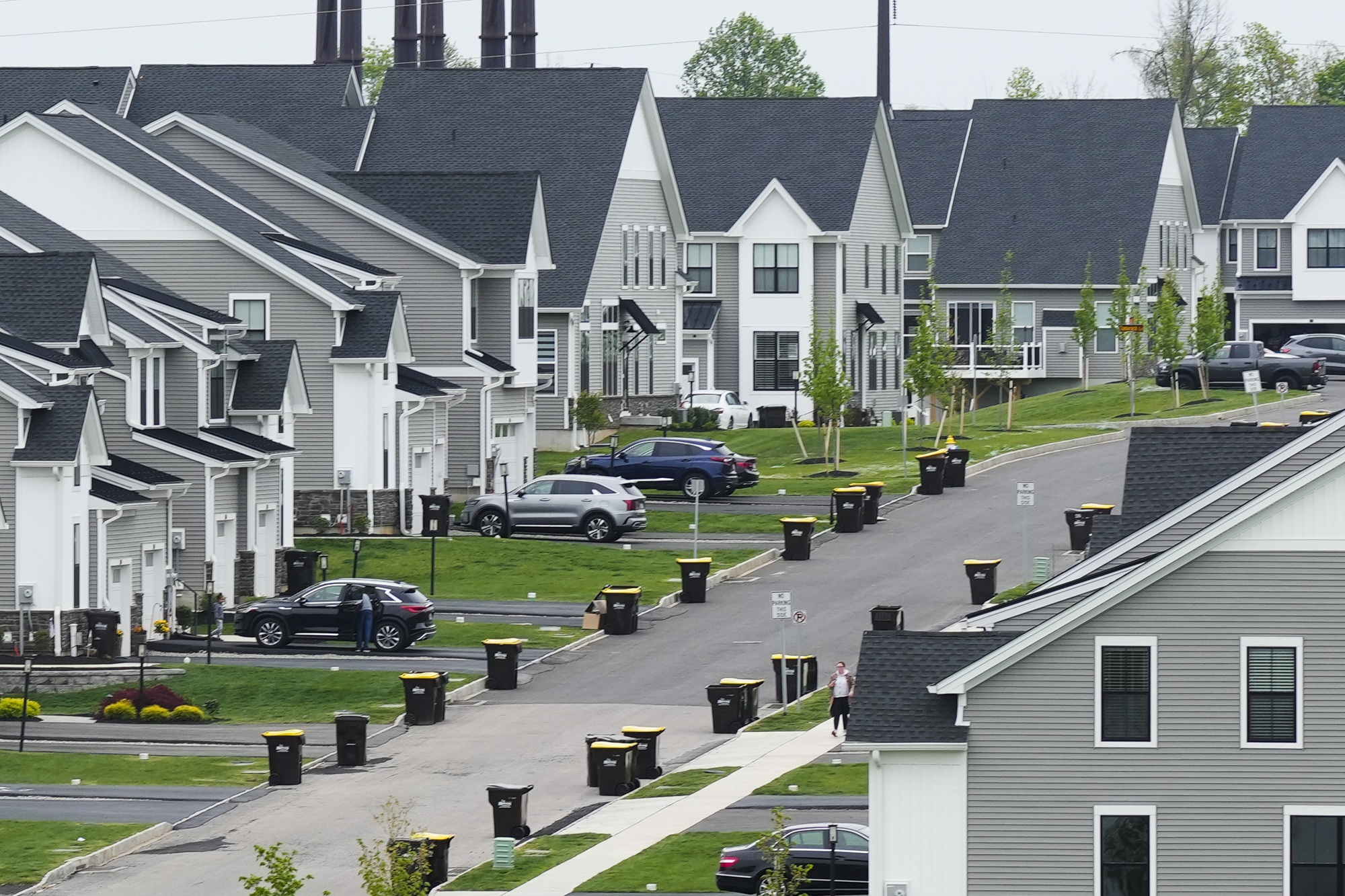
"caption": "FILE - A development of new homes in Eagleville, Pa., is shown on April 28, 2023. (AP Photo/Matt Rourke, File)",
"credit": "(AP Photo/Matt Rourke, File)",
"altTag": null,
"description": null,
"imgSizes": {
"thumbnail": {
"file": "https://cdn.kqed.org/wp-content/uploads/sites/10/2025/09/Mortgage_AP25254583581445-160x107.jpg",
"width": 160,
"height": 107,
"mimeType": "image/jpeg"
},
"1536x1536": {
"file": "https://cdn.kqed.org/wp-content/uploads/sites/10/2025/09/Mortgage_AP25254583581445-1536x1024.jpg",
"width": 1536,
"height": 1024,
"mimeType": "image/jpeg"
},
"post-thumbnail": {
"file": "https://cdn.kqed.org/wp-content/uploads/sites/10/2025/09/Mortgage_AP25254583581445-672x372.jpg",
"width": 672,
"height": 372,
"mimeType": "image/jpeg"
},
"twentyfourteen-full-width": {
"file": "https://cdn.kqed.org/wp-content/uploads/sites/10/2025/09/Mortgage_AP25254583581445-1038x576.jpg",
"width": 1038,
"height": 576,
"mimeType": "image/jpeg"
},
"kqedFullSize": {
"file": "https://cdn.kqed.org/wp-content/uploads/sites/10/2025/09/Mortgage_AP25254583581445.jpg",
"width": 2000,
"height": 1333
}
},
"isLoading": false,
"fetchFailed": false
},
"news_12055943": {
"type": "attachments",
"id": "news_12055943",
"meta": {
"index": "attachments_1716263798",
"site": "news",
"id": "12055943",
"found": true
},
"title": "250911_SPAREROOM_GH-10-KQED",
"publishDate": 1757951278,
"status": "inherit",
"parent": 0,
"modified": 1757951320,
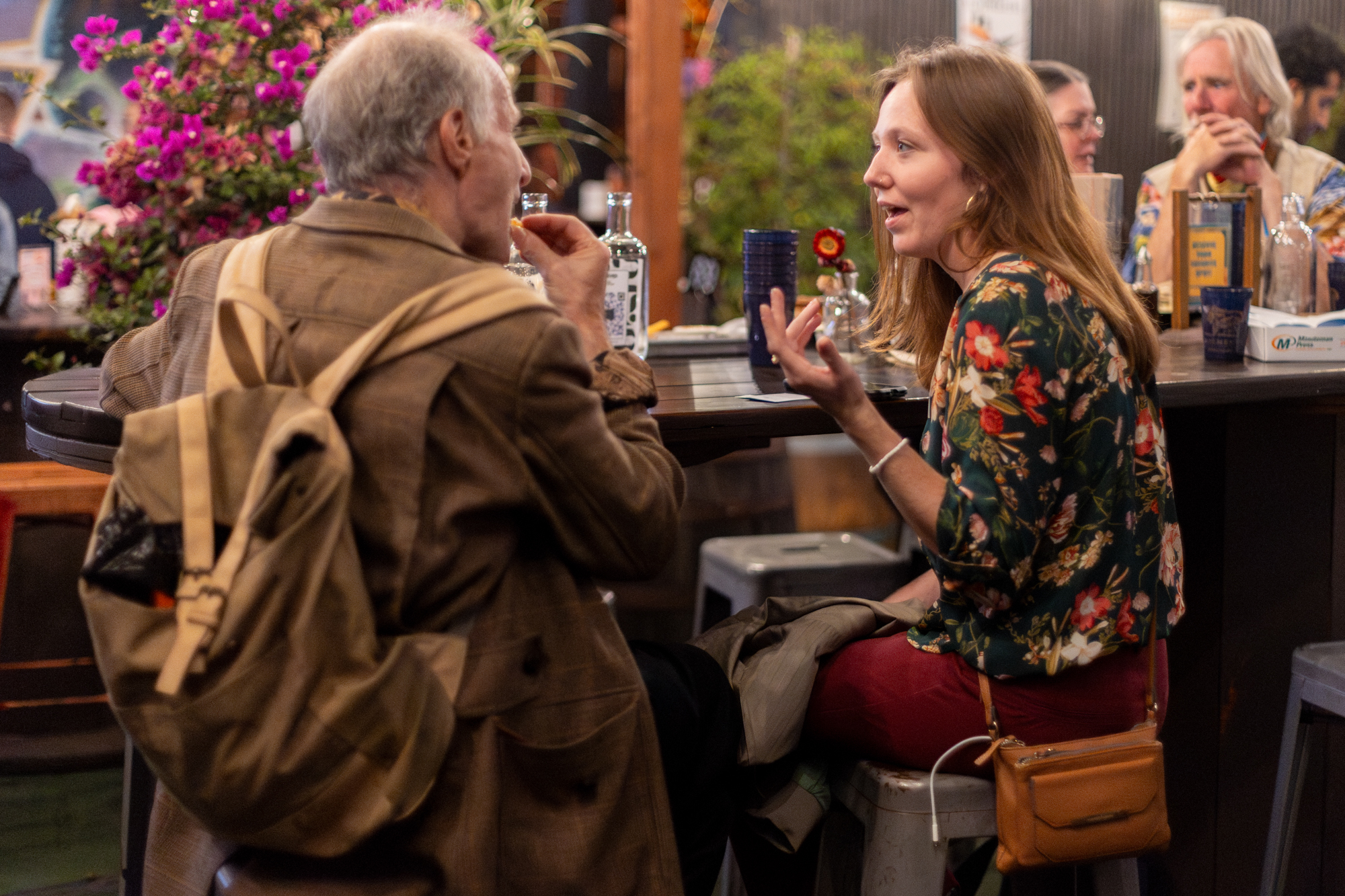
"caption": "Elaine Printy (right) talks with Steven S. during the SpareRoom speed-roommating event at Casements Bar in the Mission District on Sept. 11, 2025.",
"credit": "Gustavo Hernandez/KQED",
"altTag": null,
"description": null,
"imgSizes": {
"thumbnail": {
"file": "https://cdn.kqed.org/wp-content/uploads/sites/10/2025/09/250911_SPAREROOM_GH-10-KQED-1-160x107.jpg",
"width": 160,
"height": 107,
"mimeType": "image/jpeg"
},
"1536x1536": {
"file": "https://cdn.kqed.org/wp-content/uploads/sites/10/2025/09/250911_SPAREROOM_GH-10-KQED-1-1536x1024.jpg",
"width": 1536,
"height": 1024,
"mimeType": "image/jpeg"
},
"post-thumbnail": {
"file": "https://cdn.kqed.org/wp-content/uploads/sites/10/2025/09/250911_SPAREROOM_GH-10-KQED-1-672x372.jpg",
"width": 672,
"height": 372,
"mimeType": "image/jpeg"
},
"twentyfourteen-full-width": {
"file": "https://cdn.kqed.org/wp-content/uploads/sites/10/2025/09/250911_SPAREROOM_GH-10-KQED-1-1038x576.jpg",
"width": 1038,
"height": 576,
"mimeType": "image/jpeg"
},
"kqedFullSize": {
"file": "https://cdn.kqed.org/wp-content/uploads/sites/10/2025/09/250911_SPAREROOM_GH-10-KQED-1.jpg",
"width": 2000,
"height": 1333
}
},
"isLoading": false,
"fetchFailed": false
},
"news_12056154": {
"type": "attachments",
"id": "news_12056154",
"meta": {
"index": "attachments_1716263798",
"site": "news",
"id": "12056154",
"found": true
},
"title": "250916-SAFE TASKFORCE-MD-04-KQED",
"publishDate": 1758054367,
"status": "inherit",
"parent": 0,
"modified": 1758054408,
"caption": "Crews work to clear out an encampment next to the 101 Freeway in San Francisco on Sept. 16, 2025.",
"credit": "Martin do Nascimento/KQED",
"altTag": null,
"description": null,
"imgSizes": {
"thumbnail": {
"file": "https://cdn.kqed.org/wp-content/uploads/sites/10/2025/09/250916-SAFE-TASKFORCE-MD-04-KQED-160x107.jpg",
"width": 160,
"height": 107,
"mimeType": "image/jpeg"
},
"1536x1536": {
"file": "https://cdn.kqed.org/wp-content/uploads/sites/10/2025/09/250916-SAFE-TASKFORCE-MD-04-KQED-1536x1025.jpg",
"width": 1536,
"height": 1025,
"mimeType": "image/jpeg"
},
"post-thumbnail": {
"file": "https://cdn.kqed.org/wp-content/uploads/sites/10/2025/09/250916-SAFE-TASKFORCE-MD-04-KQED-672x372.jpg",
"width": 672,
"height": 372,
"mimeType": "image/jpeg"
},
"twentyfourteen-full-width": {
"file": "https://cdn.kqed.org/wp-content/uploads/sites/10/2025/09/250916-SAFE-TASKFORCE-MD-04-KQED-1038x576.jpg",
"width": 1038,
"height": 576,
"mimeType": "image/jpeg"
},
"kqedFullSize": {
"file": "https://cdn.kqed.org/wp-content/uploads/sites/10/2025/09/250916-SAFE-TASKFORCE-MD-04-KQED.jpg",
"width": 2000,
"height": 1334
}
},
"isLoading": false,
"fetchFailed": false
},
"news_12056016": {
"type": "attachments",
"id": "news_12056016",
"meta": {
"index": "attachments_1716263798",
"site": "news",
"id": "12056016",
"found": true
},
"title": "250915-CarWashHousing-10-BL",
"publishDate": 1757974571,
"status": "inherit",
"parent": 0,
"modified": 1757974607,
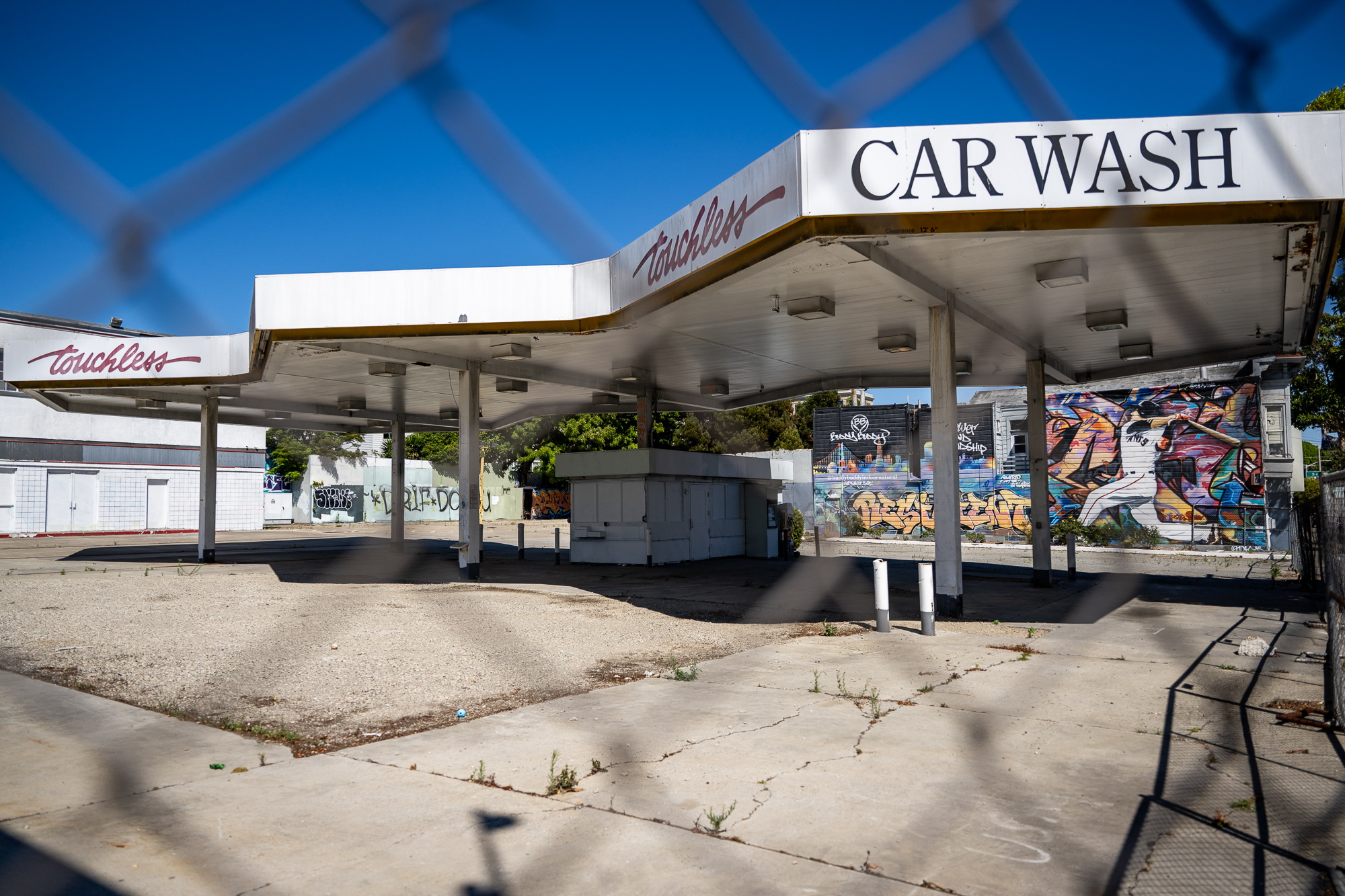
"caption": "The Touchless Car Wash property sits vacant at Divisadero and Oak streets in San Francisco on Sept. 15, 2025.",
"credit": "Beth LaBerge/KQED",
"altTag": null,
"description": null,
"imgSizes": {
"thumbnail": {
"file": "https://cdn.kqed.org/wp-content/uploads/sites/10/2025/09/250915-CarWashHousing-10-BL-160x107.jpg",
"width": 160,
"height": 107,
"mimeType": "image/jpeg"
},
"1536x1536": {
"file": "https://cdn.kqed.org/wp-content/uploads/sites/10/2025/09/250915-CarWashHousing-10-BL-1536x1024.jpg",
"width": 1536,
"height": 1024,
"mimeType": "image/jpeg"
},
"post-thumbnail": {
"file": "https://cdn.kqed.org/wp-content/uploads/sites/10/2025/09/250915-CarWashHousing-10-BL-672x372.jpg",
"width": 672,
"height": 372,
"mimeType": "image/jpeg"
},
"twentyfourteen-full-width": {
"file": "https://cdn.kqed.org/wp-content/uploads/sites/10/2025/09/250915-CarWashHousing-10-BL-1038x576.jpg",
"width": 1038,
"height": 576,
"mimeType": "image/jpeg"
},
"kqedFullSize": {
"file": "https://cdn.kqed.org/wp-content/uploads/sites/10/2025/09/250915-CarWashHousing-10-BL.jpg",
"width": 2000,
"height": 1333
}
},
"isLoading": false,
"fetchFailed": false
},
"news_12055396": {
"type": "attachments",
"id": "news_12055396",
"meta": {
"index": "attachments_1716263798",
"site": "news",
"id": "12055396",
"found": true
},
"title": "MahanNewsom1",
"publishDate": 1757461383,
"status": "inherit",
"parent": 12055284,
"modified": 1757461543,
"caption": "Gov. Gavin Newsom’s popularity has surged as he has battled with President Donald Trump. But San José Mayor Matt Mahan (left) says \"trolling Trump\" won’t be key to success for Democrats. ",
"credit": "Joseph Geha/KQED; Rich Pedroncelli/AP Photo",
"altTag": null,
"description": null,
"imgSizes": {
"thumbnail": {
"file": "https://cdn.kqed.org/wp-content/uploads/sites/10/2025/09/MahanNewsom1-160x107.jpg",
"width": 160,
"height": 107,
"mimeType": "image/jpeg"
},
"1536x1536": {
"file": "https://cdn.kqed.org/wp-content/uploads/sites/10/2025/09/MahanNewsom1-1536x1024.jpg",
"width": 1536,
"height": 1024,
"mimeType": "image/jpeg"
},
"post-thumbnail": {
"file": "https://cdn.kqed.org/wp-content/uploads/sites/10/2025/09/MahanNewsom1-672x372.jpg",
"width": 672,
"height": 372,
"mimeType": "image/jpeg"
},
"twentyfourteen-full-width": {
"file": "https://cdn.kqed.org/wp-content/uploads/sites/10/2025/09/MahanNewsom1-1038x576.jpg",
"width": 1038,
"height": 576,
"mimeType": "image/jpeg"
},
"kqedFullSize": {
"file": "https://cdn.kqed.org/wp-content/uploads/sites/10/2025/09/MahanNewsom1.jpg",
"width": 2000,
"height": 1333
}
},
"isLoading": false,
"fetchFailed": false
},
"news_12053762": {
"type": "attachments",
"id": "news_12053762",
"meta": {
"index": "attachments_1716263798",
"site": "news",
"id": "12053762",
"found": true
},
"title": "250820-HOUSINGFIRST_02100_TV-KQED",
"publishDate": 1756230690,
"status": "inherit",
"parent": 0,
"modified": 1756231387,
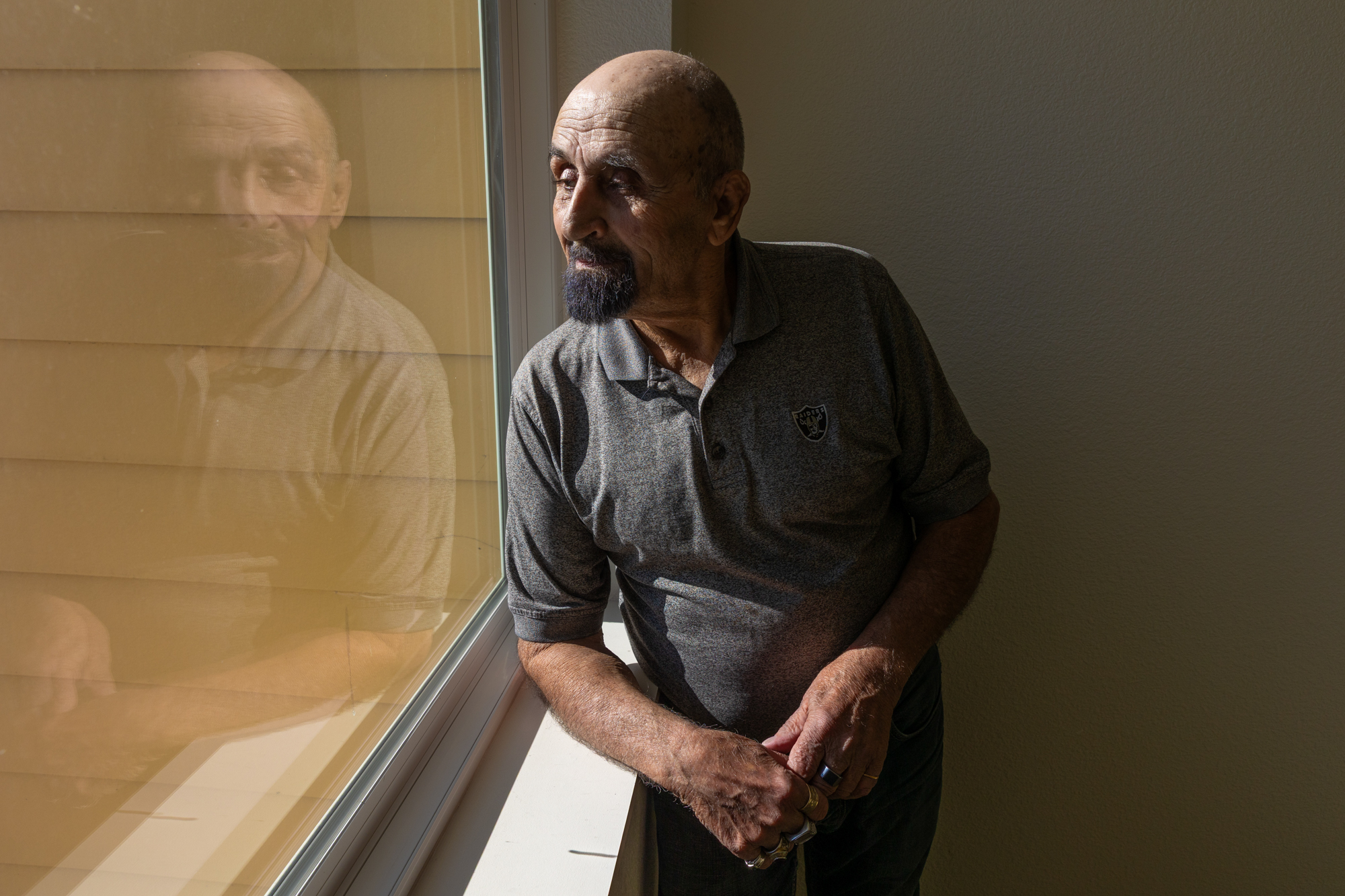
"caption": "William Wade, a formerly homeless veteran housed through the HUD-Veterans Affairs Supportive Housing program, poses for a portrait at the Laguna Commons supportive housing in Fremont on Aug. 20, 2025.",
"credit": "Tâm Vũ/KQED",
"altTag": null,
"description": null,
"imgSizes": {
"thumbnail": {
"file": "https://cdn.kqed.org/wp-content/uploads/sites/10/2025/08/250820-HOUSINGFIRST_02100_TV-KQED-160x107.jpg",
"width": 160,
"height": 107,
"mimeType": "image/jpeg"
},
"1536x1536": {
"file": "https://cdn.kqed.org/wp-content/uploads/sites/10/2025/08/250820-HOUSINGFIRST_02100_TV-KQED-1536x1024.jpg",
"width": 1536,
"height": 1024,
"mimeType": "image/jpeg"
},
"post-thumbnail": {
"file": "https://cdn.kqed.org/wp-content/uploads/sites/10/2025/08/250820-HOUSINGFIRST_02100_TV-KQED-672x372.jpg",
"width": 672,
"height": 372,
"mimeType": "image/jpeg"
},
"twentyfourteen-full-width": {
"file": "https://cdn.kqed.org/wp-content/uploads/sites/10/2025/08/250820-HOUSINGFIRST_02100_TV-KQED-1038x576.jpg",
"width": 1038,
"height": 576,
"mimeType": "image/jpeg"
},
"kqedFullSize": {
"file": "https://cdn.kqed.org/wp-content/uploads/sites/10/2025/08/250820-HOUSINGFIRST_02100_TV-KQED.jpg",
"width": 2000,
"height": 1333
}
},
"isLoading": false,
"fetchFailed": false
}
},
"audioPlayerReducer": {
"postId": "stream_live",
"isPaused": true,
"isPlaying": false,
"pfsActive": false,
"pledgeModalIsOpen": true,
"playerDrawerIsOpen": false,
"liveAudioPlayStartedAt": 0,
"liveAudioPlayContext": ""
},
"authorsReducer": {
"byline_news_12057863": {
"type": "authors",
"id": "byline_news_12057863",
"meta": {
"override": true
},
"slug": "byline_news_12057863",
"name": "Ben Christopher, CalMatters",
"isLoading": false
},
"byline_news_12056605": {
"type": "authors",
"id": "byline_news_12056605",
"meta": {
"override": true
},
"slug": "byline_news_12056605",
"name": "Alex Veiga, The Associated Press",
"isLoading": false
},
"gmarzorati": {
"type": "authors",
"id": "227",
"meta": {
"index": "authors_1716337520",
"id": "227",
"found": true
},
"name": "Guy Marzorati",
"firstName": "Guy",
"lastName": "Marzorati",
"slug": "gmarzorati",
"email": "gmarzorati@KQED.org",
"display_author_email": true,
"staff_mastheads": [
"news"
],
"title": "Correspondent",
"bio": "Guy Marzorati is a correspondent on KQED's California Politics and Government Desk, based in San Jose. A graduate of Santa Clara University, Guy joined KQED in 2013. He reports on state and local politics and produces KQED's digital voter guide.",
"avatar": "https://secure.gravatar.com/avatar/e7038b8dbfd55b104369b76b1cd0b9de?s=600&d=blank&r=g",
"twitter": "guymarzorati",
"facebook": null,
"instagram": null,
"linkedin": null,
"sites": [
{
"site": "",
"roles": [
"editor"
]
},
{
"site": "news",
"roles": [
"editor"
]
},
{
"site": "science",
"roles": [
"editor"
]
},
{
"site": "forum",
"roles": [
"editor"
]
},
{
"site": "elections",
"roles": [
"editor"
]
},
{
"site": "liveblog",
"roles": [
"editor"
]
}
],
"headData": {
"title": "Guy Marzorati | KQED",
"description": "Correspondent",
"ogImgSrc": "https://secure.gravatar.com/avatar/e7038b8dbfd55b104369b76b1cd0b9de?s=600&d=blank&r=g",
"twImgSrc": "https://secure.gravatar.com/avatar/e7038b8dbfd55b104369b76b1cd0b9de?s=600&d=blank&r=g"
},
"isLoading": false,
"link": "/author/gmarzorati"
},
"scottshafer": {
"type": "authors",
"id": "255",
"meta": {
"index": "authors_1716337520",
"id": "255",
"found": true
},
"name": "Scott Shafer",
"firstName": "Scott",
"lastName": "Shafer",
"slug": "scottshafer",
"email": "sshafer@kqed.org",
"display_author_email": false,
"staff_mastheads": [
"news"
],
"title": "KQED Contributor",
"bio": "Scott Shafer is a senior editor with the KQED Politics and Government desk. He is co-host of Political Breakdown, the award-winning radio show and podcast with a personal take on the world of politics. Scott came to KQED in 1998 to host the statewide\u003cem> California Report\u003c/em>. Prior to that he had extended stints in politics and government\u003cem>.\u003c/em> He uses that inside experience at KQED in his, reporting, hosting and analysis for the politics desk. Scott collaborated \u003cem>Political Breakdown a\u003c/em>nd on \u003cem>The Political Mind of Jerry Brown, \u003c/em>an eight-part series about the life and extraordinary political career of the former governor. For fun, he plays water polo with the San Francisco Tsunami.",
"avatar": "https://secure.gravatar.com/avatar/a62ebae45b79d7aed1a39a0e3bf68104?s=600&d=blank&r=g",
"twitter": "scottshafer",
"bluesky": null,
"facebook": null,
"instagram": null,
"linkedin": null,
"sites": [
{
"site": "news",
"roles": [
"editor"
]
},
{
"site": "stateofhealth",
"roles": [
"author"
]
},
{
"site": "science",
"roles": [
"author"
]
},
{
"site": "forum",
"roles": [
"subscriber"
]
},
{
"site": "liveblog",
"roles": [
"author"
]
}
],
"headData": {
"title": "Scott Shafer | KQED",
"description": "KQED Contributor",
"ogImgSrc": "https://secure.gravatar.com/avatar/a62ebae45b79d7aed1a39a0e3bf68104?s=600&d=blank&r=g",
"twImgSrc": "https://secure.gravatar.com/avatar/a62ebae45b79d7aed1a39a0e3bf68104?s=600&d=blank&r=g"
},
"isLoading": false,
"link": "/author/scottshafer"
},
"mlagos": {
"type": "authors",
"id": "3239",
"meta": {
"index": "authors_1716337520",
"id": "3239",
"found": true
},
"name": "Marisa Lagos",
"firstName": "Marisa",
"lastName": "Lagos",
"slug": "mlagos",
"email": "mlagos@kqed.org",
"display_author_email": false,
"staff_mastheads": [
"news"
],
"title": "KQED Contributor",
"bio": "Marisa Lagos is a correspondent for KQED’s California Politics and Government Desk and co-hosts the award-winning show and podcast, Political Breakdown. At KQED, Lagos also conducts reporting, analysis and investigations into state, local and national politics for radio, TV, online and onstage. In 2022, she and co-host, Scott Shafer, moderated the only gubernatorial debate in California. In 2020, the \u003ci>Washington Post\u003c/i> named her one of the top political journalists in California; she was nominated for a Peabody and won several other awards for her work investigating the 2017 California wildfires. She has worked at the \u003ci>San Francisco Chronicle\u003c/i>, \u003ci>San Francisco Examiner\u003c/i> and \u003ci>Los Angeles Times\u003c/i>. A UC Santa Barbara graduate, she lives in San Francisco with her two sons and husband.",
"avatar": "https://secure.gravatar.com/avatar/a261a0d3696fc066871ef96b85b5e7d2?s=600&d=blank&r=g",
"twitter": "@mlagos",
"facebook": null,
"instagram": null,
"linkedin": null,
"sites": [
{
"site": "arts",
"roles": [
"author"
]
},
{
"site": "news",
"roles": [
"editor"
]
},
{
"site": "science",
"roles": [
"editor"
]
},
{
"site": "forum",
"roles": [
"author"
]
},
{
"site": "liveblog",
"roles": [
"author"
]
}
],
"headData": {
"title": "Marisa Lagos | KQED",
"description": "KQED Contributor",
"ogImgSrc": "https://secure.gravatar.com/avatar/a261a0d3696fc066871ef96b85b5e7d2?s=600&d=blank&r=g",
"twImgSrc": "https://secure.gravatar.com/avatar/a261a0d3696fc066871ef96b85b5e7d2?s=600&d=blank&r=g"
},
"isLoading": false,
"link": "/author/mlagos"
},
"vrancano": {
"type": "authors",
"id": "11276",
"meta": {
"index": "authors_1716337520",
"id": "11276",
"found": true
},
"name": "Vanessa Rancaño",
"firstName": "Vanessa",
"lastName": "Rancaño",
"slug": "vrancano",
"email": "vrancano@kqed.org",
"display_author_email": false,
"staff_mastheads": [
"news"
],
"title": "Reporter",
"bio": "Vanessa Rancaño is a features reporter for KQED. She’s also covered homelessness and education for the station and reported from the Central Valley. Her work has aired across public radio, from flagship national news shows to longform narrative podcasts. Before taking up a mic, she worked as a freelance print journalist. She’s been recognized with a number of national and regional awards. Vanessa grew up in California's Central Valley. She's a former NPR Kroc Fellow, and a graduate of the UC Berkeley Graduate School of Journalism.",
"avatar": "https://secure.gravatar.com/avatar/b3a383dfb0e7ee1c17568f2cf067904ab654d6e3de9743fc661f3c788ade1bed?s=600&d=blank&r=g",
"twitter": "vanessarancano",
"bluesky": null,
"facebook": null,
"instagram": null,
"linkedin": null,
"sites": [
{
"site": "arts",
"roles": [
"editor"
]
},
{
"site": "news",
"roles": [
"editor"
]
},
{
"site": "liveblog",
"roles": [
"contributor"
]
}
],
"headData": {
"title": "Vanessa Rancaño | KQED",
"description": "Reporter",
"ogImgSrc": "https://secure.gravatar.com/avatar/b3a383dfb0e7ee1c17568f2cf067904ab654d6e3de9743fc661f3c788ade1bed?s=600&d=blank&r=g",
"twImgSrc": "https://secure.gravatar.com/avatar/b3a383dfb0e7ee1c17568f2cf067904ab654d6e3de9743fc661f3c788ade1bed?s=600&d=blank&r=g"
},
"isLoading": false,
"link": "/author/vrancano"
},
"ebaldassari": {
"type": "authors",
"id": "11652",
"meta": {
"index": "authors_1716337520",
"id": "11652",
"found": true
},
"name": "Erin Baldassari",
"firstName": "Erin",
"lastName": "Baldassari",
"slug": "ebaldassari",
"email": "ebaldassari@KQED.org",
"display_author_email": true,
"staff_mastheads": [
"news"
],
"title": "Staff Writer",
"bio": "Erin Baldassari covers housing for KQED. She's a former print journalist and most recently worked as the transportation reporter for the \u003cem>Mercury News\u003c/em> and \u003cem>East Bay Times. \u003c/em>There, she focused on how the Bay Area’s housing shortage has changed the way people move around the region. She also served on the \u003cem>East Bay Times\u003c/em>’ 2017 Pulitzer Prize-winning team for coverage of the Ghost Ship Fire in Oakland. Prior to that, Erin worked as a breaking news and general assignment reporter for a variety of outlets in the Bay Area and the greater Boston area. A Tufts University alumna, Erin grew up in the foothills of the Sierra Nevada mountains and in Sonoma County. She is a life-long KQED listener.",
"avatar": "https://secure.gravatar.com/avatar/5e95cad64a8ca08288082212e199d2b0cbeb4fd8e8ef5339395f361032bbe005?s=600&d=blank&r=g",
"twitter": "e_baldi",
"bluesky": null,
"facebook": null,
"instagram": null,
"linkedin": null,
"sites": [
{
"site": "news",
"roles": [
"edit_others_posts",
"editor"
]
},
{
"site": "science",
"roles": [
"editor"
]
},
{
"site": "liveblog",
"roles": [
"editor"
]
}
],
"headData": {
"title": "Erin Baldassari | KQED",
"description": "Staff Writer",
"ogImgSrc": "https://secure.gravatar.com/avatar/5e95cad64a8ca08288082212e199d2b0cbeb4fd8e8ef5339395f361032bbe005?s=600&d=blank&r=g",
"twImgSrc": "https://secure.gravatar.com/avatar/5e95cad64a8ca08288082212e199d2b0cbeb4fd8e8ef5339395f361032bbe005?s=600&d=blank&r=g"
},
"isLoading": false,
"link": "/author/ebaldassari"
},
"abandlamudi": {
"type": "authors",
"id": "11672",
"meta": {
"index": "authors_1716337520",
"id": "11672",
"found": true
},
"name": "Adhiti Bandlamudi",
"firstName": "Adhiti",
"lastName": "Bandlamudi",
"slug": "abandlamudi",
"email": "abandlamudi@kqed.org",
"display_author_email": false,
"staff_mastheads": [
"news"
],
"title": "KQED Housing Reporter",
"bio": "Adhiti Bandlamudi reports for KQED's Housing desk. She focuses on how housing gets built across the Bay Area. Before joining KQED in 2020, she reported for WUNC in Durham, North Carolina, WABE in Atlanta, Georgia and Capital Public Radio in Sacramento. In 2017, she was awarded a Kroc Fellowship at NPR where she reported on everything from sprinkles to the Golden State Killer's arrest. When she's not reporting, she's baking new recipes in her kitchen or watching movies with friends and family. She's originally from Georgia and has strong opinions about Great British Bake Off.",
"avatar": "https://secure.gravatar.com/avatar/868129c8b257bb99a3500e2c86a65400?s=600&d=mm&r=g",
"twitter": "oddity_adhiti",
"facebook": null,
"instagram": null,
"linkedin": null,
"sites": [
{
"site": "arts",
"roles": [
"author"
]
},
{
"site": "news",
"roles": [
"editor"
]
},
{
"site": "liveblog",
"roles": [
"author"
]
}
],
"headData": {
"title": "Adhiti Bandlamudi | KQED",
"description": "KQED Housing Reporter",
"ogImgSrc": "https://secure.gravatar.com/avatar/868129c8b257bb99a3500e2c86a65400?s=600&d=mm&r=g",
"twImgSrc": "https://secure.gravatar.com/avatar/868129c8b257bb99a3500e2c86a65400?s=600&d=mm&r=g"
},
"isLoading": false,
"link": "/author/abandlamudi"
},
"mbolanos": {
"type": "authors",
"id": "11895",
"meta": {
"index": "authors_1716337520",
"id": "11895",
"found": true
},
"name": "Madi Bolaños",
"firstName": "Madi",
"lastName": "Bolaños",
"slug": "mbolanos",
"email": "mbolanos@kqed.org",
"display_author_email": false,
"staff_mastheads": [],
"title": "KQED Contributor",
"bio": null,
"avatar": "https://secure.gravatar.com/avatar/e6df5601c1f2d951e46a3fb42764330f?s=600&d=blank&r=g",
"twitter": null,
"bluesky": null,
"facebook": null,
"instagram": null,
"linkedin": null,
"sites": [
{
"site": "news",
"roles": [
"author"
]
}
],
"headData": {
"title": "Madi Bolaños | KQED",
"description": "KQED Contributor",
"ogImgSrc": "https://secure.gravatar.com/avatar/e6df5601c1f2d951e46a3fb42764330f?s=600&d=blank&r=g",
"twImgSrc": "https://secure.gravatar.com/avatar/e6df5601c1f2d951e46a3fb42764330f?s=600&d=blank&r=g"
},
"isLoading": false,
"link": "/author/mbolanos"
},
"kdebenedetti": {
"type": "authors",
"id": "11913",
"meta": {
"index": "authors_1716337520",
"id": "11913",
"found": true
},
"name": "Katie DeBenedetti",
"firstName": "Katie",
"lastName": "DeBenedetti",
"slug": "kdebenedetti",
"email": "kdebenedetti@kqed.org",
"display_author_email": false,
"staff_mastheads": [
"news",
"science"
],
"title": "KQED Contributor",
"bio": "Katie DeBenedetti is a digital reporter covering daily news for the Express Desk. Prior to joining KQED as a culture reporting intern in January 2024, she covered education and city government for the Napa Valley Register.",
"avatar": "https://secure.gravatar.com/avatar/6e31073cb8f7e4214ab03f42771d0f45?s=600&d=blank&r=g",
"twitter": null,
"facebook": null,
"instagram": null,
"linkedin": null,
"sites": [
{
"site": "news",
"roles": [
"author"
]
},
{
"site": "science",
"roles": [
"author"
]
},
{
"site": "liveblog",
"roles": [
"author"
]
}
],
"headData": {
"title": "Katie DeBenedetti | KQED",
"description": "KQED Contributor",
"ogImgSrc": "https://secure.gravatar.com/avatar/6e31073cb8f7e4214ab03f42771d0f45?s=600&d=blank&r=g",
"twImgSrc": "https://secure.gravatar.com/avatar/6e31073cb8f7e4214ab03f42771d0f45?s=600&d=blank&r=g"
},
"isLoading": false,
"link": "/author/kdebenedetti"
},
"aaliahmad": {
"type": "authors",
"id": "11986",
"meta": {
"index": "authors_1716337520",
"id": "11986",
"found": true
},
"name": "Ayah Ali-Ahmad",
"firstName": "Ayah",
"lastName": "Ali-Ahmad",
"slug": "aaliahmad",
"email": "aaliahmad@KQED.org",
"display_author_email": false,
"staff_mastheads": [],
"title": "KQED Contributor",
"bio": null,
"avatar": "https://secure.gravatar.com/avatar/1cf54f187a5e1064b2cfef3f3d2f1e4f93e453395d56912aca6382a6071ec3ed?s=600&d=blank&r=g",
"twitter": "ayahaliahmad",
"bluesky": null,
"facebook": null,
"instagram": null,
"linkedin": null,
"sites": [
{
"site": "news",
"roles": [
"subscriber"
]
}
],
"headData": {
"title": "Ayah Ali-Ahmad | KQED",
"description": "KQED Contributor",
"ogImgSrc": "https://secure.gravatar.com/avatar/1cf54f187a5e1064b2cfef3f3d2f1e4f93e453395d56912aca6382a6071ec3ed?s=600&d=blank&r=g",
"twImgSrc": "https://secure.gravatar.com/avatar/1cf54f187a5e1064b2cfef3f3d2f1e4f93e453395d56912aca6382a6071ec3ed?s=600&d=blank&r=g"
},
"isLoading": false,
"link": "/author/aaliahmad"
}
},
"pagesReducer": {
"news_tag_housing": {
"type": "terms",
"id": "news_1775",
"meta": {
"index": "terms_1716263798",
"site": "news",
"id": "1775",
"score": 7.0360975
},
"featImg": null,
"name": "housing",
"description": null,
"taxonomy": "tag",
"headData": {
"twImgId": null,
"twTitle": null,
"ogTitle": null,
"ogImgId": null,
"twDescription": null,
"description": null,
"title": "housing Archives | KQED News",
"ogDescription": null
},
"ttid": 1790,
"slug": "housing",
"isLoading": false,
"title": "housing",
"pageMeta": {
"site": "news",
"WpPageTemplate": "page-topic-editorial",
"currentPage": 12
},
"blocks": [
{
"blockName": "kqed/post-list",
"attrs": {
"layout": "cardArticle2",
"query": "posts/news?tag=housing",
"seeMore": false,
"paginated": true,
"page": 12
}
},
{
"blockName": "kqed/ad"
}
]
}
},
"pfsSessionReducer": {},
"postsReducer": {
"stream_live": {
"type": "live",
"id": "stream_live",
"audioUrl": "https://streams.kqed.org/kqedradio",
"title": "Live Stream",
"excerpt": "Live Stream information currently unavailable.",
"link": "/radio",
"featImg": "",
"label": {
"name": "KQED Live",
"link": "/"
}
},
"stream_kqedNewscast": {
"type": "posts",
"id": "stream_kqedNewscast",
"audioUrl": "https://www.kqed.org/.stream/anon/radio/RDnews/newscast.mp3?_=1",
"title": "KQED Newscast",
"featImg": "",
"label": {
"name": "88.5 FM",
"link": "/"
}
},
"news_12058015": {
"type": "posts",
"id": "news_12058015",
"meta": {
"index": "posts_1716263798",
"site": "news",
"id": "12058015",
"score": null,
"sort": [
1759770054000
]
},
"guestAuthors": [],
"slug": "in-san-rafael-residents-of-a-mobile-home-park-are-fighting-to-keep-their-homes",
"title": "In San Rafael, Residents of a Mobile Home Park Are Fighting to Keep Their Homes",
"publishDate": 1759770054,
"format": "standard",
"headTitle": "In San Rafael, Residents of a Mobile Home Park Are Fighting to Keep Their Homes | KQED",
"labelTerm": {
"site": "news"
},
"content": "\u003cp>Tucked between Highway 101, a BevMo and a car dealership, about 45 RV parking spots line both sides of a one-lane road.\u003c/p>\n\u003cp>The homes at the RV Park of San Rafael are tiny, some decorated with potted plants, most sit behind short fences. On a recent evening, children ran in and out of the park’s laundromat as their parents threw piles of clothes into washing machines.\u003c/p>\n\u003cp>Yessica Pérez was seven when her parents moved the family there.\u003c/p>\n\u003cp>[ad fullwidth]\u003c/p>\n\u003cp>“In the beginning, I think we were the only children in the neighborhood because there were a lot of seniors living here,” she said. “Then, just little by little, there were a lot of Hispanic kids running around here, so it was really nice.”\u003c/p>\n\u003cp>That was nearly two decades ago. Back then, rent was just $300 a month, she said. It was affordable enough that her parents could eventually buy a second home in the park.\u003c/p>\n\u003cfigure id=\"attachment_12057944\" class=\"wp-caption aligncenter\" style=\"max-width: 2000px\">\u003ca href=\"https://cdn.kqed.org/wp-content/uploads/sites/10/2025/09/250926-HARMONYSANRAFAEL00526_TV-KQED.jpg\">\u003cimg loading=\"lazy\" decoding=\"async\" class=\"size-full wp-image-12057944\" src=\"https://cdn.kqed.org/wp-content/uploads/sites/10/2025/09/250926-HARMONYSANRAFAEL00526_TV-KQED.jpg\" alt=\"\" width=\"2000\" height=\"1333\" srcset=\"https://cdn.kqed.org/wp-content/uploads/sites/10/2025/09/250926-HARMONYSANRAFAEL00526_TV-KQED.jpg 2000w, https://cdn.kqed.org/wp-content/uploads/sites/10/2025/09/250926-HARMONYSANRAFAEL00526_TV-KQED-160x107.jpg 160w, https://cdn.kqed.org/wp-content/uploads/sites/10/2025/09/250926-HARMONYSANRAFAEL00526_TV-KQED-1536x1024.jpg 1536w\" sizes=\"auto, (max-width: 2000px) 100vw, 2000px\">\u003c/a>\u003cfigcaption class=\"wp-caption-text\">One of the family RV homes that Yessica Pérez’s family owns stands on 742 Francisco Blvd. West in San Rafael on Sept. 26, 2025. \u003ccite>(Tâm Vũ/KQED)\u003c/cite>\u003c/figcaption>\u003c/figure>\n\u003cp>Today, Pérez lives there with her sister, surrounded by memories of the community she grew up in. Life at the park was peaceful until 2021, when Harmony Communities took over the park’s management, Pérez said.\u003c/p>\n\u003cp>Her family was among several others to receive 60-day eviction notices for both properties for violations that included storing a broom outside and having a porch attached to their home.\u003c/p>\n\u003cp>“We would fix the violation,” she said. “Seven days later, we would receive another violation on top of another violation.”\u003c/p>\n\u003cp>Pérez and her family fought back, challenging the eviction notices, along with other residents at the park. What followed has been a years-long battle that last month culminated in a lawsuit against Harmony Communities and the park’s owner, accusing them of harassment, illegal rent increases, and violating the terms of a past legal settlement.\u003c/p>\n\u003cp>For residents, the lawsuit represents a turning point in their fight to defend one of Marin County’s few affordable housing options in a region where rents are among the \u003ca href=\"https://www.attomdata.com/news/most-recent/top-10-counties-with-the-highest-rental-rates-in-2024/\">highest in the nation\u003c/a>.[aside postID=news_12034694 hero='https://cdn.kqed.org/wp-content/uploads/sites/10/2025/04/F84AEA38-15C9-48B4-905A-8EA8C37A0B0F-SCALED-KQED-1020x765.jpg']“We’ve heard what they’ve done in other places. We know what they do in other parks,” said Herman Privette, who’s lived at the park since 1976, adding that he has little sympathy for the company.\u003c/p>\n\u003cp>California Rural Legal Assistance Attorney Mariah Thompson, who is helping represent the park residents, said what’s happening in San Rafael mirrors patterns she’s seen at other parks Harmony owns or manages across California.\u003c/p>\n\u003cp>“We see the same tactics playing out over and over again, with slight variation,” she said. “The major themes are attempts to increase rent beyond what is permissible by rent control or deny that local rent control applies to specific parks, spaces, or homes based on what they see as perceived loopholes in the laws.”\u003c/p>\n\u003cp>When Harmony first took over management of the RV Park of San Rafael, residents say the company issued repeated violation notices for minor infractions, tried raising rents beyond legal limits, and filed eviction notices. In a statement to KQED, Harmony disputed those claims.\u003c/p>\n\u003cp>Nick Ubaldi, a spokesperson for Harmony, said in an email that the eviction notices focused on health and safety issues and the company continues “to welcome low-income families into the park.”\u003c/p>\n\u003cp>“These notices address severe health and safety violations to prevent incidents,” Ubaldi wrote. “We would be negligent not to enforce compliance with serious health and safety codes.”\u003c/p>\n\u003cfigure id=\"attachment_12058543\" class=\"wp-caption aligncenter\" style=\"max-width: 2000px\">\u003ca href=\"https://cdn.kqed.org/wp-content/uploads/sites/10/2025/10/251001-HARMONYSANRAFAEL_00458_TV-KQED.jpg\">\u003cimg loading=\"lazy\" decoding=\"async\" class=\"size-full wp-image-12058543\" src=\"https://cdn.kqed.org/wp-content/uploads/sites/10/2025/10/251001-HARMONYSANRAFAEL_00458_TV-KQED.jpg\" alt=\"\" width=\"2000\" height=\"1333\" srcset=\"https://cdn.kqed.org/wp-content/uploads/sites/10/2025/10/251001-HARMONYSANRAFAEL_00458_TV-KQED.jpg 2000w, https://cdn.kqed.org/wp-content/uploads/sites/10/2025/10/251001-HARMONYSANRAFAEL_00458_TV-KQED-160x107.jpg 160w, https://cdn.kqed.org/wp-content/uploads/sites/10/2025/10/251001-HARMONYSANRAFAEL_00458_TV-KQED-1536x1024.jpg 1536w\" sizes=\"auto, (max-width: 2000px) 100vw, 2000px\">\u003c/a>\u003cfigcaption class=\"wp-caption-text\">Herman Privette, poses for a portrait at RV home in San Rafael on Oct. 1, 2025. Privette, who has lived in this San Rafael RV park for over 30 years, is fighting a possible eviction from Harmony Housing Development, which has recently taken new ownership of the properties. \u003ccite>(Tâm Vũ/KQED)\u003c/cite>\u003c/figcaption>\u003c/figure>\n\u003cp>But Legal Aid of Marin Attorney DeMarco García, who began helping families in July as co-counsel with California Rural Legal Assistance, said Harmony often singled out residents who were least likely to push back.\u003c/p>\n\u003cp>“They first started with the tenants that don’t speak a lick of English,” he said. “People were afraid, with everything going on with immigration, that they just stayed kind of hidden.”\u003c/p>\n\u003cp>Privette said he’d never seen the community shrink so much. Staring at the strip of road, he pointed to vacant spaces where families were either evicted or left.\u003c/p>\n\u003cp>“Starting with the one by the mail room, there’s an empty space there, and another where that truck is,” he said. “I’ve never seen it like this in all my years here.”\u003c/p>\n\u003cp>For decades, the community has been classified as a mobile home park. The designation means residents own their homes but rent the land underneath them, giving them protections under California’s Mobilehome Residency Law and the city’s rent control ordinance.[aside postID=news_11977464 hero='https://cdn.kqed.org/wp-content/uploads/sites/10/2024/02/IMG_2976-1020x765.jpg']Back in 2004, a Marin County Superior Court judge ruled that despite its name, the “RV park” was in fact a mobile home park, subject to local rent control. The court noted the park had been built in the 1940s, long before modern regulations on lot size and setbacks, and said those older “legacy conditions,” like narrow spaces, small lots, and additions, were legally grandfathered in.\u003c/p>\n\u003cp>Since then, the state’s housing department has also consistently treated the property as a mobile home park, and city zoning does not allow RV parks within San Rafael city limits.\u003c/p>\n\u003cp>So when Harmony raised rents beyond what the city’s ordinance allows, residents and city officials saw it as a direct violation of those long-standing protections. Ubaldi, of Harmony, disputes any violation occurred.\u003c/p>\n\u003cp>“We did not impose the rent increase,” Ubaldi wrote. “We requested it and sought a city hearing to determine a fair outcome.”\u003c/p>\n\u003cp>The city and Harmony went to court, kicking off a two-year legal battle. In 2023, the two sides reached a settlement that required Harmony to dismiss pending evictions and uphold rent-control protections. But by then, several families had already left the park, García said.\u003c/p>\n\u003cp>And Thompson said Harmony soon resumed the same practices.\u003c/p>\n\u003cp>\u003cstrong>“\u003c/strong>They start issuing these same notices,” she said. “For things that [the state’s Housing and Community Development Department] has come and done an inspection on and has said we’re all cleared.”\u003c/p>\n\u003cp>Thompson said she hopes the new lawsuit will force Harmony to finally comply with the settlement and ensure the company follows through on its promises to the community. According to court documents, residents are suing to protect their property rights as homeowners and to put an end to Harmony’s “unlawful business practices and displacement campaign.”\u003c/p>\n\u003cfigure id=\"attachment_12057940\" class=\"wp-caption aligncenter\" style=\"max-width: 2000px\">\u003ca href=\"https://cdn.kqed.org/wp-content/uploads/sites/10/2025/09/250926-HARMONYSANRAFAEL00183_TV-KQED.jpg\">\u003cimg loading=\"lazy\" decoding=\"async\" class=\"size-full wp-image-12057940\" src=\"https://cdn.kqed.org/wp-content/uploads/sites/10/2025/09/250926-HARMONYSANRAFAEL00183_TV-KQED.jpg\" alt=\"\" width=\"2000\" height=\"1333\" srcset=\"https://cdn.kqed.org/wp-content/uploads/sites/10/2025/09/250926-HARMONYSANRAFAEL00183_TV-KQED.jpg 2000w, https://cdn.kqed.org/wp-content/uploads/sites/10/2025/09/250926-HARMONYSANRAFAEL00183_TV-KQED-160x107.jpg 160w, https://cdn.kqed.org/wp-content/uploads/sites/10/2025/09/250926-HARMONYSANRAFAEL00183_TV-KQED-1536x1024.jpg 1536w\" sizes=\"auto, (max-width: 2000px) 100vw, 2000px\">\u003c/a>\u003cfigcaption class=\"wp-caption-text\">Yessica Pérez poses for a portrait in one of her family’s RV homes in San Rafael, on Sept. 26, 2025. \u003ccite>(Tâm Vũ/KQED)\u003c/cite>\u003c/figcaption>\u003c/figure>\n\u003cp>“Without this court’s assistance, [the residents] will likely lose their protections under rent control, if not lose their homes and community entirely,” the lawsuit reads.\u003c/p>\n\u003cp>For Pérez, each new eviction notice from Harmony chips away at the stability her parents hoped for when they first came to the United States.\u003c/p>\n\u003cp>“It’s difficult because they really thought this was gonna be a retirement home for them,” Pérez said.\u003c/p>\n\u003cp>But for neighbors like Privette, the lawsuit is about more than legal protections. It’s about preserving one of the few affordable places to live in Marin County.\u003c/p>\n\u003cp>“To live in your own place and be able to live with an affordable rent is something I would like to see more people have,” Privette said. “I’d be happy for other people to be as lucky as I’ve been.”\u003c/p>\n\u003cp>[ad floatright]\u003c/p>\n",
"blocks": [],
"excerpt": "Residents say Harmony Communities is using rent hikes and evictions to push families out of one of Marin County’s few affordable housing options.",
"status": "publish",
"parent": 0,
"modified": 1759948547,
"stats": {
"hasAudio": false,
"hasVideo": false,
"hasChartOrMap": false,
"iframeSrcs": [],
"hasGoogleForm": false,
"hasGallery": false,
"hasHearkenModule": false,
"hasPolis": false,
"paragraphCount": 34,
"wordCount": 1424
},
"headData": {
"title": "In San Rafael, Residents of a Mobile Home Park Are Fighting to Keep Their Homes | KQED",
"description": "Residents say Harmony Communities is using rent hikes and evictions to push families out of one of Marin County’s few affordable housing options.",
"ogTitle": "",
"ogDescription": "",
"ogImgId": "",
"twTitle": "",
"twDescription": "",
"twImgId": "",
"schema": {
"@context": "https://schema.org",
"@type": "NewsArticle",
"headline": "In San Rafael, Residents of a Mobile Home Park Are Fighting to Keep Their Homes",
"datePublished": "2025-10-06T10:00:54-07:00",
"dateModified": "2025-10-08T11:35:47-07:00",
"image": "https://cdn.kqed.org/wp-content/uploads/2020/02/KQED-OG-Image@1x.png",
"isAccessibleForFree": "True",
"publisher": {
"@type": "NewsMediaOrganization",
"@id": "https://www.kqed.org/#organization",
"name": "KQED",
"logo": "https://cdn.kqed.org/wp-content/uploads/2020/02/KQED-OG-Image@1x.png",
"url": "https://www.kqed.org",
"sameAs": [
"https://www.facebook.com/KQED",
"https://twitter.com/KQED",
"https://www.instagram.com/kqed/",
"https://www.tiktok.com/@kqedofficial",
"https://www.linkedin.com/company/kqed",
"https://www.youtube.com/channel/UCeC0IOo7i1P_61zVUWbJ4nw"
]
}
}
},
"primaryCategory": {
"termId": 6266,
"slug": "housing",
"name": "Housing"
},
"audioUrl": "https://traffic.omny.fm/d/clips/0af137ef-751e-4b19-a055-aaef00d2d578/ffca7e9f-6831-41c5-bcaf-aaef00f5a073/d2134dbf-3739-4b04-a530-b3670109646b/audio.mp3",
"sticky": false,
"nprStoryId": "kqed-12058015",
"templateType": "standard",
"featuredImageType": "standard",
"excludeFromSiteSearch": "Include",
"articleAge": "0",
"path": "/news/12058015/in-san-rafael-residents-of-a-mobile-home-park-are-fighting-to-keep-their-homes",
"audioTrackLength": null,
"parsedContent": [
{
"type": "contentString",
"content": "\u003cdiv class=\"post-body\">\u003cp>\u003cp>Tucked between Highway 101, a BevMo and a car dealership, about 45 RV parking spots line both sides of a one-lane road.\u003c/p>\n\u003cp>The homes at the RV Park of San Rafael are tiny, some decorated with potted plants, most sit behind short fences. On a recent evening, children ran in and out of the park’s laundromat as their parents threw piles of clothes into washing machines.\u003c/p>\n\u003cp>Yessica Pérez was seven when her parents moved the family there.\u003c/p>\n\u003cp>\u003c/p>\u003c/div>",
"attributes": {
"named": {},
"numeric": []
}
},
{
"type": "component",
"content": "",
"name": "ad",
"attributes": {
"named": {
"label": "fullwidth"
},
"numeric": [
"fullwidth"
]
}
},
{
"type": "contentString",
"content": "\u003cdiv class=\"post-body\">\u003cp>\u003c/p>\n\u003cp>“In the beginning, I think we were the only children in the neighborhood because there were a lot of seniors living here,” she said. “Then, just little by little, there were a lot of Hispanic kids running around here, so it was really nice.”\u003c/p>\n\u003cp>That was nearly two decades ago. Back then, rent was just $300 a month, she said. It was affordable enough that her parents could eventually buy a second home in the park.\u003c/p>\n\u003cfigure id=\"attachment_12057944\" class=\"wp-caption aligncenter\" style=\"max-width: 2000px\">\u003ca href=\"https://cdn.kqed.org/wp-content/uploads/sites/10/2025/09/250926-HARMONYSANRAFAEL00526_TV-KQED.jpg\">\u003cimg loading=\"lazy\" decoding=\"async\" class=\"size-full wp-image-12057944\" src=\"https://cdn.kqed.org/wp-content/uploads/sites/10/2025/09/250926-HARMONYSANRAFAEL00526_TV-KQED.jpg\" alt=\"\" width=\"2000\" height=\"1333\" srcset=\"https://cdn.kqed.org/wp-content/uploads/sites/10/2025/09/250926-HARMONYSANRAFAEL00526_TV-KQED.jpg 2000w, https://cdn.kqed.org/wp-content/uploads/sites/10/2025/09/250926-HARMONYSANRAFAEL00526_TV-KQED-160x107.jpg 160w, https://cdn.kqed.org/wp-content/uploads/sites/10/2025/09/250926-HARMONYSANRAFAEL00526_TV-KQED-1536x1024.jpg 1536w\" sizes=\"auto, (max-width: 2000px) 100vw, 2000px\">\u003c/a>\u003cfigcaption class=\"wp-caption-text\">One of the family RV homes that Yessica Pérez’s family owns stands on 742 Francisco Blvd. West in San Rafael on Sept. 26, 2025. \u003ccite>(Tâm Vũ/KQED)\u003c/cite>\u003c/figcaption>\u003c/figure>\n\u003cp>Today, Pérez lives there with her sister, surrounded by memories of the community she grew up in. Life at the park was peaceful until 2021, when Harmony Communities took over the park’s management, Pérez said.\u003c/p>\n\u003cp>Her family was among several others to receive 60-day eviction notices for both properties for violations that included storing a broom outside and having a porch attached to their home.\u003c/p>\n\u003cp>“We would fix the violation,” she said. “Seven days later, we would receive another violation on top of another violation.”\u003c/p>\n\u003cp>Pérez and her family fought back, challenging the eviction notices, along with other residents at the park. What followed has been a years-long battle that last month culminated in a lawsuit against Harmony Communities and the park’s owner, accusing them of harassment, illegal rent increases, and violating the terms of a past legal settlement.\u003c/p>\n\u003cp>For residents, the lawsuit represents a turning point in their fight to defend one of Marin County’s few affordable housing options in a region where rents are among the \u003ca href=\"https://www.attomdata.com/news/most-recent/top-10-counties-with-the-highest-rental-rates-in-2024/\">highest in the nation\u003c/a>.\u003c/p>\u003c/div>",
"attributes": {
"named": {},
"numeric": []
}
},
{
"type": "component",
"content": "",
"name": "aside",
"attributes": {
"named": {
"postid": "news_12034694",
"hero": "https://cdn.kqed.org/wp-content/uploads/sites/10/2025/04/F84AEA38-15C9-48B4-905A-8EA8C37A0B0F-SCALED-KQED-1020x765.jpg",
"label": ""
},
"numeric": []
}
},
{
"type": "contentString",
"content": "\u003cdiv class=\"post-body\">\u003cp>“We’ve heard what they’ve done in other places. We know what they do in other parks,” said Herman Privette, who’s lived at the park since 1976, adding that he has little sympathy for the company.\u003c/p>\n\u003cp>California Rural Legal Assistance Attorney Mariah Thompson, who is helping represent the park residents, said what’s happening in San Rafael mirrors patterns she’s seen at other parks Harmony owns or manages across California.\u003c/p>\n\u003cp>“We see the same tactics playing out over and over again, with slight variation,” she said. “The major themes are attempts to increase rent beyond what is permissible by rent control or deny that local rent control applies to specific parks, spaces, or homes based on what they see as perceived loopholes in the laws.”\u003c/p>\n\u003cp>When Harmony first took over management of the RV Park of San Rafael, residents say the company issued repeated violation notices for minor infractions, tried raising rents beyond legal limits, and filed eviction notices. In a statement to KQED, Harmony disputed those claims.\u003c/p>\n\u003cp>Nick Ubaldi, a spokesperson for Harmony, said in an email that the eviction notices focused on health and safety issues and the company continues “to welcome low-income families into the park.”\u003c/p>\n\u003cp>“These notices address severe health and safety violations to prevent incidents,” Ubaldi wrote. “We would be negligent not to enforce compliance with serious health and safety codes.”\u003c/p>\n\u003cfigure id=\"attachment_12058543\" class=\"wp-caption aligncenter\" style=\"max-width: 2000px\">\u003ca href=\"https://cdn.kqed.org/wp-content/uploads/sites/10/2025/10/251001-HARMONYSANRAFAEL_00458_TV-KQED.jpg\">\u003cimg loading=\"lazy\" decoding=\"async\" class=\"size-full wp-image-12058543\" src=\"https://cdn.kqed.org/wp-content/uploads/sites/10/2025/10/251001-HARMONYSANRAFAEL_00458_TV-KQED.jpg\" alt=\"\" width=\"2000\" height=\"1333\" srcset=\"https://cdn.kqed.org/wp-content/uploads/sites/10/2025/10/251001-HARMONYSANRAFAEL_00458_TV-KQED.jpg 2000w, https://cdn.kqed.org/wp-content/uploads/sites/10/2025/10/251001-HARMONYSANRAFAEL_00458_TV-KQED-160x107.jpg 160w, https://cdn.kqed.org/wp-content/uploads/sites/10/2025/10/251001-HARMONYSANRAFAEL_00458_TV-KQED-1536x1024.jpg 1536w\" sizes=\"auto, (max-width: 2000px) 100vw, 2000px\">\u003c/a>\u003cfigcaption class=\"wp-caption-text\">Herman Privette, poses for a portrait at RV home in San Rafael on Oct. 1, 2025. Privette, who has lived in this San Rafael RV park for over 30 years, is fighting a possible eviction from Harmony Housing Development, which has recently taken new ownership of the properties. \u003ccite>(Tâm Vũ/KQED)\u003c/cite>\u003c/figcaption>\u003c/figure>\n\u003cp>But Legal Aid of Marin Attorney DeMarco García, who began helping families in July as co-counsel with California Rural Legal Assistance, said Harmony often singled out residents who were least likely to push back.\u003c/p>\n\u003cp>“They first started with the tenants that don’t speak a lick of English,” he said. “People were afraid, with everything going on with immigration, that they just stayed kind of hidden.”\u003c/p>\n\u003cp>Privette said he’d never seen the community shrink so much. Staring at the strip of road, he pointed to vacant spaces where families were either evicted or left.\u003c/p>\n\u003cp>“Starting with the one by the mail room, there’s an empty space there, and another where that truck is,” he said. “I’ve never seen it like this in all my years here.”\u003c/p>\n\u003cp>For decades, the community has been classified as a mobile home park. The designation means residents own their homes but rent the land underneath them, giving them protections under California’s Mobilehome Residency Law and the city’s rent control ordinance.\u003c/p>\u003c/div>",
"attributes": {
"named": {},
"numeric": []
}
},
{
"type": "component",
"content": "",
"name": "aside",
"attributes": {
"named": {
"postid": "news_11977464",
"hero": "https://cdn.kqed.org/wp-content/uploads/sites/10/2024/02/IMG_2976-1020x765.jpg",
"label": ""
},
"numeric": []
}
},
{
"type": "contentString",
"content": "\u003cdiv class=\"post-body\">\u003cp>Back in 2004, a Marin County Superior Court judge ruled that despite its name, the “RV park” was in fact a mobile home park, subject to local rent control. The court noted the park had been built in the 1940s, long before modern regulations on lot size and setbacks, and said those older “legacy conditions,” like narrow spaces, small lots, and additions, were legally grandfathered in.\u003c/p>\n\u003cp>Since then, the state’s housing department has also consistently treated the property as a mobile home park, and city zoning does not allow RV parks within San Rafael city limits.\u003c/p>\n\u003cp>So when Harmony raised rents beyond what the city’s ordinance allows, residents and city officials saw it as a direct violation of those long-standing protections. Ubaldi, of Harmony, disputes any violation occurred.\u003c/p>\n\u003cp>“We did not impose the rent increase,” Ubaldi wrote. “We requested it and sought a city hearing to determine a fair outcome.”\u003c/p>\n\u003cp>The city and Harmony went to court, kicking off a two-year legal battle. In 2023, the two sides reached a settlement that required Harmony to dismiss pending evictions and uphold rent-control protections. But by then, several families had already left the park, García said.\u003c/p>\n\u003cp>And Thompson said Harmony soon resumed the same practices.\u003c/p>\n\u003cp>\u003cstrong>“\u003c/strong>They start issuing these same notices,” she said. “For things that [the state’s Housing and Community Development Department] has come and done an inspection on and has said we’re all cleared.”\u003c/p>\n\u003cp>Thompson said she hopes the new lawsuit will force Harmony to finally comply with the settlement and ensure the company follows through on its promises to the community. According to court documents, residents are suing to protect their property rights as homeowners and to put an end to Harmony’s “unlawful business practices and displacement campaign.”\u003c/p>\n\u003cfigure id=\"attachment_12057940\" class=\"wp-caption aligncenter\" style=\"max-width: 2000px\">\u003ca href=\"https://cdn.kqed.org/wp-content/uploads/sites/10/2025/09/250926-HARMONYSANRAFAEL00183_TV-KQED.jpg\">\u003cimg loading=\"lazy\" decoding=\"async\" class=\"size-full wp-image-12057940\" src=\"https://cdn.kqed.org/wp-content/uploads/sites/10/2025/09/250926-HARMONYSANRAFAEL00183_TV-KQED.jpg\" alt=\"\" width=\"2000\" height=\"1333\" srcset=\"https://cdn.kqed.org/wp-content/uploads/sites/10/2025/09/250926-HARMONYSANRAFAEL00183_TV-KQED.jpg 2000w, https://cdn.kqed.org/wp-content/uploads/sites/10/2025/09/250926-HARMONYSANRAFAEL00183_TV-KQED-160x107.jpg 160w, https://cdn.kqed.org/wp-content/uploads/sites/10/2025/09/250926-HARMONYSANRAFAEL00183_TV-KQED-1536x1024.jpg 1536w\" sizes=\"auto, (max-width: 2000px) 100vw, 2000px\">\u003c/a>\u003cfigcaption class=\"wp-caption-text\">Yessica Pérez poses for a portrait in one of her family’s RV homes in San Rafael, on Sept. 26, 2025. \u003ccite>(Tâm Vũ/KQED)\u003c/cite>\u003c/figcaption>\u003c/figure>\n\u003cp>“Without this court’s assistance, [the residents] will likely lose their protections under rent control, if not lose their homes and community entirely,” the lawsuit reads.\u003c/p>\n\u003cp>For Pérez, each new eviction notice from Harmony chips away at the stability her parents hoped for when they first came to the United States.\u003c/p>\n\u003cp>“It’s difficult because they really thought this was gonna be a retirement home for them,” Pérez said.\u003c/p>\n\u003cp>But for neighbors like Privette, the lawsuit is about more than legal protections. It’s about preserving one of the few affordable places to live in Marin County.\u003c/p>\n\u003cp>“To live in your own place and be able to live with an affordable rent is something I would like to see more people have,” Privette said. “I’d be happy for other people to be as lucky as I’ve been.”\u003c/p>\n\u003cp>\u003c/p>\u003c/div>",
"attributes": {
"named": {},
"numeric": []
}
},
{
"type": "component",
"content": "",
"name": "ad",
"attributes": {
"named": {
"label": "floatright"
},
"numeric": [
"floatright"
]
}
},
{
"type": "contentString",
"content": "\u003cdiv class=\"post-body\">\u003cp>\u003c/p>\n\u003c/div>\u003c/p>",
"attributes": {
"named": {},
"numeric": []
}
}
],
"link": "/news/12058015/in-san-rafael-residents-of-a-mobile-home-park-are-fighting-to-keep-their-homes",
"authors": [
"11895"
],
"categories": [
"news_31795",
"news_6266",
"news_8"
],
"tags": [
"news_18538",
"news_1775",
"news_35921",
"news_23515"
],
"featImg": "news_12057941",
"label": "news"
},
"news_12058277": {
"type": "posts",
"id": "news_12058277",
"meta": {
"index": "posts_1716263798",
"site": "news",
"id": "12058277",
"score": null,
"sort": [
1759518045000
]
},
"guestAuthors": [],
"slug": "sf-district-attorney-to-charge-man-suspected-of-killing-urban-alchemy-employee-with-shotgun-blast",
"title": "Man Charged With Murder in Shooting of Urban Alchemy Worker Near SF Civic Center",
"publishDate": 1759518045,
"format": "standard",
"headTitle": "Man Charged With Murder in Shooting of Urban Alchemy Worker Near SF Civic Center | KQED",
"labelTerm": {
"site": "news"
},
"content": "\u003cp>The man accused of fatally shooting an Urban Alchemy street ambassador outside \u003ca href=\"https://www.kqed.org/news/tag/san-francisco\">San Francisco\u003c/a>’s main library last week has been charged with murder, District Attorney Brooke Jenkins said Thursday.\u003c/p>\n\u003cp>Edmund Bowen, 42, is accused of shooting Joey Alexander, 60, with a shotgun at close range after Alexander asked him not to use drugs in public. Alexander, who had worked for more than two years as an ambassador for the nonprofit contracted by the city to help improve safety and cleanliness on downtown streets, died Tuesday of his injuries.\u003c/p>\n\u003cp>“Urban Alchemy ambassadors work every day to provide safe passage for [the Tenderloin’s students], to make sure that families feel that there is somebody looking out for them as they move about this community,” Jenkins \u003ca href=\"https://www.ktvu.com/video/1718055?taid=68df37894406150001618cbb&utm_campaign=trueanthem&utm_medium=trueanthem&utm_source=twitter\">told reporters on Thursday\u003c/a>. “To have one of those ambassadors who has come back into the community after once serving time in prison and now coming back to give back to the community, be hurt and be tragically killed in this way, of course, is very disheartening and alarming.”\u003c/p>\n\u003cp>[ad fullwidth]\u003c/p>\n\u003cp>Alexander was manning his usual post outside San Francisco’s main library on Larkin Street just before 5 p.m. Friday when he approached Bowen, who was allegedly using drugs on the street, according to the nonprofit.\u003c/p>\n\u003cp>After Alexander asked him not to, Bowen pulled a shotgun out of his bag, said “F— Urban Alchemy” and shot Alexander, an Urban Alchemy spokesperson said. According to the district attorney’s office, Bowen was standing about 20 feet from Alexander when he fired.\u003c/p>\n\u003cp>Bowen was arrested shortly after the shooting and has remained in custody since. He also faces an assault charge after another nearby worker said they were injured by shrapnel from his shotgun.\u003c/p>\n\u003cfigure id=\"attachment_12058454\" class=\"wp-caption alignleft\" style=\"max-width: 1499px\">\u003cimg loading=\"lazy\" decoding=\"async\" class=\"size-full wp-image-12058454\" src=\"https://cdn.kqed.org/wp-content/uploads/sites/10/2025/10/URBAN-ALCHEMY-02-KQED.jpg\" alt=\"\" width=\"1499\" height=\"2000\" srcset=\"https://cdn.kqed.org/wp-content/uploads/sites/10/2025/10/URBAN-ALCHEMY-02-KQED.jpg 1499w, https://cdn.kqed.org/wp-content/uploads/sites/10/2025/10/URBAN-ALCHEMY-02-KQED-160x213.jpg 160w, https://cdn.kqed.org/wp-content/uploads/sites/10/2025/10/URBAN-ALCHEMY-02-KQED-1151x1536.jpg 1151w\" sizes=\"auto, (max-width: 1499px) 100vw, 1499px\">\u003cfigcaption class=\"wp-caption-text\">Colleagues said Joey Alexander, left, was a beloved coworker and friend. \u003ccite>(Courtesy of Urban Alchemy)\u003c/cite>\u003c/figcaption>\u003c/figure>\n\u003cp>Alexander was rushed to the hospital, where doctors treated him for multiple days before he died Tuesday, according to Jess Montejano, a spokesperson for the nonprofit. He is at least the third Urban Alchemy employee to be shot on the job. Montejano said he believes Alexander is the first to die from related injuries.\u003c/p>\n\u003cp>“Mr. Alexander was a beloved member of our team, and it’s a devastating loss,” Montejano said. “[He] was an exceptional employee, … loved his job, loved giving back and serving the community and doing his work. [He was] just beloved among everyone that worked with him and that knew him.”\u003c/p>\n\u003cp>Like many Urban Alchemy employees, Alexander had lived through some of the same challenging experiences — like homelessness, addiction and incarceration — as the people he aimed to serve, Montejano said.\u003c/p>\n\u003cp>According to the \u003ca href=\"https://www.sfchronicle.com/sf/article/prison-found-new-life-s-f-came-shotgun-blast-21078628.php\">\u003cem>San Francisco Chronicle\u003c/em>\u003c/a>, Alexander had previously spent 23 years in prison. An Oakland resident, Alexander worked for Urban Alchemy as a “street practitioner” for more than two years.\u003c/p>\n\u003cp>“Our entire team really shares a higher purpose of giving back to the community and serving these vulnerable populations because many of them share that same experience that these people in crisis are going through themselves,” Montejano said.\u003c/p>\n\u003cp>While many street practitioners can connect with people and manage crises situations based on their own life experience, Montejano said the employees, who do not have law enforcement training, are sometimes put in dangerous situations.\u003c/p>\n\u003cp>“Our practitioners serve some of the most tough neighborhoods impacted by addiction, poverty, homelessness and crime in San Francisco,” he said. “They are trained with their lived experience … to bring more peace, safety and cleanliness on the streets. It’s an unfortunate reality that, yes, we do experience hate and sometimes violence in the line of work that we do.”\u003c/p>\n\u003cp>Jenkins said Thursday that the shooting raises concerns about these workers’ safety, and she said the city should ensure police are in a position to “serve as a buffer” to protect them.[aside postID=news_12058145 hero='https://cdn.kqed.org/wp-content/uploads/sites/10/2025/09/20231128-Muni-002-JY_qed.jpg']However, she said, the nonprofit’s model for patrolling the neighborhood is worthwhile.\u003c/p>\n\u003cp>“These are people who make [Tenderloin residents] feel safer,” Jenkins said. “And what we do know is that we are over 500 [police] officers short, and so we have to do something as a city to supplement the shortage in police staffing who can also help us maintain our street conditions.”\u003c/p>\n\u003cp>The shooting comes at an inflection point for Urban Alchemy, once heralded for its breakthrough community-centered approach to tackling homelessness and drug use.\u003c/p>\n\u003cp>San Francisco first contracted with a predecessor of the nonprofit, Hunters Point Family, then \u003ca href=\"https://urban-alchemy.us/who-we-are/our-people/dr-lena-miller/\">led by Urban Alchemy’s Executive Director\u003c/a>, Dr. Lena Miller, in 2014. At the time, it was tasked with operating and cleaning public toilets throughout the city overnight.\u003c/p>\n\u003cp>Since its founding in 2018, Urban Alchemy’s responsibilities have steadily mounted, from stationing practitioners during daytime hours downtown to dissuade public drug use and clean up streets to operating \u003ca href=\"https://hsh.archive.sf.gov/wp-content/uploads/2024/04/Consent-Item-11.1-UA-Safe-Parking-@-Candlestick.pdf\">safe RV parking sites\u003c/a> and \u003ca href=\"https://sfgov.legistar.com/LegislationDetail.aspx?ID=5363341&GUID=0F3A493D-A9D0-4090-AED9-B465E2D61842\">homeless shelters\u003c/a>.\u003c/p>\n\u003cp>The organization has expanded to nine cities in six states, and received \u003ca href=\"https://www.youtube.com/watch?v=odRmLmrPEz8\">praise from former Mayor London Breed\u003c/a> and community activists in the Tenderloin. A 2024 \u003ca href=\"https://urban-alchemy.us/wp-content/uploads/2024/08/Stanford-Data-Press-Release.pdf\">Stanford University study\u003c/a> found that when its practitioners are present on street corners, crime dropped significantly.\u003c/p>\n\u003cp>But it’s also struggled to live up to its lofty mission in recent years. Friday’s tragic incident comes as the nonprofit has faced backlash for overspending, management struggles and employee misconduct allegations.\u003c/p>\n\u003cp>In April, Urban Alchemy lost contracts with Bay Area Rapid Transit to provide bathroom and elevator attendants at San Francisco stations and in August, the city placed it on a nonprofit “watch list,” citing serious fiscal or programmatic concerns.\u003c/p>\n\u003cfigure id=\"attachment_12036369\" class=\"wp-caption aligncenter\" style=\"max-width: 2000px\">\u003cimg loading=\"lazy\" decoding=\"async\" class=\"size-full wp-image-12036369\" src=\"https://cdn.kqed.org/wp-content/uploads/sites/10/2025/04/019_KQED_EmbarcaderoNavigationCenter_01302020_7872_qed.jpg\" alt=\"\" width=\"2000\" height=\"1331\" srcset=\"https://cdn.kqed.org/wp-content/uploads/sites/10/2025/04/019_KQED_EmbarcaderoNavigationCenter_01302020_7872_qed.jpg 2000w, https://cdn.kqed.org/wp-content/uploads/sites/10/2025/04/019_KQED_EmbarcaderoNavigationCenter_01302020_7872_qed-800x532.jpg 800w, https://cdn.kqed.org/wp-content/uploads/sites/10/2025/04/019_KQED_EmbarcaderoNavigationCenter_01302020_7872_qed-1020x679.jpg 1020w, https://cdn.kqed.org/wp-content/uploads/sites/10/2025/04/019_KQED_EmbarcaderoNavigationCenter_01302020_7872_qed-160x106.jpg 160w, https://cdn.kqed.org/wp-content/uploads/sites/10/2025/04/019_KQED_EmbarcaderoNavigationCenter_01302020_7872_qed-1536x1022.jpg 1536w, https://cdn.kqed.org/wp-content/uploads/sites/10/2025/04/019_KQED_EmbarcaderoNavigationCenter_01302020_7872_qed-1920x1278.jpg 1920w\" sizes=\"auto, (max-width: 2000px) 100vw, 2000px\">\u003cfigcaption class=\"wp-caption-text\">The dormitory at the Embarcadero SAFE Navigation Center at the corner of Embarcadero and Beale Street in San Francisco on Jan. 30, 2020. San Francisco plans to expand a program pairing shelter beds at the Adante Hotel on Geary Street in Lower Nob Hill with access to addiction treatment, to intervene in the city’s drug crisis. \u003ccite>(Beth LaBerge/KQED)\u003c/cite>\u003c/figcaption>\u003c/figure>\n\u003cp>In September, the \u003ca href=\"https://www.sfchronicle.com/sf/article/urban-alchemy-gave-800k-in-bump-to-shelter-staff-21055295.php\">\u003cem>San Francisco Chronicle \u003c/em>reported\u003c/a> that the organization gave staff pay raises that overspent its contract to operate a shelter in Lower Nob Hill by about $800,000, despite warnings not to by city analysts. The nonprofit disputed the claim, saying it requested $800,000 in budget increases after being asked to run a larger operation but overspent by only $336,000.\u003c/p>\n\u003cp>At the end of last month, Austin, Texas, opted not to renew contracts with the company to operate emergency centers after finding it misrepresented client exit data,\u003ca href=\"https://www.statesman.com/news/local/article/city-end-contracts-urban-alchemy-three-years-21051321.php\"> according to the \u003cem>Austin American-Statesman.\u003c/em>\u003c/a>\u003c/p>\n\u003cp>Last year, the city controller in Los Angeles, another of Urban Alchemy’s outposts, launched an investigation into the organization after a video circulated of an employee spraying water toward an unhoused person as they scrambled to collect their things on a sidewalk in the Skid Row neighborhood, the \u003ca href=\"https://www.latimes.com/california/story/2024-01-23/after-worker-sprays-water-near-unhoused-person-l-a-city-controller-launches-investigation?utm_source=chatgpt.com\">\u003cem>Los Angeles Times\u003c/em>\u003c/a> reported. Urban Alchemy denounced the incident at the time and said that it had fired the involved employee.\u003c/p>\n\u003cp>Last February, a man who had lived at a homeless encampment in Sausalito managed by Urban Alchemy \u003ca href=\"https://wraphome.org/wp-content/uploads/2024/02/Filed-Scan-Arthur-Bruce-v-Urban-Alchemy-et-al.pdf\">filed a lawsuit\u003c/a> alleging that an employee assaulted him after raising concerns that the nonprofit’s staff had engaged in dealing methamphetamine and sexually exploited unhoused residents. Urban Alchemy said it is seeking to have the suit dismissed and noted the court has already dismissed multiple of the initial complaints.\u003c/p>\n\u003cp>Montejano said the nonprofit’s “community-based” safety models are proven and data-driven. He said he doesn’t expect Alexander’s death to mean any change in the way it operates.\u003c/p>\n\u003cp>“We’re doubling down on the mission and the model, and we’re making sure that Mr. Alexander’s death isn’t in vain,” he told KQED. “We always train our employees to be safe; we are not the police. But we’re going to continue to work on our mission, our model that we know is effective, and providing safety, cleanliness and connections to care and support, and housing in some instances, for the communities that we serve.”\u003c/p>\n\u003cp>[ad floatright]\u003c/p>\n",
"blocks": [],
"excerpt": "Urban Alchemy, a “homelessness solutions” nonprofit founded in San Francisco, has come under increased scrutiny for the safety of its community-driven model. \r\n",
"status": "publish",
"parent": 0,
"modified": 1759519587,
"stats": {
"hasAudio": false,
"hasVideo": false,
"hasChartOrMap": false,
"iframeSrcs": [],
"hasGoogleForm": false,
"hasGallery": false,
"hasHearkenModule": false,
"hasPolis": false,
"paragraphCount": 29,
"wordCount": 1402
},
"headData": {
"title": "Man Charged With Murder in Shooting of Urban Alchemy Worker Near SF Civic Center | KQED",
"description": "Urban Alchemy, a “homelessness solutions” nonprofit founded in San Francisco, has come under increased scrutiny for the safety of its community-driven model. \r\n",
"ogTitle": "",
"ogDescription": "",
"ogImgId": "",
"twTitle": "",
"twDescription": "",
"twImgId": "",
"schema": {
"@context": "https://schema.org",
"@type": "NewsArticle",
"headline": "Man Charged With Murder in Shooting of Urban Alchemy Worker Near SF Civic Center",
"datePublished": "2025-10-03T12:00:45-07:00",
"dateModified": "2025-10-03T12:26:27-07:00",
"image": "https://cdn.kqed.org/wp-content/uploads/2020/02/KQED-OG-Image@1x.png",
"isAccessibleForFree": "True",
"publisher": {
"@type": "NewsMediaOrganization",
"@id": "https://www.kqed.org/#organization",
"name": "KQED",
"logo": "https://cdn.kqed.org/wp-content/uploads/2020/02/KQED-OG-Image@1x.png",
"url": "https://www.kqed.org",
"sameAs": [
"https://www.facebook.com/KQED",
"https://twitter.com/KQED",
"https://www.instagram.com/kqed/",
"https://www.tiktok.com/@kqedofficial",
"https://www.linkedin.com/company/kqed",
"https://www.youtube.com/channel/UCeC0IOo7i1P_61zVUWbJ4nw"
]
}
}
},
"primaryCategory": {
"termId": 34167,
"slug": "criminal-justice",
"name": "Criminal Justice"
},
"sticky": false,
"nprStoryId": "kqed-12058277",
"templateType": "standard",
"featuredImageType": "standard",
"excludeFromSiteSearch": "Include",
"articleAge": "0",
"path": "/news/12058277/sf-district-attorney-to-charge-man-suspected-of-killing-urban-alchemy-employee-with-shotgun-blast",
"audioTrackLength": null,
"parsedContent": [
{
"type": "contentString",
"content": "\u003cdiv class=\"post-body\">\u003cp>\u003cp>The man accused of fatally shooting an Urban Alchemy street ambassador outside \u003ca href=\"https://www.kqed.org/news/tag/san-francisco\">San Francisco\u003c/a>’s main library last week has been charged with murder, District Attorney Brooke Jenkins said Thursday.\u003c/p>\n\u003cp>Edmund Bowen, 42, is accused of shooting Joey Alexander, 60, with a shotgun at close range after Alexander asked him not to use drugs in public. Alexander, who had worked for more than two years as an ambassador for the nonprofit contracted by the city to help improve safety and cleanliness on downtown streets, died Tuesday of his injuries.\u003c/p>\n\u003cp>“Urban Alchemy ambassadors work every day to provide safe passage for [the Tenderloin’s students], to make sure that families feel that there is somebody looking out for them as they move about this community,” Jenkins \u003ca href=\"https://www.ktvu.com/video/1718055?taid=68df37894406150001618cbb&utm_campaign=trueanthem&utm_medium=trueanthem&utm_source=twitter\">told reporters on Thursday\u003c/a>. “To have one of those ambassadors who has come back into the community after once serving time in prison and now coming back to give back to the community, be hurt and be tragically killed in this way, of course, is very disheartening and alarming.”\u003c/p>\n\u003cp>\u003c/p>\u003c/div>",
"attributes": {
"named": {},
"numeric": []
}
},
{
"type": "component",
"content": "",
"name": "ad",
"attributes": {
"named": {
"label": "fullwidth"
},
"numeric": [
"fullwidth"
]
}
},
{
"type": "contentString",
"content": "\u003cdiv class=\"post-body\">\u003cp>\u003c/p>\n\u003cp>Alexander was manning his usual post outside San Francisco’s main library on Larkin Street just before 5 p.m. Friday when he approached Bowen, who was allegedly using drugs on the street, according to the nonprofit.\u003c/p>\n\u003cp>After Alexander asked him not to, Bowen pulled a shotgun out of his bag, said “F— Urban Alchemy” and shot Alexander, an Urban Alchemy spokesperson said. According to the district attorney’s office, Bowen was standing about 20 feet from Alexander when he fired.\u003c/p>\n\u003cp>Bowen was arrested shortly after the shooting and has remained in custody since. He also faces an assault charge after another nearby worker said they were injured by shrapnel from his shotgun.\u003c/p>\n\u003cfigure id=\"attachment_12058454\" class=\"wp-caption alignleft\" style=\"max-width: 1499px\">\u003cimg loading=\"lazy\" decoding=\"async\" class=\"size-full wp-image-12058454\" src=\"https://cdn.kqed.org/wp-content/uploads/sites/10/2025/10/URBAN-ALCHEMY-02-KQED.jpg\" alt=\"\" width=\"1499\" height=\"2000\" srcset=\"https://cdn.kqed.org/wp-content/uploads/sites/10/2025/10/URBAN-ALCHEMY-02-KQED.jpg 1499w, https://cdn.kqed.org/wp-content/uploads/sites/10/2025/10/URBAN-ALCHEMY-02-KQED-160x213.jpg 160w, https://cdn.kqed.org/wp-content/uploads/sites/10/2025/10/URBAN-ALCHEMY-02-KQED-1151x1536.jpg 1151w\" sizes=\"auto, (max-width: 1499px) 100vw, 1499px\">\u003cfigcaption class=\"wp-caption-text\">Colleagues said Joey Alexander, left, was a beloved coworker and friend. \u003ccite>(Courtesy of Urban Alchemy)\u003c/cite>\u003c/figcaption>\u003c/figure>\n\u003cp>Alexander was rushed to the hospital, where doctors treated him for multiple days before he died Tuesday, according to Jess Montejano, a spokesperson for the nonprofit. He is at least the third Urban Alchemy employee to be shot on the job. Montejano said he believes Alexander is the first to die from related injuries.\u003c/p>\n\u003cp>“Mr. Alexander was a beloved member of our team, and it’s a devastating loss,” Montejano said. “[He] was an exceptional employee, … loved his job, loved giving back and serving the community and doing his work. [He was] just beloved among everyone that worked with him and that knew him.”\u003c/p>\n\u003cp>Like many Urban Alchemy employees, Alexander had lived through some of the same challenging experiences — like homelessness, addiction and incarceration — as the people he aimed to serve, Montejano said.\u003c/p>\n\u003cp>According to the \u003ca href=\"https://www.sfchronicle.com/sf/article/prison-found-new-life-s-f-came-shotgun-blast-21078628.php\">\u003cem>San Francisco Chronicle\u003c/em>\u003c/a>, Alexander had previously spent 23 years in prison. An Oakland resident, Alexander worked for Urban Alchemy as a “street practitioner” for more than two years.\u003c/p>\n\u003cp>“Our entire team really shares a higher purpose of giving back to the community and serving these vulnerable populations because many of them share that same experience that these people in crisis are going through themselves,” Montejano said.\u003c/p>\n\u003cp>While many street practitioners can connect with people and manage crises situations based on their own life experience, Montejano said the employees, who do not have law enforcement training, are sometimes put in dangerous situations.\u003c/p>\n\u003cp>“Our practitioners serve some of the most tough neighborhoods impacted by addiction, poverty, homelessness and crime in San Francisco,” he said. “They are trained with their lived experience … to bring more peace, safety and cleanliness on the streets. It’s an unfortunate reality that, yes, we do experience hate and sometimes violence in the line of work that we do.”\u003c/p>\n\u003cp>Jenkins said Thursday that the shooting raises concerns about these workers’ safety, and she said the city should ensure police are in a position to “serve as a buffer” to protect them.\u003c/p>\u003c/div>",
"attributes": {
"named": {},
"numeric": []
}
},
{
"type": "component",
"content": "",
"name": "aside",
"attributes": {
"named": {
"postid": "news_12058145",
"hero": "https://cdn.kqed.org/wp-content/uploads/sites/10/2025/09/20231128-Muni-002-JY_qed.jpg",
"label": ""
},
"numeric": []
}
},
{
"type": "contentString",
"content": "\u003cdiv class=\"post-body\">\u003cp>However, she said, the nonprofit’s model for patrolling the neighborhood is worthwhile.\u003c/p>\n\u003cp>“These are people who make [Tenderloin residents] feel safer,” Jenkins said. “And what we do know is that we are over 500 [police] officers short, and so we have to do something as a city to supplement the shortage in police staffing who can also help us maintain our street conditions.”\u003c/p>\n\u003cp>The shooting comes at an inflection point for Urban Alchemy, once heralded for its breakthrough community-centered approach to tackling homelessness and drug use.\u003c/p>\n\u003cp>San Francisco first contracted with a predecessor of the nonprofit, Hunters Point Family, then \u003ca href=\"https://urban-alchemy.us/who-we-are/our-people/dr-lena-miller/\">led by Urban Alchemy’s Executive Director\u003c/a>, Dr. Lena Miller, in 2014. At the time, it was tasked with operating and cleaning public toilets throughout the city overnight.\u003c/p>\n\u003cp>Since its founding in 2018, Urban Alchemy’s responsibilities have steadily mounted, from stationing practitioners during daytime hours downtown to dissuade public drug use and clean up streets to operating \u003ca href=\"https://hsh.archive.sf.gov/wp-content/uploads/2024/04/Consent-Item-11.1-UA-Safe-Parking-@-Candlestick.pdf\">safe RV parking sites\u003c/a> and \u003ca href=\"https://sfgov.legistar.com/LegislationDetail.aspx?ID=5363341&GUID=0F3A493D-A9D0-4090-AED9-B465E2D61842\">homeless shelters\u003c/a>.\u003c/p>\n\u003cp>The organization has expanded to nine cities in six states, and received \u003ca href=\"https://www.youtube.com/watch?v=odRmLmrPEz8\">praise from former Mayor London Breed\u003c/a> and community activists in the Tenderloin. A 2024 \u003ca href=\"https://urban-alchemy.us/wp-content/uploads/2024/08/Stanford-Data-Press-Release.pdf\">Stanford University study\u003c/a> found that when its practitioners are present on street corners, crime dropped significantly.\u003c/p>\n\u003cp>But it’s also struggled to live up to its lofty mission in recent years. Friday’s tragic incident comes as the nonprofit has faced backlash for overspending, management struggles and employee misconduct allegations.\u003c/p>\n\u003cp>In April, Urban Alchemy lost contracts with Bay Area Rapid Transit to provide bathroom and elevator attendants at San Francisco stations and in August, the city placed it on a nonprofit “watch list,” citing serious fiscal or programmatic concerns.\u003c/p>\n\u003cfigure id=\"attachment_12036369\" class=\"wp-caption aligncenter\" style=\"max-width: 2000px\">\u003cimg loading=\"lazy\" decoding=\"async\" class=\"size-full wp-image-12036369\" src=\"https://cdn.kqed.org/wp-content/uploads/sites/10/2025/04/019_KQED_EmbarcaderoNavigationCenter_01302020_7872_qed.jpg\" alt=\"\" width=\"2000\" height=\"1331\" srcset=\"https://cdn.kqed.org/wp-content/uploads/sites/10/2025/04/019_KQED_EmbarcaderoNavigationCenter_01302020_7872_qed.jpg 2000w, https://cdn.kqed.org/wp-content/uploads/sites/10/2025/04/019_KQED_EmbarcaderoNavigationCenter_01302020_7872_qed-800x532.jpg 800w, https://cdn.kqed.org/wp-content/uploads/sites/10/2025/04/019_KQED_EmbarcaderoNavigationCenter_01302020_7872_qed-1020x679.jpg 1020w, https://cdn.kqed.org/wp-content/uploads/sites/10/2025/04/019_KQED_EmbarcaderoNavigationCenter_01302020_7872_qed-160x106.jpg 160w, https://cdn.kqed.org/wp-content/uploads/sites/10/2025/04/019_KQED_EmbarcaderoNavigationCenter_01302020_7872_qed-1536x1022.jpg 1536w, https://cdn.kqed.org/wp-content/uploads/sites/10/2025/04/019_KQED_EmbarcaderoNavigationCenter_01302020_7872_qed-1920x1278.jpg 1920w\" sizes=\"auto, (max-width: 2000px) 100vw, 2000px\">\u003cfigcaption class=\"wp-caption-text\">The dormitory at the Embarcadero SAFE Navigation Center at the corner of Embarcadero and Beale Street in San Francisco on Jan. 30, 2020. San Francisco plans to expand a program pairing shelter beds at the Adante Hotel on Geary Street in Lower Nob Hill with access to addiction treatment, to intervene in the city’s drug crisis. \u003ccite>(Beth LaBerge/KQED)\u003c/cite>\u003c/figcaption>\u003c/figure>\n\u003cp>In September, the \u003ca href=\"https://www.sfchronicle.com/sf/article/urban-alchemy-gave-800k-in-bump-to-shelter-staff-21055295.php\">\u003cem>San Francisco Chronicle \u003c/em>reported\u003c/a> that the organization gave staff pay raises that overspent its contract to operate a shelter in Lower Nob Hill by about $800,000, despite warnings not to by city analysts. The nonprofit disputed the claim, saying it requested $800,000 in budget increases after being asked to run a larger operation but overspent by only $336,000.\u003c/p>\n\u003cp>At the end of last month, Austin, Texas, opted not to renew contracts with the company to operate emergency centers after finding it misrepresented client exit data,\u003ca href=\"https://www.statesman.com/news/local/article/city-end-contracts-urban-alchemy-three-years-21051321.php\"> according to the \u003cem>Austin American-Statesman.\u003c/em>\u003c/a>\u003c/p>\n\u003cp>Last year, the city controller in Los Angeles, another of Urban Alchemy’s outposts, launched an investigation into the organization after a video circulated of an employee spraying water toward an unhoused person as they scrambled to collect their things on a sidewalk in the Skid Row neighborhood, the \u003ca href=\"https://www.latimes.com/california/story/2024-01-23/after-worker-sprays-water-near-unhoused-person-l-a-city-controller-launches-investigation?utm_source=chatgpt.com\">\u003cem>Los Angeles Times\u003c/em>\u003c/a> reported. Urban Alchemy denounced the incident at the time and said that it had fired the involved employee.\u003c/p>\n\u003cp>Last February, a man who had lived at a homeless encampment in Sausalito managed by Urban Alchemy \u003ca href=\"https://wraphome.org/wp-content/uploads/2024/02/Filed-Scan-Arthur-Bruce-v-Urban-Alchemy-et-al.pdf\">filed a lawsuit\u003c/a> alleging that an employee assaulted him after raising concerns that the nonprofit’s staff had engaged in dealing methamphetamine and sexually exploited unhoused residents. Urban Alchemy said it is seeking to have the suit dismissed and noted the court has already dismissed multiple of the initial complaints.\u003c/p>\n\u003cp>Montejano said the nonprofit’s “community-based” safety models are proven and data-driven. He said he doesn’t expect Alexander’s death to mean any change in the way it operates.\u003c/p>\n\u003cp>“We’re doubling down on the mission and the model, and we’re making sure that Mr. Alexander’s death isn’t in vain,” he told KQED. “We always train our employees to be safe; we are not the police. But we’re going to continue to work on our mission, our model that we know is effective, and providing safety, cleanliness and connections to care and support, and housing in some instances, for the communities that we serve.”\u003c/p>\n\u003cp>\u003c/p>\u003c/div>",
"attributes": {
"named": {},
"numeric": []
}
},
{
"type": "component",
"content": "",
"name": "ad",
"attributes": {
"named": {
"label": "floatright"
},
"numeric": [
"floatright"
]
}
},
{
"type": "contentString",
"content": "\u003cdiv class=\"post-body\">\u003cp>\u003c/p>\n\u003c/div>\u003c/p>",
"attributes": {
"named": {},
"numeric": []
}
}
],
"link": "/news/12058277/sf-district-attorney-to-charge-man-suspected-of-killing-urban-alchemy-employee-with-shotgun-blast",
"authors": [
"11913"
],
"categories": [
"news_31795",
"news_34167",
"news_6266",
"news_34551",
"news_28250",
"news_8"
],
"tags": [
"news_3921",
"news_1386",
"news_17725",
"news_18352",
"news_4020",
"news_1775",
"news_19904",
"news_17996",
"news_412",
"news_416",
"news_22456",
"news_38"
],
"featImg": "news_12058453",
"label": "news"
},
"news_12058004": {
"type": "posts",
"id": "news_12058004",
"meta": {
"index": "posts_1716263798",
"site": "news",
"id": "12058004",
"score": null,
"sort": [
1759233639000
]
},
"guestAuthors": [],
"slug": "sonoma-county-homeless-population-falls-23-amid-housing-gains-funding-threats",
"title": "Sonoma County Homeless Population Falls 23% Amid Housing Gains, Funding Threats",
"publishDate": 1759233639,
"format": "standard",
"headTitle": "Sonoma County Homeless Population Falls 23% Amid Housing Gains, Funding Threats | KQED",
"labelTerm": {
"site": "news"
},
"content": "\u003cp>\u003ca href=\"https://www.kqed.org/news/tag/sonoma-county\">Sonoma County’s\u003c/a> homeless population fell 23%, according to a recently released \u003ca href=\"https://sonomacounty.gov/Main%20County%20Site/Health%20and%20Human%20Services/Health%20Services/Documents/Homelessness%20Services/Homeless%20Data/2025-PIT-Count-Report.pdf\">report\u003c/a> detailing a count conducted in January.\u003c/p>\n\u003cp>Overall, the number of people experiencing homelessness decreased by about 570 people compared with last year’s numbers. The \u003ca href=\"https://www.kqed.org/forum/2010101905886/the-point-in-time-count-is-meant-to-be-a-snapshot-of-unhoused-populations-how-clear-is-that-picture\">point-in-time survey\u003c/a> offers an imperfect snapshot of homelessness in a particular area and includes people living in shelters and on the streets.\u003c/p>\n\u003cp>Michael Gause, a manager for the county’s Ending Homelessness program, said it’s one of the lowest counts his office has seen in recent years. He attributed the progress to an increase in the number of beds Sonoma County offers, including about 400 in permanent supportive housing facilities.\u003c/p>\n\u003cp>“I think adding the beds — both in permanent housing [and] rapid rehousing — was a big first step,” he said. “We also did see significant decreases in veterans and transitional age youth 18 to 24.”\u003c/p>\n\u003cp>[ad fullwidth]\u003c/p>\n\u003cp>Several \u003ca href=\"https://calmatters.org/housing/homelessness/2025/09/ca-homelessness-funding-population/\">California counties\u003c/a> have reported declines in homelessness rates this year, including Contra Costa, Riverside and Kings counties. In August, Gov. Gavin Newsom \u003ca href=\"https://www.gov.ca.gov/2025/08/18/reporting-shows-reduced-homelessness-in-communities-throughout-california/\">praised\u003c/a> the progress, saying it reflected success in getting people out of encampments — a goal his administration has pushed over the past year following a Supreme Court ruling expanding cities’ ability to fine and jail people living outside even if no shelter is available.\u003c/p>\n\u003cp>But officials across the state are worried they won’t be able to sustain the gains in the face of federal and state cuts. In late July, the Trump administration \u003ca href=\"https://www.kqed.org/news/12049734/newsoms-office-blasts-trumps-homelessness-order-as-a-harmful-imitation\">issued an executive order\u003c/a> directing federal agencies to stop funding programs that prioritize permanent housing for people experiencing homelessness.\u003c/p>\n\u003cp>The previous month, Newsom signed a budget with \u003ca href=\"https://www.kqed.org/news/12045673/newsom-slashes-funding-for-homelessness-in-state-budget-leaving-cities-scrambling\">no new funding\u003c/a> for one of the state’s largest homelessness services programs.[aside postID=news_12055688 hero='https://cdn.kqed.org/wp-content/uploads/sites/10/2025/09/250911_SPAREROOM_GH-10-KQED-1.jpg']“The reductions that we’re seeing in Sonoma County prove that progress is possible,” said Edie Irons, a spokesperson with Bay Area nonprofit All Home. “It’s encouraging, but it’s also ironic to see these positive results, even as a lot of the funding that made it possible is now under threat.”\u003c/p>\n\u003cp>Sonoma County officials said there is still progress to be made. The count found increases in two groups: people experiencing chronic homelessness and families. The survey counted 124 more chronically unhoused people and about 20 more families.\u003c/p>\n\u003cp>Gause said providers in the county saw more families trying to access shelters, particularly among immigrant groups. Supervisor Lynda Hopkins said she and her colleagues have not made much progress reducing the number of families struggling to find permanent, affordable housing.\u003c/p>\n\u003cp>“We continue to really struggle with affordability in Sonoma County,” she said. “I think that folks are fighting this battle on all fronts and we don’t have enough of a safety net to keep folks housed while they struggle with these challenges.”\u003c/p>\n\u003cp>For people who are experiencing chronic homelessness, Hopkins said that group is sometimes called “service-resistent” because they may not want to accept help or the conditions tied to it. Many, she said, “have had experiences in their life that causes them to lose trust in the system,” requiring service providers to take extra care and time to regain that trust.\u003c/p>\n\u003cp>Among counties reporting declines, Contra Costa County saw one of the steepest drops at 26%. Christy Saxton, director of the county’s Health, Housing and Homeless Services department, credited the county’s 34% increase in beds, both for interim and permanent housing.\u003c/p>\n\u003cp>“That is all a direct correlation of being able to increase not only beds, but access and other resources for people who are either unhoused or marginally housed,” she said. “With potential funding cuts coming up, we’re deeply concerned [with] how we maintain that level of progress, knowing that the funding is likely going away.”\u003c/p>\n\u003cp>\u003c/p>\n",
"blocks": [],
"excerpt": "While Sonoma County saw an overall decline in people experiencing homelessness, the number of families and chronically homeless individuals rose, and officials warn looming state and federal cuts could jeopardize progress.",
"status": "publish",
"parent": 0,
"modified": 1759199865,
"stats": {
"hasAudio": false,
"hasVideo": false,
"hasChartOrMap": false,
"iframeSrcs": [],
"hasGoogleForm": false,
"hasGallery": false,
"hasHearkenModule": false,
"hasPolis": false,
"paragraphCount": 15,
"wordCount": 674
},
"headData": {
"title": "Sonoma County Homeless Population Falls 23% Amid Housing Gains, Funding Threats | KQED",
"description": "While Sonoma County saw an overall decline in people experiencing homelessness, the number of families and chronically homeless individuals rose, and officials warn looming state and federal cuts could jeopardize progress.",
"ogTitle": "",
"ogDescription": "",
"ogImgId": "",
"twTitle": "",
"twDescription": "",
"twImgId": "",
"schema": {
"@context": "https://schema.org",
"@type": "NewsArticle",
"headline": "Sonoma County Homeless Population Falls 23% Amid Housing Gains, Funding Threats",
"datePublished": "2025-09-30T05:00:39-07:00",
"dateModified": "2025-09-29T19:37:45-07:00",
"image": "https://cdn.kqed.org/wp-content/uploads/2020/02/KQED-OG-Image@1x.png",
"isAccessibleForFree": "True",
"publisher": {
"@type": "NewsMediaOrganization",
"@id": "https://www.kqed.org/#organization",
"name": "KQED",
"logo": "https://cdn.kqed.org/wp-content/uploads/2020/02/KQED-OG-Image@1x.png",
"url": "https://www.kqed.org",
"sameAs": [
"https://www.facebook.com/KQED",
"https://twitter.com/KQED",
"https://www.instagram.com/kqed/",
"https://www.tiktok.com/@kqedofficial",
"https://www.linkedin.com/company/kqed",
"https://www.youtube.com/channel/UCeC0IOo7i1P_61zVUWbJ4nw"
]
}
}
},
"primaryCategory": {
"termId": 8,
"slug": "news",
"name": "News"
},
"sticky": false,
"nprStoryId": "kqed-12044180",
"templateType": "standard",
"featuredImageType": "standard",
"excludeFromSiteSearch": "Include",
"articleAge": "0",
"path": "/news/12058004/sonoma-county-homeless-population-falls-23-amid-housing-gains-funding-threats",
"audioTrackLength": null,
"parsedContent": [
{
"type": "contentString",
"content": "\u003cdiv class=\"post-body\">\u003cp>\u003cp>\u003ca href=\"https://www.kqed.org/news/tag/sonoma-county\">Sonoma County’s\u003c/a> homeless population fell 23%, according to a recently released \u003ca href=\"https://sonomacounty.gov/Main%20County%20Site/Health%20and%20Human%20Services/Health%20Services/Documents/Homelessness%20Services/Homeless%20Data/2025-PIT-Count-Report.pdf\">report\u003c/a> detailing a count conducted in January.\u003c/p>\n\u003cp>Overall, the number of people experiencing homelessness decreased by about 570 people compared with last year’s numbers. The \u003ca href=\"https://www.kqed.org/forum/2010101905886/the-point-in-time-count-is-meant-to-be-a-snapshot-of-unhoused-populations-how-clear-is-that-picture\">point-in-time survey\u003c/a> offers an imperfect snapshot of homelessness in a particular area and includes people living in shelters and on the streets.\u003c/p>\n\u003cp>Michael Gause, a manager for the county’s Ending Homelessness program, said it’s one of the lowest counts his office has seen in recent years. He attributed the progress to an increase in the number of beds Sonoma County offers, including about 400 in permanent supportive housing facilities.\u003c/p>\n\u003cp>“I think adding the beds — both in permanent housing [and] rapid rehousing — was a big first step,” he said. “We also did see significant decreases in veterans and transitional age youth 18 to 24.”\u003c/p>\n\u003cp>\u003c/p>\u003c/div>",
"attributes": {
"named": {},
"numeric": []
}
},
{
"type": "component",
"content": "",
"name": "ad",
"attributes": {
"named": {
"label": "fullwidth"
},
"numeric": [
"fullwidth"
]
}
},
{
"type": "contentString",
"content": "\u003cdiv class=\"post-body\">\u003cp>\u003c/p>\n\u003cp>Several \u003ca href=\"https://calmatters.org/housing/homelessness/2025/09/ca-homelessness-funding-population/\">California counties\u003c/a> have reported declines in homelessness rates this year, including Contra Costa, Riverside and Kings counties. In August, Gov. Gavin Newsom \u003ca href=\"https://www.gov.ca.gov/2025/08/18/reporting-shows-reduced-homelessness-in-communities-throughout-california/\">praised\u003c/a> the progress, saying it reflected success in getting people out of encampments — a goal his administration has pushed over the past year following a Supreme Court ruling expanding cities’ ability to fine and jail people living outside even if no shelter is available.\u003c/p>\n\u003cp>But officials across the state are worried they won’t be able to sustain the gains in the face of federal and state cuts. In late July, the Trump administration \u003ca href=\"https://www.kqed.org/news/12049734/newsoms-office-blasts-trumps-homelessness-order-as-a-harmful-imitation\">issued an executive order\u003c/a> directing federal agencies to stop funding programs that prioritize permanent housing for people experiencing homelessness.\u003c/p>\n\u003cp>The previous month, Newsom signed a budget with \u003ca href=\"https://www.kqed.org/news/12045673/newsom-slashes-funding-for-homelessness-in-state-budget-leaving-cities-scrambling\">no new funding\u003c/a> for one of the state’s largest homelessness services programs.\u003c/p>\u003c/div>",
"attributes": {
"named": {},
"numeric": []
}
},
{
"type": "component",
"content": "",
"name": "aside",
"attributes": {
"named": {
"postid": "news_12055688",
"hero": "https://cdn.kqed.org/wp-content/uploads/sites/10/2025/09/250911_SPAREROOM_GH-10-KQED-1.jpg",
"label": ""
},
"numeric": []
}
},
{
"type": "contentString",
"content": "\u003cdiv class=\"post-body\">\u003cp>“The reductions that we’re seeing in Sonoma County prove that progress is possible,” said Edie Irons, a spokesperson with Bay Area nonprofit All Home. “It’s encouraging, but it’s also ironic to see these positive results, even as a lot of the funding that made it possible is now under threat.”\u003c/p>\n\u003cp>Sonoma County officials said there is still progress to be made. The count found increases in two groups: people experiencing chronic homelessness and families. The survey counted 124 more chronically unhoused people and about 20 more families.\u003c/p>\n\u003cp>Gause said providers in the county saw more families trying to access shelters, particularly among immigrant groups. Supervisor Lynda Hopkins said she and her colleagues have not made much progress reducing the number of families struggling to find permanent, affordable housing.\u003c/p>\n\u003cp>“We continue to really struggle with affordability in Sonoma County,” she said. “I think that folks are fighting this battle on all fronts and we don’t have enough of a safety net to keep folks housed while they struggle with these challenges.”\u003c/p>\n\u003cp>For people who are experiencing chronic homelessness, Hopkins said that group is sometimes called “service-resistent” because they may not want to accept help or the conditions tied to it. Many, she said, “have had experiences in their life that causes them to lose trust in the system,” requiring service providers to take extra care and time to regain that trust.\u003c/p>\n\u003cp>Among counties reporting declines, Contra Costa County saw one of the steepest drops at 26%. Christy Saxton, director of the county’s Health, Housing and Homeless Services department, credited the county’s 34% increase in beds, both for interim and permanent housing.\u003c/p>\n\u003cp>“That is all a direct correlation of being able to increase not only beds, but access and other resources for people who are either unhoused or marginally housed,” she said. “With potential funding cuts coming up, we’re deeply concerned [with] how we maintain that level of progress, knowing that the funding is likely going away.”\u003c/p>\n\u003cp>\u003c/p>\n\u003c/div>\u003c/p>",
"attributes": {
"named": {},
"numeric": []
}
}
],
"link": "/news/12058004/sonoma-county-homeless-population-falls-23-amid-housing-gains-funding-threats",
"authors": [
"11672"
],
"categories": [
"news_6266",
"news_28250",
"news_8"
],
"tags": [
"news_4020",
"news_1775",
"news_4981"
],
"featImg": "news_12058010",
"label": "news"
},
"news_12057863": {
"type": "posts",
"id": "news_12057863",
"meta": {
"index": "posts_1716263798",
"site": "news",
"id": "12057863",
"score": null,
"sort": [
1758992437000
]
},
"guestAuthors": [],
"slug": "how-bad-is-californias-housing-shortage-it-depends-on-whos-doing-the-counting",
"title": "How Bad Is California’s Housing Shortage? It Depends on Who’s Doing the Counting",
"publishDate": 1758992437,
"format": "standard",
"headTitle": "How Bad Is California’s Housing Shortage? It Depends on Who’s Doing the Counting | KQED",
"labelTerm": {
"term": 18481,
"site": "news"
},
"content": "\u003cp>\u003c!-- Creative Commons Attribution-NonCommercial-NoDerivatives https://creativecommons.org/licenses/by-nc-nd/4.0/ -->\u003c/p>\n\u003cp>\u003cem>This story was originally published by \u003ca href=\"https://calmatters.org/\">CalMatters\u003c/a>. \u003ca href=\"https://calmatters.org/subscribe-to-calmatters/\">Sign up\u003c/a> for their newsletters.\u003c/em>\u003c/p>\n\u003cp>Imagine you’ve finally taken your car to the mechanic to investigate that mysterious warning light that’s been flashing on your dashboard for the past week and a half.\u003c/p>\n\u003cp>The mechanic informs you that your car’s brake fluid is too low. Dangerously low. Your brake fluid supply, he says, has reached “crisis” levels, which sounds both scary and very expensive.\u003c/p>\n\u003cp>Naturally, you would prefer that your car have a non-critical amount of brake fluid. “How much more do I need?” you ask.\u003c/p>\n\u003cp>“A quart,” the mechanic responds. “No, actually, three quarts. Or maybe seven gallons — but only routed to your rear brakes. Actually, let’s settle on half an ounce.”\u003c/p>\n\u003cp>Such is the situation with \u003ca href=\"https://www.kqed.org/podcasts/soldout\">California’s housing\u003c/a> shortage.\u003c/p>\n\u003cp>[ad fullwidth]\u003c/p>\n\u003cp>For nearly a decade now, the Legislature has been churning out bills, Attorney General Rob Bonta has been \u003ca href=\"https://voiceofoc.org/2025/09/huntington-beach-housing-penalty/\">filing lawsuits\u003c/a> and Gov. Gavin Newsom has been \u003ca href=\"https://calmatters.org/housing/2025/07/california-construction-unions-housing-2/\">revamping agencies\u003c/a>, dashing off executive orders and \u003ca href=\"https://www.gov.ca.gov/2025/06/30/governor-newsom-signs-into-law-groundbreaking-reforms-to-build-more-housing-affordability/\">quoting Ezra Klein\u003c/a> with the explicit goal of easing the state’s chronic undersupply of places to live.\u003c/p>\n\u003cp>California simply doesn’t have enough housing and this shortage is the leading cause of our housing affordability concerns — virtually everyone in and around the state government, along with the vast \u003ca href=\"https://www.tandfonline.com/doi/full/10.1080/10511482.2024.2418044\">majority of academics\u003c/a> who have studied the issue, seems now to agree on this point.\u003c/p>\n\u003cp>This consensus was on display this year when lawmakers passed two sweeping changes to state housing law, one that \u003ca href=\"https://calmatters.org/housing/2025/06/ceqa-urban-development-infill-budget/\">shields apartment developments\u003c/a> from environmental litigation and the other that would \u003ca href=\"https://calmatters.org/housing/2025/09/neighborhood-transit-upzoning/\">permit denser development\u003c/a> near major public transit stops in big cities. Both were legislative non-starters just a few years ago. These days even the opponents of these bills have accepted the premise that the state faces a “housing shortage,” a term evoked \u003ca href=\"https://calmatters.digitaldemocracy.org/search?s=%22housing+shortage%22&variant=hearings&sort=latest&page=1\">at least 30 times\u003c/a> in committee hearings and floor speeches this year.\u003c/p>\n\u003cp>Now, if only anyone could agree on how big the housing shortage actually is.\u003c/p>\n\u003cp>[aside postID=forum_2010101910955 hero='https://cdn.kqed.org/wp-content/uploads/sites/43/2025/08/housing.png']\u003c/p>\n\u003cp>Plenty of people have tried to put a number on the problem. In 2015, the \u003ca href=\"https://lao.ca.gov/reports/2015/finance/housing-costs/housing-costs.aspx\">Legislative Analyst’s Office\u003c/a>, which serves as a policy analysis shop and think tank for the Legislature, took an early crack at quantifying the state’s shortage by calculating how many additional units major metro areas would have had to build over the prior three decades to keep housing cost inflation on par with that of the rest of the country.\u003c/p>\n\u003cp>It came up with 2.7 million missing units.\u003c/p>\n\u003cp>A year later, consulting giant McKinsey one-upped the LAO, putting the state’s “housing shortfall” at \u003ca href=\"https://www.mckinsey.com/~/media/mckinsey/industries/public%20and%20social%20sector/our%20insights/closing%20californias%20housing%20gap/closing-californias-housing-gap-full-report.pdf\">3.5 million houses\u003c/a>, apartments and condos, a number \u003ca href=\"https://medium.com/@GavinNewsom/the-california-dream-starts-at-home-9dbb38c51cae\">Newsom campaigned on\u003c/a>.\u003c/p>\n\u003cp>Not all estimates hit seven digits. In 2024, the housing policy nonprofit Up For Growth published the more modest \u003ca href=\"https://upforgrowth.org/wp-content/uploads/2024/10/2024_Housing-Underproduction-in-the-U.S.-Report_Final-c-1.pdf\">estimated shortfall\u003c/a> of 840,000 units, which comes pretty close to the 820,000 \u003ca href=\"https://www.freddiemac.com/research/insight/20200227-the-housing-supply-shortage\">Freddie Mac\u003c/a> put forward a few years earlier.\u003c/p>\n\u003cp>California Housing Partnership, a nonprofit that advocates for affordable housing, has \u003ca href=\"https://chpc.net/housingneeds/\">counted the deficit\u003c/a> at 1.3 million units — but not just any units. That’s how many homes the state needs to add that are affordable to people making under a certain income.\u003c/p>\n\u003cp>Then, this summer, a group of housing analysts including an economist at Moody’s Analytics, came up with the strikingly low figure of \u003ca href=\"https://www.economy.com/bringing-the-housing-shortage-into-sharper-focus\">just 56,000\u003c/a> — though the authors acknowledged that it’s probably an underestimate.\u003c/p>\n\u003cp>Estimates of the nation’s overall housing supply are similarly all over the place: From as high as \u003ca href=\"https://www.mckinsey.com/~/media/mckinsey/mckinsey%20institute%20for%20economic%20mobility/our%20insights/investing%20in%20housing%20unlocking%20economic%20mobility%20for%20black%20families%20and%20all%20americans/investing%20in%20housing%20unlocking%20economic%20mobility%20for%20black%20families%20and%20all%20americans%20full.pdf\">8.2 million\u003c/a> to \u003ca href=\"https://eyeonhousing.org/2022/12/the-size-of-the-housing-shortage-2021-data/\">1.5 million\u003c/a> (and, in one \u003ca href=\"https://www.tandfonline.com/doi/full/10.1080/10511482.2024.2334011\">controversial paper\u003c/a>, zero).\u003c/p>\n\u003ch2>What even is a housing shortage?\u003c/h2>\n\u003cp>The concept of a “housing shortage” is, in theory, pretty simple, said Anjali Kolachalam, an analyst at Up For Growth.\u003c/p>\n\u003cp>“It’s basically just the gap between the housing you have and the housing you need,” she said.\u003c/p>\n\u003cp>In practice, defining and then setting out to quantify the “housing you need” is an exercise fraught with messy data, guestimation and an inconvenient need for judgement calls.\u003c/p>\n\u003cp>Most estimates begin with a target vacancy rate. In any reasonably well-functioning housing market, the logic goes, some houses and apartments sit empty, either because they’re between renters, they’ve just been built or sold, they’re being fixed or renovated or they’re someone’s second home. A modest vacancy rate is what allows you to pull up Zillow or Craigslist and not get a “No Results Found” error. A very low one suggests there aren’t enough homes to go around.[aside postID=news_12057068 hero='https://cdn.kqed.org/wp-content/uploads/sites/10/2025/06/250519-AffordableHousingFile-13-BL_qed.jpg']But choosing a “healthy” vacancy rate — one that reflects a functional housing market — and then backing out the number of additional homes needed to hit it, is more art than science. Most estimates turn to historical data to find some level when supply and demand weren’t completely out of whack. Whether that halcyon period of relative affordability is 2015 or 2006 or 2000 or 1980 varies by researcher and, likely, by the region being considered.\u003c/p>\n\u003cp>Beyond that, many researchers have tried to put a value on what is sometimes called “pent up” demand or “missing households.” Those are all the people who would have gone off and gotten their own apartment or bought their own place, but, because of the unavailability of affordable places to live, have opted to keep living with housemates, with parents or, in more extreme cases, without shelter of any kind.\u003c/p>\n\u003cp>Absent a survey of every living person, there’s no way to precisely measure how many people fall into this camp.\u003c/p>\n\u003cp>“This notion of ‘pent up demand’ is necessarily in an economist’s judgment call,” said Elena Patel, a fellow at the Brookings Institution who helped put together a nationwide shortage estimate last year (\u003ca href=\"https://www.brookings.edu/articles/make-it-count-measuring-our-housing-supply-shortage/\">4.9 million\u003c/a>).\u003c/p>\n\u003cp>These variations in methods help explain some of the differences in the shortage estimates. Other differences pop up thanks to the vagaries of data.\u003c/p>\n\u003cp>The Moody’s Analytics-led report, for example, calculated a national shortage of roughly 2 million units by adding together both the number of new units needed to raise the overall vacancy rate and the homes needed to backfill their measure of “pent up” demand. But for its California-specific estimate, the data wasn’t available to do the latter, potentially leaving out a big chunk of the statewide shortage.\u003c/p>\n\u003cp>Then some estimates differ because the analysts are defining the shortage in a completely different way.\u003c/p>\n\u003cp>The California Housing Partnership looks at the difference between the number of households deemed by federal housing guidelines to have “very” or “extremely” low incomes and the number of units that those households could conceivably rent with less than 30% of their incomes.\u003c/p>\n\u003cp>That gap of 1.3 million gets at a problem totally distinct from an overall shortage of homes.\u003c/p>\n\u003cp>Finally, there’s the question of scale. Housing markets are, on the whole, local. A national shortage is going to add together San Francisco and Detroit, masking the extremes of both. A shortage estimate for a state as large and diverse as California may have the same problem.\u003c/p>\n\u003cp>“It is like looking for a weather forecast for a trip to the beach and being told that the average temperature nationwide is likely to be 67 degrees,” the authors of the \u003ca href=\"https://www.economy.com/bringing-the-housing-shortage-into-sharper-focus\">Moody’s-led analysis\u003c/a> wrote.\u003c/p>\n\u003ch2>Why estimate a shortage?\u003c/h2>\n\u003cp>What might be more valuable than fixating on any one shortage estimate, said Daniel McCue, a researcher at the Harvard Joint Center for Housing Studies, is to look at all the estimates together and appreciate that, by and large, they’re all huge.\u003c/p>\n\u003cp>“Whether it’s one-and-a-half million or five-and-a-half million, these are big numbers,” he said. That leads to an inescapable takeaway, he said. “There’s so much to do. There’s so far to go.”\u003c/p>\n\u003cp>Patel, from Brookings, said trying to put a precise tally on what is ultimately the somewhat nebulous concept of a “housing shortage” is still a worthwhile exercise because it gives lawmakers and planners a benchmark against which to measure progress.\u003c/p>\n\u003cp>How much additional taxpayer money should a state throw at affordable housing development? How aggressive should a locality be in pursuing changes to local zoning? “The more concrete you can be in policy making land, the better,” she said.\u003c/p>\n\u003cp>The state of California does in fact have its own set of concrete numbers.\u003c/p>\n\u003cp>Every eight years, the Department of Housing and Community Development issues planning goals to regions across the state — a number of additional homes, broken down by affordability level, that every municipality should plan for. These are, effectively, California government’s official estimates of the state shortage.\u003c/p>\n\u003cp>To cobble together these numbers, state regulators look at projections of population growth to accommodate the need for future homes and then tack on adjustments to account for all the homes that weren’t built in prior periods, but perhaps ought to have been. If a region has an excess number of households deemed overcrowded, it gets more units. If vacancy rates are below a predetermined level, it gets more units. If there is a bevy of people spending more than 30% of their incomes on rent, more (affordable) units.\u003c/p>\n\u003cp>It’s a process that the state regulators have come to \u003ca href=\"https://calmatters.org/housing/2024/01/california-zoning/\">take somewhat more seriously\u003c/a> in recent years, engendering an ongoing political backlash from density-averse local governments and neighborhood activists.\u003c/p>\n\u003cp>In the state’s last estimate, the topline total was 2.5 million units.\u003c/p>\n\u003cp>This coming cycle, which has already begun in the rural north and will slowly roll out across the state in the coming years, will produce yet another number. That will be one more estimate for state lawmakers of how much brake fluid the car needs.\u003c/p>\n\u003cp>\u003cem>This article was \u003ca href=\"https://calmatters.org/housing/2025/09/california-housing-shortage/\">originally published on CalMatters\u003c/a> and was republished under the \u003ca href=\"https://creativecommons.org/licenses/by-nc-nd/4.0/\">Creative Commons Attribution-NonCommercial-NoDerivatives\u003c/a> license.\u003c/em>\u003c/p>\n\u003cp>[ad floatright]\u003c/p>\n",
"blocks": [],
"excerpt": "Experts and policymakers agree that California doesn’t have enough housing and that this shortage is the leading cause of housing affordability concerns. But measuring the shortage is one of California’s most pressing policy problems.",
"status": "publish",
"parent": 0,
"modified": 1758992477,
"stats": {
"hasAudio": false,
"hasVideo": false,
"hasChartOrMap": false,
"iframeSrcs": [],
"hasGoogleForm": false,
"hasGallery": false,
"hasHearkenModule": false,
"hasPolis": false,
"paragraphCount": 46,
"wordCount": 1766
},
"headData": {
"title": "How Bad Is California’s Housing Shortage? It Depends on Who’s Doing the Counting | KQED",
"description": "Experts and policymakers agree that California doesn’t have enough housing and that this shortage is the leading cause of housing affordability concerns. But measuring the shortage is one of California’s most pressing policy problems.",
"ogTitle": "",
"ogDescription": "",
"ogImgId": "",
"twTitle": "",
"twDescription": "",
"twImgId": "",
"schema": {
"@context": "https://schema.org",
"@type": "NewsArticle",
"headline": "How Bad Is California’s Housing Shortage? It Depends on Who’s Doing the Counting",
"datePublished": "2025-09-27T10:00:37-07:00",
"dateModified": "2025-09-27T10:01:17-07:00",
"image": "https://cdn.kqed.org/wp-content/uploads/2020/02/KQED-OG-Image@1x.png",
"isAccessibleForFree": "True",
"publisher": {
"@type": "NewsMediaOrganization",
"@id": "https://www.kqed.org/#organization",
"name": "KQED",
"logo": "https://cdn.kqed.org/wp-content/uploads/2020/02/KQED-OG-Image@1x.png",
"url": "https://www.kqed.org",
"sameAs": [
"https://www.facebook.com/KQED",
"https://twitter.com/KQED",
"https://www.instagram.com/kqed/",
"https://www.tiktok.com/@kqedofficial",
"https://www.linkedin.com/company/kqed",
"https://www.youtube.com/channel/UCeC0IOo7i1P_61zVUWbJ4nw"
]
}
}
},
"primaryCategory": {
"termId": 8,
"slug": "news",
"name": "News"
},
"sticky": false,
"nprByline": "Ben Christopher, CalMatters",
"nprStoryId": "kqed-12057863",
"templateType": "standard",
"featuredImageType": "standard",
"excludeFromSiteSearch": "Include",
"showOnAuthorArchivePages": "No",
"articleAge": "0",
"path": "/news/12057863/how-bad-is-californias-housing-shortage-it-depends-on-whos-doing-the-counting",
"audioTrackLength": null,
"parsedContent": [
{
"type": "contentString",
"content": "\u003cdiv class=\"post-body\">\u003cp>\u003cp>\u003c!-- Creative Commons Attribution-NonCommercial-NoDerivatives https://creativecommons.org/licenses/by-nc-nd/4.0/ -->\u003c/p>\n\u003cp>\u003cem>This story was originally published by \u003ca href=\"https://calmatters.org/\">CalMatters\u003c/a>. \u003ca href=\"https://calmatters.org/subscribe-to-calmatters/\">Sign up\u003c/a> for their newsletters.\u003c/em>\u003c/p>\n\u003cp>Imagine you’ve finally taken your car to the mechanic to investigate that mysterious warning light that’s been flashing on your dashboard for the past week and a half.\u003c/p>\n\u003cp>The mechanic informs you that your car’s brake fluid is too low. Dangerously low. Your brake fluid supply, he says, has reached “crisis” levels, which sounds both scary and very expensive.\u003c/p>\n\u003cp>Naturally, you would prefer that your car have a non-critical amount of brake fluid. “How much more do I need?” you ask.\u003c/p>\n\u003cp>“A quart,” the mechanic responds. “No, actually, three quarts. Or maybe seven gallons — but only routed to your rear brakes. Actually, let’s settle on half an ounce.”\u003c/p>\n\u003cp>Such is the situation with \u003ca href=\"https://www.kqed.org/podcasts/soldout\">California’s housing\u003c/a> shortage.\u003c/p>\n\u003cp>\u003c/p>\u003c/div>",
"attributes": {
"named": {},
"numeric": []
}
},
{
"type": "component",
"content": "",
"name": "ad",
"attributes": {
"named": {
"label": "fullwidth"
},
"numeric": [
"fullwidth"
]
}
},
{
"type": "contentString",
"content": "\u003cdiv class=\"post-body\">\u003cp>\u003c/p>\n\u003cp>For nearly a decade now, the Legislature has been churning out bills, Attorney General Rob Bonta has been \u003ca href=\"https://voiceofoc.org/2025/09/huntington-beach-housing-penalty/\">filing lawsuits\u003c/a> and Gov. Gavin Newsom has been \u003ca href=\"https://calmatters.org/housing/2025/07/california-construction-unions-housing-2/\">revamping agencies\u003c/a>, dashing off executive orders and \u003ca href=\"https://www.gov.ca.gov/2025/06/30/governor-newsom-signs-into-law-groundbreaking-reforms-to-build-more-housing-affordability/\">quoting Ezra Klein\u003c/a> with the explicit goal of easing the state’s chronic undersupply of places to live.\u003c/p>\n\u003cp>California simply doesn’t have enough housing and this shortage is the leading cause of our housing affordability concerns — virtually everyone in and around the state government, along with the vast \u003ca href=\"https://www.tandfonline.com/doi/full/10.1080/10511482.2024.2418044\">majority of academics\u003c/a> who have studied the issue, seems now to agree on this point.\u003c/p>\n\u003cp>This consensus was on display this year when lawmakers passed two sweeping changes to state housing law, one that \u003ca href=\"https://calmatters.org/housing/2025/06/ceqa-urban-development-infill-budget/\">shields apartment developments\u003c/a> from environmental litigation and the other that would \u003ca href=\"https://calmatters.org/housing/2025/09/neighborhood-transit-upzoning/\">permit denser development\u003c/a> near major public transit stops in big cities. Both were legislative non-starters just a few years ago. These days even the opponents of these bills have accepted the premise that the state faces a “housing shortage,” a term evoked \u003ca href=\"https://calmatters.digitaldemocracy.org/search?s=%22housing+shortage%22&variant=hearings&sort=latest&page=1\">at least 30 times\u003c/a> in committee hearings and floor speeches this year.\u003c/p>\n\u003cp>Now, if only anyone could agree on how big the housing shortage actually is.\u003c/p>\n\u003cp>\u003c/p>\u003c/div>",
"attributes": {
"named": {},
"numeric": []
}
},
{
"type": "component",
"content": "",
"name": "aside",
"attributes": {
"named": {
"postid": "forum_2010101910955",
"hero": "https://cdn.kqed.org/wp-content/uploads/sites/43/2025/08/housing.png",
"label": ""
},
"numeric": []
}
},
{
"type": "contentString",
"content": "\u003cdiv class=\"post-body\">\u003cp>\u003c/p>\n\u003cp>Plenty of people have tried to put a number on the problem. In 2015, the \u003ca href=\"https://lao.ca.gov/reports/2015/finance/housing-costs/housing-costs.aspx\">Legislative Analyst’s Office\u003c/a>, which serves as a policy analysis shop and think tank for the Legislature, took an early crack at quantifying the state’s shortage by calculating how many additional units major metro areas would have had to build over the prior three decades to keep housing cost inflation on par with that of the rest of the country.\u003c/p>\n\u003cp>It came up with 2.7 million missing units.\u003c/p>\n\u003cp>A year later, consulting giant McKinsey one-upped the LAO, putting the state’s “housing shortfall” at \u003ca href=\"https://www.mckinsey.com/~/media/mckinsey/industries/public%20and%20social%20sector/our%20insights/closing%20californias%20housing%20gap/closing-californias-housing-gap-full-report.pdf\">3.5 million houses\u003c/a>, apartments and condos, a number \u003ca href=\"https://medium.com/@GavinNewsom/the-california-dream-starts-at-home-9dbb38c51cae\">Newsom campaigned on\u003c/a>.\u003c/p>\n\u003cp>Not all estimates hit seven digits. In 2024, the housing policy nonprofit Up For Growth published the more modest \u003ca href=\"https://upforgrowth.org/wp-content/uploads/2024/10/2024_Housing-Underproduction-in-the-U.S.-Report_Final-c-1.pdf\">estimated shortfall\u003c/a> of 840,000 units, which comes pretty close to the 820,000 \u003ca href=\"https://www.freddiemac.com/research/insight/20200227-the-housing-supply-shortage\">Freddie Mac\u003c/a> put forward a few years earlier.\u003c/p>\n\u003cp>California Housing Partnership, a nonprofit that advocates for affordable housing, has \u003ca href=\"https://chpc.net/housingneeds/\">counted the deficit\u003c/a> at 1.3 million units — but not just any units. That’s how many homes the state needs to add that are affordable to people making under a certain income.\u003c/p>\n\u003cp>Then, this summer, a group of housing analysts including an economist at Moody’s Analytics, came up with the strikingly low figure of \u003ca href=\"https://www.economy.com/bringing-the-housing-shortage-into-sharper-focus\">just 56,000\u003c/a> — though the authors acknowledged that it’s probably an underestimate.\u003c/p>\n\u003cp>Estimates of the nation’s overall housing supply are similarly all over the place: From as high as \u003ca href=\"https://www.mckinsey.com/~/media/mckinsey/mckinsey%20institute%20for%20economic%20mobility/our%20insights/investing%20in%20housing%20unlocking%20economic%20mobility%20for%20black%20families%20and%20all%20americans/investing%20in%20housing%20unlocking%20economic%20mobility%20for%20black%20families%20and%20all%20americans%20full.pdf\">8.2 million\u003c/a> to \u003ca href=\"https://eyeonhousing.org/2022/12/the-size-of-the-housing-shortage-2021-data/\">1.5 million\u003c/a> (and, in one \u003ca href=\"https://www.tandfonline.com/doi/full/10.1080/10511482.2024.2334011\">controversial paper\u003c/a>, zero).\u003c/p>\n\u003ch2>What even is a housing shortage?\u003c/h2>\n\u003cp>The concept of a “housing shortage” is, in theory, pretty simple, said Anjali Kolachalam, an analyst at Up For Growth.\u003c/p>\n\u003cp>“It’s basically just the gap between the housing you have and the housing you need,” she said.\u003c/p>\n\u003cp>In practice, defining and then setting out to quantify the “housing you need” is an exercise fraught with messy data, guestimation and an inconvenient need for judgement calls.\u003c/p>\n\u003cp>Most estimates begin with a target vacancy rate. In any reasonably well-functioning housing market, the logic goes, some houses and apartments sit empty, either because they’re between renters, they’ve just been built or sold, they’re being fixed or renovated or they’re someone’s second home. A modest vacancy rate is what allows you to pull up Zillow or Craigslist and not get a “No Results Found” error. A very low one suggests there aren’t enough homes to go around.\u003c/p>\u003c/div>",
"attributes": {
"named": {},
"numeric": []
}
},
{
"type": "component",
"content": "",
"name": "aside",
"attributes": {
"named": {
"postid": "news_12057068",
"hero": "https://cdn.kqed.org/wp-content/uploads/sites/10/2025/06/250519-AffordableHousingFile-13-BL_qed.jpg",
"label": ""
},
"numeric": []
}
},
{
"type": "contentString",
"content": "\u003cdiv class=\"post-body\">\u003cp>But choosing a “healthy” vacancy rate — one that reflects a functional housing market — and then backing out the number of additional homes needed to hit it, is more art than science. Most estimates turn to historical data to find some level when supply and demand weren’t completely out of whack. Whether that halcyon period of relative affordability is 2015 or 2006 or 2000 or 1980 varies by researcher and, likely, by the region being considered.\u003c/p>\n\u003cp>Beyond that, many researchers have tried to put a value on what is sometimes called “pent up” demand or “missing households.” Those are all the people who would have gone off and gotten their own apartment or bought their own place, but, because of the unavailability of affordable places to live, have opted to keep living with housemates, with parents or, in more extreme cases, without shelter of any kind.\u003c/p>\n\u003cp>Absent a survey of every living person, there’s no way to precisely measure how many people fall into this camp.\u003c/p>\n\u003cp>“This notion of ‘pent up demand’ is necessarily in an economist’s judgment call,” said Elena Patel, a fellow at the Brookings Institution who helped put together a nationwide shortage estimate last year (\u003ca href=\"https://www.brookings.edu/articles/make-it-count-measuring-our-housing-supply-shortage/\">4.9 million\u003c/a>).\u003c/p>\n\u003cp>These variations in methods help explain some of the differences in the shortage estimates. Other differences pop up thanks to the vagaries of data.\u003c/p>\n\u003cp>The Moody’s Analytics-led report, for example, calculated a national shortage of roughly 2 million units by adding together both the number of new units needed to raise the overall vacancy rate and the homes needed to backfill their measure of “pent up” demand. But for its California-specific estimate, the data wasn’t available to do the latter, potentially leaving out a big chunk of the statewide shortage.\u003c/p>\n\u003cp>Then some estimates differ because the analysts are defining the shortage in a completely different way.\u003c/p>\n\u003cp>The California Housing Partnership looks at the difference between the number of households deemed by federal housing guidelines to have “very” or “extremely” low incomes and the number of units that those households could conceivably rent with less than 30% of their incomes.\u003c/p>\n\u003cp>That gap of 1.3 million gets at a problem totally distinct from an overall shortage of homes.\u003c/p>\n\u003cp>Finally, there’s the question of scale. Housing markets are, on the whole, local. A national shortage is going to add together San Francisco and Detroit, masking the extremes of both. A shortage estimate for a state as large and diverse as California may have the same problem.\u003c/p>\n\u003cp>“It is like looking for a weather forecast for a trip to the beach and being told that the average temperature nationwide is likely to be 67 degrees,” the authors of the \u003ca href=\"https://www.economy.com/bringing-the-housing-shortage-into-sharper-focus\">Moody’s-led analysis\u003c/a> wrote.\u003c/p>\n\u003ch2>Why estimate a shortage?\u003c/h2>\n\u003cp>What might be more valuable than fixating on any one shortage estimate, said Daniel McCue, a researcher at the Harvard Joint Center for Housing Studies, is to look at all the estimates together and appreciate that, by and large, they’re all huge.\u003c/p>\n\u003cp>“Whether it’s one-and-a-half million or five-and-a-half million, these are big numbers,” he said. That leads to an inescapable takeaway, he said. “There’s so much to do. There’s so far to go.”\u003c/p>\n\u003cp>Patel, from Brookings, said trying to put a precise tally on what is ultimately the somewhat nebulous concept of a “housing shortage” is still a worthwhile exercise because it gives lawmakers and planners a benchmark against which to measure progress.\u003c/p>\n\u003cp>How much additional taxpayer money should a state throw at affordable housing development? How aggressive should a locality be in pursuing changes to local zoning? “The more concrete you can be in policy making land, the better,” she said.\u003c/p>\n\u003cp>The state of California does in fact have its own set of concrete numbers.\u003c/p>\n\u003cp>Every eight years, the Department of Housing and Community Development issues planning goals to regions across the state — a number of additional homes, broken down by affordability level, that every municipality should plan for. These are, effectively, California government’s official estimates of the state shortage.\u003c/p>\n\u003cp>To cobble together these numbers, state regulators look at projections of population growth to accommodate the need for future homes and then tack on adjustments to account for all the homes that weren’t built in prior periods, but perhaps ought to have been. If a region has an excess number of households deemed overcrowded, it gets more units. If vacancy rates are below a predetermined level, it gets more units. If there is a bevy of people spending more than 30% of their incomes on rent, more (affordable) units.\u003c/p>\n\u003cp>It’s a process that the state regulators have come to \u003ca href=\"https://calmatters.org/housing/2024/01/california-zoning/\">take somewhat more seriously\u003c/a> in recent years, engendering an ongoing political backlash from density-averse local governments and neighborhood activists.\u003c/p>\n\u003cp>In the state’s last estimate, the topline total was 2.5 million units.\u003c/p>\n\u003cp>This coming cycle, which has already begun in the rural north and will slowly roll out across the state in the coming years, will produce yet another number. That will be one more estimate for state lawmakers of how much brake fluid the car needs.\u003c/p>\n\u003cp>\u003cem>This article was \u003ca href=\"https://calmatters.org/housing/2025/09/california-housing-shortage/\">originally published on CalMatters\u003c/a> and was republished under the \u003ca href=\"https://creativecommons.org/licenses/by-nc-nd/4.0/\">Creative Commons Attribution-NonCommercial-NoDerivatives\u003c/a> license.\u003c/em>\u003c/p>\n\u003cp>\u003c/p>\u003c/div>",
"attributes": {
"named": {},
"numeric": []
}
},
{
"type": "component",
"content": "",
"name": "ad",
"attributes": {
"named": {
"label": "floatright"
},
"numeric": [
"floatright"
]
}
},
{
"type": "contentString",
"content": "\u003cdiv class=\"post-body\">\u003cp>\u003c/p>\n\u003c/div>\u003c/p>",
"attributes": {
"named": {},
"numeric": []
}
}
],
"link": "/news/12057863/how-bad-is-californias-housing-shortage-it-depends-on-whos-doing-the-counting",
"authors": [
"byline_news_12057863"
],
"categories": [
"news_31795",
"news_6266",
"news_8"
],
"tags": [
"news_20472",
"news_16",
"news_1775",
"news_27208",
"news_34417"
],
"affiliates": [
"news_18481"
],
"featImg": "news_12057865",
"label": "news_18481"
},
"news_12057448": {
"type": "posts",
"id": "news_12057448",
"meta": {
"index": "posts_1716263798",
"site": "news",
"id": "12057448",
"score": null,
"sort": [
1758755741000
]
},
"guestAuthors": [],
"slug": "on-sfs-west-side-a-push-to-protect-historic-landmarks-amid-plans-for-more-housing",
"title": "On SF’s West Side, a Push to Protect Historic Landmarks Amid Plans for More Housing",
"publishDate": 1758755741,
"format": "standard",
"headTitle": "On SF’s West Side, a Push to Protect Historic Landmarks Amid Plans for More Housing | KQED",
"labelTerm": {
"site": "news"
},
"content": "\u003cp>As San Francisco leaders finalize their plan to make way for \u003ca href=\"https://www.kqed.org/news/12033966/sfs-single-family-home-neighborhoods-apartments-65-story-towers-downtown\">thousands of new homes\u003c/a>, they have heard the same criticism: New construction could dramatically change the quaint and quirky character of San Francisco neighborhoods.\u003c/p>\n\u003cp>In an attempt to appease that concern, San Francisco’s Planning Department wants to find a compromise by identifying historic landmarks for preservation across the city, too.\u003c/p>\n\u003cp>That tug-of-war is especially tense on the city’s west side, where many new homes could be built by the plan’s upzoning of mostly single-family neighborhoods.\u003c/p>\n\u003cp>[ad fullwidth]\u003c/p>\n\u003cp>On Wednesday, the Planning Department and Supervisor Connie Chan will \u003ca href=\"https://sfplanning.org/sites/default/files/documents/preserv/landmarks_designation/hp-fzp-landmarks-program-district-01-forum-notification-112425.pdf\">host a community forum\u003c/a> to discuss designating 10 neighborhood buildings as historic landmarks there. The event will inform Mayor Daniel Lurie’s Family Zoning Plan, which includes a \u003ca href=\"https://sfplanning.org/landmark-designation-program\">landmark designation program\u003c/a>.\u003c/p>\n\u003cp>“The meeting will be a chance for us, alongside Supervisor Chan, to share information about the landmarking process, what it means, and about work we’ve done in District 1 so far — and to get feedback from the neighborhood,” Dan Sider, the department’s chief of staff, said in an email. “This is a step along the path to elevating the Richmond’s most special buildings.”\u003c/p>\n\u003cfigure id=\"attachment_12057522\" class=\"wp-caption aligncenter\" style=\"max-width: 2000px\">\u003cimg loading=\"lazy\" decoding=\"async\" class=\"size-full wp-image-12057522\" src=\"https://cdn.kqed.org/wp-content/uploads/sites/10/2025/09/building_qed.jpg\" alt=\"\" width=\"2000\" height=\"1333\" srcset=\"https://cdn.kqed.org/wp-content/uploads/sites/10/2025/09/building_qed.jpg 2000w, https://cdn.kqed.org/wp-content/uploads/sites/10/2025/09/building_qed-160x107.jpg 160w, https://cdn.kqed.org/wp-content/uploads/sites/10/2025/09/building_qed-1536x1024.jpg 1536w\" sizes=\"auto, (max-width: 2000px) 100vw, 2000px\">\u003cfigcaption class=\"wp-caption-text\">An apartment building in the Richmond District on April 4, 2015. \u003ccite>(Anya Schultz/KQED)\u003c/cite>\u003c/figcaption>\u003c/figure>\n\u003cp>The department has already held a forum in the Castro for District 8 and aims to hold such meetings in every supervisorial district eventually. The parcels under consideration in the Richmond include the Jefferson Airplane House on Fulton Street, the Star of the Sea Church on Geary Boulevard, and the Internet Archive on Funston Avenue.\u003c/p>\n\u003cp>But housing advocates worry the historic landmark program could make it harder to add housing in neighborhoods that have been historically lower-density.\u003c/p>\n\u003cp>San Francisco plans to upzone large swaths of those neighborhoods to make way for about 36,000 homes. The city’s efforts are part of a larger statewide mandate requiring every city and county to plan for a record number of homes by 2030. But historic designation, housing advocates warn, is \u003ca href=\"https://www.kqed.org/news/12022208/why-a-push-to-make-san-franciscos-north-beach-a-historic-district-has-housing-advocates-worried\">increasingly being used\u003c/a> as a tool to skirt those rules.[aside postID=news_12024770 hero='https://cdn.kqed.org/wp-content/uploads/sites/10/2025/01/20250113_North-Beach_DMB_00193-1020x680.jpg']Buildings that receive historic landmark status also enjoy special protections against demolitions and renovations. And if a developer wants to redevelop the historic property, their design often has to adhere to certain rules to maintain the building’s historic character.\u003c/p>\n\u003cp>Juliana Lamm-Perez, a volunteer lead with Grow the Richmond, agreed that some of the buildings under consideration should be protected, but said others are a stretch.\u003c/p>\n\u003cp>“There are also a few that it feels like they’re just being protected because they’re old and not necessarily because they have any sort of historical significance,” said Lamm-Perez, whose organization advocates for reducing obstacles to housing development. “We want to make sure that we are not creating more roadblocks to new housing — especially in the Richmond, [which] has seen so little growth in the last 30 years.”\u003c/p>\n\u003cp>She pointed to 3700 Geary Blvd., which currently houses an Office Depot and a large parking garage.\u003c/p>\n\u003cp>“I mean, [that’s] the store that I go to for my supplies, but ultimately, if there is an opportunity to create new housing there, we shouldn’t block it just because the building is old,” she said.\u003c/p>\n\u003cfigure id=\"attachment_12039193\" class=\"wp-caption aligncenter\" style=\"max-width: 2000px\">\u003cimg loading=\"lazy\" decoding=\"async\" class=\"size-full wp-image-12039193\" src=\"https://cdn.kqed.org/wp-content/uploads/sites/10/2025/05/250507-ALEXANDRIA-THEATER-MD-03-KQED.jpg\" alt=\"\" width=\"2000\" height=\"1334\" srcset=\"https://cdn.kqed.org/wp-content/uploads/sites/10/2025/05/250507-ALEXANDRIA-THEATER-MD-03-KQED.jpg 2000w, https://cdn.kqed.org/wp-content/uploads/sites/10/2025/05/250507-ALEXANDRIA-THEATER-MD-03-KQED-800x534.jpg 800w, https://cdn.kqed.org/wp-content/uploads/sites/10/2025/05/250507-ALEXANDRIA-THEATER-MD-03-KQED-1020x680.jpg 1020w, https://cdn.kqed.org/wp-content/uploads/sites/10/2025/05/250507-ALEXANDRIA-THEATER-MD-03-KQED-160x107.jpg 160w, https://cdn.kqed.org/wp-content/uploads/sites/10/2025/05/250507-ALEXANDRIA-THEATER-MD-03-KQED-1536x1025.jpg 1536w, https://cdn.kqed.org/wp-content/uploads/sites/10/2025/05/250507-ALEXANDRIA-THEATER-MD-03-KQED-1920x1281.jpg 1920w\" sizes=\"auto, (max-width: 2000px) 100vw, 2000px\">\u003cfigcaption class=\"wp-caption-text\">The Alexandria Theater building in San Francisco on May 7, 2025. \u003ccite>(Martin do Nascimento/KQED)\u003c/cite>\u003c/figcaption>\u003c/figure>\n\u003cp>Woody LaBounty, president of preservationist group SF Heritage, agreed that the building would be a great candidate for housing, particularly because it is adjacent to Arguello Boulevard, a busy thoroughfare. But he rejected the premise that historical designation would prevent housing from being built there.\u003c/p>\n\u003cp>According to the Western Neighborhoods Project, a nonprofit historical organization, \u003ca href=\"https://www.outsidelands.org/geary-st-cc-pwrhse.php\">the Larkins Building\u003c/a> was home to the Larkins Carriage Company in 1919. The building later became a garage for Muni buses, and following World War II, it became a car dealership.\u003c/p>\n\u003cp>“The Larkins building is important, both architecturally and to [the] history of transportation in the city,” he said. “But the big point here is: making it a landmark does not mean you can’t add housing to that building.”\u003c/p>\n\u003cp>He acknowledged that the designation adds a step to the development process; however, because any changes made to historic buildings often require additional environmental and design reviews.\u003c/p>\n\u003cp>When it created the list of potential historic sites, the Planning Department referred to previous surveys, worked with residents, property owners and supervisors, and made sure each site complied with the city’s \u003ca href=\"https://codelibrary.amlegal.com/codes/san_francisco/latest/sf_planning/0-0-0-27871\">existing historic designation standards\u003c/a>. Then, it whittled down the list to 10 properties.\u003c/p>\n\u003cp>“We want to share those buildings with the public tonight and get their feedback,” Dan Sider said. “I imagine that some of these folks will say, ‘Yeah, that’s great, we should definitely preserve it.’ Others might have a very different reaction. And people might show up and say, ‘Hey, look, why didn’t you consider some other address?’ That’s the purpose of tonight.”\u003c/p>\n\u003cp>\u003c/p>\n",
"blocks": [],
"excerpt": "San Francisco’s Planning Department is hosting a series of community conversations in each district to determine which buildings should be designated as landmarks. ",
"status": "publish",
"parent": 0,
"modified": 1758759640,
"stats": {
"hasAudio": false,
"hasVideo": false,
"hasChartOrMap": false,
"iframeSrcs": [],
"hasGoogleForm": false,
"hasGallery": false,
"hasHearkenModule": false,
"hasPolis": false,
"paragraphCount": 20,
"wordCount": 886
},
"headData": {
"title": "On SF’s West Side, a Push to Protect Historic Landmarks Amid Plans for More Housing | KQED",
"description": "San Francisco’s Planning Department is hosting a series of community conversations in each district to determine which buildings should be designated as landmarks. ",
"ogTitle": "",
"ogDescription": "",
"ogImgId": "",
"twTitle": "",
"twDescription": "",
"twImgId": "",
"schema": {
"@context": "https://schema.org",
"@type": "NewsArticle",
"headline": "On SF’s West Side, a Push to Protect Historic Landmarks Amid Plans for More Housing",
"datePublished": "2025-09-24T16:15:41-07:00",
"dateModified": "2025-09-24T17:20:40-07:00",
"image": "https://cdn.kqed.org/wp-content/uploads/2020/02/KQED-OG-Image@1x.png",
"isAccessibleForFree": "True",
"publisher": {
"@type": "NewsMediaOrganization",
"@id": "https://www.kqed.org/#organization",
"name": "KQED",
"logo": "https://cdn.kqed.org/wp-content/uploads/2020/02/KQED-OG-Image@1x.png",
"url": "https://www.kqed.org",
"sameAs": [
"https://www.facebook.com/KQED",
"https://twitter.com/KQED",
"https://www.instagram.com/kqed/",
"https://www.tiktok.com/@kqedofficial",
"https://www.linkedin.com/company/kqed",
"https://www.youtube.com/channel/UCeC0IOo7i1P_61zVUWbJ4nw"
]
}
}
},
"primaryCategory": {
"termId": 6266,
"slug": "housing",
"name": "Housing"
},
"sticky": false,
"nprStoryId": "kqed-12057448",
"templateType": "standard",
"featuredImageType": "standard",
"excludeFromSiteSearch": "Include",
"articleAge": "0",
"path": "/news/12057448/on-sfs-west-side-a-push-to-protect-historic-landmarks-amid-plans-for-more-housing",
"audioTrackLength": null,
"parsedContent": [
{
"type": "contentString",
"content": "\u003cdiv class=\"post-body\">\u003cp>\u003cp>As San Francisco leaders finalize their plan to make way for \u003ca href=\"https://www.kqed.org/news/12033966/sfs-single-family-home-neighborhoods-apartments-65-story-towers-downtown\">thousands of new homes\u003c/a>, they have heard the same criticism: New construction could dramatically change the quaint and quirky character of San Francisco neighborhoods.\u003c/p>\n\u003cp>In an attempt to appease that concern, San Francisco’s Planning Department wants to find a compromise by identifying historic landmarks for preservation across the city, too.\u003c/p>\n\u003cp>That tug-of-war is especially tense on the city’s west side, where many new homes could be built by the plan’s upzoning of mostly single-family neighborhoods.\u003c/p>\n\u003cp>\u003c/p>\u003c/div>",
"attributes": {
"named": {},
"numeric": []
}
},
{
"type": "component",
"content": "",
"name": "ad",
"attributes": {
"named": {
"label": "fullwidth"
},
"numeric": [
"fullwidth"
]
}
},
{
"type": "contentString",
"content": "\u003cdiv class=\"post-body\">\u003cp>\u003c/p>\n\u003cp>On Wednesday, the Planning Department and Supervisor Connie Chan will \u003ca href=\"https://sfplanning.org/sites/default/files/documents/preserv/landmarks_designation/hp-fzp-landmarks-program-district-01-forum-notification-112425.pdf\">host a community forum\u003c/a> to discuss designating 10 neighborhood buildings as historic landmarks there. The event will inform Mayor Daniel Lurie’s Family Zoning Plan, which includes a \u003ca href=\"https://sfplanning.org/landmark-designation-program\">landmark designation program\u003c/a>.\u003c/p>\n\u003cp>“The meeting will be a chance for us, alongside Supervisor Chan, to share information about the landmarking process, what it means, and about work we’ve done in District 1 so far — and to get feedback from the neighborhood,” Dan Sider, the department’s chief of staff, said in an email. “This is a step along the path to elevating the Richmond’s most special buildings.”\u003c/p>\n\u003cfigure id=\"attachment_12057522\" class=\"wp-caption aligncenter\" style=\"max-width: 2000px\">\u003cimg loading=\"lazy\" decoding=\"async\" class=\"size-full wp-image-12057522\" src=\"https://cdn.kqed.org/wp-content/uploads/sites/10/2025/09/building_qed.jpg\" alt=\"\" width=\"2000\" height=\"1333\" srcset=\"https://cdn.kqed.org/wp-content/uploads/sites/10/2025/09/building_qed.jpg 2000w, https://cdn.kqed.org/wp-content/uploads/sites/10/2025/09/building_qed-160x107.jpg 160w, https://cdn.kqed.org/wp-content/uploads/sites/10/2025/09/building_qed-1536x1024.jpg 1536w\" sizes=\"auto, (max-width: 2000px) 100vw, 2000px\">\u003cfigcaption class=\"wp-caption-text\">An apartment building in the Richmond District on April 4, 2015. \u003ccite>(Anya Schultz/KQED)\u003c/cite>\u003c/figcaption>\u003c/figure>\n\u003cp>The department has already held a forum in the Castro for District 8 and aims to hold such meetings in every supervisorial district eventually. The parcels under consideration in the Richmond include the Jefferson Airplane House on Fulton Street, the Star of the Sea Church on Geary Boulevard, and the Internet Archive on Funston Avenue.\u003c/p>\n\u003cp>But housing advocates worry the historic landmark program could make it harder to add housing in neighborhoods that have been historically lower-density.\u003c/p>\n\u003cp>San Francisco plans to upzone large swaths of those neighborhoods to make way for about 36,000 homes. The city’s efforts are part of a larger statewide mandate requiring every city and county to plan for a record number of homes by 2030. But historic designation, housing advocates warn, is \u003ca href=\"https://www.kqed.org/news/12022208/why-a-push-to-make-san-franciscos-north-beach-a-historic-district-has-housing-advocates-worried\">increasingly being used\u003c/a> as a tool to skirt those rules.\u003c/p>\u003c/div>",
"attributes": {
"named": {},
"numeric": []
}
},
{
"type": "component",
"content": "",
"name": "aside",
"attributes": {
"named": {
"postid": "news_12024770",
"hero": "https://cdn.kqed.org/wp-content/uploads/sites/10/2025/01/20250113_North-Beach_DMB_00193-1020x680.jpg",
"label": ""
},
"numeric": []
}
},
{
"type": "contentString",
"content": "\u003cdiv class=\"post-body\">\u003cp>Buildings that receive historic landmark status also enjoy special protections against demolitions and renovations. And if a developer wants to redevelop the historic property, their design often has to adhere to certain rules to maintain the building’s historic character.\u003c/p>\n\u003cp>Juliana Lamm-Perez, a volunteer lead with Grow the Richmond, agreed that some of the buildings under consideration should be protected, but said others are a stretch.\u003c/p>\n\u003cp>“There are also a few that it feels like they’re just being protected because they’re old and not necessarily because they have any sort of historical significance,” said Lamm-Perez, whose organization advocates for reducing obstacles to housing development. “We want to make sure that we are not creating more roadblocks to new housing — especially in the Richmond, [which] has seen so little growth in the last 30 years.”\u003c/p>\n\u003cp>She pointed to 3700 Geary Blvd., which currently houses an Office Depot and a large parking garage.\u003c/p>\n\u003cp>“I mean, [that’s] the store that I go to for my supplies, but ultimately, if there is an opportunity to create new housing there, we shouldn’t block it just because the building is old,” she said.\u003c/p>\n\u003cfigure id=\"attachment_12039193\" class=\"wp-caption aligncenter\" style=\"max-width: 2000px\">\u003cimg loading=\"lazy\" decoding=\"async\" class=\"size-full wp-image-12039193\" src=\"https://cdn.kqed.org/wp-content/uploads/sites/10/2025/05/250507-ALEXANDRIA-THEATER-MD-03-KQED.jpg\" alt=\"\" width=\"2000\" height=\"1334\" srcset=\"https://cdn.kqed.org/wp-content/uploads/sites/10/2025/05/250507-ALEXANDRIA-THEATER-MD-03-KQED.jpg 2000w, https://cdn.kqed.org/wp-content/uploads/sites/10/2025/05/250507-ALEXANDRIA-THEATER-MD-03-KQED-800x534.jpg 800w, https://cdn.kqed.org/wp-content/uploads/sites/10/2025/05/250507-ALEXANDRIA-THEATER-MD-03-KQED-1020x680.jpg 1020w, https://cdn.kqed.org/wp-content/uploads/sites/10/2025/05/250507-ALEXANDRIA-THEATER-MD-03-KQED-160x107.jpg 160w, https://cdn.kqed.org/wp-content/uploads/sites/10/2025/05/250507-ALEXANDRIA-THEATER-MD-03-KQED-1536x1025.jpg 1536w, https://cdn.kqed.org/wp-content/uploads/sites/10/2025/05/250507-ALEXANDRIA-THEATER-MD-03-KQED-1920x1281.jpg 1920w\" sizes=\"auto, (max-width: 2000px) 100vw, 2000px\">\u003cfigcaption class=\"wp-caption-text\">The Alexandria Theater building in San Francisco on May 7, 2025. \u003ccite>(Martin do Nascimento/KQED)\u003c/cite>\u003c/figcaption>\u003c/figure>\n\u003cp>Woody LaBounty, president of preservationist group SF Heritage, agreed that the building would be a great candidate for housing, particularly because it is adjacent to Arguello Boulevard, a busy thoroughfare. But he rejected the premise that historical designation would prevent housing from being built there.\u003c/p>\n\u003cp>According to the Western Neighborhoods Project, a nonprofit historical organization, \u003ca href=\"https://www.outsidelands.org/geary-st-cc-pwrhse.php\">the Larkins Building\u003c/a> was home to the Larkins Carriage Company in 1919. The building later became a garage for Muni buses, and following World War II, it became a car dealership.\u003c/p>\n\u003cp>“The Larkins building is important, both architecturally and to [the] history of transportation in the city,” he said. “But the big point here is: making it a landmark does not mean you can’t add housing to that building.”\u003c/p>\n\u003cp>He acknowledged that the designation adds a step to the development process; however, because any changes made to historic buildings often require additional environmental and design reviews.\u003c/p>\n\u003cp>When it created the list of potential historic sites, the Planning Department referred to previous surveys, worked with residents, property owners and supervisors, and made sure each site complied with the city’s \u003ca href=\"https://codelibrary.amlegal.com/codes/san_francisco/latest/sf_planning/0-0-0-27871\">existing historic designation standards\u003c/a>. Then, it whittled down the list to 10 properties.\u003c/p>\n\u003cp>“We want to share those buildings with the public tonight and get their feedback,” Dan Sider said. “I imagine that some of these folks will say, ‘Yeah, that’s great, we should definitely preserve it.’ Others might have a very different reaction. And people might show up and say, ‘Hey, look, why didn’t you consider some other address?’ That’s the purpose of tonight.”\u003c/p>\n\u003cp>\u003c/p>\n\u003c/div>\u003c/p>",
"attributes": {
"named": {},
"numeric": []
}
}
],
"link": "/news/12057448/on-sfs-west-side-a-push-to-protect-historic-landmarks-amid-plans-for-more-housing",
"authors": [
"11672"
],
"categories": [
"news_31795",
"news_6266",
"news_28250",
"news_8"
],
"tags": [
"news_3921",
"news_34062",
"news_1775",
"news_17996",
"news_38",
"news_6627",
"news_168",
"news_35898"
],
"featImg": "news_12042430",
"label": "news"
},
"news_12057068": {
"type": "posts",
"id": "news_12057068",
"meta": {
"index": "posts_1716263798",
"site": "news",
"id": "12057068",
"score": null,
"sort": [
1758668753000
]
},
"guestAuthors": [],
"slug": "are-yimbys-winning-the-housing-debate",
"title": "Are YIMBYs Winning the Housing Debate?",
"publishDate": 1758668753,
"format": "audio",
"headTitle": "Are YIMBYs Winning the Housing Debate? | KQED",
"labelTerm": {},
"content": "\u003cp>California Democrats pushing to build more housing by removing barriers to development have had major victories this year. Now, Governor Newsom will decide whether to sign a controversial bill that would increase housing near bus stops and transit lines.\u003cspan style=\"font-weight: 400\"> Scott and Marisa discuss the housing debate in Sacramento with CalMatters reporter Ben Christopher. \u003c/span>\u003c/p>\n\u003cp>Then, they’re joined by one of the founders of California YIMBY to talk about what the latest changes in housing mean for the Yes In My Backyard movement.\u003c/p>\n\u003cp>Check out \u003ca class=\"c-link\" href=\"https://www.kqed.org/newsletters/political-breakdown\" target=\"_blank\" rel=\"noopener noreferrer\" data-stringify-link=\"https://www.kqed.org/newsletters/political-breakdown\" data-sk=\"tooltip_parent\">Political Breakdown’s weekly newsletter\u003c/a>, delivered straight to your inbox.\u003c/p>\n\u003cp>[ad fullwidth]\u003c/p>\u003cp>\u003c/p>\n",
"blocks": [],
"excerpt": null,
"status": "publish",
"parent": 0,
"modified": 1758594083,
"stats": {
"hasAudio": false,
"hasVideo": false,
"hasChartOrMap": false,
"iframeSrcs": [],
"hasGoogleForm": false,
"hasGallery": false,
"hasHearkenModule": false,
"hasPolis": false,
"paragraphCount": 5,
"wordCount": 101
},
"headData": {
"title": "Are YIMBYs Winning the Housing Debate? | KQED",
"description": "California Democrats pushing to build more housing by removing barriers to development have had major victories this year. Now, Governor Newsom will decide whether to sign a controversial bill that would increase housing near bus stops and transit lines. Scott and Marisa discuss the housing debate in Sacramento with CalMatters reporter Ben Christopher. Then, they’re joined",
"ogTitle": "",
"ogDescription": "",
"ogImgId": "",
"twTitle": "",
"twDescription": "",
"twImgId": "",
"schema": {
"@context": "https://schema.org",
"@type": "NewsArticle",
"headline": "Are YIMBYs Winning the Housing Debate?",
"datePublished": "2025-09-23T16:05:53-07:00",
"dateModified": "2025-09-22T19:21:23-07:00",
"image": "https://cdn.kqed.org/wp-content/uploads/2020/02/KQED-OG-Image@1x.png",
"isAccessibleForFree": "True",
"publisher": {
"@type": "NewsMediaOrganization",
"@id": "https://www.kqed.org/#organization",
"name": "KQED",
"logo": "https://cdn.kqed.org/wp-content/uploads/2020/02/KQED-OG-Image@1x.png",
"url": "https://www.kqed.org",
"sameAs": [
"https://www.facebook.com/KQED",
"https://twitter.com/KQED",
"https://www.instagram.com/kqed/",
"https://www.tiktok.com/@kqedofficial",
"https://www.linkedin.com/company/kqed",
"https://www.youtube.com/channel/UCeC0IOo7i1P_61zVUWbJ4nw"
]
}
}
},
"primaryCategory": {
"termId": 8,
"slug": "news",
"name": "News"
},
"source": "Political Breakdown",
"audioUrl": "https://www.podtrac.com/pts/redirect.mp3/chrt.fm/track/G6C7C3/traffic.megaphone.fm/KQINC1059735715.mp3?updated=1758590920",
"sticky": false,
"templateType": "standard",
"featuredImageType": "standard",
"excludeFromSiteSearch": "Include",
"articleAge": "0",
"path": "/news/12057068/are-yimbys-winning-the-housing-debate",
"audioTrackLength": null,
"parsedContent": [
{
"type": "contentString",
"content": "\u003cdiv class=\"post-body\">\u003cp>\u003cp>California Democrats pushing to build more housing by removing barriers to development have had major victories this year. Now, Governor Newsom will decide whether to sign a controversial bill that would increase housing near bus stops and transit lines.\u003cspan style=\"font-weight: 400\"> Scott and Marisa discuss the housing debate in Sacramento with CalMatters reporter Ben Christopher. \u003c/span>\u003c/p>\n\u003cp>Then, they’re joined by one of the founders of California YIMBY to talk about what the latest changes in housing mean for the Yes In My Backyard movement.\u003c/p>\n\u003cp>Check out \u003ca class=\"c-link\" href=\"https://www.kqed.org/newsletters/political-breakdown\" target=\"_blank\" rel=\"noopener noreferrer\" data-stringify-link=\"https://www.kqed.org/newsletters/political-breakdown\" data-sk=\"tooltip_parent\">Political Breakdown’s weekly newsletter\u003c/a>, delivered straight to your inbox.\u003c/p>\n\u003cp>\u003c/p>\u003c/div>",
"attributes": {
"named": {},
"numeric": []
}
},
{
"type": "component",
"content": "",
"name": "ad",
"attributes": {
"named": {
"label": "fullwidth"
},
"numeric": [
"fullwidth"
]
}
},
{
"type": "contentString",
"content": "\u003cdiv class=\"post-body\">\u003cp>\u003c/p>\u003cp>\u003c/p>\n\u003c/div>\u003c/p>",
"attributes": {
"named": {},
"numeric": []
}
}
],
"link": "/news/12057068/are-yimbys-winning-the-housing-debate",
"authors": [
"255",
"3239"
],
"programs": [
"news_33544"
],
"categories": [
"news_8"
],
"tags": [
"news_34377",
"news_1775",
"news_22235",
"news_17968",
"news_34624",
"news_35898"
],
"featImg": "news_12046617",
"label": "source_news_12057068"
},
"news_12056605": {
"type": "posts",
"id": "news_12056605",
"meta": {
"index": "posts_1716263798",
"site": "news",
"id": "12056605",
"score": null,
"sort": [
1758226229000
]
},
"guestAuthors": [],
"slug": "how-the-feds-rate-cut-impacts-mortgage-rates",
"title": "How the Fed's Rate Cut Impacts Mortgage Rates",
"publishDate": 1758226229,
"format": "standard",
"headTitle": "How the Fed’s Rate Cut Impacts Mortgage Rates | KQED",
"labelTerm": {
"site": "news"
},
"content": "\u003cp>LOS ANGELES (AP) — Hoping that mortgage rates will keep dropping following \u003ca href=\"https://apnews.com/article/federal-reserve-inflation-trump-2d05401d7c9cb2393925f494aac71d89\">the Federal Reserve’s first rate cut\u003c/a> since last year? Don’t bank on it.\u003c/p>\n\u003cp>As expected, the central bank delivered a quarter-point cut Wednesday and projected it would lower its benchmark rate twice more this year, reflecting growing concern over the U.S. job market.\u003c/p>\n\u003cp>Here’s a look at factors that determine mortgage rates and what the Fed’s latest move means for the housing market:\u003c/p>\n\u003cp>[ad fullwidth]\u003c/p>\n\u003ch2>\u003cstrong>How rate cuts affect mortgage rates\u003c/strong>\u003c/h2>\n\u003cp>Mortgage rates have been mostly falling since late July on expectations of a Fed rate cut. The average rate on a 30-year mortgage was at \u003ca href=\"https://apnews.com/article/mortgage-rates-housing-interest-financing-home-0006ffb29d80352c87da5b2b5b08e8fa\">6.35% last week\u003c/a>, its lowest level in nearly a year, according to mortgage buyer Freddie Mac.\u003c/p>\n\u003cp>A similar pullback in mortgage rates happened around this time last year in the weeks leading up to the Fed’s first rate cut in more than four years. Back then, the average rate on a 30-year mortgage got down to a 2-year low of 6.08% one week after the central bank cut rates.\u003c/p>\n\u003cfigure id=\"attachment_12045600\" class=\"wp-caption alignnone\" style=\"max-width: 2000px\">\u003cimg loading=\"lazy\" decoding=\"async\" class=\"size-full wp-image-12045600\" src=\"https://cdn.kqed.org/wp-content/uploads/sites/10/2025/06/250623-BERKELEYMIDDLEHOUSING-21-BL-KQED.jpg\" alt=\"\" width=\"2000\" height=\"1333\" srcset=\"https://cdn.kqed.org/wp-content/uploads/sites/10/2025/06/250623-BERKELEYMIDDLEHOUSING-21-BL-KQED.jpg 2000w, https://cdn.kqed.org/wp-content/uploads/sites/10/2025/06/250623-BERKELEYMIDDLEHOUSING-21-BL-KQED-160x107.jpg 160w, https://cdn.kqed.org/wp-content/uploads/sites/10/2025/06/250623-BERKELEYMIDDLEHOUSING-21-BL-KQED-1536x1024.jpg 1536w\" sizes=\"auto, (max-width: 2000px) 100vw, 2000px\">\u003cfigcaption class=\"wp-caption-text\">A house for sale in Berkeley on June 23, 2025. \u003ccite>(Beth LaBerge/KQED)\u003c/cite>\u003c/figcaption>\u003c/figure>\n\u003cp>But it hasn’t come close to that since.\u003c/p>\n\u003cp>Mortgage rates didn’t keep falling last year, even as the Fed cut its main rate two more times. Instead, mortgage rates rose and kept climbing until the average rate on a 30-year home loan reached just over 7% by mid-January.\u003c/p>\n\u003cp>Like last year, the Fed’s rate cut doesn’t necessarily mean mortgage rates will keep declining, even as the central bank signals more cuts ahead.\u003c/p>\n\u003cp>“Rates could come down further, as the Fed has signaled the potential for two more rate cuts this year,” said Lisa Sturtevant, chief economist at Bright MLS. “However, there are still risks of a reversal in mortgage rates. Inflation heated up in August and if the September inflation report shows another bump in consumer prices, it’s possible we could see rates rise.”\u003c/p>\n\u003ch2>\u003cstrong>How mortgage rates are set\u003c/strong>\u003c/h2>\n\u003cp>The Fed doesn’t directly set mortgage rates. Instead, they’re influenced by several factors, from the Fed’s interest rate policy decisions to bond market investors’ expectations for the economy and inflation.\u003c/p>\n\u003cp>Mortgage rates generally follow the trajectory of the 10-year Treasury yield, which lenders use as a guide to pricing home loans.\u003c/p>\n\u003cfigure id=\"attachment_71134\" class=\"wp-caption aligncenter\" style=\"max-width: 2000px\">\u003cimg loading=\"lazy\" decoding=\"async\" class=\"size-full wp-image-71134\" src=\"https://cdn.kqed.org/wp-content/uploads/sites/10/2012/07/145893206-e1758225639259.jpg\" alt=\"\" width=\"2000\" height=\"1259\">\u003cfigcaption class=\"wp-caption-text\">A ”sale pending” sign is posted in front of a home in San Francisco, California. \u003ccite>(Justin Sullivan/Getty Images)\u003c/cite>\u003c/figcaption>\u003c/figure>\n\u003cp>That’s because mortgages are typically bundled into mortgage-backed securities that are sold to investors. To keep mortgage-backed securities attractive to investors, their yield — or annual return — is adjusted to be competitive with the yield offered by the U.S. on its 10-year government bonds. When those bond yields rise, they tend to push up mortgage rates, and vice-versa.\u003c/p>\n\u003cp>The 10-year Treasury yield has been mostly easing since mid-July as growing signs that \u003ca href=\"https://apnews.com/article/jobs-economy-revisions-labor-department-f4a29a2b948f7bce0d6558824ffe0fd5\">the job market has been weakening\u003c/a> fueled expectations of a Fed rate cut this month.\u003c/p>\n\u003cp>Until now, the Fed had kept its main interest rate on hold this year because it was more worried about inflation potentially worsening due to the Trump administration’s tariffs than about the job market.\u003c/p>\n\u003cfigure id=\"attachment_12052161\" class=\"wp-caption aligncenter\" style=\"max-width: 2000px\">\u003cimg loading=\"lazy\" decoding=\"async\" class=\"wp-image-12052161 size-full\" src=\"https://cdn.kqed.org/wp-content/uploads/sites/10/2025/08/250813-ADUSASCONDOS_00270_TV-KQED.jpg\" alt=\"\" width=\"2000\" height=\"1333\" srcset=\"https://cdn.kqed.org/wp-content/uploads/sites/10/2025/08/250813-ADUSASCONDOS_00270_TV-KQED.jpg 2000w, https://cdn.kqed.org/wp-content/uploads/sites/10/2025/08/250813-ADUSASCONDOS_00270_TV-KQED-160x107.jpg 160w, https://cdn.kqed.org/wp-content/uploads/sites/10/2025/08/250813-ADUSASCONDOS_00270_TV-KQED-1536x1024.jpg 1536w\" sizes=\"auto, (max-width: 2000px) 100vw, 2000px\">\u003cfigcaption class=\"wp-caption-text\">A construction crew works on a property in San José on Aug. 13, 2025. \u003ccite>(Tâm Vũ/KQED)\u003c/cite>\u003c/figcaption>\u003c/figure>\n\u003cp>At the same time, \u003ca href=\"https://apnews.com/article/inflation-economy-trump-federal-reserve-fabecefa501709184895bf73b3dc698a\">inflation has so far refused\u003c/a> to go back below the Fed’s 2% target.\u003c/p>\n\u003cp>When the Fed cuts rates that can give the job market and overall economy a boost, but it can also fuel inflation. That, in turn, could push up mortgage rates.\u003c/p>\n\u003cp>“It’s not just about what the Fed is doing today, it’s about what they’re expected to do in the future, and that’s determined by things like economic growth, what’s going to happen in the labor market and what do we think inflation is going to be like over the next year or so,” said Danielle Hale, chief economist at Realtor.com.\u003c/p>\n\u003ch2>\u003cstrong>What to expect for mortgage rates\u003c/strong>\u003c/h2>\n\u003cp>“If the Fed keeps lowering rates, it doesn’t necessarily mean mortgages will go down,” said Stephen Kates, financial analyst at Bankrate. “It means that they probably could go down more, and they may trend in that direction, even if they don’t move in lockstep.”\u003c/p>\n\u003cp>Ahead of the Fed’s rate cut, the futures market had priced in expectations that the central bank would cut its key interest rate at upcoming policy meetings this year and into 2026. But the Fed’s latest projections show a less aggressive path of rate cuts than the market has been expecting.\u003c/p>\n\u003cfigure id=\"attachment_12052165\" class=\"wp-caption aligncenter\" style=\"max-width: 2000px\">\u003cimg loading=\"lazy\" decoding=\"async\" class=\"size-full wp-image-12052165\" src=\"https://cdn.kqed.org/wp-content/uploads/sites/10/2025/08/250813-ADUSASCONDOS_00029_TV-KQED-1.jpg\" alt=\"\" width=\"2000\" height=\"1333\" srcset=\"https://cdn.kqed.org/wp-content/uploads/sites/10/2025/08/250813-ADUSASCONDOS_00029_TV-KQED-1.jpg 2000w, https://cdn.kqed.org/wp-content/uploads/sites/10/2025/08/250813-ADUSASCONDOS_00029_TV-KQED-1-160x107.jpg 160w, https://cdn.kqed.org/wp-content/uploads/sites/10/2025/08/250813-ADUSASCONDOS_00029_TV-KQED-1-1536x1024.jpg 1536w\" sizes=\"auto, (max-width: 2000px) 100vw, 2000px\">\u003cfigcaption class=\"wp-caption-text\">A condominium for sale at 2985 Lantz Ave., in San José, on Aug. 13, 2025. \u003ccite>(Tâm Vũ/KQED)\u003c/cite>\u003c/figcaption>\u003c/figure>\n\u003cp>“This ongoing gap between market and Fed expectations means that some risk of upward pressure on mortgage rates remains,” said Hale, adding that the decline in mortgage rates “is likely to continue at least through this week.”\u003c/p>\n\u003cp>Hale recently forecast that the average rate on a 30-year mortgage will be between 6.3% and 6.4% by the end of this year. That’s in line with recent projections by other economists who also don’t expect the average rate to drop below 6% this year.\u003c/p>\n\u003ch2>\u003cstrong>Overall impact on the housing market\u003c/strong>\u003c/h2>\n\u003cp>The late-summer pullback in mortgage rates has been a welcome trend for the housing market, which has been in a slump since 2022, when mortgage rates began climbing from historic lows. \u003ca href=\"https://apnews.com/article/housing-home-sales-real-estate-home-prices-b7645724538b7a860c1d739e8b05380d\">Sales of previously occupied U.S. homes sank last year\u003c/a> to their lowest level in nearly 30 years and \u003ca href=\"https://apnews.com/article/housing-home-sales-real-estate-home-prices-64769d50ce9c16dee9ffb90c01735071\">have remained sluggish so far this year\u003c/a>.[aside postID=news_12055688 hero='https://cdn.kqed.org/wp-content/uploads/sites/10/2025/09/250911_SPAREROOM_GH-10-KQED-1.jpg']While lower rates give home shoppers more purchasing power, mortgage rates remain too high for many Americans to afford to buy a home. That’s mostly because home prices, while rising more slowly than in years past, are still up by roughly 50% nationally since the start of this decade.\u003c/p>\n\u003cp>“While lower rates will bring some buyers and sellers into the market, today’s cut will not be enough to break up the housing market logjam,” said Sturtevant. “We will need to see further drops in mortgage rates and much slower home price growth, or even home price declines, to make a dent in affordability.”\u003c/p>\n\u003cp>If mortgage rates continue to ease, home shoppers will benefit from more affordable financing. But lower mortgage rates could also bring in more buyers, making the market more competitive at a time when \u003ca href=\"https://apnews.com/article/real-estate-housing-market-home-prices-6a2ae673d0c93e98b69d3c6b99925124\">sellers across the country are having a tougher time driving a hard bargain.\u003c/a>\u003c/p>\n\u003ch2>\u003cstrong>The options for home shoppers and buyers\u003c/strong>\u003c/h2>\n\u003cp>Predicting when mortgage rates will decline and by how much is daunting because so many variables can influence their trajectory from one week to the next.\u003c/p>\n\u003cp>Home shoppers who can afford to buy at current rates may be better off buying now if they find a property that fits their needs, rather than attempt to time the market, said Kates.\u003c/p>\n\u003cp>Many homeowners looking to refinance have already seized on the decline in rates, sending applications for refinance loans sharply higher in recent weeks.\u003c/p>\n\u003cp>One rule of thumb to consider when refinancing is whether you can reduce your current rate by at least one percentage point, which helps blunt the impact of refinancing fees.\u003c/p>\n\u003cp>[ad floatright]\u003c/p>\n",
"blocks": [],
"excerpt": "The Federal Reserve just cut its benchmark rate for the first time since last year, but that doesn't guarantee mortgage rates will keep dropping. Experts suggest buying now if you can afford it, rather than waiting for potentially lower rates.",
"status": "publish",
"parent": 0,
"modified": 1758226229,
"stats": {
"hasAudio": false,
"hasVideo": false,
"hasChartOrMap": false,
"iframeSrcs": [],
"hasGoogleForm": false,
"hasGallery": false,
"hasHearkenModule": false,
"hasPolis": false,
"paragraphCount": 30,
"wordCount": 1320
},
"headData": {
"title": "How the Fed's Rate Cut Impacts Mortgage Rates | KQED",
"description": "The Federal Reserve just cut its benchmark rate for the first time since last year, but that doesn't guarantee mortgage rates will keep dropping. Experts suggest buying now if you can afford it, rather than waiting for potentially lower rates.",
"ogTitle": "",
"ogDescription": "",
"ogImgId": "",
"twTitle": "",
"twDescription": "",
"twImgId": "",
"schema": {
"@context": "https://schema.org",
"@type": "NewsArticle",
"headline": "How the Fed's Rate Cut Impacts Mortgage Rates",
"datePublished": "2025-09-18T13:10:29-07:00",
"dateModified": "2025-09-18T13:10:29-07:00",
"image": "https://cdn.kqed.org/wp-content/uploads/2020/02/KQED-OG-Image@1x.png",
"isAccessibleForFree": "True",
"publisher": {
"@type": "NewsMediaOrganization",
"@id": "https://www.kqed.org/#organization",
"name": "KQED",
"logo": "https://cdn.kqed.org/wp-content/uploads/2020/02/KQED-OG-Image@1x.png",
"url": "https://www.kqed.org",
"sameAs": [
"https://www.facebook.com/KQED",
"https://twitter.com/KQED",
"https://www.instagram.com/kqed/",
"https://www.tiktok.com/@kqedofficial",
"https://www.linkedin.com/company/kqed",
"https://www.youtube.com/channel/UCeC0IOo7i1P_61zVUWbJ4nw"
]
}
}
},
"primaryCategory": {
"termId": 6266,
"slug": "housing",
"name": "Housing"
},
"sticky": false,
"nprByline": "Alex Veiga, The Associated Press",
"nprStoryId": "kqed-12056605",
"templateType": "standard",
"featuredImageType": "standard",
"excludeFromSiteSearch": "Include",
"showOnAuthorArchivePages": "No",
"articleAge": "0",
"path": "/news/12056605/how-the-feds-rate-cut-impacts-mortgage-rates",
"audioTrackLength": null,
"parsedContent": [
{
"type": "contentString",
"content": "\u003cdiv class=\"post-body\">\u003cp>\u003cp>LOS ANGELES (AP) — Hoping that mortgage rates will keep dropping following \u003ca href=\"https://apnews.com/article/federal-reserve-inflation-trump-2d05401d7c9cb2393925f494aac71d89\">the Federal Reserve’s first rate cut\u003c/a> since last year? Don’t bank on it.\u003c/p>\n\u003cp>As expected, the central bank delivered a quarter-point cut Wednesday and projected it would lower its benchmark rate twice more this year, reflecting growing concern over the U.S. job market.\u003c/p>\n\u003cp>Here’s a look at factors that determine mortgage rates and what the Fed’s latest move means for the housing market:\u003c/p>\n\u003cp>\u003c/p>\u003c/div>",
"attributes": {
"named": {},
"numeric": []
}
},
{
"type": "component",
"content": "",
"name": "ad",
"attributes": {
"named": {
"label": "fullwidth"
},
"numeric": [
"fullwidth"
]
}
},
{
"type": "contentString",
"content": "\u003cdiv class=\"post-body\">\u003cp>\u003c/p>\n\u003ch2>\u003cstrong>How rate cuts affect mortgage rates\u003c/strong>\u003c/h2>\n\u003cp>Mortgage rates have been mostly falling since late July on expectations of a Fed rate cut. The average rate on a 30-year mortgage was at \u003ca href=\"https://apnews.com/article/mortgage-rates-housing-interest-financing-home-0006ffb29d80352c87da5b2b5b08e8fa\">6.35% last week\u003c/a>, its lowest level in nearly a year, according to mortgage buyer Freddie Mac.\u003c/p>\n\u003cp>A similar pullback in mortgage rates happened around this time last year in the weeks leading up to the Fed’s first rate cut in more than four years. Back then, the average rate on a 30-year mortgage got down to a 2-year low of 6.08% one week after the central bank cut rates.\u003c/p>\n\u003cfigure id=\"attachment_12045600\" class=\"wp-caption alignnone\" style=\"max-width: 2000px\">\u003cimg loading=\"lazy\" decoding=\"async\" class=\"size-full wp-image-12045600\" src=\"https://cdn.kqed.org/wp-content/uploads/sites/10/2025/06/250623-BERKELEYMIDDLEHOUSING-21-BL-KQED.jpg\" alt=\"\" width=\"2000\" height=\"1333\" srcset=\"https://cdn.kqed.org/wp-content/uploads/sites/10/2025/06/250623-BERKELEYMIDDLEHOUSING-21-BL-KQED.jpg 2000w, https://cdn.kqed.org/wp-content/uploads/sites/10/2025/06/250623-BERKELEYMIDDLEHOUSING-21-BL-KQED-160x107.jpg 160w, https://cdn.kqed.org/wp-content/uploads/sites/10/2025/06/250623-BERKELEYMIDDLEHOUSING-21-BL-KQED-1536x1024.jpg 1536w\" sizes=\"auto, (max-width: 2000px) 100vw, 2000px\">\u003cfigcaption class=\"wp-caption-text\">A house for sale in Berkeley on June 23, 2025. \u003ccite>(Beth LaBerge/KQED)\u003c/cite>\u003c/figcaption>\u003c/figure>\n\u003cp>But it hasn’t come close to that since.\u003c/p>\n\u003cp>Mortgage rates didn’t keep falling last year, even as the Fed cut its main rate two more times. Instead, mortgage rates rose and kept climbing until the average rate on a 30-year home loan reached just over 7% by mid-January.\u003c/p>\n\u003cp>Like last year, the Fed’s rate cut doesn’t necessarily mean mortgage rates will keep declining, even as the central bank signals more cuts ahead.\u003c/p>\n\u003cp>“Rates could come down further, as the Fed has signaled the potential for two more rate cuts this year,” said Lisa Sturtevant, chief economist at Bright MLS. “However, there are still risks of a reversal in mortgage rates. Inflation heated up in August and if the September inflation report shows another bump in consumer prices, it’s possible we could see rates rise.”\u003c/p>\n\u003ch2>\u003cstrong>How mortgage rates are set\u003c/strong>\u003c/h2>\n\u003cp>The Fed doesn’t directly set mortgage rates. Instead, they’re influenced by several factors, from the Fed’s interest rate policy decisions to bond market investors’ expectations for the economy and inflation.\u003c/p>\n\u003cp>Mortgage rates generally follow the trajectory of the 10-year Treasury yield, which lenders use as a guide to pricing home loans.\u003c/p>\n\u003cfigure id=\"attachment_71134\" class=\"wp-caption aligncenter\" style=\"max-width: 2000px\">\u003cimg loading=\"lazy\" decoding=\"async\" class=\"size-full wp-image-71134\" src=\"https://cdn.kqed.org/wp-content/uploads/sites/10/2012/07/145893206-e1758225639259.jpg\" alt=\"\" width=\"2000\" height=\"1259\">\u003cfigcaption class=\"wp-caption-text\">A ”sale pending” sign is posted in front of a home in San Francisco, California. \u003ccite>(Justin Sullivan/Getty Images)\u003c/cite>\u003c/figcaption>\u003c/figure>\n\u003cp>That’s because mortgages are typically bundled into mortgage-backed securities that are sold to investors. To keep mortgage-backed securities attractive to investors, their yield — or annual return — is adjusted to be competitive with the yield offered by the U.S. on its 10-year government bonds. When those bond yields rise, they tend to push up mortgage rates, and vice-versa.\u003c/p>\n\u003cp>The 10-year Treasury yield has been mostly easing since mid-July as growing signs that \u003ca href=\"https://apnews.com/article/jobs-economy-revisions-labor-department-f4a29a2b948f7bce0d6558824ffe0fd5\">the job market has been weakening\u003c/a> fueled expectations of a Fed rate cut this month.\u003c/p>\n\u003cp>Until now, the Fed had kept its main interest rate on hold this year because it was more worried about inflation potentially worsening due to the Trump administration’s tariffs than about the job market.\u003c/p>\n\u003cfigure id=\"attachment_12052161\" class=\"wp-caption aligncenter\" style=\"max-width: 2000px\">\u003cimg loading=\"lazy\" decoding=\"async\" class=\"wp-image-12052161 size-full\" src=\"https://cdn.kqed.org/wp-content/uploads/sites/10/2025/08/250813-ADUSASCONDOS_00270_TV-KQED.jpg\" alt=\"\" width=\"2000\" height=\"1333\" srcset=\"https://cdn.kqed.org/wp-content/uploads/sites/10/2025/08/250813-ADUSASCONDOS_00270_TV-KQED.jpg 2000w, https://cdn.kqed.org/wp-content/uploads/sites/10/2025/08/250813-ADUSASCONDOS_00270_TV-KQED-160x107.jpg 160w, https://cdn.kqed.org/wp-content/uploads/sites/10/2025/08/250813-ADUSASCONDOS_00270_TV-KQED-1536x1024.jpg 1536w\" sizes=\"auto, (max-width: 2000px) 100vw, 2000px\">\u003cfigcaption class=\"wp-caption-text\">A construction crew works on a property in San José on Aug. 13, 2025. \u003ccite>(Tâm Vũ/KQED)\u003c/cite>\u003c/figcaption>\u003c/figure>\n\u003cp>At the same time, \u003ca href=\"https://apnews.com/article/inflation-economy-trump-federal-reserve-fabecefa501709184895bf73b3dc698a\">inflation has so far refused\u003c/a> to go back below the Fed’s 2% target.\u003c/p>\n\u003cp>When the Fed cuts rates that can give the job market and overall economy a boost, but it can also fuel inflation. That, in turn, could push up mortgage rates.\u003c/p>\n\u003cp>“It’s not just about what the Fed is doing today, it’s about what they’re expected to do in the future, and that’s determined by things like economic growth, what’s going to happen in the labor market and what do we think inflation is going to be like over the next year or so,” said Danielle Hale, chief economist at Realtor.com.\u003c/p>\n\u003ch2>\u003cstrong>What to expect for mortgage rates\u003c/strong>\u003c/h2>\n\u003cp>“If the Fed keeps lowering rates, it doesn’t necessarily mean mortgages will go down,” said Stephen Kates, financial analyst at Bankrate. “It means that they probably could go down more, and they may trend in that direction, even if they don’t move in lockstep.”\u003c/p>\n\u003cp>Ahead of the Fed’s rate cut, the futures market had priced in expectations that the central bank would cut its key interest rate at upcoming policy meetings this year and into 2026. But the Fed’s latest projections show a less aggressive path of rate cuts than the market has been expecting.\u003c/p>\n\u003cfigure id=\"attachment_12052165\" class=\"wp-caption aligncenter\" style=\"max-width: 2000px\">\u003cimg loading=\"lazy\" decoding=\"async\" class=\"size-full wp-image-12052165\" src=\"https://cdn.kqed.org/wp-content/uploads/sites/10/2025/08/250813-ADUSASCONDOS_00029_TV-KQED-1.jpg\" alt=\"\" width=\"2000\" height=\"1333\" srcset=\"https://cdn.kqed.org/wp-content/uploads/sites/10/2025/08/250813-ADUSASCONDOS_00029_TV-KQED-1.jpg 2000w, https://cdn.kqed.org/wp-content/uploads/sites/10/2025/08/250813-ADUSASCONDOS_00029_TV-KQED-1-160x107.jpg 160w, https://cdn.kqed.org/wp-content/uploads/sites/10/2025/08/250813-ADUSASCONDOS_00029_TV-KQED-1-1536x1024.jpg 1536w\" sizes=\"auto, (max-width: 2000px) 100vw, 2000px\">\u003cfigcaption class=\"wp-caption-text\">A condominium for sale at 2985 Lantz Ave., in San José, on Aug. 13, 2025. \u003ccite>(Tâm Vũ/KQED)\u003c/cite>\u003c/figcaption>\u003c/figure>\n\u003cp>“This ongoing gap between market and Fed expectations means that some risk of upward pressure on mortgage rates remains,” said Hale, adding that the decline in mortgage rates “is likely to continue at least through this week.”\u003c/p>\n\u003cp>Hale recently forecast that the average rate on a 30-year mortgage will be between 6.3% and 6.4% by the end of this year. That’s in line with recent projections by other economists who also don’t expect the average rate to drop below 6% this year.\u003c/p>\n\u003ch2>\u003cstrong>Overall impact on the housing market\u003c/strong>\u003c/h2>\n\u003cp>The late-summer pullback in mortgage rates has been a welcome trend for the housing market, which has been in a slump since 2022, when mortgage rates began climbing from historic lows. \u003ca href=\"https://apnews.com/article/housing-home-sales-real-estate-home-prices-b7645724538b7a860c1d739e8b05380d\">Sales of previously occupied U.S. homes sank last year\u003c/a> to their lowest level in nearly 30 years and \u003ca href=\"https://apnews.com/article/housing-home-sales-real-estate-home-prices-64769d50ce9c16dee9ffb90c01735071\">have remained sluggish so far this year\u003c/a>.\u003c/p>\u003c/div>",
"attributes": {
"named": {},
"numeric": []
}
},
{
"type": "component",
"content": "",
"name": "aside",
"attributes": {
"named": {
"postid": "news_12055688",
"hero": "https://cdn.kqed.org/wp-content/uploads/sites/10/2025/09/250911_SPAREROOM_GH-10-KQED-1.jpg",
"label": ""
},
"numeric": []
}
},
{
"type": "contentString",
"content": "\u003cdiv class=\"post-body\">\u003cp>While lower rates give home shoppers more purchasing power, mortgage rates remain too high for many Americans to afford to buy a home. That’s mostly because home prices, while rising more slowly than in years past, are still up by roughly 50% nationally since the start of this decade.\u003c/p>\n\u003cp>“While lower rates will bring some buyers and sellers into the market, today’s cut will not be enough to break up the housing market logjam,” said Sturtevant. “We will need to see further drops in mortgage rates and much slower home price growth, or even home price declines, to make a dent in affordability.”\u003c/p>\n\u003cp>If mortgage rates continue to ease, home shoppers will benefit from more affordable financing. But lower mortgage rates could also bring in more buyers, making the market more competitive at a time when \u003ca href=\"https://apnews.com/article/real-estate-housing-market-home-prices-6a2ae673d0c93e98b69d3c6b99925124\">sellers across the country are having a tougher time driving a hard bargain.\u003c/a>\u003c/p>\n\u003ch2>\u003cstrong>The options for home shoppers and buyers\u003c/strong>\u003c/h2>\n\u003cp>Predicting when mortgage rates will decline and by how much is daunting because so many variables can influence their trajectory from one week to the next.\u003c/p>\n\u003cp>Home shoppers who can afford to buy at current rates may be better off buying now if they find a property that fits their needs, rather than attempt to time the market, said Kates.\u003c/p>\n\u003cp>Many homeowners looking to refinance have already seized on the decline in rates, sending applications for refinance loans sharply higher in recent weeks.\u003c/p>\n\u003cp>One rule of thumb to consider when refinancing is whether you can reduce your current rate by at least one percentage point, which helps blunt the impact of refinancing fees.\u003c/p>\n\u003cp>\u003c/p>\u003c/div>",
"attributes": {
"named": {},
"numeric": []
}
},
{
"type": "component",
"content": "",
"name": "ad",
"attributes": {
"named": {
"label": "floatright"
},
"numeric": [
"floatright"
]
}
},
{
"type": "contentString",
"content": "\u003cdiv class=\"post-body\">\u003cp>\u003c/p>\n\u003c/div>\u003c/p>",
"attributes": {
"named": {},
"numeric": []
}
}
],
"link": "/news/12056605/how-the-feds-rate-cut-impacts-mortgage-rates",
"authors": [
"byline_news_12056605"
],
"categories": [
"news_1758",
"news_6266",
"news_8"
],
"tags": [
"news_3921",
"news_18545",
"news_35723",
"news_35581",
"news_1775",
"news_30877",
"news_2766"
],
"featImg": "news_12056613",
"label": "news"
},
"news_12055688": {
"type": "posts",
"id": "news_12055688",
"meta": {
"index": "posts_1716263798",
"site": "news",
"id": "12055688",
"score": null,
"sort": [
1758216805000
]
},
"guestAuthors": [],
"slug": "these-bay-area-renters-are-speed-dating-to-find-a-roommate",
"title": "These Bay Area Renters Are ‘Speed Dating’ to Find a Roommate",
"publishDate": 1758216805,
"format": "standard",
"headTitle": "These Bay Area Renters Are ‘Speed Dating’ to Find a Roommate | KQED",
"labelTerm": {
"site": "news"
},
"content": "\u003cp>Jeremy Walsh walked into the raucous Casements Bar in \u003ca href=\"https://www.kqed.org/news/tag/san-francisco\">San Francisco\u003c/a> on a recent Thursday night and promptly put on a name tag.\u003c/p>\n\u003cp>He came to the Mission’s neighborhood Irish pub to attend a “speed-roommating” event, where participants share the same goal: finding someone to live with. Walsh had moved from San Diego a few weeks ago for a job managing an RV and camper van site and has been living in cheap hotels ever since.\u003c/p>\n\u003cp>To keep up with the city’s high rents, he knows he needs to find an apartment he can afford — and that means finding a roommate.\u003c/p>\n\u003cp>[ad fullwidth]\u003c/p>\n\u003cp>“I’m glad this event is going on because I would really like to stop living out of a suitcase,” he said.\u003c/p>\n\u003cp>Walsh donned a white nametag reading, “I Need A Room.” As he entered the bar’s crowded outdoor patio, he kept an eye out for blue tags that said, “I Have A Room.”\u003c/p>\n\u003cp>\u003cstrong>“\u003c/strong>I do feel like I’m speed dating,” he said as he surveyed the crowd.\u003c/p>\n\u003cfigure id=\"attachment_12056574\" class=\"wp-caption aligncenter\" style=\"max-width: 2000px\">\u003cimg loading=\"lazy\" decoding=\"async\" class=\"size-full wp-image-12056574\" src=\"https://cdn.kqed.org/wp-content/uploads/sites/10/2025/09/250911_SpareRoom_GH-8_qed.jpg\" alt=\"\" width=\"2000\" height=\"1333\" srcset=\"https://cdn.kqed.org/wp-content/uploads/sites/10/2025/09/250911_SpareRoom_GH-8_qed.jpg 2000w, https://cdn.kqed.org/wp-content/uploads/sites/10/2025/09/250911_SpareRoom_GH-8_qed-160x107.jpg 160w, https://cdn.kqed.org/wp-content/uploads/sites/10/2025/09/250911_SpareRoom_GH-8_qed-1536x1024.jpg 1536w\" sizes=\"auto, (max-width: 2000px) 100vw, 2000px\">\u003cfigcaption class=\"wp-caption-text\">Jeremy Walsh (right), who recently moved from San Diego after accepting a job in the Bay Area, during the SpareRoom event at Casements Bar in the Mission District on Sept. 11, 2025. Walsh hopes to find housing near Millbrae and is staying in a hotel until then. \u003ccite>(Gustavo Hernandez/KQED)\u003c/cite>\u003c/figcaption>\u003c/figure>\n\u003cp>SpareRoom, the company hosting the event, is an online platform for finding roommates based out of the United Kingdom. The company modeled the event after speed-dating, but without a bell, time limit and rotating chairs. Instead, renters congregate at a public place — usually a bar — and put on name tags stating their name, budget and where they want to live.\u003c/p>\n\u003cp>Spokesperson Matt Hutchinson said the events draw participants that mirror the larger housing market — and increasingly, reflect its growing unaffordability for an ever-broadening range of renters.\u003c/p>\n\u003cp>“They’re the housing crisis in a room,” Hutchinson said. “[The events are] a visible indicator of what is going on outside that room.”[aside postID=news_12051854 hero='https://cdn.kqed.org/wp-content/uploads/sites/10/2025/01/240109-CAWindStorm-075_qed-1020x680.jpg']With one-bedroom apartments averaging \u003ca href=\"https://www.zillow.com/rental-manager/market-trends/san-francisco-ca/?propertyTypes=apartment-condo&bedrooms=1\">nearly $2,700 in monthly rent\u003c/a> in San Francisco, according to the real estate website Zillow, single people looking for a steal can potentially save big if they find a roommate. But even then, those savings don’t go far: Rent for a two-bedroom apartment in the city is 140% higher than the national average — more than $3,600 compared to around $1,500.\u003c/p>\n\u003cp>That’s what brought John Nevis out. The bartender moved from the East Bay to an apartment in the city sight-unseen. But within a week of staying there, he learned the apartment was not as advertised and moved out. He’s been living in a hotel ever since, and it’s getting expensive.\u003c/p>\n\u003cp>“The hotel — they have limits as well, you can’t live there forever,” he said. “When you don’t know where you’re gonna be at the end of the night, it puts a lot of stress on you.”\u003c/p>\n\u003cp>SpareRoom held its first event in San Francisco in late May, where more than 40 people participated, according to a local SpareRoom event organizer. This month’s event saw half that number, but one feature remained constant: More people were looking for a room than had one to offer.\u003c/p>\n\u003cp>Levi Butler, 26, was one of the few who did. Noting the disparity, he felt he should take his time to meet as many candidates as possible to fill his two-bedroom Ingleside apartment.\u003c/p>\n\u003cfigure id=\"attachment_12056580\" class=\"wp-caption aligncenter\" style=\"max-width: 2000px\">\u003cimg loading=\"lazy\" decoding=\"async\" class=\"size-full wp-image-12056580\" src=\"https://cdn.kqed.org/wp-content/uploads/sites/10/2025/09/250911_SpareRoom_GH-15_qed.jpg\" alt=\"\" width=\"2000\" height=\"1333\" srcset=\"https://cdn.kqed.org/wp-content/uploads/sites/10/2025/09/250911_SpareRoom_GH-15_qed.jpg 2000w, https://cdn.kqed.org/wp-content/uploads/sites/10/2025/09/250911_SpareRoom_GH-15_qed-160x107.jpg 160w, https://cdn.kqed.org/wp-content/uploads/sites/10/2025/09/250911_SpareRoom_GH-15_qed-1536x1024.jpg 1536w\" sizes=\"auto, (max-width: 2000px) 100vw, 2000px\">\u003cfigcaption class=\"wp-caption-text\">A group of attendees gather for SpareRoom’s speed-roommating event at Casements Bar in the Mission District on Sept. 11, 2025. \u003ccite>(Gustavo Hernandez/KQED)\u003c/cite>\u003c/figcaption>\u003c/figure>\n\u003cp>“I wouldn’t say I have chemistry with anyone here,” he said. “I feel, with male roommates, the goal is that you pretend the other person doesn’t exist, and each just lives in their own world. So as long as I feel I can do that, then I’m fine.”\u003c/p>\n\u003cp>Hutchinson said, usually, the people who show up to speed-roommating events are around Butler’s age, in their 20s or 30s, but recently, the demographics of SpareRoom users have broadened, with many new users being older.\u003c/p>\n\u003cp>“It’s not necessarily that people in their 50s and 60s are the biggest group of [people looking for] roommates, but they’re definitely the fastest growing,” he said.\u003c/p>\n\u003cp>That mirrors rental market trends. According to a recently published study by \u003ca href=\"https://www.point2homes.com/news/research/senior-age-group-up-over-2-million-renters-in-a-decade.html\">rental market research group Point2Homes\u003c/a>, people aged 55- to 64-years-old are more likely to rent than they were a decade ago. In California, the trend is even more grim: older adults, 50 years and older, are the \u003ca href=\"https://justiceinaging.org/wp-content/uploads/2024/03/CA-Older-Renters-Policy-Brief.pdf\">fastest-growing cohort of people experiencing homelessness\u003c/a>.\u003c/p>\n\u003cfigure id=\"attachment_12055940\" class=\"wp-caption aligncenter\" style=\"max-width: 2000px\">\u003cimg loading=\"lazy\" decoding=\"async\" class=\"size-full wp-image-12055940\" src=\"https://cdn.kqed.org/wp-content/uploads/sites/10/2025/09/250911_SPAREROOM_GH-6-KQED-1.jpg\" alt=\"\" width=\"2000\" height=\"1333\" srcset=\"https://cdn.kqed.org/wp-content/uploads/sites/10/2025/09/250911_SPAREROOM_GH-6-KQED-1.jpg 2000w, https://cdn.kqed.org/wp-content/uploads/sites/10/2025/09/250911_SPAREROOM_GH-6-KQED-1-160x107.jpg 160w, https://cdn.kqed.org/wp-content/uploads/sites/10/2025/09/250911_SPAREROOM_GH-6-KQED-1-1536x1024.jpg 1536w\" sizes=\"auto, (max-width: 2000px) 100vw, 2000px\">\u003cfigcaption class=\"wp-caption-text\">Participants mingle during SpareRoom’s speed-roommating event at Casements Bar in the Mission District on Sept. 11, 2025. \u003ccite>(Gustavo Hernandez/KQED)\u003c/cite>\u003c/figcaption>\u003c/figure>\n\u003cp>At this month’s speed-roommating event, Walsh felt like one of the older attendees.\u003c/p>\n\u003cp>He had approached Butler and connected with him over a shared love of movies. But Walsh is 49. And, he worried the age gap could ruin his chances of getting the room.\u003c/p>\n\u003cp>“I feel like Levi was just kind of like, ‘Whatever dude, I’ll talk to this guy, I’ve got what everybody wants,’” Walsh said. “I got the feeling I was just a placeholder.”\u003c/p>\n\u003cp>While Hutchinson said the company doesn’t track how many of the attendees end up as roommates, he said they provide a needed alternative to the online world by moving house-hunting conversations into the real world.\u003c/p>\n\u003cfigure id=\"attachment_12055939\" class=\"wp-caption aligncenter\" style=\"max-width: 2000px\">\u003cimg loading=\"lazy\" decoding=\"async\" class=\"size-full wp-image-12055939\" src=\"https://cdn.kqed.org/wp-content/uploads/sites/10/2025/09/250911_SPAREROOM_GH-3-KQED-1.jpg\" alt=\"\" width=\"2000\" height=\"1333\" srcset=\"https://cdn.kqed.org/wp-content/uploads/sites/10/2025/09/250911_SPAREROOM_GH-3-KQED-1.jpg 2000w, https://cdn.kqed.org/wp-content/uploads/sites/10/2025/09/250911_SPAREROOM_GH-3-KQED-1-160x107.jpg 160w, https://cdn.kqed.org/wp-content/uploads/sites/10/2025/09/250911_SPAREROOM_GH-3-KQED-1-1536x1024.jpg 1536w\" sizes=\"auto, (max-width: 2000px) 100vw, 2000px\">\u003cfigcaption class=\"wp-caption-text\">Hester Michael fills out a name tag during a SpareRoom speed-roommating event at Casements Bar in the Mission District on Sept. 11, 2025. \u003ccite>(Gustavo Hernandez/KQED)\u003c/cite>\u003c/figcaption>\u003c/figure>\n\u003cp>“If you’re [sitting] at a bar or talking to somebody to see if you might live together, you behave differently than if you’re just going through a list and swiping this and dismissing that,” he said. “It can make a difference.”\u003c/p>\n\u003cp>Becca Freeman was ready to try something new.\u003c/p>\n\u003cp>The 30-year-old moved to the city from Boston in January and has been renting a two-bedroom apartment in Russian Hill. But starting Oct. 1, Freeman said her uncles, who own the building and have kept her rent low, will increase it.\u003c/p>\n\u003cp>She had placed ads for a roommate on SpareRoom, Meta’s Marketplace, Craigslist, and other online forums, and even though people have toured the apartment, she hasn’t gotten any bites. The room is priced at $1,950 a month.\u003c/p>\n\u003cp>At the speed-roommating event, the dynamic was much different, she said.\u003c/p>\n\u003cfigure id=\"attachment_12055944\" class=\"wp-caption aligncenter\" style=\"max-width: 2000px\">\u003cimg loading=\"lazy\" decoding=\"async\" class=\"size-full wp-image-12055944\" src=\"https://cdn.kqed.org/wp-content/uploads/sites/10/2025/09/250911_SPAREROOM_GH-12-KQED-1.jpg\" alt=\"\" width=\"2000\" height=\"1333\" srcset=\"https://cdn.kqed.org/wp-content/uploads/sites/10/2025/09/250911_SPAREROOM_GH-12-KQED-1.jpg 2000w, https://cdn.kqed.org/wp-content/uploads/sites/10/2025/09/250911_SPAREROOM_GH-12-KQED-1-160x107.jpg 160w, https://cdn.kqed.org/wp-content/uploads/sites/10/2025/09/250911_SPAREROOM_GH-12-KQED-1-1536x1024.jpg 1536w\" sizes=\"auto, (max-width: 2000px) 100vw, 2000px\">\u003cfigcaption class=\"wp-caption-text\">Steven S., a San Francisco guitar shop owner and 40-year resident, pauses during the SpareRoom speed-roommating event at Casements Bar in the Mission District on Sept. 11, 2025. \u003ccite>(Gustavo Hernandez/KQED)\u003c/cite>\u003c/figcaption>\u003c/figure>\n\u003cp>“It feels better because, honestly, I wasn’t getting a lot [of interest] on the internet,” Freeman said. “These people are actually looking for a room, and they’re not a bot.”\u003c/p>\n\u003cp>By the end of the night, Freeman said she met three people who seemed like good candidates. The most desirable was a guy who told Freeman that he was looking for a one-year lease before he moved to Europe. Most importantly, he isn’t allergic to cats, which is a plus for Freeman, who has a cat named Oliver.\u003c/p>\n\u003cp>Walsh left with a few possible matches, but nothing concrete. Same for Butler.\u003c/p>\n\u003cp>Nevis left without any. He felt he was competing with too many others who were also looking for a room.\u003c/p>\n\u003cp>“[The house hunt] hasn’t been great, but I know it’s going to get better, he said. “The right thing is going to come about.”\u003c/p>\n\u003cp>[ad floatright]\u003c/p>\n",
"blocks": [],
"excerpt": "Speed-roommating events bring house-hunting discussions from chatrooms to the real world, where people can better gauge whether they’re a good fit.",
"status": "publish",
"parent": 0,
"modified": 1759187765,
"stats": {
"hasAudio": false,
"hasVideo": false,
"hasChartOrMap": false,
"iframeSrcs": [],
"hasGoogleForm": false,
"hasGallery": false,
"hasHearkenModule": false,
"hasPolis": false,
"paragraphCount": 33,
"wordCount": 1386
},
"headData": {
"title": "These Bay Area Renters Are ‘Speed Dating’ to Find a Roommate | KQED",
"description": "Speed-roommating events bring house-hunting discussions from chatrooms to the real world, where people can better gauge whether they’re a good fit.",
"ogTitle": "",
"ogDescription": "",
"ogImgId": "",
"twTitle": "",
"twDescription": "",
"twImgId": "",
"schema": {
"@context": "https://schema.org",
"@type": "NewsArticle",
"headline": "These Bay Area Renters Are ‘Speed Dating’ to Find a Roommate",
"datePublished": "2025-09-18T10:33:25-07:00",
"dateModified": "2025-09-29T16:16:05-07:00",
"image": "https://cdn.kqed.org/wp-content/uploads/2020/02/KQED-OG-Image@1x.png",
"isAccessibleForFree": "True",
"publisher": {
"@type": "NewsMediaOrganization",
"@id": "https://www.kqed.org/#organization",
"name": "KQED",
"logo": "https://cdn.kqed.org/wp-content/uploads/2020/02/KQED-OG-Image@1x.png",
"url": "https://www.kqed.org",
"sameAs": [
"https://www.facebook.com/KQED",
"https://twitter.com/KQED",
"https://www.instagram.com/kqed/",
"https://www.tiktok.com/@kqedofficial",
"https://www.linkedin.com/company/kqed",
"https://www.youtube.com/channel/UCeC0IOo7i1P_61zVUWbJ4nw"
]
}
}
},
"primaryCategory": {
"termId": 6266,
"slug": "housing",
"name": "Housing"
},
"audioUrl": "https://traffic.omny.fm/d/clips/0af137ef-751e-4b19-a055-aaef00d2d578/ffca7e9f-6831-41c5-bcaf-aaef00f5a073/f14c2039-7420-4ba7-9bfe-b3670109646c/audio.mp3",
"sticky": false,
"nprStoryId": "kqed-12055688",
"templateType": "standard",
"featuredImageType": "standard",
"excludeFromSiteSearch": "Include",
"articleAge": "0",
"path": "/news/12055688/these-bay-area-renters-are-speed-dating-to-find-a-roommate",
"audioTrackLength": null,
"parsedContent": [
{
"type": "contentString",
"content": "\u003cdiv class=\"post-body\">\u003cp>\u003cp>Jeremy Walsh walked into the raucous Casements Bar in \u003ca href=\"https://www.kqed.org/news/tag/san-francisco\">San Francisco\u003c/a> on a recent Thursday night and promptly put on a name tag.\u003c/p>\n\u003cp>He came to the Mission’s neighborhood Irish pub to attend a “speed-roommating” event, where participants share the same goal: finding someone to live with. Walsh had moved from San Diego a few weeks ago for a job managing an RV and camper van site and has been living in cheap hotels ever since.\u003c/p>\n\u003cp>To keep up with the city’s high rents, he knows he needs to find an apartment he can afford — and that means finding a roommate.\u003c/p>\n\u003cp>\u003c/p>\u003c/div>",
"attributes": {
"named": {},
"numeric": []
}
},
{
"type": "component",
"content": "",
"name": "ad",
"attributes": {
"named": {
"label": "fullwidth"
},
"numeric": [
"fullwidth"
]
}
},
{
"type": "contentString",
"content": "\u003cdiv class=\"post-body\">\u003cp>\u003c/p>\n\u003cp>“I’m glad this event is going on because I would really like to stop living out of a suitcase,” he said.\u003c/p>\n\u003cp>Walsh donned a white nametag reading, “I Need A Room.” As he entered the bar’s crowded outdoor patio, he kept an eye out for blue tags that said, “I Have A Room.”\u003c/p>\n\u003cp>\u003cstrong>“\u003c/strong>I do feel like I’m speed dating,” he said as he surveyed the crowd.\u003c/p>\n\u003cfigure id=\"attachment_12056574\" class=\"wp-caption aligncenter\" style=\"max-width: 2000px\">\u003cimg loading=\"lazy\" decoding=\"async\" class=\"size-full wp-image-12056574\" src=\"https://cdn.kqed.org/wp-content/uploads/sites/10/2025/09/250911_SpareRoom_GH-8_qed.jpg\" alt=\"\" width=\"2000\" height=\"1333\" srcset=\"https://cdn.kqed.org/wp-content/uploads/sites/10/2025/09/250911_SpareRoom_GH-8_qed.jpg 2000w, https://cdn.kqed.org/wp-content/uploads/sites/10/2025/09/250911_SpareRoom_GH-8_qed-160x107.jpg 160w, https://cdn.kqed.org/wp-content/uploads/sites/10/2025/09/250911_SpareRoom_GH-8_qed-1536x1024.jpg 1536w\" sizes=\"auto, (max-width: 2000px) 100vw, 2000px\">\u003cfigcaption class=\"wp-caption-text\">Jeremy Walsh (right), who recently moved from San Diego after accepting a job in the Bay Area, during the SpareRoom event at Casements Bar in the Mission District on Sept. 11, 2025. Walsh hopes to find housing near Millbrae and is staying in a hotel until then. \u003ccite>(Gustavo Hernandez/KQED)\u003c/cite>\u003c/figcaption>\u003c/figure>\n\u003cp>SpareRoom, the company hosting the event, is an online platform for finding roommates based out of the United Kingdom. The company modeled the event after speed-dating, but without a bell, time limit and rotating chairs. Instead, renters congregate at a public place — usually a bar — and put on name tags stating their name, budget and where they want to live.\u003c/p>\n\u003cp>Spokesperson Matt Hutchinson said the events draw participants that mirror the larger housing market — and increasingly, reflect its growing unaffordability for an ever-broadening range of renters.\u003c/p>\n\u003cp>“They’re the housing crisis in a room,” Hutchinson said. “[The events are] a visible indicator of what is going on outside that room.”\u003c/p>\u003c/div>",
"attributes": {
"named": {},
"numeric": []
}
},
{
"type": "component",
"content": "",
"name": "aside",
"attributes": {
"named": {
"postid": "news_12051854",
"hero": "https://cdn.kqed.org/wp-content/uploads/sites/10/2025/01/240109-CAWindStorm-075_qed-1020x680.jpg",
"label": ""
},
"numeric": []
}
},
{
"type": "contentString",
"content": "\u003cdiv class=\"post-body\">\u003cp>With one-bedroom apartments averaging \u003ca href=\"https://www.zillow.com/rental-manager/market-trends/san-francisco-ca/?propertyTypes=apartment-condo&bedrooms=1\">nearly $2,700 in monthly rent\u003c/a> in San Francisco, according to the real estate website Zillow, single people looking for a steal can potentially save big if they find a roommate. But even then, those savings don’t go far: Rent for a two-bedroom apartment in the city is 140% higher than the national average — more than $3,600 compared to around $1,500.\u003c/p>\n\u003cp>That’s what brought John Nevis out. The bartender moved from the East Bay to an apartment in the city sight-unseen. But within a week of staying there, he learned the apartment was not as advertised and moved out. He’s been living in a hotel ever since, and it’s getting expensive.\u003c/p>\n\u003cp>“The hotel — they have limits as well, you can’t live there forever,” he said. “When you don’t know where you’re gonna be at the end of the night, it puts a lot of stress on you.”\u003c/p>\n\u003cp>SpareRoom held its first event in San Francisco in late May, where more than 40 people participated, according to a local SpareRoom event organizer. This month’s event saw half that number, but one feature remained constant: More people were looking for a room than had one to offer.\u003c/p>\n\u003cp>Levi Butler, 26, was one of the few who did. Noting the disparity, he felt he should take his time to meet as many candidates as possible to fill his two-bedroom Ingleside apartment.\u003c/p>\n\u003cfigure id=\"attachment_12056580\" class=\"wp-caption aligncenter\" style=\"max-width: 2000px\">\u003cimg loading=\"lazy\" decoding=\"async\" class=\"size-full wp-image-12056580\" src=\"https://cdn.kqed.org/wp-content/uploads/sites/10/2025/09/250911_SpareRoom_GH-15_qed.jpg\" alt=\"\" width=\"2000\" height=\"1333\" srcset=\"https://cdn.kqed.org/wp-content/uploads/sites/10/2025/09/250911_SpareRoom_GH-15_qed.jpg 2000w, https://cdn.kqed.org/wp-content/uploads/sites/10/2025/09/250911_SpareRoom_GH-15_qed-160x107.jpg 160w, https://cdn.kqed.org/wp-content/uploads/sites/10/2025/09/250911_SpareRoom_GH-15_qed-1536x1024.jpg 1536w\" sizes=\"auto, (max-width: 2000px) 100vw, 2000px\">\u003cfigcaption class=\"wp-caption-text\">A group of attendees gather for SpareRoom’s speed-roommating event at Casements Bar in the Mission District on Sept. 11, 2025. \u003ccite>(Gustavo Hernandez/KQED)\u003c/cite>\u003c/figcaption>\u003c/figure>\n\u003cp>“I wouldn’t say I have chemistry with anyone here,” he said. “I feel, with male roommates, the goal is that you pretend the other person doesn’t exist, and each just lives in their own world. So as long as I feel I can do that, then I’m fine.”\u003c/p>\n\u003cp>Hutchinson said, usually, the people who show up to speed-roommating events are around Butler’s age, in their 20s or 30s, but recently, the demographics of SpareRoom users have broadened, with many new users being older.\u003c/p>\n\u003cp>“It’s not necessarily that people in their 50s and 60s are the biggest group of [people looking for] roommates, but they’re definitely the fastest growing,” he said.\u003c/p>\n\u003cp>That mirrors rental market trends. According to a recently published study by \u003ca href=\"https://www.point2homes.com/news/research/senior-age-group-up-over-2-million-renters-in-a-decade.html\">rental market research group Point2Homes\u003c/a>, people aged 55- to 64-years-old are more likely to rent than they were a decade ago. In California, the trend is even more grim: older adults, 50 years and older, are the \u003ca href=\"https://justiceinaging.org/wp-content/uploads/2024/03/CA-Older-Renters-Policy-Brief.pdf\">fastest-growing cohort of people experiencing homelessness\u003c/a>.\u003c/p>\n\u003cfigure id=\"attachment_12055940\" class=\"wp-caption aligncenter\" style=\"max-width: 2000px\">\u003cimg loading=\"lazy\" decoding=\"async\" class=\"size-full wp-image-12055940\" src=\"https://cdn.kqed.org/wp-content/uploads/sites/10/2025/09/250911_SPAREROOM_GH-6-KQED-1.jpg\" alt=\"\" width=\"2000\" height=\"1333\" srcset=\"https://cdn.kqed.org/wp-content/uploads/sites/10/2025/09/250911_SPAREROOM_GH-6-KQED-1.jpg 2000w, https://cdn.kqed.org/wp-content/uploads/sites/10/2025/09/250911_SPAREROOM_GH-6-KQED-1-160x107.jpg 160w, https://cdn.kqed.org/wp-content/uploads/sites/10/2025/09/250911_SPAREROOM_GH-6-KQED-1-1536x1024.jpg 1536w\" sizes=\"auto, (max-width: 2000px) 100vw, 2000px\">\u003cfigcaption class=\"wp-caption-text\">Participants mingle during SpareRoom’s speed-roommating event at Casements Bar in the Mission District on Sept. 11, 2025. \u003ccite>(Gustavo Hernandez/KQED)\u003c/cite>\u003c/figcaption>\u003c/figure>\n\u003cp>At this month’s speed-roommating event, Walsh felt like one of the older attendees.\u003c/p>\n\u003cp>He had approached Butler and connected with him over a shared love of movies. But Walsh is 49. And, he worried the age gap could ruin his chances of getting the room.\u003c/p>\n\u003cp>“I feel like Levi was just kind of like, ‘Whatever dude, I’ll talk to this guy, I’ve got what everybody wants,’” Walsh said. “I got the feeling I was just a placeholder.”\u003c/p>\n\u003cp>While Hutchinson said the company doesn’t track how many of the attendees end up as roommates, he said they provide a needed alternative to the online world by moving house-hunting conversations into the real world.\u003c/p>\n\u003cfigure id=\"attachment_12055939\" class=\"wp-caption aligncenter\" style=\"max-width: 2000px\">\u003cimg loading=\"lazy\" decoding=\"async\" class=\"size-full wp-image-12055939\" src=\"https://cdn.kqed.org/wp-content/uploads/sites/10/2025/09/250911_SPAREROOM_GH-3-KQED-1.jpg\" alt=\"\" width=\"2000\" height=\"1333\" srcset=\"https://cdn.kqed.org/wp-content/uploads/sites/10/2025/09/250911_SPAREROOM_GH-3-KQED-1.jpg 2000w, https://cdn.kqed.org/wp-content/uploads/sites/10/2025/09/250911_SPAREROOM_GH-3-KQED-1-160x107.jpg 160w, https://cdn.kqed.org/wp-content/uploads/sites/10/2025/09/250911_SPAREROOM_GH-3-KQED-1-1536x1024.jpg 1536w\" sizes=\"auto, (max-width: 2000px) 100vw, 2000px\">\u003cfigcaption class=\"wp-caption-text\">Hester Michael fills out a name tag during a SpareRoom speed-roommating event at Casements Bar in the Mission District on Sept. 11, 2025. \u003ccite>(Gustavo Hernandez/KQED)\u003c/cite>\u003c/figcaption>\u003c/figure>\n\u003cp>“If you’re [sitting] at a bar or talking to somebody to see if you might live together, you behave differently than if you’re just going through a list and swiping this and dismissing that,” he said. “It can make a difference.”\u003c/p>\n\u003cp>Becca Freeman was ready to try something new.\u003c/p>\n\u003cp>The 30-year-old moved to the city from Boston in January and has been renting a two-bedroom apartment in Russian Hill. But starting Oct. 1, Freeman said her uncles, who own the building and have kept her rent low, will increase it.\u003c/p>\n\u003cp>She had placed ads for a roommate on SpareRoom, Meta’s Marketplace, Craigslist, and other online forums, and even though people have toured the apartment, she hasn’t gotten any bites. The room is priced at $1,950 a month.\u003c/p>\n\u003cp>At the speed-roommating event, the dynamic was much different, she said.\u003c/p>\n\u003cfigure id=\"attachment_12055944\" class=\"wp-caption aligncenter\" style=\"max-width: 2000px\">\u003cimg loading=\"lazy\" decoding=\"async\" class=\"size-full wp-image-12055944\" src=\"https://cdn.kqed.org/wp-content/uploads/sites/10/2025/09/250911_SPAREROOM_GH-12-KQED-1.jpg\" alt=\"\" width=\"2000\" height=\"1333\" srcset=\"https://cdn.kqed.org/wp-content/uploads/sites/10/2025/09/250911_SPAREROOM_GH-12-KQED-1.jpg 2000w, https://cdn.kqed.org/wp-content/uploads/sites/10/2025/09/250911_SPAREROOM_GH-12-KQED-1-160x107.jpg 160w, https://cdn.kqed.org/wp-content/uploads/sites/10/2025/09/250911_SPAREROOM_GH-12-KQED-1-1536x1024.jpg 1536w\" sizes=\"auto, (max-width: 2000px) 100vw, 2000px\">\u003cfigcaption class=\"wp-caption-text\">Steven S., a San Francisco guitar shop owner and 40-year resident, pauses during the SpareRoom speed-roommating event at Casements Bar in the Mission District on Sept. 11, 2025. \u003ccite>(Gustavo Hernandez/KQED)\u003c/cite>\u003c/figcaption>\u003c/figure>\n\u003cp>“It feels better because, honestly, I wasn’t getting a lot [of interest] on the internet,” Freeman said. “These people are actually looking for a room, and they’re not a bot.”\u003c/p>\n\u003cp>By the end of the night, Freeman said she met three people who seemed like good candidates. The most desirable was a guy who told Freeman that he was looking for a one-year lease before he moved to Europe. Most importantly, he isn’t allergic to cats, which is a plus for Freeman, who has a cat named Oliver.\u003c/p>\n\u003cp>Walsh left with a few possible matches, but nothing concrete. Same for Butler.\u003c/p>\n\u003cp>Nevis left without any. He felt he was competing with too many others who were also looking for a room.\u003c/p>\n\u003cp>“[The house hunt] hasn’t been great, but I know it’s going to get better, he said. “The right thing is going to come about.”\u003c/p>\n\u003cp>\u003c/p>\u003c/div>",
"attributes": {
"named": {},
"numeric": []
}
},
{
"type": "component",
"content": "",
"name": "ad",
"attributes": {
"named": {
"label": "floatright"
},
"numeric": [
"floatright"
]
}
},
{
"type": "contentString",
"content": "\u003cdiv class=\"post-body\">\u003cp>\u003c/p>\n\u003c/div>\u003c/p>",
"attributes": {
"named": {},
"numeric": []
}
}
],
"link": "/news/12055688/these-bay-area-renters-are-speed-dating-to-find-a-roommate",
"authors": [
"11672"
],
"categories": [
"news_31795",
"news_6266",
"news_28250",
"news_8"
],
"tags": [
"news_3921",
"news_1386",
"news_27626",
"news_1775",
"news_2672",
"news_38"
],
"featImg": "news_12055943",
"label": "news"
},
"news_12056128": {
"type": "posts",
"id": "news_12056128",
"meta": {
"index": "posts_1716263798",
"site": "news",
"id": "12056128",
"score": null,
"sort": [
1758138707000
]
},
"guestAuthors": [],
"slug": "newsoms-new-statewide-encampment-taskforce-ramps-up-operations-in-san-francisco",
"title": "Newsom’s New Statewide Encampment Taskforce Ramps Up Operations in San Francisco",
"publishDate": 1758138707,
"format": "standard",
"headTitle": "Newsom’s New Statewide Encampment Taskforce Ramps Up Operations in San Francisco | KQED",
"labelTerm": {
"site": "news"
},
"content": "\u003cp>As Caltrans workers cleared the last remnants of an encampment from beneath a \u003ca href=\"https://www.kqed.org/news/tag/san-francisco\">San Francisco\u003c/a> overpass on Tuesday, Candice Dixon wondered if she would soon be asked to leave.\u003c/p>\n\u003cp>There, workers were for the latest operation of Gov. Gavin Newsom’s \u003ca href=\"https://www.gov.ca.gov/2025/08/29/governor-newsom-convenes-statewide-task-force-to-prioritize-and-dismantle-homeless-encampments-and-accelerate-care/\">new task force\u003c/a>, which brings together California’s departments of transportation, law enforcement, health and housing, among others, to remove homeless encampments across California.\u003c/p>\n\u003cp>The State Action for Facilitation on Encampments — or, SAFE — Task Force had just finished clearing the area where Cesar Chavez Street meets Highway 101, marking the seventh such operation along the freeway in the city since the start of the month.\u003c/p>\n\u003cp>[ad fullwidth]\u003c/p>\n\u003cp>“They’re going to come tell us to move,” the 44-year-old predicted.\u003c/p>\n\u003cp>She and another friend have, for the past three months, been living in an alcove on the opposite side of the freeway. Fenced in between Cesar Chavez Street, an onramp and a pedestrian crossing, the area is difficult to reach, which had been part of the appeal.\u003c/p>\n\u003cp>Now, as she considered how long she would be able to stay, she weighed her options. “Everywhere you go, or you put up a tent somewhere, you’ve got to be mindful that you know they’re going to come,” Dixon said. “It’s just finding somewhere to stay, that’s the hard part.”\u003c/p>\n\u003cfigure id=\"attachment_12056156\" class=\"wp-caption aligncenter\" style=\"max-width: 2000px\">\u003cimg loading=\"lazy\" decoding=\"async\" class=\"size-full wp-image-12056156\" src=\"https://cdn.kqed.org/wp-content/uploads/sites/10/2025/09/250916-SAFE-TASKFORCE-MD-07-KQED.jpg\" alt=\"\" width=\"2000\" height=\"1334\" srcset=\"https://cdn.kqed.org/wp-content/uploads/sites/10/2025/09/250916-SAFE-TASKFORCE-MD-07-KQED.jpg 2000w, https://cdn.kqed.org/wp-content/uploads/sites/10/2025/09/250916-SAFE-TASKFORCE-MD-07-KQED-160x107.jpg 160w, https://cdn.kqed.org/wp-content/uploads/sites/10/2025/09/250916-SAFE-TASKFORCE-MD-07-KQED-1536x1025.jpg 1536w\" sizes=\"auto, (max-width: 2000px) 100vw, 2000px\">\u003cfigcaption class=\"wp-caption-text\">Candice Dixon (left) and Joshua Hoffart sit near the 101 Freeway in San Francisco on Sept. 16, 2025. \u003ccite>(Martin do Nascimento/KQED)\u003c/cite>\u003c/figcaption>\u003c/figure>\n\u003cp>Dixon had grown accustomed to moving. Under former \u003ca href=\"https://www.kqed.org/news/11999056/sf-promises-to-make-life-uncomfortable-for-people-sleeping-outside\">mayor London Breed\u003c/a>, and then Breed’s successor, Daniel Lurie, the city has been cracking down on encampments \u003ca href=\"https://www.kqed.org/news/12051236/an-unhoused-san-francisco-resident-navigates-a-new-era-of-street-enforcement\">over the past year\u003c/a>, threatening arrest to those who refuse offers of shelter.\u003c/p>\n\u003cp>In May, Newsom \u003ca href=\"https://www.kqed.org/news/12039730/newsom-pushes-cities-ban-homeless-encampments-across-california\">urged cities\u003c/a> to make it illegal for people to camp outside for more than three nights in a row. And last summer, he \u003ca href=\"https://www.kqed.org/news/11997352/newsom-orders-state-agencies-to-dismantle-homeless-encampments-across-california\">directed state agencies\u003c/a> to clear encampments on state land. The new task force, announced in August, marked his latest effort to reduce unsheltered homelessness by clearing encampments and directing people into services.\u003c/p>\n\u003cp>On Tuesday, California Secretary of Transportation Toks Omishakin described it as an “all of government” approach.[aside postID=news_12054274 hero='https://cdn.kqed.org/wp-content/uploads/sites/10/2025/08/NewsomHousingCM1.jpg']“We’re taking the comprehensive steps that we need to take, not just clearing encampments,” he said, but rather, “a wraparound approach to addressing this issue that is likely one of the biggest challenges in front of the state.”\u003c/p>\n\u003cp>Since July 2021, Caltrans has removed more than 18,000 encampments along the state rights-of-way, filling nearly 12,000 garbage trucks with unhoused people’s discarded belongings. But Omishakin said the SAFE Taskforce would take a new approach.\u003c/p>\n\u003cp>Rather than being primarily led by Caltrans and the California Highway Patrol, Omishakin said leaders from the state’s department of health and housing were also at the table. “All the key agencies are at the table every single day,” he said.\u003c/p>\n\u003cp>The task force will focus first on the state’s 10 largest cities, Omishakin said. Already, the state had secured agreements to allow workers onto city property with San Francisco, Los Angeles and San Diego and was working on another with San José.\u003c/p>\n\u003cp>It’s part of a larger effort to address homelessness across California that Omishakin said is beginning to pay dividends. At \u003ca href=\"https://www.huduser.gov/portal/sites/default/files/pdf/2024-AHAR-Part-1.pdf\">last count\u003c/a>, more than 187,000 people were homeless on a given night in California, according to federal data, but the rate of growth has been slowing.\u003c/p>\n\u003cfigure id=\"attachment_12056153\" class=\"wp-caption aligncenter\" style=\"max-width: 2000px\">\u003cimg loading=\"lazy\" decoding=\"async\" class=\"size-full wp-image-12056153\" src=\"https://cdn.kqed.org/wp-content/uploads/sites/10/2025/09/250916-SAFE-TASKFORCE-MD-02-KQED.jpg\" alt=\"\" width=\"2000\" height=\"1334\" srcset=\"https://cdn.kqed.org/wp-content/uploads/sites/10/2025/09/250916-SAFE-TASKFORCE-MD-02-KQED.jpg 2000w, https://cdn.kqed.org/wp-content/uploads/sites/10/2025/09/250916-SAFE-TASKFORCE-MD-02-KQED-160x107.jpg 160w, https://cdn.kqed.org/wp-content/uploads/sites/10/2025/09/250916-SAFE-TASKFORCE-MD-02-KQED-1536x1025.jpg 1536w\" sizes=\"auto, (max-width: 2000px) 100vw, 2000px\">\u003cfigcaption class=\"wp-caption-text\">California Secretary of Transportation Toks Omishakin addresses the press from beside the 101 Freeway in San Francisco on Sept. 16, 2025. \u003ccite>(Martin do Nascimento/KQED)\u003c/cite>\u003c/figcaption>\u003c/figure>\n\u003cp>The number of people sleeping outside was nearly unchanged from 2023 to 2024, Omishakin noted, compared to a nearly 7% increase nationwide.\u003c/p>\n\u003cp>The operation underway Tuesday sought to address the needs of 18 people, said Jay Wierenga, a spokesperson for the state’s Business, Consumer Services, and Housing Agency. Of those, 12 agreed to speak with task force staff, he said; five were already in shelter, seven were offered shelter, and one accepted.\u003c/p>\n\u003cp>But Wierenga said outreach would continue: “We don’t just stop. This is a continuing effort every day — not only with the state departments — but also the city and the counties that we are working with very closely.”\u003c/p>\n\u003cp>Before they leave, Omishakin said workers will also install large boulders to make it harder for people to reenter the site. The goal, he said, is to ensure that they aren’t “playing that game of whack-a-mole.”\u003c/p>\n\u003cfigure id=\"attachment_12056152\" class=\"wp-caption aligncenter\" style=\"max-width: 2000px\">\u003cimg loading=\"lazy\" decoding=\"async\" class=\"size-full wp-image-12056152\" src=\"https://cdn.kqed.org/wp-content/uploads/sites/10/2025/09/250916-SAFE-TASKFORCE-MD-01-KQED.jpg\" alt=\"\" width=\"2000\" height=\"1334\" srcset=\"https://cdn.kqed.org/wp-content/uploads/sites/10/2025/09/250916-SAFE-TASKFORCE-MD-01-KQED.jpg 2000w, https://cdn.kqed.org/wp-content/uploads/sites/10/2025/09/250916-SAFE-TASKFORCE-MD-01-KQED-160x107.jpg 160w, https://cdn.kqed.org/wp-content/uploads/sites/10/2025/09/250916-SAFE-TASKFORCE-MD-01-KQED-1536x1025.jpg 1536w\" sizes=\"auto, (max-width: 2000px) 100vw, 2000px\">\u003cfigcaption class=\"wp-caption-text\">Andre Brown (left) and Alton Perdew sit together under the 101 Freeway in San Francisco on Sept. 16, 2025. \u003ccite>(Martin do Nascimento/KQED)\u003c/cite>\u003c/figcaption>\u003c/figure>\n\u003cp>“We clear it, and they come right back,” Omishakin explained. “That’s why this strategy that we’re deploying now is even more important than ever.”\u003c/p>\n\u003cp>Dixon has been offered services before — and accepted them. The shelters didn’t always work out well for her, though, she said.\u003c/p>\n\u003cp>“They steal your stuff. They just do you wrong in there, you know?” she said. “They don’t give us the proper care that we need.”\u003c/p>\n\u003cp>Still, after being homeless for 18 years and faced with the prospect of moving yet again, Dixon said she’s willing to give shelters another shot. If she’s told to leave, she might ask for help.\u003c/p>\n\u003cfigure id=\"attachment_12056157\" class=\"wp-caption aligncenter\" style=\"max-width: 2000px\">\u003cimg loading=\"lazy\" decoding=\"async\" class=\"size-full wp-image-12056157\" src=\"https://cdn.kqed.org/wp-content/uploads/sites/10/2025/09/250916-SAFE-TASKFORCE-MD-08-KQED.jpg\" alt=\"\" width=\"2000\" height=\"1334\" srcset=\"https://cdn.kqed.org/wp-content/uploads/sites/10/2025/09/250916-SAFE-TASKFORCE-MD-08-KQED.jpg 2000w, https://cdn.kqed.org/wp-content/uploads/sites/10/2025/09/250916-SAFE-TASKFORCE-MD-08-KQED-160x107.jpg 160w, https://cdn.kqed.org/wp-content/uploads/sites/10/2025/09/250916-SAFE-TASKFORCE-MD-08-KQED-1536x1025.jpg 1536w\" sizes=\"auto, (max-width: 2000px) 100vw, 2000px\">\u003cfigcaption class=\"wp-caption-text\">Candice Dixon (left) and Joshua Hoffart sit near the 101 Freeway in San Francisco on Sept. 16, 2025. \u003ccite>(Martin do Nascimento/KQED)\u003c/cite>\u003c/figcaption>\u003c/figure>\n\u003cp>“I was never raised like this to be homeless,” she said. “I always had a house to go to. So, it was kind of like adapting to this life, but I’ve been adapting to it for a while now.”\u003c/p>\n\u003cp>Maybe outreach workers would help her with the paperwork she needs to complete to get on the list for housing, she said.\u003c/p>\n\u003cp>Dixon thought about what that might look like. “My own place with my bathroom and shower, where I don’t have to worry about people stealing my stuff,” she said. “That would definitely be good.”\u003c/p>\n\u003cp>\u003c/p>\n",
"blocks": [],
"excerpt": "The State Action for Facilitation of Encampments (SAFE) Task Force has begun clearing encampments, prioritizing California’s 10 largest cities. ",
"status": "publish",
"parent": 0,
"modified": 1758149500,
"stats": {
"hasAudio": false,
"hasVideo": false,
"hasChartOrMap": false,
"iframeSrcs": [],
"hasGoogleForm": false,
"hasGallery": false,
"hasHearkenModule": false,
"hasPolis": false,
"paragraphCount": 26,
"wordCount": 1079
},
"headData": {
"title": "Newsom’s New Statewide Encampment Taskforce Ramps Up Operations in San Francisco | KQED",
"description": "The State Action for Facilitation of Encampments (SAFE) Task Force has begun clearing encampments, prioritizing California’s 10 largest cities. ",
"ogTitle": "",
"ogDescription": "",
"ogImgId": "",
"twTitle": "",
"twDescription": "",
"twImgId": "",
"schema": {
"@context": "https://schema.org",
"@type": "NewsArticle",
"headline": "Newsom’s New Statewide Encampment Taskforce Ramps Up Operations in San Francisco",
"datePublished": "2025-09-17T12:51:47-07:00",
"dateModified": "2025-09-17T15:51:40-07:00",
"image": "https://cdn.kqed.org/wp-content/uploads/2020/02/KQED-OG-Image@1x.png",
"isAccessibleForFree": "True",
"publisher": {
"@type": "NewsMediaOrganization",
"@id": "https://www.kqed.org/#organization",
"name": "KQED",
"logo": "https://cdn.kqed.org/wp-content/uploads/2020/02/KQED-OG-Image@1x.png",
"url": "https://www.kqed.org",
"sameAs": [
"https://www.facebook.com/KQED",
"https://twitter.com/KQED",
"https://www.instagram.com/kqed/",
"https://www.tiktok.com/@kqedofficial",
"https://www.linkedin.com/company/kqed",
"https://www.youtube.com/channel/UCeC0IOo7i1P_61zVUWbJ4nw"
]
}
}
},
"primaryCategory": {
"termId": 6266,
"slug": "housing",
"name": "Housing"
},
"sticky": false,
"nprStoryId": "kqed-12056128",
"templateType": "standard",
"featuredImageType": "standard",
"excludeFromSiteSearch": "Include",
"articleAge": "0",
"path": "/news/12056128/newsoms-new-statewide-encampment-taskforce-ramps-up-operations-in-san-francisco",
"audioTrackLength": null,
"parsedContent": [
{
"type": "contentString",
"content": "\u003cdiv class=\"post-body\">\u003cp>\u003cp>As Caltrans workers cleared the last remnants of an encampment from beneath a \u003ca href=\"https://www.kqed.org/news/tag/san-francisco\">San Francisco\u003c/a> overpass on Tuesday, Candice Dixon wondered if she would soon be asked to leave.\u003c/p>\n\u003cp>There, workers were for the latest operation of Gov. Gavin Newsom’s \u003ca href=\"https://www.gov.ca.gov/2025/08/29/governor-newsom-convenes-statewide-task-force-to-prioritize-and-dismantle-homeless-encampments-and-accelerate-care/\">new task force\u003c/a>, which brings together California’s departments of transportation, law enforcement, health and housing, among others, to remove homeless encampments across California.\u003c/p>\n\u003cp>The State Action for Facilitation on Encampments — or, SAFE — Task Force had just finished clearing the area where Cesar Chavez Street meets Highway 101, marking the seventh such operation along the freeway in the city since the start of the month.\u003c/p>\n\u003cp>\u003c/p>\u003c/div>",
"attributes": {
"named": {},
"numeric": []
}
},
{
"type": "component",
"content": "",
"name": "ad",
"attributes": {
"named": {
"label": "fullwidth"
},
"numeric": [
"fullwidth"
]
}
},
{
"type": "contentString",
"content": "\u003cdiv class=\"post-body\">\u003cp>\u003c/p>\n\u003cp>“They’re going to come tell us to move,” the 44-year-old predicted.\u003c/p>\n\u003cp>She and another friend have, for the past three months, been living in an alcove on the opposite side of the freeway. Fenced in between Cesar Chavez Street, an onramp and a pedestrian crossing, the area is difficult to reach, which had been part of the appeal.\u003c/p>\n\u003cp>Now, as she considered how long she would be able to stay, she weighed her options. “Everywhere you go, or you put up a tent somewhere, you’ve got to be mindful that you know they’re going to come,” Dixon said. “It’s just finding somewhere to stay, that’s the hard part.”\u003c/p>\n\u003cfigure id=\"attachment_12056156\" class=\"wp-caption aligncenter\" style=\"max-width: 2000px\">\u003cimg loading=\"lazy\" decoding=\"async\" class=\"size-full wp-image-12056156\" src=\"https://cdn.kqed.org/wp-content/uploads/sites/10/2025/09/250916-SAFE-TASKFORCE-MD-07-KQED.jpg\" alt=\"\" width=\"2000\" height=\"1334\" srcset=\"https://cdn.kqed.org/wp-content/uploads/sites/10/2025/09/250916-SAFE-TASKFORCE-MD-07-KQED.jpg 2000w, https://cdn.kqed.org/wp-content/uploads/sites/10/2025/09/250916-SAFE-TASKFORCE-MD-07-KQED-160x107.jpg 160w, https://cdn.kqed.org/wp-content/uploads/sites/10/2025/09/250916-SAFE-TASKFORCE-MD-07-KQED-1536x1025.jpg 1536w\" sizes=\"auto, (max-width: 2000px) 100vw, 2000px\">\u003cfigcaption class=\"wp-caption-text\">Candice Dixon (left) and Joshua Hoffart sit near the 101 Freeway in San Francisco on Sept. 16, 2025. \u003ccite>(Martin do Nascimento/KQED)\u003c/cite>\u003c/figcaption>\u003c/figure>\n\u003cp>Dixon had grown accustomed to moving. Under former \u003ca href=\"https://www.kqed.org/news/11999056/sf-promises-to-make-life-uncomfortable-for-people-sleeping-outside\">mayor London Breed\u003c/a>, and then Breed’s successor, Daniel Lurie, the city has been cracking down on encampments \u003ca href=\"https://www.kqed.org/news/12051236/an-unhoused-san-francisco-resident-navigates-a-new-era-of-street-enforcement\">over the past year\u003c/a>, threatening arrest to those who refuse offers of shelter.\u003c/p>\n\u003cp>In May, Newsom \u003ca href=\"https://www.kqed.org/news/12039730/newsom-pushes-cities-ban-homeless-encampments-across-california\">urged cities\u003c/a> to make it illegal for people to camp outside for more than three nights in a row. And last summer, he \u003ca href=\"https://www.kqed.org/news/11997352/newsom-orders-state-agencies-to-dismantle-homeless-encampments-across-california\">directed state agencies\u003c/a> to clear encampments on state land. The new task force, announced in August, marked his latest effort to reduce unsheltered homelessness by clearing encampments and directing people into services.\u003c/p>\n\u003cp>On Tuesday, California Secretary of Transportation Toks Omishakin described it as an “all of government” approach.\u003c/p>\u003c/div>",
"attributes": {
"named": {},
"numeric": []
}
},
{
"type": "component",
"content": "",
"name": "aside",
"attributes": {
"named": {
"postid": "news_12054274",
"hero": "https://cdn.kqed.org/wp-content/uploads/sites/10/2025/08/NewsomHousingCM1.jpg",
"label": ""
},
"numeric": []
}
},
{
"type": "contentString",
"content": "\u003cdiv class=\"post-body\">\u003cp>“We’re taking the comprehensive steps that we need to take, not just clearing encampments,” he said, but rather, “a wraparound approach to addressing this issue that is likely one of the biggest challenges in front of the state.”\u003c/p>\n\u003cp>Since July 2021, Caltrans has removed more than 18,000 encampments along the state rights-of-way, filling nearly 12,000 garbage trucks with unhoused people’s discarded belongings. But Omishakin said the SAFE Taskforce would take a new approach.\u003c/p>\n\u003cp>Rather than being primarily led by Caltrans and the California Highway Patrol, Omishakin said leaders from the state’s department of health and housing were also at the table. “All the key agencies are at the table every single day,” he said.\u003c/p>\n\u003cp>The task force will focus first on the state’s 10 largest cities, Omishakin said. Already, the state had secured agreements to allow workers onto city property with San Francisco, Los Angeles and San Diego and was working on another with San José.\u003c/p>\n\u003cp>It’s part of a larger effort to address homelessness across California that Omishakin said is beginning to pay dividends. At \u003ca href=\"https://www.huduser.gov/portal/sites/default/files/pdf/2024-AHAR-Part-1.pdf\">last count\u003c/a>, more than 187,000 people were homeless on a given night in California, according to federal data, but the rate of growth has been slowing.\u003c/p>\n\u003cfigure id=\"attachment_12056153\" class=\"wp-caption aligncenter\" style=\"max-width: 2000px\">\u003cimg loading=\"lazy\" decoding=\"async\" class=\"size-full wp-image-12056153\" src=\"https://cdn.kqed.org/wp-content/uploads/sites/10/2025/09/250916-SAFE-TASKFORCE-MD-02-KQED.jpg\" alt=\"\" width=\"2000\" height=\"1334\" srcset=\"https://cdn.kqed.org/wp-content/uploads/sites/10/2025/09/250916-SAFE-TASKFORCE-MD-02-KQED.jpg 2000w, https://cdn.kqed.org/wp-content/uploads/sites/10/2025/09/250916-SAFE-TASKFORCE-MD-02-KQED-160x107.jpg 160w, https://cdn.kqed.org/wp-content/uploads/sites/10/2025/09/250916-SAFE-TASKFORCE-MD-02-KQED-1536x1025.jpg 1536w\" sizes=\"auto, (max-width: 2000px) 100vw, 2000px\">\u003cfigcaption class=\"wp-caption-text\">California Secretary of Transportation Toks Omishakin addresses the press from beside the 101 Freeway in San Francisco on Sept. 16, 2025. \u003ccite>(Martin do Nascimento/KQED)\u003c/cite>\u003c/figcaption>\u003c/figure>\n\u003cp>The number of people sleeping outside was nearly unchanged from 2023 to 2024, Omishakin noted, compared to a nearly 7% increase nationwide.\u003c/p>\n\u003cp>The operation underway Tuesday sought to address the needs of 18 people, said Jay Wierenga, a spokesperson for the state’s Business, Consumer Services, and Housing Agency. Of those, 12 agreed to speak with task force staff, he said; five were already in shelter, seven were offered shelter, and one accepted.\u003c/p>\n\u003cp>But Wierenga said outreach would continue: “We don’t just stop. This is a continuing effort every day — not only with the state departments — but also the city and the counties that we are working with very closely.”\u003c/p>\n\u003cp>Before they leave, Omishakin said workers will also install large boulders to make it harder for people to reenter the site. The goal, he said, is to ensure that they aren’t “playing that game of whack-a-mole.”\u003c/p>\n\u003cfigure id=\"attachment_12056152\" class=\"wp-caption aligncenter\" style=\"max-width: 2000px\">\u003cimg loading=\"lazy\" decoding=\"async\" class=\"size-full wp-image-12056152\" src=\"https://cdn.kqed.org/wp-content/uploads/sites/10/2025/09/250916-SAFE-TASKFORCE-MD-01-KQED.jpg\" alt=\"\" width=\"2000\" height=\"1334\" srcset=\"https://cdn.kqed.org/wp-content/uploads/sites/10/2025/09/250916-SAFE-TASKFORCE-MD-01-KQED.jpg 2000w, https://cdn.kqed.org/wp-content/uploads/sites/10/2025/09/250916-SAFE-TASKFORCE-MD-01-KQED-160x107.jpg 160w, https://cdn.kqed.org/wp-content/uploads/sites/10/2025/09/250916-SAFE-TASKFORCE-MD-01-KQED-1536x1025.jpg 1536w\" sizes=\"auto, (max-width: 2000px) 100vw, 2000px\">\u003cfigcaption class=\"wp-caption-text\">Andre Brown (left) and Alton Perdew sit together under the 101 Freeway in San Francisco on Sept. 16, 2025. \u003ccite>(Martin do Nascimento/KQED)\u003c/cite>\u003c/figcaption>\u003c/figure>\n\u003cp>“We clear it, and they come right back,” Omishakin explained. “That’s why this strategy that we’re deploying now is even more important than ever.”\u003c/p>\n\u003cp>Dixon has been offered services before — and accepted them. The shelters didn’t always work out well for her, though, she said.\u003c/p>\n\u003cp>“They steal your stuff. They just do you wrong in there, you know?” she said. “They don’t give us the proper care that we need.”\u003c/p>\n\u003cp>Still, after being homeless for 18 years and faced with the prospect of moving yet again, Dixon said she’s willing to give shelters another shot. If she’s told to leave, she might ask for help.\u003c/p>\n\u003cfigure id=\"attachment_12056157\" class=\"wp-caption aligncenter\" style=\"max-width: 2000px\">\u003cimg loading=\"lazy\" decoding=\"async\" class=\"size-full wp-image-12056157\" src=\"https://cdn.kqed.org/wp-content/uploads/sites/10/2025/09/250916-SAFE-TASKFORCE-MD-08-KQED.jpg\" alt=\"\" width=\"2000\" height=\"1334\" srcset=\"https://cdn.kqed.org/wp-content/uploads/sites/10/2025/09/250916-SAFE-TASKFORCE-MD-08-KQED.jpg 2000w, https://cdn.kqed.org/wp-content/uploads/sites/10/2025/09/250916-SAFE-TASKFORCE-MD-08-KQED-160x107.jpg 160w, https://cdn.kqed.org/wp-content/uploads/sites/10/2025/09/250916-SAFE-TASKFORCE-MD-08-KQED-1536x1025.jpg 1536w\" sizes=\"auto, (max-width: 2000px) 100vw, 2000px\">\u003cfigcaption class=\"wp-caption-text\">Candice Dixon (left) and Joshua Hoffart sit near the 101 Freeway in San Francisco on Sept. 16, 2025. \u003ccite>(Martin do Nascimento/KQED)\u003c/cite>\u003c/figcaption>\u003c/figure>\n\u003cp>“I was never raised like this to be homeless,” she said. “I always had a house to go to. So, it was kind of like adapting to this life, but I’ve been adapting to it for a while now.”\u003c/p>\n\u003cp>Maybe outreach workers would help her with the paperwork she needs to complete to get on the list for housing, she said.\u003c/p>\n\u003cp>Dixon thought about what that might look like. “My own place with my bathroom and shower, where I don’t have to worry about people stealing my stuff,” she said. “That would definitely be good.”\u003c/p>\n\u003cp>\u003c/p>\n\u003c/div>\u003c/p>",
"attributes": {
"named": {},
"numeric": []
}
}
],
"link": "/news/12056128/newsoms-new-statewide-encampment-taskforce-ramps-up-operations-in-san-francisco",
"authors": [
"11652"
],
"categories": [
"news_31795",
"news_6266",
"news_8",
"news_13"
],
"tags": [
"news_3921",
"news_18538",
"news_35094",
"news_27626",
"news_16",
"news_21214",
"news_35213",
"news_1775",
"news_38"
],
"featImg": "news_12056154",
"label": "news"
},
"news_12055982": {
"type": "posts",
"id": "news_12055982",
"meta": {
"index": "posts_1716263798",
"site": "news",
"id": "12055982",
"score": null,
"sort": [
1758038427000
]
},
"guestAuthors": [],
"slug": "supervisors-proposal-seeks-to-address-housing-death-spiral-in-san-francisco",
"title": "Supervisor’s Proposal Seeks to Address 'Housing Death Spiral' in San Francisco",
"publishDate": 1758038427,
"format": "standard",
"headTitle": "Supervisor’s Proposal Seeks to Address ‘Housing Death Spiral’ in San Francisco | KQED",
"labelTerm": {
"site": "news"
},
"content": "\u003cp>A vacant car wash at the corner of Oak and Divisadero streets has for years stood as a symbol of San Francisco’s struggle to build housing.\u003c/p>\n\u003cp>Now, a new bill introduced by Supervisor Bilal Mahmood, who campaigned on turning the lot in the city’s Panhandle neighborhood into homes, could revise the city’s building permit timelines and prevent other housing projects from meeting a similar fate.\u003c/p>\n\u003cp>Mahmood said construction in the city often runs into a “housing death spiral,” where lengthy permit processes compound delays and add additional costs. The core problem, Mahmood said, is that every three years, San Francisco’s building code changes — and active or stalled housing projects must reapply to qualify for construction permits.\u003c/p>\n\u003cp>[ad fullwidth]\u003c/p>\n\u003cp>This was what supposedly caused the gridlock at the lot on 400 Divisadero: as development of the project stalled for nearly a decade, the code changed multiple times, forcing developers to reapply and adding millions to the project’s cost, Mahmood said.\u003c/p>\n\u003cp>Mahmood’s legislation allows builders to use the code at the time of their original application — a “simple fix” that the supervisor said should make it easier to get shovels in the ground.\u003c/p>\n\u003cp>“We have thousands of units of housing … just deadlocked,” Mahmood said. “And the longer these projects take … the more costs get incrementally added. The car wash is just one site emblematic of many in San Francisco that are stuck in San Francisco’s housing development hell, and we are trying to now do what we can, one step at a time, to jump-start that housing development.”[aside postID=news_12053405 hero='https://cdn.kqed.org/wp-content/uploads/sites/10/2025/08/300-De-Haro-Housing-Opportunity-Overview-1.jpg']Nicholas Foster, a principal planner with the San Francisco Planning Department, said the bill “promotes more flexibility for the developers.” Foster noted the bill concerns permitting construction plans rather than land-use planning, and is a technical fix aimed at getting approved projects built.\u003c/p>\n\u003cp>Former District 5 Supervisor Dean Preston, whose office previously tried to acquire the site for affordable housing, argued that market conditions, not simply bureaucratic hurdles, stall housing projects. In the past, Preston has \u003ca href=\"https://www.instagram.com/bilalmahmood/reel/DOoMwQkCcOu/\">criticized\u003c/a> former Mayor London Breed for not financing the project with city funds.\u003c/p>\n\u003cp>“The private, for-profit housing market has lots of sites around San Francisco that are fully approved and that they’re not moving forward on,” Preston said. “And that has far more to do with the overall market conditions, the costs of capital, their anticipated returns and their desire to wait until rents continue to skyrocket so that they can make more money when they build it.”\u003c/p>\n\u003cp>Mahmood’s bill is expected to go before the full board in October.\u003c/p>\n\u003cp>\u003c/p>\n",
"blocks": [],
"excerpt": "Supervisor Bilal Mahmood is targeting language in the city’s building code that he said has stymied the development of housing on a vacant car wash lot in his district.",
"status": "publish",
"parent": 0,
"modified": 1763421826,
"stats": {
"hasAudio": false,
"hasVideo": false,
"hasChartOrMap": false,
"iframeSrcs": [],
"hasGoogleForm": false,
"hasGallery": false,
"hasHearkenModule": false,
"hasPolis": false,
"paragraphCount": 11,
"wordCount": 484
},
"headData": {
"title": "Supervisor’s Proposal Seeks to Address 'Housing Death Spiral' in San Francisco | KQED",
"description": "Supervisor Bilal Mahmood is targeting language in the city’s building code that he said has stymied the development of housing on a vacant car wash lot in his district.",
"ogTitle": "",
"ogDescription": "",
"ogImgId": "",
"twTitle": "",
"twDescription": "",
"twImgId": "",
"schema": {
"@context": "https://schema.org",
"@type": "NewsArticle",
"headline": "Supervisor’s Proposal Seeks to Address 'Housing Death Spiral' in San Francisco",
"datePublished": "2025-09-16T09:00:27-07:00",
"dateModified": "2025-11-17T15:23:46-08:00",
"image": "https://cdn.kqed.org/wp-content/uploads/2020/02/KQED-OG-Image@1x.png",
"isAccessibleForFree": "True",
"publisher": {
"@type": "NewsMediaOrganization",
"@id": "https://www.kqed.org/#organization",
"name": "KQED",
"logo": "https://cdn.kqed.org/wp-content/uploads/2020/02/KQED-OG-Image@1x.png",
"url": "https://www.kqed.org",
"sameAs": [
"https://www.facebook.com/KQED",
"https://twitter.com/KQED",
"https://www.instagram.com/kqed/",
"https://www.tiktok.com/@kqedofficial",
"https://www.linkedin.com/company/kqed",
"https://www.youtube.com/channel/UCeC0IOo7i1P_61zVUWbJ4nw"
]
}
}
},
"primaryCategory": {
"termId": 6266,
"slug": "housing",
"name": "Housing"
},
"sticky": false,
"nprStoryId": "kqed-12055982",
"templateType": "standard",
"featuredImageType": "standard",
"excludeFromSiteSearch": "Include",
"showOnAuthorArchivePages": "No",
"articleAge": "0",
"path": "/news/12055982/supervisors-proposal-seeks-to-address-housing-death-spiral-in-san-francisco",
"audioTrackLength": null,
"parsedContent": [
{
"type": "contentString",
"content": "\u003cdiv class=\"post-body\">\u003cp>\u003cp>A vacant car wash at the corner of Oak and Divisadero streets has for years stood as a symbol of San Francisco’s struggle to build housing.\u003c/p>\n\u003cp>Now, a new bill introduced by Supervisor Bilal Mahmood, who campaigned on turning the lot in the city’s Panhandle neighborhood into homes, could revise the city’s building permit timelines and prevent other housing projects from meeting a similar fate.\u003c/p>\n\u003cp>Mahmood said construction in the city often runs into a “housing death spiral,” where lengthy permit processes compound delays and add additional costs. The core problem, Mahmood said, is that every three years, San Francisco’s building code changes — and active or stalled housing projects must reapply to qualify for construction permits.\u003c/p>\n\u003cp>\u003c/p>\u003c/div>",
"attributes": {
"named": {},
"numeric": []
}
},
{
"type": "component",
"content": "",
"name": "ad",
"attributes": {
"named": {
"label": "fullwidth"
},
"numeric": [
"fullwidth"
]
}
},
{
"type": "contentString",
"content": "\u003cdiv class=\"post-body\">\u003cp>\u003c/p>\n\u003cp>This was what supposedly caused the gridlock at the lot on 400 Divisadero: as development of the project stalled for nearly a decade, the code changed multiple times, forcing developers to reapply and adding millions to the project’s cost, Mahmood said.\u003c/p>\n\u003cp>Mahmood’s legislation allows builders to use the code at the time of their original application — a “simple fix” that the supervisor said should make it easier to get shovels in the ground.\u003c/p>\n\u003cp>“We have thousands of units of housing … just deadlocked,” Mahmood said. “And the longer these projects take … the more costs get incrementally added. The car wash is just one site emblematic of many in San Francisco that are stuck in San Francisco’s housing development hell, and we are trying to now do what we can, one step at a time, to jump-start that housing development.”\u003c/p>\u003c/div>",
"attributes": {
"named": {},
"numeric": []
}
},
{
"type": "component",
"content": "",
"name": "aside",
"attributes": {
"named": {
"postid": "news_12053405",
"hero": "https://cdn.kqed.org/wp-content/uploads/sites/10/2025/08/300-De-Haro-Housing-Opportunity-Overview-1.jpg",
"label": ""
},
"numeric": []
}
},
{
"type": "contentString",
"content": "\u003cdiv class=\"post-body\">\u003cp>Nicholas Foster, a principal planner with the San Francisco Planning Department, said the bill “promotes more flexibility for the developers.” Foster noted the bill concerns permitting construction plans rather than land-use planning, and is a technical fix aimed at getting approved projects built.\u003c/p>\n\u003cp>Former District 5 Supervisor Dean Preston, whose office previously tried to acquire the site for affordable housing, argued that market conditions, not simply bureaucratic hurdles, stall housing projects. In the past, Preston has \u003ca href=\"https://www.instagram.com/bilalmahmood/reel/DOoMwQkCcOu/\">criticized\u003c/a> former Mayor London Breed for not financing the project with city funds.\u003c/p>\n\u003cp>“The private, for-profit housing market has lots of sites around San Francisco that are fully approved and that they’re not moving forward on,” Preston said. “And that has far more to do with the overall market conditions, the costs of capital, their anticipated returns and their desire to wait until rents continue to skyrocket so that they can make more money when they build it.”\u003c/p>\n\u003cp>Mahmood’s bill is expected to go before the full board in October.\u003c/p>\n\u003cp>\u003c/p>\n\u003c/div>\u003c/p>",
"attributes": {
"named": {},
"numeric": []
}
}
],
"link": "/news/12055982/supervisors-proposal-seeks-to-address-housing-death-spiral-in-san-francisco",
"authors": [
"11986"
],
"categories": [
"news_31795",
"news_6266",
"news_28250",
"news_8",
"news_13"
],
"tags": [
"news_35666",
"news_1775",
"news_17968",
"news_38"
],
"featImg": "news_12056016",
"label": "news"
},
"news_12055284": {
"type": "posts",
"id": "news_12055284",
"meta": {
"index": "posts_1716263798",
"site": "news",
"id": "12055284",
"score": null,
"sort": [
1757512827000
]
},
"guestAuthors": [],
"slug": "fight-or-fix-mahan-gives-rare-rebuke-of-newsoms-combative-tactics",
"title": "Fight or Fix? Mahan Gives Rare Rebuke of Newsom’s Combative Tactics",
"publishDate": 1757512827,
"format": "standard",
"headTitle": "Fight or Fix? Mahan Gives Rare Rebuke of Newsom’s Combative Tactics | KQED",
"labelTerm": {
"site": "news"
},
"content": "\u003cp>San José Mayor Matt Mahan’s public rebuke of Gov. Gavin Newsom for his combative, \u003ca href=\"https://www.kqed.org/news/12054858/newsom-trump-and-how-trolling-got-co-opted-by-the-powerful\">Trump-trolling\u003c/a> social media strategy has exposed a key fault line between California Democrats as they navigate Trump’s second term.\u003c/p>\n\u003cp>Should the party’s leaders \u003ca href=\"https://www.kqed.org/news/12054630/in-picking-a-fight-with-trump-newsom-gambles-on-his-own-political-future\">focus on fighting\u003c/a> President Donald Trump and his attempts to undermine the state’s values, rules and institutions? Or should they tune out the White House and prioritize fixing pressing issues such as affordability and public safety? The choice to fight or fix could not only divide California’s current crop of Democratic leaders but also animate \u003ca href=\"https://www.kqed.org/news/12054200/top-challengers-for-californias-gubernatorial-race\">future campaigns\u003c/a> for governor in 2026 and the presidency in 2028.\u003c/p>\n\u003cp>“Democrats have to be really clear-eyed about where restraint is necessary and where we need leaders who are willing to sharpen their knives to confront Trump and his administration head-on,” Democratic strategist Trishala Vinnakota said.\u003c/p>\n\u003cp>[ad fullwidth]\u003c/p>\n\u003cp>Newsom has won praise from Democrats across the country for standing up to Trump — through lawsuits, a \u003ca href=\"https://www.kqed.org/news/12053249/california-approves-redistricting-plan-now-its-up-to-voters\">campaign to redraw\u003c/a> California’s congressional districts and viral social media posts imitating the president. Mahan, like fellow Democratic mayor Daniel Lurie in San Francisco, has doubled down on a pragmatic approach centered on reducing street homelessness and crime — and \u003ca href=\"https://www.kqed.org/news/12023569/lurie-tiptoes-around-trump-as-sf-leaders-challenge-executive-orders\">avoiding partisan clashes over national issues\u003c/a>.\u003c/p>\n\u003cp>But Mahan went further recently, becoming one of the few Democrats to criticize Newsom’s social media approach. In an op-ed in the \u003cem>\u003ca href=\"https://sfstandard.com/opinion/2025/08/30/matt-mahan-gavin-newsom-trump-social/\">San Francisco Standard\u003c/a>\u003c/em>, Mahan took issue with a \u003ca href=\"https://x.com/govpressoffice/status/1958226910661767657?s=46\">post on social media platform X\u003c/a> from Newsom’s office that mocked Bed, Bath & Beyond after the retailer’s executive chairman criticized California. In an interview with KQED, Mahan called the online battles a “sugar high” that leaves voters hungry for improvements on kitchen-table issues.\u003c/p>\n\u003cfigure id=\"attachment_12031248\" class=\"wp-caption aligncenter\" style=\"max-width: 2000px\">\u003cimg loading=\"lazy\" decoding=\"async\" class=\"size-full wp-image-12031248\" src=\"https://cdn.kqed.org/wp-content/uploads/sites/10/2025/03/250312-MATT-MAHAN-ON-PB-MD-04-KQED.jpg\" alt=\"\" width=\"2000\" height=\"1333\" srcset=\"https://cdn.kqed.org/wp-content/uploads/sites/10/2025/03/250312-MATT-MAHAN-ON-PB-MD-04-KQED.jpg 2000w, https://cdn.kqed.org/wp-content/uploads/sites/10/2025/03/250312-MATT-MAHAN-ON-PB-MD-04-KQED-800x533.jpg 800w, https://cdn.kqed.org/wp-content/uploads/sites/10/2025/03/250312-MATT-MAHAN-ON-PB-MD-04-KQED-1020x680.jpg 1020w, https://cdn.kqed.org/wp-content/uploads/sites/10/2025/03/250312-MATT-MAHAN-ON-PB-MD-04-KQED-160x107.jpg 160w, https://cdn.kqed.org/wp-content/uploads/sites/10/2025/03/250312-MATT-MAHAN-ON-PB-MD-04-KQED-1536x1024.jpg 1536w, https://cdn.kqed.org/wp-content/uploads/sites/10/2025/03/250312-MATT-MAHAN-ON-PB-MD-04-KQED-1920x1280.jpg 1920w\" sizes=\"auto, (max-width: 2000px) 100vw, 2000px\">\u003cfigcaption class=\"wp-caption-text\">San José Mayor Matt Mahan is interviewed for Political Breakdown at the KQED offices in San Francisco on March 13, 2025. \u003ccite>(Martin do Nascimento/KQED)\u003c/cite>\u003c/figcaption>\u003c/figure>\n\u003cp>“I think if Democrats believe that we’re going to retake the White House through internet memes and trolling, we’ve got another thing coming,” Mahan told KQED. “People want to know what concrete actions we are going to take that will improve their lives, particularly by making their lives safer and more affordable.”\u003c/p>\n\u003cp>In a statement, Newsom spokesperson Tara Gallegos said, “There is no tension between good policy and effective communications strategies, including social media that speaks to the moment.”\u003c/p>\n\u003cp>“We’d ask Mayor Matt to spend his time less focused on the governor’s social media and his efforts to defend democracy, and instead focus on San José,” Gallegos said. “In the meantime, the governor will continue fighting for California.”[aside postID=news_12043418 hero='https://cdn.kqed.org/wp-content/uploads/sites/10/2025/06/250529-SJARRESTSHELTERVOTE-22-BL-KQED-1020x680.jpg']Throughout the summer, Newsom has escalated his political, legal and rhetorical fight against Trump and the Republican Party.\u003c/p>\n\u003cp>California has filed dozens of lawsuits against the administration and recently won a \u003ca href=\"https://www.kqed.org/news/12054322/judge-rules-trump-violated-law-by-sending-troops-to-los-angeles\">lower court decision\u003c/a> against Trump’s use of the National Guard in Los Angeles. Newsom has championed a November ballot measure, \u003ca href=\"https://www.kqed.org/news/12053140/california-lawmakers-pass-redistricting-plan-now-it-heads-to-voters\">Proposition 50\u003c/a>, to redraw congressional lines to benefit Democrats, a direct response to Republican gerrymandering in Texas. And his office has posted a daily barrage of all-caps posts and AI-generated memes on X that parody Trump’s posts on Truth Social.\u003c/p>\n\u003cp>Newsom’s actions appear to have fulfilled a \u003ca href=\"https://www.kqed.org/news/12050346/will-newsoms-maps-bring-the-fight-democrats-desire\">desire\u003c/a> among Democratic voters for a more confrontational response to Trump. An \u003ca href=\"https://escholarship.org/uc/item/9f06d6p8\">August survey\u003c/a> from the UC Berkeley Institute of Governmental Studies found Newsom’s approval rating has increased among California voters, who also approve of his role as a leading critic of Trump. And the governor has surged to the top of the 2028 Democratic primary field in recent polls from \u003ca href=\"https://www.yahoo.com/news/politics/article/poll-gavin-newsom-leads-2028-democratic-primary-field-edges-out-trump-in-head-to-head-matchup-180307176.html?guccounter=1&guce_referrer=aHR0cHM6Ly93d3cuZ29vZ2xlLmNvbS8&guce_referrer_sig=AQAAABOoeUxwleIU0-E0DFPvoOrp1peJWO1U1tsq4PnZ_loLGY4Ew0vRveRL2mq756aFhWVQ_e7wDgPS7Q_0-iQvd6vdLYNcgknsU4K1GsWTZbFGetBFLiK6NFPXlPVB2f2kZR32tX9UqrcFzFAqdJMY_OiekqmS9VMdK9Xp7Bo0D2kD\">Yahoo/YouGov\u003c/a> and \u003ca href=\"https://emersoncollegepolling.com/august-2025-national/\">Emerson College\u003c/a>.\u003c/p>\n\u003cp>A former mayor who long argued that “localism is determinative” in realizing policy goals, Newsom said that his thinking on the political center of gravity shifted during the 2021 recall campaign. National conservative media outlets amplified the effort to \u003ca href=\"https://www.kqed.org/news/11888259/newsom-prevails-in-california-recall-election-holds-onto-job-as-governor\">remove him\u003c/a> from office, and Newsom beat back the recall by painting it as a Trump-led takeover of the state.\u003c/p>\n\u003cp>“I came into that recall campaign still arguing that ‘all politics is local,’ I still had a romantic notion of that,” \u003ca href=\"https://www.youtube.com/watch?v=MtQql1L7ZII\">Newsom said\u003c/a> last month at POLITICO’s California Policy Summit. “I didn’t fully appreciate how nationalized our politics had become. In so many ways, that shape-shifted a lot of what we’re doing and who I am today.”\u003c/p>\n\u003cfigure id=\"attachment_12052449\" class=\"wp-caption aligncenter\" style=\"max-width: 2000px\">\u003cimg loading=\"lazy\" decoding=\"async\" class=\"size-full wp-image-12052449\" src=\"https://cdn.kqed.org/wp-content/uploads/sites/10/2025/08/GavinNewsomSpeechGetty.jpg\" alt=\"\" width=\"2000\" height=\"1333\" srcset=\"https://cdn.kqed.org/wp-content/uploads/sites/10/2025/08/GavinNewsomSpeechGetty.jpg 2000w, https://cdn.kqed.org/wp-content/uploads/sites/10/2025/08/GavinNewsomSpeechGetty-160x107.jpg 160w, https://cdn.kqed.org/wp-content/uploads/sites/10/2025/08/GavinNewsomSpeechGetty-1536x1024.jpg 1536w\" sizes=\"auto, (max-width: 2000px) 100vw, 2000px\">\u003cfigcaption class=\"wp-caption-text\">Gov. Gavin Newsom departs after speaking about the “Election Rigging Response Act” at a press conference at the Democracy Center, Japanese American National Museum on Aug. 14, 2025, in Los Angeles, California. Newsom spoke about a possible California referendum on redistricting to counter the legislative effort to add five Republican House seats in the state of Texas. \u003ccite>(Mario Tama/Getty Images)\u003c/cite>\u003c/figcaption>\u003c/figure>\n\u003cp>The notion that all politics are no longer local is what Mahan called “the respectful, philosophic disagreement that the governor and I have.\u003c/p>\n\u003cp>“It is certainly true that we are now in a national media environment and that our national politics and the polarization that we’re seeing nationally has trickled down to the local level,” Mahan said. “While that is true and while one’s poll numbers can certainly be boosted in a blue state like California by trolling Trump all day online, I have to question where that leaves us as a country, and I think that ultimately the way to save our democracy is to make our government work.”\u003c/p>\n\u003cp>Next year’s race for governor could be framed by voters’ preference for a fighter or a fixer. When \u003ca href=\"https://www.kqed.org/forum/2010101910873/california-governors-race-shifts-as-harris-kounalakis-say-theyre-not-running\">\u003cem>KQED Forum\u003c/em>\u003c/a> asked listeners last month what they wanted in the next leader of the state, most responses split neatly along those lines.\u003c/p>\n\u003cp>“Whoever succeeds in the CA Governors race will need to use the term ‘California Republic’ to express the sanctuary of democracy we are, and wield power at the level Governor Newsom has hinted at, but even more, to establish California as the bulwark against anti-democratic authoritarianism,” Michael Kowalczyk wrote. “Next California Governor requirement in this era: Newsom-and-then-some.”[aside postID=news_12053249 hero='https://cdn.kqed.org/wp-content/uploads/sites/10/2025/08/Redistricting-Battle_CalMatters_jpg.jpg']Anthony Sacco said that approach was not appealing to him.\u003c/p>\n\u003cp>“I don’t want a ‘fighter’ for governor,” he wrote. “As Gavin Newsom’s conduct demonstrates, too often being a ‘fighter’ means seeking media coverage only for the purpose of advancing their political careers.”\u003c/p>\n\u003cp>To be sure, Newsom \u003ca href=\"https://www.kqed.org/news/11993611/newsom-to-quadruple-chp-deployment-in-oakland-ramping-up-states-policing-role\">has deployed\u003c/a> California Highway Patrol officers to reduce street crime and signed a landmark reform of the state’s environmental law in June to spur more housing production. Likewise, the city of San José has joined lawsuits against the Trump administration, and Mahan has \u003ca href=\"https://www.mercurynews.com/2025/07/18/opinion-deporting-the-parents-of-young-citizens-kills-their-dreams-and-our-future/\">openly criticized\u003c/a> the president’s deportation policy.\u003c/p>\n\u003cp>But Mahan’s tenure as mayor has been defined by centrist pragmatism. He cruised to re-election last year by touting a focus on reducing unsheltered homelessness and crime and cleaning the streets of the state’s third-largest city. While Mahan has sparred often with local progressives (and Newsom, during last year’s campaign over tough-on-crime \u003ca href=\"https://www.kqed.org/news/12012656/proposition-36-californias-newest-tough-on-crime-measure-appears-headed-for-victory\">Proposition 36\u003c/a>), he has largely avoided partisan fights and rarely comments on headlines from Washington.\u003c/p>\n\u003cp>His platform of “common-sense” politics was echoed by Daniel Lurie, who won San Francisco’s mayoral race in 2024 and has received \u003ca href=\"https://www.kqed.org/news/12049764/voters-approve-of-mayor-lurie-but-what-about-his-social-media\">approval ratings\u003c/a> over 70% months in the job. Lurie, too, has steered clear of talking about Trump and \u003ca href=\"https://www.kqed.org/news/12048631/san-francisco-mayor-daniel-lurie-is-all-over-instagram-is-he-saying-enough\">instead\u003c/a> has trumpeted business openings and economic recovery.\u003c/p>\n\u003cp>Vinnakota, who ran mayoral campaigns for Lurie in San Francisco and Loren Taylor in Oakland, said the limits of a mayor’s power, the nonpartisan nature of their role and the consequences of incurring Trump’s wrath can partially explain why Lurie and Mahan have not adopted Newsom’s strategy of confrontation with the president.\u003c/p>\n\u003cp>“Mayors are incentivized to be more pragmatic, even cautious, like Lurie and Mahan have been in their rhetoric,” Vinnakota said. “But the challenge for these mayors is that pragmatism in this moment, for a lot of Democrats, can look like appeasement.”\u003c/p>\n\u003cfigure id=\"attachment_12036986\" class=\"wp-caption aligncenter\" style=\"max-width: 2000px\">\u003cimg loading=\"lazy\" decoding=\"async\" class=\"size-full wp-image-12036986\" src=\"https://cdn.kqed.org/wp-content/uploads/sites/10/2025/04/250421-BARBARA-LEE-PRESSER-MD-04-KQED.jpg\" alt=\"\" width=\"2000\" height=\"1333\" srcset=\"https://cdn.kqed.org/wp-content/uploads/sites/10/2025/04/250421-BARBARA-LEE-PRESSER-MD-04-KQED.jpg 2000w, https://cdn.kqed.org/wp-content/uploads/sites/10/2025/04/250421-BARBARA-LEE-PRESSER-MD-04-KQED-800x533.jpg 800w, https://cdn.kqed.org/wp-content/uploads/sites/10/2025/04/250421-BARBARA-LEE-PRESSER-MD-04-KQED-1020x680.jpg 1020w, https://cdn.kqed.org/wp-content/uploads/sites/10/2025/04/250421-BARBARA-LEE-PRESSER-MD-04-KQED-160x107.jpg 160w, https://cdn.kqed.org/wp-content/uploads/sites/10/2025/04/250421-BARBARA-LEE-PRESSER-MD-04-KQED-1536x1024.jpg 1536w, https://cdn.kqed.org/wp-content/uploads/sites/10/2025/04/250421-BARBARA-LEE-PRESSER-MD-04-KQED-1920x1280.jpg 1920w\" sizes=\"auto, (max-width: 2000px) 100vw, 2000px\">\u003cfigcaption class=\"wp-caption-text\">Oakland Mayor-elect Barbara Lee holds a press conference in Oakland on April 21, 2025. \u003ccite>(Martin do Nascimento/KQED)\u003c/cite>\u003c/figcaption>\u003c/figure>\n\u003cp>But in Oakland, newly elected Mayor Barbara Lee has \u003ca href=\"https://www.kqed.org/news/12055131/oakland-officials-are-preparing-for-trumps-possible-national-guard-deployment\">charted\u003c/a> a slightly different path. While Lee has focused much of her early work on homelessness and blight, she held a press conference last month to respond to \u003ca href=\"https://www.kqed.org/news/12052249/amid-trumps-dc-takeover-oakland-and-other-very-bad-cities-push-back-on-threats\">Trump’s bashing\u003c/a> of Oakland as he hinted at deploying National Guard troops to cities beyond Los Angeles and Washington, D.C.\u003c/p>\n\u003cp>“Right now we have to maintain our unified posture and make sure we protect everybody — safe, secure — keep the peace, and push back and resist what is taking place,” Lee told \u003ca href=\"https://www.kqed.org/forum/2010101911163/ask-your-mayor-oaklands-barbara-lee\">KQED Forum\u003c/a> this week. “We have to continue, though, at the same time, work on making our city better.”\u003c/p>\n\u003cp>The November election will bring new tests for the Democratic pragmatists and pugilists.\u003c/p>\n\u003cp>Newsom is building his Proposition 50 campaign to mirror his successful anti-recall effort, with the hope that Democratic voters will prioritize breaking GOP control in the House of Representatives over keeping independently-drawn congressional lines.\u003c/p>\n\u003cfigure id=\"attachment_12035111\" class=\"wp-caption aligncenter\" style=\"max-width: 2000px\">\u003cimg loading=\"lazy\" decoding=\"async\" class=\"size-full wp-image-12035111\" src=\"https://cdn.kqed.org/wp-content/uploads/sites/10/2025/04/250408-SanJoseSpecialElection-17-BL.jpg\" alt=\"\" width=\"2000\" height=\"1333\" srcset=\"https://cdn.kqed.org/wp-content/uploads/sites/10/2025/04/250408-SanJoseSpecialElection-17-BL.jpg 2000w, https://cdn.kqed.org/wp-content/uploads/sites/10/2025/04/250408-SanJoseSpecialElection-17-BL-800x533.jpg 800w, https://cdn.kqed.org/wp-content/uploads/sites/10/2025/04/250408-SanJoseSpecialElection-17-BL-1020x680.jpg 1020w, https://cdn.kqed.org/wp-content/uploads/sites/10/2025/04/250408-SanJoseSpecialElection-17-BL-160x107.jpg 160w, https://cdn.kqed.org/wp-content/uploads/sites/10/2025/04/250408-SanJoseSpecialElection-17-BL-1536x1024.jpg 1536w, https://cdn.kqed.org/wp-content/uploads/sites/10/2025/04/250408-SanJoseSpecialElection-17-BL-1920x1280.jpg 1920w\" sizes=\"auto, (max-width: 2000px) 100vw, 2000px\">\u003cfigcaption class=\"wp-caption-text\">Mayor Matt Mahan speaks with a reporter during an election night party for Matthew Quevedo, San José Council District 3 candidate, in San José on April 8, 2025. \u003ccite>(Beth LaBerge/KQED)\u003c/cite>\u003c/figcaption>\u003c/figure>\n\u003cp>Meanwhile, in Mahan’s backyard, Santa Clara County voters will decide on \u003ca href=\"https://www.kqed.org/news/12051250/santa-clara-county-voters-could-pay-more-sales-tax-due-to-trump-cuts\">Measure A\u003c/a>, a sales tax increase that supporters are billing as an opportunity to push back against Trump for his social safety net cuts that will slice $500 million from the county budget next year.\u003c/p>\n\u003cp>Mahan said he’ll vote for Proposition 50 but won’t campaign for it. He is undecided on Measure A, explaining his support would be contingent on the county promising to fund more of his priorities — including supportive services for people in homeless shelters and inpatient treatment facilities.\u003c/p>\n\u003cp>Asked about the anti-Trump messaging likely to propel the two November measures, Mahan said he understood “the cathartic value of pushing back against an administration that is making certain policy decisions that fly in the face of what I think are pretty dominant values in California.”\u003c/p>\n\u003cp>“At the same time … we need to get beyond the performative and the symbolic and what may feel cathartic to the thing that I actually hear every day from residents, which is ‘I want government to make my life better,’” he said.\u003c/p>\n\u003cp>[ad floatright]\u003c/p>\n",
"blocks": [],
"excerpt": "Newsom’s popularity has surged as he has battled with President Donald Trump. But San José Mayor says ‘trolling Trump’ won’t be key to success for Democrats.",
"status": "publish",
"parent": 0,
"modified": 1757541467,
"stats": {
"hasAudio": false,
"hasVideo": false,
"hasChartOrMap": false,
"iframeSrcs": [],
"hasGoogleForm": false,
"hasGallery": false,
"hasHearkenModule": false,
"hasPolis": false,
"paragraphCount": 32,
"wordCount": 1868
},
"headData": {
"title": "Fight or Fix? Mahan Gives Rare Rebuke of Newsom’s Combative Tactics | KQED",
"description": "Newsom’s popularity has surged as he has battled with President Donald Trump. But San José Mayor says ‘trolling Trump’ won’t be key to success for Democrats.",
"ogTitle": "",
"ogDescription": "",
"ogImgId": "",
"twTitle": "",
"twDescription": "",
"twImgId": "",
"schema": {
"@context": "https://schema.org",
"@type": "NewsArticle",
"headline": "Fight or Fix? Mahan Gives Rare Rebuke of Newsom’s Combative Tactics",
"datePublished": "2025-09-10T07:00:27-07:00",
"dateModified": "2025-09-10T14:57:47-07:00",
"image": "https://cdn.kqed.org/wp-content/uploads/2020/02/KQED-OG-Image@1x.png",
"isAccessibleForFree": "True",
"publisher": {
"@type": "NewsMediaOrganization",
"@id": "https://www.kqed.org/#organization",
"name": "KQED",
"logo": "https://cdn.kqed.org/wp-content/uploads/2020/02/KQED-OG-Image@1x.png",
"url": "https://www.kqed.org",
"sameAs": [
"https://www.facebook.com/KQED",
"https://twitter.com/KQED",
"https://www.instagram.com/kqed/",
"https://www.tiktok.com/@kqedofficial",
"https://www.linkedin.com/company/kqed",
"https://www.youtube.com/channel/UCeC0IOo7i1P_61zVUWbJ4nw"
]
}
}
},
"primaryCategory": {
"termId": 13,
"slug": "politics",
"name": "Politics"
},
"audioUrl": "https://traffic.omny.fm/d/clips/0af137ef-751e-4b19-a055-aaef00d2d578/ffca7e9f-6831-41c5-bcaf-aaef00f5a073/2bf57876-b12f-4c00-a865-b3540111204f/audio.mp3",
"sticky": false,
"nprStoryId": "kqed-12055284",
"templateType": "standard",
"featuredImageType": "standard",
"excludeFromSiteSearch": "Include",
"articleAge": "0",
"path": "/news/12055284/fight-or-fix-mahan-gives-rare-rebuke-of-newsoms-combative-tactics",
"audioTrackLength": null,
"parsedContent": [
{
"type": "contentString",
"content": "\u003cdiv class=\"post-body\">\u003cp>\u003cp>San José Mayor Matt Mahan’s public rebuke of Gov. Gavin Newsom for his combative, \u003ca href=\"https://www.kqed.org/news/12054858/newsom-trump-and-how-trolling-got-co-opted-by-the-powerful\">Trump-trolling\u003c/a> social media strategy has exposed a key fault line between California Democrats as they navigate Trump’s second term.\u003c/p>\n\u003cp>Should the party’s leaders \u003ca href=\"https://www.kqed.org/news/12054630/in-picking-a-fight-with-trump-newsom-gambles-on-his-own-political-future\">focus on fighting\u003c/a> President Donald Trump and his attempts to undermine the state’s values, rules and institutions? Or should they tune out the White House and prioritize fixing pressing issues such as affordability and public safety? The choice to fight or fix could not only divide California’s current crop of Democratic leaders but also animate \u003ca href=\"https://www.kqed.org/news/12054200/top-challengers-for-californias-gubernatorial-race\">future campaigns\u003c/a> for governor in 2026 and the presidency in 2028.\u003c/p>\n\u003cp>“Democrats have to be really clear-eyed about where restraint is necessary and where we need leaders who are willing to sharpen their knives to confront Trump and his administration head-on,” Democratic strategist Trishala Vinnakota said.\u003c/p>\n\u003cp>\u003c/p>\u003c/div>",
"attributes": {
"named": {},
"numeric": []
}
},
{
"type": "component",
"content": "",
"name": "ad",
"attributes": {
"named": {
"label": "fullwidth"
},
"numeric": [
"fullwidth"
]
}
},
{
"type": "contentString",
"content": "\u003cdiv class=\"post-body\">\u003cp>\u003c/p>\n\u003cp>Newsom has won praise from Democrats across the country for standing up to Trump — through lawsuits, a \u003ca href=\"https://www.kqed.org/news/12053249/california-approves-redistricting-plan-now-its-up-to-voters\">campaign to redraw\u003c/a> California’s congressional districts and viral social media posts imitating the president. Mahan, like fellow Democratic mayor Daniel Lurie in San Francisco, has doubled down on a pragmatic approach centered on reducing street homelessness and crime — and \u003ca href=\"https://www.kqed.org/news/12023569/lurie-tiptoes-around-trump-as-sf-leaders-challenge-executive-orders\">avoiding partisan clashes over national issues\u003c/a>.\u003c/p>\n\u003cp>But Mahan went further recently, becoming one of the few Democrats to criticize Newsom’s social media approach. In an op-ed in the \u003cem>\u003ca href=\"https://sfstandard.com/opinion/2025/08/30/matt-mahan-gavin-newsom-trump-social/\">San Francisco Standard\u003c/a>\u003c/em>, Mahan took issue with a \u003ca href=\"https://x.com/govpressoffice/status/1958226910661767657?s=46\">post on social media platform X\u003c/a> from Newsom’s office that mocked Bed, Bath & Beyond after the retailer’s executive chairman criticized California. In an interview with KQED, Mahan called the online battles a “sugar high” that leaves voters hungry for improvements on kitchen-table issues.\u003c/p>\n\u003cfigure id=\"attachment_12031248\" class=\"wp-caption aligncenter\" style=\"max-width: 2000px\">\u003cimg loading=\"lazy\" decoding=\"async\" class=\"size-full wp-image-12031248\" src=\"https://cdn.kqed.org/wp-content/uploads/sites/10/2025/03/250312-MATT-MAHAN-ON-PB-MD-04-KQED.jpg\" alt=\"\" width=\"2000\" height=\"1333\" srcset=\"https://cdn.kqed.org/wp-content/uploads/sites/10/2025/03/250312-MATT-MAHAN-ON-PB-MD-04-KQED.jpg 2000w, https://cdn.kqed.org/wp-content/uploads/sites/10/2025/03/250312-MATT-MAHAN-ON-PB-MD-04-KQED-800x533.jpg 800w, https://cdn.kqed.org/wp-content/uploads/sites/10/2025/03/250312-MATT-MAHAN-ON-PB-MD-04-KQED-1020x680.jpg 1020w, https://cdn.kqed.org/wp-content/uploads/sites/10/2025/03/250312-MATT-MAHAN-ON-PB-MD-04-KQED-160x107.jpg 160w, https://cdn.kqed.org/wp-content/uploads/sites/10/2025/03/250312-MATT-MAHAN-ON-PB-MD-04-KQED-1536x1024.jpg 1536w, https://cdn.kqed.org/wp-content/uploads/sites/10/2025/03/250312-MATT-MAHAN-ON-PB-MD-04-KQED-1920x1280.jpg 1920w\" sizes=\"auto, (max-width: 2000px) 100vw, 2000px\">\u003cfigcaption class=\"wp-caption-text\">San José Mayor Matt Mahan is interviewed for Political Breakdown at the KQED offices in San Francisco on March 13, 2025. \u003ccite>(Martin do Nascimento/KQED)\u003c/cite>\u003c/figcaption>\u003c/figure>\n\u003cp>“I think if Democrats believe that we’re going to retake the White House through internet memes and trolling, we’ve got another thing coming,” Mahan told KQED. “People want to know what concrete actions we are going to take that will improve their lives, particularly by making their lives safer and more affordable.”\u003c/p>\n\u003cp>In a statement, Newsom spokesperson Tara Gallegos said, “There is no tension between good policy and effective communications strategies, including social media that speaks to the moment.”\u003c/p>\n\u003cp>“We’d ask Mayor Matt to spend his time less focused on the governor’s social media and his efforts to defend democracy, and instead focus on San José,” Gallegos said. “In the meantime, the governor will continue fighting for California.”\u003c/p>\u003c/div>",
"attributes": {
"named": {},
"numeric": []
}
},
{
"type": "component",
"content": "",
"name": "aside",
"attributes": {
"named": {
"postid": "news_12043418",
"hero": "https://cdn.kqed.org/wp-content/uploads/sites/10/2025/06/250529-SJARRESTSHELTERVOTE-22-BL-KQED-1020x680.jpg",
"label": ""
},
"numeric": []
}
},
{
"type": "contentString",
"content": "\u003cdiv class=\"post-body\">\u003cp>Throughout the summer, Newsom has escalated his political, legal and rhetorical fight against Trump and the Republican Party.\u003c/p>\n\u003cp>California has filed dozens of lawsuits against the administration and recently won a \u003ca href=\"https://www.kqed.org/news/12054322/judge-rules-trump-violated-law-by-sending-troops-to-los-angeles\">lower court decision\u003c/a> against Trump’s use of the National Guard in Los Angeles. Newsom has championed a November ballot measure, \u003ca href=\"https://www.kqed.org/news/12053140/california-lawmakers-pass-redistricting-plan-now-it-heads-to-voters\">Proposition 50\u003c/a>, to redraw congressional lines to benefit Democrats, a direct response to Republican gerrymandering in Texas. And his office has posted a daily barrage of all-caps posts and AI-generated memes on X that parody Trump’s posts on Truth Social.\u003c/p>\n\u003cp>Newsom’s actions appear to have fulfilled a \u003ca href=\"https://www.kqed.org/news/12050346/will-newsoms-maps-bring-the-fight-democrats-desire\">desire\u003c/a> among Democratic voters for a more confrontational response to Trump. An \u003ca href=\"https://escholarship.org/uc/item/9f06d6p8\">August survey\u003c/a> from the UC Berkeley Institute of Governmental Studies found Newsom’s approval rating has increased among California voters, who also approve of his role as a leading critic of Trump. And the governor has surged to the top of the 2028 Democratic primary field in recent polls from \u003ca href=\"https://www.yahoo.com/news/politics/article/poll-gavin-newsom-leads-2028-democratic-primary-field-edges-out-trump-in-head-to-head-matchup-180307176.html?guccounter=1&guce_referrer=aHR0cHM6Ly93d3cuZ29vZ2xlLmNvbS8&guce_referrer_sig=AQAAABOoeUxwleIU0-E0DFPvoOrp1peJWO1U1tsq4PnZ_loLGY4Ew0vRveRL2mq756aFhWVQ_e7wDgPS7Q_0-iQvd6vdLYNcgknsU4K1GsWTZbFGetBFLiK6NFPXlPVB2f2kZR32tX9UqrcFzFAqdJMY_OiekqmS9VMdK9Xp7Bo0D2kD\">Yahoo/YouGov\u003c/a> and \u003ca href=\"https://emersoncollegepolling.com/august-2025-national/\">Emerson College\u003c/a>.\u003c/p>\n\u003cp>A former mayor who long argued that “localism is determinative” in realizing policy goals, Newsom said that his thinking on the political center of gravity shifted during the 2021 recall campaign. National conservative media outlets amplified the effort to \u003ca href=\"https://www.kqed.org/news/11888259/newsom-prevails-in-california-recall-election-holds-onto-job-as-governor\">remove him\u003c/a> from office, and Newsom beat back the recall by painting it as a Trump-led takeover of the state.\u003c/p>\n\u003cp>“I came into that recall campaign still arguing that ‘all politics is local,’ I still had a romantic notion of that,” \u003ca href=\"https://www.youtube.com/watch?v=MtQql1L7ZII\">Newsom said\u003c/a> last month at POLITICO’s California Policy Summit. “I didn’t fully appreciate how nationalized our politics had become. In so many ways, that shape-shifted a lot of what we’re doing and who I am today.”\u003c/p>\n\u003cfigure id=\"attachment_12052449\" class=\"wp-caption aligncenter\" style=\"max-width: 2000px\">\u003cimg loading=\"lazy\" decoding=\"async\" class=\"size-full wp-image-12052449\" src=\"https://cdn.kqed.org/wp-content/uploads/sites/10/2025/08/GavinNewsomSpeechGetty.jpg\" alt=\"\" width=\"2000\" height=\"1333\" srcset=\"https://cdn.kqed.org/wp-content/uploads/sites/10/2025/08/GavinNewsomSpeechGetty.jpg 2000w, https://cdn.kqed.org/wp-content/uploads/sites/10/2025/08/GavinNewsomSpeechGetty-160x107.jpg 160w, https://cdn.kqed.org/wp-content/uploads/sites/10/2025/08/GavinNewsomSpeechGetty-1536x1024.jpg 1536w\" sizes=\"auto, (max-width: 2000px) 100vw, 2000px\">\u003cfigcaption class=\"wp-caption-text\">Gov. Gavin Newsom departs after speaking about the “Election Rigging Response Act” at a press conference at the Democracy Center, Japanese American National Museum on Aug. 14, 2025, in Los Angeles, California. Newsom spoke about a possible California referendum on redistricting to counter the legislative effort to add five Republican House seats in the state of Texas. \u003ccite>(Mario Tama/Getty Images)\u003c/cite>\u003c/figcaption>\u003c/figure>\n\u003cp>The notion that all politics are no longer local is what Mahan called “the respectful, philosophic disagreement that the governor and I have.\u003c/p>\n\u003cp>“It is certainly true that we are now in a national media environment and that our national politics and the polarization that we’re seeing nationally has trickled down to the local level,” Mahan said. “While that is true and while one’s poll numbers can certainly be boosted in a blue state like California by trolling Trump all day online, I have to question where that leaves us as a country, and I think that ultimately the way to save our democracy is to make our government work.”\u003c/p>\n\u003cp>Next year’s race for governor could be framed by voters’ preference for a fighter or a fixer. When \u003ca href=\"https://www.kqed.org/forum/2010101910873/california-governors-race-shifts-as-harris-kounalakis-say-theyre-not-running\">\u003cem>KQED Forum\u003c/em>\u003c/a> asked listeners last month what they wanted in the next leader of the state, most responses split neatly along those lines.\u003c/p>\n\u003cp>“Whoever succeeds in the CA Governors race will need to use the term ‘California Republic’ to express the sanctuary of democracy we are, and wield power at the level Governor Newsom has hinted at, but even more, to establish California as the bulwark against anti-democratic authoritarianism,” Michael Kowalczyk wrote. “Next California Governor requirement in this era: Newsom-and-then-some.”\u003c/p>\u003c/div>",
"attributes": {
"named": {},
"numeric": []
}
},
{
"type": "component",
"content": "",
"name": "aside",
"attributes": {
"named": {
"postid": "news_12053249",
"hero": "https://cdn.kqed.org/wp-content/uploads/sites/10/2025/08/Redistricting-Battle_CalMatters_jpg.jpg",
"label": ""
},
"numeric": []
}
},
{
"type": "contentString",
"content": "\u003cdiv class=\"post-body\">\u003cp>Anthony Sacco said that approach was not appealing to him.\u003c/p>\n\u003cp>“I don’t want a ‘fighter’ for governor,” he wrote. “As Gavin Newsom’s conduct demonstrates, too often being a ‘fighter’ means seeking media coverage only for the purpose of advancing their political careers.”\u003c/p>\n\u003cp>To be sure, Newsom \u003ca href=\"https://www.kqed.org/news/11993611/newsom-to-quadruple-chp-deployment-in-oakland-ramping-up-states-policing-role\">has deployed\u003c/a> California Highway Patrol officers to reduce street crime and signed a landmark reform of the state’s environmental law in June to spur more housing production. Likewise, the city of San José has joined lawsuits against the Trump administration, and Mahan has \u003ca href=\"https://www.mercurynews.com/2025/07/18/opinion-deporting-the-parents-of-young-citizens-kills-their-dreams-and-our-future/\">openly criticized\u003c/a> the president’s deportation policy.\u003c/p>\n\u003cp>But Mahan’s tenure as mayor has been defined by centrist pragmatism. He cruised to re-election last year by touting a focus on reducing unsheltered homelessness and crime and cleaning the streets of the state’s third-largest city. While Mahan has sparred often with local progressives (and Newsom, during last year’s campaign over tough-on-crime \u003ca href=\"https://www.kqed.org/news/12012656/proposition-36-californias-newest-tough-on-crime-measure-appears-headed-for-victory\">Proposition 36\u003c/a>), he has largely avoided partisan fights and rarely comments on headlines from Washington.\u003c/p>\n\u003cp>His platform of “common-sense” politics was echoed by Daniel Lurie, who won San Francisco’s mayoral race in 2024 and has received \u003ca href=\"https://www.kqed.org/news/12049764/voters-approve-of-mayor-lurie-but-what-about-his-social-media\">approval ratings\u003c/a> over 70% months in the job. Lurie, too, has steered clear of talking about Trump and \u003ca href=\"https://www.kqed.org/news/12048631/san-francisco-mayor-daniel-lurie-is-all-over-instagram-is-he-saying-enough\">instead\u003c/a> has trumpeted business openings and economic recovery.\u003c/p>\n\u003cp>Vinnakota, who ran mayoral campaigns for Lurie in San Francisco and Loren Taylor in Oakland, said the limits of a mayor’s power, the nonpartisan nature of their role and the consequences of incurring Trump’s wrath can partially explain why Lurie and Mahan have not adopted Newsom’s strategy of confrontation with the president.\u003c/p>\n\u003cp>“Mayors are incentivized to be more pragmatic, even cautious, like Lurie and Mahan have been in their rhetoric,” Vinnakota said. “But the challenge for these mayors is that pragmatism in this moment, for a lot of Democrats, can look like appeasement.”\u003c/p>\n\u003cfigure id=\"attachment_12036986\" class=\"wp-caption aligncenter\" style=\"max-width: 2000px\">\u003cimg loading=\"lazy\" decoding=\"async\" class=\"size-full wp-image-12036986\" src=\"https://cdn.kqed.org/wp-content/uploads/sites/10/2025/04/250421-BARBARA-LEE-PRESSER-MD-04-KQED.jpg\" alt=\"\" width=\"2000\" height=\"1333\" srcset=\"https://cdn.kqed.org/wp-content/uploads/sites/10/2025/04/250421-BARBARA-LEE-PRESSER-MD-04-KQED.jpg 2000w, https://cdn.kqed.org/wp-content/uploads/sites/10/2025/04/250421-BARBARA-LEE-PRESSER-MD-04-KQED-800x533.jpg 800w, https://cdn.kqed.org/wp-content/uploads/sites/10/2025/04/250421-BARBARA-LEE-PRESSER-MD-04-KQED-1020x680.jpg 1020w, https://cdn.kqed.org/wp-content/uploads/sites/10/2025/04/250421-BARBARA-LEE-PRESSER-MD-04-KQED-160x107.jpg 160w, https://cdn.kqed.org/wp-content/uploads/sites/10/2025/04/250421-BARBARA-LEE-PRESSER-MD-04-KQED-1536x1024.jpg 1536w, https://cdn.kqed.org/wp-content/uploads/sites/10/2025/04/250421-BARBARA-LEE-PRESSER-MD-04-KQED-1920x1280.jpg 1920w\" sizes=\"auto, (max-width: 2000px) 100vw, 2000px\">\u003cfigcaption class=\"wp-caption-text\">Oakland Mayor-elect Barbara Lee holds a press conference in Oakland on April 21, 2025. \u003ccite>(Martin do Nascimento/KQED)\u003c/cite>\u003c/figcaption>\u003c/figure>\n\u003cp>But in Oakland, newly elected Mayor Barbara Lee has \u003ca href=\"https://www.kqed.org/news/12055131/oakland-officials-are-preparing-for-trumps-possible-national-guard-deployment\">charted\u003c/a> a slightly different path. While Lee has focused much of her early work on homelessness and blight, she held a press conference last month to respond to \u003ca href=\"https://www.kqed.org/news/12052249/amid-trumps-dc-takeover-oakland-and-other-very-bad-cities-push-back-on-threats\">Trump’s bashing\u003c/a> of Oakland as he hinted at deploying National Guard troops to cities beyond Los Angeles and Washington, D.C.\u003c/p>\n\u003cp>“Right now we have to maintain our unified posture and make sure we protect everybody — safe, secure — keep the peace, and push back and resist what is taking place,” Lee told \u003ca href=\"https://www.kqed.org/forum/2010101911163/ask-your-mayor-oaklands-barbara-lee\">KQED Forum\u003c/a> this week. “We have to continue, though, at the same time, work on making our city better.”\u003c/p>\n\u003cp>The November election will bring new tests for the Democratic pragmatists and pugilists.\u003c/p>\n\u003cp>Newsom is building his Proposition 50 campaign to mirror his successful anti-recall effort, with the hope that Democratic voters will prioritize breaking GOP control in the House of Representatives over keeping independently-drawn congressional lines.\u003c/p>\n\u003cfigure id=\"attachment_12035111\" class=\"wp-caption aligncenter\" style=\"max-width: 2000px\">\u003cimg loading=\"lazy\" decoding=\"async\" class=\"size-full wp-image-12035111\" src=\"https://cdn.kqed.org/wp-content/uploads/sites/10/2025/04/250408-SanJoseSpecialElection-17-BL.jpg\" alt=\"\" width=\"2000\" height=\"1333\" srcset=\"https://cdn.kqed.org/wp-content/uploads/sites/10/2025/04/250408-SanJoseSpecialElection-17-BL.jpg 2000w, https://cdn.kqed.org/wp-content/uploads/sites/10/2025/04/250408-SanJoseSpecialElection-17-BL-800x533.jpg 800w, https://cdn.kqed.org/wp-content/uploads/sites/10/2025/04/250408-SanJoseSpecialElection-17-BL-1020x680.jpg 1020w, https://cdn.kqed.org/wp-content/uploads/sites/10/2025/04/250408-SanJoseSpecialElection-17-BL-160x107.jpg 160w, https://cdn.kqed.org/wp-content/uploads/sites/10/2025/04/250408-SanJoseSpecialElection-17-BL-1536x1024.jpg 1536w, https://cdn.kqed.org/wp-content/uploads/sites/10/2025/04/250408-SanJoseSpecialElection-17-BL-1920x1280.jpg 1920w\" sizes=\"auto, (max-width: 2000px) 100vw, 2000px\">\u003cfigcaption class=\"wp-caption-text\">Mayor Matt Mahan speaks with a reporter during an election night party for Matthew Quevedo, San José Council District 3 candidate, in San José on April 8, 2025. \u003ccite>(Beth LaBerge/KQED)\u003c/cite>\u003c/figcaption>\u003c/figure>\n\u003cp>Meanwhile, in Mahan’s backyard, Santa Clara County voters will decide on \u003ca href=\"https://www.kqed.org/news/12051250/santa-clara-county-voters-could-pay-more-sales-tax-due-to-trump-cuts\">Measure A\u003c/a>, a sales tax increase that supporters are billing as an opportunity to push back against Trump for his social safety net cuts that will slice $500 million from the county budget next year.\u003c/p>\n\u003cp>Mahan said he’ll vote for Proposition 50 but won’t campaign for it. He is undecided on Measure A, explaining his support would be contingent on the county promising to fund more of his priorities — including supportive services for people in homeless shelters and inpatient treatment facilities.\u003c/p>\n\u003cp>Asked about the anti-Trump messaging likely to propel the two November measures, Mahan said he understood “the cathartic value of pushing back against an administration that is making certain policy decisions that fly in the face of what I think are pretty dominant values in California.”\u003c/p>\n\u003cp>“At the same time … we need to get beyond the performative and the symbolic and what may feel cathartic to the thing that I actually hear every day from residents, which is ‘I want government to make my life better,’” he said.\u003c/p>\n\u003cp>\u003c/p>\u003c/div>",
"attributes": {
"named": {},
"numeric": []
}
},
{
"type": "component",
"content": "",
"name": "ad",
"attributes": {
"named": {
"label": "floatright"
},
"numeric": [
"floatright"
]
}
},
{
"type": "contentString",
"content": "\u003cdiv class=\"post-body\">\u003cp>\u003c/p>\n\u003c/div>\u003c/p>",
"attributes": {
"named": {},
"numeric": []
}
}
],
"link": "/news/12055284/fight-or-fix-mahan-gives-rare-rebuke-of-newsoms-combative-tactics",
"authors": [
"227"
],
"categories": [
"news_31795",
"news_28250",
"news_8",
"news_13",
"news_248"
],
"tags": [
"news_20251",
"news_1323",
"news_27626",
"news_34377",
"news_16",
"news_1775",
"news_31197",
"news_17968"
],
"featImg": "news_12055396",
"label": "news"
},
"news_12054270": {
"type": "posts",
"id": "news_12054270",
"meta": {
"index": "posts_1716263798",
"site": "news",
"id": "12054270",
"score": null,
"sort": [
1757434712000
]
},
"guestAuthors": [],
"slug": "trumps-tectonic-shift-on-homelessness-could-have-dire-impacts-in-california",
"title": "Trump’s ‘Tectonic Shift’ on Homelessness Is Sending Shockwaves Across California",
"publishDate": 1757434712,
"format": "standard",
"headTitle": "Trump’s ‘Tectonic Shift’ on Homelessness Is Sending Shockwaves Across California | KQED",
"labelTerm": {
"site": "news"
},
"content": "\u003cp>Wearing a fistful of army rings, Bill Wade pulled his green beret from a shelf crammed with military memorabilia. As he held it in his hands, he read the U.S. Army Special Forces motto on the patch: De Oppresso Liber, in his words, “Hero of the Oppressed.”\u003c/p>\n\u003cp>Wade’s time in \u003ca href=\"https://www.kqed.org/news/tag/vietnam\">Vietnam\u003c/a> is a source of pride, but more than half a century later, the 74-year-old still carries its scars.\u003c/p>\n\u003cp>As a teenager, the army provided him with an escape from an abusive foster father. Later, it gave him structure and purpose. But his 12 years of service also left him with PTSD, a shattered jaw that still aches and a jar of his own teeth, which fell out over the years.\u003c/p>\n\u003cp>For over a decade, Wade lived in his truck, doing stints as a bouncer and renting rooms when he could. “It was a weird life,” he said, “a terrible life back then.”\u003c/p>\n\u003cp>[ad fullwidth]\u003c/p>\n\u003cp>Then, six years ago, he landed a small studio apartment in Fremont that he shares with his cat, Libby.\u003c/p>\n\u003cp>Having a place to live hasn’t relieved his pain, physical or emotional, but it’s put him in a better place to tend those wounds. “Now I have a place to come home to,” he said.\u003c/p>\n\u003cp>Wade’s path from years of instability to this small sanctuary reflects the philosophy guiding California’s homelessness policy, which prioritizes getting people into permanent housing with as few barriers as possible. Or, as Alex Visotzky of the National Alliance to End Homelessness puts it, “The very simple idea that the immediate solution to someone being homeless is a home.”\u003c/p>\n\u003cfigure id=\"attachment_12053757\" class=\"wp-caption aligncenter\" style=\"max-width: 2000px\">\u003cimg loading=\"lazy\" decoding=\"async\" class=\"size-full wp-image-12053757\" src=\"https://cdn.kqed.org/wp-content/uploads/sites/10/2025/08/250820-HOUSINGFIRST_01757_TV-KQED.jpg\" alt=\"\" width=\"2000\" height=\"1333\" srcset=\"https://cdn.kqed.org/wp-content/uploads/sites/10/2025/08/250820-HOUSINGFIRST_01757_TV-KQED.jpg 2000w, https://cdn.kqed.org/wp-content/uploads/sites/10/2025/08/250820-HOUSINGFIRST_01757_TV-KQED-160x107.jpg 160w, https://cdn.kqed.org/wp-content/uploads/sites/10/2025/08/250820-HOUSINGFIRST_01757_TV-KQED-1536x1024.jpg 1536w\" sizes=\"auto, (max-width: 2000px) 100vw, 2000px\">\u003cfigcaption class=\"wp-caption-text\">William Wade, a formerly homeless veteran housed through the HUD-Veterans Affairs Supportive Housing program, shows his dog tags at his Laguna Commons apartment in Fremont on Aug. 20, 2025. \u003ccite>(Tâm Vũ/KQED)\u003c/cite>\u003c/figcaption>\u003c/figure>\n\u003cp>This approach, known as Housing First, has shaped the federal response to homelessness for two decades, and California doubled down in 2016 by \u003ca href=\"https://leginfo.legislature.ca.gov/faces/codes_displaySection.xhtml?lawCode=WIC§ionNum=8255.\">requiring state-funded programs\u003c/a> to follow its principles.\u003c/p>\n\u003cp>Now the Trump administration is trying to scrap it. In late July, the president \u003ca href=\"https://www.kqed.org/news/12049734/newsoms-office-blasts-trumps-homelessness-order-as-a-harmful-imitation\">issued an executive order\u003c/a> directing federal agencies to stop funding Housing First programs, calling them a failure and turning a California mandate into a liability.\u003c/p>\n\u003cp>The order is the culmination of a backlash that’s been brewing for years — both in California and across the country — as the number of people on the streets keeps ticking up even as the spending on homelessness grows.[aside postID=news_12049734 hero='https://cdn.kqed.org/wp-content/uploads/sites/10/2025/07/241203-FresnoCampingBan-25-BL_qed.jpg']The debate over Housing First hinges on a clash over both causes and solutions. Is homelessness the result of rampant drug use and untreated mental illness, or of deeper structural forces like sky-high rents, poverty and racism? Should housing be used as a reward for sobriety and treatment, or provided first, as the foundation for recovery? And, perhaps more fundamentally, should housing be a human right?\u003c/p>\n\u003cp>“The pendulum is swinging back,” said Paul Webster, a California-based fellow with the Cicero Institute, the Texas-based think tank leading the ideological charge against Housing First. “We have to balance the provision of housing with some kind of way to help people get better.”\u003c/p>\n\u003cp>What the federal pullback will mean in California isn’t clear. Local officials are awaiting guidance on whether and how they’ll be able to tap federal dollars. Jonathan Russell, who runs homelessness services for Alameda County, where Wade lives, called it a “tectonic shift” that has left local agencies caught between contradictory policies. “There’s a lot of unknowns,” he said.\u003c/p>\n\u003cp>Last year, the county’s \u003ca href=\"https://www.hud.gov/sites/dfiles/CPD/documents/CoC/CoC-2024-CA_Press.pdf\">main federal homelessness-related grant\u003c/a> totaled $56 million, and nearly 80% of that went to permanent housing. If that funding doesn’t come through this year and he can’t find a way to make it up, Russell said, as many as 1,400 people in Alameda County alone could lose their rental assistance.\u003c/p>\n\u003ch2>Million-dollar Murray\u003c/h2>\n\u003cp>Wade spent years in and out of homelessness before a fellow vet suggested he turn to the VA for help. He started seeing a psychiatrist and secured a housing voucher through a federal program that specializes in helping homeless veterans. But he still hadn’t found an apartment that would accept it.\u003c/p>\n\u003cp>That changed after a lucky encounter with a DMV worker. He was applying for a new driver’s license with a veteran designation when the woman behind the counter asked for his address. “I don’t live nowhere,” he recalls telling her.\u003c/p>\n\u003cfigure id=\"attachment_12053756\" class=\"wp-caption aligncenter\" style=\"max-width: 2000px\">\u003cimg loading=\"lazy\" decoding=\"async\" class=\"size-full wp-image-12053756\" src=\"https://cdn.kqed.org/wp-content/uploads/sites/10/2025/08/250820-HOUSINGFIRST_01683_TV-KQED.jpg\" alt=\"\" width=\"2000\" height=\"1333\" srcset=\"https://cdn.kqed.org/wp-content/uploads/sites/10/2025/08/250820-HOUSINGFIRST_01683_TV-KQED.jpg 2000w, https://cdn.kqed.org/wp-content/uploads/sites/10/2025/08/250820-HOUSINGFIRST_01683_TV-KQED-160x107.jpg 160w, https://cdn.kqed.org/wp-content/uploads/sites/10/2025/08/250820-HOUSINGFIRST_01683_TV-KQED-1536x1024.jpg 1536w\" sizes=\"auto, (max-width: 2000px) 100vw, 2000px\">\u003cfigcaption class=\"wp-caption-text\">A family photo of William Wade, his ex-wife, and their now deceased child sits on a shelf in Wade’s Laguna Commons apartment in Fremont on Aug. 20, 2025. William Wade is a formerly homeless veteran housed through the HUD-Veterans Affairs Supportive Housing program. \u003ccite>(Tâm Vũ/KQED)\u003c/cite>\u003c/figcaption>\u003c/figure>\n\u003cp>Her son happened to be a veteran who’d been in the same position, and she connected Wade with staff at an apartment building in Fremont for people exiting homelessness. Within weeks, Wade said he was able to move into his own studio there.\u003c/p>\n\u003cp>“It was fantastic,” he said. “I couldn’t believe it.”\u003c/p>\n\u003cp>When proponents of Housing First point to the approach’s success, they often highlight the very program that helped Wade get into housing. Launched in 2008 under the George W. Bush Administration, the Department of Housing and Urban Development’s Veterans Affairs Supportive Housing, or HUD-VASH, offers participants housing vouchers with few strings attached.\u003c/p>\n\u003cp>Participants put about a third of their income toward rent, and the rest is covered by the voucher. Case managers help connect the veterans with optional services like health care, mental health treatment and substance use counseling.[aside postID=news_12051236 hero='https://cdn.kqed.org/wp-content/uploads/sites/10/2025/07/250626-GRANTSPASSDECISIONANNI-03-BL-KQED.jpg']The program is credited with helping contribute to a \u003ca href=\"https://news.va.gov/137562/veteran-homelessness-reaches-record-low-2023/\">55% drop in homelessness\u003c/a> among veterans nationwide since 2010, even as overall homelessness \u003ca href=\"https://www.huduser.gov/portal/sites/default/files/pdf/2024-AHAR-Part-1.pdf\">climbed over 20%\u003c/a> during that time.\u003c/p>\n\u003cp>It was the story of another veteran that first brought Housing First into the mainstream. Murray Barr was an ex-marine who drank himself to death on the streets of Reno, Nevada. In a 2006 \u003ca href=\"https://www.newyorker.com/magazine/2006/02/13/million-dollar-murray\">\u003cem>New Yorker \u003c/em>article\u003c/a>\u003cem>, \u003c/em>Malcolm Gladwell used Barr’s repeated ER visits and rehab stays to illustrate the high cost of homelessness and to make the case for a more economical approach: permanent supportive housing.\u003c/p>\n\u003cp>Around the country, journalists, politicians and nonprofits seized on the “Million-Dollar Murray” narrative, galvanizing support for the Housing First strategy with its cost-saving logic.\u003c/p>\n\u003cp>Gladwell first heard Barr’s story not from a liberal academic or housing advocate, but from Philip Mangano, who Bush appointed to lead the U.S. Interagency Council on Homelessness in 2002.\u003c/p>\n\u003cp>His idea was radical: Take the most difficult cases, the nation’s Murray Barrs, and hand them the keys to an apartment.\u003c/p>\n\u003cp>Before Mangano ushered in the era of Housing First, the typical approach to getting people off the streets was intuitive, not guided by research, according to University of Southern California professor Benjamin Henwood, who studies homelessness policy. In hindsight, it can be seen as a “treatment first” or “housing readiness” strategy that operated like a reward system, providing housing to those who could meet a series of requirements as they graduated from shelter to temporary to more permanent placements.\u003c/p>\n\u003cfigure id=\"attachment_12053760\" class=\"wp-caption aligncenter\" style=\"max-width: 2000px\">\u003cimg loading=\"lazy\" decoding=\"async\" class=\"size-full wp-image-12053760\" src=\"https://cdn.kqed.org/wp-content/uploads/sites/10/2025/08/250820-HOUSINGFIRST_02019_TV-KQED.jpg\" alt=\"\" width=\"2000\" height=\"1333\" srcset=\"https://cdn.kqed.org/wp-content/uploads/sites/10/2025/08/250820-HOUSINGFIRST_02019_TV-KQED.jpg 2000w, https://cdn.kqed.org/wp-content/uploads/sites/10/2025/08/250820-HOUSINGFIRST_02019_TV-KQED-160x107.jpg 160w, https://cdn.kqed.org/wp-content/uploads/sites/10/2025/08/250820-HOUSINGFIRST_02019_TV-KQED-1536x1024.jpg 1536w\" sizes=\"auto, (max-width: 2000px) 100vw, 2000px\">\u003cfigcaption class=\"wp-caption-text\">A laundry room is featured at the Laguna Commons supportive housing in Fremont on Aug. 20, 2025. \u003ccite>(Tâm Vũ/KQED)\u003c/cite>\u003c/figcaption>\u003c/figure>\n\u003cp>“Folks had to prove all along the way … that they were ready for housing,” said Vivian Wan, the CEO of Abode Services, which operates the building where Wade lives. “If they did well and followed all the rules and were good tenants in transitional housing, then they got the golden ticket to permanent supportive housing.”\u003c/p>\n\u003cp>Success required staying sober, getting mental healthcare, drug treatment, making curfew or meeting with a case manager. As a result, chronically unhoused people with substance use or mental health issues often flunked out of programs.\u003c/p>\n\u003cp>Around the country, people started experimenting with a different approach that prioritized housing. New York City-based psychologist Sam Tsemberis was the first to rigorously study the model and coin the term: Housing First.\u003c/p>\n\u003cp>In the early ’90s, Tsemberis launched a program that targeted people who’d failed out of previous programs and placed them in apartments with no requirement to get clean or enter treatment and no time limit.\u003c/p>\n\u003cp>“These were typically very significantly impaired people,” Wan said. “Folks who were really very vulnerable had acute mental health needs across the board.”\u003c/p>\n\u003cp>After five years, \u003ca href=\"https://psychiatryonline.org/doi/10.1176/appi.ps.51.4.487\">88% of the participants were still housed\u003c/a>, compared to 47% of residents in the city’s residential treatment system.\u003c/p>\n\u003cp>Other research showed promising results, too. “The people who you gave housing to actually stayed in that housing, and they stopped going to the emergency room, and they stopped getting arrested, whereas the other folks continue to cycle through all these other institutions,” Henwood said. “That’s what got the attention of the Bush Administration.”\u003c/p>\n\u003cp>The intent, Mangano told Gladwell, was to invest in solutions “that actually end homelessness.”\u003c/p>\n\u003ch2>Evolution and backlash\u003c/h2>\n\u003cp>Over time, as Housing First became the country’s homelessness policy north star, the term evolved into a catch-all, blurring what it actually entails.\u003c/p>\n\u003cp>“It sort of lost a bit of its meaning along the way,” Henwood said. “And I think part of that made it an easy target for where we are today.”\u003c/p>\n\u003cp>Across the country, there are now \u003ca href=\"https://files.hudexchange.info/reports/published/CoC_HIC_NatlTerrDC_2024.pdf\">some 400,000 units\u003c/a> of permanent supportive housing nationwide, up 32% in the \u003ca href=\"https://files.hudexchange.info/reports/published/CoC_HIC_NatlTerrDC_2014.pdf\">last decade\u003c/a>. In California, the number rose 73% to \u003ca href=\"https://files.hudexchange.info/reports/published/CoC_HIC_NatlTerrDC_2024.pdf\">around 79,000\u003c/a>. While some programs hew to Tsemberis’ model, with its clear set of standards, many more employ the approach loosely. Today, it’s shorthand for simply providing housing with few preconditions.\u003c/p>\n\u003cfigure id=\"attachment_12053763\" class=\"wp-caption aligncenter\" style=\"max-width: 2000px\">\u003cimg loading=\"lazy\" decoding=\"async\" class=\"size-full wp-image-12053763\" src=\"https://cdn.kqed.org/wp-content/uploads/sites/10/2025/08/250820-HOUSINGFIRST_02179_TV-KQED.jpg\" alt=\"\" width=\"2000\" height=\"1333\" srcset=\"https://cdn.kqed.org/wp-content/uploads/sites/10/2025/08/250820-HOUSINGFIRST_02179_TV-KQED.jpg 2000w, https://cdn.kqed.org/wp-content/uploads/sites/10/2025/08/250820-HOUSINGFIRST_02179_TV-KQED-160x107.jpg 160w, https://cdn.kqed.org/wp-content/uploads/sites/10/2025/08/250820-HOUSINGFIRST_02179_TV-KQED-1536x1024.jpg 1536w\" sizes=\"auto, (max-width: 2000px) 100vw, 2000px\">\u003cfigcaption class=\"wp-caption-text\">The Laguna Commons supportive housing stands on 41152 Fremont Blvd., in Fremont, on Aug. 20, 2025. \u003ccite>(Tâm Vũ/KQED)\u003c/cite>\u003c/figcaption>\u003c/figure>\n\u003cp>And as permanent supportive housing has become the primary tool for ending homelessness, critics see its limitations.\u003c/p>\n\u003cp>While Wade imagines he’ll live in his studio apartment for the rest of his life, the evidence shows permanent supportive housing doesn’t work for everybody. About one in five people will struggle to keep their apartments, Henwood said, noting it’s difficult to predict who that will be. People with serious mental health or drug issues might stay housed, while others who appear stable get evicted.\u003c/p>\n\u003cp>Stephen Eide, a senior fellow at the Manhattan Institute, argues that while certain Housing First programs might be successful, the results don’t often hold up at scale. “At the city level, the evidence was never very compelling,” he said. “That’s a big problem because when the public was told, ‘We know how to end homelessness,’ they were really thinking about at the city level.”\u003c/p>\n\u003cp>In his view, Housing First has promised too much and delivered too little, making it ripe for attacks. “This is a problem that the advocates created because they were so grandiose in their claims about what Housing First was going to do,” he said.[aside postID=news_12039730 hero='https://cdn.kqed.org/wp-content/uploads/sites/10/2024/08/080924-ENCAMPMENT-SWEEP-MD-01-KQED-1020x680.jpg']By the late 2010s, right-leaning think tanks like his were waging an ideological war on Housing First. They’ve argued the model is ineffective and doesn’t address what they believe are often the root causes of homelessness — drug addiction and mental illness.\u003c/p>\n\u003cp>Those arguments have now found purchase at the highest levels of government. The Cicero Institute pushed many of the ideas in President Trump’s recent executive order, including banning public camping, predicating housing on treatment and forcibly institutionalizing people.\u003c/p>\n\u003cp>“The spigot’s been supporting this housing-centric approach,” Cicero’s Webster said of the billions in federal money invested. “And what are the results that we’ve seen? We’ve seen homelessness go up.”\u003c/p>\n\u003cp>Defenders of Housing First liken that logic to handing out too few life jackets and then, when those without jackets drown, blaming the devices. The problem isn’t too much spending in their view, but too little.\u003c/p>\n\u003cp>In the Bay Area alone, the nonprofit All Home \u003ca href=\"https://www.kqed.org/news/11991834/slashing-bay-area-homelessness-would-cost-9-5-billion-report-says\">estimates it would cost $9.5 billion\u003c/a> over five years on top of current spending to cut homelessness by just three-quarters. And despite the expansion of permanent supportive housing, they point to a system dogged by scarcity. In California, where more than \u003ca href=\"https://www.huduser.gov/portal/sites/default/files/pdf/2024-AHAR-Part-1.pdf\">187,000 people experience homelessness\u003c/a> on any given night, people can wait years for a spot to open. In the meantime, their condition deteriorates.\u003c/p>\n\u003cfigure id=\"attachment_12053761\" class=\"wp-caption aligncenter\" style=\"max-width: 2000px\">\u003cimg loading=\"lazy\" decoding=\"async\" class=\"size-full wp-image-12053761\" src=\"https://cdn.kqed.org/wp-content/uploads/sites/10/2025/08/250820-HOUSINGFIRST_02034_TV-KQED.jpg\" alt=\"\" width=\"2000\" height=\"1333\" srcset=\"https://cdn.kqed.org/wp-content/uploads/sites/10/2025/08/250820-HOUSINGFIRST_02034_TV-KQED.jpg 2000w, https://cdn.kqed.org/wp-content/uploads/sites/10/2025/08/250820-HOUSINGFIRST_02034_TV-KQED-160x107.jpg 160w, https://cdn.kqed.org/wp-content/uploads/sites/10/2025/08/250820-HOUSINGFIRST_02034_TV-KQED-1536x1024.jpg 1536w\" sizes=\"auto, (max-width: 2000px) 100vw, 2000px\">\u003cfigcaption class=\"wp-caption-text\">A bike room is featured at the Laguna Commons supportive housing in Fremont on Aug. 20, 2025. \u003ccite>(Tâm Vũ/KQED)\u003c/cite>\u003c/figcaption>\u003c/figure>\n\u003cp>“We know the longer folks are outside and the longer folks don’t have stable housing, the more their needs can get more complex, more difficult to overcome,” Russell said. And research shows that Housing First programs aren’t good at addressing those complex needs.\u003c/p>\n\u003cp>For those whose needs are less complex, Housing First may indeed get them off the street, but the “Million-Dollar Murray” cost-savings argument breaks down. Research finds that it only holds up for the small subset of unhoused people who cycle between emergency rooms and jails. But for many others who don’t fit that criterion, it may not.\u003c/p>\n\u003cp>“That doesn’t hold true once you’re working with families who live in their cars and don’t go to ERs and don’t use all these other emergency services,” Henwood said. “If you give them an apartment and a social worker or a mental health worker, that just costs money.”\u003c/p>\n\u003cp>The answer, Russell and Henwood say, is not to throw out Housing First, but to expand the types of offerings that are available to better meet people’s needs. “The real need is actually to diversify the housing types across the continuum,” Russell said.\u003c/p>\n\u003cp>On that point, Eide and Webster agree. They argue that some people might need more mental health support than housing providers can offer. Others might need sober living facilities so they don’t relapse. And still others might not need much more than a temporary roof over their heads.\u003c/p>\n\u003ch2>Rethinking housing first in California\u003c/h2>\n\u003cp>Beneath all these arguments is a more fundamental disagreement about the nature of housing in this country. For Visotzky of the National Alliance to End Homelessness, solving homelessness means asking big questions that get at the true cause: “Are we doing enough to house poor people in this country? Is our housing market working for the poorest people?” And blaming Housing First is a distraction from the answer — in his view, a resounding no.\u003c/p>\n\u003cp>It’s an idea echoed on the \u003ca href=\"https://www.pathwayshousingfirst.org/\">homepage\u003c/a> for Tsemberis’s preeminent Housing First training program, which declares, “Housing is a Human Right.” To critics like Webster, such statements are evidence that the model isn’t just a failed policy but a Trojan Horse for socialism.\u003c/p>\n\u003cfigure id=\"attachment_12053759\" class=\"wp-caption aligncenter\" style=\"max-width: 2000px\">\u003cimg loading=\"lazy\" decoding=\"async\" class=\"size-full wp-image-12053759\" src=\"https://cdn.kqed.org/wp-content/uploads/sites/10/2025/08/250820-HOUSINGFIRST_01990_TV-KQED.jpg\" alt=\"\" width=\"2000\" height=\"1333\" srcset=\"https://cdn.kqed.org/wp-content/uploads/sites/10/2025/08/250820-HOUSINGFIRST_01990_TV-KQED.jpg 2000w, https://cdn.kqed.org/wp-content/uploads/sites/10/2025/08/250820-HOUSINGFIRST_01990_TV-KQED-160x107.jpg 160w, https://cdn.kqed.org/wp-content/uploads/sites/10/2025/08/250820-HOUSINGFIRST_01990_TV-KQED-1536x1024.jpg 1536w\" sizes=\"auto, (max-width: 2000px) 100vw, 2000px\">\u003cfigcaption class=\"wp-caption-text\">A community space for children at the Laguna Commons supportive housing in Fremont on Aug. 20, 2025. \u003ccite>(Tâm Vũ/KQED)\u003c/cite>\u003c/figcaption>\u003c/figure>\n\u003cp>“The ultimate choice is, do we want to have a conversation about restructuring our entire housing system, such that housing is no longer considered a commodity but a public good?” Webster said. “I’m not interested in that conversation; I don’t think this executive order is interested in the conversation.”\u003c/p>\n\u003cp>\u003cspan style=\"font-weight: 400\">Pete Kasperowicz, press secretary for the U.S. Department of Veterans Affairs, said he has no reason to believe the recent executive order will impact the HUD-VASH program that Wade is in. “Past administrations may have labeled HUD-VASH as a ‘Housing First’ program,” he said in a statement, “but we don’t view it that way.”\u003c/span>\u003c/p>\n\u003cp>\u003cspan style=\"font-weight: 400\">Asked whether HUD-VASH has begun or would begin requiring treatment as a condition of enrollment in the program, which Trump’s executive order explicitly demands, Kasperowicz declined to respond.\u003c/span>\u003c/p>\n\u003cp>In California, efforts to \u003ca href=\"https://legiscan.com/CA/text/ACA10/id/2729557\">enshrine housing as a human right\u003c/a> into the state constitution and build social housing \u003ca href=\"https://leginfo.legislature.ca.gov/faces/billTextClient.xhtml?bill_id=202320240AB309\">haven’t gotten\u003c/a> \u003ca href=\"https://leginfo.legislature.ca.gov/faces/billTextClient.xhtml?bill_id=202120220AB387\">much traction\u003c/a>. But policymakers are reconsidering their approach to homelessness, including Housing First.\u003c/p>\n\u003cp>California Gov. Gavin Newsom and many local leaders have already \u003ca href=\"https://www.kqed.org/news/12039730/newsom-pushes-cities-ban-homeless-encampments-across-california\">leaned into enforcement\u003c/a>, backing \u003ca href=\"https://www.kqed.org/news/11997352/newsom-orders-state-agencies-to-dismantle-homeless-encampments-across-california\">encampment clearings\u003c/a> and \u003ca href=\"https://www.kqed.org/news/12007175/care-court-was-supposed-to-help-those-hardest-to-treat-heres-how-its-going\">expanded\u003c/a> \u003ca href=\"https://www.kqed.org/news/11963961/newsom-signs-law-expanding-conservatorships-for-those-experiencing-severe-mental-illness-substance-abuse\">conservatorships\u003c/a>.\u003c/p>\n\u003cp>Eide, of the Manhattan Institute, sees the state’s shift as part of a larger national turn away from Housing First. “A lot of people, whether they want to say they’re aligned with the president or not, are moving in the same general direction as a lot of the ideas in this executive order,” he said, referring to Trump’s call for tougher enforcement and more treatment mandates.\u003c/p>\n\u003cp>Assemblymember Matt Haney of San Francisco is among the Democrats pressing for changes. “Where California’s approach to Housing First has fallen short is that it’s been in some ways inflexible in recognizing that some people do need options,” he said.\u003c/p>\n\u003cp>He \u003ca href=\"https://leginfo.legislature.ca.gov/faces/billTextClient.xhtml?bill_id=202520260AB255\">introduced a bill\u003c/a> that would allow state funding to be used for drug-free recovery housing. He said California’s 2016 Housing First law was written to prevent providers from imposing conditions like drug tests just to get a bed for the night. But in practice, he argued, it has blocked funding for residents who actually want drug-free environments.\u003c/p>\n\u003cp>“Unfortunately, right now, we force everyone into environments where drug use is explicitly allowed,” Haney said.\u003c/p>\n\u003cp>Whatever its pitfalls, Wade is proof of what Housing First can do: keep someone with deep wounds housed and connected to care. Advocates warn discarding the model could unravel that fragile progress for thousands like him.\u003c/p>\n\u003cfigure id=\"attachment_12053758\" class=\"wp-caption aligncenter\" style=\"max-width: 2000px\">\u003cimg loading=\"lazy\" decoding=\"async\" class=\"size-full wp-image-12053758\" src=\"https://cdn.kqed.org/wp-content/uploads/sites/10/2025/08/250820-HOUSINGFIRST_01827_TV-KQED.jpg\" alt=\"\" width=\"2000\" height=\"1333\" srcset=\"https://cdn.kqed.org/wp-content/uploads/sites/10/2025/08/250820-HOUSINGFIRST_01827_TV-KQED.jpg 2000w, https://cdn.kqed.org/wp-content/uploads/sites/10/2025/08/250820-HOUSINGFIRST_01827_TV-KQED-160x107.jpg 160w, https://cdn.kqed.org/wp-content/uploads/sites/10/2025/08/250820-HOUSINGFIRST_01827_TV-KQED-1536x1024.jpg 1536w\" sizes=\"auto, (max-width: 2000px) 100vw, 2000px\">\u003cfigcaption class=\"wp-caption-text\">William Wade, a formerly homeless veteran housed through the HUD-Veterans Affairs Supportive Housing program, pets his cat Libby as he looks out the window at his Laguna Commons apartment in Fremont on Aug. 20, 2025. \u003ccite>(Tâm Vũ/KQED)\u003c/cite>\u003c/figcaption>\u003c/figure>\n\u003cp>When he was living in his truck, Wade was fighting a deep depression. He was divorced, and his only child had died in her 20s of a brain tumor. “Throughout those years, I was contemplating suicide and got pretty close,” he said.\u003c/p>\n\u003cp>Today, Wade volunteers as a security guard for a nearby church, and he’s made a couple of friends in the building. Still, he struggles. “Sometimes I get down and out,” he said.\u003c/p>\n\u003cp>Housing has not swept away his depression, but he’s less alone. His VA case worker regularly calls to check up on him and make sure he’s seeing his doctor and taking medication. He’s enrolled in an anger management class and goes on group outings to the movies or to eat.\u003c/p>\n\u003cp>On his favorite field trip, they visited stables, and Wade met a horse named Country Candy. He beamed as he recounted brushing her chest. “We had a ball,” he said.\u003c/p>\n\u003cp>[ad floatright]\u003c/p>\n",
"blocks": [],
"excerpt": "California’s embrace of Housing First principles has become a liability after the president directed federal agencies to stop funding that approach to homelessness.",
"status": "publish",
"parent": 0,
"modified": 1757459810,
"stats": {
"hasAudio": false,
"hasVideo": false,
"hasChartOrMap": false,
"iframeSrcs": [],
"hasGoogleForm": false,
"hasGallery": false,
"hasHearkenModule": false,
"hasPolis": false,
"paragraphCount": 66,
"wordCount": 3343
},
"headData": {
"title": "Trump’s ‘Tectonic Shift’ on Homelessness Is Sending Shockwaves Across California | KQED",
"description": "California’s embrace of Housing First principles has become a liability after the president directed federal agencies to stop funding that approach to homelessness.",
"ogTitle": "",
"ogDescription": "",
"ogImgId": "",
"twTitle": "",
"twDescription": "",
"twImgId": "",
"schema": {
"@context": "https://schema.org",
"@type": "NewsArticle",
"headline": "Trump’s ‘Tectonic Shift’ on Homelessness Is Sending Shockwaves Across California",
"datePublished": "2025-09-09T09:18:32-07:00",
"dateModified": "2025-09-09T16:16:50-07:00",
"image": "https://cdn.kqed.org/wp-content/uploads/2020/02/KQED-OG-Image@1x.png",
"isAccessibleForFree": "True",
"publisher": {
"@type": "NewsMediaOrganization",
"@id": "https://www.kqed.org/#organization",
"name": "KQED",
"logo": "https://cdn.kqed.org/wp-content/uploads/2020/02/KQED-OG-Image@1x.png",
"url": "https://www.kqed.org",
"sameAs": [
"https://www.facebook.com/KQED",
"https://twitter.com/KQED",
"https://www.instagram.com/kqed/",
"https://www.tiktok.com/@kqedofficial",
"https://www.linkedin.com/company/kqed",
"https://www.youtube.com/channel/UCeC0IOo7i1P_61zVUWbJ4nw"
]
}
}
},
"primaryCategory": {
"termId": 6266,
"slug": "housing",
"name": "Housing"
},
"sticky": false,
"nprStoryId": "kqed-12054270",
"templateType": "standard",
"featuredImageType": "standard",
"excludeFromSiteSearch": "Include",
"articleAge": "0",
"path": "/news/12054270/trumps-tectonic-shift-on-homelessness-could-have-dire-impacts-in-california",
"audioTrackLength": null,
"parsedContent": [
{
"type": "contentString",
"content": "\u003cdiv class=\"post-body\">\u003cp>\u003cp>Wearing a fistful of army rings, Bill Wade pulled his green beret from a shelf crammed with military memorabilia. As he held it in his hands, he read the U.S. Army Special Forces motto on the patch: De Oppresso Liber, in his words, “Hero of the Oppressed.”\u003c/p>\n\u003cp>Wade’s time in \u003ca href=\"https://www.kqed.org/news/tag/vietnam\">Vietnam\u003c/a> is a source of pride, but more than half a century later, the 74-year-old still carries its scars.\u003c/p>\n\u003cp>As a teenager, the army provided him with an escape from an abusive foster father. Later, it gave him structure and purpose. But his 12 years of service also left him with PTSD, a shattered jaw that still aches and a jar of his own teeth, which fell out over the years.\u003c/p>\n\u003cp>For over a decade, Wade lived in his truck, doing stints as a bouncer and renting rooms when he could. “It was a weird life,” he said, “a terrible life back then.”\u003c/p>\n\u003cp>\u003c/p>\u003c/div>",
"attributes": {
"named": {},
"numeric": []
}
},
{
"type": "component",
"content": "",
"name": "ad",
"attributes": {
"named": {
"label": "fullwidth"
},
"numeric": [
"fullwidth"
]
}
},
{
"type": "contentString",
"content": "\u003cdiv class=\"post-body\">\u003cp>\u003c/p>\n\u003cp>Then, six years ago, he landed a small studio apartment in Fremont that he shares with his cat, Libby.\u003c/p>\n\u003cp>Having a place to live hasn’t relieved his pain, physical or emotional, but it’s put him in a better place to tend those wounds. “Now I have a place to come home to,” he said.\u003c/p>\n\u003cp>Wade’s path from years of instability to this small sanctuary reflects the philosophy guiding California’s homelessness policy, which prioritizes getting people into permanent housing with as few barriers as possible. Or, as Alex Visotzky of the National Alliance to End Homelessness puts it, “The very simple idea that the immediate solution to someone being homeless is a home.”\u003c/p>\n\u003cfigure id=\"attachment_12053757\" class=\"wp-caption aligncenter\" style=\"max-width: 2000px\">\u003cimg loading=\"lazy\" decoding=\"async\" class=\"size-full wp-image-12053757\" src=\"https://cdn.kqed.org/wp-content/uploads/sites/10/2025/08/250820-HOUSINGFIRST_01757_TV-KQED.jpg\" alt=\"\" width=\"2000\" height=\"1333\" srcset=\"https://cdn.kqed.org/wp-content/uploads/sites/10/2025/08/250820-HOUSINGFIRST_01757_TV-KQED.jpg 2000w, https://cdn.kqed.org/wp-content/uploads/sites/10/2025/08/250820-HOUSINGFIRST_01757_TV-KQED-160x107.jpg 160w, https://cdn.kqed.org/wp-content/uploads/sites/10/2025/08/250820-HOUSINGFIRST_01757_TV-KQED-1536x1024.jpg 1536w\" sizes=\"auto, (max-width: 2000px) 100vw, 2000px\">\u003cfigcaption class=\"wp-caption-text\">William Wade, a formerly homeless veteran housed through the HUD-Veterans Affairs Supportive Housing program, shows his dog tags at his Laguna Commons apartment in Fremont on Aug. 20, 2025. \u003ccite>(Tâm Vũ/KQED)\u003c/cite>\u003c/figcaption>\u003c/figure>\n\u003cp>This approach, known as Housing First, has shaped the federal response to homelessness for two decades, and California doubled down in 2016 by \u003ca href=\"https://leginfo.legislature.ca.gov/faces/codes_displaySection.xhtml?lawCode=WIC§ionNum=8255.\">requiring state-funded programs\u003c/a> to follow its principles.\u003c/p>\n\u003cp>Now the Trump administration is trying to scrap it. In late July, the president \u003ca href=\"https://www.kqed.org/news/12049734/newsoms-office-blasts-trumps-homelessness-order-as-a-harmful-imitation\">issued an executive order\u003c/a> directing federal agencies to stop funding Housing First programs, calling them a failure and turning a California mandate into a liability.\u003c/p>\n\u003cp>The order is the culmination of a backlash that’s been brewing for years — both in California and across the country — as the number of people on the streets keeps ticking up even as the spending on homelessness grows.\u003c/p>\u003c/div>",
"attributes": {
"named": {},
"numeric": []
}
},
{
"type": "component",
"content": "",
"name": "aside",
"attributes": {
"named": {
"postid": "news_12049734",
"hero": "https://cdn.kqed.org/wp-content/uploads/sites/10/2025/07/241203-FresnoCampingBan-25-BL_qed.jpg",
"label": ""
},
"numeric": []
}
},
{
"type": "contentString",
"content": "\u003cdiv class=\"post-body\">\u003cp>The debate over Housing First hinges on a clash over both causes and solutions. Is homelessness the result of rampant drug use and untreated mental illness, or of deeper structural forces like sky-high rents, poverty and racism? Should housing be used as a reward for sobriety and treatment, or provided first, as the foundation for recovery? And, perhaps more fundamentally, should housing be a human right?\u003c/p>\n\u003cp>“The pendulum is swinging back,” said Paul Webster, a California-based fellow with the Cicero Institute, the Texas-based think tank leading the ideological charge against Housing First. “We have to balance the provision of housing with some kind of way to help people get better.”\u003c/p>\n\u003cp>What the federal pullback will mean in California isn’t clear. Local officials are awaiting guidance on whether and how they’ll be able to tap federal dollars. Jonathan Russell, who runs homelessness services for Alameda County, where Wade lives, called it a “tectonic shift” that has left local agencies caught between contradictory policies. “There’s a lot of unknowns,” he said.\u003c/p>\n\u003cp>Last year, the county’s \u003ca href=\"https://www.hud.gov/sites/dfiles/CPD/documents/CoC/CoC-2024-CA_Press.pdf\">main federal homelessness-related grant\u003c/a> totaled $56 million, and nearly 80% of that went to permanent housing. If that funding doesn’t come through this year and he can’t find a way to make it up, Russell said, as many as 1,400 people in Alameda County alone could lose their rental assistance.\u003c/p>\n\u003ch2>Million-dollar Murray\u003c/h2>\n\u003cp>Wade spent years in and out of homelessness before a fellow vet suggested he turn to the VA for help. He started seeing a psychiatrist and secured a housing voucher through a federal program that specializes in helping homeless veterans. But he still hadn’t found an apartment that would accept it.\u003c/p>\n\u003cp>That changed after a lucky encounter with a DMV worker. He was applying for a new driver’s license with a veteran designation when the woman behind the counter asked for his address. “I don’t live nowhere,” he recalls telling her.\u003c/p>\n\u003cfigure id=\"attachment_12053756\" class=\"wp-caption aligncenter\" style=\"max-width: 2000px\">\u003cimg loading=\"lazy\" decoding=\"async\" class=\"size-full wp-image-12053756\" src=\"https://cdn.kqed.org/wp-content/uploads/sites/10/2025/08/250820-HOUSINGFIRST_01683_TV-KQED.jpg\" alt=\"\" width=\"2000\" height=\"1333\" srcset=\"https://cdn.kqed.org/wp-content/uploads/sites/10/2025/08/250820-HOUSINGFIRST_01683_TV-KQED.jpg 2000w, https://cdn.kqed.org/wp-content/uploads/sites/10/2025/08/250820-HOUSINGFIRST_01683_TV-KQED-160x107.jpg 160w, https://cdn.kqed.org/wp-content/uploads/sites/10/2025/08/250820-HOUSINGFIRST_01683_TV-KQED-1536x1024.jpg 1536w\" sizes=\"auto, (max-width: 2000px) 100vw, 2000px\">\u003cfigcaption class=\"wp-caption-text\">A family photo of William Wade, his ex-wife, and their now deceased child sits on a shelf in Wade’s Laguna Commons apartment in Fremont on Aug. 20, 2025. William Wade is a formerly homeless veteran housed through the HUD-Veterans Affairs Supportive Housing program. \u003ccite>(Tâm Vũ/KQED)\u003c/cite>\u003c/figcaption>\u003c/figure>\n\u003cp>Her son happened to be a veteran who’d been in the same position, and she connected Wade with staff at an apartment building in Fremont for people exiting homelessness. Within weeks, Wade said he was able to move into his own studio there.\u003c/p>\n\u003cp>“It was fantastic,” he said. “I couldn’t believe it.”\u003c/p>\n\u003cp>When proponents of Housing First point to the approach’s success, they often highlight the very program that helped Wade get into housing. Launched in 2008 under the George W. Bush Administration, the Department of Housing and Urban Development’s Veterans Affairs Supportive Housing, or HUD-VASH, offers participants housing vouchers with few strings attached.\u003c/p>\n\u003cp>Participants put about a third of their income toward rent, and the rest is covered by the voucher. Case managers help connect the veterans with optional services like health care, mental health treatment and substance use counseling.\u003c/p>\u003c/div>",
"attributes": {
"named": {},
"numeric": []
}
},
{
"type": "component",
"content": "",
"name": "aside",
"attributes": {
"named": {
"postid": "news_12051236",
"hero": "https://cdn.kqed.org/wp-content/uploads/sites/10/2025/07/250626-GRANTSPASSDECISIONANNI-03-BL-KQED.jpg",
"label": ""
},
"numeric": []
}
},
{
"type": "contentString",
"content": "\u003cdiv class=\"post-body\">\u003cp>The program is credited with helping contribute to a \u003ca href=\"https://news.va.gov/137562/veteran-homelessness-reaches-record-low-2023/\">55% drop in homelessness\u003c/a> among veterans nationwide since 2010, even as overall homelessness \u003ca href=\"https://www.huduser.gov/portal/sites/default/files/pdf/2024-AHAR-Part-1.pdf\">climbed over 20%\u003c/a> during that time.\u003c/p>\n\u003cp>It was the story of another veteran that first brought Housing First into the mainstream. Murray Barr was an ex-marine who drank himself to death on the streets of Reno, Nevada. In a 2006 \u003ca href=\"https://www.newyorker.com/magazine/2006/02/13/million-dollar-murray\">\u003cem>New Yorker \u003c/em>article\u003c/a>\u003cem>, \u003c/em>Malcolm Gladwell used Barr’s repeated ER visits and rehab stays to illustrate the high cost of homelessness and to make the case for a more economical approach: permanent supportive housing.\u003c/p>\n\u003cp>Around the country, journalists, politicians and nonprofits seized on the “Million-Dollar Murray” narrative, galvanizing support for the Housing First strategy with its cost-saving logic.\u003c/p>\n\u003cp>Gladwell first heard Barr’s story not from a liberal academic or housing advocate, but from Philip Mangano, who Bush appointed to lead the U.S. Interagency Council on Homelessness in 2002.\u003c/p>\n\u003cp>His idea was radical: Take the most difficult cases, the nation’s Murray Barrs, and hand them the keys to an apartment.\u003c/p>\n\u003cp>Before Mangano ushered in the era of Housing First, the typical approach to getting people off the streets was intuitive, not guided by research, according to University of Southern California professor Benjamin Henwood, who studies homelessness policy. In hindsight, it can be seen as a “treatment first” or “housing readiness” strategy that operated like a reward system, providing housing to those who could meet a series of requirements as they graduated from shelter to temporary to more permanent placements.\u003c/p>\n\u003cfigure id=\"attachment_12053760\" class=\"wp-caption aligncenter\" style=\"max-width: 2000px\">\u003cimg loading=\"lazy\" decoding=\"async\" class=\"size-full wp-image-12053760\" src=\"https://cdn.kqed.org/wp-content/uploads/sites/10/2025/08/250820-HOUSINGFIRST_02019_TV-KQED.jpg\" alt=\"\" width=\"2000\" height=\"1333\" srcset=\"https://cdn.kqed.org/wp-content/uploads/sites/10/2025/08/250820-HOUSINGFIRST_02019_TV-KQED.jpg 2000w, https://cdn.kqed.org/wp-content/uploads/sites/10/2025/08/250820-HOUSINGFIRST_02019_TV-KQED-160x107.jpg 160w, https://cdn.kqed.org/wp-content/uploads/sites/10/2025/08/250820-HOUSINGFIRST_02019_TV-KQED-1536x1024.jpg 1536w\" sizes=\"auto, (max-width: 2000px) 100vw, 2000px\">\u003cfigcaption class=\"wp-caption-text\">A laundry room is featured at the Laguna Commons supportive housing in Fremont on Aug. 20, 2025. \u003ccite>(Tâm Vũ/KQED)\u003c/cite>\u003c/figcaption>\u003c/figure>\n\u003cp>“Folks had to prove all along the way … that they were ready for housing,” said Vivian Wan, the CEO of Abode Services, which operates the building where Wade lives. “If they did well and followed all the rules and were good tenants in transitional housing, then they got the golden ticket to permanent supportive housing.”\u003c/p>\n\u003cp>Success required staying sober, getting mental healthcare, drug treatment, making curfew or meeting with a case manager. As a result, chronically unhoused people with substance use or mental health issues often flunked out of programs.\u003c/p>\n\u003cp>Around the country, people started experimenting with a different approach that prioritized housing. New York City-based psychologist Sam Tsemberis was the first to rigorously study the model and coin the term: Housing First.\u003c/p>\n\u003cp>In the early ’90s, Tsemberis launched a program that targeted people who’d failed out of previous programs and placed them in apartments with no requirement to get clean or enter treatment and no time limit.\u003c/p>\n\u003cp>“These were typically very significantly impaired people,” Wan said. “Folks who were really very vulnerable had acute mental health needs across the board.”\u003c/p>\n\u003cp>After five years, \u003ca href=\"https://psychiatryonline.org/doi/10.1176/appi.ps.51.4.487\">88% of the participants were still housed\u003c/a>, compared to 47% of residents in the city’s residential treatment system.\u003c/p>\n\u003cp>Other research showed promising results, too. “The people who you gave housing to actually stayed in that housing, and they stopped going to the emergency room, and they stopped getting arrested, whereas the other folks continue to cycle through all these other institutions,” Henwood said. “That’s what got the attention of the Bush Administration.”\u003c/p>\n\u003cp>The intent, Mangano told Gladwell, was to invest in solutions “that actually end homelessness.”\u003c/p>\n\u003ch2>Evolution and backlash\u003c/h2>\n\u003cp>Over time, as Housing First became the country’s homelessness policy north star, the term evolved into a catch-all, blurring what it actually entails.\u003c/p>\n\u003cp>“It sort of lost a bit of its meaning along the way,” Henwood said. “And I think part of that made it an easy target for where we are today.”\u003c/p>\n\u003cp>Across the country, there are now \u003ca href=\"https://files.hudexchange.info/reports/published/CoC_HIC_NatlTerrDC_2024.pdf\">some 400,000 units\u003c/a> of permanent supportive housing nationwide, up 32% in the \u003ca href=\"https://files.hudexchange.info/reports/published/CoC_HIC_NatlTerrDC_2014.pdf\">last decade\u003c/a>. In California, the number rose 73% to \u003ca href=\"https://files.hudexchange.info/reports/published/CoC_HIC_NatlTerrDC_2024.pdf\">around 79,000\u003c/a>. While some programs hew to Tsemberis’ model, with its clear set of standards, many more employ the approach loosely. Today, it’s shorthand for simply providing housing with few preconditions.\u003c/p>\n\u003cfigure id=\"attachment_12053763\" class=\"wp-caption aligncenter\" style=\"max-width: 2000px\">\u003cimg loading=\"lazy\" decoding=\"async\" class=\"size-full wp-image-12053763\" src=\"https://cdn.kqed.org/wp-content/uploads/sites/10/2025/08/250820-HOUSINGFIRST_02179_TV-KQED.jpg\" alt=\"\" width=\"2000\" height=\"1333\" srcset=\"https://cdn.kqed.org/wp-content/uploads/sites/10/2025/08/250820-HOUSINGFIRST_02179_TV-KQED.jpg 2000w, https://cdn.kqed.org/wp-content/uploads/sites/10/2025/08/250820-HOUSINGFIRST_02179_TV-KQED-160x107.jpg 160w, https://cdn.kqed.org/wp-content/uploads/sites/10/2025/08/250820-HOUSINGFIRST_02179_TV-KQED-1536x1024.jpg 1536w\" sizes=\"auto, (max-width: 2000px) 100vw, 2000px\">\u003cfigcaption class=\"wp-caption-text\">The Laguna Commons supportive housing stands on 41152 Fremont Blvd., in Fremont, on Aug. 20, 2025. \u003ccite>(Tâm Vũ/KQED)\u003c/cite>\u003c/figcaption>\u003c/figure>\n\u003cp>And as permanent supportive housing has become the primary tool for ending homelessness, critics see its limitations.\u003c/p>\n\u003cp>While Wade imagines he’ll live in his studio apartment for the rest of his life, the evidence shows permanent supportive housing doesn’t work for everybody. About one in five people will struggle to keep their apartments, Henwood said, noting it’s difficult to predict who that will be. People with serious mental health or drug issues might stay housed, while others who appear stable get evicted.\u003c/p>\n\u003cp>Stephen Eide, a senior fellow at the Manhattan Institute, argues that while certain Housing First programs might be successful, the results don’t often hold up at scale. “At the city level, the evidence was never very compelling,” he said. “That’s a big problem because when the public was told, ‘We know how to end homelessness,’ they were really thinking about at the city level.”\u003c/p>\n\u003cp>In his view, Housing First has promised too much and delivered too little, making it ripe for attacks. “This is a problem that the advocates created because they were so grandiose in their claims about what Housing First was going to do,” he said.\u003c/p>\u003c/div>",
"attributes": {
"named": {},
"numeric": []
}
},
{
"type": "component",
"content": "",
"name": "aside",
"attributes": {
"named": {
"postid": "news_12039730",
"hero": "https://cdn.kqed.org/wp-content/uploads/sites/10/2024/08/080924-ENCAMPMENT-SWEEP-MD-01-KQED-1020x680.jpg",
"label": ""
},
"numeric": []
}
},
{
"type": "contentString",
"content": "\u003cdiv class=\"post-body\">\u003cp>By the late 2010s, right-leaning think tanks like his were waging an ideological war on Housing First. They’ve argued the model is ineffective and doesn’t address what they believe are often the root causes of homelessness — drug addiction and mental illness.\u003c/p>\n\u003cp>Those arguments have now found purchase at the highest levels of government. The Cicero Institute pushed many of the ideas in President Trump’s recent executive order, including banning public camping, predicating housing on treatment and forcibly institutionalizing people.\u003c/p>\n\u003cp>“The spigot’s been supporting this housing-centric approach,” Cicero’s Webster said of the billions in federal money invested. “And what are the results that we’ve seen? We’ve seen homelessness go up.”\u003c/p>\n\u003cp>Defenders of Housing First liken that logic to handing out too few life jackets and then, when those without jackets drown, blaming the devices. The problem isn’t too much spending in their view, but too little.\u003c/p>\n\u003cp>In the Bay Area alone, the nonprofit All Home \u003ca href=\"https://www.kqed.org/news/11991834/slashing-bay-area-homelessness-would-cost-9-5-billion-report-says\">estimates it would cost $9.5 billion\u003c/a> over five years on top of current spending to cut homelessness by just three-quarters. And despite the expansion of permanent supportive housing, they point to a system dogged by scarcity. In California, where more than \u003ca href=\"https://www.huduser.gov/portal/sites/default/files/pdf/2024-AHAR-Part-1.pdf\">187,000 people experience homelessness\u003c/a> on any given night, people can wait years for a spot to open. In the meantime, their condition deteriorates.\u003c/p>\n\u003cfigure id=\"attachment_12053761\" class=\"wp-caption aligncenter\" style=\"max-width: 2000px\">\u003cimg loading=\"lazy\" decoding=\"async\" class=\"size-full wp-image-12053761\" src=\"https://cdn.kqed.org/wp-content/uploads/sites/10/2025/08/250820-HOUSINGFIRST_02034_TV-KQED.jpg\" alt=\"\" width=\"2000\" height=\"1333\" srcset=\"https://cdn.kqed.org/wp-content/uploads/sites/10/2025/08/250820-HOUSINGFIRST_02034_TV-KQED.jpg 2000w, https://cdn.kqed.org/wp-content/uploads/sites/10/2025/08/250820-HOUSINGFIRST_02034_TV-KQED-160x107.jpg 160w, https://cdn.kqed.org/wp-content/uploads/sites/10/2025/08/250820-HOUSINGFIRST_02034_TV-KQED-1536x1024.jpg 1536w\" sizes=\"auto, (max-width: 2000px) 100vw, 2000px\">\u003cfigcaption class=\"wp-caption-text\">A bike room is featured at the Laguna Commons supportive housing in Fremont on Aug. 20, 2025. \u003ccite>(Tâm Vũ/KQED)\u003c/cite>\u003c/figcaption>\u003c/figure>\n\u003cp>“We know the longer folks are outside and the longer folks don’t have stable housing, the more their needs can get more complex, more difficult to overcome,” Russell said. And research shows that Housing First programs aren’t good at addressing those complex needs.\u003c/p>\n\u003cp>For those whose needs are less complex, Housing First may indeed get them off the street, but the “Million-Dollar Murray” cost-savings argument breaks down. Research finds that it only holds up for the small subset of unhoused people who cycle between emergency rooms and jails. But for many others who don’t fit that criterion, it may not.\u003c/p>\n\u003cp>“That doesn’t hold true once you’re working with families who live in their cars and don’t go to ERs and don’t use all these other emergency services,” Henwood said. “If you give them an apartment and a social worker or a mental health worker, that just costs money.”\u003c/p>\n\u003cp>The answer, Russell and Henwood say, is not to throw out Housing First, but to expand the types of offerings that are available to better meet people’s needs. “The real need is actually to diversify the housing types across the continuum,” Russell said.\u003c/p>\n\u003cp>On that point, Eide and Webster agree. They argue that some people might need more mental health support than housing providers can offer. Others might need sober living facilities so they don’t relapse. And still others might not need much more than a temporary roof over their heads.\u003c/p>\n\u003ch2>Rethinking housing first in California\u003c/h2>\n\u003cp>Beneath all these arguments is a more fundamental disagreement about the nature of housing in this country. For Visotzky of the National Alliance to End Homelessness, solving homelessness means asking big questions that get at the true cause: “Are we doing enough to house poor people in this country? Is our housing market working for the poorest people?” And blaming Housing First is a distraction from the answer — in his view, a resounding no.\u003c/p>\n\u003cp>It’s an idea echoed on the \u003ca href=\"https://www.pathwayshousingfirst.org/\">homepage\u003c/a> for Tsemberis’s preeminent Housing First training program, which declares, “Housing is a Human Right.” To critics like Webster, such statements are evidence that the model isn’t just a failed policy but a Trojan Horse for socialism.\u003c/p>\n\u003cfigure id=\"attachment_12053759\" class=\"wp-caption aligncenter\" style=\"max-width: 2000px\">\u003cimg loading=\"lazy\" decoding=\"async\" class=\"size-full wp-image-12053759\" src=\"https://cdn.kqed.org/wp-content/uploads/sites/10/2025/08/250820-HOUSINGFIRST_01990_TV-KQED.jpg\" alt=\"\" width=\"2000\" height=\"1333\" srcset=\"https://cdn.kqed.org/wp-content/uploads/sites/10/2025/08/250820-HOUSINGFIRST_01990_TV-KQED.jpg 2000w, https://cdn.kqed.org/wp-content/uploads/sites/10/2025/08/250820-HOUSINGFIRST_01990_TV-KQED-160x107.jpg 160w, https://cdn.kqed.org/wp-content/uploads/sites/10/2025/08/250820-HOUSINGFIRST_01990_TV-KQED-1536x1024.jpg 1536w\" sizes=\"auto, (max-width: 2000px) 100vw, 2000px\">\u003cfigcaption class=\"wp-caption-text\">A community space for children at the Laguna Commons supportive housing in Fremont on Aug. 20, 2025. \u003ccite>(Tâm Vũ/KQED)\u003c/cite>\u003c/figcaption>\u003c/figure>\n\u003cp>“The ultimate choice is, do we want to have a conversation about restructuring our entire housing system, such that housing is no longer considered a commodity but a public good?” Webster said. “I’m not interested in that conversation; I don’t think this executive order is interested in the conversation.”\u003c/p>\n\u003cp>\u003cspan style=\"font-weight: 400\">Pete Kasperowicz, press secretary for the U.S. Department of Veterans Affairs, said he has no reason to believe the recent executive order will impact the HUD-VASH program that Wade is in. “Past administrations may have labeled HUD-VASH as a ‘Housing First’ program,” he said in a statement, “but we don’t view it that way.”\u003c/span>\u003c/p>\n\u003cp>\u003cspan style=\"font-weight: 400\">Asked whether HUD-VASH has begun or would begin requiring treatment as a condition of enrollment in the program, which Trump’s executive order explicitly demands, Kasperowicz declined to respond.\u003c/span>\u003c/p>\n\u003cp>In California, efforts to \u003ca href=\"https://legiscan.com/CA/text/ACA10/id/2729557\">enshrine housing as a human right\u003c/a> into the state constitution and build social housing \u003ca href=\"https://leginfo.legislature.ca.gov/faces/billTextClient.xhtml?bill_id=202320240AB309\">haven’t gotten\u003c/a> \u003ca href=\"https://leginfo.legislature.ca.gov/faces/billTextClient.xhtml?bill_id=202120220AB387\">much traction\u003c/a>. But policymakers are reconsidering their approach to homelessness, including Housing First.\u003c/p>\n\u003cp>California Gov. Gavin Newsom and many local leaders have already \u003ca href=\"https://www.kqed.org/news/12039730/newsom-pushes-cities-ban-homeless-encampments-across-california\">leaned into enforcement\u003c/a>, backing \u003ca href=\"https://www.kqed.org/news/11997352/newsom-orders-state-agencies-to-dismantle-homeless-encampments-across-california\">encampment clearings\u003c/a> and \u003ca href=\"https://www.kqed.org/news/12007175/care-court-was-supposed-to-help-those-hardest-to-treat-heres-how-its-going\">expanded\u003c/a> \u003ca href=\"https://www.kqed.org/news/11963961/newsom-signs-law-expanding-conservatorships-for-those-experiencing-severe-mental-illness-substance-abuse\">conservatorships\u003c/a>.\u003c/p>\n\u003cp>Eide, of the Manhattan Institute, sees the state’s shift as part of a larger national turn away from Housing First. “A lot of people, whether they want to say they’re aligned with the president or not, are moving in the same general direction as a lot of the ideas in this executive order,” he said, referring to Trump’s call for tougher enforcement and more treatment mandates.\u003c/p>\n\u003cp>Assemblymember Matt Haney of San Francisco is among the Democrats pressing for changes. “Where California’s approach to Housing First has fallen short is that it’s been in some ways inflexible in recognizing that some people do need options,” he said.\u003c/p>\n\u003cp>He \u003ca href=\"https://leginfo.legislature.ca.gov/faces/billTextClient.xhtml?bill_id=202520260AB255\">introduced a bill\u003c/a> that would allow state funding to be used for drug-free recovery housing. He said California’s 2016 Housing First law was written to prevent providers from imposing conditions like drug tests just to get a bed for the night. But in practice, he argued, it has blocked funding for residents who actually want drug-free environments.\u003c/p>\n\u003cp>“Unfortunately, right now, we force everyone into environments where drug use is explicitly allowed,” Haney said.\u003c/p>\n\u003cp>Whatever its pitfalls, Wade is proof of what Housing First can do: keep someone with deep wounds housed and connected to care. Advocates warn discarding the model could unravel that fragile progress for thousands like him.\u003c/p>\n\u003cfigure id=\"attachment_12053758\" class=\"wp-caption aligncenter\" style=\"max-width: 2000px\">\u003cimg loading=\"lazy\" decoding=\"async\" class=\"size-full wp-image-12053758\" src=\"https://cdn.kqed.org/wp-content/uploads/sites/10/2025/08/250820-HOUSINGFIRST_01827_TV-KQED.jpg\" alt=\"\" width=\"2000\" height=\"1333\" srcset=\"https://cdn.kqed.org/wp-content/uploads/sites/10/2025/08/250820-HOUSINGFIRST_01827_TV-KQED.jpg 2000w, https://cdn.kqed.org/wp-content/uploads/sites/10/2025/08/250820-HOUSINGFIRST_01827_TV-KQED-160x107.jpg 160w, https://cdn.kqed.org/wp-content/uploads/sites/10/2025/08/250820-HOUSINGFIRST_01827_TV-KQED-1536x1024.jpg 1536w\" sizes=\"auto, (max-width: 2000px) 100vw, 2000px\">\u003cfigcaption class=\"wp-caption-text\">William Wade, a formerly homeless veteran housed through the HUD-Veterans Affairs Supportive Housing program, pets his cat Libby as he looks out the window at his Laguna Commons apartment in Fremont on Aug. 20, 2025. \u003ccite>(Tâm Vũ/KQED)\u003c/cite>\u003c/figcaption>\u003c/figure>\n\u003cp>When he was living in his truck, Wade was fighting a deep depression. He was divorced, and his only child had died in her 20s of a brain tumor. “Throughout those years, I was contemplating suicide and got pretty close,” he said.\u003c/p>\n\u003cp>Today, Wade volunteers as a security guard for a nearby church, and he’s made a couple of friends in the building. Still, he struggles. “Sometimes I get down and out,” he said.\u003c/p>\n\u003cp>Housing has not swept away his depression, but he’s less alone. His VA case worker regularly calls to check up on him and make sure he’s seeing his doctor and taking medication. He’s enrolled in an anger management class and goes on group outings to the movies or to eat.\u003c/p>\n\u003cp>On his favorite field trip, they visited stables, and Wade met a horse named Country Candy. He beamed as he recounted brushing her chest. “We had a ball,” he said.\u003c/p>\n\u003cp>\u003c/p>\u003c/div>",
"attributes": {
"named": {},
"numeric": []
}
},
{
"type": "component",
"content": "",
"name": "ad",
"attributes": {
"named": {
"label": "floatright"
},
"numeric": [
"floatright"
]
}
},
{
"type": "contentString",
"content": "\u003cdiv class=\"post-body\">\u003cp>\u003c/p>\n\u003c/div>\u003c/p>",
"attributes": {
"named": {},
"numeric": []
}
}
],
"link": "/news/12054270/trumps-tectonic-shift-on-homelessness-could-have-dire-impacts-in-california",
"authors": [
"11276"
],
"categories": [
"news_31795",
"news_6266",
"news_8"
],
"tags": [
"news_3921",
"news_1386",
"news_18538",
"news_1323",
"news_27626",
"news_16",
"news_4020",
"news_1775"
],
"featImg": "news_12053762",
"label": "news"
}
},
"podcastsReducer": {
"isFetching": false,
"fetchFailed": false,
"hasFetched": false,
"podcasts": {}
},
"radioProgramsReducer": {
"isFetching": false,
"fetchFailed": false,
"hasFetched": false,
"radioPrograms": {}
},
"radioSearchSegmentsReducer": {},
"programsReducer": {
"all-things-considered": {
"id": "all-things-considered",
"title": "All Things Considered",
"info": "Every weekday, \u003cem>All Things Considered\u003c/em> hosts Robert Siegel, Audie Cornish, Ari Shapiro, and Kelly McEvers present the program's trademark mix of news, interviews, commentaries, reviews, and offbeat features. Michel Martin hosts on the weekends.",
"airtime": "MON-FRI 1pm-2pm, 4:30pm-6:30pm\u003cbr />SAT-SUN 5pm-6pm",
"imageSrc": "https://cdn.kqed.org/wp-content/uploads/2024/04/All-Things-Considered-Podcast-Tile-360x360-1.jpg",
"officialWebsiteLink": "https://www.npr.org/programs/all-things-considered/",
"meta": {
"site": "news",
"source": "npr"
},
"link": "/radio/program/all-things-considered"
},
"american-suburb-podcast": {
"id": "american-suburb-podcast",
"title": "American Suburb: The Podcast",
"tagline": "The flip side of gentrification, told through one town",
"info": "Gentrification is changing cities across America, forcing people from neighborhoods they have long called home. Call them the displaced. Now those priced out of the Bay Area are looking for a better life in an unlikely place. American Suburb follows this migration to one California town along the Delta, 45 miles from San Francisco. But is this once sleepy suburb ready for them?",
"imageSrc": "https://cdn.kqed.org/wp-content/uploads/2024/04/American-Suburb-Podcast-Tile-703x703-1.jpg",
"officialWebsiteLink": "/news/series/american-suburb-podcast",
"meta": {
"site": "news",
"source": "kqed",
"order": 19
},
"link": "/news/series/american-suburb-podcast/",
"subscribe": {
"npr": "https://rpb3r.app.goo.gl/RBrW",
"apple": "https://itunes.apple.com/WebObjects/MZStore.woa/wa/viewPodcast?mt=2&id=1287748328",
"tuneIn": "https://tunein.com/radio/American-Suburb-p1086805/",
"rss": "https://ww2.kqed.org/news/series/american-suburb-podcast/feed/podcast",
"google": "https://podcasts.google.com/feed/aHR0cHM6Ly9mZWVkcy5tZWdhcGhvbmUuZm0vS1FJTkMzMDExODgxNjA5"
}
},
"baycurious": {
"id": "baycurious",
"title": "Bay Curious",
"tagline": "Exploring the Bay Area, one question at a time",
"info": "KQED’s new podcast, Bay Curious, gets to the bottom of the mysteries — both profound and peculiar — that give the Bay Area its unique identity. And we’ll do it with your help! You ask the questions. You decide what Bay Curious investigates. And you join us on the journey to find the answers.",
"imageSrc": "https://cdn.kqed.org/wp-content/uploads/2024/04/Bay-Curious-Podcast-Tile-703x703-1.jpg",
"imageAlt": "KQED Bay Curious",
"officialWebsiteLink": "/news/series/baycurious",
"meta": {
"site": "news",
"source": "kqed",
"order": 3
},
"link": "/podcasts/baycurious",
"subscribe": {
"apple": "https://podcasts.apple.com/us/podcast/bay-curious/id1172473406",
"npr": "https://www.npr.org/podcasts/500557090/bay-curious",
"rss": "https://ww2.kqed.org/news/category/bay-curious-podcast/feed/podcast",
"amazon": "https://music.amazon.com/podcasts/9a90d476-aa04-455d-9a4c-0871ed6216d4/bay-curious",
"stitcher": "https://www.stitcher.com/podcast/kqed/bay-curious",
"spotify": "https://open.spotify.com/show/6O76IdmhixfijmhTZLIJ8k"
}
},
"bbc-world-service": {
"id": "bbc-world-service",
"title": "BBC World Service",
"info": "The day's top stories from BBC News compiled twice daily in the week, once at weekends.",
"airtime": "MON-FRI 9pm-10pm, TUE-FRI 1am-2am",
"imageSrc": "https://cdn.kqed.org/wp-content/uploads/2024/04/BBC-World-Service-Podcast-Tile-360x360-1.jpg",
"officialWebsiteLink": "https://www.bbc.co.uk/sounds/play/live:bbc_world_service",
"meta": {
"site": "news",
"source": "BBC World Service"
},
"link": "/radio/program/bbc-world-service",
"subscribe": {
"apple": "https://itunes.apple.com/us/podcast/global-news-podcast/id135067274?mt=2",
"tuneIn": "https://tunein.com/radio/BBC-World-Service-p455581/",
"rss": "https://podcasts.files.bbci.co.uk/p02nq0gn.rss"
}
},
"californiareport": {
"id": "californiareport",
"title": "The California Report",
"tagline": "California, day by day",
"info": "KQED’s statewide radio news program providing daily coverage of issues, trends and public policy decisions.",
"imageSrc": "https://cdn.kqed.org/wp-content/uploads/2024/04/The-California-Report-Podcast-Tile-703x703-1.jpg",
"imageAlt": "KQED The California Report",
"officialWebsiteLink": "/californiareport",
"meta": {
"site": "news",
"source": "kqed",
"order": 8
},
"link": "/californiareport",
"subscribe": {
"apple": "https://podcasts.apple.com/us/podcast/kqeds-the-california-report/id79681292",
"amazon": "https://music.amazon.com/podcasts/26099305-72af-4542-9dde-ac1807fe36d5/kqed-s-the-california-report",
"npr": "https://www.npr.org/podcasts/432285393/the-california-report",
"stitcher": "https://www.stitcher.com/podcast/kqedfm-kqeds-the-california-report-podcast-8838",
"rss": "https://ww2.kqed.org/news/tag/tcram/feed/podcast"
}
},
"californiareportmagazine": {
"id": "californiareportmagazine",
"title": "The California Report Magazine",
"tagline": "Your state, your stories",
"info": "Every week, The California Report Magazine takes you on a road trip for the ears: to visit the places and meet the people who make California unique. The in-depth storytelling podcast from the California Report.",
"airtime": "FRI 4:30pm-5pm, 6:30pm-7pm, 11pm-11:30pm",
"imageSrc": "https://cdn.kqed.org/wp-content/uploads/2024/04/The-California-Report-Magazine-Podcast-Tile-703x703-1.jpg",
"imageAlt": "KQED The California Report Magazine",
"officialWebsiteLink": "/californiareportmagazine",
"meta": {
"site": "news",
"source": "kqed",
"order": 10
},
"link": "/californiareportmagazine",
"subscribe": {
"apple": "https://podcasts.apple.com/us/podcast/the-california-report-magazine/id1314750545",
"google": "https://podcasts.google.com/feed/aHR0cHM6Ly9mZWVkcy5tZWdhcGhvbmUuZm0vS1FJTkM3NjkwNjk1OTAz",
"npr": "https://www.npr.org/podcasts/564733126/the-california-report-magazine",
"stitcher": "https://www.stitcher.com/podcast/kqed/the-california-report-magazine",
"rss": "https://ww2.kqed.org/news/tag/tcrmag/feed/podcast"
}
},
"city-arts": {
"id": "city-arts",
"title": "City Arts & Lectures",
"info": "A one-hour radio program to hear celebrated writers, artists and thinkers address contemporary ideas and values, often discussing the creative process. Please note: tapes or transcripts are not available",
"imageSrc": "https://ww2.kqed.org/radio/wp-content/uploads/sites/50/2018/05/cityartsandlecture-300x300.jpg",
"officialWebsiteLink": "https://www.cityarts.net/",
"airtime": "SUN 1pm-2pm, TUE 10pm, WED 1am",
"meta": {
"site": "news",
"source": "City Arts & Lectures"
},
"link": "https://www.cityarts.net",
"subscribe": {
"tuneIn": "https://tunein.com/radio/City-Arts-and-Lectures-p692/",
"rss": "https://www.cityarts.net/feed/"
}
},
"closealltabs": {
"id": "closealltabs",
"title": "Close All Tabs",
"tagline": "Your irreverent guide to the trends redefining our world",
"info": "Close All Tabs breaks down how digital culture shapes our world through thoughtful insights and irreverent humor.",
"imageSrc": "https://cdn.kqed.org/wp-content/uploads/2025/02/CAT_2_Tile-scaled.jpg",
"imageAlt": "KQED Close All Tabs",
"officialWebsiteLink": "/podcasts/closealltabs",
"meta": {
"site": "news",
"source": "kqed",
"order": 1
},
"link": "/podcasts/closealltabs",
"subscribe": {
"apple": "https://podcasts.apple.com/us/podcast/close-all-tabs/id214663465",
"rss": "https://feeds.megaphone.fm/KQINC6993880386",
"amazon": "https://music.amazon.com/podcasts/92d9d4ac-67a3-4eed-b10a-fb45d45b1ef2/close-all-tabs",
"spotify": "https://open.spotify.com/show/6LAJFHnGK1pYXYzv6SIol6?si=deb0cae19813417c"
}
},
"code-switch-life-kit": {
"id": "code-switch-life-kit",
"title": "Code Switch / Life Kit",
"info": "\u003cem>Code Switch\u003c/em>, which listeners will hear in the first part of the hour, has fearless and much-needed conversations about race. Hosted by journalists of color, the show tackles the subject of race head-on, exploring how it impacts every part of society — from politics and pop culture to history, sports and more.\u003cbr />\u003cbr />\u003cem>Life Kit\u003c/em>, which will be in the second part of the hour, guides you through spaces and feelings no one prepares you for — from finances to mental health, from workplace microaggressions to imposter syndrome, from relationships to parenting. The show features experts with real world experience and shares their knowledge. Because everyone needs a little help being human.\u003cbr />\u003cbr />\u003ca href=\"https://www.npr.org/podcasts/510312/codeswitch\">\u003cem>Code Switch\u003c/em> offical site and podcast\u003c/a>\u003cbr />\u003ca href=\"https://www.npr.org/lifekit\">\u003cem>Life Kit\u003c/em> offical site and podcast\u003c/a>\u003cbr />",
"airtime": "SUN 9pm-10pm",
"imageSrc": "https://cdn.kqed.org/wp-content/uploads/2024/04/Code-Switch-Life-Kit-Podcast-Tile-360x360-1.jpg",
"meta": {
"site": "radio",
"source": "npr"
},
"link": "/radio/program/code-switch-life-kit",
"subscribe": {
"apple": "https://podcasts.apple.com/podcast/1112190608?mt=2&at=11l79Y&ct=nprdirectory",
"google": "https://podcasts.google.com/feed/aHR0cHM6Ly93d3cubnByLm9yZy9yc3MvcG9kY2FzdC5waHA_aWQ9NTEwMzEy",
"spotify": "https://open.spotify.com/show/3bExJ9JQpkwNhoHvaIIuyV",
"rss": "https://feeds.npr.org/510312/podcast.xml"
}
},
"commonwealth-club": {
"id": "commonwealth-club",
"title": "Commonwealth Club of California Podcast",
"info": "The Commonwealth Club of California is the nation's oldest and largest public affairs forum. As a non-partisan forum, The Club brings to the public airwaves diverse viewpoints on important topics. The Club's weekly radio broadcast - the oldest in the U.S., dating back to 1924 - is carried across the nation on public radio stations and is now podcasting. Our website archive features audio of our recent programs, as well as selected speeches from our long and distinguished history. This podcast feed is usually updated twice a week and is always un-edited.",
"airtime": "THU 10pm, FRI 1am",
"imageSrc": "https://cdn.kqed.org/wp-content/uploads/2024/04/Commonwealth-Club-Podcast-Tile-360x360-1.jpg",
"officialWebsiteLink": "https://www.commonwealthclub.org/podcasts",
"meta": {
"site": "news",
"source": "Commonwealth Club of California"
},
"link": "/radio/program/commonwealth-club",
"subscribe": {
"apple": "https://itunes.apple.com/us/podcast/commonwealth-club-of-california-podcast/id976334034?mt=2",
"google": "https://podcasts.google.com/feed/aHR0cDovL3d3dy5jb21tb253ZWFsdGhjbHViLm9yZy9hdWRpby9wb2RjYXN0L3dlZWtseS54bWw",
"tuneIn": "https://tunein.com/radio/Commonwealth-Club-of-California-p1060/"
}
},
"forum": {
"id": "forum",
"title": "Forum",
"tagline": "The conversation starts here",
"info": "KQED’s live call-in program discussing local, state, national and international issues, as well as in-depth interviews.",
"airtime": "MON-FRI 9am-11am, 10pm-11pm",
"imageSrc": "https://cdn.kqed.org/wp-content/uploads/2024/04/Forum-Podcast-Tile-703x703-1.jpg",
"imageAlt": "KQED Forum with Mina Kim and Alexis Madrigal",
"officialWebsiteLink": "/forum",
"meta": {
"site": "news",
"source": "kqed",
"order": 9
},
"link": "/forum",
"subscribe": {
"apple": "https://podcasts.apple.com/us/podcast/kqeds-forum/id73329719",
"google": "https://podcasts.google.com/feed/aHR0cHM6Ly9mZWVkcy5tZWdhcGhvbmUuZm0vS1FJTkM5NTU3MzgxNjMz",
"npr": "https://www.npr.org/podcasts/432307980/forum",
"stitcher": "https://www.stitcher.com/podcast/kqedfm-kqeds-forum-podcast",
"rss": "https://feeds.megaphone.fm/KQINC9557381633"
}
},
"freakonomics-radio": {
"id": "freakonomics-radio",
"title": "Freakonomics Radio",
"info": "Freakonomics Radio is a one-hour award-winning podcast and public-radio project hosted by Stephen Dubner, with co-author Steve Levitt as a regular guest. It is produced in partnership with WNYC.",
"imageSrc": "https://ww2.kqed.org/news/wp-content/uploads/sites/10/2018/05/freakonomicsRadio.png",
"officialWebsiteLink": "http://freakonomics.com/",
"airtime": "SUN 1am-2am, SAT 3pm-4pm",
"meta": {
"site": "radio",
"source": "WNYC"
},
"link": "/radio/program/freakonomics-radio",
"subscribe": {
"npr": "https://rpb3r.app.goo.gl/4s8b",
"apple": "https://itunes.apple.com/us/podcast/freakonomics-radio/id354668519",
"tuneIn": "https://tunein.com/podcasts/WNYC-Podcasts/Freakonomics-Radio-p272293/",
"rss": "https://feeds.feedburner.com/freakonomicsradio"
}
},
"fresh-air": {
"id": "fresh-air",
"title": "Fresh Air",
"info": "Hosted by Terry Gross, \u003cem>Fresh Air from WHYY\u003c/em> is the Peabody Award-winning weekday magazine of contemporary arts and issues. One of public radio's most popular programs, Fresh Air features intimate conversations with today's biggest luminaries.",
"airtime": "MON-FRI 7pm-8pm",
"imageSrc": "https://cdn.kqed.org/wp-content/uploads/2024/04/Fresh-Air-Podcast-Tile-360x360-1.jpg",
"officialWebsiteLink": "https://www.npr.org/programs/fresh-air/",
"meta": {
"site": "radio",
"source": "npr"
},
"link": "/radio/program/fresh-air",
"subscribe": {
"npr": "https://rpb3r.app.goo.gl/4s8b",
"apple": "https://itunes.apple.com/WebObjects/MZStore.woa/wa/viewPodcast?s=143441&mt=2&id=214089682&at=11l79Y&ct=nprdirectory",
"tuneIn": "https://tunein.com/radio/Fresh-Air-p17/",
"rss": "https://feeds.npr.org/381444908/podcast.xml"
}
},
"here-and-now": {
"id": "here-and-now",
"title": "Here & Now",
"info": "A live production of NPR and WBUR Boston, in collaboration with stations across the country, Here & Now reflects the fluid world of news as it's happening in the middle of the day, with timely, in-depth news, interviews and conversation. Hosted by Robin Young, Jeremy Hobson and Tonya Mosley.",
"airtime": "MON-THU 11am-12pm",
"imageSrc": "https://cdn.kqed.org/wp-content/uploads/2024/04/Here-And-Now-Podcast-Tile-360x360-1.jpg",
"officialWebsiteLink": "http://www.wbur.org/hereandnow",
"meta": {
"site": "news",
"source": "npr"
},
"link": "/radio/program/here-and-now",
"subsdcribe": {
"apple": "https://itunes.apple.com/WebObjects/MZStore.woa/wa/viewPodcast?mt=2&id=426698661",
"tuneIn": "https://tunein.com/radio/Here--Now-p211/",
"rss": "https://feeds.npr.org/510051/podcast.xml"
}
},
"hidden-brain": {
"id": "hidden-brain",
"title": "Hidden Brain",
"info": "Shankar Vedantam uses science and storytelling to reveal the unconscious patterns that drive human behavior, shape our choices and direct our relationships.",
"imageSrc": "https://ww2.kqed.org/radio/wp-content/uploads/sites/50/2018/05/hiddenbrain.jpg",
"officialWebsiteLink": "https://www.npr.org/series/423302056/hidden-brain",
"airtime": "SUN 7pm-8pm",
"meta": {
"site": "news",
"source": "NPR"
},
"link": "/radio/program/hidden-brain",
"subscribe": {
"apple": "https://itunes.apple.com/us/podcast/hidden-brain/id1028908750?mt=2",
"tuneIn": "https://tunein.com/podcasts/Science-Podcasts/Hidden-Brain-p787503/",
"rss": "https://feeds.npr.org/510308/podcast.xml"
}
},
"how-i-built-this": {
"id": "how-i-built-this",
"title": "How I Built This with Guy Raz",
"info": "Guy Raz dives into the stories behind some of the world's best known companies. How I Built This weaves a narrative journey about innovators, entrepreneurs and idealists—and the movements they built.",
"imageSrc": "https://ww2.kqed.org/news/wp-content/uploads/sites/10/2018/05/howIBuiltThis.png",
"officialWebsiteLink": "https://www.npr.org/podcasts/510313/how-i-built-this",
"airtime": "SUN 7:30pm-8pm",
"meta": {
"site": "news",
"source": "npr"
},
"link": "/radio/program/how-i-built-this",
"subscribe": {
"npr": "https://rpb3r.app.goo.gl/3zxy",
"apple": "https://itunes.apple.com/us/podcast/how-i-built-this-with-guy-raz/id1150510297?mt=2",
"tuneIn": "https://tunein.com/podcasts/Arts--Culture-Podcasts/How-I-Built-This-p910896/",
"rss": "https://feeds.npr.org/510313/podcast.xml"
}
},
"hyphenacion": {
"id": "hyphenacion",
"title": "Hyphenación",
"tagline": "Where conversation and cultura meet",
"info": "What kind of no sabo word is Hyphenación? For us, it’s about living within a hyphenation. Like being a third-gen Mexican-American from the Texas border now living that Bay Area Chicano life. Like Xorje! Each week we bring together a couple of hyphenated Latinos to talk all about personal life choices: family, careers, relationships, belonging … everything is on the table. ",
"imageSrc": "https://cdn.kqed.org/wp-content/uploads/2025/03/Hyphenacion_FinalAssets_PodcastTile.png",
"imageAlt": "KQED Hyphenación",
"officialWebsiteLink": "/podcasts/hyphenacion",
"meta": {
"site": "news",
"source": "kqed",
"order": 15
},
"link": "/podcasts/hyphenacion",
"subscribe": {
"apple": "https://podcasts.apple.com/us/podcast/hyphenaci%C3%B3n/id1191591838",
"spotify": "https://open.spotify.com/show/2p3Fifq96nw9BPcmFdIq0o?si=39209f7b25774f38",
"youtube": "https://www.youtube.com/c/kqedarts",
"amazon": "https://music.amazon.com/podcasts/6c3dd23c-93fb-4aab-97ba-1725fa6315f1/hyphenaci%C3%B3n",
"rss": "https://feeds.megaphone.fm/KQINC2275451163"
}
},
"jerrybrown": {
"id": "jerrybrown",
"title": "The Political Mind of Jerry Brown",
"tagline": "Lessons from a lifetime in politics",
"info": "The Political Mind of Jerry Brown brings listeners the wisdom of the former Governor, Mayor, and presidential candidate. Scott Shafer interviewed Brown for more than 40 hours, covering the former governor's life and half-century in the political game – and Brown has some lessons he'd like to share. ",
"imageSrc": "https://cdn.kqed.org/wp-content/uploads/2024/04/The-Political-Mind-of-Jerry-Brown-Podcast-Tile-703x703-1.jpg",
"imageAlt": "KQED The Political Mind of Jerry Brown",
"officialWebsiteLink": "/podcasts/jerrybrown",
"meta": {
"site": "news",
"source": "kqed",
"order": 18
},
"link": "/podcasts/jerrybrown",
"subscribe": {
"npr": "https://www.npr.org/podcasts/790253322/the-political-mind-of-jerry-brown",
"apple": "https://itunes.apple.com/us/podcast/id1492194549",
"rss": "https://ww2.kqed.org/news/series/jerrybrown/feed/podcast/",
"tuneIn": "http://tun.in/pjGcK",
"stitcher": "https://www.stitcher.com/podcast/kqed/the-political-mind-of-jerry-brown",
"spotify": "https://open.spotify.com/show/54C1dmuyFyKMFttY6X2j6r?si=K8SgRCoISNK6ZbjpXrX5-w",
"amazon": "https://music.amazon.com/podcasts/44420f75-3b0e-4301-ab3b-16da6b09e543/the-political-mind-of-jerry-brown"
}
},
"latino-usa": {
"id": "latino-usa",
"title": "Latino USA",
"airtime": "MON 1am-2am, SUN 6pm-7pm",
"info": "Latino USA, the radio journal of news and culture, is the only national, English-language radio program produced from a Latino perspective.",
"imageSrc": "https://ww2.kqed.org/radio/wp-content/uploads/sites/50/2018/04/latinoUsa.jpg",
"officialWebsiteLink": "http://latinousa.org/",
"meta": {
"site": "news",
"source": "npr"
},
"link": "/radio/program/latino-usa",
"subscribe": {
"npr": "https://rpb3r.app.goo.gl/xtTd",
"apple": "https://itunes.apple.com/WebObjects/MZStore.woa/wa/viewPodcast?s=143441&mt=2&id=79681317&at=11l79Y&ct=nprdirectory",
"tuneIn": "https://tunein.com/radio/Latino-USA-p621/",
"rss": "https://feeds.npr.org/510016/podcast.xml"
}
},
"marketplace": {
"id": "marketplace",
"title": "Marketplace",
"info": "Our flagship program, helmed by Kai Ryssdal, examines what the day in money delivered, through stories, conversations, newsworthy numbers and more. Updated Monday through Friday at about 3:30 p.m. PT.",
"airtime": "MON-FRI 4pm-4:30pm, MON-WED 6:30pm-7pm",
"imageSrc": "https://cdn.kqed.org/wp-content/uploads/2024/04/Marketplace-Podcast-Tile-360x360-1.jpg",
"officialWebsiteLink": "https://www.marketplace.org/",
"meta": {
"site": "news",
"source": "American Public Media"
},
"link": "/radio/program/marketplace",
"subscribe": {
"apple": "https://itunes.apple.com/WebObjects/MZStore.woa/wa/viewPodcast?s=143441&mt=2&id=201853034&at=11l79Y&ct=nprdirectory",
"tuneIn": "https://tunein.com/radio/APM-Marketplace-p88/",
"rss": "https://feeds.publicradio.org/public_feeds/marketplace-pm/rss/rss"
}
},
"masters-of-scale": {
"id": "masters-of-scale",
"title": "Masters of Scale",
"info": "Masters of Scale is an original podcast in which LinkedIn co-founder and Greylock Partner Reid Hoffman sets out to describe and prove theories that explain how great entrepreneurs take their companies from zero to a gazillion in ingenious fashion.",
"airtime": "Every other Wednesday June 12 through October 16 at 8pm (repeats Thursdays at 2am)",
"imageSrc": "https://cdn.kqed.org/wp-content/uploads/2024/04/Masters-of-Scale-Podcast-Tile-360x360-1.jpg",
"officialWebsiteLink": "https://mastersofscale.com/",
"meta": {
"site": "radio",
"source": "WaitWhat"
},
"link": "/radio/program/masters-of-scale",
"subscribe": {
"apple": "http://mastersofscale.app.link/",
"rss": "https://rss.art19.com/masters-of-scale"
}
},
"mindshift": {
"id": "mindshift",
"title": "MindShift",
"tagline": "A podcast about the future of learning and how we raise our kids",
"info": "The MindShift podcast explores the innovations in education that are shaping how kids learn. Hosts Ki Sung and Katrina Schwartz introduce listeners to educators, researchers, parents and students who are developing effective ways to improve how kids learn. We cover topics like how fed-up administrators are developing surprising tactics to deal with classroom disruptions; how listening to podcasts are helping kids develop reading skills; the consequences of overparenting; and why interdisciplinary learning can engage students on all ends of the traditional achievement spectrum. This podcast is part of the MindShift education site, a division of KQED News. KQED is an NPR/PBS member station based in San Francisco. You can also visit the MindShift website for episodes and supplemental blog posts or tweet us \u003ca href=\"https://twitter.com/MindShiftKQED\">@MindShiftKQED\u003c/a> or visit us at \u003ca href=\"/mindshift\">MindShift.KQED.org\u003c/a>",
"imageSrc": "https://cdn.kqed.org/wp-content/uploads/2024/04/Mindshift-Podcast-Tile-703x703-1.jpg",
"imageAlt": "KQED MindShift: How We Will Learn",
"officialWebsiteLink": "/mindshift/",
"meta": {
"site": "news",
"source": "kqed",
"order": 12
},
"link": "/podcasts/mindshift",
"subscribe": {
"apple": "https://podcasts.apple.com/us/podcast/mindshift-podcast/id1078765985",
"google": "https://podcasts.google.com/feed/aHR0cHM6Ly9mZWVkcy5tZWdhcGhvbmUuZm0vS1FJTkM1NzY0NjAwNDI5",
"npr": "https://www.npr.org/podcasts/464615685/mind-shift-podcast",
"stitcher": "https://www.stitcher.com/podcast/kqed/stories-teachers-share",
"spotify": "https://open.spotify.com/show/0MxSpNYZKNprFLCl7eEtyx"
}
},
"morning-edition": {
"id": "morning-edition",
"title": "Morning Edition",
"info": "\u003cem>Morning Edition\u003c/em> takes listeners around the country and the world with multi-faceted stories and commentaries every weekday. Hosts Steve Inskeep, David Greene and Rachel Martin bring you the latest breaking news and features to prepare you for the day.",
"airtime": "MON-FRI 3am-9am",
"imageSrc": "https://cdn.kqed.org/wp-content/uploads/2024/04/Morning-Edition-Podcast-Tile-360x360-1.jpg",
"officialWebsiteLink": "https://www.npr.org/programs/morning-edition/",
"meta": {
"site": "news",
"source": "npr"
},
"link": "/radio/program/morning-edition"
},
"onourwatch": {
"id": "onourwatch",
"title": "On Our Watch",
"tagline": "Deeply-reported investigative journalism",
"info": "For decades, the process for how police police themselves has been inconsistent – if not opaque. In some states, like California, these proceedings were completely hidden. After a new police transparency law unsealed scores of internal affairs files, our reporters set out to examine these cases and the shadow world of police discipline. On Our Watch brings listeners into the rooms where officers are questioned and witnesses are interrogated to find out who this system is really protecting. Is it the officers, or the public they've sworn to serve?",
"imageSrc": "https://cdn.kqed.org/wp-content/uploads/2024/04/On-Our-Watch-Podcast-Tile-703x703-1.jpg",
"imageAlt": "On Our Watch from NPR and KQED",
"officialWebsiteLink": "/podcasts/onourwatch",
"meta": {
"site": "news",
"source": "kqed",
"order": 11
},
"link": "/podcasts/onourwatch",
"subscribe": {
"apple": "https://podcasts.apple.com/podcast/id1567098962",
"google": "https://podcasts.google.com/feed/aHR0cHM6Ly9mZWVkcy5ucHIub3JnLzUxMDM2MC9wb2RjYXN0LnhtbD9zYz1nb29nbGVwb2RjYXN0cw",
"npr": "https://rpb3r.app.goo.gl/onourwatch",
"spotify": "https://open.spotify.com/show/0OLWoyizopu6tY1XiuX70x",
"tuneIn": "https://tunein.com/radio/On-Our-Watch-p1436229/",
"stitcher": "https://www.stitcher.com/show/on-our-watch",
"rss": "https://feeds.npr.org/510360/podcast.xml"
}
},
"on-the-media": {
"id": "on-the-media",
"title": "On The Media",
"info": "Our weekly podcast explores how the media 'sausage' is made, casts an incisive eye on fluctuations in the marketplace of ideas, and examines threats to the freedom of information and expression in America and abroad. For one hour a week, the show tries to lift the veil from the process of \"making media,\" especially news media, because it's through that lens that we see the world and the world sees us",
"airtime": "SUN 2pm-3pm, MON 12am-1am",
"imageSrc": "https://ww2.kqed.org/radio/wp-content/uploads/sites/50/2018/04/onTheMedia.png",
"officialWebsiteLink": "https://www.wnycstudios.org/shows/otm",
"meta": {
"site": "news",
"source": "wnyc"
},
"link": "/radio/program/on-the-media",
"subscribe": {
"apple": "https://itunes.apple.com/us/podcast/on-the-media/id73330715?mt=2",
"tuneIn": "https://tunein.com/radio/On-the-Media-p69/",
"rss": "http://feeds.wnyc.org/onthemedia"
}
},
"pbs-newshour": {
"id": "pbs-newshour",
"title": "PBS NewsHour",
"info": "Analysis, background reports and updates from the PBS NewsHour putting today's news in context.",
"airtime": "MON-FRI 3pm-4pm",
"imageSrc": "https://cdn.kqed.org/wp-content/uploads/2024/04/PBS-News-Hour-Podcast-Tile-360x360-1.jpg",
"officialWebsiteLink": "https://www.pbs.org/newshour/",
"meta": {
"site": "news",
"source": "pbs"
},
"link": "/radio/program/pbs-newshour",
"subscribe": {
"apple": "https://itunes.apple.com/us/podcast/pbs-newshour-full-show/id394432287?mt=2",
"tuneIn": "https://tunein.com/radio/PBS-NewsHour---Full-Show-p425698/",
"rss": "https://www.pbs.org/newshour/feeds/rss/podcasts/show"
}
},
"perspectives": {
"id": "perspectives",
"title": "Perspectives",
"tagline": "KQED's series of daily listener commentaries since 1991",
"info": "KQED's series of daily listener commentaries since 1991.",
"imageSrc": "https://cdn.kqed.org/wp-content/uploads/2025/01/Perspectives_Tile_Final.jpg",
"imageAlt": "KQED Perspectives",
"officialWebsiteLink": "/perspectives/",
"meta": {
"site": "radio",
"source": "kqed",
"order": 14
},
"link": "/perspectives",
"subscribe": {
"apple": "https://podcasts.apple.com/us/podcast/id73801135",
"npr": "https://www.npr.org/podcasts/432309616/perspectives",
"rss": "https://ww2.kqed.org/perspectives/category/perspectives/feed/",
"google": "https://podcasts.google.com/feed/aHR0cHM6Ly93dzIua3FlZC5vcmcvcGVyc3BlY3RpdmVzL2NhdGVnb3J5L3BlcnNwZWN0aXZlcy9mZWVkLw"
}
},
"planet-money": {
"id": "planet-money",
"title": "Planet Money",
"info": "The economy explained. Imagine you could call up a friend and say, Meet me at the bar and tell me what's going on with the economy. Now imagine that's actually a fun evening.",
"airtime": "SUN 3pm-4pm",
"imageSrc": "https://ww2.kqed.org/radio/wp-content/uploads/sites/50/2018/04/planetmoney.jpg",
"officialWebsiteLink": "https://www.npr.org/sections/money/",
"meta": {
"site": "news",
"source": "npr"
},
"link": "/radio/program/planet-money",
"subscribe": {
"npr": "https://rpb3r.app.goo.gl/M4f5",
"apple": "https://itunes.apple.com/us/podcast/planet-money/id290783428?mt=2",
"tuneIn": "https://tunein.com/podcasts/Business--Economics-Podcasts/Planet-Money-p164680/",
"rss": "https://feeds.npr.org/510289/podcast.xml"
}
},
"politicalbreakdown": {
"id": "politicalbreakdown",
"title": "Political Breakdown",
"tagline": "Politics from a personal perspective",
"info": "Political Breakdown is a new series that explores the political intersection of California and the nation. Each week hosts Scott Shafer and Marisa Lagos are joined with a new special guest to unpack politics -- with personality — and offer an insider’s glimpse at how politics happens.",
"airtime": "THU 6:30pm-7pm",
"imageSrc": "https://cdn.kqed.org/wp-content/uploads/2024/04/Political-Breakdown-2024-Podcast-Tile-703x703-1.jpg",
"imageAlt": "KQED Political Breakdown",
"officialWebsiteLink": "/podcasts/politicalbreakdown",
"meta": {
"site": "radio",
"source": "kqed",
"order": 5
},
"link": "/podcasts/politicalbreakdown",
"subscribe": {
"apple": "https://podcasts.apple.com/us/podcast/political-breakdown/id1327641087",
"amazon": "https://music.amazon.com/podcasts/e0c2d153-ad36-4c8d-901d-f1da6a724824/political-breakdown",
"npr": "https://www.npr.org/podcasts/572155894/political-breakdown",
"stitcher": "https://www.stitcher.com/podcast/kqed/political-breakdown",
"spotify": "https://open.spotify.com/show/07RVyIjIdk2WDuVehvBMoN",
"rss": "https://ww2.kqed.org/news/tag/political-breakdown/feed/podcast"
}
},
"possible": {
"id": "possible",
"title": "Possible",
"info": "Possible is hosted by entrepreneur Reid Hoffman and writer Aria Finger. Together in Possible, Hoffman and Finger lead enlightening discussions about building a brighter collective future. The show features interviews with visionary guests like Trevor Noah, Sam Altman and Janette Sadik-Khan. Possible paints an optimistic portrait of the world we can create through science, policy, business, art and our shared humanity. It asks: What if everything goes right for once? How can we get there? Each episode also includes a short fiction story generated by advanced AI GPT-4, serving as a thought-provoking springboard to speculate how humanity could leverage technology for good.",
"airtime": "SUN 2pm",
"imageSrc": "https://cdn.kqed.org/wp-content/uploads/2024/04/Possible-Podcast-Tile-360x360-1.jpg",
"officialWebsiteLink": "https://www.possible.fm/",
"meta": {
"site": "news",
"source": "Possible"
},
"link": "/radio/program/possible",
"subscribe": {
"apple": "https://podcasts.apple.com/us/podcast/possible/id1677184070",
"spotify": "https://open.spotify.com/show/730YpdUSNlMyPQwNnyjp4k"
}
},
"pri-the-world": {
"id": "pri-the-world",
"title": "PRI's The World: Latest Edition",
"info": "Each weekday, host Marco Werman and his team of producers bring you the world's most interesting stories in an hour of radio that reminds us just how small our planet really is.",
"airtime": "MON-FRI 2pm-3pm",
"imageSrc": "https://cdn.kqed.org/wp-content/uploads/2024/04/The-World-Podcast-Tile-360x360-1.jpg",
"officialWebsiteLink": "https://www.pri.org/programs/the-world",
"meta": {
"site": "news",
"source": "PRI"
},
"link": "/radio/program/pri-the-world",
"subscribe": {
"apple": "https://itunes.apple.com/us/podcast/pris-the-world-latest-edition/id278196007?mt=2",
"tuneIn": "https://tunein.com/podcasts/News--Politics-Podcasts/PRIs-The-World-p24/",
"rss": "http://feeds.feedburner.com/pri/theworld"
}
},
"radiolab": {
"id": "radiolab",
"title": "Radiolab",
"info": "A two-time Peabody Award-winner, Radiolab is an investigation told through sounds and stories, and centered around one big idea. In the Radiolab world, information sounds like music and science and culture collide. Hosted by Jad Abumrad and Robert Krulwich, the show is designed for listeners who demand skepticism, but appreciate wonder. WNYC Studios is the producer of other leading podcasts including Freakonomics Radio, Death, Sex & Money, On the Media and many more.",
"airtime": "SUN 12am-1am, SAT 2pm-3pm",
"imageSrc": "https://ww2.kqed.org/radio/wp-content/uploads/sites/50/2018/04/radiolab1400.png",
"officialWebsiteLink": "https://www.wnycstudios.org/shows/radiolab/",
"meta": {
"site": "science",
"source": "WNYC"
},
"link": "/radio/program/radiolab",
"subscribe": {
"apple": "https://itunes.apple.com/us/podcast/radiolab/id152249110?mt=2",
"tuneIn": "https://tunein.com/radio/RadioLab-p68032/",
"rss": "https://feeds.wnyc.org/radiolab"
}
},
"reveal": {
"id": "reveal",
"title": "Reveal",
"info": "Created by The Center for Investigative Reporting and PRX, Reveal is public radios first one-hour weekly radio show and podcast dedicated to investigative reporting. Credible, fact based and without a partisan agenda, Reveal combines the power and artistry of driveway moment storytelling with data-rich reporting on critically important issues. The result is stories that inform and inspire, arming our listeners with information to right injustices, hold the powerful accountable and improve lives.Reveal is hosted by Al Letson and showcases the award-winning work of CIR and newsrooms large and small across the nation. In a radio and podcast market crowded with choices, Reveal focuses on important and often surprising stories that illuminate the world for our listeners.",
"airtime": "SAT 4pm-5pm",
"imageSrc": "https://ww2.kqed.org/radio/wp-content/uploads/sites/50/2018/04/reveal300px.png",
"officialWebsiteLink": "https://www.revealnews.org/episodes/",
"meta": {
"site": "news",
"source": "npr"
},
"link": "/radio/program/reveal",
"subscribe": {
"apple": "https://itunes.apple.com/us/podcast/reveal/id886009669",
"tuneIn": "https://tunein.com/radio/Reveal-p679597/",
"rss": "http://feeds.revealradio.org/revealpodcast"
}
},
"rightnowish": {
"id": "rightnowish",
"title": "Rightnowish",
"tagline": "Art is where you find it",
"info": "Rightnowish digs into life in the Bay Area right now… ish. Journalist Pendarvis Harshaw takes us to galleries painted on the sides of liquor stores in West Oakland. We'll dance in warehouses in the Bayview, make smoothies with kids in South Berkeley, and listen to classical music in a 1984 Cutlass Supreme in Richmond. Every week, Pen talks to movers and shakers about how the Bay Area shapes what they create, and how they shape the place we call home.",
"imageSrc": "https://cdn.kqed.org/wp-content/uploads/2024/04/Rightnowish-Podcast-Tile-500x500-1.jpg",
"imageAlt": "KQED Rightnowish with Pendarvis Harshaw",
"officialWebsiteLink": "/podcasts/rightnowish",
"meta": {
"site": "arts",
"source": "kqed",
"order": 16
},
"link": "/podcasts/rightnowish",
"subscribe": {
"npr": "https://www.npr.org/podcasts/721590300/rightnowish",
"rss": "https://ww2.kqed.org/arts/programs/rightnowish/feed/podcast",
"apple": "https://podcasts.apple.com/us/podcast/rightnowish/id1482187648",
"stitcher": "https://www.stitcher.com/podcast/kqed/rightnowish",
"google": "https://podcasts.google.com/feed/aHR0cHM6Ly9mZWVkcy5tZWdhcGhvbmUuZm0vS1FJTkMxMjU5MTY3NDc4",
"spotify": "https://open.spotify.com/show/7kEJuafTzTVan7B78ttz1I"
}
},
"science-friday": {
"id": "science-friday",
"title": "Science Friday",
"info": "Science Friday is a weekly science talk show, broadcast live over public radio stations nationwide. Each week, the show focuses on science topics that are in the news and tries to bring an educated, balanced discussion to bear on the scientific issues at hand. Panels of expert guests join host Ira Flatow, a veteran science journalist, to discuss science and to take questions from listeners during the call-in portion of the program.",
"airtime": "FRI 11am-1pm",
"imageSrc": "https://cdn.kqed.org/wp-content/uploads/2024/04/Science-Friday-Podcast-Tile-360x360-1.jpg",
"officialWebsiteLink": "https://www.wnycstudios.org/shows/science-friday",
"meta": {
"site": "news",
"source": "npr"
},
"link": "/radio/program/science-friday",
"subscribe": {
"apple": "https://itunes.apple.com/WebObjects/MZStore.woa/wa/viewPodcast?s=143441&mt=2&id=73329284&at=11l79Y&ct=nprdirectory",
"tuneIn": "https://tunein.com/radio/Science-Friday-p394/",
"rss": "http://feeds.wnyc.org/science-friday"
}
},
"snap-judgment": {
"id": "snap-judgment",
"title": "Snap Judgment",
"tagline": "Real stories with killer beats",
"info": "The Snap Judgment radio show and podcast mixes real stories with killer beats to produce cinematic, dramatic radio. Snap's musical brand of storytelling dares listeners to see the world through the eyes of another. This is storytelling... with a BEAT!! Snap first aired on public radio stations nationwide in July 2010. Today, Snap Judgment airs on over 450 public radio stations and is brought to the airwaves by KQED & PRX.",
"airtime": "SAT 1pm-2pm, 9pm-10pm",
"imageSrc": "https://cdn.kqed.org/wp-content/uploads/2024/05/Snap-Judgment-Podcast-Tile-703x703-1.jpg",
"imageAlt": "KQED Snap Judgment",
"officialWebsiteLink": "https://snapjudgment.org",
"meta": {
"site": "arts",
"source": "kqed",
"order": 4
},
"link": "https://snapjudgment.org",
"subscribe": {
"apple": "https://podcasts.apple.com/us/podcast/snap-judgment/id283657561",
"npr": "https://www.npr.org/podcasts/449018144/snap-judgment",
"stitcher": "https://www.pandora.com/podcast/snap-judgment/PC:241?source=stitcher-sunset",
"spotify": "https://open.spotify.com/show/3Cct7ZWmxHNAtLgBTqjC5v",
"rss": "https://snap.feed.snapjudgment.org/"
}
},
"soldout": {
"id": "soldout",
"title": "SOLD OUT: Rethinking Housing in America",
"tagline": "A new future for housing",
"info": "Sold Out: Rethinking Housing in America",
"imageSrc": "https://cdn.kqed.org/wp-content/uploads/2024/04/Sold-Out-Podcast-Tile-703x703-1.jpg",
"imageAlt": "KQED Sold Out: Rethinking Housing in America",
"officialWebsiteLink": "/podcasts/soldout",
"meta": {
"site": "news",
"source": "kqed",
"order": 13
},
"link": "/podcasts/soldout",
"subscribe": {
"npr": "https://www.npr.org/podcasts/911586047/s-o-l-d-o-u-t-a-new-future-for-housing",
"apple": "https://podcasts.apple.com/us/podcast/introducing-sold-out-rethinking-housing-in-america/id1531354937",
"rss": "https://feeds.megaphone.fm/soldout",
"spotify": "https://open.spotify.com/show/38dTBSk2ISFoPiyYNoKn1X",
"stitcher": "https://www.stitcher.com/podcast/kqed/sold-out-rethinking-housing-in-america",
"tunein": "https://tunein.com/radio/SOLD-OUT-Rethinking-Housing-in-America-p1365871/"
}
},
"spooked": {
"id": "spooked",
"title": "Spooked",
"tagline": "True-life supernatural stories",
"info": "",
"imageSrc": "https://cdn.kqed.org/wp-content/uploads/2024/10/Spooked-Podcast-Tile-703x703-1.jpg",
"imageAlt": "KQED Spooked",
"officialWebsiteLink": "https://spookedpodcast.org/",
"meta": {
"site": "news",
"source": "kqed",
"order": 7
},
"link": "https://spookedpodcast.org/",
"subscribe": {
"apple": "https://podcasts.apple.com/us/podcast/spooked/id1279361017",
"npr": "https://www.npr.org/podcasts/549547848/snap-judgment-presents-spooked",
"spotify": "https://open.spotify.com/show/76571Rfl3m7PLJQZKQIGCT",
"rss": "https://feeds.simplecast.com/TBotaapn"
}
},
"tech-nation": {
"id": "tech-nation",
"title": "Tech Nation Radio Podcast",
"info": "Tech Nation is a weekly public radio program, hosted by Dr. Moira Gunn. Founded in 1993, it has grown from a simple interview show to a multi-faceted production, featuring conversations with noted technology and science leaders, and a weekly science and technology-related commentary.",
"airtime": "FRI 10pm",
"imageSrc": "https://cdn.kqed.org/wp-content/uploads/2024/04/Tech-Nation-Radio-Podcast-Tile-360x360-1.jpg",
"officialWebsiteLink": "http://technation.podomatic.com/",
"meta": {
"site": "science",
"source": "Tech Nation Media"
},
"link": "/radio/program/tech-nation",
"subscribe": {
"rss": "https://technation.podomatic.com/rss2.xml"
}
},
"ted-radio-hour": {
"id": "ted-radio-hour",
"title": "TED Radio Hour",
"info": "The TED Radio Hour is a journey through fascinating ideas, astonishing inventions, fresh approaches to old problems, and new ways to think and create.",
"airtime": "SUN 3pm-4pm, SAT 10pm-11pm",
"imageSrc": "https://ww2.kqed.org/radio/wp-content/uploads/sites/50/2018/04/tedRadioHour.jpg",
"officialWebsiteLink": "https://www.npr.org/programs/ted-radio-hour/?showDate=2018-06-22",
"meta": {
"site": "news",
"source": "npr"
},
"link": "/radio/program/ted-radio-hour",
"subscribe": {
"npr": "https://rpb3r.app.goo.gl/8vsS",
"apple": "https://itunes.apple.com/WebObjects/MZStore.woa/wa/viewPodcast?s=143441&mt=2&id=523121474&at=11l79Y&ct=nprdirectory",
"tuneIn": "https://tunein.com/radio/TED-Radio-Hour-p418021/",
"rss": "https://feeds.npr.org/510298/podcast.xml"
}
},
"thebay": {
"id": "thebay",
"title": "The Bay",
"tagline": "Local news to keep you rooted",
"info": "Host Devin Katayama walks you through the biggest story of the day with reporters and newsmakers.",
"imageSrc": "https://cdn.kqed.org/wp-content/uploads/2024/04/The-Bay-Podcast-Tile-703x703-1.jpg",
"imageAlt": "KQED The Bay",
"officialWebsiteLink": "/podcasts/thebay",
"meta": {
"site": "radio",
"source": "kqed",
"order": 2
},
"link": "/podcasts/thebay",
"subscribe": {
"apple": "https://podcasts.apple.com/us/podcast/the-bay/id1350043452",
"amazon": "https://music.amazon.com/podcasts/d800ea4c-7a2c-42f2-b861-edaf78a5db0b/the-bay",
"npr": "https://www.npr.org/podcasts/586725995/the-bay",
"stitcher": "https://www.stitcher.com/podcast/kqed/the-bay",
"spotify": "https://open.spotify.com/show/4BIKBKIujizLHlIlBNaAqQ",
"rss": "https://feeds.megaphone.fm/KQINC8259786327"
}
},
"thelatest": {
"id": "thelatest",
"title": "The Latest",
"tagline": "Trusted local news in real time",
"info": "",
"imageSrc": "https://cdn.kqed.org/wp-content/uploads/2025/05/The-Latest-2025-Podcast-Tile-703x703-1.jpg",
"imageAlt": "KQED The Latest",
"officialWebsiteLink": "/thelatest",
"meta": {
"site": "news",
"source": "kqed",
"order": 6
},
"link": "/thelatest",
"subscribe": {
"apple": "https://podcasts.apple.com/us/podcast/the-latest-from-kqed/id1197721799",
"npr": "https://www.npr.org/podcasts/1257949365/the-latest-from-k-q-e-d",
"spotify": "https://open.spotify.com/show/5KIIXMgM9GTi5AepwOYvIZ?si=bd3053fec7244dba",
"rss": "https://feeds.megaphone.fm/KQINC9137121918"
}
},
"theleap": {
"id": "theleap",
"title": "The Leap",
"tagline": "What if you closed your eyes, and jumped?",
"info": "Stories about people making dramatic, risky changes, told by award-winning public radio reporter Judy Campbell.",
"imageSrc": "https://cdn.kqed.org/wp-content/uploads/2024/04/The-Leap-Podcast-Tile-703x703-1.jpg",
"imageAlt": "KQED The Leap",
"officialWebsiteLink": "/podcasts/theleap",
"meta": {
"site": "news",
"source": "kqed",
"order": 17
},
"link": "/podcasts/theleap",
"subscribe": {
"apple": "https://podcasts.apple.com/us/podcast/the-leap/id1046668171",
"npr": "https://www.npr.org/podcasts/447248267/the-leap",
"stitcher": "https://www.stitcher.com/podcast/kqed/the-leap",
"spotify": "https://open.spotify.com/show/3sSlVHHzU0ytLwuGs1SD1U",
"rss": "https://ww2.kqed.org/news/programs/the-leap/feed/podcast"
}
},
"the-moth-radio-hour": {
"id": "the-moth-radio-hour",
"title": "The Moth Radio Hour",
"info": "Since its launch in 1997, The Moth has presented thousands of true stories, told live and without notes, to standing-room-only crowds worldwide. Moth storytellers stand alone, under a spotlight, with only a microphone and a roomful of strangers. The storyteller and the audience embark on a high-wire act of shared experience which is both terrifying and exhilarating. Since 2008, The Moth podcast has featured many of our favorite stories told live on Moth stages around the country. For information on all of our programs and live events, visit themoth.org.",
"airtime": "SAT 8pm-9pm and SUN 11am-12pm",
"imageSrc": "https://ww2.kqed.org/radio/wp-content/uploads/sites/50/2018/04/theMoth.jpg",
"officialWebsiteLink": "https://themoth.org/",
"meta": {
"site": "arts",
"source": "prx"
},
"link": "/radio/program/the-moth-radio-hour",
"subscribe": {
"apple": "https://itunes.apple.com/us/podcast/the-moth-podcast/id275699983?mt=2",
"tuneIn": "https://tunein.com/radio/The-Moth-p273888/",
"rss": "http://feeds.themoth.org/themothpodcast"
}
},
"the-new-yorker-radio-hour": {
"id": "the-new-yorker-radio-hour",
"title": "The New Yorker Radio Hour",
"info": "The New Yorker Radio Hour is a weekly program presented by the magazine's editor, David Remnick, and produced by WNYC Studios and The New Yorker. Each episode features a diverse mix of interviews, profiles, storytelling, and an occasional burst of humor inspired by the magazine, and shaped by its writers, artists, and editors. This isn't a radio version of a magazine, but something all its own, reflecting the rich possibilities of audio storytelling and conversation. Theme music for the show was composed and performed by Merrill Garbus of tUnE-YArDs.",
"airtime": "SAT 10am-11am",
"imageSrc": "https://cdn.kqed.org/wp-content/uploads/2024/04/The-New-Yorker-Podcast-Tile-360x360-1.jpg",
"officialWebsiteLink": "https://www.wnycstudios.org/shows/tnyradiohour",
"meta": {
"site": "arts",
"source": "WNYC"
},
"link": "/radio/program/the-new-yorker-radio-hour",
"subscribe": {
"apple": "https://itunes.apple.com/us/podcast/id1050430296",
"tuneIn": "https://tunein.com/podcasts/WNYC-Podcasts/New-Yorker-Radio-Hour-p803804/",
"rss": "https://feeds.feedburner.com/newyorkerradiohour"
}
},
"the-sam-sanders-show": {
"id": "the-sam-sanders-show",
"title": "The Sam Sanders Show",
"info": "One of public radio's most dynamic voices, Sam Sanders helped launch The NPR Politics Podcast and hosted NPR's hit show It's Been A Minute. Now, the award-winning host returns with something brand new, The Sam Sanders Show. Every week, Sam Sanders and friends dig into the culture that shapes our lives: what's driving the biggest trends, how artists really think, and even the memes you can't stop scrolling past. Sam is beloved for his way of unpacking the world and bringing you up close to fresh currents and engaging conversations. The Sam Sanders Show is smart, funny and always a good time.",
"airtime": "FRI 12-1pm AND SAT 11am-12pm",
"imageSrc": "https://cdn.kqed.org/wp-content/uploads/2025/11/The-Sam-Sanders-Show-Podcast-Tile-400x400-1.jpg",
"officialWebsiteLink": "https://www.kcrw.com/shows/the-sam-sanders-show/latest",
"meta": {
"site": "arts",
"source": "KCRW"
},
"link": "https://www.kcrw.com/shows/the-sam-sanders-show/latest",
"subscribe": {
"rss": "https://feed.cdnstream1.com/zjb/feed/download/ac/28/59/ac28594c-e1d0-4231-8728-61865cdc80e8.xml"
}
},
"the-splendid-table": {
"id": "the-splendid-table",
"title": "The Splendid Table",
"info": "\u003cem>The Splendid Table\u003c/em> hosts our nation's conversations about cooking, sustainability and food culture.",
"imageSrc": "https://cdn.kqed.org/wp-content/uploads/2024/04/The-Splendid-Table-Podcast-Tile-360x360-1.jpg",
"officialWebsiteLink": "https://www.splendidtable.org/",
"airtime": "SUN 10-11 pm",
"meta": {
"site": "radio",
"source": "npr"
},
"link": "/radio/program/the-splendid-table"
},
"this-american-life": {
"id": "this-american-life",
"title": "This American Life",
"info": "This American Life is a weekly public radio show, heard by 2.2 million people on more than 500 stations. Another 2.5 million people download the weekly podcast. It is hosted by Ira Glass, produced in collaboration with Chicago Public Media, delivered to stations by PRX The Public Radio Exchange, and has won all of the major broadcasting awards.",
"airtime": "SAT 12pm-1pm, 7pm-8pm",
"imageSrc": "https://ww2.kqed.org/radio/wp-content/uploads/sites/50/2018/04/thisAmericanLife.png",
"officialWebsiteLink": "https://www.thisamericanlife.org/",
"meta": {
"site": "news",
"source": "wbez"
},
"link": "/radio/program/this-american-life",
"subscribe": {
"apple": "https://itunes.apple.com/WebObjects/MZStore.woa/wa/viewPodcast?s=143441&mt=2&id=201671138&at=11l79Y&ct=nprdirectory",
"rss": "https://www.thisamericanlife.org/podcast/rss.xml"
}
},
"tinydeskradio": {
"id": "tinydeskradio",
"title": "Tiny Desk Radio",
"info": "We're bringing the best of Tiny Desk to the airwaves, only on public radio.",
"airtime": "SUN 8pm and SAT 9pm",
"imageSrc": "https://cdn.kqed.org/wp-content/uploads/2025/04/300x300-For-Member-Station-Logo-Tiny-Desk-Radio-@2x.png",
"officialWebsiteLink": "https://www.npr.org/series/g-s1-52030/tiny-desk-radio",
"meta": {
"site": "news",
"source": "npr"
},
"link": "/radio/program/tinydeskradio",
"subscribe": {
"rss": "https://feeds.npr.org/g-s1-52030/rss.xml"
}
},
"wait-wait-dont-tell-me": {
"id": "wait-wait-dont-tell-me",
"title": "Wait Wait... Don't Tell Me!",
"info": "Peter Sagal and Bill Kurtis host the weekly NPR News quiz show alongside some of the best and brightest news and entertainment personalities.",
"airtime": "SUN 10am-11am, SAT 11am-12pm, SAT 6pm-7pm",
"imageSrc": "https://cdn.kqed.org/wp-content/uploads/2024/04/Wait-Wait-Podcast-Tile-300x300-1.jpg",
"officialWebsiteLink": "https://www.npr.org/programs/wait-wait-dont-tell-me/",
"meta": {
"site": "news",
"source": "npr"
},
"link": "/radio/program/wait-wait-dont-tell-me",
"subscribe": {
"npr": "https://rpb3r.app.goo.gl/Xogv",
"apple": "https://itunes.apple.com/WebObjects/MZStore.woa/wa/viewPodcast?s=143441&mt=2&id=121493804&at=11l79Y&ct=nprdirectory",
"tuneIn": "https://tunein.com/radio/Wait-Wait-Dont-Tell-Me-p46/",
"rss": "https://feeds.npr.org/344098539/podcast.xml"
}
},
"weekend-edition-saturday": {
"id": "weekend-edition-saturday",
"title": "Weekend Edition Saturday",
"info": "Weekend Edition Saturday wraps up the week's news and offers a mix of analysis and features on a wide range of topics, including arts, sports, entertainment, and human interest stories. The two-hour program is hosted by NPR's Peabody Award-winning Scott Simon.",
"airtime": "SAT 5am-10am",
"imageSrc": "https://cdn.kqed.org/wp-content/uploads/2024/04/Weekend-Edition-Podcast-Tile-360x360-1.jpg",
"officialWebsiteLink": "https://www.npr.org/programs/weekend-edition-saturday/",
"meta": {
"site": "news",
"source": "npr"
},
"link": "/radio/program/weekend-edition-saturday"
},
"weekend-edition-sunday": {
"id": "weekend-edition-sunday",
"title": "Weekend Edition Sunday",
"info": "Weekend Edition Sunday features interviews with newsmakers, artists, scientists, politicians, musicians, writers, theologians and historians. The program has covered news events from Nelson Mandela's 1990 release from a South African prison to the capture of Saddam Hussein.",
"airtime": "SUN 5am-10am",
"imageSrc": "https://cdn.kqed.org/wp-content/uploads/2024/04/Weekend-Edition-Podcast-Tile-360x360-1.jpg",
"officialWebsiteLink": "https://www.npr.org/programs/weekend-edition-sunday/",
"meta": {
"site": "news",
"source": "npr"
},
"link": "/radio/program/weekend-edition-sunday"
}
},
"racesReducer": {},
"racesGenElectionReducer": {},
"racesGenElection2026Reducer": {},
"radioSchedulesReducer": {},
"listsReducer": {
"posts/news?tag=housing": {
"isFetching": false,
"latestQuery": {
"from": 132,
"size": 12
},
"vitalsOnly": false,
"totalRequested": 12,
"isLoading": false,
"isLoadingMore": true,
"total": {
"value": 907,
"relation": "eq"
},
"items": [
"news_12058015",
"news_12058277",
"news_12058004",
"news_12057863",
"news_12057448",
"news_12057068",
"news_12056605",
"news_12055688",
"news_12056128",
"news_12055982",
"news_12055284",
"news_12054270"
],
"complete": true
}
},
"recallGuideReducer": {
"intros": {},
"policy": {},
"candidates": {}
},
"savedArticleReducer": {
"articles": [],
"status": {}
},
"newslettersReducer": {
"isFetching": false,
"fetchFailed": false,
"hasFetched": false,
"newsletters": {},
"isSubscribing": false,
"isUnsubscribing": false,
"subscribedNewsletters": {}
},
"termsReducer": {
"about": {
"name": "About",
"type": "terms",
"id": "about",
"slug": "about",
"link": "/about",
"taxonomy": "site"
},
"arts": {
"name": "Arts & Culture",
"grouping": [
"arts",
"pop",
"trulyca"
],
"description": "KQED Arts provides daily in-depth coverage of the Bay Area's music, art, film, performing arts, literature and arts news, as well as cultural commentary and criticism.",
"type": "terms",
"id": "arts",
"slug": "arts",
"link": "/arts",
"taxonomy": "site"
},
"artschool": {
"name": "Art School",
"parent": "arts",
"type": "terms",
"id": "artschool",
"slug": "artschool",
"link": "/artschool",
"taxonomy": "site"
},
"bayareabites": {
"name": "KQED food",
"grouping": [
"food",
"bayareabites",
"checkplease"
],
"parent": "food",
"type": "terms",
"id": "bayareabites",
"slug": "bayareabites",
"link": "/food",
"taxonomy": "site"
},
"bayareahiphop": {
"name": "Bay Area Hiphop",
"type": "terms",
"id": "bayareahiphop",
"slug": "bayareahiphop",
"link": "/bayareahiphop",
"taxonomy": "site"
},
"campaign21": {
"name": "Campaign 21",
"type": "terms",
"id": "campaign21",
"slug": "campaign21",
"link": "/campaign21",
"taxonomy": "site"
},
"careers": {
"name": "Careers",
"type": "terms",
"id": "careers",
"slug": "careers",
"link": "/careers",
"taxonomy": "site"
},
"checkplease": {
"name": "KQED food",
"grouping": [
"food",
"bayareabites",
"checkplease"
],
"parent": "food",
"type": "terms",
"id": "checkplease",
"slug": "checkplease",
"link": "/food",
"taxonomy": "site"
},
"education": {
"name": "Education",
"grouping": [
"education"
],
"type": "terms",
"id": "education",
"slug": "education",
"link": "/education",
"taxonomy": "site"
},
"elections": {
"name": "Elections",
"type": "terms",
"id": "elections",
"slug": "elections",
"link": "/elections",
"taxonomy": "site"
},
"events": {
"name": "Events",
"type": "terms",
"id": "events",
"slug": "events",
"link": "/events",
"taxonomy": "site"
},
"event": {
"name": "Event",
"alias": "events",
"type": "terms",
"id": "event",
"slug": "event",
"link": "/event",
"taxonomy": "site"
},
"filmschoolshorts": {
"name": "Film School Shorts",
"type": "terms",
"id": "filmschoolshorts",
"slug": "filmschoolshorts",
"link": "/filmschoolshorts",
"taxonomy": "site"
},
"food": {
"name": "KQED food",
"grouping": [
"food",
"bayareabites",
"checkplease"
],
"type": "terms",
"id": "food",
"slug": "food",
"link": "/food",
"taxonomy": "site"
},
"forum": {
"name": "Forum",
"relatedContentQuery": "posts/forum?",
"parent": "news",
"type": "terms",
"id": "forum",
"slug": "forum",
"link": "/forum",
"taxonomy": "site"
},
"futureofyou": {
"name": "Future of You",
"grouping": [
"science",
"futureofyou"
],
"parent": "science",
"type": "terms",
"id": "futureofyou",
"slug": "futureofyou",
"link": "/futureofyou",
"taxonomy": "site"
},
"jpepinheart": {
"name": "KQED food",
"relatedContentQuery": "posts/food,bayareabites,checkplease",
"parent": "food",
"type": "terms",
"id": "jpepinheart",
"slug": "jpepinheart",
"link": "/food",
"taxonomy": "site"
},
"liveblog": {
"name": "Live Blog",
"type": "terms",
"id": "liveblog",
"slug": "liveblog",
"link": "/liveblog",
"taxonomy": "site"
},
"livetv": {
"name": "Live TV",
"parent": "tv",
"type": "terms",
"id": "livetv",
"slug": "livetv",
"link": "/livetv",
"taxonomy": "site"
},
"lowdown": {
"name": "The Lowdown",
"relatedContentQuery": "posts/lowdown?",
"parent": "news",
"type": "terms",
"id": "lowdown",
"slug": "lowdown",
"link": "/lowdown",
"taxonomy": "site"
},
"mindshift": {
"name": "Mindshift",
"parent": "news",
"description": "MindShift explores the future of education by highlighting the innovative – and sometimes counterintuitive – ways educators and parents are helping all children succeed.",
"type": "terms",
"id": "mindshift",
"slug": "mindshift",
"link": "/mindshift",
"taxonomy": "site"
},
"news": {
"name": "News",
"grouping": [
"news",
"forum"
],
"type": "terms",
"id": "news",
"slug": "news",
"link": "/news",
"taxonomy": "site"
},
"newsletters": {
"name": "newsletters",
"type": "terms",
"id": "newsletters",
"slug": "newsletters",
"link": "/newsletters",
"taxonomy": "site"
},
"perspectives": {
"name": "Perspectives",
"parent": "radio",
"type": "terms",
"id": "perspectives",
"slug": "perspectives",
"link": "/perspectives",
"taxonomy": "site"
},
"podcasts": {
"name": "Podcasts",
"type": "terms",
"id": "podcasts",
"slug": "podcasts",
"link": "/podcasts",
"taxonomy": "site"
},
"pop": {
"name": "Pop",
"parent": "arts",
"type": "terms",
"id": "pop",
"slug": "pop",
"link": "/pop",
"taxonomy": "site"
},
"pressroom": {
"name": "Pressroom",
"type": "terms",
"id": "pressroom",
"slug": "pressroom",
"link": "/pressroom",
"taxonomy": "site"
},
"quest": {
"name": "Quest",
"parent": "science",
"type": "terms",
"id": "quest",
"slug": "quest",
"link": "/quest",
"taxonomy": "site"
},
"radio": {
"name": "Radio",
"grouping": [
"forum",
"perspectives"
],
"description": "Listen to KQED Public Radio – home of Forum and The California Report – on 88.5 FM in San Francisco, 89.3 FM in Sacramento, 88.3 FM in Santa Rosa and 88.1 FM in Martinez.",
"type": "terms",
"id": "radio",
"slug": "radio",
"link": "/radio",
"taxonomy": "site"
},
"root": {
"name": "KQED",
"image": "https://ww2.kqed.org/app/uploads/2020/02/KQED-OG-Image@1x.png",
"imageWidth": 1200,
"imageHeight": 630,
"headData": {
"title": "KQED | News, Radio, Podcasts, TV | Public Media for Northern California",
"description": "KQED provides public radio, television, and independent reporting on issues that matter to the Bay Area. We’re the NPR and PBS member station for Northern California."
},
"type": "terms",
"id": "root",
"slug": "root",
"link": "/root",
"taxonomy": "site"
},
"science": {
"name": "Science",
"grouping": [
"science",
"futureofyou"
],
"description": "KQED Science brings you award-winning science and environment coverage from the Bay Area and beyond.",
"type": "terms",
"id": "science",
"slug": "science",
"link": "/science",
"taxonomy": "site"
},
"stateofhealth": {
"name": "State of Health",
"parent": "science",
"type": "terms",
"id": "stateofhealth",
"slug": "stateofhealth",
"link": "/stateofhealth",
"taxonomy": "site"
},
"support": {
"name": "Support",
"type": "terms",
"id": "support",
"slug": "support",
"link": "/support",
"taxonomy": "site"
},
"thedolist": {
"name": "The Do List",
"parent": "arts",
"type": "terms",
"id": "thedolist",
"slug": "thedolist",
"link": "/thedolist",
"taxonomy": "site"
},
"trulyca": {
"name": "Truly CA",
"grouping": [
"arts",
"pop",
"trulyca"
],
"parent": "arts",
"type": "terms",
"id": "trulyca",
"slug": "trulyca",
"link": "/trulyca",
"taxonomy": "site"
},
"tv": {
"name": "TV",
"type": "terms",
"id": "tv",
"slug": "tv",
"link": "/tv",
"taxonomy": "site"
},
"voterguide": {
"name": "Voter Guide",
"parent": "elections",
"alias": "elections",
"type": "terms",
"id": "voterguide",
"slug": "voterguide",
"link": "/voterguide",
"taxonomy": "site"
},
"guiaelectoral": {
"name": "Guia Electoral",
"parent": "elections",
"alias": "elections",
"type": "terms",
"id": "guiaelectoral",
"slug": "guiaelectoral",
"link": "/guiaelectoral",
"taxonomy": "site"
},
"news_tag_housing": {
"isLoading": true
},
"news_1775": {
"type": "terms",
"id": "news_1775",
"meta": {
"index": "terms_1716263798",
"site": "news",
"id": "1775",
"found": true
},
"relationships": {},
"featImg": null,
"name": "housing",
"description": null,
"taxonomy": "tag",
"headData": {
"twImgId": null,
"twTitle": null,
"ogTitle": null,
"ogImgId": null,
"twDescription": null,
"description": null,
"title": "housing Archives | KQED News",
"ogDescription": null
},
"ttid": 1790,
"slug": "housing",
"isLoading": false,
"link": "/news/tag/housing"
},
"source_news_12057068": {
"type": "terms",
"id": "source_news_12057068",
"meta": {
"override": true
},
"name": "Political Breakdown",
"isLoading": false
},
"news_31795": {
"type": "terms",
"id": "news_31795",
"meta": {
"index": "terms_1716263798",
"site": "news",
"id": "31795",
"found": true
},
"relationships": {},
"featImg": null,
"name": "California",
"description": null,
"taxonomy": "category",
"headData": {
"twImgId": null,
"twTitle": null,
"ogTitle": null,
"ogImgId": null,
"twDescription": null,
"description": null,
"title": "California Archives | KQED News",
"ogDescription": null
},
"ttid": 31812,
"slug": "california",
"isLoading": false,
"link": "/news/category/california"
},
"news_6266": {
"type": "terms",
"id": "news_6266",
"meta": {
"index": "terms_1716263798",
"site": "news",
"id": "6266",
"found": true
},
"relationships": {},
"featImg": null,
"name": "Housing",
"description": null,
"taxonomy": "category",
"headData": {
"twImgId": null,
"twTitle": null,
"ogTitle": null,
"ogImgId": null,
"twDescription": null,
"description": null,
"title": "Housing Archives | KQED News",
"ogDescription": null
},
"ttid": 6290,
"slug": "housing",
"isLoading": false,
"link": "/news/category/housing"
},
"news_8": {
"type": "terms",
"id": "news_8",
"meta": {
"index": "terms_1716263798",
"site": "news",
"id": "8",
"found": true
},
"relationships": {},
"featImg": null,
"name": "News",
"description": null,
"taxonomy": "category",
"headData": {
"twImgId": null,
"twTitle": null,
"ogTitle": null,
"ogImgId": null,
"twDescription": null,
"description": null,
"title": "News Archives | KQED News",
"ogDescription": null
},
"ttid": 8,
"slug": "news",
"isLoading": false,
"link": "/news/category/news"
},
"news_18538": {
"type": "terms",
"id": "news_18538",
"meta": {
"index": "terms_1716263798",
"site": "news",
"id": "18538",
"found": true
},
"relationships": {},
"featImg": null,
"name": "California",
"description": null,
"taxonomy": "tag",
"headData": {
"twImgId": null,
"twTitle": null,
"ogTitle": null,
"ogImgId": null,
"twDescription": null,
"description": null,
"title": "California Archives | KQED News",
"ogDescription": null
},
"ttid": 31,
"slug": "california",
"isLoading": false,
"link": "/news/tag/california"
},
"news_35921": {
"type": "terms",
"id": "news_35921",
"meta": {
"index": "terms_1716263798",
"site": "news",
"id": "35921",
"found": true
},
"relationships": {},
"name": "RV Park of San Rafael",
"slug": "rv-park-of-san-rafael",
"taxonomy": "tag",
"description": null,
"featImg": null,
"headData": {
"title": "RV Park of San Rafael | KQED News",
"description": null,
"ogTitle": null,
"ogDescription": null,
"ogImgId": null,
"twTitle": null,
"twDescription": null,
"twImgId": null
},
"ttid": 35938,
"isLoading": false,
"link": "/news/tag/rv-park-of-san-rafael"
},
"news_23515": {
"type": "terms",
"id": "news_23515",
"meta": {
"index": "terms_1716263798",
"site": "news",
"id": "23515",
"found": true
},
"relationships": {},
"featImg": null,
"name": "San Rafael",
"description": null,
"taxonomy": "tag",
"headData": {
"twImgId": null,
"twTitle": null,
"ogTitle": null,
"ogImgId": null,
"twDescription": null,
"description": null,
"title": "San Rafael Archives | KQED News",
"ogDescription": null
},
"ttid": 23532,
"slug": "san-rafael",
"isLoading": false,
"link": "/news/tag/san-rafael"
},
"news_33738": {
"type": "terms",
"id": "news_33738",
"meta": {
"index": "terms_1716263798",
"site": "news",
"id": "33738",
"found": true
},
"relationships": {},
"featImg": null,
"name": "California",
"description": null,
"taxonomy": "interest",
"headData": {
"twImgId": null,
"twTitle": null,
"ogTitle": null,
"ogImgId": null,
"twDescription": null,
"description": null,
"title": "California Archives | KQED News",
"ogDescription": null
},
"ttid": 33755,
"slug": "california",
"isLoading": false,
"link": "/news/interest/california"
},
"news_33739": {
"type": "terms",
"id": "news_33739",
"meta": {
"index": "terms_1716263798",
"site": "news",
"id": "33739",
"found": true
},
"relationships": {},
"featImg": null,
"name": "Housing",
"description": null,
"taxonomy": "interest",
"headData": {
"twImgId": null,
"twTitle": null,
"ogTitle": null,
"ogImgId": null,
"twDescription": null,
"description": null,
"title": "Housing Archives | KQED News",
"ogDescription": null
},
"ttid": 33756,
"slug": "housing",
"isLoading": false,
"link": "/news/interest/housing"
},
"news_33733": {
"type": "terms",
"id": "news_33733",
"meta": {
"index": "terms_1716263798",
"site": "news",
"id": "33733",
"found": true
},
"relationships": {},
"featImg": null,
"name": "News",
"description": null,
"taxonomy": "interest",
"headData": {
"twImgId": null,
"twTitle": null,
"ogTitle": null,
"ogImgId": null,
"twDescription": null,
"description": null,
"title": "News Archives | KQED News",
"ogDescription": null
},
"ttid": 33750,
"slug": "news",
"isLoading": false,
"link": "/news/interest/news"
},
"news_34167": {
"type": "terms",
"id": "news_34167",
"meta": {
"index": "terms_1716263798",
"site": "news",
"id": "34167",
"found": true
},
"relationships": {},
"name": "Criminal Justice",
"slug": "criminal-justice",
"taxonomy": "category",
"description": null,
"featImg": null,
"headData": {
"title": "Criminal Justice Archives | KQED News",
"description": null,
"ogTitle": null,
"ogDescription": null,
"ogImgId": null,
"twTitle": null,
"twDescription": null,
"twImgId": null
},
"ttid": 34184,
"isLoading": false,
"link": "/news/category/criminal-justice"
},
"news_34551": {
"type": "terms",
"id": "news_34551",
"meta": {
"index": "terms_1716263798",
"site": "news",
"id": "34551",
"found": true
},
"relationships": {},
"name": "Labor",
"slug": "labor",
"taxonomy": "category",
"description": "We examine worker safety, workplace regulation, employment trends and union organizing.",
"featImg": null,
"headData": {
"title": "Labor | KQED News",
"description": "We examine worker safety, workplace regulation, employment trends and union organizing.",
"ogTitle": null,
"ogDescription": null,
"ogImgId": null,
"twTitle": null,
"twDescription": null,
"twImgId": null
},
"ttid": 34568,
"isLoading": false,
"link": "/news/category/labor"
},
"news_28250": {
"type": "terms",
"id": "news_28250",
"meta": {
"index": "terms_1716263798",
"site": "news",
"id": "28250",
"found": true
},
"relationships": {},
"featImg": null,
"name": "Local",
"description": null,
"taxonomy": "category",
"headData": {
"twImgId": null,
"twTitle": null,
"ogTitle": null,
"ogImgId": null,
"twDescription": null,
"description": null,
"title": "Local Archives | KQED News",
"ogDescription": null
},
"ttid": 28267,
"slug": "local",
"isLoading": false,
"link": "/news/category/local"
},
"news_3921": {
"type": "terms",
"id": "news_3921",
"meta": {
"index": "terms_1716263798",
"site": "news",
"id": "3921",
"found": true
},
"relationships": {},
"featImg": null,
"name": "affordable housing",
"description": null,
"taxonomy": "tag",
"headData": {
"twImgId": null,
"twTitle": null,
"ogTitle": null,
"ogImgId": null,
"twDescription": null,
"description": null,
"title": "affordable housing Archives | KQED News",
"ogDescription": null
},
"ttid": 3940,
"slug": "affordable-housing",
"isLoading": false,
"link": "/news/tag/affordable-housing"
},
"news_1386": {
"type": "terms",
"id": "news_1386",
"meta": {
"index": "terms_1716263798",
"site": "news",
"id": "1386",
"found": true
},
"relationships": {},
"featImg": null,
"name": "Bay Area",
"description": null,
"taxonomy": "tag",
"headData": {
"twImgId": null,
"twTitle": null,
"ogTitle": null,
"ogImgId": null,
"twDescription": null,
"description": null,
"title": "Bay Area Archives | KQED News",
"ogDescription": null
},
"ttid": 1398,
"slug": "bay-area",
"isLoading": false,
"link": "/news/tag/bay-area"
},
"news_17725": {
"type": "terms",
"id": "news_17725",
"meta": {
"index": "terms_1716263798",
"site": "news",
"id": "17725",
"found": true
},
"relationships": {},
"featImg": null,
"name": "criminal justice",
"description": null,
"taxonomy": "tag",
"headData": {
"twImgId": null,
"twTitle": null,
"ogTitle": null,
"ogImgId": null,
"twDescription": null,
"description": null,
"title": "criminal justice Archives | KQED News",
"ogDescription": null
},
"ttid": 17759,
"slug": "criminal-justice",
"isLoading": false,
"link": "/news/tag/criminal-justice"
},
"news_18352": {
"type": "terms",
"id": "news_18352",
"meta": {
"index": "terms_1716263798",
"site": "news",
"id": "18352",
"found": true
},
"relationships": {},
"featImg": null,
"name": "East Bay",
"description": null,
"taxonomy": "tag",
"headData": {
"twImgId": null,
"twTitle": null,
"ogTitle": null,
"ogImgId": null,
"twDescription": null,
"description": null,
"title": "East Bay Archives | KQED News",
"ogDescription": null
},
"ttid": 18386,
"slug": "east-bay",
"isLoading": false,
"link": "/news/tag/east-bay"
},
"news_4020": {
"type": "terms",
"id": "news_4020",
"meta": {
"index": "terms_1716263798",
"site": "news",
"id": "4020",
"found": true
},
"relationships": {},
"name": "Homelessness",
"slug": "homelessness",
"taxonomy": "tag",
"description": null,
"featImg": null,
"headData": {
"title": "Homelessness | KQED News",
"description": null,
"ogTitle": null,
"ogDescription": null,
"ogImgId": null,
"twTitle": null,
"twDescription": null,
"twImgId": null,
"metaRobotsNoIndex": "index"
},
"ttid": 4039,
"isLoading": false,
"link": "/news/tag/homelessness"
},
"news_19904": {
"type": "terms",
"id": "news_19904",
"meta": {
"index": "terms_1716263798",
"site": "news",
"id": "19904",
"found": true
},
"relationships": {},
"name": "Labor",
"slug": "labor",
"taxonomy": "tag",
"description": null,
"featImg": null,
"headData": {
"title": "Labor | KQED News",
"description": null,
"ogTitle": null,
"ogDescription": null,
"ogImgId": null,
"twTitle": null,
"twDescription": null,
"twImgId": null
},
"ttid": 19921,
"isLoading": false,
"link": "/news/tag/labor"
},
"news_17996": {
"type": "terms",
"id": "news_17996",
"meta": {
"index": "terms_1716263798",
"site": "news",
"id": "17996",
"found": true
},
"relationships": {},
"featImg": null,
"name": "News",
"description": null,
"taxonomy": "tag",
"headData": {
"twImgId": null,
"twTitle": null,
"ogTitle": null,
"ogImgId": null,
"twDescription": null,
"description": null,
"title": "News Archives | KQED News",
"ogDescription": null
},
"ttid": 18030,
"slug": "news",
"isLoading": false,
"link": "/news/tag/news"
},
"news_412": {
"type": "terms",
"id": "news_412",
"meta": {
"index": "terms_1716263798",
"site": "news",
"id": "412",
"found": true
},
"relationships": {},
"featImg": null,
"name": "Oakland police",
"description": null,
"taxonomy": "tag",
"headData": {
"twImgId": null,
"twTitle": null,
"ogTitle": null,
"ogImgId": null,
"twDescription": null,
"description": null,
"title": "Oakland police Archives | KQED News",
"ogDescription": null
},
"ttid": 421,
"slug": "oakland-police",
"isLoading": false,
"link": "/news/tag/oakland-police"
},
"news_416": {
"type": "terms",
"id": "news_416",
"meta": {
"index": "terms_1716263798",
"site": "news",
"id": "416",
"found": true
},
"relationships": {},
"featImg": null,
"name": "Oakland Police Department",
"description": null,
"taxonomy": "tag",
"headData": {
"twImgId": null,
"twTitle": null,
"ogTitle": null,
"ogImgId": null,
"twDescription": null,
"description": null,
"title": "Oakland Police Department Archives | KQED News",
"ogDescription": null
},
"ttid": 425,
"slug": "oakland-police-department",
"isLoading": false,
"link": "/news/tag/oakland-police-department"
},
"news_22456": {
"type": "terms",
"id": "news_22456",
"meta": {
"index": "terms_1716263798",
"site": "news",
"id": "22456",
"found": true
},
"relationships": {},
"featImg": null,
"name": "public safety",
"description": null,
"taxonomy": "tag",
"headData": {
"twImgId": null,
"twTitle": null,
"ogTitle": null,
"ogImgId": null,
"twDescription": null,
"description": null,
"title": "public safety Archives | KQED News",
"ogDescription": null
},
"ttid": 22473,
"slug": "public-safety",
"isLoading": false,
"link": "/news/tag/public-safety"
},
"news_38": {
"type": "terms",
"id": "news_38",
"meta": {
"index": "terms_1716263798",
"site": "news",
"id": "38",
"found": true
},
"relationships": {},
"featImg": null,
"name": "San Francisco",
"description": null,
"taxonomy": "tag",
"headData": {
"twImgId": null,
"twTitle": null,
"ogTitle": null,
"ogImgId": null,
"twDescription": null,
"description": null,
"title": "San Francisco Archives | KQED News",
"ogDescription": null
},
"ttid": 58,
"slug": "san-francisco",
"isLoading": false,
"link": "/news/tag/san-francisco"
},
"news_33745": {
"type": "terms",
"id": "news_33745",
"meta": {
"index": "terms_1716263798",
"site": "news",
"id": "33745",
"found": true
},
"relationships": {},
"featImg": null,
"name": "Criminal Justice",
"description": null,
"taxonomy": "interest",
"headData": {
"twImgId": null,
"twTitle": null,
"ogTitle": null,
"ogImgId": null,
"twDescription": null,
"description": null,
"title": "Criminal Justice Archives | KQED News",
"ogDescription": null
},
"ttid": 33762,
"slug": "criminal-justice",
"isLoading": false,
"link": "/news/interest/criminal-justice"
},
"news_33730": {
"type": "terms",
"id": "news_33730",
"meta": {
"index": "terms_1716263798",
"site": "news",
"id": "33730",
"found": true
},
"relationships": {},
"featImg": null,
"name": "Oakland",
"description": null,
"taxonomy": "interest",
"headData": {
"twImgId": null,
"twTitle": null,
"ogTitle": null,
"ogImgId": null,
"twDescription": null,
"description": null,
"title": "Oakland Archives | KQED News",
"ogDescription": null
},
"ttid": 33747,
"slug": "oakland",
"isLoading": false,
"link": "/news/interest/oakland"
},
"news_4981": {
"type": "terms",
"id": "news_4981",
"meta": {
"index": "terms_1716263798",
"site": "news",
"id": "4981",
"found": true
},
"relationships": {},
"featImg": null,
"name": "Sonoma County",
"description": null,
"taxonomy": "tag",
"headData": {
"twImgId": null,
"twTitle": null,
"ogTitle": null,
"ogImgId": null,
"twDescription": null,
"description": null,
"title": "Sonoma County Archives | KQED News",
"ogDescription": null
},
"ttid": 5000,
"slug": "sonoma-county",
"isLoading": false,
"link": "/news/tag/sonoma-county"
},
"news_33734": {
"type": "terms",
"id": "news_33734",
"meta": {
"index": "terms_1716263798",
"site": "news",
"id": "33734",
"found": true
},
"relationships": {},
"featImg": null,
"name": "Local Politics",
"description": null,
"taxonomy": "interest",
"headData": {
"twImgId": null,
"twTitle": null,
"ogTitle": null,
"ogImgId": null,
"twDescription": null,
"description": null,
"title": "Local Politics Archives | KQED News",
"ogDescription": null
},
"ttid": 33751,
"slug": "local-politics",
"isLoading": false,
"link": "/news/interest/local-politics"
},
"news_33743": {
"type": "terms",
"id": "news_33743",
"meta": {
"index": "terms_1716263798",
"site": "news",
"id": "33743",
"found": true
},
"relationships": {},
"featImg": null,
"name": "North Bay",
"description": null,
"taxonomy": "interest",
"headData": {
"twImgId": null,
"twTitle": null,
"ogTitle": null,
"ogImgId": null,
"twDescription": null,
"description": null,
"title": "North Bay Archives | KQED News",
"ogDescription": null
},
"ttid": 33760,
"slug": "north-bay",
"isLoading": false,
"link": "/news/interest/north-bay"
},
"news_20472": {
"type": "terms",
"id": "news_20472",
"meta": {
"index": "terms_1716263798",
"site": "news",
"id": "20472",
"found": true
},
"relationships": {},
"featImg": null,
"name": "california housing",
"description": null,
"taxonomy": "tag",
"headData": {
"twImgId": null,
"twTitle": null,
"ogTitle": null,
"ogImgId": null,
"twDescription": null,
"description": null,
"title": "california housing Archives | KQED News",
"ogDescription": null
},
"ttid": 20489,
"slug": "california-housing",
"isLoading": false,
"link": "/news/tag/california-housing"
},
"news_16": {
"type": "terms",
"id": "news_16",
"meta": {
"index": "terms_1716263798",
"site": "news",
"id": "16",
"found": true
},
"relationships": {},
"featImg": null,
"name": "Gavin Newsom",
"description": null,
"taxonomy": "tag",
"headData": {
"twImgId": null,
"twTitle": null,
"ogTitle": null,
"ogImgId": null,
"twDescription": null,
"description": null,
"title": "Gavin Newsom Archives | KQED News",
"ogDescription": null
},
"ttid": 16,
"slug": "gavin-newsom",
"isLoading": false,
"link": "/news/tag/gavin-newsom"
},
"news_27208": {
"type": "terms",
"id": "news_27208",
"meta": {
"index": "terms_1716263798",
"site": "news",
"id": "27208",
"found": true
},
"relationships": {},
"featImg": null,
"name": "housing affordability",
"description": null,
"taxonomy": "tag",
"headData": {
"twImgId": null,
"twTitle": null,
"ogTitle": null,
"ogImgId": null,
"twDescription": null,
"description": null,
"title": "housing affordability Archives | KQED News",
"ogDescription": null
},
"ttid": 27225,
"slug": "housing-affordability",
"isLoading": false,
"link": "/news/tag/housing-affordability"
},
"news_34417": {
"type": "terms",
"id": "news_34417",
"meta": {
"index": "terms_1716263798",
"site": "news",
"id": "34417",
"found": true
},
"relationships": {},
"name": "housing shortage",
"slug": "housing-shortage",
"taxonomy": "tag",
"description": null,
"featImg": null,
"headData": {
"title": "housing shortage | KQED News",
"description": null,
"ogTitle": null,
"ogDescription": null,
"ogImgId": null,
"twTitle": null,
"twDescription": null,
"twImgId": null
},
"ttid": 34434,
"isLoading": false,
"link": "/news/tag/housing-shortage"
},
"news_18481": {
"type": "terms",
"id": "news_18481",
"meta": {
"index": "terms_1716263798",
"site": "news",
"id": "18481",
"found": true
},
"relationships": {},
"featImg": null,
"name": "CALmatters",
"description": null,
"taxonomy": "affiliate",
"headData": {
"twImgId": null,
"twTitle": null,
"ogTitle": null,
"ogImgId": null,
"twDescription": null,
"description": null,
"title": "CALmatters Archives | KQED Arts",
"ogDescription": null
},
"ttid": 18515,
"slug": "calmatters",
"isLoading": false,
"link": "/news/affiliate/calmatters"
},
"news_34062": {
"type": "terms",
"id": "news_34062",
"meta": {
"index": "terms_1716263798",
"site": "news",
"id": "34062",
"found": true
},
"relationships": {},
"name": "city planning",
"slug": "city-planning",
"taxonomy": "tag",
"description": null,
"featImg": null,
"headData": {
"title": "city planning | KQED News",
"description": null,
"ogTitle": null,
"ogDescription": null,
"ogImgId": null,
"twTitle": null,
"twDescription": null,
"twImgId": null,
"metaRobotsNoIndex": "noindex"
},
"ttid": 34079,
"isLoading": false,
"link": "/news/tag/city-planning"
},
"news_6627": {
"type": "terms",
"id": "news_6627",
"meta": {
"index": "terms_1716263798",
"site": "news",
"id": "6627",
"found": true
},
"relationships": {},
"featImg": null,
"name": "San Francisco history",
"description": null,
"taxonomy": "tag",
"headData": {
"twImgId": null,
"twTitle": null,
"ogTitle": null,
"ogImgId": null,
"twDescription": null,
"description": null,
"title": "San Francisco history Archives | KQED News",
"ogDescription": null
},
"ttid": 6651,
"slug": "san-francisco-history",
"isLoading": false,
"link": "/news/tag/san-francisco-history"
},
"news_168": {
"type": "terms",
"id": "news_168",
"meta": {
"index": "terms_1716263798",
"site": "news",
"id": "168",
"found": true
},
"relationships": {},
"featImg": null,
"name": "San Francisco Supervisors",
"description": null,
"taxonomy": "tag",
"headData": {
"twImgId": null,
"twTitle": null,
"ogTitle": null,
"ogImgId": null,
"twDescription": null,
"description": null,
"title": "San Francisco Supervisors Archives | KQED News",
"ogDescription": null
},
"ttid": 175,
"slug": "san-francisco-supervisors",
"isLoading": false,
"link": "/news/tag/san-francisco-supervisors"
},
"news_35898": {
"type": "terms",
"id": "news_35898",
"meta": {
"index": "terms_1716263798",
"site": "news",
"id": "35898",
"found": true
},
"relationships": {},
"name": "yimby",
"slug": "yimby",
"taxonomy": "tag",
"description": null,
"featImg": null,
"headData": {
"title": "yimby | KQED News",
"description": null,
"ogTitle": null,
"ogDescription": null,
"ogImgId": null,
"twTitle": null,
"twDescription": null,
"twImgId": null
},
"ttid": 35915,
"isLoading": false,
"link": "/news/tag/yimby"
},
"news_33729": {
"type": "terms",
"id": "news_33729",
"meta": {
"index": "terms_1716263798",
"site": "news",
"id": "33729",
"found": true
},
"relationships": {},
"featImg": null,
"name": "San Francisco",
"description": null,
"taxonomy": "interest",
"headData": {
"twImgId": null,
"twTitle": null,
"ogTitle": null,
"ogImgId": null,
"twDescription": null,
"description": null,
"title": "San Francisco Archives | KQED News",
"ogDescription": null
},
"ttid": 33746,
"slug": "san-francisco",
"isLoading": false,
"link": "/news/interest/san-francisco"
},
"news_33544": {
"type": "terms",
"id": "news_33544",
"meta": {
"index": "terms_1716263798",
"site": "news",
"id": "33544",
"found": true
},
"relationships": {},
"featImg": null,
"name": "Political Breakdown",
"description": null,
"taxonomy": "program",
"headData": {
"twImgId": null,
"twTitle": null,
"ogTitle": null,
"ogImgId": null,
"twDescription": null,
"description": null,
"title": "Political Breakdown Archives | KQED News",
"ogDescription": null
},
"ttid": 33561,
"slug": "political-breakdown",
"isLoading": false,
"link": "/news/program/political-breakdown"
},
"news_34377": {
"type": "terms",
"id": "news_34377",
"meta": {
"index": "terms_1716263798",
"site": "news",
"id": "34377",
"found": true
},
"relationships": {},
"name": "featured-politics",
"slug": "featured-politics",
"taxonomy": "tag",
"description": null,
"featImg": null,
"headData": {
"title": "featured-politics Archives | KQED News",
"description": null,
"ogTitle": null,
"ogDescription": null,
"ogImgId": null,
"twTitle": null,
"twDescription": null,
"twImgId": null
},
"ttid": 34394,
"isLoading": false,
"link": "/news/tag/featured-politics"
},
"news_22235": {
"type": "terms",
"id": "news_22235",
"meta": {
"index": "terms_1716263798",
"site": "news",
"id": "22235",
"found": true
},
"relationships": {},
"featImg": null,
"name": "Political Breakdown",
"description": "\u003cimg class=\"alignnone size-medium wp-image-11638190\" src=\"https://ww2.kqed.org/news/wp-content/uploads/sites/10/2018/01/PB-for-FB-links.png\" alt=\"\" />\r\n\r\nJoin hosts\u003cstrong> Scott Shafer\u003c/strong> and \u003cstrong>Marisa Lagos\u003c/strong> as they unpack the week in politics with a California perspective. Featuring interviews with reporters and other insiders involved in the craft of politics—including elected officials, candidates, pollsters, campaign managers, fundraisers, and other political players—\u003ci>Political Breakdown \u003c/i>pulls back the curtain to offer an insider’s glimpse at how politics works today.\r\n\r\n\u003ca href=\"https://itunes.apple.com/us/podcast/political-breakdown/id1327641087?mt=2\">\u003cimg src=\"https://ww2.kqed.org/news/wp-content/uploads/sites/10/2018/01/Listen_on_Apple_Podcasts_sRGB_US-e1515635079510.png\" />\u003c/a>",
"taxonomy": "tag",
"headData": {
"twImgId": null,
"twTitle": null,
"ogTitle": null,
"ogImgId": null,
"twDescription": null,
"description": "Join hosts Scott Shafer and Marisa Lagos as they unpack the week in politics with a California perspective. Featuring interviews with reporters and other insiders involved in the craft of politics—including elected officials, candidates, pollsters, campaign managers, fundraisers, and other political players—Political Breakdown pulls back the curtain to offer an insider’s glimpse at how politics works today.",
"title": "Political Breakdown Archives | KQED News",
"ogDescription": null
},
"ttid": 22252,
"slug": "political-breakdown",
"isLoading": false,
"link": "/news/tag/political-breakdown"
},
"news_17968": {
"type": "terms",
"id": "news_17968",
"meta": {
"index": "terms_1716263798",
"site": "news",
"id": "17968",
"found": true
},
"relationships": {},
"name": "Politics",
"slug": "politics",
"taxonomy": "tag",
"description": null,
"featImg": null,
"headData": {
"title": "Politics | KQED News",
"description": null,
"ogTitle": null,
"ogDescription": null,
"ogImgId": null,
"twTitle": null,
"twDescription": null,
"twImgId": null
},
"ttid": 18002,
"isLoading": false,
"link": "/news/tag/politics"
},
"news_34624": {
"type": "terms",
"id": "news_34624",
"meta": {
"index": "terms_1716263798",
"site": "news",
"id": "34624",
"found": true
},
"relationships": {},
"name": "politics featured",
"slug": "politics-featured",
"taxonomy": "tag",
"description": null,
"featImg": null,
"headData": {
"title": "politics featured | KQED News",
"description": null,
"ogTitle": null,
"ogDescription": null,
"ogImgId": null,
"twTitle": null,
"twDescription": null,
"twImgId": null
},
"ttid": 34641,
"isLoading": false,
"link": "/news/tag/politics-featured"
},
"news_1758": {
"type": "terms",
"id": "news_1758",
"meta": {
"index": "terms_1716263798",
"site": "news",
"id": "1758",
"found": true
},
"relationships": {},
"featImg": null,
"name": "Economy",
"description": null,
"taxonomy": "category",
"headData": {
"twImgId": null,
"twTitle": null,
"ogTitle": null,
"ogImgId": null,
"twDescription": null,
"description": "Full coverage of the economy",
"title": "Economy Archives | KQED News",
"ogDescription": null
},
"ttid": 2648,
"slug": "economy",
"isLoading": false,
"link": "/news/category/economy"
},
"news_18545": {
"type": "terms",
"id": "news_18545",
"meta": {
"index": "terms_1716263798",
"site": "news",
"id": "18545",
"found": true
},
"relationships": {},
"featImg": null,
"name": "Economy",
"description": null,
"taxonomy": "tag",
"headData": {
"twImgId": null,
"twTitle": null,
"ogTitle": null,
"ogImgId": null,
"twDescription": null,
"description": null,
"title": "Economy Archives | KQED News",
"ogDescription": null
},
"ttid": 1771,
"slug": "economy",
"isLoading": false,
"link": "/news/tag/economy"
},
"news_35723": {
"type": "terms",
"id": "news_35723",
"meta": {
"index": "terms_1716263798",
"site": "news",
"id": "35723",
"found": true
},
"relationships": {},
"name": "Federal Cuts",
"slug": "federal-cuts",
"taxonomy": "tag",
"description": null,
"featImg": null,
"headData": {
"title": "Federal Cuts | KQED News",
"description": null,
"ogTitle": null,
"ogDescription": null,
"ogImgId": null,
"twTitle": null,
"twDescription": null,
"twImgId": null
},
"ttid": 35740,
"isLoading": false,
"link": "/news/tag/federal-cuts"
},
"news_35581": {
"type": "terms",
"id": "news_35581",
"meta": {
"index": "terms_1716263798",
"site": "news",
"id": "35581",
"found": true
},
"relationships": {},
"name": "homes",
"slug": "homes",
"taxonomy": "tag",
"description": null,
"featImg": null,
"headData": {
"title": "homes | KQED News",
"description": null,
"ogTitle": null,
"ogDescription": null,
"ogImgId": null,
"twTitle": null,
"twDescription": null,
"twImgId": null
},
"ttid": 35598,
"isLoading": false,
"link": "/news/tag/homes"
},
"news_30877": {
"type": "terms",
"id": "news_30877",
"meta": {
"index": "terms_1716263798",
"site": "news",
"id": "30877",
"found": true
},
"relationships": {},
"featImg": null,
"name": "inflation",
"description": null,
"taxonomy": "tag",
"headData": {
"twImgId": null,
"twTitle": null,
"ogTitle": null,
"ogImgId": null,
"twDescription": null,
"description": null,
"title": "inflation Archives | KQED News",
"ogDescription": null
},
"ttid": 30894,
"slug": "inflation",
"isLoading": false,
"link": "/news/tag/inflation"
},
"news_2766": {
"type": "terms",
"id": "news_2766",
"meta": {
"index": "terms_1716263798",
"site": "news",
"id": "2766",
"found": true
},
"relationships": {},
"featImg": null,
"name": "mortgages",
"description": null,
"taxonomy": "tag",
"headData": {
"twImgId": null,
"twTitle": null,
"ogTitle": null,
"ogImgId": null,
"twDescription": null,
"description": null,
"title": "mortgages Archives | KQED News",
"ogDescription": null
},
"ttid": 2784,
"slug": "mortgages",
"isLoading": false,
"link": "/news/tag/mortgages"
},
"news_27626": {
"type": "terms",
"id": "news_27626",
"meta": {
"index": "terms_1716263798",
"site": "news",
"id": "27626",
"found": true
},
"relationships": {},
"featImg": null,
"name": "featured-news",
"description": null,
"taxonomy": "tag",
"headData": {
"twImgId": null,
"twTitle": null,
"ogTitle": null,
"ogImgId": null,
"twDescription": null,
"description": null,
"title": "featured-news Archives | KQED News",
"ogDescription": null
},
"ttid": 27643,
"slug": "featured-news",
"isLoading": false,
"link": "/news/tag/featured-news"
},
"news_2672": {
"type": "terms",
"id": "news_2672",
"meta": {
"index": "terms_1716263798",
"site": "news",
"id": "2672",
"found": true
},
"relationships": {},
"featImg": null,
"name": "Photography",
"description": "Witness the Bay Area through captivating images and compelling narratives. Explore the latest visually-driven storytelling by KQED and immerse yourself in the heart of our community.",
"taxonomy": "tag",
"headData": {
"twImgId": null,
"twTitle": null,
"ogTitle": null,
"ogImgId": null,
"twDescription": null,
"description": "Witness the Bay Area through captivating images and compelling narratives. Explore the latest visually-driven storytelling by KQED and immerse yourself in the heart of our community.",
"title": "Photography Archives | KQED News",
"ogDescription": null
},
"ttid": 2689,
"slug": "photography",
"isLoading": false,
"link": "/news/tag/photography"
},
"news_13": {
"type": "terms",
"id": "news_13",
"meta": {
"index": "terms_1716263798",
"site": "news",
"id": "13",
"found": true
},
"relationships": {},
"name": "Politics",
"slug": "politics",
"taxonomy": "category",
"description": null,
"featImg": null,
"headData": {
"title": "Politics | KQED News",
"description": null,
"ogTitle": null,
"ogDescription": null,
"ogImgId": null,
"twTitle": null,
"twDescription": null,
"twImgId": null
},
"ttid": 13,
"isLoading": false,
"link": "/news/category/politics"
},
"news_35094": {
"type": "terms",
"id": "news_35094",
"meta": {
"index": "terms_1716263798",
"site": "news",
"id": "35094",
"found": true
},
"relationships": {},
"name": "encampment sweeps",
"slug": "encampment-sweeps",
"taxonomy": "tag",
"description": null,
"featImg": null,
"headData": {
"title": "encampment sweeps | KQED News",
"description": null,
"ogTitle": null,
"ogDescription": null,
"ogImgId": null,
"twTitle": null,
"twDescription": null,
"twImgId": null
},
"ttid": 35111,
"isLoading": false,
"link": "/news/tag/encampment-sweeps"
},
"news_21214": {
"type": "terms",
"id": "news_21214",
"meta": {
"index": "terms_1716263798",
"site": "news",
"id": "21214",
"found": true
},
"relationships": {},
"featImg": null,
"name": "homeless encampments",
"description": null,
"taxonomy": "tag",
"headData": {
"twImgId": null,
"twTitle": null,
"ogTitle": null,
"ogImgId": null,
"twDescription": null,
"description": null,
"title": "homeless encampments Archives | KQED News",
"ogDescription": null
},
"ttid": 21231,
"slug": "homeless-encampments",
"isLoading": false,
"link": "/news/tag/homeless-encampments"
},
"news_35213": {
"type": "terms",
"id": "news_35213",
"meta": {
"index": "terms_1716263798",
"site": "news",
"id": "35213",
"found": true
},
"relationships": {},
"name": "homeless shelters",
"slug": "homeless-shelters",
"taxonomy": "tag",
"description": null,
"featImg": null,
"headData": {
"title": "homeless shelters | KQED News",
"description": null,
"ogTitle": null,
"ogDescription": null,
"ogImgId": null,
"twTitle": null,
"twDescription": null,
"twImgId": null
},
"ttid": 35230,
"isLoading": false,
"link": "/news/tag/homeless-shelters"
},
"news_35666": {
"type": "terms",
"id": "news_35666",
"meta": {
"index": "terms_1716263798",
"site": "news",
"id": "35666",
"found": true
},
"relationships": {},
"name": "bilal mahmood",
"slug": "bilal-mahmood",
"taxonomy": "tag",
"description": null,
"featImg": null,
"headData": {
"title": "bilal mahmood | KQED News",
"description": null,
"ogTitle": null,
"ogDescription": null,
"ogImgId": null,
"twTitle": null,
"twDescription": null,
"twImgId": null
},
"ttid": 35683,
"isLoading": false,
"link": "/news/tag/bilal-mahmood"
},
"news_248": {
"type": "terms",
"id": "news_248",
"meta": {
"index": "terms_1716263798",
"site": "news",
"id": "248",
"found": true
},
"relationships": {},
"featImg": null,
"name": "Technology",
"description": null,
"taxonomy": "category",
"headData": {
"twImgId": null,
"twTitle": null,
"ogTitle": null,
"ogImgId": null,
"twDescription": null,
"description": null,
"title": "Technology Archives | KQED News",
"ogDescription": null
},
"ttid": 256,
"slug": "technology",
"isLoading": false,
"link": "/news/category/technology"
},
"news_20251": {
"type": "terms",
"id": "news_20251",
"meta": {
"index": "terms_1716263798",
"site": "news",
"id": "20251",
"found": true
},
"relationships": {},
"featImg": null,
"name": "California Democrats",
"description": null,
"taxonomy": "tag",
"headData": {
"twImgId": null,
"twTitle": null,
"ogTitle": null,
"ogImgId": null,
"twDescription": null,
"description": null,
"title": "California Democrats Archives | KQED News",
"ogDescription": null
},
"ttid": 20268,
"slug": "california-democrats",
"isLoading": false,
"link": "/news/tag/california-democrats"
},
"news_1323": {
"type": "terms",
"id": "news_1323",
"meta": {
"index": "terms_1716263798",
"site": "news",
"id": "1323",
"found": true
},
"relationships": {},
"featImg": null,
"name": "Donald Trump",
"description": null,
"taxonomy": "tag",
"headData": {
"twImgId": null,
"twTitle": null,
"ogTitle": null,
"ogImgId": null,
"twDescription": null,
"description": null,
"title": "Donald Trump Archives | KQED News",
"ogDescription": null
},
"ttid": 1335,
"slug": "donald-trump",
"isLoading": false,
"link": "/news/tag/donald-trump"
},
"news_31197": {
"type": "terms",
"id": "news_31197",
"meta": {
"index": "terms_1716263798",
"site": "news",
"id": "31197",
"found": true
},
"relationships": {},
"name": "Matt Mahan",
"slug": "matt-mahan",
"taxonomy": "tag",
"description": null,
"featImg": null,
"headData": {
"title": "Matt Mahan | KQED News",
"description": null,
"ogTitle": null,
"ogDescription": null,
"ogImgId": null,
"twTitle": null,
"twDescription": null,
"twImgId": null
},
"ttid": 31214,
"isLoading": false,
"link": "/news/tag/matt-mahan"
},
"news_33731": {
"type": "terms",
"id": "news_33731",
"meta": {
"index": "terms_1716263798",
"site": "news",
"id": "33731",
"found": true
},
"relationships": {},
"featImg": null,
"name": "South Bay",
"description": null,
"taxonomy": "interest",
"headData": {
"twImgId": null,
"twTitle": null,
"ogTitle": null,
"ogImgId": null,
"twDescription": null,
"description": null,
"title": "South Bay Archives | KQED News",
"ogDescription": null
},
"ttid": 33748,
"slug": "south-bay",
"isLoading": false,
"link": "/news/interest/south-bay"
}
},
"userPermissionsReducer": {
"wpLoggedIn": false
},
"eventsReducer": {},
"fssReducer": {},
"tvDailyScheduleReducer": {},
"tvWeeklyScheduleReducer": {},
"tvPrimetimeScheduleReducer": {},
"tvMonthlyScheduleReducer": {},
"userAccountReducer": {
"user": {
"email": null,
"emailStatus": "EMAIL_UNVALIDATED",
"loggedStatus": "LOGGED_OUT",
"loggingChecked": false,
"articles": [],
"firstName": null,
"lastName": null,
"phoneNumber": null,
"fetchingMembership": false,
"membershipError": false,
"memberships": [
{
"id": null,
"startDate": null,
"firstName": null,
"lastName": null,
"familyNumber": null,
"memberNumber": null,
"memberSince": null,
"expirationDate": null,
"pfsEligible": false,
"isSustaining": false,
"membershipLevel": "Prospect",
"membershipStatus": "Non Member",
"lastGiftDate": null,
"renewalDate": null,
"lastDonationAmount": null
}
]
},
"authModal": {
"isOpen": false,
"view": "LANDING_VIEW"
},
"error": null
},
"youthMediaReducer": {},
"checkPleaseReducer": {
"filterData": {
"region": {
"key": "Restaurant Region",
"filters": [
"Any Region"
]
},
"cuisine": {
"key": "Restaurant Cuisine",
"filters": [
"Any Cuisine"
]
}
},
"restaurantDataById": {},
"restaurantIdsSorted": [],
"error": null
},
"userAgentReducer": {
"userAgent": "Mozilla/5.0 AppleWebKit/537.36 (KHTML, like Gecko; compatible; ClaudeBot/1.0; +claudebot@anthropic.com)",
"isBot": true
},
"requestOutcomesReducer": {
"notFound": []
}
}