window.__IS_SSR__=true
window.__INITIAL_STATE__={
"attachmentsReducer": {
"audio_0": {
"type": "attachments",
"id": "audio_0",
"imgSizes": {
"kqedFullSize": {
"file": "https://ww2.kqed.org/news/wp-content/themes/KQED-unified/img/audio_bgs/background0.jpg"
}
}
},
"audio_1": {
"type": "attachments",
"id": "audio_1",
"imgSizes": {
"kqedFullSize": {
"file": "https://ww2.kqed.org/news/wp-content/themes/KQED-unified/img/audio_bgs/background1.jpg"
}
}
},
"audio_2": {
"type": "attachments",
"id": "audio_2",
"imgSizes": {
"kqedFullSize": {
"file": "https://ww2.kqed.org/news/wp-content/themes/KQED-unified/img/audio_bgs/background2.jpg"
}
}
},
"audio_3": {
"type": "attachments",
"id": "audio_3",
"imgSizes": {
"kqedFullSize": {
"file": "https://ww2.kqed.org/news/wp-content/themes/KQED-unified/img/audio_bgs/background3.jpg"
}
}
},
"audio_4": {
"type": "attachments",
"id": "audio_4",
"imgSizes": {
"kqedFullSize": {
"file": "https://ww2.kqed.org/news/wp-content/themes/KQED-unified/img/audio_bgs/background4.jpg"
}
}
},
"placeholder": {
"type": "attachments",
"id": "placeholder",
"imgSizes": {
"thumbnail": {
"file": "https://cdn.kqed.org/wp-content/uploads/2024/12/KQED-Default-Image-816638274-2000x1333-1-160x107.jpg",
"width": 160,
"height": 107,
"mimeType": "image/jpeg"
},
"medium": {
"file": "https://cdn.kqed.org/wp-content/uploads/2024/12/KQED-Default-Image-816638274-2000x1333-1-800x533.jpg",
"width": 800,
"height": 533,
"mimeType": "image/jpeg"
},
"medium_large": {
"file": "https://cdn.kqed.org/wp-content/uploads/2024/12/KQED-Default-Image-816638274-2000x1333-1-768x512.jpg",
"width": 768,
"height": 512,
"mimeType": "image/jpeg"
},
"large": {
"file": "https://cdn.kqed.org/wp-content/uploads/2024/12/KQED-Default-Image-816638274-2000x1333-1-1020x680.jpg",
"width": 1020,
"height": 680,
"mimeType": "image/jpeg"
},
"1536x1536": {
"file": "https://cdn.kqed.org/wp-content/uploads/2024/12/KQED-Default-Image-816638274-2000x1333-1-1536x1024.jpg",
"width": 1536,
"height": 1024,
"mimeType": "image/jpeg"
},
"fd-lrg": {
"file": "https://cdn.kqed.org/wp-content/uploads/2024/12/KQED-Default-Image-816638274-2000x1333-1-1536x1024.jpg",
"width": 1536,
"height": 1024,
"mimeType": "image/jpeg"
},
"fd-med": {
"file": "https://cdn.kqed.org/wp-content/uploads/2024/12/KQED-Default-Image-816638274-2000x1333-1-1020x680.jpg",
"width": 1020,
"height": 680,
"mimeType": "image/jpeg"
},
"fd-sm": {
"file": "https://cdn.kqed.org/wp-content/uploads/2024/12/KQED-Default-Image-816638274-2000x1333-1-800x533.jpg",
"width": 800,
"height": 533,
"mimeType": "image/jpeg"
},
"post-thumbnail": {
"file": "https://cdn.kqed.org/wp-content/uploads/2024/12/KQED-Default-Image-816638274-2000x1333-1-672x372.jpg",
"width": 672,
"height": 372,
"mimeType": "image/jpeg"
},
"twentyfourteen-full-width": {
"file": "https://cdn.kqed.org/wp-content/uploads/2024/12/KQED-Default-Image-816638274-2000x1333-1-1038x576.jpg",
"width": 1038,
"height": 576,
"mimeType": "image/jpeg"
},
"xxsmall": {
"file": "https://cdn.kqed.org/wp-content/uploads/2024/12/KQED-Default-Image-816638274-2000x1333-1-160x107.jpg",
"width": 160,
"height": 107,
"mimeType": "image/jpeg"
},
"xsmall": {
"file": "https://cdn.kqed.org/wp-content/uploads/2024/12/KQED-Default-Image-816638274-2000x1333-1-672x372.jpg",
"width": 672,
"height": 372,
"mimeType": "image/jpeg"
},
"small": {
"file": "https://cdn.kqed.org/wp-content/uploads/2024/12/KQED-Default-Image-816638274-2000x1333-1-672x372.jpg",
"width": 672,
"height": 372,
"mimeType": "image/jpeg"
},
"xlarge": {
"file": "https://cdn.kqed.org/wp-content/uploads/2024/12/KQED-Default-Image-816638274-2000x1333-1-1020x680.jpg",
"width": 1020,
"height": 680,
"mimeType": "image/jpeg"
},
"full-width": {
"file": "https://cdn.kqed.org/wp-content/uploads/2024/12/KQED-Default-Image-816638274-2000x1333-1-1920x1280.jpg",
"width": 1920,
"height": 1280,
"mimeType": "image/jpeg"
},
"guest-author-32": {
"file": "https://cdn.kqed.org/wp-content/uploads/2025/01/KQED-Default-Image-816638274-1333x1333-1-160x160.jpg",
"width": 32,
"height": 32,
"mimeType": "image/jpeg"
},
"guest-author-50": {
"file": "https://cdn.kqed.org/wp-content/uploads/2025/01/KQED-Default-Image-816638274-1333x1333-1-160x160.jpg",
"width": 50,
"height": 50,
"mimeType": "image/jpeg"
},
"guest-author-64": {
"file": "https://cdn.kqed.org/wp-content/uploads/2025/01/KQED-Default-Image-816638274-1333x1333-1-160x160.jpg",
"width": 64,
"height": 64,
"mimeType": "image/jpeg"
},
"guest-author-96": {
"file": "https://cdn.kqed.org/wp-content/uploads/2025/01/KQED-Default-Image-816638274-1333x1333-1-160x160.jpg",
"width": 96,
"height": 96,
"mimeType": "image/jpeg"
},
"guest-author-128": {
"file": "https://cdn.kqed.org/wp-content/uploads/2025/01/KQED-Default-Image-816638274-1333x1333-1-160x160.jpg",
"width": 128,
"height": 128,
"mimeType": "image/jpeg"
},
"detail": {
"file": "https://cdn.kqed.org/wp-content/uploads/2025/01/KQED-Default-Image-816638274-1333x1333-1-160x160.jpg",
"width": 160,
"height": 160,
"mimeType": "image/jpeg"
},
"kqedFullSize": {
"file": "https://cdn.kqed.org/wp-content/uploads/2024/12/KQED-Default-Image-816638274-2000x1333-1.jpg",
"width": 2000,
"height": 1333
}
}
},
"news_11760671": {
"type": "attachments",
"id": "news_11760671",
"meta": {
"index": "attachments_1716263798",
"site": "news",
"id": "11760671",
"found": true
},
"parent": 11760658,
"imgSizes": {
"apple_news_ca_landscape_5_5": {
"file": "https://cdn.kqed.org/wp-content/uploads/sites/10/2019/07/SFDepartmentOfPublicHealth-1044x783.jpg",
"width": 1044,
"mimeType": "image/jpeg",
"height": 783
},
"apple_news_ca_square_4_0": {
"file": "https://cdn.kqed.org/wp-content/uploads/sites/10/2019/07/SFDepartmentOfPublicHealth-470x470.jpg",
"width": 470,
"mimeType": "image/jpeg",
"height": 470
},
"twentyfourteen-full-width": {
"file": "https://cdn.kqed.org/wp-content/uploads/sites/10/2019/07/SFDepartmentOfPublicHealth-1038x576.jpg",
"width": 1038,
"mimeType": "image/jpeg",
"height": 576
},
"thumbnail": {
"file": "https://cdn.kqed.org/wp-content/uploads/sites/10/2019/07/SFDepartmentOfPublicHealth-160x120.jpg",
"width": 160,
"mimeType": "image/jpeg",
"height": 120
},
"post-thumbnail": {
"file": "https://cdn.kqed.org/wp-content/uploads/sites/10/2019/07/SFDepartmentOfPublicHealth-672x372.jpg",
"width": 672,
"mimeType": "image/jpeg",
"height": 372
},
"kqedFullSize": {
"file": "https://cdn.kqed.org/wp-content/uploads/sites/10/2019/07/SFDepartmentOfPublicHealth.jpg",
"width": 2048,
"height": 1536
},
"apple_news_ca_landscape_4_7": {
"file": "https://cdn.kqed.org/wp-content/uploads/sites/10/2019/07/SFDepartmentOfPublicHealth-632x474.jpg",
"width": 632,
"mimeType": "image/jpeg",
"height": 474
},
"large": {
"file": "https://cdn.kqed.org/wp-content/uploads/sites/10/2019/07/SFDepartmentOfPublicHealth-1020x765.jpg",
"width": 1020,
"mimeType": "image/jpeg",
"height": 765
},
"complete_open_graph": {
"file": "https://cdn.kqed.org/wp-content/uploads/sites/10/2019/07/SFDepartmentOfPublicHealth-1200x900.jpg",
"width": 1200,
"mimeType": "image/jpeg",
"height": 900
},
"apple_news_ca_landscape_4_0": {
"file": "https://cdn.kqed.org/wp-content/uploads/sites/10/2019/07/SFDepartmentOfPublicHealth-536x402.jpg",
"width": 536,
"mimeType": "image/jpeg",
"height": 402
},
"apple_news_ca_portrait_12_9": {
"file": "https://cdn.kqed.org/wp-content/uploads/sites/10/2019/07/SFDepartmentOfPublicHealth-1122x1496.jpg",
"width": 1122,
"mimeType": "image/jpeg",
"height": 1496
},
"medium": {
"file": "https://cdn.kqed.org/wp-content/uploads/sites/10/2019/07/SFDepartmentOfPublicHealth-800x600.jpg",
"width": 800,
"mimeType": "image/jpeg",
"height": 600
},
"apple_news_ca_portrait_4_0": {
"file": "https://cdn.kqed.org/wp-content/uploads/sites/10/2019/07/SFDepartmentOfPublicHealth-354x472.jpg",
"width": 354,
"mimeType": "image/jpeg",
"height": 472
},
"apple_news_ca_portrait_9_7": {
"file": "https://cdn.kqed.org/wp-content/uploads/sites/10/2019/07/SFDepartmentOfPublicHealth-840x1120.jpg",
"width": 840,
"mimeType": "image/jpeg",
"height": 1120
},
"apple_news_ca_landscape_12_9": {
"file": "https://cdn.kqed.org/wp-content/uploads/sites/10/2019/07/SFDepartmentOfPublicHealth-1832x1374.jpg",
"width": 1832,
"mimeType": "image/jpeg",
"height": 1374
},
"apple_news_ca_square_9_7": {
"file": "https://cdn.kqed.org/wp-content/uploads/sites/10/2019/07/SFDepartmentOfPublicHealth-1104x1104.jpg",
"width": 1104,
"mimeType": "image/jpeg",
"height": 1104
},
"apple_news_ca_portrait_4_7": {
"file": "https://cdn.kqed.org/wp-content/uploads/sites/10/2019/07/SFDepartmentOfPublicHealth-414x552.jpg",
"width": 414,
"mimeType": "image/jpeg",
"height": 552
},
"apple_news_ca_square_12_9": {
"file": "https://cdn.kqed.org/wp-content/uploads/sites/10/2019/07/SFDepartmentOfPublicHealth-1472x1472.jpg",
"width": 1472,
"mimeType": "image/jpeg",
"height": 1472
},
"apple_news_ca_portrait_5_5": {
"file": "https://cdn.kqed.org/wp-content/uploads/sites/10/2019/07/SFDepartmentOfPublicHealth-687x916.jpg",
"width": 687,
"mimeType": "image/jpeg",
"height": 916
},
"full-width": {
"file": "https://cdn.kqed.org/wp-content/uploads/sites/10/2019/07/SFDepartmentOfPublicHealth-1920x1440.jpg",
"width": 1920,
"mimeType": "image/jpeg",
"height": 1440
},
"apple_news_ca_square_4_7": {
"file": "https://cdn.kqed.org/wp-content/uploads/sites/10/2019/07/SFDepartmentOfPublicHealth-550x550.jpg",
"width": 550,
"mimeType": "image/jpeg",
"height": 550
},
"apple_news_ca_landscape_9_7": {
"file": "https://cdn.kqed.org/wp-content/uploads/sites/10/2019/07/SFDepartmentOfPublicHealth-1376x1032.jpg",
"width": 1376,
"mimeType": "image/jpeg",
"height": 1032
},
"apple_news_ca_square_5_5": {
"file": "https://cdn.kqed.org/wp-content/uploads/sites/10/2019/07/SFDepartmentOfPublicHealth-912x912.jpg",
"width": 912,
"mimeType": "image/jpeg",
"height": 912
}
},
"publishDate": 1562891792,
"modified": 1708566595,
"caption": "A photo of the San Francisco Department of Public Health building. If voters approve Mental Health SF, the department will be charged in implementing the program.",
"description": null,
"title": "SFDepartmentOfPublicHealth",
"credit": "Kathryn Hunts/KQED",
"status": "inherit",
"altTag": "The front of the San Francisco Department of Public Health",
"isLoading": false,
"fetchFailed": false
},
"news_11759535": {
"type": "attachments",
"id": "news_11759535",
"meta": {
"index": "attachments_1716263798",
"site": "news",
"id": "11759535",
"found": true
},
"parent": 11759534,
"imgSizes": {
"apple_news_ca_landscape_5_5": {
"file": "https://ww2.kqed.org/app/uploads/sites/10/2019/07/20190627_npr_telemedicine_141_a_custom-9b123ad03797aeff169aa04f430b82727fa18b61-1044x783.jpg",
"width": 1044,
"mimeType": "image/jpeg",
"height": 783
},
"apple_news_ca_square_4_0": {
"file": "https://ww2.kqed.org/app/uploads/sites/10/2019/07/20190627_npr_telemedicine_141_a_custom-9b123ad03797aeff169aa04f430b82727fa18b61-470x470.jpg",
"width": 470,
"mimeType": "image/jpeg",
"height": 470
},
"twentyfourteen-full-width": {
"file": "https://ww2.kqed.org/app/uploads/sites/10/2019/07/20190627_npr_telemedicine_141_a_custom-9b123ad03797aeff169aa04f430b82727fa18b61-1038x576.jpg",
"width": 1038,
"mimeType": "image/jpeg",
"height": 576
},
"thumbnail": {
"file": "https://ww2.kqed.org/app/uploads/sites/10/2019/07/20190627_npr_telemedicine_141_a_custom-9b123ad03797aeff169aa04f430b82727fa18b61-160x107.jpg",
"width": 160,
"mimeType": "image/jpeg",
"height": 107
},
"post-thumbnail": {
"file": "https://ww2.kqed.org/app/uploads/sites/10/2019/07/20190627_npr_telemedicine_141_a_custom-9b123ad03797aeff169aa04f430b82727fa18b61-672x372.jpg",
"width": 672,
"mimeType": "image/jpeg",
"height": 372
},
"kqedFullSize": {
"file": "https://ww2.kqed.org/app/uploads/sites/10/2019/07/20190627_npr_telemedicine_141_a_custom-9b123ad03797aeff169aa04f430b82727fa18b61.jpg",
"width": 2048,
"height": 1364
},
"apple_news_ca_landscape_4_7": {
"file": "https://ww2.kqed.org/app/uploads/sites/10/2019/07/20190627_npr_telemedicine_141_a_custom-9b123ad03797aeff169aa04f430b82727fa18b61-632x474.jpg",
"width": 632,
"mimeType": "image/jpeg",
"height": 474
},
"large": {
"file": "https://ww2.kqed.org/app/uploads/sites/10/2019/07/20190627_npr_telemedicine_141_a_custom-9b123ad03797aeff169aa04f430b82727fa18b61-1020x679.jpg",
"width": 1020,
"mimeType": "image/jpeg",
"height": 679
},
"complete_open_graph": {
"file": "https://ww2.kqed.org/app/uploads/sites/10/2019/07/20190627_npr_telemedicine_141_a_custom-9b123ad03797aeff169aa04f430b82727fa18b61-1200x799.jpg",
"width": 1200,
"mimeType": "image/jpeg",
"height": 799
},
"apple_news_ca_landscape_4_0": {
"file": "https://ww2.kqed.org/app/uploads/sites/10/2019/07/20190627_npr_telemedicine_141_a_custom-9b123ad03797aeff169aa04f430b82727fa18b61-536x402.jpg",
"width": 536,
"mimeType": "image/jpeg",
"height": 402
},
"apple_news_ca_portrait_12_9": {
"file": "https://ww2.kqed.org/app/uploads/sites/10/2019/07/20190627_npr_telemedicine_141_a_custom-9b123ad03797aeff169aa04f430b82727fa18b61-1122x1496.jpg",
"width": 1122,
"mimeType": "image/jpeg",
"height": 1496
},
"medium": {
"file": "https://ww2.kqed.org/app/uploads/sites/10/2019/07/20190627_npr_telemedicine_141_a_custom-9b123ad03797aeff169aa04f430b82727fa18b61-800x533.jpg",
"width": 800,
"mimeType": "image/jpeg",
"height": 533
},
"apple_news_ca_portrait_4_0": {
"file": "https://ww2.kqed.org/app/uploads/sites/10/2019/07/20190627_npr_telemedicine_141_a_custom-9b123ad03797aeff169aa04f430b82727fa18b61-354x472.jpg",
"width": 354,
"mimeType": "image/jpeg",
"height": 472
},
"apple_news_ca_portrait_9_7": {
"file": "https://ww2.kqed.org/app/uploads/sites/10/2019/07/20190627_npr_telemedicine_141_a_custom-9b123ad03797aeff169aa04f430b82727fa18b61-840x1120.jpg",
"width": 840,
"mimeType": "image/jpeg",
"height": 1120
},
"apple_news_ca_landscape_12_9": {
"file": "https://ww2.kqed.org/app/uploads/sites/10/2019/07/20190627_npr_telemedicine_141_a_custom-9b123ad03797aeff169aa04f430b82727fa18b61-1832x1374.jpg",
"width": 1832,
"mimeType": "image/jpeg",
"height": 1374
},
"apple_news_ca_square_9_7": {
"file": "https://ww2.kqed.org/app/uploads/sites/10/2019/07/20190627_npr_telemedicine_141_a_custom-9b123ad03797aeff169aa04f430b82727fa18b61-1104x1104.jpg",
"width": 1104,
"mimeType": "image/jpeg",
"height": 1104
},
"apple_news_ca_portrait_4_7": {
"file": "https://ww2.kqed.org/app/uploads/sites/10/2019/07/20190627_npr_telemedicine_141_a_custom-9b123ad03797aeff169aa04f430b82727fa18b61-414x552.jpg",
"width": 414,
"mimeType": "image/jpeg",
"height": 552
},
"apple_news_ca_square_12_9": {
"file": "https://ww2.kqed.org/app/uploads/sites/10/2019/07/20190627_npr_telemedicine_141_a_custom-9b123ad03797aeff169aa04f430b82727fa18b61-1472x1472.jpg",
"width": 1472,
"mimeType": "image/jpeg",
"height": 1472
},
"apple_news_ca_portrait_5_5": {
"file": "https://ww2.kqed.org/app/uploads/sites/10/2019/07/20190627_npr_telemedicine_141_a_custom-9b123ad03797aeff169aa04f430b82727fa18b61-687x916.jpg",
"width": 687,
"mimeType": "image/jpeg",
"height": 916
},
"full-width": {
"file": "https://ww2.kqed.org/app/uploads/sites/10/2019/07/20190627_npr_telemedicine_141_a_custom-9b123ad03797aeff169aa04f430b82727fa18b61-1920x1279.jpg",
"width": 1920,
"mimeType": "image/jpeg",
"height": 1279
},
"apple_news_ca_square_4_7": {
"file": "https://ww2.kqed.org/app/uploads/sites/10/2019/07/20190627_npr_telemedicine_141_a_custom-9b123ad03797aeff169aa04f430b82727fa18b61-550x550.jpg",
"width": 550,
"mimeType": "image/jpeg",
"height": 550
},
"apple_news_ca_landscape_9_7": {
"file": "https://ww2.kqed.org/app/uploads/sites/10/2019/07/20190627_npr_telemedicine_141_a_custom-9b123ad03797aeff169aa04f430b82727fa18b61-1376x1032.jpg",
"width": 1376,
"mimeType": "image/jpeg",
"height": 1032
},
"apple_news_ca_square_5_5": {
"file": "https://ww2.kqed.org/app/uploads/sites/10/2019/07/20190627_npr_telemedicine_141_a_custom-9b123ad03797aeff169aa04f430b82727fa18b61-912x912.jpg",
"width": 912,
"mimeType": "image/jpeg",
"height": 912
}
},
"publishDate": 1562524401,
"modified": 1562525390,
"caption": "After a difficult time in her life, Jill Hill knew she needed therapy. But it was hard to get the help she needed in the rural town she lives in, Grass Valley, Calif., until she found a local telehealth program.",
"description": "After a difficult time in her life, Jill Hill knew she needed therapy. But it was hard to get the help she needed in the rural town she lives in, Grass Valley, Calif., until she found a local telehealth program",
"title": "After a difficult time in her life, Jill Hill knew she needed therapy. But it was hard to get the help she needed in the rural town she lives in, Grass Valley, Calif., until she found a local telehealth program.",
"credit": "Salgu Wissmath for NPR",
"status": "inherit",
"isLoading": false,
"fetchFailed": false
},
"news_11759286": {
"type": "attachments",
"id": "news_11759286",
"meta": {
"index": "attachments_1716263798",
"site": "news",
"id": "11759286",
"found": true
},
"parent": 11759267,
"imgSizes": {
"apple_news_ca_landscape_5_5": {
"file": "https://ww2.kqed.org/app/uploads/sites/10/2019/07/07052019_medical_doctors-qut-1044x783.jpg",
"width": 1044,
"mimeType": "image/jpeg",
"height": 783
},
"apple_news_ca_square_4_0": {
"file": "https://ww2.kqed.org/app/uploads/sites/10/2019/07/07052019_medical_doctors-qut-470x470.jpg",
"width": 470,
"mimeType": "image/jpeg",
"height": 470
},
"twentyfourteen-full-width": {
"file": "https://ww2.kqed.org/app/uploads/sites/10/2019/07/07052019_medical_doctors-qut-1038x576.jpg",
"width": 1038,
"mimeType": "image/jpeg",
"height": 576
},
"thumbnail": {
"file": "https://ww2.kqed.org/app/uploads/sites/10/2019/07/07052019_medical_doctors-qut-160x107.jpg",
"width": 160,
"mimeType": "image/jpeg",
"height": 107
},
"post-thumbnail": {
"file": "https://ww2.kqed.org/app/uploads/sites/10/2019/07/07052019_medical_doctors-qut-672x372.jpg",
"width": 672,
"mimeType": "image/jpeg",
"height": 372
},
"kqedFullSize": {
"file": "https://ww2.kqed.org/app/uploads/sites/10/2019/07/07052019_medical_doctors-qut.jpg",
"width": 1920,
"height": 1280
},
"apple_news_ca_landscape_4_7": {
"file": "https://ww2.kqed.org/app/uploads/sites/10/2019/07/07052019_medical_doctors-qut-632x474.jpg",
"width": 632,
"mimeType": "image/jpeg",
"height": 474
},
"large": {
"file": "https://ww2.kqed.org/app/uploads/sites/10/2019/07/07052019_medical_doctors-qut-1020x680.jpg",
"width": 1020,
"mimeType": "image/jpeg",
"height": 680
},
"complete_open_graph": {
"file": "https://ww2.kqed.org/app/uploads/sites/10/2019/07/07052019_medical_doctors-qut-1200x800.jpg",
"width": 1200,
"mimeType": "image/jpeg",
"height": 800
},
"apple_news_ca_landscape_4_0": {
"file": "https://ww2.kqed.org/app/uploads/sites/10/2019/07/07052019_medical_doctors-qut-536x402.jpg",
"width": 536,
"mimeType": "image/jpeg",
"height": 402
},
"apple_news_ca_portrait_12_9": {
"file": "https://ww2.kqed.org/app/uploads/sites/10/2019/07/07052019_medical_doctors-qut-1122x1280.jpg",
"width": 1122,
"mimeType": "image/jpeg",
"height": 1280
},
"medium": {
"file": "https://ww2.kqed.org/app/uploads/sites/10/2019/07/07052019_medical_doctors-qut-800x533.jpg",
"width": 800,
"mimeType": "image/jpeg",
"height": 533
},
"apple_news_ca_portrait_4_0": {
"file": "https://ww2.kqed.org/app/uploads/sites/10/2019/07/07052019_medical_doctors-qut-354x472.jpg",
"width": 354,
"mimeType": "image/jpeg",
"height": 472
},
"apple_news_ca_portrait_9_7": {
"file": "https://ww2.kqed.org/app/uploads/sites/10/2019/07/07052019_medical_doctors-qut-840x1120.jpg",
"width": 840,
"mimeType": "image/jpeg",
"height": 1120
},
"apple_news_ca_landscape_12_9": {
"file": "https://ww2.kqed.org/app/uploads/sites/10/2019/07/07052019_medical_doctors-qut-1832x1280.jpg",
"width": 1832,
"mimeType": "image/jpeg",
"height": 1280
},
"apple_news_ca_square_9_7": {
"file": "https://ww2.kqed.org/app/uploads/sites/10/2019/07/07052019_medical_doctors-qut-1104x1104.jpg",
"width": 1104,
"mimeType": "image/jpeg",
"height": 1104
},
"apple_news_ca_portrait_4_7": {
"file": "https://ww2.kqed.org/app/uploads/sites/10/2019/07/07052019_medical_doctors-qut-414x552.jpg",
"width": 414,
"mimeType": "image/jpeg",
"height": 552
},
"apple_news_ca_square_12_9": {
"file": "https://ww2.kqed.org/app/uploads/sites/10/2019/07/07052019_medical_doctors-qut-1472x1280.jpg",
"width": 1472,
"mimeType": "image/jpeg",
"height": 1280
},
"apple_news_ca_portrait_5_5": {
"file": "https://ww2.kqed.org/app/uploads/sites/10/2019/07/07052019_medical_doctors-qut-687x916.jpg",
"width": 687,
"mimeType": "image/jpeg",
"height": 916
},
"full-width": {
"file": "https://ww2.kqed.org/app/uploads/sites/10/2019/07/07052019_medical_doctors-qut-1920x1280.jpg",
"width": 1920,
"mimeType": "image/jpeg",
"height": 1280
},
"apple_news_ca_square_4_7": {
"file": "https://ww2.kqed.org/app/uploads/sites/10/2019/07/07052019_medical_doctors-qut-550x550.jpg",
"width": 550,
"mimeType": "image/jpeg",
"height": 550
},
"apple_news_ca_landscape_9_7": {
"file": "https://ww2.kqed.org/app/uploads/sites/10/2019/07/07052019_medical_doctors-qut-1376x1032.jpg",
"width": 1376,
"mimeType": "image/jpeg",
"height": 1032
},
"apple_news_ca_square_5_5": {
"file": "https://ww2.kqed.org/app/uploads/sites/10/2019/07/07052019_medical_doctors-qut-912x912.jpg",
"width": 912,
"mimeType": "image/jpeg",
"height": 912
}
},
"publishDate": 1562359048,
"modified": 1562359140,
"caption": "UCLA nurse Rolanda Florence checks the glucose level of a man as nurses and physicians give free basic health screenings on July 10, 2012, in Los Angeles.",
"description": "UCLA nurse Rolanda Florence checks the glucose level of a man as nurses and physicians give free basic health screenings on July 10, 2012, in Los Angeles.",
"title": "07052019_medical_doctors-qut",
"credit": "David McNew/Getty Images",
"status": "inherit",
"isLoading": false,
"fetchFailed": false
},
"news_11759133": {
"type": "attachments",
"id": "news_11759133",
"meta": {
"index": "attachments_1716263798",
"site": "news",
"id": "11759133",
"found": true
},
"parent": 11759132,
"imgSizes": {
"apple_news_ca_landscape_5_5": {
"file": "https://ww2.kqed.org/app/uploads/sites/10/2019/07/nia_tau_amyloid_wide-47f2a366476378a08c68ba081df3d8d53e1cfc1a-1044x783.png",
"width": 1044,
"mimeType": "image/png",
"height": 783
},
"apple_news_ca_square_4_0": {
"file": "https://ww2.kqed.org/app/uploads/sites/10/2019/07/nia_tau_amyloid_wide-47f2a366476378a08c68ba081df3d8d53e1cfc1a-470x470.png",
"width": 470,
"mimeType": "image/png",
"height": 470
},
"twentyfourteen-full-width": {
"file": "https://ww2.kqed.org/app/uploads/sites/10/2019/07/nia_tau_amyloid_wide-47f2a366476378a08c68ba081df3d8d53e1cfc1a-1038x576.png",
"width": 1038,
"mimeType": "image/png",
"height": 576
},
"thumbnail": {
"file": "https://ww2.kqed.org/app/uploads/sites/10/2019/07/nia_tau_amyloid_wide-47f2a366476378a08c68ba081df3d8d53e1cfc1a-160x90.png",
"width": 160,
"mimeType": "image/png",
"height": 90
},
"post-thumbnail": {
"file": "https://ww2.kqed.org/app/uploads/sites/10/2019/07/nia_tau_amyloid_wide-47f2a366476378a08c68ba081df3d8d53e1cfc1a-672x372.png",
"width": 672,
"mimeType": "image/png",
"height": 372
},
"kqedFullSize": {
"file": "https://ww2.kqed.org/app/uploads/sites/10/2019/07/nia_tau_amyloid_wide-47f2a366476378a08c68ba081df3d8d53e1cfc1a.png",
"width": 1917,
"height": 1078
},
"apple_news_ca_landscape_4_7": {
"file": "https://ww2.kqed.org/app/uploads/sites/10/2019/07/nia_tau_amyloid_wide-47f2a366476378a08c68ba081df3d8d53e1cfc1a-632x474.png",
"width": 632,
"mimeType": "image/png",
"height": 474
},
"large": {
"file": "https://ww2.kqed.org/app/uploads/sites/10/2019/07/nia_tau_amyloid_wide-47f2a366476378a08c68ba081df3d8d53e1cfc1a-1020x574.png",
"width": 1020,
"mimeType": "image/png",
"height": 574
},
"complete_open_graph": {
"file": "https://ww2.kqed.org/app/uploads/sites/10/2019/07/nia_tau_amyloid_wide-47f2a366476378a08c68ba081df3d8d53e1cfc1a-1200x675.png",
"width": 1200,
"mimeType": "image/png",
"height": 675
},
"apple_news_ca_landscape_4_0": {
"file": "https://ww2.kqed.org/app/uploads/sites/10/2019/07/nia_tau_amyloid_wide-47f2a366476378a08c68ba081df3d8d53e1cfc1a-536x402.png",
"width": 536,
"mimeType": "image/png",
"height": 402
},
"apple_news_ca_portrait_12_9": {
"file": "https://ww2.kqed.org/app/uploads/sites/10/2019/07/nia_tau_amyloid_wide-47f2a366476378a08c68ba081df3d8d53e1cfc1a-1122x1078.png",
"width": 1122,
"mimeType": "image/png",
"height": 1078
},
"medium": {
"file": "https://ww2.kqed.org/app/uploads/sites/10/2019/07/nia_tau_amyloid_wide-47f2a366476378a08c68ba081df3d8d53e1cfc1a-800x450.png",
"width": 800,
"mimeType": "image/png",
"height": 450
},
"apple_news_ca_portrait_4_0": {
"file": "https://ww2.kqed.org/app/uploads/sites/10/2019/07/nia_tau_amyloid_wide-47f2a366476378a08c68ba081df3d8d53e1cfc1a-354x472.png",
"width": 354,
"mimeType": "image/png",
"height": 472
},
"apple_news_ca_portrait_9_7": {
"file": "https://ww2.kqed.org/app/uploads/sites/10/2019/07/nia_tau_amyloid_wide-47f2a366476378a08c68ba081df3d8d53e1cfc1a-840x1078.png",
"width": 840,
"mimeType": "image/png",
"height": 1078
},
"apple_news_ca_landscape_12_9": {
"file": "https://ww2.kqed.org/app/uploads/sites/10/2019/07/nia_tau_amyloid_wide-47f2a366476378a08c68ba081df3d8d53e1cfc1a-1832x1078.png",
"width": 1832,
"mimeType": "image/png",
"height": 1078
},
"apple_news_ca_square_9_7": {
"file": "https://ww2.kqed.org/app/uploads/sites/10/2019/07/nia_tau_amyloid_wide-47f2a366476378a08c68ba081df3d8d53e1cfc1a-1104x1078.png",
"width": 1104,
"mimeType": "image/png",
"height": 1078
},
"apple_news_ca_portrait_4_7": {
"file": "https://ww2.kqed.org/app/uploads/sites/10/2019/07/nia_tau_amyloid_wide-47f2a366476378a08c68ba081df3d8d53e1cfc1a-414x552.png",
"width": 414,
"mimeType": "image/png",
"height": 552
},
"apple_news_ca_square_12_9": {
"file": "https://ww2.kqed.org/app/uploads/sites/10/2019/07/nia_tau_amyloid_wide-47f2a366476378a08c68ba081df3d8d53e1cfc1a-1472x1078.png",
"width": 1472,
"mimeType": "image/png",
"height": 1078
},
"apple_news_ca_portrait_5_5": {
"file": "https://ww2.kqed.org/app/uploads/sites/10/2019/07/nia_tau_amyloid_wide-47f2a366476378a08c68ba081df3d8d53e1cfc1a-687x916.png",
"width": 687,
"mimeType": "image/png",
"height": 916
},
"apple_news_ca_square_4_7": {
"file": "https://ww2.kqed.org/app/uploads/sites/10/2019/07/nia_tau_amyloid_wide-47f2a366476378a08c68ba081df3d8d53e1cfc1a-550x550.png",
"width": 550,
"mimeType": "image/png",
"height": 550
},
"apple_news_ca_landscape_9_7": {
"file": "https://ww2.kqed.org/app/uploads/sites/10/2019/07/nia_tau_amyloid_wide-47f2a366476378a08c68ba081df3d8d53e1cfc1a-1376x1032.png",
"width": 1376,
"mimeType": "image/png",
"height": 1032
},
"apple_news_ca_square_5_5": {
"file": "https://ww2.kqed.org/app/uploads/sites/10/2019/07/nia_tau_amyloid_wide-47f2a366476378a08c68ba081df3d8d53e1cfc1a-912x912.png",
"width": 912,
"mimeType": "image/png",
"height": 912
}
},
"publishDate": 1562260178,
"modified": 1562260604,
"caption": "The squiggly blue lines visible in the neurons are an Alzheimer's biomarker called tau. The brownish clumps are amyloid plaques.",
"description": "The squiggly blue lines visible in the neurons are an Alzheimer's biomarker called tau. The brownish clumps are amyloid plaques.",
"title": "The squiggly blue lines visible in the neurons are an Alzheimer's biomarker called tau. The brownish clumps are amyloid plaques.",
"credit": "Courtesy of the National Institute on Aging/National Institutes of Health",
"status": "inherit",
"isLoading": false,
"fetchFailed": false
},
"news_11758606": {
"type": "attachments",
"id": "news_11758606",
"meta": {
"index": "attachments_1716263798",
"site": "news",
"id": "11758606",
"found": true
},
"parent": 11758605,
"imgSizes": {
"apple_news_ca_landscape_5_5": {
"file": "https://ww2.kqed.org/app/uploads/sites/10/2019/07/nadine-and-child_custom-9cb3bed483d74cada26f0443ccc1dc9f51a1a9fd-1044x783.png",
"width": 1044,
"mimeType": "image/png",
"height": 783
},
"apple_news_ca_square_4_0": {
"file": "https://ww2.kqed.org/app/uploads/sites/10/2019/07/nadine-and-child_custom-9cb3bed483d74cada26f0443ccc1dc9f51a1a9fd-470x470.png",
"width": 470,
"mimeType": "image/png",
"height": 470
},
"twentyfourteen-full-width": {
"file": "https://ww2.kqed.org/app/uploads/sites/10/2019/07/nadine-and-child_custom-9cb3bed483d74cada26f0443ccc1dc9f51a1a9fd-1038x576.png",
"width": 1038,
"mimeType": "image/png",
"height": 576
},
"thumbnail": {
"file": "https://ww2.kqed.org/app/uploads/sites/10/2019/07/nadine-and-child_custom-9cb3bed483d74cada26f0443ccc1dc9f51a1a9fd-160x104.png",
"width": 160,
"mimeType": "image/png",
"height": 104
},
"post-thumbnail": {
"file": "https://ww2.kqed.org/app/uploads/sites/10/2019/07/nadine-and-child_custom-9cb3bed483d74cada26f0443ccc1dc9f51a1a9fd-672x372.png",
"width": 672,
"mimeType": "image/png",
"height": 372
},
"kqedFullSize": {
"file": "https://ww2.kqed.org/app/uploads/sites/10/2019/07/nadine-and-child_custom-9cb3bed483d74cada26f0443ccc1dc9f51a1a9fd-e1562085608649.png",
"width": 1920,
"height": 1245
},
"apple_news_ca_landscape_4_7": {
"file": "https://ww2.kqed.org/app/uploads/sites/10/2019/07/nadine-and-child_custom-9cb3bed483d74cada26f0443ccc1dc9f51a1a9fd-632x474.png",
"width": 632,
"mimeType": "image/png",
"height": 474
},
"large": {
"file": "https://ww2.kqed.org/app/uploads/sites/10/2019/07/nadine-and-child_custom-9cb3bed483d74cada26f0443ccc1dc9f51a1a9fd-1020x661.png",
"width": 1020,
"mimeType": "image/png",
"height": 661
},
"complete_open_graph": {
"file": "https://ww2.kqed.org/app/uploads/sites/10/2019/07/nadine-and-child_custom-9cb3bed483d74cada26f0443ccc1dc9f51a1a9fd-1200x778.png",
"width": 1200,
"mimeType": "image/png",
"height": 778
},
"apple_news_ca_landscape_4_0": {
"file": "https://ww2.kqed.org/app/uploads/sites/10/2019/07/nadine-and-child_custom-9cb3bed483d74cada26f0443ccc1dc9f51a1a9fd-536x402.png",
"width": 536,
"mimeType": "image/png",
"height": 402
},
"apple_news_ca_portrait_12_9": {
"file": "https://ww2.kqed.org/app/uploads/sites/10/2019/07/nadine-and-child_custom-9cb3bed483d74cada26f0443ccc1dc9f51a1a9fd-1122x1297.png",
"width": 1122,
"mimeType": "image/png",
"height": 1297
},
"medium": {
"file": "https://ww2.kqed.org/app/uploads/sites/10/2019/07/nadine-and-child_custom-9cb3bed483d74cada26f0443ccc1dc9f51a1a9fd-800x519.png",
"width": 800,
"mimeType": "image/png",
"height": 519
},
"apple_news_ca_portrait_4_0": {
"file": "https://ww2.kqed.org/app/uploads/sites/10/2019/07/nadine-and-child_custom-9cb3bed483d74cada26f0443ccc1dc9f51a1a9fd-354x472.png",
"width": 354,
"mimeType": "image/png",
"height": 472
},
"apple_news_ca_portrait_9_7": {
"file": "https://ww2.kqed.org/app/uploads/sites/10/2019/07/nadine-and-child_custom-9cb3bed483d74cada26f0443ccc1dc9f51a1a9fd-840x1120.png",
"width": 840,
"mimeType": "image/png",
"height": 1120
},
"apple_news_ca_landscape_12_9": {
"file": "https://ww2.kqed.org/app/uploads/sites/10/2019/07/nadine-and-child_custom-9cb3bed483d74cada26f0443ccc1dc9f51a1a9fd-1832x1297.png",
"width": 1832,
"mimeType": "image/png",
"height": 1297
},
"apple_news_ca_square_9_7": {
"file": "https://ww2.kqed.org/app/uploads/sites/10/2019/07/nadine-and-child_custom-9cb3bed483d74cada26f0443ccc1dc9f51a1a9fd-1104x1104.png",
"width": 1104,
"mimeType": "image/png",
"height": 1104
},
"apple_news_ca_portrait_4_7": {
"file": "https://ww2.kqed.org/app/uploads/sites/10/2019/07/nadine-and-child_custom-9cb3bed483d74cada26f0443ccc1dc9f51a1a9fd-414x552.png",
"width": 414,
"mimeType": "image/png",
"height": 552
},
"apple_news_ca_square_12_9": {
"file": "https://ww2.kqed.org/app/uploads/sites/10/2019/07/nadine-and-child_custom-9cb3bed483d74cada26f0443ccc1dc9f51a1a9fd-1472x1297.png",
"width": 1472,
"mimeType": "image/png",
"height": 1297
},
"apple_news_ca_portrait_5_5": {
"file": "https://ww2.kqed.org/app/uploads/sites/10/2019/07/nadine-and-child_custom-9cb3bed483d74cada26f0443ccc1dc9f51a1a9fd-687x916.png",
"width": 687,
"mimeType": "image/png",
"height": 916
},
"full-width": {
"file": "https://ww2.kqed.org/app/uploads/sites/10/2019/07/nadine-and-child_custom-9cb3bed483d74cada26f0443ccc1dc9f51a1a9fd-1920x1245.png",
"width": 1920,
"mimeType": "image/png",
"height": 1245
},
"apple_news_ca_square_4_7": {
"file": "https://ww2.kqed.org/app/uploads/sites/10/2019/07/nadine-and-child_custom-9cb3bed483d74cada26f0443ccc1dc9f51a1a9fd-550x550.png",
"width": 550,
"mimeType": "image/png",
"height": 550
},
"apple_news_ca_landscape_9_7": {
"file": "https://ww2.kqed.org/app/uploads/sites/10/2019/07/nadine-and-child_custom-9cb3bed483d74cada26f0443ccc1dc9f51a1a9fd-1376x1032.png",
"width": 1376,
"mimeType": "image/png",
"height": 1032
},
"apple_news_ca_square_5_5": {
"file": "https://ww2.kqed.org/app/uploads/sites/10/2019/07/nadine-and-child_custom-9cb3bed483d74cada26f0443ccc1dc9f51a1a9fd-912x912.png",
"width": 912,
"mimeType": "image/png",
"height": 912
}
},
"publishDate": 1562085409,
"modified": 1614177319,
"caption": null,
"description": "Nadine Burke Harris, surgeon general of California.",
"title": "Pediatrician Nadine Burke Harris was founder and CEO of the Center for Youth Wellness in San Francisco before becoming California's surgeon general this year.",
"credit": " California Surgeon General's Office ",
"status": "inherit",
"altTag": "Nadine Burke Harris, surgeon general of California.",
"isLoading": false,
"fetchFailed": false
},
"news_11757470": {
"type": "attachments",
"id": "news_11757470",
"meta": {
"index": "attachments_1716263798",
"site": "news",
"id": "11757470",
"found": true
},
"parent": 11757457,
"imgSizes": {
"apple_news_ca_landscape_5_5": {
"file": "https://ww2.kqed.org/app/uploads/sites/10/2019/06/juulban_062619_final-1044x783.jpg",
"width": 1044,
"mimeType": "image/jpeg",
"height": 783
},
"apple_news_ca_square_4_0": {
"file": "https://ww2.kqed.org/app/uploads/sites/10/2019/06/juulban_062619_final-470x470.jpg",
"width": 470,
"mimeType": "image/jpeg",
"height": 470
},
"twentyfourteen-full-width": {
"file": "https://ww2.kqed.org/app/uploads/sites/10/2019/06/juulban_062619_final-1038x576.jpg",
"width": 1038,
"mimeType": "image/jpeg",
"height": 576
},
"thumbnail": {
"file": "https://ww2.kqed.org/app/uploads/sites/10/2019/06/juulban_062619_final-160x119.jpg",
"width": 160,
"mimeType": "image/jpeg",
"height": 119
},
"post-thumbnail": {
"file": "https://ww2.kqed.org/app/uploads/sites/10/2019/06/juulban_062619_final-672x372.jpg",
"width": 672,
"mimeType": "image/jpeg",
"height": 372
},
"kqedFullSize": {
"file": "https://ww2.kqed.org/app/uploads/sites/10/2019/06/juulban_062619_final.jpg",
"width": 1920,
"height": 1429
},
"apple_news_ca_landscape_4_7": {
"file": "https://ww2.kqed.org/app/uploads/sites/10/2019/06/juulban_062619_final-632x474.jpg",
"width": 632,
"mimeType": "image/jpeg",
"height": 474
},
"large": {
"file": "https://ww2.kqed.org/app/uploads/sites/10/2019/06/juulban_062619_final-1020x759.jpg",
"width": 1020,
"mimeType": "image/jpeg",
"height": 759
},
"complete_open_graph": {
"file": "https://ww2.kqed.org/app/uploads/sites/10/2019/06/juulban_062619_final-1200x893.jpg",
"width": 1200,
"mimeType": "image/jpeg",
"height": 893
},
"apple_news_ca_landscape_4_0": {
"file": "https://ww2.kqed.org/app/uploads/sites/10/2019/06/juulban_062619_final-536x402.jpg",
"width": 536,
"mimeType": "image/jpeg",
"height": 402
},
"apple_news_ca_portrait_12_9": {
"file": "https://ww2.kqed.org/app/uploads/sites/10/2019/06/juulban_062619_final-1122x1429.jpg",
"width": 1122,
"mimeType": "image/jpeg",
"height": 1429
},
"medium": {
"file": "https://ww2.kqed.org/app/uploads/sites/10/2019/06/juulban_062619_final-800x595.jpg",
"width": 800,
"mimeType": "image/jpeg",
"height": 595
},
"apple_news_ca_portrait_4_0": {
"file": "https://ww2.kqed.org/app/uploads/sites/10/2019/06/juulban_062619_final-354x472.jpg",
"width": 354,
"mimeType": "image/jpeg",
"height": 472
},
"apple_news_ca_portrait_9_7": {
"file": "https://ww2.kqed.org/app/uploads/sites/10/2019/06/juulban_062619_final-840x1120.jpg",
"width": 840,
"mimeType": "image/jpeg",
"height": 1120
},
"apple_news_ca_landscape_12_9": {
"file": "https://ww2.kqed.org/app/uploads/sites/10/2019/06/juulban_062619_final-1832x1374.jpg",
"width": 1832,
"mimeType": "image/jpeg",
"height": 1374
},
"apple_news_ca_square_9_7": {
"file": "https://ww2.kqed.org/app/uploads/sites/10/2019/06/juulban_062619_final-1104x1104.jpg",
"width": 1104,
"mimeType": "image/jpeg",
"height": 1104
},
"apple_news_ca_portrait_4_7": {
"file": "https://ww2.kqed.org/app/uploads/sites/10/2019/06/juulban_062619_final-414x552.jpg",
"width": 414,
"mimeType": "image/jpeg",
"height": 552
},
"apple_news_ca_square_12_9": {
"file": "https://ww2.kqed.org/app/uploads/sites/10/2019/06/juulban_062619_final-1472x1429.jpg",
"width": 1472,
"mimeType": "image/jpeg",
"height": 1429
},
"apple_news_ca_portrait_5_5": {
"file": "https://ww2.kqed.org/app/uploads/sites/10/2019/06/juulban_062619_final-687x916.jpg",
"width": 687,
"mimeType": "image/jpeg",
"height": 916
},
"full-width": {
"file": "https://ww2.kqed.org/app/uploads/sites/10/2019/06/juulban_062619_final-1920x1429.jpg",
"width": 1920,
"mimeType": "image/jpeg",
"height": 1429
},
"apple_news_ca_square_4_7": {
"file": "https://ww2.kqed.org/app/uploads/sites/10/2019/06/juulban_062619_final-550x550.jpg",
"width": 550,
"mimeType": "image/jpeg",
"height": 550
},
"apple_news_ca_landscape_9_7": {
"file": "https://ww2.kqed.org/app/uploads/sites/10/2019/06/juulban_062619_final-1376x1032.jpg",
"width": 1376,
"mimeType": "image/jpeg",
"height": 1032
},
"apple_news_ca_square_5_5": {
"file": "https://ww2.kqed.org/app/uploads/sites/10/2019/06/juulban_062619_final-912x912.jpg",
"width": 912,
"mimeType": "image/jpeg",
"height": 912
}
},
"publishDate": 1561582005,
"modified": 1561582026,
"caption": null,
"description": null,
"title": "juulban_062619_final",
"credit": null,
"status": "inherit",
"isLoading": false,
"fetchFailed": false
},
"news_11757173": {
"type": "attachments",
"id": "news_11757173",
"meta": {
"index": "attachments_1716263798",
"site": "news",
"id": "11757173",
"found": true
},
"parent": 11757125,
"imgSizes": {
"apple_news_ca_landscape_5_5": {
"file": "https://ww2.kqed.org/app/uploads/sites/10/2019/06/GettyImages-909372944-1044x783.jpg",
"width": 1044,
"mimeType": "image/jpeg",
"height": 783
},
"apple_news_ca_square_4_0": {
"file": "https://ww2.kqed.org/app/uploads/sites/10/2019/06/GettyImages-909372944-470x470.jpg",
"width": 470,
"mimeType": "image/jpeg",
"height": 470
},
"twentyfourteen-full-width": {
"file": "https://ww2.kqed.org/app/uploads/sites/10/2019/06/GettyImages-909372944-1038x576.jpg",
"width": 1038,
"mimeType": "image/jpeg",
"height": 576
},
"thumbnail": {
"file": "https://ww2.kqed.org/app/uploads/sites/10/2019/06/GettyImages-909372944-160x116.jpg",
"width": 160,
"mimeType": "image/jpeg",
"height": 116
},
"post-thumbnail": {
"file": "https://ww2.kqed.org/app/uploads/sites/10/2019/06/GettyImages-909372944-672x372.jpg",
"width": 672,
"mimeType": "image/jpeg",
"height": 372
},
"kqedFullSize": {
"file": "https://ww2.kqed.org/app/uploads/sites/10/2019/06/GettyImages-909372944-e1561489045598.jpg",
"width": 1920,
"height": 1393
},
"apple_news_ca_landscape_4_7": {
"file": "https://ww2.kqed.org/app/uploads/sites/10/2019/06/GettyImages-909372944-632x474.jpg",
"width": 632,
"mimeType": "image/jpeg",
"height": 474
},
"large": {
"file": "https://ww2.kqed.org/app/uploads/sites/10/2019/06/GettyImages-909372944-1020x740.jpg",
"width": 1020,
"mimeType": "image/jpeg",
"height": 740
},
"complete_open_graph": {
"file": "https://ww2.kqed.org/app/uploads/sites/10/2019/06/GettyImages-909372944-1200x871.jpg",
"width": 1200,
"mimeType": "image/jpeg",
"height": 871
},
"apple_news_ca_landscape_4_0": {
"file": "https://ww2.kqed.org/app/uploads/sites/10/2019/06/GettyImages-909372944-536x402.jpg",
"width": 536,
"mimeType": "image/jpeg",
"height": 402
},
"apple_news_ca_portrait_12_9": {
"file": "https://ww2.kqed.org/app/uploads/sites/10/2019/06/GettyImages-909372944-1122x1496.jpg",
"width": 1122,
"mimeType": "image/jpeg",
"height": 1496
},
"medium": {
"file": "https://ww2.kqed.org/app/uploads/sites/10/2019/06/GettyImages-909372944-800x581.jpg",
"width": 800,
"mimeType": "image/jpeg",
"height": 581
},
"apple_news_ca_portrait_4_0": {
"file": "https://ww2.kqed.org/app/uploads/sites/10/2019/06/GettyImages-909372944-354x472.jpg",
"width": 354,
"mimeType": "image/jpeg",
"height": 472
},
"apple_news_ca_portrait_9_7": {
"file": "https://ww2.kqed.org/app/uploads/sites/10/2019/06/GettyImages-909372944-840x1120.jpg",
"width": 840,
"mimeType": "image/jpeg",
"height": 1120
},
"apple_news_ca_landscape_12_9": {
"file": "https://ww2.kqed.org/app/uploads/sites/10/2019/06/GettyImages-909372944-1832x1374.jpg",
"width": 1832,
"mimeType": "image/jpeg",
"height": 1374
},
"apple_news_ca_square_9_7": {
"file": "https://ww2.kqed.org/app/uploads/sites/10/2019/06/GettyImages-909372944-1104x1104.jpg",
"width": 1104,
"mimeType": "image/jpeg",
"height": 1104
},
"apple_news_ca_portrait_4_7": {
"file": "https://ww2.kqed.org/app/uploads/sites/10/2019/06/GettyImages-909372944-414x552.jpg",
"width": 414,
"mimeType": "image/jpeg",
"height": 552
},
"apple_news_ca_square_12_9": {
"file": "https://ww2.kqed.org/app/uploads/sites/10/2019/06/GettyImages-909372944-1472x1472.jpg",
"width": 1472,
"mimeType": "image/jpeg",
"height": 1472
},
"apple_news_ca_portrait_5_5": {
"file": "https://ww2.kqed.org/app/uploads/sites/10/2019/06/GettyImages-909372944-687x916.jpg",
"width": 687,
"mimeType": "image/jpeg",
"height": 916
},
"full-width": {
"file": "https://ww2.kqed.org/app/uploads/sites/10/2019/06/GettyImages-909372944-1920x1393.jpg",
"width": 1920,
"mimeType": "image/jpeg",
"height": 1393
},
"apple_news_ca_square_4_7": {
"file": "https://ww2.kqed.org/app/uploads/sites/10/2019/06/GettyImages-909372944-550x550.jpg",
"width": 550,
"mimeType": "image/jpeg",
"height": 550
},
"apple_news_ca_landscape_9_7": {
"file": "https://ww2.kqed.org/app/uploads/sites/10/2019/06/GettyImages-909372944-1376x1032.jpg",
"width": 1376,
"mimeType": "image/jpeg",
"height": 1032
},
"apple_news_ca_square_5_5": {
"file": "https://ww2.kqed.org/app/uploads/sites/10/2019/06/GettyImages-909372944-912x912.jpg",
"width": 912,
"mimeType": "image/jpeg",
"height": 912
}
},
"publishDate": 1561488810,
"modified": 1561489083,
"caption": "Jeremy Wong smokes an e-cigarette at The Vaping Buddha on January 23, 2018 in South San Francisco, California. ",
"description": null,
"title": "New Study Shows E-Cigarettes Less Dangerous Than Smoking",
"credit": "Justin Sullivan/Getty Images",
"status": "inherit",
"isLoading": false,
"fetchFailed": false
},
"news_11756746": {
"type": "attachments",
"id": "news_11756746",
"meta": {
"index": "attachments_1716263798",
"site": "news",
"id": "11756746",
"found": true
},
"parent": 11756742,
"imgSizes": {
"apple_news_ca_landscape_5_5": {
"file": "https://ww2.kqed.org/app/uploads/sites/10/2019/06/CALMatters-FitzGibbon_009-e1561067123891-1044x783.jpg",
"width": 1044,
"mimeType": "image/jpeg",
"height": 783
},
"apple_news_ca_square_4_0": {
"file": "https://ww2.kqed.org/app/uploads/sites/10/2019/06/CALMatters-FitzGibbon_009-e1561067123891-470x470.jpg",
"width": 470,
"mimeType": "image/jpeg",
"height": 470
},
"twentyfourteen-full-width": {
"file": "https://ww2.kqed.org/app/uploads/sites/10/2019/06/CALMatters-FitzGibbon_009-e1561067123891-1038x576.jpg",
"width": 1038,
"mimeType": "image/jpeg",
"height": 576
},
"thumbnail": {
"file": "https://ww2.kqed.org/app/uploads/sites/10/2019/06/CALMatters-FitzGibbon_009-e1561067123891-160x112.jpg",
"width": 160,
"mimeType": "image/jpeg",
"height": 112
},
"post-thumbnail": {
"file": "https://ww2.kqed.org/app/uploads/sites/10/2019/06/CALMatters-FitzGibbon_009-e1561067123891-672x372.jpg",
"width": 672,
"mimeType": "image/jpeg",
"height": 372
},
"kqedFullSize": {
"file": "https://ww2.kqed.org/app/uploads/sites/10/2019/06/CALMatters-FitzGibbon_009-e1561067123891.jpg",
"width": 2048,
"height": 1438
},
"apple_news_ca_landscape_4_7": {
"file": "https://ww2.kqed.org/app/uploads/sites/10/2019/06/CALMatters-FitzGibbon_009-e1561067123891-632x474.jpg",
"width": 632,
"mimeType": "image/jpeg",
"height": 474
},
"large": {
"file": "https://ww2.kqed.org/app/uploads/sites/10/2019/06/CALMatters-FitzGibbon_009-e1561067123891-1020x716.jpg",
"width": 1020,
"mimeType": "image/jpeg",
"height": 716
},
"complete_open_graph": {
"file": "https://ww2.kqed.org/app/uploads/sites/10/2019/06/CALMatters-FitzGibbon_009-e1561067123891-1200x843.jpg",
"width": 1200,
"mimeType": "image/jpeg",
"height": 843
},
"apple_news_ca_landscape_4_0": {
"file": "https://ww2.kqed.org/app/uploads/sites/10/2019/06/CALMatters-FitzGibbon_009-e1561067123891-536x402.jpg",
"width": 536,
"mimeType": "image/jpeg",
"height": 402
},
"apple_news_ca_portrait_12_9": {
"file": "https://ww2.kqed.org/app/uploads/sites/10/2019/06/CALMatters-FitzGibbon_009-e1561067123891-1122x1496.jpg",
"width": 1122,
"mimeType": "image/jpeg",
"height": 1496
},
"medium": {
"file": "https://ww2.kqed.org/app/uploads/sites/10/2019/06/CALMatters-FitzGibbon_009-e1561067123891-800x562.jpg",
"width": 800,
"mimeType": "image/jpeg",
"height": 562
},
"apple_news_ca_portrait_4_0": {
"file": "https://ww2.kqed.org/app/uploads/sites/10/2019/06/CALMatters-FitzGibbon_009-e1561067123891-354x472.jpg",
"width": 354,
"mimeType": "image/jpeg",
"height": 472
},
"apple_news_ca_portrait_9_7": {
"file": "https://ww2.kqed.org/app/uploads/sites/10/2019/06/CALMatters-FitzGibbon_009-e1561067123891-840x1120.jpg",
"width": 840,
"mimeType": "image/jpeg",
"height": 1120
},
"apple_news_ca_landscape_12_9": {
"file": "https://ww2.kqed.org/app/uploads/sites/10/2019/06/CALMatters-FitzGibbon_009-e1561067123891-1832x1374.jpg",
"width": 1832,
"mimeType": "image/jpeg",
"height": 1374
},
"apple_news_ca_square_9_7": {
"file": "https://ww2.kqed.org/app/uploads/sites/10/2019/06/CALMatters-FitzGibbon_009-e1561067123891-1104x1104.jpg",
"width": 1104,
"mimeType": "image/jpeg",
"height": 1104
},
"apple_news_ca_portrait_4_7": {
"file": "https://ww2.kqed.org/app/uploads/sites/10/2019/06/CALMatters-FitzGibbon_009-e1561067123891-414x552.jpg",
"width": 414,
"mimeType": "image/jpeg",
"height": 552
},
"apple_news_ca_square_12_9": {
"file": "https://ww2.kqed.org/app/uploads/sites/10/2019/06/CALMatters-FitzGibbon_009-e1561067123891-1472x1472.jpg",
"width": 1472,
"mimeType": "image/jpeg",
"height": 1472
},
"apple_news_ca_portrait_5_5": {
"file": "https://ww2.kqed.org/app/uploads/sites/10/2019/06/CALMatters-FitzGibbon_009-e1561067123891-687x916.jpg",
"width": 687,
"mimeType": "image/jpeg",
"height": 916
},
"full-width": {
"file": "https://ww2.kqed.org/app/uploads/sites/10/2019/06/CALMatters-FitzGibbon_009-e1561067123891-1920x1348.jpg",
"width": 1920,
"mimeType": "image/jpeg",
"height": 1348
},
"apple_news_ca_square_4_7": {
"file": "https://ww2.kqed.org/app/uploads/sites/10/2019/06/CALMatters-FitzGibbon_009-e1561067123891-550x550.jpg",
"width": 550,
"mimeType": "image/jpeg",
"height": 550
},
"apple_news_ca_landscape_9_7": {
"file": "https://ww2.kqed.org/app/uploads/sites/10/2019/06/CALMatters-FitzGibbon_009-e1561067123891-1376x1032.jpg",
"width": 1376,
"mimeType": "image/jpeg",
"height": 1032
},
"apple_news_ca_square_5_5": {
"file": "https://ww2.kqed.org/app/uploads/sites/10/2019/06/CALMatters-FitzGibbon_009-e1561067123891-912x912.jpg",
"width": 912,
"mimeType": "image/jpeg",
"height": 912
}
},
"publishDate": 1561316824,
"modified": 1561317386,
"caption": "Brighid FitzGibbon with her son, Evan. After he started having delusions last December, his parents discovered that early psychosis intervention was not available in their home county of Sonoma. ",
"description": null,
"title": "CALMatters-FitzGibbon_009-e1561067123891",
"credit": "Penny Gladstone/CALmatters",
"status": "inherit",
"isLoading": false,
"fetchFailed": false
},
"news_11755401": {
"type": "attachments",
"id": "news_11755401",
"meta": {
"index": "attachments_1716263798",
"site": "news",
"id": "11755401",
"found": true
},
"parent": 11755398,
"imgSizes": {
"apple_news_ca_square_4_0": {
"file": "https://ww2.kqed.org/app/uploads/sites/10/2019/06/LH18BlindAmbition-154-470x470.jpg",
"width": 470,
"mimeType": "image/jpeg",
"height": 470
},
"twentyfourteen-full-width": {
"file": "https://ww2.kqed.org/app/uploads/sites/10/2019/06/LH18BlindAmbition-154-1000x576.jpg",
"width": 1000,
"mimeType": "image/jpeg",
"height": 576
},
"thumbnail": {
"file": "https://ww2.kqed.org/app/uploads/sites/10/2019/06/LH18BlindAmbition-154-160x107.jpg",
"width": 160,
"mimeType": "image/jpeg",
"height": 107
},
"post-thumbnail": {
"file": "https://ww2.kqed.org/app/uploads/sites/10/2019/06/LH18BlindAmbition-154-672x372.jpg",
"width": 672,
"mimeType": "image/jpeg",
"height": 372
},
"kqedFullSize": {
"file": "https://ww2.kqed.org/app/uploads/sites/10/2019/06/LH18BlindAmbition-154.jpg",
"width": 1000,
"height": 667
},
"apple_news_ca_landscape_4_7": {
"file": "https://ww2.kqed.org/app/uploads/sites/10/2019/06/LH18BlindAmbition-154-632x474.jpg",
"width": 632,
"mimeType": "image/jpeg",
"height": 474
},
"apple_news_ca_landscape_4_0": {
"file": "https://ww2.kqed.org/app/uploads/sites/10/2019/06/LH18BlindAmbition-154-536x402.jpg",
"width": 536,
"mimeType": "image/jpeg",
"height": 402
},
"medium": {
"file": "https://ww2.kqed.org/app/uploads/sites/10/2019/06/LH18BlindAmbition-154-800x534.jpg",
"width": 800,
"mimeType": "image/jpeg",
"height": 534
},
"apple_news_ca_portrait_4_0": {
"file": "https://ww2.kqed.org/app/uploads/sites/10/2019/06/LH18BlindAmbition-154-354x472.jpg",
"width": 354,
"mimeType": "image/jpeg",
"height": 472
},
"apple_news_ca_portrait_9_7": {
"file": "https://ww2.kqed.org/app/uploads/sites/10/2019/06/LH18BlindAmbition-154-840x667.jpg",
"width": 840,
"mimeType": "image/jpeg",
"height": 667
},
"apple_news_ca_portrait_4_7": {
"file": "https://ww2.kqed.org/app/uploads/sites/10/2019/06/LH18BlindAmbition-154-414x552.jpg",
"width": 414,
"mimeType": "image/jpeg",
"height": 552
},
"apple_news_ca_portrait_5_5": {
"file": "https://ww2.kqed.org/app/uploads/sites/10/2019/06/LH18BlindAmbition-154-687x667.jpg",
"width": 687,
"mimeType": "image/jpeg",
"height": 667
},
"apple_news_ca_square_4_7": {
"file": "https://ww2.kqed.org/app/uploads/sites/10/2019/06/LH18BlindAmbition-154-550x550.jpg",
"width": 550,
"mimeType": "image/jpeg",
"height": 550
},
"apple_news_ca_square_5_5": {
"file": "https://ww2.kqed.org/app/uploads/sites/10/2019/06/LH18BlindAmbition-154-912x667.jpg",
"width": 912,
"mimeType": "image/jpeg",
"height": 667
}
},
"publishDate": 1560880053,
"modified": 1643396682,
"caption": "Bryan Bashin, CEO of LightHouse for the Blind and Visually Impaired, stands at a varnished wood podium in a blue suit, speaking at a gala put on for his organization.",
"description": "Bryan Bashin, CEO of LightHouse for the Blind and Visually Impaired, stands at a varnished wood podium in a blue suit, speaking at a gala put on for his organization.",
"title": "Bryan Bashin, CEO of LightHouse for the Blind and Visually Impaired, stands at a varnished wood podium in a blue suit, speaking at a gala put on for his organization.",
"credit": "Courtesy of LightHouse for the Blind",
"status": "inherit",
"altTag": "Bryan Bashin, CEO of LightHouse for the Blind and Visually Impaired, stands at a varnished wood podium in a blue suit, speaking at a gala put on for his organization.",
"isLoading": false,
"fetchFailed": false
},
"news_11755928": {
"type": "attachments",
"id": "news_11755928",
"meta": {
"index": "attachments_1716263798",
"site": "news",
"id": "11755928",
"found": true
},
"parent": 11755912,
"imgSizes": {
"apple_news_ca_landscape_5_5": {
"file": "https://ww2.kqed.org/app/uploads/sites/10/2019/06/napacharts_061919_final-1044x783.jpg",
"width": 1044,
"mimeType": "image/jpeg",
"height": 783
},
"apple_news_ca_square_4_0": {
"file": "https://ww2.kqed.org/app/uploads/sites/10/2019/06/napacharts_061919_final-470x470.jpg",
"width": 470,
"mimeType": "image/jpeg",
"height": 470
},
"twentyfourteen-full-width": {
"file": "https://ww2.kqed.org/app/uploads/sites/10/2019/06/napacharts_061919_final-1038x576.jpg",
"width": 1038,
"mimeType": "image/jpeg",
"height": 576
},
"thumbnail": {
"file": "https://ww2.kqed.org/app/uploads/sites/10/2019/06/napacharts_061919_final-160x115.jpg",
"width": 160,
"mimeType": "image/jpeg",
"height": 115
},
"post-thumbnail": {
"file": "https://ww2.kqed.org/app/uploads/sites/10/2019/06/napacharts_061919_final-672x372.jpg",
"width": 672,
"mimeType": "image/jpeg",
"height": 372
},
"kqedFullSize": {
"file": "https://ww2.kqed.org/app/uploads/sites/10/2019/06/napacharts_061919_final.jpg",
"width": 1920,
"height": 1374
},
"apple_news_ca_landscape_4_7": {
"file": "https://ww2.kqed.org/app/uploads/sites/10/2019/06/napacharts_061919_final-632x474.jpg",
"width": 632,
"mimeType": "image/jpeg",
"height": 474
},
"large": {
"file": "https://ww2.kqed.org/app/uploads/sites/10/2019/06/napacharts_061919_final-1020x730.jpg",
"width": 1020,
"mimeType": "image/jpeg",
"height": 730
},
"complete_open_graph": {
"file": "https://ww2.kqed.org/app/uploads/sites/10/2019/06/napacharts_061919_final-1200x859.jpg",
"width": 1200,
"mimeType": "image/jpeg",
"height": 859
},
"apple_news_ca_landscape_4_0": {
"file": "https://ww2.kqed.org/app/uploads/sites/10/2019/06/napacharts_061919_final-536x402.jpg",
"width": 536,
"mimeType": "image/jpeg",
"height": 402
},
"apple_news_ca_portrait_12_9": {
"file": "https://ww2.kqed.org/app/uploads/sites/10/2019/06/napacharts_061919_final-1122x1374.jpg",
"width": 1122,
"mimeType": "image/jpeg",
"height": 1374
},
"medium": {
"file": "https://ww2.kqed.org/app/uploads/sites/10/2019/06/napacharts_061919_final-800x573.jpg",
"width": 800,
"mimeType": "image/jpeg",
"height": 573
},
"apple_news_ca_portrait_4_0": {
"file": "https://ww2.kqed.org/app/uploads/sites/10/2019/06/napacharts_061919_final-354x472.jpg",
"width": 354,
"mimeType": "image/jpeg",
"height": 472
},
"apple_news_ca_portrait_9_7": {
"file": "https://ww2.kqed.org/app/uploads/sites/10/2019/06/napacharts_061919_final-840x1120.jpg",
"width": 840,
"mimeType": "image/jpeg",
"height": 1120
},
"apple_news_ca_landscape_12_9": {
"file": "https://ww2.kqed.org/app/uploads/sites/10/2019/06/napacharts_061919_final-1832x1374.jpg",
"width": 1832,
"mimeType": "image/jpeg",
"height": 1374
},
"apple_news_ca_square_9_7": {
"file": "https://ww2.kqed.org/app/uploads/sites/10/2019/06/napacharts_061919_final-1104x1104.jpg",
"width": 1104,
"mimeType": "image/jpeg",
"height": 1104
},
"apple_news_ca_portrait_4_7": {
"file": "https://ww2.kqed.org/app/uploads/sites/10/2019/06/napacharts_061919_final-414x552.jpg",
"width": 414,
"mimeType": "image/jpeg",
"height": 552
},
"apple_news_ca_square_12_9": {
"file": "https://ww2.kqed.org/app/uploads/sites/10/2019/06/napacharts_061919_final-1472x1374.jpg",
"width": 1472,
"mimeType": "image/jpeg",
"height": 1374
},
"apple_news_ca_portrait_5_5": {
"file": "https://ww2.kqed.org/app/uploads/sites/10/2019/06/napacharts_061919_final-687x916.jpg",
"width": 687,
"mimeType": "image/jpeg",
"height": 916
},
"full-width": {
"file": "https://ww2.kqed.org/app/uploads/sites/10/2019/06/napacharts_061919_final-1920x1374.jpg",
"width": 1920,
"mimeType": "image/jpeg",
"height": 1374
},
"apple_news_ca_square_4_7": {
"file": "https://ww2.kqed.org/app/uploads/sites/10/2019/06/napacharts_061919_final-550x550.jpg",
"width": 550,
"mimeType": "image/jpeg",
"height": 550
},
"apple_news_ca_landscape_9_7": {
"file": "https://ww2.kqed.org/app/uploads/sites/10/2019/06/napacharts_061919_final-1376x1032.jpg",
"width": 1376,
"mimeType": "image/jpeg",
"height": 1032
},
"apple_news_ca_square_5_5": {
"file": "https://ww2.kqed.org/app/uploads/sites/10/2019/06/napacharts_061919_final-912x912.jpg",
"width": 912,
"mimeType": "image/jpeg",
"height": 912
}
},
"publishDate": 1560985292,
"modified": 1560985319,
"caption": null,
"description": null,
"title": "napacharts_061919_final",
"credit": null,
"status": "inherit",
"isLoading": false,
"fetchFailed": false
},
"news_11755387": {
"type": "attachments",
"id": "news_11755387",
"meta": {
"index": "attachments_1716263798",
"site": "news",
"id": "11755387",
"found": true
},
"parent": 11755384,
"imgSizes": {
"apple_news_ca_landscape_5_5": {
"file": "https://ww2.kqed.org/app/uploads/sites/10/2019/06/Alvarez-1044x783.jpg",
"width": 1044,
"mimeType": "image/jpeg",
"height": 783
},
"apple_news_ca_square_4_0": {
"file": "https://ww2.kqed.org/app/uploads/sites/10/2019/06/Alvarez-470x470.jpg",
"width": 470,
"mimeType": "image/jpeg",
"height": 470
},
"twentyfourteen-full-width": {
"file": "https://ww2.kqed.org/app/uploads/sites/10/2019/06/Alvarez-1038x576.jpg",
"width": 1038,
"mimeType": "image/jpeg",
"height": 576
},
"thumbnail": {
"file": "https://ww2.kqed.org/app/uploads/sites/10/2019/06/Alvarez-160x107.jpg",
"width": 160,
"mimeType": "image/jpeg",
"height": 107
},
"post-thumbnail": {
"file": "https://ww2.kqed.org/app/uploads/sites/10/2019/06/Alvarez-672x372.jpg",
"width": 672,
"mimeType": "image/jpeg",
"height": 372
},
"kqedFullSize": {
"file": "https://ww2.kqed.org/app/uploads/sites/10/2019/06/Alvarez.jpg",
"width": 1920,
"height": 1286
},
"apple_news_ca_landscape_4_7": {
"file": "https://ww2.kqed.org/app/uploads/sites/10/2019/06/Alvarez-632x474.jpg",
"width": 632,
"mimeType": "image/jpeg",
"height": 474
},
"large": {
"file": "https://ww2.kqed.org/app/uploads/sites/10/2019/06/Alvarez-1020x683.jpg",
"width": 1020,
"mimeType": "image/jpeg",
"height": 683
},
"complete_open_graph": {
"file": "https://ww2.kqed.org/app/uploads/sites/10/2019/06/Alvarez-1200x804.jpg",
"width": 1200,
"mimeType": "image/jpeg",
"height": 804
},
"apple_news_ca_landscape_4_0": {
"file": "https://ww2.kqed.org/app/uploads/sites/10/2019/06/Alvarez-536x402.jpg",
"width": 536,
"mimeType": "image/jpeg",
"height": 402
},
"apple_news_ca_portrait_12_9": {
"file": "https://ww2.kqed.org/app/uploads/sites/10/2019/06/Alvarez-1122x1286.jpg",
"width": 1122,
"mimeType": "image/jpeg",
"height": 1286
},
"medium": {
"file": "https://ww2.kqed.org/app/uploads/sites/10/2019/06/Alvarez-800x536.jpg",
"width": 800,
"mimeType": "image/jpeg",
"height": 536
},
"apple_news_ca_portrait_4_0": {
"file": "https://ww2.kqed.org/app/uploads/sites/10/2019/06/Alvarez-354x472.jpg",
"width": 354,
"mimeType": "image/jpeg",
"height": 472
},
"apple_news_ca_portrait_9_7": {
"file": "https://ww2.kqed.org/app/uploads/sites/10/2019/06/Alvarez-840x1120.jpg",
"width": 840,
"mimeType": "image/jpeg",
"height": 1120
},
"apple_news_ca_landscape_12_9": {
"file": "https://ww2.kqed.org/app/uploads/sites/10/2019/06/Alvarez-1832x1286.jpg",
"width": 1832,
"mimeType": "image/jpeg",
"height": 1286
},
"apple_news_ca_square_9_7": {
"file": "https://ww2.kqed.org/app/uploads/sites/10/2019/06/Alvarez-1104x1104.jpg",
"width": 1104,
"mimeType": "image/jpeg",
"height": 1104
},
"apple_news_ca_portrait_4_7": {
"file": "https://ww2.kqed.org/app/uploads/sites/10/2019/06/Alvarez-414x552.jpg",
"width": 414,
"mimeType": "image/jpeg",
"height": 552
},
"apple_news_ca_square_12_9": {
"file": "https://ww2.kqed.org/app/uploads/sites/10/2019/06/Alvarez-1472x1286.jpg",
"width": 1472,
"mimeType": "image/jpeg",
"height": 1286
},
"apple_news_ca_portrait_5_5": {
"file": "https://ww2.kqed.org/app/uploads/sites/10/2019/06/Alvarez-687x916.jpg",
"width": 687,
"mimeType": "image/jpeg",
"height": 916
},
"full-width": {
"file": "https://ww2.kqed.org/app/uploads/sites/10/2019/06/Alvarez-1920x1286.jpg",
"width": 1920,
"mimeType": "image/jpeg",
"height": 1286
},
"apple_news_ca_square_4_7": {
"file": "https://ww2.kqed.org/app/uploads/sites/10/2019/06/Alvarez-550x550.jpg",
"width": 550,
"mimeType": "image/jpeg",
"height": 550
},
"apple_news_ca_landscape_9_7": {
"file": "https://ww2.kqed.org/app/uploads/sites/10/2019/06/Alvarez-1376x1032.jpg",
"width": 1376,
"mimeType": "image/jpeg",
"height": 1032
},
"apple_news_ca_square_5_5": {
"file": "https://ww2.kqed.org/app/uploads/sites/10/2019/06/Alvarez-912x912.jpg",
"width": 912,
"mimeType": "image/jpeg",
"height": 912
}
},
"publishDate": 1560878567,
"modified": 1560899123,
"caption": "A photograph of patient Jose Louie Alvarez taken shortly after Napa State Hospital police Officer Michael Hauscarriague grabbed him from behind and smashed his face into a concrete wall on March 23, 2017.",
"description": "A photograph of patient Jose Louie Alvarez taken shortly after Napa State Hospital police officer Michael Hauscarriague grabbed him from behind and smashed his face into a concrete wall on March 23, 2017.",
"title": "Alvarez",
"credit": "Courtesy of Karen Silver",
"status": "inherit",
"isLoading": false,
"fetchFailed": false
},
"news_11753916": {
"type": "attachments",
"id": "news_11753916",
"meta": {
"index": "attachments_1716263798",
"site": "news",
"id": "11753916",
"found": true
},
"parent": 11753638,
"imgSizes": {
"apple_news_ca_landscape_5_5": {
"file": "https://ww2.kqed.org/app/uploads/sites/10/2019/06/RS37666_JohnYoung.Dad_.with_.Baby-qut-1044x783.jpg",
"width": 1044,
"mimeType": "image/jpeg",
"height": 783
},
"apple_news_ca_square_4_0": {
"file": "https://ww2.kqed.org/app/uploads/sites/10/2019/06/RS37666_JohnYoung.Dad_.with_.Baby-qut-470x470.jpg",
"width": 470,
"mimeType": "image/jpeg",
"height": 470
},
"twentyfourteen-full-width": {
"file": "https://ww2.kqed.org/app/uploads/sites/10/2019/06/RS37666_JohnYoung.Dad_.with_.Baby-qut-1038x576.jpg",
"width": 1038,
"mimeType": "image/jpeg",
"height": 576
},
"thumbnail": {
"file": "https://ww2.kqed.org/app/uploads/sites/10/2019/06/RS37666_JohnYoung.Dad_.with_.Baby-qut-160x120.jpg",
"width": 160,
"mimeType": "image/jpeg",
"height": 120
},
"post-thumbnail": {
"file": "https://ww2.kqed.org/app/uploads/sites/10/2019/06/RS37666_JohnYoung.Dad_.with_.Baby-qut-672x372.jpg",
"width": 672,
"mimeType": "image/jpeg",
"height": 372
},
"kqedFullSize": {
"file": "https://ww2.kqed.org/app/uploads/sites/10/2019/06/RS37666_JohnYoung.Dad_.with_.Baby-qut.jpg",
"width": 1920,
"height": 1440
},
"apple_news_ca_landscape_4_7": {
"file": "https://ww2.kqed.org/app/uploads/sites/10/2019/06/RS37666_JohnYoung.Dad_.with_.Baby-qut-632x474.jpg",
"width": 632,
"mimeType": "image/jpeg",
"height": 474
},
"large": {
"file": "https://ww2.kqed.org/app/uploads/sites/10/2019/06/RS37666_JohnYoung.Dad_.with_.Baby-qut-1020x765.jpg",
"width": 1020,
"mimeType": "image/jpeg",
"height": 765
},
"complete_open_graph": {
"file": "https://ww2.kqed.org/app/uploads/sites/10/2019/06/RS37666_JohnYoung.Dad_.with_.Baby-qut-1200x900.jpg",
"width": 1200,
"mimeType": "image/jpeg",
"height": 900
},
"apple_news_ca_landscape_4_0": {
"file": "https://ww2.kqed.org/app/uploads/sites/10/2019/06/RS37666_JohnYoung.Dad_.with_.Baby-qut-536x402.jpg",
"width": 536,
"mimeType": "image/jpeg",
"height": 402
},
"apple_news_ca_portrait_12_9": {
"file": "https://ww2.kqed.org/app/uploads/sites/10/2019/06/RS37666_JohnYoung.Dad_.with_.Baby-qut-1122x1440.jpg",
"width": 1122,
"mimeType": "image/jpeg",
"height": 1440
},
"medium": {
"file": "https://ww2.kqed.org/app/uploads/sites/10/2019/06/RS37666_JohnYoung.Dad_.with_.Baby-qut-800x600.jpg",
"width": 800,
"mimeType": "image/jpeg",
"height": 600
},
"apple_news_ca_portrait_4_0": {
"file": "https://ww2.kqed.org/app/uploads/sites/10/2019/06/RS37666_JohnYoung.Dad_.with_.Baby-qut-354x472.jpg",
"width": 354,
"mimeType": "image/jpeg",
"height": 472
},
"apple_news_ca_portrait_9_7": {
"file": "https://ww2.kqed.org/app/uploads/sites/10/2019/06/RS37666_JohnYoung.Dad_.with_.Baby-qut-840x1120.jpg",
"width": 840,
"mimeType": "image/jpeg",
"height": 1120
},
"apple_news_ca_landscape_12_9": {
"file": "https://ww2.kqed.org/app/uploads/sites/10/2019/06/RS37666_JohnYoung.Dad_.with_.Baby-qut-1832x1374.jpg",
"width": 1832,
"mimeType": "image/jpeg",
"height": 1374
},
"apple_news_ca_square_9_7": {
"file": "https://ww2.kqed.org/app/uploads/sites/10/2019/06/RS37666_JohnYoung.Dad_.with_.Baby-qut-1104x1104.jpg",
"width": 1104,
"mimeType": "image/jpeg",
"height": 1104
},
"apple_news_ca_portrait_4_7": {
"file": "https://ww2.kqed.org/app/uploads/sites/10/2019/06/RS37666_JohnYoung.Dad_.with_.Baby-qut-414x552.jpg",
"width": 414,
"mimeType": "image/jpeg",
"height": 552
},
"apple_news_ca_square_12_9": {
"file": "https://ww2.kqed.org/app/uploads/sites/10/2019/06/RS37666_JohnYoung.Dad_.with_.Baby-qut-1472x1440.jpg",
"width": 1472,
"mimeType": "image/jpeg",
"height": 1440
},
"apple_news_ca_portrait_5_5": {
"file": "https://ww2.kqed.org/app/uploads/sites/10/2019/06/RS37666_JohnYoung.Dad_.with_.Baby-qut-687x916.jpg",
"width": 687,
"mimeType": "image/jpeg",
"height": 916
},
"full-width": {
"file": "https://ww2.kqed.org/app/uploads/sites/10/2019/06/RS37666_JohnYoung.Dad_.with_.Baby-qut-1920x1440.jpg",
"width": 1920,
"mimeType": "image/jpeg",
"height": 1440
},
"apple_news_ca_square_4_7": {
"file": "https://ww2.kqed.org/app/uploads/sites/10/2019/06/RS37666_JohnYoung.Dad_.with_.Baby-qut-550x550.jpg",
"width": 550,
"mimeType": "image/jpeg",
"height": 550
},
"apple_news_ca_landscape_9_7": {
"file": "https://ww2.kqed.org/app/uploads/sites/10/2019/06/RS37666_JohnYoung.Dad_.with_.Baby-qut-1376x1032.jpg",
"width": 1376,
"mimeType": "image/jpeg",
"height": 1032
},
"apple_news_ca_square_5_5": {
"file": "https://ww2.kqed.org/app/uploads/sites/10/2019/06/RS37666_JohnYoung.Dad_.with_.Baby-qut-912x912.jpg",
"width": 912,
"mimeType": "image/jpeg",
"height": 912
}
},
"publishDate": 1560282404,
"modified": 1560466568,
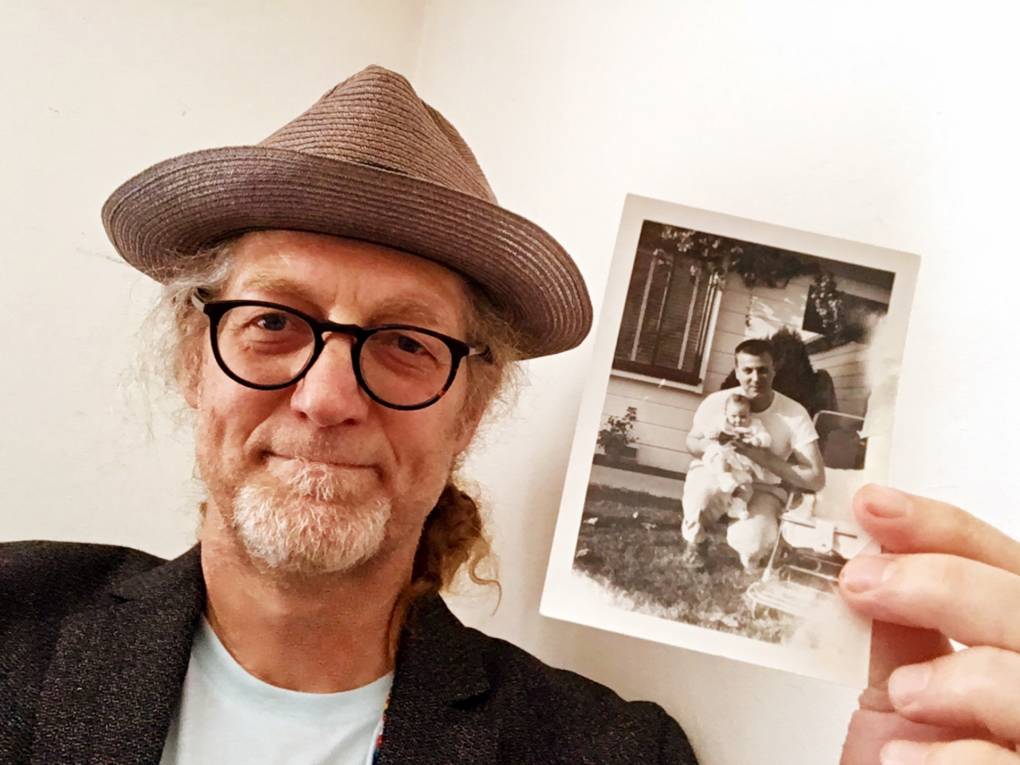
"caption": "John Borg holds a photo of his father Joseph and his sister Mary in the 1950s.",
"description": "John Borg holds a photo of his father Joseph and his sister Mary in the 1950s.",
"title": "RS37666_John&Young.Dad.with.Baby-qut",
"credit": "Courtesy of John Borg",
"status": "inherit",
"isLoading": false,
"fetchFailed": false
}
},
"audioPlayerReducer": {
"postId": "stream_live",
"isPaused": true,
"isPlaying": false,
"pfsActive": false,
"pledgeModalIsOpen": true,
"playerDrawerIsOpen": false,
"liveAudioPlayStartedAt": 0,
"liveAudioPlayContext": ""
},
"authorsReducer": {
"byline_news_11759534": {
"type": "authors",
"id": "byline_news_11759534",
"meta": {
"override": true
},
"slug": "byline_news_11759534",
"name": "Patti Neighmond\u003cbr>NPR",
"isLoading": false
},
"byline_news_11759267": {
"type": "authors",
"id": "byline_news_11759267",
"meta": {
"override": true
},
"slug": "byline_news_11759267",
"name": "\u003cstrong>Elizabeth Aguilera\u003c/strong>",
"isLoading": false
},
"byline_news_11759132": {
"type": "authors",
"id": "byline_news_11759132",
"meta": {
"override": true
},
"slug": "byline_news_11759132",
"name": "\u003ca href=\"https://www.npr.org/people/2100615/jon-hamilton\">Jon Hamilton\u003c/a>",
"isLoading": false
},
"byline_news_11758605": {
"type": "authors",
"id": "byline_news_11758605",
"meta": {
"override": true
},
"slug": "byline_news_11758605",
"name": "\u003cstrong>Erika Stallings\u003cbr />NPR\u003c/strong>",
"isLoading": false
},
"byline_news_11756742": {
"type": "authors",
"id": "byline_news_11756742",
"meta": {
"override": true
},
"slug": "byline_news_11756742",
"name": "Jocelyn Wiener \u003cbr>CALmatters",
"isLoading": false
},
"byline_news_11755736": {
"type": "authors",
"id": "byline_news_11755736",
"meta": {
"override": true
},
"slug": "byline_news_11755736",
"name": "Sam Harnett, Chris Hoff",
"isLoading": false
},
"byline_news_11753638": {
"type": "authors",
"id": "byline_news_11753638",
"meta": {
"override": true
},
"slug": "byline_news_11753638",
"name": "John Borg",
"isLoading": false
},
"aemslie": {
"type": "authors",
"id": "3206",
"meta": {
"index": "authors_1716337520",
"id": "3206",
"found": true
},
"name": "Alex Emslie",
"firstName": "Alex",
"lastName": "Emslie",
"slug": "aemslie",
"email": "aemslie@kqed.org",
"display_author_email": true,
"staff_mastheads": [
"news"
],
"title": "KQED Senior Editor",
"bio": "Alex Emslie is senior editor of talent and development at KQED, where he manages dozens of early career journalists and oversees news department internships.\r\n\r\nHe is a former carpenter and proud graduate of City College of San Francisco and San Francisco State University, where he studied journalism and criminal justice before joining KQED in 2013.\r\n\r\nAlex produced investigative journalism focused on \u003ca href=\"https://www.kqed.org/news/11667594/the-trials-of-marvin-mutch-video\">criminal justice\u003c/a> and policing for most of a decade. He has broken major stories about \u003ca href=\"https://www.kqed.org/news/135682/amid-a-series-of-vallejo-police-shootings-one-officers-name-stands-out\">police use of deadly force\u003c/a>, \u003ca href=\"https://www.kqed.org/news/10454955/racist-texts-prompt-sfpd-internal-investigation\">officer misconduct\u003c/a> and \u003ca href=\"https://www.kqed.org/news/11712239/terrorist-or-troll-judge-to-weigh-whether-oakland-man-really-intended-to-attack-bay-area\">other\u003c/a> \u003ca href=\"https://www.kqed.org/news/11221414/hayward-paid-159000-to-husband-of-retired-police-chief-documents-show\">high\u003c/a>-\u003ca href=\"https://www.kqed.org/news/10622762/the-forgotten-tracking-two-homicides-in-san-francisco-public-housing\">profile\u003c/a> \u003ca href=\"https://www.kqed.org/news/11624516/federal-agency-promoted-ranger-just-months-after-his-gun-was-stolen-and-used-in-steinle-killing\">cases\u003c/a>. He co-founded the \u003ca href=\"https://projects.scpr.org/california-reporting-project/\">California Reporting Project\u003c/a> in 2019 to obtain and report on previously confidential police internal investigations. The effort produced well over 100 original stories and changed the course of multiple criminal cases.\r\n\r\nHis work has been recognized with numerous journalism awards, including a national Edward R. Murrow award for several years of \u003ca href=\"https://www.kqed.org/news/11688481/sfpd-officers-in-mario-woods-case-recount-shooting-in-newly-filed-depositions\">reporting\u003c/a> on the San Francisco Police shooting of Mario Woods. His \u003ca href=\"https://www.kqed.org/news/147854/half-of-those-killed-by-san-francisco-police-are-mentally-ill\">reporting\u003c/a> on police killings of people in psychiatric crisis was cited in amicus briefs before the U.S. Supreme Court.\r\n\r\nAlex now enjoys mentoring the next generation of journalists at KQED.",
"avatar": "https://secure.gravatar.com/avatar/e691e65209f20e9da202bd730ead5663?s=600&d=blank&r=g",
"twitter": "SFNewsReporter",
"facebook": null,
"instagram": null,
"linkedin": null,
"sites": [
{
"site": "arts",
"roles": [
"editor"
]
},
{
"site": "news",
"roles": [
"editor"
]
},
{
"site": "mindshift",
"roles": [
"editor"
]
},
{
"site": "stateofhealth",
"roles": [
"editor"
]
},
{
"site": "science",
"roles": [
"administrator"
]
}
],
"headData": {
"title": "Alex Emslie | KQED",
"description": "KQED Senior Editor",
"ogImgSrc": "https://secure.gravatar.com/avatar/e691e65209f20e9da202bd730ead5663?s=600&d=blank&r=g",
"twImgSrc": "https://secure.gravatar.com/avatar/e691e65209f20e9da202bd730ead5663?s=600&d=blank&r=g"
},
"isLoading": false,
"link": "/author/aemslie"
},
"markfiore": {
"type": "authors",
"id": "3236",
"meta": {
"index": "authors_1716337520",
"id": "3236",
"found": true
},
"name": "Mark Fiore",
"firstName": "Mark",
"lastName": "Fiore",
"slug": "markfiore",
"email": "mark@markfiore.com",
"display_author_email": false,
"staff_mastheads": [
"news"
],
"title": "KQED News Cartoonist",
"bio": "\u003ca href=\"http://www.MarkFiore.com\">MarkFiore.com\u003c/a> | \u003ca href=\"https://twitter.com/markfiore\">Follow on Twitter\u003c/a> | \u003ca href=\"https://www.facebook.com/pages/Mark-Fiore-Animated-Political-Cartoons/94451707396?ref=bookmarks\">Facebook\u003c/a> | \u003ca href=\"mailto:mark@markfiore.com\">email\u003c/a>\r\n\r\nPulitzer Prize-winner, Mark Fiore, who the Wall Street Journal has called “the undisputed guru of the form,” creates animated political cartoons in San Francisco, where his work has been featured regularly on the San Francisco Chronicle’s web site, SFGate.com. His work has appeared on Newsweek.com, Slate.com, CBSNews.com, MotherJones.com, DailyKos.com and NPR’s web site. Fiore’s political animation has appeared on CNN, Frontline, Bill Moyers Journal, Salon.com and cable and broadcast outlets across the globe.\r\n\r\nBeginning his professional life by drawing traditional political cartoons for newspapers, Fiore’s work appeared in publications ranging from the Washington Post to the Los Angeles Times. In the late 1990s, he began to experiment with animating political cartoons and, after a short stint at the San Jose Mercury News as their staff cartoonist, Fiore devoted all his energies to animation.\r\nGrowing up in California, Fiore also spent a good portion of his life in the backwoods of Idaho. It was this combination that shaped him politically. Mark majored in political science at Colorado College, where, in a perfect send-off for a cartoonist, he received his diploma in 1991 as commencement speaker Dick Cheney smiled approvingly.\r\nMark Fiore was awarded the Pulitzer Prize for political cartooning in 2010, a Robert F. Kennedy Journalism Award in 2004 and has twice received an Online Journalism Award for commentary from the Online News Association (2002, 2008). Fiore has received two awards for his work in new media from the National Cartoonists Society (2001, 2002), and in 2006 received The James Madison Freedom of Information Award from The Society of Professional Journalists.",
"avatar": "https://secure.gravatar.com/avatar/fc4e2a612b15b67bad0c6f0e1db4ca9b?s=600&d=blank&r=g",
"twitter": "MarkFiore",
"facebook": null,
"instagram": "https://www.instagram.com/markfiore/?hl=en",
"linkedin": null,
"sites": [
{
"site": "arts",
"roles": [
"contributor"
]
},
{
"site": "news",
"roles": [
"editor"
]
},
{
"site": "futureofyou",
"roles": [
"editor"
]
},
{
"site": "science",
"roles": [
"editor"
]
}
],
"headData": {
"title": "Mark Fiore | KQED",
"description": "KQED News Cartoonist",
"ogImgSrc": "https://secure.gravatar.com/avatar/fc4e2a612b15b67bad0c6f0e1db4ca9b?s=600&d=blank&r=g",
"twImgSrc": "https://secure.gravatar.com/avatar/fc4e2a612b15b67bad0c6f0e1db4ca9b?s=600&d=blank&r=g"
},
"isLoading": false,
"link": "/author/markfiore"
},
"lklivans": {
"type": "authors",
"id": "8648",
"meta": {
"index": "authors_1716337520",
"id": "8648",
"found": true
},
"name": "Laura Klivans",
"firstName": "Laura",
"lastName": "Klivans",
"slug": "lklivans",
"email": "lklivans@kqed.org",
"display_author_email": true,
"staff_mastheads": [
"news",
"science"
],
"title": "Reporter",
"bio": "Laura Klivans is an award-winning science reporter for KQED News, where she covers climate change with an eye on both groundbreaking progress and gaps in action. She is the former host of KQED's blockbuster video series about tiny, amazing animals, \u003cem>Deep Look\u003c/em>. Her work reaches national audiences through NPR, \u003cem>Here & Now, \u003c/em>PRI, and other major outlets. \r\n\r\nLaura’s won five Northern California Area Emmy Awards for Deep Look and First Place in the Greater Bay Area Journalism Awards for a podcast exploring how one Oakland neighborhood teamed up to reduce planet-heating pollution.\r\n\r\nBeyond her reporting, she hosts and moderates events. In the past, she taught audio storytelling at the UC Berkeley Graduate School of Journalism, led international education programs, worked with immigrants and refugees along the Thai-Burmese border, taught high schoolers sex ed, and was an actress. \r\n\r\nShe's a former UC Berkeley Human Rights Fellow, USC Center for Health Journalism's California Fellow and Coro Fellow in Public Affairs. Laura has a master’s in journalism from UC Berkeley, a master’s in education from Harvard, and an undergraduate degree from Northwestern University.\r\n\r\nShe loves trying to riddle the meaning out of vanity license plates.",
"avatar": "https://secure.gravatar.com/avatar/2d2ecd1550a494cc10ad4a503406965585902124739e775a9b3817eebf1d88be?s=600&d=blank&r=g",
"twitter": "lauraklivans",
"bluesky": null,
"facebook": null,
"instagram": null,
"linkedin": null,
"sites": [
{
"site": "news",
"roles": [
"editor"
]
},
{
"site": "stateofhealth",
"roles": [
"contributor",
"editor"
]
},
{
"site": "science",
"roles": [
"editor"
]
},
{
"site": "forum",
"roles": [
"editor"
]
}
],
"headData": {
"title": "Laura Klivans | KQED",
"description": "Reporter",
"ogImgSrc": "https://secure.gravatar.com/avatar/2d2ecd1550a494cc10ad4a503406965585902124739e775a9b3817eebf1d88be?s=600&d=blank&r=g",
"twImgSrc": "https://secure.gravatar.com/avatar/2d2ecd1550a494cc10ad4a503406965585902124739e775a9b3817eebf1d88be?s=600&d=blank&r=g"
},
"isLoading": false,
"link": "/author/lklivans"
},
"slewis": {
"type": "authors",
"id": "8676",
"meta": {
"index": "authors_1716337520",
"id": "8676",
"found": true
},
"name": "Sukey Lewis",
"firstName": "Sukey",
"lastName": "Lewis",
"slug": "slewis",
"email": "slewis@kqed.org",
"display_author_email": true,
"staff_mastheads": [
"news"
],
"title": "KQED Contributor",
"bio": "Sukey Lewis is a criminal justice reporter and host of \u003cem>On Our Watch\u003c/em>, a new podcast from NPR and KQED about the shadow world of police discipline. In 2018, she co-founded the California Reporting Project, a coalition of newsrooms across the state focused on obtaining previously sealed internal affairs records from law enforcement. In addition to her reporting on police accountability, Sukey has investigated the bail bonds industry, California's wildfires and the high cost of prison phone calls. Sukey earned a master's degree in journalism from the University of California at Berkeley. Send news tips to slewis@kqed.org.",
"avatar": "https://secure.gravatar.com/avatar/03fd6b21024f99d8b0a1966654586de7?s=600&d=blank&r=g",
"twitter": "SukeyLewis",
"facebook": null,
"instagram": null,
"linkedin": null,
"sites": [
{
"site": "news",
"roles": [
"author",
"edit_others_posts"
]
}
],
"headData": {
"title": "Sukey Lewis | KQED",
"description": "KQED Contributor",
"ogImgSrc": "https://secure.gravatar.com/avatar/03fd6b21024f99d8b0a1966654586de7?s=600&d=blank&r=g",
"twImgSrc": "https://secure.gravatar.com/avatar/03fd6b21024f99d8b0a1966654586de7?s=600&d=blank&r=g"
},
"isLoading": false,
"link": "/author/slewis"
},
"katewolffe": {
"type": "authors",
"id": "11523",
"meta": {
"index": "authors_1716337520",
"id": "11523",
"found": true
},
"name": "Kate Wolffe",
"firstName": "Kate",
"lastName": "Wolffe",
"slug": "katewolffe",
"email": "kwolffe@kqed.org",
"display_author_email": true,
"staff_mastheads": [
"news"
],
"title": "KQED Reporter + Weekend Host",
"bio": "Kate Wolffe reports on local Bay Area happenings for KQED, and hosts the news on weekend afternoons. She joined KQED in 2018 as an intern on the Forum team, before moving to cover topics ranging from politics to criminal justice to homelessness. A Bay Area native and UC Berkeley graduate, Kate loves to discover new corners of the region.",
"avatar": "https://secure.gravatar.com/avatar/22455f14db824a03ee252f73052fe939?s=600&d=blank&r=g",
"twitter": "katewolffe",
"facebook": null,
"instagram": null,
"linkedin": null,
"sites": [
{
"site": "arts",
"roles": [
"editor"
]
},
{
"site": "news",
"roles": [
"author",
"edit_others_posts"
]
},
{
"site": "forum",
"roles": [
"editor"
]
}
],
"headData": {
"title": "Kate Wolffe | KQED",
"description": "KQED Reporter + Weekend Host",
"ogImgSrc": "https://secure.gravatar.com/avatar/22455f14db824a03ee252f73052fe939?s=600&d=blank&r=g",
"twImgSrc": "https://secure.gravatar.com/avatar/22455f14db824a03ee252f73052fe939?s=600&d=blank&r=g"
},
"isLoading": false,
"link": "/author/katewolffe"
}
},
"pagesReducer": {
"news_tag_health": {
"type": "terms",
"id": "news_18543",
"meta": {
"index": "terms_1716263798",
"site": "news",
"id": "18543",
"score": 6.886719
},
"featImg": null,
"name": "Health",
"description": null,
"taxonomy": "tag",
"headData": {
"twImgId": null,
"twTitle": null,
"ogTitle": null,
"ogImgId": null,
"twDescription": null,
"description": null,
"title": "Health Archives | KQED News",
"ogDescription": null
},
"ttid": 466,
"slug": "health",
"isLoading": false,
"title": "Health",
"pageMeta": {
"site": "news",
"WpPageTemplate": "page-topic-editorial",
"currentPage": 87
},
"blocks": [
{
"blockName": "kqed/post-list",
"attrs": {
"layout": "cardArticle2",
"query": "posts/news?tag=health",
"seeMore": false,
"paginated": true,
"page": 87
}
},
{
"blockName": "kqed/ad"
}
]
}
},
"pfsSessionReducer": {},
"postsReducer": {
"stream_live": {
"type": "live",
"id": "stream_live",
"audioUrl": "https://streams.kqed.org/kqedradio",
"title": "Live Stream",
"excerpt": "Live Stream information currently unavailable.",
"link": "/radio",
"featImg": "",
"label": {
"name": "KQED Live",
"link": "/"
}
},
"stream_kqedNewscast": {
"type": "posts",
"id": "stream_kqedNewscast",
"audioUrl": "https://www.kqed.org/.stream/anon/radio/RDnews/newscast.mp3?_=1",
"title": "KQED Newscast",
"featImg": "",
"label": {
"name": "88.5 FM",
"link": "/"
}
},
"news_11760658": {
"type": "posts",
"id": "news_11760658",
"meta": {
"index": "posts_1716263798",
"site": "news",
"id": "11760658",
"score": null,
"sort": [
1562892324000
]
},
"guestAuthors": [],
"slug": "san-franciscos-universal-mental-health-care-ballot-measure-pushed-to-march-2020",
"title": "San Francisco’s Universal Mental Health Care Ballot Measure Pushed to March 2020",
"publishDate": 1562892324,
"format": "standard",
"headTitle": "San Francisco’s Universal Mental Health Care Ballot Measure Pushed to March 2020 | KQED",
"labelTerm": {
"site": "news"
},
"content": "\u003cp>A controversial ballot measure that would give San Franciscans universal mental health care is being pushed from the November 2019 ballot to the March 2020 ballot to give lawmakers more time to come to an agreement as to how it should be implemented.\u003c/p>\n\u003cp>\u003ca href=\"https://sfgov.legistar.com/View.ashx?M=F&ID=7293146&GUID=0878CB8C-6BDA-4380-A39B-5F88AF974CD1\">The measure\u003c/a>, dubbed “Mental Health SF”, was announced in May. After the announcement, Mayor London Breed and the San Francisco Department of Public Health, which would be in charge of implementing the program, expressed concern about the high costs of implementation and a lack of input from the city’s health experts.\u003c/p>\n\u003cp>Now it seems that all parties are working together to come up with a compromise for the March 2020 ballot. \u003c/p>\n\u003cp>“It is important that we take a comprehensive, inclusive process to build on the progress we have made to strengthen our mental health system,” Breed said in a press release. She also emphasized the advancements already made this year including the passing of a contentious conservatorship law and the opening of 200 new behavioral health beds. \u003c/p>\n\u003cp>If passed by residents, the program would provide free and immediate access to mental health care to San Franciscans with or without insurance. It would also require the creation of a new 24 hours a day, 7 days a week drop-in center for people seeking psychological help or help with substance abuse. \u003c/p>\n\u003cp>[ad fullwidth]\u003c/p>\n\u003cp>The city controller and city’s economist gave preliminary numbers that annual costs would be as high as $100 million per year, not including start-up costs for building the drop-in center. \u003c/p>\n\u003cp>San Francisco Supervisor Hillary Ronen says she’s hopeful but not positive that the supervisors will come to a consensus with the mayor and DPH about how to address the problem, although they plan to meet weekly to negotiate.\u003c/p>\n\u003cp>[aside tag=\"mental-health-sf\" label=\"More on Mental Health SF.\"]\u003c/p>\n\u003cp>Ronen said she didn’t initially consult with the DPH because in early hearings about the problem, representatives were initially “obfuscating and denying that the problem was as grave as it is.”\u003c/p>\n\u003cp>She said if the supervisors can’t come to a consensus, she and Supervisor Matt Haney, the co-author of the bill, will still put the measure on the ballot.\u003c/p>\n\u003cp>Ultimately Ronen said the legislation is crucially important to address San Francisco’s mental health and homelessness crisis, and the delay is necessary to get the bill right. \u003c/p>\n\u003cp>“What we’re proposing is a complete overhaul and creation of a new universal system, and that doesn’t happen overnight,” she said. \u003c/p>\n\u003cp>The measure would be financed through the city’s proposed Excessive CEO Salary Tax — another ballot measure that would be imposed on CEOs making more than 100 times the median wage worker. That proposal will also be on the March 2020 ballot, having been moved from the November 2019 ballot. \u003c/p>\n\u003cp>\u003c/p>\n\u003cp>The San Francisco Chamber of Commerce didn’t immediately respond to a request for comment on the Excessive CEO Salary Tax. \u003c/p>\n\n",
"blocks": [],
"excerpt": "The measure, dubbed “Mental Health SF”, was announced in May. City officials have expressed concern about the high costs of implementation and a lack of input from the city’s health experts.",
"status": "publish",
"parent": 0,
"modified": 1726008555,
"stats": {
"hasAudio": false,
"hasVideo": false,
"hasChartOrMap": false,
"iframeSrcs": [],
"hasGoogleForm": false,
"hasGallery": false,
"hasHearkenModule": false,
"hasPolis": false,
"paragraphCount": 16,
"wordCount": 512
},
"headData": {
"title": "San Francisco’s Universal Mental Health Care Ballot Measure Pushed to March 2020 | KQED",
"description": "The measure, dubbed “Mental Health SF”, was announced in May. City officials have expressed concern about the high costs of implementation and a lack of input from the city’s health experts.",
"ogTitle": "",
"ogDescription": "",
"ogImgId": "",
"twTitle": "",
"twDescription": "",
"twImgId": "",
"schema": {
"@context": "https://schema.org",
"@type": "NewsArticle",
"headline": "San Francisco’s Universal Mental Health Care Ballot Measure Pushed to March 2020",
"datePublished": "2019-07-11T17:45:24-07:00",
"dateModified": "2024-09-10T15:49:15-07:00",
"image": "https://cdn.kqed.org/wp-content/uploads/2020/02/KQED-OG-Image@1x.png",
"isAccessibleForFree": "True",
"publisher": {
"@type": "NewsMediaOrganization",
"@id": "https://www.kqed.org/#organization",
"name": "KQED",
"logo": "https://cdn.kqed.org/wp-content/uploads/2020/02/KQED-OG-Image@1x.png",
"url": "https://www.kqed.org",
"sameAs": [
"https://www.facebook.com/KQED",
"https://twitter.com/KQED",
"https://www.instagram.com/kqed/",
"https://www.tiktok.com/@kqedofficial",
"https://www.linkedin.com/company/kqed",
"https://www.youtube.com/channel/UCeC0IOo7i1P_61zVUWbJ4nw"
]
}
}
},
"sticky": false,
"path": "/news/11760658/san-franciscos-universal-mental-health-care-ballot-measure-pushed-to-march-2020",
"audioTrackLength": null,
"parsedContent": [
{
"type": "contentString",
"content": "\u003cdiv class=\"post-body\">\u003cp>\u003cp>A controversial ballot measure that would give San Franciscans universal mental health care is being pushed from the November 2019 ballot to the March 2020 ballot to give lawmakers more time to come to an agreement as to how it should be implemented.\u003c/p>\n\u003cp>\u003ca href=\"https://sfgov.legistar.com/View.ashx?M=F&ID=7293146&GUID=0878CB8C-6BDA-4380-A39B-5F88AF974CD1\">The measure\u003c/a>, dubbed “Mental Health SF”, was announced in May. After the announcement, Mayor London Breed and the San Francisco Department of Public Health, which would be in charge of implementing the program, expressed concern about the high costs of implementation and a lack of input from the city’s health experts.\u003c/p>\n\u003cp>Now it seems that all parties are working together to come up with a compromise for the March 2020 ballot. \u003c/p>\n\u003cp>“It is important that we take a comprehensive, inclusive process to build on the progress we have made to strengthen our mental health system,” Breed said in a press release. She also emphasized the advancements already made this year including the passing of a contentious conservatorship law and the opening of 200 new behavioral health beds. \u003c/p>\n\u003cp>If passed by residents, the program would provide free and immediate access to mental health care to San Franciscans with or without insurance. It would also require the creation of a new 24 hours a day, 7 days a week drop-in center for people seeking psychological help or help with substance abuse. \u003c/p>\n\u003cp>\u003c/p>\u003c/div>",
"attributes": {
"named": {},
"numeric": []
}
},
{
"type": "component",
"content": "",
"name": "ad",
"attributes": {
"named": {
"label": "fullwidth"
},
"numeric": [
"fullwidth"
]
}
},
{
"type": "contentString",
"content": "\u003cdiv class=\"post-body\">\u003cp>\u003c/p>\n\u003cp>The city controller and city’s economist gave preliminary numbers that annual costs would be as high as $100 million per year, not including start-up costs for building the drop-in center. \u003c/p>\n\u003cp>San Francisco Supervisor Hillary Ronen says she’s hopeful but not positive that the supervisors will come to a consensus with the mayor and DPH about how to address the problem, although they plan to meet weekly to negotiate.\u003c/p>\n\u003cp>\u003c/p>\u003c/div>",
"attributes": {
"named": {},
"numeric": []
}
},
{
"type": "component",
"content": "",
"name": "aside",
"attributes": {
"named": {
"tag": "mental-health-sf",
"label": "More on Mental Health SF. "
},
"numeric": []
}
},
{
"type": "contentString",
"content": "\u003cdiv class=\"post-body\">\u003cp>\u003c/p>\n\u003cp>Ronen said she didn’t initially consult with the DPH because in early hearings about the problem, representatives were initially “obfuscating and denying that the problem was as grave as it is.”\u003c/p>\n\u003cp>She said if the supervisors can’t come to a consensus, she and Supervisor Matt Haney, the co-author of the bill, will still put the measure on the ballot.\u003c/p>\n\u003cp>Ultimately Ronen said the legislation is crucially important to address San Francisco’s mental health and homelessness crisis, and the delay is necessary to get the bill right. \u003c/p>\n\u003cp>“What we’re proposing is a complete overhaul and creation of a new universal system, and that doesn’t happen overnight,” she said. \u003c/p>\n\u003cp>The measure would be financed through the city’s proposed Excessive CEO Salary Tax — another ballot measure that would be imposed on CEOs making more than 100 times the median wage worker. That proposal will also be on the March 2020 ballot, having been moved from the November 2019 ballot. \u003c/p>\n\u003cp>\u003c/p>\n\u003cp>The San Francisco Chamber of Commerce didn’t immediately respond to a request for comment on the Excessive CEO Salary Tax. \u003c/p>\n\n\u003c/div>\u003c/p>",
"attributes": {
"named": {},
"numeric": []
}
}
],
"link": "/news/11760658/san-franciscos-universal-mental-health-care-ballot-measure-pushed-to-march-2020",
"authors": [
"11523"
],
"categories": [
"news_457",
"news_6188",
"news_8",
"news_13"
],
"tags": [
"news_18543",
"news_196",
"news_26203"
],
"featImg": "news_11760671",
"label": "news"
},
"news_11759534": {
"type": "posts",
"id": "news_11759534",
"meta": {
"index": "posts_1716263798",
"site": "news",
"id": "11759534",
"score": null,
"sort": [
1562525678000
]
},
"guestAuthors": [],
"slug": "more-patients-in-rural-california-turn-to-telehealth-to-receive-medical-attention",
"title": "More Patients in Rural California Turn to Telehealth to Receive Medical Attention",
"publishDate": 1562525678,
"format": "standard",
"headTitle": "More Patients in Rural California Turn to Telehealth to Receive Medical Attention | KQED",
"labelTerm": {},
"content": "\u003cp>Telehealth turned Jill Hill’s life around.\u003c/p>\n\u003cp>The 63-year-old lives on the edge of rural Grass Valley, an old mining town in the Sierra Nevada foothills of northern California. She was devastated after her husband Dennis passed away in the fall of 2014 after a long series of medical and financial setbacks.\u003c/p>\n\u003cp>“I was grief-stricken and my self-esteem was down,” Hill remembers. “I didn’t care about myself. I didn’t brush my hair. I was isolated. I just kind of locked myself in the bedroom.”\u003c/p>\n\u003cp>Hill says knew she needed therapy to deal with her deepening depression. But the main health center in her rural town had just two therapists. Hill was told she’d only be able to see a therapist once a month.\u003c/p>\n\u003cp>Then, Brandy Hartsgrove called to say Hill was eligible via MediCal (California’s version of Medicaid) for a program that could offer her 30-minute video counseling sessions twice a week. The sessions would be via a computer screen with a therapist who was hundreds of miles south, in San Diego.\u003c/p>\n\u003cp>[ad fullwidth]\u003c/p>\n\u003cp>Hartsgrove co-ordinates telehealth for the \u003ca href=\"https://chapa-de.org/\" target=\"_blank\" rel=\"noopener\">Chapa-de Indian Health Clinic\u003c/a>, which is a 10-minute drive from Hills’s home. Hill would sit in a comfy chair facing a screen in a small private room, Hartsgrove explained, to see and talk with her counselor in an otherwise traditional therapy session.\u003c/p>\n\u003cp>Hill thought it sounded “a bit impersonal;” but was desperate for the counseling. She agreed to give it a try.\u003c/p>\n\u003cfigure id=\"attachment_11759542\" class=\"wp-caption aligncenter\" style=\"max-width: 800px\">\u003cimg loading=\"lazy\" decoding=\"async\" class=\"size-medium wp-image-11759542\" src=\"https://ww2.kqed.org/news/wp-content/uploads/sites/10/2019/07/20190627_npr_telemedicine_029_a-copy_custom-f3228875c407b98325b47961a319f0152f6037f1-s800-c85-800x532.jpg\" alt=\"\" width=\"800\" height=\"532\" srcset=\"https://cdn.kqed.org/wp-content/uploads/sites/10/2019/07/20190627_npr_telemedicine_029_a-copy_custom-f3228875c407b98325b47961a319f0152f6037f1-s800-c85.jpg 800w, https://cdn.kqed.org/wp-content/uploads/sites/10/2019/07/20190627_npr_telemedicine_029_a-copy_custom-f3228875c407b98325b47961a319f0152f6037f1-s800-c85-160x106.jpg 160w\" sizes=\"auto, (max-width: 800px) 100vw, 800px\">\u003cfigcaption class=\"wp-caption-text\">Coordinator Brandy Hartsgrove demonstrates how the telehealth connection works at The Chapa-de Indian Health Clinic in Grass Valley, Calif. Via this video screen, patients can consult doctors hundreds of miles away. \u003ccite>(Salgu Wissmath for NPR)\u003c/cite>\u003c/figcaption>\u003c/figure>\n\u003cp>Hill is one of a growing number of Americans turning to telehealth appointments with medical providers in the wake of widespread hospital closings in remote communities, and a shortage of local primary care doctors, specialists and other providers.\u003c/p>\n\u003cp>Long-distance doctor-to-doctor consultations via video also fall under the “telehealth” or “telemedicine” rubric.\u003c/p>\n\u003cp>A recent NPR poll of rural Americans found that nearly a quarter have used some kind of telehealth service within the past few years; 14% say they received a diagnosis or treatment from a doctor or other health care professional using email, text messaging, live text chat, a mobile app, or a live video like FaceTime or Skype. And 15% say they have received a diagnosis or treatment from a doctor or other health professional over the phone.\u003c/p>\n\u003cp>\u003ca href=\"https://apps.npr.org/dailygraphics/graphics/rural-telehealth-20190517?mode=childlink&utm_source=nprnews&utm_medium=app&utm_campaign=storyredirect\">\u003cem>\u003cstrong>Don’t see the graphic above? Click here.\u003c/strong>\u003c/em>\u003c/a>\u003c/p>\n\u003cp>Those survey findings are part of the second of \u003ca href=\"https://media.npr.org/documents/2019/may/NPR-RWJF-HARVARD_Rural_Poll_Part_2.pdf\" target=\"_blank\" rel=\"noopener\">two recent polls on rural life and health\u003c/a> conducted by NPR, the Robert Wood Johnson Foundation and the Harvard T.H. Chan School of Public Health.\u003c/p>\n\u003cp>The Chapa-de clinic offers telehealth services not only for consultations in behavioral health and psychiatry, but also in cardiology, nephrology, dermatology, endocrinology, gastroenterology and more.\u003c/p>\n\u003cfigure id=\"attachment_11759543\" class=\"wp-caption aligncenter\" style=\"max-width: 800px\">\u003cimg loading=\"lazy\" decoding=\"async\" class=\"size-medium wp-image-11759543\" src=\"https://ww2.kqed.org/news/wp-content/uploads/sites/10/2019/07/20190627_npr_telemedicine_085_a-copy_custom-1a637914e39a25b065a49562157a54ac7fdeb747-s800-c85-800x532.jpg\" alt=\"The Chapa-de Indian Health Clinic building.\" width=\"800\" height=\"532\" srcset=\"https://cdn.kqed.org/wp-content/uploads/sites/10/2019/07/20190627_npr_telemedicine_085_a-copy_custom-1a637914e39a25b065a49562157a54ac7fdeb747-s800-c85.jpg 800w, https://cdn.kqed.org/wp-content/uploads/sites/10/2019/07/20190627_npr_telemedicine_085_a-copy_custom-1a637914e39a25b065a49562157a54ac7fdeb747-s800-c85-160x106.jpg 160w\" sizes=\"auto, (max-width: 800px) 100vw, 800px\">\u003cfigcaption class=\"wp-caption-text\">The Chapa-de Indian Health Clinic in Grass Valley, Calif., offers telehealth services for various specialties, including dermatology, gastroenterology and psychiatry. \u003ccite>(Salgu Wissmath for NPR)\u003c/cite>\u003c/figcaption>\u003c/figure>\n\u003cp>Hill feels fortunate; she knows most rural health facilities don’t include telehealth services, which means most patients living in remote areas would need their own broadband internet access at home to get therapy online.\u003c/p>\n\u003cp>And that’s out of reach for many, says \u003ca href=\"https://www.hsph.harvard.edu/robert-blendon/\" target=\"_blank\" rel=\"noopener\">Robert J. Blendon\u003c/a>, co-director of NPR’s poll and professor of health policy and political analysis at the Harvard Chan School.\u003c/p>\n\u003cp>The poll found that one in five rural Americans say getting access to high-speed internet is a problem for their families.\u003c/p>\n\u003cp>Blendon says advances in online technology have brought a “revolution” in healthcare that has left many rural patients behind.\u003c/p>\n\u003cp>“They lose the ability to contact their physicians, fill prescriptions and get follow-up information without having to go see a health professional,” he says.\u003c/p>\n\u003cp>Critical care pediatrician \u003ca href=\"https://health.ucdavis.edu/publish/providerbio/children/516\" target=\"_blank\" rel=\"noopener\">James Marcin\u003c/a> at UC Davis Children’s Hospital, directs the University of California, Davis, Center for Health and Technology and regularly consults via a telehealth monitor with primary care doctors in remote hospitals in rural areas.\u003c/p>\n\u003cp>“We’re able to put the telemedicine cart [virtually] at the patient’s bedside,” Marcin says, “and within minutes our physicians are able to see the child and talk with the family members and help assist in the care that way.”\u003c/p>\n\u003cp>If not for telehealth, Marcin says, the costs of getting what should be routine care “are significant barriers for those living in rural communities.”\u003c/p>\n\u003cp>“We have patients that drive to our Sacramento offices and they have to drive the night before,” he says, “and spend the night in a hotel because it’s a five-hour trip each way.” And there are additional costs for many patients, he says, such as childcare services, and missed days of work.\u003c/p>\n\u003cp>With telehealth, “a video is truly worth a thousand words,” he says; it can mean patients don’t have to make costly time-consuming trips to see a specialist.\u003c/p>\n\u003cp>Though Hill initially had reservations about meeting with a therapist online, she says she’s been amazed by how helpful the sessions have been.\u003c/p>\n\u003cp>“She gives me assignments and works me really hard,” Hill says, “and I have grown so much — especially just in the last few months.”\u003c/p>\n\u003cp>Her latest assignment in therapy: writing down positive characteristics of herself. Initially, she could only come up with three: loyalty, compassion and resilience. But the therapist questioned that, and encouraged Hill to consider that there might be more.\u003c/p>\n\u003cfigure id=\"attachment_11759544\" class=\"wp-caption aligncenter\" style=\"max-width: 800px\">\u003cimg loading=\"lazy\" decoding=\"async\" class=\"size-medium wp-image-11759544\" src=\"https://ww2.kqed.org/news/wp-content/uploads/sites/10/2019/07/20190627_npr_telemedicine_220_a_custom-38c1aa4ffa8a0888af2fd48aee63e1b05914c810-s800-c85-800x532.jpg\" alt=\"Jill Hill in a harden is touching tall pink flowers.\" width=\"800\" height=\"532\" srcset=\"https://cdn.kqed.org/wp-content/uploads/sites/10/2019/07/20190627_npr_telemedicine_220_a_custom-38c1aa4ffa8a0888af2fd48aee63e1b05914c810-s800-c85.jpg 800w, https://cdn.kqed.org/wp-content/uploads/sites/10/2019/07/20190627_npr_telemedicine_220_a_custom-38c1aa4ffa8a0888af2fd48aee63e1b05914c810-s800-c85-160x106.jpg 160w\" sizes=\"auto, (max-width: 800px) 100vw, 800px\">\u003cfigcaption class=\"wp-caption-text\">Hill says she’s in a ‘super growth” mode these days psychologically, and says the support she’s received in therapy has been key to that. She speaks with a clinical psychologist via a telehealth session twice a week for 30 minutes, and completes assigned homework in between those appointments. \u003ccite>(Salgu Wissmath for NPR)\u003c/cite>\u003c/figcaption>\u003c/figure>\n\u003cp>“She wanted 10,” says Hill, who proceeded to work through some other issues and talk more with therapist. “Now I’ve got like 15 at least,” Hill says, “and I keep adding to the list; once I started writing things down, I started really seeing that I have a lot of strengths I didn’t even know I had.”\u003c/p>\n\u003cp>Attorney \u003ca href=\"https://www.telehealthpolicy.us/about/staff\" target=\"_blank\" rel=\"noopener\">Mei Kwong\u003c/a>, executive director of the Center for Connected Health Policy in Sacramento, says telehealth services have the potential to remove many barriers to good health care in rural America.\u003c/p>\n\u003cp>But policies that regulate which telehealth services get paid for “lag way behind the technology,” Kwong says. Many policies are 10 to 15 years behind what the technology is able to do, she says.\u003c/p>\n\u003cp>For example, high-resolution photos can now be taken – and sent anywhere digitally — of skin conditions that many doctors say are better than “the naked eye looking at the condition,” she says. But the policies on the books of what Medicare, Medicaid and private insurers will pay for often means these services are not fully covered.\u003c/p>\n\u003cp>That’s unfortunate, Kwong says, especially for underserved communities where there is a shortage of specialists.\u003c/p>\n\u003cp>[ad floatright]\u003c/p>\n\u003cp>Changes are starting to be made in state, federal and private insurance policies, Kwong says. But it’s “slow going.”\u003c/p>\n\u003cdiv class=\"fullattribution\">Copyright 2019 NPR. To see more, visit https://www.npr.org.\u003cimg decoding=\"async\" src=\"https://www.google-analytics.com/__utm.gif?utmac=UA-5828686-4&utmdt=With+Rural+Health+Care+Stretched+Thin%2C+More+Patients+Turn+To+Telehealth+&utme=8(APIKey)9(MDAxOTAwOTE4MDEyMTkxMDAzNjczZDljZA004)\">\u003c/div>\n\n",
"blocks": [],
"excerpt": "Advances in online tech are revolutionizing\u003cstrong> \u003c/strong>health care, with patients now emailing doctors, filling prescriptions or even getting therapy via a video session.\u003cstrong> \u003c/strong>But what if you can't afford broadband?",
"status": "publish",
"parent": 0,
"modified": 1738185477,
"stats": {
"hasAudio": false,
"hasVideo": false,
"hasChartOrMap": false,
"iframeSrcs": [],
"hasGoogleForm": false,
"hasGallery": false,
"hasHearkenModule": false,
"hasPolis": false,
"paragraphCount": 34,
"wordCount": 1273
},
"headData": {
"title": "More Patients in Rural California Turn to Telehealth to Receive Medical Attention | KQED",
"description": "Advances in online tech are revolutionizing health care, with patients now emailing doctors, filling prescriptions or even getting therapy via a video session. But what if you can't afford broadband?",
"ogTitle": "",
"ogDescription": "",
"ogImgId": "",
"twTitle": "",
"twDescription": "",
"twImgId": "",
"schema": {
"@context": "https://schema.org",
"@type": "NewsArticle",
"headline": "More Patients in Rural California Turn to Telehealth to Receive Medical Attention",
"datePublished": "2019-07-07T11:54:38-07:00",
"dateModified": "2025-01-29T13:17:57-08:00",
"image": "https://cdn.kqed.org/wp-content/uploads/2020/02/KQED-OG-Image@1x.png",
"isAccessibleForFree": "True",
"publisher": {
"@type": "NewsMediaOrganization",
"@id": "https://www.kqed.org/#organization",
"name": "KQED",
"logo": "https://cdn.kqed.org/wp-content/uploads/2020/02/KQED-OG-Image@1x.png",
"url": "https://www.kqed.org",
"sameAs": [
"https://www.facebook.com/KQED",
"https://twitter.com/KQED",
"https://www.instagram.com/kqed/",
"https://www.tiktok.com/@kqedofficial",
"https://www.linkedin.com/company/kqed",
"https://www.youtube.com/channel/UCeC0IOo7i1P_61zVUWbJ4nw"
]
}
}
},
"source": "NPR",
"sourceUrl": "www.npr.org",
"sticky": false,
"WpOldSlug": "more-patients-in-rural-california-turn-to-telehealth-to-receive-medical-attention-remotely",
"nprByline": "Patti Neighmond\u003cbr>NPR",
"nprImageAgency": "Salgu Wissmath for NPR",
"nprStoryId": "737618560",
"nprApiLink": "http://api.npr.org/query?id=737618560&apiKey=MDAxOTAwOTE4MDEyMTkxMDAzNjczZDljZA004",
"nprHtmlLink": "https://www.npr.org/sections/health-shots/2019/07/07/737618560/with-rural-health-care-stretched-thin-more-patients-turn-to-telehealth?ft=nprml&f=737618560",
"nprRetrievedStory": "1",
"nprPubDate": "Sun, 07 Jul 2019 08:09:00 -0400",
"nprStoryDate": "Sun, 07 Jul 2019 08:09:00 -0400",
"nprLastModifiedDate": "Sun, 07 Jul 2019 08:43:23 -0400",
"nprAudio": "https://ondemand.npr.org/anon.npr-mp3/npr/wesun/2019/07/20190707_wesun_with_rural_health_care_stretched_thin_more_patients_turn_to_telehealth_.mp3?orgId=1&topicId=1128&aggIds=658276358&d=376&p=10&story=737618560&ft=nprml&f=737618560",
"nprAudioM3u": "http://api.npr.org/m3u/1739288343-24d906.m3u?orgId=1&topicId=1128&aggIds=658276358&d=376&p=10&story=737618560&ft=nprml&f=737618560",
"audioTrackLength": 377,
"path": "/news/11759534/more-patients-in-rural-california-turn-to-telehealth-to-receive-medical-attention",
"audioUrl": "https://ondemand.npr.org/anon.npr-mp3/npr/wesun/2019/07/20190707_wesun_with_rural_health_care_stretched_thin_more_patients_turn_to_telehealth_.mp3?orgId=1&topicId=1128&aggIds=658276358&d=376&p=10&story=737618560&ft=nprml&f=737618560",
"parsedContent": [
{
"type": "contentString",
"content": "\u003cdiv class=\"post-body\">\u003cp>\u003cp>Telehealth turned Jill Hill’s life around.\u003c/p>\n\u003cp>The 63-year-old lives on the edge of rural Grass Valley, an old mining town in the Sierra Nevada foothills of northern California. She was devastated after her husband Dennis passed away in the fall of 2014 after a long series of medical and financial setbacks.\u003c/p>\n\u003cp>“I was grief-stricken and my self-esteem was down,” Hill remembers. “I didn’t care about myself. I didn’t brush my hair. I was isolated. I just kind of locked myself in the bedroom.”\u003c/p>\n\u003cp>Hill says knew she needed therapy to deal with her deepening depression. But the main health center in her rural town had just two therapists. Hill was told she’d only be able to see a therapist once a month.\u003c/p>\n\u003cp>Then, Brandy Hartsgrove called to say Hill was eligible via MediCal (California’s version of Medicaid) for a program that could offer her 30-minute video counseling sessions twice a week. The sessions would be via a computer screen with a therapist who was hundreds of miles south, in San Diego.\u003c/p>\n\u003cp>\u003c/p>\u003c/div>",
"attributes": {
"named": {},
"numeric": []
}
},
{
"type": "component",
"content": "",
"name": "ad",
"attributes": {
"named": {
"label": "fullwidth"
},
"numeric": [
"fullwidth"
]
}
},
{
"type": "contentString",
"content": "\u003cdiv class=\"post-body\">\u003cp>\u003c/p>\n\u003cp>Hartsgrove co-ordinates telehealth for the \u003ca href=\"https://chapa-de.org/\" target=\"_blank\" rel=\"noopener\">Chapa-de Indian Health Clinic\u003c/a>, which is a 10-minute drive from Hills’s home. Hill would sit in a comfy chair facing a screen in a small private room, Hartsgrove explained, to see and talk with her counselor in an otherwise traditional therapy session.\u003c/p>\n\u003cp>Hill thought it sounded “a bit impersonal;” but was desperate for the counseling. She agreed to give it a try.\u003c/p>\n\u003cfigure id=\"attachment_11759542\" class=\"wp-caption aligncenter\" style=\"max-width: 800px\">\u003cimg loading=\"lazy\" decoding=\"async\" class=\"size-medium wp-image-11759542\" src=\"https://ww2.kqed.org/news/wp-content/uploads/sites/10/2019/07/20190627_npr_telemedicine_029_a-copy_custom-f3228875c407b98325b47961a319f0152f6037f1-s800-c85-800x532.jpg\" alt=\"\" width=\"800\" height=\"532\" srcset=\"https://cdn.kqed.org/wp-content/uploads/sites/10/2019/07/20190627_npr_telemedicine_029_a-copy_custom-f3228875c407b98325b47961a319f0152f6037f1-s800-c85.jpg 800w, https://cdn.kqed.org/wp-content/uploads/sites/10/2019/07/20190627_npr_telemedicine_029_a-copy_custom-f3228875c407b98325b47961a319f0152f6037f1-s800-c85-160x106.jpg 160w\" sizes=\"auto, (max-width: 800px) 100vw, 800px\">\u003cfigcaption class=\"wp-caption-text\">Coordinator Brandy Hartsgrove demonstrates how the telehealth connection works at The Chapa-de Indian Health Clinic in Grass Valley, Calif. Via this video screen, patients can consult doctors hundreds of miles away. \u003ccite>(Salgu Wissmath for NPR)\u003c/cite>\u003c/figcaption>\u003c/figure>\n\u003cp>Hill is one of a growing number of Americans turning to telehealth appointments with medical providers in the wake of widespread hospital closings in remote communities, and a shortage of local primary care doctors, specialists and other providers.\u003c/p>\n\u003cp>Long-distance doctor-to-doctor consultations via video also fall under the “telehealth” or “telemedicine” rubric.\u003c/p>\n\u003cp>A recent NPR poll of rural Americans found that nearly a quarter have used some kind of telehealth service within the past few years; 14% say they received a diagnosis or treatment from a doctor or other health care professional using email, text messaging, live text chat, a mobile app, or a live video like FaceTime or Skype. And 15% say they have received a diagnosis or treatment from a doctor or other health professional over the phone.\u003c/p>\n\u003cp>\u003ca href=\"https://apps.npr.org/dailygraphics/graphics/rural-telehealth-20190517?mode=childlink&utm_source=nprnews&utm_medium=app&utm_campaign=storyredirect\">\u003cem>\u003cstrong>Don’t see the graphic above? Click here.\u003c/strong>\u003c/em>\u003c/a>\u003c/p>\n\u003cp>Those survey findings are part of the second of \u003ca href=\"https://media.npr.org/documents/2019/may/NPR-RWJF-HARVARD_Rural_Poll_Part_2.pdf\" target=\"_blank\" rel=\"noopener\">two recent polls on rural life and health\u003c/a> conducted by NPR, the Robert Wood Johnson Foundation and the Harvard T.H. Chan School of Public Health.\u003c/p>\n\u003cp>The Chapa-de clinic offers telehealth services not only for consultations in behavioral health and psychiatry, but also in cardiology, nephrology, dermatology, endocrinology, gastroenterology and more.\u003c/p>\n\u003cfigure id=\"attachment_11759543\" class=\"wp-caption aligncenter\" style=\"max-width: 800px\">\u003cimg loading=\"lazy\" decoding=\"async\" class=\"size-medium wp-image-11759543\" src=\"https://ww2.kqed.org/news/wp-content/uploads/sites/10/2019/07/20190627_npr_telemedicine_085_a-copy_custom-1a637914e39a25b065a49562157a54ac7fdeb747-s800-c85-800x532.jpg\" alt=\"The Chapa-de Indian Health Clinic building.\" width=\"800\" height=\"532\" srcset=\"https://cdn.kqed.org/wp-content/uploads/sites/10/2019/07/20190627_npr_telemedicine_085_a-copy_custom-1a637914e39a25b065a49562157a54ac7fdeb747-s800-c85.jpg 800w, https://cdn.kqed.org/wp-content/uploads/sites/10/2019/07/20190627_npr_telemedicine_085_a-copy_custom-1a637914e39a25b065a49562157a54ac7fdeb747-s800-c85-160x106.jpg 160w\" sizes=\"auto, (max-width: 800px) 100vw, 800px\">\u003cfigcaption class=\"wp-caption-text\">The Chapa-de Indian Health Clinic in Grass Valley, Calif., offers telehealth services for various specialties, including dermatology, gastroenterology and psychiatry. \u003ccite>(Salgu Wissmath for NPR)\u003c/cite>\u003c/figcaption>\u003c/figure>\n\u003cp>Hill feels fortunate; she knows most rural health facilities don’t include telehealth services, which means most patients living in remote areas would need their own broadband internet access at home to get therapy online.\u003c/p>\n\u003cp>And that’s out of reach for many, says \u003ca href=\"https://www.hsph.harvard.edu/robert-blendon/\" target=\"_blank\" rel=\"noopener\">Robert J. Blendon\u003c/a>, co-director of NPR’s poll and professor of health policy and political analysis at the Harvard Chan School.\u003c/p>\n\u003cp>The poll found that one in five rural Americans say getting access to high-speed internet is a problem for their families.\u003c/p>\n\u003cp>Blendon says advances in online technology have brought a “revolution” in healthcare that has left many rural patients behind.\u003c/p>\n\u003cp>“They lose the ability to contact their physicians, fill prescriptions and get follow-up information without having to go see a health professional,” he says.\u003c/p>\n\u003cp>Critical care pediatrician \u003ca href=\"https://health.ucdavis.edu/publish/providerbio/children/516\" target=\"_blank\" rel=\"noopener\">James Marcin\u003c/a> at UC Davis Children’s Hospital, directs the University of California, Davis, Center for Health and Technology and regularly consults via a telehealth monitor with primary care doctors in remote hospitals in rural areas.\u003c/p>\n\u003cp>“We’re able to put the telemedicine cart [virtually] at the patient’s bedside,” Marcin says, “and within minutes our physicians are able to see the child and talk with the family members and help assist in the care that way.”\u003c/p>\n\u003cp>If not for telehealth, Marcin says, the costs of getting what should be routine care “are significant barriers for those living in rural communities.”\u003c/p>\n\u003cp>“We have patients that drive to our Sacramento offices and they have to drive the night before,” he says, “and spend the night in a hotel because it’s a five-hour trip each way.” And there are additional costs for many patients, he says, such as childcare services, and missed days of work.\u003c/p>\n\u003cp>With telehealth, “a video is truly worth a thousand words,” he says; it can mean patients don’t have to make costly time-consuming trips to see a specialist.\u003c/p>\n\u003cp>Though Hill initially had reservations about meeting with a therapist online, she says she’s been amazed by how helpful the sessions have been.\u003c/p>\n\u003cp>“She gives me assignments and works me really hard,” Hill says, “and I have grown so much — especially just in the last few months.”\u003c/p>\n\u003cp>Her latest assignment in therapy: writing down positive characteristics of herself. Initially, she could only come up with three: loyalty, compassion and resilience. But the therapist questioned that, and encouraged Hill to consider that there might be more.\u003c/p>\n\u003cfigure id=\"attachment_11759544\" class=\"wp-caption aligncenter\" style=\"max-width: 800px\">\u003cimg loading=\"lazy\" decoding=\"async\" class=\"size-medium wp-image-11759544\" src=\"https://ww2.kqed.org/news/wp-content/uploads/sites/10/2019/07/20190627_npr_telemedicine_220_a_custom-38c1aa4ffa8a0888af2fd48aee63e1b05914c810-s800-c85-800x532.jpg\" alt=\"Jill Hill in a harden is touching tall pink flowers.\" width=\"800\" height=\"532\" srcset=\"https://cdn.kqed.org/wp-content/uploads/sites/10/2019/07/20190627_npr_telemedicine_220_a_custom-38c1aa4ffa8a0888af2fd48aee63e1b05914c810-s800-c85.jpg 800w, https://cdn.kqed.org/wp-content/uploads/sites/10/2019/07/20190627_npr_telemedicine_220_a_custom-38c1aa4ffa8a0888af2fd48aee63e1b05914c810-s800-c85-160x106.jpg 160w\" sizes=\"auto, (max-width: 800px) 100vw, 800px\">\u003cfigcaption class=\"wp-caption-text\">Hill says she’s in a ‘super growth” mode these days psychologically, and says the support she’s received in therapy has been key to that. She speaks with a clinical psychologist via a telehealth session twice a week for 30 minutes, and completes assigned homework in between those appointments. \u003ccite>(Salgu Wissmath for NPR)\u003c/cite>\u003c/figcaption>\u003c/figure>\n\u003cp>“She wanted 10,” says Hill, who proceeded to work through some other issues and talk more with therapist. “Now I’ve got like 15 at least,” Hill says, “and I keep adding to the list; once I started writing things down, I started really seeing that I have a lot of strengths I didn’t even know I had.”\u003c/p>\n\u003cp>Attorney \u003ca href=\"https://www.telehealthpolicy.us/about/staff\" target=\"_blank\" rel=\"noopener\">Mei Kwong\u003c/a>, executive director of the Center for Connected Health Policy in Sacramento, says telehealth services have the potential to remove many barriers to good health care in rural America.\u003c/p>\n\u003cp>But policies that regulate which telehealth services get paid for “lag way behind the technology,” Kwong says. Many policies are 10 to 15 years behind what the technology is able to do, she says.\u003c/p>\n\u003cp>For example, high-resolution photos can now be taken – and sent anywhere digitally — of skin conditions that many doctors say are better than “the naked eye looking at the condition,” she says. But the policies on the books of what Medicare, Medicaid and private insurers will pay for often means these services are not fully covered.\u003c/p>\n\u003cp>That’s unfortunate, Kwong says, especially for underserved communities where there is a shortage of specialists.\u003c/p>\n\u003cp>\u003c/p>\u003c/div>",
"attributes": {
"named": {},
"numeric": []
}
},
{
"type": "component",
"content": "",
"name": "ad",
"attributes": {
"named": {
"label": "floatright"
},
"numeric": [
"floatright"
]
}
},
{
"type": "contentString",
"content": "\u003cdiv class=\"post-body\">\u003cp>\u003c/p>\n\u003cp>Changes are starting to be made in state, federal and private insurance policies, Kwong says. But it’s “slow going.”\u003c/p>\n\u003cdiv class=\"fullattribution\">Copyright 2019 NPR. To see more, visit https://www.npr.org.\u003cimg decoding=\"async\" src=\"https://www.google-analytics.com/__utm.gif?utmac=UA-5828686-4&utmdt=With+Rural+Health+Care+Stretched+Thin%2C+More+Patients+Turn+To+Telehealth+&utme=8(APIKey)9(MDAxOTAwOTE4MDEyMTkxMDAzNjczZDljZA004)\">\u003c/div>\n\n\u003c/div>\u003c/p>",
"attributes": {
"named": {},
"numeric": []
}
}
],
"link": "/news/11759534/more-patients-in-rural-california-turn-to-telehealth-to-receive-medical-attention",
"authors": [
"byline_news_11759534"
],
"categories": [
"news_457",
"news_8"
],
"tags": [
"news_18543"
],
"featImg": "news_11759535",
"label": "source_news_11759534"
},
"news_11759267": {
"type": "posts",
"id": "news_11759267",
"meta": {
"index": "posts_1716263798",
"site": "news",
"id": "11759267",
"score": null,
"sort": [
1562360751000
]
},
"guestAuthors": [],
"slug": "california-pays-60-million-in-student-loan-debt-of-doctors-who-agree-to-treat-poorer-patients",
"title": "California Pays $60 Million in Student Loan Debt of Doctors Who Agree to Treat Poorer Patients",
"publishDate": 1562360751,
"format": "standard",
"headTitle": "California Pays $60 Million in Student Loan Debt of Doctors Who Agree to Treat Poorer Patients | KQED",
"labelTerm": {},
"content": "\u003cp>It’s a trade aimed at getting more doctors to treat poorer patients: California this week said it will help repay the student loans of 247 selected doctors in exchange for their promise that at least 30% of their caseload will be people enrolled in Medi-Cal.\u003c/p>\n\u003cp>The $60 million student loan repayment, \u003ca href=\"http://www.calhealthcares.org/\" target=\"_blank\" rel=\"noopener\">CalHealthCares\u003c/a>, is funded by the state tobacco tax that voters increased three years ago.\u003c/p>\n\u003cp>It’s all part of California’s effort to try to increase the number of doctors who accept Medi-Cal, the state’s Medicaid health insurer of low-income residents, which has been plagued by shortages — due both to the state’s paltry rates for doctors in its provider network and to the substantial increase in the number of residents on Medi-Cal. California has one of the \u003ca href=\"https://www.pewtrusts.org/en/research-and-analysis/blogs/stateline/2017/09/22/are-medicaids-payment-rates-so-low-theyre-discriminatory\" target=\"_blank\" rel=\"noopener\">lowest\u003c/a> Medicaid reimbursement rates in the country, and patients wait months, or longer, to see specialists.\u003c/p>\n\u003cp>[pullquote]The $60 million student loan repayment, CalHealthCares, is funded by the state tobacco tax that voters increased three years ago.[/pullquote]\u003c/p>\n\u003cp>“I wouldn’t say that with a loan repayment you’re necessarily earning as much as you would if you’re working for Kaiser or Sutter,” \u003ca href=\"https://profiles.ucsf.edu/janet.coffman\" target=\"_self\" rel=\"noopener\">Janet Coffman\u003c/a>, a professor in the \u003ca href=\"https://healthpolicy.ucsf.edu/philip-r-lee-institute-health-policy-studies\" target=\"_self\" rel=\"noopener\">Philip R. Lee Institute for Health Policy Studies\u003c/a> at UCSF, told the \u003ca href=\"https://www.sacbee.com/news/local/health-and-medicine/article232264972.html\" target=\"_blank\" rel=\"noopener\">Sacramento Bee\u003c/a>. “But it can be the difference that enables folks to say, ‘OK, if I get this loan repayment in addition to salary, I can see my way to work in an urban or rural underserved community.’ ”\u003c/p>\n\u003cp>More than 1,300 doctors and medical residents applied for the benefit, which provides up to $300,000 over five years (the time of the commitment), and those selected were chosen based on their commitment to treat the underserved, their geographic location and their specialties.\u003c/p>\n\u003cp>Selected doctors included pediatricians, psychiatrists and obstetricians/gynecologists, and work in settings from community clinics to private practices.\u003c/p>\n\u003cp>[ad fullwidth]\u003c/p>\n\u003cp>“By removing the burden of student loan debt, this program will encourage more providers to make different choices when entering the health care market and be able to provide care for the Medi-Cal population,” said Jennifer Kent, director of the state Department of Health Care Services, which is administering the program.\u003c/p>\n\u003cp>[aside tag='medi-cal' label='More Coverage of Medi-Cal']\u003c/p>\n\u003cp>Research indicates that debt is a major concern for physicians nationwide: A 2017 survey by an affiliate of the American Medical Association found that half owed $200,000 or more in medical school loans.\u003c/p>\n\u003cp>In California, the passage of the federal Affordable Care Act and the expansion of Medi-Cal eligibility brought more than 4 million new enrollees to the program. Three years ago, California opened the program to undocumented children, adding more than 200,000 to the benefit, and is now poised to add nearly 100,000 undocumented adults ages 19 to 25 under the new budget enacted by Gov. Gavin Newsom and the Legislature. This year, 1 in 3 Californians are on Medi-Cal. It pays for half of all births in the state, and 58% of all long-term care stays.\u003c/p>\n\u003cp>This is the first doctor group to receive funding from the $340 million fund created by Proposition 56 tobacco tax revenue. The state expects there will be at least five more rounds of awards.\u003c/p>\n\u003cp>Later this summer, the state will announce awards for dentists who applied to participate in the loan repayment program for serving Denti-Cal patients.\u003c/p>\n\u003cp>\u003c/p>\n",
"blocks": [],
"excerpt": "California will help repay the student loans of some doctors in exchange for their promise that at least 30% of their caseload will be people enrolled in Medi-Cal.",
"status": "publish",
"parent": 0,
"modified": 1726008560,
"stats": {
"hasAudio": false,
"hasVideo": false,
"hasChartOrMap": false,
"iframeSrcs": [],
"hasGoogleForm": false,
"hasGallery": false,
"hasHearkenModule": false,
"hasPolis": false,
"paragraphCount": 15,
"wordCount": 592
},
"headData": {
"title": "California Pays $60 Million in Student Loan Debt of Doctors Who Agree to Treat Poorer Patients | KQED",
"description": "California will help repay the student loans of some doctors in exchange for their promise that at least 30% of their caseload will be people enrolled in Medi-Cal.",
"ogTitle": "",
"ogDescription": "",
"ogImgId": "",
"twTitle": "",
"twDescription": "",
"twImgId": "",
"schema": {
"@context": "https://schema.org",
"@type": "NewsArticle",
"headline": "California Pays $60 Million in Student Loan Debt of Doctors Who Agree to Treat Poorer Patients",
"datePublished": "2019-07-05T14:05:51-07:00",
"dateModified": "2024-09-10T15:49:20-07:00",
"image": "https://cdn.kqed.org/wp-content/uploads/2020/02/KQED-OG-Image@1x.png",
"isAccessibleForFree": "True",
"publisher": {
"@type": "NewsMediaOrganization",
"@id": "https://www.kqed.org/#organization",
"name": "KQED",
"logo": "https://cdn.kqed.org/wp-content/uploads/2020/02/KQED-OG-Image@1x.png",
"url": "https://www.kqed.org",
"sameAs": [
"https://www.facebook.com/KQED",
"https://twitter.com/KQED",
"https://www.instagram.com/kqed/",
"https://www.tiktok.com/@kqedofficial",
"https://www.linkedin.com/company/kqed",
"https://www.youtube.com/channel/UCeC0IOo7i1P_61zVUWbJ4nw"
]
}
}
},
"source": "CALmatters",
"sourceUrl": "https://calmatters.org",
"sticky": false,
"nprByline": "\u003cstrong>Elizabeth Aguilera\u003c/strong>",
"path": "/news/11759267/california-pays-60-million-in-student-loan-debt-of-doctors-who-agree-to-treat-poorer-patients",
"audioTrackLength": null,
"parsedContent": [
{
"type": "contentString",
"content": "\u003cdiv class=\"post-body\">\u003cp>\u003cp>It’s a trade aimed at getting more doctors to treat poorer patients: California this week said it will help repay the student loans of 247 selected doctors in exchange for their promise that at least 30% of their caseload will be people enrolled in Medi-Cal.\u003c/p>\n\u003cp>The $60 million student loan repayment, \u003ca href=\"http://www.calhealthcares.org/\" target=\"_blank\" rel=\"noopener\">CalHealthCares\u003c/a>, is funded by the state tobacco tax that voters increased three years ago.\u003c/p>\n\u003cp>It’s all part of California’s effort to try to increase the number of doctors who accept Medi-Cal, the state’s Medicaid health insurer of low-income residents, which has been plagued by shortages — due both to the state’s paltry rates for doctors in its provider network and to the substantial increase in the number of residents on Medi-Cal. California has one of the \u003ca href=\"https://www.pewtrusts.org/en/research-and-analysis/blogs/stateline/2017/09/22/are-medicaids-payment-rates-so-low-theyre-discriminatory\" target=\"_blank\" rel=\"noopener\">lowest\u003c/a> Medicaid reimbursement rates in the country, and patients wait months, or longer, to see specialists.\u003c/p>\n\u003cp>\u003c/p>\u003c/div>",
"attributes": {
"named": {},
"numeric": []
}
},
{
"type": "component",
"content": "The $60 million student loan repayment, CalHealthCares, is funded by the state tobacco tax that voters increased three years ago.",
"name": "pullquote",
"attributes": {
"named": {
"label": ""
},
"numeric": []
}
},
{
"type": "contentString",
"content": "\u003cdiv class=\"post-body\">\u003cp>\u003c/p>\n\u003cp>“I wouldn’t say that with a loan repayment you’re necessarily earning as much as you would if you’re working for Kaiser or Sutter,” \u003ca href=\"https://profiles.ucsf.edu/janet.coffman\" target=\"_self\" rel=\"noopener\">Janet Coffman\u003c/a>, a professor in the \u003ca href=\"https://healthpolicy.ucsf.edu/philip-r-lee-institute-health-policy-studies\" target=\"_self\" rel=\"noopener\">Philip R. Lee Institute for Health Policy Studies\u003c/a> at UCSF, told the \u003ca href=\"https://www.sacbee.com/news/local/health-and-medicine/article232264972.html\" target=\"_blank\" rel=\"noopener\">Sacramento Bee\u003c/a>. “But it can be the difference that enables folks to say, ‘OK, if I get this loan repayment in addition to salary, I can see my way to work in an urban or rural underserved community.’ ”\u003c/p>\n\u003cp>More than 1,300 doctors and medical residents applied for the benefit, which provides up to $300,000 over five years (the time of the commitment), and those selected were chosen based on their commitment to treat the underserved, their geographic location and their specialties.\u003c/p>\n\u003cp>Selected doctors included pediatricians, psychiatrists and obstetricians/gynecologists, and work in settings from community clinics to private practices.\u003c/p>\n\u003cp>\u003c/p>\u003c/div>",
"attributes": {
"named": {},
"numeric": []
}
},
{
"type": "component",
"content": "",
"name": "ad",
"attributes": {
"named": {
"label": "fullwidth"
},
"numeric": [
"fullwidth"
]
}
},
{
"type": "contentString",
"content": "\u003cdiv class=\"post-body\">\u003cp>\u003c/p>\n\u003cp>“By removing the burden of student loan debt, this program will encourage more providers to make different choices when entering the health care market and be able to provide care for the Medi-Cal population,” said Jennifer Kent, director of the state Department of Health Care Services, which is administering the program.\u003c/p>\n\u003cp>\u003c/p>\u003c/div>",
"attributes": {
"named": {},
"numeric": []
}
},
{
"type": "component",
"content": "",
"name": "aside",
"attributes": {
"named": {
"tag": "medi-cal",
"label": "More Coverage of Medi-Cal "
},
"numeric": []
}
},
{
"type": "contentString",
"content": "\u003cdiv class=\"post-body\">\u003cp>\u003c/p>\n\u003cp>Research indicates that debt is a major concern for physicians nationwide: A 2017 survey by an affiliate of the American Medical Association found that half owed $200,000 or more in medical school loans.\u003c/p>\n\u003cp>In California, the passage of the federal Affordable Care Act and the expansion of Medi-Cal eligibility brought more than 4 million new enrollees to the program. Three years ago, California opened the program to undocumented children, adding more than 200,000 to the benefit, and is now poised to add nearly 100,000 undocumented adults ages 19 to 25 under the new budget enacted by Gov. Gavin Newsom and the Legislature. This year, 1 in 3 Californians are on Medi-Cal. It pays for half of all births in the state, and 58% of all long-term care stays.\u003c/p>\n\u003cp>This is the first doctor group to receive funding from the $340 million fund created by Proposition 56 tobacco tax revenue. The state expects there will be at least five more rounds of awards.\u003c/p>\n\u003cp>Later this summer, the state will announce awards for dentists who applied to participate in the loan repayment program for serving Denti-Cal patients.\u003c/p>\n\u003cp>\u003c/p>\n\u003c/div>\u003c/p>",
"attributes": {
"named": {},
"numeric": []
}
}
],
"link": "/news/11759267/california-pays-60-million-in-student-loan-debt-of-doctors-who-agree-to-treat-poorer-patients",
"authors": [
"byline_news_11759267"
],
"programs": [
"news_72"
],
"categories": [
"news_457",
"news_8",
"news_13"
],
"tags": [
"news_18543",
"news_2605"
],
"featImg": "news_11759286",
"label": "source_news_11759267"
},
"news_11759132": {
"type": "posts",
"id": "news_11759132",
"meta": {
"index": "posts_1716263798",
"site": "news",
"id": "11759132",
"score": null,
"sort": [
1562261466000
]
},
"guestAuthors": [],
"slug": "new-markers-for-alzheimers-disease-could-aid-diagnosis-and-speed-up-drug-development",
"title": "New Markers for Alzheimer's Disease Could Aid Diagnosis and Speed Up Drug Development",
"publishDate": 1562261466,
"format": "standard",
"headTitle": "New Markers for Alzheimer’s Disease Could Aid Diagnosis and Speed Up Drug Development | KQED",
"labelTerm": {},
"content": "\u003cp>Alzheimer’s disease begins altering the brain long before it affects memory and thinking.\u003c/p>\n\u003cp>So scientists are developing a range of tests to detect these changes in the brain, which include an increase in toxic proteins, inflammation and damage to the connections between brain cells.\u003c/p>\n\u003cp>The tests \u003ca href=\"https://www.ncbi.nlm.nih.gov/pmc/articles/PMC3078627/\">rely on biomarkers\u003c/a>, shorthand for biological markers, that signal steps along the progression of disease. These new tests are already making Alzheimer’s diagnosis more accurate and helping pharmaceutical companies test new drugs.\u003c/p>\n\u003cp>“For the future, we hope that we might be able to use these biomarkers in order to stop or delay the memory changes from ever happening,” says \u003ca href=\"https://www.alz.org/press/spokespeople/maria_c_carrillo_ph_d\">Maria Carrillo\u003c/a>, chief science officer of the Alzheimer’s Association. (The association is a recent NPR sponsor.)\u003c/p>\n\u003cp>The first Alzheimer’s biomarker test was approved by the Food and Drug Administration in 2012.\u003c/p>\n\u003cp>[ad fullwidth]\u003c/p>\n\u003cp>It’s a dye called \u003ca href=\"https://www.accessdata.fda.gov/drugsatfda_docs/nda/2012/202008_Florbetapir_Orig1s000TOC.cfm\">Amyvid\u003c/a> that reveals clumps of a protein called amyloid. These amyloid plaques are a hallmark of Alzheimer’s.\u003c/p>\n\u003cp>Before Amyvid came along, diagnosing the disease involved a lot of guesswork, says \u003ca href=\"https://www.alzdiscovery.org/about-addf/staff\">Dr. Howard Fillit\u003c/a>, founding executive director and chief science officer at the Alzheimer’s Drug Discovery Foundation.\u003c/p>\n\u003cp>“I can now send a patient down the block to the radiology office and within 24 hours with 98% certainty I can tell people if they have Alzheimer’s disease,” Fillit says.\u003c/p>\n\u003cp>The test costs thousands of dollars, though, in part because it requires a \u003ca href=\"https://www.cancer.gov/publications/dictionaries/cancer-terms/def/pet-scan\">PET scan\u003c/a> of the brain. Also, Amyvid reveals only amyloid plaques, which are just one of the brain changes associated with Alzheimer’s.\u003c/p>\n\u003cp>So the Alzheimer’s Drug Discovery Foundation has launched an \u003ca href=\"https://www.alzdiscovery.org/research-and-grants/diagnostics-accelerator\">effort\u003c/a> to speed up the development of biomarkers that are cheaper and detect a wider range of brain changes.\u003c/p>\n\u003cp>One promising test detects the protein tau, which causes toxic tangles to form inside brain cells.\u003c/p>\n\u003cp>“The tangles represent the dying neurons,” Fillit says, which means a biomarker for tau could make diagnosing Alzheimer’s even more accurate. It could also help pharmaceutical companies assess experimental drugs meant to remove tau from the brain.\u003c/p>\n\u003cp>Several drug companies appear close to receiving FDA approval for injected dyes that reveal tau in patients who get PET scans.\u003c/p>\n\u003cp>[aside postID='news_11758552,news_11758605,news_11757925' label='Further Health Coverage']\u003c/p>\n\u003cp>And eventually, scientists hope to use biomarkers in spinal fluid and blood to assess levels of both amyloid and tau in the brain. Those tests promise to be easier for patients, and less expensive to administer.\u003c/p>\n\u003cp>But even detecting amyloid and tau in the brain won’t be enough, Fillit says. People can have high levels of both and still do pretty well until something else shows up in the brain: inflammation.\u003c/p>\n\u003cp>“It’s like having the highest sensitivity computer up there and throwing coffee on it,” explains Fillit.\u003c/p>\n\u003cp>So researchers are working to identify biomarkers for inflammation.\u003c/p>\n\u003cp>They’re also working on a biomarker that indicates the health of synapses, the connections between brain cells.\u003c/p>\n\u003cp>Weakening synapses are one of the surest signs of Alzheimer’s, Fillit says. “So we’re funding a clinical trial at a company that is going to use this biomarker as a measure of how well their drug is preserving synapses in the hippocampus of people with Alzheimer’s disease.”\u003c/p>\n\u003cp>Biomarkers for Alzheimer’s are still a work in progress. For example, they will have to be tested in many different populations.\u003c/p>\n\u003cp>“What may represent as a biomarker in one population may not actually hold true in another, and we’ve seen this in other diseases,” says the Alzheimer Association’s Carrillo.\u003c/p>\n\u003cp>Also, biomarkers still don’t offer a reliable way to measure a person’s mental function. They only reveal the brain changes that are associated with loss of memory and difficulty thinking.\u003c/p>\n\u003cp>Even so, over time the arrival of new markers should make treating Alzheimer’s more like treating other diseases, Carrillo says.\u003c/p>\n\u003cp>\u003c/p>\n\u003cp>“We treat high cholesterol to reduce the risk of that heart attack,” she says. And someday it may be possible to reduce the risk of dementia by treating high levels of amyloid, tau or inflammation in the brain.\u003c/p>\n\u003cdiv class=\"fullattribution\">Copyright 2019 NPR. To see more, visit https://www.npr.org.\u003cimg decoding=\"async\" src=\"https://www.google-analytics.com/__utm.gif?utmac=UA-5828686-4&utmdt=New+Markers+For+Alzheimer%27s+Disease+Could+Aid+Diagnosis+And+Speed+Up+Drug+Development&utme=8(APIKey)9(MDAxOTAwOTE4MDEyMTkxMDAzNjczZDljZA004)\">\u003c/div>\n\n",
"blocks": [],
"excerpt": "Researchers are using brain scans, blood and spinal fluid to detect early signs of Alzheimer's disease. These \"biomarkers\" may also offer a quicker way to test new Alzheimer's drugs.",
"status": "publish",
"parent": 0,
"modified": 1726008565,
"stats": {
"hasAudio": false,
"hasVideo": false,
"hasChartOrMap": false,
"iframeSrcs": [],
"hasGoogleForm": false,
"hasGallery": false,
"hasHearkenModule": false,
"hasPolis": false,
"paragraphCount": 27,
"wordCount": 733
},
"headData": {
"title": "New Markers for Alzheimer's Disease Could Aid Diagnosis and Speed Up Drug Development | KQED",
"description": "Researchers are using brain scans, blood and spinal fluid to detect early signs of Alzheimer's disease. These "biomarkers" may also offer a quicker way to test new Alzheimer's drugs.",
"ogTitle": "",
"ogDescription": "",
"ogImgId": "",
"twTitle": "",
"twDescription": "",
"twImgId": "",
"schema": {
"@context": "https://schema.org",
"@type": "NewsArticle",
"headline": "New Markers for Alzheimer's Disease Could Aid Diagnosis and Speed Up Drug Development",
"datePublished": "2019-07-04T10:31:06-07:00",
"dateModified": "2024-09-10T15:49:25-07:00",
"image": "https://cdn.kqed.org/wp-content/uploads/2020/02/KQED-OG-Image@1x.png",
"isAccessibleForFree": "True",
"publisher": {
"@type": "NewsMediaOrganization",
"@id": "https://www.kqed.org/#organization",
"name": "KQED",
"logo": "https://cdn.kqed.org/wp-content/uploads/2020/02/KQED-OG-Image@1x.png",
"url": "https://www.kqed.org",
"sameAs": [
"https://www.facebook.com/KQED",
"https://twitter.com/KQED",
"https://www.instagram.com/kqed/",
"https://www.tiktok.com/@kqedofficial",
"https://www.linkedin.com/company/kqed",
"https://www.youtube.com/channel/UCeC0IOo7i1P_61zVUWbJ4nw"
]
}
}
},
"source": "NPR",
"sourceUrl": "https://www.npr.org/",
"sticky": false,
"nprByline": "\u003ca href=\"https://www.npr.org/people/2100615/jon-hamilton\">Jon Hamilton\u003c/a>",
"nprImageAgency": "Courtesy of the National Institute on Aging/National Institutes of Health",
"nprStoryId": "738478841",
"nprApiLink": "http://api.npr.org/query?id=738478841&apiKey=MDAxOTAwOTE4MDEyMTkxMDAzNjczZDljZA004",
"nprHtmlLink": "https://www.npr.org/sections/health-shots/2019/07/04/738478841/new-markers-for-alzheimers-disease-could-aid-diagnosis-and-speed-up-drug-develop?ft=nprml&f=738478841",
"nprRetrievedStory": "1",
"nprPubDate": "Thu, 04 Jul 2019 07:06:00 -0400",
"nprStoryDate": "Thu, 04 Jul 2019 05:18:00 -0400",
"nprLastModifiedDate": "Thu, 04 Jul 2019 05:47:20 -0400",
"nprAudio": "https://ondemand.npr.org/anon.npr-mp3/npr/me/2019/07/20190704_me_new_markers_for_alzheimers_disease_could_aid_diagnosis_and_speed_up_drug_development.mp3?orgId=1&topicId=1128&d=210&p=3&story=738478841&ft=nprml&f=738478841",
"nprAudioM3u": "http://api.npr.org/m3u/1738724417-b4717b.m3u?orgId=1&topicId=1128&d=210&p=3&story=738478841&ft=nprml&f=738478841",
"audioTrackLength": 210,
"path": "/news/11759132/new-markers-for-alzheimers-disease-could-aid-diagnosis-and-speed-up-drug-development",
"audioUrl": "https://ondemand.npr.org/anon.npr-mp3/npr/me/2019/07/20190704_me_new_markers_for_alzheimers_disease_could_aid_diagnosis_and_speed_up_drug_development.mp3?orgId=1&topicId=1128&d=210&p=3&story=738478841&ft=nprml&f=738478841",
"parsedContent": [
{
"type": "contentString",
"content": "\u003cdiv class=\"post-body\">\u003cp>\u003cp>Alzheimer’s disease begins altering the brain long before it affects memory and thinking.\u003c/p>\n\u003cp>So scientists are developing a range of tests to detect these changes in the brain, which include an increase in toxic proteins, inflammation and damage to the connections between brain cells.\u003c/p>\n\u003cp>The tests \u003ca href=\"https://www.ncbi.nlm.nih.gov/pmc/articles/PMC3078627/\">rely on biomarkers\u003c/a>, shorthand for biological markers, that signal steps along the progression of disease. These new tests are already making Alzheimer’s diagnosis more accurate and helping pharmaceutical companies test new drugs.\u003c/p>\n\u003cp>“For the future, we hope that we might be able to use these biomarkers in order to stop or delay the memory changes from ever happening,” says \u003ca href=\"https://www.alz.org/press/spokespeople/maria_c_carrillo_ph_d\">Maria Carrillo\u003c/a>, chief science officer of the Alzheimer’s Association. (The association is a recent NPR sponsor.)\u003c/p>\n\u003cp>The first Alzheimer’s biomarker test was approved by the Food and Drug Administration in 2012.\u003c/p>\n\u003cp>\u003c/p>\u003c/div>",
"attributes": {
"named": {},
"numeric": []
}
},
{
"type": "component",
"content": "",
"name": "ad",
"attributes": {
"named": {
"label": "fullwidth"
},
"numeric": [
"fullwidth"
]
}
},
{
"type": "contentString",
"content": "\u003cdiv class=\"post-body\">\u003cp>\u003c/p>\n\u003cp>It’s a dye called \u003ca href=\"https://www.accessdata.fda.gov/drugsatfda_docs/nda/2012/202008_Florbetapir_Orig1s000TOC.cfm\">Amyvid\u003c/a> that reveals clumps of a protein called amyloid. These amyloid plaques are a hallmark of Alzheimer’s.\u003c/p>\n\u003cp>Before Amyvid came along, diagnosing the disease involved a lot of guesswork, says \u003ca href=\"https://www.alzdiscovery.org/about-addf/staff\">Dr. Howard Fillit\u003c/a>, founding executive director and chief science officer at the Alzheimer’s Drug Discovery Foundation.\u003c/p>\n\u003cp>“I can now send a patient down the block to the radiology office and within 24 hours with 98% certainty I can tell people if they have Alzheimer’s disease,” Fillit says.\u003c/p>\n\u003cp>The test costs thousands of dollars, though, in part because it requires a \u003ca href=\"https://www.cancer.gov/publications/dictionaries/cancer-terms/def/pet-scan\">PET scan\u003c/a> of the brain. Also, Amyvid reveals only amyloid plaques, which are just one of the brain changes associated with Alzheimer’s.\u003c/p>\n\u003cp>So the Alzheimer’s Drug Discovery Foundation has launched an \u003ca href=\"https://www.alzdiscovery.org/research-and-grants/diagnostics-accelerator\">effort\u003c/a> to speed up the development of biomarkers that are cheaper and detect a wider range of brain changes.\u003c/p>\n\u003cp>One promising test detects the protein tau, which causes toxic tangles to form inside brain cells.\u003c/p>\n\u003cp>“The tangles represent the dying neurons,” Fillit says, which means a biomarker for tau could make diagnosing Alzheimer’s even more accurate. It could also help pharmaceutical companies assess experimental drugs meant to remove tau from the brain.\u003c/p>\n\u003cp>Several drug companies appear close to receiving FDA approval for injected dyes that reveal tau in patients who get PET scans.\u003c/p>\n\u003cp>\u003c/p>\u003c/div>",
"attributes": {
"named": {},
"numeric": []
}
},
{
"type": "component",
"content": "",
"name": "aside",
"attributes": {
"named": {
"postid": "news_11758552,news_11758605,news_11757925",
"label": "Further Health Coverage "
},
"numeric": []
}
},
{
"type": "contentString",
"content": "\u003cdiv class=\"post-body\">\u003cp>\u003c/p>\n\u003cp>And eventually, scientists hope to use biomarkers in spinal fluid and blood to assess levels of both amyloid and tau in the brain. Those tests promise to be easier for patients, and less expensive to administer.\u003c/p>\n\u003cp>But even detecting amyloid and tau in the brain won’t be enough, Fillit says. People can have high levels of both and still do pretty well until something else shows up in the brain: inflammation.\u003c/p>\n\u003cp>“It’s like having the highest sensitivity computer up there and throwing coffee on it,” explains Fillit.\u003c/p>\n\u003cp>So researchers are working to identify biomarkers for inflammation.\u003c/p>\n\u003cp>They’re also working on a biomarker that indicates the health of synapses, the connections between brain cells.\u003c/p>\n\u003cp>Weakening synapses are one of the surest signs of Alzheimer’s, Fillit says. “So we’re funding a clinical trial at a company that is going to use this biomarker as a measure of how well their drug is preserving synapses in the hippocampus of people with Alzheimer’s disease.”\u003c/p>\n\u003cp>Biomarkers for Alzheimer’s are still a work in progress. For example, they will have to be tested in many different populations.\u003c/p>\n\u003cp>“What may represent as a biomarker in one population may not actually hold true in another, and we’ve seen this in other diseases,” says the Alzheimer Association’s Carrillo.\u003c/p>\n\u003cp>Also, biomarkers still don’t offer a reliable way to measure a person’s mental function. They only reveal the brain changes that are associated with loss of memory and difficulty thinking.\u003c/p>\n\u003cp>Even so, over time the arrival of new markers should make treating Alzheimer’s more like treating other diseases, Carrillo says.\u003c/p>\n\u003cp>\u003c/p>\n\u003cp>“We treat high cholesterol to reduce the risk of that heart attack,” she says. And someday it may be possible to reduce the risk of dementia by treating high levels of amyloid, tau or inflammation in the brain.\u003c/p>\n\u003cdiv class=\"fullattribution\">Copyright 2019 NPR. To see more, visit https://www.npr.org.\u003cimg decoding=\"async\" src=\"https://www.google-analytics.com/__utm.gif?utmac=UA-5828686-4&utmdt=New+Markers+For+Alzheimer%27s+Disease+Could+Aid+Diagnosis+And+Speed+Up+Drug+Development&utme=8(APIKey)9(MDAxOTAwOTE4MDEyMTkxMDAzNjczZDljZA004)\">\u003c/div>\n\n\u003c/div>\u003c/p>",
"attributes": {
"named": {},
"numeric": []
}
}
],
"link": "/news/11759132/new-markers-for-alzheimers-disease-could-aid-diagnosis-and-speed-up-drug-development",
"authors": [
"byline_news_11759132"
],
"categories": [
"news_457",
"news_8"
],
"tags": [
"news_21407",
"news_18543"
],
"featImg": "news_11759133",
"label": "source_news_11759132"
},
"news_11758605": {
"type": "posts",
"id": "news_11758605",
"meta": {
"index": "posts_1716263798",
"site": "news",
"id": "11758605",
"score": null,
"sort": [
1562087196000
]
},
"guestAuthors": [],
"slug": "californias-first-surgeon-general-spotlights-health-risks-of-childhood-adversity",
"title": "California's First Surgeon General Spotlights Health Risks of Childhood Adversity",
"publishDate": 1562087196,
"format": "standard",
"headTitle": "California’s First Surgeon General Spotlights Health Risks of Childhood Adversity | KQED",
"labelTerm": {
"term": 72,
"site": "news"
},
"content": "\u003cp>Not long after she finished her medical residency at Stanford University about a decade ago, Nadine Burke Harris got to work as a pediatrician in the \u003ca href=\"https://www.youtube.com/watch?time_continue=336&v=ozflNOVzd6w\" target=\"_blank\" rel=\"noopener\">Bayview-Hunters Point\u003c/a> neighborhood of San Francisco. She \u003ca href=\"https://centerforyouthwellness.org/about-us/\" target=\"_blank\" rel=\"noopener\">founded and became CEO of a clinic\u003c/a> there, focused on addressing health disparities in the community.\u003c/p>\n\u003cp>It was in talking with those children and their families, she says, that she first realized how many of her patients experiencing the worst health outcomes — those with the highest levels of chronic asthma, for example — were also living with significant adversity, such as growing up in a household where a parent was mentally ill, abusive or substance dependent.\u003c/p>\n\u003cp>[aside postID='news_11687798,news_11703271' label='Related Coverage']\u003c/p>\n\u003cp>Eventually, those conversations led her to the expanding research on \u003ca href=\"https://www.cdc.gov/violenceprevention/childabuseandneglect/acestudy/index.html\" target=\"_blank\" rel=\"noopener\">adverse childhood experiences\u003c/a>, or ACEs, and their \u003ca href=\"https://www.npr.org/sections/health-shots/2018/09/17/648710859/childhood-trauma-and-its-lifelong-health-effects-more-prevalent-among-minorities\" target=\"_blank\" rel=\"noopener\">profound, lifelong health effects\u003c/a>. The term “ACEs” has been used since the 1990s to describe the abuse, neglect and other potentially traumatic experiences estimated to afflict more than 34 million U.S. children under 18.\u003c/p>\n\u003cp>Burke Harris has dedicated much of her career to spreading the word to fellow doctors and the public about ACEs and the dangers of this toxic stress to children. She champions a multidisciplinary approach to helping these kids and teens.\u003c/p>\n\u003cp>In an \u003ca href=\"https://www.npr.org/sections/ed/2018/01/23/578280721/what-do-asthma-heart-disease-and-cancer-have-in-common-maybe-childhood-trauma\" target=\"_blank\" rel=\"noopener\">interview \u003c/a>last year, after \u003ca href=\"https://www.npr.org/books/titles/578679908/the-deepest-well-healing-the-long-term-effects-of-childhood-adversity\" target=\"_blank\" rel=\"noopener\">her book\u003c/a>, \u003cem>The Deepest Well: Healing the Long-Term Effects of Childhood Adversity, \u003c/em>was published,\u003cem> \u003c/em>Burke Harris told NPR’s Cory Turner, “We all need to be part of the solution. If we each take … our little piece, it’s nuts how far we’ll be able to go, together as a society, in terms of solving this problem.”\u003c/p>\n\u003cp>California Gov. Gavin Newsom took Burke Harris up on her challenge, appointing her the first-ever surgeon general of California. Newsom cites the toxic stress of childhood trauma as among the root causes “of many of the most harmful and persistent health challenges facing Californians.”\u003c/p>\n\u003cp>[aside label='Take the ACE Quiz' link1='https://www.npr.org/sections/health-shots/2015/03/02/387007941/take-the-ace-quiz-and-learn-what-it-does-and-doesnt-mean,Take The ACE Quiz and Learn What It Does And Does Not Mean']\u003c/p>\n\u003cp>NPR’s Erika Stallings recently spoke with Burke Harris about her work and about what it means to her, particularly as a black woman, to serve as her state’s first surgeon general — one of only three such positions in the United States.\u003c/p>\n\u003chr>\n\u003cp>\u003cstrong>Interview Highlights\u003c/strong>\u003c/p>\n\u003cp>\u003cstrong>On the role of racism and discrimination in high maternal mortality, particularly among black women, who are \u003c/strong>\u003ca href=\"https://www.cdc.gov/reproductivehealth/maternalinfanthealth/pregnancy-mortality-surveillance-system.htm?CDC_AA_refVal=https%3A%2F%2Fwww.cdc.gov%2Freproductivehealth%2Fmaternalinfanthealth%2Fpmss.html\" target=\"_blank\" rel=\"noopener\">\u003cstrong>three to four times more likely to die\u003c/strong>\u003c/a>\u003cstrong> in childbirth than white women. \u003c/strong>\u003c/p>\n\u003cp>Health equity is one of the priority areas for my role. I’m currently working to understand better what the California Department of Public Health’s approach has been on addressing this issue. I also want to get a better understanding of what the drivers are behind what we’re seeing in maternal mortality and to see [to] what extent we can understand the impact of toxic stress and cumulative adversity.\u003c/p>\n\u003cp>My strong suspicion is that there is a connection, but right now I am working on pulling together the resources to be able to take a deeper look at questions like that and how [my office] might work together with other offices to support the statewide response.\u003c/p>\n\u003cp>[ad fullwidth]\u003c/p>\n\u003cp>\u003cstrong>On the possible links between childhood adversity and homelessness\u003c/strong>\u003c/p>\n\u003cp>When you look at the biggest drivers of homelessness in California, domestic violence is a major driver, as well as mental health and substance dependence issues. When you look at the impact of childhood adversity on all three of those issues, it’s massive.\u003c/p>\n\u003cp>What I’ve been hearing over and over again on my listening tour around the state is that childhood adversity is a “root cause issue.” So I think we have a tremendous opportunity to get at the root of the root and make some changes in the way our systems work. For example, beginning with \u003ca href=\"https://pediatrics.aappublications.org/content/142/1_MeetingAbstract/349\" target=\"_blank\" rel=\"noopener\">universal screening for ACEs\u003c/a> and figuring out how we are developing a coordinated response, so children and families can get the support that they need in a two-generation fashion.\u003c/p>\n\u003cp>\u003cstrong>On Newsom’s allocation of $45 million to implement the screening of all Medi-Cal recipients for adverse childhood experiences and her role in expanding such screening beyond California\u003c/strong>\u003c/p>\n\u003cp>Even though I’m the surgeon general for California, I believe we should be doing early identification and early intervention globally. That was the work I did \u003ca href=\"https://centerforyouthwellness.org/building-a-movement/\" target=\"_blank\" rel=\"noopener\">in my previous role\u003c/a>, and I feel in my current role I have an opportunity to be a champion of that. [Recently] I was in Virginia meeting with the first lady of Virginia and the secretary for health and human services in Virginia about the importance of ACEs screening and early identification.\u003c/p>\n\u003cp>Let’s go back to the maternal mortality issue. One of the biggest drivers of maternal mortality is increased risk of chronic conditions, such as heart diseases, diabetes, etc. We know that childhood adversity dramatically increases the risk of [those kinds of chronic conditions]. What would it be like if every OB-GYN in the country were able to do some type of assessment of cumulative adversity of the patients they were caring for, assessing their risk and being able to proactively do interventions to support and protect the health of their patients?\u003c/p>\n\u003cp>\u003cstrong>On what it means to be the state’s first surgeon general — especially as a woman of\u003c/strong> \u003cstrong>color\u003c/strong>\u003c/p>\n\u003cp>When I was in high school, my aunt, who is a physician in Chicago, took me to a “black women in medicine” conference. I remember looking around the room and being like, “Holy moly!” Because, I mean, it was a whole ballroom filled with black women in medicine. And that really had a lasting effect for me. I do believe that if we can see it, we can be it. And growing up as a black girl in the United States, I certainly faced my share of obstacles on the way. So it’s very, very meaningful to me to be able to stand in this role as an immigrant. My family came from Jamaica to the U.S. As a woman and as a woman of color, it’s something that I’m very proud of.\u003c/p>\n\u003cp>\u003cstrong>On inspiring the next generation\u003c/strong>\u003c/p>\n\u003cp>When I first came into the role, my first week on the job, one of my first speaking events was one put on by the black caucus in the California legislature. And as I was getting up to set up my slides and preparing — I had arrived early — there was a young boy who came up to me. And he was maybe 9 years old. And he came up to shake my hand and say hello. He said, “I just wanted to meet you. My mom took me out of school today so that I could meet the first black surgeon general of California.” It’s memorable. It makes me proud to be in this role. And I know that it was meaningful for that child and meaningful for his mom.\u003c/p>\n\u003cp>\u003cem>Erika Stallings is an attorney and freelance writer based in New York City. Her work focuses on health care disparities, with a focus on breast cancer and genetics. Her work has appeared in HuffPost, \u003c/em>New York \u003cem>magazine, Jezebel and \u003c/em>O, The Oprah Magazine\u003cem>. Find her on Twitter: \u003c/em>\u003ca href=\"http://twitter.com/quidditch424\">@quidditch424\u003c/a>. \u003c/p>\n\u003cp>Copyright 2019 NPR. To see more, visit https://www.npr.org.\u003c/p>\n\u003cp>[ad floatright]\u003c/p>\n",
"blocks": [],
"excerpt": "Dr. Nadine Burke Harris has spent much of her career alerting the medical community to health damage that adverse childhood experiences can wreak. Now she aims to protect and heal California's kids.",
"status": "publish",
"parent": 0,
"modified": 1726008568,
"stats": {
"hasAudio": false,
"hasVideo": false,
"hasChartOrMap": false,
"iframeSrcs": [],
"hasGoogleForm": false,
"hasGallery": false,
"hasHearkenModule": false,
"hasPolis": false,
"paragraphCount": 27,
"wordCount": 1286
},
"headData": {
"title": "California's First Surgeon General Spotlights Health Risks of Childhood Adversity | KQED",
"description": "Dr. Nadine Burke Harris has spent much of her career alerting the medical community to health damage that adverse childhood experiences can wreak. Now she aims to protect and heal California's kids.",
"ogTitle": "",
"ogDescription": "",
"ogImgId": "",
"twTitle": "",
"twDescription": "",
"twImgId": "",
"schema": {
"@context": "https://schema.org",
"@type": "NewsArticle",
"headline": "California's First Surgeon General Spotlights Health Risks of Childhood Adversity",
"datePublished": "2019-07-02T10:06:36-07:00",
"dateModified": "2024-09-10T15:49:28-07:00",
"image": "https://cdn.kqed.org/wp-content/uploads/2020/02/KQED-OG-Image@1x.png",
"isAccessibleForFree": "True",
"publisher": {
"@type": "NewsMediaOrganization",
"@id": "https://www.kqed.org/#organization",
"name": "KQED",
"logo": "https://cdn.kqed.org/wp-content/uploads/2020/02/KQED-OG-Image@1x.png",
"url": "https://www.kqed.org",
"sameAs": [
"https://www.facebook.com/KQED",
"https://twitter.com/KQED",
"https://www.instagram.com/kqed/",
"https://www.tiktok.com/@kqedofficial",
"https://www.linkedin.com/company/kqed",
"https://www.youtube.com/channel/UCeC0IOo7i1P_61zVUWbJ4nw"
]
}
}
},
"sticky": false,
"nprByline": "\u003cstrong>Erika Stallings\u003cbr />NPR\u003c/strong>",
"nprImageAgency": "California Surgeon General's Office",
"nprStoryId": "733896346",
"nprApiLink": "http://api.npr.org/query?id=733896346&apiKey=MDAxOTAwOTE4MDEyMTkxMDAzNjczZDljZA004",
"nprHtmlLink": "https://www.npr.org/sections/health-shots/2019/07/02/733896346/californias-first-surgeon-general-spotlights-health-risks-of-childhood-adversity?ft=nprml&f=733896346",
"nprRetrievedStory": "1",
"nprPubDate": "Tue, 02 Jul 2019 10:08:00 -0400",
"nprStoryDate": "Tue, 02 Jul 2019 05:00:23 -0400",
"nprLastModifiedDate": "Tue, 02 Jul 2019 10:08:37 -0400",
"path": "/news/11758605/californias-first-surgeon-general-spotlights-health-risks-of-childhood-adversity",
"audioTrackLength": null,
"parsedContent": [
{
"type": "contentString",
"content": "\u003cdiv class=\"post-body\">\u003cp>\u003cp>Not long after she finished her medical residency at Stanford University about a decade ago, Nadine Burke Harris got to work as a pediatrician in the \u003ca href=\"https://www.youtube.com/watch?time_continue=336&v=ozflNOVzd6w\" target=\"_blank\" rel=\"noopener\">Bayview-Hunters Point\u003c/a> neighborhood of San Francisco. She \u003ca href=\"https://centerforyouthwellness.org/about-us/\" target=\"_blank\" rel=\"noopener\">founded and became CEO of a clinic\u003c/a> there, focused on addressing health disparities in the community.\u003c/p>\n\u003cp>It was in talking with those children and their families, she says, that she first realized how many of her patients experiencing the worst health outcomes — those with the highest levels of chronic asthma, for example — were also living with significant adversity, such as growing up in a household where a parent was mentally ill, abusive or substance dependent.\u003c/p>\n\u003cp>\u003c/p>\u003c/div>",
"attributes": {
"named": {},
"numeric": []
}
},
{
"type": "component",
"content": "",
"name": "aside",
"attributes": {
"named": {
"postid": "news_11687798,news_11703271",
"label": "Related Coverage "
},
"numeric": []
}
},
{
"type": "contentString",
"content": "\u003cdiv class=\"post-body\">\u003cp>\u003c/p>\n\u003cp>Eventually, those conversations led her to the expanding research on \u003ca href=\"https://www.cdc.gov/violenceprevention/childabuseandneglect/acestudy/index.html\" target=\"_blank\" rel=\"noopener\">adverse childhood experiences\u003c/a>, or ACEs, and their \u003ca href=\"https://www.npr.org/sections/health-shots/2018/09/17/648710859/childhood-trauma-and-its-lifelong-health-effects-more-prevalent-among-minorities\" target=\"_blank\" rel=\"noopener\">profound, lifelong health effects\u003c/a>. The term “ACEs” has been used since the 1990s to describe the abuse, neglect and other potentially traumatic experiences estimated to afflict more than 34 million U.S. children under 18.\u003c/p>\n\u003cp>Burke Harris has dedicated much of her career to spreading the word to fellow doctors and the public about ACEs and the dangers of this toxic stress to children. She champions a multidisciplinary approach to helping these kids and teens.\u003c/p>\n\u003cp>In an \u003ca href=\"https://www.npr.org/sections/ed/2018/01/23/578280721/what-do-asthma-heart-disease-and-cancer-have-in-common-maybe-childhood-trauma\" target=\"_blank\" rel=\"noopener\">interview \u003c/a>last year, after \u003ca href=\"https://www.npr.org/books/titles/578679908/the-deepest-well-healing-the-long-term-effects-of-childhood-adversity\" target=\"_blank\" rel=\"noopener\">her book\u003c/a>, \u003cem>The Deepest Well: Healing the Long-Term Effects of Childhood Adversity, \u003c/em>was published,\u003cem> \u003c/em>Burke Harris told NPR’s Cory Turner, “We all need to be part of the solution. If we each take … our little piece, it’s nuts how far we’ll be able to go, together as a society, in terms of solving this problem.”\u003c/p>\n\u003cp>California Gov. Gavin Newsom took Burke Harris up on her challenge, appointing her the first-ever surgeon general of California. Newsom cites the toxic stress of childhood trauma as among the root causes “of many of the most harmful and persistent health challenges facing Californians.”\u003c/p>\n\u003cp>\u003c/p>\u003c/div>",
"attributes": {
"named": {},
"numeric": []
}
},
{
"type": "component",
"content": "",
"name": "aside",
"attributes": {
"named": {
"label": "Take the ACE Quiz ",
"link1": "https://www.npr.org/sections/health-shots/2015/03/02/387007941/take-the-ace-quiz-and-learn-what-it-does-and-doesnt-mean,Take The ACE Quiz and Learn What It Does And Does Not Mean"
},
"numeric": []
}
},
{
"type": "contentString",
"content": "\u003cdiv class=\"post-body\">\u003cp>\u003c/p>\n\u003cp>NPR’s Erika Stallings recently spoke with Burke Harris about her work and about what it means to her, particularly as a black woman, to serve as her state’s first surgeon general — one of only three such positions in the United States.\u003c/p>\n\u003chr>\n\u003cp>\u003cstrong>Interview Highlights\u003c/strong>\u003c/p>\n\u003cp>\u003cstrong>On the role of racism and discrimination in high maternal mortality, particularly among black women, who are \u003c/strong>\u003ca href=\"https://www.cdc.gov/reproductivehealth/maternalinfanthealth/pregnancy-mortality-surveillance-system.htm?CDC_AA_refVal=https%3A%2F%2Fwww.cdc.gov%2Freproductivehealth%2Fmaternalinfanthealth%2Fpmss.html\" target=\"_blank\" rel=\"noopener\">\u003cstrong>three to four times more likely to die\u003c/strong>\u003c/a>\u003cstrong> in childbirth than white women. \u003c/strong>\u003c/p>\n\u003cp>Health equity is one of the priority areas for my role. I’m currently working to understand better what the California Department of Public Health’s approach has been on addressing this issue. I also want to get a better understanding of what the drivers are behind what we’re seeing in maternal mortality and to see [to] what extent we can understand the impact of toxic stress and cumulative adversity.\u003c/p>\n\u003cp>My strong suspicion is that there is a connection, but right now I am working on pulling together the resources to be able to take a deeper look at questions like that and how [my office] might work together with other offices to support the statewide response.\u003c/p>\n\u003cp>\u003c/p>\u003c/div>",
"attributes": {
"named": {},
"numeric": []
}
},
{
"type": "component",
"content": "",
"name": "ad",
"attributes": {
"named": {
"label": "fullwidth"
},
"numeric": [
"fullwidth"
]
}
},
{
"type": "contentString",
"content": "\u003cdiv class=\"post-body\">\u003cp>\u003c/p>\n\u003cp>\u003cstrong>On the possible links between childhood adversity and homelessness\u003c/strong>\u003c/p>\n\u003cp>When you look at the biggest drivers of homelessness in California, domestic violence is a major driver, as well as mental health and substance dependence issues. When you look at the impact of childhood adversity on all three of those issues, it’s massive.\u003c/p>\n\u003cp>What I’ve been hearing over and over again on my listening tour around the state is that childhood adversity is a “root cause issue.” So I think we have a tremendous opportunity to get at the root of the root and make some changes in the way our systems work. For example, beginning with \u003ca href=\"https://pediatrics.aappublications.org/content/142/1_MeetingAbstract/349\" target=\"_blank\" rel=\"noopener\">universal screening for ACEs\u003c/a> and figuring out how we are developing a coordinated response, so children and families can get the support that they need in a two-generation fashion.\u003c/p>\n\u003cp>\u003cstrong>On Newsom’s allocation of $45 million to implement the screening of all Medi-Cal recipients for adverse childhood experiences and her role in expanding such screening beyond California\u003c/strong>\u003c/p>\n\u003cp>Even though I’m the surgeon general for California, I believe we should be doing early identification and early intervention globally. That was the work I did \u003ca href=\"https://centerforyouthwellness.org/building-a-movement/\" target=\"_blank\" rel=\"noopener\">in my previous role\u003c/a>, and I feel in my current role I have an opportunity to be a champion of that. [Recently] I was in Virginia meeting with the first lady of Virginia and the secretary for health and human services in Virginia about the importance of ACEs screening and early identification.\u003c/p>\n\u003cp>Let’s go back to the maternal mortality issue. One of the biggest drivers of maternal mortality is increased risk of chronic conditions, such as heart diseases, diabetes, etc. We know that childhood adversity dramatically increases the risk of [those kinds of chronic conditions]. What would it be like if every OB-GYN in the country were able to do some type of assessment of cumulative adversity of the patients they were caring for, assessing their risk and being able to proactively do interventions to support and protect the health of their patients?\u003c/p>\n\u003cp>\u003cstrong>On what it means to be the state’s first surgeon general — especially as a woman of\u003c/strong> \u003cstrong>color\u003c/strong>\u003c/p>\n\u003cp>When I was in high school, my aunt, who is a physician in Chicago, took me to a “black women in medicine” conference. I remember looking around the room and being like, “Holy moly!” Because, I mean, it was a whole ballroom filled with black women in medicine. And that really had a lasting effect for me. I do believe that if we can see it, we can be it. And growing up as a black girl in the United States, I certainly faced my share of obstacles on the way. So it’s very, very meaningful to me to be able to stand in this role as an immigrant. My family came from Jamaica to the U.S. As a woman and as a woman of color, it’s something that I’m very proud of.\u003c/p>\n\u003cp>\u003cstrong>On inspiring the next generation\u003c/strong>\u003c/p>\n\u003cp>When I first came into the role, my first week on the job, one of my first speaking events was one put on by the black caucus in the California legislature. And as I was getting up to set up my slides and preparing — I had arrived early — there was a young boy who came up to me. And he was maybe 9 years old. And he came up to shake my hand and say hello. He said, “I just wanted to meet you. My mom took me out of school today so that I could meet the first black surgeon general of California.” It’s memorable. It makes me proud to be in this role. And I know that it was meaningful for that child and meaningful for his mom.\u003c/p>\n\u003cp>\u003cem>Erika Stallings is an attorney and freelance writer based in New York City. Her work focuses on health care disparities, with a focus on breast cancer and genetics. Her work has appeared in HuffPost, \u003c/em>New York \u003cem>magazine, Jezebel and \u003c/em>O, The Oprah Magazine\u003cem>. Find her on Twitter: \u003c/em>\u003ca href=\"http://twitter.com/quidditch424\">@quidditch424\u003c/a>. \u003c/p>\n\u003cp>Copyright 2019 NPR. To see more, visit https://www.npr.org.\u003c/p>\n\u003cp>\u003c/p>\u003c/div>",
"attributes": {
"named": {},
"numeric": []
}
},
{
"type": "component",
"content": "",
"name": "ad",
"attributes": {
"named": {
"label": "floatright"
},
"numeric": [
"floatright"
]
}
},
{
"type": "contentString",
"content": "\u003cdiv class=\"post-body\">\u003cp>\u003c/p>\n\u003c/div>\u003c/p>",
"attributes": {
"named": {},
"numeric": []
}
}
],
"link": "/news/11758605/californias-first-surgeon-general-spotlights-health-risks-of-childhood-adversity",
"authors": [
"byline_news_11758605"
],
"programs": [
"news_72"
],
"categories": [
"news_457",
"news_8"
],
"tags": [
"news_18543"
],
"featImg": "news_11758606",
"label": "news_72"
},
"news_11757457": {
"type": "posts",
"id": "news_11757457",
"meta": {
"index": "posts_1716263798",
"site": "news",
"id": "11757457",
"score": null,
"sort": [
1561585240000
]
},
"guestAuthors": [],
"slug": "ten-out-of-ten-vape-spokesmen-agree",
"title": "Ten Out of Ten Vape Spokesmen Agree",
"publishDate": 1561585240,
"format": "standard",
"headTitle": "Ten Out of Ten Vape Spokesmen Agree | KQED",
"labelTerm": {
"term": 18515,
"site": "news"
},
"content": "\u003cp>The San Francisco Board of Supervisors voted unanimously on Tuesday to \u003ca href=\"http://bit.ly/fiorejuulban\" target=\"_blank\" rel=\"noopener\">ban the sale and distribution of vapes\u003c/a> made by companies like San Francisco-based Juul Labs.\u003c/p>\n\u003cp>Between the supervisors’ vote and a ballot measure Juul is pushing that would override the ban, Juul spokesman Ted Kwong is busy touting the health benefits of keeping people vaping instead of smoking “deadly cigarettes.”\u003c/p>\n\u003cp>I have a hard time believing the health advice of a company that \u003ca href=\"https://www.kqed.org/news/11734249/delicious-fruity-flavors-not-for-kids-promise\" target=\"_blank\" rel=\"noopener\">accepted a multi-billion dollar investment\u003c/a> from the top U.S. cigarette manufacturer, Altria.\u003c/p>\n\u003cp>[ad fullwidth]\u003c/p>\u003cp>\u003c/p>\n",
"blocks": [],
"excerpt": "The San Francisco Board of Supervisors voted unanimously to ban the sale and distribution of vapes made by companies like Juul Labs.",
"status": "publish",
"parent": 0,
"modified": 1726008570,
"stats": {
"hasAudio": false,
"hasVideo": false,
"hasChartOrMap": false,
"iframeSrcs": [],
"hasGoogleForm": false,
"hasGallery": false,
"hasHearkenModule": false,
"hasPolis": false,
"paragraphCount": 5,
"wordCount": 94
},
"headData": {
"title": "Ten Out of Ten Vape Spokesmen Agree | KQED",
"description": "The San Francisco Board of Supervisors voted unanimously to ban the sale and distribution of vapes made by companies like Juul Labs.",
"ogTitle": "",
"ogDescription": "",
"ogImgId": "",
"twTitle": "",
"twDescription": "",
"twImgId": "",
"schema": {
"@context": "https://schema.org",
"@type": "NewsArticle",
"headline": "Ten Out of Ten Vape Spokesmen Agree",
"datePublished": "2019-06-26T14:40:40-07:00",
"dateModified": "2024-09-10T15:49:30-07:00",
"image": "https://cdn.kqed.org/wp-content/uploads/2020/02/KQED-OG-Image@1x.png",
"isAccessibleForFree": "True",
"publisher": {
"@type": "NewsMediaOrganization",
"@id": "https://www.kqed.org/#organization",
"name": "KQED",
"logo": "https://cdn.kqed.org/wp-content/uploads/2020/02/KQED-OG-Image@1x.png",
"url": "https://www.kqed.org",
"sameAs": [
"https://www.facebook.com/KQED",
"https://twitter.com/KQED",
"https://www.instagram.com/kqed/",
"https://www.tiktok.com/@kqedofficial",
"https://www.linkedin.com/company/kqed",
"https://www.youtube.com/channel/UCeC0IOo7i1P_61zVUWbJ4nw"
]
}
}
},
"sticky": false,
"path": "/news/11757457/ten-out-of-ten-vape-spokesmen-agree",
"audioTrackLength": null,
"parsedContent": [
{
"type": "contentString",
"content": "\u003cdiv class=\"post-body\">\u003cp>\u003cp>The San Francisco Board of Supervisors voted unanimously on Tuesday to \u003ca href=\"http://bit.ly/fiorejuulban\" target=\"_blank\" rel=\"noopener\">ban the sale and distribution of vapes\u003c/a> made by companies like San Francisco-based Juul Labs.\u003c/p>\n\u003cp>Between the supervisors’ vote and a ballot measure Juul is pushing that would override the ban, Juul spokesman Ted Kwong is busy touting the health benefits of keeping people vaping instead of smoking “deadly cigarettes.”\u003c/p>\n\u003cp>I have a hard time believing the health advice of a company that \u003ca href=\"https://www.kqed.org/news/11734249/delicious-fruity-flavors-not-for-kids-promise\" target=\"_blank\" rel=\"noopener\">accepted a multi-billion dollar investment\u003c/a> from the top U.S. cigarette manufacturer, Altria.\u003c/p>\n\u003cp>\u003c/p>\u003c/div>",
"attributes": {
"named": {},
"numeric": []
}
},
{
"type": "component",
"content": "",
"name": "ad",
"attributes": {
"named": {
"label": "fullwidth"
},
"numeric": [
"fullwidth"
]
}
},
{
"type": "contentString",
"content": "\u003cdiv class=\"post-body\">\u003cp>\u003c/p>\u003cp>\u003c/p>\n\u003c/div>\u003c/p>",
"attributes": {
"named": {},
"numeric": []
}
}
],
"link": "/news/11757457/ten-out-of-ten-vape-spokesmen-agree",
"authors": [
"3236"
],
"series": [
"news_18515"
],
"categories": [
"news_457",
"news_8",
"news_13"
],
"tags": [
"news_24056",
"news_22856",
"news_18543",
"news_24338",
"news_26064",
"news_20949",
"news_196",
"news_2629",
"news_22857"
],
"featImg": "news_11757470",
"label": "news_18515"
},
"news_11757125": {
"type": "posts",
"id": "news_11757125",
"meta": {
"index": "posts_1716263798",
"site": "news",
"id": "11757125",
"score": null,
"sort": [
1561501018000
]
},
"guestAuthors": [],
"slug": "san-francisco-approves-ban-on-e-cigarette-sales-distribution",
"title": "San Francisco Passes Ban on E-Cigarette Sales, Distribution",
"publishDate": 1561501018,
"format": "audio",
"headTitle": "San Francisco Passes Ban on E-Cigarette Sales, Distribution | KQED",
"labelTerm": {
"term": 72,
"site": "news"
},
"content": "\u003cp>San Francisco’s Board of Supervisors unanimously voted to ban the sale and distribution of e-cigarettes in the city on Tuesday. The city is the corporate home of \u003ca href=\"https://www.juul.com/\" target=\"_blank\" rel=\"noopener\">Juul Labs\u003c/a>, the biggest producer of e-cigarettes in the country.\u003c/p>\n\u003cp>The ordinance would make the sale of e-cigarettes \u003ca href=\"https://sfgov.legistar.com/View.ashx?M=F&ID=7111897&GUID=7C3912E3-BB56-420D-896E-6FEA1391287D\" target=\"_blank\" rel=\"noopener\">illegal in brick-and-mortar stores\u003c/a>. It would also prohibit online sales when shipping to San Francisco addresses. The ban is accompanied by \u003ca href=\"https://sfgov.legistar.com/View.ashx?M=F&ID=7111894&GUID=6F15F287-1053-42A8-86C1-EF7694EF1041\" target=\"_blank\" rel=\"noopener\">another ordinance\u003c/a> that prevents the manufacture, distribution and sale of e-cigarettes on San Francisco property.\u003c/p>\n\u003cp>[pullquote citation=\"Dennis Herrera, San Francisco's City Attorney\"]‘This is a decisive step to help prevent another generation of San Francisco children from becoming addicted to nicotine.’[/pullquote]\u003c/p>\n\u003cp>City Attorney Dennis Herrera co-authored the ordinance, and celebrated the final vote. \u003c/p>\n\u003cp>“This is a decisive step to help prevent another generation of San Francisco children from becoming addicted to nicotine,” he said. “This temporary moratorium wouldn’t be necessary if the federal government had done its job. E-cigarettes are a product that, by law, are not allowed on the market without FDA review. For some reason, the FDA has so far refused to follow the law. If the federal government is not going to act, San Francisco will.”\u003c/p>\n\u003cp>[pullquote align=\"left\" citation=\"Ted Kwong, spokesman for Juul\"]‘This full prohibition will drive former adult smokers who successfully switched to vapor products back to deadly cigarettes.’[/pullquote]\u003c/p>\n\u003cp>San Francisco Mayor London Breed has ten days to sign the legislation, which she has said she will do. The laws will take effect seven months from that date, in early 2020.\u003c/p>\n\u003cp>Juul responded to the final vote in a written statement to media, saying the ban will cause new challenges for the city. \u003c/p>\n\u003cp>“This full prohibition will drive former adult smokers who successfully switched to vapor products back to deadly cigarettes, deny the opportunity to switch for current adult smokers, and create a thriving black market instead of addressing the actual causes of underage access and use,” wrote Juul spokesman Ted Kwong.\u003c/p>\n\u003cp>Under federal law, the minimum age to buy tobacco products is 18 years old. In California, however, that age is 21. Despite this, use of e-cigarettes, or “vaping,” has skyrocketed among teenagers nationally.\u003c/p>\n\u003cp>Last year, \u003ca href=\"http://www.monitoringthefuture.org//pubs/monographs/mtf-vol1_2018.pdf\" target=\"_blank\" rel=\"noopener\">one in five high school seniors\u003c/a> reported vaping in the past month. That’s almost double the number who reported vaping\u003ca href=\"https://www.drugabuse.gov/news-events/news-releases/2018/12/teens-using-vaping-devices-in-record-numbers\" target=\"_blank\" rel=\"noopener\"> the year before\u003c/a>. Even eighth graders are vaping in record numbers.\u003c/p>\n\u003cp>These increases come after \u003ca href=\"https://www.hhs.gov/ash/oah/adolescent-development/substance-use/drugs/tobacco/trends/index.html\" target=\"_blank\" rel=\"noopener\">years of declines\u003c/a> in teenagers smoking traditional cigarettes.\u003c/p>\n\u003cp>Public health officials are concerned about the rising number of teenagers using e-cigarettes, as nicotine can \u003ca href=\"https://e-cigarettes.surgeongeneral.gov/\" target=\"_blank\" rel=\"noopener\">harm a young person’s developing brain\u003c/a>. The Centers for Disease Control and Prevention warn that young people who vape may be \u003ca href=\"https://www.cdc.gov/tobacco/basic_information/e-cigarettes/Quick-Facts-on-the-Risks-of-E-cigarettes-for-Kids-Teens-and-Young-Adults.html\" target=\"_blank\" rel=\"noopener\">more likely to start smoking traditional cigarettes\u003c/a>.\u003c/p>\n\u003cp>[ad fullwidth]\u003c/p>\n\u003cp>San Francisco Supervisor Shamann Walton, who co-wrote the city’s ordinance, said he’s disgusted with Juul and similar companies, who he said are “putting profits before the health of young people, and people in general.”\u003c/p>\n\u003cp>“We spent a few decades fighting big tobacco in the form of cigarettes,” Walton said. “Now we have to do it again in the form of e-cigarettes.”\u003c/p>\n\u003cp>Walton said even with the tobacco age limit, vaping devices are commonly confiscated from students in the city’s middle and high schools.\u003c/p>\n\u003cp>The second ordinance, which prevents the manufacture, distribution and sale of e-cigarettes on City property, takes direct aim at Juul Labs, which leases space from the city on San Francisco’s Pier 70. The ordinance is not retroactive, so it would not remove Juul from the company’s current space, but it would prevent other e-cigarette makers from renting city property in the future. In a statement, Kwong, the Juul spokesperson, wrote that regardless, the company does not “manufacture, distribute or sell our product from this space.”\u003c/p>\n\u003cp>[pullquote citation=\"Shamann Walton, San Francisco Supervisor\"]‘We spent a few decades fighting big tobacco in the form of cigarettes. Now we have to do it again in the form of e-cigarettes.’[/pullquote]\u003c/p>\n\u003cp>Juul’s vaping device was introduced in 2015. It’s small, sleek and discrete, looking similar to a flash drive. The company now controls 70 percent of the vaping market.\u003c/p>\n\u003cp>In a statement, Juul Labs said they share the city’s goal of keeping e-cigarettes away from young people. They said they’ve made \u003ca href=\"https://newsroom.juul.com/2019/02/18/action-plan-update/\" target=\"_blank\" rel=\"noopener\">it harder for underage buyers to purchase Juul off their website\u003c/a>, and have shut down Juul accounts on Facebook and Instagram.\u003c/p>\n\u003cp>The company also argues, the prohibition “of vapor products for all adults in San Francisco will not effectively address underage use and will leave cigarettes on shelves as the only choice for adult smokers, even though they kill 40,000 Californians every year.”\u003c/p>\n\u003cp>Walton doesn’t buy that argument, however. He said it’s simply, “trading one nicotine addiction for another.” What’s more, he’s concerned that for every adult that might benefit, dozens of young people could become addicted.\u003c/p>\n\u003cp>San Francisco resident Jay Friedman thinks the complete e-cigarette ban goes too far. The software engineer smoked a pack of cigarettes a day for twenty years, and smoking e-cigarettes has reduced his regular cigarette habit to two to three a day. He said he feels better physically.\u003c/p>\n\u003cp>Friedman supported a ban on flavored tobacco that \u003ca href=\"https://www.kqed.org/futureofyou/441395/sf-voters-may-ban-vape-flavors-menthol-cigarettes\" target=\"_blank\" rel=\"noopener\">city voters passed last year\u003c/a>.\u003c/p>\n\u003cp>“I feel like it was good to get rid of the fruit flavors for kids,” he said, “but this feels like maybe a step too far.”\u003c/p>\n\u003cp>Friedman said if e-cigarettes are banned, he would try to quit nicotine altogether. But, “there would be a point in a moment of weakness where I’d just end up buying a pack of smokes again and then it’s just a slippery slope from there.”\u003c/p>\n\u003cfigure id=\"attachment_11757142\" class=\"wp-caption aligncenter\" style=\"max-width: 800px\">\u003cimg loading=\"lazy\" decoding=\"async\" class=\"size-medium wp-image-11757142\" src=\"https://ww2.kqed.org/news/wp-content/uploads/sites/10/2019/06/IMG_2145-800x600.jpg\" alt=\"Ted's Market is a convenience store in the South of Market neighborhood in San Francisco. Miriam Zouzounis is a third-generation owner of the store. She said the e-cigarette ban will hurt the market's bottom line.\" width=\"800\" height=\"600\" srcset=\"https://cdn.kqed.org/wp-content/uploads/sites/10/2019/06/IMG_2145-800x600.jpg 800w, https://cdn.kqed.org/wp-content/uploads/sites/10/2019/06/IMG_2145-160x120.jpg 160w, https://cdn.kqed.org/wp-content/uploads/sites/10/2019/06/IMG_2145-1020x765.jpg 1020w, https://cdn.kqed.org/wp-content/uploads/sites/10/2019/06/IMG_2145-1200x900.jpg 1200w, https://cdn.kqed.org/wp-content/uploads/sites/10/2019/06/IMG_2145-1920x1440.jpg 1920w, https://cdn.kqed.org/wp-content/uploads/sites/10/2019/06/IMG_2145-1832x1374.jpg 1832w, https://cdn.kqed.org/wp-content/uploads/sites/10/2019/06/IMG_2145-1376x1032.jpg 1376w, https://cdn.kqed.org/wp-content/uploads/sites/10/2019/06/IMG_2145-1044x783.jpg 1044w, https://cdn.kqed.org/wp-content/uploads/sites/10/2019/06/IMG_2145-632x474.jpg 632w, https://cdn.kqed.org/wp-content/uploads/sites/10/2019/06/IMG_2145-536x402.jpg 536w, https://cdn.kqed.org/wp-content/uploads/sites/10/2019/06/IMG_2145.jpg 2048w\" sizes=\"(max-width: 800px) 100vw, 800px\">\u003cfigcaption class=\"wp-caption-text\">Ted’s Market is a convenience store in the South of Market neighborhood in San Francisco. Miriam Zouzounis is a third-generation owner of the store. She said the e-cigarette ban will hurt the market’s bottom line. \u003ccite>(Laura Klivans/KQED)\u003c/cite>\u003c/figcaption>\u003c/figure>\n\u003cp>Small businesses in San Francisco are concerned the ban will hurt their bottom line.\u003c/p>\n\u003cp>Miriam Zouzounis and her family own convenience store Ted’s Market near downtown San Francisco. She said e-cigarettes are an “anchor” product, meaning they draw people into the store.\u003c/p>\n\u003cp>“When people come and want to purchase something at the store and we don’t have that exact item that they want, they’re not going to buy the rest of the items that they might on that trip: a drink or a sandwich,” Zouzounis said.\u003c/p>\n\u003cp>[pullquote align=\"left\" citation=\"Jay Friedman, San Francisco resident\"]‘I feel like it was good to get rid of the fruit flavors for kids, but this feels like maybe a step too far.’[/pullquote]\u003c/p>\n\u003cp>She said sales from e-cigarettes account for at least $200 to $300 a day. As a board member of the Arab American Grocers Association, she believes laws like this mostly affect immigrant-owned businesses.\u003c/p>\n\u003cp>Abbey Chaitin, 15, is a San Francisco resident. She isn’t drawn to using e-cigarettes, she said, because she has seen peers her become addicted to them.\u003c/p>\n\u003cp>“I’ll see them in class fidgeting,” Chaitin said, “they need it to focus, to function.”\u003c/p>\n\u003cp>Chaitin thinks regardless of a ban, young people will still get their hands on e-cigarettes, “People my age can find a way around that if they really need to.”\u003c/p>\n\u003cp>Meanwhile, Juul is collecting signatures for a \u003ca href=\"https://sfelections.sfgov.org/sites/default/files/Documents/candidates/20190529_VaporProducts_title-summary.pdf\" target=\"_blank\" rel=\"noopener\">November ballot initiative\u003c/a> to override the ban.\u003c/p>\n\u003cp>[ad floatright]\u003c/p>\n",
"blocks": [],
"excerpt": "If signed by Mayor London Breed, the ordinance, which makes the sale of e-cigarettes illegal in brick and mortar stores, will go into effect early 2020. E-cigarette maker Juul is proposing a ballot initiative to override the ban.",
"status": "publish",
"parent": 0,
"modified": 1726008573,
"stats": {
"hasAudio": false,
"hasVideo": false,
"hasChartOrMap": false,
"iframeSrcs": [],
"hasGoogleForm": false,
"hasGallery": false,
"hasHearkenModule": false,
"hasPolis": false,
"paragraphCount": 37,
"wordCount": 1335
},
"headData": {
"title": "San Francisco Passes Ban on E-Cigarette Sales, Distribution | KQED",
"description": "If signed by Mayor London Breed, the ordinance, which makes the sale of e-cigarettes illegal in brick and mortar stores, will go into effect early 2020. E-cigarette maker Juul is proposing a ballot initiative to override the ban.",
"ogTitle": "",
"ogDescription": "",
"ogImgId": "",
"twTitle": "",
"twDescription": "",
"twImgId": "",
"schema": {
"@context": "https://schema.org",
"@type": "NewsArticle",
"headline": "San Francisco Passes Ban on E-Cigarette Sales, Distribution",
"datePublished": "2019-06-25T15:16:58-07:00",
"dateModified": "2024-09-10T15:49:33-07:00",
"image": "https://cdn.kqed.org/wp-content/uploads/2020/02/KQED-OG-Image@1x.png",
"isAccessibleForFree": "True",
"publisher": {
"@type": "NewsMediaOrganization",
"@id": "https://www.kqed.org/#organization",
"name": "KQED",
"logo": "https://cdn.kqed.org/wp-content/uploads/2020/02/KQED-OG-Image@1x.png",
"url": "https://www.kqed.org",
"sameAs": [
"https://www.facebook.com/KQED",
"https://twitter.com/KQED",
"https://www.instagram.com/kqed/",
"https://www.tiktok.com/@kqedofficial",
"https://www.linkedin.com/company/kqed",
"https://www.youtube.com/channel/UCeC0IOo7i1P_61zVUWbJ4nw"
]
}
}
},
"audioUrl": "https://www.kqed.org/.stream/anon/radio/RDnews/2019/06/KlivansECigs.mp3",
"sticky": false,
"audioTrackLength": 172,
"path": "/news/11757125/san-francisco-approves-ban-on-e-cigarette-sales-distribution",
"parsedContent": [
{
"type": "contentString",
"content": "\u003cdiv class=\"post-body\">\u003cp>\u003cp>San Francisco’s Board of Supervisors unanimously voted to ban the sale and distribution of e-cigarettes in the city on Tuesday. The city is the corporate home of \u003ca href=\"https://www.juul.com/\" target=\"_blank\" rel=\"noopener\">Juul Labs\u003c/a>, the biggest producer of e-cigarettes in the country.\u003c/p>\n\u003cp>The ordinance would make the sale of e-cigarettes \u003ca href=\"https://sfgov.legistar.com/View.ashx?M=F&ID=7111897&GUID=7C3912E3-BB56-420D-896E-6FEA1391287D\" target=\"_blank\" rel=\"noopener\">illegal in brick-and-mortar stores\u003c/a>. It would also prohibit online sales when shipping to San Francisco addresses. The ban is accompanied by \u003ca href=\"https://sfgov.legistar.com/View.ashx?M=F&ID=7111894&GUID=6F15F287-1053-42A8-86C1-EF7694EF1041\" target=\"_blank\" rel=\"noopener\">another ordinance\u003c/a> that prevents the manufacture, distribution and sale of e-cigarettes on San Francisco property.\u003c/p>\n\u003cp>\u003c/p>\u003c/div>",
"attributes": {
"named": {},
"numeric": []
}
},
{
"type": "component",
"content": "‘This is a decisive step to help prevent another generation of San Francisco children from becoming addicted to nicotine.’",
"name": "pullquote",
"attributes": {
"named": {
"citation": "Dennis Herrera, San Francisco's City Attorney",
"label": ""
},
"numeric": []
}
},
{
"type": "contentString",
"content": "\u003cdiv class=\"post-body\">\u003cp>\u003c/p>\n\u003cp>City Attorney Dennis Herrera co-authored the ordinance, and celebrated the final vote. \u003c/p>\n\u003cp>“This is a decisive step to help prevent another generation of San Francisco children from becoming addicted to nicotine,” he said. “This temporary moratorium wouldn’t be necessary if the federal government had done its job. E-cigarettes are a product that, by law, are not allowed on the market without FDA review. For some reason, the FDA has so far refused to follow the law. If the federal government is not going to act, San Francisco will.”\u003c/p>\n\u003cp>\u003c/p>\u003c/div>",
"attributes": {
"named": {},
"numeric": []
}
},
{
"type": "component",
"content": "‘This full prohibition will drive former adult smokers who successfully switched to vapor products back to deadly cigarettes.’",
"name": "pullquote",
"attributes": {
"named": {
"align": "left",
"citation": "Ted Kwong, spokesman for Juul",
"label": ""
},
"numeric": []
}
},
{
"type": "contentString",
"content": "\u003cdiv class=\"post-body\">\u003cp>\u003c/p>\n\u003cp>San Francisco Mayor London Breed has ten days to sign the legislation, which she has said she will do. The laws will take effect seven months from that date, in early 2020.\u003c/p>\n\u003cp>Juul responded to the final vote in a written statement to media, saying the ban will cause new challenges for the city. \u003c/p>\n\u003cp>“This full prohibition will drive former adult smokers who successfully switched to vapor products back to deadly cigarettes, deny the opportunity to switch for current adult smokers, and create a thriving black market instead of addressing the actual causes of underage access and use,” wrote Juul spokesman Ted Kwong.\u003c/p>\n\u003cp>Under federal law, the minimum age to buy tobacco products is 18 years old. In California, however, that age is 21. Despite this, use of e-cigarettes, or “vaping,” has skyrocketed among teenagers nationally.\u003c/p>\n\u003cp>Last year, \u003ca href=\"http://www.monitoringthefuture.org//pubs/monographs/mtf-vol1_2018.pdf\" target=\"_blank\" rel=\"noopener\">one in five high school seniors\u003c/a> reported vaping in the past month. That’s almost double the number who reported vaping\u003ca href=\"https://www.drugabuse.gov/news-events/news-releases/2018/12/teens-using-vaping-devices-in-record-numbers\" target=\"_blank\" rel=\"noopener\"> the year before\u003c/a>. Even eighth graders are vaping in record numbers.\u003c/p>\n\u003cp>These increases come after \u003ca href=\"https://www.hhs.gov/ash/oah/adolescent-development/substance-use/drugs/tobacco/trends/index.html\" target=\"_blank\" rel=\"noopener\">years of declines\u003c/a> in teenagers smoking traditional cigarettes.\u003c/p>\n\u003cp>Public health officials are concerned about the rising number of teenagers using e-cigarettes, as nicotine can \u003ca href=\"https://e-cigarettes.surgeongeneral.gov/\" target=\"_blank\" rel=\"noopener\">harm a young person’s developing brain\u003c/a>. The Centers for Disease Control and Prevention warn that young people who vape may be \u003ca href=\"https://www.cdc.gov/tobacco/basic_information/e-cigarettes/Quick-Facts-on-the-Risks-of-E-cigarettes-for-Kids-Teens-and-Young-Adults.html\" target=\"_blank\" rel=\"noopener\">more likely to start smoking traditional cigarettes\u003c/a>.\u003c/p>\n\u003cp>\u003c/p>\u003c/div>",
"attributes": {
"named": {},
"numeric": []
}
},
{
"type": "component",
"content": "",
"name": "ad",
"attributes": {
"named": {
"label": "fullwidth"
},
"numeric": [
"fullwidth"
]
}
},
{
"type": "contentString",
"content": "\u003cdiv class=\"post-body\">\u003cp>\u003c/p>\n\u003cp>San Francisco Supervisor Shamann Walton, who co-wrote the city’s ordinance, said he’s disgusted with Juul and similar companies, who he said are “putting profits before the health of young people, and people in general.”\u003c/p>\n\u003cp>“We spent a few decades fighting big tobacco in the form of cigarettes,” Walton said. “Now we have to do it again in the form of e-cigarettes.”\u003c/p>\n\u003cp>Walton said even with the tobacco age limit, vaping devices are commonly confiscated from students in the city’s middle and high schools.\u003c/p>\n\u003cp>The second ordinance, which prevents the manufacture, distribution and sale of e-cigarettes on City property, takes direct aim at Juul Labs, which leases space from the city on San Francisco’s Pier 70. The ordinance is not retroactive, so it would not remove Juul from the company’s current space, but it would prevent other e-cigarette makers from renting city property in the future. In a statement, Kwong, the Juul spokesperson, wrote that regardless, the company does not “manufacture, distribute or sell our product from this space.”\u003c/p>\n\u003cp>\u003c/p>\u003c/div>",
"attributes": {
"named": {},
"numeric": []
}
},
{
"type": "component",
"content": "‘We spent a few decades fighting big tobacco in the form of cigarettes. Now we have to do it again in the form of e-cigarettes.’",
"name": "pullquote",
"attributes": {
"named": {
"citation": "Shamann Walton, San Francisco Supervisor",
"label": ""
},
"numeric": []
}
},
{
"type": "contentString",
"content": "\u003cdiv class=\"post-body\">\u003cp>\u003c/p>\n\u003cp>Juul’s vaping device was introduced in 2015. It’s small, sleek and discrete, looking similar to a flash drive. The company now controls 70 percent of the vaping market.\u003c/p>\n\u003cp>In a statement, Juul Labs said they share the city’s goal of keeping e-cigarettes away from young people. They said they’ve made \u003ca href=\"https://newsroom.juul.com/2019/02/18/action-plan-update/\" target=\"_blank\" rel=\"noopener\">it harder for underage buyers to purchase Juul off their website\u003c/a>, and have shut down Juul accounts on Facebook and Instagram.\u003c/p>\n\u003cp>The company also argues, the prohibition “of vapor products for all adults in San Francisco will not effectively address underage use and will leave cigarettes on shelves as the only choice for adult smokers, even though they kill 40,000 Californians every year.”\u003c/p>\n\u003cp>Walton doesn’t buy that argument, however. He said it’s simply, “trading one nicotine addiction for another.” What’s more, he’s concerned that for every adult that might benefit, dozens of young people could become addicted.\u003c/p>\n\u003cp>San Francisco resident Jay Friedman thinks the complete e-cigarette ban goes too far. The software engineer smoked a pack of cigarettes a day for twenty years, and smoking e-cigarettes has reduced his regular cigarette habit to two to three a day. He said he feels better physically.\u003c/p>\n\u003cp>Friedman supported a ban on flavored tobacco that \u003ca href=\"https://www.kqed.org/futureofyou/441395/sf-voters-may-ban-vape-flavors-menthol-cigarettes\" target=\"_blank\" rel=\"noopener\">city voters passed last year\u003c/a>.\u003c/p>\n\u003cp>“I feel like it was good to get rid of the fruit flavors for kids,” he said, “but this feels like maybe a step too far.”\u003c/p>\n\u003cp>Friedman said if e-cigarettes are banned, he would try to quit nicotine altogether. But, “there would be a point in a moment of weakness where I’d just end up buying a pack of smokes again and then it’s just a slippery slope from there.”\u003c/p>\n\u003cfigure id=\"attachment_11757142\" class=\"wp-caption aligncenter\" style=\"max-width: 800px\">\u003cimg loading=\"lazy\" decoding=\"async\" class=\"size-medium wp-image-11757142\" src=\"https://ww2.kqed.org/news/wp-content/uploads/sites/10/2019/06/IMG_2145-800x600.jpg\" alt=\"Ted's Market is a convenience store in the South of Market neighborhood in San Francisco. Miriam Zouzounis is a third-generation owner of the store. She said the e-cigarette ban will hurt the market's bottom line.\" width=\"800\" height=\"600\" srcset=\"https://cdn.kqed.org/wp-content/uploads/sites/10/2019/06/IMG_2145-800x600.jpg 800w, https://cdn.kqed.org/wp-content/uploads/sites/10/2019/06/IMG_2145-160x120.jpg 160w, https://cdn.kqed.org/wp-content/uploads/sites/10/2019/06/IMG_2145-1020x765.jpg 1020w, https://cdn.kqed.org/wp-content/uploads/sites/10/2019/06/IMG_2145-1200x900.jpg 1200w, https://cdn.kqed.org/wp-content/uploads/sites/10/2019/06/IMG_2145-1920x1440.jpg 1920w, https://cdn.kqed.org/wp-content/uploads/sites/10/2019/06/IMG_2145-1832x1374.jpg 1832w, https://cdn.kqed.org/wp-content/uploads/sites/10/2019/06/IMG_2145-1376x1032.jpg 1376w, https://cdn.kqed.org/wp-content/uploads/sites/10/2019/06/IMG_2145-1044x783.jpg 1044w, https://cdn.kqed.org/wp-content/uploads/sites/10/2019/06/IMG_2145-632x474.jpg 632w, https://cdn.kqed.org/wp-content/uploads/sites/10/2019/06/IMG_2145-536x402.jpg 536w, https://cdn.kqed.org/wp-content/uploads/sites/10/2019/06/IMG_2145.jpg 2048w\" sizes=\"(max-width: 800px) 100vw, 800px\">\u003cfigcaption class=\"wp-caption-text\">Ted’s Market is a convenience store in the South of Market neighborhood in San Francisco. Miriam Zouzounis is a third-generation owner of the store. She said the e-cigarette ban will hurt the market’s bottom line. \u003ccite>(Laura Klivans/KQED)\u003c/cite>\u003c/figcaption>\u003c/figure>\n\u003cp>Small businesses in San Francisco are concerned the ban will hurt their bottom line.\u003c/p>\n\u003cp>Miriam Zouzounis and her family own convenience store Ted’s Market near downtown San Francisco. She said e-cigarettes are an “anchor” product, meaning they draw people into the store.\u003c/p>\n\u003cp>“When people come and want to purchase something at the store and we don’t have that exact item that they want, they’re not going to buy the rest of the items that they might on that trip: a drink or a sandwich,” Zouzounis said.\u003c/p>\n\u003cp>\u003c/p>\u003c/div>",
"attributes": {
"named": {},
"numeric": []
}
},
{
"type": "component",
"content": "‘I feel like it was good to get rid of the fruit flavors for kids, but this feels like maybe a step too far.’",
"name": "pullquote",
"attributes": {
"named": {
"align": "left",
"citation": "Jay Friedman, San Francisco resident",
"label": ""
},
"numeric": []
}
},
{
"type": "contentString",
"content": "\u003cdiv class=\"post-body\">\u003cp>\u003c/p>\n\u003cp>She said sales from e-cigarettes account for at least $200 to $300 a day. As a board member of the Arab American Grocers Association, she believes laws like this mostly affect immigrant-owned businesses.\u003c/p>\n\u003cp>Abbey Chaitin, 15, is a San Francisco resident. She isn’t drawn to using e-cigarettes, she said, because she has seen peers her become addicted to them.\u003c/p>\n\u003cp>“I’ll see them in class fidgeting,” Chaitin said, “they need it to focus, to function.”\u003c/p>\n\u003cp>Chaitin thinks regardless of a ban, young people will still get their hands on e-cigarettes, “People my age can find a way around that if they really need to.”\u003c/p>\n\u003cp>Meanwhile, Juul is collecting signatures for a \u003ca href=\"https://sfelections.sfgov.org/sites/default/files/Documents/candidates/20190529_VaporProducts_title-summary.pdf\" target=\"_blank\" rel=\"noopener\">November ballot initiative\u003c/a> to override the ban.\u003c/p>\n\u003cp>\u003c/p>\u003c/div>",
"attributes": {
"named": {},
"numeric": []
}
},
{
"type": "component",
"content": "",
"name": "ad",
"attributes": {
"named": {
"label": "floatright"
},
"numeric": [
"floatright"
]
}
},
{
"type": "contentString",
"content": "\u003cdiv class=\"post-body\">\u003cp>\u003c/p>\n\u003c/div>\u003c/p>",
"attributes": {
"named": {},
"numeric": []
}
}
],
"link": "/news/11757125/san-francisco-approves-ban-on-e-cigarette-sales-distribution",
"authors": [
"8648"
],
"programs": [
"news_72"
],
"categories": [
"news_457",
"news_8",
"news_13"
],
"tags": [
"news_22856",
"news_19542",
"news_18543",
"news_24338",
"news_22857"
],
"featImg": "news_11757173",
"label": "news_72"
},
"news_11756742": {
"type": "posts",
"id": "news_11756742",
"meta": {
"index": "posts_1716263798",
"site": "news",
"id": "11756742",
"score": null,
"sort": [
1561319232000
]
},
"guestAuthors": [],
"slug": "lack-of-central-leadership-complicating-treatment-for-mental-illness-in-california",
"title": "Lack of Central Leadership Is Complicating Treatment For Mental Illness in California",
"publishDate": 1561319232,
"format": "standard",
"headTitle": "Lack of Central Leadership Is Complicating Treatment For Mental Illness in California | KQED",
"labelTerm": {},
"content": "\u003cp>Last December, Brighid FitzGibbon’s son, Evan, entered a catatonic state. Acute psychosis had hit suddenly a few weeks earlier, toward the end of fall semester of his sophomore year at Bard College in upstate New York. Gripped by terrifying delusions, his body began to shut down.\u003c/p>\n\u003cp>FitzGibbon and her husband, Taylor, rushed their 20-year-old son to a hospital in Sonoma County, where they live. An acquaintance told them about a promising program for young people experiencing early psychosis. But the family quickly discovered a problem: the program didn’t exist in their county.\u003c/p>\n\u003cp>In California, geography creates significant barriers to people getting early psychosis treatment, as it does for array of other evidence-based mental health treatments. That’s partly because California’s 58 counties have 58 different public mental health programs, each with their own set of covered services.\u003c/p>\n\u003cp>[aside tag='mental-health' label='more on mental health']“If you get on a bus in Northern California and take it to Southern California, you get different services depending on where you step out,” said Carmela Coyle, president and CEO of the California Hospital Association, a lobbying group for the state’s hospitals. “That’s just inequitable.”\u003c/p>\n\u003cp>Dr. Tom Insel, whom Gov. Gavin Newsom recently appointed as his top mental health advisor, has likened the fragmented system to playing the piano with \u003cu>\u003ca href=\"https://calmatters.org/articles/if-you-think-the-system-works-youre-dead-wrong-a-discussion-on-californias-mental-health-system/\" target=\"_blank\" rel=\"noopener\">58 fingers\u003c/a>\u003c/u>.\u003c/p>\n\u003cp>“There’s no central leadership, really,” said Insel, the former director of the National Institute of Mental Health. “If you ask, ‘What are the counties trying to accomplish? What are their goals? What is their North Star?’ I can’t tell you that. There’s a North Star in L.A. County, in San Mateo, in Alameda. They’re not the same.”\u003c/p>\n\u003cp>Insel and many other mental health experts say California offers too little guidance and oversight to ensure fair access to mental health treatment, missing opportunities to spread best practices from individual counties statewide.\u003c/p>\n\u003cp>He wants the state to identify specific goals for mental health outcomes, such as reducing suicides and the incarceration of people with mental illness. He also wants the state to help counties achieve those goals. Among his top priorities: early psychosis intervention.\u003c/p>\n\u003cp>“For most kids who can get that kind of treatment soon after the onset, they’ll do quite well,” Insel said. “They can go on to really have a life that does not happen today with a diagnosis of schizophrenia.”\u003c/p>\n\u003chr>\n\u003cp> \u003c/p>\n\u003cp>[dropcap]A[/dropcap]bout 100,000 adolescents and young adults nationwide experience first-episode psychosis each year, \u003cu>\u003ca href=\"https://www.nimh.nih.gov/health/topics/schizophrenia/raise/fact-sheet-first-episode-psychosis.shtml\" target=\"_blank\" rel=\"noopener\">according to federal figures\u003c/a>\u003c/u>—and three out of 100 people will experience psychosis at some point in their lives.\u003c/p>\n\u003cp>In recent years, policymakers and mental health providers have grown enthusiastic about early psychosis intervention programs, which typically involve intensive counseling, psychiatric treatment and peer and family support, with trained providers working closely together to coordinate each patient’s care.\u003c/p>\n\u003cp>In 2016, the federal government set aside 10% of states’ Community Mental Health Block Grants for early psychosis programming; in California, that totals $9.5 million. Legislators this year have proposed allocating $20 million for early psychosis programming in California’s new budget, which is $5 million less than the governor sought.\u003c/p>\n\u003cfigure id=\"attachment_11756756\" class=\"wp-caption alignleft\" style=\"max-width: 350px\">\u003cimg loading=\"lazy\" decoding=\"async\" class=\"wp-image-11756756\" src=\"https://ww2.kqed.org/news/wp-content/uploads/sites/10/2019/06/Dennison17_1-400x600.jpg\" alt=\"\" width=\"350\" height=\"525\" srcset=\"https://cdn.kqed.org/wp-content/uploads/sites/10/2019/06/Dennison17_1-400x600.jpg 400w, https://cdn.kqed.org/wp-content/uploads/sites/10/2019/06/Dennison17_1-400x600-160x240.jpg 160w\" sizes=\"auto, (max-width: 350px) 100vw, 350px\">\u003cfigcaption class=\"wp-caption-text\">Christine Marie Frey, 18, attended an early psychosis program in San Diego after she began to hear demons as a 12-year-old. She’s the author of “Brain XP: Living with Mental Illness, A Young Teenager’s Perspective.” \u003ccite>(Family photo)\u003c/cite>\u003c/figcaption>\u003c/figure>\n\u003cp>Done right, research shows, the programs can dramatically help young people experiencing psychotic symptoms, with lasting benefits. The converse is also true: The longer psychosis goes untreated, the worse the outcome. People with an initial diagnosis of psychosis are approximately \u003cu>\u003ca href=\"https://jamanetwork.com/journals/jamapsychiatry/fullarticle/2670697\" target=\"_blank\" rel=\"noopener\">eight times\u003c/a>\u003c/u> as likely to die during the year following their diagnosis as people in the general population. The cause is often suicide.\u003c/p>\n\u003cp>According to one national study, clients in early psychosis programs stay in treatment longer, experience fewer symptoms are more involved in work or school, compared with patients in other care settings—provided they get into treatment fast. \u003ca href=\"https://ajp.psychiatryonline.org/doi/10.1176/appi.ajp.2017.17050480\" target=\"_blank\" rel=\"noopener\">A Canadian study\u003c/a> published last year in the American Journal of Psychiatry showed that people who participated in early psychosis intervention after their first episode were four times less likely to die.\u003c/p>\n\u003cp>In the United States, on average, individuals experiencing psychosis went without treatment for 74 weeks. Other countries have dramatically reduced this number.\u003c/p>\n\u003cp>Christine Marie Frey, now 18, attended a program in San Diego after she began to hear demons as a 12-year-old. It offered personal and occupational therapy, as well as help with mindfulness, medication and school. Frey found comfort in talking with peers in similar circumstances.\u003c/p>\n\u003cp>“They helped me realize, not just how to cope—they helped me feel like my own self again,” she said. “I went in there ready to give up.”\u003c/p>\n\u003cp>Early psychosis interventions can target young people with symptoms that put them at high risk for psychosis, or those who have had their first experience of psychosis. Those in the first group might hear whispers and wonder if their brain is playing tricks on them; the second group is more likely to believe the voices are real.\u003c/p>\n\u003cp>In California, only about two dozen counties have early psychosis programs. Most lack the money or capacity to make them available to all county residents. Often, the only people eligible are those without insurance or on Medi-Cal for low-income Californians, though in some cases private insurers pay for patients.\u003c/p>\n\u003chr>\n\u003cp> \u003c/p>\n\u003cp>[dropcap]G[/dropcap]rowing up, Evan had always been a strong student, and a talented musician and athlete, his mother said. But as he approached the end of his fall sophomore semester, he became increasingly worried about choosing a major and meeting music deadlines.\u003c/p>\n\u003cp>For several nights, he stopped sleeping. On his 20\u003csup>th\u003c/sup> birthday, a friend rushed him to the emergency room. He received medication to help him sleep, but continued to get worse. His father raced across the country to bring him back to Sebastopol, assuming the comfort of home would help. Then the delusions started.\u003c/p>\n\u003cp>After his parents heard about the early psychosis program, they said they begged their insurance provider, Kaiser Permanente, for a referral, but Kaiser refused.\u003c/p>\n\u003cp>In an emailed statement, Dr. Sameer Awsare, associate executive director of Kaiser’s Northern California medical group, said Kaiser is not simply an ‘insurer’” that pays for outside services.\u003c/p>\n\u003cp>“Kaiser Permanente is an integrated health care system that provides expert, evidence-based medical care for our members, including in the area of psychosis,” Awsare said. He added that Kaiser follows federal “best practices” for cognitive behavioral treatment of psychosis and multi-family group treatment, and when clinically appropriate, Kaiser does refer members to outside programs.\u003c/p>\n\u003cp>He cited patient confidentiality in declining to discuss Evan’s case.\u003c/p>\n\u003cfigure id=\"attachment_11756762\" class=\"wp-caption alignnone\" style=\"max-width: 800px\">\u003cimg loading=\"lazy\" decoding=\"async\" class=\"size-medium wp-image-11756762\" src=\"https://ww2.kqed.org/news/wp-content/uploads/sites/10/2019/06/CALMatters-FitzGibbon_015-2880x1800-800x500.jpg\" alt=\"\" width=\"800\" height=\"500\" srcset=\"https://cdn.kqed.org/wp-content/uploads/sites/10/2019/06/CALMatters-FitzGibbon_015-2880x1800-800x500.jpg 800w, https://cdn.kqed.org/wp-content/uploads/sites/10/2019/06/CALMatters-FitzGibbon_015-2880x1800-160x100.jpg 160w, https://cdn.kqed.org/wp-content/uploads/sites/10/2019/06/CALMatters-FitzGibbon_015-2880x1800-1020x638.jpg 1020w, https://cdn.kqed.org/wp-content/uploads/sites/10/2019/06/CALMatters-FitzGibbon_015-2880x1800-1200x750.jpg 1200w, https://cdn.kqed.org/wp-content/uploads/sites/10/2019/06/CALMatters-FitzGibbon_015-2880x1800-1920x1200.jpg 1920w, https://cdn.kqed.org/wp-content/uploads/sites/10/2019/06/CALMatters-FitzGibbon_015-2880x1800.jpg 2048w\" sizes=\"auto, (max-width: 800px) 100vw, 800px\">\u003cfigcaption class=\"wp-caption-text\">Brighid Fitzgibbon with her son, Evan, who was a sophomore at Bard College when acute psychosis hit. \u003ccite>(Penni Gladstone/CALmatters)\u003c/cite>\u003c/figcaption>\u003c/figure>\n\u003cp>But Evan’s parents didn’t feel that what they said Kaiser was offering—a general intensive outpatient program in which most patients didn’t have psychosis, a meeting with a psychiatrist every few weeks, and therapy every week or so—was enough.\u003c/p>\n\u003cp>So Evan’s father drove him every week or so to the UC Davis Early Diagnosis and Preventive Treatment Clinic, a state-of-the-art program in Sacramento. The drive was about four hours round-trip, and the family paid thousands of dollars for his care, with the help of a GoFundMe account set up by his elementary school teacher.\u003c/p>\n\u003cp>Evan stabilized and began to improve, his mother said. But the long drives wore on her son and his father, who had severe back pain. And the out-of-pocket costs became prohibitive. Coming from so far away, it was difficult for Evan to participate in the peer groups. Although Brighid FitzGibbon said they would have liked to continue, they made the difficult choice to stop a few months into the program in May.\u003c/p>\n\u003cp>“I don’t know,” said FitzGibbon, whose son gave permission for her to share his story. “It’s just disheartening to see how broken the system is. I think we did the best we could.”\u003c/p>\n\u003chr>\n\u003cp> \u003c/p>\n\u003cp>[dropcap]B[/dropcap]ill Carter, who recently became Sonoma County’s mental health director, said he is committed to bringing an early psychosis program there, calling it “one of the best things going.”\u003c/p>\n\u003cp>“It’s the kind of thing we in the mental health field have been waiting for,” he said. “Historically, schizophrenia and other thought disorders have the potential really just to ravage someone’s life.”\u003c/p>\n\u003cp>Carter previously worked for the California Institute of Mental Health, leading efforts to disseminate evidence-based practices, including early psychosis treatment. He also served as mental health director of Napa County, which beginning in 2014 has made early psychosis treatment available to any county resident who needed it, regardless of insurance.\u003c/p>\n\u003cp>[pullquote size='medium' align='right' citation='Sonoma County mental health director Bill Carter']‘Historically, schizophrenia and other thought disorders have the potential really just to ravage someone’s life.’[/pullquote]Napa managed this in part due to funding from One Mind, a nonprofit founded by the local Staglin family, whose son, Brandon, recovered from schizophrenia in the 1990s and is now the president. The Napa program also receives support from local vintners, a large charity auction and a variety of federal and state funding sources.\u003c/p>\n\u003cp>But despite Carter’s commitment to bringing early psychosis programming to Sonoma County, he has encountered significant obstacles. After 2017’s wildfires, the county is facing huge budget shortfalls—and making steep cuts to mental health care.\u003c/p>\n\u003cp>Convincing the public to invest significantly in a prevention program for relatively few people is challenging, Carter said, especially when so many very sick people are going without care. He’d prefer that the state provide centralized leadership and support to help counties fund and build early psychosis programs.\u003c/p>\n\u003chr>\n\u003cp> \u003c/p>\n\u003cp>[dropcap]W[/dropcap]hy doesn’t that exist? Why do 58 counties do things 58 ways? By design. Back in 1991, the state faced a budget crisis, and in a process known as “realignment,” it shifted responsibility for mental health delivery to counties.\u003c/p>\n\u003cp>It also assigned counties dedicated funding from sales taxes and vehicle license fees, creating formulas based on how much each county was spending at the time. Over the years, these funds have neither kept pace with need nor been adjusted to account for changing populations.\u003c/p>\n\u003cp>In 2004, California voters passed the Mental Health Services Act initiative, levying a tax on the state’s millionaires. It has pumped in about \u003cu>\u003ca href=\"https://mhsoac.ca.gov/act\">$15 billio\u003c/a>\u003ca href=\"https://mhsoac.ca.gov/act\">n more for mental health\u003c/a>\u003c/u>, which the stated doles out to counties to promote flexibility.\u003c/p>\n\u003cp>Counties say they need to be nimble. In a state as vast and varied as California, the issues facing rural Trinity County differ from those of urban Los Angeles. But the approach has disadvantages.\u003c/p>\n\u003cp>[aside tag='kaiser-permanente-mental-health' label='mental healthcare access']“There’s not necessarily rhyme or reason to why a county chooses to provide some services and not others,” said Sheree Lowe, vice president of behavioral health for the California Hospital Association. “The best way to describe it is, it’s a broken delivery system.”\u003c/p>\n\u003cp>What the state needs, Lowe contends, is core services available in every community. Now, she says, the state doesn’t track what services are provided in each county.\u003c/p>\n\u003cp>In 2012, the state shuttered its Department of Mental Health, and moved many of its staff members to the Department of Health Care Services. Some feel the move further sidelined mental health.\u003c/p>\n\u003cp>“I think counties have been cast adrift, really,” said Randall Hagar, government relations director for the California Psychiatric Association, which represents the interests of the state’s psychiatrists. “I would agree with the assessment that there is still no state leadership.”\u003c/p>\n\u003cp>This isn’t true everywhere. Oregon has a comprehensive, state-run early psychosis program. New York state created \u003cu>\u003ca href=\"https://www.ontrackny.org/\">OnTrackNY,\u003c/a>\u003c/u> a state-led effort to provide coordinated early psychosis care to young people. Dr. Insel said he would like to see California implement a similar effort.\u003c/p>\n\u003chr>\n\u003cp> \u003c/p>\n\u003cp>[dropcap]M[/dropcap]any people see hope for the future of early psychosis intervention in California because of the UC Davis clinic that Brighid FitzGibbon’s son Evan attended—and its director, Tara Niendam. In 2008, Dr. Cameron Carter, a prominent psychiatrist with a strong interest in early psychosis, recruited her to the Sacramento clinic he’d founded.\u003c/p>\n\u003cp>Today, the staff includes psychiatrists, therapists, a family advocate and a specialist in education and employment, as well as a worker dedicated to meeting patients’ social needs, such as housing. Patients participate in peer and family support groups.\u003c/p>\n\u003cp>Too often, Niendam says, individuals “just float around in our system receiving sometimes inadequate care.” Effective mental health care doesn’t simply make symptoms go away, she said. It gives individuals and families the tools to pursue meaningful lives.\u003c/p>\n\u003cp>“That’s more than a pill can do,” she said.\u003c/p>\n\u003cp>One of the clinic’s patients, Meheretab — who asked that his last name not be used — began attending Niendam’s clinic after suicidal thoughts and hallucinations. Meheretab, who has Medi-Cal, said the infrequent treatment he was receiving through Kaiser wasn’t working. Niendam’s clinic felt safe. With a combination of medication, counseling, job support and a peer group, he said, his depression subsided and the hallucinations ended.\u003c/p>\n\u003cp>“I feel like I’m in a better place right now,” he said.\u003c/p>\n\u003cp>Niendam helped Napa and Solano counties start early psychosis programs and is currently doing the same with Yolo County. Small counties can struggle to hire and train the staff necessary for a full early psychosis program, so she is developing a way for them to contract with larger counties or use telemedicine. She wants to expand the treatment model statewide.\u003c/p>\n\u003cp>Watching people who have been hospitalized 10 times return to school or hold a fulltime job, and showing them they can recover, “are the things that keep me going every day,” she said. “It’s game-changing for everyone. It’s super exciting to be part of that.”\u003c/p>\n\u003cp>[ad fullwidth]\u003c/p>\n\u003cp>[ad floatright]\u003c/p>\n",
"blocks": [],
"excerpt": "Each California county has a different public mental health program, which creates significant barriers to people getting early psychosis treatment.",
"status": "publish",
"parent": 0,
"modified": 1738185770,
"stats": {
"hasAudio": false,
"hasVideo": false,
"hasChartOrMap": false,
"iframeSrcs": [],
"hasGoogleForm": false,
"hasGallery": false,
"hasHearkenModule": false,
"hasPolis": false,
"paragraphCount": 54,
"wordCount": 2473
},
"headData": {
"title": "Lack of Central Leadership Is Complicating Treatment For Mental Illness in California | KQED",
"description": "Each California county has a different public mental health program, which creates significant barriers to people getting early psychosis treatment.",
"ogTitle": "",
"ogDescription": "",
"ogImgId": "",
"twTitle": "",
"twDescription": "",
"twImgId": "",
"schema": {
"@context": "https://schema.org",
"@type": "NewsArticle",
"headline": "Lack of Central Leadership Is Complicating Treatment For Mental Illness in California",
"datePublished": "2019-06-23T12:47:12-07:00",
"dateModified": "2025-01-29T13:22:50-08:00",
"image": "https://cdn.kqed.org/wp-content/uploads/2020/02/KQED-OG-Image@1x.png",
"isAccessibleForFree": "True",
"publisher": {
"@type": "NewsMediaOrganization",
"@id": "https://www.kqed.org/#organization",
"name": "KQED",
"logo": "https://cdn.kqed.org/wp-content/uploads/2020/02/KQED-OG-Image@1x.png",
"url": "https://www.kqed.org",
"sameAs": [
"https://www.facebook.com/KQED",
"https://twitter.com/KQED",
"https://www.instagram.com/kqed/",
"https://www.tiktok.com/@kqedofficial",
"https://www.linkedin.com/company/kqed",
"https://www.youtube.com/channel/UCeC0IOo7i1P_61zVUWbJ4nw"
]
}
}
},
"source": "CALmatters",
"sourceUrl": "https://calmatters.org/",
"sticky": false,
"nprByline": "Jocelyn Wiener \u003cbr>CALmatters",
"path": "/news/11756742/lack-of-central-leadership-complicating-treatment-for-mental-illness-in-california",
"audioTrackLength": null,
"parsedContent": [
{
"type": "contentString",
"content": "\u003cdiv class=\"post-body\">\u003cp>\u003cp>Last December, Brighid FitzGibbon’s son, Evan, entered a catatonic state. Acute psychosis had hit suddenly a few weeks earlier, toward the end of fall semester of his sophomore year at Bard College in upstate New York. Gripped by terrifying delusions, his body began to shut down.\u003c/p>\n\u003cp>FitzGibbon and her husband, Taylor, rushed their 20-year-old son to a hospital in Sonoma County, where they live. An acquaintance told them about a promising program for young people experiencing early psychosis. But the family quickly discovered a problem: the program didn’t exist in their county.\u003c/p>\n\u003cp>In California, geography creates significant barriers to people getting early psychosis treatment, as it does for array of other evidence-based mental health treatments. That’s partly because California’s 58 counties have 58 different public mental health programs, each with their own set of covered services.\u003c/p>\n\u003cp>\u003c/p>\u003c/div>",
"attributes": {
"named": {},
"numeric": []
}
},
{
"type": "component",
"content": "",
"name": "aside",
"attributes": {
"named": {
"tag": "mental-health",
"label": "more on mental health "
},
"numeric": []
}
},
{
"type": "contentString",
"content": "\u003cdiv class=\"post-body\">\u003cp>“If you get on a bus in Northern California and take it to Southern California, you get different services depending on where you step out,” said Carmela Coyle, president and CEO of the California Hospital Association, a lobbying group for the state’s hospitals. “That’s just inequitable.”\u003c/p>\n\u003cp>Dr. Tom Insel, whom Gov. Gavin Newsom recently appointed as his top mental health advisor, has likened the fragmented system to playing the piano with \u003cu>\u003ca href=\"https://calmatters.org/articles/if-you-think-the-system-works-youre-dead-wrong-a-discussion-on-californias-mental-health-system/\" target=\"_blank\" rel=\"noopener\">58 fingers\u003c/a>\u003c/u>.\u003c/p>\n\u003cp>“There’s no central leadership, really,” said Insel, the former director of the National Institute of Mental Health. “If you ask, ‘What are the counties trying to accomplish? What are their goals? What is their North Star?’ I can’t tell you that. There’s a North Star in L.A. County, in San Mateo, in Alameda. They’re not the same.”\u003c/p>\n\u003cp>Insel and many other mental health experts say California offers too little guidance and oversight to ensure fair access to mental health treatment, missing opportunities to spread best practices from individual counties statewide.\u003c/p>\n\u003cp>He wants the state to identify specific goals for mental health outcomes, such as reducing suicides and the incarceration of people with mental illness. He also wants the state to help counties achieve those goals. Among his top priorities: early psychosis intervention.\u003c/p>\n\u003cp>“For most kids who can get that kind of treatment soon after the onset, they’ll do quite well,” Insel said. “They can go on to really have a life that does not happen today with a diagnosis of schizophrenia.”\u003c/p>\n\u003chr>\n\u003cp> \u003c/p>\n\u003cp>\u003c/p>\u003cp>\u003cspan class=\"utils-parseShortcode-shortcodes-__dropcapShortcode__dropcap\">A\u003c/span>\u003c/p>\u003cp>bout 100,000 adolescents and young adults nationwide experience first-episode psychosis each year, \u003cu>\u003ca href=\"https://www.nimh.nih.gov/health/topics/schizophrenia/raise/fact-sheet-first-episode-psychosis.shtml\" target=\"_blank\" rel=\"noopener\">according to federal figures\u003c/a>\u003c/u>—and three out of 100 people will experience psychosis at some point in their lives.\u003c/p>\n\u003cp>In recent years, policymakers and mental health providers have grown enthusiastic about early psychosis intervention programs, which typically involve intensive counseling, psychiatric treatment and peer and family support, with trained providers working closely together to coordinate each patient’s care.\u003c/p>\n\u003cp>In 2016, the federal government set aside 10% of states’ Community Mental Health Block Grants for early psychosis programming; in California, that totals $9.5 million. Legislators this year have proposed allocating $20 million for early psychosis programming in California’s new budget, which is $5 million less than the governor sought.\u003c/p>\n\u003cfigure id=\"attachment_11756756\" class=\"wp-caption alignleft\" style=\"max-width: 350px\">\u003cimg loading=\"lazy\" decoding=\"async\" class=\"wp-image-11756756\" src=\"https://ww2.kqed.org/news/wp-content/uploads/sites/10/2019/06/Dennison17_1-400x600.jpg\" alt=\"\" width=\"350\" height=\"525\" srcset=\"https://cdn.kqed.org/wp-content/uploads/sites/10/2019/06/Dennison17_1-400x600.jpg 400w, https://cdn.kqed.org/wp-content/uploads/sites/10/2019/06/Dennison17_1-400x600-160x240.jpg 160w\" sizes=\"auto, (max-width: 350px) 100vw, 350px\">\u003cfigcaption class=\"wp-caption-text\">Christine Marie Frey, 18, attended an early psychosis program in San Diego after she began to hear demons as a 12-year-old. She’s the author of “Brain XP: Living with Mental Illness, A Young Teenager’s Perspective.” \u003ccite>(Family photo)\u003c/cite>\u003c/figcaption>\u003c/figure>\n\u003cp>Done right, research shows, the programs can dramatically help young people experiencing psychotic symptoms, with lasting benefits. The converse is also true: The longer psychosis goes untreated, the worse the outcome. People with an initial diagnosis of psychosis are approximately \u003cu>\u003ca href=\"https://jamanetwork.com/journals/jamapsychiatry/fullarticle/2670697\" target=\"_blank\" rel=\"noopener\">eight times\u003c/a>\u003c/u> as likely to die during the year following their diagnosis as people in the general population. The cause is often suicide.\u003c/p>\n\u003cp>According to one national study, clients in early psychosis programs stay in treatment longer, experience fewer symptoms are more involved in work or school, compared with patients in other care settings—provided they get into treatment fast. \u003ca href=\"https://ajp.psychiatryonline.org/doi/10.1176/appi.ajp.2017.17050480\" target=\"_blank\" rel=\"noopener\">A Canadian study\u003c/a> published last year in the American Journal of Psychiatry showed that people who participated in early psychosis intervention after their first episode were four times less likely to die.\u003c/p>\n\u003cp>In the United States, on average, individuals experiencing psychosis went without treatment for 74 weeks. Other countries have dramatically reduced this number.\u003c/p>\n\u003cp>Christine Marie Frey, now 18, attended a program in San Diego after she began to hear demons as a 12-year-old. It offered personal and occupational therapy, as well as help with mindfulness, medication and school. Frey found comfort in talking with peers in similar circumstances.\u003c/p>\n\u003cp>“They helped me realize, not just how to cope—they helped me feel like my own self again,” she said. “I went in there ready to give up.”\u003c/p>\n\u003cp>Early psychosis interventions can target young people with symptoms that put them at high risk for psychosis, or those who have had their first experience of psychosis. Those in the first group might hear whispers and wonder if their brain is playing tricks on them; the second group is more likely to believe the voices are real.\u003c/p>\n\u003cp>In California, only about two dozen counties have early psychosis programs. Most lack the money or capacity to make them available to all county residents. Often, the only people eligible are those without insurance or on Medi-Cal for low-income Californians, though in some cases private insurers pay for patients.\u003c/p>\n\u003chr>\n\u003cp> \u003c/p>\n\u003cp>\u003c/p>\u003cp>\u003cspan class=\"utils-parseShortcode-shortcodes-__dropcapShortcode__dropcap\">G\u003c/span>\u003c/p>\u003cp>rowing up, Evan had always been a strong student, and a talented musician and athlete, his mother said. But as he approached the end of his fall sophomore semester, he became increasingly worried about choosing a major and meeting music deadlines.\u003c/p>\n\u003cp>For several nights, he stopped sleeping. On his 20\u003csup>th\u003c/sup> birthday, a friend rushed him to the emergency room. He received medication to help him sleep, but continued to get worse. His father raced across the country to bring him back to Sebastopol, assuming the comfort of home would help. Then the delusions started.\u003c/p>\n\u003cp>After his parents heard about the early psychosis program, they said they begged their insurance provider, Kaiser Permanente, for a referral, but Kaiser refused.\u003c/p>\n\u003cp>In an emailed statement, Dr. Sameer Awsare, associate executive director of Kaiser’s Northern California medical group, said Kaiser is not simply an ‘insurer’” that pays for outside services.\u003c/p>\n\u003cp>“Kaiser Permanente is an integrated health care system that provides expert, evidence-based medical care for our members, including in the area of psychosis,” Awsare said. He added that Kaiser follows federal “best practices” for cognitive behavioral treatment of psychosis and multi-family group treatment, and when clinically appropriate, Kaiser does refer members to outside programs.\u003c/p>\n\u003cp>He cited patient confidentiality in declining to discuss Evan’s case.\u003c/p>\n\u003cfigure id=\"attachment_11756762\" class=\"wp-caption alignnone\" style=\"max-width: 800px\">\u003cimg loading=\"lazy\" decoding=\"async\" class=\"size-medium wp-image-11756762\" src=\"https://ww2.kqed.org/news/wp-content/uploads/sites/10/2019/06/CALMatters-FitzGibbon_015-2880x1800-800x500.jpg\" alt=\"\" width=\"800\" height=\"500\" srcset=\"https://cdn.kqed.org/wp-content/uploads/sites/10/2019/06/CALMatters-FitzGibbon_015-2880x1800-800x500.jpg 800w, https://cdn.kqed.org/wp-content/uploads/sites/10/2019/06/CALMatters-FitzGibbon_015-2880x1800-160x100.jpg 160w, https://cdn.kqed.org/wp-content/uploads/sites/10/2019/06/CALMatters-FitzGibbon_015-2880x1800-1020x638.jpg 1020w, https://cdn.kqed.org/wp-content/uploads/sites/10/2019/06/CALMatters-FitzGibbon_015-2880x1800-1200x750.jpg 1200w, https://cdn.kqed.org/wp-content/uploads/sites/10/2019/06/CALMatters-FitzGibbon_015-2880x1800-1920x1200.jpg 1920w, https://cdn.kqed.org/wp-content/uploads/sites/10/2019/06/CALMatters-FitzGibbon_015-2880x1800.jpg 2048w\" sizes=\"auto, (max-width: 800px) 100vw, 800px\">\u003cfigcaption class=\"wp-caption-text\">Brighid Fitzgibbon with her son, Evan, who was a sophomore at Bard College when acute psychosis hit. \u003ccite>(Penni Gladstone/CALmatters)\u003c/cite>\u003c/figcaption>\u003c/figure>\n\u003cp>But Evan’s parents didn’t feel that what they said Kaiser was offering—a general intensive outpatient program in which most patients didn’t have psychosis, a meeting with a psychiatrist every few weeks, and therapy every week or so—was enough.\u003c/p>\n\u003cp>So Evan’s father drove him every week or so to the UC Davis Early Diagnosis and Preventive Treatment Clinic, a state-of-the-art program in Sacramento. The drive was about four hours round-trip, and the family paid thousands of dollars for his care, with the help of a GoFundMe account set up by his elementary school teacher.\u003c/p>\n\u003cp>Evan stabilized and began to improve, his mother said. But the long drives wore on her son and his father, who had severe back pain. And the out-of-pocket costs became prohibitive. Coming from so far away, it was difficult for Evan to participate in the peer groups. Although Brighid FitzGibbon said they would have liked to continue, they made the difficult choice to stop a few months into the program in May.\u003c/p>\n\u003cp>“I don’t know,” said FitzGibbon, whose son gave permission for her to share his story. “It’s just disheartening to see how broken the system is. I think we did the best we could.”\u003c/p>\n\u003chr>\n\u003cp> \u003c/p>\n\u003cp>\u003c/p>\u003cp>\u003cspan class=\"utils-parseShortcode-shortcodes-__dropcapShortcode__dropcap\">B\u003c/span>\u003c/p>\u003cp>ill Carter, who recently became Sonoma County’s mental health director, said he is committed to bringing an early psychosis program there, calling it “one of the best things going.”\u003c/p>\n\u003cp>“It’s the kind of thing we in the mental health field have been waiting for,” he said. “Historically, schizophrenia and other thought disorders have the potential really just to ravage someone’s life.”\u003c/p>\n\u003cp>Carter previously worked for the California Institute of Mental Health, leading efforts to disseminate evidence-based practices, including early psychosis treatment. He also served as mental health director of Napa County, which beginning in 2014 has made early psychosis treatment available to any county resident who needed it, regardless of insurance.\u003c/p>\n\u003cp>\u003c/p>\u003c/div>",
"attributes": {
"named": {},
"numeric": []
}
},
{
"type": "component",
"content": "‘Historically, schizophrenia and other thought disorders have the potential really just to ravage someone’s life.’",
"name": "pullquote",
"attributes": {
"named": {
"size": "medium",
"align": "right",
"citation": "Sonoma County mental health director Bill Carter",
"label": ""
},
"numeric": []
}
},
{
"type": "contentString",
"content": "\u003cdiv class=\"post-body\">\u003cp>Napa managed this in part due to funding from One Mind, a nonprofit founded by the local Staglin family, whose son, Brandon, recovered from schizophrenia in the 1990s and is now the president. The Napa program also receives support from local vintners, a large charity auction and a variety of federal and state funding sources.\u003c/p>\n\u003cp>But despite Carter’s commitment to bringing early psychosis programming to Sonoma County, he has encountered significant obstacles. After 2017’s wildfires, the county is facing huge budget shortfalls—and making steep cuts to mental health care.\u003c/p>\n\u003cp>Convincing the public to invest significantly in a prevention program for relatively few people is challenging, Carter said, especially when so many very sick people are going without care. He’d prefer that the state provide centralized leadership and support to help counties fund and build early psychosis programs.\u003c/p>\n\u003chr>\n\u003cp> \u003c/p>\n\u003cp>\u003c/p>\u003cp>\u003cspan class=\"utils-parseShortcode-shortcodes-__dropcapShortcode__dropcap\">W\u003c/span>\u003c/p>\u003cp>hy doesn’t that exist? Why do 58 counties do things 58 ways? By design. Back in 1991, the state faced a budget crisis, and in a process known as “realignment,” it shifted responsibility for mental health delivery to counties.\u003c/p>\n\u003cp>It also assigned counties dedicated funding from sales taxes and vehicle license fees, creating formulas based on how much each county was spending at the time. Over the years, these funds have neither kept pace with need nor been adjusted to account for changing populations.\u003c/p>\n\u003cp>In 2004, California voters passed the Mental Health Services Act initiative, levying a tax on the state’s millionaires. It has pumped in about \u003cu>\u003ca href=\"https://mhsoac.ca.gov/act\">$15 billio\u003c/a>\u003ca href=\"https://mhsoac.ca.gov/act\">n more for mental health\u003c/a>\u003c/u>, which the stated doles out to counties to promote flexibility.\u003c/p>\n\u003cp>Counties say they need to be nimble. In a state as vast and varied as California, the issues facing rural Trinity County differ from those of urban Los Angeles. But the approach has disadvantages.\u003c/p>\n\u003cp>\u003c/p>\u003c/div>",
"attributes": {
"named": {},
"numeric": []
}
},
{
"type": "component",
"content": "",
"name": "aside",
"attributes": {
"named": {
"tag": "kaiser-permanente-mental-health",
"label": "mental healthcare access "
},
"numeric": []
}
},
{
"type": "contentString",
"content": "\u003cdiv class=\"post-body\">\u003cp>“There’s not necessarily rhyme or reason to why a county chooses to provide some services and not others,” said Sheree Lowe, vice president of behavioral health for the California Hospital Association. “The best way to describe it is, it’s a broken delivery system.”\u003c/p>\n\u003cp>What the state needs, Lowe contends, is core services available in every community. Now, she says, the state doesn’t track what services are provided in each county.\u003c/p>\n\u003cp>In 2012, the state shuttered its Department of Mental Health, and moved many of its staff members to the Department of Health Care Services. Some feel the move further sidelined mental health.\u003c/p>\n\u003cp>“I think counties have been cast adrift, really,” said Randall Hagar, government relations director for the California Psychiatric Association, which represents the interests of the state’s psychiatrists. “I would agree with the assessment that there is still no state leadership.”\u003c/p>\n\u003cp>This isn’t true everywhere. Oregon has a comprehensive, state-run early psychosis program. New York state created \u003cu>\u003ca href=\"https://www.ontrackny.org/\">OnTrackNY,\u003c/a>\u003c/u> a state-led effort to provide coordinated early psychosis care to young people. Dr. Insel said he would like to see California implement a similar effort.\u003c/p>\n\u003chr>\n\u003cp> \u003c/p>\n\u003cp>\u003c/p>\u003cp>\u003cspan class=\"utils-parseShortcode-shortcodes-__dropcapShortcode__dropcap\">M\u003c/span>\u003c/p>\u003cp>any people see hope for the future of early psychosis intervention in California because of the UC Davis clinic that Brighid FitzGibbon’s son Evan attended—and its director, Tara Niendam. In 2008, Dr. Cameron Carter, a prominent psychiatrist with a strong interest in early psychosis, recruited her to the Sacramento clinic he’d founded.\u003c/p>\n\u003cp>Today, the staff includes psychiatrists, therapists, a family advocate and a specialist in education and employment, as well as a worker dedicated to meeting patients’ social needs, such as housing. Patients participate in peer and family support groups.\u003c/p>\n\u003cp>Too often, Niendam says, individuals “just float around in our system receiving sometimes inadequate care.” Effective mental health care doesn’t simply make symptoms go away, she said. It gives individuals and families the tools to pursue meaningful lives.\u003c/p>\n\u003cp>“That’s more than a pill can do,” she said.\u003c/p>\n\u003cp>One of the clinic’s patients, Meheretab — who asked that his last name not be used — began attending Niendam’s clinic after suicidal thoughts and hallucinations. Meheretab, who has Medi-Cal, said the infrequent treatment he was receiving through Kaiser wasn’t working. Niendam’s clinic felt safe. With a combination of medication, counseling, job support and a peer group, he said, his depression subsided and the hallucinations ended.\u003c/p>\n\u003cp>“I feel like I’m in a better place right now,” he said.\u003c/p>\n\u003cp>Niendam helped Napa and Solano counties start early psychosis programs and is currently doing the same with Yolo County. Small counties can struggle to hire and train the staff necessary for a full early psychosis program, so she is developing a way for them to contract with larger counties or use telemedicine. She wants to expand the treatment model statewide.\u003c/p>\n\u003cp>Watching people who have been hospitalized 10 times return to school or hold a fulltime job, and showing them they can recover, “are the things that keep me going every day,” she said. “It’s game-changing for everyone. It’s super exciting to be part of that.”\u003c/p>\n\u003cp>\u003c/p>\u003c/div>",
"attributes": {
"named": {},
"numeric": []
}
},
{
"type": "component",
"content": "",
"name": "ad",
"attributes": {
"named": {
"label": "fullwidth"
},
"numeric": [
"fullwidth"
]
}
},
{
"type": "contentString",
"content": "\u003cdiv class=\"post-body\">\u003cp>\u003c/p>\n\u003cp>\u003c/p>\u003c/div>",
"attributes": {
"named": {},
"numeric": []
}
},
{
"type": "component",
"content": "",
"name": "ad",
"attributes": {
"named": {
"label": "floatright"
},
"numeric": [
"floatright"
]
}
},
{
"type": "contentString",
"content": "\u003cdiv class=\"post-body\">\u003cp>\u003c/p>\n\u003c/div>\u003c/p>",
"attributes": {
"named": {},
"numeric": []
}
}
],
"link": "/news/11756742/lack-of-central-leadership-complicating-treatment-for-mental-illness-in-california",
"authors": [
"byline_news_11756742"
],
"programs": [
"news_72"
],
"categories": [
"news_457",
"news_8",
"news_33520"
],
"tags": [
"news_18538",
"news_18543",
"news_6637",
"news_2109",
"news_17983",
"news_697"
],
"affiliates": [
"news_18481"
],
"featImg": "news_11756746",
"label": "source_news_11756742"
},
"news_11755736": {
"type": "posts",
"id": "news_11755736",
"meta": {
"index": "posts_1716263798",
"site": "news",
"id": "11755736",
"score": null,
"sort": [
1561024856000
]
},
"guestAuthors": [],
"slug": "listen-this-is-what-its-like-to-navigate-the-bay-area-while-blind",
"title": "LISTEN: This Is What It's Like to Navigate the Bay Area While Blind",
"publishDate": 1561024856,
"format": "standard",
"headTitle": "LISTEN: This Is What It’s Like to Navigate the Bay Area While Blind | KQED",
"labelTerm": {},
"content": "\u003cp>This episode of \u003ca href=\"https://www.kqed.org/news/series/baycurious\" target=\"_blank\" rel=\"noopener\">Bay Curious\u003c/a> is a little bit different.\u003c/p>\n\u003cp>This week, the show tags along with Bryan Bashin, CEO of LightHouse for the Blind and Visually Impaired, to give us a taste of what it’s like to navigate a loud and chaotic city while blind.[baycuriouspodcastinfo]\u003c/p>\n\u003cp>This episode is meant to be a truly immersive experience for your ears. So put on your headphones, settle in and turn the sound up. You can listen by clicking the play button above or on your podcast player of choice.\u003c/p>\n\u003cp>\u003cem>To hear more amazing sound experiences, check out Chris and Sam’s podcast, \u003ca href=\"http://www.theworldaccordingtosound.org/\" target=\"_blank\" rel=\"noopener\">“The World According to Sound.”\u003c/a>\u003c/em>\u003c/p>\n\u003cp>[baycuriousquestion]\u003c/p>\n\u003cp>[ad fullwidth]\u003c/p>\u003cp>\u003c/p>\n",
"blocks": [],
"excerpt": "Put your headphones on to get a taste of what it's like to get around a loud and chaotic city while blind.",
"status": "publish",
"parent": 0,
"modified": 1726008582,
"stats": {
"hasAudio": false,
"hasVideo": false,
"hasChartOrMap": false,
"iframeSrcs": [],
"hasGoogleForm": false,
"hasGallery": false,
"hasHearkenModule": true,
"hasPolis": false,
"paragraphCount": 7,
"wordCount": 114
},
"headData": {
"title": "LISTEN: This Is What It's Like to Navigate the Bay Area While Blind | KQED",
"description": "Put your headphones on to get a taste of what it's like to get around a loud and chaotic city while blind.",
"ogTitle": "",
"ogDescription": "",
"ogImgId": "",
"twTitle": "",
"twDescription": "",
"twImgId": "",
"schema": {
"@context": "https://schema.org",
"@type": "NewsArticle",
"headline": "LISTEN: This Is What It's Like to Navigate the Bay Area While Blind",
"datePublished": "2019-06-20T03:00:56-07:00",
"dateModified": "2024-09-10T15:49:42-07:00",
"image": "https://cdn.kqed.org/wp-content/uploads/2020/02/KQED-OG-Image@1x.png",
"isAccessibleForFree": "True",
"publisher": {
"@type": "NewsMediaOrganization",
"@id": "https://www.kqed.org/#organization",
"name": "KQED",
"logo": "https://cdn.kqed.org/wp-content/uploads/2020/02/KQED-OG-Image@1x.png",
"url": "https://www.kqed.org",
"sameAs": [
"https://www.facebook.com/KQED",
"https://twitter.com/KQED",
"https://www.instagram.com/kqed/",
"https://www.tiktok.com/@kqedofficial",
"https://www.linkedin.com/company/kqed",
"https://www.youtube.com/channel/UCeC0IOo7i1P_61zVUWbJ4nw"
]
}
}
},
"source": "Bay Curious",
"sourceUrl": "https://www.kqed.org/news/series/baycurious",
"audioUrl": "https://www.kqed.org/.stream/anon/radio/new-bay-curious/2019/06/CommutingBlind.mp3",
"sticky": false,
"nprByline": "Sam Harnett, Chris Hoff",
"audioTrackLength": 846,
"path": "/news/11755736/listen-this-is-what-its-like-to-navigate-the-bay-area-while-blind",
"parsedContent": [
{
"type": "contentString",
"content": "\u003cdiv class=\"post-body\">\u003cp>\u003cp>This episode of \u003ca href=\"https://www.kqed.org/news/series/baycurious\" target=\"_blank\" rel=\"noopener\">Bay Curious\u003c/a> is a little bit different.\u003c/p>\n\u003cp>This week, the show tags along with Bryan Bashin, CEO of LightHouse for the Blind and Visually Impaired, to give us a taste of what it’s like to navigate a loud and chaotic city while blind.\u003c/p>\u003cp>\u003caside class=\"alignleft utils-parseShortcode-shortcodes-__bayCuriousPodcastShortcode__bayCurious\">\u003cimg src=https://cdn.kqed.org/wp-content/uploads/2023/02/bayCuriousLogo.png alt=\"Bay Curious Podcast\" loading=\"lazy\" />\n \u003ca href=\"/news/series/baycurious\">Bay Curious\u003c/a> is a podcast that answers your questions about the Bay Area.\n Subscribe on \u003ca href=\"https://itunes.apple.com/us/podcast/bay-curious/id1172473406\" target=\"_blank\" rel=\"noopener noreferrer\">Apple Podcasts\u003c/a>,\n \u003ca href=\"http://www.npr.org/podcasts/500557090/bay-curious\" target=\"_blank\" rel=\"noopener noreferrer\">NPR One\u003c/a> or your favorite podcast platform.\u003c/aside>\u003c/p>\u003cp>\u003c/p>\n\u003cp>This episode is meant to be a truly immersive experience for your ears. So put on your headphones, settle in and turn the sound up. You can listen by clicking the play button above or on your podcast player of choice.\u003c/p>\n\u003cp>\u003cem>To hear more amazing sound experiences, check out Chris and Sam’s podcast, \u003ca href=\"http://www.theworldaccordingtosound.org/\" target=\"_blank\" rel=\"noopener\">“The World According to Sound.”\u003c/a>\u003c/em>\u003c/p>\n\u003cp>\u003c/p>\u003c/div>",
"attributes": {
"named": {},
"numeric": []
}
},
{
"type": "component",
"content": "",
"name": "baycuriousquestion",
"attributes": {
"named": {
"label": ""
},
"numeric": []
}
},
{
"type": "contentString",
"content": "\u003cdiv class=\"post-body\">\u003cp>\u003c/p>\n\u003cp>\u003c/p>\u003c/div>",
"attributes": {
"named": {},
"numeric": []
}
},
{
"type": "component",
"content": "",
"name": "ad",
"attributes": {
"named": {
"label": "fullwidth"
},
"numeric": [
"fullwidth"
]
}
},
{
"type": "contentString",
"content": "\u003cdiv class=\"post-body\">\u003cp>\u003c/p>\u003cp>\u003c/p>\n\u003c/div>\u003c/p>",
"attributes": {
"named": {},
"numeric": []
}
}
],
"link": "/news/11755736/listen-this-is-what-its-like-to-navigate-the-bay-area-while-blind",
"authors": [
"byline_news_11755736"
],
"programs": [
"news_33523"
],
"series": [
"news_17986"
],
"categories": [
"news_457",
"news_8",
"news_33520",
"news_356"
],
"tags": [
"news_18426",
"news_24374",
"news_21855",
"news_18543",
"news_20691",
"news_20517"
],
"featImg": "news_11755401",
"label": "source_news_11755736"
},
"news_11755912": {
"type": "posts",
"id": "news_11755912",
"meta": {
"index": "posts_1716263798",
"site": "news",
"id": "11755912",
"score": null,
"sort": [
1560986946000
]
},
"guestAuthors": [],
"slug": "a-64-year-old-patient-a-fractured-eye-socket-and-a-police-cover-up",
"title": "A 64-Year-Old Patient, a Fractured Eye Socket and a Police Cover-Up",
"publishDate": 1560986946,
"format": "standard",
"headTitle": "A 64-Year-Old Patient, a Fractured Eye Socket and a Police Cover-Up | KQED",
"labelTerm": {
"term": 18515,
"site": "news"
},
"content": "\u003cp>A \u003ca href=\"http://bit.ly/fiorenapacoverup\" target=\"_blank\" rel=\"noopener\">police cover-up\u003c/a> of excessive force at Napa State Hospital sent a patient to jail for seven months.\u003c/p>\n\u003cp>The hospital mainly houses people who have been charged with crimes but are found not guilty by reason of insanity or deemed mentally incompetent to stand trial.\u003c/p>\n\u003cp>On March 23, 2017, Jose Alvarez, a 64-year-old patient with bipolar disorder who was having a bad reaction to a change in his medication, was slammed against a concrete wall by a police officer.\u003c/p>\n\u003cp>The officer who tackled Alvarez and pushed him into the wall was Michael Hauscarriague, who happens to be the son of Napa State Hospital Police Chief Dominique Hauscarriague.\u003c/p>\n\u003cp>Three other officers were involved in the cover-up, which thankfully came to light because of California’s police transparency law and the \u003ca href=\"https://www.kqed.org/news/tag/police-records\" target=\"_blank\" rel=\"noopener\">California Reporting Project\u003c/a>.\u003c/p>\n\u003cp>[ad fullwidth]\u003c/p>\u003cp>\u003c/p>\n",
"blocks": [],
"excerpt": "A police cover-up of excessive force at Napa State Hospital sent a patient to jail for seven months. ",
"status": "publish",
"parent": 0,
"modified": 1726008586,
"stats": {
"hasAudio": false,
"hasVideo": false,
"hasChartOrMap": false,
"iframeSrcs": [],
"hasGoogleForm": false,
"hasGallery": false,
"hasHearkenModule": false,
"hasPolis": false,
"paragraphCount": 7,
"wordCount": 139
},
"headData": {
"title": "A 64-Year-Old Patient, a Fractured Eye Socket and a Police Cover-Up | KQED",
"description": "A police cover-up of excessive force at Napa State Hospital sent a patient to jail for seven months. ",
"ogTitle": "",
"ogDescription": "",
"ogImgId": "",
"twTitle": "",
"twDescription": "",
"twImgId": "",
"schema": {
"@context": "https://schema.org",
"@type": "NewsArticle",
"headline": "A 64-Year-Old Patient, a Fractured Eye Socket and a Police Cover-Up",
"datePublished": "2019-06-19T16:29:06-07:00",
"dateModified": "2024-09-10T15:49:46-07:00",
"image": "https://cdn.kqed.org/wp-content/uploads/2020/02/KQED-OG-Image@1x.png",
"isAccessibleForFree": "True",
"publisher": {
"@type": "NewsMediaOrganization",
"@id": "https://www.kqed.org/#organization",
"name": "KQED",
"logo": "https://cdn.kqed.org/wp-content/uploads/2020/02/KQED-OG-Image@1x.png",
"url": "https://www.kqed.org",
"sameAs": [
"https://www.facebook.com/KQED",
"https://twitter.com/KQED",
"https://www.instagram.com/kqed/",
"https://www.tiktok.com/@kqedofficial",
"https://www.linkedin.com/company/kqed",
"https://www.youtube.com/channel/UCeC0IOo7i1P_61zVUWbJ4nw"
]
}
}
},
"sticky": false,
"path": "/news/11755912/a-64-year-old-patient-a-fractured-eye-socket-and-a-police-cover-up",
"audioTrackLength": null,
"parsedContent": [
{
"type": "contentString",
"content": "\u003cdiv class=\"post-body\">\u003cp>\u003cp>A \u003ca href=\"http://bit.ly/fiorenapacoverup\" target=\"_blank\" rel=\"noopener\">police cover-up\u003c/a> of excessive force at Napa State Hospital sent a patient to jail for seven months.\u003c/p>\n\u003cp>The hospital mainly houses people who have been charged with crimes but are found not guilty by reason of insanity or deemed mentally incompetent to stand trial.\u003c/p>\n\u003cp>On March 23, 2017, Jose Alvarez, a 64-year-old patient with bipolar disorder who was having a bad reaction to a change in his medication, was slammed against a concrete wall by a police officer.\u003c/p>\n\u003cp>The officer who tackled Alvarez and pushed him into the wall was Michael Hauscarriague, who happens to be the son of Napa State Hospital Police Chief Dominique Hauscarriague.\u003c/p>\n\u003cp>Three other officers were involved in the cover-up, which thankfully came to light because of California’s police transparency law and the \u003ca href=\"https://www.kqed.org/news/tag/police-records\" target=\"_blank\" rel=\"noopener\">California Reporting Project\u003c/a>.\u003c/p>\n\u003cp>\u003c/p>\u003c/div>",
"attributes": {
"named": {},
"numeric": []
}
},
{
"type": "component",
"content": "",
"name": "ad",
"attributes": {
"named": {
"label": "fullwidth"
},
"numeric": [
"fullwidth"
]
}
},
{
"type": "contentString",
"content": "\u003cdiv class=\"post-body\">\u003cp>\u003c/p>\u003cp>\u003c/p>\n\u003c/div>\u003c/p>",
"attributes": {
"named": {},
"numeric": []
}
}
],
"link": "/news/11755912/a-64-year-old-patient-a-fractured-eye-socket-and-a-police-cover-up",
"authors": [
"3236"
],
"series": [
"news_18515"
],
"categories": [
"news_457",
"news_6188",
"news_8"
],
"tags": [
"news_18543",
"news_20949",
"news_24778"
],
"featImg": "news_11755928",
"label": "news_18515"
},
"news_11755384": {
"type": "posts",
"id": "news_11755384",
"meta": {
"index": "posts_1716263798",
"site": "news",
"id": "11755384",
"score": null,
"sort": [
1560963605000
]
},
"guestAuthors": [],
"slug": "excessive-force-by-police-chiefs-son-leads-to-cover-up-at-napa-state-hospital",
"title": "Excessive Force by Police Chief’s Son Leads to Cover-Up at Napa State Hospital",
"publishDate": 1560963605,
"format": "standard",
"headTitle": "Excessive Force by Police Chief’s Son Leads to Cover-Up at Napa State Hospital | KQED",
"labelTerm": {
"term": 72,
"site": "news"
},
"content": "\u003cp>Four Napa State Hospital police officers kept their jobs after state investigators found one of them used excessive force when he slammed a 64-year-old patient’s face into a concrete wall, and three others wrote misleading reports and failed to adequately investigate the March 2017 incident.\u003c/p>\n\u003cp>Jose Alvarez, who has bipolar disorder, was sent to the hospital with a fractured eye socket, broken teeth and cuts to his face. He was arrested and spent seven months in jail before charges were dismissed.[pullquote size='small' align='right' citation='Karen Silver, Sonoma County Deputy Public Defender']‘I think it was real clear once Mr. Alvarez’s face was examined, before he even went to the hospital: You better cover your ass with something that shows that that was proper force.’[/pullquote]In a recent phone interview from Patton State Hospital in San Bernardino, where he is currently housed, Alvarez said he was agitated that day but was not a threat to anyone.\u003c/p>\n\u003cp>“Four police officers tried to kill me in Napa,” Alvarez said. “They tackled me and drove me face-first into a cement wall, and I lost (several) teeth.”\u003c/p>\n\u003cp>A doctor who witnessed the incident told investigators it was the most “brutal” takedown she had seen in 11 years of working at Napa State Hospital, according to records released by the Department of State Hospitals under \u003ca href=\"https://www.kqed.org/news/tag/police-records\" target=\"_blank\" rel=\"noopener\">California’s new police transparency law\u003c/a>. The officer who pushed Alvarez into the wall also hit his head during the encounter and was treated for a possible concussion.\u003c/p>\n\u003cp>That officer, Michael Hauscarriague, is the son of Napa State Hospital Police Chief Dominique Hauscarriague.\u003c/p>\n\u003cp>After the internal investigation, the Department of State Hospitals initially recommended firing all four officers, but that discipline was significantly watered down after the officers appealed.\u003c/p>\n\u003cp>In the end, Hauscarriague’s pay was reduced for 10 months. Officers Jose Becerra, Vuong Truong and Stuart Donaldson were all served with letters of instruction and retrained on use of force, communication, report-writing and interviewing policies, according to Department of State Hospitals spokesman Ralph Montano. The fifth officer to respond that day, Ross Tweedy, disputed the other officers’ claims that Alvarez was a physical threat and “dragged” Hauscarriague into the wall.\u003c/p>\n\u003cp>“That’s not what I saw,” he told investigators, according to the records. Tweedy wasn’t disciplined.\u003c/p>\n\u003cp>Napa State Hospital, which primarily houses people charged with crimes but found incompetent to stand trial, has a \u003ca href=\"https://www.kqed.org/stateofhealth/96363/violence-and-healing-at-napa-state-hospital-tale-of-two-families\" target=\"_blank\" rel=\"noopener\">history\u003c/a> of security issues. Following the murder of a nurse in 2010, the hospital hired more police officers and installed Dominique Hauscarriague as their new chief. Staff were outfitted with personal alarms so they could call for help if they felt threatened.\u003cbr>\n[ad fullwidth]\u003c/p>\n\u003cp>Alvarez’s disorder started shortly after he turned 18, according to reports to the court provided by his attorney. Alvarez owned a landscaping and home repair business for a time, but records show his illness made it difficult for him to maintain employment and personal relationships. Over the past four decades, he spent time in multiple state and local institutions.[aside postID='news_11749447,news_11748275,news_11721801' hero=\"https://ww2.kqed.org/news/wp-content/uploads/sites/10/2019/08/Police-Art_1-1.gif\" heroLink=\"https://www.kqed.org/news/tag/police-records\" target=\"_blank\"]\u003cbr>\nDuring a manic episode in 2008, Alvarez was arrested for assault on a peace officer in Sonoma County. He was found not guilty by reason of insanity and committed to Napa State Hospital.\u003c/p>\n\u003cp>On March 23, 2017 Alvarez was having a negative reaction to a change in his medication, his doctor told investigators. Records show he was very upset and shouting obscenities in an outdoor yard. A psychiatric technician pushed her personal alarm, and five officers, including Hauscarriague, responded from a nearby building.\u003c/p>\n\u003cp>Several staff members told state investigators that police, and particularly Michael Hauscarriague, were aggressive and charged Alvarez before checking with doctors or considering whether the patient was a threat, the records show. Also, medical staff disputed summaries of their statements to police after the incident that omitted their descriptions of the unwarranted use of force. Some wondered why they were questioned by officers who were involved in the incident.\u003c/p>\n\u003cp>“The minute they saw what happened to his face, the decision was made that they needed to charge him with something,” said Karen Silver, Sonoma County deputy public defender and Alvarez’s attorney. “I think it was real clear once Mr. Alvarez’s face was examined, before he even went to the hospital: You better cover your ass with something that shows that that was proper force.”\u003c/p>\n\u003cp>Hospital police Officer Terence McCullough told state investigators that there was internal pressure to arrest Alvarez.\u003c/p>\n\u003cp>McCullough said his sergeant told him: “We are looking to make an arrest.” The urgency to arrest Alvarez was due to a peace officer being injured, according to McCullough.\u003c/p>\n\u003cp>“Nobody squeezed me to do anything special because it was the chief’s kid,” McCullough told state investigators.\u003c/p>\n\u003cfigure id=\"attachment_11755509\" class=\"wp-caption alignnone\" style=\"max-width: 800px\">\u003cimg loading=\"lazy\" decoding=\"async\" class=\"size-medium wp-image-11755509\" src=\"https://ww2.kqed.org/news/wp-content/uploads/sites/10/2019/06/OLES-Crim-Allegations-800x326.jpg\" alt=\"An excerpt from a Sept. 21, 2017, state Office of Law Enforcement Support investigative report outlining potential criminal charges against Napa State Hospital police officers Michael Hauscarriague and Terence McCullough.\" width=\"800\" height=\"326\" srcset=\"https://cdn.kqed.org/wp-content/uploads/sites/10/2019/06/OLES-Crim-Allegations-800x326.jpg 800w, https://cdn.kqed.org/wp-content/uploads/sites/10/2019/06/OLES-Crim-Allegations-160x65.jpg 160w, https://cdn.kqed.org/wp-content/uploads/sites/10/2019/06/OLES-Crim-Allegations-1020x415.jpg 1020w, https://cdn.kqed.org/wp-content/uploads/sites/10/2019/06/OLES-Crim-Allegations-1200x489.jpg 1200w, https://cdn.kqed.org/wp-content/uploads/sites/10/2019/06/OLES-Crim-Allegations.jpg 1211w\" sizes=\"(max-width: 800px) 100vw, 800px\">\u003cfigcaption class=\"wp-caption-text\">An excerpt from a Sept. 21, 2017, state Office of Law Enforcement Support investigative report outlining potential criminal charges against Napa State Hospital police officers Michael Hauscarriague and Terence McCullough. \u003ccite>((Via California Department of State Hospitals))\u003c/cite>\u003c/figcaption>\u003c/figure>\n\u003cp>A therapist expressed shock when she learned from state investigators that Alvarez had been arrested and charged with serious felonies, including resisting arrest and battery on a peace officer resulting in great bodily injury. Along with McCullough, Alvarez’s primary doctor also told investigators that higher-ups at the hospital pressured him to send Alvarez to jail, where the patient spent seven months until all charges were suddenly dismissed by the district attorney in October 2017.\u003c/p>\n\u003cp>Though investigators asked McCullough about the chief’s possible involvement in the arrest, records do not indicate that the investigation further probed any improper involvement of medical or police supervisors in the case.\u003c/p>\n\u003cp>The DSH omitted disciplinary documents in its recent release of information in response to a public records request. KQED has again requested those disciplinary documents, but they have not yet been provided. Requests to interview the police chief, medical director and executive director of Napa State Hospital were declined. Attempts to reach Michael Hauscarriague directly were unsuccessful, and attorneys for the police officers did not respond to requests for comment.[aside label='Read the Records' link1='https://www.documentcloud.org/documents/6160129-CalifDeptOfStateHospitalsMichaelHauscarriague03232.html,Criminal Investigation of Hauscarriague, McCullough' link2='https://www.documentcloud.org/documents/6160128-CalifDeptOfStateHospitalsMichaelHauscarriague03232.html,Hauscarriague Administrative Investigation' link3='https://www.documentcloud.org/documents/6160127-CalifDeptOfStateHospitalsMichaelHauscarriague03232.html,Alvarez Preliminary Hearing Transcript' target='_blank']\u003cbr>\nDSH spokesman Montano wrote in response to emailed questions that Dominique Hauscarriague played no role in the investigation or discipline of his son or the other three officers who were found to have authored misleading reports and failed to adequately investigate.\u003c/p>\n\u003cp>After being assigned the case, McCullough told the officers involved in the incident that they needed to add more details to their reports to justify the use of force, records show.\u003c/p>\n\u003cp>“He explained that as written, [Alvarez] was complying with verbal orders and you tackle him,” state investigative records show.\u003c/p>\n\u003cp>Officers Donaldson, Truong and Becerra then added details in their reports that exaggerated the threat posed by the patient, records show. These officers stated that the elderly Alvarez, who was 5-foot-4, turned toward Hauscarriague as he was being tackled and pushed the 6-foot-tall officer, who was 24, into a nearby wall.\u003c/p>\n\u003cp>Hauscarriague would later tell investigators that he and the other officers were familiar with Alvarez, that the patient had threatened to kill police officers, had recently head-butted an officer and was known to make weapons.\u003c/p>\n\u003cp>But the details of that history reveal that Alvarez was struggling with his illness following a medication change. His alleged pattern of weapon-making stemmed from a December 2016 confrontation in which Alvarez broke a radio in his room and was carrying a broken antenna, which police later characterized as a “shank.” He put the antenna down when he was ordered.\u003c/p>\n\u003cp>During an outburst in January 2017, records show, hospital police officers pushed him against a wall, and Alvarez “used the back of his head and head-butted” an officer, who was uninjured and who “refused to press charges.”[pullquote size='medium' align='right' citation='Jose Alvarez']‘The public needs to be educated that we’re not just animals locked up.’[/pullquote]\u003c/p>\n\u003cp>His history in the hospital is peppered with arguments with staff and threats to police officers. But medical staff told investigators that this type of behavior is not unusual for the patients they deal with.\u003c/p>\n\u003cp>On March 24, 2017, McCullough arrested Alvarez and suggested charging four felonies: resisting arrest, criminal threats, battery on a peace officer with injury and battery causing great bodily injury. He was booked into Napa County Jail. Police Chief Dominique Hauscarriague appears to have signed the paperwork transferring Alvarez to county jail the day after he was injured.\u003c/p>\n\u003cp>Alvarez’s primary doctor, Dr. Domingo Languitan, also told investigators and Alvarez’s attorney that there was internal pressure to send the patient to jail. He said that his supervisor told him to write the required medical recommendation. Languitan had never done this before, he said, and it was not his opinion that criminal charges should be filed or that Alvarez should be sent to jail. Languitan did not return a phone call seeking comment.\u003c/p>\n\u003cp>Hauscarriague, Truong and Donaldson all testified at a July 6, 2017, preliminary hearing. They all said Alvarez’s fists were clenched and his back was toward the officers when Hauscarriague ran toward him and grabbed him from behind. They testified that Alvarez turned and pushed against Hauscarriague, and then they both fell into the wall. Based on the officers’ testimony, a judge found the charges against Alvarez credible and he was held in jail for three more months before the case was dismissed by prosecutors.\u003c/p>\n\u003cp>Alvarez’s attorney, Karen Silver, said the officers clearly committed perjury in that testimony.\u003c/p>\n\u003cp>“Those cops lied,” she said.\u003c/p>\n\u003cp>No part of the state’s investigation considered potential perjury, however, according to DSH spokesman Montano.\u003c/p>\n\u003cp>A very different story emerged during the state’s investigation, conducted by the Office of Law Enforcement Support, a little-known oversight agency created in 2015 after concerns about patient safety at state hospitals and developmental centers. Civilian staff and patients who were interviewed by investigators said that Alvarez was agitated and “mouthing off,” but was never a direct threat to anyone.\u003c/p>\n\u003cp>Dozens of people were in the courtyard that day. State investigators interviewed five patients and six medical staff, none of whom reported seeing Alvarez fight back against police. Staff members said they were surprised when Hauscarriague “tackled” Alvarez, taking him into the wall. Because Alvarez was on his own in the yard, was not an imminent threat and did not have a weapon, the procedure would have been to try to talk to the patient and get him to move into a side room to calm down.\u003cbr>\n[pullquote align=\"right\" ]After the internal investigation, the Department of State Hospitals initially recommended firing all four officers. One had his pay reduced for 10 months. The others were retrained.[/pullquote]\u003cbr>\nA therapist laughed when state investigators told her about Donaldson’s description that the comparatively slight and elderly Alvarez dragged Hauscarriague as he attempted a tackle — a description Donaldson repeated during sworn testimony. The therapist said that didn’t happen.\u003c/p>\n\u003cp>A psychiatric technician also chuckled and disputed the description that Alvarez turned toward and threatened the officers before Hauscarriague tackled him, the internal investigation says. That technician was also quoted in police reports saying that Alvarez verbally threatened the officers, which she told investigators she never said.\u003c/p>\n\u003cp>State investigators referred Hauscarriague for potential criminal charges of patient abuse and battery to Napa County prosecutors. They also referred McCullough for potential false arrest and perjury charges.\u003c/p>\n\u003cp>It’s unclear whether McCullough is facing discipline. DSH spokesman Montano wrote in response to questions about McCullough that “the matter has not yet been concluded.”\u003c/p>\n\u003cp>Napa County District Attorney Allison Haley did not comment on the case, but said her office reviews all matters submitted to it.\u003c/p>\n\u003cp>“We decline to file [charges] when the evidence is insufficient to prove the charges beyond a reasonable doubt to a jury,” she wrote in a written statement.\u003c/p>\n\u003cp>Though the criminal charges against Alvarez were dismissed, his encounter with hospital police two years ago is still referenced as a violent incident in his psychiatric reports. He sees it as a factor that’s keeping him committed, and he wants the public to know what really happened.\u003c/p>\n\u003cp>“The public needs to be educated that we’re not just animals locked up,” he said. “That’s what they need to know.”\u003c/p>\n\u003cdiv style=\"width: 100%\">\n\u003c!-- iframe plugin v.4.3 wordpress.org/plugins/iframe/ -->\u003cbr>\n\u003ciframe loading=\"lazy\" src=\"https://cdn.knightlab.com/libs/timeline3/latest/embed/index.html?source=1zOih9clN3i7MR2E8KwkywNTJuwQwQqR9k_14olgDpFU&font=Default&lang=en&initial_zoom=2&height=650\" width=\"1200\" height=\"650\" frameborder=\"0\" scrolling=\"yes\" class=\"iframe-class\">\u003c/iframe>\n\u003c/div>\n\u003cp>\u003cem>This story was produced as part of the California Reporting Project, a collaboration of 40 newsrooms across the state to obtain and report on police misconduct and serious use-of-force records unsealed in 2019.\u003c/em>\u003c/p>\n\u003cp>[ad floatright]\u003c/p>\n",
"blocks": [],
"excerpt": "Medical staff disputed that force was necessary and disagreed with how they were quoted in police reports.",
"status": "publish",
"parent": 0,
"modified": 1726008588,
"stats": {
"hasAudio": false,
"hasVideo": false,
"hasChartOrMap": true,
"iframeSrcs": [
"https://cdn.knightlab.com/libs/timeline3/latest/embed/index.html"
],
"hasGoogleForm": false,
"hasGallery": false,
"hasHearkenModule": false,
"hasPolis": false,
"paragraphCount": 43,
"wordCount": 2227
},
"headData": {
"title": "Excessive Force by Police Chief’s Son Leads to Cover-Up at Napa State Hospital | KQED",
"description": "Medical staff disputed that force was necessary and disagreed with how they were quoted in police reports.",
"ogTitle": "",
"ogDescription": "",
"ogImgId": "",
"twTitle": "",
"twDescription": "",
"twImgId": "",
"schema": {
"@context": "https://schema.org",
"@type": "NewsArticle",
"headline": "Excessive Force by Police Chief’s Son Leads to Cover-Up at Napa State Hospital",
"datePublished": "2019-06-19T10:00:05-07:00",
"dateModified": "2024-09-10T15:49:48-07:00",
"image": "https://cdn.kqed.org/wp-content/uploads/2020/02/KQED-OG-Image@1x.png",
"isAccessibleForFree": "True",
"publisher": {
"@type": "NewsMediaOrganization",
"@id": "https://www.kqed.org/#organization",
"name": "KQED",
"logo": "https://cdn.kqed.org/wp-content/uploads/2020/02/KQED-OG-Image@1x.png",
"url": "https://www.kqed.org",
"sameAs": [
"https://www.facebook.com/KQED",
"https://twitter.com/KQED",
"https://www.instagram.com/kqed/",
"https://www.tiktok.com/@kqedofficial",
"https://www.linkedin.com/company/kqed",
"https://www.youtube.com/channel/UCeC0IOo7i1P_61zVUWbJ4nw"
]
}
}
},
"audioUrl": "https://www.kqed.org/.stream/anon/radio/RDnews/2019/06/WattNapapoliceBSEG190619.mp3",
"sticky": false,
"audioTrackLength": 434,
"templateType": "standard",
"featuredImageType": "standard",
"path": "/news/11755384/excessive-force-by-police-chiefs-son-leads-to-cover-up-at-napa-state-hospital",
"parsedContent": [
{
"type": "contentString",
"content": "\u003cdiv class=\"post-body\">\u003cp>\u003cp>Four Napa State Hospital police officers kept their jobs after state investigators found one of them used excessive force when he slammed a 64-year-old patient’s face into a concrete wall, and three others wrote misleading reports and failed to adequately investigate the March 2017 incident.\u003c/p>\n\u003cp>Jose Alvarez, who has bipolar disorder, was sent to the hospital with a fractured eye socket, broken teeth and cuts to his face. He was arrested and spent seven months in jail before charges were dismissed.\u003c/p>\u003c/div>",
"attributes": {
"named": {},
"numeric": []
}
},
{
"type": "component",
"content": "‘I think it was real clear once Mr. Alvarez’s face was examined, before he even went to the hospital: You better cover your ass with something that shows that that was proper force.’",
"name": "pullquote",
"attributes": {
"named": {
"size": "small",
"align": "right",
"citation": "Karen Silver, Sonoma County Deputy Public Defender",
"label": ""
},
"numeric": []
}
},
{
"type": "contentString",
"content": "\u003cdiv class=\"post-body\">\u003cp>In a recent phone interview from Patton State Hospital in San Bernardino, where he is currently housed, Alvarez said he was agitated that day but was not a threat to anyone.\u003c/p>\n\u003cp>“Four police officers tried to kill me in Napa,” Alvarez said. “They tackled me and drove me face-first into a cement wall, and I lost (several) teeth.”\u003c/p>\n\u003cp>A doctor who witnessed the incident told investigators it was the most “brutal” takedown she had seen in 11 years of working at Napa State Hospital, according to records released by the Department of State Hospitals under \u003ca href=\"https://www.kqed.org/news/tag/police-records\" target=\"_blank\" rel=\"noopener\">California’s new police transparency law\u003c/a>. The officer who pushed Alvarez into the wall also hit his head during the encounter and was treated for a possible concussion.\u003c/p>\n\u003cp>That officer, Michael Hauscarriague, is the son of Napa State Hospital Police Chief Dominique Hauscarriague.\u003c/p>\n\u003cp>After the internal investigation, the Department of State Hospitals initially recommended firing all four officers, but that discipline was significantly watered down after the officers appealed.\u003c/p>\n\u003cp>In the end, Hauscarriague’s pay was reduced for 10 months. Officers Jose Becerra, Vuong Truong and Stuart Donaldson were all served with letters of instruction and retrained on use of force, communication, report-writing and interviewing policies, according to Department of State Hospitals spokesman Ralph Montano. The fifth officer to respond that day, Ross Tweedy, disputed the other officers’ claims that Alvarez was a physical threat and “dragged” Hauscarriague into the wall.\u003c/p>\n\u003cp>“That’s not what I saw,” he told investigators, according to the records. Tweedy wasn’t disciplined.\u003c/p>\n\u003cp>Napa State Hospital, which primarily houses people charged with crimes but found incompetent to stand trial, has a \u003ca href=\"https://www.kqed.org/stateofhealth/96363/violence-and-healing-at-napa-state-hospital-tale-of-two-families\" target=\"_blank\" rel=\"noopener\">history\u003c/a> of security issues. Following the murder of a nurse in 2010, the hospital hired more police officers and installed Dominique Hauscarriague as their new chief. Staff were outfitted with personal alarms so they could call for help if they felt threatened.\u003cbr>\n\u003c/p>\u003c/div>",
"attributes": {
"named": {},
"numeric": []
}
},
{
"type": "component",
"content": "",
"name": "ad",
"attributes": {
"named": {
"label": "fullwidth"
},
"numeric": [
"fullwidth"
]
}
},
{
"type": "contentString",
"content": "\u003cdiv class=\"post-body\">\u003cp>\u003c/p>\n\u003cp>Alvarez’s disorder started shortly after he turned 18, according to reports to the court provided by his attorney. Alvarez owned a landscaping and home repair business for a time, but records show his illness made it difficult for him to maintain employment and personal relationships. Over the past four decades, he spent time in multiple state and local institutions.\u003c/p>\u003c/div>",
"attributes": {
"named": {},
"numeric": []
}
},
{
"type": "component",
"content": "",
"name": "aside",
"attributes": {
"named": {
"postid": "news_11749447,news_11748275,news_11721801",
"hero": "https://ww2.kqed.org/news/wp-content/uploads/sites/10/2019/08/Police-Art_1-1.gif",
"herolink": "https://www.kqed.org/news/tag/police-records",
"target": "_blank",
"label": ""
},
"numeric": []
}
},
{
"type": "contentString",
"content": "\u003cdiv class=\"post-body\">\u003cp>\u003cbr>\nDuring a manic episode in 2008, Alvarez was arrested for assault on a peace officer in Sonoma County. He was found not guilty by reason of insanity and committed to Napa State Hospital.\u003c/p>\n\u003cp>On March 23, 2017 Alvarez was having a negative reaction to a change in his medication, his doctor told investigators. Records show he was very upset and shouting obscenities in an outdoor yard. A psychiatric technician pushed her personal alarm, and five officers, including Hauscarriague, responded from a nearby building.\u003c/p>\n\u003cp>Several staff members told state investigators that police, and particularly Michael Hauscarriague, were aggressive and charged Alvarez before checking with doctors or considering whether the patient was a threat, the records show. Also, medical staff disputed summaries of their statements to police after the incident that omitted their descriptions of the unwarranted use of force. Some wondered why they were questioned by officers who were involved in the incident.\u003c/p>\n\u003cp>“The minute they saw what happened to his face, the decision was made that they needed to charge him with something,” said Karen Silver, Sonoma County deputy public defender and Alvarez’s attorney. “I think it was real clear once Mr. Alvarez’s face was examined, before he even went to the hospital: You better cover your ass with something that shows that that was proper force.”\u003c/p>\n\u003cp>Hospital police Officer Terence McCullough told state investigators that there was internal pressure to arrest Alvarez.\u003c/p>\n\u003cp>McCullough said his sergeant told him: “We are looking to make an arrest.” The urgency to arrest Alvarez was due to a peace officer being injured, according to McCullough.\u003c/p>\n\u003cp>“Nobody squeezed me to do anything special because it was the chief’s kid,” McCullough told state investigators.\u003c/p>\n\u003cfigure id=\"attachment_11755509\" class=\"wp-caption alignnone\" style=\"max-width: 800px\">\u003cimg loading=\"lazy\" decoding=\"async\" class=\"size-medium wp-image-11755509\" src=\"https://ww2.kqed.org/news/wp-content/uploads/sites/10/2019/06/OLES-Crim-Allegations-800x326.jpg\" alt=\"An excerpt from a Sept. 21, 2017, state Office of Law Enforcement Support investigative report outlining potential criminal charges against Napa State Hospital police officers Michael Hauscarriague and Terence McCullough.\" width=\"800\" height=\"326\" srcset=\"https://cdn.kqed.org/wp-content/uploads/sites/10/2019/06/OLES-Crim-Allegations-800x326.jpg 800w, https://cdn.kqed.org/wp-content/uploads/sites/10/2019/06/OLES-Crim-Allegations-160x65.jpg 160w, https://cdn.kqed.org/wp-content/uploads/sites/10/2019/06/OLES-Crim-Allegations-1020x415.jpg 1020w, https://cdn.kqed.org/wp-content/uploads/sites/10/2019/06/OLES-Crim-Allegations-1200x489.jpg 1200w, https://cdn.kqed.org/wp-content/uploads/sites/10/2019/06/OLES-Crim-Allegations.jpg 1211w\" sizes=\"(max-width: 800px) 100vw, 800px\">\u003cfigcaption class=\"wp-caption-text\">An excerpt from a Sept. 21, 2017, state Office of Law Enforcement Support investigative report outlining potential criminal charges against Napa State Hospital police officers Michael Hauscarriague and Terence McCullough. \u003ccite>((Via California Department of State Hospitals))\u003c/cite>\u003c/figcaption>\u003c/figure>\n\u003cp>A therapist expressed shock when she learned from state investigators that Alvarez had been arrested and charged with serious felonies, including resisting arrest and battery on a peace officer resulting in great bodily injury. Along with McCullough, Alvarez’s primary doctor also told investigators that higher-ups at the hospital pressured him to send Alvarez to jail, where the patient spent seven months until all charges were suddenly dismissed by the district attorney in October 2017.\u003c/p>\n\u003cp>Though investigators asked McCullough about the chief’s possible involvement in the arrest, records do not indicate that the investigation further probed any improper involvement of medical or police supervisors in the case.\u003c/p>\n\u003cp>The DSH omitted disciplinary documents in its recent release of information in response to a public records request. KQED has again requested those disciplinary documents, but they have not yet been provided. Requests to interview the police chief, medical director and executive director of Napa State Hospital were declined. Attempts to reach Michael Hauscarriague directly were unsuccessful, and attorneys for the police officers did not respond to requests for comment.\u003c/p>\u003c/div>",
"attributes": {
"named": {},
"numeric": []
}
},
{
"type": "component",
"content": "",
"name": "aside",
"attributes": {
"named": {
"label": "Read the Records ",
"link1": "https://www.documentcloud.org/documents/6160129-CalifDeptOfStateHospitalsMichaelHauscarriague03232.html,Criminal Investigation of Hauscarriague, McCullough",
"link2": "https://www.documentcloud.org/documents/6160128-CalifDeptOfStateHospitalsMichaelHauscarriague03232.html,Hauscarriague Administrative Investigation",
"link3": "https://www.documentcloud.org/documents/6160127-CalifDeptOfStateHospitalsMichaelHauscarriague03232.html,Alvarez Preliminary Hearing Transcript",
"target": "_blank"
},
"numeric": []
}
},
{
"type": "contentString",
"content": "\u003cdiv class=\"post-body\">\u003cp>\u003cbr>\nDSH spokesman Montano wrote in response to emailed questions that Dominique Hauscarriague played no role in the investigation or discipline of his son or the other three officers who were found to have authored misleading reports and failed to adequately investigate.\u003c/p>\n\u003cp>After being assigned the case, McCullough told the officers involved in the incident that they needed to add more details to their reports to justify the use of force, records show.\u003c/p>\n\u003cp>“He explained that as written, [Alvarez] was complying with verbal orders and you tackle him,” state investigative records show.\u003c/p>\n\u003cp>Officers Donaldson, Truong and Becerra then added details in their reports that exaggerated the threat posed by the patient, records show. These officers stated that the elderly Alvarez, who was 5-foot-4, turned toward Hauscarriague as he was being tackled and pushed the 6-foot-tall officer, who was 24, into a nearby wall.\u003c/p>\n\u003cp>Hauscarriague would later tell investigators that he and the other officers were familiar with Alvarez, that the patient had threatened to kill police officers, had recently head-butted an officer and was known to make weapons.\u003c/p>\n\u003cp>But the details of that history reveal that Alvarez was struggling with his illness following a medication change. His alleged pattern of weapon-making stemmed from a December 2016 confrontation in which Alvarez broke a radio in his room and was carrying a broken antenna, which police later characterized as a “shank.” He put the antenna down when he was ordered.\u003c/p>\n\u003cp>During an outburst in January 2017, records show, hospital police officers pushed him against a wall, and Alvarez “used the back of his head and head-butted” an officer, who was uninjured and who “refused to press charges.”\u003c/p>\u003c/div>",
"attributes": {
"named": {},
"numeric": []
}
},
{
"type": "component",
"content": "‘The public needs to be educated that we’re not just animals locked up.’",
"name": "pullquote",
"attributes": {
"named": {
"size": "medium",
"align": "right",
"citation": "Jose Alvarez",
"label": ""
},
"numeric": []
}
},
{
"type": "contentString",
"content": "\u003cdiv class=\"post-body\">\u003cp>\u003c/p>\n\u003cp>His history in the hospital is peppered with arguments with staff and threats to police officers. But medical staff told investigators that this type of behavior is not unusual for the patients they deal with.\u003c/p>\n\u003cp>On March 24, 2017, McCullough arrested Alvarez and suggested charging four felonies: resisting arrest, criminal threats, battery on a peace officer with injury and battery causing great bodily injury. He was booked into Napa County Jail. Police Chief Dominique Hauscarriague appears to have signed the paperwork transferring Alvarez to county jail the day after he was injured.\u003c/p>\n\u003cp>Alvarez’s primary doctor, Dr. Domingo Languitan, also told investigators and Alvarez’s attorney that there was internal pressure to send the patient to jail. He said that his supervisor told him to write the required medical recommendation. Languitan had never done this before, he said, and it was not his opinion that criminal charges should be filed or that Alvarez should be sent to jail. Languitan did not return a phone call seeking comment.\u003c/p>\n\u003cp>Hauscarriague, Truong and Donaldson all testified at a July 6, 2017, preliminary hearing. They all said Alvarez’s fists were clenched and his back was toward the officers when Hauscarriague ran toward him and grabbed him from behind. They testified that Alvarez turned and pushed against Hauscarriague, and then they both fell into the wall. Based on the officers’ testimony, a judge found the charges against Alvarez credible and he was held in jail for three more months before the case was dismissed by prosecutors.\u003c/p>\n\u003cp>Alvarez’s attorney, Karen Silver, said the officers clearly committed perjury in that testimony.\u003c/p>\n\u003cp>“Those cops lied,” she said.\u003c/p>\n\u003cp>No part of the state’s investigation considered potential perjury, however, according to DSH spokesman Montano.\u003c/p>\n\u003cp>A very different story emerged during the state’s investigation, conducted by the Office of Law Enforcement Support, a little-known oversight agency created in 2015 after concerns about patient safety at state hospitals and developmental centers. Civilian staff and patients who were interviewed by investigators said that Alvarez was agitated and “mouthing off,” but was never a direct threat to anyone.\u003c/p>\n\u003cp>Dozens of people were in the courtyard that day. State investigators interviewed five patients and six medical staff, none of whom reported seeing Alvarez fight back against police. Staff members said they were surprised when Hauscarriague “tackled” Alvarez, taking him into the wall. Because Alvarez was on his own in the yard, was not an imminent threat and did not have a weapon, the procedure would have been to try to talk to the patient and get him to move into a side room to calm down.\u003cbr>\n\u003c/p>\u003c/div>",
"attributes": {
"named": {},
"numeric": []
}
},
{
"type": "component",
"content": "After the internal investigation, the Department of State Hospitals initially recommended firing all four officers. One had his pay reduced for 10 months. The others were retrained.",
"name": "pullquote",
"attributes": {
"named": {
"align": "right",
"label": ""
},
"numeric": []
}
},
{
"type": "contentString",
"content": "\u003cdiv class=\"post-body\">\u003cp>\u003cbr>\nA therapist laughed when state investigators told her about Donaldson’s description that the comparatively slight and elderly Alvarez dragged Hauscarriague as he attempted a tackle — a description Donaldson repeated during sworn testimony. The therapist said that didn’t happen.\u003c/p>\n\u003cp>A psychiatric technician also chuckled and disputed the description that Alvarez turned toward and threatened the officers before Hauscarriague tackled him, the internal investigation says. That technician was also quoted in police reports saying that Alvarez verbally threatened the officers, which she told investigators she never said.\u003c/p>\n\u003cp>State investigators referred Hauscarriague for potential criminal charges of patient abuse and battery to Napa County prosecutors. They also referred McCullough for potential false arrest and perjury charges.\u003c/p>\n\u003cp>It’s unclear whether McCullough is facing discipline. DSH spokesman Montano wrote in response to questions about McCullough that “the matter has not yet been concluded.”\u003c/p>\n\u003cp>Napa County District Attorney Allison Haley did not comment on the case, but said her office reviews all matters submitted to it.\u003c/p>\n\u003cp>“We decline to file [charges] when the evidence is insufficient to prove the charges beyond a reasonable doubt to a jury,” she wrote in a written statement.\u003c/p>\n\u003cp>Though the criminal charges against Alvarez were dismissed, his encounter with hospital police two years ago is still referenced as a violent incident in his psychiatric reports. He sees it as a factor that’s keeping him committed, and he wants the public to know what really happened.\u003c/p>\n\u003cp>“The public needs to be educated that we’re not just animals locked up,” he said. “That’s what they need to know.”\u003c/p>\n\u003cdiv style=\"width: 100%\">\n\u003c!-- iframe plugin v.4.3 wordpress.org/plugins/iframe/ -->\u003cbr>\n\u003ciframe loading=\"lazy\" src=\"https://cdn.knightlab.com/libs/timeline3/latest/embed/index.html?source=1zOih9clN3i7MR2E8KwkywNTJuwQwQqR9k_14olgDpFU&font=Default&lang=en&initial_zoom=2&height=650\" width=\"1200\" height=\"650\" frameborder=\"0\" scrolling=\"yes\" class=\"iframe-class\">\u003c/iframe>\n\u003c/div>\n\u003cp>\u003cem>This story was produced as part of the California Reporting Project, a collaboration of 40 newsrooms across the state to obtain and report on police misconduct and serious use-of-force records unsealed in 2019.\u003c/em>\u003c/p>\n\u003cp>\u003c/p>\u003c/div>",
"attributes": {
"named": {},
"numeric": []
}
},
{
"type": "component",
"content": "",
"name": "ad",
"attributes": {
"named": {
"label": "floatright"
},
"numeric": [
"floatright"
]
}
},
{
"type": "contentString",
"content": "\u003cdiv class=\"post-body\">\u003cp>\u003c/p>\n\u003c/div>\u003c/p>",
"attributes": {
"named": {},
"numeric": []
}
}
],
"link": "/news/11755384/excessive-force-by-police-chiefs-son-leads-to-cover-up-at-napa-state-hospital",
"authors": [
"8676",
"3206"
],
"programs": [
"news_72"
],
"categories": [
"news_457",
"news_6188",
"news_8"
],
"tags": [
"news_18538",
"news_19542",
"news_18543",
"news_24767",
"news_24770",
"news_17041"
],
"featImg": "news_11755387",
"label": "news_72"
},
"news_11753638": {
"type": "posts",
"id": "news_11753638",
"meta": {
"index": "posts_1716263798",
"site": "news",
"id": "11753638",
"score": null,
"sort": [
1560556101000
]
},
"guestAuthors": [],
"slug": "for-fathers-day-a-trip-to-the-cemetery-with-a-weed-whacker",
"title": "For Father’s Day, a Trip to the Cemetery … With a Weed Whacker",
"publishDate": 1560556101,
"format": "image",
"headTitle": "For Father’s Day, a Trip to the Cemetery … With a Weed Whacker | KQED",
"labelTerm": {
"term": 72,
"site": "news"
},
"content": "\u003cp>Today, I gave my dad a haircut. With a weed whacker.\u003c/p>\n\u003cp>I also brought him a fragrant rose vine clipped from a shaggy heirloom bush in front of our house, hydrangeas in a cup, a Meyer lemon from our tree and the latest family news.\u003c/p>\n\u003cp>Joseph Edward Borg—father of seven, lover of nature, long-time elementary school teacher, ex-Marine, avid reader, storyteller, amateur historian and adventurer—rests exactly 77 steps from our kitchen door, up a gentle hillside, in the St. Mary Magdalene Cemetery, among long-gone ranchers, farmers, hippies, poets and California pioneers.\u003c/p>\n\u003cfigure id=\"attachment_11753912\" class=\"wp-caption aligncenter\" style=\"max-width: 640px\">\u003ca href=\"https://ww2.kqed.org/news/wp-content/uploads/sites/10/2019/06/RS37668_All.Borgs_.1980s-qut.jpg\">\u003cimg loading=\"lazy\" decoding=\"async\" class=\"size-large wp-image-11753912\" src=\"https://ww2.kqed.org/news/wp-content/uploads/sites/10/2019/06/RS37668_All.Borgs_.1980s-qut-1020x699.jpg\" alt=\"\" width=\"640\" height=\"439\" srcset=\"https://cdn.kqed.org/wp-content/uploads/sites/10/2019/06/RS37668_All.Borgs_.1980s-qut-1020x699.jpg 1020w, https://cdn.kqed.org/wp-content/uploads/sites/10/2019/06/RS37668_All.Borgs_.1980s-qut-160x110.jpg 160w, https://cdn.kqed.org/wp-content/uploads/sites/10/2019/06/RS37668_All.Borgs_.1980s-qut-800x548.jpg 800w, https://cdn.kqed.org/wp-content/uploads/sites/10/2019/06/RS37668_All.Borgs_.1980s-qut-1200x822.jpg 1200w, https://cdn.kqed.org/wp-content/uploads/sites/10/2019/06/RS37668_All.Borgs_.1980s-qut.jpg 1920w\" sizes=\"(max-width: 640px) 100vw, 640px\">\u003c/a>\u003cfigcaption class=\"wp-caption-text\">The Borg Family in 1984. Joseph and his wife Ann, upper right, and John Borg, center. \u003ccite>(Courtesy of John Borg)\u003c/cite>\u003c/figcaption>\u003c/figure>\n\u003cp>It’s among the oldest and most peaceful graveyards in Northern California, and is the only neighbor immediately adjacent to our property, at the entrance to a small rural coastal village we’re blessed to call home.\u003c/p>\n\u003cfigure id=\"attachment_11753914\" class=\"wp-caption alignright\" style=\"max-width: 300px\">\u003cimg loading=\"lazy\" decoding=\"async\" class=\" wp-image-11753914\" src=\"https://ww2.kqed.org/news/wp-content/uploads/sites/10/2019/06/RS37669_Dad.Classroom.Cooking.80s-qut.jpg\" alt=\"\" width=\"300\" height=\"453\" srcset=\"https://cdn.kqed.org/wp-content/uploads/sites/10/2019/06/RS37669_Dad.Classroom.Cooking.80s-qut.jpg 1356w, https://cdn.kqed.org/wp-content/uploads/sites/10/2019/06/RS37669_Dad.Classroom.Cooking.80s-qut-160x242.jpg 160w, https://cdn.kqed.org/wp-content/uploads/sites/10/2019/06/RS37669_Dad.Classroom.Cooking.80s-qut-800x1208.jpg 800w, https://cdn.kqed.org/wp-content/uploads/sites/10/2019/06/RS37669_Dad.Classroom.Cooking.80s-qut-1020x1540.jpg 1020w, https://cdn.kqed.org/wp-content/uploads/sites/10/2019/06/RS37669_Dad.Classroom.Cooking.80s-qut-795x1200.jpg 795w, https://cdn.kqed.org/wp-content/uploads/sites/10/2019/06/RS37669_Dad.Classroom.Cooking.80s-qut-1920x2899.jpg 1920w\" sizes=\"(max-width: 300px) 100vw, 300px\">\u003cfigcaption class=\"wp-caption-text\">Joseph Borg as a public school teacher in the 1980s. \u003ccite>(Courtesy of John Borg)\u003c/cite>\u003c/figcaption>\u003c/figure>\n\u003cp>He was a history buff who often visited ancient burial grounds on his beloved excursions with mom and their friends, and I know he’s happy to be here, near a simple mission church, under the towering cypress and eucalyptus, and so close to me and my family. Being 77 steps from our door, I often sense dad’s presence and feel he is looking out over us—and looking out for us.\u003c/p>\n\u003cp>I sometimes visit him privately when I’m stressed or have a particular problem. He keeps my behavior in check.\u003c/p>\n\u003cp>I think he knows when I make a mistake or screw things up. And I am quite certain he is proud when I do good or get something right.\u003c/p>\n\u003cp>Dad worked hard all his life for his family, and he and my mom managed to raise seven children on a public school teacher’s salary, plus the odd jobs they took to help make ends meet.\u003c/p>\n\u003cp>He was tough, and could be grumpy when it was warranted—a trait I’ve inherited, but I mostly remember him for his overly goofy, infectious laugh and the pride he experienced in seeing his kids grow up and watching our adventures and friendships and successes. I only wish he could have seen more of it.\u003c/p>\n\u003cfigure id=\"attachment_11753917\" class=\"wp-caption alignright\" style=\"max-width: 299px\">\u003cimg loading=\"lazy\" decoding=\"async\" class=\" wp-image-11753917\" src=\"https://ww2.kqed.org/news/wp-content/uploads/sites/10/2019/06/RS37667_John_Crew_Cut-qut.jpg\" alt=\"\" width=\"299\" height=\"426\" srcset=\"https://cdn.kqed.org/wp-content/uploads/sites/10/2019/06/RS37667_John_Crew_Cut-qut.jpg 1439w, https://cdn.kqed.org/wp-content/uploads/sites/10/2019/06/RS37667_John_Crew_Cut-qut-160x228.jpg 160w, https://cdn.kqed.org/wp-content/uploads/sites/10/2019/06/RS37667_John_Crew_Cut-qut-800x1138.jpg 800w, https://cdn.kqed.org/wp-content/uploads/sites/10/2019/06/RS37667_John_Crew_Cut-qut-1020x1451.jpg 1020w, https://cdn.kqed.org/wp-content/uploads/sites/10/2019/06/RS37667_John_Crew_Cut-qut-843x1200.jpg 843w, https://cdn.kqed.org/wp-content/uploads/sites/10/2019/06/RS37667_John_Crew_Cut-qut-1920x2732.jpg 1920w\" sizes=\"(max-width: 299px) 100vw, 299px\">\u003cfigcaption class=\"wp-caption-text\">John Borg as a child with the signature crew cut his father gave him and his brothers. \u003ccite>(Courtesy of John Borg)\u003c/cite>\u003c/figcaption>\u003c/figure>\n\u003cp>Dad had adult onset diabetes, which led to a series of strokes, and a long, slow, painful decline the last decade of his life. He was such a good guy; he didn’t deserve this fate. He should’ve had an enduring happy retirement. Yet through it all he soldiered on, mellowed out and accepted his fate, in large part motivated by his faith, and the ongoing care and love of my mom and our family and friends.\u003c/p>\n\u003cp>In our early years growing up in the 1960s and 1970s, dad used to line up all five Borg boys in the family room and take turns giving us Marine Corps-style crew cuts with an electric razor, sometimes inadvertently trimming parts of our ears, but saving on barber costs. As we got older and it became more fashionable and acceptable, dad let us boys grow our hair out long, which we all did in part to avoid those brutal haircuts. \u003c/p>\n\u003cp>So now, at least once a year, I return the favor and give his gravesite a little trim. Looking good, Pops. Happy Father’s Day!\u003c/p>\n\u003cp>\u003cem>John Borg lives with his wife and two children in Bolinas, in Marin County.\u003c/em>\u003c/p>\n\u003cfigure id=\"attachment_11753915\" class=\"wp-caption aligncenter\" style=\"max-width: 1406px\">\u003cimg loading=\"lazy\" decoding=\"async\" class=\"wp-image-11753915 size-full\" src=\"https://ww2.kqed.org/news/wp-content/uploads/sites/10/2019/06/RS37665_Borg.Kids-qut.jpg\" alt=\"\" width=\"1406\" height=\"2048\" srcset=\"https://cdn.kqed.org/wp-content/uploads/sites/10/2019/06/RS37665_Borg.Kids-qut.jpg 1406w, https://cdn.kqed.org/wp-content/uploads/sites/10/2019/06/RS37665_Borg.Kids-qut-160x233.jpg 160w, https://cdn.kqed.org/wp-content/uploads/sites/10/2019/06/RS37665_Borg.Kids-qut-800x1165.jpg 800w, https://cdn.kqed.org/wp-content/uploads/sites/10/2019/06/RS37665_Borg.Kids-qut-1020x1485.jpg 1020w, https://cdn.kqed.org/wp-content/uploads/sites/10/2019/06/RS37665_Borg.Kids-qut-824x1200.jpg 824w, https://cdn.kqed.org/wp-content/uploads/sites/10/2019/06/RS37665_Borg.Kids-qut-1920x2796.jpg 1920w\" sizes=\"(max-width: 1406px) 100vw, 1406px\">\u003cfigcaption class=\"wp-caption-text\">John Borg (lower right) and his six siblings as kids. \u003ccite>(Courtesy of John Borg)\u003c/cite>\u003c/figcaption>\u003c/figure>\n\u003cp>[ad fullwidth]\u003c/p>\n\u003cp>\u003c/p>\n",
"blocks": [],
"excerpt": "John Borg's yearly ritual honors his dad, who raised his children on an elementary school teacher's salary and gave his five boys regular Marine Corps-style haircuts.",
"status": "publish",
"parent": 0,
"modified": 1726008592,
"stats": {
"hasAudio": false,
"hasVideo": false,
"hasChartOrMap": false,
"iframeSrcs": [],
"hasGoogleForm": false,
"hasGallery": false,
"hasHearkenModule": false,
"hasPolis": false,
"paragraphCount": 15,
"wordCount": 631
},
"headData": {
"title": "For Father’s Day, a Trip to the Cemetery … With a Weed Whacker | KQED",
"description": "John Borg's yearly ritual honors his dad, who raised his children on an elementary school teacher's salary and gave his five boys regular Marine Corps-style haircuts.",
"ogTitle": "",
"ogDescription": "",
"ogImgId": "",
"twTitle": "",
"twDescription": "",
"twImgId": "",
"schema": {
"@context": "https://schema.org",
"@type": "NewsArticle",
"headline": "For Father’s Day, a Trip to the Cemetery … With a Weed Whacker",
"datePublished": "2019-06-14T16:48:21-07:00",
"dateModified": "2024-09-10T15:49:52-07:00",
"image": "https://cdn.kqed.org/wp-content/uploads/2020/02/KQED-OG-Image@1x.png",
"isAccessibleForFree": "True",
"publisher": {
"@type": "NewsMediaOrganization",
"@id": "https://www.kqed.org/#organization",
"name": "KQED",
"logo": "https://cdn.kqed.org/wp-content/uploads/2020/02/KQED-OG-Image@1x.png",
"url": "https://www.kqed.org",
"sameAs": [
"https://www.facebook.com/KQED",
"https://twitter.com/KQED",
"https://www.instagram.com/kqed/",
"https://www.tiktok.com/@kqedofficial",
"https://www.linkedin.com/company/kqed",
"https://www.youtube.com/channel/UCeC0IOo7i1P_61zVUWbJ4nw"
]
}
}
},
"audioUrl": "https://www.kqed.org/.stream/anon/radio/tcrmag/2019/06/TCRMAGborg.mp3",
"sticky": false,
"nprByline": "John Borg",
"audioTrackLength": 254,
"path": "/news/11753638/for-fathers-day-a-trip-to-the-cemetery-with-a-weed-whacker",
"parsedContent": [
{
"type": "contentString",
"content": "\u003cdiv class=\"post-body\">\u003cp>\u003cp>Today, I gave my dad a haircut. With a weed whacker.\u003c/p>\n\u003cp>I also brought him a fragrant rose vine clipped from a shaggy heirloom bush in front of our house, hydrangeas in a cup, a Meyer lemon from our tree and the latest family news.\u003c/p>\n\u003cp>Joseph Edward Borg—father of seven, lover of nature, long-time elementary school teacher, ex-Marine, avid reader, storyteller, amateur historian and adventurer—rests exactly 77 steps from our kitchen door, up a gentle hillside, in the St. Mary Magdalene Cemetery, among long-gone ranchers, farmers, hippies, poets and California pioneers.\u003c/p>\n\u003cfigure id=\"attachment_11753912\" class=\"wp-caption aligncenter\" style=\"max-width: 640px\">\u003ca href=\"https://ww2.kqed.org/news/wp-content/uploads/sites/10/2019/06/RS37668_All.Borgs_.1980s-qut.jpg\">\u003cimg loading=\"lazy\" decoding=\"async\" class=\"size-large wp-image-11753912\" src=\"https://ww2.kqed.org/news/wp-content/uploads/sites/10/2019/06/RS37668_All.Borgs_.1980s-qut-1020x699.jpg\" alt=\"\" width=\"640\" height=\"439\" srcset=\"https://cdn.kqed.org/wp-content/uploads/sites/10/2019/06/RS37668_All.Borgs_.1980s-qut-1020x699.jpg 1020w, https://cdn.kqed.org/wp-content/uploads/sites/10/2019/06/RS37668_All.Borgs_.1980s-qut-160x110.jpg 160w, https://cdn.kqed.org/wp-content/uploads/sites/10/2019/06/RS37668_All.Borgs_.1980s-qut-800x548.jpg 800w, https://cdn.kqed.org/wp-content/uploads/sites/10/2019/06/RS37668_All.Borgs_.1980s-qut-1200x822.jpg 1200w, https://cdn.kqed.org/wp-content/uploads/sites/10/2019/06/RS37668_All.Borgs_.1980s-qut.jpg 1920w\" sizes=\"(max-width: 640px) 100vw, 640px\">\u003c/a>\u003cfigcaption class=\"wp-caption-text\">The Borg Family in 1984. Joseph and his wife Ann, upper right, and John Borg, center. \u003ccite>(Courtesy of John Borg)\u003c/cite>\u003c/figcaption>\u003c/figure>\n\u003cp>It’s among the oldest and most peaceful graveyards in Northern California, and is the only neighbor immediately adjacent to our property, at the entrance to a small rural coastal village we’re blessed to call home.\u003c/p>\n\u003cfigure id=\"attachment_11753914\" class=\"wp-caption alignright\" style=\"max-width: 300px\">\u003cimg loading=\"lazy\" decoding=\"async\" class=\" wp-image-11753914\" src=\"https://ww2.kqed.org/news/wp-content/uploads/sites/10/2019/06/RS37669_Dad.Classroom.Cooking.80s-qut.jpg\" alt=\"\" width=\"300\" height=\"453\" srcset=\"https://cdn.kqed.org/wp-content/uploads/sites/10/2019/06/RS37669_Dad.Classroom.Cooking.80s-qut.jpg 1356w, https://cdn.kqed.org/wp-content/uploads/sites/10/2019/06/RS37669_Dad.Classroom.Cooking.80s-qut-160x242.jpg 160w, https://cdn.kqed.org/wp-content/uploads/sites/10/2019/06/RS37669_Dad.Classroom.Cooking.80s-qut-800x1208.jpg 800w, https://cdn.kqed.org/wp-content/uploads/sites/10/2019/06/RS37669_Dad.Classroom.Cooking.80s-qut-1020x1540.jpg 1020w, https://cdn.kqed.org/wp-content/uploads/sites/10/2019/06/RS37669_Dad.Classroom.Cooking.80s-qut-795x1200.jpg 795w, https://cdn.kqed.org/wp-content/uploads/sites/10/2019/06/RS37669_Dad.Classroom.Cooking.80s-qut-1920x2899.jpg 1920w\" sizes=\"(max-width: 300px) 100vw, 300px\">\u003cfigcaption class=\"wp-caption-text\">Joseph Borg as a public school teacher in the 1980s. \u003ccite>(Courtesy of John Borg)\u003c/cite>\u003c/figcaption>\u003c/figure>\n\u003cp>He was a history buff who often visited ancient burial grounds on his beloved excursions with mom and their friends, and I know he’s happy to be here, near a simple mission church, under the towering cypress and eucalyptus, and so close to me and my family. Being 77 steps from our door, I often sense dad’s presence and feel he is looking out over us—and looking out for us.\u003c/p>\n\u003cp>I sometimes visit him privately when I’m stressed or have a particular problem. He keeps my behavior in check.\u003c/p>\n\u003cp>I think he knows when I make a mistake or screw things up. And I am quite certain he is proud when I do good or get something right.\u003c/p>\n\u003cp>Dad worked hard all his life for his family, and he and my mom managed to raise seven children on a public school teacher’s salary, plus the odd jobs they took to help make ends meet.\u003c/p>\n\u003cp>He was tough, and could be grumpy when it was warranted—a trait I’ve inherited, but I mostly remember him for his overly goofy, infectious laugh and the pride he experienced in seeing his kids grow up and watching our adventures and friendships and successes. I only wish he could have seen more of it.\u003c/p>\n\u003cfigure id=\"attachment_11753917\" class=\"wp-caption alignright\" style=\"max-width: 299px\">\u003cimg loading=\"lazy\" decoding=\"async\" class=\" wp-image-11753917\" src=\"https://ww2.kqed.org/news/wp-content/uploads/sites/10/2019/06/RS37667_John_Crew_Cut-qut.jpg\" alt=\"\" width=\"299\" height=\"426\" srcset=\"https://cdn.kqed.org/wp-content/uploads/sites/10/2019/06/RS37667_John_Crew_Cut-qut.jpg 1439w, https://cdn.kqed.org/wp-content/uploads/sites/10/2019/06/RS37667_John_Crew_Cut-qut-160x228.jpg 160w, https://cdn.kqed.org/wp-content/uploads/sites/10/2019/06/RS37667_John_Crew_Cut-qut-800x1138.jpg 800w, https://cdn.kqed.org/wp-content/uploads/sites/10/2019/06/RS37667_John_Crew_Cut-qut-1020x1451.jpg 1020w, https://cdn.kqed.org/wp-content/uploads/sites/10/2019/06/RS37667_John_Crew_Cut-qut-843x1200.jpg 843w, https://cdn.kqed.org/wp-content/uploads/sites/10/2019/06/RS37667_John_Crew_Cut-qut-1920x2732.jpg 1920w\" sizes=\"(max-width: 299px) 100vw, 299px\">\u003cfigcaption class=\"wp-caption-text\">John Borg as a child with the signature crew cut his father gave him and his brothers. \u003ccite>(Courtesy of John Borg)\u003c/cite>\u003c/figcaption>\u003c/figure>\n\u003cp>Dad had adult onset diabetes, which led to a series of strokes, and a long, slow, painful decline the last decade of his life. He was such a good guy; he didn’t deserve this fate. He should’ve had an enduring happy retirement. Yet through it all he soldiered on, mellowed out and accepted his fate, in large part motivated by his faith, and the ongoing care and love of my mom and our family and friends.\u003c/p>\n\u003cp>In our early years growing up in the 1960s and 1970s, dad used to line up all five Borg boys in the family room and take turns giving us Marine Corps-style crew cuts with an electric razor, sometimes inadvertently trimming parts of our ears, but saving on barber costs. As we got older and it became more fashionable and acceptable, dad let us boys grow our hair out long, which we all did in part to avoid those brutal haircuts. \u003c/p>\n\u003cp>So now, at least once a year, I return the favor and give his gravesite a little trim. Looking good, Pops. Happy Father’s Day!\u003c/p>\n\u003cp>\u003cem>John Borg lives with his wife and two children in Bolinas, in Marin County.\u003c/em>\u003c/p>\n\u003cfigure id=\"attachment_11753915\" class=\"wp-caption aligncenter\" style=\"max-width: 1406px\">\u003cimg loading=\"lazy\" decoding=\"async\" class=\"wp-image-11753915 size-full\" src=\"https://ww2.kqed.org/news/wp-content/uploads/sites/10/2019/06/RS37665_Borg.Kids-qut.jpg\" alt=\"\" width=\"1406\" height=\"2048\" srcset=\"https://cdn.kqed.org/wp-content/uploads/sites/10/2019/06/RS37665_Borg.Kids-qut.jpg 1406w, https://cdn.kqed.org/wp-content/uploads/sites/10/2019/06/RS37665_Borg.Kids-qut-160x233.jpg 160w, https://cdn.kqed.org/wp-content/uploads/sites/10/2019/06/RS37665_Borg.Kids-qut-800x1165.jpg 800w, https://cdn.kqed.org/wp-content/uploads/sites/10/2019/06/RS37665_Borg.Kids-qut-1020x1485.jpg 1020w, https://cdn.kqed.org/wp-content/uploads/sites/10/2019/06/RS37665_Borg.Kids-qut-824x1200.jpg 824w, https://cdn.kqed.org/wp-content/uploads/sites/10/2019/06/RS37665_Borg.Kids-qut-1920x2796.jpg 1920w\" sizes=\"(max-width: 1406px) 100vw, 1406px\">\u003cfigcaption class=\"wp-caption-text\">John Borg (lower right) and his six siblings as kids. \u003ccite>(Courtesy of John Borg)\u003c/cite>\u003c/figcaption>\u003c/figure>\n\u003cp>\u003c/p>\u003c/div>",
"attributes": {
"named": {},
"numeric": []
}
},
{
"type": "component",
"content": "",
"name": "ad",
"attributes": {
"named": {
"label": "fullwidth"
},
"numeric": [
"fullwidth"
]
}
},
{
"type": "contentString",
"content": "\u003cdiv class=\"post-body\">\u003cp>\u003c/p>\n\u003cp>\u003c/p>\n\u003c/div>\u003c/p>",
"attributes": {
"named": {},
"numeric": []
}
}
],
"link": "/news/11753638/for-fathers-day-a-trip-to-the-cemetery-with-a-weed-whacker",
"authors": [
"byline_news_11753638"
],
"programs": [
"news_72"
],
"categories": [
"news_457",
"news_8"
],
"tags": [
"news_24961",
"news_6463",
"news_18543"
],
"featImg": "news_11753916",
"label": "news_72"
}
},
"podcastsReducer": {
"isFetching": false,
"fetchFailed": false,
"hasFetched": false,
"podcasts": {}
},
"radioProgramsReducer": {
"isFetching": false,
"fetchFailed": false,
"hasFetched": false,
"radioPrograms": {}
},
"radioSearchSegmentsReducer": {},
"programsReducer": {
"all-things-considered": {
"id": "all-things-considered",
"title": "All Things Considered",
"info": "Every weekday, \u003cem>All Things Considered\u003c/em> hosts Robert Siegel, Audie Cornish, Ari Shapiro, and Kelly McEvers present the program's trademark mix of news, interviews, commentaries, reviews, and offbeat features. Michel Martin hosts on the weekends.",
"airtime": "MON-FRI 1pm-2pm, 4:30pm-6:30pm\u003cbr />SAT-SUN 5pm-6pm",
"imageSrc": "https://cdn.kqed.org/wp-content/uploads/2024/04/All-Things-Considered-Podcast-Tile-360x360-1.jpg",
"officialWebsiteLink": "https://www.npr.org/programs/all-things-considered/",
"meta": {
"site": "news",
"source": "npr"
},
"link": "/radio/program/all-things-considered"
},
"american-suburb-podcast": {
"id": "american-suburb-podcast",
"title": "American Suburb: The Podcast",
"tagline": "The flip side of gentrification, told through one town",
"info": "Gentrification is changing cities across America, forcing people from neighborhoods they have long called home. Call them the displaced. Now those priced out of the Bay Area are looking for a better life in an unlikely place. American Suburb follows this migration to one California town along the Delta, 45 miles from San Francisco. But is this once sleepy suburb ready for them?",
"imageSrc": "https://cdn.kqed.org/wp-content/uploads/2024/04/American-Suburb-Podcast-Tile-703x703-1.jpg",
"officialWebsiteLink": "/news/series/american-suburb-podcast",
"meta": {
"site": "news",
"source": "kqed",
"order": 19
},
"link": "/news/series/american-suburb-podcast/",
"subscribe": {
"npr": "https://rpb3r.app.goo.gl/RBrW",
"apple": "https://itunes.apple.com/WebObjects/MZStore.woa/wa/viewPodcast?mt=2&id=1287748328",
"tuneIn": "https://tunein.com/radio/American-Suburb-p1086805/",
"rss": "https://ww2.kqed.org/news/series/american-suburb-podcast/feed/podcast",
"google": "https://podcasts.google.com/feed/aHR0cHM6Ly9mZWVkcy5tZWdhcGhvbmUuZm0vS1FJTkMzMDExODgxNjA5"
}
},
"baycurious": {
"id": "baycurious",
"title": "Bay Curious",
"tagline": "Exploring the Bay Area, one question at a time",
"info": "KQED’s new podcast, Bay Curious, gets to the bottom of the mysteries — both profound and peculiar — that give the Bay Area its unique identity. And we’ll do it with your help! You ask the questions. You decide what Bay Curious investigates. And you join us on the journey to find the answers.",
"imageSrc": "https://cdn.kqed.org/wp-content/uploads/2024/04/Bay-Curious-Podcast-Tile-703x703-1.jpg",
"imageAlt": "KQED Bay Curious",
"officialWebsiteLink": "/news/series/baycurious",
"meta": {
"site": "news",
"source": "kqed",
"order": 3
},
"link": "/podcasts/baycurious",
"subscribe": {
"apple": "https://podcasts.apple.com/us/podcast/bay-curious/id1172473406",
"npr": "https://www.npr.org/podcasts/500557090/bay-curious",
"rss": "https://ww2.kqed.org/news/category/bay-curious-podcast/feed/podcast",
"amazon": "https://music.amazon.com/podcasts/9a90d476-aa04-455d-9a4c-0871ed6216d4/bay-curious",
"stitcher": "https://www.stitcher.com/podcast/kqed/bay-curious",
"spotify": "https://open.spotify.com/show/6O76IdmhixfijmhTZLIJ8k"
}
},
"bbc-world-service": {
"id": "bbc-world-service",
"title": "BBC World Service",
"info": "The day's top stories from BBC News compiled twice daily in the week, once at weekends.",
"airtime": "MON-FRI 9pm-10pm, TUE-FRI 1am-2am",
"imageSrc": "https://cdn.kqed.org/wp-content/uploads/2024/04/BBC-World-Service-Podcast-Tile-360x360-1.jpg",
"officialWebsiteLink": "https://www.bbc.co.uk/sounds/play/live:bbc_world_service",
"meta": {
"site": "news",
"source": "BBC World Service"
},
"link": "/radio/program/bbc-world-service",
"subscribe": {
"apple": "https://itunes.apple.com/us/podcast/global-news-podcast/id135067274?mt=2",
"tuneIn": "https://tunein.com/radio/BBC-World-Service-p455581/",
"rss": "https://podcasts.files.bbci.co.uk/p02nq0gn.rss"
}
},
"californiareport": {
"id": "californiareport",
"title": "The California Report",
"tagline": "California, day by day",
"info": "KQED’s statewide radio news program providing daily coverage of issues, trends and public policy decisions.",
"imageSrc": "https://cdn.kqed.org/wp-content/uploads/2024/04/The-California-Report-Podcast-Tile-703x703-1.jpg",
"imageAlt": "KQED The California Report",
"officialWebsiteLink": "/californiareport",
"meta": {
"site": "news",
"source": "kqed",
"order": 8
},
"link": "/californiareport",
"subscribe": {
"apple": "https://podcasts.apple.com/us/podcast/kqeds-the-california-report/id79681292",
"amazon": "https://music.amazon.com/podcasts/26099305-72af-4542-9dde-ac1807fe36d5/kqed-s-the-california-report",
"npr": "https://www.npr.org/podcasts/432285393/the-california-report",
"stitcher": "https://www.stitcher.com/podcast/kqedfm-kqeds-the-california-report-podcast-8838",
"rss": "https://ww2.kqed.org/news/tag/tcram/feed/podcast"
}
},
"californiareportmagazine": {
"id": "californiareportmagazine",
"title": "The California Report Magazine",
"tagline": "Your state, your stories",
"info": "Every week, The California Report Magazine takes you on a road trip for the ears: to visit the places and meet the people who make California unique. The in-depth storytelling podcast from the California Report.",
"airtime": "FRI 4:30pm-5pm, 6:30pm-7pm, 11pm-11:30pm",
"imageSrc": "https://cdn.kqed.org/wp-content/uploads/2024/04/The-California-Report-Magazine-Podcast-Tile-703x703-1.jpg",
"imageAlt": "KQED The California Report Magazine",
"officialWebsiteLink": "/californiareportmagazine",
"meta": {
"site": "news",
"source": "kqed",
"order": 10
},
"link": "/californiareportmagazine",
"subscribe": {
"apple": "https://podcasts.apple.com/us/podcast/the-california-report-magazine/id1314750545",
"google": "https://podcasts.google.com/feed/aHR0cHM6Ly9mZWVkcy5tZWdhcGhvbmUuZm0vS1FJTkM3NjkwNjk1OTAz",
"npr": "https://www.npr.org/podcasts/564733126/the-california-report-magazine",
"stitcher": "https://www.stitcher.com/podcast/kqed/the-california-report-magazine",
"rss": "https://ww2.kqed.org/news/tag/tcrmag/feed/podcast"
}
},
"city-arts": {
"id": "city-arts",
"title": "City Arts & Lectures",
"info": "A one-hour radio program to hear celebrated writers, artists and thinkers address contemporary ideas and values, often discussing the creative process. Please note: tapes or transcripts are not available",
"imageSrc": "https://ww2.kqed.org/radio/wp-content/uploads/sites/50/2018/05/cityartsandlecture-300x300.jpg",
"officialWebsiteLink": "https://www.cityarts.net/",
"airtime": "SUN 1pm-2pm, TUE 10pm, WED 1am",
"meta": {
"site": "news",
"source": "City Arts & Lectures"
},
"link": "https://www.cityarts.net",
"subscribe": {
"tuneIn": "https://tunein.com/radio/City-Arts-and-Lectures-p692/",
"rss": "https://www.cityarts.net/feed/"
}
},
"closealltabs": {
"id": "closealltabs",
"title": "Close All Tabs",
"tagline": "Your irreverent guide to the trends redefining our world",
"info": "Close All Tabs breaks down how digital culture shapes our world through thoughtful insights and irreverent humor.",
"imageSrc": "https://cdn.kqed.org/wp-content/uploads/2025/02/CAT_2_Tile-scaled.jpg",
"imageAlt": "KQED Close All Tabs",
"officialWebsiteLink": "/podcasts/closealltabs",
"meta": {
"site": "news",
"source": "kqed",
"order": 1
},
"link": "/podcasts/closealltabs",
"subscribe": {
"apple": "https://podcasts.apple.com/us/podcast/close-all-tabs/id214663465",
"rss": "https://feeds.megaphone.fm/KQINC6993880386",
"amazon": "https://music.amazon.com/podcasts/92d9d4ac-67a3-4eed-b10a-fb45d45b1ef2/close-all-tabs",
"spotify": "https://open.spotify.com/show/6LAJFHnGK1pYXYzv6SIol6?si=deb0cae19813417c"
}
},
"code-switch-life-kit": {
"id": "code-switch-life-kit",
"title": "Code Switch / Life Kit",
"info": "\u003cem>Code Switch\u003c/em>, which listeners will hear in the first part of the hour, has fearless and much-needed conversations about race. Hosted by journalists of color, the show tackles the subject of race head-on, exploring how it impacts every part of society — from politics and pop culture to history, sports and more.\u003cbr />\u003cbr />\u003cem>Life Kit\u003c/em>, which will be in the second part of the hour, guides you through spaces and feelings no one prepares you for — from finances to mental health, from workplace microaggressions to imposter syndrome, from relationships to parenting. The show features experts with real world experience and shares their knowledge. Because everyone needs a little help being human.\u003cbr />\u003cbr />\u003ca href=\"https://www.npr.org/podcasts/510312/codeswitch\">\u003cem>Code Switch\u003c/em> offical site and podcast\u003c/a>\u003cbr />\u003ca href=\"https://www.npr.org/lifekit\">\u003cem>Life Kit\u003c/em> offical site and podcast\u003c/a>\u003cbr />",
"airtime": "SUN 9pm-10pm",
"imageSrc": "https://cdn.kqed.org/wp-content/uploads/2024/04/Code-Switch-Life-Kit-Podcast-Tile-360x360-1.jpg",
"meta": {
"site": "radio",
"source": "npr"
},
"link": "/radio/program/code-switch-life-kit",
"subscribe": {
"apple": "https://podcasts.apple.com/podcast/1112190608?mt=2&at=11l79Y&ct=nprdirectory",
"google": "https://podcasts.google.com/feed/aHR0cHM6Ly93d3cubnByLm9yZy9yc3MvcG9kY2FzdC5waHA_aWQ9NTEwMzEy",
"spotify": "https://open.spotify.com/show/3bExJ9JQpkwNhoHvaIIuyV",
"rss": "https://feeds.npr.org/510312/podcast.xml"
}
},
"commonwealth-club": {
"id": "commonwealth-club",
"title": "Commonwealth Club of California Podcast",
"info": "The Commonwealth Club of California is the nation's oldest and largest public affairs forum. As a non-partisan forum, The Club brings to the public airwaves diverse viewpoints on important topics. The Club's weekly radio broadcast - the oldest in the U.S., dating back to 1924 - is carried across the nation on public radio stations and is now podcasting. Our website archive features audio of our recent programs, as well as selected speeches from our long and distinguished history. This podcast feed is usually updated twice a week and is always un-edited.",
"airtime": "THU 10pm, FRI 1am",
"imageSrc": "https://cdn.kqed.org/wp-content/uploads/2024/04/Commonwealth-Club-Podcast-Tile-360x360-1.jpg",
"officialWebsiteLink": "https://www.commonwealthclub.org/podcasts",
"meta": {
"site": "news",
"source": "Commonwealth Club of California"
},
"link": "/radio/program/commonwealth-club",
"subscribe": {
"apple": "https://itunes.apple.com/us/podcast/commonwealth-club-of-california-podcast/id976334034?mt=2",
"google": "https://podcasts.google.com/feed/aHR0cDovL3d3dy5jb21tb253ZWFsdGhjbHViLm9yZy9hdWRpby9wb2RjYXN0L3dlZWtseS54bWw",
"tuneIn": "https://tunein.com/radio/Commonwealth-Club-of-California-p1060/"
}
},
"forum": {
"id": "forum",
"title": "Forum",
"tagline": "The conversation starts here",
"info": "KQED’s live call-in program discussing local, state, national and international issues, as well as in-depth interviews.",
"airtime": "MON-FRI 9am-11am, 10pm-11pm",
"imageSrc": "https://cdn.kqed.org/wp-content/uploads/2024/04/Forum-Podcast-Tile-703x703-1.jpg",
"imageAlt": "KQED Forum with Mina Kim and Alexis Madrigal",
"officialWebsiteLink": "/forum",
"meta": {
"site": "news",
"source": "kqed",
"order": 9
},
"link": "/forum",
"subscribe": {
"apple": "https://podcasts.apple.com/us/podcast/kqeds-forum/id73329719",
"google": "https://podcasts.google.com/feed/aHR0cHM6Ly9mZWVkcy5tZWdhcGhvbmUuZm0vS1FJTkM5NTU3MzgxNjMz",
"npr": "https://www.npr.org/podcasts/432307980/forum",
"stitcher": "https://www.stitcher.com/podcast/kqedfm-kqeds-forum-podcast",
"rss": "https://feeds.megaphone.fm/KQINC9557381633"
}
},
"freakonomics-radio": {
"id": "freakonomics-radio",
"title": "Freakonomics Radio",
"info": "Freakonomics Radio is a one-hour award-winning podcast and public-radio project hosted by Stephen Dubner, with co-author Steve Levitt as a regular guest. It is produced in partnership with WNYC.",
"imageSrc": "https://ww2.kqed.org/news/wp-content/uploads/sites/10/2018/05/freakonomicsRadio.png",
"officialWebsiteLink": "http://freakonomics.com/",
"airtime": "SUN 1am-2am, SAT 3pm-4pm",
"meta": {
"site": "radio",
"source": "WNYC"
},
"link": "/radio/program/freakonomics-radio",
"subscribe": {
"npr": "https://rpb3r.app.goo.gl/4s8b",
"apple": "https://itunes.apple.com/us/podcast/freakonomics-radio/id354668519",
"tuneIn": "https://tunein.com/podcasts/WNYC-Podcasts/Freakonomics-Radio-p272293/",
"rss": "https://feeds.feedburner.com/freakonomicsradio"
}
},
"fresh-air": {
"id": "fresh-air",
"title": "Fresh Air",
"info": "Hosted by Terry Gross, \u003cem>Fresh Air from WHYY\u003c/em> is the Peabody Award-winning weekday magazine of contemporary arts and issues. One of public radio's most popular programs, Fresh Air features intimate conversations with today's biggest luminaries.",
"airtime": "MON-FRI 7pm-8pm",
"imageSrc": "https://cdn.kqed.org/wp-content/uploads/2024/04/Fresh-Air-Podcast-Tile-360x360-1.jpg",
"officialWebsiteLink": "https://www.npr.org/programs/fresh-air/",
"meta": {
"site": "radio",
"source": "npr"
},
"link": "/radio/program/fresh-air",
"subscribe": {
"npr": "https://rpb3r.app.goo.gl/4s8b",
"apple": "https://itunes.apple.com/WebObjects/MZStore.woa/wa/viewPodcast?s=143441&mt=2&id=214089682&at=11l79Y&ct=nprdirectory",
"tuneIn": "https://tunein.com/radio/Fresh-Air-p17/",
"rss": "https://feeds.npr.org/381444908/podcast.xml"
}
},
"here-and-now": {
"id": "here-and-now",
"title": "Here & Now",
"info": "A live production of NPR and WBUR Boston, in collaboration with stations across the country, Here & Now reflects the fluid world of news as it's happening in the middle of the day, with timely, in-depth news, interviews and conversation. Hosted by Robin Young, Jeremy Hobson and Tonya Mosley.",
"airtime": "MON-THU 11am-12pm",
"imageSrc": "https://cdn.kqed.org/wp-content/uploads/2024/04/Here-And-Now-Podcast-Tile-360x360-1.jpg",
"officialWebsiteLink": "http://www.wbur.org/hereandnow",
"meta": {
"site": "news",
"source": "npr"
},
"link": "/radio/program/here-and-now",
"subsdcribe": {
"apple": "https://itunes.apple.com/WebObjects/MZStore.woa/wa/viewPodcast?mt=2&id=426698661",
"tuneIn": "https://tunein.com/radio/Here--Now-p211/",
"rss": "https://feeds.npr.org/510051/podcast.xml"
}
},
"hidden-brain": {
"id": "hidden-brain",
"title": "Hidden Brain",
"info": "Shankar Vedantam uses science and storytelling to reveal the unconscious patterns that drive human behavior, shape our choices and direct our relationships.",
"imageSrc": "https://ww2.kqed.org/radio/wp-content/uploads/sites/50/2018/05/hiddenbrain.jpg",
"officialWebsiteLink": "https://www.npr.org/series/423302056/hidden-brain",
"airtime": "SUN 7pm-8pm",
"meta": {
"site": "news",
"source": "NPR"
},
"link": "/radio/program/hidden-brain",
"subscribe": {
"apple": "https://itunes.apple.com/us/podcast/hidden-brain/id1028908750?mt=2",
"tuneIn": "https://tunein.com/podcasts/Science-Podcasts/Hidden-Brain-p787503/",
"rss": "https://feeds.npr.org/510308/podcast.xml"
}
},
"how-i-built-this": {
"id": "how-i-built-this",
"title": "How I Built This with Guy Raz",
"info": "Guy Raz dives into the stories behind some of the world's best known companies. How I Built This weaves a narrative journey about innovators, entrepreneurs and idealists—and the movements they built.",
"imageSrc": "https://ww2.kqed.org/news/wp-content/uploads/sites/10/2018/05/howIBuiltThis.png",
"officialWebsiteLink": "https://www.npr.org/podcasts/510313/how-i-built-this",
"airtime": "SUN 7:30pm-8pm",
"meta": {
"site": "news",
"source": "npr"
},
"link": "/radio/program/how-i-built-this",
"subscribe": {
"npr": "https://rpb3r.app.goo.gl/3zxy",
"apple": "https://itunes.apple.com/us/podcast/how-i-built-this-with-guy-raz/id1150510297?mt=2",
"tuneIn": "https://tunein.com/podcasts/Arts--Culture-Podcasts/How-I-Built-This-p910896/",
"rss": "https://feeds.npr.org/510313/podcast.xml"
}
},
"hyphenacion": {
"id": "hyphenacion",
"title": "Hyphenación",
"tagline": "Where conversation and cultura meet",
"info": "What kind of no sabo word is Hyphenación? For us, it’s about living within a hyphenation. Like being a third-gen Mexican-American from the Texas border now living that Bay Area Chicano life. Like Xorje! Each week we bring together a couple of hyphenated Latinos to talk all about personal life choices: family, careers, relationships, belonging … everything is on the table. ",
"imageSrc": "https://cdn.kqed.org/wp-content/uploads/2025/03/Hyphenacion_FinalAssets_PodcastTile.png",
"imageAlt": "KQED Hyphenación",
"officialWebsiteLink": "/podcasts/hyphenacion",
"meta": {
"site": "news",
"source": "kqed",
"order": 15
},
"link": "/podcasts/hyphenacion",
"subscribe": {
"apple": "https://podcasts.apple.com/us/podcast/hyphenaci%C3%B3n/id1191591838",
"spotify": "https://open.spotify.com/show/2p3Fifq96nw9BPcmFdIq0o?si=39209f7b25774f38",
"youtube": "https://www.youtube.com/c/kqedarts",
"amazon": "https://music.amazon.com/podcasts/6c3dd23c-93fb-4aab-97ba-1725fa6315f1/hyphenaci%C3%B3n",
"rss": "https://feeds.megaphone.fm/KQINC2275451163"
}
},
"jerrybrown": {
"id": "jerrybrown",
"title": "The Political Mind of Jerry Brown",
"tagline": "Lessons from a lifetime in politics",
"info": "The Political Mind of Jerry Brown brings listeners the wisdom of the former Governor, Mayor, and presidential candidate. Scott Shafer interviewed Brown for more than 40 hours, covering the former governor's life and half-century in the political game – and Brown has some lessons he'd like to share. ",
"imageSrc": "https://cdn.kqed.org/wp-content/uploads/2024/04/The-Political-Mind-of-Jerry-Brown-Podcast-Tile-703x703-1.jpg",
"imageAlt": "KQED The Political Mind of Jerry Brown",
"officialWebsiteLink": "/podcasts/jerrybrown",
"meta": {
"site": "news",
"source": "kqed",
"order": 18
},
"link": "/podcasts/jerrybrown",
"subscribe": {
"npr": "https://www.npr.org/podcasts/790253322/the-political-mind-of-jerry-brown",
"apple": "https://itunes.apple.com/us/podcast/id1492194549",
"rss": "https://ww2.kqed.org/news/series/jerrybrown/feed/podcast/",
"tuneIn": "http://tun.in/pjGcK",
"stitcher": "https://www.stitcher.com/podcast/kqed/the-political-mind-of-jerry-brown",
"spotify": "https://open.spotify.com/show/54C1dmuyFyKMFttY6X2j6r?si=K8SgRCoISNK6ZbjpXrX5-w",
"amazon": "https://music.amazon.com/podcasts/44420f75-3b0e-4301-ab3b-16da6b09e543/the-political-mind-of-jerry-brown"
}
},
"latino-usa": {
"id": "latino-usa",
"title": "Latino USA",
"airtime": "MON 1am-2am, SUN 6pm-7pm",
"info": "Latino USA, the radio journal of news and culture, is the only national, English-language radio program produced from a Latino perspective.",
"imageSrc": "https://ww2.kqed.org/radio/wp-content/uploads/sites/50/2018/04/latinoUsa.jpg",
"officialWebsiteLink": "http://latinousa.org/",
"meta": {
"site": "news",
"source": "npr"
},
"link": "/radio/program/latino-usa",
"subscribe": {
"npr": "https://rpb3r.app.goo.gl/xtTd",
"apple": "https://itunes.apple.com/WebObjects/MZStore.woa/wa/viewPodcast?s=143441&mt=2&id=79681317&at=11l79Y&ct=nprdirectory",
"tuneIn": "https://tunein.com/radio/Latino-USA-p621/",
"rss": "https://feeds.npr.org/510016/podcast.xml"
}
},
"marketplace": {
"id": "marketplace",
"title": "Marketplace",
"info": "Our flagship program, helmed by Kai Ryssdal, examines what the day in money delivered, through stories, conversations, newsworthy numbers and more. Updated Monday through Friday at about 3:30 p.m. PT.",
"airtime": "MON-FRI 4pm-4:30pm, MON-WED 6:30pm-7pm",
"imageSrc": "https://cdn.kqed.org/wp-content/uploads/2024/04/Marketplace-Podcast-Tile-360x360-1.jpg",
"officialWebsiteLink": "https://www.marketplace.org/",
"meta": {
"site": "news",
"source": "American Public Media"
},
"link": "/radio/program/marketplace",
"subscribe": {
"apple": "https://itunes.apple.com/WebObjects/MZStore.woa/wa/viewPodcast?s=143441&mt=2&id=201853034&at=11l79Y&ct=nprdirectory",
"tuneIn": "https://tunein.com/radio/APM-Marketplace-p88/",
"rss": "https://feeds.publicradio.org/public_feeds/marketplace-pm/rss/rss"
}
},
"masters-of-scale": {
"id": "masters-of-scale",
"title": "Masters of Scale",
"info": "Masters of Scale is an original podcast in which LinkedIn co-founder and Greylock Partner Reid Hoffman sets out to describe and prove theories that explain how great entrepreneurs take their companies from zero to a gazillion in ingenious fashion.",
"airtime": "Every other Wednesday June 12 through October 16 at 8pm (repeats Thursdays at 2am)",
"imageSrc": "https://cdn.kqed.org/wp-content/uploads/2024/04/Masters-of-Scale-Podcast-Tile-360x360-1.jpg",
"officialWebsiteLink": "https://mastersofscale.com/",
"meta": {
"site": "radio",
"source": "WaitWhat"
},
"link": "/radio/program/masters-of-scale",
"subscribe": {
"apple": "http://mastersofscale.app.link/",
"rss": "https://rss.art19.com/masters-of-scale"
}
},
"mindshift": {
"id": "mindshift",
"title": "MindShift",
"tagline": "A podcast about the future of learning and how we raise our kids",
"info": "The MindShift podcast explores the innovations in education that are shaping how kids learn. Hosts Ki Sung and Katrina Schwartz introduce listeners to educators, researchers, parents and students who are developing effective ways to improve how kids learn. We cover topics like how fed-up administrators are developing surprising tactics to deal with classroom disruptions; how listening to podcasts are helping kids develop reading skills; the consequences of overparenting; and why interdisciplinary learning can engage students on all ends of the traditional achievement spectrum. This podcast is part of the MindShift education site, a division of KQED News. KQED is an NPR/PBS member station based in San Francisco. You can also visit the MindShift website for episodes and supplemental blog posts or tweet us \u003ca href=\"https://twitter.com/MindShiftKQED\">@MindShiftKQED\u003c/a> or visit us at \u003ca href=\"/mindshift\">MindShift.KQED.org\u003c/a>",
"imageSrc": "https://cdn.kqed.org/wp-content/uploads/2024/04/Mindshift-Podcast-Tile-703x703-1.jpg",
"imageAlt": "KQED MindShift: How We Will Learn",
"officialWebsiteLink": "/mindshift/",
"meta": {
"site": "news",
"source": "kqed",
"order": 12
},
"link": "/podcasts/mindshift",
"subscribe": {
"apple": "https://podcasts.apple.com/us/podcast/mindshift-podcast/id1078765985",
"google": "https://podcasts.google.com/feed/aHR0cHM6Ly9mZWVkcy5tZWdhcGhvbmUuZm0vS1FJTkM1NzY0NjAwNDI5",
"npr": "https://www.npr.org/podcasts/464615685/mind-shift-podcast",
"stitcher": "https://www.stitcher.com/podcast/kqed/stories-teachers-share",
"spotify": "https://open.spotify.com/show/0MxSpNYZKNprFLCl7eEtyx"
}
},
"morning-edition": {
"id": "morning-edition",
"title": "Morning Edition",
"info": "\u003cem>Morning Edition\u003c/em> takes listeners around the country and the world with multi-faceted stories and commentaries every weekday. Hosts Steve Inskeep, David Greene and Rachel Martin bring you the latest breaking news and features to prepare you for the day.",
"airtime": "MON-FRI 3am-9am",
"imageSrc": "https://cdn.kqed.org/wp-content/uploads/2024/04/Morning-Edition-Podcast-Tile-360x360-1.jpg",
"officialWebsiteLink": "https://www.npr.org/programs/morning-edition/",
"meta": {
"site": "news",
"source": "npr"
},
"link": "/radio/program/morning-edition"
},
"onourwatch": {
"id": "onourwatch",
"title": "On Our Watch",
"tagline": "Deeply-reported investigative journalism",
"info": "For decades, the process for how police police themselves has been inconsistent – if not opaque. In some states, like California, these proceedings were completely hidden. After a new police transparency law unsealed scores of internal affairs files, our reporters set out to examine these cases and the shadow world of police discipline. On Our Watch brings listeners into the rooms where officers are questioned and witnesses are interrogated to find out who this system is really protecting. Is it the officers, or the public they've sworn to serve?",
"imageSrc": "https://cdn.kqed.org/wp-content/uploads/2024/04/On-Our-Watch-Podcast-Tile-703x703-1.jpg",
"imageAlt": "On Our Watch from NPR and KQED",
"officialWebsiteLink": "/podcasts/onourwatch",
"meta": {
"site": "news",
"source": "kqed",
"order": 11
},
"link": "/podcasts/onourwatch",
"subscribe": {
"apple": "https://podcasts.apple.com/podcast/id1567098962",
"google": "https://podcasts.google.com/feed/aHR0cHM6Ly9mZWVkcy5ucHIub3JnLzUxMDM2MC9wb2RjYXN0LnhtbD9zYz1nb29nbGVwb2RjYXN0cw",
"npr": "https://rpb3r.app.goo.gl/onourwatch",
"spotify": "https://open.spotify.com/show/0OLWoyizopu6tY1XiuX70x",
"tuneIn": "https://tunein.com/radio/On-Our-Watch-p1436229/",
"stitcher": "https://www.stitcher.com/show/on-our-watch",
"rss": "https://feeds.npr.org/510360/podcast.xml"
}
},
"on-the-media": {
"id": "on-the-media",
"title": "On The Media",
"info": "Our weekly podcast explores how the media 'sausage' is made, casts an incisive eye on fluctuations in the marketplace of ideas, and examines threats to the freedom of information and expression in America and abroad. For one hour a week, the show tries to lift the veil from the process of \"making media,\" especially news media, because it's through that lens that we see the world and the world sees us",
"airtime": "SUN 2pm-3pm, MON 12am-1am",
"imageSrc": "https://ww2.kqed.org/radio/wp-content/uploads/sites/50/2018/04/onTheMedia.png",
"officialWebsiteLink": "https://www.wnycstudios.org/shows/otm",
"meta": {
"site": "news",
"source": "wnyc"
},
"link": "/radio/program/on-the-media",
"subscribe": {
"apple": "https://itunes.apple.com/us/podcast/on-the-media/id73330715?mt=2",
"tuneIn": "https://tunein.com/radio/On-the-Media-p69/",
"rss": "http://feeds.wnyc.org/onthemedia"
}
},
"pbs-newshour": {
"id": "pbs-newshour",
"title": "PBS NewsHour",
"info": "Analysis, background reports and updates from the PBS NewsHour putting today's news in context.",
"airtime": "MON-FRI 3pm-4pm",
"imageSrc": "https://cdn.kqed.org/wp-content/uploads/2024/04/PBS-News-Hour-Podcast-Tile-360x360-1.jpg",
"officialWebsiteLink": "https://www.pbs.org/newshour/",
"meta": {
"site": "news",
"source": "pbs"
},
"link": "/radio/program/pbs-newshour",
"subscribe": {
"apple": "https://itunes.apple.com/us/podcast/pbs-newshour-full-show/id394432287?mt=2",
"tuneIn": "https://tunein.com/radio/PBS-NewsHour---Full-Show-p425698/",
"rss": "https://www.pbs.org/newshour/feeds/rss/podcasts/show"
}
},
"perspectives": {
"id": "perspectives",
"title": "Perspectives",
"tagline": "KQED's series of daily listener commentaries since 1991",
"info": "KQED's series of daily listener commentaries since 1991.",
"imageSrc": "https://cdn.kqed.org/wp-content/uploads/2025/01/Perspectives_Tile_Final.jpg",
"imageAlt": "KQED Perspectives",
"officialWebsiteLink": "/perspectives/",
"meta": {
"site": "radio",
"source": "kqed",
"order": 14
},
"link": "/perspectives",
"subscribe": {
"apple": "https://podcasts.apple.com/us/podcast/id73801135",
"npr": "https://www.npr.org/podcasts/432309616/perspectives",
"rss": "https://ww2.kqed.org/perspectives/category/perspectives/feed/",
"google": "https://podcasts.google.com/feed/aHR0cHM6Ly93dzIua3FlZC5vcmcvcGVyc3BlY3RpdmVzL2NhdGVnb3J5L3BlcnNwZWN0aXZlcy9mZWVkLw"
}
},
"planet-money": {
"id": "planet-money",
"title": "Planet Money",
"info": "The economy explained. Imagine you could call up a friend and say, Meet me at the bar and tell me what's going on with the economy. Now imagine that's actually a fun evening.",
"airtime": "SUN 3pm-4pm",
"imageSrc": "https://ww2.kqed.org/radio/wp-content/uploads/sites/50/2018/04/planetmoney.jpg",
"officialWebsiteLink": "https://www.npr.org/sections/money/",
"meta": {
"site": "news",
"source": "npr"
},
"link": "/radio/program/planet-money",
"subscribe": {
"npr": "https://rpb3r.app.goo.gl/M4f5",
"apple": "https://itunes.apple.com/us/podcast/planet-money/id290783428?mt=2",
"tuneIn": "https://tunein.com/podcasts/Business--Economics-Podcasts/Planet-Money-p164680/",
"rss": "https://feeds.npr.org/510289/podcast.xml"
}
},
"politicalbreakdown": {
"id": "politicalbreakdown",
"title": "Political Breakdown",
"tagline": "Politics from a personal perspective",
"info": "Political Breakdown is a new series that explores the political intersection of California and the nation. Each week hosts Scott Shafer and Marisa Lagos are joined with a new special guest to unpack politics -- with personality — and offer an insider’s glimpse at how politics happens.",
"airtime": "THU 6:30pm-7pm",
"imageSrc": "https://cdn.kqed.org/wp-content/uploads/2024/04/Political-Breakdown-2024-Podcast-Tile-703x703-1.jpg",
"imageAlt": "KQED Political Breakdown",
"officialWebsiteLink": "/podcasts/politicalbreakdown",
"meta": {
"site": "radio",
"source": "kqed",
"order": 5
},
"link": "/podcasts/politicalbreakdown",
"subscribe": {
"apple": "https://podcasts.apple.com/us/podcast/political-breakdown/id1327641087",
"amazon": "https://music.amazon.com/podcasts/e0c2d153-ad36-4c8d-901d-f1da6a724824/political-breakdown",
"npr": "https://www.npr.org/podcasts/572155894/political-breakdown",
"stitcher": "https://www.stitcher.com/podcast/kqed/political-breakdown",
"spotify": "https://open.spotify.com/show/07RVyIjIdk2WDuVehvBMoN",
"rss": "https://ww2.kqed.org/news/tag/political-breakdown/feed/podcast"
}
},
"possible": {
"id": "possible",
"title": "Possible",
"info": "Possible is hosted by entrepreneur Reid Hoffman and writer Aria Finger. Together in Possible, Hoffman and Finger lead enlightening discussions about building a brighter collective future. The show features interviews with visionary guests like Trevor Noah, Sam Altman and Janette Sadik-Khan. Possible paints an optimistic portrait of the world we can create through science, policy, business, art and our shared humanity. It asks: What if everything goes right for once? How can we get there? Each episode also includes a short fiction story generated by advanced AI GPT-4, serving as a thought-provoking springboard to speculate how humanity could leverage technology for good.",
"airtime": "SUN 2pm",
"imageSrc": "https://cdn.kqed.org/wp-content/uploads/2024/04/Possible-Podcast-Tile-360x360-1.jpg",
"officialWebsiteLink": "https://www.possible.fm/",
"meta": {
"site": "news",
"source": "Possible"
},
"link": "/radio/program/possible",
"subscribe": {
"apple": "https://podcasts.apple.com/us/podcast/possible/id1677184070",
"spotify": "https://open.spotify.com/show/730YpdUSNlMyPQwNnyjp4k"
}
},
"pri-the-world": {
"id": "pri-the-world",
"title": "PRI's The World: Latest Edition",
"info": "Each weekday, host Marco Werman and his team of producers bring you the world's most interesting stories in an hour of radio that reminds us just how small our planet really is.",
"airtime": "MON-FRI 2pm-3pm",
"imageSrc": "https://cdn.kqed.org/wp-content/uploads/2024/04/The-World-Podcast-Tile-360x360-1.jpg",
"officialWebsiteLink": "https://www.pri.org/programs/the-world",
"meta": {
"site": "news",
"source": "PRI"
},
"link": "/radio/program/pri-the-world",
"subscribe": {
"apple": "https://itunes.apple.com/us/podcast/pris-the-world-latest-edition/id278196007?mt=2",
"tuneIn": "https://tunein.com/podcasts/News--Politics-Podcasts/PRIs-The-World-p24/",
"rss": "http://feeds.feedburner.com/pri/theworld"
}
},
"radiolab": {
"id": "radiolab",
"title": "Radiolab",
"info": "A two-time Peabody Award-winner, Radiolab is an investigation told through sounds and stories, and centered around one big idea. In the Radiolab world, information sounds like music and science and culture collide. Hosted by Jad Abumrad and Robert Krulwich, the show is designed for listeners who demand skepticism, but appreciate wonder. WNYC Studios is the producer of other leading podcasts including Freakonomics Radio, Death, Sex & Money, On the Media and many more.",
"airtime": "SUN 12am-1am, SAT 2pm-3pm",
"imageSrc": "https://ww2.kqed.org/radio/wp-content/uploads/sites/50/2018/04/radiolab1400.png",
"officialWebsiteLink": "https://www.wnycstudios.org/shows/radiolab/",
"meta": {
"site": "science",
"source": "WNYC"
},
"link": "/radio/program/radiolab",
"subscribe": {
"apple": "https://itunes.apple.com/us/podcast/radiolab/id152249110?mt=2",
"tuneIn": "https://tunein.com/radio/RadioLab-p68032/",
"rss": "https://feeds.wnyc.org/radiolab"
}
},
"reveal": {
"id": "reveal",
"title": "Reveal",
"info": "Created by The Center for Investigative Reporting and PRX, Reveal is public radios first one-hour weekly radio show and podcast dedicated to investigative reporting. Credible, fact based and without a partisan agenda, Reveal combines the power and artistry of driveway moment storytelling with data-rich reporting on critically important issues. The result is stories that inform and inspire, arming our listeners with information to right injustices, hold the powerful accountable and improve lives.Reveal is hosted by Al Letson and showcases the award-winning work of CIR and newsrooms large and small across the nation. In a radio and podcast market crowded with choices, Reveal focuses on important and often surprising stories that illuminate the world for our listeners.",
"airtime": "SAT 4pm-5pm",
"imageSrc": "https://ww2.kqed.org/radio/wp-content/uploads/sites/50/2018/04/reveal300px.png",
"officialWebsiteLink": "https://www.revealnews.org/episodes/",
"meta": {
"site": "news",
"source": "npr"
},
"link": "/radio/program/reveal",
"subscribe": {
"apple": "https://itunes.apple.com/us/podcast/reveal/id886009669",
"tuneIn": "https://tunein.com/radio/Reveal-p679597/",
"rss": "http://feeds.revealradio.org/revealpodcast"
}
},
"rightnowish": {
"id": "rightnowish",
"title": "Rightnowish",
"tagline": "Art is where you find it",
"info": "Rightnowish digs into life in the Bay Area right now… ish. Journalist Pendarvis Harshaw takes us to galleries painted on the sides of liquor stores in West Oakland. We'll dance in warehouses in the Bayview, make smoothies with kids in South Berkeley, and listen to classical music in a 1984 Cutlass Supreme in Richmond. Every week, Pen talks to movers and shakers about how the Bay Area shapes what they create, and how they shape the place we call home.",
"imageSrc": "https://cdn.kqed.org/wp-content/uploads/2024/04/Rightnowish-Podcast-Tile-500x500-1.jpg",
"imageAlt": "KQED Rightnowish with Pendarvis Harshaw",
"officialWebsiteLink": "/podcasts/rightnowish",
"meta": {
"site": "arts",
"source": "kqed",
"order": 16
},
"link": "/podcasts/rightnowish",
"subscribe": {
"npr": "https://www.npr.org/podcasts/721590300/rightnowish",
"rss": "https://ww2.kqed.org/arts/programs/rightnowish/feed/podcast",
"apple": "https://podcasts.apple.com/us/podcast/rightnowish/id1482187648",
"stitcher": "https://www.stitcher.com/podcast/kqed/rightnowish",
"google": "https://podcasts.google.com/feed/aHR0cHM6Ly9mZWVkcy5tZWdhcGhvbmUuZm0vS1FJTkMxMjU5MTY3NDc4",
"spotify": "https://open.spotify.com/show/7kEJuafTzTVan7B78ttz1I"
}
},
"science-friday": {
"id": "science-friday",
"title": "Science Friday",
"info": "Science Friday is a weekly science talk show, broadcast live over public radio stations nationwide. Each week, the show focuses on science topics that are in the news and tries to bring an educated, balanced discussion to bear on the scientific issues at hand. Panels of expert guests join host Ira Flatow, a veteran science journalist, to discuss science and to take questions from listeners during the call-in portion of the program.",
"airtime": "FRI 11am-1pm",
"imageSrc": "https://cdn.kqed.org/wp-content/uploads/2024/04/Science-Friday-Podcast-Tile-360x360-1.jpg",
"officialWebsiteLink": "https://www.wnycstudios.org/shows/science-friday",
"meta": {
"site": "news",
"source": "npr"
},
"link": "/radio/program/science-friday",
"subscribe": {
"apple": "https://itunes.apple.com/WebObjects/MZStore.woa/wa/viewPodcast?s=143441&mt=2&id=73329284&at=11l79Y&ct=nprdirectory",
"tuneIn": "https://tunein.com/radio/Science-Friday-p394/",
"rss": "http://feeds.wnyc.org/science-friday"
}
},
"snap-judgment": {
"id": "snap-judgment",
"title": "Snap Judgment",
"tagline": "Real stories with killer beats",
"info": "The Snap Judgment radio show and podcast mixes real stories with killer beats to produce cinematic, dramatic radio. Snap's musical brand of storytelling dares listeners to see the world through the eyes of another. This is storytelling... with a BEAT!! Snap first aired on public radio stations nationwide in July 2010. Today, Snap Judgment airs on over 450 public radio stations and is brought to the airwaves by KQED & PRX.",
"airtime": "SAT 1pm-2pm, 9pm-10pm",
"imageSrc": "https://cdn.kqed.org/wp-content/uploads/2024/05/Snap-Judgment-Podcast-Tile-703x703-1.jpg",
"imageAlt": "KQED Snap Judgment",
"officialWebsiteLink": "https://snapjudgment.org",
"meta": {
"site": "arts",
"source": "kqed",
"order": 4
},
"link": "https://snapjudgment.org",
"subscribe": {
"apple": "https://podcasts.apple.com/us/podcast/snap-judgment/id283657561",
"npr": "https://www.npr.org/podcasts/449018144/snap-judgment",
"stitcher": "https://www.pandora.com/podcast/snap-judgment/PC:241?source=stitcher-sunset",
"spotify": "https://open.spotify.com/show/3Cct7ZWmxHNAtLgBTqjC5v",
"rss": "https://snap.feed.snapjudgment.org/"
}
},
"soldout": {
"id": "soldout",
"title": "SOLD OUT: Rethinking Housing in America",
"tagline": "A new future for housing",
"info": "Sold Out: Rethinking Housing in America",
"imageSrc": "https://cdn.kqed.org/wp-content/uploads/2024/04/Sold-Out-Podcast-Tile-703x703-1.jpg",
"imageAlt": "KQED Sold Out: Rethinking Housing in America",
"officialWebsiteLink": "/podcasts/soldout",
"meta": {
"site": "news",
"source": "kqed",
"order": 13
},
"link": "/podcasts/soldout",
"subscribe": {
"npr": "https://www.npr.org/podcasts/911586047/s-o-l-d-o-u-t-a-new-future-for-housing",
"apple": "https://podcasts.apple.com/us/podcast/introducing-sold-out-rethinking-housing-in-america/id1531354937",
"rss": "https://feeds.megaphone.fm/soldout",
"spotify": "https://open.spotify.com/show/38dTBSk2ISFoPiyYNoKn1X",
"stitcher": "https://www.stitcher.com/podcast/kqed/sold-out-rethinking-housing-in-america",
"tunein": "https://tunein.com/radio/SOLD-OUT-Rethinking-Housing-in-America-p1365871/"
}
},
"spooked": {
"id": "spooked",
"title": "Spooked",
"tagline": "True-life supernatural stories",
"info": "",
"imageSrc": "https://cdn.kqed.org/wp-content/uploads/2024/10/Spooked-Podcast-Tile-703x703-1.jpg",
"imageAlt": "KQED Spooked",
"officialWebsiteLink": "https://spookedpodcast.org/",
"meta": {
"site": "news",
"source": "kqed",
"order": 7
},
"link": "https://spookedpodcast.org/",
"subscribe": {
"apple": "https://podcasts.apple.com/us/podcast/spooked/id1279361017",
"npr": "https://www.npr.org/podcasts/549547848/snap-judgment-presents-spooked",
"spotify": "https://open.spotify.com/show/76571Rfl3m7PLJQZKQIGCT",
"rss": "https://feeds.simplecast.com/TBotaapn"
}
},
"tech-nation": {
"id": "tech-nation",
"title": "Tech Nation Radio Podcast",
"info": "Tech Nation is a weekly public radio program, hosted by Dr. Moira Gunn. Founded in 1993, it has grown from a simple interview show to a multi-faceted production, featuring conversations with noted technology and science leaders, and a weekly science and technology-related commentary.",
"airtime": "FRI 10pm",
"imageSrc": "https://cdn.kqed.org/wp-content/uploads/2024/04/Tech-Nation-Radio-Podcast-Tile-360x360-1.jpg",
"officialWebsiteLink": "http://technation.podomatic.com/",
"meta": {
"site": "science",
"source": "Tech Nation Media"
},
"link": "/radio/program/tech-nation",
"subscribe": {
"rss": "https://technation.podomatic.com/rss2.xml"
}
},
"ted-radio-hour": {
"id": "ted-radio-hour",
"title": "TED Radio Hour",
"info": "The TED Radio Hour is a journey through fascinating ideas, astonishing inventions, fresh approaches to old problems, and new ways to think and create.",
"airtime": "SUN 3pm-4pm, SAT 10pm-11pm",
"imageSrc": "https://ww2.kqed.org/radio/wp-content/uploads/sites/50/2018/04/tedRadioHour.jpg",
"officialWebsiteLink": "https://www.npr.org/programs/ted-radio-hour/?showDate=2018-06-22",
"meta": {
"site": "news",
"source": "npr"
},
"link": "/radio/program/ted-radio-hour",
"subscribe": {
"npr": "https://rpb3r.app.goo.gl/8vsS",
"apple": "https://itunes.apple.com/WebObjects/MZStore.woa/wa/viewPodcast?s=143441&mt=2&id=523121474&at=11l79Y&ct=nprdirectory",
"tuneIn": "https://tunein.com/radio/TED-Radio-Hour-p418021/",
"rss": "https://feeds.npr.org/510298/podcast.xml"
}
},
"thebay": {
"id": "thebay",
"title": "The Bay",
"tagline": "Local news to keep you rooted",
"info": "Host Devin Katayama walks you through the biggest story of the day with reporters and newsmakers.",
"imageSrc": "https://cdn.kqed.org/wp-content/uploads/2024/04/The-Bay-Podcast-Tile-703x703-1.jpg",
"imageAlt": "KQED The Bay",
"officialWebsiteLink": "/podcasts/thebay",
"meta": {
"site": "radio",
"source": "kqed",
"order": 2
},
"link": "/podcasts/thebay",
"subscribe": {
"apple": "https://podcasts.apple.com/us/podcast/the-bay/id1350043452",
"amazon": "https://music.amazon.com/podcasts/d800ea4c-7a2c-42f2-b861-edaf78a5db0b/the-bay",
"npr": "https://www.npr.org/podcasts/586725995/the-bay",
"stitcher": "https://www.stitcher.com/podcast/kqed/the-bay",
"spotify": "https://open.spotify.com/show/4BIKBKIujizLHlIlBNaAqQ",
"rss": "https://feeds.megaphone.fm/KQINC8259786327"
}
},
"thelatest": {
"id": "thelatest",
"title": "The Latest",
"tagline": "Trusted local news in real time",
"info": "",
"imageSrc": "https://cdn.kqed.org/wp-content/uploads/2025/05/The-Latest-2025-Podcast-Tile-703x703-1.jpg",
"imageAlt": "KQED The Latest",
"officialWebsiteLink": "/thelatest",
"meta": {
"site": "news",
"source": "kqed",
"order": 6
},
"link": "/thelatest",
"subscribe": {
"apple": "https://podcasts.apple.com/us/podcast/the-latest-from-kqed/id1197721799",
"npr": "https://www.npr.org/podcasts/1257949365/the-latest-from-k-q-e-d",
"spotify": "https://open.spotify.com/show/5KIIXMgM9GTi5AepwOYvIZ?si=bd3053fec7244dba",
"rss": "https://feeds.megaphone.fm/KQINC9137121918"
}
},
"theleap": {
"id": "theleap",
"title": "The Leap",
"tagline": "What if you closed your eyes, and jumped?",
"info": "Stories about people making dramatic, risky changes, told by award-winning public radio reporter Judy Campbell.",
"imageSrc": "https://cdn.kqed.org/wp-content/uploads/2024/04/The-Leap-Podcast-Tile-703x703-1.jpg",
"imageAlt": "KQED The Leap",
"officialWebsiteLink": "/podcasts/theleap",
"meta": {
"site": "news",
"source": "kqed",
"order": 17
},
"link": "/podcasts/theleap",
"subscribe": {
"apple": "https://podcasts.apple.com/us/podcast/the-leap/id1046668171",
"npr": "https://www.npr.org/podcasts/447248267/the-leap",
"stitcher": "https://www.stitcher.com/podcast/kqed/the-leap",
"spotify": "https://open.spotify.com/show/3sSlVHHzU0ytLwuGs1SD1U",
"rss": "https://ww2.kqed.org/news/programs/the-leap/feed/podcast"
}
},
"the-moth-radio-hour": {
"id": "the-moth-radio-hour",
"title": "The Moth Radio Hour",
"info": "Since its launch in 1997, The Moth has presented thousands of true stories, told live and without notes, to standing-room-only crowds worldwide. Moth storytellers stand alone, under a spotlight, with only a microphone and a roomful of strangers. The storyteller and the audience embark on a high-wire act of shared experience which is both terrifying and exhilarating. Since 2008, The Moth podcast has featured many of our favorite stories told live on Moth stages around the country. For information on all of our programs and live events, visit themoth.org.",
"airtime": "SAT 8pm-9pm and SUN 11am-12pm",
"imageSrc": "https://ww2.kqed.org/radio/wp-content/uploads/sites/50/2018/04/theMoth.jpg",
"officialWebsiteLink": "https://themoth.org/",
"meta": {
"site": "arts",
"source": "prx"
},
"link": "/radio/program/the-moth-radio-hour",
"subscribe": {
"apple": "https://itunes.apple.com/us/podcast/the-moth-podcast/id275699983?mt=2",
"tuneIn": "https://tunein.com/radio/The-Moth-p273888/",
"rss": "http://feeds.themoth.org/themothpodcast"
}
},
"the-new-yorker-radio-hour": {
"id": "the-new-yorker-radio-hour",
"title": "The New Yorker Radio Hour",
"info": "The New Yorker Radio Hour is a weekly program presented by the magazine's editor, David Remnick, and produced by WNYC Studios and The New Yorker. Each episode features a diverse mix of interviews, profiles, storytelling, and an occasional burst of humor inspired by the magazine, and shaped by its writers, artists, and editors. This isn't a radio version of a magazine, but something all its own, reflecting the rich possibilities of audio storytelling and conversation. Theme music for the show was composed and performed by Merrill Garbus of tUnE-YArDs.",
"airtime": "SAT 10am-11am",
"imageSrc": "https://cdn.kqed.org/wp-content/uploads/2024/04/The-New-Yorker-Podcast-Tile-360x360-1.jpg",
"officialWebsiteLink": "https://www.wnycstudios.org/shows/tnyradiohour",
"meta": {
"site": "arts",
"source": "WNYC"
},
"link": "/radio/program/the-new-yorker-radio-hour",
"subscribe": {
"apple": "https://itunes.apple.com/us/podcast/id1050430296",
"tuneIn": "https://tunein.com/podcasts/WNYC-Podcasts/New-Yorker-Radio-Hour-p803804/",
"rss": "https://feeds.feedburner.com/newyorkerradiohour"
}
},
"the-sam-sanders-show": {
"id": "the-sam-sanders-show",
"title": "The Sam Sanders Show",
"info": "One of public radio's most dynamic voices, Sam Sanders helped launch The NPR Politics Podcast and hosted NPR's hit show It's Been A Minute. Now, the award-winning host returns with something brand new, The Sam Sanders Show. Every week, Sam Sanders and friends dig into the culture that shapes our lives: what's driving the biggest trends, how artists really think, and even the memes you can't stop scrolling past. Sam is beloved for his way of unpacking the world and bringing you up close to fresh currents and engaging conversations. The Sam Sanders Show is smart, funny and always a good time.",
"airtime": "FRI 12-1pm AND SAT 11am-12pm",
"imageSrc": "https://cdn.kqed.org/wp-content/uploads/2025/11/The-Sam-Sanders-Show-Podcast-Tile-400x400-1.jpg",
"officialWebsiteLink": "https://www.kcrw.com/shows/the-sam-sanders-show/latest",
"meta": {
"site": "arts",
"source": "KCRW"
},
"link": "https://www.kcrw.com/shows/the-sam-sanders-show/latest",
"subscribe": {
"rss": "https://feed.cdnstream1.com/zjb/feed/download/ac/28/59/ac28594c-e1d0-4231-8728-61865cdc80e8.xml"
}
},
"the-splendid-table": {
"id": "the-splendid-table",
"title": "The Splendid Table",
"info": "\u003cem>The Splendid Table\u003c/em> hosts our nation's conversations about cooking, sustainability and food culture.",
"imageSrc": "https://cdn.kqed.org/wp-content/uploads/2024/04/The-Splendid-Table-Podcast-Tile-360x360-1.jpg",
"officialWebsiteLink": "https://www.splendidtable.org/",
"airtime": "SUN 10-11 pm",
"meta": {
"site": "radio",
"source": "npr"
},
"link": "/radio/program/the-splendid-table"
},
"this-american-life": {
"id": "this-american-life",
"title": "This American Life",
"info": "This American Life is a weekly public radio show, heard by 2.2 million people on more than 500 stations. Another 2.5 million people download the weekly podcast. It is hosted by Ira Glass, produced in collaboration with Chicago Public Media, delivered to stations by PRX The Public Radio Exchange, and has won all of the major broadcasting awards.",
"airtime": "SAT 12pm-1pm, 7pm-8pm",
"imageSrc": "https://ww2.kqed.org/radio/wp-content/uploads/sites/50/2018/04/thisAmericanLife.png",
"officialWebsiteLink": "https://www.thisamericanlife.org/",
"meta": {
"site": "news",
"source": "wbez"
},
"link": "/radio/program/this-american-life",
"subscribe": {
"apple": "https://itunes.apple.com/WebObjects/MZStore.woa/wa/viewPodcast?s=143441&mt=2&id=201671138&at=11l79Y&ct=nprdirectory",
"rss": "https://www.thisamericanlife.org/podcast/rss.xml"
}
},
"tinydeskradio": {
"id": "tinydeskradio",
"title": "Tiny Desk Radio",
"info": "We're bringing the best of Tiny Desk to the airwaves, only on public radio.",
"airtime": "SUN 8pm and SAT 9pm",
"imageSrc": "https://cdn.kqed.org/wp-content/uploads/2025/04/300x300-For-Member-Station-Logo-Tiny-Desk-Radio-@2x.png",
"officialWebsiteLink": "https://www.npr.org/series/g-s1-52030/tiny-desk-radio",
"meta": {
"site": "news",
"source": "npr"
},
"link": "/radio/program/tinydeskradio",
"subscribe": {
"rss": "https://feeds.npr.org/g-s1-52030/rss.xml"
}
},
"wait-wait-dont-tell-me": {
"id": "wait-wait-dont-tell-me",
"title": "Wait Wait... Don't Tell Me!",
"info": "Peter Sagal and Bill Kurtis host the weekly NPR News quiz show alongside some of the best and brightest news and entertainment personalities.",
"airtime": "SUN 10am-11am, SAT 11am-12pm, SAT 6pm-7pm",
"imageSrc": "https://cdn.kqed.org/wp-content/uploads/2024/04/Wait-Wait-Podcast-Tile-300x300-1.jpg",
"officialWebsiteLink": "https://www.npr.org/programs/wait-wait-dont-tell-me/",
"meta": {
"site": "news",
"source": "npr"
},
"link": "/radio/program/wait-wait-dont-tell-me",
"subscribe": {
"npr": "https://rpb3r.app.goo.gl/Xogv",
"apple": "https://itunes.apple.com/WebObjects/MZStore.woa/wa/viewPodcast?s=143441&mt=2&id=121493804&at=11l79Y&ct=nprdirectory",
"tuneIn": "https://tunein.com/radio/Wait-Wait-Dont-Tell-Me-p46/",
"rss": "https://feeds.npr.org/344098539/podcast.xml"
}
},
"weekend-edition-saturday": {
"id": "weekend-edition-saturday",
"title": "Weekend Edition Saturday",
"info": "Weekend Edition Saturday wraps up the week's news and offers a mix of analysis and features on a wide range of topics, including arts, sports, entertainment, and human interest stories. The two-hour program is hosted by NPR's Peabody Award-winning Scott Simon.",
"airtime": "SAT 5am-10am",
"imageSrc": "https://cdn.kqed.org/wp-content/uploads/2024/04/Weekend-Edition-Podcast-Tile-360x360-1.jpg",
"officialWebsiteLink": "https://www.npr.org/programs/weekend-edition-saturday/",
"meta": {
"site": "news",
"source": "npr"
},
"link": "/radio/program/weekend-edition-saturday"
},
"weekend-edition-sunday": {
"id": "weekend-edition-sunday",
"title": "Weekend Edition Sunday",
"info": "Weekend Edition Sunday features interviews with newsmakers, artists, scientists, politicians, musicians, writers, theologians and historians. The program has covered news events from Nelson Mandela's 1990 release from a South African prison to the capture of Saddam Hussein.",
"airtime": "SUN 5am-10am",
"imageSrc": "https://cdn.kqed.org/wp-content/uploads/2024/04/Weekend-Edition-Podcast-Tile-360x360-1.jpg",
"officialWebsiteLink": "https://www.npr.org/programs/weekend-edition-sunday/",
"meta": {
"site": "news",
"source": "npr"
},
"link": "/radio/program/weekend-edition-sunday"
}
},
"racesReducer": {},
"racesGenElectionReducer": {},
"racesGenElection2026Reducer": {},
"radioSchedulesReducer": {},
"listsReducer": {
"posts/news?tag=health": {
"isFetching": false,
"latestQuery": {
"from": 1032,
"size": 12
},
"vitalsOnly": false,
"totalRequested": 12,
"isLoading": false,
"isLoadingMore": true,
"total": {
"value": 1634,
"relation": "eq"
},
"items": [
"news_11760658",
"news_11759534",
"news_11759267",
"news_11759132",
"news_11758605",
"news_11757457",
"news_11757125",
"news_11756742",
"news_11755736",
"news_11755912",
"news_11755384",
"news_11753638"
],
"complete": true
}
},
"recallGuideReducer": {
"intros": {},
"policy": {},
"candidates": {}
},
"savedArticleReducer": {
"articles": [],
"status": {}
},
"newslettersReducer": {
"isFetching": false,
"fetchFailed": false,
"hasFetched": false,
"newsletters": {},
"isSubscribing": false,
"isUnsubscribing": false,
"subscribedNewsletters": {}
},
"termsReducer": {
"about": {
"name": "About",
"type": "terms",
"id": "about",
"slug": "about",
"link": "/about",
"taxonomy": "site"
},
"arts": {
"name": "Arts & Culture",
"grouping": [
"arts",
"pop",
"trulyca"
],
"description": "KQED Arts provides daily in-depth coverage of the Bay Area's music, art, film, performing arts, literature and arts news, as well as cultural commentary and criticism.",
"type": "terms",
"id": "arts",
"slug": "arts",
"link": "/arts",
"taxonomy": "site"
},
"artschool": {
"name": "Art School",
"parent": "arts",
"type": "terms",
"id": "artschool",
"slug": "artschool",
"link": "/artschool",
"taxonomy": "site"
},
"bayareabites": {
"name": "KQED food",
"grouping": [
"food",
"bayareabites",
"checkplease"
],
"parent": "food",
"type": "terms",
"id": "bayareabites",
"slug": "bayareabites",
"link": "/food",
"taxonomy": "site"
},
"bayareahiphop": {
"name": "Bay Area Hiphop",
"type": "terms",
"id": "bayareahiphop",
"slug": "bayareahiphop",
"link": "/bayareahiphop",
"taxonomy": "site"
},
"campaign21": {
"name": "Campaign 21",
"type": "terms",
"id": "campaign21",
"slug": "campaign21",
"link": "/campaign21",
"taxonomy": "site"
},
"careers": {
"name": "Careers",
"type": "terms",
"id": "careers",
"slug": "careers",
"link": "/careers",
"taxonomy": "site"
},
"checkplease": {
"name": "KQED food",
"grouping": [
"food",
"bayareabites",
"checkplease"
],
"parent": "food",
"type": "terms",
"id": "checkplease",
"slug": "checkplease",
"link": "/food",
"taxonomy": "site"
},
"education": {
"name": "Education",
"grouping": [
"education"
],
"type": "terms",
"id": "education",
"slug": "education",
"link": "/education",
"taxonomy": "site"
},
"elections": {
"name": "Elections",
"type": "terms",
"id": "elections",
"slug": "elections",
"link": "/elections",
"taxonomy": "site"
},
"events": {
"name": "Events",
"type": "terms",
"id": "events",
"slug": "events",
"link": "/events",
"taxonomy": "site"
},
"event": {
"name": "Event",
"alias": "events",
"type": "terms",
"id": "event",
"slug": "event",
"link": "/event",
"taxonomy": "site"
},
"filmschoolshorts": {
"name": "Film School Shorts",
"type": "terms",
"id": "filmschoolshorts",
"slug": "filmschoolshorts",
"link": "/filmschoolshorts",
"taxonomy": "site"
},
"food": {
"name": "KQED food",
"grouping": [
"food",
"bayareabites",
"checkplease"
],
"type": "terms",
"id": "food",
"slug": "food",
"link": "/food",
"taxonomy": "site"
},
"forum": {
"name": "Forum",
"relatedContentQuery": "posts/forum?",
"parent": "news",
"type": "terms",
"id": "forum",
"slug": "forum",
"link": "/forum",
"taxonomy": "site"
},
"futureofyou": {
"name": "Future of You",
"grouping": [
"science",
"futureofyou"
],
"parent": "science",
"type": "terms",
"id": "futureofyou",
"slug": "futureofyou",
"link": "/futureofyou",
"taxonomy": "site"
},
"jpepinheart": {
"name": "KQED food",
"relatedContentQuery": "posts/food,bayareabites,checkplease",
"parent": "food",
"type": "terms",
"id": "jpepinheart",
"slug": "jpepinheart",
"link": "/food",
"taxonomy": "site"
},
"liveblog": {
"name": "Live Blog",
"type": "terms",
"id": "liveblog",
"slug": "liveblog",
"link": "/liveblog",
"taxonomy": "site"
},
"livetv": {
"name": "Live TV",
"parent": "tv",
"type": "terms",
"id": "livetv",
"slug": "livetv",
"link": "/livetv",
"taxonomy": "site"
},
"lowdown": {
"name": "The Lowdown",
"relatedContentQuery": "posts/lowdown?",
"parent": "news",
"type": "terms",
"id": "lowdown",
"slug": "lowdown",
"link": "/lowdown",
"taxonomy": "site"
},
"mindshift": {
"name": "Mindshift",
"parent": "news",
"description": "MindShift explores the future of education by highlighting the innovative – and sometimes counterintuitive – ways educators and parents are helping all children succeed.",
"type": "terms",
"id": "mindshift",
"slug": "mindshift",
"link": "/mindshift",
"taxonomy": "site"
},
"news": {
"name": "News",
"grouping": [
"news",
"forum"
],
"type": "terms",
"id": "news",
"slug": "news",
"link": "/news",
"taxonomy": "site"
},
"newsletters": {
"name": "newsletters",
"type": "terms",
"id": "newsletters",
"slug": "newsletters",
"link": "/newsletters",
"taxonomy": "site"
},
"perspectives": {
"name": "Perspectives",
"parent": "radio",
"type": "terms",
"id": "perspectives",
"slug": "perspectives",
"link": "/perspectives",
"taxonomy": "site"
},
"podcasts": {
"name": "Podcasts",
"type": "terms",
"id": "podcasts",
"slug": "podcasts",
"link": "/podcasts",
"taxonomy": "site"
},
"pop": {
"name": "Pop",
"parent": "arts",
"type": "terms",
"id": "pop",
"slug": "pop",
"link": "/pop",
"taxonomy": "site"
},
"pressroom": {
"name": "Pressroom",
"type": "terms",
"id": "pressroom",
"slug": "pressroom",
"link": "/pressroom",
"taxonomy": "site"
},
"quest": {
"name": "Quest",
"parent": "science",
"type": "terms",
"id": "quest",
"slug": "quest",
"link": "/quest",
"taxonomy": "site"
},
"radio": {
"name": "Radio",
"grouping": [
"forum",
"perspectives"
],
"description": "Listen to KQED Public Radio – home of Forum and The California Report – on 88.5 FM in San Francisco, 89.3 FM in Sacramento, 88.3 FM in Santa Rosa and 88.1 FM in Martinez.",
"type": "terms",
"id": "radio",
"slug": "radio",
"link": "/radio",
"taxonomy": "site"
},
"root": {
"name": "KQED",
"image": "https://ww2.kqed.org/app/uploads/2020/02/KQED-OG-Image@1x.png",
"imageWidth": 1200,
"imageHeight": 630,
"headData": {
"title": "KQED | News, Radio, Podcasts, TV | Public Media for Northern California",
"description": "KQED provides public radio, television, and independent reporting on issues that matter to the Bay Area. We’re the NPR and PBS member station for Northern California."
},
"type": "terms",
"id": "root",
"slug": "root",
"link": "/root",
"taxonomy": "site"
},
"science": {
"name": "Science",
"grouping": [
"science",
"futureofyou"
],
"description": "KQED Science brings you award-winning science and environment coverage from the Bay Area and beyond.",
"type": "terms",
"id": "science",
"slug": "science",
"link": "/science",
"taxonomy": "site"
},
"stateofhealth": {
"name": "State of Health",
"parent": "science",
"type": "terms",
"id": "stateofhealth",
"slug": "stateofhealth",
"link": "/stateofhealth",
"taxonomy": "site"
},
"support": {
"name": "Support",
"type": "terms",
"id": "support",
"slug": "support",
"link": "/support",
"taxonomy": "site"
},
"thedolist": {
"name": "The Do List",
"parent": "arts",
"type": "terms",
"id": "thedolist",
"slug": "thedolist",
"link": "/thedolist",
"taxonomy": "site"
},
"trulyca": {
"name": "Truly CA",
"grouping": [
"arts",
"pop",
"trulyca"
],
"parent": "arts",
"type": "terms",
"id": "trulyca",
"slug": "trulyca",
"link": "/trulyca",
"taxonomy": "site"
},
"tv": {
"name": "TV",
"type": "terms",
"id": "tv",
"slug": "tv",
"link": "/tv",
"taxonomy": "site"
},
"voterguide": {
"name": "Voter Guide",
"parent": "elections",
"alias": "elections",
"type": "terms",
"id": "voterguide",
"slug": "voterguide",
"link": "/voterguide",
"taxonomy": "site"
},
"guiaelectoral": {
"name": "Guia Electoral",
"parent": "elections",
"alias": "elections",
"type": "terms",
"id": "guiaelectoral",
"slug": "guiaelectoral",
"link": "/guiaelectoral",
"taxonomy": "site"
},
"news_tag_health": {
"isLoading": true
},
"news_18543": {
"type": "terms",
"id": "news_18543",
"meta": {
"index": "terms_1716263798",
"site": "news",
"id": "18543",
"found": true
},
"relationships": {},
"featImg": null,
"name": "Health",
"description": null,
"taxonomy": "tag",
"headData": {
"twImgId": null,
"twTitle": null,
"ogTitle": null,
"ogImgId": null,
"twDescription": null,
"description": null,
"title": "Health Archives | KQED News",
"ogDescription": null
},
"ttid": 466,
"slug": "health",
"isLoading": false,
"link": "/news/tag/health"
},
"source_news_11759534": {
"type": "terms",
"id": "source_news_11759534",
"meta": {
"override": true
},
"name": "NPR",
"link": "www.npr.org",
"isLoading": false
},
"source_news_11759267": {
"type": "terms",
"id": "source_news_11759267",
"meta": {
"override": true
},
"name": "CALmatters",
"link": "https://calmatters.org",
"isLoading": false
},
"source_news_11759132": {
"type": "terms",
"id": "source_news_11759132",
"meta": {
"override": true
},
"name": "NPR",
"link": "https://www.npr.org/",
"isLoading": false
},
"source_news_11756742": {
"type": "terms",
"id": "source_news_11756742",
"meta": {
"override": true
},
"name": "CALmatters",
"link": "https://calmatters.org/",
"isLoading": false
},
"source_news_11755736": {
"type": "terms",
"id": "source_news_11755736",
"meta": {
"override": true
},
"name": "Bay Curious",
"link": "https://www.kqed.org/news/series/baycurious",
"isLoading": false
},
"news_457": {
"type": "terms",
"id": "news_457",
"meta": {
"index": "terms_1716263798",
"site": "news",
"id": "457",
"found": true
},
"relationships": {},
"featImg": null,
"name": "Health",
"description": null,
"taxonomy": "category",
"headData": {
"twImgId": null,
"twTitle": null,
"ogTitle": null,
"ogImgId": null,
"twDescription": null,
"description": null,
"title": "Health Archives | KQED News",
"ogDescription": null
},
"ttid": 16998,
"slug": "health",
"isLoading": false,
"link": "/news/category/health"
},
"news_6188": {
"type": "terms",
"id": "news_6188",
"meta": {
"index": "terms_1716263798",
"site": "news",
"id": "6188",
"found": true
},
"relationships": {},
"featImg": null,
"name": "Law and Justice",
"description": null,
"taxonomy": "category",
"headData": {
"twImgId": null,
"twTitle": null,
"ogTitle": null,
"ogImgId": null,
"twDescription": null,
"description": null,
"title": "Law and Justice Archives | KQED News",
"ogDescription": null
},
"ttid": 6212,
"slug": "law-and-justice",
"isLoading": false,
"link": "/news/category/law-and-justice"
},
"news_8": {
"type": "terms",
"id": "news_8",
"meta": {
"index": "terms_1716263798",
"site": "news",
"id": "8",
"found": true
},
"relationships": {},
"featImg": null,
"name": "News",
"description": null,
"taxonomy": "category",
"headData": {
"twImgId": null,
"twTitle": null,
"ogTitle": null,
"ogImgId": null,
"twDescription": null,
"description": null,
"title": "News Archives | KQED News",
"ogDescription": null
},
"ttid": 8,
"slug": "news",
"isLoading": false,
"link": "/news/category/news"
},
"news_13": {
"type": "terms",
"id": "news_13",
"meta": {
"index": "terms_1716263798",
"site": "news",
"id": "13",
"found": true
},
"relationships": {},
"name": "Politics",
"slug": "politics",
"taxonomy": "category",
"description": null,
"featImg": null,
"headData": {
"title": "Politics | KQED News",
"description": null,
"ogTitle": null,
"ogDescription": null,
"ogImgId": null,
"twTitle": null,
"twDescription": null,
"twImgId": null
},
"ttid": 13,
"isLoading": false,
"link": "/news/category/politics"
},
"news_196": {
"type": "terms",
"id": "news_196",
"meta": {
"index": "terms_1716263798",
"site": "news",
"id": "196",
"found": true
},
"relationships": {},
"featImg": null,
"name": "San Francisco Board of Supervisors",
"description": null,
"taxonomy": "tag",
"headData": {
"twImgId": null,
"twTitle": null,
"ogTitle": null,
"ogImgId": null,
"twDescription": null,
"description": null,
"title": "San Francisco Board of Supervisors Archives | KQED News",
"ogDescription": null
},
"ttid": 204,
"slug": "san-francisco-board-of-supervisors",
"isLoading": false,
"link": "/news/tag/san-francisco-board-of-supervisors"
},
"news_26203": {
"type": "terms",
"id": "news_26203",
"meta": {
"index": "terms_1716263798",
"site": "news",
"id": "26203",
"found": true
},
"relationships": {},
"featImg": null,
"name": "San Francisco Department of Public Health",
"description": null,
"taxonomy": "tag",
"headData": {
"twImgId": null,
"twTitle": null,
"ogTitle": null,
"ogImgId": null,
"twDescription": null,
"description": null,
"title": "San Francisco Department of Public Health Archives | KQED News",
"ogDescription": null
},
"ttid": 26220,
"slug": "san-francisco-department-of-public-health",
"isLoading": false,
"link": "/news/tag/san-francisco-department-of-public-health"
},
"news_72": {
"type": "terms",
"id": "news_72",
"meta": {
"index": "terms_1716263798",
"site": "news",
"id": "72",
"found": true
},
"relationships": {},
"featImg": "https://ww2.kqed.org/app/uploads/sites/10/2014/10/TCR-2-Logo-Web-Banners-03.png",
"name": "The California Report",
"description": null,
"taxonomy": "program",
"headData": {
"twImgId": null,
"twTitle": null,
"ogTitle": null,
"ogImgId": null,
"twDescription": null,
"description": null,
"title": "The California Report Archives | KQED News",
"ogDescription": null
},
"ttid": 6969,
"slug": "the-california-report",
"isLoading": false,
"link": "/news/program/the-california-report"
},
"news_2605": {
"type": "terms",
"id": "news_2605",
"meta": {
"index": "terms_1716263798",
"site": "news",
"id": "2605",
"found": true
},
"relationships": {},
"featImg": null,
"name": "Medi-Cal",
"description": null,
"taxonomy": "tag",
"headData": {
"twImgId": null,
"twTitle": null,
"ogTitle": null,
"ogImgId": null,
"twDescription": null,
"description": null,
"title": "Medi-Cal Archives | KQED News",
"ogDescription": null
},
"ttid": 2621,
"slug": "medi-cal",
"isLoading": false,
"link": "/news/tag/medi-cal"
},
"news_21407": {
"type": "terms",
"id": "news_21407",
"meta": {
"index": "terms_1716263798",
"site": "news",
"id": "21407",
"found": true
},
"relationships": {},
"featImg": null,
"name": "Alzheimer's",
"description": null,
"taxonomy": "tag",
"headData": {
"twImgId": null,
"twTitle": null,
"ogTitle": null,
"ogImgId": null,
"twDescription": null,
"description": null,
"title": "Alzheimer's Archives | KQED News",
"ogDescription": null
},
"ttid": 21424,
"slug": "alzheimers",
"isLoading": false,
"link": "/news/tag/alzheimers"
},
"news_18515": {
"type": "terms",
"id": "news_18515",
"meta": {
"index": "terms_1716263798",
"site": "news",
"id": "18515",
"found": true
},
"relationships": {},
"featImg": "https://ww2.kqed.org/app/uploads/sites/10/2015/09/DrawnBayHeader.jpg",
"name": "Mark Fiore: Drawn to the Bay",
"description": "\"Mark Fiore: Drawn to the Bay\" is a look at the Bay Area through the eyes of a longtime local cartoonist. Sometimes current, sometimes quirky, always interesting and engaging, you can find Drawn to the Bay here and on KQED’s Facebook, Twitter and Instagram feeds Monday through Friday. Mark Fiore is a Pulitzer Prize-winning political animator and cartoonist who hatched in California before the Intertubes were even invented.\r\n",
"taxonomy": "series",
"headData": {
"twImgId": null,
"twTitle": null,
"ogTitle": null,
"ogImgId": null,
"twDescription": null,
"description": "\"Mark Fiore: Drawn to the Bay\" is a look at the Bay Area through the eyes of a longtime local cartoonist. Sometimes current, sometimes quirky, always interesting and engaging, you can find Drawn to the Bay here and on KQED’s Facebook, Twitter and Instagram feeds Monday through Friday. Mark Fiore is a Pulitzer Prize-winning political animator and cartoonist who hatched in California before the Intertubes were even invented.",
"title": "Mark Fiore: Drawn to the Bay Archives | KQED News",
"ogDescription": null
},
"ttid": 18549,
"slug": "mark-fiore-drawn-to-the-bay",
"isLoading": false,
"link": "/news/series/mark-fiore-drawn-to-the-bay"
},
"news_24056": {
"type": "terms",
"id": "news_24056",
"meta": {
"index": "terms_1716263798",
"site": "news",
"id": "24056",
"found": true
},
"relationships": {},
"featImg": null,
"name": "cigarettes",
"description": null,
"taxonomy": "tag",
"headData": {
"twImgId": null,
"twTitle": null,
"ogTitle": null,
"ogImgId": null,
"twDescription": null,
"description": null,
"title": "cigarettes Archives | KQED News",
"ogDescription": null
},
"ttid": 24073,
"slug": "cigarettes",
"isLoading": false,
"link": "/news/tag/cigarettes"
},
"news_22856": {
"type": "terms",
"id": "news_22856",
"meta": {
"index": "terms_1716263798",
"site": "news",
"id": "22856",
"found": true
},
"relationships": {},
"featImg": null,
"name": "e-cigarettes",
"description": null,
"taxonomy": "tag",
"headData": {
"twImgId": null,
"twTitle": null,
"ogTitle": null,
"ogImgId": null,
"twDescription": null,
"description": null,
"title": "e-cigarettes Archives | KQED News",
"ogDescription": null
},
"ttid": 22873,
"slug": "e-cigarettes",
"isLoading": false,
"link": "/news/tag/e-cigarettes"
},
"news_24338": {
"type": "terms",
"id": "news_24338",
"meta": {
"index": "terms_1716263798",
"site": "news",
"id": "24338",
"found": true
},
"relationships": {},
"featImg": null,
"name": "Juul",
"description": null,
"taxonomy": "tag",
"headData": {
"twImgId": null,
"twTitle": null,
"ogTitle": null,
"ogImgId": null,
"twDescription": null,
"description": null,
"title": "Juul Archives | KQED News",
"ogDescription": null
},
"ttid": 24355,
"slug": "juul",
"isLoading": false,
"link": "/news/tag/juul"
},
"news_26064": {
"type": "terms",
"id": "news_26064",
"meta": {
"index": "terms_1716263798",
"site": "news",
"id": "26064",
"found": true
},
"relationships": {},
"featImg": null,
"name": "Juul Labs",
"description": null,
"taxonomy": "tag",
"headData": {
"twImgId": null,
"twTitle": null,
"ogTitle": null,
"ogImgId": null,
"twDescription": null,
"description": null,
"title": "Juul Labs Archives | KQED News",
"ogDescription": null
},
"ttid": 26081,
"slug": "juul-labs",
"isLoading": false,
"link": "/news/tag/juul-labs"
},
"news_20949": {
"type": "terms",
"id": "news_20949",
"meta": {
"index": "terms_1716263798",
"site": "news",
"id": "20949",
"found": true
},
"relationships": {},
"featImg": null,
"name": "mark-fiore-drawn-to-the-bay-featured",
"description": null,
"taxonomy": "tag",
"headData": {
"twImgId": null,
"twTitle": null,
"ogTitle": null,
"ogImgId": null,
"twDescription": null,
"description": null,
"title": "mark-fiore-drawn-to-the-bay-featured Archives | KQED News",
"ogDescription": null
},
"ttid": 20966,
"slug": "mark-fiore-drawn-to-the-bay-featured",
"isLoading": false,
"link": "/news/tag/mark-fiore-drawn-to-the-bay-featured"
},
"news_2629": {
"type": "terms",
"id": "news_2629",
"meta": {
"index": "terms_1716263798",
"site": "news",
"id": "2629",
"found": true
},
"relationships": {},
"featImg": null,
"name": "tobacco",
"description": null,
"taxonomy": "tag",
"headData": {
"twImgId": null,
"twTitle": null,
"ogTitle": null,
"ogImgId": null,
"twDescription": null,
"description": null,
"title": "tobacco Archives | KQED News",
"ogDescription": null
},
"ttid": 2645,
"slug": "tobacco",
"isLoading": false,
"link": "/news/tag/tobacco"
},
"news_22857": {
"type": "terms",
"id": "news_22857",
"meta": {
"index": "terms_1716263798",
"site": "news",
"id": "22857",
"found": true
},
"relationships": {},
"featImg": null,
"name": "vaping",
"description": null,
"taxonomy": "tag",
"headData": {
"twImgId": null,
"twTitle": null,
"ogTitle": null,
"ogImgId": null,
"twDescription": null,
"description": null,
"title": "vaping Archives | KQED News",
"ogDescription": null
},
"ttid": 22874,
"slug": "vaping",
"isLoading": false,
"link": "/news/tag/vaping"
},
"news_19542": {
"type": "terms",
"id": "news_19542",
"meta": {
"index": "terms_1716263798",
"site": "news",
"id": "19542",
"found": true
},
"relationships": {},
"featImg": null,
"name": "featured",
"description": null,
"taxonomy": "tag",
"headData": {
"twImgId": null,
"twTitle": null,
"ogTitle": null,
"ogImgId": null,
"twDescription": null,
"description": null,
"title": "featured Archives | KQED News",
"ogDescription": null
},
"ttid": 19559,
"slug": "featured",
"isLoading": false,
"link": "/news/tag/featured"
},
"news_33520": {
"type": "terms",
"id": "news_33520",
"meta": {
"index": "terms_1716263798",
"site": "news",
"id": "33520",
"found": true
},
"relationships": {},
"featImg": null,
"name": "Podcast",
"description": null,
"taxonomy": "category",
"headData": {
"twImgId": null,
"twTitle": null,
"ogTitle": null,
"ogImgId": null,
"twDescription": null,
"description": null,
"title": "Podcast Archives | KQED News",
"ogDescription": null
},
"ttid": 33537,
"slug": "podcast",
"isLoading": false,
"link": "/news/category/podcast"
},
"news_18538": {
"type": "terms",
"id": "news_18538",
"meta": {
"index": "terms_1716263798",
"site": "news",
"id": "18538",
"found": true
},
"relationships": {},
"featImg": null,
"name": "California",
"description": null,
"taxonomy": "tag",
"headData": {
"twImgId": null,
"twTitle": null,
"ogTitle": null,
"ogImgId": null,
"twDescription": null,
"description": null,
"title": "California Archives | KQED News",
"ogDescription": null
},
"ttid": 31,
"slug": "california",
"isLoading": false,
"link": "/news/tag/california"
},
"news_6637": {
"type": "terms",
"id": "news_6637",
"meta": {
"index": "terms_1716263798",
"site": "news",
"id": "6637",
"found": true
},
"relationships": {},
"featImg": null,
"name": "Kaiser Permanente mental health",
"description": null,
"taxonomy": "tag",
"headData": {
"twImgId": null,
"twTitle": null,
"ogTitle": null,
"ogImgId": null,
"twDescription": null,
"description": null,
"title": "Kaiser Permanente mental health Archives | KQED News",
"ogDescription": null
},
"ttid": 6661,
"slug": "kaiser-permanente-mental-health",
"isLoading": false,
"link": "/news/tag/kaiser-permanente-mental-health"
},
"news_2109": {
"type": "terms",
"id": "news_2109",
"meta": {
"index": "terms_1716263798",
"site": "news",
"id": "2109",
"found": true
},
"relationships": {},
"featImg": null,
"name": "mental health",
"description": null,
"taxonomy": "tag",
"headData": {
"twImgId": null,
"twTitle": null,
"ogTitle": null,
"ogImgId": null,
"twDescription": null,
"description": null,
"title": "mental health Archives | KQED News",
"ogDescription": null
},
"ttid": 2124,
"slug": "mental-health",
"isLoading": false,
"link": "/news/tag/mental-health"
},
"news_17983": {
"type": "terms",
"id": "news_17983",
"meta": {
"index": "terms_1716263798",
"site": "news",
"id": "17983",
"found": true
},
"relationships": {},
"featImg": null,
"name": "mental illness",
"description": null,
"taxonomy": "tag",
"headData": {
"twImgId": null,
"twTitle": null,
"ogTitle": null,
"ogImgId": null,
"twDescription": null,
"description": null,
"title": "mental illness Archives | KQED News",
"ogDescription": null
},
"ttid": 18017,
"slug": "mental-illness",
"isLoading": false,
"link": "/news/tag/mental-illness"
},
"news_697": {
"type": "terms",
"id": "news_697",
"meta": {
"index": "terms_1716263798",
"site": "news",
"id": "697",
"found": true
},
"relationships": {},
"featImg": null,
"name": "UC Davis",
"description": null,
"taxonomy": "tag",
"headData": {
"twImgId": null,
"twTitle": null,
"ogTitle": null,
"ogImgId": null,
"twDescription": null,
"description": null,
"title": "UC Davis Archives | KQED News",
"ogDescription": null
},
"ttid": 706,
"slug": "uc-davis",
"isLoading": false,
"link": "/news/tag/uc-davis"
},
"news_18481": {
"type": "terms",
"id": "news_18481",
"meta": {
"index": "terms_1716263798",
"site": "news",
"id": "18481",
"found": true
},
"relationships": {},
"featImg": null,
"name": "CALmatters",
"description": null,
"taxonomy": "affiliate",
"headData": {
"twImgId": null,
"twTitle": null,
"ogTitle": null,
"ogImgId": null,
"twDescription": null,
"description": null,
"title": "CALmatters Archives | KQED Arts",
"ogDescription": null
},
"ttid": 18515,
"slug": "calmatters",
"isLoading": false,
"link": "/news/affiliate/calmatters"
},
"news_33523": {
"type": "terms",
"id": "news_33523",
"meta": {
"index": "terms_1716263798",
"site": "news",
"id": "33523",
"found": true
},
"relationships": {},
"featImg": null,
"name": "Bay Curious",
"description": null,
"taxonomy": "program",
"headData": {
"twImgId": null,
"twTitle": null,
"ogTitle": null,
"ogImgId": null,
"twDescription": null,
"description": null,
"title": "Bay Curious Archives | KQED News",
"ogDescription": null
},
"ttid": 33540,
"slug": "bay-curious",
"isLoading": false,
"link": "/news/program/bay-curious"
},
"news_17986": {
"type": "terms",
"id": "news_17986",
"meta": {
"index": "terms_1716263798",
"site": "news",
"id": "17986",
"found": true
},
"relationships": {},
"featImg": "https://ww2.kqed.org/app/uploads/sites/10/2016/11/BayCuriousLogoFinal01-e1493662037229.png",
"name": "Bay Curious",
"description": "\u003ch2>A podcast exploring the Bay Area one question at a time\u003c/h2>\r\n\r\n\u003caside>\r\n\u003cdiv style=\"width: 100%; padding-right: 20px;\">\r\n\r\nKQED’s \u003cstrong>Bay Curious\u003c/strong> gets to the bottom of the mysteries — both profound and peculiar — that give the Bay Area its unique identity. And we’ll do it with your help! You ask the questions. You decide what Bay Curious investigates. And you join us on the journey to find the answers.\r\n\u003cbr />\r\n\u003cspan class=\"alignleft\">\u003ca href=\"https://itunes.apple.com/us/podcast/id1172473406\">\u003cimg width=\"75px\" src=\"https://ww2.kqed.org/news/wp-content/uploads/sites/10/2016/11/DownloadOniTunes_100x100.png\">\u003c/a> \u003ca href=\"https://goo.gl/app/playmusic?ibi=com.google.PlayMusic&isi=691797987&ius=googleplaymusic&link=https://play.google.com/music/m/Ipi2mc5aqfen4nr2daayiziiyuy?t%3DBay_Curious\">\u003cimg width=\"75px\" src=\"https://ww2.kqed.org/news/wp-content/uploads/sites/10/2016/11/Google_Play_100x100.png\">\u003c/a>\u003c/span>\u003c/div>\r\n\u003c/aside> \r\n\u003ch2>What's your question?\u003c/h2>\r\n\u003cdiv id=\"huxq6\" class=\"curiosity-module\" data-pym-src=\"//modules.wearehearken.com/kqed/curiosity_modules/133\">\u003c/div>\r\n\u003cscript src=\"//assets.wearehearken.com/production/thirdparty/p.m.js\">\u003c/script>\r\n\u003ch2>Bay Curious monthly newsletter\u003c/h2>\r\nWe're launching it soon! \u003ca href=\"https://docs.google.com/forms/d/e/1FAIpQLSdEtzbyNbSQkRHCCAkKhoGiAl3Bd0zWxhk0ZseJ1KH_o_ZDjQ/viewform\" target=\"_blank\">Sign up\u003c/a> so you don't miss it when it drops.\r\n",
"taxonomy": "series",
"headData": {
"twImgId": null,
"twTitle": null,
"ogTitle": null,
"ogImgId": null,
"twDescription": null,
"description": "A podcast exploring the Bay Area one question at a time KQED’s Bay Curious gets to the bottom of the mysteries — both profound and peculiar — that give the Bay Area its unique identity. And we’ll do it with your help! You ask the questions. You decide what Bay Curious investigates. And you join us on the journey to find the answers. What's your question? Bay Curious monthly newsletter We're launching it soon! Sign up so you don't miss it when it drops.",
"title": "Bay Curious Archives | KQED News",
"ogDescription": null
},
"ttid": 18020,
"slug": "baycurious",
"isLoading": false,
"link": "/news/series/baycurious"
},
"news_356": {
"type": "terms",
"id": "news_356",
"meta": {
"index": "terms_1716263798",
"site": "news",
"id": "356",
"found": true
},
"relationships": {},
"featImg": null,
"name": "Science",
"description": null,
"taxonomy": "category",
"headData": {
"twImgId": null,
"twTitle": null,
"ogTitle": null,
"ogImgId": null,
"twDescription": null,
"description": null,
"title": "Science Archives | KQED News",
"ogDescription": null
},
"ttid": 364,
"slug": "science",
"isLoading": false,
"link": "/news/category/science"
},
"news_18426": {
"type": "terms",
"id": "news_18426",
"meta": {
"index": "terms_1716263798",
"site": "news",
"id": "18426",
"found": true
},
"relationships": {},
"featImg": null,
"name": "Bay Curious",
"description": null,
"taxonomy": "tag",
"headData": {
"twImgId": null,
"twTitle": null,
"ogTitle": null,
"ogImgId": null,
"twDescription": null,
"description": null,
"title": "Bay Curious Archives | KQED News",
"ogDescription": null
},
"ttid": 18460,
"slug": "bay-curious",
"isLoading": false,
"link": "/news/tag/bay-curious"
},
"news_24374": {
"type": "terms",
"id": "news_24374",
"meta": {
"index": "terms_1716263798",
"site": "news",
"id": "24374",
"found": true
},
"relationships": {},
"featImg": null,
"name": "Bay Curious featured",
"description": null,
"taxonomy": "tag",
"headData": {
"twImgId": null,
"twTitle": null,
"ogTitle": null,
"ogImgId": null,
"twDescription": null,
"description": null,
"title": "Bay Curious featured Archives | KQED News",
"ogDescription": null
},
"ttid": 24391,
"slug": "bay-curious-featured",
"isLoading": false,
"link": "/news/tag/bay-curious-featured"
},
"news_21855": {
"type": "terms",
"id": "news_21855",
"meta": {
"index": "terms_1716263798",
"site": "news",
"id": "21855",
"found": true
},
"relationships": {},
"featImg": null,
"name": "blind",
"description": null,
"taxonomy": "tag",
"headData": {
"twImgId": null,
"twTitle": null,
"ogTitle": null,
"ogImgId": null,
"twDescription": null,
"description": null,
"title": "blind Archives | KQED News",
"ogDescription": null
},
"ttid": 21872,
"slug": "blind",
"isLoading": false,
"link": "/news/tag/blind"
},
"news_20691": {
"type": "terms",
"id": "news_20691",
"meta": {
"index": "terms_1716263798",
"site": "news",
"id": "20691",
"found": true
},
"relationships": {},
"featImg": null,
"name": "LightHouse for the Blind and Visually Impaired",
"description": null,
"taxonomy": "tag",
"headData": {
"twImgId": null,
"twTitle": null,
"ogTitle": null,
"ogImgId": null,
"twDescription": null,
"description": null,
"title": "LightHouse for the Blind and Visually Impaired Archives | KQED News",
"ogDescription": null
},
"ttid": 20708,
"slug": "lighthouse-for-the-blind-and-visually-impaired",
"isLoading": false,
"link": "/news/tag/lighthouse-for-the-blind-and-visually-impaired"
},
"news_20517": {
"type": "terms",
"id": "news_20517",
"meta": {
"index": "terms_1716263798",
"site": "news",
"id": "20517",
"found": true
},
"relationships": {},
"featImg": null,
"name": "transportation",
"description": null,
"taxonomy": "tag",
"headData": {
"twImgId": null,
"twTitle": null,
"ogTitle": null,
"ogImgId": null,
"twDescription": null,
"description": null,
"title": "transportation Archives | KQED News",
"ogDescription": null
},
"ttid": 20534,
"slug": "transportation",
"isLoading": false,
"link": "/news/tag/transportation"
},
"news_24778": {
"type": "terms",
"id": "news_24778",
"meta": {
"index": "terms_1716263798",
"site": "news",
"id": "24778",
"found": true
},
"relationships": {},
"featImg": null,
"name": "police transparency",
"description": null,
"taxonomy": "tag",
"headData": {
"twImgId": null,
"twTitle": null,
"ogTitle": null,
"ogImgId": null,
"twDescription": null,
"description": null,
"title": "police transparency Archives | KQED News",
"ogDescription": null
},
"ttid": 24795,
"slug": "police-transparency",
"isLoading": false,
"link": "/news/tag/police-transparency"
},
"news_24767": {
"type": "terms",
"id": "news_24767",
"meta": {
"index": "terms_1716263798",
"site": "news",
"id": "24767",
"found": true
},
"relationships": {},
"featImg": null,
"name": "police records",
"description": null,
"taxonomy": "tag",
"headData": {
"twImgId": null,
"twTitle": null,
"ogTitle": null,
"ogImgId": null,
"twDescription": null,
"description": null,
"title": "police records Archives | KQED News",
"ogDescription": null
},
"ttid": 24784,
"slug": "police-records",
"isLoading": false,
"link": "/news/tag/police-records"
},
"news_24770": {
"type": "terms",
"id": "news_24770",
"meta": {
"index": "terms_1716263798",
"site": "news",
"id": "24770",
"found": true
},
"relationships": {},
"featImg": null,
"name": "police records featured",
"description": null,
"taxonomy": "tag",
"headData": {
"twImgId": null,
"twTitle": null,
"ogTitle": null,
"ogImgId": null,
"twDescription": null,
"description": null,
"title": "police records featured Archives | KQED News",
"ogDescription": null
},
"ttid": 24787,
"slug": "police-records-featured",
"isLoading": false,
"link": "/news/tag/police-records-featured"
},
"news_17041": {
"type": "terms",
"id": "news_17041",
"meta": {
"index": "terms_1716263798",
"site": "news",
"id": "17041",
"found": true
},
"relationships": {},
"featImg": null,
"name": "the-california-report-featured",
"description": null,
"taxonomy": "tag",
"headData": {
"twImgId": null,
"twTitle": null,
"ogTitle": null,
"ogImgId": null,
"twDescription": null,
"description": null,
"title": "the-california-report-featured Archives | KQED News",
"ogDescription": null
},
"ttid": 17067,
"slug": "the-california-report-featured",
"isLoading": false,
"link": "/news/tag/the-california-report-featured"
},
"news_24961": {
"type": "terms",
"id": "news_24961",
"meta": {
"index": "terms_1716263798",
"site": "news",
"id": "24961",
"found": true
},
"relationships": {},
"featImg": null,
"name": "bolinas",
"description": null,
"taxonomy": "tag",
"headData": {
"twImgId": null,
"twTitle": null,
"ogTitle": null,
"ogImgId": null,
"twDescription": null,
"description": null,
"title": "bolinas Archives | KQED News",
"ogDescription": null
},
"ttid": 24978,
"slug": "bolinas",
"isLoading": false,
"link": "/news/tag/bolinas"
},
"news_6463": {
"type": "terms",
"id": "news_6463",
"meta": {
"index": "terms_1716263798",
"site": "news",
"id": "6463",
"found": true
},
"relationships": {},
"featImg": null,
"name": "Father's Day",
"description": null,
"taxonomy": "tag",
"headData": {
"twImgId": null,
"twTitle": null,
"ogTitle": null,
"ogImgId": null,
"twDescription": null,
"description": null,
"title": "Father's Day Archives | KQED News",
"ogDescription": null
},
"ttid": 6487,
"slug": "fathers-day",
"isLoading": false,
"link": "/news/tag/fathers-day"
}
},
"userPermissionsReducer": {
"wpLoggedIn": false
},
"eventsReducer": {},
"fssReducer": {},
"tvDailyScheduleReducer": {},
"tvWeeklyScheduleReducer": {},
"tvPrimetimeScheduleReducer": {},
"tvMonthlyScheduleReducer": {},
"userAccountReducer": {
"user": {
"email": null,
"emailStatus": "EMAIL_UNVALIDATED",
"loggedStatus": "LOGGED_OUT",
"loggingChecked": false,
"articles": [],
"firstName": null,
"lastName": null,
"phoneNumber": null,
"fetchingMembership": false,
"membershipError": false,
"memberships": [
{
"id": null,
"startDate": null,
"firstName": null,
"lastName": null,
"familyNumber": null,
"memberNumber": null,
"memberSince": null,
"expirationDate": null,
"pfsEligible": false,
"isSustaining": false,
"membershipLevel": "Prospect",
"membershipStatus": "Non Member",
"lastGiftDate": null,
"renewalDate": null,
"lastDonationAmount": null
}
]
},
"authModal": {
"isOpen": false,
"view": "LANDING_VIEW"
},
"error": null
},
"youthMediaReducer": {},
"checkPleaseReducer": {
"filterData": {
"region": {
"key": "Restaurant Region",
"filters": [
"Any Region"
]
},
"cuisine": {
"key": "Restaurant Cuisine",
"filters": [
"Any Cuisine"
]
}
},
"restaurantDataById": {},
"restaurantIdsSorted": [],
"error": null
},
"userAgentReducer": {
"userAgent": "Mozilla/5.0 AppleWebKit/537.36 (KHTML, like Gecko; compatible; ClaudeBot/1.0; +claudebot@anthropic.com)",
"isBot": true
},
"requestOutcomesReducer": {
"notFound": []
}
}