window.__IS_SSR__=true
window.__INITIAL_STATE__={
"attachmentsReducer": {
"audio_0": {
"type": "attachments",
"id": "audio_0",
"imgSizes": {
"kqedFullSize": {
"file": "https://ww2.kqed.org/news/wp-content/themes/KQED-unified/img/audio_bgs/background0.jpg"
}
}
},
"audio_1": {
"type": "attachments",
"id": "audio_1",
"imgSizes": {
"kqedFullSize": {
"file": "https://ww2.kqed.org/news/wp-content/themes/KQED-unified/img/audio_bgs/background1.jpg"
}
}
},
"audio_2": {
"type": "attachments",
"id": "audio_2",
"imgSizes": {
"kqedFullSize": {
"file": "https://ww2.kqed.org/news/wp-content/themes/KQED-unified/img/audio_bgs/background2.jpg"
}
}
},
"audio_3": {
"type": "attachments",
"id": "audio_3",
"imgSizes": {
"kqedFullSize": {
"file": "https://ww2.kqed.org/news/wp-content/themes/KQED-unified/img/audio_bgs/background3.jpg"
}
}
},
"audio_4": {
"type": "attachments",
"id": "audio_4",
"imgSizes": {
"kqedFullSize": {
"file": "https://ww2.kqed.org/news/wp-content/themes/KQED-unified/img/audio_bgs/background4.jpg"
}
}
},
"placeholder": {
"type": "attachments",
"id": "placeholder",
"imgSizes": {
"thumbnail": {
"file": "https://cdn.kqed.org/wp-content/uploads/2024/12/KQED-Default-Image-816638274-2000x1333-1-160x107.jpg",
"width": 160,
"height": 107,
"mimeType": "image/jpeg"
},
"medium": {
"file": "https://cdn.kqed.org/wp-content/uploads/2024/12/KQED-Default-Image-816638274-2000x1333-1-800x533.jpg",
"width": 800,
"height": 533,
"mimeType": "image/jpeg"
},
"medium_large": {
"file": "https://cdn.kqed.org/wp-content/uploads/2024/12/KQED-Default-Image-816638274-2000x1333-1-768x512.jpg",
"width": 768,
"height": 512,
"mimeType": "image/jpeg"
},
"large": {
"file": "https://cdn.kqed.org/wp-content/uploads/2024/12/KQED-Default-Image-816638274-2000x1333-1-1020x680.jpg",
"width": 1020,
"height": 680,
"mimeType": "image/jpeg"
},
"1536x1536": {
"file": "https://cdn.kqed.org/wp-content/uploads/2024/12/KQED-Default-Image-816638274-2000x1333-1-1536x1024.jpg",
"width": 1536,
"height": 1024,
"mimeType": "image/jpeg"
},
"fd-lrg": {
"file": "https://cdn.kqed.org/wp-content/uploads/2024/12/KQED-Default-Image-816638274-2000x1333-1-1536x1024.jpg",
"width": 1536,
"height": 1024,
"mimeType": "image/jpeg"
},
"fd-med": {
"file": "https://cdn.kqed.org/wp-content/uploads/2024/12/KQED-Default-Image-816638274-2000x1333-1-1020x680.jpg",
"width": 1020,
"height": 680,
"mimeType": "image/jpeg"
},
"fd-sm": {
"file": "https://cdn.kqed.org/wp-content/uploads/2024/12/KQED-Default-Image-816638274-2000x1333-1-800x533.jpg",
"width": 800,
"height": 533,
"mimeType": "image/jpeg"
},
"post-thumbnail": {
"file": "https://cdn.kqed.org/wp-content/uploads/2024/12/KQED-Default-Image-816638274-2000x1333-1-672x372.jpg",
"width": 672,
"height": 372,
"mimeType": "image/jpeg"
},
"twentyfourteen-full-width": {
"file": "https://cdn.kqed.org/wp-content/uploads/2024/12/KQED-Default-Image-816638274-2000x1333-1-1038x576.jpg",
"width": 1038,
"height": 576,
"mimeType": "image/jpeg"
},
"xxsmall": {
"file": "https://cdn.kqed.org/wp-content/uploads/2024/12/KQED-Default-Image-816638274-2000x1333-1-160x107.jpg",
"width": 160,
"height": 107,
"mimeType": "image/jpeg"
},
"xsmall": {
"file": "https://cdn.kqed.org/wp-content/uploads/2024/12/KQED-Default-Image-816638274-2000x1333-1-672x372.jpg",
"width": 672,
"height": 372,
"mimeType": "image/jpeg"
},
"small": {
"file": "https://cdn.kqed.org/wp-content/uploads/2024/12/KQED-Default-Image-816638274-2000x1333-1-672x372.jpg",
"width": 672,
"height": 372,
"mimeType": "image/jpeg"
},
"xlarge": {
"file": "https://cdn.kqed.org/wp-content/uploads/2024/12/KQED-Default-Image-816638274-2000x1333-1-1020x680.jpg",
"width": 1020,
"height": 680,
"mimeType": "image/jpeg"
},
"full-width": {
"file": "https://cdn.kqed.org/wp-content/uploads/2024/12/KQED-Default-Image-816638274-2000x1333-1-1920x1280.jpg",
"width": 1920,
"height": 1280,
"mimeType": "image/jpeg"
},
"guest-author-32": {
"file": "https://cdn.kqed.org/wp-content/uploads/2025/01/KQED-Default-Image-816638274-1333x1333-1-160x160.jpg",
"width": 32,
"height": 32,
"mimeType": "image/jpeg"
},
"guest-author-50": {
"file": "https://cdn.kqed.org/wp-content/uploads/2025/01/KQED-Default-Image-816638274-1333x1333-1-160x160.jpg",
"width": 50,
"height": 50,
"mimeType": "image/jpeg"
},
"guest-author-64": {
"file": "https://cdn.kqed.org/wp-content/uploads/2025/01/KQED-Default-Image-816638274-1333x1333-1-160x160.jpg",
"width": 64,
"height": 64,
"mimeType": "image/jpeg"
},
"guest-author-96": {
"file": "https://cdn.kqed.org/wp-content/uploads/2025/01/KQED-Default-Image-816638274-1333x1333-1-160x160.jpg",
"width": 96,
"height": 96,
"mimeType": "image/jpeg"
},
"guest-author-128": {
"file": "https://cdn.kqed.org/wp-content/uploads/2025/01/KQED-Default-Image-816638274-1333x1333-1-160x160.jpg",
"width": 128,
"height": 128,
"mimeType": "image/jpeg"
},
"detail": {
"file": "https://cdn.kqed.org/wp-content/uploads/2025/01/KQED-Default-Image-816638274-1333x1333-1-160x160.jpg",
"width": 160,
"height": 160,
"mimeType": "image/jpeg"
},
"kqedFullSize": {
"file": "https://cdn.kqed.org/wp-content/uploads/2024/12/KQED-Default-Image-816638274-2000x1333-1.jpg",
"width": 2000,
"height": 1333
}
}
},
"news_12089593": {
"type": "attachments",
"id": "news_12089593",
"meta": {
"index": "attachments_1716263798",
"site": "news",
"id": "12089593",
"found": true
},
"title": "20230822-SFSU-37-JY_qed",
"publishDate": 1782934569,
"status": "inherit",
"parent": 12087790,
"modified": 1782934643,
"caption": "Students walk up to the top of San Francisco State University's campus in San Francisco, California, on Aug. 22, 2023. Since Gavin Newsom became governor, state support for California’s public universities has grown by 50%.",
"credit": "Juliana Yamada for KQED",
"altTag": null,
"description": null,
"imgSizes": {
"thumbnail": {
"file": "https://cdn.kqed.org/wp-content/uploads/sites/10/2026/07/20230822-SFSU-37-JY_qed-160x107.jpg",
"width": 160,
"height": 107,
"mimeType": "image/jpeg"
},
"1536x1536": {
"file": "https://cdn.kqed.org/wp-content/uploads/sites/10/2026/07/20230822-SFSU-37-JY_qed-1536x1024.jpg",
"width": 1536,
"height": 1024,
"mimeType": "image/jpeg"
},
"post-thumbnail": {
"file": "https://cdn.kqed.org/wp-content/uploads/sites/10/2026/07/20230822-SFSU-37-JY_qed-672x372.jpg",
"width": 672,
"height": 372,
"mimeType": "image/jpeg"
},
"twentyfourteen-full-width": {
"file": "https://cdn.kqed.org/wp-content/uploads/sites/10/2026/07/20230822-SFSU-37-JY_qed-1038x576.jpg",
"width": 1038,
"height": 576,
"mimeType": "image/jpeg"
},
"npr-cds-wide": {
"file": "https://cdn.kqed.org/wp-content/uploads/sites/10/2026/07/20230822-SFSU-37-JY_qed-1200x675.jpg",
"width": 1200,
"height": 675,
"mimeType": "image/jpeg"
},
"npr-cds-square": {
"file": "https://cdn.kqed.org/wp-content/uploads/sites/10/2026/07/20230822-SFSU-37-JY_qed-600x600.jpg",
"width": 600,
"height": 600,
"mimeType": "image/jpeg"
},
"kqedFullSize": {
"file": "https://cdn.kqed.org/wp-content/uploads/sites/10/2026/07/20230822-SFSU-37-JY_qed.jpg",
"width": 2000,
"height": 1333
}
},
"isLoading": false,
"fetchFailed": false
},
"news_12089941": {
"type": "attachments",
"id": "news_12089941",
"meta": {
"index": "attachments_1716263798",
"site": "news",
"id": "12089941",
"found": true
},
"title": "IMG_0798-scaled",
"publishDate": 1783359626,
"status": "inherit",
"parent": 0,
"modified": 1783362153,
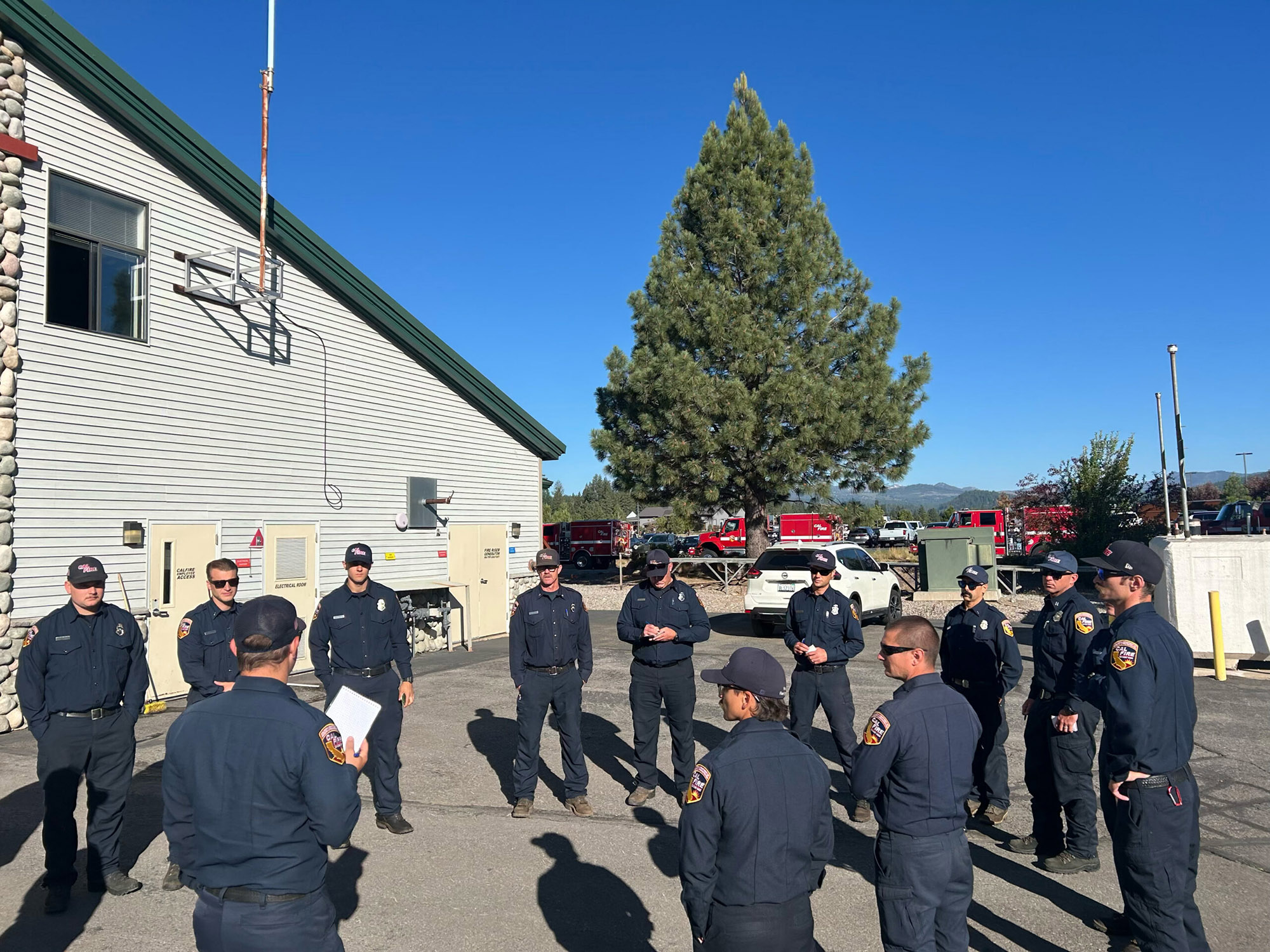
"caption": "California has deployed 15 fire engines and 53 personnel to help Colorado fight the over 85,000-acre Aspen Acres Fire, marking the first-ever CAL FIRE deployment to Colorado under a national mutual aid partnership. ",
"credit": "Image via California Governor's Office",
"altTag": null,
"description": null,
"imgSizes": {
"thumbnail": {
"file": "https://cdn.kqed.org/wp-content/uploads/sites/10/2026/07/IMG_0798-scaled-1-160x120.jpg",
"width": 160,
"height": 120,
"mimeType": "image/jpeg"
},
"1536x1536": {
"file": "https://cdn.kqed.org/wp-content/uploads/sites/10/2026/07/IMG_0798-scaled-1-1536x1152.jpg",
"width": 1536,
"height": 1152,
"mimeType": "image/jpeg"
},
"post-thumbnail": {
"file": "https://cdn.kqed.org/wp-content/uploads/sites/10/2026/07/IMG_0798-scaled-1-672x372.jpg",
"width": 672,
"height": 372,
"mimeType": "image/jpeg"
},
"twentyfourteen-full-width": {
"file": "https://cdn.kqed.org/wp-content/uploads/sites/10/2026/07/IMG_0798-scaled-1-1038x576.jpg",
"width": 1038,
"height": 576,
"mimeType": "image/jpeg"
},
"npr-cds-wide": {
"file": "https://cdn.kqed.org/wp-content/uploads/sites/10/2026/07/IMG_0798-scaled-1-1200x675.jpg",
"width": 1200,
"height": 675,
"mimeType": "image/jpeg"
},
"npr-cds-square": {
"file": "https://cdn.kqed.org/wp-content/uploads/sites/10/2026/07/IMG_0798-scaled-1-600x600.jpg",
"width": 600,
"height": 600,
"mimeType": "image/jpeg"
},
"kqedFullSize": {
"file": "https://cdn.kqed.org/wp-content/uploads/sites/10/2026/07/IMG_0798-scaled-1.jpg",
"width": 2000,
"height": 1500
}
},
"isLoading": false,
"fetchFailed": false
},
"news_12089605": {
"type": "attachments",
"id": "news_12089605",
"meta": {
"index": "attachments_1716263798",
"site": "news",
"id": "12089605",
"found": true
},
"title": "240215-PreschoolSuspension-32-BL_qed",
"publishDate": 1782935716,
"status": "inherit",
"parent": 12089580,
"modified": 1782935726,
"caption": "Teacher intern Melanie Sandoval works with students in a garden during a preschool class at Los Medanos College Child Study Center in Pittsburg on Feb. 15, 2024.",
"credit": "Beth LaBerge/KQED",
"altTag": null,
"description": null,
"imgSizes": {
"thumbnail": {
"file": "https://cdn.kqed.org/wp-content/uploads/sites/10/2026/07/240215-PreschoolSuspension-32-BL_qed-160x107.jpg",
"width": 160,
"height": 107,
"mimeType": "image/jpeg"
},
"1536x1536": {
"file": "https://cdn.kqed.org/wp-content/uploads/sites/10/2026/07/240215-PreschoolSuspension-32-BL_qed-1536x1024.jpg",
"width": 1536,
"height": 1024,
"mimeType": "image/jpeg"
},
"post-thumbnail": {
"file": "https://cdn.kqed.org/wp-content/uploads/sites/10/2026/07/240215-PreschoolSuspension-32-BL_qed-672x372.jpg",
"width": 672,
"height": 372,
"mimeType": "image/jpeg"
},
"twentyfourteen-full-width": {
"file": "https://cdn.kqed.org/wp-content/uploads/sites/10/2026/07/240215-PreschoolSuspension-32-BL_qed-1038x576.jpg",
"width": 1038,
"height": 576,
"mimeType": "image/jpeg"
},
"npr-cds-wide": {
"file": "https://cdn.kqed.org/wp-content/uploads/sites/10/2026/07/240215-PreschoolSuspension-32-BL_qed-1200x675.jpg",
"width": 1200,
"height": 675,
"mimeType": "image/jpeg"
},
"npr-cds-square": {
"file": "https://cdn.kqed.org/wp-content/uploads/sites/10/2026/07/240215-PreschoolSuspension-32-BL_qed-600x600.jpg",
"width": 600,
"height": 600,
"mimeType": "image/jpeg"
},
"kqedFullSize": {
"file": "https://cdn.kqed.org/wp-content/uploads/sites/10/2026/07/240215-PreschoolSuspension-32-BL_qed.jpg",
"width": 1999,
"height": 1333
}
},
"isLoading": false,
"fetchFailed": false
},
"news_12089327": {
"type": "attachments",
"id": "news_12089327",
"meta": {
"index": "attachments_1716263798",
"site": "news",
"id": "12089327",
"found": true
},
"title": "Governor Gavin Newsom, Compton, Clinton Elementary School",
"publishDate": 1782838933,
"status": "inherit",
"parent": 12089316,
"modified": 1782839294,
"caption": "Gov. Gavin Newsom walks with students from Clinton Elementary School to announce support for literacy with The Golden State Literacy Plan at Clinton Elementary School in Compton on June 5, 2025. The governor was joined by State Superintendent of Public Instruction Tony Thurmond and other education officials.",
"credit": "Genaro Molina/Los Angeles Times via Getty Images",
"altTag": null,
"description": null,
"imgSizes": {
"thumbnail": {
"file": "https://cdn.kqed.org/wp-content/uploads/sites/10/2026/06/GavinNewsomEducationGetty-160x110.jpg",
"width": 160,
"height": 110,
"mimeType": "image/jpeg"
},
"1536x1536": {
"file": "https://cdn.kqed.org/wp-content/uploads/sites/10/2026/06/GavinNewsomEducationGetty-1536x1055.jpg",
"width": 1536,
"height": 1055,
"mimeType": "image/jpeg"
},
"post-thumbnail": {
"file": "https://cdn.kqed.org/wp-content/uploads/sites/10/2026/06/GavinNewsomEducationGetty-672x372.jpg",
"width": 672,
"height": 372,
"mimeType": "image/jpeg"
},
"twentyfourteen-full-width": {
"file": "https://cdn.kqed.org/wp-content/uploads/sites/10/2026/06/GavinNewsomEducationGetty-1038x576.jpg",
"width": 1038,
"height": 576,
"mimeType": "image/jpeg"
},
"npr-cds-wide": {
"file": "https://cdn.kqed.org/wp-content/uploads/sites/10/2026/06/GavinNewsomEducationGetty-1200x675.jpg",
"width": 1200,
"height": 675,
"mimeType": "image/jpeg"
},
"npr-cds-square": {
"file": "https://cdn.kqed.org/wp-content/uploads/sites/10/2026/06/GavinNewsomEducationGetty-600x600.jpg",
"width": 600,
"height": 600,
"mimeType": "image/jpeg"
},
"kqedFullSize": {
"file": "https://cdn.kqed.org/wp-content/uploads/sites/10/2026/06/GavinNewsomEducationGetty.jpg",
"width": 2000,
"height": 1374
}
},
"isLoading": false,
"fetchFailed": false
},
"news_12089500": {
"type": "attachments",
"id": "news_12089500",
"meta": {
"index": "attachments_1716263798",
"site": "news",
"id": "12089500",
"found": true
},
"title": "Downtown Rio Vista on May 2, 2024.",
"publishDate": 1782925336,
"status": "inherit",
"parent": 12089233,
"modified": 1782925354,
"caption": "Downtown Rio Vista on May 2, 2024.",
"credit": "Beth LaBerge/KQED",
"altTag": null,
"description": null,
"imgSizes": {
"thumbnail": {
"file": "https://cdn.kqed.org/wp-content/uploads/sites/10/2026/07/240502-CaliforniaForever-58-BL_qed-1-160x107.jpg",
"width": 160,
"height": 107,
"mimeType": "image/jpeg"
},
"1536x1536": {
"file": "https://cdn.kqed.org/wp-content/uploads/sites/10/2026/07/240502-CaliforniaForever-58-BL_qed-1-1536x1024.jpg",
"width": 1536,
"height": 1024,
"mimeType": "image/jpeg"
},
"post-thumbnail": {
"file": "https://cdn.kqed.org/wp-content/uploads/sites/10/2026/07/240502-CaliforniaForever-58-BL_qed-1-672x372.jpg",
"width": 672,
"height": 372,
"mimeType": "image/jpeg"
},
"twentyfourteen-full-width": {
"file": "https://cdn.kqed.org/wp-content/uploads/sites/10/2026/07/240502-CaliforniaForever-58-BL_qed-1-1038x576.jpg",
"width": 1038,
"height": 576,
"mimeType": "image/jpeg"
},
"npr-cds-wide": {
"file": "https://cdn.kqed.org/wp-content/uploads/sites/10/2026/07/240502-CaliforniaForever-58-BL_qed-1-1200x675.jpg",
"width": 1200,
"height": 675,
"mimeType": "image/jpeg"
},
"npr-cds-square": {
"file": "https://cdn.kqed.org/wp-content/uploads/sites/10/2026/07/240502-CaliforniaForever-58-BL_qed-1-600x600.jpg",
"width": 600,
"height": 600,
"mimeType": "image/jpeg"
},
"kqedFullSize": {
"file": "https://cdn.kqed.org/wp-content/uploads/sites/10/2026/07/240502-CaliforniaForever-58-BL_qed-1.jpg",
"width": 2000,
"height": 1333
}
},
"isLoading": false,
"fetchFailed": false
},
"news_11699281": {
"type": "attachments",
"id": "news_11699281",
"meta": {
"index": "attachments_1716263798",
"site": "news",
"id": "11699281",
"found": true
},
"parent": 11699275,
"imgSizes": {
"small": {
"file": "https://ww2.kqed.org/app/uploads/sites/10/2018/10/DMVEntrance-520x367.jpg",
"width": 520,
"mimeType": "image/jpeg",
"height": 367
},
"twentyfourteen-full-width": {
"file": "https://ww2.kqed.org/app/uploads/sites/10/2018/10/DMVEntrance-1038x576.jpg",
"width": 1038,
"mimeType": "image/jpeg",
"height": 576
},
"thumbnail": {
"file": "https://ww2.kqed.org/app/uploads/sites/10/2018/10/DMVEntrance-160x113.jpg",
"width": 160,
"mimeType": "image/jpeg",
"height": 113
},
"fd-sm": {
"file": "https://ww2.kqed.org/app/uploads/sites/10/2018/10/DMVEntrance-960x678.jpg",
"width": 960,
"mimeType": "image/jpeg",
"height": 678
},
"post-thumbnail": {
"file": "https://ww2.kqed.org/app/uploads/sites/10/2018/10/DMVEntrance-672x372.jpg",
"width": 672,
"mimeType": "image/jpeg",
"height": 372
},
"xsmall": {
"file": "https://ww2.kqed.org/app/uploads/sites/10/2018/10/DMVEntrance-375x265.jpg",
"width": 375,
"mimeType": "image/jpeg",
"height": 265
},
"kqedFullSize": {
"file": "https://ww2.kqed.org/app/uploads/sites/10/2018/10/DMVEntrance.jpg",
"width": 1920,
"height": 1356
},
"large": {
"file": "https://ww2.kqed.org/app/uploads/sites/10/2018/10/DMVEntrance-1020x720.jpg",
"width": 1020,
"mimeType": "image/jpeg",
"height": 720
},
"xlarge": {
"file": "https://ww2.kqed.org/app/uploads/sites/10/2018/10/DMVEntrance-1180x833.jpg",
"width": 1180,
"mimeType": "image/jpeg",
"height": 833
},
"complete_open_graph": {
"file": "https://ww2.kqed.org/app/uploads/sites/10/2018/10/DMVEntrance-1200x848.jpg",
"width": 1200,
"mimeType": "image/jpeg",
"height": 848
},
"guest-author-50": {
"file": "https://ww2.kqed.org/app/uploads/sites/10/2018/10/DMVEntrance-50x50.jpg",
"width": 50,
"mimeType": "image/jpeg",
"height": 50
},
"guest-author-96": {
"file": "https://ww2.kqed.org/app/uploads/sites/10/2018/10/DMVEntrance-96x96.jpg",
"width": 96,
"mimeType": "image/jpeg",
"height": 96
},
"medium": {
"file": "https://ww2.kqed.org/app/uploads/sites/10/2018/10/DMVEntrance-800x565.jpg",
"width": 800,
"mimeType": "image/jpeg",
"height": 565
},
"guest-author-64": {
"file": "https://ww2.kqed.org/app/uploads/sites/10/2018/10/DMVEntrance-64x64.jpg",
"width": 64,
"mimeType": "image/jpeg",
"height": 64
},
"guest-author-32": {
"file": "https://ww2.kqed.org/app/uploads/sites/10/2018/10/DMVEntrance-32x32.jpg",
"width": 32,
"mimeType": "image/jpeg",
"height": 32
},
"fd-lrg": {
"file": "https://ww2.kqed.org/app/uploads/sites/10/2018/10/DMVEntrance-1920x1356.jpg",
"width": 1920,
"mimeType": "image/jpeg",
"height": 1356
},
"fd-med": {
"file": "https://ww2.kqed.org/app/uploads/sites/10/2018/10/DMVEntrance-1180x833.jpg",
"width": 1180,
"mimeType": "image/jpeg",
"height": 833
},
"full-width": {
"file": "https://ww2.kqed.org/app/uploads/sites/10/2018/10/DMVEntrance-1920x1356.jpg",
"width": 1920,
"mimeType": "image/jpeg",
"height": 1356
},
"detail": {
"file": "https://ww2.kqed.org/app/uploads/sites/10/2018/10/DMVEntrance-150x150.jpg",
"width": 150,
"mimeType": "image/jpeg",
"height": 150
},
"guest-author-128": {
"file": "https://ww2.kqed.org/app/uploads/sites/10/2018/10/DMVEntrance-128x128.jpg",
"width": 128,
"mimeType": "image/jpeg",
"height": 128
},
"xxsmall": {
"file": "https://ww2.kqed.org/app/uploads/sites/10/2018/10/DMVEntrance-240x170.jpg",
"width": 240,
"mimeType": "image/jpeg",
"height": 170
}
},
"publishDate": 1539716581,
"modified": 1539716619,
"caption": "The entrance to a California Department of Motor Vehicles (DMV) office in Corte Madera.",
"description": "The entrance to a California Department of Motor Vehicles (DMV) office in Corte Madera.",
"title": "DMVEntrance",
"credit": "Justin Sullivan/Getty Images",
"status": "inherit",
"isLoading": false,
"fetchFailed": false
},
"news_12046175": {
"type": "attachments",
"id": "news_12046175",
"meta": {
"index": "attachments_1716263798",
"site": "news",
"id": "12046175",
"found": true
},
"title": "Homeless people struggle during heavy rain in San Francisco, California",
"publishDate": 1750970923,
"status": "inherit",
"parent": 12087973,
"modified": 1781737864,
"caption": "A homeless encampment near Polk Street in San Francisco on Feb. 6, 2025.",
"credit": "Tayfun Coskun/Anadolu via Getty Images",
"altTag": null,
"description": null,
"imgSizes": {
"thumbnail": {
"file": "https://cdn.kqed.org/wp-content/uploads/sites/10/2025/06/GETTYIMAGES-2197492442-KQED-160x101.jpg",
"width": 160,
"height": 101,
"mimeType": "image/jpeg"
},
"1536x1536": {
"file": "https://cdn.kqed.org/wp-content/uploads/sites/10/2025/06/GETTYIMAGES-2197492442-KQED-1536x969.jpg",
"width": 1536,
"height": 969,
"mimeType": "image/jpeg"
},
"post-thumbnail": {
"file": "https://cdn.kqed.org/wp-content/uploads/sites/10/2025/06/GETTYIMAGES-2197492442-KQED-672x372.jpg",
"width": 672,
"height": 372,
"mimeType": "image/jpeg"
},
"twentyfourteen-full-width": {
"file": "https://cdn.kqed.org/wp-content/uploads/sites/10/2025/06/GETTYIMAGES-2197492442-KQED-1038x576.jpg",
"width": 1038,
"height": 576,
"mimeType": "image/jpeg"
},
"kqedFullSize": {
"file": "https://cdn.kqed.org/wp-content/uploads/sites/10/2025/06/GETTYIMAGES-2197492442-KQED.jpg",
"width": 2000,
"height": 1262
}
},
"isLoading": false,
"fetchFailed": false
},
"news_12052353": {
"type": "attachments",
"id": "news_12052353",
"meta": {
"index": "attachments_1716263798",
"site": "news",
"id": "12052353",
"found": true
},
"title": "250804-CALIFORNIAFOREVERSUISUNCITY-44-KQED",
"publishDate": 1755277841,
"status": "inherit",
"parent": 12052340,
"modified": 1755291080,
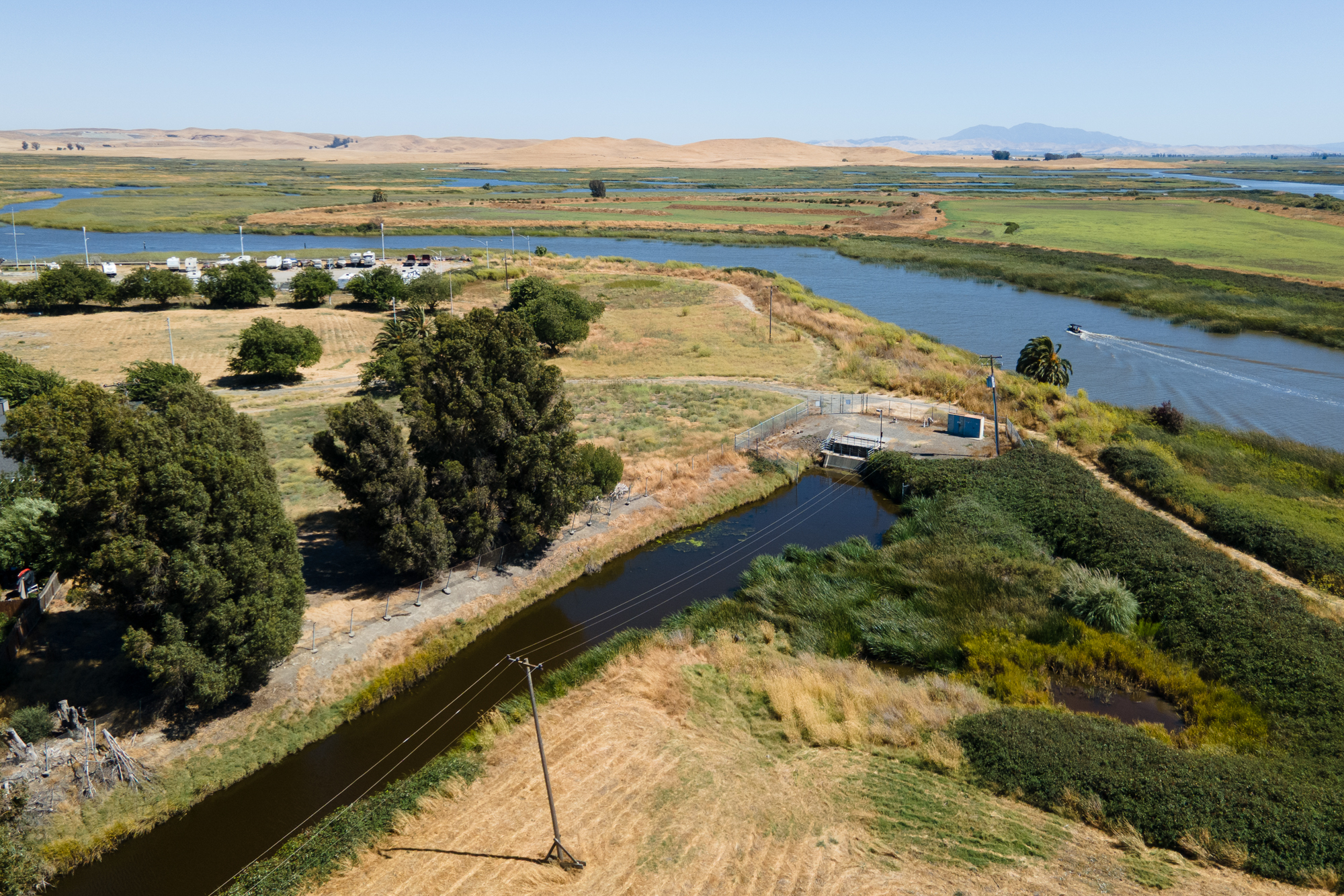
"caption": "An aerial view of the Suisun Slough in Suisun City, Solano County, on Aug. 4, 2025.",
"credit": "Beth LaBerge/KQED",
"altTag": null,
"description": null,
"imgSizes": {
"thumbnail": {
"file": "https://cdn.kqed.org/wp-content/uploads/sites/10/2025/08/250804-CALIFORNIAFOREVERSUISUNCITY-44-KQED-160x107.jpg",
"width": 160,
"height": 107,
"mimeType": "image/jpeg"
},
"1536x1536": {
"file": "https://cdn.kqed.org/wp-content/uploads/sites/10/2025/08/250804-CALIFORNIAFOREVERSUISUNCITY-44-KQED-1536x1025.jpg",
"width": 1536,
"height": 1025,
"mimeType": "image/jpeg"
},
"post-thumbnail": {
"file": "https://cdn.kqed.org/wp-content/uploads/sites/10/2025/08/250804-CALIFORNIAFOREVERSUISUNCITY-44-KQED-672x372.jpg",
"width": 672,
"height": 372,
"mimeType": "image/jpeg"
},
"twentyfourteen-full-width": {
"file": "https://cdn.kqed.org/wp-content/uploads/sites/10/2025/08/250804-CALIFORNIAFOREVERSUISUNCITY-44-KQED-1038x576.jpg",
"width": 1038,
"height": 576,
"mimeType": "image/jpeg"
},
"kqedFullSize": {
"file": "https://cdn.kqed.org/wp-content/uploads/sites/10/2025/08/250804-CALIFORNIAFOREVERSUISUNCITY-44-KQED.jpg",
"width": 2000,
"height": 1334
}
},
"isLoading": false,
"fetchFailed": false
},
"news_12088102": {
"type": "attachments",
"id": "news_12088102",
"meta": {
"index": "attachments_1716263798",
"site": "news",
"id": "12088102",
"found": true
},
"title": "013024_Contra-Costa-Water_LE_05_CM",
"publishDate": 1781802331,
"status": "inherit",
"parent": 12088091,
"modified": 1781802351,
"caption": "An instrumentation intern conducts a maintenance check on a temperature sensor while being trained by an instrument technician inside a Contra Costa Water District pumping plant at the Antioch Service Center in Oakley on Jan. 30, 2024. The internship is funded through Gov. Gavin Newsom's initiative to promote long-lasting, high-quality jobs.",
"credit": "Loren Elliott for CalMatters",
"altTag": null,
"description": null,
"imgSizes": {
"thumbnail": {
"file": "https://cdn.kqed.org/wp-content/uploads/sites/10/2026/06/013024_Contra-Costa-Water_LE_05_CM-160x107.jpeg",
"width": 160,
"height": 107,
"mimeType": "image/jpeg"
},
"1536x1536": {
"file": "https://cdn.kqed.org/wp-content/uploads/sites/10/2026/06/013024_Contra-Costa-Water_LE_05_CM-1536x1024.jpeg",
"width": 1536,
"height": 1024,
"mimeType": "image/jpeg"
},
"post-thumbnail": {
"file": "https://cdn.kqed.org/wp-content/uploads/sites/10/2026/06/013024_Contra-Costa-Water_LE_05_CM-672x372.jpeg",
"width": 672,
"height": 372,
"mimeType": "image/jpeg"
},
"twentyfourteen-full-width": {
"file": "https://cdn.kqed.org/wp-content/uploads/sites/10/2026/06/013024_Contra-Costa-Water_LE_05_CM-1038x576.jpeg",
"width": 1038,
"height": 576,
"mimeType": "image/jpeg"
},
"npr-cds-wide": {
"file": "https://cdn.kqed.org/wp-content/uploads/sites/10/2026/06/013024_Contra-Costa-Water_LE_05_CM-1200x675.jpeg",
"width": 1200,
"height": 675,
"mimeType": "image/jpeg"
},
"npr-cds-square": {
"file": "https://cdn.kqed.org/wp-content/uploads/sites/10/2026/06/013024_Contra-Costa-Water_LE_05_CM-600x600.jpeg",
"width": 600,
"height": 600,
"mimeType": "image/jpeg"
},
"kqedFullSize": {
"file": "https://cdn.kqed.org/wp-content/uploads/sites/10/2026/06/013024_Contra-Costa-Water_LE_05_CM.jpeg",
"width": 2000,
"height": 1333
}
},
"isLoading": false,
"fetchFailed": false
},
"news_12088085": {
"type": "attachments",
"id": "news_12088085",
"meta": {
"index": "attachments_1716263798",
"site": "news",
"id": "12088085",
"found": true
},
"title": "021826-Billionaires-Tax-GETTY-CM-01",
"publishDate": 1781800791,
"status": "inherit",
"parent": 12088063,
"modified": 1787854365,
"caption": "Signs reading “A Billionaire Tax Now” rest on chairs at a Billionaire Tax Now rally where Sen. Bernie Sanders is set to speak in Los Angeles on Feb. 18, 2026. \n",
"credit": "Jason Armond/Los Angeles Times via Getty Images",
"altTag": null,
"description": null,
"imgSizes": {
"thumbnail": {
"file": "https://cdn.kqed.org/wp-content/uploads/sites/10/2026/06/021826-Billionaires-Tax-GETTY-CM-01-160x107.jpeg",
"width": 160,
"height": 107,
"mimeType": "image/jpeg"
},
"1536x1536": {
"file": "https://cdn.kqed.org/wp-content/uploads/sites/10/2026/06/021826-Billionaires-Tax-GETTY-CM-01-1536x1025.jpeg",
"width": 1536,
"height": 1025,
"mimeType": "image/jpeg"
},
"post-thumbnail": {
"file": "https://cdn.kqed.org/wp-content/uploads/sites/10/2026/06/021826-Billionaires-Tax-GETTY-CM-01-672x372.jpeg",
"width": 672,
"height": 372,
"mimeType": "image/jpeg"
},
"twentyfourteen-full-width": {
"file": "https://cdn.kqed.org/wp-content/uploads/sites/10/2026/06/021826-Billionaires-Tax-GETTY-CM-01-1038x576.jpeg",
"width": 1038,
"height": 576,
"mimeType": "image/jpeg"
},
"npr-cds-wide": {
"file": "https://cdn.kqed.org/wp-content/uploads/sites/10/2026/06/021826-Billionaires-Tax-GETTY-CM-01-1200x675.jpeg",
"width": 1200,
"height": 675,
"mimeType": "image/jpeg"
},
"npr-cds-square": {
"file": "https://cdn.kqed.org/wp-content/uploads/sites/10/2026/06/021826-Billionaires-Tax-GETTY-CM-01-600x600.jpeg",
"width": 600,
"height": 600,
"mimeType": "image/jpeg"
},
"kqedFullSize": {
"file": "https://cdn.kqed.org/wp-content/uploads/sites/10/2026/06/021826-Billionaires-Tax-GETTY-CM-01.jpeg",
"width": 2000,
"height": 1334
}
},
"isLoading": false,
"fetchFailed": false
},
"news_12087658": {
"type": "attachments",
"id": "news_12087658",
"meta": {
"index": "attachments_1716263798",
"site": "news",
"id": "12087658",
"found": true
},
"title": "California's Democratic Party Holds Election Night Gathering To Watch Prop 50 Results",
"publishDate": 1781558666,
"status": "inherit",
"parent": 12087654,
"modified": 1788298610,
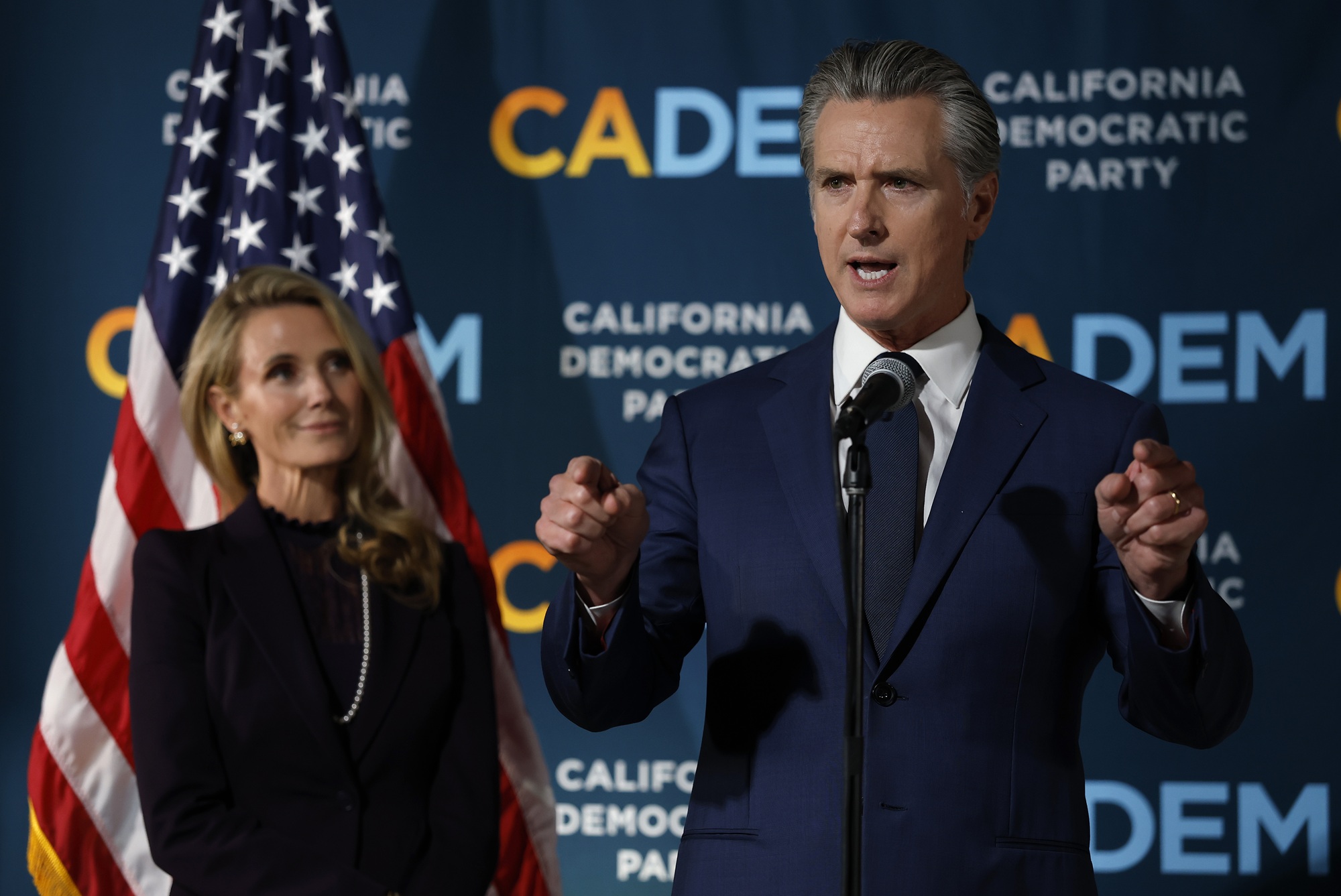
"caption": "Gov. Gavin Newsom speaks as his wife, Jennifer Siebel Newsom (left), looks on during an election night gathering at California Democratic headquarters in Sacramento, California, on Nov. 4, 2025.",
"credit": "Justin Sullivan/Getty Images",
"altTag": null,
"description": null,
"imgSizes": {
"thumbnail": {
"file": "https://cdn.kqed.org/wp-content/uploads/sites/10/2026/06/GavinJenniferNewsomGetty-160x107.jpg",
"width": 160,
"height": 107,
"mimeType": "image/jpeg"
},
"1536x1536": {
"file": "https://cdn.kqed.org/wp-content/uploads/sites/10/2026/06/GavinJenniferNewsomGetty-1536x1027.jpg",
"width": 1536,
"height": 1027,
"mimeType": "image/jpeg"
},
"post-thumbnail": {
"file": "https://cdn.kqed.org/wp-content/uploads/sites/10/2026/06/GavinJenniferNewsomGetty-672x372.jpg",
"width": 672,
"height": 372,
"mimeType": "image/jpeg"
},
"twentyfourteen-full-width": {
"file": "https://cdn.kqed.org/wp-content/uploads/sites/10/2026/06/GavinJenniferNewsomGetty-1038x576.jpg",
"width": 1038,
"height": 576,
"mimeType": "image/jpeg"
},
"npr-cds-wide": {
"file": "https://cdn.kqed.org/wp-content/uploads/sites/10/2026/06/GavinJenniferNewsomGetty-1200x675.jpg",
"width": 1200,
"height": 675,
"mimeType": "image/jpeg"
},
"npr-cds-square": {
"file": "https://cdn.kqed.org/wp-content/uploads/sites/10/2026/06/GavinJenniferNewsomGetty-600x600.jpg",
"width": 600,
"height": 600,
"mimeType": "image/jpeg"
},
"kqedFullSize": {
"file": "https://cdn.kqed.org/wp-content/uploads/sites/10/2026/06/GavinJenniferNewsomGetty.jpg",
"width": 2000,
"height": 1337
}
},
"isLoading": false,
"fetchFailed": false
},
"news_12087570": {
"type": "attachments",
"id": "news_12087570",
"meta": {
"index": "attachments_1716263798",
"site": "news",
"id": "12087570",
"found": true
},
"title": "CaliforniaSealCM",
"publishDate": 1781541800,
"status": "inherit",
"parent": 12087559,
"modified": 1781541837,
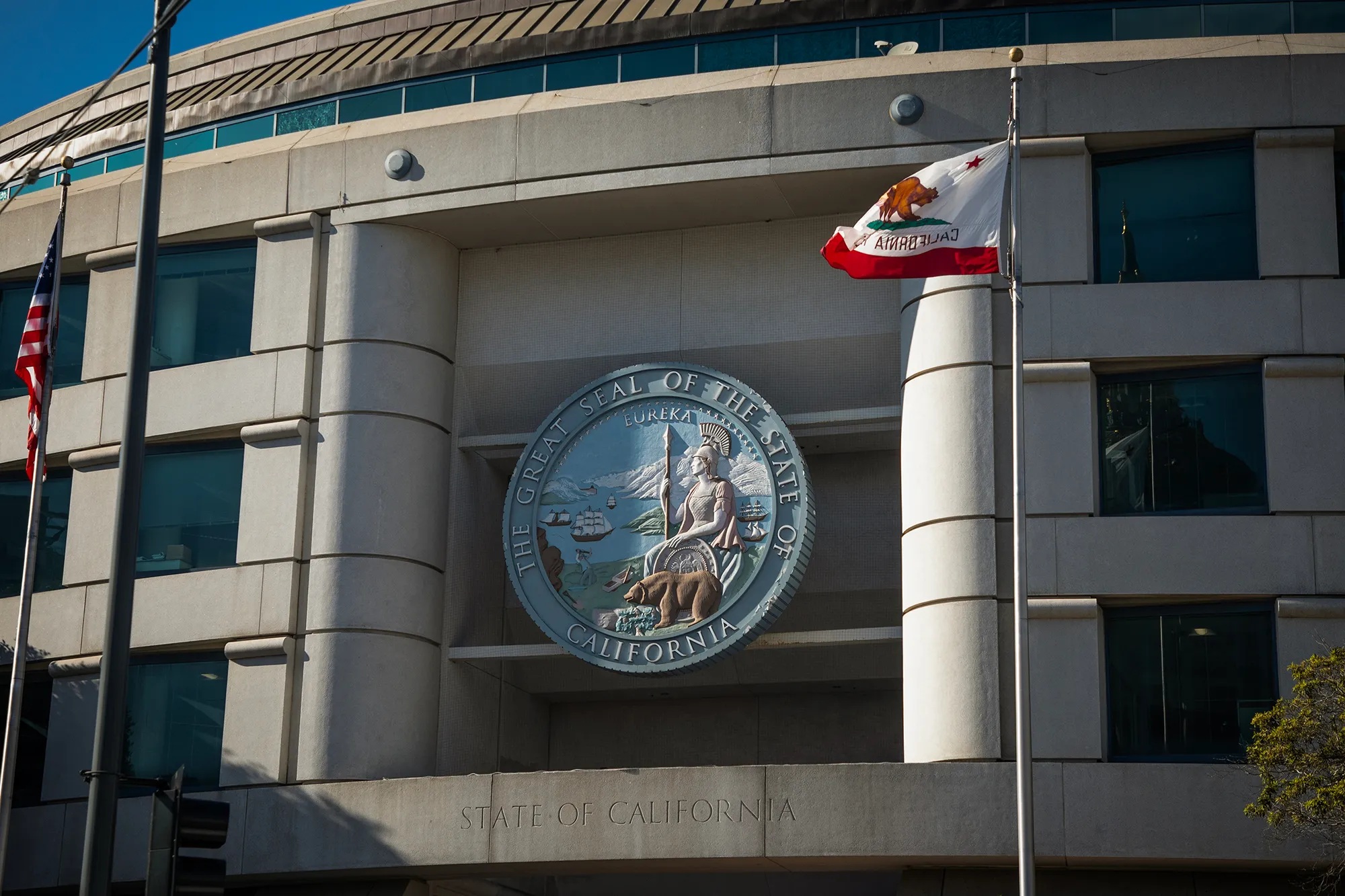
"caption": "Every year, California agencies report to the state technology department on their use of \"high-risk\" decision systems. The seal of the State of California on the Edmund G. Brown Jr. State Office Building in San Francisco on Jan. 28, 2022. ",
"credit": "Martin do Nascimento for CalMatters",
"altTag": null,
"description": null,
"imgSizes": {
"thumbnail": {
"file": "https://cdn.kqed.org/wp-content/uploads/sites/10/2026/06/CaliforniaSealCM-160x107.jpg",
"width": 160,
"height": 107,
"mimeType": "image/jpeg"
},
"1536x1536": {
"file": "https://cdn.kqed.org/wp-content/uploads/sites/10/2026/06/CaliforniaSealCM-1536x1024.jpg",
"width": 1536,
"height": 1024,
"mimeType": "image/jpeg"
},
"post-thumbnail": {
"file": "https://cdn.kqed.org/wp-content/uploads/sites/10/2026/06/CaliforniaSealCM-672x372.jpg",
"width": 672,
"height": 372,
"mimeType": "image/jpeg"
},
"twentyfourteen-full-width": {
"file": "https://cdn.kqed.org/wp-content/uploads/sites/10/2026/06/CaliforniaSealCM-1038x576.jpg",
"width": 1038,
"height": 576,
"mimeType": "image/jpeg"
},
"npr-cds-wide": {
"file": "https://cdn.kqed.org/wp-content/uploads/sites/10/2026/06/CaliforniaSealCM-1200x675.jpg",
"width": 1200,
"height": 675,
"mimeType": "image/jpeg"
},
"npr-cds-square": {
"file": "https://cdn.kqed.org/wp-content/uploads/sites/10/2026/06/CaliforniaSealCM-600x600.jpg",
"width": 600,
"height": 600,
"mimeType": "image/jpeg"
},
"kqedFullSize": {
"file": "https://cdn.kqed.org/wp-content/uploads/sites/10/2026/06/CaliforniaSealCM.jpg",
"width": 2000,
"height": 1333
}
},
"isLoading": false,
"fetchFailed": false
}
},
"audioPlayerReducer": {
"postId": "stream_live",
"isPaused": true,
"isPlaying": false,
"pfsActive": false,
"pledgeModalIsOpen": true,
"playerDrawerIsOpen": false,
"liveAudioPlayStartedAt": 0,
"liveAudioPlayContext": ""
},
"authorsReducer": {
"byline_news_12090647": {
"type": "authors",
"id": "byline_news_12090647",
"meta": {
"override": true
},
"slug": "byline_news_12090647",
"name": "Mikhail Zinshteyn, CalMatters",
"isLoading": false
},
"byline_news_12089896": {
"type": "authors",
"id": "byline_news_12089896",
"meta": {
"override": true
},
"slug": "byline_news_12089896",
"name": "Ella Jackson",
"isLoading": false
},
"byline_news_12089350": {
"type": "authors",
"id": "byline_news_12089350",
"meta": {
"override": true
},
"slug": "byline_news_12089350",
"name": "By Khari Johnson, Wendy Fry and Yue Stella Yu, CalMatters",
"isLoading": false
},
"byline_news_12089118": {
"type": "authors",
"id": "byline_news_12089118",
"meta": {
"override": true
},
"slug": "byline_news_12089118",
"name": "Marisa Kendall, CalMatters",
"isLoading": false
},
"byline_news_12089111": {
"type": "authors",
"id": "byline_news_12089111",
"meta": {
"override": true
},
"slug": "byline_news_12089111",
"name": "Kate Wolffe and Yue Stella Yu, CalMatters",
"isLoading": false
},
"byline_news_12088091": {
"type": "authors",
"id": "byline_news_12088091",
"meta": {
"override": true
},
"slug": "byline_news_12088091",
"name": "Adam Echelman, CalMatters",
"isLoading": false
},
"byline_news_12088063": {
"type": "authors",
"id": "byline_news_12088063",
"meta": {
"override": true
},
"slug": "byline_news_12088063",
"name": "Kristen Hwang, CalMatters",
"isLoading": false
},
"byline_news_12087559": {
"type": "authors",
"id": "byline_news_12087559",
"meta": {
"override": true
},
"slug": "byline_news_12087559",
"name": "Khari Johnson, CalMatters",
"isLoading": false
},
"gmarzorati": {
"type": "authors",
"id": "227",
"meta": {
"index": "authors_1716337520",
"id": "227",
"found": true
},
"name": "Guy Marzorati",
"firstName": "Guy",
"lastName": "Marzorati",
"slug": "gmarzorati",
"email": "gmarzorati@KQED.org",
"display_author_email": true,
"staff_mastheads": [
"news"
],
"title": "Correspondent",
"bio": "Guy Marzorati is a correspondent on KQED's California Politics and Government Desk, based in San Jose. A graduate of Santa Clara University, Guy joined KQED in 2013. He reports on state and local politics and produces KQED's digital voter guide.",
"avatar": "https://secure.gravatar.com/avatar/e7038b8dbfd55b104369b76b1cd0b9de?s=600&d=blank&r=g",
"twitter": "guymarzorati",
"facebook": null,
"instagram": null,
"linkedin": null,
"sites": [
{
"site": "",
"roles": [
"editor"
]
},
{
"site": "news",
"roles": [
"editor"
]
},
{
"site": "science",
"roles": [
"editor"
]
},
{
"site": "forum",
"roles": [
"editor"
]
},
{
"site": "elections",
"roles": [
"editor"
]
},
{
"site": "liveblog",
"roles": [
"editor"
]
}
],
"headData": {
"title": "Guy Marzorati | KQED",
"description": "Correspondent",
"ogImgSrc": "https://secure.gravatar.com/avatar/e7038b8dbfd55b104369b76b1cd0b9de?s=600&d=blank&r=g",
"twImgSrc": "https://secure.gravatar.com/avatar/e7038b8dbfd55b104369b76b1cd0b9de?s=600&d=blank&r=g"
},
"isLoading": false,
"link": "/author/gmarzorati"
},
"abandlamudi": {
"type": "authors",
"id": "11672",
"meta": {
"index": "authors_1716337520",
"id": "11672",
"found": true
},
"name": "Adhiti Bandlamudi",
"firstName": "Adhiti",
"lastName": "Bandlamudi",
"slug": "abandlamudi",
"email": "abandlamudi@kqed.org",
"display_author_email": false,
"staff_mastheads": [
"news"
],
"title": "KQED Housing Reporter",
"bio": "Adhiti Bandlamudi reports for KQED's Housing desk. She focuses on how housing gets built across the Bay Area. Before joining KQED in 2020, she reported for WUNC in Durham, North Carolina, WABE in Atlanta, Georgia and Capital Public Radio in Sacramento. In 2017, she was awarded a Kroc Fellowship at NPR where she reported on everything from sprinkles to the Golden State Killer's arrest. When she's not reporting, she's baking new recipes in her kitchen or watching movies with friends and family. She's originally from Georgia and has strong opinions about Great British Bake Off.",
"avatar": "https://secure.gravatar.com/avatar/868129c8b257bb99a3500e2c86a65400?s=600&d=mm&r=g",
"twitter": "oddity_adhiti",
"facebook": null,
"instagram": null,
"linkedin": null,
"sites": [
{
"site": "arts",
"roles": [
"author"
]
},
{
"site": "news",
"roles": [
"editor"
]
},
{
"site": "liveblog",
"roles": [
"author"
]
}
],
"headData": {
"title": "Adhiti Bandlamudi | KQED",
"description": "KQED Housing Reporter",
"ogImgSrc": "https://secure.gravatar.com/avatar/868129c8b257bb99a3500e2c86a65400?s=600&d=mm&r=g",
"twImgSrc": "https://secure.gravatar.com/avatar/868129c8b257bb99a3500e2c86a65400?s=600&d=mm&r=g"
},
"isLoading": false,
"link": "/author/abandlamudi"
},
"daisynguyen": {
"type": "authors",
"id": "11829",
"meta": {
"index": "authors_1716337520",
"id": "11829",
"found": true
},
"name": "Daisy Nguyen",
"firstName": "Daisy",
"lastName": "Nguyen",
"slug": "daisynguyen",
"email": "daisynguyen@kqed.org",
"display_author_email": true,
"staff_mastheads": [
"news"
],
"title": "KQED Contributor",
"bio": "I have covered early childhood education and child care for KQED since 2022. I focus on policies aimed at increasing access to early care and education and how they shape individual lives. I've been a journalist for more than two decades, with most of that time devoted to covering breaking news throughout California for The Associated Press. I grew up in San Francisco and studied at UC Davis and Columbia University's Graduate School of Journalism. I live in Oakland with my husband and two kids.",
"avatar": "https://secure.gravatar.com/avatar/2da2127c27f7143b53ebd419800fd55f?s=600&d=blank&r=g",
"twitter": null,
"facebook": null,
"instagram": null,
"linkedin": "https://www.linkedin.com/in/daisynguyen/",
"sites": [
{
"site": "news",
"roles": [
"author"
]
},
{
"site": "liveblog",
"roles": [
"author"
]
}
],
"headData": {
"title": "Daisy Nguyen | KQED",
"description": "KQED Contributor",
"ogImgSrc": "https://secure.gravatar.com/avatar/2da2127c27f7143b53ebd419800fd55f?s=600&d=blank&r=g",
"twImgSrc": "https://secure.gravatar.com/avatar/2da2127c27f7143b53ebd419800fd55f?s=600&d=blank&r=g"
},
"isLoading": false,
"link": "/author/daisynguyen"
},
"kdebenedetti": {
"type": "authors",
"id": "11913",
"meta": {
"index": "authors_1716337520",
"id": "11913",
"found": true
},
"name": "Katie DeBenedetti",
"firstName": "Katie",
"lastName": "DeBenedetti",
"slug": "kdebenedetti",
"email": "kdebenedetti@kqed.org",
"display_author_email": false,
"staff_mastheads": [
"news",
"science"
],
"title": "KQED Contributor",
"bio": "Katie DeBenedetti is a digital reporter covering daily news for the Express Desk. Prior to joining KQED as a culture reporting intern in January 2024, she covered education and city government for the Napa Valley Register.",
"avatar": "https://secure.gravatar.com/avatar/6e31073cb8f7e4214ab03f42771d0f45?s=600&d=blank&r=g",
"twitter": null,
"facebook": null,
"instagram": null,
"linkedin": null,
"sites": [
{
"site": "news",
"roles": [
"author"
]
},
{
"site": "science",
"roles": [
"author"
]
},
{
"site": "liveblog",
"roles": [
"author"
]
}
],
"headData": {
"title": "Katie DeBenedetti | KQED",
"description": "KQED Contributor",
"ogImgSrc": "https://secure.gravatar.com/avatar/6e31073cb8f7e4214ab03f42771d0f45?s=600&d=blank&r=g",
"twImgSrc": "https://secure.gravatar.com/avatar/6e31073cb8f7e4214ab03f42771d0f45?s=600&d=blank&r=g"
},
"isLoading": false,
"link": "/author/kdebenedetti"
}
},
"pagesReducer": {
"news_tag_gavin-newsom": {
"type": "terms",
"id": "news_16",
"meta": {
"index": "terms_1716263798",
"site": "news",
"id": "16",
"score": 8.936871
},
"featImg": null,
"name": "Gavin Newsom",
"description": null,
"taxonomy": "tag",
"headData": {
"twImgId": null,
"twTitle": null,
"ogTitle": null,
"ogImgId": null,
"twDescription": null,
"description": null,
"title": "Gavin Newsom Archives | KQED News",
"ogDescription": null
},
"ttid": 16,
"slug": "gavin-newsom",
"isLoading": false,
"title": "Gavin Newsom",
"pageMeta": {
"site": "news",
"WpPageTemplate": "page-topic-editorial",
"currentPage": 3
},
"blocks": [
{
"blockName": "kqed/post-list",
"attrs": {
"layout": "cardArticle2",
"query": "posts/news?tag=gavin-newsom",
"seeMore": false,
"paginated": true,
"page": 3
}
},
{
"blockName": "kqed/ad"
}
]
}
},
"pfsSessionReducer": {},
"postsReducer": {
"stream_live": {
"type": "live",
"id": "stream_live",
"audioUrl": "https://streams.kqed.org/kqedradio",
"title": "Live Stream",
"excerpt": "Live Stream information currently unavailable.",
"link": "/radio",
"featImg": "",
"label": {
"name": "KQED Live",
"link": "/"
}
},
"stream_kqedNewscast": {
"type": "posts",
"id": "stream_kqedNewscast",
"audioUrl": "https://www.kqed.org/.stream/anon/radio/RDnews/newscast.mp3?_=1",
"title": "KQED Newscast",
"featImg": "",
"label": {
"name": "88.5 FM",
"link": "/"
}
},
"news_12090647": {
"type": "posts",
"id": "news_12090647",
"meta": {
"index": "posts_1716263798",
"site": "news",
"id": "12090647",
"score": null,
"sort": [
1783882805000
]
},
"guestAuthors": [],
"slug": "newsoms-final-budget-sends-more-than-a-billion-dollars-to-university-of-california-cal-state",
"title": "Newsom’s Final Budget Sends More Than a Billion Dollars to University of California, Cal State",
"publishDate": 1783882805,
"format": "standard",
"headTitle": "Newsom’s Final Budget Sends More Than a Billion Dollars to University of California, Cal State | KQED",
"labelTerm": {},
"content": "\u003cp>\u003c!-- Creative Commons Attribution-NonCommercial-NoDerivatives https://creativecommons.org/licenses/by-nc-nd/4.0/ -->\u003c/p>\n\u003cp>\u003cem>This story was originally published by \u003ca href=\"https://calmatters.org/\">CalMatters\u003c/a>. \u003ca href=\"https://calmatters.org/subscribe-to-calmatters/\">Sign up\u003c/a> for their newsletters.\u003c/em>\u003c/p>\n\u003cp>\u003ca href=\"https://www.kqed.org/news/tag/california\">California’s\u003c/a> public colleges and universities emerged as winners in the latest state budget after lawmakers sent them hundreds of millions of dollars in new public spending. However, that largesse was tempered by decisions by Democrats in Sacramento to reject bond measures that could have awarded campuses billions more.\u003c/p>\n\u003cp>The changes were enshrined in the state budget for 2026-27 that the Legislature and Gov. Gavin Newsom \u003ca href=\"https://calmatters.org/politics/2026/06/california-gavin-newsom-final-budget-deal/\">approved last month\u003c/a>.\u003c/p>\n\u003cp>Students were also major beneficiaries, as lawmakers continued to support one of the nation’s most generous state financial aid programs. The Cal Grant, which generally covers tuition at the University of California and California State University and partial tuition at private colleges, remains fully funded as part of an ongoing commitment by lawmakers and Newsom to keep student costs down.\u003c/p>\n\u003cp>[ad fullwidth]\u003c/p>\n\u003cp>UC and Cal State students receiving the Cal Grants will have their tuition charges waived, even as schools continue to raise tuition. And more affordable student housing may be built soon if voters approve a bond that lawmakers and Newsom put on the ballot for November.\u003c/p>\n\u003cp>Prioritizing higher education spending will be “a strong part of Gov. Newsom’s legacy,” said Jessica L. Thompson, a senior vice president at The Institute for College Access & Success. The organization is a think tank that advocates for increased financial aid for low-income students.\u003c/p>\n\u003cfigure id=\"attachment_12038976\" class=\"wp-caption aligncenter\" style=\"max-width: 1999px\">\u003cimg loading=\"lazy\" decoding=\"async\" class=\"size-full wp-image-12038976\" src=\"https://cdn.kqed.org/wp-content/uploads/sites/10/2025/05/250219-CSU-East-Bay-File-MD-12_qed.jpg\" alt=\"\" width=\"1999\" height=\"1333\" srcset=\"https://cdn.kqed.org/wp-content/uploads/sites/10/2025/05/250219-CSU-East-Bay-File-MD-12_qed.jpg 1999w, https://cdn.kqed.org/wp-content/uploads/sites/10/2025/05/250219-CSU-East-Bay-File-MD-12_qed-800x533.jpg 800w, https://cdn.kqed.org/wp-content/uploads/sites/10/2025/05/250219-CSU-East-Bay-File-MD-12_qed-1020x680.jpg 1020w, https://cdn.kqed.org/wp-content/uploads/sites/10/2025/05/250219-CSU-East-Bay-File-MD-12_qed-160x107.jpg 160w, https://cdn.kqed.org/wp-content/uploads/sites/10/2025/05/250219-CSU-East-Bay-File-MD-12_qed-1536x1024.jpg 1536w, https://cdn.kqed.org/wp-content/uploads/sites/10/2025/05/250219-CSU-East-Bay-File-MD-12_qed-1920x1280.jpg 1920w\" sizes=\"auto, (max-width: 1999px) 100vw, 1999px\">\u003cfigcaption class=\"wp-caption-text\">Students make their way on campus at CSU East Bay on Feb. 19, 2025. \u003ccite>(Martin do Nascimento/KQED)\u003c/cite>\u003c/figcaption>\u003c/figure>\n\u003cp>“We’ve never had to work to convince the executive branch that public higher education was incredibly important and central to a lot of the ambitions for the state and for the future, and that’s not something to take for granted,” she told CalMatters.\u003c/p>\n\u003cp>Still, the smaller Middle Class Scholarship, which last year awarded recipients an average of $3,000 in aid to cover school expenses, will decrease to an average of $2,000 this year.\u003c/p>\n\u003cp>Here’s a breakdown of higher education’s wins and losses in California.\u003c/p>\n\u003ch2>More money for UC, Cal State\u003c/h2>\n\u003cp>The UC and Cal State systems each received more than $500 million in ongoing taxpayer support that can be used to hire faculty as they enroll more students and keep up with other expenses, such as rising energy, insurance and staff health costs.\u003c/p>\n\u003cp>That public generosity isn’t guaranteed. Public K-12 schools and community colleges are constitutionally guaranteed around 40% of the state’s general fund. But public universities have no such ironclad dibs on state money.\u003c/p>\n\u003cp>The Legislature’s top budget and policy adviser, the Legislative Analyst’s Office, \u003ca href=\"https://lao.ca.gov/Publications/Report/5112#:~:text=Recommend%20Reducing%20or%20Eliminating%20Base%20Increases,4.2%C2%A0percent%20and%203.5%C2%A0percent%2C%20respectively.\">recommended smaller increases for the universities in February\u003c/a>. The office cited projected multibillion-dollar state deficits. And it argued that both systems can still rely on new revenue from their \u003ca href=\"https://calmatters.org/education/higher-education/2025/11/uc-tuition/\">annual\u003c/a> tuition \u003ca href=\"https://calmatters.org/education/higher-education/2023/09/cal-state-tuition-2/\">hikes\u003c/a>.\u003c/p>\n\u003cfigure id=\"attachment_12084670\" class=\"wp-caption aligncenter\" style=\"max-width: 2000px\">\u003cimg loading=\"lazy\" decoding=\"async\" class=\"wp-image-12084670 size-full\" src=\"https://cdn.kqed.org/wp-content/uploads/sites/10/2026/05/GavinNewsomAP.jpg\" alt=\"\" width=\"2000\" height=\"1333\" srcset=\"https://cdn.kqed.org/wp-content/uploads/sites/10/2026/05/GavinNewsomAP.jpg 2000w, https://cdn.kqed.org/wp-content/uploads/sites/10/2026/05/GavinNewsomAP-160x107.jpg 160w, https://cdn.kqed.org/wp-content/uploads/sites/10/2026/05/GavinNewsomAP-1536x1024.jpg 1536w\" sizes=\"auto, (max-width: 2000px) 100vw, 2000px\">\u003cfigcaption class=\"wp-caption-text\">California Gov. Gavin Newsom speaks about his state budget proposal on May 14, 2026, in Sacramento, California. \u003ccite>(Jeff Chiu/AP )\u003c/cite>\u003c/figcaption>\u003c/figure>\n\u003cp>Newsom’s eight-year tenure coincided with dramatic spikes in state spending for each system. The year before he took office, the UC and Cal State each received \u003ca href=\"https://ebudget.ca.gov/publication/e/2018-19/Agency/6013\">about $3.7\u003c/a> billion in state support. The latest budget act sends more than $5 billion to each system from the state’s general fund.\u003c/p>\n\u003cp>That’s a growth of 50% — but less than the 80% in \u003ca href=\"https://ebudget.ca.gov/2018-19/pdf/Enacted/BudgetSummary/SummaryCharts.pdf#page=2\">overall\u003c/a> state \u003ca href=\"https://abgt.assembly.ca.gov/system/files/2026-06/floor-report-of-the-2026-27-budget-june-27-2026_5.pdf#page=9\">spending\u003c/a> increase Sacramento approved from the general fund during that span.\u003c/p>\n\u003cp>The latest university increases are a combination of new ongoing money for the two university systems and the restoration of more than $100 million in funding cuts that lawmakers applied to both the UC and Cal State in last year’s budget.\u003c/p>\n\u003cp>That drop in money prompted an ongoing impasse between Cal State and unionized workers. Cal State argued the funding cut prevented the system from honoring full raises for thousands of its staff; some unions disagreed by pointing to the loan the state offered Cal State to make up for last year’s cut. Cal State said that doesn’t count since it has to repay that loan.\u003c/p>\n\u003cfigure id=\"attachment_12087829\" class=\"wp-caption aligncenter\" style=\"max-width: 2000px\">\u003cimg loading=\"lazy\" decoding=\"async\" class=\"size-full wp-image-12087829\" src=\"https://cdn.kqed.org/wp-content/uploads/sites/10/2026/06/061626CSU-Labor_GH_003-KQED.jpg\" alt=\"\" width=\"2000\" height=\"1333\" srcset=\"https://cdn.kqed.org/wp-content/uploads/sites/10/2026/06/061626CSU-Labor_GH_003-KQED.jpg 2000w, https://cdn.kqed.org/wp-content/uploads/sites/10/2026/06/061626CSU-Labor_GH_003-KQED-160x107.jpg 160w, https://cdn.kqed.org/wp-content/uploads/sites/10/2026/06/061626CSU-Labor_GH_003-KQED-1536x1024.jpg 1536w\" sizes=\"auto, (max-width: 2000px) 100vw, 2000px\">\u003cfigcaption class=\"wp-caption-text\">Members of the California State University Employees Union march across the San Francisco State University campus during a rally on June 16, 2026. \u003ccite>(Gustavo Hernandez/KQED)\u003c/cite>\u003c/figcaption>\u003c/figure>\n\u003cp>One large union of 36,000 administrative and groundskeeping workers, CSUEU, filed an unfair labor practice charge against Cal State \u003ca href=\"https://calmatters.org/wp-content/uploads/2026/07/lace1450h-1.pdf\">last July\u003c/a>. The union contends that last year’s budget triggered a union contract clause to put workers on higher experience levels. Each “step” increase comes with a 2% raise. Cal State advanced workers one step, but the union says some were supposed to climb five or more steps.\u003c/p>\n\u003cp>CSUEU expects to come to a deal with Cal State on the grievance in the next month — before the state California Public Employment Relations Board is set to issue a decision in August.\u003c/p>\n\u003cp>The union also seeks 11% raises annually for the next three years. It hasn’t sought approval from its members to strike, but the union has \u003ca href=\"https://csueu.org/news?details=staff-bargaining-recap-june-1-2026\">threatened work stoppages.\u003c/a>\u003c/p>\n\u003ch2>Students mostly benefit\u003c/h2>\n\u003cp>The budget deal continues to fully fund the Cal Grant, a politically popular program that has no guaranteed stream of funding like public K-12 schools and community colleges do.\u003c/p>\n\u003cp>Since 2015, the number of Cal Grant recipients has grown from around 330,000 to more than 450,000. State spending also leaped from about $1.9 billion to $2.5 billion, according to the Legislative Analyst’s Office.\u003c/p>\n\u003cp>A major reason for the expansion of students receiving the grant is a \u003ca href=\"https://calmatters.org/education/2021/06/california-college-budget/#:~:text=Cal%20Grants%20coming%20to%20twice%20as%20many%20community%20college%20students\">set of relaxed rules lawmakers approved in 2021\u003c/a>. Those permitted more than 100,000 community college students older than 28 to qualify for the Cal Grant each year. The Legislative Analyst’s Office estimates that Cal Grant’s costs grew by $167 million last year just from those rule changes alone.\u003c/p>\n\u003cfigure id=\"attachment_12058099\" class=\"wp-caption aligncenter\" style=\"max-width: 2000px\">\u003cimg loading=\"lazy\" decoding=\"async\" class=\"size-full wp-image-12058099\" src=\"https://cdn.kqed.org/wp-content/uploads/sites/10/2025/09/20250929_UCBERKELEY_GC-1-KQED.jpg\" alt=\"\" width=\"2000\" height=\"1333\" srcset=\"https://cdn.kqed.org/wp-content/uploads/sites/10/2025/09/20250929_UCBERKELEY_GC-1-KQED.jpg 2000w, https://cdn.kqed.org/wp-content/uploads/sites/10/2025/09/20250929_UCBERKELEY_GC-1-KQED-160x107.jpg 160w, https://cdn.kqed.org/wp-content/uploads/sites/10/2025/09/20250929_UCBERKELEY_GC-1-KQED-1536x1024.jpg 1536w\" sizes=\"auto, (max-width: 2000px) 100vw, 2000px\">\u003cfigcaption class=\"wp-caption-text\">Students walk on campus at UC Berkeley in Berkeley on Sept. 29, 2025. \u003ccite>(Gina Castro/KQED)\u003c/cite>\u003c/figcaption>\u003c/figure>\n\u003cp>The annual tuition hikes at UC, starting in 2022, and Cal State, beginning in 2024, have also pushed the price tag on the Cal Grant higher. About a quarter of the increased costs of Cal Grants for UC and CSU in the last decade is due to tuition increases, the \u003ca href=\"https://lao.ca.gov/Publications/Report/5127#:~:text=We%20estimate%20that%20larger%20Cal%20Grant%20awards%20from%20UC%20and%20CSU%20tuition%20increases%20account%20for%20roughly%20one%E2%80%91quarter%20of%20the%20growth%20in%20Cal%20Grant%20costs%20between%202015%E2%80%9116%20and%202024%E2%80%9125.\">analyst’s office wrote in February\u003c/a>.\u003c/p>\n\u003cp>A smaller financial aid program is dropping in value, however. The Middle Class Scholarship will receive $680 million, enough for an average of about $2,000 for its roughly 350,000 UC and Cal State student recipients. Last year Sacramento funded the program at nearly $1 billion, and the average award was $3,000. The drop in spending was a way to balance the state budget, which cannot run deficits.\u003cbr>\n\u003cstrong>\u003cbr>\n\u003c/strong>The decrease may mean students work more hours or take out loans, though most \u003ca href=\"https://www.universityofcalifornia.edu/press-room/new-data-shows-uc-degrees-deliver-strong-earnings-and-economic-mobility#:~:text=AT%20A%20GLANCE%3A-,Affordability,-%3A%20Over%2060\">UC\u003c/a> and \u003ca href=\"https://www.calstate.edu/impact-of-the-csu/government/Advocacy-and-State-Relations/legislativereports1/Institutional-Financial-Aid-Report-signed-2026.pdf#page=2\">Cal State\u003c/a> undergraduates complete their degrees with no debt.\u003c/p>\n\u003ch2>Bond money is a mixed record\u003c/h2>\n\u003cp>Still, higher education fell short in legislator-backed bonds.\u003c/p>\n\u003cp>One measure that appears to be dead for now is a $12 billion bond that would award science grants to universities and other research organizations. The UC and the union of graduate student workers, whose wages often rely on grant research money, advocated fiercely for it.\u003c/p>\n\u003cp>Proposed by Sen. \u003ca href=\"https://calmatters.digitaldemocracy.org/legislators/scott-wiener-100936\">Scott Wiener\u003c/a>, a Democrat from San Francisco, \u003ca href=\"https://calmatters.digitaldemocracy.org/bills/ca_202520260sb895\">the measure\u003c/a> was viewed as a backstop against the Trump administration’s aggressive attempts to terminate existing and new research funding for the University of California and other campuses.\u003c/p>\n\u003cfigure id=\"attachment_12085953\" class=\"wp-caption aligncenter\" style=\"max-width: 2000px\">\u003cimg loading=\"lazy\" decoding=\"async\" class=\"size-full wp-image-12085953\" src=\"https://cdn.kqed.org/wp-content/uploads/sites/10/2026/06/260602-DISTRICT11SCOTTWIENER-12-BL-KQED.jpg\" alt=\"\" width=\"2000\" height=\"1333\" srcset=\"https://cdn.kqed.org/wp-content/uploads/sites/10/2026/06/260602-DISTRICT11SCOTTWIENER-12-BL-KQED.jpg 2000w, https://cdn.kqed.org/wp-content/uploads/sites/10/2026/06/260602-DISTRICT11SCOTTWIENER-12-BL-KQED-160x107.jpg 160w, https://cdn.kqed.org/wp-content/uploads/sites/10/2026/06/260602-DISTRICT11SCOTTWIENER-12-BL-KQED-1536x1024.jpg 1536w\" sizes=\"auto, (max-width: 2000px) 100vw, 2000px\">\u003cfigcaption class=\"wp-caption-text\">Sen. Scott Wiener speaks during an election night event at his campaign headquarters in San Francisco on June 2, 2026. \u003ccite>(Beth LaBerge/KQED)\u003c/cite>\u003c/figcaption>\u003c/figure>\n\u003cp>Trump alleged the affected grants violated his prohibitions on research into diversity issues and climate change; many of the grants sought to better understand diseases, new pharmaceuticals, cancer and dementia. The UC system alone collected $3 billion in federal research grant money in 2024-25 — \u003ca href=\"https://www.ucop.edu/operating-budget/_files/rbudget/2026-27-budget-detail.pdf#page=21\">nearly half\u003c/a> of its research funding.\u003c/p>\n\u003cp>At one point last year the Trump administration froze or terminated more than 1,000 California science grants from the National Institutes of Health and National Science Foundation. Public tracking site \u003ca href=\"https://grant-witness.us/nih-data.html\">Grant Witness indicates\u003c/a> that most of those have been \u003ca href=\"https://calmatters.org/education/2025/09/ucla-research-grants/\">restored\u003c/a> through various court orders \u003ca href=\"https://calmatters.org/education/higher-education/2025/11/uc/\">after professors\u003c/a> sued last year. But tens of millions of dollars in grants remain on pause in California from those research agencies, while nearly $900 million is\u003ca href=\"https://calmatters.digitaldemocracy.org/bills/ca_202520260sb895#:~:text=U.S.%20Environmental%20Protection%20Agency\"> frozen\u003c/a> from the U.S. Environmental Protection Agency, according to a legislative analysis for Wiener’s measure.\u003c/p>\n\u003cp>Wiener \u003ca href=\"https://calmatters.org/newsletter/altadena-small-business-recovery/#:~:text=Wiener%2C%20to%20CalMatters%20during%20a%20press%20call%20Friday%3A%20%E2%80%9CIt%E2%80%99s%20important%20for%20California%20just%20to%20be%20like%20a%20rock%20in%20the%20storm%2C%20so%20that%20we%E2%80%99re%20just%20doing%20science%20here%20and%20investing%20in%20science%20%E2%80%A6%20regardless%20of%20what%E2%80%99s%20happening%20with%20the%20federal%20government%20at%20that%20moment%20in%20time.%E2%80%9D\">told CalMatters in January\u003c/a> that the bond funding would protect California from an unpredictable Washington, D.C. While Trump sought major cuts to science research agencies in his proposed budget, Congress rebuffed him. Still, experts believe fewer grants \u003ca href=\"https://www.science.org/content/article/nih-likely-award-fewer-grants-it-races-spend-2026-budget\">will be awarded to researchers\u003c/a> under new Trump administration funding rules.\u003c/p>\n\u003cp>Wiener’s bond measure sailed through the Senate but stalled in the Assembly, never getting out of a key committee in time to beat the deadline to appear on the November ballot.[aside postID=news_12086267 hero='https://cdn.kqed.org/wp-content/uploads/sites/10/2026/02/YosemiteGetty.jpg']Nick Miller, a spokesperson for Assembly Speaker \u003ca href=\"https://calmatters.digitaldemocracy.org/legislators/robert-rivas-165041\">Robert Rivas\u003c/a>, a Democrat from Salinas, said in an email that “Trump’s full-scale assault on California touches nearly every public service and program.\u003c/p>\n\u003cp>“Legislators face real, painful choices,” he added.\u003c/p>\n\u003cp>Several legislative and political insiders told CalMatters that another reason the science research bond didn’t advance was because some lawmakers worried it would lower the chances that voters in November approve an $11 billion affordable housing bond. That housing measure was a priority for the Assembly.\u003c/p>\n\u003cp>Another proposed bond would have allowed the UC and Cal State to reduce their backlog of aging structures and build new ones. An effort by Assemblymember \u003ca href=\"https://calmatters.digitaldemocracy.org/legislators/david-alvarez-112993\">David Alvarez\u003c/a>, a Democrat from Chula Vista, to put a measure on the November ballot fizzled by late June. It had no price tag. His office said that Newsom’s Department of Finance determined that the state lacked the money in future budgets to repay the debt owed on such a bond.\u003c/p>\n\u003cp>Cal State reports that more than half of its academic buildings \u003ca href=\"https://www.calstate.edu/csu-system/news/Pages/Investing-in-the-CSUs-Facilities-Needs-is-Investing-in-Californias-Future.aspx#:~:text=More%20than%20half%20of%20the%20CSU%E2%80%99s%20academic%20buildings%20are%20more%20than%2050%20years%20old\">are at least 50 years old\u003c/a>. The system’s five-year construction plan includes $24 billion in projects. UC’s campuses and hospitals say they’re short $46 billion in funding for infrastructure projects.\u003c/p>\n\u003cp>Students and faculty \u003ca href=\"https://calmatters.org/education/2025/04/deferred-maintenance-cal-state-uc/\">in recent years\u003c/a> complained of broken air conditioners during heat waves and downed heaters when the mercury drops. The temperature swings affect expensive laboratory equipment and campuses have also \u003ca href=\"https://lao.ca.gov/Publications/Report/4657#:~:text=as%20well%20as%20frequent%20flooding\">endured floods\u003c/a>.\u003c/p>\n\u003cp>The last time voters approved a facilities bond for the public universities was 2006. Both systems can issue bonds for construction, but their borrowing ability is limited because those debt payments come out of their annual budgets. Voters rejected a $15 billion facilities bond for schools in 2020 that would have provided the two systems $2 billion each. A subsequent bond that voters approved excluded UC and Cal State entirely.\u003c/p>\n\u003cfigure id=\"attachment_12063635\" class=\"wp-caption aligncenter\" style=\"max-width: 2000px\">\u003cimg loading=\"lazy\" decoding=\"async\" class=\"size-full wp-image-12063635\" src=\"https://cdn.kqed.org/wp-content/uploads/sites/10/2025/11/UCBerkeleyZellerbachHallGetty1.jpg\" alt=\"\" width=\"2000\" height=\"1333\" srcset=\"https://cdn.kqed.org/wp-content/uploads/sites/10/2025/11/UCBerkeleyZellerbachHallGetty1.jpg 2000w, https://cdn.kqed.org/wp-content/uploads/sites/10/2025/11/UCBerkeleyZellerbachHallGetty1-160x107.jpg 160w, https://cdn.kqed.org/wp-content/uploads/sites/10/2025/11/UCBerkeleyZellerbachHallGetty1-1536x1024.jpg 1536w\" sizes=\"auto, (max-width: 2000px) 100vw, 2000px\">\u003cfigcaption class=\"wp-caption-text\">Zellerbach Hall on the UC Berkeley campus in Berkeley, California, on Oct. 9, 2018. \u003ccite>(Smith Collection/Gado via Getty Images)\u003c/cite>\u003c/figcaption>\u003c/figure>\n\u003cp>“It’s too soon to plan for 2028 ballot measures but a facilities bond will remain within Alvarez’s priorities for sure,” spokesperson Chris Jonsmyr wrote in an email.\u003c/p>\n\u003cp>A silver construction lining is student dormitory money included in the $11 billion affordable housing bond measure on the ballot this November. If voters approve, Cal State and UC would each get $175 million to continue a state program to build housing that campuses would rent to low-income students at below market rates.\u003c/p>\n\u003cp>For UC, $175 million may be enough to construct around 1,700 beds for low-income students. Housing plans approved by the UC Board of Regents in the past four years that CalMatters reviewed range from $200,000 to $300,000 per bed — high costs fueled by ever-rising construction expenses and stratospheric land prices where the mostly coastal campuses are located.\u003c/p>\n\u003cp>Last fall 9,900 UC students were on waitlists for campus housing, according to data CalMatters requested from the UC Office of the President. The potential addition of affordable beds would complement UC’s ongoing housing construction blitz. It intends to add some 15,000 additional student housing slots by 2030.\u003c/p>\n\u003cp>The system needs it: The average occupancy rate is 104% across the system’s student housing network, UC data show. That means rooms designed as doubles become triples to absorb the inflow.\u003c/p>\n\u003cp>\u003cem>This article was \u003ca href=\"https://calmatters.org/education/higher-education/2026/07/newsom-uc-cal-state-billion-dollars-more/\">originally published on CalMatters\u003c/a> and was republished under the \u003ca href=\"https://creativecommons.org/licenses/by-nc-nd/4.0/\">Creative Commons Attribution-NonCommercial-NoDerivatives\u003c/a> license.\u003c/em>\u003c/p>\n\u003cp>[ad floatright]\u003c/p>\n",
"blocks": [],
"excerpt": "Since Gavin Newsom became governor, state support for California’s public universities has grown by 50%.",
"status": "publish",
"parent": 0,
"modified": 1783878594,
"stats": {
"hasAudio": false,
"hasVideo": false,
"hasChartOrMap": false,
"iframeSrcs": [],
"hasGoogleForm": false,
"hasGallery": false,
"hasHearkenModule": false,
"hasPolis": false,
"paragraphCount": 46,
"wordCount": 2137
},
"headData": {
"title": "Newsom’s Final Budget Sends More Than a Billion Dollars to University of California, Cal State | KQED",
"description": "Since Gavin Newsom became governor, state support for California’s public universities has grown by 50%.",
"ogTitle": "",
"ogDescription": "",
"ogImgId": "",
"twTitle": "",
"twDescription": "",
"twImgId": "",
"schema": {
"@context": "https://schema.org",
"@type": "NewsArticle",
"headline": "Newsom’s Final Budget Sends More Than a Billion Dollars to University of California, Cal State",
"datePublished": "2026-07-12T12:00:05-07:00",
"dateModified": "2026-07-12T10:49:54-07:00",
"image": "https://cdn.kqed.org/wp-content/uploads/2020/02/KQED-OG-Image@1x.png",
"isAccessibleForFree": "True",
"publisher": {
"@type": "NewsMediaOrganization",
"@id": "https://www.kqed.org/#organization",
"name": "KQED",
"logo": "https://cdn.kqed.org/wp-content/uploads/2020/02/KQED-OG-Image@1x.png",
"url": "https://www.kqed.org",
"sameAs": [
"https://www.facebook.com/KQED",
"https://twitter.com/KQED",
"https://www.instagram.com/kqed/",
"https://www.tiktok.com/@kqedofficial",
"https://www.linkedin.com/company/kqed",
"https://www.youtube.com/channel/UCeC0IOo7i1P_61zVUWbJ4nw"
]
}
}
},
"primaryCategory": {
"termId": 18540,
"slug": "education",
"name": "Education"
},
"source": "CalMatters",
"sourceUrl": "https://calmatters.org/",
"sticky": false,
"nprByline": "Mikhail Zinshteyn, CalMatters",
"templateType": "standard",
"featuredImageType": "standard",
"excludeFromSiteSearch": "Include",
"showOnAuthorArchivePages": "No",
"articleAge": "0",
"path": "/news/12090647/newsoms-final-budget-sends-more-than-a-billion-dollars-to-university-of-california-cal-state",
"audioTrackLength": null,
"parsedContent": [
{
"type": "contentString",
"content": "\u003cdiv class=\"post-body\">\u003cp>\u003cp>\u003c!-- Creative Commons Attribution-NonCommercial-NoDerivatives https://creativecommons.org/licenses/by-nc-nd/4.0/ -->\u003c/p>\n\u003cp>\u003cem>This story was originally published by \u003ca href=\"https://calmatters.org/\">CalMatters\u003c/a>. \u003ca href=\"https://calmatters.org/subscribe-to-calmatters/\">Sign up\u003c/a> for their newsletters.\u003c/em>\u003c/p>\n\u003cp>\u003ca href=\"https://www.kqed.org/news/tag/california\">California’s\u003c/a> public colleges and universities emerged as winners in the latest state budget after lawmakers sent them hundreds of millions of dollars in new public spending. However, that largesse was tempered by decisions by Democrats in Sacramento to reject bond measures that could have awarded campuses billions more.\u003c/p>\n\u003cp>The changes were enshrined in the state budget for 2026-27 that the Legislature and Gov. Gavin Newsom \u003ca href=\"https://calmatters.org/politics/2026/06/california-gavin-newsom-final-budget-deal/\">approved last month\u003c/a>.\u003c/p>\n\u003cp>Students were also major beneficiaries, as lawmakers continued to support one of the nation’s most generous state financial aid programs. The Cal Grant, which generally covers tuition at the University of California and California State University and partial tuition at private colleges, remains fully funded as part of an ongoing commitment by lawmakers and Newsom to keep student costs down.\u003c/p>\n\u003cp>\u003c/p>\u003c/div>",
"attributes": {
"named": {},
"numeric": []
}
},
{
"type": "component",
"content": "",
"name": "ad",
"attributes": {
"named": {
"label": "fullwidth"
},
"numeric": [
"fullwidth"
]
}
},
{
"type": "contentString",
"content": "\u003cdiv class=\"post-body\">\u003cp>\u003c/p>\n\u003cp>UC and Cal State students receiving the Cal Grants will have their tuition charges waived, even as schools continue to raise tuition. And more affordable student housing may be built soon if voters approve a bond that lawmakers and Newsom put on the ballot for November.\u003c/p>\n\u003cp>Prioritizing higher education spending will be “a strong part of Gov. Newsom’s legacy,” said Jessica L. Thompson, a senior vice president at The Institute for College Access & Success. The organization is a think tank that advocates for increased financial aid for low-income students.\u003c/p>\n\u003cfigure id=\"attachment_12038976\" class=\"wp-caption aligncenter\" style=\"max-width: 1999px\">\u003cimg loading=\"lazy\" decoding=\"async\" class=\"size-full wp-image-12038976\" src=\"https://cdn.kqed.org/wp-content/uploads/sites/10/2025/05/250219-CSU-East-Bay-File-MD-12_qed.jpg\" alt=\"\" width=\"1999\" height=\"1333\" srcset=\"https://cdn.kqed.org/wp-content/uploads/sites/10/2025/05/250219-CSU-East-Bay-File-MD-12_qed.jpg 1999w, https://cdn.kqed.org/wp-content/uploads/sites/10/2025/05/250219-CSU-East-Bay-File-MD-12_qed-800x533.jpg 800w, https://cdn.kqed.org/wp-content/uploads/sites/10/2025/05/250219-CSU-East-Bay-File-MD-12_qed-1020x680.jpg 1020w, https://cdn.kqed.org/wp-content/uploads/sites/10/2025/05/250219-CSU-East-Bay-File-MD-12_qed-160x107.jpg 160w, https://cdn.kqed.org/wp-content/uploads/sites/10/2025/05/250219-CSU-East-Bay-File-MD-12_qed-1536x1024.jpg 1536w, https://cdn.kqed.org/wp-content/uploads/sites/10/2025/05/250219-CSU-East-Bay-File-MD-12_qed-1920x1280.jpg 1920w\" sizes=\"auto, (max-width: 1999px) 100vw, 1999px\">\u003cfigcaption class=\"wp-caption-text\">Students make their way on campus at CSU East Bay on Feb. 19, 2025. \u003ccite>(Martin do Nascimento/KQED)\u003c/cite>\u003c/figcaption>\u003c/figure>\n\u003cp>“We’ve never had to work to convince the executive branch that public higher education was incredibly important and central to a lot of the ambitions for the state and for the future, and that’s not something to take for granted,” she told CalMatters.\u003c/p>\n\u003cp>Still, the smaller Middle Class Scholarship, which last year awarded recipients an average of $3,000 in aid to cover school expenses, will decrease to an average of $2,000 this year.\u003c/p>\n\u003cp>Here’s a breakdown of higher education’s wins and losses in California.\u003c/p>\n\u003ch2>More money for UC, Cal State\u003c/h2>\n\u003cp>The UC and Cal State systems each received more than $500 million in ongoing taxpayer support that can be used to hire faculty as they enroll more students and keep up with other expenses, such as rising energy, insurance and staff health costs.\u003c/p>\n\u003cp>That public generosity isn’t guaranteed. Public K-12 schools and community colleges are constitutionally guaranteed around 40% of the state’s general fund. But public universities have no such ironclad dibs on state money.\u003c/p>\n\u003cp>The Legislature’s top budget and policy adviser, the Legislative Analyst’s Office, \u003ca href=\"https://lao.ca.gov/Publications/Report/5112#:~:text=Recommend%20Reducing%20or%20Eliminating%20Base%20Increases,4.2%C2%A0percent%20and%203.5%C2%A0percent%2C%20respectively.\">recommended smaller increases for the universities in February\u003c/a>. The office cited projected multibillion-dollar state deficits. And it argued that both systems can still rely on new revenue from their \u003ca href=\"https://calmatters.org/education/higher-education/2025/11/uc-tuition/\">annual\u003c/a> tuition \u003ca href=\"https://calmatters.org/education/higher-education/2023/09/cal-state-tuition-2/\">hikes\u003c/a>.\u003c/p>\n\u003cfigure id=\"attachment_12084670\" class=\"wp-caption aligncenter\" style=\"max-width: 2000px\">\u003cimg loading=\"lazy\" decoding=\"async\" class=\"wp-image-12084670 size-full\" src=\"https://cdn.kqed.org/wp-content/uploads/sites/10/2026/05/GavinNewsomAP.jpg\" alt=\"\" width=\"2000\" height=\"1333\" srcset=\"https://cdn.kqed.org/wp-content/uploads/sites/10/2026/05/GavinNewsomAP.jpg 2000w, https://cdn.kqed.org/wp-content/uploads/sites/10/2026/05/GavinNewsomAP-160x107.jpg 160w, https://cdn.kqed.org/wp-content/uploads/sites/10/2026/05/GavinNewsomAP-1536x1024.jpg 1536w\" sizes=\"auto, (max-width: 2000px) 100vw, 2000px\">\u003cfigcaption class=\"wp-caption-text\">California Gov. Gavin Newsom speaks about his state budget proposal on May 14, 2026, in Sacramento, California. \u003ccite>(Jeff Chiu/AP )\u003c/cite>\u003c/figcaption>\u003c/figure>\n\u003cp>Newsom’s eight-year tenure coincided with dramatic spikes in state spending for each system. The year before he took office, the UC and Cal State each received \u003ca href=\"https://ebudget.ca.gov/publication/e/2018-19/Agency/6013\">about $3.7\u003c/a> billion in state support. The latest budget act sends more than $5 billion to each system from the state’s general fund.\u003c/p>\n\u003cp>That’s a growth of 50% — but less than the 80% in \u003ca href=\"https://ebudget.ca.gov/2018-19/pdf/Enacted/BudgetSummary/SummaryCharts.pdf#page=2\">overall\u003c/a> state \u003ca href=\"https://abgt.assembly.ca.gov/system/files/2026-06/floor-report-of-the-2026-27-budget-june-27-2026_5.pdf#page=9\">spending\u003c/a> increase Sacramento approved from the general fund during that span.\u003c/p>\n\u003cp>The latest university increases are a combination of new ongoing money for the two university systems and the restoration of more than $100 million in funding cuts that lawmakers applied to both the UC and Cal State in last year’s budget.\u003c/p>\n\u003cp>That drop in money prompted an ongoing impasse between Cal State and unionized workers. Cal State argued the funding cut prevented the system from honoring full raises for thousands of its staff; some unions disagreed by pointing to the loan the state offered Cal State to make up for last year’s cut. Cal State said that doesn’t count since it has to repay that loan.\u003c/p>\n\u003cfigure id=\"attachment_12087829\" class=\"wp-caption aligncenter\" style=\"max-width: 2000px\">\u003cimg loading=\"lazy\" decoding=\"async\" class=\"size-full wp-image-12087829\" src=\"https://cdn.kqed.org/wp-content/uploads/sites/10/2026/06/061626CSU-Labor_GH_003-KQED.jpg\" alt=\"\" width=\"2000\" height=\"1333\" srcset=\"https://cdn.kqed.org/wp-content/uploads/sites/10/2026/06/061626CSU-Labor_GH_003-KQED.jpg 2000w, https://cdn.kqed.org/wp-content/uploads/sites/10/2026/06/061626CSU-Labor_GH_003-KQED-160x107.jpg 160w, https://cdn.kqed.org/wp-content/uploads/sites/10/2026/06/061626CSU-Labor_GH_003-KQED-1536x1024.jpg 1536w\" sizes=\"auto, (max-width: 2000px) 100vw, 2000px\">\u003cfigcaption class=\"wp-caption-text\">Members of the California State University Employees Union march across the San Francisco State University campus during a rally on June 16, 2026. \u003ccite>(Gustavo Hernandez/KQED)\u003c/cite>\u003c/figcaption>\u003c/figure>\n\u003cp>One large union of 36,000 administrative and groundskeeping workers, CSUEU, filed an unfair labor practice charge against Cal State \u003ca href=\"https://calmatters.org/wp-content/uploads/2026/07/lace1450h-1.pdf\">last July\u003c/a>. The union contends that last year’s budget triggered a union contract clause to put workers on higher experience levels. Each “step” increase comes with a 2% raise. Cal State advanced workers one step, but the union says some were supposed to climb five or more steps.\u003c/p>\n\u003cp>CSUEU expects to come to a deal with Cal State on the grievance in the next month — before the state California Public Employment Relations Board is set to issue a decision in August.\u003c/p>\n\u003cp>The union also seeks 11% raises annually for the next three years. It hasn’t sought approval from its members to strike, but the union has \u003ca href=\"https://csueu.org/news?details=staff-bargaining-recap-june-1-2026\">threatened work stoppages.\u003c/a>\u003c/p>\n\u003ch2>Students mostly benefit\u003c/h2>\n\u003cp>The budget deal continues to fully fund the Cal Grant, a politically popular program that has no guaranteed stream of funding like public K-12 schools and community colleges do.\u003c/p>\n\u003cp>Since 2015, the number of Cal Grant recipients has grown from around 330,000 to more than 450,000. State spending also leaped from about $1.9 billion to $2.5 billion, according to the Legislative Analyst’s Office.\u003c/p>\n\u003cp>A major reason for the expansion of students receiving the grant is a \u003ca href=\"https://calmatters.org/education/2021/06/california-college-budget/#:~:text=Cal%20Grants%20coming%20to%20twice%20as%20many%20community%20college%20students\">set of relaxed rules lawmakers approved in 2021\u003c/a>. Those permitted more than 100,000 community college students older than 28 to qualify for the Cal Grant each year. The Legislative Analyst’s Office estimates that Cal Grant’s costs grew by $167 million last year just from those rule changes alone.\u003c/p>\n\u003cfigure id=\"attachment_12058099\" class=\"wp-caption aligncenter\" style=\"max-width: 2000px\">\u003cimg loading=\"lazy\" decoding=\"async\" class=\"size-full wp-image-12058099\" src=\"https://cdn.kqed.org/wp-content/uploads/sites/10/2025/09/20250929_UCBERKELEY_GC-1-KQED.jpg\" alt=\"\" width=\"2000\" height=\"1333\" srcset=\"https://cdn.kqed.org/wp-content/uploads/sites/10/2025/09/20250929_UCBERKELEY_GC-1-KQED.jpg 2000w, https://cdn.kqed.org/wp-content/uploads/sites/10/2025/09/20250929_UCBERKELEY_GC-1-KQED-160x107.jpg 160w, https://cdn.kqed.org/wp-content/uploads/sites/10/2025/09/20250929_UCBERKELEY_GC-1-KQED-1536x1024.jpg 1536w\" sizes=\"auto, (max-width: 2000px) 100vw, 2000px\">\u003cfigcaption class=\"wp-caption-text\">Students walk on campus at UC Berkeley in Berkeley on Sept. 29, 2025. \u003ccite>(Gina Castro/KQED)\u003c/cite>\u003c/figcaption>\u003c/figure>\n\u003cp>The annual tuition hikes at UC, starting in 2022, and Cal State, beginning in 2024, have also pushed the price tag on the Cal Grant higher. About a quarter of the increased costs of Cal Grants for UC and CSU in the last decade is due to tuition increases, the \u003ca href=\"https://lao.ca.gov/Publications/Report/5127#:~:text=We%20estimate%20that%20larger%20Cal%20Grant%20awards%20from%20UC%20and%20CSU%20tuition%20increases%20account%20for%20roughly%20one%E2%80%91quarter%20of%20the%20growth%20in%20Cal%20Grant%20costs%20between%202015%E2%80%9116%20and%202024%E2%80%9125.\">analyst’s office wrote in February\u003c/a>.\u003c/p>\n\u003cp>A smaller financial aid program is dropping in value, however. The Middle Class Scholarship will receive $680 million, enough for an average of about $2,000 for its roughly 350,000 UC and Cal State student recipients. Last year Sacramento funded the program at nearly $1 billion, and the average award was $3,000. The drop in spending was a way to balance the state budget, which cannot run deficits.\u003cbr>\n\u003cstrong>\u003cbr>\n\u003c/strong>The decrease may mean students work more hours or take out loans, though most \u003ca href=\"https://www.universityofcalifornia.edu/press-room/new-data-shows-uc-degrees-deliver-strong-earnings-and-economic-mobility#:~:text=AT%20A%20GLANCE%3A-,Affordability,-%3A%20Over%2060\">UC\u003c/a> and \u003ca href=\"https://www.calstate.edu/impact-of-the-csu/government/Advocacy-and-State-Relations/legislativereports1/Institutional-Financial-Aid-Report-signed-2026.pdf#page=2\">Cal State\u003c/a> undergraduates complete their degrees with no debt.\u003c/p>\n\u003ch2>Bond money is a mixed record\u003c/h2>\n\u003cp>Still, higher education fell short in legislator-backed bonds.\u003c/p>\n\u003cp>One measure that appears to be dead for now is a $12 billion bond that would award science grants to universities and other research organizations. The UC and the union of graduate student workers, whose wages often rely on grant research money, advocated fiercely for it.\u003c/p>\n\u003cp>Proposed by Sen. \u003ca href=\"https://calmatters.digitaldemocracy.org/legislators/scott-wiener-100936\">Scott Wiener\u003c/a>, a Democrat from San Francisco, \u003ca href=\"https://calmatters.digitaldemocracy.org/bills/ca_202520260sb895\">the measure\u003c/a> was viewed as a backstop against the Trump administration’s aggressive attempts to terminate existing and new research funding for the University of California and other campuses.\u003c/p>\n\u003cfigure id=\"attachment_12085953\" class=\"wp-caption aligncenter\" style=\"max-width: 2000px\">\u003cimg loading=\"lazy\" decoding=\"async\" class=\"size-full wp-image-12085953\" src=\"https://cdn.kqed.org/wp-content/uploads/sites/10/2026/06/260602-DISTRICT11SCOTTWIENER-12-BL-KQED.jpg\" alt=\"\" width=\"2000\" height=\"1333\" srcset=\"https://cdn.kqed.org/wp-content/uploads/sites/10/2026/06/260602-DISTRICT11SCOTTWIENER-12-BL-KQED.jpg 2000w, https://cdn.kqed.org/wp-content/uploads/sites/10/2026/06/260602-DISTRICT11SCOTTWIENER-12-BL-KQED-160x107.jpg 160w, https://cdn.kqed.org/wp-content/uploads/sites/10/2026/06/260602-DISTRICT11SCOTTWIENER-12-BL-KQED-1536x1024.jpg 1536w\" sizes=\"auto, (max-width: 2000px) 100vw, 2000px\">\u003cfigcaption class=\"wp-caption-text\">Sen. Scott Wiener speaks during an election night event at his campaign headquarters in San Francisco on June 2, 2026. \u003ccite>(Beth LaBerge/KQED)\u003c/cite>\u003c/figcaption>\u003c/figure>\n\u003cp>Trump alleged the affected grants violated his prohibitions on research into diversity issues and climate change; many of the grants sought to better understand diseases, new pharmaceuticals, cancer and dementia. The UC system alone collected $3 billion in federal research grant money in 2024-25 — \u003ca href=\"https://www.ucop.edu/operating-budget/_files/rbudget/2026-27-budget-detail.pdf#page=21\">nearly half\u003c/a> of its research funding.\u003c/p>\n\u003cp>At one point last year the Trump administration froze or terminated more than 1,000 California science grants from the National Institutes of Health and National Science Foundation. Public tracking site \u003ca href=\"https://grant-witness.us/nih-data.html\">Grant Witness indicates\u003c/a> that most of those have been \u003ca href=\"https://calmatters.org/education/2025/09/ucla-research-grants/\">restored\u003c/a> through various court orders \u003ca href=\"https://calmatters.org/education/higher-education/2025/11/uc/\">after professors\u003c/a> sued last year. But tens of millions of dollars in grants remain on pause in California from those research agencies, while nearly $900 million is\u003ca href=\"https://calmatters.digitaldemocracy.org/bills/ca_202520260sb895#:~:text=U.S.%20Environmental%20Protection%20Agency\"> frozen\u003c/a> from the U.S. Environmental Protection Agency, according to a legislative analysis for Wiener’s measure.\u003c/p>\n\u003cp>Wiener \u003ca href=\"https://calmatters.org/newsletter/altadena-small-business-recovery/#:~:text=Wiener%2C%20to%20CalMatters%20during%20a%20press%20call%20Friday%3A%20%E2%80%9CIt%E2%80%99s%20important%20for%20California%20just%20to%20be%20like%20a%20rock%20in%20the%20storm%2C%20so%20that%20we%E2%80%99re%20just%20doing%20science%20here%20and%20investing%20in%20science%20%E2%80%A6%20regardless%20of%20what%E2%80%99s%20happening%20with%20the%20federal%20government%20at%20that%20moment%20in%20time.%E2%80%9D\">told CalMatters in January\u003c/a> that the bond funding would protect California from an unpredictable Washington, D.C. While Trump sought major cuts to science research agencies in his proposed budget, Congress rebuffed him. Still, experts believe fewer grants \u003ca href=\"https://www.science.org/content/article/nih-likely-award-fewer-grants-it-races-spend-2026-budget\">will be awarded to researchers\u003c/a> under new Trump administration funding rules.\u003c/p>\n\u003cp>Wiener’s bond measure sailed through the Senate but stalled in the Assembly, never getting out of a key committee in time to beat the deadline to appear on the November ballot.\u003c/p>\u003c/div>",
"attributes": {
"named": {},
"numeric": []
}
},
{
"type": "component",
"content": "",
"name": "aside",
"attributes": {
"named": {
"postid": "news_12086267",
"hero": "https://cdn.kqed.org/wp-content/uploads/sites/10/2026/02/YosemiteGetty.jpg",
"label": ""
},
"numeric": []
}
},
{
"type": "contentString",
"content": "\u003cdiv class=\"post-body\">\u003cp>Nick Miller, a spokesperson for Assembly Speaker \u003ca href=\"https://calmatters.digitaldemocracy.org/legislators/robert-rivas-165041\">Robert Rivas\u003c/a>, a Democrat from Salinas, said in an email that “Trump’s full-scale assault on California touches nearly every public service and program.\u003c/p>\n\u003cp>“Legislators face real, painful choices,” he added.\u003c/p>\n\u003cp>Several legislative and political insiders told CalMatters that another reason the science research bond didn’t advance was because some lawmakers worried it would lower the chances that voters in November approve an $11 billion affordable housing bond. That housing measure was a priority for the Assembly.\u003c/p>\n\u003cp>Another proposed bond would have allowed the UC and Cal State to reduce their backlog of aging structures and build new ones. An effort by Assemblymember \u003ca href=\"https://calmatters.digitaldemocracy.org/legislators/david-alvarez-112993\">David Alvarez\u003c/a>, a Democrat from Chula Vista, to put a measure on the November ballot fizzled by late June. It had no price tag. His office said that Newsom’s Department of Finance determined that the state lacked the money in future budgets to repay the debt owed on such a bond.\u003c/p>\n\u003cp>Cal State reports that more than half of its academic buildings \u003ca href=\"https://www.calstate.edu/csu-system/news/Pages/Investing-in-the-CSUs-Facilities-Needs-is-Investing-in-Californias-Future.aspx#:~:text=More%20than%20half%20of%20the%20CSU%E2%80%99s%20academic%20buildings%20are%20more%20than%2050%20years%20old\">are at least 50 years old\u003c/a>. The system’s five-year construction plan includes $24 billion in projects. UC’s campuses and hospitals say they’re short $46 billion in funding for infrastructure projects.\u003c/p>\n\u003cp>Students and faculty \u003ca href=\"https://calmatters.org/education/2025/04/deferred-maintenance-cal-state-uc/\">in recent years\u003c/a> complained of broken air conditioners during heat waves and downed heaters when the mercury drops. The temperature swings affect expensive laboratory equipment and campuses have also \u003ca href=\"https://lao.ca.gov/Publications/Report/4657#:~:text=as%20well%20as%20frequent%20flooding\">endured floods\u003c/a>.\u003c/p>\n\u003cp>The last time voters approved a facilities bond for the public universities was 2006. Both systems can issue bonds for construction, but their borrowing ability is limited because those debt payments come out of their annual budgets. Voters rejected a $15 billion facilities bond for schools in 2020 that would have provided the two systems $2 billion each. A subsequent bond that voters approved excluded UC and Cal State entirely.\u003c/p>\n\u003cfigure id=\"attachment_12063635\" class=\"wp-caption aligncenter\" style=\"max-width: 2000px\">\u003cimg loading=\"lazy\" decoding=\"async\" class=\"size-full wp-image-12063635\" src=\"https://cdn.kqed.org/wp-content/uploads/sites/10/2025/11/UCBerkeleyZellerbachHallGetty1.jpg\" alt=\"\" width=\"2000\" height=\"1333\" srcset=\"https://cdn.kqed.org/wp-content/uploads/sites/10/2025/11/UCBerkeleyZellerbachHallGetty1.jpg 2000w, https://cdn.kqed.org/wp-content/uploads/sites/10/2025/11/UCBerkeleyZellerbachHallGetty1-160x107.jpg 160w, https://cdn.kqed.org/wp-content/uploads/sites/10/2025/11/UCBerkeleyZellerbachHallGetty1-1536x1024.jpg 1536w\" sizes=\"auto, (max-width: 2000px) 100vw, 2000px\">\u003cfigcaption class=\"wp-caption-text\">Zellerbach Hall on the UC Berkeley campus in Berkeley, California, on Oct. 9, 2018. \u003ccite>(Smith Collection/Gado via Getty Images)\u003c/cite>\u003c/figcaption>\u003c/figure>\n\u003cp>“It’s too soon to plan for 2028 ballot measures but a facilities bond will remain within Alvarez’s priorities for sure,” spokesperson Chris Jonsmyr wrote in an email.\u003c/p>\n\u003cp>A silver construction lining is student dormitory money included in the $11 billion affordable housing bond measure on the ballot this November. If voters approve, Cal State and UC would each get $175 million to continue a state program to build housing that campuses would rent to low-income students at below market rates.\u003c/p>\n\u003cp>For UC, $175 million may be enough to construct around 1,700 beds for low-income students. Housing plans approved by the UC Board of Regents in the past four years that CalMatters reviewed range from $200,000 to $300,000 per bed — high costs fueled by ever-rising construction expenses and stratospheric land prices where the mostly coastal campuses are located.\u003c/p>\n\u003cp>Last fall 9,900 UC students were on waitlists for campus housing, according to data CalMatters requested from the UC Office of the President. The potential addition of affordable beds would complement UC’s ongoing housing construction blitz. It intends to add some 15,000 additional student housing slots by 2030.\u003c/p>\n\u003cp>The system needs it: The average occupancy rate is 104% across the system’s student housing network, UC data show. That means rooms designed as doubles become triples to absorb the inflow.\u003c/p>\n\u003cp>\u003cem>This article was \u003ca href=\"https://calmatters.org/education/higher-education/2026/07/newsom-uc-cal-state-billion-dollars-more/\">originally published on CalMatters\u003c/a> and was republished under the \u003ca href=\"https://creativecommons.org/licenses/by-nc-nd/4.0/\">Creative Commons Attribution-NonCommercial-NoDerivatives\u003c/a> license.\u003c/em>\u003c/p>\n\u003cp>\u003c/p>\u003c/div>",
"attributes": {
"named": {},
"numeric": []
}
},
{
"type": "component",
"content": "",
"name": "ad",
"attributes": {
"named": {
"label": "floatright"
},
"numeric": [
"floatright"
]
}
},
{
"type": "contentString",
"content": "\u003cdiv class=\"post-body\">\u003cp>\u003c/p>\n\u003c/div>\u003c/p>",
"attributes": {
"named": {},
"numeric": []
}
}
],
"link": "/news/12090647/newsoms-final-budget-sends-more-than-a-billion-dollars-to-university-of-california-cal-state",
"authors": [
"byline_news_12090647"
],
"categories": [
"news_31795",
"news_18540",
"news_8"
],
"tags": [
"news_402",
"news_22772",
"news_18738",
"news_20013",
"news_16",
"news_4843",
"news_206"
],
"affiliates": [
"news_18481"
],
"featImg": "news_12089593",
"label": "source_news_12090647"
},
"news_12089896": {
"type": "posts",
"id": "news_12089896",
"meta": {
"index": "posts_1716263798",
"site": "news",
"id": "12089896",
"score": null,
"sort": [
1783380530000
]
},
"guestAuthors": [],
"slug": "california-dispatches-fire-crews-to-help-colorado-contain-massive-blaze",
"title": "California Dispatches Fire Crews to Help Colorado Contain Massive Blaze",
"publishDate": 1783380530,
"format": "standard",
"headTitle": "California Dispatches Fire Crews to Help Colorado Contain Massive Blaze | KQED",
"labelTerm": {
"site": "news"
},
"content": "\u003cp>California deployed dozens of firefighters over the weekend to fight the Aspen Acres fire that’s burned over \u003ca href=\"https://inciweb.wildfire.gov/incident-information/copsf-aspen-acres-fire\">91,000\u003c/a> acres in Colorado — nearly the size of Denver.\u003c/p>\n\u003cp>In a press release, Gov. Gavin Newsom’s office said 15 fire engines and crews, including one from the Sonoma-Lake-Napa unit, joined over \u003ca href=\"https://www.cpr.org/2026/07/06/aspen-acres-fire-southern-colorado-updates-july-6/\">1,300\u003c/a> people working to put out the fire, currently at 12% containment. The 53 personnel from California are expected to remain in Colorado for up to \u003ca href=\"https://www.gov.ca.gov/2026/07/04/governor-newsom-announces-deployment-of-california-firefighters-and-equipment-to-colorado-as-sister-state-battles-wildfires/\">14 days\u003c/a>.\u003c/p>\n\u003cp>“When a sister state needs our help, California answers that call with action,” Anthony Martinez, a spokesperson for Gov. Gavin Newsom, said in a statement.\u003c/p>\n\u003cp>[ad fullwidth]\u003c/p>\n\u003cp>The fire was reported on June 29 near a campground and prompted Colorado Governor Jared Polis to \u003ca href=\"https://governorsoffice.colorado.gov/governor/news/governor-polis-issues-verbal-disaster-declarations-response-aspen-acres-fire-pueblo-and-custer\">declare \u003c/a>a state of emergency. After an unusually dry winter, the state is facing “extreme fire behavior,” according to Newsom’s press release.\u003c/p>\n\u003cp>Brent Pascua, a Cal Fire battalion chief from Sacramento, said conditions on the ground in Colorado are hot and dry, with little precipitation, and winds that “will blow the fire in any direction.”\u003c/p>\n\u003cp>“The forecast for the near future is potentially for these dry lightning storms to continue over the next few days,” Pascua said. “So, it’s really imperative that we stay there, we help out in any way we can, and we’re there until the job’s done.”\u003c/p>\n\u003cfigure id=\"attachment_12089905\" class=\"wp-caption aligncenter\" style=\"max-width: 2000px\">\u003cimg loading=\"lazy\" decoding=\"async\" class=\"size-full wp-image-12089905\" src=\"https://cdn.kqed.org/wp-content/uploads/sites/10/2026/07/AspenAcresColoradoWildfireGetty.jpg\" alt=\"\" width=\"2000\" height=\"1332\" srcset=\"https://cdn.kqed.org/wp-content/uploads/sites/10/2026/07/AspenAcresColoradoWildfireGetty.jpg 2000w, https://cdn.kqed.org/wp-content/uploads/sites/10/2026/07/AspenAcresColoradoWildfireGetty-160x107.jpg 160w, https://cdn.kqed.org/wp-content/uploads/sites/10/2026/07/AspenAcresColoradoWildfireGetty-1536x1023.jpg 1536w\" sizes=\"auto, (max-width: 2000px) 100vw, 2000px\">\u003cfigcaption class=\"wp-caption-text\">Fire crews drive past a structure destroyed by the Aspen Acres Fire as the wildfire continues to burn on Wednesday, July 1, 2026, near Beulah, Colorado. \u003ccite>(RJ Sangosti/MediaNews Group via The Denver Post via Getty Images)\u003c/cite>\u003c/figcaption>\u003c/figure>\n\u003cp>The Aspen Acres fire is just one firestorm currently \u003ca href=\"https://www.wildfire.gov/\">burning \u003c/a>in Colorado, scorching hundreds of thousands of acres and prompting mandatory mass evacuations.\u003c/p>\n\u003cp>On June 27, three firefighters were killed \u003ca href=\"https://www.doi.gov/wildlandfireservice/burnover-incident-western-colorado-wildfire-results-federal-wildland\">battling \u003c/a>the Snyder Fire along the Colorado-Utah border on June 27, according to the Department of the Interior.\u003c/p>\n\u003cp>“Hotter, drier climates across the West are a daily reminder that there is no such thing as a ‘fire season’ anymore. At the same time, Trump has cut the workforce of the very agencies meant to spearhead wildfire preparedness, respond to emergencies effectively, and keep communities safe,” Martinez said. “Federal firefighters are doing what they can with what they have left.”[aside postID=news_12089721 hero='https://cdn.kqed.org/wp-content/uploads/sites/10/2025/08/GiffordFireAP.jpg']This is the first time that California deployed crews to Colorado under the National Association of State Foresters state-to-state partnership that started in the 1920s, according to the governor’s office.\u003c/p>\n\u003cp>Colorado has shown up for California in the past, including the 2024 Park Fire in Northern California and the 2025 Eaton and Palisades Fires in Southern California. Now, California is returning the favor.\u003c/p>\n\u003cp>“It feels great to get out there and help our neighbors,” Pascua said. “Whenever communities need help, it’s nice to know that we can cross those borders, cross those state lines and go help our partners, our neighboring agencies fight the fire.”\u003c/p>\n\u003cp>The July fires could be a sign of what’s to come over the next few months after Western states saw record low snowpacks, according to \u003ca href=\"https://insideclimatenews.org/news/30062026/large-fires-scorch-drought-stricken-western-u-s/\">\u003cem>Inside Climate New\u003c/em>s\u003c/a>.\u003c/p>\n\u003cp>In California, the intense \u003ca href=\"https://www.kqed.org/news/12089721/why-this-could-be-an-unpredictable-year-for-fires-in-california\">El Niño\u003c/a> weather pattern could either bring thunderstorms with dry lightning, which can lead to fires, or it could bring summer and autumn showers that could end the fire season early. Experts have attributed the severity of both of these patterns to \u003ca href=\"https://www.kqed.org/news/12087122/el-nino-is-here-heres-what-it-could-mean-for-the-bay-area-this-winter\">climate change\u003c/a>.\u003c/p>\n\u003cfigure id=\"attachment_12084670\" class=\"wp-caption aligncenter\" style=\"max-width: 2000px\">\u003cimg loading=\"lazy\" decoding=\"async\" class=\"size-full wp-image-12084670\" src=\"https://cdn.kqed.org/wp-content/uploads/sites/10/2026/05/GavinNewsomAP.jpg\" alt=\"\" width=\"2000\" height=\"1333\" srcset=\"https://cdn.kqed.org/wp-content/uploads/sites/10/2026/05/GavinNewsomAP.jpg 2000w, https://cdn.kqed.org/wp-content/uploads/sites/10/2026/05/GavinNewsomAP-160x107.jpg 160w, https://cdn.kqed.org/wp-content/uploads/sites/10/2026/05/GavinNewsomAP-1536x1024.jpg 1536w\" sizes=\"auto, (max-width: 2000px) 100vw, 2000px\">\u003cfigcaption class=\"wp-caption-text\">California Gov. Gavin Newsom speaks about his state budget proposal on Thursday, May 14, 2026, in Sacramento, California. \u003ccite>(Jeff Chiu/AP )\u003c/cite>\u003c/figcaption>\u003c/figure>\n\u003cp>In May, Newsom announced \u003ca href=\"https://www.gov.ca.gov/2026/05/13/governor-newsom-announces-30-million-for-regional-wildfire-prevention-and-landscape-projects-ahead-of-wildfire-season/\">$30 million\u003c/a> for regional wildfire prevention to boost resilience across the state.\u003c/p>\n\u003cp>Over the past five years, Cal Fire \u003ca href=\"https://www.gov.ca.gov/2026/06/05/governor-newsom-fast-tracks-400-wildfire-prevention-projects-expands-prescribed-fire-and-unveils-draft-five-year-action-plan/\">expanded\u003c/a> its workforce, adding an average of 1,800 full-time and 600 seasonal positions annually and growing its \u003ca href=\"https://www.gov.ca.gov/2026/06/04/governor-newsom-announces-expansion-of-the-worlds-largest-civilian-aerial-firefighting-fleet-deployment-of-fourth-c-130-h-airtanker-and-new-helitack-base/\">aerial\u003c/a> firefighting fleet.\u003c/p>\n\u003cp>“I feel we’re very well prepared, better prepared than we have been in the past,” Pascua said, though he added that the Colorado fires are a reminder to residents to have \u003ca href=\"https://www.kqed.org/news/11833686/how-to-pack-emergency-go-bag-disaster-wildfire-california-fires\">emergency\u003c/a> plans figured out as warmer temperatures come to California this week.\u003c/p>\n\u003cp>\u003cem>KQED’s \u003c/em>\u003ca href=\"https://www.kqed.org/author/dmeagley\">\u003cem>Desmond Meagley\u003c/em>\u003c/a>\u003cem> contributed to this report.\u003c/em>\u003c/p>\n\u003cp>\u003c/p>\n",
"blocks": [],
"excerpt": "A warm, dry winter throughout the West has already caused multiple wildfires in Colorado and could be a sign of an aggressive fire year to come. ",
"status": "publish",
"parent": 0,
"modified": 1783398015,
"stats": {
"hasAudio": false,
"hasVideo": false,
"hasChartOrMap": false,
"iframeSrcs": [],
"hasGoogleForm": false,
"hasGallery": false,
"hasHearkenModule": false,
"hasPolis": false,
"paragraphCount": 19,
"wordCount": 734
},
"headData": {
"title": "California Dispatches Fire Crews to Help Colorado Contain Massive Blaze | KQED",
"description": "A warm, dry winter throughout the West has already caused multiple wildfires in Colorado and could be a sign of an aggressive fire year to come. ",
"ogTitle": "",
"ogDescription": "",
"ogImgId": "",
"twTitle": "",
"twDescription": "",
"twImgId": "",
"schema": {
"@context": "https://schema.org",
"@type": "NewsArticle",
"headline": "California Dispatches Fire Crews to Help Colorado Contain Massive Blaze",
"datePublished": "2026-07-06T16:28:50-07:00",
"dateModified": "2026-07-06T21:20:15-07:00",
"image": "https://cdn.kqed.org/wp-content/uploads/2020/02/KQED-OG-Image@1x.png",
"isAccessibleForFree": "True",
"publisher": {
"@type": "NewsMediaOrganization",
"@id": "https://www.kqed.org/#organization",
"name": "KQED",
"logo": "https://cdn.kqed.org/wp-content/uploads/2020/02/KQED-OG-Image@1x.png",
"url": "https://www.kqed.org",
"sameAs": [
"https://www.facebook.com/KQED",
"https://twitter.com/KQED",
"https://www.instagram.com/kqed/",
"https://www.tiktok.com/@kqedofficial",
"https://www.linkedin.com/company/kqed",
"https://www.youtube.com/channel/UCeC0IOo7i1P_61zVUWbJ4nw"
]
}
}
},
"primaryCategory": {
"termId": 34165,
"slug": "climate",
"name": "Climate"
},
"sticky": false,
"nprByline": "Ella Jackson",
"nprStoryId": "kqed-12089896",
"templateType": "standard",
"featuredImageType": "standard",
"excludeFromSiteSearch": "Include",
"showOnAuthorArchivePages": "No",
"articleAge": "0",
"path": "/news/12089896/california-dispatches-fire-crews-to-help-colorado-contain-massive-blaze",
"audioTrackLength": null,
"parsedContent": [
{
"type": "contentString",
"content": "\u003cdiv class=\"post-body\">\u003cp>\u003cp>California deployed dozens of firefighters over the weekend to fight the Aspen Acres fire that’s burned over \u003ca href=\"https://inciweb.wildfire.gov/incident-information/copsf-aspen-acres-fire\">91,000\u003c/a> acres in Colorado — nearly the size of Denver.\u003c/p>\n\u003cp>In a press release, Gov. Gavin Newsom’s office said 15 fire engines and crews, including one from the Sonoma-Lake-Napa unit, joined over \u003ca href=\"https://www.cpr.org/2026/07/06/aspen-acres-fire-southern-colorado-updates-july-6/\">1,300\u003c/a> people working to put out the fire, currently at 12% containment. The 53 personnel from California are expected to remain in Colorado for up to \u003ca href=\"https://www.gov.ca.gov/2026/07/04/governor-newsom-announces-deployment-of-california-firefighters-and-equipment-to-colorado-as-sister-state-battles-wildfires/\">14 days\u003c/a>.\u003c/p>\n\u003cp>“When a sister state needs our help, California answers that call with action,” Anthony Martinez, a spokesperson for Gov. Gavin Newsom, said in a statement.\u003c/p>\n\u003cp>\u003c/p>\u003c/div>",
"attributes": {
"named": {},
"numeric": []
}
},
{
"type": "component",
"content": "",
"name": "ad",
"attributes": {
"named": {
"label": "fullwidth"
},
"numeric": [
"fullwidth"
]
}
},
{
"type": "contentString",
"content": "\u003cdiv class=\"post-body\">\u003cp>\u003c/p>\n\u003cp>The fire was reported on June 29 near a campground and prompted Colorado Governor Jared Polis to \u003ca href=\"https://governorsoffice.colorado.gov/governor/news/governor-polis-issues-verbal-disaster-declarations-response-aspen-acres-fire-pueblo-and-custer\">declare \u003c/a>a state of emergency. After an unusually dry winter, the state is facing “extreme fire behavior,” according to Newsom’s press release.\u003c/p>\n\u003cp>Brent Pascua, a Cal Fire battalion chief from Sacramento, said conditions on the ground in Colorado are hot and dry, with little precipitation, and winds that “will blow the fire in any direction.”\u003c/p>\n\u003cp>“The forecast for the near future is potentially for these dry lightning storms to continue over the next few days,” Pascua said. “So, it’s really imperative that we stay there, we help out in any way we can, and we’re there until the job’s done.”\u003c/p>\n\u003cfigure id=\"attachment_12089905\" class=\"wp-caption aligncenter\" style=\"max-width: 2000px\">\u003cimg loading=\"lazy\" decoding=\"async\" class=\"size-full wp-image-12089905\" src=\"https://cdn.kqed.org/wp-content/uploads/sites/10/2026/07/AspenAcresColoradoWildfireGetty.jpg\" alt=\"\" width=\"2000\" height=\"1332\" srcset=\"https://cdn.kqed.org/wp-content/uploads/sites/10/2026/07/AspenAcresColoradoWildfireGetty.jpg 2000w, https://cdn.kqed.org/wp-content/uploads/sites/10/2026/07/AspenAcresColoradoWildfireGetty-160x107.jpg 160w, https://cdn.kqed.org/wp-content/uploads/sites/10/2026/07/AspenAcresColoradoWildfireGetty-1536x1023.jpg 1536w\" sizes=\"auto, (max-width: 2000px) 100vw, 2000px\">\u003cfigcaption class=\"wp-caption-text\">Fire crews drive past a structure destroyed by the Aspen Acres Fire as the wildfire continues to burn on Wednesday, July 1, 2026, near Beulah, Colorado. \u003ccite>(RJ Sangosti/MediaNews Group via The Denver Post via Getty Images)\u003c/cite>\u003c/figcaption>\u003c/figure>\n\u003cp>The Aspen Acres fire is just one firestorm currently \u003ca href=\"https://www.wildfire.gov/\">burning \u003c/a>in Colorado, scorching hundreds of thousands of acres and prompting mandatory mass evacuations.\u003c/p>\n\u003cp>On June 27, three firefighters were killed \u003ca href=\"https://www.doi.gov/wildlandfireservice/burnover-incident-western-colorado-wildfire-results-federal-wildland\">battling \u003c/a>the Snyder Fire along the Colorado-Utah border on June 27, according to the Department of the Interior.\u003c/p>\n\u003cp>“Hotter, drier climates across the West are a daily reminder that there is no such thing as a ‘fire season’ anymore. At the same time, Trump has cut the workforce of the very agencies meant to spearhead wildfire preparedness, respond to emergencies effectively, and keep communities safe,” Martinez said. “Federal firefighters are doing what they can with what they have left.”\u003c/p>\u003c/div>",
"attributes": {
"named": {},
"numeric": []
}
},
{
"type": "component",
"content": "",
"name": "aside",
"attributes": {
"named": {
"postid": "news_12089721",
"hero": "https://cdn.kqed.org/wp-content/uploads/sites/10/2025/08/GiffordFireAP.jpg",
"label": ""
},
"numeric": []
}
},
{
"type": "contentString",
"content": "\u003cdiv class=\"post-body\">\u003cp>This is the first time that California deployed crews to Colorado under the National Association of State Foresters state-to-state partnership that started in the 1920s, according to the governor’s office.\u003c/p>\n\u003cp>Colorado has shown up for California in the past, including the 2024 Park Fire in Northern California and the 2025 Eaton and Palisades Fires in Southern California. Now, California is returning the favor.\u003c/p>\n\u003cp>“It feels great to get out there and help our neighbors,” Pascua said. “Whenever communities need help, it’s nice to know that we can cross those borders, cross those state lines and go help our partners, our neighboring agencies fight the fire.”\u003c/p>\n\u003cp>The July fires could be a sign of what’s to come over the next few months after Western states saw record low snowpacks, according to \u003ca href=\"https://insideclimatenews.org/news/30062026/large-fires-scorch-drought-stricken-western-u-s/\">\u003cem>Inside Climate New\u003c/em>s\u003c/a>.\u003c/p>\n\u003cp>In California, the intense \u003ca href=\"https://www.kqed.org/news/12089721/why-this-could-be-an-unpredictable-year-for-fires-in-california\">El Niño\u003c/a> weather pattern could either bring thunderstorms with dry lightning, which can lead to fires, or it could bring summer and autumn showers that could end the fire season early. Experts have attributed the severity of both of these patterns to \u003ca href=\"https://www.kqed.org/news/12087122/el-nino-is-here-heres-what-it-could-mean-for-the-bay-area-this-winter\">climate change\u003c/a>.\u003c/p>\n\u003cfigure id=\"attachment_12084670\" class=\"wp-caption aligncenter\" style=\"max-width: 2000px\">\u003cimg loading=\"lazy\" decoding=\"async\" class=\"size-full wp-image-12084670\" src=\"https://cdn.kqed.org/wp-content/uploads/sites/10/2026/05/GavinNewsomAP.jpg\" alt=\"\" width=\"2000\" height=\"1333\" srcset=\"https://cdn.kqed.org/wp-content/uploads/sites/10/2026/05/GavinNewsomAP.jpg 2000w, https://cdn.kqed.org/wp-content/uploads/sites/10/2026/05/GavinNewsomAP-160x107.jpg 160w, https://cdn.kqed.org/wp-content/uploads/sites/10/2026/05/GavinNewsomAP-1536x1024.jpg 1536w\" sizes=\"auto, (max-width: 2000px) 100vw, 2000px\">\u003cfigcaption class=\"wp-caption-text\">California Gov. Gavin Newsom speaks about his state budget proposal on Thursday, May 14, 2026, in Sacramento, California. \u003ccite>(Jeff Chiu/AP )\u003c/cite>\u003c/figcaption>\u003c/figure>\n\u003cp>In May, Newsom announced \u003ca href=\"https://www.gov.ca.gov/2026/05/13/governor-newsom-announces-30-million-for-regional-wildfire-prevention-and-landscape-projects-ahead-of-wildfire-season/\">$30 million\u003c/a> for regional wildfire prevention to boost resilience across the state.\u003c/p>\n\u003cp>Over the past five years, Cal Fire \u003ca href=\"https://www.gov.ca.gov/2026/06/05/governor-newsom-fast-tracks-400-wildfire-prevention-projects-expands-prescribed-fire-and-unveils-draft-five-year-action-plan/\">expanded\u003c/a> its workforce, adding an average of 1,800 full-time and 600 seasonal positions annually and growing its \u003ca href=\"https://www.gov.ca.gov/2026/06/04/governor-newsom-announces-expansion-of-the-worlds-largest-civilian-aerial-firefighting-fleet-deployment-of-fourth-c-130-h-airtanker-and-new-helitack-base/\">aerial\u003c/a> firefighting fleet.\u003c/p>\n\u003cp>“I feel we’re very well prepared, better prepared than we have been in the past,” Pascua said, though he added that the Colorado fires are a reminder to residents to have \u003ca href=\"https://www.kqed.org/news/11833686/how-to-pack-emergency-go-bag-disaster-wildfire-california-fires\">emergency\u003c/a> plans figured out as warmer temperatures come to California this week.\u003c/p>\n\u003cp>\u003cem>KQED’s \u003c/em>\u003ca href=\"https://www.kqed.org/author/dmeagley\">\u003cem>Desmond Meagley\u003c/em>\u003c/a>\u003cem> contributed to this report.\u003c/em>\u003c/p>\n\u003cp>\u003c/p>\n\u003c/div>\u003c/p>",
"attributes": {
"named": {},
"numeric": []
}
}
],
"link": "/news/12089896/california-dispatches-fire-crews-to-help-colorado-contain-massive-blaze",
"authors": [
"byline_news_12089896"
],
"categories": [
"news_34165",
"news_8"
],
"tags": [
"news_6383",
"news_18538",
"news_16",
"news_4463"
],
"featImg": "news_12089941",
"label": "news"
},
"news_12089580": {
"type": "posts",
"id": "news_12089580",
"meta": {
"index": "posts_1716263798",
"site": "news",
"id": "12089580",
"score": null,
"sort": [
1782936435000
]
},
"guestAuthors": [],
"slug": "california-budget-expands-subsidized-childcare-preschool-for-school-employees",
"title": "California Budget Expands Subsidized Childcare, Preschool for School Employees",
"publishDate": 1782936435,
"format": "standard",
"headTitle": "California Budget Expands Subsidized Childcare, Preschool for School Employees | KQED",
"labelTerm": {
"site": "news"
},
"content": "\u003cp>\u003ca href=\"https://www.kqed.org/news/tag/california\">California\u003c/a> will continue expanding subsidized childcare and make public school employees automatically eligible for state-funded preschools under a $352-billion budget signed by Gov. Gavin Newsom this week.\u003c/p>\n\u003cp>The budget for the 2026-27 fiscal year, which begins Wednesday, includes nearly $1.9 billion in funding to relieve the high cost of childcare for low-income families. Most of that funding will be allocated for childcare vouchers, and the state determined there’s enough existing funds to offer school employees access to the California State Preschool Program, which provides free early education in a variety of settings for families who earn \u003ca href=\"https://www.cde.ca.gov/sp/cd/ci/mb2603.asp\">up to the state median income\u003c/a>.\u003c/p>\n\u003cp>Providers were disappointed by some elements of the budget that they said don’t reflect the actual cost of providing care, but parents who \u003ca href=\"https://www.kqed.org/news/12086244/california-parents-on-waitlist-for-subsidized-childcare-anxious-over-proposed-budget-cuts\">have been waiting for a subsidy to help with childcare\u003c/a> were encouraged by the news.\u003c/p>\n\u003cp>[ad fullwidth]\u003c/p>\n\u003cp>“I can see a light in the tunnel,” said Carmen Perez, a Novato mom who has been waiting more than 18 months for an open slot for her toddler son. “I hope we can get off the waiting list. That would be awesome.”\u003c/p>\n\u003cp>The final budget marks a recent reversal for Newsom, who had vowed in 2021 to dramatically increase access to childcare and fund more than 200,000 slots. But after an early push of adding almost 130,000 placements, the state paused the expansion for three years.\u003c/p>\n\u003cp>The state was supposed to resume the rollout this fiscal year, but in May, Newsom instead proposed cutting 6,800 slots as part of his push to eliminate the state deficit. The Democratic-led legislature countered with a proposal to add 44,000 more before settling on the nearly 23,000 spaces.\u003c/p>\n\u003cfigure id=\"attachment_12089607\" class=\"wp-caption aligncenter\" style=\"max-width: 2000px\">\u003cimg loading=\"lazy\" decoding=\"async\" class=\"size-full wp-image-12089607\" src=\"https://cdn.kqed.org/wp-content/uploads/sites/10/2026/07/240215-PreschoolSuspension-37-BL_qed.jpg\" alt=\"\" width=\"2000\" height=\"1333\" srcset=\"https://cdn.kqed.org/wp-content/uploads/sites/10/2026/07/240215-PreschoolSuspension-37-BL_qed.jpg 2000w, https://cdn.kqed.org/wp-content/uploads/sites/10/2026/07/240215-PreschoolSuspension-37-BL_qed-160x107.jpg 160w, https://cdn.kqed.org/wp-content/uploads/sites/10/2026/07/240215-PreschoolSuspension-37-BL_qed-1536x1024.jpg 1536w\" sizes=\"auto, (max-width: 2000px) 100vw, 2000px\">\u003cfigcaption class=\"wp-caption-text\">Danielle Jorgenson, known to students as Teacher Dani, cheers for students as they jump during a preschool class at Los Medanos College Child Study Center in Pittsburg on Feb. 15, 2024. \u003ccite>(Beth LaBerge/KQED)\u003c/cite>\u003c/figcaption>\u003c/figure>\n\u003cp>Most of that funding will be allocated for vouchers, which families typically use to pay for home-based childcare, with a smaller portion for spaces at childcare centers for children under the age of 3.\u003c/p>\n\u003cp>“Democratic lawmakers reminded the governor of his commitment to young children and families, and the governor somewhat reluctantly did agree to continue his own momentum to lift young kids,” said Bruce Fuller, an education policy professor at UC Berkeley.\u003c/p>\n\u003cp>Fuller and his colleagues at the university’s Equity and Excellence in Early Childhood alliance found that during the period California expanded access to transitional kindergarten for all 4-year-old children, \u003ca href=\"https://www.kqed.org/news/12082904/as-transitional-kindergarten-grows-hundreds-of-child-care-centers-close\">nearly 10% of community-based childcare programs and preschools shut their doors\u003c/a>. These private nonprofits struggled to maintain enrollment as 4-year-olds left for TK at public and charter schools.\u003c/p>\n\u003cp>Some of the shuttered programs relied on state funding to provide the California State Preschool Program. Money for their programs came from the general fund, which can fluctuate depending on the state’s fiscal outlook.[aside postID=news_12086244 hero='https://cdn.kqed.org/wp-content/uploads/sites/10/2026/06/260531-CALIFORNIABUDGETCHILDCARE00510_TV-KQED.jpg']To help stabilize these programs, this year’s budget shifts all funding for the state’s preschool program into Proposition 98, a 1988 ballot measure that guarantees minimum spending on education from the state’s general fund.\u003c/p>\n\u003cp>The California School Board Association and the California Teachers Association opposed the move, saying it would weaken funding for TK-12 graders. Requests for comment from both groups about the final budget have not been returned.\u003c/p>\n\u003cp>Fuller called the compromise to make all public school employees, including those who work for county offices of education and community colleges, eligible for the California State Preschool Program “a pretty good deal.”\u003c/p>\n\u003cp>A single parent earning $100,000 per year or a family of four earning $136,000 per year qualifies for the program. It prioritizes the lowest-income families, as well as children in child protective services or who have exceptional needs. The new rule means that school districts and community college employees could benefit from free early care and education. The budget also extends paid pregnancy leave for them.\u003c/p>\n\u003cp>“Democratic lawmakers were able to put in place a sound policy to protect Pre-K dollars from downstream economic troubles,” Fuller said, adding that the compromise with the teachers’ union benefited both their own children and children around the state.\u003c/p>\n\u003cp>Newsom and lawmakers also agreed to simplify a couple of eligibility rules: Families who live within a high-poverty school district are eligible for the state-funded programs and children can stay enrolled even if their parents earn more money after meeting income requirements.\u003c/p>\n\u003cfigure id=\"attachment_12089615\" class=\"wp-caption aligncenter\" style=\"max-width: 1777px\">\u003cimg loading=\"lazy\" decoding=\"async\" class=\"size-full wp-image-12089615\" src=\"https://cdn.kqed.org/wp-content/uploads/sites/10/2026/07/IMG_6623_qed.jpg\" alt=\"\" width=\"1777\" height=\"1333\" srcset=\"https://cdn.kqed.org/wp-content/uploads/sites/10/2026/07/IMG_6623_qed.jpg 1777w, https://cdn.kqed.org/wp-content/uploads/sites/10/2026/07/IMG_6623_qed-160x120.jpg 160w, https://cdn.kqed.org/wp-content/uploads/sites/10/2026/07/IMG_6623_qed-1536x1152.jpg 1536w\" sizes=\"auto, (max-width: 1777px) 100vw, 1777px\">\u003cfigcaption class=\"wp-caption-text\">The majority of students enrolled in the transitional kindergarten program at Kingsley Elementary School come from Spanish-speaking families. Teacher Ana Quintanilla helps them learn basic letters and words. \u003ccite>(Ana Tintocalis/KQED)\u003c/cite>\u003c/figcaption>\u003c/figure>\n\u003cp>Childcare providers applauded additional funding for the slots but were frustrated that Newsom and lawmakers only offered a 2% cost-of-living adjustment for state-subsidized childcare and preschool workers — less than half of what TK-12th grader teachers will get in the new budget.\u003c/p>\n\u003cp>“We are disappointed that the increase in rates doesn’t match the documented need for providers or the cost-of-living increase offered to our peer educators,” said Max Arias, chief negotiator for Child Care Providers United, a union representing home-based childcare providers.\u003c/p>\n\u003cp>He also criticized the state for imposing more mandates for his members — to undergo emergency and disaster preparedness and response training — without accounting for their cost.\u003c/p>\n\u003cp>“Adding slots alone doesn’t stabilize the childcare system,” said Heather Cleary, CEO of Peninsula Family Service, which runs subsidized childcare programs in San Mateo County. “The bigger challenge is that providers are being asked to do more with funding that doesn’t match the cost of operating high-quality programs, and the budget doesn’t necessarily address this.”\u003c/p>\n\u003cp>\u003c/p>\n",
"blocks": [],
"excerpt": "California’s new budget funds nearly 23,000 subsidized childcare spaces for low-income families and makes school district and community college employees eligible for state-funded preschool programs. ",
"status": "publish",
"parent": 0,
"modified": 1783463242,
"stats": {
"hasAudio": false,
"hasVideo": false,
"hasChartOrMap": false,
"iframeSrcs": [],
"hasGoogleForm": false,
"hasGallery": false,
"hasHearkenModule": false,
"hasPolis": false,
"paragraphCount": 21,
"wordCount": 1011
},
"headData": {
"title": "California Budget Expands Subsidized Childcare, Preschool for School Employees | KQED",
"description": "California’s new budget funds nearly 23,000 subsidized childcare spaces for low-income families and makes school district and community college employees eligible for state-funded preschool programs. ",
"ogTitle": "",
"ogDescription": "",
"ogImgId": "",
"twTitle": "",
"twDescription": "",
"twImgId": "",
"schema": {
"@context": "https://schema.org",
"@type": "NewsArticle",
"headline": "California Budget Expands Subsidized Childcare, Preschool for School Employees",
"datePublished": "2026-07-01T13:07:15-07:00",
"dateModified": "2026-07-07T15:27:22-07:00",
"image": "https://cdn.kqed.org/wp-content/uploads/2020/02/KQED-OG-Image@1x.png",
"isAccessibleForFree": "True",
"publisher": {
"@type": "NewsMediaOrganization",
"@id": "https://www.kqed.org/#organization",
"name": "KQED",
"logo": "https://cdn.kqed.org/wp-content/uploads/2020/02/KQED-OG-Image@1x.png",
"url": "https://www.kqed.org",
"sameAs": [
"https://www.facebook.com/KQED",
"https://twitter.com/KQED",
"https://www.instagram.com/kqed/",
"https://www.tiktok.com/@kqedofficial",
"https://www.linkedin.com/company/kqed",
"https://www.youtube.com/channel/UCeC0IOo7i1P_61zVUWbJ4nw"
]
}
}
},
"primaryCategory": {
"termId": 31795,
"slug": "california",
"name": "California"
},
"sticky": false,
"nprStoryId": "kqed-12089580",
"templateType": "standard",
"featuredImageType": "standard",
"excludeFromSiteSearch": "Include",
"articleAge": "0",
"path": "/news/12089580/california-budget-expands-subsidized-childcare-preschool-for-school-employees",
"audioTrackLength": null,
"parsedContent": [
{
"type": "contentString",
"content": "\u003cdiv class=\"post-body\">\u003cp>\u003cp>\u003ca href=\"https://www.kqed.org/news/tag/california\">California\u003c/a> will continue expanding subsidized childcare and make public school employees automatically eligible for state-funded preschools under a $352-billion budget signed by Gov. Gavin Newsom this week.\u003c/p>\n\u003cp>The budget for the 2026-27 fiscal year, which begins Wednesday, includes nearly $1.9 billion in funding to relieve the high cost of childcare for low-income families. Most of that funding will be allocated for childcare vouchers, and the state determined there’s enough existing funds to offer school employees access to the California State Preschool Program, which provides free early education in a variety of settings for families who earn \u003ca href=\"https://www.cde.ca.gov/sp/cd/ci/mb2603.asp\">up to the state median income\u003c/a>.\u003c/p>\n\u003cp>Providers were disappointed by some elements of the budget that they said don’t reflect the actual cost of providing care, but parents who \u003ca href=\"https://www.kqed.org/news/12086244/california-parents-on-waitlist-for-subsidized-childcare-anxious-over-proposed-budget-cuts\">have been waiting for a subsidy to help with childcare\u003c/a> were encouraged by the news.\u003c/p>\n\u003cp>\u003c/p>\u003c/div>",
"attributes": {
"named": {},
"numeric": []
}
},
{
"type": "component",
"content": "",
"name": "ad",
"attributes": {
"named": {
"label": "fullwidth"
},
"numeric": [
"fullwidth"
]
}
},
{
"type": "contentString",
"content": "\u003cdiv class=\"post-body\">\u003cp>\u003c/p>\n\u003cp>“I can see a light in the tunnel,” said Carmen Perez, a Novato mom who has been waiting more than 18 months for an open slot for her toddler son. “I hope we can get off the waiting list. That would be awesome.”\u003c/p>\n\u003cp>The final budget marks a recent reversal for Newsom, who had vowed in 2021 to dramatically increase access to childcare and fund more than 200,000 slots. But after an early push of adding almost 130,000 placements, the state paused the expansion for three years.\u003c/p>\n\u003cp>The state was supposed to resume the rollout this fiscal year, but in May, Newsom instead proposed cutting 6,800 slots as part of his push to eliminate the state deficit. The Democratic-led legislature countered with a proposal to add 44,000 more before settling on the nearly 23,000 spaces.\u003c/p>\n\u003cfigure id=\"attachment_12089607\" class=\"wp-caption aligncenter\" style=\"max-width: 2000px\">\u003cimg loading=\"lazy\" decoding=\"async\" class=\"size-full wp-image-12089607\" src=\"https://cdn.kqed.org/wp-content/uploads/sites/10/2026/07/240215-PreschoolSuspension-37-BL_qed.jpg\" alt=\"\" width=\"2000\" height=\"1333\" srcset=\"https://cdn.kqed.org/wp-content/uploads/sites/10/2026/07/240215-PreschoolSuspension-37-BL_qed.jpg 2000w, https://cdn.kqed.org/wp-content/uploads/sites/10/2026/07/240215-PreschoolSuspension-37-BL_qed-160x107.jpg 160w, https://cdn.kqed.org/wp-content/uploads/sites/10/2026/07/240215-PreschoolSuspension-37-BL_qed-1536x1024.jpg 1536w\" sizes=\"auto, (max-width: 2000px) 100vw, 2000px\">\u003cfigcaption class=\"wp-caption-text\">Danielle Jorgenson, known to students as Teacher Dani, cheers for students as they jump during a preschool class at Los Medanos College Child Study Center in Pittsburg on Feb. 15, 2024. \u003ccite>(Beth LaBerge/KQED)\u003c/cite>\u003c/figcaption>\u003c/figure>\n\u003cp>Most of that funding will be allocated for vouchers, which families typically use to pay for home-based childcare, with a smaller portion for spaces at childcare centers for children under the age of 3.\u003c/p>\n\u003cp>“Democratic lawmakers reminded the governor of his commitment to young children and families, and the governor somewhat reluctantly did agree to continue his own momentum to lift young kids,” said Bruce Fuller, an education policy professor at UC Berkeley.\u003c/p>\n\u003cp>Fuller and his colleagues at the university’s Equity and Excellence in Early Childhood alliance found that during the period California expanded access to transitional kindergarten for all 4-year-old children, \u003ca href=\"https://www.kqed.org/news/12082904/as-transitional-kindergarten-grows-hundreds-of-child-care-centers-close\">nearly 10% of community-based childcare programs and preschools shut their doors\u003c/a>. These private nonprofits struggled to maintain enrollment as 4-year-olds left for TK at public and charter schools.\u003c/p>\n\u003cp>Some of the shuttered programs relied on state funding to provide the California State Preschool Program. Money for their programs came from the general fund, which can fluctuate depending on the state’s fiscal outlook.\u003c/p>\u003c/div>",
"attributes": {
"named": {},
"numeric": []
}
},
{
"type": "component",
"content": "",
"name": "aside",
"attributes": {
"named": {
"postid": "news_12086244",
"hero": "https://cdn.kqed.org/wp-content/uploads/sites/10/2026/06/260531-CALIFORNIABUDGETCHILDCARE00510_TV-KQED.jpg",
"label": ""
},
"numeric": []
}
},
{
"type": "contentString",
"content": "\u003cdiv class=\"post-body\">\u003cp>To help stabilize these programs, this year’s budget shifts all funding for the state’s preschool program into Proposition 98, a 1988 ballot measure that guarantees minimum spending on education from the state’s general fund.\u003c/p>\n\u003cp>The California School Board Association and the California Teachers Association opposed the move, saying it would weaken funding for TK-12 graders. Requests for comment from both groups about the final budget have not been returned.\u003c/p>\n\u003cp>Fuller called the compromise to make all public school employees, including those who work for county offices of education and community colleges, eligible for the California State Preschool Program “a pretty good deal.”\u003c/p>\n\u003cp>A single parent earning $100,000 per year or a family of four earning $136,000 per year qualifies for the program. It prioritizes the lowest-income families, as well as children in child protective services or who have exceptional needs. The new rule means that school districts and community college employees could benefit from free early care and education. The budget also extends paid pregnancy leave for them.\u003c/p>\n\u003cp>“Democratic lawmakers were able to put in place a sound policy to protect Pre-K dollars from downstream economic troubles,” Fuller said, adding that the compromise with the teachers’ union benefited both their own children and children around the state.\u003c/p>\n\u003cp>Newsom and lawmakers also agreed to simplify a couple of eligibility rules: Families who live within a high-poverty school district are eligible for the state-funded programs and children can stay enrolled even if their parents earn more money after meeting income requirements.\u003c/p>\n\u003cfigure id=\"attachment_12089615\" class=\"wp-caption aligncenter\" style=\"max-width: 1777px\">\u003cimg loading=\"lazy\" decoding=\"async\" class=\"size-full wp-image-12089615\" src=\"https://cdn.kqed.org/wp-content/uploads/sites/10/2026/07/IMG_6623_qed.jpg\" alt=\"\" width=\"1777\" height=\"1333\" srcset=\"https://cdn.kqed.org/wp-content/uploads/sites/10/2026/07/IMG_6623_qed.jpg 1777w, https://cdn.kqed.org/wp-content/uploads/sites/10/2026/07/IMG_6623_qed-160x120.jpg 160w, https://cdn.kqed.org/wp-content/uploads/sites/10/2026/07/IMG_6623_qed-1536x1152.jpg 1536w\" sizes=\"auto, (max-width: 1777px) 100vw, 1777px\">\u003cfigcaption class=\"wp-caption-text\">The majority of students enrolled in the transitional kindergarten program at Kingsley Elementary School come from Spanish-speaking families. Teacher Ana Quintanilla helps them learn basic letters and words. \u003ccite>(Ana Tintocalis/KQED)\u003c/cite>\u003c/figcaption>\u003c/figure>\n\u003cp>Childcare providers applauded additional funding for the slots but were frustrated that Newsom and lawmakers only offered a 2% cost-of-living adjustment for state-subsidized childcare and preschool workers — less than half of what TK-12th grader teachers will get in the new budget.\u003c/p>\n\u003cp>“We are disappointed that the increase in rates doesn’t match the documented need for providers or the cost-of-living increase offered to our peer educators,” said Max Arias, chief negotiator for Child Care Providers United, a union representing home-based childcare providers.\u003c/p>\n\u003cp>He also criticized the state for imposing more mandates for his members — to undergo emergency and disaster preparedness and response training — without accounting for their cost.\u003c/p>\n\u003cp>“Adding slots alone doesn’t stabilize the childcare system,” said Heather Cleary, CEO of Peninsula Family Service, which runs subsidized childcare programs in San Mateo County. “The bigger challenge is that providers are being asked to do more with funding that doesn’t match the cost of operating high-quality programs, and the budget doesn’t necessarily address this.”\u003c/p>\n\u003cp>\u003c/p>\n\u003c/div>\u003c/p>",
"attributes": {
"named": {},
"numeric": []
}
}
],
"link": "/news/12089580/california-budget-expands-subsidized-childcare-preschool-for-school-employees",
"authors": [
"11829"
],
"categories": [
"news_31795",
"news_18540",
"news_8"
],
"tags": [
"news_25647",
"news_18538",
"news_20754",
"news_32102",
"news_32928",
"news_20013",
"news_23333",
"news_35063",
"news_16",
"news_20516",
"news_32709"
],
"featImg": "news_12089605",
"label": "news"
},
"news_12089316": {
"type": "posts",
"id": "news_12089316",
"meta": {
"index": "posts_1716263798",
"site": "news",
"id": "12089316",
"score": null,
"sort": [
1782932988000
]
},
"guestAuthors": [],
"slug": "newsoms-education-overhaul-strips-power-from-californias-next-elected-schools-chief",
"title": "Newsom’s Education Overhaul Strips Power From California’s Next Elected Schools Chief",
"publishDate": 1782932988,
"format": "standard",
"headTitle": "Newsom’s Education Overhaul Strips Power From California’s Next Elected Schools Chief | KQED",
"labelTerm": {
"site": "news"
},
"content": "\u003cp>California’s Department of Education will soon be under the control of the governor’s office, drastically changing the role of the next state superintendent, who \u003ca href=\"https://www.kqed.org/news/12086044/conservative-activist-sonja-shaw-advances-in-state-superintendent-race\">will be elected in November\u003c/a>.\u003c/p>\n\u003cp>The change, pushed through \u003ca href=\"https://www.kqed.org/news/12069239/newsom-proposal-to-restructure-california-education-department-catches-state-superintendent-off-guard\">by Gov. Gavin Newsom\u003c/a> as part of negotiations over the state budget signed this week, makes major revisions to the state’s education governance system, stripping day-to-day management from the elected superintendent.\u003c/p>\n\u003cp>Instead, the governor’s office, via an appointed commissioner, will assume more power over the state’s public school system, which serves more than 6 million students from pre-kindergarten through 12th grade.\u003c/p>\n\u003cp>[ad fullwidth]\u003c/p>\n\u003cp>Supporters say the change will increase efficiency and accountability throughout the state’s school system, but opponents — including both candidates running for state superintendent of public instruction — argue that the governor bypassed voters to pass an unpopular reform that strips them of a voice in education.\u003c/p>\n\u003cp>“The people that have to deal with the Department of Education every day, that seek their guidance, that need their support — all of those groups strongly support this change,” said Ted Lempert, who heads the research and policy organization Children Now, which backed the proposal. “They’re the ones that are relying on the Department of Education on a daily basis.”\u003c/p>\n\u003cp>Newsom said the overhaul eliminates a “‘double-headed’ system” in which the Board of Education sets policy, but the superintendent is in charge of implementing it. Lempert agreed that setup “can be really problematic.”\u003c/p>\n\u003cfigure id=\"attachment_12083052\" class=\"wp-caption aligncenter\" style=\"max-width: 2000px\">\u003cimg loading=\"lazy\" decoding=\"async\" class=\"size-full wp-image-12083052\" src=\"https://cdn.kqed.org/wp-content/uploads/sites/10/2026/05/260508-EXPANSIONCONSEQUENCE-TV-05235-KQED.jpg\" alt=\"\" width=\"2000\" height=\"1333\" srcset=\"https://cdn.kqed.org/wp-content/uploads/sites/10/2026/05/260508-EXPANSIONCONSEQUENCE-TV-05235-KQED.jpg 2000w, https://cdn.kqed.org/wp-content/uploads/sites/10/2026/05/260508-EXPANSIONCONSEQUENCE-TV-05235-KQED-160x107.jpg 160w, https://cdn.kqed.org/wp-content/uploads/sites/10/2026/05/260508-EXPANSIONCONSEQUENCE-TV-05235-KQED-1536x1024.jpg 1536w\" sizes=\"auto, (max-width: 2000px) 100vw, 2000px\">\u003cfigcaption class=\"wp-caption-text\">The interior of a classroom at Carquinez Garden School in Crockett on May 8, 2026. \u003ccite>(Tâm Vũ/KQED)\u003c/cite>\u003c/figcaption>\u003c/figure>\n\u003cp>“We are going to modernize the governance system by unifying the policy-making State Board with the Department of Education that implements those policies,” Newsom said in a statement about his proposal in February. “These critical reforms will bring greater accountability, clarity, and coherence to how we serve our students and schools.”\u003c/p>\n\u003cp>The California Teachers Association, which has a long record of launching its preferred candidates to the state superintendent’s office, criticized the change as “\u003ca href=\"https://www.facebook.com/WeAreCTA/posts/four-times-california-voters-have-rejected-attempts-to-strip-them-of-an-elected-/1481282244040424/\">undemocratic\u003c/a>.” President David Goldberg said removing the superintendent from a managerial role puts “one more roadblock to making the system more accountable to educators and students and families.”\u003c/p>\n\u003cp>Barrett Snider, an education lobbyist with Capitol Advisors, said California’s existing system gives the superintendent more power when they disagree with the governor’s office on legislative priorities.[aside postID=news_12088215 hero='https://cdn.kqed.org/wp-content/uploads/sites/10/2026/06/GettyImages-2255523853.jpg']Though the superintendent doesn’t set policy, they have decided where to direct the department’s dollars, and how rules and programs are enforced in schools.\u003c/p>\n\u003cp>“That dynamic is now going to be completely upended, so the administration is going to have control over all aspects of running the state school system,” Snider told KQED.\u003c/p>\n\u003cp>Under the new structure, the state superintendent will act primarily as an independent advocate for public schools. Executive and administrative functions of the Department of Education will be transferred to the new education commissioner, replacing the state superintendent as the ex officio director of education beginning Jan. 15.\u003c/p>\n\u003cp>The superintendent will gain a vote on the state Board of Education, which will be expanded from 11 to 13 members, including two appointed by the Senate president pro tempore and the speaker of the Assembly. At the collegiate level, the superintendent will join California’s community college board and continue to act in existing roles as a California State University trustee and University of California regent.\u003c/p>\n\u003cp>The newly appointed education commissioner will be required to submit a report recommending further governance streamlining to the governor and Legislature by October 2027.\u003c/p>\n\u003cfigure id=\"attachment_12086385\" class=\"wp-caption aligncenter\" style=\"max-width: 2000px\">\u003cimg loading=\"lazy\" decoding=\"async\" class=\"size-full wp-image-12086385\" src=\"https://cdn.kqed.org/wp-content/uploads/sites/10/2026/06/260603-BerkeleySchoolsLiteracy-11-BL_qed.jpg\" alt=\"\" width=\"2000\" height=\"1333\" srcset=\"https://cdn.kqed.org/wp-content/uploads/sites/10/2026/06/260603-BerkeleySchoolsLiteracy-11-BL_qed.jpg 2000w, https://cdn.kqed.org/wp-content/uploads/sites/10/2026/06/260603-BerkeleySchoolsLiteracy-11-BL_qed-160x107.jpg 160w, https://cdn.kqed.org/wp-content/uploads/sites/10/2026/06/260603-BerkeleySchoolsLiteracy-11-BL_qed-1536x1024.jpg 1536w\" sizes=\"auto, (max-width: 2000px) 100vw, 2000px\">\u003cfigcaption class=\"wp-caption-text\">Students read during class at Sylvia Mendez Elementary School in Berkeley on June 3, 2026. \u003ccite>(Beth LaBerge/KQED)\u003c/cite>\u003c/figcaption>\u003c/figure>\n\u003cp>California is one of only a dozen states with a fractured education governance system, and state policy analysts have long argued that the leadership structure should be overhauled.\u003c/p>\n\u003cp>In December, a report by \u003ca href=\"https://edpolicyinca.org/sites/default/files/2025-11/r_myung-dec2025.pdf\">Policy Analysis of California Education\u003c/a> (PACE) found the state’s system “fragmented,” with unclear roles and division of authority. The governor’s new structure incorporates its proposals for redefining the superintendent’s responsibilities.\u003c/p>\n\u003cp>“The question ‘Who is responsible to whom, and for what?’ remains unresolved in California’s education governance system, resulting in blurred lines of responsibility and difficulty making systemic improvement,” the report reads.\u003c/p>\n\u003cp>Administrator organizations, including the Association of California School Administrators and California County Superintendents, also support the change.\u003c/p>\n\u003cp>Both candidates running for the elected superintendent’s seat have come out against the new governance structure. Republican Sonja Shaw, who serves as Chino Valley’s school board president, said the change is an “unprecedented, unconstitutional power grab” by Newsom.\u003c/p>\n\u003cp>“Voters elect their State Superintendent to serve as an independent voice for California education, not as a figurehead,” she said in a statement. “This bill strips that office of its core duties and hands them to a political appointee. It removes critical checks and balances, and tells parents their votes no longer matter.”\u003c/p>\n\u003cfigure id=\"attachment_12086196\" class=\"wp-caption aligncenter\" style=\"max-width: 2000px\">\u003cimg loading=\"lazy\" decoding=\"async\" class=\"size-full wp-image-12086196\" src=\"https://cdn.kqed.org/wp-content/uploads/sites/10/2026/06/Sonja-Shaw-Getty-1.jpg\" alt=\"\" width=\"2000\" height=\"1372\" srcset=\"https://cdn.kqed.org/wp-content/uploads/sites/10/2026/06/Sonja-Shaw-Getty-1.jpg 2000w, https://cdn.kqed.org/wp-content/uploads/sites/10/2026/06/Sonja-Shaw-Getty-1-160x110.jpg 160w, https://cdn.kqed.org/wp-content/uploads/sites/10/2026/06/Sonja-Shaw-Getty-1-1536x1054.jpg 1536w\" sizes=\"auto, (max-width: 2000px) 100vw, 2000px\">\u003cfigcaption class=\"wp-caption-text\">Sonja Shaw, Chino Valley Unified School District Board President, speaks at the California Policy Center and PERK (Protection of the Educational Rights of Kids) event, “A Line in the Sand A Rally for Parental Rights,” at Rancho Madera Community Park in Simi Valley, California, on Sept. 26, 2023. \u003ccite>(Myung J. Chun/Los Angeles Times via Getty Images)\u003c/cite>\u003c/figcaption>\u003c/figure>\n\u003cp>Democratic candidate and San Diego school board president Richard Barrera said that changing the role of state superintendent has been proposed to voters and rejected multiple times.\u003c/p>\n\u003cp>“This end-around attempt to take away responsibility from the person that the voters are electing to improve our public schools is a bad idea,” he said.\u003c/p>\n\u003cp>Snider said he doesn’t think the changes will have a significant effect on the outcome of November’s election, but the winner will be forced to step into a role far different from the one they set out to run for.\u003c/p>\n\u003cp>“It is going to be an interesting new dynamic — both how does the next administration implement this change, and then how does the next state superintendent exercise what is now more limited authority … through a bully pulpit, if nothing else,” he said. “We’re in totally new territory.”\u003c/p>\n\u003cp>[ad floatright]\u003c/p>\n",
"blocks": [],
"excerpt": "Control of California’s Department of Education will soon shift to a governor-appointed commissioner, drastically changing the role of the state superintendent elected in November.",
"status": "publish",
"parent": 0,
"modified": 1782934180,
"stats": {
"hasAudio": false,
"hasVideo": false,
"hasChartOrMap": false,
"iframeSrcs": [],
"hasGoogleForm": false,
"hasGallery": false,
"hasHearkenModule": false,
"hasPolis": false,
"paragraphCount": 25,
"wordCount": 1107
},
"headData": {
"title": "Newsom’s Education Overhaul Strips Power From California’s Next Elected Schools Chief | KQED",
"description": "Control of California’s Department of Education will soon shift to a governor-appointed commissioner, drastically changing the role of the state superintendent elected in November.",
"ogTitle": "",
"ogDescription": "",
"ogImgId": "",
"twTitle": "",
"twDescription": "",
"twImgId": "",
"schema": {
"@context": "https://schema.org",
"@type": "NewsArticle",
"headline": "Newsom’s Education Overhaul Strips Power From California’s Next Elected Schools Chief",
"datePublished": "2026-07-01T12:09:48-07:00",
"dateModified": "2026-07-01T12:29:40-07:00",
"image": "https://cdn.kqed.org/wp-content/uploads/2020/02/KQED-OG-Image@1x.png",
"isAccessibleForFree": "True",
"publisher": {
"@type": "NewsMediaOrganization",
"@id": "https://www.kqed.org/#organization",
"name": "KQED",
"logo": "https://cdn.kqed.org/wp-content/uploads/2020/02/KQED-OG-Image@1x.png",
"url": "https://www.kqed.org",
"sameAs": [
"https://www.facebook.com/KQED",
"https://twitter.com/KQED",
"https://www.instagram.com/kqed/",
"https://www.tiktok.com/@kqedofficial",
"https://www.linkedin.com/company/kqed",
"https://www.youtube.com/channel/UCeC0IOo7i1P_61zVUWbJ4nw"
]
}
}
},
"primaryCategory": {
"termId": 18540,
"slug": "education",
"name": "Education"
},
"sticky": false,
"nprStoryId": "kqed-12089316",
"templateType": "standard",
"featuredImageType": "standard",
"excludeFromSiteSearch": "Include",
"articleAge": "0",
"path": "/news/12089316/newsoms-education-overhaul-strips-power-from-californias-next-elected-schools-chief",
"audioTrackLength": null,
"parsedContent": [
{
"type": "contentString",
"content": "\u003cdiv class=\"post-body\">\u003cp>\u003cp>California’s Department of Education will soon be under the control of the governor’s office, drastically changing the role of the next state superintendent, who \u003ca href=\"https://www.kqed.org/news/12086044/conservative-activist-sonja-shaw-advances-in-state-superintendent-race\">will be elected in November\u003c/a>.\u003c/p>\n\u003cp>The change, pushed through \u003ca href=\"https://www.kqed.org/news/12069239/newsom-proposal-to-restructure-california-education-department-catches-state-superintendent-off-guard\">by Gov. Gavin Newsom\u003c/a> as part of negotiations over the state budget signed this week, makes major revisions to the state’s education governance system, stripping day-to-day management from the elected superintendent.\u003c/p>\n\u003cp>Instead, the governor’s office, via an appointed commissioner, will assume more power over the state’s public school system, which serves more than 6 million students from pre-kindergarten through 12th grade.\u003c/p>\n\u003cp>\u003c/p>\u003c/div>",
"attributes": {
"named": {},
"numeric": []
}
},
{
"type": "component",
"content": "",
"name": "ad",
"attributes": {
"named": {
"label": "fullwidth"
},
"numeric": [
"fullwidth"
]
}
},
{
"type": "contentString",
"content": "\u003cdiv class=\"post-body\">\u003cp>\u003c/p>\n\u003cp>Supporters say the change will increase efficiency and accountability throughout the state’s school system, but opponents — including both candidates running for state superintendent of public instruction — argue that the governor bypassed voters to pass an unpopular reform that strips them of a voice in education.\u003c/p>\n\u003cp>“The people that have to deal with the Department of Education every day, that seek their guidance, that need their support — all of those groups strongly support this change,” said Ted Lempert, who heads the research and policy organization Children Now, which backed the proposal. “They’re the ones that are relying on the Department of Education on a daily basis.”\u003c/p>\n\u003cp>Newsom said the overhaul eliminates a “‘double-headed’ system” in which the Board of Education sets policy, but the superintendent is in charge of implementing it. Lempert agreed that setup “can be really problematic.”\u003c/p>\n\u003cfigure id=\"attachment_12083052\" class=\"wp-caption aligncenter\" style=\"max-width: 2000px\">\u003cimg loading=\"lazy\" decoding=\"async\" class=\"size-full wp-image-12083052\" src=\"https://cdn.kqed.org/wp-content/uploads/sites/10/2026/05/260508-EXPANSIONCONSEQUENCE-TV-05235-KQED.jpg\" alt=\"\" width=\"2000\" height=\"1333\" srcset=\"https://cdn.kqed.org/wp-content/uploads/sites/10/2026/05/260508-EXPANSIONCONSEQUENCE-TV-05235-KQED.jpg 2000w, https://cdn.kqed.org/wp-content/uploads/sites/10/2026/05/260508-EXPANSIONCONSEQUENCE-TV-05235-KQED-160x107.jpg 160w, https://cdn.kqed.org/wp-content/uploads/sites/10/2026/05/260508-EXPANSIONCONSEQUENCE-TV-05235-KQED-1536x1024.jpg 1536w\" sizes=\"auto, (max-width: 2000px) 100vw, 2000px\">\u003cfigcaption class=\"wp-caption-text\">The interior of a classroom at Carquinez Garden School in Crockett on May 8, 2026. \u003ccite>(Tâm Vũ/KQED)\u003c/cite>\u003c/figcaption>\u003c/figure>\n\u003cp>“We are going to modernize the governance system by unifying the policy-making State Board with the Department of Education that implements those policies,” Newsom said in a statement about his proposal in February. “These critical reforms will bring greater accountability, clarity, and coherence to how we serve our students and schools.”\u003c/p>\n\u003cp>The California Teachers Association, which has a long record of launching its preferred candidates to the state superintendent’s office, criticized the change as “\u003ca href=\"https://www.facebook.com/WeAreCTA/posts/four-times-california-voters-have-rejected-attempts-to-strip-them-of-an-elected-/1481282244040424/\">undemocratic\u003c/a>.” President David Goldberg said removing the superintendent from a managerial role puts “one more roadblock to making the system more accountable to educators and students and families.”\u003c/p>\n\u003cp>Barrett Snider, an education lobbyist with Capitol Advisors, said California’s existing system gives the superintendent more power when they disagree with the governor’s office on legislative priorities.\u003c/p>\u003c/div>",
"attributes": {
"named": {},
"numeric": []
}
},
{
"type": "component",
"content": "",
"name": "aside",
"attributes": {
"named": {
"postid": "news_12088215",
"hero": "https://cdn.kqed.org/wp-content/uploads/sites/10/2026/06/GettyImages-2255523853.jpg",
"label": ""
},
"numeric": []
}
},
{
"type": "contentString",
"content": "\u003cdiv class=\"post-body\">\u003cp>Though the superintendent doesn’t set policy, they have decided where to direct the department’s dollars, and how rules and programs are enforced in schools.\u003c/p>\n\u003cp>“That dynamic is now going to be completely upended, so the administration is going to have control over all aspects of running the state school system,” Snider told KQED.\u003c/p>\n\u003cp>Under the new structure, the state superintendent will act primarily as an independent advocate for public schools. Executive and administrative functions of the Department of Education will be transferred to the new education commissioner, replacing the state superintendent as the ex officio director of education beginning Jan. 15.\u003c/p>\n\u003cp>The superintendent will gain a vote on the state Board of Education, which will be expanded from 11 to 13 members, including two appointed by the Senate president pro tempore and the speaker of the Assembly. At the collegiate level, the superintendent will join California’s community college board and continue to act in existing roles as a California State University trustee and University of California regent.\u003c/p>\n\u003cp>The newly appointed education commissioner will be required to submit a report recommending further governance streamlining to the governor and Legislature by October 2027.\u003c/p>\n\u003cfigure id=\"attachment_12086385\" class=\"wp-caption aligncenter\" style=\"max-width: 2000px\">\u003cimg loading=\"lazy\" decoding=\"async\" class=\"size-full wp-image-12086385\" src=\"https://cdn.kqed.org/wp-content/uploads/sites/10/2026/06/260603-BerkeleySchoolsLiteracy-11-BL_qed.jpg\" alt=\"\" width=\"2000\" height=\"1333\" srcset=\"https://cdn.kqed.org/wp-content/uploads/sites/10/2026/06/260603-BerkeleySchoolsLiteracy-11-BL_qed.jpg 2000w, https://cdn.kqed.org/wp-content/uploads/sites/10/2026/06/260603-BerkeleySchoolsLiteracy-11-BL_qed-160x107.jpg 160w, https://cdn.kqed.org/wp-content/uploads/sites/10/2026/06/260603-BerkeleySchoolsLiteracy-11-BL_qed-1536x1024.jpg 1536w\" sizes=\"auto, (max-width: 2000px) 100vw, 2000px\">\u003cfigcaption class=\"wp-caption-text\">Students read during class at Sylvia Mendez Elementary School in Berkeley on June 3, 2026. \u003ccite>(Beth LaBerge/KQED)\u003c/cite>\u003c/figcaption>\u003c/figure>\n\u003cp>California is one of only a dozen states with a fractured education governance system, and state policy analysts have long argued that the leadership structure should be overhauled.\u003c/p>\n\u003cp>In December, a report by \u003ca href=\"https://edpolicyinca.org/sites/default/files/2025-11/r_myung-dec2025.pdf\">Policy Analysis of California Education\u003c/a> (PACE) found the state’s system “fragmented,” with unclear roles and division of authority. The governor’s new structure incorporates its proposals for redefining the superintendent’s responsibilities.\u003c/p>\n\u003cp>“The question ‘Who is responsible to whom, and for what?’ remains unresolved in California’s education governance system, resulting in blurred lines of responsibility and difficulty making systemic improvement,” the report reads.\u003c/p>\n\u003cp>Administrator organizations, including the Association of California School Administrators and California County Superintendents, also support the change.\u003c/p>\n\u003cp>Both candidates running for the elected superintendent’s seat have come out against the new governance structure. Republican Sonja Shaw, who serves as Chino Valley’s school board president, said the change is an “unprecedented, unconstitutional power grab” by Newsom.\u003c/p>\n\u003cp>“Voters elect their State Superintendent to serve as an independent voice for California education, not as a figurehead,” she said in a statement. “This bill strips that office of its core duties and hands them to a political appointee. It removes critical checks and balances, and tells parents their votes no longer matter.”\u003c/p>\n\u003cfigure id=\"attachment_12086196\" class=\"wp-caption aligncenter\" style=\"max-width: 2000px\">\u003cimg loading=\"lazy\" decoding=\"async\" class=\"size-full wp-image-12086196\" src=\"https://cdn.kqed.org/wp-content/uploads/sites/10/2026/06/Sonja-Shaw-Getty-1.jpg\" alt=\"\" width=\"2000\" height=\"1372\" srcset=\"https://cdn.kqed.org/wp-content/uploads/sites/10/2026/06/Sonja-Shaw-Getty-1.jpg 2000w, https://cdn.kqed.org/wp-content/uploads/sites/10/2026/06/Sonja-Shaw-Getty-1-160x110.jpg 160w, https://cdn.kqed.org/wp-content/uploads/sites/10/2026/06/Sonja-Shaw-Getty-1-1536x1054.jpg 1536w\" sizes=\"auto, (max-width: 2000px) 100vw, 2000px\">\u003cfigcaption class=\"wp-caption-text\">Sonja Shaw, Chino Valley Unified School District Board President, speaks at the California Policy Center and PERK (Protection of the Educational Rights of Kids) event, “A Line in the Sand A Rally for Parental Rights,” at Rancho Madera Community Park in Simi Valley, California, on Sept. 26, 2023. \u003ccite>(Myung J. Chun/Los Angeles Times via Getty Images)\u003c/cite>\u003c/figcaption>\u003c/figure>\n\u003cp>Democratic candidate and San Diego school board president Richard Barrera said that changing the role of state superintendent has been proposed to voters and rejected multiple times.\u003c/p>\n\u003cp>“This end-around attempt to take away responsibility from the person that the voters are electing to improve our public schools is a bad idea,” he said.\u003c/p>\n\u003cp>Snider said he doesn’t think the changes will have a significant effect on the outcome of November’s election, but the winner will be forced to step into a role far different from the one they set out to run for.\u003c/p>\n\u003cp>“It is going to be an interesting new dynamic — both how does the next administration implement this change, and then how does the next state superintendent exercise what is now more limited authority … through a bully pulpit, if nothing else,” he said. “We’re in totally new territory.”\u003c/p>\n\u003cp>\u003c/p>\u003c/div>",
"attributes": {
"named": {},
"numeric": []
}
},
{
"type": "component",
"content": "",
"name": "ad",
"attributes": {
"named": {
"label": "floatright"
},
"numeric": [
"floatright"
]
}
},
{
"type": "contentString",
"content": "\u003cdiv class=\"post-body\">\u003cp>\u003c/p>\n\u003c/div>\u003c/p>",
"attributes": {
"named": {},
"numeric": []
}
}
],
"link": "/news/12089316/newsoms-education-overhaul-strips-power-from-californias-next-elected-schools-chief",
"authors": [
"11913"
],
"categories": [
"news_31795",
"news_18540",
"news_28250",
"news_8",
"news_13"
],
"tags": [
"news_18538",
"news_25612",
"news_18286",
"news_20013",
"news_16",
"news_17968",
"news_20516",
"news_37073",
"news_23313"
],
"featImg": "news_12089327",
"label": "news"
},
"news_12089233": {
"type": "posts",
"id": "news_12089233",
"meta": {
"index": "posts_1716263798",
"site": "news",
"id": "12089233",
"score": null,
"sort": [
1782921631000
]
},
"guestAuthors": [],
"slug": "california-forevers-bid-to-win-manufacturing-jobs-divides-solano-county-residents",
"title": "California Forever’s Bid to Win Manufacturing Jobs Divides Solano County Residents",
"publishDate": 1782921631,
"format": "standard",
"headTitle": "California Forever’s Bid to Win Manufacturing Jobs Divides Solano County Residents | KQED",
"labelTerm": {
"site": "news"
},
"content": "\u003cp>Solano County residents and local officials have mixed feelings about a draft legislative deal with \u003ca href=\"https://www.kqed.org/news/tag/california-forever\">California Forever\u003c/a> that could speed environmental approvals for proposed \u003ca href=\"https://www.kqed.org/news/12037142/california-forevers-shipbuilding-plans-need-more-details-solano-county-officials-say\">shipbuilding\u003c/a> and \u003ca href=\"https://www.kqed.org/news/12048321/california-forever-wants-to-build-a-manufacturing-town\">advanced manufacturing projects\u003c/a> on company-owned land.\u003c/p>\n\u003cp>Some are lauding the move as a way to bring jobs to a county with the \u003ca href=\"https://vitalsigns.mtc.ca.gov/indicators/unemployment\">highest unemployment rate\u003c/a> in the Bay Area. Others are concerned it could fast-track the projects without sufficient environmental review.\u003c/p>\n\u003cp>“I’m skeptical,” Mayor Edwin Okamura said. His city, Rio Vista, neighbors California Forever’s proposed \u003ca href=\"https://www.kqed.org/news/12059985/california-forever-clears-first-hurdle-in-suisun-city-annexation\">new mega-development\u003c/a>. “I feel like…they’re finding a workaround to getting approvals on their project.”\u003c/p>\n\u003cp>[ad fullwidth]\u003c/p>\n\u003cp>According to the bill’s authors — former Senate President Pro Tempore Darrell Steinberg and former Senate majority leader Bob Hertzberg, who joined California Forever’s team in mid-April as “special counsel” — the draft legislation provides several mechanisms to speed environmental and regulatory approvals for the two proposed projects: a shipyard in Collinsville and the Solano Foundry, an advanced manufacturing site seven miles away. It would also extend to any workforce housing included on either site.\u003c/p>\n\u003cp>It asks for the proposed shipyard to rely on a 2008 environmental impact report the county has already approved for that site. And, it requires any challenges to the two projects under the landmark California Environmental Quality Act (CEQA) be resolved \u003ca href=\"https://lci.ca.gov/ceqa/judicial-streamlining/\">within 270 days\u003c/a>.\u003c/p>\n\u003cp>But there’s a catch: in order to trigger those mechanisms, the company first has to sign a deal with a major manufacturer that promises to bring thousands of jobs to the county.\u003c/p>\n\u003cfigure id=\"attachment_12067288\" class=\"wp-caption aligncenter\" style=\"max-width: 2000px\">\u003cimg loading=\"lazy\" decoding=\"async\" class=\"size-full wp-image-12067288\" src=\"https://cdn.kqed.org/wp-content/uploads/sites/10/2025/12/250513-CALIFORNIAFOREVERANNEXEXPLAINER-17-BL-KQED.jpg\" alt=\"\" width=\"2000\" height=\"1333\" srcset=\"https://cdn.kqed.org/wp-content/uploads/sites/10/2025/12/250513-CALIFORNIAFOREVERANNEXEXPLAINER-17-BL-KQED.jpg 2000w, https://cdn.kqed.org/wp-content/uploads/sites/10/2025/12/250513-CALIFORNIAFOREVERANNEXEXPLAINER-17-BL-KQED-160x107.jpg 160w, https://cdn.kqed.org/wp-content/uploads/sites/10/2025/12/250513-CALIFORNIAFOREVERANNEXEXPLAINER-17-BL-KQED-1536x1024.jpg 1536w\" sizes=\"auto, (max-width: 2000px) 100vw, 2000px\">\u003cfigcaption class=\"wp-caption-text\">The intersection of Highway 12 and Highway 113 in Solano County outside of Suisun City on May 13, 2025. \u003ccite>(Beth LaBerge/KQED)\u003c/cite>\u003c/figcaption>\u003c/figure>\n\u003cp>Since late last year, California Forever has been in talks \u003ca href=\"https://www.sfchronicle.com/bayarea/article/california-forever-drone-ship-factory-solano-21041261.php\">with Saronic\u003c/a>, an autonomous shipbuilding \u003ca href=\"https://www.reuters.com/technology/drone-ship-builder-saronic-valuation-more-than-doubles-9-billion-after-funding-2026-03-31/\">defense startup\u003c/a> valued at more than $9 billion, to see if it might open its $3.2 billion naval shipyard called Port Alpha in Solano County.\u003c/p>\n\u003cp>“We’re trying to create the environment where any of these companies that want to come to California to create these high-wage jobs can actually happen,” Hertzberg told KQED. “And we’re not going to be in a situation where it takes 10 years.”\u003c/p>\n\u003cp>The draft legislation has not been published yet, but company officials said it will be included in a trailer bill to the state’s budget, which lawmakers approved this week. The use of a trailer bill, or a secondary piece of legislation the state can enact to implement the state budget after it has been approved, has been \u003ca href=\"https://calmatters.org/commentary/2024/02/california-trailer-bills-sneaky-law/\">criticized \u003c/a>\u003ca href=\"https://www.kcra.com/article/california-gavin-newsom-criticism-fast-trackbills/44203421\">by some\u003c/a> as a way to sidestep public input.[aside postID=news_12069959 hero='https://cdn.kqed.org/wp-content/uploads/sites/10/2026/01/20250114_Mare-Island_DMB_00333_qed.jpg']Sarah Soroken, a resident of Rio Vista and member of Solano Together, a coalition opposed to California Forever, said she’s deeply concerned this legislation could allow the project to be approved without proper oversight.\u003c/p>\n\u003cp>“This is why transparency in a public process is so important,” she said. “Because if we let decisions happen behind closed doors, there may be factors taken into account that really don’t prioritize the health and well-being of the people.”\u003c/p>\n\u003cp>Job seekers, however, are eager for a change. Last week, labor groups across the state \u003ca href=\"https://drive.google.com/file/d/1aeEocOpjB-RKTsxRoGZxSNh-NC-W9SIy/view?pli=1\">called on\u003c/a> Gov. Gavin Newsom and other state leaders to approve the proposed draft legislation and bring jobs to Solano County.\u003c/p>\n\u003cp>John Kowalski, a union pipe fitter and plumber based in Vacaville, said he has spent most of his career traveling outside the county for work. He pointed to the \u003ca href=\"https://www.cbsnews.com/sacramento/news/fairfield-budweiser-anheuser-busch-closing/\">Budweiser plant\u003c/a> shutting down in Fairfield, the \u003ca href=\"https://www.kqed.org/science/2000877/californias-fuel-fears-threaten-benicias-just-transition-to-green-economy\">Valero plant \u003c/a>shutting down in Benicia and \u003ca href=\"https://www.latimes.com/business/story/2026-02-24/jelly-belly-to-lay-off-close-to-70-employees\">Jelly Belly\u003c/a>, the candy company based in Fairfield, closing its corporate-commercial operations there.\u003c/p>\n\u003cp>“There’s no real industry here,” he said. “With [the Foundry] and the housing that California Forever would like to bring to Solano County, it’s needed.”\u003c/p>\n\u003cfigure id=\"attachment_12036285\" class=\"wp-caption aligncenter\" style=\"max-width: 2000px\">\u003cimg loading=\"lazy\" decoding=\"async\" class=\"size-full wp-image-12036285\" src=\"https://cdn.kqed.org/wp-content/uploads/sites/10/2025/04/231205-SolanoCountyFarmers-39-BL_qed.jpg\" alt=\"\" width=\"2000\" height=\"1333\" srcset=\"https://cdn.kqed.org/wp-content/uploads/sites/10/2025/04/231205-SolanoCountyFarmers-39-BL_qed.jpg 2000w, https://cdn.kqed.org/wp-content/uploads/sites/10/2025/04/231205-SolanoCountyFarmers-39-BL_qed-800x533.jpg 800w, https://cdn.kqed.org/wp-content/uploads/sites/10/2025/04/231205-SolanoCountyFarmers-39-BL_qed-1020x680.jpg 1020w, https://cdn.kqed.org/wp-content/uploads/sites/10/2025/04/231205-SolanoCountyFarmers-39-BL_qed-160x107.jpg 160w, https://cdn.kqed.org/wp-content/uploads/sites/10/2025/04/231205-SolanoCountyFarmers-39-BL_qed-1536x1024.jpg 1536w, https://cdn.kqed.org/wp-content/uploads/sites/10/2025/04/231205-SolanoCountyFarmers-39-BL_qed-1920x1280.jpg 1920w\" sizes=\"auto, (max-width: 2000px) 100vw, 2000px\">\u003cfigcaption class=\"wp-caption-text\">Jan Sramek, CEO of California Forever, speaks during a town hall meeting in Rio Vista on Dec. 5, 2023, for the proposed California city backed by Silicon Valley investors on farmland in eastern Solano County. \u003ccite>(Beth LaBerge/KQED)\u003c/cite>\u003c/figcaption>\u003c/figure>\n\u003cp>Steinberg and Hertzberg told KQED that California Forever would still need to complete environmental impact reports and would need county approval on its projects. But those approvals, they acknowledged, can take years to negotiate, especially with property, sales or other tax-sharing agreements. The draft legislation includes a provision requiring binding arbitration to protect the county from any costs the project could incur.\u003c/p>\n\u003cp>The company is currently pursuing plans for nearby Suisun City to \u003ca href=\"https://www.kqed.org/news/12043295/suisun-city-proposes-annexing-most-of-california-forevers-new-city\">annex some of its land, \u003c/a>including the Foundry site. City Manager Bret Prebula said this legislation would not impact the city’s involvement in that process. Instead, he said, it could free the annexation deal and the development from being caught in bureaucracy that he argued goes beyond common sense.\u003c/p>\n\u003cp>“I would say the majority of people in the state would tell you there’s too much bureaucracy broadly in the state of California,” he said. “This is trying to move towards … a place of what is common sense bureaucracy and what is just process.”\u003c/p>\n\u003cp>Steinberg and Hertzberg said they spent months listening to local elected officials about their concerns, which the legislation attempts to assuage.\u003c/p>\n\u003cp>But Okamura said he wasn’t approached by Steinberg or Hertzberg during that tour, even though his city would be the most impacted. And while he agreed, in principle, with the idea of speedy approvals, he said that in practice, it could lead to bad outcomes, especially for his small town.\u003c/p>\n\u003cfigure id=\"attachment_12043300\" class=\"wp-caption aligncenter\" style=\"max-width: 2000px\">\u003cimg loading=\"lazy\" decoding=\"async\" class=\"size-full wp-image-12043300\" src=\"https://cdn.kqed.org/wp-content/uploads/sites/10/2025/06/250513-CaliforniaForeverAnnexExplainer-02-BL_qed.jpg\" alt=\"\" width=\"2000\" height=\"1333\" srcset=\"https://cdn.kqed.org/wp-content/uploads/sites/10/2025/06/250513-CaliforniaForeverAnnexExplainer-02-BL_qed.jpg 2000w, https://cdn.kqed.org/wp-content/uploads/sites/10/2025/06/250513-CaliforniaForeverAnnexExplainer-02-BL_qed-160x107.jpg 160w, https://cdn.kqed.org/wp-content/uploads/sites/10/2025/06/250513-CaliforniaForeverAnnexExplainer-02-BL_qed-1536x1024.jpg 1536w\" sizes=\"auto, (max-width: 2000px) 100vw, 2000px\">\u003cfigcaption class=\"wp-caption-text\">A sign says, ‘Welcome to Suisun City’ on Highway 12 in Suisun City on May 13, 2025. \u003ccite>(Beth LaBerge/KQED)\u003c/cite>\u003c/figcaption>\u003c/figure>\n\u003cp>“By no means am I a NIMBY; I want that to be very clear,” Okamura said. “I support the shipyard. I don’t support not mitigating challenges that my community will have.”\u003c/p>\n\u003cp>Chris Rico, president and CEO of the Solano Economic Development Corporation, said his county desperately needs these jobs and this project could be a catalyst to turn things around for the county’s economic health. He noted that similar deals have previously been struck to expedite approvals for the Oakland A’s stadium, the Golden State Warriors Arena and the Intuit Dome in Los Angeles, among other projects.\u003c/p>\n\u003cp>“If we’re willing to give CEQA exemptions to [sports] stadiums, we should be willing to give a CEQA exemption to a manufacturer that’s going to bring 10,000 jobs and a $3.2 billion investment,” he said. “It’s kind of a no-brainer.”\u003c/p>\n\u003cp>[ad floatright]\u003c/p>\n",
"blocks": [],
"excerpt": "Company officials are pursuing legislation that would streamline environmental and regulatory reviews for its mega-development in Solano County, but some local residents are concerned it could mean a hasty deal without oversight.\r\n",
"status": "publish",
"parent": 0,
"modified": 1782925391,
"stats": {
"hasAudio": false,
"hasVideo": false,
"hasChartOrMap": false,
"iframeSrcs": [],
"hasGoogleForm": false,
"hasGallery": false,
"hasHearkenModule": false,
"hasPolis": false,
"paragraphCount": 23,
"wordCount": 1153
},
"headData": {
"title": "California Forever’s Bid to Win Manufacturing Jobs Divides Solano County Residents | KQED",
"description": "Company officials are pursuing legislation that would streamline environmental and regulatory reviews for its mega-development in Solano County, but some local residents are concerned it could mean a hasty deal without oversight.\r\n",
"ogTitle": "",
"ogDescription": "",
"ogImgId": "",
"twTitle": "",
"twDescription": "",
"twImgId": "",
"schema": {
"@context": "https://schema.org",
"@type": "NewsArticle",
"headline": "California Forever’s Bid to Win Manufacturing Jobs Divides Solano County Residents",
"datePublished": "2026-07-01T09:00:31-07:00",
"dateModified": "2026-07-01T10:03:11-07:00",
"image": "https://cdn.kqed.org/wp-content/uploads/2020/02/KQED-OG-Image@1x.png",
"isAccessibleForFree": "True",
"publisher": {
"@type": "NewsMediaOrganization",
"@id": "https://www.kqed.org/#organization",
"name": "KQED",
"logo": "https://cdn.kqed.org/wp-content/uploads/2020/02/KQED-OG-Image@1x.png",
"url": "https://www.kqed.org",
"sameAs": [
"https://www.facebook.com/KQED",
"https://twitter.com/KQED",
"https://www.instagram.com/kqed/",
"https://www.tiktok.com/@kqedofficial",
"https://www.linkedin.com/company/kqed",
"https://www.youtube.com/channel/UCeC0IOo7i1P_61zVUWbJ4nw"
]
}
}
},
"primaryCategory": {
"termId": 6266,
"slug": "housing",
"name": "Housing"
},
"sticky": false,
"nprStoryId": "kqed-12089233",
"templateType": "standard",
"featuredImageType": "standard",
"excludeFromSiteSearch": "Include",
"articleAge": "0",
"path": "/news/12089233/california-forevers-bid-to-win-manufacturing-jobs-divides-solano-county-residents",
"audioTrackLength": null,
"parsedContent": [
{
"type": "contentString",
"content": "\u003cdiv class=\"post-body\">\u003cp>\u003cp>Solano County residents and local officials have mixed feelings about a draft legislative deal with \u003ca href=\"https://www.kqed.org/news/tag/california-forever\">California Forever\u003c/a> that could speed environmental approvals for proposed \u003ca href=\"https://www.kqed.org/news/12037142/california-forevers-shipbuilding-plans-need-more-details-solano-county-officials-say\">shipbuilding\u003c/a> and \u003ca href=\"https://www.kqed.org/news/12048321/california-forever-wants-to-build-a-manufacturing-town\">advanced manufacturing projects\u003c/a> on company-owned land.\u003c/p>\n\u003cp>Some are lauding the move as a way to bring jobs to a county with the \u003ca href=\"https://vitalsigns.mtc.ca.gov/indicators/unemployment\">highest unemployment rate\u003c/a> in the Bay Area. Others are concerned it could fast-track the projects without sufficient environmental review.\u003c/p>\n\u003cp>“I’m skeptical,” Mayor Edwin Okamura said. His city, Rio Vista, neighbors California Forever’s proposed \u003ca href=\"https://www.kqed.org/news/12059985/california-forever-clears-first-hurdle-in-suisun-city-annexation\">new mega-development\u003c/a>. “I feel like…they’re finding a workaround to getting approvals on their project.”\u003c/p>\n\u003cp>\u003c/p>\u003c/div>",
"attributes": {
"named": {},
"numeric": []
}
},
{
"type": "component",
"content": "",
"name": "ad",
"attributes": {
"named": {
"label": "fullwidth"
},
"numeric": [
"fullwidth"
]
}
},
{
"type": "contentString",
"content": "\u003cdiv class=\"post-body\">\u003cp>\u003c/p>\n\u003cp>According to the bill’s authors — former Senate President Pro Tempore Darrell Steinberg and former Senate majority leader Bob Hertzberg, who joined California Forever’s team in mid-April as “special counsel” — the draft legislation provides several mechanisms to speed environmental and regulatory approvals for the two proposed projects: a shipyard in Collinsville and the Solano Foundry, an advanced manufacturing site seven miles away. It would also extend to any workforce housing included on either site.\u003c/p>\n\u003cp>It asks for the proposed shipyard to rely on a 2008 environmental impact report the county has already approved for that site. And, it requires any challenges to the two projects under the landmark California Environmental Quality Act (CEQA) be resolved \u003ca href=\"https://lci.ca.gov/ceqa/judicial-streamlining/\">within 270 days\u003c/a>.\u003c/p>\n\u003cp>But there’s a catch: in order to trigger those mechanisms, the company first has to sign a deal with a major manufacturer that promises to bring thousands of jobs to the county.\u003c/p>\n\u003cfigure id=\"attachment_12067288\" class=\"wp-caption aligncenter\" style=\"max-width: 2000px\">\u003cimg loading=\"lazy\" decoding=\"async\" class=\"size-full wp-image-12067288\" src=\"https://cdn.kqed.org/wp-content/uploads/sites/10/2025/12/250513-CALIFORNIAFOREVERANNEXEXPLAINER-17-BL-KQED.jpg\" alt=\"\" width=\"2000\" height=\"1333\" srcset=\"https://cdn.kqed.org/wp-content/uploads/sites/10/2025/12/250513-CALIFORNIAFOREVERANNEXEXPLAINER-17-BL-KQED.jpg 2000w, https://cdn.kqed.org/wp-content/uploads/sites/10/2025/12/250513-CALIFORNIAFOREVERANNEXEXPLAINER-17-BL-KQED-160x107.jpg 160w, https://cdn.kqed.org/wp-content/uploads/sites/10/2025/12/250513-CALIFORNIAFOREVERANNEXEXPLAINER-17-BL-KQED-1536x1024.jpg 1536w\" sizes=\"auto, (max-width: 2000px) 100vw, 2000px\">\u003cfigcaption class=\"wp-caption-text\">The intersection of Highway 12 and Highway 113 in Solano County outside of Suisun City on May 13, 2025. \u003ccite>(Beth LaBerge/KQED)\u003c/cite>\u003c/figcaption>\u003c/figure>\n\u003cp>Since late last year, California Forever has been in talks \u003ca href=\"https://www.sfchronicle.com/bayarea/article/california-forever-drone-ship-factory-solano-21041261.php\">with Saronic\u003c/a>, an autonomous shipbuilding \u003ca href=\"https://www.reuters.com/technology/drone-ship-builder-saronic-valuation-more-than-doubles-9-billion-after-funding-2026-03-31/\">defense startup\u003c/a> valued at more than $9 billion, to see if it might open its $3.2 billion naval shipyard called Port Alpha in Solano County.\u003c/p>\n\u003cp>“We’re trying to create the environment where any of these companies that want to come to California to create these high-wage jobs can actually happen,” Hertzberg told KQED. “And we’re not going to be in a situation where it takes 10 years.”\u003c/p>\n\u003cp>The draft legislation has not been published yet, but company officials said it will be included in a trailer bill to the state’s budget, which lawmakers approved this week. The use of a trailer bill, or a secondary piece of legislation the state can enact to implement the state budget after it has been approved, has been \u003ca href=\"https://calmatters.org/commentary/2024/02/california-trailer-bills-sneaky-law/\">criticized \u003c/a>\u003ca href=\"https://www.kcra.com/article/california-gavin-newsom-criticism-fast-trackbills/44203421\">by some\u003c/a> as a way to sidestep public input.\u003c/p>\u003c/div>",
"attributes": {
"named": {},
"numeric": []
}
},
{
"type": "component",
"content": "",
"name": "aside",
"attributes": {
"named": {
"postid": "news_12069959",
"hero": "https://cdn.kqed.org/wp-content/uploads/sites/10/2026/01/20250114_Mare-Island_DMB_00333_qed.jpg",
"label": ""
},
"numeric": []
}
},
{
"type": "contentString",
"content": "\u003cdiv class=\"post-body\">\u003cp>Sarah Soroken, a resident of Rio Vista and member of Solano Together, a coalition opposed to California Forever, said she’s deeply concerned this legislation could allow the project to be approved without proper oversight.\u003c/p>\n\u003cp>“This is why transparency in a public process is so important,” she said. “Because if we let decisions happen behind closed doors, there may be factors taken into account that really don’t prioritize the health and well-being of the people.”\u003c/p>\n\u003cp>Job seekers, however, are eager for a change. Last week, labor groups across the state \u003ca href=\"https://drive.google.com/file/d/1aeEocOpjB-RKTsxRoGZxSNh-NC-W9SIy/view?pli=1\">called on\u003c/a> Gov. Gavin Newsom and other state leaders to approve the proposed draft legislation and bring jobs to Solano County.\u003c/p>\n\u003cp>John Kowalski, a union pipe fitter and plumber based in Vacaville, said he has spent most of his career traveling outside the county for work. He pointed to the \u003ca href=\"https://www.cbsnews.com/sacramento/news/fairfield-budweiser-anheuser-busch-closing/\">Budweiser plant\u003c/a> shutting down in Fairfield, the \u003ca href=\"https://www.kqed.org/science/2000877/californias-fuel-fears-threaten-benicias-just-transition-to-green-economy\">Valero plant \u003c/a>shutting down in Benicia and \u003ca href=\"https://www.latimes.com/business/story/2026-02-24/jelly-belly-to-lay-off-close-to-70-employees\">Jelly Belly\u003c/a>, the candy company based in Fairfield, closing its corporate-commercial operations there.\u003c/p>\n\u003cp>“There’s no real industry here,” he said. “With [the Foundry] and the housing that California Forever would like to bring to Solano County, it’s needed.”\u003c/p>\n\u003cfigure id=\"attachment_12036285\" class=\"wp-caption aligncenter\" style=\"max-width: 2000px\">\u003cimg loading=\"lazy\" decoding=\"async\" class=\"size-full wp-image-12036285\" src=\"https://cdn.kqed.org/wp-content/uploads/sites/10/2025/04/231205-SolanoCountyFarmers-39-BL_qed.jpg\" alt=\"\" width=\"2000\" height=\"1333\" srcset=\"https://cdn.kqed.org/wp-content/uploads/sites/10/2025/04/231205-SolanoCountyFarmers-39-BL_qed.jpg 2000w, https://cdn.kqed.org/wp-content/uploads/sites/10/2025/04/231205-SolanoCountyFarmers-39-BL_qed-800x533.jpg 800w, https://cdn.kqed.org/wp-content/uploads/sites/10/2025/04/231205-SolanoCountyFarmers-39-BL_qed-1020x680.jpg 1020w, https://cdn.kqed.org/wp-content/uploads/sites/10/2025/04/231205-SolanoCountyFarmers-39-BL_qed-160x107.jpg 160w, https://cdn.kqed.org/wp-content/uploads/sites/10/2025/04/231205-SolanoCountyFarmers-39-BL_qed-1536x1024.jpg 1536w, https://cdn.kqed.org/wp-content/uploads/sites/10/2025/04/231205-SolanoCountyFarmers-39-BL_qed-1920x1280.jpg 1920w\" sizes=\"auto, (max-width: 2000px) 100vw, 2000px\">\u003cfigcaption class=\"wp-caption-text\">Jan Sramek, CEO of California Forever, speaks during a town hall meeting in Rio Vista on Dec. 5, 2023, for the proposed California city backed by Silicon Valley investors on farmland in eastern Solano County. \u003ccite>(Beth LaBerge/KQED)\u003c/cite>\u003c/figcaption>\u003c/figure>\n\u003cp>Steinberg and Hertzberg told KQED that California Forever would still need to complete environmental impact reports and would need county approval on its projects. But those approvals, they acknowledged, can take years to negotiate, especially with property, sales or other tax-sharing agreements. The draft legislation includes a provision requiring binding arbitration to protect the county from any costs the project could incur.\u003c/p>\n\u003cp>The company is currently pursuing plans for nearby Suisun City to \u003ca href=\"https://www.kqed.org/news/12043295/suisun-city-proposes-annexing-most-of-california-forevers-new-city\">annex some of its land, \u003c/a>including the Foundry site. City Manager Bret Prebula said this legislation would not impact the city’s involvement in that process. Instead, he said, it could free the annexation deal and the development from being caught in bureaucracy that he argued goes beyond common sense.\u003c/p>\n\u003cp>“I would say the majority of people in the state would tell you there’s too much bureaucracy broadly in the state of California,” he said. “This is trying to move towards … a place of what is common sense bureaucracy and what is just process.”\u003c/p>\n\u003cp>Steinberg and Hertzberg said they spent months listening to local elected officials about their concerns, which the legislation attempts to assuage.\u003c/p>\n\u003cp>But Okamura said he wasn’t approached by Steinberg or Hertzberg during that tour, even though his city would be the most impacted. And while he agreed, in principle, with the idea of speedy approvals, he said that in practice, it could lead to bad outcomes, especially for his small town.\u003c/p>\n\u003cfigure id=\"attachment_12043300\" class=\"wp-caption aligncenter\" style=\"max-width: 2000px\">\u003cimg loading=\"lazy\" decoding=\"async\" class=\"size-full wp-image-12043300\" src=\"https://cdn.kqed.org/wp-content/uploads/sites/10/2025/06/250513-CaliforniaForeverAnnexExplainer-02-BL_qed.jpg\" alt=\"\" width=\"2000\" height=\"1333\" srcset=\"https://cdn.kqed.org/wp-content/uploads/sites/10/2025/06/250513-CaliforniaForeverAnnexExplainer-02-BL_qed.jpg 2000w, https://cdn.kqed.org/wp-content/uploads/sites/10/2025/06/250513-CaliforniaForeverAnnexExplainer-02-BL_qed-160x107.jpg 160w, https://cdn.kqed.org/wp-content/uploads/sites/10/2025/06/250513-CaliforniaForeverAnnexExplainer-02-BL_qed-1536x1024.jpg 1536w\" sizes=\"auto, (max-width: 2000px) 100vw, 2000px\">\u003cfigcaption class=\"wp-caption-text\">A sign says, ‘Welcome to Suisun City’ on Highway 12 in Suisun City on May 13, 2025. \u003ccite>(Beth LaBerge/KQED)\u003c/cite>\u003c/figcaption>\u003c/figure>\n\u003cp>“By no means am I a NIMBY; I want that to be very clear,” Okamura said. “I support the shipyard. I don’t support not mitigating challenges that my community will have.”\u003c/p>\n\u003cp>Chris Rico, president and CEO of the Solano Economic Development Corporation, said his county desperately needs these jobs and this project could be a catalyst to turn things around for the county’s economic health. He noted that similar deals have previously been struck to expedite approvals for the Oakland A’s stadium, the Golden State Warriors Arena and the Intuit Dome in Los Angeles, among other projects.\u003c/p>\n\u003cp>“If we’re willing to give CEQA exemptions to [sports] stadiums, we should be willing to give a CEQA exemption to a manufacturer that’s going to bring 10,000 jobs and a $3.2 billion investment,” he said. “It’s kind of a no-brainer.”\u003c/p>\n\u003cp>\u003c/p>\u003c/div>",
"attributes": {
"named": {},
"numeric": []
}
},
{
"type": "component",
"content": "",
"name": "ad",
"attributes": {
"named": {
"label": "floatright"
},
"numeric": [
"floatright"
]
}
},
{
"type": "contentString",
"content": "\u003cdiv class=\"post-body\">\u003cp>\u003c/p>\n\u003c/div>\u003c/p>",
"attributes": {
"named": {},
"numeric": []
}
}
],
"link": "/news/12089233/california-forevers-bid-to-win-manufacturing-jobs-divides-solano-county-residents",
"authors": [
"11672"
],
"categories": [
"news_31795",
"news_6266",
"news_8"
],
"tags": [
"news_3921",
"news_1386",
"news_18538",
"news_33689",
"news_27626",
"news_16",
"news_1775",
"news_23938"
],
"featImg": "news_12089500",
"label": "news"
},
"news_12089350": {
"type": "posts",
"id": "news_12089350",
"meta": {
"index": "posts_1716263798",
"site": "news",
"id": "12089350",
"score": null,
"sort": [
1782842612000
]
},
"guestAuthors": [],
"slug": "california-to-share-driver-license-data-despite-fears-it-could-expose-unauthorized-immigrants",
"title": "California to Share Driver License Data Despite Fears It Could Expose Unauthorized Immigrants",
"publishDate": 1782842612,
"format": "standard",
"headTitle": "California to Share Driver License Data Despite Fears It Could Expose Unauthorized Immigrants | KQED",
"labelTerm": {},
"content": "\u003cp>\u003c!-- Creative Commons Attribution-NonCommercial-NoDerivatives https://creativecommons.org/licenses/by-nc-nd/4.0/ -->\u003c/p>\n\u003cp>\u003cem>This story was originally published by \u003ca href=\"https://calmatters.org/\">CalMatters\u003c/a>. \u003ca href=\"https://calmatters.org/subscribe-to-calmatters/\">Sign up\u003c/a> for their newsletters.\u003c/em>\u003c/p>\n\u003cp>\u003ca href=\"https://www.kqed.org/news/tag/california-dmv\">The Department of Motor Vehicles\u003c/a> is on track to share driver’s license and identification data with an outside network despite concerns from immigrant advocates that the information could expose people to deportation.\u003c/p>\n\u003cp>The California Legislature authorized that sharing in the \u003ca href=\"https://calmatters.org/politics/2026/06/california-gavin-newsom-final-budget-deal/\">state budget it passed on Monday\u003c/a>, along with a separate transportation measure that laid out some special oversight procedures to protect the data.\u003c/p>\n\u003cp>Gov. Gavin Newsom signed the budget and is expected to approve the companion measure, which his administration negotiated with lawmakers.\u003c/p>\n\u003cp>[ad fullwidth]\u003c/p>\n\u003cp>Lawmakers earlier had \u003ca href=\"https://calmatters.org/economy/technology/2026/06/dmv-data-sharing-california-budget/\">refused to approve the data sharing plan\u003c/a> until protections were \u003ca href=\"https://sbud.senate.ca.gov/system/files/2026-06/june-29-2026-hearing-agenda-senate-budget.pdf#page=44\">put in place\u003c/a> late last week.\u003c/p>\n\u003cp>The stakes are high for the more than 1 million immigrants who have driver’s licenses. The system records the last five digits of a driver’s Social Security number and uses the placeholder “99999” for people without one. Advocates fear that feeding that information into a national database could expose undocumented Californians to federal immigration enforcement and told CalMatters in April that such a plan amounts to “\u003ca href=\"https://calmatters.org/economy/technology/2026/04/california-dmv-shares-immigrant-driver-data/\">a betrayal\u003c/a>.”\u003c/p>\n\u003cp>Earlier this year, the governor’s office told CalMatters that reporting on the dispute amounted to “manufacturing fear and panic with lies.”\u003c/p>\n\u003cfigure id=\"attachment_11685396\" class=\"wp-caption aligncenter\" style=\"max-width: 1920px\">\u003cimg loading=\"lazy\" decoding=\"async\" class=\"size-full wp-image-11685396\" src=\"https://cdn.kqed.org/wp-content/uploads/sites/10/2018/08/GettyImages-84776357-e1533663544615.jpg\" alt=\"\" width=\"1920\" height=\"1278\">\u003cfigcaption class=\"wp-caption-text\">People wait in line outside of the DMV in Los Angeles. \u003ccite>(Robyn Beck/AFP via Getty Images)\u003c/cite>\u003c/figcaption>\u003c/figure>\n\u003cp>The new state budget includes $55 million, which the DMV will use to enable the sharing of California records with the State-to-State Verification Service and SPEX database run by the nonprofit American Association of Motor Vehicle Administrators (AAMVA).\u003c/p>\n\u003cp>State officials have argued that the data sharing is needed to comply with the federal REAL ID Act, warning that if California does not participate, the U.S. Department of Homeland Security could refuse to accept state IDs at airports.\u003c/p>\n\u003cp>They say the system can only be queried for one record at a time using information supplied by an applicant and that bulk searches are not possible.\u003c/p>\n\u003cp>The new legislation includes additional measures to protect immigrants from the database being misused for federal immigration enforcement.[aside postID=news_12086891 hero='https://cdn.kqed.org/wp-content/uploads/sites/10/2026/06/BirthrightCitizenshipAP.jpg']They include asking the attorney general to sue the nonprofit that runs the national database or participating states if they do not stick to the terms of the data sharing; requiring annual public reporting on data requests and any unusual patterns in usage; and directing the DMV to write a monitoring plan, due in draft by February 2027 and in final form by July 2027. It also directs the state auditor to assess compliance with data sharing guardrails starting in 2030.\u003c/p>\n\u003cp>“The established safeguards limit the information shared to the minimum necessary,” said H.D. Palmer, spokesperson for Newsom’s Department of Finance.\u003c/p>\n\u003cp>But some advocates say the oversight protections do not go far enough.\u003c/p>\n\u003cp>“The guardrails will not prevent federal or other state law enforcement from obtaining an order requiring (the state-to-state system) to retrieve and disclose data, including in bulk, and requiring (the system) not to disclose that fact,” said Ed Hasbrouck with the civil liberties group the Identity Project.\u003c/p>\n\u003cp>Ronald Coleman Baeza, on behalf of the Coalition for Humane Immigrant Rights, thanked state lawmakers Monday for “ensuring there are guardrails” around the data sharing program but also urged lawmakers to require an audit before 2030.\u003c/p>\n\u003cfigure id=\"attachment_12081739\" class=\"wp-caption aligncenter\" style=\"max-width: 2000px\">\u003cimg loading=\"lazy\" decoding=\"async\" class=\"size-full wp-image-12081739\" src=\"https://cdn.kqed.org/wp-content/uploads/sites/10/2026/04/DMVCM1.jpg\" alt=\"\" width=\"2000\" height=\"1333\" srcset=\"https://cdn.kqed.org/wp-content/uploads/sites/10/2026/04/DMVCM1.jpg 2000w, https://cdn.kqed.org/wp-content/uploads/sites/10/2026/04/DMVCM1-160x107.jpg 160w, https://cdn.kqed.org/wp-content/uploads/sites/10/2026/04/DMVCM1-1536x1024.jpg 1536w\" sizes=\"auto, (max-width: 2000px) 100vw, 2000px\">\u003cfigcaption class=\"wp-caption-text\">The DMV has asked for $55 million to share its driver license data to a national organization. Advocates say the move could endanger unauthorized immigrants. Department of Motor Vehicles parking lot in central Fresno on Dec. 13, 2022. \u003ccite>(Larry Valenzuela for CalMatters)\u003c/cite>\u003c/figcaption>\u003c/figure>\n\u003cp>“We are disappointed that Social Security numbers will continue to be shared, but we appreciate that there will be a monitoring plan, a stakeholder process in place, and also enforcement and an audit,” he said. “There’s definitely going to be more work to do to make sure that we do protect the information from Californians in the driver’s license database system.”\u003c/p>\n\u003cp>Representatives of the ACLU Cal Action and California Immigrant Policy Center similarly thanked lawmakers for adopting additional protections but expressed concern about the potential impact on the lives of undocumented immigrants of sharing sensitive data with an out-of-state entity.\u003c/p>\n\u003cp>Sen. Laura Richardson is a Democrat from Inglewood who questioned the data sharing plan earlier this year. In a Senate budget hearing Monday she voiced support for the data protections in the transportation bill. She also urged the state auditor to evaluate data sharing activity before 2030 “given our vulnerability of having that data out there.”\u003c/p>\n\u003cp>\u003cem>This article was \u003ca href=\"https://calmatters.org/politics/2026/06/driver-license-sharing/\">originally published on CalMatters\u003c/a> and was republished under the \u003ca href=\"https://creativecommons.org/licenses/by-nc-nd/4.0/\">Creative Commons Attribution-NonCommercial-NoDerivatives\u003c/a> license.\u003c/em>\u003c/p>\n\u003cp>\u003c/p>\n",
"blocks": [],
"excerpt": "The new state budget that Gov. Gavin Newsom signed includes $55 million for the DMV to build a data-sharing system, a program meant to bring the state in compliance with the federal REAL ID law.",
"status": "publish",
"parent": 0,
"modified": 1782842612,
"stats": {
"hasAudio": false,
"hasVideo": false,
"hasChartOrMap": false,
"iframeSrcs": [],
"hasGoogleForm": false,
"hasGallery": false,
"hasHearkenModule": false,
"hasPolis": false,
"paragraphCount": 22,
"wordCount": 813
},
"headData": {
"title": "California to Share Driver License Data Despite Fears It Could Expose Unauthorized Immigrants | KQED",
"description": "The new state budget that Gov. Gavin Newsom signed includes $55 million for the DMV to build a data-sharing system, a program meant to bring the state in compliance with the federal REAL ID law.",
"ogTitle": "",
"ogDescription": "",
"ogImgId": "",
"twTitle": "",
"twDescription": "",
"twImgId": "",
"schema": {
"@context": "https://schema.org",
"@type": "NewsArticle",
"headline": "California to Share Driver License Data Despite Fears It Could Expose Unauthorized Immigrants",
"datePublished": "2026-06-30T11:03:32-07:00",
"dateModified": "2026-06-30T11:03:32-07:00",
"image": "https://cdn.kqed.org/wp-content/uploads/2020/02/KQED-OG-Image@1x.png",
"isAccessibleForFree": "True",
"publisher": {
"@type": "NewsMediaOrganization",
"@id": "https://www.kqed.org/#organization",
"name": "KQED",
"logo": "https://cdn.kqed.org/wp-content/uploads/2020/02/KQED-OG-Image@1x.png",
"url": "https://www.kqed.org",
"sameAs": [
"https://www.facebook.com/KQED",
"https://twitter.com/KQED",
"https://www.instagram.com/kqed/",
"https://www.tiktok.com/@kqedofficial",
"https://www.linkedin.com/company/kqed",
"https://www.youtube.com/channel/UCeC0IOo7i1P_61zVUWbJ4nw"
]
}
}
},
"primaryCategory": {
"termId": 1169,
"slug": "immigration",
"name": "Immigration"
},
"source": "CalMatters",
"sourceUrl": "https://calmatters.org/",
"sticky": false,
"nprByline": "By Khari Johnson, Wendy Fry and Yue Stella Yu, CalMatters",
"nprStoryId": "kqed-12089350",
"templateType": "standard",
"featuredImageType": "standard",
"excludeFromSiteSearch": "Include",
"showOnAuthorArchivePages": "No",
"articleAge": "0",
"path": "/news/12089350/california-to-share-driver-license-data-despite-fears-it-could-expose-unauthorized-immigrants",
"audioTrackLength": null,
"parsedContent": [
{
"type": "contentString",
"content": "\u003cdiv class=\"post-body\">\u003cp>\u003cp>\u003c!-- Creative Commons Attribution-NonCommercial-NoDerivatives https://creativecommons.org/licenses/by-nc-nd/4.0/ -->\u003c/p>\n\u003cp>\u003cem>This story was originally published by \u003ca href=\"https://calmatters.org/\">CalMatters\u003c/a>. \u003ca href=\"https://calmatters.org/subscribe-to-calmatters/\">Sign up\u003c/a> for their newsletters.\u003c/em>\u003c/p>\n\u003cp>\u003ca href=\"https://www.kqed.org/news/tag/california-dmv\">The Department of Motor Vehicles\u003c/a> is on track to share driver’s license and identification data with an outside network despite concerns from immigrant advocates that the information could expose people to deportation.\u003c/p>\n\u003cp>The California Legislature authorized that sharing in the \u003ca href=\"https://calmatters.org/politics/2026/06/california-gavin-newsom-final-budget-deal/\">state budget it passed on Monday\u003c/a>, along with a separate transportation measure that laid out some special oversight procedures to protect the data.\u003c/p>\n\u003cp>Gov. Gavin Newsom signed the budget and is expected to approve the companion measure, which his administration negotiated with lawmakers.\u003c/p>\n\u003cp>\u003c/p>\u003c/div>",
"attributes": {
"named": {},
"numeric": []
}
},
{
"type": "component",
"content": "",
"name": "ad",
"attributes": {
"named": {
"label": "fullwidth"
},
"numeric": [
"fullwidth"
]
}
},
{
"type": "contentString",
"content": "\u003cdiv class=\"post-body\">\u003cp>\u003c/p>\n\u003cp>Lawmakers earlier had \u003ca href=\"https://calmatters.org/economy/technology/2026/06/dmv-data-sharing-california-budget/\">refused to approve the data sharing plan\u003c/a> until protections were \u003ca href=\"https://sbud.senate.ca.gov/system/files/2026-06/june-29-2026-hearing-agenda-senate-budget.pdf#page=44\">put in place\u003c/a> late last week.\u003c/p>\n\u003cp>The stakes are high for the more than 1 million immigrants who have driver’s licenses. The system records the last five digits of a driver’s Social Security number and uses the placeholder “99999” for people without one. Advocates fear that feeding that information into a national database could expose undocumented Californians to federal immigration enforcement and told CalMatters in April that such a plan amounts to “\u003ca href=\"https://calmatters.org/economy/technology/2026/04/california-dmv-shares-immigrant-driver-data/\">a betrayal\u003c/a>.”\u003c/p>\n\u003cp>Earlier this year, the governor’s office told CalMatters that reporting on the dispute amounted to “manufacturing fear and panic with lies.”\u003c/p>\n\u003cfigure id=\"attachment_11685396\" class=\"wp-caption aligncenter\" style=\"max-width: 1920px\">\u003cimg loading=\"lazy\" decoding=\"async\" class=\"size-full wp-image-11685396\" src=\"https://cdn.kqed.org/wp-content/uploads/sites/10/2018/08/GettyImages-84776357-e1533663544615.jpg\" alt=\"\" width=\"1920\" height=\"1278\">\u003cfigcaption class=\"wp-caption-text\">People wait in line outside of the DMV in Los Angeles. \u003ccite>(Robyn Beck/AFP via Getty Images)\u003c/cite>\u003c/figcaption>\u003c/figure>\n\u003cp>The new state budget includes $55 million, which the DMV will use to enable the sharing of California records with the State-to-State Verification Service and SPEX database run by the nonprofit American Association of Motor Vehicle Administrators (AAMVA).\u003c/p>\n\u003cp>State officials have argued that the data sharing is needed to comply with the federal REAL ID Act, warning that if California does not participate, the U.S. Department of Homeland Security could refuse to accept state IDs at airports.\u003c/p>\n\u003cp>They say the system can only be queried for one record at a time using information supplied by an applicant and that bulk searches are not possible.\u003c/p>\n\u003cp>The new legislation includes additional measures to protect immigrants from the database being misused for federal immigration enforcement.\u003c/p>\u003c/div>",
"attributes": {
"named": {},
"numeric": []
}
},
{
"type": "component",
"content": "",
"name": "aside",
"attributes": {
"named": {
"postid": "news_12086891",
"hero": "https://cdn.kqed.org/wp-content/uploads/sites/10/2026/06/BirthrightCitizenshipAP.jpg",
"label": ""
},
"numeric": []
}
},
{
"type": "contentString",
"content": "\u003cdiv class=\"post-body\">\u003cp>They include asking the attorney general to sue the nonprofit that runs the national database or participating states if they do not stick to the terms of the data sharing; requiring annual public reporting on data requests and any unusual patterns in usage; and directing the DMV to write a monitoring plan, due in draft by February 2027 and in final form by July 2027. It also directs the state auditor to assess compliance with data sharing guardrails starting in 2030.\u003c/p>\n\u003cp>“The established safeguards limit the information shared to the minimum necessary,” said H.D. Palmer, spokesperson for Newsom’s Department of Finance.\u003c/p>\n\u003cp>But some advocates say the oversight protections do not go far enough.\u003c/p>\n\u003cp>“The guardrails will not prevent federal or other state law enforcement from obtaining an order requiring (the state-to-state system) to retrieve and disclose data, including in bulk, and requiring (the system) not to disclose that fact,” said Ed Hasbrouck with the civil liberties group the Identity Project.\u003c/p>\n\u003cp>Ronald Coleman Baeza, on behalf of the Coalition for Humane Immigrant Rights, thanked state lawmakers Monday for “ensuring there are guardrails” around the data sharing program but also urged lawmakers to require an audit before 2030.\u003c/p>\n\u003cfigure id=\"attachment_12081739\" class=\"wp-caption aligncenter\" style=\"max-width: 2000px\">\u003cimg loading=\"lazy\" decoding=\"async\" class=\"size-full wp-image-12081739\" src=\"https://cdn.kqed.org/wp-content/uploads/sites/10/2026/04/DMVCM1.jpg\" alt=\"\" width=\"2000\" height=\"1333\" srcset=\"https://cdn.kqed.org/wp-content/uploads/sites/10/2026/04/DMVCM1.jpg 2000w, https://cdn.kqed.org/wp-content/uploads/sites/10/2026/04/DMVCM1-160x107.jpg 160w, https://cdn.kqed.org/wp-content/uploads/sites/10/2026/04/DMVCM1-1536x1024.jpg 1536w\" sizes=\"auto, (max-width: 2000px) 100vw, 2000px\">\u003cfigcaption class=\"wp-caption-text\">The DMV has asked for $55 million to share its driver license data to a national organization. Advocates say the move could endanger unauthorized immigrants. Department of Motor Vehicles parking lot in central Fresno on Dec. 13, 2022. \u003ccite>(Larry Valenzuela for CalMatters)\u003c/cite>\u003c/figcaption>\u003c/figure>\n\u003cp>“We are disappointed that Social Security numbers will continue to be shared, but we appreciate that there will be a monitoring plan, a stakeholder process in place, and also enforcement and an audit,” he said. “There’s definitely going to be more work to do to make sure that we do protect the information from Californians in the driver’s license database system.”\u003c/p>\n\u003cp>Representatives of the ACLU Cal Action and California Immigrant Policy Center similarly thanked lawmakers for adopting additional protections but expressed concern about the potential impact on the lives of undocumented immigrants of sharing sensitive data with an out-of-state entity.\u003c/p>\n\u003cp>Sen. Laura Richardson is a Democrat from Inglewood who questioned the data sharing plan earlier this year. In a Senate budget hearing Monday she voiced support for the data protections in the transportation bill. She also urged the state auditor to evaluate data sharing activity before 2030 “given our vulnerability of having that data out there.”\u003c/p>\n\u003cp>\u003cem>This article was \u003ca href=\"https://calmatters.org/politics/2026/06/driver-license-sharing/\">originally published on CalMatters\u003c/a> and was republished under the \u003ca href=\"https://creativecommons.org/licenses/by-nc-nd/4.0/\">Creative Commons Attribution-NonCommercial-NoDerivatives\u003c/a> license.\u003c/em>\u003c/p>\n\u003cp>\u003c/p>\n\u003c/div>\u003c/p>",
"attributes": {
"named": {},
"numeric": []
}
}
],
"link": "/news/12089350/california-to-share-driver-license-data-despite-fears-it-could-expose-unauthorized-immigrants",
"authors": [
"byline_news_12089350"
],
"categories": [
"news_31795",
"news_1169",
"news_8",
"news_1397"
],
"tags": [
"news_35344",
"news_16",
"news_20202",
"news_36368",
"news_35256",
"news_244"
],
"affiliates": [
"news_18481"
],
"featImg": "news_11699281",
"label": "source_news_12089350"
},
"news_12089118": {
"type": "posts",
"id": "news_12089118",
"meta": {
"index": "posts_1716263798",
"site": "news",
"id": "12089118",
"score": null,
"sort": [
1782666006000
]
},
"guestAuthors": [],
"slug": "what-is-the-california-legislature-doing-about-homelessness-this-year-here-are-the-bills-to-watch",
"title": "What Is the California Legislature Doing About Homelessness This Year? Here Are the Bills to Watch",
"publishDate": 1782666006,
"format": "standard",
"headTitle": "What Is the California Legislature Doing About Homelessness This Year? Here Are the Bills to Watch | KQED",
"labelTerm": {},
"content": "\u003cp>\u003c!-- Creative Commons Attribution-NonCommercial-NoDerivatives https://creativecommons.org/licenses/by-nc-nd/4.0/ -->\u003c/p>\n\u003cp>\u003cem>This story was originally published by \u003ca href=\"https://calmatters.org/\">CalMatters\u003c/a>. \u003ca href=\"https://calmatters.org/subscribe-to-calmatters/\">Sign up\u003c/a> for their newsletters.\u003c/em>\u003c/p>\n\u003cp>As this year’s legislative session speeds to a close, a handful of bills focused on the state’s \u003ca href=\"https://www.kqed.org/news/tag/homelessness\">homelessness\u003c/a> crisis have made the cut so far.\u003c/p>\n\u003cp>Though homelessness improved slightly last year, there are still an \u003ca href=\"https://calmatters.org/housing/homelessness/2026/05/point-in-time-homelessness-report/\">estimated 182,000\u003c/a> Californians with nowhere to call home.\u003c/p>\n\u003cp>[ad fullwidth]\u003c/p>\n\u003cp>The issue is top of mind for many lawmakers in Sacramento, who are pushing a range of laws that would do everything from free up state funds for sober housing, dispose of RVs on city streets and create a plan for homelessness prevention.\u003c/p>\n\u003cp>Here are a few of the bills to watch as they approach their final votes and await a potential signature from the governor:\u003c/p>\n\u003ch2>State-funded sober homeless housing\u003c/h2>\n\u003cp>Gov. Gavin Newsom hit \u003ca href=\"https://calmatters.digitaldemocracy.org/legislators/matt-haney-165453\">Assemblymember Matt Haney\u003c/a> with a surprise veto last year, \u003ca href=\"https://calmatters.org/housing/homelessness/2025/10/newsom-ab-255-veto/\">blocking his bill\u003c/a> that would have allowed state funding to pay for sober homeless housing.\u003c/p>\n\u003cp>Haney is back with a similar bill, which he says will give people recovering from drug and alcohol addiction the choice to live in an environment free from dangerous temptations.\u003c/p>\n\u003cp>“A lot of people who are on the street right now or exiting shelter programs would prefer drug-free housing options,” the San Francisco Democrat said. “And right now there are few options, if any, for them.”\u003c/p>\n\u003cfigure id=\"attachment_12027566\" class=\"wp-caption aligncenter\" style=\"max-width: 2000px\">\u003cimg loading=\"lazy\" decoding=\"async\" class=\"size-full wp-image-12027566\" src=\"https://cdn.kqed.org/wp-content/uploads/sites/10/2025/02/250218-SFDowntown-14-BL.jpg\" alt=\"\" width=\"2000\" height=\"1333\" srcset=\"https://cdn.kqed.org/wp-content/uploads/sites/10/2025/02/250218-SFDowntown-14-BL.jpg 2000w, https://cdn.kqed.org/wp-content/uploads/sites/10/2025/02/250218-SFDowntown-14-BL-800x533.jpg 800w, https://cdn.kqed.org/wp-content/uploads/sites/10/2025/02/250218-SFDowntown-14-BL-1020x680.jpg 1020w, https://cdn.kqed.org/wp-content/uploads/sites/10/2025/02/250218-SFDowntown-14-BL-160x107.jpg 160w, https://cdn.kqed.org/wp-content/uploads/sites/10/2025/02/250218-SFDowntown-14-BL-1536x1024.jpg 1536w, https://cdn.kqed.org/wp-content/uploads/sites/10/2025/02/250218-SFDowntown-14-BL-1920x1280.jpg 1920w\" sizes=\"auto, (max-width: 2000px) 100vw, 2000px\">\u003cfigcaption class=\"wp-caption-text\">Assemblymember Matt Haney speaks during a press conference announcing legislation to increase nightlife in Downtown San Francisco to help the recovery of the neighborhood, in Union Square, San Francisco, on Feb. 18, 2025. \u003ccite>(Beth LaBerge/KQED)\u003c/cite>\u003c/figcaption>\u003c/figure>\n\u003cp>Last year, Assembly Bill 255 would have allowed cities and counties to spend up to 10% of their state funding on “recovery housing” where people are required to stay sober. That was a tweak to California’s “housing first” strategy, which emphasizes a no-strings-attached approach to housing and generally frowns on barriers that require people to stay clean or participate in treatment.\u003c/p>\n\u003cp>In his veto message, Newsom said the state already allows the state to fund sober housing. His office pointed to a \u003ca href=\"https://calmatters.org/housing/homelessness/2025/11/sober-housing-ca-texas/\">new set of guidelines\u003c/a> on the subject, published online the day after Newsom’s veto.\u003c/p>\n\u003cp>But Haney says that guidance is unclear, and housing providers still believe state funds are off-limits for sober housing. The proof: Haney said that as far as he knows, no one has used state funds to pay for sober housing since the governor’s veto last year.[aside postID=news_12088488 hero='https://cdn.kqed.org/wp-content/uploads/sites/10/2024/08/240801-ENCAMPMENT-SWEEPS-MD-02-KQED.jpg?ver=1722631109']His new bill, \u003ca href=\"https://calmatters.digitaldemocracy.org/bills/ca_202520260ab1556\">Assembly bill 1556\u003c/a>, lays out the rules a sober housing provider must follow to be eligible for state funding. Each provider must have a policy to handle relapses, which is supposed to help the resident get sober again, but also can include evicting them if they continue to use alcohol or drugs and do not follow the policy. That worries critics, including Sharon Rapport, director of California state policy for the Corporation for Supportive Housing, who fears it could put people back on the streets.\u003c/p>\n\u003cp>Unlike last year’s bill, AB 1556 doesn’t limit the amount of state money that could go to sober housing. The bill comes with no additional funding, meaning the more money that goes to sober housing, the less will be left for the low-barrier housing needed for people who aren’t ready to overcome their addiction, Rapport said. That’s even more worrying because the Trump administration also is prioritizing sober housing for federal funds – creating an even bigger gap in low-barrier housing, she said.\u003c/p>\n\u003cp>“We don’t really want to see Trump policy implemented in California at the state level,” she said.\u003c/p>\n\u003cp>This year, Haney is expecting a more positive reaction from Newsom. “The governor’s office has been very collaborative and responsive from the beginning this time around,” he said.\u003c/p>\n\u003ch2>Solutions to homelessness\u003c/h2>\n\u003cp>Most people in California \u003ca href=\"https://www.ppic.org/blog/californians-concern-about-homelessness-has-softened/\">agree that homelessness\u003c/a> is a problem. But exactly how much would it cost to solve it? And how could California get there?\u003c/p>\n\u003cp>It turns out, the state has never actually done that math publicly. \u003ca href=\"https://calmatters.digitaldemocracy.org/bills/ca_202520260ab1165\">Assembly Bill 1165\u003c/a> would force the state to do just that. The bill by \u003ca href=\"https://calmatters.digitaldemocracy.org/legislators/mike-gipson-28\">Assemblymember Mike Gipson\u003c/a>, a Gardena Democrat, would require the California Department of Housing and Community Development to create a financial plan to solve homelessness, as well as performance metrics for success, by January 2028.\u003c/p>\n\u003cp>That would include determining how much money the state would need to meet the housing needs of everyone who is homeless now or expected to become homeless in the future, and how the state could achieve that goal.\u003c/p>\n\u003cfigure id=\"attachment_12072189\" class=\"wp-caption aligncenter\" style=\"max-width: 2000px\">\u003cimg loading=\"lazy\" decoding=\"async\" class=\"size-full wp-image-12072189\" src=\"https://cdn.kqed.org/wp-content/uploads/sites/10/2026/02/260127-SUPERBOWLHOMELESSNESS-08-BL-KQED.jpg\" alt=\"\" width=\"2000\" height=\"1333\" srcset=\"https://cdn.kqed.org/wp-content/uploads/sites/10/2026/02/260127-SUPERBOWLHOMELESSNESS-08-BL-KQED.jpg 2000w, https://cdn.kqed.org/wp-content/uploads/sites/10/2026/02/260127-SUPERBOWLHOMELESSNESS-08-BL-KQED-160x107.jpg 160w, https://cdn.kqed.org/wp-content/uploads/sites/10/2026/02/260127-SUPERBOWLHOMELESSNESS-08-BL-KQED-1536x1024.jpg 1536w\" sizes=\"auto, (max-width: 2000px) 100vw, 2000px\">\u003cfigcaption class=\"wp-caption-text\">Department of Public Works employees clean up debris after a sweep of an encampment on Merlin Street in San Francisco’s South of Market neighborhood on Jan. 27, 2026. \u003ccite>(Beth LaBerge/KQED)\u003c/cite>\u003c/figcaption>\u003c/figure>\n\u003cp>The state has estimated California must plan for 2.5 million homes over the next eight years to meet demand and ease the state’s affordable housing shortage. AB 1165 would require the state to go into more detail about what resources are needed, and lay out a plan to meet that goal.\u003c/p>\n\u003cp>The Corporation for Supportive Housing \u003ca href=\"https://calneeds.csh.org/\">estimates\u003c/a> it would take $8.1 billion a year for 12 years to solve homelessness. The \u003ca href=\"https://calmatters.org/politics/2026/06/california-budget-legislature-deal/\">budget\u003c/a> the legislature proposed this month includes $900 million for Homeless Housing, Assistance and Prevention funds – the state’s main source of homeless funding.\u003c/p>\n\u003cp>If it passes, AB 1165 could help hold legislators and the next governor accountable and push the state to spend its homelessness funds more wisely, Rapport said. A \u003ca href=\"https://calmatters.org/housing/homelessness/2024/04/california-homelessness-spending/\">2024 audit\u003c/a> found the state failed to track its homelessness spending or measure results.\u003c/p>\n\u003cp>The bill doesn’t come with new resources to fight homelessness, meaning implementing a plan to end homelessness could be tough in the current tight budget environment.\u003c/p>\n\u003cp>Another measure, \u003ca href=\"https://calmatters.digitaldemocracy.org/bills/ca_202520260ab1924\">Assembly Bill 1924\u003c/a>, would require the California Interagency Council on Homelessness to establish a statewide strategy to prevent homelessness before it happens. If passed, the plan would need to be in place by July 2027.\u003c/p>\n\u003cp>Prevention has become an increasingly \u003ca href=\"https://calmatters.org/housing/homelessness/2026/03/homelessness-prevention-pilot/\">popular way to tackle homelessness\u003c/a>, as it’s much easier and cheaper to help someone hold onto their housing than it is to re-house them once they wind up on the streets. Organizations already using this strategy have found that giving someone several thousand dollars can allow them to avoid homelessness.\u003c/p>\n\u003cp>Like AB 1165, the prevention bill also comes with no new funding.\u003c/p>\n\u003ch2>Forcing cities to report homelessness and housing data\u003c/h2>\n\u003cp>How much data on homelessness should California cities that aren’t getting state funds be required to report to the state? That’s the question behind a bill by \u003ca href=\"https://calmatters.digitaldemocracy.org/bills/ca_202520260sb866\">Senator Catherine Blakespear\u003c/a>, which has received pushback from some of her colleagues.\u003c/p>\n\u003cp>Counties, continuums of care (regional groups that coordinate homelessness services) and the 14 largest cities \u003ca href=\"https://www.gov.ca.gov/2026/05/13/governor-newsom-delivers-760-million-in-hhap-funding-to-support-communities-efforts-in-reducing-homelessness/\">are eligible\u003c/a> for money from the state’s Homeless Housing Assistance and Prevention program. In exchange for the funds, those entities must report certain data about their homeless populations, the services they offer, and the progress they’ve made getting people off the streets.\u003c/p>\n\u003cp>Blakespear, a Democrat from Encinitas, wants the rest of California’s cities, even if they get no funding, to report that data, too.\u003c/p>\n\u003cfigure id=\"attachment_12072191\" class=\"wp-caption aligncenter\" style=\"max-width: 2000px\">\u003cimg loading=\"lazy\" decoding=\"async\" class=\"size-full wp-image-12072191\" src=\"https://cdn.kqed.org/wp-content/uploads/sites/10/2026/02/260127-SUPERBOWLHOMELESSNESS-13-BL-KQED.jpg\" alt=\"\" width=\"2000\" height=\"1333\" srcset=\"https://cdn.kqed.org/wp-content/uploads/sites/10/2026/02/260127-SUPERBOWLHOMELESSNESS-13-BL-KQED.jpg 2000w, https://cdn.kqed.org/wp-content/uploads/sites/10/2026/02/260127-SUPERBOWLHOMELESSNESS-13-BL-KQED-160x107.jpg 160w, https://cdn.kqed.org/wp-content/uploads/sites/10/2026/02/260127-SUPERBOWLHOMELESSNESS-13-BL-KQED-1536x1024.jpg 1536w\" sizes=\"auto, (max-width: 2000px) 100vw, 2000px\">\u003cfigcaption class=\"wp-caption-text\">Teesha Baldree (left) and Jacob Miles go through their belongings after moving from Merlin Street to nearby Fifth Street in San Francisco on Jan. 27, 2026, following a scheduled encampment sweep. \u003ccite>(Beth LaBerge/KQED)\u003c/cite>\u003c/figcaption>\u003c/figure>\n\u003cp>“Homelessness is a regional problem that does not stop at city or county boundaries,” she said during a recent Senate floor hearing.\u003c/p>\n\u003cp>\u003ca href=\"https://calmatters.digitaldemocracy.org/bills/ca_202520260sb866\">Senate Bill 866\u003c/a> alarmed some city leaders, who complained they don’t have the staff or money to compile that extensive amount of data. Dozens of cities oppose the bill, as does the League of California Cities.\u003c/p>\n\u003cp>As a concession, Blakespear agreed to exempt all cities with 50,000 or fewer people – eliminating about half of California’s cities.\u003c/p>\n\u003cp>But that wasn’t enough to appease some of her colleagues, including \u003ca href=\"https://calmatters.digitaldemocracy.org/legislators/marie-alvarado-gil-165433\">Republican Senator Marie Alvarado-Gil\u003c/a> from Modesto, who called the bill an un-funded mandate for cities.\u003c/p>\n\u003cp>“I have to ask,” she said, “if we have this level of opposition, not just from rural communities, not just from Republican-represented communities, but from cities across the state, why do we have a half-cooked bill on this Legislature’s floor?”\u003c/p>\n\u003ch2>No arrest warrants for people who miss court dates\u003c/h2>\n\u003cp>\u003ca href=\"https://calmatters.digitaldemocracy.org/bills/ca_202520260ab2122\">Assembly Bill 2122\u003c/a> doesn’t specifically mention unhoused Californians, but advocates say it would have big implications for people who sleep outside.\u003c/p>\n\u003cp>Cities around California are \u003ca href=\"https://calmatters.org/housing/homelessness/2025/06/homelessness-enforcement-data/\">cracking down\u003c/a> on street homelessness, leading to increasing numbers of arrests and citations in some places.\u003c/p>\n\u003cp>People are ticketed for unauthorized camping, but they can also be cited for other offenses such as loitering, trespassing, public urination, violating park rules, and more. Typically, the police hand them a paper citation that says when they are supposed to show up in court.\u003c/p>\n\u003cfigure id=\"attachment_12072181\" class=\"wp-caption aligncenter\" style=\"max-width: 2000px\">\u003cimg loading=\"lazy\" decoding=\"async\" class=\"size-full wp-image-12072181\" src=\"https://cdn.kqed.org/wp-content/uploads/sites/10/2026/02/020226SUPER-BOWL-HOMELESSNESS-_GH_004-KQED.jpg\" alt=\"\" width=\"2000\" height=\"1333\" srcset=\"https://cdn.kqed.org/wp-content/uploads/sites/10/2026/02/020226SUPER-BOWL-HOMELESSNESS-_GH_004-KQED.jpg 2000w, https://cdn.kqed.org/wp-content/uploads/sites/10/2026/02/020226SUPER-BOWL-HOMELESSNESS-_GH_004-KQED-160x107.jpg 160w, https://cdn.kqed.org/wp-content/uploads/sites/10/2026/02/020226SUPER-BOWL-HOMELESSNESS-_GH_004-KQED-1536x1024.jpg 1536w\" sizes=\"auto, (max-width: 2000px) 100vw, 2000px\">\u003cfigcaption class=\"wp-caption-text\">Felony, a Chihuahua-poodle mix, stands on a leash beside owner Kali Donlin outside the Gubbio Project at St. John’s the Evangelist Episcopal Church on Feb. 2, 2026, in San Francisco. \u003ccite>(Gustavo Hernandez/KQED)\u003c/cite>\u003c/figcaption>\u003c/figure>\n\u003cp>It’s common for unhoused people to miss those court dates – they may lack transportation, be unable to leave their belongings or pets unattended, or simply lose track of the date amid the unpredictability of life on the street. When that happens, the court issues a bench warrant for their arrest. The next time they encounter the police, they could go to jail.\u003c/p>\n\u003cp>Not only does that cost the city money, but it also could make it harder for the person to get housing, Rapport said.\u003c/p>\n\u003cp>Assembly Bill 2122, by Assemblymembers \u003ca href=\"https://calmatters.digitaldemocracy.org/legislators/ash-kalra-100938\">Ash Kalra\u003c/a> and \u003ca href=\"https://calmatters.digitaldemocracy.org/legislators/josh-lowenthal-164206\">Josh Lowenthal\u003c/a>, would change that. If someone is cited for an infraction (which could include loitering or other minor offenses) and then misses their court date, they could not be jailed as a result. It would also prohibit courts from issuing arrest warrants for people who fail to pay traffic tickets.\u003c/p>\n\u003cp>The bill applies only to infractions. Different cities classify crimes differently – in some places, an offense such as loitering might be an infraction, while in other places it could be a misdemeanor.\u003c/p>\n\u003cp>The California State Sheriffs’ Association is \u003ca href=\"https://calmatters.digitaldemocracy.org/bills/ca_202520260ab2122\">opposed to the bill\u003c/a>, and says it sends the message that it’s acceptable to fail to appear in court.\u003c/p>\n\u003ch2>RVs on city streets\u003c/h2>\n\u003cp>As unhoused Californians increasingly turn to vehicles for shelter, multiple legislators have \u003ca href=\"https://calmatters.org/housing/homelessness/2025/09/homeless-enforcement-cars-rvs/\">turned their attention to addressing\u003c/a> the resulting rows of RVs, trailers and lived-in cars lining streets up and down the state.\u003c/p>\n\u003cp>Last year, \u003ca href=\"https://calmatters.digitaldemocracy.org/legislators/mark-gonzalez-187427\">Assemblymember Mark Gonzalez\u003c/a>, a Los Angeles Democrat, pushed through \u003ca href=\"https://calmatters.digitaldemocracy.org/bills/ca_202520260ab630\">a bill\u003c/a> intended to make it easier for local governments to dispose of inoperable RVs parked on their streets. The goal was to address vehicles that create blight in neighborhoods and are breeding grounds for bad behavior, he said.\u003c/p>\n\u003cp>He ended up amending the bill to apply only in Los Angeles and Alameda counties. But by making that change, Gonzalez inadvertently made the law basically unusable.\u003c/p>\n\u003cfigure id=\"attachment_12077867\" class=\"wp-caption aligncenter\" style=\"max-width: 1980px\">\u003cimg loading=\"lazy\" decoding=\"async\" class=\"size-full wp-image-12077867\" src=\"https://cdn.kqed.org/wp-content/uploads/sites/10/2026/03/01212026-BOBRVTOW-ET-PU-29.jpg\" alt=\"\" width=\"1980\" height=\"1317\" srcset=\"https://cdn.kqed.org/wp-content/uploads/sites/10/2026/03/01212026-BOBRVTOW-ET-PU-29.jpg 1980w, https://cdn.kqed.org/wp-content/uploads/sites/10/2026/03/01212026-BOBRVTOW-ET-PU-29-160x106.jpg 160w, https://cdn.kqed.org/wp-content/uploads/sites/10/2026/03/01212026-BOBRVTOW-ET-PU-29-1536x1022.jpg 1536w\" sizes=\"auto, (max-width: 1980px) 100vw, 1980px\">\u003cfigcaption class=\"wp-caption-text\">Bob Kauffman, 70, closes the blinds to his RV in San Francisco, Calif., on Jan. 21, 2026. Kauffman has been towed three times since the city’s Large Vehicle Refuge Permit Program, and has been navigating new parking restrictions that aim to eliminate RVs in the city. Since his RV is inoperable, he’s had to pay $700 to tow it out of the city’s tow-yard, and paying $107 in San Francisco Municipal Transportation Authority fees. \u003ccite>(Pablo Unzueta for El Tecolote/CatchLight Local)\u003c/cite>\u003c/figcaption>\u003c/figure>\n\u003cp>While the counties of Alameda and Los Angeles themselves could use the law to dispose of RVs, the cities within them could not. The Los Angeles City Council found that out the hard way, when it voted to establish an RV disposal program, only to have it \u003ca href=\"https://www.latimes.com/california/story/2026-02-22/la-wanted-to-dismantle-homeless-rvs-judge-just-shut-that-down\">shot down\u003c/a> in court.\u003c/p>\n\u003cp>\u003ca href=\"https://calmatters.digitaldemocracy.org/bills/ca_202520260ab647\">Assembly Bill 647\u003c/a> fixes that oversight by allowing cities within those two counties to destroy RVs valued at $4,000 or less. Opponents worry the bill will lead local governments to seize more lived-in RVs, forcing people out of the relative safety of a vehicle and onto the street.\u003c/p>\n\u003cp>\u003cem>This article was \u003ca href=\"https://calmatters.org/housing/homelessness/2026/06/legislature-homelessness-bills-2026/\">originally published on CalMatters\u003c/a> and was republished under the \u003ca href=\"https://creativecommons.org/licenses/by-nc-nd/4.0/\">Creative Commons Attribution-NonCommercial-NoDerivatives\u003c/a> license.\u003c/em>\u003c/p>\n\u003cp>[ad floatright]\u003c/p>\n",
"blocks": [],
"excerpt": "Bills moving through the Legislature this year address state-funded sober housing, RVs parked on city streets and homelessness prevention.",
"status": "publish",
"parent": 0,
"modified": 1782751727,
"stats": {
"hasAudio": false,
"hasVideo": false,
"hasChartOrMap": false,
"iframeSrcs": [],
"hasGoogleForm": false,
"hasGallery": false,
"hasHearkenModule": false,
"hasPolis": false,
"paragraphCount": 49,
"wordCount": 2118
},
"headData": {
"title": "What Is the California Legislature Doing About Homelessness This Year? Here Are the Bills to Watch | KQED",
"description": "Bills moving through the Legislature this year address state-funded sober housing, RVs parked on city streets and homelessness prevention.",
"ogTitle": "",
"ogDescription": "",
"ogImgId": "",
"twTitle": "",
"twDescription": "",
"twImgId": "",
"schema": {
"@context": "https://schema.org",
"@type": "NewsArticle",
"headline": "What Is the California Legislature Doing About Homelessness This Year? Here Are the Bills to Watch",
"datePublished": "2026-06-28T10:00:06-07:00",
"dateModified": "2026-06-29T09:48:47-07:00",
"image": "https://cdn.kqed.org/wp-content/uploads/2020/02/KQED-OG-Image@1x.png",
"isAccessibleForFree": "True",
"publisher": {
"@type": "NewsMediaOrganization",
"@id": "https://www.kqed.org/#organization",
"name": "KQED",
"logo": "https://cdn.kqed.org/wp-content/uploads/2020/02/KQED-OG-Image@1x.png",
"url": "https://www.kqed.org",
"sameAs": [
"https://www.facebook.com/KQED",
"https://twitter.com/KQED",
"https://www.instagram.com/kqed/",
"https://www.tiktok.com/@kqedofficial",
"https://www.linkedin.com/company/kqed",
"https://www.youtube.com/channel/UCeC0IOo7i1P_61zVUWbJ4nw"
]
}
}
},
"primaryCategory": {
"termId": 6266,
"slug": "housing",
"name": "Housing"
},
"source": "CalMatters",
"sourceUrl": "https://calmatters.org/",
"sticky": false,
"nprByline": "Marisa Kendall, CalMatters",
"nprStoryId": "kqed-12089118",
"templateType": "standard",
"featuredImageType": "standard",
"excludeFromSiteSearch": "Include",
"showOnAuthorArchivePages": "No",
"articleAge": "0",
"path": "/news/12089118/what-is-the-california-legislature-doing-about-homelessness-this-year-here-are-the-bills-to-watch",
"audioTrackLength": null,
"parsedContent": [
{
"type": "contentString",
"content": "\u003cdiv class=\"post-body\">\u003cp>\u003cp>\u003c!-- Creative Commons Attribution-NonCommercial-NoDerivatives https://creativecommons.org/licenses/by-nc-nd/4.0/ -->\u003c/p>\n\u003cp>\u003cem>This story was originally published by \u003ca href=\"https://calmatters.org/\">CalMatters\u003c/a>. \u003ca href=\"https://calmatters.org/subscribe-to-calmatters/\">Sign up\u003c/a> for their newsletters.\u003c/em>\u003c/p>\n\u003cp>As this year’s legislative session speeds to a close, a handful of bills focused on the state’s \u003ca href=\"https://www.kqed.org/news/tag/homelessness\">homelessness\u003c/a> crisis have made the cut so far.\u003c/p>\n\u003cp>Though homelessness improved slightly last year, there are still an \u003ca href=\"https://calmatters.org/housing/homelessness/2026/05/point-in-time-homelessness-report/\">estimated 182,000\u003c/a> Californians with nowhere to call home.\u003c/p>\n\u003cp>\u003c/p>\u003c/div>",
"attributes": {
"named": {},
"numeric": []
}
},
{
"type": "component",
"content": "",
"name": "ad",
"attributes": {
"named": {
"label": "fullwidth"
},
"numeric": [
"fullwidth"
]
}
},
{
"type": "contentString",
"content": "\u003cdiv class=\"post-body\">\u003cp>\u003c/p>\n\u003cp>The issue is top of mind for many lawmakers in Sacramento, who are pushing a range of laws that would do everything from free up state funds for sober housing, dispose of RVs on city streets and create a plan for homelessness prevention.\u003c/p>\n\u003cp>Here are a few of the bills to watch as they approach their final votes and await a potential signature from the governor:\u003c/p>\n\u003ch2>State-funded sober homeless housing\u003c/h2>\n\u003cp>Gov. Gavin Newsom hit \u003ca href=\"https://calmatters.digitaldemocracy.org/legislators/matt-haney-165453\">Assemblymember Matt Haney\u003c/a> with a surprise veto last year, \u003ca href=\"https://calmatters.org/housing/homelessness/2025/10/newsom-ab-255-veto/\">blocking his bill\u003c/a> that would have allowed state funding to pay for sober homeless housing.\u003c/p>\n\u003cp>Haney is back with a similar bill, which he says will give people recovering from drug and alcohol addiction the choice to live in an environment free from dangerous temptations.\u003c/p>\n\u003cp>“A lot of people who are on the street right now or exiting shelter programs would prefer drug-free housing options,” the San Francisco Democrat said. “And right now there are few options, if any, for them.”\u003c/p>\n\u003cfigure id=\"attachment_12027566\" class=\"wp-caption aligncenter\" style=\"max-width: 2000px\">\u003cimg loading=\"lazy\" decoding=\"async\" class=\"size-full wp-image-12027566\" src=\"https://cdn.kqed.org/wp-content/uploads/sites/10/2025/02/250218-SFDowntown-14-BL.jpg\" alt=\"\" width=\"2000\" height=\"1333\" srcset=\"https://cdn.kqed.org/wp-content/uploads/sites/10/2025/02/250218-SFDowntown-14-BL.jpg 2000w, https://cdn.kqed.org/wp-content/uploads/sites/10/2025/02/250218-SFDowntown-14-BL-800x533.jpg 800w, https://cdn.kqed.org/wp-content/uploads/sites/10/2025/02/250218-SFDowntown-14-BL-1020x680.jpg 1020w, https://cdn.kqed.org/wp-content/uploads/sites/10/2025/02/250218-SFDowntown-14-BL-160x107.jpg 160w, https://cdn.kqed.org/wp-content/uploads/sites/10/2025/02/250218-SFDowntown-14-BL-1536x1024.jpg 1536w, https://cdn.kqed.org/wp-content/uploads/sites/10/2025/02/250218-SFDowntown-14-BL-1920x1280.jpg 1920w\" sizes=\"auto, (max-width: 2000px) 100vw, 2000px\">\u003cfigcaption class=\"wp-caption-text\">Assemblymember Matt Haney speaks during a press conference announcing legislation to increase nightlife in Downtown San Francisco to help the recovery of the neighborhood, in Union Square, San Francisco, on Feb. 18, 2025. \u003ccite>(Beth LaBerge/KQED)\u003c/cite>\u003c/figcaption>\u003c/figure>\n\u003cp>Last year, Assembly Bill 255 would have allowed cities and counties to spend up to 10% of their state funding on “recovery housing” where people are required to stay sober. That was a tweak to California’s “housing first” strategy, which emphasizes a no-strings-attached approach to housing and generally frowns on barriers that require people to stay clean or participate in treatment.\u003c/p>\n\u003cp>In his veto message, Newsom said the state already allows the state to fund sober housing. His office pointed to a \u003ca href=\"https://calmatters.org/housing/homelessness/2025/11/sober-housing-ca-texas/\">new set of guidelines\u003c/a> on the subject, published online the day after Newsom’s veto.\u003c/p>\n\u003cp>But Haney says that guidance is unclear, and housing providers still believe state funds are off-limits for sober housing. The proof: Haney said that as far as he knows, no one has used state funds to pay for sober housing since the governor’s veto last year.\u003c/p>\u003c/div>",
"attributes": {
"named": {},
"numeric": []
}
},
{
"type": "component",
"content": "",
"name": "aside",
"attributes": {
"named": {
"postid": "news_12088488",
"hero": "https://cdn.kqed.org/wp-content/uploads/sites/10/2024/08/240801-ENCAMPMENT-SWEEPS-MD-02-KQED.jpg?ver=1722631109",
"label": ""
},
"numeric": []
}
},
{
"type": "contentString",
"content": "\u003cdiv class=\"post-body\">\u003cp>His new bill, \u003ca href=\"https://calmatters.digitaldemocracy.org/bills/ca_202520260ab1556\">Assembly bill 1556\u003c/a>, lays out the rules a sober housing provider must follow to be eligible for state funding. Each provider must have a policy to handle relapses, which is supposed to help the resident get sober again, but also can include evicting them if they continue to use alcohol or drugs and do not follow the policy. That worries critics, including Sharon Rapport, director of California state policy for the Corporation for Supportive Housing, who fears it could put people back on the streets.\u003c/p>\n\u003cp>Unlike last year’s bill, AB 1556 doesn’t limit the amount of state money that could go to sober housing. The bill comes with no additional funding, meaning the more money that goes to sober housing, the less will be left for the low-barrier housing needed for people who aren’t ready to overcome their addiction, Rapport said. That’s even more worrying because the Trump administration also is prioritizing sober housing for federal funds – creating an even bigger gap in low-barrier housing, she said.\u003c/p>\n\u003cp>“We don’t really want to see Trump policy implemented in California at the state level,” she said.\u003c/p>\n\u003cp>This year, Haney is expecting a more positive reaction from Newsom. “The governor’s office has been very collaborative and responsive from the beginning this time around,” he said.\u003c/p>\n\u003ch2>Solutions to homelessness\u003c/h2>\n\u003cp>Most people in California \u003ca href=\"https://www.ppic.org/blog/californians-concern-about-homelessness-has-softened/\">agree that homelessness\u003c/a> is a problem. But exactly how much would it cost to solve it? And how could California get there?\u003c/p>\n\u003cp>It turns out, the state has never actually done that math publicly. \u003ca href=\"https://calmatters.digitaldemocracy.org/bills/ca_202520260ab1165\">Assembly Bill 1165\u003c/a> would force the state to do just that. The bill by \u003ca href=\"https://calmatters.digitaldemocracy.org/legislators/mike-gipson-28\">Assemblymember Mike Gipson\u003c/a>, a Gardena Democrat, would require the California Department of Housing and Community Development to create a financial plan to solve homelessness, as well as performance metrics for success, by January 2028.\u003c/p>\n\u003cp>That would include determining how much money the state would need to meet the housing needs of everyone who is homeless now or expected to become homeless in the future, and how the state could achieve that goal.\u003c/p>\n\u003cfigure id=\"attachment_12072189\" class=\"wp-caption aligncenter\" style=\"max-width: 2000px\">\u003cimg loading=\"lazy\" decoding=\"async\" class=\"size-full wp-image-12072189\" src=\"https://cdn.kqed.org/wp-content/uploads/sites/10/2026/02/260127-SUPERBOWLHOMELESSNESS-08-BL-KQED.jpg\" alt=\"\" width=\"2000\" height=\"1333\" srcset=\"https://cdn.kqed.org/wp-content/uploads/sites/10/2026/02/260127-SUPERBOWLHOMELESSNESS-08-BL-KQED.jpg 2000w, https://cdn.kqed.org/wp-content/uploads/sites/10/2026/02/260127-SUPERBOWLHOMELESSNESS-08-BL-KQED-160x107.jpg 160w, https://cdn.kqed.org/wp-content/uploads/sites/10/2026/02/260127-SUPERBOWLHOMELESSNESS-08-BL-KQED-1536x1024.jpg 1536w\" sizes=\"auto, (max-width: 2000px) 100vw, 2000px\">\u003cfigcaption class=\"wp-caption-text\">Department of Public Works employees clean up debris after a sweep of an encampment on Merlin Street in San Francisco’s South of Market neighborhood on Jan. 27, 2026. \u003ccite>(Beth LaBerge/KQED)\u003c/cite>\u003c/figcaption>\u003c/figure>\n\u003cp>The state has estimated California must plan for 2.5 million homes over the next eight years to meet demand and ease the state’s affordable housing shortage. AB 1165 would require the state to go into more detail about what resources are needed, and lay out a plan to meet that goal.\u003c/p>\n\u003cp>The Corporation for Supportive Housing \u003ca href=\"https://calneeds.csh.org/\">estimates\u003c/a> it would take $8.1 billion a year for 12 years to solve homelessness. The \u003ca href=\"https://calmatters.org/politics/2026/06/california-budget-legislature-deal/\">budget\u003c/a> the legislature proposed this month includes $900 million for Homeless Housing, Assistance and Prevention funds – the state’s main source of homeless funding.\u003c/p>\n\u003cp>If it passes, AB 1165 could help hold legislators and the next governor accountable and push the state to spend its homelessness funds more wisely, Rapport said. A \u003ca href=\"https://calmatters.org/housing/homelessness/2024/04/california-homelessness-spending/\">2024 audit\u003c/a> found the state failed to track its homelessness spending or measure results.\u003c/p>\n\u003cp>The bill doesn’t come with new resources to fight homelessness, meaning implementing a plan to end homelessness could be tough in the current tight budget environment.\u003c/p>\n\u003cp>Another measure, \u003ca href=\"https://calmatters.digitaldemocracy.org/bills/ca_202520260ab1924\">Assembly Bill 1924\u003c/a>, would require the California Interagency Council on Homelessness to establish a statewide strategy to prevent homelessness before it happens. If passed, the plan would need to be in place by July 2027.\u003c/p>\n\u003cp>Prevention has become an increasingly \u003ca href=\"https://calmatters.org/housing/homelessness/2026/03/homelessness-prevention-pilot/\">popular way to tackle homelessness\u003c/a>, as it’s much easier and cheaper to help someone hold onto their housing than it is to re-house them once they wind up on the streets. Organizations already using this strategy have found that giving someone several thousand dollars can allow them to avoid homelessness.\u003c/p>\n\u003cp>Like AB 1165, the prevention bill also comes with no new funding.\u003c/p>\n\u003ch2>Forcing cities to report homelessness and housing data\u003c/h2>\n\u003cp>How much data on homelessness should California cities that aren’t getting state funds be required to report to the state? That’s the question behind a bill by \u003ca href=\"https://calmatters.digitaldemocracy.org/bills/ca_202520260sb866\">Senator Catherine Blakespear\u003c/a>, which has received pushback from some of her colleagues.\u003c/p>\n\u003cp>Counties, continuums of care (regional groups that coordinate homelessness services) and the 14 largest cities \u003ca href=\"https://www.gov.ca.gov/2026/05/13/governor-newsom-delivers-760-million-in-hhap-funding-to-support-communities-efforts-in-reducing-homelessness/\">are eligible\u003c/a> for money from the state’s Homeless Housing Assistance and Prevention program. In exchange for the funds, those entities must report certain data about their homeless populations, the services they offer, and the progress they’ve made getting people off the streets.\u003c/p>\n\u003cp>Blakespear, a Democrat from Encinitas, wants the rest of California’s cities, even if they get no funding, to report that data, too.\u003c/p>\n\u003cfigure id=\"attachment_12072191\" class=\"wp-caption aligncenter\" style=\"max-width: 2000px\">\u003cimg loading=\"lazy\" decoding=\"async\" class=\"size-full wp-image-12072191\" src=\"https://cdn.kqed.org/wp-content/uploads/sites/10/2026/02/260127-SUPERBOWLHOMELESSNESS-13-BL-KQED.jpg\" alt=\"\" width=\"2000\" height=\"1333\" srcset=\"https://cdn.kqed.org/wp-content/uploads/sites/10/2026/02/260127-SUPERBOWLHOMELESSNESS-13-BL-KQED.jpg 2000w, https://cdn.kqed.org/wp-content/uploads/sites/10/2026/02/260127-SUPERBOWLHOMELESSNESS-13-BL-KQED-160x107.jpg 160w, https://cdn.kqed.org/wp-content/uploads/sites/10/2026/02/260127-SUPERBOWLHOMELESSNESS-13-BL-KQED-1536x1024.jpg 1536w\" sizes=\"auto, (max-width: 2000px) 100vw, 2000px\">\u003cfigcaption class=\"wp-caption-text\">Teesha Baldree (left) and Jacob Miles go through their belongings after moving from Merlin Street to nearby Fifth Street in San Francisco on Jan. 27, 2026, following a scheduled encampment sweep. \u003ccite>(Beth LaBerge/KQED)\u003c/cite>\u003c/figcaption>\u003c/figure>\n\u003cp>“Homelessness is a regional problem that does not stop at city or county boundaries,” she said during a recent Senate floor hearing.\u003c/p>\n\u003cp>\u003ca href=\"https://calmatters.digitaldemocracy.org/bills/ca_202520260sb866\">Senate Bill 866\u003c/a> alarmed some city leaders, who complained they don’t have the staff or money to compile that extensive amount of data. Dozens of cities oppose the bill, as does the League of California Cities.\u003c/p>\n\u003cp>As a concession, Blakespear agreed to exempt all cities with 50,000 or fewer people – eliminating about half of California’s cities.\u003c/p>\n\u003cp>But that wasn’t enough to appease some of her colleagues, including \u003ca href=\"https://calmatters.digitaldemocracy.org/legislators/marie-alvarado-gil-165433\">Republican Senator Marie Alvarado-Gil\u003c/a> from Modesto, who called the bill an un-funded mandate for cities.\u003c/p>\n\u003cp>“I have to ask,” she said, “if we have this level of opposition, not just from rural communities, not just from Republican-represented communities, but from cities across the state, why do we have a half-cooked bill on this Legislature’s floor?”\u003c/p>\n\u003ch2>No arrest warrants for people who miss court dates\u003c/h2>\n\u003cp>\u003ca href=\"https://calmatters.digitaldemocracy.org/bills/ca_202520260ab2122\">Assembly Bill 2122\u003c/a> doesn’t specifically mention unhoused Californians, but advocates say it would have big implications for people who sleep outside.\u003c/p>\n\u003cp>Cities around California are \u003ca href=\"https://calmatters.org/housing/homelessness/2025/06/homelessness-enforcement-data/\">cracking down\u003c/a> on street homelessness, leading to increasing numbers of arrests and citations in some places.\u003c/p>\n\u003cp>People are ticketed for unauthorized camping, but they can also be cited for other offenses such as loitering, trespassing, public urination, violating park rules, and more. Typically, the police hand them a paper citation that says when they are supposed to show up in court.\u003c/p>\n\u003cfigure id=\"attachment_12072181\" class=\"wp-caption aligncenter\" style=\"max-width: 2000px\">\u003cimg loading=\"lazy\" decoding=\"async\" class=\"size-full wp-image-12072181\" src=\"https://cdn.kqed.org/wp-content/uploads/sites/10/2026/02/020226SUPER-BOWL-HOMELESSNESS-_GH_004-KQED.jpg\" alt=\"\" width=\"2000\" height=\"1333\" srcset=\"https://cdn.kqed.org/wp-content/uploads/sites/10/2026/02/020226SUPER-BOWL-HOMELESSNESS-_GH_004-KQED.jpg 2000w, https://cdn.kqed.org/wp-content/uploads/sites/10/2026/02/020226SUPER-BOWL-HOMELESSNESS-_GH_004-KQED-160x107.jpg 160w, https://cdn.kqed.org/wp-content/uploads/sites/10/2026/02/020226SUPER-BOWL-HOMELESSNESS-_GH_004-KQED-1536x1024.jpg 1536w\" sizes=\"auto, (max-width: 2000px) 100vw, 2000px\">\u003cfigcaption class=\"wp-caption-text\">Felony, a Chihuahua-poodle mix, stands on a leash beside owner Kali Donlin outside the Gubbio Project at St. John’s the Evangelist Episcopal Church on Feb. 2, 2026, in San Francisco. \u003ccite>(Gustavo Hernandez/KQED)\u003c/cite>\u003c/figcaption>\u003c/figure>\n\u003cp>It’s common for unhoused people to miss those court dates – they may lack transportation, be unable to leave their belongings or pets unattended, or simply lose track of the date amid the unpredictability of life on the street. When that happens, the court issues a bench warrant for their arrest. The next time they encounter the police, they could go to jail.\u003c/p>\n\u003cp>Not only does that cost the city money, but it also could make it harder for the person to get housing, Rapport said.\u003c/p>\n\u003cp>Assembly Bill 2122, by Assemblymembers \u003ca href=\"https://calmatters.digitaldemocracy.org/legislators/ash-kalra-100938\">Ash Kalra\u003c/a> and \u003ca href=\"https://calmatters.digitaldemocracy.org/legislators/josh-lowenthal-164206\">Josh Lowenthal\u003c/a>, would change that. If someone is cited for an infraction (which could include loitering or other minor offenses) and then misses their court date, they could not be jailed as a result. It would also prohibit courts from issuing arrest warrants for people who fail to pay traffic tickets.\u003c/p>\n\u003cp>The bill applies only to infractions. Different cities classify crimes differently – in some places, an offense such as loitering might be an infraction, while in other places it could be a misdemeanor.\u003c/p>\n\u003cp>The California State Sheriffs’ Association is \u003ca href=\"https://calmatters.digitaldemocracy.org/bills/ca_202520260ab2122\">opposed to the bill\u003c/a>, and says it sends the message that it’s acceptable to fail to appear in court.\u003c/p>\n\u003ch2>RVs on city streets\u003c/h2>\n\u003cp>As unhoused Californians increasingly turn to vehicles for shelter, multiple legislators have \u003ca href=\"https://calmatters.org/housing/homelessness/2025/09/homeless-enforcement-cars-rvs/\">turned their attention to addressing\u003c/a> the resulting rows of RVs, trailers and lived-in cars lining streets up and down the state.\u003c/p>\n\u003cp>Last year, \u003ca href=\"https://calmatters.digitaldemocracy.org/legislators/mark-gonzalez-187427\">Assemblymember Mark Gonzalez\u003c/a>, a Los Angeles Democrat, pushed through \u003ca href=\"https://calmatters.digitaldemocracy.org/bills/ca_202520260ab630\">a bill\u003c/a> intended to make it easier for local governments to dispose of inoperable RVs parked on their streets. The goal was to address vehicles that create blight in neighborhoods and are breeding grounds for bad behavior, he said.\u003c/p>\n\u003cp>He ended up amending the bill to apply only in Los Angeles and Alameda counties. But by making that change, Gonzalez inadvertently made the law basically unusable.\u003c/p>\n\u003cfigure id=\"attachment_12077867\" class=\"wp-caption aligncenter\" style=\"max-width: 1980px\">\u003cimg loading=\"lazy\" decoding=\"async\" class=\"size-full wp-image-12077867\" src=\"https://cdn.kqed.org/wp-content/uploads/sites/10/2026/03/01212026-BOBRVTOW-ET-PU-29.jpg\" alt=\"\" width=\"1980\" height=\"1317\" srcset=\"https://cdn.kqed.org/wp-content/uploads/sites/10/2026/03/01212026-BOBRVTOW-ET-PU-29.jpg 1980w, https://cdn.kqed.org/wp-content/uploads/sites/10/2026/03/01212026-BOBRVTOW-ET-PU-29-160x106.jpg 160w, https://cdn.kqed.org/wp-content/uploads/sites/10/2026/03/01212026-BOBRVTOW-ET-PU-29-1536x1022.jpg 1536w\" sizes=\"auto, (max-width: 1980px) 100vw, 1980px\">\u003cfigcaption class=\"wp-caption-text\">Bob Kauffman, 70, closes the blinds to his RV in San Francisco, Calif., on Jan. 21, 2026. Kauffman has been towed three times since the city’s Large Vehicle Refuge Permit Program, and has been navigating new parking restrictions that aim to eliminate RVs in the city. Since his RV is inoperable, he’s had to pay $700 to tow it out of the city’s tow-yard, and paying $107 in San Francisco Municipal Transportation Authority fees. \u003ccite>(Pablo Unzueta for El Tecolote/CatchLight Local)\u003c/cite>\u003c/figcaption>\u003c/figure>\n\u003cp>While the counties of Alameda and Los Angeles themselves could use the law to dispose of RVs, the cities within them could not. The Los Angeles City Council found that out the hard way, when it voted to establish an RV disposal program, only to have it \u003ca href=\"https://www.latimes.com/california/story/2026-02-22/la-wanted-to-dismantle-homeless-rvs-judge-just-shut-that-down\">shot down\u003c/a> in court.\u003c/p>\n\u003cp>\u003ca href=\"https://calmatters.digitaldemocracy.org/bills/ca_202520260ab647\">Assembly Bill 647\u003c/a> fixes that oversight by allowing cities within those two counties to destroy RVs valued at $4,000 or less. Opponents worry the bill will lead local governments to seize more lived-in RVs, forcing people out of the relative safety of a vehicle and onto the street.\u003c/p>\n\u003cp>\u003cem>This article was \u003ca href=\"https://calmatters.org/housing/homelessness/2026/06/legislature-homelessness-bills-2026/\">originally published on CalMatters\u003c/a> and was republished under the \u003ca href=\"https://creativecommons.org/licenses/by-nc-nd/4.0/\">Creative Commons Attribution-NonCommercial-NoDerivatives\u003c/a> license.\u003c/em>\u003c/p>\n\u003cp>\u003c/p>\u003c/div>",
"attributes": {
"named": {},
"numeric": []
}
},
{
"type": "component",
"content": "",
"name": "ad",
"attributes": {
"named": {
"label": "floatright"
},
"numeric": [
"floatright"
]
}
},
{
"type": "contentString",
"content": "\u003cdiv class=\"post-body\">\u003cp>\u003c/p>\n\u003c/div>\u003c/p>",
"attributes": {
"named": {},
"numeric": []
}
}
],
"link": "/news/12089118/what-is-the-california-legislature-doing-about-homelessness-this-year-here-are-the-bills-to-watch",
"authors": [
"byline_news_12089118"
],
"categories": [
"news_31795",
"news_6266",
"news_8",
"news_13"
],
"tags": [
"news_27626",
"news_16",
"news_21214",
"news_4020",
"news_1775",
"news_25468"
],
"affiliates": [
"news_18481"
],
"featImg": "news_12046175",
"label": "source_news_12089118"
},
"news_12089111": {
"type": "posts",
"id": "news_12089111",
"meta": {
"index": "posts_1716263798",
"site": "news",
"id": "12089111",
"score": null,
"sort": [
1782583234000
]
},
"guestAuthors": [],
"slug": "tech-billionaires-hire-democratic-dealmakers-in-renewed-push-to-build-a-bay-area-city",
"title": "Tech Billionaires Hire Democratic Dealmakers in Renewed Push to Build a Bay Area City",
"publishDate": 1782583234,
"format": "standard",
"headTitle": "Tech Billionaires Hire Democratic Dealmakers in Renewed Push to Build a Bay Area City | KQED",
"labelTerm": {},
"content": "\u003cp>\u003c!-- Creative Commons Attribution-NonCommercial-NoDerivatives https://creativecommons.org/licenses/by-nc-nd/4.0/ -->\u003c/p>\n\u003cp>\u003cem>This story was originally published by \u003ca href=\"https://calmatters.org/\">CalMatters\u003c/a>. \u003ca href=\"https://calmatters.org/subscribe-to-calmatters/\">Sign up\u003c/a> for their newsletters.\u003c/em>\u003c/p>\n\u003cp>\u003ca href=\"https://www.kqed.org/news/tag/california-forever\">California Forever,\u003c/a> the tech billionaire-backed group that hopes to build a city from scratch on farmland in the outer San Francisco Bay Area, is lobbying state leaders to fast-track a massive shipbuilding deal that would kick-start its development after years of local opposition.\u003c/p>\n\u003cp>The billionaires behind the project are seeking a deal to expedite environmental reviews of the development and, if necessary, bypass county restrictions on building by being absorbed into Suisun City boundaries.\u003c/p>\n\u003cp>They’ve hired former Senate President Pro Tem Darrell Steinberg and former Senate Majority Leader Bob Hertzberg — Democratic architects of landmark environmental laws — to make their case, and are using the prospect of luring a major shipbuilder to California to accelerate the dealmaking.\u003c/p>\n\u003cp>[ad fullwidth]\u003c/p>\n\u003cp>California Forever has pursued its project for nearly a decade, though the vision has shifted: At first pitched as a \u003ca href=\"https://calmatters.org/economy/2024/02/california-forever-promises/\">walkable city\u003c/a> with cottages, bike lanes and even a \u003ca href=\"https://www.kron4.com/news/bay-area/heres-what-a-proposed-california-forever-lagoon-would-look-like/\">water park\u003c/a>, the plan then added a major shipbuilding operation and, last summer, a significant \u003ca href=\"https://www.dailyrepublic.com/business/solano-business/california-forever-marries-new-manufacturing-park-to-travis-shipbuilding-east-solano/article_bfd6f346-0ee7-4492-a08a-b4339439b76b.html\">manufacturing hub\u003c/a>.\u003c/p>\n\u003cp>California Forever’s proponents, led by the state’s powerful building trades union along with realtors, peace officers and pro-housing groups, argue the latest proposal would boost the state’s economy and bring \u003ca href=\"https://www.bayareaeconomy.org/report/suisun-expansion-plan-and-solano-shipyard/\">an estimated\u003c/a> half a million jobs to California. And now, a prospective tenant has emerged: Defense company \u003ca href=\"https://www.bizjournals.com/sanfrancisco/news/2026/04/09/saronic-technologies-california-forever-solano.html\">Saronic Technologies, Inc\u003c/a>., which builds autonomous vessels for use in national security, is deciding between California and Texas for its next factory. The state must fast-track the development or lose the deal, supporters argue.\u003c/p>\n\u003cp>The developers are seeking the state’s permission to use an 18-year-old environmental impact report for the shipyard development, limit any legal challenges to the project to 270 days, and allow Suisun City to annex their land if needed, according to Steinberg and Hertzberg.\u003c/p>\n\u003cfigure id=\"attachment_12067288\" class=\"wp-caption aligncenter\" style=\"max-width: 2000px\">\u003cimg loading=\"lazy\" decoding=\"async\" class=\"size-full wp-image-12067288\" src=\"https://cdn.kqed.org/wp-content/uploads/sites/10/2025/12/250513-CALIFORNIAFOREVERANNEXEXPLAINER-17-BL-KQED.jpg\" alt=\"\" width=\"2000\" height=\"1333\" srcset=\"https://cdn.kqed.org/wp-content/uploads/sites/10/2025/12/250513-CALIFORNIAFOREVERANNEXEXPLAINER-17-BL-KQED.jpg 2000w, https://cdn.kqed.org/wp-content/uploads/sites/10/2025/12/250513-CALIFORNIAFOREVERANNEXEXPLAINER-17-BL-KQED-160x107.jpg 160w, https://cdn.kqed.org/wp-content/uploads/sites/10/2025/12/250513-CALIFORNIAFOREVERANNEXEXPLAINER-17-BL-KQED-1536x1024.jpg 1536w\" sizes=\"auto, (max-width: 2000px) 100vw, 2000px\">\u003cfigcaption class=\"wp-caption-text\">The intersection of Highway 12 and Highway 113 in Solano County outside of Suisun City on May 13, 2025. \u003ccite>(Beth LaBerge/KQED)\u003c/cite>\u003c/figcaption>\u003c/figure>\n\u003cp>“In short, if legislation is not approved, California will lose billions of dollars in investments and tens of thousands of jobs this summer to Texas and other states,” proponents \u003ca href=\"https://www.dailyrepublic.com/news/trades-labor-coalition-ask-state-leaders-to-pony-up-for-california-forever-projects/article_08128859-63cc-4861-b06c-2d3565dd27d3.html\">wrote in a joint letter\u003c/a> to Gov. Gavin Newsom and legislative leaders this week.\u003c/p>\n\u003cp>But some locals and lawmakers are skeptical, arguing that details about the project remain scarce. The proposed development would convert vast farmlands into factories and risk harming the surrounding ecosystem, they said, which deserves rigorous environmental review under the landmark California Environmental Quality Act that proponents are seeking to expedite.\u003c/p>\n\u003cp>“For a project this scale in this location, it is what the (law) was designed for,” said Sen. \u003ca href=\"https://calmatters.digitaldemocracy.org/legislators/christopher-cabaldon-5699\">Christopher Cabaldon\u003c/a>, a Napa Democrat who represents the area. “A central question for the people of Solano County is: Is this going to be for the community or is this a conversion project that leaves them behind?”\u003c/p>\n\u003cp>Opponents also slammed California Forever for pursuing relief behind closed doors with state leaders and circumventing local opposition. Since 2018, the group has secretly bought up agricultural land, \u003ca href=\"https://www.hcn.org/articles/the-california-forever-debate-moves-underground/\">shelled out hundreds of millions of dollars\u003c/a> to court local residents and spent at least $330,000 lobbying the governor and legislative leaders for favorable legislation.\u003c/p>\n\u003cp>“I think they know that the only way this actually happens is under cover of darkness, by trying to essentially get the governor to work this plan for them,” said Jordan Grimes, legislative director at Greenbelt Alliance, which has advocated for streamlined environmental reviews for housing projects.\u003c/p>\n\u003ch2>Secretive beginnings foment distrust\u003c/h2>\n\u003cp>For residents of Solano County, an agricultural community on the outskirts of the Bay Area that includes coastal areas next to a deep-water shipping lane, the suspicion around California Forever has been hard to shake.\u003c/p>\n\u003cp>The group’s subsidiary, Flannery Associates, started buying up farmland in 2018, eventually acquiring 62,000 acres while routinely refusing to answer questions about its backers. Some farmers later alleged the company used strong-arm tactics to get them to sell.\u003c/p>\n\u003cp>In 2023, \u003ca href=\"https://www.nytimes.com/2023/08/25/business/land-purchases-solano-county.html\">Flannery’s backers were unmasked\u003c/a> as a group of wealthy venture capitalists including the founders of LinkedIn and Netscape, all led by former Goldman Sachs trader and real estate developer Jan Sramek.\u003c/p>\n\u003cfigure id=\"attachment_12048452\" class=\"wp-caption aligncenter\" style=\"max-width: 2000px\">\u003cimg loading=\"lazy\" decoding=\"async\" class=\"size-full wp-image-12048452\" src=\"https://cdn.kqed.org/wp-content/uploads/sites/10/2025/07/CAForever.jpg\" alt=\"\" width=\"2000\" height=\"1125\" srcset=\"https://cdn.kqed.org/wp-content/uploads/sites/10/2025/07/CAForever.jpg 2000w, https://cdn.kqed.org/wp-content/uploads/sites/10/2025/07/CAForever-160x90.jpg 160w, https://cdn.kqed.org/wp-content/uploads/sites/10/2025/07/CAForever-1536x864.jpg 1536w\" sizes=\"auto, (max-width: 2000px) 100vw, 2000px\">\u003cfigcaption class=\"wp-caption-text\">The Solano Foundry would be built next to homes within California Forever’s proposed mega-development and would provide space for defense tech, transportation, energy and other advanced manufacturing companies. The company’s announcement comes just a year after it pulled a ballot initiative to build a city from scratch in southeast Solano County. \u003ccite>(Courtesy of California Forever)\u003c/cite>\u003c/figcaption>\u003c/figure>\n\u003cp>Marc Andreessen, co-founder of venture capital firm Andreessen Horowitz, holds investments in both California Forever and Saronic, the defense company eyeing California. Andreessen’s firm did not immediately return a CalMatters inquiry for comment. Despite rocky beginnings, California Forever needed the majority of Solano County voters on its side due to a 1984 “orderly growth” law that requires voters to approve development on unincorporated land.\u003c/p>\n\u003cp>In 2024, the company debuted the East Solano Plan to rezone 17,500 acres of agricultural land for a dense, 400,000-person city. The proposal was set to go before voters that year, but its backers pulled it following powerful grassroots opposition, \u003ca href=\"https://www.pressdemocrat.com/2024/04/08/opposition-groups-poll-shows-majority-reject-new-solano-county-city/?clearUserState=true\">poor polling\u003c/a> and a county assessment that found holes in the plan. Sramek \u003ca href=\"https://www.politico.com/newsletters/california-playbook-pm/2024/07/29/how-california-forevers-ballot-initiative-failed-00171735\">acknowledged\u003c/a> the group likely moved too fast and said the initiative would go back before voters in 2026.\u003c/p>\n\u003cp>Instead, the group has pivoted. The East Solano Plan has become the Suisun Expansion Plan and the Solano Shipyard. In January 2025, Suisun City’s city council directed its manager to explore expanding the city’s limits through annexation, which is now underway, although it could take years.\u003c/p>\n\u003cp>“The annexation and the ship building have been a clear way to work around the need for voter support in Solano County,” said Nate Huntington, a member of the grassroots group Solano Together, which formed in response to the secretive land purchases. Huntington pointed out that California Forever hasn’t even submitted a proposal for a shipbuilding facility to the county.\u003c/p>\n\u003cp>“All of this has been happening in backrooms of Sacramento, and it’s not been publicly available.”\u003c/p>\n\u003ch2>Seeking state environmental relief\u003c/h2>\n\u003cp>California Forever is now selling the development to the state as a major incentive to lure manufacturers and shipbuilders to California — and the subsequent need for housing to accommodate the promised jobs.\u003c/p>\n\u003cp>The company wants the governor and state lawmakers to cut red tape for the development and require enough housing for the new jobs. Steinberg and Hertzberg told CalMatters they are contemplating legislation to that end, but only after California Forever signs a lease with a manufacturer or shipbuilder.\u003c/p>\n\u003cp>Their plan would allow the governor to designate construction on company land as “environmental leadership development projects,” which would effectively require any litigation to be resolved within 270 days. Steinberg authored the state law streamlining that process in 2013.\u003c/p>\n\u003cfigure id=\"attachment_12036285\" class=\"wp-caption aligncenter\" style=\"max-width: 2000px\">\u003cimg loading=\"lazy\" decoding=\"async\" class=\"size-full wp-image-12036285\" src=\"https://cdn.kqed.org/wp-content/uploads/sites/10/2025/04/231205-SolanoCountyFarmers-39-BL_qed.jpg\" alt=\"\" width=\"2000\" height=\"1333\" srcset=\"https://cdn.kqed.org/wp-content/uploads/sites/10/2025/04/231205-SolanoCountyFarmers-39-BL_qed.jpg 2000w, https://cdn.kqed.org/wp-content/uploads/sites/10/2025/04/231205-SolanoCountyFarmers-39-BL_qed-800x533.jpg 800w, https://cdn.kqed.org/wp-content/uploads/sites/10/2025/04/231205-SolanoCountyFarmers-39-BL_qed-1020x680.jpg 1020w, https://cdn.kqed.org/wp-content/uploads/sites/10/2025/04/231205-SolanoCountyFarmers-39-BL_qed-160x107.jpg 160w, https://cdn.kqed.org/wp-content/uploads/sites/10/2025/04/231205-SolanoCountyFarmers-39-BL_qed-1536x1024.jpg 1536w, https://cdn.kqed.org/wp-content/uploads/sites/10/2025/04/231205-SolanoCountyFarmers-39-BL_qed-1920x1280.jpg 1920w\" sizes=\"auto, (max-width: 2000px) 100vw, 2000px\">\u003cfigcaption class=\"wp-caption-text\">Jan Sramek, CEO of California Forever, speaks during a town hall meeting in Rio Vista on Dec. 5, 2023, for the proposed California city backed by Silicon Valley investors on farmland in eastern Solano County. \u003ccite>(Beth LaBerge/KQED)\u003c/cite>\u003c/figcaption>\u003c/figure>\n\u003cp>\u003ca href=\"https://dot.ca.gov/programs/environmental-analysis/standard-environmental-reference-ser/volume-1-guidance-for-compliance/ch-36-environmental-impact-report\">State law\u003c/a> requires government agencies to prepare a report for any project that might have a significant impact on the environment. Instead of assessing the impact of the proposed shipyard, Steinberg and Hertzberg’s proposal would use a \u003ca href=\"https://content.solanocounty.gov/sites/default/files/2025-05/Solano%20County%20DEIR%20-%204-18-08.pdf\">2008 report\u003c/a>, which designated the area where the shipyard would go as “\u003ca href=\"https://baynature.org/2026/06/16/science-nature/bay/how-would-california-forevers-proposed-solano-shipyard-affect-the-environment-details-are-scant/\">water-dependent industrial usage\u003c/a>.” Most of California Forever’s \u003ca href=\"https://californiaforever.com/shipyard/\">7,500-acre\u003c/a> planned footprint does not have that designation.\u003c/p>\n\u003cp>Steinberg told CalMatters the report is sufficient since the site has changed little.\u003c/p>\n\u003cp>“The state and county need the ability to say yes now to these numerous opportunities,” he said in a text. A new report, he said, “would require years of additional delay and lost opportunities.”\u003c/p>\n\u003cp>But the report is outdated, Cabaldon argues.[aside postID=news_12069959 hero='https://cdn.kqed.org/wp-content/uploads/sites/10/2026/01/20250114_Mare-Island_DMB_00333_qed.jpg']“This is completely different,” he said. “Just the notion that you would just say, ‘We are not going to do any assessments at all and we’ll just rely on this old one’ — that is not consistent with what the public interest is.”\u003c/p>\n\u003cp>Steinberg and Hertzberg also want the state to require enough housing in the area, but to allow surrounding cities and Solano County to permit local housing developers to build first.\u003c/p>\n\u003cp>But if local governments aren’t willing to or cannot build enough housing within the timeline the manufacturer or the shipbuilder wants, Steinberg and Hertzberg’s proposal would allow Suisun City to annex adjacent California Forever-owned county land into its city boundaries — a controversial idea that has \u003ca href=\"https://www.vallejosun.com/activists-call-for-vote-on-california-forevers-suisun-city-expansion-plan/\">drawn fierce local opposition\u003c/a>. The move would be a “last resort,” Steinberg and Hertzberg stressed repeatedly.\u003c/p>\n\u003cp>The annexation would effectively bypass the county’s orderly growth initiative, which requires voters to have a say in development.\u003c/p>\n\u003cp>“The shipbuilders and manufacturers need certainty on a much faster timeline,” Steinberg said.\u003c/p>\n\u003cp>Cabaldon said the pitch to build new housing to accommodate theoretical jobs is “fantastical,” noting that Saronic, the proposed ship-builder, is a leader in automation.\u003c/p>\n\u003cp>“There’s no indication that this is going to generate on an ongoing basis that many jobs, and certainly not more jobs than we have housing for even today without building a single additional unit,” he said.\u003c/p>\n\u003ch2>Historic union agreement prompts support\u003c/h2>\n\u003cp>In January, California Forever announced it had signed a 40-year deal with the Napa/Solano Building Trades Council and Northern California Carpenters Union to use union labor to build its development. The agreement was an important political alliance for CEO Sramek, bringing more influential advocates to the table.\u003c/p>\n\u003cp>According to Digital Democracy, both the Building Trades Council and the Carpenters Union have given roughly $10 million in direct donations to legislative candidates since 2000.\u003c/p>\n\u003cp>Those advocates made themselves heard over the past few weeks, following a Texas county court \u003ca href=\"https://www.bizjournals.com/austin/news/2026/06/17/saronic-brownsville-port-alpha-california.html\">approving significant tax incentives\u003c/a> to lure Saronic to Brownsville. In a statement, Saronic said its nationwide search is still “active and ongoing.”\u003c/p>\n\u003cfigure id=\"attachment_12052354\" class=\"wp-caption aligncenter\" style=\"max-width: 2000px\">\u003cimg loading=\"lazy\" decoding=\"async\" class=\"size-full wp-image-12052354\" src=\"https://cdn.kqed.org/wp-content/uploads/sites/10/2025/08/250804-CALIFORNIAFOREVERSUISUNCITY-53-KQED.jpg\" alt=\"\" width=\"2000\" height=\"1334\" srcset=\"https://cdn.kqed.org/wp-content/uploads/sites/10/2025/08/250804-CALIFORNIAFOREVERSUISUNCITY-53-KQED.jpg 2000w, https://cdn.kqed.org/wp-content/uploads/sites/10/2025/08/250804-CALIFORNIAFOREVERSUISUNCITY-53-KQED-160x107.jpg 160w, https://cdn.kqed.org/wp-content/uploads/sites/10/2025/08/250804-CALIFORNIAFOREVERSUISUNCITY-53-KQED-1536x1025.jpg 1536w\" sizes=\"auto, (max-width: 2000px) 100vw, 2000px\">\u003cfigcaption class=\"wp-caption-text\">An aerial view of the Suisun Slough in Suisun City, Solano County, on Aug. 4, 2025. \u003ccite>(Beth LaBerge/KQED)\u003c/cite>\u003c/figcaption>\u003c/figure>\n\u003cp>The California Alliance For Jobs, an alliance of influential construction companies and workers, drafted two letters in quick succession calling for legislative leaders to streamline the California Forever expansion and shipyard.\u003c/p>\n\u003cp>“We champed at the bit to go all in to get this project moving, and to get legislation through Sacramento this session,” said Joshua Arce, executive director of the alliance.\u003c/p>\n\u003cp>Suisun City Councilmember Princess Washington, who has consistently been the sole vote on the council against the annexation plan, said she feels organized labor is being used as “political pressure” to win approval.\u003c/p>\n\u003cp>“Processes are slow, but they’re done that way through government to ensure that it’s being done correctly, that all parties of interest are being treated fairly, and there’s checks and balances,” Washington said.\u003c/p>\n\u003cp>“It’s unheard of for a project to be done as quickly as they want it to be done.”\u003c/p>\n\u003cp>In a statement, California Forever spokesperson Jim Wunderman said any shipyard project will comply with all California environmental and land use laws. He said county supervisors already approved using the 2008 impact report, and that legislation would allow the group to “meet prospective employers’ timelines.”\u003c/p>\n\u003cp>He said by pursuing expansion within Suisun City, California Forever is following the community’s preferences by channeling new growth into existing cities.\u003c/p>\n\u003ch2>An ongoing presence in the Capitol\u003c/h2>\n\u003cp>Since 2024, California Forever has spent at least $330,000 lobbying the Legislature and governor’s office on bills and other actions, according to campaign finance records.\u003c/p>\n\u003cp>Steinberg and Hertzberg told CalMatters they were hired in April as “special counsel,” not lobbyists, meaning they are spending less than a third of their time talking with public officials.\u003c/p>\n\u003cp>Grimes, who said he respects Steinberg for leading landmark environmental land use reforms in the Legislature, said he’s disappointed in his advocacy for California Forever, “a project that is antithetical to all of this.”\u003c/p>\n\u003cfigure id=\"attachment_12011201\" class=\"wp-caption aligncenter\" style=\"max-width: 1999px\">\u003cimg loading=\"lazy\" decoding=\"async\" class=\"size-full wp-image-12011201\" src=\"https://cdn.kqed.org/wp-content/uploads/sites/10/2024/10/240502-CaliforniaForever-10-BL_qed.jpg\" alt=\"\" width=\"1999\" height=\"1333\" srcset=\"https://cdn.kqed.org/wp-content/uploads/sites/10/2024/10/240502-CaliforniaForever-10-BL_qed.jpg 1999w, https://cdn.kqed.org/wp-content/uploads/sites/10/2024/10/240502-CaliforniaForever-10-BL_qed-800x533.jpg 800w, https://cdn.kqed.org/wp-content/uploads/sites/10/2024/10/240502-CaliforniaForever-10-BL_qed-1020x680.jpg 1020w, https://cdn.kqed.org/wp-content/uploads/sites/10/2024/10/240502-CaliforniaForever-10-BL_qed-160x107.jpg 160w, https://cdn.kqed.org/wp-content/uploads/sites/10/2024/10/240502-CaliforniaForever-10-BL_qed-1536x1024.jpg 1536w, https://cdn.kqed.org/wp-content/uploads/sites/10/2024/10/240502-CaliforniaForever-10-BL_qed-1920x1280.jpg 1920w\" sizes=\"auto, (max-width: 1999px) 100vw, 1999px\">\u003cfigcaption class=\"wp-caption-text\">A California Forever office in the Solano Town Center mall in Fairfield on April 2, 2024. \u003ccite>(Beth LaBerge/KQED)\u003c/cite>\u003c/figcaption>\u003c/figure>\n\u003cp>California Forever reported spending $90,000 lobbying the governor’s office and the Governor’s Office of Business and Economic Development, GO-Biz, last year on “federal shipbuilding activities and California business attraction and retention activities.”\u003c/p>\n\u003cp>“GO-Biz has discussed relevant state incentive programs with Saronic and explained how they operate,” said GO-Biz spokesperson Willie Rudman. He said the agency does not offer incentive packages to specific companies.\u003c/p>\n\u003cp>Last fall though, GO-Biz helped organize a bid for Saronic to settle in Solano County. County staff reported during a board meeting that GO-Biz supported a \u003ca href=\"http://www.thereporter.com/2025/09/03/solano-state-reps-decline-shipyard-legislation-requests/?clearUserState=true\">legislative effort\u003c/a> to override the county’s “orderly growth” law.\u003c/p>\n\u003cp>County supervisors rushed through a proposal to change the boundaries of the Solano Shipyard to comply, but with just days remaining before the end of the legislative session, Assemblymember \u003ca href=\"https://calmatters.digitaldemocracy.org/legislators/lori-wilson-165454\">Lori Wilson\u003c/a>, a Democrat from Suisun City, said there wasn’t time to introduce legislation.\u003c/p>\n\u003cp>Since then, Wilson said, the proposal has been on the table, but “nothing’s been requested” of her office by California Forever.\u003c/p>\n\u003cp>The company also urged lawmakers to act fast or risk losing the shipbuilder to Texas last year — a negotiating tactic common in economic development, Cabaldon said.\u003c/p>\n\u003cfigure id=\"attachment_12048457\" class=\"wp-caption aligncenter\" style=\"max-width: 2000px\">\u003cimg loading=\"lazy\" decoding=\"async\" class=\"size-full wp-image-12048457\" src=\"https://cdn.kqed.org/wp-content/uploads/sites/10/2025/07/CAForever2.jpg\" alt=\"\" width=\"2000\" height=\"1048\" srcset=\"https://cdn.kqed.org/wp-content/uploads/sites/10/2025/07/CAForever2.jpg 2000w, https://cdn.kqed.org/wp-content/uploads/sites/10/2025/07/CAForever2-160x84.jpg 160w, https://cdn.kqed.org/wp-content/uploads/sites/10/2025/07/CAForever2-1536x805.jpg 1536w\" sizes=\"auto, (max-width: 2000px) 100vw, 2000px\">\u003cfigcaption class=\"wp-caption-text\">The Solano Foundry would be located in an area previously designated for “industry and technology” within the new city. It would also be close to Collinsville, where the company wants to build a shipyard. \u003ccite>(Courtesy of California Forever)\u003c/cite>\u003c/figcaption>\u003c/figure>\n\u003cp>But Cabaldon argued that Saronic will decide where to place its shipyard based on “defense needs of the United States of America” instead of state incentives.\u003c/p>\n\u003cp>“We have to negotiate with our eyes open.”\u003c/p>\n\u003cp>\u003cem>For the record: This story was corrected to reflect that Joshua Arce is executive director of the California Alliance for Jobs. It was also updated to add that GO-Biz says it does not offer incentive packages to specific companies.\u003c/em>\u003c/p>\n\u003cp>\u003cem>This article was \u003ca href=\"https://calmatters.org/politics/2026/06/california-forever-solano-shipyard-deal/\">originally published on CalMatters\u003c/a> and was republished under the \u003ca href=\"https://creativecommons.org/licenses/by-nc-nd/4.0/\">Creative Commons Attribution-NonCommercial-NoDerivatives\u003c/a> license.\u003c/em>\u003c/p>\n\u003cp>[ad floatright]\u003c/p>\n",
"blocks": [],
"excerpt": "Following years of local resistance, tech billionaires are turning to the state to fast track their plan to build a new city in the Bay Area. ",
"status": "publish",
"parent": 0,
"modified": 1782511194,
"stats": {
"hasAudio": false,
"hasVideo": false,
"hasChartOrMap": false,
"iframeSrcs": [],
"hasGoogleForm": false,
"hasGallery": false,
"hasHearkenModule": false,
"hasPolis": false,
"paragraphCount": 59,
"wordCount": 2464
},
"headData": {
"title": "Tech Billionaires Hire Democratic Dealmakers in Renewed Push to Build a Bay Area City | KQED",
"description": "Following years of local resistance, tech billionaires are turning to the state to fast track their plan to build a new city in the Bay Area. ",
"ogTitle": "",
"ogDescription": "",
"ogImgId": "",
"twTitle": "",
"twDescription": "",
"twImgId": "",
"schema": {
"@context": "https://schema.org",
"@type": "NewsArticle",
"headline": "Tech Billionaires Hire Democratic Dealmakers in Renewed Push to Build a Bay Area City",
"datePublished": "2026-06-27T11:00:34-07:00",
"dateModified": "2026-06-26T14:59:54-07:00",
"image": "https://cdn.kqed.org/wp-content/uploads/2020/02/KQED-OG-Image@1x.png",
"isAccessibleForFree": "True",
"publisher": {
"@type": "NewsMediaOrganization",
"@id": "https://www.kqed.org/#organization",
"name": "KQED",
"logo": "https://cdn.kqed.org/wp-content/uploads/2020/02/KQED-OG-Image@1x.png",
"url": "https://www.kqed.org",
"sameAs": [
"https://www.facebook.com/KQED",
"https://twitter.com/KQED",
"https://www.instagram.com/kqed/",
"https://www.tiktok.com/@kqedofficial",
"https://www.linkedin.com/company/kqed",
"https://www.youtube.com/channel/UCeC0IOo7i1P_61zVUWbJ4nw"
]
}
}
},
"primaryCategory": {
"termId": 19906,
"slug": "environment",
"name": "Environment"
},
"source": "CalMatters",
"sourceUrl": "https://calmatters.org/",
"sticky": false,
"nprByline": "Kate Wolffe and Yue Stella Yu, CalMatters",
"templateType": "standard",
"featuredImageType": "standard",
"excludeFromSiteSearch": "Include",
"showOnAuthorArchivePages": "No",
"articleAge": "0",
"path": "/news/12089111/tech-billionaires-hire-democratic-dealmakers-in-renewed-push-to-build-a-bay-area-city",
"audioTrackLength": null,
"parsedContent": [
{
"type": "contentString",
"content": "\u003cdiv class=\"post-body\">\u003cp>\u003cp>\u003c!-- Creative Commons Attribution-NonCommercial-NoDerivatives https://creativecommons.org/licenses/by-nc-nd/4.0/ -->\u003c/p>\n\u003cp>\u003cem>This story was originally published by \u003ca href=\"https://calmatters.org/\">CalMatters\u003c/a>. \u003ca href=\"https://calmatters.org/subscribe-to-calmatters/\">Sign up\u003c/a> for their newsletters.\u003c/em>\u003c/p>\n\u003cp>\u003ca href=\"https://www.kqed.org/news/tag/california-forever\">California Forever,\u003c/a> the tech billionaire-backed group that hopes to build a city from scratch on farmland in the outer San Francisco Bay Area, is lobbying state leaders to fast-track a massive shipbuilding deal that would kick-start its development after years of local opposition.\u003c/p>\n\u003cp>The billionaires behind the project are seeking a deal to expedite environmental reviews of the development and, if necessary, bypass county restrictions on building by being absorbed into Suisun City boundaries.\u003c/p>\n\u003cp>They’ve hired former Senate President Pro Tem Darrell Steinberg and former Senate Majority Leader Bob Hertzberg — Democratic architects of landmark environmental laws — to make their case, and are using the prospect of luring a major shipbuilder to California to accelerate the dealmaking.\u003c/p>\n\u003cp>\u003c/p>\u003c/div>",
"attributes": {
"named": {},
"numeric": []
}
},
{
"type": "component",
"content": "",
"name": "ad",
"attributes": {
"named": {
"label": "fullwidth"
},
"numeric": [
"fullwidth"
]
}
},
{
"type": "contentString",
"content": "\u003cdiv class=\"post-body\">\u003cp>\u003c/p>\n\u003cp>California Forever has pursued its project for nearly a decade, though the vision has shifted: At first pitched as a \u003ca href=\"https://calmatters.org/economy/2024/02/california-forever-promises/\">walkable city\u003c/a> with cottages, bike lanes and even a \u003ca href=\"https://www.kron4.com/news/bay-area/heres-what-a-proposed-california-forever-lagoon-would-look-like/\">water park\u003c/a>, the plan then added a major shipbuilding operation and, last summer, a significant \u003ca href=\"https://www.dailyrepublic.com/business/solano-business/california-forever-marries-new-manufacturing-park-to-travis-shipbuilding-east-solano/article_bfd6f346-0ee7-4492-a08a-b4339439b76b.html\">manufacturing hub\u003c/a>.\u003c/p>\n\u003cp>California Forever’s proponents, led by the state’s powerful building trades union along with realtors, peace officers and pro-housing groups, argue the latest proposal would boost the state’s economy and bring \u003ca href=\"https://www.bayareaeconomy.org/report/suisun-expansion-plan-and-solano-shipyard/\">an estimated\u003c/a> half a million jobs to California. And now, a prospective tenant has emerged: Defense company \u003ca href=\"https://www.bizjournals.com/sanfrancisco/news/2026/04/09/saronic-technologies-california-forever-solano.html\">Saronic Technologies, Inc\u003c/a>., which builds autonomous vessels for use in national security, is deciding between California and Texas for its next factory. The state must fast-track the development or lose the deal, supporters argue.\u003c/p>\n\u003cp>The developers are seeking the state’s permission to use an 18-year-old environmental impact report for the shipyard development, limit any legal challenges to the project to 270 days, and allow Suisun City to annex their land if needed, according to Steinberg and Hertzberg.\u003c/p>\n\u003cfigure id=\"attachment_12067288\" class=\"wp-caption aligncenter\" style=\"max-width: 2000px\">\u003cimg loading=\"lazy\" decoding=\"async\" class=\"size-full wp-image-12067288\" src=\"https://cdn.kqed.org/wp-content/uploads/sites/10/2025/12/250513-CALIFORNIAFOREVERANNEXEXPLAINER-17-BL-KQED.jpg\" alt=\"\" width=\"2000\" height=\"1333\" srcset=\"https://cdn.kqed.org/wp-content/uploads/sites/10/2025/12/250513-CALIFORNIAFOREVERANNEXEXPLAINER-17-BL-KQED.jpg 2000w, https://cdn.kqed.org/wp-content/uploads/sites/10/2025/12/250513-CALIFORNIAFOREVERANNEXEXPLAINER-17-BL-KQED-160x107.jpg 160w, https://cdn.kqed.org/wp-content/uploads/sites/10/2025/12/250513-CALIFORNIAFOREVERANNEXEXPLAINER-17-BL-KQED-1536x1024.jpg 1536w\" sizes=\"auto, (max-width: 2000px) 100vw, 2000px\">\u003cfigcaption class=\"wp-caption-text\">The intersection of Highway 12 and Highway 113 in Solano County outside of Suisun City on May 13, 2025. \u003ccite>(Beth LaBerge/KQED)\u003c/cite>\u003c/figcaption>\u003c/figure>\n\u003cp>“In short, if legislation is not approved, California will lose billions of dollars in investments and tens of thousands of jobs this summer to Texas and other states,” proponents \u003ca href=\"https://www.dailyrepublic.com/news/trades-labor-coalition-ask-state-leaders-to-pony-up-for-california-forever-projects/article_08128859-63cc-4861-b06c-2d3565dd27d3.html\">wrote in a joint letter\u003c/a> to Gov. Gavin Newsom and legislative leaders this week.\u003c/p>\n\u003cp>But some locals and lawmakers are skeptical, arguing that details about the project remain scarce. The proposed development would convert vast farmlands into factories and risk harming the surrounding ecosystem, they said, which deserves rigorous environmental review under the landmark California Environmental Quality Act that proponents are seeking to expedite.\u003c/p>\n\u003cp>“For a project this scale in this location, it is what the (law) was designed for,” said Sen. \u003ca href=\"https://calmatters.digitaldemocracy.org/legislators/christopher-cabaldon-5699\">Christopher Cabaldon\u003c/a>, a Napa Democrat who represents the area. “A central question for the people of Solano County is: Is this going to be for the community or is this a conversion project that leaves them behind?”\u003c/p>\n\u003cp>Opponents also slammed California Forever for pursuing relief behind closed doors with state leaders and circumventing local opposition. Since 2018, the group has secretly bought up agricultural land, \u003ca href=\"https://www.hcn.org/articles/the-california-forever-debate-moves-underground/\">shelled out hundreds of millions of dollars\u003c/a> to court local residents and spent at least $330,000 lobbying the governor and legislative leaders for favorable legislation.\u003c/p>\n\u003cp>“I think they know that the only way this actually happens is under cover of darkness, by trying to essentially get the governor to work this plan for them,” said Jordan Grimes, legislative director at Greenbelt Alliance, which has advocated for streamlined environmental reviews for housing projects.\u003c/p>\n\u003ch2>Secretive beginnings foment distrust\u003c/h2>\n\u003cp>For residents of Solano County, an agricultural community on the outskirts of the Bay Area that includes coastal areas next to a deep-water shipping lane, the suspicion around California Forever has been hard to shake.\u003c/p>\n\u003cp>The group’s subsidiary, Flannery Associates, started buying up farmland in 2018, eventually acquiring 62,000 acres while routinely refusing to answer questions about its backers. Some farmers later alleged the company used strong-arm tactics to get them to sell.\u003c/p>\n\u003cp>In 2023, \u003ca href=\"https://www.nytimes.com/2023/08/25/business/land-purchases-solano-county.html\">Flannery’s backers were unmasked\u003c/a> as a group of wealthy venture capitalists including the founders of LinkedIn and Netscape, all led by former Goldman Sachs trader and real estate developer Jan Sramek.\u003c/p>\n\u003cfigure id=\"attachment_12048452\" class=\"wp-caption aligncenter\" style=\"max-width: 2000px\">\u003cimg loading=\"lazy\" decoding=\"async\" class=\"size-full wp-image-12048452\" src=\"https://cdn.kqed.org/wp-content/uploads/sites/10/2025/07/CAForever.jpg\" alt=\"\" width=\"2000\" height=\"1125\" srcset=\"https://cdn.kqed.org/wp-content/uploads/sites/10/2025/07/CAForever.jpg 2000w, https://cdn.kqed.org/wp-content/uploads/sites/10/2025/07/CAForever-160x90.jpg 160w, https://cdn.kqed.org/wp-content/uploads/sites/10/2025/07/CAForever-1536x864.jpg 1536w\" sizes=\"auto, (max-width: 2000px) 100vw, 2000px\">\u003cfigcaption class=\"wp-caption-text\">The Solano Foundry would be built next to homes within California Forever’s proposed mega-development and would provide space for defense tech, transportation, energy and other advanced manufacturing companies. The company’s announcement comes just a year after it pulled a ballot initiative to build a city from scratch in southeast Solano County. \u003ccite>(Courtesy of California Forever)\u003c/cite>\u003c/figcaption>\u003c/figure>\n\u003cp>Marc Andreessen, co-founder of venture capital firm Andreessen Horowitz, holds investments in both California Forever and Saronic, the defense company eyeing California. Andreessen’s firm did not immediately return a CalMatters inquiry for comment. Despite rocky beginnings, California Forever needed the majority of Solano County voters on its side due to a 1984 “orderly growth” law that requires voters to approve development on unincorporated land.\u003c/p>\n\u003cp>In 2024, the company debuted the East Solano Plan to rezone 17,500 acres of agricultural land for a dense, 400,000-person city. The proposal was set to go before voters that year, but its backers pulled it following powerful grassroots opposition, \u003ca href=\"https://www.pressdemocrat.com/2024/04/08/opposition-groups-poll-shows-majority-reject-new-solano-county-city/?clearUserState=true\">poor polling\u003c/a> and a county assessment that found holes in the plan. Sramek \u003ca href=\"https://www.politico.com/newsletters/california-playbook-pm/2024/07/29/how-california-forevers-ballot-initiative-failed-00171735\">acknowledged\u003c/a> the group likely moved too fast and said the initiative would go back before voters in 2026.\u003c/p>\n\u003cp>Instead, the group has pivoted. The East Solano Plan has become the Suisun Expansion Plan and the Solano Shipyard. In January 2025, Suisun City’s city council directed its manager to explore expanding the city’s limits through annexation, which is now underway, although it could take years.\u003c/p>\n\u003cp>“The annexation and the ship building have been a clear way to work around the need for voter support in Solano County,” said Nate Huntington, a member of the grassroots group Solano Together, which formed in response to the secretive land purchases. Huntington pointed out that California Forever hasn’t even submitted a proposal for a shipbuilding facility to the county.\u003c/p>\n\u003cp>“All of this has been happening in backrooms of Sacramento, and it’s not been publicly available.”\u003c/p>\n\u003ch2>Seeking state environmental relief\u003c/h2>\n\u003cp>California Forever is now selling the development to the state as a major incentive to lure manufacturers and shipbuilders to California — and the subsequent need for housing to accommodate the promised jobs.\u003c/p>\n\u003cp>The company wants the governor and state lawmakers to cut red tape for the development and require enough housing for the new jobs. Steinberg and Hertzberg told CalMatters they are contemplating legislation to that end, but only after California Forever signs a lease with a manufacturer or shipbuilder.\u003c/p>\n\u003cp>Their plan would allow the governor to designate construction on company land as “environmental leadership development projects,” which would effectively require any litigation to be resolved within 270 days. Steinberg authored the state law streamlining that process in 2013.\u003c/p>\n\u003cfigure id=\"attachment_12036285\" class=\"wp-caption aligncenter\" style=\"max-width: 2000px\">\u003cimg loading=\"lazy\" decoding=\"async\" class=\"size-full wp-image-12036285\" src=\"https://cdn.kqed.org/wp-content/uploads/sites/10/2025/04/231205-SolanoCountyFarmers-39-BL_qed.jpg\" alt=\"\" width=\"2000\" height=\"1333\" srcset=\"https://cdn.kqed.org/wp-content/uploads/sites/10/2025/04/231205-SolanoCountyFarmers-39-BL_qed.jpg 2000w, https://cdn.kqed.org/wp-content/uploads/sites/10/2025/04/231205-SolanoCountyFarmers-39-BL_qed-800x533.jpg 800w, https://cdn.kqed.org/wp-content/uploads/sites/10/2025/04/231205-SolanoCountyFarmers-39-BL_qed-1020x680.jpg 1020w, https://cdn.kqed.org/wp-content/uploads/sites/10/2025/04/231205-SolanoCountyFarmers-39-BL_qed-160x107.jpg 160w, https://cdn.kqed.org/wp-content/uploads/sites/10/2025/04/231205-SolanoCountyFarmers-39-BL_qed-1536x1024.jpg 1536w, https://cdn.kqed.org/wp-content/uploads/sites/10/2025/04/231205-SolanoCountyFarmers-39-BL_qed-1920x1280.jpg 1920w\" sizes=\"auto, (max-width: 2000px) 100vw, 2000px\">\u003cfigcaption class=\"wp-caption-text\">Jan Sramek, CEO of California Forever, speaks during a town hall meeting in Rio Vista on Dec. 5, 2023, for the proposed California city backed by Silicon Valley investors on farmland in eastern Solano County. \u003ccite>(Beth LaBerge/KQED)\u003c/cite>\u003c/figcaption>\u003c/figure>\n\u003cp>\u003ca href=\"https://dot.ca.gov/programs/environmental-analysis/standard-environmental-reference-ser/volume-1-guidance-for-compliance/ch-36-environmental-impact-report\">State law\u003c/a> requires government agencies to prepare a report for any project that might have a significant impact on the environment. Instead of assessing the impact of the proposed shipyard, Steinberg and Hertzberg’s proposal would use a \u003ca href=\"https://content.solanocounty.gov/sites/default/files/2025-05/Solano%20County%20DEIR%20-%204-18-08.pdf\">2008 report\u003c/a>, which designated the area where the shipyard would go as “\u003ca href=\"https://baynature.org/2026/06/16/science-nature/bay/how-would-california-forevers-proposed-solano-shipyard-affect-the-environment-details-are-scant/\">water-dependent industrial usage\u003c/a>.” Most of California Forever’s \u003ca href=\"https://californiaforever.com/shipyard/\">7,500-acre\u003c/a> planned footprint does not have that designation.\u003c/p>\n\u003cp>Steinberg told CalMatters the report is sufficient since the site has changed little.\u003c/p>\n\u003cp>“The state and county need the ability to say yes now to these numerous opportunities,” he said in a text. A new report, he said, “would require years of additional delay and lost opportunities.”\u003c/p>\n\u003cp>But the report is outdated, Cabaldon argues.\u003c/p>\u003c/div>",
"attributes": {
"named": {},
"numeric": []
}
},
{
"type": "component",
"content": "",
"name": "aside",
"attributes": {
"named": {
"postid": "news_12069959",
"hero": "https://cdn.kqed.org/wp-content/uploads/sites/10/2026/01/20250114_Mare-Island_DMB_00333_qed.jpg",
"label": ""
},
"numeric": []
}
},
{
"type": "contentString",
"content": "\u003cdiv class=\"post-body\">\u003cp>“This is completely different,” he said. “Just the notion that you would just say, ‘We are not going to do any assessments at all and we’ll just rely on this old one’ — that is not consistent with what the public interest is.”\u003c/p>\n\u003cp>Steinberg and Hertzberg also want the state to require enough housing in the area, but to allow surrounding cities and Solano County to permit local housing developers to build first.\u003c/p>\n\u003cp>But if local governments aren’t willing to or cannot build enough housing within the timeline the manufacturer or the shipbuilder wants, Steinberg and Hertzberg’s proposal would allow Suisun City to annex adjacent California Forever-owned county land into its city boundaries — a controversial idea that has \u003ca href=\"https://www.vallejosun.com/activists-call-for-vote-on-california-forevers-suisun-city-expansion-plan/\">drawn fierce local opposition\u003c/a>. The move would be a “last resort,” Steinberg and Hertzberg stressed repeatedly.\u003c/p>\n\u003cp>The annexation would effectively bypass the county’s orderly growth initiative, which requires voters to have a say in development.\u003c/p>\n\u003cp>“The shipbuilders and manufacturers need certainty on a much faster timeline,” Steinberg said.\u003c/p>\n\u003cp>Cabaldon said the pitch to build new housing to accommodate theoretical jobs is “fantastical,” noting that Saronic, the proposed ship-builder, is a leader in automation.\u003c/p>\n\u003cp>“There’s no indication that this is going to generate on an ongoing basis that many jobs, and certainly not more jobs than we have housing for even today without building a single additional unit,” he said.\u003c/p>\n\u003ch2>Historic union agreement prompts support\u003c/h2>\n\u003cp>In January, California Forever announced it had signed a 40-year deal with the Napa/Solano Building Trades Council and Northern California Carpenters Union to use union labor to build its development. The agreement was an important political alliance for CEO Sramek, bringing more influential advocates to the table.\u003c/p>\n\u003cp>According to Digital Democracy, both the Building Trades Council and the Carpenters Union have given roughly $10 million in direct donations to legislative candidates since 2000.\u003c/p>\n\u003cp>Those advocates made themselves heard over the past few weeks, following a Texas county court \u003ca href=\"https://www.bizjournals.com/austin/news/2026/06/17/saronic-brownsville-port-alpha-california.html\">approving significant tax incentives\u003c/a> to lure Saronic to Brownsville. In a statement, Saronic said its nationwide search is still “active and ongoing.”\u003c/p>\n\u003cfigure id=\"attachment_12052354\" class=\"wp-caption aligncenter\" style=\"max-width: 2000px\">\u003cimg loading=\"lazy\" decoding=\"async\" class=\"size-full wp-image-12052354\" src=\"https://cdn.kqed.org/wp-content/uploads/sites/10/2025/08/250804-CALIFORNIAFOREVERSUISUNCITY-53-KQED.jpg\" alt=\"\" width=\"2000\" height=\"1334\" srcset=\"https://cdn.kqed.org/wp-content/uploads/sites/10/2025/08/250804-CALIFORNIAFOREVERSUISUNCITY-53-KQED.jpg 2000w, https://cdn.kqed.org/wp-content/uploads/sites/10/2025/08/250804-CALIFORNIAFOREVERSUISUNCITY-53-KQED-160x107.jpg 160w, https://cdn.kqed.org/wp-content/uploads/sites/10/2025/08/250804-CALIFORNIAFOREVERSUISUNCITY-53-KQED-1536x1025.jpg 1536w\" sizes=\"auto, (max-width: 2000px) 100vw, 2000px\">\u003cfigcaption class=\"wp-caption-text\">An aerial view of the Suisun Slough in Suisun City, Solano County, on Aug. 4, 2025. \u003ccite>(Beth LaBerge/KQED)\u003c/cite>\u003c/figcaption>\u003c/figure>\n\u003cp>The California Alliance For Jobs, an alliance of influential construction companies and workers, drafted two letters in quick succession calling for legislative leaders to streamline the California Forever expansion and shipyard.\u003c/p>\n\u003cp>“We champed at the bit to go all in to get this project moving, and to get legislation through Sacramento this session,” said Joshua Arce, executive director of the alliance.\u003c/p>\n\u003cp>Suisun City Councilmember Princess Washington, who has consistently been the sole vote on the council against the annexation plan, said she feels organized labor is being used as “political pressure” to win approval.\u003c/p>\n\u003cp>“Processes are slow, but they’re done that way through government to ensure that it’s being done correctly, that all parties of interest are being treated fairly, and there’s checks and balances,” Washington said.\u003c/p>\n\u003cp>“It’s unheard of for a project to be done as quickly as they want it to be done.”\u003c/p>\n\u003cp>In a statement, California Forever spokesperson Jim Wunderman said any shipyard project will comply with all California environmental and land use laws. He said county supervisors already approved using the 2008 impact report, and that legislation would allow the group to “meet prospective employers’ timelines.”\u003c/p>\n\u003cp>He said by pursuing expansion within Suisun City, California Forever is following the community’s preferences by channeling new growth into existing cities.\u003c/p>\n\u003ch2>An ongoing presence in the Capitol\u003c/h2>\n\u003cp>Since 2024, California Forever has spent at least $330,000 lobbying the Legislature and governor’s office on bills and other actions, according to campaign finance records.\u003c/p>\n\u003cp>Steinberg and Hertzberg told CalMatters they were hired in April as “special counsel,” not lobbyists, meaning they are spending less than a third of their time talking with public officials.\u003c/p>\n\u003cp>Grimes, who said he respects Steinberg for leading landmark environmental land use reforms in the Legislature, said he’s disappointed in his advocacy for California Forever, “a project that is antithetical to all of this.”\u003c/p>\n\u003cfigure id=\"attachment_12011201\" class=\"wp-caption aligncenter\" style=\"max-width: 1999px\">\u003cimg loading=\"lazy\" decoding=\"async\" class=\"size-full wp-image-12011201\" src=\"https://cdn.kqed.org/wp-content/uploads/sites/10/2024/10/240502-CaliforniaForever-10-BL_qed.jpg\" alt=\"\" width=\"1999\" height=\"1333\" srcset=\"https://cdn.kqed.org/wp-content/uploads/sites/10/2024/10/240502-CaliforniaForever-10-BL_qed.jpg 1999w, https://cdn.kqed.org/wp-content/uploads/sites/10/2024/10/240502-CaliforniaForever-10-BL_qed-800x533.jpg 800w, https://cdn.kqed.org/wp-content/uploads/sites/10/2024/10/240502-CaliforniaForever-10-BL_qed-1020x680.jpg 1020w, https://cdn.kqed.org/wp-content/uploads/sites/10/2024/10/240502-CaliforniaForever-10-BL_qed-160x107.jpg 160w, https://cdn.kqed.org/wp-content/uploads/sites/10/2024/10/240502-CaliforniaForever-10-BL_qed-1536x1024.jpg 1536w, https://cdn.kqed.org/wp-content/uploads/sites/10/2024/10/240502-CaliforniaForever-10-BL_qed-1920x1280.jpg 1920w\" sizes=\"auto, (max-width: 1999px) 100vw, 1999px\">\u003cfigcaption class=\"wp-caption-text\">A California Forever office in the Solano Town Center mall in Fairfield on April 2, 2024. \u003ccite>(Beth LaBerge/KQED)\u003c/cite>\u003c/figcaption>\u003c/figure>\n\u003cp>California Forever reported spending $90,000 lobbying the governor’s office and the Governor’s Office of Business and Economic Development, GO-Biz, last year on “federal shipbuilding activities and California business attraction and retention activities.”\u003c/p>\n\u003cp>“GO-Biz has discussed relevant state incentive programs with Saronic and explained how they operate,” said GO-Biz spokesperson Willie Rudman. He said the agency does not offer incentive packages to specific companies.\u003c/p>\n\u003cp>Last fall though, GO-Biz helped organize a bid for Saronic to settle in Solano County. County staff reported during a board meeting that GO-Biz supported a \u003ca href=\"http://www.thereporter.com/2025/09/03/solano-state-reps-decline-shipyard-legislation-requests/?clearUserState=true\">legislative effort\u003c/a> to override the county’s “orderly growth” law.\u003c/p>\n\u003cp>County supervisors rushed through a proposal to change the boundaries of the Solano Shipyard to comply, but with just days remaining before the end of the legislative session, Assemblymember \u003ca href=\"https://calmatters.digitaldemocracy.org/legislators/lori-wilson-165454\">Lori Wilson\u003c/a>, a Democrat from Suisun City, said there wasn’t time to introduce legislation.\u003c/p>\n\u003cp>Since then, Wilson said, the proposal has been on the table, but “nothing’s been requested” of her office by California Forever.\u003c/p>\n\u003cp>The company also urged lawmakers to act fast or risk losing the shipbuilder to Texas last year — a negotiating tactic common in economic development, Cabaldon said.\u003c/p>\n\u003cfigure id=\"attachment_12048457\" class=\"wp-caption aligncenter\" style=\"max-width: 2000px\">\u003cimg loading=\"lazy\" decoding=\"async\" class=\"size-full wp-image-12048457\" src=\"https://cdn.kqed.org/wp-content/uploads/sites/10/2025/07/CAForever2.jpg\" alt=\"\" width=\"2000\" height=\"1048\" srcset=\"https://cdn.kqed.org/wp-content/uploads/sites/10/2025/07/CAForever2.jpg 2000w, https://cdn.kqed.org/wp-content/uploads/sites/10/2025/07/CAForever2-160x84.jpg 160w, https://cdn.kqed.org/wp-content/uploads/sites/10/2025/07/CAForever2-1536x805.jpg 1536w\" sizes=\"auto, (max-width: 2000px) 100vw, 2000px\">\u003cfigcaption class=\"wp-caption-text\">The Solano Foundry would be located in an area previously designated for “industry and technology” within the new city. It would also be close to Collinsville, where the company wants to build a shipyard. \u003ccite>(Courtesy of California Forever)\u003c/cite>\u003c/figcaption>\u003c/figure>\n\u003cp>But Cabaldon argued that Saronic will decide where to place its shipyard based on “defense needs of the United States of America” instead of state incentives.\u003c/p>\n\u003cp>“We have to negotiate with our eyes open.”\u003c/p>\n\u003cp>\u003cem>For the record: This story was corrected to reflect that Joshua Arce is executive director of the California Alliance for Jobs. It was also updated to add that GO-Biz says it does not offer incentive packages to specific companies.\u003c/em>\u003c/p>\n\u003cp>\u003cem>This article was \u003ca href=\"https://calmatters.org/politics/2026/06/california-forever-solano-shipyard-deal/\">originally published on CalMatters\u003c/a> and was republished under the \u003ca href=\"https://creativecommons.org/licenses/by-nc-nd/4.0/\">Creative Commons Attribution-NonCommercial-NoDerivatives\u003c/a> license.\u003c/em>\u003c/p>\n\u003cp>\u003c/p>\u003c/div>",
"attributes": {
"named": {},
"numeric": []
}
},
{
"type": "component",
"content": "",
"name": "ad",
"attributes": {
"named": {
"label": "floatright"
},
"numeric": [
"floatright"
]
}
},
{
"type": "contentString",
"content": "\u003cdiv class=\"post-body\">\u003cp>\u003c/p>\n\u003c/div>\u003c/p>",
"attributes": {
"named": {},
"numeric": []
}
}
],
"link": "/news/12089111/tech-billionaires-hire-democratic-dealmakers-in-renewed-push-to-build-a-bay-area-city",
"authors": [
"byline_news_12089111"
],
"categories": [
"news_19906",
"news_6266",
"news_28250",
"news_8"
],
"tags": [
"news_4092",
"news_33689",
"news_27626",
"news_16",
"news_23938"
],
"affiliates": [
"news_18481"
],
"featImg": "news_12052353",
"label": "source_news_12089111"
},
"news_12088091": {
"type": "posts",
"id": "news_12088091",
"meta": {
"index": "posts_1716263798",
"site": "news",
"id": "12088091",
"score": null,
"sort": [
1781978418000
]
},
"guestAuthors": [],
"slug": "newsom-promised-to-help-californians-build-new-careers-now-the-money-is-running-out",
"title": "Newsom Promised to Help Californians Build New Careers. Now, the Money Is Running Out",
"publishDate": 1781978418,
"format": "standard",
"headTitle": "Newsom Promised to Help Californians Build New Careers. Now, the Money Is Running Out | KQED",
"labelTerm": {},
"content": "\u003cp>\u003c!-- Creative Commons Attribution-NonCommercial-NoDerivatives https://creativecommons.org/licenses/by-nc-nd/4.0/ -->\u003c/p>\n\u003cp>\u003cem>This story was originally published by \u003ca href=\"https://calmatters.org/\">CalMatters\u003c/a>. \u003ca href=\"https://calmatters.org/subscribe-to-calmatters/\">Sign up\u003c/a> for their newsletters.\u003c/em>\u003c/p>\n\u003cp>Standing in a West Sacramento \u003ca href=\"https://www.youtube.com/watch?v=8l0Rs93LKuI\">high school cafeteria\u003c/a> in 2023, \u003ca href=\"https://www.kqed.org/news/tag/gavin-newsom\">Gov. Gavin Newsom\u003c/a> promised fundamental reforms to the state’s job training programs. A few months later, he was in front of \u003ca href=\"https://www.youtube.com/watch?v=LpMC6yHOV_4\">a fire truck in Modesto\u003c/a>, and later, in\u003ca href=\"https://www.youtube.com/watch?v=DG5InB3qU9Q&t=3628s\"> a welding classroom\u003c/a> in Redding, making the same promise.\u003c/p>\n\u003cp>It was a “\u003ca href=\"https://calmatters.org/economy/2025/04/career-education/\">point of pride\u003c/a>,” Newsom said last year.\u003c/p>\n\u003cp>Now, a handful of those reforms are underway. A new inter-agency council, designed to increase collaboration among workforce providers, is meeting next week. The state is also developing a new kind of \u003ca href=\"https://www.gov.ca.gov/2026/06/17/californias-career-passport-to-connect-qualified-workers-to-employment-with-or-without-a-four-year-degree/\">digital resume\u003c/a> that would help students and workers consolidate information about their work experience and education.\u003c/p>\n\u003cp>[ad fullwidth]\u003c/p>\n\u003cp>But as the state faces yet another budget deficit, a flagship workforce program could be forced to scale back. One of the state’s leading agencies for coordinating workforce training, the California Workforce Development Board, could lose 20% of its staff.\u003c/p>\n\u003cp>In the governor’s budget proposal for 2026-27 fiscal year, several workforce programs, including the governor’s \u003ca href=\"https://cwdb.ca.gov/cwdb-home/our-programs/high-road-programs/high-road-training-partnerships/\">“high road training partnerships\u003c/a>,” would receive little or no new funding, meaning that they could shut down by the time the next governor assumes office or soon thereafter. The Legislature has already passed a budget that largely accepts Newsom’s proposals, and the governor has until the end of the month to approve it. Some job training organizations criticized the governor’s proposal to withhold new funding this year.\u003c/p>\n\u003cp>“At a time when affordability is such a massive concern, it feels like we’re focusing on what things cost and not enough on what people can earn,” said Julia Hatton, the president of the Rising Sun Center for Opportunity, told CalMatters. Her organization trains workers for jobs in construction and climate-related careers and has received nearly $4 million in state workforce grants.\u003c/p>\n\u003cfigure id=\"attachment_12087658\" class=\"wp-caption aligncenter\" style=\"max-width: 2000px\">\u003cimg loading=\"lazy\" decoding=\"async\" class=\"size-full wp-image-12087658\" src=\"https://cdn.kqed.org/wp-content/uploads/sites/10/2026/06/GavinJenniferNewsomGetty.jpg\" alt=\"\" width=\"2000\" height=\"1337\" srcset=\"https://cdn.kqed.org/wp-content/uploads/sites/10/2026/06/GavinJenniferNewsomGetty.jpg 2000w, https://cdn.kqed.org/wp-content/uploads/sites/10/2026/06/GavinJenniferNewsomGetty-160x107.jpg 160w, https://cdn.kqed.org/wp-content/uploads/sites/10/2026/06/GavinJenniferNewsomGetty-1536x1027.jpg 1536w\" sizes=\"auto, (max-width: 2000px) 100vw, 2000px\">\u003cfigcaption class=\"wp-caption-text\">Gov. Gavin Newsom speaks as his wife Jennifer Siebel Newsom (left) looks on during an election night gathering at the California Democrats headquarters on Nov. 4, 2025, in Sacramento, California. \u003ccite>(Justin Sullivan/Getty Images)\u003c/cite>\u003c/figcaption>\u003c/figure>\n\u003cp>However, in a legislative hearing in April, Allison Hewitt, a budget analyst with California’s Department of Finance said the state is still committed to workforce development and that the board’s budget isn’t being cut, just that it isn’t receiving new funding. The workforce development board received a \u003ca href=\"https://calmatters.digitaldemocracy.org/hearings/279461#t=2476&f=c90f5001889cb947a92f8d013b87727d\">“surge”\u003c/a> of grants over the past few years, and those dollars have been spent so less funding is available this year, she said.\u003c/p>\n\u003cp>That did not sit well with at least one legislator.\u003c/p>\n\u003cp>“I mean, you can say that all you want,” said \u003ca href=\"https://calmatters.digitaldemocracy.org/legislators/maria-elena-durazo-165445\">Sen. María Elena Durazo\u003c/a>, a Los Angeles Democrat, in response. “But if we’re not proposing funding for that … then you’re basically saying this is gonna be the new policy. The bottom line is without funding, it’s not a reality.”\u003c/p>\n\u003cp>In an emailed statement to CalMatters, Marissa Saldivar, a spokesperson for the governor, said Newsom’s workforce plan focuses on “structural changes to benefit students, which does not always require funding.”\u003c/p>\n\u003cp>H.D. Palmer, a spokesperson for California’s Department of Finance, responded in the same email, saying that the current budget proposes over $250 million in new workforce funds, including in healthcare and construction. By comparison, the state put over $2.2 billion into new workforce grants in the 2022-23 budget year.\u003c/p>\n\u003ch2>Have workforce programs succeeded?\u003c/h2>\n\u003cp>For decades, states and the federal government have pumped money into job training programs, especially for low-income workers without college degrees, but the results \u003ca href=\"https://www.dol.gov/resource-library/providing-public-workforce-services-job-seekers-30-month-impact-findings-wia-adult\">are often poor\u003c/a>. Graduates end up earning minimum-wage or landing in jobs \u003ca href=\"https://calmatters.org/education/2024/08/for-profit-schools-california-jobs/\">with low retention\u003c/a>, where many workers quit within the first year.\u003c/p>\n\u003cp>To improve outcomes, California created the high road training partnerships to target job training programs that yield long-lasting, living-wage employment where the employer, not just the government, has a stake in the worker’s professional growth. Starting around 2014, the state put a small amount of money into these programs, said Stewart Knox, the secretary of California’s Labor and Workforce Development Agency.\u003c/p>\n\u003cfigure id=\"attachment_12055465\" class=\"wp-caption aligncenter\" style=\"max-width: 2000px\">\u003cimg loading=\"lazy\" decoding=\"async\" class=\"size-full wp-image-12055465\" src=\"https://cdn.kqed.org/wp-content/uploads/sites/10/2025/09/250509-BeniciaRefinery-31-BL_qed.jpg\" alt=\"\" width=\"2000\" height=\"1333\" srcset=\"https://cdn.kqed.org/wp-content/uploads/sites/10/2025/09/250509-BeniciaRefinery-31-BL_qed.jpg 2000w, https://cdn.kqed.org/wp-content/uploads/sites/10/2025/09/250509-BeniciaRefinery-31-BL_qed-160x107.jpg 160w, https://cdn.kqed.org/wp-content/uploads/sites/10/2025/09/250509-BeniciaRefinery-31-BL_qed-1536x1024.jpg 1536w\" sizes=\"auto, (max-width: 2000px) 100vw, 2000px\">\u003cfigcaption class=\"wp-caption-text\">The Valero Benicia Refinery in Benicia, on May 8, 2025, which processes up to 170,000 barrels of oil a day, making gasoline, diesel, and other fuels for California. Valero plans to shut down the Benicia refinery by April 2026, citing high costs and strict environmental rules. \u003ccite>(Beth LaBerge/KQED)\u003c/cite>\u003c/figcaption>\u003c/figure>\n\u003cp>In 2021 and 2022, the state made “massive investments in the workforce,” he said, pumping hundreds of millions into high-road programs all across the state, including in construction, healthcare, technology and in public sector jobs. The state sent money to current and former oil workers to help them retrain for careers \u003ca href=\"https://calmatters.org/economy/2025/10/refinery-workers-california/\">when refineries close\u003c/a>. It also sent money to youth apprenticeship programs.\u003c/p>\n\u003cp>Results have been\u003ca href=\"https://calmatters.org/education/higher-education/2024/02/workforce-training/\"> mixed\u003c/a>. In the high-road program, some grants helped train hundreds or thousands of workers for union jobs while other grants created few concrete benefits for workers. One grant was supposed to train workers at the electric vehicle company Proterra, but the company closed before workers could begin.\u003c/p>\n\u003cp>This year, Assemblymember \u003ca href=\"https://calmatters.digitaldemocracy.org/legislators/rick-chavez-zbur-165429\">Rick Chavez Zbur\u003c/a>, a Los Angeles Democrat, is proposing \u003ca href=\"https://calmatters.digitaldemocracy.org/bills/ca_202520260ab2634\">a bill\u003c/a> to further restrict how the high-road money is used.\u003c/p>\n\u003cp>Out of the roughly 1,700 oil workers who could benefit from the state’s retraining grants, only about 500 participated as of May, according to a bill analysis. \u003ca href=\"https://calmatters.digitaldemocracy.org/bills/ca_202520260ab2157\">That bill\u003c/a>, authored by San Rafael Assemblymember \u003ca href=\"https://calmatters.digitaldemocracy.org/legislators/damon-connolly-165425\">Damon Connolly,\u003c/a> a Democrat, would give grantees more time to spend the money.\u003c/p>\n\u003ch2>A ‘master plan’ for career education\u003c/h2>\n\u003cp>In 2023, Newsom’s workforce plans culminated with \u003ca href=\"https://www.gov.ca.gov/wp-content/uploads/2023/08/8.31.23-Career-Education-Executive-Order.pdf\">an executive order\u003c/a> calling for the creation of a master plan for career education that would create a “new foundation” for the state.\u003c/p>\n\u003cp>\u003ca href=\"https://calmatters.org/wp-content/uploads/2025/04/2025-CA-Master-Plan-for-Career-Education.pdf\">The plan\u003c/a>, released in 2025, called for better coordination among the state’s workforce providers, who \u003ca href=\"https://calmatters.org/economy/2024/09/trade-schools-job-training-california/\">often compete for the same students.\u003c/a>\u003c/p>\n\u003cp>The master plan also called for more high-road job training programs and highlighted ongoing work supporting youth apprentices.\u003c/p>\n\u003cfigure id=\"attachment_12080557\" class=\"wp-caption aligncenter\" style=\"max-width: 2560px\">\u003cimg loading=\"lazy\" decoding=\"async\" class=\"size-full wp-image-12080557\" src=\"https://cdn.kqed.org/wp-content/uploads/sites/10/2026/04/041826-I80Closure-JY-11-scaled.jpg\" alt=\"\" width=\"2560\" height=\"1707\" srcset=\"https://cdn.kqed.org/wp-content/uploads/sites/10/2026/04/041826-I80Closure-JY-11-scaled.jpg 2560w, https://cdn.kqed.org/wp-content/uploads/sites/10/2026/04/041826-I80Closure-JY-11-2000x1333.jpg 2000w, https://cdn.kqed.org/wp-content/uploads/sites/10/2026/04/041826-I80Closure-JY-11-160x107.jpg 160w, https://cdn.kqed.org/wp-content/uploads/sites/10/2026/04/041826-I80Closure-JY-11-1536x1024.jpg 1536w, https://cdn.kqed.org/wp-content/uploads/sites/10/2026/04/041826-I80Closure-JY-11-2048x1365.jpg 2048w\" sizes=\"auto, (max-width: 2560px) 100vw, 2560px\">\u003cfigcaption class=\"wp-caption-text\">A Caltrans worker adjusts construction cones as traffic comes to a slow on I-80 eastbound in San Francisco on Saturday, April 18, 2026. \u003ccite>(Juliana Yamada for KQED)\u003c/cite>\u003c/figcaption>\u003c/figure>\n\u003cp>“We’re definitely not done. We’re kind of mid-stage,” said Knox. “What you’re seeing is a little less money, yes, in terms of programs, but that’s because we did such massive investments from 2021 on into the system (and) those outcomes now are what we’re focused on.”\u003c/p>\n\u003cp>Knox pointed to outcomes from the master plan, including the growth of \u003ca href=\"https://calmatters.org/education/k-12-education/2025/05/middle-school-california/\">dual enrollment,\u003c/a> which allows high school students to take college classes. The state is also helping thousands more students get \u003ca href=\"https://calmatters.org/education/higher-education/2026/02/college-credit-california/\">college credit for their prior work experience\u003c/a>, he said.\u003c/p>\n\u003cp>Palmer, with the state’s Department of Finance, said in an email that the current proposal from the Legislature includes more funding both for dual enrollment and to help college students get credit for their work experience.[aside postID=news_12087559 hero='https://cdn.kqed.org/wp-content/uploads/sites/10/2026/06/CaliforniaSealCM.jpg']Those funding allocations, however, come from a different pot of money, known as Proposition 98, which is largely restricted to education.\u003c/p>\n\u003cp>The Shirley Ware Education Center, a national job training nonprofit founded in Oakland, was among the earliest and largest recipients of the high-road training grants, which it used to help over 5,500 workers find better jobs, mostly in the healthcare industry. All told, the organization received more than $40 million in state workforce dollars starting in 2017.\u003c/p>\n\u003cp>“When the state was flush with cash, they put a lot of money into these programs,” said Rebecca Hanson, the executive director. Now, she said the state budget deficit makes it “hard to argue” for increased funding, especially when so many other core services are\u003ca href=\"https://calmatters.org/politics/2026/06/california-budget-legislature-deal/\"> facing cuts\u003c/a>.\u003c/p>\n\u003cp>Hanson’s high-road workforce grant ends in 2027, but even then, she said she isn’t too worried, since her organization has other funding and is used to these fluctuations in state support. “My hope is that by the time we’re talking about 2028, we’ll be able to find other money.”\u003c/p>\n\u003cp>\u003cem>This article was \u003ca href=\"https://calmatters.org/education/higher-education/2026/06/workforce-funding/\">originally published on CalMatters\u003c/a> and was republished under the \u003ca href=\"https://creativecommons.org/licenses/by-nc-nd/4.0/\">Creative Commons Attribution-NonCommercial-NoDerivatives\u003c/a> license.\u003c/em>\u003c/p>\n\u003cp>[ad floatright]\u003c/p>\n",
"blocks": [],
"excerpt": "As the state faces yet another budget deficit, a flagship workforce program could be forced to scale back.",
"status": "publish",
"parent": 0,
"modified": 1782837179,
"stats": {
"hasAudio": false,
"hasVideo": false,
"hasChartOrMap": false,
"iframeSrcs": [],
"hasGoogleForm": false,
"hasGallery": false,
"hasHearkenModule": false,
"hasPolis": false,
"paragraphCount": 31,
"wordCount": 1442
},
"headData": {
"title": "Newsom Promised to Help Californians Build New Careers. Now, the Money Is Running Out | KQED",
"description": "As the state faces yet another budget deficit, a flagship workforce program could be forced to scale back.",
"ogTitle": "",
"ogDescription": "",
"ogImgId": "",
"twTitle": "",
"twDescription": "",
"twImgId": "",
"schema": {
"@context": "https://schema.org",
"@type": "NewsArticle",
"headline": "Newsom Promised to Help Californians Build New Careers. Now, the Money Is Running Out",
"datePublished": "2026-06-20T11:00:18-07:00",
"dateModified": "2026-06-30T09:32:59-07:00",
"image": "https://cdn.kqed.org/wp-content/uploads/2020/02/KQED-OG-Image@1x.png",
"isAccessibleForFree": "True",
"publisher": {
"@type": "NewsMediaOrganization",
"@id": "https://www.kqed.org/#organization",
"name": "KQED",
"logo": "https://cdn.kqed.org/wp-content/uploads/2020/02/KQED-OG-Image@1x.png",
"url": "https://www.kqed.org",
"sameAs": [
"https://www.facebook.com/KQED",
"https://twitter.com/KQED",
"https://www.instagram.com/kqed/",
"https://www.tiktok.com/@kqedofficial",
"https://www.linkedin.com/company/kqed",
"https://www.youtube.com/channel/UCeC0IOo7i1P_61zVUWbJ4nw"
]
}
}
},
"primaryCategory": {
"termId": 34551,
"slug": "labor",
"name": "Labor"
},
"source": "CalMatters",
"sourceUrl": "https://calmatters.org/",
"sticky": false,
"nprByline": "Adam Echelman, CalMatters",
"nprStoryId": "kqed-12088091",
"templateType": "standard",
"featuredImageType": "standard",
"excludeFromSiteSearch": "Include",
"showOnAuthorArchivePages": "No",
"articleAge": "0",
"path": "/news/12088091/newsom-promised-to-help-californians-build-new-careers-now-the-money-is-running-out",
"audioTrackLength": null,
"parsedContent": [
{
"type": "contentString",
"content": "\u003cdiv class=\"post-body\">\u003cp>\u003cp>\u003c!-- Creative Commons Attribution-NonCommercial-NoDerivatives https://creativecommons.org/licenses/by-nc-nd/4.0/ -->\u003c/p>\n\u003cp>\u003cem>This story was originally published by \u003ca href=\"https://calmatters.org/\">CalMatters\u003c/a>. \u003ca href=\"https://calmatters.org/subscribe-to-calmatters/\">Sign up\u003c/a> for their newsletters.\u003c/em>\u003c/p>\n\u003cp>Standing in a West Sacramento \u003ca href=\"https://www.youtube.com/watch?v=8l0Rs93LKuI\">high school cafeteria\u003c/a> in 2023, \u003ca href=\"https://www.kqed.org/news/tag/gavin-newsom\">Gov. Gavin Newsom\u003c/a> promised fundamental reforms to the state’s job training programs. A few months later, he was in front of \u003ca href=\"https://www.youtube.com/watch?v=LpMC6yHOV_4\">a fire truck in Modesto\u003c/a>, and later, in\u003ca href=\"https://www.youtube.com/watch?v=DG5InB3qU9Q&t=3628s\"> a welding classroom\u003c/a> in Redding, making the same promise.\u003c/p>\n\u003cp>It was a “\u003ca href=\"https://calmatters.org/economy/2025/04/career-education/\">point of pride\u003c/a>,” Newsom said last year.\u003c/p>\n\u003cp>Now, a handful of those reforms are underway. A new inter-agency council, designed to increase collaboration among workforce providers, is meeting next week. The state is also developing a new kind of \u003ca href=\"https://www.gov.ca.gov/2026/06/17/californias-career-passport-to-connect-qualified-workers-to-employment-with-or-without-a-four-year-degree/\">digital resume\u003c/a> that would help students and workers consolidate information about their work experience and education.\u003c/p>\n\u003cp>\u003c/p>\u003c/div>",
"attributes": {
"named": {},
"numeric": []
}
},
{
"type": "component",
"content": "",
"name": "ad",
"attributes": {
"named": {
"label": "fullwidth"
},
"numeric": [
"fullwidth"
]
}
},
{
"type": "contentString",
"content": "\u003cdiv class=\"post-body\">\u003cp>\u003c/p>\n\u003cp>But as the state faces yet another budget deficit, a flagship workforce program could be forced to scale back. One of the state’s leading agencies for coordinating workforce training, the California Workforce Development Board, could lose 20% of its staff.\u003c/p>\n\u003cp>In the governor’s budget proposal for 2026-27 fiscal year, several workforce programs, including the governor’s \u003ca href=\"https://cwdb.ca.gov/cwdb-home/our-programs/high-road-programs/high-road-training-partnerships/\">“high road training partnerships\u003c/a>,” would receive little or no new funding, meaning that they could shut down by the time the next governor assumes office or soon thereafter. The Legislature has already passed a budget that largely accepts Newsom’s proposals, and the governor has until the end of the month to approve it. Some job training organizations criticized the governor’s proposal to withhold new funding this year.\u003c/p>\n\u003cp>“At a time when affordability is such a massive concern, it feels like we’re focusing on what things cost and not enough on what people can earn,” said Julia Hatton, the president of the Rising Sun Center for Opportunity, told CalMatters. Her organization trains workers for jobs in construction and climate-related careers and has received nearly $4 million in state workforce grants.\u003c/p>\n\u003cfigure id=\"attachment_12087658\" class=\"wp-caption aligncenter\" style=\"max-width: 2000px\">\u003cimg loading=\"lazy\" decoding=\"async\" class=\"size-full wp-image-12087658\" src=\"https://cdn.kqed.org/wp-content/uploads/sites/10/2026/06/GavinJenniferNewsomGetty.jpg\" alt=\"\" width=\"2000\" height=\"1337\" srcset=\"https://cdn.kqed.org/wp-content/uploads/sites/10/2026/06/GavinJenniferNewsomGetty.jpg 2000w, https://cdn.kqed.org/wp-content/uploads/sites/10/2026/06/GavinJenniferNewsomGetty-160x107.jpg 160w, https://cdn.kqed.org/wp-content/uploads/sites/10/2026/06/GavinJenniferNewsomGetty-1536x1027.jpg 1536w\" sizes=\"auto, (max-width: 2000px) 100vw, 2000px\">\u003cfigcaption class=\"wp-caption-text\">Gov. Gavin Newsom speaks as his wife Jennifer Siebel Newsom (left) looks on during an election night gathering at the California Democrats headquarters on Nov. 4, 2025, in Sacramento, California. \u003ccite>(Justin Sullivan/Getty Images)\u003c/cite>\u003c/figcaption>\u003c/figure>\n\u003cp>However, in a legislative hearing in April, Allison Hewitt, a budget analyst with California’s Department of Finance said the state is still committed to workforce development and that the board’s budget isn’t being cut, just that it isn’t receiving new funding. The workforce development board received a \u003ca href=\"https://calmatters.digitaldemocracy.org/hearings/279461#t=2476&f=c90f5001889cb947a92f8d013b87727d\">“surge”\u003c/a> of grants over the past few years, and those dollars have been spent so less funding is available this year, she said.\u003c/p>\n\u003cp>That did not sit well with at least one legislator.\u003c/p>\n\u003cp>“I mean, you can say that all you want,” said \u003ca href=\"https://calmatters.digitaldemocracy.org/legislators/maria-elena-durazo-165445\">Sen. María Elena Durazo\u003c/a>, a Los Angeles Democrat, in response. “But if we’re not proposing funding for that … then you’re basically saying this is gonna be the new policy. The bottom line is without funding, it’s not a reality.”\u003c/p>\n\u003cp>In an emailed statement to CalMatters, Marissa Saldivar, a spokesperson for the governor, said Newsom’s workforce plan focuses on “structural changes to benefit students, which does not always require funding.”\u003c/p>\n\u003cp>H.D. Palmer, a spokesperson for California’s Department of Finance, responded in the same email, saying that the current budget proposes over $250 million in new workforce funds, including in healthcare and construction. By comparison, the state put over $2.2 billion into new workforce grants in the 2022-23 budget year.\u003c/p>\n\u003ch2>Have workforce programs succeeded?\u003c/h2>\n\u003cp>For decades, states and the federal government have pumped money into job training programs, especially for low-income workers without college degrees, but the results \u003ca href=\"https://www.dol.gov/resource-library/providing-public-workforce-services-job-seekers-30-month-impact-findings-wia-adult\">are often poor\u003c/a>. Graduates end up earning minimum-wage or landing in jobs \u003ca href=\"https://calmatters.org/education/2024/08/for-profit-schools-california-jobs/\">with low retention\u003c/a>, where many workers quit within the first year.\u003c/p>\n\u003cp>To improve outcomes, California created the high road training partnerships to target job training programs that yield long-lasting, living-wage employment where the employer, not just the government, has a stake in the worker’s professional growth. Starting around 2014, the state put a small amount of money into these programs, said Stewart Knox, the secretary of California’s Labor and Workforce Development Agency.\u003c/p>\n\u003cfigure id=\"attachment_12055465\" class=\"wp-caption aligncenter\" style=\"max-width: 2000px\">\u003cimg loading=\"lazy\" decoding=\"async\" class=\"size-full wp-image-12055465\" src=\"https://cdn.kqed.org/wp-content/uploads/sites/10/2025/09/250509-BeniciaRefinery-31-BL_qed.jpg\" alt=\"\" width=\"2000\" height=\"1333\" srcset=\"https://cdn.kqed.org/wp-content/uploads/sites/10/2025/09/250509-BeniciaRefinery-31-BL_qed.jpg 2000w, https://cdn.kqed.org/wp-content/uploads/sites/10/2025/09/250509-BeniciaRefinery-31-BL_qed-160x107.jpg 160w, https://cdn.kqed.org/wp-content/uploads/sites/10/2025/09/250509-BeniciaRefinery-31-BL_qed-1536x1024.jpg 1536w\" sizes=\"auto, (max-width: 2000px) 100vw, 2000px\">\u003cfigcaption class=\"wp-caption-text\">The Valero Benicia Refinery in Benicia, on May 8, 2025, which processes up to 170,000 barrels of oil a day, making gasoline, diesel, and other fuels for California. Valero plans to shut down the Benicia refinery by April 2026, citing high costs and strict environmental rules. \u003ccite>(Beth LaBerge/KQED)\u003c/cite>\u003c/figcaption>\u003c/figure>\n\u003cp>In 2021 and 2022, the state made “massive investments in the workforce,” he said, pumping hundreds of millions into high-road programs all across the state, including in construction, healthcare, technology and in public sector jobs. The state sent money to current and former oil workers to help them retrain for careers \u003ca href=\"https://calmatters.org/economy/2025/10/refinery-workers-california/\">when refineries close\u003c/a>. It also sent money to youth apprenticeship programs.\u003c/p>\n\u003cp>Results have been\u003ca href=\"https://calmatters.org/education/higher-education/2024/02/workforce-training/\"> mixed\u003c/a>. In the high-road program, some grants helped train hundreds or thousands of workers for union jobs while other grants created few concrete benefits for workers. One grant was supposed to train workers at the electric vehicle company Proterra, but the company closed before workers could begin.\u003c/p>\n\u003cp>This year, Assemblymember \u003ca href=\"https://calmatters.digitaldemocracy.org/legislators/rick-chavez-zbur-165429\">Rick Chavez Zbur\u003c/a>, a Los Angeles Democrat, is proposing \u003ca href=\"https://calmatters.digitaldemocracy.org/bills/ca_202520260ab2634\">a bill\u003c/a> to further restrict how the high-road money is used.\u003c/p>\n\u003cp>Out of the roughly 1,700 oil workers who could benefit from the state’s retraining grants, only about 500 participated as of May, according to a bill analysis. \u003ca href=\"https://calmatters.digitaldemocracy.org/bills/ca_202520260ab2157\">That bill\u003c/a>, authored by San Rafael Assemblymember \u003ca href=\"https://calmatters.digitaldemocracy.org/legislators/damon-connolly-165425\">Damon Connolly,\u003c/a> a Democrat, would give grantees more time to spend the money.\u003c/p>\n\u003ch2>A ‘master plan’ for career education\u003c/h2>\n\u003cp>In 2023, Newsom’s workforce plans culminated with \u003ca href=\"https://www.gov.ca.gov/wp-content/uploads/2023/08/8.31.23-Career-Education-Executive-Order.pdf\">an executive order\u003c/a> calling for the creation of a master plan for career education that would create a “new foundation” for the state.\u003c/p>\n\u003cp>\u003ca href=\"https://calmatters.org/wp-content/uploads/2025/04/2025-CA-Master-Plan-for-Career-Education.pdf\">The plan\u003c/a>, released in 2025, called for better coordination among the state’s workforce providers, who \u003ca href=\"https://calmatters.org/economy/2024/09/trade-schools-job-training-california/\">often compete for the same students.\u003c/a>\u003c/p>\n\u003cp>The master plan also called for more high-road job training programs and highlighted ongoing work supporting youth apprentices.\u003c/p>\n\u003cfigure id=\"attachment_12080557\" class=\"wp-caption aligncenter\" style=\"max-width: 2560px\">\u003cimg loading=\"lazy\" decoding=\"async\" class=\"size-full wp-image-12080557\" src=\"https://cdn.kqed.org/wp-content/uploads/sites/10/2026/04/041826-I80Closure-JY-11-scaled.jpg\" alt=\"\" width=\"2560\" height=\"1707\" srcset=\"https://cdn.kqed.org/wp-content/uploads/sites/10/2026/04/041826-I80Closure-JY-11-scaled.jpg 2560w, https://cdn.kqed.org/wp-content/uploads/sites/10/2026/04/041826-I80Closure-JY-11-2000x1333.jpg 2000w, https://cdn.kqed.org/wp-content/uploads/sites/10/2026/04/041826-I80Closure-JY-11-160x107.jpg 160w, https://cdn.kqed.org/wp-content/uploads/sites/10/2026/04/041826-I80Closure-JY-11-1536x1024.jpg 1536w, https://cdn.kqed.org/wp-content/uploads/sites/10/2026/04/041826-I80Closure-JY-11-2048x1365.jpg 2048w\" sizes=\"auto, (max-width: 2560px) 100vw, 2560px\">\u003cfigcaption class=\"wp-caption-text\">A Caltrans worker adjusts construction cones as traffic comes to a slow on I-80 eastbound in San Francisco on Saturday, April 18, 2026. \u003ccite>(Juliana Yamada for KQED)\u003c/cite>\u003c/figcaption>\u003c/figure>\n\u003cp>“We’re definitely not done. We’re kind of mid-stage,” said Knox. “What you’re seeing is a little less money, yes, in terms of programs, but that’s because we did such massive investments from 2021 on into the system (and) those outcomes now are what we’re focused on.”\u003c/p>\n\u003cp>Knox pointed to outcomes from the master plan, including the growth of \u003ca href=\"https://calmatters.org/education/k-12-education/2025/05/middle-school-california/\">dual enrollment,\u003c/a> which allows high school students to take college classes. The state is also helping thousands more students get \u003ca href=\"https://calmatters.org/education/higher-education/2026/02/college-credit-california/\">college credit for their prior work experience\u003c/a>, he said.\u003c/p>\n\u003cp>Palmer, with the state’s Department of Finance, said in an email that the current proposal from the Legislature includes more funding both for dual enrollment and to help college students get credit for their work experience.\u003c/p>\u003c/div>",
"attributes": {
"named": {},
"numeric": []
}
},
{
"type": "component",
"content": "",
"name": "aside",
"attributes": {
"named": {
"postid": "news_12087559",
"hero": "https://cdn.kqed.org/wp-content/uploads/sites/10/2026/06/CaliforniaSealCM.jpg",
"label": ""
},
"numeric": []
}
},
{
"type": "contentString",
"content": "\u003cdiv class=\"post-body\">\u003cp>Those funding allocations, however, come from a different pot of money, known as Proposition 98, which is largely restricted to education.\u003c/p>\n\u003cp>The Shirley Ware Education Center, a national job training nonprofit founded in Oakland, was among the earliest and largest recipients of the high-road training grants, which it used to help over 5,500 workers find better jobs, mostly in the healthcare industry. All told, the organization received more than $40 million in state workforce dollars starting in 2017.\u003c/p>\n\u003cp>“When the state was flush with cash, they put a lot of money into these programs,” said Rebecca Hanson, the executive director. Now, she said the state budget deficit makes it “hard to argue” for increased funding, especially when so many other core services are\u003ca href=\"https://calmatters.org/politics/2026/06/california-budget-legislature-deal/\"> facing cuts\u003c/a>.\u003c/p>\n\u003cp>Hanson’s high-road workforce grant ends in 2027, but even then, she said she isn’t too worried, since her organization has other funding and is used to these fluctuations in state support. “My hope is that by the time we’re talking about 2028, we’ll be able to find other money.”\u003c/p>\n\u003cp>\u003cem>This article was \u003ca href=\"https://calmatters.org/education/higher-education/2026/06/workforce-funding/\">originally published on CalMatters\u003c/a> and was republished under the \u003ca href=\"https://creativecommons.org/licenses/by-nc-nd/4.0/\">Creative Commons Attribution-NonCommercial-NoDerivatives\u003c/a> license.\u003c/em>\u003c/p>\n\u003cp>\u003c/p>\u003c/div>",
"attributes": {
"named": {},
"numeric": []
}
},
{
"type": "component",
"content": "",
"name": "ad",
"attributes": {
"named": {
"label": "floatright"
},
"numeric": [
"floatright"
]
}
},
{
"type": "contentString",
"content": "\u003cdiv class=\"post-body\">\u003cp>\u003c/p>\n\u003c/div>\u003c/p>",
"attributes": {
"named": {},
"numeric": []
}
}
],
"link": "/news/12088091/newsom-promised-to-help-californians-build-new-careers-now-the-money-is-running-out",
"authors": [
"byline_news_12088091"
],
"categories": [
"news_1758",
"news_34551",
"news_13"
],
"tags": [
"news_18545",
"news_16",
"news_1760",
"news_19904",
"news_2141"
],
"affiliates": [
"news_18481"
],
"featImg": "news_12088102",
"label": "source_news_12088091"
},
"news_12088063": {
"type": "posts",
"id": "news_12088063",
"meta": {
"index": "posts_1716263798",
"site": "news",
"id": "12088063",
"score": null,
"sort": [
1781801220000
]
},
"guestAuthors": [],
"slug": "5-things-to-know-about-californias-new-billionaire-tax-measure",
"title": "5 Things to Know About California's New Billionaire Tax Measure",
"publishDate": 1781801220,
"format": "standard",
"headTitle": "5 Things to Know About California’s New Billionaire Tax Measure | KQED",
"labelTerm": {},
"content": "\u003cp>\u003c!-- Creative Commons Attribution-NonCommercial-NoDerivatives https://creativecommons.org/licenses/by-nc-nd/4.0/ -->\u003c/p>\n\u003cp>\u003cem>This story was originally published by \u003ca href=\"https://calmatters.org/\">CalMatters\u003c/a>. \u003ca href=\"https://calmatters.org/subscribe-to-calmatters/\">Sign up\u003c/a> for their newsletters.\u003c/em>\u003c/p>\n\u003cp>A union wants \u003ca href=\"https://www.kqed.org/news/12081502/california-billionaire-tax-nears-the-november-ballot\">California’s billionaires\u003c/a> to rescue the state’s healthcare system. The billionaires have other ideas.\u003c/p>\n\u003cp>On June 17, an initiative to tax the state’s wealthiest residents qualified for the ballot, according to the secretary of state’s office, which verifies petition signatures.\u003c/p>\n\u003cp>Gov. Gavin Newsom, who has consistently swatted down the idea of tax increases throughout his tenure, emerged early as an \u003ca href=\"https://calmatters.org/politics/2026/01/billionaires-tax-health-funding/\">opponent of the proposed tax\u003c/a>.\u003c/p>\n\u003cp>[ad fullwidth]\u003c/p>\n\u003cp>Wealthy allies in Silicon Valley joined the fray armed with deep pockets and threats to leave the state, which depends disproportionately on high earners for revenue.\u003c/p>\n\u003cp>The union funding the measure, Service Employees International Union-United Healthcare Workers West, says California needs the revenue that would be generated by the measure to rescue the healthcare system from deep cuts that the Trump administration made last year in the president’s tax reform package, known as the “One Big Beautiful Bill Act.”\u003c/p>\n\u003cp>Newsom is \u003ca href=\"http://workona.com/redirect/#favIconUrl=https%3A%2F%2Fwww.nytimes.com%2Fvi-assets%2Fstatic-assets%2Fassets%2Ffavicon-dark-CovzF8uX.ico&title=Unlikely%20Coalition%20Begins%20Campaign%20Against%20Billionaire%20Tax%20in%20California%20-%20The%20New%20York%20Times&url=https%3A%2F%2Fwww.nytimes.com%2F2026%2F06%2F17%2Fus%2Fcalifornia-billionaire-tax-opponents.html%3Fpartner%3Dslack%26smid%3Dsl-share\">reportedly trying to negotiate\u003c/a> a last-minute deal that would pull the initiative before the ballot is finalized on June 25.\u003c/p>\n\u003ch2>What would it do?\u003c/h2>\n\u003cp>The \u003ca href=\"https://oag.ca.gov/system/files/initiatives/pdfs/25-0024A1%20%28Billionaire%20Tax%20%29.pdf\">proposed initiative\u003c/a> would levy a one-time 5% tax on California residents whose net worth exceeded $1 billion at the start of this year. The tax would hit roughly 200 people, and billionaires could pay in installments over five years. Proponents of the measure estimate it would generate $100 billion for the state.\u003c/p>\n\u003cp>The revenue would go into a special fund with 90% reserved for healthcare spending and 10% for education and food assistance programs.\u003c/p>\n\u003cfigure id=\"attachment_12077053\" class=\"wp-caption aligncenter\" style=\"max-width: 2000px\">\u003cimg loading=\"lazy\" decoding=\"async\" class=\"size-full wp-image-12077053\" src=\"https://cdn.kqed.org/wp-content/uploads/sites/10/2026/03/BillionaireTaxAP.jpg\" alt=\"\" width=\"2000\" height=\"1333\" srcset=\"https://cdn.kqed.org/wp-content/uploads/sites/10/2026/03/BillionaireTaxAP.jpg 2000w, https://cdn.kqed.org/wp-content/uploads/sites/10/2026/03/BillionaireTaxAP-160x107.jpg 160w, https://cdn.kqed.org/wp-content/uploads/sites/10/2026/03/BillionaireTaxAP-1536x1024.jpg 1536w\" sizes=\"auto, (max-width: 2000px) 100vw, 2000px\">\u003cfigcaption class=\"wp-caption-text\">A man’s shirt and sticker are displayed at the Billionaire Tax Now booth at the 2026 California Democratic Party State Convention in San Francisco, on Saturday, Feb. 21, 2026. \u003ccite>(Jeff Chiu/AP Photo)\u003c/cite>\u003c/figcaption>\u003c/figure>\n\u003cp>The Legislature would control the funds and could allocate up to $25 billion annually to designated programs including Medi-Cal and CalFresh.\u003c/p>\n\u003cp>It needs a simple majority to pass.\u003c/p>\n\u003ch2>\u003cstrong>Who is supporting it?\u003c/strong>\u003c/h2>\n\u003cp>The state’s largest healthcare workers union is bankrolling the measure, pouring more than $31 million into the campaign. “We are facing literally a collapse of our healthcare system here in California and elsewhere,” Dave Regan, president of SEIU-UHW, said in October when the campaign launched.\u003c/p>\n\u003cp>The union, which is \u003ca href=\"https://www.politico.com/news/2026/03/25/the-labor-leader-behind-californias-billionaire-tax-showdown-00840631\">known for wielding ballot measures aggressively\u003c/a>, argues that federal healthcare cuts will result in hospital and clinic closures, worsened patient access and thousands of lost jobs if the state doesn’t step in to backfill tens of billions of federal dollars. The group also points out that the Trump tax breaks for income, businesses and investments disproportionately benefit the wealthy people who would then be subject to the proposed billionaire tax.\u003c/p>\n\u003cp>“Whether or not folks support this, they can’t deny that these massive cuts to healthcare are coming,” said union spokesperson Renée Saldaña. “Nobody else has a solution to fill this massive $100 billion funding gap that is facing California.”\u003c/p>\n\u003cfigure id=\"attachment_12081506\" class=\"wp-caption aligncenter\" style=\"max-width: 2000px\">\u003cimg loading=\"lazy\" decoding=\"async\" class=\"size-full wp-image-12081506\" src=\"https://cdn.kqed.org/wp-content/uploads/sites/10/2026/04/BillionaireTaxGetty.jpg\" alt=\"\" width=\"2000\" height=\"1322\" srcset=\"https://cdn.kqed.org/wp-content/uploads/sites/10/2026/04/BillionaireTaxGetty.jpg 2000w, https://cdn.kqed.org/wp-content/uploads/sites/10/2026/04/BillionaireTaxGetty-160x106.jpg 160w, https://cdn.kqed.org/wp-content/uploads/sites/10/2026/04/BillionaireTaxGetty-1536x1015.jpg 1536w\" sizes=\"auto, (max-width: 2000px) 100vw, 2000px\">\u003cfigcaption class=\"wp-caption-text\">Healthcare workers and other supporters with the Billionaire Tax Now coalition hold placards during a media briefing in Los Angeles on April 27, 2026. Healthcare workers and allies outlined the next steps in their effort to get California’s Billionaire Tax on the ballot for the November election, with their efforts already exceeding 1,500,000 signatures collected from across the state. The initiative would levy a one-time 5% tax on California billionaires. \u003ccite>(Frederic J. Brown/AFP via Getty Images)\u003c/cite>\u003c/figcaption>\u003c/figure>\n\u003cp>Saldaña noted that people signing the initiative petition were supportive and sometimes wanted the tax to be continuous rather than one-time.\u003c/p>\n\u003cp>“This is popular. The public is feeling the strain of their own healthcare costs,” she said.\u003c/p>\n\u003cp>The measure has won high-profile support from Vermont Sen. Bernie Sanders and former Secretary of Labor Robert Reich. A handful of local unions as well as the Teamsters and AFSCME California have also backed the measure.\u003c/p>\n\u003ch2>\u003cstrong>Who is opposed to it?\u003c/strong>\u003c/h2>\n\u003cp>Newsom is an unsurprising and \u003ca href=\"https://calmatters.org/politics/2026/01/billionaires-tax-health-funding/\">vocal critic of the proposal\u003c/a>. He has long argued that increased taxes would drive wealthy people and businesses out of the state. In a recent appearance on Real Time with Bill Maher, Newsom claimed that “we’ve already seen dozens and dozens of people leave the state.”\u003c/p>\n\u003cp>Google co-founder Sergey Brin, with a net worth of $300 billion, according to Forbes, reportedly moved to Nevada because of the tax threat. Brin, a one-time supporter of liberal causes turned Trump supporter, is also the biggest spender among opponents.\u003c/p>\n\u003cp>As of June 15, he has contributed $82 million to Building a Better California, which is funding multiple countermeasures designed to invalidate or weaken the initiative should it pass. The committee has not, however, taken a position on the wealth tax.\u003c/p>\n\u003cfigure id=\"attachment_12084670\" class=\"wp-caption aligncenter\" style=\"max-width: 2000px\">\u003cimg loading=\"lazy\" decoding=\"async\" class=\"size-full wp-image-12084670\" src=\"https://cdn.kqed.org/wp-content/uploads/sites/10/2026/05/GavinNewsomAP.jpg\" alt=\"\" width=\"2000\" height=\"1333\" srcset=\"https://cdn.kqed.org/wp-content/uploads/sites/10/2026/05/GavinNewsomAP.jpg 2000w, https://cdn.kqed.org/wp-content/uploads/sites/10/2026/05/GavinNewsomAP-160x107.jpg 160w, https://cdn.kqed.org/wp-content/uploads/sites/10/2026/05/GavinNewsomAP-1536x1024.jpg 1536w\" sizes=\"auto, (max-width: 2000px) 100vw, 2000px\">\u003cfigcaption class=\"wp-caption-text\">California Gov. Gavin Newsom speaks about his state budget proposal on Thursday, May 14, 2026, in Sacramento, California. \u003ccite>(Jeff Chiu/AP )\u003c/cite>\u003c/figcaption>\u003c/figure>\n\u003cp>The top two measures — the \u003ca href=\"https://oag.ca.gov/system/files/initiatives/pdfs/25-0041A1%20%28Retirement%20Protection%20%29.pdf\">Retirement and Personal Savings Protection Act\u003c/a> and the \u003ca href=\"https://oag.ca.gov/system/files/initiatives/pdfs/25-0040A1%20%28Gov.%20Efficiency%29.pdf\">Improving Transparency, Effectiveness and Efficiency in California Government Act\u003c/a> — will also likely appear on the November ballot.\u003c/p>\n\u003cp>The retirement act would prohibit new state taxes on personal property, effectively canceling the billionaire tax if both measures pass. The transparency act would require audits of state programs funded by special taxes.\u003c/p>\n\u003cp>Other tech and industry titans, including Google CEO Eric Schmidt, worth $43.3 billion, Kleiner Perkins chairman John Doerr, worth $25 billion, and The Wonderful Company president Stewart Resnick, worth $5.4 billion, have donated millions of dollars to Brin’s committee.[aside postID=news_12070052 hero='https://cdn.kqed.org/wp-content/uploads/sites/10/2026/01/Newsom-StateofState-013.jpg']Ripple Labs co-founder Chris Larsen, worth an estimated $12.4 billion, also started Golden State Promise, a political action committee dedicated to opposing the tax initiative directly. Venture capitalist Ron Conway, who does not appear on \u003ca href=\"https://www.forbes.com/real-time-billionaires/\">Forbes’ billionaires list\u003c/a>, is funding a third group, Stop The Squeeze.\u003c/p>\n\u003cp>Collectively, the opposition campaigns have raised $107.9 million as of June 15, according to state campaign finance data.\u003c/p>\n\u003cp>Robert Lapsley, president of the California Business Roundtable, said one of the most concerning parts of the proposal is a provision allowing the Legislature to amend the tax after passage. “They can change the level of taxation; they can change how often they get taxed; they can keep ratcheting down the income level of who pays it.” The union disputes this claim.\u003c/p>\n\u003cp>Progressive groups like Planned Parenthood and the California Teachers Association have opposed the measure in recent weeks. Healthcare industry groups like the California Medical Association, California Primary Care Association and California Hospital Association also oppose it.\u003c/p>\n\u003ch2>\u003cstrong>What’s really going on with healthcare?\u003c/strong>\u003c/h2>\n\u003cp>The “One Big Beautiful Bill Act,” which Congress passed last year, enacts a number of sweeping changes to Medicaid, the health insurance program for low-income people and those with disabilities.\u003c/p>\n\u003cp>Over time, experts say the changes will dramatically reduce the number of people with publicly funded insurance through mandates such as work requirements and shorter eligibility periods. The law also limits federal Medicaid spending. Because Medicaid programs draw on state and federal dollars, reductions in enrollment or federal spending mean less money for states like California.\u003c/p>\n\u003cp>The state Department of Health Care Services projected early on that federal cuts could cost California $30 billion annually. Roughly 14 million people rely on Medicaid, also known as Medi-Cal, in California.\u003c/p>\n\u003cfigure id=\"attachment_12074131\" class=\"wp-caption aligncenter\" style=\"max-width: 2000px\">\u003cimg loading=\"lazy\" decoding=\"async\" class=\"size-full wp-image-12074131\" src=\"https://cdn.kqed.org/wp-content/uploads/sites/10/2026/02/OneBigBeautifulBillGetty.jpg\" alt=\"\" width=\"2000\" height=\"1251\" srcset=\"https://cdn.kqed.org/wp-content/uploads/sites/10/2026/02/OneBigBeautifulBillGetty.jpg 2000w, https://cdn.kqed.org/wp-content/uploads/sites/10/2026/02/OneBigBeautifulBillGetty-160x100.jpg 160w, https://cdn.kqed.org/wp-content/uploads/sites/10/2026/02/OneBigBeautifulBillGetty-1536x961.jpg 1536w\" sizes=\"auto, (max-width: 2000px) 100vw, 2000px\">\u003cfigcaption class=\"wp-caption-text\">H.R. 1, the One, Big, Beautiful Bill Act, is seen during an enrollment ceremony at the U.S. Capitol on July 3, 2025, in Washington, D.C. The House passed the sweeping tax and spending bill after winning over fiscal hawks and moderate Republicans. The bill makes permanent President Donald Trump’s 2017 tax cuts, increase spending on defense and immigration enforcement and temporarily cut taxes on tips, while at the same time cutting funding for Medicaid, food assistance for the poor, clean energy and raises the nation’s debit limit by $5 trillion. \u003ccite>(Kevin Dietsch/Getty Images)\u003c/cite>\u003c/figcaption>\u003c/figure>\n\u003cp>State lawmakers have also \u003ca href=\"https://calmatters.org/politics/2026/01/billionaires-tax-health-funding/\">grappled with successive budget deficits and ballooning program costs\u003c/a>. Last year, Newsom and the Legislature limited Medi-Cal enrollment for low-income people without legal status. State leaders are \u003ca href=\"https://calmatters.org/politics/2026/06/california-budget-legislature-deal/\">eyeing additional cuts\u003c/a> this year to align with new federal requirements.\u003c/p>\n\u003cp>Miranda Dietz, director of the Health Care Program at the UC Berkeley Labor Center, said \u003ca href=\"https://laborcenter.berkeley.edu/projected-reduction-in-medi-cal-coverage-due-to-federal-h-r-1-and-2025-26-state-budget-by-county-2028/\">close to 3 million Californians will lose healthcare\u003c/a> over the next two years as a result of state and federal changes.\u003c/p>\n\u003cp>“The need for health insurance and healthcare is not going anywhere,” Dietz said.\u003c/p>\n\u003ch2>\u003cstrong>What are the challenges?\u003c/strong>\u003c/h2>\n\u003cp>Should the measure pass, it will surely face legal challenges that could tie the potential revenue up for years, experts say.\u003c/p>\n\u003cp>The seemingly retroactive nature of the tax invites a constitutional challenge, many say, though supporters \u003ca href=\"https://itep.org/expert-report-on-the-california-2026-billionaire-tax-revenue-economic-and-constitutional-analysis/\">reject those concerns\u003c/a>. The initiative proposes taxing those who are California residents as of Jan. 1, 2026, meaning those who have since left the state would still owe it.\u003c/p>\n\u003cp>Mark Peterson, a public policy professor at UCLA School of Law, said revenue from the initiative would “make a huge difference” in helping the state offset federal funding losses, but that’s only if the initiative survives legal challenges and efforts by billionaires to move or hide assets.\u003c/p>\n\u003cfigure id=\"attachment_12035915\" class=\"wp-caption aligncenter\" style=\"max-width: 2000px\">\u003cimg loading=\"lazy\" decoding=\"async\" class=\"size-full wp-image-12035915\" src=\"https://cdn.kqed.org/wp-content/uploads/sites/10/2025/04/MetaGetty.jpg\" alt=\"\" width=\"2000\" height=\"1333\" srcset=\"https://cdn.kqed.org/wp-content/uploads/sites/10/2025/04/MetaGetty.jpg 2000w, https://cdn.kqed.org/wp-content/uploads/sites/10/2025/04/MetaGetty-800x533.jpg 800w, https://cdn.kqed.org/wp-content/uploads/sites/10/2025/04/MetaGetty-1020x680.jpg 1020w, https://cdn.kqed.org/wp-content/uploads/sites/10/2025/04/MetaGetty-160x107.jpg 160w, https://cdn.kqed.org/wp-content/uploads/sites/10/2025/04/MetaGetty-1536x1024.jpg 1536w, https://cdn.kqed.org/wp-content/uploads/sites/10/2025/04/MetaGetty-1920x1280.jpg 1920w\" sizes=\"auto, (max-width: 2000px) 100vw, 2000px\">\u003cfigcaption class=\"wp-caption-text\">CEO of Meta, Mark Zuckerberg (center), attends the inauguration ceremony of Donald Trump as he swears in as the 47th U.S. President in the U.S. Capitol Rotunda in Washington, D.C., on Jan. 20, 2025. \u003ccite>(Kenny Holston/AFP via Getty Images)\u003c/cite>\u003c/figcaption>\u003c/figure>\n\u003cp>Economists and state budget watchers are also wary of the number of \u003ca href=\"https://sfstandard.com/2026/01/15/who-s-leaving-who-s-staying-sf-standard-s-billionaire-tax-tracker/\">billionaires who have already left the state\u003c/a>, taking their assets and businesses with them.\u003c/p>\n\u003cp>Only six people moved out of state last year before the proposed tax would apply to them, but their collective worth would have generated the state $27 billion, \u003ca href=\"https://fortune.com/2026/03/17/6-billionaires-left-california-billionaire-tax-newsom-brin-page-thiel-spielberg-revenue/\">Fortune reported\u003c/a>. Others, including Meta CEO Mark Zuckerberg, worth $231 billion, have also \u003ca href=\"https://www.forbes.com/sites/maryroeloffs/2026/04/28/google-billionaire-sergey-brin-compares-california-wealth-tax-to-soviet-union-socialism/?utm_campaign=ForbesMainFB&utm_medium=social&utm_source=ForbesMainFacebook&streamIndex=0\">reportedly moved out\u003c/a> but not before Jan. 1.\u003c/p>\n\u003cp>On the other hand, there’s no evidence yet that a majority of the state’s 200 billionaires are leaving. Some, including former gubernatorial candidate and billionaire Tom Steyer, have stated they support the proposal.[aside postID=news_12081620 hero='https://cdn.kqed.org/wp-content/uploads/sites/10/2026/04/250428-OAKLAND-CITY-HALL-FILE-MD-02-KQED-1920x1280-1.jpg']Early polling shows 50% of voters favor the initiative, with most strongly behind it, according to the \u003ca href=\"https://www.politico.com/f/?id=0000019c-d472-d628-a9bf-d7f6a3dc0000&nname=california-playbook&nid=00000150-384f-da43-aff2-bf7fd35a0000&nrid=07c908f2-070b-4e85-a787-f320a4b3c496\">UC Berkeley Citrin Center for Public Opinion Research-POLITICO poll\u003c/a>.\u003c/p>\n\u003cp>But that is not as strong a position as it may seem: 54% of voters are concerned about wealthy individuals leaving the state, and 63% are concerned about them taking their businesses with them. A \u003ca href=\"https://www.latimes.com/california/story/2026-03-19/californias-proposed-billionaire-tax-gains-majority-support-in-new-poll-with-partisan-split-on-voter-id\">UC Berkeley Institute of Government Studies-Los Angeles Times poll\u003c/a> from March showed similar division among voters with 52% in support.\u003c/p>\n\u003cp>Generally, campaigns running ballot initiatives want their early polling numbers to be much higher because support nearly always dwindles as the election creeps closer.\u003c/p>\n\u003cp>\u003cem>Supported by the California Health Care Foundation (CHCF), which works to ensure that people have access to the care they need, when they need it, at a price they can afford. Visit www.chcf.org to learn more.\u003c/em>\u003c/p>\n\u003cp>\u003cem>This article was \u003ca href=\"https://calmatters.org/politics/2026/06/california-unions-billionaire-tax-ballot/\">originally published on CalMatters\u003c/a> and was republished under the \u003ca href=\"https://creativecommons.org/licenses/by-nc-nd/4.0/\">Creative Commons Attribution-NonCommercial-NoDerivatives\u003c/a> license.\u003c/em>\u003c/p>\n\u003cp>[ad floatright]\u003c/p>\n",
"blocks": [],
"excerpt": "A healthcare workers union is pushing a one-time 5% tax on the state's roughly 200 billionaires to offset federal Medicaid cuts.",
"status": "publish",
"parent": 0,
"modified": 1781801220,
"stats": {
"hasAudio": false,
"hasVideo": false,
"hasChartOrMap": false,
"iframeSrcs": [],
"hasGoogleForm": false,
"hasGallery": false,
"hasHearkenModule": false,
"hasPolis": false,
"paragraphCount": 45,
"wordCount": 1931
},
"headData": {
"title": "5 Things to Know About California's New Billionaire Tax Measure | KQED",
"description": "A healthcare workers union is pushing a one-time 5% tax on the state's roughly 200 billionaires to offset federal Medicaid cuts.",
"ogTitle": "",
"ogDescription": "",
"ogImgId": "",
"twTitle": "",
"twDescription": "",
"twImgId": "",
"schema": {
"@context": "https://schema.org",
"@type": "NewsArticle",
"headline": "5 Things to Know About California's New Billionaire Tax Measure",
"datePublished": "2026-06-18T09:47:00-07:00",
"dateModified": "2026-06-18T09:47:00-07:00",
"image": "https://cdn.kqed.org/wp-content/uploads/2020/02/KQED-OG-Image@1x.png",
"isAccessibleForFree": "True",
"publisher": {
"@type": "NewsMediaOrganization",
"@id": "https://www.kqed.org/#organization",
"name": "KQED",
"logo": "https://cdn.kqed.org/wp-content/uploads/2020/02/KQED-OG-Image@1x.png",
"url": "https://www.kqed.org",
"sameAs": [
"https://www.facebook.com/KQED",
"https://twitter.com/KQED",
"https://www.instagram.com/kqed/",
"https://www.tiktok.com/@kqedofficial",
"https://www.linkedin.com/company/kqed",
"https://www.youtube.com/channel/UCeC0IOo7i1P_61zVUWbJ4nw"
]
}
}
},
"primaryCategory": {
"termId": 13,
"slug": "politics",
"name": "Politics"
},
"source": "CalMatters",
"sourceUrl": "https://calmatters.org/",
"sticky": false,
"nprByline": "Kristen Hwang, CalMatters",
"nprStoryId": "kqed-12088063",
"templateType": "standard",
"featuredImageType": "standard",
"excludeFromSiteSearch": "Include",
"showOnAuthorArchivePages": "No",
"articleAge": "0",
"path": "/news/12088063/5-things-to-know-about-californias-new-billionaire-tax-measure",
"audioTrackLength": null,
"parsedContent": [
{
"type": "contentString",
"content": "\u003cdiv class=\"post-body\">\u003cp>\u003cp>\u003c!-- Creative Commons Attribution-NonCommercial-NoDerivatives https://creativecommons.org/licenses/by-nc-nd/4.0/ -->\u003c/p>\n\u003cp>\u003cem>This story was originally published by \u003ca href=\"https://calmatters.org/\">CalMatters\u003c/a>. \u003ca href=\"https://calmatters.org/subscribe-to-calmatters/\">Sign up\u003c/a> for their newsletters.\u003c/em>\u003c/p>\n\u003cp>A union wants \u003ca href=\"https://www.kqed.org/news/12081502/california-billionaire-tax-nears-the-november-ballot\">California’s billionaires\u003c/a> to rescue the state’s healthcare system. The billionaires have other ideas.\u003c/p>\n\u003cp>On June 17, an initiative to tax the state’s wealthiest residents qualified for the ballot, according to the secretary of state’s office, which verifies petition signatures.\u003c/p>\n\u003cp>Gov. Gavin Newsom, who has consistently swatted down the idea of tax increases throughout his tenure, emerged early as an \u003ca href=\"https://calmatters.org/politics/2026/01/billionaires-tax-health-funding/\">opponent of the proposed tax\u003c/a>.\u003c/p>\n\u003cp>\u003c/p>\u003c/div>",
"attributes": {
"named": {},
"numeric": []
}
},
{
"type": "component",
"content": "",
"name": "ad",
"attributes": {
"named": {
"label": "fullwidth"
},
"numeric": [
"fullwidth"
]
}
},
{
"type": "contentString",
"content": "\u003cdiv class=\"post-body\">\u003cp>\u003c/p>\n\u003cp>Wealthy allies in Silicon Valley joined the fray armed with deep pockets and threats to leave the state, which depends disproportionately on high earners for revenue.\u003c/p>\n\u003cp>The union funding the measure, Service Employees International Union-United Healthcare Workers West, says California needs the revenue that would be generated by the measure to rescue the healthcare system from deep cuts that the Trump administration made last year in the president’s tax reform package, known as the “One Big Beautiful Bill Act.”\u003c/p>\n\u003cp>Newsom is \u003ca href=\"http://workona.com/redirect/#favIconUrl=https%3A%2F%2Fwww.nytimes.com%2Fvi-assets%2Fstatic-assets%2Fassets%2Ffavicon-dark-CovzF8uX.ico&title=Unlikely%20Coalition%20Begins%20Campaign%20Against%20Billionaire%20Tax%20in%20California%20-%20The%20New%20York%20Times&url=https%3A%2F%2Fwww.nytimes.com%2F2026%2F06%2F17%2Fus%2Fcalifornia-billionaire-tax-opponents.html%3Fpartner%3Dslack%26smid%3Dsl-share\">reportedly trying to negotiate\u003c/a> a last-minute deal that would pull the initiative before the ballot is finalized on June 25.\u003c/p>\n\u003ch2>What would it do?\u003c/h2>\n\u003cp>The \u003ca href=\"https://oag.ca.gov/system/files/initiatives/pdfs/25-0024A1%20%28Billionaire%20Tax%20%29.pdf\">proposed initiative\u003c/a> would levy a one-time 5% tax on California residents whose net worth exceeded $1 billion at the start of this year. The tax would hit roughly 200 people, and billionaires could pay in installments over five years. Proponents of the measure estimate it would generate $100 billion for the state.\u003c/p>\n\u003cp>The revenue would go into a special fund with 90% reserved for healthcare spending and 10% for education and food assistance programs.\u003c/p>\n\u003cfigure id=\"attachment_12077053\" class=\"wp-caption aligncenter\" style=\"max-width: 2000px\">\u003cimg loading=\"lazy\" decoding=\"async\" class=\"size-full wp-image-12077053\" src=\"https://cdn.kqed.org/wp-content/uploads/sites/10/2026/03/BillionaireTaxAP.jpg\" alt=\"\" width=\"2000\" height=\"1333\" srcset=\"https://cdn.kqed.org/wp-content/uploads/sites/10/2026/03/BillionaireTaxAP.jpg 2000w, https://cdn.kqed.org/wp-content/uploads/sites/10/2026/03/BillionaireTaxAP-160x107.jpg 160w, https://cdn.kqed.org/wp-content/uploads/sites/10/2026/03/BillionaireTaxAP-1536x1024.jpg 1536w\" sizes=\"auto, (max-width: 2000px) 100vw, 2000px\">\u003cfigcaption class=\"wp-caption-text\">A man’s shirt and sticker are displayed at the Billionaire Tax Now booth at the 2026 California Democratic Party State Convention in San Francisco, on Saturday, Feb. 21, 2026. \u003ccite>(Jeff Chiu/AP Photo)\u003c/cite>\u003c/figcaption>\u003c/figure>\n\u003cp>The Legislature would control the funds and could allocate up to $25 billion annually to designated programs including Medi-Cal and CalFresh.\u003c/p>\n\u003cp>It needs a simple majority to pass.\u003c/p>\n\u003ch2>\u003cstrong>Who is supporting it?\u003c/strong>\u003c/h2>\n\u003cp>The state’s largest healthcare workers union is bankrolling the measure, pouring more than $31 million into the campaign. “We are facing literally a collapse of our healthcare system here in California and elsewhere,” Dave Regan, president of SEIU-UHW, said in October when the campaign launched.\u003c/p>\n\u003cp>The union, which is \u003ca href=\"https://www.politico.com/news/2026/03/25/the-labor-leader-behind-californias-billionaire-tax-showdown-00840631\">known for wielding ballot measures aggressively\u003c/a>, argues that federal healthcare cuts will result in hospital and clinic closures, worsened patient access and thousands of lost jobs if the state doesn’t step in to backfill tens of billions of federal dollars. The group also points out that the Trump tax breaks for income, businesses and investments disproportionately benefit the wealthy people who would then be subject to the proposed billionaire tax.\u003c/p>\n\u003cp>“Whether or not folks support this, they can’t deny that these massive cuts to healthcare are coming,” said union spokesperson Renée Saldaña. “Nobody else has a solution to fill this massive $100 billion funding gap that is facing California.”\u003c/p>\n\u003cfigure id=\"attachment_12081506\" class=\"wp-caption aligncenter\" style=\"max-width: 2000px\">\u003cimg loading=\"lazy\" decoding=\"async\" class=\"size-full wp-image-12081506\" src=\"https://cdn.kqed.org/wp-content/uploads/sites/10/2026/04/BillionaireTaxGetty.jpg\" alt=\"\" width=\"2000\" height=\"1322\" srcset=\"https://cdn.kqed.org/wp-content/uploads/sites/10/2026/04/BillionaireTaxGetty.jpg 2000w, https://cdn.kqed.org/wp-content/uploads/sites/10/2026/04/BillionaireTaxGetty-160x106.jpg 160w, https://cdn.kqed.org/wp-content/uploads/sites/10/2026/04/BillionaireTaxGetty-1536x1015.jpg 1536w\" sizes=\"auto, (max-width: 2000px) 100vw, 2000px\">\u003cfigcaption class=\"wp-caption-text\">Healthcare workers and other supporters with the Billionaire Tax Now coalition hold placards during a media briefing in Los Angeles on April 27, 2026. Healthcare workers and allies outlined the next steps in their effort to get California’s Billionaire Tax on the ballot for the November election, with their efforts already exceeding 1,500,000 signatures collected from across the state. The initiative would levy a one-time 5% tax on California billionaires. \u003ccite>(Frederic J. Brown/AFP via Getty Images)\u003c/cite>\u003c/figcaption>\u003c/figure>\n\u003cp>Saldaña noted that people signing the initiative petition were supportive and sometimes wanted the tax to be continuous rather than one-time.\u003c/p>\n\u003cp>“This is popular. The public is feeling the strain of their own healthcare costs,” she said.\u003c/p>\n\u003cp>The measure has won high-profile support from Vermont Sen. Bernie Sanders and former Secretary of Labor Robert Reich. A handful of local unions as well as the Teamsters and AFSCME California have also backed the measure.\u003c/p>\n\u003ch2>\u003cstrong>Who is opposed to it?\u003c/strong>\u003c/h2>\n\u003cp>Newsom is an unsurprising and \u003ca href=\"https://calmatters.org/politics/2026/01/billionaires-tax-health-funding/\">vocal critic of the proposal\u003c/a>. He has long argued that increased taxes would drive wealthy people and businesses out of the state. In a recent appearance on Real Time with Bill Maher, Newsom claimed that “we’ve already seen dozens and dozens of people leave the state.”\u003c/p>\n\u003cp>Google co-founder Sergey Brin, with a net worth of $300 billion, according to Forbes, reportedly moved to Nevada because of the tax threat. Brin, a one-time supporter of liberal causes turned Trump supporter, is also the biggest spender among opponents.\u003c/p>\n\u003cp>As of June 15, he has contributed $82 million to Building a Better California, which is funding multiple countermeasures designed to invalidate or weaken the initiative should it pass. The committee has not, however, taken a position on the wealth tax.\u003c/p>\n\u003cfigure id=\"attachment_12084670\" class=\"wp-caption aligncenter\" style=\"max-width: 2000px\">\u003cimg loading=\"lazy\" decoding=\"async\" class=\"size-full wp-image-12084670\" src=\"https://cdn.kqed.org/wp-content/uploads/sites/10/2026/05/GavinNewsomAP.jpg\" alt=\"\" width=\"2000\" height=\"1333\" srcset=\"https://cdn.kqed.org/wp-content/uploads/sites/10/2026/05/GavinNewsomAP.jpg 2000w, https://cdn.kqed.org/wp-content/uploads/sites/10/2026/05/GavinNewsomAP-160x107.jpg 160w, https://cdn.kqed.org/wp-content/uploads/sites/10/2026/05/GavinNewsomAP-1536x1024.jpg 1536w\" sizes=\"auto, (max-width: 2000px) 100vw, 2000px\">\u003cfigcaption class=\"wp-caption-text\">California Gov. Gavin Newsom speaks about his state budget proposal on Thursday, May 14, 2026, in Sacramento, California. \u003ccite>(Jeff Chiu/AP )\u003c/cite>\u003c/figcaption>\u003c/figure>\n\u003cp>The top two measures — the \u003ca href=\"https://oag.ca.gov/system/files/initiatives/pdfs/25-0041A1%20%28Retirement%20Protection%20%29.pdf\">Retirement and Personal Savings Protection Act\u003c/a> and the \u003ca href=\"https://oag.ca.gov/system/files/initiatives/pdfs/25-0040A1%20%28Gov.%20Efficiency%29.pdf\">Improving Transparency, Effectiveness and Efficiency in California Government Act\u003c/a> — will also likely appear on the November ballot.\u003c/p>\n\u003cp>The retirement act would prohibit new state taxes on personal property, effectively canceling the billionaire tax if both measures pass. The transparency act would require audits of state programs funded by special taxes.\u003c/p>\n\u003cp>Other tech and industry titans, including Google CEO Eric Schmidt, worth $43.3 billion, Kleiner Perkins chairman John Doerr, worth $25 billion, and The Wonderful Company president Stewart Resnick, worth $5.4 billion, have donated millions of dollars to Brin’s committee.\u003c/p>\u003c/div>",
"attributes": {
"named": {},
"numeric": []
}
},
{
"type": "component",
"content": "",
"name": "aside",
"attributes": {
"named": {
"postid": "news_12070052",
"hero": "https://cdn.kqed.org/wp-content/uploads/sites/10/2026/01/Newsom-StateofState-013.jpg",
"label": ""
},
"numeric": []
}
},
{
"type": "contentString",
"content": "\u003cdiv class=\"post-body\">\u003cp>Ripple Labs co-founder Chris Larsen, worth an estimated $12.4 billion, also started Golden State Promise, a political action committee dedicated to opposing the tax initiative directly. Venture capitalist Ron Conway, who does not appear on \u003ca href=\"https://www.forbes.com/real-time-billionaires/\">Forbes’ billionaires list\u003c/a>, is funding a third group, Stop The Squeeze.\u003c/p>\n\u003cp>Collectively, the opposition campaigns have raised $107.9 million as of June 15, according to state campaign finance data.\u003c/p>\n\u003cp>Robert Lapsley, president of the California Business Roundtable, said one of the most concerning parts of the proposal is a provision allowing the Legislature to amend the tax after passage. “They can change the level of taxation; they can change how often they get taxed; they can keep ratcheting down the income level of who pays it.” The union disputes this claim.\u003c/p>\n\u003cp>Progressive groups like Planned Parenthood and the California Teachers Association have opposed the measure in recent weeks. Healthcare industry groups like the California Medical Association, California Primary Care Association and California Hospital Association also oppose it.\u003c/p>\n\u003ch2>\u003cstrong>What’s really going on with healthcare?\u003c/strong>\u003c/h2>\n\u003cp>The “One Big Beautiful Bill Act,” which Congress passed last year, enacts a number of sweeping changes to Medicaid, the health insurance program for low-income people and those with disabilities.\u003c/p>\n\u003cp>Over time, experts say the changes will dramatically reduce the number of people with publicly funded insurance through mandates such as work requirements and shorter eligibility periods. The law also limits federal Medicaid spending. Because Medicaid programs draw on state and federal dollars, reductions in enrollment or federal spending mean less money for states like California.\u003c/p>\n\u003cp>The state Department of Health Care Services projected early on that federal cuts could cost California $30 billion annually. Roughly 14 million people rely on Medicaid, also known as Medi-Cal, in California.\u003c/p>\n\u003cfigure id=\"attachment_12074131\" class=\"wp-caption aligncenter\" style=\"max-width: 2000px\">\u003cimg loading=\"lazy\" decoding=\"async\" class=\"size-full wp-image-12074131\" src=\"https://cdn.kqed.org/wp-content/uploads/sites/10/2026/02/OneBigBeautifulBillGetty.jpg\" alt=\"\" width=\"2000\" height=\"1251\" srcset=\"https://cdn.kqed.org/wp-content/uploads/sites/10/2026/02/OneBigBeautifulBillGetty.jpg 2000w, https://cdn.kqed.org/wp-content/uploads/sites/10/2026/02/OneBigBeautifulBillGetty-160x100.jpg 160w, https://cdn.kqed.org/wp-content/uploads/sites/10/2026/02/OneBigBeautifulBillGetty-1536x961.jpg 1536w\" sizes=\"auto, (max-width: 2000px) 100vw, 2000px\">\u003cfigcaption class=\"wp-caption-text\">H.R. 1, the One, Big, Beautiful Bill Act, is seen during an enrollment ceremony at the U.S. Capitol on July 3, 2025, in Washington, D.C. The House passed the sweeping tax and spending bill after winning over fiscal hawks and moderate Republicans. The bill makes permanent President Donald Trump’s 2017 tax cuts, increase spending on defense and immigration enforcement and temporarily cut taxes on tips, while at the same time cutting funding for Medicaid, food assistance for the poor, clean energy and raises the nation’s debit limit by $5 trillion. \u003ccite>(Kevin Dietsch/Getty Images)\u003c/cite>\u003c/figcaption>\u003c/figure>\n\u003cp>State lawmakers have also \u003ca href=\"https://calmatters.org/politics/2026/01/billionaires-tax-health-funding/\">grappled with successive budget deficits and ballooning program costs\u003c/a>. Last year, Newsom and the Legislature limited Medi-Cal enrollment for low-income people without legal status. State leaders are \u003ca href=\"https://calmatters.org/politics/2026/06/california-budget-legislature-deal/\">eyeing additional cuts\u003c/a> this year to align with new federal requirements.\u003c/p>\n\u003cp>Miranda Dietz, director of the Health Care Program at the UC Berkeley Labor Center, said \u003ca href=\"https://laborcenter.berkeley.edu/projected-reduction-in-medi-cal-coverage-due-to-federal-h-r-1-and-2025-26-state-budget-by-county-2028/\">close to 3 million Californians will lose healthcare\u003c/a> over the next two years as a result of state and federal changes.\u003c/p>\n\u003cp>“The need for health insurance and healthcare is not going anywhere,” Dietz said.\u003c/p>\n\u003ch2>\u003cstrong>What are the challenges?\u003c/strong>\u003c/h2>\n\u003cp>Should the measure pass, it will surely face legal challenges that could tie the potential revenue up for years, experts say.\u003c/p>\n\u003cp>The seemingly retroactive nature of the tax invites a constitutional challenge, many say, though supporters \u003ca href=\"https://itep.org/expert-report-on-the-california-2026-billionaire-tax-revenue-economic-and-constitutional-analysis/\">reject those concerns\u003c/a>. The initiative proposes taxing those who are California residents as of Jan. 1, 2026, meaning those who have since left the state would still owe it.\u003c/p>\n\u003cp>Mark Peterson, a public policy professor at UCLA School of Law, said revenue from the initiative would “make a huge difference” in helping the state offset federal funding losses, but that’s only if the initiative survives legal challenges and efforts by billionaires to move or hide assets.\u003c/p>\n\u003cfigure id=\"attachment_12035915\" class=\"wp-caption aligncenter\" style=\"max-width: 2000px\">\u003cimg loading=\"lazy\" decoding=\"async\" class=\"size-full wp-image-12035915\" src=\"https://cdn.kqed.org/wp-content/uploads/sites/10/2025/04/MetaGetty.jpg\" alt=\"\" width=\"2000\" height=\"1333\" srcset=\"https://cdn.kqed.org/wp-content/uploads/sites/10/2025/04/MetaGetty.jpg 2000w, https://cdn.kqed.org/wp-content/uploads/sites/10/2025/04/MetaGetty-800x533.jpg 800w, https://cdn.kqed.org/wp-content/uploads/sites/10/2025/04/MetaGetty-1020x680.jpg 1020w, https://cdn.kqed.org/wp-content/uploads/sites/10/2025/04/MetaGetty-160x107.jpg 160w, https://cdn.kqed.org/wp-content/uploads/sites/10/2025/04/MetaGetty-1536x1024.jpg 1536w, https://cdn.kqed.org/wp-content/uploads/sites/10/2025/04/MetaGetty-1920x1280.jpg 1920w\" sizes=\"auto, (max-width: 2000px) 100vw, 2000px\">\u003cfigcaption class=\"wp-caption-text\">CEO of Meta, Mark Zuckerberg (center), attends the inauguration ceremony of Donald Trump as he swears in as the 47th U.S. President in the U.S. Capitol Rotunda in Washington, D.C., on Jan. 20, 2025. \u003ccite>(Kenny Holston/AFP via Getty Images)\u003c/cite>\u003c/figcaption>\u003c/figure>\n\u003cp>Economists and state budget watchers are also wary of the number of \u003ca href=\"https://sfstandard.com/2026/01/15/who-s-leaving-who-s-staying-sf-standard-s-billionaire-tax-tracker/\">billionaires who have already left the state\u003c/a>, taking their assets and businesses with them.\u003c/p>\n\u003cp>Only six people moved out of state last year before the proposed tax would apply to them, but their collective worth would have generated the state $27 billion, \u003ca href=\"https://fortune.com/2026/03/17/6-billionaires-left-california-billionaire-tax-newsom-brin-page-thiel-spielberg-revenue/\">Fortune reported\u003c/a>. Others, including Meta CEO Mark Zuckerberg, worth $231 billion, have also \u003ca href=\"https://www.forbes.com/sites/maryroeloffs/2026/04/28/google-billionaire-sergey-brin-compares-california-wealth-tax-to-soviet-union-socialism/?utm_campaign=ForbesMainFB&utm_medium=social&utm_source=ForbesMainFacebook&streamIndex=0\">reportedly moved out\u003c/a> but not before Jan. 1.\u003c/p>\n\u003cp>On the other hand, there’s no evidence yet that a majority of the state’s 200 billionaires are leaving. Some, including former gubernatorial candidate and billionaire Tom Steyer, have stated they support the proposal.\u003c/p>\u003c/div>",
"attributes": {
"named": {},
"numeric": []
}
},
{
"type": "component",
"content": "",
"name": "aside",
"attributes": {
"named": {
"postid": "news_12081620",
"hero": "https://cdn.kqed.org/wp-content/uploads/sites/10/2026/04/250428-OAKLAND-CITY-HALL-FILE-MD-02-KQED-1920x1280-1.jpg",
"label": ""
},
"numeric": []
}
},
{
"type": "contentString",
"content": "\u003cdiv class=\"post-body\">\u003cp>Early polling shows 50% of voters favor the initiative, with most strongly behind it, according to the \u003ca href=\"https://www.politico.com/f/?id=0000019c-d472-d628-a9bf-d7f6a3dc0000&nname=california-playbook&nid=00000150-384f-da43-aff2-bf7fd35a0000&nrid=07c908f2-070b-4e85-a787-f320a4b3c496\">UC Berkeley Citrin Center for Public Opinion Research-POLITICO poll\u003c/a>.\u003c/p>\n\u003cp>But that is not as strong a position as it may seem: 54% of voters are concerned about wealthy individuals leaving the state, and 63% are concerned about them taking their businesses with them. A \u003ca href=\"https://www.latimes.com/california/story/2026-03-19/californias-proposed-billionaire-tax-gains-majority-support-in-new-poll-with-partisan-split-on-voter-id\">UC Berkeley Institute of Government Studies-Los Angeles Times poll\u003c/a> from March showed similar division among voters with 52% in support.\u003c/p>\n\u003cp>Generally, campaigns running ballot initiatives want their early polling numbers to be much higher because support nearly always dwindles as the election creeps closer.\u003c/p>\n\u003cp>\u003cem>Supported by the California Health Care Foundation (CHCF), which works to ensure that people have access to the care they need, when they need it, at a price they can afford. Visit www.chcf.org to learn more.\u003c/em>\u003c/p>\n\u003cp>\u003cem>This article was \u003ca href=\"https://calmatters.org/politics/2026/06/california-unions-billionaire-tax-ballot/\">originally published on CalMatters\u003c/a> and was republished under the \u003ca href=\"https://creativecommons.org/licenses/by-nc-nd/4.0/\">Creative Commons Attribution-NonCommercial-NoDerivatives\u003c/a> license.\u003c/em>\u003c/p>\n\u003cp>\u003c/p>\u003c/div>",
"attributes": {
"named": {},
"numeric": []
}
},
{
"type": "component",
"content": "",
"name": "ad",
"attributes": {
"named": {
"label": "floatright"
},
"numeric": [
"floatright"
]
}
},
{
"type": "contentString",
"content": "\u003cdiv class=\"post-body\">\u003cp>\u003c/p>\n\u003c/div>\u003c/p>",
"attributes": {
"named": {},
"numeric": []
}
}
],
"link": "/news/12088063/5-things-to-know-about-californias-new-billionaire-tax-measure",
"authors": [
"byline_news_12088063"
],
"categories": [
"news_1758",
"news_8",
"news_13"
],
"tags": [
"news_34061",
"news_1323",
"news_16",
"news_17968",
"news_2679",
"news_794"
],
"affiliates": [
"news_18481"
],
"featImg": "news_12088085",
"label": "source_news_12088063"
},
"news_12087654": {
"type": "posts",
"id": "news_12087654",
"meta": {
"index": "posts_1716263798",
"site": "news",
"id": "12087654",
"score": null,
"sort": [
1781558940000
]
},
"guestAuthors": [],
"slug": "newsom-trump-doj-investigating-governor-and-first-partner",
"title": "Newsom: Trump DOJ Investigating Governor and First Partner",
"publishDate": 1781558940,
"format": "standard",
"headTitle": "Newsom: Trump DOJ Investigating Governor and First Partner | KQED",
"labelTerm": {
"site": "news"
},
"content": "\u003cp>Gov. \u003ca href=\"https://www.kqed.org/news/tag/gavin-newsom\">Gavin Newsom\u003c/a> said on Monday that the U.S. Department of Justice is investigating him and his wife, first partner Jennifer Siebel Newsom, in retaliation for his opposition to President Donald Trump.\u003c/p>\n\u003cp>The Department of Justice did not immediately respond to a request for comment. Newsom took the unusual step of discussing the probe \u003ca href=\"https://x.com/GavinNewsom/status/2066585778982166808?s=20\">in a video\u003c/a> released by his office.\u003c/p>\n\u003cp>“In recent days, federal agents have knocked on the doors of family, friends and former employees,” Newsom said. “Not because they found a crime. Because they are simply trying to find one.”\u003c/p>\n\u003cp>The activity, which Newsom’s office said has intensified recently, would mark an escalation in \u003ca href=\"https://www.kqed.org/news/12070628/newsom-trolls-trump-in-davos-says-hes-living-rent-free-in-the-presidents-head\">the ongoing feud\u003c/a> between the governor and the Trump administration.\u003c/p>\n\u003cp>[ad fullwidth]\u003c/p>\n\u003cp>Newsom has assumed the role of \u003ca href=\"https://www.kqed.org/news/12054630/in-picking-a-fight-with-trump-newsom-gambles-on-his-own-political-future\">a leading foil\u003c/a> to Trump during the president’s second term — through lawsuits, provocative social media posts and a \u003ca href=\"https://www.kqed.org/news/12062781/proposition-50-passes-in-california-boosting-democrats-in-fight-for-us-house-control\">voter-approved redistricting campaign\u003c/a>, Proposition 50, framed as a rebuttal to Trump’s own gerrymandering efforts.\u003c/p>\n\u003cp>“Donald Trump isn’t just coming after me because of my mean tweets. He’s coming after me because I am considering running for president,” Newsom said. “Because he hates that I’ve consistently called him out — over and over again — for his lies and deceit.”\u003c/p>\n\u003cp>The governor’s office said federal agents are also looking into income earned by Siebel Newsom, a documentary filmmaker.\u003c/p>\n\u003cp>“This is not presidential behavior, and the Governor and I will continue to speak truth to power because the American people deserve so much more,” Siebel Newsom said in a statement.[aside postID=news_12087610 hero='https://cdn.kqed.org/wp-content/uploads/sites/10/2025/07/Muir-Woods-Exhibit-1.png']The governor’s office said federal agents have interviewed friends, donors and business associates of the governor and first partner.\u003c/p>\n\u003cp>“This is very cryptic,” said Laurie Levenson, a criminal law professor at Loyola Law School and a former federal prosecutor. She added that it’s hard to assess the inquiry without knowing what Newsom is being investigated for. Still, Levenson said the governor has grounds to question the Justice Department’s motives. “We are seeing things happening in the grand jury which we have not seen in prior departments of justice,” she said.\u003c/p>\n\u003cp>Last month, Newsom’s former chief of staff, Dana Williamson, \u003ca href=\"https://www.sacbee.com/news/politics-government/capitol-alert/article315734649.html\">pleaded guilty\u003c/a> to multiple charges in a wide-ranging corruption case that targeted Williamson’s tax returns and her theft from the campaign account of former Attorney General Xavier Becerra. Prosecutors said in one instance, Williamson lied to federal agents about using her position in the Newsom administration to help a former client, the video game company Activision Blizzard.\u003c/p>\n\u003cp>Williamson’s lawyer said federal prosecutors asked her for information on Newsom, but she had none to provide. Newsom was not accused of any wrongdoing.\u003c/p>\n\u003cp>In his video, Newsom compared the current probe to the Trump administration’s investigations of other high-profile Democratic opponents, including California Sen. Adam Schiff and New York Attorney General Letitia James.\u003c/p>\n\u003cp>Coming out strong early is likely a smart play for the governor, said Levenson — particularly the probe’s focus on Newsom’s wife. “By and large, the public does not like when the federal government … goes after family members just because they’re related to him,” Levenson said.\u003c/p>\n\u003cp>“Put my name on every and any enemies list you have, but leave my wife and family out of your personal vendetta,” Newsom said.\u003c/p>\n\u003cp>\u003c/p>\n",
"blocks": [],
"excerpt": "Newsom took the unusual step of addressing the probe in a video — accusing President Donald Trump of a politically motivated investigation.",
"status": "publish",
"parent": 0,
"modified": 1781565623,
"stats": {
"hasAudio": false,
"hasVideo": false,
"hasChartOrMap": false,
"iframeSrcs": [],
"hasGoogleForm": false,
"hasGallery": false,
"hasHearkenModule": false,
"hasPolis": false,
"paragraphCount": 16,
"wordCount": 609
},
"headData": {
"title": "Newsom: Trump DOJ Investigating Governor and First Partner | KQED",
"description": "Newsom took the unusual step of addressing the probe in a video — accusing President Donald Trump of a politically motivated investigation.",
"ogTitle": "",
"ogDescription": "",
"ogImgId": "",
"twTitle": "",
"twDescription": "",
"twImgId": "",
"schema": {
"@context": "https://schema.org",
"@type": "NewsArticle",
"headline": "Newsom: Trump DOJ Investigating Governor and First Partner",
"datePublished": "2026-06-15T14:29:00-07:00",
"dateModified": "2026-06-15T16:20:23-07:00",
"image": "https://cdn.kqed.org/wp-content/uploads/2020/02/KQED-OG-Image@1x.png",
"isAccessibleForFree": "True",
"publisher": {
"@type": "NewsMediaOrganization",
"@id": "https://www.kqed.org/#organization",
"name": "KQED",
"logo": "https://cdn.kqed.org/wp-content/uploads/2020/02/KQED-OG-Image@1x.png",
"url": "https://www.kqed.org",
"sameAs": [
"https://www.facebook.com/KQED",
"https://twitter.com/KQED",
"https://www.instagram.com/kqed/",
"https://www.tiktok.com/@kqedofficial",
"https://www.linkedin.com/company/kqed",
"https://www.youtube.com/channel/UCeC0IOo7i1P_61zVUWbJ4nw"
]
}
}
},
"primaryCategory": {
"termId": 13,
"slug": "politics",
"name": "Politics"
},
"sticky": false,
"nprStoryId": "kqed-12087654",
"templateType": "standard",
"featuredImageType": "standard",
"excludeFromSiteSearch": "Include",
"articleAge": "0",
"path": "/news/12087654/newsom-trump-doj-investigating-governor-and-first-partner",
"audioTrackLength": null,
"parsedContent": [
{
"type": "contentString",
"content": "\u003cdiv class=\"post-body\">\u003cp>\u003cp>Gov. \u003ca href=\"https://www.kqed.org/news/tag/gavin-newsom\">Gavin Newsom\u003c/a> said on Monday that the U.S. Department of Justice is investigating him and his wife, first partner Jennifer Siebel Newsom, in retaliation for his opposition to President Donald Trump.\u003c/p>\n\u003cp>The Department of Justice did not immediately respond to a request for comment. Newsom took the unusual step of discussing the probe \u003ca href=\"https://x.com/GavinNewsom/status/2066585778982166808?s=20\">in a video\u003c/a> released by his office.\u003c/p>\n\u003cp>“In recent days, federal agents have knocked on the doors of family, friends and former employees,” Newsom said. “Not because they found a crime. Because they are simply trying to find one.”\u003c/p>\n\u003cp>The activity, which Newsom’s office said has intensified recently, would mark an escalation in \u003ca href=\"https://www.kqed.org/news/12070628/newsom-trolls-trump-in-davos-says-hes-living-rent-free-in-the-presidents-head\">the ongoing feud\u003c/a> between the governor and the Trump administration.\u003c/p>\n\u003cp>\u003c/p>\u003c/div>",
"attributes": {
"named": {},
"numeric": []
}
},
{
"type": "component",
"content": "",
"name": "ad",
"attributes": {
"named": {
"label": "fullwidth"
},
"numeric": [
"fullwidth"
]
}
},
{
"type": "contentString",
"content": "\u003cdiv class=\"post-body\">\u003cp>\u003c/p>\n\u003cp>Newsom has assumed the role of \u003ca href=\"https://www.kqed.org/news/12054630/in-picking-a-fight-with-trump-newsom-gambles-on-his-own-political-future\">a leading foil\u003c/a> to Trump during the president’s second term — through lawsuits, provocative social media posts and a \u003ca href=\"https://www.kqed.org/news/12062781/proposition-50-passes-in-california-boosting-democrats-in-fight-for-us-house-control\">voter-approved redistricting campaign\u003c/a>, Proposition 50, framed as a rebuttal to Trump’s own gerrymandering efforts.\u003c/p>\n\u003cp>“Donald Trump isn’t just coming after me because of my mean tweets. He’s coming after me because I am considering running for president,” Newsom said. “Because he hates that I’ve consistently called him out — over and over again — for his lies and deceit.”\u003c/p>\n\u003cp>The governor’s office said federal agents are also looking into income earned by Siebel Newsom, a documentary filmmaker.\u003c/p>\n\u003cp>“This is not presidential behavior, and the Governor and I will continue to speak truth to power because the American people deserve so much more,” Siebel Newsom said in a statement.\u003c/p>\u003c/div>",
"attributes": {
"named": {},
"numeric": []
}
},
{
"type": "component",
"content": "",
"name": "aside",
"attributes": {
"named": {
"postid": "news_12087610",
"hero": "https://cdn.kqed.org/wp-content/uploads/sites/10/2025/07/Muir-Woods-Exhibit-1.png",
"label": ""
},
"numeric": []
}
},
{
"type": "contentString",
"content": "\u003cdiv class=\"post-body\">\u003cp>The governor’s office said federal agents have interviewed friends, donors and business associates of the governor and first partner.\u003c/p>\n\u003cp>“This is very cryptic,” said Laurie Levenson, a criminal law professor at Loyola Law School and a former federal prosecutor. She added that it’s hard to assess the inquiry without knowing what Newsom is being investigated for. Still, Levenson said the governor has grounds to question the Justice Department’s motives. “We are seeing things happening in the grand jury which we have not seen in prior departments of justice,” she said.\u003c/p>\n\u003cp>Last month, Newsom’s former chief of staff, Dana Williamson, \u003ca href=\"https://www.sacbee.com/news/politics-government/capitol-alert/article315734649.html\">pleaded guilty\u003c/a> to multiple charges in a wide-ranging corruption case that targeted Williamson’s tax returns and her theft from the campaign account of former Attorney General Xavier Becerra. Prosecutors said in one instance, Williamson lied to federal agents about using her position in the Newsom administration to help a former client, the video game company Activision Blizzard.\u003c/p>\n\u003cp>Williamson’s lawyer said federal prosecutors asked her for information on Newsom, but she had none to provide. Newsom was not accused of any wrongdoing.\u003c/p>\n\u003cp>In his video, Newsom compared the current probe to the Trump administration’s investigations of other high-profile Democratic opponents, including California Sen. Adam Schiff and New York Attorney General Letitia James.\u003c/p>\n\u003cp>Coming out strong early is likely a smart play for the governor, said Levenson — particularly the probe’s focus on Newsom’s wife. “By and large, the public does not like when the federal government … goes after family members just because they’re related to him,” Levenson said.\u003c/p>\n\u003cp>“Put my name on every and any enemies list you have, but leave my wife and family out of your personal vendetta,” Newsom said.\u003c/p>\n\u003cp>\u003c/p>\n\u003c/div>\u003c/p>",
"attributes": {
"named": {},
"numeric": []
}
}
],
"link": "/news/12087654/newsom-trump-doj-investigating-governor-and-first-partner",
"authors": [
"227"
],
"categories": [
"news_31795",
"news_8",
"news_13"
],
"tags": [
"news_4016",
"news_1323",
"news_34377",
"news_16",
"news_17968",
"news_20058"
],
"featImg": "news_12087658",
"label": "news"
},
"news_12087559": {
"type": "posts",
"id": "news_12087559",
"meta": {
"index": "posts_1716263798",
"site": "news",
"id": "12087559",
"score": null,
"sort": [
1781546455000
]
},
"guestAuthors": [],
"slug": "california-admits-using-high-risk-ai-including-systems-it-failed-to-report-last-year",
"title": "California Admits Using High-Risk AI — Including Systems It Failed to Report Last Year",
"publishDate": 1781546455,
"format": "standard",
"headTitle": "California Admits Using High-Risk AI — Including Systems It Failed to Report Last Year | KQED",
"labelTerm": {},
"content": "\u003cp>\u003c!-- Creative Commons Attribution-NonCommercial-NoDerivatives https://creativecommons.org/licenses/by-nc-nd/4.0/ -->\u003c/p>\n\u003cp>\u003cem>This story was originally published by \u003ca href=\"https://calmatters.org/\">CalMatters\u003c/a>. \u003ca href=\"https://calmatters.org/subscribe-to-calmatters/\">Sign up\u003c/a> for their newsletters.\u003c/em>\u003c/p>\n\u003cp>A year ago, California officials had to report under a new state law how they used automated systems to make important decisions about people’s lives.\u003c/p>\n\u003cp>They said they never did — a startling answer for a number of reasons, sources \u003ca href=\"https://calmatters.org/economy/technology/2025/05/california-somehow-finds-no-ai-risks/\">told \u003cem>CalMatters\u003c/em> at the time\u003c/a>, including that there were several prominent examples to the contrary.\u003c/p>\n\u003cp>Now, the state has issued a more expansive answer: It is currently using six automated systems to make consequential decisions about the lives of Californians.\u003c/p>\n\u003cp>[ad fullwidth]\u003c/p>\n\u003cp>The systems are used to do things like:\u003c/p>\n\u003cul>\n\u003cli>Predict whether incarcerated people will reoffend\u003c/li>\n\u003cli>Evaluate whether unemployment claims are fraudulent\u003c/li>\n\u003cli>Remotely administer exams for California State University students\u003c/li>\n\u003cli>Detect when college students use generative AI to write assignments\u003c/li>\n\u003c/ul>\n\u003cp>That’s according to a \u003ca href=\"https://calmatters.org/wp-content/uploads/2026/06/High-Risk-ADS-Report-for-Program-Year-2025.pdf\">report released Friday\u003c/a> by the state’s technology department. The report is required \u003ca href=\"https://calmatters.digitaldemocracy.org/bills/ca_202320240ab302\">under a 2023 law mandating that\u003c/a> that state agencies annually disclose their use of “high-risk automated decision systems,” which the law defines as systems “used to assist or replace human discretionary decisions that have a legal or similarly significant effect, including decisions that materially impact access to, or approval for, housing or accommodations, education, employment, credit, healthcare, and criminal justice.”\u003c/p>\n\u003cp>The law was pushed by civil rights, privacy and civil liberties groups concerned about harms from AI-like systems. Numerous such systems have been shown to produce results biased against marginalized groups, including those used for \u003ca href=\"https://venturebeat.com/technology/examsofts-remote-bar-exam-sparks-privacy-and-facial-recognition-concerns\">high-stakes testing\u003c/a>, \u003ca href=\"https://www.propublica.org/article/machine-bias-risk-assessments-in-criminal-sentencing\">predicting recidivism\u003c/a>, and \u003ca href=\"https://themarkup.org/machine-learning/2023/08/14/ai-detection-tools-falsely-accuse-international-students-of-cheating\">detecting AI-generated texts\u003c/a>.\u003c/p>\n\u003cfigure id=\"attachment_12058035\" class=\"wp-caption aligncenter\" style=\"max-width: 2000px\">\u003cimg loading=\"lazy\" decoding=\"async\" class=\"wp-image-12058035 size-full\" src=\"https://cdn.kqed.org/wp-content/uploads/sites/10/2025/09/GettyImages-2159671948-scaled-e1781542152687.jpg\" alt=\"\" width=\"2000\" height=\"1334\">\u003cfigcaption class=\"wp-caption-text\">Anthropic’s AI model, Claude, a Large Language Model (LLM) is displayed on an iPhone in Lafayette, California, on June 27, 2024. \u003ccite>(Smith Collection/Gado via Getty Images)\u003c/cite>\u003c/figcaption>\u003c/figure>\n\u003cp>\u003ca href=\"https://calmatters.org/economy/technology/2025/05/california-somehow-finds-no-ai-risks/\">\u003cem>CalMatters\u003c/em> flagged last year’s report\u003c/a> as surprising, noting that the state corrections department had reported using software to predict post-release behavior and that the employment department used a fraud detection system that paused benefits for 600,000 Californians between Christmas and New Year’s in 2020, \u003ca href=\"https://lao.ca.gov/Publications/Report/4542\">according to a Legislative Analyst’s Office report\u003c/a>.\u003c/p>\n\u003cp>Though the report names six high-risk systems in use today, state agencies have used some for several years now. Those include COMPAS, which has been used by the California Department of Corrections and Rehabilitation to assign recidivism scores to inmates for at \u003ca href=\"https://www.cdcr.ca.gov/research/wp-content/uploads/sites/174/2023/06/Recidivism-Report-for-Offenders-Released-in-FY-2011-12.pdf\">least a decade\u003c/a>.\u003c/p>\n\u003cp>The technology department said in the report that it found more systems for its report this year because it evaluated responses from state agencies more thoroughly, including by meeting with agencies and questioning them about their systems.[aside postID=news_12087201 hero='https://cdn.kqed.org/wp-content/uploads/sites/10/2026/06/CollegeGraduationGetty.jpg']In addition to the six high-risk systems, the department’s report disclosed an additional six systems initially flagged as high risk but later determined not to be. One was AI used for legislative bill analysis by the California Department of Finance.\u003c/p>\n\u003cp>The report also notes two high-risk systems that are not currently in use: the Department of Cannabis Control is developing artificial intelligence to analyze whether marijuana packaging violates a law against appealing to children, and California State University discontinued use of a language model for reviewing job applications.\u003c/p>\n\u003cp>Results of the second annual survey come after cities like San José and San Francisco released their first AI inventories in recent months.\u003c/p>\n\u003cp>They also come at a time when California-based AI companies like Anthropic and OpenAI are going public and seeking government contracts. Americans are \u003ca href=\"https://www.pewresearch.org/short-reads/2026/03/12/key-findings-about-how-americans-view-artificial-intelligence/\">split on whether they trust AI\u003c/a>, and surveys last year by \u003ca href=\"https://techequity.us/press_release/californians-are-more-concerned-than-excited-by-ai/\">TechEquity\u003c/a> and \u003ca href=\"https://carnegieendowment.org/research/2025/10/carnegie-california-ai-survey\">Carnegie California found\u003c/a> that the majority of Californians want safety over innovation. A Gallup poll to evaluate the opinions of Americans found similar results.\u003c/p>\n\u003cp>\u003ca href=\"https://calmatters.digitaldemocracy.org/bills/ca_202520260sb1248\">Senate Bill 1248\u003c/a>, a bill that would have prohibited state employees from using automated decision systems as the sole basis for decision-making, was killed last month in the state’s \u003ca href=\"https://calmatters.org/politics/2026/05/suspense-file-senate-assembly/\">rapid-fire appropriations process\u003c/a>.\u003c/p>\n\u003ch2>What’s missing\u003c/h2>\n\u003cp>While the newly released report shares more information than last year’s, several questions remain about the state’s use of artificial intelligence and other automated systems.\u003c/p>\n\u003cp>The report does not include generative AI pilot projects underway with support from the governor’s office to do things like help businesses file taxes, support state employees who work on homelessness and an AI assistant named Poppy that uses language models like Anthropic’s Claude to do things like draft documents, research policy, or build custom AI tools, according to \u003ca href=\"https://www.genai.ca.gov/poppy/\">a state website\u003c/a>. The website says that 67 state departments provided input during the pilot phase, and the \u003ca href=\"https://www.genai.ca.gov/poppy/\">statewide rollout of Poppy begins next month\u003c/a>.\u003c/p>\n\u003cfigure id=\"attachment_11989313\" class=\"wp-caption aligncenter\" style=\"max-width: 2000px\">\u003cimg loading=\"lazy\" decoding=\"async\" class=\"size-full wp-image-11989313\" src=\"https://cdn.kqed.org/wp-content/uploads/sites/10/2024/06/GettyImages-2155035557-scaled-e1760733694503.jpg\" alt=\"\" width=\"2000\" height=\"1334\">\u003cfigcaption class=\"wp-caption-text\">The OpenAI ChatGPT logo. \u003ccite>(Jaap Arriens/NurPhoto via Getty Images)\u003c/cite>\u003c/figcaption>\u003c/figure>\n\u003cp>A \u003ca href=\"https://www.npr.org/2026/05/25/nx-s1-5772820/artificial-intelligence-education-technology-california-state-university\">California State University contract\u003c/a> with OpenAI to provide a version of ChatGPT is also not mentioned, though surveys of AI use in educational settings have found that \u003ca href=\"https://calmatters.org/economy/technology/2026/02/ai-images-scandalized-a-california-elementary-school-now-the-state-is-pushing-new-safeguards/\">the technology can do more harm than good\u003c/a>.\u003c/p>\n\u003cp>The 2023 law mandating the annual high-risk systems report excludes reporting by a number of state agencies, including the judicial branch and the University of California college system. \u003ca href=\"https://calmatters.org/economy/technology/2026/05/ai-los-angeles-riverside-courts/\">Reporting by \u003cem>CalMatters\u003c/em> last month\u003c/a> found that a majority of the roughly 60 courts that operate statewide have adopted generative AI use policies. Courts in Los Angeles and Riverside counties have \u003ca href=\"https://calmatters.org/economy/technology/2026/05/ai-los-angeles-riverside-courts/\">begun testing\u003c/a> an AI tool to act as a clerk, drafting orders and producing research memos.\u003c/p>\n\u003cp>\u003cem>CalMatters\u003c/em> is compiling an inventory of automated decision-making systems in use by state and local agencies throughout California in order to provide transparency into how governments are using decision-making systems and AI. Know about an AI system in use by a state or local agency? Email \u003ca href=\"mailto:khari@calmatters.org\">khari@calmatters.org\u003c/a>.\u003c/p>\n\u003cp>\u003cem>This article was \u003ca href=\"https://calmatters.org/politics/2026/06/california-admits-government-ai-risk-after-denying/\">originally published on CalMatters\u003c/a> and was republished under the \u003ca href=\"https://creativecommons.org/licenses/by-nc-nd/4.0/\">Creative Commons Attribution-NonCommercial-NoDerivatives\u003c/a> license.\u003c/em>\u003c/p>\n\u003cp>\u003c/p>\n",
"blocks": [],
"excerpt": "State officials have found they are using six high-risk AI-like systems. One year ago, they reported using zero.",
"status": "publish",
"parent": 0,
"modified": 1781542932,
"stats": {
"hasAudio": false,
"hasVideo": false,
"hasChartOrMap": false,
"iframeSrcs": [],
"hasGoogleForm": false,
"hasGallery": false,
"hasHearkenModule": false,
"hasPolis": false,
"paragraphCount": 23,
"wordCount": 978
},
"headData": {
"title": "California Admits Using High-Risk AI — Including Systems It Failed to Report Last Year | KQED",
"description": "State officials have found they are using six high-risk AI-like systems. One year ago, they reported using zero.",
"ogTitle": "",
"ogDescription": "",
"ogImgId": "",
"twTitle": "",
"twDescription": "",
"twImgId": "",
"schema": {
"@context": "https://schema.org",
"@type": "NewsArticle",
"headline": "California Admits Using High-Risk AI — Including Systems It Failed to Report Last Year",
"datePublished": "2026-06-15T11:00:55-07:00",
"dateModified": "2026-06-15T10:02:12-07:00",
"image": "https://cdn.kqed.org/wp-content/uploads/2020/02/KQED-OG-Image@1x.png",
"isAccessibleForFree": "True",
"publisher": {
"@type": "NewsMediaOrganization",
"@id": "https://www.kqed.org/#organization",
"name": "KQED",
"logo": "https://cdn.kqed.org/wp-content/uploads/2020/02/KQED-OG-Image@1x.png",
"url": "https://www.kqed.org",
"sameAs": [
"https://www.facebook.com/KQED",
"https://twitter.com/KQED",
"https://www.instagram.com/kqed/",
"https://www.tiktok.com/@kqedofficial",
"https://www.linkedin.com/company/kqed",
"https://www.youtube.com/channel/UCeC0IOo7i1P_61zVUWbJ4nw"
]
}
}
},
"primaryCategory": {
"termId": 248,
"slug": "technology",
"name": "Technology"
},
"source": "CalMatters",
"sourceUrl": "https://calmatters.org/",
"sticky": false,
"nprByline": "Khari Johnson, CalMatters",
"templateType": "standard",
"featuredImageType": "standard",
"excludeFromSiteSearch": "Include",
"showOnAuthorArchivePages": "No",
"articleAge": "0",
"path": "/news/12087559/california-admits-using-high-risk-ai-including-systems-it-failed-to-report-last-year",
"audioTrackLength": null,
"parsedContent": [
{
"type": "contentString",
"content": "\u003cdiv class=\"post-body\">\u003cp>\u003cp>\u003c!-- Creative Commons Attribution-NonCommercial-NoDerivatives https://creativecommons.org/licenses/by-nc-nd/4.0/ -->\u003c/p>\n\u003cp>\u003cem>This story was originally published by \u003ca href=\"https://calmatters.org/\">CalMatters\u003c/a>. \u003ca href=\"https://calmatters.org/subscribe-to-calmatters/\">Sign up\u003c/a> for their newsletters.\u003c/em>\u003c/p>\n\u003cp>A year ago, California officials had to report under a new state law how they used automated systems to make important decisions about people’s lives.\u003c/p>\n\u003cp>They said they never did — a startling answer for a number of reasons, sources \u003ca href=\"https://calmatters.org/economy/technology/2025/05/california-somehow-finds-no-ai-risks/\">told \u003cem>CalMatters\u003c/em> at the time\u003c/a>, including that there were several prominent examples to the contrary.\u003c/p>\n\u003cp>Now, the state has issued a more expansive answer: It is currently using six automated systems to make consequential decisions about the lives of Californians.\u003c/p>\n\u003cp>\u003c/p>\u003c/div>",
"attributes": {
"named": {},
"numeric": []
}
},
{
"type": "component",
"content": "",
"name": "ad",
"attributes": {
"named": {
"label": "fullwidth"
},
"numeric": [
"fullwidth"
]
}
},
{
"type": "contentString",
"content": "\u003cdiv class=\"post-body\">\u003cp>\u003c/p>\n\u003cp>The systems are used to do things like:\u003c/p>\n\u003cul>\n\u003cli>Predict whether incarcerated people will reoffend\u003c/li>\n\u003cli>Evaluate whether unemployment claims are fraudulent\u003c/li>\n\u003cli>Remotely administer exams for California State University students\u003c/li>\n\u003cli>Detect when college students use generative AI to write assignments\u003c/li>\n\u003c/ul>\n\u003cp>That’s according to a \u003ca href=\"https://calmatters.org/wp-content/uploads/2026/06/High-Risk-ADS-Report-for-Program-Year-2025.pdf\">report released Friday\u003c/a> by the state’s technology department. The report is required \u003ca href=\"https://calmatters.digitaldemocracy.org/bills/ca_202320240ab302\">under a 2023 law mandating that\u003c/a> that state agencies annually disclose their use of “high-risk automated decision systems,” which the law defines as systems “used to assist or replace human discretionary decisions that have a legal or similarly significant effect, including decisions that materially impact access to, or approval for, housing or accommodations, education, employment, credit, healthcare, and criminal justice.”\u003c/p>\n\u003cp>The law was pushed by civil rights, privacy and civil liberties groups concerned about harms from AI-like systems. Numerous such systems have been shown to produce results biased against marginalized groups, including those used for \u003ca href=\"https://venturebeat.com/technology/examsofts-remote-bar-exam-sparks-privacy-and-facial-recognition-concerns\">high-stakes testing\u003c/a>, \u003ca href=\"https://www.propublica.org/article/machine-bias-risk-assessments-in-criminal-sentencing\">predicting recidivism\u003c/a>, and \u003ca href=\"https://themarkup.org/machine-learning/2023/08/14/ai-detection-tools-falsely-accuse-international-students-of-cheating\">detecting AI-generated texts\u003c/a>.\u003c/p>\n\u003cfigure id=\"attachment_12058035\" class=\"wp-caption aligncenter\" style=\"max-width: 2000px\">\u003cimg loading=\"lazy\" decoding=\"async\" class=\"wp-image-12058035 size-full\" src=\"https://cdn.kqed.org/wp-content/uploads/sites/10/2025/09/GettyImages-2159671948-scaled-e1781542152687.jpg\" alt=\"\" width=\"2000\" height=\"1334\">\u003cfigcaption class=\"wp-caption-text\">Anthropic’s AI model, Claude, a Large Language Model (LLM) is displayed on an iPhone in Lafayette, California, on June 27, 2024. \u003ccite>(Smith Collection/Gado via Getty Images)\u003c/cite>\u003c/figcaption>\u003c/figure>\n\u003cp>\u003ca href=\"https://calmatters.org/economy/technology/2025/05/california-somehow-finds-no-ai-risks/\">\u003cem>CalMatters\u003c/em> flagged last year’s report\u003c/a> as surprising, noting that the state corrections department had reported using software to predict post-release behavior and that the employment department used a fraud detection system that paused benefits for 600,000 Californians between Christmas and New Year’s in 2020, \u003ca href=\"https://lao.ca.gov/Publications/Report/4542\">according to a Legislative Analyst’s Office report\u003c/a>.\u003c/p>\n\u003cp>Though the report names six high-risk systems in use today, state agencies have used some for several years now. Those include COMPAS, which has been used by the California Department of Corrections and Rehabilitation to assign recidivism scores to inmates for at \u003ca href=\"https://www.cdcr.ca.gov/research/wp-content/uploads/sites/174/2023/06/Recidivism-Report-for-Offenders-Released-in-FY-2011-12.pdf\">least a decade\u003c/a>.\u003c/p>\n\u003cp>The technology department said in the report that it found more systems for its report this year because it evaluated responses from state agencies more thoroughly, including by meeting with agencies and questioning them about their systems.\u003c/p>\u003c/div>",
"attributes": {
"named": {},
"numeric": []
}
},
{
"type": "component",
"content": "",
"name": "aside",
"attributes": {
"named": {
"postid": "news_12087201",
"hero": "https://cdn.kqed.org/wp-content/uploads/sites/10/2026/06/CollegeGraduationGetty.jpg",
"label": ""
},
"numeric": []
}
},
{
"type": "contentString",
"content": "\u003cdiv class=\"post-body\">\u003cp>In addition to the six high-risk systems, the department’s report disclosed an additional six systems initially flagged as high risk but later determined not to be. One was AI used for legislative bill analysis by the California Department of Finance.\u003c/p>\n\u003cp>The report also notes two high-risk systems that are not currently in use: the Department of Cannabis Control is developing artificial intelligence to analyze whether marijuana packaging violates a law against appealing to children, and California State University discontinued use of a language model for reviewing job applications.\u003c/p>\n\u003cp>Results of the second annual survey come after cities like San José and San Francisco released their first AI inventories in recent months.\u003c/p>\n\u003cp>They also come at a time when California-based AI companies like Anthropic and OpenAI are going public and seeking government contracts. Americans are \u003ca href=\"https://www.pewresearch.org/short-reads/2026/03/12/key-findings-about-how-americans-view-artificial-intelligence/\">split on whether they trust AI\u003c/a>, and surveys last year by \u003ca href=\"https://techequity.us/press_release/californians-are-more-concerned-than-excited-by-ai/\">TechEquity\u003c/a> and \u003ca href=\"https://carnegieendowment.org/research/2025/10/carnegie-california-ai-survey\">Carnegie California found\u003c/a> that the majority of Californians want safety over innovation. A Gallup poll to evaluate the opinions of Americans found similar results.\u003c/p>\n\u003cp>\u003ca href=\"https://calmatters.digitaldemocracy.org/bills/ca_202520260sb1248\">Senate Bill 1248\u003c/a>, a bill that would have prohibited state employees from using automated decision systems as the sole basis for decision-making, was killed last month in the state’s \u003ca href=\"https://calmatters.org/politics/2026/05/suspense-file-senate-assembly/\">rapid-fire appropriations process\u003c/a>.\u003c/p>\n\u003ch2>What’s missing\u003c/h2>\n\u003cp>While the newly released report shares more information than last year’s, several questions remain about the state’s use of artificial intelligence and other automated systems.\u003c/p>\n\u003cp>The report does not include generative AI pilot projects underway with support from the governor’s office to do things like help businesses file taxes, support state employees who work on homelessness and an AI assistant named Poppy that uses language models like Anthropic’s Claude to do things like draft documents, research policy, or build custom AI tools, according to \u003ca href=\"https://www.genai.ca.gov/poppy/\">a state website\u003c/a>. The website says that 67 state departments provided input during the pilot phase, and the \u003ca href=\"https://www.genai.ca.gov/poppy/\">statewide rollout of Poppy begins next month\u003c/a>.\u003c/p>\n\u003cfigure id=\"attachment_11989313\" class=\"wp-caption aligncenter\" style=\"max-width: 2000px\">\u003cimg loading=\"lazy\" decoding=\"async\" class=\"size-full wp-image-11989313\" src=\"https://cdn.kqed.org/wp-content/uploads/sites/10/2024/06/GettyImages-2155035557-scaled-e1760733694503.jpg\" alt=\"\" width=\"2000\" height=\"1334\">\u003cfigcaption class=\"wp-caption-text\">The OpenAI ChatGPT logo. \u003ccite>(Jaap Arriens/NurPhoto via Getty Images)\u003c/cite>\u003c/figcaption>\u003c/figure>\n\u003cp>A \u003ca href=\"https://www.npr.org/2026/05/25/nx-s1-5772820/artificial-intelligence-education-technology-california-state-university\">California State University contract\u003c/a> with OpenAI to provide a version of ChatGPT is also not mentioned, though surveys of AI use in educational settings have found that \u003ca href=\"https://calmatters.org/economy/technology/2026/02/ai-images-scandalized-a-california-elementary-school-now-the-state-is-pushing-new-safeguards/\">the technology can do more harm than good\u003c/a>.\u003c/p>\n\u003cp>The 2023 law mandating the annual high-risk systems report excludes reporting by a number of state agencies, including the judicial branch and the University of California college system. \u003ca href=\"https://calmatters.org/economy/technology/2026/05/ai-los-angeles-riverside-courts/\">Reporting by \u003cem>CalMatters\u003c/em> last month\u003c/a> found that a majority of the roughly 60 courts that operate statewide have adopted generative AI use policies. Courts in Los Angeles and Riverside counties have \u003ca href=\"https://calmatters.org/economy/technology/2026/05/ai-los-angeles-riverside-courts/\">begun testing\u003c/a> an AI tool to act as a clerk, drafting orders and producing research memos.\u003c/p>\n\u003cp>\u003cem>CalMatters\u003c/em> is compiling an inventory of automated decision-making systems in use by state and local agencies throughout California in order to provide transparency into how governments are using decision-making systems and AI. Know about an AI system in use by a state or local agency? Email \u003ca href=\"mailto:khari@calmatters.org\">khari@calmatters.org\u003c/a>.\u003c/p>\n\u003cp>\u003cem>This article was \u003ca href=\"https://calmatters.org/politics/2026/06/california-admits-government-ai-risk-after-denying/\">originally published on CalMatters\u003c/a> and was republished under the \u003ca href=\"https://creativecommons.org/licenses/by-nc-nd/4.0/\">Creative Commons Attribution-NonCommercial-NoDerivatives\u003c/a> license.\u003c/em>\u003c/p>\n\u003cp>\u003c/p>\n\u003c/div>\u003c/p>",
"attributes": {
"named": {},
"numeric": []
}
}
],
"link": "/news/12087559/california-admits-using-high-risk-ai-including-systems-it-failed-to-report-last-year",
"authors": [
"byline_news_12087559"
],
"categories": [
"news_31795",
"news_8",
"news_248"
],
"tags": [
"news_25184",
"news_34755",
"news_18538",
"news_32668",
"news_20013",
"news_16",
"news_34586",
"news_1631"
],
"affiliates": [
"news_18481"
],
"featImg": "news_12087570",
"label": "source_news_12087559"
}
},
"podcastsReducer": {
"isFetching": false,
"fetchFailed": false,
"hasFetched": false,
"podcasts": {}
},
"radioProgramsReducer": {
"isFetching": false,
"fetchFailed": false,
"hasFetched": false,
"radioPrograms": {}
},
"radioSearchSegmentsReducer": {},
"programsReducer": {
"all-things-considered": {
"id": "all-things-considered",
"title": "All Things Considered",
"info": "Every weekday, \u003cem>All Things Considered\u003c/em> hosts Robert Siegel, Audie Cornish, Ari Shapiro, and Kelly McEvers present the program's trademark mix of news, interviews, commentaries, reviews, and offbeat features. Michel Martin hosts on the weekends.",
"airtime": "MON-FRI 1pm-2pm, 4:30pm-6:30pm\u003cbr />SAT-SUN 5pm-6pm",
"imageSrc": "https://cdn.kqed.org/wp-content/uploads/2024/04/All-Things-Considered-Podcast-Tile-360x360-1.jpg",
"officialWebsiteLink": "https://www.npr.org/programs/all-things-considered/",
"meta": {
"site": "news",
"source": "npr"
},
"link": "/radio/program/all-things-considered"
},
"american-suburb-podcast": {
"id": "american-suburb-podcast",
"title": "American Suburb: The Podcast",
"tagline": "The flip side of gentrification, told through one town",
"info": "Gentrification is changing cities across America, forcing people from neighborhoods they have long called home. Call them the displaced. Now those priced out of the Bay Area are looking for a better life in an unlikely place. American Suburb follows this migration to one California town along the Delta, 45 miles from San Francisco. But is this once sleepy suburb ready for them?",
"imageSrc": "https://cdn.kqed.org/wp-content/uploads/2024/04/American-Suburb-Podcast-Tile-703x703-1.jpg",
"officialWebsiteLink": "/news/series/american-suburb-podcast",
"meta": {
"site": "news",
"source": "kqed",
"order": 19
},
"link": "/news/series/american-suburb-podcast/",
"subscribe": {
"npr": "https://rpb3r.app.goo.gl/RBrW",
"apple": "https://itunes.apple.com/WebObjects/MZStore.woa/wa/viewPodcast?mt=2&id=1287748328",
"tuneIn": "https://tunein.com/radio/American-Suburb-p1086805/",
"rss": "https://ww2.kqed.org/news/series/american-suburb-podcast/feed/podcast",
"google": "https://podcasts.google.com/feed/aHR0cHM6Ly9mZWVkcy5tZWdhcGhvbmUuZm0vS1FJTkMzMDExODgxNjA5"
}
},
"baycurious": {
"id": "baycurious",
"title": "Bay Curious",
"tagline": "Exploring the Bay Area, one question at a time",
"info": "KQED’s new podcast, Bay Curious, gets to the bottom of the mysteries — both profound and peculiar — that give the Bay Area its unique identity. And we’ll do it with your help! You ask the questions. You decide what Bay Curious investigates. And you join us on the journey to find the answers.",
"imageSrc": "https://cdn.kqed.org/wp-content/uploads/2024/04/Bay-Curious-Podcast-Tile-703x703-1.jpg",
"imageAlt": "KQED Bay Curious",
"officialWebsiteLink": "/news/series/baycurious",
"meta": {
"site": "news",
"source": "kqed",
"order": 3
},
"link": "/podcasts/baycurious",
"subscribe": {
"apple": "https://podcasts.apple.com/us/podcast/bay-curious/id1172473406",
"npr": "https://www.npr.org/podcasts/500557090/bay-curious",
"rss": "https://ww2.kqed.org/news/category/bay-curious-podcast/feed/podcast",
"amazon": "https://music.amazon.com/podcasts/9a90d476-aa04-455d-9a4c-0871ed6216d4/bay-curious",
"stitcher": "https://www.stitcher.com/podcast/kqed/bay-curious",
"spotify": "https://open.spotify.com/show/6O76IdmhixfijmhTZLIJ8k"
}
},
"bbc-world-service": {
"id": "bbc-world-service",
"title": "BBC World Service",
"info": "The day's top stories from BBC News compiled twice daily in the week, once at weekends.",
"airtime": "MON-FRI 9pm-10pm, TUE-FRI 1am-2am",
"imageSrc": "https://cdn.kqed.org/wp-content/uploads/2024/04/BBC-World-Service-Podcast-Tile-360x360-1.jpg",
"officialWebsiteLink": "https://www.bbc.co.uk/sounds/play/live:bbc_world_service",
"meta": {
"site": "news",
"source": "BBC World Service"
},
"link": "/radio/program/bbc-world-service",
"subscribe": {
"apple": "https://itunes.apple.com/us/podcast/global-news-podcast/id135067274?mt=2",
"tuneIn": "https://tunein.com/radio/BBC-World-Service-p455581/",
"rss": "https://podcasts.files.bbci.co.uk/p02nq0gn.rss"
}
},
"californiareport": {
"id": "californiareport",
"title": "The California Report",
"tagline": "California, day by day",
"info": "KQED’s statewide radio news program providing daily coverage of issues, trends and public policy decisions.",
"imageSrc": "https://cdn.kqed.org/wp-content/uploads/2024/04/The-California-Report-Podcast-Tile-703x703-1.jpg",
"imageAlt": "KQED The California Report",
"officialWebsiteLink": "/californiareport",
"meta": {
"site": "news",
"source": "kqed",
"order": 8
},
"link": "/californiareport",
"subscribe": {
"apple": "https://podcasts.apple.com/us/podcast/kqeds-the-california-report/id79681292",
"amazon": "https://music.amazon.com/podcasts/26099305-72af-4542-9dde-ac1807fe36d5/kqed-s-the-california-report",
"npr": "https://www.npr.org/podcasts/432285393/the-california-report",
"stitcher": "https://www.stitcher.com/podcast/kqedfm-kqeds-the-california-report-podcast-8838",
"rss": "https://ww2.kqed.org/news/tag/tcram/feed/podcast"
}
},
"californiareportmagazine": {
"id": "californiareportmagazine",
"title": "The California Report Magazine",
"tagline": "Your state, your stories",
"info": "Every week, The California Report Magazine takes you on a road trip for the ears: to visit the places and meet the people who make California unique. The in-depth storytelling podcast from the California Report.",
"airtime": "FRI 4:30pm-5pm, 6:30pm-7pm, 11pm-11:30pm",
"imageSrc": "https://cdn.kqed.org/wp-content/uploads/2024/04/The-California-Report-Magazine-Podcast-Tile-703x703-1.jpg",
"imageAlt": "KQED The California Report Magazine",
"officialWebsiteLink": "/californiareportmagazine",
"meta": {
"site": "news",
"source": "kqed",
"order": 10
},
"link": "/californiareportmagazine",
"subscribe": {
"apple": "https://podcasts.apple.com/us/podcast/the-california-report-magazine/id1314750545",
"google": "https://podcasts.google.com/feed/aHR0cHM6Ly9mZWVkcy5tZWdhcGhvbmUuZm0vS1FJTkM3NjkwNjk1OTAz",
"npr": "https://www.npr.org/podcasts/564733126/the-california-report-magazine",
"stitcher": "https://www.stitcher.com/podcast/kqed/the-california-report-magazine",
"rss": "https://ww2.kqed.org/news/tag/tcrmag/feed/podcast"
}
},
"city-arts": {
"id": "city-arts",
"title": "City Arts & Lectures",
"info": "A one-hour radio program to hear celebrated writers, artists and thinkers address contemporary ideas and values, often discussing the creative process. Please note: tapes or transcripts are not available",
"imageSrc": "https://ww2.kqed.org/radio/wp-content/uploads/sites/50/2018/05/cityartsandlecture-300x300.jpg",
"officialWebsiteLink": "https://www.cityarts.net/",
"airtime": "SUN 1pm-2pm, TUE 10pm, WED 1am",
"meta": {
"site": "news",
"source": "City Arts & Lectures"
},
"link": "https://www.cityarts.net",
"subscribe": {
"tuneIn": "https://tunein.com/radio/City-Arts-and-Lectures-p692/",
"rss": "https://www.cityarts.net/feed/"
}
},
"closealltabs": {
"id": "closealltabs",
"title": "Close All Tabs",
"tagline": "Your irreverent guide to the trends redefining our world",
"info": "Close All Tabs breaks down how digital culture shapes our world through thoughtful insights and irreverent humor.",
"imageSrc": "https://cdn.kqed.org/wp-content/uploads/2025/02/CAT_2_Tile-scaled.jpg",
"imageAlt": "KQED Close All Tabs",
"officialWebsiteLink": "/podcasts/closealltabs",
"meta": {
"site": "news",
"source": "kqed",
"order": 1
},
"link": "/podcasts/closealltabs",
"subscribe": {
"apple": "https://podcasts.apple.com/us/podcast/close-all-tabs/id214663465",
"rss": "https://feeds.megaphone.fm/KQINC6993880386",
"amazon": "https://music.amazon.com/podcasts/92d9d4ac-67a3-4eed-b10a-fb45d45b1ef2/close-all-tabs",
"spotify": "https://open.spotify.com/show/6LAJFHnGK1pYXYzv6SIol6?si=deb0cae19813417c"
}
},
"code-switch-life-kit": {
"id": "code-switch-life-kit",
"title": "Code Switch / Life Kit",
"info": "\u003cem>Code Switch\u003c/em>, which listeners will hear in the first part of the hour, has fearless and much-needed conversations about race. Hosted by journalists of color, the show tackles the subject of race head-on, exploring how it impacts every part of society — from politics and pop culture to history, sports and more.\u003cbr />\u003cbr />\u003cem>Life Kit\u003c/em>, which will be in the second part of the hour, guides you through spaces and feelings no one prepares you for — from finances to mental health, from workplace microaggressions to imposter syndrome, from relationships to parenting. The show features experts with real world experience and shares their knowledge. Because everyone needs a little help being human.\u003cbr />\u003cbr />\u003ca href=\"https://www.npr.org/podcasts/510312/codeswitch\">\u003cem>Code Switch\u003c/em> offical site and podcast\u003c/a>\u003cbr />\u003ca href=\"https://www.npr.org/lifekit\">\u003cem>Life Kit\u003c/em> offical site and podcast\u003c/a>\u003cbr />",
"airtime": "SUN 9pm-10pm",
"imageSrc": "https://cdn.kqed.org/wp-content/uploads/2024/04/Code-Switch-Life-Kit-Podcast-Tile-360x360-1.jpg",
"meta": {
"site": "radio",
"source": "npr"
},
"link": "/radio/program/code-switch-life-kit",
"subscribe": {
"apple": "https://podcasts.apple.com/podcast/1112190608?mt=2&at=11l79Y&ct=nprdirectory",
"google": "https://podcasts.google.com/feed/aHR0cHM6Ly93d3cubnByLm9yZy9yc3MvcG9kY2FzdC5waHA_aWQ9NTEwMzEy",
"spotify": "https://open.spotify.com/show/3bExJ9JQpkwNhoHvaIIuyV",
"rss": "https://feeds.npr.org/510312/podcast.xml"
}
},
"commonwealth-club": {
"id": "commonwealth-club",
"title": "Commonwealth Club of California Podcast",
"info": "The Commonwealth Club of California is the nation's oldest and largest public affairs forum. As a non-partisan forum, The Club brings to the public airwaves diverse viewpoints on important topics. The Club's weekly radio broadcast - the oldest in the U.S., dating back to 1924 - is carried across the nation on public radio stations and is now podcasting. Our website archive features audio of our recent programs, as well as selected speeches from our long and distinguished history. This podcast feed is usually updated twice a week and is always un-edited.",
"airtime": "THU 10pm, FRI 1am",
"imageSrc": "https://cdn.kqed.org/wp-content/uploads/2024/04/Commonwealth-Club-Podcast-Tile-360x360-1.jpg",
"officialWebsiteLink": "https://www.commonwealthclub.org/podcasts",
"meta": {
"site": "news",
"source": "Commonwealth Club of California"
},
"link": "/radio/program/commonwealth-club",
"subscribe": {
"apple": "https://itunes.apple.com/us/podcast/commonwealth-club-of-california-podcast/id976334034?mt=2",
"google": "https://podcasts.google.com/feed/aHR0cDovL3d3dy5jb21tb253ZWFsdGhjbHViLm9yZy9hdWRpby9wb2RjYXN0L3dlZWtseS54bWw",
"tuneIn": "https://tunein.com/radio/Commonwealth-Club-of-California-p1060/"
}
},
"forum": {
"id": "forum",
"title": "Forum",
"tagline": "The conversation starts here",
"info": "KQED’s live call-in program discussing local, state, national and international issues, as well as in-depth interviews.",
"airtime": "MON-FRI 9am-11am, 10pm-11pm",
"imageSrc": "https://cdn.kqed.org/wp-content/uploads/2024/04/Forum-Podcast-Tile-703x703-1.jpg",
"imageAlt": "KQED Forum with Mina Kim and Alexis Madrigal",
"officialWebsiteLink": "/forum",
"meta": {
"site": "news",
"source": "kqed",
"order": 9
},
"link": "/forum",
"subscribe": {
"apple": "https://podcasts.apple.com/us/podcast/kqeds-forum/id73329719",
"google": "https://podcasts.google.com/feed/aHR0cHM6Ly9mZWVkcy5tZWdhcGhvbmUuZm0vS1FJTkM5NTU3MzgxNjMz",
"npr": "https://www.npr.org/podcasts/432307980/forum",
"stitcher": "https://www.stitcher.com/podcast/kqedfm-kqeds-forum-podcast",
"rss": "https://feeds.megaphone.fm/KQINC9557381633"
}
},
"freakonomics-radio": {
"id": "freakonomics-radio",
"title": "Freakonomics Radio",
"info": "Freakonomics Radio is a one-hour award-winning podcast and public-radio project hosted by Stephen Dubner, with co-author Steve Levitt as a regular guest. It is produced in partnership with WNYC.",
"imageSrc": "https://ww2.kqed.org/news/wp-content/uploads/sites/10/2018/05/freakonomicsRadio.png",
"officialWebsiteLink": "http://freakonomics.com/",
"airtime": "SUN 1am-2am, SAT 3pm-4pm",
"meta": {
"site": "radio",
"source": "WNYC"
},
"link": "/radio/program/freakonomics-radio",
"subscribe": {
"npr": "https://rpb3r.app.goo.gl/4s8b",
"apple": "https://itunes.apple.com/us/podcast/freakonomics-radio/id354668519",
"tuneIn": "https://tunein.com/podcasts/WNYC-Podcasts/Freakonomics-Radio-p272293/",
"rss": "https://feeds.feedburner.com/freakonomicsradio"
}
},
"fresh-air": {
"id": "fresh-air",
"title": "Fresh Air",
"info": "Hosted by Terry Gross, \u003cem>Fresh Air from WHYY\u003c/em> is the Peabody Award-winning weekday magazine of contemporary arts and issues. One of public radio's most popular programs, Fresh Air features intimate conversations with today's biggest luminaries.",
"airtime": "MON-FRI 7pm-8pm",
"imageSrc": "https://cdn.kqed.org/wp-content/uploads/2024/04/Fresh-Air-Podcast-Tile-360x360-1.jpg",
"officialWebsiteLink": "https://www.npr.org/programs/fresh-air/",
"meta": {
"site": "radio",
"source": "npr"
},
"link": "/radio/program/fresh-air",
"subscribe": {
"npr": "https://rpb3r.app.goo.gl/4s8b",
"apple": "https://itunes.apple.com/WebObjects/MZStore.woa/wa/viewPodcast?s=143441&mt=2&id=214089682&at=11l79Y&ct=nprdirectory",
"tuneIn": "https://tunein.com/radio/Fresh-Air-p17/",
"rss": "https://feeds.npr.org/381444908/podcast.xml"
}
},
"here-and-now": {
"id": "here-and-now",
"title": "Here & Now",
"info": "A live production of NPR and WBUR Boston, in collaboration with stations across the country, Here & Now reflects the fluid world of news as it's happening in the middle of the day, with timely, in-depth news, interviews and conversation. Hosted by Robin Young, Jeremy Hobson and Tonya Mosley.",
"airtime": "MON-THU 11am-12pm",
"imageSrc": "https://cdn.kqed.org/wp-content/uploads/2024/04/Here-And-Now-Podcast-Tile-360x360-1.jpg",
"officialWebsiteLink": "http://www.wbur.org/hereandnow",
"meta": {
"site": "news",
"source": "npr"
},
"link": "/radio/program/here-and-now",
"subsdcribe": {
"apple": "https://itunes.apple.com/WebObjects/MZStore.woa/wa/viewPodcast?mt=2&id=426698661",
"tuneIn": "https://tunein.com/radio/Here--Now-p211/",
"rss": "https://feeds.npr.org/510051/podcast.xml"
}
},
"hidden-brain": {
"id": "hidden-brain",
"title": "Hidden Brain",
"info": "Shankar Vedantam uses science and storytelling to reveal the unconscious patterns that drive human behavior, shape our choices and direct our relationships.",
"imageSrc": "https://ww2.kqed.org/radio/wp-content/uploads/sites/50/2018/05/hiddenbrain.jpg",
"officialWebsiteLink": "https://www.npr.org/series/423302056/hidden-brain",
"airtime": "SUN 7pm-8pm",
"meta": {
"site": "news",
"source": "NPR"
},
"link": "/radio/program/hidden-brain",
"subscribe": {
"apple": "https://itunes.apple.com/us/podcast/hidden-brain/id1028908750?mt=2",
"tuneIn": "https://tunein.com/podcasts/Science-Podcasts/Hidden-Brain-p787503/",
"rss": "https://feeds.npr.org/510308/podcast.xml"
}
},
"how-i-built-this": {
"id": "how-i-built-this",
"title": "How I Built This with Guy Raz",
"info": "Guy Raz dives into the stories behind some of the world's best known companies. How I Built This weaves a narrative journey about innovators, entrepreneurs and idealists—and the movements they built.",
"imageSrc": "https://ww2.kqed.org/news/wp-content/uploads/sites/10/2018/05/howIBuiltThis.png",
"officialWebsiteLink": "https://www.npr.org/podcasts/510313/how-i-built-this",
"airtime": "SUN 7:30pm-8pm",
"meta": {
"site": "news",
"source": "npr"
},
"link": "/radio/program/how-i-built-this",
"subscribe": {
"npr": "https://rpb3r.app.goo.gl/3zxy",
"apple": "https://itunes.apple.com/us/podcast/how-i-built-this-with-guy-raz/id1150510297?mt=2",
"tuneIn": "https://tunein.com/podcasts/Arts--Culture-Podcasts/How-I-Built-This-p910896/",
"rss": "https://feeds.npr.org/510313/podcast.xml"
}
},
"hyphenacion": {
"id": "hyphenacion",
"title": "Hyphenación",
"tagline": "Where conversation and cultura meet",
"info": "What kind of no sabo word is Hyphenación? For us, it’s about living within a hyphenation. Like being a third-gen Mexican-American from the Texas border now living that Bay Area Chicano life. Like Xorje! Each week we bring together a couple of hyphenated Latinos to talk all about personal life choices: family, careers, relationships, belonging … everything is on the table. ",
"imageSrc": "https://cdn.kqed.org/wp-content/uploads/2025/03/Hyphenacion_FinalAssets_PodcastTile.png",
"imageAlt": "KQED Hyphenación",
"officialWebsiteLink": "/podcasts/hyphenacion",
"meta": {
"site": "news",
"source": "kqed",
"order": 15
},
"link": "/podcasts/hyphenacion",
"subscribe": {
"apple": "https://podcasts.apple.com/us/podcast/hyphenaci%C3%B3n/id1191591838",
"spotify": "https://open.spotify.com/show/2p3Fifq96nw9BPcmFdIq0o?si=39209f7b25774f38",
"youtube": "https://www.youtube.com/c/kqedarts",
"amazon": "https://music.amazon.com/podcasts/6c3dd23c-93fb-4aab-97ba-1725fa6315f1/hyphenaci%C3%B3n",
"rss": "https://feeds.megaphone.fm/KQINC2275451163"
}
},
"jerrybrown": {
"id": "jerrybrown",
"title": "The Political Mind of Jerry Brown",
"tagline": "Lessons from a lifetime in politics",
"info": "The Political Mind of Jerry Brown brings listeners the wisdom of the former Governor, Mayor, and presidential candidate. Scott Shafer interviewed Brown for more than 40 hours, covering the former governor's life and half-century in the political game – and Brown has some lessons he'd like to share. ",
"imageSrc": "https://cdn.kqed.org/wp-content/uploads/2024/04/The-Political-Mind-of-Jerry-Brown-Podcast-Tile-703x703-1.jpg",
"imageAlt": "KQED The Political Mind of Jerry Brown",
"officialWebsiteLink": "/podcasts/jerrybrown",
"meta": {
"site": "news",
"source": "kqed",
"order": 18
},
"link": "/podcasts/jerrybrown",
"subscribe": {
"npr": "https://www.npr.org/podcasts/790253322/the-political-mind-of-jerry-brown",
"apple": "https://itunes.apple.com/us/podcast/id1492194549",
"rss": "https://ww2.kqed.org/news/series/jerrybrown/feed/podcast/",
"tuneIn": "http://tun.in/pjGcK",
"stitcher": "https://www.stitcher.com/podcast/kqed/the-political-mind-of-jerry-brown",
"spotify": "https://open.spotify.com/show/54C1dmuyFyKMFttY6X2j6r?si=K8SgRCoISNK6ZbjpXrX5-w",
"amazon": "https://music.amazon.com/podcasts/44420f75-3b0e-4301-ab3b-16da6b09e543/the-political-mind-of-jerry-brown"
}
},
"latino-usa": {
"id": "latino-usa",
"title": "Latino USA",
"airtime": "MON 1am-2am, SUN 6pm-7pm",
"info": "Latino USA, the radio journal of news and culture, is the only national, English-language radio program produced from a Latino perspective.",
"imageSrc": "https://ww2.kqed.org/radio/wp-content/uploads/sites/50/2018/04/latinoUsa.jpg",
"officialWebsiteLink": "http://latinousa.org/",
"meta": {
"site": "news",
"source": "npr"
},
"link": "/radio/program/latino-usa",
"subscribe": {
"npr": "https://rpb3r.app.goo.gl/xtTd",
"apple": "https://itunes.apple.com/WebObjects/MZStore.woa/wa/viewPodcast?s=143441&mt=2&id=79681317&at=11l79Y&ct=nprdirectory",
"tuneIn": "https://tunein.com/radio/Latino-USA-p621/",
"rss": "https://feeds.npr.org/510016/podcast.xml"
}
},
"marketplace": {
"id": "marketplace",
"title": "Marketplace",
"info": "Our flagship program, helmed by Kai Ryssdal, examines what the day in money delivered, through stories, conversations, newsworthy numbers and more. Updated Monday through Friday at about 3:30 p.m. PT.",
"airtime": "MON-FRI 4pm-4:30pm, MON-WED 6:30pm-7pm",
"imageSrc": "https://cdn.kqed.org/wp-content/uploads/2024/04/Marketplace-Podcast-Tile-360x360-1.jpg",
"officialWebsiteLink": "https://www.marketplace.org/",
"meta": {
"site": "news",
"source": "American Public Media"
},
"link": "/radio/program/marketplace",
"subscribe": {
"apple": "https://itunes.apple.com/WebObjects/MZStore.woa/wa/viewPodcast?s=143441&mt=2&id=201853034&at=11l79Y&ct=nprdirectory",
"tuneIn": "https://tunein.com/radio/APM-Marketplace-p88/",
"rss": "https://feeds.publicradio.org/public_feeds/marketplace-pm/rss/rss"
}
},
"masters-of-scale": {
"id": "masters-of-scale",
"title": "Masters of Scale",
"info": "Masters of Scale is an original podcast in which LinkedIn co-founder and Greylock Partner Reid Hoffman sets out to describe and prove theories that explain how great entrepreneurs take their companies from zero to a gazillion in ingenious fashion.",
"airtime": "Every other Wednesday June 12 through October 16 at 8pm (repeats Thursdays at 2am)",
"imageSrc": "https://cdn.kqed.org/wp-content/uploads/2024/04/Masters-of-Scale-Podcast-Tile-360x360-1.jpg",
"officialWebsiteLink": "https://mastersofscale.com/",
"meta": {
"site": "radio",
"source": "WaitWhat"
},
"link": "/radio/program/masters-of-scale",
"subscribe": {
"apple": "http://mastersofscale.app.link/",
"rss": "https://rss.art19.com/masters-of-scale"
}
},
"mindshift": {
"id": "mindshift",
"title": "MindShift",
"tagline": "A podcast about the future of learning and how we raise our kids",
"info": "The MindShift podcast explores the innovations in education that are shaping how kids learn. Hosts Ki Sung and Katrina Schwartz introduce listeners to educators, researchers, parents and students who are developing effective ways to improve how kids learn. We cover topics like how fed-up administrators are developing surprising tactics to deal with classroom disruptions; how listening to podcasts are helping kids develop reading skills; the consequences of overparenting; and why interdisciplinary learning can engage students on all ends of the traditional achievement spectrum. This podcast is part of the MindShift education site, a division of KQED News. KQED is an NPR/PBS member station based in San Francisco. You can also visit the MindShift website for episodes and supplemental blog posts or tweet us \u003ca href=\"https://twitter.com/MindShiftKQED\">@MindShiftKQED\u003c/a> or visit us at \u003ca href=\"/mindshift\">MindShift.KQED.org\u003c/a>",
"imageSrc": "https://cdn.kqed.org/wp-content/uploads/2024/04/Mindshift-Podcast-Tile-703x703-1.jpg",
"imageAlt": "KQED MindShift: How We Will Learn",
"officialWebsiteLink": "/mindshift/",
"meta": {
"site": "news",
"source": "kqed",
"order": 12
},
"link": "/podcasts/mindshift",
"subscribe": {
"apple": "https://podcasts.apple.com/us/podcast/mindshift-podcast/id1078765985",
"google": "https://podcasts.google.com/feed/aHR0cHM6Ly9mZWVkcy5tZWdhcGhvbmUuZm0vS1FJTkM1NzY0NjAwNDI5",
"npr": "https://www.npr.org/podcasts/464615685/mind-shift-podcast",
"stitcher": "https://www.stitcher.com/podcast/kqed/stories-teachers-share",
"spotify": "https://open.spotify.com/show/0MxSpNYZKNprFLCl7eEtyx"
}
},
"morning-edition": {
"id": "morning-edition",
"title": "Morning Edition",
"info": "\u003cem>Morning Edition\u003c/em> takes listeners around the country and the world with multi-faceted stories and commentaries every weekday. Hosts Steve Inskeep, David Greene and Rachel Martin bring you the latest breaking news and features to prepare you for the day.",
"airtime": "MON-FRI 3am-9am",
"imageSrc": "https://cdn.kqed.org/wp-content/uploads/2024/04/Morning-Edition-Podcast-Tile-360x360-1.jpg",
"officialWebsiteLink": "https://www.npr.org/programs/morning-edition/",
"meta": {
"site": "news",
"source": "npr"
},
"link": "/radio/program/morning-edition"
},
"onourwatch": {
"id": "onourwatch",
"title": "On Our Watch",
"tagline": "Deeply-reported investigative journalism",
"info": "For decades, the process for how police police themselves has been inconsistent – if not opaque. In some states, like California, these proceedings were completely hidden. After a new police transparency law unsealed scores of internal affairs files, our reporters set out to examine these cases and the shadow world of police discipline. On Our Watch brings listeners into the rooms where officers are questioned and witnesses are interrogated to find out who this system is really protecting. Is it the officers, or the public they've sworn to serve?",
"imageSrc": "https://cdn.kqed.org/wp-content/uploads/2024/04/On-Our-Watch-Podcast-Tile-703x703-1.jpg",
"imageAlt": "On Our Watch from NPR and KQED",
"officialWebsiteLink": "/podcasts/onourwatch",
"meta": {
"site": "news",
"source": "kqed",
"order": 11
},
"link": "/podcasts/onourwatch",
"subscribe": {
"apple": "https://podcasts.apple.com/podcast/id1567098962",
"google": "https://podcasts.google.com/feed/aHR0cHM6Ly9mZWVkcy5ucHIub3JnLzUxMDM2MC9wb2RjYXN0LnhtbD9zYz1nb29nbGVwb2RjYXN0cw",
"npr": "https://rpb3r.app.goo.gl/onourwatch",
"spotify": "https://open.spotify.com/show/0OLWoyizopu6tY1XiuX70x",
"tuneIn": "https://tunein.com/radio/On-Our-Watch-p1436229/",
"stitcher": "https://www.stitcher.com/show/on-our-watch",
"rss": "https://feeds.npr.org/510360/podcast.xml"
}
},
"on-the-media": {
"id": "on-the-media",
"title": "On The Media",
"info": "Our weekly podcast explores how the media 'sausage' is made, casts an incisive eye on fluctuations in the marketplace of ideas, and examines threats to the freedom of information and expression in America and abroad. For one hour a week, the show tries to lift the veil from the process of \"making media,\" especially news media, because it's through that lens that we see the world and the world sees us",
"airtime": "SUN 2pm-3pm, MON 12am-1am",
"imageSrc": "https://ww2.kqed.org/radio/wp-content/uploads/sites/50/2018/04/onTheMedia.png",
"officialWebsiteLink": "https://www.wnycstudios.org/shows/otm",
"meta": {
"site": "news",
"source": "wnyc"
},
"link": "/radio/program/on-the-media",
"subscribe": {
"apple": "https://itunes.apple.com/us/podcast/on-the-media/id73330715?mt=2",
"tuneIn": "https://tunein.com/radio/On-the-Media-p69/",
"rss": "http://feeds.wnyc.org/onthemedia"
}
},
"pbs-newshour": {
"id": "pbs-newshour",
"title": "PBS NewsHour",
"info": "Analysis, background reports and updates from the PBS NewsHour putting today's news in context.",
"airtime": "MON-FRI 3pm-4pm",
"imageSrc": "https://cdn.kqed.org/wp-content/uploads/2024/04/PBS-News-Hour-Podcast-Tile-360x360-1.jpg",
"officialWebsiteLink": "https://www.pbs.org/newshour/",
"meta": {
"site": "news",
"source": "pbs"
},
"link": "/radio/program/pbs-newshour",
"subscribe": {
"apple": "https://itunes.apple.com/us/podcast/pbs-newshour-full-show/id394432287?mt=2",
"tuneIn": "https://tunein.com/radio/PBS-NewsHour---Full-Show-p425698/",
"rss": "https://www.pbs.org/newshour/feeds/rss/podcasts/show"
}
},
"perspectives": {
"id": "perspectives",
"title": "Perspectives",
"tagline": "KQED's series of daily listener commentaries since 1991",
"info": "KQED's series of daily listener commentaries since 1991.",
"imageSrc": "https://cdn.kqed.org/wp-content/uploads/2025/01/Perspectives_Tile_Final.jpg",
"imageAlt": "KQED Perspectives",
"officialWebsiteLink": "/perspectives/",
"meta": {
"site": "radio",
"source": "kqed",
"order": 14
},
"link": "/perspectives",
"subscribe": {
"apple": "https://podcasts.apple.com/us/podcast/id73801135",
"npr": "https://www.npr.org/podcasts/432309616/perspectives",
"rss": "https://ww2.kqed.org/perspectives/category/perspectives/feed/",
"google": "https://podcasts.google.com/feed/aHR0cHM6Ly93dzIua3FlZC5vcmcvcGVyc3BlY3RpdmVzL2NhdGVnb3J5L3BlcnNwZWN0aXZlcy9mZWVkLw"
}
},
"planet-money": {
"id": "planet-money",
"title": "Planet Money",
"info": "The economy explained. Imagine you could call up a friend and say, Meet me at the bar and tell me what's going on with the economy. Now imagine that's actually a fun evening.",
"airtime": "SUN 3pm-4pm",
"imageSrc": "https://ww2.kqed.org/radio/wp-content/uploads/sites/50/2018/04/planetmoney.jpg",
"officialWebsiteLink": "https://www.npr.org/sections/money/",
"meta": {
"site": "news",
"source": "npr"
},
"link": "/radio/program/planet-money",
"subscribe": {
"npr": "https://rpb3r.app.goo.gl/M4f5",
"apple": "https://itunes.apple.com/us/podcast/planet-money/id290783428?mt=2",
"tuneIn": "https://tunein.com/podcasts/Business--Economics-Podcasts/Planet-Money-p164680/",
"rss": "https://feeds.npr.org/510289/podcast.xml"
}
},
"politicalbreakdown": {
"id": "politicalbreakdown",
"title": "Political Breakdown",
"tagline": "Politics from a personal perspective",
"info": "Political Breakdown is a new series that explores the political intersection of California and the nation. Each week hosts Scott Shafer and Marisa Lagos are joined with a new special guest to unpack politics -- with personality — and offer an insider’s glimpse at how politics happens.",
"airtime": "THU 6:30pm-7pm",
"imageSrc": "https://cdn.kqed.org/wp-content/uploads/2024/04/Political-Breakdown-2024-Podcast-Tile-703x703-1.jpg",
"imageAlt": "KQED Political Breakdown",
"officialWebsiteLink": "/podcasts/politicalbreakdown",
"meta": {
"site": "radio",
"source": "kqed",
"order": 5
},
"link": "/podcasts/politicalbreakdown",
"subscribe": {
"apple": "https://podcasts.apple.com/us/podcast/political-breakdown/id1327641087",
"amazon": "https://music.amazon.com/podcasts/e0c2d153-ad36-4c8d-901d-f1da6a724824/political-breakdown",
"npr": "https://www.npr.org/podcasts/572155894/political-breakdown",
"stitcher": "https://www.stitcher.com/podcast/kqed/political-breakdown",
"spotify": "https://open.spotify.com/show/07RVyIjIdk2WDuVehvBMoN",
"rss": "https://ww2.kqed.org/news/tag/political-breakdown/feed/podcast"
}
},
"possible": {
"id": "possible",
"title": "Possible",
"info": "Possible is hosted by entrepreneur Reid Hoffman and writer Aria Finger. Together in Possible, Hoffman and Finger lead enlightening discussions about building a brighter collective future. The show features interviews with visionary guests like Trevor Noah, Sam Altman and Janette Sadik-Khan. Possible paints an optimistic portrait of the world we can create through science, policy, business, art and our shared humanity. It asks: What if everything goes right for once? How can we get there? Each episode also includes a short fiction story generated by advanced AI GPT-4, serving as a thought-provoking springboard to speculate how humanity could leverage technology for good.",
"airtime": "SUN 2pm",
"imageSrc": "https://cdn.kqed.org/wp-content/uploads/2024/04/Possible-Podcast-Tile-360x360-1.jpg",
"officialWebsiteLink": "https://www.possible.fm/",
"meta": {
"site": "news",
"source": "Possible"
},
"link": "/radio/program/possible",
"subscribe": {
"apple": "https://podcasts.apple.com/us/podcast/possible/id1677184070",
"spotify": "https://open.spotify.com/show/730YpdUSNlMyPQwNnyjp4k"
}
},
"pri-the-world": {
"id": "pri-the-world",
"title": "PRI's The World: Latest Edition",
"info": "Each weekday, host Marco Werman and his team of producers bring you the world's most interesting stories in an hour of radio that reminds us just how small our planet really is.",
"airtime": "MON-FRI 2pm-3pm",
"imageSrc": "https://cdn.kqed.org/wp-content/uploads/2024/04/The-World-Podcast-Tile-360x360-1.jpg",
"officialWebsiteLink": "https://www.pri.org/programs/the-world",
"meta": {
"site": "news",
"source": "PRI"
},
"link": "/radio/program/pri-the-world",
"subscribe": {
"apple": "https://itunes.apple.com/us/podcast/pris-the-world-latest-edition/id278196007?mt=2",
"tuneIn": "https://tunein.com/podcasts/News--Politics-Podcasts/PRIs-The-World-p24/",
"rss": "http://feeds.feedburner.com/pri/theworld"
}
},
"radiolab": {
"id": "radiolab",
"title": "Radiolab",
"info": "A two-time Peabody Award-winner, Radiolab is an investigation told through sounds and stories, and centered around one big idea. In the Radiolab world, information sounds like music and science and culture collide. Hosted by Jad Abumrad and Robert Krulwich, the show is designed for listeners who demand skepticism, but appreciate wonder. WNYC Studios is the producer of other leading podcasts including Freakonomics Radio, Death, Sex & Money, On the Media and many more.",
"airtime": "SUN 12am-1am, SAT 2pm-3pm",
"imageSrc": "https://ww2.kqed.org/radio/wp-content/uploads/sites/50/2018/04/radiolab1400.png",
"officialWebsiteLink": "https://www.wnycstudios.org/shows/radiolab/",
"meta": {
"site": "science",
"source": "WNYC"
},
"link": "/radio/program/radiolab",
"subscribe": {
"apple": "https://itunes.apple.com/us/podcast/radiolab/id152249110?mt=2",
"tuneIn": "https://tunein.com/radio/RadioLab-p68032/",
"rss": "https://feeds.wnyc.org/radiolab"
}
},
"reveal": {
"id": "reveal",
"title": "Reveal",
"info": "Created by The Center for Investigative Reporting and PRX, Reveal is public radios first one-hour weekly radio show and podcast dedicated to investigative reporting. Credible, fact based and without a partisan agenda, Reveal combines the power and artistry of driveway moment storytelling with data-rich reporting on critically important issues. The result is stories that inform and inspire, arming our listeners with information to right injustices, hold the powerful accountable and improve lives.Reveal is hosted by Al Letson and showcases the award-winning work of CIR and newsrooms large and small across the nation. In a radio and podcast market crowded with choices, Reveal focuses on important and often surprising stories that illuminate the world for our listeners.",
"airtime": "SAT 4pm-5pm",
"imageSrc": "https://ww2.kqed.org/radio/wp-content/uploads/sites/50/2018/04/reveal300px.png",
"officialWebsiteLink": "https://www.revealnews.org/episodes/",
"meta": {
"site": "news",
"source": "npr"
},
"link": "/radio/program/reveal",
"subscribe": {
"apple": "https://itunes.apple.com/us/podcast/reveal/id886009669",
"tuneIn": "https://tunein.com/radio/Reveal-p679597/",
"rss": "http://feeds.revealradio.org/revealpodcast"
}
},
"rightnowish": {
"id": "rightnowish",
"title": "Rightnowish",
"tagline": "Art is where you find it",
"info": "Rightnowish digs into life in the Bay Area right now… ish. Journalist Pendarvis Harshaw takes us to galleries painted on the sides of liquor stores in West Oakland. We'll dance in warehouses in the Bayview, make smoothies with kids in South Berkeley, and listen to classical music in a 1984 Cutlass Supreme in Richmond. Every week, Pen talks to movers and shakers about how the Bay Area shapes what they create, and how they shape the place we call home.",
"imageSrc": "https://cdn.kqed.org/wp-content/uploads/2024/04/Rightnowish-Podcast-Tile-500x500-1.jpg",
"imageAlt": "KQED Rightnowish with Pendarvis Harshaw",
"officialWebsiteLink": "/podcasts/rightnowish",
"meta": {
"site": "arts",
"source": "kqed",
"order": 16
},
"link": "/podcasts/rightnowish",
"subscribe": {
"npr": "https://www.npr.org/podcasts/721590300/rightnowish",
"rss": "https://ww2.kqed.org/arts/programs/rightnowish/feed/podcast",
"apple": "https://podcasts.apple.com/us/podcast/rightnowish/id1482187648",
"stitcher": "https://www.stitcher.com/podcast/kqed/rightnowish",
"google": "https://podcasts.google.com/feed/aHR0cHM6Ly9mZWVkcy5tZWdhcGhvbmUuZm0vS1FJTkMxMjU5MTY3NDc4",
"spotify": "https://open.spotify.com/show/7kEJuafTzTVan7B78ttz1I"
}
},
"science-friday": {
"id": "science-friday",
"title": "Science Friday",
"info": "Science Friday is a weekly science talk show, broadcast live over public radio stations nationwide. Each week, the show focuses on science topics that are in the news and tries to bring an educated, balanced discussion to bear on the scientific issues at hand. Panels of expert guests join host Ira Flatow, a veteran science journalist, to discuss science and to take questions from listeners during the call-in portion of the program.",
"airtime": "FRI 11am-1pm",
"imageSrc": "https://cdn.kqed.org/wp-content/uploads/2024/04/Science-Friday-Podcast-Tile-360x360-1.jpg",
"officialWebsiteLink": "https://www.wnycstudios.org/shows/science-friday",
"meta": {
"site": "news",
"source": "npr"
},
"link": "/radio/program/science-friday",
"subscribe": {
"apple": "https://itunes.apple.com/WebObjects/MZStore.woa/wa/viewPodcast?s=143441&mt=2&id=73329284&at=11l79Y&ct=nprdirectory",
"tuneIn": "https://tunein.com/radio/Science-Friday-p394/",
"rss": "http://feeds.wnyc.org/science-friday"
}
},
"snap-judgment": {
"id": "snap-judgment",
"title": "Snap Judgment",
"tagline": "Real stories with killer beats",
"info": "The Snap Judgment radio show and podcast mixes real stories with killer beats to produce cinematic, dramatic radio. Snap's musical brand of storytelling dares listeners to see the world through the eyes of another. This is storytelling... with a BEAT!! Snap first aired on public radio stations nationwide in July 2010. Today, Snap Judgment airs on over 450 public radio stations and is brought to the airwaves by KQED & PRX.",
"airtime": "SAT 1pm-2pm, 9pm-10pm",
"imageSrc": "https://cdn.kqed.org/wp-content/uploads/2024/05/Snap-Judgment-Podcast-Tile-703x703-1.jpg",
"imageAlt": "KQED Snap Judgment",
"officialWebsiteLink": "https://snapjudgment.org",
"meta": {
"site": "arts",
"source": "kqed",
"order": 4
},
"link": "https://snapjudgment.org",
"subscribe": {
"apple": "https://podcasts.apple.com/us/podcast/snap-judgment/id283657561",
"npr": "https://www.npr.org/podcasts/449018144/snap-judgment",
"stitcher": "https://www.pandora.com/podcast/snap-judgment/PC:241?source=stitcher-sunset",
"spotify": "https://open.spotify.com/show/3Cct7ZWmxHNAtLgBTqjC5v",
"rss": "https://snap.feed.snapjudgment.org/"
}
},
"soldout": {
"id": "soldout",
"title": "SOLD OUT: Rethinking Housing in America",
"tagline": "A new future for housing",
"info": "Sold Out: Rethinking Housing in America",
"imageSrc": "https://cdn.kqed.org/wp-content/uploads/2024/04/Sold-Out-Podcast-Tile-703x703-1.jpg",
"imageAlt": "KQED Sold Out: Rethinking Housing in America",
"officialWebsiteLink": "/podcasts/soldout",
"meta": {
"site": "news",
"source": "kqed",
"order": 13
},
"link": "/podcasts/soldout",
"subscribe": {
"npr": "https://www.npr.org/podcasts/911586047/s-o-l-d-o-u-t-a-new-future-for-housing",
"apple": "https://podcasts.apple.com/us/podcast/introducing-sold-out-rethinking-housing-in-america/id1531354937",
"rss": "https://feeds.megaphone.fm/soldout",
"spotify": "https://open.spotify.com/show/38dTBSk2ISFoPiyYNoKn1X",
"stitcher": "https://www.stitcher.com/podcast/kqed/sold-out-rethinking-housing-in-america",
"tunein": "https://tunein.com/radio/SOLD-OUT-Rethinking-Housing-in-America-p1365871/"
}
},
"spooked": {
"id": "spooked",
"title": "Spooked",
"tagline": "True-life supernatural stories",
"info": "",
"imageSrc": "https://cdn.kqed.org/wp-content/uploads/2024/10/Spooked-Podcast-Tile-703x703-1.jpg",
"imageAlt": "KQED Spooked",
"officialWebsiteLink": "https://spookedpodcast.org/",
"meta": {
"site": "news",
"source": "kqed",
"order": 7
},
"link": "https://spookedpodcast.org/",
"subscribe": {
"apple": "https://podcasts.apple.com/us/podcast/spooked/id1279361017",
"npr": "https://www.npr.org/podcasts/549547848/snap-judgment-presents-spooked",
"spotify": "https://open.spotify.com/show/76571Rfl3m7PLJQZKQIGCT",
"rss": "https://feeds.simplecast.com/TBotaapn"
}
},
"tech-nation": {
"id": "tech-nation",
"title": "Tech Nation Radio Podcast",
"info": "Tech Nation is a weekly public radio program, hosted by Dr. Moira Gunn. Founded in 1993, it has grown from a simple interview show to a multi-faceted production, featuring conversations with noted technology and science leaders, and a weekly science and technology-related commentary.",
"airtime": "FRI 10pm",
"imageSrc": "https://cdn.kqed.org/wp-content/uploads/2024/04/Tech-Nation-Radio-Podcast-Tile-360x360-1.jpg",
"officialWebsiteLink": "http://technation.podomatic.com/",
"meta": {
"site": "science",
"source": "Tech Nation Media"
},
"link": "/radio/program/tech-nation",
"subscribe": {
"rss": "https://technation.podomatic.com/rss2.xml"
}
},
"ted-radio-hour": {
"id": "ted-radio-hour",
"title": "TED Radio Hour",
"info": "The TED Radio Hour is a journey through fascinating ideas, astonishing inventions, fresh approaches to old problems, and new ways to think and create.",
"airtime": "SUN 3pm-4pm, SAT 10pm-11pm",
"imageSrc": "https://ww2.kqed.org/radio/wp-content/uploads/sites/50/2018/04/tedRadioHour.jpg",
"officialWebsiteLink": "https://www.npr.org/programs/ted-radio-hour/?showDate=2018-06-22",
"meta": {
"site": "news",
"source": "npr"
},
"link": "/radio/program/ted-radio-hour",
"subscribe": {
"npr": "https://rpb3r.app.goo.gl/8vsS",
"apple": "https://itunes.apple.com/WebObjects/MZStore.woa/wa/viewPodcast?s=143441&mt=2&id=523121474&at=11l79Y&ct=nprdirectory",
"tuneIn": "https://tunein.com/radio/TED-Radio-Hour-p418021/",
"rss": "https://feeds.npr.org/510298/podcast.xml"
}
},
"thebay": {
"id": "thebay",
"title": "The Bay",
"tagline": "Local news to keep you rooted",
"info": "Host Devin Katayama walks you through the biggest story of the day with reporters and newsmakers.",
"imageSrc": "https://cdn.kqed.org/wp-content/uploads/2024/04/The-Bay-Podcast-Tile-703x703-1.jpg",
"imageAlt": "KQED The Bay",
"officialWebsiteLink": "/podcasts/thebay",
"meta": {
"site": "radio",
"source": "kqed",
"order": 2
},
"link": "/podcasts/thebay",
"subscribe": {
"apple": "https://podcasts.apple.com/us/podcast/the-bay/id1350043452",
"amazon": "https://music.amazon.com/podcasts/d800ea4c-7a2c-42f2-b861-edaf78a5db0b/the-bay",
"npr": "https://www.npr.org/podcasts/586725995/the-bay",
"stitcher": "https://www.stitcher.com/podcast/kqed/the-bay",
"spotify": "https://open.spotify.com/show/4BIKBKIujizLHlIlBNaAqQ",
"rss": "https://feeds.megaphone.fm/KQINC8259786327"
}
},
"thelatest": {
"id": "thelatest",
"title": "The Latest",
"tagline": "Trusted local news in real time",
"info": "",
"imageSrc": "https://cdn.kqed.org/wp-content/uploads/2025/05/The-Latest-2025-Podcast-Tile-703x703-1.jpg",
"imageAlt": "KQED The Latest",
"officialWebsiteLink": "/thelatest",
"meta": {
"site": "news",
"source": "kqed",
"order": 6
},
"link": "/thelatest",
"subscribe": {
"apple": "https://podcasts.apple.com/us/podcast/the-latest-from-kqed/id1197721799",
"npr": "https://www.npr.org/podcasts/1257949365/the-latest-from-k-q-e-d",
"spotify": "https://open.spotify.com/show/5KIIXMgM9GTi5AepwOYvIZ?si=bd3053fec7244dba",
"rss": "https://feeds.megaphone.fm/KQINC9137121918"
}
},
"theleap": {
"id": "theleap",
"title": "The Leap",
"tagline": "What if you closed your eyes, and jumped?",
"info": "Stories about people making dramatic, risky changes, told by award-winning public radio reporter Judy Campbell.",
"imageSrc": "https://cdn.kqed.org/wp-content/uploads/2024/04/The-Leap-Podcast-Tile-703x703-1.jpg",
"imageAlt": "KQED The Leap",
"officialWebsiteLink": "/podcasts/theleap",
"meta": {
"site": "news",
"source": "kqed",
"order": 17
},
"link": "/podcasts/theleap",
"subscribe": {
"apple": "https://podcasts.apple.com/us/podcast/the-leap/id1046668171",
"npr": "https://www.npr.org/podcasts/447248267/the-leap",
"stitcher": "https://www.stitcher.com/podcast/kqed/the-leap",
"spotify": "https://open.spotify.com/show/3sSlVHHzU0ytLwuGs1SD1U",
"rss": "https://ww2.kqed.org/news/programs/the-leap/feed/podcast"
}
},
"the-moth-radio-hour": {
"id": "the-moth-radio-hour",
"title": "The Moth Radio Hour",
"info": "Since its launch in 1997, The Moth has presented thousands of true stories, told live and without notes, to standing-room-only crowds worldwide. Moth storytellers stand alone, under a spotlight, with only a microphone and a roomful of strangers. The storyteller and the audience embark on a high-wire act of shared experience which is both terrifying and exhilarating. Since 2008, The Moth podcast has featured many of our favorite stories told live on Moth stages around the country. For information on all of our programs and live events, visit themoth.org.",
"airtime": "SAT 8pm-9pm and SUN 11am-12pm",
"imageSrc": "https://ww2.kqed.org/radio/wp-content/uploads/sites/50/2018/04/theMoth.jpg",
"officialWebsiteLink": "https://themoth.org/",
"meta": {
"site": "arts",
"source": "prx"
},
"link": "/radio/program/the-moth-radio-hour",
"subscribe": {
"apple": "https://itunes.apple.com/us/podcast/the-moth-podcast/id275699983?mt=2",
"tuneIn": "https://tunein.com/radio/The-Moth-p273888/",
"rss": "http://feeds.themoth.org/themothpodcast"
}
},
"the-new-yorker-radio-hour": {
"id": "the-new-yorker-radio-hour",
"title": "The New Yorker Radio Hour",
"info": "The New Yorker Radio Hour is a weekly program presented by the magazine's editor, David Remnick, and produced by WNYC Studios and The New Yorker. Each episode features a diverse mix of interviews, profiles, storytelling, and an occasional burst of humor inspired by the magazine, and shaped by its writers, artists, and editors. This isn't a radio version of a magazine, but something all its own, reflecting the rich possibilities of audio storytelling and conversation. Theme music for the show was composed and performed by Merrill Garbus of tUnE-YArDs.",
"airtime": "SAT 10am-11am",
"imageSrc": "https://cdn.kqed.org/wp-content/uploads/2024/04/The-New-Yorker-Podcast-Tile-360x360-1.jpg",
"officialWebsiteLink": "https://www.wnycstudios.org/shows/tnyradiohour",
"meta": {
"site": "arts",
"source": "WNYC"
},
"link": "/radio/program/the-new-yorker-radio-hour",
"subscribe": {
"apple": "https://itunes.apple.com/us/podcast/id1050430296",
"tuneIn": "https://tunein.com/podcasts/WNYC-Podcasts/New-Yorker-Radio-Hour-p803804/",
"rss": "https://feeds.feedburner.com/newyorkerradiohour"
}
},
"the-sam-sanders-show": {
"id": "the-sam-sanders-show",
"title": "The Sam Sanders Show",
"info": "One of public radio's most dynamic voices, Sam Sanders helped launch The NPR Politics Podcast and hosted NPR's hit show It's Been A Minute. Now, the award-winning host returns with something brand new, The Sam Sanders Show. Every week, Sam Sanders and friends dig into the culture that shapes our lives: what's driving the biggest trends, how artists really think, and even the memes you can't stop scrolling past. Sam is beloved for his way of unpacking the world and bringing you up close to fresh currents and engaging conversations. The Sam Sanders Show is smart, funny and always a good time.",
"airtime": "FRI 12-1pm AND SAT 11am-12pm",
"imageSrc": "https://cdn.kqed.org/wp-content/uploads/2025/11/The-Sam-Sanders-Show-Podcast-Tile-400x400-1.jpg",
"officialWebsiteLink": "https://www.kcrw.com/shows/the-sam-sanders-show/latest",
"meta": {
"site": "arts",
"source": "KCRW"
},
"link": "https://www.kcrw.com/shows/the-sam-sanders-show/latest",
"subscribe": {
"rss": "https://feed.cdnstream1.com/zjb/feed/download/ac/28/59/ac28594c-e1d0-4231-8728-61865cdc80e8.xml"
}
},
"the-splendid-table": {
"id": "the-splendid-table",
"title": "The Splendid Table",
"info": "\u003cem>The Splendid Table\u003c/em> hosts our nation's conversations about cooking, sustainability and food culture.",
"imageSrc": "https://cdn.kqed.org/wp-content/uploads/2024/04/The-Splendid-Table-Podcast-Tile-360x360-1.jpg",
"officialWebsiteLink": "https://www.splendidtable.org/",
"airtime": "SUN 10-11 pm",
"meta": {
"site": "radio",
"source": "npr"
},
"link": "/radio/program/the-splendid-table"
},
"this-american-life": {
"id": "this-american-life",
"title": "This American Life",
"info": "This American Life is a weekly public radio show, heard by 2.2 million people on more than 500 stations. Another 2.5 million people download the weekly podcast. It is hosted by Ira Glass, produced in collaboration with Chicago Public Media, delivered to stations by PRX The Public Radio Exchange, and has won all of the major broadcasting awards.",
"airtime": "SAT 12pm-1pm, 7pm-8pm",
"imageSrc": "https://ww2.kqed.org/radio/wp-content/uploads/sites/50/2018/04/thisAmericanLife.png",
"officialWebsiteLink": "https://www.thisamericanlife.org/",
"meta": {
"site": "news",
"source": "wbez"
},
"link": "/radio/program/this-american-life",
"subscribe": {
"apple": "https://itunes.apple.com/WebObjects/MZStore.woa/wa/viewPodcast?s=143441&mt=2&id=201671138&at=11l79Y&ct=nprdirectory",
"rss": "https://www.thisamericanlife.org/podcast/rss.xml"
}
},
"tinydeskradio": {
"id": "tinydeskradio",
"title": "Tiny Desk Radio",
"info": "We're bringing the best of Tiny Desk to the airwaves, only on public radio.",
"airtime": "SUN 8pm and SAT 9pm",
"imageSrc": "https://cdn.kqed.org/wp-content/uploads/2025/04/300x300-For-Member-Station-Logo-Tiny-Desk-Radio-@2x.png",
"officialWebsiteLink": "https://www.npr.org/series/g-s1-52030/tiny-desk-radio",
"meta": {
"site": "news",
"source": "npr"
},
"link": "/radio/program/tinydeskradio",
"subscribe": {
"rss": "https://feeds.npr.org/g-s1-52030/rss.xml"
}
},
"wait-wait-dont-tell-me": {
"id": "wait-wait-dont-tell-me",
"title": "Wait Wait... Don't Tell Me!",
"info": "Peter Sagal and Bill Kurtis host the weekly NPR News quiz show alongside some of the best and brightest news and entertainment personalities.",
"airtime": "SUN 10am-11am, SAT 11am-12pm, SAT 6pm-7pm",
"imageSrc": "https://cdn.kqed.org/wp-content/uploads/2024/04/Wait-Wait-Podcast-Tile-300x300-1.jpg",
"officialWebsiteLink": "https://www.npr.org/programs/wait-wait-dont-tell-me/",
"meta": {
"site": "news",
"source": "npr"
},
"link": "/radio/program/wait-wait-dont-tell-me",
"subscribe": {
"npr": "https://rpb3r.app.goo.gl/Xogv",
"apple": "https://itunes.apple.com/WebObjects/MZStore.woa/wa/viewPodcast?s=143441&mt=2&id=121493804&at=11l79Y&ct=nprdirectory",
"tuneIn": "https://tunein.com/radio/Wait-Wait-Dont-Tell-Me-p46/",
"rss": "https://feeds.npr.org/344098539/podcast.xml"
}
},
"weekend-edition-saturday": {
"id": "weekend-edition-saturday",
"title": "Weekend Edition Saturday",
"info": "Weekend Edition Saturday wraps up the week's news and offers a mix of analysis and features on a wide range of topics, including arts, sports, entertainment, and human interest stories. The two-hour program is hosted by NPR's Peabody Award-winning Scott Simon.",
"airtime": "SAT 5am-10am",
"imageSrc": "https://cdn.kqed.org/wp-content/uploads/2024/04/Weekend-Edition-Podcast-Tile-360x360-1.jpg",
"officialWebsiteLink": "https://www.npr.org/programs/weekend-edition-saturday/",
"meta": {
"site": "news",
"source": "npr"
},
"link": "/radio/program/weekend-edition-saturday"
},
"weekend-edition-sunday": {
"id": "weekend-edition-sunday",
"title": "Weekend Edition Sunday",
"info": "Weekend Edition Sunday features interviews with newsmakers, artists, scientists, politicians, musicians, writers, theologians and historians. The program has covered news events from Nelson Mandela's 1990 release from a South African prison to the capture of Saddam Hussein.",
"airtime": "SUN 5am-10am",
"imageSrc": "https://cdn.kqed.org/wp-content/uploads/2024/04/Weekend-Edition-Podcast-Tile-360x360-1.jpg",
"officialWebsiteLink": "https://www.npr.org/programs/weekend-edition-sunday/",
"meta": {
"site": "news",
"source": "npr"
},
"link": "/radio/program/weekend-edition-sunday"
}
},
"racesReducer": {},
"racesGenElectionReducer": {},
"racesGenElection2026Reducer": {},
"radioSchedulesReducer": {},
"listsReducer": {
"posts/news?tag=gavin-newsom": {
"isFetching": false,
"latestQuery": {
"from": 24,
"size": 12
},
"vitalsOnly": false,
"totalRequested": 12,
"isLoading": false,
"isLoadingMore": true,
"total": {
"value": 1221,
"relation": "eq"
},
"items": [
"news_12090647",
"news_12089896",
"news_12089580",
"news_12089316",
"news_12089233",
"news_12089350",
"news_12089118",
"news_12089111",
"news_12088091",
"news_12088063",
"news_12087654",
"news_12087559"
],
"complete": true
}
},
"recallGuideReducer": {
"intros": {},
"policy": {},
"candidates": {}
},
"savedArticleReducer": {
"articles": [],
"status": {}
},
"newslettersReducer": {
"isFetching": false,
"fetchFailed": false,
"hasFetched": false,
"newsletters": {},
"isSubscribing": false,
"isUnsubscribing": false,
"subscribedNewsletters": {}
},
"termsReducer": {
"about": {
"name": "About",
"type": "terms",
"id": "about",
"slug": "about",
"link": "/about",
"taxonomy": "site"
},
"arts": {
"name": "Arts & Culture",
"grouping": [
"arts",
"pop",
"trulyca"
],
"description": "KQED Arts provides daily in-depth coverage of the Bay Area's music, art, film, performing arts, literature and arts news, as well as cultural commentary and criticism.",
"type": "terms",
"id": "arts",
"slug": "arts",
"link": "/arts",
"taxonomy": "site"
},
"artschool": {
"name": "Art School",
"parent": "arts",
"type": "terms",
"id": "artschool",
"slug": "artschool",
"link": "/artschool",
"taxonomy": "site"
},
"bayareabites": {
"name": "KQED food",
"grouping": [
"food",
"bayareabites",
"checkplease"
],
"parent": "food",
"type": "terms",
"id": "bayareabites",
"slug": "bayareabites",
"link": "/food",
"taxonomy": "site"
},
"bayareahiphop": {
"name": "Bay Area Hiphop",
"type": "terms",
"id": "bayareahiphop",
"slug": "bayareahiphop",
"link": "/bayareahiphop",
"taxonomy": "site"
},
"campaign21": {
"name": "Campaign 21",
"type": "terms",
"id": "campaign21",
"slug": "campaign21",
"link": "/campaign21",
"taxonomy": "site"
},
"careers": {
"name": "Careers",
"type": "terms",
"id": "careers",
"slug": "careers",
"link": "/careers",
"taxonomy": "site"
},
"checkplease": {
"name": "KQED food",
"grouping": [
"food",
"bayareabites",
"checkplease"
],
"parent": "food",
"type": "terms",
"id": "checkplease",
"slug": "checkplease",
"link": "/food",
"taxonomy": "site"
},
"education": {
"name": "Education",
"grouping": [
"education"
],
"type": "terms",
"id": "education",
"slug": "education",
"link": "/education",
"taxonomy": "site"
},
"elections": {
"name": "Elections",
"type": "terms",
"id": "elections",
"slug": "elections",
"link": "/elections",
"taxonomy": "site"
},
"events": {
"name": "Events",
"type": "terms",
"id": "events",
"slug": "events",
"link": "/events",
"taxonomy": "site"
},
"event": {
"name": "Event",
"alias": "events",
"type": "terms",
"id": "event",
"slug": "event",
"link": "/event",
"taxonomy": "site"
},
"filmschoolshorts": {
"name": "Film School Shorts",
"type": "terms",
"id": "filmschoolshorts",
"slug": "filmschoolshorts",
"link": "/filmschoolshorts",
"taxonomy": "site"
},
"food": {
"name": "KQED food",
"grouping": [
"food",
"bayareabites",
"checkplease"
],
"type": "terms",
"id": "food",
"slug": "food",
"link": "/food",
"taxonomy": "site"
},
"forum": {
"name": "Forum",
"relatedContentQuery": "posts/forum?",
"parent": "news",
"type": "terms",
"id": "forum",
"slug": "forum",
"link": "/forum",
"taxonomy": "site"
},
"futureofyou": {
"name": "Future of You",
"grouping": [
"science",
"futureofyou"
],
"parent": "science",
"type": "terms",
"id": "futureofyou",
"slug": "futureofyou",
"link": "/futureofyou",
"taxonomy": "site"
},
"jpepinheart": {
"name": "KQED food",
"relatedContentQuery": "posts/food,bayareabites,checkplease",
"parent": "food",
"type": "terms",
"id": "jpepinheart",
"slug": "jpepinheart",
"link": "/food",
"taxonomy": "site"
},
"liveblog": {
"name": "Live Blog",
"type": "terms",
"id": "liveblog",
"slug": "liveblog",
"link": "/liveblog",
"taxonomy": "site"
},
"livetv": {
"name": "Live TV",
"parent": "tv",
"type": "terms",
"id": "livetv",
"slug": "livetv",
"link": "/livetv",
"taxonomy": "site"
},
"lowdown": {
"name": "The Lowdown",
"relatedContentQuery": "posts/lowdown?",
"parent": "news",
"type": "terms",
"id": "lowdown",
"slug": "lowdown",
"link": "/lowdown",
"taxonomy": "site"
},
"mindshift": {
"name": "Mindshift",
"parent": "news",
"description": "MindShift explores the future of education by highlighting the innovative – and sometimes counterintuitive – ways educators and parents are helping all children succeed.",
"type": "terms",
"id": "mindshift",
"slug": "mindshift",
"link": "/mindshift",
"taxonomy": "site"
},
"news": {
"name": "News",
"grouping": [
"news",
"forum"
],
"type": "terms",
"id": "news",
"slug": "news",
"link": "/news",
"taxonomy": "site"
},
"newsletters": {
"name": "newsletters",
"type": "terms",
"id": "newsletters",
"slug": "newsletters",
"link": "/newsletters",
"taxonomy": "site"
},
"perspectives": {
"name": "Perspectives",
"parent": "radio",
"type": "terms",
"id": "perspectives",
"slug": "perspectives",
"link": "/perspectives",
"taxonomy": "site"
},
"podcasts": {
"name": "Podcasts",
"type": "terms",
"id": "podcasts",
"slug": "podcasts",
"link": "/podcasts",
"taxonomy": "site"
},
"pop": {
"name": "Pop",
"parent": "arts",
"type": "terms",
"id": "pop",
"slug": "pop",
"link": "/pop",
"taxonomy": "site"
},
"pressroom": {
"name": "Pressroom",
"type": "terms",
"id": "pressroom",
"slug": "pressroom",
"link": "/pressroom",
"taxonomy": "site"
},
"quest": {
"name": "Quest",
"parent": "science",
"type": "terms",
"id": "quest",
"slug": "quest",
"link": "/quest",
"taxonomy": "site"
},
"radio": {
"name": "Radio",
"grouping": [
"forum",
"perspectives"
],
"description": "Listen to KQED Public Radio – home of Forum and The California Report – on 88.5 FM in San Francisco, 89.3 FM in Sacramento, 88.3 FM in Santa Rosa and 88.1 FM in Martinez.",
"type": "terms",
"id": "radio",
"slug": "radio",
"link": "/radio",
"taxonomy": "site"
},
"root": {
"name": "KQED",
"image": "https://ww2.kqed.org/app/uploads/2020/02/KQED-OG-Image@1x.png",
"imageWidth": 1200,
"imageHeight": 630,
"headData": {
"title": "KQED | News, Radio, Podcasts, TV | Public Media for Northern California",
"description": "KQED provides public radio, television, and independent reporting on issues that matter to the Bay Area. We’re the NPR and PBS member station for Northern California."
},
"type": "terms",
"id": "root",
"slug": "root",
"link": "/root",
"taxonomy": "site"
},
"science": {
"name": "Science",
"grouping": [
"science",
"futureofyou"
],
"description": "KQED Science brings you award-winning science and environment coverage from the Bay Area and beyond.",
"type": "terms",
"id": "science",
"slug": "science",
"link": "/science",
"taxonomy": "site"
},
"stateofhealth": {
"name": "State of Health",
"parent": "science",
"type": "terms",
"id": "stateofhealth",
"slug": "stateofhealth",
"link": "/stateofhealth",
"taxonomy": "site"
},
"support": {
"name": "Support",
"type": "terms",
"id": "support",
"slug": "support",
"link": "/support",
"taxonomy": "site"
},
"thedolist": {
"name": "The Do List",
"parent": "arts",
"type": "terms",
"id": "thedolist",
"slug": "thedolist",
"link": "/thedolist",
"taxonomy": "site"
},
"trulyca": {
"name": "Truly CA",
"grouping": [
"arts",
"pop",
"trulyca"
],
"parent": "arts",
"type": "terms",
"id": "trulyca",
"slug": "trulyca",
"link": "/trulyca",
"taxonomy": "site"
},
"tv": {
"name": "TV",
"type": "terms",
"id": "tv",
"slug": "tv",
"link": "/tv",
"taxonomy": "site"
},
"voterguide": {
"name": "Voter Guide",
"parent": "elections",
"alias": "elections",
"type": "terms",
"id": "voterguide",
"slug": "voterguide",
"link": "/voterguide",
"taxonomy": "site"
},
"guiaelectoral": {
"name": "Guia Electoral",
"parent": "elections",
"alias": "elections",
"type": "terms",
"id": "guiaelectoral",
"slug": "guiaelectoral",
"link": "/guiaelectoral",
"taxonomy": "site"
},
"news_tag_gavin-newsom": {
"isLoading": true
},
"news_16": {
"type": "terms",
"id": "news_16",
"meta": {
"index": "terms_1716263798",
"site": "news",
"id": "16",
"found": true
},
"relationships": {},
"featImg": null,
"name": "Gavin Newsom",
"description": null,
"taxonomy": "tag",
"headData": {
"twImgId": null,
"twTitle": null,
"ogTitle": null,
"ogImgId": null,
"twDescription": null,
"description": null,
"title": "Gavin Newsom Archives | KQED News",
"ogDescription": null
},
"ttid": 16,
"slug": "gavin-newsom",
"isLoading": false,
"link": "/news/tag/gavin-newsom"
},
"source_news_12090647": {
"type": "terms",
"id": "source_news_12090647",
"meta": {
"override": true
},
"name": "CalMatters",
"link": "https://calmatters.org/",
"isLoading": false
},
"source_news_12089350": {
"type": "terms",
"id": "source_news_12089350",
"meta": {
"override": true
},
"name": "CalMatters",
"link": "https://calmatters.org/",
"isLoading": false
},
"source_news_12089118": {
"type": "terms",
"id": "source_news_12089118",
"meta": {
"override": true
},
"name": "CalMatters",
"link": "https://calmatters.org/",
"isLoading": false
},
"source_news_12089111": {
"type": "terms",
"id": "source_news_12089111",
"meta": {
"override": true
},
"name": "CalMatters",
"link": "https://calmatters.org/",
"isLoading": false
},
"source_news_12088091": {
"type": "terms",
"id": "source_news_12088091",
"meta": {
"override": true
},
"name": "CalMatters",
"link": "https://calmatters.org/",
"isLoading": false
},
"source_news_12088063": {
"type": "terms",
"id": "source_news_12088063",
"meta": {
"override": true
},
"name": "CalMatters",
"link": "https://calmatters.org/",
"isLoading": false
},
"source_news_12087559": {
"type": "terms",
"id": "source_news_12087559",
"meta": {
"override": true
},
"name": "CalMatters",
"link": "https://calmatters.org/",
"isLoading": false
},
"news_31795": {
"type": "terms",
"id": "news_31795",
"meta": {
"index": "terms_1716263798",
"site": "news",
"id": "31795",
"found": true
},
"relationships": {},
"featImg": null,
"name": "California",
"description": null,
"taxonomy": "category",
"headData": {
"twImgId": null,
"twTitle": null,
"ogTitle": null,
"ogImgId": null,
"twDescription": null,
"description": null,
"title": "California Archives | KQED News",
"ogDescription": null
},
"ttid": 31812,
"slug": "california",
"isLoading": false,
"link": "/news/category/california"
},
"news_18540": {
"type": "terms",
"id": "news_18540",
"meta": {
"index": "terms_1716263798",
"site": "news",
"id": "18540",
"found": true
},
"relationships": {},
"featImg": null,
"name": "Education",
"description": null,
"taxonomy": "category",
"headData": {
"twImgId": null,
"twTitle": null,
"ogTitle": null,
"ogImgId": null,
"twDescription": null,
"description": null,
"title": "Education Archives | KQED News",
"ogDescription": null
},
"ttid": 2595,
"slug": "education",
"isLoading": false,
"link": "/news/category/education"
},
"news_8": {
"type": "terms",
"id": "news_8",
"meta": {
"index": "terms_1716263798",
"site": "news",
"id": "8",
"found": true
},
"relationships": {},
"featImg": null,
"name": "News",
"description": null,
"taxonomy": "category",
"headData": {
"twImgId": null,
"twTitle": null,
"ogTitle": null,
"ogImgId": null,
"twDescription": null,
"description": null,
"title": "News Archives | KQED News",
"ogDescription": null
},
"ttid": 8,
"slug": "news",
"isLoading": false,
"link": "/news/category/news"
},
"news_402": {
"type": "terms",
"id": "news_402",
"meta": {
"index": "terms_1716263798",
"site": "news",
"id": "402",
"found": true
},
"relationships": {},
"featImg": null,
"name": "California budget",
"description": null,
"taxonomy": "tag",
"headData": {
"twImgId": null,
"twTitle": null,
"ogTitle": null,
"ogImgId": null,
"twDescription": null,
"description": null,
"title": "California budget Archives | KQED News",
"ogDescription": null
},
"ttid": 410,
"slug": "california-budget",
"isLoading": false,
"link": "/news/tag/california-budget"
},
"news_22772": {
"type": "terms",
"id": "news_22772",
"meta": {
"index": "terms_1716263798",
"site": "news",
"id": "22772",
"found": true
},
"relationships": {},
"featImg": null,
"name": "CALmatters",
"description": null,
"taxonomy": "tag",
"headData": {
"twImgId": null,
"twTitle": null,
"ogTitle": null,
"ogImgId": null,
"twDescription": null,
"description": null,
"title": "CALmatters Archives | KQED News",
"ogDescription": null
},
"ttid": 22789,
"slug": "calmatters",
"isLoading": false,
"link": "/news/tag/calmatters"
},
"news_18738": {
"type": "terms",
"id": "news_18738",
"meta": {
"index": "terms_1716263798",
"site": "news",
"id": "18738",
"found": true
},
"relationships": {},
"featImg": null,
"name": "CSU",
"description": null,
"taxonomy": "tag",
"headData": {
"twImgId": null,
"twTitle": null,
"ogTitle": null,
"ogImgId": null,
"twDescription": null,
"description": null,
"title": "CSU Archives | KQED News",
"ogDescription": null
},
"ttid": 18755,
"slug": "csu",
"isLoading": false,
"link": "/news/tag/csu"
},
"news_20013": {
"type": "terms",
"id": "news_20013",
"meta": {
"index": "terms_1716263798",
"site": "news",
"id": "20013",
"found": true
},
"relationships": {},
"featImg": null,
"name": "education",
"description": null,
"taxonomy": "tag",
"headData": {
"twImgId": null,
"twTitle": null,
"ogTitle": null,
"ogImgId": null,
"twDescription": null,
"description": null,
"title": "education Archives | KQED News",
"ogDescription": null
},
"ttid": 20030,
"slug": "education",
"isLoading": false,
"link": "/news/tag/education"
},
"news_4843": {
"type": "terms",
"id": "news_4843",
"meta": {
"index": "terms_1716263798",
"site": "news",
"id": "4843",
"found": true
},
"relationships": {},
"featImg": null,
"name": "higher education",
"description": null,
"taxonomy": "tag",
"headData": {
"twImgId": null,
"twTitle": null,
"ogTitle": null,
"ogImgId": null,
"twDescription": null,
"description": null,
"title": "higher education Archives | KQED News",
"ogDescription": null
},
"ttid": 4862,
"slug": "higher-education",
"isLoading": false,
"link": "/news/tag/higher-education"
},
"news_206": {
"type": "terms",
"id": "news_206",
"meta": {
"index": "terms_1716263798",
"site": "news",
"id": "206",
"found": true
},
"relationships": {},
"featImg": null,
"name": "University of California",
"description": null,
"taxonomy": "tag",
"headData": {
"twImgId": null,
"twTitle": null,
"ogTitle": null,
"ogImgId": null,
"twDescription": null,
"description": null,
"title": "University of California Archives | KQED News",
"ogDescription": null
},
"ttid": 214,
"slug": "university-of-california",
"isLoading": false,
"link": "/news/tag/university-of-california"
},
"news_18481": {
"type": "terms",
"id": "news_18481",
"meta": {
"index": "terms_1716263798",
"site": "news",
"id": "18481",
"found": true
},
"relationships": {},
"featImg": null,
"name": "CALmatters",
"description": null,
"taxonomy": "affiliate",
"headData": {
"twImgId": null,
"twTitle": null,
"ogTitle": null,
"ogImgId": null,
"twDescription": null,
"description": null,
"title": "CALmatters Archives | KQED Arts",
"ogDescription": null
},
"ttid": 18515,
"slug": "calmatters",
"isLoading": false,
"link": "/news/affiliate/calmatters"
},
"news_33738": {
"type": "terms",
"id": "news_33738",
"meta": {
"index": "terms_1716263798",
"site": "news",
"id": "33738",
"found": true
},
"relationships": {},
"featImg": null,
"name": "California",
"description": null,
"taxonomy": "interest",
"headData": {
"twImgId": null,
"twTitle": null,
"ogTitle": null,
"ogImgId": null,
"twDescription": null,
"description": null,
"title": "California Archives | KQED News",
"ogDescription": null
},
"ttid": 33755,
"slug": "california",
"isLoading": false,
"link": "/news/interest/california"
},
"news_33746": {
"type": "terms",
"id": "news_33746",
"meta": {
"index": "terms_1716263798",
"site": "news",
"id": "33746",
"found": true
},
"relationships": {},
"featImg": null,
"name": "Education",
"description": null,
"taxonomy": "interest",
"headData": {
"twImgId": null,
"twTitle": null,
"ogTitle": null,
"ogImgId": null,
"twDescription": null,
"description": null,
"title": "Education Archives | KQED News",
"ogDescription": null
},
"ttid": 33763,
"slug": "education",
"isLoading": false,
"link": "/news/interest/education"
},
"news_33733": {
"type": "terms",
"id": "news_33733",
"meta": {
"index": "terms_1716263798",
"site": "news",
"id": "33733",
"found": true
},
"relationships": {},
"featImg": null,
"name": "News",
"description": null,
"taxonomy": "interest",
"headData": {
"twImgId": null,
"twTitle": null,
"ogTitle": null,
"ogImgId": null,
"twDescription": null,
"description": null,
"title": "News Archives | KQED News",
"ogDescription": null
},
"ttid": 33750,
"slug": "news",
"isLoading": false,
"link": "/news/interest/news"
},
"news_34165": {
"type": "terms",
"id": "news_34165",
"meta": {
"index": "terms_1716263798",
"site": "news",
"id": "34165",
"found": true
},
"relationships": {},
"name": "Climate",
"slug": "climate",
"taxonomy": "category",
"description": null,
"featImg": null,
"headData": {
"title": "Climate Archives | KQED News",
"description": null,
"ogTitle": null,
"ogDescription": null,
"ogImgId": null,
"twTitle": null,
"twDescription": null,
"twImgId": null
},
"ttid": 34182,
"isLoading": false,
"link": "/news/category/climate"
},
"news_6383": {
"type": "terms",
"id": "news_6383",
"meta": {
"index": "terms_1716263798",
"site": "news",
"id": "6383",
"found": true
},
"relationships": {},
"featImg": null,
"name": "Cal Fire",
"description": null,
"taxonomy": "tag",
"headData": {
"twImgId": null,
"twTitle": null,
"ogTitle": null,
"ogImgId": null,
"twDescription": null,
"description": null,
"title": "Cal Fire Archives | KQED News",
"ogDescription": null
},
"ttid": 6407,
"slug": "cal-fire",
"isLoading": false,
"link": "/news/tag/cal-fire"
},
"news_18538": {
"type": "terms",
"id": "news_18538",
"meta": {
"index": "terms_1716263798",
"site": "news",
"id": "18538",
"found": true
},
"relationships": {},
"featImg": null,
"name": "California",
"description": null,
"taxonomy": "tag",
"headData": {
"twImgId": null,
"twTitle": null,
"ogTitle": null,
"ogImgId": null,
"twDescription": null,
"description": null,
"title": "California Archives | KQED News",
"ogDescription": null
},
"ttid": 31,
"slug": "california",
"isLoading": false,
"link": "/news/tag/california"
},
"news_4463": {
"type": "terms",
"id": "news_4463",
"meta": {
"index": "terms_1716263798",
"site": "news",
"id": "4463",
"found": true
},
"relationships": {},
"featImg": null,
"name": "wildfires",
"description": null,
"taxonomy": "tag",
"headData": {
"twImgId": null,
"twTitle": null,
"ogTitle": null,
"ogImgId": null,
"twDescription": null,
"description": null,
"title": "wildfires Archives | KQED News",
"ogDescription": null
},
"ttid": 4482,
"slug": "wildfires",
"isLoading": false,
"link": "/news/tag/wildfires"
},
"news_33750": {
"type": "terms",
"id": "news_33750",
"meta": {
"index": "terms_1716263798",
"site": "news",
"id": "33750",
"found": true
},
"relationships": {},
"featImg": null,
"name": "Climate",
"description": null,
"taxonomy": "interest",
"headData": {
"twImgId": null,
"twTitle": null,
"ogTitle": null,
"ogImgId": null,
"twDescription": null,
"description": null,
"title": "Climate Archives | KQED News",
"ogDescription": null
},
"ttid": 33767,
"slug": "climate",
"isLoading": false,
"link": "/news/interest/climate"
},
"news_25647": {
"type": "terms",
"id": "news_25647",
"meta": {
"index": "terms_1716263798",
"site": "news",
"id": "25647",
"found": true
},
"relationships": {},
"name": "affordable child care",
"slug": "affordable-child-care",
"taxonomy": "tag",
"description": null,
"featImg": null,
"headData": {
"title": "affordable child care | KQED News",
"description": null,
"ogTitle": null,
"ogDescription": null,
"ogImgId": null,
"twTitle": null,
"twDescription": null,
"twImgId": null,
"metaRobotsNoIndex": "noindex"
},
"ttid": 25664,
"isLoading": false,
"link": "/news/tag/affordable-child-care"
},
"news_20754": {
"type": "terms",
"id": "news_20754",
"meta": {
"index": "terms_1716263798",
"site": "news",
"id": "20754",
"found": true
},
"relationships": {},
"featImg": null,
"name": "child care",
"description": null,
"taxonomy": "tag",
"headData": {
"twImgId": null,
"twTitle": null,
"ogTitle": null,
"ogImgId": null,
"twDescription": null,
"description": null,
"title": "child care Archives | KQED News",
"ogDescription": null
},
"ttid": 20771,
"slug": "child-care",
"isLoading": false,
"link": "/news/tag/child-care"
},
"news_32102": {
"type": "terms",
"id": "news_32102",
"meta": {
"index": "terms_1716263798",
"site": "news",
"id": "32102",
"found": true
},
"relationships": {},
"featImg": null,
"name": "early childhood education and care",
"description": null,
"taxonomy": "tag",
"headData": {
"twImgId": null,
"twTitle": null,
"ogTitle": null,
"ogImgId": null,
"twDescription": null,
"description": null,
"title": "early childhood education and care Archives | KQED News",
"ogDescription": null
},
"ttid": 32119,
"slug": "early-childhood-education-and-care",
"isLoading": false,
"link": "/news/tag/early-childhood-education-and-care"
},
"news_32928": {
"type": "terms",
"id": "news_32928",
"meta": {
"index": "terms_1716263798",
"site": "news",
"id": "32928",
"found": true
},
"relationships": {},
"featImg": null,
"name": "early childhood services",
"description": null,
"taxonomy": "tag",
"headData": {
"twImgId": null,
"twTitle": null,
"ogTitle": null,
"ogImgId": null,
"twDescription": null,
"description": null,
"title": "early childhood services Archives | KQED News",
"ogDescription": null
},
"ttid": 32945,
"slug": "early-childhood-services",
"isLoading": false,
"link": "/news/tag/early-childhood-services"
},
"news_23333": {
"type": "terms",
"id": "news_23333",
"meta": {
"index": "terms_1716263798",
"site": "news",
"id": "23333",
"found": true
},
"relationships": {},
"featImg": null,
"name": "families",
"description": null,
"taxonomy": "tag",
"headData": {
"twImgId": null,
"twTitle": null,
"ogTitle": null,
"ogImgId": null,
"twDescription": null,
"description": null,
"title": "families Archives | KQED News",
"ogDescription": null
},
"ttid": 23350,
"slug": "families",
"isLoading": false,
"link": "/news/tag/families"
},
"news_35063": {
"type": "terms",
"id": "news_35063",
"meta": {
"index": "terms_1716263798",
"site": "news",
"id": "35063",
"found": true
},
"relationships": {},
"name": "federal funding",
"slug": "federal-funding",
"taxonomy": "tag",
"description": null,
"featImg": null,
"headData": {
"title": "federal funding | KQED News",
"description": null,
"ogTitle": null,
"ogDescription": null,
"ogImgId": null,
"twTitle": null,
"twDescription": null,
"twImgId": null
},
"ttid": 35080,
"isLoading": false,
"link": "/news/tag/federal-funding"
},
"news_20516": {
"type": "terms",
"id": "news_20516",
"meta": {
"index": "terms_1716263798",
"site": "news",
"id": "20516",
"found": true
},
"relationships": {},
"featImg": null,
"name": "public schools",
"description": null,
"taxonomy": "tag",
"headData": {
"twImgId": null,
"twTitle": null,
"ogTitle": null,
"ogImgId": null,
"twDescription": null,
"description": null,
"title": "public schools Archives | KQED News",
"ogDescription": null
},
"ttid": 20533,
"slug": "public-schools",
"isLoading": false,
"link": "/news/tag/public-schools"
},
"news_32709": {
"type": "terms",
"id": "news_32709",
"meta": {
"index": "terms_1716263798",
"site": "news",
"id": "32709",
"found": true
},
"relationships": {},
"name": "subsidies",
"slug": "subsidies",
"taxonomy": "tag",
"description": null,
"featImg": null,
"headData": {
"title": "subsidies | KQED News",
"description": null,
"ogTitle": null,
"ogDescription": null,
"ogImgId": null,
"twTitle": null,
"twDescription": null,
"twImgId": null,
"metaRobotsNoIndex": "noindex"
},
"ttid": 32726,
"isLoading": false,
"link": "/news/tag/subsidies"
},
"news_28250": {
"type": "terms",
"id": "news_28250",
"meta": {
"index": "terms_1716263798",
"site": "news",
"id": "28250",
"found": true
},
"relationships": {},
"featImg": null,
"name": "Local",
"description": null,
"taxonomy": "category",
"headData": {
"twImgId": null,
"twTitle": null,
"ogTitle": null,
"ogImgId": null,
"twDescription": null,
"description": null,
"title": "Local Archives | KQED News",
"ogDescription": null
},
"ttid": 28267,
"slug": "local",
"isLoading": false,
"link": "/news/category/local"
},
"news_13": {
"type": "terms",
"id": "news_13",
"meta": {
"index": "terms_1716263798",
"site": "news",
"id": "13",
"found": true
},
"relationships": {},
"name": "Politics",
"slug": "politics",
"taxonomy": "category",
"description": null,
"featImg": null,
"headData": {
"title": "Politics | KQED News",
"description": null,
"ogTitle": null,
"ogDescription": null,
"ogImgId": null,
"twTitle": null,
"twDescription": null,
"twImgId": null
},
"ttid": 13,
"isLoading": false,
"link": "/news/category/politics"
},
"news_25612": {
"type": "terms",
"id": "news_25612",
"meta": {
"index": "terms_1716263798",
"site": "news",
"id": "25612",
"found": true
},
"relationships": {},
"featImg": null,
"name": "California Department of Education",
"description": null,
"taxonomy": "tag",
"headData": {
"twImgId": null,
"twTitle": null,
"ogTitle": null,
"ogImgId": null,
"twDescription": null,
"description": null,
"title": "California Department of Education Archives | KQED News",
"ogDescription": null
},
"ttid": 25629,
"slug": "california-department-of-education",
"isLoading": false,
"link": "/news/tag/california-department-of-education"
},
"news_18286": {
"type": "terms",
"id": "news_18286",
"meta": {
"index": "terms_1716263798",
"site": "news",
"id": "18286",
"found": true
},
"relationships": {},
"featImg": null,
"name": "California Teachers Association",
"description": null,
"taxonomy": "tag",
"headData": {
"twImgId": null,
"twTitle": null,
"ogTitle": null,
"ogImgId": null,
"twDescription": null,
"description": null,
"title": "California Teachers Association Archives | KQED News",
"ogDescription": null
},
"ttid": 18320,
"slug": "california-teachers-association",
"isLoading": false,
"link": "/news/tag/california-teachers-association"
},
"news_17968": {
"type": "terms",
"id": "news_17968",
"meta": {
"index": "terms_1716263798",
"site": "news",
"id": "17968",
"found": true
},
"relationships": {},
"name": "Politics",
"slug": "politics",
"taxonomy": "tag",
"description": null,
"featImg": null,
"headData": {
"title": "Politics | KQED News",
"description": null,
"ogTitle": null,
"ogDescription": null,
"ogImgId": null,
"twTitle": null,
"twDescription": null,
"twImgId": null
},
"ttid": 18002,
"isLoading": false,
"link": "/news/tag/politics"
},
"news_37073": {
"type": "terms",
"id": "news_37073",
"meta": {
"index": "terms_1716263798",
"site": "news",
"id": "37073",
"found": true
},
"relationships": {},
"name": "superintendent",
"slug": "superintendent",
"taxonomy": "tag",
"description": null,
"featImg": null,
"headData": {
"title": "superintendent | KQED News",
"description": null,
"ogTitle": null,
"ogDescription": null,
"ogImgId": null,
"twTitle": null,
"twDescription": null,
"twImgId": null
},
"ttid": 37090,
"isLoading": false,
"link": "/news/tag/superintendent"
},
"news_23313": {
"type": "terms",
"id": "news_23313",
"meta": {
"index": "terms_1716263798",
"site": "news",
"id": "23313",
"found": true
},
"relationships": {},
"featImg": null,
"name": "Tony Thurmond",
"description": null,
"taxonomy": "tag",
"headData": {
"twImgId": null,
"twTitle": null,
"ogTitle": null,
"ogImgId": null,
"twDescription": null,
"description": null,
"title": "Tony Thurmond Archives | KQED News",
"ogDescription": null
},
"ttid": 23330,
"slug": "tony-thurmond",
"isLoading": false,
"link": "/news/tag/tony-thurmond"
},
"news_33734": {
"type": "terms",
"id": "news_33734",
"meta": {
"index": "terms_1716263798",
"site": "news",
"id": "33734",
"found": true
},
"relationships": {},
"featImg": null,
"name": "Local Politics",
"description": null,
"taxonomy": "interest",
"headData": {
"twImgId": null,
"twTitle": null,
"ogTitle": null,
"ogImgId": null,
"twDescription": null,
"description": null,
"title": "Local Politics Archives | KQED News",
"ogDescription": null
},
"ttid": 33751,
"slug": "local-politics",
"isLoading": false,
"link": "/news/interest/local-politics"
},
"news_6266": {
"type": "terms",
"id": "news_6266",
"meta": {
"index": "terms_1716263798",
"site": "news",
"id": "6266",
"found": true
},
"relationships": {},
"featImg": null,
"name": "Housing",
"description": null,
"taxonomy": "category",
"headData": {
"twImgId": null,
"twTitle": null,
"ogTitle": null,
"ogImgId": null,
"twDescription": null,
"description": null,
"title": "Housing Archives | KQED News",
"ogDescription": null
},
"ttid": 6290,
"slug": "housing",
"isLoading": false,
"link": "/news/category/housing"
},
"news_3921": {
"type": "terms",
"id": "news_3921",
"meta": {
"index": "terms_1716263798",
"site": "news",
"id": "3921",
"found": true
},
"relationships": {},
"featImg": null,
"name": "affordable housing",
"description": null,
"taxonomy": "tag",
"headData": {
"twImgId": null,
"twTitle": null,
"ogTitle": null,
"ogImgId": null,
"twDescription": null,
"description": null,
"title": "affordable housing Archives | KQED News",
"ogDescription": null
},
"ttid": 3940,
"slug": "affordable-housing",
"isLoading": false,
"link": "/news/tag/affordable-housing"
},
"news_1386": {
"type": "terms",
"id": "news_1386",
"meta": {
"index": "terms_1716263798",
"site": "news",
"id": "1386",
"found": true
},
"relationships": {},
"featImg": null,
"name": "Bay Area",
"description": null,
"taxonomy": "tag",
"headData": {
"twImgId": null,
"twTitle": null,
"ogTitle": null,
"ogImgId": null,
"twDescription": null,
"description": null,
"title": "Bay Area Archives | KQED News",
"ogDescription": null
},
"ttid": 1398,
"slug": "bay-area",
"isLoading": false,
"link": "/news/tag/bay-area"
},
"news_33689": {
"type": "terms",
"id": "news_33689",
"meta": {
"index": "terms_1716263798",
"site": "news",
"id": "33689",
"found": true
},
"relationships": {},
"featImg": null,
"name": "california forever",
"description": null,
"taxonomy": "tag",
"headData": {
"twImgId": null,
"twTitle": null,
"ogTitle": null,
"ogImgId": null,
"twDescription": null,
"description": null,
"title": "california forever Archives | KQED News",
"ogDescription": null
},
"ttid": 33706,
"slug": "california-forever",
"isLoading": false,
"link": "/news/tag/california-forever"
},
"news_27626": {
"type": "terms",
"id": "news_27626",
"meta": {
"index": "terms_1716263798",
"site": "news",
"id": "27626",
"found": true
},
"relationships": {},
"featImg": null,
"name": "featured-news",
"description": null,
"taxonomy": "tag",
"headData": {
"twImgId": null,
"twTitle": null,
"ogTitle": null,
"ogImgId": null,
"twDescription": null,
"description": null,
"title": "featured-news Archives | KQED News",
"ogDescription": null
},
"ttid": 27643,
"slug": "featured-news",
"isLoading": false,
"link": "/news/tag/featured-news"
},
"news_1775": {
"type": "terms",
"id": "news_1775",
"meta": {
"index": "terms_1716263798",
"site": "news",
"id": "1775",
"found": true
},
"relationships": {},
"featImg": null,
"name": "housing",
"description": null,
"taxonomy": "tag",
"headData": {
"twImgId": null,
"twTitle": null,
"ogTitle": null,
"ogImgId": null,
"twDescription": null,
"description": null,
"title": "housing Archives | KQED News",
"ogDescription": null
},
"ttid": 1790,
"slug": "housing",
"isLoading": false,
"link": "/news/tag/housing"
},
"news_23938": {
"type": "terms",
"id": "news_23938",
"meta": {
"index": "terms_1716263798",
"site": "news",
"id": "23938",
"found": true
},
"relationships": {},
"featImg": null,
"name": "Solano County",
"description": null,
"taxonomy": "tag",
"headData": {
"twImgId": null,
"twTitle": null,
"ogTitle": null,
"ogImgId": null,
"twDescription": null,
"description": null,
"title": "Solano County Archives | KQED News",
"ogDescription": null
},
"ttid": 23955,
"slug": "solano-county",
"isLoading": false,
"link": "/news/tag/solano-county"
},
"news_33743": {
"type": "terms",
"id": "news_33743",
"meta": {
"index": "terms_1716263798",
"site": "news",
"id": "33743",
"found": true
},
"relationships": {},
"featImg": null,
"name": "North Bay",
"description": null,
"taxonomy": "interest",
"headData": {
"twImgId": null,
"twTitle": null,
"ogTitle": null,
"ogImgId": null,
"twDescription": null,
"description": null,
"title": "North Bay Archives | KQED News",
"ogDescription": null
},
"ttid": 33760,
"slug": "north-bay",
"isLoading": false,
"link": "/news/interest/north-bay"
},
"news_1169": {
"type": "terms",
"id": "news_1169",
"meta": {
"index": "terms_1716263798",
"site": "news",
"id": "1169",
"found": true
},
"relationships": {},
"featImg": null,
"name": "Immigration",
"description": null,
"taxonomy": "category",
"headData": {
"twImgId": null,
"twTitle": null,
"ogTitle": null,
"ogImgId": null,
"twDescription": null,
"description": null,
"title": "Immigration Archives | KQED News",
"ogDescription": null
},
"ttid": 1180,
"slug": "immigration",
"isLoading": false,
"link": "/news/category/immigration"
},
"news_1397": {
"type": "terms",
"id": "news_1397",
"meta": {
"index": "terms_1716263798",
"site": "news",
"id": "1397",
"found": true
},
"relationships": {},
"featImg": null,
"name": "Transportation",
"description": null,
"taxonomy": "category",
"headData": {
"twImgId": null,
"twTitle": null,
"ogTitle": null,
"ogImgId": null,
"twDescription": null,
"description": null,
"title": "Transportation Archives | KQED News",
"ogDescription": null
},
"ttid": 1409,
"slug": "transportation",
"isLoading": false,
"link": "/news/category/transportation"
},
"news_35344": {
"type": "terms",
"id": "news_35344",
"meta": {
"index": "terms_1716263798",
"site": "news",
"id": "35344",
"found": true
},
"relationships": {},
"name": "California DMV",
"slug": "california-dmv",
"taxonomy": "tag",
"description": null,
"featImg": null,
"headData": {
"title": "California DMV | KQED News",
"description": null,
"ogTitle": null,
"ogDescription": null,
"ogImgId": null,
"twTitle": null,
"twDescription": null,
"twImgId": null
},
"ttid": 35361,
"isLoading": false,
"link": "/news/tag/california-dmv"
},
"news_20202": {
"type": "terms",
"id": "news_20202",
"meta": {
"index": "terms_1716263798",
"site": "news",
"id": "20202",
"found": true
},
"relationships": {},
"featImg": null,
"name": "immigration",
"description": null,
"taxonomy": "tag",
"headData": {
"twImgId": null,
"twTitle": null,
"ogTitle": null,
"ogImgId": null,
"twDescription": null,
"description": null,
"title": "immigration Archives | KQED News",
"ogDescription": null
},
"ttid": 20219,
"slug": "immigration",
"isLoading": false,
"link": "/news/tag/immigration"
},
"news_36368": {
"type": "terms",
"id": "news_36368",
"meta": {
"index": "terms_1716263798",
"site": "news",
"id": "36368",
"found": true
},
"relationships": {},
"name": "Real ID",
"slug": "real-id",
"taxonomy": "tag",
"description": null,
"featImg": null,
"headData": {
"title": "Real ID | KQED News",
"description": null,
"ogTitle": null,
"ogDescription": null,
"ogImgId": null,
"twTitle": null,
"twDescription": null,
"twImgId": null
},
"ttid": 36385,
"isLoading": false,
"link": "/news/tag/real-id"
},
"news_35256": {
"type": "terms",
"id": "news_35256",
"meta": {
"index": "terms_1716263798",
"site": "news",
"id": "35256",
"found": true
},
"relationships": {},
"name": "Trump Administration",
"slug": "trump-administration",
"taxonomy": "tag",
"description": null,
"featImg": null,
"headData": {
"title": "Trump Administration | KQED News",
"description": null,
"ogTitle": null,
"ogDescription": null,
"ogImgId": null,
"twTitle": null,
"twDescription": null,
"twImgId": null
},
"ttid": 35273,
"isLoading": false,
"link": "/news/tag/trump-administration"
},
"news_244": {
"type": "terms",
"id": "news_244",
"meta": {
"index": "terms_1716263798",
"site": "news",
"id": "244",
"found": true
},
"relationships": {},
"featImg": null,
"name": "undocumented immigrants",
"description": null,
"taxonomy": "tag",
"headData": {
"twImgId": null,
"twTitle": null,
"ogTitle": null,
"ogImgId": null,
"twDescription": null,
"description": null,
"title": "undocumented immigrants Archives | KQED News",
"ogDescription": null
},
"ttid": 252,
"slug": "undocumented-immigrants",
"isLoading": false,
"link": "/news/tag/undocumented-immigrants"
},
"news_33748": {
"type": "terms",
"id": "news_33748",
"meta": {
"index": "terms_1716263798",
"site": "news",
"id": "33748",
"found": true
},
"relationships": {},
"featImg": null,
"name": "Immigration",
"description": null,
"taxonomy": "interest",
"headData": {
"twImgId": null,
"twTitle": null,
"ogTitle": null,
"ogImgId": null,
"twDescription": null,
"description": null,
"title": "Immigration Archives | KQED News",
"ogDescription": null
},
"ttid": 33765,
"slug": "immigration",
"isLoading": false,
"link": "/news/interest/immigration"
},
"news_21214": {
"type": "terms",
"id": "news_21214",
"meta": {
"index": "terms_1716263798",
"site": "news",
"id": "21214",
"found": true
},
"relationships": {},
"featImg": null,
"name": "homeless encampments",
"description": null,
"taxonomy": "tag",
"headData": {
"twImgId": null,
"twTitle": null,
"ogTitle": null,
"ogImgId": null,
"twDescription": null,
"description": null,
"title": "homeless encampments Archives | KQED News",
"ogDescription": null
},
"ttid": 21231,
"slug": "homeless-encampments",
"isLoading": false,
"link": "/news/tag/homeless-encampments"
},
"news_4020": {
"type": "terms",
"id": "news_4020",
"meta": {
"index": "terms_1716263798",
"site": "news",
"id": "4020",
"found": true
},
"relationships": {},
"name": "Homelessness",
"slug": "homelessness",
"taxonomy": "tag",
"description": null,
"featImg": null,
"headData": {
"title": "Homelessness | KQED News",
"description": null,
"ogTitle": null,
"ogDescription": null,
"ogImgId": null,
"twTitle": null,
"twDescription": null,
"twImgId": null,
"metaRobotsNoIndex": "index"
},
"ttid": 4039,
"isLoading": false,
"link": "/news/tag/homelessness"
},
"news_25468": {
"type": "terms",
"id": "news_25468",
"meta": {
"index": "terms_1716263798",
"site": "news",
"id": "25468",
"found": true
},
"relationships": {},
"featImg": null,
"name": "Matt Haney",
"description": null,
"taxonomy": "tag",
"headData": {
"twImgId": null,
"twTitle": null,
"ogTitle": null,
"ogImgId": null,
"twDescription": null,
"description": null,
"title": "Matt Haney Archives | KQED News",
"ogDescription": null
},
"ttid": 25485,
"slug": "matt-haney",
"isLoading": false,
"link": "/news/tag/matt-haney"
},
"news_33739": {
"type": "terms",
"id": "news_33739",
"meta": {
"index": "terms_1716263798",
"site": "news",
"id": "33739",
"found": true
},
"relationships": {},
"featImg": null,
"name": "Housing",
"description": null,
"taxonomy": "interest",
"headData": {
"twImgId": null,
"twTitle": null,
"ogTitle": null,
"ogImgId": null,
"twDescription": null,
"description": null,
"title": "Housing Archives | KQED News",
"ogDescription": null
},
"ttid": 33756,
"slug": "housing",
"isLoading": false,
"link": "/news/interest/housing"
},
"news_19906": {
"type": "terms",
"id": "news_19906",
"meta": {
"index": "terms_1716263798",
"site": "news",
"id": "19906",
"found": true
},
"relationships": {},
"featImg": null,
"name": "Environment",
"description": null,
"taxonomy": "category",
"headData": {
"twImgId": null,
"twTitle": null,
"ogTitle": null,
"ogImgId": null,
"twDescription": null,
"description": null,
"title": "Environment Archives | KQED News",
"ogDescription": null
},
"ttid": 19923,
"slug": "environment",
"isLoading": false,
"link": "/news/category/environment"
},
"news_4092": {
"type": "terms",
"id": "news_4092",
"meta": {
"index": "terms_1716263798",
"site": "news",
"id": "4092",
"found": true
},
"relationships": {},
"featImg": null,
"name": "agriculture",
"description": null,
"taxonomy": "tag",
"headData": {
"twImgId": null,
"twTitle": null,
"ogTitle": null,
"ogImgId": null,
"twDescription": null,
"description": null,
"title": "agriculture Archives | KQED News",
"ogDescription": null
},
"ttid": 4111,
"slug": "agriculture-2",
"isLoading": false,
"link": "/news/tag/agriculture-2"
},
"news_1758": {
"type": "terms",
"id": "news_1758",
"meta": {
"index": "terms_1716263798",
"site": "news",
"id": "1758",
"found": true
},
"relationships": {},
"featImg": null,
"name": "Economy",
"description": null,
"taxonomy": "category",
"headData": {
"twImgId": null,
"twTitle": null,
"ogTitle": null,
"ogImgId": null,
"twDescription": null,
"description": "Full coverage of the economy",
"title": "Economy Archives | KQED News",
"ogDescription": null
},
"ttid": 2648,
"slug": "economy",
"isLoading": false,
"link": "/news/category/economy"
},
"news_34551": {
"type": "terms",
"id": "news_34551",
"meta": {
"index": "terms_1716263798",
"site": "news",
"id": "34551",
"found": true
},
"relationships": {},
"name": "Labor",
"slug": "labor",
"taxonomy": "category",
"description": "We examine worker safety, workplace regulation, employment trends and union organizing.",
"featImg": null,
"headData": {
"title": "Labor | KQED News",
"description": "We examine worker safety, workplace regulation, employment trends and union organizing.",
"ogTitle": null,
"ogDescription": null,
"ogImgId": null,
"twTitle": null,
"twDescription": null,
"twImgId": null
},
"ttid": 34568,
"isLoading": false,
"link": "/news/category/labor"
},
"news_18545": {
"type": "terms",
"id": "news_18545",
"meta": {
"index": "terms_1716263798",
"site": "news",
"id": "18545",
"found": true
},
"relationships": {},
"featImg": null,
"name": "Economy",
"description": null,
"taxonomy": "tag",
"headData": {
"twImgId": null,
"twTitle": null,
"ogTitle": null,
"ogImgId": null,
"twDescription": null,
"description": null,
"title": "Economy Archives | KQED News",
"ogDescription": null
},
"ttid": 1771,
"slug": "economy",
"isLoading": false,
"link": "/news/tag/economy"
},
"news_1760": {
"type": "terms",
"id": "news_1760",
"meta": {
"index": "terms_1716263798",
"site": "news",
"id": "1760",
"found": true
},
"relationships": {},
"featImg": null,
"name": "Jobs",
"description": null,
"taxonomy": "tag",
"headData": {
"twImgId": null,
"twTitle": null,
"ogTitle": null,
"ogImgId": null,
"twDescription": null,
"description": null,
"title": "Jobs Archives | KQED News",
"ogDescription": null
},
"ttid": 1773,
"slug": "jobs",
"isLoading": false,
"link": "/news/tag/jobs"
},
"news_19904": {
"type": "terms",
"id": "news_19904",
"meta": {
"index": "terms_1716263798",
"site": "news",
"id": "19904",
"found": true
},
"relationships": {},
"name": "Labor",
"slug": "labor",
"taxonomy": "tag",
"description": null,
"featImg": null,
"headData": {
"title": "Labor | KQED News",
"description": null,
"ogTitle": null,
"ogDescription": null,
"ogImgId": null,
"twTitle": null,
"twDescription": null,
"twImgId": null
},
"ttid": 19921,
"isLoading": false,
"link": "/news/tag/labor"
},
"news_2141": {
"type": "terms",
"id": "news_2141",
"meta": {
"index": "terms_1716263798",
"site": "news",
"id": "2141",
"found": true
},
"relationships": {},
"featImg": null,
"name": "minimum wage",
"description": null,
"taxonomy": "tag",
"headData": {
"twImgId": null,
"twTitle": null,
"ogTitle": null,
"ogImgId": null,
"twDescription": null,
"description": null,
"title": "minimum wage Archives | KQED News",
"ogDescription": null
},
"ttid": 2156,
"slug": "minimum-wage",
"isLoading": false,
"link": "/news/tag/minimum-wage"
},
"news_34061": {
"type": "terms",
"id": "news_34061",
"meta": {
"index": "terms_1716263798",
"site": "news",
"id": "34061",
"found": true
},
"relationships": {},
"featImg": null,
"name": "billionaires",
"description": null,
"taxonomy": "tag",
"headData": {
"twImgId": null,
"twTitle": null,
"ogTitle": null,
"ogImgId": null,
"twDescription": null,
"description": null,
"title": "billionaires Archives | KQED News",
"ogDescription": null
},
"ttid": 34078,
"slug": "billionaires",
"isLoading": false,
"link": "/news/tag/billionaires"
},
"news_1323": {
"type": "terms",
"id": "news_1323",
"meta": {
"index": "terms_1716263798",
"site": "news",
"id": "1323",
"found": true
},
"relationships": {},
"featImg": null,
"name": "Donald Trump",
"description": null,
"taxonomy": "tag",
"headData": {
"twImgId": null,
"twTitle": null,
"ogTitle": null,
"ogImgId": null,
"twDescription": null,
"description": null,
"title": "Donald Trump Archives | KQED News",
"ogDescription": null
},
"ttid": 1335,
"slug": "donald-trump",
"isLoading": false,
"link": "/news/tag/donald-trump"
},
"news_2679": {
"type": "terms",
"id": "news_2679",
"meta": {
"index": "terms_1716263798",
"site": "news",
"id": "2679",
"found": true
},
"relationships": {},
"featImg": null,
"name": "tax",
"description": null,
"taxonomy": "tag",
"headData": {
"twImgId": null,
"twTitle": null,
"ogTitle": null,
"ogImgId": null,
"twDescription": null,
"description": null,
"title": "tax Archives | KQED News",
"ogDescription": null
},
"ttid": 2696,
"slug": "tax",
"isLoading": false,
"link": "/news/tag/tax"
},
"news_794": {
"type": "terms",
"id": "news_794",
"meta": {
"index": "terms_1716263798",
"site": "news",
"id": "794",
"found": true
},
"relationships": {},
"name": "Unions",
"slug": "unions",
"taxonomy": "tag",
"description": null,
"featImg": null,
"headData": {
"title": "Unions | KQED News",
"description": null,
"ogTitle": null,
"ogDescription": null,
"ogImgId": null,
"twTitle": null,
"twDescription": null,
"twImgId": null
},
"ttid": 804,
"isLoading": false,
"link": "/news/tag/unions"
},
"news_4016": {
"type": "terms",
"id": "news_4016",
"meta": {
"index": "terms_1716263798",
"site": "news",
"id": "4016",
"found": true
},
"relationships": {},
"featImg": null,
"name": "Department of Justice",
"description": null,
"taxonomy": "tag",
"headData": {
"twImgId": null,
"twTitle": null,
"ogTitle": null,
"ogImgId": null,
"twDescription": null,
"description": null,
"title": "Department of Justice Archives | KQED News",
"ogDescription": null
},
"ttid": 4035,
"slug": "department-of-justice",
"isLoading": false,
"link": "/news/tag/department-of-justice"
},
"news_34377": {
"type": "terms",
"id": "news_34377",
"meta": {
"index": "terms_1716263798",
"site": "news",
"id": "34377",
"found": true
},
"relationships": {},
"name": "featured-politics",
"slug": "featured-politics",
"taxonomy": "tag",
"description": null,
"featImg": null,
"headData": {
"title": "featured-politics Archives | KQED News",
"description": null,
"ogTitle": null,
"ogDescription": null,
"ogImgId": null,
"twTitle": null,
"twDescription": null,
"twImgId": null
},
"ttid": 34394,
"isLoading": false,
"link": "/news/tag/featured-politics"
},
"news_20058": {
"type": "terms",
"id": "news_20058",
"meta": {
"index": "terms_1716263798",
"site": "news",
"id": "20058",
"found": true
},
"relationships": {},
"featImg": null,
"name": "U.S. Department of Justice",
"description": null,
"taxonomy": "tag",
"headData": {
"twImgId": null,
"twTitle": null,
"ogTitle": null,
"ogImgId": null,
"twDescription": null,
"description": null,
"title": "U.S. Department of Justice Archives | KQED News",
"ogDescription": null
},
"ttid": 20075,
"slug": "u-s-department-of-justice",
"isLoading": false,
"link": "/news/tag/u-s-department-of-justice"
},
"news_248": {
"type": "terms",
"id": "news_248",
"meta": {
"index": "terms_1716263798",
"site": "news",
"id": "248",
"found": true
},
"relationships": {},
"featImg": null,
"name": "Technology",
"description": null,
"taxonomy": "category",
"headData": {
"twImgId": null,
"twTitle": null,
"ogTitle": null,
"ogImgId": null,
"twDescription": null,
"description": null,
"title": "Technology Archives | KQED News",
"ogDescription": null
},
"ttid": 256,
"slug": "technology",
"isLoading": false,
"link": "/news/category/technology"
},
"news_25184": {
"type": "terms",
"id": "news_25184",
"meta": {
"index": "terms_1716263798",
"site": "news",
"id": "25184",
"found": true
},
"relationships": {},
"featImg": null,
"name": "AI",
"description": null,
"taxonomy": "tag",
"headData": {
"twImgId": null,
"twTitle": null,
"ogTitle": null,
"ogImgId": null,
"twDescription": null,
"description": null,
"title": "AI Archives | KQED News",
"ogDescription": null
},
"ttid": 25201,
"slug": "ai",
"isLoading": false,
"link": "/news/tag/ai"
},
"news_34755": {
"type": "terms",
"id": "news_34755",
"meta": {
"index": "terms_1716263798",
"site": "news",
"id": "34755",
"found": true
},
"relationships": {},
"name": "artificial intelligence",
"slug": "artificial-intelligence",
"taxonomy": "tag",
"description": null,
"featImg": null,
"headData": {
"title": "artificial intelligence | KQED News",
"description": null,
"ogTitle": null,
"ogDescription": null,
"ogImgId": null,
"twTitle": null,
"twDescription": null,
"twImgId": null
},
"ttid": 34772,
"isLoading": false,
"link": "/news/tag/artificial-intelligence"
},
"news_32668": {
"type": "terms",
"id": "news_32668",
"meta": {
"index": "terms_1716263798",
"site": "news",
"id": "32668",
"found": true
},
"relationships": {},
"featImg": null,
"name": "ChatGPT",
"description": null,
"taxonomy": "tag",
"headData": {
"twImgId": null,
"twTitle": null,
"ogTitle": null,
"ogImgId": null,
"twDescription": null,
"description": null,
"title": "ChatGPT Archives | KQED News",
"ogDescription": null
},
"ttid": 32685,
"slug": "chatgpt",
"isLoading": false,
"link": "/news/tag/chatgpt"
},
"news_34586": {
"type": "terms",
"id": "news_34586",
"meta": {
"index": "terms_1716263798",
"site": "news",
"id": "34586",
"found": true
},
"relationships": {},
"name": "Silicon Valley",
"slug": "silicon-valley",
"taxonomy": "tag",
"description": null,
"featImg": null,
"headData": {
"title": "Silicon Valley | KQED News",
"description": null,
"ogTitle": null,
"ogDescription": null,
"ogImgId": null,
"twTitle": null,
"twDescription": null,
"twImgId": null
},
"ttid": 34603,
"isLoading": false,
"link": "/news/tag/silicon-valley"
},
"news_1631": {
"type": "terms",
"id": "news_1631",
"meta": {
"index": "terms_1716263798",
"site": "news",
"id": "1631",
"found": true
},
"relationships": {},
"name": "Technology",
"slug": "technology",
"taxonomy": "tag",
"description": null,
"featImg": null,
"headData": {
"title": "Technology | KQED News",
"description": null,
"ogTitle": null,
"ogDescription": null,
"ogImgId": null,
"twTitle": null,
"twDescription": null,
"twImgId": null
},
"ttid": 1643,
"isLoading": false,
"link": "/news/tag/technology"
},
"news_33732": {
"type": "terms",
"id": "news_33732",
"meta": {
"index": "terms_1716263798",
"site": "news",
"id": "33732",
"found": true
},
"relationships": {},
"featImg": null,
"name": "Technology",
"description": null,
"taxonomy": "interest",
"headData": {
"twImgId": null,
"twTitle": null,
"ogTitle": null,
"ogImgId": null,
"twDescription": null,
"description": null,
"title": "Technology Archives | KQED News",
"ogDescription": null
},
"ttid": 33749,
"slug": "technology",
"isLoading": false,
"link": "/news/interest/technology"
}
},
"userPermissionsReducer": {
"wpLoggedIn": false
},
"eventsReducer": {},
"fssReducer": {},
"tvDailyScheduleReducer": {},
"tvWeeklyScheduleReducer": {},
"tvPrimetimeScheduleReducer": {},
"tvMonthlyScheduleReducer": {},
"userAccountReducer": {
"user": {
"email": null,
"emailStatus": "EMAIL_UNVALIDATED",
"loggedStatus": "LOGGED_OUT",
"loggingChecked": false,
"articles": [],
"firstName": null,
"lastName": null,
"phoneNumber": null,
"fetchingMembership": false,
"membershipError": false,
"memberships": [
{
"id": null,
"startDate": null,
"firstName": null,
"lastName": null,
"familyNumber": null,
"memberNumber": null,
"memberSince": null,
"expirationDate": null,
"pfsEligible": false,
"isSustaining": false,
"membershipLevel": "Prospect",
"membershipStatus": "Non Member",
"lastGiftDate": null,
"renewalDate": null,
"lastDonationAmount": null
}
]
},
"authModal": {
"isOpen": false,
"view": "LANDING_VIEW"
},
"error": null
},
"youthMediaReducer": {},
"checkPleaseReducer": {
"filterData": {
"region": {
"key": "Restaurant Region",
"filters": [
"Any Region"
]
},
"cuisine": {
"key": "Restaurant Cuisine",
"filters": [
"Any Cuisine"
]
}
},
"restaurantDataById": {},
"restaurantIdsSorted": [],
"error": null
},
"userAgentReducer": {
"userAgent": "Mozilla/5.0 AppleWebKit/537.36 (KHTML, like Gecko; compatible; ClaudeBot/1.0; +claudebot@anthropic.com)",
"isBot": true
},
"requestOutcomesReducer": {
"notFound": []
}
}