window.__IS_SSR__=true
window.__INITIAL_STATE__={
"attachmentsReducer": {
"audio_0": {
"type": "attachments",
"id": "audio_0",
"imgSizes": {
"kqedFullSize": {
"file": "https://ww2.kqed.org/news/wp-content/themes/KQED-unified/img/audio_bgs/background0.jpg"
}
}
},
"audio_1": {
"type": "attachments",
"id": "audio_1",
"imgSizes": {
"kqedFullSize": {
"file": "https://ww2.kqed.org/news/wp-content/themes/KQED-unified/img/audio_bgs/background1.jpg"
}
}
},
"audio_2": {
"type": "attachments",
"id": "audio_2",
"imgSizes": {
"kqedFullSize": {
"file": "https://ww2.kqed.org/news/wp-content/themes/KQED-unified/img/audio_bgs/background2.jpg"
}
}
},
"audio_3": {
"type": "attachments",
"id": "audio_3",
"imgSizes": {
"kqedFullSize": {
"file": "https://ww2.kqed.org/news/wp-content/themes/KQED-unified/img/audio_bgs/background3.jpg"
}
}
},
"audio_4": {
"type": "attachments",
"id": "audio_4",
"imgSizes": {
"kqedFullSize": {
"file": "https://ww2.kqed.org/news/wp-content/themes/KQED-unified/img/audio_bgs/background4.jpg"
}
}
},
"placeholder": {
"type": "attachments",
"id": "placeholder",
"imgSizes": {
"thumbnail": {
"file": "https://cdn.kqed.org/wp-content/uploads/2024/12/KQED-Default-Image-816638274-2000x1333-1-160x107.jpg",
"width": 160,
"height": 107,
"mimeType": "image/jpeg"
},
"medium": {
"file": "https://cdn.kqed.org/wp-content/uploads/2024/12/KQED-Default-Image-816638274-2000x1333-1-800x533.jpg",
"width": 800,
"height": 533,
"mimeType": "image/jpeg"
},
"medium_large": {
"file": "https://cdn.kqed.org/wp-content/uploads/2024/12/KQED-Default-Image-816638274-2000x1333-1-768x512.jpg",
"width": 768,
"height": 512,
"mimeType": "image/jpeg"
},
"large": {
"file": "https://cdn.kqed.org/wp-content/uploads/2024/12/KQED-Default-Image-816638274-2000x1333-1-1020x680.jpg",
"width": 1020,
"height": 680,
"mimeType": "image/jpeg"
},
"1536x1536": {
"file": "https://cdn.kqed.org/wp-content/uploads/2024/12/KQED-Default-Image-816638274-2000x1333-1-1536x1024.jpg",
"width": 1536,
"height": 1024,
"mimeType": "image/jpeg"
},
"fd-lrg": {
"file": "https://cdn.kqed.org/wp-content/uploads/2024/12/KQED-Default-Image-816638274-2000x1333-1-1536x1024.jpg",
"width": 1536,
"height": 1024,
"mimeType": "image/jpeg"
},
"fd-med": {
"file": "https://cdn.kqed.org/wp-content/uploads/2024/12/KQED-Default-Image-816638274-2000x1333-1-1020x680.jpg",
"width": 1020,
"height": 680,
"mimeType": "image/jpeg"
},
"fd-sm": {
"file": "https://cdn.kqed.org/wp-content/uploads/2024/12/KQED-Default-Image-816638274-2000x1333-1-800x533.jpg",
"width": 800,
"height": 533,
"mimeType": "image/jpeg"
},
"post-thumbnail": {
"file": "https://cdn.kqed.org/wp-content/uploads/2024/12/KQED-Default-Image-816638274-2000x1333-1-672x372.jpg",
"width": 672,
"height": 372,
"mimeType": "image/jpeg"
},
"twentyfourteen-full-width": {
"file": "https://cdn.kqed.org/wp-content/uploads/2024/12/KQED-Default-Image-816638274-2000x1333-1-1038x576.jpg",
"width": 1038,
"height": 576,
"mimeType": "image/jpeg"
},
"xxsmall": {
"file": "https://cdn.kqed.org/wp-content/uploads/2024/12/KQED-Default-Image-816638274-2000x1333-1-160x107.jpg",
"width": 160,
"height": 107,
"mimeType": "image/jpeg"
},
"xsmall": {
"file": "https://cdn.kqed.org/wp-content/uploads/2024/12/KQED-Default-Image-816638274-2000x1333-1-672x372.jpg",
"width": 672,
"height": 372,
"mimeType": "image/jpeg"
},
"small": {
"file": "https://cdn.kqed.org/wp-content/uploads/2024/12/KQED-Default-Image-816638274-2000x1333-1-672x372.jpg",
"width": 672,
"height": 372,
"mimeType": "image/jpeg"
},
"xlarge": {
"file": "https://cdn.kqed.org/wp-content/uploads/2024/12/KQED-Default-Image-816638274-2000x1333-1-1020x680.jpg",
"width": 1020,
"height": 680,
"mimeType": "image/jpeg"
},
"full-width": {
"file": "https://cdn.kqed.org/wp-content/uploads/2024/12/KQED-Default-Image-816638274-2000x1333-1-1920x1280.jpg",
"width": 1920,
"height": 1280,
"mimeType": "image/jpeg"
},
"guest-author-32": {
"file": "https://cdn.kqed.org/wp-content/uploads/2025/01/KQED-Default-Image-816638274-1333x1333-1-160x160.jpg",
"width": 32,
"height": 32,
"mimeType": "image/jpeg"
},
"guest-author-50": {
"file": "https://cdn.kqed.org/wp-content/uploads/2025/01/KQED-Default-Image-816638274-1333x1333-1-160x160.jpg",
"width": 50,
"height": 50,
"mimeType": "image/jpeg"
},
"guest-author-64": {
"file": "https://cdn.kqed.org/wp-content/uploads/2025/01/KQED-Default-Image-816638274-1333x1333-1-160x160.jpg",
"width": 64,
"height": 64,
"mimeType": "image/jpeg"
},
"guest-author-96": {
"file": "https://cdn.kqed.org/wp-content/uploads/2025/01/KQED-Default-Image-816638274-1333x1333-1-160x160.jpg",
"width": 96,
"height": 96,
"mimeType": "image/jpeg"
},
"guest-author-128": {
"file": "https://cdn.kqed.org/wp-content/uploads/2025/01/KQED-Default-Image-816638274-1333x1333-1-160x160.jpg",
"width": 128,
"height": 128,
"mimeType": "image/jpeg"
},
"detail": {
"file": "https://cdn.kqed.org/wp-content/uploads/2025/01/KQED-Default-Image-816638274-1333x1333-1-160x160.jpg",
"width": 160,
"height": 160,
"mimeType": "image/jpeg"
},
"kqedFullSize": {
"file": "https://cdn.kqed.org/wp-content/uploads/2024/12/KQED-Default-Image-816638274-2000x1333-1.jpg",
"width": 2000,
"height": 1333
}
}
},
"news_12057832": {
"type": "attachments",
"id": "news_12057832",
"meta": {
"index": "attachments_1716263798",
"site": "news",
"id": "12057832",
"found": true
},
"title": "Sacramento, California capitol building",
"publishDate": 1758929791,
"status": "inherit",
"parent": 12057777,
"modified": 1758929825,
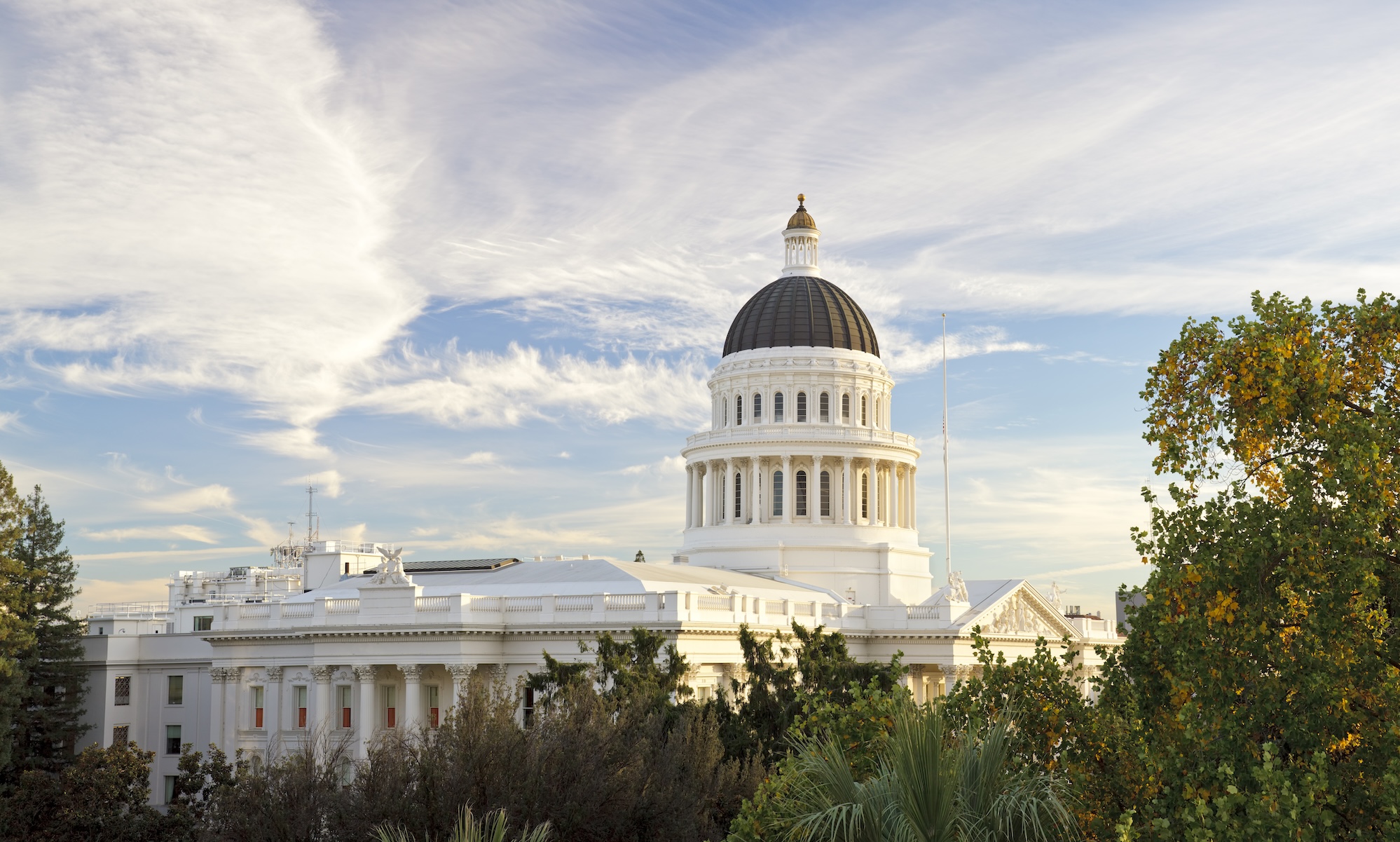
"caption": "The state Capitol building in Sacramento, California, shortly before sunset. Historic California bills regulating artificial intelligence and frontier technologies cleared the state Legislature, and are now headed to the governor’s desk.\r\n",
"credit": "via PictureLake",
"altTag": null,
"description": null,
"imgSizes": {
"thumbnail": {
"file": "https://cdn.kqed.org/wp-content/uploads/sites/10/2025/09/GettyImages-183300309-160x96.jpg",
"width": 160,
"height": 96,
"mimeType": "image/jpeg"
},
"1536x1536": {
"file": "https://cdn.kqed.org/wp-content/uploads/sites/10/2025/09/GettyImages-183300309-1536x923.jpg",
"width": 1536,
"height": 923,
"mimeType": "image/jpeg"
},
"post-thumbnail": {
"file": "https://cdn.kqed.org/wp-content/uploads/sites/10/2025/09/GettyImages-183300309-672x372.jpg",
"width": 672,
"height": 372,
"mimeType": "image/jpeg"
},
"twentyfourteen-full-width": {
"file": "https://cdn.kqed.org/wp-content/uploads/sites/10/2025/09/GettyImages-183300309-1038x576.jpg",
"width": 1038,
"height": 576,
"mimeType": "image/jpeg"
},
"kqedFullSize": {
"file": "https://cdn.kqed.org/wp-content/uploads/sites/10/2025/09/GettyImages-183300309.jpg",
"width": 1998,
"height": 1201
}
},
"isLoading": false,
"fetchFailed": false
},
"news_12062672": {
"type": "attachments",
"id": "news_12062672",
"meta": {
"index": "attachments_1716263798",
"site": "news",
"id": "12062672",
"found": true
},
"title": "251103-NewsomProp50Rally-44-BL",
"publishDate": 1762210607,
"status": "inherit",
"parent": 12101476,
"modified": 1790375400,
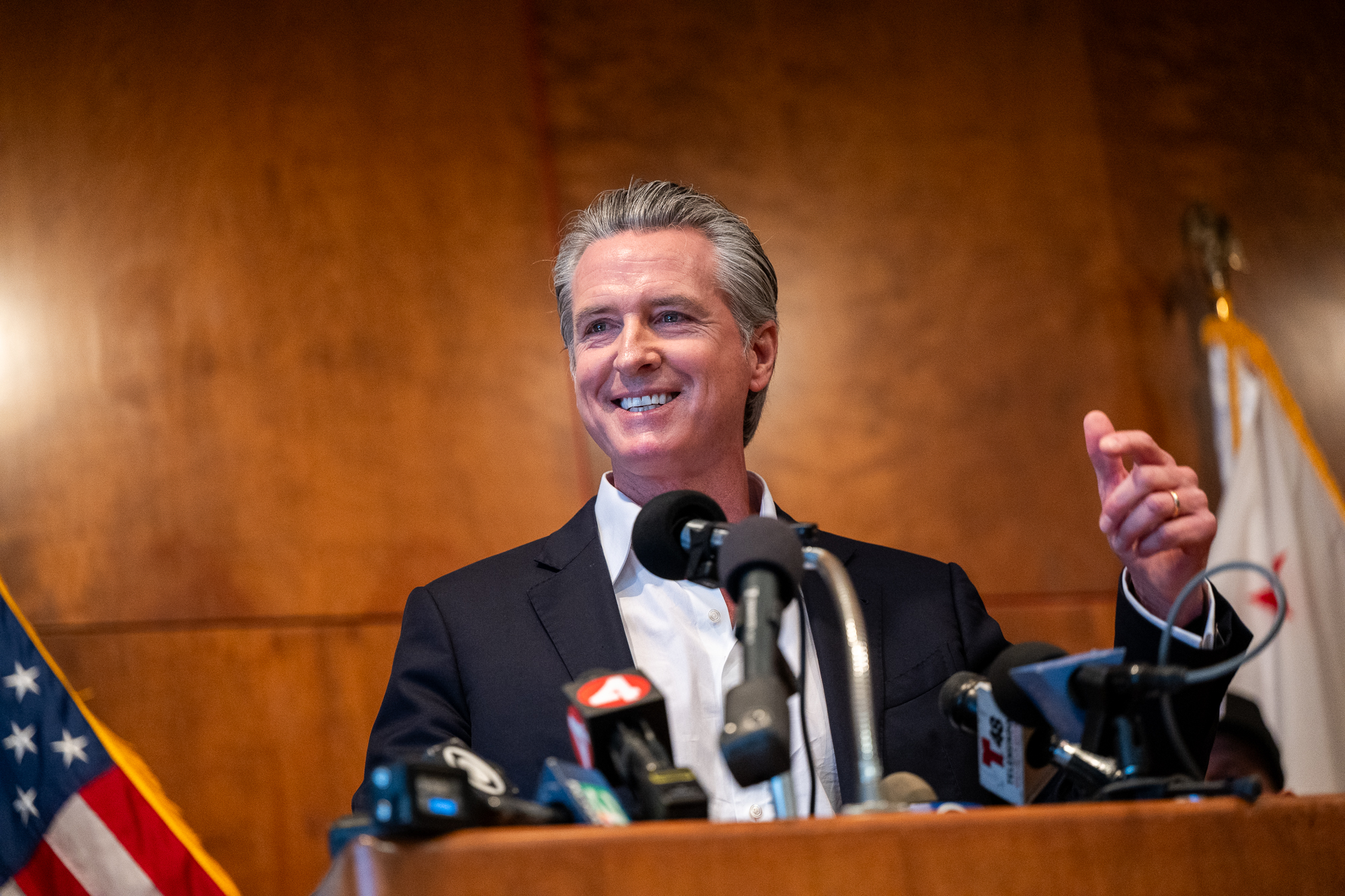
"caption": "Gov. Gavin Newsom speaks at a rally in support of Proposition 50 at IBEW Local 6 in San Francisco on Nov. 3, 2025.",
"credit": "Beth LaBerge/KQED",
"altTag": null,
"description": null,
"imgSizes": {
"thumbnail": {
"file": "https://cdn.kqed.org/wp-content/uploads/sites/10/2025/11/251103-NewsomProp50Rally-44-BL-160x107.jpg",
"width": 160,
"height": 107,
"mimeType": "image/jpeg"
},
"1536x1536": {
"file": "https://cdn.kqed.org/wp-content/uploads/sites/10/2025/11/251103-NewsomProp50Rally-44-BL-1536x1024.jpg",
"width": 1536,
"height": 1024,
"mimeType": "image/jpeg"
},
"post-thumbnail": {
"file": "https://cdn.kqed.org/wp-content/uploads/sites/10/2025/11/251103-NewsomProp50Rally-44-BL-672x372.jpg",
"width": 672,
"height": 372,
"mimeType": "image/jpeg"
},
"twentyfourteen-full-width": {
"file": "https://cdn.kqed.org/wp-content/uploads/sites/10/2025/11/251103-NewsomProp50Rally-44-BL-1038x576.jpg",
"width": 1038,
"height": 576,
"mimeType": "image/jpeg"
},
"npr-cds-wide": {
"file": "https://cdn.kqed.org/wp-content/uploads/sites/10/2025/11/251103-NewsomProp50Rally-44-BL-1200x675.jpg",
"width": 1200,
"height": 675,
"mimeType": "image/jpeg"
},
"kqedFullSize": {
"file": "https://cdn.kqed.org/wp-content/uploads/sites/10/2025/11/251103-NewsomProp50Rally-44-BL.jpg",
"width": 2000,
"height": 1333
}
},
"isLoading": false,
"fetchFailed": false
},
"news_12097035": {
"type": "attachments",
"id": "news_12097035",
"meta": {
"index": "attachments_1716263798",
"site": "news",
"id": "12097035",
"found": true
},
"title": "Prop40BillionairesTaxGetty",
"publishDate": 1787852642,
"status": "inherit",
"parent": 12097032,
"modified": 1789514611,
"caption": "A supporter with the Billionaire Tax Now coalition holds a placard during a media briefing in Los Angeles on April 27, 2026.",
"credit": "Frederic J. Brown/AFP via Getty Images",
"altTag": null,
"description": null,
"imgSizes": {
"thumbnail": {
"file": "https://cdn.kqed.org/wp-content/uploads/sites/10/2026/08/Prop40BillionairesTaxGetty-160x108.jpg",
"width": 160,
"height": 108,
"mimeType": "image/jpeg"
},
"1536x1536": {
"file": "https://cdn.kqed.org/wp-content/uploads/sites/10/2026/08/Prop40BillionairesTaxGetty-1536x1036.jpg",
"width": 1536,
"height": 1036,
"mimeType": "image/jpeg"
},
"post-thumbnail": {
"file": "https://cdn.kqed.org/wp-content/uploads/sites/10/2026/08/Prop40BillionairesTaxGetty-672x372.jpg",
"width": 672,
"height": 372,
"mimeType": "image/jpeg"
},
"twentyfourteen-full-width": {
"file": "https://cdn.kqed.org/wp-content/uploads/sites/10/2026/08/Prop40BillionairesTaxGetty-1038x576.jpg",
"width": 1038,
"height": 576,
"mimeType": "image/jpeg"
},
"npr-cds-wide": {
"file": "https://cdn.kqed.org/wp-content/uploads/sites/10/2026/08/Prop40BillionairesTaxGetty-1200x675.jpg",
"width": 1200,
"height": 675,
"mimeType": "image/jpeg"
},
"npr-cds-square": {
"file": "https://cdn.kqed.org/wp-content/uploads/sites/10/2026/08/Prop40BillionairesTaxGetty-600x600.jpg",
"width": 600,
"height": 600,
"mimeType": "image/jpeg"
},
"kqedFullSize": {
"file": "https://cdn.kqed.org/wp-content/uploads/sites/10/2026/08/Prop40BillionairesTaxGetty.jpg",
"width": 2000,
"height": 1349
}
},
"isLoading": false,
"fetchFailed": false
},
"news_12096682": {
"type": "attachments",
"id": "news_12096682",
"meta": {
"index": "attachments_1716263798",
"site": "news",
"id": "12096682",
"found": true
},
"title": "042126_School_AH_CM_11",
"publishDate": 1787679491,
"status": "inherit",
"parent": 12096676,
"modified": 1787679520,
"caption": "Students stand in line at a school in California on April 21, 2026. ",
"credit": "Adriana Heldiz/CalMatters",
"altTag": null,
"description": null,
"imgSizes": {
"thumbnail": {
"file": "https://cdn.kqed.org/wp-content/uploads/sites/10/2026/08/042126_School_AH_CM_11-160x107.jpeg",
"width": 160,
"height": 107,
"mimeType": "image/jpeg"
},
"1536x1536": {
"file": "https://cdn.kqed.org/wp-content/uploads/sites/10/2026/08/042126_School_AH_CM_11-1536x1024.jpeg",
"width": 1536,
"height": 1024,
"mimeType": "image/jpeg"
},
"post-thumbnail": {
"file": "https://cdn.kqed.org/wp-content/uploads/sites/10/2026/08/042126_School_AH_CM_11-672x372.jpeg",
"width": 672,
"height": 372,
"mimeType": "image/jpeg"
},
"twentyfourteen-full-width": {
"file": "https://cdn.kqed.org/wp-content/uploads/sites/10/2026/08/042126_School_AH_CM_11-1038x576.jpeg",
"width": 1038,
"height": 576,
"mimeType": "image/jpeg"
},
"npr-cds-wide": {
"file": "https://cdn.kqed.org/wp-content/uploads/sites/10/2026/08/042126_School_AH_CM_11-1200x675.jpeg",
"width": 1200,
"height": 675,
"mimeType": "image/jpeg"
},
"npr-cds-square": {
"file": "https://cdn.kqed.org/wp-content/uploads/sites/10/2026/08/042126_School_AH_CM_11-600x600.jpeg",
"width": 600,
"height": 600,
"mimeType": "image/jpeg"
},
"kqedFullSize": {
"file": "https://cdn.kqed.org/wp-content/uploads/sites/10/2026/08/042126_School_AH_CM_11.jpeg",
"width": 2000,
"height": 1333
}
},
"isLoading": false,
"fetchFailed": false
},
"news_12096461": {
"type": "attachments",
"id": "news_12096461",
"meta": {
"index": "attachments_1716263798",
"site": "news",
"id": "12096461",
"found": true
},
"title": "DeMaio",
"publishDate": 1787519442,
"status": "inherit",
"parent": 12096450,
"modified": 1787519533,
"caption": "Assemblymember Carl DeMaio, R-San Diego, visits the Riverside County Registrar of Voters on March 2, 2026, for a press conference highlighting voter signatures in favor of placing a voter ID measure on the November ballot. ",
"credit": "Anjali Sharif-Paul/MediaNews Group/The Sun via Getty Images",
"altTag": null,
"description": null,
"imgSizes": {
"thumbnail": {
"file": "https://cdn.kqed.org/wp-content/uploads/sites/10/2026/08/DeMaio-160x107.jpg",
"width": 160,
"height": 107,
"mimeType": "image/jpeg"
},
"1536x1536": {
"file": "https://cdn.kqed.org/wp-content/uploads/sites/10/2026/08/DeMaio-1536x1024.jpg",
"width": 1536,
"height": 1024,
"mimeType": "image/jpeg"
},
"post-thumbnail": {
"file": "https://cdn.kqed.org/wp-content/uploads/sites/10/2026/08/DeMaio-672x372.jpg",
"width": 672,
"height": 372,
"mimeType": "image/jpeg"
},
"twentyfourteen-full-width": {
"file": "https://cdn.kqed.org/wp-content/uploads/sites/10/2026/08/DeMaio-1038x576.jpg",
"width": 1038,
"height": 576,
"mimeType": "image/jpeg"
},
"npr-cds-wide": {
"file": "https://cdn.kqed.org/wp-content/uploads/sites/10/2026/08/DeMaio-1200x675.jpg",
"width": 1200,
"height": 675,
"mimeType": "image/jpeg"
},
"npr-cds-square": {
"file": "https://cdn.kqed.org/wp-content/uploads/sites/10/2026/08/DeMaio-600x600.jpg",
"width": 600,
"height": 600,
"mimeType": "image/jpeg"
},
"kqedFullSize": {
"file": "https://cdn.kqed.org/wp-content/uploads/sites/10/2026/08/DeMaio.jpg",
"width": 2000,
"height": 1333
}
},
"isLoading": false,
"fetchFailed": false
},
"news_11741884": {
"type": "attachments",
"id": "news_11741884",
"meta": {
"index": "attachments_1716263798",
"site": "news",
"id": "11741884",
"found": true
},
"title": "Despite Push From Environmentalists, Bottled Water Consumption Remains Ubiquitous",
"publishDate": 1555946478,
"status": "inherit",
"parent": 11741882,
"modified": 1724876439,
"caption": "Hundreds of recycled plastic water bottles are piled up inside the Recology recycling facility in San Francisco, California.",
"credit": "Justin Sullivan/Getty Images",
"altTag": null,
"description": null,
"imgSizes": {
"thumbnail": {
"file": "https://cdn.kqed.org/wp-content/uploads/sites/10/2019/04/RS36479_GettyImages-110129474_Justin-Sullivan-qut-160x110.jpg",
"width": 160,
"height": 110,
"mimeType": "image/jpeg"
},
"medium": {
"file": "https://cdn.kqed.org/wp-content/uploads/sites/10/2019/04/RS36479_GettyImages-110129474_Justin-Sullivan-qut-800x550.jpg",
"width": 800,
"height": 550,
"mimeType": "image/jpeg"
},
"large": {
"file": "https://cdn.kqed.org/wp-content/uploads/sites/10/2019/04/RS36479_GettyImages-110129474_Justin-Sullivan-qut-1020x701.jpg",
"width": 1020,
"height": 701,
"mimeType": "image/jpeg"
},
"complete_open_graph": {
"file": "https://cdn.kqed.org/wp-content/uploads/sites/10/2019/04/RS36479_GettyImages-110129474_Justin-Sullivan-qut-1200x825.jpg",
"width": 1200,
"height": 825,
"mimeType": "image/jpeg"
},
"post-thumbnail": {
"file": "https://cdn.kqed.org/wp-content/uploads/sites/10/2019/04/RS36479_GettyImages-110129474_Justin-Sullivan-qut-672x372.jpg",
"width": 672,
"height": 372,
"mimeType": "image/jpeg"
},
"twentyfourteen-full-width": {
"file": "https://cdn.kqed.org/wp-content/uploads/sites/10/2019/04/RS36479_GettyImages-110129474_Justin-Sullivan-qut-1038x576.jpg",
"width": 1038,
"height": 576,
"mimeType": "image/jpeg"
},
"full-width": {
"file": "https://cdn.kqed.org/wp-content/uploads/sites/10/2019/04/RS36479_GettyImages-110129474_Justin-Sullivan-qut-1920x1320.jpg",
"width": 1920,
"height": 1320,
"mimeType": "image/jpeg"
},
"kqedFullSize": {
"file": "https://cdn.kqed.org/wp-content/uploads/sites/10/2019/04/RS36479_GettyImages-110129474_Justin-Sullivan-qut.jpg",
"width": 1920,
"height": 1320
}
},
"isLoading": false,
"fetchFailed": false
},
"news_12094407": {
"type": "attachments",
"id": "news_12094407",
"meta": {
"index": "attachments_1716263798",
"site": "news",
"id": "12094407",
"found": true
},
"title": "080126-Lake-Powell-Colorado-River-GETTY-MG-CM",
"publishDate": 1786138074,
"status": "inherit",
"parent": 12094403,
"modified": 1786138102,
"caption": "A boat passes by the tall bleached ''bathtub ring'' on the rocky banks of Lake Powell in Page, Arizona on Aug. 1, 2026.",
"credit": "Justin Sullivan/Getty Images",
"altTag": null,
"description": null,
"imgSizes": {
"thumbnail": {
"file": "https://cdn.kqed.org/wp-content/uploads/sites/10/2026/08/080126-Lake-Powell-Colorado-River-GETTY-MG-CM-160x107.jpeg",
"width": 160,
"height": 107,
"mimeType": "image/jpeg"
},
"1536x1536": {
"file": "https://cdn.kqed.org/wp-content/uploads/sites/10/2026/08/080126-Lake-Powell-Colorado-River-GETTY-MG-CM-1536x1024.jpeg",
"width": 1536,
"height": 1024,
"mimeType": "image/jpeg"
},
"post-thumbnail": {
"file": "https://cdn.kqed.org/wp-content/uploads/sites/10/2026/08/080126-Lake-Powell-Colorado-River-GETTY-MG-CM-672x372.jpeg",
"width": 672,
"height": 372,
"mimeType": "image/jpeg"
},
"twentyfourteen-full-width": {
"file": "https://cdn.kqed.org/wp-content/uploads/sites/10/2026/08/080126-Lake-Powell-Colorado-River-GETTY-MG-CM-1038x576.jpeg",
"width": 1038,
"height": 576,
"mimeType": "image/jpeg"
},
"npr-cds-wide": {
"file": "https://cdn.kqed.org/wp-content/uploads/sites/10/2026/08/080126-Lake-Powell-Colorado-River-GETTY-MG-CM-1200x675.jpeg",
"width": 1200,
"height": 675,
"mimeType": "image/jpeg"
},
"npr-cds-square": {
"file": "https://cdn.kqed.org/wp-content/uploads/sites/10/2026/08/080126-Lake-Powell-Colorado-River-GETTY-MG-CM-600x600.jpeg",
"width": 600,
"height": 600,
"mimeType": "image/jpeg"
},
"kqedFullSize": {
"file": "https://cdn.kqed.org/wp-content/uploads/sites/10/2026/08/080126-Lake-Powell-Colorado-River-GETTY-MG-CM.jpeg",
"width": 2000,
"height": 1333
}
},
"isLoading": false,
"fetchFailed": false
},
"news_12094383": {
"type": "attachments",
"id": "news_12094383",
"meta": {
"index": "attachments_1716263798",
"site": "news",
"id": "12094383",
"found": true
},
"title": "080426_drinks-by-mail_FG_22_CM",
"publishDate": 1786135412,
"status": "inherit",
"parent": 12094379,
"modified": 1786135434,
"caption": "Cris Steller, owner of Dry Diggins Distillery, poses with a box used to ship Engine 49 Bourbon in the company's distilling and bottling warehouse in El Dorado Hills on Aug. 4, 2026. ",
"credit": "Fred Greaves for CalMatters",
"altTag": null,
"description": null,
"imgSizes": {
"thumbnail": {
"file": "https://cdn.kqed.org/wp-content/uploads/sites/10/2026/08/080426_drinks-by-mail_FG_22_CM-160x107.jpeg",
"width": 160,
"height": 107,
"mimeType": "image/jpeg"
},
"1536x1536": {
"file": "https://cdn.kqed.org/wp-content/uploads/sites/10/2026/08/080426_drinks-by-mail_FG_22_CM-1536x1024.jpeg",
"width": 1536,
"height": 1024,
"mimeType": "image/jpeg"
},
"post-thumbnail": {
"file": "https://cdn.kqed.org/wp-content/uploads/sites/10/2026/08/080426_drinks-by-mail_FG_22_CM-672x372.jpeg",
"width": 672,
"height": 372,
"mimeType": "image/jpeg"
},
"twentyfourteen-full-width": {
"file": "https://cdn.kqed.org/wp-content/uploads/sites/10/2026/08/080426_drinks-by-mail_FG_22_CM-1038x576.jpeg",
"width": 1038,
"height": 576,
"mimeType": "image/jpeg"
},
"npr-cds-wide": {
"file": "https://cdn.kqed.org/wp-content/uploads/sites/10/2026/08/080426_drinks-by-mail_FG_22_CM-1200x675.jpeg",
"width": 1200,
"height": 675,
"mimeType": "image/jpeg"
},
"npr-cds-square": {
"file": "https://cdn.kqed.org/wp-content/uploads/sites/10/2026/08/080426_drinks-by-mail_FG_22_CM-600x600.jpeg",
"width": 600,
"height": 600,
"mimeType": "image/jpeg"
},
"kqedFullSize": {
"file": "https://cdn.kqed.org/wp-content/uploads/sites/10/2026/08/080426_drinks-by-mail_FG_22_CM.jpeg",
"width": 2000,
"height": 1333
}
},
"isLoading": false,
"fetchFailed": false
},
"news_12013895": {
"type": "attachments",
"id": "news_12013895",
"meta": {
"index": "attachments_1716263798",
"site": "news",
"id": "12013895",
"found": true
},
"title": "240129-EVFILE-KSM-26_qed",
"publishDate": 1731189616,
"status": "inherit",
"parent": 12013891,
"modified": 1784234191,
"caption": "Electric vehicles charge at an EVgo fast charging station in Oakland on Jan. 29, 2024.",
"credit": "Kathryn Styer Martínez/KQED",
"altTag": null,
"description": null,
"imgSizes": {
"medium": {
"file": "https://cdn.kqed.org/wp-content/uploads/sites/10/2024/11/240129-EVFILE-KSM-26_qed-800x533.jpg",
"width": 800,
"height": 533,
"mimeType": "image/jpeg"
},
"large": {
"file": "https://cdn.kqed.org/wp-content/uploads/sites/10/2024/11/240129-EVFILE-KSM-26_qed-1020x680.jpg",
"width": 1020,
"height": 680,
"mimeType": "image/jpeg"
},
"thumbnail": {
"file": "https://cdn.kqed.org/wp-content/uploads/sites/10/2024/11/240129-EVFILE-KSM-26_qed-160x107.jpg",
"width": 160,
"height": 107,
"mimeType": "image/jpeg"
},
"1536x1536": {
"file": "https://cdn.kqed.org/wp-content/uploads/sites/10/2024/11/240129-EVFILE-KSM-26_qed-1536x1024.jpg",
"width": 1536,
"height": 1024,
"mimeType": "image/jpeg"
},
"post-thumbnail": {
"file": "https://cdn.kqed.org/wp-content/uploads/sites/10/2024/11/240129-EVFILE-KSM-26_qed-672x372.jpg",
"width": 672,
"height": 372,
"mimeType": "image/jpeg"
},
"twentyfourteen-full-width": {
"file": "https://cdn.kqed.org/wp-content/uploads/sites/10/2024/11/240129-EVFILE-KSM-26_qed-1038x576.jpg",
"width": 1038,
"height": 576,
"mimeType": "image/jpeg"
},
"full-width": {
"file": "https://cdn.kqed.org/wp-content/uploads/sites/10/2024/11/240129-EVFILE-KSM-26_qed-1920x1280.jpg",
"width": 1920,
"height": 1280,
"mimeType": "image/jpeg"
},
"kqedFullSize": {
"file": "https://cdn.kqed.org/wp-content/uploads/sites/10/2024/11/240129-EVFILE-KSM-26_qed.jpg",
"width": 2000,
"height": 1333
}
},
"isLoading": false,
"fetchFailed": false
},
"news_12094400": {
"type": "attachments",
"id": "news_12094400",
"meta": {
"index": "attachments_1716263798",
"site": "news",
"id": "12094400",
"found": true
},
"title": "Governor Newsom press conference in Oakland, California",
"publishDate": 1786136897,
"status": "inherit",
"parent": 12094373,
"modified": 1786136974,
"caption": "Gov. Gavin Newsom (right) announces new savings for California car buyers, a major milestone in the state's clean energy future, at the Bridge Yard Facility in Oakland, California, on Aug. 7, 2026.",
"credit": "Tayfun Coskun/Anadolu via Getty Images",
"altTag": null,
"description": null,
"imgSizes": {
"thumbnail": {
"file": "https://cdn.kqed.org/wp-content/uploads/sites/10/2026/08/GavinNewsomEVRebateGetty-160x113.jpg",
"width": 160,
"height": 113,
"mimeType": "image/jpeg"
},
"1536x1536": {
"file": "https://cdn.kqed.org/wp-content/uploads/sites/10/2026/08/GavinNewsomEVRebateGetty-1536x1081.jpg",
"width": 1536,
"height": 1081,
"mimeType": "image/jpeg"
},
"post-thumbnail": {
"file": "https://cdn.kqed.org/wp-content/uploads/sites/10/2026/08/GavinNewsomEVRebateGetty-672x372.jpg",
"width": 672,
"height": 372,
"mimeType": "image/jpeg"
},
"twentyfourteen-full-width": {
"file": "https://cdn.kqed.org/wp-content/uploads/sites/10/2026/08/GavinNewsomEVRebateGetty-1038x576.jpg",
"width": 1038,
"height": 576,
"mimeType": "image/jpeg"
},
"npr-cds-wide": {
"file": "https://cdn.kqed.org/wp-content/uploads/sites/10/2026/08/GavinNewsomEVRebateGetty-1200x675.jpg",
"width": 1200,
"height": 675,
"mimeType": "image/jpeg"
},
"npr-cds-square": {
"file": "https://cdn.kqed.org/wp-content/uploads/sites/10/2026/08/GavinNewsomEVRebateGetty-600x600.jpg",
"width": 600,
"height": 600,
"mimeType": "image/jpeg"
},
"kqedFullSize": {
"file": "https://cdn.kqed.org/wp-content/uploads/sites/10/2026/08/GavinNewsomEVRebateGetty.jpg",
"width": 2000,
"height": 1407
}
},
"isLoading": false,
"fetchFailed": false
},
"news_12093856": {
"type": "attachments",
"id": "news_12093856",
"meta": {
"index": "attachments_1716263798",
"site": "news",
"id": "12093856",
"found": true
},
"title": "080825-Mute-Swan-MG-CM-11",
"publishDate": 1785880316,
"status": "inherit",
"parent": 12093855,
"modified": 1785880342,
"caption": "A mute swan at the Grizzly Island Wildlife Area on Aug. 8, 2025. ",
"credit": "Miguel Gutierrez Jr./CalMatters",
"altTag": null,
"description": null,
"imgSizes": {
"thumbnail": {
"file": "https://cdn.kqed.org/wp-content/uploads/sites/10/2026/08/080825-Mute-Swan-MG-CM-11-160x107.jpeg",
"width": 160,
"height": 107,
"mimeType": "image/jpeg"
},
"1536x1536": {
"file": "https://cdn.kqed.org/wp-content/uploads/sites/10/2026/08/080825-Mute-Swan-MG-CM-11-1536x1024.jpeg",
"width": 1536,
"height": 1024,
"mimeType": "image/jpeg"
},
"post-thumbnail": {
"file": "https://cdn.kqed.org/wp-content/uploads/sites/10/2026/08/080825-Mute-Swan-MG-CM-11-672x372.jpeg",
"width": 672,
"height": 372,
"mimeType": "image/jpeg"
},
"twentyfourteen-full-width": {
"file": "https://cdn.kqed.org/wp-content/uploads/sites/10/2026/08/080825-Mute-Swan-MG-CM-11-1038x576.jpeg",
"width": 1038,
"height": 576,
"mimeType": "image/jpeg"
},
"npr-cds-wide": {
"file": "https://cdn.kqed.org/wp-content/uploads/sites/10/2026/08/080825-Mute-Swan-MG-CM-11-1200x675.jpeg",
"width": 1200,
"height": 675,
"mimeType": "image/jpeg"
},
"npr-cds-square": {
"file": "https://cdn.kqed.org/wp-content/uploads/sites/10/2026/08/080825-Mute-Swan-MG-CM-11-600x600.jpeg",
"width": 600,
"height": 600,
"mimeType": "image/jpeg"
},
"kqedFullSize": {
"file": "https://cdn.kqed.org/wp-content/uploads/sites/10/2026/08/080825-Mute-Swan-MG-CM-11.jpeg",
"width": 2000,
"height": 1333
}
},
"isLoading": false,
"fetchFailed": false
},
"news_12078562": {
"type": "attachments",
"id": "news_12078562",
"meta": {
"index": "attachments_1716263798",
"site": "news",
"id": "12078562",
"found": true
},
"title": "260402-FLOCK SECURITY CAMERA FILE-MD-05-KQED_1",
"publishDate": 1775174184,
"status": "inherit",
"parent": 0,
"modified": 1787949646,
"caption": "A Flock camera monitors the intersection at McKee and North White roads in San José on April 2, 2026.",
"credit": "Martin do Nascimento/KQED",
"altTag": null,
"description": null,
"imgSizes": {
"thumbnail": {
"file": "https://cdn.kqed.org/wp-content/uploads/sites/10/2026/04/260402-FLOCK-SECURITY-CAMERA-FILE-MD-05-KQED_1-160x107.jpg",
"width": 160,
"height": 107,
"mimeType": "image/jpeg"
},
"1536x1536": {
"file": "https://cdn.kqed.org/wp-content/uploads/sites/10/2026/04/260402-FLOCK-SECURITY-CAMERA-FILE-MD-05-KQED_1-1536x1025.jpg",
"width": 1536,
"height": 1025,
"mimeType": "image/jpeg"
},
"post-thumbnail": {
"file": "https://cdn.kqed.org/wp-content/uploads/sites/10/2026/04/260402-FLOCK-SECURITY-CAMERA-FILE-MD-05-KQED_1-672x372.jpg",
"width": 672,
"height": 372,
"mimeType": "image/jpeg"
},
"twentyfourteen-full-width": {
"file": "https://cdn.kqed.org/wp-content/uploads/sites/10/2026/04/260402-FLOCK-SECURITY-CAMERA-FILE-MD-05-KQED_1-1038x576.jpg",
"width": 1038,
"height": 576,
"mimeType": "image/jpeg"
},
"npr-cds-wide": {
"file": "https://cdn.kqed.org/wp-content/uploads/sites/10/2026/04/260402-FLOCK-SECURITY-CAMERA-FILE-MD-05-KQED_1-1200x675.jpg",
"width": 1200,
"height": 675,
"mimeType": "image/jpeg"
},
"npr-cds-square": {
"file": "https://cdn.kqed.org/wp-content/uploads/sites/10/2026/04/260402-FLOCK-SECURITY-CAMERA-FILE-MD-05-KQED_1-600x600.jpg",
"width": 600,
"height": 600,
"mimeType": "image/jpeg"
},
"kqedFullSize": {
"file": "https://cdn.kqed.org/wp-content/uploads/sites/10/2026/04/260402-FLOCK-SECURITY-CAMERA-FILE-MD-05-KQED_1.jpg",
"width": 2000,
"height": 1334
}
},
"isLoading": false,
"fetchFailed": false
}
},
"audioPlayerReducer": {
"postId": "stream_live",
"isPaused": true,
"isPlaying": false,
"pfsActive": false,
"pledgeModalIsOpen": true,
"playerDrawerIsOpen": false,
"liveAudioPlayStartedAt": 0,
"liveAudioPlayContext": ""
},
"authorsReducer": {
"byline_news_12096676": {
"type": "authors",
"id": "byline_news_12096676",
"meta": {
"override": true
},
"slug": "byline_news_12096676",
"name": "Maya C. Miller, CalMatters",
"isLoading": false
},
"byline_news_12096115": {
"type": "authors",
"id": "byline_news_12096115",
"meta": {
"override": true
},
"slug": "byline_news_12096115",
"name": "Alejandra Reyes-Velarde, CalMatters",
"isLoading": false
},
"byline_news_12094403": {
"type": "authors",
"id": "byline_news_12094403",
"meta": {
"override": true
},
"slug": "byline_news_12094403",
"name": "Rachel Becker, CalMatters",
"isLoading": false
},
"byline_news_12094379": {
"type": "authors",
"id": "byline_news_12094379",
"meta": {
"override": true
},
"slug": "byline_news_12094379",
"name": "Ryan Sabalow, CalMatters",
"isLoading": false
},
"byline_news_12093855": {
"type": "authors",
"id": "byline_news_12093855",
"meta": {
"override": true
},
"slug": "byline_news_12093855",
"name": "Ryan Sabalow, CalMatters",
"isLoading": false
},
"byline_news_12093784": {
"type": "authors",
"id": "byline_news_12093784",
"meta": {
"override": true
},
"slug": "byline_news_12093784",
"name": "Ryan Sabalow, CalMatters",
"isLoading": false
},
"gmarzorati": {
"type": "authors",
"id": "227",
"meta": {
"index": "authors_1716337520",
"id": "227",
"found": true
},
"name": "Guy Marzorati",
"firstName": "Guy",
"lastName": "Marzorati",
"slug": "gmarzorati",
"email": "gmarzorati@KQED.org",
"display_author_email": true,
"staff_mastheads": [
"news"
],
"title": "Correspondent",
"bio": "Guy Marzorati is a correspondent on KQED's California Politics and Government Desk, based in San Jose. A graduate of Santa Clara University, Guy joined KQED in 2013. He reports on state and local politics and produces KQED's digital voter guide.",
"avatar": "https://secure.gravatar.com/avatar/771cddf45ce3a8ed533d82dcc214e9ef925d76d2af5794a33da1ce439eb54a32?s=600&d=blank&r=g",
"twitter": "guymarzorati",
"bluesky": null,
"facebook": null,
"instagram": null,
"linkedin": null,
"sites": [
{
"site": "",
"roles": [
"editor"
]
},
{
"site": "news",
"roles": [
"editor"
]
},
{
"site": "science",
"roles": [
"editor"
]
},
{
"site": "forum",
"roles": [
"editor"
]
},
{
"site": "elections",
"roles": [
"editor"
]
},
{
"site": "liveblog",
"roles": [
"editor"
]
}
],
"headData": {
"title": "Guy Marzorati | KQED",
"description": "Correspondent",
"ogImgSrc": "https://secure.gravatar.com/avatar/771cddf45ce3a8ed533d82dcc214e9ef925d76d2af5794a33da1ce439eb54a32?s=600&d=blank&r=g",
"twImgSrc": "https://secure.gravatar.com/avatar/771cddf45ce3a8ed533d82dcc214e9ef925d76d2af5794a33da1ce439eb54a32?s=600&d=blank&r=g"
},
"isLoading": false,
"link": "/author/gmarzorati"
},
"rachael-myrow": {
"type": "authors",
"id": "251",
"meta": {
"index": "authors_1716337520",
"id": "251",
"found": true
},
"name": "Rachael Myrow",
"firstName": "Rachael",
"lastName": "Myrow",
"slug": "rachael-myrow",
"email": "rmyrow@kqed.org",
"display_author_email": true,
"staff_mastheads": [
"news"
],
"title": "Senior Editor of KQED's Silicon Valley News Desk",
"bio": "• I write and edit stories about how Silicon Valley power and policies shape everyday life in California. I’m also passionate about making Bay Area history and culture more accessible to a broad public. • I’ve been a journalist for most of my life, starting in high school with The Franklin Press in Los Angeles, where I grew up. While earning my first degree in English at UC Berkeley, I got my start in public radio at KALX-FM. After completing a second degree in journalism at Cal, I landed my first professional job at Marketplace, then moved on to KPCC (now LAist), and then KQED, where I hosted The California Report for more than seven years. • My reporting has appeared on NPR, The World, WBUR’s \u003ci>Here & Now\u003c/i>, and the BBC. I also guest host for KQED’s \u003ci>Forum\u003c/i>, as well as the Commonwealth Club in San Francisco. • I speak periodically on media, democracy and technology issues, and do voiceover work for documentaries and educational video projects. • Outside of the studio, you'll find me hiking Bay Area trails and whipping up Insta-ready meals in my kitchen. • I do not accept gifts, money, or favors from anyone connected to my reporting, I don't pay people for information, and I do not support or donate to political causes. • I strive to treat the people I report on with fairness, honesty, and respect. I also recognize there are often multiple sides to a story and work to verify information through multiple sources and documentation. If I get something wrong, I correct it.",
"avatar": "https://secure.gravatar.com/avatar/3ed8a3c5f26025e4a805ba634cda8cd764906b97438a6d9ce216b044e340da4e?s=600&d=blank&r=g",
"twitter": "rachaelmyrow",
"bluesky": null,
"facebook": null,
"instagram": null,
"linkedin": "https://www.linkedin.com/in/rachaelmyrow/",
"sites": [
{
"site": "arts",
"roles": [
"administrator"
]
},
{
"site": "news",
"roles": [
"edit_others_posts",
"editor"
]
},
{
"site": "futureofyou",
"roles": [
"editor"
]
},
{
"site": "bayareabites",
"roles": [
"editor"
]
},
{
"site": "stateofhealth",
"roles": [
"editor"
]
},
{
"site": "science",
"roles": [
"editor"
]
},
{
"site": "food",
"roles": [
"editor"
]
},
{
"site": "forum",
"roles": [
"editor"
]
},
{
"site": "liveblog",
"roles": [
"author"
]
}
],
"headData": {
"title": "Rachael Myrow | KQED",
"description": "Senior Editor of KQED's Silicon Valley News Desk",
"ogImgSrc": "https://secure.gravatar.com/avatar/3ed8a3c5f26025e4a805ba634cda8cd764906b97438a6d9ce216b044e340da4e?s=600&d=blank&r=g",
"twImgSrc": "https://secure.gravatar.com/avatar/3ed8a3c5f26025e4a805ba634cda8cd764906b97438a6d9ce216b044e340da4e?s=600&d=blank&r=g"
},
"isLoading": false,
"link": "/author/rachael-myrow"
},
"dventon": {
"type": "authors",
"id": "11088",
"meta": {
"index": "authors_1716337520",
"id": "11088",
"found": true
},
"name": "Danielle Venton",
"firstName": "Danielle",
"lastName": "Venton",
"slug": "dventon",
"email": "dventon@kqed.org",
"display_author_email": true,
"staff_mastheads": [
"science"
],
"title": "Science reporter",
"bio": "Danielle Venton is a reporter for KQED Science. She covers wildfires, space and oceans (though she is prone to sea sickness).\r\n\r\nBefore joining KQED in 2015, Danielle was a staff reporter at KRCB in Sonoma County and a freelancer. She studied science communication at UC Santa Cruz and formerly worked at CERN in Geneva, Switzerland where she wrote about computing. She lives in Sonoma County and enjoys backpacking.",
"avatar": "https://secure.gravatar.com/avatar/37b292b5c40c8d93959c4f48d73b5286f41b7abd8588277e941905a3ed4c801c?s=600&d=blank&r=g",
"twitter": "DanielleVenton",
"bluesky": null,
"facebook": null,
"instagram": null,
"linkedin": null,
"sites": [
{
"site": "arts",
"roles": [
"contributor"
]
},
{
"site": "news",
"roles": [
"editor"
]
},
{
"site": "futureofyou",
"roles": [
"editor"
]
},
{
"site": "science",
"roles": [
"editor"
]
},
{
"site": "liveblog",
"roles": [
"contributor"
]
}
],
"headData": {
"title": "Danielle Venton | KQED",
"description": "Science reporter",
"ogImgSrc": "https://secure.gravatar.com/avatar/37b292b5c40c8d93959c4f48d73b5286f41b7abd8588277e941905a3ed4c801c?s=600&d=blank&r=g",
"twImgSrc": "https://secure.gravatar.com/avatar/37b292b5c40c8d93959c4f48d73b5286f41b7abd8588277e941905a3ed4c801c?s=600&d=blank&r=g"
},
"isLoading": false,
"link": "/author/dventon"
},
"ccabreralomeli": {
"type": "authors",
"id": "11708",
"meta": {
"index": "authors_1716337520",
"id": "11708",
"found": true
},
"name": "Carlos Cabrera-Lomelí",
"firstName": "Carlos",
"lastName": "Cabrera-Lomelí",
"slug": "ccabreralomeli",
"email": "ccabreralomeli@KQED.org",
"display_author_email": true,
"staff_mastheads": [
"news"
],
"title": "Community Reporter",
"bio": "Carlos Cabrera-Lomelí is a community reporter with KQED's digital engagement team. He also reports and co-produces for KQED's bilingual news hub KQED en Español. He grew up in San Francisco's Mission District and has previously worked with Univision, 48 Hills and REFORMA in Mexico City.",
"avatar": "https://secure.gravatar.com/avatar/c309be9665e484f887b818c89e273ecc673004f426f36b24d00a4d813a2e0518?s=600&d=blank&r=g",
"twitter": "@LomeliCabrera",
"bluesky": null,
"facebook": null,
"instagram": null,
"linkedin": null,
"sites": [
{
"site": "arts",
"roles": [
"editor"
]
},
{
"site": "news",
"roles": [
"editor"
]
},
{
"site": "about",
"roles": [
"editor"
]
},
{
"site": "science",
"roles": [
"editor"
]
},
{
"site": "perspectives",
"roles": [
"editor"
]
},
{
"site": "elections",
"roles": [
"editor"
]
},
{
"site": "liveblog",
"roles": [
"contributor"
]
}
],
"headData": {
"title": "Carlos Cabrera-Lomelí | KQED",
"description": "Community Reporter",
"ogImgSrc": "https://secure.gravatar.com/avatar/c309be9665e484f887b818c89e273ecc673004f426f36b24d00a4d813a2e0518?s=600&d=blank&r=g",
"twImgSrc": "https://secure.gravatar.com/avatar/c309be9665e484f887b818c89e273ecc673004f426f36b24d00a4d813a2e0518?s=600&d=blank&r=g"
},
"isLoading": false,
"link": "/author/ccabreralomeli"
},
"sjohnson": {
"type": "authors",
"id": "11840",
"meta": {
"index": "authors_1716337520",
"id": "11840",
"found": true
},
"name": "Sydney Johnson",
"firstName": "Sydney",
"lastName": "Johnson",
"slug": "sjohnson",
"email": "sjohnson@kqed.org",
"display_author_email": false,
"staff_mastheads": [
"news"
],
"title": "KQED Reporter",
"bio": "Sydney Johnson is a general assignment reporter at KQED. She previously reported on public health and city government at the San Francisco Examiner, and before that, she covered statewide education policy for EdSource. Her reporting has won multiple local, state and national awards. Sydney is a graduate of the University of California, Berkeley and lives in San Francisco.",
"avatar": "https://secure.gravatar.com/avatar/97855f2719b72ad6190b7c535fe642c8?s=600&d=blank&r=g",
"twitter": "sydneyfjohnson",
"facebook": null,
"instagram": null,
"linkedin": null,
"sites": [
{
"site": "news",
"roles": [
"editor"
]
}
],
"headData": {
"title": "Sydney Johnson | KQED",
"description": "KQED Reporter",
"ogImgSrc": "https://secure.gravatar.com/avatar/97855f2719b72ad6190b7c535fe642c8?s=600&d=blank&r=g",
"twImgSrc": "https://secure.gravatar.com/avatar/97855f2719b72ad6190b7c535fe642c8?s=600&d=blank&r=g"
},
"isLoading": false,
"link": "/author/sjohnson"
},
"skennedy": {
"type": "authors",
"id": "11935",
"meta": {
"index": "authors_1716337520",
"id": "11935",
"found": true
},
"name": "Samantha Kennedy",
"firstName": "Samantha",
"lastName": "Kennedy",
"slug": "skennedy",
"email": "SKennedy@kqed.org",
"display_author_email": false,
"staff_mastheads": [],
"title": "KQED Contributor",
"bio": null,
"avatar": "https://secure.gravatar.com/avatar/adc7b14bf1e801793202a156ecc864d4ad505b0fd63162a2f3da0e5ba57222d0?s=600&d=blank&r=g",
"twitter": null,
"bluesky": null,
"facebook": null,
"instagram": null,
"linkedin": null,
"sites": [
{
"site": "arts",
"roles": [
"author"
]
},
{
"site": "news",
"roles": [
"editor"
]
},
{
"site": "science",
"roles": [
"editor"
]
}
],
"headData": {
"title": "Samantha Kennedy | KQED",
"description": "KQED Contributor",
"ogImgSrc": "https://secure.gravatar.com/avatar/adc7b14bf1e801793202a156ecc864d4ad505b0fd63162a2f3da0e5ba57222d0?s=600&d=blank&r=g",
"twImgSrc": "https://secure.gravatar.com/avatar/adc7b14bf1e801793202a156ecc864d4ad505b0fd63162a2f3da0e5ba57222d0?s=600&d=blank&r=g"
},
"isLoading": false,
"link": "/author/skennedy"
},
"ejackson": {
"type": "authors",
"id": "12003",
"meta": {
"index": "authors_1716337520",
"id": "12003",
"found": true
},
"name": "Ella Jackson",
"firstName": "Ella",
"lastName": "Jackson",
"slug": "ejackson",
"email": "ejackson@kqed.org",
"display_author_email": false,
"staff_mastheads": [],
"title": "KQED Contributor",
"bio": null,
"avatar": "https://secure.gravatar.com/avatar/3c688edc62aec1dcae096e1475956d245f72bde99cff316455871c9b22a7205b?s=600&d=blank&r=g",
"twitter": null,
"bluesky": null,
"facebook": null,
"instagram": null,
"linkedin": null,
"sites": [
{
"site": "news",
"roles": [
"author"
]
},
{
"site": "science",
"roles": [
"author"
]
}
],
"headData": {
"title": "Ella Jackson | KQED",
"description": "KQED Contributor",
"ogImgSrc": "https://secure.gravatar.com/avatar/3c688edc62aec1dcae096e1475956d245f72bde99cff316455871c9b22a7205b?s=600&d=blank&r=g",
"twImgSrc": "https://secure.gravatar.com/avatar/3c688edc62aec1dcae096e1475956d245f72bde99cff316455871c9b22a7205b?s=600&d=blank&r=g"
},
"isLoading": false,
"link": "/author/ejackson"
}
},
"pagesReducer": {
"news_tag_gavin-newsom": {
"type": "terms",
"id": "news_16",
"meta": {
"index": "terms_1716263798",
"site": "news",
"id": "16",
"score": 8.941219
},
"featImg": null,
"name": "Gavin Newsom",
"description": null,
"taxonomy": "tag",
"headData": {
"twImgId": null,
"twTitle": null,
"ogTitle": null,
"ogImgId": null,
"twDescription": null,
"description": null,
"title": "Gavin Newsom Archives | KQED News",
"ogDescription": null
},
"ttid": 16,
"slug": "gavin-newsom",
"isLoading": false,
"title": "Gavin Newsom",
"pageMeta": {
"site": "news",
"WpPageTemplate": "page-topic-editorial",
"currentPage": 4
},
"blocks": [
{
"blockName": "kqed/post-list",
"attrs": {
"layout": "cardArticle2",
"query": "posts/news?tag=gavin-newsom",
"seeMore": false,
"paginated": true,
"page": 4
}
},
{
"blockName": "kqed/ad"
}
]
}
},
"pfsSessionReducer": {},
"postsReducer": {
"stream_live": {
"type": "live",
"id": "stream_live",
"audioUrl": "https://hls.kqed.org/hls/kqed_app/playlist.m3u8",
"title": "Live Stream",
"excerpt": "Live Stream information currently unavailable.",
"link": "/radio",
"featImg": "",
"label": {
"name": "KQED Live",
"link": "/"
}
},
"stream_kqedNewscast": {
"type": "posts",
"id": "stream_kqedNewscast",
"audioUrl": "https://www.kqed.org/.stream/anon/radio/RDnews/newscast.mp3?_=1",
"title": "KQED Newscast",
"featImg": "",
"label": {
"name": "88.5 FM",
"link": "/"
}
},
"news_12097632": {
"type": "posts",
"id": "news_12097632",
"meta": {
"index": "posts_1716263798",
"site": "news",
"id": "12097632",
"score": null,
"sort": [
1788296534000
]
},
"guestAuthors": [],
"slug": "chatbots-data-centers-and-surveillance-5-silicon-valley-bills-land-on-newsoms-desk",
"title": "Chatbots, Data Centers and Surveillance: 5 Silicon Valley Bills Land on Newsom’s Desk",
"publishDate": 1788296534,
"format": "standard",
"headTitle": "Chatbots, Data Centers and Surveillance: 5 Silicon Valley Bills Land on Newsom’s Desk | KQED",
"labelTerm": {
"site": "news"
},
"content": "\n\u003cp>California’s \u003ca href=\"https://www.kqed.org/politics\">legislative session\u003c/a> ended at midnight on Monday, and numerous bills ranging from housing to health care to technology cleared both the Senate and the Assembly.\u003c/p>\n\n\n\n\u003cp>Gov. Gavin Newsom has until Sept. 30 to decide whether he’ll veto or sign the measures. Here’s where some of the most closely watched \u003ca href=\"https://www.kqed.org/news/tag/technology\">tech\u003c/a> bills landed.\u003c/p>\n\n\n\n\u003ch2 class=\"wp-block-heading\">Companion chatbots and children’s safety\u003cstrong> \u003c/strong>\u003c/h2>\n\n\n\n\u003cp>California lawmakers on Monday approved a sweeping set of safety requirements for artificial intelligence chatbots used by children and teens. The bill, known as \u003ca href=\"https://calmatters.digitaldemocracy.org/bills/ca_202520260sb1119\">Adam’s Law\u003c/a>, builds on last year’s \u003ca href=\"https://www.kqed.org/news/12052617/newsoms-tightrope-walk-between-ai-regulation-and-silicon-valley-cash\">SB 243\u003c/a>, which required chatbot operators to disclose when users were interacting with AI companions and to maintain protocols for detecting self-harm content. \u003c/p>\n\n\n\n\u003cp>Co-authored by San Diego Democrat Sen. Steve Padilla and Assemblymembers Rebecca Bauer-Kahan (D-Orinda) and Buffy Wicks (D-Oakland), the bill adds requirements for user age checks, safety-risk assessments before new or substantially modified companion chatbots are released, independent audits and crisis-support resources. \u003c/p>\n\n\n\n\u003cfigure class=\"wp-block-image size-full\">\u003cimg loading=\"lazy\" decoding=\"async\" width=\"2000\" height=\"1334\" src=\"https://cdn.kqed.org/wp-content/uploads/sites/10/2025/09/GettyImages-2159671948-scaled-e1781542152687.jpg\" alt=\"\" class=\"wp-image-12058035\" />\u003cfigcaption class=\"wp-element-caption\">Close-up of a phone screen in Lafayette, California, on June 27, 2024, displaying Claude, a generative artificial intelligence chatbot from Anthropic powered by large language model (or LLM). (Smith Collection/Gado via Getty Images)\u003c/figcaption>\u003c/figure>\n\n\n\n\u003cp>The bill also requires default protections for young users, including limits on notifications, usage and persistent conversational memory. It restricts targeted advertising to children and imposes additional privacy protections. Chatbot operators could face liability for failing to take reasonable measures to prevent certain harmful outputs, including content involving self-harm, sexually explicit material, romantic role-playing and emotionally manipulative behavior. Families would have a private right of redress for certain violations. \u003c/p>\n\n\n\n\u003cp>The legislation is named for \u003ca href=\"https://www.kqed.org/news/12080610/california-mom-who-lost-her-son-to-an-ai-chatbot-is-now-fighting-to-regulate-them\">Adam Raine\u003c/a>, a California teenager who died by suicide in 2025. Raine’s parents have said that Adam spent months discussing his loneliness and plans to harm himself with ChatGPT before his death. In a joint statement released after the bill successfully passed through the Legislature, Maria Raine called it “a serious and much-needed step forward for AI companion chatbot safety.” \u003c/p>\n\n\n\n\u003cp>This year, lawmakers also passed another bill by Padilla that enacts a four-year moratorium on the sale and manufacturing of AI-chatbot-powered toys over concerns that the technology can harm children.\u003c/p>\n\n\n\n\n\n\u003cp>The technology industry has not been uniformly opposed. OpenAI supports SB 1119 and has urged Newsom to sign it, saying the legislation establishes meaningful safeguards while preserving young people’s ability to use AI for learning, creativity and other purposes. \u003c/p>\n\n\n\n\u003cp>“Teens are the first generation growing up with AI,” OpenAI said in a \u003ca href=\"https://openai.com/index/supporting-california-bill-advance-ai-youth-safety/\">statement\u003c/a>. “Nearly nine in ten teens who use ChatGPT turn to it for learning, information, skill-building, or productivity in a given week.\u003c/p>\n\n\n\n\u003cp>“That opportunity comes with a clear responsibility: teens should have experiences designed around their distinct developmental needs, with strong default protections and appropriate opportunities to learn, create, and explore.” \u003c/p>\n\n\n\n\u003cp>Opponents of the legislation include the California Chamber of Commerce, the Software Information Industry Association and TechNet.\u003c/p>\n\n\n\n\u003cp>Newsom vetoed a \u003ca href=\"https://www.kqed.org/news/12059714/newsom-vetoes-most-watched-childrens-ai-bill-signs-16-others-targeting-tech\">stronger child-safety bill\u003c/a> last year after raising concerns that its restrictions could effectively prevent teenagers from accessing conversational AI. Though his office has not indicated whether Newsom will sign, the version now on his desk was negotiated with those concerns in mind. \u003c/p>\n\n\n\n\u003ch2 class=\"wp-block-heading\">\u003cstrong>Data centers and ratepayer protections \u003c/strong>\u003c/h2>\n\n\n\n\u003cp>California lawmakers on Monday approved two linked bills that would require the state to establish special rules for how large data centers pay for electricity and the infrastructure needed to serve them.\u003c/p>\n\n\n\n\u003cp>\u003ca href=\"https://calmatters.digitaldemocracy.org/bills/ca_202520260sb886\">SB 886\u003c/a>, also authored by Padilla, and \u003ca href=\"https://calmatters.digitaldemocracy.org/bills/ca_202520260ab2383\">AB 2383\u003c/a>, by Assemblymember Rick Chavez Zbur (D-Los Angeles), would require the California Public Utilities Commission to create separate electricity rates and updated interconnection rules for data centers. The measures are designed to prevent electricity customers from bearing the costs of new power generation and grid upgrades needed to serve the facilities. AB 2383 is contingent on SB 886 becoming law. \u003c/p>\n\n\n\n\u003cp>“Big Tech keeps promising to be good neighbors, and these bills will make those promises legally enforceable,” Padilla said in a press release celebrating the passage of SB 886 and a related bill, \u003ca href=\"https://calmatters.digitaldemocracy.org/bills/ca_202520260sb887\">887\u003c/a>. “No more saying one thing in the White House and doing the opposite in our local communities.”\u003c/p>\n\n\n\n\u003cfigure class=\"wp-block-image size-full\">\u003cimg loading=\"lazy\" decoding=\"async\" width=\"1980\" height=\"1231\" src=\"https://cdn.kqed.org/wp-content/uploads/sites/10/2026/08/GettyImages-2267080472.jpg\" alt=\"\" class=\"wp-image-12094084\" srcset=\"https://cdn.kqed.org/wp-content/uploads/sites/10/2026/08/GettyImages-2267080472.jpg 1980w, https://cdn.kqed.org/wp-content/uploads/sites/10/2026/08/GettyImages-2267080472-160x99.jpg 160w, https://cdn.kqed.org/wp-content/uploads/sites/10/2026/08/GettyImages-2267080472-1536x955.jpg 1536w\" sizes=\"auto, (max-width: 1980px) 100vw, 1980px\" />\u003cfigcaption class=\"wp-element-caption\">San Diego Democrat Sen. Steve Padilla. (Nelvin C. Cepeda/The San Diego Union-Tribune via Getty Images)\u003c/figcaption>\u003c/figure>\n\n\n\n\u003cp>The legislation follows a year of intensifying political pressure over the expansion of data centers, which are being built to meet the enormous computing demands of AI. California has fewer giant data centers than Virginia and Texas, but the state still has \u003ca href=\"https://www.kqed.org/forum/2010101912379/californias-ai-data-centers-taking-growing-environmental-toll\">one of the largest counts overall\u003c/a>. \u003c/p>\n\n\n\n\u003cp>The facilities have \u003ca href=\"https://www.kqed.org/news/12028158/crackdown-on-power-guzzling-data-centers-may-soon-come-online-in-california\">generated growing concern\u003c/a> over their electricity and water use, as well as the \u003ca href=\"https://www.kqed.org/news/12064265/new-report-reveals-strain-of-data-centers-on-californias-grid\">lack of transparency\u003c/a> about their potential effect on utility bills. A Public Policy Institute of California poll released in July found that \u003ca href=\"https://www.ppic.org/publication/ppic-statewide-survey-californians-and-the-environment-july-2026/\">73%\u003c/a> of Californians opposed building data centers in their communities. \u003c/p>\n\n\n\n\u003cp>In March 2026, the Little Hoover Commission released \u003ca href=\"https://lhc.ca.gov/wp-content/uploads/LHC-Report-292-Data-Centers-California-Electricity-Policy-FINAL-PUBLIC-3.3.26.pdf\">\u003cem>Data Centers and California Electricity Policy\u003c/em>\u003c/a>, a report that explicitly recommends making tech companies and data center developers cover their own grid-integration costs rather than shifting the burden to everyday ratepayers. \u003c/p>\n\n\n\n\u003cp>“California’s electricity rates are among the highest in the nation, and affordability remains a top concern for residents,” the report states.\u003c/p>\n\n\n\n\u003cp>Supporters — including The Utility Reform Network, the Union of Concerned Scientists, the Natural Resources Defense Council and utility-worker unions — argued that companies building the facilities should pay for the infrastructure their electricity demand requires. Bill sponsor TURN pointed to a California grid-planning estimate that increased demand from data centers in PG&E’s service territory, where most of the state’s projects are concentrated, could generate as much as $1.8 billion in transmission-upgrade costs. \u003c/p>\n\n\n\n\u003cfigure class=\"wp-block-image size-full\">\u003cimg loading=\"lazy\" decoding=\"async\" width=\"2000\" height=\"1333\" src=\"https://cdn.kqed.org/wp-content/uploads/sites/10/2026/08/260829-oakdatacentermeeting-TV00394_qed.jpg\" alt=\"\" class=\"wp-image-12097519\" srcset=\"https://cdn.kqed.org/wp-content/uploads/sites/10/2026/08/260829-oakdatacentermeeting-TV00394_qed.jpg 2000w, https://cdn.kqed.org/wp-content/uploads/sites/10/2026/08/260829-oakdatacentermeeting-TV00394_qed-160x107.jpg 160w, https://cdn.kqed.org/wp-content/uploads/sites/10/2026/08/260829-oakdatacentermeeting-TV00394_qed-1536x1024.jpg 1536w\" sizes=\"auto, (max-width: 2000px) 100vw, 2000px\" />\u003cfigcaption class=\"wp-element-caption\">A flyer that says, “No Data Center,” is posted at the Church of All Faiths in Oakland, California, on Aug. 29, 2026. (Tâm Vũ/KQED)\u003c/figcaption>\u003c/figure>\n\n\n\n\u003cp>The Data Center Coalition, which represents companies including Google and Microsoft, opposed the legislation, arguing that it unfairly singled out one type of electricity customer. PG&E also opposed the original approach, warning that it could increase costs for customers and delay infrastructure needed to meet the state’s broader energy demand. Business groups argued that California’s high energy costs, limited land and additional regulation could make the state less attractive for data-center development. \u003c/p>\n\n\n\n\u003cp>The bills were substantially worked over in the final weeks of the session. Earlier drafts were far more prescriptive, including provisions for mandatory on-site batteries and 100% carbon-free power for data centers by 2030. Both were stripped out in favor of giving the CPUC until July 1, 2027, to establish special tariffs and rules. Newsom and regulators in turn secured more control over how the new rate structure will work. \u003c/p>\n\n\n\n\u003cp>The final compromise drew criticism from some environmental and consumer advocates. They say data centers could find loopholes to avoid paying some grid costs and wriggle out of clean-energy requirements for facilities that generate their own electricity. \u003c/p>\n\n\n\n\u003cp>Newsom’s position has shifted noticeably during the course of the debate. Last year, he \u003ca href=\"https://www.gov.ca.gov/wp-content/uploads/2025/10/AB-93-Veto.pdf\">vetoed \u003c/a>legislation requiring data centers to disclose their water consumption, writing: “I am reluctant to impose rigid reporting requirements about operational details on this sector without understanding the full impact on businesses and the consumers of their technology.” \u003c/p>\n\n\n\n\u003cfigure class=\"wp-block-image size-full\">\u003cimg loading=\"lazy\" decoding=\"async\" width=\"2000\" height=\"1337\" src=\"https://cdn.kqed.org/wp-content/uploads/sites/10/2026/06/GavinJenniferNewsomGetty.jpg\" alt=\"\" class=\"wp-image-12087658\" srcset=\"https://cdn.kqed.org/wp-content/uploads/sites/10/2026/06/GavinJenniferNewsomGetty.jpg 2000w, https://cdn.kqed.org/wp-content/uploads/sites/10/2026/06/GavinJenniferNewsomGetty-160x107.jpg 160w, https://cdn.kqed.org/wp-content/uploads/sites/10/2026/06/GavinJenniferNewsomGetty-1536x1027.jpg 1536w\" sizes=\"auto, (max-width: 2000px) 100vw, 2000px\" />\u003cfigcaption class=\"wp-element-caption\">Gov. Gavin Newsom speaks as his wife, Jennifer Siebel Newsom (left), looks on during an election night gathering at California Democratic headquarters in Sacramento, California, on Nov. 4, 2025. (Justin Sullivan/Getty Images)\u003c/figcaption>\u003c/figure>\n\n\n\n\u003cp>This year, however, Newsom became directly involved in negotiations over both bills. On Monday in the state Capitol, he said his administration had been working with lawmakers on several data-center bills, and that the final versions “landed fairly well,” \u003ca href=\"https://www.politico.com/news/2026/09/01/california-lawmakers-big-swing-newsom-data-centers-01058848\">\u003cem>Politico \u003c/em>reported\u003c/a>.\u003c/p>\n\n\n\n\u003cp>“You’re seeing states all across this country leaning in,” Newsom said. “We’ll be leaning in.” \u003c/p>\n\n\n\n\u003cp>He also said last month that companies, rather than other electricity customers, should bear the costs associated with their data-center investments. \u003c/p>\n\n\n\n\u003cp>“We believe that all of these investments, the costs, should be borne by the companies,” Newsom said. \u003c/p>\n\n\n\n\u003cp>That makes a Newsom signature more likely here than it appeared earlier in the year, although the governor has not formally committed to signing either bill.\u003c/p>\n\n\n\n\u003ch2 class=\"wp-block-heading\">Social media’s addictive features\u003c/h2>\n\n\n\n\u003cp>The California Senate \u003ca href=\"https://calmatters.digitaldemocracy.org/bills/ca_202520260ab1709\">voted\u003c/a> to bar social media platforms like Instagram and TikTok from offering certain addictive features to users younger than 16. \u003c/p>\n\n\n\n\u003cp>The measure, authored by Assemblymember Josh Lowenthal (D-Long Beach), targets features on so-called “covered platforms” — which predominantly share user-generated content — designed to keep people engaged, including algorithmically driven feeds and other mechanisms that can encourage prolonged use. It also would establish an e-Safety Advisory Commission within the California Department of Justice to advise state officials on online safety and report annually to the governor and Legislature.\u003c/p>\n\n\n\n\u003cp>Common Sense Media, which sponsored the bill, is among its major supporters, along with Mothers Against Media Addiction and the American Academy of Pediatrics. The bill was amended as it moved through the Legislature, narrowing some of its provisions and changing how the state would oversee online safety. For supporters, the changes don’t go nearly far enough. \u003c/p>\n\n\n\n\u003cfigure class=\"wp-block-image size-full\">\u003cimg loading=\"lazy\" decoding=\"async\" width=\"2000\" height=\"1333\" src=\"https://cdn.kqed.org/wp-content/uploads/sites/10/2026/07/AIGetty.jpg\" alt=\"\" class=\"wp-image-12092171\" srcset=\"https://cdn.kqed.org/wp-content/uploads/sites/10/2026/07/AIGetty.jpg 2000w, https://cdn.kqed.org/wp-content/uploads/sites/10/2026/07/AIGetty-160x107.jpg 160w, https://cdn.kqed.org/wp-content/uploads/sites/10/2026/07/AIGetty-1536x1024.jpg 1536w\" sizes=\"auto, (max-width: 2000px) 100vw, 2000px\" />\u003cfigcaption class=\"wp-element-caption\">A 14-year-old boy looks at an iPhone screen displaying various social media and messaging apps on March 29, 2026. (Anna Barclay/Getty Images)\u003c/figcaption>\u003c/figure>\n\n\n\n\u003cp>Jim Steyer, founder and CEO of Common Sense Media, \u003ca href=\"https://www.commonsensemedia.org/press-releases/common-sense-media-statement-on-passage-of-ab-1709\">wrote Monday\u003c/a> that \u003ca href=\"https://www.kqed.org/news/12096647/why-metas-landmark-settlement-could-be-social-medias-big-tobacco-moment\">recent litigation\u003c/a> against major technology companies has exposed how deliberately social media platforms have been designed to keep children engaged.\u003c/p>\n\n\n\n\u003cp>“Social media companies have engineered their products to hook children, and their own researchers proved it worked,” Steyer said in a statement. “Parents cannot out-parent an algorithm built in a lab to keep kids scrolling.”\u003c/p>\n\n\n\n\u003cp>The Electronic Frontier Foundation, Civil Justice Association of California and trade group NetChoice, which represents major technology companies including Google, Meta and Snap, oppose the measure. Civil liberties advocates, in particular, have raised First Amendment and privacy concerns, particularly around how platforms would determine which users are under 16 and which features should be considered addictive.\u003c/p>\n\n\n\n\u003cp>“This well-intentioned, but deeply flawed piece of legislation, cuts young people off from essential information and experiences, particularly harming vulnerable youth and marginalized groups who often find safety in supportive online communities they can’t access offline,” the EFF \u003ca href=\"https://www.eff.org/deeplinks/2026/08/eff-gov-newsom-veto-californias-ab-1709\">wrote\u003c/a> in a statement.\u003c/p>\n\n\n\n\u003cp>Newsom has already signed several California laws aimed at \u003ca href=\"https://www.kqed.org/news/12005803/newsom-signs-law-to-protect-children-from-social-media-addiction\">protecting children online\u003c/a>, including legislation requiring warning labels on social media platforms. But AB 1709 could face the same free-speech and age-verification challenges that have complicated the state’s broader effort to regulate social media. A federal judge has already blocked portions of California’s existing law restricting addictive social media feeds while a legal challenge proceeds.\u003c/p>\n\n\n\n\u003cp>Newsom has not publicly indicated whether he will sign the bill, but he called on lawmakers to explore stricter youth online safety guardrails during his \u003ca href=\"https://www.kqed.org/news/12069094/in-final-state-of-state-speech-gov-newsom-says-california-offers-model-for-the-nation\">final State of the State\u003c/a> address. \u003c/p>\n\n\n\n\u003ch2 class=\"wp-block-heading\">Workplace surveillance\u003c/h2>\n\n\n\n\u003cp>California employers could face new limits on the use of AI to monitor workers. \u003c/p>\n\n\n\n\u003cp>\u003ca href=\"https://calmatters.digitaldemocracy.org/bills/ca_202520260ab1883\">AB 1883\u003c/a>, authored by Assemblymember Isaac Bryan (D-Los Angeles), would prohibit employers from using AI-powered workplace-surveillance tools to collect \u003ca href=\"https://law.stanford.edu/2024/12/02/what-are-neural-data-an-invitation-to-flexible-regulatory-implementation/\">neural data\u003c/a> — sensitive personal information from a user’s nervous system — or recognize an employee’s emotional state, with some exceptions. It also covers certain other AI-based inferences about workers and allows civil penalties of up to $500 per violation.\u003c/p>\n\n\n\n\u003cp>The measure is part of a small but growing effort by states to regulate how employers use AI to monitor and manage their workers. California’s bill is unusually focused on technologies that attempt to infer what is happening inside an employee’s body or mind. There is a narrower approach in Illinois, which regulates AI-analyzed video interviews in hiring, and in Maryland, which restricts the use of facial-recognition technology.\u003c/p>\n\n\n\n\u003cfigure class=\"wp-block-image size-full\">\u003cimg loading=\"lazy\" decoding=\"async\" width=\"1920\" height=\"1280\" src=\"https://cdn.kqed.org/wp-content/uploads/sites/10/2020/12/RS46155_GettyImages-1139953504-qut.jpg\" alt=\"""\" class=\"wp-image-11849216\" srcset=\"https://cdn.kqed.org/wp-content/uploads/sites/10/2020/12/RS46155_GettyImages-1139953504-qut.jpg 1920w, https://cdn.kqed.org/wp-content/uploads/sites/10/2020/12/RS46155_GettyImages-1139953504-qut-800x533.jpg 800w, https://cdn.kqed.org/wp-content/uploads/sites/10/2020/12/RS46155_GettyImages-1139953504-qut-1020x680.jpg 1020w, https://cdn.kqed.org/wp-content/uploads/sites/10/2020/12/RS46155_GettyImages-1139953504-qut-160x107.jpg 160w, https://cdn.kqed.org/wp-content/uploads/sites/10/2020/12/RS46155_GettyImages-1139953504-qut-1536x1024.jpg 1536w\" sizes=\"auto, (max-width: 1920px) 100vw, 1920px\" />\u003cfigcaption class=\"wp-element-caption\">A view of Slack headquarters on April 2, 2019, in San Francisco, California. (Justin Sullivan/Getty Images)\u003c/figcaption>\u003c/figure>\n\n\n\n\u003cp>AB 1883 was sponsored by major state labor unions and Privacy Rights Clearinghouse. Business groups representing various employers opposed the bill, ranging from the American Petroleum and Convenience Store Association to the Wine Institute.\u003c/p>\n\n\n\n\u003cp>The legislation’s ambitions were softened in committees. The latest version exempts certain workplace-surveillance uses required by federal law, regulation or binding federal contracts involving aircraft, national security, military, space or defense work. Senate amendments also modified the bill’s enforcement provisions.\u003c/p>\n\n\n\n\u003cp>Still, the core prohibition survived.\u003c/p>\n\n\n\n\u003cp>“Workers should have a general expectation of privacy in certain areas,” said Lorena Gonzalez, who heads up the powerful California Federation of Labor Unions, to KQED’s \u003ca href=\"https://www.kqed.org/news/12097046/california-labor-leader-on-ai-bills-and-billionaire-tax-measure-splitting-unions\">Political Breakdown\u003c/a> last week. \u003c/p>\n\n\n\n\n\n\u003cp>Employers, Gonzalez said, are able to take advantage of outdated laws that don’t account for changes in technology. Labor interests have been at the forefront of legislation addressing \u003ca href=\"https://www.kqed.org/news/12076608/what-do-san-franciscos-ai-vs-humans-billboards-say-about-our-working-futures\">AI anxieties\u003c/a> this session. \u003c/p>\n\n\n\n\u003cp>“You don’t want the boss reading your mind,” Gonzalez added.\u003c/p>\n\n\n\n\u003cp>The measure comes a year after Newsom vetoed the “No Robo Bosses Act,” which would have required employers to notify workers when AI was used in disciplinary or termination decisions and let employees challenge certain AI-generated decisions. In his \u003ca href=\"https://www.gov.ca.gov/wp-content/uploads/2025/10/SB-7-Veto.pdf\">veto message\u003c/a> last year, Newsom wrote the bill “imposes unfocused notification requirements on any business using even the most innocuous tools.”\u003c/p>\n\n\n\n\u003cp>AB 1883 is narrower in scope. Rather than governing how AI makes decisions about workers, it bans a single, especially invasive use. \u003c/p>\n\n\n\n\u003cp>Newsom has not said whether he will sign it. With a widely expected presidential run ahead, his decision will signal whether he’s willing to side with workers over employers and draw a hard line against AI that tries to read a worker’s mind.\u003c/p>\n",
"blocks": [
{
"blockName": "core/paragraph",
"attrs": {
"dropCap": false
},
"innerHTML": "\n\u003cp>California’s \u003ca href=\"https://www.kqed.org/politics\">legislative session\u003c/a> ended at midnight on Monday, and numerous bills ranging from housing to health care to technology cleared both the Senate and the Assembly.\u003c/p>\n",
"innerContent": [
"\n\u003cp>California’s \u003ca href=\"https://www.kqed.org/politics\">legislative session\u003c/a> ended at midnight on Monday, and numerous bills ranging from housing to health care to technology cleared both the Senate and the Assembly.\u003c/p>\n"
],
"innerBlocks": []
},
{
"blockName": "core/paragraph",
"attrs": {
"dropCap": false
},
"innerHTML": "\n\u003cp>Gov. Gavin Newsom has until Sept. 30 to decide whether he’ll veto or sign the measures. Here’s where some of the most closely watched \u003ca href=\"https://www.kqed.org/news/tag/technology\">tech\u003c/a> bills landed.\u003c/p>\n",
"innerContent": [
"\n\u003cp>Gov. Gavin Newsom has until Sept. 30 to decide whether he’ll veto or sign the measures. Here’s where some of the most closely watched \u003ca href=\"https://www.kqed.org/news/tag/technology\">tech\u003c/a> bills landed.\u003c/p>\n"
],
"innerBlocks": []
},
{
"blockName": "core/heading",
"attrs": {
"text": "Companion chatbots and children’s safety ",
"level": 2
},
"innerHTML": "\n\u003ch2 class=\"wp-block-heading\">Companion chatbots and children’s safety\u003cstrong> \u003c/strong>\u003c/h2>\n",
"innerContent": [
"\n\u003ch2 class=\"wp-block-heading\">Companion chatbots and children’s safety\u003cstrong> \u003c/strong>\u003c/h2>\n"
],
"innerBlocks": []
},
{
"blockName": "core/paragraph",
"attrs": {
"dropCap": false
},
"innerHTML": "\n\u003cp>California lawmakers on Monday approved a sweeping set of safety requirements for artificial intelligence chatbots used by children and teens. The bill, known as \u003ca href=\"https://calmatters.digitaldemocracy.org/bills/ca_202520260sb1119\">Adam’s Law\u003c/a>, builds on last year’s \u003ca href=\"https://www.kqed.org/news/12052617/newsoms-tightrope-walk-between-ai-regulation-and-silicon-valley-cash\">SB 243\u003c/a>, which required chatbot operators to disclose when users were interacting with AI companions and to maintain protocols for detecting self-harm content. \u003c/p>\n",
"innerContent": [
"\n\u003cp>California lawmakers on Monday approved a sweeping set of safety requirements for artificial intelligence chatbots used by children and teens. The bill, known as \u003ca href=\"https://calmatters.digitaldemocracy.org/bills/ca_202520260sb1119\">Adam’s Law\u003c/a>, builds on last year’s \u003ca href=\"https://www.kqed.org/news/12052617/newsoms-tightrope-walk-between-ai-regulation-and-silicon-valley-cash\">SB 243\u003c/a>, which required chatbot operators to disclose when users were interacting with AI companions and to maintain protocols for detecting self-harm content. \u003c/p>\n"
],
"innerBlocks": []
},
{
"blockName": "core/paragraph",
"attrs": {
"dropCap": false
},
"innerHTML": "\n\u003cp>Co-authored by San Diego Democrat Sen. Steve Padilla and Assemblymembers Rebecca Bauer-Kahan (D-Orinda) and Buffy Wicks (D-Oakland), the bill adds requirements for user age checks, safety-risk assessments before new or substantially modified companion chatbots are released, independent audits and crisis-support resources. \u003c/p>\n",
"innerContent": [
"\n\u003cp>Co-authored by San Diego Democrat Sen. Steve Padilla and Assemblymembers Rebecca Bauer-Kahan (D-Orinda) and Buffy Wicks (D-Oakland), the bill adds requirements for user age checks, safety-risk assessments before new or substantially modified companion chatbots are released, independent audits and crisis-support resources. \u003c/p>\n"
],
"innerBlocks": []
},
{
"blockName": "core/image",
"attrs": {
"id": 12058035,
"sizeSlug": "full",
"linkDestination": "none",
"alt": ""
},
"innerHTML": "\n\u003cfigure class=\"wp-block-image size-full\">\u003cimg src=\"https://cdn.kqed.org/wp-content/uploads/sites/10/2025/09/GettyImages-2159671948-scaled-e1781542152687.jpg\" alt=\"\" class=\"wp-image-12058035\" />\u003cfigcaption class=\"wp-element-caption\">Close-up of a phone screen in Lafayette, California, on June 27, 2024, displaying Claude, a generative artificial intelligence chatbot from Anthropic powered by large language model (or LLM).\u003ccite class=\"wp-inline-image-credit\"> (Smith Collection/Gado via Getty Images)\u003c/cite>\u003c/figcaption>\u003c/figure>\n",
"innerContent": [
"\n\u003cfigure class=\"wp-block-image size-full\">\u003cimg src=\"https://cdn.kqed.org/wp-content/uploads/sites/10/2025/09/GettyImages-2159671948-scaled-e1781542152687.jpg\" alt=\"\" class=\"wp-image-12058035\" />\u003cfigcaption class=\"wp-element-caption\">Close-up of a phone screen in Lafayette, California, on June 27, 2024, displaying Claude, a generative artificial intelligence chatbot from Anthropic powered by large language model (or LLM).\u003ccite class=\"wp-inline-image-credit\"> (Smith Collection/Gado via Getty Images)\u003c/cite>\u003c/figcaption>\u003c/figure>\n"
],
"innerBlocks": []
},
{
"blockName": "core/paragraph",
"attrs": {
"dropCap": false
},
"innerHTML": "\n\u003cp>The bill also requires default protections for young users, including limits on notifications, usage and persistent conversational memory. It restricts targeted advertising to children and imposes additional privacy protections. Chatbot operators could face liability for failing to take reasonable measures to prevent certain harmful outputs, including content involving self-harm, sexually explicit material, romantic role-playing and emotionally manipulative behavior. Families would have a private right of redress for certain violations. \u003c/p>\n",
"innerContent": [
"\n\u003cp>The bill also requires default protections for young users, including limits on notifications, usage and persistent conversational memory. It restricts targeted advertising to children and imposes additional privacy protections. Chatbot operators could face liability for failing to take reasonable measures to prevent certain harmful outputs, including content involving self-harm, sexually explicit material, romantic role-playing and emotionally manipulative behavior. Families would have a private right of redress for certain violations. \u003c/p>\n"
],
"innerBlocks": []
},
{
"blockName": "core/paragraph",
"attrs": {
"dropCap": false
},
"innerHTML": "\n\u003cp>The legislation is named for \u003ca href=\"https://www.kqed.org/news/12080610/california-mom-who-lost-her-son-to-an-ai-chatbot-is-now-fighting-to-regulate-them\">Adam Raine\u003c/a>, a California teenager who died by suicide in 2025. Raine’s parents have said that Adam spent months discussing his loneliness and plans to harm himself with ChatGPT before his death. In a joint statement released after the bill successfully passed through the Legislature, Maria Raine called it “a serious and much-needed step forward for AI companion chatbot safety.” \u003c/p>\n",
"innerContent": [
"\n\u003cp>The legislation is named for \u003ca href=\"https://www.kqed.org/news/12080610/california-mom-who-lost-her-son-to-an-ai-chatbot-is-now-fighting-to-regulate-them\">Adam Raine\u003c/a>, a California teenager who died by suicide in 2025. Raine’s parents have said that Adam spent months discussing his loneliness and plans to harm himself with ChatGPT before his death. In a joint statement released after the bill successfully passed through the Legislature, Maria Raine called it “a serious and much-needed step forward for AI companion chatbot safety.” \u003c/p>\n"
],
"innerBlocks": []
},
{
"blockName": "core/paragraph",
"attrs": {
"dropCap": false
},
"innerHTML": "\n\u003cp>This year, lawmakers also passed another bill by Padilla that enacts a four-year moratorium on the sale and manufacturing of AI-chatbot-powered toys over concerns that the technology can harm children.\u003c/p>\n",
"innerContent": [
"\n\u003cp>This year, lawmakers also passed another bill by Padilla that enacts a four-year moratorium on the sale and manufacturing of AI-chatbot-powered toys over concerns that the technology can harm children.\u003c/p>\n"
],
"innerBlocks": []
},
{
"blockName": "kqed-v2/related-articles",
"attrs": {
"postIds": [
"news_12097316"
],
"label": "Related Articles",
"maxPosts": 1,
"showImages": false,
"heroImage": "https://cdn.kqed.org/wp-content/uploads/sites/10/2025/10/YosemiteGetty2.jpg",
"query": "",
"labelWasCleared": false,
"heroImageAlt": "",
"heroImageLink": "",
"labelLink": "",
"alignment": "right",
"target": "_self",
"manualLinks": [],
"posts": []
},
"innerHTML": "",
"innerContent": [],
"innerBlocks": []
},
{
"blockName": "core/paragraph",
"attrs": {
"dropCap": false
},
"innerHTML": "\n\u003cp>The technology industry has not been uniformly opposed. OpenAI supports SB 1119 and has urged Newsom to sign it, saying the legislation establishes meaningful safeguards while preserving young people’s ability to use AI for learning, creativity and other purposes. \u003c/p>\n",
"innerContent": [
"\n\u003cp>The technology industry has not been uniformly opposed. OpenAI supports SB 1119 and has urged Newsom to sign it, saying the legislation establishes meaningful safeguards while preserving young people’s ability to use AI for learning, creativity and other purposes. \u003c/p>\n"
],
"innerBlocks": []
},
{
"blockName": "core/paragraph",
"attrs": {
"dropCap": false
},
"innerHTML": "\n\u003cp>“Teens are the first generation growing up with AI,” OpenAI said in a \u003ca href=\"https://openai.com/index/supporting-california-bill-advance-ai-youth-safety/\">statement\u003c/a>. “Nearly nine in ten teens who use ChatGPT turn to it for learning, information, skill-building, or productivity in a given week.\u003c/p>\n",
"innerContent": [
"\n\u003cp>“Teens are the first generation growing up with AI,” OpenAI said in a \u003ca href=\"https://openai.com/index/supporting-california-bill-advance-ai-youth-safety/\">statement\u003c/a>. “Nearly nine in ten teens who use ChatGPT turn to it for learning, information, skill-building, or productivity in a given week.\u003c/p>\n"
],
"innerBlocks": []
},
{
"blockName": "core/paragraph",
"attrs": {
"dropCap": false
},
"innerHTML": "\n\u003cp>“That opportunity comes with a clear responsibility: teens should have experiences designed around their distinct developmental needs, with strong default protections and appropriate opportunities to learn, create, and explore.” \u003c/p>\n",
"innerContent": [
"\n\u003cp>“That opportunity comes with a clear responsibility: teens should have experiences designed around their distinct developmental needs, with strong default protections and appropriate opportunities to learn, create, and explore.” \u003c/p>\n"
],
"innerBlocks": []
},
{
"blockName": "core/paragraph",
"attrs": {
"dropCap": false
},
"innerHTML": "\n\u003cp>Opponents of the legislation include the California Chamber of Commerce, the Software Information Industry Association and TechNet.\u003c/p>\n",
"innerContent": [
"\n\u003cp>Opponents of the legislation include the California Chamber of Commerce, the Software Information Industry Association and TechNet.\u003c/p>\n"
],
"innerBlocks": []
},
{
"blockName": "core/paragraph",
"attrs": {
"dropCap": false
},
"innerHTML": "\n\u003cp>Newsom vetoed a \u003ca href=\"https://www.kqed.org/news/12059714/newsom-vetoes-most-watched-childrens-ai-bill-signs-16-others-targeting-tech\">stronger child-safety bill\u003c/a> last year after raising concerns that its restrictions could effectively prevent teenagers from accessing conversational AI. Though his office has not indicated whether Newsom will sign, the version now on his desk was negotiated with those concerns in mind. \u003c/p>\n",
"innerContent": [
"\n\u003cp>Newsom vetoed a \u003ca href=\"https://www.kqed.org/news/12059714/newsom-vetoes-most-watched-childrens-ai-bill-signs-16-others-targeting-tech\">stronger child-safety bill\u003c/a> last year after raising concerns that its restrictions could effectively prevent teenagers from accessing conversational AI. Though his office has not indicated whether Newsom will sign, the version now on his desk was negotiated with those concerns in mind. \u003c/p>\n"
],
"innerBlocks": []
},
{
"blockName": "core/heading",
"attrs": {
"text": "Data centers and ratepayer protections ",
"level": 2
},
"innerHTML": "\n\u003ch2 class=\"wp-block-heading\">\u003cstrong>Data centers and ratepayer protections \u003c/strong>\u003c/h2>\n",
"innerContent": [
"\n\u003ch2 class=\"wp-block-heading\">\u003cstrong>Data centers and ratepayer protections \u003c/strong>\u003c/h2>\n"
],
"innerBlocks": []
},
{
"blockName": "core/paragraph",
"attrs": {
"dropCap": false
},
"innerHTML": "\n\u003cp>California lawmakers on Monday approved two linked bills that would require the state to establish special rules for how large data centers pay for electricity and the infrastructure needed to serve them.\u003c/p>\n",
"innerContent": [
"\n\u003cp>California lawmakers on Monday approved two linked bills that would require the state to establish special rules for how large data centers pay for electricity and the infrastructure needed to serve them.\u003c/p>\n"
],
"innerBlocks": []
},
{
"blockName": "core/paragraph",
"attrs": {
"dropCap": false
},
"innerHTML": "\n\u003cp>\u003ca href=\"https://calmatters.digitaldemocracy.org/bills/ca_202520260sb886\">SB 886\u003c/a>, also authored by Padilla, and \u003ca href=\"https://calmatters.digitaldemocracy.org/bills/ca_202520260ab2383\">AB 2383\u003c/a>, by Assemblymember Rick Chavez Zbur (D-Los Angeles), would require the California Public Utilities Commission to create separate electricity rates and updated interconnection rules for data centers. The measures are designed to prevent electricity customers from bearing the costs of new power generation and grid upgrades needed to serve the facilities. AB 2383 is contingent on SB 886 becoming law. \u003c/p>\n",
"innerContent": [
"\n\u003cp>\u003ca href=\"https://calmatters.digitaldemocracy.org/bills/ca_202520260sb886\">SB 886\u003c/a>, also authored by Padilla, and \u003ca href=\"https://calmatters.digitaldemocracy.org/bills/ca_202520260ab2383\">AB 2383\u003c/a>, by Assemblymember Rick Chavez Zbur (D-Los Angeles), would require the California Public Utilities Commission to create separate electricity rates and updated interconnection rules for data centers. The measures are designed to prevent electricity customers from bearing the costs of new power generation and grid upgrades needed to serve the facilities. AB 2383 is contingent on SB 886 becoming law. \u003c/p>\n"
],
"innerBlocks": []
},
{
"blockName": "core/paragraph",
"attrs": {
"dropCap": false
},
"innerHTML": "\n\u003cp>“Big Tech keeps promising to be good neighbors, and these bills will make those promises legally enforceable,” Padilla said in a press release celebrating the passage of SB 886 and a related bill, \u003ca href=\"https://calmatters.digitaldemocracy.org/bills/ca_202520260sb887\">887\u003c/a>. “No more saying one thing in the White House and doing the opposite in our local communities.”\u003c/p>\n",
"innerContent": [
"\n\u003cp>“Big Tech keeps promising to be good neighbors, and these bills will make those promises legally enforceable,” Padilla said in a press release celebrating the passage of SB 886 and a related bill, \u003ca href=\"https://calmatters.digitaldemocracy.org/bills/ca_202520260sb887\">887\u003c/a>. “No more saying one thing in the White House and doing the opposite in our local communities.”\u003c/p>\n"
],
"innerBlocks": []
},
{
"blockName": "core/image",
"attrs": {
"id": 12094084,
"sizeSlug": "full",
"linkDestination": "none",
"alt": "",
"srcset": "https://cdn.kqed.org/wp-content/uploads/sites/10/2026/08/GettyImages-2267080472.jpg 1980w, https://cdn.kqed.org/wp-content/uploads/sites/10/2026/08/GettyImages-2267080472-160x99.jpg 160w, https://cdn.kqed.org/wp-content/uploads/sites/10/2026/08/GettyImages-2267080472-1536x955.jpg 1536w",
"sizes": "(min-width: 992px) min(100vw, 1536px), (min-width: 768px) min(100vw, 1280px), min(100vw, 1020px)"
},
"innerHTML": "\n\u003cfigure class=\"wp-block-image size-full\">\u003cimg src=\"https://cdn.kqed.org/wp-content/uploads/sites/10/2026/08/GettyImages-2267080472.jpg\" alt=\"\" class=\"wp-image-12094084\" srcset=\"https://cdn.kqed.org/wp-content/uploads/sites/10/2026/08/GettyImages-2267080472.jpg 1980w, https://cdn.kqed.org/wp-content/uploads/sites/10/2026/08/GettyImages-2267080472-160x99.jpg 160w, https://cdn.kqed.org/wp-content/uploads/sites/10/2026/08/GettyImages-2267080472-1536x955.jpg 1536w\" sizes=\"(min-width: 992px) min(100vw, 1536px), (min-width: 768px) min(100vw, 1280px), min(100vw, 1020px)\" />\u003cfigcaption class=\"wp-element-caption\">San Diego Democrat Sen. Steve Padilla.\u003ccite class=\"wp-inline-image-credit\"> (Nelvin C. Cepeda/The San Diego Union-Tribune via Getty Images)\u003c/cite>\u003c/figcaption>\u003c/figure>\n",
"innerContent": [
"\n\u003cfigure class=\"wp-block-image size-full\">\u003cimg src=\"https://cdn.kqed.org/wp-content/uploads/sites/10/2026/08/GettyImages-2267080472.jpg\" alt=\"\" class=\"wp-image-12094084\" />\u003cfigcaption class=\"wp-element-caption\">San Diego Democrat Sen. Steve Padilla.\u003ccite class=\"wp-inline-image-credit\"> (Nelvin C. Cepeda/The San Diego Union-Tribune via Getty Images)\u003c/cite>\u003c/figcaption>\u003c/figure>\n"
],
"innerBlocks": []
},
{
"blockName": "core/paragraph",
"attrs": {
"dropCap": false
},
"innerHTML": "\n\u003cp>The legislation follows a year of intensifying political pressure over the expansion of data centers, which are being built to meet the enormous computing demands of AI. California has fewer giant data centers than Virginia and Texas, but the state still has \u003ca href=\"https://www.kqed.org/forum/2010101912379/californias-ai-data-centers-taking-growing-environmental-toll\">one of the largest counts overall\u003c/a>. \u003c/p>\n",
"innerContent": [
"\n\u003cp>The legislation follows a year of intensifying political pressure over the expansion of data centers, which are being built to meet the enormous computing demands of AI. California has fewer giant data centers than Virginia and Texas, but the state still has \u003ca href=\"https://www.kqed.org/forum/2010101912379/californias-ai-data-centers-taking-growing-environmental-toll\">one of the largest counts overall\u003c/a>. \u003c/p>\n"
],
"innerBlocks": []
},
{
"blockName": "core/paragraph",
"attrs": {
"dropCap": false
},
"innerHTML": "\n\u003cp>The facilities have \u003ca href=\"https://www.kqed.org/news/12028158/crackdown-on-power-guzzling-data-centers-may-soon-come-online-in-california\">generated growing concern\u003c/a> over their electricity and water use, as well as the \u003ca href=\"https://www.kqed.org/news/12064265/new-report-reveals-strain-of-data-centers-on-californias-grid\">lack of transparency\u003c/a> about their potential effect on utility bills. A Public Policy Institute of California poll released in July found that \u003ca href=\"https://www.ppic.org/publication/ppic-statewide-survey-californians-and-the-environment-july-2026/\">73%\u003c/a> of Californians opposed building data centers in their communities. \u003c/p>\n",
"innerContent": [
"\n\u003cp>The facilities have \u003ca href=\"https://www.kqed.org/news/12028158/crackdown-on-power-guzzling-data-centers-may-soon-come-online-in-california\">generated growing concern\u003c/a> over their electricity and water use, as well as the \u003ca href=\"https://www.kqed.org/news/12064265/new-report-reveals-strain-of-data-centers-on-californias-grid\">lack of transparency\u003c/a> about their potential effect on utility bills. A Public Policy Institute of California poll released in July found that \u003ca href=\"https://www.ppic.org/publication/ppic-statewide-survey-californians-and-the-environment-july-2026/\">73%\u003c/a> of Californians opposed building data centers in their communities. \u003c/p>\n"
],
"innerBlocks": []
},
{
"blockName": "core/paragraph",
"attrs": {
"dropCap": false
},
"innerHTML": "\n\u003cp>In March 2026, the Little Hoover Commission released \u003ca href=\"https://lhc.ca.gov/wp-content/uploads/LHC-Report-292-Data-Centers-California-Electricity-Policy-FINAL-PUBLIC-3.3.26.pdf\">\u003cem>Data Centers and California Electricity Policy\u003c/em>\u003c/a>, a report that explicitly recommends making tech companies and data center developers cover their own grid-integration costs rather than shifting the burden to everyday ratepayers. \u003c/p>\n",
"innerContent": [
"\n\u003cp>In March 2026, the Little Hoover Commission released \u003ca href=\"https://lhc.ca.gov/wp-content/uploads/LHC-Report-292-Data-Centers-California-Electricity-Policy-FINAL-PUBLIC-3.3.26.pdf\">\u003cem>Data Centers and California Electricity Policy\u003c/em>\u003c/a>, a report that explicitly recommends making tech companies and data center developers cover their own grid-integration costs rather than shifting the burden to everyday ratepayers. \u003c/p>\n"
],
"innerBlocks": []
},
{
"blockName": "core/paragraph",
"attrs": {
"dropCap": false
},
"innerHTML": "\n\u003cp>“California’s electricity rates are among the highest in the nation, and affordability remains a top concern for residents,” the report states.\u003c/p>\n",
"innerContent": [
"\n\u003cp>“California’s electricity rates are among the highest in the nation, and affordability remains a top concern for residents,” the report states.\u003c/p>\n"
],
"innerBlocks": []
},
{
"blockName": "core/paragraph",
"attrs": {
"dropCap": false
},
"innerHTML": "\n\u003cp>Supporters — including The Utility Reform Network, the Union of Concerned Scientists, the Natural Resources Defense Council and utility-worker unions — argued that companies building the facilities should pay for the infrastructure their electricity demand requires. Bill sponsor TURN pointed to a California grid-planning estimate that increased demand from data centers in PG&E’s service territory, where most of the state’s projects are concentrated, could generate as much as $1.8 billion in transmission-upgrade costs. \u003c/p>\n",
"innerContent": [
"\n\u003cp>Supporters — including The Utility Reform Network, the Union of Concerned Scientists, the Natural Resources Defense Council and utility-worker unions — argued that companies building the facilities should pay for the infrastructure their electricity demand requires. Bill sponsor TURN pointed to a California grid-planning estimate that increased demand from data centers in PG&E’s service territory, where most of the state’s projects are concentrated, could generate as much as $1.8 billion in transmission-upgrade costs. \u003c/p>\n"
],
"innerBlocks": []
},
{
"blockName": "core/image",
"attrs": {
"id": 12097519,
"sizeSlug": "full",
"linkDestination": "none",
"alt": "",
"srcset": "https://cdn.kqed.org/wp-content/uploads/sites/10/2026/08/260829-oakdatacentermeeting-TV00394_qed.jpg 2000w, https://cdn.kqed.org/wp-content/uploads/sites/10/2026/08/260829-oakdatacentermeeting-TV00394_qed-160x107.jpg 160w, https://cdn.kqed.org/wp-content/uploads/sites/10/2026/08/260829-oakdatacentermeeting-TV00394_qed-1536x1024.jpg 1536w",
"sizes": "(min-width: 992px) min(100vw, 1536px), (min-width: 768px) min(100vw, 1280px), min(100vw, 1020px)"
},
"innerHTML": "\n\u003cfigure class=\"wp-block-image size-full\">\u003cimg src=\"https://cdn.kqed.org/wp-content/uploads/sites/10/2026/08/260829-oakdatacentermeeting-TV00394_qed.jpg\" alt=\"\" class=\"wp-image-12097519\" srcset=\"https://cdn.kqed.org/wp-content/uploads/sites/10/2026/08/260829-oakdatacentermeeting-TV00394_qed.jpg 2000w, https://cdn.kqed.org/wp-content/uploads/sites/10/2026/08/260829-oakdatacentermeeting-TV00394_qed-160x107.jpg 160w, https://cdn.kqed.org/wp-content/uploads/sites/10/2026/08/260829-oakdatacentermeeting-TV00394_qed-1536x1024.jpg 1536w\" sizes=\"(min-width: 992px) min(100vw, 1536px), (min-width: 768px) min(100vw, 1280px), min(100vw, 1020px)\" />\u003cfigcaption class=\"wp-element-caption\">A flyer that says, “No Data Center,” is posted at the Church of All Faiths in Oakland, California, on Aug. 29, 2026.\u003ccite class=\"wp-inline-image-credit\"> (Tâm Vũ/KQED)\u003c/cite>\u003c/figcaption>\u003c/figure>\n",
"innerContent": [
"\n\u003cfigure class=\"wp-block-image size-full\">\u003cimg src=\"https://cdn.kqed.org/wp-content/uploads/sites/10/2026/08/260829-oakdatacentermeeting-TV00394_qed.jpg\" alt=\"\" class=\"wp-image-12097519\" />\u003cfigcaption class=\"wp-element-caption\">A flyer that says, “No Data Center,” is posted at the Church of All Faiths in Oakland, California, on Aug. 29, 2026.\u003ccite class=\"wp-inline-image-credit\"> (Tâm Vũ/KQED)\u003c/cite>\u003c/figcaption>\u003c/figure>\n"
],
"innerBlocks": []
},
{
"blockName": "core/paragraph",
"attrs": {
"dropCap": false
},
"innerHTML": "\n\u003cp>The Data Center Coalition, which represents companies including Google and Microsoft, opposed the legislation, arguing that it unfairly singled out one type of electricity customer. PG&E also opposed the original approach, warning that it could increase costs for customers and delay infrastructure needed to meet the state’s broader energy demand. Business groups argued that California’s high energy costs, limited land and additional regulation could make the state less attractive for data-center development. \u003c/p>\n",
"innerContent": [
"\n\u003cp>The Data Center Coalition, which represents companies including Google and Microsoft, opposed the legislation, arguing that it unfairly singled out one type of electricity customer. PG&E also opposed the original approach, warning that it could increase costs for customers and delay infrastructure needed to meet the state’s broader energy demand. Business groups argued that California’s high energy costs, limited land and additional regulation could make the state less attractive for data-center development. \u003c/p>\n"
],
"innerBlocks": []
},
{
"blockName": "core/paragraph",
"attrs": {
"dropCap": false
},
"innerHTML": "\n\u003cp>The bills were substantially worked over in the final weeks of the session. Earlier drafts were far more prescriptive, including provisions for mandatory on-site batteries and 100% carbon-free power for data centers by 2030. Both were stripped out in favor of giving the CPUC until July 1, 2027, to establish special tariffs and rules. Newsom and regulators in turn secured more control over how the new rate structure will work. \u003c/p>\n",
"innerContent": [
"\n\u003cp>The bills were substantially worked over in the final weeks of the session. Earlier drafts were far more prescriptive, including provisions for mandatory on-site batteries and 100% carbon-free power for data centers by 2030. Both were stripped out in favor of giving the CPUC until July 1, 2027, to establish special tariffs and rules. Newsom and regulators in turn secured more control over how the new rate structure will work. \u003c/p>\n"
],
"innerBlocks": []
},
{
"blockName": "core/paragraph",
"attrs": {
"dropCap": false
},
"innerHTML": "\n\u003cp>The final compromise drew criticism from some environmental and consumer advocates. They say data centers could find loopholes to avoid paying some grid costs and wriggle out of clean-energy requirements for facilities that generate their own electricity. \u003c/p>\n",
"innerContent": [
"\n\u003cp>The final compromise drew criticism from some environmental and consumer advocates. They say data centers could find loopholes to avoid paying some grid costs and wriggle out of clean-energy requirements for facilities that generate their own electricity. \u003c/p>\n"
],
"innerBlocks": []
},
{
"blockName": "core/paragraph",
"attrs": {
"dropCap": false
},
"innerHTML": "\n\u003cp>Newsom’s position has shifted noticeably during the course of the debate. Last year, he \u003ca href=\"https://www.gov.ca.gov/wp-content/uploads/2025/10/AB-93-Veto.pdf\">vetoed \u003c/a>legislation requiring data centers to disclose their water consumption, writing: “I am reluctant to impose rigid reporting requirements about operational details on this sector without understanding the full impact on businesses and the consumers of their technology.” \u003c/p>\n",
"innerContent": [
"\n\u003cp>Newsom’s position has shifted noticeably during the course of the debate. Last year, he \u003ca href=\"https://www.gov.ca.gov/wp-content/uploads/2025/10/AB-93-Veto.pdf\">vetoed \u003c/a>legislation requiring data centers to disclose their water consumption, writing: “I am reluctant to impose rigid reporting requirements about operational details on this sector without understanding the full impact on businesses and the consumers of their technology.” \u003c/p>\n"
],
"innerBlocks": []
},
{
"blockName": "core/image",
"attrs": {
"id": 12087658,
"sizeSlug": "full",
"linkDestination": "none",
"alt": "",
"srcset": "https://cdn.kqed.org/wp-content/uploads/sites/10/2026/06/GavinJenniferNewsomGetty.jpg 2000w, https://cdn.kqed.org/wp-content/uploads/sites/10/2026/06/GavinJenniferNewsomGetty-160x107.jpg 160w, https://cdn.kqed.org/wp-content/uploads/sites/10/2026/06/GavinJenniferNewsomGetty-1536x1027.jpg 1536w",
"sizes": "(min-width: 992px) min(100vw, 1536px), (min-width: 768px) min(100vw, 1280px), min(100vw, 1020px)"
},
"innerHTML": "\n\u003cfigure class=\"wp-block-image size-full\">\u003cimg src=\"https://cdn.kqed.org/wp-content/uploads/sites/10/2026/06/GavinJenniferNewsomGetty.jpg\" alt=\"\" class=\"wp-image-12087658\" srcset=\"https://cdn.kqed.org/wp-content/uploads/sites/10/2026/06/GavinJenniferNewsomGetty.jpg 2000w, https://cdn.kqed.org/wp-content/uploads/sites/10/2026/06/GavinJenniferNewsomGetty-160x107.jpg 160w, https://cdn.kqed.org/wp-content/uploads/sites/10/2026/06/GavinJenniferNewsomGetty-1536x1027.jpg 1536w\" sizes=\"(min-width: 992px) min(100vw, 1536px), (min-width: 768px) min(100vw, 1280px), min(100vw, 1020px)\" />\u003cfigcaption class=\"wp-element-caption\">Gov. Gavin Newsom speaks as his wife, Jennifer Siebel Newsom (left), looks on during an election night gathering at California Democratic headquarters in Sacramento, California, on Nov. 4, 2025.\u003ccite class=\"wp-inline-image-credit\"> (Justin Sullivan/Getty Images)\u003c/cite>\u003c/figcaption>\u003c/figure>\n",
"innerContent": [
"\n\u003cfigure class=\"wp-block-image size-full\">\u003cimg src=\"https://cdn.kqed.org/wp-content/uploads/sites/10/2026/06/GavinJenniferNewsomGetty.jpg\" alt=\"\" class=\"wp-image-12087658\" />\u003cfigcaption class=\"wp-element-caption\">Gov. Gavin Newsom speaks as his wife, Jennifer Siebel Newsom (left), looks on during an election night gathering at California Democratic headquarters in Sacramento, California, on Nov. 4, 2025.\u003ccite class=\"wp-inline-image-credit\"> (Justin Sullivan/Getty Images)\u003c/cite>\u003c/figcaption>\u003c/figure>\n"
],
"innerBlocks": []
},
{
"blockName": "core/paragraph",
"attrs": {
"dropCap": false
},
"innerHTML": "\n\u003cp>This year, however, Newsom became directly involved in negotiations over both bills. On Monday in the state Capitol, he said his administration had been working with lawmakers on several data-center bills, and that the final versions “landed fairly well,” \u003ca href=\"https://www.politico.com/news/2026/09/01/california-lawmakers-big-swing-newsom-data-centers-01058848\">\u003cem>Politico \u003c/em>reported\u003c/a>.\u003c/p>\n",
"innerContent": [
"\n\u003cp>This year, however, Newsom became directly involved in negotiations over both bills. On Monday in the state Capitol, he said his administration had been working with lawmakers on several data-center bills, and that the final versions “landed fairly well,” \u003ca href=\"https://www.politico.com/news/2026/09/01/california-lawmakers-big-swing-newsom-data-centers-01058848\">\u003cem>Politico \u003c/em>reported\u003c/a>.\u003c/p>\n"
],
"innerBlocks": []
},
{
"blockName": "core/paragraph",
"attrs": {
"dropCap": false
},
"innerHTML": "\n\u003cp>“You’re seeing states all across this country leaning in,” Newsom said. “We’ll be leaning in.” \u003c/p>\n",
"innerContent": [
"\n\u003cp>“You’re seeing states all across this country leaning in,” Newsom said. “We’ll be leaning in.” \u003c/p>\n"
],
"innerBlocks": []
},
{
"blockName": "core/paragraph",
"attrs": {
"dropCap": false
},
"innerHTML": "\n\u003cp>He also said last month that companies, rather than other electricity customers, should bear the costs associated with their data-center investments. \u003c/p>\n",
"innerContent": [
"\n\u003cp>He also said last month that companies, rather than other electricity customers, should bear the costs associated with their data-center investments. \u003c/p>\n"
],
"innerBlocks": []
},
{
"blockName": "core/paragraph",
"attrs": {
"dropCap": false
},
"innerHTML": "\n\u003cp>“We believe that all of these investments, the costs, should be borne by the companies,” Newsom said. \u003c/p>\n",
"innerContent": [
"\n\u003cp>“We believe that all of these investments, the costs, should be borne by the companies,” Newsom said. \u003c/p>\n"
],
"innerBlocks": []
},
{
"blockName": "core/paragraph",
"attrs": {
"dropCap": false
},
"innerHTML": "\n\u003cp>That makes a Newsom signature more likely here than it appeared earlier in the year, although the governor has not formally committed to signing either bill.\u003c/p>\n",
"innerContent": [
"\n\u003cp>That makes a Newsom signature more likely here than it appeared earlier in the year, although the governor has not formally committed to signing either bill.\u003c/p>\n"
],
"innerBlocks": []
},
{
"blockName": "core/heading",
"attrs": {
"text": "Social media’s addictive features",
"level": 2
},
"innerHTML": "\n\u003ch2 class=\"wp-block-heading\">Social media’s addictive features\u003c/h2>\n",
"innerContent": [
"\n\u003ch2 class=\"wp-block-heading\">Social media’s addictive features\u003c/h2>\n"
],
"innerBlocks": []
},
{
"blockName": "core/paragraph",
"attrs": {
"dropCap": false
},
"innerHTML": "\n\u003cp>The California Senate \u003ca href=\"https://calmatters.digitaldemocracy.org/bills/ca_202520260ab1709\">voted\u003c/a> to bar social media platforms like Instagram and TikTok from offering certain addictive features to users younger than 16. \u003c/p>\n",
"innerContent": [
"\n\u003cp>The California Senate \u003ca href=\"https://calmatters.digitaldemocracy.org/bills/ca_202520260ab1709\">voted\u003c/a> to bar social media platforms like Instagram and TikTok from offering certain addictive features to users younger than 16. \u003c/p>\n"
],
"innerBlocks": []
},
{
"blockName": "core/paragraph",
"attrs": {
"dropCap": false
},
"innerHTML": "\n\u003cp>The measure, authored by Assemblymember Josh Lowenthal (D-Long Beach), targets features on so-called “covered platforms” — which predominantly share user-generated content — designed to keep people engaged, including algorithmically driven feeds and other mechanisms that can encourage prolonged use. It also would establish an e-Safety Advisory Commission within the California Department of Justice to advise state officials on online safety and report annually to the governor and Legislature.\u003c/p>\n",
"innerContent": [
"\n\u003cp>The measure, authored by Assemblymember Josh Lowenthal (D-Long Beach), targets features on so-called “covered platforms” — which predominantly share user-generated content — designed to keep people engaged, including algorithmically driven feeds and other mechanisms that can encourage prolonged use. It also would establish an e-Safety Advisory Commission within the California Department of Justice to advise state officials on online safety and report annually to the governor and Legislature.\u003c/p>\n"
],
"innerBlocks": []
},
{
"blockName": "core/paragraph",
"attrs": {
"dropCap": false
},
"innerHTML": "\n\u003cp>Common Sense Media, which sponsored the bill, is among its major supporters, along with Mothers Against Media Addiction and the American Academy of Pediatrics. The bill was amended as it moved through the Legislature, narrowing some of its provisions and changing how the state would oversee online safety. For supporters, the changes don’t go nearly far enough. \u003c/p>\n",
"innerContent": [
"\n\u003cp>Common Sense Media, which sponsored the bill, is among its major supporters, along with Mothers Against Media Addiction and the American Academy of Pediatrics. The bill was amended as it moved through the Legislature, narrowing some of its provisions and changing how the state would oversee online safety. For supporters, the changes don’t go nearly far enough. \u003c/p>\n"
],
"innerBlocks": []
},
{
"blockName": "core/image",
"attrs": {
"id": 12092171,
"sizeSlug": "full",
"linkDestination": "none",
"alt": "",
"srcset": "https://cdn.kqed.org/wp-content/uploads/sites/10/2026/07/AIGetty.jpg 2000w, https://cdn.kqed.org/wp-content/uploads/sites/10/2026/07/AIGetty-160x107.jpg 160w, https://cdn.kqed.org/wp-content/uploads/sites/10/2026/07/AIGetty-1536x1024.jpg 1536w",
"sizes": "(min-width: 992px) min(100vw, 1536px), (min-width: 768px) min(100vw, 1280px), min(100vw, 1020px)"
},
"innerHTML": "\n\u003cfigure class=\"wp-block-image size-full\">\u003cimg src=\"https://cdn.kqed.org/wp-content/uploads/sites/10/2026/07/AIGetty.jpg\" alt=\"\" class=\"wp-image-12092171\" srcset=\"https://cdn.kqed.org/wp-content/uploads/sites/10/2026/07/AIGetty.jpg 2000w, https://cdn.kqed.org/wp-content/uploads/sites/10/2026/07/AIGetty-160x107.jpg 160w, https://cdn.kqed.org/wp-content/uploads/sites/10/2026/07/AIGetty-1536x1024.jpg 1536w\" sizes=\"(min-width: 992px) min(100vw, 1536px), (min-width: 768px) min(100vw, 1280px), min(100vw, 1020px)\" />\u003cfigcaption class=\"wp-element-caption\">A 14-year-old boy looks at an iPhone screen displaying various social media and messaging apps on March 29, 2026.\u003ccite class=\"wp-inline-image-credit\"> (Anna Barclay/Getty Images)\u003c/cite>\u003c/figcaption>\u003c/figure>\n",
"innerContent": [
"\n\u003cfigure class=\"wp-block-image size-full\">\u003cimg src=\"https://cdn.kqed.org/wp-content/uploads/sites/10/2026/07/AIGetty.jpg\" alt=\"\" class=\"wp-image-12092171\" />\u003cfigcaption class=\"wp-element-caption\">A 14-year-old boy looks at an iPhone screen displaying various social media and messaging apps on March 29, 2026.\u003ccite class=\"wp-inline-image-credit\"> (Anna Barclay/Getty Images)\u003c/cite>\u003c/figcaption>\u003c/figure>\n"
],
"innerBlocks": []
},
{
"blockName": "core/paragraph",
"attrs": {
"dropCap": false
},
"innerHTML": "\n\u003cp>Jim Steyer, founder and CEO of Common Sense Media, \u003ca href=\"https://www.commonsensemedia.org/press-releases/common-sense-media-statement-on-passage-of-ab-1709\">wrote Monday\u003c/a> that \u003ca href=\"https://www.kqed.org/news/12096647/why-metas-landmark-settlement-could-be-social-medias-big-tobacco-moment\">recent litigation\u003c/a> against major technology companies has exposed how deliberately social media platforms have been designed to keep children engaged.\u003c/p>\n",
"innerContent": [
"\n\u003cp>Jim Steyer, founder and CEO of Common Sense Media, \u003ca href=\"https://www.commonsensemedia.org/press-releases/common-sense-media-statement-on-passage-of-ab-1709\">wrote Monday\u003c/a> that \u003ca href=\"https://www.kqed.org/news/12096647/why-metas-landmark-settlement-could-be-social-medias-big-tobacco-moment\">recent litigation\u003c/a> against major technology companies has exposed how deliberately social media platforms have been designed to keep children engaged.\u003c/p>\n"
],
"innerBlocks": []
},
{
"blockName": "core/paragraph",
"attrs": {
"dropCap": false
},
"innerHTML": "\n\u003cp>“Social media companies have engineered their products to hook children, and their own researchers proved it worked,” Steyer said in a statement. “Parents cannot out-parent an algorithm built in a lab to keep kids scrolling.”\u003c/p>\n",
"innerContent": [
"\n\u003cp>“Social media companies have engineered their products to hook children, and their own researchers proved it worked,” Steyer said in a statement. “Parents cannot out-parent an algorithm built in a lab to keep kids scrolling.”\u003c/p>\n"
],
"innerBlocks": []
},
{
"blockName": "core/paragraph",
"attrs": {
"dropCap": false
},
"innerHTML": "\n\u003cp>The Electronic Frontier Foundation, Civil Justice Association of California and trade group NetChoice, which represents major technology companies including Google, Meta and Snap, oppose the measure. Civil liberties advocates, in particular, have raised First Amendment and privacy concerns, particularly around how platforms would determine which users are under 16 and which features should be considered addictive.\u003c/p>\n",
"innerContent": [
"\n\u003cp>The Electronic Frontier Foundation, Civil Justice Association of California and trade group NetChoice, which represents major technology companies including Google, Meta and Snap, oppose the measure. Civil liberties advocates, in particular, have raised First Amendment and privacy concerns, particularly around how platforms would determine which users are under 16 and which features should be considered addictive.\u003c/p>\n"
],
"innerBlocks": []
},
{
"blockName": "core/paragraph",
"attrs": {
"dropCap": false
},
"innerHTML": "\n\u003cp>“This well-intentioned, but deeply flawed piece of legislation, cuts young people off from essential information and experiences, particularly harming vulnerable youth and marginalized groups who often find safety in supportive online communities they can’t access offline,” the EFF \u003ca href=\"https://www.eff.org/deeplinks/2026/08/eff-gov-newsom-veto-californias-ab-1709\">wrote\u003c/a> in a statement.\u003c/p>\n",
"innerContent": [
"\n\u003cp>“This well-intentioned, but deeply flawed piece of legislation, cuts young people off from essential information and experiences, particularly harming vulnerable youth and marginalized groups who often find safety in supportive online communities they can’t access offline,” the EFF \u003ca href=\"https://www.eff.org/deeplinks/2026/08/eff-gov-newsom-veto-californias-ab-1709\">wrote\u003c/a> in a statement.\u003c/p>\n"
],
"innerBlocks": []
},
{
"blockName": "core/paragraph",
"attrs": {
"dropCap": false
},
"innerHTML": "\n\u003cp>Newsom has already signed several California laws aimed at \u003ca href=\"https://www.kqed.org/news/12005803/newsom-signs-law-to-protect-children-from-social-media-addiction\">protecting children online\u003c/a>, including legislation requiring warning labels on social media platforms. But AB 1709 could face the same free-speech and age-verification challenges that have complicated the state’s broader effort to regulate social media. A federal judge has already blocked portions of California’s existing law restricting addictive social media feeds while a legal challenge proceeds.\u003c/p>\n",
"innerContent": [
"\n\u003cp>Newsom has already signed several California laws aimed at \u003ca href=\"https://www.kqed.org/news/12005803/newsom-signs-law-to-protect-children-from-social-media-addiction\">protecting children online\u003c/a>, including legislation requiring warning labels on social media platforms. But AB 1709 could face the same free-speech and age-verification challenges that have complicated the state’s broader effort to regulate social media. A federal judge has already blocked portions of California’s existing law restricting addictive social media feeds while a legal challenge proceeds.\u003c/p>\n"
],
"innerBlocks": []
},
{
"blockName": "core/paragraph",
"attrs": {
"dropCap": false
},
"innerHTML": "\n\u003cp>Newsom has not publicly indicated whether he will sign the bill, but he called on lawmakers to explore stricter youth online safety guardrails during his \u003ca href=\"https://www.kqed.org/news/12069094/in-final-state-of-state-speech-gov-newsom-says-california-offers-model-for-the-nation\">final State of the State\u003c/a> address. \u003c/p>\n",
"innerContent": [
"\n\u003cp>Newsom has not publicly indicated whether he will sign the bill, but he called on lawmakers to explore stricter youth online safety guardrails during his \u003ca href=\"https://www.kqed.org/news/12069094/in-final-state-of-state-speech-gov-newsom-says-california-offers-model-for-the-nation\">final State of the State\u003c/a> address. \u003c/p>\n"
],
"innerBlocks": []
},
{
"blockName": "core/heading",
"attrs": {
"text": "Workplace surveillance",
"level": 2
},
"innerHTML": "\n\u003ch2 class=\"wp-block-heading\">Workplace surveillance\u003c/h2>\n",
"innerContent": [
"\n\u003ch2 class=\"wp-block-heading\">Workplace surveillance\u003c/h2>\n"
],
"innerBlocks": []
},
{
"blockName": "core/paragraph",
"attrs": {
"dropCap": false
},
"innerHTML": "\n\u003cp>California employers could face new limits on the use of AI to monitor workers. \u003c/p>\n",
"innerContent": [
"\n\u003cp>California employers could face new limits on the use of AI to monitor workers. \u003c/p>\n"
],
"innerBlocks": []
},
{
"blockName": "core/paragraph",
"attrs": {
"dropCap": false
},
"innerHTML": "\n\u003cp>\u003ca href=\"https://calmatters.digitaldemocracy.org/bills/ca_202520260ab1883\">AB 1883\u003c/a>, authored by Assemblymember Isaac Bryan (D-Los Angeles), would prohibit employers from using AI-powered workplace-surveillance tools to collect \u003ca href=\"https://law.stanford.edu/2024/12/02/what-are-neural-data-an-invitation-to-flexible-regulatory-implementation/\">neural data\u003c/a> — sensitive personal information from a user’s nervous system — or recognize an employee’s emotional state, with some exceptions. It also covers certain other AI-based inferences about workers and allows civil penalties of up to $500 per violation.\u003c/p>\n",
"innerContent": [
"\n\u003cp>\u003ca href=\"https://calmatters.digitaldemocracy.org/bills/ca_202520260ab1883\">AB 1883\u003c/a>, authored by Assemblymember Isaac Bryan (D-Los Angeles), would prohibit employers from using AI-powered workplace-surveillance tools to collect \u003ca href=\"https://law.stanford.edu/2024/12/02/what-are-neural-data-an-invitation-to-flexible-regulatory-implementation/\">neural data\u003c/a> — sensitive personal information from a user’s nervous system — or recognize an employee’s emotional state, with some exceptions. It also covers certain other AI-based inferences about workers and allows civil penalties of up to $500 per violation.\u003c/p>\n"
],
"innerBlocks": []
},
{
"blockName": "core/paragraph",
"attrs": {
"dropCap": false
},
"innerHTML": "\n\u003cp>The measure is part of a small but growing effort by states to regulate how employers use AI to monitor and manage their workers. California’s bill is unusually focused on technologies that attempt to infer what is happening inside an employee’s body or mind. There is a narrower approach in Illinois, which regulates AI-analyzed video interviews in hiring, and in Maryland, which restricts the use of facial-recognition technology.\u003c/p>\n",
"innerContent": [
"\n\u003cp>The measure is part of a small but growing effort by states to regulate how employers use AI to monitor and manage their workers. California’s bill is unusually focused on technologies that attempt to infer what is happening inside an employee’s body or mind. There is a narrower approach in Illinois, which regulates AI-analyzed video interviews in hiring, and in Maryland, which restricts the use of facial-recognition technology.\u003c/p>\n"
],
"innerBlocks": []
},
{
"blockName": "core/image",
"attrs": {
"id": 11849216,
"sizeSlug": "full",
"linkDestination": "none",
"alt": "\"\"",
"srcset": "https://cdn.kqed.org/wp-content/uploads/sites/10/2020/12/RS46155_GettyImages-1139953504-qut.jpg 1920w, https://cdn.kqed.org/wp-content/uploads/sites/10/2020/12/RS46155_GettyImages-1139953504-qut-800x533.jpg 800w, https://cdn.kqed.org/wp-content/uploads/sites/10/2020/12/RS46155_GettyImages-1139953504-qut-1020x680.jpg 1020w, https://cdn.kqed.org/wp-content/uploads/sites/10/2020/12/RS46155_GettyImages-1139953504-qut-160x107.jpg 160w, https://cdn.kqed.org/wp-content/uploads/sites/10/2020/12/RS46155_GettyImages-1139953504-qut-1536x1024.jpg 1536w",
"sizes": "(min-width: 992px) min(100vw, 1536px), (min-width: 768px) min(100vw, 1280px), min(100vw, 1020px)"
},
"innerHTML": "\n\u003cfigure class=\"wp-block-image size-full\">\u003cimg src=\"https://cdn.kqed.org/wp-content/uploads/sites/10/2020/12/RS46155_GettyImages-1139953504-qut.jpg\" alt=\"""\" class=\"wp-image-11849216\" srcset=\"https://cdn.kqed.org/wp-content/uploads/sites/10/2020/12/RS46155_GettyImages-1139953504-qut.jpg 1920w, https://cdn.kqed.org/wp-content/uploads/sites/10/2020/12/RS46155_GettyImages-1139953504-qut-800x533.jpg 800w, https://cdn.kqed.org/wp-content/uploads/sites/10/2020/12/RS46155_GettyImages-1139953504-qut-1020x680.jpg 1020w, https://cdn.kqed.org/wp-content/uploads/sites/10/2020/12/RS46155_GettyImages-1139953504-qut-160x107.jpg 160w, https://cdn.kqed.org/wp-content/uploads/sites/10/2020/12/RS46155_GettyImages-1139953504-qut-1536x1024.jpg 1536w\" sizes=\"(min-width: 992px) min(100vw, 1536px), (min-width: 768px) min(100vw, 1280px), min(100vw, 1020px)\" />\u003cfigcaption class=\"wp-element-caption\">A view of Slack headquarters on April 2, 2019, in San Francisco, California. \u003ccite class=\"wp-inline-image-credit\"> (Justin Sullivan/Getty Images)\u003c/cite>\u003c/figcaption>\u003c/figure>\n",
"innerContent": [
"\n\u003cfigure class=\"wp-block-image size-full\">\u003cimg src=\"https://cdn.kqed.org/wp-content/uploads/sites/10/2020/12/RS46155_GettyImages-1139953504-qut.jpg\" alt=\"""\" class=\"wp-image-11849216\" />\u003cfigcaption class=\"wp-element-caption\">A view of Slack headquarters on April 2, 2019, in San Francisco, California. \u003ccite class=\"wp-inline-image-credit\"> (Justin Sullivan/Getty Images)\u003c/cite>\u003c/figcaption>\u003c/figure>\n"
],
"innerBlocks": []
},
{
"blockName": "core/paragraph",
"attrs": {
"dropCap": false
},
"innerHTML": "\n\u003cp>AB 1883 was sponsored by major state labor unions and Privacy Rights Clearinghouse. Business groups representing various employers opposed the bill, ranging from the American Petroleum and Convenience Store Association to the Wine Institute.\u003c/p>\n",
"innerContent": [
"\n\u003cp>AB 1883 was sponsored by major state labor unions and Privacy Rights Clearinghouse. Business groups representing various employers opposed the bill, ranging from the American Petroleum and Convenience Store Association to the Wine Institute.\u003c/p>\n"
],
"innerBlocks": []
},
{
"blockName": "core/paragraph",
"attrs": {
"dropCap": false
},
"innerHTML": "\n\u003cp>The legislation’s ambitions were softened in committees. The latest version exempts certain workplace-surveillance uses required by federal law, regulation or binding federal contracts involving aircraft, national security, military, space or defense work. Senate amendments also modified the bill’s enforcement provisions.\u003c/p>\n",
"innerContent": [
"\n\u003cp>The legislation’s ambitions were softened in committees. The latest version exempts certain workplace-surveillance uses required by federal law, regulation or binding federal contracts involving aircraft, national security, military, space or defense work. Senate amendments also modified the bill’s enforcement provisions.\u003c/p>\n"
],
"innerBlocks": []
},
{
"blockName": "core/paragraph",
"attrs": {
"dropCap": false
},
"innerHTML": "\n\u003cp>Still, the core prohibition survived.\u003c/p>\n",
"innerContent": [
"\n\u003cp>Still, the core prohibition survived.\u003c/p>\n"
],
"innerBlocks": []
},
{
"blockName": "core/paragraph",
"attrs": {
"dropCap": false
},
"innerHTML": "\n\u003cp>“Workers should have a general expectation of privacy in certain areas,” said Lorena Gonzalez, who heads up the powerful California Federation of Labor Unions, to KQED’s \u003ca href=\"https://www.kqed.org/news/12097046/california-labor-leader-on-ai-bills-and-billionaire-tax-measure-splitting-unions\">Political Breakdown\u003c/a> last week. \u003c/p>\n",
"innerContent": [
"\n\u003cp>“Workers should have a general expectation of privacy in certain areas,” said Lorena Gonzalez, who heads up the powerful California Federation of Labor Unions, to KQED’s \u003ca href=\"https://www.kqed.org/news/12097046/california-labor-leader-on-ai-bills-and-billionaire-tax-measure-splitting-unions\">Political Breakdown\u003c/a> last week. \u003c/p>\n"
],
"innerBlocks": []
},
{
"blockName": "kqed-v2/related-articles",
"attrs": {
"postIds": [
"news_12096647"
],
"label": "Related Articles",
"maxPosts": 1,
"showImages": false,
"heroImage": "https://cdn.kqed.org/wp-content/uploads/sites/10/2026/08/260825-METATRIALSKETCH1-VB-KQED.jpg",
"query": "",
"labelWasCleared": false,
"heroImageAlt": "",
"heroImageLink": "",
"labelLink": "",
"alignment": "right",
"target": "_self",
"manualLinks": [],
"posts": []
},
"innerHTML": "",
"innerContent": [],
"innerBlocks": []
},
{
"blockName": "core/paragraph",
"attrs": {
"dropCap": false
},
"innerHTML": "\n\u003cp>Employers, Gonzalez said, are able to take advantage of outdated laws that don’t account for changes in technology. Labor interests have been at the forefront of legislation addressing \u003ca href=\"https://www.kqed.org/news/12076608/what-do-san-franciscos-ai-vs-humans-billboards-say-about-our-working-futures\">AI anxieties\u003c/a> this session. \u003c/p>\n",
"innerContent": [
"\n\u003cp>Employers, Gonzalez said, are able to take advantage of outdated laws that don’t account for changes in technology. Labor interests have been at the forefront of legislation addressing \u003ca href=\"https://www.kqed.org/news/12076608/what-do-san-franciscos-ai-vs-humans-billboards-say-about-our-working-futures\">AI anxieties\u003c/a> this session. \u003c/p>\n"
],
"innerBlocks": []
},
{
"blockName": "core/paragraph",
"attrs": {
"dropCap": false
},
"innerHTML": "\n\u003cp>“You don’t want the boss reading your mind,” Gonzalez added.\u003c/p>\n",
"innerContent": [
"\n\u003cp>“You don’t want the boss reading your mind,” Gonzalez added.\u003c/p>\n"
],
"innerBlocks": []
},
{
"blockName": "core/paragraph",
"attrs": {
"dropCap": false
},
"innerHTML": "\n\u003cp>The measure comes a year after Newsom vetoed the “No Robo Bosses Act,” which would have required employers to notify workers when AI was used in disciplinary or termination decisions and let employees challenge certain AI-generated decisions. In his \u003ca href=\"https://www.gov.ca.gov/wp-content/uploads/2025/10/SB-7-Veto.pdf\">veto message\u003c/a> last year, Newsom wrote the bill “imposes unfocused notification requirements on any business using even the most innocuous tools.”\u003c/p>\n",
"innerContent": [
"\n\u003cp>The measure comes a year after Newsom vetoed the “No Robo Bosses Act,” which would have required employers to notify workers when AI was used in disciplinary or termination decisions and let employees challenge certain AI-generated decisions. In his \u003ca href=\"https://www.gov.ca.gov/wp-content/uploads/2025/10/SB-7-Veto.pdf\">veto message\u003c/a> last year, Newsom wrote the bill “imposes unfocused notification requirements on any business using even the most innocuous tools.”\u003c/p>\n"
],
"innerBlocks": []
},
{
"blockName": "core/paragraph",
"attrs": {
"dropCap": false
},
"innerHTML": "\n\u003cp>AB 1883 is narrower in scope. Rather than governing how AI makes decisions about workers, it bans a single, especially invasive use. \u003c/p>\n",
"innerContent": [
"\n\u003cp>AB 1883 is narrower in scope. Rather than governing how AI makes decisions about workers, it bans a single, especially invasive use. \u003c/p>\n"
],
"innerBlocks": []
},
{
"blockName": "core/paragraph",
"attrs": {
"dropCap": false
},
"innerHTML": "\n\u003cp>Newsom has not said whether he will sign it. With a widely expected presidential run ahead, his decision will signal whether he’s willing to side with workers over employers and draw a hard line against AI that tries to read a worker’s mind.\u003c/p>\n",
"innerContent": [
"\n\u003cp>Newsom has not said whether he will sign it. With a widely expected presidential run ahead, his decision will signal whether he’s willing to side with workers over employers and draw a hard line against AI that tries to read a worker’s mind.\u003c/p>\n"
],
"innerBlocks": []
}
],
"excerpt": "California lawmakers took on data centers, addictive social media features and AI-powered workplace monitoring with this legislative session’s bills. Which will Newsom sign into law?",
"status": "publish",
"parent": 0,
"modified": 1788476891,
"stats": {
"hasAudio": false,
"hasVideo": false,
"hasChartOrMap": false,
"iframeSrcs": [],
"hasGoogleForm": false,
"hasGallery": false,
"hasHearkenModule": false,
"hasPolis": false,
"paragraphCount": 50,
"wordCount": 2312
},
"headData": {
"title": "Chatbots, Data Centers and Surveillance: 5 Silicon Valley Bills Land on Newsom’s Desk | KQED",
"description": "California lawmakers took on data centers, addictive social media features and AI-powered workplace monitoring with this legislative session’s bills. Which will Newsom sign into law?",
"ogTitle": "",
"ogDescription": "",
"ogImgId": "",
"twTitle": "",
"twDescription": "",
"twImgId": "",
"schema": {
"@context": "https://schema.org",
"@type": "NewsArticle",
"headline": "Chatbots, Data Centers and Surveillance: 5 Silicon Valley Bills Land on Newsom’s Desk",
"datePublished": "2026-09-01T14:02:14-07:00",
"dateModified": "2026-09-03T16:08:11-07:00",
"image": "https://cdn.kqed.org/wp-content/uploads/2020/02/KQED-OG-Image@1x.png",
"isAccessibleForFree": "True",
"publisher": {
"@type": "NewsMediaOrganization",
"@id": "https://www.kqed.org/#organization",
"name": "KQED",
"logo": "https://cdn.kqed.org/wp-content/uploads/2020/02/KQED-OG-Image@1x.png",
"url": "https://www.kqed.org",
"sameAs": [
"https://www.facebook.com/KQED",
"https://twitter.com/KQED",
"https://www.instagram.com/kqed/",
"https://www.tiktok.com/@kqedofficial",
"https://www.linkedin.com/company/kqed",
"https://www.youtube.com/channel/UCeC0IOo7i1P_61zVUWbJ4nw"
]
}
}
},
"primaryCategory": {
"termId": 248,
"slug": "technology",
"name": "Technology"
},
"audioUrl": "https://traffic.omny.fm/d/clips/0af137ef-751e-4b19-a055-aaef00d2d578/87fdd794-f90e-4280-920f-ab89016e8062/a7f7ef84-7dfb-470e-b599-b4ba016f5c14/audio.mp3",
"sticky": false,
"nprStoryId": "kqed-12097632",
"templateType": "standard",
"featuredImageType": "standard",
"excludeFromSiteSearch": "Include",
"articleAge": "0",
"path": "/news/12097632/chatbots-data-centers-and-surveillance-5-silicon-valley-bills-land-on-newsoms-desk",
"audioTrackLength": null,
"parsedContent": [
{
"type": "contentString",
"content": "\u003cdiv class=\"post-body\">\u003cp>\n\u003cp>California’s \u003ca href=\"https://www.kqed.org/politics\">legislative session\u003c/a> ended at midnight on Monday, and numerous bills ranging from housing to health care to technology cleared both the Senate and the Assembly.\u003c/p>\n\n\n\n\u003cp>Gov. Gavin Newsom has until Sept. 30 to decide whether he’ll veto or sign the measures. Here’s where some of the most closely watched \u003ca href=\"https://www.kqed.org/news/tag/technology\">tech\u003c/a> bills landed.\u003c/p>\n\n\n\n\u003ch2 class=\"wp-block-heading\">Companion chatbots and children’s safety\u003cstrong> \u003c/strong>\u003c/h2>\n\n\n\n\u003cp>California lawmakers on Monday approved a sweeping set of safety requirements for artificial intelligence chatbots used by children and teens. The bill, known as \u003ca href=\"https://calmatters.digitaldemocracy.org/bills/ca_202520260sb1119\">Adam’s Law\u003c/a>, builds on last year’s \u003ca href=\"https://www.kqed.org/news/12052617/newsoms-tightrope-walk-between-ai-regulation-and-silicon-valley-cash\">SB 243\u003c/a>, which required chatbot operators to disclose when users were interacting with AI companions and to maintain protocols for detecting self-harm content. \u003c/p>\n\n\n\n\u003cp>Co-authored by San Diego Democrat Sen. Steve Padilla and Assemblymembers Rebecca Bauer-Kahan (D-Orinda) and Buffy Wicks (D-Oakland), the bill adds requirements for user age checks, safety-risk assessments before new or substantially modified companion chatbots are released, independent audits and crisis-support resources. \u003c/p>\n\n\n\n\u003cfigure class=\"wp-block-image size-full\">\u003cimg loading=\"lazy\" decoding=\"async\" width=\"2000\" height=\"1334\" src=\"https://cdn.kqed.org/wp-content/uploads/sites/10/2025/09/GettyImages-2159671948-scaled-e1781542152687.jpg\" alt=\"\" class=\"wp-image-12058035\" />\u003cfigcaption class=\"wp-element-caption\">Close-up of a phone screen in Lafayette, California, on June 27, 2024, displaying Claude, a generative artificial intelligence chatbot from Anthropic powered by large language model (or LLM). (Smith Collection/Gado via Getty Images)\u003c/figcaption>\u003c/figure>\n\n\n\n\u003cp>The bill also requires default protections for young users, including limits on notifications, usage and persistent conversational memory. It restricts targeted advertising to children and imposes additional privacy protections. Chatbot operators could face liability for failing to take reasonable measures to prevent certain harmful outputs, including content involving self-harm, sexually explicit material, romantic role-playing and emotionally manipulative behavior. Families would have a private right of redress for certain violations. \u003c/p>\n\n\n\n\u003cp>The legislation is named for \u003ca href=\"https://www.kqed.org/news/12080610/california-mom-who-lost-her-son-to-an-ai-chatbot-is-now-fighting-to-regulate-them\">Adam Raine\u003c/a>, a California teenager who died by suicide in 2025. Raine’s parents have said that Adam spent months discussing his loneliness and plans to harm himself with ChatGPT before his death. In a joint statement released after the bill successfully passed through the Legislature, Maria Raine called it “a serious and much-needed step forward for AI companion chatbot safety.” \u003c/p>\n\n\n\n\u003cp>This year, lawmakers also passed another bill by Padilla that enacts a four-year moratorium on the sale and manufacturing of AI-chatbot-powered toys over concerns that the technology can harm children.\u003c/p>\n\n\n\n\n\n\u003cp>The technology industry has not been uniformly opposed. OpenAI supports SB 1119 and has urged Newsom to sign it, saying the legislation establishes meaningful safeguards while preserving young people’s ability to use AI for learning, creativity and other purposes. \u003c/p>\n\n\n\n\u003cp>“Teens are the first generation growing up with AI,” OpenAI said in a \u003ca href=\"https://openai.com/index/supporting-california-bill-advance-ai-youth-safety/\">statement\u003c/a>. “Nearly nine in ten teens who use ChatGPT turn to it for learning, information, skill-building, or productivity in a given week.\u003c/p>\n\n\n\n\u003cp>“That opportunity comes with a clear responsibility: teens should have experiences designed around their distinct developmental needs, with strong default protections and appropriate opportunities to learn, create, and explore.” \u003c/p>\n\n\n\n\u003cp>Opponents of the legislation include the California Chamber of Commerce, the Software Information Industry Association and TechNet.\u003c/p>\n\n\n\n\u003cp>Newsom vetoed a \u003ca href=\"https://www.kqed.org/news/12059714/newsom-vetoes-most-watched-childrens-ai-bill-signs-16-others-targeting-tech\">stronger child-safety bill\u003c/a> last year after raising concerns that its restrictions could effectively prevent teenagers from accessing conversational AI. Though his office has not indicated whether Newsom will sign, the version now on his desk was negotiated with those concerns in mind. \u003c/p>\n\n\n\n\u003ch2 class=\"wp-block-heading\">\u003cstrong>Data centers and ratepayer protections \u003c/strong>\u003c/h2>\n\n\n\n\u003cp>California lawmakers on Monday approved two linked bills that would require the state to establish special rules for how large data centers pay for electricity and the infrastructure needed to serve them.\u003c/p>\n\n\n\n\u003cp>\u003ca href=\"https://calmatters.digitaldemocracy.org/bills/ca_202520260sb886\">SB 886\u003c/a>, also authored by Padilla, and \u003ca href=\"https://calmatters.digitaldemocracy.org/bills/ca_202520260ab2383\">AB 2383\u003c/a>, by Assemblymember Rick Chavez Zbur (D-Los Angeles), would require the California Public Utilities Commission to create separate electricity rates and updated interconnection rules for data centers. The measures are designed to prevent electricity customers from bearing the costs of new power generation and grid upgrades needed to serve the facilities. AB 2383 is contingent on SB 886 becoming law. \u003c/p>\n\n\n\n\u003cp>“Big Tech keeps promising to be good neighbors, and these bills will make those promises legally enforceable,” Padilla said in a press release celebrating the passage of SB 886 and a related bill, \u003ca href=\"https://calmatters.digitaldemocracy.org/bills/ca_202520260sb887\">887\u003c/a>. “No more saying one thing in the White House and doing the opposite in our local communities.”\u003c/p>\n\n\n\n\u003cfigure class=\"wp-block-image size-full\">\u003cimg loading=\"lazy\" decoding=\"async\" width=\"1980\" height=\"1231\" src=\"https://cdn.kqed.org/wp-content/uploads/sites/10/2026/08/GettyImages-2267080472.jpg\" alt=\"\" class=\"wp-image-12094084\" srcset=\"https://cdn.kqed.org/wp-content/uploads/sites/10/2026/08/GettyImages-2267080472.jpg 1980w, https://cdn.kqed.org/wp-content/uploads/sites/10/2026/08/GettyImages-2267080472-160x99.jpg 160w, https://cdn.kqed.org/wp-content/uploads/sites/10/2026/08/GettyImages-2267080472-1536x955.jpg 1536w\" sizes=\"auto, (max-width: 1980px) 100vw, 1980px\" />\u003cfigcaption class=\"wp-element-caption\">San Diego Democrat Sen. Steve Padilla. (Nelvin C. Cepeda/The San Diego Union-Tribune via Getty Images)\u003c/figcaption>\u003c/figure>\n\n\n\n\u003cp>The legislation follows a year of intensifying political pressure over the expansion of data centers, which are being built to meet the enormous computing demands of AI. California has fewer giant data centers than Virginia and Texas, but the state still has \u003ca href=\"https://www.kqed.org/forum/2010101912379/californias-ai-data-centers-taking-growing-environmental-toll\">one of the largest counts overall\u003c/a>. \u003c/p>\n\n\n\n\u003cp>The facilities have \u003ca href=\"https://www.kqed.org/news/12028158/crackdown-on-power-guzzling-data-centers-may-soon-come-online-in-california\">generated growing concern\u003c/a> over their electricity and water use, as well as the \u003ca href=\"https://www.kqed.org/news/12064265/new-report-reveals-strain-of-data-centers-on-californias-grid\">lack of transparency\u003c/a> about their potential effect on utility bills. A Public Policy Institute of California poll released in July found that \u003ca href=\"https://www.ppic.org/publication/ppic-statewide-survey-californians-and-the-environment-july-2026/\">73%\u003c/a> of Californians opposed building data centers in their communities. \u003c/p>\n\n\n\n\u003cp>In March 2026, the Little Hoover Commission released \u003ca href=\"https://lhc.ca.gov/wp-content/uploads/LHC-Report-292-Data-Centers-California-Electricity-Policy-FINAL-PUBLIC-3.3.26.pdf\">\u003cem>Data Centers and California Electricity Policy\u003c/em>\u003c/a>, a report that explicitly recommends making tech companies and data center developers cover their own grid-integration costs rather than shifting the burden to everyday ratepayers. \u003c/p>\n\n\n\n\u003cp>“California’s electricity rates are among the highest in the nation, and affordability remains a top concern for residents,” the report states.\u003c/p>\n\n\n\n\u003cp>Supporters — including The Utility Reform Network, the Union of Concerned Scientists, the Natural Resources Defense Council and utility-worker unions — argued that companies building the facilities should pay for the infrastructure their electricity demand requires. Bill sponsor TURN pointed to a California grid-planning estimate that increased demand from data centers in PG&E’s service territory, where most of the state’s projects are concentrated, could generate as much as $1.8 billion in transmission-upgrade costs. \u003c/p>\n\n\n\n\u003cfigure class=\"wp-block-image size-full\">\u003cimg loading=\"lazy\" decoding=\"async\" width=\"2000\" height=\"1333\" src=\"https://cdn.kqed.org/wp-content/uploads/sites/10/2026/08/260829-oakdatacentermeeting-TV00394_qed.jpg\" alt=\"\" class=\"wp-image-12097519\" srcset=\"https://cdn.kqed.org/wp-content/uploads/sites/10/2026/08/260829-oakdatacentermeeting-TV00394_qed.jpg 2000w, https://cdn.kqed.org/wp-content/uploads/sites/10/2026/08/260829-oakdatacentermeeting-TV00394_qed-160x107.jpg 160w, https://cdn.kqed.org/wp-content/uploads/sites/10/2026/08/260829-oakdatacentermeeting-TV00394_qed-1536x1024.jpg 1536w\" sizes=\"auto, (max-width: 2000px) 100vw, 2000px\" />\u003cfigcaption class=\"wp-element-caption\">A flyer that says, “No Data Center,” is posted at the Church of All Faiths in Oakland, California, on Aug. 29, 2026. (Tâm Vũ/KQED)\u003c/figcaption>\u003c/figure>\n\n\n\n\u003cp>The Data Center Coalition, which represents companies including Google and Microsoft, opposed the legislation, arguing that it unfairly singled out one type of electricity customer. PG&E also opposed the original approach, warning that it could increase costs for customers and delay infrastructure needed to meet the state’s broader energy demand. Business groups argued that California’s high energy costs, limited land and additional regulation could make the state less attractive for data-center development. \u003c/p>\n\n\n\n\u003cp>The bills were substantially worked over in the final weeks of the session. Earlier drafts were far more prescriptive, including provisions for mandatory on-site batteries and 100% carbon-free power for data centers by 2030. Both were stripped out in favor of giving the CPUC until July 1, 2027, to establish special tariffs and rules. Newsom and regulators in turn secured more control over how the new rate structure will work. \u003c/p>\n\n\n\n\u003cp>The final compromise drew criticism from some environmental and consumer advocates. They say data centers could find loopholes to avoid paying some grid costs and wriggle out of clean-energy requirements for facilities that generate their own electricity. \u003c/p>\n\n\n\n\u003cp>Newsom’s position has shifted noticeably during the course of the debate. Last year, he \u003ca href=\"https://www.gov.ca.gov/wp-content/uploads/2025/10/AB-93-Veto.pdf\">vetoed \u003c/a>legislation requiring data centers to disclose their water consumption, writing: “I am reluctant to impose rigid reporting requirements about operational details on this sector without understanding the full impact on businesses and the consumers of their technology.” \u003c/p>\n\n\n\n\u003cfigure class=\"wp-block-image size-full\">\u003cimg loading=\"lazy\" decoding=\"async\" width=\"2000\" height=\"1337\" src=\"https://cdn.kqed.org/wp-content/uploads/sites/10/2026/06/GavinJenniferNewsomGetty.jpg\" alt=\"\" class=\"wp-image-12087658\" srcset=\"https://cdn.kqed.org/wp-content/uploads/sites/10/2026/06/GavinJenniferNewsomGetty.jpg 2000w, https://cdn.kqed.org/wp-content/uploads/sites/10/2026/06/GavinJenniferNewsomGetty-160x107.jpg 160w, https://cdn.kqed.org/wp-content/uploads/sites/10/2026/06/GavinJenniferNewsomGetty-1536x1027.jpg 1536w\" sizes=\"auto, (max-width: 2000px) 100vw, 2000px\" />\u003cfigcaption class=\"wp-element-caption\">Gov. Gavin Newsom speaks as his wife, Jennifer Siebel Newsom (left), looks on during an election night gathering at California Democratic headquarters in Sacramento, California, on Nov. 4, 2025. (Justin Sullivan/Getty Images)\u003c/figcaption>\u003c/figure>\n\n\n\n\u003cp>This year, however, Newsom became directly involved in negotiations over both bills. On Monday in the state Capitol, he said his administration had been working with lawmakers on several data-center bills, and that the final versions “landed fairly well,” \u003ca href=\"https://www.politico.com/news/2026/09/01/california-lawmakers-big-swing-newsom-data-centers-01058848\">\u003cem>Politico \u003c/em>reported\u003c/a>.\u003c/p>\n\n\n\n\u003cp>“You’re seeing states all across this country leaning in,” Newsom said. “We’ll be leaning in.” \u003c/p>\n\n\n\n\u003cp>He also said last month that companies, rather than other electricity customers, should bear the costs associated with their data-center investments. \u003c/p>\n\n\n\n\u003cp>“We believe that all of these investments, the costs, should be borne by the companies,” Newsom said. \u003c/p>\n\n\n\n\u003cp>That makes a Newsom signature more likely here than it appeared earlier in the year, although the governor has not formally committed to signing either bill.\u003c/p>\n\n\n\n\u003ch2 class=\"wp-block-heading\">Social media’s addictive features\u003c/h2>\n\n\n\n\u003cp>The California Senate \u003ca href=\"https://calmatters.digitaldemocracy.org/bills/ca_202520260ab1709\">voted\u003c/a> to bar social media platforms like Instagram and TikTok from offering certain addictive features to users younger than 16. \u003c/p>\n\n\n\n\u003cp>The measure, authored by Assemblymember Josh Lowenthal (D-Long Beach), targets features on so-called “covered platforms” — which predominantly share user-generated content — designed to keep people engaged, including algorithmically driven feeds and other mechanisms that can encourage prolonged use. It also would establish an e-Safety Advisory Commission within the California Department of Justice to advise state officials on online safety and report annually to the governor and Legislature.\u003c/p>\n\n\n\n\u003cp>Common Sense Media, which sponsored the bill, is among its major supporters, along with Mothers Against Media Addiction and the American Academy of Pediatrics. The bill was amended as it moved through the Legislature, narrowing some of its provisions and changing how the state would oversee online safety. For supporters, the changes don’t go nearly far enough. \u003c/p>\n\n\n\n\u003cfigure class=\"wp-block-image size-full\">\u003cimg loading=\"lazy\" decoding=\"async\" width=\"2000\" height=\"1333\" src=\"https://cdn.kqed.org/wp-content/uploads/sites/10/2026/07/AIGetty.jpg\" alt=\"\" class=\"wp-image-12092171\" srcset=\"https://cdn.kqed.org/wp-content/uploads/sites/10/2026/07/AIGetty.jpg 2000w, https://cdn.kqed.org/wp-content/uploads/sites/10/2026/07/AIGetty-160x107.jpg 160w, https://cdn.kqed.org/wp-content/uploads/sites/10/2026/07/AIGetty-1536x1024.jpg 1536w\" sizes=\"auto, (max-width: 2000px) 100vw, 2000px\" />\u003cfigcaption class=\"wp-element-caption\">A 14-year-old boy looks at an iPhone screen displaying various social media and messaging apps on March 29, 2026. (Anna Barclay/Getty Images)\u003c/figcaption>\u003c/figure>\n\n\n\n\u003cp>Jim Steyer, founder and CEO of Common Sense Media, \u003ca href=\"https://www.commonsensemedia.org/press-releases/common-sense-media-statement-on-passage-of-ab-1709\">wrote Monday\u003c/a> that \u003ca href=\"https://www.kqed.org/news/12096647/why-metas-landmark-settlement-could-be-social-medias-big-tobacco-moment\">recent litigation\u003c/a> against major technology companies has exposed how deliberately social media platforms have been designed to keep children engaged.\u003c/p>\n\n\n\n\u003cp>“Social media companies have engineered their products to hook children, and their own researchers proved it worked,” Steyer said in a statement. “Parents cannot out-parent an algorithm built in a lab to keep kids scrolling.”\u003c/p>\n\n\n\n\u003cp>The Electronic Frontier Foundation, Civil Justice Association of California and trade group NetChoice, which represents major technology companies including Google, Meta and Snap, oppose the measure. Civil liberties advocates, in particular, have raised First Amendment and privacy concerns, particularly around how platforms would determine which users are under 16 and which features should be considered addictive.\u003c/p>\n\n\n\n\u003cp>“This well-intentioned, but deeply flawed piece of legislation, cuts young people off from essential information and experiences, particularly harming vulnerable youth and marginalized groups who often find safety in supportive online communities they can’t access offline,” the EFF \u003ca href=\"https://www.eff.org/deeplinks/2026/08/eff-gov-newsom-veto-californias-ab-1709\">wrote\u003c/a> in a statement.\u003c/p>\n\n\n\n\u003cp>Newsom has already signed several California laws aimed at \u003ca href=\"https://www.kqed.org/news/12005803/newsom-signs-law-to-protect-children-from-social-media-addiction\">protecting children online\u003c/a>, including legislation requiring warning labels on social media platforms. But AB 1709 could face the same free-speech and age-verification challenges that have complicated the state’s broader effort to regulate social media. A federal judge has already blocked portions of California’s existing law restricting addictive social media feeds while a legal challenge proceeds.\u003c/p>\n\n\n\n\u003cp>Newsom has not publicly indicated whether he will sign the bill, but he called on lawmakers to explore stricter youth online safety guardrails during his \u003ca href=\"https://www.kqed.org/news/12069094/in-final-state-of-state-speech-gov-newsom-says-california-offers-model-for-the-nation\">final State of the State\u003c/a> address. \u003c/p>\n\n\n\n\u003ch2 class=\"wp-block-heading\">Workplace surveillance\u003c/h2>\n\n\n\n\u003cp>California employers could face new limits on the use of AI to monitor workers. \u003c/p>\n\n\n\n\u003cp>\u003ca href=\"https://calmatters.digitaldemocracy.org/bills/ca_202520260ab1883\">AB 1883\u003c/a>, authored by Assemblymember Isaac Bryan (D-Los Angeles), would prohibit employers from using AI-powered workplace-surveillance tools to collect \u003ca href=\"https://law.stanford.edu/2024/12/02/what-are-neural-data-an-invitation-to-flexible-regulatory-implementation/\">neural data\u003c/a> — sensitive personal information from a user’s nervous system — or recognize an employee’s emotional state, with some exceptions. It also covers certain other AI-based inferences about workers and allows civil penalties of up to $500 per violation.\u003c/p>\n\n\n\n\u003cp>The measure is part of a small but growing effort by states to regulate how employers use AI to monitor and manage their workers. California’s bill is unusually focused on technologies that attempt to infer what is happening inside an employee’s body or mind. There is a narrower approach in Illinois, which regulates AI-analyzed video interviews in hiring, and in Maryland, which restricts the use of facial-recognition technology.\u003c/p>\n\n\n\n\u003cfigure class=\"wp-block-image size-full\">\u003cimg loading=\"lazy\" decoding=\"async\" width=\"1920\" height=\"1280\" src=\"https://cdn.kqed.org/wp-content/uploads/sites/10/2020/12/RS46155_GettyImages-1139953504-qut.jpg\" alt=\"""\" class=\"wp-image-11849216\" srcset=\"https://cdn.kqed.org/wp-content/uploads/sites/10/2020/12/RS46155_GettyImages-1139953504-qut.jpg 1920w, https://cdn.kqed.org/wp-content/uploads/sites/10/2020/12/RS46155_GettyImages-1139953504-qut-800x533.jpg 800w, https://cdn.kqed.org/wp-content/uploads/sites/10/2020/12/RS46155_GettyImages-1139953504-qut-1020x680.jpg 1020w, https://cdn.kqed.org/wp-content/uploads/sites/10/2020/12/RS46155_GettyImages-1139953504-qut-160x107.jpg 160w, https://cdn.kqed.org/wp-content/uploads/sites/10/2020/12/RS46155_GettyImages-1139953504-qut-1536x1024.jpg 1536w\" sizes=\"auto, (max-width: 1920px) 100vw, 1920px\" />\u003cfigcaption class=\"wp-element-caption\">A view of Slack headquarters on April 2, 2019, in San Francisco, California. (Justin Sullivan/Getty Images)\u003c/figcaption>\u003c/figure>\n\n\n\n\u003cp>AB 1883 was sponsored by major state labor unions and Privacy Rights Clearinghouse. Business groups representing various employers opposed the bill, ranging from the American Petroleum and Convenience Store Association to the Wine Institute.\u003c/p>\n\n\n\n\u003cp>The legislation’s ambitions were softened in committees. The latest version exempts certain workplace-surveillance uses required by federal law, regulation or binding federal contracts involving aircraft, national security, military, space or defense work. Senate amendments also modified the bill’s enforcement provisions.\u003c/p>\n\n\n\n\u003cp>Still, the core prohibition survived.\u003c/p>\n\n\n\n\u003cp>“Workers should have a general expectation of privacy in certain areas,” said Lorena Gonzalez, who heads up the powerful California Federation of Labor Unions, to KQED’s \u003ca href=\"https://www.kqed.org/news/12097046/california-labor-leader-on-ai-bills-and-billionaire-tax-measure-splitting-unions\">Political Breakdown\u003c/a> last week. \u003c/p>\n\n\n\n\n\n\u003cp>Employers, Gonzalez said, are able to take advantage of outdated laws that don’t account for changes in technology. Labor interests have been at the forefront of legislation addressing \u003ca href=\"https://www.kqed.org/news/12076608/what-do-san-franciscos-ai-vs-humans-billboards-say-about-our-working-futures\">AI anxieties\u003c/a> this session. \u003c/p>\n\n\n\n\u003cp>“You don’t want the boss reading your mind,” Gonzalez added.\u003c/p>\n\n\n\n\u003cp>The measure comes a year after Newsom vetoed the “No Robo Bosses Act,” which would have required employers to notify workers when AI was used in disciplinary or termination decisions and let employees challenge certain AI-generated decisions. In his \u003ca href=\"https://www.gov.ca.gov/wp-content/uploads/2025/10/SB-7-Veto.pdf\">veto message\u003c/a> last year, Newsom wrote the bill “imposes unfocused notification requirements on any business using even the most innocuous tools.”\u003c/p>\n\n\n\n\u003cp>AB 1883 is narrower in scope. Rather than governing how AI makes decisions about workers, it bans a single, especially invasive use. \u003c/p>\n\n\n\n\u003cp>Newsom has not said whether he will sign it. With a widely expected presidential run ahead, his decision will signal whether he’s willing to side with workers over employers and draw a hard line against AI that tries to read a worker’s mind.\u003c/p>\n\u003c/div>\u003c/p>",
"attributes": {
"named": {},
"numeric": []
}
}
],
"link": "/news/12097632/chatbots-data-centers-and-surveillance-5-silicon-valley-bills-land-on-newsoms-desk",
"authors": [
"251"
],
"categories": [
"news_8",
"news_13",
"news_248"
],
"tags": [
"news_25184",
"news_19112",
"news_34755",
"news_18538",
"news_2704",
"news_36087",
"news_27626",
"news_34377",
"news_16",
"news_19904",
"news_17968",
"news_34586",
"news_1089",
"news_1631",
"news_20385",
"news_35754"
],
"featImg": "news_12057832",
"label": "news"
},
"news_12097357": {
"type": "posts",
"id": "news_12097357",
"meta": {
"index": "posts_1716263798",
"site": "news",
"id": "12097357",
"score": null,
"sort": [
1788023868000
]
},
"guestAuthors": [],
"slug": "newsom-lawmakers-reach-last-minute-deal-on-wildfire-fallout",
"title": "Newsom, Lawmakers Reach Last-Minute Deal on Wildfire Fallout",
"publishDate": 1788023868,
"format": "standard",
"headTitle": "Newsom, Lawmakers Reach Last-Minute Deal on Wildfire Fallout | KQED",
"labelTerm": {
"site": "news"
},
"content": "\n\u003cp>Seeking to lower California’s soaring electricity rates and improve payouts to \u003ca href=\"https://www.kqed.org/wildfires\">wildfire\u003c/a> survivors, Gov. \u003ca href=\"https://www.kqed.org/news/tag/gavin-newsom\">Gavin Newsom\u003c/a> and legislative leaders late Friday reached an eleventh-hour deal on changes to rules around wildfire liability.\u003c/p>\n\n\n\n\u003cp>At the heart of the deal is \u003ca href=\"https://www.kqed.org/news/12097383/newsoms-wildfire-gamble-and-two-voting-court-cases\">the question of who pays\u003c/a> when utility-owned equipment sparks a damaging wildfire — costs that have ballooned into the tens of billions of dollars in recent fire disasters. The plan, which comes after months of largely closed-door negotiations, seeks to protect ratepayers by stopping hedge funds from extracting massive payouts from utilities in the wake of wildfires, while also restricting utility executives from receiving bonuses when their equipment causes a fire.\u003c/p>\n\n\n\n\u003cp>“This is one of the most consequential pieces of legislation for victims and survivors of wildfires that we’ve ever done,” state Sen. Josh Becker, D–Menlo Park, told KQED on Saturday. “Getting them paid fairly and quickly, limiting the role of Wall Street in profiting off of these fires [and] holding utilities accountable.”\u003c/p>\n\n\n\n\u003cp>The legislation authored by Becker, \u003ca href=\"https://leginfo.legislature.ca.gov/faces/billTextClient.xhtml?bill_id=202520260SB492\">Senate Bill 492\u003c/a>, would also create a program to speed up the payment of claims for wildfire survivors. \u003c/p>\n\n\n\n\u003cp>But the agreement fell short of Newsom’s original aim: to prevent insurance companies from suing utilities to recover the damages that insurers pay out to fire victims. That process, known as subrogation, has helped drive up the cost of electricity bills by adding massive liability costs to power companies. \u003c/p>\n\n\n\n\u003cfigure class=\"wp-block-image size-full\">\u003cimg loading=\"lazy\" decoding=\"async\" width=\"2560\" height=\"1707\" src=\"https://cdn.kqed.org/wp-content/uploads/sites/10/2021/07/GettyImages-1234187575-scaled.jpg\" alt=\"The charred remains of two cars after a fire passed by the area.\" class=\"wp-image-11882560\" srcset=\"https://cdn.kqed.org/wp-content/uploads/sites/10/2021/07/GettyImages-1234187575-scaled.jpg 2560w, https://cdn.kqed.org/wp-content/uploads/sites/10/2021/07/GettyImages-1234187575-800x533.jpg 800w, https://cdn.kqed.org/wp-content/uploads/sites/10/2021/07/GettyImages-1234187575-1020x680.jpg 1020w, https://cdn.kqed.org/wp-content/uploads/sites/10/2021/07/GettyImages-1234187575-160x107.jpg 160w, https://cdn.kqed.org/wp-content/uploads/sites/10/2021/07/GettyImages-1234187575-1536x1024.jpg 1536w, https://cdn.kqed.org/wp-content/uploads/sites/10/2021/07/GettyImages-1234187575-2048x1365.jpg 2048w, https://cdn.kqed.org/wp-content/uploads/sites/10/2021/07/GettyImages-1234187575-1920x1280.jpg 1920w\" sizes=\"auto, (max-width: 2560px) 100vw, 2560px\" />\u003cfigcaption class=\"wp-element-caption\">Power lines lay on the smoldering remains of vehicles during the Dixie Fire in an unincorporated area of Plumas County on July 25, 2021. (Josh Edelson/AFP via Getty Images)\u003c/figcaption>\u003c/figure>\n\n\n\n\u003cp>Instead, lawmakers are hoping to restrict insurance companies from selling their right to sue to private equity firms, which under the current system can purchase claims at a discount and drive up payout costs through pricey litigation. \u003c/p>\n\n\n\n\u003cp>“This is all real progress for future fire survivors,” Newsom said in a statement on Saturday. “Nonetheless, this system needs full structural reform — not a partial one.” \u003c/p>\n\n\n\n\u003cp>The agreement will require a two-thirds vote in the Assembly and Senate as soon as Tuesday under an urgency clause that allows it to be voted on after Monday night’s scheduled close of California’s legislative session. For Newsom, it will bookend a tenure as governor that began in crisis in the wake of the deadliest, most destructive wildfire in the state’s modern history. \u003c/p>\n\n\n\n\u003cp>California law holds power companies, such as PG&E and Southern California Edison, responsible for the damage caused by their equipment — even without any finding of negligence, unlike other states. Liability from the 2018 Camp Fire pushed PG&E \u003ca href=\"https://www.kqed.org/news/11879943/a-year-after-pge-left-bankruptcy-spending-by-fire-victim-trust-remains-a-mystery\">to declare bankruptcy\u003c/a> the following January, just weeks after Newsom took office. Damages from the 2025 \u003ca href=\"https://www.kqed.org/news/12076246/the-eaton-fire-ravaged-black-altadena-a-journalist-documents-its-resilience\">Eaton Fire in Altadena\u003c/a>, which was started by a SoCal Edison transmission line, could reach $45 billion. \u003c/p>\n\n\n\n\u003cp>In the last decade, investor-owned utilities have spent billions to both shoulder wildfire liability and protect power lines from sparking future blazes. That spending has been passed along to California’s utility customers, who pay the \u003ca href=\"https://www.kqed.org/news/12081882/san-francisco-has-been-trying-to-leave-pge-for-100-years-will-this-time-be-different\">second-highest electricity rates\u003c/a> in the nation. \u003c/p>\n\n\n\n\u003cp>Wildfire-related charges now add roughly $41 a month to the average PG&E bill and $27 a month for SoCal Edison customers, according to a state \u003ca href=\"https://www.cawildfirefund.com/sb-254-natural-catastrophe-resilience-study\">report released\u003c/a> this spring that served as a jumping-off point for the utility negotiations.\u003c/p>\n\n\n\n\u003cp>Still, the spending by power companies will not completely eliminate the risk of utility-sparked wildfires, said Meredith Fowlie, faculty director at UC Berkeley’s Energy Institute at Haas. \u003c/p>\n\n\n\n\u003cp>“That means there’s fire risk for people living in high-risk areas, close to power system infrastructure that they are not seeing in their insurance premiums,” Fowlie said. “We’re seeing them on our electricity bills.” \u003c/p>\n\n\n\n\u003cp>While many California power customers, especially those in hotter inland areas, have few options in the face of escalating rates, Fowlie said homeowners can receive insurance discounts if they fire-proof their homes and \u003ca href=\"https://www.npr.org/2026/08/19/nx-s1-5937926/california-wildfire-rules-zone-zero-vegetation\">increase the defensible space\u003c/a> around their property. \u003c/p>\n\n\n\n\u003cp>“Shifting more of the risk onto homeowners and property owners in higher-risk areas does dial up the financial incentives to do more mitigation to reduce premiums via discounts,” she added. \u003c/p>\n\n\n\n\u003cfigure class=\"wp-block-image size-full\">\u003cimg loading=\"lazy\" decoding=\"async\" width=\"2000\" height=\"1333\" src=\"https://cdn.kqed.org/wp-content/uploads/sites/10/2023/07/RS66844_230626-HousingNevadaCoWildfire-74-BL-KQED.jpg\" alt=\"Several homes and mobile homes sit on a hillsides where grasses have been removed.\" class=\"wp-image-11955391\" srcset=\"https://cdn.kqed.org/wp-content/uploads/sites/10/2023/07/RS66844_230626-HousingNevadaCoWildfire-74-BL-KQED.jpg 2000w, https://cdn.kqed.org/wp-content/uploads/sites/10/2023/07/RS66844_230626-HousingNevadaCoWildfire-74-BL-KQED-800x533.jpg 800w, https://cdn.kqed.org/wp-content/uploads/sites/10/2023/07/RS66844_230626-HousingNevadaCoWildfire-74-BL-KQED-1020x680.jpg 1020w, https://cdn.kqed.org/wp-content/uploads/sites/10/2023/07/RS66844_230626-HousingNevadaCoWildfire-74-BL-KQED-160x107.jpg 160w, https://cdn.kqed.org/wp-content/uploads/sites/10/2023/07/RS66844_230626-HousingNevadaCoWildfire-74-BL-KQED-1536x1024.jpg 1536w, https://cdn.kqed.org/wp-content/uploads/sites/10/2023/07/RS66844_230626-HousingNevadaCoWildfire-74-BL-KQED-1920x1280.jpg 1920w\" sizes=\"auto, (max-width: 2000px) 100vw, 2000px\" />\u003cfigcaption class=\"wp-element-caption\">A home in Nevada County that has created defensible space to help protect against damage due to wildfires on June 26, 2023. (Beth LaBerge/KQED)\u003c/figcaption>\u003c/figure>\n\n\n\n\u003cp>But California’s insurance industry is in the midst of its own interwoven crisis. Wildfire losses have led many insurers to either stop renewing policies or leave the state — pushing residents in fire-prone areas onto \u003ca href=\"https://www.kqed.org/news/12094860/california-fair-plan-announces-29-1-rate-hike-for-homeowners-this-fall\">the FAIR Plan\u003c/a>, the state’s insurer of last resort. \u003c/p>\n\n\n\n\u003cp>Newsom’s original plan, meanwhile, was also \u003ca href=\"https://www.kqed.org/news/12093430/la-fire-survivors-say-newsom-is-trying-to-help-utilities-reduce-their-wildfire-costs-again\">criticized by wildfire survivor groups\u003c/a> and trial attorneys — the latter group holding particular influence among Democrats in the Legislature who were wary of signing on to a deal that could be perceived as a utility bailout. Wildfire survivor groups took aim at elements of Newsom’s original proposal that would have limited some claims of noneconomic damages.\u003c/p>\n\n\n\n\u003cp>“Survivors from across California came to Sacramento and asked our elected representatives to stand with the people whose homes, communities and lives have been devastated,” Joy Chen, executive director of Every Fire Survivor’s Network, said in a statement on Saturday. “They listened. And in the face of extraordinary pressure from some of the most powerful interests in our state, they centered survivors and California families.”\u003c/p>\n\n\n\n\u003cp>The deal Newsom reached with legislative leaders will prevent law firms from making unsolicited communications to survivors for 30 days after the disaster and cap attorney fees in insurance subrogation cases to 10% of the final settlement.\u003c/p>\n\n\n\n\u003cp>“The opponents [were] quite a strange grouping of bedfellows,” said Dave Jones, a former California insurance commissioner and director of the Climate Risk Initiative at the UC Berkeley School of Law’s Center for Law, Energy & the Environment. \u003c/p>\n\n\n\n\u003cp>Jones said that if utilities remain forced to shoulder the financial liabilities for wildfires, they will be incentivized to invest in grid safety and vegetation management. Shifting more of the burden to insurers, he said, will put more stress on fire survivors, local taxpayers and insurance policyholders. \u003c/p>\n\n\n\n\u003cp>Legislative rules prevent changes from being made to bills for 72 hours before a final vote. \u003c/p>\n\n\n\n\u003cp>Sen. Roger Niello, R–Fair Oaks, the Republican leader-elect, questioned whether three days was enough time for lawmakers to digest complex changes to wildfire rules. For the second consecutive year, lawmakers will be voting on \u003ca href=\"https://www.kqed.org/news/12055461/california-lawmakers-reach-last-minute-deals-on-climate-energy\">consequential energy legislation\u003c/a> in the waning moments of the session.\u003c/p>\n\n\n\n\u003cp>“I’ve raised concerns before about major policy being pushed through at the last minute without public input,” Niello said in a statement. “I am committed to working with the next administration to craft financially sound solutions and double down on wildfire mitigation and prevention efforts.”\u003c/p>\n\n\n\n\u003cp>Why did Newsom choose to close the final legislative session of his career with a complicated battle involving utilities, insurance companies and trial attorneys — all political heavyweights at the Capitol?\u003c/p>\n\n\n\n\n\n\u003cp>Just weeks after Newsom took office in early 2019, PG&E declared bankruptcy. The utility giant was facing tens of billions of dollars in wildfire liabilities after its equipment sparked the Camp Fire, which destroyed the town of Paradise and left 85 people dead. \u003c/p>\n\n\n\n\u003cp>The company lacked sufficient cash, held inadequate wildfire insurance and ultimately suffered a credit crisis. As the extent of its liabilities became clear, \u003ca href=\"https://www.kqed.org/news/11716710/ratings-service-slashes-pge-credit-to-junk-status\">credit rating agencies downgraded PG&E\u003c/a> so that the value of its debt became almost worthless. It couldn’t get access to lines of short-term credit, so it couldn’t function day to day. It declared bankruptcy to halt the active lawsuits, pause servicing its debt and regroup. \u003c/p>\n\n\n\n\u003cp>“He had a baptism by fire, so to speak, when he was elected right before the massive and deadly fires in Northern California,” said Becker, a longtime Newsom ally. “I think he feels a real obligation and responsibility to leave the state better than when he found it.” \u003c/p>\n\n\n\n\u003cp>In the aftermath of the Camp Fire, Newsom and the Legislature designated $21 billion — half from utility shareholders, half from ratepayers — for a fund to compensate victims of fires sparked by utility equipment. \u003c/p>\n\n\n\n\u003cp>It was designed as a long-term safety net, but the massive claims stemming from the Los Angeles fires in early 2025 threatened to drain the fund entirely. \u003c/p>\n\n\n\n\u003cp>The Legislature replenished it with an additional $18 billion last summer, but another catastrophic fire could again threaten the solvency of the fund, providing the governor practical motivations for pursuing this deal. While the legislative session will end on Monday, Newsom’s final term runs through the fall months that constitute the heart of California’s modern wildfire season.\u003c/p>\n\n\n\n\u003cp>That means another disaster could leave Newsom with a utility hurtling toward bankruptcy just as he leaves office — and prepares for an expected run for president.\u003c/p>\n\n\n\n\u003cp>“He’s concerned about, ‘Hey, one big fire could take that [fund] out,’” Becker said. “Then what happens?” \u003c/p>\n",
"blocks": [
{
"blockName": "core/paragraph",
"attrs": {
"dropCap": false
},
"innerHTML": "\n\u003cp>Seeking to lower California’s soaring electricity rates and improve payouts to \u003ca href=\"https://www.kqed.org/wildfires\">wildfire\u003c/a> survivors, Gov. \u003ca href=\"https://www.kqed.org/news/tag/gavin-newsom\">Gavin Newsom\u003c/a> and legislative leaders late Friday reached an eleventh-hour deal on changes to rules around wildfire liability.\u003c/p>\n",
"innerContent": [
"\n\u003cp>Seeking to lower California’s soaring electricity rates and improve payouts to \u003ca href=\"https://www.kqed.org/wildfires\">wildfire\u003c/a> survivors, Gov. \u003ca href=\"https://www.kqed.org/news/tag/gavin-newsom\">Gavin Newsom\u003c/a> and legislative leaders late Friday reached an eleventh-hour deal on changes to rules around wildfire liability.\u003c/p>\n"
],
"innerBlocks": []
},
{
"blockName": "core/paragraph",
"attrs": {
"dropCap": false
},
"innerHTML": "\n\u003cp>At the heart of the deal is \u003ca href=\"https://www.kqed.org/news/12097383/newsoms-wildfire-gamble-and-two-voting-court-cases\">the question of who pays\u003c/a> when utility-owned equipment sparks a damaging wildfire — costs that have ballooned into the tens of billions of dollars in recent fire disasters. The plan, which comes after months of largely closed-door negotiations, seeks to protect ratepayers by stopping hedge funds from extracting massive payouts from utilities in the wake of wildfires, while also restricting utility executives from receiving bonuses when their equipment causes a fire.\u003c/p>\n",
"innerContent": [
"\n\u003cp>At the heart of the deal is \u003ca href=\"https://www.kqed.org/news/12097383/newsoms-wildfire-gamble-and-two-voting-court-cases\">the question of who pays\u003c/a> when utility-owned equipment sparks a damaging wildfire — costs that have ballooned into the tens of billions of dollars in recent fire disasters. The plan, which comes after months of largely closed-door negotiations, seeks to protect ratepayers by stopping hedge funds from extracting massive payouts from utilities in the wake of wildfires, while also restricting utility executives from receiving bonuses when their equipment causes a fire.\u003c/p>\n"
],
"innerBlocks": []
},
{
"blockName": "core/paragraph",
"attrs": {
"dropCap": false
},
"innerHTML": "\n\u003cp>“This is one of the most consequential pieces of legislation for victims and survivors of wildfires that we’ve ever done,” state Sen. Josh Becker, D–Menlo Park, told KQED on Saturday. “Getting them paid fairly and quickly, limiting the role of Wall Street in profiting off of these fires [and] holding utilities accountable.”\u003c/p>\n",
"innerContent": [
"\n\u003cp>“This is one of the most consequential pieces of legislation for victims and survivors of wildfires that we’ve ever done,” state Sen. Josh Becker, D–Menlo Park, told KQED on Saturday. “Getting them paid fairly and quickly, limiting the role of Wall Street in profiting off of these fires [and] holding utilities accountable.”\u003c/p>\n"
],
"innerBlocks": []
},
{
"blockName": "core/paragraph",
"attrs": {
"dropCap": false
},
"innerHTML": "\n\u003cp>The legislation authored by Becker, \u003ca href=\"https://leginfo.legislature.ca.gov/faces/billTextClient.xhtml?bill_id=202520260SB492\">Senate Bill 492\u003c/a>, would also create a program to speed up the payment of claims for wildfire survivors. \u003c/p>\n",
"innerContent": [
"\n\u003cp>The legislation authored by Becker, \u003ca href=\"https://leginfo.legislature.ca.gov/faces/billTextClient.xhtml?bill_id=202520260SB492\">Senate Bill 492\u003c/a>, would also create a program to speed up the payment of claims for wildfire survivors. \u003c/p>\n"
],
"innerBlocks": []
},
{
"blockName": "core/paragraph",
"attrs": {
"dropCap": false
},
"innerHTML": "\n\u003cp>But the agreement fell short of Newsom’s original aim: to prevent insurance companies from suing utilities to recover the damages that insurers pay out to fire victims. That process, known as subrogation, has helped drive up the cost of electricity bills by adding massive liability costs to power companies. \u003c/p>\n",
"innerContent": [
"\n\u003cp>But the agreement fell short of Newsom’s original aim: to prevent insurance companies from suing utilities to recover the damages that insurers pay out to fire victims. That process, known as subrogation, has helped drive up the cost of electricity bills by adding massive liability costs to power companies. \u003c/p>\n"
],
"innerBlocks": []
},
{
"blockName": "core/image",
"attrs": {
"id": 11882560,
"sizeSlug": "full",
"linkDestination": "none",
"alt": "The charred remains of two cars after a fire passed by the area.",
"srcset": "https://cdn.kqed.org/wp-content/uploads/sites/10/2021/07/GettyImages-1234187575-scaled.jpg 2560w, https://cdn.kqed.org/wp-content/uploads/sites/10/2021/07/GettyImages-1234187575-800x533.jpg 800w, https://cdn.kqed.org/wp-content/uploads/sites/10/2021/07/GettyImages-1234187575-1020x680.jpg 1020w, https://cdn.kqed.org/wp-content/uploads/sites/10/2021/07/GettyImages-1234187575-160x107.jpg 160w, https://cdn.kqed.org/wp-content/uploads/sites/10/2021/07/GettyImages-1234187575-1536x1024.jpg 1536w, https://cdn.kqed.org/wp-content/uploads/sites/10/2021/07/GettyImages-1234187575-2048x1365.jpg 2048w, https://cdn.kqed.org/wp-content/uploads/sites/10/2021/07/GettyImages-1234187575-1920x1280.jpg 1920w",
"sizes": "(min-width: 992px) min(100vw, 1536px), (min-width: 768px) min(100vw, 1280px), min(100vw, 1020px)"
},
"innerHTML": "\n\u003cfigure class=\"wp-block-image size-full\">\u003cimg src=\"https://cdn.kqed.org/wp-content/uploads/sites/10/2021/07/GettyImages-1234187575-scaled.jpg\" alt=\"The charred remains of two cars after a fire passed by the area.\" class=\"wp-image-11882560\" srcset=\"https://cdn.kqed.org/wp-content/uploads/sites/10/2021/07/GettyImages-1234187575-scaled.jpg 2560w, https://cdn.kqed.org/wp-content/uploads/sites/10/2021/07/GettyImages-1234187575-800x533.jpg 800w, https://cdn.kqed.org/wp-content/uploads/sites/10/2021/07/GettyImages-1234187575-1020x680.jpg 1020w, https://cdn.kqed.org/wp-content/uploads/sites/10/2021/07/GettyImages-1234187575-160x107.jpg 160w, https://cdn.kqed.org/wp-content/uploads/sites/10/2021/07/GettyImages-1234187575-1536x1024.jpg 1536w, https://cdn.kqed.org/wp-content/uploads/sites/10/2021/07/GettyImages-1234187575-2048x1365.jpg 2048w, https://cdn.kqed.org/wp-content/uploads/sites/10/2021/07/GettyImages-1234187575-1920x1280.jpg 1920w\" sizes=\"(min-width: 992px) min(100vw, 1536px), (min-width: 768px) min(100vw, 1280px), min(100vw, 1020px)\" />\u003cfigcaption class=\"wp-element-caption\">Power lines lay on the smoldering remains of vehicles during the Dixie Fire in an unincorporated area of Plumas County on July 25, 2021.\u003ccite class=\"wp-inline-image-credit\"> (Josh Edelson/AFP via Getty Images)\u003c/cite>\u003c/figcaption>\u003c/figure>\n",
"innerContent": [
"\n\u003cfigure class=\"wp-block-image size-full\">\u003cimg src=\"https://cdn.kqed.org/wp-content/uploads/sites/10/2021/07/GettyImages-1234187575-scaled.jpg\" alt=\"The charred remains of two cars after a fire passed by the area.\" class=\"wp-image-11882560\" />\u003cfigcaption class=\"wp-element-caption\">Power lines lay on the smoldering remains of vehicles during the Dixie Fire in an unincorporated area of Plumas County on July 25, 2021.\u003ccite class=\"wp-inline-image-credit\"> (Josh Edelson/AFP via Getty Images)\u003c/cite>\u003c/figcaption>\u003c/figure>\n"
],
"innerBlocks": []
},
{
"blockName": "core/paragraph",
"attrs": {
"dropCap": false
},
"innerHTML": "\n\u003cp>Instead, lawmakers are hoping to restrict insurance companies from selling their right to sue to private equity firms, which under the current system can purchase claims at a discount and drive up payout costs through pricey litigation. \u003c/p>\n",
"innerContent": [
"\n\u003cp>Instead, lawmakers are hoping to restrict insurance companies from selling their right to sue to private equity firms, which under the current system can purchase claims at a discount and drive up payout costs through pricey litigation. \u003c/p>\n"
],
"innerBlocks": []
},
{
"blockName": "core/paragraph",
"attrs": {
"dropCap": false
},
"innerHTML": "\n\u003cp>“This is all real progress for future fire survivors,” Newsom said in a statement on Saturday. “Nonetheless, this system needs full structural reform — not a partial one.” \u003c/p>\n",
"innerContent": [
"\n\u003cp>“This is all real progress for future fire survivors,” Newsom said in a statement on Saturday. “Nonetheless, this system needs full structural reform — not a partial one.” \u003c/p>\n"
],
"innerBlocks": []
},
{
"blockName": "core/paragraph",
"attrs": {
"dropCap": false
},
"innerHTML": "\n\u003cp>The agreement will require a two-thirds vote in the Assembly and Senate as soon as Tuesday under an urgency clause that allows it to be voted on after Monday night’s scheduled close of California’s legislative session. For Newsom, it will bookend a tenure as governor that began in crisis in the wake of the deadliest, most destructive wildfire in the state’s modern history. \u003c/p>\n",
"innerContent": [
"\n\u003cp>The agreement will require a two-thirds vote in the Assembly and Senate as soon as Tuesday under an urgency clause that allows it to be voted on after Monday night’s scheduled close of California’s legislative session. For Newsom, it will bookend a tenure as governor that began in crisis in the wake of the deadliest, most destructive wildfire in the state’s modern history. \u003c/p>\n"
],
"innerBlocks": []
},
{
"blockName": "core/paragraph",
"attrs": {
"dropCap": false
},
"innerHTML": "\n\u003cp>California law holds power companies, such as PG&E and Southern California Edison, responsible for the damage caused by their equipment — even without any finding of negligence, unlike other states. Liability from the 2018 Camp Fire pushed PG&E \u003ca href=\"https://www.kqed.org/news/11879943/a-year-after-pge-left-bankruptcy-spending-by-fire-victim-trust-remains-a-mystery\">to declare bankruptcy\u003c/a> the following January, just weeks after Newsom took office. Damages from the 2025 \u003ca href=\"https://www.kqed.org/news/12076246/the-eaton-fire-ravaged-black-altadena-a-journalist-documents-its-resilience\">Eaton Fire in Altadena\u003c/a>, which was started by a SoCal Edison transmission line, could reach $45 billion. \u003c/p>\n",
"innerContent": [
"\n\u003cp>California law holds power companies, such as PG&E and Southern California Edison, responsible for the damage caused by their equipment — even without any finding of negligence, unlike other states. Liability from the 2018 Camp Fire pushed PG&E \u003ca href=\"https://www.kqed.org/news/11879943/a-year-after-pge-left-bankruptcy-spending-by-fire-victim-trust-remains-a-mystery\">to declare bankruptcy\u003c/a> the following January, just weeks after Newsom took office. Damages from the 2025 \u003ca href=\"https://www.kqed.org/news/12076246/the-eaton-fire-ravaged-black-altadena-a-journalist-documents-its-resilience\">Eaton Fire in Altadena\u003c/a>, which was started by a SoCal Edison transmission line, could reach $45 billion. \u003c/p>\n"
],
"innerBlocks": []
},
{
"blockName": "core/paragraph",
"attrs": {
"dropCap": false
},
"innerHTML": "\n\u003cp>In the last decade, investor-owned utilities have spent billions to both shoulder wildfire liability and protect power lines from sparking future blazes. That spending has been passed along to California’s utility customers, who pay the \u003ca href=\"https://www.kqed.org/news/12081882/san-francisco-has-been-trying-to-leave-pge-for-100-years-will-this-time-be-different\">second-highest electricity rates\u003c/a> in the nation. \u003c/p>\n",
"innerContent": [
"\n\u003cp>In the last decade, investor-owned utilities have spent billions to both shoulder wildfire liability and protect power lines from sparking future blazes. That spending has been passed along to California’s utility customers, who pay the \u003ca href=\"https://www.kqed.org/news/12081882/san-francisco-has-been-trying-to-leave-pge-for-100-years-will-this-time-be-different\">second-highest electricity rates\u003c/a> in the nation. \u003c/p>\n"
],
"innerBlocks": []
},
{
"blockName": "core/paragraph",
"attrs": {
"dropCap": false
},
"innerHTML": "\n\u003cp>Wildfire-related charges now add roughly $41 a month to the average PG&E bill and $27 a month for SoCal Edison customers, according to a state \u003ca href=\"https://www.cawildfirefund.com/sb-254-natural-catastrophe-resilience-study\">report released\u003c/a> this spring that served as a jumping-off point for the utility negotiations.\u003c/p>\n",
"innerContent": [
"\n\u003cp>Wildfire-related charges now add roughly $41 a month to the average PG&E bill and $27 a month for SoCal Edison customers, according to a state \u003ca href=\"https://www.cawildfirefund.com/sb-254-natural-catastrophe-resilience-study\">report released\u003c/a> this spring that served as a jumping-off point for the utility negotiations.\u003c/p>\n"
],
"innerBlocks": []
},
{
"blockName": "core/paragraph",
"attrs": {
"dropCap": false
},
"innerHTML": "\n\u003cp>Still, the spending by power companies will not completely eliminate the risk of utility-sparked wildfires, said Meredith Fowlie, faculty director at UC Berkeley’s Energy Institute at Haas. \u003c/p>\n",
"innerContent": [
"\n\u003cp>Still, the spending by power companies will not completely eliminate the risk of utility-sparked wildfires, said Meredith Fowlie, faculty director at UC Berkeley’s Energy Institute at Haas. \u003c/p>\n"
],
"innerBlocks": []
},
{
"blockName": "core/paragraph",
"attrs": {
"dropCap": false
},
"innerHTML": "\n\u003cp>“That means there’s fire risk for people living in high-risk areas, close to power system infrastructure that they are not seeing in their insurance premiums,” Fowlie said. “We’re seeing them on our electricity bills.” \u003c/p>\n",
"innerContent": [
"\n\u003cp>“That means there’s fire risk for people living in high-risk areas, close to power system infrastructure that they are not seeing in their insurance premiums,” Fowlie said. “We’re seeing them on our electricity bills.” \u003c/p>\n"
],
"innerBlocks": []
},
{
"blockName": "core/paragraph",
"attrs": {
"dropCap": false
},
"innerHTML": "\n\u003cp>While many California power customers, especially those in hotter inland areas, have few options in the face of escalating rates, Fowlie said homeowners can receive insurance discounts if they fire-proof their homes and \u003ca href=\"https://www.npr.org/2026/08/19/nx-s1-5937926/california-wildfire-rules-zone-zero-vegetation\">increase the defensible space\u003c/a> around their property. \u003c/p>\n",
"innerContent": [
"\n\u003cp>While many California power customers, especially those in hotter inland areas, have few options in the face of escalating rates, Fowlie said homeowners can receive insurance discounts if they fire-proof their homes and \u003ca href=\"https://www.npr.org/2026/08/19/nx-s1-5937926/california-wildfire-rules-zone-zero-vegetation\">increase the defensible space\u003c/a> around their property. \u003c/p>\n"
],
"innerBlocks": []
},
{
"blockName": "core/paragraph",
"attrs": {
"dropCap": false
},
"innerHTML": "\n\u003cp>“Shifting more of the risk onto homeowners and property owners in higher-risk areas does dial up the financial incentives to do more mitigation to reduce premiums via discounts,” she added. \u003c/p>\n",
"innerContent": [
"\n\u003cp>“Shifting more of the risk onto homeowners and property owners in higher-risk areas does dial up the financial incentives to do more mitigation to reduce premiums via discounts,” she added. \u003c/p>\n"
],
"innerBlocks": []
},
{
"blockName": "core/image",
"attrs": {
"id": 11955391,
"sizeSlug": "full",
"linkDestination": "none",
"alt": "Several homes and mobile homes sit on a hillsides where grasses have been removed.",
"srcset": "https://cdn.kqed.org/wp-content/uploads/sites/10/2023/07/RS66844_230626-HousingNevadaCoWildfire-74-BL-KQED.jpg 2000w, https://cdn.kqed.org/wp-content/uploads/sites/10/2023/07/RS66844_230626-HousingNevadaCoWildfire-74-BL-KQED-800x533.jpg 800w, https://cdn.kqed.org/wp-content/uploads/sites/10/2023/07/RS66844_230626-HousingNevadaCoWildfire-74-BL-KQED-1020x680.jpg 1020w, https://cdn.kqed.org/wp-content/uploads/sites/10/2023/07/RS66844_230626-HousingNevadaCoWildfire-74-BL-KQED-160x107.jpg 160w, https://cdn.kqed.org/wp-content/uploads/sites/10/2023/07/RS66844_230626-HousingNevadaCoWildfire-74-BL-KQED-1536x1024.jpg 1536w, https://cdn.kqed.org/wp-content/uploads/sites/10/2023/07/RS66844_230626-HousingNevadaCoWildfire-74-BL-KQED-1920x1280.jpg 1920w",
"sizes": "(min-width: 992px) min(100vw, 1536px), (min-width: 768px) min(100vw, 1280px), min(100vw, 1020px)"
},
"innerHTML": "\n\u003cfigure class=\"wp-block-image size-full\">\u003cimg src=\"https://cdn.kqed.org/wp-content/uploads/sites/10/2023/07/RS66844_230626-HousingNevadaCoWildfire-74-BL-KQED.jpg\" alt=\"Several homes and mobile homes sit on a hillsides where grasses have been removed.\" class=\"wp-image-11955391\" srcset=\"https://cdn.kqed.org/wp-content/uploads/sites/10/2023/07/RS66844_230626-HousingNevadaCoWildfire-74-BL-KQED.jpg 2000w, https://cdn.kqed.org/wp-content/uploads/sites/10/2023/07/RS66844_230626-HousingNevadaCoWildfire-74-BL-KQED-800x533.jpg 800w, https://cdn.kqed.org/wp-content/uploads/sites/10/2023/07/RS66844_230626-HousingNevadaCoWildfire-74-BL-KQED-1020x680.jpg 1020w, https://cdn.kqed.org/wp-content/uploads/sites/10/2023/07/RS66844_230626-HousingNevadaCoWildfire-74-BL-KQED-160x107.jpg 160w, https://cdn.kqed.org/wp-content/uploads/sites/10/2023/07/RS66844_230626-HousingNevadaCoWildfire-74-BL-KQED-1536x1024.jpg 1536w, https://cdn.kqed.org/wp-content/uploads/sites/10/2023/07/RS66844_230626-HousingNevadaCoWildfire-74-BL-KQED-1920x1280.jpg 1920w\" sizes=\"(min-width: 992px) min(100vw, 1536px), (min-width: 768px) min(100vw, 1280px), min(100vw, 1020px)\" />\u003cfigcaption class=\"wp-element-caption\">A home in Nevada County that has created defensible space to help protect against damage due to wildfires on June 26, 2023.\u003ccite class=\"wp-inline-image-credit\"> (Beth LaBerge/KQED)\u003c/cite>\u003c/figcaption>\u003c/figure>\n",
"innerContent": [
"\n\u003cfigure class=\"wp-block-image size-full\">\u003cimg src=\"https://cdn.kqed.org/wp-content/uploads/sites/10/2023/07/RS66844_230626-HousingNevadaCoWildfire-74-BL-KQED.jpg\" alt=\"Several homes and mobile homes sit on a hillsides where grasses have been removed.\" class=\"wp-image-11955391\" />\u003cfigcaption class=\"wp-element-caption\">A home in Nevada County that has created defensible space to help protect against damage due to wildfires on June 26, 2023.\u003ccite class=\"wp-inline-image-credit\"> (Beth LaBerge/KQED)\u003c/cite>\u003c/figcaption>\u003c/figure>\n"
],
"innerBlocks": []
},
{
"blockName": "core/paragraph",
"attrs": {
"dropCap": false
},
"innerHTML": "\n\u003cp>But California’s insurance industry is in the midst of its own interwoven crisis. Wildfire losses have led many insurers to either stop renewing policies or leave the state — pushing residents in fire-prone areas onto \u003ca href=\"https://www.kqed.org/news/12094860/california-fair-plan-announces-29-1-rate-hike-for-homeowners-this-fall\">the FAIR Plan\u003c/a>, the state’s insurer of last resort. \u003c/p>\n",
"innerContent": [
"\n\u003cp>But California’s insurance industry is in the midst of its own interwoven crisis. Wildfire losses have led many insurers to either stop renewing policies or leave the state — pushing residents in fire-prone areas onto \u003ca href=\"https://www.kqed.org/news/12094860/california-fair-plan-announces-29-1-rate-hike-for-homeowners-this-fall\">the FAIR Plan\u003c/a>, the state’s insurer of last resort. \u003c/p>\n"
],
"innerBlocks": []
},
{
"blockName": "core/paragraph",
"attrs": {
"dropCap": false
},
"innerHTML": "\n\u003cp>Newsom’s original plan, meanwhile, was also \u003ca href=\"https://www.kqed.org/news/12093430/la-fire-survivors-say-newsom-is-trying-to-help-utilities-reduce-their-wildfire-costs-again\">criticized by wildfire survivor groups\u003c/a> and trial attorneys — the latter group holding particular influence among Democrats in the Legislature who were wary of signing on to a deal that could be perceived as a utility bailout. Wildfire survivor groups took aim at elements of Newsom’s original proposal that would have limited some claims of noneconomic damages.\u003c/p>\n",
"innerContent": [
"\n\u003cp>Newsom’s original plan, meanwhile, was also \u003ca href=\"https://www.kqed.org/news/12093430/la-fire-survivors-say-newsom-is-trying-to-help-utilities-reduce-their-wildfire-costs-again\">criticized by wildfire survivor groups\u003c/a> and trial attorneys — the latter group holding particular influence among Democrats in the Legislature who were wary of signing on to a deal that could be perceived as a utility bailout. Wildfire survivor groups took aim at elements of Newsom’s original proposal that would have limited some claims of noneconomic damages.\u003c/p>\n"
],
"innerBlocks": []
},
{
"blockName": "core/paragraph",
"attrs": {
"dropCap": false
},
"innerHTML": "\n\u003cp>“Survivors from across California came to Sacramento and asked our elected representatives to stand with the people whose homes, communities and lives have been devastated,” Joy Chen, executive director of Every Fire Survivor’s Network, said in a statement on Saturday. “They listened. And in the face of extraordinary pressure from some of the most powerful interests in our state, they centered survivors and California families.”\u003c/p>\n",
"innerContent": [
"\n\u003cp>“Survivors from across California came to Sacramento and asked our elected representatives to stand with the people whose homes, communities and lives have been devastated,” Joy Chen, executive director of Every Fire Survivor’s Network, said in a statement on Saturday. “They listened. And in the face of extraordinary pressure from some of the most powerful interests in our state, they centered survivors and California families.”\u003c/p>\n"
],
"innerBlocks": []
},
{
"blockName": "core/paragraph",
"attrs": {
"dropCap": false
},
"innerHTML": "\n\u003cp>The deal Newsom reached with legislative leaders will prevent law firms from making unsolicited communications to survivors for 30 days after the disaster and cap attorney fees in insurance subrogation cases to 10% of the final settlement.\u003c/p>\n",
"innerContent": [
"\n\u003cp>The deal Newsom reached with legislative leaders will prevent law firms from making unsolicited communications to survivors for 30 days after the disaster and cap attorney fees in insurance subrogation cases to 10% of the final settlement.\u003c/p>\n"
],
"innerBlocks": []
},
{
"blockName": "core/paragraph",
"attrs": {
"dropCap": false
},
"innerHTML": "\n\u003cp>“The opponents [were] quite a strange grouping of bedfellows,” said Dave Jones, a former California insurance commissioner and director of the Climate Risk Initiative at the UC Berkeley School of Law’s Center for Law, Energy & the Environment. \u003c/p>\n",
"innerContent": [
"\n\u003cp>“The opponents [were] quite a strange grouping of bedfellows,” said Dave Jones, a former California insurance commissioner and director of the Climate Risk Initiative at the UC Berkeley School of Law’s Center for Law, Energy & the Environment. \u003c/p>\n"
],
"innerBlocks": []
},
{
"blockName": "core/paragraph",
"attrs": {
"dropCap": false
},
"innerHTML": "\n\u003cp>Jones said that if utilities remain forced to shoulder the financial liabilities for wildfires, they will be incentivized to invest in grid safety and vegetation management. Shifting more of the burden to insurers, he said, will put more stress on fire survivors, local taxpayers and insurance policyholders. \u003c/p>\n",
"innerContent": [
"\n\u003cp>Jones said that if utilities remain forced to shoulder the financial liabilities for wildfires, they will be incentivized to invest in grid safety and vegetation management. Shifting more of the burden to insurers, he said, will put more stress on fire survivors, local taxpayers and insurance policyholders. \u003c/p>\n"
],
"innerBlocks": []
},
{
"blockName": "core/paragraph",
"attrs": {
"dropCap": false
},
"innerHTML": "\n\u003cp>Legislative rules prevent changes from being made to bills for 72 hours before a final vote. \u003c/p>\n",
"innerContent": [
"\n\u003cp>Legislative rules prevent changes from being made to bills for 72 hours before a final vote. \u003c/p>\n"
],
"innerBlocks": []
},
{
"blockName": "core/paragraph",
"attrs": {
"dropCap": false
},
"innerHTML": "\n\u003cp>Sen. Roger Niello, R–Fair Oaks, the Republican leader-elect, questioned whether three days was enough time for lawmakers to digest complex changes to wildfire rules. For the second consecutive year, lawmakers will be voting on \u003ca href=\"https://www.kqed.org/news/12055461/california-lawmakers-reach-last-minute-deals-on-climate-energy\">consequential energy legislation\u003c/a> in the waning moments of the session.\u003c/p>\n",
"innerContent": [
"\n\u003cp>Sen. Roger Niello, R–Fair Oaks, the Republican leader-elect, questioned whether three days was enough time for lawmakers to digest complex changes to wildfire rules. For the second consecutive year, lawmakers will be voting on \u003ca href=\"https://www.kqed.org/news/12055461/california-lawmakers-reach-last-minute-deals-on-climate-energy\">consequential energy legislation\u003c/a> in the waning moments of the session.\u003c/p>\n"
],
"innerBlocks": []
},
{
"blockName": "core/paragraph",
"attrs": {
"dropCap": false
},
"innerHTML": "\n\u003cp>“I’ve raised concerns before about major policy being pushed through at the last minute without public input,” Niello said in a statement. “I am committed to working with the next administration to craft financially sound solutions and double down on wildfire mitigation and prevention efforts.”\u003c/p>\n",
"innerContent": [
"\n\u003cp>“I’ve raised concerns before about major policy being pushed through at the last minute without public input,” Niello said in a statement. “I am committed to working with the next administration to craft financially sound solutions and double down on wildfire mitigation and prevention efforts.”\u003c/p>\n"
],
"innerBlocks": []
},
{
"blockName": "core/paragraph",
"attrs": {
"dropCap": false
},
"innerHTML": "\n\u003cp>Why did Newsom choose to close the final legislative session of his career with a complicated battle involving utilities, insurance companies and trial attorneys — all political heavyweights at the Capitol?\u003c/p>\n",
"innerContent": [
"\n\u003cp>Why did Newsom choose to close the final legislative session of his career with a complicated battle involving utilities, insurance companies and trial attorneys — all political heavyweights at the Capitol?\u003c/p>\n"
],
"innerBlocks": []
},
{
"blockName": "kqed-v2/related-articles",
"attrs": {
"postIds": [
"news_12097260"
],
"label": "Related Articles",
"maxPosts": 1,
"showImages": false,
"heroImage": "https://ww2.kqed.org/app/uploads/sites/10/2021/07/RS48497_006_BoulderCreek_FireVictims_04092021-qut.jpg",
"query": "",
"labelWasCleared": false,
"heroImageAlt": "",
"heroImageLink": "",
"labelLink": "",
"alignment": "right",
"target": "_self",
"manualLinks": [],
"posts": []
},
"innerHTML": "",
"innerContent": [],
"innerBlocks": []
},
{
"blockName": "core/paragraph",
"attrs": {
"dropCap": false
},
"innerHTML": "\n\u003cp>Just weeks after Newsom took office in early 2019, PG&E declared bankruptcy. The utility giant was facing tens of billions of dollars in wildfire liabilities after its equipment sparked the Camp Fire, which destroyed the town of Paradise and left 85 people dead. \u003c/p>\n",
"innerContent": [
"\n\u003cp>Just weeks after Newsom took office in early 2019, PG&E declared bankruptcy. The utility giant was facing tens of billions of dollars in wildfire liabilities after its equipment sparked the Camp Fire, which destroyed the town of Paradise and left 85 people dead. \u003c/p>\n"
],
"innerBlocks": []
},
{
"blockName": "core/paragraph",
"attrs": {
"dropCap": false
},
"innerHTML": "\n\u003cp>The company lacked sufficient cash, held inadequate wildfire insurance and ultimately suffered a credit crisis. As the extent of its liabilities became clear, \u003ca href=\"https://www.kqed.org/news/11716710/ratings-service-slashes-pge-credit-to-junk-status\">credit rating agencies downgraded PG&E\u003c/a> so that the value of its debt became almost worthless. It couldn’t get access to lines of short-term credit, so it couldn’t function day to day. It declared bankruptcy to halt the active lawsuits, pause servicing its debt and regroup. \u003c/p>\n",
"innerContent": [
"\n\u003cp>The company lacked sufficient cash, held inadequate wildfire insurance and ultimately suffered a credit crisis. As the extent of its liabilities became clear, \u003ca href=\"https://www.kqed.org/news/11716710/ratings-service-slashes-pge-credit-to-junk-status\">credit rating agencies downgraded PG&E\u003c/a> so that the value of its debt became almost worthless. It couldn’t get access to lines of short-term credit, so it couldn’t function day to day. It declared bankruptcy to halt the active lawsuits, pause servicing its debt and regroup. \u003c/p>\n"
],
"innerBlocks": []
},
{
"blockName": "core/paragraph",
"attrs": {
"dropCap": false
},
"innerHTML": "\n\u003cp>“He had a baptism by fire, so to speak, when he was elected right before the massive and deadly fires in Northern California,” said Becker, a longtime Newsom ally. “I think he feels a real obligation and responsibility to leave the state better than when he found it.” \u003c/p>\n",
"innerContent": [
"\n\u003cp>“He had a baptism by fire, so to speak, when he was elected right before the massive and deadly fires in Northern California,” said Becker, a longtime Newsom ally. “I think he feels a real obligation and responsibility to leave the state better than when he found it.” \u003c/p>\n"
],
"innerBlocks": []
},
{
"blockName": "core/paragraph",
"attrs": {
"dropCap": false
},
"innerHTML": "\n\u003cp>In the aftermath of the Camp Fire, Newsom and the Legislature designated $21 billion — half from utility shareholders, half from ratepayers — for a fund to compensate victims of fires sparked by utility equipment. \u003c/p>\n",
"innerContent": [
"\n\u003cp>In the aftermath of the Camp Fire, Newsom and the Legislature designated $21 billion — half from utility shareholders, half from ratepayers — for a fund to compensate victims of fires sparked by utility equipment. \u003c/p>\n"
],
"innerBlocks": []
},
{
"blockName": "core/paragraph",
"attrs": {
"dropCap": false
},
"innerHTML": "\n\u003cp>It was designed as a long-term safety net, but the massive claims stemming from the Los Angeles fires in early 2025 threatened to drain the fund entirely. \u003c/p>\n",
"innerContent": [
"\n\u003cp>It was designed as a long-term safety net, but the massive claims stemming from the Los Angeles fires in early 2025 threatened to drain the fund entirely. \u003c/p>\n"
],
"innerBlocks": []
},
{
"blockName": "core/paragraph",
"attrs": {
"dropCap": false
},
"innerHTML": "\n\u003cp>The Legislature replenished it with an additional $18 billion last summer, but another catastrophic fire could again threaten the solvency of the fund, providing the governor practical motivations for pursuing this deal. While the legislative session will end on Monday, Newsom’s final term runs through the fall months that constitute the heart of California’s modern wildfire season.\u003c/p>\n",
"innerContent": [
"\n\u003cp>The Legislature replenished it with an additional $18 billion last summer, but another catastrophic fire could again threaten the solvency of the fund, providing the governor practical motivations for pursuing this deal. While the legislative session will end on Monday, Newsom’s final term runs through the fall months that constitute the heart of California’s modern wildfire season.\u003c/p>\n"
],
"innerBlocks": []
},
{
"blockName": "core/paragraph",
"attrs": {
"dropCap": false
},
"innerHTML": "\n\u003cp>That means another disaster could leave Newsom with a utility hurtling toward bankruptcy just as he leaves office — and prepares for an expected run for president.\u003c/p>\n",
"innerContent": [
"\n\u003cp>That means another disaster could leave Newsom with a utility hurtling toward bankruptcy just as he leaves office — and prepares for an expected run for president.\u003c/p>\n"
],
"innerBlocks": []
},
{
"blockName": "core/paragraph",
"attrs": {
"dropCap": false
},
"innerHTML": "\n\u003cp>“He’s concerned about, ‘Hey, one big fire could take that [fund] out,’” Becker said. “Then what happens?” \u003c/p>\n",
"innerContent": [
"\n\u003cp>“He’s concerned about, ‘Hey, one big fire could take that [fund] out,’” Becker said. “Then what happens?” \u003c/p>\n"
],
"innerBlocks": []
}
],
"excerpt": "Negotiations pitted California utilities against insurers in a fight over who pays after a damaging wildfire. The deal fell short of Newsom’s aims to limit utilities’ liability.",
"status": "publish",
"parent": 0,
"modified": 1788200736,
"stats": {
"hasAudio": false,
"hasVideo": false,
"hasChartOrMap": false,
"iframeSrcs": [],
"hasGoogleForm": false,
"hasGallery": false,
"hasHearkenModule": false,
"hasPolis": false,
"paragraphCount": 33,
"wordCount": 1517
},
"headData": {
"title": "Newsom, Lawmakers Reach Last-Minute Deal on Wildfire Fallout | KQED",
"description": "Negotiations pitted California utilities against insurers in a fight over who pays after a damaging wildfire. The deal fell short of Newsom’s aims to limit utilities’ liability.",
"ogTitle": "",
"ogDescription": "",
"ogImgId": "",
"twTitle": "",
"twDescription": "",
"twImgId": "",
"schema": {
"@context": "https://schema.org",
"@type": "NewsArticle",
"headline": "Newsom, Lawmakers Reach Last-Minute Deal on Wildfire Fallout",
"datePublished": "2026-08-29T10:17:48-07:00",
"dateModified": "2026-08-31T11:25:36-07:00",
"image": "https://cdn.kqed.org/wp-content/uploads/2020/02/KQED-OG-Image@1x.png",
"isAccessibleForFree": "True",
"publisher": {
"@type": "NewsMediaOrganization",
"@id": "https://www.kqed.org/#organization",
"name": "KQED",
"logo": "https://cdn.kqed.org/wp-content/uploads/2020/02/KQED-OG-Image@1x.png",
"url": "https://www.kqed.org",
"sameAs": [
"https://www.facebook.com/KQED",
"https://twitter.com/KQED",
"https://www.instagram.com/kqed/",
"https://www.tiktok.com/@kqedofficial",
"https://www.linkedin.com/company/kqed",
"https://www.youtube.com/channel/UCeC0IOo7i1P_61zVUWbJ4nw"
]
}
}
},
"primaryCategory": {
"termId": 13,
"slug": "politics",
"name": "Politics"
},
"sticky": false,
"nprStoryId": "kqed-12097357",
"templateType": "standard",
"featuredImageType": "standard",
"excludeFromSiteSearch": "Include",
"articleAge": "0",
"path": "/news/12097357/newsom-lawmakers-reach-last-minute-deal-on-wildfire-fallout",
"audioTrackLength": null,
"parsedContent": [
{
"type": "contentString",
"content": "\u003cdiv class=\"post-body\">\u003cp>\n\u003cp>Seeking to lower California’s soaring electricity rates and improve payouts to \u003ca href=\"https://www.kqed.org/wildfires\">wildfire\u003c/a> survivors, Gov. \u003ca href=\"https://www.kqed.org/news/tag/gavin-newsom\">Gavin Newsom\u003c/a> and legislative leaders late Friday reached an eleventh-hour deal on changes to rules around wildfire liability.\u003c/p>\n\n\n\n\u003cp>At the heart of the deal is \u003ca href=\"https://www.kqed.org/news/12097383/newsoms-wildfire-gamble-and-two-voting-court-cases\">the question of who pays\u003c/a> when utility-owned equipment sparks a damaging wildfire — costs that have ballooned into the tens of billions of dollars in recent fire disasters. The plan, which comes after months of largely closed-door negotiations, seeks to protect ratepayers by stopping hedge funds from extracting massive payouts from utilities in the wake of wildfires, while also restricting utility executives from receiving bonuses when their equipment causes a fire.\u003c/p>\n\n\n\n\u003cp>“This is one of the most consequential pieces of legislation for victims and survivors of wildfires that we’ve ever done,” state Sen. Josh Becker, D–Menlo Park, told KQED on Saturday. “Getting them paid fairly and quickly, limiting the role of Wall Street in profiting off of these fires [and] holding utilities accountable.”\u003c/p>\n\n\n\n\u003cp>The legislation authored by Becker, \u003ca href=\"https://leginfo.legislature.ca.gov/faces/billTextClient.xhtml?bill_id=202520260SB492\">Senate Bill 492\u003c/a>, would also create a program to speed up the payment of claims for wildfire survivors. \u003c/p>\n\n\n\n\u003cp>But the agreement fell short of Newsom’s original aim: to prevent insurance companies from suing utilities to recover the damages that insurers pay out to fire victims. That process, known as subrogation, has helped drive up the cost of electricity bills by adding massive liability costs to power companies. \u003c/p>\n\n\n\n\u003cfigure class=\"wp-block-image size-full\">\u003cimg loading=\"lazy\" decoding=\"async\" width=\"2560\" height=\"1707\" src=\"https://cdn.kqed.org/wp-content/uploads/sites/10/2021/07/GettyImages-1234187575-scaled.jpg\" alt=\"The charred remains of two cars after a fire passed by the area.\" class=\"wp-image-11882560\" srcset=\"https://cdn.kqed.org/wp-content/uploads/sites/10/2021/07/GettyImages-1234187575-scaled.jpg 2560w, https://cdn.kqed.org/wp-content/uploads/sites/10/2021/07/GettyImages-1234187575-800x533.jpg 800w, https://cdn.kqed.org/wp-content/uploads/sites/10/2021/07/GettyImages-1234187575-1020x680.jpg 1020w, https://cdn.kqed.org/wp-content/uploads/sites/10/2021/07/GettyImages-1234187575-160x107.jpg 160w, https://cdn.kqed.org/wp-content/uploads/sites/10/2021/07/GettyImages-1234187575-1536x1024.jpg 1536w, https://cdn.kqed.org/wp-content/uploads/sites/10/2021/07/GettyImages-1234187575-2048x1365.jpg 2048w, https://cdn.kqed.org/wp-content/uploads/sites/10/2021/07/GettyImages-1234187575-1920x1280.jpg 1920w\" sizes=\"auto, (max-width: 2560px) 100vw, 2560px\" />\u003cfigcaption class=\"wp-element-caption\">Power lines lay on the smoldering remains of vehicles during the Dixie Fire in an unincorporated area of Plumas County on July 25, 2021. (Josh Edelson/AFP via Getty Images)\u003c/figcaption>\u003c/figure>\n\n\n\n\u003cp>Instead, lawmakers are hoping to restrict insurance companies from selling their right to sue to private equity firms, which under the current system can purchase claims at a discount and drive up payout costs through pricey litigation. \u003c/p>\n\n\n\n\u003cp>“This is all real progress for future fire survivors,” Newsom said in a statement on Saturday. “Nonetheless, this system needs full structural reform — not a partial one.” \u003c/p>\n\n\n\n\u003cp>The agreement will require a two-thirds vote in the Assembly and Senate as soon as Tuesday under an urgency clause that allows it to be voted on after Monday night’s scheduled close of California’s legislative session. For Newsom, it will bookend a tenure as governor that began in crisis in the wake of the deadliest, most destructive wildfire in the state’s modern history. \u003c/p>\n\n\n\n\u003cp>California law holds power companies, such as PG&E and Southern California Edison, responsible for the damage caused by their equipment — even without any finding of negligence, unlike other states. Liability from the 2018 Camp Fire pushed PG&E \u003ca href=\"https://www.kqed.org/news/11879943/a-year-after-pge-left-bankruptcy-spending-by-fire-victim-trust-remains-a-mystery\">to declare bankruptcy\u003c/a> the following January, just weeks after Newsom took office. Damages from the 2025 \u003ca href=\"https://www.kqed.org/news/12076246/the-eaton-fire-ravaged-black-altadena-a-journalist-documents-its-resilience\">Eaton Fire in Altadena\u003c/a>, which was started by a SoCal Edison transmission line, could reach $45 billion. \u003c/p>\n\n\n\n\u003cp>In the last decade, investor-owned utilities have spent billions to both shoulder wildfire liability and protect power lines from sparking future blazes. That spending has been passed along to California’s utility customers, who pay the \u003ca href=\"https://www.kqed.org/news/12081882/san-francisco-has-been-trying-to-leave-pge-for-100-years-will-this-time-be-different\">second-highest electricity rates\u003c/a> in the nation. \u003c/p>\n\n\n\n\u003cp>Wildfire-related charges now add roughly $41 a month to the average PG&E bill and $27 a month for SoCal Edison customers, according to a state \u003ca href=\"https://www.cawildfirefund.com/sb-254-natural-catastrophe-resilience-study\">report released\u003c/a> this spring that served as a jumping-off point for the utility negotiations.\u003c/p>\n\n\n\n\u003cp>Still, the spending by power companies will not completely eliminate the risk of utility-sparked wildfires, said Meredith Fowlie, faculty director at UC Berkeley’s Energy Institute at Haas. \u003c/p>\n\n\n\n\u003cp>“That means there’s fire risk for people living in high-risk areas, close to power system infrastructure that they are not seeing in their insurance premiums,” Fowlie said. “We’re seeing them on our electricity bills.” \u003c/p>\n\n\n\n\u003cp>While many California power customers, especially those in hotter inland areas, have few options in the face of escalating rates, Fowlie said homeowners can receive insurance discounts if they fire-proof their homes and \u003ca href=\"https://www.npr.org/2026/08/19/nx-s1-5937926/california-wildfire-rules-zone-zero-vegetation\">increase the defensible space\u003c/a> around their property. \u003c/p>\n\n\n\n\u003cp>“Shifting more of the risk onto homeowners and property owners in higher-risk areas does dial up the financial incentives to do more mitigation to reduce premiums via discounts,” she added. \u003c/p>\n\n\n\n\u003cfigure class=\"wp-block-image size-full\">\u003cimg loading=\"lazy\" decoding=\"async\" width=\"2000\" height=\"1333\" src=\"https://cdn.kqed.org/wp-content/uploads/sites/10/2023/07/RS66844_230626-HousingNevadaCoWildfire-74-BL-KQED.jpg\" alt=\"Several homes and mobile homes sit on a hillsides where grasses have been removed.\" class=\"wp-image-11955391\" srcset=\"https://cdn.kqed.org/wp-content/uploads/sites/10/2023/07/RS66844_230626-HousingNevadaCoWildfire-74-BL-KQED.jpg 2000w, https://cdn.kqed.org/wp-content/uploads/sites/10/2023/07/RS66844_230626-HousingNevadaCoWildfire-74-BL-KQED-800x533.jpg 800w, https://cdn.kqed.org/wp-content/uploads/sites/10/2023/07/RS66844_230626-HousingNevadaCoWildfire-74-BL-KQED-1020x680.jpg 1020w, https://cdn.kqed.org/wp-content/uploads/sites/10/2023/07/RS66844_230626-HousingNevadaCoWildfire-74-BL-KQED-160x107.jpg 160w, https://cdn.kqed.org/wp-content/uploads/sites/10/2023/07/RS66844_230626-HousingNevadaCoWildfire-74-BL-KQED-1536x1024.jpg 1536w, https://cdn.kqed.org/wp-content/uploads/sites/10/2023/07/RS66844_230626-HousingNevadaCoWildfire-74-BL-KQED-1920x1280.jpg 1920w\" sizes=\"auto, (max-width: 2000px) 100vw, 2000px\" />\u003cfigcaption class=\"wp-element-caption\">A home in Nevada County that has created defensible space to help protect against damage due to wildfires on June 26, 2023. (Beth LaBerge/KQED)\u003c/figcaption>\u003c/figure>\n\n\n\n\u003cp>But California’s insurance industry is in the midst of its own interwoven crisis. Wildfire losses have led many insurers to either stop renewing policies or leave the state — pushing residents in fire-prone areas onto \u003ca href=\"https://www.kqed.org/news/12094860/california-fair-plan-announces-29-1-rate-hike-for-homeowners-this-fall\">the FAIR Plan\u003c/a>, the state’s insurer of last resort. \u003c/p>\n\n\n\n\u003cp>Newsom’s original plan, meanwhile, was also \u003ca href=\"https://www.kqed.org/news/12093430/la-fire-survivors-say-newsom-is-trying-to-help-utilities-reduce-their-wildfire-costs-again\">criticized by wildfire survivor groups\u003c/a> and trial attorneys — the latter group holding particular influence among Democrats in the Legislature who were wary of signing on to a deal that could be perceived as a utility bailout. Wildfire survivor groups took aim at elements of Newsom’s original proposal that would have limited some claims of noneconomic damages.\u003c/p>\n\n\n\n\u003cp>“Survivors from across California came to Sacramento and asked our elected representatives to stand with the people whose homes, communities and lives have been devastated,” Joy Chen, executive director of Every Fire Survivor’s Network, said in a statement on Saturday. “They listened. And in the face of extraordinary pressure from some of the most powerful interests in our state, they centered survivors and California families.”\u003c/p>\n\n\n\n\u003cp>The deal Newsom reached with legislative leaders will prevent law firms from making unsolicited communications to survivors for 30 days after the disaster and cap attorney fees in insurance subrogation cases to 10% of the final settlement.\u003c/p>\n\n\n\n\u003cp>“The opponents [were] quite a strange grouping of bedfellows,” said Dave Jones, a former California insurance commissioner and director of the Climate Risk Initiative at the UC Berkeley School of Law’s Center for Law, Energy & the Environment. \u003c/p>\n\n\n\n\u003cp>Jones said that if utilities remain forced to shoulder the financial liabilities for wildfires, they will be incentivized to invest in grid safety and vegetation management. Shifting more of the burden to insurers, he said, will put more stress on fire survivors, local taxpayers and insurance policyholders. \u003c/p>\n\n\n\n\u003cp>Legislative rules prevent changes from being made to bills for 72 hours before a final vote. \u003c/p>\n\n\n\n\u003cp>Sen. Roger Niello, R–Fair Oaks, the Republican leader-elect, questioned whether three days was enough time for lawmakers to digest complex changes to wildfire rules. For the second consecutive year, lawmakers will be voting on \u003ca href=\"https://www.kqed.org/news/12055461/california-lawmakers-reach-last-minute-deals-on-climate-energy\">consequential energy legislation\u003c/a> in the waning moments of the session.\u003c/p>\n\n\n\n\u003cp>“I’ve raised concerns before about major policy being pushed through at the last minute without public input,” Niello said in a statement. “I am committed to working with the next administration to craft financially sound solutions and double down on wildfire mitigation and prevention efforts.”\u003c/p>\n\n\n\n\u003cp>Why did Newsom choose to close the final legislative session of his career with a complicated battle involving utilities, insurance companies and trial attorneys — all political heavyweights at the Capitol?\u003c/p>\n\n\n\n\n\n\u003cp>Just weeks after Newsom took office in early 2019, PG&E declared bankruptcy. The utility giant was facing tens of billions of dollars in wildfire liabilities after its equipment sparked the Camp Fire, which destroyed the town of Paradise and left 85 people dead. \u003c/p>\n\n\n\n\u003cp>The company lacked sufficient cash, held inadequate wildfire insurance and ultimately suffered a credit crisis. As the extent of its liabilities became clear, \u003ca href=\"https://www.kqed.org/news/11716710/ratings-service-slashes-pge-credit-to-junk-status\">credit rating agencies downgraded PG&E\u003c/a> so that the value of its debt became almost worthless. It couldn’t get access to lines of short-term credit, so it couldn’t function day to day. It declared bankruptcy to halt the active lawsuits, pause servicing its debt and regroup. \u003c/p>\n\n\n\n\u003cp>“He had a baptism by fire, so to speak, when he was elected right before the massive and deadly fires in Northern California,” said Becker, a longtime Newsom ally. “I think he feels a real obligation and responsibility to leave the state better than when he found it.” \u003c/p>\n\n\n\n\u003cp>In the aftermath of the Camp Fire, Newsom and the Legislature designated $21 billion — half from utility shareholders, half from ratepayers — for a fund to compensate victims of fires sparked by utility equipment. \u003c/p>\n\n\n\n\u003cp>It was designed as a long-term safety net, but the massive claims stemming from the Los Angeles fires in early 2025 threatened to drain the fund entirely. \u003c/p>\n\n\n\n\u003cp>The Legislature replenished it with an additional $18 billion last summer, but another catastrophic fire could again threaten the solvency of the fund, providing the governor practical motivations for pursuing this deal. While the legislative session will end on Monday, Newsom’s final term runs through the fall months that constitute the heart of California’s modern wildfire season.\u003c/p>\n\n\n\n\u003cp>That means another disaster could leave Newsom with a utility hurtling toward bankruptcy just as he leaves office — and prepares for an expected run for president.\u003c/p>\n\n\n\n\u003cp>“He’s concerned about, ‘Hey, one big fire could take that [fund] out,’” Becker said. “Then what happens?” \u003c/p>\n\u003c/div>\u003c/p>",
"attributes": {
"named": {},
"numeric": []
}
}
],
"link": "/news/12097357/newsom-lawmakers-reach-last-minute-deal-on-wildfire-fallout",
"authors": [
"227",
"11088"
],
"categories": [
"news_34165",
"news_8",
"news_13"
],
"tags": [
"news_19204",
"news_27626",
"news_34377",
"news_16",
"news_17968",
"news_37267",
"news_23596",
"news_23900",
"news_34684"
],
"featImg": "news_12062672",
"label": "news"
},
"news_12097032": {
"type": "posts",
"id": "news_12097032",
"meta": {
"index": "posts_1716263798",
"site": "news",
"id": "12097032",
"score": null,
"sort": [
1787855400000
]
},
"guestAuthors": [],
"slug": "splitting-with-state-party-san-francisco-democrats-oppose-billionaire-tax",
"title": "Splitting With State Party, San Francisco Democrats Oppose Billionaire Tax",
"publishDate": 1787855400,
"format": "standard",
"headTitle": "Splitting With State Party, San Francisco Democrats Oppose Billionaire Tax | KQED",
"labelTerm": {
"site": "news"
},
"content": "\n\u003cp>The San Francisco Democratic Party has voted to oppose a proposed statewide \u003ca href=\"https://www.kqed.org/news/tag/billionaire-tax\">billionaire tax\u003c/a>, marking a rare divergence from the California Democratic Party, which endorsed the November ballot measure. \u003c/p>\n\n\n\n\u003cp>Proposition 40 has emerged as a lightning rod among Democrats, with the state party narrowly voting to endorse it while prominent moderate Democrats, including Gov. Gavin Newsom, have come out against it. \u003c/p>\n\n\n\n\u003cp>Wednesday’s vote came shortly after the majority-moderate San Francisco Democratic Party changed its bylaws earlier this summer to allow the local party to go against the state Democratic Party’s endorsements. \u003c/p>\n\n\n\n\u003cp>Supporters have said Proposition 40 would provide a much-needed injection of cash to California’s healthcare system at a time when federal cuts to Medicare have impacted residents across the state and city of San Francisco. \u003c/p>\n\n\n\n\u003cfigure class=\"wp-block-image size-full\">\u003cimg loading=\"lazy\" decoding=\"async\" width=\"2000\" height=\"1334\" src=\"https://cdn.kqed.org/wp-content/uploads/sites/10/2026/06/021826-Billionaires-Tax-GETTY-CM-01.jpeg\" alt=\"\" class=\"wp-image-12088085\" srcset=\"https://cdn.kqed.org/wp-content/uploads/sites/10/2026/06/021826-Billionaires-Tax-GETTY-CM-01.jpeg 2000w, https://cdn.kqed.org/wp-content/uploads/sites/10/2026/06/021826-Billionaires-Tax-GETTY-CM-01-160x107.jpeg 160w, https://cdn.kqed.org/wp-content/uploads/sites/10/2026/06/021826-Billionaires-Tax-GETTY-CM-01-1536x1025.jpeg 1536w\" sizes=\"auto, (max-width: 2000px) 100vw, 2000px\" />\u003cfigcaption class=\"wp-element-caption\">Signs reading “A Billionaire Tax Now” rest on chairs at a Billionaire Tax Now rally where Sen. Bernie Sanders is set to speak in Los Angeles on Feb. 18, 2026. (Jason Armond/Los Angeles Times via Getty Images)\u003c/figcaption>\u003c/figure>\n\n\n\n\u003cp>But opponents say it’s a misguided effort to tax the wealthy and could result in billionaires fleeing to other states.\u003c/p>\n\n\n\n\u003cp>“Passing a billionaire tax in California is not a long-term viable solution to providing affordable healthcare,” member Lanier Coles said. “We need \u003cem>federal\u003c/em> tax reform to address the growing inequities and concentration of wealth.” \u003c/p>\n\n\n\n\u003cp>One member in the audience fired back: “That’s why you lost to Trump twice.”\u003c/p>\n\n\n\n\u003cp>The 17-4 vote fell along moderate-progressive lines. The measure would create a one-time 5% tax on Californians with a net worth that exceeds $1 billion who lived in the state as of Jan. 1, 2026. The tax could generate about $100 billion and would be paid by roughly 200 billionaires, according to the campaign. \u003c/p>\n\n\n\n\n\n\u003cp>The measure has garnered \u003ca href=\"https://www.kqed.org/news/12095116/california-billionaire-tax-has-strong-support-of-democratic-voters-new-poll-shows\">strong support\u003c/a> from likely Democratic voters in California, according to a recent UC Berkeley poll. \u003c/p>\n\n\n\n\u003cp>But the state’s Democratic leaders are divided on the measure. In addition to the local and state Democratic Party split, Newsom and former Health and Human Services Secretary Xavier Becerra, the Democratic frontrunner for governor, have both opposed Proposition 40. \u003c/p>\n\n\n\n\u003cp>Opponents of the measure say the one-time tax would not produce the long-term funding needed to backfill healthcare cuts from President Donald Trump’s One Big Beautiful Bill Act. \u003c/p>\n\n\n\n\u003cp>Groups opposing Proposition 40 include Planned Parenthood Affiliates of California and the California Teachers Association.\u003c/p>\n\n\n\n\u003cp>California healthcare unions back the state billionaire tax and have received the support of Vermont Sen. Bernie Sanders and Democratic Congressman Ro Khanna, who represents parts of Silicon Valley.\u003c/p>\n\n\n\n\u003cp>“Working families who are barely holding on here in San Francisco and across the state are paying their taxes,” San Francisco Democratic Party member Peter Gallotta said. “Billionaires making ungodly sums of money with more than they can spend in their lifetimes can afford to contribute more.”\u003c/p>\n\n\n\n\u003cp>Progressive members slammed their moderate colleagues for playing defense for billionaires, including powerful tech donors who have helped elect members of the local Democratic Party.\u003c/p>\n\n\n\n\u003cfigure class=\"wp-block-image size-full\">\u003cimg loading=\"lazy\" decoding=\"async\" width=\"1920\" height=\"1440\" src=\"https://cdn.kqed.org/wp-content/uploads/sites/10/2022/11/RS59360_IMG_5938-qut.jpg\" alt=\"An Asian man in a blue suit holding a microphone and speaking with protesters behind him in support of gig workers.\" class=\"wp-image-11932792\" srcset=\"https://cdn.kqed.org/wp-content/uploads/sites/10/2022/11/RS59360_IMG_5938-qut.jpg 1920w, https://cdn.kqed.org/wp-content/uploads/sites/10/2022/11/RS59360_IMG_5938-qut-800x600.jpg 800w, https://cdn.kqed.org/wp-content/uploads/sites/10/2022/11/RS59360_IMG_5938-qut-1020x765.jpg 1020w, https://cdn.kqed.org/wp-content/uploads/sites/10/2022/11/RS59360_IMG_5938-qut-160x120.jpg 160w, https://cdn.kqed.org/wp-content/uploads/sites/10/2022/11/RS59360_IMG_5938-qut-1536x1152.jpg 1536w\" sizes=\"auto, (max-width: 1920px) 100vw, 1920px\" />\u003cfigcaption class=\"wp-element-caption\">Former San Francisco Supervisor Gordon Mar, representing District 4, at a rally supporting the creation of a statewide union of Uber, Lyft, DoorDash and other gig workers on Oct. 12, 2022. (Farida Jhabvala Romero/KQED)\u003c/figcaption>\u003c/figure>\n\n\n\n\u003cp>A no vote on Proposition 40 “would reinforce the public perception that our local Democratic Party is more responsive to the billionaire interest who spent heavily to elect the current majority than healthcare workers and working families,” former Supervisor Gordon Mar said. “The federal healthcare cuts facing California are not minor … Prop. 40 is the only proposal before voters and on the table more generally that approaches the scale of this crisis.”\u003c/p>\n\n\n\n\u003cp>San Francisco Democratic Party members Emma Hare and Eric Kingsbury put forward a resolution calling for a national wealth tax, which Newsom has also proposed. \u003c/p>\n\n\n\n\u003cp>“American government increasingly answers to an oligarchy of a few hundred households rather than to the more than three hundred million Americans it exists to serve,” reads the resolution, co-sponsored by Supervisor Matt Dorsey and party member Joe Sangirardi. \u003c/p>\n\n\n\n\u003cp>“If wealthy people know how to do anything really well, it’s to get through loopholes, and I think this measure has a lot of loopholes,” Hare said. “I think we can do better.”\u003c/p>\n",
"blocks": [
{
"blockName": "core/paragraph",
"attrs": {
"dropCap": false
},
"innerHTML": "\n\u003cp>The San Francisco Democratic Party has voted to oppose a proposed statewide \u003ca href=\"https://www.kqed.org/news/tag/billionaire-tax\">billionaire tax\u003c/a>, marking a rare divergence from the California Democratic Party, which endorsed the November ballot measure. \u003c/p>\n",
"innerContent": [
"\n\u003cp>The San Francisco Democratic Party has voted to oppose a proposed statewide \u003ca href=\"https://www.kqed.org/news/tag/billionaire-tax\">billionaire tax\u003c/a>, marking a rare divergence from the California Democratic Party, which endorsed the November ballot measure. \u003c/p>\n"
],
"innerBlocks": []
},
{
"blockName": "core/paragraph",
"attrs": {
"dropCap": false
},
"innerHTML": "\n\u003cp>Proposition 40 has emerged as a lightning rod among Democrats, with the state party narrowly voting to endorse it while prominent moderate Democrats, including Gov. Gavin Newsom, have come out against it. \u003c/p>\n",
"innerContent": [
"\n\u003cp>Proposition 40 has emerged as a lightning rod among Democrats, with the state party narrowly voting to endorse it while prominent moderate Democrats, including Gov. Gavin Newsom, have come out against it. \u003c/p>\n"
],
"innerBlocks": []
},
{
"blockName": "core/paragraph",
"attrs": {
"dropCap": false
},
"innerHTML": "\n\u003cp>Wednesday’s vote came shortly after the majority-moderate San Francisco Democratic Party changed its bylaws earlier this summer to allow the local party to go against the state Democratic Party’s endorsements. \u003c/p>\n",
"innerContent": [
"\n\u003cp>Wednesday’s vote came shortly after the majority-moderate San Francisco Democratic Party changed its bylaws earlier this summer to allow the local party to go against the state Democratic Party’s endorsements. \u003c/p>\n"
],
"innerBlocks": []
},
{
"blockName": "core/paragraph",
"attrs": {
"dropCap": false
},
"innerHTML": "\n\u003cp>Supporters have said Proposition 40 would provide a much-needed injection of cash to California’s healthcare system at a time when federal cuts to Medicare have impacted residents across the state and city of San Francisco. \u003c/p>\n",
"innerContent": [
"\n\u003cp>Supporters have said Proposition 40 would provide a much-needed injection of cash to California’s healthcare system at a time when federal cuts to Medicare have impacted residents across the state and city of San Francisco. \u003c/p>\n"
],
"innerBlocks": []
},
{
"blockName": "core/image",
"attrs": {
"id": 12088085,
"sizeSlug": "full",
"linkDestination": "none",
"alt": "",
"srcset": "https://cdn.kqed.org/wp-content/uploads/sites/10/2026/06/021826-Billionaires-Tax-GETTY-CM-01.jpeg 2000w, https://cdn.kqed.org/wp-content/uploads/sites/10/2026/06/021826-Billionaires-Tax-GETTY-CM-01-160x107.jpeg 160w, https://cdn.kqed.org/wp-content/uploads/sites/10/2026/06/021826-Billionaires-Tax-GETTY-CM-01-1536x1025.jpeg 1536w",
"sizes": "(min-width: 992px) min(100vw, 1536px), (min-width: 768px) min(100vw, 1280px), min(100vw, 1020px)"
},
"innerHTML": "\n\u003cfigure class=\"wp-block-image size-full\">\u003cimg src=\"https://cdn.kqed.org/wp-content/uploads/sites/10/2026/06/021826-Billionaires-Tax-GETTY-CM-01.jpeg\" alt=\"\" class=\"wp-image-12088085\" srcset=\"https://cdn.kqed.org/wp-content/uploads/sites/10/2026/06/021826-Billionaires-Tax-GETTY-CM-01.jpeg 2000w, https://cdn.kqed.org/wp-content/uploads/sites/10/2026/06/021826-Billionaires-Tax-GETTY-CM-01-160x107.jpeg 160w, https://cdn.kqed.org/wp-content/uploads/sites/10/2026/06/021826-Billionaires-Tax-GETTY-CM-01-1536x1025.jpeg 1536w\" sizes=\"(min-width: 992px) min(100vw, 1536px), (min-width: 768px) min(100vw, 1280px), min(100vw, 1020px)\" />\u003cfigcaption class=\"wp-element-caption\">Signs reading “A Billionaire Tax Now” rest on chairs at a Billionaire Tax Now rally where Sen. Bernie Sanders is set to speak in Los Angeles on Feb. 18, 2026. \u003ccite class=\"wp-inline-image-credit\"> (Jason Armond/Los Angeles Times via Getty Images)\u003c/cite>\u003c/figcaption>\u003c/figure>\n",
"innerContent": [
"\n\u003cfigure class=\"wp-block-image size-full\">\u003cimg src=\"https://cdn.kqed.org/wp-content/uploads/sites/10/2026/06/021826-Billionaires-Tax-GETTY-CM-01.jpeg\" alt=\"\" class=\"wp-image-12088085\" />\u003cfigcaption class=\"wp-element-caption\">Signs reading “A Billionaire Tax Now” rest on chairs at a Billionaire Tax Now rally where Sen. Bernie Sanders is set to speak in Los Angeles on Feb. 18, 2026. \u003ccite class=\"wp-inline-image-credit\"> (Jason Armond/Los Angeles Times via Getty Images)\u003c/cite>\u003c/figcaption>\u003c/figure>\n"
],
"innerBlocks": []
},
{
"blockName": "core/paragraph",
"attrs": {
"dropCap": false
},
"innerHTML": "\n\u003cp>But opponents say it’s a misguided effort to tax the wealthy and could result in billionaires fleeing to other states.\u003c/p>\n",
"innerContent": [
"\n\u003cp>But opponents say it’s a misguided effort to tax the wealthy and could result in billionaires fleeing to other states.\u003c/p>\n"
],
"innerBlocks": []
},
{
"blockName": "core/paragraph",
"attrs": {
"dropCap": false
},
"innerHTML": "\n\u003cp>“Passing a billionaire tax in California is not a long-term viable solution to providing affordable healthcare,” member Lanier Coles said. “We need \u003cem>federal\u003c/em> tax reform to address the growing inequities and concentration of wealth.” \u003c/p>\n",
"innerContent": [
"\n\u003cp>“Passing a billionaire tax in California is not a long-term viable solution to providing affordable healthcare,” member Lanier Coles said. “We need \u003cem>federal\u003c/em> tax reform to address the growing inequities and concentration of wealth.” \u003c/p>\n"
],
"innerBlocks": []
},
{
"blockName": "core/paragraph",
"attrs": {
"dropCap": false
},
"innerHTML": "\n\u003cp>One member in the audience fired back: “That’s why you lost to Trump twice.”\u003c/p>\n",
"innerContent": [
"\n\u003cp>One member in the audience fired back: “That’s why you lost to Trump twice.”\u003c/p>\n"
],
"innerBlocks": []
},
{
"blockName": "core/paragraph",
"attrs": {
"dropCap": false
},
"innerHTML": "\n\u003cp>The 17-4 vote fell along moderate-progressive lines. The measure would create a one-time 5% tax on Californians with a net worth that exceeds $1 billion who lived in the state as of Jan. 1, 2026. The tax could generate about $100 billion and would be paid by roughly 200 billionaires, according to the campaign. \u003c/p>\n",
"innerContent": [
"\n\u003cp>The 17-4 vote fell along moderate-progressive lines. The measure would create a one-time 5% tax on Californians with a net worth that exceeds $1 billion who lived in the state as of Jan. 1, 2026. The tax could generate about $100 billion and would be paid by roughly 200 billionaires, according to the campaign. \u003c/p>\n"
],
"innerBlocks": []
},
{
"blockName": "kqed-v2/related-articles",
"attrs": {
"postIds": [
"news_12093726"
],
"label": "Related Articles",
"maxPosts": 1,
"showImages": false,
"heroImage": "https://cdn.kqed.org/wp-content/uploads/sites/10/2026/08/CaliforniaBillionairesTaxGetty.jpg",
"query": "",
"labelWasCleared": false,
"heroImageAlt": "",
"heroImageLink": "",
"labelLink": "",
"alignment": "right",
"target": "_self",
"manualLinks": [],
"posts": []
},
"innerHTML": "",
"innerContent": [],
"innerBlocks": []
},
{
"blockName": "core/paragraph",
"attrs": {
"dropCap": false
},
"innerHTML": "\n\u003cp>The measure has garnered \u003ca href=\"https://www.kqed.org/news/12095116/california-billionaire-tax-has-strong-support-of-democratic-voters-new-poll-shows\">strong support\u003c/a> from likely Democratic voters in California, according to a recent UC Berkeley poll. \u003c/p>\n",
"innerContent": [
"\n\u003cp>The measure has garnered \u003ca href=\"https://www.kqed.org/news/12095116/california-billionaire-tax-has-strong-support-of-democratic-voters-new-poll-shows\">strong support\u003c/a> from likely Democratic voters in California, according to a recent UC Berkeley poll. \u003c/p>\n"
],
"innerBlocks": []
},
{
"blockName": "core/paragraph",
"attrs": {
"dropCap": false
},
"innerHTML": "\n\u003cp>But the state’s Democratic leaders are divided on the measure. In addition to the local and state Democratic Party split, Newsom and former Health and Human Services Secretary Xavier Becerra, the Democratic frontrunner for governor, have both opposed Proposition 40. \u003c/p>\n",
"innerContent": [
"\n\u003cp>But the state’s Democratic leaders are divided on the measure. In addition to the local and state Democratic Party split, Newsom and former Health and Human Services Secretary Xavier Becerra, the Democratic frontrunner for governor, have both opposed Proposition 40. \u003c/p>\n"
],
"innerBlocks": []
},
{
"blockName": "core/paragraph",
"attrs": {
"dropCap": false
},
"innerHTML": "\n\u003cp>Opponents of the measure say the one-time tax would not produce the long-term funding needed to backfill healthcare cuts from President Donald Trump’s One Big Beautiful Bill Act. \u003c/p>\n",
"innerContent": [
"\n\u003cp>Opponents of the measure say the one-time tax would not produce the long-term funding needed to backfill healthcare cuts from President Donald Trump’s One Big Beautiful Bill Act. \u003c/p>\n"
],
"innerBlocks": []
},
{
"blockName": "core/paragraph",
"attrs": {
"dropCap": false
},
"innerHTML": "\n\u003cp>Groups opposing Proposition 40 include Planned Parenthood Affiliates of California and the California Teachers Association.\u003c/p>\n",
"innerContent": [
"\n\u003cp>Groups opposing Proposition 40 include Planned Parenthood Affiliates of California and the California Teachers Association.\u003c/p>\n"
],
"innerBlocks": []
},
{
"blockName": "core/paragraph",
"attrs": {
"dropCap": false
},
"innerHTML": "\n\u003cp>California healthcare unions back the state billionaire tax and have received the support of Vermont Sen. Bernie Sanders and Democratic Congressman Ro Khanna, who represents parts of Silicon Valley.\u003c/p>\n",
"innerContent": [
"\n\u003cp>California healthcare unions back the state billionaire tax and have received the support of Vermont Sen. Bernie Sanders and Democratic Congressman Ro Khanna, who represents parts of Silicon Valley.\u003c/p>\n"
],
"innerBlocks": []
},
{
"blockName": "core/paragraph",
"attrs": {
"dropCap": false
},
"innerHTML": "\n\u003cp>“Working families who are barely holding on here in San Francisco and across the state are paying their taxes,” San Francisco Democratic Party member Peter Gallotta said. “Billionaires making ungodly sums of money with more than they can spend in their lifetimes can afford to contribute more.”\u003c/p>\n",
"innerContent": [
"\n\u003cp>“Working families who are barely holding on here in San Francisco and across the state are paying their taxes,” San Francisco Democratic Party member Peter Gallotta said. “Billionaires making ungodly sums of money with more than they can spend in their lifetimes can afford to contribute more.”\u003c/p>\n"
],
"innerBlocks": []
},
{
"blockName": "core/paragraph",
"attrs": {
"dropCap": false
},
"innerHTML": "\n\u003cp>Progressive members slammed their moderate colleagues for playing defense for billionaires, including powerful tech donors who have helped elect members of the local Democratic Party.\u003c/p>\n",
"innerContent": [
"\n\u003cp>Progressive members slammed their moderate colleagues for playing defense for billionaires, including powerful tech donors who have helped elect members of the local Democratic Party.\u003c/p>\n"
],
"innerBlocks": []
},
{
"blockName": "core/image",
"attrs": {
"id": 11932792,
"sizeSlug": "full",
"linkDestination": "none",
"alt": "An Asian man in a blue suit holding a microphone and speaking with protesters behind him in support of gig workers.",
"srcset": "https://cdn.kqed.org/wp-content/uploads/sites/10/2022/11/RS59360_IMG_5938-qut.jpg 1920w, https://cdn.kqed.org/wp-content/uploads/sites/10/2022/11/RS59360_IMG_5938-qut-800x600.jpg 800w, https://cdn.kqed.org/wp-content/uploads/sites/10/2022/11/RS59360_IMG_5938-qut-1020x765.jpg 1020w, https://cdn.kqed.org/wp-content/uploads/sites/10/2022/11/RS59360_IMG_5938-qut-160x120.jpg 160w, https://cdn.kqed.org/wp-content/uploads/sites/10/2022/11/RS59360_IMG_5938-qut-1536x1152.jpg 1536w",
"sizes": "(min-width: 992px) min(100vw, 1536px), (min-width: 768px) min(100vw, 1280px), min(100vw, 1020px)"
},
"innerHTML": "\n\u003cfigure class=\"wp-block-image size-full\">\u003cimg src=\"https://cdn.kqed.org/wp-content/uploads/sites/10/2022/11/RS59360_IMG_5938-qut.jpg\" alt=\"An Asian man in a blue suit holding a microphone and speaking with protesters behind him in support of gig workers.\" class=\"wp-image-11932792\" srcset=\"https://cdn.kqed.org/wp-content/uploads/sites/10/2022/11/RS59360_IMG_5938-qut.jpg 1920w, https://cdn.kqed.org/wp-content/uploads/sites/10/2022/11/RS59360_IMG_5938-qut-800x600.jpg 800w, https://cdn.kqed.org/wp-content/uploads/sites/10/2022/11/RS59360_IMG_5938-qut-1020x765.jpg 1020w, https://cdn.kqed.org/wp-content/uploads/sites/10/2022/11/RS59360_IMG_5938-qut-160x120.jpg 160w, https://cdn.kqed.org/wp-content/uploads/sites/10/2022/11/RS59360_IMG_5938-qut-1536x1152.jpg 1536w\" sizes=\"(min-width: 992px) min(100vw, 1536px), (min-width: 768px) min(100vw, 1280px), min(100vw, 1020px)\" />\u003cfigcaption class=\"wp-element-caption\">Former San Francisco Supervisor Gordon Mar, representing District 4, at a rally supporting the creation of a statewide union of Uber, Lyft, DoorDash and other gig workers on Oct. 12, 2022.\u003ccite class=\"wp-inline-image-credit\"> (Farida Jhabvala Romero/KQED)\u003c/cite>\u003c/figcaption>\u003c/figure>\n",
"innerContent": [
"\n\u003cfigure class=\"wp-block-image size-full\">\u003cimg src=\"https://cdn.kqed.org/wp-content/uploads/sites/10/2022/11/RS59360_IMG_5938-qut.jpg\" alt=\"An Asian man in a blue suit holding a microphone and speaking with protesters behind him in support of gig workers.\" class=\"wp-image-11932792\" />\u003cfigcaption class=\"wp-element-caption\">Former San Francisco Supervisor Gordon Mar, representing District 4, at a rally supporting the creation of a statewide union of Uber, Lyft, DoorDash and other gig workers on Oct. 12, 2022.\u003ccite class=\"wp-inline-image-credit\"> (Farida Jhabvala Romero/KQED)\u003c/cite>\u003c/figcaption>\u003c/figure>\n"
],
"innerBlocks": []
},
{
"blockName": "core/paragraph",
"attrs": {
"dropCap": false
},
"innerHTML": "\n\u003cp>A no vote on Proposition 40 “would reinforce the public perception that our local Democratic Party is more responsive to the billionaire interest who spent heavily to elect the current majority than healthcare workers and working families,” former Supervisor Gordon Mar said. “The federal healthcare cuts facing California are not minor … Prop. 40 is the only proposal before voters and on the table more generally that approaches the scale of this crisis.”\u003c/p>\n",
"innerContent": [
"\n\u003cp>A no vote on Proposition 40 “would reinforce the public perception that our local Democratic Party is more responsive to the billionaire interest who spent heavily to elect the current majority than healthcare workers and working families,” former Supervisor Gordon Mar said. “The federal healthcare cuts facing California are not minor … Prop. 40 is the only proposal before voters and on the table more generally that approaches the scale of this crisis.”\u003c/p>\n"
],
"innerBlocks": []
},
{
"blockName": "core/paragraph",
"attrs": {
"dropCap": false
},
"innerHTML": "\n\u003cp>San Francisco Democratic Party members Emma Hare and Eric Kingsbury put forward a resolution calling for a national wealth tax, which Newsom has also proposed. \u003c/p>\n",
"innerContent": [
"\n\u003cp>San Francisco Democratic Party members Emma Hare and Eric Kingsbury put forward a resolution calling for a national wealth tax, which Newsom has also proposed. \u003c/p>\n"
],
"innerBlocks": []
},
{
"blockName": "core/paragraph",
"attrs": {
"dropCap": false
},
"innerHTML": "\n\u003cp>“American government increasingly answers to an oligarchy of a few hundred households rather than to the more than three hundred million Americans it exists to serve,” reads the resolution, co-sponsored by Supervisor Matt Dorsey and party member Joe Sangirardi. \u003c/p>\n",
"innerContent": [
"\n\u003cp>“American government increasingly answers to an oligarchy of a few hundred households rather than to the more than three hundred million Americans it exists to serve,” reads the resolution, co-sponsored by Supervisor Matt Dorsey and party member Joe Sangirardi. \u003c/p>\n"
],
"innerBlocks": []
},
{
"blockName": "core/paragraph",
"attrs": {
"dropCap": false
},
"innerHTML": "\n\u003cp>“If wealthy people know how to do anything really well, it’s to get through loopholes, and I think this measure has a lot of loopholes,” Hare said. “I think we can do better.”\u003c/p>\n",
"innerContent": [
"\n\u003cp>“If wealthy people know how to do anything really well, it’s to get through loopholes, and I think this measure has a lot of loopholes,” Hare said. “I think we can do better.”\u003c/p>\n"
],
"innerBlocks": []
}
],
"excerpt": "The state’s Democratic leaders are also divided on Proposition 40, with Gov. Gavin Newsom and gubernatorial candidate Xavier Becerra opposing the measure.",
"status": "publish",
"parent": 0,
"modified": 1787856547,
"stats": {
"hasAudio": false,
"hasVideo": false,
"hasChartOrMap": false,
"iframeSrcs": [],
"hasGoogleForm": false,
"hasGallery": false,
"hasHearkenModule": false,
"hasPolis": false,
"paragraphCount": 19,
"wordCount": 719
},
"headData": {
"title": "Splitting With State Party, San Francisco Democrats Oppose Billionaire Tax | KQED",
"description": "The state’s Democratic leaders are also divided on Proposition 40, with Gov. Gavin Newsom and gubernatorial candidate Xavier Becerra opposing the measure.",
"ogTitle": "",
"ogDescription": "",
"ogImgId": "",
"twTitle": "",
"twDescription": "",
"twImgId": "",
"schema": {
"@context": "https://schema.org",
"@type": "NewsArticle",
"headline": "Splitting With State Party, San Francisco Democrats Oppose Billionaire Tax",
"datePublished": "2026-08-27T11:30:00-07:00",
"dateModified": "2026-08-27T11:49:07-07:00",
"image": "https://cdn.kqed.org/wp-content/uploads/2020/02/KQED-OG-Image@1x.png",
"isAccessibleForFree": "True",
"publisher": {
"@type": "NewsMediaOrganization",
"@id": "https://www.kqed.org/#organization",
"name": "KQED",
"logo": "https://cdn.kqed.org/wp-content/uploads/2020/02/KQED-OG-Image@1x.png",
"url": "https://www.kqed.org",
"sameAs": [
"https://www.facebook.com/KQED",
"https://twitter.com/KQED",
"https://www.instagram.com/kqed/",
"https://www.tiktok.com/@kqedofficial",
"https://www.linkedin.com/company/kqed",
"https://www.youtube.com/channel/UCeC0IOo7i1P_61zVUWbJ4nw"
]
}
}
},
"primaryCategory": {
"termId": 13,
"slug": "politics",
"name": "Politics"
},
"sticky": false,
"nprStoryId": "kqed-12097032",
"templateType": "standard",
"featuredImageType": "standard",
"excludeFromSiteSearch": "Include",
"articleAge": "0",
"path": "/news/12097032/splitting-with-state-party-san-francisco-democrats-oppose-billionaire-tax",
"audioTrackLength": null,
"parsedContent": [
{
"type": "contentString",
"content": "\u003cdiv class=\"post-body\">\u003cp>\n\u003cp>The San Francisco Democratic Party has voted to oppose a proposed statewide \u003ca href=\"https://www.kqed.org/news/tag/billionaire-tax\">billionaire tax\u003c/a>, marking a rare divergence from the California Democratic Party, which endorsed the November ballot measure. \u003c/p>\n\n\n\n\u003cp>Proposition 40 has emerged as a lightning rod among Democrats, with the state party narrowly voting to endorse it while prominent moderate Democrats, including Gov. Gavin Newsom, have come out against it. \u003c/p>\n\n\n\n\u003cp>Wednesday’s vote came shortly after the majority-moderate San Francisco Democratic Party changed its bylaws earlier this summer to allow the local party to go against the state Democratic Party’s endorsements. \u003c/p>\n\n\n\n\u003cp>Supporters have said Proposition 40 would provide a much-needed injection of cash to California’s healthcare system at a time when federal cuts to Medicare have impacted residents across the state and city of San Francisco. \u003c/p>\n\n\n\n\u003cfigure class=\"wp-block-image size-full\">\u003cimg loading=\"lazy\" decoding=\"async\" width=\"2000\" height=\"1334\" src=\"https://cdn.kqed.org/wp-content/uploads/sites/10/2026/06/021826-Billionaires-Tax-GETTY-CM-01.jpeg\" alt=\"\" class=\"wp-image-12088085\" srcset=\"https://cdn.kqed.org/wp-content/uploads/sites/10/2026/06/021826-Billionaires-Tax-GETTY-CM-01.jpeg 2000w, https://cdn.kqed.org/wp-content/uploads/sites/10/2026/06/021826-Billionaires-Tax-GETTY-CM-01-160x107.jpeg 160w, https://cdn.kqed.org/wp-content/uploads/sites/10/2026/06/021826-Billionaires-Tax-GETTY-CM-01-1536x1025.jpeg 1536w\" sizes=\"auto, (max-width: 2000px) 100vw, 2000px\" />\u003cfigcaption class=\"wp-element-caption\">Signs reading “A Billionaire Tax Now” rest on chairs at a Billionaire Tax Now rally where Sen. Bernie Sanders is set to speak in Los Angeles on Feb. 18, 2026. (Jason Armond/Los Angeles Times via Getty Images)\u003c/figcaption>\u003c/figure>\n\n\n\n\u003cp>But opponents say it’s a misguided effort to tax the wealthy and could result in billionaires fleeing to other states.\u003c/p>\n\n\n\n\u003cp>“Passing a billionaire tax in California is not a long-term viable solution to providing affordable healthcare,” member Lanier Coles said. “We need \u003cem>federal\u003c/em> tax reform to address the growing inequities and concentration of wealth.” \u003c/p>\n\n\n\n\u003cp>One member in the audience fired back: “That’s why you lost to Trump twice.”\u003c/p>\n\n\n\n\u003cp>The 17-4 vote fell along moderate-progressive lines. The measure would create a one-time 5% tax on Californians with a net worth that exceeds $1 billion who lived in the state as of Jan. 1, 2026. The tax could generate about $100 billion and would be paid by roughly 200 billionaires, according to the campaign. \u003c/p>\n\n\n\n\n\n\u003cp>The measure has garnered \u003ca href=\"https://www.kqed.org/news/12095116/california-billionaire-tax-has-strong-support-of-democratic-voters-new-poll-shows\">strong support\u003c/a> from likely Democratic voters in California, according to a recent UC Berkeley poll. \u003c/p>\n\n\n\n\u003cp>But the state’s Democratic leaders are divided on the measure. In addition to the local and state Democratic Party split, Newsom and former Health and Human Services Secretary Xavier Becerra, the Democratic frontrunner for governor, have both opposed Proposition 40. \u003c/p>\n\n\n\n\u003cp>Opponents of the measure say the one-time tax would not produce the long-term funding needed to backfill healthcare cuts from President Donald Trump’s One Big Beautiful Bill Act. \u003c/p>\n\n\n\n\u003cp>Groups opposing Proposition 40 include Planned Parenthood Affiliates of California and the California Teachers Association.\u003c/p>\n\n\n\n\u003cp>California healthcare unions back the state billionaire tax and have received the support of Vermont Sen. Bernie Sanders and Democratic Congressman Ro Khanna, who represents parts of Silicon Valley.\u003c/p>\n\n\n\n\u003cp>“Working families who are barely holding on here in San Francisco and across the state are paying their taxes,” San Francisco Democratic Party member Peter Gallotta said. “Billionaires making ungodly sums of money with more than they can spend in their lifetimes can afford to contribute more.”\u003c/p>\n\n\n\n\u003cp>Progressive members slammed their moderate colleagues for playing defense for billionaires, including powerful tech donors who have helped elect members of the local Democratic Party.\u003c/p>\n\n\n\n\u003cfigure class=\"wp-block-image size-full\">\u003cimg loading=\"lazy\" decoding=\"async\" width=\"1920\" height=\"1440\" src=\"https://cdn.kqed.org/wp-content/uploads/sites/10/2022/11/RS59360_IMG_5938-qut.jpg\" alt=\"An Asian man in a blue suit holding a microphone and speaking with protesters behind him in support of gig workers.\" class=\"wp-image-11932792\" srcset=\"https://cdn.kqed.org/wp-content/uploads/sites/10/2022/11/RS59360_IMG_5938-qut.jpg 1920w, https://cdn.kqed.org/wp-content/uploads/sites/10/2022/11/RS59360_IMG_5938-qut-800x600.jpg 800w, https://cdn.kqed.org/wp-content/uploads/sites/10/2022/11/RS59360_IMG_5938-qut-1020x765.jpg 1020w, https://cdn.kqed.org/wp-content/uploads/sites/10/2022/11/RS59360_IMG_5938-qut-160x120.jpg 160w, https://cdn.kqed.org/wp-content/uploads/sites/10/2022/11/RS59360_IMG_5938-qut-1536x1152.jpg 1536w\" sizes=\"auto, (max-width: 1920px) 100vw, 1920px\" />\u003cfigcaption class=\"wp-element-caption\">Former San Francisco Supervisor Gordon Mar, representing District 4, at a rally supporting the creation of a statewide union of Uber, Lyft, DoorDash and other gig workers on Oct. 12, 2022. (Farida Jhabvala Romero/KQED)\u003c/figcaption>\u003c/figure>\n\n\n\n\u003cp>A no vote on Proposition 40 “would reinforce the public perception that our local Democratic Party is more responsive to the billionaire interest who spent heavily to elect the current majority than healthcare workers and working families,” former Supervisor Gordon Mar said. “The federal healthcare cuts facing California are not minor … Prop. 40 is the only proposal before voters and on the table more generally that approaches the scale of this crisis.”\u003c/p>\n\n\n\n\u003cp>San Francisco Democratic Party members Emma Hare and Eric Kingsbury put forward a resolution calling for a national wealth tax, which Newsom has also proposed. \u003c/p>\n\n\n\n\u003cp>“American government increasingly answers to an oligarchy of a few hundred households rather than to the more than three hundred million Americans it exists to serve,” reads the resolution, co-sponsored by Supervisor Matt Dorsey and party member Joe Sangirardi. \u003c/p>\n\n\n\n\u003cp>“If wealthy people know how to do anything really well, it’s to get through loopholes, and I think this measure has a lot of loopholes,” Hare said. “I think we can do better.”\u003c/p>\n\u003c/div>\u003c/p>",
"attributes": {
"named": {},
"numeric": []
}
}
],
"link": "/news/12097032/splitting-with-state-party-san-francisco-democrats-oppose-billionaire-tax",
"authors": [
"11840"
],
"categories": [
"news_31795",
"news_28250",
"news_8",
"news_13"
],
"tags": [
"news_1386",
"news_37055",
"news_34061",
"news_18538",
"news_20156",
"news_20251",
"news_36336",
"news_34377",
"news_16",
"news_17968",
"news_37268",
"news_38"
],
"featImg": "news_12097035",
"label": "news"
},
"news_12096676": {
"type": "posts",
"id": "news_12096676",
"meta": {
"index": "posts_1716263798",
"site": "news",
"id": "12096676",
"score": null,
"sort": [
1787688003000
]
},
"guestAuthors": [],
"slug": "sex-abuse-survivors-and-broke-school-districts-at-odds-in-legislatures-final-days",
"title": "Sex Abuse Survivors and Broke School Districts at Odds in Legislature’s Final Days",
"publishDate": 1787688003,
"format": "standard",
"headTitle": "Sex Abuse Survivors and Broke School Districts at Odds in Legislature’s Final Days | KQED",
"labelTerm": {},
"content": "\u003cp>\u003c!-- Creative Commons Attribution-NonCommercial-NoDerivatives https://creativecommons.org/licenses/by-nc-nd/4.0/ -->\u003c/p>\n\u003cp>\u003cem>This story was originally published by \u003ca href=\"https://calmatters.org/\">CalMatters\u003c/a>. \u003ca href=\"https://calmatters.org/subscribe-to-calmatters/\">Sign up\u003c/a> for their newsletters.\u003c/em>\u003c/p>\n\u003cp>\u003ca href=\"https://kqed.org/news/tag/california\">California\u003c/a> legislators this week are rushing to broker a compromise on child sexual assault lawsuits before the Legislature finishes for the year.\u003c/p>\n\u003cp>They are faced with the unenviable task of figuring out how to give justice to survivors of child sexual assault by school or county employees without bankrupting the cash-strapped school districts and local governments responsible for compensating them.\u003c/p>\n\u003cp>[ad fullwidth]\u003c/p>\n\u003cp>Counties and \u003ca href=\"https://calmatters.org/education/2026/02/sex-abuse-california-2/\">school districts\u003c/a> have been flooded with lawsuits from survivors since the Legislature essentially waived any statute of limitations for those cases.\u003c/p>\n\u003cp>The resulting damage payments and insurance premium hikes have cost schools and local governments billions, depleting their reserves and blowing holes in their budgets.\u003c/p>\n\u003cp>In the final week of the 2026 legislative session, lobbyists for schools and counties are pushing Senate and Assembly leaders to strike a last-minute deal that would allow survivors to be compensated for past harms while simultaneously stewarding taxpayer dollars and protecting local agencies from going bankrupt.\u003c/p>\n\u003cfigure id=\"attachment_12082992\" class=\"wp-caption aligncenter\" style=\"max-width: 1999px\">\u003cimg loading=\"lazy\" decoding=\"async\" class=\"size-full wp-image-12082992\" src=\"https://cdn.kqed.org/wp-content/uploads/sites/10/2026/05/020_SanFrancisco_AlexPadillaMissionKids_06012021_qed-1.jpg\" alt=\"\" width=\"1999\" height=\"1333\" srcset=\"https://cdn.kqed.org/wp-content/uploads/sites/10/2026/05/020_SanFrancisco_AlexPadillaMissionKids_06012021_qed-1.jpg 1999w, https://cdn.kqed.org/wp-content/uploads/sites/10/2026/05/020_SanFrancisco_AlexPadillaMissionKids_06012021_qed-1-160x107.jpg 160w, https://cdn.kqed.org/wp-content/uploads/sites/10/2026/05/020_SanFrancisco_AlexPadillaMissionKids_06012021_qed-1-1536x1024.jpg 1536w\" sizes=\"auto, (max-width: 1999px) 100vw, 1999px\">\u003cfigcaption class=\"wp-caption-text\">Children at Mission Kids Preschool in San Francisco raise their hands to ask Senator Alex Padilla a question on June 1, 2021. \u003ccite>(Beth LaBerge/KQED)\u003c/cite>\u003c/figcaption>\u003c/figure>\n\u003cp>An attempt last year to find common ground collapsed in the final hours of the legislative session.\u003c/p>\n\u003cp>Victims’ advocacy groups fiercely oppose any changes that would make it more difficult for survivors to receive compensation and have been rallying support to keep the law as it is.\u003c/p>\n\u003cp>“It’s impossible to choose between the future education of California students and meeting the needs for survivors,” said Dr. Debra Schade, president of the California School Boards Association, one of the groups pushing for a deal. “But if we don’t do something soon, the future of our public school system in California is at risk.”\u003c/p>\n\u003ch2>‘A difficult needle to thread’\u003c/h2>\n\u003cp>Counties and school districts want to be able to cap how much money each survivor could seek in damages, as well as require a greater amount of evidence from victims who wait more than 20 years to file a claim. But both of those proposals are nonstarters with survivor advocates, who are livid that the government would consider putting a “price tag” on someone’s sexual abuse. They say it’s also unreasonable to expect that children and parents would keep documentation that could prove they were assaulted.\u003c/p>\n\u003cp>A June draft proposal from Assembly Speaker \u003ca href=\"https://calmatters.digitaldemocracy.org/legislators/robert-rivas-165041\">Robert Rivas\u003c/a>’s office, obtained by CalMatters, showed that Assembly leaders were at least considering caps on damages and a higher threshold for evidence in older cases.\u003c/p>\n\u003cp>Decades-old claims are much more likely to involve perpetrators and witnesses who are dead, as well as missing or damaged records. Without access to that evidence, counties and schools say they’re at an unfair disadvantage.\u003c/p>\n\u003cfigure id=\"attachment_12095609\" class=\"wp-caption aligncenter\" style=\"max-width: 1998px\">\u003cimg loading=\"lazy\" decoding=\"async\" class=\"size-full wp-image-12095609\" src=\"https://cdn.kqed.org/wp-content/uploads/sites/10/2026/08/081726-SFUSDFirstDay-20-MC_qed.jpg\" alt=\"\" width=\"1998\" height=\"1333\" srcset=\"https://cdn.kqed.org/wp-content/uploads/sites/10/2026/08/081726-SFUSDFirstDay-20-MC_qed.jpg 1998w, https://cdn.kqed.org/wp-content/uploads/sites/10/2026/08/081726-SFUSDFirstDay-20-MC_qed-160x107.jpg 160w, https://cdn.kqed.org/wp-content/uploads/sites/10/2026/08/081726-SFUSDFirstDay-20-MC_qed-1536x1025.jpg 1536w\" sizes=\"auto, (max-width: 1998px) 100vw, 1998px\">\u003cfigcaption class=\"wp-caption-text\">Students arrive at Jose Ortega Elementary School for the first day of their school year on August 17, 2026, in San Francisco. \u003ccite>(Miles Cull/KQED)\u003c/cite>\u003c/figcaption>\u003c/figure>\n\u003cp>While counties and school districts say they agree victims should be able to seek just compensation for the harms they’ve suffered, public entities are responsible for “safeguarding the resources that we are entrusted with” to help current students and vulnerable populations, said Faith Borges, a lobbyist for local government insurance pools that are called joint powers authorities.\u003c/p>\n\u003cp>“It’s been a difficult needle to thread,” Borges said.\u003c/p>\n\u003cp>Victims’ groups argue that the government has vast resources at its disposal to defend itself — including staff attorneys, researchers and archives of public documents — whereas most survivors and their families can only afford litigation with a plaintiff’s attorney.\u003c/p>\n\u003cp>“It is a towering immorality to make the traumatized survivors of child rape, beatings, and sex abuse pay the bills for our negligence,” said Ed Howard, senior attorney for the Children’s Advocacy Institute, at a news conference in Sacramento.[aside postID=news_12094994 hero='https://cdn.kqed.org/wp-content/uploads/sites/10/2026/07/260722-FAMILYSEPARATION-03-BL-KQED.jpg']“It is our fault what happened to them. Not theirs,” Howard said. “That is grotesque that a child would have to have a higher burden of proof to get compensation for crimes committed to them by people that we selected.”\u003c/p>\n\u003cp>The politically powerful \u003ca href=\"https://calmatters.digitaldemocracy.org/organizations/-17#year%5B%5D=2025\">Consumer Attorneys of California\u003c/a>, which has contributed at least $350,000 to California lawmakers this legislative session, is also part of the campaign.\u003c/p>\n\u003cp>Suzie, a 25-year-old survivor who asked to be identified by her first name, hopes the financial pain will force school districts and counties to make changes to protect children under their care.\u003c/p>\n\u003cp>She said seeking justice through the courts required her to confront her abuser — her fourth grade teacher — and take on an army of attorneys for the Mountainview School District who sought to discredit her allegations that the teacher molested and groomed her.\u003c/p>\n\u003cp>“I just became super suicidal like, when I was only eight or nine,” Suzie said. “I couldn’t tell my parents that I was scared of going to school, so I was like, at such a young age, the bad guy.”\u003c/p>\n\u003cp>After she and five other students sued the district, a jury last April \u003ca href=\"https://www.latimes.com/california/story/2025-04-16/los-angeles-jury-awards-48-million-to-students-abused-by-teacher-at-el-monte-school\">awarded them\u003c/a> a $48 million verdict, with the district responsible for just over $36 million and the teacher responsible for the remainder.\u003c/p>\n\u003cp>“I wish a lot of things wouldn’t have happened to me,” Suzie said. “But also, with the financial compensation, there’s going to be, maybe, room for growth for (the district). And a definite change. Because it cannot happen again.”\u003c/p>\n\u003ch2>Previous compromise attempt collapsed\u003c/h2>\n\u003cp>An effort to strike a deal last year, brokered by Sen. \u003ca href=\"https://calmatters.digitaldemocracy.org/legislators/john-laird-3108\">John Laird\u003c/a>, a Santa Cruz Democrat, fell apart at the last minute. Counties and school districts were upset that \u003ca href=\"https://calmatters.digitaldemocracy.org/bills/ca_202520260sb577\">Senate Bill 577\u003c/a> didn’t include caps on how much money victims could seek in damages.\u003c/p>\n\u003cp>Government agencies say a compensation limit is the only way to achieve meaningful change, but the concept infuriates survivor groups.\u003c/p>\n\u003cp>Survivors were also angry that that proposal sought to ban any further claims from survivors of sex abuse at one Los Angeles County juvenile detention facility, MacLaren Children’s Center, which permanently closed in 2003.\u003c/p>\n\u003cfigure id=\"attachment_12086449\" class=\"wp-caption aligncenter\" style=\"max-width: 1980px\">\u003cimg loading=\"lazy\" decoding=\"async\" class=\"size-full wp-image-12086449\" src=\"https://cdn.kqed.org/wp-content/uploads/sites/10/2026/06/GettyImages-1408498187.jpg\" alt=\"\" width=\"1980\" height=\"1391\" srcset=\"https://cdn.kqed.org/wp-content/uploads/sites/10/2026/06/GettyImages-1408498187.jpg 1980w, https://cdn.kqed.org/wp-content/uploads/sites/10/2026/06/GettyImages-1408498187-160x112.jpg 160w, https://cdn.kqed.org/wp-content/uploads/sites/10/2026/06/GettyImages-1408498187-1536x1079.jpg 1536w\" sizes=\"auto, (max-width: 1980px) 100vw, 1980px\">\u003cfigcaption class=\"wp-caption-text\">Chalk art decorates pavement outside of an old bus operating as a preschool at the Aspire Monarch Academy school in Oakland, California, on Wednesday, Nov. 18, 2015. \u003ccite>(Paul Chinn/The San Francisco Chronicle via Getty Images)\u003c/cite>\u003c/figcaption>\u003c/figure>\n\u003cp>The county approved \u003ca href=\"https://lacounty.gov/2025/04/04/la-county-reaches-4-billion-tentative-settlement-in-thousands-of-sexual-abuse-cases/\">a $4 billion settlement \u003c/a>last April to resolve more than 6,800 child sex abuse cases, some of which date to 1959.\u003c/p>\n\u003cp>Rivas shelved the bill in the hope that the two sides could continue negotiating and hash out a more comprehensive deal in 2026, according to people familiar with the decision.\u003c/p>\n\u003cp>This year, legislative leaders are split along the same fault lines. The speaker’s office wants to ensure the public entities’ financial health and has been open to discussions about damage caps, while Senate President Pro Tem \u003ca href=\"https://calmatters.digitaldemocracy.org/legislators/monique-limon-13069\">Monique Limón\u003c/a> and her staff insist caps would hamper survivors’ rights, according to sources familiar with the negotiations.\u003c/p>\n\u003cp>Limón in a statement said the Senate “remains committed to maintaining access to justice for all survivors” while also recognizing the financial challenges of public entities.\u003c/p>\n\u003cp>Although the two leaders have met regularly for weeks, and sources familiar with the negotiations say the two sides are very close to a compromise, no deal has emerged.\u003c/p>\n\u003ch2>Flood of lawsuits squeezes tight budgets\u003c/h2>\n\u003cp>According to \u003ca href=\"https://www.fcmat.org/publicationsreports/child-sexual-assault-fiscal-implications-report.pdf\">a 2024 Legislature-mandated report\u003c/a>, thousands of suits have been filed since Gov. Gavin Newsom signed \u003ca href=\"https://leginfo.legislature.ca.gov/faces/billNavClient.xhtml?bill_id=201920200AB218\">Assembly Bill 218\u003c/a> in 2019, raising the age for victims to report past abuse and file lawsuits from 26 to 40 years old.\u003c/p>\n\u003cp>The law also allows people who discover as adults that they were sexually abused as children five years to file a claim, up from the previous three years, and created a three-year window during which survivors could revive past claims that expired due to the previous statute of limitations.\u003c/p>\n\u003cp>The flood of claims has resulted in settlements and jury verdicts that are projected to cost California school districts up to $3 billion. Counties face liabilities several times those of school districts, according to the 2024 state report.\u003c/p>\n\u003cfigure id=\"attachment_12089327\" class=\"wp-caption aligncenter\" style=\"max-width: 2000px\">\u003cimg loading=\"lazy\" decoding=\"async\" class=\"size-full wp-image-12089327\" src=\"https://cdn.kqed.org/wp-content/uploads/sites/10/2026/06/GavinNewsomEducationGetty.jpg\" alt=\"\" width=\"2000\" height=\"1374\" srcset=\"https://cdn.kqed.org/wp-content/uploads/sites/10/2026/06/GavinNewsomEducationGetty.jpg 2000w, https://cdn.kqed.org/wp-content/uploads/sites/10/2026/06/GavinNewsomEducationGetty-160x110.jpg 160w, https://cdn.kqed.org/wp-content/uploads/sites/10/2026/06/GavinNewsomEducationGetty-1536x1055.jpg 1536w\" sizes=\"auto, (max-width: 2000px) 100vw, 2000px\">\u003cfigcaption class=\"wp-caption-text\">Gov. Gavin Newsom walks with students from Clinton Elementary School to announce support for literacy with The Golden State Literacy Plan at Clinton Elementary School in Compton on June 5, 2025. The governor was joined by State Superintendent of Public Instruction Tony Thurmond and other education officials. \u003ccite>(Genaro Molina/Los Angeles Times via Getty Images)\u003c/cite>\u003c/figcaption>\u003c/figure>\n\u003cp>Los Angeles County alone estimated that its payouts reach $3 billion to resolve roughly 3,000 claims of sexual abuse that occurred in the county’s foster homes, youth shelters and probation camps and halls dating to the 1950s.\u003c/p>\n\u003cp>While some counties and school districts had private insurance to help cover their liabilities, the state’s insurance crisis in the 1970s forced the vast majority of them to embrace the alternate, self-run joint-powers authorities.\u003c/p>\n\u003cp>Unlike private insurance companies, which have large stores of capital in case of unexpected costs, public entities pay their premiums with taxpayer dollars.[aside postID=news_12096327 hero='https://cdn.kqed.org/wp-content/uploads/sites/10/2026/08/260824-Animal-Rescue-Presser-ZF-01-KQED.jpg']The sheer volume of cases filed since 2019 has sent premiums skyrocketing, which disproportionately hurts smaller rural school districts and counties and those with few or no claims against them.\u003c/p>\n\u003cp>Several counties and school districts say they’ve had to cut staff and defer maintenance, such as replacing schools’ aging air conditioning, to afford their insurance payments as well as cover the cost of claims for harms that took place when the district or county didn’t have insurance.\u003c/p>\n\u003cp>Eric Dill, an associate superintendent for the Poway Unified School District, said his district has been forced to cut $10 million a year from its budget over the last three years, mostly from programming, staff and maintenance because of a requirement to set aside money for underinsured or uninsured claims.\u003c/p>\n\u003cp>The district has dedicated $7.5 million — the equivalent of 75 teachers’ salaries and benefits — in premiums and contributions to its self-insurance fund over the last four years.\u003c/p>\n\u003cp>“It is very real that today’s students are suffering from a lack of services that could otherwise be provided if we could use those general fund dollars to put back into the classroom,” Dill said.\u003c/p>\n\u003cp>While child sexual assault cases are at the heart of legislative negotiations, advocates for the school districts and counties are pushing for the changes to apply to all civil liability cases brought against them.\u003c/p>\n\u003ch2>Survivors decry backroom dealing\u003c/h2>\n\u003cp>Survivor advocates say legislative leaders are cutting out crucial voices and public input by trying to fast-track a deal at the last minute.\u003c/p>\n\u003cp>If a bill had gone through the traditional process, victims could have testified before committees about their abuse.\u003c/p>\n\u003cp>“We’re having to ask survivors to speak into a microphone and hope that the folks who are making the decisions in the building hear our voices,” said Jennifer Rodriguez, executive director of the Youth Law Center, at the news conference. “That’s not a democratic process.”\u003c/p>\n\u003cfigure id=\"attachment_12081808\" class=\"wp-caption aligncenter\" style=\"max-width: 2000px\">\u003cimg loading=\"lazy\" decoding=\"async\" class=\"size-full wp-image-12081808\" src=\"https://cdn.kqed.org/wp-content/uploads/sites/10/2026/04/260428-VallejoChildCare-37-BL.jpg\" alt=\"\" width=\"2000\" height=\"1333\" srcset=\"https://cdn.kqed.org/wp-content/uploads/sites/10/2026/04/260428-VallejoChildCare-37-BL.jpg 2000w, https://cdn.kqed.org/wp-content/uploads/sites/10/2026/04/260428-VallejoChildCare-37-BL-160x107.jpg 160w, https://cdn.kqed.org/wp-content/uploads/sites/10/2026/04/260428-VallejoChildCare-37-BL-1536x1024.jpg 1536w\" sizes=\"auto, (max-width: 2000px) 100vw, 2000px\">\u003cfigcaption class=\"wp-caption-text\">Children play in an outdoor area at Rise Vallejo, an early education center, in Vallejo on April 28, 2026. \u003ccite>(Beth LaBerge/KQED)\u003c/cite>\u003c/figcaption>\u003c/figure>\n\u003cp>Howard, the senior attorney at Children’s Advocacy Institute, acknowledged that the topic of childhood sexual abuse is thorny and any measure that could alter the existing law “may not have survived a more thorough scrutiny of the regular bill process.”\u003c/p>\n\u003cp>Legislators have until midnight on Aug. 31 to wrap up lawmaking for the year.\u003c/p>\n\u003cp>\u003ci>For the record: This story has been corrected to clarify that the survivors groups have not received any funding from the Consumer Attorneys of California.\u003c/i>\u003c/p>\n\u003cp>\u003cem>This article was \u003ca href=\"https://calmatters.org/politics/2026/08/california-legislature-child-sex-abuse-claims/\">originally published on CalMatters\u003c/a> and was republished under the \u003ca href=\"https://creativecommons.org/licenses/by-nc-nd/4.0/\">Creative Commons Attribution-NonCommercial-NoDerivatives\u003c/a> license.\u003c/em>\u003c/p>\n\u003cp>[ad floatright]\u003c/p>\n",
"blocks": [],
"excerpt": " State lawmakers are struggling to balance counties’ and schools’ financial health with the incalculable cost of survivors’ trauma.",
"status": "publish",
"parent": 0,
"modified": 1787766213,
"stats": {
"hasAudio": false,
"hasVideo": false,
"hasChartOrMap": false,
"iframeSrcs": [],
"hasGoogleForm": false,
"hasGallery": false,
"hasHearkenModule": false,
"hasPolis": false,
"paragraphCount": 51,
"wordCount": 2053
},
"headData": {
"title": "Sex Abuse Survivors and Broke School Districts at Odds in Legislature’s Final Days | KQED",
"description": " State lawmakers are struggling to balance counties’ and schools’ financial health with the incalculable cost of survivors’ trauma.",
"ogTitle": "",
"ogDescription": "",
"ogImgId": "",
"twTitle": "",
"twDescription": "",
"twImgId": "",
"schema": {
"@context": "https://schema.org",
"@type": "NewsArticle",
"headline": "Sex Abuse Survivors and Broke School Districts at Odds in Legislature’s Final Days",
"datePublished": "2026-08-25T13:00:03-07:00",
"dateModified": "2026-08-26T10:43:33-07:00",
"image": "https://cdn.kqed.org/wp-content/uploads/2020/02/KQED-OG-Image@1x.png",
"isAccessibleForFree": "True",
"publisher": {
"@type": "NewsMediaOrganization",
"@id": "https://www.kqed.org/#organization",
"name": "KQED",
"logo": "https://cdn.kqed.org/wp-content/uploads/2020/02/KQED-OG-Image@1x.png",
"url": "https://www.kqed.org",
"sameAs": [
"https://www.facebook.com/KQED",
"https://twitter.com/KQED",
"https://www.instagram.com/kqed/",
"https://www.tiktok.com/@kqedofficial",
"https://www.linkedin.com/company/kqed",
"https://www.youtube.com/channel/UCeC0IOo7i1P_61zVUWbJ4nw"
]
}
}
},
"primaryCategory": {
"termId": 6188,
"slug": "law-and-justice",
"name": "Law and Justice"
},
"source": "CalMatters",
"sourceUrl": "https://calmatters.org/",
"sticky": false,
"nprByline": "Maya C. Miller, CalMatters",
"nprStoryId": "kqed-12096676",
"templateType": "standard",
"featuredImageType": "standard",
"excludeFromSiteSearch": "Include",
"showOnAuthorArchivePages": "No",
"articleAge": "0",
"path": "/news/12096676/sex-abuse-survivors-and-broke-school-districts-at-odds-in-legislatures-final-days",
"audioTrackLength": null,
"parsedContent": [
{
"type": "contentString",
"content": "\u003cdiv class=\"post-body\">\u003cp>\u003cp>\u003c!-- Creative Commons Attribution-NonCommercial-NoDerivatives https://creativecommons.org/licenses/by-nc-nd/4.0/ -->\u003c/p>\n\u003cp>\u003cem>This story was originally published by \u003ca href=\"https://calmatters.org/\">CalMatters\u003c/a>. \u003ca href=\"https://calmatters.org/subscribe-to-calmatters/\">Sign up\u003c/a> for their newsletters.\u003c/em>\u003c/p>\n\u003cp>\u003ca href=\"https://kqed.org/news/tag/california\">California\u003c/a> legislators this week are rushing to broker a compromise on child sexual assault lawsuits before the Legislature finishes for the year.\u003c/p>\n\u003cp>They are faced with the unenviable task of figuring out how to give justice to survivors of child sexual assault by school or county employees without bankrupting the cash-strapped school districts and local governments responsible for compensating them.\u003c/p>\n\u003cp>\u003c/p>\u003c/div>",
"attributes": {
"named": {},
"numeric": []
}
},
{
"type": "component",
"content": "",
"name": "ad",
"attributes": {
"named": {
"label": "fullwidth"
},
"numeric": [
"fullwidth"
]
}
},
{
"type": "contentString",
"content": "\u003cdiv class=\"post-body\">\u003cp>\u003c/p>\n\u003cp>Counties and \u003ca href=\"https://calmatters.org/education/2026/02/sex-abuse-california-2/\">school districts\u003c/a> have been flooded with lawsuits from survivors since the Legislature essentially waived any statute of limitations for those cases.\u003c/p>\n\u003cp>The resulting damage payments and insurance premium hikes have cost schools and local governments billions, depleting their reserves and blowing holes in their budgets.\u003c/p>\n\u003cp>In the final week of the 2026 legislative session, lobbyists for schools and counties are pushing Senate and Assembly leaders to strike a last-minute deal that would allow survivors to be compensated for past harms while simultaneously stewarding taxpayer dollars and protecting local agencies from going bankrupt.\u003c/p>\n\u003cfigure id=\"attachment_12082992\" class=\"wp-caption aligncenter\" style=\"max-width: 1999px\">\u003cimg loading=\"lazy\" decoding=\"async\" class=\"size-full wp-image-12082992\" src=\"https://cdn.kqed.org/wp-content/uploads/sites/10/2026/05/020_SanFrancisco_AlexPadillaMissionKids_06012021_qed-1.jpg\" alt=\"\" width=\"1999\" height=\"1333\" srcset=\"https://cdn.kqed.org/wp-content/uploads/sites/10/2026/05/020_SanFrancisco_AlexPadillaMissionKids_06012021_qed-1.jpg 1999w, https://cdn.kqed.org/wp-content/uploads/sites/10/2026/05/020_SanFrancisco_AlexPadillaMissionKids_06012021_qed-1-160x107.jpg 160w, https://cdn.kqed.org/wp-content/uploads/sites/10/2026/05/020_SanFrancisco_AlexPadillaMissionKids_06012021_qed-1-1536x1024.jpg 1536w\" sizes=\"auto, (max-width: 1999px) 100vw, 1999px\">\u003cfigcaption class=\"wp-caption-text\">Children at Mission Kids Preschool in San Francisco raise their hands to ask Senator Alex Padilla a question on June 1, 2021. \u003ccite>(Beth LaBerge/KQED)\u003c/cite>\u003c/figcaption>\u003c/figure>\n\u003cp>An attempt last year to find common ground collapsed in the final hours of the legislative session.\u003c/p>\n\u003cp>Victims’ advocacy groups fiercely oppose any changes that would make it more difficult for survivors to receive compensation and have been rallying support to keep the law as it is.\u003c/p>\n\u003cp>“It’s impossible to choose between the future education of California students and meeting the needs for survivors,” said Dr. Debra Schade, president of the California School Boards Association, one of the groups pushing for a deal. “But if we don’t do something soon, the future of our public school system in California is at risk.”\u003c/p>\n\u003ch2>‘A difficult needle to thread’\u003c/h2>\n\u003cp>Counties and school districts want to be able to cap how much money each survivor could seek in damages, as well as require a greater amount of evidence from victims who wait more than 20 years to file a claim. But both of those proposals are nonstarters with survivor advocates, who are livid that the government would consider putting a “price tag” on someone’s sexual abuse. They say it’s also unreasonable to expect that children and parents would keep documentation that could prove they were assaulted.\u003c/p>\n\u003cp>A June draft proposal from Assembly Speaker \u003ca href=\"https://calmatters.digitaldemocracy.org/legislators/robert-rivas-165041\">Robert Rivas\u003c/a>’s office, obtained by CalMatters, showed that Assembly leaders were at least considering caps on damages and a higher threshold for evidence in older cases.\u003c/p>\n\u003cp>Decades-old claims are much more likely to involve perpetrators and witnesses who are dead, as well as missing or damaged records. Without access to that evidence, counties and schools say they’re at an unfair disadvantage.\u003c/p>\n\u003cfigure id=\"attachment_12095609\" class=\"wp-caption aligncenter\" style=\"max-width: 1998px\">\u003cimg loading=\"lazy\" decoding=\"async\" class=\"size-full wp-image-12095609\" src=\"https://cdn.kqed.org/wp-content/uploads/sites/10/2026/08/081726-SFUSDFirstDay-20-MC_qed.jpg\" alt=\"\" width=\"1998\" height=\"1333\" srcset=\"https://cdn.kqed.org/wp-content/uploads/sites/10/2026/08/081726-SFUSDFirstDay-20-MC_qed.jpg 1998w, https://cdn.kqed.org/wp-content/uploads/sites/10/2026/08/081726-SFUSDFirstDay-20-MC_qed-160x107.jpg 160w, https://cdn.kqed.org/wp-content/uploads/sites/10/2026/08/081726-SFUSDFirstDay-20-MC_qed-1536x1025.jpg 1536w\" sizes=\"auto, (max-width: 1998px) 100vw, 1998px\">\u003cfigcaption class=\"wp-caption-text\">Students arrive at Jose Ortega Elementary School for the first day of their school year on August 17, 2026, in San Francisco. \u003ccite>(Miles Cull/KQED)\u003c/cite>\u003c/figcaption>\u003c/figure>\n\u003cp>While counties and school districts say they agree victims should be able to seek just compensation for the harms they’ve suffered, public entities are responsible for “safeguarding the resources that we are entrusted with” to help current students and vulnerable populations, said Faith Borges, a lobbyist for local government insurance pools that are called joint powers authorities.\u003c/p>\n\u003cp>“It’s been a difficult needle to thread,” Borges said.\u003c/p>\n\u003cp>Victims’ groups argue that the government has vast resources at its disposal to defend itself — including staff attorneys, researchers and archives of public documents — whereas most survivors and their families can only afford litigation with a plaintiff’s attorney.\u003c/p>\n\u003cp>“It is a towering immorality to make the traumatized survivors of child rape, beatings, and sex abuse pay the bills for our negligence,” said Ed Howard, senior attorney for the Children’s Advocacy Institute, at a news conference in Sacramento.\u003c/p>\u003c/div>",
"attributes": {
"named": {},
"numeric": []
}
},
{
"type": "component",
"content": "",
"name": "aside",
"attributes": {
"named": {
"postid": "news_12094994",
"hero": "https://cdn.kqed.org/wp-content/uploads/sites/10/2026/07/260722-FAMILYSEPARATION-03-BL-KQED.jpg",
"label": ""
},
"numeric": []
}
},
{
"type": "contentString",
"content": "\u003cdiv class=\"post-body\">\u003cp>“It is our fault what happened to them. Not theirs,” Howard said. “That is grotesque that a child would have to have a higher burden of proof to get compensation for crimes committed to them by people that we selected.”\u003c/p>\n\u003cp>The politically powerful \u003ca href=\"https://calmatters.digitaldemocracy.org/organizations/-17#year%5B%5D=2025\">Consumer Attorneys of California\u003c/a>, which has contributed at least $350,000 to California lawmakers this legislative session, is also part of the campaign.\u003c/p>\n\u003cp>Suzie, a 25-year-old survivor who asked to be identified by her first name, hopes the financial pain will force school districts and counties to make changes to protect children under their care.\u003c/p>\n\u003cp>She said seeking justice through the courts required her to confront her abuser — her fourth grade teacher — and take on an army of attorneys for the Mountainview School District who sought to discredit her allegations that the teacher molested and groomed her.\u003c/p>\n\u003cp>“I just became super suicidal like, when I was only eight or nine,” Suzie said. “I couldn’t tell my parents that I was scared of going to school, so I was like, at such a young age, the bad guy.”\u003c/p>\n\u003cp>After she and five other students sued the district, a jury last April \u003ca href=\"https://www.latimes.com/california/story/2025-04-16/los-angeles-jury-awards-48-million-to-students-abused-by-teacher-at-el-monte-school\">awarded them\u003c/a> a $48 million verdict, with the district responsible for just over $36 million and the teacher responsible for the remainder.\u003c/p>\n\u003cp>“I wish a lot of things wouldn’t have happened to me,” Suzie said. “But also, with the financial compensation, there’s going to be, maybe, room for growth for (the district). And a definite change. Because it cannot happen again.”\u003c/p>\n\u003ch2>Previous compromise attempt collapsed\u003c/h2>\n\u003cp>An effort to strike a deal last year, brokered by Sen. \u003ca href=\"https://calmatters.digitaldemocracy.org/legislators/john-laird-3108\">John Laird\u003c/a>, a Santa Cruz Democrat, fell apart at the last minute. Counties and school districts were upset that \u003ca href=\"https://calmatters.digitaldemocracy.org/bills/ca_202520260sb577\">Senate Bill 577\u003c/a> didn’t include caps on how much money victims could seek in damages.\u003c/p>\n\u003cp>Government agencies say a compensation limit is the only way to achieve meaningful change, but the concept infuriates survivor groups.\u003c/p>\n\u003cp>Survivors were also angry that that proposal sought to ban any further claims from survivors of sex abuse at one Los Angeles County juvenile detention facility, MacLaren Children’s Center, which permanently closed in 2003.\u003c/p>\n\u003cfigure id=\"attachment_12086449\" class=\"wp-caption aligncenter\" style=\"max-width: 1980px\">\u003cimg loading=\"lazy\" decoding=\"async\" class=\"size-full wp-image-12086449\" src=\"https://cdn.kqed.org/wp-content/uploads/sites/10/2026/06/GettyImages-1408498187.jpg\" alt=\"\" width=\"1980\" height=\"1391\" srcset=\"https://cdn.kqed.org/wp-content/uploads/sites/10/2026/06/GettyImages-1408498187.jpg 1980w, https://cdn.kqed.org/wp-content/uploads/sites/10/2026/06/GettyImages-1408498187-160x112.jpg 160w, https://cdn.kqed.org/wp-content/uploads/sites/10/2026/06/GettyImages-1408498187-1536x1079.jpg 1536w\" sizes=\"auto, (max-width: 1980px) 100vw, 1980px\">\u003cfigcaption class=\"wp-caption-text\">Chalk art decorates pavement outside of an old bus operating as a preschool at the Aspire Monarch Academy school in Oakland, California, on Wednesday, Nov. 18, 2015. \u003ccite>(Paul Chinn/The San Francisco Chronicle via Getty Images)\u003c/cite>\u003c/figcaption>\u003c/figure>\n\u003cp>The county approved \u003ca href=\"https://lacounty.gov/2025/04/04/la-county-reaches-4-billion-tentative-settlement-in-thousands-of-sexual-abuse-cases/\">a $4 billion settlement \u003c/a>last April to resolve more than 6,800 child sex abuse cases, some of which date to 1959.\u003c/p>\n\u003cp>Rivas shelved the bill in the hope that the two sides could continue negotiating and hash out a more comprehensive deal in 2026, according to people familiar with the decision.\u003c/p>\n\u003cp>This year, legislative leaders are split along the same fault lines. The speaker’s office wants to ensure the public entities’ financial health and has been open to discussions about damage caps, while Senate President Pro Tem \u003ca href=\"https://calmatters.digitaldemocracy.org/legislators/monique-limon-13069\">Monique Limón\u003c/a> and her staff insist caps would hamper survivors’ rights, according to sources familiar with the negotiations.\u003c/p>\n\u003cp>Limón in a statement said the Senate “remains committed to maintaining access to justice for all survivors” while also recognizing the financial challenges of public entities.\u003c/p>\n\u003cp>Although the two leaders have met regularly for weeks, and sources familiar with the negotiations say the two sides are very close to a compromise, no deal has emerged.\u003c/p>\n\u003ch2>Flood of lawsuits squeezes tight budgets\u003c/h2>\n\u003cp>According to \u003ca href=\"https://www.fcmat.org/publicationsreports/child-sexual-assault-fiscal-implications-report.pdf\">a 2024 Legislature-mandated report\u003c/a>, thousands of suits have been filed since Gov. Gavin Newsom signed \u003ca href=\"https://leginfo.legislature.ca.gov/faces/billNavClient.xhtml?bill_id=201920200AB218\">Assembly Bill 218\u003c/a> in 2019, raising the age for victims to report past abuse and file lawsuits from 26 to 40 years old.\u003c/p>\n\u003cp>The law also allows people who discover as adults that they were sexually abused as children five years to file a claim, up from the previous three years, and created a three-year window during which survivors could revive past claims that expired due to the previous statute of limitations.\u003c/p>\n\u003cp>The flood of claims has resulted in settlements and jury verdicts that are projected to cost California school districts up to $3 billion. Counties face liabilities several times those of school districts, according to the 2024 state report.\u003c/p>\n\u003cfigure id=\"attachment_12089327\" class=\"wp-caption aligncenter\" style=\"max-width: 2000px\">\u003cimg loading=\"lazy\" decoding=\"async\" class=\"size-full wp-image-12089327\" src=\"https://cdn.kqed.org/wp-content/uploads/sites/10/2026/06/GavinNewsomEducationGetty.jpg\" alt=\"\" width=\"2000\" height=\"1374\" srcset=\"https://cdn.kqed.org/wp-content/uploads/sites/10/2026/06/GavinNewsomEducationGetty.jpg 2000w, https://cdn.kqed.org/wp-content/uploads/sites/10/2026/06/GavinNewsomEducationGetty-160x110.jpg 160w, https://cdn.kqed.org/wp-content/uploads/sites/10/2026/06/GavinNewsomEducationGetty-1536x1055.jpg 1536w\" sizes=\"auto, (max-width: 2000px) 100vw, 2000px\">\u003cfigcaption class=\"wp-caption-text\">Gov. Gavin Newsom walks with students from Clinton Elementary School to announce support for literacy with The Golden State Literacy Plan at Clinton Elementary School in Compton on June 5, 2025. The governor was joined by State Superintendent of Public Instruction Tony Thurmond and other education officials. \u003ccite>(Genaro Molina/Los Angeles Times via Getty Images)\u003c/cite>\u003c/figcaption>\u003c/figure>\n\u003cp>Los Angeles County alone estimated that its payouts reach $3 billion to resolve roughly 3,000 claims of sexual abuse that occurred in the county’s foster homes, youth shelters and probation camps and halls dating to the 1950s.\u003c/p>\n\u003cp>While some counties and school districts had private insurance to help cover their liabilities, the state’s insurance crisis in the 1970s forced the vast majority of them to embrace the alternate, self-run joint-powers authorities.\u003c/p>\n\u003cp>Unlike private insurance companies, which have large stores of capital in case of unexpected costs, public entities pay their premiums with taxpayer dollars.\u003c/p>\u003c/div>",
"attributes": {
"named": {},
"numeric": []
}
},
{
"type": "component",
"content": "",
"name": "aside",
"attributes": {
"named": {
"postid": "news_12096327",
"hero": "https://cdn.kqed.org/wp-content/uploads/sites/10/2026/08/260824-Animal-Rescue-Presser-ZF-01-KQED.jpg",
"label": ""
},
"numeric": []
}
},
{
"type": "contentString",
"content": "\u003cdiv class=\"post-body\">\u003cp>The sheer volume of cases filed since 2019 has sent premiums skyrocketing, which disproportionately hurts smaller rural school districts and counties and those with few or no claims against them.\u003c/p>\n\u003cp>Several counties and school districts say they’ve had to cut staff and defer maintenance, such as replacing schools’ aging air conditioning, to afford their insurance payments as well as cover the cost of claims for harms that took place when the district or county didn’t have insurance.\u003c/p>\n\u003cp>Eric Dill, an associate superintendent for the Poway Unified School District, said his district has been forced to cut $10 million a year from its budget over the last three years, mostly from programming, staff and maintenance because of a requirement to set aside money for underinsured or uninsured claims.\u003c/p>\n\u003cp>The district has dedicated $7.5 million — the equivalent of 75 teachers’ salaries and benefits — in premiums and contributions to its self-insurance fund over the last four years.\u003c/p>\n\u003cp>“It is very real that today’s students are suffering from a lack of services that could otherwise be provided if we could use those general fund dollars to put back into the classroom,” Dill said.\u003c/p>\n\u003cp>While child sexual assault cases are at the heart of legislative negotiations, advocates for the school districts and counties are pushing for the changes to apply to all civil liability cases brought against them.\u003c/p>\n\u003ch2>Survivors decry backroom dealing\u003c/h2>\n\u003cp>Survivor advocates say legislative leaders are cutting out crucial voices and public input by trying to fast-track a deal at the last minute.\u003c/p>\n\u003cp>If a bill had gone through the traditional process, victims could have testified before committees about their abuse.\u003c/p>\n\u003cp>“We’re having to ask survivors to speak into a microphone and hope that the folks who are making the decisions in the building hear our voices,” said Jennifer Rodriguez, executive director of the Youth Law Center, at the news conference. “That’s not a democratic process.”\u003c/p>\n\u003cfigure id=\"attachment_12081808\" class=\"wp-caption aligncenter\" style=\"max-width: 2000px\">\u003cimg loading=\"lazy\" decoding=\"async\" class=\"size-full wp-image-12081808\" src=\"https://cdn.kqed.org/wp-content/uploads/sites/10/2026/04/260428-VallejoChildCare-37-BL.jpg\" alt=\"\" width=\"2000\" height=\"1333\" srcset=\"https://cdn.kqed.org/wp-content/uploads/sites/10/2026/04/260428-VallejoChildCare-37-BL.jpg 2000w, https://cdn.kqed.org/wp-content/uploads/sites/10/2026/04/260428-VallejoChildCare-37-BL-160x107.jpg 160w, https://cdn.kqed.org/wp-content/uploads/sites/10/2026/04/260428-VallejoChildCare-37-BL-1536x1024.jpg 1536w\" sizes=\"auto, (max-width: 2000px) 100vw, 2000px\">\u003cfigcaption class=\"wp-caption-text\">Children play in an outdoor area at Rise Vallejo, an early education center, in Vallejo on April 28, 2026. \u003ccite>(Beth LaBerge/KQED)\u003c/cite>\u003c/figcaption>\u003c/figure>\n\u003cp>Howard, the senior attorney at Children’s Advocacy Institute, acknowledged that the topic of childhood sexual abuse is thorny and any measure that could alter the existing law “may not have survived a more thorough scrutiny of the regular bill process.”\u003c/p>\n\u003cp>Legislators have until midnight on Aug. 31 to wrap up lawmaking for the year.\u003c/p>\n\u003cp>\u003ci>For the record: This story has been corrected to clarify that the survivors groups have not received any funding from the Consumer Attorneys of California.\u003c/i>\u003c/p>\n\u003cp>\u003cem>This article was \u003ca href=\"https://calmatters.org/politics/2026/08/california-legislature-child-sex-abuse-claims/\">originally published on CalMatters\u003c/a> and was republished under the \u003ca href=\"https://creativecommons.org/licenses/by-nc-nd/4.0/\">Creative Commons Attribution-NonCommercial-NoDerivatives\u003c/a> license.\u003c/em>\u003c/p>\n\u003cp>\u003c/p>\u003c/div>",
"attributes": {
"named": {},
"numeric": []
}
},
{
"type": "component",
"content": "",
"name": "ad",
"attributes": {
"named": {
"label": "floatright"
},
"numeric": [
"floatright"
]
}
},
{
"type": "contentString",
"content": "\u003cdiv class=\"post-body\">\u003cp>\u003c/p>\n\u003c/div>\u003c/p>",
"attributes": {
"named": {},
"numeric": []
}
}
],
"link": "/news/12096676/sex-abuse-survivors-and-broke-school-districts-at-odds-in-legislatures-final-days",
"authors": [
"byline_news_12096676"
],
"categories": [
"news_31795",
"news_18540",
"news_6188",
"news_8"
],
"tags": [
"news_2704",
"news_5559",
"news_20013",
"news_16",
"news_2700",
"news_1527",
"news_34997"
],
"affiliates": [
"news_18481"
],
"featImg": "news_12096682",
"label": "source_news_12096676"
},
"news_12096450": {
"type": "posts",
"id": "news_12096450",
"meta": {
"index": "posts_1716263798",
"site": "news",
"id": "12096450",
"score": null,
"sort": [
1787521577000
]
},
"guestAuthors": [],
"slug": "republican-lawmaker-wants-doj-to-block-new-protections-for-immigration-nonprofit-workers",
"title": "Republican Lawmaker Wants DOJ to Block New Protections for Immigration Nonprofit Workers",
"publishDate": 1787521577,
"format": "standard",
"headTitle": "Republican Lawmaker Wants DOJ to Block New Protections for Immigration Nonprofit Workers | KQED",
"labelTerm": {
"site": "news"
},
"content": "\u003cp>A Republican state lawmaker is asking the federal Department of Justice to put an end to a newly signed California bill from an East Bay Assembly member that extends harassment protections to \u003ca href=\"http://kqed.org/news/tag/immigration\">immigration \u003c/a>nonprofit workers. \u003c/p>\n\n\n\n\u003cp>Assemblymember Carl DeMaio, R-San Diego, called on the DOJ’s Office of Civil Rights to block the implementation of Assembly Bill 2624 due to alleged violations of the First Amendment a day after Gov. Gavin Newsom announced he signed the bill.\u003c/p>\n\n\n\n\u003cp>DeMaio calls it the “Stop Nick Shirley Act” after the conservative influencer who went viral following videos of him claiming to expose fraud at Somali daycare centers in Minnesota. In March, Shirley then said he \u003ca href=\"https://www.foxla.com/news/nick-shirley-california-daycare-fraud-dr-oz-hospice\">found \u003c/a>millions in fraud in California.\u003c/p>\n\n\n\n\u003cfigure class=\"wp-block-image size-full\">\u003cimg loading=\"lazy\" decoding=\"async\" width=\"1980\" height=\"1320\" src=\"https://cdn.kqed.org/wp-content/uploads/sites/10/2026/03/GettyImages-2231342596.jpg\" alt=\"\" class=\"wp-image-12076630\" srcset=\"https://cdn.kqed.org/wp-content/uploads/sites/10/2026/03/GettyImages-2231342596.jpg 1980w, https://cdn.kqed.org/wp-content/uploads/sites/10/2026/03/GettyImages-2231342596-160x107.jpg 160w, https://cdn.kqed.org/wp-content/uploads/sites/10/2026/03/GettyImages-2231342596-1536x1024.jpg 1536w\" sizes=\"auto, (max-width: 1980px) 100vw, 1980px\">\u003cfigcaption class=\"wp-element-caption\">Democratic Assemblymember Mia Bonta speaks during a meeting of the California State Assembly at the California State Capitol on Aug. 21, 2025, in Sacramento, California. Bonta introduced AB 2624 and says DeMaio is using the bill as “a vehicle to demonize immigrants.” (Justin Sullivan/Getty Images)\u003c/figcaption>\u003c/figure>\n\n\n\n\u003cp>DeMaio and other Republicans have claimed that some language in the law would bar those like Shirley from uncovering alleged wrongdoing. \u003c/p>\n\n\n\n\u003cp>“Instead of fixing rampant waste, fraud, and abuse, they’re trying to punish the people exposing it — and they are blatantly violating our First Amendment freedom of speech rights,” DeMaio said in a statement. \u003c/p>\n\n\n\n\u003cp>[ad fullwidth]\u003c/p>\n\u003cp>The provision DeMaio points to allows a program participant or organization protected by the new law to make a written demand not to publicly share or disclose their personal information or image. If that request is not followed, the individual or group violating that provision can be fined thousands of dollars. \u003c/p>\n\n\n\n\u003cp>To face those consequences, alleged violators have to have the specific intent to incite great bodily harm or put someone in fear for their personal safety, according to the law’s language. \u003c/p>\n\n\n\n\u003cp>“That always seems to get lost in the sauce of the crazy talk of Mr. DeMaio and his kind,” Assemblymember Mia Bonta, D-Alameda, who introduced the bill, told KQED. \u003c/p>\n\n\n\n\n\n\u003cp>The law itself expands the state’s Safe at Home program that safeguards addresses of reproductive and gender-affirming healthcare workers. Protections for gender-affirming healthcare workers were made law under AB 82 and went into effect this year. \u003c/p>\n\n\n\n\u003cp>The Our Duty group, which said it “provides support for parents with a child who thinks they are transgender,” \u003ca href=\"https://calmatters.digitaldemocracy.org/bills/ca_202520260ab82\">argued \u003c/a>that those protections also violated the First Amendment. \u003c/p>\n\n\n\n\u003cp>But Jim Wagstaffe, a First Amendment lawyer, said that Free Speech rights give way to protections against violence. \u003c/p>\n\n\n\n\u003cp>“There’s no First Amendment right to threaten somebody or to stalk them or to otherwise use private information,” Wagstaffe said. \u003c/p>\n\n\n\n\u003cp>Bonta said that’s why she brought this legislation forward.\u003c/p>\n\n\n\n\u003cp>“The amount of hate and harassment that our immigrant service providers are experiencing right now because they are supporting our immigrant community is really at the heart of this bill,” Bonta said. \u003c/p>\n\n\n\n\u003cp>Somali daycare workers in Southern California reported earlier this year being harassed by those who set out to expose similar alleged fraud as \u003ca href=\"https://www.npr.org/2025/12/31/nx-s1-5662600/nick-shirley-minnesota-daycare-fraud\">that in Minnesota\u003c/a>, \u003ca href=\"https://www.udw.org/press-releases/udw-protects-and-defends-somali-child-care-providers-amid-harassment-and-intimidation/\">according to the United Domestic Workers\u003c/a>. \u003c/p>\n\n\n\n\u003cp>Angelica Salas, executive director of the Coalition for Humane Immigrant Rights, told lawmakers at an assembly committee that her organization had experienced threats of violence — some where she was named personally. \u003c/p>\n\n\n\n\u003cp>Neither the DOJ nor DeMaio responded to a request for comment for this story. \u003c/p>\n\n\n\n\u003cp>The law goes into effect on Oct. 1, 2027. \u003c/p>\n\n\n\n\u003cp>\u003c/p>\n\u003cp>\u003cem>KQED’s \u003c/em>\u003ca href=\"https://www.kqed.org/author/psibulo\">\u003cem>Paula Sibulo\u003c/em>\u003c/a>\u003cem> contributed to this report.\u003c/em>\u003c/p>\n\n",
"blocks": [
{
"blockName": "core/paragraph",
"attrs": {
"dropCap": false
},
"innerHTML": "\n\u003cp>A Republican state lawmaker is asking the federal Department of Justice to put an end to a newly signed California bill from an East Bay Assembly member that extends harassment protections to \u003ca href=\"http://kqed.org/news/tag/immigration\">immigration \u003c/a>nonprofit workers. \u003c/p>\n",
"innerContent": [
"\n\u003cp>A Republican state lawmaker is asking the federal Department of Justice to put an end to a newly signed California bill from an East Bay Assembly member that extends harassment protections to \u003ca href=\"http://kqed.org/news/tag/immigration\">immigration \u003c/a>nonprofit workers. \u003c/p>\n"
],
"innerBlocks": []
},
{
"blockName": "core/paragraph",
"attrs": {
"dropCap": false
},
"innerHTML": "\n\u003cp>Assemblymember Carl DeMaio, R-San Diego, called on the DOJ’s Office of Civil Rights to block the implementation of Assembly Bill 2624 due to alleged violations of the First Amendment a day after Gov. Gavin Newsom announced he signed the bill.\u003c/p>\n",
"innerContent": [
"\n\u003cp>Assemblymember Carl DeMaio, R-San Diego, called on the DOJ’s Office of Civil Rights to block the implementation of Assembly Bill 2624 due to alleged violations of the First Amendment a day after Gov. Gavin Newsom announced he signed the bill.\u003c/p>\n"
],
"innerBlocks": []
},
{
"blockName": "core/paragraph",
"attrs": {
"dropCap": false
},
"innerHTML": "\n\u003cp>DeMaio calls it the “Stop Nick Shirley Act” after the conservative influencer who went viral following videos of him claiming to expose fraud at Somali daycare centers in Minnesota. In March, Shirley then said he \u003ca href=\"https://www.foxla.com/news/nick-shirley-california-daycare-fraud-dr-oz-hospice\">found \u003c/a>millions in fraud in California.\u003c/p>\n",
"innerContent": [
"\n\u003cp>DeMaio calls it the “Stop Nick Shirley Act” after the conservative influencer who went viral following videos of him claiming to expose fraud at Somali daycare centers in Minnesota. In March, Shirley then said he \u003ca href=\"https://www.foxla.com/news/nick-shirley-california-daycare-fraud-dr-oz-hospice\">found \u003c/a>millions in fraud in California.\u003c/p>\n"
],
"innerBlocks": []
},
{
"blockName": "core/image",
"attrs": {
"id": 12076630,
"sizeSlug": "full",
"linkDestination": "none",
"imageCredit": "Justin Sullivan/Getty Images",
"srcset": "https://cdn.kqed.org/wp-content/uploads/sites/10/2026/03/GettyImages-2231342596.jpg 1980w, https://cdn.kqed.org/wp-content/uploads/sites/10/2026/03/GettyImages-2231342596-160x107.jpg 160w, https://cdn.kqed.org/wp-content/uploads/sites/10/2026/03/GettyImages-2231342596-1536x1024.jpg 1536w",
"sizes": "(min-width: 992px) min(100vw, 1536px), (min-width: 768px) min(100vw, 1280px), min(100vw, 1020px)",
"alt": ""
},
"innerHTML": "\n\u003cfigure class=\"wp-block-image size-full\">\u003cimg src=\"https://cdn.kqed.org/wp-content/uploads/sites/10/2026/03/GettyImages-2231342596.jpg\" alt=\"\" class=\"wp-image-12076630\" srcset=\"https://cdn.kqed.org/wp-content/uploads/sites/10/2026/03/GettyImages-2231342596.jpg 1980w, https://cdn.kqed.org/wp-content/uploads/sites/10/2026/03/GettyImages-2231342596-160x107.jpg 160w, https://cdn.kqed.org/wp-content/uploads/sites/10/2026/03/GettyImages-2231342596-1536x1024.jpg 1536w\" sizes=\"(min-width: 992px) min(100vw, 1536px), (min-width: 768px) min(100vw, 1280px), min(100vw, 1020px)\" />\u003cfigcaption class=\"wp-element-caption\">Democratic Assemblymember Mia Bonta speaks during a meeting of the California State Assembly at the California State Capitol on Aug. 21, 2025, in Sacramento, California. Bonta introduced AB 2624 and says DeMaio is using the bill as “a vehicle to demonize immigrants.” \u003c/figcaption>\u003c/figure>\n",
"innerContent": [
"\n\u003cfigure class=\"wp-block-image size-full\">\u003cimg src=\"https://cdn.kqed.org/wp-content/uploads/sites/10/2026/03/GettyImages-2231342596.jpg\" alt=\"\" class=\"wp-image-12076630\" />\u003cfigcaption class=\"wp-element-caption\">Democratic Assemblymember Mia Bonta speaks during a meeting of the California State Assembly at the California State Capitol on Aug. 21, 2025, in Sacramento, California. Bonta introduced AB 2624 and says DeMaio is using the bill as “a vehicle to demonize immigrants.” \u003c/figcaption>\u003c/figure>\n"
],
"innerBlocks": []
},
{
"blockName": "core/paragraph",
"attrs": {
"dropCap": false
},
"innerHTML": "\n\u003cp>DeMaio and other Republicans have claimed that some language in the law would bar those like Shirley from uncovering alleged wrongdoing. \u003c/p>\n",
"innerContent": [
"\n\u003cp>DeMaio and other Republicans have claimed that some language in the law would bar those like Shirley from uncovering alleged wrongdoing. \u003c/p>\n"
],
"innerBlocks": []
},
{
"blockName": "core/paragraph",
"attrs": {
"dropCap": false
},
"innerHTML": "\n\u003cp>“Instead of fixing rampant waste, fraud, and abuse, they’re trying to punish the people exposing it — and they are blatantly violating our First Amendment freedom of speech rights,” DeMaio said in a statement. \u003c/p>\n",
"innerContent": [
"\n\u003cp>“Instead of fixing rampant waste, fraud, and abuse, they’re trying to punish the people exposing it — and they are blatantly violating our First Amendment freedom of speech rights,” DeMaio said in a statement. \u003c/p>\n"
],
"innerBlocks": []
},
{
"blockName": "kqed/ad",
"attrs": {
"format": "fullwidth"
},
"innerBlocks": [],
"innerHTML": "",
"innerContent": []
},
{
"blockName": "core/paragraph",
"attrs": {
"dropCap": false
},
"innerHTML": "\n\u003cp>The provision DeMaio points to allows a program participant or organization protected by the new law to make a written demand not to publicly share or disclose their personal information or image. If that request is not followed, the individual or group violating that provision can be fined thousands of dollars. \u003c/p>\n",
"innerContent": [
"\n\u003cp>The provision DeMaio points to allows a program participant or organization protected by the new law to make a written demand not to publicly share or disclose their personal information or image. If that request is not followed, the individual or group violating that provision can be fined thousands of dollars. \u003c/p>\n"
],
"innerBlocks": []
},
{
"blockName": "core/paragraph",
"attrs": {
"dropCap": false
},
"innerHTML": "\n\u003cp>To face those consequences, alleged violators have to have the specific intent to incite great bodily harm or put someone in fear for their personal safety, according to the law’s language. \u003c/p>\n",
"innerContent": [
"\n\u003cp>To face those consequences, alleged violators have to have the specific intent to incite great bodily harm or put someone in fear for their personal safety, according to the law’s language. \u003c/p>\n"
],
"innerBlocks": []
},
{
"blockName": "core/paragraph",
"attrs": {
"dropCap": false
},
"innerHTML": "\n\u003cp>“That always seems to get lost in the sauce of the crazy talk of Mr. DeMaio and his kind,” Assemblymember Mia Bonta, D-Alameda, who introduced the bill, told KQED. \u003c/p>\n",
"innerContent": [
"\n\u003cp>“That always seems to get lost in the sauce of the crazy talk of Mr. DeMaio and his kind,” Assemblymember Mia Bonta, D-Alameda, who introduced the bill, told KQED. \u003c/p>\n"
],
"innerBlocks": []
},
{
"blockName": "kqed-v2/related-articles",
"attrs": {
"postIds": [
"news_12084687"
],
"label": "Related Articles",
"maxPosts": 1,
"showImages": false,
"heroImage": "https://cdn.kqed.org/wp-content/uploads/sites/10/2026/05/260507-IMMIGRATIONCOURTVOLUNTEERS-02-BL-KQED.jpg",
"query": "",
"labelWasCleared": false,
"heroImageAlt": "",
"heroImageLink": "",
"labelLink": "",
"alignment": "right",
"target": "_self",
"manualLinks": [],
"posts": []
},
"innerHTML": "",
"innerContent": [],
"innerBlocks": []
},
{
"blockName": "core/paragraph",
"attrs": {
"dropCap": false
},
"innerHTML": "\n\u003cp>The law itself expands the state’s Safe at Home program that safeguards addresses of reproductive and gender-affirming healthcare workers. Protections for gender-affirming healthcare workers were made law under AB 82 and went into effect this year. \u003c/p>\n",
"innerContent": [
"\n\u003cp>The law itself expands the state’s Safe at Home program that safeguards addresses of reproductive and gender-affirming healthcare workers. Protections for gender-affirming healthcare workers were made law under AB 82 and went into effect this year. \u003c/p>\n"
],
"innerBlocks": []
},
{
"blockName": "core/paragraph",
"attrs": {
"dropCap": false
},
"innerHTML": "\n\u003cp>The Our Duty group, which said it “provides support for parents with a child who thinks they are transgender,” \u003ca href=\"https://calmatters.digitaldemocracy.org/bills/ca_202520260ab82\">argued \u003c/a>that those protections also violated the First Amendment. \u003c/p>\n",
"innerContent": [
"\n\u003cp>The Our Duty group, which said it “provides support for parents with a child who thinks they are transgender,” \u003ca href=\"https://calmatters.digitaldemocracy.org/bills/ca_202520260ab82\">argued \u003c/a>that those protections also violated the First Amendment. \u003c/p>\n"
],
"innerBlocks": []
},
{
"blockName": "core/paragraph",
"attrs": {
"dropCap": false
},
"innerHTML": "\n\u003cp>But Jim Wagstaffe, a First Amendment lawyer, said that Free Speech rights give way to protections against violence. \u003c/p>\n",
"innerContent": [
"\n\u003cp>But Jim Wagstaffe, a First Amendment lawyer, said that Free Speech rights give way to protections against violence. \u003c/p>\n"
],
"innerBlocks": []
},
{
"blockName": "core/paragraph",
"attrs": {
"dropCap": false
},
"innerHTML": "\n\u003cp>“There’s no First Amendment right to threaten somebody or to stalk them or to otherwise use private information,” Wagstaffe said. \u003c/p>\n",
"innerContent": [
"\n\u003cp>“There’s no First Amendment right to threaten somebody or to stalk them or to otherwise use private information,” Wagstaffe said. \u003c/p>\n"
],
"innerBlocks": []
},
{
"blockName": "core/paragraph",
"attrs": {
"dropCap": false
},
"innerHTML": "\n\u003cp>Bonta said that’s why she brought this legislation forward.\u003c/p>\n",
"innerContent": [
"\n\u003cp>Bonta said that’s why she brought this legislation forward.\u003c/p>\n"
],
"innerBlocks": []
},
{
"blockName": "core/paragraph",
"attrs": {
"dropCap": false
},
"innerHTML": "\n\u003cp>“The amount of hate and harassment that our immigrant service providers are experiencing right now because they are supporting our immigrant community is really at the heart of this bill,” Bonta said. \u003c/p>\n",
"innerContent": [
"\n\u003cp>“The amount of hate and harassment that our immigrant service providers are experiencing right now because they are supporting our immigrant community is really at the heart of this bill,” Bonta said. \u003c/p>\n"
],
"innerBlocks": []
},
{
"blockName": "core/paragraph",
"attrs": {
"dropCap": false
},
"innerHTML": "\n\u003cp>Somali daycare workers in Southern California reported earlier this year being harassed by those who set out to expose similar alleged fraud as \u003ca href=\"https://www.npr.org/2025/12/31/nx-s1-5662600/nick-shirley-minnesota-daycare-fraud\">that in Minnesota\u003c/a>, \u003ca href=\"https://www.udw.org/press-releases/udw-protects-and-defends-somali-child-care-providers-amid-harassment-and-intimidation/\">according to the United Domestic Workers\u003c/a>. \u003c/p>\n",
"innerContent": [
"\n\u003cp>Somali daycare workers in Southern California reported earlier this year being harassed by those who set out to expose similar alleged fraud as \u003ca href=\"https://www.npr.org/2025/12/31/nx-s1-5662600/nick-shirley-minnesota-daycare-fraud\">that in Minnesota\u003c/a>, \u003ca href=\"https://www.udw.org/press-releases/udw-protects-and-defends-somali-child-care-providers-amid-harassment-and-intimidation/\">according to the United Domestic Workers\u003c/a>. \u003c/p>\n"
],
"innerBlocks": []
},
{
"blockName": "core/paragraph",
"attrs": {
"dropCap": false
},
"innerHTML": "\n\u003cp>Angelica Salas, executive director of the Coalition for Humane Immigrant Rights, told lawmakers at an assembly committee that her organization had experienced threats of violence — some where she was named personally. \u003c/p>\n",
"innerContent": [
"\n\u003cp>Angelica Salas, executive director of the Coalition for Humane Immigrant Rights, told lawmakers at an assembly committee that her organization had experienced threats of violence — some where she was named personally. \u003c/p>\n"
],
"innerBlocks": []
},
{
"blockName": "core/paragraph",
"attrs": {
"dropCap": false
},
"innerHTML": "\n\u003cp>Neither the DOJ nor DeMaio responded to a request for comment for this story. \u003c/p>\n",
"innerContent": [
"\n\u003cp>Neither the DOJ nor DeMaio responded to a request for comment for this story. \u003c/p>\n"
],
"innerBlocks": []
},
{
"blockName": "core/paragraph",
"attrs": {
"dropCap": false
},
"innerHTML": "\n\u003cp>The law goes into effect on Oct. 1, 2027. \u003c/p>\n",
"innerContent": [
"\n\u003cp>The law goes into effect on Oct. 1, 2027. \u003c/p>\n"
],
"innerBlocks": []
},
{
"blockName": "kqed/ad",
"attrs": {
"format": "floatright"
},
"innerBlocks": [],
"innerHTML": "",
"innerContent": []
},
{
"blockName": "core/paragraph",
"attrs": {
"dropCap": false
},
"innerHTML": "\n\u003cp>\u003cem>KQED’s \u003c/em>\u003ca href=\"https://www.kqed.org/author/psibulo\">\u003cem>Paula Sibulo\u003c/em>\u003c/a>\u003cem> contributed to this report.\u003c/em>\u003c/p>\n",
"innerContent": [
"\n\u003cp>\u003cem>KQED’s \u003c/em>\u003ca href=\"https://www.kqed.org/author/psibulo\">\u003cem>Paula Sibulo\u003c/em>\u003c/a>\u003cem> contributed to this report.\u003c/em>\u003c/p>\n"
],
"innerBlocks": []
}
],
"excerpt": "Gov. Gavin Newsom just signed East Bay Assemblymember Mia Bonta’s bill, which allows workers to have their addresses kept confidential, but another lawmaker says it violates the Constitution. ",
"status": "publish",
"parent": 0,
"modified": 1787596885,
"stats": {
"hasAudio": false,
"hasVideo": false,
"hasChartOrMap": false,
"iframeSrcs": [],
"hasGoogleForm": false,
"hasGallery": false,
"hasHearkenModule": false,
"hasPolis": false,
"paragraphCount": 21,
"wordCount": 614
},
"headData": {
"title": "Republican Lawmaker Wants DOJ to Block New Protections for Immigration Nonprofit Workers | KQED",
"description": "Gov. Gavin Newsom just signed East Bay Assemblymember Mia Bonta’s bill, which allows workers to have their addresses kept confidential, but another lawmaker says it violates the Constitution. ",
"ogTitle": "",
"ogDescription": "",
"ogImgId": "",
"twTitle": "",
"twDescription": "",
"twImgId": "",
"schema": {
"@context": "https://schema.org",
"@type": "NewsArticle",
"headline": "Republican Lawmaker Wants DOJ to Block New Protections for Immigration Nonprofit Workers",
"datePublished": "2026-08-23T14:46:17-07:00",
"dateModified": "2026-08-24T11:41:25-07:00",
"image": "https://cdn.kqed.org/wp-content/uploads/2020/02/KQED-OG-Image@1x.png",
"isAccessibleForFree": "True",
"publisher": {
"@type": "NewsMediaOrganization",
"@id": "https://www.kqed.org/#organization",
"name": "KQED",
"logo": "https://cdn.kqed.org/wp-content/uploads/2020/02/KQED-OG-Image@1x.png",
"url": "https://www.kqed.org",
"sameAs": [
"https://www.facebook.com/KQED",
"https://twitter.com/KQED",
"https://www.instagram.com/kqed/",
"https://www.tiktok.com/@kqedofficial",
"https://www.linkedin.com/company/kqed",
"https://www.youtube.com/channel/UCeC0IOo7i1P_61zVUWbJ4nw"
]
}
}
},
"primaryCategory": {
"termId": 31795,
"slug": "california",
"name": "California"
},
"sticky": false,
"nprStoryId": "kqed-12096450",
"templateType": "standard",
"featuredImageType": "standard",
"excludeFromSiteSearch": "Include",
"articleAge": "0",
"path": "/news/12096450/republican-lawmaker-wants-doj-to-block-new-protections-for-immigration-nonprofit-workers",
"audioTrackLength": null,
"parsedContent": [
{
"type": "contentString",
"content": "\u003cdiv class=\"post-body\">\u003cp>\u003cp>A Republican state lawmaker is asking the federal Department of Justice to put an end to a newly signed California bill from an East Bay Assembly member that extends harassment protections to \u003ca href=\"http://kqed.org/news/tag/immigration\">immigration \u003c/a>nonprofit workers. \u003c/p>\n\n\n\n\u003cp>Assemblymember Carl DeMaio, R-San Diego, called on the DOJ’s Office of Civil Rights to block the implementation of Assembly Bill 2624 due to alleged violations of the First Amendment a day after Gov. Gavin Newsom announced he signed the bill.\u003c/p>\n\n\n\n\u003cp>DeMaio calls it the “Stop Nick Shirley Act” after the conservative influencer who went viral following videos of him claiming to expose fraud at Somali daycare centers in Minnesota. In March, Shirley then said he \u003ca href=\"https://www.foxla.com/news/nick-shirley-california-daycare-fraud-dr-oz-hospice\">found \u003c/a>millions in fraud in California.\u003c/p>\n\n\n\n\u003cfigure class=\"wp-block-image size-full\">\u003cimg loading=\"lazy\" decoding=\"async\" width=\"1980\" height=\"1320\" src=\"https://cdn.kqed.org/wp-content/uploads/sites/10/2026/03/GettyImages-2231342596.jpg\" alt=\"\" class=\"wp-image-12076630\" srcset=\"https://cdn.kqed.org/wp-content/uploads/sites/10/2026/03/GettyImages-2231342596.jpg 1980w, https://cdn.kqed.org/wp-content/uploads/sites/10/2026/03/GettyImages-2231342596-160x107.jpg 160w, https://cdn.kqed.org/wp-content/uploads/sites/10/2026/03/GettyImages-2231342596-1536x1024.jpg 1536w\" sizes=\"auto, (max-width: 1980px) 100vw, 1980px\">\u003cfigcaption class=\"wp-element-caption\">Democratic Assemblymember Mia Bonta speaks during a meeting of the California State Assembly at the California State Capitol on Aug. 21, 2025, in Sacramento, California. Bonta introduced AB 2624 and says DeMaio is using the bill as “a vehicle to demonize immigrants.” (Justin Sullivan/Getty Images)\u003c/figcaption>\u003c/figure>\n\n\n\n\u003cp>DeMaio and other Republicans have claimed that some language in the law would bar those like Shirley from uncovering alleged wrongdoing. \u003c/p>\n\n\n\n\u003cp>“Instead of fixing rampant waste, fraud, and abuse, they’re trying to punish the people exposing it — and they are blatantly violating our First Amendment freedom of speech rights,” DeMaio said in a statement. \u003c/p>\n\n\n\n\u003cp>\u003c/p>\u003c/div>",
"attributes": {
"named": {},
"numeric": []
}
},
{
"type": "component",
"content": "",
"name": "ad",
"attributes": {
"named": {
"label": "fullwidth"
},
"numeric": [
"fullwidth"
]
}
},
{
"type": "contentString",
"content": "\u003cdiv class=\"post-body\">\u003cp>\u003c/p>\n\u003cp>The provision DeMaio points to allows a program participant or organization protected by the new law to make a written demand not to publicly share or disclose their personal information or image. If that request is not followed, the individual or group violating that provision can be fined thousands of dollars. \u003c/p>\n\n\n\n\u003cp>To face those consequences, alleged violators have to have the specific intent to incite great bodily harm or put someone in fear for their personal safety, according to the law’s language. \u003c/p>\n\n\n\n\u003cp>“That always seems to get lost in the sauce of the crazy talk of Mr. DeMaio and his kind,” Assemblymember Mia Bonta, D-Alameda, who introduced the bill, told KQED. \u003c/p>\n\n\n\n\n\n\u003cp>The law itself expands the state’s Safe at Home program that safeguards addresses of reproductive and gender-affirming healthcare workers. Protections for gender-affirming healthcare workers were made law under AB 82 and went into effect this year. \u003c/p>\n\n\n\n\u003cp>The Our Duty group, which said it “provides support for parents with a child who thinks they are transgender,” \u003ca href=\"https://calmatters.digitaldemocracy.org/bills/ca_202520260ab82\">argued \u003c/a>that those protections also violated the First Amendment. \u003c/p>\n\n\n\n\u003cp>But Jim Wagstaffe, a First Amendment lawyer, said that Free Speech rights give way to protections against violence. \u003c/p>\n\n\n\n\u003cp>“There’s no First Amendment right to threaten somebody or to stalk them or to otherwise use private information,” Wagstaffe said. \u003c/p>\n\n\n\n\u003cp>Bonta said that’s why she brought this legislation forward.\u003c/p>\n\n\n\n\u003cp>“The amount of hate and harassment that our immigrant service providers are experiencing right now because they are supporting our immigrant community is really at the heart of this bill,” Bonta said. \u003c/p>\n\n\n\n\u003cp>Somali daycare workers in Southern California reported earlier this year being harassed by those who set out to expose similar alleged fraud as \u003ca href=\"https://www.npr.org/2025/12/31/nx-s1-5662600/nick-shirley-minnesota-daycare-fraud\">that in Minnesota\u003c/a>, \u003ca href=\"https://www.udw.org/press-releases/udw-protects-and-defends-somali-child-care-providers-amid-harassment-and-intimidation/\">according to the United Domestic Workers\u003c/a>. \u003c/p>\n\n\n\n\u003cp>Angelica Salas, executive director of the Coalition for Humane Immigrant Rights, told lawmakers at an assembly committee that her organization had experienced threats of violence — some where she was named personally. \u003c/p>\n\n\n\n\u003cp>Neither the DOJ nor DeMaio responded to a request for comment for this story. \u003c/p>\n\n\n\n\u003cp>The law goes into effect on Oct. 1, 2027. \u003c/p>\n\n\n\n\u003cp>\u003c/p>\n\u003cp>\u003cem>KQED’s \u003c/em>\u003ca href=\"https://www.kqed.org/author/psibulo\">\u003cem>Paula Sibulo\u003c/em>\u003c/a>\u003cem> contributed to this report.\u003c/em>\u003c/p>\n\n\u003c/div>\u003c/p>",
"attributes": {
"named": {},
"numeric": []
}
}
],
"link": "/news/12096450/republican-lawmaker-wants-doj-to-block-new-protections-for-immigration-nonprofit-workers",
"authors": [
"11935"
],
"categories": [
"news_31795",
"news_1169",
"news_8"
],
"tags": [
"news_18538",
"news_27626",
"news_16",
"news_20202",
"news_29347",
"news_17996"
],
"featImg": "news_12096461",
"label": "news"
},
"news_12096115": {
"type": "posts",
"id": "news_12096115",
"meta": {
"index": "posts_1716263798",
"site": "news",
"id": "12096115",
"score": null,
"sort": [
1787259576000
]
},
"guestAuthors": [],
"slug": "california-demands-less-plastic-in-packaging-manufacturers-say-youll-pay-more-for-stuff",
"title": "California Demands Less Plastic in Packaging. Manufacturers Say You’ll Pay More for Stuff",
"publishDate": 1787259576,
"format": "standard",
"headTitle": "California Demands Less Plastic in Packaging. Manufacturers Say You’ll Pay More for Stuff | KQED",
"labelTerm": {},
"content": "\u003cp>\u003c!-- Creative Commons Attribution-NonCommercial-NoDerivatives https://creativecommons.org/licenses/by-nc-nd/4.0/ -->\u003c/p>\n\u003cp>\u003cem>This story was originally published by \u003ca href=\"https://calmatters.org/\">CalMatters\u003c/a>. \u003ca href=\"https://calmatters.org/subscribe-to-calmatters/\">Sign up\u003c/a> for their newsletters.\u003c/em>\u003c/p>\n\u003cp>More than two dozen \u003ca href=\"https://www.kqed.org/news/tag/california\">California\u003c/a> Assembly Democrats and one state senator sent a letter Wednesday to legislative leaders asking them to delay fees under SB 54, the state’s landmark plastic reduction law, for two years — an eleventh-hour push as the Legislature hurtles toward the end of session.\u003c/p>\n\u003cp>The letter, addressed to Senate President Pro Tempore Monique Limón and Assembly Speaker Robert Rivas, was signed by 23 Assemblymembers and Sen. Melissa Hurtado.\u003c/p>\n\u003cp>It asks lawmakers to pause fee assessment and collection this year and next, commit to a “reform package” next session, and increase legislative oversight of the program going forward.\u003c/p>\n\u003cp>[ad fullwidth]\u003c/p>\n\u003cp>The request lands amid a broader fight over how the plastics law is rolling out. Little by little California is demanding that the packages you pick up at your doorstep or at the store contain less plastic.\u003c/p>\n\u003cfigure id=\"attachment_12027813\" class=\"wp-caption aligncenter\" style=\"max-width: 2000px\">\u003cimg loading=\"lazy\" decoding=\"async\" class=\"size-full wp-image-12027813\" src=\"https://cdn.kqed.org/wp-content/uploads/sites/10/2025/02/20250124_Ridwell_DB_01232_qed.jpg\" alt=\"\" width=\"2000\" height=\"1333\" srcset=\"https://cdn.kqed.org/wp-content/uploads/sites/10/2025/02/20250124_Ridwell_DB_01232_qed.jpg 2000w, https://cdn.kqed.org/wp-content/uploads/sites/10/2025/02/20250124_Ridwell_DB_01232_qed-800x533.jpg 800w, https://cdn.kqed.org/wp-content/uploads/sites/10/2025/02/20250124_Ridwell_DB_01232_qed-1020x680.jpg 1020w, https://cdn.kqed.org/wp-content/uploads/sites/10/2025/02/20250124_Ridwell_DB_01232_qed-160x107.jpg 160w, https://cdn.kqed.org/wp-content/uploads/sites/10/2025/02/20250124_Ridwell_DB_01232_qed-1536x1024.jpg 1536w, https://cdn.kqed.org/wp-content/uploads/sites/10/2025/02/20250124_Ridwell_DB_01232_qed-1920x1280.jpg 1920w\" sizes=\"auto, (max-width: 2000px) 100vw, 2000px\">\u003cfigcaption class=\"wp-caption-text\">A worker sorts plastics at Ridwell’s processing plant in San Leandro. \u003ccite>(David M. Barreda/KQED)\u003c/cite>\u003c/figcaption>\u003c/figure>\n\u003cp>A law Gov. Gavin Newsom signed four years ago aims to phase out 25% of non-recyclable, non-compostable plastic by 2032.\u003c/p>\n\u003cp>To get there, the state tasked a nonprofit, the Circular Action Alliance, with drafting a plan to meet the state goals. The group estimated the work would cost $17.2 billion over five years – and is asking for a three-year exemption from the source-reduction deadline.\u003c/p>\n\u003cp>But as the state moves to implement the law, questions are mounting over how the organization calculates the fees producers — and eventually consumers — will pay, and how much oversight the group actually faces.[aside postID=science_2001611 hero='https://cdn.kqed.org/wp-content/uploads/sites/35/2026/08/ClimateSolutionsGetty.jpg']Industry groups say the price tag for complying with the law could be tens of billions of dollars higher than California originally estimated.\u003c/p>\n\u003cp>An industry-commissioned study found the law could cost consumers three times what the state projected — between $683 and $948 a year, rather than $190.\u003c/p>\n\u003cp>That means groceries, shampoo bottles and other consumer goods packed in plastic could cost a little more as the law takes effect.\u003c/p>\n\u003cp>The California Department of Resources Recycling and Recovery, which oversees implementation, declined an interview but said in a written statement that the law puts consumers first and pushes producers to design packaging with recycling in mind.\u003c/p>\n\u003cp>“Californians are facing rising costs and pollution from increasingly complex packaging that wasn’t designed for the recycling systems local governments, ratepayers, and the state developed and funded over the past four decades,” said CalRecycle director Zoe Heller.\u003c/p>\n\u003cp>“The law’s rollout is a dial, not a switch, giving producers flexibility to redesign packaging, invest in recycling systems, reduce single-use plastics, and make adjustments along the way,” she added.\u003c/p>\n\u003ch2>Watching the watchers\u003c/h2>\n\u003cp>The Circular Action Alliance published its fee schedule in June, spelling out what each producer owes into the system. The fees could add up to more than $10 million for some businesses, according to the Dairy Institute of California. The Dairy Institute is a trade association that represents milk processors and dairy product manufacturers.\u003c/p>\n\u003cp>But unlike a state agency, the Circular Action Alliance answers to almost no one, said Katie Davey, executive director of the Dairy Institute.\u003c/p>\n\u003cp>“[The alliance] does not have to go through an audit by the state auditor. They’re not subject to the (California open government law) Brown Act. They’re not subject to public records requests. The Legislature does not approve their budget and does not approve how many employees they need, or how many fees they can charge,” Davey said.\u003c/p>\n\u003cfigure id=\"attachment_12011992\" class=\"wp-caption aligncenter\" style=\"max-width: 2000px\">\u003cimg loading=\"lazy\" decoding=\"async\" class=\"size-full wp-image-12011992\" src=\"https://cdn.kqed.org/wp-content/uploads/sites/10/2024/10/241031-Recycling-Campaign-Flyers-JCL-03-KQED.jpg\" alt=\"\" width=\"2000\" height=\"1500\" srcset=\"https://cdn.kqed.org/wp-content/uploads/sites/10/2024/10/241031-Recycling-Campaign-Flyers-JCL-03-KQED.jpg 2000w, https://cdn.kqed.org/wp-content/uploads/sites/10/2024/10/241031-Recycling-Campaign-Flyers-JCL-03-KQED-800x600.jpg 800w, https://cdn.kqed.org/wp-content/uploads/sites/10/2024/10/241031-Recycling-Campaign-Flyers-JCL-03-KQED-1020x765.jpg 1020w, https://cdn.kqed.org/wp-content/uploads/sites/10/2024/10/241031-Recycling-Campaign-Flyers-JCL-03-KQED-160x120.jpg 160w, https://cdn.kqed.org/wp-content/uploads/sites/10/2024/10/241031-Recycling-Campaign-Flyers-JCL-03-KQED-1536x1152.jpg 1536w, https://cdn.kqed.org/wp-content/uploads/sites/10/2024/10/241031-Recycling-Campaign-Flyers-JCL-03-KQED-1920x1440.jpg 1920w\" sizes=\"auto, (max-width: 2000px) 100vw, 2000px\">\u003cfigcaption class=\"wp-caption-text\">At Recology, hundreds of tons of recycling is loaded onto conveyor belts and nonrecyclable materials are separated by hand. \u003ccite>(Juan Carlos Lara/KQED)\u003c/cite>\u003c/figcaption>\u003c/figure>\n\u003cp>As a private nonprofit, Circular Action Alliance indeed is not subject to the Brown Act or public-records law — but records it submits to CalRecycle or other government entities may be.\u003c/p>\n\u003cp>CalRecycle must approve its fee schedule and implementation plan, and has the authority to audit the organization’s performance, said CalRecycle spokesperson Lance Klug, who added that the plastics law includes provisions to ensure the group’s budget and fees are appropriate.\u003c/p>\n\u003cp>The alliance’s role “is not to set California policy,” said its spokesperson, Larine Urbina. “Our role is to implement the framework established by SB 54 under CalRecycle’s oversight.”\u003c/p>\n\u003cp>Davey said the gap extends to enforcement. Businesses that fall short will face so-called \u003ca href=\"https://static1.squarespace.com/static/64260ed078c36925b1cf3385/t/6a2ffce95c73742ee3a1dc97/1781529833493/10_Eco-Modulation_CAA_CA_Plan_20260615.pdf\">malus fees,\u003c/a> which fund bonuses for those that comply. But the Circular Action Alliance hasn’t said what those fees will be.\u003c/p>\n\u003cp>Shane Gusman, a lobbyist for the Teamsters, which represents hundreds of thousands of California workers, raised similar concerns. \u003cstrong>“\u003c/strong>They’re a wholly independent nonprofit organization that has no oversight. That’s part of the problem.” The union backed the plastics law hoping it would boost jobs; Guzman now says the fees could affect workers too.\u003c/p>\n\u003cp>Shortly after the alliance published its fee schedule, Davey and a coalition of industry leaders — including the California Restaurant Association, the California League of Food Producers, the American Forest and Paper Association and the Print Creative Alliance — commissioned a study disputing CalRecycle’s numbers.\u003c/p>\n\u003cfigure id=\"attachment_12026737\" class=\"wp-caption aligncenter\" style=\"max-width: 2000px\">\u003cimg loading=\"lazy\" decoding=\"async\" class=\"size-full wp-image-12026737\" src=\"https://cdn.kqed.org/wp-content/uploads/sites/10/2025/02/20250124_RIDWELL_DB_00484-KQED.jpg\" alt=\"\" width=\"2000\" height=\"1333\" srcset=\"https://cdn.kqed.org/wp-content/uploads/sites/10/2025/02/20250124_RIDWELL_DB_00484-KQED.jpg 2000w, https://cdn.kqed.org/wp-content/uploads/sites/10/2025/02/20250124_RIDWELL_DB_00484-KQED-800x533.jpg 800w, https://cdn.kqed.org/wp-content/uploads/sites/10/2025/02/20250124_RIDWELL_DB_00484-KQED-1020x680.jpg 1020w, https://cdn.kqed.org/wp-content/uploads/sites/10/2025/02/20250124_RIDWELL_DB_00484-KQED-160x107.jpg 160w, https://cdn.kqed.org/wp-content/uploads/sites/10/2025/02/20250124_RIDWELL_DB_00484-KQED-1536x1024.jpg 1536w, https://cdn.kqed.org/wp-content/uploads/sites/10/2025/02/20250124_RIDWELL_DB_00484-KQED-1920x1280.jpg 1920w\" sizes=\"auto, (max-width: 2000px) 100vw, 2000px\">\u003cfigcaption class=\"wp-caption-text\">Workers sort plastics at the Ridwell processing plant in San Leandro. \u003ccite>(David M. Barreda/KQED)\u003c/cite>\u003c/figcaption>\u003c/figure>\n\u003cdiv class=\"mceTemp\">\u003c/div>\n\u003cp>It found CalRecycle’s 2025 estimate of $21 billion in implementation costs, or $190 a year per California household, rests on “idealized assumptions that fail to capture real-world costs and complications the regulations will create.”\u003c/p>\n\u003cp>The study puts the number somewhere between $35 and $58 billion, rising after the implementation period.\u003c/p>\n\u003cp>Klug of CalRecycle said the agency’s earlier reports were just estimates. “The actual costs will be determined by producer choices,” he said. “These costs, for example, will reflect the infrastructure needed to recycle materials that producers are choosing to use.”\u003c/p>\n\u003ch2>Agriculture groups push back\u003c/h2>\n\u003cp>The biggest hurdle for producers is cutting plastic use 25% by 2032 — which state regulators say will require redesigning packaging and shifting toward reusable products, such as dishes at restaurants and paper-based packaging for produce.\u003c/p>\n\u003cp>Business groups say they support the state’s goals but call the timeline unworkable.\u003c/p>\n\u003cp>Food safety is one sticking point: alternatives like paper-based containers for berries are less breathable and spoil faster, while heavier glass or cardboard adds transportation costs, said Casey Creamer, president of the California Fresh Fruit Association.\u003c/p>\n\u003cfigure id=\"attachment_11320553\" class=\"wp-caption aligncenter\" style=\"max-width: 2000px\">\u003cimg loading=\"lazy\" decoding=\"async\" class=\"size-full wp-image-11320553\" src=\"https://cdn.kqed.org/wp-content/uploads/sites/10/2017/02/11320552-thumb.jpg\" alt=\"Driscoll's, the largest berry producer in the world, now grows about the same quantity of raspberries and strawberries in Mexico as it does in California. Many American producers have recently expanded their production to Mexico.\" width=\"2000\" height=\"1494\" srcset=\"https://cdn.kqed.org/wp-content/uploads/sites/10/2017/02/11320552-thumb.jpg 2000w, https://cdn.kqed.org/wp-content/uploads/sites/10/2017/02/11320552-thumb-160x120.jpg 160w, https://cdn.kqed.org/wp-content/uploads/sites/10/2017/02/11320552-thumb-800x598.jpg 800w, https://cdn.kqed.org/wp-content/uploads/sites/10/2017/02/11320552-thumb-1020x762.jpg 1020w, https://cdn.kqed.org/wp-content/uploads/sites/10/2017/02/11320552-thumb-1920x1434.jpg 1920w, https://cdn.kqed.org/wp-content/uploads/sites/10/2017/02/11320552-thumb-1180x881.jpg 1180w, https://cdn.kqed.org/wp-content/uploads/sites/10/2017/02/11320552-thumb-960x717.jpg 960w, https://cdn.kqed.org/wp-content/uploads/sites/10/2017/02/11320552-thumb-240x179.jpg 240w, https://cdn.kqed.org/wp-content/uploads/sites/10/2017/02/11320552-thumb-375x280.jpg 375w, https://cdn.kqed.org/wp-content/uploads/sites/10/2017/02/11320552-thumb-520x388.jpg 520w\" sizes=\"auto, (max-width: 2000px) 100vw, 2000px\">\u003cfigcaption class=\"wp-caption-text\">Driscoll’s, the largest berry producer in the world, now grows about the same quantity of raspberries and strawberries in Mexico as it does in California. Many American producers have recently expanded their production to Mexico. \u003ccite>(Mike Mozart/Flickr)\u003c/cite>\u003c/figcaption>\u003c/figure>\n\u003cp>“We just don’t want to force something out and not be able to deliver a fresh, healthy commodity, or create a situation that has more significant or adverse environmental concerns just because we look at plastics and packaging in a silo,” Creamer said.\u003c/p>\n\u003cp>Environmental groups oppose any pause.\u003c/p>\n\u003cp>“All of us pay for plastic pollution through higher garbage bills and clean-ups of polluted beaches and waterways, not to mention the damage to our environment and our health,”said Nick Lapis, director of advocacy for Californians Against Waste.\u003c/p>\n\u003cp>Sen. Ben Allen, a Democrat representing coastal Los Angeles County who authored the law, said it’s time plastic producers are held accountable for the waste they produce.\u003c/p>\n\u003cp>“This 11th-hour Hail Mary is only trying to maintain status quo and avoid due responsibility, throwing years of good-faith negotiations, and affordability and sustainability improvements out the window,” he said in a statement about producers’ efforts to pause implementation of the law.\u003c/p>\n\u003ch2>Businesses pass costs to consumers\u003c/h2>\n\u003cp>Whether the plastics law is actually driving up grocery prices yet is hard to pin down. Creamer said businesses may already be factoring the organization’s planned fees into their prices.\u003c/p>\n\u003cp>Federal data show grocery prices dipped slightly in July from June, though prices have climbed year over year and that rate is accelerating, said Richard Volpe, a consumer-price expert at Cal Poly San Luis Obispo. Neither the USDA nor the Bureau of Labor Statistics has released August figures, and no data yet isolates the state plastics law’s effect from broader inflation.\u003c/p>\n\u003cp>Volpe said retailers, who run on thin margins, will eventually pass costs on to consumers — but probably not right away.\u003c/p>\n\u003cfigure id=\"attachment_12015784\" class=\"wp-caption aligncenter\" style=\"max-width: 2000px\">\u003cimg loading=\"lazy\" decoding=\"async\" class=\"size-full wp-image-12015784\" src=\"https://cdn.kqed.org/wp-content/uploads/sites/10/2024/11/BirdFluMilkFresnoGetty.jpg\" alt=\"\" width=\"2000\" height=\"1400\" srcset=\"https://cdn.kqed.org/wp-content/uploads/sites/10/2024/11/BirdFluMilkFresnoGetty.jpg 2000w, https://cdn.kqed.org/wp-content/uploads/sites/10/2024/11/BirdFluMilkFresnoGetty-800x560.jpg 800w, https://cdn.kqed.org/wp-content/uploads/sites/10/2024/11/BirdFluMilkFresnoGetty-1020x714.jpg 1020w, https://cdn.kqed.org/wp-content/uploads/sites/10/2024/11/BirdFluMilkFresnoGetty-160x112.jpg 160w, https://cdn.kqed.org/wp-content/uploads/sites/10/2024/11/BirdFluMilkFresnoGetty-1536x1075.jpg 1536w, https://cdn.kqed.org/wp-content/uploads/sites/10/2024/11/BirdFluMilkFresnoGetty-1920x1344.jpg 1920w\" sizes=\"auto, (max-width: 2000px) 100vw, 2000px\">\u003cfigcaption class=\"wp-caption-text\">Raw Farm raw milk containers are displayed on a shelf at a grocery store on Nov. 25, 2024, in San Anselmo, California. \u003ccite>(Justin Sullivan/Getty Images)\u003c/cite>\u003c/figcaption>\u003c/figure>\n\u003cp>“It will not happen overnight,” he said. “And it will still be relatively small, mostly on the order of pennies on the dollar.”\u003c/p>\n\u003cp>Industry groups warn it will add up.\u003c/p>\n\u003cp>“If someone’s even on the cusp of food insecurity and they’re looking at $1,000 more a year, that’s pushing them over the food cliff,” said Nate Rose, a spokesperson for the California Grocers Association.\u003c/p>\n\u003cp>The Teamsters, which backed the plastics law hoping it would boost jobs, now worry the fees could affect workers too.\u003c/p>\n\u003cp>The law “has been morphed into something that is going to cost California consumers a substantial amount of money at a time when I don’t know if we need to spend thousands more on groceries,” said Gusman, the Teamsters lobbyist. “That also has an impact on the workforce.”\u003c/p>\n\u003cp>[ad floatright]\u003c/p>\n\u003cp>\u003cem>This article was \u003ca href=\"https://calmatters.org/environment/2026/08/plastics-law-producer-responsibility-consumer/\">originally published on CalMatters\u003c/a> and was republished under the \u003ca href=\"https://creativecommons.org/licenses/by-nc-nd/4.0/\">Creative Commons Attribution-NonCommercial-NoDerivatives\u003c/a> license.\u003c/em>\u003c/p>\n\n",
"blocks": [],
"excerpt": "California’s law to slash plastic packaging is running into a fight over who pays — and how much.\r\n",
"status": "publish",
"parent": 0,
"modified": 1787259576,
"stats": {
"hasAudio": false,
"hasVideo": false,
"hasChartOrMap": false,
"iframeSrcs": [],
"hasGoogleForm": false,
"hasGallery": false,
"hasHearkenModule": false,
"hasPolis": false,
"paragraphCount": 45,
"wordCount": 1645
},
"headData": {
"title": "California Demands Less Plastic in Packaging. Manufacturers Say You’ll Pay More for Stuff | KQED",
"description": "California’s law to slash plastic packaging is running into a fight over who pays — and how much.\r\n",
"ogTitle": "",
"ogDescription": "",
"ogImgId": "",
"twTitle": "",
"twDescription": "",
"twImgId": "",
"schema": {
"@context": "https://schema.org",
"@type": "NewsArticle",
"headline": "California Demands Less Plastic in Packaging. Manufacturers Say You’ll Pay More for Stuff",
"datePublished": "2026-08-20T13:59:36-07:00",
"dateModified": "2026-08-20T13:59:36-07:00",
"image": "https://cdn.kqed.org/wp-content/uploads/2020/02/KQED-OG-Image@1x.png",
"isAccessibleForFree": "True",
"publisher": {
"@type": "NewsMediaOrganization",
"@id": "https://www.kqed.org/#organization",
"name": "KQED",
"logo": "https://cdn.kqed.org/wp-content/uploads/2020/02/KQED-OG-Image@1x.png",
"url": "https://www.kqed.org",
"sameAs": [
"https://www.facebook.com/KQED",
"https://twitter.com/KQED",
"https://www.instagram.com/kqed/",
"https://www.tiktok.com/@kqedofficial",
"https://www.linkedin.com/company/kqed",
"https://www.youtube.com/channel/UCeC0IOo7i1P_61zVUWbJ4nw"
]
}
}
},
"primaryCategory": {
"termId": 31795,
"slug": "california",
"name": "California"
},
"source": "CalMatters",
"sourceUrl": "https://calmatters.org/",
"sticky": false,
"nprByline": "Alejandra Reyes-Velarde, CalMatters",
"nprStoryId": "kqed-12096115",
"templateType": "standard",
"featuredImageType": "standard",
"excludeFromSiteSearch": "Include",
"showOnAuthorArchivePages": "No",
"articleAge": "0",
"path": "/news/12096115/california-demands-less-plastic-in-packaging-manufacturers-say-youll-pay-more-for-stuff",
"audioTrackLength": null,
"parsedContent": [
{
"type": "contentString",
"content": "\u003cdiv class=\"post-body\">\u003cp>\u003cp>\u003c!-- Creative Commons Attribution-NonCommercial-NoDerivatives https://creativecommons.org/licenses/by-nc-nd/4.0/ -->\u003c/p>\n\u003cp>\u003cem>This story was originally published by \u003ca href=\"https://calmatters.org/\">CalMatters\u003c/a>. \u003ca href=\"https://calmatters.org/subscribe-to-calmatters/\">Sign up\u003c/a> for their newsletters.\u003c/em>\u003c/p>\n\u003cp>More than two dozen \u003ca href=\"https://www.kqed.org/news/tag/california\">California\u003c/a> Assembly Democrats and one state senator sent a letter Wednesday to legislative leaders asking them to delay fees under SB 54, the state’s landmark plastic reduction law, for two years — an eleventh-hour push as the Legislature hurtles toward the end of session.\u003c/p>\n\u003cp>The letter, addressed to Senate President Pro Tempore Monique Limón and Assembly Speaker Robert Rivas, was signed by 23 Assemblymembers and Sen. Melissa Hurtado.\u003c/p>\n\u003cp>It asks lawmakers to pause fee assessment and collection this year and next, commit to a “reform package” next session, and increase legislative oversight of the program going forward.\u003c/p>\n\u003cp>\u003c/p>\u003c/div>",
"attributes": {
"named": {},
"numeric": []
}
},
{
"type": "component",
"content": "",
"name": "ad",
"attributes": {
"named": {
"label": "fullwidth"
},
"numeric": [
"fullwidth"
]
}
},
{
"type": "contentString",
"content": "\u003cdiv class=\"post-body\">\u003cp>\u003c/p>\n\u003cp>The request lands amid a broader fight over how the plastics law is rolling out. Little by little California is demanding that the packages you pick up at your doorstep or at the store contain less plastic.\u003c/p>\n\u003cfigure id=\"attachment_12027813\" class=\"wp-caption aligncenter\" style=\"max-width: 2000px\">\u003cimg loading=\"lazy\" decoding=\"async\" class=\"size-full wp-image-12027813\" src=\"https://cdn.kqed.org/wp-content/uploads/sites/10/2025/02/20250124_Ridwell_DB_01232_qed.jpg\" alt=\"\" width=\"2000\" height=\"1333\" srcset=\"https://cdn.kqed.org/wp-content/uploads/sites/10/2025/02/20250124_Ridwell_DB_01232_qed.jpg 2000w, https://cdn.kqed.org/wp-content/uploads/sites/10/2025/02/20250124_Ridwell_DB_01232_qed-800x533.jpg 800w, https://cdn.kqed.org/wp-content/uploads/sites/10/2025/02/20250124_Ridwell_DB_01232_qed-1020x680.jpg 1020w, https://cdn.kqed.org/wp-content/uploads/sites/10/2025/02/20250124_Ridwell_DB_01232_qed-160x107.jpg 160w, https://cdn.kqed.org/wp-content/uploads/sites/10/2025/02/20250124_Ridwell_DB_01232_qed-1536x1024.jpg 1536w, https://cdn.kqed.org/wp-content/uploads/sites/10/2025/02/20250124_Ridwell_DB_01232_qed-1920x1280.jpg 1920w\" sizes=\"auto, (max-width: 2000px) 100vw, 2000px\">\u003cfigcaption class=\"wp-caption-text\">A worker sorts plastics at Ridwell’s processing plant in San Leandro. \u003ccite>(David M. Barreda/KQED)\u003c/cite>\u003c/figcaption>\u003c/figure>\n\u003cp>A law Gov. Gavin Newsom signed four years ago aims to phase out 25% of non-recyclable, non-compostable plastic by 2032.\u003c/p>\n\u003cp>To get there, the state tasked a nonprofit, the Circular Action Alliance, with drafting a plan to meet the state goals. The group estimated the work would cost $17.2 billion over five years – and is asking for a three-year exemption from the source-reduction deadline.\u003c/p>\n\u003cp>But as the state moves to implement the law, questions are mounting over how the organization calculates the fees producers — and eventually consumers — will pay, and how much oversight the group actually faces.\u003c/p>\u003c/div>",
"attributes": {
"named": {},
"numeric": []
}
},
{
"type": "component",
"content": "",
"name": "aside",
"attributes": {
"named": {
"postid": "science_2001611",
"hero": "https://cdn.kqed.org/wp-content/uploads/sites/35/2026/08/ClimateSolutionsGetty.jpg",
"label": ""
},
"numeric": []
}
},
{
"type": "contentString",
"content": "\u003cdiv class=\"post-body\">\u003cp>Industry groups say the price tag for complying with the law could be tens of billions of dollars higher than California originally estimated.\u003c/p>\n\u003cp>An industry-commissioned study found the law could cost consumers three times what the state projected — between $683 and $948 a year, rather than $190.\u003c/p>\n\u003cp>That means groceries, shampoo bottles and other consumer goods packed in plastic could cost a little more as the law takes effect.\u003c/p>\n\u003cp>The California Department of Resources Recycling and Recovery, which oversees implementation, declined an interview but said in a written statement that the law puts consumers first and pushes producers to design packaging with recycling in mind.\u003c/p>\n\u003cp>“Californians are facing rising costs and pollution from increasingly complex packaging that wasn’t designed for the recycling systems local governments, ratepayers, and the state developed and funded over the past four decades,” said CalRecycle director Zoe Heller.\u003c/p>\n\u003cp>“The law’s rollout is a dial, not a switch, giving producers flexibility to redesign packaging, invest in recycling systems, reduce single-use plastics, and make adjustments along the way,” she added.\u003c/p>\n\u003ch2>Watching the watchers\u003c/h2>\n\u003cp>The Circular Action Alliance published its fee schedule in June, spelling out what each producer owes into the system. The fees could add up to more than $10 million for some businesses, according to the Dairy Institute of California. The Dairy Institute is a trade association that represents milk processors and dairy product manufacturers.\u003c/p>\n\u003cp>But unlike a state agency, the Circular Action Alliance answers to almost no one, said Katie Davey, executive director of the Dairy Institute.\u003c/p>\n\u003cp>“[The alliance] does not have to go through an audit by the state auditor. They’re not subject to the (California open government law) Brown Act. They’re not subject to public records requests. The Legislature does not approve their budget and does not approve how many employees they need, or how many fees they can charge,” Davey said.\u003c/p>\n\u003cfigure id=\"attachment_12011992\" class=\"wp-caption aligncenter\" style=\"max-width: 2000px\">\u003cimg loading=\"lazy\" decoding=\"async\" class=\"size-full wp-image-12011992\" src=\"https://cdn.kqed.org/wp-content/uploads/sites/10/2024/10/241031-Recycling-Campaign-Flyers-JCL-03-KQED.jpg\" alt=\"\" width=\"2000\" height=\"1500\" srcset=\"https://cdn.kqed.org/wp-content/uploads/sites/10/2024/10/241031-Recycling-Campaign-Flyers-JCL-03-KQED.jpg 2000w, https://cdn.kqed.org/wp-content/uploads/sites/10/2024/10/241031-Recycling-Campaign-Flyers-JCL-03-KQED-800x600.jpg 800w, https://cdn.kqed.org/wp-content/uploads/sites/10/2024/10/241031-Recycling-Campaign-Flyers-JCL-03-KQED-1020x765.jpg 1020w, https://cdn.kqed.org/wp-content/uploads/sites/10/2024/10/241031-Recycling-Campaign-Flyers-JCL-03-KQED-160x120.jpg 160w, https://cdn.kqed.org/wp-content/uploads/sites/10/2024/10/241031-Recycling-Campaign-Flyers-JCL-03-KQED-1536x1152.jpg 1536w, https://cdn.kqed.org/wp-content/uploads/sites/10/2024/10/241031-Recycling-Campaign-Flyers-JCL-03-KQED-1920x1440.jpg 1920w\" sizes=\"auto, (max-width: 2000px) 100vw, 2000px\">\u003cfigcaption class=\"wp-caption-text\">At Recology, hundreds of tons of recycling is loaded onto conveyor belts and nonrecyclable materials are separated by hand. \u003ccite>(Juan Carlos Lara/KQED)\u003c/cite>\u003c/figcaption>\u003c/figure>\n\u003cp>As a private nonprofit, Circular Action Alliance indeed is not subject to the Brown Act or public-records law — but records it submits to CalRecycle or other government entities may be.\u003c/p>\n\u003cp>CalRecycle must approve its fee schedule and implementation plan, and has the authority to audit the organization’s performance, said CalRecycle spokesperson Lance Klug, who added that the plastics law includes provisions to ensure the group’s budget and fees are appropriate.\u003c/p>\n\u003cp>The alliance’s role “is not to set California policy,” said its spokesperson, Larine Urbina. “Our role is to implement the framework established by SB 54 under CalRecycle’s oversight.”\u003c/p>\n\u003cp>Davey said the gap extends to enforcement. Businesses that fall short will face so-called \u003ca href=\"https://static1.squarespace.com/static/64260ed078c36925b1cf3385/t/6a2ffce95c73742ee3a1dc97/1781529833493/10_Eco-Modulation_CAA_CA_Plan_20260615.pdf\">malus fees,\u003c/a> which fund bonuses for those that comply. But the Circular Action Alliance hasn’t said what those fees will be.\u003c/p>\n\u003cp>Shane Gusman, a lobbyist for the Teamsters, which represents hundreds of thousands of California workers, raised similar concerns. \u003cstrong>“\u003c/strong>They’re a wholly independent nonprofit organization that has no oversight. That’s part of the problem.” The union backed the plastics law hoping it would boost jobs; Guzman now says the fees could affect workers too.\u003c/p>\n\u003cp>Shortly after the alliance published its fee schedule, Davey and a coalition of industry leaders — including the California Restaurant Association, the California League of Food Producers, the American Forest and Paper Association and the Print Creative Alliance — commissioned a study disputing CalRecycle’s numbers.\u003c/p>\n\u003cfigure id=\"attachment_12026737\" class=\"wp-caption aligncenter\" style=\"max-width: 2000px\">\u003cimg loading=\"lazy\" decoding=\"async\" class=\"size-full wp-image-12026737\" src=\"https://cdn.kqed.org/wp-content/uploads/sites/10/2025/02/20250124_RIDWELL_DB_00484-KQED.jpg\" alt=\"\" width=\"2000\" height=\"1333\" srcset=\"https://cdn.kqed.org/wp-content/uploads/sites/10/2025/02/20250124_RIDWELL_DB_00484-KQED.jpg 2000w, https://cdn.kqed.org/wp-content/uploads/sites/10/2025/02/20250124_RIDWELL_DB_00484-KQED-800x533.jpg 800w, https://cdn.kqed.org/wp-content/uploads/sites/10/2025/02/20250124_RIDWELL_DB_00484-KQED-1020x680.jpg 1020w, https://cdn.kqed.org/wp-content/uploads/sites/10/2025/02/20250124_RIDWELL_DB_00484-KQED-160x107.jpg 160w, https://cdn.kqed.org/wp-content/uploads/sites/10/2025/02/20250124_RIDWELL_DB_00484-KQED-1536x1024.jpg 1536w, https://cdn.kqed.org/wp-content/uploads/sites/10/2025/02/20250124_RIDWELL_DB_00484-KQED-1920x1280.jpg 1920w\" sizes=\"auto, (max-width: 2000px) 100vw, 2000px\">\u003cfigcaption class=\"wp-caption-text\">Workers sort plastics at the Ridwell processing plant in San Leandro. \u003ccite>(David M. Barreda/KQED)\u003c/cite>\u003c/figcaption>\u003c/figure>\n\u003cdiv class=\"mceTemp\">\u003c/div>\n\u003cp>It found CalRecycle’s 2025 estimate of $21 billion in implementation costs, or $190 a year per California household, rests on “idealized assumptions that fail to capture real-world costs and complications the regulations will create.”\u003c/p>\n\u003cp>The study puts the number somewhere between $35 and $58 billion, rising after the implementation period.\u003c/p>\n\u003cp>Klug of CalRecycle said the agency’s earlier reports were just estimates. “The actual costs will be determined by producer choices,” he said. “These costs, for example, will reflect the infrastructure needed to recycle materials that producers are choosing to use.”\u003c/p>\n\u003ch2>Agriculture groups push back\u003c/h2>\n\u003cp>The biggest hurdle for producers is cutting plastic use 25% by 2032 — which state regulators say will require redesigning packaging and shifting toward reusable products, such as dishes at restaurants and paper-based packaging for produce.\u003c/p>\n\u003cp>Business groups say they support the state’s goals but call the timeline unworkable.\u003c/p>\n\u003cp>Food safety is one sticking point: alternatives like paper-based containers for berries are less breathable and spoil faster, while heavier glass or cardboard adds transportation costs, said Casey Creamer, president of the California Fresh Fruit Association.\u003c/p>\n\u003cfigure id=\"attachment_11320553\" class=\"wp-caption aligncenter\" style=\"max-width: 2000px\">\u003cimg loading=\"lazy\" decoding=\"async\" class=\"size-full wp-image-11320553\" src=\"https://cdn.kqed.org/wp-content/uploads/sites/10/2017/02/11320552-thumb.jpg\" alt=\"Driscoll's, the largest berry producer in the world, now grows about the same quantity of raspberries and strawberries in Mexico as it does in California. Many American producers have recently expanded their production to Mexico.\" width=\"2000\" height=\"1494\" srcset=\"https://cdn.kqed.org/wp-content/uploads/sites/10/2017/02/11320552-thumb.jpg 2000w, https://cdn.kqed.org/wp-content/uploads/sites/10/2017/02/11320552-thumb-160x120.jpg 160w, https://cdn.kqed.org/wp-content/uploads/sites/10/2017/02/11320552-thumb-800x598.jpg 800w, https://cdn.kqed.org/wp-content/uploads/sites/10/2017/02/11320552-thumb-1020x762.jpg 1020w, https://cdn.kqed.org/wp-content/uploads/sites/10/2017/02/11320552-thumb-1920x1434.jpg 1920w, https://cdn.kqed.org/wp-content/uploads/sites/10/2017/02/11320552-thumb-1180x881.jpg 1180w, https://cdn.kqed.org/wp-content/uploads/sites/10/2017/02/11320552-thumb-960x717.jpg 960w, https://cdn.kqed.org/wp-content/uploads/sites/10/2017/02/11320552-thumb-240x179.jpg 240w, https://cdn.kqed.org/wp-content/uploads/sites/10/2017/02/11320552-thumb-375x280.jpg 375w, https://cdn.kqed.org/wp-content/uploads/sites/10/2017/02/11320552-thumb-520x388.jpg 520w\" sizes=\"auto, (max-width: 2000px) 100vw, 2000px\">\u003cfigcaption class=\"wp-caption-text\">Driscoll’s, the largest berry producer in the world, now grows about the same quantity of raspberries and strawberries in Mexico as it does in California. Many American producers have recently expanded their production to Mexico. \u003ccite>(Mike Mozart/Flickr)\u003c/cite>\u003c/figcaption>\u003c/figure>\n\u003cp>“We just don’t want to force something out and not be able to deliver a fresh, healthy commodity, or create a situation that has more significant or adverse environmental concerns just because we look at plastics and packaging in a silo,” Creamer said.\u003c/p>\n\u003cp>Environmental groups oppose any pause.\u003c/p>\n\u003cp>“All of us pay for plastic pollution through higher garbage bills and clean-ups of polluted beaches and waterways, not to mention the damage to our environment and our health,”said Nick Lapis, director of advocacy for Californians Against Waste.\u003c/p>\n\u003cp>Sen. Ben Allen, a Democrat representing coastal Los Angeles County who authored the law, said it’s time plastic producers are held accountable for the waste they produce.\u003c/p>\n\u003cp>“This 11th-hour Hail Mary is only trying to maintain status quo and avoid due responsibility, throwing years of good-faith negotiations, and affordability and sustainability improvements out the window,” he said in a statement about producers’ efforts to pause implementation of the law.\u003c/p>\n\u003ch2>Businesses pass costs to consumers\u003c/h2>\n\u003cp>Whether the plastics law is actually driving up grocery prices yet is hard to pin down. Creamer said businesses may already be factoring the organization’s planned fees into their prices.\u003c/p>\n\u003cp>Federal data show grocery prices dipped slightly in July from June, though prices have climbed year over year and that rate is accelerating, said Richard Volpe, a consumer-price expert at Cal Poly San Luis Obispo. Neither the USDA nor the Bureau of Labor Statistics has released August figures, and no data yet isolates the state plastics law’s effect from broader inflation.\u003c/p>\n\u003cp>Volpe said retailers, who run on thin margins, will eventually pass costs on to consumers — but probably not right away.\u003c/p>\n\u003cfigure id=\"attachment_12015784\" class=\"wp-caption aligncenter\" style=\"max-width: 2000px\">\u003cimg loading=\"lazy\" decoding=\"async\" class=\"size-full wp-image-12015784\" src=\"https://cdn.kqed.org/wp-content/uploads/sites/10/2024/11/BirdFluMilkFresnoGetty.jpg\" alt=\"\" width=\"2000\" height=\"1400\" srcset=\"https://cdn.kqed.org/wp-content/uploads/sites/10/2024/11/BirdFluMilkFresnoGetty.jpg 2000w, https://cdn.kqed.org/wp-content/uploads/sites/10/2024/11/BirdFluMilkFresnoGetty-800x560.jpg 800w, https://cdn.kqed.org/wp-content/uploads/sites/10/2024/11/BirdFluMilkFresnoGetty-1020x714.jpg 1020w, https://cdn.kqed.org/wp-content/uploads/sites/10/2024/11/BirdFluMilkFresnoGetty-160x112.jpg 160w, https://cdn.kqed.org/wp-content/uploads/sites/10/2024/11/BirdFluMilkFresnoGetty-1536x1075.jpg 1536w, https://cdn.kqed.org/wp-content/uploads/sites/10/2024/11/BirdFluMilkFresnoGetty-1920x1344.jpg 1920w\" sizes=\"auto, (max-width: 2000px) 100vw, 2000px\">\u003cfigcaption class=\"wp-caption-text\">Raw Farm raw milk containers are displayed on a shelf at a grocery store on Nov. 25, 2024, in San Anselmo, California. \u003ccite>(Justin Sullivan/Getty Images)\u003c/cite>\u003c/figcaption>\u003c/figure>\n\u003cp>“It will not happen overnight,” he said. “And it will still be relatively small, mostly on the order of pennies on the dollar.”\u003c/p>\n\u003cp>Industry groups warn it will add up.\u003c/p>\n\u003cp>“If someone’s even on the cusp of food insecurity and they’re looking at $1,000 more a year, that’s pushing them over the food cliff,” said Nate Rose, a spokesperson for the California Grocers Association.\u003c/p>\n\u003cp>The Teamsters, which backed the plastics law hoping it would boost jobs, now worry the fees could affect workers too.\u003c/p>\n\u003cp>The law “has been morphed into something that is going to cost California consumers a substantial amount of money at a time when I don’t know if we need to spend thousands more on groceries,” said Gusman, the Teamsters lobbyist. “That also has an impact on the workforce.”\u003c/p>\n\u003cp>\u003c/p>\u003c/div>",
"attributes": {
"named": {},
"numeric": []
}
},
{
"type": "component",
"content": "",
"name": "ad",
"attributes": {
"named": {
"label": "floatright"
},
"numeric": [
"floatright"
]
}
},
{
"type": "contentString",
"content": "\u003cdiv class=\"post-body\">\u003cp>\u003c/p>\n\u003cp>\u003cem>This article was \u003ca href=\"https://calmatters.org/environment/2026/08/plastics-law-producer-responsibility-consumer/\">originally published on CalMatters\u003c/a> and was republished under the \u003ca href=\"https://creativecommons.org/licenses/by-nc-nd/4.0/\">Creative Commons Attribution-NonCommercial-NoDerivatives\u003c/a> license.\u003c/em>\u003c/p>\n\n\u003c/div>\u003c/p>",
"attributes": {
"named": {},
"numeric": []
}
}
],
"link": "/news/12096115/california-demands-less-plastic-in-packaging-manufacturers-say-youll-pay-more-for-stuff",
"authors": [
"byline_news_12096115"
],
"categories": [
"news_31795",
"news_1758",
"news_19906",
"news_8"
],
"tags": [
"news_18538",
"news_913",
"news_20023",
"news_16",
"news_35058",
"news_382",
"news_29290"
],
"affiliates": [
"news_18481"
],
"featImg": "news_11741884",
"label": "source_news_12096115"
},
"news_12094403": {
"type": "posts",
"id": "news_12094403",
"meta": {
"index": "posts_1716263798",
"site": "news",
"id": "12094403",
"score": null,
"sort": [
1786298423000
]
},
"guestAuthors": [],
"slug": "federal-colorado-river-plan-leaves-states-guessing-every-two-years",
"title": "Federal Colorado River Plan Leaves States Guessing Every Two Years",
"publishDate": 1786298423,
"format": "standard",
"headTitle": "Federal Colorado River Plan Leaves States Guessing Every Two Years | KQED",
"labelTerm": {},
"content": "\u003cp>\u003c!-- Creative Commons Attribution-NonCommercial-NoDerivatives https://creativecommons.org/licenses/by-nc-nd/4.0/ -->\u003c/p>\n\u003cp>\u003cem>This story was originally published by \u003ca href=\"https://calmatters.org/\">CalMatters\u003c/a>. \u003ca href=\"https://calmatters.org/subscribe-to-calmatters/\">Sign up\u003c/a> for their newsletters.\u003c/em>\u003c/p>\n\u003cp>Dire water conditions, missed deadlines and uncertainty on the Colorado River are complicating critical water decisions in \u003ca href=\"https://www.kqed.org/news/tag/california\">California\u003c/a>.\u003c/p>\n\u003cp>No single state, water agency or federal official has shown the power, or the will, to break the deadlock among Colorado River basin states over how to share the dwindling supplies.\u003c/p>\n\u003cp>Years of fraught negotiations have failed to yield consensus even as major reservoir storage plummets \u003ca href=\"https://www.colorado.edu/center/gwc/media/832\">to record lows\u003c/a> — ratcheting up the tensions, and the stakes, for the states’ negotiators.\u003c/p>\n\u003cp>[ad fullwidth]\u003c/p>\n\u003cp>Now, key agreements for managing the river are expiring at the end of this year. These include agreements reached in 2007 that lasted nearly two decades, which took fewer than three years to craft.\u003c/p>\n\u003cp>This round of talks has already taken longer — and, so far, produced nothing so durable.\u003c/p>\n\u003cp>The U.S. Bureau of Reclamation, the federal steward for the river under the Department of the Interior, last week \u003ca href=\"https://www.doi.gov/pressreleases/reclamation-publishes-final-environmental-impact-statement-future-colorado-river\">released\u003c/a> a \u003ca href=\"https://www.usbr.gov/ColoradoRiverBasin/post2026/final-eis/docs/ES/P26_FEIS_ExecSummary_508.pdf\">10-year framework\u003c/a> that establishes rough parameters for managing the river, but imposes no specific long-term plan.\u003c/p>\n\u003cfigure id=\"attachment_11627648\" class=\"wp-caption aligncenter\" style=\"max-width: 1920px\">\u003cimg loading=\"lazy\" decoding=\"async\" class=\"size-full wp-image-11627648\" src=\"https://cdn.kqed.org/wp-content/uploads/sites/10/2017/11/AACanal.jpg\" alt=\"The All American Canal, which carries Colorado River water into the Imperial Valley in Southern California. California uses more Colorado River water than any other state.\" width=\"1920\" height=\"1201\" srcset=\"https://cdn.kqed.org/wp-content/uploads/sites/10/2017/11/AACanal.jpg 1920w, https://cdn.kqed.org/wp-content/uploads/sites/10/2017/11/AACanal-160x100.jpg 160w, https://cdn.kqed.org/wp-content/uploads/sites/10/2017/11/AACanal-800x500.jpg 800w, https://cdn.kqed.org/wp-content/uploads/sites/10/2017/11/AACanal-1020x638.jpg 1020w, https://cdn.kqed.org/wp-content/uploads/sites/10/2017/11/AACanal-1180x738.jpg 1180w, https://cdn.kqed.org/wp-content/uploads/sites/10/2017/11/AACanal-960x601.jpg 960w, https://cdn.kqed.org/wp-content/uploads/sites/10/2017/11/AACanal-240x150.jpg 240w, https://cdn.kqed.org/wp-content/uploads/sites/10/2017/11/AACanal-375x235.jpg 375w, https://cdn.kqed.org/wp-content/uploads/sites/10/2017/11/AACanal-520x325.jpg 520w\" sizes=\"auto, (max-width: 1920px) 100vw, 1920px\">\u003cfigcaption class=\"wp-caption-text\">The All-American Canal, which carries Colorado River water into the Imperial Valley in Southern California. California uses more Colorado River water than any other state. \u003ccite>(David McNew/Getty Images)\u003c/cite>\u003c/figcaption>\u003c/figure>\n\u003cp>The federal provisions include cuts of up to 40% to the shared supply of California, Arizona and Nevada in the lower basin. They also allow releases from Lake Powell, which collects flows from the upper basin, to dip low enough they risk violating a legally required threshold for water deliveries to downstream states.\u003c/p>\n\u003cp>These dramatic cuts are an upper limit for future operations: The federal government plans to roll out more detailed management plans every two years if the states continue their impasse.\u003c/p>\n\u003cp>The agency will release the first of those plans any day, imposing cuts in the downstream states of California, Arizona and Nevada — an estimated 10% cut to California’s supply through 2028, or roughly 440,000 acre-feet a year.\u003c/p>\n\u003cp>No mandatory cuts are expected in the upper basin states of Colorado, Wyoming, Utah and New Mexico, according to those involved in negotiations. The \u003ca href=\"https://www.latimes.com/environment/story/2026-07-23/colorado-river-cuts\">Los Angeles Times\u003c/a> first reported the split.\u003c/p>\n\u003cp>It reflects the limits of federal power and political will: The Interior Department can force cuts in the lower basin, but has no comparable authority to impose cuts in the upper basin states — the limits of which the Congressional Research Service said are the subject of \u003ca href=\"https://www.congress.gov/crs-product/R45546#_Toc230185744\">“ongoing debate\u003c/a>.”\u003c/p>\n\u003cp>This isn’t the long-term plan that California’s water suppliers were hoping for.\u003c/p>\n\u003cfigure id=\"attachment_11950460\" class=\"wp-caption aligncenter\" style=\"max-width: 2560px\">\u003cimg loading=\"lazy\" decoding=\"async\" class=\"size-full wp-image-11950460\" src=\"https://cdn.kqed.org/wp-content/uploads/sites/10/2023/05/GettyImages-1490442478-scaled.jpg\" alt=\"Colorado River\" width=\"2560\" height=\"1780\" srcset=\"https://cdn.kqed.org/wp-content/uploads/sites/10/2023/05/GettyImages-1490442478-scaled.jpg 2560w, https://cdn.kqed.org/wp-content/uploads/sites/10/2023/05/GettyImages-1490442478-800x556.jpg 800w, https://cdn.kqed.org/wp-content/uploads/sites/10/2023/05/GettyImages-1490442478-1020x709.jpg 1020w, https://cdn.kqed.org/wp-content/uploads/sites/10/2023/05/GettyImages-1490442478-160x111.jpg 160w, https://cdn.kqed.org/wp-content/uploads/sites/10/2023/05/GettyImages-1490442478-1536x1068.jpg 1536w, https://cdn.kqed.org/wp-content/uploads/sites/10/2023/05/GettyImages-1490442478-2048x1424.jpg 2048w, https://cdn.kqed.org/wp-content/uploads/sites/10/2023/05/GettyImages-1490442478-1920x1335.jpg 1920w\" sizes=\"auto, (max-width: 2560px) 100vw, 2560px\">\u003cfigcaption class=\"wp-caption-text\">Water in Shadow Mountain Lake continues into the Colorado River and flows into Lake Granby to the south on May 13, 2023 near Granby, Colorado. \u003ccite>(Photo by RJ Sangosti/MediaNews Group/The Denver Post via Getty Images)\u003c/cite>\u003c/figcaption>\u003c/figure>\n\u003cp>Building anything to store, move or make more water typically takes decades and billions of dollars. Without longer-term certainty about how states will share the river’s water supply among 40 million people, millions of acres of agriculture, and two states in Mexico — cities and irrigation providers are struggling to plan how to close the gaps.\u003c/p>\n\u003cp>“A cut is never fun, but you can deal with it. But not if you say, ‘Well, we have a cut here, and then maybe a cut in two years, and maybe another cut in two more years,’” said Bill Hasencamp, Metropolitan Water District’s manager of Colorado River resources.\u003c/p>\n\u003cp>“We need to plan for our future. And this deal does not let us do that.”\u003c/p>\n\u003ch2>The future of Southern California’s water\u003c/h2>\n\u003cp>In California, where the availability of water is never certain, nature-defying engineering keeps dry parts of the state flush with water even when little falls from the sky.\u003c/p>\n\u003cp>Much of that engineering converges around one Southern California supplier: the Metropolitan Water District. The giant wholesaler imports water from Northern California and the Colorado River to supply cities and other retailers serving 19 million people across six counties.\u003c/p>\n\u003cp>Metropolitan’s imports are so central to the region that when its Northern California supplies dropped to a trickle during the most recent drought, \u003ca href=\"https://calmatters.org/environment/2022/04/southern-california-conserve-water/\">6 million Southern Californians faced unprecedented water restrictions in 2022.\u003c/a>\u003c/p>\n\u003cfigure id=\"attachment_12027921\" class=\"wp-caption aligncenter\" style=\"max-width: 2000px\">\u003cimg loading=\"lazy\" decoding=\"async\" class=\"size-full wp-image-12027921\" src=\"https://cdn.kqed.org/wp-content/uploads/sites/10/2025/02/230815-BlueForestInitiative-24-BL_qed.jpg\" alt=\"\" width=\"2000\" height=\"1333\" srcset=\"https://cdn.kqed.org/wp-content/uploads/sites/10/2025/02/230815-BlueForestInitiative-24-BL_qed.jpg 2000w, https://cdn.kqed.org/wp-content/uploads/sites/10/2025/02/230815-BlueForestInitiative-24-BL_qed-800x533.jpg 800w, https://cdn.kqed.org/wp-content/uploads/sites/10/2025/02/230815-BlueForestInitiative-24-BL_qed-1020x680.jpg 1020w, https://cdn.kqed.org/wp-content/uploads/sites/10/2025/02/230815-BlueForestInitiative-24-BL_qed-160x107.jpg 160w, https://cdn.kqed.org/wp-content/uploads/sites/10/2025/02/230815-BlueForestInitiative-24-BL_qed-1536x1024.jpg 1536w, https://cdn.kqed.org/wp-content/uploads/sites/10/2025/02/230815-BlueForestInitiative-24-BL_qed-1920x1280.jpg 1920w\" sizes=\"auto, (max-width: 2000px) 100vw, 2000px\">\u003cfigcaption class=\"wp-caption-text\">A view of New Bullards Bar Reservoir in the Tahoe National Forest near Camptonville, California, on Aug. 15, 2023. \u003ccite>(Beth LaBerge/KQED)\u003c/cite>\u003c/figcaption>\u003c/figure>\n\u003cp>Southern California isn’t facing such serious shortfalls again yet. But uncertainty over the Colorado River compounds the risks the next drought will bring.\u003c/p>\n\u003cp>“There’s a good chance it’ll be as bad as it’s been, and there’s a reasonable chance that it’ll be worse,” said Hasencamp’s colleague, Keith Nobriga, whose job as an operations manager at Metropolitan is helping the district prepare for the future amid climate change.\u003c/p>\n\u003cp>The uncertainty also throws a wrench in Gov. Gavin Newsom’s administration’s water machinations to the north. Metropolitan’s board will play an outsized role in deciding the fates of \u003ca href=\"https://calmatters.org/environment/2023/02/california-sites-reservoir/\">Sites Reservoir\u003c/a> and the \u003ca href=\"https://calmatters.org/environment/2026/05/newsom-california-delta-tunnel-water/\">Delta tunnel\u003c/a> because of the district’s water needs and spending power.\u003c/p>\n\u003cp>Both multibillion-dollar projects, decades in the making, aim to send more of Northern California’s water south. Metropolitan is also planning a large-scale water recycling and reuse program, called \u003ca href=\"https://www.mwdh2o.com/press-releases/metropolitan-completes-environmental-review-for-pure-water-southern-california\">Pure Water Southern California\u003c/a>, with the Los Angeles County Sanitation Districts.\u003c/p>\n\u003cp>Metropolitan has already committed hundreds of millions of dollars to the Delta tunnel’s planning costs and about $31 million for Sites. The board hasn’t committed to receiving water or contributing to construction for either yet, though board votes on whether to approve the tunnel and recycled water project could come as soon as next year.\u003c/p>\n\u003cfigure id=\"attachment_11986664\" class=\"wp-caption aligncenter\" style=\"max-width: 2255px\">\u003cimg loading=\"lazy\" decoding=\"async\" class=\"size-full wp-image-11986664\" src=\"https://cdn.kqed.org/wp-content/uploads/sites/10/2024/05/AP24137831052211.jpg\" alt=\"\" width=\"2255\" height=\"1458\" srcset=\"https://cdn.kqed.org/wp-content/uploads/sites/10/2024/05/AP24137831052211.jpg 2255w, https://cdn.kqed.org/wp-content/uploads/sites/10/2024/05/AP24137831052211-800x517.jpg 800w, https://cdn.kqed.org/wp-content/uploads/sites/10/2024/05/AP24137831052211-1020x659.jpg 1020w, https://cdn.kqed.org/wp-content/uploads/sites/10/2024/05/AP24137831052211-160x103.jpg 160w, https://cdn.kqed.org/wp-content/uploads/sites/10/2024/05/AP24137831052211-1536x993.jpg 1536w, https://cdn.kqed.org/wp-content/uploads/sites/10/2024/05/AP24137831052211-2048x1324.jpg 2048w, https://cdn.kqed.org/wp-content/uploads/sites/10/2024/05/AP24137831052211-1920x1241.jpg 1920w\" sizes=\"auto, (max-width: 2255px) 100vw, 2255px\">\u003cfigcaption class=\"wp-caption-text\">A ship moves through the Sacramento-San Joaquin River Delta near Bethel Island, Contra Costa County, March 12, 2008. California Gov. Gavin Newsom’s administration now says it will cost more than $20 billion to build a giant tunnel so the state can catch more water when it rains and store it to better prepare for longer droughts caused by climate change. \u003ccite>(Rich Pedroncelli/AP Photo)\u003c/cite>\u003c/figcaption>\u003c/figure>\n\u003cp>Subtracting one part of the equation,such as the Colorado River, could change the calculus for the others. But Metropolitan has to know how much water it stands to lose, and for how long.\u003c/p>\n\u003cp>The consequences of picking the wrong path could leave Southern California thirsty during the next drought, on one hand, or unnecessarily increase water rates, on the other.\u003c/p>\n\u003cp>Nobriga compares his job to insurance planning. The costs of nudging these water projects along, he says, are like paying an insurance premium.\u003c/p>\n\u003cp>“We’ll keep these projects alive. We’ll keep looking down the road,” he said. “And if it gets to a point where we really think these droughts are imminent, then we’ll … construct and pay the big money for one or several of these projects. And we don’t know which ones yet.”\u003c/p>\n\u003ch2>Agriculture in limbo\u003c/h2>\n\u003cp>California uses the largest share of the Colorado River’s water among the states. And the Imperial Irrigation District uses the largest share of that to supply half a million acres of alfalfa, grasses, winter vegetables and other crops in the southeast corner of the state.\u003c/p>\n\u003cp>As climate change and a megadrought plunged the Colorado River into its driest decades in over a century, the Biden administration struck a deal with the Imperial Irrigation District, trading more than \u003ca href=\"https://www.usbr.gov/lc/region/programs/LCBConservation&EfficiencyProgram/Phase1_SCIA.pdf\">half a billion federal dollars\u003c/a> for short-term water conservation.\u003c/p>\n\u003cp>Growers cut irrigation to their alfalfa and other forage crops for weeks at a time, and the district conserved enough water to add more than 12 feet to Lake Mead on the Colorado River, according to Tina Shields, water manager for the irrigation district.\u003c/p>\n\u003cfigure id=\"attachment_10524572\" class=\"wp-caption aligncenter\" style=\"max-width: 1920px\">\u003cimg loading=\"lazy\" decoding=\"async\" class=\"size-full wp-image-10524572\" src=\"https://cdn.kqed.org/wp-content/uploads/sites/10/2015/05/16469741542_36b2d4c6f4_o-e1431555015254.jpg\" alt=\"\" width=\"1920\" height=\"1079\">\u003cfigcaption class=\"wp-caption-text\">San Luis Reservoir, just west of the San Joaquin Valley town of Los Banos, is California’s sixth-largest reservoir and stores water pumped south from the Delta by the federal Central Valley Project and State Water Project. \u003ccite>(Dan Brekke/KQED)\u003c/cite>\u003c/figcaption>\u003c/figure>\n\u003cp>Now, those conservation programs are coming to the end of their funding and regulatory lifetimes. Starting new ones would require new plans and approvals to address the environmental impact of reduced irrigation runoff that \u003ca href=\"https://www.waterboards.ca.gov/saltonsea/docs/2024/salton-sea-faq.pdf\">feeds the Salton Sea\u003c/a>.\u003c/p>\n\u003cp>Seeking those permits and environmental approvals “needs to be done on a longer term, not on a two-year term,” Shields said. “Because it’ll take us at least a year to negotiate, probably longer, the environmental actions necessary to move forward.”\u003c/p>\n\u003cp>In the meantime, negotiations are ongoing with other California water users about how they’ll share the coming cuts, including who is going to pay for it, Shields said. The district has not yet committed to anything.\u003c/p>\n\u003cp>“The district’s perspective is: We’ve done a lot. We’re doing a lot. It’s challenging to do more,” she said.\u003c/p>\n\u003ch2>Art of the deal\u003c/h2>\n\u003cp>Though the U.S. Department of the Interior has not yet released its plan for the river’s next two years, those involved in negotiations expect that it will call for reductions and conservation in California, Arizona and Nevada similar to what \u003ca href=\"https://crb.ca.gov/wp-content/uploads/2026/05/20260501-lower-division-states-proposal-2026-2028.pdf\">the states proposed in May\u003c/a>.\u003c/p>\n\u003cp>The three lower-basin states then must agree among themselves and with the federal government on how to implement it. After that, individual water suppliers in California will seek approvals from their boards for their share of the cuts.\u003c/p>\n\u003cp>Jay Weiner, an attorney representing the \u003ca href=\"https://tentribespartnership.org/tribes/fort-yuma-quechan-indian-tribe/\">Fort Yuma Quechan Indian Tribe\u003c/a>, whose reservation lies on both sides of the Colorado River, compared the plan to a Band-Aid, not a long-term path to sustainability.\u003c/p>\n\u003cfigure id=\"attachment_12094409\" class=\"wp-caption aligncenter\" style=\"max-width: 2000px\">\u003cimg loading=\"lazy\" decoding=\"async\" class=\"size-full wp-image-12094409\" src=\"https://cdn.kqed.org/wp-content/uploads/sites/10/2026/08/073026-Lake-Powell-Colorado-River-GETTY-MG-CM.jpeg\" alt=\"\" width=\"2000\" height=\"1347\" srcset=\"https://cdn.kqed.org/wp-content/uploads/sites/10/2026/08/073026-Lake-Powell-Colorado-River-GETTY-MG-CM.jpeg 2000w, https://cdn.kqed.org/wp-content/uploads/sites/10/2026/08/073026-Lake-Powell-Colorado-River-GETTY-MG-CM-160x108.jpeg 160w, https://cdn.kqed.org/wp-content/uploads/sites/10/2026/08/073026-Lake-Powell-Colorado-River-GETTY-MG-CM-1536x1034.jpeg 1536w\" sizes=\"auto, (max-width: 2000px) 100vw, 2000px\">\u003cfigcaption class=\"wp-caption-text\">A tall bleached “bathtub ring” is visible on the rocky banks of Lake Powell as boats navigate the waters in Page, Arizona on July 30, 2026. \u003ccite>(Justin Sullivan/Getty Images)\u003c/cite>\u003c/figcaption>\u003c/figure>\n\u003cp>“To a large extent,” Weiner said, “it leaves us at the mercy of this coming winter.”\u003c/p>\n\u003cp>The Trump administration relied on the states reaching consensus rather than imposing terms — an approach that so far hasn’t broken the deadlock.\u003c/p>\n\u003cp>Arizona Gov. Katie Hobbs called for the federal government to step in and broker a deal. But federal leverage looks different in the upper and lower basins. Lower basin stakeholders say there are other strings the federal government could pull upstream, such as forcing water out of reservoirs, but isn’t. And cloistered negotiations and hardline positions among negotiators have driven an impasse.\u003c/p>\n\u003cp>Arizona negotiator Tom Buschatzke publicly lambasted the upper basin in \u003ca href=\"https://waterbank.az.gov/sites/default/files/2025-09/03b-Director-Buschatzke-Opinion-Denver-Post.pdf\">The Denver Post\u003c/a> for failing to propose “One. Single. Gallon.” of mandatory, verifiable reductions. Colorado negotiator \u003ca href=\"https://cwcb.colorado.gov/colorado-river-commissioners-corner\">Becky Mitchell\u003c/a> wrote in \u003ca href=\"https://coloradosun.com/2026/07/07/opinion-colorado-river-compact-water-sharing/\">The Colorado Sun\u003c/a> that had the lower basin states lived within their means, “the reservoirs would not be in crisis today.”[aside postID=news_12093409 hero='https://cdn.kqed.org/wp-content/uploads/sites/10/2026/07/20260716_ClimateSolutionsCapTrade_GC-6-KQED.jpg']Elizabeth Koebele, a political science professor at the University of Nevada, Reno said that negotiations have been most productive when participants had strong working relationships. Without clear federal leadership, she said, the same conflicts keep resurfacing.\u003c/p>\n\u003cp>The fraying relationships, she said, could stem from turnover. But years of constant crisis have also worn people down. “We have been governing in crisis for a long time, and so every time we meet at the table, there’s this big problem to solve,” she said. “The house is on fire.”\u003c/p>\n\u003cp>While the lower basin \u003ca href=\"https://www.inkstain.net/2025/03/the-march-24-month-study-and-the-myth-of-a-compact-call/\">may sue the upper\u003c/a> over deliveries that dip below a legally required threshold, both sides would risk the uncertain outcomes of litigation.\u003c/p>\n\u003cp>“In essence, this federal action has 40 million people living from paycheck to paycheck on water supply,” said Mark Gold, an environmental scientist and board member of the Metropolitan Water District.\u003c/p>\n\u003cp>That paycheck comes due again in two years with the same states, and the same asymmetry of power, still in place. Until then, the interior secretary can still force deeper cuts on the lower basin. No one, right now, is willing to force the upper basin to do the same.\u003c/p>\n\u003cp>\u003cem>This article was \u003ca href=\"https://calmatters.org/environment/water/2026/08/california-colorado-river-two-year-plan-chaos/\">originally published on CalMatters\u003c/a> and was republished under the \u003ca href=\"https://creativecommons.org/licenses/by-nc-nd/4.0/\">Creative Commons Attribution-NonCommercial-NoDerivatives\u003c/a> license.\u003c/em>\u003c/p>\n\u003cp>[ad floatright]\u003c/p>\n",
"blocks": [],
"excerpt": "The feds are likely to impose a stopgap plan cutting California’s supply 10% through 2028. Worse than the cuts, though, is the uncertainty. Here’s what that means for California.",
"status": "publish",
"parent": 0,
"modified": 1786298711,
"stats": {
"hasAudio": false,
"hasVideo": false,
"hasChartOrMap": false,
"iframeSrcs": [],
"hasGoogleForm": false,
"hasGallery": false,
"hasHearkenModule": false,
"hasPolis": false,
"paragraphCount": 50,
"wordCount": 2083
},
"headData": {
"title": "Federal Colorado River Plan Leaves States Guessing Every Two Years | KQED",
"description": "The feds are likely to impose a stopgap plan cutting California’s supply 10% through 2028. Worse than the cuts, though, is the uncertainty. Here’s what that means for California.",
"ogTitle": "",
"ogDescription": "",
"ogImgId": "",
"twTitle": "",
"twDescription": "",
"twImgId": "",
"schema": {
"@context": "https://schema.org",
"@type": "NewsArticle",
"headline": "Federal Colorado River Plan Leaves States Guessing Every Two Years",
"datePublished": "2026-08-09T11:00:23-07:00",
"dateModified": "2026-08-09T11:05:11-07:00",
"image": "https://cdn.kqed.org/wp-content/uploads/2020/02/KQED-OG-Image@1x.png",
"isAccessibleForFree": "True",
"publisher": {
"@type": "NewsMediaOrganization",
"@id": "https://www.kqed.org/#organization",
"name": "KQED",
"logo": "https://cdn.kqed.org/wp-content/uploads/2020/02/KQED-OG-Image@1x.png",
"url": "https://www.kqed.org",
"sameAs": [
"https://www.facebook.com/KQED",
"https://twitter.com/KQED",
"https://www.instagram.com/kqed/",
"https://www.tiktok.com/@kqedofficial",
"https://www.linkedin.com/company/kqed",
"https://www.youtube.com/channel/UCeC0IOo7i1P_61zVUWbJ4nw"
]
}
}
},
"primaryCategory": {
"termId": 31795,
"slug": "california",
"name": "California"
},
"source": "CalMatters",
"sourceUrl": "https://calmatters.org/",
"sticky": false,
"nprByline": "Rachel Becker, CalMatters",
"nprStoryId": "kqed-12094403",
"templateType": "standard",
"featuredImageType": "standard",
"excludeFromSiteSearch": "Include",
"showOnAuthorArchivePages": "No",
"articleAge": "0",
"path": "/news/12094403/federal-colorado-river-plan-leaves-states-guessing-every-two-years",
"audioTrackLength": null,
"parsedContent": [
{
"type": "contentString",
"content": "\u003cdiv class=\"post-body\">\u003cp>\u003cp>\u003c!-- Creative Commons Attribution-NonCommercial-NoDerivatives https://creativecommons.org/licenses/by-nc-nd/4.0/ -->\u003c/p>\n\u003cp>\u003cem>This story was originally published by \u003ca href=\"https://calmatters.org/\">CalMatters\u003c/a>. \u003ca href=\"https://calmatters.org/subscribe-to-calmatters/\">Sign up\u003c/a> for their newsletters.\u003c/em>\u003c/p>\n\u003cp>Dire water conditions, missed deadlines and uncertainty on the Colorado River are complicating critical water decisions in \u003ca href=\"https://www.kqed.org/news/tag/california\">California\u003c/a>.\u003c/p>\n\u003cp>No single state, water agency or federal official has shown the power, or the will, to break the deadlock among Colorado River basin states over how to share the dwindling supplies.\u003c/p>\n\u003cp>Years of fraught negotiations have failed to yield consensus even as major reservoir storage plummets \u003ca href=\"https://www.colorado.edu/center/gwc/media/832\">to record lows\u003c/a> — ratcheting up the tensions, and the stakes, for the states’ negotiators.\u003c/p>\n\u003cp>\u003c/p>\u003c/div>",
"attributes": {
"named": {},
"numeric": []
}
},
{
"type": "component",
"content": "",
"name": "ad",
"attributes": {
"named": {
"label": "fullwidth"
},
"numeric": [
"fullwidth"
]
}
},
{
"type": "contentString",
"content": "\u003cdiv class=\"post-body\">\u003cp>\u003c/p>\n\u003cp>Now, key agreements for managing the river are expiring at the end of this year. These include agreements reached in 2007 that lasted nearly two decades, which took fewer than three years to craft.\u003c/p>\n\u003cp>This round of talks has already taken longer — and, so far, produced nothing so durable.\u003c/p>\n\u003cp>The U.S. Bureau of Reclamation, the federal steward for the river under the Department of the Interior, last week \u003ca href=\"https://www.doi.gov/pressreleases/reclamation-publishes-final-environmental-impact-statement-future-colorado-river\">released\u003c/a> a \u003ca href=\"https://www.usbr.gov/ColoradoRiverBasin/post2026/final-eis/docs/ES/P26_FEIS_ExecSummary_508.pdf\">10-year framework\u003c/a> that establishes rough parameters for managing the river, but imposes no specific long-term plan.\u003c/p>\n\u003cfigure id=\"attachment_11627648\" class=\"wp-caption aligncenter\" style=\"max-width: 1920px\">\u003cimg loading=\"lazy\" decoding=\"async\" class=\"size-full wp-image-11627648\" src=\"https://cdn.kqed.org/wp-content/uploads/sites/10/2017/11/AACanal.jpg\" alt=\"The All American Canal, which carries Colorado River water into the Imperial Valley in Southern California. California uses more Colorado River water than any other state.\" width=\"1920\" height=\"1201\" srcset=\"https://cdn.kqed.org/wp-content/uploads/sites/10/2017/11/AACanal.jpg 1920w, https://cdn.kqed.org/wp-content/uploads/sites/10/2017/11/AACanal-160x100.jpg 160w, https://cdn.kqed.org/wp-content/uploads/sites/10/2017/11/AACanal-800x500.jpg 800w, https://cdn.kqed.org/wp-content/uploads/sites/10/2017/11/AACanal-1020x638.jpg 1020w, https://cdn.kqed.org/wp-content/uploads/sites/10/2017/11/AACanal-1180x738.jpg 1180w, https://cdn.kqed.org/wp-content/uploads/sites/10/2017/11/AACanal-960x601.jpg 960w, https://cdn.kqed.org/wp-content/uploads/sites/10/2017/11/AACanal-240x150.jpg 240w, https://cdn.kqed.org/wp-content/uploads/sites/10/2017/11/AACanal-375x235.jpg 375w, https://cdn.kqed.org/wp-content/uploads/sites/10/2017/11/AACanal-520x325.jpg 520w\" sizes=\"auto, (max-width: 1920px) 100vw, 1920px\">\u003cfigcaption class=\"wp-caption-text\">The All-American Canal, which carries Colorado River water into the Imperial Valley in Southern California. California uses more Colorado River water than any other state. \u003ccite>(David McNew/Getty Images)\u003c/cite>\u003c/figcaption>\u003c/figure>\n\u003cp>The federal provisions include cuts of up to 40% to the shared supply of California, Arizona and Nevada in the lower basin. They also allow releases from Lake Powell, which collects flows from the upper basin, to dip low enough they risk violating a legally required threshold for water deliveries to downstream states.\u003c/p>\n\u003cp>These dramatic cuts are an upper limit for future operations: The federal government plans to roll out more detailed management plans every two years if the states continue their impasse.\u003c/p>\n\u003cp>The agency will release the first of those plans any day, imposing cuts in the downstream states of California, Arizona and Nevada — an estimated 10% cut to California’s supply through 2028, or roughly 440,000 acre-feet a year.\u003c/p>\n\u003cp>No mandatory cuts are expected in the upper basin states of Colorado, Wyoming, Utah and New Mexico, according to those involved in negotiations. The \u003ca href=\"https://www.latimes.com/environment/story/2026-07-23/colorado-river-cuts\">Los Angeles Times\u003c/a> first reported the split.\u003c/p>\n\u003cp>It reflects the limits of federal power and political will: The Interior Department can force cuts in the lower basin, but has no comparable authority to impose cuts in the upper basin states — the limits of which the Congressional Research Service said are the subject of \u003ca href=\"https://www.congress.gov/crs-product/R45546#_Toc230185744\">“ongoing debate\u003c/a>.”\u003c/p>\n\u003cp>This isn’t the long-term plan that California’s water suppliers were hoping for.\u003c/p>\n\u003cfigure id=\"attachment_11950460\" class=\"wp-caption aligncenter\" style=\"max-width: 2560px\">\u003cimg loading=\"lazy\" decoding=\"async\" class=\"size-full wp-image-11950460\" src=\"https://cdn.kqed.org/wp-content/uploads/sites/10/2023/05/GettyImages-1490442478-scaled.jpg\" alt=\"Colorado River\" width=\"2560\" height=\"1780\" srcset=\"https://cdn.kqed.org/wp-content/uploads/sites/10/2023/05/GettyImages-1490442478-scaled.jpg 2560w, https://cdn.kqed.org/wp-content/uploads/sites/10/2023/05/GettyImages-1490442478-800x556.jpg 800w, https://cdn.kqed.org/wp-content/uploads/sites/10/2023/05/GettyImages-1490442478-1020x709.jpg 1020w, https://cdn.kqed.org/wp-content/uploads/sites/10/2023/05/GettyImages-1490442478-160x111.jpg 160w, https://cdn.kqed.org/wp-content/uploads/sites/10/2023/05/GettyImages-1490442478-1536x1068.jpg 1536w, https://cdn.kqed.org/wp-content/uploads/sites/10/2023/05/GettyImages-1490442478-2048x1424.jpg 2048w, https://cdn.kqed.org/wp-content/uploads/sites/10/2023/05/GettyImages-1490442478-1920x1335.jpg 1920w\" sizes=\"auto, (max-width: 2560px) 100vw, 2560px\">\u003cfigcaption class=\"wp-caption-text\">Water in Shadow Mountain Lake continues into the Colorado River and flows into Lake Granby to the south on May 13, 2023 near Granby, Colorado. \u003ccite>(Photo by RJ Sangosti/MediaNews Group/The Denver Post via Getty Images)\u003c/cite>\u003c/figcaption>\u003c/figure>\n\u003cp>Building anything to store, move or make more water typically takes decades and billions of dollars. Without longer-term certainty about how states will share the river’s water supply among 40 million people, millions of acres of agriculture, and two states in Mexico — cities and irrigation providers are struggling to plan how to close the gaps.\u003c/p>\n\u003cp>“A cut is never fun, but you can deal with it. But not if you say, ‘Well, we have a cut here, and then maybe a cut in two years, and maybe another cut in two more years,’” said Bill Hasencamp, Metropolitan Water District’s manager of Colorado River resources.\u003c/p>\n\u003cp>“We need to plan for our future. And this deal does not let us do that.”\u003c/p>\n\u003ch2>The future of Southern California’s water\u003c/h2>\n\u003cp>In California, where the availability of water is never certain, nature-defying engineering keeps dry parts of the state flush with water even when little falls from the sky.\u003c/p>\n\u003cp>Much of that engineering converges around one Southern California supplier: the Metropolitan Water District. The giant wholesaler imports water from Northern California and the Colorado River to supply cities and other retailers serving 19 million people across six counties.\u003c/p>\n\u003cp>Metropolitan’s imports are so central to the region that when its Northern California supplies dropped to a trickle during the most recent drought, \u003ca href=\"https://calmatters.org/environment/2022/04/southern-california-conserve-water/\">6 million Southern Californians faced unprecedented water restrictions in 2022.\u003c/a>\u003c/p>\n\u003cfigure id=\"attachment_12027921\" class=\"wp-caption aligncenter\" style=\"max-width: 2000px\">\u003cimg loading=\"lazy\" decoding=\"async\" class=\"size-full wp-image-12027921\" src=\"https://cdn.kqed.org/wp-content/uploads/sites/10/2025/02/230815-BlueForestInitiative-24-BL_qed.jpg\" alt=\"\" width=\"2000\" height=\"1333\" srcset=\"https://cdn.kqed.org/wp-content/uploads/sites/10/2025/02/230815-BlueForestInitiative-24-BL_qed.jpg 2000w, https://cdn.kqed.org/wp-content/uploads/sites/10/2025/02/230815-BlueForestInitiative-24-BL_qed-800x533.jpg 800w, https://cdn.kqed.org/wp-content/uploads/sites/10/2025/02/230815-BlueForestInitiative-24-BL_qed-1020x680.jpg 1020w, https://cdn.kqed.org/wp-content/uploads/sites/10/2025/02/230815-BlueForestInitiative-24-BL_qed-160x107.jpg 160w, https://cdn.kqed.org/wp-content/uploads/sites/10/2025/02/230815-BlueForestInitiative-24-BL_qed-1536x1024.jpg 1536w, https://cdn.kqed.org/wp-content/uploads/sites/10/2025/02/230815-BlueForestInitiative-24-BL_qed-1920x1280.jpg 1920w\" sizes=\"auto, (max-width: 2000px) 100vw, 2000px\">\u003cfigcaption class=\"wp-caption-text\">A view of New Bullards Bar Reservoir in the Tahoe National Forest near Camptonville, California, on Aug. 15, 2023. \u003ccite>(Beth LaBerge/KQED)\u003c/cite>\u003c/figcaption>\u003c/figure>\n\u003cp>Southern California isn’t facing such serious shortfalls again yet. But uncertainty over the Colorado River compounds the risks the next drought will bring.\u003c/p>\n\u003cp>“There’s a good chance it’ll be as bad as it’s been, and there’s a reasonable chance that it’ll be worse,” said Hasencamp’s colleague, Keith Nobriga, whose job as an operations manager at Metropolitan is helping the district prepare for the future amid climate change.\u003c/p>\n\u003cp>The uncertainty also throws a wrench in Gov. Gavin Newsom’s administration’s water machinations to the north. Metropolitan’s board will play an outsized role in deciding the fates of \u003ca href=\"https://calmatters.org/environment/2023/02/california-sites-reservoir/\">Sites Reservoir\u003c/a> and the \u003ca href=\"https://calmatters.org/environment/2026/05/newsom-california-delta-tunnel-water/\">Delta tunnel\u003c/a> because of the district’s water needs and spending power.\u003c/p>\n\u003cp>Both multibillion-dollar projects, decades in the making, aim to send more of Northern California’s water south. Metropolitan is also planning a large-scale water recycling and reuse program, called \u003ca href=\"https://www.mwdh2o.com/press-releases/metropolitan-completes-environmental-review-for-pure-water-southern-california\">Pure Water Southern California\u003c/a>, with the Los Angeles County Sanitation Districts.\u003c/p>\n\u003cp>Metropolitan has already committed hundreds of millions of dollars to the Delta tunnel’s planning costs and about $31 million for Sites. The board hasn’t committed to receiving water or contributing to construction for either yet, though board votes on whether to approve the tunnel and recycled water project could come as soon as next year.\u003c/p>\n\u003cfigure id=\"attachment_11986664\" class=\"wp-caption aligncenter\" style=\"max-width: 2255px\">\u003cimg loading=\"lazy\" decoding=\"async\" class=\"size-full wp-image-11986664\" src=\"https://cdn.kqed.org/wp-content/uploads/sites/10/2024/05/AP24137831052211.jpg\" alt=\"\" width=\"2255\" height=\"1458\" srcset=\"https://cdn.kqed.org/wp-content/uploads/sites/10/2024/05/AP24137831052211.jpg 2255w, https://cdn.kqed.org/wp-content/uploads/sites/10/2024/05/AP24137831052211-800x517.jpg 800w, https://cdn.kqed.org/wp-content/uploads/sites/10/2024/05/AP24137831052211-1020x659.jpg 1020w, https://cdn.kqed.org/wp-content/uploads/sites/10/2024/05/AP24137831052211-160x103.jpg 160w, https://cdn.kqed.org/wp-content/uploads/sites/10/2024/05/AP24137831052211-1536x993.jpg 1536w, https://cdn.kqed.org/wp-content/uploads/sites/10/2024/05/AP24137831052211-2048x1324.jpg 2048w, https://cdn.kqed.org/wp-content/uploads/sites/10/2024/05/AP24137831052211-1920x1241.jpg 1920w\" sizes=\"auto, (max-width: 2255px) 100vw, 2255px\">\u003cfigcaption class=\"wp-caption-text\">A ship moves through the Sacramento-San Joaquin River Delta near Bethel Island, Contra Costa County, March 12, 2008. California Gov. Gavin Newsom’s administration now says it will cost more than $20 billion to build a giant tunnel so the state can catch more water when it rains and store it to better prepare for longer droughts caused by climate change. \u003ccite>(Rich Pedroncelli/AP Photo)\u003c/cite>\u003c/figcaption>\u003c/figure>\n\u003cp>Subtracting one part of the equation,such as the Colorado River, could change the calculus for the others. But Metropolitan has to know how much water it stands to lose, and for how long.\u003c/p>\n\u003cp>The consequences of picking the wrong path could leave Southern California thirsty during the next drought, on one hand, or unnecessarily increase water rates, on the other.\u003c/p>\n\u003cp>Nobriga compares his job to insurance planning. The costs of nudging these water projects along, he says, are like paying an insurance premium.\u003c/p>\n\u003cp>“We’ll keep these projects alive. We’ll keep looking down the road,” he said. “And if it gets to a point where we really think these droughts are imminent, then we’ll … construct and pay the big money for one or several of these projects. And we don’t know which ones yet.”\u003c/p>\n\u003ch2>Agriculture in limbo\u003c/h2>\n\u003cp>California uses the largest share of the Colorado River’s water among the states. And the Imperial Irrigation District uses the largest share of that to supply half a million acres of alfalfa, grasses, winter vegetables and other crops in the southeast corner of the state.\u003c/p>\n\u003cp>As climate change and a megadrought plunged the Colorado River into its driest decades in over a century, the Biden administration struck a deal with the Imperial Irrigation District, trading more than \u003ca href=\"https://www.usbr.gov/lc/region/programs/LCBConservation&EfficiencyProgram/Phase1_SCIA.pdf\">half a billion federal dollars\u003c/a> for short-term water conservation.\u003c/p>\n\u003cp>Growers cut irrigation to their alfalfa and other forage crops for weeks at a time, and the district conserved enough water to add more than 12 feet to Lake Mead on the Colorado River, according to Tina Shields, water manager for the irrigation district.\u003c/p>\n\u003cfigure id=\"attachment_10524572\" class=\"wp-caption aligncenter\" style=\"max-width: 1920px\">\u003cimg loading=\"lazy\" decoding=\"async\" class=\"size-full wp-image-10524572\" src=\"https://cdn.kqed.org/wp-content/uploads/sites/10/2015/05/16469741542_36b2d4c6f4_o-e1431555015254.jpg\" alt=\"\" width=\"1920\" height=\"1079\">\u003cfigcaption class=\"wp-caption-text\">San Luis Reservoir, just west of the San Joaquin Valley town of Los Banos, is California’s sixth-largest reservoir and stores water pumped south from the Delta by the federal Central Valley Project and State Water Project. \u003ccite>(Dan Brekke/KQED)\u003c/cite>\u003c/figcaption>\u003c/figure>\n\u003cp>Now, those conservation programs are coming to the end of their funding and regulatory lifetimes. Starting new ones would require new plans and approvals to address the environmental impact of reduced irrigation runoff that \u003ca href=\"https://www.waterboards.ca.gov/saltonsea/docs/2024/salton-sea-faq.pdf\">feeds the Salton Sea\u003c/a>.\u003c/p>\n\u003cp>Seeking those permits and environmental approvals “needs to be done on a longer term, not on a two-year term,” Shields said. “Because it’ll take us at least a year to negotiate, probably longer, the environmental actions necessary to move forward.”\u003c/p>\n\u003cp>In the meantime, negotiations are ongoing with other California water users about how they’ll share the coming cuts, including who is going to pay for it, Shields said. The district has not yet committed to anything.\u003c/p>\n\u003cp>“The district’s perspective is: We’ve done a lot. We’re doing a lot. It’s challenging to do more,” she said.\u003c/p>\n\u003ch2>Art of the deal\u003c/h2>\n\u003cp>Though the U.S. Department of the Interior has not yet released its plan for the river’s next two years, those involved in negotiations expect that it will call for reductions and conservation in California, Arizona and Nevada similar to what \u003ca href=\"https://crb.ca.gov/wp-content/uploads/2026/05/20260501-lower-division-states-proposal-2026-2028.pdf\">the states proposed in May\u003c/a>.\u003c/p>\n\u003cp>The three lower-basin states then must agree among themselves and with the federal government on how to implement it. After that, individual water suppliers in California will seek approvals from their boards for their share of the cuts.\u003c/p>\n\u003cp>Jay Weiner, an attorney representing the \u003ca href=\"https://tentribespartnership.org/tribes/fort-yuma-quechan-indian-tribe/\">Fort Yuma Quechan Indian Tribe\u003c/a>, whose reservation lies on both sides of the Colorado River, compared the plan to a Band-Aid, not a long-term path to sustainability.\u003c/p>\n\u003cfigure id=\"attachment_12094409\" class=\"wp-caption aligncenter\" style=\"max-width: 2000px\">\u003cimg loading=\"lazy\" decoding=\"async\" class=\"size-full wp-image-12094409\" src=\"https://cdn.kqed.org/wp-content/uploads/sites/10/2026/08/073026-Lake-Powell-Colorado-River-GETTY-MG-CM.jpeg\" alt=\"\" width=\"2000\" height=\"1347\" srcset=\"https://cdn.kqed.org/wp-content/uploads/sites/10/2026/08/073026-Lake-Powell-Colorado-River-GETTY-MG-CM.jpeg 2000w, https://cdn.kqed.org/wp-content/uploads/sites/10/2026/08/073026-Lake-Powell-Colorado-River-GETTY-MG-CM-160x108.jpeg 160w, https://cdn.kqed.org/wp-content/uploads/sites/10/2026/08/073026-Lake-Powell-Colorado-River-GETTY-MG-CM-1536x1034.jpeg 1536w\" sizes=\"auto, (max-width: 2000px) 100vw, 2000px\">\u003cfigcaption class=\"wp-caption-text\">A tall bleached “bathtub ring” is visible on the rocky banks of Lake Powell as boats navigate the waters in Page, Arizona on July 30, 2026. \u003ccite>(Justin Sullivan/Getty Images)\u003c/cite>\u003c/figcaption>\u003c/figure>\n\u003cp>“To a large extent,” Weiner said, “it leaves us at the mercy of this coming winter.”\u003c/p>\n\u003cp>The Trump administration relied on the states reaching consensus rather than imposing terms — an approach that so far hasn’t broken the deadlock.\u003c/p>\n\u003cp>Arizona Gov. Katie Hobbs called for the federal government to step in and broker a deal. But federal leverage looks different in the upper and lower basins. Lower basin stakeholders say there are other strings the federal government could pull upstream, such as forcing water out of reservoirs, but isn’t. And cloistered negotiations and hardline positions among negotiators have driven an impasse.\u003c/p>\n\u003cp>Arizona negotiator Tom Buschatzke publicly lambasted the upper basin in \u003ca href=\"https://waterbank.az.gov/sites/default/files/2025-09/03b-Director-Buschatzke-Opinion-Denver-Post.pdf\">The Denver Post\u003c/a> for failing to propose “One. Single. Gallon.” of mandatory, verifiable reductions. Colorado negotiator \u003ca href=\"https://cwcb.colorado.gov/colorado-river-commissioners-corner\">Becky Mitchell\u003c/a> wrote in \u003ca href=\"https://coloradosun.com/2026/07/07/opinion-colorado-river-compact-water-sharing/\">The Colorado Sun\u003c/a> that had the lower basin states lived within their means, “the reservoirs would not be in crisis today.”\u003c/p>\u003c/div>",
"attributes": {
"named": {},
"numeric": []
}
},
{
"type": "component",
"content": "",
"name": "aside",
"attributes": {
"named": {
"postid": "news_12093409",
"hero": "https://cdn.kqed.org/wp-content/uploads/sites/10/2026/07/20260716_ClimateSolutionsCapTrade_GC-6-KQED.jpg",
"label": ""
},
"numeric": []
}
},
{
"type": "contentString",
"content": "\u003cdiv class=\"post-body\">\u003cp>Elizabeth Koebele, a political science professor at the University of Nevada, Reno said that negotiations have been most productive when participants had strong working relationships. Without clear federal leadership, she said, the same conflicts keep resurfacing.\u003c/p>\n\u003cp>The fraying relationships, she said, could stem from turnover. But years of constant crisis have also worn people down. “We have been governing in crisis for a long time, and so every time we meet at the table, there’s this big problem to solve,” she said. “The house is on fire.”\u003c/p>\n\u003cp>While the lower basin \u003ca href=\"https://www.inkstain.net/2025/03/the-march-24-month-study-and-the-myth-of-a-compact-call/\">may sue the upper\u003c/a> over deliveries that dip below a legally required threshold, both sides would risk the uncertain outcomes of litigation.\u003c/p>\n\u003cp>“In essence, this federal action has 40 million people living from paycheck to paycheck on water supply,” said Mark Gold, an environmental scientist and board member of the Metropolitan Water District.\u003c/p>\n\u003cp>That paycheck comes due again in two years with the same states, and the same asymmetry of power, still in place. Until then, the interior secretary can still force deeper cuts on the lower basin. No one, right now, is willing to force the upper basin to do the same.\u003c/p>\n\u003cp>\u003cem>This article was \u003ca href=\"https://calmatters.org/environment/water/2026/08/california-colorado-river-two-year-plan-chaos/\">originally published on CalMatters\u003c/a> and was republished under the \u003ca href=\"https://creativecommons.org/licenses/by-nc-nd/4.0/\">Creative Commons Attribution-NonCommercial-NoDerivatives\u003c/a> license.\u003c/em>\u003c/p>\n\u003cp>\u003c/p>\u003c/div>",
"attributes": {
"named": {},
"numeric": []
}
},
{
"type": "component",
"content": "",
"name": "ad",
"attributes": {
"named": {
"label": "floatright"
},
"numeric": [
"floatright"
]
}
},
{
"type": "contentString",
"content": "\u003cdiv class=\"post-body\">\u003cp>\u003c/p>\n\u003c/div>\u003c/p>",
"attributes": {
"named": {},
"numeric": []
}
}
],
"link": "/news/12094403/federal-colorado-river-plan-leaves-states-guessing-every-two-years",
"authors": [
"byline_news_12094403"
],
"categories": [
"news_31795",
"news_19906",
"news_8"
],
"tags": [
"news_19204",
"news_36284",
"news_34994",
"news_17601",
"news_20023",
"news_16"
],
"affiliates": [
"news_18481"
],
"featImg": "news_12094407",
"label": "source_news_12094403"
},
"news_12094379": {
"type": "posts",
"id": "news_12094379",
"meta": {
"index": "posts_1716263798",
"site": "news",
"id": "12094379",
"score": null,
"sort": [
1786212049000
]
},
"guestAuthors": [],
"slug": "california-craft-liquor-delivery-is-about-to-go-away-thanks-to-big-money-lobbying",
"title": "California Craft Liquor Delivery Is About to Go Away, Thanks to Big Money Lobbying",
"publishDate": 1786212049,
"format": "standard",
"headTitle": "California Craft Liquor Delivery Is About to Go Away, Thanks to Big Money Lobbying | KQED",
"labelTerm": {},
"content": "\u003cp>\u003c!-- Creative Commons Attribution-NonCommercial-NoDerivatives https://creativecommons.org/licenses/by-nc-nd/4.0/ -->\u003c/p>\n\u003cp>This story was originally published by \u003ca href=\"https://calmatters.org/\">CalMatters\u003c/a>. \u003ca href=\"https://calmatters.org/subscribe-to-calmatters/\">Sign up\u003c/a> for their newsletters.\u003c/p>\n\u003cp>For six years, \u003ca href=\"https://www.kqed.org/news/tag/california\">Californians\u003c/a> have been able to shake up a craft cocktail at home using alcohol delivered to their doorstep. Now, it’s last call for the distillery deliveries, unless lawmakers intervene by the end of this month.\u003c/p>\n\u003cp>That’s unlikely, thanks to opposition from California’s wine industry, Teamsters union truck drivers and corporate alcohol wholesalers and distributors.\u003c/p>\n\u003cp>The influential, well-funded groups lobbied the Legislature behind closed doors this year to block legislation that would have made permanent pandemic-era rules that allowed craft distillers to ship spirits directly to their customers.\u003c/p>\n\u003cp>[ad fullwidth]\u003c/p>\n\u003cp>During the pandemic lockdowns, Gov. Gavin Newsom issued an executive order that allowed craft distillers to ship spirits to their customers’ homes. In the years since, lawmakers passed temporary laws allowing craft distillers — defined as those that produce up to 150,000 gallons a year — to keep shipping their spirits.\u003c/p>\n\u003cp>The latest extension expires Dec. 31.\u003c/p>\n\u003cp>“I don’t have a lot of hope that we’re going to be able to salvage this,” said Folsom Republican Assemblymember \u003ca href=\"https://calmatters.digitaldemocracy.org/legislators/josh-hoover-165420\">Josh Hoover\u003c/a>. He tried unsuccessfully this year to amend one of \u003ca href=\"https://calmatters.digitaldemocracy.org/bills/ca_202520260ab2211\">his bills\u003c/a> to let small distillers continue shipping directly to their customers.\u003c/p>\n\u003cfigure id=\"attachment_12094388\" class=\"wp-caption aligncenter\" style=\"max-width: 2000px\">\u003cimg loading=\"lazy\" decoding=\"async\" class=\"size-full wp-image-12094388\" src=\"https://cdn.kqed.org/wp-content/uploads/sites/10/2026/08/080426_drinks-by-mail_FG_11_CM.jpeg\" alt=\"\" width=\"2000\" height=\"1333\" srcset=\"https://cdn.kqed.org/wp-content/uploads/sites/10/2026/08/080426_drinks-by-mail_FG_11_CM.jpeg 2000w, https://cdn.kqed.org/wp-content/uploads/sites/10/2026/08/080426_drinks-by-mail_FG_11_CM-160x107.jpeg 160w, https://cdn.kqed.org/wp-content/uploads/sites/10/2026/08/080426_drinks-by-mail_FG_11_CM-1536x1024.jpeg 1536w\" sizes=\"auto, (max-width: 2000px) 100vw, 2000px\">\u003cfigcaption class=\"wp-caption-text\">Bottles of spirits produced by Dry Diggins Distillery in El Dorado Hills on Aug. 4, 2026. \u003ccite>(Fred Greaves for CalMatters)\u003c/cite>\u003c/figcaption>\u003c/figure>\n\u003cp>The groups blocking Hoover’s proposal have spent more than $1 million lobbying the Legislature and state government this year. They have donated at least 11 times that much to California politicians and their campaigns over the years.\u003c/p>\n\u003cp>The craft distillers, who have spent a fraction as much on state politics, say all that spending from the opposition, particularly from corporate liquor distributors, appears to have paid off.\u003c/p>\n\u003cp>“They went directly to legislators’ offices and basically torpedoed any effort we came up with,” said Cris Steller, acting executive director of the California Distillers Association and the owner of Amador and Dry Diggings Distillery in El Dorado Hills, a family-run business that makes whiskey, brandy, vodka and gin.[aside postID=forum_2010101914751 hero='https://cdn.kqed.org/wp-content/uploads/sites/43/2022/04/California-drought.jpg']The fight is about more than whether Californians can have a bottle of whiskey or gin delivered. It illustrates how decisions are made in Sacramento, where wealthy and powerful interests can shape or kill policy in \u003ca href=\"https://calmatters.org/politics/2024/09/california-secret-negotiations-public-transparency/\">secret negotiations\u003c/a> with lawmakers.\u003c/p>\n\u003cp>Politicians, in turn, benefit when proposals die quietly because they don’t have to explain their decisions to voters. Opponents insist they aren’t using the political system to crush competitors as national \u003ca href=\"https://www.wsj.com/livecoverage/stock-market-today-dow-sp-500-nasdaq-06-11-2026/card/alcohol-industry-s-pain-could-get-worse-before-it-gets-better-po9xhV3IQmLntTOd8v18?eafs_enabled=false\">alcohol sales slump\u003c/a>.\u003c/p>\n\u003cp>Instead, representatives of the major alcohol wholesalers and distributors that stock shelves at liquor retailers say they oppose the proposal because it primarily benefits out-of-state companies and weakens safeguards that include preventing alcohol deliveries to minors.\u003c/p>\n\u003cp>Teamsters lobbyist Matt Broad said the labor group’s truck drivers aren’t opposed to allowing craft distillers to ship their product.\u003c/p>\n\u003cp>They just want them to use established shipping companies that have actual employees, including those that employ Teamsters, such as UPS.\u003c/p>\n\u003cp>Those companies have standards to ensure legal delivery, Broad said. When they employ drivers rather than use contractors, the companies — not the drivers — bear legal liability.\u003c/p>\n\u003cfigure id=\"attachment_12087150\" class=\"wp-caption aligncenter\" style=\"max-width: 2000px\">\u003cimg loading=\"lazy\" decoding=\"async\" class=\"size-full wp-image-12087150\" src=\"https://cdn.kqed.org/wp-content/uploads/sites/10/2026/06/20260610_LodiWine_GC-3-KQED.jpg\" alt=\"\" width=\"2000\" height=\"1333\" srcset=\"https://cdn.kqed.org/wp-content/uploads/sites/10/2026/06/20260610_LodiWine_GC-3-KQED.jpg 2000w, https://cdn.kqed.org/wp-content/uploads/sites/10/2026/06/20260610_LodiWine_GC-3-KQED-160x107.jpg 160w, https://cdn.kqed.org/wp-content/uploads/sites/10/2026/06/20260610_LodiWine_GC-3-KQED-1536x1024.jpg 1536w\" sizes=\"auto, (max-width: 2000px) 100vw, 2000px\">\u003cfigcaption class=\"wp-caption-text\">Bruce Fry, left, and his daughter Mohrgan Fry, right, examine grape clusters at their ranch Mohr-Fry Ranches, a six-generation family farming operation since 1855, in Lodi on June 10, 2026. \u003ccite>(Gina Castro/KQED)\u003c/cite>\u003c/figcaption>\u003c/figure>\n\u003cp>Federal law preempts California from mandating hiring unionized truck drivers, Broad said.\u003c/p>\n\u003cp>“We are absolutely not opposed to the little guys being able to ship directly to consumers, and in fact, we have a track record of supporting the proposal but with meaningful guardrails that protect our members and protect the public,” he told CalMatters.\u003c/p>\n\u003cp>The California wine industry, which has been allowed to ship bottles directly to customers in California for decades, isn’t necessarily opposed either. But its representative says wine sellers are leery of giving little alcohol sellers delivery rights when big liquor companies deserve the same. Wineries of any size can ship to their customers in California.\u003c/p>\n\u003ch2>Big booze, big labor spend big\u003c/h2>\n\u003cp>The U.S. Postal Service prohibits most alcohol shipments to homes, but California allows certain types of alcohol sellers to use private shipping companies. Breweries are prohibited from shipping directly to California customers.\u003c/p>\n\u003cp>Hoover hoped his \u003ca href=\"https://calmatters.digitaldemocracy.org/bills/ca_202520260ab2211\">Assembly Bill 2211\u003c/a>, a proposal to give craft distillers the ability to offer tastings and sell spirits at locations other than their distilleries, could be amended to give craft distillers a permanent direct-to-consumer provision.\u003c/p>\n\u003cp>It has advanced through the Legislature without formal opposition or any lawmaker voting against it, according to CalMatters’ \u003ca href=\"https://calmatters.digitaldemocracy.org/\">Digital Democracy database\u003c/a>. The measure is pending before the full Senate.\u003c/p>\n\u003cfigure id=\"attachment_12094389\" class=\"wp-caption aligncenter\" style=\"max-width: 2000px\">\u003cimg loading=\"lazy\" decoding=\"async\" class=\"size-full wp-image-12094389\" src=\"https://cdn.kqed.org/wp-content/uploads/sites/10/2026/08/080426_drinks-by-mail_FG_17_CM.jpeg\" alt=\"\" width=\"2000\" height=\"1333\" srcset=\"https://cdn.kqed.org/wp-content/uploads/sites/10/2026/08/080426_drinks-by-mail_FG_17_CM.jpeg 2000w, https://cdn.kqed.org/wp-content/uploads/sites/10/2026/08/080426_drinks-by-mail_FG_17_CM-160x107.jpeg 160w, https://cdn.kqed.org/wp-content/uploads/sites/10/2026/08/080426_drinks-by-mail_FG_17_CM-1536x1024.jpeg 1536w\" sizes=\"auto, (max-width: 2000px) 100vw, 2000px\">\u003cfigcaption class=\"wp-caption-text\">Cris Steller, owner of Dry Diggins Distillery, talks about the various products that are made in his distillery. \u003ccite>( Fred Greaves for CalMatters)\u003c/cite>\u003c/figcaption>\u003c/figure>\n\u003cp>There may be no formal opposition, but reports filed with the California secretary of state show an extensive behind-the-scenes lobbying effort aimed at preventing any changes.\u003c/p>\n\u003cp>At least six groups, including some of the biggest national alcohol distributors, have reported lobbying on Hoover’s bill.\u003c/p>\n\u003cp>The reports show those groups spent more than $1 million on lobbying this year. State ethics laws only require entities to report the total amount they spent lobbying the government in a year.\u003c/p>\n\u003cp>They’re not required to report how much they spent on specific legislation, so it’s unclear how much they spent trying to influence lawmakers as they considered AB 2211 and its never-published direct-shipping amendment.\u003c/p>\n\u003cp>Those groups, along with the International Brotherhood of Teamsters and the Wine Institute, have given at least $11 million to both Democrats and Republicans in California since 2000, \u003ca href=\"https://calmatters.digitaldemocracy.org/financials#giver%5B%5D=oid--3042&giver%5B%5D=oid--10867&giver%5B%5D=oid--12807&giver%5B%5D=oid--4150&giver%5B%5D=oid--2053&giver%5B%5D=oid--3104&giver%5B%5D=oid--15176&giver%5B%5D=oid--15115\">according to Digital Democracy\u003c/a>, including at least $738,000 \u003ca href=\"https://calmatters.digitaldemocracy.org/financials#giver%5B%5D=oid--3042&giver%5B%5D=oid--10867&giver%5B%5D=oid--12807&giver%5B%5D=oid--4150&giver%5B%5D=oid--2053&giver%5B%5D=oid--3104&giver%5B%5D=oid--15115&giver%5B%5D=oid--15176&year%5B%5D=2026&year%5B%5D=2025\">since 2025\u003c/a>, the start of the current two-year legislative session.\u003c/p>\n\u003cp>By comparison, California’s craft distillers reported spending $54,000 on lobbying this year.\u003c/p>\n\u003cfigure id=\"attachment_12094390\" class=\"wp-caption aligncenter\" style=\"max-width: 2000px\">\u003cimg loading=\"lazy\" decoding=\"async\" class=\"size-full wp-image-12094390\" src=\"https://cdn.kqed.org/wp-content/uploads/sites/10/2026/08/080426_drinks-by-mail_FG_13_CM.jpeg\" alt=\"\" width=\"2000\" height=\"1333\" srcset=\"https://cdn.kqed.org/wp-content/uploads/sites/10/2026/08/080426_drinks-by-mail_FG_13_CM.jpeg 2000w, https://cdn.kqed.org/wp-content/uploads/sites/10/2026/08/080426_drinks-by-mail_FG_13_CM-160x107.jpeg 160w, https://cdn.kqed.org/wp-content/uploads/sites/10/2026/08/080426_drinks-by-mail_FG_13_CM-1536x1024.jpeg 1536w\" sizes=\"auto, (max-width: 2000px) 100vw, 2000px\">\u003cfigcaption class=\"wp-caption-text\">Bottles are filled with whiskey in the bottling area of Dry Diggins Distillery in El Dorado Hills on Aug. 4, 2026. \u003ccite>(Fred Greaves for CalMatters)\u003c/cite>\u003c/figcaption>\u003c/figure>\n\u003cp>\u003ca href=\"https://calmatters.digitaldemocracy.org/financials#giver%5B%5D=oid--21811&giver%5B%5D=oid--21812\">They reported just three donations\u003c/a> to lawmakers in the past decade, according to Digital Democracy. One was a $42 bottle of whiskey in 2022 to former Napa Democratic Sen. Bill Dodd, who now lobbies on behalf of the craft distillery industry. In 2023, Assembly Speaker \u003ca href=\"https://calmatters.digitaldemocracy.org/legislators/robert-rivas-165041\">Robert Rivas\u003c/a> received $215 in tequila. Democratic Assemblymember-turned U.S. Rep. Adam Gray received a $1,300 campaign donation in 2016.\u003c/p>\n\u003cp>Hoover said he has been trying since last year to add language to his bill that would allow craft distillers to permanently keep shipping. He succeeded last year in getting the extension that expires Dec. 31, but this year he’s been unable to overcome the opposition to expanding the tasting room measure.\u003c/p>\n\u003cp>“I’m always open to figuring this out, if there’s a way that we can make this work. … but I don’t have a lot of hope that this bill is going to preserve those provisions this year,” he said.\u003c/p>\n\u003cp>With less than a month left before the Legislature finishes for the year on Aug. 31, Democratic leaders would likely need to sign off on changes to Hoover’s tasting room measure. They’ve offered little indication they intend to intervene for craft distillers.\u003c/p>\n\u003cp>Rivas, who’s received at least \u003ca href=\"https://calmatters.digitaldemocracy.org/financials#receiver%5B%5D=pid-165041&giver%5B%5D=oid--3042&giver%5B%5D=oid--10867&giver%5B%5D=oid--12807&giver%5B%5D=oid--4150&giver%5B%5D=oid--2053&giver%5B%5D=oid--3104&giver%5B%5D=oid--15115&giver%5B%5D=oid--15176\">$108,000\u003c/a> in donations over the years from opponents of Hoover’s unpublished proposal, declined CalMatters’ request for an interview. Senate President Pro Tem \u003ca href=\"https://calmatters.digitaldemocracy.org/legislators/monique-limon-13069\">Monique Limón\u003c/a>, who’s \u003ca href=\"https://calmatters.digitaldemocracy.org/financials#receiver%5B%5D=pid-13069&giver%5B%5D=oid--3042&giver%5B%5D=oid--10867&giver%5B%5D=oid--12807&giver%5B%5D=oid--4150&giver%5B%5D=oid--2053&giver%5B%5D=oid--3104&giver%5B%5D=oid--15115&giver%5B%5D=oid--15176\">received at least $33,000\u003c/a>, responded to an interview request with an emailed statement saying she is aware of the pending deadline.\u003c/p>\n\u003cfigure id=\"attachment_12020596\" class=\"wp-caption aligncenter\" style=\"max-width: 2000px\">\u003cimg loading=\"lazy\" decoding=\"async\" class=\"size-full wp-image-12020596\" src=\"https://cdn.kqed.org/wp-content/uploads/sites/10/2025/01/NapaCountyWineCountryGetty.jpg\" alt=\"\" width=\"2000\" height=\"1333\" srcset=\"https://cdn.kqed.org/wp-content/uploads/sites/10/2025/01/NapaCountyWineCountryGetty.jpg 2000w, https://cdn.kqed.org/wp-content/uploads/sites/10/2025/01/NapaCountyWineCountryGetty-800x533.jpg 800w, https://cdn.kqed.org/wp-content/uploads/sites/10/2025/01/NapaCountyWineCountryGetty-1020x680.jpg 1020w, https://cdn.kqed.org/wp-content/uploads/sites/10/2025/01/NapaCountyWineCountryGetty-160x107.jpg 160w, https://cdn.kqed.org/wp-content/uploads/sites/10/2025/01/NapaCountyWineCountryGetty-1536x1024.jpg 1536w, https://cdn.kqed.org/wp-content/uploads/sites/10/2025/01/NapaCountyWineCountryGetty-1920x1280.jpg 1920w\" sizes=\"auto, (max-width: 2000px) 100vw, 2000px\">\u003cfigcaption class=\"wp-caption-text\">A giant welcome sign is seen in Napa Valley, California, on Oct. 21, 2023. \u003ccite>(Tayfun Coskun/Anadolu via Getty Images)\u003c/cite>\u003c/figcaption>\u003c/figure>\n\u003cp>“This bill will continue to work its way through the legislative process as intended,” it said.\u003c/p>\n\u003cp>Democratic Sen. \u003ca href=\"https://calmatters.digitaldemocracy.org/legislators/susan-rubio-165042\">Susan Rubio\u003c/a> and her sister, Democratic Assemblymember \u003ca href=\"https://calmatters.digitaldemocracy.org/legislators/blanca-rubio-100932\">Blanca Rubio\u003c/a>, oversee the committees that regulate California’s alcohol industry. When Hoover’s measure passed through their committees, the chairs could have allowed Hoover to add the direct-to-consumer amendment. They did not.\u003c/p>\n\u003cp>Susan Rubio has received at \u003ca href=\"https://calmatters.digitaldemocracy.org/financials#receiver%5B%5D=pid-165042&giver%5B%5D=oid--3042&giver%5B%5D=oid--10867&giver%5B%5D=oid--12807&giver%5B%5D=oid--4150&giver%5B%5D=oid--2053&giver%5B%5D=oid--3104&giver%5B%5D=oid--15115&giver%5B%5D=oid--15176\">least $65,000\u003c/a> in donations from the groups blocking the direct-shipping proposal, according to Digital Democracy. Blanca Rubio has received \u003ca href=\"https://calmatters.digitaldemocracy.org/financials#receiver%5B%5D=pid-100932&giver%5B%5D=oid--3042&giver%5B%5D=oid--10867&giver%5B%5D=oid--12807&giver%5B%5D=oid--4150&giver%5B%5D=oid--2053&giver%5B%5D=oid--3104&giver%5B%5D=oid--15115&giver%5B%5D=oid--15176\">at least $129,000\u003c/a>.\u003c/p>\n\u003cp>Sen. Rubio’s spokesperson, Giovanni Ruiz Reyes, responded to interview requests with emailed statements. The first said “conversations between stakeholders are ongoing” and that she “looks forward” to reviewing potential legislation.\u003c/p>\n\u003cp>Ruiz Reyes said in a second statement Thursday that she’s supported four previous extensions of the craft distiller shipping policy.\u003c/p>\n\u003cp>“There is currently no bill or amendment before the committee seeking another extension,” Ruiz Reyes said. “Accordingly, it would be inaccurate to suggest that Senator Rubio or the committee has blocked or refused to hear an extension when no such proposal is currently before the committee.”\u003c/p>\n\u003cp>Assemblymember Rubio didn’t return interview requests.\u003c/p>\n\u003ch2>Fewer Americans are drinking\u003c/h2>\n\u003cp>The liquor industry is facing a nationwide decline as more \u003ca href=\"https://news.gallup.com/poll/693362/drinking-rate-new-low-alcohol-concerns-surge.aspx\">Americans cut back on drinking\u003c/a>.\u003c/p>\n\u003cp>In that difficult business climate, corporate liquor wholesalers and distribution companies lobbied “to obliterate competition,” said Dodd, the former state senator from wine country lobbying on behalf of craft distillers.\u003c/p>\n\u003cp>“We oppose any effort to make DTC (direct to consumer) permanent,” the Wine & Spirits Wholesalers of America, the California Beer & Beverage Distributors and the California Family Beer Distributors wrote in a joint statement to CalMatters.\u003c/p>\n\u003cfigure id=\"attachment_12029167\" class=\"wp-caption aligncenter\" style=\"max-width: 1920px\">\u003cimg loading=\"lazy\" decoding=\"async\" class=\"size-full wp-image-12029167\" src=\"https://cdn.kqed.org/wp-content/uploads/sites/10/2025/02/IMG_1518-scaled-e1740760488516.jpeg\" alt=\"\" width=\"1920\" height=\"1440\">\u003cfigcaption class=\"wp-caption-text\">Wine industry leaders, particularly grape growers, say California is still at a disadvantage when it comes to competing with the world’s other wine regions, like Spain, France, Italy, Chile and Argentina. \u003ccite>(Saul Gonzalez/KQED)\u003c/cite>\u003c/figcaption>\u003c/figure>\n\u003cp>Craft distilleries’ direct shipping “was always meant to be temporary pandemic relief, and it’s expiring exactly as designed, six years later” said the groups, which represent local and national companies that move many of America’s best-known beer, wine and liquor brands.\u003c/p>\n\u003cp>They argue that after the law expires, spirits can still be delivered to customers through services such as DoorDash. DoorDash is listed as a member of the Wine & Spirit Wholesalers of America on its website.\u003c/p>\n\u003cp>The groups’ representative, Kevin Luckey, declined an interview request.\u003c/p>\n\u003cp>Steve Gross, president and CEO of the Wine Institute, said the wine industry has worked hard over the decades to have large and small wine sellers treated equally under California and national alcohol distribution laws.[aside postID=news_12087134 hero='https://cdn.kqed.org/wp-content/uploads/sites/10/2026/06/20260610_LodiWine_GC-8-KQED.jpg']He said it would undermine his industry’s efforts if small distillers get delivery rights in California when large ones don’t have them.\u003c/p>\n\u003cp>“They have the option to go in and try and fight for a bill that we and others could also support,” Gross said. “They’ve chosen not to because those larger distillers are not their members.”\u003c/p>\n\u003cp>The Wine Institute is a lobbying group that represents more than 700 large and small wine sellers, including one of the world’s largest, Modesto-based Gallo Winery. Craft distillers say they’ve tried to work with the groups blocking their bill to address their concerns, but they have gotten nowhere.\u003c/p>\n\u003cp>In the meantime, Steller, the El Dorado Hills distiller, has already started pulling back on shipping bottles to his customers because the Legislature won’t budge.\u003c/p>\n\u003cp>“I don’t want to keep putting money into a program that’s going to get yanked,” he said.\u003c/p>\n\u003cp>\u003cem>This article was \u003ca href=\"https://calmatters.org/politics/2026/08/california-craft-distillery-deliveries-lobbying/\">originally published on CalMatters\u003c/a> and was republished under the \u003ca href=\"https://creativecommons.org/licenses/by-nc-nd/4.0/\">Creative Commons Attribution-NonCommercial-NoDerivatives\u003c/a> license.\u003c/em>\u003c/p>\n\u003cp>[ad floatright]\u003c/p>\n",
"blocks": [],
"excerpt": "Distillers say powerful alcohol companies, the wine industry and Teamsters killed a possible extension of deliveries.",
"status": "publish",
"parent": 0,
"modified": 1786136353,
"stats": {
"hasAudio": false,
"hasVideo": false,
"hasChartOrMap": false,
"iframeSrcs": [],
"hasGoogleForm": false,
"hasGallery": false,
"hasHearkenModule": false,
"hasPolis": false,
"paragraphCount": 54,
"wordCount": 2027
},
"headData": {
"title": "California Craft Liquor Delivery Is About to Go Away, Thanks to Big Money Lobbying | KQED",
"description": "Distillers say powerful alcohol companies, the wine industry and Teamsters killed a possible extension of deliveries.",
"ogTitle": "",
"ogDescription": "",
"ogImgId": "",
"twTitle": "",
"twDescription": "",
"twImgId": "",
"schema": {
"@context": "https://schema.org",
"@type": "NewsArticle",
"headline": "California Craft Liquor Delivery Is About to Go Away, Thanks to Big Money Lobbying",
"datePublished": "2026-08-08T11:00:49-07:00",
"dateModified": "2026-08-07T13:59:13-07:00",
"image": "https://cdn.kqed.org/wp-content/uploads/2020/02/KQED-OG-Image@1x.png",
"isAccessibleForFree": "True",
"publisher": {
"@type": "NewsMediaOrganization",
"@id": "https://www.kqed.org/#organization",
"name": "KQED",
"logo": "https://cdn.kqed.org/wp-content/uploads/2020/02/KQED-OG-Image@1x.png",
"url": "https://www.kqed.org",
"sameAs": [
"https://www.facebook.com/KQED",
"https://twitter.com/KQED",
"https://www.instagram.com/kqed/",
"https://www.tiktok.com/@kqedofficial",
"https://www.linkedin.com/company/kqed",
"https://www.youtube.com/channel/UCeC0IOo7i1P_61zVUWbJ4nw"
]
}
}
},
"primaryCategory": {
"termId": 31795,
"slug": "california",
"name": "California"
},
"source": "CalMatters",
"sourceUrl": "https://calmatters.org/",
"sticky": false,
"nprByline": "Ryan Sabalow, CalMatters",
"templateType": "standard",
"featuredImageType": "standard",
"excludeFromSiteSearch": "Include",
"showOnAuthorArchivePages": "No",
"articleAge": "0",
"path": "/news/12094379/california-craft-liquor-delivery-is-about-to-go-away-thanks-to-big-money-lobbying",
"audioTrackLength": null,
"parsedContent": [
{
"type": "contentString",
"content": "\u003cdiv class=\"post-body\">\u003cp>\u003cp>\u003c!-- Creative Commons Attribution-NonCommercial-NoDerivatives https://creativecommons.org/licenses/by-nc-nd/4.0/ -->\u003c/p>\n\u003cp>This story was originally published by \u003ca href=\"https://calmatters.org/\">CalMatters\u003c/a>. \u003ca href=\"https://calmatters.org/subscribe-to-calmatters/\">Sign up\u003c/a> for their newsletters.\u003c/p>\n\u003cp>For six years, \u003ca href=\"https://www.kqed.org/news/tag/california\">Californians\u003c/a> have been able to shake up a craft cocktail at home using alcohol delivered to their doorstep. Now, it’s last call for the distillery deliveries, unless lawmakers intervene by the end of this month.\u003c/p>\n\u003cp>That’s unlikely, thanks to opposition from California’s wine industry, Teamsters union truck drivers and corporate alcohol wholesalers and distributors.\u003c/p>\n\u003cp>The influential, well-funded groups lobbied the Legislature behind closed doors this year to block legislation that would have made permanent pandemic-era rules that allowed craft distillers to ship spirits directly to their customers.\u003c/p>\n\u003cp>\u003c/p>\u003c/div>",
"attributes": {
"named": {},
"numeric": []
}
},
{
"type": "component",
"content": "",
"name": "ad",
"attributes": {
"named": {
"label": "fullwidth"
},
"numeric": [
"fullwidth"
]
}
},
{
"type": "contentString",
"content": "\u003cdiv class=\"post-body\">\u003cp>\u003c/p>\n\u003cp>During the pandemic lockdowns, Gov. Gavin Newsom issued an executive order that allowed craft distillers to ship spirits to their customers’ homes. In the years since, lawmakers passed temporary laws allowing craft distillers — defined as those that produce up to 150,000 gallons a year — to keep shipping their spirits.\u003c/p>\n\u003cp>The latest extension expires Dec. 31.\u003c/p>\n\u003cp>“I don’t have a lot of hope that we’re going to be able to salvage this,” said Folsom Republican Assemblymember \u003ca href=\"https://calmatters.digitaldemocracy.org/legislators/josh-hoover-165420\">Josh Hoover\u003c/a>. He tried unsuccessfully this year to amend one of \u003ca href=\"https://calmatters.digitaldemocracy.org/bills/ca_202520260ab2211\">his bills\u003c/a> to let small distillers continue shipping directly to their customers.\u003c/p>\n\u003cfigure id=\"attachment_12094388\" class=\"wp-caption aligncenter\" style=\"max-width: 2000px\">\u003cimg loading=\"lazy\" decoding=\"async\" class=\"size-full wp-image-12094388\" src=\"https://cdn.kqed.org/wp-content/uploads/sites/10/2026/08/080426_drinks-by-mail_FG_11_CM.jpeg\" alt=\"\" width=\"2000\" height=\"1333\" srcset=\"https://cdn.kqed.org/wp-content/uploads/sites/10/2026/08/080426_drinks-by-mail_FG_11_CM.jpeg 2000w, https://cdn.kqed.org/wp-content/uploads/sites/10/2026/08/080426_drinks-by-mail_FG_11_CM-160x107.jpeg 160w, https://cdn.kqed.org/wp-content/uploads/sites/10/2026/08/080426_drinks-by-mail_FG_11_CM-1536x1024.jpeg 1536w\" sizes=\"auto, (max-width: 2000px) 100vw, 2000px\">\u003cfigcaption class=\"wp-caption-text\">Bottles of spirits produced by Dry Diggins Distillery in El Dorado Hills on Aug. 4, 2026. \u003ccite>(Fred Greaves for CalMatters)\u003c/cite>\u003c/figcaption>\u003c/figure>\n\u003cp>The groups blocking Hoover’s proposal have spent more than $1 million lobbying the Legislature and state government this year. They have donated at least 11 times that much to California politicians and their campaigns over the years.\u003c/p>\n\u003cp>The craft distillers, who have spent a fraction as much on state politics, say all that spending from the opposition, particularly from corporate liquor distributors, appears to have paid off.\u003c/p>\n\u003cp>“They went directly to legislators’ offices and basically torpedoed any effort we came up with,” said Cris Steller, acting executive director of the California Distillers Association and the owner of Amador and Dry Diggings Distillery in El Dorado Hills, a family-run business that makes whiskey, brandy, vodka and gin.\u003c/p>\u003c/div>",
"attributes": {
"named": {},
"numeric": []
}
},
{
"type": "component",
"content": "",
"name": "aside",
"attributes": {
"named": {
"postid": "forum_2010101914751",
"hero": "https://cdn.kqed.org/wp-content/uploads/sites/43/2022/04/California-drought.jpg",
"label": ""
},
"numeric": []
}
},
{
"type": "contentString",
"content": "\u003cdiv class=\"post-body\">\u003cp>The fight is about more than whether Californians can have a bottle of whiskey or gin delivered. It illustrates how decisions are made in Sacramento, where wealthy and powerful interests can shape or kill policy in \u003ca href=\"https://calmatters.org/politics/2024/09/california-secret-negotiations-public-transparency/\">secret negotiations\u003c/a> with lawmakers.\u003c/p>\n\u003cp>Politicians, in turn, benefit when proposals die quietly because they don’t have to explain their decisions to voters. Opponents insist they aren’t using the political system to crush competitors as national \u003ca href=\"https://www.wsj.com/livecoverage/stock-market-today-dow-sp-500-nasdaq-06-11-2026/card/alcohol-industry-s-pain-could-get-worse-before-it-gets-better-po9xhV3IQmLntTOd8v18?eafs_enabled=false\">alcohol sales slump\u003c/a>.\u003c/p>\n\u003cp>Instead, representatives of the major alcohol wholesalers and distributors that stock shelves at liquor retailers say they oppose the proposal because it primarily benefits out-of-state companies and weakens safeguards that include preventing alcohol deliveries to minors.\u003c/p>\n\u003cp>Teamsters lobbyist Matt Broad said the labor group’s truck drivers aren’t opposed to allowing craft distillers to ship their product.\u003c/p>\n\u003cp>They just want them to use established shipping companies that have actual employees, including those that employ Teamsters, such as UPS.\u003c/p>\n\u003cp>Those companies have standards to ensure legal delivery, Broad said. When they employ drivers rather than use contractors, the companies — not the drivers — bear legal liability.\u003c/p>\n\u003cfigure id=\"attachment_12087150\" class=\"wp-caption aligncenter\" style=\"max-width: 2000px\">\u003cimg loading=\"lazy\" decoding=\"async\" class=\"size-full wp-image-12087150\" src=\"https://cdn.kqed.org/wp-content/uploads/sites/10/2026/06/20260610_LodiWine_GC-3-KQED.jpg\" alt=\"\" width=\"2000\" height=\"1333\" srcset=\"https://cdn.kqed.org/wp-content/uploads/sites/10/2026/06/20260610_LodiWine_GC-3-KQED.jpg 2000w, https://cdn.kqed.org/wp-content/uploads/sites/10/2026/06/20260610_LodiWine_GC-3-KQED-160x107.jpg 160w, https://cdn.kqed.org/wp-content/uploads/sites/10/2026/06/20260610_LodiWine_GC-3-KQED-1536x1024.jpg 1536w\" sizes=\"auto, (max-width: 2000px) 100vw, 2000px\">\u003cfigcaption class=\"wp-caption-text\">Bruce Fry, left, and his daughter Mohrgan Fry, right, examine grape clusters at their ranch Mohr-Fry Ranches, a six-generation family farming operation since 1855, in Lodi on June 10, 2026. \u003ccite>(Gina Castro/KQED)\u003c/cite>\u003c/figcaption>\u003c/figure>\n\u003cp>Federal law preempts California from mandating hiring unionized truck drivers, Broad said.\u003c/p>\n\u003cp>“We are absolutely not opposed to the little guys being able to ship directly to consumers, and in fact, we have a track record of supporting the proposal but with meaningful guardrails that protect our members and protect the public,” he told CalMatters.\u003c/p>\n\u003cp>The California wine industry, which has been allowed to ship bottles directly to customers in California for decades, isn’t necessarily opposed either. But its representative says wine sellers are leery of giving little alcohol sellers delivery rights when big liquor companies deserve the same. Wineries of any size can ship to their customers in California.\u003c/p>\n\u003ch2>Big booze, big labor spend big\u003c/h2>\n\u003cp>The U.S. Postal Service prohibits most alcohol shipments to homes, but California allows certain types of alcohol sellers to use private shipping companies. Breweries are prohibited from shipping directly to California customers.\u003c/p>\n\u003cp>Hoover hoped his \u003ca href=\"https://calmatters.digitaldemocracy.org/bills/ca_202520260ab2211\">Assembly Bill 2211\u003c/a>, a proposal to give craft distillers the ability to offer tastings and sell spirits at locations other than their distilleries, could be amended to give craft distillers a permanent direct-to-consumer provision.\u003c/p>\n\u003cp>It has advanced through the Legislature without formal opposition or any lawmaker voting against it, according to CalMatters’ \u003ca href=\"https://calmatters.digitaldemocracy.org/\">Digital Democracy database\u003c/a>. The measure is pending before the full Senate.\u003c/p>\n\u003cfigure id=\"attachment_12094389\" class=\"wp-caption aligncenter\" style=\"max-width: 2000px\">\u003cimg loading=\"lazy\" decoding=\"async\" class=\"size-full wp-image-12094389\" src=\"https://cdn.kqed.org/wp-content/uploads/sites/10/2026/08/080426_drinks-by-mail_FG_17_CM.jpeg\" alt=\"\" width=\"2000\" height=\"1333\" srcset=\"https://cdn.kqed.org/wp-content/uploads/sites/10/2026/08/080426_drinks-by-mail_FG_17_CM.jpeg 2000w, https://cdn.kqed.org/wp-content/uploads/sites/10/2026/08/080426_drinks-by-mail_FG_17_CM-160x107.jpeg 160w, https://cdn.kqed.org/wp-content/uploads/sites/10/2026/08/080426_drinks-by-mail_FG_17_CM-1536x1024.jpeg 1536w\" sizes=\"auto, (max-width: 2000px) 100vw, 2000px\">\u003cfigcaption class=\"wp-caption-text\">Cris Steller, owner of Dry Diggins Distillery, talks about the various products that are made in his distillery. \u003ccite>( Fred Greaves for CalMatters)\u003c/cite>\u003c/figcaption>\u003c/figure>\n\u003cp>There may be no formal opposition, but reports filed with the California secretary of state show an extensive behind-the-scenes lobbying effort aimed at preventing any changes.\u003c/p>\n\u003cp>At least six groups, including some of the biggest national alcohol distributors, have reported lobbying on Hoover’s bill.\u003c/p>\n\u003cp>The reports show those groups spent more than $1 million on lobbying this year. State ethics laws only require entities to report the total amount they spent lobbying the government in a year.\u003c/p>\n\u003cp>They’re not required to report how much they spent on specific legislation, so it’s unclear how much they spent trying to influence lawmakers as they considered AB 2211 and its never-published direct-shipping amendment.\u003c/p>\n\u003cp>Those groups, along with the International Brotherhood of Teamsters and the Wine Institute, have given at least $11 million to both Democrats and Republicans in California since 2000, \u003ca href=\"https://calmatters.digitaldemocracy.org/financials#giver%5B%5D=oid--3042&giver%5B%5D=oid--10867&giver%5B%5D=oid--12807&giver%5B%5D=oid--4150&giver%5B%5D=oid--2053&giver%5B%5D=oid--3104&giver%5B%5D=oid--15176&giver%5B%5D=oid--15115\">according to Digital Democracy\u003c/a>, including at least $738,000 \u003ca href=\"https://calmatters.digitaldemocracy.org/financials#giver%5B%5D=oid--3042&giver%5B%5D=oid--10867&giver%5B%5D=oid--12807&giver%5B%5D=oid--4150&giver%5B%5D=oid--2053&giver%5B%5D=oid--3104&giver%5B%5D=oid--15115&giver%5B%5D=oid--15176&year%5B%5D=2026&year%5B%5D=2025\">since 2025\u003c/a>, the start of the current two-year legislative session.\u003c/p>\n\u003cp>By comparison, California’s craft distillers reported spending $54,000 on lobbying this year.\u003c/p>\n\u003cfigure id=\"attachment_12094390\" class=\"wp-caption aligncenter\" style=\"max-width: 2000px\">\u003cimg loading=\"lazy\" decoding=\"async\" class=\"size-full wp-image-12094390\" src=\"https://cdn.kqed.org/wp-content/uploads/sites/10/2026/08/080426_drinks-by-mail_FG_13_CM.jpeg\" alt=\"\" width=\"2000\" height=\"1333\" srcset=\"https://cdn.kqed.org/wp-content/uploads/sites/10/2026/08/080426_drinks-by-mail_FG_13_CM.jpeg 2000w, https://cdn.kqed.org/wp-content/uploads/sites/10/2026/08/080426_drinks-by-mail_FG_13_CM-160x107.jpeg 160w, https://cdn.kqed.org/wp-content/uploads/sites/10/2026/08/080426_drinks-by-mail_FG_13_CM-1536x1024.jpeg 1536w\" sizes=\"auto, (max-width: 2000px) 100vw, 2000px\">\u003cfigcaption class=\"wp-caption-text\">Bottles are filled with whiskey in the bottling area of Dry Diggins Distillery in El Dorado Hills on Aug. 4, 2026. \u003ccite>(Fred Greaves for CalMatters)\u003c/cite>\u003c/figcaption>\u003c/figure>\n\u003cp>\u003ca href=\"https://calmatters.digitaldemocracy.org/financials#giver%5B%5D=oid--21811&giver%5B%5D=oid--21812\">They reported just three donations\u003c/a> to lawmakers in the past decade, according to Digital Democracy. One was a $42 bottle of whiskey in 2022 to former Napa Democratic Sen. Bill Dodd, who now lobbies on behalf of the craft distillery industry. In 2023, Assembly Speaker \u003ca href=\"https://calmatters.digitaldemocracy.org/legislators/robert-rivas-165041\">Robert Rivas\u003c/a> received $215 in tequila. Democratic Assemblymember-turned U.S. Rep. Adam Gray received a $1,300 campaign donation in 2016.\u003c/p>\n\u003cp>Hoover said he has been trying since last year to add language to his bill that would allow craft distillers to permanently keep shipping. He succeeded last year in getting the extension that expires Dec. 31, but this year he’s been unable to overcome the opposition to expanding the tasting room measure.\u003c/p>\n\u003cp>“I’m always open to figuring this out, if there’s a way that we can make this work. … but I don’t have a lot of hope that this bill is going to preserve those provisions this year,” he said.\u003c/p>\n\u003cp>With less than a month left before the Legislature finishes for the year on Aug. 31, Democratic leaders would likely need to sign off on changes to Hoover’s tasting room measure. They’ve offered little indication they intend to intervene for craft distillers.\u003c/p>\n\u003cp>Rivas, who’s received at least \u003ca href=\"https://calmatters.digitaldemocracy.org/financials#receiver%5B%5D=pid-165041&giver%5B%5D=oid--3042&giver%5B%5D=oid--10867&giver%5B%5D=oid--12807&giver%5B%5D=oid--4150&giver%5B%5D=oid--2053&giver%5B%5D=oid--3104&giver%5B%5D=oid--15115&giver%5B%5D=oid--15176\">$108,000\u003c/a> in donations over the years from opponents of Hoover’s unpublished proposal, declined CalMatters’ request for an interview. Senate President Pro Tem \u003ca href=\"https://calmatters.digitaldemocracy.org/legislators/monique-limon-13069\">Monique Limón\u003c/a>, who’s \u003ca href=\"https://calmatters.digitaldemocracy.org/financials#receiver%5B%5D=pid-13069&giver%5B%5D=oid--3042&giver%5B%5D=oid--10867&giver%5B%5D=oid--12807&giver%5B%5D=oid--4150&giver%5B%5D=oid--2053&giver%5B%5D=oid--3104&giver%5B%5D=oid--15115&giver%5B%5D=oid--15176\">received at least $33,000\u003c/a>, responded to an interview request with an emailed statement saying she is aware of the pending deadline.\u003c/p>\n\u003cfigure id=\"attachment_12020596\" class=\"wp-caption aligncenter\" style=\"max-width: 2000px\">\u003cimg loading=\"lazy\" decoding=\"async\" class=\"size-full wp-image-12020596\" src=\"https://cdn.kqed.org/wp-content/uploads/sites/10/2025/01/NapaCountyWineCountryGetty.jpg\" alt=\"\" width=\"2000\" height=\"1333\" srcset=\"https://cdn.kqed.org/wp-content/uploads/sites/10/2025/01/NapaCountyWineCountryGetty.jpg 2000w, https://cdn.kqed.org/wp-content/uploads/sites/10/2025/01/NapaCountyWineCountryGetty-800x533.jpg 800w, https://cdn.kqed.org/wp-content/uploads/sites/10/2025/01/NapaCountyWineCountryGetty-1020x680.jpg 1020w, https://cdn.kqed.org/wp-content/uploads/sites/10/2025/01/NapaCountyWineCountryGetty-160x107.jpg 160w, https://cdn.kqed.org/wp-content/uploads/sites/10/2025/01/NapaCountyWineCountryGetty-1536x1024.jpg 1536w, https://cdn.kqed.org/wp-content/uploads/sites/10/2025/01/NapaCountyWineCountryGetty-1920x1280.jpg 1920w\" sizes=\"auto, (max-width: 2000px) 100vw, 2000px\">\u003cfigcaption class=\"wp-caption-text\">A giant welcome sign is seen in Napa Valley, California, on Oct. 21, 2023. \u003ccite>(Tayfun Coskun/Anadolu via Getty Images)\u003c/cite>\u003c/figcaption>\u003c/figure>\n\u003cp>“This bill will continue to work its way through the legislative process as intended,” it said.\u003c/p>\n\u003cp>Democratic Sen. \u003ca href=\"https://calmatters.digitaldemocracy.org/legislators/susan-rubio-165042\">Susan Rubio\u003c/a> and her sister, Democratic Assemblymember \u003ca href=\"https://calmatters.digitaldemocracy.org/legislators/blanca-rubio-100932\">Blanca Rubio\u003c/a>, oversee the committees that regulate California’s alcohol industry. When Hoover’s measure passed through their committees, the chairs could have allowed Hoover to add the direct-to-consumer amendment. They did not.\u003c/p>\n\u003cp>Susan Rubio has received at \u003ca href=\"https://calmatters.digitaldemocracy.org/financials#receiver%5B%5D=pid-165042&giver%5B%5D=oid--3042&giver%5B%5D=oid--10867&giver%5B%5D=oid--12807&giver%5B%5D=oid--4150&giver%5B%5D=oid--2053&giver%5B%5D=oid--3104&giver%5B%5D=oid--15115&giver%5B%5D=oid--15176\">least $65,000\u003c/a> in donations from the groups blocking the direct-shipping proposal, according to Digital Democracy. Blanca Rubio has received \u003ca href=\"https://calmatters.digitaldemocracy.org/financials#receiver%5B%5D=pid-100932&giver%5B%5D=oid--3042&giver%5B%5D=oid--10867&giver%5B%5D=oid--12807&giver%5B%5D=oid--4150&giver%5B%5D=oid--2053&giver%5B%5D=oid--3104&giver%5B%5D=oid--15115&giver%5B%5D=oid--15176\">at least $129,000\u003c/a>.\u003c/p>\n\u003cp>Sen. Rubio’s spokesperson, Giovanni Ruiz Reyes, responded to interview requests with emailed statements. The first said “conversations between stakeholders are ongoing” and that she “looks forward” to reviewing potential legislation.\u003c/p>\n\u003cp>Ruiz Reyes said in a second statement Thursday that she’s supported four previous extensions of the craft distiller shipping policy.\u003c/p>\n\u003cp>“There is currently no bill or amendment before the committee seeking another extension,” Ruiz Reyes said. “Accordingly, it would be inaccurate to suggest that Senator Rubio or the committee has blocked or refused to hear an extension when no such proposal is currently before the committee.”\u003c/p>\n\u003cp>Assemblymember Rubio didn’t return interview requests.\u003c/p>\n\u003ch2>Fewer Americans are drinking\u003c/h2>\n\u003cp>The liquor industry is facing a nationwide decline as more \u003ca href=\"https://news.gallup.com/poll/693362/drinking-rate-new-low-alcohol-concerns-surge.aspx\">Americans cut back on drinking\u003c/a>.\u003c/p>\n\u003cp>In that difficult business climate, corporate liquor wholesalers and distribution companies lobbied “to obliterate competition,” said Dodd, the former state senator from wine country lobbying on behalf of craft distillers.\u003c/p>\n\u003cp>“We oppose any effort to make DTC (direct to consumer) permanent,” the Wine & Spirits Wholesalers of America, the California Beer & Beverage Distributors and the California Family Beer Distributors wrote in a joint statement to CalMatters.\u003c/p>\n\u003cfigure id=\"attachment_12029167\" class=\"wp-caption aligncenter\" style=\"max-width: 1920px\">\u003cimg loading=\"lazy\" decoding=\"async\" class=\"size-full wp-image-12029167\" src=\"https://cdn.kqed.org/wp-content/uploads/sites/10/2025/02/IMG_1518-scaled-e1740760488516.jpeg\" alt=\"\" width=\"1920\" height=\"1440\">\u003cfigcaption class=\"wp-caption-text\">Wine industry leaders, particularly grape growers, say California is still at a disadvantage when it comes to competing with the world’s other wine regions, like Spain, France, Italy, Chile and Argentina. \u003ccite>(Saul Gonzalez/KQED)\u003c/cite>\u003c/figcaption>\u003c/figure>\n\u003cp>Craft distilleries’ direct shipping “was always meant to be temporary pandemic relief, and it’s expiring exactly as designed, six years later” said the groups, which represent local and national companies that move many of America’s best-known beer, wine and liquor brands.\u003c/p>\n\u003cp>They argue that after the law expires, spirits can still be delivered to customers through services such as DoorDash. DoorDash is listed as a member of the Wine & Spirit Wholesalers of America on its website.\u003c/p>\n\u003cp>The groups’ representative, Kevin Luckey, declined an interview request.\u003c/p>\n\u003cp>Steve Gross, president and CEO of the Wine Institute, said the wine industry has worked hard over the decades to have large and small wine sellers treated equally under California and national alcohol distribution laws.\u003c/p>\u003c/div>",
"attributes": {
"named": {},
"numeric": []
}
},
{
"type": "component",
"content": "",
"name": "aside",
"attributes": {
"named": {
"postid": "news_12087134",
"hero": "https://cdn.kqed.org/wp-content/uploads/sites/10/2026/06/20260610_LodiWine_GC-8-KQED.jpg",
"label": ""
},
"numeric": []
}
},
{
"type": "contentString",
"content": "\u003cdiv class=\"post-body\">\u003cp>He said it would undermine his industry’s efforts if small distillers get delivery rights in California when large ones don’t have them.\u003c/p>\n\u003cp>“They have the option to go in and try and fight for a bill that we and others could also support,” Gross said. “They’ve chosen not to because those larger distillers are not their members.”\u003c/p>\n\u003cp>The Wine Institute is a lobbying group that represents more than 700 large and small wine sellers, including one of the world’s largest, Modesto-based Gallo Winery. Craft distillers say they’ve tried to work with the groups blocking their bill to address their concerns, but they have gotten nowhere.\u003c/p>\n\u003cp>In the meantime, Steller, the El Dorado Hills distiller, has already started pulling back on shipping bottles to his customers because the Legislature won’t budge.\u003c/p>\n\u003cp>“I don’t want to keep putting money into a program that’s going to get yanked,” he said.\u003c/p>\n\u003cp>\u003cem>This article was \u003ca href=\"https://calmatters.org/politics/2026/08/california-craft-distillery-deliveries-lobbying/\">originally published on CalMatters\u003c/a> and was republished under the \u003ca href=\"https://creativecommons.org/licenses/by-nc-nd/4.0/\">Creative Commons Attribution-NonCommercial-NoDerivatives\u003c/a> license.\u003c/em>\u003c/p>\n\u003cp>\u003c/p>\u003c/div>",
"attributes": {
"named": {},
"numeric": []
}
},
{
"type": "component",
"content": "",
"name": "ad",
"attributes": {
"named": {
"label": "floatright"
},
"numeric": [
"floatright"
]
}
},
{
"type": "contentString",
"content": "\u003cdiv class=\"post-body\">\u003cp>\u003c/p>\n\u003c/div>\u003c/p>",
"attributes": {
"named": {},
"numeric": []
}
}
],
"link": "/news/12094379/california-craft-liquor-delivery-is-about-to-go-away-thanks-to-big-money-lobbying",
"authors": [
"byline_news_12094379"
],
"categories": [
"news_31795",
"news_1758",
"news_8"
],
"tags": [
"news_20353",
"news_35332",
"news_36684",
"news_27626",
"news_16",
"news_831"
],
"affiliates": [
"news_18481"
],
"featImg": "news_12094383",
"label": "source_news_12094379"
},
"news_12091276": {
"type": "posts",
"id": "news_12091276",
"meta": {
"index": "posts_1716263798",
"site": "news",
"id": "12091276",
"score": null,
"sort": [
1786141832000
]
},
"guestAuthors": [],
"slug": "how-does-californias-3500-ev-rebate-work",
"title": "How Does California’s $3,500 EV Rebate Work?",
"publishDate": 1786141832,
"format": "standard",
"headTitle": "How Does California’s $3,500 EV Rebate Work? | KQED",
"labelTerm": {
"site": "news"
},
"content": "\u003cp>Thinking about buying or leasing an \u003ca href=\"https://www.kqed.org/news/tag/evs\">electric car\u003c/a> in the near future? California will soon be making that cheaper.\u003c/p>\n\n\n\n\u003cp>On Friday, Gov. Gavin Newsom launched “\u003ca href=\"https://ww2.arb.ca.gov/myfirstev\">MyFirstEV\u003c/a>,” a new state program that sets aside millions of dollars to fund rebates for residents who buy or lease a zero-emission vehicle — a category that includes battery-electric cars and \u003ca href=\"https://driveclean.ca.gov/hydrogen-fuel-cell\">hydrogen fuel cell-powered vehicles\u003c/a>.\u003c/p>\n\n\n\n\u003cp>First-time EV buyers can qualify for a $3,500 discount when buying or leasing a new electric vehicle, as long as the retail price is under $50,000. If you’re looking for a \u003cem>used\u003c/em> electric car, there’s still a price reduction available — a smaller one, however: $1,750 off for vehicles retailing for under $25,000.\u003c/p>\n\n\n\n\u003cfigure class=\"wp-block-image size-full\">\u003cimg loading=\"lazy\" decoding=\"async\" width=\"2000\" height=\"1333\" src=\"https://cdn.kqed.org/wp-content/uploads/sites/10/2024/12/GavinNewsomAP.jpg\" alt=\"\" class=\"wp-image-12018474\" srcset=\"https://cdn.kqed.org/wp-content/uploads/sites/10/2024/12/GavinNewsomAP.jpg 2000w, https://cdn.kqed.org/wp-content/uploads/sites/10/2024/12/GavinNewsomAP-800x533.jpg 800w, https://cdn.kqed.org/wp-content/uploads/sites/10/2024/12/GavinNewsomAP-1020x680.jpg 1020w, https://cdn.kqed.org/wp-content/uploads/sites/10/2024/12/GavinNewsomAP-160x107.jpg 160w, https://cdn.kqed.org/wp-content/uploads/sites/10/2024/12/GavinNewsomAP-1536x1024.jpg 1536w, https://cdn.kqed.org/wp-content/uploads/sites/10/2024/12/GavinNewsomAP-1920x1280.jpg 1920w\" sizes=\"auto, (max-width: 2000px) 100vw, 2000px\">\u003cfigcaption class=\"wp-element-caption\">Gov. Gavin Newsom speaks during a press conference in Los Angeles on Sept. 25, 2024. (Eric Thayer/AP Photo)\u003c/figcaption>\u003c/figure>\n\n\n\n\u003cp>The state’s program comes a year after President Donald Trump’s massive spending and tax plan known as the One Big Beautiful Bill \u003ca href=\"https://www.irs.gov/newsroom/faqs-for-modification-of-sections-25c-25d-25e-30c-30d-45l-45w-and-179d-under-public-law-119-21-139-stat-72-july-4-2025-commonly-known-as-the-one-big-beautiful-bill-obbb\">ended\u003c/a> federal tax credits for EVs nationwide. Previously, American consumers could claim a $7,500 tax credit after buying a new EV or $4,000 for used EVs.\u003c/p>\n\n\n\n\u003cp>When announcing the program in July, Newsom said that as the federal government pulls back from supporting EVs, California would instead be “putting its foot on the accelerator” — and that the instant rebate program would “[make] it easier for families to drive clean, breathe clean and keep more money in their pockets.”\u003c/p>\n\n\n\n\u003cp>[ad fullwidth]\u003c/p>\n\u003cp>The program has secured $270 million in funding — half of that from the state budget and the other from participating EV automakers. \u003c/p>\n\n\n\n\u003cp>\u003cstrong>Who qualifies for this program?\u003c/strong>\u003c/p>\n\n\n\n\u003cp>Only California residents who are buying or leasing an EV for the first time are eligible for this rebate.\u003c/p>\n\n\n\n\u003cp>And consumers will have to confirm that this is the first time they are buying or leasing an EV before taking their car home, said Lindsay Buckley, communications director of the California Air Resources Board, the agency tasked with managing the program.\u003c/p>\n\n\n\n\n\n\u003cp>“Participants will be required to sign a legal document declaring that this is in fact their first purchase or lease of an electric vehicle,” she said.\u003c/p>\n\n\n\n\u003cp>“So if you’ve already bought or leased an electric vehicle in the past, then you wouldn’t be eligible for this program.”\u003c/p>\n\n\n\n\u003cp>Limiting the program to first-time buyers could actually help boost the popularity of EVs among people who have never bought them, said Scott Moura, a UC Berkeley professor of civil engineering.\u003c/p>\n\n\n\n\u003cp>“Providing incentive to people who have bought EVs before isn’t really adding to the number of people who purchase EVs,” he said. “The funds can be used most effectively if they’re targeted towards first-time EV buyers.”\u003c/p>\n\n\n\n\u003cp>\u003cstrong>Do I need to apply ahead of time?\u003c/strong>\u003c/p>\n\n\n\n\u003cp>No — there’s no application to fill out ahead of time. All you need to do is go to a dealership of one of the \u003ca href=\"https://ww2.arb.ca.gov/myfirstev-participating-manufacturers\">15\u003c/a> participating automakers. \u003c/p>\n\n\n\n\u003cp>Hyundai, Lucid and Tesla rebates are available starting today. The other participants will launch their programs throughout the fall.\u003c/p>\n\n\n\n\u003cp>This is different from other past state rebate programs — like the now-terminated \u003ca href=\"https://www.kqed.org/news/12062645/california-quietly-kills-electric-bike-vouchers-sending-money-to-ev-incentives-instead\">Electric Bicycle Incentive Program\u003c/a> — which have required participants to fill out an application \u003cem>before \u003c/em>making a purchase.\u003c/p>\n\n\n\n\u003cfigure class=\"wp-block-image size-full\">\u003cimg loading=\"lazy\" decoding=\"async\" width=\"2560\" height=\"1920\" src=\"https://cdn.kqed.org/wp-content/uploads/sites/10/2024/12/IMG_5809-scaled.jpg\" alt=\"\" class=\"wp-image-12016485\" srcset=\"https://cdn.kqed.org/wp-content/uploads/sites/10/2024/12/IMG_5809-scaled.jpg 2560w, https://cdn.kqed.org/wp-content/uploads/sites/10/2024/12/IMG_5809-800x600.jpg 800w, https://cdn.kqed.org/wp-content/uploads/sites/10/2024/12/IMG_5809-1020x765.jpg 1020w, https://cdn.kqed.org/wp-content/uploads/sites/10/2024/12/IMG_5809-160x120.jpg 160w, https://cdn.kqed.org/wp-content/uploads/sites/10/2024/12/IMG_5809-1536x1152.jpg 1536w, https://cdn.kqed.org/wp-content/uploads/sites/10/2024/12/IMG_5809-2048x1536.jpg 2048w, https://cdn.kqed.org/wp-content/uploads/sites/10/2024/12/IMG_5809-1920x1440.jpg 1920w\" sizes=\"auto, (max-width: 2560px) 100vw, 2560px\">\u003cfigcaption class=\"wp-element-caption\">A Toyota electric vehicle on display at the Los Angeles Auto Show in 2024. (Saul Gonzalez/KQED)\u003c/figcaption>\u003c/figure>\n\n\n\n\u003cp>If you move forward with making a purchase or lease, confirm two things with the salesperson and the financing team:\u003c/p>\n\n\n\n\u003cul class=\"wp-block-list\">\n\u003cli>That you qualify for the MyFirstEV discount\u003c/li>\n\n\n\n\u003cli>That there are still state funds available for this specific car brand.\u003c/li>\n\u003c/ul>\n\n\n\n\u003cp>When federal EV rebates were available, buyers had to initially wait until they filed their taxes the year after buying their car to request this money back. But state officials say that folks interested in the FirstEV discount won’t have to wait so long.\u003c/p>\n\n\n\n\u003cp>“Californians will be able to go down to participating automakers’ dealerships and access the rebates at the point of sale,” Buckley said. “They won’t have any delay in getting this discount.”\u003c/p>\n\n\n\n\u003cp>\u003cstrong>Can the program help me pay for \u003cem>any\u003c/em> EV I want?\u003c/strong>\u003c/p>\n\n\n\n\u003cp>No — MyFirstEV discounts will only cover battery-electric cars and hydrogen fuel cell-powered vehicles from automakers participating in the program. \u003c/p>\n\n\n\n\u003cp>Hybrid vehicles are also not included in MyFirstEV, state officials confirmed with KQED. \u003c/p>\n\n\n\n\u003cp>There’s also a price limit: The EV you choose must cost under $50,000 if it’s a new car, and $25,000 if it’s used. \u003c/p>\n\n\n\n\u003cfigure class=\"wp-block-image size-full\">\u003cimg loading=\"lazy\" decoding=\"async\" width=\"2274\" height=\"1706\" src=\"https://cdn.kqed.org/wp-content/uploads/sites/10/2023/12/gettyimages-1576817852-98c5c2b1e80ed40f3e2b7969add10f2d9535efdf.jpg\" alt=\"An aerial view of a parking lot that has EV chargers, with three cars parked in 'EV Charging Only' spots, and a fourth car pulling in to another one.\" class=\"wp-image-11971075\" srcset=\"https://cdn.kqed.org/wp-content/uploads/sites/10/2023/12/gettyimages-1576817852-98c5c2b1e80ed40f3e2b7969add10f2d9535efdf.jpg 2274w, https://cdn.kqed.org/wp-content/uploads/sites/10/2023/12/gettyimages-1576817852-98c5c2b1e80ed40f3e2b7969add10f2d9535efdf-800x600.jpg 800w, https://cdn.kqed.org/wp-content/uploads/sites/10/2023/12/gettyimages-1576817852-98c5c2b1e80ed40f3e2b7969add10f2d9535efdf-1020x765.jpg 1020w, https://cdn.kqed.org/wp-content/uploads/sites/10/2023/12/gettyimages-1576817852-98c5c2b1e80ed40f3e2b7969add10f2d9535efdf-160x120.jpg 160w, https://cdn.kqed.org/wp-content/uploads/sites/10/2023/12/gettyimages-1576817852-98c5c2b1e80ed40f3e2b7969add10f2d9535efdf-1536x1152.jpg 1536w, https://cdn.kqed.org/wp-content/uploads/sites/10/2023/12/gettyimages-1576817852-98c5c2b1e80ed40f3e2b7969add10f2d9535efdf-2048x1536.jpg 2048w, https://cdn.kqed.org/wp-content/uploads/sites/10/2023/12/gettyimages-1576817852-98c5c2b1e80ed40f3e2b7969add10f2d9535efdf-1920x1440.jpg 1920w\" sizes=\"auto, (max-width: 2274px) 100vw, 2274px\">\u003cfigcaption class=\"wp-element-caption\">A Polestar electric car prepares to park at an EV charging station on July 28, 2023, in Corte Madera. (Justin Sullivan/Getty Images)\u003c/figcaption>\u003c/figure>\n\n\n\n\u003cp>There is, however, a \u003ca href=\"https://leginfo.legislature.ca.gov/faces/billTextClient.xhtml?bill_id=202520260SB168\">small exception\u003c/a> to this price rule if the automaker is headquartered in California — in which case the discounts will apply regardless of the manufacturer’s retail price. \u003c/p>\n\n\n\n\u003cp>More than a \u003ca href=\"https://www.builtinsf.com/articles/silicon-valley-electric-car-companies\">dozen electric car brands\u003c/a> are based in the Golden State, with several selling models priced beyond the $50,000 limit.\u003c/p>\n\n\n\n\u003ch2 class=\"wp-block-heading\">Can low-income buyers get additional support?\u003c/h2>\n\n\n\n\u003cp>While the MyFirstEV discount will not vary based on income, consumers can stack the discount with other incentive programs, including the \u003ca href=\"https://ww2.arb.ca.gov/our-work/programs/driving-clean-assistance-program\">Driving Clean Assistance Program\u003c/a> and \u003ca href=\"https://ww2.arb.ca.gov/our-work/programs/clean-cars-4-all\">Clean Cars 4 All\u003c/a>. \u003c/p>\n\n\n\n\u003cp>To qualify for Clean Cars 4 All, residents must have an income of less than or equal to 300% of the federal poverty level. This program could unlock up to $12,000 in additional savings. \u003c/p>\n\n\n\n\u003cp>\u003cstrong>Will some carmakers have more rebates available than others?\u003c/strong>\u003c/p>\n\n\n\n\u003cp>No — funds will be divided equally among the participating automakers.\u003c/p>\n\n\n\n\u003cp>However, there may be greater demand for some brands, which could mean that rebates may run out faster at some dealerships.\u003c/p>\n\n\n\n\u003cp>\u003c/p>\n\u003cp>\u003cem>This article includes reporting from KQED’s \u003ca href=\"https://www.kqed.org/author/lklivans\">Laura Klivans.\u003c/a>\u003c/em>\u003c/p>\n\n",
"blocks": [
{
"blockName": "core/paragraph",
"attrs": [],
"innerHTML": "\n\u003cp>Thinking about buying or leasing an \u003ca href=\"https://www.kqed.org/news/tag/evs\">electric car\u003c/a> in the near future? California will soon be making that cheaper.\u003c/p>\n",
"innerContent": [
"\n\u003cp>Thinking about buying or leasing an \u003ca href=\"https://www.kqed.org/news/tag/evs\">electric car\u003c/a> in the near future? California will soon be making that cheaper.\u003c/p>\n"
],
"innerBlocks": []
},
{
"blockName": "core/paragraph",
"attrs": [],
"innerHTML": "\n\u003cp>On Friday, Gov. Gavin Newsom launched “\u003ca href=\"https://ww2.arb.ca.gov/myfirstev\">MyFirstEV\u003c/a>,” a new state program that sets aside millions of dollars to fund rebates for residents who buy or lease a zero-emission vehicle — a category that includes battery-electric cars and \u003ca href=\"https://driveclean.ca.gov/hydrogen-fuel-cell\">hydrogen fuel cell-powered vehicles\u003c/a>.\u003c/p>\n",
"innerContent": [
"\n\u003cp>On Friday, Gov. Gavin Newsom launched “\u003ca href=\"https://ww2.arb.ca.gov/myfirstev\">MyFirstEV\u003c/a>,” a new state program that sets aside millions of dollars to fund rebates for residents who buy or lease a zero-emission vehicle — a category that includes battery-electric cars and \u003ca href=\"https://driveclean.ca.gov/hydrogen-fuel-cell\">hydrogen fuel cell-powered vehicles\u003c/a>.\u003c/p>\n"
],
"innerBlocks": []
},
{
"blockName": "core/paragraph",
"attrs": [],
"innerHTML": "\n\u003cp>First-time EV buyers can qualify for a $3,500 discount when buying or leasing a new electric vehicle, as long as the retail price is under $50,000. If you’re looking for a \u003cem>used\u003c/em> electric car, there’s still a price reduction available — a smaller one, however: $1,750 off for vehicles retailing for under $25,000.\u003c/p>\n",
"innerContent": [
"\n\u003cp>First-time EV buyers can qualify for a $3,500 discount when buying or leasing a new electric vehicle, as long as the retail price is under $50,000. If you’re looking for a \u003cem>used\u003c/em> electric car, there’s still a price reduction available — a smaller one, however: $1,750 off for vehicles retailing for under $25,000.\u003c/p>\n"
],
"innerBlocks": []
},
{
"blockName": "core/image",
"attrs": {
"id": 12018474,
"sizeSlug": "full",
"linkDestination": "none",
"imageCredit": "Eric Thayer/AP Photo",
"srcset": "https://cdn.kqed.org/wp-content/uploads/sites/10/2024/12/GavinNewsomAP.jpg 2000w, https://cdn.kqed.org/wp-content/uploads/sites/10/2024/12/GavinNewsomAP-800x533.jpg 800w, https://cdn.kqed.org/wp-content/uploads/sites/10/2024/12/GavinNewsomAP-1020x680.jpg 1020w, https://cdn.kqed.org/wp-content/uploads/sites/10/2024/12/GavinNewsomAP-160x107.jpg 160w, https://cdn.kqed.org/wp-content/uploads/sites/10/2024/12/GavinNewsomAP-1536x1024.jpg 1536w, https://cdn.kqed.org/wp-content/uploads/sites/10/2024/12/GavinNewsomAP-1920x1280.jpg 1920w",
"sizes": "(min-width: 992px) min(100vw, 1536px), (min-width: 768px) min(100vw, 1280px), min(100vw, 1020px)"
},
"innerHTML": "\n\u003cfigure class=\"wp-block-image size-full\">\u003cimg src=\"https://cdn.kqed.org/wp-content/uploads/sites/10/2024/12/GavinNewsomAP.jpg\" alt=\"\" class=\"wp-image-12018474\" srcset=\"https://cdn.kqed.org/wp-content/uploads/sites/10/2024/12/GavinNewsomAP.jpg 2000w, https://cdn.kqed.org/wp-content/uploads/sites/10/2024/12/GavinNewsomAP-800x533.jpg 800w, https://cdn.kqed.org/wp-content/uploads/sites/10/2024/12/GavinNewsomAP-1020x680.jpg 1020w, https://cdn.kqed.org/wp-content/uploads/sites/10/2024/12/GavinNewsomAP-160x107.jpg 160w, https://cdn.kqed.org/wp-content/uploads/sites/10/2024/12/GavinNewsomAP-1536x1024.jpg 1536w, https://cdn.kqed.org/wp-content/uploads/sites/10/2024/12/GavinNewsomAP-1920x1280.jpg 1920w\" sizes=\"(min-width: 992px) min(100vw, 1536px), (min-width: 768px) min(100vw, 1280px), min(100vw, 1020px)\" />\u003cfigcaption class=\"wp-element-caption\">Gov. Gavin Newsom speaks during a press conference in Los Angeles on Sept. 25, 2024.\u003c/figcaption>\u003c/figure>\n",
"innerContent": [
"\n\u003cfigure class=\"wp-block-image size-full\">\u003cimg src=\"https://cdn.kqed.org/wp-content/uploads/sites/10/2024/12/GavinNewsomAP.jpg\" alt=\"\" class=\"wp-image-12018474\" />\u003cfigcaption class=\"wp-element-caption\">Gov. Gavin Newsom speaks during a press conference in Los Angeles on Sept. 25, 2024.\u003c/figcaption>\u003c/figure>\n"
],
"innerBlocks": []
},
{
"blockName": "core/paragraph",
"attrs": [],
"innerHTML": "\n\u003cp>The state’s program comes a year after President Donald Trump’s massive spending and tax plan known as the One Big Beautiful Bill \u003ca href=\"https://www.irs.gov/newsroom/faqs-for-modification-of-sections-25c-25d-25e-30c-30d-45l-45w-and-179d-under-public-law-119-21-139-stat-72-july-4-2025-commonly-known-as-the-one-big-beautiful-bill-obbb\">ended\u003c/a> federal tax credits for EVs nationwide. Previously, American consumers could claim a $7,500 tax credit after buying a new EV or $4,000 for used EVs.\u003c/p>\n",
"innerContent": [
"\n\u003cp>The state’s program comes a year after President Donald Trump’s massive spending and tax plan known as the One Big Beautiful Bill \u003ca href=\"https://www.irs.gov/newsroom/faqs-for-modification-of-sections-25c-25d-25e-30c-30d-45l-45w-and-179d-under-public-law-119-21-139-stat-72-july-4-2025-commonly-known-as-the-one-big-beautiful-bill-obbb\">ended\u003c/a> federal tax credits for EVs nationwide. Previously, American consumers could claim a $7,500 tax credit after buying a new EV or $4,000 for used EVs.\u003c/p>\n"
],
"innerBlocks": []
},
{
"blockName": "core/paragraph",
"attrs": [],
"innerHTML": "\n\u003cp>When announcing the program in July, Newsom said that as the federal government pulls back from supporting EVs, California would instead be “putting its foot on the accelerator” — and that the instant rebate program would “[make] it easier for families to drive clean, breathe clean and keep more money in their pockets.”\u003c/p>\n",
"innerContent": [
"\n\u003cp>When announcing the program in July, Newsom said that as the federal government pulls back from supporting EVs, California would instead be “putting its foot on the accelerator” — and that the instant rebate program would “[make] it easier for families to drive clean, breathe clean and keep more money in their pockets.”\u003c/p>\n"
],
"innerBlocks": []
},
{
"blockName": "kqed/ad",
"attrs": {
"format": "fullwidth"
},
"innerBlocks": [],
"innerHTML": "",
"innerContent": []
},
{
"blockName": "core/paragraph",
"attrs": [],
"innerHTML": "\n\u003cp>The program has secured $270 million in funding — half of that from the state budget and the other from participating EV automakers. \u003c/p>\n",
"innerContent": [
"\n\u003cp>The program has secured $270 million in funding — half of that from the state budget and the other from participating EV automakers. \u003c/p>\n"
],
"innerBlocks": []
},
{
"blockName": "core/paragraph",
"attrs": [],
"innerHTML": "\n\u003cp>\u003cstrong>Who qualifies for this program?\u003c/strong>\u003c/p>\n",
"innerContent": [
"\n\u003cp>\u003cstrong>Who qualifies for this program?\u003c/strong>\u003c/p>\n"
],
"innerBlocks": []
},
{
"blockName": "core/paragraph",
"attrs": [],
"innerHTML": "\n\u003cp>Only California residents who are buying or leasing an EV for the first time are eligible for this rebate.\u003c/p>\n",
"innerContent": [
"\n\u003cp>Only California residents who are buying or leasing an EV for the first time are eligible for this rebate.\u003c/p>\n"
],
"innerBlocks": []
},
{
"blockName": "core/paragraph",
"attrs": [],
"innerHTML": "\n\u003cp>And consumers will have to confirm that this is the first time they are buying or leasing an EV before taking their car home, said Lindsay Buckley, communications director of the California Air Resources Board, the agency tasked with managing the program.\u003c/p>\n",
"innerContent": [
"\n\u003cp>And consumers will have to confirm that this is the first time they are buying or leasing an EV before taking their car home, said Lindsay Buckley, communications director of the California Air Resources Board, the agency tasked with managing the program.\u003c/p>\n"
],
"innerBlocks": []
},
{
"blockName": "kqed-v2/related-articles",
"attrs": {
"postIds": [
"news_12090212"
],
"label": "Related Articles",
"maxPosts": 1,
"showImages": false,
"heroImage": "https://cdn.kqed.org/wp-content/uploads/sites/10/2024/06/060723_BART_AP_CM_01-copy.jpg"
},
"innerHTML": "",
"innerContent": [],
"innerBlocks": []
},
{
"blockName": "core/paragraph",
"attrs": [],
"innerHTML": "\n\u003cp>“Participants will be required to sign a legal document declaring that this is in fact their first purchase or lease of an electric vehicle,” she said.\u003c/p>\n",
"innerContent": [
"\n\u003cp>“Participants will be required to sign a legal document declaring that this is in fact their first purchase or lease of an electric vehicle,” she said.\u003c/p>\n"
],
"innerBlocks": []
},
{
"blockName": "core/paragraph",
"attrs": [],
"innerHTML": "\n\u003cp>“So if you’ve already bought or leased an electric vehicle in the past, then you wouldn’t be eligible for this program.”\u003c/p>\n",
"innerContent": [
"\n\u003cp>“So if you’ve already bought or leased an electric vehicle in the past, then you wouldn’t be eligible for this program.”\u003c/p>\n"
],
"innerBlocks": []
},
{
"blockName": "core/paragraph",
"attrs": [],
"innerHTML": "\n\u003cp>Limiting the program to first-time buyers could actually help boost the popularity of EVs among people who have never bought them, said Scott Moura, a UC Berkeley professor of civil engineering.\u003c/p>\n",
"innerContent": [
"\n\u003cp>Limiting the program to first-time buyers could actually help boost the popularity of EVs among people who have never bought them, said Scott Moura, a UC Berkeley professor of civil engineering.\u003c/p>\n"
],
"innerBlocks": []
},
{
"blockName": "core/paragraph",
"attrs": [],
"innerHTML": "\n\u003cp>“Providing incentive to people who have bought EVs before isn’t really adding to the number of people who purchase EVs,” he said. “The funds can be used most effectively if they’re targeted towards first-time EV buyers.”\u003c/p>\n",
"innerContent": [
"\n\u003cp>“Providing incentive to people who have bought EVs before isn’t really adding to the number of people who purchase EVs,” he said. “The funds can be used most effectively if they’re targeted towards first-time EV buyers.”\u003c/p>\n"
],
"innerBlocks": []
},
{
"blockName": "core/paragraph",
"attrs": [],
"innerHTML": "\n\u003cp>\u003cstrong>Do I need to apply ahead of time?\u003c/strong>\u003c/p>\n",
"innerContent": [
"\n\u003cp>\u003cstrong>Do I need to apply ahead of time?\u003c/strong>\u003c/p>\n"
],
"innerBlocks": []
},
{
"blockName": "core/paragraph",
"attrs": [],
"innerHTML": "\n\u003cp>No — there’s no application to fill out ahead of time. All you need to do is go to a dealership of one of the \u003ca href=\"https://ww2.arb.ca.gov/myfirstev-participating-manufacturers\">15\u003c/a> participating automakers. \u003c/p>\n",
"innerContent": [
"\n\u003cp>No — there’s no application to fill out ahead of time. All you need to do is go to a dealership of one of the \u003ca href=\"https://ww2.arb.ca.gov/myfirstev-participating-manufacturers\">15\u003c/a> participating automakers. \u003c/p>\n"
],
"innerBlocks": []
},
{
"blockName": "core/paragraph",
"attrs": [],
"innerHTML": "\n\u003cp>Hyundai, Lucid and Tesla rebates are available starting today. The other participants will launch their programs throughout the fall.\u003c/p>\n",
"innerContent": [
"\n\u003cp>Hyundai, Lucid and Tesla rebates are available starting today. The other participants will launch their programs throughout the fall.\u003c/p>\n"
],
"innerBlocks": []
},
{
"blockName": "core/paragraph",
"attrs": [],
"innerHTML": "\n\u003cp>This is different from other past state rebate programs — like the now-terminated \u003ca href=\"https://www.kqed.org/news/12062645/california-quietly-kills-electric-bike-vouchers-sending-money-to-ev-incentives-instead\">Electric Bicycle Incentive Program\u003c/a> — which have required participants to fill out an application \u003cem>before \u003c/em>making a purchase.\u003c/p>\n",
"innerContent": [
"\n\u003cp>This is different from other past state rebate programs — like the now-terminated \u003ca href=\"https://www.kqed.org/news/12062645/california-quietly-kills-electric-bike-vouchers-sending-money-to-ev-incentives-instead\">Electric Bicycle Incentive Program\u003c/a> — which have required participants to fill out an application \u003cem>before \u003c/em>making a purchase.\u003c/p>\n"
],
"innerBlocks": []
},
{
"blockName": "core/image",
"attrs": {
"id": 12016485,
"sizeSlug": "full",
"linkDestination": "none",
"imageCredit": "Saul Gonzalez/KQED",
"srcset": "https://cdn.kqed.org/wp-content/uploads/sites/10/2024/12/IMG_5809-scaled.jpg 2560w, https://cdn.kqed.org/wp-content/uploads/sites/10/2024/12/IMG_5809-800x600.jpg 800w, https://cdn.kqed.org/wp-content/uploads/sites/10/2024/12/IMG_5809-1020x765.jpg 1020w, https://cdn.kqed.org/wp-content/uploads/sites/10/2024/12/IMG_5809-160x120.jpg 160w, https://cdn.kqed.org/wp-content/uploads/sites/10/2024/12/IMG_5809-1536x1152.jpg 1536w, https://cdn.kqed.org/wp-content/uploads/sites/10/2024/12/IMG_5809-2048x1536.jpg 2048w, https://cdn.kqed.org/wp-content/uploads/sites/10/2024/12/IMG_5809-1920x1440.jpg 1920w",
"sizes": "(min-width: 992px) min(100vw, 1536px), (min-width: 768px) min(100vw, 1280px), min(100vw, 1020px)"
},
"innerHTML": "\n\u003cfigure class=\"wp-block-image size-full\">\u003cimg src=\"https://cdn.kqed.org/wp-content/uploads/sites/10/2024/12/IMG_5809-scaled.jpg\" alt=\"\" class=\"wp-image-12016485\" srcset=\"https://cdn.kqed.org/wp-content/uploads/sites/10/2024/12/IMG_5809-scaled.jpg 2560w, https://cdn.kqed.org/wp-content/uploads/sites/10/2024/12/IMG_5809-800x600.jpg 800w, https://cdn.kqed.org/wp-content/uploads/sites/10/2024/12/IMG_5809-1020x765.jpg 1020w, https://cdn.kqed.org/wp-content/uploads/sites/10/2024/12/IMG_5809-160x120.jpg 160w, https://cdn.kqed.org/wp-content/uploads/sites/10/2024/12/IMG_5809-1536x1152.jpg 1536w, https://cdn.kqed.org/wp-content/uploads/sites/10/2024/12/IMG_5809-2048x1536.jpg 2048w, https://cdn.kqed.org/wp-content/uploads/sites/10/2024/12/IMG_5809-1920x1440.jpg 1920w\" sizes=\"(min-width: 992px) min(100vw, 1536px), (min-width: 768px) min(100vw, 1280px), min(100vw, 1020px)\" />\u003cfigcaption class=\"wp-element-caption\">A Toyota electric vehicle on display at the Los Angeles Auto Show in 2024.\u003c/figcaption>\u003c/figure>\n",
"innerContent": [
"\n\u003cfigure class=\"wp-block-image size-full\">\u003cimg src=\"https://cdn.kqed.org/wp-content/uploads/sites/10/2024/12/IMG_5809-scaled.jpg\" alt=\"\" class=\"wp-image-12016485\" />\u003cfigcaption class=\"wp-element-caption\">A Toyota electric vehicle on display at the Los Angeles Auto Show in 2024.\u003c/figcaption>\u003c/figure>\n"
],
"innerBlocks": []
},
{
"blockName": "core/paragraph",
"attrs": [],
"innerHTML": "\n\u003cp>If you move forward with making a purchase or lease, confirm two things with the salesperson and the financing team:\u003c/p>\n",
"innerContent": [
"\n\u003cp>If you move forward with making a purchase or lease, confirm two things with the salesperson and the financing team:\u003c/p>\n"
],
"innerBlocks": []
},
{
"blockName": "core/list",
"attrs": {
"items": [
"That you qualify for the MyFirstEV discount",
"That there are still state funds available for this specific car brand."
]
},
"innerHTML": "\n\u003cul class=\"wp-block-list\">\n\n\u003c/ul>\n",
"innerContent": [
"\n\u003cul class=\"wp-block-list\">",
null,
"\n\n",
null,
"\u003c/ul>\n"
],
"innerBlocks": [
{
"blockName": "core/list-item",
"attrs": [],
"innerBlocks": [],
"innerHTML": "\n\u003cli>That you qualify for the MyFirstEV discount\u003c/li>\n",
"innerContent": [
"\n\u003cli>That you qualify for the MyFirstEV discount\u003c/li>\n"
]
},
{
"blockName": "core/list-item",
"attrs": [],
"innerBlocks": [],
"innerHTML": "\n\u003cli>That there are still state funds available for this specific car brand.\u003c/li>\n",
"innerContent": [
"\n\u003cli>That there are still state funds available for this specific car brand.\u003c/li>\n"
]
}
]
},
{
"blockName": "core/paragraph",
"attrs": [],
"innerHTML": "\n\u003cp>When federal EV rebates were available, buyers had to initially wait until they filed their taxes the year after buying their car to request this money back. But state officials say that folks interested in the FirstEV discount won’t have to wait so long.\u003c/p>\n",
"innerContent": [
"\n\u003cp>When federal EV rebates were available, buyers had to initially wait until they filed their taxes the year after buying their car to request this money back. But state officials say that folks interested in the FirstEV discount won’t have to wait so long.\u003c/p>\n"
],
"innerBlocks": []
},
{
"blockName": "core/paragraph",
"attrs": [],
"innerHTML": "\n\u003cp>“Californians will be able to go down to participating automakers’ dealerships and access the rebates at the point of sale,” Buckley said. “They won’t have any delay in getting this discount.”\u003c/p>\n",
"innerContent": [
"\n\u003cp>“Californians will be able to go down to participating automakers’ dealerships and access the rebates at the point of sale,” Buckley said. “They won’t have any delay in getting this discount.”\u003c/p>\n"
],
"innerBlocks": []
},
{
"blockName": "core/paragraph",
"attrs": [],
"innerHTML": "\n\u003cp>\u003cstrong>Can the program help me pay for \u003cem>any\u003c/em> EV I want?\u003c/strong>\u003c/p>\n",
"innerContent": [
"\n\u003cp>\u003cstrong>Can the program help me pay for \u003cem>any\u003c/em> EV I want?\u003c/strong>\u003c/p>\n"
],
"innerBlocks": []
},
{
"blockName": "core/paragraph",
"attrs": [],
"innerHTML": "\n\u003cp>No — MyFirstEV discounts will only cover battery-electric cars and hydrogen fuel cell-powered vehicles from automakers participating in the program. \u003c/p>\n",
"innerContent": [
"\n\u003cp>No — MyFirstEV discounts will only cover battery-electric cars and hydrogen fuel cell-powered vehicles from automakers participating in the program. \u003c/p>\n"
],
"innerBlocks": []
},
{
"blockName": "core/paragraph",
"attrs": [],
"innerHTML": "\n\u003cp>Hybrid vehicles are also not included in MyFirstEV, state officials confirmed with KQED. \u003c/p>\n",
"innerContent": [
"\n\u003cp>Hybrid vehicles are also not included in MyFirstEV, state officials confirmed with KQED. \u003c/p>\n"
],
"innerBlocks": []
},
{
"blockName": "core/paragraph",
"attrs": [],
"innerHTML": "\n\u003cp>There’s also a price limit: The EV you choose must cost under $50,000 if it’s a new car, and $25,000 if it’s used. \u003c/p>\n",
"innerContent": [
"\n\u003cp>There’s also a price limit: The EV you choose must cost under $50,000 if it’s a new car, and $25,000 if it’s used. \u003c/p>\n"
],
"innerBlocks": []
},
{
"blockName": "core/image",
"attrs": {
"id": 11971075,
"sizeSlug": "full",
"linkDestination": "none",
"imageCredit": "Justin Sullivan/Getty Images",
"srcset": "https://cdn.kqed.org/wp-content/uploads/sites/10/2023/12/gettyimages-1576817852-98c5c2b1e80ed40f3e2b7969add10f2d9535efdf.jpg 2274w, https://cdn.kqed.org/wp-content/uploads/sites/10/2023/12/gettyimages-1576817852-98c5c2b1e80ed40f3e2b7969add10f2d9535efdf-800x600.jpg 800w, https://cdn.kqed.org/wp-content/uploads/sites/10/2023/12/gettyimages-1576817852-98c5c2b1e80ed40f3e2b7969add10f2d9535efdf-1020x765.jpg 1020w, https://cdn.kqed.org/wp-content/uploads/sites/10/2023/12/gettyimages-1576817852-98c5c2b1e80ed40f3e2b7969add10f2d9535efdf-160x120.jpg 160w, https://cdn.kqed.org/wp-content/uploads/sites/10/2023/12/gettyimages-1576817852-98c5c2b1e80ed40f3e2b7969add10f2d9535efdf-1536x1152.jpg 1536w, https://cdn.kqed.org/wp-content/uploads/sites/10/2023/12/gettyimages-1576817852-98c5c2b1e80ed40f3e2b7969add10f2d9535efdf-2048x1536.jpg 2048w, https://cdn.kqed.org/wp-content/uploads/sites/10/2023/12/gettyimages-1576817852-98c5c2b1e80ed40f3e2b7969add10f2d9535efdf-1920x1440.jpg 1920w",
"sizes": "(min-width: 992px) min(100vw, 1536px), (min-width: 768px) min(100vw, 1280px), min(100vw, 1020px)"
},
"innerHTML": "\n\u003cfigure class=\"wp-block-image size-full\">\u003cimg src=\"https://cdn.kqed.org/wp-content/uploads/sites/10/2023/12/gettyimages-1576817852-98c5c2b1e80ed40f3e2b7969add10f2d9535efdf.jpg\" alt=\"An aerial view of a parking lot that has EV chargers, with three cars parked in 'EV Charging Only' spots, and a fourth car pulling in to another one.\" class=\"wp-image-11971075\" srcset=\"https://cdn.kqed.org/wp-content/uploads/sites/10/2023/12/gettyimages-1576817852-98c5c2b1e80ed40f3e2b7969add10f2d9535efdf.jpg 2274w, https://cdn.kqed.org/wp-content/uploads/sites/10/2023/12/gettyimages-1576817852-98c5c2b1e80ed40f3e2b7969add10f2d9535efdf-800x600.jpg 800w, https://cdn.kqed.org/wp-content/uploads/sites/10/2023/12/gettyimages-1576817852-98c5c2b1e80ed40f3e2b7969add10f2d9535efdf-1020x765.jpg 1020w, https://cdn.kqed.org/wp-content/uploads/sites/10/2023/12/gettyimages-1576817852-98c5c2b1e80ed40f3e2b7969add10f2d9535efdf-160x120.jpg 160w, https://cdn.kqed.org/wp-content/uploads/sites/10/2023/12/gettyimages-1576817852-98c5c2b1e80ed40f3e2b7969add10f2d9535efdf-1536x1152.jpg 1536w, https://cdn.kqed.org/wp-content/uploads/sites/10/2023/12/gettyimages-1576817852-98c5c2b1e80ed40f3e2b7969add10f2d9535efdf-2048x1536.jpg 2048w, https://cdn.kqed.org/wp-content/uploads/sites/10/2023/12/gettyimages-1576817852-98c5c2b1e80ed40f3e2b7969add10f2d9535efdf-1920x1440.jpg 1920w\" sizes=\"(min-width: 992px) min(100vw, 1536px), (min-width: 768px) min(100vw, 1280px), min(100vw, 1020px)\" />\u003cfigcaption class=\"wp-element-caption\">A Polestar electric car prepares to park at an EV charging station on July 28, 2023, in Corte Madera.\u003c/figcaption>\u003c/figure>\n",
"innerContent": [
"\n\u003cfigure class=\"wp-block-image size-full\">\u003cimg src=\"https://cdn.kqed.org/wp-content/uploads/sites/10/2023/12/gettyimages-1576817852-98c5c2b1e80ed40f3e2b7969add10f2d9535efdf.jpg\" alt=\"An aerial view of a parking lot that has EV chargers, with three cars parked in 'EV Charging Only' spots, and a fourth car pulling in to another one.\" class=\"wp-image-11971075\" />\u003cfigcaption class=\"wp-element-caption\">A Polestar electric car prepares to park at an EV charging station on July 28, 2023, in Corte Madera.\u003c/figcaption>\u003c/figure>\n"
],
"innerBlocks": []
},
{
"blockName": "core/paragraph",
"attrs": [],
"innerHTML": "\n\u003cp>There is, however, a \u003ca href=\"https://leginfo.legislature.ca.gov/faces/billTextClient.xhtml?bill_id=202520260SB168\">small exception\u003c/a> to this price rule if the automaker is headquartered in California — in which case the discounts will apply regardless of the manufacturer’s retail price. \u003c/p>\n",
"innerContent": [
"\n\u003cp>There is, however, a \u003ca href=\"https://leginfo.legislature.ca.gov/faces/billTextClient.xhtml?bill_id=202520260SB168\">small exception\u003c/a> to this price rule if the automaker is headquartered in California — in which case the discounts will apply regardless of the manufacturer’s retail price. \u003c/p>\n"
],
"innerBlocks": []
},
{
"blockName": "core/paragraph",
"attrs": [],
"innerHTML": "\n\u003cp>More than a \u003ca href=\"https://www.builtinsf.com/articles/silicon-valley-electric-car-companies\">dozen electric car brands\u003c/a> are based in the Golden State, with several selling models priced beyond the $50,000 limit.\u003c/p>\n",
"innerContent": [
"\n\u003cp>More than a \u003ca href=\"https://www.builtinsf.com/articles/silicon-valley-electric-car-companies\">dozen electric car brands\u003c/a> are based in the Golden State, with several selling models priced beyond the $50,000 limit.\u003c/p>\n"
],
"innerBlocks": []
},
{
"blockName": "core/heading",
"attrs": {
"text": "Can low-income buyers get additional support?",
"level": 2
},
"innerHTML": "\n\u003ch2 class=\"wp-block-heading\">Can low-income buyers get additional support?\u003c/h2>\n",
"innerContent": [
"\n\u003ch2 class=\"wp-block-heading\">Can low-income buyers get additional support?\u003c/h2>\n"
],
"innerBlocks": []
},
{
"blockName": "core/paragraph",
"attrs": [],
"innerHTML": "\n\u003cp>While the MyFirstEV discount will not vary based on income, consumers can stack the discount with other incentive programs, including the \u003ca href=\"https://ww2.arb.ca.gov/our-work/programs/driving-clean-assistance-program\">Driving Clean Assistance Program\u003c/a> and \u003ca href=\"https://ww2.arb.ca.gov/our-work/programs/clean-cars-4-all\">Clean Cars 4 All\u003c/a>. \u003c/p>\n",
"innerContent": [
"\n\u003cp>While the MyFirstEV discount will not vary based on income, consumers can stack the discount with other incentive programs, including the \u003ca href=\"https://ww2.arb.ca.gov/our-work/programs/driving-clean-assistance-program\">Driving Clean Assistance Program\u003c/a> and \u003ca href=\"https://ww2.arb.ca.gov/our-work/programs/clean-cars-4-all\">Clean Cars 4 All\u003c/a>. \u003c/p>\n"
],
"innerBlocks": []
},
{
"blockName": "core/paragraph",
"attrs": [],
"innerHTML": "\n\u003cp>To qualify for Clean Cars 4 All, residents must have an income of less than or equal to 300% of the federal poverty level. This program could unlock up to $12,000 in additional savings. \u003c/p>\n",
"innerContent": [
"\n\u003cp>To qualify for Clean Cars 4 All, residents must have an income of less than or equal to 300% of the federal poverty level. This program could unlock up to $12,000 in additional savings. \u003c/p>\n"
],
"innerBlocks": []
},
{
"blockName": "core/paragraph",
"attrs": [],
"innerHTML": "\n\u003cp>\u003cstrong>Will some carmakers have more rebates available than others?\u003c/strong>\u003c/p>\n",
"innerContent": [
"\n\u003cp>\u003cstrong>Will some carmakers have more rebates available than others?\u003c/strong>\u003c/p>\n"
],
"innerBlocks": []
},
{
"blockName": "core/paragraph",
"attrs": [],
"innerHTML": "\n\u003cp>No — funds will be divided equally among the participating automakers.\u003c/p>\n",
"innerContent": [
"\n\u003cp>No — funds will be divided equally among the participating automakers.\u003c/p>\n"
],
"innerBlocks": []
},
{
"blockName": "core/paragraph",
"attrs": [],
"innerHTML": "\n\u003cp>However, there may be greater demand for some brands, which could mean that rebates may run out faster at some dealerships.\u003c/p>\n",
"innerContent": [
"\n\u003cp>However, there may be greater demand for some brands, which could mean that rebates may run out faster at some dealerships.\u003c/p>\n"
],
"innerBlocks": []
},
{
"blockName": "kqed/ad",
"attrs": {
"format": "floatright"
},
"innerBlocks": [],
"innerHTML": "",
"innerContent": []
},
{
"blockName": "core/paragraph",
"attrs": [],
"innerHTML": "\n\u003cp>\u003cem>This article includes reporting from KQED’s \u003ca href=\"https://www.kqed.org/author/lklivans\">Laura Klivans.\u003c/a>\u003c/em>\u003c/p>\n",
"innerContent": [
"\n\u003cp>\u003cem>This article includes reporting from KQED’s \u003ca href=\"https://www.kqed.org/author/lklivans\">Laura Klivans.\u003c/a>\u003c/em>\u003c/p>\n"
],
"innerBlocks": []
}
],
"excerpt": "First-time electric vehicle buyers in California could soon get thousands of dollars off the sticker price. Here’s how to apply.",
"status": "publish",
"parent": 0,
"modified": 1786146188,
"stats": {
"hasAudio": false,
"hasVideo": false,
"hasChartOrMap": false,
"iframeSrcs": [],
"hasGoogleForm": false,
"hasGallery": false,
"hasHearkenModule": false,
"hasPolis": false,
"paragraphCount": 34,
"wordCount": 994
},
"headData": {
"title": "How Does California’s $3,500 EV Rebate Work? | KQED",
"description": "First-time electric vehicle buyers in California could soon get thousands of dollars off the sticker price. Here’s how to apply.",
"ogTitle": "",
"ogDescription": "",
"ogImgId": "",
"twTitle": "",
"twDescription": "",
"twImgId": "",
"schema": {
"@context": "https://schema.org",
"@type": "NewsArticle",
"headline": "How Does California’s $3,500 EV Rebate Work?",
"datePublished": "2026-08-07T15:30:32-07:00",
"dateModified": "2026-08-07T16:43:08-07:00",
"image": "https://cdn.kqed.org/wp-content/uploads/2020/02/KQED-OG-Image@1x.png",
"isAccessibleForFree": "True",
"publisher": {
"@type": "NewsMediaOrganization",
"@id": "https://www.kqed.org/#organization",
"name": "KQED",
"logo": "https://cdn.kqed.org/wp-content/uploads/2020/02/KQED-OG-Image@1x.png",
"url": "https://www.kqed.org",
"sameAs": [
"https://www.facebook.com/KQED",
"https://twitter.com/KQED",
"https://www.instagram.com/kqed/",
"https://www.tiktok.com/@kqedofficial",
"https://www.linkedin.com/company/kqed",
"https://www.youtube.com/channel/UCeC0IOo7i1P_61zVUWbJ4nw"
]
}
}
},
"primaryCategory": {
"termId": 34168,
"slug": "guides-and-explainers",
"name": "Guides and Explainers"
},
"audioUrl": "https://traffic.omny.fm/d/clips/0af137ef-751e-4b19-a055-aaef00d2d578/87fdd794-f90e-4280-920f-ab89016e8062/ef945a49-1ec3-4910-8e64-b48f016d59f4/audio.mp3",
"sticky": false,
"nprStoryId": "kqed-12091276",
"templateType": "standard",
"featuredImageType": "standard",
"excludeFromSiteSearch": "Include",
"articleAge": "0",
"path": "/news/12091276/how-does-californias-3500-ev-rebate-work",
"audioTrackLength": null,
"parsedContent": [
{
"type": "contentString",
"content": "\u003cdiv class=\"post-body\">\u003cp>\u003cp>Thinking about buying or leasing an \u003ca href=\"https://www.kqed.org/news/tag/evs\">electric car\u003c/a> in the near future? California will soon be making that cheaper.\u003c/p>\n\n\n\n\u003cp>On Friday, Gov. Gavin Newsom launched “\u003ca href=\"https://ww2.arb.ca.gov/myfirstev\">MyFirstEV\u003c/a>,” a new state program that sets aside millions of dollars to fund rebates for residents who buy or lease a zero-emission vehicle — a category that includes battery-electric cars and \u003ca href=\"https://driveclean.ca.gov/hydrogen-fuel-cell\">hydrogen fuel cell-powered vehicles\u003c/a>.\u003c/p>\n\n\n\n\u003cp>First-time EV buyers can qualify for a $3,500 discount when buying or leasing a new electric vehicle, as long as the retail price is under $50,000. If you’re looking for a \u003cem>used\u003c/em> electric car, there’s still a price reduction available — a smaller one, however: $1,750 off for vehicles retailing for under $25,000.\u003c/p>\n\n\n\n\u003cfigure class=\"wp-block-image size-full\">\u003cimg loading=\"lazy\" decoding=\"async\" width=\"2000\" height=\"1333\" src=\"https://cdn.kqed.org/wp-content/uploads/sites/10/2024/12/GavinNewsomAP.jpg\" alt=\"\" class=\"wp-image-12018474\" srcset=\"https://cdn.kqed.org/wp-content/uploads/sites/10/2024/12/GavinNewsomAP.jpg 2000w, https://cdn.kqed.org/wp-content/uploads/sites/10/2024/12/GavinNewsomAP-800x533.jpg 800w, https://cdn.kqed.org/wp-content/uploads/sites/10/2024/12/GavinNewsomAP-1020x680.jpg 1020w, https://cdn.kqed.org/wp-content/uploads/sites/10/2024/12/GavinNewsomAP-160x107.jpg 160w, https://cdn.kqed.org/wp-content/uploads/sites/10/2024/12/GavinNewsomAP-1536x1024.jpg 1536w, https://cdn.kqed.org/wp-content/uploads/sites/10/2024/12/GavinNewsomAP-1920x1280.jpg 1920w\" sizes=\"auto, (max-width: 2000px) 100vw, 2000px\">\u003cfigcaption class=\"wp-element-caption\">Gov. Gavin Newsom speaks during a press conference in Los Angeles on Sept. 25, 2024. (Eric Thayer/AP Photo)\u003c/figcaption>\u003c/figure>\n\n\n\n\u003cp>The state’s program comes a year after President Donald Trump’s massive spending and tax plan known as the One Big Beautiful Bill \u003ca href=\"https://www.irs.gov/newsroom/faqs-for-modification-of-sections-25c-25d-25e-30c-30d-45l-45w-and-179d-under-public-law-119-21-139-stat-72-july-4-2025-commonly-known-as-the-one-big-beautiful-bill-obbb\">ended\u003c/a> federal tax credits for EVs nationwide. Previously, American consumers could claim a $7,500 tax credit after buying a new EV or $4,000 for used EVs.\u003c/p>\n\n\n\n\u003cp>When announcing the program in July, Newsom said that as the federal government pulls back from supporting EVs, California would instead be “putting its foot on the accelerator” — and that the instant rebate program would “[make] it easier for families to drive clean, breathe clean and keep more money in their pockets.”\u003c/p>\n\n\n\n\u003cp>\u003c/p>\u003c/div>",
"attributes": {
"named": {},
"numeric": []
}
},
{
"type": "component",
"content": "",
"name": "ad",
"attributes": {
"named": {
"label": "fullwidth"
},
"numeric": [
"fullwidth"
]
}
},
{
"type": "contentString",
"content": "\u003cdiv class=\"post-body\">\u003cp>\u003c/p>\n\u003cp>The program has secured $270 million in funding — half of that from the state budget and the other from participating EV automakers. \u003c/p>\n\n\n\n\u003cp>\u003cstrong>Who qualifies for this program?\u003c/strong>\u003c/p>\n\n\n\n\u003cp>Only California residents who are buying or leasing an EV for the first time are eligible for this rebate.\u003c/p>\n\n\n\n\u003cp>And consumers will have to confirm that this is the first time they are buying or leasing an EV before taking their car home, said Lindsay Buckley, communications director of the California Air Resources Board, the agency tasked with managing the program.\u003c/p>\n\n\n\n\n\n\u003cp>“Participants will be required to sign a legal document declaring that this is in fact their first purchase or lease of an electric vehicle,” she said.\u003c/p>\n\n\n\n\u003cp>“So if you’ve already bought or leased an electric vehicle in the past, then you wouldn’t be eligible for this program.”\u003c/p>\n\n\n\n\u003cp>Limiting the program to first-time buyers could actually help boost the popularity of EVs among people who have never bought them, said Scott Moura, a UC Berkeley professor of civil engineering.\u003c/p>\n\n\n\n\u003cp>“Providing incentive to people who have bought EVs before isn’t really adding to the number of people who purchase EVs,” he said. “The funds can be used most effectively if they’re targeted towards first-time EV buyers.”\u003c/p>\n\n\n\n\u003cp>\u003cstrong>Do I need to apply ahead of time?\u003c/strong>\u003c/p>\n\n\n\n\u003cp>No — there’s no application to fill out ahead of time. All you need to do is go to a dealership of one of the \u003ca href=\"https://ww2.arb.ca.gov/myfirstev-participating-manufacturers\">15\u003c/a> participating automakers. \u003c/p>\n\n\n\n\u003cp>Hyundai, Lucid and Tesla rebates are available starting today. The other participants will launch their programs throughout the fall.\u003c/p>\n\n\n\n\u003cp>This is different from other past state rebate programs — like the now-terminated \u003ca href=\"https://www.kqed.org/news/12062645/california-quietly-kills-electric-bike-vouchers-sending-money-to-ev-incentives-instead\">Electric Bicycle Incentive Program\u003c/a> — which have required participants to fill out an application \u003cem>before \u003c/em>making a purchase.\u003c/p>\n\n\n\n\u003cfigure class=\"wp-block-image size-full\">\u003cimg loading=\"lazy\" decoding=\"async\" width=\"2560\" height=\"1920\" src=\"https://cdn.kqed.org/wp-content/uploads/sites/10/2024/12/IMG_5809-scaled.jpg\" alt=\"\" class=\"wp-image-12016485\" srcset=\"https://cdn.kqed.org/wp-content/uploads/sites/10/2024/12/IMG_5809-scaled.jpg 2560w, https://cdn.kqed.org/wp-content/uploads/sites/10/2024/12/IMG_5809-800x600.jpg 800w, https://cdn.kqed.org/wp-content/uploads/sites/10/2024/12/IMG_5809-1020x765.jpg 1020w, https://cdn.kqed.org/wp-content/uploads/sites/10/2024/12/IMG_5809-160x120.jpg 160w, https://cdn.kqed.org/wp-content/uploads/sites/10/2024/12/IMG_5809-1536x1152.jpg 1536w, https://cdn.kqed.org/wp-content/uploads/sites/10/2024/12/IMG_5809-2048x1536.jpg 2048w, https://cdn.kqed.org/wp-content/uploads/sites/10/2024/12/IMG_5809-1920x1440.jpg 1920w\" sizes=\"auto, (max-width: 2560px) 100vw, 2560px\">\u003cfigcaption class=\"wp-element-caption\">A Toyota electric vehicle on display at the Los Angeles Auto Show in 2024. (Saul Gonzalez/KQED)\u003c/figcaption>\u003c/figure>\n\n\n\n\u003cp>If you move forward with making a purchase or lease, confirm two things with the salesperson and the financing team:\u003c/p>\n\n\n\n\u003cul class=\"wp-block-list\">\n\u003cli>That you qualify for the MyFirstEV discount\u003c/li>\n\n\n\n\u003cli>That there are still state funds available for this specific car brand.\u003c/li>\n\u003c/ul>\n\n\n\n\u003cp>When federal EV rebates were available, buyers had to initially wait until they filed their taxes the year after buying their car to request this money back. But state officials say that folks interested in the FirstEV discount won’t have to wait so long.\u003c/p>\n\n\n\n\u003cp>“Californians will be able to go down to participating automakers’ dealerships and access the rebates at the point of sale,” Buckley said. “They won’t have any delay in getting this discount.”\u003c/p>\n\n\n\n\u003cp>\u003cstrong>Can the program help me pay for \u003cem>any\u003c/em> EV I want?\u003c/strong>\u003c/p>\n\n\n\n\u003cp>No — MyFirstEV discounts will only cover battery-electric cars and hydrogen fuel cell-powered vehicles from automakers participating in the program. \u003c/p>\n\n\n\n\u003cp>Hybrid vehicles are also not included in MyFirstEV, state officials confirmed with KQED. \u003c/p>\n\n\n\n\u003cp>There’s also a price limit: The EV you choose must cost under $50,000 if it’s a new car, and $25,000 if it’s used. \u003c/p>\n\n\n\n\u003cfigure class=\"wp-block-image size-full\">\u003cimg loading=\"lazy\" decoding=\"async\" width=\"2274\" height=\"1706\" src=\"https://cdn.kqed.org/wp-content/uploads/sites/10/2023/12/gettyimages-1576817852-98c5c2b1e80ed40f3e2b7969add10f2d9535efdf.jpg\" alt=\"An aerial view of a parking lot that has EV chargers, with three cars parked in 'EV Charging Only' spots, and a fourth car pulling in to another one.\" class=\"wp-image-11971075\" srcset=\"https://cdn.kqed.org/wp-content/uploads/sites/10/2023/12/gettyimages-1576817852-98c5c2b1e80ed40f3e2b7969add10f2d9535efdf.jpg 2274w, https://cdn.kqed.org/wp-content/uploads/sites/10/2023/12/gettyimages-1576817852-98c5c2b1e80ed40f3e2b7969add10f2d9535efdf-800x600.jpg 800w, https://cdn.kqed.org/wp-content/uploads/sites/10/2023/12/gettyimages-1576817852-98c5c2b1e80ed40f3e2b7969add10f2d9535efdf-1020x765.jpg 1020w, https://cdn.kqed.org/wp-content/uploads/sites/10/2023/12/gettyimages-1576817852-98c5c2b1e80ed40f3e2b7969add10f2d9535efdf-160x120.jpg 160w, https://cdn.kqed.org/wp-content/uploads/sites/10/2023/12/gettyimages-1576817852-98c5c2b1e80ed40f3e2b7969add10f2d9535efdf-1536x1152.jpg 1536w, https://cdn.kqed.org/wp-content/uploads/sites/10/2023/12/gettyimages-1576817852-98c5c2b1e80ed40f3e2b7969add10f2d9535efdf-2048x1536.jpg 2048w, https://cdn.kqed.org/wp-content/uploads/sites/10/2023/12/gettyimages-1576817852-98c5c2b1e80ed40f3e2b7969add10f2d9535efdf-1920x1440.jpg 1920w\" sizes=\"auto, (max-width: 2274px) 100vw, 2274px\">\u003cfigcaption class=\"wp-element-caption\">A Polestar electric car prepares to park at an EV charging station on July 28, 2023, in Corte Madera. (Justin Sullivan/Getty Images)\u003c/figcaption>\u003c/figure>\n\n\n\n\u003cp>There is, however, a \u003ca href=\"https://leginfo.legislature.ca.gov/faces/billTextClient.xhtml?bill_id=202520260SB168\">small exception\u003c/a> to this price rule if the automaker is headquartered in California — in which case the discounts will apply regardless of the manufacturer’s retail price. \u003c/p>\n\n\n\n\u003cp>More than a \u003ca href=\"https://www.builtinsf.com/articles/silicon-valley-electric-car-companies\">dozen electric car brands\u003c/a> are based in the Golden State, with several selling models priced beyond the $50,000 limit.\u003c/p>\n\n\n\n\u003ch2 class=\"wp-block-heading\">Can low-income buyers get additional support?\u003c/h2>\n\n\n\n\u003cp>While the MyFirstEV discount will not vary based on income, consumers can stack the discount with other incentive programs, including the \u003ca href=\"https://ww2.arb.ca.gov/our-work/programs/driving-clean-assistance-program\">Driving Clean Assistance Program\u003c/a> and \u003ca href=\"https://ww2.arb.ca.gov/our-work/programs/clean-cars-4-all\">Clean Cars 4 All\u003c/a>. \u003c/p>\n\n\n\n\u003cp>To qualify for Clean Cars 4 All, residents must have an income of less than or equal to 300% of the federal poverty level. This program could unlock up to $12,000 in additional savings. \u003c/p>\n\n\n\n\u003cp>\u003cstrong>Will some carmakers have more rebates available than others?\u003c/strong>\u003c/p>\n\n\n\n\u003cp>No — funds will be divided equally among the participating automakers.\u003c/p>\n\n\n\n\u003cp>However, there may be greater demand for some brands, which could mean that rebates may run out faster at some dealerships.\u003c/p>\n\n\n\n\u003cp>\u003c/p>\n\u003cp>\u003cem>This article includes reporting from KQED’s \u003ca href=\"https://www.kqed.org/author/lklivans\">Laura Klivans.\u003c/a>\u003c/em>\u003c/p>\n\n\u003c/div>\u003c/p>",
"attributes": {
"named": {},
"numeric": []
}
}
],
"link": "/news/12091276/how-does-californias-3500-ev-rebate-work",
"authors": [
"11708",
"12003"
],
"categories": [
"news_34168",
"news_8",
"news_1397"
],
"tags": [
"news_32707",
"news_18538",
"news_35478",
"news_36306",
"news_31831",
"news_16",
"news_20517"
],
"featImg": "news_12013895",
"label": "news"
},
"news_12094373": {
"type": "posts",
"id": "news_12094373",
"meta": {
"index": "posts_1716263798",
"site": "news",
"id": "12094373",
"score": null,
"sort": [
1786141800000
]
},
"guestAuthors": [],
"slug": "california-announces-3500-instant-rebate-for-new-ev-purchases-available-now",
"title": "California Announces $3,500 Instant Rebate for New EV Purchases, Available Now",
"publishDate": 1786141800,
"format": "standard",
"headTitle": "California Announces $3,500 Instant Rebate for New EV Purchases, Available Now | KQED",
"labelTerm": {
"site": "news"
},
"content": "\u003cp>Electric-vehicle-curious Californians can now receive an \u003ca href=\"https://www.kqed.org/news/12091276/how-does-californias-3500-ev-rebate-work\">instant $3,500 rebate\u003c/a> when they purchase their first EV through a new state program.\u003c/p>\n\n\n\n\u003cp>Gov. Gavin Newsom announced Friday that $135.5 million is available for \u003ca href=\"https://ww2.arb.ca.gov/myfirstev/about\">“MyFirstEV\u003c/a>,” enough to pay for about 73,000 new zero-emission vehicles. \u003c/p>\n\n\n\n\u003cp>These rebates come after President Donald Trump \u003ca href=\"https://www.kqed.org/news/12091276/how-does-californias-3500-ev-rebate-work\">ended\u003c/a> federal tax credits for a number of clean energy technologies, including a $7,500 tax credit for new EVs and a $4,000 tax credit for used EVs. Trump also \u003ca href=\"https://www.kqed.org/science/1997300/trump-blocks-californias-ev-rules-state-sues-in-response\">attempted\u003c/a> to block the state’s EV sales mandate and its diesel engine rules, though \u003ca href=\"https://www.kqed.org/science/1996968/senate-votes-block-californias-electric-vehicle-mandate\">California is currently\u003c/a> fighting these challenges in court. \u003c/p>\n\n\n\n\u003cfigure class=\"wp-block-image size-full\">\u003cimg loading=\"lazy\" decoding=\"async\" width=\"2000\" height=\"1333\" src=\"https://cdn.kqed.org/wp-content/uploads/sites/10/2026/02/072922-Tesla-EV-Charging-RL-CM-18.jpeg\" alt=\"\" class=\"wp-image-12072642\" srcset=\"https://cdn.kqed.org/wp-content/uploads/sites/10/2026/02/072922-Tesla-EV-Charging-RL-CM-18.jpeg 2000w, https://cdn.kqed.org/wp-content/uploads/sites/10/2026/02/072922-Tesla-EV-Charging-RL-CM-18-160x107.jpeg 160w, https://cdn.kqed.org/wp-content/uploads/sites/10/2026/02/072922-Tesla-EV-Charging-RL-CM-18-1536x1024.jpeg 1536w\" sizes=\"auto, (max-width: 2000px) 100vw, 2000px\">\u003cfigcaption class=\"wp-element-caption\">A Tesla charging at a station in Sacramento, on July 29, 2022. (Rahul Lal/CalMatters)\u003c/figcaption>\u003c/figure>\n\n\n\n\u003cp>Despite federal headwinds, California is pushing forward with its own incentives to protect \u003ca href=\"https://ww2.arb.ca.gov/myfirstev\">public health\u003c/a>, reduce the \u003ca href=\"https://www.kqed.org/news/11979516/california-fails-to-meet-climate-change-mandates-and-greenhouse-emission-goals-study-finds\">greenhouse gas emissions\u003c/a> and, according to Gov. Gavin Newsom, support California-based companies and reduce dependence on petrol states — a nod to the \u003ca href=\"https://www.kqed.org/news/12080093/as-some-oil-deliveries-to-us-stop-flowing-california-braces-for-an-energy-crisis\">impacts\u003c/a> the war in Iran had on fuel prices across the country. \u003c/p>\n\n\n\n\u003cp>“We’re past the debate,” Newsom said Friday in Alameda County, at a press conference where he called gasoline an inferior product. \u003c/p>\n\n\n\n\u003cp>[ad fullwidth]\u003c/p>\n\u003cp>Newsom also said that this purchase credit is about giving consumers a choice. In July, the \u003ca href=\"https://www.energy.ca.gov/news/2026-07/ev-sales-rebound-trumps-war-iran-rages\">California Energy Commission\u003c/a> reported that EVs currently represent 19% of new car sales — a 3% increase just this year. \u003c/p>\n\n\n\n\n\n\u003cp>The state program covers both battery electric vehicles and hydrogen-powered, \u003ca href=\"https://www.kqed.org/news/12091276/how-does-californias-3500-ev-rebate-work\">fuel cell\u003c/a> electric vehicles model year 2026 and newer that are under $50,000. \u003c/p>\n\n\n\n\u003cp>It also covers used vehicles, though the rebate will only go up to $1,750 for pre-loved EVs that cost less than $25,000. \u003c/p>\n\n\n\n\u003cp>Low-income residents are eligible for larger incentives through the existing \u003ca href=\"https://ww2.arb.ca.gov/resources/fact-sheets/clean-cars-4-all\">Clean Cars 4 All\u003c/a> program.\u003c/p>\n\n\n\n\u003cp>Research indicates that Californians could see savings for years after purchase. A \u003ca href=\"https://yaleclimateconnections.org/2026/04/whats-cheaper-fueling-your-car-with-gas-or-electricity/\">report\u003c/a> from Yale found that the electric equivalent of a gallon of gasoline is just $2.72 in California. The average price of gasoline in the state, by comparison, has not consistently dipped below $4.00 since 2021, according to the \u003ca href=\"https://www.eia.gov/dnav/pet/hist/LeafHandler.ashx?n=PET&s=EMM_EPMR_PTE_SCA_DPG&f=W\">Energy Information Administration\u003c/a>. \u003c/p>\n\n\n\n\u003cp>The vehicles must be purchased through one of the \u003ca href=\"https://ww2.arb.ca.gov/myfirstev-participating-manufacturers\">15\u003c/a> participating automakers, who will match the government’s investment dollar-for-dollar. \u003c/p>\n\n\n\n\u003cp>\u003c/p>\n\u003cp>Californians interested in buying their first EV can check out KQED’s \u003ca href=\"https://www.kqed.org/news/12091276/how-does-californias-3500-ev-rebate-work\">guide\u003c/a> for more information on the credits and how to get one.\u003c/p>\n\n",
"blocks": [
{
"blockName": "core/paragraph",
"attrs": [],
"innerHTML": "\n\u003cp>Electric-vehicle-curious Californians can now receive an \u003ca href=\"https://www.kqed.org/news/12091276/how-does-californias-3500-ev-rebate-work\">instant $3,500 rebate\u003c/a> when they purchase their first EV through a new state program.\u003c/p>\n",
"innerContent": [
"\n\u003cp>Electric-vehicle-curious Californians can now receive an \u003ca href=\"https://www.kqed.org/news/12091276/how-does-californias-3500-ev-rebate-work\">instant $3,500 rebate\u003c/a> when they purchase their first EV through a new state program.\u003c/p>\n"
],
"innerBlocks": []
},
{
"blockName": "core/paragraph",
"attrs": [],
"innerHTML": "\n\u003cp>Gov. Gavin Newsom announced Friday that $135.5 million is available for \u003ca href=\"https://ww2.arb.ca.gov/myfirstev/about\">“MyFirstEV\u003c/a>,” enough to pay for about 73,000 new zero-emission vehicles. \u003c/p>\n",
"innerContent": [
"\n\u003cp>Gov. Gavin Newsom announced Friday that $135.5 million is available for \u003ca href=\"https://ww2.arb.ca.gov/myfirstev/about\">“MyFirstEV\u003c/a>,” enough to pay for about 73,000 new zero-emission vehicles. \u003c/p>\n"
],
"innerBlocks": []
},
{
"blockName": "core/paragraph",
"attrs": [],
"innerHTML": "\n\u003cp>These rebates come after President Donald Trump \u003ca href=\"https://www.kqed.org/news/12091276/how-does-californias-3500-ev-rebate-work\">ended\u003c/a> federal tax credits for a number of clean energy technologies, including a $7,500 tax credit for new EVs and a $4,000 tax credit for used EVs. Trump also \u003ca href=\"https://www.kqed.org/science/1997300/trump-blocks-californias-ev-rules-state-sues-in-response\">attempted\u003c/a> to block the state’s EV sales mandate and its diesel engine rules, though \u003ca href=\"https://www.kqed.org/science/1996968/senate-votes-block-californias-electric-vehicle-mandate\">California is currently\u003c/a> fighting these challenges in court. \u003c/p>\n",
"innerContent": [
"\n\u003cp>These rebates come after President Donald Trump \u003ca href=\"https://www.kqed.org/news/12091276/how-does-californias-3500-ev-rebate-work\">ended\u003c/a> federal tax credits for a number of clean energy technologies, including a $7,500 tax credit for new EVs and a $4,000 tax credit for used EVs. Trump also \u003ca href=\"https://www.kqed.org/science/1997300/trump-blocks-californias-ev-rules-state-sues-in-response\">attempted\u003c/a> to block the state’s EV sales mandate and its diesel engine rules, though \u003ca href=\"https://www.kqed.org/science/1996968/senate-votes-block-californias-electric-vehicle-mandate\">California is currently\u003c/a> fighting these challenges in court. \u003c/p>\n"
],
"innerBlocks": []
},
{
"blockName": "core/image",
"attrs": {
"id": 12072642,
"sizeSlug": "full",
"linkDestination": "none",
"imageCredit": "Rahul Lal/CalMatters",
"srcset": "https://cdn.kqed.org/wp-content/uploads/sites/10/2026/02/072922-Tesla-EV-Charging-RL-CM-18.jpeg 2000w, https://cdn.kqed.org/wp-content/uploads/sites/10/2026/02/072922-Tesla-EV-Charging-RL-CM-18-160x107.jpeg 160w, https://cdn.kqed.org/wp-content/uploads/sites/10/2026/02/072922-Tesla-EV-Charging-RL-CM-18-1536x1024.jpeg 1536w",
"sizes": "(min-width: 992px) min(100vw, 1536px), (min-width: 768px) min(100vw, 1280px), min(100vw, 1020px)"
},
"innerHTML": "\n\u003cfigure class=\"wp-block-image size-full\">\u003cimg src=\"https://cdn.kqed.org/wp-content/uploads/sites/10/2026/02/072922-Tesla-EV-Charging-RL-CM-18.jpeg\" alt=\"\" class=\"wp-image-12072642\" srcset=\"https://cdn.kqed.org/wp-content/uploads/sites/10/2026/02/072922-Tesla-EV-Charging-RL-CM-18.jpeg 2000w, https://cdn.kqed.org/wp-content/uploads/sites/10/2026/02/072922-Tesla-EV-Charging-RL-CM-18-160x107.jpeg 160w, https://cdn.kqed.org/wp-content/uploads/sites/10/2026/02/072922-Tesla-EV-Charging-RL-CM-18-1536x1024.jpeg 1536w\" sizes=\"(min-width: 992px) min(100vw, 1536px), (min-width: 768px) min(100vw, 1280px), min(100vw, 1020px)\"/>\u003cfigcaption class=\"wp-element-caption\">A Tesla charging at a station in Sacramento, on July 29, 2022. \u003c/figcaption>\u003c/figure>\n",
"innerContent": [
"\n\u003cfigure class=\"wp-block-image size-full\">\u003cimg src=\"https://cdn.kqed.org/wp-content/uploads/sites/10/2026/02/072922-Tesla-EV-Charging-RL-CM-18.jpeg\" alt=\"\" class=\"wp-image-12072642\"/>\u003cfigcaption class=\"wp-element-caption\">A Tesla charging at a station in Sacramento, on July 29, 2022. \u003c/figcaption>\u003c/figure>\n"
],
"innerBlocks": []
},
{
"blockName": "core/paragraph",
"attrs": [],
"innerHTML": "\n\u003cp>Despite federal headwinds, California is pushing forward with its own incentives to protect \u003ca href=\"https://ww2.arb.ca.gov/myfirstev\">public health\u003c/a>, reduce the \u003ca href=\"https://www.kqed.org/news/11979516/california-fails-to-meet-climate-change-mandates-and-greenhouse-emission-goals-study-finds\">greenhouse gas emissions\u003c/a> and, according to Gov. Gavin Newsom, support California-based companies and reduce dependence on petrol states — a nod to the \u003ca href=\"https://www.kqed.org/news/12080093/as-some-oil-deliveries-to-us-stop-flowing-california-braces-for-an-energy-crisis\">impacts\u003c/a> the war in Iran had on fuel prices across the country. \u003c/p>\n",
"innerContent": [
"\n\u003cp>Despite federal headwinds, California is pushing forward with its own incentives to protect \u003ca href=\"https://ww2.arb.ca.gov/myfirstev\">public health\u003c/a>, reduce the \u003ca href=\"https://www.kqed.org/news/11979516/california-fails-to-meet-climate-change-mandates-and-greenhouse-emission-goals-study-finds\">greenhouse gas emissions\u003c/a> and, according to Gov. Gavin Newsom, support California-based companies and reduce dependence on petrol states — a nod to the \u003ca href=\"https://www.kqed.org/news/12080093/as-some-oil-deliveries-to-us-stop-flowing-california-braces-for-an-energy-crisis\">impacts\u003c/a> the war in Iran had on fuel prices across the country. \u003c/p>\n"
],
"innerBlocks": []
},
{
"blockName": "core/paragraph",
"attrs": [],
"innerHTML": "\n\u003cp>“We’re past the debate,” Newsom said Friday in Alameda County, at a press conference where he called gasoline an inferior product. \u003c/p>\n",
"innerContent": [
"\n\u003cp>“We’re past the debate,” Newsom said Friday in Alameda County, at a press conference where he called gasoline an inferior product. \u003c/p>\n"
],
"innerBlocks": []
},
{
"blockName": "kqed/ad",
"attrs": {
"format": "fullwidth"
},
"innerBlocks": [],
"innerHTML": "",
"innerContent": []
},
{
"blockName": "core/paragraph",
"attrs": [],
"innerHTML": "\n\u003cp>Newsom also said that this purchase credit is about giving consumers a choice. In July, the \u003ca href=\"https://www.energy.ca.gov/news/2026-07/ev-sales-rebound-trumps-war-iran-rages\">California Energy Commission\u003c/a> reported that EVs currently represent 19% of new car sales — a 3% increase just this year. \u003c/p>\n",
"innerContent": [
"\n\u003cp>Newsom also said that this purchase credit is about giving consumers a choice. In July, the \u003ca href=\"https://www.energy.ca.gov/news/2026-07/ev-sales-rebound-trumps-war-iran-rages\">California Energy Commission\u003c/a> reported that EVs currently represent 19% of new car sales — a 3% increase just this year. \u003c/p>\n"
],
"innerBlocks": []
},
{
"blockName": "kqed-v2/related-articles",
"attrs": {
"postIds": [
"news_12091276"
],
"label": "Related Articles",
"maxPosts": 1,
"showImages": false,
"heroImage": "https://cdn.kqed.org/wp-content/uploads/sites/10/2024/11/240129-EVFILE-KSM-26_qed.jpg"
},
"innerHTML": "",
"innerContent": [],
"innerBlocks": []
},
{
"blockName": "core/paragraph",
"attrs": [],
"innerHTML": "\n\u003cp>The state program covers both battery electric vehicles and hydrogen-powered, \u003ca href=\"https://www.kqed.org/news/12091276/how-does-californias-3500-ev-rebate-work\">fuel cell\u003c/a> electric vehicles model year 2026 and newer that are under $50,000. \u003c/p>\n",
"innerContent": [
"\n\u003cp>The state program covers both battery electric vehicles and hydrogen-powered, \u003ca href=\"https://www.kqed.org/news/12091276/how-does-californias-3500-ev-rebate-work\">fuel cell\u003c/a> electric vehicles model year 2026 and newer that are under $50,000. \u003c/p>\n"
],
"innerBlocks": []
},
{
"blockName": "core/paragraph",
"attrs": [],
"innerHTML": "\n\u003cp>It also covers used vehicles, though the rebate will only go up to $1,750 for pre-loved EVs that cost less than $25,000. \u003c/p>\n",
"innerContent": [
"\n\u003cp>It also covers used vehicles, though the rebate will only go up to $1,750 for pre-loved EVs that cost less than $25,000. \u003c/p>\n"
],
"innerBlocks": []
},
{
"blockName": "core/paragraph",
"attrs": [],
"innerHTML": "\n\u003cp>Low-income residents are eligible for larger incentives through the existing \u003ca href=\"https://ww2.arb.ca.gov/resources/fact-sheets/clean-cars-4-all\">Clean Cars 4 All\u003c/a> program.\u003c/p>\n",
"innerContent": [
"\n\u003cp>Low-income residents are eligible for larger incentives through the existing \u003ca href=\"https://ww2.arb.ca.gov/resources/fact-sheets/clean-cars-4-all\">Clean Cars 4 All\u003c/a> program.\u003c/p>\n"
],
"innerBlocks": []
},
{
"blockName": "core/paragraph",
"attrs": [],
"innerHTML": "\n\u003cp>Research indicates that Californians could see savings for years after purchase. A \u003ca href=\"https://yaleclimateconnections.org/2026/04/whats-cheaper-fueling-your-car-with-gas-or-electricity/\">report\u003c/a> from Yale found that the electric equivalent of a gallon of gasoline is just $2.72 in California. The average price of gasoline in the state, by comparison, has not consistently dipped below $4.00 since 2021, according to the \u003ca href=\"https://www.eia.gov/dnav/pet/hist/LeafHandler.ashx?n=PET&s=EMM_EPMR_PTE_SCA_DPG&f=W\">Energy Information Administration\u003c/a>. \u003c/p>\n",
"innerContent": [
"\n\u003cp>Research indicates that Californians could see savings for years after purchase. A \u003ca href=\"https://yaleclimateconnections.org/2026/04/whats-cheaper-fueling-your-car-with-gas-or-electricity/\">report\u003c/a> from Yale found that the electric equivalent of a gallon of gasoline is just $2.72 in California. The average price of gasoline in the state, by comparison, has not consistently dipped below $4.00 since 2021, according to the \u003ca href=\"https://www.eia.gov/dnav/pet/hist/LeafHandler.ashx?n=PET&s=EMM_EPMR_PTE_SCA_DPG&f=W\">Energy Information Administration\u003c/a>. \u003c/p>\n"
],
"innerBlocks": []
},
{
"blockName": "core/paragraph",
"attrs": [],
"innerHTML": "\n\u003cp>The vehicles must be purchased through one of the \u003ca href=\"https://ww2.arb.ca.gov/myfirstev-participating-manufacturers\">15\u003c/a> participating automakers, who will match the government’s investment dollar-for-dollar. \u003c/p>\n",
"innerContent": [
"\n\u003cp>The vehicles must be purchased through one of the \u003ca href=\"https://ww2.arb.ca.gov/myfirstev-participating-manufacturers\">15\u003c/a> participating automakers, who will match the government’s investment dollar-for-dollar. \u003c/p>\n"
],
"innerBlocks": []
},
{
"blockName": "core/paragraph",
"attrs": [],
"innerHTML": "\n\u003cp>Californians interested in buying their first EV can check out KQED’s \u003ca href=\"https://www.kqed.org/news/12091276/how-does-californias-3500-ev-rebate-work\">guide\u003c/a> for more information on the credits and how to get one.\u003c/p>\n",
"innerContent": [
"\n\u003cp>Californians interested in buying their first EV can check out KQED’s \u003ca href=\"https://www.kqed.org/news/12091276/how-does-californias-3500-ev-rebate-work\">guide\u003c/a> for more information on the credits and how to get one.\u003c/p>\n"
],
"innerBlocks": []
}
],
"excerpt": "A state program allocates $135 million for incentives, with participating automakers like Tesla and Hyundai matching the funds.",
"status": "publish",
"parent": 0,
"modified": 1786142120,
"stats": {
"hasAudio": false,
"hasVideo": false,
"hasChartOrMap": false,
"iframeSrcs": [],
"hasGoogleForm": false,
"hasGallery": false,
"hasHearkenModule": false,
"hasPolis": false,
"paragraphCount": 14,
"wordCount": 422
},
"headData": {
"title": "California Announces $3,500 Instant Rebate for New EV Purchases, Available Now | KQED",
"description": "A state program allocates $135 million for incentives, with participating automakers like Tesla and Hyundai matching the funds.",
"ogTitle": "",
"ogDescription": "",
"ogImgId": "",
"twTitle": "",
"twDescription": "",
"twImgId": "",
"schema": {
"@context": "https://schema.org",
"@type": "NewsArticle",
"headline": "California Announces $3,500 Instant Rebate for New EV Purchases, Available Now",
"datePublished": "2026-08-07T15:30:00-07:00",
"dateModified": "2026-08-07T15:35:20-07:00",
"image": "https://cdn.kqed.org/wp-content/uploads/2020/02/KQED-OG-Image@1x.png",
"isAccessibleForFree": "True",
"publisher": {
"@type": "NewsMediaOrganization",
"@id": "https://www.kqed.org/#organization",
"name": "KQED",
"logo": "https://cdn.kqed.org/wp-content/uploads/2020/02/KQED-OG-Image@1x.png",
"url": "https://www.kqed.org",
"sameAs": [
"https://www.facebook.com/KQED",
"https://twitter.com/KQED",
"https://www.instagram.com/kqed/",
"https://www.tiktok.com/@kqedofficial",
"https://www.linkedin.com/company/kqed",
"https://www.youtube.com/channel/UCeC0IOo7i1P_61zVUWbJ4nw"
]
}
}
},
"primaryCategory": {
"termId": 31795,
"slug": "california",
"name": "California"
},
"sticky": false,
"nprStoryId": "kqed-12094373",
"templateType": "standard",
"featuredImageType": "standard",
"excludeFromSiteSearch": "Include",
"articleAge": "0",
"path": "/news/12094373/california-announces-3500-instant-rebate-for-new-ev-purchases-available-now",
"audioTrackLength": null,
"parsedContent": [
{
"type": "contentString",
"content": "\u003cdiv class=\"post-body\">\u003cp>\u003cp>Electric-vehicle-curious Californians can now receive an \u003ca href=\"https://www.kqed.org/news/12091276/how-does-californias-3500-ev-rebate-work\">instant $3,500 rebate\u003c/a> when they purchase their first EV through a new state program.\u003c/p>\n\n\n\n\u003cp>Gov. Gavin Newsom announced Friday that $135.5 million is available for \u003ca href=\"https://ww2.arb.ca.gov/myfirstev/about\">“MyFirstEV\u003c/a>,” enough to pay for about 73,000 new zero-emission vehicles. \u003c/p>\n\n\n\n\u003cp>These rebates come after President Donald Trump \u003ca href=\"https://www.kqed.org/news/12091276/how-does-californias-3500-ev-rebate-work\">ended\u003c/a> federal tax credits for a number of clean energy technologies, including a $7,500 tax credit for new EVs and a $4,000 tax credit for used EVs. Trump also \u003ca href=\"https://www.kqed.org/science/1997300/trump-blocks-californias-ev-rules-state-sues-in-response\">attempted\u003c/a> to block the state’s EV sales mandate and its diesel engine rules, though \u003ca href=\"https://www.kqed.org/science/1996968/senate-votes-block-californias-electric-vehicle-mandate\">California is currently\u003c/a> fighting these challenges in court. \u003c/p>\n\n\n\n\u003cfigure class=\"wp-block-image size-full\">\u003cimg loading=\"lazy\" decoding=\"async\" width=\"2000\" height=\"1333\" src=\"https://cdn.kqed.org/wp-content/uploads/sites/10/2026/02/072922-Tesla-EV-Charging-RL-CM-18.jpeg\" alt=\"\" class=\"wp-image-12072642\" srcset=\"https://cdn.kqed.org/wp-content/uploads/sites/10/2026/02/072922-Tesla-EV-Charging-RL-CM-18.jpeg 2000w, https://cdn.kqed.org/wp-content/uploads/sites/10/2026/02/072922-Tesla-EV-Charging-RL-CM-18-160x107.jpeg 160w, https://cdn.kqed.org/wp-content/uploads/sites/10/2026/02/072922-Tesla-EV-Charging-RL-CM-18-1536x1024.jpeg 1536w\" sizes=\"auto, (max-width: 2000px) 100vw, 2000px\">\u003cfigcaption class=\"wp-element-caption\">A Tesla charging at a station in Sacramento, on July 29, 2022. (Rahul Lal/CalMatters)\u003c/figcaption>\u003c/figure>\n\n\n\n\u003cp>Despite federal headwinds, California is pushing forward with its own incentives to protect \u003ca href=\"https://ww2.arb.ca.gov/myfirstev\">public health\u003c/a>, reduce the \u003ca href=\"https://www.kqed.org/news/11979516/california-fails-to-meet-climate-change-mandates-and-greenhouse-emission-goals-study-finds\">greenhouse gas emissions\u003c/a> and, according to Gov. Gavin Newsom, support California-based companies and reduce dependence on petrol states — a nod to the \u003ca href=\"https://www.kqed.org/news/12080093/as-some-oil-deliveries-to-us-stop-flowing-california-braces-for-an-energy-crisis\">impacts\u003c/a> the war in Iran had on fuel prices across the country. \u003c/p>\n\n\n\n\u003cp>“We’re past the debate,” Newsom said Friday in Alameda County, at a press conference where he called gasoline an inferior product. \u003c/p>\n\n\n\n\u003cp>\u003c/p>\u003c/div>",
"attributes": {
"named": {},
"numeric": []
}
},
{
"type": "component",
"content": "",
"name": "ad",
"attributes": {
"named": {
"label": "fullwidth"
},
"numeric": [
"fullwidth"
]
}
},
{
"type": "contentString",
"content": "\u003cdiv class=\"post-body\">\u003cp>\u003c/p>\n\u003cp>Newsom also said that this purchase credit is about giving consumers a choice. In July, the \u003ca href=\"https://www.energy.ca.gov/news/2026-07/ev-sales-rebound-trumps-war-iran-rages\">California Energy Commission\u003c/a> reported that EVs currently represent 19% of new car sales — a 3% increase just this year. \u003c/p>\n\n\n\n\n\n\u003cp>The state program covers both battery electric vehicles and hydrogen-powered, \u003ca href=\"https://www.kqed.org/news/12091276/how-does-californias-3500-ev-rebate-work\">fuel cell\u003c/a> electric vehicles model year 2026 and newer that are under $50,000. \u003c/p>\n\n\n\n\u003cp>It also covers used vehicles, though the rebate will only go up to $1,750 for pre-loved EVs that cost less than $25,000. \u003c/p>\n\n\n\n\u003cp>Low-income residents are eligible for larger incentives through the existing \u003ca href=\"https://ww2.arb.ca.gov/resources/fact-sheets/clean-cars-4-all\">Clean Cars 4 All\u003c/a> program.\u003c/p>\n\n\n\n\u003cp>Research indicates that Californians could see savings for years after purchase. A \u003ca href=\"https://yaleclimateconnections.org/2026/04/whats-cheaper-fueling-your-car-with-gas-or-electricity/\">report\u003c/a> from Yale found that the electric equivalent of a gallon of gasoline is just $2.72 in California. The average price of gasoline in the state, by comparison, has not consistently dipped below $4.00 since 2021, according to the \u003ca href=\"https://www.eia.gov/dnav/pet/hist/LeafHandler.ashx?n=PET&s=EMM_EPMR_PTE_SCA_DPG&f=W\">Energy Information Administration\u003c/a>. \u003c/p>\n\n\n\n\u003cp>The vehicles must be purchased through one of the \u003ca href=\"https://ww2.arb.ca.gov/myfirstev-participating-manufacturers\">15\u003c/a> participating automakers, who will match the government’s investment dollar-for-dollar. \u003c/p>\n\n\n\n\u003cp>\u003c/p>\n\u003cp>Californians interested in buying their first EV can check out KQED’s \u003ca href=\"https://www.kqed.org/news/12091276/how-does-californias-3500-ev-rebate-work\">guide\u003c/a> for more information on the credits and how to get one.\u003c/p>\n\n\u003c/div>\u003c/p>",
"attributes": {
"named": {},
"numeric": []
}
}
],
"link": "/news/12094373/california-announces-3500-instant-rebate-for-new-ev-purchases-available-now",
"authors": [
"12003"
],
"categories": [
"news_31795",
"news_34165",
"news_8",
"news_1397"
],
"tags": [
"news_18538",
"news_31831",
"news_33300",
"news_16",
"news_5175",
"news_57",
"news_20517"
],
"featImg": "news_12094400",
"label": "news"
},
"news_12093855": {
"type": "posts",
"id": "news_12093855",
"meta": {
"index": "posts_1716263798",
"site": "news",
"id": "12093855",
"score": null,
"sort": [
1785945656000
]
},
"guestAuthors": [],
"slug": "controversial-swan-hunt-appears-to-work-californias-mute-swan-population-drops",
"title": "Controversial Swan Hunt Appears to Work: California’s Mute Swan Population Drops",
"publishDate": 1785945656,
"format": "standard",
"headTitle": "Controversial Swan Hunt Appears to Work: California’s Mute Swan Population Drops | KQED",
"labelTerm": {},
"content": "\u003cp>\u003c!-- Creative Commons Attribution-NonCommercial-NoDerivatives https://creativecommons.org/licenses/by-nc-nd/4.0/ -->\u003c/p>\n\u003cp>\u003cem>This story was originally published by \u003ca href=\"https://calmatters.org/\">CalMatters\u003c/a>. \u003ca href=\"https://calmatters.org/subscribe-to-calmatters/\">Sign up\u003c/a> for their newsletters.\u003c/em>\u003c/p>\n\u003cp>\u003ca href=\"https://www.kqed.org/news/tag/california\">California’s\u003c/a> once exponentially growing population of invasive mute swans has fallen by half, less than a year after a new law took effect allowing hunters and landowners to kill them.\u003c/p>\n\u003cp>Over the objections of animal welfare groups, Gov. Gavin Newsom last year signed \u003ca href=\"https://calmatters.digitaldemocracy.org/bills/ca_202520260ab764\">legislation\u003c/a> allowing property owners and those with hunting licenses to shoot the nonnative, destructive swans.\u003c/p>\n\u003cp>The mute swan population had ballooned to about 15,000, most around the Suisun Marsh on the outskirts of the Bay Area.\u003c/p>\n\u003cp>[ad fullwidth]\u003c/p>\n\u003cp>The law, which took effect Jan. 1, appears to be working as intended.\u003c/p>\n\u003cp>The California Department of Fish and Wildlife last week \u003ca href=\"https://nrm.dfg.ca.gov/FileHandler.ashx?DocumentID=246953&inline\">released\u003c/a> its annual waterfowl breeding population survey, a snapshot of duck and goose numbers across the state.\u003c/p>\n\u003cp>This year, biologists estimated California has around 7,400 mute swans, a 53% decrease from the previous year.\u003c/p>\n\u003cp>It’s a remarkable decline considering how quickly California’s mute swan population skyrocketed in just a few years.\u003c/p>\n\u003cfigure id=\"attachment_11660366\" class=\"wp-caption aligncenter\" style=\"max-width: 1920px\">\u003cimg loading=\"lazy\" decoding=\"async\" class=\"size-full wp-image-11660366\" src=\"https://cdn.kqed.org/wp-content/uploads/sites/10/2018/04/SnowGeeseOnRice.jpg\" alt=\"Snow geese feed in a rice field in the Williams area of Colusa County.\" width=\"1920\" height=\"1253\" srcset=\"https://cdn.kqed.org/wp-content/uploads/sites/10/2018/04/SnowGeeseOnRice.jpg 1920w, https://cdn.kqed.org/wp-content/uploads/sites/10/2018/04/SnowGeeseOnRice-160x104.jpg 160w, https://cdn.kqed.org/wp-content/uploads/sites/10/2018/04/SnowGeeseOnRice-800x522.jpg 800w, https://cdn.kqed.org/wp-content/uploads/sites/10/2018/04/SnowGeeseOnRice-1020x666.jpg 1020w, https://cdn.kqed.org/wp-content/uploads/sites/10/2018/04/SnowGeeseOnRice-1180x770.jpg 1180w, https://cdn.kqed.org/wp-content/uploads/sites/10/2018/04/SnowGeeseOnRice-960x627.jpg 960w, https://cdn.kqed.org/wp-content/uploads/sites/10/2018/04/SnowGeeseOnRice-240x157.jpg 240w, https://cdn.kqed.org/wp-content/uploads/sites/10/2018/04/SnowGeeseOnRice-375x245.jpg 375w, https://cdn.kqed.org/wp-content/uploads/sites/10/2018/04/SnowGeeseOnRice-520x339.jpg 520w\" sizes=\"auto, (max-width: 1920px) 100vw, 1920px\">\u003cfigcaption class=\"wp-caption-text\">Snow geese feed in a rice field in the Williams area of Colusa County. \u003ccite>(Jim Morris/California Rice Commission)\u003c/cite>\u003c/figcaption>\u003c/figure>\n\u003cp>In 2022, state waterfowl biologists estimated there were just 1,500 of them.\u003c/p>\n\u003cp>“Let’s hope that things trend in our favor,” said Melanie Weaver, the department’s waterfowl coordinator.\u003c/p>\n\u003cp>The regal white birds with orange and black bills might be lovely, but they’re native to Europe and Asia.\u003c/p>\n\u003cp>In 2008, California banned anyone without a special permit from keeping mute swans as pets or from importing them into the state. Nonetheless, some were brought here and escaped or were released from captivity.[aside postID=science_1926793 hero='https://ww2.kqed.org/app/uploads/sites/35/2020/08/RS58543_GettyImages-1334977490-qut.jpg']Wetland ecologists and waterfowl biologists say they represent a profound threat to the struggling wetlands of the Sacramento-San Joaquin Delta.\u003c/p>\n\u003cp>Weighing up to 30 pounds and fiercely territorial, the swans don’t migrate. As their numbers grow, they can quickly eat through a marsh’s submerged native vegetation on which other species rely.\u003c/p>\n\u003cp>Mute swans also harass or kill native waterbirds including ducks and geese during the breeding season.\u003c/p>\n\u003cp>Even so, mute swans have devoted fans who believe there are other ways to control their numbers without killing the beautiful animals. Despite the opposition, no lawmaker voted against last year’s bill, according to the \u003ca href=\"https://calmatters.digitaldemocracy.org/\">CalMatters Digital Democracy database\u003c/a>.\u003c/p>\n\u003cp>The law remains in effect until Jan. 1, 2031.\u003c/p>\n\u003cp>\u003cem>This article was \u003ca href=\"https://calmatters.org/environment/2026/08/california-mute-swan-population-declines/\">originally published on CalMatters\u003c/a> and was republished under the \u003ca href=\"https://creativecommons.org/licenses/by-nc-nd/4.0/\">Creative Commons Attribution-NonCommercial-NoDerivatives\u003c/a> license.\u003c/em>\u003c/p>\n\u003cp>\u003c/p>\n",
"blocks": [],
"excerpt": "Gov. Gavin Newsom signed a law last year allowing Californians to kill non native mute swans. It appeared to have worked.",
"status": "publish",
"parent": 0,
"modified": 1785946106,
"stats": {
"hasAudio": false,
"hasVideo": false,
"hasChartOrMap": false,
"iframeSrcs": [],
"hasGoogleForm": false,
"hasGallery": false,
"hasHearkenModule": false,
"hasPolis": false,
"paragraphCount": 20,
"wordCount": 441
},
"headData": {
"title": "Controversial Swan Hunt Appears to Work: California’s Mute Swan Population Drops | KQED",
"description": "Gov. Gavin Newsom signed a law last year allowing Californians to kill non native mute swans. It appeared to have worked.",
"ogTitle": "",
"ogDescription": "",
"ogImgId": "",
"twTitle": "",
"twDescription": "",
"twImgId": "",
"schema": {
"@context": "https://schema.org",
"@type": "NewsArticle",
"headline": "Controversial Swan Hunt Appears to Work: California’s Mute Swan Population Drops",
"datePublished": "2026-08-05T09:00:56-07:00",
"dateModified": "2026-08-05T09:08:26-07:00",
"image": "https://cdn.kqed.org/wp-content/uploads/2020/02/KQED-OG-Image@1x.png",
"isAccessibleForFree": "True",
"publisher": {
"@type": "NewsMediaOrganization",
"@id": "https://www.kqed.org/#organization",
"name": "KQED",
"logo": "https://cdn.kqed.org/wp-content/uploads/2020/02/KQED-OG-Image@1x.png",
"url": "https://www.kqed.org",
"sameAs": [
"https://www.facebook.com/KQED",
"https://twitter.com/KQED",
"https://www.instagram.com/kqed/",
"https://www.tiktok.com/@kqedofficial",
"https://www.linkedin.com/company/kqed",
"https://www.youtube.com/channel/UCeC0IOo7i1P_61zVUWbJ4nw"
]
}
}
},
"primaryCategory": {
"termId": 19906,
"slug": "environment",
"name": "Environment"
},
"source": "CalMatters",
"sourceUrl": "https://calmatters.org/",
"sticky": false,
"nprByline": "Ryan Sabalow, CalMatters",
"nprStoryId": "kqed-12093855",
"templateType": "standard",
"featuredImageType": "standard",
"excludeFromSiteSearch": "Include",
"showOnAuthorArchivePages": "No",
"articleAge": "0",
"path": "/news/12093855/controversial-swan-hunt-appears-to-work-californias-mute-swan-population-drops",
"audioTrackLength": null,
"parsedContent": [
{
"type": "contentString",
"content": "\u003cdiv class=\"post-body\">\u003cp>\u003cp>\u003c!-- Creative Commons Attribution-NonCommercial-NoDerivatives https://creativecommons.org/licenses/by-nc-nd/4.0/ -->\u003c/p>\n\u003cp>\u003cem>This story was originally published by \u003ca href=\"https://calmatters.org/\">CalMatters\u003c/a>. \u003ca href=\"https://calmatters.org/subscribe-to-calmatters/\">Sign up\u003c/a> for their newsletters.\u003c/em>\u003c/p>\n\u003cp>\u003ca href=\"https://www.kqed.org/news/tag/california\">California’s\u003c/a> once exponentially growing population of invasive mute swans has fallen by half, less than a year after a new law took effect allowing hunters and landowners to kill them.\u003c/p>\n\u003cp>Over the objections of animal welfare groups, Gov. Gavin Newsom last year signed \u003ca href=\"https://calmatters.digitaldemocracy.org/bills/ca_202520260ab764\">legislation\u003c/a> allowing property owners and those with hunting licenses to shoot the nonnative, destructive swans.\u003c/p>\n\u003cp>The mute swan population had ballooned to about 15,000, most around the Suisun Marsh on the outskirts of the Bay Area.\u003c/p>\n\u003cp>\u003c/p>\u003c/div>",
"attributes": {
"named": {},
"numeric": []
}
},
{
"type": "component",
"content": "",
"name": "ad",
"attributes": {
"named": {
"label": "fullwidth"
},
"numeric": [
"fullwidth"
]
}
},
{
"type": "contentString",
"content": "\u003cdiv class=\"post-body\">\u003cp>\u003c/p>\n\u003cp>The law, which took effect Jan. 1, appears to be working as intended.\u003c/p>\n\u003cp>The California Department of Fish and Wildlife last week \u003ca href=\"https://nrm.dfg.ca.gov/FileHandler.ashx?DocumentID=246953&inline\">released\u003c/a> its annual waterfowl breeding population survey, a snapshot of duck and goose numbers across the state.\u003c/p>\n\u003cp>This year, biologists estimated California has around 7,400 mute swans, a 53% decrease from the previous year.\u003c/p>\n\u003cp>It’s a remarkable decline considering how quickly California’s mute swan population skyrocketed in just a few years.\u003c/p>\n\u003cfigure id=\"attachment_11660366\" class=\"wp-caption aligncenter\" style=\"max-width: 1920px\">\u003cimg loading=\"lazy\" decoding=\"async\" class=\"size-full wp-image-11660366\" src=\"https://cdn.kqed.org/wp-content/uploads/sites/10/2018/04/SnowGeeseOnRice.jpg\" alt=\"Snow geese feed in a rice field in the Williams area of Colusa County.\" width=\"1920\" height=\"1253\" srcset=\"https://cdn.kqed.org/wp-content/uploads/sites/10/2018/04/SnowGeeseOnRice.jpg 1920w, https://cdn.kqed.org/wp-content/uploads/sites/10/2018/04/SnowGeeseOnRice-160x104.jpg 160w, https://cdn.kqed.org/wp-content/uploads/sites/10/2018/04/SnowGeeseOnRice-800x522.jpg 800w, https://cdn.kqed.org/wp-content/uploads/sites/10/2018/04/SnowGeeseOnRice-1020x666.jpg 1020w, https://cdn.kqed.org/wp-content/uploads/sites/10/2018/04/SnowGeeseOnRice-1180x770.jpg 1180w, https://cdn.kqed.org/wp-content/uploads/sites/10/2018/04/SnowGeeseOnRice-960x627.jpg 960w, https://cdn.kqed.org/wp-content/uploads/sites/10/2018/04/SnowGeeseOnRice-240x157.jpg 240w, https://cdn.kqed.org/wp-content/uploads/sites/10/2018/04/SnowGeeseOnRice-375x245.jpg 375w, https://cdn.kqed.org/wp-content/uploads/sites/10/2018/04/SnowGeeseOnRice-520x339.jpg 520w\" sizes=\"auto, (max-width: 1920px) 100vw, 1920px\">\u003cfigcaption class=\"wp-caption-text\">Snow geese feed in a rice field in the Williams area of Colusa County. \u003ccite>(Jim Morris/California Rice Commission)\u003c/cite>\u003c/figcaption>\u003c/figure>\n\u003cp>In 2022, state waterfowl biologists estimated there were just 1,500 of them.\u003c/p>\n\u003cp>“Let’s hope that things trend in our favor,” said Melanie Weaver, the department’s waterfowl coordinator.\u003c/p>\n\u003cp>The regal white birds with orange and black bills might be lovely, but they’re native to Europe and Asia.\u003c/p>\n\u003cp>In 2008, California banned anyone without a special permit from keeping mute swans as pets or from importing them into the state. Nonetheless, some were brought here and escaped or were released from captivity.\u003c/p>\u003c/div>",
"attributes": {
"named": {},
"numeric": []
}
},
{
"type": "component",
"content": "",
"name": "aside",
"attributes": {
"named": {
"postid": "science_1926793",
"hero": "https://ww2.kqed.org/app/uploads/sites/35/2020/08/RS58543_GettyImages-1334977490-qut.jpg",
"label": ""
},
"numeric": []
}
},
{
"type": "contentString",
"content": "\u003cdiv class=\"post-body\">\u003cp>Wetland ecologists and waterfowl biologists say they represent a profound threat to the struggling wetlands of the Sacramento-San Joaquin Delta.\u003c/p>\n\u003cp>Weighing up to 30 pounds and fiercely territorial, the swans don’t migrate. As their numbers grow, they can quickly eat through a marsh’s submerged native vegetation on which other species rely.\u003c/p>\n\u003cp>Mute swans also harass or kill native waterbirds including ducks and geese during the breeding season.\u003c/p>\n\u003cp>Even so, mute swans have devoted fans who believe there are other ways to control their numbers without killing the beautiful animals. Despite the opposition, no lawmaker voted against last year’s bill, according to the \u003ca href=\"https://calmatters.digitaldemocracy.org/\">CalMatters Digital Democracy database\u003c/a>.\u003c/p>\n\u003cp>The law remains in effect until Jan. 1, 2031.\u003c/p>\n\u003cp>\u003cem>This article was \u003ca href=\"https://calmatters.org/environment/2026/08/california-mute-swan-population-declines/\">originally published on CalMatters\u003c/a> and was republished under the \u003ca href=\"https://creativecommons.org/licenses/by-nc-nd/4.0/\">Creative Commons Attribution-NonCommercial-NoDerivatives\u003c/a> license.\u003c/em>\u003c/p>\n\u003cp>\u003c/p>\n\u003c/div>\u003c/p>",
"attributes": {
"named": {},
"numeric": []
}
}
],
"link": "/news/12093855/controversial-swan-hunt-appears-to-work-californias-mute-swan-population-drops",
"authors": [
"byline_news_12093855"
],
"categories": [
"news_34165",
"news_19906",
"news_8",
"news_356"
],
"tags": [
"news_18132",
"news_20767",
"news_20023",
"news_16",
"news_4341",
"news_3187"
],
"affiliates": [
"news_18481"
],
"featImg": "news_12093856",
"label": "source_news_12093855"
},
"news_12093784": {
"type": "posts",
"id": "news_12093784",
"meta": {
"index": "posts_1716263798",
"site": "news",
"id": "12093784",
"score": null,
"sort": [
1785859255000
]
},
"guestAuthors": [],
"slug": "california-us-lawmakers-debate-license-plate-reader-technology",
"title": "California, US Lawmakers Debate License Plate Reader Technology",
"publishDate": 1785859255,
"format": "standard",
"headTitle": "California, US Lawmakers Debate License Plate Reader Technology | KQED",
"labelTerm": {},
"content": "\u003cp>\u003c!-- Creative Commons Attribution-NonCommercial-NoDerivatives https://creativecommons.org/licenses/by-nc-nd/4.0/ -->\u003c/p>\n\u003cp>\u003cem>This story was originally published by \u003ca href=\"https://calmatters.org/\">CalMatters\u003c/a>. \u003ca href=\"https://calmatters.org/subscribe-to-calmatters/\">Sign up\u003c/a> for their newsletters.\u003c/em>\u003c/p>\n\u003cp>In the past year alone, they’ve helped catch suspected murderers, \u003ca href=\"https://www.sjpd.org/Home/Components/News/News/2699/262\">bank robbers\u003c/a> and \u003ca href=\"https://www.cbsnews.com/sanfrancisco/news/redwood-city-police-solve-fatal-hit-and-run/\">hit-and-run drivers\u003c/a>. They’ve located dozens of stolen cars and helped send a wildland arsonist to \u003ca href=\"https://www.kqed.org/news/tag/prison\">prison\u003c/a>.\u003c/p>\n\u003cp>They’re also distrusted and despised by privacy rights activists on the left and on the right. Just last month, \u003ca href=\"https://www.ktvu.com/news/monterey-county-man-vandalizes-flock-cameras\">police accused a suspect\u003c/a> in Monterey County of yanking down three of them with his pickup.\u003c/p>\n\u003cp>They’re called automated license plate readers. Every day, untold numbers of Californians drive past the thousands of cameras that at least 230 police and sheriffs’ departments have posted along roadways or installed on their patrol cars.\u003c/p>\n\u003cp>[ad fullwidth]\u003c/p>\n\u003cp>The cameras in real time capture and read plate numbers, then \u003ca href=\"https://ncric.ca.gov/wp-content/uploads/2021/10/California-Law-Enforcement-ALPR-FAQ.pdf\">cross-referenc\u003c/a>e them with law enforcement databases of vehicles police want to locate, such as stolen cars, getaway vehicles or those that may be carrying a missing or wanted person.\u003c/p>\n\u003cp>Since 2019, California Democratic lawmakers have unsuccessfully sought to further restrict how police use the technology. They’re trying again this year \u003ca href=\"https://calmatters.digitaldemocracy.org/bills/ca_202520260sb1013\">with a bill\u003c/a> that would add limits on how long police may retain license plate data, how they access it and with whom they share it.\u003c/p>\n\u003cp>Police agencies and officers’ unions across the state oppose the latest measure, which is similar to \u003ca href=\"https://calmatters.digitaldemocracy.org/bills/ca_202520260sb274\">a bill\u003c/a> Gov. Gavin Newsom vetoed last year. “This bill is about one simple principle: Protecting the privacy and safety of Californians while ensuring law enforcement tools are used responsibly before it’s too late,” the author of this year’s legislation, Riverside Democratic Sen. \u003ca href=\"https://calmatters.digitaldemocracy.org/legislators/sabrina-cervantes-36813\">Sabrina Cervantes\u003c/a>, \u003ca href=\"https://calmatters.digitaldemocracy.org/hearings/279703#t=168&f=03e459111a80032d25ad98083c53988e\">told the Assembly privacy committee\u003c/a> last month. She did not respond to a request for an interview from CalMatters.\u003c/p>\n\u003cfigure id=\"attachment_12076122\" class=\"wp-caption aligncenter\" style=\"max-width: 2000px\">\u003cimg loading=\"lazy\" decoding=\"async\" class=\"size-full wp-image-12076122\" src=\"https://cdn.kqed.org/wp-content/uploads/sites/10/2026/03/GETTYIMAGES-2265184865-KQED.jpg\" alt=\"\" width=\"2000\" height=\"1333\" srcset=\"https://cdn.kqed.org/wp-content/uploads/sites/10/2026/03/GETTYIMAGES-2265184865-KQED.jpg 2000w, https://cdn.kqed.org/wp-content/uploads/sites/10/2026/03/GETTYIMAGES-2265184865-KQED-160x107.jpg 160w, https://cdn.kqed.org/wp-content/uploads/sites/10/2026/03/GETTYIMAGES-2265184865-KQED-1536x1024.jpg 1536w\" sizes=\"auto, (max-width: 2000px) 100vw, 2000px\">\u003cfigcaption class=\"wp-caption-text\">A Flock Safety license plate recognition camera is seen near the intersection of Marine Street and Arapahoe Avenue in Boulder on March 5, 2026. \u003ccite>(Matthew Jonas/MediaNews Group/Boulder Daily Camera via Getty Images)\u003c/cite>\u003c/figcaption>\u003c/figure>\n\u003cp>Critics of the technology cite high-profile examples of California police using license plate data inappropriately, including to stalk or harass innocent people. \u003ca href=\"https://calmatters.org/economy/technology/2025/10/newsom-vetoes-license-plate-reader-regulations/\">As CalMatters reported last year\u003c/a>, California officers have repeatedly violated an 11-year-old state law that prohibits sharing the data with federal authorities and others outside the state.\u003c/p>\n\u003cp>404 Media also \u003ca href=\"https://www.404media.co/a-texas-cop-searched-license-plate-cameras-nationwide-for-a-woman-who-got-an-abortion/\">reported last year\u003c/a> that a Texas cop searched a national license plate database to try to locate a woman who had an abortion, leading to fears that conservative states that criminalize abortion are accessing California’s plate data to hunt down patients or providers.\u003c/p>\n\u003cp>Cervantes’ bill would generally limit to 30 days the amount of time agencies could keep license plate data, unless it pertains to an active investigation or is part of a search for missing people. It also sets limits around who can access the data and adds training and search-tracking requirements.\u003c/p>\n\u003cp>Police and sheriffs’ departments would be prohibited from entering into contracts with camera companies that provide default access to plate databases that federal and out-of-state police can search.\u003c/p>\n\u003cp>That provision is in response to Flock Safety, a prominent license plate reader company that allowed federal authorities to search local license plate data \u003ca href=\"https://www.kqed.org/news/12082887/berkeley-extends-surveillance-contract-with-flock-safety-but-rejects-major-expansion\">as part of a pilot program\u003c/a>, said Tracy Rosenberg of Oakland Privacy, one of the bill’s supporters.\u003c/p>\n\u003cfigure id=\"attachment_12082871\" class=\"wp-caption aligncenter\" style=\"max-width: 2000px\">\u003cimg loading=\"lazy\" decoding=\"async\" class=\"size-full wp-image-12082871\" src=\"https://cdn.kqed.org/wp-content/uploads/sites/10/2026/05/050726BERKELEY-FLOCK-RALLY_GH_010-KQED.jpg\" alt=\"\" width=\"2000\" height=\"1333\" srcset=\"https://cdn.kqed.org/wp-content/uploads/sites/10/2026/05/050726BERKELEY-FLOCK-RALLY_GH_010-KQED.jpg 2000w, https://cdn.kqed.org/wp-content/uploads/sites/10/2026/05/050726BERKELEY-FLOCK-RALLY_GH_010-KQED-160x107.jpg 160w, https://cdn.kqed.org/wp-content/uploads/sites/10/2026/05/050726BERKELEY-FLOCK-RALLY_GH_010-KQED-1536x1024.jpg 1536w\" sizes=\"auto, (max-width: 2000px) 100vw, 2000px\">\u003cfigcaption class=\"wp-caption-text\">A protester holds a sign during a rally opposing Berkeley’s proposed contract expansion with surveillance company Flock Safety outside the Berkeley Unified School District boardroom in Berkeley on May 7, 2026. \u003ccite>(Gustavo Hernandez/KQED)\u003c/cite>\u003c/figcaption>\u003c/figure>\n\u003cp>“(Police departments) learned after the fact, like our advocates did,” Rosenberg said. “And we all said, ‘What the …’ You know, pick your four-letter word.”\u003c/p>\n\u003cp>Flock Safety did not respond to CalMatters’ request for an interview, but the company says on \u003ca href=\"https://www.flocksafety.com/blog/does-flock-share-data-with-ice\">its website\u003c/a> that it doesn’t work with immigration agencies and it stopped its federal pilot programs. Local agencies have total control over the data Flock readers collect, the company said.\u003c/p>\n\u003cp>“By default, sharing with federal agencies is disabled,” the company wrote. “ICE does not have direct access to Flock cameras, systems or data.”\u003c/p>\n\u003ch2>Why police are opposed\u003c/h2>\n\u003cp>At least 39 police agencies and officers’ unions oppose \u003ca href=\"https://calmatters.digitaldemocracy.org/bills/ca_202520260sb1013\">Senate Bill 1013\u003c/a>. Combined, they have spent at least $5.6 million on legislative campaigns since 2000, according to the \u003ca href=\"https://calmatters.digitaldemocracy.org/\">CalMatters Digital Democracy database\u003c/a>. Police say the technology has proven invaluable at helping them solve crimes.\u003c/p>\n\u003cp>Tustin Police Chief Sean Thuilliez, president of the California Police Chiefs Association, said the technology helped clear an innocent man. It also identified a suspected killer when \u003ca href=\"https://abc7.com/post/juan-marquez-arrested-killing-former-girlfriend-sandra-fernandez-tustin-fleeing-mexico-police-say/19120273/\">a woman was shot and killed\u003c/a> on a street in the Orange County city in May.\u003c/p>\n\u003cp>The woman had just testified against her ex-husband in a restraining order case, making him a prime suspect, Thuilliez said.\u003c/p>\n\u003cfigure id=\"attachment_12050362\" class=\"wp-caption aligncenter\" style=\"max-width: 2000px\">\u003cimg loading=\"lazy\" decoding=\"async\" class=\"size-full wp-image-12050362\" src=\"https://cdn.kqed.org/wp-content/uploads/sites/10/2025/07/250730-BERKELEY-POLICE-DEPARTMENT-BPD-FILE-MD-01-KQED.jpg\" alt=\"\" width=\"2000\" height=\"1333\" srcset=\"https://cdn.kqed.org/wp-content/uploads/sites/10/2025/07/250730-BERKELEY-POLICE-DEPARTMENT-BPD-FILE-MD-01-KQED.jpg 2000w, https://cdn.kqed.org/wp-content/uploads/sites/10/2025/07/250730-BERKELEY-POLICE-DEPARTMENT-BPD-FILE-MD-01-KQED-160x107.jpg 160w, https://cdn.kqed.org/wp-content/uploads/sites/10/2025/07/250730-BERKELEY-POLICE-DEPARTMENT-BPD-FILE-MD-01-KQED-1536x1024.jpg 1536w\" sizes=\"auto, (max-width: 2000px) 100vw, 2000px\">\u003cfigcaption class=\"wp-caption-text\">A Berkeley Police Department squad car in Berkeley on July 30, 2025. \u003ccite>(Martin do Nascimento/KQED)\u003c/cite>\u003c/figcaption>\u003c/figure>\n\u003cp>But Thuilliez said that thanks to the city’s 102 license plate readers, eight of which are from Flock, detectives quickly ruled out her ex-husband and were able to apprehend \u003ca href=\"https://orangecountytribune.com/2026/05/18/man-arrested-in-fatal-shooting-shooting-of-anaheim-woman/\">her former boyfriend\u003c/a> at the Mexico border. He’s now charged with first-degree murder.\u003c/p>\n\u003cp>“It’s technology mixed with good investigative work,” he said in an interview. “But within one weekend, we were able to arrest the suspect for this person’s murder.”\u003c/p>\n\u003cp>The Berkeley Police Department noted similar successes after \u003ca href=\"https://www.berkeleyside.org/2026/07/13/flock-safety-cameras-berkeley-license-plate-readers\">52 Flock cameras\u003c/a> were installed last year. In \u003ca href=\"https://berkeleyca.gov/sites/default/files/2026-03/2026-03-24%20Special%20Item%2001%202025%20Berkeley%20Police%20Department%20Annual.pdf\">a report\u003c/a> to the Berkeley City Council, the department noted license plate readers had been used in 121 cases, contributed to 58 arrests and led to the recovery of 37 stolen vehicles.\u003c/p>\n\u003cp>The department noted its rate for solving robbery cases climbed from 34% in 2024 to 49% the following year, thanks in part to the license plate data.\u003c/p>\n\u003cp>“The technology has fundamentally improved how officers patrol and how detectives investigate crimes spanning a range of serious offenses including robbery, kidnapping, carjacking, burglary, weapons violations, organized retail theft, stolen property and DUI,” the report said.\u003c/p>\n\u003ch2>Why Newsom vetoed last year’s bill\u003c/h2>\n\u003cp>Such investigative success stories may have helped persuade Newsom to veto last year’s bill, which would have required police to dump their license plate data within 60 days.\u003c/p>\n\u003cp>In his \u003ca href=\"https://www.gov.ca.gov/wp-content/uploads/2025/10/SB-274-Veto.pdf\">veto message\u003c/a>, he said the restrictions on sharing data and forcing departments to purge it could hinder officers’ ability to solve cold cases and find missing people.\u003c/p>\n\u003cp>Newsom also said there was no money in the budget to pay for the mandatory California Department of Justice audits last year’s bill would have required.\u003c/p>\n\u003cfigure id=\"attachment_12070630\" class=\"wp-caption aligncenter\" style=\"max-width: 2000px\">\u003cimg loading=\"lazy\" decoding=\"async\" class=\"size-full wp-image-12070630\" src=\"https://cdn.kqed.org/wp-content/uploads/sites/10/2026/01/260116-NewsomLuriePresser-32-BL_qed.jpg\" alt=\"\" width=\"2000\" height=\"1333\" srcset=\"https://cdn.kqed.org/wp-content/uploads/sites/10/2026/01/260116-NewsomLuriePresser-32-BL_qed.jpg 2000w, https://cdn.kqed.org/wp-content/uploads/sites/10/2026/01/260116-NewsomLuriePresser-32-BL_qed-160x107.jpg 160w, https://cdn.kqed.org/wp-content/uploads/sites/10/2026/01/260116-NewsomLuriePresser-32-BL_qed-1536x1024.jpg 1536w\" sizes=\"auto, (max-width: 2000px) 100vw, 2000px\">\u003cfigcaption class=\"wp-caption-text\">Gov. Gavin Newsom speaks during a press conference at the Friendship House Association of American Indians in San Francisco on Jan. 16, 2026. \u003ccite>(Beth LaBerge/KQED)\u003c/cite>\u003c/figcaption>\u003c/figure>\n\u003cp>To address Newsom’s concerns, this year’s proposal allows police to retain data to locate missing people and it makes a state audit program contingent on future funding.\u003c/p>\n\u003cp>Newsom’s press office declined to say whether he has a position on the latest bill, which has advanced through the Legislature with only Republicans voting against it.\u003c/p>\n\u003cp>The measure is now pending before the Assembly Appropriations Committee. Meanwhile, at least one Republican lawmaker is taking the issue to Congress.[aside postID=news_12090103 hero='https://cdn.kqed.org/wp-content/uploads/sites/10/2026/07/CAT_Flock-Out_img.png']U.S. Rep. Thomas Massie of Kentucky recently shared a meme of a “Don’t Tread on Me” snake wrapped around a camera. The riff on the yellow Gadsden flag says, “Don’t Flock me.”\u003c/p>\n\u003cp>“I’ll soon be sponsoring a bill to withhold federal money from municipalities and police departments that deploy Flock (and other style) cameras to surveil law-abiding citizens,” Massie \u003ca href=\"https://www.facebook.com/RepThomasMassie/posts/pfbid0ZRCz5XLjEKZ2QtdHT9ibRbHV5wiMVovmTmWJ6NmSeSeUqECmYgqjgDU8t3gwsrjsl\">wrote\u003c/a> on Facebook.\u003c/p>\n\u003cp>Rosenberg of Oakland Privacy said she understands the cameras’ usefulness to California police, but she thinks they’ve become ubiquitous.\u003c/p>\n\u003cp>Police, she said, also shouldn’t have a permanent pass to keep “mountains” of data for as long as they want.\u003c/p>\n\u003cp>“There is kind of a balancing act. We as human beings also need some camera-free space,” she said. “We don’t want to be on camera every minute of every single day.”\u003c/p>\n\u003cp>\u003cem>This article was \u003ca href=\"https://calmatters.org/politics/2026/08/california-flock-license-plates-bill/\">originally published on CalMatters\u003c/a> and was republished under the \u003ca href=\"https://creativecommons.org/licenses/by-nc-nd/4.0/\">Creative Commons Attribution-NonCommercial-NoDerivatives\u003c/a> license.\u003c/em>\u003c/p>\n\u003cp>[ad floatright]\u003c/p>\n",
"blocks": [],
"excerpt": "Every day, untold numbers of Californians drive past the thousands of cameras that at least 230 police and sheriffs’ departments have posted along roadways or installed on their patrol cars.",
"status": "publish",
"parent": 0,
"modified": 1785800951,
"stats": {
"hasAudio": false,
"hasVideo": false,
"hasChartOrMap": false,
"iframeSrcs": [],
"hasGoogleForm": false,
"hasGallery": false,
"hasHearkenModule": false,
"hasPolis": false,
"paragraphCount": 37,
"wordCount": 1434
},
"headData": {
"title": "California, US Lawmakers Debate License Plate Reader Technology | KQED",
"description": "Every day, untold numbers of Californians drive past the thousands of cameras that at least 230 police and sheriffs’ departments have posted along roadways or installed on their patrol cars.",
"ogTitle": "",
"ogDescription": "",
"ogImgId": "",
"twTitle": "",
"twDescription": "",
"twImgId": "",
"schema": {
"@context": "https://schema.org",
"@type": "NewsArticle",
"headline": "California, US Lawmakers Debate License Plate Reader Technology",
"datePublished": "2026-08-04T09:00:55-07:00",
"dateModified": "2026-08-03T16:49:11-07:00",
"image": "https://cdn.kqed.org/wp-content/uploads/2020/02/KQED-OG-Image@1x.png",
"isAccessibleForFree": "True",
"publisher": {
"@type": "NewsMediaOrganization",
"@id": "https://www.kqed.org/#organization",
"name": "KQED",
"logo": "https://cdn.kqed.org/wp-content/uploads/2020/02/KQED-OG-Image@1x.png",
"url": "https://www.kqed.org",
"sameAs": [
"https://www.facebook.com/KQED",
"https://twitter.com/KQED",
"https://www.instagram.com/kqed/",
"https://www.tiktok.com/@kqedofficial",
"https://www.linkedin.com/company/kqed",
"https://www.youtube.com/channel/UCeC0IOo7i1P_61zVUWbJ4nw"
]
}
}
},
"primaryCategory": {
"termId": 1397,
"slug": "transportation",
"name": "Transportation"
},
"source": "CalMatters",
"sourceUrl": "https://calmatters.org/",
"sticky": false,
"nprByline": "Ryan Sabalow, CalMatters",
"templateType": "standard",
"featuredImageType": "standard",
"excludeFromSiteSearch": "Include",
"showOnAuthorArchivePages": "No",
"articleAge": "0",
"path": "/news/12093784/california-us-lawmakers-debate-license-plate-reader-technology",
"audioTrackLength": null,
"parsedContent": [
{
"type": "contentString",
"content": "\u003cdiv class=\"post-body\">\u003cp>\u003cp>\u003c!-- Creative Commons Attribution-NonCommercial-NoDerivatives https://creativecommons.org/licenses/by-nc-nd/4.0/ -->\u003c/p>\n\u003cp>\u003cem>This story was originally published by \u003ca href=\"https://calmatters.org/\">CalMatters\u003c/a>. \u003ca href=\"https://calmatters.org/subscribe-to-calmatters/\">Sign up\u003c/a> for their newsletters.\u003c/em>\u003c/p>\n\u003cp>In the past year alone, they’ve helped catch suspected murderers, \u003ca href=\"https://www.sjpd.org/Home/Components/News/News/2699/262\">bank robbers\u003c/a> and \u003ca href=\"https://www.cbsnews.com/sanfrancisco/news/redwood-city-police-solve-fatal-hit-and-run/\">hit-and-run drivers\u003c/a>. They’ve located dozens of stolen cars and helped send a wildland arsonist to \u003ca href=\"https://www.kqed.org/news/tag/prison\">prison\u003c/a>.\u003c/p>\n\u003cp>They’re also distrusted and despised by privacy rights activists on the left and on the right. Just last month, \u003ca href=\"https://www.ktvu.com/news/monterey-county-man-vandalizes-flock-cameras\">police accused a suspect\u003c/a> in Monterey County of yanking down three of them with his pickup.\u003c/p>\n\u003cp>They’re called automated license plate readers. Every day, untold numbers of Californians drive past the thousands of cameras that at least 230 police and sheriffs’ departments have posted along roadways or installed on their patrol cars.\u003c/p>\n\u003cp>\u003c/p>\u003c/div>",
"attributes": {
"named": {},
"numeric": []
}
},
{
"type": "component",
"content": "",
"name": "ad",
"attributes": {
"named": {
"label": "fullwidth"
},
"numeric": [
"fullwidth"
]
}
},
{
"type": "contentString",
"content": "\u003cdiv class=\"post-body\">\u003cp>\u003c/p>\n\u003cp>The cameras in real time capture and read plate numbers, then \u003ca href=\"https://ncric.ca.gov/wp-content/uploads/2021/10/California-Law-Enforcement-ALPR-FAQ.pdf\">cross-referenc\u003c/a>e them with law enforcement databases of vehicles police want to locate, such as stolen cars, getaway vehicles or those that may be carrying a missing or wanted person.\u003c/p>\n\u003cp>Since 2019, California Democratic lawmakers have unsuccessfully sought to further restrict how police use the technology. They’re trying again this year \u003ca href=\"https://calmatters.digitaldemocracy.org/bills/ca_202520260sb1013\">with a bill\u003c/a> that would add limits on how long police may retain license plate data, how they access it and with whom they share it.\u003c/p>\n\u003cp>Police agencies and officers’ unions across the state oppose the latest measure, which is similar to \u003ca href=\"https://calmatters.digitaldemocracy.org/bills/ca_202520260sb274\">a bill\u003c/a> Gov. Gavin Newsom vetoed last year. “This bill is about one simple principle: Protecting the privacy and safety of Californians while ensuring law enforcement tools are used responsibly before it’s too late,” the author of this year’s legislation, Riverside Democratic Sen. \u003ca href=\"https://calmatters.digitaldemocracy.org/legislators/sabrina-cervantes-36813\">Sabrina Cervantes\u003c/a>, \u003ca href=\"https://calmatters.digitaldemocracy.org/hearings/279703#t=168&f=03e459111a80032d25ad98083c53988e\">told the Assembly privacy committee\u003c/a> last month. She did not respond to a request for an interview from CalMatters.\u003c/p>\n\u003cfigure id=\"attachment_12076122\" class=\"wp-caption aligncenter\" style=\"max-width: 2000px\">\u003cimg loading=\"lazy\" decoding=\"async\" class=\"size-full wp-image-12076122\" src=\"https://cdn.kqed.org/wp-content/uploads/sites/10/2026/03/GETTYIMAGES-2265184865-KQED.jpg\" alt=\"\" width=\"2000\" height=\"1333\" srcset=\"https://cdn.kqed.org/wp-content/uploads/sites/10/2026/03/GETTYIMAGES-2265184865-KQED.jpg 2000w, https://cdn.kqed.org/wp-content/uploads/sites/10/2026/03/GETTYIMAGES-2265184865-KQED-160x107.jpg 160w, https://cdn.kqed.org/wp-content/uploads/sites/10/2026/03/GETTYIMAGES-2265184865-KQED-1536x1024.jpg 1536w\" sizes=\"auto, (max-width: 2000px) 100vw, 2000px\">\u003cfigcaption class=\"wp-caption-text\">A Flock Safety license plate recognition camera is seen near the intersection of Marine Street and Arapahoe Avenue in Boulder on March 5, 2026. \u003ccite>(Matthew Jonas/MediaNews Group/Boulder Daily Camera via Getty Images)\u003c/cite>\u003c/figcaption>\u003c/figure>\n\u003cp>Critics of the technology cite high-profile examples of California police using license plate data inappropriately, including to stalk or harass innocent people. \u003ca href=\"https://calmatters.org/economy/technology/2025/10/newsom-vetoes-license-plate-reader-regulations/\">As CalMatters reported last year\u003c/a>, California officers have repeatedly violated an 11-year-old state law that prohibits sharing the data with federal authorities and others outside the state.\u003c/p>\n\u003cp>404 Media also \u003ca href=\"https://www.404media.co/a-texas-cop-searched-license-plate-cameras-nationwide-for-a-woman-who-got-an-abortion/\">reported last year\u003c/a> that a Texas cop searched a national license plate database to try to locate a woman who had an abortion, leading to fears that conservative states that criminalize abortion are accessing California’s plate data to hunt down patients or providers.\u003c/p>\n\u003cp>Cervantes’ bill would generally limit to 30 days the amount of time agencies could keep license plate data, unless it pertains to an active investigation or is part of a search for missing people. It also sets limits around who can access the data and adds training and search-tracking requirements.\u003c/p>\n\u003cp>Police and sheriffs’ departments would be prohibited from entering into contracts with camera companies that provide default access to plate databases that federal and out-of-state police can search.\u003c/p>\n\u003cp>That provision is in response to Flock Safety, a prominent license plate reader company that allowed federal authorities to search local license plate data \u003ca href=\"https://www.kqed.org/news/12082887/berkeley-extends-surveillance-contract-with-flock-safety-but-rejects-major-expansion\">as part of a pilot program\u003c/a>, said Tracy Rosenberg of Oakland Privacy, one of the bill’s supporters.\u003c/p>\n\u003cfigure id=\"attachment_12082871\" class=\"wp-caption aligncenter\" style=\"max-width: 2000px\">\u003cimg loading=\"lazy\" decoding=\"async\" class=\"size-full wp-image-12082871\" src=\"https://cdn.kqed.org/wp-content/uploads/sites/10/2026/05/050726BERKELEY-FLOCK-RALLY_GH_010-KQED.jpg\" alt=\"\" width=\"2000\" height=\"1333\" srcset=\"https://cdn.kqed.org/wp-content/uploads/sites/10/2026/05/050726BERKELEY-FLOCK-RALLY_GH_010-KQED.jpg 2000w, https://cdn.kqed.org/wp-content/uploads/sites/10/2026/05/050726BERKELEY-FLOCK-RALLY_GH_010-KQED-160x107.jpg 160w, https://cdn.kqed.org/wp-content/uploads/sites/10/2026/05/050726BERKELEY-FLOCK-RALLY_GH_010-KQED-1536x1024.jpg 1536w\" sizes=\"auto, (max-width: 2000px) 100vw, 2000px\">\u003cfigcaption class=\"wp-caption-text\">A protester holds a sign during a rally opposing Berkeley’s proposed contract expansion with surveillance company Flock Safety outside the Berkeley Unified School District boardroom in Berkeley on May 7, 2026. \u003ccite>(Gustavo Hernandez/KQED)\u003c/cite>\u003c/figcaption>\u003c/figure>\n\u003cp>“(Police departments) learned after the fact, like our advocates did,” Rosenberg said. “And we all said, ‘What the …’ You know, pick your four-letter word.”\u003c/p>\n\u003cp>Flock Safety did not respond to CalMatters’ request for an interview, but the company says on \u003ca href=\"https://www.flocksafety.com/blog/does-flock-share-data-with-ice\">its website\u003c/a> that it doesn’t work with immigration agencies and it stopped its federal pilot programs. Local agencies have total control over the data Flock readers collect, the company said.\u003c/p>\n\u003cp>“By default, sharing with federal agencies is disabled,” the company wrote. “ICE does not have direct access to Flock cameras, systems or data.”\u003c/p>\n\u003ch2>Why police are opposed\u003c/h2>\n\u003cp>At least 39 police agencies and officers’ unions oppose \u003ca href=\"https://calmatters.digitaldemocracy.org/bills/ca_202520260sb1013\">Senate Bill 1013\u003c/a>. Combined, they have spent at least $5.6 million on legislative campaigns since 2000, according to the \u003ca href=\"https://calmatters.digitaldemocracy.org/\">CalMatters Digital Democracy database\u003c/a>. Police say the technology has proven invaluable at helping them solve crimes.\u003c/p>\n\u003cp>Tustin Police Chief Sean Thuilliez, president of the California Police Chiefs Association, said the technology helped clear an innocent man. It also identified a suspected killer when \u003ca href=\"https://abc7.com/post/juan-marquez-arrested-killing-former-girlfriend-sandra-fernandez-tustin-fleeing-mexico-police-say/19120273/\">a woman was shot and killed\u003c/a> on a street in the Orange County city in May.\u003c/p>\n\u003cp>The woman had just testified against her ex-husband in a restraining order case, making him a prime suspect, Thuilliez said.\u003c/p>\n\u003cfigure id=\"attachment_12050362\" class=\"wp-caption aligncenter\" style=\"max-width: 2000px\">\u003cimg loading=\"lazy\" decoding=\"async\" class=\"size-full wp-image-12050362\" src=\"https://cdn.kqed.org/wp-content/uploads/sites/10/2025/07/250730-BERKELEY-POLICE-DEPARTMENT-BPD-FILE-MD-01-KQED.jpg\" alt=\"\" width=\"2000\" height=\"1333\" srcset=\"https://cdn.kqed.org/wp-content/uploads/sites/10/2025/07/250730-BERKELEY-POLICE-DEPARTMENT-BPD-FILE-MD-01-KQED.jpg 2000w, https://cdn.kqed.org/wp-content/uploads/sites/10/2025/07/250730-BERKELEY-POLICE-DEPARTMENT-BPD-FILE-MD-01-KQED-160x107.jpg 160w, https://cdn.kqed.org/wp-content/uploads/sites/10/2025/07/250730-BERKELEY-POLICE-DEPARTMENT-BPD-FILE-MD-01-KQED-1536x1024.jpg 1536w\" sizes=\"auto, (max-width: 2000px) 100vw, 2000px\">\u003cfigcaption class=\"wp-caption-text\">A Berkeley Police Department squad car in Berkeley on July 30, 2025. \u003ccite>(Martin do Nascimento/KQED)\u003c/cite>\u003c/figcaption>\u003c/figure>\n\u003cp>But Thuilliez said that thanks to the city’s 102 license plate readers, eight of which are from Flock, detectives quickly ruled out her ex-husband and were able to apprehend \u003ca href=\"https://orangecountytribune.com/2026/05/18/man-arrested-in-fatal-shooting-shooting-of-anaheim-woman/\">her former boyfriend\u003c/a> at the Mexico border. He’s now charged with first-degree murder.\u003c/p>\n\u003cp>“It’s technology mixed with good investigative work,” he said in an interview. “But within one weekend, we were able to arrest the suspect for this person’s murder.”\u003c/p>\n\u003cp>The Berkeley Police Department noted similar successes after \u003ca href=\"https://www.berkeleyside.org/2026/07/13/flock-safety-cameras-berkeley-license-plate-readers\">52 Flock cameras\u003c/a> were installed last year. In \u003ca href=\"https://berkeleyca.gov/sites/default/files/2026-03/2026-03-24%20Special%20Item%2001%202025%20Berkeley%20Police%20Department%20Annual.pdf\">a report\u003c/a> to the Berkeley City Council, the department noted license plate readers had been used in 121 cases, contributed to 58 arrests and led to the recovery of 37 stolen vehicles.\u003c/p>\n\u003cp>The department noted its rate for solving robbery cases climbed from 34% in 2024 to 49% the following year, thanks in part to the license plate data.\u003c/p>\n\u003cp>“The technology has fundamentally improved how officers patrol and how detectives investigate crimes spanning a range of serious offenses including robbery, kidnapping, carjacking, burglary, weapons violations, organized retail theft, stolen property and DUI,” the report said.\u003c/p>\n\u003ch2>Why Newsom vetoed last year’s bill\u003c/h2>\n\u003cp>Such investigative success stories may have helped persuade Newsom to veto last year’s bill, which would have required police to dump their license plate data within 60 days.\u003c/p>\n\u003cp>In his \u003ca href=\"https://www.gov.ca.gov/wp-content/uploads/2025/10/SB-274-Veto.pdf\">veto message\u003c/a>, he said the restrictions on sharing data and forcing departments to purge it could hinder officers’ ability to solve cold cases and find missing people.\u003c/p>\n\u003cp>Newsom also said there was no money in the budget to pay for the mandatory California Department of Justice audits last year’s bill would have required.\u003c/p>\n\u003cfigure id=\"attachment_12070630\" class=\"wp-caption aligncenter\" style=\"max-width: 2000px\">\u003cimg loading=\"lazy\" decoding=\"async\" class=\"size-full wp-image-12070630\" src=\"https://cdn.kqed.org/wp-content/uploads/sites/10/2026/01/260116-NewsomLuriePresser-32-BL_qed.jpg\" alt=\"\" width=\"2000\" height=\"1333\" srcset=\"https://cdn.kqed.org/wp-content/uploads/sites/10/2026/01/260116-NewsomLuriePresser-32-BL_qed.jpg 2000w, https://cdn.kqed.org/wp-content/uploads/sites/10/2026/01/260116-NewsomLuriePresser-32-BL_qed-160x107.jpg 160w, https://cdn.kqed.org/wp-content/uploads/sites/10/2026/01/260116-NewsomLuriePresser-32-BL_qed-1536x1024.jpg 1536w\" sizes=\"auto, (max-width: 2000px) 100vw, 2000px\">\u003cfigcaption class=\"wp-caption-text\">Gov. Gavin Newsom speaks during a press conference at the Friendship House Association of American Indians in San Francisco on Jan. 16, 2026. \u003ccite>(Beth LaBerge/KQED)\u003c/cite>\u003c/figcaption>\u003c/figure>\n\u003cp>To address Newsom’s concerns, this year’s proposal allows police to retain data to locate missing people and it makes a state audit program contingent on future funding.\u003c/p>\n\u003cp>Newsom’s press office declined to say whether he has a position on the latest bill, which has advanced through the Legislature with only Republicans voting against it.\u003c/p>\n\u003cp>The measure is now pending before the Assembly Appropriations Committee. Meanwhile, at least one Republican lawmaker is taking the issue to Congress.\u003c/p>\u003c/div>",
"attributes": {
"named": {},
"numeric": []
}
},
{
"type": "component",
"content": "",
"name": "aside",
"attributes": {
"named": {
"postid": "news_12090103",
"hero": "https://cdn.kqed.org/wp-content/uploads/sites/10/2026/07/CAT_Flock-Out_img.png",
"label": ""
},
"numeric": []
}
},
{
"type": "contentString",
"content": "\u003cdiv class=\"post-body\">\u003cp>U.S. Rep. Thomas Massie of Kentucky recently shared a meme of a “Don’t Tread on Me” snake wrapped around a camera. The riff on the yellow Gadsden flag says, “Don’t Flock me.”\u003c/p>\n\u003cp>“I’ll soon be sponsoring a bill to withhold federal money from municipalities and police departments that deploy Flock (and other style) cameras to surveil law-abiding citizens,” Massie \u003ca href=\"https://www.facebook.com/RepThomasMassie/posts/pfbid0ZRCz5XLjEKZ2QtdHT9ibRbHV5wiMVovmTmWJ6NmSeSeUqECmYgqjgDU8t3gwsrjsl\">wrote\u003c/a> on Facebook.\u003c/p>\n\u003cp>Rosenberg of Oakland Privacy said she understands the cameras’ usefulness to California police, but she thinks they’ve become ubiquitous.\u003c/p>\n\u003cp>Police, she said, also shouldn’t have a permanent pass to keep “mountains” of data for as long as they want.\u003c/p>\n\u003cp>“There is kind of a balancing act. We as human beings also need some camera-free space,” she said. “We don’t want to be on camera every minute of every single day.”\u003c/p>\n\u003cp>\u003cem>This article was \u003ca href=\"https://calmatters.org/politics/2026/08/california-flock-license-plates-bill/\">originally published on CalMatters\u003c/a> and was republished under the \u003ca href=\"https://creativecommons.org/licenses/by-nc-nd/4.0/\">Creative Commons Attribution-NonCommercial-NoDerivatives\u003c/a> license.\u003c/em>\u003c/p>\n\u003cp>\u003c/p>\u003c/div>",
"attributes": {
"named": {},
"numeric": []
}
},
{
"type": "component",
"content": "",
"name": "ad",
"attributes": {
"named": {
"label": "floatright"
},
"numeric": [
"floatright"
]
}
},
{
"type": "contentString",
"content": "\u003cdiv class=\"post-body\">\u003cp>\u003c/p>\n\u003c/div>\u003c/p>",
"attributes": {
"named": {},
"numeric": []
}
}
],
"link": "/news/12093784/california-us-lawmakers-debate-license-plate-reader-technology",
"authors": [
"byline_news_12093784"
],
"categories": [
"news_8",
"news_248",
"news_1397"
],
"tags": [
"news_2385",
"news_2704",
"news_36204",
"news_36201",
"news_16"
],
"affiliates": [
"news_18481"
],
"featImg": "news_12078562",
"label": "source_news_12093784"
}
},
"podcastsReducer": {
"isFetching": false,
"fetchFailed": false,
"hasFetched": false,
"podcasts": {}
},
"radioProgramsReducer": {
"isFetching": false,
"fetchFailed": false,
"hasFetched": false,
"radioPrograms": {}
},
"radioSearchSegmentsReducer": {},
"programsReducer": {
"all-things-considered": {
"id": "all-things-considered",
"title": "All Things Considered",
"info": "Every weekday, \u003cem>All Things Considered\u003c/em> hosts Robert Siegel, Audie Cornish, Ari Shapiro, and Kelly McEvers present the program's trademark mix of news, interviews, commentaries, reviews, and offbeat features. Michel Martin hosts on the weekends.",
"airtime": "MON-FRI 1pm-2pm, 4:30pm-6:30pm\u003cbr />SAT-SUN 5pm-6pm",
"imageSrc": "https://cdn.kqed.org/wp-content/uploads/2024/04/All-Things-Considered-Podcast-Tile-360x360-1.jpg",
"officialWebsiteLink": "https://www.npr.org/programs/all-things-considered/",
"meta": {
"site": "news",
"source": "npr"
},
"link": "/radio/program/all-things-considered"
},
"american-suburb-podcast": {
"id": "american-suburb-podcast",
"title": "American Suburb: The Podcast",
"tagline": "The flip side of gentrification, told through one town",
"info": "Gentrification is changing cities across America, forcing people from neighborhoods they have long called home. Call them the displaced. Now those priced out of the Bay Area are looking for a better life in an unlikely place. American Suburb follows this migration to one California town along the Delta, 45 miles from San Francisco. But is this once sleepy suburb ready for them?",
"imageSrc": "https://cdn.kqed.org/wp-content/uploads/2024/04/American-Suburb-Podcast-Tile-703x703-1.jpg",
"officialWebsiteLink": "/news/series/american-suburb-podcast",
"meta": {
"site": "news",
"source": "kqed",
"order": 19
},
"link": "/news/series/american-suburb-podcast/",
"subscribe": {
"npr": "https://rpb3r.app.goo.gl/RBrW",
"apple": "https://itunes.apple.com/WebObjects/MZStore.woa/wa/viewPodcast?mt=2&id=1287748328",
"tuneIn": "https://tunein.com/radio/American-Suburb-p1086805/",
"rss": "https://ww2.kqed.org/news/series/american-suburb-podcast/feed/podcast",
"google": "https://podcasts.google.com/feed/aHR0cHM6Ly9mZWVkcy5tZWdhcGhvbmUuZm0vS1FJTkMzMDExODgxNjA5"
}
},
"baycurious": {
"id": "baycurious",
"title": "Bay Curious",
"tagline": "Exploring the Bay Area, one question at a time",
"info": "KQED’s new podcast, Bay Curious, gets to the bottom of the mysteries — both profound and peculiar — that give the Bay Area its unique identity. And we’ll do it with your help! You ask the questions. You decide what Bay Curious investigates. And you join us on the journey to find the answers.",
"imageSrc": "https://cdn.kqed.org/wp-content/uploads/2024/04/Bay-Curious-Podcast-Tile-703x703-1.jpg",
"imageAlt": "KQED Bay Curious",
"officialWebsiteLink": "/news/series/baycurious",
"meta": {
"site": "news",
"source": "kqed",
"order": 3
},
"link": "/podcasts/baycurious",
"subscribe": {
"apple": "https://podcasts.apple.com/us/podcast/bay-curious/id1172473406",
"npr": "https://www.npr.org/podcasts/500557090/bay-curious",
"rss": "https://ww2.kqed.org/news/category/bay-curious-podcast/feed/podcast",
"amazon": "https://music.amazon.com/podcasts/9a90d476-aa04-455d-9a4c-0871ed6216d4/bay-curious",
"stitcher": "https://www.stitcher.com/podcast/kqed/bay-curious",
"spotify": "https://open.spotify.com/show/6O76IdmhixfijmhTZLIJ8k"
}
},
"bbc-world-service": {
"id": "bbc-world-service",
"title": "BBC World Service",
"info": "The day's top stories from BBC News compiled twice daily in the week, once at weekends.",
"airtime": "MON-FRI 9pm-10pm, TUE-FRI 1am-2am",
"imageSrc": "https://cdn.kqed.org/wp-content/uploads/2024/04/BBC-World-Service-Podcast-Tile-360x360-1.jpg",
"officialWebsiteLink": "https://www.bbc.co.uk/sounds/play/live:bbc_world_service",
"meta": {
"site": "news",
"source": "BBC World Service"
},
"link": "/radio/program/bbc-world-service",
"subscribe": {
"apple": "https://itunes.apple.com/us/podcast/global-news-podcast/id135067274?mt=2",
"tuneIn": "https://tunein.com/radio/BBC-World-Service-p455581/",
"rss": "https://podcasts.files.bbci.co.uk/p02nq0gn.rss"
}
},
"californiareport": {
"id": "californiareport",
"title": "The California Report",
"tagline": "California, day by day",
"info": "KQED’s statewide radio news program providing daily coverage of issues, trends and public policy decisions.",
"imageSrc": "https://cdn.kqed.org/wp-content/uploads/2024/04/The-California-Report-Podcast-Tile-703x703-1.jpg",
"imageAlt": "KQED The California Report",
"officialWebsiteLink": "/californiareport",
"meta": {
"site": "news",
"source": "kqed",
"order": 8
},
"link": "/californiareport",
"subscribe": {
"apple": "https://podcasts.apple.com/us/podcast/kqeds-the-california-report/id79681292",
"amazon": "https://music.amazon.com/podcasts/26099305-72af-4542-9dde-ac1807fe36d5/kqed-s-the-california-report",
"npr": "https://www.npr.org/podcasts/432285393/the-california-report",
"stitcher": "https://www.stitcher.com/podcast/kqedfm-kqeds-the-california-report-podcast-8838",
"rss": "https://ww2.kqed.org/news/tag/tcram/feed/podcast"
}
},
"californiareportmagazine": {
"id": "californiareportmagazine",
"title": "The California Report Magazine",
"tagline": "Your state, your stories",
"info": "Every week, The California Report Magazine takes you on a road trip for the ears: to visit the places and meet the people who make California unique. The in-depth storytelling podcast from the California Report.",
"airtime": "FRI 4:30pm-5pm, 6:30pm-7pm, 11pm-11:30pm",
"imageSrc": "https://cdn.kqed.org/wp-content/uploads/2024/04/The-California-Report-Magazine-Podcast-Tile-703x703-1.jpg",
"imageAlt": "KQED The California Report Magazine",
"officialWebsiteLink": "/californiareportmagazine",
"meta": {
"site": "news",
"source": "kqed",
"order": 10
},
"link": "/californiareportmagazine",
"subscribe": {
"apple": "https://podcasts.apple.com/us/podcast/the-california-report-magazine/id1314750545",
"google": "https://podcasts.google.com/feed/aHR0cHM6Ly9mZWVkcy5tZWdhcGhvbmUuZm0vS1FJTkM3NjkwNjk1OTAz",
"npr": "https://www.npr.org/podcasts/564733126/the-california-report-magazine",
"stitcher": "https://www.stitcher.com/podcast/kqed/the-california-report-magazine",
"rss": "https://ww2.kqed.org/news/tag/tcrmag/feed/podcast"
}
},
"city-arts": {
"id": "city-arts",
"title": "City Arts & Lectures",
"info": "A one-hour radio program to hear celebrated writers, artists and thinkers address contemporary ideas and values, often discussing the creative process. Please note: tapes or transcripts are not available",
"imageSrc": "https://ww2.kqed.org/radio/wp-content/uploads/sites/50/2018/05/cityartsandlecture-300x300.jpg",
"officialWebsiteLink": "https://www.cityarts.net/",
"airtime": "SUN 1pm-2pm, TUE 10pm, WED 1am",
"meta": {
"site": "news",
"source": "City Arts & Lectures"
},
"link": "https://www.cityarts.net",
"subscribe": {
"tuneIn": "https://tunein.com/radio/City-Arts-and-Lectures-p692/",
"rss": "https://www.cityarts.net/feed/"
}
},
"closealltabs": {
"id": "closealltabs",
"title": "Close All Tabs",
"tagline": "Your irreverent guide to the trends redefining our world",
"info": "Close All Tabs breaks down how digital culture shapes our world through thoughtful insights and irreverent humor.",
"imageSrc": "https://cdn.kqed.org/wp-content/uploads/2025/02/CAT_2_Tile-scaled.jpg",
"imageAlt": "KQED Close All Tabs",
"officialWebsiteLink": "/podcasts/closealltabs",
"meta": {
"site": "news",
"source": "kqed",
"order": 1
},
"link": "/podcasts/closealltabs",
"subscribe": {
"apple": "https://podcasts.apple.com/us/podcast/close-all-tabs/id214663465",
"rss": "https://feeds.megaphone.fm/KQINC6993880386",
"amazon": "https://music.amazon.com/podcasts/92d9d4ac-67a3-4eed-b10a-fb45d45b1ef2/close-all-tabs",
"spotify": "https://open.spotify.com/show/6LAJFHnGK1pYXYzv6SIol6?si=deb0cae19813417c"
}
},
"code-switch-life-kit": {
"id": "code-switch-life-kit",
"title": "Code Switch / Life Kit",
"info": "\u003cem>Code Switch\u003c/em>, which listeners will hear in the first part of the hour, has fearless and much-needed conversations about race. Hosted by journalists of color, the show tackles the subject of race head-on, exploring how it impacts every part of society — from politics and pop culture to history, sports and more.\u003cbr />\u003cbr />\u003cem>Life Kit\u003c/em>, which will be in the second part of the hour, guides you through spaces and feelings no one prepares you for — from finances to mental health, from workplace microaggressions to imposter syndrome, from relationships to parenting. The show features experts with real world experience and shares their knowledge. Because everyone needs a little help being human.\u003cbr />\u003cbr />\u003ca href=\"https://www.npr.org/podcasts/510312/codeswitch\">\u003cem>Code Switch\u003c/em> offical site and podcast\u003c/a>\u003cbr />\u003ca href=\"https://www.npr.org/lifekit\">\u003cem>Life Kit\u003c/em> offical site and podcast\u003c/a>\u003cbr />",
"airtime": "SUN 9pm-10pm",
"imageSrc": "https://cdn.kqed.org/wp-content/uploads/2024/04/Code-Switch-Life-Kit-Podcast-Tile-360x360-1.jpg",
"meta": {
"site": "radio",
"source": "npr"
},
"link": "/radio/program/code-switch-life-kit",
"subscribe": {
"apple": "https://podcasts.apple.com/podcast/1112190608?mt=2&at=11l79Y&ct=nprdirectory",
"google": "https://podcasts.google.com/feed/aHR0cHM6Ly93d3cubnByLm9yZy9yc3MvcG9kY2FzdC5waHA_aWQ9NTEwMzEy",
"spotify": "https://open.spotify.com/show/3bExJ9JQpkwNhoHvaIIuyV",
"rss": "https://feeds.npr.org/510312/podcast.xml"
}
},
"commonwealth-club": {
"id": "commonwealth-club",
"title": "Commonwealth Club of California Podcast",
"info": "The Commonwealth Club of California is the nation's oldest and largest public affairs forum. As a non-partisan forum, The Club brings to the public airwaves diverse viewpoints on important topics. The Club's weekly radio broadcast - the oldest in the U.S., dating back to 1924 - is carried across the nation on public radio stations and is now podcasting. Our website archive features audio of our recent programs, as well as selected speeches from our long and distinguished history. This podcast feed is usually updated twice a week and is always un-edited.",
"airtime": "THU 10pm, FRI 1am",
"imageSrc": "https://cdn.kqed.org/wp-content/uploads/2024/04/Commonwealth-Club-Podcast-Tile-360x360-1.jpg",
"officialWebsiteLink": "https://www.commonwealthclub.org/podcasts",
"meta": {
"site": "news",
"source": "Commonwealth Club of California"
},
"link": "/radio/program/commonwealth-club",
"subscribe": {
"apple": "https://itunes.apple.com/us/podcast/commonwealth-club-of-california-podcast/id976334034?mt=2",
"google": "https://podcasts.google.com/feed/aHR0cDovL3d3dy5jb21tb253ZWFsdGhjbHViLm9yZy9hdWRpby9wb2RjYXN0L3dlZWtseS54bWw",
"tuneIn": "https://tunein.com/radio/Commonwealth-Club-of-California-p1060/"
}
},
"forum": {
"id": "forum",
"title": "Forum",
"tagline": "The conversation starts here",
"info": "KQED’s live call-in program discussing local, state, national and international issues, as well as in-depth interviews.",
"airtime": "MON-FRI 9am-11am, 10pm-11pm",
"imageSrc": "https://cdn.kqed.org/wp-content/uploads/2024/04/Forum-Podcast-Tile-703x703-1.jpg",
"imageAlt": "KQED Forum with Mina Kim and Alexis Madrigal",
"officialWebsiteLink": "/forum",
"meta": {
"site": "news",
"source": "kqed",
"order": 9
},
"link": "/forum",
"subscribe": {
"apple": "https://podcasts.apple.com/us/podcast/kqeds-forum/id73329719",
"google": "https://podcasts.google.com/feed/aHR0cHM6Ly9mZWVkcy5tZWdhcGhvbmUuZm0vS1FJTkM5NTU3MzgxNjMz",
"npr": "https://www.npr.org/podcasts/432307980/forum",
"stitcher": "https://www.stitcher.com/podcast/kqedfm-kqeds-forum-podcast",
"rss": "https://feeds.megaphone.fm/KQINC9557381633"
}
},
"freakonomics-radio": {
"id": "freakonomics-radio",
"title": "Freakonomics Radio",
"info": "Freakonomics Radio is a one-hour award-winning podcast and public-radio project hosted by Stephen Dubner, with co-author Steve Levitt as a regular guest. It is produced in partnership with WNYC.",
"imageSrc": "https://ww2.kqed.org/news/wp-content/uploads/sites/10/2018/05/freakonomicsRadio.png",
"officialWebsiteLink": "http://freakonomics.com/",
"airtime": "SUN 1am-2am, SAT 3pm-4pm",
"meta": {
"site": "radio",
"source": "WNYC"
},
"link": "/radio/program/freakonomics-radio",
"subscribe": {
"npr": "https://rpb3r.app.goo.gl/4s8b",
"apple": "https://itunes.apple.com/us/podcast/freakonomics-radio/id354668519",
"tuneIn": "https://tunein.com/podcasts/WNYC-Podcasts/Freakonomics-Radio-p272293/",
"rss": "https://feeds.feedburner.com/freakonomicsradio"
}
},
"fresh-air": {
"id": "fresh-air",
"title": "Fresh Air",
"info": "Hosted by Terry Gross, \u003cem>Fresh Air from WHYY\u003c/em> is the Peabody Award-winning weekday magazine of contemporary arts and issues. One of public radio's most popular programs, Fresh Air features intimate conversations with today's biggest luminaries.",
"airtime": "MON-FRI 7pm-8pm",
"imageSrc": "https://cdn.kqed.org/wp-content/uploads/2024/04/Fresh-Air-Podcast-Tile-360x360-1.jpg",
"officialWebsiteLink": "https://www.npr.org/programs/fresh-air/",
"meta": {
"site": "radio",
"source": "npr"
},
"link": "/radio/program/fresh-air",
"subscribe": {
"npr": "https://rpb3r.app.goo.gl/4s8b",
"apple": "https://itunes.apple.com/WebObjects/MZStore.woa/wa/viewPodcast?s=143441&mt=2&id=214089682&at=11l79Y&ct=nprdirectory",
"tuneIn": "https://tunein.com/radio/Fresh-Air-p17/",
"rss": "https://feeds.npr.org/381444908/podcast.xml"
}
},
"here-and-now": {
"id": "here-and-now",
"title": "Here & Now",
"info": "A live production of NPR and WBUR Boston, in collaboration with stations across the country, Here & Now reflects the fluid world of news as it's happening in the middle of the day, with timely, in-depth news, interviews and conversation. Hosted by Robin Young, Jeremy Hobson and Tonya Mosley.",
"airtime": "MON-THU 11am-12pm",
"imageSrc": "https://cdn.kqed.org/wp-content/uploads/2024/04/Here-And-Now-Podcast-Tile-360x360-1.jpg",
"officialWebsiteLink": "http://www.wbur.org/hereandnow",
"meta": {
"site": "news",
"source": "npr"
},
"link": "/radio/program/here-and-now",
"subsdcribe": {
"apple": "https://itunes.apple.com/WebObjects/MZStore.woa/wa/viewPodcast?mt=2&id=426698661",
"tuneIn": "https://tunein.com/radio/Here--Now-p211/",
"rss": "https://feeds.npr.org/510051/podcast.xml"
}
},
"hidden-brain": {
"id": "hidden-brain",
"title": "Hidden Brain",
"info": "Shankar Vedantam uses science and storytelling to reveal the unconscious patterns that drive human behavior, shape our choices and direct our relationships.",
"imageSrc": "https://ww2.kqed.org/radio/wp-content/uploads/sites/50/2018/05/hiddenbrain.jpg",
"officialWebsiteLink": "https://www.npr.org/series/423302056/hidden-brain",
"airtime": "SUN 7pm-8pm",
"meta": {
"site": "news",
"source": "NPR"
},
"link": "/radio/program/hidden-brain",
"subscribe": {
"apple": "https://itunes.apple.com/us/podcast/hidden-brain/id1028908750?mt=2",
"tuneIn": "https://tunein.com/podcasts/Science-Podcasts/Hidden-Brain-p787503/",
"rss": "https://feeds.npr.org/510308/podcast.xml"
}
},
"how-i-built-this": {
"id": "how-i-built-this",
"title": "How I Built This with Guy Raz",
"info": "Guy Raz dives into the stories behind some of the world's best known companies. How I Built This weaves a narrative journey about innovators, entrepreneurs and idealists—and the movements they built.",
"imageSrc": "https://ww2.kqed.org/news/wp-content/uploads/sites/10/2018/05/howIBuiltThis.png",
"officialWebsiteLink": "https://www.npr.org/podcasts/510313/how-i-built-this",
"airtime": "SUN 7:30pm-8pm",
"meta": {
"site": "news",
"source": "npr"
},
"link": "/radio/program/how-i-built-this",
"subscribe": {
"npr": "https://rpb3r.app.goo.gl/3zxy",
"apple": "https://itunes.apple.com/us/podcast/how-i-built-this-with-guy-raz/id1150510297?mt=2",
"tuneIn": "https://tunein.com/podcasts/Arts--Culture-Podcasts/How-I-Built-This-p910896/",
"rss": "https://feeds.npr.org/510313/podcast.xml"
}
},
"hyphenacion": {
"id": "hyphenacion",
"title": "Hyphenación",
"tagline": "Where conversation and cultura meet",
"info": "What kind of no sabo word is Hyphenación? For us, it’s about living within a hyphenation. Like being a third-gen Mexican-American from the Texas border now living that Bay Area Chicano life. Like Xorje! Each week we bring together a couple of hyphenated Latinos to talk all about personal life choices: family, careers, relationships, belonging … everything is on the table. ",
"imageSrc": "https://cdn.kqed.org/wp-content/uploads/2025/03/Hyphenacion_FinalAssets_PodcastTile.png",
"imageAlt": "KQED Hyphenación",
"officialWebsiteLink": "/podcasts/hyphenacion",
"meta": {
"site": "news",
"source": "kqed",
"order": 15
},
"link": "/podcasts/hyphenacion",
"subscribe": {
"apple": "https://podcasts.apple.com/us/podcast/hyphenaci%C3%B3n/id1191591838",
"spotify": "https://open.spotify.com/show/2p3Fifq96nw9BPcmFdIq0o?si=39209f7b25774f38",
"youtube": "https://www.youtube.com/c/kqedarts",
"amazon": "https://music.amazon.com/podcasts/6c3dd23c-93fb-4aab-97ba-1725fa6315f1/hyphenaci%C3%B3n",
"rss": "https://feeds.megaphone.fm/KQINC2275451163"
}
},
"jerrybrown": {
"id": "jerrybrown",
"title": "The Political Mind of Jerry Brown",
"tagline": "Lessons from a lifetime in politics",
"info": "The Political Mind of Jerry Brown brings listeners the wisdom of the former Governor, Mayor, and presidential candidate. Scott Shafer interviewed Brown for more than 40 hours, covering the former governor's life and half-century in the political game – and Brown has some lessons he'd like to share. ",
"imageSrc": "https://cdn.kqed.org/wp-content/uploads/2024/04/The-Political-Mind-of-Jerry-Brown-Podcast-Tile-703x703-1.jpg",
"imageAlt": "KQED The Political Mind of Jerry Brown",
"officialWebsiteLink": "/podcasts/jerrybrown",
"meta": {
"site": "news",
"source": "kqed",
"order": 18
},
"link": "/podcasts/jerrybrown",
"subscribe": {
"npr": "https://www.npr.org/podcasts/790253322/the-political-mind-of-jerry-brown",
"apple": "https://itunes.apple.com/us/podcast/id1492194549",
"rss": "https://ww2.kqed.org/news/series/jerrybrown/feed/podcast/",
"tuneIn": "http://tun.in/pjGcK",
"stitcher": "https://www.stitcher.com/podcast/kqed/the-political-mind-of-jerry-brown",
"spotify": "https://open.spotify.com/show/54C1dmuyFyKMFttY6X2j6r?si=K8SgRCoISNK6ZbjpXrX5-w",
"amazon": "https://music.amazon.com/podcasts/44420f75-3b0e-4301-ab3b-16da6b09e543/the-political-mind-of-jerry-brown"
}
},
"latino-usa": {
"id": "latino-usa",
"title": "Latino USA",
"airtime": "MON 1am-2am, SUN 6pm-7pm",
"info": "Latino USA, the radio journal of news and culture, is the only national, English-language radio program produced from a Latino perspective.",
"imageSrc": "https://ww2.kqed.org/radio/wp-content/uploads/sites/50/2018/04/latinoUsa.jpg",
"officialWebsiteLink": "http://latinousa.org/",
"meta": {
"site": "news",
"source": "npr"
},
"link": "/radio/program/latino-usa",
"subscribe": {
"npr": "https://rpb3r.app.goo.gl/xtTd",
"apple": "https://itunes.apple.com/WebObjects/MZStore.woa/wa/viewPodcast?s=143441&mt=2&id=79681317&at=11l79Y&ct=nprdirectory",
"tuneIn": "https://tunein.com/radio/Latino-USA-p621/",
"rss": "https://feeds.npr.org/510016/podcast.xml"
}
},
"marketplace": {
"id": "marketplace",
"title": "Marketplace",
"info": "Our flagship program, helmed by Kai Ryssdal, examines what the day in money delivered, through stories, conversations, newsworthy numbers and more. Updated Monday through Friday at about 3:30 p.m. PT.",
"airtime": "MON-FRI 4pm-4:30pm, MON-WED 6:30pm-7pm",
"imageSrc": "https://cdn.kqed.org/wp-content/uploads/2024/04/Marketplace-Podcast-Tile-360x360-1.jpg",
"officialWebsiteLink": "https://www.marketplace.org/",
"meta": {
"site": "news",
"source": "American Public Media"
},
"link": "/radio/program/marketplace",
"subscribe": {
"apple": "https://itunes.apple.com/WebObjects/MZStore.woa/wa/viewPodcast?s=143441&mt=2&id=201853034&at=11l79Y&ct=nprdirectory",
"tuneIn": "https://tunein.com/radio/APM-Marketplace-p88/",
"rss": "https://feeds.publicradio.org/public_feeds/marketplace-pm/rss/rss"
}
},
"masters-of-scale": {
"id": "masters-of-scale",
"title": "Masters of Scale",
"info": "Masters of Scale is an original podcast in which LinkedIn co-founder and Greylock Partner Reid Hoffman sets out to describe and prove theories that explain how great entrepreneurs take their companies from zero to a gazillion in ingenious fashion.",
"airtime": "Every other Wednesday June 12 through October 16 at 8pm (repeats Thursdays at 2am)",
"imageSrc": "https://cdn.kqed.org/wp-content/uploads/2024/04/Masters-of-Scale-Podcast-Tile-360x360-1.jpg",
"officialWebsiteLink": "https://mastersofscale.com/",
"meta": {
"site": "radio",
"source": "WaitWhat"
},
"link": "/radio/program/masters-of-scale",
"subscribe": {
"apple": "http://mastersofscale.app.link/",
"rss": "https://rss.art19.com/masters-of-scale"
}
},
"mindshift": {
"id": "mindshift",
"title": "MindShift",
"tagline": "A podcast about the future of learning and how we raise our kids",
"info": "The MindShift podcast explores the innovations in education that are shaping how kids learn. Hosts Ki Sung and Katrina Schwartz introduce listeners to educators, researchers, parents and students who are developing effective ways to improve how kids learn. We cover topics like how fed-up administrators are developing surprising tactics to deal with classroom disruptions; how listening to podcasts are helping kids develop reading skills; the consequences of overparenting; and why interdisciplinary learning can engage students on all ends of the traditional achievement spectrum. This podcast is part of the MindShift education site, a division of KQED News. KQED is an NPR/PBS member station based in San Francisco. You can also visit the MindShift website for episodes and supplemental blog posts or tweet us \u003ca href=\"https://twitter.com/MindShiftKQED\">@MindShiftKQED\u003c/a> or visit us at \u003ca href=\"/mindshift\">MindShift.KQED.org\u003c/a>",
"imageSrc": "https://cdn.kqed.org/wp-content/uploads/2024/04/Mindshift-Podcast-Tile-703x703-1.jpg",
"imageAlt": "KQED MindShift: How We Will Learn",
"officialWebsiteLink": "/mindshift/",
"meta": {
"site": "news",
"source": "kqed",
"order": 12
},
"link": "/podcasts/mindshift",
"subscribe": {
"apple": "https://podcasts.apple.com/us/podcast/mindshift-podcast/id1078765985",
"google": "https://podcasts.google.com/feed/aHR0cHM6Ly9mZWVkcy5tZWdhcGhvbmUuZm0vS1FJTkM1NzY0NjAwNDI5",
"npr": "https://www.npr.org/podcasts/464615685/mind-shift-podcast",
"stitcher": "https://www.stitcher.com/podcast/kqed/stories-teachers-share",
"spotify": "https://open.spotify.com/show/0MxSpNYZKNprFLCl7eEtyx"
}
},
"morning-edition": {
"id": "morning-edition",
"title": "Morning Edition",
"info": "\u003cem>Morning Edition\u003c/em> takes listeners around the country and the world with multi-faceted stories and commentaries every weekday. Hosts Steve Inskeep, David Greene and Rachel Martin bring you the latest breaking news and features to prepare you for the day.",
"airtime": "MON-FRI 3am-9am",
"imageSrc": "https://cdn.kqed.org/wp-content/uploads/2024/04/Morning-Edition-Podcast-Tile-360x360-1.jpg",
"officialWebsiteLink": "https://www.npr.org/programs/morning-edition/",
"meta": {
"site": "news",
"source": "npr"
},
"link": "/radio/program/morning-edition"
},
"onourwatch": {
"id": "onourwatch",
"title": "On Our Watch",
"tagline": "Deeply-reported investigative journalism",
"info": "For decades, the process for how police police themselves has been inconsistent – if not opaque. In some states, like California, these proceedings were completely hidden. After a new police transparency law unsealed scores of internal affairs files, our reporters set out to examine these cases and the shadow world of police discipline. On Our Watch brings listeners into the rooms where officers are questioned and witnesses are interrogated to find out who this system is really protecting. Is it the officers, or the public they've sworn to serve?",
"imageSrc": "https://cdn.kqed.org/wp-content/uploads/2024/04/On-Our-Watch-Podcast-Tile-703x703-1.jpg",
"imageAlt": "On Our Watch from NPR and KQED",
"officialWebsiteLink": "/podcasts/onourwatch",
"meta": {
"site": "news",
"source": "kqed",
"order": 11
},
"link": "/podcasts/onourwatch",
"subscribe": {
"apple": "https://podcasts.apple.com/podcast/id1567098962",
"google": "https://podcasts.google.com/feed/aHR0cHM6Ly9mZWVkcy5ucHIub3JnLzUxMDM2MC9wb2RjYXN0LnhtbD9zYz1nb29nbGVwb2RjYXN0cw",
"npr": "https://rpb3r.app.goo.gl/onourwatch",
"spotify": "https://open.spotify.com/show/0OLWoyizopu6tY1XiuX70x",
"tuneIn": "https://tunein.com/radio/On-Our-Watch-p1436229/",
"stitcher": "https://www.stitcher.com/show/on-our-watch",
"rss": "https://feeds.npr.org/510360/podcast.xml"
}
},
"on-the-media": {
"id": "on-the-media",
"title": "On The Media",
"info": "Our weekly podcast explores how the media 'sausage' is made, casts an incisive eye on fluctuations in the marketplace of ideas, and examines threats to the freedom of information and expression in America and abroad. For one hour a week, the show tries to lift the veil from the process of \"making media,\" especially news media, because it's through that lens that we see the world and the world sees us",
"airtime": "SUN 2pm-3pm, MON 12am-1am",
"imageSrc": "https://ww2.kqed.org/radio/wp-content/uploads/sites/50/2018/04/onTheMedia.png",
"officialWebsiteLink": "https://www.wnycstudios.org/shows/otm",
"meta": {
"site": "news",
"source": "wnyc"
},
"link": "/radio/program/on-the-media",
"subscribe": {
"apple": "https://itunes.apple.com/us/podcast/on-the-media/id73330715?mt=2",
"tuneIn": "https://tunein.com/radio/On-the-Media-p69/",
"rss": "http://feeds.wnyc.org/onthemedia"
}
},
"pbs-newshour": {
"id": "pbs-newshour",
"title": "PBS NewsHour",
"info": "Analysis, background reports and updates from the PBS NewsHour putting today's news in context.",
"airtime": "MON-FRI 3pm-4pm",
"imageSrc": "https://cdn.kqed.org/wp-content/uploads/2024/04/PBS-News-Hour-Podcast-Tile-360x360-1.jpg",
"officialWebsiteLink": "https://www.pbs.org/newshour/",
"meta": {
"site": "news",
"source": "pbs"
},
"link": "/radio/program/pbs-newshour",
"subscribe": {
"apple": "https://itunes.apple.com/us/podcast/pbs-newshour-full-show/id394432287?mt=2",
"tuneIn": "https://tunein.com/radio/PBS-NewsHour---Full-Show-p425698/",
"rss": "https://www.pbs.org/newshour/feeds/rss/podcasts/show"
}
},
"perspectives": {
"id": "perspectives",
"title": "Perspectives",
"tagline": "KQED's series of daily listener commentaries since 1991",
"info": "KQED's series of daily listener commentaries since 1991.",
"imageSrc": "https://cdn.kqed.org/wp-content/uploads/2025/01/Perspectives_Tile_Final.jpg",
"imageAlt": "KQED Perspectives",
"officialWebsiteLink": "/perspectives/",
"meta": {
"site": "radio",
"source": "kqed",
"order": 14
},
"link": "/perspectives",
"subscribe": {
"apple": "https://podcasts.apple.com/us/podcast/id73801135",
"npr": "https://www.npr.org/podcasts/432309616/perspectives",
"rss": "https://ww2.kqed.org/perspectives/category/perspectives/feed/",
"google": "https://podcasts.google.com/feed/aHR0cHM6Ly93dzIua3FlZC5vcmcvcGVyc3BlY3RpdmVzL2NhdGVnb3J5L3BlcnNwZWN0aXZlcy9mZWVkLw"
}
},
"planet-money": {
"id": "planet-money",
"title": "Planet Money",
"info": "The economy explained. Imagine you could call up a friend and say, Meet me at the bar and tell me what's going on with the economy. Now imagine that's actually a fun evening.",
"airtime": "SUN 3pm-4pm",
"imageSrc": "https://ww2.kqed.org/radio/wp-content/uploads/sites/50/2018/04/planetmoney.jpg",
"officialWebsiteLink": "https://www.npr.org/sections/money/",
"meta": {
"site": "news",
"source": "npr"
},
"link": "/radio/program/planet-money",
"subscribe": {
"npr": "https://rpb3r.app.goo.gl/M4f5",
"apple": "https://itunes.apple.com/us/podcast/planet-money/id290783428?mt=2",
"tuneIn": "https://tunein.com/podcasts/Business--Economics-Podcasts/Planet-Money-p164680/",
"rss": "https://feeds.npr.org/510289/podcast.xml"
}
},
"politicalbreakdown": {
"id": "politicalbreakdown",
"title": "Political Breakdown",
"tagline": "Politics from a personal perspective",
"info": "Political Breakdown is a new series that explores the political intersection of California and the nation. Each week hosts Scott Shafer and Marisa Lagos are joined with a new special guest to unpack politics -- with personality — and offer an insider’s glimpse at how politics happens.",
"airtime": "THU 6:30pm-7pm",
"imageSrc": "https://cdn.kqed.org/wp-content/uploads/2024/04/Political-Breakdown-2024-Podcast-Tile-703x703-1.jpg",
"imageAlt": "KQED Political Breakdown",
"officialWebsiteLink": "/podcasts/politicalbreakdown",
"meta": {
"site": "radio",
"source": "kqed",
"order": 5
},
"link": "/podcasts/politicalbreakdown",
"subscribe": {
"apple": "https://podcasts.apple.com/us/podcast/political-breakdown/id1327641087",
"amazon": "https://music.amazon.com/podcasts/e0c2d153-ad36-4c8d-901d-f1da6a724824/political-breakdown",
"npr": "https://www.npr.org/podcasts/572155894/political-breakdown",
"stitcher": "https://www.stitcher.com/podcast/kqed/political-breakdown",
"spotify": "https://open.spotify.com/show/07RVyIjIdk2WDuVehvBMoN",
"rss": "https://ww2.kqed.org/news/tag/political-breakdown/feed/podcast"
}
},
"possible": {
"id": "possible",
"title": "Possible",
"info": "Possible is hosted by entrepreneur Reid Hoffman and writer Aria Finger. Together in Possible, Hoffman and Finger lead enlightening discussions about building a brighter collective future. The show features interviews with visionary guests like Trevor Noah, Sam Altman and Janette Sadik-Khan. Possible paints an optimistic portrait of the world we can create through science, policy, business, art and our shared humanity. It asks: What if everything goes right for once? How can we get there? Each episode also includes a short fiction story generated by advanced AI GPT-4, serving as a thought-provoking springboard to speculate how humanity could leverage technology for good.",
"airtime": "SUN 2pm",
"imageSrc": "https://cdn.kqed.org/wp-content/uploads/2024/04/Possible-Podcast-Tile-360x360-1.jpg",
"officialWebsiteLink": "https://www.possible.fm/",
"meta": {
"site": "news",
"source": "Possible"
},
"link": "/radio/program/possible",
"subscribe": {
"apple": "https://podcasts.apple.com/us/podcast/possible/id1677184070",
"spotify": "https://open.spotify.com/show/730YpdUSNlMyPQwNnyjp4k"
}
},
"pri-the-world": {
"id": "pri-the-world",
"title": "PRI's The World: Latest Edition",
"info": "Each weekday, host Marco Werman and his team of producers bring you the world's most interesting stories in an hour of radio that reminds us just how small our planet really is.",
"airtime": "MON-FRI 2pm-3pm",
"imageSrc": "https://cdn.kqed.org/wp-content/uploads/2024/04/The-World-Podcast-Tile-360x360-1.jpg",
"officialWebsiteLink": "https://www.pri.org/programs/the-world",
"meta": {
"site": "news",
"source": "PRI"
},
"link": "/radio/program/pri-the-world",
"subscribe": {
"apple": "https://itunes.apple.com/us/podcast/pris-the-world-latest-edition/id278196007?mt=2",
"tuneIn": "https://tunein.com/podcasts/News--Politics-Podcasts/PRIs-The-World-p24/",
"rss": "http://feeds.feedburner.com/pri/theworld"
}
},
"radiolab": {
"id": "radiolab",
"title": "Radiolab",
"info": "A two-time Peabody Award-winner, Radiolab is an investigation told through sounds and stories, and centered around one big idea. In the Radiolab world, information sounds like music and science and culture collide. Hosted by Jad Abumrad and Robert Krulwich, the show is designed for listeners who demand skepticism, but appreciate wonder. WNYC Studios is the producer of other leading podcasts including Freakonomics Radio, Death, Sex & Money, On the Media and many more.",
"airtime": "SUN 12am-1am, SAT 2pm-3pm",
"imageSrc": "https://ww2.kqed.org/radio/wp-content/uploads/sites/50/2018/04/radiolab1400.png",
"officialWebsiteLink": "https://www.wnycstudios.org/shows/radiolab/",
"meta": {
"site": "science",
"source": "WNYC"
},
"link": "/radio/program/radiolab",
"subscribe": {
"apple": "https://itunes.apple.com/us/podcast/radiolab/id152249110?mt=2",
"tuneIn": "https://tunein.com/radio/RadioLab-p68032/",
"rss": "https://feeds.wnyc.org/radiolab"
}
},
"reveal": {
"id": "reveal",
"title": "Reveal",
"info": "Created by The Center for Investigative Reporting and PRX, Reveal is public radios first one-hour weekly radio show and podcast dedicated to investigative reporting. Credible, fact based and without a partisan agenda, Reveal combines the power and artistry of driveway moment storytelling with data-rich reporting on critically important issues. The result is stories that inform and inspire, arming our listeners with information to right injustices, hold the powerful accountable and improve lives.Reveal is hosted by Al Letson and showcases the award-winning work of CIR and newsrooms large and small across the nation. In a radio and podcast market crowded with choices, Reveal focuses on important and often surprising stories that illuminate the world for our listeners.",
"airtime": "SAT 4pm-5pm",
"imageSrc": "https://ww2.kqed.org/radio/wp-content/uploads/sites/50/2018/04/reveal300px.png",
"officialWebsiteLink": "https://www.revealnews.org/episodes/",
"meta": {
"site": "news",
"source": "npr"
},
"link": "/radio/program/reveal",
"subscribe": {
"apple": "https://itunes.apple.com/us/podcast/reveal/id886009669",
"tuneIn": "https://tunein.com/radio/Reveal-p679597/",
"rss": "http://feeds.revealradio.org/revealpodcast"
}
},
"rightnowish": {
"id": "rightnowish",
"title": "Rightnowish",
"tagline": "Art is where you find it",
"info": "Rightnowish digs into life in the Bay Area right now… ish. Journalist Pendarvis Harshaw takes us to galleries painted on the sides of liquor stores in West Oakland. We'll dance in warehouses in the Bayview, make smoothies with kids in South Berkeley, and listen to classical music in a 1984 Cutlass Supreme in Richmond. Every week, Pen talks to movers and shakers about how the Bay Area shapes what they create, and how they shape the place we call home.",
"imageSrc": "https://cdn.kqed.org/wp-content/uploads/2024/04/Rightnowish-Podcast-Tile-500x500-1.jpg",
"imageAlt": "KQED Rightnowish with Pendarvis Harshaw",
"officialWebsiteLink": "/podcasts/rightnowish",
"meta": {
"site": "arts",
"source": "kqed",
"order": 16
},
"link": "/podcasts/rightnowish",
"subscribe": {
"npr": "https://www.npr.org/podcasts/721590300/rightnowish",
"rss": "https://ww2.kqed.org/arts/programs/rightnowish/feed/podcast",
"apple": "https://podcasts.apple.com/us/podcast/rightnowish/id1482187648",
"stitcher": "https://www.stitcher.com/podcast/kqed/rightnowish",
"google": "https://podcasts.google.com/feed/aHR0cHM6Ly9mZWVkcy5tZWdhcGhvbmUuZm0vS1FJTkMxMjU5MTY3NDc4",
"spotify": "https://open.spotify.com/show/7kEJuafTzTVan7B78ttz1I"
}
},
"science-friday": {
"id": "science-friday",
"title": "Science Friday",
"info": "Science Friday is a weekly science talk show, broadcast live over public radio stations nationwide. Each week, the show focuses on science topics that are in the news and tries to bring an educated, balanced discussion to bear on the scientific issues at hand. Panels of expert guests join host Ira Flatow, a veteran science journalist, to discuss science and to take questions from listeners during the call-in portion of the program.",
"airtime": "FRI 11am-1pm",
"imageSrc": "https://cdn.kqed.org/wp-content/uploads/2024/04/Science-Friday-Podcast-Tile-360x360-1.jpg",
"officialWebsiteLink": "https://www.wnycstudios.org/shows/science-friday",
"meta": {
"site": "news",
"source": "npr"
},
"link": "/radio/program/science-friday",
"subscribe": {
"apple": "https://itunes.apple.com/WebObjects/MZStore.woa/wa/viewPodcast?s=143441&mt=2&id=73329284&at=11l79Y&ct=nprdirectory",
"tuneIn": "https://tunein.com/radio/Science-Friday-p394/",
"rss": "http://feeds.wnyc.org/science-friday"
}
},
"snap-judgment": {
"id": "snap-judgment",
"title": "Snap Judgment",
"tagline": "Real stories with killer beats",
"info": "The Snap Judgment radio show and podcast mixes real stories with killer beats to produce cinematic, dramatic radio. Snap's musical brand of storytelling dares listeners to see the world through the eyes of another. This is storytelling... with a BEAT!! Snap first aired on public radio stations nationwide in July 2010. Today, Snap Judgment airs on over 450 public radio stations and is brought to the airwaves by KQED & PRX.",
"airtime": "SAT 1pm-2pm, 9pm-10pm",
"imageSrc": "https://cdn.kqed.org/wp-content/uploads/2024/05/Snap-Judgment-Podcast-Tile-703x703-1.jpg",
"imageAlt": "KQED Snap Judgment",
"officialWebsiteLink": "https://snapjudgment.org",
"meta": {
"site": "arts",
"source": "kqed",
"order": 4
},
"link": "https://snapjudgment.org",
"subscribe": {
"apple": "https://podcasts.apple.com/us/podcast/snap-judgment/id283657561",
"npr": "https://www.npr.org/podcasts/449018144/snap-judgment",
"stitcher": "https://www.pandora.com/podcast/snap-judgment/PC:241?source=stitcher-sunset",
"spotify": "https://open.spotify.com/show/3Cct7ZWmxHNAtLgBTqjC5v",
"rss": "https://snap.feed.snapjudgment.org/"
}
},
"soldout": {
"id": "soldout",
"title": "SOLD OUT: Rethinking Housing in America",
"tagline": "A new future for housing",
"info": "Sold Out: Rethinking Housing in America",
"imageSrc": "https://cdn.kqed.org/wp-content/uploads/2024/04/Sold-Out-Podcast-Tile-703x703-1.jpg",
"imageAlt": "KQED Sold Out: Rethinking Housing in America",
"officialWebsiteLink": "/podcasts/soldout",
"meta": {
"site": "news",
"source": "kqed",
"order": 13
},
"link": "/podcasts/soldout",
"subscribe": {
"npr": "https://www.npr.org/podcasts/911586047/s-o-l-d-o-u-t-a-new-future-for-housing",
"apple": "https://podcasts.apple.com/us/podcast/introducing-sold-out-rethinking-housing-in-america/id1531354937",
"rss": "https://feeds.megaphone.fm/soldout",
"spotify": "https://open.spotify.com/show/38dTBSk2ISFoPiyYNoKn1X",
"stitcher": "https://www.stitcher.com/podcast/kqed/sold-out-rethinking-housing-in-america",
"tunein": "https://tunein.com/radio/SOLD-OUT-Rethinking-Housing-in-America-p1365871/"
}
},
"spooked": {
"id": "spooked",
"title": "Spooked",
"tagline": "True-life supernatural stories",
"info": "",
"imageSrc": "https://cdn.kqed.org/wp-content/uploads/2024/10/Spooked-Podcast-Tile-703x703-1.jpg",
"imageAlt": "KQED Spooked",
"officialWebsiteLink": "https://spookedpodcast.org/",
"meta": {
"site": "news",
"source": "kqed",
"order": 7
},
"link": "https://spookedpodcast.org/",
"subscribe": {
"apple": "https://podcasts.apple.com/us/podcast/spooked/id1279361017",
"npr": "https://www.npr.org/podcasts/549547848/snap-judgment-presents-spooked",
"spotify": "https://open.spotify.com/show/76571Rfl3m7PLJQZKQIGCT",
"rss": "https://feeds.simplecast.com/TBotaapn"
}
},
"tech-nation": {
"id": "tech-nation",
"title": "Tech Nation Radio Podcast",
"info": "Tech Nation is a weekly public radio program, hosted by Dr. Moira Gunn. Founded in 1993, it has grown from a simple interview show to a multi-faceted production, featuring conversations with noted technology and science leaders, and a weekly science and technology-related commentary.",
"airtime": "FRI 10pm",
"imageSrc": "https://cdn.kqed.org/wp-content/uploads/2024/04/Tech-Nation-Radio-Podcast-Tile-360x360-1.jpg",
"officialWebsiteLink": "http://technation.podomatic.com/",
"meta": {
"site": "science",
"source": "Tech Nation Media"
},
"link": "/radio/program/tech-nation",
"subscribe": {
"rss": "https://technation.podomatic.com/rss2.xml"
}
},
"ted-radio-hour": {
"id": "ted-radio-hour",
"title": "TED Radio Hour",
"info": "The TED Radio Hour is a journey through fascinating ideas, astonishing inventions, fresh approaches to old problems, and new ways to think and create.",
"airtime": "SUN 3pm-4pm, SAT 10pm-11pm",
"imageSrc": "https://ww2.kqed.org/radio/wp-content/uploads/sites/50/2018/04/tedRadioHour.jpg",
"officialWebsiteLink": "https://www.npr.org/programs/ted-radio-hour/?showDate=2018-06-22",
"meta": {
"site": "news",
"source": "npr"
},
"link": "/radio/program/ted-radio-hour",
"subscribe": {
"npr": "https://rpb3r.app.goo.gl/8vsS",
"apple": "https://itunes.apple.com/WebObjects/MZStore.woa/wa/viewPodcast?s=143441&mt=2&id=523121474&at=11l79Y&ct=nprdirectory",
"tuneIn": "https://tunein.com/radio/TED-Radio-Hour-p418021/",
"rss": "https://feeds.npr.org/510298/podcast.xml"
}
},
"thebay": {
"id": "thebay",
"title": "The Bay",
"tagline": "Local news to keep you rooted",
"info": "Host Devin Katayama walks you through the biggest story of the day with reporters and newsmakers.",
"imageSrc": "https://cdn.kqed.org/wp-content/uploads/2024/04/The-Bay-Podcast-Tile-703x703-1.jpg",
"imageAlt": "KQED The Bay",
"officialWebsiteLink": "/podcasts/thebay",
"meta": {
"site": "radio",
"source": "kqed",
"order": 2
},
"link": "/podcasts/thebay",
"subscribe": {
"apple": "https://podcasts.apple.com/us/podcast/the-bay/id1350043452",
"amazon": "https://music.amazon.com/podcasts/d800ea4c-7a2c-42f2-b861-edaf78a5db0b/the-bay",
"npr": "https://www.npr.org/podcasts/586725995/the-bay",
"stitcher": "https://www.stitcher.com/podcast/kqed/the-bay",
"spotify": "https://open.spotify.com/show/4BIKBKIujizLHlIlBNaAqQ",
"rss": "https://feeds.megaphone.fm/KQINC8259786327"
}
},
"thelatest": {
"id": "thelatest",
"title": "The Latest",
"tagline": "Trusted local news in real time",
"info": "",
"imageSrc": "https://cdn.kqed.org/wp-content/uploads/2025/05/The-Latest-2025-Podcast-Tile-703x703-1.jpg",
"imageAlt": "KQED The Latest",
"officialWebsiteLink": "/thelatest",
"meta": {
"site": "news",
"source": "kqed",
"order": 6
},
"link": "/thelatest",
"subscribe": {
"apple": "https://podcasts.apple.com/us/podcast/the-latest-from-kqed/id1197721799",
"npr": "https://www.npr.org/podcasts/1257949365/the-latest-from-k-q-e-d",
"spotify": "https://open.spotify.com/show/5KIIXMgM9GTi5AepwOYvIZ?si=bd3053fec7244dba",
"rss": "https://feeds.megaphone.fm/KQINC9137121918"
}
},
"theleap": {
"id": "theleap",
"title": "The Leap",
"tagline": "What if you closed your eyes, and jumped?",
"info": "Stories about people making dramatic, risky changes, told by award-winning public radio reporter Judy Campbell.",
"imageSrc": "https://cdn.kqed.org/wp-content/uploads/2024/04/The-Leap-Podcast-Tile-703x703-1.jpg",
"imageAlt": "KQED The Leap",
"officialWebsiteLink": "/podcasts/theleap",
"meta": {
"site": "news",
"source": "kqed",
"order": 17
},
"link": "/podcasts/theleap",
"subscribe": {
"apple": "https://podcasts.apple.com/us/podcast/the-leap/id1046668171",
"npr": "https://www.npr.org/podcasts/447248267/the-leap",
"stitcher": "https://www.stitcher.com/podcast/kqed/the-leap",
"spotify": "https://open.spotify.com/show/3sSlVHHzU0ytLwuGs1SD1U",
"rss": "https://ww2.kqed.org/news/programs/the-leap/feed/podcast"
}
},
"the-moth-radio-hour": {
"id": "the-moth-radio-hour",
"title": "The Moth Radio Hour",
"info": "Since its launch in 1997, The Moth has presented thousands of true stories, told live and without notes, to standing-room-only crowds worldwide. Moth storytellers stand alone, under a spotlight, with only a microphone and a roomful of strangers. The storyteller and the audience embark on a high-wire act of shared experience which is both terrifying and exhilarating. Since 2008, The Moth podcast has featured many of our favorite stories told live on Moth stages around the country. For information on all of our programs and live events, visit themoth.org.",
"airtime": "SAT 8pm-9pm and SUN 11am-12pm",
"imageSrc": "https://ww2.kqed.org/radio/wp-content/uploads/sites/50/2018/04/theMoth.jpg",
"officialWebsiteLink": "https://themoth.org/",
"meta": {
"site": "arts",
"source": "prx"
},
"link": "/radio/program/the-moth-radio-hour",
"subscribe": {
"apple": "https://itunes.apple.com/us/podcast/the-moth-podcast/id275699983?mt=2",
"tuneIn": "https://tunein.com/radio/The-Moth-p273888/",
"rss": "http://feeds.themoth.org/themothpodcast"
}
},
"the-new-yorker-radio-hour": {
"id": "the-new-yorker-radio-hour",
"title": "The New Yorker Radio Hour",
"info": "The New Yorker Radio Hour is a weekly program presented by the magazine's editor, David Remnick, and produced by WNYC Studios and The New Yorker. Each episode features a diverse mix of interviews, profiles, storytelling, and an occasional burst of humor inspired by the magazine, and shaped by its writers, artists, and editors. This isn't a radio version of a magazine, but something all its own, reflecting the rich possibilities of audio storytelling and conversation. Theme music for the show was composed and performed by Merrill Garbus of tUnE-YArDs.",
"airtime": "SAT 10am-11am",
"imageSrc": "https://cdn.kqed.org/wp-content/uploads/2024/04/The-New-Yorker-Podcast-Tile-360x360-1.jpg",
"officialWebsiteLink": "https://www.wnycstudios.org/shows/tnyradiohour",
"meta": {
"site": "arts",
"source": "WNYC"
},
"link": "/radio/program/the-new-yorker-radio-hour",
"subscribe": {
"apple": "https://itunes.apple.com/us/podcast/id1050430296",
"tuneIn": "https://tunein.com/podcasts/WNYC-Podcasts/New-Yorker-Radio-Hour-p803804/",
"rss": "https://feeds.feedburner.com/newyorkerradiohour"
}
},
"the-sam-sanders-show": {
"id": "the-sam-sanders-show",
"title": "The Sam Sanders Show",
"info": "One of public radio's most dynamic voices, Sam Sanders helped launch The NPR Politics Podcast and hosted NPR's hit show It's Been A Minute. Now, the award-winning host returns with something brand new, The Sam Sanders Show. Every week, Sam Sanders and friends dig into the culture that shapes our lives: what's driving the biggest trends, how artists really think, and even the memes you can't stop scrolling past. Sam is beloved for his way of unpacking the world and bringing you up close to fresh currents and engaging conversations. The Sam Sanders Show is smart, funny and always a good time.",
"airtime": "FRI 12-1pm AND SAT 11am-12pm",
"imageSrc": "https://cdn.kqed.org/wp-content/uploads/2025/11/The-Sam-Sanders-Show-Podcast-Tile-400x400-1.jpg",
"officialWebsiteLink": "https://www.kcrw.com/shows/the-sam-sanders-show/latest",
"meta": {
"site": "arts",
"source": "KCRW"
},
"link": "https://www.kcrw.com/shows/the-sam-sanders-show/latest",
"subscribe": {
"rss": "https://feed.cdnstream1.com/zjb/feed/download/ac/28/59/ac28594c-e1d0-4231-8728-61865cdc80e8.xml"
}
},
"the-splendid-table": {
"id": "the-splendid-table",
"title": "The Splendid Table",
"info": "\u003cem>The Splendid Table\u003c/em> hosts our nation's conversations about cooking, sustainability and food culture.",
"imageSrc": "https://cdn.kqed.org/wp-content/uploads/2024/04/The-Splendid-Table-Podcast-Tile-360x360-1.jpg",
"officialWebsiteLink": "https://www.splendidtable.org/",
"airtime": "SUN 10-11 pm",
"meta": {
"site": "radio",
"source": "npr"
},
"link": "/radio/program/the-splendid-table"
},
"this-american-life": {
"id": "this-american-life",
"title": "This American Life",
"info": "This American Life is a weekly public radio show, heard by 2.2 million people on more than 500 stations. Another 2.5 million people download the weekly podcast. It is hosted by Ira Glass, produced in collaboration with Chicago Public Media, delivered to stations by PRX The Public Radio Exchange, and has won all of the major broadcasting awards.",
"airtime": "SAT 12pm-1pm, 7pm-8pm",
"imageSrc": "https://ww2.kqed.org/radio/wp-content/uploads/sites/50/2018/04/thisAmericanLife.png",
"officialWebsiteLink": "https://www.thisamericanlife.org/",
"meta": {
"site": "news",
"source": "wbez"
},
"link": "/radio/program/this-american-life",
"subscribe": {
"apple": "https://itunes.apple.com/WebObjects/MZStore.woa/wa/viewPodcast?s=143441&mt=2&id=201671138&at=11l79Y&ct=nprdirectory",
"rss": "https://www.thisamericanlife.org/podcast/rss.xml"
}
},
"tinydeskradio": {
"id": "tinydeskradio",
"title": "Tiny Desk Radio",
"info": "We're bringing the best of Tiny Desk to the airwaves, only on public radio.",
"airtime": "SUN 8pm and SAT 9pm",
"imageSrc": "https://cdn.kqed.org/wp-content/uploads/2025/04/300x300-For-Member-Station-Logo-Tiny-Desk-Radio-@2x.png",
"officialWebsiteLink": "https://www.npr.org/series/g-s1-52030/tiny-desk-radio",
"meta": {
"site": "news",
"source": "npr"
},
"link": "/radio/program/tinydeskradio",
"subscribe": {
"rss": "https://feeds.npr.org/g-s1-52030/rss.xml"
}
},
"wait-wait-dont-tell-me": {
"id": "wait-wait-dont-tell-me",
"title": "Wait Wait... Don't Tell Me!",
"info": "Peter Sagal and Bill Kurtis host the weekly NPR News quiz show alongside some of the best and brightest news and entertainment personalities.",
"airtime": "SUN 10am-11am, SAT 11am-12pm, SAT 6pm-7pm",
"imageSrc": "https://cdn.kqed.org/wp-content/uploads/2024/04/Wait-Wait-Podcast-Tile-300x300-1.jpg",
"officialWebsiteLink": "https://www.npr.org/programs/wait-wait-dont-tell-me/",
"meta": {
"site": "news",
"source": "npr"
},
"link": "/radio/program/wait-wait-dont-tell-me",
"subscribe": {
"npr": "https://rpb3r.app.goo.gl/Xogv",
"apple": "https://itunes.apple.com/WebObjects/MZStore.woa/wa/viewPodcast?s=143441&mt=2&id=121493804&at=11l79Y&ct=nprdirectory",
"tuneIn": "https://tunein.com/radio/Wait-Wait-Dont-Tell-Me-p46/",
"rss": "https://feeds.npr.org/344098539/podcast.xml"
}
},
"weekend-edition-saturday": {
"id": "weekend-edition-saturday",
"title": "Weekend Edition Saturday",
"info": "Weekend Edition Saturday wraps up the week's news and offers a mix of analysis and features on a wide range of topics, including arts, sports, entertainment, and human interest stories. The two-hour program is hosted by NPR's Peabody Award-winning Scott Simon.",
"airtime": "SAT 5am-10am",
"imageSrc": "https://cdn.kqed.org/wp-content/uploads/2024/04/Weekend-Edition-Podcast-Tile-360x360-1.jpg",
"officialWebsiteLink": "https://www.npr.org/programs/weekend-edition-saturday/",
"meta": {
"site": "news",
"source": "npr"
},
"link": "/radio/program/weekend-edition-saturday"
},
"weekend-edition-sunday": {
"id": "weekend-edition-sunday",
"title": "Weekend Edition Sunday",
"info": "Weekend Edition Sunday features interviews with newsmakers, artists, scientists, politicians, musicians, writers, theologians and historians. The program has covered news events from Nelson Mandela's 1990 release from a South African prison to the capture of Saddam Hussein.",
"airtime": "SUN 5am-10am",
"imageSrc": "https://cdn.kqed.org/wp-content/uploads/2024/04/Weekend-Edition-Podcast-Tile-360x360-1.jpg",
"officialWebsiteLink": "https://www.npr.org/programs/weekend-edition-sunday/",
"meta": {
"site": "news",
"source": "npr"
},
"link": "/radio/program/weekend-edition-sunday"
}
},
"racesReducer": {},
"racesGenElectionReducer": {},
"racesGenElection2026Reducer": {},
"racesGeneralEl2026Reducer": {},
"radioSchedulesReducer": {},
"listsReducer": {
"posts/news?tag=gavin-newsom": {
"isFetching": false,
"latestQuery": {
"from": 36,
"size": 12
},
"vitalsOnly": false,
"totalRequested": 12,
"isLoading": false,
"isLoadingMore": true,
"total": {
"value": 1250,
"relation": "eq"
},
"items": [
"news_12097632",
"news_12097357",
"news_12097032",
"news_12096676",
"news_12096450",
"news_12096115",
"news_12094403",
"news_12094379",
"news_12091276",
"news_12094373",
"news_12093855",
"news_12093784"
],
"complete": true
}
},
"recallGuideReducer": {
"intros": {},
"policy": {},
"candidates": {}
},
"savedArticleReducer": {
"articles": [],
"status": {}
},
"newslettersReducer": {
"isFetching": false,
"fetchFailed": false,
"hasFetched": false,
"newsletters": {},
"isSubscribing": false,
"isUnsubscribing": false,
"subscribedNewsletters": {}
},
"termsReducer": {
"about": {
"name": "About",
"type": "terms",
"id": "about",
"slug": "about",
"link": "/about",
"taxonomy": "site"
},
"arts": {
"name": "Arts & Culture",
"grouping": [
"arts",
"pop",
"trulyca"
],
"description": "KQED Arts provides daily in-depth coverage of the Bay Area's music, art, film, performing arts, literature and arts news, as well as cultural commentary and criticism.",
"type": "terms",
"id": "arts",
"slug": "arts",
"link": "/arts",
"taxonomy": "site"
},
"artschool": {
"name": "Art School",
"parent": "arts",
"type": "terms",
"id": "artschool",
"slug": "artschool",
"link": "/artschool",
"taxonomy": "site"
},
"bayareabites": {
"name": "KQED food",
"grouping": [
"food",
"bayareabites",
"checkplease"
],
"parent": "food",
"type": "terms",
"id": "bayareabites",
"slug": "bayareabites",
"link": "/food",
"taxonomy": "site"
},
"bayareahiphop": {
"name": "Bay Area Hiphop",
"type": "terms",
"id": "bayareahiphop",
"slug": "bayareahiphop",
"link": "/bayareahiphop",
"taxonomy": "site"
},
"campaign21": {
"name": "Campaign 21",
"type": "terms",
"id": "campaign21",
"slug": "campaign21",
"link": "/campaign21",
"taxonomy": "site"
},
"careers": {
"name": "Careers",
"type": "terms",
"id": "careers",
"slug": "careers",
"link": "/careers",
"taxonomy": "site"
},
"checkplease": {
"name": "KQED food",
"grouping": [
"food",
"bayareabites",
"checkplease"
],
"parent": "food",
"type": "terms",
"id": "checkplease",
"slug": "checkplease",
"link": "/food",
"taxonomy": "site"
},
"education": {
"name": "Education",
"grouping": [
"education"
],
"type": "terms",
"id": "education",
"slug": "education",
"link": "/education",
"taxonomy": "site"
},
"elections": {
"name": "Elections",
"type": "terms",
"id": "elections",
"slug": "elections",
"link": "/elections",
"taxonomy": "site"
},
"events": {
"name": "Events",
"type": "terms",
"id": "events",
"slug": "events",
"link": "/events",
"taxonomy": "site"
},
"event": {
"name": "Event",
"alias": "events",
"type": "terms",
"id": "event",
"slug": "event",
"link": "/event",
"taxonomy": "site"
},
"filmschoolshorts": {
"name": "Film School Shorts",
"type": "terms",
"id": "filmschoolshorts",
"slug": "filmschoolshorts",
"link": "/filmschoolshorts",
"taxonomy": "site"
},
"food": {
"name": "KQED food",
"grouping": [
"food",
"bayareabites",
"checkplease"
],
"type": "terms",
"id": "food",
"slug": "food",
"link": "/food",
"taxonomy": "site"
},
"forum": {
"name": "Forum",
"relatedContentQuery": "posts/forum?",
"parent": "news",
"type": "terms",
"id": "forum",
"slug": "forum",
"link": "/forum",
"taxonomy": "site"
},
"futureofyou": {
"name": "Future of You",
"grouping": [
"science",
"futureofyou"
],
"parent": "science",
"type": "terms",
"id": "futureofyou",
"slug": "futureofyou",
"link": "/futureofyou",
"taxonomy": "site"
},
"jpepinheart": {
"name": "KQED food",
"relatedContentQuery": "posts/food,bayareabites,checkplease",
"parent": "food",
"type": "terms",
"id": "jpepinheart",
"slug": "jpepinheart",
"link": "/food",
"taxonomy": "site"
},
"liveblog": {
"name": "Live Blog",
"type": "terms",
"id": "liveblog",
"slug": "liveblog",
"link": "/liveblog",
"taxonomy": "site"
},
"livetv": {
"name": "Live TV",
"parent": "tv",
"type": "terms",
"id": "livetv",
"slug": "livetv",
"link": "/livetv",
"taxonomy": "site"
},
"lowdown": {
"name": "The Lowdown",
"relatedContentQuery": "posts/lowdown?",
"parent": "news",
"type": "terms",
"id": "lowdown",
"slug": "lowdown",
"link": "/lowdown",
"taxonomy": "site"
},
"mindshift": {
"name": "Mindshift",
"parent": "news",
"description": "MindShift explores the future of education by highlighting the innovative – and sometimes counterintuitive – ways educators and parents are helping all children succeed.",
"type": "terms",
"id": "mindshift",
"slug": "mindshift",
"link": "/mindshift",
"taxonomy": "site"
},
"news": {
"name": "News",
"grouping": [
"news",
"forum"
],
"type": "terms",
"id": "news",
"slug": "news",
"link": "/news",
"taxonomy": "site"
},
"newsletters": {
"name": "newsletters",
"type": "terms",
"id": "newsletters",
"slug": "newsletters",
"link": "/newsletters",
"taxonomy": "site"
},
"perspectives": {
"name": "Perspectives",
"parent": "radio",
"type": "terms",
"id": "perspectives",
"slug": "perspectives",
"link": "/perspectives",
"taxonomy": "site"
},
"podcasts": {
"name": "Podcasts",
"type": "terms",
"id": "podcasts",
"slug": "podcasts",
"link": "/podcasts",
"taxonomy": "site"
},
"pop": {
"name": "Pop",
"parent": "arts",
"type": "terms",
"id": "pop",
"slug": "pop",
"link": "/pop",
"taxonomy": "site"
},
"pressroom": {
"name": "Pressroom",
"type": "terms",
"id": "pressroom",
"slug": "pressroom",
"link": "/pressroom",
"taxonomy": "site"
},
"quest": {
"name": "Quest",
"parent": "science",
"type": "terms",
"id": "quest",
"slug": "quest",
"link": "/quest",
"taxonomy": "site"
},
"radio": {
"name": "Radio",
"grouping": [
"forum",
"perspectives"
],
"description": "Listen to KQED Public Radio – home of Forum and The California Report – on 88.5 FM in San Francisco, 89.3 FM in Sacramento, 88.3 FM in Santa Rosa and 88.1 FM in Martinez.",
"type": "terms",
"id": "radio",
"slug": "radio",
"link": "/radio",
"taxonomy": "site"
},
"root": {
"name": "KQED",
"image": "https://ww2.kqed.org/app/uploads/2020/02/KQED-OG-Image@1x.png",
"imageWidth": 1200,
"imageHeight": 630,
"headData": {
"title": "KQED | News, Radio, Podcasts, TV | Public Media for Northern California",
"description": "KQED provides public radio, television, and independent reporting on issues that matter to the Bay Area. We’re the NPR and PBS member station for Northern California."
},
"type": "terms",
"id": "root",
"slug": "root",
"link": "/root",
"taxonomy": "site"
},
"science": {
"name": "Science",
"grouping": [
"science",
"futureofyou"
],
"description": "KQED Science brings you award-winning science and environment coverage from the Bay Area and beyond.",
"type": "terms",
"id": "science",
"slug": "science",
"link": "/science",
"taxonomy": "site"
},
"stateofhealth": {
"name": "State of Health",
"parent": "science",
"type": "terms",
"id": "stateofhealth",
"slug": "stateofhealth",
"link": "/stateofhealth",
"taxonomy": "site"
},
"support": {
"name": "Support",
"type": "terms",
"id": "support",
"slug": "support",
"link": "/support",
"taxonomy": "site"
},
"thedolist": {
"name": "The Do List",
"parent": "arts",
"type": "terms",
"id": "thedolist",
"slug": "thedolist",
"link": "/thedolist",
"taxonomy": "site"
},
"trulyca": {
"name": "Truly CA",
"grouping": [
"arts",
"pop",
"trulyca"
],
"parent": "arts",
"type": "terms",
"id": "trulyca",
"slug": "trulyca",
"link": "/trulyca",
"taxonomy": "site"
},
"tv": {
"name": "TV",
"type": "terms",
"id": "tv",
"slug": "tv",
"link": "/tv",
"taxonomy": "site"
},
"voterguide": {
"name": "Voter Guide",
"parent": "elections",
"alias": "elections",
"type": "terms",
"id": "voterguide",
"slug": "voterguide",
"link": "/voterguide",
"taxonomy": "site"
},
"guiaelectoral": {
"name": "Guia Electoral",
"parent": "elections",
"alias": "elections",
"type": "terms",
"id": "guiaelectoral",
"slug": "guiaelectoral",
"link": "/guiaelectoral",
"taxonomy": "site"
},
"news_tag_gavin-newsom": {
"isLoading": true
},
"news_16": {
"type": "terms",
"id": "news_16",
"meta": {
"index": "terms_1716263798",
"site": "news",
"id": "16",
"found": true
},
"relationships": {},
"featImg": null,
"name": "Gavin Newsom",
"description": null,
"taxonomy": "tag",
"headData": {
"twImgId": null,
"twTitle": null,
"ogTitle": null,
"ogImgId": null,
"twDescription": null,
"description": null,
"title": "Gavin Newsom Archives | KQED News",
"ogDescription": null
},
"ttid": 16,
"slug": "gavin-newsom",
"isLoading": false,
"link": "/news/tag/gavin-newsom"
},
"source_news_12096676": {
"type": "terms",
"id": "source_news_12096676",
"meta": {
"override": true
},
"name": "CalMatters",
"link": "https://calmatters.org/",
"isLoading": false
},
"source_news_12096115": {
"type": "terms",
"id": "source_news_12096115",
"meta": {
"override": true
},
"name": "CalMatters",
"link": "https://calmatters.org/",
"isLoading": false
},
"source_news_12094403": {
"type": "terms",
"id": "source_news_12094403",
"meta": {
"override": true
},
"name": "CalMatters",
"link": "https://calmatters.org/",
"isLoading": false
},
"source_news_12094379": {
"type": "terms",
"id": "source_news_12094379",
"meta": {
"override": true
},
"name": "CalMatters",
"link": "https://calmatters.org/",
"isLoading": false
},
"source_news_12093855": {
"type": "terms",
"id": "source_news_12093855",
"meta": {
"override": true
},
"name": "CalMatters",
"link": "https://calmatters.org/",
"isLoading": false
},
"source_news_12093784": {
"type": "terms",
"id": "source_news_12093784",
"meta": {
"override": true
},
"name": "CalMatters",
"link": "https://calmatters.org/",
"isLoading": false
},
"news_8": {
"type": "terms",
"id": "news_8",
"meta": {
"index": "terms_1716263798",
"site": "news",
"id": "8",
"found": true
},
"relationships": {},
"featImg": null,
"name": "News",
"description": null,
"taxonomy": "category",
"headData": {
"twImgId": null,
"twTitle": null,
"ogTitle": null,
"ogImgId": null,
"twDescription": null,
"description": null,
"title": "News Archives | KQED News",
"ogDescription": null
},
"ttid": 8,
"slug": "news",
"isLoading": false,
"link": "/news/category/news"
},
"news_13": {
"type": "terms",
"id": "news_13",
"meta": {
"index": "terms_1716263798",
"site": "news",
"id": "13",
"found": true
},
"relationships": {},
"name": "Politics",
"slug": "politics",
"taxonomy": "category",
"description": null,
"featImg": null,
"headData": {
"title": "Politics | KQED News",
"description": null,
"ogTitle": null,
"ogDescription": null,
"ogImgId": null,
"twTitle": null,
"twDescription": null,
"twImgId": null
},
"ttid": 13,
"isLoading": false,
"link": "/news/category/politics"
},
"news_248": {
"type": "terms",
"id": "news_248",
"meta": {
"index": "terms_1716263798",
"site": "news",
"id": "248",
"found": true
},
"relationships": {},
"featImg": null,
"name": "Technology",
"description": null,
"taxonomy": "category",
"headData": {
"twImgId": null,
"twTitle": null,
"ogTitle": null,
"ogImgId": null,
"twDescription": null,
"description": null,
"title": "Technology Archives | KQED News",
"ogDescription": null
},
"ttid": 256,
"slug": "technology",
"isLoading": false,
"link": "/news/category/technology"
},
"news_25184": {
"type": "terms",
"id": "news_25184",
"meta": {
"index": "terms_1716263798",
"site": "news",
"id": "25184",
"found": true
},
"relationships": {},
"featImg": null,
"name": "AI",
"description": null,
"taxonomy": "tag",
"headData": {
"twImgId": null,
"twTitle": null,
"ogTitle": null,
"ogImgId": null,
"twDescription": null,
"description": null,
"title": "AI Archives | KQED News",
"ogDescription": null
},
"ttid": 25201,
"slug": "ai",
"isLoading": false,
"link": "/news/tag/ai"
},
"news_19112": {
"type": "terms",
"id": "news_19112",
"meta": {
"index": "terms_1716263798",
"site": "news",
"id": "19112",
"found": true
},
"relationships": {},
"featImg": null,
"name": "Alex Padilla",
"description": null,
"taxonomy": "tag",
"headData": {
"twImgId": null,
"twTitle": null,
"ogTitle": null,
"ogImgId": null,
"twDescription": null,
"description": null,
"title": "Alex Padilla Archives | KQED News",
"ogDescription": null
},
"ttid": 19129,
"slug": "alex-padilla",
"isLoading": false,
"link": "/news/tag/alex-padilla"
},
"news_34755": {
"type": "terms",
"id": "news_34755",
"meta": {
"index": "terms_1716263798",
"site": "news",
"id": "34755",
"found": true
},
"relationships": {},
"name": "artificial intelligence",
"slug": "artificial-intelligence",
"taxonomy": "tag",
"description": null,
"featImg": null,
"headData": {
"title": "artificial intelligence | KQED News",
"description": null,
"ogTitle": null,
"ogDescription": null,
"ogImgId": null,
"twTitle": null,
"twDescription": null,
"twImgId": null
},
"ttid": 34772,
"isLoading": false,
"link": "/news/tag/artificial-intelligence"
},
"news_18538": {
"type": "terms",
"id": "news_18538",
"meta": {
"index": "terms_1716263798",
"site": "news",
"id": "18538",
"found": true
},
"relationships": {},
"featImg": null,
"name": "California",
"description": null,
"taxonomy": "tag",
"headData": {
"twImgId": null,
"twTitle": null,
"ogTitle": null,
"ogImgId": null,
"twDescription": null,
"description": null,
"title": "California Archives | KQED News",
"ogDescription": null
},
"ttid": 31,
"slug": "california",
"isLoading": false,
"link": "/news/tag/california"
},
"news_2704": {
"type": "terms",
"id": "news_2704",
"meta": {
"index": "terms_1716263798",
"site": "news",
"id": "2704",
"found": true
},
"relationships": {},
"featImg": null,
"name": "California Legislature",
"description": null,
"taxonomy": "tag",
"headData": {
"twImgId": null,
"twTitle": null,
"ogTitle": null,
"ogImgId": null,
"twDescription": null,
"description": null,
"title": "California Legislature Archives | KQED News",
"ogDescription": null
},
"ttid": 2722,
"slug": "california-legislature",
"isLoading": false,
"link": "/news/tag/california-legislature"
},
"news_36087": {
"type": "terms",
"id": "news_36087",
"meta": {
"index": "terms_1716263798",
"site": "news",
"id": "36087",
"found": true
},
"relationships": {},
"name": "data centers",
"slug": "data-centers",
"taxonomy": "tag",
"description": null,
"featImg": null,
"headData": {
"title": "data centers | KQED News",
"description": null,
"ogTitle": null,
"ogDescription": null,
"ogImgId": null,
"twTitle": null,
"twDescription": null,
"twImgId": null
},
"ttid": 36104,
"isLoading": false,
"link": "/news/tag/data-centers"
},
"news_27626": {
"type": "terms",
"id": "news_27626",
"meta": {
"index": "terms_1716263798",
"site": "news",
"id": "27626",
"found": true
},
"relationships": {},
"featImg": null,
"name": "featured-news",
"description": null,
"taxonomy": "tag",
"headData": {
"twImgId": null,
"twTitle": null,
"ogTitle": null,
"ogImgId": null,
"twDescription": null,
"description": null,
"title": "featured-news Archives | KQED News",
"ogDescription": null
},
"ttid": 27643,
"slug": "featured-news",
"isLoading": false,
"link": "/news/tag/featured-news"
},
"news_34377": {
"type": "terms",
"id": "news_34377",
"meta": {
"index": "terms_1716263798",
"site": "news",
"id": "34377",
"found": true
},
"relationships": {},
"name": "featured-politics",
"slug": "featured-politics",
"taxonomy": "tag",
"description": null,
"featImg": null,
"headData": {
"title": "featured-politics Archives | KQED News",
"description": null,
"ogTitle": null,
"ogDescription": null,
"ogImgId": null,
"twTitle": null,
"twDescription": null,
"twImgId": null
},
"ttid": 34394,
"isLoading": false,
"link": "/news/tag/featured-politics"
},
"news_19904": {
"type": "terms",
"id": "news_19904",
"meta": {
"index": "terms_1716263798",
"site": "news",
"id": "19904",
"found": true
},
"relationships": {},
"name": "Labor",
"slug": "labor",
"taxonomy": "tag",
"description": null,
"featImg": null,
"headData": {
"title": "Labor | KQED News",
"description": null,
"ogTitle": null,
"ogDescription": null,
"ogImgId": null,
"twTitle": null,
"twDescription": null,
"twImgId": null
},
"ttid": 19921,
"isLoading": false,
"link": "/news/tag/labor"
},
"news_17968": {
"type": "terms",
"id": "news_17968",
"meta": {
"index": "terms_1716263798",
"site": "news",
"id": "17968",
"found": true
},
"relationships": {},
"name": "Politics",
"slug": "politics",
"taxonomy": "tag",
"description": null,
"featImg": null,
"headData": {
"title": "Politics | KQED News",
"description": null,
"ogTitle": null,
"ogDescription": null,
"ogImgId": null,
"twTitle": null,
"twDescription": null,
"twImgId": null
},
"ttid": 18002,
"isLoading": false,
"link": "/news/tag/politics"
},
"news_34586": {
"type": "terms",
"id": "news_34586",
"meta": {
"index": "terms_1716263798",
"site": "news",
"id": "34586",
"found": true
},
"relationships": {},
"name": "Silicon Valley",
"slug": "silicon-valley",
"taxonomy": "tag",
"description": null,
"featImg": null,
"headData": {
"title": "Silicon Valley | KQED News",
"description": null,
"ogTitle": null,
"ogDescription": null,
"ogImgId": null,
"twTitle": null,
"twDescription": null,
"twImgId": null
},
"ttid": 34603,
"isLoading": false,
"link": "/news/tag/silicon-valley"
},
"news_1089": {
"type": "terms",
"id": "news_1089",
"meta": {
"index": "terms_1716263798",
"site": "news",
"id": "1089",
"found": true
},
"relationships": {},
"featImg": null,
"name": "social media",
"description": null,
"taxonomy": "tag",
"headData": {
"twImgId": null,
"twTitle": null,
"ogTitle": null,
"ogImgId": null,
"twDescription": null,
"description": null,
"title": "social media Archives | KQED News",
"ogDescription": null
},
"ttid": 1100,
"slug": "social-media",
"isLoading": false,
"link": "/news/tag/social-media"
},
"news_1631": {
"type": "terms",
"id": "news_1631",
"meta": {
"index": "terms_1716263798",
"site": "news",
"id": "1631",
"found": true
},
"relationships": {},
"name": "Technology",
"slug": "technology",
"taxonomy": "tag",
"description": null,
"featImg": null,
"headData": {
"title": "Technology | KQED News",
"description": null,
"ogTitle": null,
"ogDescription": null,
"ogImgId": null,
"twTitle": null,
"twDescription": null,
"twImgId": null
},
"ttid": 1643,
"isLoading": false,
"link": "/news/tag/technology"
},
"news_20385": {
"type": "terms",
"id": "news_20385",
"meta": {
"index": "terms_1716263798",
"site": "news",
"id": "20385",
"found": true
},
"relationships": {},
"featImg": null,
"name": "teens",
"description": null,
"taxonomy": "tag",
"headData": {
"twImgId": null,
"twTitle": null,
"ogTitle": null,
"ogImgId": null,
"twDescription": null,
"description": null,
"title": "teens Archives | KQED News",
"ogDescription": null
},
"ttid": 20402,
"slug": "teens",
"isLoading": false,
"link": "/news/tag/teens"
},
"news_35754": {
"type": "terms",
"id": "news_35754",
"meta": {
"index": "terms_1716263798",
"site": "news",
"id": "35754",
"found": true
},
"relationships": {},
"name": "workplace protections",
"slug": "workplace-protections",
"taxonomy": "tag",
"description": null,
"featImg": null,
"headData": {
"title": "workplace protections | KQED News",
"description": null,
"ogTitle": null,
"ogDescription": null,
"ogImgId": null,
"twTitle": null,
"twDescription": null,
"twImgId": null
},
"ttid": 35771,
"isLoading": false,
"link": "/news/tag/workplace-protections"
},
"news_33734": {
"type": "terms",
"id": "news_33734",
"meta": {
"index": "terms_1716263798",
"site": "news",
"id": "33734",
"found": true
},
"relationships": {},
"featImg": null,
"name": "Local Politics",
"description": null,
"taxonomy": "interest",
"headData": {
"twImgId": null,
"twTitle": null,
"ogTitle": null,
"ogImgId": null,
"twDescription": null,
"description": null,
"title": "Local Politics Archives | KQED News",
"ogDescription": null
},
"ttid": 33751,
"slug": "local-politics",
"isLoading": false,
"link": "/news/interest/local-politics"
},
"news_33733": {
"type": "terms",
"id": "news_33733",
"meta": {
"index": "terms_1716263798",
"site": "news",
"id": "33733",
"found": true
},
"relationships": {},
"featImg": null,
"name": "News",
"description": null,
"taxonomy": "interest",
"headData": {
"twImgId": null,
"twTitle": null,
"ogTitle": null,
"ogImgId": null,
"twDescription": null,
"description": null,
"title": "News Archives | KQED News",
"ogDescription": null
},
"ttid": 33750,
"slug": "news",
"isLoading": false,
"link": "/news/interest/news"
},
"news_33732": {
"type": "terms",
"id": "news_33732",
"meta": {
"index": "terms_1716263798",
"site": "news",
"id": "33732",
"found": true
},
"relationships": {},
"featImg": null,
"name": "Technology",
"description": null,
"taxonomy": "interest",
"headData": {
"twImgId": null,
"twTitle": null,
"ogTitle": null,
"ogImgId": null,
"twDescription": null,
"description": null,
"title": "Technology Archives | KQED News",
"ogDescription": null
},
"ttid": 33749,
"slug": "technology",
"isLoading": false,
"link": "/news/interest/technology"
},
"news_34165": {
"type": "terms",
"id": "news_34165",
"meta": {
"index": "terms_1716263798",
"site": "news",
"id": "34165",
"found": true
},
"relationships": {},
"name": "Climate",
"slug": "climate",
"taxonomy": "category",
"description": null,
"featImg": null,
"headData": {
"title": "Climate Archives | KQED News",
"description": null,
"ogTitle": null,
"ogDescription": null,
"ogImgId": null,
"twTitle": null,
"twDescription": null,
"twImgId": null
},
"ttid": 34182,
"isLoading": false,
"link": "/news/category/climate"
},
"news_19204": {
"type": "terms",
"id": "news_19204",
"meta": {
"index": "terms_1716263798",
"site": "news",
"id": "19204",
"found": true
},
"relationships": {},
"featImg": null,
"name": "climate",
"description": null,
"taxonomy": "tag",
"headData": {
"twImgId": null,
"twTitle": null,
"ogTitle": null,
"ogImgId": null,
"twDescription": null,
"description": null,
"title": "climate Archives | KQED News",
"ogDescription": null
},
"ttid": 19221,
"slug": "climate",
"isLoading": false,
"link": "/news/tag/climate"
},
"news_37267": {
"type": "terms",
"id": "news_37267",
"meta": {
"index": "terms_1716263798",
"site": "news",
"id": "37267",
"found": true
},
"relationships": {},
"name": "state lawmakers",
"slug": "state-lawmakers",
"taxonomy": "tag",
"description": null,
"featImg": null,
"headData": {
"title": "state lawmakers | KQED News",
"description": null,
"ogTitle": null,
"ogDescription": null,
"ogImgId": null,
"twTitle": null,
"twDescription": null,
"twImgId": null
},
"ttid": 37284,
"isLoading": false,
"link": "/news/tag/state-lawmakers"
},
"news_23596": {
"type": "terms",
"id": "news_23596",
"meta": {
"index": "terms_1716263798",
"site": "news",
"id": "23596",
"found": true
},
"relationships": {},
"featImg": null,
"name": "State Legislature",
"description": null,
"taxonomy": "tag",
"headData": {
"twImgId": null,
"twTitle": null,
"ogTitle": null,
"ogImgId": null,
"twDescription": null,
"description": null,
"title": "State Legislature Archives | KQED News",
"ogDescription": null
},
"ttid": 23613,
"slug": "state-legislature",
"isLoading": false,
"link": "/news/tag/state-legislature"
},
"news_23900": {
"type": "terms",
"id": "news_23900",
"meta": {
"index": "terms_1716263798",
"site": "news",
"id": "23900",
"found": true
},
"relationships": {},
"featImg": null,
"name": "utilities",
"description": null,
"taxonomy": "tag",
"headData": {
"twImgId": null,
"twTitle": null,
"ogTitle": null,
"ogImgId": null,
"twDescription": null,
"description": null,
"title": "utilities Archives | KQED News",
"ogDescription": null
},
"ttid": 23917,
"slug": "utilities",
"isLoading": false,
"link": "/news/tag/utilities"
},
"news_34684": {
"type": "terms",
"id": "news_34684",
"meta": {
"index": "terms_1716263798",
"site": "news",
"id": "34684",
"found": true
},
"relationships": {},
"name": "wildfire",
"slug": "wildfire",
"taxonomy": "tag",
"description": null,
"featImg": null,
"headData": {
"title": "wildfire | KQED News",
"description": null,
"ogTitle": null,
"ogDescription": null,
"ogImgId": null,
"twTitle": null,
"twDescription": null,
"twImgId": null
},
"ttid": 34701,
"isLoading": false,
"link": "/news/tag/wildfire"
},
"news_33738": {
"type": "terms",
"id": "news_33738",
"meta": {
"index": "terms_1716263798",
"site": "news",
"id": "33738",
"found": true
},
"relationships": {},
"featImg": null,
"name": "California",
"description": null,
"taxonomy": "interest",
"headData": {
"twImgId": null,
"twTitle": null,
"ogTitle": null,
"ogImgId": null,
"twDescription": null,
"description": null,
"title": "California Archives | KQED News",
"ogDescription": null
},
"ttid": 33755,
"slug": "california",
"isLoading": false,
"link": "/news/interest/california"
},
"news_31795": {
"type": "terms",
"id": "news_31795",
"meta": {
"index": "terms_1716263798",
"site": "news",
"id": "31795",
"found": true
},
"relationships": {},
"featImg": null,
"name": "California",
"description": null,
"taxonomy": "category",
"headData": {
"twImgId": null,
"twTitle": null,
"ogTitle": null,
"ogImgId": null,
"twDescription": null,
"description": null,
"title": "California Archives | KQED News",
"ogDescription": null
},
"ttid": 31812,
"slug": "california",
"isLoading": false,
"link": "/news/category/california"
},
"news_28250": {
"type": "terms",
"id": "news_28250",
"meta": {
"index": "terms_1716263798",
"site": "news",
"id": "28250",
"found": true
},
"relationships": {},
"featImg": null,
"name": "Local",
"description": null,
"taxonomy": "category",
"headData": {
"twImgId": null,
"twTitle": null,
"ogTitle": null,
"ogImgId": null,
"twDescription": null,
"description": null,
"title": "Local Archives | KQED News",
"ogDescription": null
},
"ttid": 28267,
"slug": "local",
"isLoading": false,
"link": "/news/category/local"
},
"news_1386": {
"type": "terms",
"id": "news_1386",
"meta": {
"index": "terms_1716263798",
"site": "news",
"id": "1386",
"found": true
},
"relationships": {},
"featImg": null,
"name": "Bay Area",
"description": null,
"taxonomy": "tag",
"headData": {
"twImgId": null,
"twTitle": null,
"ogTitle": null,
"ogImgId": null,
"twDescription": null,
"description": null,
"title": "Bay Area Archives | KQED News",
"ogDescription": null
},
"ttid": 1398,
"slug": "bay-area",
"isLoading": false,
"link": "/news/tag/bay-area"
},
"news_37055": {
"type": "terms",
"id": "news_37055",
"meta": {
"index": "terms_1716263798",
"site": "news",
"id": "37055",
"found": true
},
"relationships": {},
"name": "billionaire tax",
"slug": "billionaire-tax",
"taxonomy": "tag",
"description": null,
"featImg": null,
"headData": {
"title": "billionaire tax | KQED News",
"description": null,
"ogTitle": null,
"ogDescription": null,
"ogImgId": null,
"twTitle": null,
"twDescription": null,
"twImgId": null
},
"ttid": 37072,
"isLoading": false,
"link": "/news/tag/billionaire-tax"
},
"news_34061": {
"type": "terms",
"id": "news_34061",
"meta": {
"index": "terms_1716263798",
"site": "news",
"id": "34061",
"found": true
},
"relationships": {},
"featImg": null,
"name": "billionaires",
"description": null,
"taxonomy": "tag",
"headData": {
"twImgId": null,
"twTitle": null,
"ogTitle": null,
"ogImgId": null,
"twDescription": null,
"description": null,
"title": "billionaires Archives | KQED News",
"ogDescription": null
},
"ttid": 34078,
"slug": "billionaires",
"isLoading": false,
"link": "/news/tag/billionaires"
},
"news_20156": {
"type": "terms",
"id": "news_20156",
"meta": {
"index": "terms_1716263798",
"site": "news",
"id": "20156",
"found": true
},
"relationships": {},
"featImg": null,
"name": "California Democratic Party",
"description": null,
"taxonomy": "tag",
"headData": {
"twImgId": null,
"twTitle": null,
"ogTitle": null,
"ogImgId": null,
"twDescription": null,
"description": null,
"title": "California Democratic Party Archives | KQED News",
"ogDescription": null
},
"ttid": 20173,
"slug": "california-democratic-party",
"isLoading": false,
"link": "/news/tag/california-democratic-party"
},
"news_20251": {
"type": "terms",
"id": "news_20251",
"meta": {
"index": "terms_1716263798",
"site": "news",
"id": "20251",
"found": true
},
"relationships": {},
"featImg": null,
"name": "California Democrats",
"description": null,
"taxonomy": "tag",
"headData": {
"twImgId": null,
"twTitle": null,
"ogTitle": null,
"ogImgId": null,
"twDescription": null,
"description": null,
"title": "California Democrats Archives | KQED News",
"ogDescription": null
},
"ttid": 20268,
"slug": "california-democrats",
"isLoading": false,
"link": "/news/tag/california-democrats"
},
"news_36336": {
"type": "terms",
"id": "news_36336",
"meta": {
"index": "terms_1716263798",
"site": "news",
"id": "36336",
"found": true
},
"relationships": {},
"name": "Election 2026",
"slug": "election-2026",
"taxonomy": "tag",
"description": null,
"featImg": null,
"headData": {
"title": "Election 2026 | KQED News",
"description": null,
"ogTitle": null,
"ogDescription": null,
"ogImgId": null,
"twTitle": null,
"twDescription": null,
"twImgId": null
},
"ttid": 36353,
"isLoading": false,
"link": "/news/tag/election-2026"
},
"news_37268": {
"type": "terms",
"id": "news_37268",
"meta": {
"index": "terms_1716263798",
"site": "news",
"id": "37268",
"found": true
},
"relationships": {},
"name": "Proposition 40",
"slug": "proposition-40",
"taxonomy": "tag",
"description": null,
"featImg": null,
"headData": {
"title": "Proposition 40 | KQED News",
"description": null,
"ogTitle": null,
"ogDescription": null,
"ogImgId": null,
"twTitle": null,
"twDescription": null,
"twImgId": null
},
"ttid": 37285,
"isLoading": false,
"link": "/news/tag/proposition-40"
},
"news_38": {
"type": "terms",
"id": "news_38",
"meta": {
"index": "terms_1716263798",
"site": "news",
"id": "38",
"found": true
},
"relationships": {},
"featImg": null,
"name": "San Francisco",
"description": null,
"taxonomy": "tag",
"headData": {
"twImgId": null,
"twTitle": null,
"ogTitle": null,
"ogImgId": null,
"twDescription": null,
"description": null,
"title": "San Francisco Archives | KQED News",
"ogDescription": null
},
"ttid": 58,
"slug": "san-francisco",
"isLoading": false,
"link": "/news/tag/san-francisco"
},
"news_18540": {
"type": "terms",
"id": "news_18540",
"meta": {
"index": "terms_1716263798",
"site": "news",
"id": "18540",
"found": true
},
"relationships": {},
"featImg": null,
"name": "Education",
"description": null,
"taxonomy": "category",
"headData": {
"twImgId": null,
"twTitle": null,
"ogTitle": null,
"ogImgId": null,
"twDescription": null,
"description": null,
"title": "Education Archives | KQED News",
"ogDescription": null
},
"ttid": 2595,
"slug": "education",
"isLoading": false,
"link": "/news/category/education"
},
"news_6188": {
"type": "terms",
"id": "news_6188",
"meta": {
"index": "terms_1716263798",
"site": "news",
"id": "6188",
"found": true
},
"relationships": {},
"featImg": null,
"name": "Law and Justice",
"description": null,
"taxonomy": "category",
"headData": {
"twImgId": null,
"twTitle": null,
"ogTitle": null,
"ogImgId": null,
"twDescription": null,
"description": null,
"title": "Law and Justice Archives | KQED News",
"ogDescription": null
},
"ttid": 6212,
"slug": "law-and-justice",
"isLoading": false,
"link": "/news/category/law-and-justice"
},
"news_5559": {
"type": "terms",
"id": "news_5559",
"meta": {
"index": "terms_1716263798",
"site": "news",
"id": "5559",
"found": true
},
"relationships": {},
"featImg": null,
"name": "child abuse",
"description": null,
"taxonomy": "tag",
"headData": {
"twImgId": null,
"twTitle": null,
"ogTitle": null,
"ogImgId": null,
"twDescription": null,
"description": null,
"title": "child abuse Archives | KQED News",
"ogDescription": null
},
"ttid": 5582,
"slug": "child-abuse",
"isLoading": false,
"link": "/news/tag/child-abuse"
},
"news_20013": {
"type": "terms",
"id": "news_20013",
"meta": {
"index": "terms_1716263798",
"site": "news",
"id": "20013",
"found": true
},
"relationships": {},
"featImg": null,
"name": "education",
"description": null,
"taxonomy": "tag",
"headData": {
"twImgId": null,
"twTitle": null,
"ogTitle": null,
"ogImgId": null,
"twDescription": null,
"description": null,
"title": "education Archives | KQED News",
"ogDescription": null
},
"ttid": 20030,
"slug": "education",
"isLoading": false,
"link": "/news/tag/education"
},
"news_2700": {
"type": "terms",
"id": "news_2700",
"meta": {
"index": "terms_1716263798",
"site": "news",
"id": "2700",
"found": true
},
"relationships": {},
"featImg": null,
"name": "sexual abuse",
"description": null,
"taxonomy": "tag",
"headData": {
"twImgId": null,
"twTitle": null,
"ogTitle": null,
"ogImgId": null,
"twDescription": null,
"description": null,
"title": "sexual abuse Archives | KQED News",
"ogDescription": null
},
"ttid": 2718,
"slug": "sexual-abuse",
"isLoading": false,
"link": "/news/tag/sexual-abuse"
},
"news_1527": {
"type": "terms",
"id": "news_1527",
"meta": {
"index": "terms_1716263798",
"site": "news",
"id": "1527",
"found": true
},
"relationships": {},
"featImg": null,
"name": "sexual assault",
"description": null,
"taxonomy": "tag",
"headData": {
"twImgId": null,
"twTitle": null,
"ogTitle": null,
"ogImgId": null,
"twDescription": null,
"description": null,
"title": "sexual assault Archives | KQED News",
"ogDescription": null
},
"ttid": 1539,
"slug": "sexual-assault",
"isLoading": false,
"link": "/news/tag/sexual-assault"
},
"news_34997": {
"type": "terms",
"id": "news_34997",
"meta": {
"index": "terms_1716263798",
"site": "news",
"id": "34997",
"found": true
},
"relationships": {},
"name": "survivors",
"slug": "survivors",
"taxonomy": "tag",
"description": null,
"featImg": null,
"headData": {
"title": "survivors | KQED News",
"description": null,
"ogTitle": null,
"ogDescription": null,
"ogImgId": null,
"twTitle": null,
"twDescription": null,
"twImgId": null
},
"ttid": 35014,
"isLoading": false,
"link": "/news/tag/survivors"
},
"news_18481": {
"type": "terms",
"id": "news_18481",
"meta": {
"index": "terms_1716263798",
"site": "news",
"id": "18481",
"found": true
},
"relationships": {},
"featImg": null,
"name": "CALmatters",
"description": null,
"taxonomy": "affiliate",
"headData": {
"twImgId": null,
"twTitle": null,
"ogTitle": null,
"ogImgId": null,
"twDescription": null,
"description": null,
"title": "CALmatters Archives | KQED Arts",
"ogDescription": null
},
"ttid": 18515,
"slug": "calmatters",
"isLoading": false,
"link": "/news/affiliate/calmatters"
},
"news_33746": {
"type": "terms",
"id": "news_33746",
"meta": {
"index": "terms_1716263798",
"site": "news",
"id": "33746",
"found": true
},
"relationships": {},
"featImg": null,
"name": "Education",
"description": null,
"taxonomy": "interest",
"headData": {
"twImgId": null,
"twTitle": null,
"ogTitle": null,
"ogImgId": null,
"twDescription": null,
"description": null,
"title": "Education Archives | KQED News",
"ogDescription": null
},
"ttid": 33763,
"slug": "education",
"isLoading": false,
"link": "/news/interest/education"
},
"news_1169": {
"type": "terms",
"id": "news_1169",
"meta": {
"index": "terms_1716263798",
"site": "news",
"id": "1169",
"found": true
},
"relationships": {},
"featImg": null,
"name": "Immigration",
"description": null,
"taxonomy": "category",
"headData": {
"twImgId": null,
"twTitle": null,
"ogTitle": null,
"ogImgId": null,
"twDescription": null,
"description": null,
"title": "Immigration Archives | KQED News",
"ogDescription": null
},
"ttid": 1180,
"slug": "immigration",
"isLoading": false,
"link": "/news/category/immigration"
},
"news_20202": {
"type": "terms",
"id": "news_20202",
"meta": {
"index": "terms_1716263798",
"site": "news",
"id": "20202",
"found": true
},
"relationships": {},
"featImg": null,
"name": "immigration",
"description": null,
"taxonomy": "tag",
"headData": {
"twImgId": null,
"twTitle": null,
"ogTitle": null,
"ogImgId": null,
"twDescription": null,
"description": null,
"title": "immigration Archives | KQED News",
"ogDescription": null
},
"ttid": 20219,
"slug": "immigration",
"isLoading": false,
"link": "/news/tag/immigration"
},
"news_29347": {
"type": "terms",
"id": "news_29347",
"meta": {
"index": "terms_1716263798",
"site": "news",
"id": "29347",
"found": true
},
"relationships": {},
"featImg": null,
"name": "Mia Bonta",
"description": null,
"taxonomy": "tag",
"headData": {
"twImgId": null,
"twTitle": null,
"ogTitle": null,
"ogImgId": null,
"twDescription": null,
"description": null,
"title": "Mia Bonta Archives | KQED News",
"ogDescription": null
},
"ttid": 29364,
"slug": "mia-bonta",
"isLoading": false,
"link": "/news/tag/mia-bonta"
},
"news_17996": {
"type": "terms",
"id": "news_17996",
"meta": {
"index": "terms_1716263798",
"site": "news",
"id": "17996",
"found": true
},
"relationships": {},
"featImg": null,
"name": "News",
"description": null,
"taxonomy": "tag",
"headData": {
"twImgId": null,
"twTitle": null,
"ogTitle": null,
"ogImgId": null,
"twDescription": null,
"description": null,
"title": "News Archives | KQED News",
"ogDescription": null
},
"ttid": 18030,
"slug": "news",
"isLoading": false,
"link": "/news/tag/news"
},
"news_33748": {
"type": "terms",
"id": "news_33748",
"meta": {
"index": "terms_1716263798",
"site": "news",
"id": "33748",
"found": true
},
"relationships": {},
"featImg": null,
"name": "Immigration",
"description": null,
"taxonomy": "interest",
"headData": {
"twImgId": null,
"twTitle": null,
"ogTitle": null,
"ogImgId": null,
"twDescription": null,
"description": null,
"title": "Immigration Archives | KQED News",
"ogDescription": null
},
"ttid": 33765,
"slug": "immigration",
"isLoading": false,
"link": "/news/interest/immigration"
},
"news_1758": {
"type": "terms",
"id": "news_1758",
"meta": {
"index": "terms_1716263798",
"site": "news",
"id": "1758",
"found": true
},
"relationships": {},
"featImg": null,
"name": "Economy",
"description": null,
"taxonomy": "category",
"headData": {
"twImgId": null,
"twTitle": null,
"ogTitle": null,
"ogImgId": null,
"twDescription": null,
"description": "Full coverage of the economy",
"title": "Economy Archives | KQED News",
"ogDescription": null
},
"ttid": 2648,
"slug": "economy",
"isLoading": false,
"link": "/news/category/economy"
},
"news_19906": {
"type": "terms",
"id": "news_19906",
"meta": {
"index": "terms_1716263798",
"site": "news",
"id": "19906",
"found": true
},
"relationships": {},
"featImg": null,
"name": "Environment",
"description": null,
"taxonomy": "category",
"headData": {
"twImgId": null,
"twTitle": null,
"ogTitle": null,
"ogImgId": null,
"twDescription": null,
"description": null,
"title": "Environment Archives | KQED News",
"ogDescription": null
},
"ttid": 19923,
"slug": "environment",
"isLoading": false,
"link": "/news/category/environment"
},
"news_913": {
"type": "terms",
"id": "news_913",
"meta": {
"index": "terms_1716263798",
"site": "news",
"id": "913",
"found": true
},
"relationships": {},
"featImg": null,
"name": "California Assembly",
"description": null,
"taxonomy": "tag",
"headData": {
"twImgId": null,
"twTitle": null,
"ogTitle": null,
"ogImgId": null,
"twDescription": null,
"description": null,
"title": "California Assembly Archives | KQED News",
"ogDescription": null
},
"ttid": 923,
"slug": "california-assembly",
"isLoading": false,
"link": "/news/tag/california-assembly"
},
"news_20023": {
"type": "terms",
"id": "news_20023",
"meta": {
"index": "terms_1716263798",
"site": "news",
"id": "20023",
"found": true
},
"relationships": {},
"featImg": null,
"name": "environment",
"description": null,
"taxonomy": "tag",
"headData": {
"twImgId": null,
"twTitle": null,
"ogTitle": null,
"ogImgId": null,
"twDescription": null,
"description": null,
"title": "environment Archives | KQED News",
"ogDescription": null
},
"ttid": 20040,
"slug": "environment",
"isLoading": false,
"link": "/news/tag/environment"
},
"news_35058": {
"type": "terms",
"id": "news_35058",
"meta": {
"index": "terms_1716263798",
"site": "news",
"id": "35058",
"found": true
},
"relationships": {},
"name": "plastics",
"slug": "plastics",
"taxonomy": "tag",
"description": null,
"featImg": null,
"headData": {
"title": "plastics | KQED News",
"description": null,
"ogTitle": null,
"ogDescription": null,
"ogImgId": null,
"twTitle": null,
"twDescription": null,
"twImgId": null
},
"ttid": 35075,
"isLoading": false,
"link": "/news/tag/plastics"
},
"news_382": {
"type": "terms",
"id": "news_382",
"meta": {
"index": "terms_1716263798",
"site": "news",
"id": "382",
"found": true
},
"relationships": {},
"featImg": null,
"name": "recycling",
"description": null,
"taxonomy": "tag",
"headData": {
"twImgId": null,
"twTitle": null,
"ogTitle": null,
"ogImgId": null,
"twDescription": null,
"description": null,
"title": "recycling Archives | KQED News",
"ogDescription": null
},
"ttid": 390,
"slug": "recycling",
"isLoading": false,
"link": "/news/tag/recycling"
},
"news_29290": {
"type": "terms",
"id": "news_29290",
"meta": {
"index": "terms_1716263798",
"site": "news",
"id": "29290",
"found": true
},
"relationships": {},
"featImg": null,
"name": "teamsters",
"description": null,
"taxonomy": "tag",
"headData": {
"twImgId": null,
"twTitle": null,
"ogTitle": null,
"ogImgId": null,
"twDescription": null,
"description": null,
"title": "teamsters Archives | KQED News",
"ogDescription": null
},
"ttid": 29307,
"slug": "teamsters",
"isLoading": false,
"link": "/news/tag/teamsters"
},
"news_36284": {
"type": "terms",
"id": "news_36284",
"meta": {
"index": "terms_1716263798",
"site": "news",
"id": "36284",
"found": true
},
"relationships": {},
"name": "Colorado River",
"slug": "colorado-river",
"taxonomy": "tag",
"description": null,
"featImg": null,
"headData": {
"title": "Colorado River | KQED News",
"description": null,
"ogTitle": null,
"ogDescription": null,
"ogImgId": null,
"twTitle": null,
"twDescription": null,
"twImgId": null
},
"ttid": 36301,
"isLoading": false,
"link": "/news/tag/colorado-river"
},
"news_34994": {
"type": "terms",
"id": "news_34994",
"meta": {
"index": "terms_1716263798",
"site": "news",
"id": "34994",
"found": true
},
"relationships": {},
"name": "department of the interior",
"slug": "department-of-the-interior",
"taxonomy": "tag",
"description": null,
"featImg": null,
"headData": {
"title": "department of the interior | KQED News",
"description": null,
"ogTitle": null,
"ogDescription": null,
"ogImgId": null,
"twTitle": null,
"twDescription": null,
"twImgId": null
},
"ttid": 35011,
"isLoading": false,
"link": "/news/tag/department-of-the-interior"
},
"news_17601": {
"type": "terms",
"id": "news_17601",
"meta": {
"index": "terms_1716263798",
"site": "news",
"id": "17601",
"found": true
},
"relationships": {},
"featImg": null,
"name": "Drought",
"description": null,
"taxonomy": "tag",
"headData": {
"twImgId": null,
"twTitle": null,
"ogTitle": null,
"ogImgId": null,
"twDescription": null,
"description": null,
"title": "Drought Archives | KQED News",
"ogDescription": null
},
"ttid": 17635,
"slug": "drought",
"isLoading": false,
"link": "/news/tag/drought"
},
"news_33750": {
"type": "terms",
"id": "news_33750",
"meta": {
"index": "terms_1716263798",
"site": "news",
"id": "33750",
"found": true
},
"relationships": {},
"featImg": null,
"name": "Climate",
"description": null,
"taxonomy": "interest",
"headData": {
"twImgId": null,
"twTitle": null,
"ogTitle": null,
"ogImgId": null,
"twDescription": null,
"description": null,
"title": "Climate Archives | KQED News",
"ogDescription": null
},
"ttid": 33767,
"slug": "climate",
"isLoading": false,
"link": "/news/interest/climate"
},
"news_20353": {
"type": "terms",
"id": "news_20353",
"meta": {
"index": "terms_1716263798",
"site": "news",
"id": "20353",
"found": true
},
"relationships": {},
"name": "alcohol",
"slug": "alcohol",
"taxonomy": "tag",
"description": null,
"featImg": null,
"headData": {
"title": "alcohol | KQED News",
"description": null,
"ogTitle": null,
"ogDescription": null,
"ogImgId": null,
"twTitle": null,
"twDescription": null,
"twImgId": null,
"metaRobotsNoIndex": "noindex"
},
"ttid": 20370,
"isLoading": false,
"link": "/news/tag/alcohol"
},
"news_35332": {
"type": "terms",
"id": "news_35332",
"meta": {
"index": "terms_1716263798",
"site": "news",
"id": "35332",
"found": true
},
"relationships": {},
"name": "California wine industry",
"slug": "california-wine-industry",
"taxonomy": "tag",
"description": null,
"featImg": null,
"headData": {
"title": "California wine industry | KQED News",
"description": null,
"ogTitle": null,
"ogDescription": null,
"ogImgId": null,
"twTitle": null,
"twDescription": null,
"twImgId": null
},
"ttid": 35349,
"isLoading": false,
"link": "/news/tag/california-wine-industry"
},
"news_36684": {
"type": "terms",
"id": "news_36684",
"meta": {
"index": "terms_1716263798",
"site": "news",
"id": "36684",
"found": true
},
"relationships": {},
"name": "craft brewers",
"slug": "craft-brewers",
"taxonomy": "tag",
"description": null,
"featImg": null,
"headData": {
"title": "craft brewers | KQED News",
"description": null,
"ogTitle": null,
"ogDescription": null,
"ogImgId": null,
"twTitle": null,
"twDescription": null,
"twImgId": null
},
"ttid": 36701,
"isLoading": false,
"link": "/news/tag/craft-brewers"
},
"news_831": {
"type": "terms",
"id": "news_831",
"meta": {
"index": "terms_1716263798",
"site": "news",
"id": "831",
"found": true
},
"relationships": {},
"featImg": null,
"name": "usps",
"description": null,
"taxonomy": "tag",
"headData": {
"twImgId": null,
"twTitle": null,
"ogTitle": null,
"ogImgId": null,
"twDescription": null,
"description": null,
"title": "usps Archives | KQED News",
"ogDescription": null
},
"ttid": 841,
"slug": "usps",
"isLoading": false,
"link": "/news/tag/usps"
},
"news_34168": {
"type": "terms",
"id": "news_34168",
"meta": {
"index": "terms_1716263798",
"site": "news",
"id": "34168",
"found": true
},
"relationships": {},
"name": "Guides and Explainers",
"slug": "guides-and-explainers",
"taxonomy": "category",
"description": null,
"featImg": null,
"headData": {
"title": "Guides and Explainers Archives | KQED News",
"description": null,
"ogTitle": null,
"ogDescription": null,
"ogImgId": null,
"twTitle": null,
"twDescription": null,
"twImgId": null
},
"ttid": 34185,
"isLoading": false,
"link": "/news/category/guides-and-explainers"
},
"news_1397": {
"type": "terms",
"id": "news_1397",
"meta": {
"index": "terms_1716263798",
"site": "news",
"id": "1397",
"found": true
},
"relationships": {},
"featImg": null,
"name": "Transportation",
"description": null,
"taxonomy": "category",
"headData": {
"twImgId": null,
"twTitle": null,
"ogTitle": null,
"ogImgId": null,
"twDescription": null,
"description": null,
"title": "Transportation Archives | KQED News",
"ogDescription": null
},
"ttid": 1409,
"slug": "transportation",
"isLoading": false,
"link": "/news/category/transportation"
},
"news_32707": {
"type": "terms",
"id": "news_32707",
"meta": {
"index": "terms_1716263798",
"site": "news",
"id": "32707",
"found": true
},
"relationships": {},
"featImg": null,
"name": "audience-news",
"description": null,
"taxonomy": "tag",
"headData": {
"twImgId": null,
"twTitle": null,
"ogTitle": null,
"ogImgId": null,
"twDescription": null,
"description": null,
"title": "audience-news Archives | KQED News",
"ogDescription": null
},
"ttid": 32724,
"slug": "audience-news",
"isLoading": false,
"link": "/news/tag/audience-news"
},
"news_35478": {
"type": "terms",
"id": "news_35478",
"meta": {
"index": "terms_1716263798",
"site": "news",
"id": "35478",
"found": true
},
"relationships": {},
"name": "clean air",
"slug": "clean-air",
"taxonomy": "tag",
"description": null,
"featImg": null,
"headData": {
"title": "clean air | KQED News",
"description": null,
"ogTitle": null,
"ogDescription": null,
"ogImgId": null,
"twTitle": null,
"twDescription": null,
"twImgId": null
},
"ttid": 35495,
"isLoading": false,
"link": "/news/tag/clean-air"
},
"news_36306": {
"type": "terms",
"id": "news_36306",
"meta": {
"index": "terms_1716263798",
"site": "news",
"id": "36306",
"found": true
},
"relationships": {},
"name": "e-bikes",
"slug": "e-bikes",
"taxonomy": "tag",
"description": null,
"featImg": null,
"headData": {
"title": "e-bikes | KQED News",
"description": null,
"ogTitle": null,
"ogDescription": null,
"ogImgId": null,
"twTitle": null,
"twDescription": null,
"twImgId": null
},
"ttid": 36323,
"isLoading": false,
"link": "/news/tag/e-bikes"
},
"news_31831": {
"type": "terms",
"id": "news_31831",
"meta": {
"index": "terms_1716263798",
"site": "news",
"id": "31831",
"found": true
},
"relationships": {},
"name": "EV",
"slug": "ev",
"taxonomy": "tag",
"description": null,
"featImg": null,
"headData": {
"title": "EV | KQED News",
"description": null,
"ogTitle": null,
"ogDescription": null,
"ogImgId": null,
"twTitle": null,
"twDescription": null,
"twImgId": null,
"metaRobotsNoIndex": "noindex"
},
"ttid": 31848,
"isLoading": false,
"link": "/news/tag/ev"
},
"news_20517": {
"type": "terms",
"id": "news_20517",
"meta": {
"index": "terms_1716263798",
"site": "news",
"id": "20517",
"found": true
},
"relationships": {},
"featImg": null,
"name": "transportation",
"description": null,
"taxonomy": "tag",
"headData": {
"twImgId": null,
"twTitle": null,
"ogTitle": null,
"ogImgId": null,
"twDescription": null,
"description": null,
"title": "transportation Archives | KQED News",
"ogDescription": null
},
"ttid": 20534,
"slug": "transportation",
"isLoading": false,
"link": "/news/tag/transportation"
},
"news_33300": {
"type": "terms",
"id": "news_33300",
"meta": {
"index": "terms_1716263798",
"site": "news",
"id": "33300",
"found": true
},
"relationships": {},
"name": "EV tax credit",
"slug": "ev-tax-credit",
"taxonomy": "tag",
"description": null,
"featImg": null,
"headData": {
"title": "EV tax credit | KQED News",
"description": null,
"ogTitle": null,
"ogDescription": null,
"ogImgId": null,
"twTitle": null,
"twDescription": null,
"twImgId": null,
"metaRobotsNoIndex": "noindex"
},
"ttid": 33317,
"isLoading": false,
"link": "/news/tag/ev-tax-credit"
},
"news_5175": {
"type": "terms",
"id": "news_5175",
"meta": {
"index": "terms_1716263798",
"site": "news",
"id": "5175",
"found": true
},
"relationships": {},
"name": "Hyundai",
"slug": "hyundai",
"taxonomy": "tag",
"description": null,
"featImg": null,
"headData": {
"title": "Hyundai | KQED News",
"description": null,
"ogTitle": null,
"ogDescription": null,
"ogImgId": null,
"twTitle": null,
"twDescription": null,
"twImgId": null,
"metaRobotsNoIndex": "noindex"
},
"ttid": 5196,
"isLoading": false,
"link": "/news/tag/hyundai"
},
"news_57": {
"type": "terms",
"id": "news_57",
"meta": {
"index": "terms_1716263798",
"site": "news",
"id": "57",
"found": true
},
"relationships": {},
"featImg": null,
"name": "Tesla",
"description": null,
"taxonomy": "tag",
"headData": {
"twImgId": null,
"twTitle": null,
"ogTitle": null,
"ogImgId": null,
"twDescription": null,
"description": null,
"title": "Tesla Archives | KQED News",
"ogDescription": null
},
"ttid": 57,
"slug": "tesla",
"isLoading": false,
"link": "/news/tag/tesla"
},
"news_356": {
"type": "terms",
"id": "news_356",
"meta": {
"index": "terms_1716263798",
"site": "news",
"id": "356",
"found": true
},
"relationships": {},
"featImg": null,
"name": "Science",
"description": null,
"taxonomy": "category",
"headData": {
"twImgId": null,
"twTitle": null,
"ogTitle": null,
"ogImgId": null,
"twDescription": null,
"description": null,
"title": "Science Archives | KQED News",
"ogDescription": null
},
"ttid": 364,
"slug": "science",
"isLoading": false,
"link": "/news/category/science"
},
"news_18132": {
"type": "terms",
"id": "news_18132",
"meta": {
"index": "terms_1716263798",
"site": "news",
"id": "18132",
"found": true
},
"relationships": {},
"featImg": null,
"name": "animals",
"description": null,
"taxonomy": "tag",
"headData": {
"twImgId": null,
"twTitle": null,
"ogTitle": null,
"ogImgId": null,
"twDescription": null,
"description": null,
"title": "animals Archives | KQED News",
"ogDescription": null
},
"ttid": 18166,
"slug": "animals",
"isLoading": false,
"link": "/news/tag/animals"
},
"news_20767": {
"type": "terms",
"id": "news_20767",
"meta": {
"index": "terms_1716263798",
"site": "news",
"id": "20767",
"found": true
},
"relationships": {},
"featImg": null,
"name": "california department of fish and wildlife",
"description": null,
"taxonomy": "tag",
"headData": {
"twImgId": null,
"twTitle": null,
"ogTitle": null,
"ogImgId": null,
"twDescription": null,
"description": null,
"title": "california department of fish and wildlife Archives | KQED News",
"ogDescription": null
},
"ttid": 20784,
"slug": "california-department-of-fish-and-wildlife",
"isLoading": false,
"link": "/news/tag/california-department-of-fish-and-wildlife"
},
"news_4341": {
"type": "terms",
"id": "news_4341",
"meta": {
"index": "terms_1716263798",
"site": "news",
"id": "4341",
"found": true
},
"relationships": {},
"featImg": null,
"name": "population",
"description": null,
"taxonomy": "tag",
"headData": {
"twImgId": null,
"twTitle": null,
"ogTitle": null,
"ogImgId": null,
"twDescription": null,
"description": null,
"title": "population Archives | KQED News",
"ogDescription": null
},
"ttid": 4360,
"slug": "population",
"isLoading": false,
"link": "/news/tag/population"
},
"news_3187": {
"type": "terms",
"id": "news_3187",
"meta": {
"index": "terms_1716263798",
"site": "news",
"id": "3187",
"found": true
},
"relationships": {},
"featImg": null,
"name": "science",
"description": null,
"taxonomy": "tag",
"headData": {
"twImgId": null,
"twTitle": null,
"ogTitle": null,
"ogImgId": null,
"twDescription": null,
"description": null,
"title": "science Archives | KQED News",
"ogDescription": null
},
"ttid": 3205,
"slug": "science-2",
"isLoading": false,
"link": "/news/tag/science-2"
},
"news_2385": {
"type": "terms",
"id": "news_2385",
"meta": {
"index": "terms_1716263798",
"site": "news",
"id": "2385",
"found": true
},
"relationships": {},
"featImg": null,
"name": "Berkeley Police",
"description": null,
"taxonomy": "tag",
"headData": {
"twImgId": null,
"twTitle": null,
"ogTitle": null,
"ogImgId": null,
"twDescription": null,
"description": null,
"title": "Berkeley Police Archives | KQED News",
"ogDescription": null
},
"ttid": 2400,
"slug": "berkeley-police",
"isLoading": false,
"link": "/news/tag/berkeley-police"
},
"news_36204": {
"type": "terms",
"id": "news_36204",
"meta": {
"index": "terms_1716263798",
"site": "news",
"id": "36204",
"found": true
},
"relationships": {},
"name": "cameras",
"slug": "cameras",
"taxonomy": "tag",
"description": null,
"featImg": null,
"headData": {
"title": "cameras | KQED News",
"description": null,
"ogTitle": null,
"ogDescription": null,
"ogImgId": null,
"twTitle": null,
"twDescription": null,
"twImgId": null
},
"ttid": 36221,
"isLoading": false,
"link": "/news/tag/cameras"
},
"news_36201": {
"type": "terms",
"id": "news_36201",
"meta": {
"index": "terms_1716263798",
"site": "news",
"id": "36201",
"found": true
},
"relationships": {},
"name": "Flock Safety",
"slug": "flock-safety",
"taxonomy": "tag",
"description": null,
"featImg": null,
"headData": {
"title": "Flock Safety | KQED News",
"description": null,
"ogTitle": null,
"ogDescription": null,
"ogImgId": null,
"twTitle": null,
"twDescription": null,
"twImgId": null
},
"ttid": 36218,
"isLoading": false,
"link": "/news/tag/flock-safety"
}
},
"userPermissionsReducer": {
"wpLoggedIn": false
},
"eventsReducer": {},
"fssReducer": {},
"tvDailyScheduleReducer": {},
"tvWeeklyScheduleReducer": {},
"tvPrimetimeScheduleReducer": {},
"tvMonthlyScheduleReducer": {},
"userAccountReducer": {
"user": {
"email": null,
"emailStatus": "EMAIL_UNVALIDATED",
"loggedStatus": "LOGGED_OUT",
"loggingChecked": false,
"articles": [],
"firstName": null,
"lastName": null,
"phoneNumber": null,
"fetchingMembership": false,
"membershipError": false,
"memberships": [
{
"id": null,
"startDate": null,
"firstName": null,
"lastName": null,
"familyNumber": null,
"memberNumber": null,
"memberSince": null,
"expirationDate": null,
"pfsEligible": false,
"isSustaining": false,
"membershipLevel": "Prospect",
"membershipStatus": "Non Member",
"lastGiftDate": null,
"renewalDate": null,
"lastDonationAmount": null
}
]
},
"authModal": {
"isOpen": false,
"view": "LANDING_VIEW"
},
"error": null
},
"youthMediaReducer": {},
"checkPleaseReducer": {
"filterData": {
"region": {
"key": "Restaurant Region",
"filters": [
"Any Region"
]
},
"cuisine": {
"key": "Restaurant Cuisine",
"filters": [
"Any Cuisine"
]
}
},
"restaurantDataById": {},
"restaurantIdsSorted": [],
"error": null
},
"userAgentReducer": {
"userAgent": "Mozilla/5.0 AppleWebKit/537.36 (KHTML, like Gecko; compatible; ClaudeBot/1.0; +claudebot@anthropic.com)",
"isBot": true
},
"requestOutcomesReducer": {
"notFound": []
},
"navPromosReducer": {
"isFetching": false,
"fetchFailed": false,
"hasFetched": true,
"promos": {
"news": {},
"podcasts-radio": {},
"video-tv": {},
"events": {},
"support": {
"name": "Shop exclusive Bay Area offers",
"link": "https://shop.kqed.org/",
"imageURL": "https://cdn.kqed.org/wp-content/uploads/2026/11/Nav-Support-KQED-Marketplace@2x-e29b8111.png",
"description": "100% of net proceeds go to support KQED’s mission."
}
}
}
}