window.__IS_SSR__=true
window.__INITIAL_STATE__={
"attachmentsReducer": {
"audio_0": {
"type": "attachments",
"id": "audio_0",
"imgSizes": {
"kqedFullSize": {
"file": "https://ww2.kqed.org/news/wp-content/themes/KQED-unified/img/audio_bgs/background0.jpg"
}
}
},
"audio_1": {
"type": "attachments",
"id": "audio_1",
"imgSizes": {
"kqedFullSize": {
"file": "https://ww2.kqed.org/news/wp-content/themes/KQED-unified/img/audio_bgs/background1.jpg"
}
}
},
"audio_2": {
"type": "attachments",
"id": "audio_2",
"imgSizes": {
"kqedFullSize": {
"file": "https://ww2.kqed.org/news/wp-content/themes/KQED-unified/img/audio_bgs/background2.jpg"
}
}
},
"audio_3": {
"type": "attachments",
"id": "audio_3",
"imgSizes": {
"kqedFullSize": {
"file": "https://ww2.kqed.org/news/wp-content/themes/KQED-unified/img/audio_bgs/background3.jpg"
}
}
},
"audio_4": {
"type": "attachments",
"id": "audio_4",
"imgSizes": {
"kqedFullSize": {
"file": "https://ww2.kqed.org/news/wp-content/themes/KQED-unified/img/audio_bgs/background4.jpg"
}
}
},
"placeholder": {
"type": "attachments",
"id": "placeholder",
"imgSizes": {
"thumbnail": {
"file": "https://cdn.kqed.org/wp-content/uploads/2024/12/KQED-Default-Image-816638274-2000x1333-1-160x107.jpg",
"width": 160,
"height": 107,
"mimeType": "image/jpeg"
},
"medium": {
"file": "https://cdn.kqed.org/wp-content/uploads/2024/12/KQED-Default-Image-816638274-2000x1333-1-800x533.jpg",
"width": 800,
"height": 533,
"mimeType": "image/jpeg"
},
"medium_large": {
"file": "https://cdn.kqed.org/wp-content/uploads/2024/12/KQED-Default-Image-816638274-2000x1333-1-768x512.jpg",
"width": 768,
"height": 512,
"mimeType": "image/jpeg"
},
"large": {
"file": "https://cdn.kqed.org/wp-content/uploads/2024/12/KQED-Default-Image-816638274-2000x1333-1-1020x680.jpg",
"width": 1020,
"height": 680,
"mimeType": "image/jpeg"
},
"1536x1536": {
"file": "https://cdn.kqed.org/wp-content/uploads/2024/12/KQED-Default-Image-816638274-2000x1333-1-1536x1024.jpg",
"width": 1536,
"height": 1024,
"mimeType": "image/jpeg"
},
"fd-lrg": {
"file": "https://cdn.kqed.org/wp-content/uploads/2024/12/KQED-Default-Image-816638274-2000x1333-1-1536x1024.jpg",
"width": 1536,
"height": 1024,
"mimeType": "image/jpeg"
},
"fd-med": {
"file": "https://cdn.kqed.org/wp-content/uploads/2024/12/KQED-Default-Image-816638274-2000x1333-1-1020x680.jpg",
"width": 1020,
"height": 680,
"mimeType": "image/jpeg"
},
"fd-sm": {
"file": "https://cdn.kqed.org/wp-content/uploads/2024/12/KQED-Default-Image-816638274-2000x1333-1-800x533.jpg",
"width": 800,
"height": 533,
"mimeType": "image/jpeg"
},
"post-thumbnail": {
"file": "https://cdn.kqed.org/wp-content/uploads/2024/12/KQED-Default-Image-816638274-2000x1333-1-672x372.jpg",
"width": 672,
"height": 372,
"mimeType": "image/jpeg"
},
"twentyfourteen-full-width": {
"file": "https://cdn.kqed.org/wp-content/uploads/2024/12/KQED-Default-Image-816638274-2000x1333-1-1038x576.jpg",
"width": 1038,
"height": 576,
"mimeType": "image/jpeg"
},
"xxsmall": {
"file": "https://cdn.kqed.org/wp-content/uploads/2024/12/KQED-Default-Image-816638274-2000x1333-1-160x107.jpg",
"width": 160,
"height": 107,
"mimeType": "image/jpeg"
},
"xsmall": {
"file": "https://cdn.kqed.org/wp-content/uploads/2024/12/KQED-Default-Image-816638274-2000x1333-1-672x372.jpg",
"width": 672,
"height": 372,
"mimeType": "image/jpeg"
},
"small": {
"file": "https://cdn.kqed.org/wp-content/uploads/2024/12/KQED-Default-Image-816638274-2000x1333-1-672x372.jpg",
"width": 672,
"height": 372,
"mimeType": "image/jpeg"
},
"xlarge": {
"file": "https://cdn.kqed.org/wp-content/uploads/2024/12/KQED-Default-Image-816638274-2000x1333-1-1020x680.jpg",
"width": 1020,
"height": 680,
"mimeType": "image/jpeg"
},
"full-width": {
"file": "https://cdn.kqed.org/wp-content/uploads/2024/12/KQED-Default-Image-816638274-2000x1333-1-1920x1280.jpg",
"width": 1920,
"height": 1280,
"mimeType": "image/jpeg"
},
"guest-author-32": {
"file": "https://cdn.kqed.org/wp-content/uploads/2025/01/KQED-Default-Image-816638274-1333x1333-1-160x160.jpg",
"width": 32,
"height": 32,
"mimeType": "image/jpeg"
},
"guest-author-50": {
"file": "https://cdn.kqed.org/wp-content/uploads/2025/01/KQED-Default-Image-816638274-1333x1333-1-160x160.jpg",
"width": 50,
"height": 50,
"mimeType": "image/jpeg"
},
"guest-author-64": {
"file": "https://cdn.kqed.org/wp-content/uploads/2025/01/KQED-Default-Image-816638274-1333x1333-1-160x160.jpg",
"width": 64,
"height": 64,
"mimeType": "image/jpeg"
},
"guest-author-96": {
"file": "https://cdn.kqed.org/wp-content/uploads/2025/01/KQED-Default-Image-816638274-1333x1333-1-160x160.jpg",
"width": 96,
"height": 96,
"mimeType": "image/jpeg"
},
"guest-author-128": {
"file": "https://cdn.kqed.org/wp-content/uploads/2025/01/KQED-Default-Image-816638274-1333x1333-1-160x160.jpg",
"width": 128,
"height": 128,
"mimeType": "image/jpeg"
},
"detail": {
"file": "https://cdn.kqed.org/wp-content/uploads/2025/01/KQED-Default-Image-816638274-1333x1333-1-160x160.jpg",
"width": 160,
"height": 160,
"mimeType": "image/jpeg"
},
"kqedFullSize": {
"file": "https://cdn.kqed.org/wp-content/uploads/2024/12/KQED-Default-Image-816638274-2000x1333-1.jpg",
"width": 2000,
"height": 1333
}
}
},
"news_11969783": {
"type": "attachments",
"id": "news_11969783",
"meta": {
"index": "attachments_1716263798",
"site": "news",
"id": "11969783",
"found": true
},
"parent": 11969781,
"imgSizes": {
"twentyfourteen-full-width": {
"file": "https://cdn.kqed.org/wp-content/uploads/sites/10/2023/12/021023-CANNABIS-CRASH-MHN-32-CM-1038x576.jpg",
"width": 1038,
"mimeType": "image/jpeg",
"height": 576
},
"thumbnail": {
"file": "https://cdn.kqed.org/wp-content/uploads/sites/10/2023/12/021023-CANNABIS-CRASH-MHN-32-CM-160x107.jpg",
"width": 160,
"mimeType": "image/jpeg",
"height": 107
},
"post-thumbnail": {
"file": "https://cdn.kqed.org/wp-content/uploads/sites/10/2023/12/021023-CANNABIS-CRASH-MHN-32-CM-672x372.jpg",
"width": 672,
"mimeType": "image/jpeg",
"height": 372
},
"kqedFullSize": {
"file": "https://cdn.kqed.org/wp-content/uploads/sites/10/2023/12/021023-CANNABIS-CRASH-MHN-32-CM.jpg",
"width": 2000,
"height": 1333
},
"large": {
"file": "https://cdn.kqed.org/wp-content/uploads/sites/10/2023/12/021023-CANNABIS-CRASH-MHN-32-CM-1020x680.jpg",
"width": 1020,
"mimeType": "image/jpeg",
"height": 680
},
"1536x1536": {
"file": "https://cdn.kqed.org/wp-content/uploads/sites/10/2023/12/021023-CANNABIS-CRASH-MHN-32-CM-1536x1024.jpg",
"width": 1536,
"mimeType": "image/jpeg",
"height": 1024
},
"full-width": {
"file": "https://cdn.kqed.org/wp-content/uploads/sites/10/2023/12/021023-CANNABIS-CRASH-MHN-32-CM-1920x1280.jpg",
"width": 1920,
"mimeType": "image/jpeg",
"height": 1280
},
"medium": {
"file": "https://cdn.kqed.org/wp-content/uploads/sites/10/2023/12/021023-CANNABIS-CRASH-MHN-32-CM-800x533.jpg",
"width": 800,
"mimeType": "image/jpeg",
"height": 533
}
},
"publishDate": 1702503041,
"modified": 1702508159,
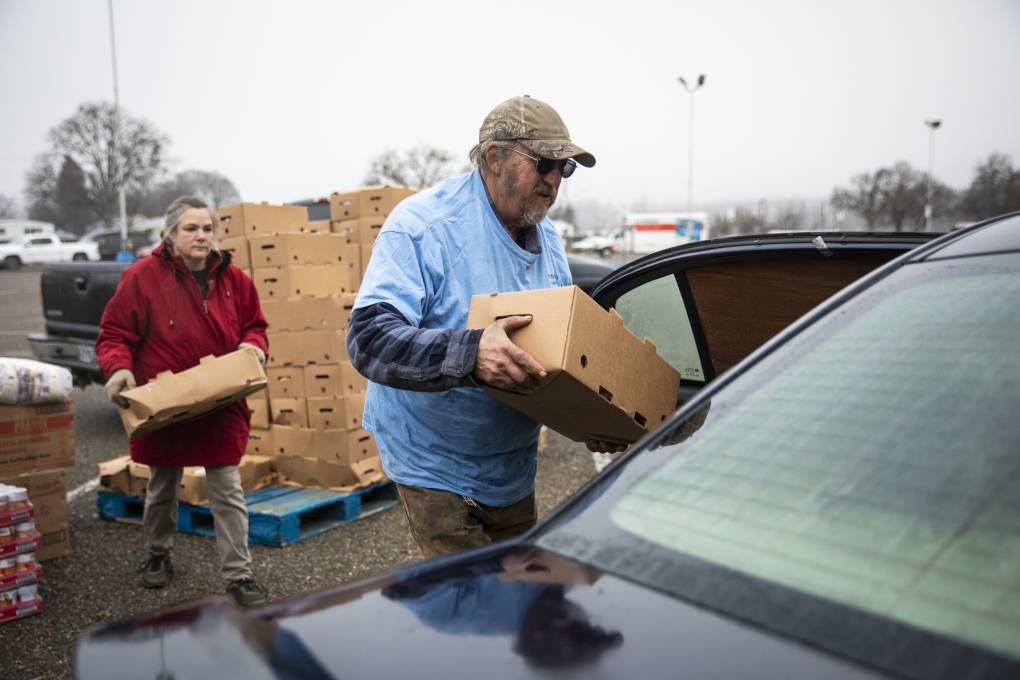
"caption": "Volunteers Terry Scovil (center) and Shendi Klopfer load the car of a community member with food from the Trinity County Food Bank at the Trinity County Fairgrounds on Feb. 8, 2023. ",
"description": null,
"title": "021023-CANNABIS-CRASH-MHN-32-CM",
"credit": "Martin do Nascimento/CalMatters",
"status": "inherit",
"altTag": "A man wearing a blue shirt, green hat and sunglasses holds a cardboard box of food to be moved into a car, with another man and several boxes behind him.",
"isLoading": false,
"fetchFailed": false
},
"news_11955883": {
"type": "attachments",
"id": "news_11955883",
"meta": {
"index": "attachments_1716263798",
"site": "news",
"id": "11955883",
"found": true
},
"parent": 11955866,
"imgSizes": {
"twentyfourteen-full-width": {
"file": "https://ww2.kqed.org/app/uploads/sites/10/2023/07/GettyImages-1221065123-1024x576.jpg",
"width": 1024,
"mimeType": "image/jpeg",
"height": 576
},
"thumbnail": {
"file": "https://ww2.kqed.org/app/uploads/sites/10/2023/07/GettyImages-1221065123-160x102.jpg",
"width": 160,
"mimeType": "image/jpeg",
"height": 102
},
"post-thumbnail": {
"file": "https://ww2.kqed.org/app/uploads/sites/10/2023/07/GettyImages-1221065123-672x372.jpg",
"width": 672,
"mimeType": "image/jpeg",
"height": 372
},
"kqedFullSize": {
"file": "https://ww2.kqed.org/app/uploads/sites/10/2023/07/GettyImages-1221065123.jpg",
"width": 1024,
"height": 654
},
"large": {
"file": "https://ww2.kqed.org/app/uploads/sites/10/2023/07/GettyImages-1221065123-1020x651.jpg",
"width": 1020,
"mimeType": "image/jpeg",
"height": 651
},
"medium": {
"file": "https://ww2.kqed.org/app/uploads/sites/10/2023/07/GettyImages-1221065123-800x511.jpg",
"width": 800,
"mimeType": "image/jpeg",
"height": 511
}
},
"publishDate": 1689625612,
"modified": 1689632752,
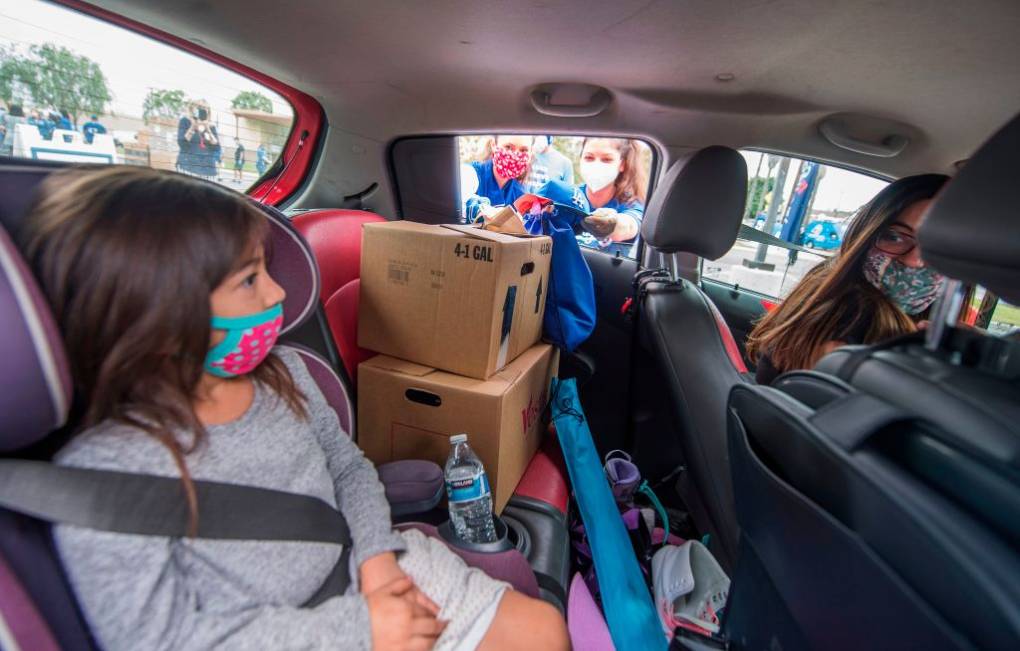
"caption": "Staff and volunteers with the Los Angeles Dodgers Foundation hand a baseball cap to a little girl as they distribute food and other goods during its second Dodger Day Drive-Thru food bank for people facing economic hardship in Huntington Park, on June 18, 2020.",
"description": null,
"title": "US-HEALTH-VIRUS-AID-FOOD",
"credit": "Mark Ralston/AFP via Getty Images",
"status": "inherit",
"altTag": "A young girl wearing a pink and turquoise face mask sits in the back of a car next to two cardboard boxes while she looks toward two people wearing masks outside of the car. A woman wearing a mask sits in the drivers seat.",
"isLoading": false,
"fetchFailed": false
},
"news_11819564": {
"type": "attachments",
"id": "news_11819564",
"meta": {
"index": "attachments_1716263798",
"site": "news",
"id": "11819564",
"found": true
},
"parent": 11819549,
"imgSizes": {
"apple_news_ca_landscape_5_5": {
"file": "https://ww2.kqed.org/app/uploads/sites/10/2020/05/RS43261_FOOD-photo-qut-1044x783.jpg",
"width": 1044,
"mimeType": "image/jpeg",
"height": 783
},
"apple_news_ca_square_4_0": {
"file": "https://ww2.kqed.org/app/uploads/sites/10/2020/05/RS43261_FOOD-photo-qut-470x470.jpg",
"width": 470,
"mimeType": "image/jpeg",
"height": 470
},
"twentyfourteen-full-width": {
"file": "https://ww2.kqed.org/app/uploads/sites/10/2020/05/RS43261_FOOD-photo-qut-1038x576.jpg",
"width": 1038,
"mimeType": "image/jpeg",
"height": 576
},
"thumbnail": {
"file": "https://ww2.kqed.org/app/uploads/sites/10/2020/05/RS43261_FOOD-photo-qut-160x117.jpg",
"width": 160,
"mimeType": "image/jpeg",
"height": 117
},
"post-thumbnail": {
"file": "https://ww2.kqed.org/app/uploads/sites/10/2020/05/RS43261_FOOD-photo-qut-672x372.jpg",
"width": 672,
"mimeType": "image/jpeg",
"height": 372
},
"kqedFullSize": {
"file": "https://ww2.kqed.org/app/uploads/sites/10/2020/05/RS43261_FOOD-photo-qut.jpg",
"width": 1920,
"height": 1403
},
"apple_news_ca_landscape_4_7": {
"file": "https://ww2.kqed.org/app/uploads/sites/10/2020/05/RS43261_FOOD-photo-qut-632x474.jpg",
"width": 632,
"mimeType": "image/jpeg",
"height": 474
},
"large": {
"file": "https://ww2.kqed.org/app/uploads/sites/10/2020/05/RS43261_FOOD-photo-qut-1020x745.jpg",
"width": 1020,
"mimeType": "image/jpeg",
"height": 745
},
"apple_news_ca_landscape_4_0": {
"file": "https://ww2.kqed.org/app/uploads/sites/10/2020/05/RS43261_FOOD-photo-qut-536x402.jpg",
"width": 536,
"mimeType": "image/jpeg",
"height": 402
},
"apple_news_ca_portrait_12_9": {
"file": "https://ww2.kqed.org/app/uploads/sites/10/2020/05/RS43261_FOOD-photo-qut-1122x1403.jpg",
"width": 1122,
"mimeType": "image/jpeg",
"height": 1403
},
"medium": {
"file": "https://ww2.kqed.org/app/uploads/sites/10/2020/05/RS43261_FOOD-photo-qut-800x585.jpg",
"width": 800,
"mimeType": "image/jpeg",
"height": 585
},
"apple_news_ca_portrait_4_0": {
"file": "https://ww2.kqed.org/app/uploads/sites/10/2020/05/RS43261_FOOD-photo-qut-354x472.jpg",
"width": 354,
"mimeType": "image/jpeg",
"height": 472
},
"apple_news_ca_portrait_9_7": {
"file": "https://ww2.kqed.org/app/uploads/sites/10/2020/05/RS43261_FOOD-photo-qut-840x1120.jpg",
"width": 840,
"mimeType": "image/jpeg",
"height": 1120
},
"apple_news_ca_landscape_12_9": {
"file": "https://ww2.kqed.org/app/uploads/sites/10/2020/05/RS43261_FOOD-photo-qut-1832x1374.jpg",
"width": 1832,
"mimeType": "image/jpeg",
"height": 1374
},
"apple_news_ca_square_9_7": {
"file": "https://ww2.kqed.org/app/uploads/sites/10/2020/05/RS43261_FOOD-photo-qut-1104x1104.jpg",
"width": 1104,
"mimeType": "image/jpeg",
"height": 1104
},
"apple_news_ca_portrait_4_7": {
"file": "https://ww2.kqed.org/app/uploads/sites/10/2020/05/RS43261_FOOD-photo-qut-414x552.jpg",
"width": 414,
"mimeType": "image/jpeg",
"height": 552
},
"apple_news_ca_square_12_9": {
"file": "https://ww2.kqed.org/app/uploads/sites/10/2020/05/RS43261_FOOD-photo-qut-1472x1403.jpg",
"width": 1472,
"mimeType": "image/jpeg",
"height": 1403
},
"apple_news_ca_portrait_5_5": {
"file": "https://ww2.kqed.org/app/uploads/sites/10/2020/05/RS43261_FOOD-photo-qut-687x916.jpg",
"width": 687,
"mimeType": "image/jpeg",
"height": 916
},
"full-width": {
"file": "https://ww2.kqed.org/app/uploads/sites/10/2020/05/RS43261_FOOD-photo-qut-1920x1403.jpg",
"width": 1920,
"mimeType": "image/jpeg",
"height": 1403
},
"apple_news_ca_square_4_7": {
"file": "https://ww2.kqed.org/app/uploads/sites/10/2020/05/RS43261_FOOD-photo-qut-550x550.jpg",
"width": 550,
"mimeType": "image/jpeg",
"height": 550
},
"apple_news_ca_landscape_9_7": {
"file": "https://ww2.kqed.org/app/uploads/sites/10/2020/05/RS43261_FOOD-photo-qut-1376x1032.jpg",
"width": 1376,
"mimeType": "image/jpeg",
"height": 1032
},
"apple_news_ca_square_5_5": {
"file": "https://ww2.kqed.org/app/uploads/sites/10/2020/05/RS43261_FOOD-photo-qut-912x912.jpg",
"width": 912,
"mimeType": "image/jpeg",
"height": 912
}
},
"publishDate": 1590003525,
"modified": 1590014736,
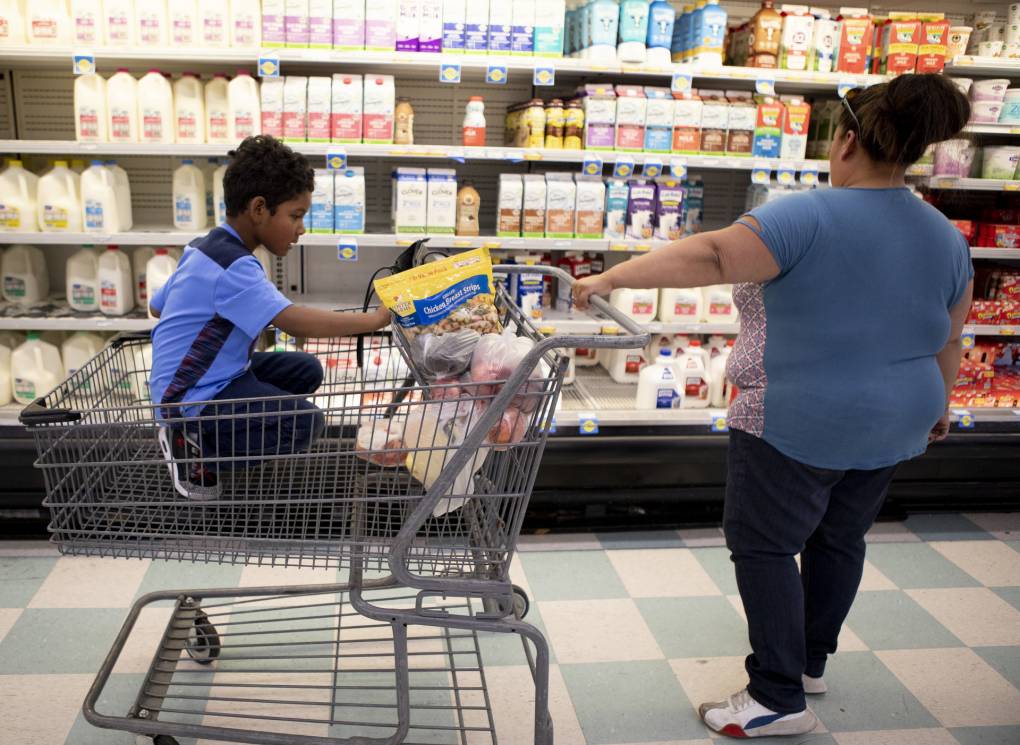
"caption": "Antionette Martinez and her son Caden, 5, who receive CalFresh, do their weekly grocery shopping at FoodMaxx on July 26, 2019. ",
"description": null,
"title": "RS43261_FOOD photo-qut",
"credit": "Anne Wernikoff/CalMatters",
"status": "inherit",
"isLoading": false,
"fetchFailed": false
},
"news_11945872": {
"type": "attachments",
"id": "news_11945872",
"meta": {
"index": "attachments_1716263798",
"site": "news",
"id": "11945872",
"found": true
},
"parent": 11945814,
"imgSizes": {
"twentyfourteen-full-width": {
"file": "https://ww2.kqed.org/app/uploads/sites/10/2023/04/pexels-cottonbro-studio-4778412-1038x576.jpg",
"width": 1038,
"mimeType": "image/jpeg",
"height": 576
},
"thumbnail": {
"file": "https://ww2.kqed.org/app/uploads/sites/10/2023/04/pexels-cottonbro-studio-4778412-160x107.jpg",
"width": 160,
"mimeType": "image/jpeg",
"height": 107
},
"post-thumbnail": {
"file": "https://ww2.kqed.org/app/uploads/sites/10/2023/04/pexels-cottonbro-studio-4778412-672x372.jpg",
"width": 672,
"mimeType": "image/jpeg",
"height": 372
},
"kqedFullSize": {
"file": "https://ww2.kqed.org/app/uploads/sites/10/2023/04/pexels-cottonbro-studio-4778412.jpg",
"width": 1920,
"height": 1280
},
"large": {
"file": "https://ww2.kqed.org/app/uploads/sites/10/2023/04/pexels-cottonbro-studio-4778412-1020x680.jpg",
"width": 1020,
"mimeType": "image/jpeg",
"height": 680
},
"1536x1536": {
"file": "https://ww2.kqed.org/app/uploads/sites/10/2023/04/pexels-cottonbro-studio-4778412-1536x1024.jpg",
"width": 1536,
"mimeType": "image/jpeg",
"height": 1024
},
"medium": {
"file": "https://ww2.kqed.org/app/uploads/sites/10/2023/04/pexels-cottonbro-studio-4778412-800x533.jpg",
"width": 800,
"mimeType": "image/jpeg",
"height": 533
}
},
"publishDate": 1680808812,
"modified": 1680808896,
"caption": "If you're a student, your CalFresh eligibility is about to change.",
"description": null,
"title": "calfresh-login-student",
"credit": "cottonbro studio/Pexels",
"status": "inherit",
"altTag": "A person with medium-toned skin sits at a wooden table writing on a notepad, surrounded by books. They are wearing a gray t-shirt and have tattooed forearms. We can't see their face.",
"isLoading": false,
"fetchFailed": false
},
"news_11937356": {
"type": "attachments",
"id": "news_11937356",
"meta": {
"index": "attachments_1716263798",
"site": "news",
"id": "11937356",
"found": true
},
"parent": 11937317,
"imgSizes": {
"twentyfourteen-full-width": {
"file": "https://ww2.kqed.org/app/uploads/sites/10/2023/01/RS34026_112018_AW_AlamedaCountyFood-Bank_05-qut-1038x576.jpg",
"width": 1038,
"mimeType": "image/jpeg",
"height": 576
},
"thumbnail": {
"file": "https://ww2.kqed.org/app/uploads/sites/10/2023/01/RS34026_112018_AW_AlamedaCountyFood-Bank_05-qut-160x107.jpg",
"width": 160,
"mimeType": "image/jpeg",
"height": 107
},
"post-thumbnail": {
"file": "https://ww2.kqed.org/app/uploads/sites/10/2023/01/RS34026_112018_AW_AlamedaCountyFood-Bank_05-qut-672x372.jpg",
"width": 672,
"mimeType": "image/jpeg",
"height": 372
},
"kqedFullSize": {
"file": "https://ww2.kqed.org/app/uploads/sites/10/2023/01/RS34026_112018_AW_AlamedaCountyFood-Bank_05-qut.jpg",
"width": 1920,
"height": 1280
},
"large": {
"file": "https://ww2.kqed.org/app/uploads/sites/10/2023/01/RS34026_112018_AW_AlamedaCountyFood-Bank_05-qut-1020x680.jpg",
"width": 1020,
"mimeType": "image/jpeg",
"height": 680
},
"1536x1536": {
"file": "https://ww2.kqed.org/app/uploads/sites/10/2023/01/RS34026_112018_AW_AlamedaCountyFood-Bank_05-qut-1536x1024.jpg",
"width": 1536,
"mimeType": "image/jpeg",
"height": 1024
},
"medium": {
"file": "https://ww2.kqed.org/app/uploads/sites/10/2023/01/RS34026_112018_AW_AlamedaCountyFood-Bank_05-qut-800x533.jpg",
"width": 800,
"mimeType": "image/jpeg",
"height": 533
}
},
"publishDate": 1673144077,
"modified": 1673416130,
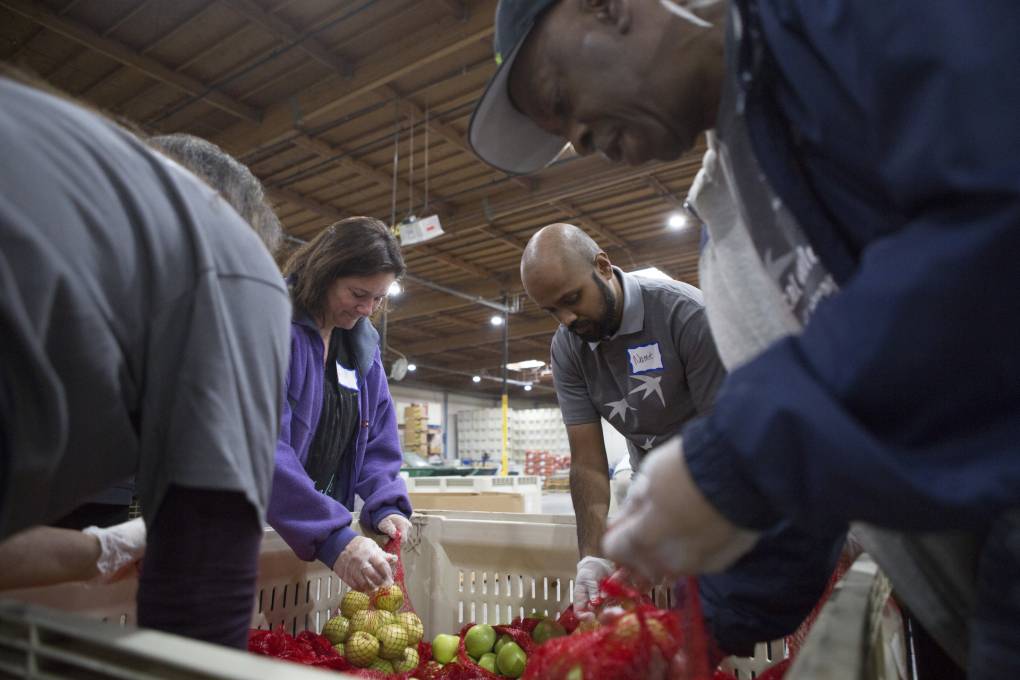
"caption": "Volunteers from Bank of the West and Boys Team Charity sort apples from the produce bins at the Alameda County Community Food Bank on Nov. 20, 2018.",
"description": null,
"title": "RS34026_112018_AW_AlamedaCountyFood Bank_05-qut",
"credit": "Anne Wernikoff/KQED",
"status": "inherit",
"altTag": "Four people sort apples in a food bank.",
"isLoading": false,
"fetchFailed": false
},
"news_11935441": {
"type": "attachments",
"id": "news_11935441",
"meta": {
"index": "attachments_1716263798",
"site": "news",
"id": "11935441",
"found": true
},
"parent": 11897177,
"imgSizes": {
"twentyfourteen-full-width": {
"file": "https://ww2.kqed.org/app/uploads/sites/10/2021/11/RS61678_GettyImages-1241546546-qut-1038x576.jpg",
"width": 1038,
"mimeType": "image/jpeg",
"height": 576
},
"thumbnail": {
"file": "https://ww2.kqed.org/app/uploads/sites/10/2021/11/RS61678_GettyImages-1241546546-qut-160x110.jpg",
"width": 160,
"mimeType": "image/jpeg",
"height": 110
},
"post-thumbnail": {
"file": "https://ww2.kqed.org/app/uploads/sites/10/2021/11/RS61678_GettyImages-1241546546-qut-672x372.jpg",
"width": 672,
"mimeType": "image/jpeg",
"height": 372
},
"kqedFullSize": {
"file": "https://ww2.kqed.org/app/uploads/sites/10/2021/11/RS61678_GettyImages-1241546546-qut.jpg",
"width": 1920,
"height": 1324
},
"large": {
"file": "https://ww2.kqed.org/app/uploads/sites/10/2021/11/RS61678_GettyImages-1241546546-qut-1020x703.jpg",
"width": 1020,
"mimeType": "image/jpeg",
"height": 703
},
"1536x1536": {
"file": "https://ww2.kqed.org/app/uploads/sites/10/2021/11/RS61678_GettyImages-1241546546-qut-1536x1059.jpg",
"width": 1536,
"mimeType": "image/jpeg",
"height": 1059
},
"medium": {
"file": "https://ww2.kqed.org/app/uploads/sites/10/2021/11/RS61678_GettyImages-1241546546-qut-800x552.jpg",
"width": 800,
"mimeType": "image/jpeg",
"height": 552
}
},
"publishDate": 1671146899,
"modified": 1671150120,
"caption": "Volunteers place onions and potatoes into small bags at a food distribution event sponsored by the Second Harvest Food Bank of Central Florida and Orange County at St. John Vianney Catholic Church in Orlando, Florida. High food and gas prices are squeezing working families, sending some to food pantries for the first time, but providers are struggling with inflation costs as demand spikes.",
"description": null,
"title": "food-bank-near-me",
"credit": "Paul Hennessy/SOPA Images/LightRocket via Getty Images",
"status": "inherit",
"altTag": "A group of three volunteers wearing bright yellow jackets photographed from above, sorting large white bags of onions and potatoes.",
"isLoading": false,
"fetchFailed": false
},
"news_11922687": {
"type": "attachments",
"id": "news_11922687",
"meta": {
"index": "attachments_1716263798",
"site": "news",
"id": "11922687",
"found": true
},
"parent": 11922685,
"imgSizes": {
"twentyfourteen-full-width": {
"file": "https://ww2.kqed.org/app/uploads/sites/10/2022/08/Screen-Shot-2022-08-16-at-10.35.41-AM-1038x576.png",
"width": 1038,
"mimeType": "image/png",
"height": 576
},
"thumbnail": {
"file": "https://ww2.kqed.org/app/uploads/sites/10/2022/08/Screen-Shot-2022-08-16-at-10.35.41-AM-160x100.png",
"width": 160,
"mimeType": "image/png",
"height": 100
},
"post-thumbnail": {
"file": "https://ww2.kqed.org/app/uploads/sites/10/2022/08/Screen-Shot-2022-08-16-at-10.35.41-AM-672x372.png",
"width": 672,
"mimeType": "image/png",
"height": 372
},
"kqedFullSize": {
"file": "https://ww2.kqed.org/app/uploads/sites/10/2022/08/Screen-Shot-2022-08-16-at-10.35.41-AM.png",
"width": 1564,
"height": 974
},
"large": {
"file": "https://ww2.kqed.org/app/uploads/sites/10/2022/08/Screen-Shot-2022-08-16-at-10.35.41-AM-1020x635.png",
"width": 1020,
"mimeType": "image/png",
"height": 635
},
"1536x1536": {
"file": "https://ww2.kqed.org/app/uploads/sites/10/2022/08/Screen-Shot-2022-08-16-at-10.35.41-AM-1536x957.png",
"width": 1536,
"mimeType": "image/png",
"height": 957
},
"medium": {
"file": "https://ww2.kqed.org/app/uploads/sites/10/2022/08/Screen-Shot-2022-08-16-at-10.35.41-AM-800x498.png",
"width": 800,
"mimeType": "image/png",
"height": 498
}
},
"publishDate": 1660671379,
"modified": 1660688156,
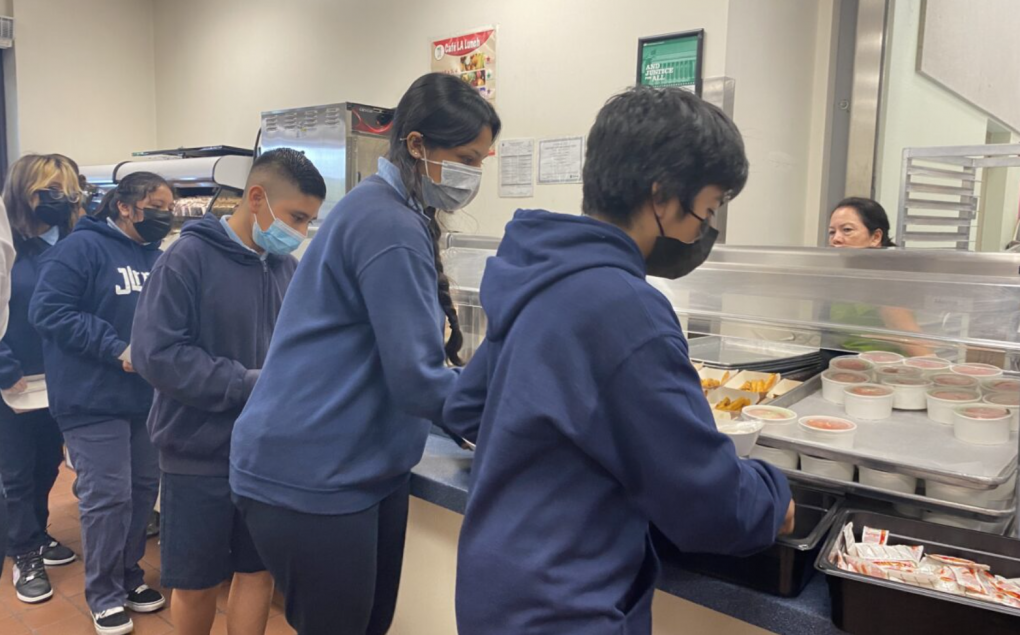
"caption": "Students at Liechty Middle School in the Westlake neighborhood of Central Los Angeles line up for lunch on the first day of school, navigating an assortment of new items on the menu.",
"description": null,
"title": "Screen Shot 2022-08-16 at 10.35.41 AM",
"credit": "Kate Sequera/EdSource",
"status": "inherit",
"altTag": "Five children wearing blue clothing and masks stand in line at a cafeteria.",
"isLoading": false,
"fetchFailed": false
},
"news_11847420": {
"type": "attachments",
"id": "news_11847420",
"meta": {
"index": "attachments_1716263798",
"site": "news",
"id": "11847420",
"found": true
},
"parent": 11847203,
"imgSizes": {
"apple_news_ca_landscape_5_5": {
"file": "https://ww2.kqed.org/app/uploads/sites/10/2020/11/1920_GettyImages-1227684396-copy-1044x783.jpg",
"width": 1044,
"mimeType": "image/jpeg",
"height": 783
},
"apple_news_ca_square_4_0": {
"file": "https://ww2.kqed.org/app/uploads/sites/10/2020/11/1920_GettyImages-1227684396-copy-470x470.jpg",
"width": 470,
"mimeType": "image/jpeg",
"height": 470
},
"twentyfourteen-full-width": {
"file": "https://ww2.kqed.org/app/uploads/sites/10/2020/11/1920_GettyImages-1227684396-copy-1038x576.jpg",
"width": 1038,
"mimeType": "image/jpeg",
"height": 576
},
"thumbnail": {
"file": "https://ww2.kqed.org/app/uploads/sites/10/2020/11/1920_GettyImages-1227684396-copy-160x90.jpg",
"width": 160,
"mimeType": "image/jpeg",
"height": 90
},
"post-thumbnail": {
"file": "https://ww2.kqed.org/app/uploads/sites/10/2020/11/1920_GettyImages-1227684396-copy-672x372.jpg",
"width": 672,
"mimeType": "image/jpeg",
"height": 372
},
"kqedFullSize": {
"file": "https://ww2.kqed.org/app/uploads/sites/10/2020/11/1920_GettyImages-1227684396-copy-scaled.jpg",
"width": 2560,
"height": 1440
},
"2048x2048": {
"file": "https://ww2.kqed.org/app/uploads/sites/10/2020/11/1920_GettyImages-1227684396-copy-2048x1152.jpg",
"width": 2048,
"mimeType": "image/jpeg",
"height": 1152
},
"apple_news_ca_landscape_4_7": {
"file": "https://ww2.kqed.org/app/uploads/sites/10/2020/11/1920_GettyImages-1227684396-copy-632x474.jpg",
"width": 632,
"mimeType": "image/jpeg",
"height": 474
},
"large": {
"file": "https://ww2.kqed.org/app/uploads/sites/10/2020/11/1920_GettyImages-1227684396-copy-1020x574.jpg",
"width": 1020,
"mimeType": "image/jpeg",
"height": 574
},
"apple_news_ca_landscape_4_0": {
"file": "https://ww2.kqed.org/app/uploads/sites/10/2020/11/1920_GettyImages-1227684396-copy-536x402.jpg",
"width": 536,
"mimeType": "image/jpeg",
"height": 402
},
"apple_news_ca_portrait_12_9": {
"file": "https://ww2.kqed.org/app/uploads/sites/10/2020/11/1920_GettyImages-1227684396-copy-1122x1496.jpg",
"width": 1122,
"mimeType": "image/jpeg",
"height": 1496
},
"medium": {
"file": "https://ww2.kqed.org/app/uploads/sites/10/2020/11/1920_GettyImages-1227684396-copy-800x450.jpg",
"width": 800,
"mimeType": "image/jpeg",
"height": 450
},
"apple_news_ca_portrait_4_0": {
"file": "https://ww2.kqed.org/app/uploads/sites/10/2020/11/1920_GettyImages-1227684396-copy-354x472.jpg",
"width": 354,
"mimeType": "image/jpeg",
"height": 472
},
"apple_news_ca_portrait_9_7": {
"file": "https://ww2.kqed.org/app/uploads/sites/10/2020/11/1920_GettyImages-1227684396-copy-840x1120.jpg",
"width": 840,
"mimeType": "image/jpeg",
"height": 1120
},
"apple_news_ca_landscape_12_9": {
"file": "https://ww2.kqed.org/app/uploads/sites/10/2020/11/1920_GettyImages-1227684396-copy-1832x1374.jpg",
"width": 1832,
"mimeType": "image/jpeg",
"height": 1374
},
"apple_news_ca_square_9_7": {
"file": "https://ww2.kqed.org/app/uploads/sites/10/2020/11/1920_GettyImages-1227684396-copy-1104x1104.jpg",
"width": 1104,
"mimeType": "image/jpeg",
"height": 1104
},
"1536x1536": {
"file": "https://ww2.kqed.org/app/uploads/sites/10/2020/11/1920_GettyImages-1227684396-copy-1536x864.jpg",
"width": 1536,
"mimeType": "image/jpeg",
"height": 864
},
"apple_news_ca_portrait_4_7": {
"file": "https://ww2.kqed.org/app/uploads/sites/10/2020/11/1920_GettyImages-1227684396-copy-414x552.jpg",
"width": 414,
"mimeType": "image/jpeg",
"height": 552
},
"apple_news_ca_square_12_9": {
"file": "https://ww2.kqed.org/app/uploads/sites/10/2020/11/1920_GettyImages-1227684396-copy-1472x1472.jpg",
"width": 1472,
"mimeType": "image/jpeg",
"height": 1472
},
"apple_news_ca_portrait_5_5": {
"file": "https://ww2.kqed.org/app/uploads/sites/10/2020/11/1920_GettyImages-1227684396-copy-687x916.jpg",
"width": 687,
"mimeType": "image/jpeg",
"height": 916
},
"full-width": {
"file": "https://ww2.kqed.org/app/uploads/sites/10/2020/11/1920_GettyImages-1227684396-copy-1920x1080.jpg",
"width": 1920,
"mimeType": "image/jpeg",
"height": 1080
},
"apple_news_ca_square_4_7": {
"file": "https://ww2.kqed.org/app/uploads/sites/10/2020/11/1920_GettyImages-1227684396-copy-550x550.jpg",
"width": 550,
"mimeType": "image/jpeg",
"height": 550
},
"apple_news_ca_landscape_9_7": {
"file": "https://ww2.kqed.org/app/uploads/sites/10/2020/11/1920_GettyImages-1227684396-copy-1376x1032.jpg",
"width": 1376,
"mimeType": "image/jpeg",
"height": 1032
},
"apple_news_ca_square_5_5": {
"file": "https://ww2.kqed.org/app/uploads/sites/10/2020/11/1920_GettyImages-1227684396-copy-912x912.jpg",
"width": 912,
"mimeType": "image/jpeg",
"height": 912
}
},
"publishDate": 1605291672,
"modified": 1605291737,
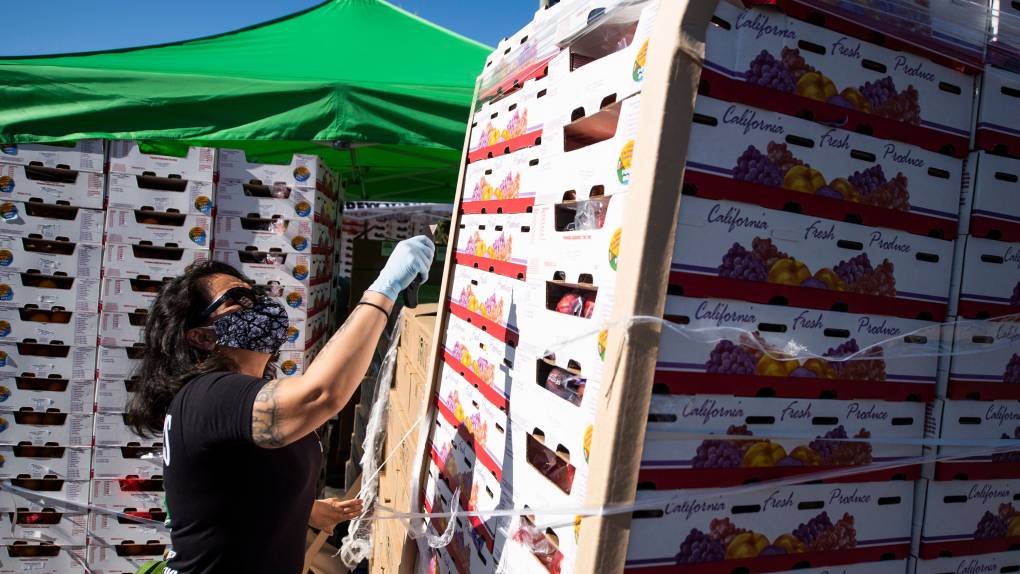
"caption": "A volunteer prepares produce for distribution at a community food bank in the Crenshaw neighborhood of Los Angeles, California, July 18, 2020 during the coronavirus pandemic. - Food insecurity is a growing issue in the United States as the COVID-19 positive rates spike upward. ",
"description": null,
"title": "US-HEALTH-VIRUS-FOOD BANK",
"credit": "Robyn Beck/AFP via Getty Images",
"status": "inherit",
"isLoading": false,
"fetchFailed": false
},
"news_11814963": {
"type": "attachments",
"id": "news_11814963",
"meta": {
"index": "attachments_1716263798",
"site": "news",
"id": "11814963",
"found": true
},
"parent": 11814956,
"imgSizes": {
"apple_news_ca_landscape_5_5": {
"file": "https://ww2.kqed.org/app/uploads/sites/10/2020/04/RS42969_IMG_2762-qut-1044x783.jpg",
"width": 1044,
"mimeType": "image/jpeg",
"height": 783
},
"apple_news_ca_square_4_0": {
"file": "https://ww2.kqed.org/app/uploads/sites/10/2020/04/RS42969_IMG_2762-qut-470x470.jpg",
"width": 470,
"mimeType": "image/jpeg",
"height": 470
},
"twentyfourteen-full-width": {
"file": "https://ww2.kqed.org/app/uploads/sites/10/2020/04/RS42969_IMG_2762-qut-1038x576.jpg",
"width": 1038,
"mimeType": "image/jpeg",
"height": 576
},
"thumbnail": {
"file": "https://ww2.kqed.org/app/uploads/sites/10/2020/04/RS42969_IMG_2762-qut-160x120.jpg",
"width": 160,
"mimeType": "image/jpeg",
"height": 120
},
"post-thumbnail": {
"file": "https://ww2.kqed.org/app/uploads/sites/10/2020/04/RS42969_IMG_2762-qut-672x372.jpg",
"width": 672,
"mimeType": "image/jpeg",
"height": 372
},
"kqedFullSize": {
"file": "https://ww2.kqed.org/app/uploads/sites/10/2020/04/RS42969_IMG_2762-qut.jpg",
"width": 1920,
"height": 1440
},
"apple_news_ca_landscape_4_7": {
"file": "https://ww2.kqed.org/app/uploads/sites/10/2020/04/RS42969_IMG_2762-qut-632x474.jpg",
"width": 632,
"mimeType": "image/jpeg",
"height": 474
},
"large": {
"file": "https://ww2.kqed.org/app/uploads/sites/10/2020/04/RS42969_IMG_2762-qut-1020x765.jpg",
"width": 1020,
"mimeType": "image/jpeg",
"height": 765
},
"apple_news_ca_landscape_4_0": {
"file": "https://ww2.kqed.org/app/uploads/sites/10/2020/04/RS42969_IMG_2762-qut-536x402.jpg",
"width": 536,
"mimeType": "image/jpeg",
"height": 402
},
"apple_news_ca_portrait_12_9": {
"file": "https://ww2.kqed.org/app/uploads/sites/10/2020/04/RS42969_IMG_2762-qut-1122x1440.jpg",
"width": 1122,
"mimeType": "image/jpeg",
"height": 1440
},
"medium": {
"file": "https://ww2.kqed.org/app/uploads/sites/10/2020/04/RS42969_IMG_2762-qut-800x600.jpg",
"width": 800,
"mimeType": "image/jpeg",
"height": 600
},
"apple_news_ca_portrait_4_0": {
"file": "https://ww2.kqed.org/app/uploads/sites/10/2020/04/RS42969_IMG_2762-qut-354x472.jpg",
"width": 354,
"mimeType": "image/jpeg",
"height": 472
},
"apple_news_ca_portrait_9_7": {
"file": "https://ww2.kqed.org/app/uploads/sites/10/2020/04/RS42969_IMG_2762-qut-840x1120.jpg",
"width": 840,
"mimeType": "image/jpeg",
"height": 1120
},
"apple_news_ca_landscape_12_9": {
"file": "https://ww2.kqed.org/app/uploads/sites/10/2020/04/RS42969_IMG_2762-qut-1832x1374.jpg",
"width": 1832,
"mimeType": "image/jpeg",
"height": 1374
},
"apple_news_ca_square_9_7": {
"file": "https://ww2.kqed.org/app/uploads/sites/10/2020/04/RS42969_IMG_2762-qut-1104x1104.jpg",
"width": 1104,
"mimeType": "image/jpeg",
"height": 1104
},
"apple_news_ca_portrait_4_7": {
"file": "https://ww2.kqed.org/app/uploads/sites/10/2020/04/RS42969_IMG_2762-qut-414x552.jpg",
"width": 414,
"mimeType": "image/jpeg",
"height": 552
},
"apple_news_ca_square_12_9": {
"file": "https://ww2.kqed.org/app/uploads/sites/10/2020/04/RS42969_IMG_2762-qut-1472x1440.jpg",
"width": 1472,
"mimeType": "image/jpeg",
"height": 1440
},
"apple_news_ca_portrait_5_5": {
"file": "https://ww2.kqed.org/app/uploads/sites/10/2020/04/RS42969_IMG_2762-qut-687x916.jpg",
"width": 687,
"mimeType": "image/jpeg",
"height": 916
},
"full-width": {
"file": "https://ww2.kqed.org/app/uploads/sites/10/2020/04/RS42969_IMG_2762-qut-1920x1440.jpg",
"width": 1920,
"mimeType": "image/jpeg",
"height": 1440
},
"apple_news_ca_square_4_7": {
"file": "https://ww2.kqed.org/app/uploads/sites/10/2020/04/RS42969_IMG_2762-qut-550x550.jpg",
"width": 550,
"mimeType": "image/jpeg",
"height": 550
},
"apple_news_ca_landscape_9_7": {
"file": "https://ww2.kqed.org/app/uploads/sites/10/2020/04/RS42969_IMG_2762-qut-1376x1032.jpg",
"width": 1376,
"mimeType": "image/jpeg",
"height": 1032
},
"apple_news_ca_square_5_5": {
"file": "https://ww2.kqed.org/app/uploads/sites/10/2020/04/RS42969_IMG_2762-qut-912x912.jpg",
"width": 912,
"mimeType": "image/jpeg",
"height": 912
}
},
"publishDate": 1588182528,
"modified": 1588190401,
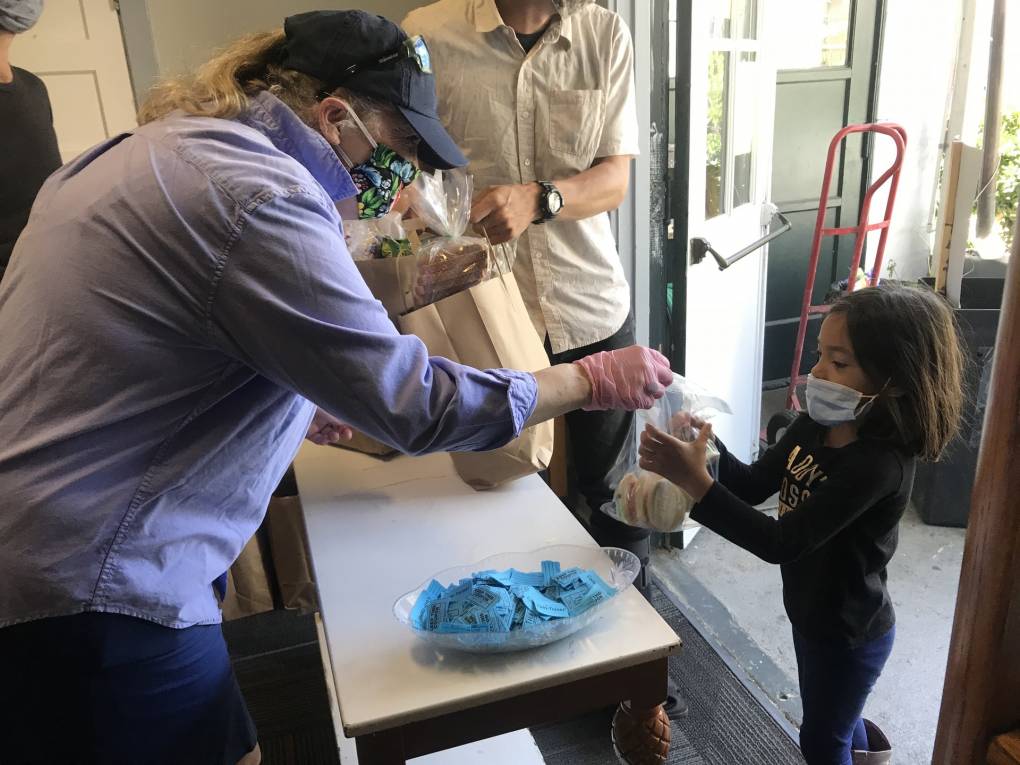
"caption": "Niah Gerard, a food pantry organizer, passes groceries to a young girl who came with her family. ",
"description": null,
"title": "RS42969_IMG_2762-qut",
"credit": "Ariella Markowitz",
"status": "inherit",
"isLoading": false,
"fetchFailed": false
},
"news_11815641": {
"type": "attachments",
"id": "news_11815641",
"meta": {
"index": "attachments_1716263798",
"site": "news",
"id": "11815641",
"found": true
},
"parent": 11814941,
"imgSizes": {
"apple_news_ca_landscape_5_5": {
"file": "https://ww2.kqed.org/app/uploads/sites/10/2020/04/foodbank3-1044x783.jpg",
"width": 1044,
"mimeType": "image/jpeg",
"height": 783
},
"apple_news_ca_square_4_0": {
"file": "https://ww2.kqed.org/app/uploads/sites/10/2020/04/foodbank3-470x470.jpg",
"width": 470,
"mimeType": "image/jpeg",
"height": 470
},
"twentyfourteen-full-width": {
"file": "https://ww2.kqed.org/app/uploads/sites/10/2020/04/foodbank3-1038x576.jpg",
"width": 1038,
"mimeType": "image/jpeg",
"height": 576
},
"thumbnail": {
"file": "https://ww2.kqed.org/app/uploads/sites/10/2020/04/foodbank3-160x113.jpg",
"width": 160,
"mimeType": "image/jpeg",
"height": 113
},
"post-thumbnail": {
"file": "https://ww2.kqed.org/app/uploads/sites/10/2020/04/foodbank3-672x372.jpg",
"width": 672,
"mimeType": "image/jpeg",
"height": 372
},
"kqedFullSize": {
"file": "https://ww2.kqed.org/app/uploads/sites/10/2020/04/foodbank3.jpg",
"width": 1919,
"height": 1360
},
"apple_news_ca_landscape_4_7": {
"file": "https://ww2.kqed.org/app/uploads/sites/10/2020/04/foodbank3-632x474.jpg",
"width": 632,
"mimeType": "image/jpeg",
"height": 474
},
"large": {
"file": "https://ww2.kqed.org/app/uploads/sites/10/2020/04/foodbank3-1020x723.jpg",
"width": 1020,
"mimeType": "image/jpeg",
"height": 723
},
"apple_news_ca_landscape_4_0": {
"file": "https://ww2.kqed.org/app/uploads/sites/10/2020/04/foodbank3-536x402.jpg",
"width": 536,
"mimeType": "image/jpeg",
"height": 402
},
"apple_news_ca_portrait_12_9": {
"file": "https://ww2.kqed.org/app/uploads/sites/10/2020/04/foodbank3-1122x1360.jpg",
"width": 1122,
"mimeType": "image/jpeg",
"height": 1360
},
"medium": {
"file": "https://ww2.kqed.org/app/uploads/sites/10/2020/04/foodbank3-800x567.jpg",
"width": 800,
"mimeType": "image/jpeg",
"height": 567
},
"apple_news_ca_portrait_4_0": {
"file": "https://ww2.kqed.org/app/uploads/sites/10/2020/04/foodbank3-354x472.jpg",
"width": 354,
"mimeType": "image/jpeg",
"height": 472
},
"apple_news_ca_portrait_9_7": {
"file": "https://ww2.kqed.org/app/uploads/sites/10/2020/04/foodbank3-840x1120.jpg",
"width": 840,
"mimeType": "image/jpeg",
"height": 1120
},
"apple_news_ca_landscape_12_9": {
"file": "https://ww2.kqed.org/app/uploads/sites/10/2020/04/foodbank3-1832x1360.jpg",
"width": 1832,
"mimeType": "image/jpeg",
"height": 1360
},
"apple_news_ca_square_9_7": {
"file": "https://ww2.kqed.org/app/uploads/sites/10/2020/04/foodbank3-1104x1104.jpg",
"width": 1104,
"mimeType": "image/jpeg",
"height": 1104
},
"apple_news_ca_portrait_4_7": {
"file": "https://ww2.kqed.org/app/uploads/sites/10/2020/04/foodbank3-414x552.jpg",
"width": 414,
"mimeType": "image/jpeg",
"height": 552
},
"apple_news_ca_square_12_9": {
"file": "https://ww2.kqed.org/app/uploads/sites/10/2020/04/foodbank3-1472x1360.jpg",
"width": 1472,
"mimeType": "image/jpeg",
"height": 1360
},
"apple_news_ca_portrait_5_5": {
"file": "https://ww2.kqed.org/app/uploads/sites/10/2020/04/foodbank3-687x916.jpg",
"width": 687,
"mimeType": "image/jpeg",
"height": 916
},
"apple_news_ca_square_4_7": {
"file": "https://ww2.kqed.org/app/uploads/sites/10/2020/04/foodbank3-550x550.jpg",
"width": 550,
"mimeType": "image/jpeg",
"height": 550
},
"apple_news_ca_landscape_9_7": {
"file": "https://ww2.kqed.org/app/uploads/sites/10/2020/04/foodbank3-1376x1032.jpg",
"width": 1376,
"mimeType": "image/jpeg",
"height": 1032
},
"apple_news_ca_square_5_5": {
"file": "https://ww2.kqed.org/app/uploads/sites/10/2020/04/foodbank3-912x912.jpg",
"width": 912,
"mimeType": "image/jpeg",
"height": 912
}
},
"publishDate": 1588358414,
"modified": 1588358661,
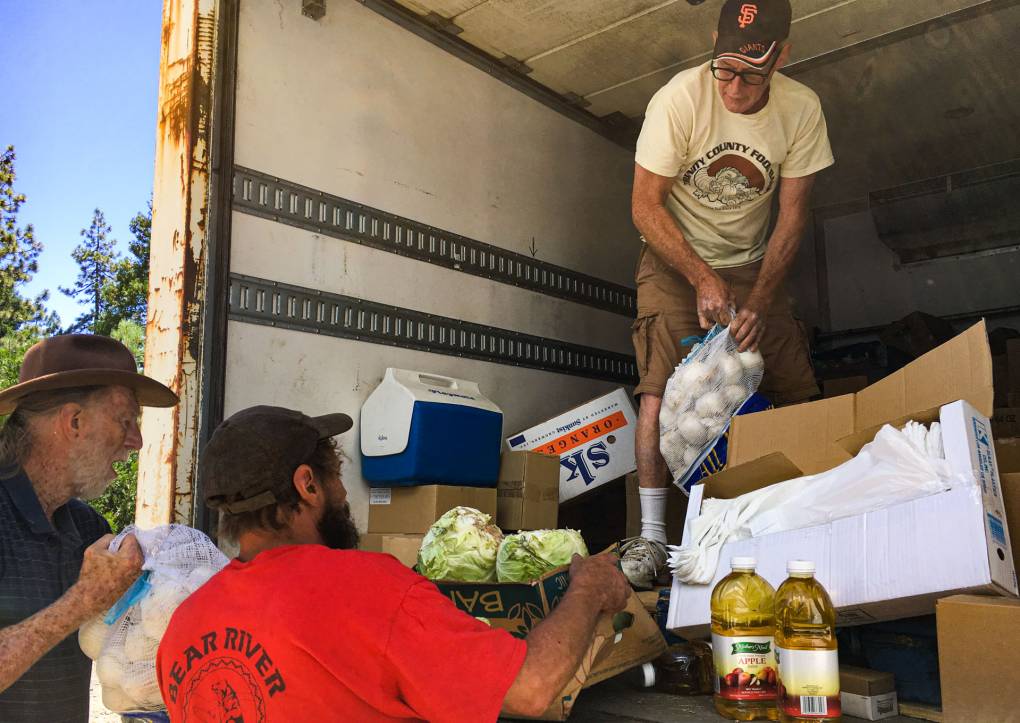
"caption": "Jeffry England, director of the Trinity County Food Bank, delivers items in the isolated community of Zenia in July 2017. The closest major grocery store is 100 miles away.\n\n",
"description": null,
"title": "Trinity Food Bank",
"credit": "Lisa Morehouse/KQED",
"status": "inherit",
"isLoading": false,
"fetchFailed": false
},
"news_11797336": {
"type": "attachments",
"id": "news_11797336",
"meta": {
"index": "attachments_1716263798",
"site": "news",
"id": "11797336",
"found": true
},
"parent": 11797328,
"imgSizes": {
"apple_news_ca_square_4_0": {
"file": "https://ww2.kqed.org/app/uploads/sites/10/2020/01/01222020_fresh-produce-470x470.jpg",
"width": 470,
"mimeType": "image/jpeg",
"height": 470
},
"twentyfourteen-full-width": {
"file": "https://ww2.kqed.org/app/uploads/sites/10/2020/01/01222020_fresh-produce-1024x576.jpg",
"width": 1024,
"mimeType": "image/jpeg",
"height": 576
},
"thumbnail": {
"file": "https://ww2.kqed.org/app/uploads/sites/10/2020/01/01222020_fresh-produce-160x106.jpg",
"width": 160,
"mimeType": "image/jpeg",
"height": 106
},
"post-thumbnail": {
"file": "https://ww2.kqed.org/app/uploads/sites/10/2020/01/01222020_fresh-produce-672x372.jpg",
"width": 672,
"mimeType": "image/jpeg",
"height": 372
},
"kqedFullSize": {
"file": "https://ww2.kqed.org/app/uploads/sites/10/2020/01/01222020_fresh-produce.jpg",
"width": 1024,
"height": 681
},
"apple_news_ca_landscape_4_7": {
"file": "https://ww2.kqed.org/app/uploads/sites/10/2020/01/01222020_fresh-produce-632x474.jpg",
"width": 632,
"mimeType": "image/jpeg",
"height": 474
},
"large": {
"file": "https://ww2.kqed.org/app/uploads/sites/10/2020/01/01222020_fresh-produce-1020x678.jpg",
"width": 1020,
"mimeType": "image/jpeg",
"height": 678
},
"apple_news_ca_landscape_4_0": {
"file": "https://ww2.kqed.org/app/uploads/sites/10/2020/01/01222020_fresh-produce-536x402.jpg",
"width": 536,
"mimeType": "image/jpeg",
"height": 402
},
"medium": {
"file": "https://ww2.kqed.org/app/uploads/sites/10/2020/01/01222020_fresh-produce-800x532.jpg",
"width": 800,
"mimeType": "image/jpeg",
"height": 532
},
"apple_news_ca_portrait_4_0": {
"file": "https://ww2.kqed.org/app/uploads/sites/10/2020/01/01222020_fresh-produce-354x472.jpg",
"width": 354,
"mimeType": "image/jpeg",
"height": 472
},
"apple_news_ca_portrait_9_7": {
"file": "https://ww2.kqed.org/app/uploads/sites/10/2020/01/01222020_fresh-produce-840x681.jpg",
"width": 840,
"mimeType": "image/jpeg",
"height": 681
},
"apple_news_ca_portrait_4_7": {
"file": "https://ww2.kqed.org/app/uploads/sites/10/2020/01/01222020_fresh-produce-414x552.jpg",
"width": 414,
"mimeType": "image/jpeg",
"height": 552
},
"apple_news_ca_portrait_5_5": {
"file": "https://ww2.kqed.org/app/uploads/sites/10/2020/01/01222020_fresh-produce-687x681.jpg",
"width": 687,
"mimeType": "image/jpeg",
"height": 681
},
"apple_news_ca_square_4_7": {
"file": "https://ww2.kqed.org/app/uploads/sites/10/2020/01/01222020_fresh-produce-550x550.jpg",
"width": 550,
"mimeType": "image/jpeg",
"height": 550
},
"apple_news_ca_square_5_5": {
"file": "https://ww2.kqed.org/app/uploads/sites/10/2020/01/01222020_fresh-produce-912x681.jpg",
"width": 912,
"mimeType": "image/jpeg",
"height": 681
}
},
"publishDate": 1579728187,
"modified": 1579730576,
"caption": "A stack of fresh produce.",
"description": "A stack of fresh produce.",
"title": "01222020_fresh produce",
"credit": "\u003ca href=\"https://www.flickr.com/photos/89409965@N00\">hannah8ball/flickr\u003c/a>",
"status": "inherit",
"isLoading": false,
"fetchFailed": false
},
"news_11792620": {
"type": "attachments",
"id": "news_11792620",
"meta": {
"index": "attachments_1716263798",
"site": "news",
"id": "11792620",
"found": true
},
"title": "The new Trump administration rule makes it harder for states to waive the requirement that adults work at least 20 hours a week in order to receive their Supplemental Nutrition Assistance Program — or SNAP — benefits. Some low-income college students could be affected.",
"publishDate": 1576950119,
"status": "inherit",
"parent": 11792619,
"modified": 1761673418,
"caption": "The new Trump administration rule makes it harder for states to waive the requirement that adults work at least 20 hours a week in order to receive their Supplemental Nutrition Assistance Program — or SNAP — benefits. Some low-income college students could be affected.",
"credit": "Danny Moloshok/AP Photo",
"altTag": null,
"description": "The new Trump administration rule makes it harder for states to waive the requirement that adults work at least 20 hours a week in order to receive their Supplemental Nutrition Assistance Program — or SNAP — benefits. Some low-income college students could be affected.",
"imgSizes": {
"thumbnail": {
"file": "https://cdn.kqed.org/wp-content/uploads/sites/10/2019/12/ap_17271692702067-ea1b97e98e157d598fa245d9c752f917e6c25c57-160x120.jpg",
"width": 160,
"height": 120,
"mimeType": "image/jpeg"
},
"medium": {
"file": "https://cdn.kqed.org/wp-content/uploads/sites/10/2019/12/ap_17271692702067-ea1b97e98e157d598fa245d9c752f917e6c25c57-800x600.jpg",
"width": 800,
"height": 600,
"mimeType": "image/jpeg"
},
"large": {
"file": "https://cdn.kqed.org/wp-content/uploads/sites/10/2019/12/ap_17271692702067-ea1b97e98e157d598fa245d9c752f917e6c25c57-1020x765.jpg",
"width": 1020,
"height": 765,
"mimeType": "image/jpeg"
},
"complete_open_graph": {
"file": "https://cdn.kqed.org/wp-content/uploads/sites/10/2019/12/ap_17271692702067-ea1b97e98e157d598fa245d9c752f917e6c25c57-1200x900.jpg",
"width": 1200,
"height": 900,
"mimeType": "image/jpeg"
},
"post-thumbnail": {
"file": "https://cdn.kqed.org/wp-content/uploads/sites/10/2019/12/ap_17271692702067-ea1b97e98e157d598fa245d9c752f917e6c25c57-672x372.jpg",
"width": 672,
"height": 372,
"mimeType": "image/jpeg"
},
"twentyfourteen-full-width": {
"file": "https://cdn.kqed.org/wp-content/uploads/sites/10/2019/12/ap_17271692702067-ea1b97e98e157d598fa245d9c752f917e6c25c57-1038x576.jpg",
"width": 1038,
"height": 576,
"mimeType": "image/jpeg"
},
"full-width": {
"file": "https://cdn.kqed.org/wp-content/uploads/sites/10/2019/12/ap_17271692702067-ea1b97e98e157d598fa245d9c752f917e6c25c57-1920x1440.jpg",
"width": 1920,
"height": 1440,
"mimeType": "image/jpeg"
},
"apple_news_ca_landscape_12_9": {
"file": "https://cdn.kqed.org/wp-content/uploads/sites/10/2019/12/ap_17271692702067-ea1b97e98e157d598fa245d9c752f917e6c25c57-1832x1374.jpg",
"width": 1832,
"height": 1374,
"mimeType": "image/jpeg"
},
"apple_news_ca_landscape_9_7": {
"file": "https://cdn.kqed.org/wp-content/uploads/sites/10/2019/12/ap_17271692702067-ea1b97e98e157d598fa245d9c752f917e6c25c57-1376x1032.jpg",
"width": 1376,
"height": 1032,
"mimeType": "image/jpeg"
},
"apple_news_ca_landscape_5_5": {
"file": "https://cdn.kqed.org/wp-content/uploads/sites/10/2019/12/ap_17271692702067-ea1b97e98e157d598fa245d9c752f917e6c25c57-1044x783.jpg",
"width": 1044,
"height": 783,
"mimeType": "image/jpeg"
},
"apple_news_ca_landscape_4_7": {
"file": "https://cdn.kqed.org/wp-content/uploads/sites/10/2019/12/ap_17271692702067-ea1b97e98e157d598fa245d9c752f917e6c25c57-632x474.jpg",
"width": 632,
"height": 474,
"mimeType": "image/jpeg"
},
"apple_news_ca_landscape_4_0": {
"file": "https://cdn.kqed.org/wp-content/uploads/sites/10/2019/12/ap_17271692702067-ea1b97e98e157d598fa245d9c752f917e6c25c57-536x402.jpg",
"width": 536,
"height": 402,
"mimeType": "image/jpeg"
},
"apple_news_ca_portrait_12_9": {
"file": "https://cdn.kqed.org/wp-content/uploads/sites/10/2019/12/ap_17271692702067-ea1b97e98e157d598fa245d9c752f917e6c25c57-1122x1496.jpg",
"width": 1122,
"height": 1496,
"mimeType": "image/jpeg"
},
"apple_news_ca_portrait_9_7": {
"file": "https://cdn.kqed.org/wp-content/uploads/sites/10/2019/12/ap_17271692702067-ea1b97e98e157d598fa245d9c752f917e6c25c57-840x1120.jpg",
"width": 840,
"height": 1120,
"mimeType": "image/jpeg"
},
"apple_news_ca_portrait_5_5": {
"file": "https://cdn.kqed.org/wp-content/uploads/sites/10/2019/12/ap_17271692702067-ea1b97e98e157d598fa245d9c752f917e6c25c57-687x916.jpg",
"width": 687,
"height": 916,
"mimeType": "image/jpeg"
},
"apple_news_ca_portrait_4_7": {
"file": "https://cdn.kqed.org/wp-content/uploads/sites/10/2019/12/ap_17271692702067-ea1b97e98e157d598fa245d9c752f917e6c25c57-414x552.jpg",
"width": 414,
"height": 552,
"mimeType": "image/jpeg"
},
"apple_news_ca_portrait_4_0": {
"file": "https://cdn.kqed.org/wp-content/uploads/sites/10/2019/12/ap_17271692702067-ea1b97e98e157d598fa245d9c752f917e6c25c57-354x472.jpg",
"width": 354,
"height": 472,
"mimeType": "image/jpeg"
},
"apple_news_ca_square_12_9": {
"file": "https://cdn.kqed.org/wp-content/uploads/sites/10/2019/12/ap_17271692702067-ea1b97e98e157d598fa245d9c752f917e6c25c57-1472x1472.jpg",
"width": 1472,
"height": 1472,
"mimeType": "image/jpeg"
},
"apple_news_ca_square_9_7": {
"file": "https://cdn.kqed.org/wp-content/uploads/sites/10/2019/12/ap_17271692702067-ea1b97e98e157d598fa245d9c752f917e6c25c57-1104x1104.jpg",
"width": 1104,
"height": 1104,
"mimeType": "image/jpeg"
},
"apple_news_ca_square_5_5": {
"file": "https://cdn.kqed.org/wp-content/uploads/sites/10/2019/12/ap_17271692702067-ea1b97e98e157d598fa245d9c752f917e6c25c57-912x912.jpg",
"width": 912,
"height": 912,
"mimeType": "image/jpeg"
},
"apple_news_ca_square_4_7": {
"file": "https://cdn.kqed.org/wp-content/uploads/sites/10/2019/12/ap_17271692702067-ea1b97e98e157d598fa245d9c752f917e6c25c57-550x550.jpg",
"width": 550,
"height": 550,
"mimeType": "image/jpeg"
},
"apple_news_ca_square_4_0": {
"file": "https://cdn.kqed.org/wp-content/uploads/sites/10/2019/12/ap_17271692702067-ea1b97e98e157d598fa245d9c752f917e6c25c57-470x470.jpg",
"width": 470,
"height": 470,
"mimeType": "image/jpeg"
},
"kqedFullSize": {
"file": "https://cdn.kqed.org/wp-content/uploads/sites/10/2019/12/ap_17271692702067-ea1b97e98e157d598fa245d9c752f917e6c25c57-e1576950264238.jpg",
"width": 1920,
"height": 1440
}
},
"isLoading": false,
"fetchFailed": false
}
},
"audioPlayerReducer": {
"postId": "stream_live",
"isPaused": true,
"isPlaying": false,
"pfsActive": false,
"pledgeModalIsOpen": true,
"playerDrawerIsOpen": false,
"liveAudioPlayStartedAt": 0,
"liveAudioPlayContext": ""
},
"authorsReducer": {
"byline_news_11969781": {
"type": "authors",
"id": "byline_news_11969781",
"meta": {
"override": true
},
"slug": "byline_news_11969781",
"name": "Jeanne Kuang",
"isLoading": false
},
"byline_news_11955866": {
"type": "authors",
"id": "byline_news_11955866",
"meta": {
"override": true
},
"slug": "byline_news_11955866",
"name": "\u003ca href=\"https://edsource.org/author/zstavely\">Zaidee Stavely\u003c/a>",
"isLoading": false
},
"byline_news_11922685": {
"type": "authors",
"id": "byline_news_11922685",
"meta": {
"override": true
},
"slug": "byline_news_11922685",
"name": "Ali Tadayon",
"isLoading": false
},
"byline_news_11797328": {
"type": "authors",
"id": "byline_news_11797328",
"meta": {
"override": true
},
"slug": "byline_news_11797328",
"name": "\u003cstrong>Erica Hellerstein\u003cbr>The Mercury News\u003c/strong>",
"isLoading": false
},
"byline_news_11792619": {
"type": "authors",
"id": "byline_news_11792619",
"meta": {
"override": true
},
"slug": "byline_news_11792619",
"name": "\u003ca href=\"https://www.npr.org/people/776048102/rachel-treisman\">Rachel Treisman\u003c/a>",
"isLoading": false
},
"lmorehouse": {
"type": "authors",
"id": "3229",
"meta": {
"index": "authors_1716337520",
"id": "3229",
"found": true
},
"name": "Lisa Morehouse",
"firstName": "Lisa",
"lastName": "Morehouse",
"slug": "lmorehouse",
"email": "morehouse.lisa@gmail.com",
"display_author_email": false,
"staff_mastheads": [],
"title": "KQED Contributor",
"bio": "Lisa Morehouse is an award-winning public radio and print journalist, who has filed for National Public Radio, American Public Media, KQED Public Radio, Edutopia, and McSweeney’s. Her reporting has taken her from Samoan traveling circuses to Mississippi Delta classrooms to the homes of Lao refugees in rural Iowa. In addition to reporting, she teaches radio production to at-risk youth in the Bay Area. Her series \u003ca href=\"http://afterthegoldrushradio.com/\">After the Gold Rush\u003c/a> featured the changing industries, populations and identities of rural towns throughout California. She’s now producing \u003ca href=\"http://www.californiafoodways.com/\">California Foodways\u003c/a>, a series exploring the intersections of food, culture, economics, history and labor. Follow along on the \u003ca href=\"https://www.facebook.com/californiafoodways?ref=hl\">Facebook page\u003c/a> or on Twitter @cafoodways.",
"avatar": "https://secure.gravatar.com/avatar/dae74b002a6e256f39abb19d6f5acaea?s=600&d=blank&r=g",
"twitter": null,
"facebook": null,
"instagram": null,
"linkedin": null,
"sites": [
{
"site": "",
"roles": [
"editor"
]
},
{
"site": "news",
"roles": [
"author"
]
}
],
"headData": {
"title": "Lisa Morehouse | KQED",
"description": "KQED Contributor",
"ogImgSrc": "https://secure.gravatar.com/avatar/dae74b002a6e256f39abb19d6f5acaea?s=600&d=blank&r=g",
"twImgSrc": "https://secure.gravatar.com/avatar/dae74b002a6e256f39abb19d6f5acaea?s=600&d=blank&r=g"
},
"isLoading": false,
"link": "/author/lmorehouse"
},
"carlysevern": {
"type": "authors",
"id": "3243",
"meta": {
"index": "authors_1716337520",
"id": "3243",
"found": true
},
"name": "Carly Severn",
"firstName": "Carly",
"lastName": "Severn",
"slug": "carlysevern",
"email": "csevern@kqed.org",
"display_author_email": false,
"staff_mastheads": [
"news"
],
"title": "Senior Editor, Audience News ",
"bio": "Carly is KQED's Senior Editor of Audience News on the Digital News team, and has reported for the California Report Magazine, Bay Curious and KQED Arts. She's formerly the host of \u003ca href=\"http://ww2.kqed.org/pop/category/the-cooler/\" rel=\"noopener noreferrer\">The Cooler\u003c/a> podcast.",
"avatar": "https://secure.gravatar.com/avatar/54037bf5c128fe678f0ef26cec97a93f2e7f220a22d7285703328f12c42c1b1d?s=600&d=blank&r=g",
"twitter": "teacupinthebay",
"bluesky": null,
"facebook": null,
"instagram": null,
"linkedin": null,
"sites": [
{
"site": "",
"roles": [
"editor"
]
},
{
"site": "arts",
"roles": [
"editor"
]
},
{
"site": "news",
"roles": [
"administrator"
]
},
{
"site": "pop",
"roles": [
"editor"
]
},
{
"site": "futureofyou",
"roles": [
"editor"
]
},
{
"site": "about",
"roles": [
"administrator"
]
},
{
"site": "mindshift",
"roles": [
"editor"
]
},
{
"site": "bayareabites",
"roles": [
"editor"
]
},
{
"site": "stateofhealth",
"roles": [
"editor"
]
},
{
"site": "science",
"roles": [
"editor"
]
},
{
"site": "food",
"roles": [
"contributor"
]
},
{
"site": "forum",
"roles": [
"editor"
]
},
{
"site": "perspectives",
"roles": [
"administrator"
]
},
{
"site": "liveblog",
"roles": [
"editor"
]
}
],
"headData": {
"title": "Carly Severn | KQED",
"description": "Senior Editor, Audience News ",
"ogImgSrc": "https://secure.gravatar.com/avatar/54037bf5c128fe678f0ef26cec97a93f2e7f220a22d7285703328f12c42c1b1d?s=600&d=blank&r=g",
"twImgSrc": "https://secure.gravatar.com/avatar/54037bf5c128fe678f0ef26cec97a93f2e7f220a22d7285703328f12c42c1b1d?s=600&d=blank&r=g"
},
"isLoading": false,
"link": "/author/carlysevern"
},
"ecruzguevarra": {
"type": "authors",
"id": "8654",
"meta": {
"index": "authors_1716337520",
"id": "8654",
"found": true
},
"name": "Ericka Cruz Guevarra",
"firstName": "Ericka",
"lastName": "Cruz Guevarra",
"slug": "ecruzguevarra",
"email": "ecruzguevarra@kqed.org",
"display_author_email": true,
"staff_mastheads": [
"news"
],
"title": "Producer, The Bay Podcast",
"bio": "Ericka Cruz Guevarra is host of \u003ca href=\"https://www.kqed.org/podcasts/thebay\">\u003cem>The Bay\u003c/em>\u003c/a> podcast at KQED. Before host, she was the show’s producer. Her work in that capacity includes a three-part reported series on policing in Vallejo, which won a 2020 excellence in journalism award from the Society of Professional Journalists. Ericka has worked as a breaking news reporter at Oregon Public Broadcasting, helped produce the Code Switch podcast, and was KQED’s inaugural Raul Ramirez Diversity Fund intern. She’s also an alumna of NPR’s Next Generation Radio program. Send her an email if you have strong feelings about whether Fairfield and Suisun City are the Bay. Ericka is represented by SAG-AFTRA.",
"avatar": "https://secure.gravatar.com/avatar/accefc1de4bafc7e234b69bcb9b6f6536c130fd84709bc3069ef11a78787e1bb?s=600&d=blank&r=g",
"twitter": "NotoriousECG",
"bluesky": null,
"facebook": null,
"instagram": null,
"linkedin": null,
"sites": [
{
"site": "arts",
"roles": [
"subscriber"
]
},
{
"site": "news",
"roles": [
"editor",
"manage_categories"
]
},
{
"site": "futureofyou",
"roles": [
"subscriber"
]
},
{
"site": "stateofhealth",
"roles": [
"subscriber"
]
},
{
"site": "science",
"roles": [
"editor"
]
},
{
"site": "forum",
"roles": [
"subscriber"
]
}
],
"headData": {
"title": "Ericka Cruz Guevarra | KQED",
"description": "Producer, The Bay Podcast",
"ogImgSrc": "https://secure.gravatar.com/avatar/accefc1de4bafc7e234b69bcb9b6f6536c130fd84709bc3069ef11a78787e1bb?s=600&d=blank&r=g",
"twImgSrc": "https://secure.gravatar.com/avatar/accefc1de4bafc7e234b69bcb9b6f6536c130fd84709bc3069ef11a78787e1bb?s=600&d=blank&r=g"
},
"isLoading": false,
"link": "/author/ecruzguevarra"
},
"jasminegarnett": {
"type": "authors",
"id": "11530",
"meta": {
"index": "authors_1716337520",
"id": "11530",
"found": true
},
"name": "Jasmine Garnett",
"firstName": "Jasmine",
"lastName": "Garnett",
"slug": "jasminegarnett",
"email": "JGarnett@KQED.org",
"display_author_email": false,
"staff_mastheads": [
"news"
],
"title": "Senior Engagement Platforms Producer",
"bio": "Jasmine is a Senior Engagement Platforms Producer on the KQED News team. She is also a freelance writer, with work appearing in KQED, Bitch Media, and Kotaku among others. Jasmine graduated from UC Berkeley with a degree in Media Studies, where she was also an Arts and Entertainment reporter at the Daily Californian.",
"avatar": "https://secure.gravatar.com/avatar/a6ea8b0641874311533b7401bee15c8e?s=600&d=blank&r=g",
"twitter": "JFLGarnett",
"facebook": null,
"instagram": null,
"linkedin": null,
"sites": [
{
"site": "arts",
"roles": [
"author"
]
},
{
"site": "news",
"roles": [
"editor"
]
},
{
"site": "about",
"roles": [
"editor"
]
},
{
"site": "science",
"roles": [
"editor"
]
},
{
"site": "forum",
"roles": [
"editor"
]
},
{
"site": "pressroom",
"roles": [
"editor"
]
}
],
"headData": {
"title": "Jasmine Garnett | KQED",
"description": "Senior Engagement Platforms Producer",
"ogImgSrc": "https://secure.gravatar.com/avatar/a6ea8b0641874311533b7401bee15c8e?s=600&d=blank&r=g",
"twImgSrc": "https://secure.gravatar.com/avatar/a6ea8b0641874311533b7401bee15c8e?s=600&d=blank&r=g"
},
"isLoading": false,
"link": "/author/jasminegarnett"
},
"amontecillo": {
"type": "authors",
"id": "11649",
"meta": {
"index": "authors_1716337520",
"id": "11649",
"found": true
},
"name": "Alan Montecillo",
"firstName": "Alan",
"lastName": "Montecillo",
"slug": "amontecillo",
"email": "amontecillo@kqed.org",
"display_author_email": false,
"staff_mastheads": [
"news"
],
"title": "KQED Contributor",
"bio": "Alan Montecillo is the senior editor of \u003cem>\u003ca href=\"http://kqed.org/thebay\">The Bay\u003c/a>, \u003c/em> KQED's local news podcast. Before moving to the Bay Area, he worked as a senior talk show producer for WILL in Champaign-Urbana, Illinois and at Oregon Public Broadcasting in Portland, Oregon. He has won journalism awards from the Society of Professional Journalists Northern California, the Public Media Journalists Association, The Signal Awards, and has also received a regional Edward R. Murrow award. Alan is a Filipino American from Hong Kong and a graduate of Reed College.",
"avatar": "https://secure.gravatar.com/avatar/268f53a2066899ea9efdd8a5900218b17c822d9862cbc9326cccec53ef41d349?s=600&d=blank&r=g",
"twitter": "alanmontecillo",
"bluesky": null,
"facebook": null,
"instagram": null,
"linkedin": null,
"sites": [
{
"site": "",
"roles": [
"editor"
]
},
{
"site": "news",
"roles": [
"editor",
"manage_categories"
]
}
],
"headData": {
"title": "Alan Montecillo | KQED",
"description": "KQED Contributor",
"ogImgSrc": "https://secure.gravatar.com/avatar/268f53a2066899ea9efdd8a5900218b17c822d9862cbc9326cccec53ef41d349?s=600&d=blank&r=g",
"twImgSrc": "https://secure.gravatar.com/avatar/268f53a2066899ea9efdd8a5900218b17c822d9862cbc9326cccec53ef41d349?s=600&d=blank&r=g"
},
"isLoading": false,
"link": "/author/amontecillo"
},
"amarkowitz": {
"type": "authors",
"id": "11660",
"meta": {
"index": "authors_1716337520",
"id": "11660",
"found": true
},
"name": "Ariella Markowitz",
"firstName": "Ariella",
"lastName": "Markowitz",
"slug": "amarkowitz",
"email": "amarkowitz@kqed.org",
"display_author_email": false,
"staff_mastheads": [],
"title": "KQED Contributor",
"bio": "Ariella is a former intern for the California Report Magazine. Before that, she helped mobilize freelance journalists with Association of Independents in Radio (AIR) and made radio features for KALW. Ariella loves investigative reporting, personal stories that interrogate power, and spicy vegan cooking.",
"avatar": "https://secure.gravatar.com/avatar/7076c77064fecef602a2c779f2b9e1d33cb6f9b5fa13542bd1a6e2846a7c85a9?s=600&d=blank&r=g",
"twitter": "ariellaudio",
"bluesky": null,
"facebook": null,
"instagram": null,
"linkedin": null,
"sites": [
{
"site": "news",
"roles": [
"author"
]
},
{
"site": "forum",
"roles": [
"editor"
]
},
{
"site": "perspectives",
"roles": [
"administrator"
]
}
],
"headData": {
"title": "Ariella Markowitz | KQED",
"description": "KQED Contributor",
"ogImgSrc": "https://secure.gravatar.com/avatar/7076c77064fecef602a2c779f2b9e1d33cb6f9b5fa13542bd1a6e2846a7c85a9?s=600&d=blank&r=g",
"twImgSrc": "https://secure.gravatar.com/avatar/7076c77064fecef602a2c779f2b9e1d33cb6f9b5fa13542bd1a6e2846a7c85a9?s=600&d=blank&r=g"
},
"isLoading": false,
"link": "/author/amarkowitz"
},
"amadrigal": {
"type": "authors",
"id": "11757",
"meta": {
"index": "authors_1716337520",
"id": "11757",
"found": true
},
"name": "Alexis Madrigal",
"firstName": "Alexis",
"lastName": "Madrigal",
"slug": "amadrigal",
"email": "amadrigal@kqed.org",
"display_author_email": true,
"staff_mastheads": [],
"title": "Co-Host Forum",
"bio": "Alexis Madrigal is the co-host of Forum. He is also a contributing writer at \u003cem>The Atlantic \u003c/em>and the co-founder of the COVID Tracking Project. He's the creator of the podcast, \u003cem>Containers\u003c/em>, and has been a staff writer at \u003cem>Wired. \u003c/em>He was a visiting scholar at UC Berkeley's Information School, and is working on a book about Oakland and the Bay Area's revolutionary ideas.",
"avatar": "https://secure.gravatar.com/avatar/ffeee1fe99a3e31957381f377ca63502bdcc0c3dbccaaa701e579a10aa0c5e1f?s=600&d=blank&r=g",
"twitter": "alexismadrigal",
"bluesky": null,
"facebook": null,
"instagram": null,
"linkedin": null,
"sites": [
{
"site": "arts",
"roles": [
"editor"
]
},
{
"site": "news",
"roles": [
"editor"
]
},
{
"site": "forum",
"roles": [
"editor"
]
}
],
"headData": {
"title": "Alexis Madrigal | KQED",
"description": "Co-Host Forum",
"ogImgSrc": "https://secure.gravatar.com/avatar/ffeee1fe99a3e31957381f377ca63502bdcc0c3dbccaaa701e579a10aa0c5e1f?s=600&d=blank&r=g",
"twImgSrc": "https://secure.gravatar.com/avatar/ffeee1fe99a3e31957381f377ca63502bdcc0c3dbccaaa701e579a10aa0c5e1f?s=600&d=blank&r=g"
},
"isLoading": false,
"link": "/author/amadrigal"
},
"mesquinca": {
"type": "authors",
"id": "11802",
"meta": {
"index": "authors_1716337520",
"id": "11802",
"found": true
},
"name": "Maria Esquinca",
"firstName": "Maria",
"lastName": "Esquinca",
"slug": "mesquinca",
"email": "mesquinca@kqed.org",
"display_author_email": false,
"staff_mastheads": [],
"title": "Producer, The Bay",
"bio": "María Esquinca is a producer of The Bay. Before that, she was a New York Women’s Foundation IGNITE Fellow at Latino USA. She worked at Radio Bilingue where she covered the San Joaquin Valley. Maria has interned at WLRN, News 21, The New York Times Student Journalism Institute and at Crain’s Detroit Business as a Dow Jones News Fund Business Reporting Intern. She is an MFA graduate from the University of Miami. In 2017, she graduated from the Walter Cronkite School of Journalism and Mass Communication with a Master of Mass Communication. A fronteriza, she was born in Ciudad Juárez, Chihuahua, Mexico and grew up in El Paso, Texas.",
"avatar": "https://secure.gravatar.com/avatar/77cedba18aae91da775038ba06dcd8d0?s=600&d=blank&r=g",
"twitter": "@m_esquinca",
"facebook": null,
"instagram": null,
"linkedin": null,
"sites": [
{
"site": "news",
"roles": []
}
],
"headData": {
"title": "Maria Esquinca | KQED",
"description": "Producer, The Bay",
"ogImgSrc": "https://secure.gravatar.com/avatar/77cedba18aae91da775038ba06dcd8d0?s=600&d=blank&r=g",
"twImgSrc": "https://secure.gravatar.com/avatar/77cedba18aae91da775038ba06dcd8d0?s=600&d=blank&r=g"
},
"isLoading": false,
"link": "/author/mesquinca"
},
"apelit": {
"type": "authors",
"id": "11812",
"meta": {
"index": "authors_1716337520",
"id": "11812",
"found": true
},
"name": "Attila Pelit",
"firstName": "Attila",
"lastName": "Pelit",
"slug": "apelit",
"email": "apelit@kqed.org",
"display_author_email": false,
"staff_mastheads": [],
"title": "KQED Contributor",
"bio": null,
"avatar": "https://secure.gravatar.com/avatar/9b7b8a9e595d58a1f4d853f8608ae584?s=600&d=mm&r=g",
"twitter": null,
"facebook": null,
"instagram": null,
"linkedin": null,
"sites": [
{
"site": "news",
"roles": [
"editor"
]
},
{
"site": "science",
"roles": [
"editor"
]
},
{
"site": "elections",
"roles": [
"editor"
]
},
{
"site": "liveblog",
"roles": [
"editor"
]
}
],
"headData": {
"title": "Attila Pelit | KQED",
"description": "KQED Contributor",
"ogImgSrc": "https://secure.gravatar.com/avatar/9b7b8a9e595d58a1f4d853f8608ae584?s=600&d=mm&r=g",
"twImgSrc": "https://secure.gravatar.com/avatar/9b7b8a9e595d58a1f4d853f8608ae584?s=600&d=mm&r=g"
},
"isLoading": false,
"link": "/author/apelit"
},
"sjohnson": {
"type": "authors",
"id": "11840",
"meta": {
"index": "authors_1716337520",
"id": "11840",
"found": true
},
"name": "Sydney Johnson",
"firstName": "Sydney",
"lastName": "Johnson",
"slug": "sjohnson",
"email": "sjohnson@kqed.org",
"display_author_email": false,
"staff_mastheads": [
"news"
],
"title": "KQED Reporter",
"bio": "Sydney Johnson is a general assignment reporter at KQED. She previously reported on public health and city government at the San Francisco Examiner, and before that, she covered statewide education policy for EdSource. Her reporting has won multiple local, state and national awards. Sydney is a graduate of the University of California, Berkeley and lives in San Francisco.",
"avatar": "https://secure.gravatar.com/avatar/97855f2719b72ad6190b7c535fe642c8?s=600&d=blank&r=g",
"twitter": "sydneyfjohnson",
"facebook": null,
"instagram": null,
"linkedin": null,
"sites": [
{
"site": "news",
"roles": [
"editor"
]
}
],
"headData": {
"title": "Sydney Johnson | KQED",
"description": "KQED Reporter",
"ogImgSrc": "https://secure.gravatar.com/avatar/97855f2719b72ad6190b7c535fe642c8?s=600&d=blank&r=g",
"twImgSrc": "https://secure.gravatar.com/avatar/97855f2719b72ad6190b7c535fe642c8?s=600&d=blank&r=g"
},
"isLoading": false,
"link": "/author/sjohnson"
}
},
"pagesReducer": {
"news_tag_food-insecurity": {
"type": "terms",
"id": "news_21602",
"meta": {
"index": "terms_1716263798",
"site": "news",
"id": "21602",
"score": 9.304556
},
"featImg": null,
"name": "food insecurity",
"description": null,
"taxonomy": "tag",
"headData": {
"twImgId": null,
"twTitle": null,
"ogTitle": null,
"ogImgId": null,
"twDescription": null,
"description": null,
"title": "food insecurity Archives | KQED News",
"ogDescription": null
},
"ttid": 21619,
"slug": "food-insecurity",
"isLoading": false,
"title": "food insecurity",
"pageMeta": {
"site": "news",
"WpPageTemplate": "page-topic-editorial",
"currentPage": 4
},
"blocks": [
{
"blockName": "kqed/post-list",
"attrs": {
"layout": "cardArticle2",
"query": "posts/news?tag=food-insecurity",
"seeMore": false,
"paginated": true,
"page": 4
}
},
{
"blockName": "kqed/ad"
}
]
}
},
"pfsSessionReducer": {},
"postsReducer": {
"stream_live": {
"type": "live",
"id": "stream_live",
"audioUrl": "https://streams.kqed.org/kqedradio",
"title": "Live Stream",
"excerpt": "Live Stream information currently unavailable.",
"link": "/radio",
"featImg": "",
"label": {
"name": "KQED Live",
"link": "/"
}
},
"stream_kqedNewscast": {
"type": "posts",
"id": "stream_kqedNewscast",
"audioUrl": "https://www.kqed.org/.stream/anon/radio/RDnews/newscast.mp3?_=1",
"title": "KQED Newscast",
"featImg": "",
"label": {
"name": "88.5 FM",
"link": "/"
}
},
"news_11969781": {
"type": "posts",
"id": "news_11969781",
"meta": {
"index": "posts_1716263798",
"site": "news",
"id": "11969781",
"score": null,
"sort": [
1702584014000
]
},
"parent": 0,
"labelTerm": {},
"blocks": [],
"publishDate": 1702584014,
"format": "standard",
"title": "California Food Banks Brace for Impact as Pandemic Aid Dries Up",
"headTitle": "California Food Banks Brace for Impact as Pandemic Aid Dries Up | KQED",
"content": "\u003cp>Food insecurity in California ticked upward over the past year, bringing the share of hardship back up to levels early in the COVID-19 pandemic, according to data released by the California Association of Food Banks on Tuesday.\u003c/p>\n\u003cp>“Families are buying less food,” said May Lynn Tan, the association’s director of research and strategic initiatives, who surveyed food aid recipients this summer. “They’re running out of food, not being able to afford nutritious meals, and worrying more about food.”\u003c/p>\n\u003cp>Advocates credited a pandemic-era federal aid program that gave food assistance recipients more money for groceries to pull food insecurity below 20% of California households between 2021 and 2022. The additional aid, Tan said, helped recipients buy healthier food and become more financially stable.\u003c/p>\n\u003cp>As prices soared last year, food insecurity spiked. Then, the boost in federal aid ended in April. By October, more than 1 in 5 California families — more than 3.1 million households, including 1.1 million with children — were steadily reporting uncertain access to food, \u003ca href=\"https://www.cafoodbanks.org/food-insecurity-data/\">according to Census data analyzed\u003c/a> by the association.\u003c/p>\n\u003cp>While hunger overall is disproportionately borne by people of color, Black families in particular reported sharp increases this year. In April, 30% of Black households in California were food insecure. Six months later, the figure was 40% and nearly half of Black families with children.\u003c/p>\n\u003cp>[ad fullwidth]\u003c/p>\n\u003cp>Anti-poverty advocates had feared a rise in hunger after the end of the aid boost this year, which affected the nearly 3 million California households that receive CalFresh, the federally-funded food stamps program. For three years, the program had given all families receiving CalFresh the highest possible amount of food assistance for their family size each month, with $95 on top for those already receiving the maximum.\u003c/p>\n\u003cp>[aside postID=\"news_11953407,news_11965675,news_11955866\" label=\"Related Stories\"]When the program reverted to ordinary aid levels, the decrease was anywhere from 32% to 40%, depending on the recipient, according to the food banks association. In a survey, the association conducted over the summer, more than two-thirds of the state’s food banks reported increases in the number of clients seeking meals and groceries.\u003c/p>\n\u003cp>The uptick in food insecurity also follows an increase in poverty last year, triggered by the \u003ca href=\"https://www.cafoodbanks.org/blog/safety-net-cuts-in-the-midst-of-high-poverty-worsen-hunger-crisis/\">end of a different pandemic-era policy\u003c/a>. A one-time, yearlong expansion of a tax credit program in 2021 sent thousands of dollars to most families with children and pulled child poverty levels down to historic lows; after it ended, \u003ca href=\"https://calmatters.org/california-divide/2023/10/poverty-rate-california/\">poverty spiked again\u003c/a>.\u003c/p>\n\u003cp>Both trends will likely be the basis of advocates’ calls for California to expand safety net spending next year, even as the state \u003ca href=\"https://calmatters.org/politics/2023/12/budget-deficit-california/\">faces a projected $68 billion deficit\u003c/a> in the 2024-25 fiscal year. That’s double the budget hole California plugged this year.\u003c/p>\n\u003cfigure id=\"attachment_11969784\" class=\"wp-caption aligncenter\" style=\"max-width: 2000px\">\u003ca href=\"https://cdn.kqed.org/wp-content/uploads/sites/10/2023/12/060723-Food-Bank-SKN-CM_12.jpg\">\u003cimg loading=\"lazy\" decoding=\"async\" class=\"size-full wp-image-11969784\" src=\"https://cdn.kqed.org/wp-content/uploads/sites/10/2023/12/060723-Food-Bank-SKN-CM_12.jpg\" alt=\"Two arms place a bag of food in to the back of a vehicle.\" width=\"2000\" height=\"1333\" srcset=\"https://cdn.kqed.org/wp-content/uploads/sites/10/2023/12/060723-Food-Bank-SKN-CM_12.jpg 2000w, https://cdn.kqed.org/wp-content/uploads/sites/10/2023/12/060723-Food-Bank-SKN-CM_12-800x533.jpg 800w, https://cdn.kqed.org/wp-content/uploads/sites/10/2023/12/060723-Food-Bank-SKN-CM_12-1020x680.jpg 1020w, https://cdn.kqed.org/wp-content/uploads/sites/10/2023/12/060723-Food-Bank-SKN-CM_12-160x107.jpg 160w, https://cdn.kqed.org/wp-content/uploads/sites/10/2023/12/060723-Food-Bank-SKN-CM_12-1536x1024.jpg 1536w, https://cdn.kqed.org/wp-content/uploads/sites/10/2023/12/060723-Food-Bank-SKN-CM_12-1920x1280.jpg 1920w\" sizes=\"(max-width: 2000px) 100vw, 2000px\">\u003c/a>\u003cfigcaption class=\"wp-caption-text\">Food Bank of Contra Costa and Solano volunteers and staff load groceries into cars in Vallejo on June 7, 2023. \u003ccite>(Shelby Knowles/CalMatters)\u003c/cite>\u003c/figcaption>\u003c/figure>\n\u003cp>The food insecurity data was outlined by the food banks association Tuesday as it gears up to lobby for the expansion of assistance programs next year, including increasing funding for food banks to buy California produce to distribute to clients and supplementing the federally-funded CalFresh (food stamps) program with state dollars.\u003c/p>\n\u003cp>“It does look like a tough budget year next year, but I don’t think that changes our strategy,” said Becky Silva, the association’s director of government relations.\u003c/p>\n\u003cp>It’ll be a tough sell.\u003c/p>\n\u003cp>California lawmakers and Gov. Gavin Newsom avoided major program cuts when they closed the deficit this year, but it did bring to a halt several years of social services expansions.\u003c/p>\n\u003cp>Still, at a separate Tuesday web conference for anti-poverty advocates and lobbyists hosted by the liberal California Budget and Policy Center, Jessica Bartholow, chief of staff to state Senate Budget chairperson \u003ca href=\"https://calmatters.org/legislator-tracker/nancy-skinner-1954/\">Nancy Skinner\u003c/a>, an Oakland Democrat, urged advocates to continue seeking funding or program expansions.\u003c/p>\n\u003cp>“Don’t ask for less,” she said.\u003c/p>\n\u003cp>\u003c/p>\n\u003cp>\u003cem>CalMatters politics reporter \u003c/em>\u003ca href=\"https://calmatters.org/author/yue-yu/\">\u003cem>Yue Stella Yu\u003c/em>\u003c/a>\u003cem> contributed to this story.\u003c/em>\u003c/p>\n\n",
"stats": {
"hasVideo": false,
"hasChartOrMap": false,
"hasAudio": false,
"hasPolis": false,
"wordCount": 685,
"hasGoogleForm": false,
"hasGallery": false,
"hasHearkenModule": false,
"iframeSrcs": [],
"paragraphCount": 18
},
"modified": 1702591364,
"excerpt": "The California food banks association warns of rising food insecurity, but its pleas for more state aid face a tough slog next year due to the projected budget deficit.",
"headData": {
"twImgId": "",
"twTitle": "",
"ogTitle": "",
"ogImgId": "",
"twDescription": "",
"description": "The California food banks association warns of rising food insecurity, but its pleas for more state aid face a tough slog next year due to the projected budget deficit.",
"title": "California Food Banks Brace for Impact as Pandemic Aid Dries Up | KQED",
"ogDescription": "",
"schema": {
"@context": "https://schema.org",
"@type": "NewsArticle",
"headline": "California Food Banks Brace for Impact as Pandemic Aid Dries Up",
"datePublished": "2023-12-14T12:00:14-08:00",
"dateModified": "2023-12-14T14:02:44-08:00",
"image": "https://cdn.kqed.org/wp-content/uploads/2020/02/KQED-OG-Image@1x.png",
"isAccessibleForFree": "True",
"publisher": {
"@type": "NewsMediaOrganization",
"@id": "https://www.kqed.org/#organization",
"name": "KQED",
"logo": "https://cdn.kqed.org/wp-content/uploads/2020/02/KQED-OG-Image@1x.png",
"url": "https://www.kqed.org",
"sameAs": [
"https://www.facebook.com/KQED",
"https://twitter.com/KQED",
"https://www.instagram.com/kqed/",
"https://www.tiktok.com/@kqedofficial",
"https://www.linkedin.com/company/kqed",
"https://www.youtube.com/channel/UCeC0IOo7i1P_61zVUWbJ4nw"
]
}
}
},
"guestAuthors": [],
"slug": "california-food-banks-brace-for-impact-as-pandemic-aid-dries-up",
"status": "publish",
"sourceUrl": "https://calmatters.org",
"nprByline": "Jeanne Kuang",
"excludeFromSiteSearch": "Include",
"sticky": false,
"source": "CalMatters",
"showOnAuthorArchivePages": "No",
"articleAge": "0",
"path": "/news/11969781/california-food-banks-brace-for-impact-as-pandemic-aid-dries-up",
"audioTrackLength": null,
"parsedContent": [
{
"type": "contentString",
"content": "\u003cdiv class=\"post-body\">\u003cp>\u003cp>Food insecurity in California ticked upward over the past year, bringing the share of hardship back up to levels early in the COVID-19 pandemic, according to data released by the California Association of Food Banks on Tuesday.\u003c/p>\n\u003cp>“Families are buying less food,” said May Lynn Tan, the association’s director of research and strategic initiatives, who surveyed food aid recipients this summer. “They’re running out of food, not being able to afford nutritious meals, and worrying more about food.”\u003c/p>\n\u003cp>Advocates credited a pandemic-era federal aid program that gave food assistance recipients more money for groceries to pull food insecurity below 20% of California households between 2021 and 2022. The additional aid, Tan said, helped recipients buy healthier food and become more financially stable.\u003c/p>\n\u003cp>As prices soared last year, food insecurity spiked. Then, the boost in federal aid ended in April. By October, more than 1 in 5 California families — more than 3.1 million households, including 1.1 million with children — were steadily reporting uncertain access to food, \u003ca href=\"https://www.cafoodbanks.org/food-insecurity-data/\">according to Census data analyzed\u003c/a> by the association.\u003c/p>\n\u003cp>While hunger overall is disproportionately borne by people of color, Black families in particular reported sharp increases this year. In April, 30% of Black households in California were food insecure. Six months later, the figure was 40% and nearly half of Black families with children.\u003c/p>\n\u003cp>\u003c/p>\u003c/div>",
"attributes": {
"named": {},
"numeric": []
}
},
{
"type": "component",
"content": "",
"name": "ad",
"attributes": {
"named": {
"label": "fullwidth"
},
"numeric": [
"fullwidth"
]
}
},
{
"type": "contentString",
"content": "\u003cdiv class=\"post-body\">\u003cp>\u003c/p>\n\u003cp>Anti-poverty advocates had feared a rise in hunger after the end of the aid boost this year, which affected the nearly 3 million California households that receive CalFresh, the federally-funded food stamps program. For three years, the program had given all families receiving CalFresh the highest possible amount of food assistance for their family size each month, with $95 on top for those already receiving the maximum.\u003c/p>\n\u003cp>\u003c/p>\u003c/div>",
"attributes": {
"named": {},
"numeric": []
}
},
{
"type": "component",
"content": "",
"name": "aside",
"attributes": {
"named": {
"postid": "news_11953407,news_11965675,news_11955866",
"label": "Related Stories "
},
"numeric": []
}
},
{
"type": "contentString",
"content": "\u003cdiv class=\"post-body\">\u003cp>When the program reverted to ordinary aid levels, the decrease was anywhere from 32% to 40%, depending on the recipient, according to the food banks association. In a survey, the association conducted over the summer, more than two-thirds of the state’s food banks reported increases in the number of clients seeking meals and groceries.\u003c/p>\n\u003cp>The uptick in food insecurity also follows an increase in poverty last year, triggered by the \u003ca href=\"https://www.cafoodbanks.org/blog/safety-net-cuts-in-the-midst-of-high-poverty-worsen-hunger-crisis/\">end of a different pandemic-era policy\u003c/a>. A one-time, yearlong expansion of a tax credit program in 2021 sent thousands of dollars to most families with children and pulled child poverty levels down to historic lows; after it ended, \u003ca href=\"https://calmatters.org/california-divide/2023/10/poverty-rate-california/\">poverty spiked again\u003c/a>.\u003c/p>\n\u003cp>Both trends will likely be the basis of advocates’ calls for California to expand safety net spending next year, even as the state \u003ca href=\"https://calmatters.org/politics/2023/12/budget-deficit-california/\">faces a projected $68 billion deficit\u003c/a> in the 2024-25 fiscal year. That’s double the budget hole California plugged this year.\u003c/p>\n\u003cfigure id=\"attachment_11969784\" class=\"wp-caption aligncenter\" style=\"max-width: 2000px\">\u003ca href=\"https://cdn.kqed.org/wp-content/uploads/sites/10/2023/12/060723-Food-Bank-SKN-CM_12.jpg\">\u003cimg loading=\"lazy\" decoding=\"async\" class=\"size-full wp-image-11969784\" src=\"https://cdn.kqed.org/wp-content/uploads/sites/10/2023/12/060723-Food-Bank-SKN-CM_12.jpg\" alt=\"Two arms place a bag of food in to the back of a vehicle.\" width=\"2000\" height=\"1333\" srcset=\"https://cdn.kqed.org/wp-content/uploads/sites/10/2023/12/060723-Food-Bank-SKN-CM_12.jpg 2000w, https://cdn.kqed.org/wp-content/uploads/sites/10/2023/12/060723-Food-Bank-SKN-CM_12-800x533.jpg 800w, https://cdn.kqed.org/wp-content/uploads/sites/10/2023/12/060723-Food-Bank-SKN-CM_12-1020x680.jpg 1020w, https://cdn.kqed.org/wp-content/uploads/sites/10/2023/12/060723-Food-Bank-SKN-CM_12-160x107.jpg 160w, https://cdn.kqed.org/wp-content/uploads/sites/10/2023/12/060723-Food-Bank-SKN-CM_12-1536x1024.jpg 1536w, https://cdn.kqed.org/wp-content/uploads/sites/10/2023/12/060723-Food-Bank-SKN-CM_12-1920x1280.jpg 1920w\" sizes=\"(max-width: 2000px) 100vw, 2000px\">\u003c/a>\u003cfigcaption class=\"wp-caption-text\">Food Bank of Contra Costa and Solano volunteers and staff load groceries into cars in Vallejo on June 7, 2023. \u003ccite>(Shelby Knowles/CalMatters)\u003c/cite>\u003c/figcaption>\u003c/figure>\n\u003cp>The food insecurity data was outlined by the food banks association Tuesday as it gears up to lobby for the expansion of assistance programs next year, including increasing funding for food banks to buy California produce to distribute to clients and supplementing the federally-funded CalFresh (food stamps) program with state dollars.\u003c/p>\n\u003cp>“It does look like a tough budget year next year, but I don’t think that changes our strategy,” said Becky Silva, the association’s director of government relations.\u003c/p>\n\u003cp>It’ll be a tough sell.\u003c/p>\n\u003cp>California lawmakers and Gov. Gavin Newsom avoided major program cuts when they closed the deficit this year, but it did bring to a halt several years of social services expansions.\u003c/p>\n\u003cp>Still, at a separate Tuesday web conference for anti-poverty advocates and lobbyists hosted by the liberal California Budget and Policy Center, Jessica Bartholow, chief of staff to state Senate Budget chairperson \u003ca href=\"https://calmatters.org/legislator-tracker/nancy-skinner-1954/\">Nancy Skinner\u003c/a>, an Oakland Democrat, urged advocates to continue seeking funding or program expansions.\u003c/p>\n\u003cp>“Don’t ask for less,” she said.\u003c/p>\n\u003cp>\u003c/p>\n\u003cp>\u003cem>CalMatters politics reporter \u003c/em>\u003ca href=\"https://calmatters.org/author/yue-yu/\">\u003cem>Yue Stella Yu\u003c/em>\u003c/a>\u003cem> contributed to this story.\u003c/em>\u003c/p>\n\n\u003c/div>\u003c/p>",
"attributes": {
"named": {},
"numeric": []
}
}
],
"link": "/news/11969781/california-food-banks-brace-for-impact-as-pandemic-aid-dries-up",
"authors": [
"byline_news_11969781"
],
"categories": [
"news_24114",
"news_8"
],
"tags": [
"news_22578",
"news_27626",
"news_20337",
"news_21602"
],
"affiliates": [
"news_18481"
],
"featImg": "news_11969783",
"label": "source_news_11969781"
},
"news_11955866": {
"type": "posts",
"id": "news_11955866",
"meta": {
"index": "posts_1716263798",
"site": "news",
"id": "11955866",
"score": null,
"sort": [
1689632766000
]
},
"guestAuthors": [],
"slug": "families-with-young-children-face-increased-hardship-after-pandemic-relief-policies-end",
"title": "Families With Young Children Face Increased Hardship After Pandemic Relief Policies End",
"publishDate": 1689632766,
"format": "standard",
"headTitle": "Families With Young Children Face Increased Hardship After Pandemic Relief Policies End | KQED",
"labelTerm": {},
"content": "\u003cp>Pandemic-era policies like eviction moratoriums, the expanded child tax credit, increased food stamp benefits and free school meals helped decrease hardship for families with young children.\u003c/p>\n\u003cp>Yet when many of those programs were discontinued, these same families saw an increase in hardship.\u003c/p>\n\u003cp>These are the latest findings from the RAPID survey, a national survey of parents and guardians with children from birth to 5 years old, conducted by researchers at the Stanford Center for Early Childhood. The group has collected answers to survey questions from 14,357 parents of young children nationwide every month between April 2020 and April 2023. Questions asked included whether parents could pay for food, child care and housing.\u003c/p>\n\u003cp>[pullquote size=\"medium\" align=\"right\" citation=\"Philip Fisher, director, Stanford Center on Early Childhood\"]‘If we’re concerned about the well-being of kids, we should be concerned about the well-being of adults in the lives of children.’[/pullquote]“The combination, where you have higher prices to pay for basic things like food and gas and you have these tax credits and other payments that went away, that’s where you see people really falling over the edge,” said Philip Fisher, director of the Stanford Center on Early Childhood.\u003c/p>\n\u003cp>\u003ca href=\"https://ww2.kqed.org/app/uploads/sites/10/2023/07/Screenshot-2023-07-17-at-1.14.52-PM.png\">\u003cimg loading=\"lazy\" decoding=\"async\" class=\"aligncenter size-medium wp-image-11955877\" src=\"https://ww2.kqed.org/app/uploads/sites/10/2023/07/Screenshot-2023-07-17-at-1.14.52-PM-800x478.png\" alt=\"A graph from the RAPID survey showing families reporting hardship over time.\" width=\"800\" height=\"478\" srcset=\"https://cdn.kqed.org/wp-content/uploads/sites/10/2023/07/Screenshot-2023-07-17-at-1.14.52-PM-800x478.png 800w, https://cdn.kqed.org/wp-content/uploads/sites/10/2023/07/Screenshot-2023-07-17-at-1.14.52-PM-1020x609.png 1020w, https://cdn.kqed.org/wp-content/uploads/sites/10/2023/07/Screenshot-2023-07-17-at-1.14.52-PM-160x96.png 160w, https://cdn.kqed.org/wp-content/uploads/sites/10/2023/07/Screenshot-2023-07-17-at-1.14.52-PM.png 1196w\" sizes=\"(max-width: 800px) 100vw, 800px\">\u003c/a>\u003c/p>\n\u003cp>[ad fullwidth]\u003c/p>\n\u003cp>Fisher said researchers found what he calls a “chain reaction to hardship” — when parents can’t afford to pay for child care or food in a given week, that causes them higher levels of distress, and then their children begin struggling.\u003c/p>\n\u003cp>[aside postID=\"news_11947683,news_11952349,news_11949679\" label=\"Related Posts\"]“If we’re concerned about the well-being of kids, we should be concerned about the well-being of adults in the lives of children,” Fisher said. “Policies that support families’ economic stability and sufficiency are critical for supporting children’s early learning, and when we see those policies go away, we’re placing additional burden on the education system to make up for the ground that’s lost for families having this kind of hardship.”\u003c/p>\n\u003cp>Advocates for families with young children in California said that though the survey is nationwide, California policymakers can learn from it and put in place more policies to help children from an early age.\u003c/p>\n\u003cp>“Families with infants and toddlers have largely been told, ‘You’re on your own,’” said Stacy Lee, chief learning officer and senior managing director for early childhood at the advocacy organization Children Now. “The more we can do earlier on to support families, we know that that results in good outcomes for our children.”\u003c/p>\n\u003cp>Lee said she applauds California legislators and the governor for funding or expanding several programs in this year’s budget that will help low-income families, such as increasing subsidies for child care and capping the amount families have to pay for subsidized child care to 1% of their income. In addition, she mentioned that a budgeted increase for CalWORKs, a public assistance program that provides cash aid to low-income families with children, and CalFresh, the state’s food stamp program, and expanding free school meals to summertime will all help the lowest-income families.\u003c/p>\n\u003cp>“But there are still a large number of families out there who may not fit that criteria and will see continuing challenges to navigate life in the coming year,” Lee said.\u003c/p>\n\u003cp>Lee said programs that help alleviate poverty for families have a clear effect on children’s education.\u003c/p>\n\u003cp>“We all know that it makes it harder for children to concentrate at school if they’re hungry,” she said.\u003c/p>\n\u003cp>“I believe that this data makes clear that poverty is a policy choice,” said Mayra Alvarez, president of The Children’s Partnership, a nonprofit children’s advocacy organization based in Los Angeles. “During the pandemic, rules were put in place to make accessing services and programs easier for families. We have to ask ourselves, why can’t it always be this way?”\u003c/p>\n\u003cp>Alvarez said it is urgent for California to do something to help young children keep health insurance now that pandemic-era requirements to keep continuous Medi-Cal coverage have ended. She said an estimated 2 million to 3 million Californians could lose coverage, including between 800,000 and 1 million children. A law passed last year will allow children to keep Medi-Cal coverage from birth to age 5, but it won’t be implemented until 2025.\u003c/p>\n\u003cp>“This delay in implementation places thousands of children at risk of losing coverage unnecessarily, and it’s why we, alongside many partners, are asking the administration to move forward with implementation as quickly as possible,” Alvarez said.\u003c/p>\n\u003cp>\u003c/p>\n\u003cp>\u003cem>\u003ca href=\"https://edsource.org/2023/families-with-young-children-face-increased-hardship-after-pandemic-relief-policies-end/693962\">This story originally appeared in EdSource.\u003c/a>\u003c/em>\u003c/p>\n\n",
"blocks": [],
"excerpt": "Pandemic-era policies like eviction moratoriums and free school meals helped decrease hardship for families with young children. Yet when those programs were discontinued, these same families suffered.",
"status": "publish",
"parent": 0,
"modified": 1721146600,
"stats": {
"hasAudio": false,
"hasVideo": false,
"hasChartOrMap": false,
"iframeSrcs": [],
"hasGoogleForm": false,
"hasGallery": false,
"hasHearkenModule": false,
"hasPolis": false,
"paragraphCount": 19,
"wordCount": 810
},
"headData": {
"title": "Families With Young Children Face Increased Hardship After Pandemic Relief Policies End | KQED",
"description": "Pandemic-era policies like eviction moratoriums and free school meals helped decrease hardship for families with young children. Yet when those programs were discontinued, these same families suffered.",
"ogTitle": "",
"ogDescription": "",
"ogImgId": "",
"twTitle": "",
"twDescription": "",
"twImgId": "",
"schema": {
"@context": "https://schema.org",
"@type": "NewsArticle",
"headline": "Families With Young Children Face Increased Hardship After Pandemic Relief Policies End",
"datePublished": "2023-07-17T15:26:06-07:00",
"dateModified": "2024-07-16T09:16:40-07:00",
"image": "https://cdn.kqed.org/wp-content/uploads/2020/02/KQED-OG-Image@1x.png",
"isAccessibleForFree": "True",
"publisher": {
"@type": "NewsMediaOrganization",
"@id": "https://www.kqed.org/#organization",
"name": "KQED",
"logo": "https://cdn.kqed.org/wp-content/uploads/2020/02/KQED-OG-Image@1x.png",
"url": "https://www.kqed.org",
"sameAs": [
"https://www.facebook.com/KQED",
"https://twitter.com/KQED",
"https://www.instagram.com/kqed/",
"https://www.tiktok.com/@kqedofficial",
"https://www.linkedin.com/company/kqed",
"https://www.youtube.com/channel/UCeC0IOo7i1P_61zVUWbJ4nw"
]
}
}
},
"source": "EdSource",
"sourceUrl": "https://edsource.org/",
"sticky": false,
"nprByline": "\u003ca href=\"https://edsource.org/author/zstavely\">Zaidee Stavely\u003c/a>",
"excludeFromSiteSearch": "Include",
"showOnAuthorArchivePages": "No",
"articleAge": "0",
"path": "/news/11955866/families-with-young-children-face-increased-hardship-after-pandemic-relief-policies-end",
"audioTrackLength": null,
"parsedContent": [
{
"type": "contentString",
"content": "\u003cdiv class=\"post-body\">\u003cp>\u003cp>Pandemic-era policies like eviction moratoriums, the expanded child tax credit, increased food stamp benefits and free school meals helped decrease hardship for families with young children.\u003c/p>\n\u003cp>Yet when many of those programs were discontinued, these same families saw an increase in hardship.\u003c/p>\n\u003cp>These are the latest findings from the RAPID survey, a national survey of parents and guardians with children from birth to 5 years old, conducted by researchers at the Stanford Center for Early Childhood. The group has collected answers to survey questions from 14,357 parents of young children nationwide every month between April 2020 and April 2023. Questions asked included whether parents could pay for food, child care and housing.\u003c/p>\n\u003cp>\u003c/p>\u003c/div>",
"attributes": {
"named": {},
"numeric": []
}
},
{
"type": "component",
"content": "‘If we’re concerned about the well-being of kids, we should be concerned about the well-being of adults in the lives of children.’",
"name": "pullquote",
"attributes": {
"named": {
"size": "medium",
"align": "right",
"citation": "Philip Fisher, director, Stanford Center on Early Childhood",
"label": ""
},
"numeric": []
}
},
{
"type": "contentString",
"content": "\u003cdiv class=\"post-body\">\u003cp>“The combination, where you have higher prices to pay for basic things like food and gas and you have these tax credits and other payments that went away, that’s where you see people really falling over the edge,” said Philip Fisher, director of the Stanford Center on Early Childhood.\u003c/p>\n\u003cp>\u003ca href=\"https://ww2.kqed.org/app/uploads/sites/10/2023/07/Screenshot-2023-07-17-at-1.14.52-PM.png\">\u003cimg loading=\"lazy\" decoding=\"async\" class=\"aligncenter size-medium wp-image-11955877\" src=\"https://ww2.kqed.org/app/uploads/sites/10/2023/07/Screenshot-2023-07-17-at-1.14.52-PM-800x478.png\" alt=\"A graph from the RAPID survey showing families reporting hardship over time.\" width=\"800\" height=\"478\" srcset=\"https://cdn.kqed.org/wp-content/uploads/sites/10/2023/07/Screenshot-2023-07-17-at-1.14.52-PM-800x478.png 800w, https://cdn.kqed.org/wp-content/uploads/sites/10/2023/07/Screenshot-2023-07-17-at-1.14.52-PM-1020x609.png 1020w, https://cdn.kqed.org/wp-content/uploads/sites/10/2023/07/Screenshot-2023-07-17-at-1.14.52-PM-160x96.png 160w, https://cdn.kqed.org/wp-content/uploads/sites/10/2023/07/Screenshot-2023-07-17-at-1.14.52-PM.png 1196w\" sizes=\"(max-width: 800px) 100vw, 800px\">\u003c/a>\u003c/p>\n\u003cp>\u003c/p>\u003c/div>",
"attributes": {
"named": {},
"numeric": []
}
},
{
"type": "component",
"content": "",
"name": "ad",
"attributes": {
"named": {
"label": "fullwidth"
},
"numeric": [
"fullwidth"
]
}
},
{
"type": "contentString",
"content": "\u003cdiv class=\"post-body\">\u003cp>\u003c/p>\n\u003cp>Fisher said researchers found what he calls a “chain reaction to hardship” — when parents can’t afford to pay for child care or food in a given week, that causes them higher levels of distress, and then their children begin struggling.\u003c/p>\n\u003cp>\u003c/p>\u003c/div>",
"attributes": {
"named": {},
"numeric": []
}
},
{
"type": "component",
"content": "",
"name": "aside",
"attributes": {
"named": {
"postid": "news_11947683,news_11952349,news_11949679",
"label": "Related Posts "
},
"numeric": []
}
},
{
"type": "contentString",
"content": "\u003cdiv class=\"post-body\">\u003cp>“If we’re concerned about the well-being of kids, we should be concerned about the well-being of adults in the lives of children,” Fisher said. “Policies that support families’ economic stability and sufficiency are critical for supporting children’s early learning, and when we see those policies go away, we’re placing additional burden on the education system to make up for the ground that’s lost for families having this kind of hardship.”\u003c/p>\n\u003cp>Advocates for families with young children in California said that though the survey is nationwide, California policymakers can learn from it and put in place more policies to help children from an early age.\u003c/p>\n\u003cp>“Families with infants and toddlers have largely been told, ‘You’re on your own,’” said Stacy Lee, chief learning officer and senior managing director for early childhood at the advocacy organization Children Now. “The more we can do earlier on to support families, we know that that results in good outcomes for our children.”\u003c/p>\n\u003cp>Lee said she applauds California legislators and the governor for funding or expanding several programs in this year’s budget that will help low-income families, such as increasing subsidies for child care and capping the amount families have to pay for subsidized child care to 1% of their income. In addition, she mentioned that a budgeted increase for CalWORKs, a public assistance program that provides cash aid to low-income families with children, and CalFresh, the state’s food stamp program, and expanding free school meals to summertime will all help the lowest-income families.\u003c/p>\n\u003cp>“But there are still a large number of families out there who may not fit that criteria and will see continuing challenges to navigate life in the coming year,” Lee said.\u003c/p>\n\u003cp>Lee said programs that help alleviate poverty for families have a clear effect on children’s education.\u003c/p>\n\u003cp>“We all know that it makes it harder for children to concentrate at school if they’re hungry,” she said.\u003c/p>\n\u003cp>“I believe that this data makes clear that poverty is a policy choice,” said Mayra Alvarez, president of The Children’s Partnership, a nonprofit children’s advocacy organization based in Los Angeles. “During the pandemic, rules were put in place to make accessing services and programs easier for families. We have to ask ourselves, why can’t it always be this way?”\u003c/p>\n\u003cp>Alvarez said it is urgent for California to do something to help young children keep health insurance now that pandemic-era requirements to keep continuous Medi-Cal coverage have ended. She said an estimated 2 million to 3 million Californians could lose coverage, including between 800,000 and 1 million children. A law passed last year will allow children to keep Medi-Cal coverage from birth to age 5, but it won’t be implemented until 2025.\u003c/p>\n\u003cp>“This delay in implementation places thousands of children at risk of losing coverage unnecessarily, and it’s why we, alongside many partners, are asking the administration to move forward with implementation as quickly as possible,” Alvarez said.\u003c/p>\n\u003cp>\u003c/p>\n\u003cp>\u003cem>\u003ca href=\"https://edsource.org/2023/families-with-young-children-face-increased-hardship-after-pandemic-relief-policies-end/693962\">This story originally appeared in EdSource.\u003c/a>\u003c/em>\u003c/p>\n\n\u003c/div>\u003c/p>",
"attributes": {
"named": {},
"numeric": []
}
}
],
"link": "/news/11955866/families-with-young-children-face-increased-hardship-after-pandemic-relief-policies-end",
"authors": [
"byline_news_11955866"
],
"categories": [
"news_8"
],
"tags": [
"news_20754",
"news_27504",
"news_32102",
"news_20013",
"news_21602"
],
"featImg": "news_11955883",
"label": "source_news_11955866"
},
"news_11946035": {
"type": "posts",
"id": "news_11946035",
"meta": {
"index": "posts_1716263798",
"site": "news",
"id": "11946035",
"score": null,
"sort": [
1681120815000
]
},
"guestAuthors": [],
"slug": "calfreshs-pandemic-benefits-expire-this-month",
"title": "CalFresh’s Pandemic Benefits Expire This Month",
"publishDate": 1681120815,
"format": "audio",
"headTitle": "CalFresh’s Pandemic Benefits Expire This Month | KQED",
"labelTerm": {},
"content": "\u003cp>\u003cspan style=\"font-weight: 400;\">From extra unemployment assistance to free COVID testing and eviction moratoriums, pandemic-era assistance is fading away. \u003c/span>\u003c/p>\n\u003cp>\u003cspan style=\"font-weight: 400;\">The latest to fall are extra payments for recipients of CalFresh, \u003c/span>\u003cspan style=\"font-weight: 400;\">the state’s version of the federal Supplemental Nutrition Assistance Program (SNAP), also known as food stamps.\u003c/span>\u003c/p>\n\u003cp>\u003ca href=\"https://www.cdss.ca.gov/inforesources/data-portal/research-and-data/calfresh-data-dashboard\">\u003cspan style=\"font-weight: 400;\">Over 3 million households around California use CalFresh\u003c/span>\u003c/a>\u003cspan style=\"font-weight: 400;\">, \u003c/span>\u003cspan style=\"font-weight: 400;\">ranging from families to seniors and students. Data shows these extra payments lifted 1 million people out of poverty. So why are the extra payments going away? And can anything be done about it?\u003c/span>\u003c/p>\n\u003cp>\u003ca href=\"https://drive.google.com/file/d/1933QwgPljdqS2vzPgHAPJu3tRkYxg_rP/view?usp=share_link\">\u003cem>Episode transcript\u003c/em>\u003c/a>\u003c/p>\n\u003cp>\u003cb>Guest: \u003c/b>\u003cb>\u003ca href=\"https://twitter.com/TeacupInTheBay\" target=\"_blank\" rel=\"noopener\">Carly Severn\u003c/a>,\u003c/b>\u003cspan style=\"font-weight: 400;\"> senior editor of audience news for KQED.\u003c/span>\u003c/p>\n\u003cp>[ad fullwidth]\u003c/p>\n\u003cp id=\"embed-code\" class=\"inconsolata\">\n\u003c!-- iframe plugin v.4.3 wordpress.org/plugins/iframe/ -->\u003cbr>\n\u003ciframe loading=\"lazy\" frameborder=\"0\" height=\"200\" scrolling=\"no\" src=\"https://playlist.megaphone.fm/?e=KQINC9370561488\" width=\"100%\" class=\"iframe-class\">\u003c/iframe>\n\u003c/p>\n\u003cp>\u003ci>\u003cspan style=\"font-weight: 400;\">CalFresh Info Line: 1-877-847-3663\u003c/span>\u003c/i>\u003c/p>\n\u003cp>\u003c/p>\n\u003cp>\u003cspan style=\"font-weight: 400;\">LINKS:\u003c/span>\u003c/p>\n\u003cul>\n\u003cli style=\"font-weight: 400;\">\u003ca href=\"https://www.kqed.org/about/17653/help-make-the-bay-even-better\" target=\"_blank\" rel=\"noopener\">\u003cspan style=\"font-weight: 400;\">The Bay Survey\u003c/span>\u003c/a>\u003c/li>\n\u003cli style=\"font-weight: 400;\">\u003ca href=\"https://www.kqed.org/news/11943420/your-calfresh-benefits-will-drop-in-april-heres-what-you-can-do\">\u003cspan style=\"font-weight: 400;\">Your CalFresh Benefits Will Drop in April. Here’s What You Can Do\u003c/span>\u003c/a>\u003c/li>\n\u003c/ul>\n\n",
"blocks": [],
"excerpt": "Extra payments added to CalFresh, the state’s version of the federal Supplemental Nutrition Assistance Program (SNAP), also known as food stamps, are slated to end. Over 3 million households around California who use CalFresh will be affected.\r\n",
"status": "publish",
"parent": 0,
"modified": 1721129674,
"stats": {
"hasAudio": true,
"hasVideo": false,
"hasChartOrMap": false,
"iframeSrcs": [],
"hasGoogleForm": false,
"hasGallery": false,
"hasHearkenModule": false,
"hasPolis": false,
"paragraphCount": 9,
"wordCount": 128
},
"headData": {
"title": "CalFresh’s Pandemic Benefits Expire This Month | KQED",
"description": "Extra payments added to CalFresh, the state’s version of the federal Supplemental Nutrition Assistance Program (SNAP), also known as food stamps, are slated to end. Over 3 million households around California who use CalFresh will be affected.\r\n",
"ogTitle": "",
"ogDescription": "",
"ogImgId": "",
"twTitle": "",
"twDescription": "",
"twImgId": "",
"schema": {
"@context": "https://schema.org",
"@type": "NewsArticle",
"headline": "CalFresh’s Pandemic Benefits Expire This Month",
"datePublished": "2023-04-10T03:00:15-07:00",
"dateModified": "2024-07-16T04:34:34-07:00",
"image": "https://cdn.kqed.org/wp-content/uploads/2020/02/KQED-OG-Image@1x.png",
"isAccessibleForFree": "True",
"publisher": {
"@type": "NewsMediaOrganization",
"@id": "https://www.kqed.org/#organization",
"name": "KQED",
"logo": "https://cdn.kqed.org/wp-content/uploads/2020/02/KQED-OG-Image@1x.png",
"url": "https://www.kqed.org",
"sameAs": [
"https://www.facebook.com/KQED",
"https://twitter.com/KQED",
"https://www.instagram.com/kqed/",
"https://www.tiktok.com/@kqedofficial",
"https://www.linkedin.com/company/kqed",
"https://www.youtube.com/channel/UCeC0IOo7i1P_61zVUWbJ4nw"
]
}
}
},
"source": "The Bay",
"sourceUrl": "https://www.kqed.org/podcasts/thebay",
"audioUrl": "https://www.podtrac.com/pts/redirect.mp3/chrt.fm/track/A511B8/traffic.megaphone.fm/KQINC9370561488.mp3?updated=1680906617",
"sticky": false,
"excludeFromSiteSearch": "Include",
"articleAge": "0",
"path": "/news/11946035/calfreshs-pandemic-benefits-expire-this-month",
"audioTrackLength": null,
"parsedContent": [
{
"type": "contentString",
"content": "\u003cdiv class=\"post-body\">\u003cp>\u003cp>\u003cspan style=\"font-weight: 400;\">From extra unemployment assistance to free COVID testing and eviction moratoriums, pandemic-era assistance is fading away. \u003c/span>\u003c/p>\n\u003cp>\u003cspan style=\"font-weight: 400;\">The latest to fall are extra payments for recipients of CalFresh, \u003c/span>\u003cspan style=\"font-weight: 400;\">the state’s version of the federal Supplemental Nutrition Assistance Program (SNAP), also known as food stamps.\u003c/span>\u003c/p>\n\u003cp>\u003ca href=\"https://www.cdss.ca.gov/inforesources/data-portal/research-and-data/calfresh-data-dashboard\">\u003cspan style=\"font-weight: 400;\">Over 3 million households around California use CalFresh\u003c/span>\u003c/a>\u003cspan style=\"font-weight: 400;\">, \u003c/span>\u003cspan style=\"font-weight: 400;\">ranging from families to seniors and students. Data shows these extra payments lifted 1 million people out of poverty. So why are the extra payments going away? And can anything be done about it?\u003c/span>\u003c/p>\n\u003cp>\u003ca href=\"https://drive.google.com/file/d/1933QwgPljdqS2vzPgHAPJu3tRkYxg_rP/view?usp=share_link\">\u003cem>Episode transcript\u003c/em>\u003c/a>\u003c/p>\n\u003cp>\u003cb>Guest: \u003c/b>\u003cb>\u003ca href=\"https://twitter.com/TeacupInTheBay\" target=\"_blank\" rel=\"noopener\">Carly Severn\u003c/a>,\u003c/b>\u003cspan style=\"font-weight: 400;\"> senior editor of audience news for KQED.\u003c/span>\u003c/p>\n\u003cp>\u003c/p>\u003c/div>",
"attributes": {
"named": {},
"numeric": []
}
},
{
"type": "component",
"content": "",
"name": "ad",
"attributes": {
"named": {
"label": "fullwidth"
},
"numeric": [
"fullwidth"
]
}
},
{
"type": "contentString",
"content": "\u003cdiv class=\"post-body\">\u003cp>\u003c/p>\n\u003cp id=\"embed-code\" class=\"inconsolata\">\n\u003c!-- iframe plugin v.4.3 wordpress.org/plugins/iframe/ -->\u003cbr>\n\u003ciframe loading=\"lazy\" frameborder=\"0\" height=\"200\" scrolling=\"no\" src=\"https://playlist.megaphone.fm/?e=KQINC9370561488\" width=\"100%\" class=\"iframe-class\">\u003c/iframe>\n\u003c/p>\n\u003cp>\u003ci>\u003cspan style=\"font-weight: 400;\">CalFresh Info Line: 1-877-847-3663\u003c/span>\u003c/i>\u003c/p>\n\u003cp>\u003c/p>\n\u003cp>\u003cspan style=\"font-weight: 400;\">LINKS:\u003c/span>\u003c/p>\n\u003cul>\n\u003cli style=\"font-weight: 400;\">\u003ca href=\"https://www.kqed.org/about/17653/help-make-the-bay-even-better\" target=\"_blank\" rel=\"noopener\">\u003cspan style=\"font-weight: 400;\">The Bay Survey\u003c/span>\u003c/a>\u003c/li>\n\u003cli style=\"font-weight: 400;\">\u003ca href=\"https://www.kqed.org/news/11943420/your-calfresh-benefits-will-drop-in-april-heres-what-you-can-do\">\u003cspan style=\"font-weight: 400;\">Your CalFresh Benefits Will Drop in April. Here’s What You Can Do\u003c/span>\u003c/a>\u003c/li>\n\u003c/ul>\n\n\u003c/div>\u003c/p>",
"attributes": {
"named": {},
"numeric": []
}
}
],
"link": "/news/11946035/calfreshs-pandemic-benefits-expire-this-month",
"authors": [
"8654",
"11649",
"11802",
"3243"
],
"programs": [
"news_28779"
],
"categories": [
"news_8",
"news_33520"
],
"tags": [
"news_32707",
"news_22578",
"news_27504",
"news_21602",
"news_22598"
],
"featImg": "news_11819564",
"label": "source_news_11946035"
},
"news_11945814": {
"type": "posts",
"id": "news_11945814",
"meta": {
"index": "posts_1716263798",
"site": "news",
"id": "11945814",
"score": null,
"sort": [
1680811822000
]
},
"parent": 0,
"labelTerm": {
"site": "news"
},
"blocks": [],
"publishDate": 1680811822,
"format": "standard",
"title": "College Students: Your CalFresh Eligibility Is About to Change. Here's What to Do",
"headTitle": "College Students: Your CalFresh Eligibility Is About to Change. Here’s What to Do | KQED",
"content": "\u003cp>During the pandemic, more California students have been able to use\u003ca href=\"https://www.getcalfresh.org/\"> CalFresh food benefits\u003c/a>, the state’s version of the federal Supplemental Nutrition Assistance Program (SNAP) also known as “food stamps.”\u003c/p>\n\u003cp>Now, that \u003ca href=\"https://cdss.ca.gov/calfreshcovid19\">federal program, which widened the eligibility for college students\u003c/a> needing food assistance during the pandemic — and also raised those benefits for many — is coming to an end. But you still have time to sign up to secure another year of food benefits — and student advocates and financial aid experts say now is the time to do so.\u003c/p>\n\u003cp>\u003cstrong>Jump straight to:\u003c/strong>\u003c/p>\n\u003cul>\n\u003cli>\u003cstrong>\u003ca href=\"#whoeligiblecalfreshstudent\">Who is eligible for CalFresh after June 10?\u003c/a>\u003c/strong>\u003c/li>\n\u003cli>\u003cstrong>\u003ca href=\"#howapplycalfreshstudent\">How do I apply before June 10 to keep CalFresh?\u003c/a>\u003c/strong>\u003c/li>\n\u003c/ul>\n\u003cp>“People often don’t know that they are eligible, and if they do know they are eligible, they might not apply because the application is intimidating or they put it off. But it takes 15 minutes, and it is worth the effort,” said Ginnie Tran, CalFresh outreach coordinator for Cal State University, East Bay. “I used it personally when I was in college and was able to help myself and my roommates get groceries.”[pullquote size='medium' align='right']Tip: Put a reminder on your calendar for June 9, the last day you can apply to CalFresh as a student under the widened pandemic-era eligibility rules. Starting June 10, far fewer students will be eligible.[/pullquote]\u003c/p>\n\u003cp>During the pandemic,\u003ca href=\"https://cdss.ca.gov/calfreshcovid19\"> CalFresh provided \u003cem>all\u003c/em> eligible students with $281 a month for food and groceries\u003c/a>, Tran said. \u003ca href=\"https://cdss.ca.gov/Portals/13/CFF-COVID/student-exemptions-flyer-en.pdf\">That changes on June 10 (PDF)\u003c/a>, after which applications will fall under the pre-pandemic regulations, which provide between $25 and $281, depending on income and other individual factors. Not only is the amount offered to students going to fall, but who’s eligible for CalFresh as a student is also changing. \u003cstrong>Jump to: \u003ca href=\"#whoeligiblecalfreshstudent\">How do I know if I qualify for CalFresh now? \u003c/a>\u003c/strong>\u003c/p>\n\u003cp>\u003ca href=\"https://www.cdss.ca.gov/inforesources/data-portal/research-and-data/calfresh-data-dashboard\">Over 3 million households across the state rely on CalFresh.\u003c/a> That includes more than 127,000 students across the California State University system.\u003c/p>\n\u003cp>But many students who are eligible for CalFresh aren’t receiving the support they are entitled to. Somewhere \u003ca href=\"https://www.cdss.ca.gov/Portals/9/Leg/202006-SB-77-CalFresh-Student-Data-Report.pdf\">between 416,000 and 700,000 California college students qualified for CalFresh benefits under the permanent rules during the 2018–19 school year (PDF)\u003c/a>, according to a June 2020 state report. But only 127,360 students applied and received assistance the same year, the report shows.[aside postID=news_11943420 hero='https://ww2.kqed.org/app/uploads/sites/10/2023/03/GettyImages-1144627849-1020x680.jpg']Just 10% of community college students, 12% of UC undergraduate students and 4% of UC graduate students were enrolled in CalFresh through the 2019–2020 academic year, according to \u003ca href=\"https://www.capolicylab.org/california-community-college-and-university-of-california-student-participation-in-calfresh-food-benefits/\">data from the California Policy Lab\u003c/a>.\u003c/p>\n\u003cp>Here’s what you need to know about upcoming changes to student CalFresh benefits, and what to do if you’re a student who’s affected.\u003c/p>\n\u003ch2>Why are CalFresh benefits changing?\u003c/h2>\n\u003cp>The federal government is \u003ca href=\"https://calmatters.org/california-divide/2023/03/calfresh-college-students/\">ending a pandemic-era food assistance program where SNAP expanded benefits\u003c/a> to include students who are eligible for \u003ca href=\"https://www.calstate.edu/attend/paying-for-college/financial-aid/types/Pages/work-study.aspx\">federal or state work study\u003c/a> — a federal program that provides jobs for students with financial need — or whose families cannot afford to contribute any money to their tuition. These were called temporary student exemptions.\u003c/p>\n\u003cul>\n\u003cli>\u003cstrong>\u003ca href=\"#tellus\">Tell us: What else do you need information about right now?\u003c/a>\u003c/strong>\u003c/li>\n\u003c/ul>\n\u003cp>The change is tied to \u003ca href=\"https://www.npr.org/2023/01/31/1152739780/biden-plans-to-end-the-covid-19-national-emergency-on-may-11\">the end of the national public health emergency order for COVID-19 on May 11\u003c/a>, causing \u003ca href=\"https://www.kqed.org/news/11941075/californias-covid-emergency-ends-feb-28-what-does-that-actually-mean-for-you\">numerous state and federal pandemic relief programs to wind down\u003c/a>.\u003c/p>\n\u003cp>The temporary student exemptions expire on June 10, so the last day that students can apply for CalFresh and still receive the pandemic-era benefits is June 9, 2023. Starting June 10, any students applying will be subject to the new eligibility rules (more on this below).\u003c/p>\n\u003cp>“A significant number of students will be affected” by the upcoming eligibility shift, Tran said.\u003c/p>\n\u003ch2>\u003ca id=\"whoeligiblecalfreshstudent\">\u003c/a>I’m a student on CalFresh right now. How do I know if I still qualify?\u003c/h2>\n\u003cp>Beginning July 2023, only students who meet \u003ca href=\"https://www.cdss.ca.gov/Portals/9/Additional-Resources/Forms-and-Brochures/2020/A-D/CF6177.pdf?ver=2021-10-22-160250-313\">what’s known as a “permanent exemption” (PDF)\u003c/a> will continue to qualify for CalFresh when they go through the recertification process. That includes students with physical or mental disabilities that affect their ability to work, some students with children, working students and students who are not expecting to enroll in their next term. \u003ca href=\"https://cdss.ca.gov/Portals/13/CFF-COVID/student-exemptions-flyer-en.pdf\">See the California Department of Social Services list of permanent student exemptions for CalFresh (PDF).\u003c/a>[pullquote size='medium' align='right']Tip: If you’re a student already on CalFresh, you don’t need to do anything until your next recertification to keep your benefits for now.[/pullquote]This means that starting in July, many of those students who qualified for CalFresh during the pandemic under one of the temporary student exemptions will no longer qualify when they recertify. According to the California Department of Social Services (CDSS), the state body that administers CalFresh, if you were approved for CalFresh under one of the temporary student exemptions, you don’t need to do anything to keep your benefits until your next recertification. But to \u003cem>keep\u003c/em> those benefits, you’ll have to meet \u003ca href=\"https://cdss.ca.gov/Portals/13/CFF-COVID/student-exemptions-flyer-en.pdf\">one of the permanent student exemptions (PDF)\u003c/a>.\u003c/p>\n\u003cp>About 2 in 5 college students are still eligible for CalFresh under the new rules starting in July, “but awareness is a lot lower than that,” said Tran. “I would encourage everyone to apply. You don’t get penalized if you apply and aren’t approved.”\u003c/p>\n\u003cp>If you aren’t sure, contact your school’s CalFresh coordinator or county human services agency.\u003c/p>\n\u003cp>[ad fullwidth]\u003c/p>\n\u003ch2>\u003ca id=\"howapplycalfreshstudent\">\u003c/a>I’m a student and I think I qualify. How do I apply for CalFresh?\u003c/h2>\n\u003cp>There are several avenues students can take to apply. Eligible students must typically recertify for CalFresh every year.\u003c/p>\n\u003cp>The easiest way for most students is to \u003ca href=\"https://www.getcalfresh.org/?source=csueb\">fill out an application for CalFresh at getcalfresh.org\u003c/a>.\u003c/p>\n\u003cp>The majority of California counties also have adopted \u003ca href=\"https://benefitscal.com/\">a new website called BenefitsCal.com\u003c/a>. In the Bay Area, counties \u003cem>not\u003c/em> using this site yet are Alameda, San Francisco, San Mateo, Solano and Sonoma, so students within those areas will be prompted through BenefitsCal.com to visit their county’s own website and will be provided with that link. All California counties are expected to host applications through the website by November 2023.[pullquote size='medium' align='right']Tip: Your school may have help and resources for CalFresh applications and other food assistance options. Reach out to your school’s CalFresh coordinator.[/pullquote]In an effort to increase student participation in CalFresh, county social services agencies are increasingly working with campuses to reach out directly to students who might be eligible.\u003c/p>\n\u003cp>In 2021, California lawmakers passed AB 1326, which requires county human services agencies to have college campus liaisons like Tran who provide one-on-one support with students to fill out their CalFresh applications in person or online.\u003c/p>\n\u003ch2>I missed the CalFresh deadline for college students. What now?\u003c/h2>\n\u003cp>If you missed the CalFresh deadline for students, you may still have options.\u003c/p>\n\u003cp>Many California counties offer a 24/7 hotline for social programs such as CalFresh. And you can call 211 to speak with someone about immediate food assistance programs in your area.\u003c/p>\n\u003cp>The California Department of Social Services help line at (888) 445-1955 also offers guidance on food assistance options and programs.\u003c/p>\n\u003cp>See \u003ca href=\"https://www.kqed.org/news/11943420/your-calfresh-benefits-will-drop-in-april-heres-what-you-can-do#foodsupport\">more local resources and options for finding food assistance from KQED’s CalFresh guide\u003c/a>, from how to find a food bank to how to get 50% off produce at local farmers markets.\u003c/p>\n\u003ch2>\u003ca id=\"tellus\">\u003c/a>Tell us: What else do you need information about?\u003c/h2>\n\u003cp>At KQED News, we know that it can sometimes be hard to track down the answers to navigate life in the Bay Area in 2023. We’ve published \u003ca href=\"https://www.kqed.org/news/tag/coronavirus-resources-and-explainers\">clear, practical explainers and guides about COVID\u003c/a>, \u003ca href=\"https://www.kqed.org/news/11936674/how-to-prepare-for-this-weeks-atmospheric-river-storm-sandbags-emergency-kits-and-more\">how to cope with intense winter weather\u003c/a> and \u003ca href=\"https://www.kqed.org/news/11821950/how-to-safely-attend-a-protest-in-the-bay-area\">how to exercise your right to protest safely\u003c/a>.\u003c/p>\n\u003cp>So tell us: What do you need to know more about? Tell us, and you could see your question answered online or on social media. What you submit will make our reporting stronger, and help us decide what to cover here on our site, and on KQED Public Radio, too.\u003c/p>\n\u003cp>[hearken id=\"10483\" src=\"https://modules.wearehearken.com/kqed/embed/10483.js\"]\u003c/p>\n\u003cp>\u003cem>KQED’s Carly Severn contributed to this story.\u003c/em>\u003c/p>\n\u003cp>[ad floatright]\u003c/p>\n",
"stats": {
"hasVideo": false,
"hasChartOrMap": false,
"hasAudio": false,
"hasPolis": false,
"wordCount": 1423,
"hasGoogleForm": false,
"hasGallery": false,
"hasHearkenModule": true,
"iframeSrcs": [],
"paragraphCount": 29
},
"modified": 1683925094,
"excerpt": "Eligibility rules for California’s college student food benefits program will change starting June 10. Here's what to know if you're a student.",
"headData": {
"twImgId": "",
"twTitle": "",
"ogTitle": "",
"ogImgId": "",
"twDescription": "",
"description": "Eligibility rules for California’s college student food benefits program will change starting June 10. Here's what to know if you're a student.",
"title": "College Students: Your CalFresh Eligibility Is About to Change. Here's What to Do | KQED",
"ogDescription": "",
"schema": {
"@context": "https://schema.org",
"@type": "NewsArticle",
"headline": "College Students: Your CalFresh Eligibility Is About to Change. Here's What to Do",
"datePublished": "2023-04-06T13:10:22-07:00",
"dateModified": "2023-05-12T13:58:14-07:00",
"image": "https://cdn.kqed.org/wp-content/uploads/2020/02/KQED-OG-Image@1x.png",
"isAccessibleForFree": "True",
"publisher": {
"@type": "NewsMediaOrganization",
"@id": "https://www.kqed.org/#organization",
"name": "KQED",
"logo": "https://cdn.kqed.org/wp-content/uploads/2020/02/KQED-OG-Image@1x.png",
"url": "https://www.kqed.org",
"sameAs": [
"https://www.facebook.com/KQED",
"https://twitter.com/KQED",
"https://www.instagram.com/kqed/",
"https://www.tiktok.com/@kqedofficial",
"https://www.linkedin.com/company/kqed",
"https://www.youtube.com/channel/UCeC0IOo7i1P_61zVUWbJ4nw"
]
}
}
},
"guestAuthors": [],
"slug": "college-students-your-calfresh-eligibility-is-about-to-change-heres-what-to-do",
"status": "publish",
"excludeFromSiteSearch": "Include",
"articleAge": "0",
"path": "/news/11945814/college-students-your-calfresh-eligibility-is-about-to-change-heres-what-to-do",
"audioTrackLength": null,
"parsedContent": [
{
"type": "contentString",
"content": "\u003cdiv class=\"post-body\">\u003cp>\u003cp>During the pandemic, more California students have been able to use\u003ca href=\"https://www.getcalfresh.org/\"> CalFresh food benefits\u003c/a>, the state’s version of the federal Supplemental Nutrition Assistance Program (SNAP) also known as “food stamps.”\u003c/p>\n\u003cp>Now, that \u003ca href=\"https://cdss.ca.gov/calfreshcovid19\">federal program, which widened the eligibility for college students\u003c/a> needing food assistance during the pandemic — and also raised those benefits for many — is coming to an end. But you still have time to sign up to secure another year of food benefits — and student advocates and financial aid experts say now is the time to do so.\u003c/p>\n\u003cp>\u003cstrong>Jump straight to:\u003c/strong>\u003c/p>\n\u003cul>\n\u003cli>\u003cstrong>\u003ca href=\"#whoeligiblecalfreshstudent\">Who is eligible for CalFresh after June 10?\u003c/a>\u003c/strong>\u003c/li>\n\u003cli>\u003cstrong>\u003ca href=\"#howapplycalfreshstudent\">How do I apply before June 10 to keep CalFresh?\u003c/a>\u003c/strong>\u003c/li>\n\u003c/ul>\n\u003cp>“People often don’t know that they are eligible, and if they do know they are eligible, they might not apply because the application is intimidating or they put it off. But it takes 15 minutes, and it is worth the effort,” said Ginnie Tran, CalFresh outreach coordinator for Cal State University, East Bay. “I used it personally when I was in college and was able to help myself and my roommates get groceries.”\u003c/p>\u003c/div>",
"attributes": {
"named": {},
"numeric": []
}
},
{
"type": "component",
"content": "Tip: Put a reminder on your calendar for June 9, the last day you can apply to CalFresh as a student under the widened pandemic-era eligibility rules. Starting June 10, far fewer students will be eligible.",
"name": "pullquote",
"attributes": {
"named": {
"size": "medium",
"align": "right",
"label": ""
},
"numeric": []
}
},
{
"type": "contentString",
"content": "\u003cdiv class=\"post-body\">\u003cp>\u003c/p>\n\u003cp>During the pandemic,\u003ca href=\"https://cdss.ca.gov/calfreshcovid19\"> CalFresh provided \u003cem>all\u003c/em> eligible students with $281 a month for food and groceries\u003c/a>, Tran said. \u003ca href=\"https://cdss.ca.gov/Portals/13/CFF-COVID/student-exemptions-flyer-en.pdf\">That changes on June 10 (PDF)\u003c/a>, after which applications will fall under the pre-pandemic regulations, which provide between $25 and $281, depending on income and other individual factors. Not only is the amount offered to students going to fall, but who’s eligible for CalFresh as a student is also changing. \u003cstrong>Jump to: \u003ca href=\"#whoeligiblecalfreshstudent\">How do I know if I qualify for CalFresh now? \u003c/a>\u003c/strong>\u003c/p>\n\u003cp>\u003ca href=\"https://www.cdss.ca.gov/inforesources/data-portal/research-and-data/calfresh-data-dashboard\">Over 3 million households across the state rely on CalFresh.\u003c/a> That includes more than 127,000 students across the California State University system.\u003c/p>\n\u003cp>But many students who are eligible for CalFresh aren’t receiving the support they are entitled to. Somewhere \u003ca href=\"https://www.cdss.ca.gov/Portals/9/Leg/202006-SB-77-CalFresh-Student-Data-Report.pdf\">between 416,000 and 700,000 California college students qualified for CalFresh benefits under the permanent rules during the 2018–19 school year (PDF)\u003c/a>, according to a June 2020 state report. But only 127,360 students applied and received assistance the same year, the report shows.\u003c/p>\u003c/div>",
"attributes": {
"named": {},
"numeric": []
}
},
{
"type": "component",
"content": "",
"name": "aside",
"attributes": {
"named": {
"postid": "news_11943420",
"hero": "https://ww2.kqed.org/app/uploads/sites/10/2023/03/GettyImages-1144627849-1020x680.jpg",
"label": ""
},
"numeric": []
}
},
{
"type": "contentString",
"content": "\u003cdiv class=\"post-body\">\u003cp>Just 10% of community college students, 12% of UC undergraduate students and 4% of UC graduate students were enrolled in CalFresh through the 2019–2020 academic year, according to \u003ca href=\"https://www.capolicylab.org/california-community-college-and-university-of-california-student-participation-in-calfresh-food-benefits/\">data from the California Policy Lab\u003c/a>.\u003c/p>\n\u003cp>Here’s what you need to know about upcoming changes to student CalFresh benefits, and what to do if you’re a student who’s affected.\u003c/p>\n\u003ch2>Why are CalFresh benefits changing?\u003c/h2>\n\u003cp>The federal government is \u003ca href=\"https://calmatters.org/california-divide/2023/03/calfresh-college-students/\">ending a pandemic-era food assistance program where SNAP expanded benefits\u003c/a> to include students who are eligible for \u003ca href=\"https://www.calstate.edu/attend/paying-for-college/financial-aid/types/Pages/work-study.aspx\">federal or state work study\u003c/a> — a federal program that provides jobs for students with financial need — or whose families cannot afford to contribute any money to their tuition. These were called temporary student exemptions.\u003c/p>\n\u003cul>\n\u003cli>\u003cstrong>\u003ca href=\"#tellus\">Tell us: What else do you need information about right now?\u003c/a>\u003c/strong>\u003c/li>\n\u003c/ul>\n\u003cp>The change is tied to \u003ca href=\"https://www.npr.org/2023/01/31/1152739780/biden-plans-to-end-the-covid-19-national-emergency-on-may-11\">the end of the national public health emergency order for COVID-19 on May 11\u003c/a>, causing \u003ca href=\"https://www.kqed.org/news/11941075/californias-covid-emergency-ends-feb-28-what-does-that-actually-mean-for-you\">numerous state and federal pandemic relief programs to wind down\u003c/a>.\u003c/p>\n\u003cp>The temporary student exemptions expire on June 10, so the last day that students can apply for CalFresh and still receive the pandemic-era benefits is June 9, 2023. Starting June 10, any students applying will be subject to the new eligibility rules (more on this below).\u003c/p>\n\u003cp>“A significant number of students will be affected” by the upcoming eligibility shift, Tran said.\u003c/p>\n\u003ch2>\u003ca id=\"whoeligiblecalfreshstudent\">\u003c/a>I’m a student on CalFresh right now. How do I know if I still qualify?\u003c/h2>\n\u003cp>Beginning July 2023, only students who meet \u003ca href=\"https://www.cdss.ca.gov/Portals/9/Additional-Resources/Forms-and-Brochures/2020/A-D/CF6177.pdf?ver=2021-10-22-160250-313\">what’s known as a “permanent exemption” (PDF)\u003c/a> will continue to qualify for CalFresh when they go through the recertification process. That includes students with physical or mental disabilities that affect their ability to work, some students with children, working students and students who are not expecting to enroll in their next term. \u003ca href=\"https://cdss.ca.gov/Portals/13/CFF-COVID/student-exemptions-flyer-en.pdf\">See the California Department of Social Services list of permanent student exemptions for CalFresh (PDF).\u003c/a>\u003c/p>\u003c/div>",
"attributes": {
"named": {},
"numeric": []
}
},
{
"type": "component",
"content": "Tip: If you’re a student already on CalFresh, you don’t need to do anything until your next recertification to keep your benefits for now.",
"name": "pullquote",
"attributes": {
"named": {
"size": "medium",
"align": "right",
"label": ""
},
"numeric": []
}
},
{
"type": "contentString",
"content": "\u003cdiv class=\"post-body\">\u003cp>This means that starting in July, many of those students who qualified for CalFresh during the pandemic under one of the temporary student exemptions will no longer qualify when they recertify. According to the California Department of Social Services (CDSS), the state body that administers CalFresh, if you were approved for CalFresh under one of the temporary student exemptions, you don’t need to do anything to keep your benefits until your next recertification. But to \u003cem>keep\u003c/em> those benefits, you’ll have to meet \u003ca href=\"https://cdss.ca.gov/Portals/13/CFF-COVID/student-exemptions-flyer-en.pdf\">one of the permanent student exemptions (PDF)\u003c/a>.\u003c/p>\n\u003cp>About 2 in 5 college students are still eligible for CalFresh under the new rules starting in July, “but awareness is a lot lower than that,” said Tran. “I would encourage everyone to apply. You don’t get penalized if you apply and aren’t approved.”\u003c/p>\n\u003cp>If you aren’t sure, contact your school’s CalFresh coordinator or county human services agency.\u003c/p>\n\u003cp>\u003c/p>\u003c/div>",
"attributes": {
"named": {},
"numeric": []
}
},
{
"type": "component",
"content": "",
"name": "ad",
"attributes": {
"named": {
"label": "fullwidth"
},
"numeric": [
"fullwidth"
]
}
},
{
"type": "contentString",
"content": "\u003cdiv class=\"post-body\">\u003cp>\u003c/p>\n\u003ch2>\u003ca id=\"howapplycalfreshstudent\">\u003c/a>I’m a student and I think I qualify. How do I apply for CalFresh?\u003c/h2>\n\u003cp>There are several avenues students can take to apply. Eligible students must typically recertify for CalFresh every year.\u003c/p>\n\u003cp>The easiest way for most students is to \u003ca href=\"https://www.getcalfresh.org/?source=csueb\">fill out an application for CalFresh at getcalfresh.org\u003c/a>.\u003c/p>\n\u003cp>The majority of California counties also have adopted \u003ca href=\"https://benefitscal.com/\">a new website called BenefitsCal.com\u003c/a>. In the Bay Area, counties \u003cem>not\u003c/em> using this site yet are Alameda, San Francisco, San Mateo, Solano and Sonoma, so students within those areas will be prompted through BenefitsCal.com to visit their county’s own website and will be provided with that link. All California counties are expected to host applications through the website by November 2023.\u003c/p>\u003c/div>",
"attributes": {
"named": {},
"numeric": []
}
},
{
"type": "component",
"content": "Tip: Your school may have help and resources for CalFresh applications and other food assistance options. Reach out to your school’s CalFresh coordinator.",
"name": "pullquote",
"attributes": {
"named": {
"size": "medium",
"align": "right",
"label": ""
},
"numeric": []
}
},
{
"type": "contentString",
"content": "\u003cdiv class=\"post-body\">\u003cp>In an effort to increase student participation in CalFresh, county social services agencies are increasingly working with campuses to reach out directly to students who might be eligible.\u003c/p>\n\u003cp>In 2021, California lawmakers passed AB 1326, which requires county human services agencies to have college campus liaisons like Tran who provide one-on-one support with students to fill out their CalFresh applications in person or online.\u003c/p>\n\u003ch2>I missed the CalFresh deadline for college students. What now?\u003c/h2>\n\u003cp>If you missed the CalFresh deadline for students, you may still have options.\u003c/p>\n\u003cp>Many California counties offer a 24/7 hotline for social programs such as CalFresh. And you can call 211 to speak with someone about immediate food assistance programs in your area.\u003c/p>\n\u003cp>The California Department of Social Services help line at (888) 445-1955 also offers guidance on food assistance options and programs.\u003c/p>\n\u003cp>See \u003ca href=\"https://www.kqed.org/news/11943420/your-calfresh-benefits-will-drop-in-april-heres-what-you-can-do#foodsupport\">more local resources and options for finding food assistance from KQED’s CalFresh guide\u003c/a>, from how to find a food bank to how to get 50% off produce at local farmers markets.\u003c/p>\n\u003ch2>\u003ca id=\"tellus\">\u003c/a>Tell us: What else do you need information about?\u003c/h2>\n\u003cp>At KQED News, we know that it can sometimes be hard to track down the answers to navigate life in the Bay Area in 2023. We’ve published \u003ca href=\"https://www.kqed.org/news/tag/coronavirus-resources-and-explainers\">clear, practical explainers and guides about COVID\u003c/a>, \u003ca href=\"https://www.kqed.org/news/11936674/how-to-prepare-for-this-weeks-atmospheric-river-storm-sandbags-emergency-kits-and-more\">how to cope with intense winter weather\u003c/a> and \u003ca href=\"https://www.kqed.org/news/11821950/how-to-safely-attend-a-protest-in-the-bay-area\">how to exercise your right to protest safely\u003c/a>.\u003c/p>\n\u003cp>So tell us: What do you need to know more about? Tell us, and you could see your question answered online or on social media. What you submit will make our reporting stronger, and help us decide what to cover here on our site, and on KQED Public Radio, too.\u003c/p>\n\u003cp>\u003c/p>\u003c/div>",
"attributes": {
"named": {},
"numeric": []
}
},
{
"type": "component",
"content": "",
"name": "hearken",
"attributes": {
"named": {
"id": "10483",
"src": "https://modules.wearehearken.com/kqed/embed/10483.js",
"label": ""
},
"numeric": []
}
},
{
"type": "contentString",
"content": "\u003cdiv class=\"post-body\">\u003cp>\u003c/p>\n\u003cp>\u003cem>KQED’s Carly Severn contributed to this story.\u003c/em>\u003c/p>\n\u003cp>\u003c/p>\u003c/div>",
"attributes": {
"named": {},
"numeric": []
}
},
{
"type": "component",
"content": "",
"name": "ad",
"attributes": {
"named": {
"label": "floatright"
},
"numeric": [
"floatright"
]
}
},
{
"type": "contentString",
"content": "\u003cdiv class=\"post-body\">\u003cp>\u003c/p>\n\u003c/div>\u003c/p>",
"attributes": {
"named": {},
"numeric": []
}
}
],
"link": "/news/11945814/college-students-your-calfresh-eligibility-is-about-to-change-heres-what-to-do",
"authors": [
"11840"
],
"categories": [
"news_8"
],
"tags": [
"news_32707",
"news_22578",
"news_18085",
"news_29029",
"news_21602"
],
"featImg": "news_11945872",
"label": "news"
},
"news_11937317": {
"type": "posts",
"id": "news_11937317",
"meta": {
"index": "posts_1716263798",
"site": "news",
"id": "11937317",
"score": null,
"sort": [
1673417700000
]
},
"parent": 0,
"labelTerm": {
"site": "news"
},
"blocks": [],
"publishDate": 1673417700,
"format": "standard",
"title": "Food Banks Struggle to Serve Communities Amid Inflation, COVID and Cost of Living",
"headTitle": "KQED News",
"content": "\u003cp>At the beginning of the pandemic, food banks were hit with two simultaneous surges: one, of need, as the economy got thrown into chaos, and two, of generosity, as millions found themselves suddenly out of work. Others who found themselves in fortunate circumstances gave money and donations to food banks.\u003c/p>\n\u003cp>While the need has remained elevated, the generosity has trailed off, pushed out of mind by everything else going on in the world. According to the hunger-relief organization \u003ca href=\"https://www.feedingamerica.org/hunger-blog/food-bank-response-covid-numbers\">Feeding America\u003c/a>, in 2020 food banks nationwide distributed 6 billion meals, and 4 out of 10 people visiting food banks were there for the first time. As a result of the pandemic, an estimated 42 million people faced hunger nationwide in 2021. With the cost of food rising, it all adds up to a frightening outlook for our region's food assistance organizations.\u003c/p>\n\u003cp>KQED Forum's Alexis Madrigal hosted a discussion on food insecurity and hunger in the Bay Area and about the outlook for 2023. Guests included:\u003c/p>\n\u003cul>\n\u003cli>\u003cstrong>Regi Young\u003c/strong>, executive director of the Alameda County Community Food Bank\u003c/li>\n\u003cli>\u003cstrong> Jim Oswald\u003c/strong>, director of marketing and communications with Meals on Wheels, San Francisco\u003c/li>\n\u003cli>\u003cstrong>Dana Cronin\u003c/strong>, longtime hunger and food insecurity reporter\u003c/li>\n\u003c/ul>\n\u003cp>\u003cem>This interview has been edited for brevity and clarity.\u003c/em>\u003c/p>\n\u003cp>\u003cstrong>Alexis Madrigal: What are the current trends right now that are really impacting food banks, not just here but across the country?\u003c/strong>\u003c/p>\n\u003cp>\u003cstrong>Regi Young:\u003c/strong> I would say that for food banks across the country, we are seeing a lot of similar challenges. For the most part, high inflation is making food costs a lot higher for food banks no matter where you're at within the country. But along with that, we're still seeing record needs since the pandemic.\u003c/p>\n\u003cp>In fact, I would say that for a lot of food banks, what I'm hearing is that the need at the height of the pandemic is equal to what we are experiencing right now. And so the challenge of ensuring that everybody has a meal so that people are not going hungry within our community is even more challenging for food banks and their network of partners that they work with.\u003c/p>\n\u003cp>\u003cstrong>And on the donation side of it, the big Silicon Valley food bank [Second Harvest] has seen donations fall by almost 40% since the height of the pandemic two years ago. Is that same thing happening in other food banks, and is it indicative of a wider trend?\u003c/strong>\u003c/p>\n\u003cp>\u003cstrong>Regi Young:\u003c/strong> Yeah, I would say that's pretty consistent for us. Our costs have increased probably double from prior to the pandemic. But we are anticipating that we're going to see an 11% decrease in funding this fiscal year for us. And so it is a challenge, because we are not seeing the changes in need within our community. We're not seeing the changes in the number of people that are coming to the pantries and wanting food and the long lines that are present there. And so for us, it is critically important that we are still able to serve at the same rate that we were doing a year ago or two years ago. And the resources are not the same.\u003c/p>\n\u003cfigure id=\"attachment_11937354\" class=\"wp-caption alignright\" style=\"max-width: 800px\">\u003cimg class=\"size-medium wp-image-11937354\" src=\"https://ww2.kqed.org/app/uploads/sites/10/2023/01/RS41018_030_KQED_EmbarcaderoNavigationCenter_01302020_7939-qut-800x533.jpg\" alt=\"Pre-packed meals in a fridge awaiting delivery.\" width=\"800\" height=\"533\" srcset=\"https://ww2.kqed.org/app/uploads/sites/10/2023/01/RS41018_030_KQED_EmbarcaderoNavigationCenter_01302020_7939-qut-800x533.jpg 800w, https://ww2.kqed.org/app/uploads/sites/10/2023/01/RS41018_030_KQED_EmbarcaderoNavigationCenter_01302020_7939-qut-1020x679.jpg 1020w, https://ww2.kqed.org/app/uploads/sites/10/2023/01/RS41018_030_KQED_EmbarcaderoNavigationCenter_01302020_7939-qut-160x107.jpg 160w, https://ww2.kqed.org/app/uploads/sites/10/2023/01/RS41018_030_KQED_EmbarcaderoNavigationCenter_01302020_7939-qut-1536x1022.jpg 1536w, https://ww2.kqed.org/app/uploads/sites/10/2023/01/RS41018_030_KQED_EmbarcaderoNavigationCenter_01302020_7939-qut.jpg 1920w\" sizes=\"(max-width: 800px) 100vw, 800px\">\u003cfigcaption class=\"wp-caption-text\">Dinners prepared by Meals on Wheels in the kitchen at the Embarcadero SAFE Navigation Center at the corner of Embarcadero and Beale St. in San Francisco on Jan. 30, 2020. \u003ccite>(Beth LaBerge/KQED)\u003c/cite>\u003c/figcaption>\u003c/figure>\n\u003cp>\u003cstrong>Let's talk about the price of food right now, to give people a sense of the kind of the systemic problems that have been leading to this rise in the cost of staples, like eggs and chicken.\u003c/strong>\u003c/p>\n\u003cp>\u003cstrong>Dana Cronin:\u003c/strong> I think it's almost impossible to go to the grocery store right now and not notice the sky-high food prices. There are a couple of things at play here. One is that we are in a global food crisis right now, and there are a couple of contributing factors there like climate change and the ongoing war in Ukraine. These have impacted some of our staple crops.\u003c/p>\n\u003cp>You know, last summer we saw really intense heat waves in Europe. We saw drought in China. We saw extensive flooding in Pakistan that has impacted staple crops like rice and corn, for example. As for the war in Ukraine, it has significantly impacted the global wheat supply because Ukraine and Russia are both global exporters of wheat. One economist I talked to likened this conflict to a war between Saudi Arabia and Iran and how that would likely lead to an oil crisis, while in this case it's led to a wheat crisis. But at the same time, food companies have taken advantage of this moment and of this opportunity and are raising their prices even higher.\u003c/p>\n\u003cp>So companies like Tyson, General Mills and Cargill are seeing record profits even amid all of these staple crop shortages. I talked to an economist, William Spriggs, who said this is kind of like price gouging. He compared it to going to Florida after a hurricane and selling bottled water for $20 a bottle. If you did that, you would get arrested because that is illegal. But we just don't have the legal infrastructure in place to handle price gouging at such a massive scale.\u003c/p>\n\u003cp>\u003cstrong>How do these rising food prices weigh on individual people who are trying to make ends meet?\u003c/strong>\u003c/p>\n\u003cp>\u003cstrong>Dana Cronin:\u003c/strong> I just want to start out by saying that I am so grateful to the folks that I've talked to for my stories. I know it's an incredibly delicate issue. In my most recent piece that I wrote for Civil Eats, I spoke with a woman named Gilmer Dominguez who is a single mom living in LA with her son JP, who is on the autism spectrum and who has a really strict diet and isn't as flexible as others in terms of being able to substitute cheaper foods into his diet.\u003c/p>\n\u003cp>She receives monthly allotments through SNAP, the Supplemental Nutrition Assistance Program, otherwise known as food stamps. She is a refugee from El Salvador. She came here in the last few years seeking refuge. I spoke with her just a few weeks ago on the phone, and she receives about $400 or so a month through SNAP. But she just told me that it's simply not enough for her and her son.\u003c/p>\n\u003cp>She told me a story about standing in line at the grocery store and watching as the cashier beeped each item that she was buying. And the total just kept rising and rising and rising. And she ended up just having a panic attack there in the grocery store line because of how overwhelming that experience is where she's just not used to seeing prices so high and her SNAP dollars don't go as far as they once did. She told me her SNAP allotment used to cover almost three weeks of groceries. It's intended to cover the month, but it used to cover about three weeks. Now it barely covers two. So she's really struggling to make ends meet. And I've talked to others who are in similar situations.\u003c/p>\n\u003cp>\u003cstrong>Have you seen any changes in the different types of people who are availing themselves of these services at the Alameda County Community Food Bank since the pandemic hit?\u003c/strong>\u003c/p>\n\u003cp>\u003cstrong>Regi Young:\u003c/strong> Absolutely. So the challenge of food insecurity was already a major issue prior to the pandemic. But what we ended up seeing was a large number of new recipients, first-time users of a food pantry or a food bank. That number began to rise dramatically during the pandemic and is still the case right now. We have a call center at the food bank, and about 30% of the callers calling for some form of food assistance are first-time users of food assistance. This challenge is already so difficult, and now we're seeing it expanded to a variety of different people that may have never thought they would be here. And these are folks out of work.\u003c/p>\n\u003cfigure id=\"attachment_11937357\" class=\"wp-caption alignright\" style=\"max-width: 800px\">\u003cimg class=\"size-medium wp-image-11937357\" src=\"https://ww2.kqed.org/app/uploads/sites/10/2023/01/RS34032_112018_AW_AlamedaCountyFood-Bank_11-qut-800x533.jpg\" alt=\"A warehouse with shelves of food.\" width=\"800\" height=\"533\" srcset=\"https://ww2.kqed.org/app/uploads/sites/10/2023/01/RS34032_112018_AW_AlamedaCountyFood-Bank_11-qut-800x533.jpg 800w, https://ww2.kqed.org/app/uploads/sites/10/2023/01/RS34032_112018_AW_AlamedaCountyFood-Bank_11-qut-1020x680.jpg 1020w, https://ww2.kqed.org/app/uploads/sites/10/2023/01/RS34032_112018_AW_AlamedaCountyFood-Bank_11-qut-160x107.jpg 160w, https://ww2.kqed.org/app/uploads/sites/10/2023/01/RS34032_112018_AW_AlamedaCountyFood-Bank_11-qut-1536x1024.jpg 1536w, https://ww2.kqed.org/app/uploads/sites/10/2023/01/RS34032_112018_AW_AlamedaCountyFood-Bank_11-qut.jpg 1920w\" sizes=\"(max-width: 800px) 100vw, 800px\">\u003cfigcaption class=\"wp-caption-text\">Wholesale packages of canned food line the shelves at the Alameda County Community Food Bank, on Nov. 20, 2018. \u003ccite>(Anne Wernikoff/KQED)\u003c/cite>\u003c/figcaption>\u003c/figure>\n\u003cp>\u003cstrong>Do you think that change is kind of permanent, unless we made an all-out effort to change the situation that existed even pre-pandemic?\u003c/strong>\u003c/p>\n\u003cp>\u003cstrong>Regi Young:\u003c/strong> I do think there are some long-lasting effects that may be present if costs stay high, particularly for us in the Bay Area. The cost of living is just high in general. And so what we're seeing is a confluence of issues and really a heightened awareness of where to access food, even for those people who may have needed it but did not know where to go prior to the pandemic and prior to all the media coverage on food insecurity. I absolutely think there's a lot of things that we can do to mitigate this issue. In fact, I think that food insecurity could be eradicated in the Bay Area with the right political will and resources, because I feel like the money is there. But yeah, this will be a challenge that we are going to deal with for a long time if there's not some dramatic changes that occur.\u003c/p>\n\u003cp>\u003cstrong> I know that there's different ways of calculating food insecurity, but by your best estimates at Alameda County Community Food Bank, how many people do you think are actually experiencing this in Alameda County and in the East Bay?\u003c/strong>\u003c/p>\n\u003cp>\u003cstrong>Regi Young:\u003c/strong> Our estimate is that there are about 1 in 4 people that are dealing with some form of food insecurity within Alameda County. And this was 1 in 5 prior to the pandemic itself. And so about 25% of the population may need some form of this and may not know where their next meal is coming from.\u003c/p>\n\u003cp>\u003cstrong>Can you talk about the number of people aging in place? The pandemic put incredible strain on nursing homes and on other places where our elders live. Maybe more of them have decided to stay at home. What has that done for Meals on Wheels?\u003c/strong>\u003c/p>\n\u003cp>\u003cstrong>Jim Oswald:\u003c/strong> It truly has increased. Our capacity was overflowing, as Regi said. We saw an increase in need as well at Meals on Wheels in San Francisco. Here's the reality: In San Francisco, by 2030, 30% of the population will be aged 60 and older. Nationwide, 12,000 Americans are turning 60 each day, and many of those seniors will need resources. Just before the pandemic, we were serving roughly 3,500 seniors a day who rely on us for home-delivered meals. That number skyrocketed in the first year of the pandemic, almost by about 200%. And that included partnering with the city and county of San Francisco.\u003c/p>\n\u003cp>Meals on Wheels, San Francisco ultimately operate in what's called the isolation and quarantine hotline, so anyone of any age who was impacted by COVID called us and, partnering with the SF–Marin Food Bank, we prepared meals and delivered them out to people who could not get out and get food. The reality is these problems have always been there, accessibility and affordability. Many of our seniors, almost 72% of them that receive our meals, live on less than $1,000 a month here in San Francisco, which is really hard to fathom. I spoke with a really charming lady a number of years ago who said that after she pays her bills, her rent and everything, she had exactly maybe $100 left for the entire month.\u003c/p>\n\u003cp>So imagine trying to purchase and get well-balanced meals that are healthy for you. She literally told me that sometimes she would just drink water to feel full. That's really powerful. We owe it to our communities to support them. And it starts, certainly, with funding. But it's much more than that. It's providing the resources down the line to be able to take care of people as they age in place.[aside postID=news_11897177 hero='https://ww2.kqed.org/app/uploads/sites/10/2021/11/RS61678_GettyImages-1241546546-qut-1020x703.jpg']\u003cstrong>Does SNAP go far enough? It was my understanding that SNAP got a bump up during the pandemic. Is that going to go away, or is that permanent? What's the state of SNAP now?\u003c/strong>\u003c/p>\n\u003cp>\u003cstrong>Dana Cronin:\u003c/strong> There were various pandemic relief programs in place over the past few years. Those bumps you were talking about, those were emergency allotments for SNAP that brought many households up to the maximum allotment levels. Those are still active in California. So CalFresh recipients should still be seeing those emergency allotments, while many other states have already phased those out.\u003c/p>\n\u003cp>However, in the latest spending bill passed at the very end of 2022, just last month, Congress decided to end those emergency allotments and instead use that money to permanently fund a summer EBT (electronic benefits transfer) program, which is another food assistance program which would basically provide meals to qualifying students during the summer. So this is something that anti-hunger advocates are very excited about.\u003c/p>\n\u003cp>This is one of the biggest federal nutrition programs in 50 years. But there's mixed feelings, of course, with those emergency allotments from the pandemic being phased out and shifting that money over to this new program.\u003c/p>\n\u003cp>\u003cstrong>President Biden convened one of the first hunger conferences in 50 years. Have you seen any kind of tangible impact from what seems like an attempt at the federal level to focus more attention in aid on the issue of hunger in America?\u003c/strong>\u003c/p>\n\u003cp>\u003cstrong>Regi Young:\u003c/strong> Since this was the second convening, we did see huge increases for really addressing food insecurity, like traces of SNAP increases in the farm bill and so forth. And so we are anticipating that there are going to be a lot of changes with hunger relief efforts from the federal level and with that passing on to the states themselves. I think for me, one of the things that we're really excited about is the opportunity for increases in things like SNAP itself, because I think it is the most successful hunger relief program in American history. And the more we're able to not try to supplement people's food and take away the choices that they may have but instead provide them the money to be able to get the food that they need for their health concerns and for their families, that's always going to be the better choice.\u003c/p>\n\u003cfigure id=\"attachment_11937360\" class=\"wp-caption alignright\" style=\"max-width: 800px\">\u003cimg class=\"size-medium wp-image-11937360\" src=\"https://ww2.kqed.org/app/uploads/sites/10/2023/01/RS34030_112018_AW_AlamedaCountyFood-Bank_09-qut-800x533.jpg\" alt=\"An elderly white woman sorts through canned food.\" width=\"800\" height=\"533\" srcset=\"https://ww2.kqed.org/app/uploads/sites/10/2023/01/RS34030_112018_AW_AlamedaCountyFood-Bank_09-qut-800x533.jpg 800w, https://ww2.kqed.org/app/uploads/sites/10/2023/01/RS34030_112018_AW_AlamedaCountyFood-Bank_09-qut-1020x680.jpg 1020w, https://ww2.kqed.org/app/uploads/sites/10/2023/01/RS34030_112018_AW_AlamedaCountyFood-Bank_09-qut-160x107.jpg 160w, https://ww2.kqed.org/app/uploads/sites/10/2023/01/RS34030_112018_AW_AlamedaCountyFood-Bank_09-qut-1536x1024.jpg 1536w, https://ww2.kqed.org/app/uploads/sites/10/2023/01/RS34030_112018_AW_AlamedaCountyFood-Bank_09-qut.jpg 1920w\" sizes=\"(max-width: 800px) 100vw, 800px\">\u003cfigcaption class=\"wp-caption-text\">Longtime volunteer Yvette Hash sorts shelf-stable food from the donation bins at Alameda County Community Food Bank to make meal boxes. \u003ccite>(Anne Wernikoff/KQED)\u003c/cite>\u003c/figcaption>\u003c/figure>\n\u003cp>\u003cstrong>Talk to me about Alameda County and the kind of help people can get. And do you think it's adequate for the area?\u003c/strong>\u003c/p>\n\u003cp>\u003cstrong>Regi Young:\u003c/strong> You have to be able to show up where people are to make it as easy as possible for people to be able to sign up for SNAP itself. The pantry aspect of it is one component, but signing up people for SNAP is a major component for ensuring that people are not going hungry. When I think about Alameda County specifically, we have a lot of strengths. We have a community that's really settled in our social justice, we have a community that's very entrepreneurial by nature, but we also have a lot of challenges ahead of us. We're fortunate that we have a lot of partners. We have over 400 community partners in Alameda County to help support the food bank by allocating food directly out to people in need.\u003c/p>\n\u003cp>But the challenge that we have is that the costs that people are seeing in the grocery stores are also the costs that we're experiencing as a food bank. But unlike a for-profit company, we're not able to pass on the cost of our foods to the consumers. Everything that we get, we're paying for and giving it out for free. And so the biggest challenge that we're going to have as a county, really as the Bay Area as a whole, is around cost in general — not only inflation, but the fact that the cost of living in the Bay Area is so expensive for folks. We have a resilient, brilliant community base that are receiving our food. One woman we spoke with was literally walking to a food distribution, packing the food and walking home with it so that she could save costs on her gas so that she can navigate to other places and go do work, go do other things that she needs in the course of saving on the food and on the gas, which was beneficial for her to be able to manage that household.\u003c/p>\n\u003cp>And so what we're going to continue to see is that people are going to come up with creative solutions to be able to put food on their tables and to meet their needs. But it should not be so hard. And so the things that we're thinking about with our partners is how do we ensure that we have the policies in place, that we have the political will, that we have the backing to make those choices a lot easier for our community?\u003c/p>\n\u003cp>[ad fullwidth]\u003c/p>\n\u003cp>[ad floatright]\u003c/p>\n",
"stats": {
"hasVideo": false,
"hasChartOrMap": false,
"hasAudio": false,
"hasPolis": false,
"wordCount": 2915,
"hasGoogleForm": false,
"hasGallery": false,
"hasHearkenModule": false,
"iframeSrcs": [],
"paragraphCount": 38
},
"modified": 1673417700,
"excerpt": "KQED Forum's Alexis Madrigal talked to three people on the front lines of the daily struggle to provide sustenance to the growing numbers of people facing food insecurity in the Bay Area.",
"headData": {
"twImgId": "",
"twTitle": "",
"ogTitle": "",
"ogImgId": "",
"twDescription": "",
"description": "KQED Forum's Alexis Madrigal talked to three people on the front lines of the daily struggle to provide sustenance to the growing numbers of people facing food insecurity in the Bay Area.",
"title": "Food Banks Struggle to Serve Communities Amid Inflation, COVID and Cost of Living | KQED",
"ogDescription": "",
"schema": {
"@context": "https://schema.org",
"@type": "NewsArticle",
"headline": "Food Banks Struggle to Serve Communities Amid Inflation, COVID and Cost of Living",
"datePublished": "2023-01-10T22:15:00-08:00",
"dateModified": "2023-01-10T22:15:00-08:00",
"image": "https://cdn.kqed.org/wp-content/uploads/2020/02/KQED-OG-Image@1x.png",
"isAccessibleForFree": "True",
"publisher": {
"@type": "NewsMediaOrganization",
"@id": "https://www.kqed.org/#organization",
"name": "KQED",
"logo": "https://cdn.kqed.org/wp-content/uploads/2020/02/KQED-OG-Image@1x.png",
"url": "https://www.kqed.org",
"sameAs": [
"https://www.facebook.com/KQED",
"https://twitter.com/KQED",
"https://www.instagram.com/kqed/",
"https://www.tiktok.com/@kqedofficial",
"https://www.linkedin.com/company/kqed",
"https://www.youtube.com/channel/UCeC0IOo7i1P_61zVUWbJ4nw"
]
}
}
},
"guestAuthors": [],
"slug": "food-banks-struggle-to-serve-communities-amid-inflation-covid-and-cost-of-living",
"status": "publish",
"audioUrl": "https://www.podtrac.com/pts/redirect.mp3/traffic.megaphone.fm/KQINC9463025313.mp3?",
"excludeFromSiteSearch": "Include",
"articleAge": "0",
"path": "/news/11937317/food-banks-struggle-to-serve-communities-amid-inflation-covid-and-cost-of-living",
"audioTrackLength": null,
"parsedContent": [
{
"type": "contentString",
"content": "\u003cdiv class=\"post-body\">\u003cp>\u003cp>At the beginning of the pandemic, food banks were hit with two simultaneous surges: one, of need, as the economy got thrown into chaos, and two, of generosity, as millions found themselves suddenly out of work. Others who found themselves in fortunate circumstances gave money and donations to food banks.\u003c/p>\n\u003cp>While the need has remained elevated, the generosity has trailed off, pushed out of mind by everything else going on in the world. According to the hunger-relief organization \u003ca href=\"https://www.feedingamerica.org/hunger-blog/food-bank-response-covid-numbers\">Feeding America\u003c/a>, in 2020 food banks nationwide distributed 6 billion meals, and 4 out of 10 people visiting food banks were there for the first time. As a result of the pandemic, an estimated 42 million people faced hunger nationwide in 2021. With the cost of food rising, it all adds up to a frightening outlook for our region's food assistance organizations.\u003c/p>\n\u003cp>KQED Forum's Alexis Madrigal hosted a discussion on food insecurity and hunger in the Bay Area and about the outlook for 2023. Guests included:\u003c/p>\n\u003cul>\n\u003cli>\u003cstrong>Regi Young\u003c/strong>, executive director of the Alameda County Community Food Bank\u003c/li>\n\u003cli>\u003cstrong> Jim Oswald\u003c/strong>, director of marketing and communications with Meals on Wheels, San Francisco\u003c/li>\n\u003cli>\u003cstrong>Dana Cronin\u003c/strong>, longtime hunger and food insecurity reporter\u003c/li>\n\u003c/ul>\n\u003cp>\u003cem>This interview has been edited for brevity and clarity.\u003c/em>\u003c/p>\n\u003cp>\u003cstrong>Alexis Madrigal: What are the current trends right now that are really impacting food banks, not just here but across the country?\u003c/strong>\u003c/p>\n\u003cp>\u003cstrong>Regi Young:\u003c/strong> I would say that for food banks across the country, we are seeing a lot of similar challenges. For the most part, high inflation is making food costs a lot higher for food banks no matter where you're at within the country. But along with that, we're still seeing record needs since the pandemic.\u003c/p>\n\u003cp>In fact, I would say that for a lot of food banks, what I'm hearing is that the need at the height of the pandemic is equal to what we are experiencing right now. And so the challenge of ensuring that everybody has a meal so that people are not going hungry within our community is even more challenging for food banks and their network of partners that they work with.\u003c/p>\n\u003cp>\u003cstrong>And on the donation side of it, the big Silicon Valley food bank [Second Harvest] has seen donations fall by almost 40% since the height of the pandemic two years ago. Is that same thing happening in other food banks, and is it indicative of a wider trend?\u003c/strong>\u003c/p>\n\u003cp>\u003cstrong>Regi Young:\u003c/strong> Yeah, I would say that's pretty consistent for us. Our costs have increased probably double from prior to the pandemic. But we are anticipating that we're going to see an 11% decrease in funding this fiscal year for us. And so it is a challenge, because we are not seeing the changes in need within our community. We're not seeing the changes in the number of people that are coming to the pantries and wanting food and the long lines that are present there. And so for us, it is critically important that we are still able to serve at the same rate that we were doing a year ago or two years ago. And the resources are not the same.\u003c/p>\n\u003cfigure id=\"attachment_11937354\" class=\"wp-caption alignright\" style=\"max-width: 800px\">\u003cimg class=\"size-medium wp-image-11937354\" src=\"https://ww2.kqed.org/app/uploads/sites/10/2023/01/RS41018_030_KQED_EmbarcaderoNavigationCenter_01302020_7939-qut-800x533.jpg\" alt=\"Pre-packed meals in a fridge awaiting delivery.\" width=\"800\" height=\"533\" srcset=\"https://ww2.kqed.org/app/uploads/sites/10/2023/01/RS41018_030_KQED_EmbarcaderoNavigationCenter_01302020_7939-qut-800x533.jpg 800w, https://ww2.kqed.org/app/uploads/sites/10/2023/01/RS41018_030_KQED_EmbarcaderoNavigationCenter_01302020_7939-qut-1020x679.jpg 1020w, https://ww2.kqed.org/app/uploads/sites/10/2023/01/RS41018_030_KQED_EmbarcaderoNavigationCenter_01302020_7939-qut-160x107.jpg 160w, https://ww2.kqed.org/app/uploads/sites/10/2023/01/RS41018_030_KQED_EmbarcaderoNavigationCenter_01302020_7939-qut-1536x1022.jpg 1536w, https://ww2.kqed.org/app/uploads/sites/10/2023/01/RS41018_030_KQED_EmbarcaderoNavigationCenter_01302020_7939-qut.jpg 1920w\" sizes=\"(max-width: 800px) 100vw, 800px\">\u003cfigcaption class=\"wp-caption-text\">Dinners prepared by Meals on Wheels in the kitchen at the Embarcadero SAFE Navigation Center at the corner of Embarcadero and Beale St. in San Francisco on Jan. 30, 2020. \u003ccite>(Beth LaBerge/KQED)\u003c/cite>\u003c/figcaption>\u003c/figure>\n\u003cp>\u003cstrong>Let's talk about the price of food right now, to give people a sense of the kind of the systemic problems that have been leading to this rise in the cost of staples, like eggs and chicken.\u003c/strong>\u003c/p>\n\u003cp>\u003cstrong>Dana Cronin:\u003c/strong> I think it's almost impossible to go to the grocery store right now and not notice the sky-high food prices. There are a couple of things at play here. One is that we are in a global food crisis right now, and there are a couple of contributing factors there like climate change and the ongoing war in Ukraine. These have impacted some of our staple crops.\u003c/p>\n\u003cp>You know, last summer we saw really intense heat waves in Europe. We saw drought in China. We saw extensive flooding in Pakistan that has impacted staple crops like rice and corn, for example. As for the war in Ukraine, it has significantly impacted the global wheat supply because Ukraine and Russia are both global exporters of wheat. One economist I talked to likened this conflict to a war between Saudi Arabia and Iran and how that would likely lead to an oil crisis, while in this case it's led to a wheat crisis. But at the same time, food companies have taken advantage of this moment and of this opportunity and are raising their prices even higher.\u003c/p>\n\u003cp>So companies like Tyson, General Mills and Cargill are seeing record profits even amid all of these staple crop shortages. I talked to an economist, William Spriggs, who said this is kind of like price gouging. He compared it to going to Florida after a hurricane and selling bottled water for $20 a bottle. If you did that, you would get arrested because that is illegal. But we just don't have the legal infrastructure in place to handle price gouging at such a massive scale.\u003c/p>\n\u003cp>\u003cstrong>How do these rising food prices weigh on individual people who are trying to make ends meet?\u003c/strong>\u003c/p>\n\u003cp>\u003cstrong>Dana Cronin:\u003c/strong> I just want to start out by saying that I am so grateful to the folks that I've talked to for my stories. I know it's an incredibly delicate issue. In my most recent piece that I wrote for Civil Eats, I spoke with a woman named Gilmer Dominguez who is a single mom living in LA with her son JP, who is on the autism spectrum and who has a really strict diet and isn't as flexible as others in terms of being able to substitute cheaper foods into his diet.\u003c/p>\n\u003cp>She receives monthly allotments through SNAP, the Supplemental Nutrition Assistance Program, otherwise known as food stamps. She is a refugee from El Salvador. She came here in the last few years seeking refuge. I spoke with her just a few weeks ago on the phone, and she receives about $400 or so a month through SNAP. But she just told me that it's simply not enough for her and her son.\u003c/p>\n\u003cp>She told me a story about standing in line at the grocery store and watching as the cashier beeped each item that she was buying. And the total just kept rising and rising and rising. And she ended up just having a panic attack there in the grocery store line because of how overwhelming that experience is where she's just not used to seeing prices so high and her SNAP dollars don't go as far as they once did. She told me her SNAP allotment used to cover almost three weeks of groceries. It's intended to cover the month, but it used to cover about three weeks. Now it barely covers two. So she's really struggling to make ends meet. And I've talked to others who are in similar situations.\u003c/p>\n\u003cp>\u003cstrong>Have you seen any changes in the different types of people who are availing themselves of these services at the Alameda County Community Food Bank since the pandemic hit?\u003c/strong>\u003c/p>\n\u003cp>\u003cstrong>Regi Young:\u003c/strong> Absolutely. So the challenge of food insecurity was already a major issue prior to the pandemic. But what we ended up seeing was a large number of new recipients, first-time users of a food pantry or a food bank. That number began to rise dramatically during the pandemic and is still the case right now. We have a call center at the food bank, and about 30% of the callers calling for some form of food assistance are first-time users of food assistance. This challenge is already so difficult, and now we're seeing it expanded to a variety of different people that may have never thought they would be here. And these are folks out of work.\u003c/p>\n\u003cfigure id=\"attachment_11937357\" class=\"wp-caption alignright\" style=\"max-width: 800px\">\u003cimg class=\"size-medium wp-image-11937357\" src=\"https://ww2.kqed.org/app/uploads/sites/10/2023/01/RS34032_112018_AW_AlamedaCountyFood-Bank_11-qut-800x533.jpg\" alt=\"A warehouse with shelves of food.\" width=\"800\" height=\"533\" srcset=\"https://ww2.kqed.org/app/uploads/sites/10/2023/01/RS34032_112018_AW_AlamedaCountyFood-Bank_11-qut-800x533.jpg 800w, https://ww2.kqed.org/app/uploads/sites/10/2023/01/RS34032_112018_AW_AlamedaCountyFood-Bank_11-qut-1020x680.jpg 1020w, https://ww2.kqed.org/app/uploads/sites/10/2023/01/RS34032_112018_AW_AlamedaCountyFood-Bank_11-qut-160x107.jpg 160w, https://ww2.kqed.org/app/uploads/sites/10/2023/01/RS34032_112018_AW_AlamedaCountyFood-Bank_11-qut-1536x1024.jpg 1536w, https://ww2.kqed.org/app/uploads/sites/10/2023/01/RS34032_112018_AW_AlamedaCountyFood-Bank_11-qut.jpg 1920w\" sizes=\"(max-width: 800px) 100vw, 800px\">\u003cfigcaption class=\"wp-caption-text\">Wholesale packages of canned food line the shelves at the Alameda County Community Food Bank, on Nov. 20, 2018. \u003ccite>(Anne Wernikoff/KQED)\u003c/cite>\u003c/figcaption>\u003c/figure>\n\u003cp>\u003cstrong>Do you think that change is kind of permanent, unless we made an all-out effort to change the situation that existed even pre-pandemic?\u003c/strong>\u003c/p>\n\u003cp>\u003cstrong>Regi Young:\u003c/strong> I do think there are some long-lasting effects that may be present if costs stay high, particularly for us in the Bay Area. The cost of living is just high in general. And so what we're seeing is a confluence of issues and really a heightened awareness of where to access food, even for those people who may have needed it but did not know where to go prior to the pandemic and prior to all the media coverage on food insecurity. I absolutely think there's a lot of things that we can do to mitigate this issue. In fact, I think that food insecurity could be eradicated in the Bay Area with the right political will and resources, because I feel like the money is there. But yeah, this will be a challenge that we are going to deal with for a long time if there's not some dramatic changes that occur.\u003c/p>\n\u003cp>\u003cstrong> I know that there's different ways of calculating food insecurity, but by your best estimates at Alameda County Community Food Bank, how many people do you think are actually experiencing this in Alameda County and in the East Bay?\u003c/strong>\u003c/p>\n\u003cp>\u003cstrong>Regi Young:\u003c/strong> Our estimate is that there are about 1 in 4 people that are dealing with some form of food insecurity within Alameda County. And this was 1 in 5 prior to the pandemic itself. And so about 25% of the population may need some form of this and may not know where their next meal is coming from.\u003c/p>\n\u003cp>\u003cstrong>Can you talk about the number of people aging in place? The pandemic put incredible strain on nursing homes and on other places where our elders live. Maybe more of them have decided to stay at home. What has that done for Meals on Wheels?\u003c/strong>\u003c/p>\n\u003cp>\u003cstrong>Jim Oswald:\u003c/strong> It truly has increased. Our capacity was overflowing, as Regi said. We saw an increase in need as well at Meals on Wheels in San Francisco. Here's the reality: In San Francisco, by 2030, 30% of the population will be aged 60 and older. Nationwide, 12,000 Americans are turning 60 each day, and many of those seniors will need resources. Just before the pandemic, we were serving roughly 3,500 seniors a day who rely on us for home-delivered meals. That number skyrocketed in the first year of the pandemic, almost by about 200%. And that included partnering with the city and county of San Francisco.\u003c/p>\n\u003cp>Meals on Wheels, San Francisco ultimately operate in what's called the isolation and quarantine hotline, so anyone of any age who was impacted by COVID called us and, partnering with the SF–Marin Food Bank, we prepared meals and delivered them out to people who could not get out and get food. The reality is these problems have always been there, accessibility and affordability. Many of our seniors, almost 72% of them that receive our meals, live on less than $1,000 a month here in San Francisco, which is really hard to fathom. I spoke with a really charming lady a number of years ago who said that after she pays her bills, her rent and everything, she had exactly maybe $100 left for the entire month.\u003c/p>\n\u003cp>So imagine trying to purchase and get well-balanced meals that are healthy for you. She literally told me that sometimes she would just drink water to feel full. That's really powerful. We owe it to our communities to support them. And it starts, certainly, with funding. But it's much more than that. It's providing the resources down the line to be able to take care of people as they age in place.\u003c/p>\u003c/div>",
"attributes": {
"named": {},
"numeric": []
}
},
{
"type": "component",
"content": "",
"name": "aside",
"attributes": {
"named": {
"postid": "news_11897177",
"hero": "https://ww2.kqed.org/app/uploads/sites/10/2021/11/RS61678_GettyImages-1241546546-qut-1020x703.jpg",
"label": ""
},
"numeric": []
}
},
{
"type": "contentString",
"content": "\u003cdiv class=\"post-body\">\u003cp>\u003cstrong>Does SNAP go far enough? It was my understanding that SNAP got a bump up during the pandemic. Is that going to go away, or is that permanent? What's the state of SNAP now?\u003c/strong>\u003c/p>\n\u003cp>\u003cstrong>Dana Cronin:\u003c/strong> There were various pandemic relief programs in place over the past few years. Those bumps you were talking about, those were emergency allotments for SNAP that brought many households up to the maximum allotment levels. Those are still active in California. So CalFresh recipients should still be seeing those emergency allotments, while many other states have already phased those out.\u003c/p>\n\u003cp>However, in the latest spending bill passed at the very end of 2022, just last month, Congress decided to end those emergency allotments and instead use that money to permanently fund a summer EBT (electronic benefits transfer) program, which is another food assistance program which would basically provide meals to qualifying students during the summer. So this is something that anti-hunger advocates are very excited about.\u003c/p>\n\u003cp>This is one of the biggest federal nutrition programs in 50 years. But there's mixed feelings, of course, with those emergency allotments from the pandemic being phased out and shifting that money over to this new program.\u003c/p>\n\u003cp>\u003cstrong>President Biden convened one of the first hunger conferences in 50 years. Have you seen any kind of tangible impact from what seems like an attempt at the federal level to focus more attention in aid on the issue of hunger in America?\u003c/strong>\u003c/p>\n\u003cp>\u003cstrong>Regi Young:\u003c/strong> Since this was the second convening, we did see huge increases for really addressing food insecurity, like traces of SNAP increases in the farm bill and so forth. And so we are anticipating that there are going to be a lot of changes with hunger relief efforts from the federal level and with that passing on to the states themselves. I think for me, one of the things that we're really excited about is the opportunity for increases in things like SNAP itself, because I think it is the most successful hunger relief program in American history. And the more we're able to not try to supplement people's food and take away the choices that they may have but instead provide them the money to be able to get the food that they need for their health concerns and for their families, that's always going to be the better choice.\u003c/p>\n\u003cfigure id=\"attachment_11937360\" class=\"wp-caption alignright\" style=\"max-width: 800px\">\u003cimg class=\"size-medium wp-image-11937360\" src=\"https://ww2.kqed.org/app/uploads/sites/10/2023/01/RS34030_112018_AW_AlamedaCountyFood-Bank_09-qut-800x533.jpg\" alt=\"An elderly white woman sorts through canned food.\" width=\"800\" height=\"533\" srcset=\"https://ww2.kqed.org/app/uploads/sites/10/2023/01/RS34030_112018_AW_AlamedaCountyFood-Bank_09-qut-800x533.jpg 800w, https://ww2.kqed.org/app/uploads/sites/10/2023/01/RS34030_112018_AW_AlamedaCountyFood-Bank_09-qut-1020x680.jpg 1020w, https://ww2.kqed.org/app/uploads/sites/10/2023/01/RS34030_112018_AW_AlamedaCountyFood-Bank_09-qut-160x107.jpg 160w, https://ww2.kqed.org/app/uploads/sites/10/2023/01/RS34030_112018_AW_AlamedaCountyFood-Bank_09-qut-1536x1024.jpg 1536w, https://ww2.kqed.org/app/uploads/sites/10/2023/01/RS34030_112018_AW_AlamedaCountyFood-Bank_09-qut.jpg 1920w\" sizes=\"(max-width: 800px) 100vw, 800px\">\u003cfigcaption class=\"wp-caption-text\">Longtime volunteer Yvette Hash sorts shelf-stable food from the donation bins at Alameda County Community Food Bank to make meal boxes. \u003ccite>(Anne Wernikoff/KQED)\u003c/cite>\u003c/figcaption>\u003c/figure>\n\u003cp>\u003cstrong>Talk to me about Alameda County and the kind of help people can get. And do you think it's adequate for the area?\u003c/strong>\u003c/p>\n\u003cp>\u003cstrong>Regi Young:\u003c/strong> You have to be able to show up where people are to make it as easy as possible for people to be able to sign up for SNAP itself. The pantry aspect of it is one component, but signing up people for SNAP is a major component for ensuring that people are not going hungry. When I think about Alameda County specifically, we have a lot of strengths. We have a community that's really settled in our social justice, we have a community that's very entrepreneurial by nature, but we also have a lot of challenges ahead of us. We're fortunate that we have a lot of partners. We have over 400 community partners in Alameda County to help support the food bank by allocating food directly out to people in need.\u003c/p>\n\u003cp>But the challenge that we have is that the costs that people are seeing in the grocery stores are also the costs that we're experiencing as a food bank. But unlike a for-profit company, we're not able to pass on the cost of our foods to the consumers. Everything that we get, we're paying for and giving it out for free. And so the biggest challenge that we're going to have as a county, really as the Bay Area as a whole, is around cost in general — not only inflation, but the fact that the cost of living in the Bay Area is so expensive for folks. We have a resilient, brilliant community base that are receiving our food. One woman we spoke with was literally walking to a food distribution, packing the food and walking home with it so that she could save costs on her gas so that she can navigate to other places and go do work, go do other things that she needs in the course of saving on the food and on the gas, which was beneficial for her to be able to manage that household.\u003c/p>\n\u003cp>And so what we're going to continue to see is that people are going to come up with creative solutions to be able to put food on their tables and to meet their needs. But it should not be so hard. And so the things that we're thinking about with our partners is how do we ensure that we have the policies in place, that we have the political will, that we have the backing to make those choices a lot easier for our community?\u003c/p>\n\u003cp>\u003c/p>\u003c/div>",
"attributes": {
"named": {},
"numeric": []
}
},
{
"type": "component",
"content": "",
"name": "ad",
"attributes": {
"named": {
"label": "fullwidth"
},
"numeric": [
"fullwidth"
]
}
},
{
"type": "contentString",
"content": "\u003cdiv class=\"post-body\">\u003cp>\u003c/p>\n\u003cp>\u003c/p>\u003c/div>",
"attributes": {
"named": {},
"numeric": []
}
},
{
"type": "component",
"content": "",
"name": "ad",
"attributes": {
"named": {
"label": "floatright"
},
"numeric": [
"floatright"
]
}
},
{
"type": "contentString",
"content": "\u003cdiv class=\"post-body\">\u003cp>\u003c/p>\n\u003c/div>\u003c/p>",
"attributes": {
"named": {},
"numeric": []
}
}
],
"link": "/news/11937317/food-banks-struggle-to-serve-communities-amid-inflation-covid-and-cost-of-living",
"authors": [
"11757",
"11812"
],
"categories": [
"news_8"
],
"tags": [
"news_21602",
"news_32266",
"news_21161",
"news_32267"
],
"featImg": "news_11937356",
"label": "news"
},
"news_11897177": {
"type": "posts",
"id": "news_11897177",
"meta": {
"index": "posts_1716263798",
"site": "news",
"id": "11897177",
"score": null,
"sort": [
1671149752000
]
},
"guestAuthors": [],
"slug": "nearly-2-years-into-pandemic-food-banks-still-need-support-how-to-help-and-find-one",
"title": "How Can I Find (or Support) a Food Bank Near Me This Holiday Season?",
"publishDate": 1671149752,
"format": "standard",
"headTitle": "How Can I Find (or Support) a Food Bank Near Me This Holiday Season? | KQED",
"labelTerm": {},
"content": "\u003cp>Around the holidays, many folks’ thoughts turn to food banks.\u003c/p>\n\u003cp>This can be because people particularly need the services that food banks provide at this time of year. It can also stem from a personal desire to donate money or time to these organizations. For some people, it’s about both.\u003c/p>\n\u003cp>When people can’t buy the food they need, that’s known as food insecurity. And for many individuals and families, food banks offer a crucial lifeline, offering free food.\u003c/p>\n\u003cp>Keep reading for where to find your local food bank, how demand for these organizations has persisted through the COVID pandemic, and how best to support a food bank near you.\u003c/p>\n\u003cp>\u003cstrong>Jump to: \u003c/strong>\u003c/p>\n\u003cul>\n\u003cli>\u003cstrong>\u003ca href=\"#find\">Where can I find a food bank near me?\u003c/a>\u003c/strong>\u003c/li>\n\u003cli>\u003cstrong>\u003ca href=\"#support\">How can I best support my local food bank?\u003c/a>\u003c/strong>\u003c/li>\n\u003c/ul>\n\u003ch2>Demand for food banks rose during the pandemic — and has stayed that way\u003c/h2>\n\u003cp>In 2020, San José’s Second Harvest of Silicon Valley had “literally doubled the amount of food we’re distributing” from before the COVID outbreak, \u003ca href=\"https://www.kqed.org/forum/2010101880355/food-banks-struggle-to-meet-pandemic-fueled-demand\">CEO Leslie Bacho told KQED Forum in 2020\u003c/a> — and demand was already high.\u003c/p>\n\u003cp>“We are seeing so many people who are already just living on the edge, having to then burn through their savings,” Bacho said in that 2020 interview. “More than half the people we’re serving now have never sought food assistance before.”\u003c/p>\n\u003cp>An ongoing housing crisis, continuing gentrification, high cost of living and inflation hitting food prices means Bay Area residents continue to be particularly vulnerable to food insecurity as 2022 draws to a close. But what’s happening here continues to be felt nationwide: According to the most recent numbers from the Department of Agriculture’s Economic Research Service, in 2021 \u003ca href=\"https://www.ers.usda.gov/topics/food-nutrition-assistance/food-security-in-the-u-s/key-statistics-graphics/\">more than 33 million people across the United States were food insecure\u003c/a>. And \u003ca href=\"https://www.npr.org/2022/10/02/1125571699/hunger-poverty-us-dc-food-pantry\">as NPR has reported, “No community is spared\u003c/a>, with rural areas, families with children and communities of color disproportionately affected.”\u003c/p>\n\u003cp>“Coming out of the height of the pandemic with inflation being as sustained and high as it is, \u003ca href=\"https://www.npr.org/2022/10/02/1125571699/hunger-poverty-us-dc-food-pantry\">it’s a hard time for many families\u003c/a>,” Radha Muthiah, CEO of Washington, D.C.’s Capital Area Food Bank, told NPR recently.\u003c/p>\n\u003cp>Michael Altfest, community engagement and marketing director at the Alameda County Community Food Bank, said that the need for his organization’s services has only risen in 2023. Thirty percent of the calls made to the Alameda County Community Food Bank emergency food line are still coming from first-time callers, he said.\u003c/p>\n\u003cp>“Since 2021, it’s been a pretty sustained need,” said Altfest. “We’re serving far more people now than we were in 2020, and we continue to see new people regularly.”\u003c/p>\n\u003cfigure id=\"attachment_11847434\" class=\"wp-caption alignnone\" style=\"max-width: 1920px\">\u003cimg loading=\"lazy\" decoding=\"async\" class=\"wp-image-11847434 size-full\" src=\"https://ww2.kqed.org/app/uploads/sites/10/2020/11/drive-thru-fb.png\" alt=\"Two volunteers load food into a dark red car. One volunteer with long brown hair, a baseball cap, a green shirt and a yellow jacket is holding the door of the car. The other volunteer, wearing a blue shirt with short brown hair, is crouched to lift a heavy-looking box into the car.\" width=\"1920\" height=\"1280\" srcset=\"https://cdn.kqed.org/wp-content/uploads/sites/10/2020/11/drive-thru-fb.png 1920w, https://cdn.kqed.org/wp-content/uploads/sites/10/2020/11/drive-thru-fb-800x533.png 800w, https://cdn.kqed.org/wp-content/uploads/sites/10/2020/11/drive-thru-fb-1020x680.png 1020w, https://cdn.kqed.org/wp-content/uploads/sites/10/2020/11/drive-thru-fb-160x107.png 160w, https://cdn.kqed.org/wp-content/uploads/sites/10/2020/11/drive-thru-fb-1536x1024.png 1536w\" sizes=\"(max-width: 1920px) 100vw, 1920px\">\u003cfigcaption class=\"wp-caption-text\">As demand for food banks soars, drive-thru facilities like this have proved effective at getting people what they need during the pandemic. \u003ccite>(Frederic J. Brown/Getty)\u003c/cite>\u003c/figcaption>\u003c/figure>\n\u003ch2>\u003ca id=\"support\">\u003c/a>How can you help your local food bank?\u003c/h2>\n\u003cp>\u003cstrong>Donating money might be better than donating food\u003c/strong>\u003c/p>\n\u003cp>Altfest said that “the best thing anybody can do to support our food bank or any food bank right now is financial donations.” The same inflation that’s making it harder for people to afford food is also \u003ca href=\"https://www.usatoday.com/story/news/nation/2022/11/23/us-food-banks-pantries-struggle/10671432002/\">affecting the ability of food banks to purchase supplies to serve their clients\u003c/a>.\u003c/p>\n\u003cp>Around 60% of the Alameda County Community Food Bank’s funding comes just from the holiday season, said Altfest. But the need for food banks isn’t confined to the holidays. He explains that “hunger is a 365-day-a-year problem,” and that food banks still need support all throughout the year.\u003c/p>\n\u003cp>Donating money might also be more effective than donating food in helping your local food bank acquire and bring food to those it serves: When the pandemic hit in 2020, it changed the way many food banks solicit and accept food donations due to the risks of spreading COVID — and you still might not see as many food drive collection barrels in stores these days.\u003c/p>\n\u003cp>Donating money rather than food gives food banks far more flexibility. Second Harvest in San José, for example, is able to negotiate special deals for the food it buys “by the truckload” — at a “much better value than you could get if you went to Costco or Safeway,” \u003ca href=\"https://www.kqed.org/forum/2010101880355/food-banks-struggle-to-meet-pandemic-fueled-demand\">as Second Harvest’s Leslie Bacho told KQED in 2020\u003c/a>.\u003c/p>\n\u003cp>Put simply, food banks know how to make your cash go a long way when it comes to buying food — almost certainly further than if you donated food yourself.\u003c/p>\n\u003cp>\u003cstrong>Donate your time\u003c/strong>\u003c/p>\n\u003cp>If you don’t need the services of a food bank right now, and you have time to spare, you might consider volunteering at a local food bank.\u003c/p>\n\u003cp>Altfest said that while volunteers are critical, it’s common that their shifts are mostly filled over the holidays. But after January 1, it’s a different story.\u003c/p>\n\u003cp>If you’re considering taking on a volunteer shift, Altfest said that January and February are important times to consider — and maybe even more impactful — because a lot of support peters out after the holidays end. That’s when you could be needed most.\u003c/p>\n\u003cp>If you’re planning on volunteering at a food bank this holiday season or beyond, check for any COVID vaccination requirements but also still expect potential rules including wearing face coverings and gloves, and maintaining social distance. If you’re nervous about volunteering in person during the ongoing pandemic, speak with someone at the food bank you’re thinking of supporting and ask them about their COVID safety procedures.\u003c/p>\n\u003cp>\u003cstrong>Give back in a way that connects with you\u003c/strong>\u003c/p>\n\u003cp>Altfest said that it’s also crucial that volunteers support food banks in a way that fosters community.\u003c/p>\n\u003cp>“We are always encouraging people to support us in the ways that are most meaningful to them,” he said. “Added to that individual direct support — like making a donation, putting food in a food drive barrel, coming in — volunteering is sharing what you’re doing, and what the impact is with other people.”\u003c/p>\n\u003cp>“It’s our intent to get as many people in this community involved in our work in as many ways,” said Altfest.\u003c/p>\n\u003cp>\u003cstrong>How to sign up to help\u003c/strong>\u003c/p>\n\u003cp>The quickest way to offer your support is by visiting your local food bank’s website and signing up there to volunteer or make a donation.\u003c/p>\n\u003cp>[ad fullwidth]\u003c/p>\n\u003ch2>\u003ca id=\"find\">\u003c/a>Find a food bank near you\u003c/h2>\n\u003cp>\u003cem>San Francisco:\u003c/em>\u003c/p>\n\u003cul>\n\u003cli>\u003ca href=\"https://www.sfmfoodbank.org/\">SF-Marin Food Bank\u003c/a>\u003c/li>\n\u003cli>\u003ca href=\"https://www.stanthonysf.org/\">St. Anthony Foundation\u003c/a>\u003c/li>\n\u003cli>\u003ca href=\"http://www.glide.org/\">Glide Memorial Church\u003c/a>\u003c/li>\n\u003cli>\u003ca href=\"https://www.sfcityimpact.com/programs/#hunger\">San Francisco City Impact\u003c/a>\u003c/li>\n\u003cli>\u003ca href=\"https://www.foodrunners.org/\">Food Runners\u003c/a>\u003c/li>\n\u003cli>\u003ca href=\"https://www.oldfirst.org/volunteer.html\">Old First Presbyterian Church Inter-Faith Food Pantry\u003c/a>\u003c/li>\n\u003c/ul>\n\u003cp>\u003cem>East Bay:\u003c/em>\u003c/p>\n\u003cul>\n\u003cli>\u003ca href=\"http://www.accfb.org/\">Alameda County Community Food Bank\u003c/a> (and \u003ca href=\"https://www.accfb.org/get-involved/volunteer-community/\">ACCFB’s partner organizations\u003c/a>)\u003c/li>\n\u003cli>\u003ca href=\"http://www.loavesfishescc.org/\">Loaves and Fishes of Contra Costa\u003c/a>\u003c/li>\n\u003cli>\u003ca href=\"https://www.berkeleyfoodpantry.org/\">Berkeley Food Pantry\u003c/a>\u003c/li>\n\u003cli>\u003ca href=\"https://www.edfufoundation.org/bay-area-street-pantry.html\">Bay Area Street Pantry\u003c/a>\u003c/li>\n\u003cli>\u003ca href=\"https://unitycouncil.org/program/food-distribution/\">Unity Council’s Food Security Project\u003c/a>\u003c/li>\n\u003cli>\u003ca href=\"https://trivalleyhaven.org/homeless-and-family-support/food-pantry/\">Tri-Valley Haven Food Pantry\u003c/a>\u003c/li>\n\u003cli>\u003ca href=\"http://www.refp.org/\">Richmond Emergency Food Pantry\u003c/a>\u003c/li>\n\u003cli>\u003ca href=\"https://tmcoakland.org/\">Telegraph Community Ministry Center\u003c/a>\u003c/li>\n\u003c/ul>\n\u003cp>\u003cem>North Bay:\u003c/em>\u003c/p>\n\u003cul>\n\u003cli>\u003ca href=\"http://www.vinnies.org/\">St. Vincent de Paul Society of Marin County\u003c/a>\u003c/li>\n\u003cli>\u003ca href=\"https://www.sfmfoodbank.org/\">SF-Marin Food Bank\u003c/a>\u003c/li>\n\u003cli>\u003ca href=\"http://canv.org/\">Community Action of Napa County Food Bank\u003c/a>\u003c/li>\n\u003cli>\u003ca href=\"http://www.refb.org/\">Redwood Empire Food Bank\u003c/a>\u003c/li>\n\u003c/ul>\n\u003cp>\u003cem>South Bay:\u003c/em>\u003c/p>\n\u003cul>\n\u003cli>\u003ca href=\"https://www.shfb.org/\">Second Harvest of Silicon Valley\u003c/a>\u003c/li>\n\u003cli>\u003ca href=\"http://www.marthas-kitchen.org/\">Martha’s Kitchen\u003c/a>\u003c/li>\n\u003cli>\u003ca href=\"https://www.sacredheartcs.org/holidays\">Sacred Heart Community Service\u003c/a>\u003c/li>\n\u003cli>\u003ca href=\"https://www.theriverflows.org/food-pantry\">River of Life Foundation Food Pantry\u003c/a>\u003c/li>\n\u003c/ul>\n\u003cp>Other smaller food banks and community fridges may be operating in your area. Some food banks also can offer advice and assistance with applying for food benefits such as \u003ca href=\"https://www.getcalfresh.org/\">CalFresh\u003c/a> (also known as food stamps).\u003c/p>\n\u003cp>\u003cem>A version of this story first published on November 23, 2021.\u003c/em>\u003c/p>\n\u003cp>[ad floatright]\u003c/p>\n",
"blocks": [],
"excerpt": "Find a food bank near you, discover how to offer them your support and learn why demand is still high in 2023.",
"status": "publish",
"parent": 0,
"modified": 1721127692,
"stats": {
"hasAudio": false,
"hasVideo": false,
"hasChartOrMap": false,
"iframeSrcs": [],
"hasGoogleForm": false,
"hasGallery": false,
"hasHearkenModule": false,
"hasPolis": false,
"paragraphCount": 36,
"wordCount": 1292
},
"headData": {
"title": "How Can I Find (or Support) a Food Bank Near Me This Holiday Season? | KQED",
"description": "Find a food bank near you, discover how to offer them your support and learn why demand is still high in 2023.",
"ogTitle": "",
"ogDescription": "",
"ogImgId": "",
"twTitle": "",
"twDescription": "",
"twImgId": "",
"schema": {
"@context": "https://schema.org",
"@type": "NewsArticle",
"headline": "How Can I Find (or Support) a Food Bank Near Me This Holiday Season?",
"datePublished": "2022-12-15T16:15:52-08:00",
"dateModified": "2024-07-16T04:01:32-07:00",
"image": "https://cdn.kqed.org/wp-content/uploads/2020/02/KQED-OG-Image@1x.png",
"isAccessibleForFree": "True",
"publisher": {
"@type": "NewsMediaOrganization",
"@id": "https://www.kqed.org/#organization",
"name": "KQED",
"logo": "https://cdn.kqed.org/wp-content/uploads/2020/02/KQED-OG-Image@1x.png",
"url": "https://www.kqed.org",
"sameAs": [
"https://www.facebook.com/KQED",
"https://twitter.com/KQED",
"https://www.instagram.com/kqed/",
"https://www.tiktok.com/@kqedofficial",
"https://www.linkedin.com/company/kqed",
"https://www.youtube.com/channel/UCeC0IOo7i1P_61zVUWbJ4nw"
]
}
}
},
"source": "Food",
"sourceUrl": "/food/",
"sticky": false,
"excludeFromSiteSearch": "Include",
"articleAge": "0",
"path": "/news/11897177/nearly-2-years-into-pandemic-food-banks-still-need-support-how-to-help-and-find-one",
"audioTrackLength": null,
"parsedContent": [
{
"type": "contentString",
"content": "\u003cdiv class=\"post-body\">\u003cp>\u003cp>Around the holidays, many folks’ thoughts turn to food banks.\u003c/p>\n\u003cp>This can be because people particularly need the services that food banks provide at this time of year. It can also stem from a personal desire to donate money or time to these organizations. For some people, it’s about both.\u003c/p>\n\u003cp>When people can’t buy the food they need, that’s known as food insecurity. And for many individuals and families, food banks offer a crucial lifeline, offering free food.\u003c/p>\n\u003cp>Keep reading for where to find your local food bank, how demand for these organizations has persisted through the COVID pandemic, and how best to support a food bank near you.\u003c/p>\n\u003cp>\u003cstrong>Jump to: \u003c/strong>\u003c/p>\n\u003cul>\n\u003cli>\u003cstrong>\u003ca href=\"#find\">Where can I find a food bank near me?\u003c/a>\u003c/strong>\u003c/li>\n\u003cli>\u003cstrong>\u003ca href=\"#support\">How can I best support my local food bank?\u003c/a>\u003c/strong>\u003c/li>\n\u003c/ul>\n\u003ch2>Demand for food banks rose during the pandemic — and has stayed that way\u003c/h2>\n\u003cp>In 2020, San José’s Second Harvest of Silicon Valley had “literally doubled the amount of food we’re distributing” from before the COVID outbreak, \u003ca href=\"https://www.kqed.org/forum/2010101880355/food-banks-struggle-to-meet-pandemic-fueled-demand\">CEO Leslie Bacho told KQED Forum in 2020\u003c/a> — and demand was already high.\u003c/p>\n\u003cp>“We are seeing so many people who are already just living on the edge, having to then burn through their savings,” Bacho said in that 2020 interview. “More than half the people we’re serving now have never sought food assistance before.”\u003c/p>\n\u003cp>An ongoing housing crisis, continuing gentrification, high cost of living and inflation hitting food prices means Bay Area residents continue to be particularly vulnerable to food insecurity as 2022 draws to a close. But what’s happening here continues to be felt nationwide: According to the most recent numbers from the Department of Agriculture’s Economic Research Service, in 2021 \u003ca href=\"https://www.ers.usda.gov/topics/food-nutrition-assistance/food-security-in-the-u-s/key-statistics-graphics/\">more than 33 million people across the United States were food insecure\u003c/a>. And \u003ca href=\"https://www.npr.org/2022/10/02/1125571699/hunger-poverty-us-dc-food-pantry\">as NPR has reported, “No community is spared\u003c/a>, with rural areas, families with children and communities of color disproportionately affected.”\u003c/p>\n\u003cp>“Coming out of the height of the pandemic with inflation being as sustained and high as it is, \u003ca href=\"https://www.npr.org/2022/10/02/1125571699/hunger-poverty-us-dc-food-pantry\">it’s a hard time for many families\u003c/a>,” Radha Muthiah, CEO of Washington, D.C.’s Capital Area Food Bank, told NPR recently.\u003c/p>\n\u003cp>Michael Altfest, community engagement and marketing director at the Alameda County Community Food Bank, said that the need for his organization’s services has only risen in 2023. Thirty percent of the calls made to the Alameda County Community Food Bank emergency food line are still coming from first-time callers, he said.\u003c/p>\n\u003cp>“Since 2021, it’s been a pretty sustained need,” said Altfest. “We’re serving far more people now than we were in 2020, and we continue to see new people regularly.”\u003c/p>\n\u003cfigure id=\"attachment_11847434\" class=\"wp-caption alignnone\" style=\"max-width: 1920px\">\u003cimg loading=\"lazy\" decoding=\"async\" class=\"wp-image-11847434 size-full\" src=\"https://ww2.kqed.org/app/uploads/sites/10/2020/11/drive-thru-fb.png\" alt=\"Two volunteers load food into a dark red car. One volunteer with long brown hair, a baseball cap, a green shirt and a yellow jacket is holding the door of the car. The other volunteer, wearing a blue shirt with short brown hair, is crouched to lift a heavy-looking box into the car.\" width=\"1920\" height=\"1280\" srcset=\"https://cdn.kqed.org/wp-content/uploads/sites/10/2020/11/drive-thru-fb.png 1920w, https://cdn.kqed.org/wp-content/uploads/sites/10/2020/11/drive-thru-fb-800x533.png 800w, https://cdn.kqed.org/wp-content/uploads/sites/10/2020/11/drive-thru-fb-1020x680.png 1020w, https://cdn.kqed.org/wp-content/uploads/sites/10/2020/11/drive-thru-fb-160x107.png 160w, https://cdn.kqed.org/wp-content/uploads/sites/10/2020/11/drive-thru-fb-1536x1024.png 1536w\" sizes=\"(max-width: 1920px) 100vw, 1920px\">\u003cfigcaption class=\"wp-caption-text\">As demand for food banks soars, drive-thru facilities like this have proved effective at getting people what they need during the pandemic. \u003ccite>(Frederic J. Brown/Getty)\u003c/cite>\u003c/figcaption>\u003c/figure>\n\u003ch2>\u003ca id=\"support\">\u003c/a>How can you help your local food bank?\u003c/h2>\n\u003cp>\u003cstrong>Donating money might be better than donating food\u003c/strong>\u003c/p>\n\u003cp>Altfest said that “the best thing anybody can do to support our food bank or any food bank right now is financial donations.” The same inflation that’s making it harder for people to afford food is also \u003ca href=\"https://www.usatoday.com/story/news/nation/2022/11/23/us-food-banks-pantries-struggle/10671432002/\">affecting the ability of food banks to purchase supplies to serve their clients\u003c/a>.\u003c/p>\n\u003cp>Around 60% of the Alameda County Community Food Bank’s funding comes just from the holiday season, said Altfest. But the need for food banks isn’t confined to the holidays. He explains that “hunger is a 365-day-a-year problem,” and that food banks still need support all throughout the year.\u003c/p>\n\u003cp>Donating money might also be more effective than donating food in helping your local food bank acquire and bring food to those it serves: When the pandemic hit in 2020, it changed the way many food banks solicit and accept food donations due to the risks of spreading COVID — and you still might not see as many food drive collection barrels in stores these days.\u003c/p>\n\u003cp>Donating money rather than food gives food banks far more flexibility. Second Harvest in San José, for example, is able to negotiate special deals for the food it buys “by the truckload” — at a “much better value than you could get if you went to Costco or Safeway,” \u003ca href=\"https://www.kqed.org/forum/2010101880355/food-banks-struggle-to-meet-pandemic-fueled-demand\">as Second Harvest’s Leslie Bacho told KQED in 2020\u003c/a>.\u003c/p>\n\u003cp>Put simply, food banks know how to make your cash go a long way when it comes to buying food — almost certainly further than if you donated food yourself.\u003c/p>\n\u003cp>\u003cstrong>Donate your time\u003c/strong>\u003c/p>\n\u003cp>If you don’t need the services of a food bank right now, and you have time to spare, you might consider volunteering at a local food bank.\u003c/p>\n\u003cp>Altfest said that while volunteers are critical, it’s common that their shifts are mostly filled over the holidays. But after January 1, it’s a different story.\u003c/p>\n\u003cp>If you’re considering taking on a volunteer shift, Altfest said that January and February are important times to consider — and maybe even more impactful — because a lot of support peters out after the holidays end. That’s when you could be needed most.\u003c/p>\n\u003cp>If you’re planning on volunteering at a food bank this holiday season or beyond, check for any COVID vaccination requirements but also still expect potential rules including wearing face coverings and gloves, and maintaining social distance. If you’re nervous about volunteering in person during the ongoing pandemic, speak with someone at the food bank you’re thinking of supporting and ask them about their COVID safety procedures.\u003c/p>\n\u003cp>\u003cstrong>Give back in a way that connects with you\u003c/strong>\u003c/p>\n\u003cp>Altfest said that it’s also crucial that volunteers support food banks in a way that fosters community.\u003c/p>\n\u003cp>“We are always encouraging people to support us in the ways that are most meaningful to them,” he said. “Added to that individual direct support — like making a donation, putting food in a food drive barrel, coming in — volunteering is sharing what you’re doing, and what the impact is with other people.”\u003c/p>\n\u003cp>“It’s our intent to get as many people in this community involved in our work in as many ways,” said Altfest.\u003c/p>\n\u003cp>\u003cstrong>How to sign up to help\u003c/strong>\u003c/p>\n\u003cp>The quickest way to offer your support is by visiting your local food bank’s website and signing up there to volunteer or make a donation.\u003c/p>\n\u003cp>\u003c/p>\u003c/div>",
"attributes": {
"named": {},
"numeric": []
}
},
{
"type": "component",
"content": "",
"name": "ad",
"attributes": {
"named": {
"label": "fullwidth"
},
"numeric": [
"fullwidth"
]
}
},
{
"type": "contentString",
"content": "\u003cdiv class=\"post-body\">\u003cp>\u003c/p>\n\u003ch2>\u003ca id=\"find\">\u003c/a>Find a food bank near you\u003c/h2>\n\u003cp>\u003cem>San Francisco:\u003c/em>\u003c/p>\n\u003cul>\n\u003cli>\u003ca href=\"https://www.sfmfoodbank.org/\">SF-Marin Food Bank\u003c/a>\u003c/li>\n\u003cli>\u003ca href=\"https://www.stanthonysf.org/\">St. Anthony Foundation\u003c/a>\u003c/li>\n\u003cli>\u003ca href=\"http://www.glide.org/\">Glide Memorial Church\u003c/a>\u003c/li>\n\u003cli>\u003ca href=\"https://www.sfcityimpact.com/programs/#hunger\">San Francisco City Impact\u003c/a>\u003c/li>\n\u003cli>\u003ca href=\"https://www.foodrunners.org/\">Food Runners\u003c/a>\u003c/li>\n\u003cli>\u003ca href=\"https://www.oldfirst.org/volunteer.html\">Old First Presbyterian Church Inter-Faith Food Pantry\u003c/a>\u003c/li>\n\u003c/ul>\n\u003cp>\u003cem>East Bay:\u003c/em>\u003c/p>\n\u003cul>\n\u003cli>\u003ca href=\"http://www.accfb.org/\">Alameda County Community Food Bank\u003c/a> (and \u003ca href=\"https://www.accfb.org/get-involved/volunteer-community/\">ACCFB’s partner organizations\u003c/a>)\u003c/li>\n\u003cli>\u003ca href=\"http://www.loavesfishescc.org/\">Loaves and Fishes of Contra Costa\u003c/a>\u003c/li>\n\u003cli>\u003ca href=\"https://www.berkeleyfoodpantry.org/\">Berkeley Food Pantry\u003c/a>\u003c/li>\n\u003cli>\u003ca href=\"https://www.edfufoundation.org/bay-area-street-pantry.html\">Bay Area Street Pantry\u003c/a>\u003c/li>\n\u003cli>\u003ca href=\"https://unitycouncil.org/program/food-distribution/\">Unity Council’s Food Security Project\u003c/a>\u003c/li>\n\u003cli>\u003ca href=\"https://trivalleyhaven.org/homeless-and-family-support/food-pantry/\">Tri-Valley Haven Food Pantry\u003c/a>\u003c/li>\n\u003cli>\u003ca href=\"http://www.refp.org/\">Richmond Emergency Food Pantry\u003c/a>\u003c/li>\n\u003cli>\u003ca href=\"https://tmcoakland.org/\">Telegraph Community Ministry Center\u003c/a>\u003c/li>\n\u003c/ul>\n\u003cp>\u003cem>North Bay:\u003c/em>\u003c/p>\n\u003cul>\n\u003cli>\u003ca href=\"http://www.vinnies.org/\">St. Vincent de Paul Society of Marin County\u003c/a>\u003c/li>\n\u003cli>\u003ca href=\"https://www.sfmfoodbank.org/\">SF-Marin Food Bank\u003c/a>\u003c/li>\n\u003cli>\u003ca href=\"http://canv.org/\">Community Action of Napa County Food Bank\u003c/a>\u003c/li>\n\u003cli>\u003ca href=\"http://www.refb.org/\">Redwood Empire Food Bank\u003c/a>\u003c/li>\n\u003c/ul>\n\u003cp>\u003cem>South Bay:\u003c/em>\u003c/p>\n\u003cul>\n\u003cli>\u003ca href=\"https://www.shfb.org/\">Second Harvest of Silicon Valley\u003c/a>\u003c/li>\n\u003cli>\u003ca href=\"http://www.marthas-kitchen.org/\">Martha’s Kitchen\u003c/a>\u003c/li>\n\u003cli>\u003ca href=\"https://www.sacredheartcs.org/holidays\">Sacred Heart Community Service\u003c/a>\u003c/li>\n\u003cli>\u003ca href=\"https://www.theriverflows.org/food-pantry\">River of Life Foundation Food Pantry\u003c/a>\u003c/li>\n\u003c/ul>\n\u003cp>Other smaller food banks and community fridges may be operating in your area. Some food banks also can offer advice and assistance with applying for food benefits such as \u003ca href=\"https://www.getcalfresh.org/\">CalFresh\u003c/a> (also known as food stamps).\u003c/p>\n\u003cp>\u003cem>A version of this story first published on November 23, 2021.\u003c/em>\u003c/p>\n\u003cp>\u003c/p>\u003c/div>",
"attributes": {
"named": {},
"numeric": []
}
},
{
"type": "component",
"content": "",
"name": "ad",
"attributes": {
"named": {
"label": "floatright"
},
"numeric": [
"floatright"
]
}
},
{
"type": "contentString",
"content": "\u003cdiv class=\"post-body\">\u003cp>\u003c/p>\n\u003c/div>\u003c/p>",
"attributes": {
"named": {},
"numeric": []
}
}
],
"link": "/news/11897177/nearly-2-years-into-pandemic-food-banks-still-need-support-how-to-help-and-find-one",
"authors": [
"3243",
"11530"
],
"categories": [
"news_24114",
"news_8"
],
"tags": [
"news_22578",
"news_27350",
"news_29029",
"news_27504",
"news_333",
"news_20337",
"news_21602"
],
"featImg": "news_11935441",
"label": "source_news_11897177"
},
"news_11922685": {
"type": "posts",
"id": "news_11922685",
"meta": {
"index": "posts_1716263798",
"site": "news",
"id": "11922685",
"score": null,
"sort": [
1660680463000
]
},
"guestAuthors": [],
"slug": "california-school-districts-are-offering-healthier-food-choices-for-students-and-providing-free-meals",
"title": "California School Districts Are Offering Healthier Food Choices for Students and Providing Free Meals",
"publishDate": 1660680463,
"format": "standard",
"headTitle": "California School Districts Are Offering Healthier Food Choices for Students and Providing Free Meals | KQED",
"labelTerm": {},
"content": "\u003cp data-reader-unique-id=\"4\">\u003cspan data-reader-unique-id=\"5\">Egg white breakfast wraps, vegetarian ramen, gumbo, glazed carrots and organic cheeseburgers aren’t just trendy restaurant offerings — they’re on some of the breakfast and lunch menus at California schools.\u003c/span>\u003c/p>\n\u003cp data-reader-unique-id=\"6\">\u003cspan data-reader-unique-id=\"7\">With an influx of state and federal funding aimed at expanding access to school meals, California districts are ramping up food production, upgrading menus and using more fresh, healthy ingredients than before. School meals will continue to be free for all California students, as they have been since the beginning of the COVID-19 pandemic.\u003c/span>\u003c/p>\n\u003cp>[pullquote size=\"medium\" align=\"right\" citation=\"Bob Nelson, Fresno Unified superintendent\"]‘Providing healthy, appealing meals goes a long way to helping our students focus on their learning.’[/pullquote]\u003c/p>\n\u003cp data-reader-unique-id=\"8\">\u003cspan data-reader-unique-id=\"9\">Education leaders such as Los Angeles Unified Superintendent Alberto Carvalho hope that by ensuring all students get fed for free while at school, and improving the quality of meals, districts can combat food insecurity experienced by families in their area.\u003c/span>\u003c/p>\n\u003cp data-reader-unique-id=\"10\">\u003cspan data-reader-unique-id=\"11\">“It’s a human right to have your child fed every single day, no questions asked,” Carvalho said at a recent news conference. “So bring your children to school early enough for them to benefit from breakfast, tell them to walk the line and benefit from the free lunch and let’s enjoy it.”\u003c/span>\u003c/p>\n\u003cp data-reader-unique-id=\"12\">\u003cspan data-reader-unique-id=\"13\">Carvalho said his favorite new item on LAUSD’s menu was the kung pao chicken, which has a honey glaze and comes with brown rice and broccoli. He also tasted the district’s new cinnamon rolls, ramen bowls, smoothies, and yogurt-and-fruit breakfast bowls and said he enjoyed them all.\u003c/span>\u003c/p>\n\u003cp data-reader-unique-id=\"14\">\u003cspan data-reader-unique-id=\"15\">The 2022-23 school year will be the first that California, along with Maine, Vermont and a few other states, are promising to provide every child with free breakfast and lunch. Since the start of the COVID-19 pandemic in 2020, the U.S. Department of Agriculture has reimbursed districts for providing free meals to all students. Before then, districts were only reimbursed for feeding students from lower-income homes enrolled in the National School Lunch Program.\u003c/span>\u003c/p>\n\u003cp data-reader-unique-id=\"16\">The \u003ca href=\"https://www.washingtonpost.com/education/2022/07/20/universal-free-school-lunch-end/\">USDA’s universal meal program sunsets\u003c/a>\u003cspan data-reader-unique-id=\"18\"> at the beginning of the 2022-23 school year, though it will still reimburse districts for meals for students from lower-income homes. Starting this school year, California and the other states have taken it upon themselves to pick up the remainder of the bill to provide free school meals to all students. Democrats in Congress have proposed \u003c/span>\u003ca href=\"https://edlabor.house.gov/imo/media/doc/healthy_meals_healthy_kids_bill_text.pdf\">\u003cspan data-reader-unique-id=\"20\">legislation that would expand students’ access to free school meals\u003c/span>\u003c/a>, and the \u003ca href=\"https://www.usda.gov/media/press-releases/2022/07/22/usda-announces-increased-funding-school-meals-child-and-adult-care\">USDA is increasing its reimbursement rates\u003c/a> for free meals. The USDA has also \u003ca href=\"https://edsource.org/updates/usda-invests-in-programs-to-bring-more-healthy-fresh-food-to-schools\" data-reader-unique-id=\"25\">\u003cspan data-reader-unique-id=\"26\">invested millions\u003c/span>\u003c/a>\u003cspan data-reader-unique-id=\"27\"> in programs to promote partnerships between schools and farms, as well as to support districts to improve the quality of school meals.\u003c/span>\u003c/p>\n\u003cp data-reader-unique-id=\"28\">\u003cspan data-reader-unique-id=\"29\">In 2021-22, California lawmakers \u003c/span>\u003cspan data-reader-unique-id=\"31\">committed\u003c/span>\u003cspan data-reader-unique-id=\"32\"> to allocating \u003ca href=\"https://edsource.org/2021/free-school-meals-here-to-stay-in-california/658564\">$650 million each year to the universal free meal program\u003c/a>, as well as $54 million in the 2021-22 budget to supplement state meal reimbursements to districts. The 2022-23 budget provided an extra $600 million toward a \u003c/span>\u003ca href=\"https://cashnet.org/news/611609/School-Nutrition-Infrastructure-Funding.htm\">\u003cspan data-reader-unique-id=\"34\">grant program to upgrade schools’ kitchen infrastructure\u003c/span>\u003c/a> and $100 million for a grant program to promote the best food-procurement practices, such as buying California-grown produce and providing options for students with dietary restrictions.\u003c/p>\n\u003cfigure id=\"attachment_11922688\" class=\"wp-caption aligncenter\" style=\"max-width: 800px\">\u003ca href=\"https://ww2.kqed.org/app/uploads/sites/10/2022/08/Screen-Shot-2022-08-16-at-10.35.51-AM.png\">\u003cimg loading=\"lazy\" decoding=\"async\" class=\"size-medium wp-image-11922688\" src=\"https://ww2.kqed.org/app/uploads/sites/10/2022/08/Screen-Shot-2022-08-16-at-10.35.51-AM-800x591.png\" alt='A yellow truck has a sign that reads \"Fresh Wheels WCCUSD Food Services\" outside with several people lined up waiting in masks.' width=\"800\" height=\"591\" srcset=\"https://cdn.kqed.org/wp-content/uploads/sites/10/2022/08/Screen-Shot-2022-08-16-at-10.35.51-AM-800x591.png 800w, https://cdn.kqed.org/wp-content/uploads/sites/10/2022/08/Screen-Shot-2022-08-16-at-10.35.51-AM-1020x754.png 1020w, https://cdn.kqed.org/wp-content/uploads/sites/10/2022/08/Screen-Shot-2022-08-16-at-10.35.51-AM-160x118.png 160w, https://cdn.kqed.org/wp-content/uploads/sites/10/2022/08/Screen-Shot-2022-08-16-at-10.35.51-AM-1536x1135.png 1536w, https://cdn.kqed.org/wp-content/uploads/sites/10/2022/08/Screen-Shot-2022-08-16-at-10.35.51-AM.png 1556w\" sizes=\"(max-width: 800px) 100vw, 800px\">\u003c/a>\u003cfigcaption class=\"wp-caption-text\">Families line up in Richmond to receive free summer meals provided by West Contra Costa Unified from a food truck the district purchased with grant funds aimed at upgrading school kitchen infrastructure. \u003ccite>(Ali Tadayon / EdSource)\u003c/cite>\u003c/figcaption>\u003c/figure>\n\u003cp data-reader-unique-id=\"44\">\u003cspan data-reader-unique-id=\"45\">West Contra Costa Unified, in the East Bay, used the extra funds to purchase a mobile food truck, and through a partnership with nonprofit Conscious Kitchen, the district receives fresh produce for made-from-scratch school meals. Conscious Kitchen works with schools to provide organic meals to students.\u003c/span>\u003c/p>\n\u003cp data-reader-unique-id=\"46\">\u003cspan data-reader-unique-id=\"47\">Some of West Contra Costa’s new menu offerings this year include spicy maple-glazed chicken, ham musubi and strawberry muffins.\u003c/span>\u003c/p>\n\u003cp data-reader-unique-id=\"48\">\u003cspan data-reader-unique-id=\"49\">Dominic Engels, CEO of Oakland-based healthy meal distributor Revolution Foods, which contracts with school districts throughout the country, said the public’s attention to nutrition has been growing over the past 20 years and that parents’ concern over how healthy school meals are is at an “all-time high.” Engels chalked that up to food-driven ads through social media.\u003c/span>\u003c/p>\n\u003cp data-reader-unique-id=\"50\">\u003cspan data-reader-unique-id=\"51\">“The world is tuned into what food does, and that has trickled down to schools,” Engels said. “That trend is going to continue.”\u003c/span>\u003c/p>\n\u003cp data-reader-unique-id=\"52\">\u003cspan data-reader-unique-id=\"53\">New to Fresno Unified this year is an app and interactive website that provides parents and guardians information on school meals for breakfast and lunch each day. The app shows an image and description of the meals, as well as nutrition and allergen information, according to a Fresno Unified news release. Some of Fresno Unified’s new meal items include cheeseburgers with USDA certified organic beef, tacos with bean or beef queso, and whole-grain muffins.\u003c/span>\u003c/p>\n\u003cp data-reader-unique-id=\"54\">\u003cspan data-reader-unique-id=\"55\">“Providing healthy, appealing meals goes a long way to helping our students focus on their learning,” Fresno Unified Superintendent Bob Nelson said in a statement.\u003c/span>\u003c/p>\n\u003cp data-reader-unique-id=\"56\">\u003cspan data-reader-unique-id=\"57\">Barbara Jellison, the district’s food services director, said West Contra Costa Unified began sourcing more ingredients from Bay Area farmers for ingredients such as cheese, meat, fruits and vegetables as well as local bakers during the pandemic as supply chain issues caused delivery delays and surcharges from some large food distributors throughout the country. Some of those farmers had never sold to schools before, Jellison said.\u003c/span>\u003c/p>\n\u003cp data-reader-unique-id=\"58\">\u003cspan data-reader-unique-id=\"59\">“We’ve been really creative these last three years, and it’s improved our meal program,” Jellison said.\u003c/span>\u003c/p>\n\u003cp data-reader-unique-id=\"60\">\u003cspan data-reader-unique-id=\"61\">This year, the district’s goal is to have fewer prepackaged meals in an effort to reduce waste, Jellison said. The district calls meals they either cook at schools or serve on site “plate-it-up meals.” The district has also been working over the past few years to cook more meals in-house as opposed to purchasing prepared foods. Last year, the district went from having around 30% of meals cooked by kitchen staff to around 70%, Jellison said.\u003c/span>\u003c/p>\n\u003cp data-reader-unique-id=\"62\">\u003cspan data-reader-unique-id=\"63\">“Kids like to see the freshly prepared meals and the variety,” Jellison said. “It takes time to get them on board because it’s different to them — some of the meals they haven’t had before. It does take time and education.”\u003c/span>\u003c/p>\n\u003cp data-reader-unique-id=\"64\">\u003cspan data-reader-unique-id=\"65\">Jellison said the key to getting kids to actually eat the healthier food options instead of things like pizza and hot dogs is offering a wider variety of meals to students and educating them on nutrition. The district also does taste testing for new menu items to get feedback from students and keeps track of what food items students gravitate toward or avoid in order to improve the menu.\u003c/span>\u003c/p>\n\u003cp data-reader-unique-id=\"66\">\u003cspan data-reader-unique-id=\"67\">USDA Undersecretary Stacy Dean said the “farm-to-school connection” is crucial to strengthening local food systems, and withstanding global supply chain and inflation impacts. Dean\u003cstrong data-reader-unique-id=\"68\">, \u003c/strong>who visited a summer meal drop-off at West Contra Costa Unified, said the district is “leading the way” with its partnerships with local farmers, and that districts throughout the country should pay attention.\u003c/span>\u003c/p>\n\u003cp data-reader-unique-id=\"69\">\u003cspan data-reader-unique-id=\"70\">“Food is both a fundamental component of education and a fundamental component of local agriculture,” Dean said. “When you put those pieces together and make the connection between the local farmer and the school district, wonderful things can happen.”\u003c/span>\u003c/p>\n\u003cp>\u003ca href=\"https://edsource.org/2022/healthier-options-on-the-menu-as-california-begins-providing-free-meals-for-all-students/676773\">\u003ci data-stringify-type=\"italic\">This story was originally published in EdSource.\u003c/i>\u003c/a>\u003c/p>\n\u003cp>[ad fullwidth]\u003c/p>\n\u003cp>[ad floatright]\u003c/p>\n",
"blocks": [],
"excerpt": "California districts are continuing to offer free meals to all students, and extra funding this year is allowing them to incorporate more healthy, local ingredients.",
"status": "publish",
"parent": 0,
"modified": 1721134216,
"stats": {
"hasAudio": false,
"hasVideo": false,
"hasChartOrMap": false,
"iframeSrcs": [],
"hasGoogleForm": false,
"hasGallery": false,
"hasHearkenModule": false,
"hasPolis": false,
"paragraphCount": 4,
"wordCount": 1257
},
"headData": {
"title": "California School Districts Are Offering Healthier Food Choices for Students and Providing Free Meals | KQED",
"description": "California districts are continuing to offer free meals to all students, and extra funding this year is allowing them to incorporate more healthy, local ingredients.",
"ogTitle": "",
"ogDescription": "",
"ogImgId": "",
"twTitle": "",
"twDescription": "",
"twImgId": "",
"schema": {
"@context": "https://schema.org",
"@type": "NewsArticle",
"headline": "California School Districts Are Offering Healthier Food Choices for Students and Providing Free Meals",
"datePublished": "2022-08-16T13:07:43-07:00",
"dateModified": "2024-07-16T05:50:16-07:00",
"image": "https://cdn.kqed.org/wp-content/uploads/2020/02/KQED-OG-Image@1x.png",
"isAccessibleForFree": "True",
"publisher": {
"@type": "NewsMediaOrganization",
"@id": "https://www.kqed.org/#organization",
"name": "KQED",
"logo": "https://cdn.kqed.org/wp-content/uploads/2020/02/KQED-OG-Image@1x.png",
"url": "https://www.kqed.org",
"sameAs": [
"https://www.facebook.com/KQED",
"https://twitter.com/KQED",
"https://www.instagram.com/kqed/",
"https://www.tiktok.com/@kqedofficial",
"https://www.linkedin.com/company/kqed",
"https://www.youtube.com/channel/UCeC0IOo7i1P_61zVUWbJ4nw"
]
}
}
},
"source": "EdSource",
"sourceUrl": "https://edsource.org",
"sticky": false,
"nprByline": "Ali Tadayon",
"excludeFromSiteSearch": "Include",
"showOnAuthorArchivePages": "No",
"path": "/news/11922685/california-school-districts-are-offering-healthier-food-choices-for-students-and-providing-free-meals",
"audioTrackLength": null,
"parsedContent": [
{
"type": "contentString",
"content": "\u003cdiv class=\"post-body\">\u003cp>\u003cp data-reader-unique-id=\"4\">\u003cspan data-reader-unique-id=\"5\">Egg white breakfast wraps, vegetarian ramen, gumbo, glazed carrots and organic cheeseburgers aren’t just trendy restaurant offerings — they’re on some of the breakfast and lunch menus at California schools.\u003c/span>\u003c/p>\n\u003cp data-reader-unique-id=\"6\">\u003cspan data-reader-unique-id=\"7\">With an influx of state and federal funding aimed at expanding access to school meals, California districts are ramping up food production, upgrading menus and using more fresh, healthy ingredients than before. School meals will continue to be free for all California students, as they have been since the beginning of the COVID-19 pandemic.\u003c/span>\u003c/p>\n\u003cp>\u003c/p>\u003c/div>",
"attributes": {
"named": {},
"numeric": []
}
},
{
"type": "component",
"content": "‘Providing healthy, appealing meals goes a long way to helping our students focus on their learning.’",
"name": "pullquote",
"attributes": {
"named": {
"size": "medium",
"align": "right",
"citation": "Bob Nelson, Fresno Unified superintendent",
"label": ""
},
"numeric": []
}
},
{
"type": "contentString",
"content": "\u003cdiv class=\"post-body\">\u003cp>\u003c/p>\n\u003cp data-reader-unique-id=\"8\">\u003cspan data-reader-unique-id=\"9\">Education leaders such as Los Angeles Unified Superintendent Alberto Carvalho hope that by ensuring all students get fed for free while at school, and improving the quality of meals, districts can combat food insecurity experienced by families in their area.\u003c/span>\u003c/p>\n\u003cp data-reader-unique-id=\"10\">\u003cspan data-reader-unique-id=\"11\">“It’s a human right to have your child fed every single day, no questions asked,” Carvalho said at a recent news conference. “So bring your children to school early enough for them to benefit from breakfast, tell them to walk the line and benefit from the free lunch and let’s enjoy it.”\u003c/span>\u003c/p>\n\u003cp data-reader-unique-id=\"12\">\u003cspan data-reader-unique-id=\"13\">Carvalho said his favorite new item on LAUSD’s menu was the kung pao chicken, which has a honey glaze and comes with brown rice and broccoli. He also tasted the district’s new cinnamon rolls, ramen bowls, smoothies, and yogurt-and-fruit breakfast bowls and said he enjoyed them all.\u003c/span>\u003c/p>\n\u003cp data-reader-unique-id=\"14\">\u003cspan data-reader-unique-id=\"15\">The 2022-23 school year will be the first that California, along with Maine, Vermont and a few other states, are promising to provide every child with free breakfast and lunch. Since the start of the COVID-19 pandemic in 2020, the U.S. Department of Agriculture has reimbursed districts for providing free meals to all students. Before then, districts were only reimbursed for feeding students from lower-income homes enrolled in the National School Lunch Program.\u003c/span>\u003c/p>\n\u003cp data-reader-unique-id=\"16\">The \u003ca href=\"https://www.washingtonpost.com/education/2022/07/20/universal-free-school-lunch-end/\">USDA’s universal meal program sunsets\u003c/a>\u003cspan data-reader-unique-id=\"18\"> at the beginning of the 2022-23 school year, though it will still reimburse districts for meals for students from lower-income homes. Starting this school year, California and the other states have taken it upon themselves to pick up the remainder of the bill to provide free school meals to all students. Democrats in Congress have proposed \u003c/span>\u003ca href=\"https://edlabor.house.gov/imo/media/doc/healthy_meals_healthy_kids_bill_text.pdf\">\u003cspan data-reader-unique-id=\"20\">legislation that would expand students’ access to free school meals\u003c/span>\u003c/a>, and the \u003ca href=\"https://www.usda.gov/media/press-releases/2022/07/22/usda-announces-increased-funding-school-meals-child-and-adult-care\">USDA is increasing its reimbursement rates\u003c/a> for free meals. The USDA has also \u003ca href=\"https://edsource.org/updates/usda-invests-in-programs-to-bring-more-healthy-fresh-food-to-schools\" data-reader-unique-id=\"25\">\u003cspan data-reader-unique-id=\"26\">invested millions\u003c/span>\u003c/a>\u003cspan data-reader-unique-id=\"27\"> in programs to promote partnerships between schools and farms, as well as to support districts to improve the quality of school meals.\u003c/span>\u003c/p>\n\u003cp data-reader-unique-id=\"28\">\u003cspan data-reader-unique-id=\"29\">In 2021-22, California lawmakers \u003c/span>\u003cspan data-reader-unique-id=\"31\">committed\u003c/span>\u003cspan data-reader-unique-id=\"32\"> to allocating \u003ca href=\"https://edsource.org/2021/free-school-meals-here-to-stay-in-california/658564\">$650 million each year to the universal free meal program\u003c/a>, as well as $54 million in the 2021-22 budget to supplement state meal reimbursements to districts. The 2022-23 budget provided an extra $600 million toward a \u003c/span>\u003ca href=\"https://cashnet.org/news/611609/School-Nutrition-Infrastructure-Funding.htm\">\u003cspan data-reader-unique-id=\"34\">grant program to upgrade schools’ kitchen infrastructure\u003c/span>\u003c/a> and $100 million for a grant program to promote the best food-procurement practices, such as buying California-grown produce and providing options for students with dietary restrictions.\u003c/p>\n\u003cfigure id=\"attachment_11922688\" class=\"wp-caption aligncenter\" style=\"max-width: 800px\">\u003ca href=\"https://ww2.kqed.org/app/uploads/sites/10/2022/08/Screen-Shot-2022-08-16-at-10.35.51-AM.png\">\u003cimg loading=\"lazy\" decoding=\"async\" class=\"size-medium wp-image-11922688\" src=\"https://ww2.kqed.org/app/uploads/sites/10/2022/08/Screen-Shot-2022-08-16-at-10.35.51-AM-800x591.png\" alt='A yellow truck has a sign that reads \"Fresh Wheels WCCUSD Food Services\" outside with several people lined up waiting in masks.' width=\"800\" height=\"591\" srcset=\"https://cdn.kqed.org/wp-content/uploads/sites/10/2022/08/Screen-Shot-2022-08-16-at-10.35.51-AM-800x591.png 800w, https://cdn.kqed.org/wp-content/uploads/sites/10/2022/08/Screen-Shot-2022-08-16-at-10.35.51-AM-1020x754.png 1020w, https://cdn.kqed.org/wp-content/uploads/sites/10/2022/08/Screen-Shot-2022-08-16-at-10.35.51-AM-160x118.png 160w, https://cdn.kqed.org/wp-content/uploads/sites/10/2022/08/Screen-Shot-2022-08-16-at-10.35.51-AM-1536x1135.png 1536w, https://cdn.kqed.org/wp-content/uploads/sites/10/2022/08/Screen-Shot-2022-08-16-at-10.35.51-AM.png 1556w\" sizes=\"(max-width: 800px) 100vw, 800px\">\u003c/a>\u003cfigcaption class=\"wp-caption-text\">Families line up in Richmond to receive free summer meals provided by West Contra Costa Unified from a food truck the district purchased with grant funds aimed at upgrading school kitchen infrastructure. \u003ccite>(Ali Tadayon / EdSource)\u003c/cite>\u003c/figcaption>\u003c/figure>\n\u003cp data-reader-unique-id=\"44\">\u003cspan data-reader-unique-id=\"45\">West Contra Costa Unified, in the East Bay, used the extra funds to purchase a mobile food truck, and through a partnership with nonprofit Conscious Kitchen, the district receives fresh produce for made-from-scratch school meals. Conscious Kitchen works with schools to provide organic meals to students.\u003c/span>\u003c/p>\n\u003cp data-reader-unique-id=\"46\">\u003cspan data-reader-unique-id=\"47\">Some of West Contra Costa’s new menu offerings this year include spicy maple-glazed chicken, ham musubi and strawberry muffins.\u003c/span>\u003c/p>\n\u003cp data-reader-unique-id=\"48\">\u003cspan data-reader-unique-id=\"49\">Dominic Engels, CEO of Oakland-based healthy meal distributor Revolution Foods, which contracts with school districts throughout the country, said the public’s attention to nutrition has been growing over the past 20 years and that parents’ concern over how healthy school meals are is at an “all-time high.” Engels chalked that up to food-driven ads through social media.\u003c/span>\u003c/p>\n\u003cp data-reader-unique-id=\"50\">\u003cspan data-reader-unique-id=\"51\">“The world is tuned into what food does, and that has trickled down to schools,” Engels said. “That trend is going to continue.”\u003c/span>\u003c/p>\n\u003cp data-reader-unique-id=\"52\">\u003cspan data-reader-unique-id=\"53\">New to Fresno Unified this year is an app and interactive website that provides parents and guardians information on school meals for breakfast and lunch each day. The app shows an image and description of the meals, as well as nutrition and allergen information, according to a Fresno Unified news release. Some of Fresno Unified’s new meal items include cheeseburgers with USDA certified organic beef, tacos with bean or beef queso, and whole-grain muffins.\u003c/span>\u003c/p>\n\u003cp data-reader-unique-id=\"54\">\u003cspan data-reader-unique-id=\"55\">“Providing healthy, appealing meals goes a long way to helping our students focus on their learning,” Fresno Unified Superintendent Bob Nelson said in a statement.\u003c/span>\u003c/p>\n\u003cp data-reader-unique-id=\"56\">\u003cspan data-reader-unique-id=\"57\">Barbara Jellison, the district’s food services director, said West Contra Costa Unified began sourcing more ingredients from Bay Area farmers for ingredients such as cheese, meat, fruits and vegetables as well as local bakers during the pandemic as supply chain issues caused delivery delays and surcharges from some large food distributors throughout the country. Some of those farmers had never sold to schools before, Jellison said.\u003c/span>\u003c/p>\n\u003cp data-reader-unique-id=\"58\">\u003cspan data-reader-unique-id=\"59\">“We’ve been really creative these last three years, and it’s improved our meal program,” Jellison said.\u003c/span>\u003c/p>\n\u003cp data-reader-unique-id=\"60\">\u003cspan data-reader-unique-id=\"61\">This year, the district’s goal is to have fewer prepackaged meals in an effort to reduce waste, Jellison said. The district calls meals they either cook at schools or serve on site “plate-it-up meals.” The district has also been working over the past few years to cook more meals in-house as opposed to purchasing prepared foods. Last year, the district went from having around 30% of meals cooked by kitchen staff to around 70%, Jellison said.\u003c/span>\u003c/p>\n\u003cp data-reader-unique-id=\"62\">\u003cspan data-reader-unique-id=\"63\">“Kids like to see the freshly prepared meals and the variety,” Jellison said. “It takes time to get them on board because it’s different to them — some of the meals they haven’t had before. It does take time and education.”\u003c/span>\u003c/p>\n\u003cp data-reader-unique-id=\"64\">\u003cspan data-reader-unique-id=\"65\">Jellison said the key to getting kids to actually eat the healthier food options instead of things like pizza and hot dogs is offering a wider variety of meals to students and educating them on nutrition. The district also does taste testing for new menu items to get feedback from students and keeps track of what food items students gravitate toward or avoid in order to improve the menu.\u003c/span>\u003c/p>\n\u003cp data-reader-unique-id=\"66\">\u003cspan data-reader-unique-id=\"67\">USDA Undersecretary Stacy Dean said the “farm-to-school connection” is crucial to strengthening local food systems, and withstanding global supply chain and inflation impacts. Dean\u003cstrong data-reader-unique-id=\"68\">, \u003c/strong>who visited a summer meal drop-off at West Contra Costa Unified, said the district is “leading the way” with its partnerships with local farmers, and that districts throughout the country should pay attention.\u003c/span>\u003c/p>\n\u003cp data-reader-unique-id=\"69\">\u003cspan data-reader-unique-id=\"70\">“Food is both a fundamental component of education and a fundamental component of local agriculture,” Dean said. “When you put those pieces together and make the connection between the local farmer and the school district, wonderful things can happen.”\u003c/span>\u003c/p>\n\u003cp>\u003ca href=\"https://edsource.org/2022/healthier-options-on-the-menu-as-california-begins-providing-free-meals-for-all-students/676773\">\u003ci data-stringify-type=\"italic\">This story was originally published in EdSource.\u003c/i>\u003c/a>\u003c/p>\n\u003cp>\u003c/p>\u003c/div>",
"attributes": {
"named": {},
"numeric": []
}
},
{
"type": "component",
"content": "",
"name": "ad",
"attributes": {
"named": {
"label": "fullwidth"
},
"numeric": [
"fullwidth"
]
}
},
{
"type": "contentString",
"content": "\u003cdiv class=\"post-body\">\u003cp>\u003c/p>\n\u003cp>\u003c/p>\u003c/div>",
"attributes": {
"named": {},
"numeric": []
}
},
{
"type": "component",
"content": "",
"name": "ad",
"attributes": {
"named": {
"label": "floatright"
},
"numeric": [
"floatright"
]
}
},
{
"type": "contentString",
"content": "\u003cdiv class=\"post-body\">\u003cp>\u003c/p>\n\u003c/div>\u003c/p>",
"attributes": {
"named": {},
"numeric": []
}
}
],
"link": "/news/11922685/california-school-districts-are-offering-healthier-food-choices-for-students-and-providing-free-meals",
"authors": [
"byline_news_11922685"
],
"categories": [
"news_8"
],
"tags": [
"news_20013",
"news_333",
"news_21602"
],
"featImg": "news_11922687",
"label": "source_news_11922685"
},
"news_11847203": {
"type": "posts",
"id": "news_11847203",
"meta": {
"index": "posts_1716263798",
"site": "news",
"id": "11847203",
"score": null,
"sort": [
1605295431000
]
},
"guestAuthors": [],
"slug": "food-banks-in-the-bay-area-how-to-find-and-support-your-local-facility",
"title": "Demand for Bay Area Food Banks Is Soaring. Here's How to Find (and Support) Them",
"publishDate": 1605295431,
"format": "standard",
"headTitle": "Demand for Bay Area Food Banks Is Soaring. Here’s How to Find (and Support) Them | KQED",
"labelTerm": {},
"content": "\u003cp>\u003ca href=\"https://www.kqed.org/news/11847820/la-demanda-de-bancos-de-alimentos-en-el-area-de-la-bahia-esta-incrementando-como-puedo-encontrarlos-y-apoyarlos\">\u003cem>Leer en español\u003c/em>\u003c/a>\u003c/p>\n\u003cp>The Bay Area has lost close to 350,000 jobs during the past year as of September, according to the state Economic Development Department.\u003c/p>\n\u003cp>That means across the region, more and more people are finding they can’t purchase the food they need — a situation also known as food insecurity. For many individuals and families, food banks offer a crucial health lifeline in providing food free of charge.\u003c/p>\n\u003cp>Across the Bay Area, food banks are racing to keep up with increased demand for food — and for volunteers. Read on for the facts about food banks, how things have changed during the pandemic, how to find a food bank near you and what you can do to help.\u003c/p>\n\u003cp>\u003cstrong>Skip to: \u003c/strong>\u003c/p>\n\u003cul>\n\u003cli>\u003cstrong>\u003ca href=\"#find\">Find a food bank near you\u003c/a>\u003c/strong>\u003c/li>\n\u003cli>\u003cstrong>\u003ca href=\"#support\">How to support your local food bank\u003c/a>\u003c/strong>\u003c/li>\n\u003c/ul>\n\u003ch3>Demand for Food Banks is Rising\u003c/h3>\n\u003cp>Second Harvest of Silicon Valley has “literally doubled the amount of food we’re distributing,” said CEO Leslie Bacho, in \u003ca href=\"https://www.kqed.org/forum/2010101880355/food-banks-struggle-to-meet-pandemic-fueled-demand\" target=\"_blank\" rel=\"noopener noreferrer\">an interview with KQED Forum\u003c/a>.\u003c/p>\n\u003cp>Demand was already high due to widespread food insecurity in Silicon Valley. “We already serving a quarter million people. Now we’re serving a half million people,” Bacho said.\u003cspan style=\"font-weight: 400;\">[aside postID=\"news_11851193\"]\u003c/span>\u003c/p>\n\u003cp>A housing crisis, continuing gentrification and high cost of living means the Bay Area is particularly vulnerable, but what’s happening here is being felt nationwide. Researchers at Northwestern University \u003ca href=\"https://www.ipr.northwestern.edu/documents/reports/ipr-rapid-research-reports-pulse-hh-data-10-june-2020.pdf\" target=\"_blank\" rel=\"noopener noreferrer\">have estimated\u003c/a> that food insecurity has more than doubled in the U.S. as a result of the economic crisis from COVID-19, \u003ca href=\"https://www.npr.org/2020/09/27/912486921/food-insecurity-in-the-u-s-by-the-numbers\" target=\"_blank\" rel=\"noopener noreferrer\">affecting up to 23% of households earlier this year\u003c/a>.\u003c/p>\n\u003cp>Many folks using food banks in the Bay Area are coming to them for the first time, Bacho said. This is a testament to how the pandemic-induced economic crisis is disproportionately impacting low-wage workers.\u003c/p>\n\u003cp>“We are seeing so many people who are already just living on the edge, having to then burn through their savings,” Bacho said. “More than half the people we’re serving now have never sought food assistance before.”\u003c/p>\n\u003ch3>Food Insecurity’s Impacts Are Unequal\u003c/h3>\n\u003cp>\u003ca href=\"https://www.npr.org/2020/09/27/912486921/food-insecurity-in-the-u-s-by-the-numbers\" target=\"_blank\" rel=\"noopener noreferrer\">As NPR has reported\u003c/a>, Black and Hispanic Americans are disproportionately affected by the food insecurity that drives the need for food banks.\u003c/p>\n\u003cp>According to 2019 data from the U.S. Department of Agriculture, over 19% of Black households and over 15% of Hispanic households experienced food insecurity in 2019. In that same period, white Americans fell \u003cem>below\u003c/em> the national average of about 10%, with less than 8% experiencing food insecurity.\u003c/p>\n\u003cp>In addition, adults who have a disability — especially those who are not in the workforce — also experience more than twice the rate of food insecurity as adults who do not have a disability, NPR reports.\u003c/p>\n\u003cfigure id=\"attachment_11847434\" class=\"wp-caption alignnone\" style=\"max-width: 1920px\">\u003cimg loading=\"lazy\" decoding=\"async\" class=\"size-full wp-image-11847434\" src=\"https://ww2.kqed.org/app/uploads/sites/10/2020/11/drive-thru-fb.png\" alt=\"\" width=\"1920\" height=\"1280\" srcset=\"https://cdn.kqed.org/wp-content/uploads/sites/10/2020/11/drive-thru-fb.png 1920w, https://cdn.kqed.org/wp-content/uploads/sites/10/2020/11/drive-thru-fb-800x533.png 800w, https://cdn.kqed.org/wp-content/uploads/sites/10/2020/11/drive-thru-fb-1020x680.png 1020w, https://cdn.kqed.org/wp-content/uploads/sites/10/2020/11/drive-thru-fb-160x107.png 160w, https://cdn.kqed.org/wp-content/uploads/sites/10/2020/11/drive-thru-fb-1536x1024.png 1536w\" sizes=\"(max-width: 1920px) 100vw, 1920px\">\u003cfigcaption class=\"wp-caption-text\">As demand for food banks soars, drive-thru facilities are proving effective at getting people what they need during the pandemic \u003ccite>(Frederic J. Brown/Getty)\u003c/cite>\u003c/figcaption>\u003c/figure>\n\u003ch3>Food Banks are Finding New Ways to Serve — and Overcome Stigma\u003c/h3>\n\u003cp>As part of its drive to meet soaring demand, Second Harvest has established 130 new drive-thru sites in Santa Clara and San Mateo counties for people to get the food they need. Bacho said these sites have “really been critical during this time to be able to distribute the food safely and easily, and that “many of these drive-thrus are serving a thousand people at a time.” Bacho stresses that not having a car isn’t a barrier to picking up food at these sites, and people can still access the services on foot.\u003cb>\u003c/b>\u003c/p>\n\u003cp>Media visibility of food banks has helped places like Second Harvest reach those who need assistance, but Bacho also thinks the drive-thru facilities are encouraging folks who might otherwise feel uncomfortable visiting a food bank to take advantage of the service. When people don’t have to leave their car, “it’s very anonymous, it’s very convenient,” Bacho said, predicting that even post-pandemic, “we will probably continue to see a lot of these drive-thrus, just because I do think that helps reduce the stigma.”\u003c/p>\n\u003ch3>\u003ca id=\"support\">\u003c/a>How Can You Help Your Local Food Bank?\u003c/h3>\n\u003cp>\u003cstrong>Donate Your Time\u003c/strong>\u003c/p>\n\u003cp>If you don’t need the services of a food bank right now, and you have time to spare, you might consider volunteering at a local food bank.\u003c/p>\n\u003cp>Right now, many food banks specifically need more volunteers to help box up food. A lot of the commodities coming into food banks are pre-boxed, explains Bacho, and having to then box all the food again, ready for recipients who need it, takes a lot of human power.\u003c/p>\n\u003cp>“We were already very dependent on volunteers,” at Second Harvest, Bacho said, “but especially at this time, we really need volunteers helping us box up food in a warehouse, and then helping us at these distribution sites.”\u003c/p>\n\u003cp>During the pandemic, food banks are taking extra precautions to reduce this risks of their volunteers contracting — or spreading — COVID-19.\u003c/p>\n\u003cp>In-person volunteers should expect rules on wearing face coverings and gloves, and maintaining social distance.\u003c/p>\n\u003cp>The Second Harvest food bank is laying firm emphasis on extra sanitation methods, Bacho said, and has overnight deep cleaning in place to keep surfaces sanitized, in addition to its “strong air filtration system” in the facility. They are also screening volunteers for coronavirus symptoms “constantly,” Bacho said.\u003c/p>\n\u003cp>If you’re nervous about volunteering in person during the pandemic, speak with someone at the food bank you’re thinking of supporting and ask them about their COVID-19 safety procedures. Bear in mind that there may be restrictions on folks deemed to be in certain high-risk categories around volunteering — for example, Second Harvest says that at this time, they “do not recommend that seniors (65+) or anyone with a chronic health condition volunteer.”\u003c/p>\n\u003cp>\u003cstrong>Donating Money Might Be Better Than Donating Food\u003c/strong>\u003c/p>\n\u003cp>The pandemic has changed the way many food banks solicit and accept food donations, due to the risks of spreading COVID-19. You won’t see as many food drive collection barrels in stores — if any — this holiday season, “we really want to stress financial donations,” Bacho said.\u003c/p>\n\u003cp>Donating money rather than food gives food banks far more flexibility, Bacho explains. About a third of the food Bacho’s food bank distributes is purchased, not donated. Second Harvest is able to negotiate special deals for the food it buys “by the truckload” — at a “much better value than you could get if you went to Costco or Safeway,” Bacho said. Put simply, food banks know how to make your cash go a long way when it comes to buying food — and almost certainly further than you’d be able to if you buy food yourself.\u003c/p>\n\u003cp>If you’ve previously donated food directly to a local food bank, and are set on doing so again, remember that they may have changed the way they accept these donations because of COVID-19. Second Harvest, for example, is no longer accepting walk-in food donations to adhere to their safety and social distancing policies, and explicitly asks that you donate funds instead.\u003c/p>\n\u003cp>\u003cstrong>How to Sign Up to Help\u003c/strong>\u003c/p>\n\u003cp>The quickest way to offer your support is by visiting your local food bank’s website and signing up there to volunteer or make a donation.\u003c/p>\n\u003cp>[ad fullwidth]\u003c/p>\n\u003ch3>\u003ca id=\"find\">\u003c/a>Find a Food Bank Near You\u003c/h3>\n\u003cp>\u003cem>San Francisco:\u003c/em>\u003c/p>\n\u003cul>\n\u003cli>\u003ca href=\"https://www.sfmfoodbank.org/\" target=\"_blank\" rel=\"noopener noreferrer\">SF-Marin Food Bank\u003c/a>\u003c/li>\n\u003cli>\u003ca href=\"https://www.stanthonysf.org/\" target=\"_blank\" rel=\"noopener noreferrer\">St. Anthony Foundation\u003c/a>\u003c/li>\n\u003cli>\u003ca href=\"http://www.glide.org/\" target=\"_blank\" rel=\"noopener noreferrer\">Glide Memorial Church\u003c/a>\u003c/li>\n\u003c/ul>\n\u003cp>\u003cem>East Bay:\u003c/em>\u003c/p>\n\u003cul>\n\u003cli>\u003ca href=\"http://www.accfb.org/\" target=\"_blank\" rel=\"noopener noreferrer\">Alameda County Community Food Bank\u003c/a>\u003c/li>\n\u003cli>\u003ca href=\"http://www.foodbankccs.org/\" target=\"_blank\" rel=\"noopener noreferrer\">Food Bank of Contra Costa and Solano\u003c/a>\u003c/li>\n\u003cli>\u003ca href=\"http://www.loavesfishescc.org/\" target=\"_blank\" rel=\"noopener noreferrer\">Loaves and Fishes of Contra Costa\u003c/a>\u003c/li>\n\u003c/ul>\n\u003cp>\u003cem>North Bay:\u003c/em>\u003c/p>\n\u003cul>\n\u003cli>\u003ca href=\"http://www.vinnies.org/\" target=\"_blank\" rel=\"noopener noreferrer\">St. Vincent de Paul Society of Marin County\u003c/a>\u003c/li>\n\u003cli>\u003ca href=\"https://www.sfmfoodbank.org/\" target=\"_blank\" rel=\"noopener noreferrer\">SF-Marin Food Bank\u003c/a>\u003c/li>\n\u003cli>\u003ca href=\"http://canv.org/\" target=\"_blank\" rel=\"noopener noreferrer\">Community Action of Napa County Food Bank\u003c/a>\u003c/li>\n\u003cli>\u003ca href=\"http://www.refb.org/\" target=\"_blank\" rel=\"noopener noreferrer\">Redwood Empire Food Bank\u003c/a>\u003c/li>\n\u003c/ul>\n\u003cp>\u003cem>South Bay:\u003c/em>\u003c/p>\n\u003cul>\n\u003cli>\u003ca href=\"https://www.shfb.org/\" target=\"_blank\" rel=\"noopener noreferrer\">Second Harvest of Silicon Valley\u003c/a>\u003c/li>\n\u003cli>\u003ca href=\"http://www.marthas-kitchen.org/\" target=\"_blank\" rel=\"noopener noreferrer\">Martha’s Kitchen\u003c/a>\u003c/li>\n\u003c/ul>\n\u003cp>Other smaller food banks and community fridges may be operating in your area. Some food banks can also offer advice and assistance with applying for food benefits such as \u003ca href=\"https://www.getcalfresh.org/\">CalFresh\u003c/a> (also known as food stamps).\u003c/p>\n\u003cp>[ad floatright]\u003c/p>\n",
"blocks": [],
"excerpt": "Find a food bank near you, discover how to offer them your support and learn why demand is so high right now.",
"status": "publish",
"parent": 0,
"modified": 1721127697,
"stats": {
"hasAudio": false,
"hasVideo": false,
"hasChartOrMap": false,
"iframeSrcs": [],
"hasGoogleForm": false,
"hasGallery": false,
"hasHearkenModule": false,
"hasPolis": false,
"paragraphCount": 36,
"wordCount": 1377
},
"headData": {
"title": "Demand for Bay Area Food Banks Is Soaring. Here's How to Find (and Support) Them | KQED",
"description": "Find a food bank near you, discover how to offer them your support and learn why demand is so high right now.",
"ogTitle": "",
"ogDescription": "",
"ogImgId": "",
"twTitle": "",
"twDescription": "",
"twImgId": "",
"schema": {
"@context": "https://schema.org",
"@type": "NewsArticle",
"headline": "Demand for Bay Area Food Banks Is Soaring. Here's How to Find (and Support) Them",
"datePublished": "2020-11-13T11:23:51-08:00",
"dateModified": "2024-07-16T04:01:37-07:00",
"image": "https://cdn.kqed.org/wp-content/uploads/2020/02/KQED-OG-Image@1x.png",
"isAccessibleForFree": "True",
"publisher": {
"@type": "NewsMediaOrganization",
"@id": "https://www.kqed.org/#organization",
"name": "KQED",
"logo": "https://cdn.kqed.org/wp-content/uploads/2020/02/KQED-OG-Image@1x.png",
"url": "https://www.kqed.org",
"sameAs": [
"https://www.facebook.com/KQED",
"https://twitter.com/KQED",
"https://www.instagram.com/kqed/",
"https://www.tiktok.com/@kqedofficial",
"https://www.linkedin.com/company/kqed",
"https://www.youtube.com/channel/UCeC0IOo7i1P_61zVUWbJ4nw"
]
}
}
},
"source": "Food",
"sourceUrl": "https://www.kqed.org/food",
"sticky": false,
"path": "/news/11847203/food-banks-in-the-bay-area-how-to-find-and-support-your-local-facility",
"audioTrackLength": null,
"parsedContent": [
{
"type": "contentString",
"content": "\u003cdiv class=\"post-body\">\u003cp>\u003cp>\u003ca href=\"https://www.kqed.org/news/11847820/la-demanda-de-bancos-de-alimentos-en-el-area-de-la-bahia-esta-incrementando-como-puedo-encontrarlos-y-apoyarlos\">\u003cem>Leer en español\u003c/em>\u003c/a>\u003c/p>\n\u003cp>The Bay Area has lost close to 350,000 jobs during the past year as of September, according to the state Economic Development Department.\u003c/p>\n\u003cp>That means across the region, more and more people are finding they can’t purchase the food they need — a situation also known as food insecurity. For many individuals and families, food banks offer a crucial health lifeline in providing food free of charge.\u003c/p>\n\u003cp>Across the Bay Area, food banks are racing to keep up with increased demand for food — and for volunteers. Read on for the facts about food banks, how things have changed during the pandemic, how to find a food bank near you and what you can do to help.\u003c/p>\n\u003cp>\u003cstrong>Skip to: \u003c/strong>\u003c/p>\n\u003cul>\n\u003cli>\u003cstrong>\u003ca href=\"#find\">Find a food bank near you\u003c/a>\u003c/strong>\u003c/li>\n\u003cli>\u003cstrong>\u003ca href=\"#support\">How to support your local food bank\u003c/a>\u003c/strong>\u003c/li>\n\u003c/ul>\n\u003ch3>Demand for Food Banks is Rising\u003c/h3>\n\u003cp>Second Harvest of Silicon Valley has “literally doubled the amount of food we’re distributing,” said CEO Leslie Bacho, in \u003ca href=\"https://www.kqed.org/forum/2010101880355/food-banks-struggle-to-meet-pandemic-fueled-demand\" target=\"_blank\" rel=\"noopener noreferrer\">an interview with KQED Forum\u003c/a>.\u003c/p>\n\u003cp>Demand was already high due to widespread food insecurity in Silicon Valley. “We already serving a quarter million people. Now we’re serving a half million people,” Bacho said.\u003cspan style=\"font-weight: 400;\">\u003c/p>\u003c/div>",
"attributes": {
"named": {},
"numeric": []
}
},
{
"type": "component",
"content": "",
"name": "aside",
"attributes": {
"named": {
"postid": "news_11851193",
"label": ""
},
"numeric": []
}
},
{
"type": "contentString",
"content": "\u003cdiv class=\"post-body\">\u003cp>\u003c/span>\u003c/p>\n\u003cp>A housing crisis, continuing gentrification and high cost of living means the Bay Area is particularly vulnerable, but what’s happening here is being felt nationwide. Researchers at Northwestern University \u003ca href=\"https://www.ipr.northwestern.edu/documents/reports/ipr-rapid-research-reports-pulse-hh-data-10-june-2020.pdf\" target=\"_blank\" rel=\"noopener noreferrer\">have estimated\u003c/a> that food insecurity has more than doubled in the U.S. as a result of the economic crisis from COVID-19, \u003ca href=\"https://www.npr.org/2020/09/27/912486921/food-insecurity-in-the-u-s-by-the-numbers\" target=\"_blank\" rel=\"noopener noreferrer\">affecting up to 23% of households earlier this year\u003c/a>.\u003c/p>\n\u003cp>Many folks using food banks in the Bay Area are coming to them for the first time, Bacho said. This is a testament to how the pandemic-induced economic crisis is disproportionately impacting low-wage workers.\u003c/p>\n\u003cp>“We are seeing so many people who are already just living on the edge, having to then burn through their savings,” Bacho said. “More than half the people we’re serving now have never sought food assistance before.”\u003c/p>\n\u003ch3>Food Insecurity’s Impacts Are Unequal\u003c/h3>\n\u003cp>\u003ca href=\"https://www.npr.org/2020/09/27/912486921/food-insecurity-in-the-u-s-by-the-numbers\" target=\"_blank\" rel=\"noopener noreferrer\">As NPR has reported\u003c/a>, Black and Hispanic Americans are disproportionately affected by the food insecurity that drives the need for food banks.\u003c/p>\n\u003cp>According to 2019 data from the U.S. Department of Agriculture, over 19% of Black households and over 15% of Hispanic households experienced food insecurity in 2019. In that same period, white Americans fell \u003cem>below\u003c/em> the national average of about 10%, with less than 8% experiencing food insecurity.\u003c/p>\n\u003cp>In addition, adults who have a disability — especially those who are not in the workforce — also experience more than twice the rate of food insecurity as adults who do not have a disability, NPR reports.\u003c/p>\n\u003cfigure id=\"attachment_11847434\" class=\"wp-caption alignnone\" style=\"max-width: 1920px\">\u003cimg loading=\"lazy\" decoding=\"async\" class=\"size-full wp-image-11847434\" src=\"https://ww2.kqed.org/app/uploads/sites/10/2020/11/drive-thru-fb.png\" alt=\"\" width=\"1920\" height=\"1280\" srcset=\"https://cdn.kqed.org/wp-content/uploads/sites/10/2020/11/drive-thru-fb.png 1920w, https://cdn.kqed.org/wp-content/uploads/sites/10/2020/11/drive-thru-fb-800x533.png 800w, https://cdn.kqed.org/wp-content/uploads/sites/10/2020/11/drive-thru-fb-1020x680.png 1020w, https://cdn.kqed.org/wp-content/uploads/sites/10/2020/11/drive-thru-fb-160x107.png 160w, https://cdn.kqed.org/wp-content/uploads/sites/10/2020/11/drive-thru-fb-1536x1024.png 1536w\" sizes=\"(max-width: 1920px) 100vw, 1920px\">\u003cfigcaption class=\"wp-caption-text\">As demand for food banks soars, drive-thru facilities are proving effective at getting people what they need during the pandemic \u003ccite>(Frederic J. Brown/Getty)\u003c/cite>\u003c/figcaption>\u003c/figure>\n\u003ch3>Food Banks are Finding New Ways to Serve — and Overcome Stigma\u003c/h3>\n\u003cp>As part of its drive to meet soaring demand, Second Harvest has established 130 new drive-thru sites in Santa Clara and San Mateo counties for people to get the food they need. Bacho said these sites have “really been critical during this time to be able to distribute the food safely and easily, and that “many of these drive-thrus are serving a thousand people at a time.” Bacho stresses that not having a car isn’t a barrier to picking up food at these sites, and people can still access the services on foot.\u003cb>\u003c/b>\u003c/p>\n\u003cp>Media visibility of food banks has helped places like Second Harvest reach those who need assistance, but Bacho also thinks the drive-thru facilities are encouraging folks who might otherwise feel uncomfortable visiting a food bank to take advantage of the service. When people don’t have to leave their car, “it’s very anonymous, it’s very convenient,” Bacho said, predicting that even post-pandemic, “we will probably continue to see a lot of these drive-thrus, just because I do think that helps reduce the stigma.”\u003c/p>\n\u003ch3>\u003ca id=\"support\">\u003c/a>How Can You Help Your Local Food Bank?\u003c/h3>\n\u003cp>\u003cstrong>Donate Your Time\u003c/strong>\u003c/p>\n\u003cp>If you don’t need the services of a food bank right now, and you have time to spare, you might consider volunteering at a local food bank.\u003c/p>\n\u003cp>Right now, many food banks specifically need more volunteers to help box up food. A lot of the commodities coming into food banks are pre-boxed, explains Bacho, and having to then box all the food again, ready for recipients who need it, takes a lot of human power.\u003c/p>\n\u003cp>“We were already very dependent on volunteers,” at Second Harvest, Bacho said, “but especially at this time, we really need volunteers helping us box up food in a warehouse, and then helping us at these distribution sites.”\u003c/p>\n\u003cp>During the pandemic, food banks are taking extra precautions to reduce this risks of their volunteers contracting — or spreading — COVID-19.\u003c/p>\n\u003cp>In-person volunteers should expect rules on wearing face coverings and gloves, and maintaining social distance.\u003c/p>\n\u003cp>The Second Harvest food bank is laying firm emphasis on extra sanitation methods, Bacho said, and has overnight deep cleaning in place to keep surfaces sanitized, in addition to its “strong air filtration system” in the facility. They are also screening volunteers for coronavirus symptoms “constantly,” Bacho said.\u003c/p>\n\u003cp>If you’re nervous about volunteering in person during the pandemic, speak with someone at the food bank you’re thinking of supporting and ask them about their COVID-19 safety procedures. Bear in mind that there may be restrictions on folks deemed to be in certain high-risk categories around volunteering — for example, Second Harvest says that at this time, they “do not recommend that seniors (65+) or anyone with a chronic health condition volunteer.”\u003c/p>\n\u003cp>\u003cstrong>Donating Money Might Be Better Than Donating Food\u003c/strong>\u003c/p>\n\u003cp>The pandemic has changed the way many food banks solicit and accept food donations, due to the risks of spreading COVID-19. You won’t see as many food drive collection barrels in stores — if any — this holiday season, “we really want to stress financial donations,” Bacho said.\u003c/p>\n\u003cp>Donating money rather than food gives food banks far more flexibility, Bacho explains. About a third of the food Bacho’s food bank distributes is purchased, not donated. Second Harvest is able to negotiate special deals for the food it buys “by the truckload” — at a “much better value than you could get if you went to Costco or Safeway,” Bacho said. Put simply, food banks know how to make your cash go a long way when it comes to buying food — and almost certainly further than you’d be able to if you buy food yourself.\u003c/p>\n\u003cp>If you’ve previously donated food directly to a local food bank, and are set on doing so again, remember that they may have changed the way they accept these donations because of COVID-19. Second Harvest, for example, is no longer accepting walk-in food donations to adhere to their safety and social distancing policies, and explicitly asks that you donate funds instead.\u003c/p>\n\u003cp>\u003cstrong>How to Sign Up to Help\u003c/strong>\u003c/p>\n\u003cp>The quickest way to offer your support is by visiting your local food bank’s website and signing up there to volunteer or make a donation.\u003c/p>\n\u003cp>\u003c/p>\u003c/div>",
"attributes": {
"named": {},
"numeric": []
}
},
{
"type": "component",
"content": "",
"name": "ad",
"attributes": {
"named": {
"label": "fullwidth"
},
"numeric": [
"fullwidth"
]
}
},
{
"type": "contentString",
"content": "\u003cdiv class=\"post-body\">\u003cp>\u003c/p>\n\u003ch3>\u003ca id=\"find\">\u003c/a>Find a Food Bank Near You\u003c/h3>\n\u003cp>\u003cem>San Francisco:\u003c/em>\u003c/p>\n\u003cul>\n\u003cli>\u003ca href=\"https://www.sfmfoodbank.org/\" target=\"_blank\" rel=\"noopener noreferrer\">SF-Marin Food Bank\u003c/a>\u003c/li>\n\u003cli>\u003ca href=\"https://www.stanthonysf.org/\" target=\"_blank\" rel=\"noopener noreferrer\">St. Anthony Foundation\u003c/a>\u003c/li>\n\u003cli>\u003ca href=\"http://www.glide.org/\" target=\"_blank\" rel=\"noopener noreferrer\">Glide Memorial Church\u003c/a>\u003c/li>\n\u003c/ul>\n\u003cp>\u003cem>East Bay:\u003c/em>\u003c/p>\n\u003cul>\n\u003cli>\u003ca href=\"http://www.accfb.org/\" target=\"_blank\" rel=\"noopener noreferrer\">Alameda County Community Food Bank\u003c/a>\u003c/li>\n\u003cli>\u003ca href=\"http://www.foodbankccs.org/\" target=\"_blank\" rel=\"noopener noreferrer\">Food Bank of Contra Costa and Solano\u003c/a>\u003c/li>\n\u003cli>\u003ca href=\"http://www.loavesfishescc.org/\" target=\"_blank\" rel=\"noopener noreferrer\">Loaves and Fishes of Contra Costa\u003c/a>\u003c/li>\n\u003c/ul>\n\u003cp>\u003cem>North Bay:\u003c/em>\u003c/p>\n\u003cul>\n\u003cli>\u003ca href=\"http://www.vinnies.org/\" target=\"_blank\" rel=\"noopener noreferrer\">St. Vincent de Paul Society of Marin County\u003c/a>\u003c/li>\n\u003cli>\u003ca href=\"https://www.sfmfoodbank.org/\" target=\"_blank\" rel=\"noopener noreferrer\">SF-Marin Food Bank\u003c/a>\u003c/li>\n\u003cli>\u003ca href=\"http://canv.org/\" target=\"_blank\" rel=\"noopener noreferrer\">Community Action of Napa County Food Bank\u003c/a>\u003c/li>\n\u003cli>\u003ca href=\"http://www.refb.org/\" target=\"_blank\" rel=\"noopener noreferrer\">Redwood Empire Food Bank\u003c/a>\u003c/li>\n\u003c/ul>\n\u003cp>\u003cem>South Bay:\u003c/em>\u003c/p>\n\u003cul>\n\u003cli>\u003ca href=\"https://www.shfb.org/\" target=\"_blank\" rel=\"noopener noreferrer\">Second Harvest of Silicon Valley\u003c/a>\u003c/li>\n\u003cli>\u003ca href=\"http://www.marthas-kitchen.org/\" target=\"_blank\" rel=\"noopener noreferrer\">Martha’s Kitchen\u003c/a>\u003c/li>\n\u003c/ul>\n\u003cp>Other smaller food banks and community fridges may be operating in your area. Some food banks can also offer advice and assistance with applying for food benefits such as \u003ca href=\"https://www.getcalfresh.org/\">CalFresh\u003c/a> (also known as food stamps).\u003c/p>\n\u003cp>\u003c/p>\u003c/div>",
"attributes": {
"named": {},
"numeric": []
}
},
{
"type": "component",
"content": "",
"name": "ad",
"attributes": {
"named": {
"label": "floatright"
},
"numeric": [
"floatright"
]
}
},
{
"type": "contentString",
"content": "\u003cdiv class=\"post-body\">\u003cp>\u003c/p>\n\u003c/div>\u003c/p>",
"attributes": {
"named": {},
"numeric": []
}
}
],
"link": "/news/11847203/food-banks-in-the-bay-area-how-to-find-and-support-your-local-facility",
"authors": [
"3243"
],
"categories": [
"news_24114",
"news_8"
],
"tags": [
"news_22578",
"news_27350",
"news_29029",
"news_27504",
"news_27626",
"news_333",
"news_20337",
"news_21602"
],
"featImg": "news_11847420",
"label": "source_news_11847203"
},
"news_11814956": {
"type": "posts",
"id": "news_11814956",
"meta": {
"index": "posts_1716263798",
"site": "news",
"id": "11814956",
"score": null,
"sort": [
1588465934000
]
},
"parent": 0,
"labelTerm": {},
"blocks": [],
"publishDate": 1588465934,
"format": "audio",
"disqusTitle": "On Catalina Island, Unemployment Is 90%. A Local Food Pantry Is Making Sure No One Goes Hungry",
"title": "On Catalina Island, Unemployment Is 90%. A Local Food Pantry Is Making Sure No One Goes Hungry",
"headTitle": "The California Report Magazine | KQED News",
"content": "\u003cp>Catalina Island is 26 miles off the coast of Long Beach, a peaceful rock in the glimmering Pacific. It is known as a tourist destination, but around 4,000 people live there year-round. The island is accessible by small airplane, but most visitors and locals take the ferry — a $75 round-trip journey.\u003c/p>\n\u003cp>The hour-long ferry from Long Beach to the town of Avalon on Catalina Island is only \u003ca href=\"https://catalinaexpress.com/\" target=\"_blank\" rel=\"noopener noreferrer\">open for essential travel\u003c/a>. Mask-wearing is mandatory (though you can still purchase a Bloody Mary, if you slip the straw under your mask).\u003c/p>\n\u003cp>I know this because I’m from Catalina. I rode the ferry from Long Beach earlier this month to shelter in place with my mom. There are only \u003ca href=\"https://thecatalinaislander.com/local-covid-patients-recover-mayor-says/\" target=\"_blank\" rel=\"noopener noreferrer\">two documented cases\u003c/a> of COVID-19 on Catalina Island, but for a town that relies on tourism, the loss of business has devastated locals.\u003c/p>\n\u003cp>The city of Avalon unemployment estimates are as high as 90%, and most of the town's restaurants, hotels and beaches are closed. The red-brick streets that would typically be bustling with selfie-stick wielding tourists are empty. Avalon feels like a ghost town.\u003c/p>\n\u003cp>It takes just five minutes to walk from the ferry to the Avalon Community Church. Every Wednesday since mid-March, dozens of families stand 6 feet apart on the sidewalk outside the church, seeking out the shade on a hot spring day.\u003c/p>\n\u003cfigure id=\"attachment_11814962\" class=\"wp-caption alignnone\" style=\"max-width: 800px\">\u003cimg class=\"size-medium wp-image-11814962\" src=\"https://ww2.kqed.org/app/uploads/sites/10/2020/04/RS42968_IMG_2785-qut-800x600.jpg\" alt=\"\" width=\"800\" height=\"600\" srcset=\"https://ww2.kqed.org/app/uploads/sites/10/2020/04/RS42968_IMG_2785-qut-800x600.jpg 800w, https://ww2.kqed.org/app/uploads/sites/10/2020/04/RS42968_IMG_2785-qut-160x120.jpg 160w, https://ww2.kqed.org/app/uploads/sites/10/2020/04/RS42968_IMG_2785-qut-1020x765.jpg 1020w, https://ww2.kqed.org/app/uploads/sites/10/2020/04/RS42968_IMG_2785-qut.jpg 1920w, https://ww2.kqed.org/app/uploads/sites/10/2020/04/RS42968_IMG_2785-qut-1832x1374.jpg 1832w, https://ww2.kqed.org/app/uploads/sites/10/2020/04/RS42968_IMG_2785-qut-1376x1032.jpg 1376w, https://ww2.kqed.org/app/uploads/sites/10/2020/04/RS42968_IMG_2785-qut-1044x783.jpg 1044w, https://ww2.kqed.org/app/uploads/sites/10/2020/04/RS42968_IMG_2785-qut-632x474.jpg 632w, https://ww2.kqed.org/app/uploads/sites/10/2020/04/RS42968_IMG_2785-qut-536x402.jpg 536w\" sizes=\"(max-width: 800px) 100vw, 800px\">\u003cfigcaption class=\"wp-caption-text\">Families wait in line for groceries at the Avalon Food Pantry. The line stretches around the corner. \u003ccite>(Ariella Markowitz)\u003c/cite>\u003c/figcaption>\u003c/figure>\n\u003cp>They’re chatting mostly in Spanish — around two-thirds of Avalon is Latinx. Many are Mexican American and primarily work in the hospitality and food service industry, meaning many are now unemployed. They're waiting patiently in line at the Avalon Food Pantry.\u003c/p>\n\u003cp>[ad fullwidth]\u003c/p>\n\u003cp>Dany Silva Rios is a high school senior who volunteers at the pantry. “We all need help right now,\" he said. \"Since the whole island pretty much shut down and no tourists are allowed to come in right now.”\u003c/p>\n\u003cp>Silva Rios didn’t know the food pantry existed a month ago. Before the coronavirus, it fed five to seven families a week. Now, 150 families come by every week for groceries, according to Niah Gerard, a pantry organizer.\u003c/p>\n\u003cfigure id=\"attachment_11814964\" class=\"wp-caption alignnone\" style=\"max-width: 800px\">\u003cimg class=\"size-medium wp-image-11814964\" src=\"https://ww2.kqed.org/app/uploads/sites/10/2020/04/RS42966_IMG_2754-qut-800x600.jpg\" alt=\"\" width=\"800\" height=\"600\" srcset=\"https://ww2.kqed.org/app/uploads/sites/10/2020/04/RS42966_IMG_2754-qut-800x600.jpg 800w, https://ww2.kqed.org/app/uploads/sites/10/2020/04/RS42966_IMG_2754-qut-160x120.jpg 160w, https://ww2.kqed.org/app/uploads/sites/10/2020/04/RS42966_IMG_2754-qut-1020x765.jpg 1020w, https://ww2.kqed.org/app/uploads/sites/10/2020/04/RS42966_IMG_2754-qut.jpg 1920w, https://ww2.kqed.org/app/uploads/sites/10/2020/04/RS42966_IMG_2754-qut-1832x1374.jpg 1832w, https://ww2.kqed.org/app/uploads/sites/10/2020/04/RS42966_IMG_2754-qut-1376x1032.jpg 1376w, https://ww2.kqed.org/app/uploads/sites/10/2020/04/RS42966_IMG_2754-qut-1044x783.jpg 1044w, https://ww2.kqed.org/app/uploads/sites/10/2020/04/RS42966_IMG_2754-qut-632x474.jpg 632w, https://ww2.kqed.org/app/uploads/sites/10/2020/04/RS42966_IMG_2754-qut-536x402.jpg 536w\" sizes=\"(max-width: 800px) 100vw, 800px\">\u003cfigcaption class=\"wp-caption-text\">Dany Silva Rios wears rubber gloves when volunteering, as is required.\u003c/figcaption>\u003c/figure>\n\u003cp>On Wednesdays, Silva Rios helps put together bags of groceries for elderly and disabled residents. He has been doing community service for a long time and he's president of Avalon High’s volunteer club. “I joined mainly because I had a bunch of free time on me. But as soon as I kept going with it, I pretty much just fell in love with helping out people,” he said.\u003c/p>\n\u003cp>Now, with the sudden need for volunteers at the food pantry, Silva Rios and his fellow students are delivering groceries to people they have known their entire lives.\u003c/p>\n\u003ch3>\u003cstrong>Almost Everyone in Avalon Is Affected\u003c/strong>\u003c/h3>\n\u003cp>Everyone I know on the island is impacted by the coronavirus. Even my mom, who works as a tour guide at the zip line, a popular activity for tourists, was furloughed. My sister usually works next door at the aerial adventure park, which is also closed. Both just filed for unemployment.\u003c/p>\n\u003cfigure id=\"attachment_11814969\" class=\"wp-caption alignnone\" style=\"max-width: 800px\">\u003cimg class=\"size-medium wp-image-11814969\" src=\"https://ww2.kqed.org/app/uploads/sites/10/2020/04/RS42970_IMG_2760-qut-800x600.jpg\" alt=\"\" width=\"800\" height=\"600\" srcset=\"https://ww2.kqed.org/app/uploads/sites/10/2020/04/RS42970_IMG_2760-qut-800x600.jpg 800w, https://ww2.kqed.org/app/uploads/sites/10/2020/04/RS42970_IMG_2760-qut-160x120.jpg 160w, https://ww2.kqed.org/app/uploads/sites/10/2020/04/RS42970_IMG_2760-qut-1020x765.jpg 1020w, https://ww2.kqed.org/app/uploads/sites/10/2020/04/RS42970_IMG_2760-qut.jpg 1920w, https://ww2.kqed.org/app/uploads/sites/10/2020/04/RS42970_IMG_2760-qut-1832x1374.jpg 1832w, https://ww2.kqed.org/app/uploads/sites/10/2020/04/RS42970_IMG_2760-qut-1376x1032.jpg 1376w, https://ww2.kqed.org/app/uploads/sites/10/2020/04/RS42970_IMG_2760-qut-1044x783.jpg 1044w, https://ww2.kqed.org/app/uploads/sites/10/2020/04/RS42970_IMG_2760-qut-632x474.jpg 632w, https://ww2.kqed.org/app/uploads/sites/10/2020/04/RS42970_IMG_2760-qut-536x402.jpg 536w\" sizes=\"(max-width: 800px) 100vw, 800px\">\u003cfigcaption class=\"wp-caption-text\">Dany Silva Rios usually works in the food service industry. Now, he is feeding people in a different way. \u003ccite>(Ariella Markowitz)\u003c/cite>\u003c/figcaption>\u003c/figure>\n\u003cp>In Avalon, folks struggle to make it on a good day. Many high school students like Silva Rios work to help support their families. “The general goal is to work during most of the summer, the two jobs I have, and save up so I could get ready to go to college,” he said. [aside tag=\"coronavirus\" label=\"More Coronavirus Coverage\"]\u003c/p>\n\u003cp>He just committed to the University of Denver, and even though he received a big scholarship from Southern California Edison, he’s concerned for his family and community. The rest of his family are also out of work now that the restaurant where his dad waited tables is closed.\u003c/p>\n\u003cp>The city government knows they can’t rush to bring tourists back because we live in such close quarters — there’s a huge risk of community infection.\u003c/p>\n\u003cp>In the meantime, Catalina Island residents are hoping for generous state and federal relief money to help people survive.\u003c/p>\n\u003ch3>\u003cstrong>A Tight-knit Island Community\u003c/strong>\u003c/h3>\n\u003cp>There is a small silver lining: Everyone in Avalon is used to constantly working, so the pause has allowed time for families to bond, cook and play board games. \u003c/p>\n\u003cp>“Right now we're just playing Monopoly and everyone seems to have fun,” Silva Rios said. “There was a night where we started like at nine and then we didn't finish it until one in the morning.”\u003c/p>\n\u003cp>Almost everyone in my hometown is struggling. But at the food pantry, there’s still a feeling of togetherness. I watched Niah Gerard pass out groceries, dish soap and sometimes cookies for those with kids.\u003c/p>\n\u003cp>\u003c/p>\n\u003cp>“We’re here to help,” Gerard said. For now, at least nobody is going hungry.\u003c/p>\n\n",
"disqusIdentifier": "11814956 https://ww2.kqed.org/news/?p=11814956",
"disqusUrl": "https://ww2.kqed.org/news/2020/05/02/on-catalina-island-unemployment-is-90-a-local-food-pantry-is-making-sure-no-one-goes-hungry/",
"stats": {
"hasVideo": false,
"hasChartOrMap": false,
"hasAudio": false,
"hasPolis": false,
"wordCount": 866,
"hasGoogleForm": false,
"hasGallery": false,
"hasHearkenModule": false,
"iframeSrcs": [],
"paragraphCount": 21
},
"modified": 1588625945,
"excerpt": "There are only two documented cases of COVID-19 on Catalina Island, but for a town that relies on tourism, the loss of business has devastated locals.",
"headData": {
"twImgId": "",
"twTitle": "",
"ogTitle": "",
"ogImgId": "",
"twDescription": "",
"description": "There are only two documented cases of COVID-19 on Catalina Island, but for a town that relies on tourism, the loss of business has devastated locals.",
"title": "On Catalina Island, Unemployment Is 90%. A Local Food Pantry Is Making Sure No One Goes Hungry | KQED",
"ogDescription": "",
"schema": {
"@context": "https://schema.org",
"@type": "NewsArticle",
"headline": "On Catalina Island, Unemployment Is 90%. A Local Food Pantry Is Making Sure No One Goes Hungry",
"datePublished": "2020-05-02T17:32:14-07:00",
"dateModified": "2020-05-04T13:59:05-07:00",
"image": "https://cdn.kqed.org/wp-content/uploads/2020/02/KQED-OG-Image@1x.png",
"isAccessibleForFree": "True",
"publisher": {
"@type": "NewsMediaOrganization",
"@id": "https://www.kqed.org/#organization",
"name": "KQED",
"logo": "https://cdn.kqed.org/wp-content/uploads/2020/02/KQED-OG-Image@1x.png",
"url": "https://www.kqed.org",
"sameAs": [
"https://www.facebook.com/KQED",
"https://twitter.com/KQED",
"https://www.instagram.com/kqed/",
"https://www.tiktok.com/@kqedofficial",
"https://www.linkedin.com/company/kqed",
"https://www.youtube.com/channel/UCeC0IOo7i1P_61zVUWbJ4nw"
]
}
}
},
"guestAuthors": [],
"slug": "on-catalina-island-unemployment-is-90-a-local-food-pantry-is-making-sure-no-one-goes-hungry",
"status": "publish",
"sourceUrl": "https://www.kqed.org/coronavirus",
"audioUrl": "https://traffic.omny.fm/d/clips/0af137ef-751e-4b19-a055-aaef00d2d578/ffca7e9f-6831-41c5-bcaf-aaef00f5a073/096bd8cf-cd3c-4aef-893e-abae01869047/audio.mp3",
"source": "Coronavirus",
"path": "/news/11814956/on-catalina-island-unemployment-is-90-a-local-food-pantry-is-making-sure-no-one-goes-hungry",
"audioDuration": 301000,
"audioTrackLength": null,
"parsedContent": [
{
"type": "contentString",
"content": "\u003cdiv class=\"post-body\">\u003cp>\u003cp>Catalina Island is 26 miles off the coast of Long Beach, a peaceful rock in the glimmering Pacific. It is known as a tourist destination, but around 4,000 people live there year-round. The island is accessible by small airplane, but most visitors and locals take the ferry — a $75 round-trip journey.\u003c/p>\n\u003cp>The hour-long ferry from Long Beach to the town of Avalon on Catalina Island is only \u003ca href=\"https://catalinaexpress.com/\" target=\"_blank\" rel=\"noopener noreferrer\">open for essential travel\u003c/a>. Mask-wearing is mandatory (though you can still purchase a Bloody Mary, if you slip the straw under your mask).\u003c/p>\n\u003cp>I know this because I’m from Catalina. I rode the ferry from Long Beach earlier this month to shelter in place with my mom. There are only \u003ca href=\"https://thecatalinaislander.com/local-covid-patients-recover-mayor-says/\" target=\"_blank\" rel=\"noopener noreferrer\">two documented cases\u003c/a> of COVID-19 on Catalina Island, but for a town that relies on tourism, the loss of business has devastated locals.\u003c/p>\n\u003cp>The city of Avalon unemployment estimates are as high as 90%, and most of the town's restaurants, hotels and beaches are closed. The red-brick streets that would typically be bustling with selfie-stick wielding tourists are empty. Avalon feels like a ghost town.\u003c/p>\n\u003cp>It takes just five minutes to walk from the ferry to the Avalon Community Church. Every Wednesday since mid-March, dozens of families stand 6 feet apart on the sidewalk outside the church, seeking out the shade on a hot spring day.\u003c/p>\n\u003cfigure id=\"attachment_11814962\" class=\"wp-caption alignnone\" style=\"max-width: 800px\">\u003cimg class=\"size-medium wp-image-11814962\" src=\"https://ww2.kqed.org/app/uploads/sites/10/2020/04/RS42968_IMG_2785-qut-800x600.jpg\" alt=\"\" width=\"800\" height=\"600\" srcset=\"https://ww2.kqed.org/app/uploads/sites/10/2020/04/RS42968_IMG_2785-qut-800x600.jpg 800w, https://ww2.kqed.org/app/uploads/sites/10/2020/04/RS42968_IMG_2785-qut-160x120.jpg 160w, https://ww2.kqed.org/app/uploads/sites/10/2020/04/RS42968_IMG_2785-qut-1020x765.jpg 1020w, https://ww2.kqed.org/app/uploads/sites/10/2020/04/RS42968_IMG_2785-qut.jpg 1920w, https://ww2.kqed.org/app/uploads/sites/10/2020/04/RS42968_IMG_2785-qut-1832x1374.jpg 1832w, https://ww2.kqed.org/app/uploads/sites/10/2020/04/RS42968_IMG_2785-qut-1376x1032.jpg 1376w, https://ww2.kqed.org/app/uploads/sites/10/2020/04/RS42968_IMG_2785-qut-1044x783.jpg 1044w, https://ww2.kqed.org/app/uploads/sites/10/2020/04/RS42968_IMG_2785-qut-632x474.jpg 632w, https://ww2.kqed.org/app/uploads/sites/10/2020/04/RS42968_IMG_2785-qut-536x402.jpg 536w\" sizes=\"(max-width: 800px) 100vw, 800px\">\u003cfigcaption class=\"wp-caption-text\">Families wait in line for groceries at the Avalon Food Pantry. The line stretches around the corner. \u003ccite>(Ariella Markowitz)\u003c/cite>\u003c/figcaption>\u003c/figure>\n\u003cp>They’re chatting mostly in Spanish — around two-thirds of Avalon is Latinx. Many are Mexican American and primarily work in the hospitality and food service industry, meaning many are now unemployed. They're waiting patiently in line at the Avalon Food Pantry.\u003c/p>\n\u003cp>\u003c/p>\u003c/div>",
"attributes": {
"named": {},
"numeric": []
}
},
{
"type": "component",
"content": "",
"name": "ad",
"attributes": {
"named": {
"label": "fullwidth"
},
"numeric": [
"fullwidth"
]
}
},
{
"type": "contentString",
"content": "\u003cdiv class=\"post-body\">\u003cp>\u003c/p>\n\u003cp>Dany Silva Rios is a high school senior who volunteers at the pantry. “We all need help right now,\" he said. \"Since the whole island pretty much shut down and no tourists are allowed to come in right now.”\u003c/p>\n\u003cp>Silva Rios didn’t know the food pantry existed a month ago. Before the coronavirus, it fed five to seven families a week. Now, 150 families come by every week for groceries, according to Niah Gerard, a pantry organizer.\u003c/p>\n\u003cfigure id=\"attachment_11814964\" class=\"wp-caption alignnone\" style=\"max-width: 800px\">\u003cimg class=\"size-medium wp-image-11814964\" src=\"https://ww2.kqed.org/app/uploads/sites/10/2020/04/RS42966_IMG_2754-qut-800x600.jpg\" alt=\"\" width=\"800\" height=\"600\" srcset=\"https://ww2.kqed.org/app/uploads/sites/10/2020/04/RS42966_IMG_2754-qut-800x600.jpg 800w, https://ww2.kqed.org/app/uploads/sites/10/2020/04/RS42966_IMG_2754-qut-160x120.jpg 160w, https://ww2.kqed.org/app/uploads/sites/10/2020/04/RS42966_IMG_2754-qut-1020x765.jpg 1020w, https://ww2.kqed.org/app/uploads/sites/10/2020/04/RS42966_IMG_2754-qut.jpg 1920w, https://ww2.kqed.org/app/uploads/sites/10/2020/04/RS42966_IMG_2754-qut-1832x1374.jpg 1832w, https://ww2.kqed.org/app/uploads/sites/10/2020/04/RS42966_IMG_2754-qut-1376x1032.jpg 1376w, https://ww2.kqed.org/app/uploads/sites/10/2020/04/RS42966_IMG_2754-qut-1044x783.jpg 1044w, https://ww2.kqed.org/app/uploads/sites/10/2020/04/RS42966_IMG_2754-qut-632x474.jpg 632w, https://ww2.kqed.org/app/uploads/sites/10/2020/04/RS42966_IMG_2754-qut-536x402.jpg 536w\" sizes=\"(max-width: 800px) 100vw, 800px\">\u003cfigcaption class=\"wp-caption-text\">Dany Silva Rios wears rubber gloves when volunteering, as is required.\u003c/figcaption>\u003c/figure>\n\u003cp>On Wednesdays, Silva Rios helps put together bags of groceries for elderly and disabled residents. He has been doing community service for a long time and he's president of Avalon High’s volunteer club. “I joined mainly because I had a bunch of free time on me. But as soon as I kept going with it, I pretty much just fell in love with helping out people,” he said.\u003c/p>\n\u003cp>Now, with the sudden need for volunteers at the food pantry, Silva Rios and his fellow students are delivering groceries to people they have known their entire lives.\u003c/p>\n\u003ch3>\u003cstrong>Almost Everyone in Avalon Is Affected\u003c/strong>\u003c/h3>\n\u003cp>Everyone I know on the island is impacted by the coronavirus. Even my mom, who works as a tour guide at the zip line, a popular activity for tourists, was furloughed. My sister usually works next door at the aerial adventure park, which is also closed. Both just filed for unemployment.\u003c/p>\n\u003cfigure id=\"attachment_11814969\" class=\"wp-caption alignnone\" style=\"max-width: 800px\">\u003cimg class=\"size-medium wp-image-11814969\" src=\"https://ww2.kqed.org/app/uploads/sites/10/2020/04/RS42970_IMG_2760-qut-800x600.jpg\" alt=\"\" width=\"800\" height=\"600\" srcset=\"https://ww2.kqed.org/app/uploads/sites/10/2020/04/RS42970_IMG_2760-qut-800x600.jpg 800w, https://ww2.kqed.org/app/uploads/sites/10/2020/04/RS42970_IMG_2760-qut-160x120.jpg 160w, https://ww2.kqed.org/app/uploads/sites/10/2020/04/RS42970_IMG_2760-qut-1020x765.jpg 1020w, https://ww2.kqed.org/app/uploads/sites/10/2020/04/RS42970_IMG_2760-qut.jpg 1920w, https://ww2.kqed.org/app/uploads/sites/10/2020/04/RS42970_IMG_2760-qut-1832x1374.jpg 1832w, https://ww2.kqed.org/app/uploads/sites/10/2020/04/RS42970_IMG_2760-qut-1376x1032.jpg 1376w, https://ww2.kqed.org/app/uploads/sites/10/2020/04/RS42970_IMG_2760-qut-1044x783.jpg 1044w, https://ww2.kqed.org/app/uploads/sites/10/2020/04/RS42970_IMG_2760-qut-632x474.jpg 632w, https://ww2.kqed.org/app/uploads/sites/10/2020/04/RS42970_IMG_2760-qut-536x402.jpg 536w\" sizes=\"(max-width: 800px) 100vw, 800px\">\u003cfigcaption class=\"wp-caption-text\">Dany Silva Rios usually works in the food service industry. Now, he is feeding people in a different way. \u003ccite>(Ariella Markowitz)\u003c/cite>\u003c/figcaption>\u003c/figure>\n\u003cp>In Avalon, folks struggle to make it on a good day. Many high school students like Silva Rios work to help support their families. “The general goal is to work during most of the summer, the two jobs I have, and save up so I could get ready to go to college,” he said. \u003c/p>\u003c/div>",
"attributes": {
"named": {},
"numeric": []
}
},
{
"type": "component",
"content": "",
"name": "aside",
"attributes": {
"named": {
"tag": "coronavirus",
"label": "More Coronavirus Coverage "
},
"numeric": []
}
},
{
"type": "contentString",
"content": "\u003cdiv class=\"post-body\">\u003cp>\u003c/p>\n\u003cp>He just committed to the University of Denver, and even though he received a big scholarship from Southern California Edison, he’s concerned for his family and community. The rest of his family are also out of work now that the restaurant where his dad waited tables is closed.\u003c/p>\n\u003cp>The city government knows they can’t rush to bring tourists back because we live in such close quarters — there’s a huge risk of community infection.\u003c/p>\n\u003cp>In the meantime, Catalina Island residents are hoping for generous state and federal relief money to help people survive.\u003c/p>\n\u003ch3>\u003cstrong>A Tight-knit Island Community\u003c/strong>\u003c/h3>\n\u003cp>There is a small silver lining: Everyone in Avalon is used to constantly working, so the pause has allowed time for families to bond, cook and play board games. \u003c/p>\n\u003cp>“Right now we're just playing Monopoly and everyone seems to have fun,” Silva Rios said. “There was a night where we started like at nine and then we didn't finish it until one in the morning.”\u003c/p>\n\u003cp>Almost everyone in my hometown is struggling. But at the food pantry, there’s still a feeling of togetherness. I watched Niah Gerard pass out groceries, dish soap and sometimes cookies for those with kids.\u003c/p>\n\u003cp>\u003c/p>\n\u003cp>“We’re here to help,” Gerard said. For now, at least nobody is going hungry.\u003c/p>\n\n\u003c/div>\u003c/p>",
"attributes": {
"named": {},
"numeric": []
}
}
],
"link": "/news/11814956/on-catalina-island-unemployment-is-90-a-local-food-pantry-is-making-sure-no-one-goes-hungry",
"authors": [
"11660"
],
"programs": [
"news_72",
"news_26731"
],
"categories": [
"news_8"
],
"tags": [
"news_27563",
"news_27350",
"news_27504",
"news_333",
"news_21602"
],
"featImg": "news_11814963",
"label": "source_news_11814956"
},
"news_11814941": {
"type": "posts",
"id": "news_11814941",
"meta": {
"index": "posts_1716263798",
"site": "news",
"id": "11814941",
"score": null,
"sort": [
1588374415000
]
},
"parent": 0,
"labelTerm": {
"site": "news",
"term": 26731
},
"blocks": [],
"publishDate": 1588374415,
"format": "audio",
"disqusTitle": "How the Coronavirus Impacts a Food Bank in Remote Northern California",
"title": "How the Coronavirus Impacts a Food Bank in Remote Northern California",
"headTitle": "California Foodways | The California Report Magazine | KQED News",
"content": "\u003cp>Trinity County is a mountainous, remote part of Northern California, and when I visited in 2017 for my \u003ca href=\"https://californiafoodways.com/\" rel=\"noopener noreferrer\" target=\"_blank\">California Foodways\u003c/a> project, I learned that it’s also one of the state’s most food insecure places. Many people don’t know where their next meal is coming from, even in the best of times. \u003c/p>\n\u003cp>But the spring of 2020, with the state under prolonged shelter-at-home orders because of the coronavirus pandemic, is clearly not the best of times. What's happening now in Trinity County, where so many people are in need? I decided to check in with Jeffry England, whom I got to know during my trip three years ago. He runs the county's \u003ca href=\"http://trinitycountyfoodbank.org/\" rel=\"noopener noreferrer\" target=\"_blank\">food bank\u003c/a>.\u003c/p>\n\u003cp>[aside postID=\"news_11808701,news_11814956\" label=\"The Pandemic: Food Insecurity\"]\u003c/p>\n\u003cp>The morning we first met, it was just after sunrise, and Jeffry and three volunteers were almost done packing a couple of trucks. The vehicles were \"loaded to the gills,\" as Jeffry put it, with produce, prepared foods and special boxes for seniors. He cobbles the food together from a web of local, state and federal programs and delivers it once a month to distribution centers scattered throughout the county. \u003c/p>\n\u003cp>I rode with him in the cab of a 20-year-old truck with a rattling refrigeration unit. He was heading out to the southern part of the county on the longest of his monthly routes: 230 miles. \u003c/p>\n\u003cp>[ad fullwidth]\u003c/p>\n\u003cp>“When I make my trip, because of all the twisty, turny roads, I kinda have to take it a little bit easy,” he told me. Hitting one of the sharp bends too fast could upend the pallets of food he’d assembled for the 10 1/2-hour drive. Out the windshield I saw vehicles that had fallen off the side of the road.\u003c/p>\n\u003cp>When I called Jeffry last week, he’d recently made this same run. But this time, he said, he delivered twice as much food. \u003c/p>\n\u003cp>“Normally we take two trucks,” he said. “This time we had to use all four of our box trucks and actually got five volunteers to load pallets on the back of their pickup trucks. So we had a convoy of nine trucks going to Hayfork and then beyond.”\u003c/p>\n\u003cp>The Solid Rock Church in the former logging town of Hayfork is a monthly distribution spot. Because of COVID-19, they’ve now made it a drive-through food bank, borrowing orange cones from Caltrans to create lanes. People pop their trunks or lower their tailgates, and volunteers load them up with food -- bags of non-perishables, frozen foods, produce. I remember coming to this church three years ago, and seeing about 50 people stopping by for food. \u003c/p>\n\u003cp>“The last time I was there, there were 113 households, so it was more than double,” Jeffry said. Much more. He says numbers are up all over the county.\u003c/p>\n\u003cp> “Fifty-four percent from March to April. And I anticipate even more in June,” he said. And that’s not counting the extra emergency bags he and his team have been preparing.\u003c/p>\n\u003cp>So far, there have been zero cases of COVID-19 in Trinity County, which has limited medical facilities and a large number of seniors and other vulnerable groups. Despite the county's reliance on visitors who come to stay in hotels and explore the area’s lakes and mountains, officials have urged even those who own second homes there to stay away until the crisis is past.\u003c/p>\n\u003cp>Jeffry was already overworked before the coronavirus, but getting ready for distribution this time, he says, he worked from 14 to 18 hours a day. \u003c/p>\n\u003cp>“The one day I took the day off, I had 70 phone calls before noon. I talked to the governor’s office in my pajamas,” he says with a tired laugh. \u003c/p>\n\u003cp>[pullquote size=\"medium\" align=\"right\" citation=\"Jeffry England\"]'One thing we're having a real problem with is bags to pack because they have to be sterile. The grocery stores are out of bags. And we just barely made it through this month.'[/pullquote]\u003c/p>\n\u003cp>But he says the community has stepped up. For instance, a local foundation called to ask what the food bank needed.\u003c/p>\n\u003cp>\"And I said, ‘I need a 40-foot cargo container and 10 feet tall, 10 feet wide, that's insulated.’ And it was here in three days,” he said. \u003c/p>\n\u003cp>Scores of volunteers have shown up to help, as many as 90 in a week. Jeffrey says the bank has enough food to hand out, but has encountered a problem I never considered.\u003c/p>\n\u003cp>“One thing we're having a real problem with is bags to pack because they have to be sterile,\" he said. \"The grocery stores are out of bags. And we just barely made it through this month.” \u003c/p>\n\u003cp>Trinity County has two main towns — Weaverville, with about 3,500 people, and Hayfork, with about 2,500. Both have grocery stores and a handful of restaurants are open for takeout or delivery. \u003c/p>\n\u003cp>But I know from my 2017 visit just how isolated most of this county is. Back then, I rode along as Jeffry maneuvered around potholes to get to the most remote drop-off point, a tiny town called Zenia, on the border of Humboldt County. \u003c/p>\n\u003cp>He told me about a run a few winters ago, when he defied Caltrans workers and drove a closed, snow-covered road to deliver food to people who’d been stuck there for months.\u003c/p>\n\u003cp>“I said, ‘I have to go.’ I slipped, lost traction, gained traction. I just knew they needed the food so I decided to take the chance and I made it,” he said. \u003c/p>\n\u003cp>Lauren Turner, who came to the food drop off at the volunteer fire department in Zenia, said she was grateful for efforts like that.\u003c/p>\n\u003cp> “It’s not easy up here,” she said. “Usually it’s 100 miles in any direction from here to a large town where you can buy groceries” — more than a two-hour drive, one way, to Eureka or Redding. \u003c/p>\n\u003cp>Jeffry said that for him, the work is really personal. Many years ago, he struggled with addiction and unemployment. “It just felt so good to be able to go to a place when you’re hungry,” he said. \u003c/p>\n\u003cp>He remembers his first meal in a soup kitchen. “It was in a church. It was spaghetti, garlic bread and a salad. and I’m so happy to be able to turn the table and be able to help people that might have been in my shoes before.” \u003c/p>\n\u003cp>[ad floatright]\u003c/p>\n\u003cp>He says that right now, Trinity County is relying on him and his team at the food bank more than ever.\u003c/p>\n\n",
"disqusIdentifier": "11814941 https://ww2.kqed.org/news/?p=11814941",
"disqusUrl": "https://ww2.kqed.org/news/2020/05/01/update-how-the-coronavirus-impacts-a-food-bank-in-remote-northern-california/",
"stats": {
"hasVideo": false,
"hasChartOrMap": false,
"hasAudio": false,
"hasPolis": false,
"wordCount": 1162,
"hasGoogleForm": false,
"hasGallery": false,
"hasHearkenModule": false,
"iframeSrcs": [],
"paragraphCount": 30
},
"modified": 1588378016,
"excerpt": "Many Trinity County residents don't know where their next meal is coming from in the best of times. But as the pandemic continues, the local food bank is racing to meet a huge increase in need.",
"headData": {
"twImgId": "",
"twTitle": "",
"ogTitle": "",
"ogImgId": "",
"twDescription": "",
"description": "Many Trinity County residents don't know where their next meal is coming from in the best of times. But as the pandemic continues, the local food bank is racing to meet a huge increase in need.",
"title": "How the Coronavirus Impacts a Food Bank in Remote Northern California | KQED",
"ogDescription": "",
"schema": {
"@context": "https://schema.org",
"@type": "NewsArticle",
"headline": "How the Coronavirus Impacts a Food Bank in Remote Northern California",
"datePublished": "2020-05-01T16:06:55-07:00",
"dateModified": "2020-05-01T17:06:56-07:00",
"image": "https://cdn.kqed.org/wp-content/uploads/2020/02/KQED-OG-Image@1x.png",
"isAccessibleForFree": "True",
"publisher": {
"@type": "NewsMediaOrganization",
"@id": "https://www.kqed.org/#organization",
"name": "KQED",
"logo": "https://cdn.kqed.org/wp-content/uploads/2020/02/KQED-OG-Image@1x.png",
"url": "https://www.kqed.org",
"sameAs": [
"https://www.facebook.com/KQED",
"https://twitter.com/KQED",
"https://www.instagram.com/kqed/",
"https://www.tiktok.com/@kqedofficial",
"https://www.linkedin.com/company/kqed",
"https://www.youtube.com/channel/UCeC0IOo7i1P_61zVUWbJ4nw"
]
}
}
},
"guestAuthors": [],
"slug": "update-how-the-coronavirus-impacts-a-food-bank-in-remote-northern-california",
"status": "publish",
"audioUrl": "https://traffic.omny.fm/d/clips/0af137ef-751e-4b19-a055-aaef00d2d578/ffca7e9f-6831-41c5-bcaf-aaef00f5a073/605ed1a5-97ca-44dc-88fa-abae0186904a/audio.mp3",
"path": "/news/11814941/update-how-the-coronavirus-impacts-a-food-bank-in-remote-northern-california",
"audioDuration": 379000,
"audioTrackLength": null,
"parsedContent": [
{
"type": "contentString",
"content": "\u003cdiv class=\"post-body\">\u003cp>\u003cp>Trinity County is a mountainous, remote part of Northern California, and when I visited in 2017 for my \u003ca href=\"https://californiafoodways.com/\" rel=\"noopener noreferrer\" target=\"_blank\">California Foodways\u003c/a> project, I learned that it’s also one of the state’s most food insecure places. Many people don’t know where their next meal is coming from, even in the best of times. \u003c/p>\n\u003cp>But the spring of 2020, with the state under prolonged shelter-at-home orders because of the coronavirus pandemic, is clearly not the best of times. What's happening now in Trinity County, where so many people are in need? I decided to check in with Jeffry England, whom I got to know during my trip three years ago. He runs the county's \u003ca href=\"http://trinitycountyfoodbank.org/\" rel=\"noopener noreferrer\" target=\"_blank\">food bank\u003c/a>.\u003c/p>\n\u003cp>\u003c/p>\u003c/div>",
"attributes": {
"named": {},
"numeric": []
}
},
{
"type": "component",
"content": "",
"name": "aside",
"attributes": {
"named": {
"postid": "news_11808701,news_11814956",
"label": "The Pandemic: Food Insecurity "
},
"numeric": []
}
},
{
"type": "contentString",
"content": "\u003cdiv class=\"post-body\">\u003cp>\u003c/p>\n\u003cp>The morning we first met, it was just after sunrise, and Jeffry and three volunteers were almost done packing a couple of trucks. The vehicles were \"loaded to the gills,\" as Jeffry put it, with produce, prepared foods and special boxes for seniors. He cobbles the food together from a web of local, state and federal programs and delivers it once a month to distribution centers scattered throughout the county. \u003c/p>\n\u003cp>I rode with him in the cab of a 20-year-old truck with a rattling refrigeration unit. He was heading out to the southern part of the county on the longest of his monthly routes: 230 miles. \u003c/p>\n\u003cp>\u003c/p>\u003c/div>",
"attributes": {
"named": {},
"numeric": []
}
},
{
"type": "component",
"content": "",
"name": "ad",
"attributes": {
"named": {
"label": "fullwidth"
},
"numeric": [
"fullwidth"
]
}
},
{
"type": "contentString",
"content": "\u003cdiv class=\"post-body\">\u003cp>\u003c/p>\n\u003cp>“When I make my trip, because of all the twisty, turny roads, I kinda have to take it a little bit easy,” he told me. Hitting one of the sharp bends too fast could upend the pallets of food he’d assembled for the 10 1/2-hour drive. Out the windshield I saw vehicles that had fallen off the side of the road.\u003c/p>\n\u003cp>When I called Jeffry last week, he’d recently made this same run. But this time, he said, he delivered twice as much food. \u003c/p>\n\u003cp>“Normally we take two trucks,” he said. “This time we had to use all four of our box trucks and actually got five volunteers to load pallets on the back of their pickup trucks. So we had a convoy of nine trucks going to Hayfork and then beyond.”\u003c/p>\n\u003cp>The Solid Rock Church in the former logging town of Hayfork is a monthly distribution spot. Because of COVID-19, they’ve now made it a drive-through food bank, borrowing orange cones from Caltrans to create lanes. People pop their trunks or lower their tailgates, and volunteers load them up with food -- bags of non-perishables, frozen foods, produce. I remember coming to this church three years ago, and seeing about 50 people stopping by for food. \u003c/p>\n\u003cp>“The last time I was there, there were 113 households, so it was more than double,” Jeffry said. Much more. He says numbers are up all over the county.\u003c/p>\n\u003cp> “Fifty-four percent from March to April. And I anticipate even more in June,” he said. And that’s not counting the extra emergency bags he and his team have been preparing.\u003c/p>\n\u003cp>So far, there have been zero cases of COVID-19 in Trinity County, which has limited medical facilities and a large number of seniors and other vulnerable groups. Despite the county's reliance on visitors who come to stay in hotels and explore the area’s lakes and mountains, officials have urged even those who own second homes there to stay away until the crisis is past.\u003c/p>\n\u003cp>Jeffry was already overworked before the coronavirus, but getting ready for distribution this time, he says, he worked from 14 to 18 hours a day. \u003c/p>\n\u003cp>“The one day I took the day off, I had 70 phone calls before noon. I talked to the governor’s office in my pajamas,” he says with a tired laugh. \u003c/p>\n\u003cp>\u003c/p>\u003c/div>",
"attributes": {
"named": {},
"numeric": []
}
},
{
"type": "component",
"content": "'One thing we're having a real problem with is bags to pack because they have to be sterile. The grocery stores are out of bags. And we just barely made it through this month.'",
"name": "pullquote",
"attributes": {
"named": {
"size": "medium",
"align": "right",
"citation": "Jeffry England",
"label": ""
},
"numeric": []
}
},
{
"type": "contentString",
"content": "\u003cdiv class=\"post-body\">\u003cp>\u003c/p>\n\u003cp>But he says the community has stepped up. For instance, a local foundation called to ask what the food bank needed.\u003c/p>\n\u003cp>\"And I said, ‘I need a 40-foot cargo container and 10 feet tall, 10 feet wide, that's insulated.’ And it was here in three days,” he said. \u003c/p>\n\u003cp>Scores of volunteers have shown up to help, as many as 90 in a week. Jeffrey says the bank has enough food to hand out, but has encountered a problem I never considered.\u003c/p>\n\u003cp>“One thing we're having a real problem with is bags to pack because they have to be sterile,\" he said. \"The grocery stores are out of bags. And we just barely made it through this month.” \u003c/p>\n\u003cp>Trinity County has two main towns — Weaverville, with about 3,500 people, and Hayfork, with about 2,500. Both have grocery stores and a handful of restaurants are open for takeout or delivery. \u003c/p>\n\u003cp>But I know from my 2017 visit just how isolated most of this county is. Back then, I rode along as Jeffry maneuvered around potholes to get to the most remote drop-off point, a tiny town called Zenia, on the border of Humboldt County. \u003c/p>\n\u003cp>He told me about a run a few winters ago, when he defied Caltrans workers and drove a closed, snow-covered road to deliver food to people who’d been stuck there for months.\u003c/p>\n\u003cp>“I said, ‘I have to go.’ I slipped, lost traction, gained traction. I just knew they needed the food so I decided to take the chance and I made it,” he said. \u003c/p>\n\u003cp>Lauren Turner, who came to the food drop off at the volunteer fire department in Zenia, said she was grateful for efforts like that.\u003c/p>\n\u003cp> “It’s not easy up here,” she said. “Usually it’s 100 miles in any direction from here to a large town where you can buy groceries” — more than a two-hour drive, one way, to Eureka or Redding. \u003c/p>\n\u003cp>Jeffry said that for him, the work is really personal. Many years ago, he struggled with addiction and unemployment. “It just felt so good to be able to go to a place when you’re hungry,” he said. \u003c/p>\n\u003cp>He remembers his first meal in a soup kitchen. “It was in a church. It was spaghetti, garlic bread and a salad. and I’m so happy to be able to turn the table and be able to help people that might have been in my shoes before.” \u003c/p>\n\u003cp>\u003c/p>\u003c/div>",
"attributes": {
"named": {},
"numeric": []
}
},
{
"type": "component",
"content": "",
"name": "ad",
"attributes": {
"named": {
"label": "floatright"
},
"numeric": [
"floatright"
]
}
},
{
"type": "contentString",
"content": "\u003cdiv class=\"post-body\">\u003cp>\u003c/p>\n\u003cp>He says that right now, Trinity County is relying on him and his team at the food bank more than ever.\u003c/p>\n\n\u003c/div>\u003c/p>",
"attributes": {
"named": {},
"numeric": []
}
}
],
"link": "/news/11814941/update-how-the-coronavirus-impacts-a-food-bank-in-remote-northern-california",
"authors": [
"3229"
],
"programs": [
"news_26731"
],
"series": [
"news_17045"
],
"categories": [
"news_1758",
"news_24114",
"news_457",
"news_8"
],
"tags": [
"news_17886",
"news_20337",
"news_21602",
"news_21601"
],
"featImg": "news_11815641",
"label": "news_26731"
},
"news_11797328": {
"type": "posts",
"id": "news_11797328",
"meta": {
"index": "posts_1716263798",
"site": "news",
"id": "11797328",
"score": null,
"sort": [
1579730966000
]
},
"guestAuthors": [],
"slug": "alameda-county-launches-new-food-hub-for-low-income-residents",
"title": "Alameda County Launches New Food Hub for Low-Income Residents",
"publishDate": 1579730966,
"format": "standard",
"headTitle": "Alameda County Launches New Food Hub for Low-Income Residents | KQED",
"labelTerm": {},
"content": "\u003cp>A new Alameda County program focused on the connections between poverty, food and employment is the latest initiative in a countywide effort to help low-income residents by increasing access to jobs and fresh produce.\u003c/p>\n\u003cp>[pullquote size='medium' align='right' citation='Larissa J. Estes, director of ALL IN Alameda County']‘Women of color are leading in developing their own small businesses and a lot of time it’s surrounded by food. This is an opportunity, in a safe way, to help them test their capacity and their ability to go from an idea to let me see if I can generate revenue.’[/pullquote]The newly built, 3,300-square-foot space, which opened Friday, provides a commercial kitchen for small, home-based food entrepreneurs, land to grow fresh produce and a place to package leftover food retrieved from some local schools to redistribute to low-income residents in affordable housing complexes. \u003c/p>\n\u003cp>The “food hub” is the culmination of nearly a decade of planning and collaboration between the Alameda County Sheriff’s Office, the nonprofit Alameda County Deputy Sheriffs’ Activities League and All IN Alameda County, a countywide initiative aimed at combating poverty.\u003c/p>\n\u003cp>The funding to develop the site, which sits on county land, was provided by a combination of grants and a $1.2 million loan from Community Vision. The building, located at the base of the San Leandro hills, includes land for farming and a commercial kitchen space that will be rented to people and small businesses seeking a large space for food production or hosting cooking events and classes.\u003c/p>\n\u003cp>Organizers hope the commercial kitchen will support local food entrepreneurs who cook at home but would benefit from a larger space that could help expand their businesses. Organizers estimate the space could accommodate up to three people at a time.\u003c/p>\n\u003cp>[ad fullwidth]\u003c/p>\n\u003cp>“Women of color are leading in developing their own small businesses and a lot of time it’s surrounded by food,” says Larissa J. Estes, director of ALL IN. “This is an opportunity, in a safe way, to help them test their capacity and their ability to go from an idea to let me see if I can generate revenue.”\u003c/p>\n\u003cp>The hub is on a plot of land that will be used to grow organic produce for ALL IN’s “food pharmacy” program, which provides patients at risk of food insecurity and diet-related diseases with doctor’s prescriptions for fresh fruits and vegetables. The produce will be cultivated by formerly incarcerated youth and adults working with Dig Deep Farms, a farming program run by the county Sheriff’s Office and the Alameda County Deputy Sheriffs’ Activities League.\u003c/p>\n\u003cp>[pullquote size='medium' align='right' citation='Hilary D. Bass, of the Alameda County Sheriff’s Office']‘You can’t expect people to make healthy choices when they’re struggling so immensely with the stress of poverty and the challenges that come with that.’[/pullquote]Finally, the space will serve as the primary storage site for the collaboration’s food recovery program, which will repackage leftover local produce, dairy products and nonperishable food from farmers markets and from school districts in Oakland and Livermore Valley. The food will then be delivered to more than 570 low-income residents at five affordable housing complexes. Organizers expect to recover more than 300,000 pounds of edible food each year.\u003c/p>\n\u003cp>“I think the potential is huge,” says Hilary D. Bass, senior programs specialist for the Alameda County Sheriff’s Office. “It’s part of our policing model, because we understand that you can’t expect people to make healthy choices when they’re struggling so immensely with the stress of poverty and the challenges that come with that.”\u003c/p>\n\u003cp>That framework has guided the county’s Sheriff’s Office work in the community, Bass said, and inspired the creation of the farming program for the formerly incarcerated.\u003c/p>\n\u003cp>[aside tag='food-insecurity' label='Related Coverage']“We determined that unless we address areas around economic and workforce development and curbing poverty, we couldn’t get to the roots of crime,” Bass said.\u003c/p>\n\u003cp>The bulk of the farms the Sheriff’s Office and the Deputy Sheriffs’ Activities League operate are in the unincorporated Alameda County communities of Ashland and Cherryland between San Leandro and Hayward — the highest crime area within the sheriff’s patrol jurisdiction, Bass says. Seventeen percent of the population in Ashland and 21% of the population in Cherryland live below the poverty line, according to census data.\u003c/p>\n\u003cp>\u003c/p>\n\u003cp>\u003cem>Erica Hellerstein is a journalist with The (San Jose) Mercury News. This article is part of The California Divide, a collaboration among newsrooms examining income inequity and economic survival in California\u003c/em>\u003c/p>\n\n",
"blocks": [],
"excerpt": "The hub provides a commercial kitchen for home-based food entrepreneurs, land to grow fresh produce and a place to package leftover food from some local schools to redistribute to low-income residents.",
"status": "publish",
"parent": 0,
"modified": 1721121523,
"stats": {
"hasAudio": false,
"hasVideo": false,
"hasChartOrMap": false,
"iframeSrcs": [],
"hasGoogleForm": false,
"hasGallery": false,
"hasHearkenModule": false,
"hasPolis": false,
"paragraphCount": 15,
"wordCount": 815
},
"headData": {
"title": "Alameda County Launches New Food Hub for Low-Income Residents | KQED",
"description": "The hub provides a commercial kitchen for home-based food entrepreneurs, land to grow fresh produce and a place to package leftover food from some local schools to redistribute to low-income residents.",
"ogTitle": "",
"ogDescription": "",
"ogImgId": "",
"twTitle": "",
"twDescription": "",
"twImgId": "",
"schema": {
"@context": "https://schema.org",
"@type": "NewsArticle",
"headline": "Alameda County Launches New Food Hub for Low-Income Residents",
"datePublished": "2020-01-22T14:09:26-08:00",
"dateModified": "2024-07-16T02:18:43-07:00",
"image": "https://cdn.kqed.org/wp-content/uploads/2020/02/KQED-OG-Image@1x.png",
"isAccessibleForFree": "True",
"publisher": {
"@type": "NewsMediaOrganization",
"@id": "https://www.kqed.org/#organization",
"name": "KQED",
"logo": "https://cdn.kqed.org/wp-content/uploads/2020/02/KQED-OG-Image@1x.png",
"url": "https://www.kqed.org",
"sameAs": [
"https://www.facebook.com/KQED",
"https://twitter.com/KQED",
"https://www.instagram.com/kqed/",
"https://www.tiktok.com/@kqedofficial",
"https://www.linkedin.com/company/kqed",
"https://www.youtube.com/channel/UCeC0IOo7i1P_61zVUWbJ4nw"
]
}
}
},
"sticky": false,
"nprByline": "\u003cstrong>Erica Hellerstein\u003cbr>The Mercury News\u003c/strong>",
"path": "/news/11797328/alameda-county-launches-new-food-hub-for-low-income-residents",
"audioTrackLength": null,
"parsedContent": [
{
"type": "contentString",
"content": "\u003cdiv class=\"post-body\">\u003cp>\u003cp>A new Alameda County program focused on the connections between poverty, food and employment is the latest initiative in a countywide effort to help low-income residents by increasing access to jobs and fresh produce.\u003c/p>\n\u003cp>\u003c/p>\u003c/div>",
"attributes": {
"named": {},
"numeric": []
}
},
{
"type": "component",
"content": "‘Women of color are leading in developing their own small businesses and a lot of time it’s surrounded by food. This is an opportunity, in a safe way, to help them test their capacity and their ability to go from an idea to let me see if I can generate revenue.’",
"name": "pullquote",
"attributes": {
"named": {
"size": "medium",
"align": "right",
"citation": "Larissa J. Estes, director of ALL IN Alameda County",
"label": ""
},
"numeric": []
}
},
{
"type": "contentString",
"content": "\u003cdiv class=\"post-body\">\u003cp>The newly built, 3,300-square-foot space, which opened Friday, provides a commercial kitchen for small, home-based food entrepreneurs, land to grow fresh produce and a place to package leftover food retrieved from some local schools to redistribute to low-income residents in affordable housing complexes. \u003c/p>\n\u003cp>The “food hub” is the culmination of nearly a decade of planning and collaboration between the Alameda County Sheriff’s Office, the nonprofit Alameda County Deputy Sheriffs’ Activities League and All IN Alameda County, a countywide initiative aimed at combating poverty.\u003c/p>\n\u003cp>The funding to develop the site, which sits on county land, was provided by a combination of grants and a $1.2 million loan from Community Vision. The building, located at the base of the San Leandro hills, includes land for farming and a commercial kitchen space that will be rented to people and small businesses seeking a large space for food production or hosting cooking events and classes.\u003c/p>\n\u003cp>Organizers hope the commercial kitchen will support local food entrepreneurs who cook at home but would benefit from a larger space that could help expand their businesses. Organizers estimate the space could accommodate up to three people at a time.\u003c/p>\n\u003cp>\u003c/p>\u003c/div>",
"attributes": {
"named": {},
"numeric": []
}
},
{
"type": "component",
"content": "",
"name": "ad",
"attributes": {
"named": {
"label": "fullwidth"
},
"numeric": [
"fullwidth"
]
}
},
{
"type": "contentString",
"content": "\u003cdiv class=\"post-body\">\u003cp>\u003c/p>\n\u003cp>“Women of color are leading in developing their own small businesses and a lot of time it’s surrounded by food,” says Larissa J. Estes, director of ALL IN. “This is an opportunity, in a safe way, to help them test their capacity and their ability to go from an idea to let me see if I can generate revenue.”\u003c/p>\n\u003cp>The hub is on a plot of land that will be used to grow organic produce for ALL IN’s “food pharmacy” program, which provides patients at risk of food insecurity and diet-related diseases with doctor’s prescriptions for fresh fruits and vegetables. The produce will be cultivated by formerly incarcerated youth and adults working with Dig Deep Farms, a farming program run by the county Sheriff’s Office and the Alameda County Deputy Sheriffs’ Activities League.\u003c/p>\n\u003cp>\u003c/p>\u003c/div>",
"attributes": {
"named": {},
"numeric": []
}
},
{
"type": "component",
"content": "‘You can’t expect people to make healthy choices when they’re struggling so immensely with the stress of poverty and the challenges that come with that.’",
"name": "pullquote",
"attributes": {
"named": {
"size": "medium",
"align": "right",
"citation": "Hilary D. Bass, of the Alameda County Sheriff’s Office",
"label": ""
},
"numeric": []
}
},
{
"type": "contentString",
"content": "\u003cdiv class=\"post-body\">\u003cp>Finally, the space will serve as the primary storage site for the collaboration’s food recovery program, which will repackage leftover local produce, dairy products and nonperishable food from farmers markets and from school districts in Oakland and Livermore Valley. The food will then be delivered to more than 570 low-income residents at five affordable housing complexes. Organizers expect to recover more than 300,000 pounds of edible food each year.\u003c/p>\n\u003cp>“I think the potential is huge,” says Hilary D. Bass, senior programs specialist for the Alameda County Sheriff’s Office. “It’s part of our policing model, because we understand that you can’t expect people to make healthy choices when they’re struggling so immensely with the stress of poverty and the challenges that come with that.”\u003c/p>\n\u003cp>That framework has guided the county’s Sheriff’s Office work in the community, Bass said, and inspired the creation of the farming program for the formerly incarcerated.\u003c/p>\n\u003cp>\u003c/p>\u003c/div>",
"attributes": {
"named": {},
"numeric": []
}
},
{
"type": "component",
"content": "",
"name": "aside",
"attributes": {
"named": {
"tag": "food-insecurity",
"label": "Related Coverage "
},
"numeric": []
}
},
{
"type": "contentString",
"content": "\u003cdiv class=\"post-body\">\u003cp>“We determined that unless we address areas around economic and workforce development and curbing poverty, we couldn’t get to the roots of crime,” Bass said.\u003c/p>\n\u003cp>The bulk of the farms the Sheriff’s Office and the Deputy Sheriffs’ Activities League operate are in the unincorporated Alameda County communities of Ashland and Cherryland between San Leandro and Hayward — the highest crime area within the sheriff’s patrol jurisdiction, Bass says. Seventeen percent of the population in Ashland and 21% of the population in Cherryland live below the poverty line, according to census data.\u003c/p>\n\u003cp>\u003c/p>\n\u003cp>\u003cem>Erica Hellerstein is a journalist with The (San Jose) Mercury News. This article is part of The California Divide, a collaboration among newsrooms examining income inequity and economic survival in California\u003c/em>\u003c/p>\n\n\u003c/div>\u003c/p>",
"attributes": {
"named": {},
"numeric": []
}
}
],
"link": "/news/11797328/alameda-county-launches-new-food-hub-for-low-income-residents",
"authors": [
"byline_news_11797328"
],
"programs": [
"news_72"
],
"categories": [
"news_24114",
"news_457",
"news_8"
],
"tags": [
"news_21405",
"news_21602",
"news_1585"
],
"featImg": "news_11797336",
"label": "news"
},
"news_11792619": {
"type": "posts",
"id": "news_11792619",
"meta": {
"index": "posts_1716263798",
"site": "news",
"id": "11792619",
"score": null,
"sort": [
1576951326000
]
},
"guestAuthors": [],
"slug": "new-snap-rule-impacts-college-students-by-limiting-benefits-and-adding-confusion",
"title": "New SNAP Rule Impacts College Students by Limiting Benefits and Adding Confusion",
"publishDate": 1576951326,
"format": "standard",
"headTitle": "New SNAP Rule Impacts College Students by Limiting Benefits and Adding Confusion | KQED",
"labelTerm": {},
"content": "\u003cp>Some low-income college students are among the 688,000 food stamp recipients projected to lose benefits as a result of a Trump administration\u003ca href=\"https://www.npr.org/2019/12/04/784732180/nearly-700-000-snap-recipients-could-lose-benefits-under-new-trump-rule\" target=\"_blank\" rel=\"noopener noreferrer\"> rule announced Dec. 4\u003c/a>. While the rule explicitly targets “able-bodied adults without dependents,” it also limits food assistance for a share of college students at a time when campuses across the country are already grappling with how to respond to \u003ca href=\"https://hungerandhealth.feedingamerica.org/understand-food-insecurity/\" target=\"_blank\" rel=\"noopener noreferrer\">food insecurity.\u003c/a>\u003c/p>\n\u003cp>The new rule makes it harder for states to waive the requirement that adults work at least 20 hours a week in order to receive their Supplemental Nutrition Assistance Program — or SNAP — benefits. Policy experts say it will limit benefits for college students enrolled less than half-time while further complicating the already confusing process of determining students’ eligibility and connecting them to resources.\u003c/p>\n\u003cp>“As long as a student is at least half-time, they are not considered an [able-bodied adult without dependents] subject to SNAP work requirements, so that new rule would not impact them,” says Kathryn Larin, director of the Education Workforce and Income Security team at the Government Accountability Office. “The group that it would impact would be students enrolled less than half-time.”\u003c/p>\n\u003cp>Most college students are \u003ca href=\"https://www.clasp.org/sites/default/files/publications/2017/10/SNAP%20for%20College%20Students-An%20Overview.pdf\" target=\"_blank\" rel=\"noopener noreferrer\">excluded from receiving SNAP\u003c/a> by design, Larin says.\u003c/p>\n\u003cp>This is because Congress created the program with the image of a “traditional” student in mind: someone entering college directly from high school, financially reliant on their parents, with no income or dependents.\u003c/p>\n\u003cp>[ad fullwidth]\u003c/p>\n\u003cp>But this archetype is far from universal, says Parker Gilkesson, an analyst at the Center for Law and Social Policy who specializes in income and work supports. Only about \u003ca href=\"https://www.clasp.org/sites/default/files/publications/2019/12/2019_snapandstudentsfoodassistance.pdf\" target=\"_blank\" rel=\"noopener noreferrer\">one in four students\u003c/a> attend a four-year institution immediately after high school.\u003c/p>\n\u003cp>Many college students are older or parents themselves. And few have a financial safety net: countless families are spending all they have just to send their children to college, let alone pay for their food and other necessities, she says.\u003c/p>\n\u003cp>“[Congress] did recognize there are circumstances where students could and should be eligible for SNAP, and so they set up a number of exceptions from this prohibition against college students getting SNAP,” Larin said. “What are those exemptions, who is eligible for them, how do you meet those exemptions? That’s where the confusion comes in.”\u003c/p>\n\u003cp>In order for college students to be eligible for SNAP, they must first meet income and asset limits, household qualifications, and immigration status requirements. Those who are enrolled less than half-time — as defined by their school — can then qualify under standard SNAP rules.\u003c/p>\n\u003cp>[aside postID='bayareabites_135943,news_11781066,news_11776046' \u003ci>label=\u003c/i>'More Coverage']\u003c/p>\n\u003cp>Students enrolled more than half-time may qualify for SNAP by \u003ca href=\"https://www.fns.usda.gov/snap/students\">meeting one of a number of criteria\u003c/a>, including being responsible for a dependent child younger than 6, working at least 20 hours a week in paid employment, receiving Temporary Assistance for Needy Families benefits, participating in an on-the-job training program, being outside the 18-49 age range, and being unable to work for health reasons.\u003c/p>\n\u003cp>“No matter if they’re full-time, part-time, half-time, even taking one class, [students] are taking the initiative to really better themselves and grow and further their academic career,” Gilkesson says. “They shouldn’t be punished for not being able to find steady employment in the economy that we are in today.”\u003c/p>\n\u003cp>Gilkesson says it is unclear exactly how many students will lose benefits as a result of the new rule, particularly because able-bodied adults without dependents are not necessarily also classified as students if they are enrolled part-time. But she adds it is clear that the rule will \u003ca href=\"https://www.clasp.org/blog/finalized-snap-rule-rooted-racial-discrimination?fbclid=IwAR1BescyIaxBdFUzwjfMPnoT-OF_sbiSMy82-aHXSjvMqZ10A7d6s-B0PnE\">disproportionately impact \u003c/a>young people, people of color, and those who struggle to find employment, leaving them without much-needed food assistance.\u003c/p>\n\u003cp>“Most people who receive SNAP who can work, do work,” she says. “But there are a lot of jobs and specifically low wage jobs out here that have volatile schedules … people can be let go at any time, so we shouldn’t allow people to go hungry just based on their ability to maintain work.”\u003c/p>\n\u003cp>According to \u003ca href=\"https://ccrc.tc.columbia.edu/Community-College-FAQs.html\">NCES data \u003c/a>on unduplicated year-round enrollment, 5.8 million students were enrolled in public two-year colleges in fall 2017. About 2.1 million were full-time, and 3.7 million were part time. Gilkesson says that while there are more students enrolled part time in community colleges than in four-year institutions, food insecurity exists on all types of campuses.\u003c/p>\n\u003cp>Yet there is no national estimate for how many college students do not have enough to eat. This was among the findings of a 2018\u003ca href=\"https://www.gao.gov/products/GAO-19-95?mobile_opt_out=1\"> Government Accountability Office report\u003c/a> that also said almost 2 million at-risk students who were potentially eligible for SNAP did not report receiving benefits in 2016.\u003c/p>\n\u003cp>Only four in 10 students who are potentially eligible for SNAP are actually enrolled in the program, according to Gilkesson. This is due to perceived stigma as well as confusion about who can apply for SNAP and how to do so.\u003c/p>\n\u003cp>“The information that’s available from the USDA … is difficult to find on their website and also hard to understand, it’s very legal language,” says Larin, adding that people whose jobs it is to connect college students with these resources may struggle to understand the criteria. Advocates worry that the new rule will exacerbate this confusion.\u003c/p>\n\u003cp>[pullquote size='medium' align='right' citation=' Parker Gilkesson, analyst at the Center for Law and Social Policy']‘You need food to live, you need food to work, you need food to thrive’[/pullquote]\u003c/p>\n\u003cp>The GAO report released last December made two recommendations: that the Food and Nutrition Service (which is part of USDA) improve the information on its website to make it easier to find and understand, and that it take a more active role in sharing states’ best practices for connecting students to SNAP. The agency agreed with the report’s recommendations but has not yet implemented them as of mid-December 2019.\u003c/p>\n\u003cp>Gilkesson received SNAP in college, and was a SNAP worker at a county agency in North Carolina prior to her current job. She says it was not until she saw the other side of the “intricate” process that she realized how much information she never received as a student, both because she didn’t know what to tell workers and they didn’t always know what to ask.\u003c/p>\n\u003cp>As a SNAP worker, she saw the impact that fresh food and hot meals had on clients’ lives.\u003c/p>\n\u003cp>“You need food to live, you need food to work, you need food to thrive,” Gilkesson says. “And hunger does not make people more employable either.”\u003c/p>\n\u003cp>In fact, she adds, hunger makes it harder for people to find well-paying jobs that align with their skills, and often leads to cycles of being laid off, having to find a new job quickly, and missing out on the opportunity to gain the education, training and skills necessary for more meaningful and sustainable employment.\u003c/p>\n\u003cp>She says research shows SNAP encourages work, and that the idea that people experiencing poverty don’t want to get jobs is “implicit bias.”\u003c/p>\n\u003cp>The Trump administration says the new rule is intended to promote SNAP \u003ca href=\"https://www.cnbc.com/2019/12/04/agriculture-secretary-sonny-perdue-food-stamp-changes-not-about-kicking-people-out.html\" target=\"_blank\" rel=\"noopener noreferrer\">recipients entering the workforce\u003c/a>. Critics have slammed the change for eliminating food assistance for nearly 700,000 people, many of whom already struggle to find work.\u003c/p>\n\u003cp>Gilkesson says it is concerning that college students will lose benefits, but the prevalence of food insecurity should be an issue regardless of who is experiencing it.\u003c/p>\n\u003cp>“No one should be hungry,” she says. “That’s a basic necessity. And when we start to think about it in that way, we really will start to see the policy change that we need to see.”\u003c/p>\n\u003cp>[ad floatright]\u003c/p>\n\u003cp>\u003cem>Rachel Treisman is an intern for NPR’s National Desk. \u003c/em>\u003c/p>\n\u003cdiv class=\"fullattribution\">Copyright 2019 NPR. To see more, visit https://www.npr.org.\u003cimg decoding=\"async\" src=\"https://www.google-analytics.com/__utm.gif?utmac=UA-5828686-4&utmdt=New+SNAP+Rule+Impacts+College+Students+By+Limiting+Benefits+And+Adding+Confusion&utme=8(APIKey)9(MDAxOTAwOTE4MDEyMTkxMDAzNjczZDljZA004)\">\u003c/div>\n\n",
"blocks": [],
"excerpt": "College students often struggle to make ends meet, and food insecurity is more common on campus than you might think. A new rule makes it even more challenging for some to get food stamps. ",
"status": "publish",
"parent": 0,
"modified": 1740612910,
"stats": {
"hasAudio": false,
"hasVideo": false,
"hasChartOrMap": false,
"iframeSrcs": [],
"hasGoogleForm": false,
"hasGallery": false,
"hasHearkenModule": false,
"hasPolis": false,
"paragraphCount": 31,
"wordCount": 1370
},
"headData": {
"title": "New SNAP Rule Impacts College Students by Limiting Benefits and Adding Confusion | KQED",
"description": "College students often struggle to make ends meet, and food insecurity is more common on campus than you might think. A new rule makes it even more challenging for some to get food stamps. ",
"ogTitle": "",
"ogDescription": "",
"ogImgId": "",
"twTitle": "",
"twDescription": "",
"twImgId": "",
"schema": {
"@context": "https://schema.org",
"@type": "NewsArticle",
"headline": "New SNAP Rule Impacts College Students by Limiting Benefits and Adding Confusion",
"datePublished": "2019-12-21T10:02:06-08:00",
"dateModified": "2025-02-26T15:35:10-08:00",
"image": "https://cdn.kqed.org/wp-content/uploads/2020/02/KQED-OG-Image@1x.png",
"isAccessibleForFree": "True",
"publisher": {
"@type": "NewsMediaOrganization",
"@id": "https://www.kqed.org/#organization",
"name": "KQED",
"logo": "https://cdn.kqed.org/wp-content/uploads/2020/02/KQED-OG-Image@1x.png",
"url": "https://www.kqed.org",
"sameAs": [
"https://www.facebook.com/KQED",
"https://twitter.com/KQED",
"https://www.instagram.com/kqed/",
"https://www.tiktok.com/@kqedofficial",
"https://www.linkedin.com/company/kqed",
"https://www.youtube.com/channel/UCeC0IOo7i1P_61zVUWbJ4nw"
]
}
}
},
"source": "NPR",
"sourceUrl": "https://www.npr.org",
"sticky": false,
"nprImageCredit": "Danny Moloshok",
"nprByline": "\u003ca href=\"https://www.npr.org/people/776048102/rachel-treisman\">Rachel Treisman\u003c/a>",
"nprImageAgency": "AP",
"nprStoryId": "789295697",
"nprApiLink": "http://api.npr.org/query?id=789295697&apiKey=MDAxOTAwOTE4MDEyMTkxMDAzNjczZDljZA004",
"nprHtmlLink": "https://www.npr.org/2019/12/21/789295697/new-snap-rule-impacts-college-students-by-limiting-benefits-and-adding-confusion?ft=nprml&f=789295697",
"nprRetrievedStory": "1",
"nprPubDate": "Sat, 21 Dec 2019 07:00:00 -0500",
"nprStoryDate": "Sat, 21 Dec 2019 07:00:20 -0500",
"nprLastModifiedDate": "Sat, 21 Dec 2019 07:00:20 -0500",
"path": "/news/11792619/new-snap-rule-impacts-college-students-by-limiting-benefits-and-adding-confusion",
"audioTrackLength": null,
"parsedContent": [
{
"type": "contentString",
"content": "\u003cdiv class=\"post-body\">\u003cp>\u003cp>Some low-income college students are among the 688,000 food stamp recipients projected to lose benefits as a result of a Trump administration\u003ca href=\"https://www.npr.org/2019/12/04/784732180/nearly-700-000-snap-recipients-could-lose-benefits-under-new-trump-rule\" target=\"_blank\" rel=\"noopener noreferrer\"> rule announced Dec. 4\u003c/a>. While the rule explicitly targets “able-bodied adults without dependents,” it also limits food assistance for a share of college students at a time when campuses across the country are already grappling with how to respond to \u003ca href=\"https://hungerandhealth.feedingamerica.org/understand-food-insecurity/\" target=\"_blank\" rel=\"noopener noreferrer\">food insecurity.\u003c/a>\u003c/p>\n\u003cp>The new rule makes it harder for states to waive the requirement that adults work at least 20 hours a week in order to receive their Supplemental Nutrition Assistance Program — or SNAP — benefits. Policy experts say it will limit benefits for college students enrolled less than half-time while further complicating the already confusing process of determining students’ eligibility and connecting them to resources.\u003c/p>\n\u003cp>“As long as a student is at least half-time, they are not considered an [able-bodied adult without dependents] subject to SNAP work requirements, so that new rule would not impact them,” says Kathryn Larin, director of the Education Workforce and Income Security team at the Government Accountability Office. “The group that it would impact would be students enrolled less than half-time.”\u003c/p>\n\u003cp>Most college students are \u003ca href=\"https://www.clasp.org/sites/default/files/publications/2017/10/SNAP%20for%20College%20Students-An%20Overview.pdf\" target=\"_blank\" rel=\"noopener noreferrer\">excluded from receiving SNAP\u003c/a> by design, Larin says.\u003c/p>\n\u003cp>This is because Congress created the program with the image of a “traditional” student in mind: someone entering college directly from high school, financially reliant on their parents, with no income or dependents.\u003c/p>\n\u003cp>\u003c/p>\u003c/div>",
"attributes": {
"named": {},
"numeric": []
}
},
{
"type": "component",
"content": "",
"name": "ad",
"attributes": {
"named": {
"label": "fullwidth"
},
"numeric": [
"fullwidth"
]
}
},
{
"type": "contentString",
"content": "\u003cdiv class=\"post-body\">\u003cp>\u003c/p>\n\u003cp>But this archetype is far from universal, says Parker Gilkesson, an analyst at the Center for Law and Social Policy who specializes in income and work supports. Only about \u003ca href=\"https://www.clasp.org/sites/default/files/publications/2019/12/2019_snapandstudentsfoodassistance.pdf\" target=\"_blank\" rel=\"noopener noreferrer\">one in four students\u003c/a> attend a four-year institution immediately after high school.\u003c/p>\n\u003cp>Many college students are older or parents themselves. And few have a financial safety net: countless families are spending all they have just to send their children to college, let alone pay for their food and other necessities, she says.\u003c/p>\n\u003cp>“[Congress] did recognize there are circumstances where students could and should be eligible for SNAP, and so they set up a number of exceptions from this prohibition against college students getting SNAP,” Larin said. “What are those exemptions, who is eligible for them, how do you meet those exemptions? That’s where the confusion comes in.”\u003c/p>\n\u003cp>In order for college students to be eligible for SNAP, they must first meet income and asset limits, household qualifications, and immigration status requirements. Those who are enrolled less than half-time — as defined by their school — can then qualify under standard SNAP rules.\u003c/p>\n\u003cp>\u003c/p>\u003c/div>",
"attributes": {
"named": {},
"numeric": []
}
},
{
"type": "component",
"content": "",
"name": "aside",
"attributes": {
"named": {
"postid": "bayareabites_135943,news_11781066,news_11776046",
"label": "\u003ci>label=\u003c/i>'More Coverage'"
},
"numeric": [
"\u003ci>label=\u003c/i>'More",
"Coverage'"
]
}
},
{
"type": "contentString",
"content": "\u003cdiv class=\"post-body\">\u003cp>\u003c/p>\n\u003cp>Students enrolled more than half-time may qualify for SNAP by \u003ca href=\"https://www.fns.usda.gov/snap/students\">meeting one of a number of criteria\u003c/a>, including being responsible for a dependent child younger than 6, working at least 20 hours a week in paid employment, receiving Temporary Assistance for Needy Families benefits, participating in an on-the-job training program, being outside the 18-49 age range, and being unable to work for health reasons.\u003c/p>\n\u003cp>“No matter if they’re full-time, part-time, half-time, even taking one class, [students] are taking the initiative to really better themselves and grow and further their academic career,” Gilkesson says. “They shouldn’t be punished for not being able to find steady employment in the economy that we are in today.”\u003c/p>\n\u003cp>Gilkesson says it is unclear exactly how many students will lose benefits as a result of the new rule, particularly because able-bodied adults without dependents are not necessarily also classified as students if they are enrolled part-time. But she adds it is clear that the rule will \u003ca href=\"https://www.clasp.org/blog/finalized-snap-rule-rooted-racial-discrimination?fbclid=IwAR1BescyIaxBdFUzwjfMPnoT-OF_sbiSMy82-aHXSjvMqZ10A7d6s-B0PnE\">disproportionately impact \u003c/a>young people, people of color, and those who struggle to find employment, leaving them without much-needed food assistance.\u003c/p>\n\u003cp>“Most people who receive SNAP who can work, do work,” she says. “But there are a lot of jobs and specifically low wage jobs out here that have volatile schedules … people can be let go at any time, so we shouldn’t allow people to go hungry just based on their ability to maintain work.”\u003c/p>\n\u003cp>According to \u003ca href=\"https://ccrc.tc.columbia.edu/Community-College-FAQs.html\">NCES data \u003c/a>on unduplicated year-round enrollment, 5.8 million students were enrolled in public two-year colleges in fall 2017. About 2.1 million were full-time, and 3.7 million were part time. Gilkesson says that while there are more students enrolled part time in community colleges than in four-year institutions, food insecurity exists on all types of campuses.\u003c/p>\n\u003cp>Yet there is no national estimate for how many college students do not have enough to eat. This was among the findings of a 2018\u003ca href=\"https://www.gao.gov/products/GAO-19-95?mobile_opt_out=1\"> Government Accountability Office report\u003c/a> that also said almost 2 million at-risk students who were potentially eligible for SNAP did not report receiving benefits in 2016.\u003c/p>\n\u003cp>Only four in 10 students who are potentially eligible for SNAP are actually enrolled in the program, according to Gilkesson. This is due to perceived stigma as well as confusion about who can apply for SNAP and how to do so.\u003c/p>\n\u003cp>“The information that’s available from the USDA … is difficult to find on their website and also hard to understand, it’s very legal language,” says Larin, adding that people whose jobs it is to connect college students with these resources may struggle to understand the criteria. Advocates worry that the new rule will exacerbate this confusion.\u003c/p>\n\u003cp>\u003c/p>\u003c/div>",
"attributes": {
"named": {},
"numeric": []
}
},
{
"type": "component",
"content": "‘You need food to live, you need food to work, you need food to thrive’",
"name": "pullquote",
"attributes": {
"named": {
"size": "medium",
"align": "right",
"citation": " Parker Gilkesson, analyst at the Center for Law and Social Policy",
"label": ""
},
"numeric": []
}
},
{
"type": "contentString",
"content": "\u003cdiv class=\"post-body\">\u003cp>\u003c/p>\n\u003cp>The GAO report released last December made two recommendations: that the Food and Nutrition Service (which is part of USDA) improve the information on its website to make it easier to find and understand, and that it take a more active role in sharing states’ best practices for connecting students to SNAP. The agency agreed with the report’s recommendations but has not yet implemented them as of mid-December 2019.\u003c/p>\n\u003cp>Gilkesson received SNAP in college, and was a SNAP worker at a county agency in North Carolina prior to her current job. She says it was not until she saw the other side of the “intricate” process that she realized how much information she never received as a student, both because she didn’t know what to tell workers and they didn’t always know what to ask.\u003c/p>\n\u003cp>As a SNAP worker, she saw the impact that fresh food and hot meals had on clients’ lives.\u003c/p>\n\u003cp>“You need food to live, you need food to work, you need food to thrive,” Gilkesson says. “And hunger does not make people more employable either.”\u003c/p>\n\u003cp>In fact, she adds, hunger makes it harder for people to find well-paying jobs that align with their skills, and often leads to cycles of being laid off, having to find a new job quickly, and missing out on the opportunity to gain the education, training and skills necessary for more meaningful and sustainable employment.\u003c/p>\n\u003cp>She says research shows SNAP encourages work, and that the idea that people experiencing poverty don’t want to get jobs is “implicit bias.”\u003c/p>\n\u003cp>The Trump administration says the new rule is intended to promote SNAP \u003ca href=\"https://www.cnbc.com/2019/12/04/agriculture-secretary-sonny-perdue-food-stamp-changes-not-about-kicking-people-out.html\" target=\"_blank\" rel=\"noopener noreferrer\">recipients entering the workforce\u003c/a>. Critics have slammed the change for eliminating food assistance for nearly 700,000 people, many of whom already struggle to find work.\u003c/p>\n\u003cp>Gilkesson says it is concerning that college students will lose benefits, but the prevalence of food insecurity should be an issue regardless of who is experiencing it.\u003c/p>\n\u003cp>“No one should be hungry,” she says. “That’s a basic necessity. And when we start to think about it in that way, we really will start to see the policy change that we need to see.”\u003c/p>\n\u003cp>\u003c/p>\u003c/div>",
"attributes": {
"named": {},
"numeric": []
}
},
{
"type": "component",
"content": "",
"name": "ad",
"attributes": {
"named": {
"label": "floatright"
},
"numeric": [
"floatright"
]
}
},
{
"type": "contentString",
"content": "\u003cdiv class=\"post-body\">\u003cp>\u003c/p>\n\u003cp>\u003cem>Rachel Treisman is an intern for NPR’s National Desk. \u003c/em>\u003c/p>\n\u003cdiv class=\"fullattribution\">Copyright 2019 NPR. To see more, visit https://www.npr.org.\u003cimg decoding=\"async\" src=\"https://www.google-analytics.com/__utm.gif?utmac=UA-5828686-4&utmdt=New+SNAP+Rule+Impacts+College+Students+By+Limiting+Benefits+And+Adding+Confusion&utme=8(APIKey)9(MDAxOTAwOTE4MDEyMTkxMDAzNjczZDljZA004)\">\u003c/div>\n\n\u003c/div>\u003c/p>",
"attributes": {
"named": {},
"numeric": []
}
}
],
"link": "/news/11792619/new-snap-rule-impacts-college-students-by-limiting-benefits-and-adding-confusion",
"authors": [
"byline_news_11792619"
],
"programs": [
"news_72"
],
"categories": [
"news_1758",
"news_24114",
"news_457",
"news_8",
"news_33520"
],
"tags": [
"news_23122",
"news_21602",
"news_21308",
"news_22992",
"news_3457"
],
"featImg": "news_11792620",
"label": "source_news_11792619"
}
},
"podcastsReducer": {
"isFetching": false,
"fetchFailed": false,
"hasFetched": false,
"podcasts": {}
},
"radioProgramsReducer": {
"isFetching": false,
"fetchFailed": false,
"hasFetched": false,
"radioPrograms": {}
},
"radioSearchSegmentsReducer": {},
"programsReducer": {
"all-things-considered": {
"id": "all-things-considered",
"title": "All Things Considered",
"info": "Every weekday, \u003cem>All Things Considered\u003c/em> hosts Robert Siegel, Audie Cornish, Ari Shapiro, and Kelly McEvers present the program's trademark mix of news, interviews, commentaries, reviews, and offbeat features. Michel Martin hosts on the weekends.",
"airtime": "MON-FRI 1pm-2pm, 4:30pm-6:30pm\u003cbr />SAT-SUN 5pm-6pm",
"imageSrc": "https://cdn.kqed.org/wp-content/uploads/2024/04/All-Things-Considered-Podcast-Tile-360x360-1.jpg",
"officialWebsiteLink": "https://www.npr.org/programs/all-things-considered/",
"meta": {
"site": "news",
"source": "npr"
},
"link": "/radio/program/all-things-considered"
},
"american-suburb-podcast": {
"id": "american-suburb-podcast",
"title": "American Suburb: The Podcast",
"tagline": "The flip side of gentrification, told through one town",
"info": "Gentrification is changing cities across America, forcing people from neighborhoods they have long called home. Call them the displaced. Now those priced out of the Bay Area are looking for a better life in an unlikely place. American Suburb follows this migration to one California town along the Delta, 45 miles from San Francisco. But is this once sleepy suburb ready for them?",
"imageSrc": "https://cdn.kqed.org/wp-content/uploads/2024/04/American-Suburb-Podcast-Tile-703x703-1.jpg",
"officialWebsiteLink": "/news/series/american-suburb-podcast",
"meta": {
"site": "news",
"source": "kqed",
"order": 19
},
"link": "/news/series/american-suburb-podcast/",
"subscribe": {
"npr": "https://rpb3r.app.goo.gl/RBrW",
"apple": "https://itunes.apple.com/WebObjects/MZStore.woa/wa/viewPodcast?mt=2&id=1287748328",
"tuneIn": "https://tunein.com/radio/American-Suburb-p1086805/",
"rss": "https://ww2.kqed.org/news/series/american-suburb-podcast/feed/podcast",
"google": "https://podcasts.google.com/feed/aHR0cHM6Ly9mZWVkcy5tZWdhcGhvbmUuZm0vS1FJTkMzMDExODgxNjA5"
}
},
"baycurious": {
"id": "baycurious",
"title": "Bay Curious",
"tagline": "Exploring the Bay Area, one question at a time",
"info": "KQED’s new podcast, Bay Curious, gets to the bottom of the mysteries — both profound and peculiar — that give the Bay Area its unique identity. And we’ll do it with your help! You ask the questions. You decide what Bay Curious investigates. And you join us on the journey to find the answers.",
"imageSrc": "https://cdn.kqed.org/wp-content/uploads/2024/04/Bay-Curious-Podcast-Tile-703x703-1.jpg",
"imageAlt": "KQED Bay Curious",
"officialWebsiteLink": "/news/series/baycurious",
"meta": {
"site": "news",
"source": "kqed",
"order": 3
},
"link": "/podcasts/baycurious",
"subscribe": {
"apple": "https://podcasts.apple.com/us/podcast/bay-curious/id1172473406",
"npr": "https://www.npr.org/podcasts/500557090/bay-curious",
"rss": "https://ww2.kqed.org/news/category/bay-curious-podcast/feed/podcast",
"amazon": "https://music.amazon.com/podcasts/9a90d476-aa04-455d-9a4c-0871ed6216d4/bay-curious",
"stitcher": "https://www.stitcher.com/podcast/kqed/bay-curious",
"spotify": "https://open.spotify.com/show/6O76IdmhixfijmhTZLIJ8k"
}
},
"bbc-world-service": {
"id": "bbc-world-service",
"title": "BBC World Service",
"info": "The day's top stories from BBC News compiled twice daily in the week, once at weekends.",
"airtime": "MON-FRI 9pm-10pm, TUE-FRI 1am-2am",
"imageSrc": "https://cdn.kqed.org/wp-content/uploads/2024/04/BBC-World-Service-Podcast-Tile-360x360-1.jpg",
"officialWebsiteLink": "https://www.bbc.co.uk/sounds/play/live:bbc_world_service",
"meta": {
"site": "news",
"source": "BBC World Service"
},
"link": "/radio/program/bbc-world-service",
"subscribe": {
"apple": "https://itunes.apple.com/us/podcast/global-news-podcast/id135067274?mt=2",
"tuneIn": "https://tunein.com/radio/BBC-World-Service-p455581/",
"rss": "https://podcasts.files.bbci.co.uk/p02nq0gn.rss"
}
},
"californiareport": {
"id": "californiareport",
"title": "The California Report",
"tagline": "California, day by day",
"info": "KQED’s statewide radio news program providing daily coverage of issues, trends and public policy decisions.",
"imageSrc": "https://cdn.kqed.org/wp-content/uploads/2024/04/The-California-Report-Podcast-Tile-703x703-1.jpg",
"imageAlt": "KQED The California Report",
"officialWebsiteLink": "/californiareport",
"meta": {
"site": "news",
"source": "kqed",
"order": 8
},
"link": "/californiareport",
"subscribe": {
"apple": "https://podcasts.apple.com/us/podcast/kqeds-the-california-report/id79681292",
"amazon": "https://music.amazon.com/podcasts/26099305-72af-4542-9dde-ac1807fe36d5/kqed-s-the-california-report",
"npr": "https://www.npr.org/podcasts/432285393/the-california-report",
"stitcher": "https://www.stitcher.com/podcast/kqedfm-kqeds-the-california-report-podcast-8838",
"rss": "https://ww2.kqed.org/news/tag/tcram/feed/podcast"
}
},
"californiareportmagazine": {
"id": "californiareportmagazine",
"title": "The California Report Magazine",
"tagline": "Your state, your stories",
"info": "Every week, The California Report Magazine takes you on a road trip for the ears: to visit the places and meet the people who make California unique. The in-depth storytelling podcast from the California Report.",
"airtime": "FRI 4:30pm-5pm, 6:30pm-7pm, 11pm-11:30pm",
"imageSrc": "https://cdn.kqed.org/wp-content/uploads/2024/04/The-California-Report-Magazine-Podcast-Tile-703x703-1.jpg",
"imageAlt": "KQED The California Report Magazine",
"officialWebsiteLink": "/californiareportmagazine",
"meta": {
"site": "news",
"source": "kqed",
"order": 10
},
"link": "/californiareportmagazine",
"subscribe": {
"apple": "https://podcasts.apple.com/us/podcast/the-california-report-magazine/id1314750545",
"google": "https://podcasts.google.com/feed/aHR0cHM6Ly9mZWVkcy5tZWdhcGhvbmUuZm0vS1FJTkM3NjkwNjk1OTAz",
"npr": "https://www.npr.org/podcasts/564733126/the-california-report-magazine",
"stitcher": "https://www.stitcher.com/podcast/kqed/the-california-report-magazine",
"rss": "https://ww2.kqed.org/news/tag/tcrmag/feed/podcast"
}
},
"city-arts": {
"id": "city-arts",
"title": "City Arts & Lectures",
"info": "A one-hour radio program to hear celebrated writers, artists and thinkers address contemporary ideas and values, often discussing the creative process. Please note: tapes or transcripts are not available",
"imageSrc": "https://ww2.kqed.org/radio/wp-content/uploads/sites/50/2018/05/cityartsandlecture-300x300.jpg",
"officialWebsiteLink": "https://www.cityarts.net/",
"airtime": "SUN 1pm-2pm, TUE 10pm, WED 1am",
"meta": {
"site": "news",
"source": "City Arts & Lectures"
},
"link": "https://www.cityarts.net",
"subscribe": {
"tuneIn": "https://tunein.com/radio/City-Arts-and-Lectures-p692/",
"rss": "https://www.cityarts.net/feed/"
}
},
"closealltabs": {
"id": "closealltabs",
"title": "Close All Tabs",
"tagline": "Your irreverent guide to the trends redefining our world",
"info": "Close All Tabs breaks down how digital culture shapes our world through thoughtful insights and irreverent humor.",
"imageSrc": "https://cdn.kqed.org/wp-content/uploads/2025/02/CAT_2_Tile-scaled.jpg",
"imageAlt": "KQED Close All Tabs",
"officialWebsiteLink": "/podcasts/closealltabs",
"meta": {
"site": "news",
"source": "kqed",
"order": 1
},
"link": "/podcasts/closealltabs",
"subscribe": {
"apple": "https://podcasts.apple.com/us/podcast/close-all-tabs/id214663465",
"rss": "https://feeds.megaphone.fm/KQINC6993880386",
"amazon": "https://music.amazon.com/podcasts/92d9d4ac-67a3-4eed-b10a-fb45d45b1ef2/close-all-tabs",
"spotify": "https://open.spotify.com/show/6LAJFHnGK1pYXYzv6SIol6?si=deb0cae19813417c"
}
},
"code-switch-life-kit": {
"id": "code-switch-life-kit",
"title": "Code Switch / Life Kit",
"info": "\u003cem>Code Switch\u003c/em>, which listeners will hear in the first part of the hour, has fearless and much-needed conversations about race. Hosted by journalists of color, the show tackles the subject of race head-on, exploring how it impacts every part of society — from politics and pop culture to history, sports and more.\u003cbr />\u003cbr />\u003cem>Life Kit\u003c/em>, which will be in the second part of the hour, guides you through spaces and feelings no one prepares you for — from finances to mental health, from workplace microaggressions to imposter syndrome, from relationships to parenting. The show features experts with real world experience and shares their knowledge. Because everyone needs a little help being human.\u003cbr />\u003cbr />\u003ca href=\"https://www.npr.org/podcasts/510312/codeswitch\">\u003cem>Code Switch\u003c/em> offical site and podcast\u003c/a>\u003cbr />\u003ca href=\"https://www.npr.org/lifekit\">\u003cem>Life Kit\u003c/em> offical site and podcast\u003c/a>\u003cbr />",
"airtime": "SUN 9pm-10pm",
"imageSrc": "https://cdn.kqed.org/wp-content/uploads/2024/04/Code-Switch-Life-Kit-Podcast-Tile-360x360-1.jpg",
"meta": {
"site": "radio",
"source": "npr"
},
"link": "/radio/program/code-switch-life-kit",
"subscribe": {
"apple": "https://podcasts.apple.com/podcast/1112190608?mt=2&at=11l79Y&ct=nprdirectory",
"google": "https://podcasts.google.com/feed/aHR0cHM6Ly93d3cubnByLm9yZy9yc3MvcG9kY2FzdC5waHA_aWQ9NTEwMzEy",
"spotify": "https://open.spotify.com/show/3bExJ9JQpkwNhoHvaIIuyV",
"rss": "https://feeds.npr.org/510312/podcast.xml"
}
},
"commonwealth-club": {
"id": "commonwealth-club",
"title": "Commonwealth Club of California Podcast",
"info": "The Commonwealth Club of California is the nation's oldest and largest public affairs forum. As a non-partisan forum, The Club brings to the public airwaves diverse viewpoints on important topics. The Club's weekly radio broadcast - the oldest in the U.S., dating back to 1924 - is carried across the nation on public radio stations and is now podcasting. Our website archive features audio of our recent programs, as well as selected speeches from our long and distinguished history. This podcast feed is usually updated twice a week and is always un-edited.",
"airtime": "THU 10pm, FRI 1am",
"imageSrc": "https://cdn.kqed.org/wp-content/uploads/2024/04/Commonwealth-Club-Podcast-Tile-360x360-1.jpg",
"officialWebsiteLink": "https://www.commonwealthclub.org/podcasts",
"meta": {
"site": "news",
"source": "Commonwealth Club of California"
},
"link": "/radio/program/commonwealth-club",
"subscribe": {
"apple": "https://itunes.apple.com/us/podcast/commonwealth-club-of-california-podcast/id976334034?mt=2",
"google": "https://podcasts.google.com/feed/aHR0cDovL3d3dy5jb21tb253ZWFsdGhjbHViLm9yZy9hdWRpby9wb2RjYXN0L3dlZWtseS54bWw",
"tuneIn": "https://tunein.com/radio/Commonwealth-Club-of-California-p1060/"
}
},
"forum": {
"id": "forum",
"title": "Forum",
"tagline": "The conversation starts here",
"info": "KQED’s live call-in program discussing local, state, national and international issues, as well as in-depth interviews.",
"airtime": "MON-FRI 9am-11am, 10pm-11pm",
"imageSrc": "https://cdn.kqed.org/wp-content/uploads/2024/04/Forum-Podcast-Tile-703x703-1.jpg",
"imageAlt": "KQED Forum with Mina Kim and Alexis Madrigal",
"officialWebsiteLink": "/forum",
"meta": {
"site": "news",
"source": "kqed",
"order": 9
},
"link": "/forum",
"subscribe": {
"apple": "https://podcasts.apple.com/us/podcast/kqeds-forum/id73329719",
"google": "https://podcasts.google.com/feed/aHR0cHM6Ly9mZWVkcy5tZWdhcGhvbmUuZm0vS1FJTkM5NTU3MzgxNjMz",
"npr": "https://www.npr.org/podcasts/432307980/forum",
"stitcher": "https://www.stitcher.com/podcast/kqedfm-kqeds-forum-podcast",
"rss": "https://feeds.megaphone.fm/KQINC9557381633"
}
},
"freakonomics-radio": {
"id": "freakonomics-radio",
"title": "Freakonomics Radio",
"info": "Freakonomics Radio is a one-hour award-winning podcast and public-radio project hosted by Stephen Dubner, with co-author Steve Levitt as a regular guest. It is produced in partnership with WNYC.",
"imageSrc": "https://ww2.kqed.org/news/wp-content/uploads/sites/10/2018/05/freakonomicsRadio.png",
"officialWebsiteLink": "http://freakonomics.com/",
"airtime": "SUN 1am-2am, SAT 3pm-4pm",
"meta": {
"site": "radio",
"source": "WNYC"
},
"link": "/radio/program/freakonomics-radio",
"subscribe": {
"npr": "https://rpb3r.app.goo.gl/4s8b",
"apple": "https://itunes.apple.com/us/podcast/freakonomics-radio/id354668519",
"tuneIn": "https://tunein.com/podcasts/WNYC-Podcasts/Freakonomics-Radio-p272293/",
"rss": "https://feeds.feedburner.com/freakonomicsradio"
}
},
"fresh-air": {
"id": "fresh-air",
"title": "Fresh Air",
"info": "Hosted by Terry Gross, \u003cem>Fresh Air from WHYY\u003c/em> is the Peabody Award-winning weekday magazine of contemporary arts and issues. One of public radio's most popular programs, Fresh Air features intimate conversations with today's biggest luminaries.",
"airtime": "MON-FRI 7pm-8pm",
"imageSrc": "https://cdn.kqed.org/wp-content/uploads/2024/04/Fresh-Air-Podcast-Tile-360x360-1.jpg",
"officialWebsiteLink": "https://www.npr.org/programs/fresh-air/",
"meta": {
"site": "radio",
"source": "npr"
},
"link": "/radio/program/fresh-air",
"subscribe": {
"npr": "https://rpb3r.app.goo.gl/4s8b",
"apple": "https://itunes.apple.com/WebObjects/MZStore.woa/wa/viewPodcast?s=143441&mt=2&id=214089682&at=11l79Y&ct=nprdirectory",
"tuneIn": "https://tunein.com/radio/Fresh-Air-p17/",
"rss": "https://feeds.npr.org/381444908/podcast.xml"
}
},
"here-and-now": {
"id": "here-and-now",
"title": "Here & Now",
"info": "A live production of NPR and WBUR Boston, in collaboration with stations across the country, Here & Now reflects the fluid world of news as it's happening in the middle of the day, with timely, in-depth news, interviews and conversation. Hosted by Robin Young, Jeremy Hobson and Tonya Mosley.",
"airtime": "MON-THU 11am-12pm",
"imageSrc": "https://cdn.kqed.org/wp-content/uploads/2024/04/Here-And-Now-Podcast-Tile-360x360-1.jpg",
"officialWebsiteLink": "http://www.wbur.org/hereandnow",
"meta": {
"site": "news",
"source": "npr"
},
"link": "/radio/program/here-and-now",
"subsdcribe": {
"apple": "https://itunes.apple.com/WebObjects/MZStore.woa/wa/viewPodcast?mt=2&id=426698661",
"tuneIn": "https://tunein.com/radio/Here--Now-p211/",
"rss": "https://feeds.npr.org/510051/podcast.xml"
}
},
"hidden-brain": {
"id": "hidden-brain",
"title": "Hidden Brain",
"info": "Shankar Vedantam uses science and storytelling to reveal the unconscious patterns that drive human behavior, shape our choices and direct our relationships.",
"imageSrc": "https://ww2.kqed.org/radio/wp-content/uploads/sites/50/2018/05/hiddenbrain.jpg",
"officialWebsiteLink": "https://www.npr.org/series/423302056/hidden-brain",
"airtime": "SUN 7pm-8pm",
"meta": {
"site": "news",
"source": "NPR"
},
"link": "/radio/program/hidden-brain",
"subscribe": {
"apple": "https://itunes.apple.com/us/podcast/hidden-brain/id1028908750?mt=2",
"tuneIn": "https://tunein.com/podcasts/Science-Podcasts/Hidden-Brain-p787503/",
"rss": "https://feeds.npr.org/510308/podcast.xml"
}
},
"how-i-built-this": {
"id": "how-i-built-this",
"title": "How I Built This with Guy Raz",
"info": "Guy Raz dives into the stories behind some of the world's best known companies. How I Built This weaves a narrative journey about innovators, entrepreneurs and idealists—and the movements they built.",
"imageSrc": "https://ww2.kqed.org/news/wp-content/uploads/sites/10/2018/05/howIBuiltThis.png",
"officialWebsiteLink": "https://www.npr.org/podcasts/510313/how-i-built-this",
"airtime": "SUN 7:30pm-8pm",
"meta": {
"site": "news",
"source": "npr"
},
"link": "/radio/program/how-i-built-this",
"subscribe": {
"npr": "https://rpb3r.app.goo.gl/3zxy",
"apple": "https://itunes.apple.com/us/podcast/how-i-built-this-with-guy-raz/id1150510297?mt=2",
"tuneIn": "https://tunein.com/podcasts/Arts--Culture-Podcasts/How-I-Built-This-p910896/",
"rss": "https://feeds.npr.org/510313/podcast.xml"
}
},
"hyphenacion": {
"id": "hyphenacion",
"title": "Hyphenación",
"tagline": "Where conversation and cultura meet",
"info": "What kind of no sabo word is Hyphenación? For us, it’s about living within a hyphenation. Like being a third-gen Mexican-American from the Texas border now living that Bay Area Chicano life. Like Xorje! Each week we bring together a couple of hyphenated Latinos to talk all about personal life choices: family, careers, relationships, belonging … everything is on the table. ",
"imageSrc": "https://cdn.kqed.org/wp-content/uploads/2025/03/Hyphenacion_FinalAssets_PodcastTile.png",
"imageAlt": "KQED Hyphenación",
"officialWebsiteLink": "/podcasts/hyphenacion",
"meta": {
"site": "news",
"source": "kqed",
"order": 15
},
"link": "/podcasts/hyphenacion",
"subscribe": {
"apple": "https://podcasts.apple.com/us/podcast/hyphenaci%C3%B3n/id1191591838",
"spotify": "https://open.spotify.com/show/2p3Fifq96nw9BPcmFdIq0o?si=39209f7b25774f38",
"youtube": "https://www.youtube.com/c/kqedarts",
"amazon": "https://music.amazon.com/podcasts/6c3dd23c-93fb-4aab-97ba-1725fa6315f1/hyphenaci%C3%B3n",
"rss": "https://feeds.megaphone.fm/KQINC2275451163"
}
},
"jerrybrown": {
"id": "jerrybrown",
"title": "The Political Mind of Jerry Brown",
"tagline": "Lessons from a lifetime in politics",
"info": "The Political Mind of Jerry Brown brings listeners the wisdom of the former Governor, Mayor, and presidential candidate. Scott Shafer interviewed Brown for more than 40 hours, covering the former governor's life and half-century in the political game – and Brown has some lessons he'd like to share. ",
"imageSrc": "https://cdn.kqed.org/wp-content/uploads/2024/04/The-Political-Mind-of-Jerry-Brown-Podcast-Tile-703x703-1.jpg",
"imageAlt": "KQED The Political Mind of Jerry Brown",
"officialWebsiteLink": "/podcasts/jerrybrown",
"meta": {
"site": "news",
"source": "kqed",
"order": 18
},
"link": "/podcasts/jerrybrown",
"subscribe": {
"npr": "https://www.npr.org/podcasts/790253322/the-political-mind-of-jerry-brown",
"apple": "https://itunes.apple.com/us/podcast/id1492194549",
"rss": "https://ww2.kqed.org/news/series/jerrybrown/feed/podcast/",
"tuneIn": "http://tun.in/pjGcK",
"stitcher": "https://www.stitcher.com/podcast/kqed/the-political-mind-of-jerry-brown",
"spotify": "https://open.spotify.com/show/54C1dmuyFyKMFttY6X2j6r?si=K8SgRCoISNK6ZbjpXrX5-w",
"amazon": "https://music.amazon.com/podcasts/44420f75-3b0e-4301-ab3b-16da6b09e543/the-political-mind-of-jerry-brown"
}
},
"latino-usa": {
"id": "latino-usa",
"title": "Latino USA",
"airtime": "MON 1am-2am, SUN 6pm-7pm",
"info": "Latino USA, the radio journal of news and culture, is the only national, English-language radio program produced from a Latino perspective.",
"imageSrc": "https://ww2.kqed.org/radio/wp-content/uploads/sites/50/2018/04/latinoUsa.jpg",
"officialWebsiteLink": "http://latinousa.org/",
"meta": {
"site": "news",
"source": "npr"
},
"link": "/radio/program/latino-usa",
"subscribe": {
"npr": "https://rpb3r.app.goo.gl/xtTd",
"apple": "https://itunes.apple.com/WebObjects/MZStore.woa/wa/viewPodcast?s=143441&mt=2&id=79681317&at=11l79Y&ct=nprdirectory",
"tuneIn": "https://tunein.com/radio/Latino-USA-p621/",
"rss": "https://feeds.npr.org/510016/podcast.xml"
}
},
"marketplace": {
"id": "marketplace",
"title": "Marketplace",
"info": "Our flagship program, helmed by Kai Ryssdal, examines what the day in money delivered, through stories, conversations, newsworthy numbers and more. Updated Monday through Friday at about 3:30 p.m. PT.",
"airtime": "MON-FRI 4pm-4:30pm, MON-WED 6:30pm-7pm",
"imageSrc": "https://cdn.kqed.org/wp-content/uploads/2024/04/Marketplace-Podcast-Tile-360x360-1.jpg",
"officialWebsiteLink": "https://www.marketplace.org/",
"meta": {
"site": "news",
"source": "American Public Media"
},
"link": "/radio/program/marketplace",
"subscribe": {
"apple": "https://itunes.apple.com/WebObjects/MZStore.woa/wa/viewPodcast?s=143441&mt=2&id=201853034&at=11l79Y&ct=nprdirectory",
"tuneIn": "https://tunein.com/radio/APM-Marketplace-p88/",
"rss": "https://feeds.publicradio.org/public_feeds/marketplace-pm/rss/rss"
}
},
"masters-of-scale": {
"id": "masters-of-scale",
"title": "Masters of Scale",
"info": "Masters of Scale is an original podcast in which LinkedIn co-founder and Greylock Partner Reid Hoffman sets out to describe and prove theories that explain how great entrepreneurs take their companies from zero to a gazillion in ingenious fashion.",
"airtime": "Every other Wednesday June 12 through October 16 at 8pm (repeats Thursdays at 2am)",
"imageSrc": "https://cdn.kqed.org/wp-content/uploads/2024/04/Masters-of-Scale-Podcast-Tile-360x360-1.jpg",
"officialWebsiteLink": "https://mastersofscale.com/",
"meta": {
"site": "radio",
"source": "WaitWhat"
},
"link": "/radio/program/masters-of-scale",
"subscribe": {
"apple": "http://mastersofscale.app.link/",
"rss": "https://rss.art19.com/masters-of-scale"
}
},
"mindshift": {
"id": "mindshift",
"title": "MindShift",
"tagline": "A podcast about the future of learning and how we raise our kids",
"info": "The MindShift podcast explores the innovations in education that are shaping how kids learn. Hosts Ki Sung and Katrina Schwartz introduce listeners to educators, researchers, parents and students who are developing effective ways to improve how kids learn. We cover topics like how fed-up administrators are developing surprising tactics to deal with classroom disruptions; how listening to podcasts are helping kids develop reading skills; the consequences of overparenting; and why interdisciplinary learning can engage students on all ends of the traditional achievement spectrum. This podcast is part of the MindShift education site, a division of KQED News. KQED is an NPR/PBS member station based in San Francisco. You can also visit the MindShift website for episodes and supplemental blog posts or tweet us \u003ca href=\"https://twitter.com/MindShiftKQED\">@MindShiftKQED\u003c/a> or visit us at \u003ca href=\"/mindshift\">MindShift.KQED.org\u003c/a>",
"imageSrc": "https://cdn.kqed.org/wp-content/uploads/2024/04/Mindshift-Podcast-Tile-703x703-1.jpg",
"imageAlt": "KQED MindShift: How We Will Learn",
"officialWebsiteLink": "/mindshift/",
"meta": {
"site": "news",
"source": "kqed",
"order": 12
},
"link": "/podcasts/mindshift",
"subscribe": {
"apple": "https://podcasts.apple.com/us/podcast/mindshift-podcast/id1078765985",
"google": "https://podcasts.google.com/feed/aHR0cHM6Ly9mZWVkcy5tZWdhcGhvbmUuZm0vS1FJTkM1NzY0NjAwNDI5",
"npr": "https://www.npr.org/podcasts/464615685/mind-shift-podcast",
"stitcher": "https://www.stitcher.com/podcast/kqed/stories-teachers-share",
"spotify": "https://open.spotify.com/show/0MxSpNYZKNprFLCl7eEtyx"
}
},
"morning-edition": {
"id": "morning-edition",
"title": "Morning Edition",
"info": "\u003cem>Morning Edition\u003c/em> takes listeners around the country and the world with multi-faceted stories and commentaries every weekday. Hosts Steve Inskeep, David Greene and Rachel Martin bring you the latest breaking news and features to prepare you for the day.",
"airtime": "MON-FRI 3am-9am",
"imageSrc": "https://cdn.kqed.org/wp-content/uploads/2024/04/Morning-Edition-Podcast-Tile-360x360-1.jpg",
"officialWebsiteLink": "https://www.npr.org/programs/morning-edition/",
"meta": {
"site": "news",
"source": "npr"
},
"link": "/radio/program/morning-edition"
},
"onourwatch": {
"id": "onourwatch",
"title": "On Our Watch",
"tagline": "Deeply-reported investigative journalism",
"info": "For decades, the process for how police police themselves has been inconsistent – if not opaque. In some states, like California, these proceedings were completely hidden. After a new police transparency law unsealed scores of internal affairs files, our reporters set out to examine these cases and the shadow world of police discipline. On Our Watch brings listeners into the rooms where officers are questioned and witnesses are interrogated to find out who this system is really protecting. Is it the officers, or the public they've sworn to serve?",
"imageSrc": "https://cdn.kqed.org/wp-content/uploads/2024/04/On-Our-Watch-Podcast-Tile-703x703-1.jpg",
"imageAlt": "On Our Watch from NPR and KQED",
"officialWebsiteLink": "/podcasts/onourwatch",
"meta": {
"site": "news",
"source": "kqed",
"order": 11
},
"link": "/podcasts/onourwatch",
"subscribe": {
"apple": "https://podcasts.apple.com/podcast/id1567098962",
"google": "https://podcasts.google.com/feed/aHR0cHM6Ly9mZWVkcy5ucHIub3JnLzUxMDM2MC9wb2RjYXN0LnhtbD9zYz1nb29nbGVwb2RjYXN0cw",
"npr": "https://rpb3r.app.goo.gl/onourwatch",
"spotify": "https://open.spotify.com/show/0OLWoyizopu6tY1XiuX70x",
"tuneIn": "https://tunein.com/radio/On-Our-Watch-p1436229/",
"stitcher": "https://www.stitcher.com/show/on-our-watch",
"rss": "https://feeds.npr.org/510360/podcast.xml"
}
},
"on-the-media": {
"id": "on-the-media",
"title": "On The Media",
"info": "Our weekly podcast explores how the media 'sausage' is made, casts an incisive eye on fluctuations in the marketplace of ideas, and examines threats to the freedom of information and expression in America and abroad. For one hour a week, the show tries to lift the veil from the process of \"making media,\" especially news media, because it's through that lens that we see the world and the world sees us",
"airtime": "SUN 2pm-3pm, MON 12am-1am",
"imageSrc": "https://ww2.kqed.org/radio/wp-content/uploads/sites/50/2018/04/onTheMedia.png",
"officialWebsiteLink": "https://www.wnycstudios.org/shows/otm",
"meta": {
"site": "news",
"source": "wnyc"
},
"link": "/radio/program/on-the-media",
"subscribe": {
"apple": "https://itunes.apple.com/us/podcast/on-the-media/id73330715?mt=2",
"tuneIn": "https://tunein.com/radio/On-the-Media-p69/",
"rss": "http://feeds.wnyc.org/onthemedia"
}
},
"pbs-newshour": {
"id": "pbs-newshour",
"title": "PBS NewsHour",
"info": "Analysis, background reports and updates from the PBS NewsHour putting today's news in context.",
"airtime": "MON-FRI 3pm-4pm",
"imageSrc": "https://cdn.kqed.org/wp-content/uploads/2024/04/PBS-News-Hour-Podcast-Tile-360x360-1.jpg",
"officialWebsiteLink": "https://www.pbs.org/newshour/",
"meta": {
"site": "news",
"source": "pbs"
},
"link": "/radio/program/pbs-newshour",
"subscribe": {
"apple": "https://itunes.apple.com/us/podcast/pbs-newshour-full-show/id394432287?mt=2",
"tuneIn": "https://tunein.com/radio/PBS-NewsHour---Full-Show-p425698/",
"rss": "https://www.pbs.org/newshour/feeds/rss/podcasts/show"
}
},
"perspectives": {
"id": "perspectives",
"title": "Perspectives",
"tagline": "KQED's series of daily listener commentaries since 1991",
"info": "KQED's series of daily listener commentaries since 1991.",
"imageSrc": "https://cdn.kqed.org/wp-content/uploads/2025/01/Perspectives_Tile_Final.jpg",
"imageAlt": "KQED Perspectives",
"officialWebsiteLink": "/perspectives/",
"meta": {
"site": "radio",
"source": "kqed",
"order": 14
},
"link": "/perspectives",
"subscribe": {
"apple": "https://podcasts.apple.com/us/podcast/id73801135",
"npr": "https://www.npr.org/podcasts/432309616/perspectives",
"rss": "https://ww2.kqed.org/perspectives/category/perspectives/feed/",
"google": "https://podcasts.google.com/feed/aHR0cHM6Ly93dzIua3FlZC5vcmcvcGVyc3BlY3RpdmVzL2NhdGVnb3J5L3BlcnNwZWN0aXZlcy9mZWVkLw"
}
},
"planet-money": {
"id": "planet-money",
"title": "Planet Money",
"info": "The economy explained. Imagine you could call up a friend and say, Meet me at the bar and tell me what's going on with the economy. Now imagine that's actually a fun evening.",
"airtime": "SUN 3pm-4pm",
"imageSrc": "https://ww2.kqed.org/radio/wp-content/uploads/sites/50/2018/04/planetmoney.jpg",
"officialWebsiteLink": "https://www.npr.org/sections/money/",
"meta": {
"site": "news",
"source": "npr"
},
"link": "/radio/program/planet-money",
"subscribe": {
"npr": "https://rpb3r.app.goo.gl/M4f5",
"apple": "https://itunes.apple.com/us/podcast/planet-money/id290783428?mt=2",
"tuneIn": "https://tunein.com/podcasts/Business--Economics-Podcasts/Planet-Money-p164680/",
"rss": "https://feeds.npr.org/510289/podcast.xml"
}
},
"politicalbreakdown": {
"id": "politicalbreakdown",
"title": "Political Breakdown",
"tagline": "Politics from a personal perspective",
"info": "Political Breakdown is a new series that explores the political intersection of California and the nation. Each week hosts Scott Shafer and Marisa Lagos are joined with a new special guest to unpack politics -- with personality — and offer an insider’s glimpse at how politics happens.",
"airtime": "THU 6:30pm-7pm",
"imageSrc": "https://cdn.kqed.org/wp-content/uploads/2024/04/Political-Breakdown-2024-Podcast-Tile-703x703-1.jpg",
"imageAlt": "KQED Political Breakdown",
"officialWebsiteLink": "/podcasts/politicalbreakdown",
"meta": {
"site": "radio",
"source": "kqed",
"order": 5
},
"link": "/podcasts/politicalbreakdown",
"subscribe": {
"apple": "https://podcasts.apple.com/us/podcast/political-breakdown/id1327641087",
"amazon": "https://music.amazon.com/podcasts/e0c2d153-ad36-4c8d-901d-f1da6a724824/political-breakdown",
"npr": "https://www.npr.org/podcasts/572155894/political-breakdown",
"stitcher": "https://www.stitcher.com/podcast/kqed/political-breakdown",
"spotify": "https://open.spotify.com/show/07RVyIjIdk2WDuVehvBMoN",
"rss": "https://ww2.kqed.org/news/tag/political-breakdown/feed/podcast"
}
},
"possible": {
"id": "possible",
"title": "Possible",
"info": "Possible is hosted by entrepreneur Reid Hoffman and writer Aria Finger. Together in Possible, Hoffman and Finger lead enlightening discussions about building a brighter collective future. The show features interviews with visionary guests like Trevor Noah, Sam Altman and Janette Sadik-Khan. Possible paints an optimistic portrait of the world we can create through science, policy, business, art and our shared humanity. It asks: What if everything goes right for once? How can we get there? Each episode also includes a short fiction story generated by advanced AI GPT-4, serving as a thought-provoking springboard to speculate how humanity could leverage technology for good.",
"airtime": "SUN 2pm",
"imageSrc": "https://cdn.kqed.org/wp-content/uploads/2024/04/Possible-Podcast-Tile-360x360-1.jpg",
"officialWebsiteLink": "https://www.possible.fm/",
"meta": {
"site": "news",
"source": "Possible"
},
"link": "/radio/program/possible",
"subscribe": {
"apple": "https://podcasts.apple.com/us/podcast/possible/id1677184070",
"spotify": "https://open.spotify.com/show/730YpdUSNlMyPQwNnyjp4k"
}
},
"pri-the-world": {
"id": "pri-the-world",
"title": "PRI's The World: Latest Edition",
"info": "Each weekday, host Marco Werman and his team of producers bring you the world's most interesting stories in an hour of radio that reminds us just how small our planet really is.",
"airtime": "MON-FRI 2pm-3pm",
"imageSrc": "https://cdn.kqed.org/wp-content/uploads/2024/04/The-World-Podcast-Tile-360x360-1.jpg",
"officialWebsiteLink": "https://www.pri.org/programs/the-world",
"meta": {
"site": "news",
"source": "PRI"
},
"link": "/radio/program/pri-the-world",
"subscribe": {
"apple": "https://itunes.apple.com/us/podcast/pris-the-world-latest-edition/id278196007?mt=2",
"tuneIn": "https://tunein.com/podcasts/News--Politics-Podcasts/PRIs-The-World-p24/",
"rss": "http://feeds.feedburner.com/pri/theworld"
}
},
"radiolab": {
"id": "radiolab",
"title": "Radiolab",
"info": "A two-time Peabody Award-winner, Radiolab is an investigation told through sounds and stories, and centered around one big idea. In the Radiolab world, information sounds like music and science and culture collide. Hosted by Jad Abumrad and Robert Krulwich, the show is designed for listeners who demand skepticism, but appreciate wonder. WNYC Studios is the producer of other leading podcasts including Freakonomics Radio, Death, Sex & Money, On the Media and many more.",
"airtime": "SUN 12am-1am, SAT 2pm-3pm",
"imageSrc": "https://ww2.kqed.org/radio/wp-content/uploads/sites/50/2018/04/radiolab1400.png",
"officialWebsiteLink": "https://www.wnycstudios.org/shows/radiolab/",
"meta": {
"site": "science",
"source": "WNYC"
},
"link": "/radio/program/radiolab",
"subscribe": {
"apple": "https://itunes.apple.com/us/podcast/radiolab/id152249110?mt=2",
"tuneIn": "https://tunein.com/radio/RadioLab-p68032/",
"rss": "https://feeds.wnyc.org/radiolab"
}
},
"reveal": {
"id": "reveal",
"title": "Reveal",
"info": "Created by The Center for Investigative Reporting and PRX, Reveal is public radios first one-hour weekly radio show and podcast dedicated to investigative reporting. Credible, fact based and without a partisan agenda, Reveal combines the power and artistry of driveway moment storytelling with data-rich reporting on critically important issues. The result is stories that inform and inspire, arming our listeners with information to right injustices, hold the powerful accountable and improve lives.Reveal is hosted by Al Letson and showcases the award-winning work of CIR and newsrooms large and small across the nation. In a radio and podcast market crowded with choices, Reveal focuses on important and often surprising stories that illuminate the world for our listeners.",
"airtime": "SAT 4pm-5pm",
"imageSrc": "https://ww2.kqed.org/radio/wp-content/uploads/sites/50/2018/04/reveal300px.png",
"officialWebsiteLink": "https://www.revealnews.org/episodes/",
"meta": {
"site": "news",
"source": "npr"
},
"link": "/radio/program/reveal",
"subscribe": {
"apple": "https://itunes.apple.com/us/podcast/reveal/id886009669",
"tuneIn": "https://tunein.com/radio/Reveal-p679597/",
"rss": "http://feeds.revealradio.org/revealpodcast"
}
},
"rightnowish": {
"id": "rightnowish",
"title": "Rightnowish",
"tagline": "Art is where you find it",
"info": "Rightnowish digs into life in the Bay Area right now… ish. Journalist Pendarvis Harshaw takes us to galleries painted on the sides of liquor stores in West Oakland. We'll dance in warehouses in the Bayview, make smoothies with kids in South Berkeley, and listen to classical music in a 1984 Cutlass Supreme in Richmond. Every week, Pen talks to movers and shakers about how the Bay Area shapes what they create, and how they shape the place we call home.",
"imageSrc": "https://cdn.kqed.org/wp-content/uploads/2024/04/Rightnowish-Podcast-Tile-500x500-1.jpg",
"imageAlt": "KQED Rightnowish with Pendarvis Harshaw",
"officialWebsiteLink": "/podcasts/rightnowish",
"meta": {
"site": "arts",
"source": "kqed",
"order": 16
},
"link": "/podcasts/rightnowish",
"subscribe": {
"npr": "https://www.npr.org/podcasts/721590300/rightnowish",
"rss": "https://ww2.kqed.org/arts/programs/rightnowish/feed/podcast",
"apple": "https://podcasts.apple.com/us/podcast/rightnowish/id1482187648",
"stitcher": "https://www.stitcher.com/podcast/kqed/rightnowish",
"google": "https://podcasts.google.com/feed/aHR0cHM6Ly9mZWVkcy5tZWdhcGhvbmUuZm0vS1FJTkMxMjU5MTY3NDc4",
"spotify": "https://open.spotify.com/show/7kEJuafTzTVan7B78ttz1I"
}
},
"science-friday": {
"id": "science-friday",
"title": "Science Friday",
"info": "Science Friday is a weekly science talk show, broadcast live over public radio stations nationwide. Each week, the show focuses on science topics that are in the news and tries to bring an educated, balanced discussion to bear on the scientific issues at hand. Panels of expert guests join host Ira Flatow, a veteran science journalist, to discuss science and to take questions from listeners during the call-in portion of the program.",
"airtime": "FRI 11am-1pm",
"imageSrc": "https://cdn.kqed.org/wp-content/uploads/2024/04/Science-Friday-Podcast-Tile-360x360-1.jpg",
"officialWebsiteLink": "https://www.wnycstudios.org/shows/science-friday",
"meta": {
"site": "news",
"source": "npr"
},
"link": "/radio/program/science-friday",
"subscribe": {
"apple": "https://itunes.apple.com/WebObjects/MZStore.woa/wa/viewPodcast?s=143441&mt=2&id=73329284&at=11l79Y&ct=nprdirectory",
"tuneIn": "https://tunein.com/radio/Science-Friday-p394/",
"rss": "http://feeds.wnyc.org/science-friday"
}
},
"snap-judgment": {
"id": "snap-judgment",
"title": "Snap Judgment",
"tagline": "Real stories with killer beats",
"info": "The Snap Judgment radio show and podcast mixes real stories with killer beats to produce cinematic, dramatic radio. Snap's musical brand of storytelling dares listeners to see the world through the eyes of another. This is storytelling... with a BEAT!! Snap first aired on public radio stations nationwide in July 2010. Today, Snap Judgment airs on over 450 public radio stations and is brought to the airwaves by KQED & PRX.",
"airtime": "SAT 1pm-2pm, 9pm-10pm",
"imageSrc": "https://cdn.kqed.org/wp-content/uploads/2024/05/Snap-Judgment-Podcast-Tile-703x703-1.jpg",
"imageAlt": "KQED Snap Judgment",
"officialWebsiteLink": "https://snapjudgment.org",
"meta": {
"site": "arts",
"source": "kqed",
"order": 4
},
"link": "https://snapjudgment.org",
"subscribe": {
"apple": "https://podcasts.apple.com/us/podcast/snap-judgment/id283657561",
"npr": "https://www.npr.org/podcasts/449018144/snap-judgment",
"stitcher": "https://www.pandora.com/podcast/snap-judgment/PC:241?source=stitcher-sunset",
"spotify": "https://open.spotify.com/show/3Cct7ZWmxHNAtLgBTqjC5v",
"rss": "https://snap.feed.snapjudgment.org/"
}
},
"soldout": {
"id": "soldout",
"title": "SOLD OUT: Rethinking Housing in America",
"tagline": "A new future for housing",
"info": "Sold Out: Rethinking Housing in America",
"imageSrc": "https://cdn.kqed.org/wp-content/uploads/2024/04/Sold-Out-Podcast-Tile-703x703-1.jpg",
"imageAlt": "KQED Sold Out: Rethinking Housing in America",
"officialWebsiteLink": "/podcasts/soldout",
"meta": {
"site": "news",
"source": "kqed",
"order": 13
},
"link": "/podcasts/soldout",
"subscribe": {
"npr": "https://www.npr.org/podcasts/911586047/s-o-l-d-o-u-t-a-new-future-for-housing",
"apple": "https://podcasts.apple.com/us/podcast/introducing-sold-out-rethinking-housing-in-america/id1531354937",
"rss": "https://feeds.megaphone.fm/soldout",
"spotify": "https://open.spotify.com/show/38dTBSk2ISFoPiyYNoKn1X",
"stitcher": "https://www.stitcher.com/podcast/kqed/sold-out-rethinking-housing-in-america",
"tunein": "https://tunein.com/radio/SOLD-OUT-Rethinking-Housing-in-America-p1365871/"
}
},
"spooked": {
"id": "spooked",
"title": "Spooked",
"tagline": "True-life supernatural stories",
"info": "",
"imageSrc": "https://cdn.kqed.org/wp-content/uploads/2024/10/Spooked-Podcast-Tile-703x703-1.jpg",
"imageAlt": "KQED Spooked",
"officialWebsiteLink": "https://spookedpodcast.org/",
"meta": {
"site": "news",
"source": "kqed",
"order": 7
},
"link": "https://spookedpodcast.org/",
"subscribe": {
"apple": "https://podcasts.apple.com/us/podcast/spooked/id1279361017",
"npr": "https://www.npr.org/podcasts/549547848/snap-judgment-presents-spooked",
"spotify": "https://open.spotify.com/show/76571Rfl3m7PLJQZKQIGCT",
"rss": "https://feeds.simplecast.com/TBotaapn"
}
},
"tech-nation": {
"id": "tech-nation",
"title": "Tech Nation Radio Podcast",
"info": "Tech Nation is a weekly public radio program, hosted by Dr. Moira Gunn. Founded in 1993, it has grown from a simple interview show to a multi-faceted production, featuring conversations with noted technology and science leaders, and a weekly science and technology-related commentary.",
"airtime": "FRI 10pm",
"imageSrc": "https://cdn.kqed.org/wp-content/uploads/2024/04/Tech-Nation-Radio-Podcast-Tile-360x360-1.jpg",
"officialWebsiteLink": "http://technation.podomatic.com/",
"meta": {
"site": "science",
"source": "Tech Nation Media"
},
"link": "/radio/program/tech-nation",
"subscribe": {
"rss": "https://technation.podomatic.com/rss2.xml"
}
},
"ted-radio-hour": {
"id": "ted-radio-hour",
"title": "TED Radio Hour",
"info": "The TED Radio Hour is a journey through fascinating ideas, astonishing inventions, fresh approaches to old problems, and new ways to think and create.",
"airtime": "SUN 3pm-4pm, SAT 10pm-11pm",
"imageSrc": "https://ww2.kqed.org/radio/wp-content/uploads/sites/50/2018/04/tedRadioHour.jpg",
"officialWebsiteLink": "https://www.npr.org/programs/ted-radio-hour/?showDate=2018-06-22",
"meta": {
"site": "news",
"source": "npr"
},
"link": "/radio/program/ted-radio-hour",
"subscribe": {
"npr": "https://rpb3r.app.goo.gl/8vsS",
"apple": "https://itunes.apple.com/WebObjects/MZStore.woa/wa/viewPodcast?s=143441&mt=2&id=523121474&at=11l79Y&ct=nprdirectory",
"tuneIn": "https://tunein.com/radio/TED-Radio-Hour-p418021/",
"rss": "https://feeds.npr.org/510298/podcast.xml"
}
},
"thebay": {
"id": "thebay",
"title": "The Bay",
"tagline": "Local news to keep you rooted",
"info": "Host Devin Katayama walks you through the biggest story of the day with reporters and newsmakers.",
"imageSrc": "https://cdn.kqed.org/wp-content/uploads/2024/04/The-Bay-Podcast-Tile-703x703-1.jpg",
"imageAlt": "KQED The Bay",
"officialWebsiteLink": "/podcasts/thebay",
"meta": {
"site": "radio",
"source": "kqed",
"order": 2
},
"link": "/podcasts/thebay",
"subscribe": {
"apple": "https://podcasts.apple.com/us/podcast/the-bay/id1350043452",
"amazon": "https://music.amazon.com/podcasts/d800ea4c-7a2c-42f2-b861-edaf78a5db0b/the-bay",
"npr": "https://www.npr.org/podcasts/586725995/the-bay",
"stitcher": "https://www.stitcher.com/podcast/kqed/the-bay",
"spotify": "https://open.spotify.com/show/4BIKBKIujizLHlIlBNaAqQ",
"rss": "https://feeds.megaphone.fm/KQINC8259786327"
}
},
"thelatest": {
"id": "thelatest",
"title": "The Latest",
"tagline": "Trusted local news in real time",
"info": "",
"imageSrc": "https://cdn.kqed.org/wp-content/uploads/2025/05/The-Latest-2025-Podcast-Tile-703x703-1.jpg",
"imageAlt": "KQED The Latest",
"officialWebsiteLink": "/thelatest",
"meta": {
"site": "news",
"source": "kqed",
"order": 6
},
"link": "/thelatest",
"subscribe": {
"apple": "https://podcasts.apple.com/us/podcast/the-latest-from-kqed/id1197721799",
"npr": "https://www.npr.org/podcasts/1257949365/the-latest-from-k-q-e-d",
"spotify": "https://open.spotify.com/show/5KIIXMgM9GTi5AepwOYvIZ?si=bd3053fec7244dba",
"rss": "https://feeds.megaphone.fm/KQINC9137121918"
}
},
"theleap": {
"id": "theleap",
"title": "The Leap",
"tagline": "What if you closed your eyes, and jumped?",
"info": "Stories about people making dramatic, risky changes, told by award-winning public radio reporter Judy Campbell.",
"imageSrc": "https://cdn.kqed.org/wp-content/uploads/2024/04/The-Leap-Podcast-Tile-703x703-1.jpg",
"imageAlt": "KQED The Leap",
"officialWebsiteLink": "/podcasts/theleap",
"meta": {
"site": "news",
"source": "kqed",
"order": 17
},
"link": "/podcasts/theleap",
"subscribe": {
"apple": "https://podcasts.apple.com/us/podcast/the-leap/id1046668171",
"npr": "https://www.npr.org/podcasts/447248267/the-leap",
"stitcher": "https://www.stitcher.com/podcast/kqed/the-leap",
"spotify": "https://open.spotify.com/show/3sSlVHHzU0ytLwuGs1SD1U",
"rss": "https://ww2.kqed.org/news/programs/the-leap/feed/podcast"
}
},
"the-moth-radio-hour": {
"id": "the-moth-radio-hour",
"title": "The Moth Radio Hour",
"info": "Since its launch in 1997, The Moth has presented thousands of true stories, told live and without notes, to standing-room-only crowds worldwide. Moth storytellers stand alone, under a spotlight, with only a microphone and a roomful of strangers. The storyteller and the audience embark on a high-wire act of shared experience which is both terrifying and exhilarating. Since 2008, The Moth podcast has featured many of our favorite stories told live on Moth stages around the country. For information on all of our programs and live events, visit themoth.org.",
"airtime": "SAT 8pm-9pm and SUN 11am-12pm",
"imageSrc": "https://ww2.kqed.org/radio/wp-content/uploads/sites/50/2018/04/theMoth.jpg",
"officialWebsiteLink": "https://themoth.org/",
"meta": {
"site": "arts",
"source": "prx"
},
"link": "/radio/program/the-moth-radio-hour",
"subscribe": {
"apple": "https://itunes.apple.com/us/podcast/the-moth-podcast/id275699983?mt=2",
"tuneIn": "https://tunein.com/radio/The-Moth-p273888/",
"rss": "http://feeds.themoth.org/themothpodcast"
}
},
"the-new-yorker-radio-hour": {
"id": "the-new-yorker-radio-hour",
"title": "The New Yorker Radio Hour",
"info": "The New Yorker Radio Hour is a weekly program presented by the magazine's editor, David Remnick, and produced by WNYC Studios and The New Yorker. Each episode features a diverse mix of interviews, profiles, storytelling, and an occasional burst of humor inspired by the magazine, and shaped by its writers, artists, and editors. This isn't a radio version of a magazine, but something all its own, reflecting the rich possibilities of audio storytelling and conversation. Theme music for the show was composed and performed by Merrill Garbus of tUnE-YArDs.",
"airtime": "SAT 10am-11am",
"imageSrc": "https://cdn.kqed.org/wp-content/uploads/2024/04/The-New-Yorker-Podcast-Tile-360x360-1.jpg",
"officialWebsiteLink": "https://www.wnycstudios.org/shows/tnyradiohour",
"meta": {
"site": "arts",
"source": "WNYC"
},
"link": "/radio/program/the-new-yorker-radio-hour",
"subscribe": {
"apple": "https://itunes.apple.com/us/podcast/id1050430296",
"tuneIn": "https://tunein.com/podcasts/WNYC-Podcasts/New-Yorker-Radio-Hour-p803804/",
"rss": "https://feeds.feedburner.com/newyorkerradiohour"
}
},
"the-sam-sanders-show": {
"id": "the-sam-sanders-show",
"title": "The Sam Sanders Show",
"info": "One of public radio's most dynamic voices, Sam Sanders helped launch The NPR Politics Podcast and hosted NPR's hit show It's Been A Minute. Now, the award-winning host returns with something brand new, The Sam Sanders Show. Every week, Sam Sanders and friends dig into the culture that shapes our lives: what's driving the biggest trends, how artists really think, and even the memes you can't stop scrolling past. Sam is beloved for his way of unpacking the world and bringing you up close to fresh currents and engaging conversations. The Sam Sanders Show is smart, funny and always a good time.",
"airtime": "FRI 12-1pm AND SAT 11am-12pm",
"imageSrc": "https://cdn.kqed.org/wp-content/uploads/2025/11/The-Sam-Sanders-Show-Podcast-Tile-400x400-1.jpg",
"officialWebsiteLink": "https://www.kcrw.com/shows/the-sam-sanders-show/latest",
"meta": {
"site": "arts",
"source": "KCRW"
},
"link": "https://www.kcrw.com/shows/the-sam-sanders-show/latest",
"subscribe": {
"rss": "https://feed.cdnstream1.com/zjb/feed/download/ac/28/59/ac28594c-e1d0-4231-8728-61865cdc80e8.xml"
}
},
"the-splendid-table": {
"id": "the-splendid-table",
"title": "The Splendid Table",
"info": "\u003cem>The Splendid Table\u003c/em> hosts our nation's conversations about cooking, sustainability and food culture.",
"imageSrc": "https://cdn.kqed.org/wp-content/uploads/2024/04/The-Splendid-Table-Podcast-Tile-360x360-1.jpg",
"officialWebsiteLink": "https://www.splendidtable.org/",
"airtime": "SUN 10-11 pm",
"meta": {
"site": "radio",
"source": "npr"
},
"link": "/radio/program/the-splendid-table"
},
"this-american-life": {
"id": "this-american-life",
"title": "This American Life",
"info": "This American Life is a weekly public radio show, heard by 2.2 million people on more than 500 stations. Another 2.5 million people download the weekly podcast. It is hosted by Ira Glass, produced in collaboration with Chicago Public Media, delivered to stations by PRX The Public Radio Exchange, and has won all of the major broadcasting awards.",
"airtime": "SAT 12pm-1pm, 7pm-8pm",
"imageSrc": "https://ww2.kqed.org/radio/wp-content/uploads/sites/50/2018/04/thisAmericanLife.png",
"officialWebsiteLink": "https://www.thisamericanlife.org/",
"meta": {
"site": "news",
"source": "wbez"
},
"link": "/radio/program/this-american-life",
"subscribe": {
"apple": "https://itunes.apple.com/WebObjects/MZStore.woa/wa/viewPodcast?s=143441&mt=2&id=201671138&at=11l79Y&ct=nprdirectory",
"rss": "https://www.thisamericanlife.org/podcast/rss.xml"
}
},
"tinydeskradio": {
"id": "tinydeskradio",
"title": "Tiny Desk Radio",
"info": "We're bringing the best of Tiny Desk to the airwaves, only on public radio.",
"airtime": "SUN 8pm and SAT 9pm",
"imageSrc": "https://cdn.kqed.org/wp-content/uploads/2025/04/300x300-For-Member-Station-Logo-Tiny-Desk-Radio-@2x.png",
"officialWebsiteLink": "https://www.npr.org/series/g-s1-52030/tiny-desk-radio",
"meta": {
"site": "news",
"source": "npr"
},
"link": "/radio/program/tinydeskradio",
"subscribe": {
"rss": "https://feeds.npr.org/g-s1-52030/rss.xml"
}
},
"wait-wait-dont-tell-me": {
"id": "wait-wait-dont-tell-me",
"title": "Wait Wait... Don't Tell Me!",
"info": "Peter Sagal and Bill Kurtis host the weekly NPR News quiz show alongside some of the best and brightest news and entertainment personalities.",
"airtime": "SUN 10am-11am, SAT 11am-12pm, SAT 6pm-7pm",
"imageSrc": "https://cdn.kqed.org/wp-content/uploads/2024/04/Wait-Wait-Podcast-Tile-300x300-1.jpg",
"officialWebsiteLink": "https://www.npr.org/programs/wait-wait-dont-tell-me/",
"meta": {
"site": "news",
"source": "npr"
},
"link": "/radio/program/wait-wait-dont-tell-me",
"subscribe": {
"npr": "https://rpb3r.app.goo.gl/Xogv",
"apple": "https://itunes.apple.com/WebObjects/MZStore.woa/wa/viewPodcast?s=143441&mt=2&id=121493804&at=11l79Y&ct=nprdirectory",
"tuneIn": "https://tunein.com/radio/Wait-Wait-Dont-Tell-Me-p46/",
"rss": "https://feeds.npr.org/344098539/podcast.xml"
}
},
"weekend-edition-saturday": {
"id": "weekend-edition-saturday",
"title": "Weekend Edition Saturday",
"info": "Weekend Edition Saturday wraps up the week's news and offers a mix of analysis and features on a wide range of topics, including arts, sports, entertainment, and human interest stories. The two-hour program is hosted by NPR's Peabody Award-winning Scott Simon.",
"airtime": "SAT 5am-10am",
"imageSrc": "https://cdn.kqed.org/wp-content/uploads/2024/04/Weekend-Edition-Podcast-Tile-360x360-1.jpg",
"officialWebsiteLink": "https://www.npr.org/programs/weekend-edition-saturday/",
"meta": {
"site": "news",
"source": "npr"
},
"link": "/radio/program/weekend-edition-saturday"
},
"weekend-edition-sunday": {
"id": "weekend-edition-sunday",
"title": "Weekend Edition Sunday",
"info": "Weekend Edition Sunday features interviews with newsmakers, artists, scientists, politicians, musicians, writers, theologians and historians. The program has covered news events from Nelson Mandela's 1990 release from a South African prison to the capture of Saddam Hussein.",
"airtime": "SUN 5am-10am",
"imageSrc": "https://cdn.kqed.org/wp-content/uploads/2024/04/Weekend-Edition-Podcast-Tile-360x360-1.jpg",
"officialWebsiteLink": "https://www.npr.org/programs/weekend-edition-sunday/",
"meta": {
"site": "news",
"source": "npr"
},
"link": "/radio/program/weekend-edition-sunday"
}
},
"racesReducer": {},
"racesGenElectionReducer": {},
"racesGenElection2026Reducer": {},
"radioSchedulesReducer": {},
"listsReducer": {
"posts/news?tag=food-insecurity": {
"isFetching": false,
"latestQuery": {
"from": 36,
"size": 12
},
"vitalsOnly": false,
"totalRequested": 12,
"isLoading": false,
"isLoadingMore": true,
"total": {
"value": 51,
"relation": "eq"
},
"items": [
"news_11969781",
"news_11955866",
"news_11946035",
"news_11945814",
"news_11937317",
"news_11897177",
"news_11922685",
"news_11847203",
"news_11814956",
"news_11814941",
"news_11797328",
"news_11792619"
],
"complete": true
}
},
"recallGuideReducer": {
"intros": {},
"policy": {},
"candidates": {}
},
"savedArticleReducer": {
"articles": [],
"status": {}
},
"newslettersReducer": {
"isFetching": false,
"fetchFailed": false,
"hasFetched": false,
"newsletters": {},
"isSubscribing": false,
"isUnsubscribing": false,
"subscribedNewsletters": {}
},
"termsReducer": {
"about": {
"name": "About",
"type": "terms",
"id": "about",
"slug": "about",
"link": "/about",
"taxonomy": "site"
},
"arts": {
"name": "Arts & Culture",
"grouping": [
"arts",
"pop",
"trulyca"
],
"description": "KQED Arts provides daily in-depth coverage of the Bay Area's music, art, film, performing arts, literature and arts news, as well as cultural commentary and criticism.",
"type": "terms",
"id": "arts",
"slug": "arts",
"link": "/arts",
"taxonomy": "site"
},
"artschool": {
"name": "Art School",
"parent": "arts",
"type": "terms",
"id": "artschool",
"slug": "artschool",
"link": "/artschool",
"taxonomy": "site"
},
"bayareabites": {
"name": "KQED food",
"grouping": [
"food",
"bayareabites",
"checkplease"
],
"parent": "food",
"type": "terms",
"id": "bayareabites",
"slug": "bayareabites",
"link": "/food",
"taxonomy": "site"
},
"bayareahiphop": {
"name": "Bay Area Hiphop",
"type": "terms",
"id": "bayareahiphop",
"slug": "bayareahiphop",
"link": "/bayareahiphop",
"taxonomy": "site"
},
"campaign21": {
"name": "Campaign 21",
"type": "terms",
"id": "campaign21",
"slug": "campaign21",
"link": "/campaign21",
"taxonomy": "site"
},
"careers": {
"name": "Careers",
"type": "terms",
"id": "careers",
"slug": "careers",
"link": "/careers",
"taxonomy": "site"
},
"checkplease": {
"name": "KQED food",
"grouping": [
"food",
"bayareabites",
"checkplease"
],
"parent": "food",
"type": "terms",
"id": "checkplease",
"slug": "checkplease",
"link": "/food",
"taxonomy": "site"
},
"education": {
"name": "Education",
"grouping": [
"education"
],
"type": "terms",
"id": "education",
"slug": "education",
"link": "/education",
"taxonomy": "site"
},
"elections": {
"name": "Elections",
"type": "terms",
"id": "elections",
"slug": "elections",
"link": "/elections",
"taxonomy": "site"
},
"events": {
"name": "Events",
"type": "terms",
"id": "events",
"slug": "events",
"link": "/events",
"taxonomy": "site"
},
"event": {
"name": "Event",
"alias": "events",
"type": "terms",
"id": "event",
"slug": "event",
"link": "/event",
"taxonomy": "site"
},
"filmschoolshorts": {
"name": "Film School Shorts",
"type": "terms",
"id": "filmschoolshorts",
"slug": "filmschoolshorts",
"link": "/filmschoolshorts",
"taxonomy": "site"
},
"food": {
"name": "KQED food",
"grouping": [
"food",
"bayareabites",
"checkplease"
],
"type": "terms",
"id": "food",
"slug": "food",
"link": "/food",
"taxonomy": "site"
},
"forum": {
"name": "Forum",
"relatedContentQuery": "posts/forum?",
"parent": "news",
"type": "terms",
"id": "forum",
"slug": "forum",
"link": "/forum",
"taxonomy": "site"
},
"futureofyou": {
"name": "Future of You",
"grouping": [
"science",
"futureofyou"
],
"parent": "science",
"type": "terms",
"id": "futureofyou",
"slug": "futureofyou",
"link": "/futureofyou",
"taxonomy": "site"
},
"jpepinheart": {
"name": "KQED food",
"relatedContentQuery": "posts/food,bayareabites,checkplease",
"parent": "food",
"type": "terms",
"id": "jpepinheart",
"slug": "jpepinheart",
"link": "/food",
"taxonomy": "site"
},
"liveblog": {
"name": "Live Blog",
"type": "terms",
"id": "liveblog",
"slug": "liveblog",
"link": "/liveblog",
"taxonomy": "site"
},
"livetv": {
"name": "Live TV",
"parent": "tv",
"type": "terms",
"id": "livetv",
"slug": "livetv",
"link": "/livetv",
"taxonomy": "site"
},
"lowdown": {
"name": "The Lowdown",
"relatedContentQuery": "posts/lowdown?",
"parent": "news",
"type": "terms",
"id": "lowdown",
"slug": "lowdown",
"link": "/lowdown",
"taxonomy": "site"
},
"mindshift": {
"name": "Mindshift",
"parent": "news",
"description": "MindShift explores the future of education by highlighting the innovative – and sometimes counterintuitive – ways educators and parents are helping all children succeed.",
"type": "terms",
"id": "mindshift",
"slug": "mindshift",
"link": "/mindshift",
"taxonomy": "site"
},
"news": {
"name": "News",
"grouping": [
"news",
"forum"
],
"type": "terms",
"id": "news",
"slug": "news",
"link": "/news",
"taxonomy": "site"
},
"newsletters": {
"name": "newsletters",
"type": "terms",
"id": "newsletters",
"slug": "newsletters",
"link": "/newsletters",
"taxonomy": "site"
},
"perspectives": {
"name": "Perspectives",
"parent": "radio",
"type": "terms",
"id": "perspectives",
"slug": "perspectives",
"link": "/perspectives",
"taxonomy": "site"
},
"podcasts": {
"name": "Podcasts",
"type": "terms",
"id": "podcasts",
"slug": "podcasts",
"link": "/podcasts",
"taxonomy": "site"
},
"pop": {
"name": "Pop",
"parent": "arts",
"type": "terms",
"id": "pop",
"slug": "pop",
"link": "/pop",
"taxonomy": "site"
},
"pressroom": {
"name": "Pressroom",
"type": "terms",
"id": "pressroom",
"slug": "pressroom",
"link": "/pressroom",
"taxonomy": "site"
},
"quest": {
"name": "Quest",
"parent": "science",
"type": "terms",
"id": "quest",
"slug": "quest",
"link": "/quest",
"taxonomy": "site"
},
"radio": {
"name": "Radio",
"grouping": [
"forum",
"perspectives"
],
"description": "Listen to KQED Public Radio – home of Forum and The California Report – on 88.5 FM in San Francisco, 89.3 FM in Sacramento, 88.3 FM in Santa Rosa and 88.1 FM in Martinez.",
"type": "terms",
"id": "radio",
"slug": "radio",
"link": "/radio",
"taxonomy": "site"
},
"root": {
"name": "KQED",
"image": "https://ww2.kqed.org/app/uploads/2020/02/KQED-OG-Image@1x.png",
"imageWidth": 1200,
"imageHeight": 630,
"headData": {
"title": "KQED | News, Radio, Podcasts, TV | Public Media for Northern California",
"description": "KQED provides public radio, television, and independent reporting on issues that matter to the Bay Area. We’re the NPR and PBS member station for Northern California."
},
"type": "terms",
"id": "root",
"slug": "root",
"link": "/root",
"taxonomy": "site"
},
"science": {
"name": "Science",
"grouping": [
"science",
"futureofyou"
],
"description": "KQED Science brings you award-winning science and environment coverage from the Bay Area and beyond.",
"type": "terms",
"id": "science",
"slug": "science",
"link": "/science",
"taxonomy": "site"
},
"stateofhealth": {
"name": "State of Health",
"parent": "science",
"type": "terms",
"id": "stateofhealth",
"slug": "stateofhealth",
"link": "/stateofhealth",
"taxonomy": "site"
},
"support": {
"name": "Support",
"type": "terms",
"id": "support",
"slug": "support",
"link": "/support",
"taxonomy": "site"
},
"thedolist": {
"name": "The Do List",
"parent": "arts",
"type": "terms",
"id": "thedolist",
"slug": "thedolist",
"link": "/thedolist",
"taxonomy": "site"
},
"trulyca": {
"name": "Truly CA",
"grouping": [
"arts",
"pop",
"trulyca"
],
"parent": "arts",
"type": "terms",
"id": "trulyca",
"slug": "trulyca",
"link": "/trulyca",
"taxonomy": "site"
},
"tv": {
"name": "TV",
"type": "terms",
"id": "tv",
"slug": "tv",
"link": "/tv",
"taxonomy": "site"
},
"voterguide": {
"name": "Voter Guide",
"parent": "elections",
"alias": "elections",
"type": "terms",
"id": "voterguide",
"slug": "voterguide",
"link": "/voterguide",
"taxonomy": "site"
},
"guiaelectoral": {
"name": "Guia Electoral",
"parent": "elections",
"alias": "elections",
"type": "terms",
"id": "guiaelectoral",
"slug": "guiaelectoral",
"link": "/guiaelectoral",
"taxonomy": "site"
},
"news_tag_food-insecurity": {
"isLoading": true
},
"news_21602": {
"type": "terms",
"id": "news_21602",
"meta": {
"index": "terms_1716263798",
"site": "news",
"id": "21602",
"found": true
},
"relationships": {},
"featImg": null,
"name": "food insecurity",
"description": null,
"taxonomy": "tag",
"headData": {
"twImgId": null,
"twTitle": null,
"ogTitle": null,
"ogImgId": null,
"twDescription": null,
"description": null,
"title": "food insecurity Archives | KQED News",
"ogDescription": null
},
"ttid": 21619,
"slug": "food-insecurity",
"isLoading": false,
"link": "/news/tag/food-insecurity"
},
"source_news_11969781": {
"type": "terms",
"id": "source_news_11969781",
"meta": {
"override": true
},
"name": "CalMatters",
"link": "https://calmatters.org",
"isLoading": false
},
"source_news_11955866": {
"type": "terms",
"id": "source_news_11955866",
"meta": {
"override": true
},
"name": "EdSource",
"link": "https://edsource.org/",
"isLoading": false
},
"source_news_11946035": {
"type": "terms",
"id": "source_news_11946035",
"meta": {
"override": true
},
"name": "The Bay",
"link": "https://www.kqed.org/podcasts/thebay",
"isLoading": false
},
"source_news_11897177": {
"type": "terms",
"id": "source_news_11897177",
"meta": {
"override": true
},
"name": "Food",
"link": "/food/",
"isLoading": false
},
"source_news_11922685": {
"type": "terms",
"id": "source_news_11922685",
"meta": {
"override": true
},
"name": "EdSource",
"link": "https://edsource.org",
"isLoading": false
},
"source_news_11847203": {
"type": "terms",
"id": "source_news_11847203",
"meta": {
"override": true
},
"name": "Food",
"link": "https://www.kqed.org/food",
"isLoading": false
},
"source_news_11814956": {
"type": "terms",
"id": "source_news_11814956",
"meta": {
"override": true
},
"name": "Coronavirus",
"link": "https://www.kqed.org/coronavirus",
"isLoading": false
},
"source_news_11792619": {
"type": "terms",
"id": "source_news_11792619",
"meta": {
"override": true
},
"name": "NPR",
"link": "https://www.npr.org",
"isLoading": false
},
"news_24114": {
"type": "terms",
"id": "news_24114",
"meta": {
"index": "terms_1716263798",
"site": "news",
"id": "24114",
"found": true
},
"relationships": {},
"featImg": null,
"name": "Food",
"description": null,
"taxonomy": "category",
"headData": {
"twImgId": null,
"twTitle": null,
"ogTitle": null,
"ogImgId": null,
"twDescription": null,
"description": null,
"title": "Food Archives | KQED News",
"ogDescription": null
},
"ttid": 24131,
"slug": "food",
"isLoading": false,
"link": "/news/category/food"
},
"news_8": {
"type": "terms",
"id": "news_8",
"meta": {
"index": "terms_1716263798",
"site": "news",
"id": "8",
"found": true
},
"relationships": {},
"featImg": null,
"name": "News",
"description": null,
"taxonomy": "category",
"headData": {
"twImgId": null,
"twTitle": null,
"ogTitle": null,
"ogImgId": null,
"twDescription": null,
"description": null,
"title": "News Archives | KQED News",
"ogDescription": null
},
"ttid": 8,
"slug": "news",
"isLoading": false,
"link": "/news/category/news"
},
"news_22578": {
"type": "terms",
"id": "news_22578",
"meta": {
"index": "terms_1716263798",
"site": "news",
"id": "22578",
"found": true
},
"relationships": {},
"featImg": null,
"name": "CalFresh",
"description": null,
"taxonomy": "tag",
"headData": {
"twImgId": null,
"twTitle": null,
"ogTitle": null,
"ogImgId": null,
"twDescription": null,
"description": null,
"title": "CalFresh Archives | KQED News",
"ogDescription": null
},
"ttid": 22595,
"slug": "calfresh",
"isLoading": false,
"link": "/news/tag/calfresh"
},
"news_27626": {
"type": "terms",
"id": "news_27626",
"meta": {
"index": "terms_1716263798",
"site": "news",
"id": "27626",
"found": true
},
"relationships": {},
"featImg": null,
"name": "featured-news",
"description": null,
"taxonomy": "tag",
"headData": {
"twImgId": null,
"twTitle": null,
"ogTitle": null,
"ogImgId": null,
"twDescription": null,
"description": null,
"title": "featured-news Archives | KQED News",
"ogDescription": null
},
"ttid": 27643,
"slug": "featured-news",
"isLoading": false,
"link": "/news/tag/featured-news"
},
"news_20337": {
"type": "terms",
"id": "news_20337",
"meta": {
"index": "terms_1716263798",
"site": "news",
"id": "20337",
"found": true
},
"relationships": {},
"featImg": null,
"name": "food banks",
"description": null,
"taxonomy": "tag",
"headData": {
"twImgId": null,
"twTitle": null,
"ogTitle": null,
"ogImgId": null,
"twDescription": null,
"description": null,
"title": "food banks Archives | KQED News",
"ogDescription": null
},
"ttid": 20354,
"slug": "food-banks",
"isLoading": false,
"link": "/news/tag/food-banks"
},
"news_18481": {
"type": "terms",
"id": "news_18481",
"meta": {
"index": "terms_1716263798",
"site": "news",
"id": "18481",
"found": true
},
"relationships": {},
"featImg": null,
"name": "CALmatters",
"description": null,
"taxonomy": "affiliate",
"headData": {
"twImgId": null,
"twTitle": null,
"ogTitle": null,
"ogImgId": null,
"twDescription": null,
"description": null,
"title": "CALmatters Archives | KQED Arts",
"ogDescription": null
},
"ttid": 18515,
"slug": "calmatters",
"isLoading": false,
"link": "/news/affiliate/calmatters"
},
"news_20754": {
"type": "terms",
"id": "news_20754",
"meta": {
"index": "terms_1716263798",
"site": "news",
"id": "20754",
"found": true
},
"relationships": {},
"featImg": null,
"name": "child care",
"description": null,
"taxonomy": "tag",
"headData": {
"twImgId": null,
"twTitle": null,
"ogTitle": null,
"ogImgId": null,
"twDescription": null,
"description": null,
"title": "child care Archives | KQED News",
"ogDescription": null
},
"ttid": 20771,
"slug": "child-care",
"isLoading": false,
"link": "/news/tag/child-care"
},
"news_27504": {
"type": "terms",
"id": "news_27504",
"meta": {
"index": "terms_1716263798",
"site": "news",
"id": "27504",
"found": true
},
"relationships": {},
"featImg": null,
"name": "covid-19",
"description": null,
"taxonomy": "tag",
"headData": {
"twImgId": null,
"twTitle": null,
"ogTitle": null,
"ogImgId": null,
"twDescription": null,
"description": null,
"title": "covid-19 Archives | KQED News",
"ogDescription": null
},
"ttid": 27521,
"slug": "covid-19",
"isLoading": false,
"link": "/news/tag/covid-19"
},
"news_32102": {
"type": "terms",
"id": "news_32102",
"meta": {
"index": "terms_1716263798",
"site": "news",
"id": "32102",
"found": true
},
"relationships": {},
"featImg": null,
"name": "early childhood education and care",
"description": null,
"taxonomy": "tag",
"headData": {
"twImgId": null,
"twTitle": null,
"ogTitle": null,
"ogImgId": null,
"twDescription": null,
"description": null,
"title": "early childhood education and care Archives | KQED News",
"ogDescription": null
},
"ttid": 32119,
"slug": "early-childhood-education-and-care",
"isLoading": false,
"link": "/news/tag/early-childhood-education-and-care"
},
"news_20013": {
"type": "terms",
"id": "news_20013",
"meta": {
"index": "terms_1716263798",
"site": "news",
"id": "20013",
"found": true
},
"relationships": {},
"featImg": null,
"name": "education",
"description": null,
"taxonomy": "tag",
"headData": {
"twImgId": null,
"twTitle": null,
"ogTitle": null,
"ogImgId": null,
"twDescription": null,
"description": null,
"title": "education Archives | KQED News",
"ogDescription": null
},
"ttid": 20030,
"slug": "education",
"isLoading": false,
"link": "/news/tag/education"
},
"news_28779": {
"type": "terms",
"id": "news_28779",
"meta": {
"index": "terms_1716263798",
"site": "news",
"id": "28779",
"found": true
},
"relationships": {},
"featImg": null,
"name": "The Bay",
"description": null,
"taxonomy": "program",
"headData": {
"twImgId": null,
"twTitle": null,
"ogTitle": null,
"ogImgId": null,
"twDescription": null,
"description": "The Bay is a daily news and culture program from KQED that covers the latest headlines, trends, and stories that matter to the Bay Area.",
"title": "The Bay Area Archives | KQED",
"ogDescription": null
},
"ttid": 28796,
"slug": "the-bay",
"isLoading": false,
"link": "/news/program/the-bay"
},
"news_33520": {
"type": "terms",
"id": "news_33520",
"meta": {
"index": "terms_1716263798",
"site": "news",
"id": "33520",
"found": true
},
"relationships": {},
"featImg": null,
"name": "Podcast",
"description": null,
"taxonomy": "category",
"headData": {
"twImgId": null,
"twTitle": null,
"ogTitle": null,
"ogImgId": null,
"twDescription": null,
"description": null,
"title": "Podcast Archives | KQED News",
"ogDescription": null
},
"ttid": 33537,
"slug": "podcast",
"isLoading": false,
"link": "/news/category/podcast"
},
"news_32707": {
"type": "terms",
"id": "news_32707",
"meta": {
"index": "terms_1716263798",
"site": "news",
"id": "32707",
"found": true
},
"relationships": {},
"featImg": null,
"name": "audience-news",
"description": null,
"taxonomy": "tag",
"headData": {
"twImgId": null,
"twTitle": null,
"ogTitle": null,
"ogImgId": null,
"twDescription": null,
"description": null,
"title": "audience-news Archives | KQED News",
"ogDescription": null
},
"ttid": 32724,
"slug": "audience-news",
"isLoading": false,
"link": "/news/tag/audience-news"
},
"news_22598": {
"type": "terms",
"id": "news_22598",
"meta": {
"index": "terms_1716263798",
"site": "news",
"id": "22598",
"found": true
},
"relationships": {},
"featImg": null,
"name": "The Bay",
"description": "\u003cimg class=\"alignnone size-medium wp-image-11638190\" src=\"https://ww2.kqed.org/news/wp-content/uploads/sites/10/2018/02/TheBay_1200x6301.png\" alt=\"\" />\r\n\u003cbr/>\r\n\r\nEvery good story starts local. So that’s where we start. \u003ci>The Bay\u003c/i> is storytelling for daily news. KQED host Devin Katayama talks with reporters to help us make sense of what’s happening in the Bay Area. One story. One conversation. One idea.\r\n\r\n\u003cstrong>Subscribe to The Bay:\u003c/strong>\r\n\r\n\u003ca href=\"https://itunes.apple.com/us/podcast/the-bay/id1350043452?mt=2\">\u003cimg src=\"https://ww2.kqed.org/news/wp-content/uploads/sites/10/2018/01/Listen_on_Apple_Podcasts_sRGB_US-e1515635079510.png\" />\u003c/a>",
"taxonomy": "tag",
"headData": {
"twImgId": null,
"twTitle": null,
"ogTitle": null,
"ogImgId": null,
"twDescription": null,
"description": "Every good story starts local. So that’s where we start. The Bay is storytelling for daily news. KQED host Devin Katayama talks with reporters to help us make sense of what’s happening in the Bay Area. One story. One conversation. One idea. Subscribe to The Bay:",
"title": "The Bay Archives | KQED News",
"ogDescription": null
},
"ttid": 22615,
"slug": "the-bay",
"isLoading": false,
"link": "/news/tag/the-bay"
},
"news_18085": {
"type": "terms",
"id": "news_18085",
"meta": {
"index": "terms_1716263798",
"site": "news",
"id": "18085",
"found": true
},
"relationships": {},
"name": "College",
"slug": "college",
"taxonomy": "tag",
"description": null,
"featImg": null,
"headData": {
"title": "College | KQED News",
"description": null,
"ogTitle": null,
"ogDescription": null,
"ogImgId": null,
"twTitle": null,
"twDescription": null,
"twImgId": null
},
"ttid": 18119,
"isLoading": false,
"link": "/news/tag/college"
},
"news_29029": {
"type": "terms",
"id": "news_29029",
"meta": {
"index": "terms_1716263798",
"site": "news",
"id": "29029",
"found": true
},
"relationships": {},
"featImg": null,
"name": "Coronavirus Resources and Explainers",
"description": null,
"taxonomy": "tag",
"headData": {
"twImgId": null,
"twTitle": null,
"ogTitle": null,
"ogImgId": null,
"twDescription": null,
"description": null,
"title": "Coronavirus Resources and Explainers Archives | KQED News",
"ogDescription": null
},
"ttid": 29046,
"slug": "coronavirus-resources-and-explainers",
"isLoading": false,
"link": "/news/tag/coronavirus-resources-and-explainers"
},
"news_21161": {
"type": "terms",
"id": "news_21161",
"meta": {
"index": "terms_1716263798",
"site": "news",
"id": "21161",
"found": true
},
"relationships": {},
"featImg": null,
"name": "hunger",
"description": null,
"taxonomy": "tag",
"headData": {
"twImgId": null,
"twTitle": null,
"ogTitle": null,
"ogImgId": null,
"twDescription": null,
"description": null,
"title": "hunger Archives | KQED News",
"ogDescription": null
},
"ttid": 21178,
"slug": "hunger",
"isLoading": false,
"link": "/news/tag/hunger"
},
"news_27350": {
"type": "terms",
"id": "news_27350",
"meta": {
"index": "terms_1716263798",
"site": "news",
"id": "27350",
"found": true
},
"relationships": {},
"featImg": null,
"name": "coronavirus",
"description": null,
"taxonomy": "tag",
"headData": {
"twImgId": null,
"twTitle": null,
"ogTitle": null,
"ogImgId": null,
"twDescription": null,
"description": null,
"title": "coronavirus Archives | KQED News",
"ogDescription": null
},
"ttid": 27367,
"slug": "coronavirus",
"isLoading": false,
"link": "/news/tag/coronavirus"
},
"news_333": {
"type": "terms",
"id": "news_333",
"meta": {
"index": "terms_1716263798",
"site": "news",
"id": "333",
"found": true
},
"relationships": {},
"featImg": null,
"name": "Food",
"description": null,
"taxonomy": "tag",
"headData": {
"twImgId": null,
"twTitle": null,
"ogTitle": null,
"ogImgId": null,
"twDescription": null,
"description": null,
"title": "Food Archives | KQED News",
"ogDescription": null
},
"ttid": 341,
"slug": "food",
"isLoading": false,
"link": "/news/tag/food"
},
"news_72": {
"type": "terms",
"id": "news_72",
"meta": {
"index": "terms_1716263798",
"site": "news",
"id": "72",
"found": true
},
"relationships": {},
"featImg": "https://ww2.kqed.org/app/uploads/sites/10/2014/10/TCR-2-Logo-Web-Banners-03.png",
"name": "The California Report",
"description": null,
"taxonomy": "program",
"headData": {
"twImgId": null,
"twTitle": null,
"ogTitle": null,
"ogImgId": null,
"twDescription": null,
"description": null,
"title": "The California Report Archives | KQED News",
"ogDescription": null
},
"ttid": 6969,
"slug": "the-california-report",
"isLoading": false,
"link": "/news/program/the-california-report"
},
"news_26731": {
"type": "terms",
"id": "news_26731",
"meta": {
"index": "terms_1716263798",
"site": "news",
"id": "26731",
"found": true
},
"relationships": {},
"featImg": null,
"name": "The California Report Magazine",
"description": null,
"taxonomy": "program",
"headData": {
"twImgId": null,
"twTitle": null,
"ogTitle": null,
"ogImgId": null,
"twDescription": null,
"description": null,
"title": "The California Report Magazine Archives | KQED News",
"ogDescription": null
},
"ttid": 26748,
"slug": "the-california-report-magazine",
"isLoading": false,
"link": "/news/program/the-california-report-magazine"
},
"news_27563": {
"type": "terms",
"id": "news_27563",
"meta": {
"index": "terms_1716263798",
"site": "news",
"id": "27563",
"found": true
},
"relationships": {},
"featImg": null,
"name": "Catalina Island",
"description": null,
"taxonomy": "tag",
"headData": {
"twImgId": null,
"twTitle": null,
"ogTitle": null,
"ogImgId": null,
"twDescription": null,
"description": null,
"title": "Catalina Island Archives | KQED News",
"ogDescription": null
},
"ttid": 27580,
"slug": "catalina-island",
"isLoading": false,
"link": "/news/tag/catalina-island"
},
"news_17045": {
"type": "terms",
"id": "news_17045",
"meta": {
"index": "terms_1716263798",
"site": "news",
"id": "17045",
"found": true
},
"relationships": {},
"featImg": null,
"name": "California Foodways",
"description": "\u003ca href=\"http://www.californiafoodways.com/\" target=\"_blank\">California Foodways\u003c/a> is a series by independent producer Lisa Morehouse. She's traveling county by county reporting on people and places at the intersection of food, culture, history and economy.\r\n\r\nFollow the series on \u003ca href=\"https://www.facebook.com/californiafoodways\">Facebook\u003c/a> and Twitter \u003ca href=\"https://twitter.com/cafoodways\">@cafoodways.\r\n\u003c/a>\r\n\u003cem>Funded in part by \u003ca href=\"http://www.calhum.org/\">Cal Humanities\u003c/a>.\u003c/em>",
"taxonomy": "series",
"headData": {
"twImgId": null,
"twTitle": null,
"ogTitle": null,
"ogImgId": null,
"twDescription": null,
"description": "California Foodways is a series by independent producer Lisa Morehouse. She's traveling county by county reporting on people and places at the intersection of food, culture, history and economy. Follow the series on Facebook and Twitter @cafoodways. Funded in part by Cal Humanities.",
"title": "California Foodways Archives | KQED News",
"ogDescription": null
},
"ttid": 17073,
"slug": "california-foodways",
"isLoading": false,
"link": "/news/series/california-foodways"
},
"news_1758": {
"type": "terms",
"id": "news_1758",
"meta": {
"index": "terms_1716263798",
"site": "news",
"id": "1758",
"found": true
},
"relationships": {},
"featImg": null,
"name": "Economy",
"description": null,
"taxonomy": "category",
"headData": {
"twImgId": null,
"twTitle": null,
"ogTitle": null,
"ogImgId": null,
"twDescription": null,
"description": "Full coverage of the economy",
"title": "Economy Archives | KQED News",
"ogDescription": null
},
"ttid": 2648,
"slug": "economy",
"isLoading": false,
"link": "/news/category/economy"
},
"news_457": {
"type": "terms",
"id": "news_457",
"meta": {
"index": "terms_1716263798",
"site": "news",
"id": "457",
"found": true
},
"relationships": {},
"featImg": null,
"name": "Health",
"description": null,
"taxonomy": "category",
"headData": {
"twImgId": null,
"twTitle": null,
"ogTitle": null,
"ogImgId": null,
"twDescription": null,
"description": null,
"title": "Health Archives | KQED News",
"ogDescription": null
},
"ttid": 16998,
"slug": "health",
"isLoading": false,
"link": "/news/category/health"
},
"news_17886": {
"type": "terms",
"id": "news_17886",
"meta": {
"index": "terms_1716263798",
"site": "news",
"id": "17886",
"found": true
},
"relationships": {},
"featImg": null,
"name": "California Foodways",
"description": null,
"taxonomy": "tag",
"headData": {
"twImgId": null,
"twTitle": null,
"ogTitle": null,
"ogImgId": null,
"twDescription": null,
"description": null,
"title": "California Foodways Archives | KQED News",
"ogDescription": null
},
"ttid": 17920,
"slug": "california-foodways",
"isLoading": false,
"link": "/news/tag/california-foodways"
},
"news_21601": {
"type": "terms",
"id": "news_21601",
"meta": {
"index": "terms_1716263798",
"site": "news",
"id": "21601",
"found": true
},
"relationships": {},
"name": "Trinity County",
"slug": "trinity-county",
"taxonomy": "tag",
"description": null,
"featImg": null,
"headData": {
"title": "Trinity County | KQED News",
"description": null,
"ogTitle": null,
"ogDescription": null,
"ogImgId": null,
"twTitle": null,
"twDescription": null,
"twImgId": null,
"metaRobotsNoIndex": "noindex"
},
"ttid": 21618,
"isLoading": false,
"link": "/news/tag/trinity-county"
},
"news_21405": {
"type": "terms",
"id": "news_21405",
"meta": {
"index": "terms_1716263798",
"site": "news",
"id": "21405",
"found": true
},
"relationships": {},
"featImg": null,
"name": "equity",
"description": null,
"taxonomy": "tag",
"headData": {
"twImgId": null,
"twTitle": null,
"ogTitle": null,
"ogImgId": null,
"twDescription": null,
"description": null,
"title": "equity Archives | KQED News",
"ogDescription": null
},
"ttid": 21422,
"slug": "equity",
"isLoading": false,
"link": "/news/tag/equity"
},
"news_1585": {
"type": "terms",
"id": "news_1585",
"meta": {
"index": "terms_1716263798",
"site": "news",
"id": "1585",
"found": true
},
"relationships": {},
"featImg": null,
"name": "poverty",
"description": null,
"taxonomy": "tag",
"headData": {
"twImgId": null,
"twTitle": null,
"ogTitle": null,
"ogImgId": null,
"twDescription": null,
"description": null,
"title": "poverty Archives | KQED News",
"ogDescription": null
},
"ttid": 1597,
"slug": "poverty",
"isLoading": false,
"link": "/news/tag/poverty"
},
"news_23122": {
"type": "terms",
"id": "news_23122",
"meta": {
"index": "terms_1716263798",
"site": "news",
"id": "23122",
"found": true
},
"relationships": {},
"featImg": null,
"name": "food assistance",
"description": null,
"taxonomy": "tag",
"headData": {
"twImgId": null,
"twTitle": null,
"ogTitle": null,
"ogImgId": null,
"twDescription": null,
"description": null,
"title": "food assistance Archives | KQED News",
"ogDescription": null
},
"ttid": 23139,
"slug": "food-assistance",
"isLoading": false,
"link": "/news/tag/food-assistance"
},
"news_21308": {
"type": "terms",
"id": "news_21308",
"meta": {
"index": "terms_1716263798",
"site": "news",
"id": "21308",
"found": true
},
"relationships": {},
"featImg": null,
"name": "low-income",
"description": null,
"taxonomy": "tag",
"headData": {
"twImgId": null,
"twTitle": null,
"ogTitle": null,
"ogImgId": null,
"twDescription": null,
"description": null,
"title": "low-income Archives | KQED News",
"ogDescription": null
},
"ttid": 21325,
"slug": "low-income",
"isLoading": false,
"link": "/news/tag/low-income"
},
"news_22992": {
"type": "terms",
"id": "news_22992",
"meta": {
"index": "terms_1716263798",
"site": "news",
"id": "22992",
"found": true
},
"relationships": {},
"featImg": null,
"name": "snap",
"description": null,
"taxonomy": "tag",
"headData": {
"twImgId": null,
"twTitle": null,
"ogTitle": null,
"ogImgId": null,
"twDescription": null,
"description": null,
"title": "snap Archives | KQED News",
"ogDescription": null
},
"ttid": 23009,
"slug": "snap",
"isLoading": false,
"link": "/news/tag/snap"
},
"news_3457": {
"type": "terms",
"id": "news_3457",
"meta": {
"index": "terms_1716263798",
"site": "news",
"id": "3457",
"found": true
},
"relationships": {},
"name": "Students",
"slug": "students",
"taxonomy": "tag",
"description": null,
"featImg": null,
"headData": {
"title": "Students | KQED News",
"description": null,
"ogTitle": null,
"ogDescription": null,
"ogImgId": null,
"twTitle": null,
"twDescription": null,
"twImgId": null
},
"ttid": 3475,
"isLoading": false,
"link": "/news/tag/students"
}
},
"userPermissionsReducer": {
"wpLoggedIn": false
},
"eventsReducer": {},
"fssReducer": {},
"tvDailyScheduleReducer": {},
"tvWeeklyScheduleReducer": {},
"tvPrimetimeScheduleReducer": {},
"tvMonthlyScheduleReducer": {},
"userAccountReducer": {
"user": {
"email": null,
"emailStatus": "EMAIL_UNVALIDATED",
"loggedStatus": "LOGGED_OUT",
"loggingChecked": false,
"articles": [],
"firstName": null,
"lastName": null,
"phoneNumber": null,
"fetchingMembership": false,
"membershipError": false,
"memberships": [
{
"id": null,
"startDate": null,
"firstName": null,
"lastName": null,
"familyNumber": null,
"memberNumber": null,
"memberSince": null,
"expirationDate": null,
"pfsEligible": false,
"isSustaining": false,
"membershipLevel": "Prospect",
"membershipStatus": "Non Member",
"lastGiftDate": null,
"renewalDate": null,
"lastDonationAmount": null
}
]
},
"authModal": {
"isOpen": false,
"view": "LANDING_VIEW"
},
"error": null
},
"youthMediaReducer": {},
"checkPleaseReducer": {
"filterData": {
"region": {
"key": "Restaurant Region",
"filters": [
"Any Region"
]
},
"cuisine": {
"key": "Restaurant Cuisine",
"filters": [
"Any Cuisine"
]
}
},
"restaurantDataById": {},
"restaurantIdsSorted": [],
"error": null
},
"userAgentReducer": {
"userAgent": "Mozilla/5.0 AppleWebKit/537.36 (KHTML, like Gecko; compatible; ClaudeBot/1.0; +claudebot@anthropic.com)",
"isBot": true
},
"requestOutcomesReducer": {
"notFound": []
}
}