window.__IS_SSR__=true
window.__INITIAL_STATE__={
"attachmentsReducer": {
"audio_0": {
"type": "attachments",
"id": "audio_0",
"imgSizes": {
"kqedFullSize": {
"file": "https://ww2.kqed.org/news/wp-content/themes/KQED-unified/img/audio_bgs/background0.jpg"
}
}
},
"audio_1": {
"type": "attachments",
"id": "audio_1",
"imgSizes": {
"kqedFullSize": {
"file": "https://ww2.kqed.org/news/wp-content/themes/KQED-unified/img/audio_bgs/background1.jpg"
}
}
},
"audio_2": {
"type": "attachments",
"id": "audio_2",
"imgSizes": {
"kqedFullSize": {
"file": "https://ww2.kqed.org/news/wp-content/themes/KQED-unified/img/audio_bgs/background2.jpg"
}
}
},
"audio_3": {
"type": "attachments",
"id": "audio_3",
"imgSizes": {
"kqedFullSize": {
"file": "https://ww2.kqed.org/news/wp-content/themes/KQED-unified/img/audio_bgs/background3.jpg"
}
}
},
"audio_4": {
"type": "attachments",
"id": "audio_4",
"imgSizes": {
"kqedFullSize": {
"file": "https://ww2.kqed.org/news/wp-content/themes/KQED-unified/img/audio_bgs/background4.jpg"
}
}
},
"placeholder": {
"type": "attachments",
"id": "placeholder",
"imgSizes": {
"thumbnail": {
"file": "https://cdn.kqed.org/wp-content/uploads/2024/12/KQED-Default-Image-816638274-2000x1333-1-160x107.jpg",
"width": 160,
"height": 107,
"mimeType": "image/jpeg"
},
"medium": {
"file": "https://cdn.kqed.org/wp-content/uploads/2024/12/KQED-Default-Image-816638274-2000x1333-1-800x533.jpg",
"width": 800,
"height": 533,
"mimeType": "image/jpeg"
},
"medium_large": {
"file": "https://cdn.kqed.org/wp-content/uploads/2024/12/KQED-Default-Image-816638274-2000x1333-1-768x512.jpg",
"width": 768,
"height": 512,
"mimeType": "image/jpeg"
},
"large": {
"file": "https://cdn.kqed.org/wp-content/uploads/2024/12/KQED-Default-Image-816638274-2000x1333-1-1020x680.jpg",
"width": 1020,
"height": 680,
"mimeType": "image/jpeg"
},
"1536x1536": {
"file": "https://cdn.kqed.org/wp-content/uploads/2024/12/KQED-Default-Image-816638274-2000x1333-1-1536x1024.jpg",
"width": 1536,
"height": 1024,
"mimeType": "image/jpeg"
},
"fd-lrg": {
"file": "https://cdn.kqed.org/wp-content/uploads/2024/12/KQED-Default-Image-816638274-2000x1333-1-1536x1024.jpg",
"width": 1536,
"height": 1024,
"mimeType": "image/jpeg"
},
"fd-med": {
"file": "https://cdn.kqed.org/wp-content/uploads/2024/12/KQED-Default-Image-816638274-2000x1333-1-1020x680.jpg",
"width": 1020,
"height": 680,
"mimeType": "image/jpeg"
},
"fd-sm": {
"file": "https://cdn.kqed.org/wp-content/uploads/2024/12/KQED-Default-Image-816638274-2000x1333-1-800x533.jpg",
"width": 800,
"height": 533,
"mimeType": "image/jpeg"
},
"post-thumbnail": {
"file": "https://cdn.kqed.org/wp-content/uploads/2024/12/KQED-Default-Image-816638274-2000x1333-1-672x372.jpg",
"width": 672,
"height": 372,
"mimeType": "image/jpeg"
},
"twentyfourteen-full-width": {
"file": "https://cdn.kqed.org/wp-content/uploads/2024/12/KQED-Default-Image-816638274-2000x1333-1-1038x576.jpg",
"width": 1038,
"height": 576,
"mimeType": "image/jpeg"
},
"xxsmall": {
"file": "https://cdn.kqed.org/wp-content/uploads/2024/12/KQED-Default-Image-816638274-2000x1333-1-160x107.jpg",
"width": 160,
"height": 107,
"mimeType": "image/jpeg"
},
"xsmall": {
"file": "https://cdn.kqed.org/wp-content/uploads/2024/12/KQED-Default-Image-816638274-2000x1333-1-672x372.jpg",
"width": 672,
"height": 372,
"mimeType": "image/jpeg"
},
"small": {
"file": "https://cdn.kqed.org/wp-content/uploads/2024/12/KQED-Default-Image-816638274-2000x1333-1-672x372.jpg",
"width": 672,
"height": 372,
"mimeType": "image/jpeg"
},
"xlarge": {
"file": "https://cdn.kqed.org/wp-content/uploads/2024/12/KQED-Default-Image-816638274-2000x1333-1-1020x680.jpg",
"width": 1020,
"height": 680,
"mimeType": "image/jpeg"
},
"full-width": {
"file": "https://cdn.kqed.org/wp-content/uploads/2024/12/KQED-Default-Image-816638274-2000x1333-1-1920x1280.jpg",
"width": 1920,
"height": 1280,
"mimeType": "image/jpeg"
},
"guest-author-32": {
"file": "https://cdn.kqed.org/wp-content/uploads/2025/01/KQED-Default-Image-816638274-1333x1333-1-160x160.jpg",
"width": 32,
"height": 32,
"mimeType": "image/jpeg"
},
"guest-author-50": {
"file": "https://cdn.kqed.org/wp-content/uploads/2025/01/KQED-Default-Image-816638274-1333x1333-1-160x160.jpg",
"width": 50,
"height": 50,
"mimeType": "image/jpeg"
},
"guest-author-64": {
"file": "https://cdn.kqed.org/wp-content/uploads/2025/01/KQED-Default-Image-816638274-1333x1333-1-160x160.jpg",
"width": 64,
"height": 64,
"mimeType": "image/jpeg"
},
"guest-author-96": {
"file": "https://cdn.kqed.org/wp-content/uploads/2025/01/KQED-Default-Image-816638274-1333x1333-1-160x160.jpg",
"width": 96,
"height": 96,
"mimeType": "image/jpeg"
},
"guest-author-128": {
"file": "https://cdn.kqed.org/wp-content/uploads/2025/01/KQED-Default-Image-816638274-1333x1333-1-160x160.jpg",
"width": 128,
"height": 128,
"mimeType": "image/jpeg"
},
"detail": {
"file": "https://cdn.kqed.org/wp-content/uploads/2025/01/KQED-Default-Image-816638274-1333x1333-1-160x160.jpg",
"width": 160,
"height": 160,
"mimeType": "image/jpeg"
},
"kqedFullSize": {
"file": "https://cdn.kqed.org/wp-content/uploads/2024/12/KQED-Default-Image-816638274-2000x1333-1.jpg",
"width": 2000,
"height": 1333
}
}
},
"news_11982572": {
"type": "attachments",
"id": "news_11982572",
"meta": {
"index": "attachments_1716263798",
"site": "news",
"id": "11982572",
"found": true
},
"parent": 11982817,
"imgSizes": {
"twentyfourteen-full-width": {
"file": "https://cdn.kqed.org/wp-content/uploads/sites/10/2024/04/240410-HMB-Farmworkers-TH-03-KQED-1038x576.jpg",
"width": 1038,
"mimeType": "image/jpeg",
"height": 576
},
"thumbnail": {
"file": "https://cdn.kqed.org/wp-content/uploads/sites/10/2024/04/240410-HMB-Farmworkers-TH-03-KQED-160x107.jpg",
"width": 160,
"mimeType": "image/jpeg",
"height": 107
},
"post-thumbnail": {
"file": "https://cdn.kqed.org/wp-content/uploads/sites/10/2024/04/240410-HMB-Farmworkers-TH-03-KQED-672x372.jpg",
"width": 672,
"mimeType": "image/jpeg",
"height": 372
},
"kqedFullSize": {
"file": "https://cdn.kqed.org/wp-content/uploads/sites/10/2024/04/240410-HMB-Farmworkers-TH-03-KQED.jpg",
"width": 2000,
"height": 1333
},
"large": {
"file": "https://cdn.kqed.org/wp-content/uploads/sites/10/2024/04/240410-HMB-Farmworkers-TH-03-KQED-1020x680.jpg",
"width": 1020,
"mimeType": "image/jpeg",
"height": 680
},
"1536x1536": {
"file": "https://cdn.kqed.org/wp-content/uploads/sites/10/2024/04/240410-HMB-Farmworkers-TH-03-KQED-1536x1024.jpg",
"width": 1536,
"mimeType": "image/jpeg",
"height": 1024
},
"full-width": {
"file": "https://cdn.kqed.org/wp-content/uploads/sites/10/2024/04/240410-HMB-Farmworkers-TH-03-KQED-1920x1280.jpg",
"width": 1920,
"mimeType": "image/jpeg",
"height": 1280
},
"medium": {
"file": "https://cdn.kqed.org/wp-content/uploads/sites/10/2024/04/240410-HMB-Farmworkers-TH-03-KQED-800x533.jpg",
"width": 800,
"mimeType": "image/jpeg",
"height": 533
}
},
"publishDate": 1712777329,
"modified": 1712953391,
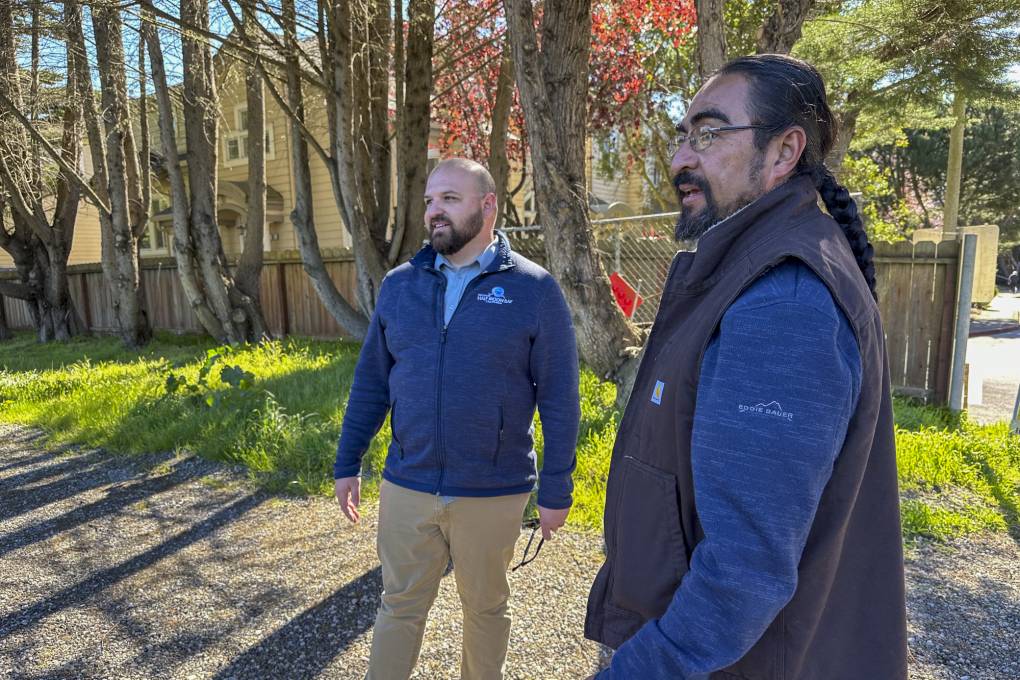
"caption": "Half Moon Bay Mayor Joaquin Jimenez (in vest) and housing coordinator Mike Noce visit a site on March 14, 2023, where the city plans to build 47 affordable homes for farmworkers with very low income. The project is due to break ground next month and will include units for rent and for purchase, Noce says.",
"description": null,
"title": "240410-HMB Farmworkers-TH-03-KQED",
"credit": "Tyche Hendricks/KQED",
"status": "inherit",
"altTag": null,
"isLoading": false,
"fetchFailed": false
},
"news_11982570": {
"type": "attachments",
"id": "news_11982570",
"meta": {
"index": "attachments_1716263798",
"site": "news",
"id": "11982570",
"found": true
},
"parent": 0,
"imgSizes": {
"twentyfourteen-full-width": {
"file": "https://cdn.kqed.org/wp-content/uploads/sites/10/2024/04/240410-HMB-Farmworkers-TH-01-KQED-1038x576.jpg",
"width": 1038,
"mimeType": "image/jpeg",
"height": 576
},
"thumbnail": {
"file": "https://cdn.kqed.org/wp-content/uploads/sites/10/2024/04/240410-HMB-Farmworkers-TH-01-KQED-160x107.jpg",
"width": 160,
"mimeType": "image/jpeg",
"height": 107
},
"post-thumbnail": {
"file": "https://cdn.kqed.org/wp-content/uploads/sites/10/2024/04/240410-HMB-Farmworkers-TH-01-KQED-672x372.jpg",
"width": 672,
"mimeType": "image/jpeg",
"height": 372
},
"kqedFullSize": {
"file": "https://cdn.kqed.org/wp-content/uploads/sites/10/2024/04/240410-HMB-Farmworkers-TH-01-KQED.jpg",
"width": 2000,
"height": 1333
},
"large": {
"file": "https://cdn.kqed.org/wp-content/uploads/sites/10/2024/04/240410-HMB-Farmworkers-TH-01-KQED-1020x680.jpg",
"width": 1020,
"mimeType": "image/jpeg",
"height": 680
},
"1536x1536": {
"file": "https://cdn.kqed.org/wp-content/uploads/sites/10/2024/04/240410-HMB-Farmworkers-TH-01-KQED-1536x1024.jpg",
"width": 1536,
"mimeType": "image/jpeg",
"height": 1024
},
"full-width": {
"file": "https://cdn.kqed.org/wp-content/uploads/sites/10/2024/04/240410-HMB-Farmworkers-TH-01-KQED-1920x1280.jpg",
"width": 1920,
"mimeType": "image/jpeg",
"height": 1280
},
"medium": {
"file": "https://cdn.kqed.org/wp-content/uploads/sites/10/2024/04/240410-HMB-Farmworkers-TH-01-KQED-800x533.jpg",
"width": 800,
"mimeType": "image/jpeg",
"height": 533
}
},
"publishDate": 1712777321,
"modified": 1712959311,
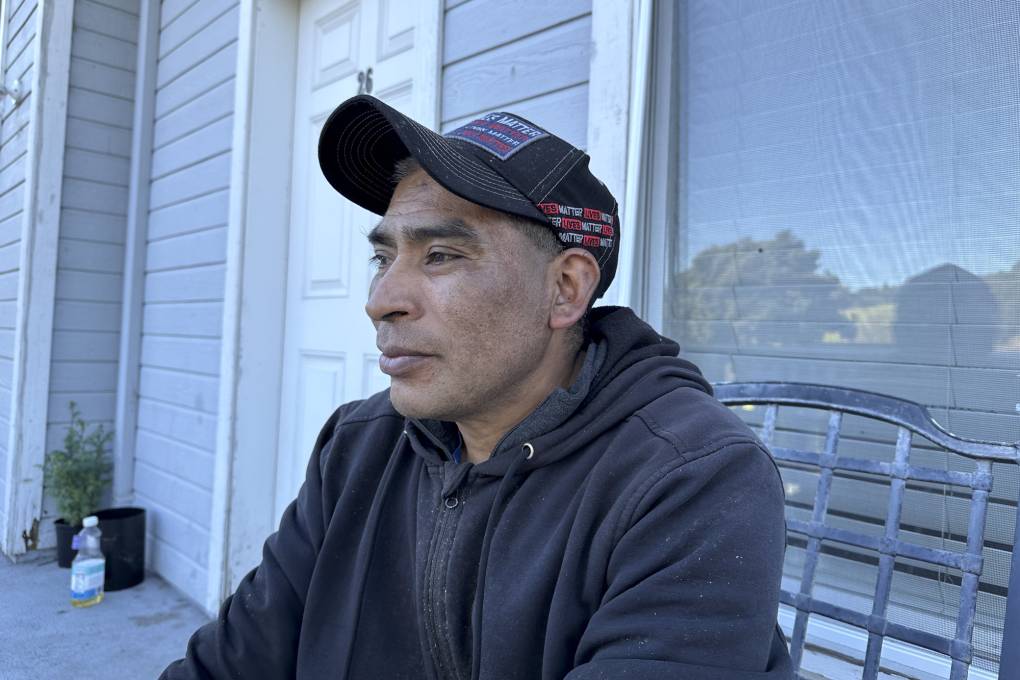
"caption": "Cornelio sits on the porch of a Half Moon Bay guesthouse, where he has a temporary room, on March 14, 2024. He survived the mass shooting at a local mushroom farm in January 2023 but continues to work there. He says he hopes the city can build safe, affordable homes for farmworkers like himself.",
"description": null,
"title": "240410-HMB Farmworkers-TH-01-KQED",
"credit": "Tyche Hendricks/KQED",
"status": "inherit",
"altTag": null,
"isLoading": false,
"fetchFailed": false
},
"news_11980502": {
"type": "attachments",
"id": "news_11980502",
"meta": {
"index": "attachments_1716263798",
"site": "news",
"id": "11980502",
"found": true
},
"parent": 0,
"imgSizes": {
"twentyfourteen-full-width": {
"file": "https://cdn.kqed.org/wp-content/uploads/sites/10/2024/03/240322-INDOOR-HEAT-GETTY-02-KQED-1038x576.jpg",
"width": 1038,
"mimeType": "image/jpeg",
"height": 576
},
"thumbnail": {
"file": "https://cdn.kqed.org/wp-content/uploads/sites/10/2024/03/240322-INDOOR-HEAT-GETTY-02-KQED-160x98.jpg",
"width": 160,
"mimeType": "image/jpeg",
"height": 98
},
"post-thumbnail": {
"file": "https://cdn.kqed.org/wp-content/uploads/sites/10/2024/03/240322-INDOOR-HEAT-GETTY-02-KQED-672x372.jpg",
"width": 672,
"mimeType": "image/jpeg",
"height": 372
},
"kqedFullSize": {
"file": "https://cdn.kqed.org/wp-content/uploads/sites/10/2024/03/240322-INDOOR-HEAT-GETTY-02-KQED.jpg",
"width": 2000,
"height": 1221
},
"large": {
"file": "https://cdn.kqed.org/wp-content/uploads/sites/10/2024/03/240322-INDOOR-HEAT-GETTY-02-KQED-1020x623.jpg",
"width": 1020,
"mimeType": "image/jpeg",
"height": 623
},
"1536x1536": {
"file": "https://cdn.kqed.org/wp-content/uploads/sites/10/2024/03/240322-INDOOR-HEAT-GETTY-02-KQED-1536x938.jpg",
"width": 1536,
"mimeType": "image/jpeg",
"height": 938
},
"full-width": {
"file": "https://cdn.kqed.org/wp-content/uploads/sites/10/2024/03/240322-INDOOR-HEAT-GETTY-02-KQED-1920x1172.jpg",
"width": 1920,
"mimeType": "image/jpeg",
"height": 1172
},
"medium": {
"file": "https://cdn.kqed.org/wp-content/uploads/sites/10/2024/03/240322-INDOOR-HEAT-GETTY-02-KQED-800x488.jpg",
"width": 800,
"mimeType": "image/jpeg",
"height": 488
}
},
"publishDate": 1711135860,
"modified": 1711137950,
"caption": "Cook Giovanni Gomez preparing chicken on the grill for food orders in the busy kitchen of the El Pollo Loco restaurant in Agoura Hills on Aug. 18, 2021.",
"description": null,
"title": "Michaela Mendelsohn, CEO of Pollo West Corp, an Agoura Hills-based franchise company for Pollo Loco, at her Agoura Hills restaurant on August 18, 2021",
"credit": "Al Seib / Los Angeles Times via Getty Images",
"status": "inherit",
"altTag": null,
"isLoading": false,
"fetchFailed": false
},
"news_11977459": {
"type": "attachments",
"id": "news_11977459",
"meta": {
"index": "attachments_1716263798",
"site": "news",
"id": "11977459",
"found": true
},
"parent": 0,
"imgSizes": {
"twentyfourteen-full-width": {
"file": "https://cdn.kqed.org/wp-content/uploads/sites/10/2024/02/IMG_2976-1038x576.jpg",
"width": 1038,
"mimeType": "image/jpeg",
"height": 576
},
"thumbnail": {
"file": "https://cdn.kqed.org/wp-content/uploads/sites/10/2024/02/IMG_2976-160x120.jpg",
"width": 160,
"mimeType": "image/jpeg",
"height": 120
},
"post-thumbnail": {
"file": "https://cdn.kqed.org/wp-content/uploads/sites/10/2024/02/IMG_2976-672x372.jpg",
"width": 672,
"mimeType": "image/jpeg",
"height": 372
},
"kqedFullSize": {
"file": "https://cdn.kqed.org/wp-content/uploads/sites/10/2024/02/IMG_2976-scaled.jpg",
"width": 2560,
"height": 1920
},
"2048x2048": {
"file": "https://cdn.kqed.org/wp-content/uploads/sites/10/2024/02/IMG_2976-2048x1536.jpg",
"width": 2048,
"mimeType": "image/jpeg",
"height": 1536
},
"large": {
"file": "https://cdn.kqed.org/wp-content/uploads/sites/10/2024/02/IMG_2976-1020x765.jpg",
"width": 1020,
"mimeType": "image/jpeg",
"height": 765
},
"1536x1536": {
"file": "https://cdn.kqed.org/wp-content/uploads/sites/10/2024/02/IMG_2976-1536x1152.jpg",
"width": 1536,
"mimeType": "image/jpeg",
"height": 1152
},
"full-width": {
"file": "https://cdn.kqed.org/wp-content/uploads/sites/10/2024/02/IMG_2976-1920x1440.jpg",
"width": 1920,
"mimeType": "image/jpeg",
"height": 1440
},
"medium": {
"file": "https://cdn.kqed.org/wp-content/uploads/sites/10/2024/02/IMG_2976-800x600.jpg",
"width": 800,
"mimeType": "image/jpeg",
"height": 600
}
},
"publishDate": 1709155945,
"modified": 1709161095,
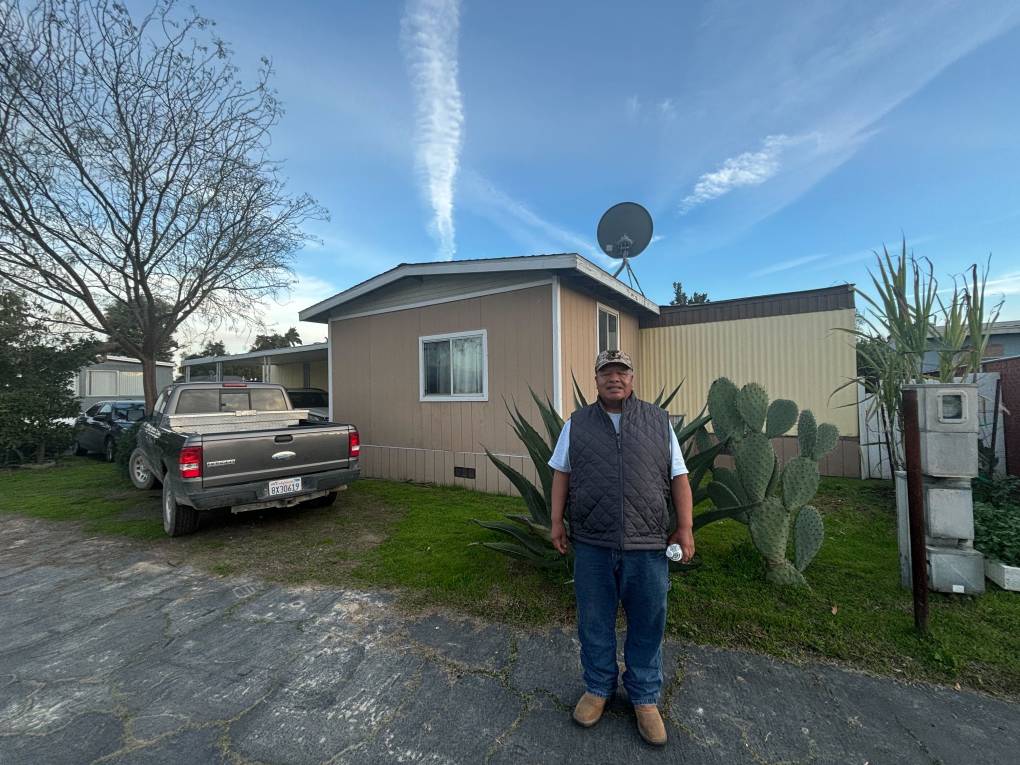
"caption": "Jesús Felipe Sierra López poses for a photo in front of his home at the Shady Lake Mobile Home Park in Fresno County, California, on Wednesday, Feb. 28, 2024. Sierra López is one of 52 homeowners at the park who have formed a co-op to purchase the park from their corporate landlord, Harmony Communities California. ",
"description": null,
"title": "IMG_2976",
"credit": "Madi Bolanos/KQED",
"status": "inherit",
"altTag": "A man wearing a vest, white shirt and jeans stands in front of a house with a car parked to the left.",
"isLoading": false,
"fetchFailed": false
},
"news_11975122": {
"type": "attachments",
"id": "news_11975122",
"meta": {
"index": "attachments_1716263798",
"site": "news",
"id": "11975122",
"found": true
},
"parent": 11975091,
"imgSizes": {
"twentyfourteen-full-width": {
"file": "https://cdn.kqed.org/wp-content/uploads/sites/10/2024/02/IMG_2540-1-1038x576.jpeg",
"width": 1038,
"mimeType": "image/jpeg",
"height": 576
},
"thumbnail": {
"file": "https://cdn.kqed.org/wp-content/uploads/sites/10/2024/02/IMG_2540-1-160x120.jpeg",
"width": 160,
"mimeType": "image/jpeg",
"height": 120
},
"post-thumbnail": {
"file": "https://cdn.kqed.org/wp-content/uploads/sites/10/2024/02/IMG_2540-1-672x372.jpeg",
"width": 672,
"mimeType": "image/jpeg",
"height": 372
},
"kqedFullSize": {
"file": "https://cdn.kqed.org/wp-content/uploads/sites/10/2024/02/IMG_2540-1-scaled.jpeg",
"width": 2560,
"height": 1920
},
"2048x2048": {
"file": "https://cdn.kqed.org/wp-content/uploads/sites/10/2024/02/IMG_2540-1-2048x1536.jpeg",
"width": 2048,
"mimeType": "image/jpeg",
"height": 1536
},
"large": {
"file": "https://cdn.kqed.org/wp-content/uploads/sites/10/2024/02/IMG_2540-1-1020x765.jpeg",
"width": 1020,
"mimeType": "image/jpeg",
"height": 765
},
"1536x1536": {
"file": "https://cdn.kqed.org/wp-content/uploads/sites/10/2024/02/IMG_2540-1-1536x1152.jpeg",
"width": 1536,
"mimeType": "image/jpeg",
"height": 1152
},
"full-width": {
"file": "https://cdn.kqed.org/wp-content/uploads/sites/10/2024/02/IMG_2540-1-1920x1440.jpeg",
"width": 1920,
"mimeType": "image/jpeg",
"height": 1440
},
"medium": {
"file": "https://cdn.kqed.org/wp-content/uploads/sites/10/2024/02/IMG_2540-1-800x600.jpeg",
"width": 800,
"mimeType": "image/jpeg",
"height": 600
}
},
"publishDate": 1707422581,
"modified": 1707423100,
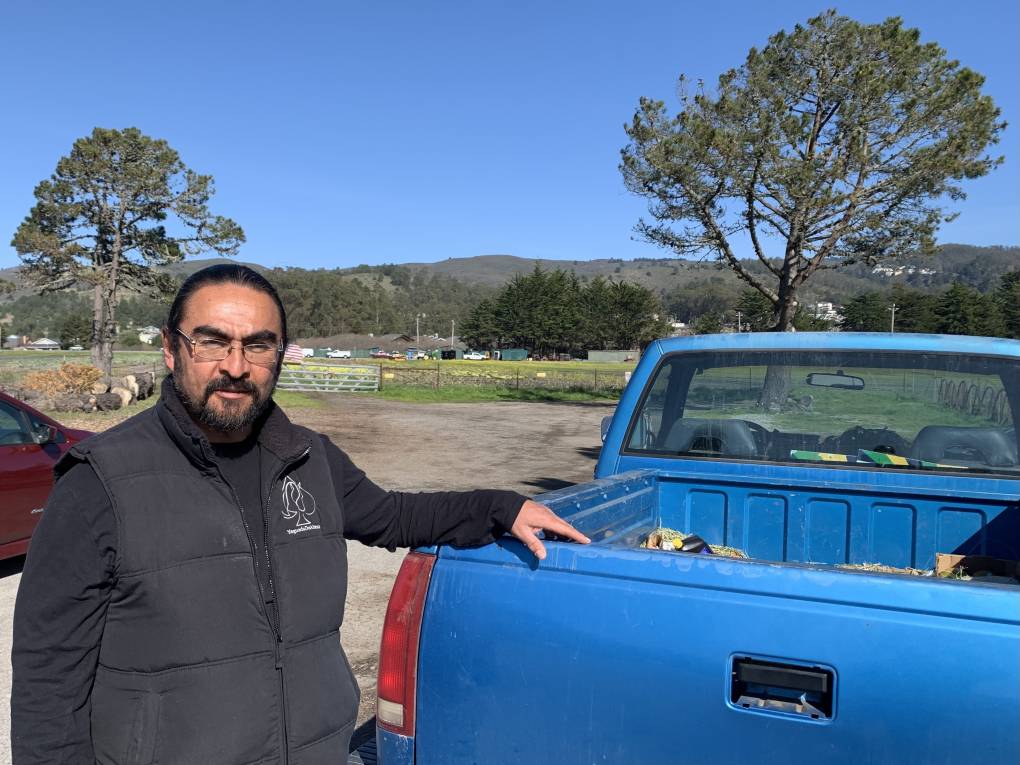
"caption": "Joaquin Jimenez delivers donated food and supplies to farmworkers using his '92 Chevy pickup, 'Big Blue,' in February 2023. Now the mayor of Half Moon Bay, Jimenez is pushing to develop cooperative housing and farming operations for lower-income farmworkers in the area.",
"description": null,
"title": "IMG_2540-1",
"credit": "Reid Cramer/KQED",
"status": "inherit",
"altTag": "A Latino man with beard and glasses rests his hand on the back of a blue pickup truck as he smiles to the camera with trees and hills in the background.",
"isLoading": false,
"fetchFailed": false
},
"news_11940019": {
"type": "attachments",
"id": "news_11940019",
"meta": {
"index": "attachments_1716263798",
"site": "news",
"id": "11940019",
"found": true
},
"title": "California Terra Gardens Mushroom Farm Mass Shooting",
"publishDate": 1675371144,
"status": "inherit",
"parent": 11940017,
"modified": 1706900985,
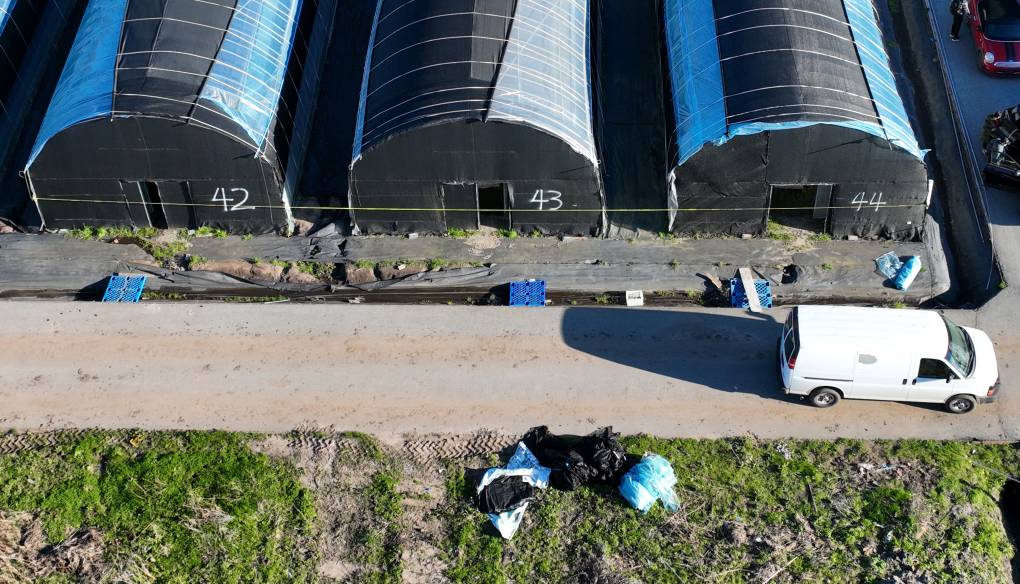
"caption": "Crime scene tape is seen from this drone view at the California Terra Gardens mushroom farm in Half Moon Bay on Wednesday, Jan. 25, 2023. Farm worker Chunli Zhao, 66, was booked on seven counts of murder after the Jan. 23 shooting. ",
"credit": "Jane Tyska/Digital First Media/East Bay Times via Getty Images",
"altTag": null,
"description": null,
"imgSizes": {
"medium": {
"file": "https://cdn.kqed.org/wp-content/uploads/sites/10/2023/02/GettyImages-1459869829-800x458.jpg",
"width": 800,
"height": 458,
"mimeType": "image/jpeg"
},
"large": {
"file": "https://cdn.kqed.org/wp-content/uploads/sites/10/2023/02/GettyImages-1459869829-1020x584.jpg",
"width": 1020,
"height": 584,
"mimeType": "image/jpeg"
},
"thumbnail": {
"file": "https://cdn.kqed.org/wp-content/uploads/sites/10/2023/02/GettyImages-1459869829-160x92.jpg",
"width": 160,
"height": 92,
"mimeType": "image/jpeg"
},
"1536x1536": {
"file": "https://cdn.kqed.org/wp-content/uploads/sites/10/2023/02/GettyImages-1459869829-1536x880.jpg",
"width": 1536,
"height": 880,
"mimeType": "image/jpeg"
},
"2048x2048": {
"file": "https://cdn.kqed.org/wp-content/uploads/sites/10/2023/02/GettyImages-1459869829-2048x1173.jpg",
"width": 2048,
"height": 1173,
"mimeType": "image/jpeg"
},
"post-thumbnail": {
"file": "https://cdn.kqed.org/wp-content/uploads/sites/10/2023/02/GettyImages-1459869829-672x372.jpg",
"width": 672,
"height": 372,
"mimeType": "image/jpeg"
},
"twentyfourteen-full-width": {
"file": "https://cdn.kqed.org/wp-content/uploads/sites/10/2023/02/GettyImages-1459869829-1038x576.jpg",
"width": 1038,
"height": 576,
"mimeType": "image/jpeg"
},
"full-width": {
"file": "https://cdn.kqed.org/wp-content/uploads/sites/10/2023/02/GettyImages-1459869829-1920x1100.jpg",
"width": 1920,
"height": 1100,
"mimeType": "image/jpeg"
},
"kqedFullSize": {
"file": "https://cdn.kqed.org/wp-content/uploads/sites/10/2023/02/GettyImages-1459869829-scaled-e1776791105481.jpg",
"width": 2000,
"height": 1145
}
},
"isLoading": false,
"fetchFailed": false
},
"news_11973534": {
"type": "attachments",
"id": "news_11973534",
"meta": {
"index": "attachments_1716263798",
"site": "news",
"id": "11973534",
"found": true
},
"parent": 11973396,
"imgSizes": {
"twentyfourteen-full-width": {
"file": "https://cdn.kqed.org/wp-content/uploads/sites/10/2024/01/240123-HMBShootingMemorial-46-BL-qut-1038x576.jpg",
"width": 1038,
"mimeType": "image/jpeg",
"height": 576
},
"thumbnail": {
"file": "https://cdn.kqed.org/wp-content/uploads/sites/10/2024/01/240123-HMBShootingMemorial-46-BL-qut-160x107.jpg",
"width": 160,
"mimeType": "image/jpeg",
"height": 107
},
"post-thumbnail": {
"file": "https://cdn.kqed.org/wp-content/uploads/sites/10/2024/01/240123-HMBShootingMemorial-46-BL-qut-672x372.jpg",
"width": 672,
"mimeType": "image/jpeg",
"height": 372
},
"kqedFullSize": {
"file": "https://cdn.kqed.org/wp-content/uploads/sites/10/2024/01/240123-HMBShootingMemorial-46-BL-qut.jpg",
"width": 1920,
"height": 1280
},
"large": {
"file": "https://cdn.kqed.org/wp-content/uploads/sites/10/2024/01/240123-HMBShootingMemorial-46-BL-qut-1020x680.jpg",
"width": 1020,
"mimeType": "image/jpeg",
"height": 680
},
"1536x1536": {
"file": "https://cdn.kqed.org/wp-content/uploads/sites/10/2024/01/240123-HMBShootingMemorial-46-BL-qut-1536x1024.jpg",
"width": 1536,
"mimeType": "image/jpeg",
"height": 1024
},
"medium": {
"file": "https://cdn.kqed.org/wp-content/uploads/sites/10/2024/01/240123-HMBShootingMemorial-46-BL-qut-800x533.jpg",
"width": 800,
"mimeType": "image/jpeg",
"height": 533
}
},
"publishDate": 1706125301,
"modified": 1706125422,
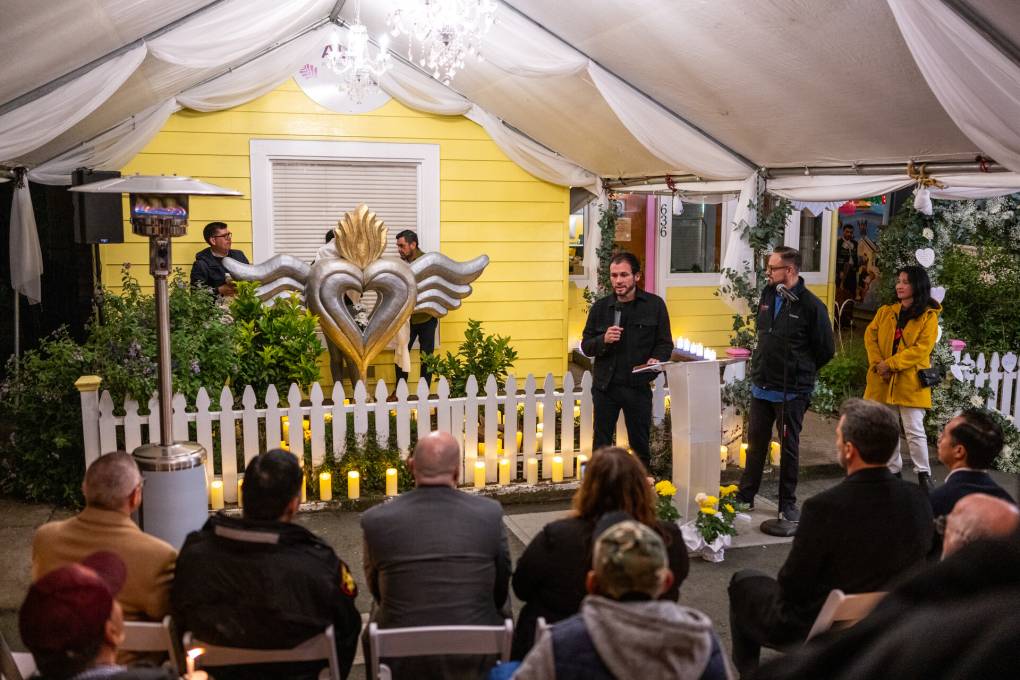
"caption": "A memorial for seven farmworkers who lost their lives during a mass shooting one year prior is held at ALAS Casita and Garden in Half Moon Bay on Jan. 23, 2024. The event was called Corazón del Campesino, or Heart of the Farmworker, and artist Fernando Escartiz unveiled a sculpture in tribute to the victims.",
"description": null,
"title": "240123-HMBShootingMemorial-46-BL-qut",
"credit": "Beth LaBerge/KQED",
"status": "inherit",
"altTag": "Several people face a man at a podium holding a microphone.",
"isLoading": false,
"fetchFailed": false
},
"news_11973462": {
"type": "attachments",
"id": "news_11973462",
"meta": {
"index": "attachments_1716263798",
"site": "news",
"id": "11973462",
"found": true
},
"parent": 0,
"imgSizes": {
"twentyfourteen-full-width": {
"file": "https://cdn.kqed.org/wp-content/uploads/sites/10/2024/01/240123-HMBShootingAnniversary-18-BL-1038x576.jpg",
"width": 1038,
"mimeType": "image/jpeg",
"height": 576
},
"thumbnail": {
"file": "https://cdn.kqed.org/wp-content/uploads/sites/10/2024/01/240123-HMBShootingAnniversary-18-BL-160x107.jpg",
"width": 160,
"mimeType": "image/jpeg",
"height": 107
},
"post-thumbnail": {
"file": "https://cdn.kqed.org/wp-content/uploads/sites/10/2024/01/240123-HMBShootingAnniversary-18-BL-672x372.jpg",
"width": 672,
"mimeType": "image/jpeg",
"height": 372
},
"kqedFullSize": {
"file": "https://cdn.kqed.org/wp-content/uploads/sites/10/2024/01/240123-HMBShootingAnniversary-18-BL.jpg",
"width": 1920,
"height": 1280
},
"large": {
"file": "https://cdn.kqed.org/wp-content/uploads/sites/10/2024/01/240123-HMBShootingAnniversary-18-BL-1020x680.jpg",
"width": 1020,
"mimeType": "image/jpeg",
"height": 680
},
"1536x1536": {
"file": "https://cdn.kqed.org/wp-content/uploads/sites/10/2024/01/240123-HMBShootingAnniversary-18-BL-1536x1024.jpg",
"width": 1536,
"mimeType": "image/jpeg",
"height": 1024
},
"medium": {
"file": "https://cdn.kqed.org/wp-content/uploads/sites/10/2024/01/240123-HMBShootingAnniversary-18-BL-800x533.jpg",
"width": 800,
"mimeType": "image/jpeg",
"height": 533
}
},
"publishDate": 1706051937,
"modified": 1715292834,
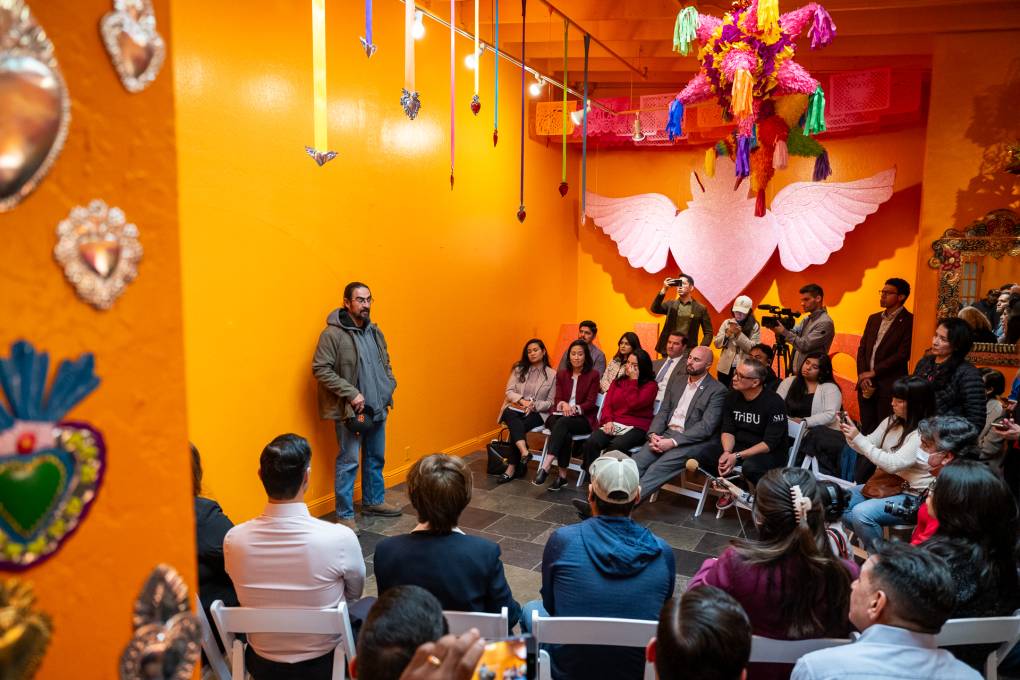
"caption": "Half Moon Bay Mayor Joaquin Jimenez speaks during a roundtable discussion at the ALAS Sueño Center in Half Moon Bay on Jan. 23, 2024, marking one year since the mass shooting at two farms claimed the lives of seven people on Jan. 23, 2023.",
"description": null,
"title": "240123-HMBShootingAnniversary-18-BL",
"credit": "Beth LaBerge/KQED",
"status": "inherit",
"altTag": "A person with a goatee stands in front of a large group of people sitting in fold-out chairs in a room painted bright orange.",
"isLoading": false,
"fetchFailed": false
},
"news_11939415": {
"type": "attachments",
"id": "news_11939415",
"meta": {
"index": "attachments_1716263798",
"site": "news",
"id": "11939415",
"found": true
},
"parent": 11939412,
"imgSizes": {
"twentyfourteen-full-width": {
"file": "https://cdn.kqed.org/wp-content/uploads/sites/10/2023/01/GettyImages-1246581187-1038x576.jpg",
"width": 1038,
"mimeType": "image/jpeg",
"height": 576
},
"thumbnail": {
"file": "https://cdn.kqed.org/wp-content/uploads/sites/10/2023/01/GettyImages-1246581187-160x120.jpg",
"width": 160,
"mimeType": "image/jpeg",
"height": 120
},
"post-thumbnail": {
"file": "https://cdn.kqed.org/wp-content/uploads/sites/10/2023/01/GettyImages-1246581187-672x372.jpg",
"width": 672,
"mimeType": "image/jpeg",
"height": 372
},
"kqedFullSize": {
"file": "https://cdn.kqed.org/wp-content/uploads/sites/10/2023/01/GettyImages-1246581187-scaled.jpg",
"width": 2560,
"height": 1920
},
"2048x2048": {
"file": "https://cdn.kqed.org/wp-content/uploads/sites/10/2023/01/GettyImages-1246581187-2048x1536.jpg",
"width": 2048,
"mimeType": "image/jpeg",
"height": 1536
},
"large": {
"file": "https://cdn.kqed.org/wp-content/uploads/sites/10/2023/01/GettyImages-1246581187-1020x765.jpg",
"width": 1020,
"mimeType": "image/jpeg",
"height": 765
},
"1536x1536": {
"file": "https://cdn.kqed.org/wp-content/uploads/sites/10/2023/01/GettyImages-1246581187-1536x1152.jpg",
"width": 1536,
"mimeType": "image/jpeg",
"height": 1152
},
"full-width": {
"file": "https://cdn.kqed.org/wp-content/uploads/sites/10/2023/01/GettyImages-1246581187-1920x1440.jpg",
"width": 1920,
"mimeType": "image/jpeg",
"height": 1440
},
"medium": {
"file": "https://cdn.kqed.org/wp-content/uploads/sites/10/2023/01/GettyImages-1246581187-800x600.jpg",
"width": 800,
"mimeType": "image/jpeg",
"height": 600
}
},
"publishDate": 1674829153,
"modified": 1705699777,
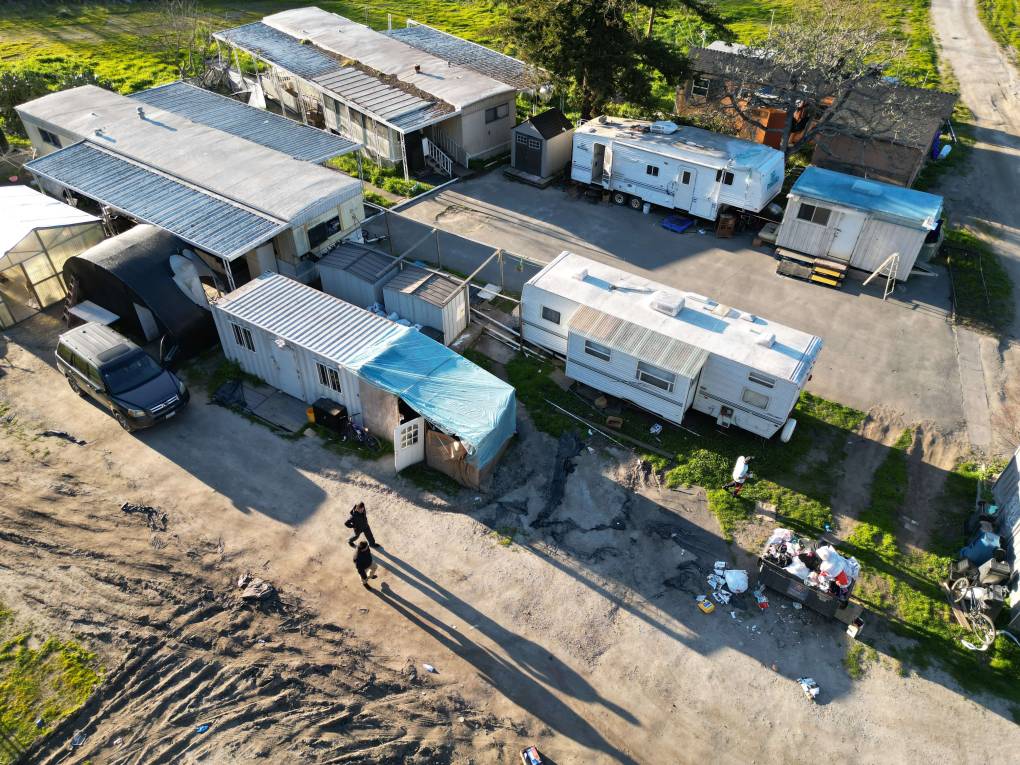
"caption": "An aerial view of some trailers that house farmworkers and their families at California Terra Garden in Half Moon Bay, as seen on Thursday, Jan. 26, 2023. The suspect in the mass killing is believed to have lived with his wife in one of the trailers. ",
"description": "Some of the housing provided to the farmworkers and their families at the mushroom farm on Thursday, Jan. 26, 2023 in Half Moon Bay, Calif. The suspect is said to live with his wife in the upper left house with blue tarp.",
"title": "CAHALFMOON",
"credit": "Paul Kuroda/Washington Post, via Getty Images",
"status": "inherit",
"altTag": "An aerial view of a number of trailers on a farm site.",
"isLoading": false,
"fetchFailed": false
},
"news_11969925": {
"type": "attachments",
"id": "news_11969925",
"meta": {
"index": "attachments_1716263798",
"site": "news",
"id": "11969925",
"found": true
},
"parent": 0,
"imgSizes": {
"twentyfourteen-full-width": {
"file": "https://cdn.kqed.org/wp-content/uploads/sites/10/2023/12/231214-AVIAN-FLU-GETTY-MT-KQED-1038x576.jpg",
"width": 1038,
"mimeType": "image/jpeg",
"height": 576
},
"thumbnail": {
"file": "https://cdn.kqed.org/wp-content/uploads/sites/10/2023/12/231214-AVIAN-FLU-GETTY-MT-KQED-160x102.jpg",
"width": 160,
"mimeType": "image/jpeg",
"height": 102
},
"post-thumbnail": {
"file": "https://cdn.kqed.org/wp-content/uploads/sites/10/2023/12/231214-AVIAN-FLU-GETTY-MT-KQED-672x372.jpg",
"width": 672,
"mimeType": "image/jpeg",
"height": 372
},
"kqedFullSize": {
"file": "https://cdn.kqed.org/wp-content/uploads/sites/10/2023/12/231214-AVIAN-FLU-GETTY-MT-KQED.jpg",
"width": 2000,
"height": 1277
},
"large": {
"file": "https://cdn.kqed.org/wp-content/uploads/sites/10/2023/12/231214-AVIAN-FLU-GETTY-MT-KQED-1020x651.jpg",
"width": 1020,
"mimeType": "image/jpeg",
"height": 651
},
"1536x1536": {
"file": "https://cdn.kqed.org/wp-content/uploads/sites/10/2023/12/231214-AVIAN-FLU-GETTY-MT-KQED-1536x981.jpg",
"width": 1536,
"mimeType": "image/jpeg",
"height": 981
},
"full-width": {
"file": "https://cdn.kqed.org/wp-content/uploads/sites/10/2023/12/231214-AVIAN-FLU-GETTY-MT-KQED-1920x1226.jpg",
"width": 1920,
"mimeType": "image/jpeg",
"height": 1226
},
"medium": {
"file": "https://cdn.kqed.org/wp-content/uploads/sites/10/2023/12/231214-AVIAN-FLU-GETTY-MT-KQED-800x511.jpg",
"width": 800,
"mimeType": "image/jpeg",
"height": 511
}
},
"publishDate": 1702602082,
"modified": 1702602163,
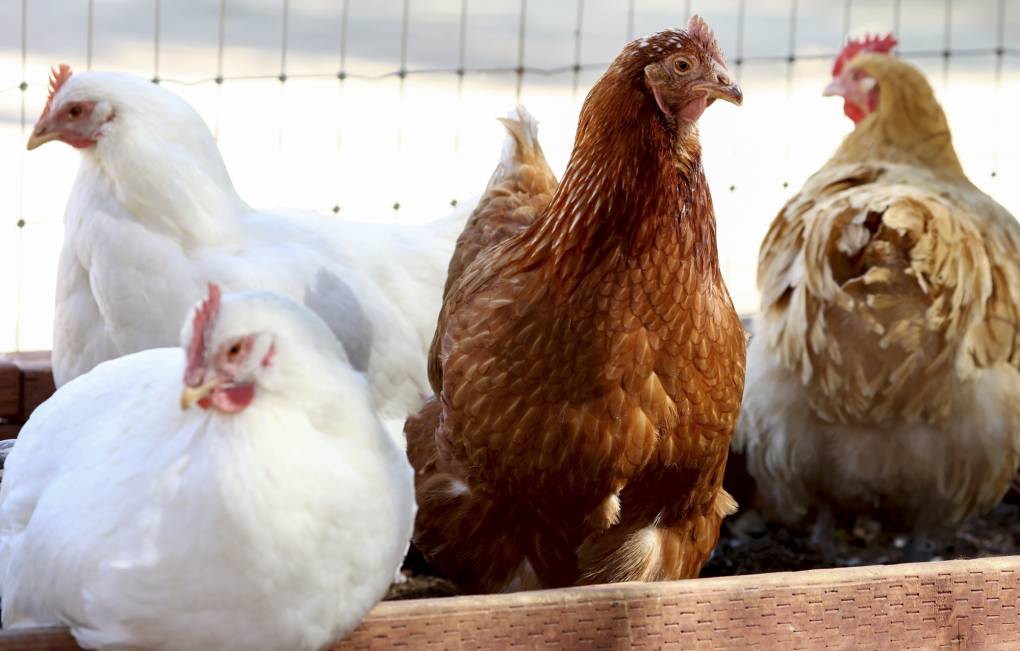
"caption": "Chickens in an aviary in Acton on Oct. 5, 2022. ",
"description": null,
"title": "Southern California Hit With Historic Avian Flu Outbreak",
"credit": "Mario Tama/Getty Images",
"status": "inherit",
"altTag": "A group of four differently colored chickens.",
"isLoading": false,
"fetchFailed": false
},
"news_11966734": {
"type": "attachments",
"id": "news_11966734",
"meta": {
"index": "attachments_1716263798",
"site": "news",
"id": "11966734",
"found": true
},
"parent": 0,
"imgSizes": {
"twentyfourteen-full-width": {
"file": "https://ww2.kqed.org/app/uploads/sites/10/2023/11/231101-MusicTherapyHMBFarmworkers-47-BL-KQED-1038x576.jpg",
"width": 1038,
"mimeType": "image/jpeg",
"height": 576
},
"thumbnail": {
"file": "https://ww2.kqed.org/app/uploads/sites/10/2023/11/231101-MusicTherapyHMBFarmworkers-47-BL-KQED-160x107.jpg",
"width": 160,
"mimeType": "image/jpeg",
"height": 107
},
"post-thumbnail": {
"file": "https://ww2.kqed.org/app/uploads/sites/10/2023/11/231101-MusicTherapyHMBFarmworkers-47-BL-KQED-672x372.jpg",
"width": 672,
"mimeType": "image/jpeg",
"height": 372
},
"kqedFullSize": {
"file": "https://ww2.kqed.org/app/uploads/sites/10/2023/11/231101-MusicTherapyHMBFarmworkers-47-BL-KQED.jpg",
"width": 2000,
"height": 1333
},
"large": {
"file": "https://ww2.kqed.org/app/uploads/sites/10/2023/11/231101-MusicTherapyHMBFarmworkers-47-BL-KQED-1020x680.jpg",
"width": 1020,
"mimeType": "image/jpeg",
"height": 680
},
"1536x1536": {
"file": "https://ww2.kqed.org/app/uploads/sites/10/2023/11/231101-MusicTherapyHMBFarmworkers-47-BL-KQED-1536x1024.jpg",
"width": 1536,
"mimeType": "image/jpeg",
"height": 1024
},
"full-width": {
"file": "https://ww2.kqed.org/app/uploads/sites/10/2023/11/231101-MusicTherapyHMBFarmworkers-47-BL-KQED-1920x1280.jpg",
"width": 1920,
"mimeType": "image/jpeg",
"height": 1280
},
"medium": {
"file": "https://ww2.kqed.org/app/uploads/sites/10/2023/11/231101-MusicTherapyHMBFarmworkers-47-BL-KQED-800x533.jpg",
"width": 800,
"mimeType": "image/jpeg",
"height": 533
}
},
"publishDate": 1699461752,
"modified": 1699465540,
"caption": "(From left) Belinda Arriaga, Yesenia Garcia, Hilario Lopez, and Pedro Romero play accordion during a lesson with Hernan Hernandez at Cabrillo Farms in Half Moon Bay on Nov. 1, 2023.",
"description": null,
"title": "231101-MusicTherapyHMBFarmworkers-47-BL-KQED",
"credit": "Beth LaBerge/KQED",
"status": "inherit",
"altTag": "A group of people smile while sitting together indoors and holding bright red accordions.",
"isLoading": false,
"fetchFailed": false
},
"news_11960227": {
"type": "attachments",
"id": "news_11960227",
"meta": {
"index": "attachments_1716263798",
"site": "news",
"id": "11960227",
"found": true
},
"parent": 0,
"imgSizes": {
"twentyfourteen-full-width": {
"file": "https://ww2.kqed.org/app/uploads/sites/10/2023/09/RS68665_230901-CentralValleyClimateSolutions-40-BL-KQED-1038x576.jpg",
"width": 1038,
"mimeType": "image/jpeg",
"height": 576
},
"thumbnail": {
"file": "https://ww2.kqed.org/app/uploads/sites/10/2023/09/RS68665_230901-CentralValleyClimateSolutions-40-BL-KQED-160x107.jpg",
"width": 160,
"mimeType": "image/jpeg",
"height": 107
},
"post-thumbnail": {
"file": "https://ww2.kqed.org/app/uploads/sites/10/2023/09/RS68665_230901-CentralValleyClimateSolutions-40-BL-KQED-672x372.jpg",
"width": 672,
"mimeType": "image/jpeg",
"height": 372
},
"kqedFullSize": {
"file": "https://ww2.kqed.org/app/uploads/sites/10/2023/09/RS68665_230901-CentralValleyClimateSolutions-40-BL-KQED.jpg",
"width": 2000,
"height": 1333
},
"large": {
"file": "https://ww2.kqed.org/app/uploads/sites/10/2023/09/RS68665_230901-CentralValleyClimateSolutions-40-BL-KQED-1020x680.jpg",
"width": 1020,
"mimeType": "image/jpeg",
"height": 680
},
"1536x1536": {
"file": "https://ww2.kqed.org/app/uploads/sites/10/2023/09/RS68665_230901-CentralValleyClimateSolutions-40-BL-KQED-1536x1024.jpg",
"width": 1536,
"mimeType": "image/jpeg",
"height": 1024
},
"full-width": {
"file": "https://ww2.kqed.org/app/uploads/sites/10/2023/09/RS68665_230901-CentralValleyClimateSolutions-40-BL-KQED-1920x1280.jpg",
"width": 1920,
"mimeType": "image/jpeg",
"height": 1280
},
"medium": {
"file": "https://ww2.kqed.org/app/uploads/sites/10/2023/09/RS68665_230901-CentralValleyClimateSolutions-40-BL-KQED-800x533.jpg",
"width": 800,
"mimeType": "image/jpeg",
"height": 533
}
},
"publishDate": 1694030988,
"modified": 1699570919,
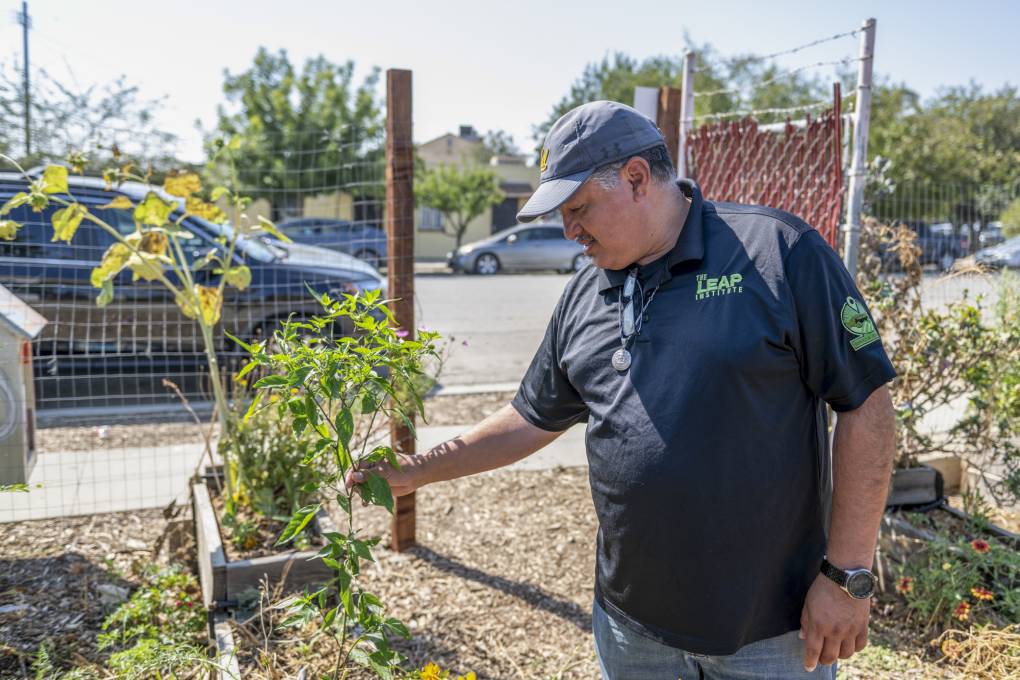
"caption": "Huron Mayor Rey León walks through a community garden and compost hub run by the Latino Equity Advocacy & Policy Institute offices, known as LEAP, in Huron, Calif., on Sept. 1, 2023.",
"description": null,
"title": "RS68665_230901-CentralValleyClimateSolutions-40-BL-KQED",
"credit": "Beth LaBerge/KQED",
"status": "inherit",
"altTag": "A person with a mustache wearing a baseball cap looks at a plant in a garden.",
"isLoading": false,
"fetchFailed": false
}
},
"audioPlayerReducer": {
"postId": "stream_live",
"isPaused": true,
"isPlaying": false,
"pfsActive": false,
"pledgeModalIsOpen": true,
"playerDrawerIsOpen": false,
"liveAudioPlayStartedAt": 0,
"liveAudioPlayContext": ""
},
"authorsReducer": {
"byline_news_11973071": {
"type": "authors",
"id": "byline_news_11973071",
"meta": {
"override": true
},
"slug": "byline_news_11973071",
"name": "\u003ca href=\"https://twitter.com/naomivanderlip?lang=en\">Naomi Vanderlip\u003c/a>",
"isLoading": false
},
"tychehendricks": {
"type": "authors",
"id": "259",
"meta": {
"index": "authors_1716337520",
"id": "259",
"found": true
},
"name": "Tyche Hendricks",
"firstName": "Tyche",
"lastName": "Hendricks",
"slug": "tychehendricks",
"email": "thendricks@kqed.org",
"display_author_email": true,
"staff_mastheads": [
"news"
],
"title": "KQED Senior Editor, Immigration",
"bio": "\u003cspan style=\"font-weight: 400;\">Tyche Hendricks is KQED’s senior editor for immigration, leading coverage of the policy and politics that affect California’s immigrant communities. Her work for KQED’s radio and online audiences is also carried on NPR and other national outlets. She has been recognized with awards from the Radio and Television News Directors Association, the Society for Professional Journalists; the Education Writers Association; the Best of the West and the National Federation of Community Broadcasters. Before joining KQED in 2010, Tyche spent more than a dozen years as a newspaper reporter, notably at the \u003c/span>\u003ci>\u003cspan style=\"font-weight: 400;\">San Francisco Chronicle\u003c/span>\u003c/i>\u003cspan style=\"font-weight: 400;\">. At different times she has covered criminal justice, government and politics and urban planning. Tyche has taught in the MFA Creative Writing program at the University of San Francisco and at UC Berkeley’s Graduate School of Journalism, where she was co-director of a national immigration symposium for professional journalists. She is the author of \u003c/span>\u003ci>\u003cspan style=\"font-weight: 400;\">The Wind Doesn't Need a Passport: Stories from the U.S.-Mexico Borderlands\u003c/span>\u003c/i>\u003cspan style=\"font-weight: 400;\"> (University of California Press). \u003c/span>",
"avatar": "https://secure.gravatar.com/avatar/b8ee458e2731c2d43df86882ce17267e?s=600&d=blank&r=g",
"twitter": "tychehendricks",
"facebook": null,
"instagram": null,
"linkedin": null,
"sites": [
{
"site": "news",
"roles": [
"editor"
]
},
{
"site": "stateofhealth",
"roles": [
"editor"
]
}
],
"headData": {
"title": "Tyche Hendricks | KQED",
"description": "KQED Senior Editor, Immigration",
"ogImgSrc": "https://secure.gravatar.com/avatar/b8ee458e2731c2d43df86882ce17267e?s=600&d=blank&r=g",
"twImgSrc": "https://secure.gravatar.com/avatar/b8ee458e2731c2d43df86882ce17267e?s=600&d=blank&r=g"
},
"isLoading": false,
"link": "/author/tychehendricks"
},
"ecruzguevarra": {
"type": "authors",
"id": "8654",
"meta": {
"index": "authors_1716337520",
"id": "8654",
"found": true
},
"name": "Ericka Cruz Guevarra",
"firstName": "Ericka",
"lastName": "Cruz Guevarra",
"slug": "ecruzguevarra",
"email": "ecruzguevarra@kqed.org",
"display_author_email": true,
"staff_mastheads": [
"news"
],
"title": "Producer, The Bay Podcast",
"bio": "Ericka Cruz Guevarra is host of \u003ca href=\"https://www.kqed.org/podcasts/thebay\">\u003cem>The Bay\u003c/em>\u003c/a> podcast at KQED. Before host, she was the show’s producer. Her work in that capacity includes a three-part reported series on policing in Vallejo, which won a 2020 excellence in journalism award from the Society of Professional Journalists. Ericka has worked as a breaking news reporter at Oregon Public Broadcasting, helped produce the Code Switch podcast, and was KQED’s inaugural Raul Ramirez Diversity Fund intern. She’s also an alumna of NPR’s Next Generation Radio program. Send her an email if you have strong feelings about whether Fairfield and Suisun City are the Bay. Ericka is represented by SAG-AFTRA.",
"avatar": "https://secure.gravatar.com/avatar/25e5ab8d3d53fad2dcc7bb2b5c506b1a?s=600&d=blank&r=g",
"twitter": "NotoriousECG",
"facebook": null,
"instagram": null,
"linkedin": null,
"sites": [
{
"site": "arts",
"roles": [
"subscriber"
]
},
{
"site": "news",
"roles": [
"editor",
"manage_categories"
]
},
{
"site": "futureofyou",
"roles": [
"subscriber"
]
},
{
"site": "stateofhealth",
"roles": [
"subscriber"
]
},
{
"site": "science",
"roles": [
"editor"
]
},
{
"site": "forum",
"roles": [
"subscriber"
]
}
],
"headData": {
"title": "Ericka Cruz Guevarra | KQED",
"description": "Producer, The Bay Podcast",
"ogImgSrc": "https://secure.gravatar.com/avatar/25e5ab8d3d53fad2dcc7bb2b5c506b1a?s=600&d=blank&r=g",
"twImgSrc": "https://secure.gravatar.com/avatar/25e5ab8d3d53fad2dcc7bb2b5c506b1a?s=600&d=blank&r=g"
},
"isLoading": false,
"link": "/author/ecruzguevarra"
},
"fjhabvala": {
"type": "authors",
"id": "8659",
"meta": {
"index": "authors_1716337520",
"id": "8659",
"found": true
},
"name": "Farida Jhabvala Romero",
"firstName": "Farida",
"lastName": "Jhabvala Romero",
"slug": "fjhabvala",
"email": "fjhabvala@kqed.org",
"display_author_email": true,
"staff_mastheads": [
"news"
],
"title": "KQED Contributor",
"bio": "\u003cspan style=\"font-weight: 400;\">Farida Jhabvala Romero is a Labor Correspondent for KQED. She previously covered immigration. Farida was \u003ca href=\"https://www.ccnma.org/2022-most-influential-latina-journalists\">named\u003c/a> one of the 10 Most Influential Latina Journalists in California in 2022 by the California Chicano News Media Association. Her work has won awards from the Society of Professional Journalists (Northern California), as well as a national and regional Edward M. Murrow Award for the collaborative reporting projects “Dangerous Air” and “Graying California.” \u003c/span>\u003cspan style=\"font-weight: 400;\">Before joining KQED, Farida worked as a producer at Radio Bilingüe, a national public radio network. Farida earned her master’s degree in journalism from Stanford University.\u003c/span>",
"avatar": "https://secure.gravatar.com/avatar/c3ab27c5554b67b478f80971e515aa02?s=600&d=blank&r=g",
"twitter": "FaridaJhabvala",
"facebook": null,
"instagram": null,
"linkedin": "https://www.linkedin.com/in/faridajhabvala/",
"sites": [
{
"site": "news",
"roles": [
"editor"
]
},
{
"site": "stateofhealth",
"roles": [
"author"
]
}
],
"headData": {
"title": "Farida Jhabvala Romero | KQED",
"description": "KQED Contributor",
"ogImgSrc": "https://secure.gravatar.com/avatar/c3ab27c5554b67b478f80971e515aa02?s=600&d=blank&r=g",
"twImgSrc": "https://secure.gravatar.com/avatar/c3ab27c5554b67b478f80971e515aa02?s=600&d=blank&r=g"
},
"isLoading": false,
"link": "/author/fjhabvala"
},
"amontecillo": {
"type": "authors",
"id": "11649",
"meta": {
"index": "authors_1716337520",
"id": "11649",
"found": true
},
"name": "Alan Montecillo",
"firstName": "Alan",
"lastName": "Montecillo",
"slug": "amontecillo",
"email": "amontecillo@kqed.org",
"display_author_email": false,
"staff_mastheads": [
"news"
],
"title": "KQED Contributor",
"bio": "Alan Montecillo is the senior editor of \u003cem>\u003ca href=\"http://kqed.org/thebay\">The Bay\u003c/a>, \u003c/em> KQED's local news podcast. Before moving to the Bay Area, he worked as a senior talk show producer for WILL in Champaign-Urbana, Illinois and at Oregon Public Broadcasting in Portland, Oregon. He has won journalism awards from the Society of Professional Journalists Northern California, the Public Media Journalists Association, The Signal Awards, and has also received a regional Edward R. Murrow award. Alan is a Filipino American from Hong Kong and a graduate of Reed College.",
"avatar": "https://secure.gravatar.com/avatar/d5e4e7a76481969ccba76f4e2b5ccabc?s=600&d=blank&r=g",
"twitter": "alanmontecillo",
"facebook": null,
"instagram": null,
"linkedin": null,
"sites": [
{
"site": "",
"roles": [
"editor"
]
},
{
"site": "news",
"roles": [
"editor",
"manage_categories"
]
}
],
"headData": {
"title": "Alan Montecillo | KQED",
"description": "KQED Contributor",
"ogImgSrc": "https://secure.gravatar.com/avatar/d5e4e7a76481969ccba76f4e2b5ccabc?s=600&d=blank&r=g",
"twImgSrc": "https://secure.gravatar.com/avatar/d5e4e7a76481969ccba76f4e2b5ccabc?s=600&d=blank&r=g"
},
"isLoading": false,
"link": "/author/amontecillo"
},
"btorres": {
"type": "authors",
"id": "11666",
"meta": {
"index": "authors_1716337520",
"id": "11666",
"found": true
},
"name": "Blanca Torres",
"firstName": "Blanca",
"lastName": "Torres",
"slug": "btorres",
"email": "btorres@kqed.org",
"display_author_email": true,
"staff_mastheads": [
"news"
],
"title": "Producer, Forum",
"bio": "Blanca Torres brings sharp news judgement and keen sense of lively conversation to her work as producer for Forum. She loves producing shows that leave listeners feeling like they heard distinctive voices, learned something new and gained a fresh perspective.\r\n\r\nShe joined KQED in January of 2020 after 16 years of working as a newspaper reporter most recently at the \u003cem>San Francisco Business Times,\u003c/em> where she wrote about real estate and economic development. Before that, she covered a variety of beats including crime, education, retail, workplace, the economy, consumer issues, and small business for the \u003cem>Contra Costa Times, Baltimore Sun\u003c/em> and\u003cem> The Seattle Times\u003c/em>. In addition to reporting, she worked as an editorial writer and columnist for the \u003cem>Seattle Times\u003c/em>. From 2017 to 2020, Blanca won a total of ten awards from the National Association of Real Estate Editors and won first place for land use reporting from the California News Publishers Association two years in a row. She is also a member and former board member for the National Association of Hispanic Journalists.\r\n\r\nA native of the Pacific Northwest, Blanca earned her bachelor's degree from Vanderbilt University in Nashville and a master's in fine arts in creative writing at Mills College. She lives in the East Bay with her family.",
"avatar": "https://secure.gravatar.com/avatar/f2322ff46076d337f7ba731ee6068cb1?s=600&d=blank&r=g",
"twitter": "@blancawrites",
"facebook": null,
"instagram": null,
"linkedin": null,
"sites": [
{
"site": "arts",
"roles": [
"editor"
]
},
{
"site": "news",
"roles": [
"editor"
]
},
{
"site": "forum",
"roles": [
"editor"
]
}
],
"headData": {
"title": "Blanca Torres | KQED",
"description": "Producer, Forum",
"ogImgSrc": "https://secure.gravatar.com/avatar/f2322ff46076d337f7ba731ee6068cb1?s=600&d=blank&r=g",
"twImgSrc": "https://secure.gravatar.com/avatar/f2322ff46076d337f7ba731ee6068cb1?s=600&d=blank&r=g"
},
"isLoading": false,
"link": "/author/btorres"
},
"jlara": {
"type": "authors",
"id": "11761",
"meta": {
"index": "authors_1716337520",
"id": "11761",
"found": true
},
"name": "Juan Carlos Lara",
"firstName": "Juan Carlos",
"lastName": "Lara",
"slug": "jlara",
"email": "jlara@kqed.org",
"display_author_email": false,
"staff_mastheads": [],
"title": "KQED Contributor",
"bio": null,
"avatar": "https://secure.gravatar.com/avatar/19e2052b9b05657c5ff2af2121846e9c?s=600&d=blank&r=g",
"twitter": null,
"facebook": null,
"instagram": null,
"linkedin": null,
"sites": [
{
"site": "arts",
"roles": [
"editor"
]
},
{
"site": "news",
"roles": [
"editor"
]
},
{
"site": "forum",
"roles": [
"editor"
]
},
{
"site": "liveblog",
"roles": [
"contributor"
]
}
],
"headData": {
"title": "Juan Carlos Lara | KQED",
"description": "KQED Contributor",
"ogImgSrc": "https://secure.gravatar.com/avatar/19e2052b9b05657c5ff2af2121846e9c?s=600&d=blank&r=g",
"twImgSrc": "https://secure.gravatar.com/avatar/19e2052b9b05657c5ff2af2121846e9c?s=600&d=blank&r=g"
},
"isLoading": false,
"link": "/author/jlara"
},
"mesquinca": {
"type": "authors",
"id": "11802",
"meta": {
"index": "authors_1716337520",
"id": "11802",
"found": true
},
"name": "Maria Esquinca",
"firstName": "Maria",
"lastName": "Esquinca",
"slug": "mesquinca",
"email": "mesquinca@kqed.org",
"display_author_email": false,
"staff_mastheads": [],
"title": "Producer, The Bay",
"bio": "María Esquinca is a producer of The Bay. Before that, she was a New York Women’s Foundation IGNITE Fellow at Latino USA. She worked at Radio Bilingue where she covered the San Joaquin Valley. Maria has interned at WLRN, News 21, The New York Times Student Journalism Institute and at Crain’s Detroit Business as a Dow Jones News Fund Business Reporting Intern. She is an MFA graduate from the University of Miami. In 2017, she graduated from the Walter Cronkite School of Journalism and Mass Communication with a Master of Mass Communication. A fronteriza, she was born in Ciudad Juárez, Chihuahua, Mexico and grew up in El Paso, Texas.",
"avatar": "https://secure.gravatar.com/avatar/77cedba18aae91da775038ba06dcd8d0?s=600&d=blank&r=g",
"twitter": "@m_esquinca",
"facebook": null,
"instagram": null,
"linkedin": null,
"sites": [
{
"site": "news",
"roles": []
}
],
"headData": {
"title": "Maria Esquinca | KQED",
"description": "Producer, The Bay",
"ogImgSrc": "https://secure.gravatar.com/avatar/77cedba18aae91da775038ba06dcd8d0?s=600&d=blank&r=g",
"twImgSrc": "https://secure.gravatar.com/avatar/77cedba18aae91da775038ba06dcd8d0?s=600&d=blank&r=g"
},
"isLoading": false,
"link": "/author/mesquinca"
},
"sjohnson": {
"type": "authors",
"id": "11840",
"meta": {
"index": "authors_1716337520",
"id": "11840",
"found": true
},
"name": "Sydney Johnson",
"firstName": "Sydney",
"lastName": "Johnson",
"slug": "sjohnson",
"email": "sjohnson@kqed.org",
"display_author_email": false,
"staff_mastheads": [
"news"
],
"title": "KQED Reporter",
"bio": "Sydney Johnson is a general assignment reporter at KQED. She previously reported on public health and city government at the San Francisco Examiner, and before that, she covered statewide education policy for EdSource. Her reporting has won multiple local, state and national awards. Sydney is a graduate of the University of California, Berkeley and lives in San Francisco.",
"avatar": "https://secure.gravatar.com/avatar/97855f2719b72ad6190b7c535fe642c8?s=600&d=blank&r=g",
"twitter": "sydneyfjohnson",
"facebook": null,
"instagram": null,
"linkedin": null,
"sites": [
{
"site": "news",
"roles": [
"editor"
]
}
],
"headData": {
"title": "Sydney Johnson | KQED",
"description": "KQED Reporter",
"ogImgSrc": "https://secure.gravatar.com/avatar/97855f2719b72ad6190b7c535fe642c8?s=600&d=blank&r=g",
"twImgSrc": "https://secure.gravatar.com/avatar/97855f2719b72ad6190b7c535fe642c8?s=600&d=blank&r=g"
},
"isLoading": false,
"link": "/author/sjohnson"
},
"mbolanos": {
"type": "authors",
"id": "11895",
"meta": {
"index": "authors_1716337520",
"id": "11895",
"found": true
},
"name": "Madi Bolaños",
"firstName": "Madi",
"lastName": "Bolaños",
"slug": "mbolanos",
"email": "mbolanos@kqed.org",
"display_author_email": false,
"staff_mastheads": [],
"title": "KQED Contributor",
"bio": null,
"avatar": "https://secure.gravatar.com/avatar/e6df5601c1f2d951e46a3fb42764330f?s=600&d=blank&r=g",
"twitter": null,
"bluesky": null,
"facebook": null,
"instagram": null,
"linkedin": null,
"sites": [
{
"site": "news",
"roles": [
"author"
]
}
],
"headData": {
"title": "Madi Bolaños | KQED",
"description": "KQED Contributor",
"ogImgSrc": "https://secure.gravatar.com/avatar/e6df5601c1f2d951e46a3fb42764330f?s=600&d=blank&r=g",
"twImgSrc": "https://secure.gravatar.com/avatar/e6df5601c1f2d951e46a3fb42764330f?s=600&d=blank&r=g"
},
"isLoading": false,
"link": "/author/mbolanos"
}
},
"pagesReducer": {
"news_tag_farmworkers": {
"type": "terms",
"id": "news_18269",
"meta": {
"index": "terms_1716263798",
"site": "news",
"id": "18269",
"score": 8.934093
},
"featImg": null,
"name": "farmworkers",
"description": null,
"taxonomy": "tag",
"headData": {
"twImgId": null,
"twTitle": null,
"ogTitle": null,
"ogImgId": null,
"twDescription": null,
"description": null,
"title": "farmworkers Archives | KQED News",
"ogDescription": null
},
"ttid": 18303,
"slug": "farmworkers",
"isLoading": false,
"title": "farmworkers",
"pageMeta": {
"site": "news",
"WpPageTemplate": "page-topic-editorial",
"currentPage": 5
},
"blocks": [
{
"blockName": "kqed/post-list",
"attrs": {
"layout": "cardArticle2",
"query": "posts/news?tag=farmworkers",
"seeMore": false,
"paginated": true,
"page": 5
}
},
{
"blockName": "kqed/ad"
}
]
}
},
"pfsSessionReducer": {},
"postsReducer": {
"stream_live": {
"type": "live",
"id": "stream_live",
"audioUrl": "https://streams.kqed.org/kqedradio",
"title": "Live Stream",
"excerpt": "Live Stream information currently unavailable.",
"link": "/radio",
"featImg": "",
"label": {
"name": "KQED Live",
"link": "/"
}
},
"stream_kqedNewscast": {
"type": "posts",
"id": "stream_kqedNewscast",
"audioUrl": "https://www.kqed.org/.stream/anon/radio/RDnews/newscast.mp3?_=1",
"title": "KQED Newscast",
"featImg": "",
"label": {
"name": "88.5 FM",
"link": "/"
}
},
"news_11983338": {
"type": "posts",
"id": "news_11983338",
"meta": {
"index": "posts_1716263798",
"site": "news",
"id": "11983338",
"score": null,
"sort": [
1713520840000
]
},
"guestAuthors": [],
"slug": "more-than-a-year-after-shooting-half-moon-bay-is-making-progress-on-farmworker-housing",
"title": "More Than a Year After Shooting, Half Moon Bay is Making Progress on Farmworker Housing",
"publishDate": 1713520840,
"format": "audio",
"headTitle": "More Than a Year After Shooting, Half Moon Bay is Making Progress on Farmworker Housing | KQED",
"labelTerm": {},
"content": "\u003cp class=\"p1\">\u003ca href=\"#episode-transcript\">\u003ci>View the full episode transcript.\u003c/i>\u003c/a>\u003c/p>\n\u003cp>\u003cspan style=\"font-weight: 400\">After last year’s mass shooting at two mushroom farms in Half Moon Bay, officials learned that some farmworkers had been living in shipping containers. State and local leaders promised to do something about it.\u003c/span>\u003c/p>\n\u003cp>\u003cspan style=\"font-weight: 400\">Now, the city is close to breaking ground on housing for the survivors and other low-wage farmworkers in the area.\u003c/span>\u003c/p>\n\u003cdiv class=\"card card--enclosed grey\">\n\u003cp id=\"embed-code\" class=\"inconsolata\">\n\u003c!-- iframe plugin v.4.3 wordpress.org/plugins/iframe/ -->\u003cbr>\n\u003ciframe loading=\"lazy\" frameborder=\"0\" height=\"200\" scrolling=\"no\" src=\"https://playlist.megaphone.fm/?e=KQINC6040012084&light=true\" width=\"100%\" class=\"iframe-class\">\u003c/iframe>\n\u003c/p>\n\u003ch2 id=\"episode-transcript\">Episode Transcript\u003c/h2>\n\u003cp>\u003ci>This is a computer-generated transcript. While our team has reviewed it, there may be errors.\u003c/i>\u003c/p>\n\u003cp>\u003cstrong>Ericka Cruz Guevarra: \u003c/strong>I’m Erica Cruz Guevara, and welcome to the Bay. Local news to keep you rooted. Half Moon Bay is preparing to break ground on a really important housing project, one that took a mass shooting to start because after a shooting at two local farms about a year ago, officials learned that workers had been living in shipping containers, and now they’re doing something about it.\u003c/p>\n\u003cp>\u003cstrong>Joaquin Jimenez: \u003c/strong>With, the tragedy of a shooting that expedited, you know, for emergency housing, because we have the, the farm workers and everybody, everybody got to see how they live. So that expedited, you know, finding of, faster way to not double housing.\u003c/p>\n\u003cp>\u003cstrong>Ericka Cruz Guevarra: \u003c/strong>Today, how Half moon Bay is building new housing for farm workers.\u003c/p>\n\u003cp>\u003cstrong>Tyche Hendricks: \u003c/strong>I mean, you know, there’s an affordability crisis in the state and farmworkers are low wage workers. Suffice it to say, it’s an affordability crisis that hits farmworkers hard.\u003c/p>\n\u003cp>\u003cstrong>Ericka Cruz Guevarra: \u003c/strong>Tyche Hendricks is senior immigration editor for KQED.\u003c/p>\n\u003cp>\u003cstrong>Tyche Hendricks: \u003c/strong>San Mateo County, I think, is really an extreme situation. The median home price in San Mateo County is $1.9 million. It makes it the most expensive county in the state. Farming is a $100 million industry here. And of course, farming depends on farm workers.\u003c/p>\n\u003cp>\u003cstrong>Tyche Hendricks: \u003c/strong>There mostly minimum wage workers and mostly immigrants. They’re doing, you know, core essential work. But how to find a place to live that’s decent and affordable is tough. There was a study back in 2016 that estimated over a thousand units of farmworker housing are needed in San Mateo County.\u003c/p>\n\u003cp>\u003cstrong>Ericka Cruz Guevarra: \u003c/strong>I know this problem was really highlighted by the mass shooting in Half Moon Bay more than a year ago. Now at two mushroom farms, and the living conditions of farmworkers there really came to light. You met one of the farmworkers affected by this shooting. Can you tell me about Vincente? Who is he and what was life like for him before the shooting?\u003c/p>\n\u003cp>\u003cstrong>Tyche Hendricks: \u003c/strong>Vicente still works on the Mushroom Farm, California Terra Garden, where he was the day of the shooting. He’s been there for three years.\u003c/p>\n\u003cp>\u003cstrong>Vicente: \u003c/strong>\u003cem>[speaking spanish]\u003c/em>\u003c/p>\n\u003cp>\u003cstrong>Tyche Hendricks: \u003c/strong>He’s a 52 year old man originally from Guatemala. He asked not to use his last name because his immigration status isn’t secure.\u003c/p>\n\u003cp>\u003cstrong>Vicente: \u003c/strong>\u003cem>[speaking spanish]\u003c/em>\u003c/p>\n\u003cp>\u003cstrong>Tyche Hendricks: \u003c/strong>He says he lived in a small trailer on the mushroom farm with four people. There was no heat, no hot water, no place to cook. He says it was really crummy situation, but they suffered through it because they really didn’t have other housing options.\u003c/p>\n\u003cp>\u003cstrong>Vicente: \u003c/strong>\u003cem>[speaking spanish]\u003c/em>\u003c/p>\n\u003cp>\u003cstrong>Tyche Hendricks: \u003c/strong>But the trauma was still really close to the surface for him. And that’s even though a local nonprofit did set up group therapy sessions for the people who survived the shootings on the two farms. But Vicente: said he still feels really deeply insecure. And it’s just this sort of this sense of anxiety that that’s very close to the surface.\u003c/p>\n\u003cp>\u003cstrong>Vicente: \u003c/strong>\u003cem>[speaking spanish]\u003c/em>\u003c/p>\n\u003cp>\u003cstrong>Tyche Hendricks: \u003c/strong>He also said that just the instability of his housing situation really just adds to that.\u003c/p>\n\u003cp>\u003cstrong>Ericka Cruz Guevarra: \u003c/strong>Did Vicente have to move after the shooting happened? And the living conditions of the farmworkers at this particular farm sort of came to light?\u003c/p>\n\u003cp>\u003cstrong>Tyche Hendricks: \u003c/strong>Yeah, everybody had to move out of that farm. Public officials came through, including Governor Gavin Newsom, and, you know, drew attention, tweeted the photos out. Newsom did a big press conference and called out people living in shipping containers that drew scrutiny from county officials, and the two farms were red tagged. There were 38 people displaced from the two farms, and Vicente: is one of eight men who are living in a kind of a funky hotel room situation downtown in a guest house.\u003c/p>\n\u003cp>\u003cstrong>Vicente: \u003c/strong>[speaking spanish]\u003c/p>\n\u003cp>\u003cstrong>Tyche Hendricks: \u003c/strong>But there’s not room here for his wife and his little boy, his seven year old son. And so they moved to another town, a couple towns north on the coast. And we sent a ruling. Is that I mean, real priority for him is finding a stable home where the three of them can all live together.\u003c/p>\n\u003cp>\u003cstrong>Ericka Cruz Guevarra: \u003c/strong>What have the city of Half Moon Bay and San Mateo County been doing in order to address this urgent need for more housing for farm workers?\u003c/p>\n\u003cp>\u003cstrong>Tyche Hendricks: \u003c/strong>There was a robust response, I would say, from local officials. The county Board of supervisors voted unanimously to spend $1 million to cover a year’s worth of rent for all of the displaced mushroom farm workers. That runs out this month, but the city of Half Moon Bay is stepping up, and they’ve also gotten commitments from a handful of community foundations.\u003c/p>\n\u003cp>\u003cstrong>Tyche Hendricks: \u003c/strong>And together, they’ve cobbled together another million dollars to cover a year or two of rent in temporary housing for the displaced farm workers. And they’re hoping that that’s going to carry them through until permanent housing is completed.\u003c/p>\n\u003cp>\u003cstrong>Ericka Cruz Guevarra: \u003c/strong>Right. Let’s talk about that permanent housing, because of course, these rooms that these folks are in have got to be a temporary situation. Folks like Vincent want to be with their families. What have these more permanent solutions looked like so far?\u003c/p>\n\u003cp>\u003cstrong>Tyche Hendricks: \u003c/strong>Well, Half Moon Bay officials are really excited and proud. I would say when I went down there that they’re going to be breaking ground next month on a project with 47 new homes that are geared specifically for low income farm workers, and with priority to the 19 families that were displaced from the mushroom farms, including Vincent De and his family.\u003c/p>\n\u003cp>\u003cstrong>Tyche Hendricks: \u003c/strong>And this stone pine cove is right on the edge of town. It’s just a 5 or 10 minute walk into downtown, and the land was donated by the city, and they have pulled together the $16 million budget they need, including money from the federal government, from the state government, from the county, and from some foundation money.\u003c/p>\n\u003cp>\u003cstrong>Ericka Cruz Guevarra: \u003c/strong>Coming up, we take you to the site of a new housing project for farmworkers. Stay with us.\u003c/p>\n\u003cp>\u003cstrong>Ericka Cruz Guevarra: \u003c/strong>I know you actually went there and met Half Moon Bay Mayor Joaquin Jimenez. Tell me a little bit about him and where you went.\u003c/p>\n\u003cp>\u003cstrong>Tyche Hendricks: \u003c/strong>I met Mayor Jimenez at the city council meeting, actually, where affordable housing was a topic. It’s a big priority for the mayor, who grew up in a farmworker family himself, and he knows about crowded housing.\u003c/p>\n\u003cp>\u003cstrong>Joaquin Jimenez: \u003c/strong>I don’t think we can walk. I can show her what the some of them are. You know, like a house with that.\u003c/p>\n\u003cp>\u003cstrong>Tyche Hendricks: \u003c/strong>So he walked me across town over to the site. There’s a little creek running past it. Ironically, the California Tara Garden mushroom Farm, one of the farms where the shooting took place, is just across a creek from from this site, which is 4 or 5 acres here. They’re purchasing manufactured homes that will be built in a factory and brought here on trucks.\u003c/p>\n\u003cp>\u003cstrong>Joaquin Jimenez: \u003c/strong>The fastest way to provide it housing right now is to use, you know, the, modular homes that prefabricated homes.\u003c/p>\n\u003cp>\u003cstrong>Tyche Hendricks: \u003c/strong>They’ll be little houses. They’re going to be, you know, sort of what we used to call mobile homes, but they’re not on wheels, you know, they’re they’re permanent homes, but they’re built in a factory not built at the construction site. So they’re going to be, I think, two and three bedroom houses that are meant for families. And the city will put in the water lines and sewer lines, electrical lines, and I guess, you know, foundations. And the mayor and his housing director were showing me there’s going to be a wildlife buffer along the creek. Trails are planned and a playground.\u003c/p>\n\u003cp>\u003cstrong>Joaquin Jimenez: \u003c/strong>So, you know, so that’s what that’s one of the things that we want to do, thinking about developing a site where, a community can walk everywhere, go shopping, go to the clinic. Go to school.\u003c/p>\n\u003cp>\u003cstrong>Tyche Hendricks: \u003c/strong>The city also got emergency building permits approved. And so this is a project that is going to move a lot more quickly than other things that they have in the pipeline. So they expect that the doors could open in less than a year like early 2025. They’re hoping that farmworkers can move in.\u003c/p>\n\u003cp>\u003cstrong>Ericka Cruz Guevarra: \u003c/strong>Wow. That’s pretty fast. It sounds like. And I mean, I have to imagine one project won’t be enough to fill the needs that you laid out earlier. Are there longer term projects in the works?\u003c/p>\n\u003cp>\u003cstrong>Tyche Hendricks: \u003c/strong>Absolutely. Yeah. The city is also donating land for an apartment building right in Half Moon Bay. That will be, they predict, a plan of 40 units geared towards older farm workers. There’s funding streams that will be for folks who are, I think like 50 plus. These were probably more smaller apartments, studios, one and two bedrooms. But this could take a good four years or maybe even more to get to completion.\u003c/p>\n\u003cp>\u003cstrong>Ericka Cruz Guevarra: \u003c/strong>And I know that even beyond housing, there are efforts to help farmworkers build wealth. And I know you spoke with Mayor Jimenez: about this.\u003c/p>\n\u003cp>\u003cstrong>Tyche Hendricks: \u003c/strong>You said building wealth, and it really is about building stability and a kind of a basis for upward mobility.\u003c/p>\n\u003cp>\u003cstrong>Joaquin Jimenez: \u003c/strong>Farmworkers are going to get to own, their mojo home.\u003c/p>\n\u003cp>\u003cstrong>Tyche Hendricks: \u003c/strong>So one piece of that is that some of the homes at this new development in Half Moon Bay called Stone Pine Cove, some of these houses will be available for home ownership for for farm workers to purchase with very affordable mortgages over 20 years or so.\u003c/p>\n\u003cp>\u003cstrong>Joaquin Jimenez: \u003c/strong>I think that would have been one of the my, my actually my parents, you know, dreams, you know, to be able to own.\u003c/p>\n\u003cp>\u003cstrong>Tyche Hendricks: \u003c/strong>And merge Jimenez himself with farmworker parents. They all immigrated from Mexico, and he and his siblings were able to get education and to build a future for themselves and their children. And he is very committed to making a path for other people, other farmworker families to do that.\u003c/p>\n\u003cp>\u003cstrong>Joaquin Jimenez: \u003c/strong>And I, my father, you know, who’s a very proud person, he talks about it and I in, he, he’s been asked questions throughout the years, you know, by friends or the families. How come he never invested, you know, in a house? And he said at the time it was difficult.\u003c/p>\n\u003cp>\u003cstrong>Ericka Cruz Guevarra: \u003c/strong>How is it possible that they’re making these homes affordable to buy for farmworkers, considering San Mateo County is so expensive, as you mentioned earlier?\u003c/p>\n\u003cp>\u003cstrong>Tyche Hendricks: \u003c/strong>Well, I mean, I think it comes down to public investment, public subsidy. And I think there’s a recognition that on the open market, you know, housing is just totally out of reach for for somebody who earns a farmworker wage, and especially in a place like San Mateo, and that the the government is leaning into that and stepping up.\u003c/p>\n\u003cp>\u003cstrong>Tyche Hendricks: \u003c/strong>And there is actually a state grant program, the Joe Serna Farmworker Housing Grant program, that is really geared towards making rental housing and homeownership affordable for farmworkers. So, you know, there is state money going into this, and there’s federal money and there’s local money and private philanthropy from foundations.\u003c/p>\n\u003cp>\u003cstrong>Ericka Cruz Guevarra: \u003c/strong>Coming back to Vincent Tanguy, the farm worker who is still living in a guest house, separated from his family. How does he feel about everything that’s happening? Is he excited?\u003c/p>\n\u003cp>\u003cstrong>Tyche Hendricks: \u003c/strong>Yeah, I think it feels more like a knot, like a bird in the hand, but still more like a bird in the bush. For him, I think he has this hope and this yearning and desire. And he’s heard that the county, the city are working on building some permanent housing for farm workers and that he might be eligible for that.\u003c/p>\n\u003cp>\u003cstrong>Vicente: \u003c/strong>\u003cem>[speaking spanish]\u003c/em>\u003c/p>\n\u003cp>\u003cstrong>Tyche Hendricks: \u003c/strong>But there’s been so much insecurity and so much disruption and upheaval in his life over the last, you know, year and a half that, you know, I’ll sort of believe it when he sees it. He is, you know, just really hoping to have a place that he and his wife and his son can call home, and that it can be a safe home and a permanent place that can feel stable and where his child can grow up.\u003c/p>\n\u003cp>\u003cstrong>Vicente: \u003c/strong>\u003cem>[speaking spanish]\u003c/em>\u003c/p>\n\u003cp>\u003cstrong>Tyche Hendricks: \u003c/strong>Feeling safe and secure and, you know, decent living conditions. And he said, you know, we don’t need a fancy house. We don’t need a castelo for a luxurious home. We just need the basics. Just a simple, humble home. And one thing I would love, he said, is a playground, a park where my little boy could play.\u003c/p>\n\u003cp>\u003cstrong>Vicente: \u003c/strong>\u003cem>[speaking spanish]\u003c/em>\u003c/p>\n\u003cp>\u003cstrong>Ericka Cruz Guevarra: \u003c/strong>Well Tyche, thank you so much as always.\u003c/p>\n\u003cp>\u003cstrong>Tyche Hendricks: \u003c/strong>It’s my pleasure, Ericka.\u003c/p>\n\u003cp>\u003cstrong>Ericka Cruz Guevarra: \u003c/strong>That was Tyche Hendricks, senior immigration editor for KQED. This 26 minute conversation with Tyche was cut down and edited by senior editor Alan Montecillo. Maria Esquinca is our producer. She scored this episode and added all the tape music courtesy of the Audio Network and Audio Socket. The rest of our podcast team here at KQED includes Jen Chien, our director of podcasts, Katie Sprenger, our podcast operations manager, Cesar Saldana, our podcast engagement producer, Maha Sanad, our podcast engagement intern, and Ellie Prickett-Morgan, our production intern.\u003c/p>\n\u003cp>\u003cstrong>Ericka Cruz Guevarra: \u003c/strong>The Bay is a production of listener supported KQED in San Francisco. You can be part of the engine that runs shows like the Bay by becoming a KQED member. Just go to kqed.org/donate. I’m Ericka Cruz Guevarra. Thanks so much for listening. Peace.\u003c/p>\n\u003c/div>\n\u003cp>[ad fullwidth]\u003c/p>\u003cp>[ad floatright]\u003c/p>\n",
"blocks": [],
"excerpt": "In this episode of The Bay, we learn about Half Moon Bay's efforts to build farmworker housing after last year's mass shooting revealed substandard living conditions.",
"status": "publish",
"parent": 0,
"modified": 1725922078,
"stats": {
"hasAudio": true,
"hasVideo": false,
"hasChartOrMap": false,
"iframeSrcs": [],
"hasGoogleForm": false,
"hasGallery": false,
"hasHearkenModule": false,
"hasPolis": false,
"paragraphCount": 64,
"wordCount": 2529
},
"headData": {
"title": "More Than a Year After Shooting, Half Moon Bay is Making Progress on Farmworker Housing | KQED",
"description": "In this episode of The Bay, we learn about Half Moon Bay's efforts to build farmworker housing after last year's mass shooting revealed substandard living conditions.",
"ogTitle": "",
"ogDescription": "",
"ogImgId": "",
"twTitle": "",
"twDescription": "",
"twImgId": "",
"schema": {
"@context": "https://schema.org",
"@type": "NewsArticle",
"headline": "More Than a Year After Shooting, Half Moon Bay is Making Progress on Farmworker Housing",
"datePublished": "2024-04-19T03:00:40-07:00",
"dateModified": "2024-09-09T15:47:58-07:00",
"image": "https://cdn.kqed.org/wp-content/uploads/2020/02/KQED-OG-Image@1x.png",
"isAccessibleForFree": "True",
"publisher": {
"@type": "NewsMediaOrganization",
"@id": "https://www.kqed.org/#organization",
"name": "KQED",
"logo": "https://cdn.kqed.org/wp-content/uploads/2020/02/KQED-OG-Image@1x.png",
"url": "https://www.kqed.org",
"sameAs": [
"https://www.facebook.com/KQED",
"https://twitter.com/KQED",
"https://www.instagram.com/kqed/",
"https://www.tiktok.com/@kqedofficial",
"https://www.linkedin.com/company/kqed",
"https://www.youtube.com/channel/UCeC0IOo7i1P_61zVUWbJ4nw"
]
}
}
},
"source": "The Bay",
"sourceUrl": "https://www.kqed.org/podcasts/thebay",
"audioUrl": "https://www.podtrac.com/pts/redirect.mp3/chrt.fm/track/G6C7C3/traffic.megaphone.fm/KQINC6040012084.mp3?updated=1713463980",
"sticky": false,
"excludeFromSiteSearch": "Include",
"articleAge": "0",
"path": "/news/11983338/more-than-a-year-after-shooting-half-moon-bay-is-making-progress-on-farmworker-housing",
"audioTrackLength": null,
"parsedContent": [
{
"type": "contentString",
"content": "\u003cdiv class=\"post-body\">\u003cp>\u003cp class=\"p1\">\u003ca href=\"#episode-transcript\">\u003ci>View the full episode transcript.\u003c/i>\u003c/a>\u003c/p>\n\u003cp>\u003cspan style=\"font-weight: 400\">After last year’s mass shooting at two mushroom farms in Half Moon Bay, officials learned that some farmworkers had been living in shipping containers. State and local leaders promised to do something about it.\u003c/span>\u003c/p>\n\u003cp>\u003cspan style=\"font-weight: 400\">Now, the city is close to breaking ground on housing for the survivors and other low-wage farmworkers in the area.\u003c/span>\u003c/p>\n\u003cdiv class=\"card card--enclosed grey\">\n\u003cp id=\"embed-code\" class=\"inconsolata\">\n\u003c!-- iframe plugin v.4.3 wordpress.org/plugins/iframe/ -->\u003cbr>\n\u003ciframe loading=\"lazy\" frameborder=\"0\" height=\"200\" scrolling=\"no\" src=\"https://playlist.megaphone.fm/?e=KQINC6040012084&light=true\" width=\"100%\" class=\"iframe-class\">\u003c/iframe>\u003c/div>",
"attributes": {
"named": {},
"numeric": []
}
},
{
"type": "contentString",
"content": "\u003cdiv class=\"post-content post-body\">\u003ch2 id=\"episode-transcript\">Episode Transcript\u003c/h2>\n\u003cp>\u003ci>This is a computer-generated transcript. While our team has reviewed it, there may be errors.\u003c/i>\u003c/p>\n\u003cp>\u003cstrong>Ericka Cruz Guevarra: \u003c/strong>I’m Erica Cruz Guevara, and welcome to the Bay. Local news to keep you rooted. Half Moon Bay is preparing to break ground on a really important housing project, one that took a mass shooting to start because after a shooting at two local farms about a year ago, officials learned that workers had been living in shipping containers, and now they’re doing something about it.\u003c/p>\n\u003cp>\u003cstrong>Joaquin Jimenez: \u003c/strong>With, the tragedy of a shooting that expedited, you know, for emergency housing, because we have the, the farm workers and everybody, everybody got to see how they live. So that expedited, you know, finding of, faster way to not double housing.\u003c/p>\n\u003cp>\u003cstrong>Ericka Cruz Guevarra: \u003c/strong>Today, how Half moon Bay is building new housing for farm workers.\u003c/p>\n\u003cp>\u003cstrong>Tyche Hendricks: \u003c/strong>I mean, you know, there’s an affordability crisis in the state and farmworkers are low wage workers. Suffice it to say, it’s an affordability crisis that hits farmworkers hard.\u003c/p>\n\u003cp>\u003cstrong>Ericka Cruz Guevarra: \u003c/strong>Tyche Hendricks is senior immigration editor for KQED.\u003c/p>\n\u003cp>\u003cstrong>Tyche Hendricks: \u003c/strong>San Mateo County, I think, is really an extreme situation. The median home price in San Mateo County is $1.9 million. It makes it the most expensive county in the state. Farming is a $100 million industry here. And of course, farming depends on farm workers.\u003c/p>\n\u003cp>\u003cstrong>Tyche Hendricks: \u003c/strong>There mostly minimum wage workers and mostly immigrants. They’re doing, you know, core essential work. But how to find a place to live that’s decent and affordable is tough. There was a study back in 2016 that estimated over a thousand units of farmworker housing are needed in San Mateo County.\u003c/p>\n\u003cp>\u003cstrong>Ericka Cruz Guevarra: \u003c/strong>I know this problem was really highlighted by the mass shooting in Half Moon Bay more than a year ago. Now at two mushroom farms, and the living conditions of farmworkers there really came to light. You met one of the farmworkers affected by this shooting. Can you tell me about Vincente? Who is he and what was life like for him before the shooting?\u003c/p>\n\u003cp>\u003cstrong>Tyche Hendricks: \u003c/strong>Vicente still works on the Mushroom Farm, California Terra Garden, where he was the day of the shooting. He’s been there for three years.\u003c/p>\n\u003cp>\u003cstrong>Vicente: \u003c/strong>\u003cem>[speaking spanish]\u003c/em>\u003c/p>\n\u003cp>\u003cstrong>Tyche Hendricks: \u003c/strong>He’s a 52 year old man originally from Guatemala. He asked not to use his last name because his immigration status isn’t secure.\u003c/p>\n\u003cp>\u003cstrong>Vicente: \u003c/strong>\u003cem>[speaking spanish]\u003c/em>\u003c/p>\n\u003cp>\u003cstrong>Tyche Hendricks: \u003c/strong>He says he lived in a small trailer on the mushroom farm with four people. There was no heat, no hot water, no place to cook. He says it was really crummy situation, but they suffered through it because they really didn’t have other housing options.\u003c/p>\n\u003cp>\u003cstrong>Vicente: \u003c/strong>\u003cem>[speaking spanish]\u003c/em>\u003c/p>\n\u003cp>\u003cstrong>Tyche Hendricks: \u003c/strong>But the trauma was still really close to the surface for him. And that’s even though a local nonprofit did set up group therapy sessions for the people who survived the shootings on the two farms. But Vicente: said he still feels really deeply insecure. And it’s just this sort of this sense of anxiety that that’s very close to the surface.\u003c/p>\n\u003cp>\u003cstrong>Vicente: \u003c/strong>\u003cem>[speaking spanish]\u003c/em>\u003c/p>\n\u003cp>\u003cstrong>Tyche Hendricks: \u003c/strong>He also said that just the instability of his housing situation really just adds to that.\u003c/p>\n\u003cp>\u003cstrong>Ericka Cruz Guevarra: \u003c/strong>Did Vicente have to move after the shooting happened? And the living conditions of the farmworkers at this particular farm sort of came to light?\u003c/p>\n\u003cp>\u003cstrong>Tyche Hendricks: \u003c/strong>Yeah, everybody had to move out of that farm. Public officials came through, including Governor Gavin Newsom, and, you know, drew attention, tweeted the photos out. Newsom did a big press conference and called out people living in shipping containers that drew scrutiny from county officials, and the two farms were red tagged. There were 38 people displaced from the two farms, and Vicente: is one of eight men who are living in a kind of a funky hotel room situation downtown in a guest house.\u003c/p>\n\u003cp>\u003cstrong>Vicente: \u003c/strong>[speaking spanish]\u003c/p>\n\u003cp>\u003cstrong>Tyche Hendricks: \u003c/strong>But there’s not room here for his wife and his little boy, his seven year old son. And so they moved to another town, a couple towns north on the coast. And we sent a ruling. Is that I mean, real priority for him is finding a stable home where the three of them can all live together.\u003c/p>\n\u003cp>\u003cstrong>Ericka Cruz Guevarra: \u003c/strong>What have the city of Half Moon Bay and San Mateo County been doing in order to address this urgent need for more housing for farm workers?\u003c/p>\n\u003cp>\u003cstrong>Tyche Hendricks: \u003c/strong>There was a robust response, I would say, from local officials. The county Board of supervisors voted unanimously to spend $1 million to cover a year’s worth of rent for all of the displaced mushroom farm workers. That runs out this month, but the city of Half Moon Bay is stepping up, and they’ve also gotten commitments from a handful of community foundations.\u003c/p>\n\u003cp>\u003cstrong>Tyche Hendricks: \u003c/strong>And together, they’ve cobbled together another million dollars to cover a year or two of rent in temporary housing for the displaced farm workers. And they’re hoping that that’s going to carry them through until permanent housing is completed.\u003c/p>\n\u003cp>\u003cstrong>Ericka Cruz Guevarra: \u003c/strong>Right. Let’s talk about that permanent housing, because of course, these rooms that these folks are in have got to be a temporary situation. Folks like Vincent want to be with their families. What have these more permanent solutions looked like so far?\u003c/p>\n\u003cp>\u003cstrong>Tyche Hendricks: \u003c/strong>Well, Half Moon Bay officials are really excited and proud. I would say when I went down there that they’re going to be breaking ground next month on a project with 47 new homes that are geared specifically for low income farm workers, and with priority to the 19 families that were displaced from the mushroom farms, including Vincent De and his family.\u003c/p>\n\u003cp>\u003cstrong>Tyche Hendricks: \u003c/strong>And this stone pine cove is right on the edge of town. It’s just a 5 or 10 minute walk into downtown, and the land was donated by the city, and they have pulled together the $16 million budget they need, including money from the federal government, from the state government, from the county, and from some foundation money.\u003c/p>\n\u003cp>\u003cstrong>Ericka Cruz Guevarra: \u003c/strong>Coming up, we take you to the site of a new housing project for farmworkers. Stay with us.\u003c/p>\n\u003cp>\u003cstrong>Ericka Cruz Guevarra: \u003c/strong>I know you actually went there and met Half Moon Bay Mayor Joaquin Jimenez. Tell me a little bit about him and where you went.\u003c/p>\n\u003cp>\u003cstrong>Tyche Hendricks: \u003c/strong>I met Mayor Jimenez at the city council meeting, actually, where affordable housing was a topic. It’s a big priority for the mayor, who grew up in a farmworker family himself, and he knows about crowded housing.\u003c/p>\n\u003cp>\u003cstrong>Joaquin Jimenez: \u003c/strong>I don’t think we can walk. I can show her what the some of them are. You know, like a house with that.\u003c/p>\n\u003cp>\u003cstrong>Tyche Hendricks: \u003c/strong>So he walked me across town over to the site. There’s a little creek running past it. Ironically, the California Tara Garden mushroom Farm, one of the farms where the shooting took place, is just across a creek from from this site, which is 4 or 5 acres here. They’re purchasing manufactured homes that will be built in a factory and brought here on trucks.\u003c/p>\n\u003cp>\u003cstrong>Joaquin Jimenez: \u003c/strong>The fastest way to provide it housing right now is to use, you know, the, modular homes that prefabricated homes.\u003c/p>\n\u003cp>\u003cstrong>Tyche Hendricks: \u003c/strong>They’ll be little houses. They’re going to be, you know, sort of what we used to call mobile homes, but they’re not on wheels, you know, they’re they’re permanent homes, but they’re built in a factory not built at the construction site. So they’re going to be, I think, two and three bedroom houses that are meant for families. And the city will put in the water lines and sewer lines, electrical lines, and I guess, you know, foundations. And the mayor and his housing director were showing me there’s going to be a wildlife buffer along the creek. Trails are planned and a playground.\u003c/p>\n\u003cp>\u003cstrong>Joaquin Jimenez: \u003c/strong>So, you know, so that’s what that’s one of the things that we want to do, thinking about developing a site where, a community can walk everywhere, go shopping, go to the clinic. Go to school.\u003c/p>\n\u003cp>\u003cstrong>Tyche Hendricks: \u003c/strong>The city also got emergency building permits approved. And so this is a project that is going to move a lot more quickly than other things that they have in the pipeline. So they expect that the doors could open in less than a year like early 2025. They’re hoping that farmworkers can move in.\u003c/p>\n\u003cp>\u003cstrong>Ericka Cruz Guevarra: \u003c/strong>Wow. That’s pretty fast. It sounds like. And I mean, I have to imagine one project won’t be enough to fill the needs that you laid out earlier. Are there longer term projects in the works?\u003c/p>\n\u003cp>\u003cstrong>Tyche Hendricks: \u003c/strong>Absolutely. Yeah. The city is also donating land for an apartment building right in Half Moon Bay. That will be, they predict, a plan of 40 units geared towards older farm workers. There’s funding streams that will be for folks who are, I think like 50 plus. These were probably more smaller apartments, studios, one and two bedrooms. But this could take a good four years or maybe even more to get to completion.\u003c/p>\n\u003cp>\u003cstrong>Ericka Cruz Guevarra: \u003c/strong>And I know that even beyond housing, there are efforts to help farmworkers build wealth. And I know you spoke with Mayor Jimenez: about this.\u003c/p>\n\u003cp>\u003cstrong>Tyche Hendricks: \u003c/strong>You said building wealth, and it really is about building stability and a kind of a basis for upward mobility.\u003c/p>\n\u003cp>\u003cstrong>Joaquin Jimenez: \u003c/strong>Farmworkers are going to get to own, their mojo home.\u003c/p>\n\u003cp>\u003cstrong>Tyche Hendricks: \u003c/strong>So one piece of that is that some of the homes at this new development in Half Moon Bay called Stone Pine Cove, some of these houses will be available for home ownership for for farm workers to purchase with very affordable mortgages over 20 years or so.\u003c/p>\n\u003cp>\u003cstrong>Joaquin Jimenez: \u003c/strong>I think that would have been one of the my, my actually my parents, you know, dreams, you know, to be able to own.\u003c/p>\n\u003cp>\u003cstrong>Tyche Hendricks: \u003c/strong>And merge Jimenez himself with farmworker parents. They all immigrated from Mexico, and he and his siblings were able to get education and to build a future for themselves and their children. And he is very committed to making a path for other people, other farmworker families to do that.\u003c/p>\n\u003cp>\u003cstrong>Joaquin Jimenez: \u003c/strong>And I, my father, you know, who’s a very proud person, he talks about it and I in, he, he’s been asked questions throughout the years, you know, by friends or the families. How come he never invested, you know, in a house? And he said at the time it was difficult.\u003c/p>\n\u003cp>\u003cstrong>Ericka Cruz Guevarra: \u003c/strong>How is it possible that they’re making these homes affordable to buy for farmworkers, considering San Mateo County is so expensive, as you mentioned earlier?\u003c/p>\n\u003cp>\u003cstrong>Tyche Hendricks: \u003c/strong>Well, I mean, I think it comes down to public investment, public subsidy. And I think there’s a recognition that on the open market, you know, housing is just totally out of reach for for somebody who earns a farmworker wage, and especially in a place like San Mateo, and that the the government is leaning into that and stepping up.\u003c/p>\n\u003cp>\u003cstrong>Tyche Hendricks: \u003c/strong>And there is actually a state grant program, the Joe Serna Farmworker Housing Grant program, that is really geared towards making rental housing and homeownership affordable for farmworkers. So, you know, there is state money going into this, and there’s federal money and there’s local money and private philanthropy from foundations.\u003c/p>\n\u003cp>\u003cstrong>Ericka Cruz Guevarra: \u003c/strong>Coming back to Vincent Tanguy, the farm worker who is still living in a guest house, separated from his family. How does he feel about everything that’s happening? Is he excited?\u003c/p>\n\u003cp>\u003cstrong>Tyche Hendricks: \u003c/strong>Yeah, I think it feels more like a knot, like a bird in the hand, but still more like a bird in the bush. For him, I think he has this hope and this yearning and desire. And he’s heard that the county, the city are working on building some permanent housing for farm workers and that he might be eligible for that.\u003c/p>\n\u003cp>\u003cstrong>Vicente: \u003c/strong>\u003cem>[speaking spanish]\u003c/em>\u003c/p>\n\u003cp>\u003cstrong>Tyche Hendricks: \u003c/strong>But there’s been so much insecurity and so much disruption and upheaval in his life over the last, you know, year and a half that, you know, I’ll sort of believe it when he sees it. He is, you know, just really hoping to have a place that he and his wife and his son can call home, and that it can be a safe home and a permanent place that can feel stable and where his child can grow up.\u003c/p>\n\u003cp>\u003cstrong>Vicente: \u003c/strong>\u003cem>[speaking spanish]\u003c/em>\u003c/p>\n\u003cp>\u003cstrong>Tyche Hendricks: \u003c/strong>Feeling safe and secure and, you know, decent living conditions. And he said, you know, we don’t need a fancy house. We don’t need a castelo for a luxurious home. We just need the basics. Just a simple, humble home. And one thing I would love, he said, is a playground, a park where my little boy could play.\u003c/p>\n\u003cp>\u003cstrong>Vicente: \u003c/strong>\u003cem>[speaking spanish]\u003c/em>\u003c/p>\n\u003cp>\u003cstrong>Ericka Cruz Guevarra: \u003c/strong>Well Tyche, thank you so much as always.\u003c/p>\n\u003cp>\u003cstrong>Tyche Hendricks: \u003c/strong>It’s my pleasure, Ericka.\u003c/p>\n\u003cp>\u003cstrong>Ericka Cruz Guevarra: \u003c/strong>That was Tyche Hendricks, senior immigration editor for KQED. This 26 minute conversation with Tyche was cut down and edited by senior editor Alan Montecillo. Maria Esquinca is our producer. She scored this episode and added all the tape music courtesy of the Audio Network and Audio Socket. The rest of our podcast team here at KQED includes Jen Chien, our director of podcasts, Katie Sprenger, our podcast operations manager, Cesar Saldana, our podcast engagement producer, Maha Sanad, our podcast engagement intern, and Ellie Prickett-Morgan, our production intern.\u003c/p>\n\u003cp>\u003cstrong>Ericka Cruz Guevarra: \u003c/strong>The Bay is a production of listener supported KQED in San Francisco. You can be part of the engine that runs shows like the Bay by becoming a KQED member. Just go to kqed.org/donate. I’m Ericka Cruz Guevarra. Thanks so much for listening. Peace.\u003c/p>\n\u003c/div>\n\u003cp>\u003c/p>\u003cp>\u003c/p>\n\u003c/div>"
}
],
"link": "/news/11983338/more-than-a-year-after-shooting-half-moon-bay-is-making-progress-on-farmworker-housing",
"authors": [
"8654",
"259",
"11649",
"11802"
],
"categories": [
"news_6266",
"news_8"
],
"tags": [
"news_4092",
"news_18269",
"news_1164",
"news_1775",
"news_33812",
"news_22598"
],
"featImg": "news_11982572",
"label": "source_news_11983338"
},
"news_11982817": {
"type": "posts",
"id": "news_11982817",
"meta": {
"index": "posts_1716263798",
"site": "news",
"id": "11982817",
"score": null,
"sort": [
1713191457000
]
},
"parent": 0,
"labelTerm": {
"site": "news",
"term": 72
},
"blocks": [],
"publishDate": 1713191457,
"format": "standard",
"title": "Half Moon Bay Prepares to Break Ground on Farmworker Housing",
"headTitle": "Half Moon Bay Prepares to Break Ground on Farmworker Housing | KQED",
"content": "\u003cp>After their shift at a local mushroom farm one recent afternoon, two farmworkers, smudged with dirt and sawdust, trudged back to their rented rooms in Half Moon Bay.\u003c/p>\n\u003cp>The motel rooms are clean and safe and have been home for Vicente and Cornelio since shortly after a coworker opened fire at this farm and another nearby in January 2023. The men asked that we use only their first names for immigration concerns.\u003c/p>\n\u003cp>While the mass shooting claimed seven lives, it also shone a light on the terrible living conditions at the mushroom farms, which local officials decried as deplorable and heartbreaking and vowed to improve.\u003c/p>\n\u003cp>“There were four of us in the trailer,” says Vicente, 52, who has worked at the farm for three years. “We had nowhere to cook and no hot water. You endure it out of necessity. But it was not good, suffering in the cold like that.”\u003c/p>\n\u003cp>While these rooms, paid for by the county, have heat and access to a kitchen, Vicente says knowing he’ll have to move has added to his sense of vulnerability.\u003c/p>\n\u003cfigure id=\"attachment_11982572\" class=\"wp-caption alignnone\" style=\"max-width: 2000px\">\u003cimg loading=\"lazy\" decoding=\"async\" class=\"size-full wp-image-11982572\" src=\"https://cdn.kqed.org/wp-content/uploads/sites/10/2024/04/240410-HMB-Farmworkers-TH-03-KQED.jpg\" alt=\"\" width=\"2000\" height=\"1333\" srcset=\"https://cdn.kqed.org/wp-content/uploads/sites/10/2024/04/240410-HMB-Farmworkers-TH-03-KQED.jpg 2000w, https://cdn.kqed.org/wp-content/uploads/sites/10/2024/04/240410-HMB-Farmworkers-TH-03-KQED-800x533.jpg 800w, https://cdn.kqed.org/wp-content/uploads/sites/10/2024/04/240410-HMB-Farmworkers-TH-03-KQED-1020x680.jpg 1020w, https://cdn.kqed.org/wp-content/uploads/sites/10/2024/04/240410-HMB-Farmworkers-TH-03-KQED-160x107.jpg 160w, https://cdn.kqed.org/wp-content/uploads/sites/10/2024/04/240410-HMB-Farmworkers-TH-03-KQED-1536x1024.jpg 1536w, https://cdn.kqed.org/wp-content/uploads/sites/10/2024/04/240410-HMB-Farmworkers-TH-03-KQED-1920x1280.jpg 1920w\" sizes=\"(max-width: 2000px) 100vw, 2000px\">\u003cfigcaption class=\"wp-caption-text\">Half Moon Bay Mayor Joaquin Jimenez (in vest) and housing coordinator Mike Noce visit a site on March 14, 2023, where the city plans to build 47 affordable homes for farmworkers with very low incomes. The project is due to break ground next month and will include units for rent and for purchase, Noce says. \u003ccite>(Tyche Hendricks/KQED)\u003c/cite>\u003c/figcaption>\u003c/figure>\n\u003cp>“Ever since the tragedy, we feel insecure. It affected us so much,” he says, adding that he wants a home where he can reunite with his wife and 7-year-old son. The family has been separated since the shooting because they couldn’t afford a place big enough to live together, he says.\u003c/p>\n\u003cp>That desire for a permanent place could be a reality by early next year. Half Moon Bay officials plan to break ground next month to erect nearly four dozen manufactured homes. The new development, known as Stone Pine Cove, will be built on a parcel of city land, less than a 10-minute walk from downtown Half Moon Bay. It’s geared toward low-income farmworkers, like Vicente and Cornelio, and the other families displaced from the mushroom farms.\u003c/p>\n\u003cp>[pullquote align=\"right\" size=\"medium\" citation=\"Joaquín Jiménez, mayor, Half Moon Bay\"]‘We’re looking for opportunities to better the lives of our essential workers.’[/pullquote]Two other farmworker housing projects are also in the works in the area, though they’ll take longer. Together, they could create some 200 units, and make a modest dent in the acute shortage of affordable housing in coastal San Mateo County. The most recent survey available, from 2016, found \u003ca href=\"https://www.smcgov.org/housing/agricultural-workforce-housing-needs-assessment\">the county needs at least 1,000 units of farmworker housing\u003c/a>.\u003c/p>\n\u003cp>“I would be so happy to have a house like that,” says Cornelio, who still struggles with the trauma of the mass shooting, even after group therapy provided by a local community organization. “I’m so grateful to everyone who has extended a hand to us.”\u003c/p>\n\u003ch2>‘We are in an emergency’\u003c/h2>\n\u003cp>Last year, after the shooting, officials, including Gov. Gavin Newsom and Rep. Anna Eshoo, \u003ca href=\"https://www.kqed.org/news/11941716/we-have-a-moment-here-an-urgent-push-for-farmworker-housing-in-wake-of-half-moon-bay-tragedy\">pledged to transform the tragedy\u003c/a> into critically needed investments in decent farmworker housing. That’s a much more costly proposition here in the expensive Bay Area than in more rural parts of the state, and the sense of urgency continues.\u003c/p>\n\u003cp>[aside label=\"Related Stories\" postID=\"news_11939603,forum_2010101892120,news_11939470\"]“We are in an emergency,” Half Moon Bay Mayor Joaquín Jiménez says. “Families are still living crowded. They’re getting ready to move out of Half Moon Bay.”\u003c/p>\n\u003cp>Officials cobbled together the $16 million budget for Stone Pine Cove from a combination of federal, state and local sources, plus some philanthropic dollars.\u003c/p>\n\u003cp>County Supervisor Ray Mueller says ensuring good quality, affordable housing for farmworkers is not only the right thing to do, it’s important for the health of the county’s economy — where \u003ca href=\"https://www.smcgov.org/ceo/news/san-mateo-county-agriculture-production-near-100-million\">agriculture is a $100-million industry\u003c/a>, with products ranging from flowers to Brussels sprouts to Half Moon Bay’s famous pumpkins.\u003c/p>\n\u003cp>“Agriculture is incredibly important,” Mueller says. “It provides food resilience to the region. … and then obviously there’s the economics of being able to go ahead and have that thriving industry there which provides good jobs.”\u003c/p>\n\u003cp>Officials estimate San Mateo County has as many as 2,000 farmworkers overall, mostly in the area locals refer to as the “Coastside.” Mueller says he’s working to make it easier for farmers to build quality housing on their farms.\u003c/p>\n\u003cfigure id=\"attachment_11982574\" class=\"wp-caption alignnone\" style=\"max-width: 2000px\">\u003cimg loading=\"lazy\" decoding=\"async\" class=\"size-full wp-image-11982574\" src=\"https://cdn.kqed.org/wp-content/uploads/sites/10/2024/04/240410-HMB-Farmworkers-TH-05-KQED.jpg\" alt=\"\" width=\"2000\" height=\"1333\" srcset=\"https://cdn.kqed.org/wp-content/uploads/sites/10/2024/04/240410-HMB-Farmworkers-TH-05-KQED.jpg 2000w, https://cdn.kqed.org/wp-content/uploads/sites/10/2024/04/240410-HMB-Farmworkers-TH-05-KQED-800x533.jpg 800w, https://cdn.kqed.org/wp-content/uploads/sites/10/2024/04/240410-HMB-Farmworkers-TH-05-KQED-1020x680.jpg 1020w, https://cdn.kqed.org/wp-content/uploads/sites/10/2024/04/240410-HMB-Farmworkers-TH-05-KQED-160x107.jpg 160w, https://cdn.kqed.org/wp-content/uploads/sites/10/2024/04/240410-HMB-Farmworkers-TH-05-KQED-1536x1024.jpg 1536w, https://cdn.kqed.org/wp-content/uploads/sites/10/2024/04/240410-HMB-Farmworkers-TH-05-KQED-1920x1280.jpg 1920w\" sizes=\"(max-width: 2000px) 100vw, 2000px\">\u003cfigcaption class=\"wp-caption-text\">Mayor Joaquin Jimenez stops on a bridge in downtown Half Moon Bay on March 14, 2024. Jimenez, the son of a farmworker, has made farmworker housing a priority. \u003ccite>(Tyche Hendricks/KQED)\u003c/cite>\u003c/figcaption>\u003c/figure>\n\u003ch2>Affordable housing in the works\u003c/h2>\n\u003cp>The $1 million the San Mateo County Board of Supervisors committed to housing the 38 displaced mushroom farm workers for a year ran out this month, but Half Moon Bay and local foundations will cover a second year while Stone Pine Cove is built.\u003c/p>\n\u003cp>Other affordable housing projects are in the works, too, but they won’t be ready for several years. Half Moon Bay plans a 40-unit apartment building for farmworkers 55 and older. Meanwhile, the county is in the process of buying a former flower nursery where Mueller says 100 homes could be built and is eyeing two other locations.\u003c/p>\n\u003cp>“We are light years from where we were a year ago,” Mueller says. “But we haven’t crossed the finish line in terms of opening any of those housing sites. … So we can’t lose that momentum. The good news is, there’s no indication that we will.”\u003c/p>\n\u003cp>The shooting also prompted the county to create \u003ca href=\"https://www.smcgov.org/planning/farm-labor-housing-compliance\">a new task force to inspect all on-farm housing\u003c/a> in unincorporated areas to ensure it meets health and safety standards. County officials say of the roughly 50 farms they’ve visited that provide housing, they haven’t found egregious violations, but more than a quarter have been ordered to make fixes such as repairing unsafe wiring and ensuring a clean water supply.\u003c/p>\n\u003cfigure id=\"attachment_11982571\" class=\"wp-caption alignnone\" style=\"max-width: 2000px\">\u003cimg loading=\"lazy\" decoding=\"async\" class=\"size-full wp-image-11982571\" src=\"https://cdn.kqed.org/wp-content/uploads/sites/10/2024/04/240410-HMB-Farmworkers-TH-02-KQED.jpg\" alt=\"\" width=\"2000\" height=\"1333\" srcset=\"https://cdn.kqed.org/wp-content/uploads/sites/10/2024/04/240410-HMB-Farmworkers-TH-02-KQED.jpg 2000w, https://cdn.kqed.org/wp-content/uploads/sites/10/2024/04/240410-HMB-Farmworkers-TH-02-KQED-800x533.jpg 800w, https://cdn.kqed.org/wp-content/uploads/sites/10/2024/04/240410-HMB-Farmworkers-TH-02-KQED-1020x680.jpg 1020w, https://cdn.kqed.org/wp-content/uploads/sites/10/2024/04/240410-HMB-Farmworkers-TH-02-KQED-160x107.jpg 160w, https://cdn.kqed.org/wp-content/uploads/sites/10/2024/04/240410-HMB-Farmworkers-TH-02-KQED-1536x1024.jpg 1536w, https://cdn.kqed.org/wp-content/uploads/sites/10/2024/04/240410-HMB-Farmworkers-TH-02-KQED-1920x1280.jpg 1920w\" sizes=\"(max-width: 2000px) 100vw, 2000px\">\u003cfigcaption class=\"wp-caption-text\">At a Half Moon Bay City Council meeting on March 14, 2024, Mayor Joaquín Jiménez speaks about the urgency of building affordable housing for farmworkers and other essential workers with low incomes. \u003ccite>(Tyche Hendricks/KQED)\u003c/cite>\u003c/figcaption>\u003c/figure>\n\u003ch2>‘That much more severe for farmworkers’\u003c/h2>\n\u003cp>The agricultural region of coastside San Mateo County is just over a ridge from the heart of Silicon Valley, where high salaries and stock options have fueled ever-increasing housing costs.\u003c/p>\n\u003cp>A recent survey by the California Association of Realtors showed \u003ca href=\"https://www.car.org/aboutus/mediacenter/newsreleases/2024-News-Releases/4qtr2023hai#:~:text=Lassen%20(49%20percent)%20remained%20the,the%20fourth%20quarter%20of%202023.\">the median home price in San Mateo County is over $1.9 million\u003c/a>, making it the most expensive county in California.\u003c/p>\n\u003cp>Edward Flores, the faculty director at UC Merced’s Center for Community and Labor Center, says the acute housing crisis for farmworkers in San Mateo is simply a more extreme example of a statewide affordable housing problem confronting millions of workers who fill essential jobs but are paid little.\u003c/p>\n\u003cp>“Agricultural workers are among the lowest-earning occupations,” he says. “So as severe as the state’s housing crisis is for low-wage workers, it’s even that much more severe for farm workers.”\u003c/p>\n\u003cp>[ad fullwidth]\u003c/p>\n\u003cp>Most farmworkers in the Coastside earn little more than the minimum wage of $17.35/hour, Jiménez says, the Half Moon Bay mayor. But in San Mateo County, \u003ca href=\"https://livingwage.mit.edu/\">a living wage that covers the basics\u003c/a> can be well over twice that, depending on how many children a worker supports.\u003c/p>\n\u003cp>“The fact is, we need help from the county,” says Vicente, the mushroom farm worker. “Because here in Half Moon Bay the rent is really high, and we don’t earn much.”\u003c/p>\n\u003ch2>Sharing a home with 21 people\u003c/h2>\n\u003cp>As the child of farmworkers himself, Jiménez knows what it’s like when low-wage workers have to crowd into housing. During his teenage years, he says, his family shared a three-bedroom, one-bathroom house with 21 people.\u003c/p>\n\u003cp>[pullquote align=\"right\" size=\"medium\" citation=\"Vicente, farmworker\"]‘The fact is, we need help from the county. Because here in Half Moon Bay, the rent is really high, and we don’t earn much.’[/pullquote]After running \u003ca href=\"https://www.alasdreams.com\">a local\u003c/a> \u003ca href=\"https://www.alasdreams.com\">farmworker outreach program\u003c/a> for years, Jiménez is now spearheading a project to build \u003ca href=\"https://www.hmbreview.com/news/co-op-plants-opportunities-for-farmworkers/article_229f9136-7946-11ec-b1d0-1f79501ec0a3.html\">a farmworker co-op\u003c/a> in Half Moon Bay where farmworkers can profit from the produce they grow.\u003c/p>\n\u003cp>“The idea is to help them build wealth for their family,” he says. “We’re looking for opportunities to better the lives of our essential workers.”\u003c/p>\n\u003cp>On a recent visit to the future site of Stone Pine Cove, Jiménez extolled the fact that 28 of the homes will be available for purchase, using \u003ca href=\"https://www.hcd.ca.gov/grants-and-funding/programs-active/joe-serna-jr-farmworker-housing-grant\">a state program of forgivable 20-year home loans\u003c/a> geared toward agricultural workers with very low incomes.\u003c/p>\n\u003cp>“The farmworkers are going to get to own their modular home,” says Jiménez, who says home ownership is one more step toward stability.\u003c/p>\n\u003cp>The parcel sits just across a small creek from the California Terra Garden mushroom farm. When it’s developed, it will have a wildlife buffer along the creek, a walking trail and a playground for children.\u003c/p>\n\u003cp>Sitting on the porch of the guesthouse, Vicente says he can picture his son playing in a little park like that.\u003c/p>\n\u003cp>“We don’t need a fancy house,” he says. “Just a simple house with the basics, where we can be together as a family.”\u003c/p>\n\u003cp>[ad floatright]\u003c/p>\n",
"stats": {
"hasVideo": false,
"hasChartOrMap": false,
"hasAudio": false,
"hasPolis": false,
"wordCount": 1675,
"hasGoogleForm": false,
"hasGallery": false,
"hasHearkenModule": false,
"iframeSrcs": [],
"paragraphCount": 35
},
"modified": 1713195420,
"excerpt": "Last year’s mass shooting spurred local leaders to act. Dozens of homes for farmworker families should be ready in early 2024, but other projects could take years.",
"headData": {
"twImgId": "",
"twTitle": "",
"ogTitle": "",
"ogImgId": "",
"twDescription": "",
"description": "Last year’s mass shooting spurred local leaders to act. Dozens of homes for farmworker families should be ready in early 2024, but other projects could take years.",
"title": "Half Moon Bay Prepares to Break Ground on Farmworker Housing | KQED",
"ogDescription": "",
"schema": {
"@context": "https://schema.org",
"@type": "NewsArticle",
"headline": "Half Moon Bay Prepares to Break Ground on Farmworker Housing",
"datePublished": "2024-04-15T07:30:57-07:00",
"dateModified": "2024-04-15T08:37:00-07:00",
"image": "https://cdn.kqed.org/wp-content/uploads/2020/02/KQED-OG-Image@1x.png",
"isAccessibleForFree": "True",
"publisher": {
"@type": "NewsMediaOrganization",
"@id": "https://www.kqed.org/#organization",
"name": "KQED",
"logo": "https://cdn.kqed.org/wp-content/uploads/2020/02/KQED-OG-Image@1x.png",
"url": "https://www.kqed.org",
"sameAs": [
"https://www.facebook.com/KQED",
"https://twitter.com/KQED",
"https://www.instagram.com/kqed/",
"https://www.tiktok.com/@kqedofficial",
"https://www.linkedin.com/company/kqed",
"https://www.youtube.com/channel/UCeC0IOo7i1P_61zVUWbJ4nw"
]
}
}
},
"guestAuthors": [],
"slug": "half-moon-bay-prepares-to-break-ground-on-farmworker-housing",
"status": "publish",
"audioUrl": "https://traffic.omny.fm/d/clips/0af137ef-751e-4b19-a055-aaef00d2d578/ffca7e9f-6831-41c5-bcaf-aaef00f5a073/05712339-7ba0-41a4-916b-b141010298ad/audio.mp3",
"excludeFromSiteSearch": "Include",
"sticky": false,
"articleAge": "0",
"path": "/news/11982817/half-moon-bay-prepares-to-break-ground-on-farmworker-housing",
"audioTrackLength": null,
"parsedContent": [
{
"type": "contentString",
"content": "\u003cdiv class=\"post-body\">\u003cp>\u003cp>After their shift at a local mushroom farm one recent afternoon, two farmworkers, smudged with dirt and sawdust, trudged back to their rented rooms in Half Moon Bay.\u003c/p>\n\u003cp>The motel rooms are clean and safe and have been home for Vicente and Cornelio since shortly after a coworker opened fire at this farm and another nearby in January 2023. The men asked that we use only their first names for immigration concerns.\u003c/p>\n\u003cp>While the mass shooting claimed seven lives, it also shone a light on the terrible living conditions at the mushroom farms, which local officials decried as deplorable and heartbreaking and vowed to improve.\u003c/p>\n\u003cp>“There were four of us in the trailer,” says Vicente, 52, who has worked at the farm for three years. “We had nowhere to cook and no hot water. You endure it out of necessity. But it was not good, suffering in the cold like that.”\u003c/p>\n\u003cp>While these rooms, paid for by the county, have heat and access to a kitchen, Vicente says knowing he’ll have to move has added to his sense of vulnerability.\u003c/p>\n\u003cfigure id=\"attachment_11982572\" class=\"wp-caption alignnone\" style=\"max-width: 2000px\">\u003cimg loading=\"lazy\" decoding=\"async\" class=\"size-full wp-image-11982572\" src=\"https://cdn.kqed.org/wp-content/uploads/sites/10/2024/04/240410-HMB-Farmworkers-TH-03-KQED.jpg\" alt=\"\" width=\"2000\" height=\"1333\" srcset=\"https://cdn.kqed.org/wp-content/uploads/sites/10/2024/04/240410-HMB-Farmworkers-TH-03-KQED.jpg 2000w, https://cdn.kqed.org/wp-content/uploads/sites/10/2024/04/240410-HMB-Farmworkers-TH-03-KQED-800x533.jpg 800w, https://cdn.kqed.org/wp-content/uploads/sites/10/2024/04/240410-HMB-Farmworkers-TH-03-KQED-1020x680.jpg 1020w, https://cdn.kqed.org/wp-content/uploads/sites/10/2024/04/240410-HMB-Farmworkers-TH-03-KQED-160x107.jpg 160w, https://cdn.kqed.org/wp-content/uploads/sites/10/2024/04/240410-HMB-Farmworkers-TH-03-KQED-1536x1024.jpg 1536w, https://cdn.kqed.org/wp-content/uploads/sites/10/2024/04/240410-HMB-Farmworkers-TH-03-KQED-1920x1280.jpg 1920w\" sizes=\"(max-width: 2000px) 100vw, 2000px\">\u003cfigcaption class=\"wp-caption-text\">Half Moon Bay Mayor Joaquin Jimenez (in vest) and housing coordinator Mike Noce visit a site on March 14, 2023, where the city plans to build 47 affordable homes for farmworkers with very low incomes. The project is due to break ground next month and will include units for rent and for purchase, Noce says. \u003ccite>(Tyche Hendricks/KQED)\u003c/cite>\u003c/figcaption>\u003c/figure>\n\u003cp>“Ever since the tragedy, we feel insecure. It affected us so much,” he says, adding that he wants a home where he can reunite with his wife and 7-year-old son. The family has been separated since the shooting because they couldn’t afford a place big enough to live together, he says.\u003c/p>\n\u003cp>That desire for a permanent place could be a reality by early next year. Half Moon Bay officials plan to break ground next month to erect nearly four dozen manufactured homes. The new development, known as Stone Pine Cove, will be built on a parcel of city land, less than a 10-minute walk from downtown Half Moon Bay. It’s geared toward low-income farmworkers, like Vicente and Cornelio, and the other families displaced from the mushroom farms.\u003c/p>\n\u003cp>\u003c/p>\u003c/div>",
"attributes": {
"named": {},
"numeric": []
}
},
{
"type": "component",
"content": "‘We’re looking for opportunities to better the lives of our essential workers.’",
"name": "pullquote",
"attributes": {
"named": {
"align": "right",
"size": "medium",
"citation": "Joaquín Jiménez, mayor, Half Moon Bay",
"label": ""
},
"numeric": []
}
},
{
"type": "contentString",
"content": "\u003cdiv class=\"post-body\">\u003cp>Two other farmworker housing projects are also in the works in the area, though they’ll take longer. Together, they could create some 200 units, and make a modest dent in the acute shortage of affordable housing in coastal San Mateo County. The most recent survey available, from 2016, found \u003ca href=\"https://www.smcgov.org/housing/agricultural-workforce-housing-needs-assessment\">the county needs at least 1,000 units of farmworker housing\u003c/a>.\u003c/p>\n\u003cp>“I would be so happy to have a house like that,” says Cornelio, who still struggles with the trauma of the mass shooting, even after group therapy provided by a local community organization. “I’m so grateful to everyone who has extended a hand to us.”\u003c/p>\n\u003ch2>‘We are in an emergency’\u003c/h2>\n\u003cp>Last year, after the shooting, officials, including Gov. Gavin Newsom and Rep. Anna Eshoo, \u003ca href=\"https://www.kqed.org/news/11941716/we-have-a-moment-here-an-urgent-push-for-farmworker-housing-in-wake-of-half-moon-bay-tragedy\">pledged to transform the tragedy\u003c/a> into critically needed investments in decent farmworker housing. That’s a much more costly proposition here in the expensive Bay Area than in more rural parts of the state, and the sense of urgency continues.\u003c/p>\n\u003cp>\u003c/p>\u003c/div>",
"attributes": {
"named": {},
"numeric": []
}
},
{
"type": "component",
"content": "",
"name": "aside",
"attributes": {
"named": {
"label": "Related Stories ",
"postid": "news_11939603,forum_2010101892120,news_11939470"
},
"numeric": []
}
},
{
"type": "contentString",
"content": "\u003cdiv class=\"post-body\">\u003cp>“We are in an emergency,” Half Moon Bay Mayor Joaquín Jiménez says. “Families are still living crowded. They’re getting ready to move out of Half Moon Bay.”\u003c/p>\n\u003cp>Officials cobbled together the $16 million budget for Stone Pine Cove from a combination of federal, state and local sources, plus some philanthropic dollars.\u003c/p>\n\u003cp>County Supervisor Ray Mueller says ensuring good quality, affordable housing for farmworkers is not only the right thing to do, it’s important for the health of the county’s economy — where \u003ca href=\"https://www.smcgov.org/ceo/news/san-mateo-county-agriculture-production-near-100-million\">agriculture is a $100-million industry\u003c/a>, with products ranging from flowers to Brussels sprouts to Half Moon Bay’s famous pumpkins.\u003c/p>\n\u003cp>“Agriculture is incredibly important,” Mueller says. “It provides food resilience to the region. … and then obviously there’s the economics of being able to go ahead and have that thriving industry there which provides good jobs.”\u003c/p>\n\u003cp>Officials estimate San Mateo County has as many as 2,000 farmworkers overall, mostly in the area locals refer to as the “Coastside.” Mueller says he’s working to make it easier for farmers to build quality housing on their farms.\u003c/p>\n\u003cfigure id=\"attachment_11982574\" class=\"wp-caption alignnone\" style=\"max-width: 2000px\">\u003cimg loading=\"lazy\" decoding=\"async\" class=\"size-full wp-image-11982574\" src=\"https://cdn.kqed.org/wp-content/uploads/sites/10/2024/04/240410-HMB-Farmworkers-TH-05-KQED.jpg\" alt=\"\" width=\"2000\" height=\"1333\" srcset=\"https://cdn.kqed.org/wp-content/uploads/sites/10/2024/04/240410-HMB-Farmworkers-TH-05-KQED.jpg 2000w, https://cdn.kqed.org/wp-content/uploads/sites/10/2024/04/240410-HMB-Farmworkers-TH-05-KQED-800x533.jpg 800w, https://cdn.kqed.org/wp-content/uploads/sites/10/2024/04/240410-HMB-Farmworkers-TH-05-KQED-1020x680.jpg 1020w, https://cdn.kqed.org/wp-content/uploads/sites/10/2024/04/240410-HMB-Farmworkers-TH-05-KQED-160x107.jpg 160w, https://cdn.kqed.org/wp-content/uploads/sites/10/2024/04/240410-HMB-Farmworkers-TH-05-KQED-1536x1024.jpg 1536w, https://cdn.kqed.org/wp-content/uploads/sites/10/2024/04/240410-HMB-Farmworkers-TH-05-KQED-1920x1280.jpg 1920w\" sizes=\"(max-width: 2000px) 100vw, 2000px\">\u003cfigcaption class=\"wp-caption-text\">Mayor Joaquin Jimenez stops on a bridge in downtown Half Moon Bay on March 14, 2024. Jimenez, the son of a farmworker, has made farmworker housing a priority. \u003ccite>(Tyche Hendricks/KQED)\u003c/cite>\u003c/figcaption>\u003c/figure>\n\u003ch2>Affordable housing in the works\u003c/h2>\n\u003cp>The $1 million the San Mateo County Board of Supervisors committed to housing the 38 displaced mushroom farm workers for a year ran out this month, but Half Moon Bay and local foundations will cover a second year while Stone Pine Cove is built.\u003c/p>\n\u003cp>Other affordable housing projects are in the works, too, but they won’t be ready for several years. Half Moon Bay plans a 40-unit apartment building for farmworkers 55 and older. Meanwhile, the county is in the process of buying a former flower nursery where Mueller says 100 homes could be built and is eyeing two other locations.\u003c/p>\n\u003cp>“We are light years from where we were a year ago,” Mueller says. “But we haven’t crossed the finish line in terms of opening any of those housing sites. … So we can’t lose that momentum. The good news is, there’s no indication that we will.”\u003c/p>\n\u003cp>The shooting also prompted the county to create \u003ca href=\"https://www.smcgov.org/planning/farm-labor-housing-compliance\">a new task force to inspect all on-farm housing\u003c/a> in unincorporated areas to ensure it meets health and safety standards. County officials say of the roughly 50 farms they’ve visited that provide housing, they haven’t found egregious violations, but more than a quarter have been ordered to make fixes such as repairing unsafe wiring and ensuring a clean water supply.\u003c/p>\n\u003cfigure id=\"attachment_11982571\" class=\"wp-caption alignnone\" style=\"max-width: 2000px\">\u003cimg loading=\"lazy\" decoding=\"async\" class=\"size-full wp-image-11982571\" src=\"https://cdn.kqed.org/wp-content/uploads/sites/10/2024/04/240410-HMB-Farmworkers-TH-02-KQED.jpg\" alt=\"\" width=\"2000\" height=\"1333\" srcset=\"https://cdn.kqed.org/wp-content/uploads/sites/10/2024/04/240410-HMB-Farmworkers-TH-02-KQED.jpg 2000w, https://cdn.kqed.org/wp-content/uploads/sites/10/2024/04/240410-HMB-Farmworkers-TH-02-KQED-800x533.jpg 800w, https://cdn.kqed.org/wp-content/uploads/sites/10/2024/04/240410-HMB-Farmworkers-TH-02-KQED-1020x680.jpg 1020w, https://cdn.kqed.org/wp-content/uploads/sites/10/2024/04/240410-HMB-Farmworkers-TH-02-KQED-160x107.jpg 160w, https://cdn.kqed.org/wp-content/uploads/sites/10/2024/04/240410-HMB-Farmworkers-TH-02-KQED-1536x1024.jpg 1536w, https://cdn.kqed.org/wp-content/uploads/sites/10/2024/04/240410-HMB-Farmworkers-TH-02-KQED-1920x1280.jpg 1920w\" sizes=\"(max-width: 2000px) 100vw, 2000px\">\u003cfigcaption class=\"wp-caption-text\">At a Half Moon Bay City Council meeting on March 14, 2024, Mayor Joaquín Jiménez speaks about the urgency of building affordable housing for farmworkers and other essential workers with low incomes. \u003ccite>(Tyche Hendricks/KQED)\u003c/cite>\u003c/figcaption>\u003c/figure>\n\u003ch2>‘That much more severe for farmworkers’\u003c/h2>\n\u003cp>The agricultural region of coastside San Mateo County is just over a ridge from the heart of Silicon Valley, where high salaries and stock options have fueled ever-increasing housing costs.\u003c/p>\n\u003cp>A recent survey by the California Association of Realtors showed \u003ca href=\"https://www.car.org/aboutus/mediacenter/newsreleases/2024-News-Releases/4qtr2023hai#:~:text=Lassen%20(49%20percent)%20remained%20the,the%20fourth%20quarter%20of%202023.\">the median home price in San Mateo County is over $1.9 million\u003c/a>, making it the most expensive county in California.\u003c/p>\n\u003cp>Edward Flores, the faculty director at UC Merced’s Center for Community and Labor Center, says the acute housing crisis for farmworkers in San Mateo is simply a more extreme example of a statewide affordable housing problem confronting millions of workers who fill essential jobs but are paid little.\u003c/p>\n\u003cp>“Agricultural workers are among the lowest-earning occupations,” he says. “So as severe as the state’s housing crisis is for low-wage workers, it’s even that much more severe for farm workers.”\u003c/p>\n\u003cp>\u003c/p>\u003c/div>",
"attributes": {
"named": {},
"numeric": []
}
},
{
"type": "component",
"content": "",
"name": "ad",
"attributes": {
"named": {
"label": "fullwidth"
},
"numeric": [
"fullwidth"
]
}
},
{
"type": "contentString",
"content": "\u003cdiv class=\"post-body\">\u003cp>\u003c/p>\n\u003cp>Most farmworkers in the Coastside earn little more than the minimum wage of $17.35/hour, Jiménez says, the Half Moon Bay mayor. But in San Mateo County, \u003ca href=\"https://livingwage.mit.edu/\">a living wage that covers the basics\u003c/a> can be well over twice that, depending on how many children a worker supports.\u003c/p>\n\u003cp>“The fact is, we need help from the county,” says Vicente, the mushroom farm worker. “Because here in Half Moon Bay the rent is really high, and we don’t earn much.”\u003c/p>\n\u003ch2>Sharing a home with 21 people\u003c/h2>\n\u003cp>As the child of farmworkers himself, Jiménez knows what it’s like when low-wage workers have to crowd into housing. During his teenage years, he says, his family shared a three-bedroom, one-bathroom house with 21 people.\u003c/p>\n\u003cp>\u003c/p>\u003c/div>",
"attributes": {
"named": {},
"numeric": []
}
},
{
"type": "component",
"content": "‘The fact is, we need help from the county. Because here in Half Moon Bay, the rent is really high, and we don’t earn much.’",
"name": "pullquote",
"attributes": {
"named": {
"align": "right",
"size": "medium",
"citation": "Vicente, farmworker",
"label": ""
},
"numeric": []
}
},
{
"type": "contentString",
"content": "\u003cdiv class=\"post-body\">\u003cp>After running \u003ca href=\"https://www.alasdreams.com\">a local\u003c/a> \u003ca href=\"https://www.alasdreams.com\">farmworker outreach program\u003c/a> for years, Jiménez is now spearheading a project to build \u003ca href=\"https://www.hmbreview.com/news/co-op-plants-opportunities-for-farmworkers/article_229f9136-7946-11ec-b1d0-1f79501ec0a3.html\">a farmworker co-op\u003c/a> in Half Moon Bay where farmworkers can profit from the produce they grow.\u003c/p>\n\u003cp>“The idea is to help them build wealth for their family,” he says. “We’re looking for opportunities to better the lives of our essential workers.”\u003c/p>\n\u003cp>On a recent visit to the future site of Stone Pine Cove, Jiménez extolled the fact that 28 of the homes will be available for purchase, using \u003ca href=\"https://www.hcd.ca.gov/grants-and-funding/programs-active/joe-serna-jr-farmworker-housing-grant\">a state program of forgivable 20-year home loans\u003c/a> geared toward agricultural workers with very low incomes.\u003c/p>\n\u003cp>“The farmworkers are going to get to own their modular home,” says Jiménez, who says home ownership is one more step toward stability.\u003c/p>\n\u003cp>The parcel sits just across a small creek from the California Terra Garden mushroom farm. When it’s developed, it will have a wildlife buffer along the creek, a walking trail and a playground for children.\u003c/p>\n\u003cp>Sitting on the porch of the guesthouse, Vicente says he can picture his son playing in a little park like that.\u003c/p>\n\u003cp>“We don’t need a fancy house,” he says. “Just a simple house with the basics, where we can be together as a family.”\u003c/p>\n\u003cp>\u003c/p>\u003c/div>",
"attributes": {
"named": {},
"numeric": []
}
},
{
"type": "component",
"content": "",
"name": "ad",
"attributes": {
"named": {
"label": "floatright"
},
"numeric": [
"floatright"
]
}
},
{
"type": "contentString",
"content": "\u003cdiv class=\"post-body\">\u003cp>\u003c/p>\n\u003c/div>\u003c/p>",
"attributes": {
"named": {},
"numeric": []
}
}
],
"link": "/news/11982817/half-moon-bay-prepares-to-break-ground-on-farmworker-housing",
"authors": [
"259"
],
"programs": [
"news_72"
],
"categories": [
"news_6266",
"news_1169",
"news_8"
],
"tags": [
"news_18269",
"news_27626",
"news_1164",
"news_1775",
"news_20202"
],
"featImg": "news_11982570",
"label": "news_72"
},
"news_11980459": {
"type": "posts",
"id": "news_11980459",
"meta": {
"index": "posts_1716263798",
"site": "news",
"id": "11980459",
"score": null,
"sort": [
1711127451000
]
},
"guestAuthors": [],
"slug": "california-workers-heat-illness-protections",
"title": "'They Are at Risk': California Workers May Wait Longer for Heat-Illness Protections",
"publishDate": 1711127451,
"format": "standard",
"headTitle": "‘They Are at Risk’: California Workers May Wait Longer for Heat-Illness Protections | KQED",
"labelTerm": {
"site": "news"
},
"content": "\u003cp>Gov. Gavin Newsom’s administration withdrew support of new heat-illness protections for indoor workers, which was widely expected to win final approval from state regulators on Thursday.\u003c/p>\n\u003cp>The decision by the Department of Finance, revealed just hours before the scheduled vote, shocked and angered workplace safety advocates who view the proposed requirements as critically urgent for tens of thousands of workers who face heat hazards at warehouses, restaurants, packing houses and other indoor facilities.[pullquote size=\"medium\" align=\"right\" citation=\"Stephen Knight, executive director, Worksafe\"]‘It’s an extraordinary disappointment. It was a moment for the State of California to step into its climate change leadership in a way that could provide relief and support for people at the bottom of the economy.’[/pullquote]The \u003ca href=\"https://www.dir.ca.gov/oshsb/Indoor-Heat.html\">indoor heat rule\u003c/a> would require employers to keep work areas below 87 degrees, if feasible, or reduce hazards by adjusting employees’ shifts or taking other steps. Concerns about compliance costs may delay implementation of the regulations, which have already taken the state years to develop.\u003c/p>\n\u003cp>“It’s an extraordinary disappointment,” Stephen Knight, the executive director of the nonprofit Worksafe, told KQED. “It was a moment for the State of California to step into its climate change leadership in a way that could provide relief and support for people at the bottom of the economy. Instead, the concern is still, ‘When are we going to have heat protections for workers?’”\u003c/p>\n\u003cp>Heat stress \u003ca href=\"https://www.cdc.gov/niosh/topics/heatstress/heatrelillness.html#:~:text=Symptoms%20of%20heat%20syncope%20include,a%20sitting%20or%20lying%20position\">can cause\u003c/a> nausea, fainting, seizures and even death.\u003c/p>\n\u003cp>California has had heat illness \u003ca href=\"https://www.dir.ca.gov/dosh/heatillnessinfo.html\">prevention rules for outdoor\u003c/a> workplaces since 2006, a standard spurred by a string of farmworker deaths the previous year.\u003c/p>\n\u003cp>[ad fullwidth]\u003c/p>\n\u003cp>A \u003ca href=\"https://leginfo.legislature.ca.gov/faces/billNavClient.xhtml?bill_id=201520160SB1167\">2016 law\u003c/a> called on the state to formally propose regulations to minimize heat-related injuries and illnesses at indoor workplaces by 2019. Still, the contentious \u003ca href=\"https://www.dir.ca.gov/dosh/steps-to-develop-an-ohs.html\">rulemaking process\u003c/a> lagged for five more years.\u003c/p>\n\u003cp>Extreme temperatures have become more common due to climate change. Jassy Grewal, legislative director with the United Food and Commercial Workers Western States Council, said additional setbacks would result in sickened or killed indoor workers.[pullquote size=\"medium\" align=\"right\" citation=\"Jassy Grewal, legislative director, United Food and Commercial Workers Western States Council\"]‘By delaying the standard, we are going to harm low-income workers the most. They are at risk.’[/pullquote]“By delaying the standard, we are going to harm low-income workers the most. They are at risk,” Grewal said at Thursday’s occupational safety standards board meeting. “Heat in California is a public health emergency and a worker health emergency and needs to be treated as such.”\u003c/p>\n\u003cp>The hold-up comes as the Department of Finance must review the fiscal impact of major regulations on state agencies before they are approved. The department has already commented on the indoor heat rule through the formal rulemaking process.\u003c/p>\n\u003cp>However, new estimates it received recently signaled that the standard could cost correctional institutions billions of dollars to implement, said H.D. Palmer, a department spokesman. The agency lacked enough time to assess whether those figures were accurate or fiscally responsible at a time when California braces for a budget shortfall, he added.\u003c/p>\n\u003cp>“This wasn’t us trying to say we want to stop this from a policy standpoint,” Palmer told KQED. “It wasn’t a policy-based decision. It was simply that we could not sign off on — late in the game — cost estimates that could potentially be in the billions of dollars.”[aside postID=news_11974555 hero='https://cdn.kqed.org/wp-content/uploads/sites/10/2023/02/GettyImages-1459869829-1020x584.jpg']If the heat standard is not formally adopted by a March 29 administrative deadline, the California Division of Occupational Safety and Health, also known as Cal/OSHA, may have to start the rulemaking process from scratch, according to worker advocates. Cal/OSHA did not immediately return a request for comment to confirm the impact of missing that time limit.\u003c/p>\n\u003cp>At its packed meeting, interrupted by chants from angered workers and advocates, the Occupational Safety & Health Standards Board held a largely symbolic vote on the regulations anyway. It passed unanimously.\u003c/p>\n\u003cp>“We’re in uncharted waters,” Laura Stock, a board member, said. “We just voted for it. We don’t know yet whether that’s going to have any impact whatsoever. We don’t know yet whether there’s going to be any pressure that is able to be put to bear on the Department of Finance.”\u003c/p>\n\u003cp>\u003c/p>\n",
"blocks": [],
"excerpt": "Gov. Gavin Newsom’s administration withdrew support of new heat-illness protections for indoor workers, which was widely expected to win final approval from California regulators on Thursday.",
"status": "publish",
"parent": 0,
"modified": 1740182229,
"stats": {
"hasAudio": false,
"hasVideo": false,
"hasChartOrMap": false,
"iframeSrcs": [],
"hasGoogleForm": false,
"hasGallery": false,
"hasHearkenModule": false,
"hasPolis": false,
"paragraphCount": 14,
"wordCount": 768
},
"headData": {
"title": "'They Are at Risk': California Workers May Wait Longer for Heat-Illness Protections | KQED",
"description": "Gov. Gavin Newsom’s administration withdrew support of new heat-illness protections for indoor workers, which was widely expected to win final approval from California regulators on Thursday.",
"ogTitle": "",
"ogDescription": "",
"ogImgId": "",
"twTitle": "",
"twDescription": "",
"twImgId": "",
"schema": {
"@context": "https://schema.org",
"@type": "NewsArticle",
"headline": "'They Are at Risk': California Workers May Wait Longer for Heat-Illness Protections",
"datePublished": "2024-03-22T10:10:51-07:00",
"dateModified": "2025-02-21T15:57:09-08:00",
"image": "https://cdn.kqed.org/wp-content/uploads/2020/02/KQED-OG-Image@1x.png",
"isAccessibleForFree": "True",
"publisher": {
"@type": "NewsMediaOrganization",
"@id": "https://www.kqed.org/#organization",
"name": "KQED",
"logo": "https://cdn.kqed.org/wp-content/uploads/2020/02/KQED-OG-Image@1x.png",
"url": "https://www.kqed.org",
"sameAs": [
"https://www.facebook.com/KQED",
"https://twitter.com/KQED",
"https://www.instagram.com/kqed/",
"https://www.tiktok.com/@kqedofficial",
"https://www.linkedin.com/company/kqed",
"https://www.youtube.com/channel/UCeC0IOo7i1P_61zVUWbJ4nw"
]
}
}
},
"audioUrl": "https://traffic.omny.fm/d/clips/0af137ef-751e-4b19-a055-aaef00d2d578/ffca7e9f-6831-41c5-bcaf-aaef00f5a073/9bac7d6f-6e51-4750-8f97-b13b00f80939/audio.mp3",
"sticky": false,
"WpOldSlug": "__trashed-7",
"excludeFromSiteSearch": "Include",
"articleAge": "0",
"path": "/news/11980459/california-workers-heat-illness-protections",
"audioTrackLength": null,
"parsedContent": [
{
"type": "contentString",
"content": "\u003cdiv class=\"post-body\">\u003cp>\u003cp>Gov. Gavin Newsom’s administration withdrew support of new heat-illness protections for indoor workers, which was widely expected to win final approval from state regulators on Thursday.\u003c/p>\n\u003cp>The decision by the Department of Finance, revealed just hours before the scheduled vote, shocked and angered workplace safety advocates who view the proposed requirements as critically urgent for tens of thousands of workers who face heat hazards at warehouses, restaurants, packing houses and other indoor facilities.\u003c/p>\u003c/div>",
"attributes": {
"named": {},
"numeric": []
}
},
{
"type": "component",
"content": "‘It’s an extraordinary disappointment. It was a moment for the State of California to step into its climate change leadership in a way that could provide relief and support for people at the bottom of the economy.’",
"name": "pullquote",
"attributes": {
"named": {
"size": "medium",
"align": "right",
"citation": "Stephen Knight, executive director, Worksafe",
"label": ""
},
"numeric": []
}
},
{
"type": "contentString",
"content": "\u003cdiv class=\"post-body\">\u003cp>The \u003ca href=\"https://www.dir.ca.gov/oshsb/Indoor-Heat.html\">indoor heat rule\u003c/a> would require employers to keep work areas below 87 degrees, if feasible, or reduce hazards by adjusting employees’ shifts or taking other steps. Concerns about compliance costs may delay implementation of the regulations, which have already taken the state years to develop.\u003c/p>\n\u003cp>“It’s an extraordinary disappointment,” Stephen Knight, the executive director of the nonprofit Worksafe, told KQED. “It was a moment for the State of California to step into its climate change leadership in a way that could provide relief and support for people at the bottom of the economy. Instead, the concern is still, ‘When are we going to have heat protections for workers?’”\u003c/p>\n\u003cp>Heat stress \u003ca href=\"https://www.cdc.gov/niosh/topics/heatstress/heatrelillness.html#:~:text=Symptoms%20of%20heat%20syncope%20include,a%20sitting%20or%20lying%20position\">can cause\u003c/a> nausea, fainting, seizures and even death.\u003c/p>\n\u003cp>California has had heat illness \u003ca href=\"https://www.dir.ca.gov/dosh/heatillnessinfo.html\">prevention rules for outdoor\u003c/a> workplaces since 2006, a standard spurred by a string of farmworker deaths the previous year.\u003c/p>\n\u003cp>\u003c/p>\u003c/div>",
"attributes": {
"named": {},
"numeric": []
}
},
{
"type": "component",
"content": "",
"name": "ad",
"attributes": {
"named": {
"label": "fullwidth"
},
"numeric": [
"fullwidth"
]
}
},
{
"type": "contentString",
"content": "\u003cdiv class=\"post-body\">\u003cp>\u003c/p>\n\u003cp>A \u003ca href=\"https://leginfo.legislature.ca.gov/faces/billNavClient.xhtml?bill_id=201520160SB1167\">2016 law\u003c/a> called on the state to formally propose regulations to minimize heat-related injuries and illnesses at indoor workplaces by 2019. Still, the contentious \u003ca href=\"https://www.dir.ca.gov/dosh/steps-to-develop-an-ohs.html\">rulemaking process\u003c/a> lagged for five more years.\u003c/p>\n\u003cp>Extreme temperatures have become more common due to climate change. Jassy Grewal, legislative director with the United Food and Commercial Workers Western States Council, said additional setbacks would result in sickened or killed indoor workers.\u003c/p>\u003c/div>",
"attributes": {
"named": {},
"numeric": []
}
},
{
"type": "component",
"content": "‘By delaying the standard, we are going to harm low-income workers the most. They are at risk.’",
"name": "pullquote",
"attributes": {
"named": {
"size": "medium",
"align": "right",
"citation": "Jassy Grewal, legislative director, United Food and Commercial Workers Western States Council",
"label": ""
},
"numeric": []
}
},
{
"type": "contentString",
"content": "\u003cdiv class=\"post-body\">\u003cp>“By delaying the standard, we are going to harm low-income workers the most. They are at risk,” Grewal said at Thursday’s occupational safety standards board meeting. “Heat in California is a public health emergency and a worker health emergency and needs to be treated as such.”\u003c/p>\n\u003cp>The hold-up comes as the Department of Finance must review the fiscal impact of major regulations on state agencies before they are approved. The department has already commented on the indoor heat rule through the formal rulemaking process.\u003c/p>\n\u003cp>However, new estimates it received recently signaled that the standard could cost correctional institutions billions of dollars to implement, said H.D. Palmer, a department spokesman. The agency lacked enough time to assess whether those figures were accurate or fiscally responsible at a time when California braces for a budget shortfall, he added.\u003c/p>\n\u003cp>“This wasn’t us trying to say we want to stop this from a policy standpoint,” Palmer told KQED. “It wasn’t a policy-based decision. It was simply that we could not sign off on — late in the game — cost estimates that could potentially be in the billions of dollars.”\u003c/p>\u003c/div>",
"attributes": {
"named": {},
"numeric": []
}
},
{
"type": "component",
"content": "",
"name": "aside",
"attributes": {
"named": {
"postid": "news_11974555",
"hero": "https://cdn.kqed.org/wp-content/uploads/sites/10/2023/02/GettyImages-1459869829-1020x584.jpg",
"label": ""
},
"numeric": []
}
},
{
"type": "contentString",
"content": "\u003cdiv class=\"post-body\">\u003cp>If the heat standard is not formally adopted by a March 29 administrative deadline, the California Division of Occupational Safety and Health, also known as Cal/OSHA, may have to start the rulemaking process from scratch, according to worker advocates. Cal/OSHA did not immediately return a request for comment to confirm the impact of missing that time limit.\u003c/p>\n\u003cp>At its packed meeting, interrupted by chants from angered workers and advocates, the Occupational Safety & Health Standards Board held a largely symbolic vote on the regulations anyway. It passed unanimously.\u003c/p>\n\u003cp>“We’re in uncharted waters,” Laura Stock, a board member, said. “We just voted for it. We don’t know yet whether that’s going to have any impact whatsoever. We don’t know yet whether there’s going to be any pressure that is able to be put to bear on the Department of Finance.”\u003c/p>\n\u003cp>\u003c/p>\n\u003c/div>\u003c/p>",
"attributes": {
"named": {},
"numeric": []
}
}
],
"link": "/news/11980459/california-workers-heat-illness-protections",
"authors": [
"8659"
],
"categories": [
"news_457",
"news_1169",
"news_8"
],
"tags": [
"news_18269",
"news_29044",
"news_27626",
"news_16",
"news_20202",
"news_19904",
"news_23063"
],
"featImg": "news_11980502",
"label": "news"
},
"news_11977464": {
"type": "posts",
"id": "news_11977464",
"meta": {
"index": "posts_1716263798",
"site": "news",
"id": "11977464",
"score": null,
"sort": [
1709294412000
]
},
"guestAuthors": [],
"slug": "to-fight-rising-rents-these-fresno-county-residents-bought-their-mobile-home-park",
"title": "To Fight Rising Rents, These Fresno County Residents Bought Their Mobile Home Park",
"publishDate": 1709294412,
"format": "standard",
"headTitle": "To Fight Rising Rents, These Fresno County Residents Bought Their Mobile Home Park | KQED",
"labelTerm": {
"site": "news"
},
"content": "\u003cp>After years of fighting rising rents, a group of mostly Oaxacan farmworkers in Fresno County have done the seemingly impossible: purchased their mobile home park from its corporate landlord.\u003c/p>\n\u003cp>The group officially closed escrow on the park Thursday.\u003c/p>\n\u003cp>Previously called Shady Lakes Mobile Home Park, it will now be known as Nuevo Lago Mobile Home Park. The park will be run by a board of directors, made up of residents. Each household will have a small ownership interest in the park, which will be operated as a limited equity housing co-op. They’ll be able to make decisions about how much rent to charge, park finances and operating rules.\u003c/p>\n\u003cp>[pullquote size=\"medium\" align=\"right\" citation=\"Marcelino Santos, park resident\"]‘What we’ve accomplished, it’s stressful. But I hope we serve as an example that if we can do it, other communities can, too.’[/pullquote]“This is a dream,” said board member Juanita Pérez Sierra. “The people who live here are very humble and hardworking. So, to become the owners of the park where they live and to be able to take part in the decisions and the rules here, it’s something I haven’t fully wrapped my mind around yet.”\u003c/p>\n\u003cp>Amid California’s high priced housing market, mobile home parks \u003ca href=\"https://www.urban.org/sites/default/files/2022-07/The%20Role%20of%20Manufactured%20Housing%20in%20Increasing%20the%20Supply%20of%20Affordable%20Housing.pdf\">offer an affordable refuge for residents\u003c/a>, who are often low-income and at risk of homelessness. But that’s changed in recent years as \u003ca href=\"https://www.nytimes.com/2022/03/27/us/mobile-home-park-ownership-costs.html\">corporations have begun buying mobile home parks \u003c/a>across the country – and raising rents.\u003c/p>\n\u003cp>[ad fullwidth]\u003c/p>\n\u003cp>Taking control of their park wasn’t easy: It required five years of organizing on the part of residents, pro bono legal help and funding from both a national nonprofit and the state. But, residents at Nuevo Lago say it can be replicated.\u003c/p>\n\u003cp>[aside postID=\"news_11960237,news_11947567,news_11945257\" label=\"Related Stories\"]“What we’ve accomplished, it’s stressful,” said park resident Marcelino Santos. “But I hope we serve as an example that if we can do it, other communities can, too.”\u003c/p>\n\u003ch2>A Community Forms\u003c/h2>\n\u003cp>Pérez Sierra was seven years old when her parents moved her and her five siblings from San Miguel Cuevas, Oaxaca, to Fresno County. They lived out of a van their first few weeks. Eventually Pérez Sierra’s parents, who worked in the fields, were able to purchase a home at Shady Lakes Mobile Home Park.\u003c/p>\n\u003cp>“We were so happy to finally have a place to live,” she said in Spanish. “That’s why I still have so much love for this place.”\u003c/p>\n\u003cp>The Pérez Sierra family was one of the first from San Miguel Cuevas to move to the park 30 years ago. Now, most of the families who live there – about 52 out of the 60 who occupy the park – are from the same Oaxacan village. Many of them also share familiar ties, with grandparents, aunts and uncles, and cousins who have made the park home.\u003c/p>\n\u003cfigure id=\"attachment_11977457\" class=\"wp-caption aligncenter\" style=\"max-width: 2560px\">\u003ca href=\"https://cdn.kqed.org/wp-content/uploads/sites/10/2024/02/IMG_0206-scaled.jpg\">\u003cimg loading=\"lazy\" decoding=\"async\" class=\"size-full wp-image-11977457\" src=\"https://cdn.kqed.org/wp-content/uploads/sites/10/2024/02/IMG_0206-scaled.jpg\" alt='Three men and one woman stand in front of a sign that reads \"Shady Lakes\" next to some trees outside.' width=\"2560\" height=\"1920\" srcset=\"https://cdn.kqed.org/wp-content/uploads/sites/10/2024/02/IMG_0206-scaled.jpg 2560w, https://cdn.kqed.org/wp-content/uploads/sites/10/2024/02/IMG_0206-800x600.jpg 800w, https://cdn.kqed.org/wp-content/uploads/sites/10/2024/02/IMG_0206-1020x765.jpg 1020w, https://cdn.kqed.org/wp-content/uploads/sites/10/2024/02/IMG_0206-160x120.jpg 160w, https://cdn.kqed.org/wp-content/uploads/sites/10/2024/02/IMG_0206-1536x1152.jpg 1536w, https://cdn.kqed.org/wp-content/uploads/sites/10/2024/02/IMG_0206-2048x1536.jpg 2048w, https://cdn.kqed.org/wp-content/uploads/sites/10/2024/02/IMG_0206-1920x1440.jpg 1920w\" sizes=\"auto, (max-width: 2560px) 100vw, 2560px\">\u003c/a>\u003cfigcaption class=\"wp-caption-text\">From right to left, Juanita Pérez Sierra, Jesús Felipe Sierra López, Marcelino Santos and Margarito Solano Pérez pose for a photo in front of a sign for the Shady Lake Mobile Home Park in Fresno County, on Wednesday, Feb. 21, 2024. They are part of the board of directors for the park, which will be renamed the Nuevo Lago Mobile Home Park. Residents there formed a housing co-op to purchase the park from their corporate landlord, Harmony Communities California. \u003ccite>(Madi Bolanos/KQED)\u003c/cite>\u003c/figcaption>\u003c/figure>\n\u003cp>Situated outside of Fresno city limits, the park is surrounded by fallow fields and rows of grape vines. In the summertime, Pérez Sierra said the smell of grapes laying out to dry permeates the air.\u003c/p>\n\u003cp>When she was younger, Pérez Sierra said there used to be two lakes near the back of the park. Families would gather around them to fish and barbeque.\u003c/p>\n\u003cp>“It was beautiful,” she said. “We really felt like a community, not just neighbors living in the park.”\u003c/p>\n\u003cp>They were drawn to the park because of the low rent. In 2018, Pérez Sierra’s family paid $395. That same year, the average rent for a \u003ca href=\"https://www.deptofnumbers.com/rent/california/fresno/\">1-bedroom apartment in Fresno \u003c/a>was $1,034. Pérez Sierra, 37, lives with her parents.\u003c/p>\n\u003cp>“I can’t afford to live on my own,” Pérez Sierra said. “My parents would likely have to move in with one of my siblings, and I’d have to rent a room somewhere else.”\u003c/p>\n\u003cp>In 2019, the Stockton-based investment company, Harmony Communities California, purchased the park from its previous owners and the management style quickly changed, Pérez Sierra recalled. The previous owners were friendly and approachable, she said, and generally didn’t get ask much of residents.\u003c/p>\n\u003cp>“[Harmony] started enforcing these new rules, but all of the paperwork was in English,” she said. Many of the residents who live at the park speak Spanish or Mixteco, an indigenous Oaxacan language.\u003c/p>\n\u003cp>Harmony Communities’ Matt Davies did not respond to questions regarding these allegations.\u003c/p>\n\u003cfigure id=\"attachment_11977460\" class=\"wp-caption aligncenter\" style=\"max-width: 2560px\">\u003ca href=\"https://cdn.kqed.org/wp-content/uploads/sites/10/2024/02/IMG_2990-scaled.jpg\">\u003cimg loading=\"lazy\" decoding=\"async\" class=\"size-full wp-image-11977460\" src=\"https://cdn.kqed.org/wp-content/uploads/sites/10/2024/02/IMG_2990-scaled.jpg\" alt=\"A man wearing a hat and dark hoodie stands in front of a home.\" width=\"2560\" height=\"1920\" srcset=\"https://cdn.kqed.org/wp-content/uploads/sites/10/2024/02/IMG_2990-scaled.jpg 2560w, https://cdn.kqed.org/wp-content/uploads/sites/10/2024/02/IMG_2990-800x600.jpg 800w, https://cdn.kqed.org/wp-content/uploads/sites/10/2024/02/IMG_2990-1020x765.jpg 1020w, https://cdn.kqed.org/wp-content/uploads/sites/10/2024/02/IMG_2990-160x120.jpg 160w, https://cdn.kqed.org/wp-content/uploads/sites/10/2024/02/IMG_2990-1536x1152.jpg 1536w, https://cdn.kqed.org/wp-content/uploads/sites/10/2024/02/IMG_2990-2048x1536.jpg 2048w, https://cdn.kqed.org/wp-content/uploads/sites/10/2024/02/IMG_2990-1920x1440.jpg 1920w\" sizes=\"auto, (max-width: 2560px) 100vw, 2560px\">\u003c/a>\u003cfigcaption class=\"wp-caption-text\">Margarito Solano Pérez poses for a photo in front of his home at the Shady Lake Mobile Home Park in Fresno County, California, on Wednesday, February 28th, 2024. Solano Pérez is a member of the board of directors for the Nuevo Lago Mobile Home Park. \u003ccite>(Madi Bolanos/KQED)\u003c/cite>\u003c/figcaption>\u003c/figure>\n\u003cp>“We had no idea where we would go if we were evicted,” Santos said. “We lived in constant fear, thinking, ‘If they do kick us out, where will we go?’”\u003c/p>\n\u003ch2>Residents Unite\u003c/h2>\n\u003cp>Several cities and counties across California have enacted rent control for mobile home parks, but Fresno County, where Nuevo Lago is located, has not.\u003c/p>\n\u003cp>So, the residents banded together to fight back and formed the Grupo Comunitario de San Miguel Cuevas. They reached out to California Rural Legal Assistance (CRLA) with their complaints. The organization helped residents sue Harmony.\u003c/p>\n\u003cp>According to the \u003ca href=\"https://cdn.kqed.org/wp-content/uploads/sites/10/2024/02/19CECG04575-Complaint.pdf\">initial complaint filed in Fresno County Superior Court (PDF)\u003c/a>, residents alleged Harmony raised rents by 32%, maintained the park in “offensive, noxious, and unhealthy” conditions, retaliated against residents who voiced concerns, and failed to provide residents information in their languages.\u003c/p>\n\u003cp>Harmony, in \u003ca href=\"https://cdn.kqed.org/wp-content/uploads/sites/10/2024/02/19CECG04575-Notice-of-Motion-To-Strike.pdf\">court filings (PDF)\u003c/a>, described the eviction threats and illegal rent increases as “irrelevant” to the case. And ultimately, a judge \u003ca href=\"https://cdn.kqed.org/wp-content/uploads/sites/10/2024/02/19CECG04575-Proposed-Order-on-Motion-to-Strike.pdf\">agreed to strike them\u003c/a> from the complaint.\u003c/p>\n\u003cp>As the lawsuit progressed, the nonprofit California Center for Cooperative Development (CCCD) approached the group and offered a solution: They could help the residents buy the land and form a limited equity housing co-op.\u003c/p>\n\u003cp>Harmony ultimately agreed to sell the property as part of a settlement with residents, who agreed to drop their lawsuit.\u003c/p>\n\u003cp>Davies said he was happy with this outcome and felt that it vindicated the company’s denial of what he characterized as false accusations against it.\u003c/p>\n\u003cp>The California Center for Cooperative Development is a part of ROC USA’s network, a national nonprofit. ROC USA’s mission is to provide financing and management support to residents who are interested in forming housing cooperatives with the goal of taking mobile home parks off the private investment market.\u003c/p>\n\u003cp>Under this model, each resident would have a small ownership interest in the park and could only sell the park to another cooperative or non-profit. This ensures the mobile home park remains affordable and allows low-income households autonomy over decisions at the park, according to the \u003ca href=\"https://www.lincolninst.edu/sites/default/files/pubfiles/2485_1831_Ehlenz%20WP14ME1.pdf\">Lincoln Institute of Land Policy\u003c/a>.\u003c/p>\n\u003cp>“If you belong to a limited equity housing cooperative in California, you are agreeing when you come into the deal, you get a good price for the [park] and then you pass that on to the next person by limiting the appreciation on the [park] when you sell it.” said E. Kim Coontz, Executive Director of CCCD. “We’ve got this model that’s very, very successful and it preserves affordability. Why aren’t we doing more of this in California?”\u003c/p>\n\u003cp>Residents, however, were hesitant. They had never heard about this kind of co-op before, and there was a lot lost in translation between the Spanish- and Mixtec-speaking residents and English-speaking nonprofit workers.\u003c/p>\n\u003cp>“Our meetings resembled a United Nations meeting,” said Mariah Thompson, an attorney for CRLA representing the residents. “We had 52 households, members from CRLA, the lawyers representing residents in the purchase, and translators all in one Zoom meeting.”\u003c/p>\n\u003ch2>The Long Journey to Ownership\u003c/h2>\n\u003cp>Beyond the language barriers, there were other obstacles residents at Nuevo Lago faced. It required buy-in from all stakeholders. Harmony had to be willing to sell the property, and the residents had to take on the responsibility of owning and operating a park, which can be daunting for low-income households.\u003c/p>\n\u003cfigure id=\"attachment_11977461\" class=\"wp-caption aligncenter\" style=\"max-width: 2560px\">\u003ca href=\"https://cdn.kqed.org/wp-content/uploads/sites/10/2024/02/IMG_3017-scaled.jpg\">\u003cimg loading=\"lazy\" decoding=\"async\" class=\"size-full wp-image-11977461\" src=\"https://cdn.kqed.org/wp-content/uploads/sites/10/2024/02/IMG_3017-scaled.jpg\" alt=\"A man wearing a hat black and white striped shirt is seated at a table holding a microphone as four other people look at him.\" width=\"2560\" height=\"1920\" srcset=\"https://cdn.kqed.org/wp-content/uploads/sites/10/2024/02/IMG_3017-scaled.jpg 2560w, https://cdn.kqed.org/wp-content/uploads/sites/10/2024/02/IMG_3017-800x600.jpg 800w, https://cdn.kqed.org/wp-content/uploads/sites/10/2024/02/IMG_3017-1020x765.jpg 1020w, https://cdn.kqed.org/wp-content/uploads/sites/10/2024/02/IMG_3017-160x120.jpg 160w, https://cdn.kqed.org/wp-content/uploads/sites/10/2024/02/IMG_3017-1536x1152.jpg 1536w, https://cdn.kqed.org/wp-content/uploads/sites/10/2024/02/IMG_3017-2048x1536.jpg 2048w, https://cdn.kqed.org/wp-content/uploads/sites/10/2024/02/IMG_3017-1920x1440.jpg 1920w\" sizes=\"auto, (max-width: 2560px) 100vw, 2560px\">\u003c/a>\u003cfigcaption class=\"wp-caption-text\">Marcelino Santos, right, holds a microphone at a meeting for homeowners at the Shady Lake Mobile Home Park in Fresno County, California, on Wednesday, Feb. 21, 2024. The board members met to discuss final details for purchasing the park from their corporate landlord, Harmony Communities California. \u003ccite>(Madi Bolanos/KQED)\u003c/cite>\u003c/figcaption>\u003c/figure>\n\u003cp>“There are many meetings we had to attend, and paperwork that we had to familiarize ourselves with,” Santos said.\u003c/p>\n\u003cp>Then there was the matter of state funding. ROC USA could help the residents with a bridge loan, but only at a high interest rate, which could have raised the rents beyond what residents could pay.\u003c/p>\n\u003cp>So, yet another organization – the \u003ca href=\"https://www.law.uci.edu/academics/real-life-learning/clinics/ced.html\">UC Irvine Community & Economic Development Clinic\u003c/a> – helped park residents secure funding for the purchase through California’s \u003ca href=\"https://www.hcd.ca.gov/grants-and-funding/programs-active/manufactured-housing-opportunity-and-revitalization-program\">Manufactured Housing Opportunity & Revitalization Program\u003c/a> program and the \u003ca href=\"https://www.hcd.ca.gov/grants-and-funding/programs-active/joe-serna-jr-farmworker-housing-grant\">Farmworker Housing Grant Program\u003c/a>.\u003c/p>\n\u003cp>These programs, which provided $4.5 million and $3.25 million, respectively, along with a bridge loan from ROC USA, allowed the residents to purchase the park for a little more than $7.6 million, said Adam Cowing, a law professor at the clinic.\u003c/p>\n\u003cp>“This project would not be possible without the state funding,” Cowing said. “Part of the goal of the purchase of the park is to keep their rents affordable. In order to do that you need some form of subsidy. And that comes in the form of low interest loans from the state.”\u003c/p>\n\u003cp>These loans offer lower interest rates and allow the park to keep rents low, according to Cowing. He estimated the residents will pay closer to $500 in rent and other fees.\u003c/p>\n\u003cp>Cowing said that with the right amount of government funding, the limited housing co-op model is replicable, but it may not be right for every park. More legislation is needed, he said, to protect mobile home park residents and ensure they have decent housing conditions and affordable housing.\u003c/p>\n\u003cp>“We need to make sure that residents, where they don’t necessarily set up this type of ownership structure, are still protected,” he said.\u003c/p>\n\u003cp>In all, the entire process took five years, three organizations and countless hours from residents. But despite the hurdles, Santos said it was worth it.\u003c/p>\n\u003cp>[ad floatright]\u003c/p>\n\u003cp>“If we can do it,” he said, “anyone can.”\u003c/p>\n\n",
"blocks": [],
"excerpt": "As Californians deal with rising rents and a housing shortage, one group of mobile home park residents in Fresno County secured affordable housing for themselves by purchasing the land from the park’s corporate landlord. ",
"status": "publish",
"parent": 0,
"modified": 1738787254,
"stats": {
"hasAudio": false,
"hasVideo": false,
"hasChartOrMap": false,
"iframeSrcs": [],
"hasGoogleForm": false,
"hasGallery": false,
"hasHearkenModule": false,
"hasPolis": false,
"paragraphCount": 44,
"wordCount": 1911
},
"headData": {
"title": "To Fight Rising Rents, These Fresno County Residents Bought Their Mobile Home Park | KQED",
"description": "As Californians deal with rising rents and a housing shortage, one group of mobile home park residents in Fresno County secured affordable housing for themselves by purchasing the land from the park’s corporate landlord. ",
"ogTitle": "",
"ogDescription": "",
"ogImgId": "",
"twTitle": "",
"twDescription": "",
"twImgId": "",
"schema": {
"@context": "https://schema.org",
"@type": "NewsArticle",
"headline": "To Fight Rising Rents, These Fresno County Residents Bought Their Mobile Home Park",
"datePublished": "2024-03-01T04:00:12-08:00",
"dateModified": "2025-02-05T12:27:34-08:00",
"image": "https://cdn.kqed.org/wp-content/uploads/2020/02/KQED-OG-Image@1x.png",
"isAccessibleForFree": "True",
"publisher": {
"@type": "NewsMediaOrganization",
"@id": "https://www.kqed.org/#organization",
"name": "KQED",
"logo": "https://cdn.kqed.org/wp-content/uploads/2020/02/KQED-OG-Image@1x.png",
"url": "https://www.kqed.org",
"sameAs": [
"https://www.facebook.com/KQED",
"https://twitter.com/KQED",
"https://www.instagram.com/kqed/",
"https://www.tiktok.com/@kqedofficial",
"https://www.linkedin.com/company/kqed",
"https://www.youtube.com/channel/UCeC0IOo7i1P_61zVUWbJ4nw"
]
}
}
},
"audioUrl": "https://traffic.omny.fm/d/clips/0af137ef-751e-4b19-a055-aaef00d2d578/ffca7e9f-6831-41c5-bcaf-aaef00f5a073/20cabaad-7635-466a-8b99-b12600fe0e84/audio.mp3",
"sticky": false,
"excludeFromSiteSearch": "Include",
"showOnAuthorArchivePages": "No",
"articleAge": "0",
"path": "/news/11977464/to-fight-rising-rents-these-fresno-county-residents-bought-their-mobile-home-park",
"audioTrackLength": null,
"parsedContent": [
{
"type": "contentString",
"content": "\u003cdiv class=\"post-body\">\u003cp>\u003cp>After years of fighting rising rents, a group of mostly Oaxacan farmworkers in Fresno County have done the seemingly impossible: purchased their mobile home park from its corporate landlord.\u003c/p>\n\u003cp>The group officially closed escrow on the park Thursday.\u003c/p>\n\u003cp>Previously called Shady Lakes Mobile Home Park, it will now be known as Nuevo Lago Mobile Home Park. The park will be run by a board of directors, made up of residents. Each household will have a small ownership interest in the park, which will be operated as a limited equity housing co-op. They’ll be able to make decisions about how much rent to charge, park finances and operating rules.\u003c/p>\n\u003cp>\u003c/p>\u003c/div>",
"attributes": {
"named": {},
"numeric": []
}
},
{
"type": "component",
"content": "‘What we’ve accomplished, it’s stressful. But I hope we serve as an example that if we can do it, other communities can, too.’",
"name": "pullquote",
"attributes": {
"named": {
"size": "medium",
"align": "right",
"citation": "Marcelino Santos, park resident",
"label": ""
},
"numeric": []
}
},
{
"type": "contentString",
"content": "\u003cdiv class=\"post-body\">\u003cp>“This is a dream,” said board member Juanita Pérez Sierra. “The people who live here are very humble and hardworking. So, to become the owners of the park where they live and to be able to take part in the decisions and the rules here, it’s something I haven’t fully wrapped my mind around yet.”\u003c/p>\n\u003cp>Amid California’s high priced housing market, mobile home parks \u003ca href=\"https://www.urban.org/sites/default/files/2022-07/The%20Role%20of%20Manufactured%20Housing%20in%20Increasing%20the%20Supply%20of%20Affordable%20Housing.pdf\">offer an affordable refuge for residents\u003c/a>, who are often low-income and at risk of homelessness. But that’s changed in recent years as \u003ca href=\"https://www.nytimes.com/2022/03/27/us/mobile-home-park-ownership-costs.html\">corporations have begun buying mobile home parks \u003c/a>across the country – and raising rents.\u003c/p>\n\u003cp>\u003c/p>\u003c/div>",
"attributes": {
"named": {},
"numeric": []
}
},
{
"type": "component",
"content": "",
"name": "ad",
"attributes": {
"named": {
"label": "fullwidth"
},
"numeric": [
"fullwidth"
]
}
},
{
"type": "contentString",
"content": "\u003cdiv class=\"post-body\">\u003cp>\u003c/p>\n\u003cp>Taking control of their park wasn’t easy: It required five years of organizing on the part of residents, pro bono legal help and funding from both a national nonprofit and the state. But, residents at Nuevo Lago say it can be replicated.\u003c/p>\n\u003cp>\u003c/p>\u003c/div>",
"attributes": {
"named": {},
"numeric": []
}
},
{
"type": "component",
"content": "",
"name": "aside",
"attributes": {
"named": {
"postid": "news_11960237,news_11947567,news_11945257",
"label": "Related Stories "
},
"numeric": []
}
},
{
"type": "contentString",
"content": "\u003cdiv class=\"post-body\">\u003cp>“What we’ve accomplished, it’s stressful,” said park resident Marcelino Santos. “But I hope we serve as an example that if we can do it, other communities can, too.”\u003c/p>\n\u003ch2>A Community Forms\u003c/h2>\n\u003cp>Pérez Sierra was seven years old when her parents moved her and her five siblings from San Miguel Cuevas, Oaxaca, to Fresno County. They lived out of a van their first few weeks. Eventually Pérez Sierra’s parents, who worked in the fields, were able to purchase a home at Shady Lakes Mobile Home Park.\u003c/p>\n\u003cp>“We were so happy to finally have a place to live,” she said in Spanish. “That’s why I still have so much love for this place.”\u003c/p>\n\u003cp>The Pérez Sierra family was one of the first from San Miguel Cuevas to move to the park 30 years ago. Now, most of the families who live there – about 52 out of the 60 who occupy the park – are from the same Oaxacan village. Many of them also share familiar ties, with grandparents, aunts and uncles, and cousins who have made the park home.\u003c/p>\n\u003cfigure id=\"attachment_11977457\" class=\"wp-caption aligncenter\" style=\"max-width: 2560px\">\u003ca href=\"https://cdn.kqed.org/wp-content/uploads/sites/10/2024/02/IMG_0206-scaled.jpg\">\u003cimg loading=\"lazy\" decoding=\"async\" class=\"size-full wp-image-11977457\" src=\"https://cdn.kqed.org/wp-content/uploads/sites/10/2024/02/IMG_0206-scaled.jpg\" alt='Three men and one woman stand in front of a sign that reads \"Shady Lakes\" next to some trees outside.' width=\"2560\" height=\"1920\" srcset=\"https://cdn.kqed.org/wp-content/uploads/sites/10/2024/02/IMG_0206-scaled.jpg 2560w, https://cdn.kqed.org/wp-content/uploads/sites/10/2024/02/IMG_0206-800x600.jpg 800w, https://cdn.kqed.org/wp-content/uploads/sites/10/2024/02/IMG_0206-1020x765.jpg 1020w, https://cdn.kqed.org/wp-content/uploads/sites/10/2024/02/IMG_0206-160x120.jpg 160w, https://cdn.kqed.org/wp-content/uploads/sites/10/2024/02/IMG_0206-1536x1152.jpg 1536w, https://cdn.kqed.org/wp-content/uploads/sites/10/2024/02/IMG_0206-2048x1536.jpg 2048w, https://cdn.kqed.org/wp-content/uploads/sites/10/2024/02/IMG_0206-1920x1440.jpg 1920w\" sizes=\"auto, (max-width: 2560px) 100vw, 2560px\">\u003c/a>\u003cfigcaption class=\"wp-caption-text\">From right to left, Juanita Pérez Sierra, Jesús Felipe Sierra López, Marcelino Santos and Margarito Solano Pérez pose for a photo in front of a sign for the Shady Lake Mobile Home Park in Fresno County, on Wednesday, Feb. 21, 2024. They are part of the board of directors for the park, which will be renamed the Nuevo Lago Mobile Home Park. Residents there formed a housing co-op to purchase the park from their corporate landlord, Harmony Communities California. \u003ccite>(Madi Bolanos/KQED)\u003c/cite>\u003c/figcaption>\u003c/figure>\n\u003cp>Situated outside of Fresno city limits, the park is surrounded by fallow fields and rows of grape vines. In the summertime, Pérez Sierra said the smell of grapes laying out to dry permeates the air.\u003c/p>\n\u003cp>When she was younger, Pérez Sierra said there used to be two lakes near the back of the park. Families would gather around them to fish and barbeque.\u003c/p>\n\u003cp>“It was beautiful,” she said. “We really felt like a community, not just neighbors living in the park.”\u003c/p>\n\u003cp>They were drawn to the park because of the low rent. In 2018, Pérez Sierra’s family paid $395. That same year, the average rent for a \u003ca href=\"https://www.deptofnumbers.com/rent/california/fresno/\">1-bedroom apartment in Fresno \u003c/a>was $1,034. Pérez Sierra, 37, lives with her parents.\u003c/p>\n\u003cp>“I can’t afford to live on my own,” Pérez Sierra said. “My parents would likely have to move in with one of my siblings, and I’d have to rent a room somewhere else.”\u003c/p>\n\u003cp>In 2019, the Stockton-based investment company, Harmony Communities California, purchased the park from its previous owners and the management style quickly changed, Pérez Sierra recalled. The previous owners were friendly and approachable, she said, and generally didn’t get ask much of residents.\u003c/p>\n\u003cp>“[Harmony] started enforcing these new rules, but all of the paperwork was in English,” she said. Many of the residents who live at the park speak Spanish or Mixteco, an indigenous Oaxacan language.\u003c/p>\n\u003cp>Harmony Communities’ Matt Davies did not respond to questions regarding these allegations.\u003c/p>\n\u003cfigure id=\"attachment_11977460\" class=\"wp-caption aligncenter\" style=\"max-width: 2560px\">\u003ca href=\"https://cdn.kqed.org/wp-content/uploads/sites/10/2024/02/IMG_2990-scaled.jpg\">\u003cimg loading=\"lazy\" decoding=\"async\" class=\"size-full wp-image-11977460\" src=\"https://cdn.kqed.org/wp-content/uploads/sites/10/2024/02/IMG_2990-scaled.jpg\" alt=\"A man wearing a hat and dark hoodie stands in front of a home.\" width=\"2560\" height=\"1920\" srcset=\"https://cdn.kqed.org/wp-content/uploads/sites/10/2024/02/IMG_2990-scaled.jpg 2560w, https://cdn.kqed.org/wp-content/uploads/sites/10/2024/02/IMG_2990-800x600.jpg 800w, https://cdn.kqed.org/wp-content/uploads/sites/10/2024/02/IMG_2990-1020x765.jpg 1020w, https://cdn.kqed.org/wp-content/uploads/sites/10/2024/02/IMG_2990-160x120.jpg 160w, https://cdn.kqed.org/wp-content/uploads/sites/10/2024/02/IMG_2990-1536x1152.jpg 1536w, https://cdn.kqed.org/wp-content/uploads/sites/10/2024/02/IMG_2990-2048x1536.jpg 2048w, https://cdn.kqed.org/wp-content/uploads/sites/10/2024/02/IMG_2990-1920x1440.jpg 1920w\" sizes=\"auto, (max-width: 2560px) 100vw, 2560px\">\u003c/a>\u003cfigcaption class=\"wp-caption-text\">Margarito Solano Pérez poses for a photo in front of his home at the Shady Lake Mobile Home Park in Fresno County, California, on Wednesday, February 28th, 2024. Solano Pérez is a member of the board of directors for the Nuevo Lago Mobile Home Park. \u003ccite>(Madi Bolanos/KQED)\u003c/cite>\u003c/figcaption>\u003c/figure>\n\u003cp>“We had no idea where we would go if we were evicted,” Santos said. “We lived in constant fear, thinking, ‘If they do kick us out, where will we go?’”\u003c/p>\n\u003ch2>Residents Unite\u003c/h2>\n\u003cp>Several cities and counties across California have enacted rent control for mobile home parks, but Fresno County, where Nuevo Lago is located, has not.\u003c/p>\n\u003cp>So, the residents banded together to fight back and formed the Grupo Comunitario de San Miguel Cuevas. They reached out to California Rural Legal Assistance (CRLA) with their complaints. The organization helped residents sue Harmony.\u003c/p>\n\u003cp>According to the \u003ca href=\"https://cdn.kqed.org/wp-content/uploads/sites/10/2024/02/19CECG04575-Complaint.pdf\">initial complaint filed in Fresno County Superior Court (PDF)\u003c/a>, residents alleged Harmony raised rents by 32%, maintained the park in “offensive, noxious, and unhealthy” conditions, retaliated against residents who voiced concerns, and failed to provide residents information in their languages.\u003c/p>\n\u003cp>Harmony, in \u003ca href=\"https://cdn.kqed.org/wp-content/uploads/sites/10/2024/02/19CECG04575-Notice-of-Motion-To-Strike.pdf\">court filings (PDF)\u003c/a>, described the eviction threats and illegal rent increases as “irrelevant” to the case. And ultimately, a judge \u003ca href=\"https://cdn.kqed.org/wp-content/uploads/sites/10/2024/02/19CECG04575-Proposed-Order-on-Motion-to-Strike.pdf\">agreed to strike them\u003c/a> from the complaint.\u003c/p>\n\u003cp>As the lawsuit progressed, the nonprofit California Center for Cooperative Development (CCCD) approached the group and offered a solution: They could help the residents buy the land and form a limited equity housing co-op.\u003c/p>\n\u003cp>Harmony ultimately agreed to sell the property as part of a settlement with residents, who agreed to drop their lawsuit.\u003c/p>\n\u003cp>Davies said he was happy with this outcome and felt that it vindicated the company’s denial of what he characterized as false accusations against it.\u003c/p>\n\u003cp>The California Center for Cooperative Development is a part of ROC USA’s network, a national nonprofit. ROC USA’s mission is to provide financing and management support to residents who are interested in forming housing cooperatives with the goal of taking mobile home parks off the private investment market.\u003c/p>\n\u003cp>Under this model, each resident would have a small ownership interest in the park and could only sell the park to another cooperative or non-profit. This ensures the mobile home park remains affordable and allows low-income households autonomy over decisions at the park, according to the \u003ca href=\"https://www.lincolninst.edu/sites/default/files/pubfiles/2485_1831_Ehlenz%20WP14ME1.pdf\">Lincoln Institute of Land Policy\u003c/a>.\u003c/p>\n\u003cp>“If you belong to a limited equity housing cooperative in California, you are agreeing when you come into the deal, you get a good price for the [park] and then you pass that on to the next person by limiting the appreciation on the [park] when you sell it.” said E. Kim Coontz, Executive Director of CCCD. “We’ve got this model that’s very, very successful and it preserves affordability. Why aren’t we doing more of this in California?”\u003c/p>\n\u003cp>Residents, however, were hesitant. They had never heard about this kind of co-op before, and there was a lot lost in translation between the Spanish- and Mixtec-speaking residents and English-speaking nonprofit workers.\u003c/p>\n\u003cp>“Our meetings resembled a United Nations meeting,” said Mariah Thompson, an attorney for CRLA representing the residents. “We had 52 households, members from CRLA, the lawyers representing residents in the purchase, and translators all in one Zoom meeting.”\u003c/p>\n\u003ch2>The Long Journey to Ownership\u003c/h2>\n\u003cp>Beyond the language barriers, there were other obstacles residents at Nuevo Lago faced. It required buy-in from all stakeholders. Harmony had to be willing to sell the property, and the residents had to take on the responsibility of owning and operating a park, which can be daunting for low-income households.\u003c/p>\n\u003cfigure id=\"attachment_11977461\" class=\"wp-caption aligncenter\" style=\"max-width: 2560px\">\u003ca href=\"https://cdn.kqed.org/wp-content/uploads/sites/10/2024/02/IMG_3017-scaled.jpg\">\u003cimg loading=\"lazy\" decoding=\"async\" class=\"size-full wp-image-11977461\" src=\"https://cdn.kqed.org/wp-content/uploads/sites/10/2024/02/IMG_3017-scaled.jpg\" alt=\"A man wearing a hat black and white striped shirt is seated at a table holding a microphone as four other people look at him.\" width=\"2560\" height=\"1920\" srcset=\"https://cdn.kqed.org/wp-content/uploads/sites/10/2024/02/IMG_3017-scaled.jpg 2560w, https://cdn.kqed.org/wp-content/uploads/sites/10/2024/02/IMG_3017-800x600.jpg 800w, https://cdn.kqed.org/wp-content/uploads/sites/10/2024/02/IMG_3017-1020x765.jpg 1020w, https://cdn.kqed.org/wp-content/uploads/sites/10/2024/02/IMG_3017-160x120.jpg 160w, https://cdn.kqed.org/wp-content/uploads/sites/10/2024/02/IMG_3017-1536x1152.jpg 1536w, https://cdn.kqed.org/wp-content/uploads/sites/10/2024/02/IMG_3017-2048x1536.jpg 2048w, https://cdn.kqed.org/wp-content/uploads/sites/10/2024/02/IMG_3017-1920x1440.jpg 1920w\" sizes=\"auto, (max-width: 2560px) 100vw, 2560px\">\u003c/a>\u003cfigcaption class=\"wp-caption-text\">Marcelino Santos, right, holds a microphone at a meeting for homeowners at the Shady Lake Mobile Home Park in Fresno County, California, on Wednesday, Feb. 21, 2024. The board members met to discuss final details for purchasing the park from their corporate landlord, Harmony Communities California. \u003ccite>(Madi Bolanos/KQED)\u003c/cite>\u003c/figcaption>\u003c/figure>\n\u003cp>“There are many meetings we had to attend, and paperwork that we had to familiarize ourselves with,” Santos said.\u003c/p>\n\u003cp>Then there was the matter of state funding. ROC USA could help the residents with a bridge loan, but only at a high interest rate, which could have raised the rents beyond what residents could pay.\u003c/p>\n\u003cp>So, yet another organization – the \u003ca href=\"https://www.law.uci.edu/academics/real-life-learning/clinics/ced.html\">UC Irvine Community & Economic Development Clinic\u003c/a> – helped park residents secure funding for the purchase through California’s \u003ca href=\"https://www.hcd.ca.gov/grants-and-funding/programs-active/manufactured-housing-opportunity-and-revitalization-program\">Manufactured Housing Opportunity & Revitalization Program\u003c/a> program and the \u003ca href=\"https://www.hcd.ca.gov/grants-and-funding/programs-active/joe-serna-jr-farmworker-housing-grant\">Farmworker Housing Grant Program\u003c/a>.\u003c/p>\n\u003cp>These programs, which provided $4.5 million and $3.25 million, respectively, along with a bridge loan from ROC USA, allowed the residents to purchase the park for a little more than $7.6 million, said Adam Cowing, a law professor at the clinic.\u003c/p>\n\u003cp>“This project would not be possible without the state funding,” Cowing said. “Part of the goal of the purchase of the park is to keep their rents affordable. In order to do that you need some form of subsidy. And that comes in the form of low interest loans from the state.”\u003c/p>\n\u003cp>These loans offer lower interest rates and allow the park to keep rents low, according to Cowing. He estimated the residents will pay closer to $500 in rent and other fees.\u003c/p>\n\u003cp>Cowing said that with the right amount of government funding, the limited housing co-op model is replicable, but it may not be right for every park. More legislation is needed, he said, to protect mobile home park residents and ensure they have decent housing conditions and affordable housing.\u003c/p>\n\u003cp>“We need to make sure that residents, where they don’t necessarily set up this type of ownership structure, are still protected,” he said.\u003c/p>\n\u003cp>In all, the entire process took five years, three organizations and countless hours from residents. But despite the hurdles, Santos said it was worth it.\u003c/p>\n\u003cp>\u003c/p>\u003c/div>",
"attributes": {
"named": {},
"numeric": []
}
},
{
"type": "component",
"content": "",
"name": "ad",
"attributes": {
"named": {
"label": "floatright"
},
"numeric": [
"floatright"
]
}
},
{
"type": "contentString",
"content": "\u003cdiv class=\"post-body\">\u003cp>\u003c/p>\n\u003cp>“If we can do it,” he said, “anyone can.”\u003c/p>\n\n\u003c/div>\u003c/p>",
"attributes": {
"named": {},
"numeric": []
}
}
],
"link": "/news/11977464/to-fight-rising-rents-these-fresno-county-residents-bought-their-mobile-home-park",
"authors": [
"11895"
],
"categories": [
"news_6266",
"news_8"
],
"tags": [
"news_18269",
"news_27626",
"news_21216",
"news_1775",
"news_4652",
"news_20967"
],
"featImg": "news_11977459",
"label": "news"
},
"news_11975091": {
"type": "posts",
"id": "news_11975091",
"meta": {
"index": "posts_1716263798",
"site": "news",
"id": "11975091",
"score": null,
"sort": [
1707429654000
]
},
"guestAuthors": [],
"slug": "in-wake-of-tragedy-half-moon-bay-leaders-promote-cooperative-farming-model-for-local-farmworkers",
"title": "In Wake of Tragedy, Half Moon Bay Leaders Push Cooperative Farming Model for Farmworkers",
"publishDate": 1707429654,
"format": "standard",
"headTitle": "In Wake of Tragedy, Half Moon Bay Leaders Push Cooperative Farming Model for Farmworkers | KQED",
"labelTerm": {
"site": "news"
},
"content": "\u003cp>Community leaders in the Half Moon Bay area are hoping to create more cooperatively-owned farms and housing, improving living and working conditions for struggling farmworkers.\u003c/p>\n\u003cp>The push, by Mayor Joaquin Jimenez and San Mateo County officials, comes a year \u003ca href=\"https://www.kqed.org/news/11973396/half-moon-bay-commemorates-1-year-anniversary-of-mass-shooting-that-killed-7\">after seven workers were gunned down\u003c/a> on two mushroom farms in the quiet, coastal community 30 miles south of San Francisco. The tragedy exposed deplorable conditions at the two sites, where workers lived in sheds and other makeshift housing that had no running water or insulation.\u003c/p>\n\u003cp>“We need to understand that our farmworkers still need a lot of help, housing, health care, better wages, safe working conditions, safe living conditions, and that’s part of the healing,” Jimenez told KQED at a recent memorial ceremony. “Farmworkers are struggling.”[pullquote align=\"right\" size=\"medium\" citation=\"Joaquin Jimenez, Half Moon Bay mayor\"]‘Owning their own crop, owning their own business is the opportunity for farmworkers to be successful and become farmers.’[/pullquote]The son and grandson of farmworkers, Jimenez, spent decades in various roles advocating for better wages and living conditions for the region’s often-overlooked agricultural workers. He said that after the shooting, he realized much more needed to be done for them, and faster.\u003c/p>\n\u003cp>Before becoming the first Mexican immigrant to serve as mayor of Half Moon Bay, Jimenez was instrumental in helping to launch \u003ca href=\"https://www.hmbreview.com/news/co-op-plants-opportunities-for-farmworkers/article_229f9136-7946-11ec-b1d0-1f79501ec0a3.html\">Rancho San Benito\u003c/a>, a farmworker co-op in Half Moon Bay that broke ground roughly five years ago and is still being developed. Funded largely through the county, the operation now has around 10 members who grow their own crops on more than 70 acres of leased land. The project also aims to offer classes to participants about business, land management and sustainability.\u003c/p>\n\u003cp>“Owning their own crop, owning their own business is the opportunity for farmworkers to be successful and become farmers,” Jimenez said. “We’re going to be offering education and training for community members to be an entrepreneur to run their business.”\u003c/p>\n\u003cp>The collective — or “co-op” — farming model is hardly a new idea in California. More than 200 agricultural co-ops, big and small, operate throughout the state — including a number of major brands like Sunkist and Blue Diamond, according to the California Center for Cooperative Development. Nationwide, there are more than 4,000 such enterprises.\u003c/p>\n\u003cp>Cooperatives can offer farmers more market power by allowing members to collectively sell their crops and earn direct profits.\u003c/p>\n\u003cfigure id=\"attachment_11975286\" class=\"wp-caption alignnone\" style=\"max-width: 2560px\">\u003ca href=\"https://cdn.kqed.org/wp-content/uploads/sites/10/2024/02/IMG_83131-copy-scaled.jpg\">\u003cimg loading=\"lazy\" decoding=\"async\" class=\"size-full wp-image-11975286\" src=\"https://cdn.kqed.org/wp-content/uploads/sites/10/2024/02/IMG_83131-copy-scaled.jpg\" alt=\"A man stands, back to camera, in a verdant field watching a tractor tilling the land.\" width=\"2560\" height=\"1639\" srcset=\"https://cdn.kqed.org/wp-content/uploads/sites/10/2024/02/IMG_83131-copy-scaled.jpg 2560w, https://cdn.kqed.org/wp-content/uploads/sites/10/2024/02/IMG_83131-copy-800x512.jpg 800w, https://cdn.kqed.org/wp-content/uploads/sites/10/2024/02/IMG_83131-copy-1020x653.jpg 1020w, https://cdn.kqed.org/wp-content/uploads/sites/10/2024/02/IMG_83131-copy-160x102.jpg 160w, https://cdn.kqed.org/wp-content/uploads/sites/10/2024/02/IMG_83131-copy-1536x984.jpg 1536w, https://cdn.kqed.org/wp-content/uploads/sites/10/2024/02/IMG_83131-copy-2048x1312.jpg 2048w, https://cdn.kqed.org/wp-content/uploads/sites/10/2024/02/IMG_83131-copy-1920x1230.jpg 1920w\" sizes=\"(max-width: 2560px) 100vw, 2560px\">\u003c/a>\u003cfigcaption class=\"wp-caption-text\">Joaquin Jimenez (foreground) watches as farm manager Serafin Avila tills a field at Rancho San Benito, in Half Moon Bay, on Jan. 24, 2022. \u003ccite>(Sarah Gearen/Kitchen Table Advisors)\u003c/cite>\u003c/figcaption>\u003c/figure>\n\u003cp>But in California, where available farmland is scarce and expensive, it can be extremely difficult for lower-income farmworkers to get cooperatives off the ground, said Keith Taylor, a UC Davis professor who studies community economic development.\u003c/p>\n\u003cp>Farmworkers seeking to start their own cooperatives often have very limited access to capital, Taylor said. “The United States notoriously has really substandard cooperative laws and support structures, especially for worker cooperatives,” he added. “When you go to lenders, they’re used to the standard kind of farmer-owned model, a standalone family corporation kind of thing.”\u003c/p>\n\u003cp>Aldo de la Mora, an agriculture cooperatives specialist with the California Center for Cooperative Development, is helping to spread the word about Rancho San Benito and recruit more farmworkers to participate.[aside label=\"more on Half Moon Bay\" tag=\"half-moon-bay\"]While there is plenty of community interest in the model, de la Mora said finding and purchasing land has been the biggest roadblock to getting Rancho San Benito and other co-ops started.\u003c/p>\n\u003cp>It’s also difficult, he said, for many of the farmworkers who could benefit from the program to take time away from their daily jobs to meaningfully participate.\u003c/p>\n\u003cp>“Most of my meetings are literally in the field. They will be working, and I will try to ask questions and organize phone calls. It’s very challenging,” de la Mora said. “It takes a long time, but that’s what this work is.”\u003c/p>\n\u003cp>In January, as part of a separate initiative, the San Mateo County Board of Supervisors \u003ca href=\"https://abc7news.com/half-moon-bay-farmworkers-housing-co-op/14303504/\">voted to purchase a 50-acre lot\u003c/a> in Half Moon Bay for $9 million, with the intention of building farmworker housing and a co-op center.\u003c/p>\n\u003cp>County leaders, who have not yet purchased the land, said they hope to develop at least 100 housing units at the site, which was formerly a plant nursery.\u003c/p>\n\u003cp>The co-op center could also boost the local agricultural industry, which officials say is struggling.\u003c/p>\n\u003cp>“Local agriculture has declined significantly in the last 10 years,” San Mateo Supervisor Ray Mueller said. “We’re looking at building an agricultural co-op distribution center that can help bring products to market. We’re doing all of that to lift up the agricultural economy, which in turn will also lift up and support the lives of our hard workers.”\u003c/p>\n\u003cp>Mayor Jimenez said the state and federal government must also do more to address the poverty and disempowerment that afflict many farmworkers in this country, and that can lead to the type of workplace violence that is believed to have fueled last year’s tragedy.\u003c/p>\n\u003cp>[ad fullwidth]\u003c/p>\n\u003cp>In 2022, California farmworkers earned an average hourly wage of $16.72 and an annual income of just $34,790, according to the \u003ca href=\"https://www.bls.gov/oes/current/oes452092.htm\">Bureau of Labor Statistics\u003c/a>.\u003c/p>\n\u003cp>Nearly half of all farmworkers in the state are believed to be undocumented. And faced with the threat of deportation, many likely receive wages well below the state-required minimum and are subjected to subpar working and living conditions.\u003c/p>\n\u003cp>“We have to recognize our farming industry is in the hands of our farmworkers. They are our future,” Jimenez said. “I hope that here on the coast, we can begin to make a dent for our farmworkers.”\u003c/p>\n\u003cp>\u003cem>KQED’s Farida Jhabvala Romero and Annelise Finney contributed reporting to this story.\u003c/em>\u003c/p>\n\u003cp>\u003c/p>\n",
"blocks": [],
"excerpt": "Community leaders in the Half Moon Bay area are hoping to create more cooperatively-owned farms and housing, improving living and working conditions for struggling farmworkers. ",
"status": "publish",
"parent": 0,
"modified": 1721145970,
"stats": {
"hasAudio": false,
"hasVideo": false,
"hasChartOrMap": false,
"iframeSrcs": [],
"hasGoogleForm": false,
"hasGallery": false,
"hasHearkenModule": false,
"hasPolis": false,
"paragraphCount": 23,
"wordCount": 1025
},
"headData": {
"title": "In Wake of Tragedy, Half Moon Bay Leaders Push Cooperative Farming Model for Farmworkers | KQED",
"description": "Community leaders in the Half Moon Bay area are hoping to create more cooperatively-owned farms and housing, improving living and working conditions for struggling farmworkers. ",
"ogTitle": "",
"ogDescription": "",
"ogImgId": "",
"twTitle": "",
"twDescription": "",
"twImgId": "",
"schema": {
"@context": "https://schema.org",
"@type": "NewsArticle",
"headline": "In Wake of Tragedy, Half Moon Bay Leaders Push Cooperative Farming Model for Farmworkers",
"datePublished": "2024-02-08T14:00:54-08:00",
"dateModified": "2024-07-16T09:06:10-07:00",
"image": "https://cdn.kqed.org/wp-content/uploads/2020/02/KQED-OG-Image@1x.png",
"isAccessibleForFree": "True",
"publisher": {
"@type": "NewsMediaOrganization",
"@id": "https://www.kqed.org/#organization",
"name": "KQED",
"logo": "https://cdn.kqed.org/wp-content/uploads/2020/02/KQED-OG-Image@1x.png",
"url": "https://www.kqed.org",
"sameAs": [
"https://www.facebook.com/KQED",
"https://twitter.com/KQED",
"https://www.instagram.com/kqed/",
"https://www.tiktok.com/@kqedofficial",
"https://www.linkedin.com/company/kqed",
"https://www.youtube.com/channel/UCeC0IOo7i1P_61zVUWbJ4nw"
]
}
}
},
"sticky": false,
"excludeFromSiteSearch": "Include",
"articleAge": "0",
"path": "/news/11975091/in-wake-of-tragedy-half-moon-bay-leaders-promote-cooperative-farming-model-for-local-farmworkers",
"audioTrackLength": null,
"parsedContent": [
{
"type": "contentString",
"content": "\u003cdiv class=\"post-body\">\u003cp>\u003cp>Community leaders in the Half Moon Bay area are hoping to create more cooperatively-owned farms and housing, improving living and working conditions for struggling farmworkers.\u003c/p>\n\u003cp>The push, by Mayor Joaquin Jimenez and San Mateo County officials, comes a year \u003ca href=\"https://www.kqed.org/news/11973396/half-moon-bay-commemorates-1-year-anniversary-of-mass-shooting-that-killed-7\">after seven workers were gunned down\u003c/a> on two mushroom farms in the quiet, coastal community 30 miles south of San Francisco. The tragedy exposed deplorable conditions at the two sites, where workers lived in sheds and other makeshift housing that had no running water or insulation.\u003c/p>\n\u003cp>“We need to understand that our farmworkers still need a lot of help, housing, health care, better wages, safe working conditions, safe living conditions, and that’s part of the healing,” Jimenez told KQED at a recent memorial ceremony. “Farmworkers are struggling.”\u003c/p>\u003c/div>",
"attributes": {
"named": {},
"numeric": []
}
},
{
"type": "component",
"content": "‘Owning their own crop, owning their own business is the opportunity for farmworkers to be successful and become farmers.’",
"name": "pullquote",
"attributes": {
"named": {
"align": "right",
"size": "medium",
"citation": "Joaquin Jimenez, Half Moon Bay mayor",
"label": ""
},
"numeric": []
}
},
{
"type": "contentString",
"content": "\u003cdiv class=\"post-body\">\u003cp>The son and grandson of farmworkers, Jimenez, spent decades in various roles advocating for better wages and living conditions for the region’s often-overlooked agricultural workers. He said that after the shooting, he realized much more needed to be done for them, and faster.\u003c/p>\n\u003cp>Before becoming the first Mexican immigrant to serve as mayor of Half Moon Bay, Jimenez was instrumental in helping to launch \u003ca href=\"https://www.hmbreview.com/news/co-op-plants-opportunities-for-farmworkers/article_229f9136-7946-11ec-b1d0-1f79501ec0a3.html\">Rancho San Benito\u003c/a>, a farmworker co-op in Half Moon Bay that broke ground roughly five years ago and is still being developed. Funded largely through the county, the operation now has around 10 members who grow their own crops on more than 70 acres of leased land. The project also aims to offer classes to participants about business, land management and sustainability.\u003c/p>\n\u003cp>“Owning their own crop, owning their own business is the opportunity for farmworkers to be successful and become farmers,” Jimenez said. “We’re going to be offering education and training for community members to be an entrepreneur to run their business.”\u003c/p>\n\u003cp>The collective — or “co-op” — farming model is hardly a new idea in California. More than 200 agricultural co-ops, big and small, operate throughout the state — including a number of major brands like Sunkist and Blue Diamond, according to the California Center for Cooperative Development. Nationwide, there are more than 4,000 such enterprises.\u003c/p>\n\u003cp>Cooperatives can offer farmers more market power by allowing members to collectively sell their crops and earn direct profits.\u003c/p>\n\u003cfigure id=\"attachment_11975286\" class=\"wp-caption alignnone\" style=\"max-width: 2560px\">\u003ca href=\"https://cdn.kqed.org/wp-content/uploads/sites/10/2024/02/IMG_83131-copy-scaled.jpg\">\u003cimg loading=\"lazy\" decoding=\"async\" class=\"size-full wp-image-11975286\" src=\"https://cdn.kqed.org/wp-content/uploads/sites/10/2024/02/IMG_83131-copy-scaled.jpg\" alt=\"A man stands, back to camera, in a verdant field watching a tractor tilling the land.\" width=\"2560\" height=\"1639\" srcset=\"https://cdn.kqed.org/wp-content/uploads/sites/10/2024/02/IMG_83131-copy-scaled.jpg 2560w, https://cdn.kqed.org/wp-content/uploads/sites/10/2024/02/IMG_83131-copy-800x512.jpg 800w, https://cdn.kqed.org/wp-content/uploads/sites/10/2024/02/IMG_83131-copy-1020x653.jpg 1020w, https://cdn.kqed.org/wp-content/uploads/sites/10/2024/02/IMG_83131-copy-160x102.jpg 160w, https://cdn.kqed.org/wp-content/uploads/sites/10/2024/02/IMG_83131-copy-1536x984.jpg 1536w, https://cdn.kqed.org/wp-content/uploads/sites/10/2024/02/IMG_83131-copy-2048x1312.jpg 2048w, https://cdn.kqed.org/wp-content/uploads/sites/10/2024/02/IMG_83131-copy-1920x1230.jpg 1920w\" sizes=\"(max-width: 2560px) 100vw, 2560px\">\u003c/a>\u003cfigcaption class=\"wp-caption-text\">Joaquin Jimenez (foreground) watches as farm manager Serafin Avila tills a field at Rancho San Benito, in Half Moon Bay, on Jan. 24, 2022. \u003ccite>(Sarah Gearen/Kitchen Table Advisors)\u003c/cite>\u003c/figcaption>\u003c/figure>\n\u003cp>But in California, where available farmland is scarce and expensive, it can be extremely difficult for lower-income farmworkers to get cooperatives off the ground, said Keith Taylor, a UC Davis professor who studies community economic development.\u003c/p>\n\u003cp>Farmworkers seeking to start their own cooperatives often have very limited access to capital, Taylor said. “The United States notoriously has really substandard cooperative laws and support structures, especially for worker cooperatives,” he added. “When you go to lenders, they’re used to the standard kind of farmer-owned model, a standalone family corporation kind of thing.”\u003c/p>\n\u003cp>Aldo de la Mora, an agriculture cooperatives specialist with the California Center for Cooperative Development, is helping to spread the word about Rancho San Benito and recruit more farmworkers to participate.\u003c/p>\u003c/div>",
"attributes": {
"named": {},
"numeric": []
}
},
{
"type": "component",
"content": "",
"name": "aside",
"attributes": {
"named": {
"label": "more on Half Moon Bay ",
"tag": "half-moon-bay"
},
"numeric": []
}
},
{
"type": "contentString",
"content": "\u003cdiv class=\"post-body\">\u003cp>While there is plenty of community interest in the model, de la Mora said finding and purchasing land has been the biggest roadblock to getting Rancho San Benito and other co-ops started.\u003c/p>\n\u003cp>It’s also difficult, he said, for many of the farmworkers who could benefit from the program to take time away from their daily jobs to meaningfully participate.\u003c/p>\n\u003cp>“Most of my meetings are literally in the field. They will be working, and I will try to ask questions and organize phone calls. It’s very challenging,” de la Mora said. “It takes a long time, but that’s what this work is.”\u003c/p>\n\u003cp>In January, as part of a separate initiative, the San Mateo County Board of Supervisors \u003ca href=\"https://abc7news.com/half-moon-bay-farmworkers-housing-co-op/14303504/\">voted to purchase a 50-acre lot\u003c/a> in Half Moon Bay for $9 million, with the intention of building farmworker housing and a co-op center.\u003c/p>\n\u003cp>County leaders, who have not yet purchased the land, said they hope to develop at least 100 housing units at the site, which was formerly a plant nursery.\u003c/p>\n\u003cp>The co-op center could also boost the local agricultural industry, which officials say is struggling.\u003c/p>\n\u003cp>“Local agriculture has declined significantly in the last 10 years,” San Mateo Supervisor Ray Mueller said. “We’re looking at building an agricultural co-op distribution center that can help bring products to market. We’re doing all of that to lift up the agricultural economy, which in turn will also lift up and support the lives of our hard workers.”\u003c/p>\n\u003cp>Mayor Jimenez said the state and federal government must also do more to address the poverty and disempowerment that afflict many farmworkers in this country, and that can lead to the type of workplace violence that is believed to have fueled last year’s tragedy.\u003c/p>\n\u003cp>\u003c/p>\u003c/div>",
"attributes": {
"named": {},
"numeric": []
}
},
{
"type": "component",
"content": "",
"name": "ad",
"attributes": {
"named": {
"label": "fullwidth"
},
"numeric": [
"fullwidth"
]
}
},
{
"type": "contentString",
"content": "\u003cdiv class=\"post-body\">\u003cp>\u003c/p>\n\u003cp>In 2022, California farmworkers earned an average hourly wage of $16.72 and an annual income of just $34,790, according to the \u003ca href=\"https://www.bls.gov/oes/current/oes452092.htm\">Bureau of Labor Statistics\u003c/a>.\u003c/p>\n\u003cp>Nearly half of all farmworkers in the state are believed to be undocumented. And faced with the threat of deportation, many likely receive wages well below the state-required minimum and are subjected to subpar working and living conditions.\u003c/p>\n\u003cp>“We have to recognize our farming industry is in the hands of our farmworkers. They are our future,” Jimenez said. “I hope that here on the coast, we can begin to make a dent for our farmworkers.”\u003c/p>\n\u003cp>\u003cem>KQED’s Farida Jhabvala Romero and Annelise Finney contributed reporting to this story.\u003c/em>\u003c/p>\n\u003cp>\u003c/p>\n\u003c/div>\u003c/p>",
"attributes": {
"named": {},
"numeric": []
}
}
],
"link": "/news/11975091/in-wake-of-tragedy-half-moon-bay-leaders-promote-cooperative-farming-model-for-local-farmworkers",
"authors": [
"11840"
],
"categories": [
"news_8"
],
"tags": [
"news_18269",
"news_27626",
"news_1164",
"news_23074"
],
"featImg": "news_11975122",
"label": "news"
},
"news_11974555": {
"type": "posts",
"id": "news_11974555",
"meta": {
"index": "posts_1716263798",
"site": "news",
"id": "11974555",
"score": null,
"sort": [
1706897770000
]
},
"guestAuthors": [],
"slug": "half-moon-bay-farm-involved-in-shooting-paid-126000-in-workplace-violations",
"title": "Half Moon Bay Farm Involved in Shooting Paid $126,000 in Workplace Violations",
"publishDate": 1706897770,
"format": "standard",
"headTitle": "Half Moon Bay Farm Involved in Shooting Paid $126,000 in Workplace Violations | KQED",
"labelTerm": {
"site": "news"
},
"content": "\u003cp>One of the two businesses where seven farmworkers were fatally shot last year in Half Moon Bay has paid more than $126,000 for workplace violations uncovered after the mass shooting, the U.S. Department of Labor confirmed to KQED.\u003c/p>\n\u003cp>California Terra Garden paid $84,000 in back wages and $42,500 in penalties assessed under federal \u003ca href=\"https://www.dol.gov/agencies/whd/agriculture/mspa\">protections\u003c/a> covering migrant and seasonal agricultural workers. This is in addition to a separate $150,000 \u003ca href=\"https://www.kqed.org/news/11973396/half-moon-bay-commemorates-1-year-anniversary-of-mass-shooting-that-killed-7\">settlement paid\u003c/a> by the business to the California Labor Commissioner’s Office, according to a spokesperson for the agency. [pullquote size=\"medium\" align=\"right\" citation=\"Alberto Raymond, assistant district director, U.S. Department of Labor San José Office\"]‘The Department of Labor will enforce laws that protect all workers, particularly vulnerable workers. And will put every effort to seek justice, to level the playing field.’[/pullquote]A Department of Labor investigation into the second site where the back-to-back shootings occurred, Concord Farms, is ongoing.\u003c/p>\n\u003cp>A team of investigators found California Terra Garden charged dozens of farmworkers to live in “deplorable” housing on-site and failed to notify them in writing about the terms of their employment as required, said Alberto Raymond, assistant district director at the agency’s San José office.\u003c/p>\n\u003cp>“The Department of Labor will enforce laws that protect all workers, particularly vulnerable workers,” Raymond told KQED. “And will put every effort to seek justice, to level the playing field.”\u003c/p>\n\u003cp>California Terra Garden made the full payment to the Department of Labor last summer. The agency has been working to track down 39 workers who are eligible for restitution over two years, according to Raymond.\u003c/p>\n\u003cp>[ad fullwidth]\u003c/p>\n\u003cp>Attempts to reach California Terra Garden representatives for comment were unsuccessful.\u003c/p>\n\u003cp>San Mateo County Supervisor Ray Mueller, who has helped the county take steps to support wage theft victims and to \u003ca href=\"https://www.kqed.org/news/11973396/half-moon-bay-commemorates-1-year-anniversary-of-mass-shooting-that-killed-7\">start developing\u003c/a> more affordable housing units for agricultural workers, welcomed the news. [pullquote size=\"medium\" align=\"right\" citation=\"San Mateo County Supervisor Ray Mueller\"]‘The enforcement and recovery work by the U.S. Department of Labor is another step toward justice for the families affected by the tragedy in Half Moon Bay.’[/pullquote]“The enforcement and recovery work by the U.S. Department of Labor is another step toward justice for the families affected by the tragedy in Half Moon Bay,” Mueller said in a statement. “On the county level, we are making active strides to ensure a safe and healthy future for all agricultural workers.”\u003c/p>\n\u003cp>Deemed an extreme case of \u003ca href=\"https://www.kqed.org/news/11939361/im-afraid-half-moon-bay-shootings-may-have-been-extreme-case-of-workplace-violence\">workplace violence\u003c/a>, the murders on Jan. 23, 2023, at the two mushroom farms exposed very low wages and substandard housing conditions for workers.\u003c/p>\n\u003cp>The day after the shooting, Gov. Gavin Newsom told reporters that the farmworkers lived in “shipping containers” and earned only $9 an hour, far below California’s minimum wage. State and county officials vowed to investigate. [aside label='More on Half Moon Bay' tag='half-moon-bay']One year later, California workplace regulators \u003ca href=\"https://www.kqed.org/news/11973396/half-moon-bay-commemorates-1-year-anniversary-of-mass-shooting-that-killed-7\">accused\u003c/a> the two farm employers of various \u003ca href=\"https://www.dir.ca.gov/DIRNews/2023/2023-46.html\">safety\u003c/a> and labor law violations.\u003c/p>\n\u003cp>A criminal grand jury indicted the alleged gunman, Chunli Zhao, with seven counts of murder, among other charges. The judge in the case scheduled an arraignment for later this month.\u003c/p>\n\u003cp>Zhao allegedly shot five people at California Terra Garden, \u003ca href=\"https://www.kqed.org/news/11966741/culture-cures-accordion-classes-for-half-moon-bay-farmworkers-offer-healing-through-music\">one of whom survived\u003c/a>. The former forklift operator, 66 at the time of the attacks, then shot and killed three more people at nearby Concord Farms, where he used to work.\u003c/p>\n\u003cp>Workers can check if they are owed wages by searching the Department of Labor’s \u003ca href=\"https://protect-us.mimecast.com/s/QLyCC5yWjXS6RzNRuz34vp?domain=webapps.dol.gov\">Workers Owed Wages website\u003c/a>, said an agency spokesperson.\u003c/p>\n\u003cp>They can also call a toll-free helpline at 1-866-487-9243 or contact the \u003ca href=\"https://protect-us.mimecast.com/s/3E5MC680k4syMgwMS6yUM6?domain=dol.gov\">local office\u003c/a> where the case was managed. The California Terra Garden case was handled by the department’s Walnut Creek Area office at 415-625-7720.\u003c/p>\n\u003cp>\u003c/p>\n",
"blocks": [],
"excerpt": "California Terra Garden paid $84,000 in back wages and $42,500 in penalties under federal protections for agricultural workers. A Department of Labor investigation into Concord Farms, the second site of consecutive shootings, is ongoing.",
"status": "publish",
"parent": 0,
"modified": 1721146037,
"stats": {
"hasAudio": false,
"hasVideo": false,
"hasChartOrMap": false,
"iframeSrcs": [],
"hasGoogleForm": false,
"hasGallery": false,
"hasHearkenModule": false,
"hasPolis": false,
"paragraphCount": 15,
"wordCount": 661
},
"headData": {
"title": "Half Moon Bay Farm Involved in Shooting Paid $126,000 in Workplace Violations | KQED",
"description": "California Terra Garden paid $84,000 in back wages and $42,500 in penalties under federal protections for agricultural workers. A Department of Labor investigation into Concord Farms, the second site of consecutive shootings, is ongoing.",
"ogTitle": "",
"ogDescription": "",
"ogImgId": "",
"twTitle": "",
"twDescription": "",
"twImgId": "",
"schema": {
"@context": "https://schema.org",
"@type": "NewsArticle",
"headline": "Half Moon Bay Farm Involved in Shooting Paid $126,000 in Workplace Violations",
"datePublished": "2024-02-02T10:16:10-08:00",
"dateModified": "2024-07-16T09:07:17-07:00",
"image": "https://cdn.kqed.org/wp-content/uploads/2020/02/KQED-OG-Image@1x.png",
"isAccessibleForFree": "True",
"publisher": {
"@type": "NewsMediaOrganization",
"@id": "https://www.kqed.org/#organization",
"name": "KQED",
"logo": "https://cdn.kqed.org/wp-content/uploads/2020/02/KQED-OG-Image@1x.png",
"url": "https://www.kqed.org",
"sameAs": [
"https://www.facebook.com/KQED",
"https://twitter.com/KQED",
"https://www.instagram.com/kqed/",
"https://www.tiktok.com/@kqedofficial",
"https://www.linkedin.com/company/kqed",
"https://www.youtube.com/channel/UCeC0IOo7i1P_61zVUWbJ4nw"
]
}
}
},
"audioUrl": "https://traffic.omny.fm/d/clips/0af137ef-751e-4b19-a055-aaef00d2d578/ffca7e9f-6831-41c5-bcaf-aaef00f5a073/13c3b78c-bafb-46a6-b07e-b10a0101d603/audio.mp3",
"sticky": false,
"excludeFromSiteSearch": "Include",
"articleAge": "0",
"path": "/news/11974555/half-moon-bay-farm-involved-in-shooting-paid-126000-in-workplace-violations",
"audioTrackLength": null,
"parsedContent": [
{
"type": "contentString",
"content": "\u003cdiv class=\"post-body\">\u003cp>\u003cp>One of the two businesses where seven farmworkers were fatally shot last year in Half Moon Bay has paid more than $126,000 for workplace violations uncovered after the mass shooting, the U.S. Department of Labor confirmed to KQED.\u003c/p>\n\u003cp>California Terra Garden paid $84,000 in back wages and $42,500 in penalties assessed under federal \u003ca href=\"https://www.dol.gov/agencies/whd/agriculture/mspa\">protections\u003c/a> covering migrant and seasonal agricultural workers. This is in addition to a separate $150,000 \u003ca href=\"https://www.kqed.org/news/11973396/half-moon-bay-commemorates-1-year-anniversary-of-mass-shooting-that-killed-7\">settlement paid\u003c/a> by the business to the California Labor Commissioner’s Office, according to a spokesperson for the agency. \u003c/p>\u003c/div>",
"attributes": {
"named": {},
"numeric": []
}
},
{
"type": "component",
"content": "‘The Department of Labor will enforce laws that protect all workers, particularly vulnerable workers. And will put every effort to seek justice, to level the playing field.’",
"name": "pullquote",
"attributes": {
"named": {
"size": "medium",
"align": "right",
"citation": "Alberto Raymond, assistant district director, U.S. Department of Labor San José Office",
"label": ""
},
"numeric": []
}
},
{
"type": "contentString",
"content": "\u003cdiv class=\"post-body\">\u003cp>A Department of Labor investigation into the second site where the back-to-back shootings occurred, Concord Farms, is ongoing.\u003c/p>\n\u003cp>A team of investigators found California Terra Garden charged dozens of farmworkers to live in “deplorable” housing on-site and failed to notify them in writing about the terms of their employment as required, said Alberto Raymond, assistant district director at the agency’s San José office.\u003c/p>\n\u003cp>“The Department of Labor will enforce laws that protect all workers, particularly vulnerable workers,” Raymond told KQED. “And will put every effort to seek justice, to level the playing field.”\u003c/p>\n\u003cp>California Terra Garden made the full payment to the Department of Labor last summer. The agency has been working to track down 39 workers who are eligible for restitution over two years, according to Raymond.\u003c/p>\n\u003cp>\u003c/p>\u003c/div>",
"attributes": {
"named": {},
"numeric": []
}
},
{
"type": "component",
"content": "",
"name": "ad",
"attributes": {
"named": {
"label": "fullwidth"
},
"numeric": [
"fullwidth"
]
}
},
{
"type": "contentString",
"content": "\u003cdiv class=\"post-body\">\u003cp>\u003c/p>\n\u003cp>Attempts to reach California Terra Garden representatives for comment were unsuccessful.\u003c/p>\n\u003cp>San Mateo County Supervisor Ray Mueller, who has helped the county take steps to support wage theft victims and to \u003ca href=\"https://www.kqed.org/news/11973396/half-moon-bay-commemorates-1-year-anniversary-of-mass-shooting-that-killed-7\">start developing\u003c/a> more affordable housing units for agricultural workers, welcomed the news. \u003c/p>\u003c/div>",
"attributes": {
"named": {},
"numeric": []
}
},
{
"type": "component",
"content": "‘The enforcement and recovery work by the U.S. Department of Labor is another step toward justice for the families affected by the tragedy in Half Moon Bay.’",
"name": "pullquote",
"attributes": {
"named": {
"size": "medium",
"align": "right",
"citation": "San Mateo County Supervisor Ray Mueller",
"label": ""
},
"numeric": []
}
},
{
"type": "contentString",
"content": "\u003cdiv class=\"post-body\">\u003cp>“The enforcement and recovery work by the U.S. Department of Labor is another step toward justice for the families affected by the tragedy in Half Moon Bay,” Mueller said in a statement. “On the county level, we are making active strides to ensure a safe and healthy future for all agricultural workers.”\u003c/p>\n\u003cp>Deemed an extreme case of \u003ca href=\"https://www.kqed.org/news/11939361/im-afraid-half-moon-bay-shootings-may-have-been-extreme-case-of-workplace-violence\">workplace violence\u003c/a>, the murders on Jan. 23, 2023, at the two mushroom farms exposed very low wages and substandard housing conditions for workers.\u003c/p>\n\u003cp>The day after the shooting, Gov. Gavin Newsom told reporters that the farmworkers lived in “shipping containers” and earned only $9 an hour, far below California’s minimum wage. State and county officials vowed to investigate. \u003c/p>\u003c/div>",
"attributes": {
"named": {},
"numeric": []
}
},
{
"type": "component",
"content": "",
"name": "aside",
"attributes": {
"named": {
"label": "More on Half Moon Bay ",
"tag": "half-moon-bay"
},
"numeric": []
}
},
{
"type": "contentString",
"content": "\u003cdiv class=\"post-body\">\u003cp>One year later, California workplace regulators \u003ca href=\"https://www.kqed.org/news/11973396/half-moon-bay-commemorates-1-year-anniversary-of-mass-shooting-that-killed-7\">accused\u003c/a> the two farm employers of various \u003ca href=\"https://www.dir.ca.gov/DIRNews/2023/2023-46.html\">safety\u003c/a> and labor law violations.\u003c/p>\n\u003cp>A criminal grand jury indicted the alleged gunman, Chunli Zhao, with seven counts of murder, among other charges. The judge in the case scheduled an arraignment for later this month.\u003c/p>\n\u003cp>Zhao allegedly shot five people at California Terra Garden, \u003ca href=\"https://www.kqed.org/news/11966741/culture-cures-accordion-classes-for-half-moon-bay-farmworkers-offer-healing-through-music\">one of whom survived\u003c/a>. The former forklift operator, 66 at the time of the attacks, then shot and killed three more people at nearby Concord Farms, where he used to work.\u003c/p>\n\u003cp>Workers can check if they are owed wages by searching the Department of Labor’s \u003ca href=\"https://protect-us.mimecast.com/s/QLyCC5yWjXS6RzNRuz34vp?domain=webapps.dol.gov\">Workers Owed Wages website\u003c/a>, said an agency spokesperson.\u003c/p>\n\u003cp>They can also call a toll-free helpline at 1-866-487-9243 or contact the \u003ca href=\"https://protect-us.mimecast.com/s/3E5MC680k4syMgwMS6yUM6?domain=dol.gov\">local office\u003c/a> where the case was managed. The California Terra Garden case was handled by the department’s Walnut Creek Area office at 415-625-7720.\u003c/p>\n\u003cp>\u003c/p>\n\u003c/div>\u003c/p>",
"attributes": {
"named": {},
"numeric": []
}
}
],
"link": "/news/11974555/half-moon-bay-farm-involved-in-shooting-paid-126000-in-workplace-violations",
"authors": [
"8659"
],
"categories": [
"news_6188",
"news_8"
],
"tags": [
"news_4092",
"news_18538",
"news_18269",
"news_27626",
"news_1164",
"news_32332",
"news_20202",
"news_19904",
"news_21721",
"news_23074",
"news_31850",
"news_794"
],
"featImg": "news_11940019",
"label": "news"
},
"news_11973730": {
"type": "posts",
"id": "news_11973730",
"meta": {
"index": "posts_1716263798",
"site": "news",
"id": "11973730",
"score": null,
"sort": [
1706266816000
]
},
"parent": 0,
"labelTerm": {},
"blocks": [],
"publishDate": 1706266816,
"format": "audio",
"title": "How a Mass Shooting Changed Half Moon Bay, One Year Later",
"headTitle": "How a Mass Shooting Changed Half Moon Bay, One Year Later | KQED",
"content": "\u003cp class=\"p1\">\u003ca href=\"#episode-transcript\">\u003ci>View the full episode transcript.\u003c/i>\u003c/a>\u003c/p>\n\u003cp>\u003cspan style=\"font-weight: 400\">A year ago this Tuesday, a gunman entered two mushroom farms in Half Moon Bay and killed 7 farmworkers — all of them Chinese and Latino immigrants. \u003c/span>\u003c/p>\n\u003cp>\u003cspan style=\"font-weight: 400\">The shooting brought attention to the living and working conditions of farmworkers in Half Moon Bay and across the state. State and local officials promised to do something about it. So, what’s changed?\u003c/span>\u003c/p>\n\u003cdiv class=\"card card--enclosed grey\">\n\u003cp id=\"embed-code\" class=\"inconsolata\">\n\u003c!-- iframe plugin v.4.3 wordpress.org/plugins/iframe/ -->\u003cbr>\n\u003ciframe loading=\"lazy\" frameborder=\"0\" height=\"200\" scrolling=\"no\" src=\"https://playlist.megaphone.fm/?e=KQINC7993594061&light=true\" width=\"100%\" class=\"iframe-class\">\u003c/iframe>\n\u003c/p>\n\u003ch2 id=\"episode-transcript\">Episode Transcript\u003c/h2>\n\u003cp>\u003ci>This is a computer-generated transcript. While our team has reviewed it, there may be errors.\u003c/i>\u003c/p>\n\u003cp>\u003cstrong>Ericka Cruz Guevarra: \u003c/strong>I’m Ericka Cruz Guevarra, and welcome to the Bay. Local news to keep you rooted.\u003c/p>\n\u003cp>\u003cstrong>Speaker: \u003c/strong>Good morning everyone. I just wanted to, take a moment to also honor the victims and the surviving families of the hacking Bay shooting, and I just wanted to take a couple moments to, say their names, and I’m going to do the best I can.\u003c/p>\n\u003cp>\u003cstrong>Ericka Cruz Guevarra: \u003c/strong>This week, Half Moon Bay commemorated one year since a gunman killed seven farm workers, all of them Chinese and Latino immigrants.\u003c/p>\n\u003cp>\u003cstrong>Speaker: \u003c/strong>So their names are getting Zi Chung Chen, Zetian, Leia, zinc, Shu, lo I Ching, Jose Romero Perez, Marciano Martinez Jiminez, and Pedro Ramiro Perez.\u003c/p>\n\u003cp>\u003cstrong>Ericka Cruz Guevarra: \u003c/strong>The shooting took place at two farms in the small coastal town. Concord Farms and California Terror Garden, and it laid bare the poor living and working conditions of farm workers in Half Moon Bay at the time. State and local officials vowed to do something about it.\u003c/p>\n\u003cp>\u003cstrong>Gavin Newsom: \u003c/strong>Some of you should see where these folks are living. The conditions they’re. Living in. Shipping containers.\u003c/p>\n\u003cp>\u003cstrong>Ericka Cruz Guevarra: \u003c/strong>So today, we take you back to Half Moon Bay. One year after the shooting, to see how the community has been changed by the tragedy and what’s been done to improve the lives of farm workers. Stay with us.\u003c/p>\n\u003cp>\u003cstrong>Speaker: \u003c/strong>Everyone. My name is Ting Lu, and I’m honored to be here today on behalf of the white House. I work in the white House.\u003c/p>\n\u003cp>\u003cstrong>Farida Jhabvala Romero: \u003c/strong>I went to, this sort of gathering by state and federal and local officials with community members, farm workers and people directly affected by the shooting.\u003c/p>\n\u003cp>\u003cstrong>Ericka Cruz Guevarra: \u003c/strong>Farida Jhabvala Romero is a labor correspondent for KQED.\u003c/p>\n\u003cp>\u003cstrong>Farida Jhabvala Romero: \u003c/strong>Former presidential candidate Julian Castro and the former, you know, US housing secretary. Was there representatives from the governor’s office? Congresswoman Anna Eshoo, whose district includes Half Moon Bay. So this was one of, you know, several events to commemorate the first anniversary of the shooting.\u003c/p>\n\u003cp>\u003cstrong>Marisela Martinez: \u003c/strong>He was like a second dad to me. I of course.\u003c/p>\n\u003cp>\u003cstrong>Farida Jhabvala Romero: \u003c/strong>These are folks who have gone through so much in the last year. One of them was Marisela Martinez, whose uncle Marciano was killed at the shooting.\u003c/p>\n\u003cp>\u003cstrong>Marisela Martinez: \u003c/strong>Took my seat. It’s like watching English. I just called him my Tio Martian.\u003c/p>\n\u003cp>\u003cstrong>Farida Jhabvala Romero: \u003c/strong>She, you know, just stood up and took the mic and spoke about about her uncle and that they had talked often, that Marciano had been sending money to, his relatives there to build a house like so many, you know, immigrants in the US. Do, you know, to support their families back in their home countries?\u003c/p>\n\u003cp>\u003cstrong>Marisela Martinez: \u003c/strong>My uncle would always tell me that, like, if I ever went to Mexico that I could in his house, and that hopefully one day he was going to be able to go with me and show me the home in which my dad and him and all of his family grew up and.\u003c/p>\n\u003cp>\u003cstrong>Farida Jhabvala Romero: \u003c/strong>And how she had to travel there for the first time to bury Marciano instead.\u003c/p>\n\u003cp>\u003cstrong>Marisela Martinez: \u003c/strong>As my uncles were carrying my uncle’s casket. That’s when it all hit me. I was walking, and then I just had the sudden realization that this was not okay. This should not have happened. This is not the way that my uncle and I were supposed to go back.\u003c/p>\n\u003cp>\u003cstrong>Farida Jhabvala Romero: \u003c/strong>Another farm worker who was there is Pedro Romero, who survived the shooting.\u003c/p>\n\u003cp>\u003cstrong>Pedro Romero: \u003c/strong>\u003cem>[speaking spanish]\u003c/em>\u003c/p>\n\u003cp>\u003cstrong>Farida Jhabvala Romero: \u003c/strong>He was injured. Survived. His brother Jose did not.\u003c/p>\n\u003cp>\u003cstrong>Pedro Romero: \u003c/strong>\u003cem>[speaking spanish]\u003c/em>\u003c/p>\n\u003cp> \u003c/p>\n\u003cp>\u003cstrong>Farida Jhabvala Romero: \u003c/strong>He told everyone gathered there, all the local and federal officials that, you know, he’s still really sad that he thinks so much about this tragedy and that his brother is no longer there with him. And he said, Jose left three kids who need help.\u003c/p>\n\u003cp>\u003cstrong>Pedro Romero: \u003c/strong>\u003cem>[speaking spanish]\u003c/em>\u003c/p>\n\u003cp>\u003cstrong>Ericka Cruz Guevarra: \u003c/strong>When the shooting happened, there was this huge focus on how what had happened had really revealed these working conditions, these housing conditions of farmworkers, not just in Half Moon Bay, but in California more broadly. But can you remind us how people responded at the time, especially public officials in the immediate aftermath of the shooting?\u003c/p>\n\u003cp>\u003cstrong>Farida Jhabvala Romero: \u003c/strong>You know, I remember all the TV cameras flooding down and other journalists as well, you know, and also elected officials, the highest people in office in the state, like Governor Gavin Newsom. And I remember the governor on live TV speaking about how some of these workers had been making $9 an hour, which is way below minimum wage in California.\u003c/p>\n\u003cp>\u003cstrong>Gavin Newsom: \u003c/strong>And by the way, some of you should see where these folks are. Living conditions. They’re. Living in shipping containers.\u003c/p>\n\u003cp>\u003cstrong>Farida Jhabvala Romero: \u003c/strong>You just talked about some of these really substandard, living and working conditions for people there.\u003c/p>\n\u003cp>\u003cstrong>Gavin Newsom: \u003c/strong>No health care, no support, no services, but taking care of our health, providing a service to each and every one of us every single day.\u003c/p>\n\u003cp>\u003cstrong>Farida Jhabvala Romero: \u003c/strong>And so after that, you know, there was a lot of attention on those issues. People really promised to, to create change.\u003c/p>\n\u003cp>\u003cstrong>Ericka Cruz Guevarra: \u003c/strong>Well, you mentioned two really big issues here that were highlighted by the shooting housing, but also workplace conditions for these farmworkers. So since the shooting, I know that state and local regulators have been investigating the working conditions on some of these farms in Half Moon Bay. What’s happened since then? What is the status of those investigations now?\u003c/p>\n\u003cp>\u003cstrong>Farida Jhabvala Romero: \u003c/strong>Yeah. So there are a number of investigations by the San Mateo County District Attorney’s Office by state agencies at the two farms, Concord Farms and then California Terra Garden. Carlo Shire cited Concord Farms for $51,000 for workplace safety violations. Of course, Carlos is the agency that regulates worker safety. And then they also cited California Terror Garden for about $114,000, for a total of dozens of violations that inspectors found at these two farms.\u003c/p>\n\u003cp>\u003cstrong>Farida Jhabvala Romero: \u003c/strong>But those cases are still open, and the farms haven’t paid the amount of the citations yet. Then there’s the California Labor Commissioner’s Office, which investigates labor law violations, you know, potential wage theft. And so that agency cited California Terror Garden as well for violations related to paid sick laws. And that business settled for about $150,000. We should also note that successor business at that same site where California Terror Garden was, which is now called Lee and Sun Mushroom Farm.\u003c/p>\n\u003cp>\u003cstrong>Farida Jhabvala Romero: \u003c/strong>That business was also cited, including for minimum wage violations under San Mateo minimum wage laws, which are actually higher than for the state. So that’s sort of where those investigations are at. But it sounds like there may be more citations and charges, sort of proposed penalties coming both from the state and the county.\u003c/p>\n\u003cp>\u003cstrong>Ericka Cruz Guevarra: \u003c/strong>I mean, that’s sort of the accountability part of this Farida. But what about support for the farm workers since the shooting? Who’s been taking the lead on that in Half Moon Bay?\u003c/p>\n\u003cp>\u003cstrong>Farida Jhabvala Romero: \u003c/strong>Well, there’s a couple of nonprofit organizations that have been really visible through this whole ordeal for people in Half Moon Bay. One is at usando, at Latinos lasagna. It’s known as Alice. They’ve really been a connector with the farm working community. And then we see a lot of movement at the San Mateo County Board of Supervisors level.\u003c/p>\n\u003cp>\u003cstrong>Ray Mueller: \u003c/strong>The county and the community. City, a Half Moon Bay, really rallied together, in the days and months following the event.\u003c/p>\n\u003cp>\u003cstrong>Farida Jhabvala Romero: \u003c/strong>Supervisor Ray Mueller told me that right after the shooting, he committed to try to do whatever he could.\u003c/p>\n\u003cp>\u003cstrong>Ray Mueller: \u003c/strong>To go to the site to see how those families were living. Really? When I saw it. I wanted to make sure that no one could look away from it. And since that time, the county really has worked very hard, to address those issues.\u003c/p>\n\u003cp>\u003cstrong>Farida Jhabvala Romero: \u003c/strong>They recently approved the purchase of a 50 acre plot of land.\u003c/p>\n\u003cp>\u003cstrong>Ray Mueller: \u003c/strong>But we also have other sites. We’re building 46 units of farmworker housing, on 18 of which are being set aside for victims of the shooting.\u003c/p>\n\u003cp>\u003cstrong>Farida Jhabvala Romero: \u003c/strong>He also pushed and, you know, got approved and new Office of Labor Standards Enforcement in San Mateo County that will start helping all workers be able to file claims with the state labor Commissioner’s office and also really take on education for employers about their obligations under under the laws, but also for workers about their rights. Those are important things, you know, that are ongoing as well, that they’re taking off in the county. And that really came out as a result of this, of this shooting.\u003c/p>\n\u003cp>\u003cstrong>Ericka Cruz Guevarra: \u003c/strong>Coming up, how advocates and farmworkers in Half Moon Bay are feeling about what’s been done so far. Stay with us.\u003c/p>\n\u003cp>\u003cstrong>Ericka Cruz Guevarra: \u003c/strong>I am, I have to say, surprised a little bit, Frida, by how much it seems like it is happening in San Mateo County as a result of this shooting. But I do wonder how people are feeling. I mean, especially the farmworkers directly affected by this shooting. Do they feel like they’re getting the help that they need?\u003c/p>\n\u003cp>\u003cstrong>Farida Jhabvala Romero: \u003c/strong>Well, like we mentioned, Pedro Romero, for example. I mean, he said he was grateful for housing assistance, but, you know, that funding is set to run out soon. And, they’re wondering what they’re going to do. There’s a lot of hope, you know, for all of these projects and things that are happening, but they’re going to take a long time to really create the change that everybody can see and that they could actually use, you know, by moving into one of these housing units.\u003c/p>\n\u003cp>\u003cstrong>Farida Jhabvala Romero: \u003c/strong>So it’s unclear what’s going to happen in the meantime. I will say that one point of positiveness in this whole thing is that, I mean, the community says that they’re committed to continuing helping them. So hopefully we’ll see some other ways that they find to do that. But at this point it’s uncertain.\u003c/p>\n\u003cp>\u003cstrong>Ericka Cruz Guevarra: \u003c/strong>Yeah. And and I guess how can you move on when there are these investigations still ongoing and and still open? And I know you spoke with someone from United Farm Workers about this. Can you tell me about Antonio and how he feels about how these investigations are still going?\u003c/p>\n\u003cp>\u003cstrong>Farida Jhabvala Romero: \u003c/strong>Yeah. So Antonio De Loera directs communications for the United Farm Workers.\u003c/p>\n\u003cp>\u003cstrong>Antonio De Loera: \u003c/strong>And what’s been so dispiriting, perhaps, on this first anniversary is how quickly it feels like we went back to normal.\u003c/p>\n\u003cp>\u003cstrong>Farida Jhabvala Romero: \u003c/strong>With even such a high profile case. You see some of the issues that bogged down investigations into wage theft or workplace safety issues and other parts of California.\u003c/p>\n\u003cp>\u003cstrong>Antonio De Loera: \u003c/strong>I think if the anniversary of Half Moon Bay is about anything, it’s about, we need to notice farmworkers all the time, not just when something horrible is in the news.\u003c/p>\n\u003cp>\u003cstrong>Farida Jhabvala Romero: \u003c/strong>And, you know, mind you. Many agricultural workers don’t want to come forward and talk about some of the problems at their worksite because they’re afraid of losing their their job.\u003c/p>\n\u003cp>\u003cstrong>Antonio De Loera: \u003c/strong>You multiply that across the whole state, where if we can’t get accountability for a case that was this public that had this much attention from the highest elected officials in the state of California, what does that say about what’s happening in the rest of California?\u003c/p>\n\u003cp>\u003cstrong>Ericka Cruz Guevarra: \u003c/strong>And then there’s the housing element of this, right? Frida, which, as we all know, takes forever to build in California. How do people feel about how that’s going?\u003c/p>\n\u003cp>\u003cstrong>Farida Jhabvala Romero: \u003c/strong>Yeah, I mean, all of these projects are going to take, you know, several years to complete if they come to completion.\u003c/p>\n\u003cp>\u003cstrong>Rocio Avila: \u003c/strong>\u003cem>[speaking spanish]\u003c/em>\u003c/p>\n\u003cp>\u003cstrong>Farida Jhabvala Romero: \u003c/strong>And then a Rocio Avila has lived in Half Moon Bay for many, many years. She has three children in person.\u003c/p>\n\u003cp>\u003cstrong>Rocio Avila: \u003c/strong>\u003cem>[speaking spanish]\u003c/em>\u003c/p>\n\u003cp>\u003cstrong>Farida Jhabvala Romero: \u003c/strong>She’s one of the people who were really just shocked at learning wait, after the shooting and after everyone says, you know, they’re really going to focus on building more affordable housing. It’s going to take how many years?\u003c/p>\n\u003cp>\u003cstrong>Rocio Avila: \u003c/strong>\u003cem>[speaking spanish]\u003c/em>\u003c/p>\n\u003cp>\u003cstrong>Farida Jhabvala Romero: \u003c/strong>She told me a little bit about her situation, and she said she’s sharing an apartment with her brothers and their families and her family. And so her husband, her and her three kids sleep in one room with her oldest girl, sleeping on a mattress on the floor, and then everyone else sharing a queen size bed.\u003c/p>\n\u003cp>\u003cstrong>Rocio Avila: \u003c/strong>\u003cem>[speaking spanish]\u003c/em>\u003c/p>\n\u003cp>\u003cstrong>Farida Jhabvala Romero: \u003c/strong>For her. Like many other people in the community, this this shooting sort of steeled their resolve to make sure that these changes happen. And so Rocio Avila has taken it upon herself to be in attendance at every supervisor meeting. And she’s also part of vigils, regular vigils and marches for affordable housing.\u003c/p>\n\u003cp>\u003cstrong>Rocio Avila: \u003c/strong>\u003cem>[speaking spanish]\u003c/em>\u003c/p>\n\u003cp>\u003cstrong>Farida Jhabvala Romero: \u003c/strong>I think it’s also a realization on her part that what she said is that her voice matters and she wants to, you know, help other people in the community to also speak up about what they’re seeing in terms of housing. You know, when people get evicted, the problems that they’re facing, so that elected representatives take note and can do something about it as well.\u003c/p>\n\u003cp>\u003cstrong>Rocio Avila: \u003c/strong>\u003cem>[speaking spanish]\u003c/em>\u003c/p>\n\u003cp>\u003cstrong>Ericka Cruz Guevarra: \u003c/strong>I mean, it’s it seems like based on your conversations with people in Half Moon Bay a year later, it seems like folks are still very much reeling from this shooting, but also are feeling very fired up and much more active politically in the community. Is is that fair to say?\u003c/p>\n\u003cp>\u003cstrong>Farida Jhabvala Romero: \u003c/strong>Yeah, I think that’s fair to say for definitely, you know, many agricultural workers and other people who weren’t feeling as united and motivated to be part of these conversations and, and make sure that these promises of more affordable housing, better conditions at work, that they really become a reality. And I think, you know, there’s a lot of hope in the community as well, because people are finding that at least in their personal lives, they’re taking steps. So that’s that’s definitely a feeling you get from visiting Half Moon Bay these days that, that, that there’s a lot of hope.\u003c/p>\n\u003cp>\u003cstrong>Ericka Cruz Guevarra: \u003c/strong>Farida, thank you so much.\u003c/p>\n\u003cp>\u003cstrong>Farida Jhabvala Romero: \u003c/strong>Thank you. Ericka. So nice to be here.\u003c/p>\n\u003cp>\u003cstrong>Ericka Cruz Guevarra: \u003c/strong>That was Farida Jhabvala Romero, a labor correspondent for KQED, on Thursday afternoon, Farida learned that the city and county are working to find more funding to keep survivors and their families housed. Leaders with allies say they’re confident that housing assistance will continue until new housing is built. This 35 minute conversation with Farida was cut down and edited by senior editor Alan Monteceillo. Maria Esquinca is our producer. She scored this episode and added all the tape.\u003c/p>\n\u003cp>\u003cstrong>Ericka Cruz Guevarra: \u003c/strong>Additional production support from me. Music courtesy of Audio Network. First cut music and Audio Socket. The rest of our podcast team at KQED includes Jen Chien, our director of podcasts, Katie Sprenger, our podcast operations manager, Cesar Saldana, our podcast engagement producer, and Maha Sanad, podcast Engagement Intern. The Bay is a production of member supported KQED in San Francisco. I’m Ericka Cruz Guevarra. Thanks for listening. Talk to you next time.\u003c/p>\n\u003c/div>\n\u003cp>[ad fullwidth]\u003c/p>\u003cp>[ad floatright]\u003c/p>\n",
"stats": {
"hasVideo": false,
"hasChartOrMap": false,
"hasAudio": true,
"hasPolis": false,
"wordCount": 2879,
"hasGoogleForm": false,
"hasGallery": false,
"hasHearkenModule": false,
"iframeSrcs": [],
"paragraphCount": 77
},
"modified": 1708468826,
"excerpt": "The shooting killed 7 people and exposed poor working conditions for farmworkers. What's changed since then?",
"headData": {
"twImgId": "",
"twTitle": "",
"ogTitle": "",
"ogImgId": "",
"twDescription": "",
"description": "The shooting killed 7 people and exposed poor working conditions for farmworkers. What's changed since then?",
"title": "How a Mass Shooting Changed Half Moon Bay, One Year Later | KQED",
"ogDescription": "",
"schema": {
"@context": "https://schema.org",
"@type": "NewsArticle",
"headline": "How a Mass Shooting Changed Half Moon Bay, One Year Later",
"datePublished": "2024-01-26T03:00:16-08:00",
"dateModified": "2024-02-20T14:40:26-08:00",
"image": "https://cdn.kqed.org/wp-content/uploads/2020/02/KQED-OG-Image@1x.png",
"isAccessibleForFree": "True",
"publisher": {
"@type": "NewsMediaOrganization",
"@id": "https://www.kqed.org/#organization",
"name": "KQED",
"logo": "https://cdn.kqed.org/wp-content/uploads/2020/02/KQED-OG-Image@1x.png",
"url": "https://www.kqed.org",
"sameAs": [
"https://www.facebook.com/KQED",
"https://twitter.com/KQED",
"https://www.instagram.com/kqed/",
"https://www.tiktok.com/@kqedofficial",
"https://www.linkedin.com/company/kqed",
"https://www.youtube.com/channel/UCeC0IOo7i1P_61zVUWbJ4nw"
]
}
}
},
"guestAuthors": [],
"slug": "how-a-mass-shooting-changed-half-moon-bay-one-year-later",
"status": "publish",
"sourceUrl": "https://www.kqed.org/podcasts/thebay",
"audioUrl": "https://www.podtrac.com/pts/redirect.mp3/chrt.fm/track/G6C7C3/traffic.megaphone.fm/KQINC7993594061.mp3?updated=1706224191",
"excludeFromSiteSearch": "Include",
"sticky": false,
"source": "The Bay",
"articleAge": "0",
"path": "/news/11973730/how-a-mass-shooting-changed-half-moon-bay-one-year-later",
"audioTrackLength": null,
"parsedContent": [
{
"type": "contentString",
"content": "\u003cdiv class=\"post-body\">\u003cp>\u003cp class=\"p1\">\u003ca href=\"#episode-transcript\">\u003ci>View the full episode transcript.\u003c/i>\u003c/a>\u003c/p>\n\u003cp>\u003cspan style=\"font-weight: 400\">A year ago this Tuesday, a gunman entered two mushroom farms in Half Moon Bay and killed 7 farmworkers — all of them Chinese and Latino immigrants. \u003c/span>\u003c/p>\n\u003cp>\u003cspan style=\"font-weight: 400\">The shooting brought attention to the living and working conditions of farmworkers in Half Moon Bay and across the state. State and local officials promised to do something about it. So, what’s changed?\u003c/span>\u003c/p>\n\u003cdiv class=\"card card--enclosed grey\">\n\u003cp id=\"embed-code\" class=\"inconsolata\">\n\u003c!-- iframe plugin v.4.3 wordpress.org/plugins/iframe/ -->\u003cbr>\n\u003ciframe loading=\"lazy\" frameborder=\"0\" height=\"200\" scrolling=\"no\" src=\"https://playlist.megaphone.fm/?e=KQINC7993594061&light=true\" width=\"100%\" class=\"iframe-class\">\u003c/iframe>\u003c/div>",
"attributes": {
"named": {},
"numeric": []
}
},
{
"type": "contentString",
"content": "\u003cdiv class=\"post-content post-body\">\u003ch2 id=\"episode-transcript\">Episode Transcript\u003c/h2>\n\u003cp>\u003ci>This is a computer-generated transcript. While our team has reviewed it, there may be errors.\u003c/i>\u003c/p>\n\u003cp>\u003cstrong>Ericka Cruz Guevarra: \u003c/strong>I’m Ericka Cruz Guevarra, and welcome to the Bay. Local news to keep you rooted.\u003c/p>\n\u003cp>\u003cstrong>Speaker: \u003c/strong>Good morning everyone. I just wanted to, take a moment to also honor the victims and the surviving families of the hacking Bay shooting, and I just wanted to take a couple moments to, say their names, and I’m going to do the best I can.\u003c/p>\n\u003cp>\u003cstrong>Ericka Cruz Guevarra: \u003c/strong>This week, Half Moon Bay commemorated one year since a gunman killed seven farm workers, all of them Chinese and Latino immigrants.\u003c/p>\n\u003cp>\u003cstrong>Speaker: \u003c/strong>So their names are getting Zi Chung Chen, Zetian, Leia, zinc, Shu, lo I Ching, Jose Romero Perez, Marciano Martinez Jiminez, and Pedro Ramiro Perez.\u003c/p>\n\u003cp>\u003cstrong>Ericka Cruz Guevarra: \u003c/strong>The shooting took place at two farms in the small coastal town. Concord Farms and California Terror Garden, and it laid bare the poor living and working conditions of farm workers in Half Moon Bay at the time. State and local officials vowed to do something about it.\u003c/p>\n\u003cp>\u003cstrong>Gavin Newsom: \u003c/strong>Some of you should see where these folks are living. The conditions they’re. Living in. Shipping containers.\u003c/p>\n\u003cp>\u003cstrong>Ericka Cruz Guevarra: \u003c/strong>So today, we take you back to Half Moon Bay. One year after the shooting, to see how the community has been changed by the tragedy and what’s been done to improve the lives of farm workers. Stay with us.\u003c/p>\n\u003cp>\u003cstrong>Speaker: \u003c/strong>Everyone. My name is Ting Lu, and I’m honored to be here today on behalf of the white House. I work in the white House.\u003c/p>\n\u003cp>\u003cstrong>Farida Jhabvala Romero: \u003c/strong>I went to, this sort of gathering by state and federal and local officials with community members, farm workers and people directly affected by the shooting.\u003c/p>\n\u003cp>\u003cstrong>Ericka Cruz Guevarra: \u003c/strong>Farida Jhabvala Romero is a labor correspondent for KQED.\u003c/p>\n\u003cp>\u003cstrong>Farida Jhabvala Romero: \u003c/strong>Former presidential candidate Julian Castro and the former, you know, US housing secretary. Was there representatives from the governor’s office? Congresswoman Anna Eshoo, whose district includes Half Moon Bay. So this was one of, you know, several events to commemorate the first anniversary of the shooting.\u003c/p>\n\u003cp>\u003cstrong>Marisela Martinez: \u003c/strong>He was like a second dad to me. I of course.\u003c/p>\n\u003cp>\u003cstrong>Farida Jhabvala Romero: \u003c/strong>These are folks who have gone through so much in the last year. One of them was Marisela Martinez, whose uncle Marciano was killed at the shooting.\u003c/p>\n\u003cp>\u003cstrong>Marisela Martinez: \u003c/strong>Took my seat. It’s like watching English. I just called him my Tio Martian.\u003c/p>\n\u003cp>\u003cstrong>Farida Jhabvala Romero: \u003c/strong>She, you know, just stood up and took the mic and spoke about about her uncle and that they had talked often, that Marciano had been sending money to, his relatives there to build a house like so many, you know, immigrants in the US. Do, you know, to support their families back in their home countries?\u003c/p>\n\u003cp>\u003cstrong>Marisela Martinez: \u003c/strong>My uncle would always tell me that, like, if I ever went to Mexico that I could in his house, and that hopefully one day he was going to be able to go with me and show me the home in which my dad and him and all of his family grew up and.\u003c/p>\n\u003cp>\u003cstrong>Farida Jhabvala Romero: \u003c/strong>And how she had to travel there for the first time to bury Marciano instead.\u003c/p>\n\u003cp>\u003cstrong>Marisela Martinez: \u003c/strong>As my uncles were carrying my uncle’s casket. That’s when it all hit me. I was walking, and then I just had the sudden realization that this was not okay. This should not have happened. This is not the way that my uncle and I were supposed to go back.\u003c/p>\n\u003cp>\u003cstrong>Farida Jhabvala Romero: \u003c/strong>Another farm worker who was there is Pedro Romero, who survived the shooting.\u003c/p>\n\u003cp>\u003cstrong>Pedro Romero: \u003c/strong>\u003cem>[speaking spanish]\u003c/em>\u003c/p>\n\u003cp>\u003cstrong>Farida Jhabvala Romero: \u003c/strong>He was injured. Survived. His brother Jose did not.\u003c/p>\n\u003cp>\u003cstrong>Pedro Romero: \u003c/strong>\u003cem>[speaking spanish]\u003c/em>\u003c/p>\n\u003cp> \u003c/p>\n\u003cp>\u003cstrong>Farida Jhabvala Romero: \u003c/strong>He told everyone gathered there, all the local and federal officials that, you know, he’s still really sad that he thinks so much about this tragedy and that his brother is no longer there with him. And he said, Jose left three kids who need help.\u003c/p>\n\u003cp>\u003cstrong>Pedro Romero: \u003c/strong>\u003cem>[speaking spanish]\u003c/em>\u003c/p>\n\u003cp>\u003cstrong>Ericka Cruz Guevarra: \u003c/strong>When the shooting happened, there was this huge focus on how what had happened had really revealed these working conditions, these housing conditions of farmworkers, not just in Half Moon Bay, but in California more broadly. But can you remind us how people responded at the time, especially public officials in the immediate aftermath of the shooting?\u003c/p>\n\u003cp>\u003cstrong>Farida Jhabvala Romero: \u003c/strong>You know, I remember all the TV cameras flooding down and other journalists as well, you know, and also elected officials, the highest people in office in the state, like Governor Gavin Newsom. And I remember the governor on live TV speaking about how some of these workers had been making $9 an hour, which is way below minimum wage in California.\u003c/p>\n\u003cp>\u003cstrong>Gavin Newsom: \u003c/strong>And by the way, some of you should see where these folks are. Living conditions. They’re. Living in shipping containers.\u003c/p>\n\u003cp>\u003cstrong>Farida Jhabvala Romero: \u003c/strong>You just talked about some of these really substandard, living and working conditions for people there.\u003c/p>\n\u003cp>\u003cstrong>Gavin Newsom: \u003c/strong>No health care, no support, no services, but taking care of our health, providing a service to each and every one of us every single day.\u003c/p>\n\u003cp>\u003cstrong>Farida Jhabvala Romero: \u003c/strong>And so after that, you know, there was a lot of attention on those issues. People really promised to, to create change.\u003c/p>\n\u003cp>\u003cstrong>Ericka Cruz Guevarra: \u003c/strong>Well, you mentioned two really big issues here that were highlighted by the shooting housing, but also workplace conditions for these farmworkers. So since the shooting, I know that state and local regulators have been investigating the working conditions on some of these farms in Half Moon Bay. What’s happened since then? What is the status of those investigations now?\u003c/p>\n\u003cp>\u003cstrong>Farida Jhabvala Romero: \u003c/strong>Yeah. So there are a number of investigations by the San Mateo County District Attorney’s Office by state agencies at the two farms, Concord Farms and then California Terra Garden. Carlo Shire cited Concord Farms for $51,000 for workplace safety violations. Of course, Carlos is the agency that regulates worker safety. And then they also cited California Terror Garden for about $114,000, for a total of dozens of violations that inspectors found at these two farms.\u003c/p>\n\u003cp>\u003cstrong>Farida Jhabvala Romero: \u003c/strong>But those cases are still open, and the farms haven’t paid the amount of the citations yet. Then there’s the California Labor Commissioner’s Office, which investigates labor law violations, you know, potential wage theft. And so that agency cited California Terror Garden as well for violations related to paid sick laws. And that business settled for about $150,000. We should also note that successor business at that same site where California Terror Garden was, which is now called Lee and Sun Mushroom Farm.\u003c/p>\n\u003cp>\u003cstrong>Farida Jhabvala Romero: \u003c/strong>That business was also cited, including for minimum wage violations under San Mateo minimum wage laws, which are actually higher than for the state. So that’s sort of where those investigations are at. But it sounds like there may be more citations and charges, sort of proposed penalties coming both from the state and the county.\u003c/p>\n\u003cp>\u003cstrong>Ericka Cruz Guevarra: \u003c/strong>I mean, that’s sort of the accountability part of this Farida. But what about support for the farm workers since the shooting? Who’s been taking the lead on that in Half Moon Bay?\u003c/p>\n\u003cp>\u003cstrong>Farida Jhabvala Romero: \u003c/strong>Well, there’s a couple of nonprofit organizations that have been really visible through this whole ordeal for people in Half Moon Bay. One is at usando, at Latinos lasagna. It’s known as Alice. They’ve really been a connector with the farm working community. And then we see a lot of movement at the San Mateo County Board of Supervisors level.\u003c/p>\n\u003cp>\u003cstrong>Ray Mueller: \u003c/strong>The county and the community. City, a Half Moon Bay, really rallied together, in the days and months following the event.\u003c/p>\n\u003cp>\u003cstrong>Farida Jhabvala Romero: \u003c/strong>Supervisor Ray Mueller told me that right after the shooting, he committed to try to do whatever he could.\u003c/p>\n\u003cp>\u003cstrong>Ray Mueller: \u003c/strong>To go to the site to see how those families were living. Really? When I saw it. I wanted to make sure that no one could look away from it. And since that time, the county really has worked very hard, to address those issues.\u003c/p>\n\u003cp>\u003cstrong>Farida Jhabvala Romero: \u003c/strong>They recently approved the purchase of a 50 acre plot of land.\u003c/p>\n\u003cp>\u003cstrong>Ray Mueller: \u003c/strong>But we also have other sites. We’re building 46 units of farmworker housing, on 18 of which are being set aside for victims of the shooting.\u003c/p>\n\u003cp>\u003cstrong>Farida Jhabvala Romero: \u003c/strong>He also pushed and, you know, got approved and new Office of Labor Standards Enforcement in San Mateo County that will start helping all workers be able to file claims with the state labor Commissioner’s office and also really take on education for employers about their obligations under under the laws, but also for workers about their rights. Those are important things, you know, that are ongoing as well, that they’re taking off in the county. And that really came out as a result of this, of this shooting.\u003c/p>\n\u003cp>\u003cstrong>Ericka Cruz Guevarra: \u003c/strong>Coming up, how advocates and farmworkers in Half Moon Bay are feeling about what’s been done so far. Stay with us.\u003c/p>\n\u003cp>\u003cstrong>Ericka Cruz Guevarra: \u003c/strong>I am, I have to say, surprised a little bit, Frida, by how much it seems like it is happening in San Mateo County as a result of this shooting. But I do wonder how people are feeling. I mean, especially the farmworkers directly affected by this shooting. Do they feel like they’re getting the help that they need?\u003c/p>\n\u003cp>\u003cstrong>Farida Jhabvala Romero: \u003c/strong>Well, like we mentioned, Pedro Romero, for example. I mean, he said he was grateful for housing assistance, but, you know, that funding is set to run out soon. And, they’re wondering what they’re going to do. There’s a lot of hope, you know, for all of these projects and things that are happening, but they’re going to take a long time to really create the change that everybody can see and that they could actually use, you know, by moving into one of these housing units.\u003c/p>\n\u003cp>\u003cstrong>Farida Jhabvala Romero: \u003c/strong>So it’s unclear what’s going to happen in the meantime. I will say that one point of positiveness in this whole thing is that, I mean, the community says that they’re committed to continuing helping them. So hopefully we’ll see some other ways that they find to do that. But at this point it’s uncertain.\u003c/p>\n\u003cp>\u003cstrong>Ericka Cruz Guevarra: \u003c/strong>Yeah. And and I guess how can you move on when there are these investigations still ongoing and and still open? And I know you spoke with someone from United Farm Workers about this. Can you tell me about Antonio and how he feels about how these investigations are still going?\u003c/p>\n\u003cp>\u003cstrong>Farida Jhabvala Romero: \u003c/strong>Yeah. So Antonio De Loera directs communications for the United Farm Workers.\u003c/p>\n\u003cp>\u003cstrong>Antonio De Loera: \u003c/strong>And what’s been so dispiriting, perhaps, on this first anniversary is how quickly it feels like we went back to normal.\u003c/p>\n\u003cp>\u003cstrong>Farida Jhabvala Romero: \u003c/strong>With even such a high profile case. You see some of the issues that bogged down investigations into wage theft or workplace safety issues and other parts of California.\u003c/p>\n\u003cp>\u003cstrong>Antonio De Loera: \u003c/strong>I think if the anniversary of Half Moon Bay is about anything, it’s about, we need to notice farmworkers all the time, not just when something horrible is in the news.\u003c/p>\n\u003cp>\u003cstrong>Farida Jhabvala Romero: \u003c/strong>And, you know, mind you. Many agricultural workers don’t want to come forward and talk about some of the problems at their worksite because they’re afraid of losing their their job.\u003c/p>\n\u003cp>\u003cstrong>Antonio De Loera: \u003c/strong>You multiply that across the whole state, where if we can’t get accountability for a case that was this public that had this much attention from the highest elected officials in the state of California, what does that say about what’s happening in the rest of California?\u003c/p>\n\u003cp>\u003cstrong>Ericka Cruz Guevarra: \u003c/strong>And then there’s the housing element of this, right? Frida, which, as we all know, takes forever to build in California. How do people feel about how that’s going?\u003c/p>\n\u003cp>\u003cstrong>Farida Jhabvala Romero: \u003c/strong>Yeah, I mean, all of these projects are going to take, you know, several years to complete if they come to completion.\u003c/p>\n\u003cp>\u003cstrong>Rocio Avila: \u003c/strong>\u003cem>[speaking spanish]\u003c/em>\u003c/p>\n\u003cp>\u003cstrong>Farida Jhabvala Romero: \u003c/strong>And then a Rocio Avila has lived in Half Moon Bay for many, many years. She has three children in person.\u003c/p>\n\u003cp>\u003cstrong>Rocio Avila: \u003c/strong>\u003cem>[speaking spanish]\u003c/em>\u003c/p>\n\u003cp>\u003cstrong>Farida Jhabvala Romero: \u003c/strong>She’s one of the people who were really just shocked at learning wait, after the shooting and after everyone says, you know, they’re really going to focus on building more affordable housing. It’s going to take how many years?\u003c/p>\n\u003cp>\u003cstrong>Rocio Avila: \u003c/strong>\u003cem>[speaking spanish]\u003c/em>\u003c/p>\n\u003cp>\u003cstrong>Farida Jhabvala Romero: \u003c/strong>She told me a little bit about her situation, and she said she’s sharing an apartment with her brothers and their families and her family. And so her husband, her and her three kids sleep in one room with her oldest girl, sleeping on a mattress on the floor, and then everyone else sharing a queen size bed.\u003c/p>\n\u003cp>\u003cstrong>Rocio Avila: \u003c/strong>\u003cem>[speaking spanish]\u003c/em>\u003c/p>\n\u003cp>\u003cstrong>Farida Jhabvala Romero: \u003c/strong>For her. Like many other people in the community, this this shooting sort of steeled their resolve to make sure that these changes happen. And so Rocio Avila has taken it upon herself to be in attendance at every supervisor meeting. And she’s also part of vigils, regular vigils and marches for affordable housing.\u003c/p>\n\u003cp>\u003cstrong>Rocio Avila: \u003c/strong>\u003cem>[speaking spanish]\u003c/em>\u003c/p>\n\u003cp>\u003cstrong>Farida Jhabvala Romero: \u003c/strong>I think it’s also a realization on her part that what she said is that her voice matters and she wants to, you know, help other people in the community to also speak up about what they’re seeing in terms of housing. You know, when people get evicted, the problems that they’re facing, so that elected representatives take note and can do something about it as well.\u003c/p>\n\u003cp>\u003cstrong>Rocio Avila: \u003c/strong>\u003cem>[speaking spanish]\u003c/em>\u003c/p>\n\u003cp>\u003cstrong>Ericka Cruz Guevarra: \u003c/strong>I mean, it’s it seems like based on your conversations with people in Half Moon Bay a year later, it seems like folks are still very much reeling from this shooting, but also are feeling very fired up and much more active politically in the community. Is is that fair to say?\u003c/p>\n\u003cp>\u003cstrong>Farida Jhabvala Romero: \u003c/strong>Yeah, I think that’s fair to say for definitely, you know, many agricultural workers and other people who weren’t feeling as united and motivated to be part of these conversations and, and make sure that these promises of more affordable housing, better conditions at work, that they really become a reality. And I think, you know, there’s a lot of hope in the community as well, because people are finding that at least in their personal lives, they’re taking steps. So that’s that’s definitely a feeling you get from visiting Half Moon Bay these days that, that, that there’s a lot of hope.\u003c/p>\n\u003cp>\u003cstrong>Ericka Cruz Guevarra: \u003c/strong>Farida, thank you so much.\u003c/p>\n\u003cp>\u003cstrong>Farida Jhabvala Romero: \u003c/strong>Thank you. Ericka. So nice to be here.\u003c/p>\n\u003cp>\u003cstrong>Ericka Cruz Guevarra: \u003c/strong>That was Farida Jhabvala Romero, a labor correspondent for KQED, on Thursday afternoon, Farida learned that the city and county are working to find more funding to keep survivors and their families housed. Leaders with allies say they’re confident that housing assistance will continue until new housing is built. This 35 minute conversation with Farida was cut down and edited by senior editor Alan Monteceillo. Maria Esquinca is our producer. She scored this episode and added all the tape.\u003c/p>\n\u003cp>\u003cstrong>Ericka Cruz Guevarra: \u003c/strong>Additional production support from me. Music courtesy of Audio Network. First cut music and Audio Socket. The rest of our podcast team at KQED includes Jen Chien, our director of podcasts, Katie Sprenger, our podcast operations manager, Cesar Saldana, our podcast engagement producer, and Maha Sanad, podcast Engagement Intern. The Bay is a production of member supported KQED in San Francisco. I’m Ericka Cruz Guevarra. Thanks for listening. Talk to you next time.\u003c/p>\n\u003c/div>\n\u003cp>\u003c/p>\u003cp>\u003c/p>\n\u003c/div>"
}
],
"link": "/news/11973730/how-a-mass-shooting-changed-half-moon-bay-one-year-later",
"authors": [
"8654",
"8659",
"11802",
"11649"
],
"categories": [
"news_8"
],
"tags": [
"news_18269",
"news_18246",
"news_1164",
"news_20202",
"news_551",
"news_22598"
],
"featImg": "news_11973534",
"label": "source_news_11973730"
},
"news_11973396": {
"type": "posts",
"id": "news_11973396",
"meta": {
"index": "posts_1716263798",
"site": "news",
"id": "11973396",
"score": null,
"sort": [
1706049631000
]
},
"parent": 0,
"labelTerm": {
"site": "news"
},
"blocks": [],
"publishDate": 1706049631,
"format": "audio",
"title": "Half Moon Bay Commemorates 1-Year Anniversary of Mass Shooting That Killed 7",
"headTitle": "Half Moon Bay Commemorates 1-Year Anniversary of Mass Shooting That Killed 7 | KQED",
"content": "\u003cp>\u003cem>Updated 2:15 p.m. Wednesday\u003c/em>\u003c/p>\n\u003cp>Residents of Half Moon Bay gathered Tuesday to commemorate the first anniversary of a tragic pair of shootings that left seven farmworkers dead, shocking the small oceanfront town and beyond. Most of the victims — all of them Chinese and Latino immigrants — were 64 and older.\u003c/p>\n\u003cp>The murders at the mushroom farms, deemed an extreme case of \u003ca href=\"https://www.kqed.org/news/11939361/im-afraid-half-moon-bay-shootings-may-have-been-extreme-case-of-workplace-violence\">workplace violence\u003c/a>, also exposed what local and state officials described as deplorable housing conditions for the workers who lived on-site, as well as wages that were nearly half of the minimum mandated by California law.\u003c/p>\n\u003cp>The accused gunman, Chunli Zhao, was charged last year with seven counts of murder and one count of attempted murder. Zhao appeared briefly in court on Tuesday morning after San Mateo County prosecutors revealed that a criminal grand jury had indicted him on seven counts of first-degree murder, among other charges. Zhao’s defense attorney requested a continuance, and the judge scheduled an arraignment for the end of February.\u003c/p>\n\u003cp>[ad fullwidth]\u003c/p>\n\u003cp>The former forklift operator allegedly gunned down the first five victims, one of whom survived, at California Terra Garden, where he worked and lived. Zhao, 66 at the time of the attack, then shot and killed three more people at nearby Concord Farms, where he previously worked.\u003c/p>\n\u003cp>Speaking to reporters after the Half Moon Bay shootings, a visibly rattled Gov. Gavin Newsom said some of the workers at the farms had been living in shipping containers and made as little as $9 an hour, way below the state’s $15.50 hourly minimum at the time (it is now \u003ca href=\"https://www.dir.ca.gov/DIRNews/2023/2023-66.html#:~:text=As%20of%20January%201%2C%202024,employees%20regardless%20of%20employer%20size.\">$16 per hour\u003c/a>).\u003c/p>\n\u003cp>One year later, several state and county investigations of the employers are ongoing, including a “joint investigation” with state regulators at both farms for wage theft claims, San Mateo County District Attorney Steve Wagstaffe told KQED.\u003c/p>\n\u003cp>The California Labor Commissioner’s Office cited California Terra Garden for violations of paid sick leave and supplemental paid sick leave laws. The employer settled for $150,000, according to a spokesperson for the agency.\u003c/p>\n\u003cp>A successor business at the same site, Li & Son Mushroom Farms, was also cited, including for failure to maintain workers’ compensation insurance and violations under the San Mateo County \u003ca href=\"https://www.smcgov.org/ceo/unincorporated-minimum-wage#:~:text=Businesses%20of%20all%20sizes%20must,1%2C%202024.\">minimum wage\u003c/a>, which is higher than the state’s. But that company appealed the citations and has not paid them yet, the spokesperson said.\u003c/p>\n\u003cp>[pullquote align=\"right\" size=\"medium\" citation=\"Antonio De Loera-Brust, director of communications, United Farm Workers\"]‘If we can’t get accountability for a case that was this public, that had this much attention from the highest elected officials in the state of California, what does that say about what’s happening in the rest of California?’[/pullquote]And last summer, the California Division of Occupational Safety and Health, also known as Cal/OSHA, issued \u003ca href=\"https://www.dir.ca.gov/DIRNews/2023/2023-46.html\">proposed penalties\u003c/a> of nearly $114,000 against California Terra Garden for 22 workplace safety violations. The agency also cited \u003ca href=\"https://www.osha.gov/ords/imis/establishment.inspection_detail?id=1647115.015\">Concord Farms\u003c/a> for more than $51,000 for 19 violations.\u003c/p>\n\u003cp>Both cases remain open, with California Terra Garden contesting the penalties in August. A spokesperson with the Department of Industrial Relations, which oversees Cal/OSHA and the Labor Commissioner’s Office, confirmed that the employers have not yet paid any of the safety citation amounts.\u003c/p>\n\u003cp>Others in attendance at the gathering included elected officials such as Rep. Anna Eshoo, representatives from the White House, the U.S. Department of Labor and several state agencies.\u003c/p>\n\u003cp>“I have never seen a community pull together the way this community has,” said Eshoo, adding that she has been in elected office for 41 years. “But out of that pain, this community understood the shame that was under it and committed from day one … to get rid of the shame and [work on] the need for decent housing for human beings, for the workers in this community.”\u003c/p>\n\u003cfigure id=\"attachment_11973476\" class=\"wp-caption alignnone\" style=\"max-width: 1920px\">\u003cimg loading=\"lazy\" decoding=\"async\" class=\"wp-image-11973476 size-full\" src=\"https://cdn.kqed.org/wp-content/uploads/sites/10/2024/01/240123-HMBShootingAnniversary-07-BL.jpg\" alt=\"\" width=\"1920\" height=\"1280\" srcset=\"https://cdn.kqed.org/wp-content/uploads/sites/10/2024/01/240123-HMBShootingAnniversary-07-BL.jpg 1920w, https://cdn.kqed.org/wp-content/uploads/sites/10/2024/01/240123-HMBShootingAnniversary-07-BL-800x533.jpg 800w, https://cdn.kqed.org/wp-content/uploads/sites/10/2024/01/240123-HMBShootingAnniversary-07-BL-1020x680.jpg 1020w, https://cdn.kqed.org/wp-content/uploads/sites/10/2024/01/240123-HMBShootingAnniversary-07-BL-160x107.jpg 160w, https://cdn.kqed.org/wp-content/uploads/sites/10/2024/01/240123-HMBShootingAnniversary-07-BL-1536x1024.jpg 1536w\" sizes=\"(max-width: 1920px) 100vw, 1920px\">\u003cfigcaption class=\"wp-caption-text\">Rep. Anna Eshoo speaks during a roundtable discussion at the ALAS Sueño Center in Half Moon Bay on Jan. 23, 2024.\u003c/figcaption>\u003c/figure>\n\u003cp>Antonio De Loera-Brust, who directs communications for the United Farm Workers, expressed frustration at the pace of state cases against the Half Moon Bay employers.\u003c/p>\n\u003cp>“If we can’t get accountability for a case that was this public, that had this much attention from the highest elected officials in the state of California, what does that say about what’s happening in the rest of California?” De Loera asked.\u003c/p>\n\u003cp>The San Mateo County Board of Supervisors has also taken steps to address some of the longstanding squalid living and working conditions agricultural workers often face. Last December, the body \u003ca href=\"https://www.smcgov.org/media/147016/download?inline=\">greenlighted (PDF)\u003c/a> a new countywide Office of Labor Standards Enforcement, which will help workers file complaints with state regulators and educate employers and workers about their obligations and rights.\u003c/p>\n\u003cfigure id=\"attachment_11973534\" class=\"wp-caption aligncenter\" style=\"max-width: 1920px\">\u003ca href=\"https://cdn.kqed.org/wp-content/uploads/sites/10/2024/01/240123-HMBShootingMemorial-46-BL-qut.jpg\">\u003cimg loading=\"lazy\" decoding=\"async\" class=\"size-full wp-image-11973534\" src=\"https://cdn.kqed.org/wp-content/uploads/sites/10/2024/01/240123-HMBShootingMemorial-46-BL-qut.jpg\" alt=\"Several people face a man at a podium holding a microphone.\" width=\"1920\" height=\"1280\" srcset=\"https://cdn.kqed.org/wp-content/uploads/sites/10/2024/01/240123-HMBShootingMemorial-46-BL-qut.jpg 1920w, https://cdn.kqed.org/wp-content/uploads/sites/10/2024/01/240123-HMBShootingMemorial-46-BL-qut-800x533.jpg 800w, https://cdn.kqed.org/wp-content/uploads/sites/10/2024/01/240123-HMBShootingMemorial-46-BL-qut-1020x680.jpg 1020w, https://cdn.kqed.org/wp-content/uploads/sites/10/2024/01/240123-HMBShootingMemorial-46-BL-qut-160x107.jpg 160w, https://cdn.kqed.org/wp-content/uploads/sites/10/2024/01/240123-HMBShootingMemorial-46-BL-qut-1536x1024.jpg 1536w\" sizes=\"(max-width: 1920px) 100vw, 1920px\">\u003c/a>\u003cfigcaption class=\"wp-caption-text\">A memorial for seven farmworkers who lost their lives during a mass shooting one year prior is held at ALAS Casita and Garden in Half Moon Bay on Jan. 23, 2024. The event was called Corazón del Campesino, or Heart of the Farmworker, and artist Fernando Escartiz unveiled a sculpture in tribute to the victims. \u003ccite>(Beth LaBerge/KQED)\u003c/cite>\u003c/figcaption>\u003c/figure>\n\u003cp>This month, county supervisors \u003ca href=\"https://sanmateocounty.legistar.com/View.ashx?M=F&ID=12549124&GUID=A54BEF37-9641-4986-9D24-5647D922870F\">approved\u003c/a> the $9 million purchase of a 50-acre lot in Half Moon Bay for the potential future development of farmworker housing. The county has also secured another $7.25 million to develop, in collaboration with the city of Half Moon Bay, 47 units of affordable manufactured homes, including more than a dozen for displaced relatives of the shooting victims.\u003c/p>\n\u003cp>[aside label=\"Related Stories\" postID=\"news_11973071,news_11941716,news_11939470\"]“After the first memorial of the shooting, I looked at the families who attended and I told them there was nothing I could do to bring their loved ones back … that the only thing that we could do every day was to move forward and to try to improve conditions,” said Supervisor Ray Mueller, who championed the initiatives.\u003c/p>\n\u003cp>“That would be a way that we could honor the lives of those we lost and try to heal that trauma going forward. That’s what we are committed to every day,” added Mueller, whose district includes Half Moon Bay.\u003c/p>\n\u003cp>In response to the shooting, the county also created a \u003ca href=\"https://www.smcgov.org/ceo/news/county-launches-task-force-improve-living-conditions-farm-laborers\">task force\u003c/a> to inspect about 110 total agricultural properties in the county and improve employer-provided housing.\u003c/p>\n\u003cp>Rocio Avila, who has lived in the Half Moon Bay area for 14 years and personally knew some of the victims, said the tragedy brought the community closer together and made local agricultural workers like her feel “more seen” as people.\u003c/p>\n\u003cp>“We know that this will always be a loss, and the pain doesn’t go away,” said Avila, 40, in Spanish.\u003c/p>\n\u003cp>Avila, the mother of three children, said she was initially dismayed to learn that new housing projects will likely take several more years to be completed. She and her family need more living space. Currently, her oldest daughter sleeps on a mattress on the floor while Avila, her husband and two younger kids share a queen-size bed in the same room, she said.\u003c/p>\n\u003cp>But Avila said the shooting and its aftermath steeled her resolve to ensure the county and city build the affordable housing units they’ve talked about. Avila, who is part of a “just housing” committee at the nonprofit Ayudando Latinos a Soñar, or ALAS, has been speaking up at supervisor meetings and participating in regular marches and vigils to involve others in that goal.\u003c/p>\n\u003cfigure id=\"attachment_11973535\" class=\"wp-caption aligncenter\" style=\"max-width: 1920px\">\u003ca href=\"https://cdn.kqed.org/wp-content/uploads/sites/10/2024/01/240123-HMBShootingMemorial-57-BL-qut.jpg\">\u003cimg loading=\"lazy\" decoding=\"async\" class=\"size-full wp-image-11973535\" src=\"https://cdn.kqed.org/wp-content/uploads/sites/10/2024/01/240123-HMBShootingMemorial-57-BL-qut.jpg\" alt=\"Several people hold candles outside.\" width=\"1920\" height=\"1280\" srcset=\"https://cdn.kqed.org/wp-content/uploads/sites/10/2024/01/240123-HMBShootingMemorial-57-BL-qut.jpg 1920w, https://cdn.kqed.org/wp-content/uploads/sites/10/2024/01/240123-HMBShootingMemorial-57-BL-qut-800x533.jpg 800w, https://cdn.kqed.org/wp-content/uploads/sites/10/2024/01/240123-HMBShootingMemorial-57-BL-qut-1020x680.jpg 1020w, https://cdn.kqed.org/wp-content/uploads/sites/10/2024/01/240123-HMBShootingMemorial-57-BL-qut-160x107.jpg 160w, https://cdn.kqed.org/wp-content/uploads/sites/10/2024/01/240123-HMBShootingMemorial-57-BL-qut-1536x1024.jpg 1536w\" sizes=\"(max-width: 1920px) 100vw, 1920px\">\u003c/a>\u003cfigcaption class=\"wp-caption-text\">A memorial for seven farmworkers who lost their lives during a mass shooting one year prior is held at ALAS Casita and Garden in Half Moon Bay on Jan. 23, 2024. The event was called Corazón del Campesino, or Heart of the Farmworker, and artist Fernando Escartiz unveiled a sculpture in tribute to the victims. \u003ccite>(Beth LaBerge/KQED)\u003c/cite>\u003c/figcaption>\u003c/figure>\n\u003cp>“This drives me to continue fighting. To continue fighting and speaking about the lives of people going through housing issues and eviction,” she said.\u003c/p>\n\u003cp>At the Tuesday afternoon ceremony, community members and local and federal officials held a moment of silence for the lives lost. Many said they are committed to helping the community long term.\u003c/p>\n\u003cfigure id=\"attachment_11973459\" class=\"wp-caption alignnone\" style=\"max-width: 1920px\">\u003cimg loading=\"lazy\" decoding=\"async\" class=\"wp-image-11973459 size-full\" src=\"https://cdn.kqed.org/wp-content/uploads/sites/10/2024/01/240123-HMBShootingAnniversary-30-BL.jpg\" alt=\"A person with long hair speaks in front of others.\" width=\"1920\" height=\"1280\" srcset=\"https://cdn.kqed.org/wp-content/uploads/sites/10/2024/01/240123-HMBShootingAnniversary-30-BL.jpg 1920w, https://cdn.kqed.org/wp-content/uploads/sites/10/2024/01/240123-HMBShootingAnniversary-30-BL-800x533.jpg 800w, https://cdn.kqed.org/wp-content/uploads/sites/10/2024/01/240123-HMBShootingAnniversary-30-BL-1020x680.jpg 1020w, https://cdn.kqed.org/wp-content/uploads/sites/10/2024/01/240123-HMBShootingAnniversary-30-BL-160x107.jpg 160w, https://cdn.kqed.org/wp-content/uploads/sites/10/2024/01/240123-HMBShootingAnniversary-30-BL-1536x1024.jpg 1536w\" sizes=\"(max-width: 1920px) 100vw, 1920px\">\u003cfigcaption class=\"wp-caption-text\">Marisela Martinez-Maya, the niece of Marciano Martínez, who was killed in last year’s Half Moon Bay mass shootings, speaks during a roundtable discussion at the ALAS Sueño Center in Half Moon Bay on Jan. 23, 2024. \u003ccite>(Beth LaBerge/KQED)\u003c/cite>\u003c/figcaption>\u003c/figure>\n\u003cp>Marisela Martinez-Maya remembered her uncle Marciano Martinez, who was 50. He had wanted to show her his hometown in Mexico. Instead, she traveled there to bury him.\u003c/p>\n\u003cp>“As my uncles were carrying my uncle’s casket … I just had the sudden realization that this was not OK,” she said, her voice breaking as her father, Cervando Martinez, cried next to her. “This should not have happened. This is not the way that my uncle and I were supposed to go back home.”\u003c/p>\n\u003cp>[ad floatright]\u003c/p>\n",
"stats": {
"hasVideo": false,
"hasChartOrMap": false,
"hasAudio": false,
"hasPolis": false,
"wordCount": 1536,
"hasGoogleForm": false,
"hasGallery": false,
"hasHearkenModule": false,
"iframeSrcs": [],
"paragraphCount": 30
},
"modified": 1706219655,
"excerpt": "Residents gathered to remember the victims of last year’s shooting at two mushroom farms, a tragedy that shed light on the deplorable living and working conditions of many farmworkers.",
"headData": {
"twImgId": "",
"twTitle": "",
"ogTitle": "",
"ogImgId": "",
"twDescription": "",
"description": "Residents gathered to remember the victims of last year’s shooting at two mushroom farms, a tragedy that shed light on the deplorable living and working conditions of many farmworkers.",
"title": "Half Moon Bay Commemorates 1-Year Anniversary of Mass Shooting That Killed 7 | KQED",
"ogDescription": "",
"schema": {
"@context": "https://schema.org",
"@type": "NewsArticle",
"headline": "Half Moon Bay Commemorates 1-Year Anniversary of Mass Shooting That Killed 7",
"datePublished": "2024-01-23T14:40:31-08:00",
"dateModified": "2024-01-25T13:54:15-08:00",
"image": "https://cdn.kqed.org/wp-content/uploads/2020/02/KQED-OG-Image@1x.png",
"isAccessibleForFree": "True",
"publisher": {
"@type": "NewsMediaOrganization",
"@id": "https://www.kqed.org/#organization",
"name": "KQED",
"logo": "https://cdn.kqed.org/wp-content/uploads/2020/02/KQED-OG-Image@1x.png",
"url": "https://www.kqed.org",
"sameAs": [
"https://www.facebook.com/KQED",
"https://twitter.com/KQED",
"https://www.instagram.com/kqed/",
"https://www.tiktok.com/@kqedofficial",
"https://www.linkedin.com/company/kqed",
"https://www.youtube.com/channel/UCeC0IOo7i1P_61zVUWbJ4nw"
]
}
}
},
"guestAuthors": [],
"slug": "half-moon-bay-commemorates-1-year-anniversary-of-mass-shooting-that-killed-7",
"status": "publish",
"audioUrl": "https://traffic.omny.fm/d/clips/0af137ef-751e-4b19-a055-aaef00d2d578/ffca7e9f-6831-4[…]f-aaef00f5a073/ff9ba26e-2e46-4fbd-b3df-b10201688ac2/audio.mp3",
"excludeFromSiteSearch": "Include",
"sticky": false,
"articleAge": "0",
"path": "/news/11973396/half-moon-bay-commemorates-1-year-anniversary-of-mass-shooting-that-killed-7",
"audioTrackLength": null,
"parsedContent": [
{
"type": "contentString",
"content": "\u003cdiv class=\"post-body\">\u003cp>\u003cp>\u003cem>Updated 2:15 p.m. Wednesday\u003c/em>\u003c/p>\n\u003cp>Residents of Half Moon Bay gathered Tuesday to commemorate the first anniversary of a tragic pair of shootings that left seven farmworkers dead, shocking the small oceanfront town and beyond. Most of the victims — all of them Chinese and Latino immigrants — were 64 and older.\u003c/p>\n\u003cp>The murders at the mushroom farms, deemed an extreme case of \u003ca href=\"https://www.kqed.org/news/11939361/im-afraid-half-moon-bay-shootings-may-have-been-extreme-case-of-workplace-violence\">workplace violence\u003c/a>, also exposed what local and state officials described as deplorable housing conditions for the workers who lived on-site, as well as wages that were nearly half of the minimum mandated by California law.\u003c/p>\n\u003cp>The accused gunman, Chunli Zhao, was charged last year with seven counts of murder and one count of attempted murder. Zhao appeared briefly in court on Tuesday morning after San Mateo County prosecutors revealed that a criminal grand jury had indicted him on seven counts of first-degree murder, among other charges. Zhao’s defense attorney requested a continuance, and the judge scheduled an arraignment for the end of February.\u003c/p>\n\u003cp>\u003c/p>\u003c/div>",
"attributes": {
"named": {},
"numeric": []
}
},
{
"type": "component",
"content": "",
"name": "ad",
"attributes": {
"named": {
"label": "fullwidth"
},
"numeric": [
"fullwidth"
]
}
},
{
"type": "contentString",
"content": "\u003cdiv class=\"post-body\">\u003cp>\u003c/p>\n\u003cp>The former forklift operator allegedly gunned down the first five victims, one of whom survived, at California Terra Garden, where he worked and lived. Zhao, 66 at the time of the attack, then shot and killed three more people at nearby Concord Farms, where he previously worked.\u003c/p>\n\u003cp>Speaking to reporters after the Half Moon Bay shootings, a visibly rattled Gov. Gavin Newsom said some of the workers at the farms had been living in shipping containers and made as little as $9 an hour, way below the state’s $15.50 hourly minimum at the time (it is now \u003ca href=\"https://www.dir.ca.gov/DIRNews/2023/2023-66.html#:~:text=As%20of%20January%201%2C%202024,employees%20regardless%20of%20employer%20size.\">$16 per hour\u003c/a>).\u003c/p>\n\u003cp>One year later, several state and county investigations of the employers are ongoing, including a “joint investigation” with state regulators at both farms for wage theft claims, San Mateo County District Attorney Steve Wagstaffe told KQED.\u003c/p>\n\u003cp>The California Labor Commissioner’s Office cited California Terra Garden for violations of paid sick leave and supplemental paid sick leave laws. The employer settled for $150,000, according to a spokesperson for the agency.\u003c/p>\n\u003cp>A successor business at the same site, Li & Son Mushroom Farms, was also cited, including for failure to maintain workers’ compensation insurance and violations under the San Mateo County \u003ca href=\"https://www.smcgov.org/ceo/unincorporated-minimum-wage#:~:text=Businesses%20of%20all%20sizes%20must,1%2C%202024.\">minimum wage\u003c/a>, which is higher than the state’s. But that company appealed the citations and has not paid them yet, the spokesperson said.\u003c/p>\n\u003cp>\u003c/p>\u003c/div>",
"attributes": {
"named": {},
"numeric": []
}
},
{
"type": "component",
"content": "‘If we can’t get accountability for a case that was this public, that had this much attention from the highest elected officials in the state of California, what does that say about what’s happening in the rest of California?’",
"name": "pullquote",
"attributes": {
"named": {
"align": "right",
"size": "medium",
"citation": "Antonio De Loera-Brust, director of communications, United Farm Workers",
"label": ""
},
"numeric": []
}
},
{
"type": "contentString",
"content": "\u003cdiv class=\"post-body\">\u003cp>And last summer, the California Division of Occupational Safety and Health, also known as Cal/OSHA, issued \u003ca href=\"https://www.dir.ca.gov/DIRNews/2023/2023-46.html\">proposed penalties\u003c/a> of nearly $114,000 against California Terra Garden for 22 workplace safety violations. The agency also cited \u003ca href=\"https://www.osha.gov/ords/imis/establishment.inspection_detail?id=1647115.015\">Concord Farms\u003c/a> for more than $51,000 for 19 violations.\u003c/p>\n\u003cp>Both cases remain open, with California Terra Garden contesting the penalties in August. A spokesperson with the Department of Industrial Relations, which oversees Cal/OSHA and the Labor Commissioner’s Office, confirmed that the employers have not yet paid any of the safety citation amounts.\u003c/p>\n\u003cp>Others in attendance at the gathering included elected officials such as Rep. Anna Eshoo, representatives from the White House, the U.S. Department of Labor and several state agencies.\u003c/p>\n\u003cp>“I have never seen a community pull together the way this community has,” said Eshoo, adding that she has been in elected office for 41 years. “But out of that pain, this community understood the shame that was under it and committed from day one … to get rid of the shame and [work on] the need for decent housing for human beings, for the workers in this community.”\u003c/p>\n\u003cfigure id=\"attachment_11973476\" class=\"wp-caption alignnone\" style=\"max-width: 1920px\">\u003cimg loading=\"lazy\" decoding=\"async\" class=\"wp-image-11973476 size-full\" src=\"https://cdn.kqed.org/wp-content/uploads/sites/10/2024/01/240123-HMBShootingAnniversary-07-BL.jpg\" alt=\"\" width=\"1920\" height=\"1280\" srcset=\"https://cdn.kqed.org/wp-content/uploads/sites/10/2024/01/240123-HMBShootingAnniversary-07-BL.jpg 1920w, https://cdn.kqed.org/wp-content/uploads/sites/10/2024/01/240123-HMBShootingAnniversary-07-BL-800x533.jpg 800w, https://cdn.kqed.org/wp-content/uploads/sites/10/2024/01/240123-HMBShootingAnniversary-07-BL-1020x680.jpg 1020w, https://cdn.kqed.org/wp-content/uploads/sites/10/2024/01/240123-HMBShootingAnniversary-07-BL-160x107.jpg 160w, https://cdn.kqed.org/wp-content/uploads/sites/10/2024/01/240123-HMBShootingAnniversary-07-BL-1536x1024.jpg 1536w\" sizes=\"(max-width: 1920px) 100vw, 1920px\">\u003cfigcaption class=\"wp-caption-text\">Rep. Anna Eshoo speaks during a roundtable discussion at the ALAS Sueño Center in Half Moon Bay on Jan. 23, 2024.\u003c/figcaption>\u003c/figure>\n\u003cp>Antonio De Loera-Brust, who directs communications for the United Farm Workers, expressed frustration at the pace of state cases against the Half Moon Bay employers.\u003c/p>\n\u003cp>“If we can’t get accountability for a case that was this public, that had this much attention from the highest elected officials in the state of California, what does that say about what’s happening in the rest of California?” De Loera asked.\u003c/p>\n\u003cp>The San Mateo County Board of Supervisors has also taken steps to address some of the longstanding squalid living and working conditions agricultural workers often face. Last December, the body \u003ca href=\"https://www.smcgov.org/media/147016/download?inline=\">greenlighted (PDF)\u003c/a> a new countywide Office of Labor Standards Enforcement, which will help workers file complaints with state regulators and educate employers and workers about their obligations and rights.\u003c/p>\n\u003cfigure id=\"attachment_11973534\" class=\"wp-caption aligncenter\" style=\"max-width: 1920px\">\u003ca href=\"https://cdn.kqed.org/wp-content/uploads/sites/10/2024/01/240123-HMBShootingMemorial-46-BL-qut.jpg\">\u003cimg loading=\"lazy\" decoding=\"async\" class=\"size-full wp-image-11973534\" src=\"https://cdn.kqed.org/wp-content/uploads/sites/10/2024/01/240123-HMBShootingMemorial-46-BL-qut.jpg\" alt=\"Several people face a man at a podium holding a microphone.\" width=\"1920\" height=\"1280\" srcset=\"https://cdn.kqed.org/wp-content/uploads/sites/10/2024/01/240123-HMBShootingMemorial-46-BL-qut.jpg 1920w, https://cdn.kqed.org/wp-content/uploads/sites/10/2024/01/240123-HMBShootingMemorial-46-BL-qut-800x533.jpg 800w, https://cdn.kqed.org/wp-content/uploads/sites/10/2024/01/240123-HMBShootingMemorial-46-BL-qut-1020x680.jpg 1020w, https://cdn.kqed.org/wp-content/uploads/sites/10/2024/01/240123-HMBShootingMemorial-46-BL-qut-160x107.jpg 160w, https://cdn.kqed.org/wp-content/uploads/sites/10/2024/01/240123-HMBShootingMemorial-46-BL-qut-1536x1024.jpg 1536w\" sizes=\"(max-width: 1920px) 100vw, 1920px\">\u003c/a>\u003cfigcaption class=\"wp-caption-text\">A memorial for seven farmworkers who lost their lives during a mass shooting one year prior is held at ALAS Casita and Garden in Half Moon Bay on Jan. 23, 2024. The event was called Corazón del Campesino, or Heart of the Farmworker, and artist Fernando Escartiz unveiled a sculpture in tribute to the victims. \u003ccite>(Beth LaBerge/KQED)\u003c/cite>\u003c/figcaption>\u003c/figure>\n\u003cp>This month, county supervisors \u003ca href=\"https://sanmateocounty.legistar.com/View.ashx?M=F&ID=12549124&GUID=A54BEF37-9641-4986-9D24-5647D922870F\">approved\u003c/a> the $9 million purchase of a 50-acre lot in Half Moon Bay for the potential future development of farmworker housing. The county has also secured another $7.25 million to develop, in collaboration with the city of Half Moon Bay, 47 units of affordable manufactured homes, including more than a dozen for displaced relatives of the shooting victims.\u003c/p>\n\u003cp>\u003c/p>\u003c/div>",
"attributes": {
"named": {},
"numeric": []
}
},
{
"type": "component",
"content": "",
"name": "aside",
"attributes": {
"named": {
"label": "Related Stories ",
"postid": "news_11973071,news_11941716,news_11939470"
},
"numeric": []
}
},
{
"type": "contentString",
"content": "\u003cdiv class=\"post-body\">\u003cp>“After the first memorial of the shooting, I looked at the families who attended and I told them there was nothing I could do to bring their loved ones back … that the only thing that we could do every day was to move forward and to try to improve conditions,” said Supervisor Ray Mueller, who championed the initiatives.\u003c/p>\n\u003cp>“That would be a way that we could honor the lives of those we lost and try to heal that trauma going forward. That’s what we are committed to every day,” added Mueller, whose district includes Half Moon Bay.\u003c/p>\n\u003cp>In response to the shooting, the county also created a \u003ca href=\"https://www.smcgov.org/ceo/news/county-launches-task-force-improve-living-conditions-farm-laborers\">task force\u003c/a> to inspect about 110 total agricultural properties in the county and improve employer-provided housing.\u003c/p>\n\u003cp>Rocio Avila, who has lived in the Half Moon Bay area for 14 years and personally knew some of the victims, said the tragedy brought the community closer together and made local agricultural workers like her feel “more seen” as people.\u003c/p>\n\u003cp>“We know that this will always be a loss, and the pain doesn’t go away,” said Avila, 40, in Spanish.\u003c/p>\n\u003cp>Avila, the mother of three children, said she was initially dismayed to learn that new housing projects will likely take several more years to be completed. She and her family need more living space. Currently, her oldest daughter sleeps on a mattress on the floor while Avila, her husband and two younger kids share a queen-size bed in the same room, she said.\u003c/p>\n\u003cp>But Avila said the shooting and its aftermath steeled her resolve to ensure the county and city build the affordable housing units they’ve talked about. Avila, who is part of a “just housing” committee at the nonprofit Ayudando Latinos a Soñar, or ALAS, has been speaking up at supervisor meetings and participating in regular marches and vigils to involve others in that goal.\u003c/p>\n\u003cfigure id=\"attachment_11973535\" class=\"wp-caption aligncenter\" style=\"max-width: 1920px\">\u003ca href=\"https://cdn.kqed.org/wp-content/uploads/sites/10/2024/01/240123-HMBShootingMemorial-57-BL-qut.jpg\">\u003cimg loading=\"lazy\" decoding=\"async\" class=\"size-full wp-image-11973535\" src=\"https://cdn.kqed.org/wp-content/uploads/sites/10/2024/01/240123-HMBShootingMemorial-57-BL-qut.jpg\" alt=\"Several people hold candles outside.\" width=\"1920\" height=\"1280\" srcset=\"https://cdn.kqed.org/wp-content/uploads/sites/10/2024/01/240123-HMBShootingMemorial-57-BL-qut.jpg 1920w, https://cdn.kqed.org/wp-content/uploads/sites/10/2024/01/240123-HMBShootingMemorial-57-BL-qut-800x533.jpg 800w, https://cdn.kqed.org/wp-content/uploads/sites/10/2024/01/240123-HMBShootingMemorial-57-BL-qut-1020x680.jpg 1020w, https://cdn.kqed.org/wp-content/uploads/sites/10/2024/01/240123-HMBShootingMemorial-57-BL-qut-160x107.jpg 160w, https://cdn.kqed.org/wp-content/uploads/sites/10/2024/01/240123-HMBShootingMemorial-57-BL-qut-1536x1024.jpg 1536w\" sizes=\"(max-width: 1920px) 100vw, 1920px\">\u003c/a>\u003cfigcaption class=\"wp-caption-text\">A memorial for seven farmworkers who lost their lives during a mass shooting one year prior is held at ALAS Casita and Garden in Half Moon Bay on Jan. 23, 2024. The event was called Corazón del Campesino, or Heart of the Farmworker, and artist Fernando Escartiz unveiled a sculpture in tribute to the victims. \u003ccite>(Beth LaBerge/KQED)\u003c/cite>\u003c/figcaption>\u003c/figure>\n\u003cp>“This drives me to continue fighting. To continue fighting and speaking about the lives of people going through housing issues and eviction,” she said.\u003c/p>\n\u003cp>At the Tuesday afternoon ceremony, community members and local and federal officials held a moment of silence for the lives lost. Many said they are committed to helping the community long term.\u003c/p>\n\u003cfigure id=\"attachment_11973459\" class=\"wp-caption alignnone\" style=\"max-width: 1920px\">\u003cimg loading=\"lazy\" decoding=\"async\" class=\"wp-image-11973459 size-full\" src=\"https://cdn.kqed.org/wp-content/uploads/sites/10/2024/01/240123-HMBShootingAnniversary-30-BL.jpg\" alt=\"A person with long hair speaks in front of others.\" width=\"1920\" height=\"1280\" srcset=\"https://cdn.kqed.org/wp-content/uploads/sites/10/2024/01/240123-HMBShootingAnniversary-30-BL.jpg 1920w, https://cdn.kqed.org/wp-content/uploads/sites/10/2024/01/240123-HMBShootingAnniversary-30-BL-800x533.jpg 800w, https://cdn.kqed.org/wp-content/uploads/sites/10/2024/01/240123-HMBShootingAnniversary-30-BL-1020x680.jpg 1020w, https://cdn.kqed.org/wp-content/uploads/sites/10/2024/01/240123-HMBShootingAnniversary-30-BL-160x107.jpg 160w, https://cdn.kqed.org/wp-content/uploads/sites/10/2024/01/240123-HMBShootingAnniversary-30-BL-1536x1024.jpg 1536w\" sizes=\"(max-width: 1920px) 100vw, 1920px\">\u003cfigcaption class=\"wp-caption-text\">Marisela Martinez-Maya, the niece of Marciano Martínez, who was killed in last year’s Half Moon Bay mass shootings, speaks during a roundtable discussion at the ALAS Sueño Center in Half Moon Bay on Jan. 23, 2024. \u003ccite>(Beth LaBerge/KQED)\u003c/cite>\u003c/figcaption>\u003c/figure>\n\u003cp>Marisela Martinez-Maya remembered her uncle Marciano Martinez, who was 50. He had wanted to show her his hometown in Mexico. Instead, she traveled there to bury him.\u003c/p>\n\u003cp>“As my uncles were carrying my uncle’s casket … I just had the sudden realization that this was not OK,” she said, her voice breaking as her father, Cervando Martinez, cried next to her. “This should not have happened. This is not the way that my uncle and I were supposed to go back home.”\u003c/p>\n\u003cp>\u003c/p>\u003c/div>",
"attributes": {
"named": {},
"numeric": []
}
},
{
"type": "component",
"content": "",
"name": "ad",
"attributes": {
"named": {
"label": "floatright"
},
"numeric": [
"floatright"
]
}
},
{
"type": "contentString",
"content": "\u003cdiv class=\"post-body\">\u003cp>\u003c/p>\n\u003c/div>\u003c/p>",
"attributes": {
"named": {},
"numeric": []
}
}
],
"link": "/news/11973396/half-moon-bay-commemorates-1-year-anniversary-of-mass-shooting-that-killed-7",
"authors": [
"8659"
],
"categories": [
"news_1169",
"news_8"
],
"tags": [
"news_18269",
"news_27626",
"news_1164"
],
"featImg": "news_11973462",
"label": "news"
},
"news_11973071": {
"type": "posts",
"id": "news_11973071",
"meta": {
"index": "posts_1716263798",
"site": "news",
"id": "11973071",
"score": null,
"sort": [
1705924844000
]
},
"guestAuthors": [],
"slug": "survivors-of-half-moon-bay-mass-shooting-struggle-to-rebuild-1-year-later",
"title": "Survivors of Half Moon Bay Mass Shooting Struggle to Rebuild 1 Year Later",
"publishDate": 1705924844,
"format": "standard",
"headTitle": "Survivors of Half Moon Bay Mass Shooting Struggle to Rebuild 1 Year Later | KQED",
"labelTerm": {
"site": "news"
},
"content": "\u003cp>The five Chinese farmworkers sitting together in Half Moon Bay Library on a foggy afternoon last month were there to receive information about their permanent homes.\u003c/p>\n\u003cp>It had been almost a year since they were displaced by the \u003ca href=\"https://www.kqed.org/news/11938972/7-killed-in-monday-shooting-massacre-in-half-moon-bay\">mass shooting at two produce farms\u003c/a> in the small city on California’s coast. They lost more than their homes. They also lost their sense of community and safety.\u003c/p>\n\u003cp>The deadliest shooting recorded in San Mateo County was the third in a week of gun violence that rocked California in 2023.\u003c/p>\n\u003cp>On Jan. 16, six people, including a \u003ca href=\"https://www.kqed.org/news/11948187/california-teen-mother-baby-murdered-gang-related-mass-shooting\">teenage mother and her infant son\u003c/a>, were massacred in a house in Goshen, an unincorporated community in the Central Valley.\u003c/p>\n\u003cp>On Jan. 21, a gunman opened fire in a Monterey Park dance studio, \u003ca href=\"https://www.kqed.org/news/11938863/the-long-process-of-healing-aapi-community-members-react-to-the-lunar-new-year-mass-shooting\">killing 11 people\u003c/a> celebrating the Lunar New Year.\u003c/p>\n\u003cp>Then, on Jan. 23, seven people were killed across two mushroom farms about three miles apart in Half Moon Bay. Five of the victims were Chinese, and two were Latino. Almost 30 people who lived on the farms in sheds, shipping containers and converted trailers were left unhoused.\u003c/p>\n\u003cfigure id=\"attachment_11973075\" class=\"wp-caption aligncenter\" style=\"max-width: 1920px\">\u003cimg loading=\"lazy\" decoding=\"async\" class=\"size-full wp-image-11973075\" src=\"https://cdn.kqed.org/wp-content/uploads/sites/10/2024/01/044_KQED_HMBMassShootingVigil_01272023-qut.jpg\" alt=\"A candlelit vigil for the victims of the Half Moon Bay mass shooting.\" width=\"1920\" height=\"1280\" srcset=\"https://cdn.kqed.org/wp-content/uploads/sites/10/2024/01/044_KQED_HMBMassShootingVigil_01272023-qut.jpg 1920w, https://cdn.kqed.org/wp-content/uploads/sites/10/2024/01/044_KQED_HMBMassShootingVigil_01272023-qut-800x533.jpg 800w, https://cdn.kqed.org/wp-content/uploads/sites/10/2024/01/044_KQED_HMBMassShootingVigil_01272023-qut-1020x680.jpg 1020w, https://cdn.kqed.org/wp-content/uploads/sites/10/2024/01/044_KQED_HMBMassShootingVigil_01272023-qut-160x107.jpg 160w, https://cdn.kqed.org/wp-content/uploads/sites/10/2024/01/044_KQED_HMBMassShootingVigil_01272023-qut-1536x1024.jpg 1536w\" sizes=\"(max-width: 1920px) 100vw, 1920px\">\u003cfigcaption class=\"wp-caption-text\">A sign at a memorial for victims of a mass shooting in Half Moon Bay says, ‘We Stand With You’ after a vigil in their honor at Mac Dutra Park in Half Moon Bay on Jan. 27, 2023. \u003ccite>(Beth LaBerge/KQED)\u003c/cite>\u003c/figcaption>\u003c/figure>\n\u003cp>The mass shooting brought renewed attention to the \u003ca href=\"https://www.kqed.org/news/11940017/under-the-radar-half-moon-bay-and-the-vulnerability-of-farmwork\">living and working conditions of California’s farmworkers\u003c/a>. Farmworkers, many of whom are undocumented immigrants and fear deportation, are less likely to report safety violations and wage theft. In the state where the national movement to organize farmworkers began more than five decades ago, agricultural laborers still face employer retaliation for unionizing.\u003c/p>\n\u003cp>Many who toil in fields for long hours and low wages struggle to afford housing and find themselves sleeping in unsafe structures on farms. But experts, community advocates and survivors interviewed by KQED for this story said the gun violence in Half Moon Bay exposed the emergent vulnerability of Chinese farmworkers, who are almost invisible because they represent a sliver of migrant farmworkers.\u003c/p>\n\u003cp>Yvonne Lee, a member of the U.S. Department of Agriculture’s Equity Commission, said AAPI farmworkers are vulnerable because of isolation. The closest Chinatown to Half Moon Bay is in San Francisco, about an hour’s drive.[pullquote size=\"medium\" align=\"right\" citation=\"Yvonne Lee, member, US Department of Agriculture’s Equity Commission\"]‘They don’t think, ‘Hey, what I’m experiencing, it may not be fair.’ So they keep it on themselves.’[/pullquote]“If you are in a farming industry — No. 1, it’s more fragmented — and farming, you tend to be in a rural area outside of the traditional Asian enclaves that you would find support,” Lee said. “Yes, Half Moon Bay is not that far, but if you’re talking about an immigrant who doesn’t own a car — even if they own a car, they have limited resources.\u003c/p>\n\u003cp>“They don’t think, ‘Hey, what I’m experiencing, it may not be fair.’ So they keep it on themselves.”\u003c/p>\n\u003cp>Lee said very few Americans know of the legacy of AAPI farmworkers in the agricultural industry. In the 1850s, Chinese workers began migrating to America to work in California’s gold mines. Chinese immigrants were also instrumental in building the transcontinental railroad from 1863–69.\u003c/p>\n\u003cp>Chinese migrants also took agricultural jobs and introduced new farming techniques, including shifting California’s agricultural business from grain to vegetables and fruits.\u003c/p>\n\u003cfigure id=\"attachment_11971712\" class=\"wp-caption aligncenter\" style=\"max-width: 2000px\">\u003cimg loading=\"lazy\" decoding=\"async\" class=\"size-full wp-image-11971712\" src=\"https://cdn.kqed.org/wp-content/uploads/sites/10/2024/01/240103-HMBFARMS-10-BL-KQED.jpg\" alt=\"\" width=\"2000\" height=\"1333\" srcset=\"https://cdn.kqed.org/wp-content/uploads/sites/10/2024/01/240103-HMBFARMS-10-BL-KQED.jpg 2000w, https://cdn.kqed.org/wp-content/uploads/sites/10/2024/01/240103-HMBFARMS-10-BL-KQED-800x533.jpg 800w, https://cdn.kqed.org/wp-content/uploads/sites/10/2024/01/240103-HMBFARMS-10-BL-KQED-1020x680.jpg 1020w, https://cdn.kqed.org/wp-content/uploads/sites/10/2024/01/240103-HMBFARMS-10-BL-KQED-160x107.jpg 160w, https://cdn.kqed.org/wp-content/uploads/sites/10/2024/01/240103-HMBFARMS-10-BL-KQED-1536x1024.jpg 1536w, https://cdn.kqed.org/wp-content/uploads/sites/10/2024/01/240103-HMBFARMS-10-BL-KQED-1920x1280.jpg 1920w\" sizes=\"(max-width: 2000px) 100vw, 2000px\">\u003cfigcaption class=\"wp-caption-text\">Concord Farms can be seen in the distance in Half Moon Bay on Jan. 3, 2024. \u003ccite>(Beth LaBerge/KQED)\u003c/cite>\u003c/figcaption>\u003c/figure>\n\u003cp>“Very few people will know that back in the late 1880s, Asian farmers and workers contributed to almost 70% of California’s produce output,” Lee said.\u003c/p>\n\u003cp>Anti-Chinese racism festered among white laborers, particularly among unemployed European immigrants who refused to work in fields. The resentment culminated in the Chinese Exclusion Act, the xenophobic 1882 law that prohibited the immigration of Chinese laborers. The law was repealed in 1943.[pullquote size=\"medium\" align=\"right\" citation=\"Yvonne Lee, member, US Department of Agriculture’s Equity Commission\"]‘Very few people will know that back in the late 1880s, Asian farmers and workers contributed to almost 70% of California’s produce output.’[/pullquote]The agricultural jobs vacated by the Chinese were filled by Japanese workers until the incarceration of people of Japanese descent, many of whom were American citizens, disrupted California’s vegetable industry. Japanese farmers grew most of the state’s peppers, celery, tomatoes and strawberries.\u003c/p>\n\u003cp>Today, about 96% of farmworkers in California identify as Hispanic, with \u003ca href=\"https://farmworkerfamily.org/information\">75% undocumented\u003c/a>, according to the Center for Farmworker Families. In 2017, the U.S. Department of Agriculture’s \u003ca href=\"https://www.nass.usda.gov/Publications/Highlights/2019/2017Census_Asian_Producers.pdf\">census (PDF)\u003c/a>, which is conducted every five years, found that Asian producers accounted for 0.7% of the country’s 3.4 million producers.\u003c/p>\n\u003cp>At roughly 7,000, California had the highest number of Asian farmworkers.\u003c/p>\n\u003cp>[ad fullwidth]\u003c/p>\n\u003ch2>‘It’s a forever memory’\u003c/h2>\n\u003cp>Chunli Zhao opened fire at California Terra Garden, where he lived and worked as a forklift driver, killing four people and wounding Pedro Romero Pérez.\u003c/p>\n\u003cp>Zhao then drove to Concord Farms, a farm he was reportedly fired from in 2015, and fatally shot three people. Zhao, 67, was arrested. He has pleaded not guilty.\u003c/p>\n\u003cp>In an \u003ca href=\"https://www.nbcbayarea.com/news/local/half-moon-bay-shooting-suspect-interview/3140537/\">interview\u003c/a> three days after the shooting, Zhao told NBC Bay Area that he had endured years of bullying and long hours working at the two farms. According to Steve Wagstaffe, the San Mateo County district attorney, Zhao told investigators that he was angry at the time of the shootings because California Terra Garden demanded $100 to repair a damaged forklift.\u003c/p>\n\u003cp>The seven victims were Jose Romero Pérez, 38; Zhishen Liu, 73; Marciano Martinez Jimenez, 50; Aixiang Zhang, 74; Qizhong Cheng, 66; Jingzhi Lu, 64; and Yetao Bing, 43.\u003c/p>\n\u003cfigure id=\"attachment_11973088\" class=\"wp-caption aligncenter\" style=\"max-width: 1920px\">\u003cimg loading=\"lazy\" decoding=\"async\" class=\"size-full wp-image-11973088\" src=\"https://cdn.kqed.org/wp-content/uploads/sites/10/2024/01/046_KQED_HMBMassShootingVigil_01272023-qut.jpg\" alt=\"A large vigil with many bouquets of flowers, candles and handwritten signs in memory of those who were victims of the mass shooting in Half Moon Bay.\" width=\"1920\" height=\"1280\" srcset=\"https://cdn.kqed.org/wp-content/uploads/sites/10/2024/01/046_KQED_HMBMassShootingVigil_01272023-qut.jpg 1920w, https://cdn.kqed.org/wp-content/uploads/sites/10/2024/01/046_KQED_HMBMassShootingVigil_01272023-qut-800x533.jpg 800w, https://cdn.kqed.org/wp-content/uploads/sites/10/2024/01/046_KQED_HMBMassShootingVigil_01272023-qut-1020x680.jpg 1020w, https://cdn.kqed.org/wp-content/uploads/sites/10/2024/01/046_KQED_HMBMassShootingVigil_01272023-qut-160x107.jpg 160w, https://cdn.kqed.org/wp-content/uploads/sites/10/2024/01/046_KQED_HMBMassShootingVigil_01272023-qut-1536x1024.jpg 1536w\" sizes=\"(max-width: 1920px) 100vw, 1920px\">\u003cfigcaption class=\"wp-caption-text\">A mourner lights a candle after a vigil in Half Moon Bay for victims of the Half Moon Bay mass shooting earlier in the week, which left 7 dead and 1 wounded, on Jan. 27, 2023. \u003ccite>(Beth LaBerge/KQED)\u003c/cite>\u003c/figcaption>\u003c/figure>\n\u003cp>Pedro Romero Pérez, the younger brother of José Romero Pérez, is \u003ca href=\"https://www.kqed.org/news/11966741/culture-cures-accordion-classes-for-half-moon-bay-farmworkers-offer-healing-through-music\">learning to play accordion in a music therapy class\u003c/a> at another farm in Half Moon Bay, KQED reported in November.\u003c/p>\n\u003cp>The workers were forced to move off the farms as the police and FBI conducted investigations. They’ve moved between hotels and short-term rentals. The rent will be paid by San Mateo County through March or April, according to a Half Moon Bay city official. The city will need to raise money for temporary housing, officials told KQED.\u003c/p>\n\u003cp>On a December afternoon the week before Christmas, KQED interviewed a middle-aged Chinese couple through an interpreter at the Half Moon Bay Library. Before the mass shooting, they lived in a shed on Concord Farms without a kitchen or bathroom.\u003c/p>\n\u003cp>Inside the library’s community room, an elderly Chinese couple never left each other’s side. The man walked with a hunch, and his wife clutched the handle of her cane with one hand and rested the other on his walker.\u003c/p>\n\u003cp>A man joined the couple. In bits of English and Cantonese, he talked with a KQED reporter whose mother immigrated from China about how both of their families have roots in Guangdong, a coastal province in China.\u003c/p>\n\u003cp>To speak with KQED, the younger of the two couples requested anonymity to maintain their privacy while discussing the massacre and their housing situation. Their case manager, Sao Leng U, translated from Mandarin to English.\u003c/p>\n\u003cp>The woman made intense eye contact with Leng U during the interview. Her husband, a truck driver who was on his daily route when his coworkers and friends were fatally shot, kept his eyes glued to a handout printed in Mandarin.[pullquote size=\"medium\" align=\"right\" citation=\"Half Moon Bay farmworker\"]‘We, of course, want stable housing. In the past, we were living at the farm, and after the shooting, we cannot. So we just want to know, ‘What’s my future? What does it look like?”[/pullquote]“I was at the farm, but the farm is quite loud and noisy,” the woman told KQED. “I didn’t know anything had happened until we went outside and saw [the farmworkers who had been shot] and called the police.”\u003c/p>\n\u003cp>In the last year, they’ve been burdened with lingering trauma, the fear of losing pay, and the uncertainty of where they’ll live.\u003c/p>\n\u003cp>“After the shooting happened, we are kind of moving from place to place, and we’re feeling insecure,” the woman said. “We, of course, want stable housing. In the past, we were living at the farm, and after the shooting, we cannot. So we just want to know, ‘What’s my future? What does it look like?’”\u003c/p>\n\u003cp>When asked about returning to work a week after the shooting, the man looked up and spoke for the first time.\u003c/p>\n\u003cp>“I think we might have a little bit of PTSD,” he said through the interpreter. “It’s not like a sickness or something, but every time we go back, we’re thinking of the incident. It’s no longer like before. Because before, even though we were working really hard, we were happy.”\u003c/p>\n\u003cp>The couple said they are unsure if they will ever truly move on.\u003c/p>\n\u003cp>“It’s a forever memory,” the woman said. “Especially now, we’re still working at the farm. Because all the farmworkers are living together, we have different sheds, but we have lots of memories. Especially because I am a witness, it’s really difficult to move on, and it’s not easy.”\u003c/p>\n\u003ch2>A community overlooked\u003c/h2>\n\u003cp>Just a turn off Highway 92 is Spanish Town Shops, where a metal T. rex sculpture, intricate water fountains and handcrafted pottery greet visitors. Nestled between the shops is a narrow, rutted road and a creek bridge that leads to California Terra Garden, formerly known as Mountain Mushroom Farm.\u003c/p>\n\u003cp>There is a greenhouse to the right, and on a recent visit, there were about a dozen cars in the parking lot.\u003c/p>\n\u003cp>Multiple signs tell lurkers to “Keep Out” and to not take photos.\u003c/p>\n\u003cfigure id=\"attachment_11971711\" class=\"wp-caption aligncenter\" style=\"max-width: 2000px\">\u003cimg loading=\"lazy\" decoding=\"async\" class=\"size-full wp-image-11971711\" src=\"https://cdn.kqed.org/wp-content/uploads/sites/10/2024/01/240103-HMBFARMS-07-BL-KQED.jpg\" alt=\"\" width=\"2000\" height=\"1333\" srcset=\"https://cdn.kqed.org/wp-content/uploads/sites/10/2024/01/240103-HMBFARMS-07-BL-KQED.jpg 2000w, https://cdn.kqed.org/wp-content/uploads/sites/10/2024/01/240103-HMBFARMS-07-BL-KQED-800x533.jpg 800w, https://cdn.kqed.org/wp-content/uploads/sites/10/2024/01/240103-HMBFARMS-07-BL-KQED-1020x680.jpg 1020w, https://cdn.kqed.org/wp-content/uploads/sites/10/2024/01/240103-HMBFARMS-07-BL-KQED-160x107.jpg 160w, https://cdn.kqed.org/wp-content/uploads/sites/10/2024/01/240103-HMBFARMS-07-BL-KQED-1536x1024.jpg 1536w, https://cdn.kqed.org/wp-content/uploads/sites/10/2024/01/240103-HMBFARMS-07-BL-KQED-1920x1280.jpg 1920w\" sizes=\"(max-width: 2000px) 100vw, 2000px\">\u003cfigcaption class=\"wp-caption-text\">The entrance to Concord Farms in Half Moon Bay on Jan. 3, 2024. \u003ccite>(Beth LaBerge/KQED)\u003c/cite>\u003c/figcaption>\u003c/figure>\n\u003cp>Concord Farms is down Highway 1, a 10-minute drive with ocean views. After a stretch of unpaved road, the farm appears with tractors on one side and rolling hills in the distance. Trucks drive in and out.\u003c/p>\n\u003cp>Half Moon Bay’s reputation as a picturesque oceanside getaway known for its quaint pumpkin festival and big wave surfing was jolted by the shooting. A year ago, the farmworker community was overlooked.\u003c/p>\n\u003cp>According to \u003ca href=\"https://www.census.gov/quickfacts/halfmoonbaycitycalifornia\">2023 U.S. Census data\u003c/a>, Half Moon Bay, with a population of roughly 11,000, is 65.8% white, 24.5% Hispanic or Latino and 5.1% Asian. The median household income is $149,000, and only 6.8% live below the poverty line.\u003c/p>\n\u003cp>“[The farms are] driven by frequently. Lots of people drive on Highway 92,” said Karen Decker, Half Moon Bay’s economic and city vitality manager. “You pass these landmarks, but just past those recognizable landmarks, there are really insular communities, and you have isolation within isolation.”[pullquote size=\"medium\" align=\"right\" citation=\"Karen Decker, economic and city vitality manager, Half Moon Bay\"]‘Sometimes, you would hear like an eruption of crying, and you didn’t know if a family had just received a death notification or if they already knew.’[/pullquote]Decker was at the community center that was converted to a reunification site on Jan. 23, 2023. She recalled a large crowd of Spanish-speaking farmworkers on one side and, on another, a group of six to eight Chinese farmworkers huddled together, speaking Mandarin.\u003c/p>\n\u003cp>“Sometimes, you would hear like an eruption of crying, and you didn’t know if a family had just received a death notification or if they already knew,” Decker said.\u003c/p>\n\u003cp>She recalled asking one Chinese woman about her biggest need, expecting to hear water or food. Instead, Decker said the woman conveyed a “great anxiety about missing work” the next day.\u003c/p>\n\u003cp>“They’re so frantic that they’re going to lose their housing if they can’t work,” Decker said. “They’re terrified about missing, like, an hour of wages.”\u003c/p>\n\u003cp>When Decker and other volunteers went to pick up the farmworkers from their hotels on Jan. 24, 2023, no one was eating the continental breakfast. They didn’t know it was included, Decker said.\u003c/p>\n\u003cp>“It became clear to us that the people we work with who were displaced hadn’t stayed in a hotel before,” Decker said.\u003c/p>\n\u003cp>Leng U, the director of social services at Self-Help for the Elderly, a San Francisco Chinatown nonprofit that provides case management to Chinese farmworkers, said many Chinese immigrants rely on family to house them after arriving in the U.S. That’s not the case for the Half Moon Bay farmworkers, she said.\u003c/p>\n\u003cfigure id=\"attachment_11971710\" class=\"wp-caption aligncenter\" style=\"max-width: 2000px\">\u003cimg loading=\"lazy\" decoding=\"async\" class=\"size-full wp-image-11971710\" src=\"https://cdn.kqed.org/wp-content/uploads/sites/10/2024/01/240103-HMBFARMS-02-BL-KQED.jpg\" alt=\"\" width=\"2000\" height=\"1333\" srcset=\"https://cdn.kqed.org/wp-content/uploads/sites/10/2024/01/240103-HMBFARMS-02-BL-KQED.jpg 2000w, https://cdn.kqed.org/wp-content/uploads/sites/10/2024/01/240103-HMBFARMS-02-BL-KQED-800x533.jpg 800w, https://cdn.kqed.org/wp-content/uploads/sites/10/2024/01/240103-HMBFARMS-02-BL-KQED-1020x680.jpg 1020w, https://cdn.kqed.org/wp-content/uploads/sites/10/2024/01/240103-HMBFARMS-02-BL-KQED-160x107.jpg 160w, https://cdn.kqed.org/wp-content/uploads/sites/10/2024/01/240103-HMBFARMS-02-BL-KQED-1536x1024.jpg 1536w, https://cdn.kqed.org/wp-content/uploads/sites/10/2024/01/240103-HMBFARMS-02-BL-KQED-1920x1280.jpg 1920w\" sizes=\"(max-width: 2000px) 100vw, 2000px\">\u003cfigcaption class=\"wp-caption-text\">The entrance to California Terra Garden farm in Half Moon Bay on Jan. 3, 2024. \u003ccite>(Beth LaBerge/KQED)\u003c/cite>\u003c/figcaption>\u003c/figure>\n\u003cp>She said most of the affected Chinese farmworkers did not have family support. Advertisements for farms in publications like Sing Tao, a Bay Area Chinese newspaper, offer on-site housing. That’s what drew the workers to Half Moon Bay, she said.\u003c/p>\n\u003cp>“Most of the time, they are stationed at the farm. They live at the farm. They eat at the farm,” Leng U added. “They get along with each other like family because most of them have very limited social interaction with the people outside. There is no agency that specifically works with the Chinese population. They don’t have any community connection.”[pullquote size=\"medium\" align=\"right\" citation=\"California Gov. Gavin Newsom\"]‘Some of you should see where these folks are living — the conditions they’re in. Living in shipping containers. Folks getting $9 an hour. No health care, no support, no services.’[/pullquote]Leng U visited both farms after the shooting. The sheds used as homes had plastic sheets for insulation and just enough room for a mattress and personal belongings. There were makeshift outdoor kitchens. During the winter months, cold temperatures caused the farmworkers to lose sleep, according to Leng U.\u003c/p>\n\u003cp>“Some of you should see where these folks are living — the conditions they’re in,” Gov. Gavin Newsom said in a Jan. 24, 2023, \u003ca href=\"https://www.youtube.com/watch?v=5fD7JYgh1wI'\">press conference\u003c/a> in Half Moon Bay. “Living in shipping containers. Folks getting $9 an hour. No health care, no support, no services.”\u003c/p>\n\u003cp>According to a Jan. 28, 2023, story in the \u003ca href=\"https://www.sfchronicle.com/bayarea/article/half-moon-bay-mass-shooting-farms-were-not-17747665.php\">\u003cem>San Francisco Chronicle\u003c/em>\u003c/a>, San Mateo County officials did not find records of housing permits or inspection records for either farm. In June 2023, \u003ca href=\"https://www.dir.ca.gov/DIRNews/2023/2023-46.html\">Cal/OSHA cited both farms\u003c/a> for failure to secure labor camp permits for onsite worker housing, among other violations.\u003c/p>\n\u003cp>Newsom announced \u003ca href=\"https://www.gov.ca.gov/2023/06/01/governor-newsom-announces-16-million-to-support-farmworker-homeownership/\">$16 million\u003c/a> to increase homeownership for California farmworkers, $5 million of which would be allocated to Half Moon Bay to purchase 28 housing units, in June 2023. The city has set aside $1 million \u003ca href=\"https://www.half-moon-bay.ca.us/881/880-Stone-Pine---Frequently-Asked-Questi\">to plan a development\u003c/a> slated to be completed in 2025.[aside postID=news_11941716 hero='https://ww2.kqed.org/app/uploads/sites/10/2023/02/IMG_2540-1-1020x765.jpeg']Wei-ting Chen, the executive director of community engagement at the Stanford School of Medicine, volunteered to translate for the Chinese farmworkers in the immediate aftermath. She routinely goes to Half Moon Bay to deliver supplies and texts the farmworkers using WeChat, a Chinese messaging app.\u003c/p>\n\u003cp>According to Chen, the farmworkers feel that the temporary housing, while comfortable, doesn’t feel like their homes. They will sleep there, but they still cook on the farm because the smoke from their woks fills the apartments.\u003c/p>\n\u003cp>“They still do most of their living on the farm,” she said.\u003c/p>\n\u003cp>According to Chen, most of the employees work six days a week. Their one day off is used to run errands. One older couple decided to retire, but the rest of the Chinese workers returned to work almost immediately.\u003c/p>\n\u003cp>“They were eager to go back to work because if they didn’t work, they didn’t get paid,” she said.\u003c/p>\n\u003cp>[ad floatright]\u003c/p>\n",
"blocks": [],
"excerpt": "Almost one year after the deadliest shooting recorded in San Mateo County, many farmworkers in the area are still struggling to move on with their lives and wonder deeply about their futures.",
"status": "publish",
"parent": 0,
"modified": 1721145975,
"stats": {
"hasAudio": false,
"hasVideo": false,
"hasChartOrMap": false,
"iframeSrcs": [],
"hasGoogleForm": false,
"hasGallery": false,
"hasHearkenModule": false,
"hasPolis": false,
"paragraphCount": 57,
"wordCount": 2829
},
"headData": {
"title": "Survivors of Half Moon Bay Mass Shooting Struggle to Rebuild 1 Year Later | KQED",
"description": "Almost one year after the deadliest shooting recorded in San Mateo County, many farmworkers in the area are still struggling to move on with their lives and wonder deeply about their futures.",
"ogTitle": "",
"ogDescription": "",
"ogImgId": "",
"twTitle": "",
"twDescription": "",
"twImgId": "",
"schema": {
"@context": "https://schema.org",
"@type": "NewsArticle",
"headline": "Survivors of Half Moon Bay Mass Shooting Struggle to Rebuild 1 Year Later",
"datePublished": "2024-01-22T04:00:44-08:00",
"dateModified": "2024-07-16T09:06:15-07:00",
"image": "https://cdn.kqed.org/wp-content/uploads/2020/02/KQED-OG-Image@1x.png",
"isAccessibleForFree": "True",
"publisher": {
"@type": "NewsMediaOrganization",
"@id": "https://www.kqed.org/#organization",
"name": "KQED",
"logo": "https://cdn.kqed.org/wp-content/uploads/2020/02/KQED-OG-Image@1x.png",
"url": "https://www.kqed.org",
"sameAs": [
"https://www.facebook.com/KQED",
"https://twitter.com/KQED",
"https://www.instagram.com/kqed/",
"https://www.tiktok.com/@kqedofficial",
"https://www.linkedin.com/company/kqed",
"https://www.youtube.com/channel/UCeC0IOo7i1P_61zVUWbJ4nw"
]
}
}
},
"sticky": false,
"nprByline": "\u003ca href=\"https://twitter.com/naomivanderlip?lang=en\">Naomi Vanderlip\u003c/a>",
"excludeFromSiteSearch": "Include",
"showOnAuthorArchivePages": "No",
"articleAge": "0",
"path": "/news/11973071/survivors-of-half-moon-bay-mass-shooting-struggle-to-rebuild-1-year-later",
"audioTrackLength": null,
"parsedContent": [
{
"type": "contentString",
"content": "\u003cdiv class=\"post-body\">\u003cp>\u003cp>The five Chinese farmworkers sitting together in Half Moon Bay Library on a foggy afternoon last month were there to receive information about their permanent homes.\u003c/p>\n\u003cp>It had been almost a year since they were displaced by the \u003ca href=\"https://www.kqed.org/news/11938972/7-killed-in-monday-shooting-massacre-in-half-moon-bay\">mass shooting at two produce farms\u003c/a> in the small city on California’s coast. They lost more than their homes. They also lost their sense of community and safety.\u003c/p>\n\u003cp>The deadliest shooting recorded in San Mateo County was the third in a week of gun violence that rocked California in 2023.\u003c/p>\n\u003cp>On Jan. 16, six people, including a \u003ca href=\"https://www.kqed.org/news/11948187/california-teen-mother-baby-murdered-gang-related-mass-shooting\">teenage mother and her infant son\u003c/a>, were massacred in a house in Goshen, an unincorporated community in the Central Valley.\u003c/p>\n\u003cp>On Jan. 21, a gunman opened fire in a Monterey Park dance studio, \u003ca href=\"https://www.kqed.org/news/11938863/the-long-process-of-healing-aapi-community-members-react-to-the-lunar-new-year-mass-shooting\">killing 11 people\u003c/a> celebrating the Lunar New Year.\u003c/p>\n\u003cp>Then, on Jan. 23, seven people were killed across two mushroom farms about three miles apart in Half Moon Bay. Five of the victims were Chinese, and two were Latino. Almost 30 people who lived on the farms in sheds, shipping containers and converted trailers were left unhoused.\u003c/p>\n\u003cfigure id=\"attachment_11973075\" class=\"wp-caption aligncenter\" style=\"max-width: 1920px\">\u003cimg loading=\"lazy\" decoding=\"async\" class=\"size-full wp-image-11973075\" src=\"https://cdn.kqed.org/wp-content/uploads/sites/10/2024/01/044_KQED_HMBMassShootingVigil_01272023-qut.jpg\" alt=\"A candlelit vigil for the victims of the Half Moon Bay mass shooting.\" width=\"1920\" height=\"1280\" srcset=\"https://cdn.kqed.org/wp-content/uploads/sites/10/2024/01/044_KQED_HMBMassShootingVigil_01272023-qut.jpg 1920w, https://cdn.kqed.org/wp-content/uploads/sites/10/2024/01/044_KQED_HMBMassShootingVigil_01272023-qut-800x533.jpg 800w, https://cdn.kqed.org/wp-content/uploads/sites/10/2024/01/044_KQED_HMBMassShootingVigil_01272023-qut-1020x680.jpg 1020w, https://cdn.kqed.org/wp-content/uploads/sites/10/2024/01/044_KQED_HMBMassShootingVigil_01272023-qut-160x107.jpg 160w, https://cdn.kqed.org/wp-content/uploads/sites/10/2024/01/044_KQED_HMBMassShootingVigil_01272023-qut-1536x1024.jpg 1536w\" sizes=\"(max-width: 1920px) 100vw, 1920px\">\u003cfigcaption class=\"wp-caption-text\">A sign at a memorial for victims of a mass shooting in Half Moon Bay says, ‘We Stand With You’ after a vigil in their honor at Mac Dutra Park in Half Moon Bay on Jan. 27, 2023. \u003ccite>(Beth LaBerge/KQED)\u003c/cite>\u003c/figcaption>\u003c/figure>\n\u003cp>The mass shooting brought renewed attention to the \u003ca href=\"https://www.kqed.org/news/11940017/under-the-radar-half-moon-bay-and-the-vulnerability-of-farmwork\">living and working conditions of California’s farmworkers\u003c/a>. Farmworkers, many of whom are undocumented immigrants and fear deportation, are less likely to report safety violations and wage theft. In the state where the national movement to organize farmworkers began more than five decades ago, agricultural laborers still face employer retaliation for unionizing.\u003c/p>\n\u003cp>Many who toil in fields for long hours and low wages struggle to afford housing and find themselves sleeping in unsafe structures on farms. But experts, community advocates and survivors interviewed by KQED for this story said the gun violence in Half Moon Bay exposed the emergent vulnerability of Chinese farmworkers, who are almost invisible because they represent a sliver of migrant farmworkers.\u003c/p>\n\u003cp>Yvonne Lee, a member of the U.S. Department of Agriculture’s Equity Commission, said AAPI farmworkers are vulnerable because of isolation. The closest Chinatown to Half Moon Bay is in San Francisco, about an hour’s drive.\u003c/p>\u003c/div>",
"attributes": {
"named": {},
"numeric": []
}
},
{
"type": "component",
"content": "‘They don’t think, ‘Hey, what I’m experiencing, it may not be fair.’ So they keep it on themselves.’",
"name": "pullquote",
"attributes": {
"named": {
"size": "medium",
"align": "right",
"citation": "Yvonne Lee, member, US Department of Agriculture’s Equity Commission",
"label": ""
},
"numeric": []
}
},
{
"type": "contentString",
"content": "\u003cdiv class=\"post-body\">\u003cp>“If you are in a farming industry — No. 1, it’s more fragmented — and farming, you tend to be in a rural area outside of the traditional Asian enclaves that you would find support,” Lee said. “Yes, Half Moon Bay is not that far, but if you’re talking about an immigrant who doesn’t own a car — even if they own a car, they have limited resources.\u003c/p>\n\u003cp>“They don’t think, ‘Hey, what I’m experiencing, it may not be fair.’ So they keep it on themselves.”\u003c/p>\n\u003cp>Lee said very few Americans know of the legacy of AAPI farmworkers in the agricultural industry. In the 1850s, Chinese workers began migrating to America to work in California’s gold mines. Chinese immigrants were also instrumental in building the transcontinental railroad from 1863–69.\u003c/p>\n\u003cp>Chinese migrants also took agricultural jobs and introduced new farming techniques, including shifting California’s agricultural business from grain to vegetables and fruits.\u003c/p>\n\u003cfigure id=\"attachment_11971712\" class=\"wp-caption aligncenter\" style=\"max-width: 2000px\">\u003cimg loading=\"lazy\" decoding=\"async\" class=\"size-full wp-image-11971712\" src=\"https://cdn.kqed.org/wp-content/uploads/sites/10/2024/01/240103-HMBFARMS-10-BL-KQED.jpg\" alt=\"\" width=\"2000\" height=\"1333\" srcset=\"https://cdn.kqed.org/wp-content/uploads/sites/10/2024/01/240103-HMBFARMS-10-BL-KQED.jpg 2000w, https://cdn.kqed.org/wp-content/uploads/sites/10/2024/01/240103-HMBFARMS-10-BL-KQED-800x533.jpg 800w, https://cdn.kqed.org/wp-content/uploads/sites/10/2024/01/240103-HMBFARMS-10-BL-KQED-1020x680.jpg 1020w, https://cdn.kqed.org/wp-content/uploads/sites/10/2024/01/240103-HMBFARMS-10-BL-KQED-160x107.jpg 160w, https://cdn.kqed.org/wp-content/uploads/sites/10/2024/01/240103-HMBFARMS-10-BL-KQED-1536x1024.jpg 1536w, https://cdn.kqed.org/wp-content/uploads/sites/10/2024/01/240103-HMBFARMS-10-BL-KQED-1920x1280.jpg 1920w\" sizes=\"(max-width: 2000px) 100vw, 2000px\">\u003cfigcaption class=\"wp-caption-text\">Concord Farms can be seen in the distance in Half Moon Bay on Jan. 3, 2024. \u003ccite>(Beth LaBerge/KQED)\u003c/cite>\u003c/figcaption>\u003c/figure>\n\u003cp>“Very few people will know that back in the late 1880s, Asian farmers and workers contributed to almost 70% of California’s produce output,” Lee said.\u003c/p>\n\u003cp>Anti-Chinese racism festered among white laborers, particularly among unemployed European immigrants who refused to work in fields. The resentment culminated in the Chinese Exclusion Act, the xenophobic 1882 law that prohibited the immigration of Chinese laborers. The law was repealed in 1943.\u003c/p>\u003c/div>",
"attributes": {
"named": {},
"numeric": []
}
},
{
"type": "component",
"content": "‘Very few people will know that back in the late 1880s, Asian farmers and workers contributed to almost 70% of California’s produce output.’",
"name": "pullquote",
"attributes": {
"named": {
"size": "medium",
"align": "right",
"citation": "Yvonne Lee, member, US Department of Agriculture’s Equity Commission",
"label": ""
},
"numeric": []
}
},
{
"type": "contentString",
"content": "\u003cdiv class=\"post-body\">\u003cp>The agricultural jobs vacated by the Chinese were filled by Japanese workers until the incarceration of people of Japanese descent, many of whom were American citizens, disrupted California’s vegetable industry. Japanese farmers grew most of the state’s peppers, celery, tomatoes and strawberries.\u003c/p>\n\u003cp>Today, about 96% of farmworkers in California identify as Hispanic, with \u003ca href=\"https://farmworkerfamily.org/information\">75% undocumented\u003c/a>, according to the Center for Farmworker Families. In 2017, the U.S. Department of Agriculture’s \u003ca href=\"https://www.nass.usda.gov/Publications/Highlights/2019/2017Census_Asian_Producers.pdf\">census (PDF)\u003c/a>, which is conducted every five years, found that Asian producers accounted for 0.7% of the country’s 3.4 million producers.\u003c/p>\n\u003cp>At roughly 7,000, California had the highest number of Asian farmworkers.\u003c/p>\n\u003cp>\u003c/p>\u003c/div>",
"attributes": {
"named": {},
"numeric": []
}
},
{
"type": "component",
"content": "",
"name": "ad",
"attributes": {
"named": {
"label": "fullwidth"
},
"numeric": [
"fullwidth"
]
}
},
{
"type": "contentString",
"content": "\u003cdiv class=\"post-body\">\u003cp>\u003c/p>\n\u003ch2>‘It’s a forever memory’\u003c/h2>\n\u003cp>Chunli Zhao opened fire at California Terra Garden, where he lived and worked as a forklift driver, killing four people and wounding Pedro Romero Pérez.\u003c/p>\n\u003cp>Zhao then drove to Concord Farms, a farm he was reportedly fired from in 2015, and fatally shot three people. Zhao, 67, was arrested. He has pleaded not guilty.\u003c/p>\n\u003cp>In an \u003ca href=\"https://www.nbcbayarea.com/news/local/half-moon-bay-shooting-suspect-interview/3140537/\">interview\u003c/a> three days after the shooting, Zhao told NBC Bay Area that he had endured years of bullying and long hours working at the two farms. According to Steve Wagstaffe, the San Mateo County district attorney, Zhao told investigators that he was angry at the time of the shootings because California Terra Garden demanded $100 to repair a damaged forklift.\u003c/p>\n\u003cp>The seven victims were Jose Romero Pérez, 38; Zhishen Liu, 73; Marciano Martinez Jimenez, 50; Aixiang Zhang, 74; Qizhong Cheng, 66; Jingzhi Lu, 64; and Yetao Bing, 43.\u003c/p>\n\u003cfigure id=\"attachment_11973088\" class=\"wp-caption aligncenter\" style=\"max-width: 1920px\">\u003cimg loading=\"lazy\" decoding=\"async\" class=\"size-full wp-image-11973088\" src=\"https://cdn.kqed.org/wp-content/uploads/sites/10/2024/01/046_KQED_HMBMassShootingVigil_01272023-qut.jpg\" alt=\"A large vigil with many bouquets of flowers, candles and handwritten signs in memory of those who were victims of the mass shooting in Half Moon Bay.\" width=\"1920\" height=\"1280\" srcset=\"https://cdn.kqed.org/wp-content/uploads/sites/10/2024/01/046_KQED_HMBMassShootingVigil_01272023-qut.jpg 1920w, https://cdn.kqed.org/wp-content/uploads/sites/10/2024/01/046_KQED_HMBMassShootingVigil_01272023-qut-800x533.jpg 800w, https://cdn.kqed.org/wp-content/uploads/sites/10/2024/01/046_KQED_HMBMassShootingVigil_01272023-qut-1020x680.jpg 1020w, https://cdn.kqed.org/wp-content/uploads/sites/10/2024/01/046_KQED_HMBMassShootingVigil_01272023-qut-160x107.jpg 160w, https://cdn.kqed.org/wp-content/uploads/sites/10/2024/01/046_KQED_HMBMassShootingVigil_01272023-qut-1536x1024.jpg 1536w\" sizes=\"(max-width: 1920px) 100vw, 1920px\">\u003cfigcaption class=\"wp-caption-text\">A mourner lights a candle after a vigil in Half Moon Bay for victims of the Half Moon Bay mass shooting earlier in the week, which left 7 dead and 1 wounded, on Jan. 27, 2023. \u003ccite>(Beth LaBerge/KQED)\u003c/cite>\u003c/figcaption>\u003c/figure>\n\u003cp>Pedro Romero Pérez, the younger brother of José Romero Pérez, is \u003ca href=\"https://www.kqed.org/news/11966741/culture-cures-accordion-classes-for-half-moon-bay-farmworkers-offer-healing-through-music\">learning to play accordion in a music therapy class\u003c/a> at another farm in Half Moon Bay, KQED reported in November.\u003c/p>\n\u003cp>The workers were forced to move off the farms as the police and FBI conducted investigations. They’ve moved between hotels and short-term rentals. The rent will be paid by San Mateo County through March or April, according to a Half Moon Bay city official. The city will need to raise money for temporary housing, officials told KQED.\u003c/p>\n\u003cp>On a December afternoon the week before Christmas, KQED interviewed a middle-aged Chinese couple through an interpreter at the Half Moon Bay Library. Before the mass shooting, they lived in a shed on Concord Farms without a kitchen or bathroom.\u003c/p>\n\u003cp>Inside the library’s community room, an elderly Chinese couple never left each other’s side. The man walked with a hunch, and his wife clutched the handle of her cane with one hand and rested the other on his walker.\u003c/p>\n\u003cp>A man joined the couple. In bits of English and Cantonese, he talked with a KQED reporter whose mother immigrated from China about how both of their families have roots in Guangdong, a coastal province in China.\u003c/p>\n\u003cp>To speak with KQED, the younger of the two couples requested anonymity to maintain their privacy while discussing the massacre and their housing situation. Their case manager, Sao Leng U, translated from Mandarin to English.\u003c/p>\n\u003cp>The woman made intense eye contact with Leng U during the interview. Her husband, a truck driver who was on his daily route when his coworkers and friends were fatally shot, kept his eyes glued to a handout printed in Mandarin.\u003c/p>\u003c/div>",
"attributes": {
"named": {},
"numeric": []
}
},
{
"type": "component",
"content": "‘We, of course, want stable housing. In the past, we were living at the farm, and after the shooting, we cannot. So we just want to know, ‘What’s my future? What does it look like?”",
"name": "pullquote",
"attributes": {
"named": {
"size": "medium",
"align": "right",
"citation": "Half Moon Bay farmworker",
"label": ""
},
"numeric": []
}
},
{
"type": "contentString",
"content": "\u003cdiv class=\"post-body\">\u003cp>“I was at the farm, but the farm is quite loud and noisy,” the woman told KQED. “I didn’t know anything had happened until we went outside and saw [the farmworkers who had been shot] and called the police.”\u003c/p>\n\u003cp>In the last year, they’ve been burdened with lingering trauma, the fear of losing pay, and the uncertainty of where they’ll live.\u003c/p>\n\u003cp>“After the shooting happened, we are kind of moving from place to place, and we’re feeling insecure,” the woman said. “We, of course, want stable housing. In the past, we were living at the farm, and after the shooting, we cannot. So we just want to know, ‘What’s my future? What does it look like?’”\u003c/p>\n\u003cp>When asked about returning to work a week after the shooting, the man looked up and spoke for the first time.\u003c/p>\n\u003cp>“I think we might have a little bit of PTSD,” he said through the interpreter. “It’s not like a sickness or something, but every time we go back, we’re thinking of the incident. It’s no longer like before. Because before, even though we were working really hard, we were happy.”\u003c/p>\n\u003cp>The couple said they are unsure if they will ever truly move on.\u003c/p>\n\u003cp>“It’s a forever memory,” the woman said. “Especially now, we’re still working at the farm. Because all the farmworkers are living together, we have different sheds, but we have lots of memories. Especially because I am a witness, it’s really difficult to move on, and it’s not easy.”\u003c/p>\n\u003ch2>A community overlooked\u003c/h2>\n\u003cp>Just a turn off Highway 92 is Spanish Town Shops, where a metal T. rex sculpture, intricate water fountains and handcrafted pottery greet visitors. Nestled between the shops is a narrow, rutted road and a creek bridge that leads to California Terra Garden, formerly known as Mountain Mushroom Farm.\u003c/p>\n\u003cp>There is a greenhouse to the right, and on a recent visit, there were about a dozen cars in the parking lot.\u003c/p>\n\u003cp>Multiple signs tell lurkers to “Keep Out” and to not take photos.\u003c/p>\n\u003cfigure id=\"attachment_11971711\" class=\"wp-caption aligncenter\" style=\"max-width: 2000px\">\u003cimg loading=\"lazy\" decoding=\"async\" class=\"size-full wp-image-11971711\" src=\"https://cdn.kqed.org/wp-content/uploads/sites/10/2024/01/240103-HMBFARMS-07-BL-KQED.jpg\" alt=\"\" width=\"2000\" height=\"1333\" srcset=\"https://cdn.kqed.org/wp-content/uploads/sites/10/2024/01/240103-HMBFARMS-07-BL-KQED.jpg 2000w, https://cdn.kqed.org/wp-content/uploads/sites/10/2024/01/240103-HMBFARMS-07-BL-KQED-800x533.jpg 800w, https://cdn.kqed.org/wp-content/uploads/sites/10/2024/01/240103-HMBFARMS-07-BL-KQED-1020x680.jpg 1020w, https://cdn.kqed.org/wp-content/uploads/sites/10/2024/01/240103-HMBFARMS-07-BL-KQED-160x107.jpg 160w, https://cdn.kqed.org/wp-content/uploads/sites/10/2024/01/240103-HMBFARMS-07-BL-KQED-1536x1024.jpg 1536w, https://cdn.kqed.org/wp-content/uploads/sites/10/2024/01/240103-HMBFARMS-07-BL-KQED-1920x1280.jpg 1920w\" sizes=\"(max-width: 2000px) 100vw, 2000px\">\u003cfigcaption class=\"wp-caption-text\">The entrance to Concord Farms in Half Moon Bay on Jan. 3, 2024. \u003ccite>(Beth LaBerge/KQED)\u003c/cite>\u003c/figcaption>\u003c/figure>\n\u003cp>Concord Farms is down Highway 1, a 10-minute drive with ocean views. After a stretch of unpaved road, the farm appears with tractors on one side and rolling hills in the distance. Trucks drive in and out.\u003c/p>\n\u003cp>Half Moon Bay’s reputation as a picturesque oceanside getaway known for its quaint pumpkin festival and big wave surfing was jolted by the shooting. A year ago, the farmworker community was overlooked.\u003c/p>\n\u003cp>According to \u003ca href=\"https://www.census.gov/quickfacts/halfmoonbaycitycalifornia\">2023 U.S. Census data\u003c/a>, Half Moon Bay, with a population of roughly 11,000, is 65.8% white, 24.5% Hispanic or Latino and 5.1% Asian. The median household income is $149,000, and only 6.8% live below the poverty line.\u003c/p>\n\u003cp>“[The farms are] driven by frequently. Lots of people drive on Highway 92,” said Karen Decker, Half Moon Bay’s economic and city vitality manager. “You pass these landmarks, but just past those recognizable landmarks, there are really insular communities, and you have isolation within isolation.”\u003c/p>\u003c/div>",
"attributes": {
"named": {},
"numeric": []
}
},
{
"type": "component",
"content": "‘Sometimes, you would hear like an eruption of crying, and you didn’t know if a family had just received a death notification or if they already knew.’",
"name": "pullquote",
"attributes": {
"named": {
"size": "medium",
"align": "right",
"citation": "Karen Decker, economic and city vitality manager, Half Moon Bay",
"label": ""
},
"numeric": []
}
},
{
"type": "contentString",
"content": "\u003cdiv class=\"post-body\">\u003cp>Decker was at the community center that was converted to a reunification site on Jan. 23, 2023. She recalled a large crowd of Spanish-speaking farmworkers on one side and, on another, a group of six to eight Chinese farmworkers huddled together, speaking Mandarin.\u003c/p>\n\u003cp>“Sometimes, you would hear like an eruption of crying, and you didn’t know if a family had just received a death notification or if they already knew,” Decker said.\u003c/p>\n\u003cp>She recalled asking one Chinese woman about her biggest need, expecting to hear water or food. Instead, Decker said the woman conveyed a “great anxiety about missing work” the next day.\u003c/p>\n\u003cp>“They’re so frantic that they’re going to lose their housing if they can’t work,” Decker said. “They’re terrified about missing, like, an hour of wages.”\u003c/p>\n\u003cp>When Decker and other volunteers went to pick up the farmworkers from their hotels on Jan. 24, 2023, no one was eating the continental breakfast. They didn’t know it was included, Decker said.\u003c/p>\n\u003cp>“It became clear to us that the people we work with who were displaced hadn’t stayed in a hotel before,” Decker said.\u003c/p>\n\u003cp>Leng U, the director of social services at Self-Help for the Elderly, a San Francisco Chinatown nonprofit that provides case management to Chinese farmworkers, said many Chinese immigrants rely on family to house them after arriving in the U.S. That’s not the case for the Half Moon Bay farmworkers, she said.\u003c/p>\n\u003cfigure id=\"attachment_11971710\" class=\"wp-caption aligncenter\" style=\"max-width: 2000px\">\u003cimg loading=\"lazy\" decoding=\"async\" class=\"size-full wp-image-11971710\" src=\"https://cdn.kqed.org/wp-content/uploads/sites/10/2024/01/240103-HMBFARMS-02-BL-KQED.jpg\" alt=\"\" width=\"2000\" height=\"1333\" srcset=\"https://cdn.kqed.org/wp-content/uploads/sites/10/2024/01/240103-HMBFARMS-02-BL-KQED.jpg 2000w, https://cdn.kqed.org/wp-content/uploads/sites/10/2024/01/240103-HMBFARMS-02-BL-KQED-800x533.jpg 800w, https://cdn.kqed.org/wp-content/uploads/sites/10/2024/01/240103-HMBFARMS-02-BL-KQED-1020x680.jpg 1020w, https://cdn.kqed.org/wp-content/uploads/sites/10/2024/01/240103-HMBFARMS-02-BL-KQED-160x107.jpg 160w, https://cdn.kqed.org/wp-content/uploads/sites/10/2024/01/240103-HMBFARMS-02-BL-KQED-1536x1024.jpg 1536w, https://cdn.kqed.org/wp-content/uploads/sites/10/2024/01/240103-HMBFARMS-02-BL-KQED-1920x1280.jpg 1920w\" sizes=\"(max-width: 2000px) 100vw, 2000px\">\u003cfigcaption class=\"wp-caption-text\">The entrance to California Terra Garden farm in Half Moon Bay on Jan. 3, 2024. \u003ccite>(Beth LaBerge/KQED)\u003c/cite>\u003c/figcaption>\u003c/figure>\n\u003cp>She said most of the affected Chinese farmworkers did not have family support. Advertisements for farms in publications like Sing Tao, a Bay Area Chinese newspaper, offer on-site housing. That’s what drew the workers to Half Moon Bay, she said.\u003c/p>\n\u003cp>“Most of the time, they are stationed at the farm. They live at the farm. They eat at the farm,” Leng U added. “They get along with each other like family because most of them have very limited social interaction with the people outside. There is no agency that specifically works with the Chinese population. They don’t have any community connection.”\u003c/p>\u003c/div>",
"attributes": {
"named": {},
"numeric": []
}
},
{
"type": "component",
"content": "‘Some of you should see where these folks are living — the conditions they’re in. Living in shipping containers. Folks getting $9 an hour. No health care, no support, no services.’",
"name": "pullquote",
"attributes": {
"named": {
"size": "medium",
"align": "right",
"citation": "California Gov. Gavin Newsom",
"label": ""
},
"numeric": []
}
},
{
"type": "contentString",
"content": "\u003cdiv class=\"post-body\">\u003cp>Leng U visited both farms after the shooting. The sheds used as homes had plastic sheets for insulation and just enough room for a mattress and personal belongings. There were makeshift outdoor kitchens. During the winter months, cold temperatures caused the farmworkers to lose sleep, according to Leng U.\u003c/p>\n\u003cp>“Some of you should see where these folks are living — the conditions they’re in,” Gov. Gavin Newsom said in a Jan. 24, 2023, \u003ca href=\"https://www.youtube.com/watch?v=5fD7JYgh1wI'\">press conference\u003c/a> in Half Moon Bay. “Living in shipping containers. Folks getting $9 an hour. No health care, no support, no services.”\u003c/p>\n\u003cp>According to a Jan. 28, 2023, story in the \u003ca href=\"https://www.sfchronicle.com/bayarea/article/half-moon-bay-mass-shooting-farms-were-not-17747665.php\">\u003cem>San Francisco Chronicle\u003c/em>\u003c/a>, San Mateo County officials did not find records of housing permits or inspection records for either farm. In June 2023, \u003ca href=\"https://www.dir.ca.gov/DIRNews/2023/2023-46.html\">Cal/OSHA cited both farms\u003c/a> for failure to secure labor camp permits for onsite worker housing, among other violations.\u003c/p>\n\u003cp>Newsom announced \u003ca href=\"https://www.gov.ca.gov/2023/06/01/governor-newsom-announces-16-million-to-support-farmworker-homeownership/\">$16 million\u003c/a> to increase homeownership for California farmworkers, $5 million of which would be allocated to Half Moon Bay to purchase 28 housing units, in June 2023. The city has set aside $1 million \u003ca href=\"https://www.half-moon-bay.ca.us/881/880-Stone-Pine---Frequently-Asked-Questi\">to plan a development\u003c/a> slated to be completed in 2025.\u003c/p>\u003c/div>",
"attributes": {
"named": {},
"numeric": []
}
},
{
"type": "component",
"content": "",
"name": "aside",
"attributes": {
"named": {
"postid": "news_11941716",
"hero": "https://ww2.kqed.org/app/uploads/sites/10/2023/02/IMG_2540-1-1020x765.jpeg",
"label": ""
},
"numeric": []
}
},
{
"type": "contentString",
"content": "\u003cdiv class=\"post-body\">\u003cp>Wei-ting Chen, the executive director of community engagement at the Stanford School of Medicine, volunteered to translate for the Chinese farmworkers in the immediate aftermath. She routinely goes to Half Moon Bay to deliver supplies and texts the farmworkers using WeChat, a Chinese messaging app.\u003c/p>\n\u003cp>According to Chen, the farmworkers feel that the temporary housing, while comfortable, doesn’t feel like their homes. They will sleep there, but they still cook on the farm because the smoke from their woks fills the apartments.\u003c/p>\n\u003cp>“They still do most of their living on the farm,” she said.\u003c/p>\n\u003cp>According to Chen, most of the employees work six days a week. Their one day off is used to run errands. One older couple decided to retire, but the rest of the Chinese workers returned to work almost immediately.\u003c/p>\n\u003cp>“They were eager to go back to work because if they didn’t work, they didn’t get paid,” she said.\u003c/p>\n\u003cp>\u003c/p>\u003c/div>",
"attributes": {
"named": {},
"numeric": []
}
},
{
"type": "component",
"content": "",
"name": "ad",
"attributes": {
"named": {
"label": "floatright"
},
"numeric": [
"floatright"
]
}
},
{
"type": "contentString",
"content": "\u003cdiv class=\"post-body\">\u003cp>\u003c/p>\n\u003c/div>\u003c/p>",
"attributes": {
"named": {},
"numeric": []
}
}
],
"link": "/news/11973071/survivors-of-half-moon-bay-mass-shooting-struggle-to-rebuild-1-year-later",
"authors": [
"byline_news_11973071"
],
"categories": [
"news_8"
],
"tags": [
"news_1386",
"news_18269",
"news_27626",
"news_1164",
"news_32332",
"news_21721",
"news_551",
"news_23074"
],
"featImg": "news_11939415",
"label": "news"
},
"news_11969913": {
"type": "posts",
"id": "news_11969913",
"meta": {
"index": "posts_1716263798",
"site": "news",
"id": "11969913",
"score": null,
"sort": [
1702670443000
]
},
"guestAuthors": [],
"slug": "bird-flu-outbreak-hitting-sonoma-county-poultry-producers-hard",
"title": "Bird Flu Outbreak Hitting Sonoma County Poultry Producers Hard",
"publishDate": 1702670443,
"format": "standard",
"headTitle": "Bird Flu Outbreak Hitting Sonoma County Poultry Producers Hard | KQED",
"labelTerm": {
"site": "news"
},
"content": "\u003cp>A fatal strain of bird flu is tearing through Sonoma County poultry populations, leading to mass euthanization efforts as farmers work to stop the spread of the virus.\u003c/p>\n\u003cp>In less than a month, four Sonoma County farms have detected the highly pathogenic avian influenza strain that’s been found in bird populations across the state, country and world. [pullquote size=\"medium\" align=\"right\" citation=\"Jennifer Reichardt, chief operating officer, Liberty Ducks\"]‘There was never going to be a good time for this to hit, but during the holidays, it is especially hard.’[/pullquote]More than half a million ducks and hens have been affected at those four farms experiencing outbreaks, according to an \u003ca href=\"https://www.aphis.usda.gov/aphis/ourfocus/animalhealth/animal-disease-information/avian/avian-influenza/hpai-2022/2022-hpai-commercial-backyard-flocks\">online infection tracker by the U.S. Department of Agriculture.\u003c/a> Across California, the number is more than 1.3 million.\u003c/p>\n\u003cp>Dayna Ghirardelli, executive director of the Sonoma County Farm Bureau, said the outbreaks are a devastating hit to farms in the area.\u003c/p>\n\u003cp>“Everyone’s doing all they can and just praying daily and losing sleep, hoping that we’ve seen the worst of it and, you know, that it doesn’t continue to spread in our area or anywhere for that matter,” Ghirardelli said.\u003c/p>\n\u003cp>Because of the highly contagious nature of the virus, all birds in a commercial flock where avian flu is detected must be euthanized. According to the USDA, commercial flocks are operations with 1,000 or more birds (domestic poultry).\u003c/p>\n\u003cp>[ad fullwidth]\u003c/p>\n\u003cp>Bill Mattos, president of the California Poultry Federation, says prices could go up soon as hundreds of thousands of birds are euthanized and others at nearby farms are quarantined.\u003c/p>\n\u003cp>“Because we’ve lost so many ducks and we have a small duck population in California, that could affect pricing more at restaurants than anywhere else,” Mattos said.\u003c/p>\n\u003cp>The first reported outbreak occurred in late November at a duck breeding facility where nearly 170,000 ducks were affected. [pullquote size=\"medium\" align=\"right\" citation=\"Bill Mattos, president, California Poultry Federation\"]‘Because we’ve lost so many ducks and we have a small duck population in California, that could affect pricing more at restaurants than anywhere else.’[/pullquote]Then last week, Liberty Ducks Chief Operating Officer Jennifer Reichardt announced on\u003ca href=\"https://www.gofundme.com/f/save-the-liberty-ducks-family-farm\"> a GoFundMe page\u003c/a> that one of their farm locations detected the virus among a population of nearly 5,000 ducks.\u003c/p>\n\u003cp>Liberty Ducks is a supplier to several fine dining restaurants in Sonoma and other parts of the Bay Area.\u003c/p>\n\u003cp>“There was never going to be a good time for this to hit, but during the holidays, it is especially hard,” Reichardt said in an email. “These should have been our biggest three weeks of the year, and it’s been severely crippled with the outbreak.”\u003c/p>\n\u003cp>Mattos also warned about the possibility of rising egg prices, as has occurred in previous years when avian flu numbers were high.\u003c/p>\n\u003cp>“The price of eggs could change if we lose more [egg] layers in California. … We just saw 3 million layer chickens in Ohio have bird flu and have to be depopulated,” Mattos said. “And a lot of the Ohio birds come into California because they meet our cage-free standards. So the price will depend on if this affects more than California.” [aside label='More Stories on Farmworkers' tag='farmworkers']Mattos made those remarks before the discovery of the latest Sonoma County outbreak at an unnamed egg-laying operation where 270,000 birds were affected, the largest single outbreak in California in the past two months.\u003c/p>\n\u003cp>This Eurasian H5N1 strain of the avian flu has been in California since 2022 and was first detected among waterfowl populations, which are often responsible for spreading the virus to new areas. Now, cases are on the rise again as wild birds embark on their annual migration south, according to the California Department of Fish and Wildlife.\u003c/p>\n\u003cp>Peter Tira, a CDFW public information officer, said infection numbers among wild bird populations don’t seem to be as high as last fall. But he added that the migration is beginning later than usual this year, meaning more birds, possibly more infected birds, are on the way.\u003c/p>\n\u003cp>Tira said once the winter passes and birds begin to migrate north again, the disease should begin to dissipate again.\u003c/p>\n\u003cp>Though even if cases subside, this avian flu strain could be sticking around for a while. [pullquote size=\"medium\" align=\"right\" citation=\"Maurice Pitesky, professor, UC Davis School of Veterinary Medicine-Cooperative Extension\"]‘… We’re probably going to be in some kind of persistent cycle with this specific strain of influenza for a while.’[/pullquote]Maurice Pitesky, a professor at the UC Davis School of Veterinary Medicine-Cooperative Extension, said the outbreak is akin to a global pandemic among poultry.\u003c/p>\n\u003cp>According to the \u003ca href=\"https://www.aphis.usda.gov/aphis/ourfocus/animalhealth/animal-disease-information/avian/avian-influenza/hpai-2022/2022-hpai-commercial-backyard-flocks\">USDA\u003c/a>, over 4.6 million birds have been killed so far this year compared to the almost 58 million birds killed last year when the outbreak began. The disease has been found in dozens of countries across five continents, according to the World Health Organization.\u003c/p>\n\u003cp>“I think most people at this point view the virus as somewhat endemic in the waterfowl population,” Pitesky said. “As long as the virus infects the ducklings and goslings that these adults are hatching, we’re probably going to be in some kind of persistent cycle with this specific strain of influenza for a while.”\u003c/p>\n\u003cp>\u003c/p>\n",
"blocks": [],
"excerpt": "A deadly avian flu strain is sweeping through Sonoma County's poultry populations, prompting mass euthanasia measures as farmers work quickly to stop the spread.",
"status": "publish",
"parent": 0,
"modified": 1726004443,
"stats": {
"hasAudio": false,
"hasVideo": false,
"hasChartOrMap": false,
"iframeSrcs": [],
"hasGoogleForm": false,
"hasGallery": false,
"hasHearkenModule": false,
"hasPolis": false,
"paragraphCount": 20,
"wordCount": 921
},
"headData": {
"title": "Bird Flu Outbreak Hitting Sonoma County Poultry Producers Hard | KQED",
"description": "A deadly avian flu strain is sweeping through Sonoma County's poultry populations, prompting mass euthanasia measures as farmers work quickly to stop the spread.",
"ogTitle": "",
"ogDescription": "",
"ogImgId": "",
"twTitle": "",
"twDescription": "",
"twImgId": "",
"schema": {
"@context": "https://schema.org",
"@type": "NewsArticle",
"headline": "Bird Flu Outbreak Hitting Sonoma County Poultry Producers Hard",
"datePublished": "2023-12-15T12:00:43-08:00",
"dateModified": "2024-09-10T14:40:43-07:00",
"image": "https://cdn.kqed.org/wp-content/uploads/2020/02/KQED-OG-Image@1x.png",
"isAccessibleForFree": "True",
"publisher": {
"@type": "NewsMediaOrganization",
"@id": "https://www.kqed.org/#organization",
"name": "KQED",
"logo": "https://cdn.kqed.org/wp-content/uploads/2020/02/KQED-OG-Image@1x.png",
"url": "https://www.kqed.org",
"sameAs": [
"https://www.facebook.com/KQED",
"https://twitter.com/KQED",
"https://www.instagram.com/kqed/",
"https://www.tiktok.com/@kqedofficial",
"https://www.linkedin.com/company/kqed",
"https://www.youtube.com/channel/UCeC0IOo7i1P_61zVUWbJ4nw"
]
}
}
},
"sticky": false,
"excludeFromSiteSearch": "Include",
"articleAge": "0",
"path": "/news/11969913/bird-flu-outbreak-hitting-sonoma-county-poultry-producers-hard",
"audioTrackLength": null,
"parsedContent": [
{
"type": "contentString",
"content": "\u003cdiv class=\"post-body\">\u003cp>\u003cp>A fatal strain of bird flu is tearing through Sonoma County poultry populations, leading to mass euthanization efforts as farmers work to stop the spread of the virus.\u003c/p>\n\u003cp>In less than a month, four Sonoma County farms have detected the highly pathogenic avian influenza strain that’s been found in bird populations across the state, country and world. \u003c/p>\u003c/div>",
"attributes": {
"named": {},
"numeric": []
}
},
{
"type": "component",
"content": "‘There was never going to be a good time for this to hit, but during the holidays, it is especially hard.’",
"name": "pullquote",
"attributes": {
"named": {
"size": "medium",
"align": "right",
"citation": "Jennifer Reichardt, chief operating officer, Liberty Ducks",
"label": ""
},
"numeric": []
}
},
{
"type": "contentString",
"content": "\u003cdiv class=\"post-body\">\u003cp>More than half a million ducks and hens have been affected at those four farms experiencing outbreaks, according to an \u003ca href=\"https://www.aphis.usda.gov/aphis/ourfocus/animalhealth/animal-disease-information/avian/avian-influenza/hpai-2022/2022-hpai-commercial-backyard-flocks\">online infection tracker by the U.S. Department of Agriculture.\u003c/a> Across California, the number is more than 1.3 million.\u003c/p>\n\u003cp>Dayna Ghirardelli, executive director of the Sonoma County Farm Bureau, said the outbreaks are a devastating hit to farms in the area.\u003c/p>\n\u003cp>“Everyone’s doing all they can and just praying daily and losing sleep, hoping that we’ve seen the worst of it and, you know, that it doesn’t continue to spread in our area or anywhere for that matter,” Ghirardelli said.\u003c/p>\n\u003cp>Because of the highly contagious nature of the virus, all birds in a commercial flock where avian flu is detected must be euthanized. According to the USDA, commercial flocks are operations with 1,000 or more birds (domestic poultry).\u003c/p>\n\u003cp>\u003c/p>\u003c/div>",
"attributes": {
"named": {},
"numeric": []
}
},
{
"type": "component",
"content": "",
"name": "ad",
"attributes": {
"named": {
"label": "fullwidth"
},
"numeric": [
"fullwidth"
]
}
},
{
"type": "contentString",
"content": "\u003cdiv class=\"post-body\">\u003cp>\u003c/p>\n\u003cp>Bill Mattos, president of the California Poultry Federation, says prices could go up soon as hundreds of thousands of birds are euthanized and others at nearby farms are quarantined.\u003c/p>\n\u003cp>“Because we’ve lost so many ducks and we have a small duck population in California, that could affect pricing more at restaurants than anywhere else,” Mattos said.\u003c/p>\n\u003cp>The first reported outbreak occurred in late November at a duck breeding facility where nearly 170,000 ducks were affected. \u003c/p>\u003c/div>",
"attributes": {
"named": {},
"numeric": []
}
},
{
"type": "component",
"content": "‘Because we’ve lost so many ducks and we have a small duck population in California, that could affect pricing more at restaurants than anywhere else.’",
"name": "pullquote",
"attributes": {
"named": {
"size": "medium",
"align": "right",
"citation": "Bill Mattos, president, California Poultry Federation",
"label": ""
},
"numeric": []
}
},
{
"type": "contentString",
"content": "\u003cdiv class=\"post-body\">\u003cp>Then last week, Liberty Ducks Chief Operating Officer Jennifer Reichardt announced on\u003ca href=\"https://www.gofundme.com/f/save-the-liberty-ducks-family-farm\"> a GoFundMe page\u003c/a> that one of their farm locations detected the virus among a population of nearly 5,000 ducks.\u003c/p>\n\u003cp>Liberty Ducks is a supplier to several fine dining restaurants in Sonoma and other parts of the Bay Area.\u003c/p>\n\u003cp>“There was never going to be a good time for this to hit, but during the holidays, it is especially hard,” Reichardt said in an email. “These should have been our biggest three weeks of the year, and it’s been severely crippled with the outbreak.”\u003c/p>\n\u003cp>Mattos also warned about the possibility of rising egg prices, as has occurred in previous years when avian flu numbers were high.\u003c/p>\n\u003cp>“The price of eggs could change if we lose more [egg] layers in California. … We just saw 3 million layer chickens in Ohio have bird flu and have to be depopulated,” Mattos said. “And a lot of the Ohio birds come into California because they meet our cage-free standards. So the price will depend on if this affects more than California.” \u003c/p>\u003c/div>",
"attributes": {
"named": {},
"numeric": []
}
},
{
"type": "component",
"content": "",
"name": "aside",
"attributes": {
"named": {
"label": "More Stories on Farmworkers ",
"tag": "farmworkers"
},
"numeric": []
}
},
{
"type": "contentString",
"content": "\u003cdiv class=\"post-body\">\u003cp>Mattos made those remarks before the discovery of the latest Sonoma County outbreak at an unnamed egg-laying operation where 270,000 birds were affected, the largest single outbreak in California in the past two months.\u003c/p>\n\u003cp>This Eurasian H5N1 strain of the avian flu has been in California since 2022 and was first detected among waterfowl populations, which are often responsible for spreading the virus to new areas. Now, cases are on the rise again as wild birds embark on their annual migration south, according to the California Department of Fish and Wildlife.\u003c/p>\n\u003cp>Peter Tira, a CDFW public information officer, said infection numbers among wild bird populations don’t seem to be as high as last fall. But he added that the migration is beginning later than usual this year, meaning more birds, possibly more infected birds, are on the way.\u003c/p>\n\u003cp>Tira said once the winter passes and birds begin to migrate north again, the disease should begin to dissipate again.\u003c/p>\n\u003cp>Though even if cases subside, this avian flu strain could be sticking around for a while. \u003c/p>\u003c/div>",
"attributes": {
"named": {},
"numeric": []
}
},
{
"type": "component",
"content": "‘… We’re probably going to be in some kind of persistent cycle with this specific strain of influenza for a while.’",
"name": "pullquote",
"attributes": {
"named": {
"size": "medium",
"align": "right",
"citation": "Maurice Pitesky, professor, UC Davis School of Veterinary Medicine-Cooperative Extension",
"label": ""
},
"numeric": []
}
},
{
"type": "contentString",
"content": "\u003cdiv class=\"post-body\">\u003cp>Maurice Pitesky, a professor at the UC Davis School of Veterinary Medicine-Cooperative Extension, said the outbreak is akin to a global pandemic among poultry.\u003c/p>\n\u003cp>According to the \u003ca href=\"https://www.aphis.usda.gov/aphis/ourfocus/animalhealth/animal-disease-information/avian/avian-influenza/hpai-2022/2022-hpai-commercial-backyard-flocks\">USDA\u003c/a>, over 4.6 million birds have been killed so far this year compared to the almost 58 million birds killed last year when the outbreak began. The disease has been found in dozens of countries across five continents, according to the World Health Organization.\u003c/p>\n\u003cp>“I think most people at this point view the virus as somewhat endemic in the waterfowl population,” Pitesky said. “As long as the virus infects the ducklings and goslings that these adults are hatching, we’re probably going to be in some kind of persistent cycle with this specific strain of influenza for a while.”\u003c/p>\n\u003cp>\u003c/p>\n\u003c/div>\u003c/p>",
"attributes": {
"named": {},
"numeric": []
}
}
],
"link": "/news/11969913/bird-flu-outbreak-hitting-sonoma-county-poultry-producers-hard",
"authors": [
"11761"
],
"categories": [
"news_457",
"news_8"
],
"tags": [
"news_18132",
"news_33648",
"news_18269",
"news_27626",
"news_18543",
"news_20202"
],
"featImg": "news_11969925",
"label": "news"
},
"news_11967317": {
"type": "posts",
"id": "news_11967317",
"meta": {
"index": "posts_1716263798",
"site": "news",
"id": "11967317",
"score": null,
"sort": [
1700046015000
]
},
"parent": 0,
"labelTerm": {},
"blocks": [],
"publishDate": 1700046015,
"format": "audio",
"title": "A Music Class is Helping Farmworkers Heal in Half Moon Bay",
"headTitle": "A Music Class is Helping Farmworkers Heal in Half Moon Bay | KQED",
"content": "\u003cp>\u003ca href=\"#episode-transcript\">\u003ci>\u003cspan style=\"font-weight: 400\">View the full episode transcript.\u003c/span>\u003c/i>\u003c/a>\u003c/p>\n\u003cp>\u003cspan style=\"font-weight: 400\">In January, a gunman killed 7 farmworkers at two mushroom farms in Half Moon Bay. Months later, one community group has been trying to use accordion classes as a way to help farmworkers heal from the trauma.\u003c/span>\u003c/p>\n\u003cp>\u003cstrong>Links:\u003c/strong>\u003c/p>\n\u003cul>\n\u003cli>\u003ca href=\"https://kqed.applytojob.com/apply/g81IJAEpax/Intern-The-Bay-Podcast\">Apply to be our intern!\u003c/a>\u003c/li>\n\u003c/ul>\n\u003cdiv class=\"card card--enclosed grey\">\n\u003cp id=\"embed-code\" class=\"inconsolata\">\n\u003c!-- iframe plugin v.4.3 wordpress.org/plugins/iframe/ -->\u003cbr>\n\u003ciframe loading=\"lazy\" frameborder=\"0\" height=\"200\" scrolling=\"no\" src=\"https://playlist.megaphone.fm/?e=KQINC2503620378&light=true\" width=\"100%\" class=\"iframe-class\">\u003c/iframe>\n\u003c/p>\n\u003ch2 id=\"episode-transcript\">Episode Transcript\u003c/h2>\n\u003cp>\u003ci>\u003cspan style=\"font-weight: 400\">This is a computer-generated transcript. While our team has reviewed it, there may be errors.\u003c/span>\u003c/i>\u003c/p>\n\u003cp>\u003cstrong>Ericka Cruz Guevarra: \u003c/strong>Hey, it’s Ericka. Quick little note. The bay is looking for an intern. This is a 16 hour a week paid opportunity to help us make this show. The internship runs from January through June of 2024. So if you’ve got love for local news, the Bay Area and podcasting. Let’s chat. The deadline to apply is November 17th. We’ll give you a link to the application in our show notes. All right. Here’s the show.\u003c/p>\n\u003cp>\u003cstrong>Ericka Cruz Guevarra: \u003c/strong>I’m Ericka Cruz Guevarra and welcome to the bay. Local news to keep you rooted. Most Wednesday nights inside of a red barn in Half Moon Bay, you can hear the sound of farm workers learning how to play the accordion together. It’s a way to learn something new and spend time with people, but it’s also a form of therapy. Back in January, a gunman made his way through two farms, just like this one in Half Moon Bay, killing seven farm workers and completely rocking the community. And even though the camera crews are long gone, the pain of what happened here still lives on, which is why one community group has set up this small program to help these farmworkers heal.\u003c/p>\n\u003cp>\u003cstrong>Belinda Hernandez-Arriaga: \u003c/strong>You know, I think that music elevates a soul. It speaks to the soul. It brings in memories of harm, calls to the joy. Sadness, too. But it’s also like a central language, I think, of healing.\u003c/p>\n\u003cp>\u003cstrong>Ericka Cruz Guevarra: \u003c/strong>Today, we take you inside the program in Half Moon Bay that’s offering healing through music. Stay with us.\u003c/p>\n\u003cp>\u003cstrong>Blanca Torres: \u003c/strong>So I went to Cabrillo Farms and Half Moon Bay.\u003c/p>\n\u003cp>\u003cstrong>Ericka Cruz Guevarra: \u003c/strong>Blanca Torres is a producer and reporter for KQED.\u003c/p>\n\u003cp>\u003cstrong>Blanca Torres: \u003c/strong>It’s right off Highway one. I drive down this dirt road and it’s lined by fields on each side, and there’s all this beautiful produce growing out of the ground. I arrived at this barn, you know, it’s just a regular farm. So I went to real farms to observe a music class for farm workers that was sponsored by Atlas, which stands for Uganda Latinos as one year, which means helping Latinos dream. And the idea behind the class was to provide, you know, not just accordion lessons, but also music therapy.\u003c/p>\n\u003cp>\u003cstrong>Blanca Torres: \u003c/strong>One by one, the students started coming in for the lesson and they are carrying these big black, bulky backpacks. And inside is their accordions.\u003c/p>\n\u003cp>\u003cstrong>Blanca Torres: \u003c/strong>And it was immediately kind of a very convivial atmosphere. Like everyone was excited to see each other. But you could tell people were excited to be there for the music and to see each other and to to have these, you know, this experience together.\u003c/p>\n\u003cp>\u003cstrong>Ericka Cruz Guevarra: \u003c/strong>So you went to Half Moon Bay to see about this program. How did it come about and what is the purpose of it?\u003c/p>\n\u003cp>\u003cstrong>Blanca Torres: \u003c/strong>You know, ALAS’ intention with it was to use music as therapy and to help students who normally wouldn’t have access to a music class.\u003c/p>\n\u003cp>\u003cstrong>Belinda Hernandez-Arriaga: \u003c/strong>ALAS was born from the cultural arts. We were born from political mariachi music celebration, Cultura.\u003c/p>\n\u003cp>\u003cstrong>Blanca Torres: \u003c/strong>And so Belinda Hernandez-Arriaga is the founder and executive director of Ayudando Latinos A Soñar.\u003c/p>\n\u003cp>\u003cstrong>Belinda Hernandez-Arriaga: \u003c/strong>And we really believe in the power of cultural good to like culture as healing. I’m a clinician, so I do mental health therapy, and we understand that mental health is a big part of our program, along with the cultural arts.\u003c/p>\n\u003cp>\u003cstrong>Blanca Torres: \u003c/strong>You know, she has made it very clear that the intention is to to use music, not just as this is a fun pastime.\u003c/p>\n\u003cp>\u003cstrong>Belinda Hernandez-Arriaga: \u003c/strong>The sensory part of it is so important. We know that in order to heal trauma there, they say that one of the best ways of healing trauma is through sensory integration, and they do a lot of sensory work for trauma survivors.\u003c/p>\n\u003cp>\u003cstrong>Blanca Torres: \u003c/strong>And after the mass shooting in January, Alaska is really trying to think of ways to address the community trauma and to actually bring a program into the fields directly and to connect their labor, you know, their daily existence with art and culture in a way that would promote healing.\u003c/p>\n\u003cp>\u003cstrong>Belinda Hernandez-Arriaga: \u003c/strong>They’re going out, working the fields, coming home, eating, getting dressed, and then practicing. And so just thinking about how that stimulating them, too, is really impressive. And for us in this work, we see how they’re moving their fingers or having to think in different ways from, you know, stretching out the accordion sound, the music, the scales. It’s a lot that happens.\u003c/p>\n\u003cp>\u003cstrong>Ericka Cruz Guevarra: \u003c/strong>Well, tell me a little bit about some of the people in the class.\u003c/p>\n\u003cp>\u003cstrong>Blanca Torres: \u003c/strong>So the classes, six students, which they told me was on purpose so that it would be a sizable group, but enough that the instructor could focus on each student. And so some of the students in the class were. The youngest one I talked to is 22 years old. There was someone who was into his sixties.\u003c/p>\n\u003cp>\u003cstrong>Blanca Torres: \u003c/strong>I talked to Yesenia, who lives and works at Gabriel Farms and is a mom and was just really excited to learn to play music so that she could just play her accordion during family gatherings.\u003c/p>\n\u003cp>\u003cstrong>Blanca Torres: \u003c/strong>Most of the students I talked to had never even picked up an accordion or any instrument. One of those students who had had no musical experience was Pedro Romero Perez, who is a survivor of the mass shooting.\u003c/p>\n\u003cp>\u003cstrong>Pedro Romero Perez: \u003c/strong>*speaking in Spanish*\u003c/p>\n\u003cp>\u003cstrong>Blanca Torres: \u003c/strong>He’s recovering. He’s actually not working right now because of, you know, his healing process. And he did express a lot of appreciation for the program. And, you know, when I asked him, how do you feel about being here, he said he was excited and that it was this calm moment. You know, having these weekly classes was like an opportunity for him to not be at home, to be around other people, to kind of focus on something else besides what happened.\u003c/p>\n\u003cp>\u003cstrong>Pedro Romero Perez: \u003c/strong>*speaking in Spanish*\u003c/p>\n\u003cp>\u003cstrong>Blanca Torres: \u003c/strong>About a week before I visited, ALAS had coordinated a community altar for Delos Martos, and he had put up an altar for his brother who passed away during the shooting.\u003c/p>\n\u003cp>\u003cstrong>Ericka Cruz Guevarra: \u003c/strong>This class is a direct result of the shooting that happened in January. I feel like I totally understand, like the role and idea of music being healing, but why the accordion specifically? Why accordion classes?\u003c/p>\n\u003cp>\u003cstrong>Blanca Torres: \u003c/strong>So the accordion is a very integral instrument in Mexican music in a lot of different genres. A lot of the students in the class are from Mexico, and these classes were specifically focusing on like norteno music, which is literally means like music from the north and is a specific genre of Mexican music.\u003c/p>\n\u003cp>\u003cstrong>Blanca Torres: \u003c/strong>But you hear accordion music and popular music and just different genres. So the accordion is a very familiar sound. So when Alan was designing this classic specifically, we’re thinking about how to make it feel comforting and make it reminiscent of home. And, you know, for the music to feel like something you would want to listen to or play when you’re just hanging out with your family on a Sunday afternoon or something like that.\u003c/p>\n\u003cp>\u003cstrong>Hernan Hernandez Jr: \u003c/strong>It’s that instrument that’s we can say very much that it’s our own. It’s our it’s our instrument, you know.\u003c/p>\n\u003cp>\u003cstrong>Blanca Torres: \u003c/strong>So the instructor is Hernan Hernandez Jr, and his father is one of the members of Lost Egress and Northway, which is a huge Nathaniel band in Mexico. They’ve sold over 36 million records.\u003c/p>\n\u003cp>\u003cstrong>Ericka Cruz Guevarra: \u003c/strong>I mean, for for folks who aren’t familiar with his family’s background, you described it to me yesterday as being like having the son of Mick Jagger teaching you the accordion.\u003c/p>\n\u003cp>\u003cstrong>Blanca Torres: \u003c/strong>I know. The reason I compared him to sort of being a spy on a like a pretty major band, like The Rolling Stones. I mean, I think that’s, you know, that little sticky desert. They’re just so big in Mexico and they’ve been around for so many decades and had so many hits and and they’ve been around for something like 50 years.\u003c/p>\n\u003cp>\u003cstrong>Hernan Hernandez Jr: \u003c/strong>My dad and my uncles are kind of that that tortured that light for it for their people, you know. And so he they kind of always instilled that into us. You know, it doesn’t matter at the end of the day where you come from, we come into this world with nothing and we leave this world with nothing. We’re all born the same way. We all have the same type of blood. And what’s important is that we give back to our people. And so I think.\u003c/p>\n\u003cp>\u003cstrong>Blanca Torres: \u003c/strong>They actually did a fundraiser for us after the shooting, and that was one of his introductions to to the organization. And so our last thing came to him and said, you know, will you teach this class? And he had never taught music classes, but he was he jumped at it because he just thought it would be a really great opportunity to give back.\u003c/p>\n\u003cp>\u003cstrong>Ericka Cruz Guevarra: \u003c/strong>I mean, what does Hernan say about what he’s seen as an instructor? And I guess like the role that he sees music playing for the students that he’s that he’s teaching in Half Moon Bay.\u003c/p>\n\u003cp>\u003cstrong>Blanca Torres: \u003c/strong>I think for Hernan you know, he talked about how, you know, just spending time with the students and getting to know them and getting to know their stories and just seeing their progress. Right. And it’s not like they’re all trying to be professional musicians or anything like that, but just to see them grow so much.\u003c/p>\n\u003cp>\u003cstrong>Hernan Hernandez Jr: \u003c/strong>You know, like I said, just anyone who lives here on the farm has two kids and and they’re in there with us learning accordion as well. And they’re listening and they’re watching. And and it’s cool to really just kind of see that, you know, like there’s something that like, like my father showed me pass it down to me, his uncles pass it down to him. And we’re kind of doing the same thing for this next generations, you know, even if they don’t decide to pursue.\u003c/p>\n\u003cp>\u003cstrong>Blanca Torres: \u003c/strong>The happiness, the satisfaction that you get from seeing that progress as a student and for him as a as an instructor, you know, he talked about how that was that was really special for him.\u003c/p>\n\u003cp>\u003cstrong>Hernan Hernandez Jr: \u003c/strong>And as Latinos, I think that’s kind of what our community is lacking opportunities. And so that to me is what I see here. You know, this is a great opportunity for them to be able to learn something new, open their minds to something new. And even if it’s not according, that’s going to do it, but or music, but it will guide them into something new and something positive. And at the end of the day, that’s really what we’re trying to do just create a positive environment for you.\u003c/p>\n\u003cp>\u003cstrong>Blanca Torres: \u003c/strong>So at one point they wanted to engage in a song and so and non started playing upward. The Nagra, which is a famous song. Everyone was singing along because everyone knows the song.\u003c/p>\n\u003cp>\u003cstrong>Blanca Torres: \u003c/strong>And it’s actually a song about a couple where the parents of the young woman in this couple are keeping her from her love. And the leopard going negative means the black door. In the black door is like a metaphor for the parents keeping her from her true love.\u003c/p>\n\u003cp>\u003cstrong>Ericka Cruz Guevarra: \u003c/strong>What is your biggest takeaway from this story?\u003c/p>\n\u003cp>\u003cstrong>Blanca Torres: \u003c/strong>So I grew up in an agricultural community in eastern Washington, and I actually when I was a kid, my dad, who worked full time at a potato processing plant, sometimes when he would have summer vacation, he would take me and my siblings out to the cherry harvest, which was during the summer, just to kind of show us like this is what agricultural work is like. This is what it’s like to work with your hands.\u003c/p>\n\u003cp>\u003cstrong>Blanca Torres: \u003c/strong>We want our strawberries to cost $2 at the supermarket, but somebody had to pick that by hand. That’s honest, decent work that people are doing and should be well compensated for and should be treated as full people. Farm workers aren’t just here to get up at the break of dawn to pick our food, right? They also have interests and families and hobbies and trauma that they’re dealing with and deserve to to also, you know, not be forgotten once the headlines go away.\u003c/p>\n\u003cp>\u003cstrong>Ericka Cruz Guevarra: \u003c/strong>Well, Blanca, thank you so much for sharing your reporting with us. I really appreciate it.\u003c/p>\n\u003cp>\u003cstrong>Blanca Torres: \u003c/strong>Thank you, Ericka. And the whole Bay team. This was really fun.\u003c/p>\n\u003cp>\u003cstrong>Ericka Cruz Guevarra: \u003c/strong>That was Blanca Torres, a producer and reporter for KQED. This 28 minute conversation with Blanca was cut down and edited by senior editor Alan Montecillo. Maria Esquinca is our producer. She scored this episode and added all the tape. The Bay is a production of member supported KQED in San Francisco. And if you’re not already subscribed to our show on Apple Podcasts or wherever it is, you’re listening, so you never miss a beat. I’m Ericka Cruz Guevarra. Thanks so much for listening. Talk to you next time.\u003c/p>\n\u003c/div>\n\u003cp>[ad fullwidth]\u003c/p>\u003cp>[ad floatright]\u003c/p>\n",
"stats": {
"hasVideo": false,
"hasChartOrMap": false,
"hasAudio": true,
"hasPolis": false,
"wordCount": 2487,
"hasGoogleForm": false,
"hasGallery": false,
"hasHearkenModule": false,
"iframeSrcs": [],
"paragraphCount": 54
},
"modified": 1700688950,
"excerpt": "A community group has been trying to use accordion classes to help Half Moon Bay farmworkers heal from the trauma of January's mass shooting.",
"headData": {
"twImgId": "",
"twTitle": "",
"ogTitle": "",
"ogImgId": "",
"twDescription": "",
"description": "A community group has been trying to use accordion classes to help Half Moon Bay farmworkers heal from the trauma of January's mass shooting.",
"title": "A Music Class is Helping Farmworkers Heal in Half Moon Bay | KQED",
"ogDescription": "",
"schema": {
"@context": "https://schema.org",
"@type": "NewsArticle",
"headline": "A Music Class is Helping Farmworkers Heal in Half Moon Bay",
"datePublished": "2023-11-15T03:00:15-08:00",
"dateModified": "2023-11-22T13:35:50-08:00",
"image": "https://cdn.kqed.org/wp-content/uploads/2020/02/KQED-OG-Image@1x.png",
"isAccessibleForFree": "True",
"publisher": {
"@type": "NewsMediaOrganization",
"@id": "https://www.kqed.org/#organization",
"name": "KQED",
"logo": "https://cdn.kqed.org/wp-content/uploads/2020/02/KQED-OG-Image@1x.png",
"url": "https://www.kqed.org",
"sameAs": [
"https://www.facebook.com/KQED",
"https://twitter.com/KQED",
"https://www.instagram.com/kqed/",
"https://www.tiktok.com/@kqedofficial",
"https://www.linkedin.com/company/kqed",
"https://www.youtube.com/channel/UCeC0IOo7i1P_61zVUWbJ4nw"
]
}
}
},
"guestAuthors": [],
"slug": "a-music-class-is-helping-farmworkers-heal-in-half-moon-bay",
"status": "publish",
"sourceUrl": "https://www.kqed.org/podcasts/thebay",
"audioUrl": "https://www.podtrac.com/pts/redirect.mp3/chrt.fm/track/G6C7C3/traffic.megaphone.fm/KQINC2503620378.mp3?updated=1700001812",
"excludeFromSiteSearch": "Include",
"source": "The Bay",
"articleAge": "0",
"path": "/news/11967317/a-music-class-is-helping-farmworkers-heal-in-half-moon-bay",
"audioTrackLength": null,
"parsedContent": [
{
"type": "contentString",
"content": "\u003cdiv class=\"post-body\">\u003cp>\u003cp>\u003ca href=\"#episode-transcript\">\u003ci>\u003cspan style=\"font-weight: 400\">View the full episode transcript.\u003c/span>\u003c/i>\u003c/a>\u003c/p>\n\u003cp>\u003cspan style=\"font-weight: 400\">In January, a gunman killed 7 farmworkers at two mushroom farms in Half Moon Bay. Months later, one community group has been trying to use accordion classes as a way to help farmworkers heal from the trauma.\u003c/span>\u003c/p>\n\u003cp>\u003cstrong>Links:\u003c/strong>\u003c/p>\n\u003cul>\n\u003cli>\u003ca href=\"https://kqed.applytojob.com/apply/g81IJAEpax/Intern-The-Bay-Podcast\">Apply to be our intern!\u003c/a>\u003c/li>\n\u003c/ul>\n\u003cdiv class=\"card card--enclosed grey\">\n\u003cp id=\"embed-code\" class=\"inconsolata\">\n\u003c!-- iframe plugin v.4.3 wordpress.org/plugins/iframe/ -->\u003cbr>\n\u003ciframe loading=\"lazy\" frameborder=\"0\" height=\"200\" scrolling=\"no\" src=\"https://playlist.megaphone.fm/?e=KQINC2503620378&light=true\" width=\"100%\" class=\"iframe-class\">\u003c/iframe>\u003c/div>",
"attributes": {
"named": {},
"numeric": []
}
},
{
"type": "contentString",
"content": "\u003cdiv class=\"post-content post-body\">\u003ch2 id=\"episode-transcript\">Episode Transcript\u003c/h2>\n\u003cp>\u003ci>\u003cspan style=\"font-weight: 400\">This is a computer-generated transcript. While our team has reviewed it, there may be errors.\u003c/span>\u003c/i>\u003c/p>\n\u003cp>\u003cstrong>Ericka Cruz Guevarra: \u003c/strong>Hey, it’s Ericka. Quick little note. The bay is looking for an intern. This is a 16 hour a week paid opportunity to help us make this show. The internship runs from January through June of 2024. So if you’ve got love for local news, the Bay Area and podcasting. Let’s chat. The deadline to apply is November 17th. We’ll give you a link to the application in our show notes. All right. Here’s the show.\u003c/p>\n\u003cp>\u003cstrong>Ericka Cruz Guevarra: \u003c/strong>I’m Ericka Cruz Guevarra and welcome to the bay. Local news to keep you rooted. Most Wednesday nights inside of a red barn in Half Moon Bay, you can hear the sound of farm workers learning how to play the accordion together. It’s a way to learn something new and spend time with people, but it’s also a form of therapy. Back in January, a gunman made his way through two farms, just like this one in Half Moon Bay, killing seven farm workers and completely rocking the community. And even though the camera crews are long gone, the pain of what happened here still lives on, which is why one community group has set up this small program to help these farmworkers heal.\u003c/p>\n\u003cp>\u003cstrong>Belinda Hernandez-Arriaga: \u003c/strong>You know, I think that music elevates a soul. It speaks to the soul. It brings in memories of harm, calls to the joy. Sadness, too. But it’s also like a central language, I think, of healing.\u003c/p>\n\u003cp>\u003cstrong>Ericka Cruz Guevarra: \u003c/strong>Today, we take you inside the program in Half Moon Bay that’s offering healing through music. Stay with us.\u003c/p>\n\u003cp>\u003cstrong>Blanca Torres: \u003c/strong>So I went to Cabrillo Farms and Half Moon Bay.\u003c/p>\n\u003cp>\u003cstrong>Ericka Cruz Guevarra: \u003c/strong>Blanca Torres is a producer and reporter for KQED.\u003c/p>\n\u003cp>\u003cstrong>Blanca Torres: \u003c/strong>It’s right off Highway one. I drive down this dirt road and it’s lined by fields on each side, and there’s all this beautiful produce growing out of the ground. I arrived at this barn, you know, it’s just a regular farm. So I went to real farms to observe a music class for farm workers that was sponsored by Atlas, which stands for Uganda Latinos as one year, which means helping Latinos dream. And the idea behind the class was to provide, you know, not just accordion lessons, but also music therapy.\u003c/p>\n\u003cp>\u003cstrong>Blanca Torres: \u003c/strong>One by one, the students started coming in for the lesson and they are carrying these big black, bulky backpacks. And inside is their accordions.\u003c/p>\n\u003cp>\u003cstrong>Blanca Torres: \u003c/strong>And it was immediately kind of a very convivial atmosphere. Like everyone was excited to see each other. But you could tell people were excited to be there for the music and to see each other and to to have these, you know, this experience together.\u003c/p>\n\u003cp>\u003cstrong>Ericka Cruz Guevarra: \u003c/strong>So you went to Half Moon Bay to see about this program. How did it come about and what is the purpose of it?\u003c/p>\n\u003cp>\u003cstrong>Blanca Torres: \u003c/strong>You know, ALAS’ intention with it was to use music as therapy and to help students who normally wouldn’t have access to a music class.\u003c/p>\n\u003cp>\u003cstrong>Belinda Hernandez-Arriaga: \u003c/strong>ALAS was born from the cultural arts. We were born from political mariachi music celebration, Cultura.\u003c/p>\n\u003cp>\u003cstrong>Blanca Torres: \u003c/strong>And so Belinda Hernandez-Arriaga is the founder and executive director of Ayudando Latinos A Soñar.\u003c/p>\n\u003cp>\u003cstrong>Belinda Hernandez-Arriaga: \u003c/strong>And we really believe in the power of cultural good to like culture as healing. I’m a clinician, so I do mental health therapy, and we understand that mental health is a big part of our program, along with the cultural arts.\u003c/p>\n\u003cp>\u003cstrong>Blanca Torres: \u003c/strong>You know, she has made it very clear that the intention is to to use music, not just as this is a fun pastime.\u003c/p>\n\u003cp>\u003cstrong>Belinda Hernandez-Arriaga: \u003c/strong>The sensory part of it is so important. We know that in order to heal trauma there, they say that one of the best ways of healing trauma is through sensory integration, and they do a lot of sensory work for trauma survivors.\u003c/p>\n\u003cp>\u003cstrong>Blanca Torres: \u003c/strong>And after the mass shooting in January, Alaska is really trying to think of ways to address the community trauma and to actually bring a program into the fields directly and to connect their labor, you know, their daily existence with art and culture in a way that would promote healing.\u003c/p>\n\u003cp>\u003cstrong>Belinda Hernandez-Arriaga: \u003c/strong>They’re going out, working the fields, coming home, eating, getting dressed, and then practicing. And so just thinking about how that stimulating them, too, is really impressive. And for us in this work, we see how they’re moving their fingers or having to think in different ways from, you know, stretching out the accordion sound, the music, the scales. It’s a lot that happens.\u003c/p>\n\u003cp>\u003cstrong>Ericka Cruz Guevarra: \u003c/strong>Well, tell me a little bit about some of the people in the class.\u003c/p>\n\u003cp>\u003cstrong>Blanca Torres: \u003c/strong>So the classes, six students, which they told me was on purpose so that it would be a sizable group, but enough that the instructor could focus on each student. And so some of the students in the class were. The youngest one I talked to is 22 years old. There was someone who was into his sixties.\u003c/p>\n\u003cp>\u003cstrong>Blanca Torres: \u003c/strong>I talked to Yesenia, who lives and works at Gabriel Farms and is a mom and was just really excited to learn to play music so that she could just play her accordion during family gatherings.\u003c/p>\n\u003cp>\u003cstrong>Blanca Torres: \u003c/strong>Most of the students I talked to had never even picked up an accordion or any instrument. One of those students who had had no musical experience was Pedro Romero Perez, who is a survivor of the mass shooting.\u003c/p>\n\u003cp>\u003cstrong>Pedro Romero Perez: \u003c/strong>*speaking in Spanish*\u003c/p>\n\u003cp>\u003cstrong>Blanca Torres: \u003c/strong>He’s recovering. He’s actually not working right now because of, you know, his healing process. And he did express a lot of appreciation for the program. And, you know, when I asked him, how do you feel about being here, he said he was excited and that it was this calm moment. You know, having these weekly classes was like an opportunity for him to not be at home, to be around other people, to kind of focus on something else besides what happened.\u003c/p>\n\u003cp>\u003cstrong>Pedro Romero Perez: \u003c/strong>*speaking in Spanish*\u003c/p>\n\u003cp>\u003cstrong>Blanca Torres: \u003c/strong>About a week before I visited, ALAS had coordinated a community altar for Delos Martos, and he had put up an altar for his brother who passed away during the shooting.\u003c/p>\n\u003cp>\u003cstrong>Ericka Cruz Guevarra: \u003c/strong>This class is a direct result of the shooting that happened in January. I feel like I totally understand, like the role and idea of music being healing, but why the accordion specifically? Why accordion classes?\u003c/p>\n\u003cp>\u003cstrong>Blanca Torres: \u003c/strong>So the accordion is a very integral instrument in Mexican music in a lot of different genres. A lot of the students in the class are from Mexico, and these classes were specifically focusing on like norteno music, which is literally means like music from the north and is a specific genre of Mexican music.\u003c/p>\n\u003cp>\u003cstrong>Blanca Torres: \u003c/strong>But you hear accordion music and popular music and just different genres. So the accordion is a very familiar sound. So when Alan was designing this classic specifically, we’re thinking about how to make it feel comforting and make it reminiscent of home. And, you know, for the music to feel like something you would want to listen to or play when you’re just hanging out with your family on a Sunday afternoon or something like that.\u003c/p>\n\u003cp>\u003cstrong>Hernan Hernandez Jr: \u003c/strong>It’s that instrument that’s we can say very much that it’s our own. It’s our it’s our instrument, you know.\u003c/p>\n\u003cp>\u003cstrong>Blanca Torres: \u003c/strong>So the instructor is Hernan Hernandez Jr, and his father is one of the members of Lost Egress and Northway, which is a huge Nathaniel band in Mexico. They’ve sold over 36 million records.\u003c/p>\n\u003cp>\u003cstrong>Ericka Cruz Guevarra: \u003c/strong>I mean, for for folks who aren’t familiar with his family’s background, you described it to me yesterday as being like having the son of Mick Jagger teaching you the accordion.\u003c/p>\n\u003cp>\u003cstrong>Blanca Torres: \u003c/strong>I know. The reason I compared him to sort of being a spy on a like a pretty major band, like The Rolling Stones. I mean, I think that’s, you know, that little sticky desert. They’re just so big in Mexico and they’ve been around for so many decades and had so many hits and and they’ve been around for something like 50 years.\u003c/p>\n\u003cp>\u003cstrong>Hernan Hernandez Jr: \u003c/strong>My dad and my uncles are kind of that that tortured that light for it for their people, you know. And so he they kind of always instilled that into us. You know, it doesn’t matter at the end of the day where you come from, we come into this world with nothing and we leave this world with nothing. We’re all born the same way. We all have the same type of blood. And what’s important is that we give back to our people. And so I think.\u003c/p>\n\u003cp>\u003cstrong>Blanca Torres: \u003c/strong>They actually did a fundraiser for us after the shooting, and that was one of his introductions to to the organization. And so our last thing came to him and said, you know, will you teach this class? And he had never taught music classes, but he was he jumped at it because he just thought it would be a really great opportunity to give back.\u003c/p>\n\u003cp>\u003cstrong>Ericka Cruz Guevarra: \u003c/strong>I mean, what does Hernan say about what he’s seen as an instructor? And I guess like the role that he sees music playing for the students that he’s that he’s teaching in Half Moon Bay.\u003c/p>\n\u003cp>\u003cstrong>Blanca Torres: \u003c/strong>I think for Hernan you know, he talked about how, you know, just spending time with the students and getting to know them and getting to know their stories and just seeing their progress. Right. And it’s not like they’re all trying to be professional musicians or anything like that, but just to see them grow so much.\u003c/p>\n\u003cp>\u003cstrong>Hernan Hernandez Jr: \u003c/strong>You know, like I said, just anyone who lives here on the farm has two kids and and they’re in there with us learning accordion as well. And they’re listening and they’re watching. And and it’s cool to really just kind of see that, you know, like there’s something that like, like my father showed me pass it down to me, his uncles pass it down to him. And we’re kind of doing the same thing for this next generations, you know, even if they don’t decide to pursue.\u003c/p>\n\u003cp>\u003cstrong>Blanca Torres: \u003c/strong>The happiness, the satisfaction that you get from seeing that progress as a student and for him as a as an instructor, you know, he talked about how that was that was really special for him.\u003c/p>\n\u003cp>\u003cstrong>Hernan Hernandez Jr: \u003c/strong>And as Latinos, I think that’s kind of what our community is lacking opportunities. And so that to me is what I see here. You know, this is a great opportunity for them to be able to learn something new, open their minds to something new. And even if it’s not according, that’s going to do it, but or music, but it will guide them into something new and something positive. And at the end of the day, that’s really what we’re trying to do just create a positive environment for you.\u003c/p>\n\u003cp>\u003cstrong>Blanca Torres: \u003c/strong>So at one point they wanted to engage in a song and so and non started playing upward. The Nagra, which is a famous song. Everyone was singing along because everyone knows the song.\u003c/p>\n\u003cp>\u003cstrong>Blanca Torres: \u003c/strong>And it’s actually a song about a couple where the parents of the young woman in this couple are keeping her from her love. And the leopard going negative means the black door. In the black door is like a metaphor for the parents keeping her from her true love.\u003c/p>\n\u003cp>\u003cstrong>Ericka Cruz Guevarra: \u003c/strong>What is your biggest takeaway from this story?\u003c/p>\n\u003cp>\u003cstrong>Blanca Torres: \u003c/strong>So I grew up in an agricultural community in eastern Washington, and I actually when I was a kid, my dad, who worked full time at a potato processing plant, sometimes when he would have summer vacation, he would take me and my siblings out to the cherry harvest, which was during the summer, just to kind of show us like this is what agricultural work is like. This is what it’s like to work with your hands.\u003c/p>\n\u003cp>\u003cstrong>Blanca Torres: \u003c/strong>We want our strawberries to cost $2 at the supermarket, but somebody had to pick that by hand. That’s honest, decent work that people are doing and should be well compensated for and should be treated as full people. Farm workers aren’t just here to get up at the break of dawn to pick our food, right? They also have interests and families and hobbies and trauma that they’re dealing with and deserve to to also, you know, not be forgotten once the headlines go away.\u003c/p>\n\u003cp>\u003cstrong>Ericka Cruz Guevarra: \u003c/strong>Well, Blanca, thank you so much for sharing your reporting with us. I really appreciate it.\u003c/p>\n\u003cp>\u003cstrong>Blanca Torres: \u003c/strong>Thank you, Ericka. And the whole Bay team. This was really fun.\u003c/p>\n\u003cp>\u003cstrong>Ericka Cruz Guevarra: \u003c/strong>That was Blanca Torres, a producer and reporter for KQED. This 28 minute conversation with Blanca was cut down and edited by senior editor Alan Montecillo. Maria Esquinca is our producer. She scored this episode and added all the tape. The Bay is a production of member supported KQED in San Francisco. And if you’re not already subscribed to our show on Apple Podcasts or wherever it is, you’re listening, so you never miss a beat. I’m Ericka Cruz Guevarra. Thanks so much for listening. Talk to you next time.\u003c/p>\n\u003c/div>\n\u003cp>\u003c/p>\u003cp>\u003c/p>\n\u003c/div>"
}
],
"link": "/news/11967317/a-music-class-is-helping-farmworkers-heal-in-half-moon-bay",
"authors": [
"8654",
"11666",
"11802",
"11649"
],
"programs": [
"news_28779"
],
"categories": [
"news_8",
"news_33520"
],
"tags": [
"news_18269",
"news_1164",
"news_1425",
"news_22598",
"news_2138"
],
"featImg": "news_11966734",
"label": "source_news_11967317"
},
"news_11966862": {
"type": "posts",
"id": "news_11966862",
"meta": {
"index": "posts_1716263798",
"site": "news",
"id": "11966862",
"score": null,
"sort": [
1699876819000
]
},
"guestAuthors": [],
"slug": "how-central-valley-farmworker-communities-are-tackling-climate-change",
"title": "How Central Valley Farmworker Communities Are Tackling Climate Change",
"publishDate": 1699876819,
"format": "standard",
"headTitle": "How Central Valley Farmworker Communities Are Tackling Climate Change | KQED",
"labelTerm": {
"term": 72,
"site": "news"
},
"content": "\u003cp>A rural community on the banks of the San Joaquin River was spared from flooding during last winter’s powerful storms after hundreds of acres of former farmland were \u003ca href=\"https://www.kqed.org/news/11965257/california-looks-to-restore-floodplains-to-protect-communities-from-impacts-of-climate-change\">restored to their natural state as floodplains\u003c/a>, giving the rising water a place to go.\u003c/p>\n\u003cp>An immigrant family in the Central Valley city of Tulare got relief from 100-degree heat and sky-high energy bills with insulation and energy retrofits installed under a state program to weatherize the homes of low-income farmworkers.\u003c/p>\n\u003cp>A small town mayor in a region with some of the most polluted air in the nation launched a free rideshare program with a fleet of electric vehicles — the first step in his goal of creating hundreds of green jobs.\u003c/p>\n\u003cp>These are a few of the climate resilience strategies emerging in hard-hit agricultural communities in California’s Central Valley, supported by state and federal funds that could enable local initiatives to scale up. But the very places that need help the most may have the hardest time accessing the funding available, \u003ca href=\"https://protect-us.mimecast.com/s/aYv2COYZQzi2BvYEskPu2V?domain=next10.org\">research shows\u003c/a>.\u003c/p>\n\u003cp>[ad fullwidth]\u003c/p>\n\u003cp>Residents of San Joaquin Valley face a barrage of challenges as the planet warms and weather patterns shift, often with catastrophic results. Land development has been engineered over decades to maximize agricultural productivity, with little attention to environmental resilience. And low-income immigrant workers, who are the backbone of this economy, are on the front lines, living in communities that lack resources and critical infrastructure to cope.\u003c/p>\n\u003cp>Summer temperatures throughout the valley routinely spike into triple digits, making outdoor work dangerous and shoddily built homes stifling. Wildfires repeatedly blanket the region with smoke, exacerbating the air pollution that leads to the state’s worst rates of asthma.\u003c/p>\n\u003cfigure id=\"attachment_11966814\" class=\"wp-caption aligncenter\" style=\"max-width: 2000px\">\u003cimg loading=\"lazy\" decoding=\"async\" class=\"size-full wp-image-11966814\" src=\"https://ww2.kqed.org/app/uploads/sites/10/2023/11/231108-CLIMATE-FLOODPLAIN-TH-02-KQED.jpg\" alt=\"A dry field with an irrigation channel alongside it.\" width=\"2000\" height=\"1333\" srcset=\"https://cdn.kqed.org/wp-content/uploads/sites/10/2023/11/231108-CLIMATE-FLOODPLAIN-TH-02-KQED.jpg 2000w, https://cdn.kqed.org/wp-content/uploads/sites/10/2023/11/231108-CLIMATE-FLOODPLAIN-TH-02-KQED-800x533.jpg 800w, https://cdn.kqed.org/wp-content/uploads/sites/10/2023/11/231108-CLIMATE-FLOODPLAIN-TH-02-KQED-1020x680.jpg 1020w, https://cdn.kqed.org/wp-content/uploads/sites/10/2023/11/231108-CLIMATE-FLOODPLAIN-TH-02-KQED-160x107.jpg 160w, https://cdn.kqed.org/wp-content/uploads/sites/10/2023/11/231108-CLIMATE-FLOODPLAIN-TH-02-KQED-1536x1024.jpg 1536w, https://cdn.kqed.org/wp-content/uploads/sites/10/2023/11/231108-CLIMATE-FLOODPLAIN-TH-02-KQED-1920x1280.jpg 1920w\" sizes=\"(max-width: 2000px) 100vw, 2000px\">\u003cfigcaption class=\"wp-caption-text\">An irrigation channel carries water to new plantings in the recently restored floodplain on the banks of the San Joaquin River near Grayson, Calif., on Aug. 31. The restoration work was conducted by the nonprofit River Partners to allow the fast-moving river to spread out over a wider expanse, diminishing its destructive force and preventing catastrophic flooding. \u003ccite>(Tyche Hendricks/KQED)\u003c/cite>\u003c/figcaption>\u003c/figure>\n\u003cp>Violent floods wash away homes and livelihoods in communities with neglected levees and insufficient storm drains. And recurring drought contributes to the fact that most of the \u003ca href=\"https://www.auditor.ca.gov/reports/2021-118/index.html\">nearly 1 million Californians who lack access to safe drinking water\u003c/a> live in the Central Valley. [pullquote size=\"medium\" align=\"right\" citation=\"Pablo Ortiz-Partida, senior water and climate scientist, Union of Concerned Scientists\"]‘The biggest problem is the combination of things: farmworker communities not having a rest from one climate impact to another.’[/pullquote]“The biggest problem is the combination of things: farmworker communities not having a rest from one climate impact to another,” said Pablo Ortiz-Partida, senior water and climate scientist with the Union of Concerned Scientists. “All these things start interconnecting.”\u003c/p>\n\u003cp>Ortiz-Partida said policymakers must listen to those who live with these impacts daily.\u003c/p>\n\u003cp>“There needs to be some top-down solutions, but also some bottom-up solutions,” he said. “How can we start that process of equitable transition to cleaner energies? … How can we start bringing a new, more sustainable vision of agriculture in the San Joaquin Valley?”\u003c/p>\n\u003ch2>Left behind in the clean energy transition\u003c/h2>\n\u003cp>California has established itself as a national leader in climate policy. The \u003ca href=\"https://www.nrdc.org/bio/merrian-borgeson/ca-climate-energy-policy-update-summer-2023\">Natural Resources Defense Council estimates\u003c/a> the state has committed to spend more than $52 billion over the next several years to \u003ca href=\"https://ww2.arb.ca.gov/our-work/programs/ab-32-climate-change-scoping-plan/2022-scoping-plan-documents\">transition off fossil fuels\u003c/a> and tackle the effects of climate change. That’s in addition to the hundreds of millions of dollars from President Joe Biden’s Infrastructure Act and \u003ca href=\"https://www.whitehouse.gov/wp-content/uploads/2022/08/California.pdf\">Inflation Reduction Act\u003c/a> that will soon flow to the state to fight climate change.\u003c/p>\n\u003cp>Yet low-income immigrant communities in rural areas that are among the most impacted have not always seen the benefit — and could be at risk of losing out again. [aside postID=news_11943590 hero='https://ww2.kqed.org/app/uploads/sites/10/2023/03/CalMatters_01-1020x680.jpg'] A \u003ca href=\"https://www.next10.org/publications/local-climate\">new report\u003c/a> from UC Berkeley’s Center for Law, Energy, & the Environment, and two nonprofits — the Institute for Local Government and Next 10 — found that many California municipalities, especially smaller ones, need to staff up and develop detailed climate action plans if they want a shot at competitive grants for the unprecedented funding.\u003c/p>\n\u003cp>“As the state faces worsening impacts from climate change, local governments are the front-line defense for our communities,” said F. Noel Perry, founder of Next 10. “We need to identify the barriers cities and counties face so we can take full advantage of the historic federal and state funding available to better protect ourselves now and in the future.”\u003c/p>\n\u003cp>State Sen. Anna Caballero represents some of the San Joaquin Valley’s poorest places and said climate policies don’t work if they only benefit wealthier residents of coastal cities like Los Angeles and San Francisco.\u003c/p>\n\u003cp>She’s seen plenty of well-intentioned climate programs miss the mark for her Central Valley constituents. One example is rebates for purchasing electric cars and solar panels, which require paying the full price upfront and getting the discount later.\u003c/p>\n\u003cp>“The urgency of getting this right and including rural communities in our discussion about climate change is that we’re going to end up with two separate worlds,” she said. “If you can afford it, you have an electric vehicle and a solar rooftop. And if you can’t, there’s nothing for you. There’s no job. There’s no way to pay your bills. And your community has no way of sustaining itself.” [pullquote size=\"medium\" align=\"right\" citation=\"State Sen. Anna Caballero\"]‘If you can afford it, you have an electric vehicle and a solar rooftop. And if you can’t, there’s nothing for you.’[/pullquote]The region’s economy is dominated by agriculture and fossil fuel extraction industries, whose leaders trend Republican and have often resisted Democratic moves to slash carbon emissions and protect water and ecosystems.\u003c/p>\n\u003cp>Meanwhile, 55% of the San Joaquin Valley’s 4.3 million residents live in disadvantaged communities, according to \u003ca href=\"https://www.energy.ca.gov/sites/default/files/2022-01/CA4_CCA_SJ_Region_Eng_ada.pdf\">California’s Fourth Climate Change Assessment\u003c/a> for the region. \u003ca href=\"https://www.dol.gov/sites/dolgov/files/ETA/naws/pdfs/NAWS%20Research%20Report%2015.pdf\">Among California farmworkers, 9 in 10 are immigrants\u003c/a>, and 8 in 10 are not citizens. Though their labor is essential, and many have lived here for decades, they can’t vote, so their voices and experiences aren’t always represented.\u003c/p>\n\u003cp>Yet Caballero, a Democrat, and many other lawmakers and advocates have been pushing for equitable solutions, and some are beginning to bear fruit.\u003c/p>\n\u003ch2>‘The river is their backyard’\u003c/h2>\n\u003cp>The unincorporated community of Grayson, on the west bank of the San Joaquin River, is just five-by-six blocks. The only business, The One-Stop, is a gas station, convenience store, lunch counter and laundromat rolled into one. Residents rely on wells for drinking water that are often contaminated with agricultural chemicals from surrounding fields. Flooding has long been a risk.\u003c/p>\n\u003cp>Lilia Lomelí-Gil, who runs the Grayson United Community Center, pointed out some older homes on Charles Street, where the water rose ominously as rain pounded the region last winter.\u003c/p>\n\u003cfigure id=\"attachment_11966813\" class=\"wp-caption aligncenter\" style=\"max-width: 2000px\">\u003cimg loading=\"lazy\" decoding=\"async\" class=\"size-full wp-image-11966813\" src=\"https://ww2.kqed.org/app/uploads/sites/10/2023/11/231108-CLIMATE-FLOODPLAIN-TH-01-KQED.jpg\" alt=\"A person with long hair stands in front of a dry field.\" width=\"2000\" height=\"1333\" srcset=\"https://cdn.kqed.org/wp-content/uploads/sites/10/2023/11/231108-CLIMATE-FLOODPLAIN-TH-01-KQED.jpg 2000w, https://cdn.kqed.org/wp-content/uploads/sites/10/2023/11/231108-CLIMATE-FLOODPLAIN-TH-01-KQED-800x533.jpg 800w, https://cdn.kqed.org/wp-content/uploads/sites/10/2023/11/231108-CLIMATE-FLOODPLAIN-TH-01-KQED-1020x680.jpg 1020w, https://cdn.kqed.org/wp-content/uploads/sites/10/2023/11/231108-CLIMATE-FLOODPLAIN-TH-01-KQED-160x107.jpg 160w, https://cdn.kqed.org/wp-content/uploads/sites/10/2023/11/231108-CLIMATE-FLOODPLAIN-TH-01-KQED-1536x1024.jpg 1536w, https://cdn.kqed.org/wp-content/uploads/sites/10/2023/11/231108-CLIMATE-FLOODPLAIN-TH-01-KQED-1920x1280.jpg 1920w\" sizes=\"(max-width: 2000px) 100vw, 2000px\">\u003cfigcaption class=\"wp-caption-text\">Lilia Lomelí-Gil walks along the recently restored floodplain on the banks of the San Joaquin River near her home in Grayson, Calif., on Aug. 31. Lomelí-Gil, who runs the Grayson United Community Center, said the natural floodplain protected Grayson from flooding last winter and creates a place where community residents can get closer to nature. \u003ccite>(Tyche Hendricks/KQED)\u003c/cite>\u003c/figcaption>\u003c/figure>\n\u003cp>“The river is their backyard,” she said. “The lady that lives right there in that little house was at risk of getting flooded. It did go up to their yard.”\u003c/p>\n\u003cp>Lomelí-Gil, 71, knows that risk firsthand. Back in 1997, she was living in nearby Modesto when \u003ca href=\"https://www.youtube.com/watch?v=mXEza6kPyFk\">a massive flood hit on New Year’s Day\u003c/a>.\u003c/p>\n\u003cp>“I lost my home,” she said. “Because the waters came in 4-feet high. And since we were downriver from the sewage plant, of course, it was all contaminated waters.”\u003c/p>\n\u003cp>She salvaged what she could and moved back to Grayson, where she’d grown up the daughter of farmworkers from Mexico. [pullquote size=\"medium\" align=\"right\" citation=\"Lilia Lomelí-Gil, co-founder, Grayson United Community Center\"]‘Going back to nature … It works with mental health and your physical health and your spiritual health. I think that triangle is the key to facing life’s challenges.’[/pullquote]During last winter’s storms, levees failed and catastrophic floods devastated other farmworker communities, like Pajaro and Planada.\u003c/p>\n\u003cp>In Grayson, the San Joaquin River surged, but the outcome was very different: the town did not flood. One reason? A \u003ca href=\"https://www.npr.org/2023/05/28/1178441292/flood-protection-california\">recent floodplain restoration project\u003c/a> allowed the fast-moving river to spread over a wider expanse, diminishing its destructive force.\u003c/p>\n\u003cp>The work was done by \u003ca href=\"https://riverpartners.org\">River Partners\u003c/a>, a nonprofit organization that restores riverside habitats around California. The group purchased unused farmland abutting the river, then removed the earthen berms holding the water in its channel. Dozens of people from the local community, including Lomelí-Gil, got involved in planting native tree saplings and grasses to restore wildlife habitat in the new floodplain.\u003c/p>\n\u003cp>On a recent weekday, Lomelí-Gil tramped down an abandoned road at the end of Minnie Street to show off the plantings. Once the work is complete, she said, she’s looking forward to taking kids and seniors from the community center out to walk along trails by the river.\u003c/p>\n\u003cp>“Going back to nature … It works with mental health and your physical health and your spiritual health,” she said, stopping to listen to the sound of the birds and the babbling water. “I think that triangle is the key to facing life’s challenges.”\u003c/p>\n\u003cp>Removing levees to allow floods to flow across fallow farmland is a low-tech solution with significant payoffs, River Partners executive director Julie Rentner said. It not only reduces flood risk and expands wildlife habitat and space for recreation, but it refills underground aquifers that have been depleted by decades of over-pumping — and that should lead to cleaner drinking water for Lomelí-Gil and her neighbors.\u003c/p>\n\u003cp>Similar projects will soon break ground. In the wake of last winter’s storms, state lawmakers budgeted nearly half a billion dollars to shore up levees and rebuild damaged communities. Tucked in there was $40 million for River Partners to restore natural floodplains on 2,500 more acres elsewhere along the San Joaquin River.\u003c/p>\n\u003cp>That money is only a downpayment on what’s ultimately needed, Rentner said, but it’s an important step that could be a game-changer.\u003c/p>\n\u003cp>“It’s thinking more holistically about how we manage our water and our soil and our communities,” she said. ”So that we can find solutions to climate resilience that benefit us all.”\u003c/p>\n\u003ch2>‘Weatherization on steroids’\u003c/h2>\n\u003cp>Extreme heat is another consequence of climate change hitting the San Joaquin Valley hard. Scientists calculate that annual average maximum \u003ca href=\"https://www.energy.ca.gov/sites/default/files/2022-01/CA4_CCA_SJ_Region_Eng_ada.pdf\">temperatures increased by 1F from 1950 to 2020\u003c/a>. In 2021, Fresno experienced \u003ca href=\"https://www.weather.gov/media/hnx/SEPTEMBER%202021%20WEATHER%20SUMMARY.pdf\">a record 69 straight days with temperatures over 100F\u003c/a>.\u003c/p>\n\u003cp>Outside the little city of Tulare, nearly three hours south of Grayson, Arturo Yañez, 55, unloads crates of kiwis and pomegranates. He said in the three decades he’s lived in the valley, he’s felt it get a little hotter each year.\u003c/p>\n\u003cfigure id=\"attachment_11966816\" class=\"wp-caption aligncenter\" style=\"max-width: 2000px\">\u003cimg loading=\"lazy\" decoding=\"async\" class=\"size-full wp-image-11966816\" src=\"https://ww2.kqed.org/app/uploads/sites/10/2023/11/231108-CLIMATE-FLOODPLAIN-TH-04-KQED.jpg\" alt=\"A person in a baseball cap looks at photos on a shelf inside a home.\" width=\"2000\" height=\"1333\" srcset=\"https://cdn.kqed.org/wp-content/uploads/sites/10/2023/11/231108-CLIMATE-FLOODPLAIN-TH-04-KQED.jpg 2000w, https://cdn.kqed.org/wp-content/uploads/sites/10/2023/11/231108-CLIMATE-FLOODPLAIN-TH-04-KQED-800x533.jpg 800w, https://cdn.kqed.org/wp-content/uploads/sites/10/2023/11/231108-CLIMATE-FLOODPLAIN-TH-04-KQED-1020x680.jpg 1020w, https://cdn.kqed.org/wp-content/uploads/sites/10/2023/11/231108-CLIMATE-FLOODPLAIN-TH-04-KQED-160x107.jpg 160w, https://cdn.kqed.org/wp-content/uploads/sites/10/2023/11/231108-CLIMATE-FLOODPLAIN-TH-04-KQED-1536x1024.jpg 1536w, https://cdn.kqed.org/wp-content/uploads/sites/10/2023/11/231108-CLIMATE-FLOODPLAIN-TH-04-KQED-1920x1280.jpg 1920w\" sizes=\"(max-width: 2000px) 100vw, 2000px\">\u003cfigcaption class=\"wp-caption-text\">Arturo Yañez looks at family photos at his home in Tulare on Aug. 31. He received home weatherization and solar panels through a state program for green energy retrofits for farmworkers’ households. \u003ccite>(Tyche Hendricks/KQED)\u003c/cite>\u003c/figcaption>\u003c/figure>\n\u003cp>“This year, too, it was extremely hot,” he said in Spanish. “To work in these temperatures is tough.”\u003c/p>\n\u003cp>To help mitigate the heat, California uses funds from the state’s \u003ca href=\"https://ww2.arb.ca.gov/our-work/programs/california-climate-investments\">cap-and-trade program\u003c/a> to weatherize homes of low-income families, with some of that money \u003ca href=\"https://www.csd.ca.gov/Pages/Farmworker-Housing-Component.aspx\">carved out for the small percentage of farmworkers who are homeowners\u003c/a>.\u003c/p>\n\u003cp>Yañez is one of them. On a late summer afternoon, he showed where a crew had laid insulation in his attic and installed ceiling fans. An efficient, electric air-conditioning system was on the way.\u003c/p>\n\u003cp>With the thermometer outdoors still reading 103 F at 5 p.m., those measures would make the house more comfortable, he said, and keep his energy costs more manageable.\u003c/p>\n\u003cp>“Sometimes, it’s tough to cover all the bills,” he said, adding that when it’s too hot to safely work outside, farmworkers are sent home early, costing them hours on their paychecks. [pullquote size=\"medium\" align=\"right\" citation=\"Arturo Yañez, San Joaquin Valley resident\"]‘We’ll be saving energy. And we can help reduce global warming too.’[/pullquote]Yañez had also applied for solar panels through the weatherization program, and that afternoon he learned that he’d qualified. His face lit up in relief.\u003c/p>\n\u003cp>“That’s wonderful!” he said. “We’ll be saving energy. And we can help reduce global warming too.”\u003c/p>\n\u003cp>Caballero said efforts like these are exactly what the valley needs but they must expand rapidly, to include hundreds of thousands of farmworker families who rent, often in shoddy homes with poor insulation and no air conditioning.\u003c/p>\n\u003cp>“It’s kind of ‘weatherization on steroids,’” she said. “The benefits could be very, very powerful.”\u003c/p>\n\u003cp>Last year, Gov. Gavin Newsom’s office published an \u003ca href=\"https://resources.ca.gov/-/media/CNRA-Website/Files/Initiatives/Climate-Resilience/2022-Final-Extreme-Heat-Action-Plan.pdf\">extreme heat action plan\u003c/a>, and the legislature budgeted $1.1 billion for “decarbonization” retrofits in the homes of low- and moderate-income Californians, such as electric appliances and heat pumps for heating and cooling.\u003c/p>\n\u003cp>This year, Caballero wrote a bill, signed by Gov. Newsom, to monitor where those funds are spent.\u003c/p>\n\u003cp>“We wanted to make sure that, with limited funds, we started with the communities that had the worst extreme heat,” she said.\u003c/p>\n\u003ch2>Building a greener economy\u003c/h2>\n\u003cp>In the town of Huron, becoming more climate resilient is also about creating new jobs.\u003c/p>\n\u003cp>Surrounded by tomato fields and almond orchards, the Fresno County town of about 6,000 is not the kind of place you’d expect to see Teslas and Chevy Volts. The poverty rate is 40%, and just 3 in 10 adults have finished high school.\u003c/p>\n\u003cfigure id=\"attachment_11960228\" class=\"wp-caption aligncenter\" style=\"max-width: 2000px\">\u003cimg loading=\"lazy\" decoding=\"async\" class=\"size-full wp-image-11960228\" src=\"https://ww2.kqed.org/app/uploads/sites/10/2023/09/RS68672_230901-CentralValleyClimateSolutions-50-BL-KQED-1.jpg\" alt=\"A person with a moustache and wearing a baseball cap stands in front of a white car.\" width=\"2000\" height=\"1333\" srcset=\"https://cdn.kqed.org/wp-content/uploads/sites/10/2023/09/RS68672_230901-CentralValleyClimateSolutions-50-BL-KQED-1.jpg 2000w, https://cdn.kqed.org/wp-content/uploads/sites/10/2023/09/RS68672_230901-CentralValleyClimateSolutions-50-BL-KQED-1-800x533.jpg 800w, https://cdn.kqed.org/wp-content/uploads/sites/10/2023/09/RS68672_230901-CentralValleyClimateSolutions-50-BL-KQED-1-1020x680.jpg 1020w, https://cdn.kqed.org/wp-content/uploads/sites/10/2023/09/RS68672_230901-CentralValleyClimateSolutions-50-BL-KQED-1-160x107.jpg 160w, https://cdn.kqed.org/wp-content/uploads/sites/10/2023/09/RS68672_230901-CentralValleyClimateSolutions-50-BL-KQED-1-1536x1024.jpg 1536w, https://cdn.kqed.org/wp-content/uploads/sites/10/2023/09/RS68672_230901-CentralValleyClimateSolutions-50-BL-KQED-1-1920x1280.jpg 1920w\" sizes=\"(max-width: 2000px) 100vw, 2000px\">\u003cfigcaption class=\"wp-caption-text\">Huron Mayor Rey León stands near an electric vehicle outside the Latino Equity Advocacy & Policy Institute offices, known as LEAP, in Huron, Calif., on Sept. 1, 2023. \u003ccite>(Beth LaBerge/KQED)\u003c/cite>\u003c/figcaption>\u003c/figure>\n\u003cp>Yet, from a former diesel garage on an alley behind the struggling main street, a busy rideshare service dispatches drivers in shiny electric cars to ferry Huron residents to the doctor and other appointments.\u003c/p>\n\u003cp>The free program is called \u003ca href=\"https://greenraiteros.org\">Green Raiteros\u003c/a>, a play on the Spanish slang for someone who gives rides. The five-year-old project is the brainchild of Rey León, founding director of the nonprofit \u003ca href=\"https://theleapinstitute.org\">Latino Equity Advocacy & Policy Institute\u003c/a>, or LEAP. Green Raiteros is funded with state grants. And drivers are employees, not gig workers, with pay starting at $18 per hour, according to LEAP staff.\u003c/p>\n\u003cp>León, who’s also Huron’s mayor, said the program is part of his vision of meeting basic needs like transportation while leaning into the green economy. The hope is to both reduce emissions and create jobs, preparing the workforce as climate change-induced drought disrupts the agricultural economy of the Central Valley. [pullquote size=\"medium\" align=\"right\" citation=\"Huron Mayor Rey León\"]‘Huron is in an area that’s been not just drought-stricken, but poverty-stricken for a very long time.’[/pullquote]“Huron is in an area that’s been not just drought-stricken, but poverty-stricken for a very long time,” said León, sitting in his office upstairs from the dispatchers. “We hope we can make the investments necessary to employ, empower and really animate folks from the community to advance their economy — with innovative technologies so that we can simultaneously fight the climate crisis.”\u003c/p>\n\u003cp>León sees the physical health of his community as intertwined with its economic health — and both as inextricably linked with the health of the environment where they live: \u003ca href=\"https://www.pbs.org/newshour/nation/california-has-some-of-the-worst-air-quality-in-the-country-the-problem-is-rooted-in-the-san-joaquin-valley\">one of the most contaminated air basins in the nation\u003c/a>. Huron residents breathe air that carries dust from the fields, pesticides and smog from nearby Interstate 5.\u003c/p>\n\u003cp>Among other efforts, León has installed 30 EV charging stations around town, planted 300 street trees and enacted measures to promote water conservation.\u003c/p>\n\u003cp>Meanwhile, León is aware that \u003ca href=\"https://www.kvpr.org/environment/2022-11-03/amid-californias-three-year-drought-a-san-joaquin-valley-farmworker-considers-seeking-work-outside-the-region\">tens of thousands of agricultural jobs could dry up\u003c/a> in coming years, as climate-change-fueled drought persists and environmental laws to restore depleted aquifers take effect. The LEAP headquarters on the alley is an incubator for projects he hopes will eventually lead to hundreds of well-paying jobs in manufacturing and environmental stewardship.\u003c/p>\n\u003cfigure id=\"attachment_11960224\" class=\"wp-caption aligncenter\" style=\"max-width: 2000px\">\u003cimg loading=\"lazy\" decoding=\"async\" class=\"size-full wp-image-11960224\" src=\"https://ww2.kqed.org/app/uploads/sites/10/2023/09/RS68646_230901-CentralValleyClimateSolutions-13-BL-KQED-1.jpg\" alt=\"A person wearing a baseball cap looks out the window from the backseat of a car.\" width=\"2000\" height=\"1333\" srcset=\"https://cdn.kqed.org/wp-content/uploads/sites/10/2023/09/RS68646_230901-CentralValleyClimateSolutions-13-BL-KQED-1.jpg 2000w, https://cdn.kqed.org/wp-content/uploads/sites/10/2023/09/RS68646_230901-CentralValleyClimateSolutions-13-BL-KQED-1-800x533.jpg 800w, https://cdn.kqed.org/wp-content/uploads/sites/10/2023/09/RS68646_230901-CentralValleyClimateSolutions-13-BL-KQED-1-1020x680.jpg 1020w, https://cdn.kqed.org/wp-content/uploads/sites/10/2023/09/RS68646_230901-CentralValleyClimateSolutions-13-BL-KQED-1-160x107.jpg 160w, https://cdn.kqed.org/wp-content/uploads/sites/10/2023/09/RS68646_230901-CentralValleyClimateSolutions-13-BL-KQED-1-1536x1024.jpg 1536w, https://cdn.kqed.org/wp-content/uploads/sites/10/2023/09/RS68646_230901-CentralValleyClimateSolutions-13-BL-KQED-1-1920x1280.jpg 1920w\" sizes=\"(max-width: 2000px) 100vw, 2000px\">\u003cfigcaption class=\"wp-caption-text\">Enrique Contreras gets a ride in an all-electric vehicle from the Green Raiteros rideshare program in Huron, Calif., to a doctor’s appointment on Sept. 1, 2023. The program is run by Latino Equity Advocacy & Policy Institute offices, known as Leap. \u003ccite>(Beth LaBerge/KQED)\u003c/cite>\u003c/figcaption>\u003c/figure>\n\u003cp>In one bay of the garage, several men were building prototypes of portable trailers with solar panels on top, that the \u003ca href=\"https://www.grants.ca.gov/grants/gfo-20-310-mobile-renewable-backup-generation-morbugs/\">California Energy Commission hopes can serve as emergency shelters\u003c/a> and power stations, to deploy during wildfires or other disasters.\u003c/p>\n\u003cp>And in a greenhouse behind the garage, two workers are running an experiment, funded by the USDA, to test a liquid organic fertilizer on tomatoes — with hopes of scaling up production and using local agricultural waste.\u003c/p>\n\u003cp>As Huron’s mayor, León is also \u003ca href=\"https://www.grants.ca.gov/grants/gfo-20-310-mobile-renewable-backup-generation-morbugs/\">scoping the possibility of developing a park\u003c/a> and nature conservancy on 3,000 acres of overgrown federal land just outside of town. He envisions replenishing the underground aquifer there using the town’s treated wastewater, and employing residents to build trails and plant native trees grown in LEAP greenhouses.\u003cbr>\n[pullquote size=\"medium\" align=\"right\" citation=\"Solange Gould, co-director, Human Impact Partners\"]‘There’s a lot of funding, but the state needs to provide more technical assistance to Central Valley groups to be able to access that money.’[/pullquote]León’s dreams are big, but they’ll take more money, political muscle and capacity building to realize. He knows they won’t happen overnight and, for now, he’s experimenting at a small scale. The Green Raiteros fleet in Huron has 11 cars, but state grants are funding an expansion, with five additional vehicles in Fresno and three more in the Salinas Valley town of Pajaro. In a poor community like his, León said, such government funding has been essential.\u003c/p>\n\u003cp>“If not for the resources provided by state agencies, it really wouldn’t be possible,” he said. “We’re farmworkers and, traditionally, farmworkers have never been afforded the privilege of being able to build up wealth. … We hope that with the projects we’re doing, they could see them as pilots for what could be done in similar communities throughout the state.”\u003c/p>\n\u003cp>Small farming towns like Huron have had some success winning competitive grants. But even with all the new money flowing from state and federal governments, it often goes to big cities and large nonprofits with sophisticated fundraising operations, leaving small, rural places at a disadvantage — even if their need is intense, some advocates say.\u003c/p>\n\u003cp>“There are dire inequities on every measure of human wellbeing in the Central Valley because of past and current policies and disinvestment,” said Solange Gould, co-director of Human Impact Partners, a nonprofit that advocates for health equity. “There’s a lot of funding, but the state needs to provide more technical assistance to Central Valley groups to be able to access that money.”\u003c/p>\n\u003cp>[ad floatright]\u003c/p>\n",
"blocks": [],
"excerpt": "The Central Valley’s agriculture-driven communities strive for climate resilience with state and federal aid, but funding hurdles persist for its most vulnerable residents.",
"status": "publish",
"parent": 0,
"modified": 1727905235,
"stats": {
"hasAudio": false,
"hasVideo": false,
"hasChartOrMap": false,
"iframeSrcs": [],
"hasGoogleForm": false,
"hasGallery": false,
"hasHearkenModule": false,
"hasPolis": false,
"paragraphCount": 60,
"wordCount": 3418
},
"headData": {
"title": "How Central Valley Farmworker Communities Are Tackling Climate Change | KQED",
"description": "The Central Valley’s agriculture-driven communities strive for climate resilience with state and federal aid, but funding hurdles persist for its most vulnerable residents.",
"ogTitle": "",
"ogDescription": "",
"ogImgId": "",
"twTitle": "",
"twDescription": "",
"twImgId": "",
"schema": {
"@context": "https://schema.org",
"@type": "NewsArticle",
"headline": "How Central Valley Farmworker Communities Are Tackling Climate Change",
"datePublished": "2023-11-13T04:00:19-08:00",
"dateModified": "2024-10-02T14:40:35-07:00",
"image": "https://cdn.kqed.org/wp-content/uploads/2020/02/KQED-OG-Image@1x.png",
"isAccessibleForFree": "True",
"publisher": {
"@type": "NewsMediaOrganization",
"@id": "https://www.kqed.org/#organization",
"name": "KQED",
"logo": "https://cdn.kqed.org/wp-content/uploads/2020/02/KQED-OG-Image@1x.png",
"url": "https://www.kqed.org",
"sameAs": [
"https://www.facebook.com/KQED",
"https://twitter.com/KQED",
"https://www.instagram.com/kqed/",
"https://www.tiktok.com/@kqedofficial",
"https://www.linkedin.com/company/kqed",
"https://www.youtube.com/channel/UCeC0IOo7i1P_61zVUWbJ4nw"
]
}
}
},
"audioUrl": "https://traffic.omny.fm/d/clips/0af137ef-751e-4b19-a055-aaef00d2d578/ffca7e9f-6831-41c5-bcaf-aaef00f5a073/52c0dce5-45de-4888-8ce0-b0b9010e9b06/audio.mp3",
"sticky": false,
"excludeFromSiteSearch": "Include",
"articleAge": "0",
"path": "/news/11966862/how-central-valley-farmworker-communities-are-tackling-climate-change",
"audioTrackLength": null,
"parsedContent": [
{
"type": "contentString",
"content": "\u003cdiv class=\"post-body\">\u003cp>\u003cp>A rural community on the banks of the San Joaquin River was spared from flooding during last winter’s powerful storms after hundreds of acres of former farmland were \u003ca href=\"https://www.kqed.org/news/11965257/california-looks-to-restore-floodplains-to-protect-communities-from-impacts-of-climate-change\">restored to their natural state as floodplains\u003c/a>, giving the rising water a place to go.\u003c/p>\n\u003cp>An immigrant family in the Central Valley city of Tulare got relief from 100-degree heat and sky-high energy bills with insulation and energy retrofits installed under a state program to weatherize the homes of low-income farmworkers.\u003c/p>\n\u003cp>A small town mayor in a region with some of the most polluted air in the nation launched a free rideshare program with a fleet of electric vehicles — the first step in his goal of creating hundreds of green jobs.\u003c/p>\n\u003cp>These are a few of the climate resilience strategies emerging in hard-hit agricultural communities in California’s Central Valley, supported by state and federal funds that could enable local initiatives to scale up. But the very places that need help the most may have the hardest time accessing the funding available, \u003ca href=\"https://protect-us.mimecast.com/s/aYv2COYZQzi2BvYEskPu2V?domain=next10.org\">research shows\u003c/a>.\u003c/p>\n\u003cp>\u003c/p>\u003c/div>",
"attributes": {
"named": {},
"numeric": []
}
},
{
"type": "component",
"content": "",
"name": "ad",
"attributes": {
"named": {
"label": "fullwidth"
},
"numeric": [
"fullwidth"
]
}
},
{
"type": "contentString",
"content": "\u003cdiv class=\"post-body\">\u003cp>\u003c/p>\n\u003cp>Residents of San Joaquin Valley face a barrage of challenges as the planet warms and weather patterns shift, often with catastrophic results. Land development has been engineered over decades to maximize agricultural productivity, with little attention to environmental resilience. And low-income immigrant workers, who are the backbone of this economy, are on the front lines, living in communities that lack resources and critical infrastructure to cope.\u003c/p>\n\u003cp>Summer temperatures throughout the valley routinely spike into triple digits, making outdoor work dangerous and shoddily built homes stifling. Wildfires repeatedly blanket the region with smoke, exacerbating the air pollution that leads to the state’s worst rates of asthma.\u003c/p>\n\u003cfigure id=\"attachment_11966814\" class=\"wp-caption aligncenter\" style=\"max-width: 2000px\">\u003cimg loading=\"lazy\" decoding=\"async\" class=\"size-full wp-image-11966814\" src=\"https://ww2.kqed.org/app/uploads/sites/10/2023/11/231108-CLIMATE-FLOODPLAIN-TH-02-KQED.jpg\" alt=\"A dry field with an irrigation channel alongside it.\" width=\"2000\" height=\"1333\" srcset=\"https://cdn.kqed.org/wp-content/uploads/sites/10/2023/11/231108-CLIMATE-FLOODPLAIN-TH-02-KQED.jpg 2000w, https://cdn.kqed.org/wp-content/uploads/sites/10/2023/11/231108-CLIMATE-FLOODPLAIN-TH-02-KQED-800x533.jpg 800w, https://cdn.kqed.org/wp-content/uploads/sites/10/2023/11/231108-CLIMATE-FLOODPLAIN-TH-02-KQED-1020x680.jpg 1020w, https://cdn.kqed.org/wp-content/uploads/sites/10/2023/11/231108-CLIMATE-FLOODPLAIN-TH-02-KQED-160x107.jpg 160w, https://cdn.kqed.org/wp-content/uploads/sites/10/2023/11/231108-CLIMATE-FLOODPLAIN-TH-02-KQED-1536x1024.jpg 1536w, https://cdn.kqed.org/wp-content/uploads/sites/10/2023/11/231108-CLIMATE-FLOODPLAIN-TH-02-KQED-1920x1280.jpg 1920w\" sizes=\"(max-width: 2000px) 100vw, 2000px\">\u003cfigcaption class=\"wp-caption-text\">An irrigation channel carries water to new plantings in the recently restored floodplain on the banks of the San Joaquin River near Grayson, Calif., on Aug. 31. The restoration work was conducted by the nonprofit River Partners to allow the fast-moving river to spread out over a wider expanse, diminishing its destructive force and preventing catastrophic flooding. \u003ccite>(Tyche Hendricks/KQED)\u003c/cite>\u003c/figcaption>\u003c/figure>\n\u003cp>Violent floods wash away homes and livelihoods in communities with neglected levees and insufficient storm drains. And recurring drought contributes to the fact that most of the \u003ca href=\"https://www.auditor.ca.gov/reports/2021-118/index.html\">nearly 1 million Californians who lack access to safe drinking water\u003c/a> live in the Central Valley. \u003c/p>\u003c/div>",
"attributes": {
"named": {},
"numeric": []
}
},
{
"type": "component",
"content": "‘The biggest problem is the combination of things: farmworker communities not having a rest from one climate impact to another.’",
"name": "pullquote",
"attributes": {
"named": {
"size": "medium",
"align": "right",
"citation": "Pablo Ortiz-Partida, senior water and climate scientist, Union of Concerned Scientists",
"label": ""
},
"numeric": []
}
},
{
"type": "contentString",
"content": "\u003cdiv class=\"post-body\">\u003cp>“The biggest problem is the combination of things: farmworker communities not having a rest from one climate impact to another,” said Pablo Ortiz-Partida, senior water and climate scientist with the Union of Concerned Scientists. “All these things start interconnecting.”\u003c/p>\n\u003cp>Ortiz-Partida said policymakers must listen to those who live with these impacts daily.\u003c/p>\n\u003cp>“There needs to be some top-down solutions, but also some bottom-up solutions,” he said. “How can we start that process of equitable transition to cleaner energies? … How can we start bringing a new, more sustainable vision of agriculture in the San Joaquin Valley?”\u003c/p>\n\u003ch2>Left behind in the clean energy transition\u003c/h2>\n\u003cp>California has established itself as a national leader in climate policy. The \u003ca href=\"https://www.nrdc.org/bio/merrian-borgeson/ca-climate-energy-policy-update-summer-2023\">Natural Resources Defense Council estimates\u003c/a> the state has committed to spend more than $52 billion over the next several years to \u003ca href=\"https://ww2.arb.ca.gov/our-work/programs/ab-32-climate-change-scoping-plan/2022-scoping-plan-documents\">transition off fossil fuels\u003c/a> and tackle the effects of climate change. That’s in addition to the hundreds of millions of dollars from President Joe Biden’s Infrastructure Act and \u003ca href=\"https://www.whitehouse.gov/wp-content/uploads/2022/08/California.pdf\">Inflation Reduction Act\u003c/a> that will soon flow to the state to fight climate change.\u003c/p>\n\u003cp>Yet low-income immigrant communities in rural areas that are among the most impacted have not always seen the benefit — and could be at risk of losing out again. \u003c/p>\u003c/div>",
"attributes": {
"named": {},
"numeric": []
}
},
{
"type": "component",
"content": "",
"name": "aside",
"attributes": {
"named": {
"postid": "news_11943590",
"hero": "https://ww2.kqed.org/app/uploads/sites/10/2023/03/CalMatters_01-1020x680.jpg",
"label": ""
},
"numeric": []
}
},
{
"type": "contentString",
"content": "\u003cdiv class=\"post-body\">\u003cp> A \u003ca href=\"https://www.next10.org/publications/local-climate\">new report\u003c/a> from UC Berkeley’s Center for Law, Energy, & the Environment, and two nonprofits — the Institute for Local Government and Next 10 — found that many California municipalities, especially smaller ones, need to staff up and develop detailed climate action plans if they want a shot at competitive grants for the unprecedented funding.\u003c/p>\n\u003cp>“As the state faces worsening impacts from climate change, local governments are the front-line defense for our communities,” said F. Noel Perry, founder of Next 10. “We need to identify the barriers cities and counties face so we can take full advantage of the historic federal and state funding available to better protect ourselves now and in the future.”\u003c/p>\n\u003cp>State Sen. Anna Caballero represents some of the San Joaquin Valley’s poorest places and said climate policies don’t work if they only benefit wealthier residents of coastal cities like Los Angeles and San Francisco.\u003c/p>\n\u003cp>She’s seen plenty of well-intentioned climate programs miss the mark for her Central Valley constituents. One example is rebates for purchasing electric cars and solar panels, which require paying the full price upfront and getting the discount later.\u003c/p>\n\u003cp>“The urgency of getting this right and including rural communities in our discussion about climate change is that we’re going to end up with two separate worlds,” she said. “If you can afford it, you have an electric vehicle and a solar rooftop. And if you can’t, there’s nothing for you. There’s no job. There’s no way to pay your bills. And your community has no way of sustaining itself.” \u003c/p>\u003c/div>",
"attributes": {
"named": {},
"numeric": []
}
},
{
"type": "component",
"content": "‘If you can afford it, you have an electric vehicle and a solar rooftop. And if you can’t, there’s nothing for you.’",
"name": "pullquote",
"attributes": {
"named": {
"size": "medium",
"align": "right",
"citation": "State Sen. Anna Caballero",
"label": ""
},
"numeric": []
}
},
{
"type": "contentString",
"content": "\u003cdiv class=\"post-body\">\u003cp>The region’s economy is dominated by agriculture and fossil fuel extraction industries, whose leaders trend Republican and have often resisted Democratic moves to slash carbon emissions and protect water and ecosystems.\u003c/p>\n\u003cp>Meanwhile, 55% of the San Joaquin Valley’s 4.3 million residents live in disadvantaged communities, according to \u003ca href=\"https://www.energy.ca.gov/sites/default/files/2022-01/CA4_CCA_SJ_Region_Eng_ada.pdf\">California’s Fourth Climate Change Assessment\u003c/a> for the region. \u003ca href=\"https://www.dol.gov/sites/dolgov/files/ETA/naws/pdfs/NAWS%20Research%20Report%2015.pdf\">Among California farmworkers, 9 in 10 are immigrants\u003c/a>, and 8 in 10 are not citizens. Though their labor is essential, and many have lived here for decades, they can’t vote, so their voices and experiences aren’t always represented.\u003c/p>\n\u003cp>Yet Caballero, a Democrat, and many other lawmakers and advocates have been pushing for equitable solutions, and some are beginning to bear fruit.\u003c/p>\n\u003ch2>‘The river is their backyard’\u003c/h2>\n\u003cp>The unincorporated community of Grayson, on the west bank of the San Joaquin River, is just five-by-six blocks. The only business, The One-Stop, is a gas station, convenience store, lunch counter and laundromat rolled into one. Residents rely on wells for drinking water that are often contaminated with agricultural chemicals from surrounding fields. Flooding has long been a risk.\u003c/p>\n\u003cp>Lilia Lomelí-Gil, who runs the Grayson United Community Center, pointed out some older homes on Charles Street, where the water rose ominously as rain pounded the region last winter.\u003c/p>\n\u003cfigure id=\"attachment_11966813\" class=\"wp-caption aligncenter\" style=\"max-width: 2000px\">\u003cimg loading=\"lazy\" decoding=\"async\" class=\"size-full wp-image-11966813\" src=\"https://ww2.kqed.org/app/uploads/sites/10/2023/11/231108-CLIMATE-FLOODPLAIN-TH-01-KQED.jpg\" alt=\"A person with long hair stands in front of a dry field.\" width=\"2000\" height=\"1333\" srcset=\"https://cdn.kqed.org/wp-content/uploads/sites/10/2023/11/231108-CLIMATE-FLOODPLAIN-TH-01-KQED.jpg 2000w, https://cdn.kqed.org/wp-content/uploads/sites/10/2023/11/231108-CLIMATE-FLOODPLAIN-TH-01-KQED-800x533.jpg 800w, https://cdn.kqed.org/wp-content/uploads/sites/10/2023/11/231108-CLIMATE-FLOODPLAIN-TH-01-KQED-1020x680.jpg 1020w, https://cdn.kqed.org/wp-content/uploads/sites/10/2023/11/231108-CLIMATE-FLOODPLAIN-TH-01-KQED-160x107.jpg 160w, https://cdn.kqed.org/wp-content/uploads/sites/10/2023/11/231108-CLIMATE-FLOODPLAIN-TH-01-KQED-1536x1024.jpg 1536w, https://cdn.kqed.org/wp-content/uploads/sites/10/2023/11/231108-CLIMATE-FLOODPLAIN-TH-01-KQED-1920x1280.jpg 1920w\" sizes=\"(max-width: 2000px) 100vw, 2000px\">\u003cfigcaption class=\"wp-caption-text\">Lilia Lomelí-Gil walks along the recently restored floodplain on the banks of the San Joaquin River near her home in Grayson, Calif., on Aug. 31. Lomelí-Gil, who runs the Grayson United Community Center, said the natural floodplain protected Grayson from flooding last winter and creates a place where community residents can get closer to nature. \u003ccite>(Tyche Hendricks/KQED)\u003c/cite>\u003c/figcaption>\u003c/figure>\n\u003cp>“The river is their backyard,” she said. “The lady that lives right there in that little house was at risk of getting flooded. It did go up to their yard.”\u003c/p>\n\u003cp>Lomelí-Gil, 71, knows that risk firsthand. Back in 1997, she was living in nearby Modesto when \u003ca href=\"https://www.youtube.com/watch?v=mXEza6kPyFk\">a massive flood hit on New Year’s Day\u003c/a>.\u003c/p>\n\u003cp>“I lost my home,” she said. “Because the waters came in 4-feet high. And since we were downriver from the sewage plant, of course, it was all contaminated waters.”\u003c/p>\n\u003cp>She salvaged what she could and moved back to Grayson, where she’d grown up the daughter of farmworkers from Mexico. \u003c/p>\u003c/div>",
"attributes": {
"named": {},
"numeric": []
}
},
{
"type": "component",
"content": "‘Going back to nature … It works with mental health and your physical health and your spiritual health. I think that triangle is the key to facing life’s challenges.’",
"name": "pullquote",
"attributes": {
"named": {
"size": "medium",
"align": "right",
"citation": "Lilia Lomelí-Gil, co-founder, Grayson United Community Center",
"label": ""
},
"numeric": []
}
},
{
"type": "contentString",
"content": "\u003cdiv class=\"post-body\">\u003cp>During last winter’s storms, levees failed and catastrophic floods devastated other farmworker communities, like Pajaro and Planada.\u003c/p>\n\u003cp>In Grayson, the San Joaquin River surged, but the outcome was very different: the town did not flood. One reason? A \u003ca href=\"https://www.npr.org/2023/05/28/1178441292/flood-protection-california\">recent floodplain restoration project\u003c/a> allowed the fast-moving river to spread over a wider expanse, diminishing its destructive force.\u003c/p>\n\u003cp>The work was done by \u003ca href=\"https://riverpartners.org\">River Partners\u003c/a>, a nonprofit organization that restores riverside habitats around California. The group purchased unused farmland abutting the river, then removed the earthen berms holding the water in its channel. Dozens of people from the local community, including Lomelí-Gil, got involved in planting native tree saplings and grasses to restore wildlife habitat in the new floodplain.\u003c/p>\n\u003cp>On a recent weekday, Lomelí-Gil tramped down an abandoned road at the end of Minnie Street to show off the plantings. Once the work is complete, she said, she’s looking forward to taking kids and seniors from the community center out to walk along trails by the river.\u003c/p>\n\u003cp>“Going back to nature … It works with mental health and your physical health and your spiritual health,” she said, stopping to listen to the sound of the birds and the babbling water. “I think that triangle is the key to facing life’s challenges.”\u003c/p>\n\u003cp>Removing levees to allow floods to flow across fallow farmland is a low-tech solution with significant payoffs, River Partners executive director Julie Rentner said. It not only reduces flood risk and expands wildlife habitat and space for recreation, but it refills underground aquifers that have been depleted by decades of over-pumping — and that should lead to cleaner drinking water for Lomelí-Gil and her neighbors.\u003c/p>\n\u003cp>Similar projects will soon break ground. In the wake of last winter’s storms, state lawmakers budgeted nearly half a billion dollars to shore up levees and rebuild damaged communities. Tucked in there was $40 million for River Partners to restore natural floodplains on 2,500 more acres elsewhere along the San Joaquin River.\u003c/p>\n\u003cp>That money is only a downpayment on what’s ultimately needed, Rentner said, but it’s an important step that could be a game-changer.\u003c/p>\n\u003cp>“It’s thinking more holistically about how we manage our water and our soil and our communities,” she said. ”So that we can find solutions to climate resilience that benefit us all.”\u003c/p>\n\u003ch2>‘Weatherization on steroids’\u003c/h2>\n\u003cp>Extreme heat is another consequence of climate change hitting the San Joaquin Valley hard. Scientists calculate that annual average maximum \u003ca href=\"https://www.energy.ca.gov/sites/default/files/2022-01/CA4_CCA_SJ_Region_Eng_ada.pdf\">temperatures increased by 1F from 1950 to 2020\u003c/a>. In 2021, Fresno experienced \u003ca href=\"https://www.weather.gov/media/hnx/SEPTEMBER%202021%20WEATHER%20SUMMARY.pdf\">a record 69 straight days with temperatures over 100F\u003c/a>.\u003c/p>\n\u003cp>Outside the little city of Tulare, nearly three hours south of Grayson, Arturo Yañez, 55, unloads crates of kiwis and pomegranates. He said in the three decades he’s lived in the valley, he’s felt it get a little hotter each year.\u003c/p>\n\u003cfigure id=\"attachment_11966816\" class=\"wp-caption aligncenter\" style=\"max-width: 2000px\">\u003cimg loading=\"lazy\" decoding=\"async\" class=\"size-full wp-image-11966816\" src=\"https://ww2.kqed.org/app/uploads/sites/10/2023/11/231108-CLIMATE-FLOODPLAIN-TH-04-KQED.jpg\" alt=\"A person in a baseball cap looks at photos on a shelf inside a home.\" width=\"2000\" height=\"1333\" srcset=\"https://cdn.kqed.org/wp-content/uploads/sites/10/2023/11/231108-CLIMATE-FLOODPLAIN-TH-04-KQED.jpg 2000w, https://cdn.kqed.org/wp-content/uploads/sites/10/2023/11/231108-CLIMATE-FLOODPLAIN-TH-04-KQED-800x533.jpg 800w, https://cdn.kqed.org/wp-content/uploads/sites/10/2023/11/231108-CLIMATE-FLOODPLAIN-TH-04-KQED-1020x680.jpg 1020w, https://cdn.kqed.org/wp-content/uploads/sites/10/2023/11/231108-CLIMATE-FLOODPLAIN-TH-04-KQED-160x107.jpg 160w, https://cdn.kqed.org/wp-content/uploads/sites/10/2023/11/231108-CLIMATE-FLOODPLAIN-TH-04-KQED-1536x1024.jpg 1536w, https://cdn.kqed.org/wp-content/uploads/sites/10/2023/11/231108-CLIMATE-FLOODPLAIN-TH-04-KQED-1920x1280.jpg 1920w\" sizes=\"(max-width: 2000px) 100vw, 2000px\">\u003cfigcaption class=\"wp-caption-text\">Arturo Yañez looks at family photos at his home in Tulare on Aug. 31. He received home weatherization and solar panels through a state program for green energy retrofits for farmworkers’ households. \u003ccite>(Tyche Hendricks/KQED)\u003c/cite>\u003c/figcaption>\u003c/figure>\n\u003cp>“This year, too, it was extremely hot,” he said in Spanish. “To work in these temperatures is tough.”\u003c/p>\n\u003cp>To help mitigate the heat, California uses funds from the state’s \u003ca href=\"https://ww2.arb.ca.gov/our-work/programs/california-climate-investments\">cap-and-trade program\u003c/a> to weatherize homes of low-income families, with some of that money \u003ca href=\"https://www.csd.ca.gov/Pages/Farmworker-Housing-Component.aspx\">carved out for the small percentage of farmworkers who are homeowners\u003c/a>.\u003c/p>\n\u003cp>Yañez is one of them. On a late summer afternoon, he showed where a crew had laid insulation in his attic and installed ceiling fans. An efficient, electric air-conditioning system was on the way.\u003c/p>\n\u003cp>With the thermometer outdoors still reading 103 F at 5 p.m., those measures would make the house more comfortable, he said, and keep his energy costs more manageable.\u003c/p>\n\u003cp>“Sometimes, it’s tough to cover all the bills,” he said, adding that when it’s too hot to safely work outside, farmworkers are sent home early, costing them hours on their paychecks. \u003c/p>\u003c/div>",
"attributes": {
"named": {},
"numeric": []
}
},
{
"type": "component",
"content": "‘We’ll be saving energy. And we can help reduce global warming too.’",
"name": "pullquote",
"attributes": {
"named": {
"size": "medium",
"align": "right",
"citation": "Arturo Yañez, San Joaquin Valley resident",
"label": ""
},
"numeric": []
}
},
{
"type": "contentString",
"content": "\u003cdiv class=\"post-body\">\u003cp>Yañez had also applied for solar panels through the weatherization program, and that afternoon he learned that he’d qualified. His face lit up in relief.\u003c/p>\n\u003cp>“That’s wonderful!” he said. “We’ll be saving energy. And we can help reduce global warming too.”\u003c/p>\n\u003cp>Caballero said efforts like these are exactly what the valley needs but they must expand rapidly, to include hundreds of thousands of farmworker families who rent, often in shoddy homes with poor insulation and no air conditioning.\u003c/p>\n\u003cp>“It’s kind of ‘weatherization on steroids,’” she said. “The benefits could be very, very powerful.”\u003c/p>\n\u003cp>Last year, Gov. Gavin Newsom’s office published an \u003ca href=\"https://resources.ca.gov/-/media/CNRA-Website/Files/Initiatives/Climate-Resilience/2022-Final-Extreme-Heat-Action-Plan.pdf\">extreme heat action plan\u003c/a>, and the legislature budgeted $1.1 billion for “decarbonization” retrofits in the homes of low- and moderate-income Californians, such as electric appliances and heat pumps for heating and cooling.\u003c/p>\n\u003cp>This year, Caballero wrote a bill, signed by Gov. Newsom, to monitor where those funds are spent.\u003c/p>\n\u003cp>“We wanted to make sure that, with limited funds, we started with the communities that had the worst extreme heat,” she said.\u003c/p>\n\u003ch2>Building a greener economy\u003c/h2>\n\u003cp>In the town of Huron, becoming more climate resilient is also about creating new jobs.\u003c/p>\n\u003cp>Surrounded by tomato fields and almond orchards, the Fresno County town of about 6,000 is not the kind of place you’d expect to see Teslas and Chevy Volts. The poverty rate is 40%, and just 3 in 10 adults have finished high school.\u003c/p>\n\u003cfigure id=\"attachment_11960228\" class=\"wp-caption aligncenter\" style=\"max-width: 2000px\">\u003cimg loading=\"lazy\" decoding=\"async\" class=\"size-full wp-image-11960228\" src=\"https://ww2.kqed.org/app/uploads/sites/10/2023/09/RS68672_230901-CentralValleyClimateSolutions-50-BL-KQED-1.jpg\" alt=\"A person with a moustache and wearing a baseball cap stands in front of a white car.\" width=\"2000\" height=\"1333\" srcset=\"https://cdn.kqed.org/wp-content/uploads/sites/10/2023/09/RS68672_230901-CentralValleyClimateSolutions-50-BL-KQED-1.jpg 2000w, https://cdn.kqed.org/wp-content/uploads/sites/10/2023/09/RS68672_230901-CentralValleyClimateSolutions-50-BL-KQED-1-800x533.jpg 800w, https://cdn.kqed.org/wp-content/uploads/sites/10/2023/09/RS68672_230901-CentralValleyClimateSolutions-50-BL-KQED-1-1020x680.jpg 1020w, https://cdn.kqed.org/wp-content/uploads/sites/10/2023/09/RS68672_230901-CentralValleyClimateSolutions-50-BL-KQED-1-160x107.jpg 160w, https://cdn.kqed.org/wp-content/uploads/sites/10/2023/09/RS68672_230901-CentralValleyClimateSolutions-50-BL-KQED-1-1536x1024.jpg 1536w, https://cdn.kqed.org/wp-content/uploads/sites/10/2023/09/RS68672_230901-CentralValleyClimateSolutions-50-BL-KQED-1-1920x1280.jpg 1920w\" sizes=\"(max-width: 2000px) 100vw, 2000px\">\u003cfigcaption class=\"wp-caption-text\">Huron Mayor Rey León stands near an electric vehicle outside the Latino Equity Advocacy & Policy Institute offices, known as LEAP, in Huron, Calif., on Sept. 1, 2023. \u003ccite>(Beth LaBerge/KQED)\u003c/cite>\u003c/figcaption>\u003c/figure>\n\u003cp>Yet, from a former diesel garage on an alley behind the struggling main street, a busy rideshare service dispatches drivers in shiny electric cars to ferry Huron residents to the doctor and other appointments.\u003c/p>\n\u003cp>The free program is called \u003ca href=\"https://greenraiteros.org\">Green Raiteros\u003c/a>, a play on the Spanish slang for someone who gives rides. The five-year-old project is the brainchild of Rey León, founding director of the nonprofit \u003ca href=\"https://theleapinstitute.org\">Latino Equity Advocacy & Policy Institute\u003c/a>, or LEAP. Green Raiteros is funded with state grants. And drivers are employees, not gig workers, with pay starting at $18 per hour, according to LEAP staff.\u003c/p>\n\u003cp>León, who’s also Huron’s mayor, said the program is part of his vision of meeting basic needs like transportation while leaning into the green economy. The hope is to both reduce emissions and create jobs, preparing the workforce as climate change-induced drought disrupts the agricultural economy of the Central Valley. \u003c/p>\u003c/div>",
"attributes": {
"named": {},
"numeric": []
}
},
{
"type": "component",
"content": "‘Huron is in an area that’s been not just drought-stricken, but poverty-stricken for a very long time.’",
"name": "pullquote",
"attributes": {
"named": {
"size": "medium",
"align": "right",
"citation": "Huron Mayor Rey León",
"label": ""
},
"numeric": []
}
},
{
"type": "contentString",
"content": "\u003cdiv class=\"post-body\">\u003cp>“Huron is in an area that’s been not just drought-stricken, but poverty-stricken for a very long time,” said León, sitting in his office upstairs from the dispatchers. “We hope we can make the investments necessary to employ, empower and really animate folks from the community to advance their economy — with innovative technologies so that we can simultaneously fight the climate crisis.”\u003c/p>\n\u003cp>León sees the physical health of his community as intertwined with its economic health — and both as inextricably linked with the health of the environment where they live: \u003ca href=\"https://www.pbs.org/newshour/nation/california-has-some-of-the-worst-air-quality-in-the-country-the-problem-is-rooted-in-the-san-joaquin-valley\">one of the most contaminated air basins in the nation\u003c/a>. Huron residents breathe air that carries dust from the fields, pesticides and smog from nearby Interstate 5.\u003c/p>\n\u003cp>Among other efforts, León has installed 30 EV charging stations around town, planted 300 street trees and enacted measures to promote water conservation.\u003c/p>\n\u003cp>Meanwhile, León is aware that \u003ca href=\"https://www.kvpr.org/environment/2022-11-03/amid-californias-three-year-drought-a-san-joaquin-valley-farmworker-considers-seeking-work-outside-the-region\">tens of thousands of agricultural jobs could dry up\u003c/a> in coming years, as climate-change-fueled drought persists and environmental laws to restore depleted aquifers take effect. The LEAP headquarters on the alley is an incubator for projects he hopes will eventually lead to hundreds of well-paying jobs in manufacturing and environmental stewardship.\u003c/p>\n\u003cfigure id=\"attachment_11960224\" class=\"wp-caption aligncenter\" style=\"max-width: 2000px\">\u003cimg loading=\"lazy\" decoding=\"async\" class=\"size-full wp-image-11960224\" src=\"https://ww2.kqed.org/app/uploads/sites/10/2023/09/RS68646_230901-CentralValleyClimateSolutions-13-BL-KQED-1.jpg\" alt=\"A person wearing a baseball cap looks out the window from the backseat of a car.\" width=\"2000\" height=\"1333\" srcset=\"https://cdn.kqed.org/wp-content/uploads/sites/10/2023/09/RS68646_230901-CentralValleyClimateSolutions-13-BL-KQED-1.jpg 2000w, https://cdn.kqed.org/wp-content/uploads/sites/10/2023/09/RS68646_230901-CentralValleyClimateSolutions-13-BL-KQED-1-800x533.jpg 800w, https://cdn.kqed.org/wp-content/uploads/sites/10/2023/09/RS68646_230901-CentralValleyClimateSolutions-13-BL-KQED-1-1020x680.jpg 1020w, https://cdn.kqed.org/wp-content/uploads/sites/10/2023/09/RS68646_230901-CentralValleyClimateSolutions-13-BL-KQED-1-160x107.jpg 160w, https://cdn.kqed.org/wp-content/uploads/sites/10/2023/09/RS68646_230901-CentralValleyClimateSolutions-13-BL-KQED-1-1536x1024.jpg 1536w, https://cdn.kqed.org/wp-content/uploads/sites/10/2023/09/RS68646_230901-CentralValleyClimateSolutions-13-BL-KQED-1-1920x1280.jpg 1920w\" sizes=\"(max-width: 2000px) 100vw, 2000px\">\u003cfigcaption class=\"wp-caption-text\">Enrique Contreras gets a ride in an all-electric vehicle from the Green Raiteros rideshare program in Huron, Calif., to a doctor’s appointment on Sept. 1, 2023. The program is run by Latino Equity Advocacy & Policy Institute offices, known as Leap. \u003ccite>(Beth LaBerge/KQED)\u003c/cite>\u003c/figcaption>\u003c/figure>\n\u003cp>In one bay of the garage, several men were building prototypes of portable trailers with solar panels on top, that the \u003ca href=\"https://www.grants.ca.gov/grants/gfo-20-310-mobile-renewable-backup-generation-morbugs/\">California Energy Commission hopes can serve as emergency shelters\u003c/a> and power stations, to deploy during wildfires or other disasters.\u003c/p>\n\u003cp>And in a greenhouse behind the garage, two workers are running an experiment, funded by the USDA, to test a liquid organic fertilizer on tomatoes — with hopes of scaling up production and using local agricultural waste.\u003c/p>\n\u003cp>As Huron’s mayor, León is also \u003ca href=\"https://www.grants.ca.gov/grants/gfo-20-310-mobile-renewable-backup-generation-morbugs/\">scoping the possibility of developing a park\u003c/a> and nature conservancy on 3,000 acres of overgrown federal land just outside of town. He envisions replenishing the underground aquifer there using the town’s treated wastewater, and employing residents to build trails and plant native trees grown in LEAP greenhouses.\u003cbr>\n\u003c/p>\u003c/div>",
"attributes": {
"named": {},
"numeric": []
}
},
{
"type": "component",
"content": "‘There’s a lot of funding, but the state needs to provide more technical assistance to Central Valley groups to be able to access that money.’",
"name": "pullquote",
"attributes": {
"named": {
"size": "medium",
"align": "right",
"citation": "Solange Gould, co-director, Human Impact Partners",
"label": ""
},
"numeric": []
}
},
{
"type": "contentString",
"content": "\u003cdiv class=\"post-body\">\u003cp>León’s dreams are big, but they’ll take more money, political muscle and capacity building to realize. He knows they won’t happen overnight and, for now, he’s experimenting at a small scale. The Green Raiteros fleet in Huron has 11 cars, but state grants are funding an expansion, with five additional vehicles in Fresno and three more in the Salinas Valley town of Pajaro. In a poor community like his, León said, such government funding has been essential.\u003c/p>\n\u003cp>“If not for the resources provided by state agencies, it really wouldn’t be possible,” he said. “We’re farmworkers and, traditionally, farmworkers have never been afforded the privilege of being able to build up wealth. … We hope that with the projects we’re doing, they could see them as pilots for what could be done in similar communities throughout the state.”\u003c/p>\n\u003cp>Small farming towns like Huron have had some success winning competitive grants. But even with all the new money flowing from state and federal governments, it often goes to big cities and large nonprofits with sophisticated fundraising operations, leaving small, rural places at a disadvantage — even if their need is intense, some advocates say.\u003c/p>\n\u003cp>“There are dire inequities on every measure of human wellbeing in the Central Valley because of past and current policies and disinvestment,” said Solange Gould, co-director of Human Impact Partners, a nonprofit that advocates for health equity. “There’s a lot of funding, but the state needs to provide more technical assistance to Central Valley groups to be able to access that money.”\u003c/p>\n\u003cp>\u003c/p>\u003c/div>",
"attributes": {
"named": {},
"numeric": []
}
},
{
"type": "component",
"content": "",
"name": "ad",
"attributes": {
"named": {
"label": "floatright"
},
"numeric": [
"floatright"
]
}
},
{
"type": "contentString",
"content": "\u003cdiv class=\"post-body\">\u003cp>\u003c/p>\n\u003c/div>\u003c/p>",
"attributes": {
"named": {},
"numeric": []
}
}
],
"link": "/news/11966862/how-central-valley-farmworker-communities-are-tackling-climate-change",
"authors": [
"259"
],
"programs": [
"news_72"
],
"categories": [
"news_34165",
"news_6266",
"news_1169",
"news_8",
"news_33520"
],
"tags": [
"news_4092",
"news_18538",
"news_311",
"news_21349",
"news_19204",
"news_255",
"news_20023",
"news_18269",
"news_27626",
"news_3431",
"news_37",
"news_32157",
"news_2929",
"news_31551",
"news_5525",
"news_1775",
"news_32889",
"news_20202",
"news_32519",
"news_4695",
"news_18699"
],
"featImg": "news_11960227",
"label": "news_72"
}
},
"podcastsReducer": {
"isFetching": false,
"fetchFailed": false,
"hasFetched": false,
"podcasts": {}
},
"radioProgramsReducer": {
"isFetching": false,
"fetchFailed": false,
"hasFetched": false,
"radioPrograms": {}
},
"programsReducer": {
"all-things-considered": {
"id": "all-things-considered",
"title": "All Things Considered",
"info": "Every weekday, \u003cem>All Things Considered\u003c/em> hosts Robert Siegel, Audie Cornish, Ari Shapiro, and Kelly McEvers present the program's trademark mix of news, interviews, commentaries, reviews, and offbeat features. Michel Martin hosts on the weekends.",
"airtime": "MON-FRI 1pm-2pm, 4:30pm-6:30pm\u003cbr />SAT-SUN 5pm-6pm",
"imageSrc": "https://cdn.kqed.org/wp-content/uploads/2024/04/All-Things-Considered-Podcast-Tile-360x360-1.jpg",
"officialWebsiteLink": "https://www.npr.org/programs/all-things-considered/",
"meta": {
"site": "news",
"source": "npr"
},
"link": "/radio/program/all-things-considered"
},
"american-suburb-podcast": {
"id": "american-suburb-podcast",
"title": "American Suburb: The Podcast",
"tagline": "The flip side of gentrification, told through one town",
"info": "Gentrification is changing cities across America, forcing people from neighborhoods they have long called home. Call them the displaced. Now those priced out of the Bay Area are looking for a better life in an unlikely place. American Suburb follows this migration to one California town along the Delta, 45 miles from San Francisco. But is this once sleepy suburb ready for them?",
"imageSrc": "https://cdn.kqed.org/wp-content/uploads/2024/04/American-Suburb-Podcast-Tile-703x703-1.jpg",
"officialWebsiteLink": "/news/series/american-suburb-podcast",
"meta": {
"site": "news",
"source": "kqed",
"order": 19
},
"link": "/news/series/american-suburb-podcast/",
"subscribe": {
"npr": "https://rpb3r.app.goo.gl/RBrW",
"apple": "https://itunes.apple.com/WebObjects/MZStore.woa/wa/viewPodcast?mt=2&id=1287748328",
"tuneIn": "https://tunein.com/radio/American-Suburb-p1086805/",
"rss": "https://ww2.kqed.org/news/series/american-suburb-podcast/feed/podcast",
"google": "https://podcasts.google.com/feed/aHR0cHM6Ly9mZWVkcy5tZWdhcGhvbmUuZm0vS1FJTkMzMDExODgxNjA5"
}
},
"baycurious": {
"id": "baycurious",
"title": "Bay Curious",
"tagline": "Exploring the Bay Area, one question at a time",
"info": "KQED’s new podcast, Bay Curious, gets to the bottom of the mysteries — both profound and peculiar — that give the Bay Area its unique identity. And we’ll do it with your help! You ask the questions. You decide what Bay Curious investigates. And you join us on the journey to find the answers.",
"imageSrc": "https://cdn.kqed.org/wp-content/uploads/2024/04/Bay-Curious-Podcast-Tile-703x703-1.jpg",
"imageAlt": "KQED Bay Curious",
"officialWebsiteLink": "/news/series/baycurious",
"meta": {
"site": "news",
"source": "kqed",
"order": 3
},
"link": "/podcasts/baycurious",
"subscribe": {
"apple": "https://podcasts.apple.com/us/podcast/bay-curious/id1172473406",
"npr": "https://www.npr.org/podcasts/500557090/bay-curious",
"rss": "https://ww2.kqed.org/news/category/bay-curious-podcast/feed/podcast",
"amazon": "https://music.amazon.com/podcasts/9a90d476-aa04-455d-9a4c-0871ed6216d4/bay-curious",
"stitcher": "https://www.stitcher.com/podcast/kqed/bay-curious",
"spotify": "https://open.spotify.com/show/6O76IdmhixfijmhTZLIJ8k"
}
},
"bbc-world-service": {
"id": "bbc-world-service",
"title": "BBC World Service",
"info": "The day's top stories from BBC News compiled twice daily in the week, once at weekends.",
"airtime": "MON-FRI 9pm-10pm, TUE-FRI 1am-2am",
"imageSrc": "https://cdn.kqed.org/wp-content/uploads/2024/04/BBC-World-Service-Podcast-Tile-360x360-1.jpg",
"officialWebsiteLink": "https://www.bbc.co.uk/sounds/play/live:bbc_world_service",
"meta": {
"site": "news",
"source": "BBC World Service"
},
"link": "/radio/program/bbc-world-service",
"subscribe": {
"apple": "https://itunes.apple.com/us/podcast/global-news-podcast/id135067274?mt=2",
"tuneIn": "https://tunein.com/radio/BBC-World-Service-p455581/",
"rss": "https://podcasts.files.bbci.co.uk/p02nq0gn.rss"
}
},
"californiareport": {
"id": "californiareport",
"title": "The California Report",
"tagline": "California, day by day",
"info": "KQED’s statewide radio news program providing daily coverage of issues, trends and public policy decisions.",
"imageSrc": "https://cdn.kqed.org/wp-content/uploads/2024/04/The-California-Report-Podcast-Tile-703x703-1.jpg",
"imageAlt": "KQED The California Report",
"officialWebsiteLink": "/californiareport",
"meta": {
"site": "news",
"source": "kqed",
"order": 8
},
"link": "/californiareport",
"subscribe": {
"apple": "https://podcasts.apple.com/us/podcast/kqeds-the-california-report/id79681292",
"amazon": "https://music.amazon.com/podcasts/26099305-72af-4542-9dde-ac1807fe36d5/kqed-s-the-california-report",
"npr": "https://www.npr.org/podcasts/432285393/the-california-report",
"stitcher": "https://www.stitcher.com/podcast/kqedfm-kqeds-the-california-report-podcast-8838",
"rss": "https://ww2.kqed.org/news/tag/tcram/feed/podcast"
}
},
"californiareportmagazine": {
"id": "californiareportmagazine",
"title": "The California Report Magazine",
"tagline": "Your state, your stories",
"info": "Every week, The California Report Magazine takes you on a road trip for the ears: to visit the places and meet the people who make California unique. The in-depth storytelling podcast from the California Report.",
"airtime": "FRI 4:30pm-5pm, 6:30pm-7pm, 11pm-11:30pm",
"imageSrc": "https://cdn.kqed.org/wp-content/uploads/2024/04/The-California-Report-Magazine-Podcast-Tile-703x703-1.jpg",
"imageAlt": "KQED The California Report Magazine",
"officialWebsiteLink": "/californiareportmagazine",
"meta": {
"site": "news",
"source": "kqed",
"order": 10
},
"link": "/californiareportmagazine",
"subscribe": {
"apple": "https://podcasts.apple.com/us/podcast/the-california-report-magazine/id1314750545",
"google": "https://podcasts.google.com/feed/aHR0cHM6Ly9mZWVkcy5tZWdhcGhvbmUuZm0vS1FJTkM3NjkwNjk1OTAz",
"npr": "https://www.npr.org/podcasts/564733126/the-california-report-magazine",
"stitcher": "https://www.stitcher.com/podcast/kqed/the-california-report-magazine",
"rss": "https://ww2.kqed.org/news/tag/tcrmag/feed/podcast"
}
},
"city-arts": {
"id": "city-arts",
"title": "City Arts & Lectures",
"info": "A one-hour radio program to hear celebrated writers, artists and thinkers address contemporary ideas and values, often discussing the creative process. Please note: tapes or transcripts are not available",
"imageSrc": "https://ww2.kqed.org/radio/wp-content/uploads/sites/50/2018/05/cityartsandlecture-300x300.jpg",
"officialWebsiteLink": "https://www.cityarts.net/",
"airtime": "SUN 1pm-2pm, TUE 10pm, WED 1am",
"meta": {
"site": "news",
"source": "City Arts & Lectures"
},
"link": "https://www.cityarts.net",
"subscribe": {
"tuneIn": "https://tunein.com/radio/City-Arts-and-Lectures-p692/",
"rss": "https://www.cityarts.net/feed/"
}
},
"closealltabs": {
"id": "closealltabs",
"title": "Close All Tabs",
"tagline": "Your irreverent guide to the trends redefining our world",
"info": "Close All Tabs breaks down how digital culture shapes our world through thoughtful insights and irreverent humor.",
"imageSrc": "https://cdn.kqed.org/wp-content/uploads/2025/02/CAT_2_Tile-scaled.jpg",
"imageAlt": "KQED Close All Tabs",
"officialWebsiteLink": "/podcasts/closealltabs",
"meta": {
"site": "news",
"source": "kqed",
"order": 1
},
"link": "/podcasts/closealltabs",
"subscribe": {
"apple": "https://podcasts.apple.com/us/podcast/close-all-tabs/id214663465",
"rss": "https://feeds.megaphone.fm/KQINC6993880386",
"amazon": "https://music.amazon.com/podcasts/92d9d4ac-67a3-4eed-b10a-fb45d45b1ef2/close-all-tabs",
"spotify": "https://open.spotify.com/show/6LAJFHnGK1pYXYzv6SIol6?si=deb0cae19813417c"
}
},
"code-switch-life-kit": {
"id": "code-switch-life-kit",
"title": "Code Switch / Life Kit",
"info": "\u003cem>Code Switch\u003c/em>, which listeners will hear in the first part of the hour, has fearless and much-needed conversations about race. Hosted by journalists of color, the show tackles the subject of race head-on, exploring how it impacts every part of society — from politics and pop culture to history, sports and more.\u003cbr />\u003cbr />\u003cem>Life Kit\u003c/em>, which will be in the second part of the hour, guides you through spaces and feelings no one prepares you for — from finances to mental health, from workplace microaggressions to imposter syndrome, from relationships to parenting. The show features experts with real world experience and shares their knowledge. Because everyone needs a little help being human.\u003cbr />\u003cbr />\u003ca href=\"https://www.npr.org/podcasts/510312/codeswitch\">\u003cem>Code Switch\u003c/em> offical site and podcast\u003c/a>\u003cbr />\u003ca href=\"https://www.npr.org/lifekit\">\u003cem>Life Kit\u003c/em> offical site and podcast\u003c/a>\u003cbr />",
"airtime": "SUN 9pm-10pm",
"imageSrc": "https://cdn.kqed.org/wp-content/uploads/2024/04/Code-Switch-Life-Kit-Podcast-Tile-360x360-1.jpg",
"meta": {
"site": "radio",
"source": "npr"
},
"link": "/radio/program/code-switch-life-kit",
"subscribe": {
"apple": "https://podcasts.apple.com/podcast/1112190608?mt=2&at=11l79Y&ct=nprdirectory",
"google": "https://podcasts.google.com/feed/aHR0cHM6Ly93d3cubnByLm9yZy9yc3MvcG9kY2FzdC5waHA_aWQ9NTEwMzEy",
"spotify": "https://open.spotify.com/show/3bExJ9JQpkwNhoHvaIIuyV",
"rss": "https://feeds.npr.org/510312/podcast.xml"
}
},
"commonwealth-club": {
"id": "commonwealth-club",
"title": "Commonwealth Club of California Podcast",
"info": "The Commonwealth Club of California is the nation's oldest and largest public affairs forum. As a non-partisan forum, The Club brings to the public airwaves diverse viewpoints on important topics. The Club's weekly radio broadcast - the oldest in the U.S., dating back to 1924 - is carried across the nation on public radio stations and is now podcasting. Our website archive features audio of our recent programs, as well as selected speeches from our long and distinguished history. This podcast feed is usually updated twice a week and is always un-edited.",
"airtime": "THU 10pm, FRI 1am",
"imageSrc": "https://cdn.kqed.org/wp-content/uploads/2024/04/Commonwealth-Club-Podcast-Tile-360x360-1.jpg",
"officialWebsiteLink": "https://www.commonwealthclub.org/podcasts",
"meta": {
"site": "news",
"source": "Commonwealth Club of California"
},
"link": "/radio/program/commonwealth-club",
"subscribe": {
"apple": "https://itunes.apple.com/us/podcast/commonwealth-club-of-california-podcast/id976334034?mt=2",
"google": "https://podcasts.google.com/feed/aHR0cDovL3d3dy5jb21tb253ZWFsdGhjbHViLm9yZy9hdWRpby9wb2RjYXN0L3dlZWtseS54bWw",
"tuneIn": "https://tunein.com/radio/Commonwealth-Club-of-California-p1060/"
}
},
"forum": {
"id": "forum",
"title": "Forum",
"tagline": "The conversation starts here",
"info": "KQED’s live call-in program discussing local, state, national and international issues, as well as in-depth interviews.",
"airtime": "MON-FRI 9am-11am, 10pm-11pm",
"imageSrc": "https://cdn.kqed.org/wp-content/uploads/2024/04/Forum-Podcast-Tile-703x703-1.jpg",
"imageAlt": "KQED Forum with Mina Kim and Alexis Madrigal",
"officialWebsiteLink": "/forum",
"meta": {
"site": "news",
"source": "kqed",
"order": 9
},
"link": "/forum",
"subscribe": {
"apple": "https://podcasts.apple.com/us/podcast/kqeds-forum/id73329719",
"google": "https://podcasts.google.com/feed/aHR0cHM6Ly9mZWVkcy5tZWdhcGhvbmUuZm0vS1FJTkM5NTU3MzgxNjMz",
"npr": "https://www.npr.org/podcasts/432307980/forum",
"stitcher": "https://www.stitcher.com/podcast/kqedfm-kqeds-forum-podcast",
"rss": "https://feeds.megaphone.fm/KQINC9557381633"
}
},
"freakonomics-radio": {
"id": "freakonomics-radio",
"title": "Freakonomics Radio",
"info": "Freakonomics Radio is a one-hour award-winning podcast and public-radio project hosted by Stephen Dubner, with co-author Steve Levitt as a regular guest. It is produced in partnership with WNYC.",
"imageSrc": "https://ww2.kqed.org/news/wp-content/uploads/sites/10/2018/05/freakonomicsRadio.png",
"officialWebsiteLink": "http://freakonomics.com/",
"airtime": "SUN 1am-2am, SAT 3pm-4pm",
"meta": {
"site": "radio",
"source": "WNYC"
},
"link": "/radio/program/freakonomics-radio",
"subscribe": {
"npr": "https://rpb3r.app.goo.gl/4s8b",
"apple": "https://itunes.apple.com/us/podcast/freakonomics-radio/id354668519",
"tuneIn": "https://tunein.com/podcasts/WNYC-Podcasts/Freakonomics-Radio-p272293/",
"rss": "https://feeds.feedburner.com/freakonomicsradio"
}
},
"fresh-air": {
"id": "fresh-air",
"title": "Fresh Air",
"info": "Hosted by Terry Gross, \u003cem>Fresh Air from WHYY\u003c/em> is the Peabody Award-winning weekday magazine of contemporary arts and issues. One of public radio's most popular programs, Fresh Air features intimate conversations with today's biggest luminaries.",
"airtime": "MON-FRI 7pm-8pm",
"imageSrc": "https://cdn.kqed.org/wp-content/uploads/2024/04/Fresh-Air-Podcast-Tile-360x360-1.jpg",
"officialWebsiteLink": "https://www.npr.org/programs/fresh-air/",
"meta": {
"site": "radio",
"source": "npr"
},
"link": "/radio/program/fresh-air",
"subscribe": {
"npr": "https://rpb3r.app.goo.gl/4s8b",
"apple": "https://itunes.apple.com/WebObjects/MZStore.woa/wa/viewPodcast?s=143441&mt=2&id=214089682&at=11l79Y&ct=nprdirectory",
"tuneIn": "https://tunein.com/radio/Fresh-Air-p17/",
"rss": "https://feeds.npr.org/381444908/podcast.xml"
}
},
"here-and-now": {
"id": "here-and-now",
"title": "Here & Now",
"info": "A live production of NPR and WBUR Boston, in collaboration with stations across the country, Here & Now reflects the fluid world of news as it's happening in the middle of the day, with timely, in-depth news, interviews and conversation. Hosted by Robin Young, Jeremy Hobson and Tonya Mosley.",
"airtime": "MON-THU 11am-12pm",
"imageSrc": "https://cdn.kqed.org/wp-content/uploads/2024/04/Here-And-Now-Podcast-Tile-360x360-1.jpg",
"officialWebsiteLink": "http://www.wbur.org/hereandnow",
"meta": {
"site": "news",
"source": "npr"
},
"link": "/radio/program/here-and-now",
"subsdcribe": {
"apple": "https://itunes.apple.com/WebObjects/MZStore.woa/wa/viewPodcast?mt=2&id=426698661",
"tuneIn": "https://tunein.com/radio/Here--Now-p211/",
"rss": "https://feeds.npr.org/510051/podcast.xml"
}
},
"hidden-brain": {
"id": "hidden-brain",
"title": "Hidden Brain",
"info": "Shankar Vedantam uses science and storytelling to reveal the unconscious patterns that drive human behavior, shape our choices and direct our relationships.",
"imageSrc": "https://ww2.kqed.org/radio/wp-content/uploads/sites/50/2018/05/hiddenbrain.jpg",
"officialWebsiteLink": "https://www.npr.org/series/423302056/hidden-brain",
"airtime": "SUN 7pm-8pm",
"meta": {
"site": "news",
"source": "NPR"
},
"link": "/radio/program/hidden-brain",
"subscribe": {
"apple": "https://itunes.apple.com/us/podcast/hidden-brain/id1028908750?mt=2",
"tuneIn": "https://tunein.com/podcasts/Science-Podcasts/Hidden-Brain-p787503/",
"rss": "https://feeds.npr.org/510308/podcast.xml"
}
},
"how-i-built-this": {
"id": "how-i-built-this",
"title": "How I Built This with Guy Raz",
"info": "Guy Raz dives into the stories behind some of the world's best known companies. How I Built This weaves a narrative journey about innovators, entrepreneurs and idealists—and the movements they built.",
"imageSrc": "https://ww2.kqed.org/news/wp-content/uploads/sites/10/2018/05/howIBuiltThis.png",
"officialWebsiteLink": "https://www.npr.org/podcasts/510313/how-i-built-this",
"airtime": "SUN 7:30pm-8pm",
"meta": {
"site": "news",
"source": "npr"
},
"link": "/radio/program/how-i-built-this",
"subscribe": {
"npr": "https://rpb3r.app.goo.gl/3zxy",
"apple": "https://itunes.apple.com/us/podcast/how-i-built-this-with-guy-raz/id1150510297?mt=2",
"tuneIn": "https://tunein.com/podcasts/Arts--Culture-Podcasts/How-I-Built-This-p910896/",
"rss": "https://feeds.npr.org/510313/podcast.xml"
}
},
"hyphenacion": {
"id": "hyphenacion",
"title": "Hyphenación",
"tagline": "Where conversation and cultura meet",
"info": "What kind of no sabo word is Hyphenación? For us, it’s about living within a hyphenation. Like being a third-gen Mexican-American from the Texas border now living that Bay Area Chicano life. Like Xorje! Each week we bring together a couple of hyphenated Latinos to talk all about personal life choices: family, careers, relationships, belonging … everything is on the table. ",
"imageSrc": "https://cdn.kqed.org/wp-content/uploads/2025/03/Hyphenacion_FinalAssets_PodcastTile.png",
"imageAlt": "KQED Hyphenación",
"officialWebsiteLink": "/podcasts/hyphenacion",
"meta": {
"site": "news",
"source": "kqed",
"order": 15
},
"link": "/podcasts/hyphenacion",
"subscribe": {
"apple": "https://podcasts.apple.com/us/podcast/hyphenaci%C3%B3n/id1191591838",
"spotify": "https://open.spotify.com/show/2p3Fifq96nw9BPcmFdIq0o?si=39209f7b25774f38",
"youtube": "https://www.youtube.com/c/kqedarts",
"amazon": "https://music.amazon.com/podcasts/6c3dd23c-93fb-4aab-97ba-1725fa6315f1/hyphenaci%C3%B3n",
"rss": "https://feeds.megaphone.fm/KQINC2275451163"
}
},
"jerrybrown": {
"id": "jerrybrown",
"title": "The Political Mind of Jerry Brown",
"tagline": "Lessons from a lifetime in politics",
"info": "The Political Mind of Jerry Brown brings listeners the wisdom of the former Governor, Mayor, and presidential candidate. Scott Shafer interviewed Brown for more than 40 hours, covering the former governor's life and half-century in the political game – and Brown has some lessons he'd like to share. ",
"imageSrc": "https://cdn.kqed.org/wp-content/uploads/2024/04/The-Political-Mind-of-Jerry-Brown-Podcast-Tile-703x703-1.jpg",
"imageAlt": "KQED The Political Mind of Jerry Brown",
"officialWebsiteLink": "/podcasts/jerrybrown",
"meta": {
"site": "news",
"source": "kqed",
"order": 18
},
"link": "/podcasts/jerrybrown",
"subscribe": {
"npr": "https://www.npr.org/podcasts/790253322/the-political-mind-of-jerry-brown",
"apple": "https://itunes.apple.com/us/podcast/id1492194549",
"rss": "https://ww2.kqed.org/news/series/jerrybrown/feed/podcast/",
"tuneIn": "http://tun.in/pjGcK",
"stitcher": "https://www.stitcher.com/podcast/kqed/the-political-mind-of-jerry-brown",
"spotify": "https://open.spotify.com/show/54C1dmuyFyKMFttY6X2j6r?si=K8SgRCoISNK6ZbjpXrX5-w",
"amazon": "https://music.amazon.com/podcasts/44420f75-3b0e-4301-ab3b-16da6b09e543/the-political-mind-of-jerry-brown"
}
},
"latino-usa": {
"id": "latino-usa",
"title": "Latino USA",
"airtime": "MON 1am-2am, SUN 6pm-7pm",
"info": "Latino USA, the radio journal of news and culture, is the only national, English-language radio program produced from a Latino perspective.",
"imageSrc": "https://ww2.kqed.org/radio/wp-content/uploads/sites/50/2018/04/latinoUsa.jpg",
"officialWebsiteLink": "http://latinousa.org/",
"meta": {
"site": "news",
"source": "npr"
},
"link": "/radio/program/latino-usa",
"subscribe": {
"npr": "https://rpb3r.app.goo.gl/xtTd",
"apple": "https://itunes.apple.com/WebObjects/MZStore.woa/wa/viewPodcast?s=143441&mt=2&id=79681317&at=11l79Y&ct=nprdirectory",
"tuneIn": "https://tunein.com/radio/Latino-USA-p621/",
"rss": "https://feeds.npr.org/510016/podcast.xml"
}
},
"marketplace": {
"id": "marketplace",
"title": "Marketplace",
"info": "Our flagship program, helmed by Kai Ryssdal, examines what the day in money delivered, through stories, conversations, newsworthy numbers and more. Updated Monday through Friday at about 3:30 p.m. PT.",
"airtime": "MON-FRI 4pm-4:30pm, MON-WED 6:30pm-7pm",
"imageSrc": "https://cdn.kqed.org/wp-content/uploads/2024/04/Marketplace-Podcast-Tile-360x360-1.jpg",
"officialWebsiteLink": "https://www.marketplace.org/",
"meta": {
"site": "news",
"source": "American Public Media"
},
"link": "/radio/program/marketplace",
"subscribe": {
"apple": "https://itunes.apple.com/WebObjects/MZStore.woa/wa/viewPodcast?s=143441&mt=2&id=201853034&at=11l79Y&ct=nprdirectory",
"tuneIn": "https://tunein.com/radio/APM-Marketplace-p88/",
"rss": "https://feeds.publicradio.org/public_feeds/marketplace-pm/rss/rss"
}
},
"masters-of-scale": {
"id": "masters-of-scale",
"title": "Masters of Scale",
"info": "Masters of Scale is an original podcast in which LinkedIn co-founder and Greylock Partner Reid Hoffman sets out to describe and prove theories that explain how great entrepreneurs take their companies from zero to a gazillion in ingenious fashion.",
"airtime": "Every other Wednesday June 12 through October 16 at 8pm (repeats Thursdays at 2am)",
"imageSrc": "https://cdn.kqed.org/wp-content/uploads/2024/04/Masters-of-Scale-Podcast-Tile-360x360-1.jpg",
"officialWebsiteLink": "https://mastersofscale.com/",
"meta": {
"site": "radio",
"source": "WaitWhat"
},
"link": "/radio/program/masters-of-scale",
"subscribe": {
"apple": "http://mastersofscale.app.link/",
"rss": "https://rss.art19.com/masters-of-scale"
}
},
"mindshift": {
"id": "mindshift",
"title": "MindShift",
"tagline": "A podcast about the future of learning and how we raise our kids",
"info": "The MindShift podcast explores the innovations in education that are shaping how kids learn. Hosts Ki Sung and Katrina Schwartz introduce listeners to educators, researchers, parents and students who are developing effective ways to improve how kids learn. We cover topics like how fed-up administrators are developing surprising tactics to deal with classroom disruptions; how listening to podcasts are helping kids develop reading skills; the consequences of overparenting; and why interdisciplinary learning can engage students on all ends of the traditional achievement spectrum. This podcast is part of the MindShift education site, a division of KQED News. KQED is an NPR/PBS member station based in San Francisco. You can also visit the MindShift website for episodes and supplemental blog posts or tweet us \u003ca href=\"https://twitter.com/MindShiftKQED\">@MindShiftKQED\u003c/a> or visit us at \u003ca href=\"/mindshift\">MindShift.KQED.org\u003c/a>",
"imageSrc": "https://cdn.kqed.org/wp-content/uploads/2024/04/Mindshift-Podcast-Tile-703x703-1.jpg",
"imageAlt": "KQED MindShift: How We Will Learn",
"officialWebsiteLink": "/mindshift/",
"meta": {
"site": "news",
"source": "kqed",
"order": 12
},
"link": "/podcasts/mindshift",
"subscribe": {
"apple": "https://podcasts.apple.com/us/podcast/mindshift-podcast/id1078765985",
"google": "https://podcasts.google.com/feed/aHR0cHM6Ly9mZWVkcy5tZWdhcGhvbmUuZm0vS1FJTkM1NzY0NjAwNDI5",
"npr": "https://www.npr.org/podcasts/464615685/mind-shift-podcast",
"stitcher": "https://www.stitcher.com/podcast/kqed/stories-teachers-share",
"spotify": "https://open.spotify.com/show/0MxSpNYZKNprFLCl7eEtyx"
}
},
"morning-edition": {
"id": "morning-edition",
"title": "Morning Edition",
"info": "\u003cem>Morning Edition\u003c/em> takes listeners around the country and the world with multi-faceted stories and commentaries every weekday. Hosts Steve Inskeep, David Greene and Rachel Martin bring you the latest breaking news and features to prepare you for the day.",
"airtime": "MON-FRI 3am-9am",
"imageSrc": "https://cdn.kqed.org/wp-content/uploads/2024/04/Morning-Edition-Podcast-Tile-360x360-1.jpg",
"officialWebsiteLink": "https://www.npr.org/programs/morning-edition/",
"meta": {
"site": "news",
"source": "npr"
},
"link": "/radio/program/morning-edition"
},
"onourwatch": {
"id": "onourwatch",
"title": "On Our Watch",
"tagline": "Deeply-reported investigative journalism",
"info": "For decades, the process for how police police themselves has been inconsistent – if not opaque. In some states, like California, these proceedings were completely hidden. After a new police transparency law unsealed scores of internal affairs files, our reporters set out to examine these cases and the shadow world of police discipline. On Our Watch brings listeners into the rooms where officers are questioned and witnesses are interrogated to find out who this system is really protecting. Is it the officers, or the public they've sworn to serve?",
"imageSrc": "https://cdn.kqed.org/wp-content/uploads/2024/04/On-Our-Watch-Podcast-Tile-703x703-1.jpg",
"imageAlt": "On Our Watch from NPR and KQED",
"officialWebsiteLink": "/podcasts/onourwatch",
"meta": {
"site": "news",
"source": "kqed",
"order": 11
},
"link": "/podcasts/onourwatch",
"subscribe": {
"apple": "https://podcasts.apple.com/podcast/id1567098962",
"google": "https://podcasts.google.com/feed/aHR0cHM6Ly9mZWVkcy5ucHIub3JnLzUxMDM2MC9wb2RjYXN0LnhtbD9zYz1nb29nbGVwb2RjYXN0cw",
"npr": "https://rpb3r.app.goo.gl/onourwatch",
"spotify": "https://open.spotify.com/show/0OLWoyizopu6tY1XiuX70x",
"tuneIn": "https://tunein.com/radio/On-Our-Watch-p1436229/",
"stitcher": "https://www.stitcher.com/show/on-our-watch",
"rss": "https://feeds.npr.org/510360/podcast.xml"
}
},
"on-the-media": {
"id": "on-the-media",
"title": "On The Media",
"info": "Our weekly podcast explores how the media 'sausage' is made, casts an incisive eye on fluctuations in the marketplace of ideas, and examines threats to the freedom of information and expression in America and abroad. For one hour a week, the show tries to lift the veil from the process of \"making media,\" especially news media, because it's through that lens that we see the world and the world sees us",
"airtime": "SUN 2pm-3pm, MON 12am-1am",
"imageSrc": "https://ww2.kqed.org/radio/wp-content/uploads/sites/50/2018/04/onTheMedia.png",
"officialWebsiteLink": "https://www.wnycstudios.org/shows/otm",
"meta": {
"site": "news",
"source": "wnyc"
},
"link": "/radio/program/on-the-media",
"subscribe": {
"apple": "https://itunes.apple.com/us/podcast/on-the-media/id73330715?mt=2",
"tuneIn": "https://tunein.com/radio/On-the-Media-p69/",
"rss": "http://feeds.wnyc.org/onthemedia"
}
},
"pbs-newshour": {
"id": "pbs-newshour",
"title": "PBS NewsHour",
"info": "Analysis, background reports and updates from the PBS NewsHour putting today's news in context.",
"airtime": "MON-FRI 3pm-4pm",
"imageSrc": "https://cdn.kqed.org/wp-content/uploads/2024/04/PBS-News-Hour-Podcast-Tile-360x360-1.jpg",
"officialWebsiteLink": "https://www.pbs.org/newshour/",
"meta": {
"site": "news",
"source": "pbs"
},
"link": "/radio/program/pbs-newshour",
"subscribe": {
"apple": "https://itunes.apple.com/us/podcast/pbs-newshour-full-show/id394432287?mt=2",
"tuneIn": "https://tunein.com/radio/PBS-NewsHour---Full-Show-p425698/",
"rss": "https://www.pbs.org/newshour/feeds/rss/podcasts/show"
}
},
"perspectives": {
"id": "perspectives",
"title": "Perspectives",
"tagline": "KQED's series of daily listener commentaries since 1991",
"info": "KQED's series of daily listener commentaries since 1991.",
"imageSrc": "https://cdn.kqed.org/wp-content/uploads/2025/01/Perspectives_Tile_Final.jpg",
"imageAlt": "KQED Perspectives",
"officialWebsiteLink": "/perspectives/",
"meta": {
"site": "radio",
"source": "kqed",
"order": 14
},
"link": "/perspectives",
"subscribe": {
"apple": "https://podcasts.apple.com/us/podcast/id73801135",
"npr": "https://www.npr.org/podcasts/432309616/perspectives",
"rss": "https://ww2.kqed.org/perspectives/category/perspectives/feed/",
"google": "https://podcasts.google.com/feed/aHR0cHM6Ly93dzIua3FlZC5vcmcvcGVyc3BlY3RpdmVzL2NhdGVnb3J5L3BlcnNwZWN0aXZlcy9mZWVkLw"
}
},
"planet-money": {
"id": "planet-money",
"title": "Planet Money",
"info": "The economy explained. Imagine you could call up a friend and say, Meet me at the bar and tell me what's going on with the economy. Now imagine that's actually a fun evening.",
"airtime": "SUN 3pm-4pm",
"imageSrc": "https://ww2.kqed.org/radio/wp-content/uploads/sites/50/2018/04/planetmoney.jpg",
"officialWebsiteLink": "https://www.npr.org/sections/money/",
"meta": {
"site": "news",
"source": "npr"
},
"link": "/radio/program/planet-money",
"subscribe": {
"npr": "https://rpb3r.app.goo.gl/M4f5",
"apple": "https://itunes.apple.com/us/podcast/planet-money/id290783428?mt=2",
"tuneIn": "https://tunein.com/podcasts/Business--Economics-Podcasts/Planet-Money-p164680/",
"rss": "https://feeds.npr.org/510289/podcast.xml"
}
},
"politicalbreakdown": {
"id": "politicalbreakdown",
"title": "Political Breakdown",
"tagline": "Politics from a personal perspective",
"info": "Political Breakdown is a new series that explores the political intersection of California and the nation. Each week hosts Scott Shafer and Marisa Lagos are joined with a new special guest to unpack politics -- with personality — and offer an insider’s glimpse at how politics happens.",
"airtime": "THU 6:30pm-7pm",
"imageSrc": "https://cdn.kqed.org/wp-content/uploads/2024/04/Political-Breakdown-2024-Podcast-Tile-703x703-1.jpg",
"imageAlt": "KQED Political Breakdown",
"officialWebsiteLink": "/podcasts/politicalbreakdown",
"meta": {
"site": "radio",
"source": "kqed",
"order": 5
},
"link": "/podcasts/politicalbreakdown",
"subscribe": {
"apple": "https://podcasts.apple.com/us/podcast/political-breakdown/id1327641087",
"amazon": "https://music.amazon.com/podcasts/e0c2d153-ad36-4c8d-901d-f1da6a724824/political-breakdown",
"npr": "https://www.npr.org/podcasts/572155894/political-breakdown",
"stitcher": "https://www.stitcher.com/podcast/kqed/political-breakdown",
"spotify": "https://open.spotify.com/show/07RVyIjIdk2WDuVehvBMoN",
"rss": "https://ww2.kqed.org/news/tag/political-breakdown/feed/podcast"
}
},
"possible": {
"id": "possible",
"title": "Possible",
"info": "Possible is hosted by entrepreneur Reid Hoffman and writer Aria Finger. Together in Possible, Hoffman and Finger lead enlightening discussions about building a brighter collective future. The show features interviews with visionary guests like Trevor Noah, Sam Altman and Janette Sadik-Khan. Possible paints an optimistic portrait of the world we can create through science, policy, business, art and our shared humanity. It asks: What if everything goes right for once? How can we get there? Each episode also includes a short fiction story generated by advanced AI GPT-4, serving as a thought-provoking springboard to speculate how humanity could leverage technology for good.",
"airtime": "SUN 2pm",
"imageSrc": "https://cdn.kqed.org/wp-content/uploads/2024/04/Possible-Podcast-Tile-360x360-1.jpg",
"officialWebsiteLink": "https://www.possible.fm/",
"meta": {
"site": "news",
"source": "Possible"
},
"link": "/radio/program/possible",
"subscribe": {
"apple": "https://podcasts.apple.com/us/podcast/possible/id1677184070",
"spotify": "https://open.spotify.com/show/730YpdUSNlMyPQwNnyjp4k"
}
},
"pri-the-world": {
"id": "pri-the-world",
"title": "PRI's The World: Latest Edition",
"info": "Each weekday, host Marco Werman and his team of producers bring you the world's most interesting stories in an hour of radio that reminds us just how small our planet really is.",
"airtime": "MON-FRI 2pm-3pm",
"imageSrc": "https://cdn.kqed.org/wp-content/uploads/2024/04/The-World-Podcast-Tile-360x360-1.jpg",
"officialWebsiteLink": "https://www.pri.org/programs/the-world",
"meta": {
"site": "news",
"source": "PRI"
},
"link": "/radio/program/pri-the-world",
"subscribe": {
"apple": "https://itunes.apple.com/us/podcast/pris-the-world-latest-edition/id278196007?mt=2",
"tuneIn": "https://tunein.com/podcasts/News--Politics-Podcasts/PRIs-The-World-p24/",
"rss": "http://feeds.feedburner.com/pri/theworld"
}
},
"radiolab": {
"id": "radiolab",
"title": "Radiolab",
"info": "A two-time Peabody Award-winner, Radiolab is an investigation told through sounds and stories, and centered around one big idea. In the Radiolab world, information sounds like music and science and culture collide. Hosted by Jad Abumrad and Robert Krulwich, the show is designed for listeners who demand skepticism, but appreciate wonder. WNYC Studios is the producer of other leading podcasts including Freakonomics Radio, Death, Sex & Money, On the Media and many more.",
"airtime": "SUN 12am-1am, SAT 2pm-3pm",
"imageSrc": "https://ww2.kqed.org/radio/wp-content/uploads/sites/50/2018/04/radiolab1400.png",
"officialWebsiteLink": "https://www.wnycstudios.org/shows/radiolab/",
"meta": {
"site": "science",
"source": "WNYC"
},
"link": "/radio/program/radiolab",
"subscribe": {
"apple": "https://itunes.apple.com/us/podcast/radiolab/id152249110?mt=2",
"tuneIn": "https://tunein.com/radio/RadioLab-p68032/",
"rss": "https://feeds.wnyc.org/radiolab"
}
},
"reveal": {
"id": "reveal",
"title": "Reveal",
"info": "Created by The Center for Investigative Reporting and PRX, Reveal is public radios first one-hour weekly radio show and podcast dedicated to investigative reporting. Credible, fact based and without a partisan agenda, Reveal combines the power and artistry of driveway moment storytelling with data-rich reporting on critically important issues. The result is stories that inform and inspire, arming our listeners with information to right injustices, hold the powerful accountable and improve lives.Reveal is hosted by Al Letson and showcases the award-winning work of CIR and newsrooms large and small across the nation. In a radio and podcast market crowded with choices, Reveal focuses on important and often surprising stories that illuminate the world for our listeners.",
"airtime": "SAT 4pm-5pm",
"imageSrc": "https://ww2.kqed.org/radio/wp-content/uploads/sites/50/2018/04/reveal300px.png",
"officialWebsiteLink": "https://www.revealnews.org/episodes/",
"meta": {
"site": "news",
"source": "npr"
},
"link": "/radio/program/reveal",
"subscribe": {
"apple": "https://itunes.apple.com/us/podcast/reveal/id886009669",
"tuneIn": "https://tunein.com/radio/Reveal-p679597/",
"rss": "http://feeds.revealradio.org/revealpodcast"
}
},
"rightnowish": {
"id": "rightnowish",
"title": "Rightnowish",
"tagline": "Art is where you find it",
"info": "Rightnowish digs into life in the Bay Area right now… ish. Journalist Pendarvis Harshaw takes us to galleries painted on the sides of liquor stores in West Oakland. We'll dance in warehouses in the Bayview, make smoothies with kids in South Berkeley, and listen to classical music in a 1984 Cutlass Supreme in Richmond. Every week, Pen talks to movers and shakers about how the Bay Area shapes what they create, and how they shape the place we call home.",
"imageSrc": "https://cdn.kqed.org/wp-content/uploads/2024/04/Rightnowish-Podcast-Tile-500x500-1.jpg",
"imageAlt": "KQED Rightnowish with Pendarvis Harshaw",
"officialWebsiteLink": "/podcasts/rightnowish",
"meta": {
"site": "arts",
"source": "kqed",
"order": 16
},
"link": "/podcasts/rightnowish",
"subscribe": {
"npr": "https://www.npr.org/podcasts/721590300/rightnowish",
"rss": "https://ww2.kqed.org/arts/programs/rightnowish/feed/podcast",
"apple": "https://podcasts.apple.com/us/podcast/rightnowish/id1482187648",
"stitcher": "https://www.stitcher.com/podcast/kqed/rightnowish",
"google": "https://podcasts.google.com/feed/aHR0cHM6Ly9mZWVkcy5tZWdhcGhvbmUuZm0vS1FJTkMxMjU5MTY3NDc4",
"spotify": "https://open.spotify.com/show/7kEJuafTzTVan7B78ttz1I"
}
},
"science-friday": {
"id": "science-friday",
"title": "Science Friday",
"info": "Science Friday is a weekly science talk show, broadcast live over public radio stations nationwide. Each week, the show focuses on science topics that are in the news and tries to bring an educated, balanced discussion to bear on the scientific issues at hand. Panels of expert guests join host Ira Flatow, a veteran science journalist, to discuss science and to take questions from listeners during the call-in portion of the program.",
"airtime": "FRI 11am-1pm",
"imageSrc": "https://cdn.kqed.org/wp-content/uploads/2024/04/Science-Friday-Podcast-Tile-360x360-1.jpg",
"officialWebsiteLink": "https://www.wnycstudios.org/shows/science-friday",
"meta": {
"site": "news",
"source": "npr"
},
"link": "/radio/program/science-friday",
"subscribe": {
"apple": "https://itunes.apple.com/WebObjects/MZStore.woa/wa/viewPodcast?s=143441&mt=2&id=73329284&at=11l79Y&ct=nprdirectory",
"tuneIn": "https://tunein.com/radio/Science-Friday-p394/",
"rss": "http://feeds.wnyc.org/science-friday"
}
},
"snap-judgment": {
"id": "snap-judgment",
"title": "Snap Judgment",
"tagline": "Real stories with killer beats",
"info": "The Snap Judgment radio show and podcast mixes real stories with killer beats to produce cinematic, dramatic radio. Snap's musical brand of storytelling dares listeners to see the world through the eyes of another. This is storytelling... with a BEAT!! Snap first aired on public radio stations nationwide in July 2010. Today, Snap Judgment airs on over 450 public radio stations and is brought to the airwaves by KQED & PRX.",
"airtime": "SAT 1pm-2pm, 9pm-10pm",
"imageSrc": "https://cdn.kqed.org/wp-content/uploads/2024/05/Snap-Judgment-Podcast-Tile-703x703-1.jpg",
"imageAlt": "KQED Snap Judgment",
"officialWebsiteLink": "https://snapjudgment.org",
"meta": {
"site": "arts",
"source": "kqed",
"order": 4
},
"link": "https://snapjudgment.org",
"subscribe": {
"apple": "https://podcasts.apple.com/us/podcast/snap-judgment/id283657561",
"npr": "https://www.npr.org/podcasts/449018144/snap-judgment",
"stitcher": "https://www.pandora.com/podcast/snap-judgment/PC:241?source=stitcher-sunset",
"spotify": "https://open.spotify.com/show/3Cct7ZWmxHNAtLgBTqjC5v",
"rss": "https://snap.feed.snapjudgment.org/"
}
},
"soldout": {
"id": "soldout",
"title": "SOLD OUT: Rethinking Housing in America",
"tagline": "A new future for housing",
"info": "Sold Out: Rethinking Housing in America",
"imageSrc": "https://cdn.kqed.org/wp-content/uploads/2024/04/Sold-Out-Podcast-Tile-703x703-1.jpg",
"imageAlt": "KQED Sold Out: Rethinking Housing in America",
"officialWebsiteLink": "/podcasts/soldout",
"meta": {
"site": "news",
"source": "kqed",
"order": 13
},
"link": "/podcasts/soldout",
"subscribe": {
"npr": "https://www.npr.org/podcasts/911586047/s-o-l-d-o-u-t-a-new-future-for-housing",
"apple": "https://podcasts.apple.com/us/podcast/introducing-sold-out-rethinking-housing-in-america/id1531354937",
"rss": "https://feeds.megaphone.fm/soldout",
"spotify": "https://open.spotify.com/show/38dTBSk2ISFoPiyYNoKn1X",
"stitcher": "https://www.stitcher.com/podcast/kqed/sold-out-rethinking-housing-in-america",
"tunein": "https://tunein.com/radio/SOLD-OUT-Rethinking-Housing-in-America-p1365871/"
}
},
"spooked": {
"id": "spooked",
"title": "Spooked",
"tagline": "True-life supernatural stories",
"info": "",
"imageSrc": "https://cdn.kqed.org/wp-content/uploads/2024/10/Spooked-Podcast-Tile-703x703-1.jpg",
"imageAlt": "KQED Spooked",
"officialWebsiteLink": "https://spookedpodcast.org/",
"meta": {
"site": "news",
"source": "kqed",
"order": 7
},
"link": "https://spookedpodcast.org/",
"subscribe": {
"apple": "https://podcasts.apple.com/us/podcast/spooked/id1279361017",
"npr": "https://www.npr.org/podcasts/549547848/snap-judgment-presents-spooked",
"spotify": "https://open.spotify.com/show/76571Rfl3m7PLJQZKQIGCT",
"rss": "https://feeds.simplecast.com/TBotaapn"
}
},
"tech-nation": {
"id": "tech-nation",
"title": "Tech Nation Radio Podcast",
"info": "Tech Nation is a weekly public radio program, hosted by Dr. Moira Gunn. Founded in 1993, it has grown from a simple interview show to a multi-faceted production, featuring conversations with noted technology and science leaders, and a weekly science and technology-related commentary.",
"airtime": "FRI 10pm",
"imageSrc": "https://cdn.kqed.org/wp-content/uploads/2024/04/Tech-Nation-Radio-Podcast-Tile-360x360-1.jpg",
"officialWebsiteLink": "http://technation.podomatic.com/",
"meta": {
"site": "science",
"source": "Tech Nation Media"
},
"link": "/radio/program/tech-nation",
"subscribe": {
"rss": "https://technation.podomatic.com/rss2.xml"
}
},
"ted-radio-hour": {
"id": "ted-radio-hour",
"title": "TED Radio Hour",
"info": "The TED Radio Hour is a journey through fascinating ideas, astonishing inventions, fresh approaches to old problems, and new ways to think and create.",
"airtime": "SUN 3pm-4pm, SAT 10pm-11pm",
"imageSrc": "https://ww2.kqed.org/radio/wp-content/uploads/sites/50/2018/04/tedRadioHour.jpg",
"officialWebsiteLink": "https://www.npr.org/programs/ted-radio-hour/?showDate=2018-06-22",
"meta": {
"site": "news",
"source": "npr"
},
"link": "/radio/program/ted-radio-hour",
"subscribe": {
"npr": "https://rpb3r.app.goo.gl/8vsS",
"apple": "https://itunes.apple.com/WebObjects/MZStore.woa/wa/viewPodcast?s=143441&mt=2&id=523121474&at=11l79Y&ct=nprdirectory",
"tuneIn": "https://tunein.com/radio/TED-Radio-Hour-p418021/",
"rss": "https://feeds.npr.org/510298/podcast.xml"
}
},
"thebay": {
"id": "thebay",
"title": "The Bay",
"tagline": "Local news to keep you rooted",
"info": "Host Devin Katayama walks you through the biggest story of the day with reporters and newsmakers.",
"imageSrc": "https://cdn.kqed.org/wp-content/uploads/2024/04/The-Bay-Podcast-Tile-703x703-1.jpg",
"imageAlt": "KQED The Bay",
"officialWebsiteLink": "/podcasts/thebay",
"meta": {
"site": "radio",
"source": "kqed",
"order": 2
},
"link": "/podcasts/thebay",
"subscribe": {
"apple": "https://podcasts.apple.com/us/podcast/the-bay/id1350043452",
"amazon": "https://music.amazon.com/podcasts/d800ea4c-7a2c-42f2-b861-edaf78a5db0b/the-bay",
"npr": "https://www.npr.org/podcasts/586725995/the-bay",
"stitcher": "https://www.stitcher.com/podcast/kqed/the-bay",
"spotify": "https://open.spotify.com/show/4BIKBKIujizLHlIlBNaAqQ",
"rss": "https://feeds.megaphone.fm/KQINC8259786327"
}
},
"thelatest": {
"id": "thelatest",
"title": "The Latest",
"tagline": "Trusted local news in real time",
"info": "",
"imageSrc": "https://cdn.kqed.org/wp-content/uploads/2025/05/The-Latest-2025-Podcast-Tile-703x703-1.jpg",
"imageAlt": "KQED The Latest",
"officialWebsiteLink": "/thelatest",
"meta": {
"site": "news",
"source": "kqed",
"order": 6
},
"link": "/thelatest",
"subscribe": {
"apple": "https://podcasts.apple.com/us/podcast/the-latest-from-kqed/id1197721799",
"npr": "https://www.npr.org/podcasts/1257949365/the-latest-from-k-q-e-d",
"spotify": "https://open.spotify.com/show/5KIIXMgM9GTi5AepwOYvIZ?si=bd3053fec7244dba",
"rss": "https://feeds.megaphone.fm/KQINC9137121918"
}
},
"theleap": {
"id": "theleap",
"title": "The Leap",
"tagline": "What if you closed your eyes, and jumped?",
"info": "Stories about people making dramatic, risky changes, told by award-winning public radio reporter Judy Campbell.",
"imageSrc": "https://cdn.kqed.org/wp-content/uploads/2024/04/The-Leap-Podcast-Tile-703x703-1.jpg",
"imageAlt": "KQED The Leap",
"officialWebsiteLink": "/podcasts/theleap",
"meta": {
"site": "news",
"source": "kqed",
"order": 17
},
"link": "/podcasts/theleap",
"subscribe": {
"apple": "https://podcasts.apple.com/us/podcast/the-leap/id1046668171",
"npr": "https://www.npr.org/podcasts/447248267/the-leap",
"stitcher": "https://www.stitcher.com/podcast/kqed/the-leap",
"spotify": "https://open.spotify.com/show/3sSlVHHzU0ytLwuGs1SD1U",
"rss": "https://ww2.kqed.org/news/programs/the-leap/feed/podcast"
}
},
"the-moth-radio-hour": {
"id": "the-moth-radio-hour",
"title": "The Moth Radio Hour",
"info": "Since its launch in 1997, The Moth has presented thousands of true stories, told live and without notes, to standing-room-only crowds worldwide. Moth storytellers stand alone, under a spotlight, with only a microphone and a roomful of strangers. The storyteller and the audience embark on a high-wire act of shared experience which is both terrifying and exhilarating. Since 2008, The Moth podcast has featured many of our favorite stories told live on Moth stages around the country. For information on all of our programs and live events, visit themoth.org.",
"airtime": "SAT 8pm-9pm and SUN 11am-12pm",
"imageSrc": "https://ww2.kqed.org/radio/wp-content/uploads/sites/50/2018/04/theMoth.jpg",
"officialWebsiteLink": "https://themoth.org/",
"meta": {
"site": "arts",
"source": "prx"
},
"link": "/radio/program/the-moth-radio-hour",
"subscribe": {
"apple": "https://itunes.apple.com/us/podcast/the-moth-podcast/id275699983?mt=2",
"tuneIn": "https://tunein.com/radio/The-Moth-p273888/",
"rss": "http://feeds.themoth.org/themothpodcast"
}
},
"the-new-yorker-radio-hour": {
"id": "the-new-yorker-radio-hour",
"title": "The New Yorker Radio Hour",
"info": "The New Yorker Radio Hour is a weekly program presented by the magazine's editor, David Remnick, and produced by WNYC Studios and The New Yorker. Each episode features a diverse mix of interviews, profiles, storytelling, and an occasional burst of humor inspired by the magazine, and shaped by its writers, artists, and editors. This isn't a radio version of a magazine, but something all its own, reflecting the rich possibilities of audio storytelling and conversation. Theme music for the show was composed and performed by Merrill Garbus of tUnE-YArDs.",
"airtime": "SAT 10am-11am",
"imageSrc": "https://cdn.kqed.org/wp-content/uploads/2024/04/The-New-Yorker-Podcast-Tile-360x360-1.jpg",
"officialWebsiteLink": "https://www.wnycstudios.org/shows/tnyradiohour",
"meta": {
"site": "arts",
"source": "WNYC"
},
"link": "/radio/program/the-new-yorker-radio-hour",
"subscribe": {
"apple": "https://itunes.apple.com/us/podcast/id1050430296",
"tuneIn": "https://tunein.com/podcasts/WNYC-Podcasts/New-Yorker-Radio-Hour-p803804/",
"rss": "https://feeds.feedburner.com/newyorkerradiohour"
}
},
"the-sam-sanders-show": {
"id": "the-sam-sanders-show",
"title": "The Sam Sanders Show",
"info": "One of public radio's most dynamic voices, Sam Sanders helped launch The NPR Politics Podcast and hosted NPR's hit show It's Been A Minute. Now, the award-winning host returns with something brand new, The Sam Sanders Show. Every week, Sam Sanders and friends dig into the culture that shapes our lives: what's driving the biggest trends, how artists really think, and even the memes you can't stop scrolling past. Sam is beloved for his way of unpacking the world and bringing you up close to fresh currents and engaging conversations. The Sam Sanders Show is smart, funny and always a good time.",
"airtime": "FRI 12-1pm AND SAT 11am-12pm",
"imageSrc": "https://cdn.kqed.org/wp-content/uploads/2025/11/The-Sam-Sanders-Show-Podcast-Tile-400x400-1.jpg",
"officialWebsiteLink": "https://www.kcrw.com/shows/the-sam-sanders-show/latest",
"meta": {
"site": "arts",
"source": "KCRW"
},
"link": "https://www.kcrw.com/shows/the-sam-sanders-show/latest",
"subscribe": {
"rss": "https://feed.cdnstream1.com/zjb/feed/download/ac/28/59/ac28594c-e1d0-4231-8728-61865cdc80e8.xml"
}
},
"the-splendid-table": {
"id": "the-splendid-table",
"title": "The Splendid Table",
"info": "\u003cem>The Splendid Table\u003c/em> hosts our nation's conversations about cooking, sustainability and food culture.",
"imageSrc": "https://cdn.kqed.org/wp-content/uploads/2024/04/The-Splendid-Table-Podcast-Tile-360x360-1.jpg",
"officialWebsiteLink": "https://www.splendidtable.org/",
"airtime": "SUN 10-11 pm",
"meta": {
"site": "radio",
"source": "npr"
},
"link": "/radio/program/the-splendid-table"
},
"this-american-life": {
"id": "this-american-life",
"title": "This American Life",
"info": "This American Life is a weekly public radio show, heard by 2.2 million people on more than 500 stations. Another 2.5 million people download the weekly podcast. It is hosted by Ira Glass, produced in collaboration with Chicago Public Media, delivered to stations by PRX The Public Radio Exchange, and has won all of the major broadcasting awards.",
"airtime": "SAT 12pm-1pm, 7pm-8pm",
"imageSrc": "https://ww2.kqed.org/radio/wp-content/uploads/sites/50/2018/04/thisAmericanLife.png",
"officialWebsiteLink": "https://www.thisamericanlife.org/",
"meta": {
"site": "news",
"source": "wbez"
},
"link": "/radio/program/this-american-life",
"subscribe": {
"apple": "https://itunes.apple.com/WebObjects/MZStore.woa/wa/viewPodcast?s=143441&mt=2&id=201671138&at=11l79Y&ct=nprdirectory",
"rss": "https://www.thisamericanlife.org/podcast/rss.xml"
}
},
"tinydeskradio": {
"id": "tinydeskradio",
"title": "Tiny Desk Radio",
"info": "We're bringing the best of Tiny Desk to the airwaves, only on public radio.",
"airtime": "SUN 8pm and SAT 9pm",
"imageSrc": "https://cdn.kqed.org/wp-content/uploads/2025/04/300x300-For-Member-Station-Logo-Tiny-Desk-Radio-@2x.png",
"officialWebsiteLink": "https://www.npr.org/series/g-s1-52030/tiny-desk-radio",
"meta": {
"site": "news",
"source": "npr"
},
"link": "/radio/program/tinydeskradio",
"subscribe": {
"rss": "https://feeds.npr.org/g-s1-52030/rss.xml"
}
},
"wait-wait-dont-tell-me": {
"id": "wait-wait-dont-tell-me",
"title": "Wait Wait... Don't Tell Me!",
"info": "Peter Sagal and Bill Kurtis host the weekly NPR News quiz show alongside some of the best and brightest news and entertainment personalities.",
"airtime": "SUN 10am-11am, SAT 11am-12pm, SAT 6pm-7pm",
"imageSrc": "https://cdn.kqed.org/wp-content/uploads/2024/04/Wait-Wait-Podcast-Tile-300x300-1.jpg",
"officialWebsiteLink": "https://www.npr.org/programs/wait-wait-dont-tell-me/",
"meta": {
"site": "news",
"source": "npr"
},
"link": "/radio/program/wait-wait-dont-tell-me",
"subscribe": {
"npr": "https://rpb3r.app.goo.gl/Xogv",
"apple": "https://itunes.apple.com/WebObjects/MZStore.woa/wa/viewPodcast?s=143441&mt=2&id=121493804&at=11l79Y&ct=nprdirectory",
"tuneIn": "https://tunein.com/radio/Wait-Wait-Dont-Tell-Me-p46/",
"rss": "https://feeds.npr.org/344098539/podcast.xml"
}
},
"weekend-edition-saturday": {
"id": "weekend-edition-saturday",
"title": "Weekend Edition Saturday",
"info": "Weekend Edition Saturday wraps up the week's news and offers a mix of analysis and features on a wide range of topics, including arts, sports, entertainment, and human interest stories. The two-hour program is hosted by NPR's Peabody Award-winning Scott Simon.",
"airtime": "SAT 5am-10am",
"imageSrc": "https://cdn.kqed.org/wp-content/uploads/2024/04/Weekend-Edition-Podcast-Tile-360x360-1.jpg",
"officialWebsiteLink": "https://www.npr.org/programs/weekend-edition-saturday/",
"meta": {
"site": "news",
"source": "npr"
},
"link": "/radio/program/weekend-edition-saturday"
},
"weekend-edition-sunday": {
"id": "weekend-edition-sunday",
"title": "Weekend Edition Sunday",
"info": "Weekend Edition Sunday features interviews with newsmakers, artists, scientists, politicians, musicians, writers, theologians and historians. The program has covered news events from Nelson Mandela's 1990 release from a South African prison to the capture of Saddam Hussein.",
"airtime": "SUN 5am-10am",
"imageSrc": "https://cdn.kqed.org/wp-content/uploads/2024/04/Weekend-Edition-Podcast-Tile-360x360-1.jpg",
"officialWebsiteLink": "https://www.npr.org/programs/weekend-edition-sunday/",
"meta": {
"site": "news",
"source": "npr"
},
"link": "/radio/program/weekend-edition-sunday"
}
},
"racesReducer": {},
"racesGenElectionReducer": {},
"racesGenElection2026Reducer": {},
"radioSchedulesReducer": {},
"listsReducer": {
"posts/news?tag=farmworkers": {
"isFetching": false,
"latestQuery": {
"from": 48,
"size": 12
},
"vitalsOnly": false,
"totalRequested": 12,
"isLoading": false,
"isLoadingMore": true,
"total": {
"value": 155,
"relation": "eq"
},
"items": [
"news_11983338",
"news_11982817",
"news_11980459",
"news_11977464",
"news_11975091",
"news_11974555",
"news_11973730",
"news_11973396",
"news_11973071",
"news_11969913",
"news_11967317",
"news_11966862"
],
"complete": true
}
},
"recallGuideReducer": {
"intros": {},
"policy": {},
"candidates": {}
},
"savedArticleReducer": {
"articles": [],
"status": {}
},
"newslettersReducer": {
"isFetching": false,
"fetchFailed": false,
"hasFetched": false,
"newsletters": {},
"isSubscribing": false,
"isUnsubscribing": false,
"subscribedNewsletters": {}
},
"termsReducer": {
"about": {
"name": "About",
"type": "terms",
"id": "about",
"slug": "about",
"link": "/about",
"taxonomy": "site"
},
"arts": {
"name": "Arts & Culture",
"grouping": [
"arts",
"pop",
"trulyca"
],
"description": "KQED Arts provides daily in-depth coverage of the Bay Area's music, art, film, performing arts, literature and arts news, as well as cultural commentary and criticism.",
"type": "terms",
"id": "arts",
"slug": "arts",
"link": "/arts",
"taxonomy": "site"
},
"artschool": {
"name": "Art School",
"parent": "arts",
"type": "terms",
"id": "artschool",
"slug": "artschool",
"link": "/artschool",
"taxonomy": "site"
},
"bayareabites": {
"name": "KQED food",
"grouping": [
"food",
"bayareabites",
"checkplease"
],
"parent": "food",
"type": "terms",
"id": "bayareabites",
"slug": "bayareabites",
"link": "/food",
"taxonomy": "site"
},
"bayareahiphop": {
"name": "Bay Area Hiphop",
"type": "terms",
"id": "bayareahiphop",
"slug": "bayareahiphop",
"link": "/bayareahiphop",
"taxonomy": "site"
},
"campaign21": {
"name": "Campaign 21",
"type": "terms",
"id": "campaign21",
"slug": "campaign21",
"link": "/campaign21",
"taxonomy": "site"
},
"careers": {
"name": "Careers",
"type": "terms",
"id": "careers",
"slug": "careers",
"link": "/careers",
"taxonomy": "site"
},
"checkplease": {
"name": "KQED food",
"grouping": [
"food",
"bayareabites",
"checkplease"
],
"parent": "food",
"type": "terms",
"id": "checkplease",
"slug": "checkplease",
"link": "/food",
"taxonomy": "site"
},
"education": {
"name": "Education",
"grouping": [
"education"
],
"type": "terms",
"id": "education",
"slug": "education",
"link": "/education",
"taxonomy": "site"
},
"elections": {
"name": "Elections",
"type": "terms",
"id": "elections",
"slug": "elections",
"link": "/elections",
"taxonomy": "site"
},
"events": {
"name": "Events",
"type": "terms",
"id": "events",
"slug": "events",
"link": "/events",
"taxonomy": "site"
},
"event": {
"name": "Event",
"alias": "events",
"type": "terms",
"id": "event",
"slug": "event",
"link": "/event",
"taxonomy": "site"
},
"filmschoolshorts": {
"name": "Film School Shorts",
"type": "terms",
"id": "filmschoolshorts",
"slug": "filmschoolshorts",
"link": "/filmschoolshorts",
"taxonomy": "site"
},
"food": {
"name": "KQED food",
"grouping": [
"food",
"bayareabites",
"checkplease"
],
"type": "terms",
"id": "food",
"slug": "food",
"link": "/food",
"taxonomy": "site"
},
"forum": {
"name": "Forum",
"relatedContentQuery": "posts/forum?",
"parent": "news",
"type": "terms",
"id": "forum",
"slug": "forum",
"link": "/forum",
"taxonomy": "site"
},
"futureofyou": {
"name": "Future of You",
"grouping": [
"science",
"futureofyou"
],
"parent": "science",
"type": "terms",
"id": "futureofyou",
"slug": "futureofyou",
"link": "/futureofyou",
"taxonomy": "site"
},
"jpepinheart": {
"name": "KQED food",
"relatedContentQuery": "posts/food,bayareabites,checkplease",
"parent": "food",
"type": "terms",
"id": "jpepinheart",
"slug": "jpepinheart",
"link": "/food",
"taxonomy": "site"
},
"liveblog": {
"name": "Live Blog",
"type": "terms",
"id": "liveblog",
"slug": "liveblog",
"link": "/liveblog",
"taxonomy": "site"
},
"livetv": {
"name": "Live TV",
"parent": "tv",
"type": "terms",
"id": "livetv",
"slug": "livetv",
"link": "/livetv",
"taxonomy": "site"
},
"lowdown": {
"name": "The Lowdown",
"relatedContentQuery": "posts/lowdown?",
"parent": "news",
"type": "terms",
"id": "lowdown",
"slug": "lowdown",
"link": "/lowdown",
"taxonomy": "site"
},
"mindshift": {
"name": "Mindshift",
"parent": "news",
"description": "MindShift explores the future of education by highlighting the innovative – and sometimes counterintuitive – ways educators and parents are helping all children succeed.",
"type": "terms",
"id": "mindshift",
"slug": "mindshift",
"link": "/mindshift",
"taxonomy": "site"
},
"news": {
"name": "News",
"grouping": [
"news",
"forum"
],
"type": "terms",
"id": "news",
"slug": "news",
"link": "/news",
"taxonomy": "site"
},
"newsletters": {
"name": "newsletters",
"type": "terms",
"id": "newsletters",
"slug": "newsletters",
"link": "/newsletters",
"taxonomy": "site"
},
"perspectives": {
"name": "Perspectives",
"parent": "radio",
"type": "terms",
"id": "perspectives",
"slug": "perspectives",
"link": "/perspectives",
"taxonomy": "site"
},
"podcasts": {
"name": "Podcasts",
"type": "terms",
"id": "podcasts",
"slug": "podcasts",
"link": "/podcasts",
"taxonomy": "site"
},
"pop": {
"name": "Pop",
"parent": "arts",
"type": "terms",
"id": "pop",
"slug": "pop",
"link": "/pop",
"taxonomy": "site"
},
"pressroom": {
"name": "Pressroom",
"type": "terms",
"id": "pressroom",
"slug": "pressroom",
"link": "/pressroom",
"taxonomy": "site"
},
"quest": {
"name": "Quest",
"parent": "science",
"type": "terms",
"id": "quest",
"slug": "quest",
"link": "/quest",
"taxonomy": "site"
},
"radio": {
"name": "Radio",
"grouping": [
"forum",
"perspectives"
],
"description": "Listen to KQED Public Radio – home of Forum and The California Report – on 88.5 FM in San Francisco, 89.3 FM in Sacramento, 88.3 FM in Santa Rosa and 88.1 FM in Martinez.",
"type": "terms",
"id": "radio",
"slug": "radio",
"link": "/radio",
"taxonomy": "site"
},
"root": {
"name": "KQED",
"image": "https://ww2.kqed.org/app/uploads/2020/02/KQED-OG-Image@1x.png",
"imageWidth": 1200,
"imageHeight": 630,
"headData": {
"title": "KQED | News, Radio, Podcasts, TV | Public Media for Northern California",
"description": "KQED provides public radio, television, and independent reporting on issues that matter to the Bay Area. We’re the NPR and PBS member station for Northern California."
},
"type": "terms",
"id": "root",
"slug": "root",
"link": "/root",
"taxonomy": "site"
},
"science": {
"name": "Science",
"grouping": [
"science",
"futureofyou"
],
"description": "KQED Science brings you award-winning science and environment coverage from the Bay Area and beyond.",
"type": "terms",
"id": "science",
"slug": "science",
"link": "/science",
"taxonomy": "site"
},
"stateofhealth": {
"name": "State of Health",
"parent": "science",
"type": "terms",
"id": "stateofhealth",
"slug": "stateofhealth",
"link": "/stateofhealth",
"taxonomy": "site"
},
"support": {
"name": "Support",
"type": "terms",
"id": "support",
"slug": "support",
"link": "/support",
"taxonomy": "site"
},
"thedolist": {
"name": "The Do List",
"parent": "arts",
"type": "terms",
"id": "thedolist",
"slug": "thedolist",
"link": "/thedolist",
"taxonomy": "site"
},
"trulyca": {
"name": "Truly CA",
"grouping": [
"arts",
"pop",
"trulyca"
],
"parent": "arts",
"type": "terms",
"id": "trulyca",
"slug": "trulyca",
"link": "/trulyca",
"taxonomy": "site"
},
"tv": {
"name": "TV",
"type": "terms",
"id": "tv",
"slug": "tv",
"link": "/tv",
"taxonomy": "site"
},
"voterguide": {
"name": "Voter Guide",
"parent": "elections",
"alias": "elections",
"type": "terms",
"id": "voterguide",
"slug": "voterguide",
"link": "/voterguide",
"taxonomy": "site"
},
"guiaelectoral": {
"name": "Guia Electoral",
"parent": "elections",
"alias": "elections",
"type": "terms",
"id": "guiaelectoral",
"slug": "guiaelectoral",
"link": "/guiaelectoral",
"taxonomy": "site"
},
"news_tag_farmworkers": {
"isLoading": true
},
"news_18269": {
"type": "terms",
"id": "news_18269",
"meta": {
"index": "terms_1716263798",
"site": "news",
"id": "18269",
"found": true
},
"relationships": {},
"featImg": null,
"name": "farmworkers",
"description": null,
"taxonomy": "tag",
"headData": {
"twImgId": null,
"twTitle": null,
"ogTitle": null,
"ogImgId": null,
"twDescription": null,
"description": null,
"title": "farmworkers Archives | KQED News",
"ogDescription": null
},
"ttid": 18303,
"slug": "farmworkers",
"isLoading": false,
"link": "/news/tag/farmworkers"
},
"source_news_11983338": {
"type": "terms",
"id": "source_news_11983338",
"meta": {
"override": true
},
"name": "The Bay",
"link": "https://www.kqed.org/podcasts/thebay",
"isLoading": false
},
"source_news_11973730": {
"type": "terms",
"id": "source_news_11973730",
"meta": {
"override": true
},
"name": "The Bay",
"link": "https://www.kqed.org/podcasts/thebay",
"isLoading": false
},
"source_news_11967317": {
"type": "terms",
"id": "source_news_11967317",
"meta": {
"override": true
},
"name": "The Bay",
"link": "https://www.kqed.org/podcasts/thebay",
"isLoading": false
},
"news_6266": {
"type": "terms",
"id": "news_6266",
"meta": {
"index": "terms_1716263798",
"site": "news",
"id": "6266",
"found": true
},
"relationships": {},
"featImg": null,
"name": "Housing",
"description": null,
"taxonomy": "category",
"headData": {
"twImgId": null,
"twTitle": null,
"ogTitle": null,
"ogImgId": null,
"twDescription": null,
"description": null,
"title": "Housing Archives | KQED News",
"ogDescription": null
},
"ttid": 6290,
"slug": "housing",
"isLoading": false,
"link": "/news/category/housing"
},
"news_8": {
"type": "terms",
"id": "news_8",
"meta": {
"index": "terms_1716263798",
"site": "news",
"id": "8",
"found": true
},
"relationships": {},
"featImg": null,
"name": "News",
"description": null,
"taxonomy": "category",
"headData": {
"twImgId": null,
"twTitle": null,
"ogTitle": null,
"ogImgId": null,
"twDescription": null,
"description": null,
"title": "News Archives | KQED News",
"ogDescription": null
},
"ttid": 8,
"slug": "news",
"isLoading": false,
"link": "/news/category/news"
},
"news_4092": {
"type": "terms",
"id": "news_4092",
"meta": {
"index": "terms_1716263798",
"site": "news",
"id": "4092",
"found": true
},
"relationships": {},
"featImg": null,
"name": "agriculture",
"description": null,
"taxonomy": "tag",
"headData": {
"twImgId": null,
"twTitle": null,
"ogTitle": null,
"ogImgId": null,
"twDescription": null,
"description": null,
"title": "agriculture Archives | KQED News",
"ogDescription": null
},
"ttid": 4111,
"slug": "agriculture-2",
"isLoading": false,
"link": "/news/tag/agriculture-2"
},
"news_1164": {
"type": "terms",
"id": "news_1164",
"meta": {
"index": "terms_1716263798",
"site": "news",
"id": "1164",
"found": true
},
"relationships": {},
"featImg": null,
"name": "Half Moon Bay",
"description": null,
"taxonomy": "tag",
"headData": {
"twImgId": null,
"twTitle": null,
"ogTitle": null,
"ogImgId": null,
"twDescription": null,
"description": null,
"title": "Half Moon Bay Archives | KQED News",
"ogDescription": null
},
"ttid": 1175,
"slug": "half-moon-bay",
"isLoading": false,
"link": "/news/tag/half-moon-bay"
},
"news_1775": {
"type": "terms",
"id": "news_1775",
"meta": {
"index": "terms_1716263798",
"site": "news",
"id": "1775",
"found": true
},
"relationships": {},
"featImg": null,
"name": "housing",
"description": null,
"taxonomy": "tag",
"headData": {
"twImgId": null,
"twTitle": null,
"ogTitle": null,
"ogImgId": null,
"twDescription": null,
"description": null,
"title": "housing Archives | KQED News",
"ogDescription": null
},
"ttid": 1790,
"slug": "housing",
"isLoading": false,
"link": "/news/tag/housing"
},
"news_33812": {
"type": "terms",
"id": "news_33812",
"meta": {
"index": "terms_1716263798",
"site": "news",
"id": "33812",
"found": true
},
"relationships": {},
"featImg": null,
"name": "Interests",
"description": null,
"taxonomy": "tag",
"headData": {
"twImgId": null,
"twTitle": null,
"ogTitle": null,
"ogImgId": null,
"twDescription": null,
"description": null,
"title": "Interests Archives | KQED News",
"ogDescription": null
},
"ttid": 33829,
"slug": "interests",
"isLoading": false,
"link": "/news/tag/interests"
},
"news_22598": {
"type": "terms",
"id": "news_22598",
"meta": {
"index": "terms_1716263798",
"site": "news",
"id": "22598",
"found": true
},
"relationships": {},
"featImg": null,
"name": "The Bay",
"description": "\u003cimg class=\"alignnone size-medium wp-image-11638190\" src=\"https://ww2.kqed.org/news/wp-content/uploads/sites/10/2018/02/TheBay_1200x6301.png\" alt=\"\" />\r\n\u003cbr/>\r\n\r\nEvery good story starts local. So that’s where we start. \u003ci>The Bay\u003c/i> is storytelling for daily news. KQED host Devin Katayama talks with reporters to help us make sense of what’s happening in the Bay Area. One story. One conversation. One idea.\r\n\r\n\u003cstrong>Subscribe to The Bay:\u003c/strong>\r\n\r\n\u003ca href=\"https://itunes.apple.com/us/podcast/the-bay/id1350043452?mt=2\">\u003cimg src=\"https://ww2.kqed.org/news/wp-content/uploads/sites/10/2018/01/Listen_on_Apple_Podcasts_sRGB_US-e1515635079510.png\" />\u003c/a>",
"taxonomy": "tag",
"headData": {
"twImgId": null,
"twTitle": null,
"ogTitle": null,
"ogImgId": null,
"twDescription": null,
"description": "Every good story starts local. So that’s where we start. The Bay is storytelling for daily news. KQED host Devin Katayama talks with reporters to help us make sense of what’s happening in the Bay Area. One story. One conversation. One idea. Subscribe to The Bay:",
"title": "The Bay Archives | KQED News",
"ogDescription": null
},
"ttid": 22615,
"slug": "the-bay",
"isLoading": false,
"link": "/news/tag/the-bay"
},
"news_72": {
"type": "terms",
"id": "news_72",
"meta": {
"index": "terms_1716263798",
"site": "news",
"id": "72",
"found": true
},
"relationships": {},
"featImg": "https://ww2.kqed.org/app/uploads/sites/10/2014/10/TCR-2-Logo-Web-Banners-03.png",
"name": "The California Report",
"description": null,
"taxonomy": "program",
"headData": {
"twImgId": null,
"twTitle": null,
"ogTitle": null,
"ogImgId": null,
"twDescription": null,
"description": null,
"title": "The California Report Archives | KQED News",
"ogDescription": null
},
"ttid": 6969,
"slug": "the-california-report",
"isLoading": false,
"link": "/news/program/the-california-report"
},
"news_1169": {
"type": "terms",
"id": "news_1169",
"meta": {
"index": "terms_1716263798",
"site": "news",
"id": "1169",
"found": true
},
"relationships": {},
"featImg": null,
"name": "Immigration",
"description": null,
"taxonomy": "category",
"headData": {
"twImgId": null,
"twTitle": null,
"ogTitle": null,
"ogImgId": null,
"twDescription": null,
"description": null,
"title": "Immigration Archives | KQED News",
"ogDescription": null
},
"ttid": 1180,
"slug": "immigration",
"isLoading": false,
"link": "/news/category/immigration"
},
"news_27626": {
"type": "terms",
"id": "news_27626",
"meta": {
"index": "terms_1716263798",
"site": "news",
"id": "27626",
"found": true
},
"relationships": {},
"featImg": null,
"name": "featured-news",
"description": null,
"taxonomy": "tag",
"headData": {
"twImgId": null,
"twTitle": null,
"ogTitle": null,
"ogImgId": null,
"twDescription": null,
"description": null,
"title": "featured-news Archives | KQED News",
"ogDescription": null
},
"ttid": 27643,
"slug": "featured-news",
"isLoading": false,
"link": "/news/tag/featured-news"
},
"news_20202": {
"type": "terms",
"id": "news_20202",
"meta": {
"index": "terms_1716263798",
"site": "news",
"id": "20202",
"found": true
},
"relationships": {},
"featImg": null,
"name": "immigration",
"description": null,
"taxonomy": "tag",
"headData": {
"twImgId": null,
"twTitle": null,
"ogTitle": null,
"ogImgId": null,
"twDescription": null,
"description": null,
"title": "immigration Archives | KQED News",
"ogDescription": null
},
"ttid": 20219,
"slug": "immigration",
"isLoading": false,
"link": "/news/tag/immigration"
},
"news_33739": {
"type": "terms",
"id": "news_33739",
"meta": {
"index": "terms_1716263798",
"site": "news",
"id": "33739",
"found": true
},
"relationships": {},
"featImg": null,
"name": "Housing",
"description": null,
"taxonomy": "interest",
"headData": {
"twImgId": null,
"twTitle": null,
"ogTitle": null,
"ogImgId": null,
"twDescription": null,
"description": null,
"title": "Housing Archives | KQED News",
"ogDescription": null
},
"ttid": 33756,
"slug": "housing",
"isLoading": false,
"link": "/news/interest/housing"
},
"news_33748": {
"type": "terms",
"id": "news_33748",
"meta": {
"index": "terms_1716263798",
"site": "news",
"id": "33748",
"found": true
},
"relationships": {},
"featImg": null,
"name": "Immigration",
"description": null,
"taxonomy": "interest",
"headData": {
"twImgId": null,
"twTitle": null,
"ogTitle": null,
"ogImgId": null,
"twDescription": null,
"description": null,
"title": "Immigration Archives | KQED News",
"ogDescription": null
},
"ttid": 33765,
"slug": "immigration",
"isLoading": false,
"link": "/news/interest/immigration"
},
"news_33733": {
"type": "terms",
"id": "news_33733",
"meta": {
"index": "terms_1716263798",
"site": "news",
"id": "33733",
"found": true
},
"relationships": {},
"featImg": null,
"name": "News",
"description": null,
"taxonomy": "interest",
"headData": {
"twImgId": null,
"twTitle": null,
"ogTitle": null,
"ogImgId": null,
"twDescription": null,
"description": null,
"title": "News Archives | KQED News",
"ogDescription": null
},
"ttid": 33750,
"slug": "news",
"isLoading": false,
"link": "/news/interest/news"
},
"news_33744": {
"type": "terms",
"id": "news_33744",
"meta": {
"index": "terms_1716263798",
"site": "news",
"id": "33744",
"found": true
},
"relationships": {},
"featImg": null,
"name": "Peninsula",
"description": null,
"taxonomy": "interest",
"headData": {
"twImgId": null,
"twTitle": null,
"ogTitle": null,
"ogImgId": null,
"twDescription": null,
"description": null,
"title": "Peninsula Archives | KQED News",
"ogDescription": null
},
"ttid": 33761,
"slug": "peninsula",
"isLoading": false,
"link": "/news/interest/peninsula"
},
"news_457": {
"type": "terms",
"id": "news_457",
"meta": {
"index": "terms_1716263798",
"site": "news",
"id": "457",
"found": true
},
"relationships": {},
"featImg": null,
"name": "Health",
"description": null,
"taxonomy": "category",
"headData": {
"twImgId": null,
"twTitle": null,
"ogTitle": null,
"ogImgId": null,
"twDescription": null,
"description": null,
"title": "Health Archives | KQED News",
"ogDescription": null
},
"ttid": 16998,
"slug": "health",
"isLoading": false,
"link": "/news/category/health"
},
"news_29044": {
"type": "terms",
"id": "news_29044",
"meta": {
"index": "terms_1716263798",
"site": "news",
"id": "29044",
"found": true
},
"relationships": {},
"featImg": null,
"name": "fast food workers",
"description": null,
"taxonomy": "tag",
"headData": {
"twImgId": null,
"twTitle": null,
"ogTitle": null,
"ogImgId": null,
"twDescription": null,
"description": null,
"title": "fast food workers Archives | KQED News",
"ogDescription": null
},
"ttid": 29061,
"slug": "fast-food-workers",
"isLoading": false,
"link": "/news/tag/fast-food-workers"
},
"news_16": {
"type": "terms",
"id": "news_16",
"meta": {
"index": "terms_1716263798",
"site": "news",
"id": "16",
"found": true
},
"relationships": {},
"featImg": null,
"name": "Gavin Newsom",
"description": null,
"taxonomy": "tag",
"headData": {
"twImgId": null,
"twTitle": null,
"ogTitle": null,
"ogImgId": null,
"twDescription": null,
"description": null,
"title": "Gavin Newsom Archives | KQED News",
"ogDescription": null
},
"ttid": 16,
"slug": "gavin-newsom",
"isLoading": false,
"link": "/news/tag/gavin-newsom"
},
"news_19904": {
"type": "terms",
"id": "news_19904",
"meta": {
"index": "terms_1716263798",
"site": "news",
"id": "19904",
"found": true
},
"relationships": {},
"name": "Labor",
"slug": "labor",
"taxonomy": "tag",
"description": null,
"featImg": null,
"headData": {
"title": "Labor | KQED News",
"description": null,
"ogTitle": null,
"ogDescription": null,
"ogImgId": null,
"twTitle": null,
"twDescription": null,
"twImgId": null
},
"ttid": 19921,
"isLoading": false,
"link": "/news/tag/labor"
},
"news_23063": {
"type": "terms",
"id": "news_23063",
"meta": {
"index": "terms_1716263798",
"site": "news",
"id": "23063",
"found": true
},
"relationships": {},
"featImg": null,
"name": "workplace safety",
"description": null,
"taxonomy": "tag",
"headData": {
"twImgId": null,
"twTitle": null,
"ogTitle": null,
"ogImgId": null,
"twDescription": null,
"description": null,
"title": "workplace safety Archives | KQED News",
"ogDescription": null
},
"ttid": 23080,
"slug": "workplace-safety",
"isLoading": false,
"link": "/news/tag/workplace-safety"
},
"news_33738": {
"type": "terms",
"id": "news_33738",
"meta": {
"index": "terms_1716263798",
"site": "news",
"id": "33738",
"found": true
},
"relationships": {},
"featImg": null,
"name": "California",
"description": null,
"taxonomy": "interest",
"headData": {
"twImgId": null,
"twTitle": null,
"ogTitle": null,
"ogImgId": null,
"twDescription": null,
"description": null,
"title": "California Archives | KQED News",
"ogDescription": null
},
"ttid": 33755,
"slug": "california",
"isLoading": false,
"link": "/news/interest/california"
},
"news_21216": {
"type": "terms",
"id": "news_21216",
"meta": {
"index": "terms_1716263798",
"site": "news",
"id": "21216",
"found": true
},
"relationships": {},
"featImg": null,
"name": "Fresno County",
"description": null,
"taxonomy": "tag",
"headData": {
"twImgId": null,
"twTitle": null,
"ogTitle": null,
"ogImgId": null,
"twDescription": null,
"description": null,
"title": "Fresno County Archives | KQED News",
"ogDescription": null
},
"ttid": 21233,
"slug": "fresno-county",
"isLoading": false,
"link": "/news/tag/fresno-county"
},
"news_4652": {
"type": "terms",
"id": "news_4652",
"meta": {
"index": "terms_1716263798",
"site": "news",
"id": "4652",
"found": true
},
"relationships": {},
"featImg": null,
"name": "mobile homes",
"description": null,
"taxonomy": "tag",
"headData": {
"twImgId": null,
"twTitle": null,
"ogTitle": null,
"ogImgId": null,
"twDescription": null,
"description": null,
"title": "mobile homes Archives | KQED News",
"ogDescription": null
},
"ttid": 4671,
"slug": "mobile-homes",
"isLoading": false,
"link": "/news/tag/mobile-homes"
},
"news_20967": {
"type": "terms",
"id": "news_20967",
"meta": {
"index": "terms_1716263798",
"site": "news",
"id": "20967",
"found": true
},
"relationships": {},
"featImg": null,
"name": "Rent",
"description": null,
"taxonomy": "tag",
"headData": {
"twImgId": null,
"twTitle": null,
"ogTitle": null,
"ogImgId": null,
"twDescription": null,
"description": null,
"title": "Rent Archives | KQED News",
"ogDescription": null
},
"ttid": 20984,
"slug": "rent",
"isLoading": false,
"link": "/news/tag/rent"
},
"news_23074": {
"type": "terms",
"id": "news_23074",
"meta": {
"index": "terms_1716263798",
"site": "news",
"id": "23074",
"found": true
},
"relationships": {},
"featImg": null,
"name": "shootings",
"description": null,
"taxonomy": "tag",
"headData": {
"twImgId": null,
"twTitle": null,
"ogTitle": null,
"ogImgId": null,
"twDescription": null,
"description": null,
"title": "shootings Archives | KQED News",
"ogDescription": null
},
"ttid": 23091,
"slug": "shootings",
"isLoading": false,
"link": "/news/tag/shootings"
},
"news_6188": {
"type": "terms",
"id": "news_6188",
"meta": {
"index": "terms_1716263798",
"site": "news",
"id": "6188",
"found": true
},
"relationships": {},
"featImg": null,
"name": "Law and Justice",
"description": null,
"taxonomy": "category",
"headData": {
"twImgId": null,
"twTitle": null,
"ogTitle": null,
"ogImgId": null,
"twDescription": null,
"description": null,
"title": "Law and Justice Archives | KQED News",
"ogDescription": null
},
"ttid": 6212,
"slug": "law-and-justice",
"isLoading": false,
"link": "/news/category/law-and-justice"
},
"news_18538": {
"type": "terms",
"id": "news_18538",
"meta": {
"index": "terms_1716263798",
"site": "news",
"id": "18538",
"found": true
},
"relationships": {},
"featImg": null,
"name": "California",
"description": null,
"taxonomy": "tag",
"headData": {
"twImgId": null,
"twTitle": null,
"ogTitle": null,
"ogImgId": null,
"twDescription": null,
"description": null,
"title": "California Archives | KQED News",
"ogDescription": null
},
"ttid": 31,
"slug": "california",
"isLoading": false,
"link": "/news/tag/california"
},
"news_32332": {
"type": "terms",
"id": "news_32332",
"meta": {
"index": "terms_1716263798",
"site": "news",
"id": "32332",
"found": true
},
"relationships": {},
"featImg": null,
"name": "half moon bay shooting",
"description": null,
"taxonomy": "tag",
"headData": {
"twImgId": null,
"twTitle": null,
"ogTitle": null,
"ogImgId": null,
"twDescription": null,
"description": null,
"title": "half moon bay shooting Archives | KQED News",
"ogDescription": null
},
"ttid": 32349,
"slug": "half-moon-bay-shooting",
"isLoading": false,
"link": "/news/tag/half-moon-bay-shooting"
},
"news_21721": {
"type": "terms",
"id": "news_21721",
"meta": {
"index": "terms_1716263798",
"site": "news",
"id": "21721",
"found": true
},
"relationships": {},
"featImg": null,
"name": "mass shooting",
"description": null,
"taxonomy": "tag",
"headData": {
"twImgId": null,
"twTitle": null,
"ogTitle": null,
"ogImgId": null,
"twDescription": null,
"description": null,
"title": "mass shooting Archives | KQED News",
"ogDescription": null
},
"ttid": 21738,
"slug": "mass-shooting",
"isLoading": false,
"link": "/news/tag/mass-shooting"
},
"news_31850": {
"type": "terms",
"id": "news_31850",
"meta": {
"index": "terms_1716263798",
"site": "news",
"id": "31850",
"found": true
},
"relationships": {},
"featImg": null,
"name": "U.S. Department of Labor",
"description": null,
"taxonomy": "tag",
"headData": {
"twImgId": null,
"twTitle": null,
"ogTitle": null,
"ogImgId": null,
"twDescription": null,
"description": null,
"title": "U.S. Department of Labor Archives | KQED News",
"ogDescription": null
},
"ttid": 31867,
"slug": "u-s-department-of-labor",
"isLoading": false,
"link": "/news/tag/u-s-department-of-labor"
},
"news_794": {
"type": "terms",
"id": "news_794",
"meta": {
"index": "terms_1716263798",
"site": "news",
"id": "794",
"found": true
},
"relationships": {},
"name": "Unions",
"slug": "unions",
"taxonomy": "tag",
"description": null,
"featImg": null,
"headData": {
"title": "Unions | KQED News",
"description": null,
"ogTitle": null,
"ogDescription": null,
"ogImgId": null,
"twTitle": null,
"twDescription": null,
"twImgId": null
},
"ttid": 804,
"isLoading": false,
"link": "/news/tag/unions"
},
"news_551": {
"type": "terms",
"id": "news_551",
"meta": {
"index": "terms_1716263798",
"site": "news",
"id": "551",
"found": true
},
"relationships": {},
"featImg": null,
"name": "San Mateo County",
"description": null,
"taxonomy": "tag",
"headData": {
"twImgId": null,
"twTitle": null,
"ogTitle": null,
"ogImgId": null,
"twDescription": null,
"description": null,
"title": "San Mateo County Archives | KQED News",
"ogDescription": null
},
"ttid": 560,
"slug": "san-mateo-county",
"isLoading": false,
"link": "/news/tag/san-mateo-county"
},
"news_1386": {
"type": "terms",
"id": "news_1386",
"meta": {
"index": "terms_1716263798",
"site": "news",
"id": "1386",
"found": true
},
"relationships": {},
"featImg": null,
"name": "Bay Area",
"description": null,
"taxonomy": "tag",
"headData": {
"twImgId": null,
"twTitle": null,
"ogTitle": null,
"ogImgId": null,
"twDescription": null,
"description": null,
"title": "Bay Area Archives | KQED News",
"ogDescription": null
},
"ttid": 1398,
"slug": "bay-area",
"isLoading": false,
"link": "/news/tag/bay-area"
},
"news_18132": {
"type": "terms",
"id": "news_18132",
"meta": {
"index": "terms_1716263798",
"site": "news",
"id": "18132",
"found": true
},
"relationships": {},
"featImg": null,
"name": "animals",
"description": null,
"taxonomy": "tag",
"headData": {
"twImgId": null,
"twTitle": null,
"ogTitle": null,
"ogImgId": null,
"twDescription": null,
"description": null,
"title": "animals Archives | KQED News",
"ogDescription": null
},
"ttid": 18166,
"slug": "animals",
"isLoading": false,
"link": "/news/tag/animals"
},
"news_33648": {
"type": "terms",
"id": "news_33648",
"meta": {
"index": "terms_1716263798",
"site": "news",
"id": "33648",
"found": true
},
"relationships": {},
"featImg": null,
"name": "bird flu",
"description": null,
"taxonomy": "tag",
"headData": {
"twImgId": null,
"twTitle": null,
"ogTitle": null,
"ogImgId": null,
"twDescription": null,
"description": null,
"title": "bird flu Archives | KQED News",
"ogDescription": null
},
"ttid": 33665,
"slug": "bird-flu",
"isLoading": false,
"link": "/news/tag/bird-flu"
},
"news_18543": {
"type": "terms",
"id": "news_18543",
"meta": {
"index": "terms_1716263798",
"site": "news",
"id": "18543",
"found": true
},
"relationships": {},
"featImg": null,
"name": "Health",
"description": null,
"taxonomy": "tag",
"headData": {
"twImgId": null,
"twTitle": null,
"ogTitle": null,
"ogImgId": null,
"twDescription": null,
"description": null,
"title": "Health Archives | KQED News",
"ogDescription": null
},
"ttid": 466,
"slug": "health",
"isLoading": false,
"link": "/news/tag/health"
},
"news_28779": {
"type": "terms",
"id": "news_28779",
"meta": {
"index": "terms_1716263798",
"site": "news",
"id": "28779",
"found": true
},
"relationships": {},
"featImg": null,
"name": "The Bay",
"description": null,
"taxonomy": "program",
"headData": {
"twImgId": null,
"twTitle": null,
"ogTitle": null,
"ogImgId": null,
"twDescription": null,
"description": "The Bay is a daily news and culture program from KQED that covers the latest headlines, trends, and stories that matter to the Bay Area.",
"title": "The Bay Area Archives | KQED",
"ogDescription": null
},
"ttid": 28796,
"slug": "the-bay",
"isLoading": false,
"link": "/news/program/the-bay"
},
"news_33520": {
"type": "terms",
"id": "news_33520",
"meta": {
"index": "terms_1716263798",
"site": "news",
"id": "33520",
"found": true
},
"relationships": {},
"featImg": null,
"name": "Podcast",
"description": null,
"taxonomy": "category",
"headData": {
"twImgId": null,
"twTitle": null,
"ogTitle": null,
"ogImgId": null,
"twDescription": null,
"description": null,
"title": "Podcast Archives | KQED News",
"ogDescription": null
},
"ttid": 33537,
"slug": "podcast",
"isLoading": false,
"link": "/news/category/podcast"
},
"news_1425": {
"type": "terms",
"id": "news_1425",
"meta": {
"index": "terms_1716263798",
"site": "news",
"id": "1425",
"found": true
},
"relationships": {},
"featImg": null,
"name": "music",
"description": null,
"taxonomy": "tag",
"headData": {
"twImgId": null,
"twTitle": null,
"ogTitle": null,
"ogImgId": null,
"twDescription": null,
"description": null,
"title": "music Archives | KQED News",
"ogDescription": null
},
"ttid": 1437,
"slug": "music",
"isLoading": false,
"link": "/news/tag/music"
},
"news_2138": {
"type": "terms",
"id": "news_2138",
"meta": {
"index": "terms_1716263798",
"site": "news",
"id": "2138",
"found": true
},
"relationships": {},
"featImg": null,
"name": "trauma",
"description": null,
"taxonomy": "tag",
"headData": {
"twImgId": null,
"twTitle": null,
"ogTitle": null,
"ogImgId": null,
"twDescription": null,
"description": null,
"title": "trauma Archives | KQED News",
"ogDescription": null
},
"ttid": 2153,
"slug": "trauma",
"isLoading": false,
"link": "/news/tag/trauma"
},
"news_34165": {
"type": "terms",
"id": "news_34165",
"meta": {
"index": "terms_1716263798",
"site": "news",
"id": "34165",
"found": true
},
"relationships": {},
"name": "Climate",
"slug": "climate",
"taxonomy": "category",
"description": null,
"featImg": null,
"headData": {
"title": "Climate Archives | KQED News",
"description": null,
"ogTitle": null,
"ogDescription": null,
"ogImgId": null,
"twTitle": null,
"twDescription": null,
"twImgId": null
},
"ttid": 34182,
"isLoading": false,
"link": "/news/category/climate"
},
"news_311": {
"type": "terms",
"id": "news_311",
"meta": {
"index": "terms_1716263798",
"site": "news",
"id": "311",
"found": true
},
"relationships": {},
"featImg": null,
"name": "Central Valley",
"description": null,
"taxonomy": "tag",
"headData": {
"twImgId": null,
"twTitle": null,
"ogTitle": null,
"ogImgId": null,
"twDescription": null,
"description": null,
"title": "Central Valley Archives | KQED News",
"ogDescription": null
},
"ttid": 319,
"slug": "central-valley",
"isLoading": false,
"link": "/news/tag/central-valley"
},
"news_21349": {
"type": "terms",
"id": "news_21349",
"meta": {
"index": "terms_1716263798",
"site": "news",
"id": "21349",
"found": true
},
"relationships": {},
"featImg": null,
"name": "clean energy",
"description": null,
"taxonomy": "tag",
"headData": {
"twImgId": null,
"twTitle": null,
"ogTitle": null,
"ogImgId": null,
"twDescription": null,
"description": null,
"title": "clean energy Archives | KQED News",
"ogDescription": null
},
"ttid": 21366,
"slug": "clean-energy",
"isLoading": false,
"link": "/news/tag/clean-energy"
},
"news_19204": {
"type": "terms",
"id": "news_19204",
"meta": {
"index": "terms_1716263798",
"site": "news",
"id": "19204",
"found": true
},
"relationships": {},
"featImg": null,
"name": "climate",
"description": null,
"taxonomy": "tag",
"headData": {
"twImgId": null,
"twTitle": null,
"ogTitle": null,
"ogImgId": null,
"twDescription": null,
"description": null,
"title": "climate Archives | KQED News",
"ogDescription": null
},
"ttid": 19221,
"slug": "climate",
"isLoading": false,
"link": "/news/tag/climate"
},
"news_255": {
"type": "terms",
"id": "news_255",
"meta": {
"index": "terms_1716263798",
"site": "news",
"id": "255",
"found": true
},
"relationships": {},
"featImg": null,
"name": "climate change",
"description": null,
"taxonomy": "tag",
"headData": {
"twImgId": null,
"twTitle": null,
"ogTitle": null,
"ogImgId": null,
"twDescription": null,
"description": null,
"title": "climate change Archives | KQED News",
"ogDescription": null
},
"ttid": 263,
"slug": "climate-change",
"isLoading": false,
"link": "/news/tag/climate-change"
},
"news_20023": {
"type": "terms",
"id": "news_20023",
"meta": {
"index": "terms_1716263798",
"site": "news",
"id": "20023",
"found": true
},
"relationships": {},
"featImg": null,
"name": "environment",
"description": null,
"taxonomy": "tag",
"headData": {
"twImgId": null,
"twTitle": null,
"ogTitle": null,
"ogImgId": null,
"twDescription": null,
"description": null,
"title": "environment Archives | KQED News",
"ogDescription": null
},
"ttid": 20040,
"slug": "environment",
"isLoading": false,
"link": "/news/tag/environment"
},
"news_3431": {
"type": "terms",
"id": "news_3431",
"meta": {
"index": "terms_1716263798",
"site": "news",
"id": "3431",
"found": true
},
"relationships": {},
"name": "Flooding",
"slug": "flooding",
"taxonomy": "tag",
"description": null,
"featImg": null,
"headData": {
"title": "Flooding | KQED News",
"description": null,
"ogTitle": null,
"ogDescription": null,
"ogImgId": null,
"twTitle": null,
"twDescription": null,
"twImgId": null
},
"ttid": 3449,
"isLoading": false,
"link": "/news/tag/flooding"
},
"news_37": {
"type": "terms",
"id": "news_37",
"meta": {
"index": "terms_1716263798",
"site": "news",
"id": "37",
"found": true
},
"relationships": {},
"featImg": null,
"name": "Fresno",
"description": null,
"taxonomy": "tag",
"headData": {
"twImgId": null,
"twTitle": null,
"ogTitle": null,
"ogImgId": null,
"twDescription": null,
"description": null,
"title": "Fresno Archives | KQED News",
"ogDescription": null
},
"ttid": 37,
"slug": "fresno",
"isLoading": false,
"link": "/news/tag/fresno"
},
"news_32157": {
"type": "terms",
"id": "news_32157",
"meta": {
"index": "terms_1716263798",
"site": "news",
"id": "32157",
"found": true
},
"relationships": {},
"featImg": null,
"name": "green energy",
"description": null,
"taxonomy": "tag",
"headData": {
"twImgId": null,
"twTitle": null,
"ogTitle": null,
"ogImgId": null,
"twDescription": null,
"description": null,
"title": "green energy Archives | KQED News",
"ogDescription": null
},
"ttid": 32174,
"slug": "green-energy",
"isLoading": false,
"link": "/news/tag/green-energy"
},
"news_2929": {
"type": "terms",
"id": "news_2929",
"meta": {
"index": "terms_1716263798",
"site": "news",
"id": "2929",
"found": true
},
"relationships": {},
"featImg": null,
"name": "heat",
"description": null,
"taxonomy": "tag",
"headData": {
"twImgId": null,
"twTitle": null,
"ogTitle": null,
"ogImgId": null,
"twDescription": null,
"description": null,
"title": "heat Archives | KQED News",
"ogDescription": null
},
"ttid": 2947,
"slug": "heat",
"isLoading": false,
"link": "/news/tag/heat"
},
"news_31551": {
"type": "terms",
"id": "news_31551",
"meta": {
"index": "terms_1716263798",
"site": "news",
"id": "31551",
"found": true
},
"relationships": {},
"featImg": null,
"name": "heat illness",
"description": null,
"taxonomy": "tag",
"headData": {
"twImgId": null,
"twTitle": null,
"ogTitle": null,
"ogImgId": null,
"twDescription": null,
"description": null,
"title": "heat illness Archives | KQED News",
"ogDescription": null
},
"ttid": 31568,
"slug": "heat-illness",
"isLoading": false,
"link": "/news/tag/heat-illness"
},
"news_5525": {
"type": "terms",
"id": "news_5525",
"meta": {
"index": "terms_1716263798",
"site": "news",
"id": "5525",
"found": true
},
"relationships": {},
"name": "high temperatures",
"slug": "high-temperatures",
"taxonomy": "tag",
"description": null,
"featImg": null,
"headData": {
"title": "high temperatures | KQED News",
"description": null,
"ogTitle": null,
"ogDescription": null,
"ogImgId": null,
"twTitle": null,
"twDescription": null,
"twImgId": null,
"metaRobotsNoIndex": "noindex"
},
"ttid": 5548,
"isLoading": false,
"link": "/news/tag/high-temperatures"
},
"news_32889": {
"type": "terms",
"id": "news_32889",
"meta": {
"index": "terms_1716263798",
"site": "news",
"id": "32889",
"found": true
},
"relationships": {},
"featImg": null,
"name": "immigrant farmworkers",
"description": null,
"taxonomy": "tag",
"headData": {
"twImgId": null,
"twTitle": null,
"ogTitle": null,
"ogImgId": null,
"twDescription": null,
"description": null,
"title": "immigrant farmworkers Archives | KQED News",
"ogDescription": null
},
"ttid": 32906,
"slug": "immigrant-farmworkers",
"isLoading": false,
"link": "/news/tag/immigrant-farmworkers"
},
"news_32519": {
"type": "terms",
"id": "news_32519",
"meta": {
"index": "terms_1716263798",
"site": "news",
"id": "32519",
"found": true
},
"relationships": {},
"featImg": null,
"name": "pajaro",
"description": null,
"taxonomy": "tag",
"headData": {
"twImgId": null,
"twTitle": null,
"ogTitle": null,
"ogImgId": null,
"twDescription": null,
"description": null,
"title": "pajaro Archives | KQED News",
"ogDescription": null
},
"ttid": 32536,
"slug": "pajaro",
"isLoading": false,
"link": "/news/tag/pajaro"
},
"news_4695": {
"type": "terms",
"id": "news_4695",
"meta": {
"index": "terms_1716263798",
"site": "news",
"id": "4695",
"found": true
},
"relationships": {},
"featImg": null,
"name": "solar energy",
"description": null,
"taxonomy": "tag",
"headData": {
"twImgId": null,
"twTitle": null,
"ogTitle": null,
"ogImgId": null,
"twDescription": null,
"description": null,
"title": "solar energy Archives | KQED News",
"ogDescription": null
},
"ttid": 4714,
"slug": "solar-energy",
"isLoading": false,
"link": "/news/tag/solar-energy"
},
"news_18699": {
"type": "terms",
"id": "news_18699",
"meta": {
"index": "terms_1716263798",
"site": "news",
"id": "18699",
"found": true
},
"relationships": {},
"featImg": null,
"name": "Tulare",
"description": null,
"taxonomy": "tag",
"headData": {
"twImgId": null,
"twTitle": null,
"ogTitle": null,
"ogImgId": null,
"twDescription": null,
"description": null,
"title": "Tulare Archives | KQED News",
"ogDescription": null
},
"ttid": 18716,
"slug": "tulare",
"isLoading": false,
"link": "/news/tag/tulare"
}
},
"userPermissionsReducer": {
"wpLoggedIn": false
},
"eventsReducer": {},
"fssReducer": {},
"tvDailyScheduleReducer": {},
"tvWeeklyScheduleReducer": {},
"tvPrimetimeScheduleReducer": {},
"tvMonthlyScheduleReducer": {},
"userAccountReducer": {
"user": {
"email": null,
"emailStatus": "EMAIL_UNVALIDATED",
"loggedStatus": "LOGGED_OUT",
"loggingChecked": false,
"articles": [],
"firstName": null,
"lastName": null,
"phoneNumber": null,
"fetchingMembership": false,
"membershipError": false,
"memberships": [
{
"id": null,
"startDate": null,
"firstName": null,
"lastName": null,
"familyNumber": null,
"memberNumber": null,
"memberSince": null,
"expirationDate": null,
"pfsEligible": false,
"isSustaining": false,
"membershipLevel": "Prospect",
"membershipStatus": "Non Member",
"lastGiftDate": null,
"renewalDate": null,
"lastDonationAmount": null
}
]
},
"authModal": {
"isOpen": false,
"view": "LANDING_VIEW"
},
"error": null
},
"youthMediaReducer": {},
"checkPleaseReducer": {
"filterData": {
"region": {
"key": "Restaurant Region",
"filters": [
"Any Region"
]
},
"cuisine": {
"key": "Restaurant Cuisine",
"filters": [
"Any Cuisine"
]
}
},
"restaurantDataById": {},
"restaurantIdsSorted": [],
"error": null
},
"userAgentReducer": {
"userAgent": "Mozilla/5.0 AppleWebKit/537.36 (KHTML, like Gecko; compatible; ClaudeBot/1.0; +claudebot@anthropic.com)",
"isBot": true
}
}