window.__IS_SSR__=true
window.__INITIAL_STATE__={
"attachmentsReducer": {
"audio_0": {
"type": "attachments",
"id": "audio_0",
"imgSizes": {
"kqedFullSize": {
"file": "https://ww2.kqed.org/news/wp-content/themes/KQED-unified/img/audio_bgs/background0.jpg"
}
}
},
"audio_1": {
"type": "attachments",
"id": "audio_1",
"imgSizes": {
"kqedFullSize": {
"file": "https://ww2.kqed.org/news/wp-content/themes/KQED-unified/img/audio_bgs/background1.jpg"
}
}
},
"audio_2": {
"type": "attachments",
"id": "audio_2",
"imgSizes": {
"kqedFullSize": {
"file": "https://ww2.kqed.org/news/wp-content/themes/KQED-unified/img/audio_bgs/background2.jpg"
}
}
},
"audio_3": {
"type": "attachments",
"id": "audio_3",
"imgSizes": {
"kqedFullSize": {
"file": "https://ww2.kqed.org/news/wp-content/themes/KQED-unified/img/audio_bgs/background3.jpg"
}
}
},
"audio_4": {
"type": "attachments",
"id": "audio_4",
"imgSizes": {
"kqedFullSize": {
"file": "https://ww2.kqed.org/news/wp-content/themes/KQED-unified/img/audio_bgs/background4.jpg"
}
}
},
"placeholder": {
"type": "attachments",
"id": "placeholder",
"imgSizes": {
"thumbnail": {
"file": "https://cdn.kqed.org/wp-content/uploads/2024/12/KQED-Default-Image-816638274-2000x1333-1-160x107.jpg",
"width": 160,
"height": 107,
"mimeType": "image/jpeg"
},
"medium": {
"file": "https://cdn.kqed.org/wp-content/uploads/2024/12/KQED-Default-Image-816638274-2000x1333-1-800x533.jpg",
"width": 800,
"height": 533,
"mimeType": "image/jpeg"
},
"medium_large": {
"file": "https://cdn.kqed.org/wp-content/uploads/2024/12/KQED-Default-Image-816638274-2000x1333-1-768x512.jpg",
"width": 768,
"height": 512,
"mimeType": "image/jpeg"
},
"large": {
"file": "https://cdn.kqed.org/wp-content/uploads/2024/12/KQED-Default-Image-816638274-2000x1333-1-1020x680.jpg",
"width": 1020,
"height": 680,
"mimeType": "image/jpeg"
},
"1536x1536": {
"file": "https://cdn.kqed.org/wp-content/uploads/2024/12/KQED-Default-Image-816638274-2000x1333-1-1536x1024.jpg",
"width": 1536,
"height": 1024,
"mimeType": "image/jpeg"
},
"fd-lrg": {
"file": "https://cdn.kqed.org/wp-content/uploads/2024/12/KQED-Default-Image-816638274-2000x1333-1-1536x1024.jpg",
"width": 1536,
"height": 1024,
"mimeType": "image/jpeg"
},
"fd-med": {
"file": "https://cdn.kqed.org/wp-content/uploads/2024/12/KQED-Default-Image-816638274-2000x1333-1-1020x680.jpg",
"width": 1020,
"height": 680,
"mimeType": "image/jpeg"
},
"fd-sm": {
"file": "https://cdn.kqed.org/wp-content/uploads/2024/12/KQED-Default-Image-816638274-2000x1333-1-800x533.jpg",
"width": 800,
"height": 533,
"mimeType": "image/jpeg"
},
"post-thumbnail": {
"file": "https://cdn.kqed.org/wp-content/uploads/2024/12/KQED-Default-Image-816638274-2000x1333-1-672x372.jpg",
"width": 672,
"height": 372,
"mimeType": "image/jpeg"
},
"twentyfourteen-full-width": {
"file": "https://cdn.kqed.org/wp-content/uploads/2024/12/KQED-Default-Image-816638274-2000x1333-1-1038x576.jpg",
"width": 1038,
"height": 576,
"mimeType": "image/jpeg"
},
"xxsmall": {
"file": "https://cdn.kqed.org/wp-content/uploads/2024/12/KQED-Default-Image-816638274-2000x1333-1-160x107.jpg",
"width": 160,
"height": 107,
"mimeType": "image/jpeg"
},
"xsmall": {
"file": "https://cdn.kqed.org/wp-content/uploads/2024/12/KQED-Default-Image-816638274-2000x1333-1-672x372.jpg",
"width": 672,
"height": 372,
"mimeType": "image/jpeg"
},
"small": {
"file": "https://cdn.kqed.org/wp-content/uploads/2024/12/KQED-Default-Image-816638274-2000x1333-1-672x372.jpg",
"width": 672,
"height": 372,
"mimeType": "image/jpeg"
},
"xlarge": {
"file": "https://cdn.kqed.org/wp-content/uploads/2024/12/KQED-Default-Image-816638274-2000x1333-1-1020x680.jpg",
"width": 1020,
"height": 680,
"mimeType": "image/jpeg"
},
"full-width": {
"file": "https://cdn.kqed.org/wp-content/uploads/2024/12/KQED-Default-Image-816638274-2000x1333-1-1920x1280.jpg",
"width": 1920,
"height": 1280,
"mimeType": "image/jpeg"
},
"guest-author-32": {
"file": "https://cdn.kqed.org/wp-content/uploads/2025/01/KQED-Default-Image-816638274-1333x1333-1-160x160.jpg",
"width": 32,
"height": 32,
"mimeType": "image/jpeg"
},
"guest-author-50": {
"file": "https://cdn.kqed.org/wp-content/uploads/2025/01/KQED-Default-Image-816638274-1333x1333-1-160x160.jpg",
"width": 50,
"height": 50,
"mimeType": "image/jpeg"
},
"guest-author-64": {
"file": "https://cdn.kqed.org/wp-content/uploads/2025/01/KQED-Default-Image-816638274-1333x1333-1-160x160.jpg",
"width": 64,
"height": 64,
"mimeType": "image/jpeg"
},
"guest-author-96": {
"file": "https://cdn.kqed.org/wp-content/uploads/2025/01/KQED-Default-Image-816638274-1333x1333-1-160x160.jpg",
"width": 96,
"height": 96,
"mimeType": "image/jpeg"
},
"guest-author-128": {
"file": "https://cdn.kqed.org/wp-content/uploads/2025/01/KQED-Default-Image-816638274-1333x1333-1-160x160.jpg",
"width": 128,
"height": 128,
"mimeType": "image/jpeg"
},
"detail": {
"file": "https://cdn.kqed.org/wp-content/uploads/2025/01/KQED-Default-Image-816638274-1333x1333-1-160x160.jpg",
"width": 160,
"height": 160,
"mimeType": "image/jpeg"
},
"kqedFullSize": {
"file": "https://cdn.kqed.org/wp-content/uploads/2024/12/KQED-Default-Image-816638274-2000x1333-1.jpg",
"width": 2000,
"height": 1333
}
}
},
"news_11793222": {
"type": "attachments",
"id": "news_11793222",
"meta": {
"index": "attachments_1716263798",
"site": "news",
"id": "11793222",
"found": true
},
"parent": 11793221,
"imgSizes": {
"apple_news_ca_landscape_5_5": {
"file": "https://ww2.kqed.org/app/uploads/sites/10/2019/12/gettyimages-949009104-f766b218cbc0dd8c9f39e3840995134854869e04-1044x783.jpg",
"width": 1044,
"mimeType": "image/jpeg",
"height": 783
},
"apple_news_ca_square_4_0": {
"file": "https://ww2.kqed.org/app/uploads/sites/10/2019/12/gettyimages-949009104-f766b218cbc0dd8c9f39e3840995134854869e04-470x470.jpg",
"width": 470,
"mimeType": "image/jpeg",
"height": 470
},
"twentyfourteen-full-width": {
"file": "https://ww2.kqed.org/app/uploads/sites/10/2019/12/gettyimages-949009104-f766b218cbc0dd8c9f39e3840995134854869e04-1038x576.jpg",
"width": 1038,
"mimeType": "image/jpeg",
"height": 576
},
"thumbnail": {
"file": "https://ww2.kqed.org/app/uploads/sites/10/2019/12/gettyimages-949009104-f766b218cbc0dd8c9f39e3840995134854869e04-160x120.jpg",
"width": 160,
"mimeType": "image/jpeg",
"height": 120
},
"post-thumbnail": {
"file": "https://ww2.kqed.org/app/uploads/sites/10/2019/12/gettyimages-949009104-f766b218cbc0dd8c9f39e3840995134854869e04-672x372.jpg",
"width": 672,
"mimeType": "image/jpeg",
"height": 372
},
"kqedFullSize": {
"file": "https://ww2.kqed.org/app/uploads/sites/10/2019/12/gettyimages-949009104-f766b218cbc0dd8c9f39e3840995134854869e04-e1577643507676.jpg",
"width": 1920,
"height": 1440
},
"apple_news_ca_landscape_4_7": {
"file": "https://ww2.kqed.org/app/uploads/sites/10/2019/12/gettyimages-949009104-f766b218cbc0dd8c9f39e3840995134854869e04-632x474.jpg",
"width": 632,
"mimeType": "image/jpeg",
"height": 474
},
"large": {
"file": "https://ww2.kqed.org/app/uploads/sites/10/2019/12/gettyimages-949009104-f766b218cbc0dd8c9f39e3840995134854869e04-1020x765.jpg",
"width": 1020,
"mimeType": "image/jpeg",
"height": 765
},
"complete_open_graph": {
"file": "https://ww2.kqed.org/app/uploads/sites/10/2019/12/gettyimages-949009104-f766b218cbc0dd8c9f39e3840995134854869e04-1200x900.jpg",
"width": 1200,
"mimeType": "image/jpeg",
"height": 900
},
"apple_news_ca_landscape_4_0": {
"file": "https://ww2.kqed.org/app/uploads/sites/10/2019/12/gettyimages-949009104-f766b218cbc0dd8c9f39e3840995134854869e04-536x402.jpg",
"width": 536,
"mimeType": "image/jpeg",
"height": 402
},
"apple_news_ca_portrait_12_9": {
"file": "https://ww2.kqed.org/app/uploads/sites/10/2019/12/gettyimages-949009104-f766b218cbc0dd8c9f39e3840995134854869e04-1122x1496.jpg",
"width": 1122,
"mimeType": "image/jpeg",
"height": 1496
},
"medium": {
"file": "https://ww2.kqed.org/app/uploads/sites/10/2019/12/gettyimages-949009104-f766b218cbc0dd8c9f39e3840995134854869e04-800x600.jpg",
"width": 800,
"mimeType": "image/jpeg",
"height": 600
},
"apple_news_ca_portrait_4_0": {
"file": "https://ww2.kqed.org/app/uploads/sites/10/2019/12/gettyimages-949009104-f766b218cbc0dd8c9f39e3840995134854869e04-354x472.jpg",
"width": 354,
"mimeType": "image/jpeg",
"height": 472
},
"apple_news_ca_portrait_9_7": {
"file": "https://ww2.kqed.org/app/uploads/sites/10/2019/12/gettyimages-949009104-f766b218cbc0dd8c9f39e3840995134854869e04-840x1120.jpg",
"width": 840,
"mimeType": "image/jpeg",
"height": 1120
},
"apple_news_ca_landscape_12_9": {
"file": "https://ww2.kqed.org/app/uploads/sites/10/2019/12/gettyimages-949009104-f766b218cbc0dd8c9f39e3840995134854869e04-1832x1374.jpg",
"width": 1832,
"mimeType": "image/jpeg",
"height": 1374
},
"apple_news_ca_square_9_7": {
"file": "https://ww2.kqed.org/app/uploads/sites/10/2019/12/gettyimages-949009104-f766b218cbc0dd8c9f39e3840995134854869e04-1104x1104.jpg",
"width": 1104,
"mimeType": "image/jpeg",
"height": 1104
},
"apple_news_ca_portrait_4_7": {
"file": "https://ww2.kqed.org/app/uploads/sites/10/2019/12/gettyimages-949009104-f766b218cbc0dd8c9f39e3840995134854869e04-414x552.jpg",
"width": 414,
"mimeType": "image/jpeg",
"height": 552
},
"apple_news_ca_square_12_9": {
"file": "https://ww2.kqed.org/app/uploads/sites/10/2019/12/gettyimages-949009104-f766b218cbc0dd8c9f39e3840995134854869e04-1472x1472.jpg",
"width": 1472,
"mimeType": "image/jpeg",
"height": 1472
},
"apple_news_ca_portrait_5_5": {
"file": "https://ww2.kqed.org/app/uploads/sites/10/2019/12/gettyimages-949009104-f766b218cbc0dd8c9f39e3840995134854869e04-687x916.jpg",
"width": 687,
"mimeType": "image/jpeg",
"height": 916
},
"full-width": {
"file": "https://ww2.kqed.org/app/uploads/sites/10/2019/12/gettyimages-949009104-f766b218cbc0dd8c9f39e3840995134854869e04-1920x1440.jpg",
"width": 1920,
"mimeType": "image/jpeg",
"height": 1440
},
"apple_news_ca_square_4_7": {
"file": "https://ww2.kqed.org/app/uploads/sites/10/2019/12/gettyimages-949009104-f766b218cbc0dd8c9f39e3840995134854869e04-550x550.jpg",
"width": 550,
"mimeType": "image/jpeg",
"height": 550
},
"apple_news_ca_landscape_9_7": {
"file": "https://ww2.kqed.org/app/uploads/sites/10/2019/12/gettyimages-949009104-f766b218cbc0dd8c9f39e3840995134854869e04-1376x1032.jpg",
"width": 1376,
"mimeType": "image/jpeg",
"height": 1032
},
"apple_news_ca_square_5_5": {
"file": "https://ww2.kqed.org/app/uploads/sites/10/2019/12/gettyimages-949009104-f766b218cbc0dd8c9f39e3840995134854869e04-912x912.jpg",
"width": 912,
"mimeType": "image/jpeg",
"height": 912
}
},
"publishDate": 1577643028,
"modified": 1577643528,
"caption": "Spotify announced Friday that it will stop the sale of political ads on the streaming platform. The move follows similar decisions by other tech giants, including Twitter and Google.",
"description": "Spotify announced Friday that it will stop the sale of political ads on the streaming platform. The move follows similar decisions by other tech giants, including Twitter and Google.",
"title": "Spotify announced Friday that it will stop the sale of political ads on the streaming platform. The move follows similar decisions by other tech giants, including Twitter and Google.",
"credit": "Lionel Bonaventure/AFP via Getty Images",
"status": "inherit",
"isLoading": false,
"fetchFailed": false
},
"news_11793013": {
"type": "attachments",
"id": "news_11793013",
"meta": {
"index": "attachments_1716263798",
"site": "news",
"id": "11793013",
"found": true
},
"parent": 11792899,
"imgSizes": {
"apple_news_ca_landscape_5_5": {
"file": "https://ww2.kqed.org/app/uploads/sites/10/2019/12/iStock-1070078862-1044x783.jpg",
"width": 1044,
"mimeType": "image/jpeg",
"height": 783
},
"apple_news_ca_square_4_0": {
"file": "https://ww2.kqed.org/app/uploads/sites/10/2019/12/iStock-1070078862-470x470.jpg",
"width": 470,
"mimeType": "image/jpeg",
"height": 470
},
"twentyfourteen-full-width": {
"file": "https://ww2.kqed.org/app/uploads/sites/10/2019/12/iStock-1070078862-1038x576.jpg",
"width": 1038,
"mimeType": "image/jpeg",
"height": 576
},
"thumbnail": {
"file": "https://ww2.kqed.org/app/uploads/sites/10/2019/12/iStock-1070078862-160x61.jpg",
"width": 160,
"mimeType": "image/jpeg",
"height": 61
},
"post-thumbnail": {
"file": "https://ww2.kqed.org/app/uploads/sites/10/2019/12/iStock-1070078862-672x372.jpg",
"width": 672,
"mimeType": "image/jpeg",
"height": 372
},
"kqedFullSize": {
"file": "https://ww2.kqed.org/app/uploads/sites/10/2019/12/iStock-1070078862-e1577471371875.jpg",
"width": 1920,
"height": 729
},
"apple_news_ca_landscape_4_7": {
"file": "https://ww2.kqed.org/app/uploads/sites/10/2019/12/iStock-1070078862-632x474.jpg",
"width": 632,
"mimeType": "image/jpeg",
"height": 474
},
"large": {
"file": "https://ww2.kqed.org/app/uploads/sites/10/2019/12/iStock-1070078862-1020x387.jpg",
"width": 1020,
"mimeType": "image/jpeg",
"height": 387
},
"complete_open_graph": {
"file": "https://ww2.kqed.org/app/uploads/sites/10/2019/12/iStock-1070078862-1200x455.jpg",
"width": 1200,
"mimeType": "image/jpeg",
"height": 455
},
"apple_news_ca_landscape_4_0": {
"file": "https://ww2.kqed.org/app/uploads/sites/10/2019/12/iStock-1070078862-536x402.jpg",
"width": 536,
"mimeType": "image/jpeg",
"height": 402
},
"apple_news_ca_portrait_12_9": {
"file": "https://ww2.kqed.org/app/uploads/sites/10/2019/12/iStock-1070078862-1122x1067.jpg",
"width": 1122,
"mimeType": "image/jpeg",
"height": 1067
},
"medium": {
"file": "https://ww2.kqed.org/app/uploads/sites/10/2019/12/iStock-1070078862-800x304.jpg",
"width": 800,
"mimeType": "image/jpeg",
"height": 304
},
"apple_news_ca_portrait_4_0": {
"file": "https://ww2.kqed.org/app/uploads/sites/10/2019/12/iStock-1070078862-354x472.jpg",
"width": 354,
"mimeType": "image/jpeg",
"height": 472
},
"apple_news_ca_portrait_9_7": {
"file": "https://ww2.kqed.org/app/uploads/sites/10/2019/12/iStock-1070078862-840x1067.jpg",
"width": 840,
"mimeType": "image/jpeg",
"height": 1067
},
"apple_news_ca_landscape_12_9": {
"file": "https://ww2.kqed.org/app/uploads/sites/10/2019/12/iStock-1070078862-1832x1067.jpg",
"width": 1832,
"mimeType": "image/jpeg",
"height": 1067
},
"apple_news_ca_square_9_7": {
"file": "https://ww2.kqed.org/app/uploads/sites/10/2019/12/iStock-1070078862-1104x1067.jpg",
"width": 1104,
"mimeType": "image/jpeg",
"height": 1067
},
"apple_news_ca_portrait_4_7": {
"file": "https://ww2.kqed.org/app/uploads/sites/10/2019/12/iStock-1070078862-414x552.jpg",
"width": 414,
"mimeType": "image/jpeg",
"height": 552
},
"apple_news_ca_square_12_9": {
"file": "https://ww2.kqed.org/app/uploads/sites/10/2019/12/iStock-1070078862-1472x1067.jpg",
"width": 1472,
"mimeType": "image/jpeg",
"height": 1067
},
"apple_news_ca_portrait_5_5": {
"file": "https://ww2.kqed.org/app/uploads/sites/10/2019/12/iStock-1070078862-687x916.jpg",
"width": 687,
"mimeType": "image/jpeg",
"height": 916
},
"full-width": {
"file": "https://ww2.kqed.org/app/uploads/sites/10/2019/12/iStock-1070078862-1920x729.jpg",
"width": 1920,
"mimeType": "image/jpeg",
"height": 729
},
"apple_news_ca_square_4_7": {
"file": "https://ww2.kqed.org/app/uploads/sites/10/2019/12/iStock-1070078862-550x550.jpg",
"width": 550,
"mimeType": "image/jpeg",
"height": 550
},
"apple_news_ca_landscape_9_7": {
"file": "https://ww2.kqed.org/app/uploads/sites/10/2019/12/iStock-1070078862-1376x1032.jpg",
"width": 1376,
"mimeType": "image/jpeg",
"height": 1032
},
"apple_news_ca_square_5_5": {
"file": "https://ww2.kqed.org/app/uploads/sites/10/2019/12/iStock-1070078862-912x912.jpg",
"width": 912,
"mimeType": "image/jpeg",
"height": 912
}
},
"publishDate": 1577399240,
"modified": 1577486258,
"caption": "As of Jan. 1, 2020, the California Consumer Privacy Act applies to for-profit companies that generate more than $25 million in annual gross revenue, have more than 50,000 people's personal data or generate more than 50% of their annual revenue from selling customers' personal data.",
"description": "As of Jan. 1, 2020, the California Consumer Privacy Act applies to for-profit companies that generate more than $25 million in annual gross revenue, have more than 50,000 people's personal data or generate more than 50% of their annual revenue from selling customers' personal data.",
"title": "Protection concept. Protect mechanism, system privacy.",
"credit": "iStock",
"status": "inherit",
"isLoading": false,
"fetchFailed": false
},
"news_11792230": {
"type": "attachments",
"id": "news_11792230",
"meta": {
"index": "attachments_1716263798",
"site": "news",
"id": "11792230",
"found": true
},
"parent": 11792222,
"imgSizes": {
"apple_news_ca_landscape_5_5": {
"file": "https://ww2.kqed.org/app/uploads/sites/10/2019/12/RS40554_GettyImages-1182946649-qut-1044x783.jpg",
"width": 1044,
"mimeType": "image/jpeg",
"height": 783
},
"apple_news_ca_square_4_0": {
"file": "https://ww2.kqed.org/app/uploads/sites/10/2019/12/RS40554_GettyImages-1182946649-qut-470x470.jpg",
"width": 470,
"mimeType": "image/jpeg",
"height": 470
},
"twentyfourteen-full-width": {
"file": "https://ww2.kqed.org/app/uploads/sites/10/2019/12/RS40554_GettyImages-1182946649-qut-1038x576.jpg",
"width": 1038,
"mimeType": "image/jpeg",
"height": 576
},
"thumbnail": {
"file": "https://ww2.kqed.org/app/uploads/sites/10/2019/12/RS40554_GettyImages-1182946649-qut-160x107.jpg",
"width": 160,
"mimeType": "image/jpeg",
"height": 107
},
"post-thumbnail": {
"file": "https://ww2.kqed.org/app/uploads/sites/10/2019/12/RS40554_GettyImages-1182946649-qut-672x372.jpg",
"width": 672,
"mimeType": "image/jpeg",
"height": 372
},
"kqedFullSize": {
"file": "https://ww2.kqed.org/app/uploads/sites/10/2019/12/RS40554_GettyImages-1182946649-qut.jpg",
"width": 1920,
"height": 1280
},
"apple_news_ca_landscape_4_7": {
"file": "https://ww2.kqed.org/app/uploads/sites/10/2019/12/RS40554_GettyImages-1182946649-qut-632x474.jpg",
"width": 632,
"mimeType": "image/jpeg",
"height": 474
},
"large": {
"file": "https://ww2.kqed.org/app/uploads/sites/10/2019/12/RS40554_GettyImages-1182946649-qut-1020x680.jpg",
"width": 1020,
"mimeType": "image/jpeg",
"height": 680
},
"complete_open_graph": {
"file": "https://ww2.kqed.org/app/uploads/sites/10/2019/12/RS40554_GettyImages-1182946649-qut-1200x800.jpg",
"width": 1200,
"mimeType": "image/jpeg",
"height": 800
},
"apple_news_ca_landscape_4_0": {
"file": "https://ww2.kqed.org/app/uploads/sites/10/2019/12/RS40554_GettyImages-1182946649-qut-536x402.jpg",
"width": 536,
"mimeType": "image/jpeg",
"height": 402
},
"apple_news_ca_portrait_12_9": {
"file": "https://ww2.kqed.org/app/uploads/sites/10/2019/12/RS40554_GettyImages-1182946649-qut-1122x1280.jpg",
"width": 1122,
"mimeType": "image/jpeg",
"height": 1280
},
"medium": {
"file": "https://ww2.kqed.org/app/uploads/sites/10/2019/12/RS40554_GettyImages-1182946649-qut-800x533.jpg",
"width": 800,
"mimeType": "image/jpeg",
"height": 533
},
"apple_news_ca_portrait_4_0": {
"file": "https://ww2.kqed.org/app/uploads/sites/10/2019/12/RS40554_GettyImages-1182946649-qut-354x472.jpg",
"width": 354,
"mimeType": "image/jpeg",
"height": 472
},
"apple_news_ca_portrait_9_7": {
"file": "https://ww2.kqed.org/app/uploads/sites/10/2019/12/RS40554_GettyImages-1182946649-qut-840x1120.jpg",
"width": 840,
"mimeType": "image/jpeg",
"height": 1120
},
"apple_news_ca_landscape_12_9": {
"file": "https://ww2.kqed.org/app/uploads/sites/10/2019/12/RS40554_GettyImages-1182946649-qut-1832x1280.jpg",
"width": 1832,
"mimeType": "image/jpeg",
"height": 1280
},
"apple_news_ca_square_9_7": {
"file": "https://ww2.kqed.org/app/uploads/sites/10/2019/12/RS40554_GettyImages-1182946649-qut-1104x1104.jpg",
"width": 1104,
"mimeType": "image/jpeg",
"height": 1104
},
"apple_news_ca_portrait_4_7": {
"file": "https://ww2.kqed.org/app/uploads/sites/10/2019/12/RS40554_GettyImages-1182946649-qut-414x552.jpg",
"width": 414,
"mimeType": "image/jpeg",
"height": 552
},
"apple_news_ca_square_12_9": {
"file": "https://ww2.kqed.org/app/uploads/sites/10/2019/12/RS40554_GettyImages-1182946649-qut-1472x1280.jpg",
"width": 1472,
"mimeType": "image/jpeg",
"height": 1280
},
"apple_news_ca_portrait_5_5": {
"file": "https://ww2.kqed.org/app/uploads/sites/10/2019/12/RS40554_GettyImages-1182946649-qut-687x916.jpg",
"width": 687,
"mimeType": "image/jpeg",
"height": 916
},
"full-width": {
"file": "https://ww2.kqed.org/app/uploads/sites/10/2019/12/RS40554_GettyImages-1182946649-qut-1920x1280.jpg",
"width": 1920,
"mimeType": "image/jpeg",
"height": 1280
},
"apple_news_ca_square_4_7": {
"file": "https://ww2.kqed.org/app/uploads/sites/10/2019/12/RS40554_GettyImages-1182946649-qut-550x550.jpg",
"width": 550,
"mimeType": "image/jpeg",
"height": 550
},
"apple_news_ca_landscape_9_7": {
"file": "https://ww2.kqed.org/app/uploads/sites/10/2019/12/RS40554_GettyImages-1182946649-qut-1376x1032.jpg",
"width": 1376,
"mimeType": "image/jpeg",
"height": 1032
},
"apple_news_ca_square_5_5": {
"file": "https://ww2.kqed.org/app/uploads/sites/10/2019/12/RS40554_GettyImages-1182946649-qut-912x912.jpg",
"width": 912,
"mimeType": "image/jpeg",
"height": 912
}
},
"publishDate": 1576786105,
"modified": 1576791633,
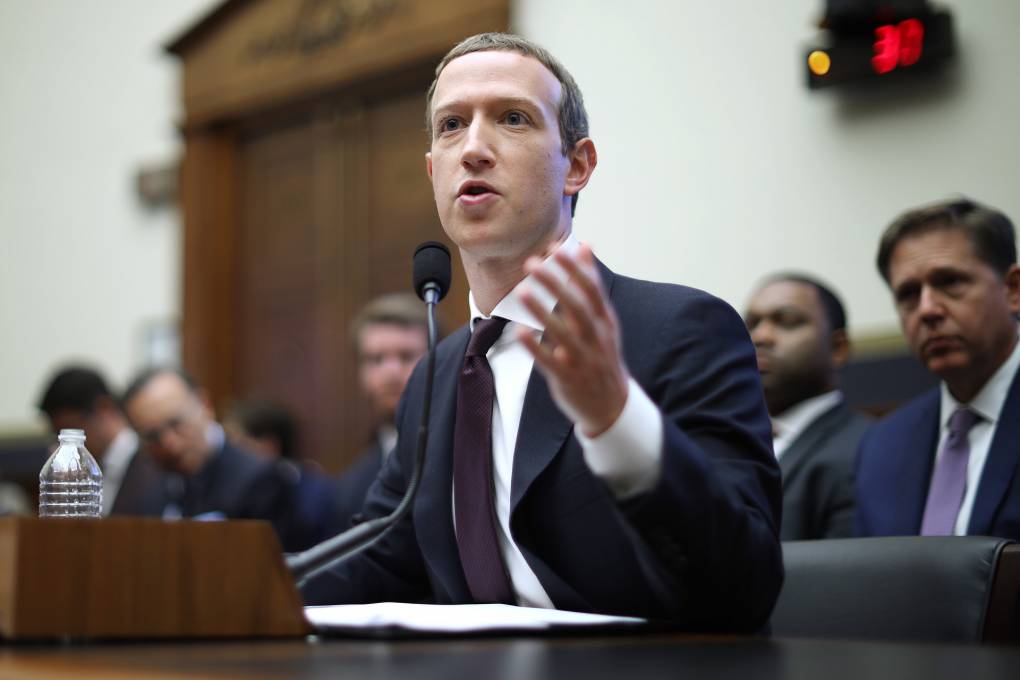
"caption": "Facebook CEO Mark Zuckerberg testified before the House Financial Services Committee in October. Under pressure from lawmakers and civil rights groups, the company has updated its policies to address census interference. ",
"description": "Facebook CEO Mark Zuckerberg testified before the House Financial Services Committee in October. Under pressure from lawmakers and civil rights groups, the company has updated its policies to address census interference. ",
"title": "Facebook CEO Mark Zuckerberg Testifies Before The House Financial Services Committee",
"credit": "Chip Somodevilla/Getty Images",
"status": "inherit",
"isLoading": false,
"fetchFailed": false
},
"news_11724773": {
"type": "attachments",
"id": "news_11724773",
"meta": {
"index": "attachments_1716263798",
"site": "news",
"id": "11724773",
"found": true
},
"parent": 11724586,
"imgSizes": {
"twentyfourteen-full-width": {
"file": "https://ww2.kqed.org/app/uploads/sites/10/2019/02/Truvada-1038x576.jpg",
"width": 1038,
"mimeType": "image/jpeg",
"height": 576
},
"thumbnail": {
"file": "https://ww2.kqed.org/app/uploads/sites/10/2019/02/Truvada-160x104.jpg",
"width": 160,
"mimeType": "image/jpeg",
"height": 104
},
"post-thumbnail": {
"file": "https://ww2.kqed.org/app/uploads/sites/10/2019/02/Truvada-672x372.jpg",
"width": 672,
"mimeType": "image/jpeg",
"height": 372
},
"kqedFullSize": {
"file": "https://ww2.kqed.org/app/uploads/sites/10/2019/02/Truvada.jpg",
"width": 1920,
"height": 1244
},
"large": {
"file": "https://ww2.kqed.org/app/uploads/sites/10/2019/02/Truvada-1020x661.jpg",
"width": 1020,
"mimeType": "image/jpeg",
"height": 661
},
"complete_open_graph": {
"file": "https://ww2.kqed.org/app/uploads/sites/10/2019/02/Truvada-1200x778.jpg",
"width": 1200,
"mimeType": "image/jpeg",
"height": 778
},
"guest-author-50": {
"file": "https://ww2.kqed.org/app/uploads/sites/10/2019/02/Truvada-50x50.jpg",
"width": 50,
"mimeType": "image/jpeg",
"height": 50
},
"guest-author-96": {
"file": "https://ww2.kqed.org/app/uploads/sites/10/2019/02/Truvada-96x96.jpg",
"width": 96,
"mimeType": "image/jpeg",
"height": 96
},
"medium": {
"file": "https://ww2.kqed.org/app/uploads/sites/10/2019/02/Truvada-800x518.jpg",
"width": 800,
"mimeType": "image/jpeg",
"height": 518
},
"guest-author-64": {
"file": "https://ww2.kqed.org/app/uploads/sites/10/2019/02/Truvada-64x64.jpg",
"width": 64,
"mimeType": "image/jpeg",
"height": 64
},
"guest-author-32": {
"file": "https://ww2.kqed.org/app/uploads/sites/10/2019/02/Truvada-32x32.jpg",
"width": 32,
"mimeType": "image/jpeg",
"height": 32
},
"full-width": {
"file": "https://ww2.kqed.org/app/uploads/sites/10/2019/02/Truvada-1920x1244.jpg",
"width": 1920,
"mimeType": "image/jpeg",
"height": 1244
},
"detail": {
"file": "https://ww2.kqed.org/app/uploads/sites/10/2019/02/Truvada-150x150.jpg",
"width": 150,
"mimeType": "image/jpeg",
"height": 150
},
"guest-author-128": {
"file": "https://ww2.kqed.org/app/uploads/sites/10/2019/02/Truvada-128x128.jpg",
"width": 128,
"mimeType": "image/jpeg",
"height": 128
}
},
"publishDate": 1549661168,
"modified": 1549661209,
"caption": "Bottles of the antiretroviral drug Truvada.",
"description": "Bottles of the antiretroviral drug Truvada.",
"title": "Truvada",
"credit": "Justin Sullivan/Getty Images",
"status": "inherit",
"isLoading": false,
"fetchFailed": false
},
"news_11764382": {
"type": "attachments",
"id": "news_11764382",
"meta": {
"index": "attachments_1716263798",
"site": "news",
"id": "11764382",
"found": true
},
"parent": 11764275,
"imgSizes": {
"apple_news_ca_landscape_5_5": {
"file": "https://ww2.kqed.org/app/uploads/sites/10/2019/07/RS38251_FGF12332-qut-1044x783.jpg",
"width": 1044,
"mimeType": "image/jpeg",
"height": 783
},
"apple_news_ca_square_4_0": {
"file": "https://ww2.kqed.org/app/uploads/sites/10/2019/07/RS38251_FGF12332-qut-470x470.jpg",
"width": 470,
"mimeType": "image/jpeg",
"height": 470
},
"twentyfourteen-full-width": {
"file": "https://ww2.kqed.org/app/uploads/sites/10/2019/07/RS38251_FGF12332-qut-1038x576.jpg",
"width": 1038,
"mimeType": "image/jpeg",
"height": 576
},
"thumbnail": {
"file": "https://ww2.kqed.org/app/uploads/sites/10/2019/07/RS38251_FGF12332-qut-160x107.jpg",
"width": 160,
"mimeType": "image/jpeg",
"height": 107
},
"post-thumbnail": {
"file": "https://ww2.kqed.org/app/uploads/sites/10/2019/07/RS38251_FGF12332-qut-672x372.jpg",
"width": 672,
"mimeType": "image/jpeg",
"height": 372
},
"kqedFullSize": {
"file": "https://ww2.kqed.org/app/uploads/sites/10/2019/07/RS38251_FGF12332-qut.jpg",
"width": 1920,
"height": 1280
},
"apple_news_ca_landscape_4_7": {
"file": "https://ww2.kqed.org/app/uploads/sites/10/2019/07/RS38251_FGF12332-qut-632x474.jpg",
"width": 632,
"mimeType": "image/jpeg",
"height": 474
},
"large": {
"file": "https://ww2.kqed.org/app/uploads/sites/10/2019/07/RS38251_FGF12332-qut-1020x680.jpg",
"width": 1020,
"mimeType": "image/jpeg",
"height": 680
},
"complete_open_graph": {
"file": "https://ww2.kqed.org/app/uploads/sites/10/2019/07/RS38251_FGF12332-qut-1200x800.jpg",
"width": 1200,
"mimeType": "image/jpeg",
"height": 800
},
"apple_news_ca_landscape_4_0": {
"file": "https://ww2.kqed.org/app/uploads/sites/10/2019/07/RS38251_FGF12332-qut-536x402.jpg",
"width": 536,
"mimeType": "image/jpeg",
"height": 402
},
"apple_news_ca_portrait_12_9": {
"file": "https://ww2.kqed.org/app/uploads/sites/10/2019/07/RS38251_FGF12332-qut-1122x1280.jpg",
"width": 1122,
"mimeType": "image/jpeg",
"height": 1280
},
"medium": {
"file": "https://ww2.kqed.org/app/uploads/sites/10/2019/07/RS38251_FGF12332-qut-800x533.jpg",
"width": 800,
"mimeType": "image/jpeg",
"height": 533
},
"apple_news_ca_portrait_4_0": {
"file": "https://ww2.kqed.org/app/uploads/sites/10/2019/07/RS38251_FGF12332-qut-354x472.jpg",
"width": 354,
"mimeType": "image/jpeg",
"height": 472
},
"apple_news_ca_portrait_9_7": {
"file": "https://ww2.kqed.org/app/uploads/sites/10/2019/07/RS38251_FGF12332-qut-840x1120.jpg",
"width": 840,
"mimeType": "image/jpeg",
"height": 1120
},
"apple_news_ca_landscape_12_9": {
"file": "https://ww2.kqed.org/app/uploads/sites/10/2019/07/RS38251_FGF12332-qut-1832x1280.jpg",
"width": 1832,
"mimeType": "image/jpeg",
"height": 1280
},
"apple_news_ca_square_9_7": {
"file": "https://ww2.kqed.org/app/uploads/sites/10/2019/07/RS38251_FGF12332-qut-1104x1104.jpg",
"width": 1104,
"mimeType": "image/jpeg",
"height": 1104
},
"apple_news_ca_portrait_4_7": {
"file": "https://ww2.kqed.org/app/uploads/sites/10/2019/07/RS38251_FGF12332-qut-414x552.jpg",
"width": 414,
"mimeType": "image/jpeg",
"height": 552
},
"apple_news_ca_square_12_9": {
"file": "https://ww2.kqed.org/app/uploads/sites/10/2019/07/RS38251_FGF12332-qut-1472x1280.jpg",
"width": 1472,
"mimeType": "image/jpeg",
"height": 1280
},
"apple_news_ca_portrait_5_5": {
"file": "https://ww2.kqed.org/app/uploads/sites/10/2019/07/RS38251_FGF12332-qut-687x916.jpg",
"width": 687,
"mimeType": "image/jpeg",
"height": 916
},
"full-width": {
"file": "https://ww2.kqed.org/app/uploads/sites/10/2019/07/RS38251_FGF12332-qut-1920x1280.jpg",
"width": 1920,
"mimeType": "image/jpeg",
"height": 1280
},
"apple_news_ca_square_4_7": {
"file": "https://ww2.kqed.org/app/uploads/sites/10/2019/07/RS38251_FGF12332-qut-550x550.jpg",
"width": 550,
"mimeType": "image/jpeg",
"height": 550
},
"apple_news_ca_landscape_9_7": {
"file": "https://ww2.kqed.org/app/uploads/sites/10/2019/07/RS38251_FGF12332-qut-1376x1032.jpg",
"width": 1376,
"mimeType": "image/jpeg",
"height": 1032
},
"apple_news_ca_square_5_5": {
"file": "https://ww2.kqed.org/app/uploads/sites/10/2019/07/RS38251_FGF12332-qut-912x912.jpg",
"width": 912,
"mimeType": "image/jpeg",
"height": 912
}
},
"publishDate": 1564524934,
"modified": 1564534209,
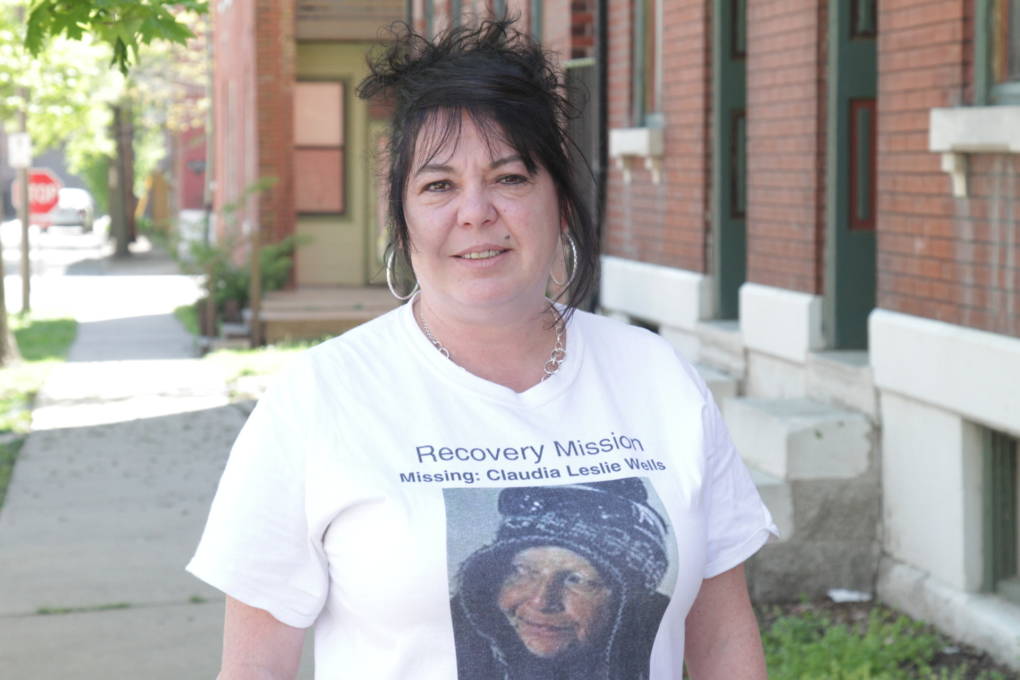
"caption": "Robin Burton's search for her mother, presumed homeless in California, has morphed into a mission to serve as a guide for other families looking for their loved ones. She started a Facebook group called Missing & Homeless, followed by more than 60,000 people.",
"description": "Robin Burton's search for her mother, presumed homeless in California, has morphed into a mission to serve as a guide for other families looking for their loved ones. She started a Facebook group called \"Missing & Homeless\" followed by more than 60,000 people.",
"title": "RS38251_FGF12332-qut",
"credit": "Courtesy of Fritz Faerber",
"status": "inherit",
"isLoading": false,
"fetchFailed": false
},
"news_11787011": {
"type": "attachments",
"id": "news_11787011",
"meta": {
"index": "attachments_1716263798",
"site": "news",
"id": "11787011",
"found": true
},
"parent": 11787003,
"imgSizes": {
"apple_news_ca_landscape_5_5": {
"file": "https://ww2.kqed.org/app/uploads/sites/10/2019/11/RS16510_Porn-Hands-qut-1044x783.jpg",
"width": 1044,
"mimeType": "image/jpeg",
"height": 783
},
"apple_news_ca_square_4_0": {
"file": "https://ww2.kqed.org/app/uploads/sites/10/2019/11/RS16510_Porn-Hands-qut-470x470.jpg",
"width": 470,
"mimeType": "image/jpeg",
"height": 470
},
"twentyfourteen-full-width": {
"file": "https://ww2.kqed.org/app/uploads/sites/10/2019/11/RS16510_Porn-Hands-qut-1038x576.jpg",
"width": 1038,
"mimeType": "image/jpeg",
"height": 576
},
"thumbnail": {
"file": "https://ww2.kqed.org/app/uploads/sites/10/2019/11/RS16510_Porn-Hands-qut-160x107.jpg",
"width": 160,
"mimeType": "image/jpeg",
"height": 107
},
"post-thumbnail": {
"file": "https://ww2.kqed.org/app/uploads/sites/10/2019/11/RS16510_Porn-Hands-qut-672x372.jpg",
"width": 672,
"mimeType": "image/jpeg",
"height": 372
},
"kqedFullSize": {
"file": "https://ww2.kqed.org/app/uploads/sites/10/2019/11/RS16510_Porn-Hands-qut.jpg",
"width": 1920,
"height": 1280
},
"apple_news_ca_landscape_4_7": {
"file": "https://ww2.kqed.org/app/uploads/sites/10/2019/11/RS16510_Porn-Hands-qut-632x474.jpg",
"width": 632,
"mimeType": "image/jpeg",
"height": 474
},
"large": {
"file": "https://ww2.kqed.org/app/uploads/sites/10/2019/11/RS16510_Porn-Hands-qut-1020x680.jpg",
"width": 1020,
"mimeType": "image/jpeg",
"height": 680
},
"complete_open_graph": {
"file": "https://ww2.kqed.org/app/uploads/sites/10/2019/11/RS16510_Porn-Hands-qut-1200x800.jpg",
"width": 1200,
"mimeType": "image/jpeg",
"height": 800
},
"apple_news_ca_landscape_4_0": {
"file": "https://ww2.kqed.org/app/uploads/sites/10/2019/11/RS16510_Porn-Hands-qut-536x402.jpg",
"width": 536,
"mimeType": "image/jpeg",
"height": 402
},
"apple_news_ca_portrait_12_9": {
"file": "https://ww2.kqed.org/app/uploads/sites/10/2019/11/RS16510_Porn-Hands-qut-1122x1280.jpg",
"width": 1122,
"mimeType": "image/jpeg",
"height": 1280
},
"medium": {
"file": "https://ww2.kqed.org/app/uploads/sites/10/2019/11/RS16510_Porn-Hands-qut-800x533.jpg",
"width": 800,
"mimeType": "image/jpeg",
"height": 533
},
"apple_news_ca_portrait_4_0": {
"file": "https://ww2.kqed.org/app/uploads/sites/10/2019/11/RS16510_Porn-Hands-qut-354x472.jpg",
"width": 354,
"mimeType": "image/jpeg",
"height": 472
},
"apple_news_ca_portrait_9_7": {
"file": "https://ww2.kqed.org/app/uploads/sites/10/2019/11/RS16510_Porn-Hands-qut-840x1120.jpg",
"width": 840,
"mimeType": "image/jpeg",
"height": 1120
},
"apple_news_ca_landscape_12_9": {
"file": "https://ww2.kqed.org/app/uploads/sites/10/2019/11/RS16510_Porn-Hands-qut-1832x1280.jpg",
"width": 1832,
"mimeType": "image/jpeg",
"height": 1280
},
"apple_news_ca_square_9_7": {
"file": "https://ww2.kqed.org/app/uploads/sites/10/2019/11/RS16510_Porn-Hands-qut-1104x1104.jpg",
"width": 1104,
"mimeType": "image/jpeg",
"height": 1104
},
"apple_news_ca_portrait_4_7": {
"file": "https://ww2.kqed.org/app/uploads/sites/10/2019/11/RS16510_Porn-Hands-qut-414x552.jpg",
"width": 414,
"mimeType": "image/jpeg",
"height": 552
},
"apple_news_ca_square_12_9": {
"file": "https://ww2.kqed.org/app/uploads/sites/10/2019/11/RS16510_Porn-Hands-qut-1472x1280.jpg",
"width": 1472,
"mimeType": "image/jpeg",
"height": 1280
},
"apple_news_ca_portrait_5_5": {
"file": "https://ww2.kqed.org/app/uploads/sites/10/2019/11/RS16510_Porn-Hands-qut-687x916.jpg",
"width": 687,
"mimeType": "image/jpeg",
"height": 916
},
"full-width": {
"file": "https://ww2.kqed.org/app/uploads/sites/10/2019/11/RS16510_Porn-Hands-qut-1920x1280.jpg",
"width": 1920,
"mimeType": "image/jpeg",
"height": 1280
},
"apple_news_ca_square_4_7": {
"file": "https://ww2.kqed.org/app/uploads/sites/10/2019/11/RS16510_Porn-Hands-qut-550x550.jpg",
"width": 550,
"mimeType": "image/jpeg",
"height": 550
},
"apple_news_ca_landscape_9_7": {
"file": "https://ww2.kqed.org/app/uploads/sites/10/2019/11/RS16510_Porn-Hands-qut-1376x1032.jpg",
"width": 1376,
"mimeType": "image/jpeg",
"height": 1032
},
"apple_news_ca_square_5_5": {
"file": "https://ww2.kqed.org/app/uploads/sites/10/2019/11/RS16510_Porn-Hands-qut-912x912.jpg",
"width": 912,
"mimeType": "image/jpeg",
"height": 912
}
},
"publishDate": 1573925804,
"modified": 1573925849,
"caption": "A majority of Americans believe their online and offline activities are being tracked and monitored by companies and the government with some regularity, according to a new Pew Research Center survey of U.S. adults. ",
"description": "A majority of Americans believe their online and offline activities are being tracked and monitored by companies and the government with some regularity, according to a new Pew Research Center survey of U.S. adults. ",
"title": "RS16510_Porn Hands-qut",
"credit": "Jeremy Raff/KQED",
"status": "inherit",
"isLoading": false,
"fetchFailed": false
},
"news_11785386": {
"type": "attachments",
"id": "news_11785386",
"meta": {
"index": "attachments_1716263798",
"site": "news",
"id": "11785386",
"found": true
},
"parent": 11785385,
"imgSizes": {
"apple_news_ca_landscape_5_5": {
"file": "https://ww2.kqed.org/app/uploads/sites/10/2019/11/gettyimages-542154818-527f1f0cb58d56295446f3a97e9301c7cda369b8-1044x783.jpg",
"width": 1044,
"mimeType": "image/jpeg",
"height": 783
},
"apple_news_ca_square_4_0": {
"file": "https://ww2.kqed.org/app/uploads/sites/10/2019/11/gettyimages-542154818-527f1f0cb58d56295446f3a97e9301c7cda369b8-470x470.jpg",
"width": 470,
"mimeType": "image/jpeg",
"height": 470
},
"twentyfourteen-full-width": {
"file": "https://ww2.kqed.org/app/uploads/sites/10/2019/11/gettyimages-542154818-527f1f0cb58d56295446f3a97e9301c7cda369b8-1038x576.jpg",
"width": 1038,
"mimeType": "image/jpeg",
"height": 576
},
"thumbnail": {
"file": "https://ww2.kqed.org/app/uploads/sites/10/2019/11/gettyimages-542154818-527f1f0cb58d56295446f3a97e9301c7cda369b8-160x120.jpg",
"width": 160,
"mimeType": "image/jpeg",
"height": 120
},
"post-thumbnail": {
"file": "https://ww2.kqed.org/app/uploads/sites/10/2019/11/gettyimages-542154818-527f1f0cb58d56295446f3a97e9301c7cda369b8-672x372.jpg",
"width": 672,
"mimeType": "image/jpeg",
"height": 372
},
"kqedFullSize": {
"file": "https://ww2.kqed.org/app/uploads/sites/10/2019/11/gettyimages-542154818-527f1f0cb58d56295446f3a97e9301c7cda369b8-e1573083029586.jpg",
"width": 1920,
"height": 1440
},
"apple_news_ca_landscape_4_7": {
"file": "https://ww2.kqed.org/app/uploads/sites/10/2019/11/gettyimages-542154818-527f1f0cb58d56295446f3a97e9301c7cda369b8-632x474.jpg",
"width": 632,
"mimeType": "image/jpeg",
"height": 474
},
"large": {
"file": "https://ww2.kqed.org/app/uploads/sites/10/2019/11/gettyimages-542154818-527f1f0cb58d56295446f3a97e9301c7cda369b8-1020x765.jpg",
"width": 1020,
"mimeType": "image/jpeg",
"height": 765
},
"complete_open_graph": {
"file": "https://ww2.kqed.org/app/uploads/sites/10/2019/11/gettyimages-542154818-527f1f0cb58d56295446f3a97e9301c7cda369b8-1200x900.jpg",
"width": 1200,
"mimeType": "image/jpeg",
"height": 900
},
"apple_news_ca_landscape_4_0": {
"file": "https://ww2.kqed.org/app/uploads/sites/10/2019/11/gettyimages-542154818-527f1f0cb58d56295446f3a97e9301c7cda369b8-536x402.jpg",
"width": 536,
"mimeType": "image/jpeg",
"height": 402
},
"apple_news_ca_portrait_12_9": {
"file": "https://ww2.kqed.org/app/uploads/sites/10/2019/11/gettyimages-542154818-527f1f0cb58d56295446f3a97e9301c7cda369b8-1122x1496.jpg",
"width": 1122,
"mimeType": "image/jpeg",
"height": 1496
},
"medium": {
"file": "https://ww2.kqed.org/app/uploads/sites/10/2019/11/gettyimages-542154818-527f1f0cb58d56295446f3a97e9301c7cda369b8-800x600.jpg",
"width": 800,
"mimeType": "image/jpeg",
"height": 600
},
"apple_news_ca_portrait_4_0": {
"file": "https://ww2.kqed.org/app/uploads/sites/10/2019/11/gettyimages-542154818-527f1f0cb58d56295446f3a97e9301c7cda369b8-354x472.jpg",
"width": 354,
"mimeType": "image/jpeg",
"height": 472
},
"apple_news_ca_portrait_9_7": {
"file": "https://ww2.kqed.org/app/uploads/sites/10/2019/11/gettyimages-542154818-527f1f0cb58d56295446f3a97e9301c7cda369b8-840x1120.jpg",
"width": 840,
"mimeType": "image/jpeg",
"height": 1120
},
"apple_news_ca_landscape_12_9": {
"file": "https://ww2.kqed.org/app/uploads/sites/10/2019/11/gettyimages-542154818-527f1f0cb58d56295446f3a97e9301c7cda369b8-1832x1374.jpg",
"width": 1832,
"mimeType": "image/jpeg",
"height": 1374
},
"apple_news_ca_square_9_7": {
"file": "https://ww2.kqed.org/app/uploads/sites/10/2019/11/gettyimages-542154818-527f1f0cb58d56295446f3a97e9301c7cda369b8-1104x1104.jpg",
"width": 1104,
"mimeType": "image/jpeg",
"height": 1104
},
"apple_news_ca_portrait_4_7": {
"file": "https://ww2.kqed.org/app/uploads/sites/10/2019/11/gettyimages-542154818-527f1f0cb58d56295446f3a97e9301c7cda369b8-414x552.jpg",
"width": 414,
"mimeType": "image/jpeg",
"height": 552
},
"apple_news_ca_square_12_9": {
"file": "https://ww2.kqed.org/app/uploads/sites/10/2019/11/gettyimages-542154818-527f1f0cb58d56295446f3a97e9301c7cda369b8-1472x1472.jpg",
"width": 1472,
"mimeType": "image/jpeg",
"height": 1472
},
"apple_news_ca_portrait_5_5": {
"file": "https://ww2.kqed.org/app/uploads/sites/10/2019/11/gettyimages-542154818-527f1f0cb58d56295446f3a97e9301c7cda369b8-687x916.jpg",
"width": 687,
"mimeType": "image/jpeg",
"height": 916
},
"full-width": {
"file": "https://ww2.kqed.org/app/uploads/sites/10/2019/11/gettyimages-542154818-527f1f0cb58d56295446f3a97e9301c7cda369b8-1920x1440.jpg",
"width": 1920,
"mimeType": "image/jpeg",
"height": 1440
},
"apple_news_ca_square_4_7": {
"file": "https://ww2.kqed.org/app/uploads/sites/10/2019/11/gettyimages-542154818-527f1f0cb58d56295446f3a97e9301c7cda369b8-550x550.jpg",
"width": 550,
"mimeType": "image/jpeg",
"height": 550
},
"apple_news_ca_landscape_9_7": {
"file": "https://ww2.kqed.org/app/uploads/sites/10/2019/11/gettyimages-542154818-527f1f0cb58d56295446f3a97e9301c7cda369b8-1376x1032.jpg",
"width": 1376,
"mimeType": "image/jpeg",
"height": 1032
},
"apple_news_ca_square_5_5": {
"file": "https://ww2.kqed.org/app/uploads/sites/10/2019/11/gettyimages-542154818-527f1f0cb58d56295446f3a97e9301c7cda369b8-912x912.jpg",
"width": 912,
"mimeType": "image/jpeg",
"height": 912
}
},
"publishDate": 1573082628,
"modified": 1614783167,
"caption": null,
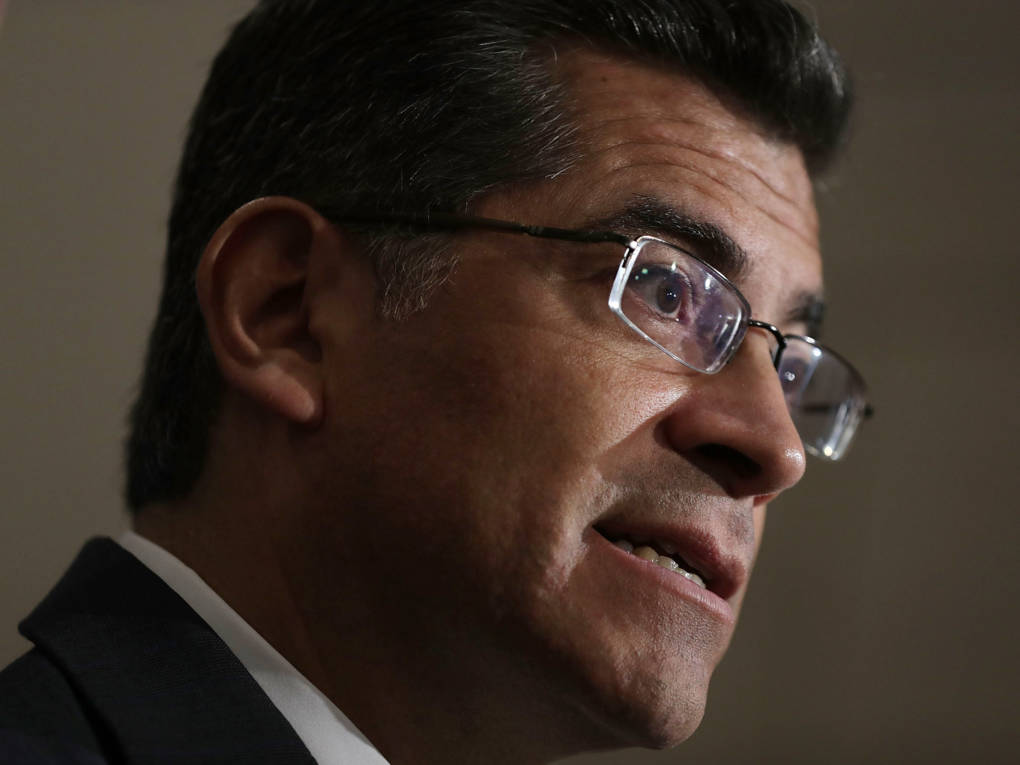
"description": "Attorney General Xavier Becerra said Facebook has not been responsive to the subpoenas his office has issued.",
"title": "Attorney General Xavier Becerra said Facebook has not been responsive to the subpoenas his office has issued.",
"credit": "Alex Wong/Getty Images",
"status": "inherit",
"altTag": "Attorney General Xavier Becerra said Facebook has not been responsive to the subpoenas his office has issued.",
"isLoading": false,
"fetchFailed": false
},
"news_11783869": {
"type": "attachments",
"id": "news_11783869",
"meta": {
"index": "attachments_1716263798",
"site": "news",
"id": "11783869",
"found": true
},
"parent": 11783864,
"imgSizes": {
"apple_news_ca_landscape_5_5": {
"file": "https://ww2.kqed.org/app/uploads/sites/10/2019/10/Twitter-HQ-1044x783.jpg",
"width": 1044,
"mimeType": "image/jpeg",
"height": 783
},
"apple_news_ca_square_4_0": {
"file": "https://ww2.kqed.org/app/uploads/sites/10/2019/10/Twitter-HQ-470x470.jpg",
"width": 470,
"mimeType": "image/jpeg",
"height": 470
},
"twentyfourteen-full-width": {
"file": "https://ww2.kqed.org/app/uploads/sites/10/2019/10/Twitter-HQ-1038x576.jpg",
"width": 1038,
"mimeType": "image/jpeg",
"height": 576
},
"thumbnail": {
"file": "https://ww2.kqed.org/app/uploads/sites/10/2019/10/Twitter-HQ-160x107.jpg",
"width": 160,
"mimeType": "image/jpeg",
"height": 107
},
"post-thumbnail": {
"file": "https://ww2.kqed.org/app/uploads/sites/10/2019/10/Twitter-HQ-672x372.jpg",
"width": 672,
"mimeType": "image/jpeg",
"height": 372
},
"kqedFullSize": {
"file": "https://ww2.kqed.org/app/uploads/sites/10/2019/10/Twitter-HQ.jpg",
"width": 1920,
"height": 1282
},
"apple_news_ca_landscape_4_7": {
"file": "https://ww2.kqed.org/app/uploads/sites/10/2019/10/Twitter-HQ-632x474.jpg",
"width": 632,
"mimeType": "image/jpeg",
"height": 474
},
"large": {
"file": "https://ww2.kqed.org/app/uploads/sites/10/2019/10/Twitter-HQ-1020x681.jpg",
"width": 1020,
"mimeType": "image/jpeg",
"height": 681
},
"complete_open_graph": {
"file": "https://ww2.kqed.org/app/uploads/sites/10/2019/10/Twitter-HQ-1200x801.jpg",
"width": 1200,
"mimeType": "image/jpeg",
"height": 801
},
"apple_news_ca_landscape_4_0": {
"file": "https://ww2.kqed.org/app/uploads/sites/10/2019/10/Twitter-HQ-536x402.jpg",
"width": 536,
"mimeType": "image/jpeg",
"height": 402
},
"apple_news_ca_portrait_12_9": {
"file": "https://ww2.kqed.org/app/uploads/sites/10/2019/10/Twitter-HQ-1122x1282.jpg",
"width": 1122,
"mimeType": "image/jpeg",
"height": 1282
},
"medium": {
"file": "https://ww2.kqed.org/app/uploads/sites/10/2019/10/Twitter-HQ-800x534.jpg",
"width": 800,
"mimeType": "image/jpeg",
"height": 534
},
"apple_news_ca_portrait_4_0": {
"file": "https://ww2.kqed.org/app/uploads/sites/10/2019/10/Twitter-HQ-354x472.jpg",
"width": 354,
"mimeType": "image/jpeg",
"height": 472
},
"apple_news_ca_portrait_9_7": {
"file": "https://ww2.kqed.org/app/uploads/sites/10/2019/10/Twitter-HQ-840x1120.jpg",
"width": 840,
"mimeType": "image/jpeg",
"height": 1120
},
"apple_news_ca_landscape_12_9": {
"file": "https://ww2.kqed.org/app/uploads/sites/10/2019/10/Twitter-HQ-1832x1282.jpg",
"width": 1832,
"mimeType": "image/jpeg",
"height": 1282
},
"apple_news_ca_square_9_7": {
"file": "https://ww2.kqed.org/app/uploads/sites/10/2019/10/Twitter-HQ-1104x1104.jpg",
"width": 1104,
"mimeType": "image/jpeg",
"height": 1104
},
"apple_news_ca_portrait_4_7": {
"file": "https://ww2.kqed.org/app/uploads/sites/10/2019/10/Twitter-HQ-414x552.jpg",
"width": 414,
"mimeType": "image/jpeg",
"height": 552
},
"apple_news_ca_square_12_9": {
"file": "https://ww2.kqed.org/app/uploads/sites/10/2019/10/Twitter-HQ-1472x1282.jpg",
"width": 1472,
"mimeType": "image/jpeg",
"height": 1282
},
"apple_news_ca_portrait_5_5": {
"file": "https://ww2.kqed.org/app/uploads/sites/10/2019/10/Twitter-HQ-687x916.jpg",
"width": 687,
"mimeType": "image/jpeg",
"height": 916
},
"full-width": {
"file": "https://ww2.kqed.org/app/uploads/sites/10/2019/10/Twitter-HQ-1920x1282.jpg",
"width": 1920,
"mimeType": "image/jpeg",
"height": 1282
},
"apple_news_ca_square_4_7": {
"file": "https://ww2.kqed.org/app/uploads/sites/10/2019/10/Twitter-HQ-550x550.jpg",
"width": 550,
"mimeType": "image/jpeg",
"height": 550
},
"apple_news_ca_landscape_9_7": {
"file": "https://ww2.kqed.org/app/uploads/sites/10/2019/10/Twitter-HQ-1376x1032.jpg",
"width": 1376,
"mimeType": "image/jpeg",
"height": 1032
},
"apple_news_ca_square_5_5": {
"file": "https://ww2.kqed.org/app/uploads/sites/10/2019/10/Twitter-HQ-912x912.jpg",
"width": 912,
"mimeType": "image/jpeg",
"height": 912
}
},
"publishDate": 1572467990,
"modified": 1572468036,
"caption": "The Twitter logo outside the company's headquarters in San Francisco.",
"description": "The Twitter logo outside the company's headquarters in San Francisco.",
"title": "Twitter-HQ",
"credit": "JOSH EDELSON/AFP via Getty Images",
"status": "inherit",
"isLoading": false,
"fetchFailed": false
},
"news_11783384": {
"type": "attachments",
"id": "news_11783384",
"meta": {
"index": "attachments_1716263798",
"site": "news",
"id": "11783384",
"found": true
},
"parent": 11783369,
"imgSizes": {
"apple_news_ca_landscape_5_5": {
"file": "https://ww2.kqed.org/app/uploads/sites/10/2019/10/RS39869_GettyImages-1182969866-qut-1044x783.jpg",
"width": 1044,
"mimeType": "image/jpeg",
"height": 783
},
"apple_news_ca_square_4_0": {
"file": "https://ww2.kqed.org/app/uploads/sites/10/2019/10/RS39869_GettyImages-1182969866-qut-470x470.jpg",
"width": 470,
"mimeType": "image/jpeg",
"height": 470
},
"twentyfourteen-full-width": {
"file": "https://ww2.kqed.org/app/uploads/sites/10/2019/10/RS39869_GettyImages-1182969866-qut-1038x576.jpg",
"width": 1038,
"mimeType": "image/jpeg",
"height": 576
},
"thumbnail": {
"file": "https://ww2.kqed.org/app/uploads/sites/10/2019/10/RS39869_GettyImages-1182969866-qut-160x107.jpg",
"width": 160,
"mimeType": "image/jpeg",
"height": 107
},
"post-thumbnail": {
"file": "https://ww2.kqed.org/app/uploads/sites/10/2019/10/RS39869_GettyImages-1182969866-qut-672x372.jpg",
"width": 672,
"mimeType": "image/jpeg",
"height": 372
},
"kqedFullSize": {
"file": "https://ww2.kqed.org/app/uploads/sites/10/2019/10/RS39869_GettyImages-1182969866-qut.jpg",
"width": 1920,
"height": 1280
},
"apple_news_ca_landscape_4_7": {
"file": "https://ww2.kqed.org/app/uploads/sites/10/2019/10/RS39869_GettyImages-1182969866-qut-632x474.jpg",
"width": 632,
"mimeType": "image/jpeg",
"height": 474
},
"large": {
"file": "https://ww2.kqed.org/app/uploads/sites/10/2019/10/RS39869_GettyImages-1182969866-qut-1020x680.jpg",
"width": 1020,
"mimeType": "image/jpeg",
"height": 680
},
"complete_open_graph": {
"file": "https://ww2.kqed.org/app/uploads/sites/10/2019/10/RS39869_GettyImages-1182969866-qut-1200x800.jpg",
"width": 1200,
"mimeType": "image/jpeg",
"height": 800
},
"apple_news_ca_landscape_4_0": {
"file": "https://ww2.kqed.org/app/uploads/sites/10/2019/10/RS39869_GettyImages-1182969866-qut-536x402.jpg",
"width": 536,
"mimeType": "image/jpeg",
"height": 402
},
"apple_news_ca_portrait_12_9": {
"file": "https://ww2.kqed.org/app/uploads/sites/10/2019/10/RS39869_GettyImages-1182969866-qut-1122x1280.jpg",
"width": 1122,
"mimeType": "image/jpeg",
"height": 1280
},
"medium": {
"file": "https://ww2.kqed.org/app/uploads/sites/10/2019/10/RS39869_GettyImages-1182969866-qut-800x533.jpg",
"width": 800,
"mimeType": "image/jpeg",
"height": 533
},
"apple_news_ca_portrait_4_0": {
"file": "https://ww2.kqed.org/app/uploads/sites/10/2019/10/RS39869_GettyImages-1182969866-qut-354x472.jpg",
"width": 354,
"mimeType": "image/jpeg",
"height": 472
},
"apple_news_ca_portrait_9_7": {
"file": "https://ww2.kqed.org/app/uploads/sites/10/2019/10/RS39869_GettyImages-1182969866-qut-840x1120.jpg",
"width": 840,
"mimeType": "image/jpeg",
"height": 1120
},
"apple_news_ca_landscape_12_9": {
"file": "https://ww2.kqed.org/app/uploads/sites/10/2019/10/RS39869_GettyImages-1182969866-qut-1832x1280.jpg",
"width": 1832,
"mimeType": "image/jpeg",
"height": 1280
},
"apple_news_ca_square_9_7": {
"file": "https://ww2.kqed.org/app/uploads/sites/10/2019/10/RS39869_GettyImages-1182969866-qut-1104x1104.jpg",
"width": 1104,
"mimeType": "image/jpeg",
"height": 1104
},
"apple_news_ca_portrait_4_7": {
"file": "https://ww2.kqed.org/app/uploads/sites/10/2019/10/RS39869_GettyImages-1182969866-qut-414x552.jpg",
"width": 414,
"mimeType": "image/jpeg",
"height": 552
},
"apple_news_ca_square_12_9": {
"file": "https://ww2.kqed.org/app/uploads/sites/10/2019/10/RS39869_GettyImages-1182969866-qut-1472x1280.jpg",
"width": 1472,
"mimeType": "image/jpeg",
"height": 1280
},
"apple_news_ca_portrait_5_5": {
"file": "https://ww2.kqed.org/app/uploads/sites/10/2019/10/RS39869_GettyImages-1182969866-qut-687x916.jpg",
"width": 687,
"mimeType": "image/jpeg",
"height": 916
},
"full-width": {
"file": "https://ww2.kqed.org/app/uploads/sites/10/2019/10/RS39869_GettyImages-1182969866-qut-1920x1280.jpg",
"width": 1920,
"mimeType": "image/jpeg",
"height": 1280
},
"apple_news_ca_square_4_7": {
"file": "https://ww2.kqed.org/app/uploads/sites/10/2019/10/RS39869_GettyImages-1182969866-qut-550x550.jpg",
"width": 550,
"mimeType": "image/jpeg",
"height": 550
},
"apple_news_ca_landscape_9_7": {
"file": "https://ww2.kqed.org/app/uploads/sites/10/2019/10/RS39869_GettyImages-1182969866-qut-1376x1032.jpg",
"width": 1376,
"mimeType": "image/jpeg",
"height": 1032
},
"apple_news_ca_square_5_5": {
"file": "https://ww2.kqed.org/app/uploads/sites/10/2019/10/RS39869_GettyImages-1182969866-qut-912x912.jpg",
"width": 912,
"mimeType": "image/jpeg",
"height": 912
}
},
"publishDate": 1572296875,
"modified": 1607610302,
"caption": null,
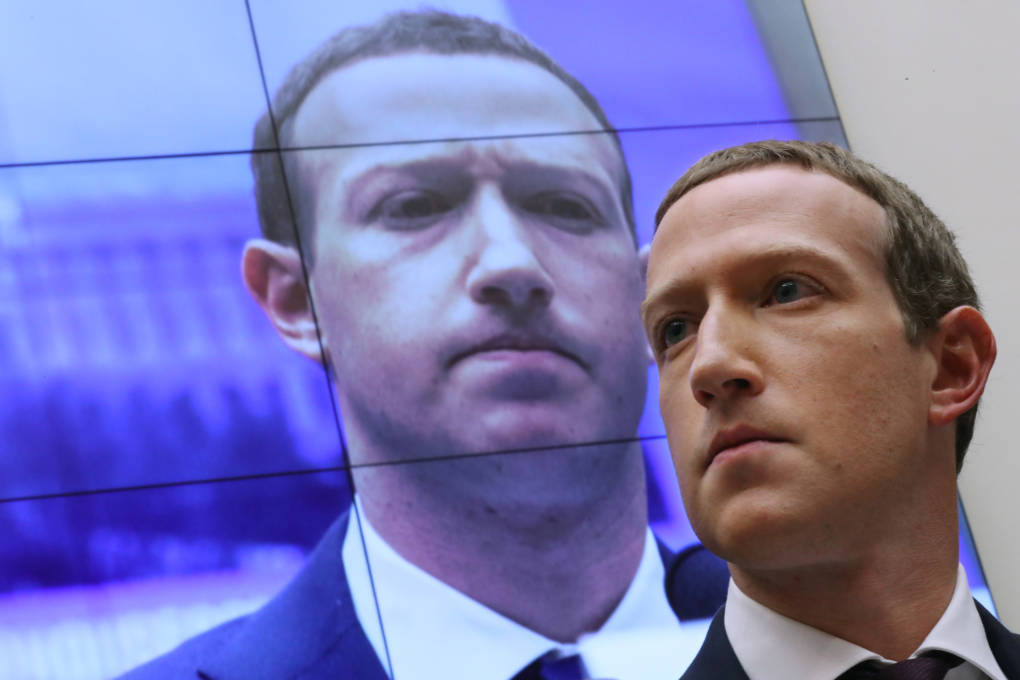
"description": "WASHINGTON, DC - OCTOBER 23: With an image of himself on a screen in the background, Facebook co-founder and CEO Mark Zuckerberg testifies before the House Financial Services Committee in the Rayburn House Office Building on Capitol Hill October 23, 2019 in Washington, DC. Zuckerberg testified about Facebook's proposed cryptocurrency Libra, how his company will handle false and misleading information by political leaders during the 2020 campaign and how it handles its users’ data and privacy. ",
"title": "Facebook CEO Mark Zuckerberg Testifies Before The House Financial Services Committee",
"credit": "Chip Somodevilla/Getty Images",
"status": "inherit",
"altTag": "WASHINGTON, DC - OCTOBER 23: With an image of himself on a screen in the background, Facebook co-founder and CEO Mark Zuckerberg testifies before the House Financial Services Committee in the Rayburn House Office Building on Capitol Hill October 23, 2019 in Washington, DC. Zuckerberg testified about Facebook's proposed cryptocurrency Libra, how his company will handle false and misleading information by political leaders during the 2020 campaign and how it handles its users’ data and privacy.",
"isLoading": false,
"fetchFailed": false
},
"news_11782182": {
"type": "attachments",
"id": "news_11782182",
"meta": {
"index": "attachments_1716263798",
"site": "news",
"id": "11782182",
"found": true
},
"parent": 11782173,
"imgSizes": {
"apple_news_ca_landscape_5_5": {
"file": "https://ww2.kqed.org/app/uploads/sites/10/2019/10/freespeech_102319_final-1044x783.jpg",
"width": 1044,
"mimeType": "image/jpeg",
"height": 783
},
"apple_news_ca_square_4_0": {
"file": "https://ww2.kqed.org/app/uploads/sites/10/2019/10/freespeech_102319_final-470x470.jpg",
"width": 470,
"mimeType": "image/jpeg",
"height": 470
},
"twentyfourteen-full-width": {
"file": "https://ww2.kqed.org/app/uploads/sites/10/2019/10/freespeech_102319_final-1038x576.jpg",
"width": 1038,
"mimeType": "image/jpeg",
"height": 576
},
"thumbnail": {
"file": "https://ww2.kqed.org/app/uploads/sites/10/2019/10/freespeech_102319_final-160x118.jpg",
"width": 160,
"mimeType": "image/jpeg",
"height": 118
},
"post-thumbnail": {
"file": "https://ww2.kqed.org/app/uploads/sites/10/2019/10/freespeech_102319_final-672x372.jpg",
"width": 672,
"mimeType": "image/jpeg",
"height": 372
},
"kqedFullSize": {
"file": "https://ww2.kqed.org/app/uploads/sites/10/2019/10/freespeech_102319_final.jpg",
"width": 1920,
"height": 1417
},
"apple_news_ca_landscape_4_7": {
"file": "https://ww2.kqed.org/app/uploads/sites/10/2019/10/freespeech_102319_final-632x474.jpg",
"width": 632,
"mimeType": "image/jpeg",
"height": 474
},
"large": {
"file": "https://ww2.kqed.org/app/uploads/sites/10/2019/10/freespeech_102319_final-1020x753.jpg",
"width": 1020,
"mimeType": "image/jpeg",
"height": 753
},
"complete_open_graph": {
"file": "https://ww2.kqed.org/app/uploads/sites/10/2019/10/freespeech_102319_final-1200x886.jpg",
"width": 1200,
"mimeType": "image/jpeg",
"height": 886
},
"apple_news_ca_landscape_4_0": {
"file": "https://ww2.kqed.org/app/uploads/sites/10/2019/10/freespeech_102319_final-536x402.jpg",
"width": 536,
"mimeType": "image/jpeg",
"height": 402
},
"apple_news_ca_portrait_12_9": {
"file": "https://ww2.kqed.org/app/uploads/sites/10/2019/10/freespeech_102319_final-1122x1417.jpg",
"width": 1122,
"mimeType": "image/jpeg",
"height": 1417
},
"medium": {
"file": "https://ww2.kqed.org/app/uploads/sites/10/2019/10/freespeech_102319_final-800x590.jpg",
"width": 800,
"mimeType": "image/jpeg",
"height": 590
},
"apple_news_ca_portrait_4_0": {
"file": "https://ww2.kqed.org/app/uploads/sites/10/2019/10/freespeech_102319_final-354x472.jpg",
"width": 354,
"mimeType": "image/jpeg",
"height": 472
},
"apple_news_ca_portrait_9_7": {
"file": "https://ww2.kqed.org/app/uploads/sites/10/2019/10/freespeech_102319_final-840x1120.jpg",
"width": 840,
"mimeType": "image/jpeg",
"height": 1120
},
"apple_news_ca_landscape_12_9": {
"file": "https://ww2.kqed.org/app/uploads/sites/10/2019/10/freespeech_102319_final-1832x1374.jpg",
"width": 1832,
"mimeType": "image/jpeg",
"height": 1374
},
"apple_news_ca_square_9_7": {
"file": "https://ww2.kqed.org/app/uploads/sites/10/2019/10/freespeech_102319_final-1104x1104.jpg",
"width": 1104,
"mimeType": "image/jpeg",
"height": 1104
},
"apple_news_ca_portrait_4_7": {
"file": "https://ww2.kqed.org/app/uploads/sites/10/2019/10/freespeech_102319_final-414x552.jpg",
"width": 414,
"mimeType": "image/jpeg",
"height": 552
},
"apple_news_ca_square_12_9": {
"file": "https://ww2.kqed.org/app/uploads/sites/10/2019/10/freespeech_102319_final-1472x1417.jpg",
"width": 1472,
"mimeType": "image/jpeg",
"height": 1417
},
"apple_news_ca_portrait_5_5": {
"file": "https://ww2.kqed.org/app/uploads/sites/10/2019/10/freespeech_102319_final-687x916.jpg",
"width": 687,
"mimeType": "image/jpeg",
"height": 916
},
"full-width": {
"file": "https://ww2.kqed.org/app/uploads/sites/10/2019/10/freespeech_102319_final-1920x1417.jpg",
"width": 1920,
"mimeType": "image/jpeg",
"height": 1417
},
"apple_news_ca_square_4_7": {
"file": "https://ww2.kqed.org/app/uploads/sites/10/2019/10/freespeech_102319_final-550x550.jpg",
"width": 550,
"mimeType": "image/jpeg",
"height": 550
},
"apple_news_ca_landscape_9_7": {
"file": "https://ww2.kqed.org/app/uploads/sites/10/2019/10/freespeech_102319_final-1376x1032.jpg",
"width": 1376,
"mimeType": "image/jpeg",
"height": 1032
},
"apple_news_ca_square_5_5": {
"file": "https://ww2.kqed.org/app/uploads/sites/10/2019/10/freespeech_102319_final-912x912.jpg",
"width": 912,
"mimeType": "image/jpeg",
"height": 912
}
},
"publishDate": 1571872428,
"modified": 1571872452,
"caption": null,
"description": null,
"title": "freespeech_102319_final",
"credit": null,
"status": "inherit",
"isLoading": false,
"fetchFailed": false
},
"news_11782020": {
"type": "attachments",
"id": "news_11782020",
"meta": {
"index": "attachments_1716263798",
"site": "news",
"id": "11782020",
"found": true
},
"parent": 11782019,
"imgSizes": {
"apple_news_ca_landscape_5_5": {
"file": "https://ww2.kqed.org/app/uploads/sites/10/2019/10/gettyimages-1177729963_wide-24bb05f751e2e5f9cdf86da436bb6bf1eb2ab45a-1044x783.jpg",
"width": 1044,
"mimeType": "image/jpeg",
"height": 783
},
"apple_news_ca_square_4_0": {
"file": "https://ww2.kqed.org/app/uploads/sites/10/2019/10/gettyimages-1177729963_wide-24bb05f751e2e5f9cdf86da436bb6bf1eb2ab45a-470x470.jpg",
"width": 470,
"mimeType": "image/jpeg",
"height": 470
},
"twentyfourteen-full-width": {
"file": "https://ww2.kqed.org/app/uploads/sites/10/2019/10/gettyimages-1177729963_wide-24bb05f751e2e5f9cdf86da436bb6bf1eb2ab45a-1038x576.jpg",
"width": 1038,
"mimeType": "image/jpeg",
"height": 576
},
"thumbnail": {
"file": "https://ww2.kqed.org/app/uploads/sites/10/2019/10/gettyimages-1177729963_wide-24bb05f751e2e5f9cdf86da436bb6bf1eb2ab45a-160x90.jpg",
"width": 160,
"mimeType": "image/jpeg",
"height": 90
},
"post-thumbnail": {
"file": "https://ww2.kqed.org/app/uploads/sites/10/2019/10/gettyimages-1177729963_wide-24bb05f751e2e5f9cdf86da436bb6bf1eb2ab45a-672x372.jpg",
"width": 672,
"mimeType": "image/jpeg",
"height": 372
},
"kqedFullSize": {
"file": "https://ww2.kqed.org/app/uploads/sites/10/2019/10/gettyimages-1177729963_wide-24bb05f751e2e5f9cdf86da436bb6bf1eb2ab45a-e1571860406407.jpg",
"width": 1920,
"height": 1080
},
"apple_news_ca_landscape_4_7": {
"file": "https://ww2.kqed.org/app/uploads/sites/10/2019/10/gettyimages-1177729963_wide-24bb05f751e2e5f9cdf86da436bb6bf1eb2ab45a-632x474.jpg",
"width": 632,
"mimeType": "image/jpeg",
"height": 474
},
"large": {
"file": "https://ww2.kqed.org/app/uploads/sites/10/2019/10/gettyimages-1177729963_wide-24bb05f751e2e5f9cdf86da436bb6bf1eb2ab45a-1020x574.jpg",
"width": 1020,
"mimeType": "image/jpeg",
"height": 574
},
"complete_open_graph": {
"file": "https://ww2.kqed.org/app/uploads/sites/10/2019/10/gettyimages-1177729963_wide-24bb05f751e2e5f9cdf86da436bb6bf1eb2ab45a-1200x675.jpg",
"width": 1200,
"mimeType": "image/jpeg",
"height": 675
},
"apple_news_ca_landscape_4_0": {
"file": "https://ww2.kqed.org/app/uploads/sites/10/2019/10/gettyimages-1177729963_wide-24bb05f751e2e5f9cdf86da436bb6bf1eb2ab45a-536x402.jpg",
"width": 536,
"mimeType": "image/jpeg",
"height": 402
},
"apple_news_ca_portrait_12_9": {
"file": "https://ww2.kqed.org/app/uploads/sites/10/2019/10/gettyimages-1177729963_wide-24bb05f751e2e5f9cdf86da436bb6bf1eb2ab45a-1122x1496.jpg",
"width": 1122,
"mimeType": "image/jpeg",
"height": 1496
},
"medium": {
"file": "https://ww2.kqed.org/app/uploads/sites/10/2019/10/gettyimages-1177729963_wide-24bb05f751e2e5f9cdf86da436bb6bf1eb2ab45a-800x450.jpg",
"width": 800,
"mimeType": "image/jpeg",
"height": 450
},
"apple_news_ca_portrait_4_0": {
"file": "https://ww2.kqed.org/app/uploads/sites/10/2019/10/gettyimages-1177729963_wide-24bb05f751e2e5f9cdf86da436bb6bf1eb2ab45a-354x472.jpg",
"width": 354,
"mimeType": "image/jpeg",
"height": 472
},
"apple_news_ca_portrait_9_7": {
"file": "https://ww2.kqed.org/app/uploads/sites/10/2019/10/gettyimages-1177729963_wide-24bb05f751e2e5f9cdf86da436bb6bf1eb2ab45a-840x1120.jpg",
"width": 840,
"mimeType": "image/jpeg",
"height": 1120
},
"apple_news_ca_landscape_12_9": {
"file": "https://ww2.kqed.org/app/uploads/sites/10/2019/10/gettyimages-1177729963_wide-24bb05f751e2e5f9cdf86da436bb6bf1eb2ab45a-1832x1374.jpg",
"width": 1832,
"mimeType": "image/jpeg",
"height": 1374
},
"apple_news_ca_square_9_7": {
"file": "https://ww2.kqed.org/app/uploads/sites/10/2019/10/gettyimages-1177729963_wide-24bb05f751e2e5f9cdf86da436bb6bf1eb2ab45a-1104x1104.jpg",
"width": 1104,
"mimeType": "image/jpeg",
"height": 1104
},
"apple_news_ca_portrait_4_7": {
"file": "https://ww2.kqed.org/app/uploads/sites/10/2019/10/gettyimages-1177729963_wide-24bb05f751e2e5f9cdf86da436bb6bf1eb2ab45a-414x552.jpg",
"width": 414,
"mimeType": "image/jpeg",
"height": 552
},
"apple_news_ca_square_12_9": {
"file": "https://ww2.kqed.org/app/uploads/sites/10/2019/10/gettyimages-1177729963_wide-24bb05f751e2e5f9cdf86da436bb6bf1eb2ab45a-1472x1472.jpg",
"width": 1472,
"mimeType": "image/jpeg",
"height": 1472
},
"apple_news_ca_portrait_5_5": {
"file": "https://ww2.kqed.org/app/uploads/sites/10/2019/10/gettyimages-1177729963_wide-24bb05f751e2e5f9cdf86da436bb6bf1eb2ab45a-687x916.jpg",
"width": 687,
"mimeType": "image/jpeg",
"height": 916
},
"full-width": {
"file": "https://ww2.kqed.org/app/uploads/sites/10/2019/10/gettyimages-1177729963_wide-24bb05f751e2e5f9cdf86da436bb6bf1eb2ab45a-1920x1080.jpg",
"width": 1920,
"mimeType": "image/jpeg",
"height": 1080
},
"apple_news_ca_square_4_7": {
"file": "https://ww2.kqed.org/app/uploads/sites/10/2019/10/gettyimages-1177729963_wide-24bb05f751e2e5f9cdf86da436bb6bf1eb2ab45a-550x550.jpg",
"width": 550,
"mimeType": "image/jpeg",
"height": 550
},
"apple_news_ca_landscape_9_7": {
"file": "https://ww2.kqed.org/app/uploads/sites/10/2019/10/gettyimages-1177729963_wide-24bb05f751e2e5f9cdf86da436bb6bf1eb2ab45a-1376x1032.jpg",
"width": 1376,
"mimeType": "image/jpeg",
"height": 1032
},
"apple_news_ca_square_5_5": {
"file": "https://ww2.kqed.org/app/uploads/sites/10/2019/10/gettyimages-1177729963_wide-24bb05f751e2e5f9cdf86da436bb6bf1eb2ab45a-912x912.jpg",
"width": 912,
"mimeType": "image/jpeg",
"height": 912
}
},
"publishDate": 1571855669,
"modified": 1571863186,
"caption": "Facebook CEO Mark Zuckerberg appears before the House Financial Services Committee on Oct. 23, 2019. He faces questions about the company's influence.",
"description": "Facebook CEO Mark Zuckerberg appears before the House Financial Services Committee on Oct. 23, 2019. He faces questions about the company's influence.",
"title": "Facebook CEO Mark Zuckerberg appears before the House Financial Services Committee on Wednesday. He faces questions about the company's influence.",
"credit": "Mandel Ngan/Getty Images",
"status": "inherit",
"isLoading": false,
"fetchFailed": false
},
"news_11773481": {
"type": "attachments",
"id": "news_11773481",
"meta": {
"index": "attachments_1716263798",
"site": "news",
"id": "11773481",
"found": true
},
"parent": 11773365,
"imgSizes": {
"apple_news_ca_landscape_5_5": {
"file": "https://ww2.kqed.org/app/uploads/sites/10/2019/09/RS38974_GettyImages1091956764-qut-1044x783.jpg",
"width": 1044,
"mimeType": "image/jpeg",
"height": 783
},
"apple_news_ca_square_4_0": {
"file": "https://ww2.kqed.org/app/uploads/sites/10/2019/09/RS38974_GettyImages1091956764-qut-470x470.jpg",
"width": 470,
"mimeType": "image/jpeg",
"height": 470
},
"twentyfourteen-full-width": {
"file": "https://ww2.kqed.org/app/uploads/sites/10/2019/09/RS38974_GettyImages1091956764-qut-1038x576.jpg",
"width": 1038,
"mimeType": "image/jpeg",
"height": 576
},
"thumbnail": {
"file": "https://ww2.kqed.org/app/uploads/sites/10/2019/09/RS38974_GettyImages1091956764-qut-160x107.jpg",
"width": 160,
"mimeType": "image/jpeg",
"height": 107
},
"post-thumbnail": {
"file": "https://ww2.kqed.org/app/uploads/sites/10/2019/09/RS38974_GettyImages1091956764-qut-672x372.jpg",
"width": 672,
"mimeType": "image/jpeg",
"height": 372
},
"kqedFullSize": {
"file": "https://ww2.kqed.org/app/uploads/sites/10/2019/09/RS38974_GettyImages1091956764-qut.jpg",
"width": 1920,
"height": 1280
},
"apple_news_ca_landscape_4_7": {
"file": "https://ww2.kqed.org/app/uploads/sites/10/2019/09/RS38974_GettyImages1091956764-qut-632x474.jpg",
"width": 632,
"mimeType": "image/jpeg",
"height": 474
},
"large": {
"file": "https://ww2.kqed.org/app/uploads/sites/10/2019/09/RS38974_GettyImages1091956764-qut-1020x680.jpg",
"width": 1020,
"mimeType": "image/jpeg",
"height": 680
},
"complete_open_graph": {
"file": "https://ww2.kqed.org/app/uploads/sites/10/2019/09/RS38974_GettyImages1091956764-qut-1200x800.jpg",
"width": 1200,
"mimeType": "image/jpeg",
"height": 800
},
"apple_news_ca_landscape_4_0": {
"file": "https://ww2.kqed.org/app/uploads/sites/10/2019/09/RS38974_GettyImages1091956764-qut-536x402.jpg",
"width": 536,
"mimeType": "image/jpeg",
"height": 402
},
"apple_news_ca_portrait_12_9": {
"file": "https://ww2.kqed.org/app/uploads/sites/10/2019/09/RS38974_GettyImages1091956764-qut-1122x1280.jpg",
"width": 1122,
"mimeType": "image/jpeg",
"height": 1280
},
"medium": {
"file": "https://ww2.kqed.org/app/uploads/sites/10/2019/09/RS38974_GettyImages1091956764-qut-800x533.jpg",
"width": 800,
"mimeType": "image/jpeg",
"height": 533
},
"apple_news_ca_portrait_4_0": {
"file": "https://ww2.kqed.org/app/uploads/sites/10/2019/09/RS38974_GettyImages1091956764-qut-354x472.jpg",
"width": 354,
"mimeType": "image/jpeg",
"height": 472
},
"apple_news_ca_portrait_9_7": {
"file": "https://ww2.kqed.org/app/uploads/sites/10/2019/09/RS38974_GettyImages1091956764-qut-840x1120.jpg",
"width": 840,
"mimeType": "image/jpeg",
"height": 1120
},
"apple_news_ca_landscape_12_9": {
"file": "https://ww2.kqed.org/app/uploads/sites/10/2019/09/RS38974_GettyImages1091956764-qut-1832x1280.jpg",
"width": 1832,
"mimeType": "image/jpeg",
"height": 1280
},
"apple_news_ca_square_9_7": {
"file": "https://ww2.kqed.org/app/uploads/sites/10/2019/09/RS38974_GettyImages1091956764-qut-1104x1104.jpg",
"width": 1104,
"mimeType": "image/jpeg",
"height": 1104
},
"apple_news_ca_portrait_4_7": {
"file": "https://ww2.kqed.org/app/uploads/sites/10/2019/09/RS38974_GettyImages1091956764-qut-414x552.jpg",
"width": 414,
"mimeType": "image/jpeg",
"height": 552
},
"apple_news_ca_square_12_9": {
"file": "https://ww2.kqed.org/app/uploads/sites/10/2019/09/RS38974_GettyImages1091956764-qut-1472x1280.jpg",
"width": 1472,
"mimeType": "image/jpeg",
"height": 1280
},
"apple_news_ca_portrait_5_5": {
"file": "https://ww2.kqed.org/app/uploads/sites/10/2019/09/RS38974_GettyImages1091956764-qut-687x916.jpg",
"width": 687,
"mimeType": "image/jpeg",
"height": 916
},
"full-width": {
"file": "https://ww2.kqed.org/app/uploads/sites/10/2019/09/RS38974_GettyImages1091956764-qut-1920x1280.jpg",
"width": 1920,
"mimeType": "image/jpeg",
"height": 1280
},
"apple_news_ca_square_4_7": {
"file": "https://ww2.kqed.org/app/uploads/sites/10/2019/09/RS38974_GettyImages1091956764-qut-550x550.jpg",
"width": 550,
"mimeType": "image/jpeg",
"height": 550
},
"apple_news_ca_landscape_9_7": {
"file": "https://ww2.kqed.org/app/uploads/sites/10/2019/09/RS38974_GettyImages1091956764-qut-1376x1032.jpg",
"width": 1376,
"mimeType": "image/jpeg",
"height": 1032
},
"apple_news_ca_square_5_5": {
"file": "https://ww2.kqed.org/app/uploads/sites/10/2019/09/RS38974_GettyImages1091956764-qut-912x912.jpg",
"width": 912,
"mimeType": "image/jpeg",
"height": 912
}
},
"publishDate": 1568153946,
"modified": 1604433810,
"caption": "With no federal law governing digital privacy, California’s Consumer Privacy Act was the first to offer state residents some control over the use of their data by companies.",
"description": "With no federal law governing digital privacy, California’s Consumer Privacy Act was the first to offer state residents some control over the use of their data by companies.",
"title": "ISRAEL-ELECTION-INTERNET-BOTS",
"credit": "Jack Guez/AFP/Getty Images",
"status": "inherit",
"isLoading": false,
"fetchFailed": false
}
},
"audioPlayerReducer": {
"postId": "stream_live",
"isPaused": true,
"isPlaying": false,
"pfsActive": false,
"pledgeModalIsOpen": true,
"playerDrawerIsOpen": false,
"liveAudioPlayStartedAt": 0,
"liveAudioPlayContext": ""
},
"authorsReducer": {
"byline_news_11793221": {
"type": "authors",
"id": "byline_news_11793221",
"meta": {
"override": true
},
"slug": "byline_news_11793221",
"name": "\u003ca href=\"https://www.npr.org/people/536871466/wynne-davis\">Wynne Davis\u003c/a>",
"isLoading": false
},
"byline_news_11792222": {
"type": "authors",
"id": "byline_news_11792222",
"meta": {
"override": true
},
"slug": "byline_news_11792222",
"name": "\u003ca href=\"https://www.npr.org/people/177498291/hansi-lo-wang\"> Hansi Lo Wang \u003ca /> ",
"isLoading": false
},
"byline_news_11785385": {
"type": "authors",
"id": "byline_news_11785385",
"meta": {
"override": true
},
"slug": "byline_news_11785385",
"name": "Peter Talbot",
"isLoading": false
},
"byline_news_11783864": {
"type": "authors",
"id": "byline_news_11783864",
"meta": {
"override": true
},
"slug": "byline_news_11783864",
"name": "Rachel Lerman and Barbara Ortutay \u003cbr> Associated Press",
"isLoading": false
},
"byline_news_11782019": {
"type": "authors",
"id": "byline_news_11782019",
"meta": {
"override": true
},
"slug": "byline_news_11782019",
"name": "\u003ca href= \"https://www.npr.org/people/763523701/shannon-bond\"> Shannon Bond",
"isLoading": false
},
"rachael-myrow": {
"type": "authors",
"id": "251",
"meta": {
"index": "authors_1716337520",
"id": "251",
"found": true
},
"name": "Rachael Myrow",
"firstName": "Rachael",
"lastName": "Myrow",
"slug": "rachael-myrow",
"email": "rmyrow@kqed.org",
"display_author_email": true,
"staff_mastheads": [
"news"
],
"title": "Senior Editor of KQED's Silicon Valley News Desk",
"bio": "• I write and edit stories about how Silicon Valley power and policies shape everyday life in California. I’m also passionate about making Bay Area history and culture more accessible to a broad public. • I’ve been a journalist for most of my life, starting in high school with The Franklin Press in Los Angeles, where I grew up. While earning my first degree in English at UC Berkeley, I got my start in public radio at KALX-FM. After completing a second degree in journalism at Cal, I landed my first professional job at Marketplace, then moved on to KPCC (now LAist), and then KQED, where I hosted The California Report for more than seven years. • My reporting has appeared on NPR, The World, WBUR’s \u003ci>Here & Now\u003c/i>, and the BBC. I also guest host for KQED’s \u003ci>Forum\u003c/i>, as well as the Commonwealth Club in San Francisco. • I speak periodically on media, democracy and technology issues, and do voiceover work for documentaries and educational video projects. • Outside of the studio, you'll find me hiking Bay Area trails and whipping up Insta-ready meals in my kitchen. • I do not accept gifts, money, or favors from anyone connected to my reporting, I don't pay people for information, and I do not support or donate to political causes. • I strive to treat the people I report on with fairness, honesty, and respect. I also recognize there are often multiple sides to a story and work to verify information through multiple sources and documentation. If I get something wrong, I correct it.",
"avatar": "https://secure.gravatar.com/avatar/3ed8a3c5f26025e4a805ba634cda8cd764906b97438a6d9ce216b044e340da4e?s=600&d=blank&r=g",
"twitter": "rachaelmyrow",
"bluesky": null,
"facebook": null,
"instagram": null,
"linkedin": "https://www.linkedin.com/in/rachaelmyrow/",
"sites": [
{
"site": "arts",
"roles": [
"administrator"
]
},
{
"site": "news",
"roles": [
"edit_others_posts",
"editor"
]
},
{
"site": "futureofyou",
"roles": [
"editor"
]
},
{
"site": "bayareabites",
"roles": [
"editor"
]
},
{
"site": "stateofhealth",
"roles": [
"editor"
]
},
{
"site": "science",
"roles": [
"editor"
]
},
{
"site": "food",
"roles": [
"editor"
]
},
{
"site": "forum",
"roles": [
"editor"
]
},
{
"site": "liveblog",
"roles": [
"author"
]
}
],
"headData": {
"title": "Rachael Myrow | KQED",
"description": "Senior Editor of KQED's Silicon Valley News Desk",
"ogImgSrc": "https://secure.gravatar.com/avatar/3ed8a3c5f26025e4a805ba634cda8cd764906b97438a6d9ce216b044e340da4e?s=600&d=blank&r=g",
"twImgSrc": "https://secure.gravatar.com/avatar/3ed8a3c5f26025e4a805ba634cda8cd764906b97438a6d9ce216b044e340da4e?s=600&d=blank&r=g"
},
"isLoading": false,
"link": "/author/rachael-myrow"
},
"markfiore": {
"type": "authors",
"id": "3236",
"meta": {
"index": "authors_1716337520",
"id": "3236",
"found": true
},
"name": "Mark Fiore",
"firstName": "Mark",
"lastName": "Fiore",
"slug": "markfiore",
"email": "mark@markfiore.com",
"display_author_email": false,
"staff_mastheads": [
"news"
],
"title": "KQED News Cartoonist",
"bio": "\u003ca href=\"http://www.MarkFiore.com\">MarkFiore.com\u003c/a> | \u003ca href=\"https://twitter.com/markfiore\">Follow on Twitter\u003c/a> | \u003ca href=\"https://www.facebook.com/pages/Mark-Fiore-Animated-Political-Cartoons/94451707396?ref=bookmarks\">Facebook\u003c/a> | \u003ca href=\"mailto:mark@markfiore.com\">email\u003c/a>\r\n\r\nPulitzer Prize-winner, Mark Fiore, who the Wall Street Journal has called “the undisputed guru of the form,” creates animated political cartoons in San Francisco, where his work has been featured regularly on the San Francisco Chronicle’s web site, SFGate.com. His work has appeared on Newsweek.com, Slate.com, CBSNews.com, MotherJones.com, DailyKos.com and NPR’s web site. Fiore’s political animation has appeared on CNN, Frontline, Bill Moyers Journal, Salon.com and cable and broadcast outlets across the globe.\r\n\r\nBeginning his professional life by drawing traditional political cartoons for newspapers, Fiore’s work appeared in publications ranging from the Washington Post to the Los Angeles Times. In the late 1990s, he began to experiment with animating political cartoons and, after a short stint at the San Jose Mercury News as their staff cartoonist, Fiore devoted all his energies to animation.\r\nGrowing up in California, Fiore also spent a good portion of his life in the backwoods of Idaho. It was this combination that shaped him politically. Mark majored in political science at Colorado College, where, in a perfect send-off for a cartoonist, he received his diploma in 1991 as commencement speaker Dick Cheney smiled approvingly.\r\nMark Fiore was awarded the Pulitzer Prize for political cartooning in 2010, a Robert F. Kennedy Journalism Award in 2004 and has twice received an Online Journalism Award for commentary from the Online News Association (2002, 2008). Fiore has received two awards for his work in new media from the National Cartoonists Society (2001, 2002), and in 2006 received The James Madison Freedom of Information Award from The Society of Professional Journalists.",
"avatar": "https://secure.gravatar.com/avatar/fc4e2a612b15b67bad0c6f0e1db4ca9b?s=600&d=blank&r=g",
"twitter": "MarkFiore",
"facebook": null,
"instagram": "https://www.instagram.com/markfiore/?hl=en",
"linkedin": null,
"sites": [
{
"site": "arts",
"roles": [
"contributor"
]
},
{
"site": "news",
"roles": [
"editor"
]
},
{
"site": "futureofyou",
"roles": [
"editor"
]
},
{
"site": "science",
"roles": [
"editor"
]
}
],
"headData": {
"title": "Mark Fiore | KQED",
"description": "KQED News Cartoonist",
"ogImgSrc": "https://secure.gravatar.com/avatar/fc4e2a612b15b67bad0c6f0e1db4ca9b?s=600&d=blank&r=g",
"twImgSrc": "https://secure.gravatar.com/avatar/fc4e2a612b15b67bad0c6f0e1db4ca9b?s=600&d=blank&r=g"
},
"isLoading": false,
"link": "/author/markfiore"
}
},
"pagesReducer": {
"news_tag_facebook": {
"type": "terms",
"id": "news_249",
"meta": {
"index": "terms_1716263798",
"site": "news",
"id": "249",
"score": 8.457257
},
"featImg": null,
"name": "Facebook",
"description": null,
"taxonomy": "tag",
"headData": {
"twImgId": null,
"twTitle": null,
"ogTitle": null,
"ogImgId": null,
"twDescription": null,
"description": null,
"title": "Facebook Archives | KQED News",
"ogDescription": null
},
"ttid": 257,
"slug": "facebook",
"isLoading": false,
"title": "Facebook",
"pageMeta": {
"site": "news",
"WpPageTemplate": "page-topic-editorial",
"currentPage": 6
},
"blocks": [
{
"blockName": "kqed/post-list",
"attrs": {
"layout": "cardArticle2",
"query": "posts/news?tag=facebook",
"seeMore": false,
"paginated": true,
"page": 6
}
},
{
"blockName": "kqed/ad"
}
]
}
},
"pfsSessionReducer": {},
"postsReducer": {
"stream_live": {
"type": "live",
"id": "stream_live",
"audioUrl": "https://streams.kqed.org/kqedradio",
"title": "Live Stream",
"excerpt": "Live Stream information currently unavailable.",
"link": "/radio",
"featImg": "",
"label": {
"name": "KQED Live",
"link": "/"
}
},
"stream_kqedNewscast": {
"type": "posts",
"id": "stream_kqedNewscast",
"audioUrl": "https://www.kqed.org/.stream/anon/radio/RDnews/newscast.mp3?_=1",
"title": "KQED Newscast",
"featImg": "",
"label": {
"name": "88.5 FM",
"link": "/"
}
},
"news_11793221": {
"type": "posts",
"id": "news_11793221",
"meta": {
"index": "posts_1716263798",
"site": "news",
"id": "11793221",
"score": null,
"sort": [
1577643599000
]
},
"guestAuthors": [],
"slug": "spotify-becomes-latest-tech-company-to-hit-pause-on-political-ads",
"title": "Spotify Becomes Latest Tech Company to Hit Pause on Political Ads",
"publishDate": 1577643599,
"format": "standard",
"headTitle": "Spotify Becomes Latest Tech Company to Hit Pause on Political Ads | KQED",
"labelTerm": {},
"content": "\u003cp>Spotify announced on Friday that it will no longer sell political advertisements for its streaming service starting in early 2020, \u003ca href=\"https://adage.com/article/digital/spotify-suspend-political-ads-2020/2224281\" target=\"_blank\" rel=\"noopener noreferrer\">according to Ad Age.\u003c/a>\u003c/p>\n\u003cp>The change will apply to the company’s ad-supported music streaming service and its podcasts. As \u003cem>Ad Age \u003c/em>reported, it will only affect the U.S. because it is the only country where the company has sold political ads previously.\u003c/p>\n\u003cp>[aside tag='political-ads' label='Related Coverage']\u003c/p>\n\u003cp>This move by Spotify follows similar decisions by Twitter and Google ahead of the 2020 presidential election. In October, Twitter CEO \u003ca href=\"https://www.npr.org/2019/10/30/774865522/twitter-to-halt-political-ads-in-contrast-to-facebook\" target=\"_blank\" rel=\"noopener noreferrer\">Jack Dorsey announced\u003c/a> that the social media platform would halt political advertising worldwide.\u003c/p>\n\u003cp>In November, Google released its own \u003ca href=\"https://www.blog.google/technology/ads/update-our-political-ads-policy/\" target=\"_blank\" rel=\"noopener noreferrer\">updated policies\u003c/a> around political ads, saying they would be allowed, but that advertisers would only be able to target to audiences using general categories of age, gender and postal code.\u003c/p>\n\u003cp>In Spotify’s statement to \u003cem>Ad Age,\u003c/em> the company did not rule out the possibility of running political ads in the future.\u003c/p>\n\u003cp>“At this point in time, we do not yet have the necessary level of robustness in our process, systems and tools to responsibly validate and review this content,” the company said in a statement. “We will reassess this decision as we continue to evolve our capabilities.”\u003c/p>\n\u003cp>In contrast, Facebook has said it will continue to allow political ads as it has, \u003ca href=\"https://www.npr.org/2019/10/30/774646244/facebook-feels-pressure-on-political-ad-policy\">despite pressure\u003c/a> from lawmakers, civil rights groups and some of the company’s own employees.\u003c/p>\n\u003cdiv class=\"fullattribution\">Copyright 2019 NPR. To see more, visit https://www.npr.org.\u003cimg decoding=\"async\" src=\"https://www.google-analytics.com/__utm.gif?utmac=UA-5828686-4&utmdt=Spotify+Becomes+Latest+Tech+Company+To+Hit+Pause+On+Political+Ads&utme=8(APIKey)9(MDAxOTAwOTE4MDEyMTkxMDAzNjczZDljZA004)\">\u003c/div>\n\u003cdiv>\u003c/div>\n\u003cdiv>[ad fullwidth]\u003c/div>\n\u003cp>\u003c/p>\n",
"blocks": [],
"excerpt": "Starting early 2020, the company says it will no longer sell paid political advertisements for its streaming service. The move follows similar decisions by Twitter and Google.",
"status": "publish",
"parent": 0,
"modified": 1729028642,
"stats": {
"hasAudio": false,
"hasVideo": false,
"hasChartOrMap": false,
"iframeSrcs": [],
"hasGoogleForm": false,
"hasGallery": false,
"hasHearkenModule": false,
"hasPolis": false,
"paragraphCount": 9,
"wordCount": 260
},
"headData": {
"title": "Spotify Becomes Latest Tech Company to Hit Pause on Political Ads | KQED",
"description": "Starting early 2020, the company says it will no longer sell paid political advertisements for its streaming service. The move follows similar decisions by Twitter and Google.",
"ogTitle": "",
"ogDescription": "",
"ogImgId": "",
"twTitle": "",
"twDescription": "",
"twImgId": "",
"schema": {
"@context": "https://schema.org",
"@type": "NewsArticle",
"headline": "Spotify Becomes Latest Tech Company to Hit Pause on Political Ads",
"datePublished": "2019-12-29T10:19:59-08:00",
"dateModified": "2024-10-15T14:44:02-07:00",
"image": "https://cdn.kqed.org/wp-content/uploads/2020/02/KQED-OG-Image@1x.png",
"isAccessibleForFree": "True",
"publisher": {
"@type": "NewsMediaOrganization",
"@id": "https://www.kqed.org/#organization",
"name": "KQED",
"logo": "https://cdn.kqed.org/wp-content/uploads/2020/02/KQED-OG-Image@1x.png",
"url": "https://www.kqed.org",
"sameAs": [
"https://www.facebook.com/KQED",
"https://twitter.com/KQED",
"https://www.instagram.com/kqed/",
"https://www.tiktok.com/@kqedofficial",
"https://www.linkedin.com/company/kqed",
"https://www.youtube.com/channel/UCeC0IOo7i1P_61zVUWbJ4nw"
]
}
}
},
"source": "NPR",
"sourceUrl": "https://www.npr.org",
"sticky": false,
"nprImageCredit": "Lionel Bonaventure",
"nprByline": "\u003ca href=\"https://www.npr.org/people/536871466/wynne-davis\">Wynne Davis\u003c/a>",
"nprImageAgency": "AFP via Getty Images",
"nprStoryId": "792078881",
"nprApiLink": "http://api.npr.org/query?id=792078881&apiKey=MDAxOTAwOTE4MDEyMTkxMDAzNjczZDljZA004",
"nprHtmlLink": "https://www.npr.org/2019/12/28/792078881/spotify-becomes-latest-tech-company-to-hit-on-pause-political-ads?ft=nprml&f=792078881",
"nprRetrievedStory": "1",
"nprPubDate": "Sat, 28 Dec 2019 19:38:00 -0500",
"nprStoryDate": "Sat, 28 Dec 2019 17:21:13 -0500",
"nprLastModifiedDate": "Sat, 28 Dec 2019 19:38:14 -0500",
"path": "/news/11793221/spotify-becomes-latest-tech-company-to-hit-pause-on-political-ads",
"audioTrackLength": null,
"parsedContent": [
{
"type": "contentString",
"content": "\u003cdiv class=\"post-body\">\u003cp>\u003cp>Spotify announced on Friday that it will no longer sell political advertisements for its streaming service starting in early 2020, \u003ca href=\"https://adage.com/article/digital/spotify-suspend-political-ads-2020/2224281\" target=\"_blank\" rel=\"noopener noreferrer\">according to Ad Age.\u003c/a>\u003c/p>\n\u003cp>The change will apply to the company’s ad-supported music streaming service and its podcasts. As \u003cem>Ad Age \u003c/em>reported, it will only affect the U.S. because it is the only country where the company has sold political ads previously.\u003c/p>\n\u003cp>\u003c/p>\u003c/div>",
"attributes": {
"named": {},
"numeric": []
}
},
{
"type": "component",
"content": "",
"name": "aside",
"attributes": {
"named": {
"tag": "political-ads",
"label": "Related Coverage "
},
"numeric": []
}
},
{
"type": "contentString",
"content": "\u003cdiv class=\"post-body\">\u003cp>\u003c/p>\n\u003cp>This move by Spotify follows similar decisions by Twitter and Google ahead of the 2020 presidential election. In October, Twitter CEO \u003ca href=\"https://www.npr.org/2019/10/30/774865522/twitter-to-halt-political-ads-in-contrast-to-facebook\" target=\"_blank\" rel=\"noopener noreferrer\">Jack Dorsey announced\u003c/a> that the social media platform would halt political advertising worldwide.\u003c/p>\n\u003cp>In November, Google released its own \u003ca href=\"https://www.blog.google/technology/ads/update-our-political-ads-policy/\" target=\"_blank\" rel=\"noopener noreferrer\">updated policies\u003c/a> around political ads, saying they would be allowed, but that advertisers would only be able to target to audiences using general categories of age, gender and postal code.\u003c/p>\n\u003cp>In Spotify’s statement to \u003cem>Ad Age,\u003c/em> the company did not rule out the possibility of running political ads in the future.\u003c/p>\n\u003cp>“At this point in time, we do not yet have the necessary level of robustness in our process, systems and tools to responsibly validate and review this content,” the company said in a statement. “We will reassess this decision as we continue to evolve our capabilities.”\u003c/p>\n\u003cp>In contrast, Facebook has said it will continue to allow political ads as it has, \u003ca href=\"https://www.npr.org/2019/10/30/774646244/facebook-feels-pressure-on-political-ad-policy\">despite pressure\u003c/a> from lawmakers, civil rights groups and some of the company’s own employees.\u003c/p>\n\u003cdiv class=\"fullattribution\">Copyright 2019 NPR. To see more, visit https://www.npr.org.\u003cimg decoding=\"async\" src=\"https://www.google-analytics.com/__utm.gif?utmac=UA-5828686-4&utmdt=Spotify+Becomes+Latest+Tech+Company+To+Hit+Pause+On+Political+Ads&utme=8(APIKey)9(MDAxOTAwOTE4MDEyMTkxMDAzNjczZDljZA004)\">\u003c/div>\n\u003cdiv>\u003c/div>\n\u003cdiv>\u003c/p>\u003c/div>",
"attributes": {
"named": {},
"numeric": []
}
},
{
"type": "component",
"content": "",
"name": "ad",
"attributes": {
"named": {
"label": "fullwidth"
},
"numeric": [
"fullwidth"
]
}
},
{
"type": "contentString",
"content": "\u003cdiv class=\"post-body\">\u003cp>\u003c/div>\n\u003cp>\u003c/p>\n\u003c/div>\u003c/p>",
"attributes": {
"named": {},
"numeric": []
}
}
],
"link": "/news/11793221/spotify-becomes-latest-tech-company-to-hit-pause-on-political-ads",
"authors": [
"byline_news_11793221"
],
"categories": [
"news_6188",
"news_8",
"news_13",
"news_248"
],
"tags": [
"news_249",
"news_93",
"news_20110",
"news_1631",
"news_346"
],
"featImg": "news_11793222",
"label": "source_news_11793221"
},
"news_11792899": {
"type": "posts",
"id": "news_11792899",
"meta": {
"index": "posts_1716263798",
"site": "news",
"id": "11792899",
"score": null,
"sort": [
1577489313000
]
},
"guestAuthors": [],
"slug": "the-california-consumer-privacy-act-mandates-what-again-exactly",
"title": "The California Consumer Privacy Act Mandates What, Again, Exactly?",
"publishDate": 1577489313,
"format": "standard",
"headTitle": "The California Consumer Privacy Act Mandates What, Again, Exactly? | KQED",
"labelTerm": {
"term": 72,
"site": "news"
},
"content": "\u003cp>On Jan. 1, the toughest data privacy law in the U.S. goes into effect: the \u003ca href=\"https://leginfo.legislature.ca.gov/faces/codes_displayText.xhtml?division=3.&part=4.&lawCode=CIV&title=1.81.5.\" target=\"_blank\" rel=\"noopener noreferrer\">California Consumer Privacy Act\u003c/a>.\u003c/p>\n\u003cp>That’s why you’re seeing a host of emails pop up in your inbox from various companies announcing updates to their terms of service, particularly their privacy policies. With no similar federal law on the horizon, this one is expected to set the standard nationally for some time.\u003c/p>\n\u003cp>At the beginning of the year, Californians will be able to find out what personal information a business is collecting about them, their devices and their children, said one of the new law’s co-authors, \u003ca href=\"https://epic.org/2019/12/mary-stone-ross-joins-epic.html\" target=\"_blank\" rel=\"noopener noreferrer\">Mary Stone Ross\u003c/a>.\u003c/p>\n\u003cp>“They’ll be able to opt out of the sale of their personal information,” she added. “If a company fails to implement reasonable security practices and their personal information is breached, they’ll be allowed to sue those companies.”\u003c/p>\n\u003cp>[pullquote size='medium' align='right' citation='Mary Stone Ross, co-author of the CCPA']‘[Data brokers] are collecting and selling presence of children in household, your religion, if you’re moving or expecting a baby. This is something the CCPA will expose, because now you can read their privacy policy.’[/pullquote]\u003c/p>\n\u003cp>Companies can still collect the data: what you buy, where you go and when, all the photos you’ve ever taken, your emails (even the ones you deleted) and more. But companies now must tell you — when you ask — what they’re collecting and delete it at your request.\u003c/p>\n\u003cp>However, some companies can deny your request if the data is needed to complete a financial transaction or protect against fraud.\u003c/p>\n\u003cp>Companies can’t legally sell that data if you tell them not to. But if they do anyway, you can’t sue.\u003c/p>\n\u003cp>“It’s only for data breaches. So if certain categories of personal information, for example, your Social Security number, are breached, and a business fails to implement reasonable security practices, then you have cause,” said Ross.\u003c/p>\n\u003ch3>California’s Attorney General Can Prosecute\u003c/h3>\n\u003cp>[aside label=\"Related stories\" tag=\"privacy\"]\u003c/p>\n\u003cp>The office of Attorney General Xavier Becerra won’t begin to enforce the law until July 1, 2020, but he said he considers the law in effect as of Jan. 1, “right after that first kiss and the hugs and the champagne.”\u003c/p>\n\u003cp>But his budget is limited. He said his office is likely to conduct only three enforcement actions a year, though he won’t say against what companies.\u003c/p>\n\u003cp>“The bigger the company, the bigger the problem,” Becerra said. “The bigger the universe that has data that is used in certain ways, that could lead to that violation, the bigger the case will be.”\u003c/p>\n\u003cp>When asked about a particularly sensitive kind of information his office is keen to prioritize protection of, Becerra said: “I think my health information is sensitive. I think my Social Security number is sensitive. I think my dating patterns, especially since I’m married, would be sensitive,” Becerra said, jokingly.\u003c/p>\n\u003cp>More seriously, he added that “aggressive, early, decisive enforcement” is likely to focus on the sale of data involving children. “The last thing you want is for any company to think that we’re going to be soft on letting you misuse kids’ personal information.”\u003c/p>\n\u003ch3>How Tech Giants and Data Brokers are Reacting\u003c/h3>\n\u003cp>Industry groups spent the last year \u003ca href=\"https://www.kqed.org/news/11773365/how-tech-companies-are-trying-to-gut-the-california-consumer-privacy-act\" target=\"_blank\" rel=\"noopener noreferrer\">trying to rewrite and soften\u003c/a> the law. It’s expected they’ll sue to stop the CCPA’s rollout, even as most have taken some steps to comply with it. Many businesses complain there’s a lack of clarity on the regulations that Becerra’s staff is \u003ca href=\"https://oag.ca.gov/privacy/ccpa\" target=\"_blank\" rel=\"noopener noreferrer\">still \u003c/a>crafting.\u003c/p>\n\u003cp>For businesses, the attorney general’s office has released a Standardized Regulatory Impact Assessment outlining the potential scope of the new law, but businesses want the office to produce sample forms and notices as well.\u003c/p>\n\u003cp>In the meantime, some companies like \u003ca href=\"https://blogs.microsoft.com/on-the-issues/2019/11/11/microsoft-california-privacy-rights/\" target=\"_blank\" rel=\"noopener noreferrer\">Microsoft\u003c/a> are adopting the new rules across the nation immediately.\u003c/p>\n\u003cp>Other companies are taking a different view. While Facebook has made it easy to \u003ca href=\"https://www.facebook.com/help/1701730696756992\" target=\"_blank\" rel=\"noopener noreferrer\">download your data\u003c/a> — as has \u003ca href=\"https://help.twitter.com/en/managing-your-account/accessing-your-twitter-data\" target=\"_blank\" rel=\"noopener noreferrer\">Twitter\u003c/a> and \u003ca href=\"https://takeout.google.com/settings/takeout\" target=\"_blank\" rel=\"noopener noreferrer\">Google\u003c/a> — the Menlo Park-based social media giant argues it sells advertisers access to you, so it’s up to the advertisers to let you opt out or not.\u003c/p>\n\u003cp>“We’re committed to clearly explaining how our products work, including the fact that we do not sell people’s data,” the company posted \u003ca href=\"https://about.fb.com/news/2019/12/californias-new-privacy-law/amp/\" target=\"_blank\" rel=\"noopener noreferrer\">online.\u003c/a>\u003c/p>\n\u003cp>That doesn’t pass the smell test for a number of industry watchers, including \u003ca href=\"https://www.law.berkeley.edu/our-faculty/faculty-profiles/chris-hoofnagle/\" target=\"_blank\" rel=\"noopener noreferrer\">Chris Hoofnagle\u003c/a>, who teaches tech regulation at UC Berkeley.\u003c/p>\n\u003cp>“Facebook, in particular, appears to be interpreting the law in a very opportunistic way. So that they don’t actually need to do anything to comply with it,” he said.\u003c/p>\n\u003cp>Hoofnagle thinks the biggest tech companies in Silicon Valley are in a financial position to bet it will be awhile before the attorney general’s office comes for them.\u003c/p>\n\u003cp>[pullquote size='medium' align='right' citation='Chris Hoofnagle, UC Berkeley professor']‘Enforcement is the big unknown here. But Facebook will be in trouble if the attorney general picks up the law and uses it.’[/pullquote]\u003c/p>\n\u003cp>The money they could make in the meantime is no joke: Facebook made \u003ca href=\"https://investor.fb.com/investor-news/press-release-details/2019/Facebook-Reports-Fourth-Quarter-and-Full-Year-2018-Results/default.aspx\" target=\"_blank\" rel=\"noopener noreferrer\">$55 billion in 2018\u003c/a> providing advertisers access to users.\u003c/p>\n\u003cp>“Enforcement is the big unknown here. But Facebook will be in trouble if the attorney general picks up the law and uses it,” Hoofnagle said.\u003c/p>\n\u003cp>The law applies to any company that meets any one of three thresholds annually: It has at least $25 million in revenue, makes at least half its money by selling data or gathers information on at least 50,000 consumers. Companies that don’t fix violations within 30 days of being notified can be fined up to $7,500 for each intentional violation.\u003c/p>\n\u003cp>This means the law will impact data brokers — companies built on collecting and selling information whether or not consumers are aware of it.\u003c/p>\n\u003cp>Data tracking and selling has become big business for a wide variety of companies, including \u003ca href=\"https://www.kqed.org/news/11771923/connected-cars-race-to-market-raising-cybersecurity-fears\" target=\"_blank\" rel=\"noopener noreferrer\">automakers\u003c/a>, retailers, software companies and others you may not realize are serving advertisers.\u003c/p>\n\u003cp>Many of us have technically agreed to the tracking and sale by clicking “yes” on those impossible-to-read acceptance forms required to use a host of websites and mobile apps.\u003c/p>\n\u003cp>Think about the last party invitation you received through Evite.\u003c/p>\n\u003cp>“They’re collecting inferences that they glean from the invitation. So they’re collecting and selling presence of children in household, your religion, if you’re moving or expecting a baby,” Mary Ross said. “This is something the CCPA will expose, because now you can read their \u003ca href=\"https://www.evite.com/content/privacy_policy?utm_campaign=privacy_policy&utm_content=&utm_medium=email&utm_source=GUEST_CONFIRM_RSVP\" target=\"_blank\" rel=\"noopener noreferrer\">privacy policy.”\u003c/a>\u003c/p>\n\u003cp>Here’s an excerpt from Evite’s privacy policy:\u003c/p>\n\u003cblockquote>\u003cp>We may also collect and store personal information about other people that you provide to us when you use our Services, including (without limitation) email address, physical address. So, for example, if you use our Service to send other people a gift, information that may interest them, invitations or correspondence, or other communications through our Services, we may store and use the information you provide to us.\u003c/p>\u003c/blockquote>\n\u003cp>Will the new law make the average California citizen more conscious of data tracking? Data privacy activists like Ross are hoping that even if individuals aren’t keen to dig into the fine print, lawyers and journalists will do so in a way that garners public attention.\u003c/p>\n\u003cp>Other data privacy laws like this one are expected to crop up in other states too, because there is no federal law — despite the introduction of several bills in Washington D.C., like the \u003ca href=\"https://eshoo.house.gov/news-stories/press-releases/eshoo-lofgren-introduce-the-online-privacy-act/\" target=\"_blank\" rel=\"noopener noreferrer\">Online Privacy Act\u003c/a> put forward by Silicon Valley congresswomen Anna Eshoo and Zoe Lofgren.\u003c/p>\n\u003cp>“Industry advocates were worried that other states were going to follow the California and have their own version of the CCPA,” said Ross. “It would probably only take one other state to pass their own version … and then there will be a lot of pressure on Congress to pass federal legislation.”\u003c/p>\n\u003cp>[ad fullwidth]\u003c/p>\n\u003cp>[ad floatright]\u003c/p>\n",
"blocks": [],
"excerpt": "A new state law will allow Californians to learn what personal information a business is collecting about them — and opt out of the sale of it — starting Jan. 1. ",
"status": "publish",
"parent": 0,
"modified": 1729028645,
"stats": {
"hasAudio": false,
"hasVideo": false,
"hasChartOrMap": false,
"iframeSrcs": [],
"hasGoogleForm": false,
"hasGallery": false,
"hasHearkenModule": false,
"hasPolis": false,
"paragraphCount": 39,
"wordCount": 1409
},
"headData": {
"title": "The California Consumer Privacy Act Mandates What, Again, Exactly? | KQED",
"description": "A new state law will allow Californians to learn what personal information a business is collecting about them — and opt out of the sale of it — starting Jan. 1. ",
"ogTitle": "",
"ogDescription": "",
"ogImgId": "",
"twTitle": "",
"twDescription": "",
"twImgId": "",
"schema": {
"@context": "https://schema.org",
"@type": "NewsArticle",
"headline": "The California Consumer Privacy Act Mandates What, Again, Exactly?",
"datePublished": "2019-12-27T15:28:33-08:00",
"dateModified": "2024-10-15T14:44:05-07:00",
"image": "https://cdn.kqed.org/wp-content/uploads/2020/02/KQED-OG-Image@1x.png",
"isAccessibleForFree": "True",
"publisher": {
"@type": "NewsMediaOrganization",
"@id": "https://www.kqed.org/#organization",
"name": "KQED",
"logo": "https://cdn.kqed.org/wp-content/uploads/2020/02/KQED-OG-Image@1x.png",
"url": "https://www.kqed.org",
"sameAs": [
"https://www.facebook.com/KQED",
"https://twitter.com/KQED",
"https://www.instagram.com/kqed/",
"https://www.tiktok.com/@kqedofficial",
"https://www.linkedin.com/company/kqed",
"https://www.youtube.com/channel/UCeC0IOo7i1P_61zVUWbJ4nw"
]
}
}
},
"sticky": false,
"path": "/news/11792899/the-california-consumer-privacy-act-mandates-what-again-exactly",
"audioTrackLength": null,
"parsedContent": [
{
"type": "contentString",
"content": "\u003cdiv class=\"post-body\">\u003cp>\u003cp>On Jan. 1, the toughest data privacy law in the U.S. goes into effect: the \u003ca href=\"https://leginfo.legislature.ca.gov/faces/codes_displayText.xhtml?division=3.&part=4.&lawCode=CIV&title=1.81.5.\" target=\"_blank\" rel=\"noopener noreferrer\">California Consumer Privacy Act\u003c/a>.\u003c/p>\n\u003cp>That’s why you’re seeing a host of emails pop up in your inbox from various companies announcing updates to their terms of service, particularly their privacy policies. With no similar federal law on the horizon, this one is expected to set the standard nationally for some time.\u003c/p>\n\u003cp>At the beginning of the year, Californians will be able to find out what personal information a business is collecting about them, their devices and their children, said one of the new law’s co-authors, \u003ca href=\"https://epic.org/2019/12/mary-stone-ross-joins-epic.html\" target=\"_blank\" rel=\"noopener noreferrer\">Mary Stone Ross\u003c/a>.\u003c/p>\n\u003cp>“They’ll be able to opt out of the sale of their personal information,” she added. “If a company fails to implement reasonable security practices and their personal information is breached, they’ll be allowed to sue those companies.”\u003c/p>\n\u003cp>\u003c/p>\u003c/div>",
"attributes": {
"named": {},
"numeric": []
}
},
{
"type": "component",
"content": "‘[Data brokers] are collecting and selling presence of children in household, your religion, if you’re moving or expecting a baby. This is something the CCPA will expose, because now you can read their privacy policy.’",
"name": "pullquote",
"attributes": {
"named": {
"size": "medium",
"align": "right",
"citation": "Mary Stone Ross, co-author of the CCPA",
"label": ""
},
"numeric": []
}
},
{
"type": "contentString",
"content": "\u003cdiv class=\"post-body\">\u003cp>\u003c/p>\n\u003cp>Companies can still collect the data: what you buy, where you go and when, all the photos you’ve ever taken, your emails (even the ones you deleted) and more. But companies now must tell you — when you ask — what they’re collecting and delete it at your request.\u003c/p>\n\u003cp>However, some companies can deny your request if the data is needed to complete a financial transaction or protect against fraud.\u003c/p>\n\u003cp>Companies can’t legally sell that data if you tell them not to. But if they do anyway, you can’t sue.\u003c/p>\n\u003cp>“It’s only for data breaches. So if certain categories of personal information, for example, your Social Security number, are breached, and a business fails to implement reasonable security practices, then you have cause,” said Ross.\u003c/p>\n\u003ch3>California’s Attorney General Can Prosecute\u003c/h3>\n\u003cp>\u003c/p>\u003c/div>",
"attributes": {
"named": {},
"numeric": []
}
},
{
"type": "component",
"content": "",
"name": "aside",
"attributes": {
"named": {
"label": "Related stories ",
"tag": "privacy"
},
"numeric": []
}
},
{
"type": "contentString",
"content": "\u003cdiv class=\"post-body\">\u003cp>\u003c/p>\n\u003cp>The office of Attorney General Xavier Becerra won’t begin to enforce the law until July 1, 2020, but he said he considers the law in effect as of Jan. 1, “right after that first kiss and the hugs and the champagne.”\u003c/p>\n\u003cp>But his budget is limited. He said his office is likely to conduct only three enforcement actions a year, though he won’t say against what companies.\u003c/p>\n\u003cp>“The bigger the company, the bigger the problem,” Becerra said. “The bigger the universe that has data that is used in certain ways, that could lead to that violation, the bigger the case will be.”\u003c/p>\n\u003cp>When asked about a particularly sensitive kind of information his office is keen to prioritize protection of, Becerra said: “I think my health information is sensitive. I think my Social Security number is sensitive. I think my dating patterns, especially since I’m married, would be sensitive,” Becerra said, jokingly.\u003c/p>\n\u003cp>More seriously, he added that “aggressive, early, decisive enforcement” is likely to focus on the sale of data involving children. “The last thing you want is for any company to think that we’re going to be soft on letting you misuse kids’ personal information.”\u003c/p>\n\u003ch3>How Tech Giants and Data Brokers are Reacting\u003c/h3>\n\u003cp>Industry groups spent the last year \u003ca href=\"https://www.kqed.org/news/11773365/how-tech-companies-are-trying-to-gut-the-california-consumer-privacy-act\" target=\"_blank\" rel=\"noopener noreferrer\">trying to rewrite and soften\u003c/a> the law. It’s expected they’ll sue to stop the CCPA’s rollout, even as most have taken some steps to comply with it. Many businesses complain there’s a lack of clarity on the regulations that Becerra’s staff is \u003ca href=\"https://oag.ca.gov/privacy/ccpa\" target=\"_blank\" rel=\"noopener noreferrer\">still \u003c/a>crafting.\u003c/p>\n\u003cp>For businesses, the attorney general’s office has released a Standardized Regulatory Impact Assessment outlining the potential scope of the new law, but businesses want the office to produce sample forms and notices as well.\u003c/p>\n\u003cp>In the meantime, some companies like \u003ca href=\"https://blogs.microsoft.com/on-the-issues/2019/11/11/microsoft-california-privacy-rights/\" target=\"_blank\" rel=\"noopener noreferrer\">Microsoft\u003c/a> are adopting the new rules across the nation immediately.\u003c/p>\n\u003cp>Other companies are taking a different view. While Facebook has made it easy to \u003ca href=\"https://www.facebook.com/help/1701730696756992\" target=\"_blank\" rel=\"noopener noreferrer\">download your data\u003c/a> — as has \u003ca href=\"https://help.twitter.com/en/managing-your-account/accessing-your-twitter-data\" target=\"_blank\" rel=\"noopener noreferrer\">Twitter\u003c/a> and \u003ca href=\"https://takeout.google.com/settings/takeout\" target=\"_blank\" rel=\"noopener noreferrer\">Google\u003c/a> — the Menlo Park-based social media giant argues it sells advertisers access to you, so it’s up to the advertisers to let you opt out or not.\u003c/p>\n\u003cp>“We’re committed to clearly explaining how our products work, including the fact that we do not sell people’s data,” the company posted \u003ca href=\"https://about.fb.com/news/2019/12/californias-new-privacy-law/amp/\" target=\"_blank\" rel=\"noopener noreferrer\">online.\u003c/a>\u003c/p>\n\u003cp>That doesn’t pass the smell test for a number of industry watchers, including \u003ca href=\"https://www.law.berkeley.edu/our-faculty/faculty-profiles/chris-hoofnagle/\" target=\"_blank\" rel=\"noopener noreferrer\">Chris Hoofnagle\u003c/a>, who teaches tech regulation at UC Berkeley.\u003c/p>\n\u003cp>“Facebook, in particular, appears to be interpreting the law in a very opportunistic way. So that they don’t actually need to do anything to comply with it,” he said.\u003c/p>\n\u003cp>Hoofnagle thinks the biggest tech companies in Silicon Valley are in a financial position to bet it will be awhile before the attorney general’s office comes for them.\u003c/p>\n\u003cp>\u003c/p>\u003c/div>",
"attributes": {
"named": {},
"numeric": []
}
},
{
"type": "component",
"content": "‘Enforcement is the big unknown here. But Facebook will be in trouble if the attorney general picks up the law and uses it.’",
"name": "pullquote",
"attributes": {
"named": {
"size": "medium",
"align": "right",
"citation": "Chris Hoofnagle, UC Berkeley professor",
"label": ""
},
"numeric": []
}
},
{
"type": "contentString",
"content": "\u003cdiv class=\"post-body\">\u003cp>\u003c/p>\n\u003cp>The money they could make in the meantime is no joke: Facebook made \u003ca href=\"https://investor.fb.com/investor-news/press-release-details/2019/Facebook-Reports-Fourth-Quarter-and-Full-Year-2018-Results/default.aspx\" target=\"_blank\" rel=\"noopener noreferrer\">$55 billion in 2018\u003c/a> providing advertisers access to users.\u003c/p>\n\u003cp>“Enforcement is the big unknown here. But Facebook will be in trouble if the attorney general picks up the law and uses it,” Hoofnagle said.\u003c/p>\n\u003cp>The law applies to any company that meets any one of three thresholds annually: It has at least $25 million in revenue, makes at least half its money by selling data or gathers information on at least 50,000 consumers. Companies that don’t fix violations within 30 days of being notified can be fined up to $7,500 for each intentional violation.\u003c/p>\n\u003cp>This means the law will impact data brokers — companies built on collecting and selling information whether or not consumers are aware of it.\u003c/p>\n\u003cp>Data tracking and selling has become big business for a wide variety of companies, including \u003ca href=\"https://www.kqed.org/news/11771923/connected-cars-race-to-market-raising-cybersecurity-fears\" target=\"_blank\" rel=\"noopener noreferrer\">automakers\u003c/a>, retailers, software companies and others you may not realize are serving advertisers.\u003c/p>\n\u003cp>Many of us have technically agreed to the tracking and sale by clicking “yes” on those impossible-to-read acceptance forms required to use a host of websites and mobile apps.\u003c/p>\n\u003cp>Think about the last party invitation you received through Evite.\u003c/p>\n\u003cp>“They’re collecting inferences that they glean from the invitation. So they’re collecting and selling presence of children in household, your religion, if you’re moving or expecting a baby,” Mary Ross said. “This is something the CCPA will expose, because now you can read their \u003ca href=\"https://www.evite.com/content/privacy_policy?utm_campaign=privacy_policy&utm_content=&utm_medium=email&utm_source=GUEST_CONFIRM_RSVP\" target=\"_blank\" rel=\"noopener noreferrer\">privacy policy.”\u003c/a>\u003c/p>\n\u003cp>Here’s an excerpt from Evite’s privacy policy:\u003c/p>\n\u003cblockquote>\u003cp>We may also collect and store personal information about other people that you provide to us when you use our Services, including (without limitation) email address, physical address. So, for example, if you use our Service to send other people a gift, information that may interest them, invitations or correspondence, or other communications through our Services, we may store and use the information you provide to us.\u003c/p>\u003c/blockquote>\n\u003cp>Will the new law make the average California citizen more conscious of data tracking? Data privacy activists like Ross are hoping that even if individuals aren’t keen to dig into the fine print, lawyers and journalists will do so in a way that garners public attention.\u003c/p>\n\u003cp>Other data privacy laws like this one are expected to crop up in other states too, because there is no federal law — despite the introduction of several bills in Washington D.C., like the \u003ca href=\"https://eshoo.house.gov/news-stories/press-releases/eshoo-lofgren-introduce-the-online-privacy-act/\" target=\"_blank\" rel=\"noopener noreferrer\">Online Privacy Act\u003c/a> put forward by Silicon Valley congresswomen Anna Eshoo and Zoe Lofgren.\u003c/p>\n\u003cp>“Industry advocates were worried that other states were going to follow the California and have their own version of the CCPA,” said Ross. “It would probably only take one other state to pass their own version … and then there will be a lot of pressure on Congress to pass federal legislation.”\u003c/p>\n\u003cp>\u003c/p>\u003c/div>",
"attributes": {
"named": {},
"numeric": []
}
},
{
"type": "component",
"content": "",
"name": "ad",
"attributes": {
"named": {
"label": "fullwidth"
},
"numeric": [
"fullwidth"
]
}
},
{
"type": "contentString",
"content": "\u003cdiv class=\"post-body\">\u003cp>\u003c/p>\n\u003cp>\u003c/p>\u003c/div>",
"attributes": {
"named": {},
"numeric": []
}
},
{
"type": "component",
"content": "",
"name": "ad",
"attributes": {
"named": {
"label": "floatright"
},
"numeric": [
"floatright"
]
}
},
{
"type": "contentString",
"content": "\u003cdiv class=\"post-body\">\u003cp>\u003c/p>\n\u003c/div>\u003c/p>",
"attributes": {
"named": {},
"numeric": []
}
}
],
"link": "/news/11792899/the-california-consumer-privacy-act-mandates-what-again-exactly",
"authors": [
"251"
],
"programs": [
"news_72"
],
"categories": [
"news_1758",
"news_6188",
"news_8",
"news_33520",
"news_13",
"news_248"
],
"tags": [
"news_21275",
"news_22845",
"news_22844",
"news_249",
"news_19542",
"news_93",
"news_3952",
"news_2011",
"news_1631",
"news_346",
"news_20378",
"news_2013"
],
"featImg": "news_11793013",
"label": "news_72"
},
"news_11792222": {
"type": "posts",
"id": "news_11792222",
"meta": {
"index": "posts_1716263798",
"site": "news",
"id": "11792222",
"score": null,
"sort": [
1576791715000
]
},
"parent": 0,
"labelTerm": {},
"blocks": [],
"publishDate": 1576791715,
"format": "standard",
"disqusTitle": "On Census, Facebook and Instagram to Ban Disinformation and False Ads",
"title": "On Census, Facebook and Instagram to Ban Disinformation and False Ads",
"headTitle": "The California Report | KQED News",
"content": "\u003cp>Facebook is changing user policies for its social media platforms to explicitly ban disinformation about and ads trying to discourage participation in the 2020 census, the company \u003ca href=\"https://about.fb.com/news/2019/12/helping-protect-the-us-census/\" target=\"_blank\" rel=\"noopener noreferrer\">announced on its website Thursday\u003c/a>.\u003c/p>\n\u003cp>The company says it plans to enforce these specific bans on all users, including politicians — a departure from previous comments from Facebook officials who said the company did not want to restrict politicians' speech on its platforms.\u003c/p>\n\u003cp>According to \u003ca href=\"https://twitter.com/hansilowang/status/1207701433774157824\" target=\"_blank\" rel=\"noopener noreferrer\">Facebook's updated advertising policy\u003c/a>, ads that describe participating in the U.S. census as \"useless\" or \"meaningless\" are no longer allowed on Instagram or Facebook, which is one of NPR's financial sponsors.\u003c/p>\n\u003cp>[aside postID=\"news_11762042,news_11752275,news_11744587\" label=\"Census 2020\"]In January, the company plans to start removing any posts that misrepresent how and when the count is conducted, as well as who can participate. \u003ca href=\"https://twitter.com/hansilowang/status/1207702378650251264\" target=\"_blank\" rel=\"noopener noreferrer\">Facebook's updated Community Standards policy\u003c/a> also bans any misleading content misstating that participating in the census could lead to a person's arrest, deportation or imprisonment or that the Census Bureau will share an individual's census information with another government agency.\u003c/p>\n\u003cp>The company's announcement comes less than three months before the constitutionally mandated head count of every person living in the U.S. is underway across the country in mid-March, after officially launching in remote Alaska in January.\u003c/p>\n\u003cp>Lawmakers and civil rights groups have been \u003ca href=\"https://www.npr.org/2019/11/05/774943933/social-media-sites-under-pressure-to-prep-for-census-trolls-and-interference\" target=\"_blank\" rel=\"noopener noreferrer\">pressuring Facebook and other social media companies to prepare\u003c/a> for the first primarily online U.S. count. The Census Bureau has been trying to prepare for a potential onslaught of disinformation from Internet trolls and foreign governments in the coming months. In this final stretch before the census begins, concerns linger among immigrant groups and communities of color about the confidentiality of the personal information the government plans to gather, despite federal law prohibiting the bureau from releasing data identifying individuals until 72 years after collection.\u003c/p>\n\u003cp>\"As the format of the census evolves, so do the ways that people share information about the census,\" Kevin Martin — Facebook's vice president of U.S. public policy who formerly chaired the Federal Communications Commission under President George W. Bush — and Samidh Chakrabarti, the company's director of product management for civic engagement, wrote on its website. \"This means we have to be more vigilant about protecting against census interference across posts and ads on Facebook and Instagram and help promote an accurate count of every person in the country.\"\u003c/p>\n\u003cp>In recent months, Facebook has come under fire from critics of how it handles political ads, including ones that contain misleading statements.\u003c/p>\n\u003cp>\"Our policy is that we do not fact-check politicians' speech, and the reason for that is that we believe that in a democracy, it is important that people can see for themselves what politicians are saying,\" Facebook CEO Mark Zuckerberg testified in October during a congressional hearing before the House Financial Services Committee.\u003c/p>\n\u003cp>Facebook's updated policies, however, do put some limits on what politicians can say. Political ads that target Facebook's users based in the U.S. are not allowed to advise people not to participate in the census.\u003c/p>\n\u003cp>\"Content that violates our census interference policy will not be allowed to remain on our platforms as newsworthy even if posted by a politician,\" Martin and Chakrabarti wrote.\u003c/p>\n\u003cp>Vanita Gupta, president and CEO of the Leadership Conference on Civil and Human Rights, said Facebook is \"leading the industry with the most comprehensive policy to date to combat census interference efforts on its platform.\"\u003c/p>\n\u003cp>[aside tag=\"mark-zuckerberg\" label=\"More on Facebook\"]\"It appears that Facebook has finally listened,\" Gupta said in a written statement. \"Any good policy is meaningless without proper enforcement. We, along with our partners, will continue to work with Facebook to ensure that policies against census and voter interference are fully implemented.\"\u003c/p>\n\u003cp>Facebook says it's also planning to monitor any posts and ads that contain inaccurate statements about the census but do not violate the company's policies. Users may see labels over certain content determined to be \"false\" by independent fact-checkers.\u003c/p>\n\u003cp>Other tech companies have also recently rolled out updated user policies to prepare for the census.\u003c/p>\n\u003cp>Last week, Google, which owns YouTube, announced a new \u003ca href=\"https://twitter.com/hansilowang/status/1204858407519477761?s=20\" target=\"_blank\" rel=\"noopener noreferrer\">ban on YouTube videos and user comments\u003c/a> that appear to be \"aiming to mislead participants about the time, means or eligibility requirements for participating in a census.\" In November, Google, which is also a financial sponsor of NPR, \u003ca href=\"https://twitter.com/hansilowang/status/1197534041928601600?s=20\" target=\"_blank\" rel=\"noopener noreferrer\">released an updated ad policy\u003c/a> citing information about census participation that \"contradicts official government records\" as an example of misleading content not allowed on the company's platforms.\u003c/p>\n\u003cdiv class=\"fullattribution\">\u003cem>Copyright 2019 NPR. To see more, visit \u003ca href=\"https://www.npr.org\" target=\"_blank\" rel=\"noopener noreferrer\">NPR.org\u003c/a>.\u003cimg src=\"https://www.google-analytics.com/__utm.gif?utmac=UA-5828686-4&utmdt=On+Census%2C+Facebook+And+Instagram+To+Ban+Disinformation+And+False+Ads&utme=8(APIKey)9(MDAxOTAwOTE4MDEyMTkxMDAzNjczZDljZA004)\">\u003c/em>\u003c/div>\n\u003cdiv>[ad fullwidth]\u003c/div>\n\u003cp>\u003c/p>\n",
"disqusIdentifier": "11792222 https://ww2.kqed.org/news/?p=11792222",
"disqusUrl": "https://ww2.kqed.org/news/2019/12/19/on-census-facebook-and-instagram-to-ban-disinformation-and-false-ads/",
"stats": {
"hasVideo": false,
"hasChartOrMap": false,
"hasAudio": false,
"hasPolis": false,
"wordCount": 780,
"hasGoogleForm": false,
"hasGallery": false,
"hasHearkenModule": false,
"iframeSrcs": [],
"paragraphCount": 17
},
"modified": 1576828052,
"excerpt": "Under pressure to prepare for 2020 census interference, Facebook says content misrepresenting who can participate and the data the government collects will be banned from its social media platforms.",
"headData": {
"twImgId": "",
"twTitle": "",
"ogTitle": "",
"ogImgId": "",
"twDescription": "",
"description": "Under pressure to prepare for 2020 census interference, Facebook says content misrepresenting who can participate and the data the government collects will be banned from its social media platforms.",
"title": "On Census, Facebook and Instagram to Ban Disinformation and False Ads | KQED",
"ogDescription": "",
"schema": {
"@context": "https://schema.org",
"@type": "NewsArticle",
"headline": "On Census, Facebook and Instagram to Ban Disinformation and False Ads",
"datePublished": "2019-12-19T13:41:55-08:00",
"dateModified": "2019-12-19T23:47:32-08:00",
"image": "https://cdn.kqed.org/wp-content/uploads/2020/02/KQED-OG-Image@1x.png",
"isAccessibleForFree": "True",
"publisher": {
"@type": "NewsMediaOrganization",
"@id": "https://www.kqed.org/#organization",
"name": "KQED",
"logo": "https://cdn.kqed.org/wp-content/uploads/2020/02/KQED-OG-Image@1x.png",
"url": "https://www.kqed.org",
"sameAs": [
"https://www.facebook.com/KQED",
"https://twitter.com/KQED",
"https://www.instagram.com/kqed/",
"https://www.tiktok.com/@kqedofficial",
"https://www.linkedin.com/company/kqed",
"https://www.youtube.com/channel/UCeC0IOo7i1P_61zVUWbJ4nw"
]
}
}
},
"guestAuthors": [],
"slug": "on-census-facebook-and-instagram-to-ban-disinformation-and-false-ads",
"status": "publish",
"sourceUrl": "https://www.npr.org",
"nprApiLink": "http://api.npr.org/query?id=789609572&apiKey=MDAxOTAwOTE4MDEyMTkxMDAzNjczZDljZA004",
"nprByline": "\u003ca href=\"https://www.npr.org/people/177498291/hansi-lo-wang\"> Hansi Lo Wang \u003ca /> ",
"nprStoryDate": "Thu, 19 Dec 2019 11:02:51 -0500",
"nprLastModifiedDate": "Thu, 19 Dec 2019 13:53:40 -0500",
"nprHtmlLink": "https://www.npr.org/2019/12/19/789609572/on-census-facebook-and-instagram-to-ban-disinformation-and-false-ads?ft=nprml&f=789609572",
"nprImageAgency": "AP",
"nprImageCredit": "Andrew Harnik",
"source": "NPR",
"nprStoryId": "789609572",
"nprRetrievedStory": "1",
"nprPubDate": "Thu, 19 Dec 2019 13:53:00 -0500",
"path": "/news/11792222/on-census-facebook-and-instagram-to-ban-disinformation-and-false-ads",
"audioTrackLength": null,
"parsedContent": [
{
"type": "contentString",
"content": "\u003cdiv class=\"post-body\">\u003cp>\u003cp>Facebook is changing user policies for its social media platforms to explicitly ban disinformation about and ads trying to discourage participation in the 2020 census, the company \u003ca href=\"https://about.fb.com/news/2019/12/helping-protect-the-us-census/\" target=\"_blank\" rel=\"noopener noreferrer\">announced on its website Thursday\u003c/a>.\u003c/p>\n\u003cp>The company says it plans to enforce these specific bans on all users, including politicians — a departure from previous comments from Facebook officials who said the company did not want to restrict politicians' speech on its platforms.\u003c/p>\n\u003cp>According to \u003ca href=\"https://twitter.com/hansilowang/status/1207701433774157824\" target=\"_blank\" rel=\"noopener noreferrer\">Facebook's updated advertising policy\u003c/a>, ads that describe participating in the U.S. census as \"useless\" or \"meaningless\" are no longer allowed on Instagram or Facebook, which is one of NPR's financial sponsors.\u003c/p>\n\u003cp>\u003c/p>\u003c/div>",
"attributes": {
"named": {},
"numeric": []
}
},
{
"type": "component",
"content": "",
"name": "aside",
"attributes": {
"named": {
"postid": "news_11762042,news_11752275,news_11744587",
"label": "Census 2020 "
},
"numeric": []
}
},
{
"type": "contentString",
"content": "\u003cdiv class=\"post-body\">\u003cp>In January, the company plans to start removing any posts that misrepresent how and when the count is conducted, as well as who can participate. \u003ca href=\"https://twitter.com/hansilowang/status/1207702378650251264\" target=\"_blank\" rel=\"noopener noreferrer\">Facebook's updated Community Standards policy\u003c/a> also bans any misleading content misstating that participating in the census could lead to a person's arrest, deportation or imprisonment or that the Census Bureau will share an individual's census information with another government agency.\u003c/p>\n\u003cp>The company's announcement comes less than three months before the constitutionally mandated head count of every person living in the U.S. is underway across the country in mid-March, after officially launching in remote Alaska in January.\u003c/p>\n\u003cp>Lawmakers and civil rights groups have been \u003ca href=\"https://www.npr.org/2019/11/05/774943933/social-media-sites-under-pressure-to-prep-for-census-trolls-and-interference\" target=\"_blank\" rel=\"noopener noreferrer\">pressuring Facebook and other social media companies to prepare\u003c/a> for the first primarily online U.S. count. The Census Bureau has been trying to prepare for a potential onslaught of disinformation from Internet trolls and foreign governments in the coming months. In this final stretch before the census begins, concerns linger among immigrant groups and communities of color about the confidentiality of the personal information the government plans to gather, despite federal law prohibiting the bureau from releasing data identifying individuals until 72 years after collection.\u003c/p>\n\u003cp>\"As the format of the census evolves, so do the ways that people share information about the census,\" Kevin Martin — Facebook's vice president of U.S. public policy who formerly chaired the Federal Communications Commission under President George W. Bush — and Samidh Chakrabarti, the company's director of product management for civic engagement, wrote on its website. \"This means we have to be more vigilant about protecting against census interference across posts and ads on Facebook and Instagram and help promote an accurate count of every person in the country.\"\u003c/p>\n\u003cp>In recent months, Facebook has come under fire from critics of how it handles political ads, including ones that contain misleading statements.\u003c/p>\n\u003cp>\"Our policy is that we do not fact-check politicians' speech, and the reason for that is that we believe that in a democracy, it is important that people can see for themselves what politicians are saying,\" Facebook CEO Mark Zuckerberg testified in October during a congressional hearing before the House Financial Services Committee.\u003c/p>\n\u003cp>Facebook's updated policies, however, do put some limits on what politicians can say. Political ads that target Facebook's users based in the U.S. are not allowed to advise people not to participate in the census.\u003c/p>\n\u003cp>\"Content that violates our census interference policy will not be allowed to remain on our platforms as newsworthy even if posted by a politician,\" Martin and Chakrabarti wrote.\u003c/p>\n\u003cp>Vanita Gupta, president and CEO of the Leadership Conference on Civil and Human Rights, said Facebook is \"leading the industry with the most comprehensive policy to date to combat census interference efforts on its platform.\"\u003c/p>\n\u003cp>\u003c/p>\u003c/div>",
"attributes": {
"named": {},
"numeric": []
}
},
{
"type": "component",
"content": "",
"name": "aside",
"attributes": {
"named": {
"tag": "mark-zuckerberg",
"label": "More on Facebook "
},
"numeric": []
}
},
{
"type": "contentString",
"content": "\u003cdiv class=\"post-body\">\u003cp>\"It appears that Facebook has finally listened,\" Gupta said in a written statement. \"Any good policy is meaningless without proper enforcement. We, along with our partners, will continue to work with Facebook to ensure that policies against census and voter interference are fully implemented.\"\u003c/p>\n\u003cp>Facebook says it's also planning to monitor any posts and ads that contain inaccurate statements about the census but do not violate the company's policies. Users may see labels over certain content determined to be \"false\" by independent fact-checkers.\u003c/p>\n\u003cp>Other tech companies have also recently rolled out updated user policies to prepare for the census.\u003c/p>\n\u003cp>Last week, Google, which owns YouTube, announced a new \u003ca href=\"https://twitter.com/hansilowang/status/1204858407519477761?s=20\" target=\"_blank\" rel=\"noopener noreferrer\">ban on YouTube videos and user comments\u003c/a> that appear to be \"aiming to mislead participants about the time, means or eligibility requirements for participating in a census.\" In November, Google, which is also a financial sponsor of NPR, \u003ca href=\"https://twitter.com/hansilowang/status/1197534041928601600?s=20\" target=\"_blank\" rel=\"noopener noreferrer\">released an updated ad policy\u003c/a> citing information about census participation that \"contradicts official government records\" as an example of misleading content not allowed on the company's platforms.\u003c/p>\n\u003cdiv class=\"fullattribution\">\u003cem>Copyright 2019 NPR. To see more, visit \u003ca href=\"https://www.npr.org\" target=\"_blank\" rel=\"noopener noreferrer\">NPR.org\u003c/a>.\u003cimg src=\"https://www.google-analytics.com/__utm.gif?utmac=UA-5828686-4&utmdt=On+Census%2C+Facebook+And+Instagram+To+Ban+Disinformation+And+False+Ads&utme=8(APIKey)9(MDAxOTAwOTE4MDEyMTkxMDAzNjczZDljZA004)\">\u003c/em>\u003c/div>\n\u003cdiv>\u003c/p>\u003c/div>",
"attributes": {
"named": {},
"numeric": []
}
},
{
"type": "component",
"content": "",
"name": "ad",
"attributes": {
"named": {
"label": "fullwidth"
},
"numeric": [
"fullwidth"
]
}
},
{
"type": "contentString",
"content": "\u003cdiv class=\"post-body\">\u003cp>\u003c/div>\n\u003cp>\u003c/p>\n\u003c/div>\u003c/p>",
"attributes": {
"named": {},
"numeric": []
}
}
],
"link": "/news/11792222/on-census-facebook-and-instagram-to-ban-disinformation-and-false-ads",
"authors": [
"byline_news_11792222"
],
"programs": [
"news_72"
],
"categories": [
"news_8",
"news_248"
],
"tags": [
"news_25535",
"news_249",
"news_250",
"news_20110",
"news_994"
],
"affiliates": [
"news_253"
],
"featImg": "news_11792230",
"label": "source_news_11792222"
},
"news_11790482": {
"type": "posts",
"id": "news_11790482",
"meta": {
"index": "posts_1716263798",
"site": "news",
"id": "11790482",
"score": null,
"sort": [
1576022933000
]
},
"guestAuthors": [],
"slug": "lgbtq-groups-call-on-facebook-to-remove-misleading-ads-about-hiv-prevention-drugs",
"title": "LGBTQ Groups Call on Facebook to Remove Misleading Ads About HIV Prevention Drugs",
"publishDate": 1576022933,
"format": "standard",
"headTitle": "LGBTQ Groups Call on Facebook to Remove Misleading Ads About HIV Prevention Drugs | KQED",
"labelTerm": {},
"content": "\u003cp>Nearly 60 LGBTQ and public health groups have signed an open letter accusing Facebook of running misleading ads about medication aimed to prevent the transmission of HIV. The ads, paid for by personal injury attorneys, claim so-called pre-exposure prophylaxis (PrEP) medications like Truvada can have serious side effects.\u003c/p>\n\u003cp>\u003ca href=\"https://www.washingtonpost.com/technology/2019/12/09/facebook-ads-are-pushing-misinformation-about-hiv-prevention-drugs-lgbt-activists-say-harming-public-health/\" target=\"_blank\" rel=\"noopener noreferrer\">The Washington Post\u003c/a> found one Facebook page called “\u003ca href=\"https://www.facebook.com/acaseforwomen/\" target=\"_blank\" rel=\"noopener noreferrer\">A Case For Women\u003c/a>,” which ran ads last fall that said, “Truvada and other HIV prevention medications have been linked to serious bone and kidney problems.”\u003c/p>\n\u003cp>Foster City-based Gilead Sciences makes two HIV prevention medications, the older Truvada and the newer Descovy. Studies indicate Descovy may cause fewer side effects than Truvada, which has been shown to negatively affect kidney and bone health, because of differences in the drugs’ active ingredients. But if an ad doesn’t specify which drug it’s referring to, or if it only mentions Truvada, it can sound like all PrEP treatments are potentially detrimental.\u003c/p>\n\u003cp>In an \u003ca href=\"https://www.glaad.org/blog/open-letter-facebook\" target=\"_blank\" rel=\"noopener noreferrer\">open letter\u003c/a>, 58 groups — including the Desmond Tutu HIV Foundation in South Africa and the San Francisco AIDS Foundation — argue Facebook is ignoring their concerns that these ads put “people’s lives in imminent danger” because they scare people away from medications that prevent HIV transmission.\u003c/p>\n\u003cblockquote>\u003cp>This issue goes beyond misinformation, as it puts real people’s lives in imminent danger. The U.S. Centers for Disease Control and Prevention reports that when taken daily, PrEP is highly effective for preventing HIV from sex or injection drug use. The CDC states: “Studies have shown that PrEP reduces the risk of getting HIV from sex by about 99% when taken daily.” The World Health Organization recommends that “people at substantial risk of HIV infection should be offered PrEP as an additional prevention choice, as part of comprehensive prevention.”\u003c/p>\u003c/blockquote>\n\u003cp>“There are many, many people out there who aren’t on it that should be,” said social psychology professor \u003ca href=\"https://www.philliphammack.com\" target=\"_blank\" rel=\"noopener noreferrer\">Phillip Hammack\u003c/a>, who directs the Sexual and Gender Diversity Laboratory at UC Santa Cruz.\u003c/p>\n\u003cp>[aside postID=\"news_11764275,news_11787003,news_11783864\" label=\"More on Facebook\"]“We have a moral obligation to ensure that the messaging about public health is not misleading. Pre-exposure prophylaxis (PrEP) has been an extremely effective way of addressing the spread of HIV among many populations, including gay and bisexual men,” Hammack added.\u003c/p>\n\u003cp>Ironically, the open letter was published on \u003ca href=\"https://www.glaad.org\" target=\"_blank\" rel=\"noopener noreferrer\">GLAAD’s website\u003c/a>, which \u003ca href=\"https://www.facebook.com/help/202924156415780\" target=\"_blank\" rel=\"noopener noreferrer\">advises Facebook\u003c/a> on LGBT issues.\u003c/p>\n\u003cp>In a statement, Facebook countered, “We value our work with LGBTQ groups and constantly seek their input. While these ads do not violate our ad policies nor have they been rated false by third-party fact-checkers, we’re always examining ways to improve and help these key groups better understand how we apply our policies.”\u003c/p>\n\u003cp>While he doesn’t use Facebook, long-term HIV+ patient \u003ca href=\"http://www.sjsu.edu/hsr/about/faculty/lecturers/kevinroe/index.html\" target=\"_blank\" rel=\"noopener noreferrer\">Kevin Roe\u003c/a>, a lecturer at San Jose State’s Department of Public Health and Recreation, said he “fully supports anti PreP (Truvada) ads.” After about ten years on Truvada, Roe developed “moderate kidney disease and a large kidney stone that had to be cut out and was 95% Truvada isolates.”\u003c/p>\n\u003cp>This isn’t the first time Facebook’s assessment of controversial advertisements put the social media giant in the crosshairs of public opinion.\u003c/p>\n\u003cp>Facebook CEO Mark Zuckerberg has experienced a great deal of blowback following his attempts to frame the conversation as one about free speech, including at this event hosted by Georgetown University:\u003c/p>\n\u003cp>[youtube https://www.youtube.com/watch?v=nP–X4GhuP4]There’s no legislation that requires social media platforms ban misleading or controversial content. But Facebook can choose to carve out a particular exemption — and it has, in the case of \u003ca href=\"https://about.fb.com/news/2019/03/combatting-vaccine-misinformation/\" target=\"_blank\" rel=\"noopener noreferrer\">anti-vaccine content\u003c/a> as recently as last March.\u003c/p>\n\u003cp>Just last week, Facebook \u003ca href=\"https://about.fb.com/news/2019/12/taking-action-against-ad-fraud/\" target=\"_blank\" rel=\"noopener noreferrer\">announced a lawsuit\u003c/a> against advertisers that encouraged people to install malware that “enabled the defendants to compromise people’s Facebook accounts and run deceptive ads promoting items such as counterfeit goods and diet pills.”\u003c/p>\n\u003cp>The vast majority of Facebook’s revenues are \u003ca href=\"https://investor.fb.com/investor-news/press-release-details/2019/Facebook-Reports-Third-Quarter-2019-Results/default.aspx\" target=\"_blank\" rel=\"noopener noreferrer\">driven by advertising\u003c/a>.\u003c/p>\n\u003cp>“Any kind of deterrent to this medication is not in the interest of public health,” said UCSC’s Hammack. “That’s the delicate balance, weighing the financial interests of a few and the larger, collective good for us all.”\u003c/p>\n\u003cp>[ad fullwidth]\u003c/p>\n\u003cp>\u003c/p>\n",
"blocks": [],
"excerpt": "Facebook refuses to remove ads claiming PrEP is dangerous, claiming the ads have not been \"rated false by third-party fact-checkers.\"",
"status": "publish",
"parent": 0,
"modified": 1729028652,
"stats": {
"hasAudio": false,
"hasVideo": true,
"hasChartOrMap": false,
"iframeSrcs": [],
"hasGoogleForm": false,
"hasGallery": false,
"hasHearkenModule": false,
"hasPolis": false,
"paragraphCount": 18,
"wordCount": 759
},
"headData": {
"title": "LGBTQ Groups Call on Facebook to Remove Misleading Ads About HIV Prevention Drugs | KQED",
"description": "Facebook refuses to remove ads claiming PrEP is dangerous, claiming the ads have not been "rated false by third-party fact-checkers."",
"ogTitle": "",
"ogDescription": "",
"ogImgId": "",
"twTitle": "",
"twDescription": "",
"twImgId": "",
"schema": {
"@context": "https://schema.org",
"@type": "NewsArticle",
"headline": "LGBTQ Groups Call on Facebook to Remove Misleading Ads About HIV Prevention Drugs",
"datePublished": "2019-12-10T16:08:53-08:00",
"dateModified": "2024-10-15T14:44:12-07:00",
"image": "https://cdn.kqed.org/wp-content/uploads/2020/02/KQED-OG-Image@1x.png",
"isAccessibleForFree": "True",
"publisher": {
"@type": "NewsMediaOrganization",
"@id": "https://www.kqed.org/#organization",
"name": "KQED",
"logo": "https://cdn.kqed.org/wp-content/uploads/2020/02/KQED-OG-Image@1x.png",
"url": "https://www.kqed.org",
"sameAs": [
"https://www.facebook.com/KQED",
"https://twitter.com/KQED",
"https://www.instagram.com/kqed/",
"https://www.tiktok.com/@kqedofficial",
"https://www.linkedin.com/company/kqed",
"https://www.youtube.com/channel/UCeC0IOo7i1P_61zVUWbJ4nw"
]
}
}
},
"source": "News",
"sourceUrl": "http://www.kqed.org/news/",
"sticky": false,
"audioTrackLength": 87,
"path": "/news/11790482/lgbtq-groups-call-on-facebook-to-remove-misleading-ads-about-hiv-prevention-drugs",
"parsedContent": [
{
"type": "contentString",
"content": "\u003cdiv class=\"post-body\">\u003cp>\u003cp>Nearly 60 LGBTQ and public health groups have signed an open letter accusing Facebook of running misleading ads about medication aimed to prevent the transmission of HIV. The ads, paid for by personal injury attorneys, claim so-called pre-exposure prophylaxis (PrEP) medications like Truvada can have serious side effects.\u003c/p>\n\u003cp>\u003ca href=\"https://www.washingtonpost.com/technology/2019/12/09/facebook-ads-are-pushing-misinformation-about-hiv-prevention-drugs-lgbt-activists-say-harming-public-health/\" target=\"_blank\" rel=\"noopener noreferrer\">The Washington Post\u003c/a> found one Facebook page called “\u003ca href=\"https://www.facebook.com/acaseforwomen/\" target=\"_blank\" rel=\"noopener noreferrer\">A Case For Women\u003c/a>,” which ran ads last fall that said, “Truvada and other HIV prevention medications have been linked to serious bone and kidney problems.”\u003c/p>\n\u003cp>Foster City-based Gilead Sciences makes two HIV prevention medications, the older Truvada and the newer Descovy. Studies indicate Descovy may cause fewer side effects than Truvada, which has been shown to negatively affect kidney and bone health, because of differences in the drugs’ active ingredients. But if an ad doesn’t specify which drug it’s referring to, or if it only mentions Truvada, it can sound like all PrEP treatments are potentially detrimental.\u003c/p>\n\u003cp>In an \u003ca href=\"https://www.glaad.org/blog/open-letter-facebook\" target=\"_blank\" rel=\"noopener noreferrer\">open letter\u003c/a>, 58 groups — including the Desmond Tutu HIV Foundation in South Africa and the San Francisco AIDS Foundation — argue Facebook is ignoring their concerns that these ads put “people’s lives in imminent danger” because they scare people away from medications that prevent HIV transmission.\u003c/p>\n\u003cblockquote>\u003cp>This issue goes beyond misinformation, as it puts real people’s lives in imminent danger. The U.S. Centers for Disease Control and Prevention reports that when taken daily, PrEP is highly effective for preventing HIV from sex or injection drug use. The CDC states: “Studies have shown that PrEP reduces the risk of getting HIV from sex by about 99% when taken daily.” The World Health Organization recommends that “people at substantial risk of HIV infection should be offered PrEP as an additional prevention choice, as part of comprehensive prevention.”\u003c/p>\u003c/blockquote>\n\u003cp>“There are many, many people out there who aren’t on it that should be,” said social psychology professor \u003ca href=\"https://www.philliphammack.com\" target=\"_blank\" rel=\"noopener noreferrer\">Phillip Hammack\u003c/a>, who directs the Sexual and Gender Diversity Laboratory at UC Santa Cruz.\u003c/p>\n\u003cp>\u003c/p>\u003c/div>",
"attributes": {
"named": {},
"numeric": []
}
},
{
"type": "component",
"content": "",
"name": "aside",
"attributes": {
"named": {
"postid": "news_11764275,news_11787003,news_11783864",
"label": "More on Facebook "
},
"numeric": []
}
},
{
"type": "contentString",
"content": "\u003cdiv class=\"post-body\">\u003cp>“We have a moral obligation to ensure that the messaging about public health is not misleading. Pre-exposure prophylaxis (PrEP) has been an extremely effective way of addressing the spread of HIV among many populations, including gay and bisexual men,” Hammack added.\u003c/p>\n\u003cp>Ironically, the open letter was published on \u003ca href=\"https://www.glaad.org\" target=\"_blank\" rel=\"noopener noreferrer\">GLAAD’s website\u003c/a>, which \u003ca href=\"https://www.facebook.com/help/202924156415780\" target=\"_blank\" rel=\"noopener noreferrer\">advises Facebook\u003c/a> on LGBT issues.\u003c/p>\n\u003cp>In a statement, Facebook countered, “We value our work with LGBTQ groups and constantly seek their input. While these ads do not violate our ad policies nor have they been rated false by third-party fact-checkers, we’re always examining ways to improve and help these key groups better understand how we apply our policies.”\u003c/p>\n\u003cp>While he doesn’t use Facebook, long-term HIV+ patient \u003ca href=\"http://www.sjsu.edu/hsr/about/faculty/lecturers/kevinroe/index.html\" target=\"_blank\" rel=\"noopener noreferrer\">Kevin Roe\u003c/a>, a lecturer at San Jose State’s Department of Public Health and Recreation, said he “fully supports anti PreP (Truvada) ads.” After about ten years on Truvada, Roe developed “moderate kidney disease and a large kidney stone that had to be cut out and was 95% Truvada isolates.”\u003c/p>\n\u003cp>This isn’t the first time Facebook’s assessment of controversial advertisements put the social media giant in the crosshairs of public opinion.\u003c/p>\n\u003cp>Facebook CEO Mark Zuckerberg has experienced a great deal of blowback following his attempts to frame the conversation as one about free speech, including at this event hosted by Georgetown University:\u003c/p>\n\u003cp>\u003c/p>\u003cp>\u003cspan class='utils-parseShortcode-shortcodes-__youtubeShortcode__embedYoutube'>\n \u003cspan class='utils-parseShortcode-shortcodes-__youtubeShortcode__embedYoutubeInside'>\n \u003ciframe\n loading='lazy'\n class='utils-parseShortcode-shortcodes-__youtubeShortcode__youtubePlayer'\n type='text/html'\n src='//www.youtube.com/embed/nP'\n title='//www.youtube.com/embed/nP'\n allowfullscreen='true'\n style='border:0;'>\u003c/iframe>\n \u003c/span>\n \u003c/span>\u003c/p>\u003cp>There’s no legislation that requires social media platforms ban misleading or controversial content. But Facebook can choose to carve out a particular exemption — and it has, in the case of \u003ca href=\"https://about.fb.com/news/2019/03/combatting-vaccine-misinformation/\" target=\"_blank\" rel=\"noopener noreferrer\">anti-vaccine content\u003c/a> as recently as last March.\u003c/p>\n\u003cp>Just last week, Facebook \u003ca href=\"https://about.fb.com/news/2019/12/taking-action-against-ad-fraud/\" target=\"_blank\" rel=\"noopener noreferrer\">announced a lawsuit\u003c/a> against advertisers that encouraged people to install malware that “enabled the defendants to compromise people’s Facebook accounts and run deceptive ads promoting items such as counterfeit goods and diet pills.”\u003c/p>\n\u003cp>The vast majority of Facebook’s revenues are \u003ca href=\"https://investor.fb.com/investor-news/press-release-details/2019/Facebook-Reports-Third-Quarter-2019-Results/default.aspx\" target=\"_blank\" rel=\"noopener noreferrer\">driven by advertising\u003c/a>.\u003c/p>\n\u003cp>“Any kind of deterrent to this medication is not in the interest of public health,” said UCSC’s Hammack. “That’s the delicate balance, weighing the financial interests of a few and the larger, collective good for us all.”\u003c/p>\n\u003cp>\u003c/p>\u003c/div>",
"attributes": {
"named": {},
"numeric": []
}
},
{
"type": "component",
"content": "",
"name": "ad",
"attributes": {
"named": {
"label": "fullwidth"
},
"numeric": [
"fullwidth"
]
}
},
{
"type": "contentString",
"content": "\u003cdiv class=\"post-body\">\u003cp>\u003c/p>\n\u003cp>\u003c/p>\n\u003c/div>\u003c/p>",
"attributes": {
"named": {},
"numeric": []
}
}
],
"link": "/news/11790482/lgbtq-groups-call-on-facebook-to-remove-misleading-ads-about-hiv-prevention-drugs",
"authors": [
"251"
],
"programs": [
"news_72"
],
"categories": [
"news_457",
"news_8",
"news_33520",
"news_248"
],
"tags": [
"news_249",
"news_18543",
"news_34036",
"news_2451",
"news_20004",
"news_2011",
"news_26775",
"news_1631",
"news_5800"
],
"featImg": "news_11724773",
"label": "source_news_11790482"
},
"news_11764275": {
"type": "posts",
"id": "news_11764275",
"meta": {
"index": "posts_1716263798",
"site": "news",
"id": "11764275",
"score": null,
"sort": [
1575066623000
]
},
"guestAuthors": [],
"slug": "how-one-womans-search-for-her-homeless-mother-became-a-mission-to-help-others",
"title": "How One Woman's Search for Her Homeless Mother Became a Mission to Help Others",
"publishDate": 1575066623,
"format": "audio",
"headTitle": "How One Woman’s Search for Her Homeless Mother Became a Mission to Help Others | KQED",
"labelTerm": {},
"content": "\u003cp>\u003cem>This story was originally published on July 31, 2019.\u003c/em>\u003c/p>\n\u003cp>[dropcap]G[/dropcap]rowing up, Robin Burton didn’t really know much about her mother, Cloudia Leslie Wells. “I was never told that my mom was mentally ill. My grandparents raised me, her mom and dad, and my mom would come home for a couple months and she’d be gone for a couple of years, and this was normal to me growing up,” she said.\u003c/p>\n\u003cp>[pullquote size='medium' align='right' citation='Robin Burton, founder of the Facebook group Missing & Homeless']‘The only thing that I want to say to my mom whenever I find her is, “I love you.” That means more to me than anything else in the world, is just for her to hear those three words: “I love you.”‘[/pullquote]\u003c/p>\n\u003cp>Burton was an adult by the time she learned her mom had been diagnosed with paranoid schizophrenia. That finally answered questions unanswered when her mom was breezing in and out of her life. Like many kids who don’t understand what they’re looking at when they’re looking at severe mental illness, little Robin came up with a story.\u003c/p>\n\u003cp>“I thought that she was living the life of the rich and famous, and didn’t have time for me. That was so far from the truth,” she said.\u003c/p>\n\u003cp>That was a sadness she learned to live with early in life. But when Burton was in her 20s, she lost her mom in a new and different way. First, her grandparents died. Then, when her mom swung through town, sometime around Christmas in 1994, and learned about their deaths, she left and didn’t come back. Ever.\u003c/p>\n\u003cp>“I was 23 whenever she went missing, and I’m 48 years old now,” Burton said.\u003c/p>\n\u003cp>Schizophrenia can be a debilitating disease. There’s no known cure, though medications can help. “We don’t know what it is. We don’t know what causes it. I don’t even know what the meaning of a cure would be,” said \u003ca href=\"https://medicine.yale.edu/psychiatry/people/robert_rosenheck.profile\" target=\"_blank\" rel=\"noopener noreferrer\">Robert Rosenheck\u003c/a>, professor of psychiatry and of health policy at the Yale School of Medicine.\u003c/p>\n\u003cfigure id=\"attachment_11764368\" class=\"wp-caption aligncenter\" style=\"max-width: 720px\">\u003cimg loading=\"lazy\" decoding=\"async\" class=\"size-full wp-image-11764368\" src=\"https://ww2.kqed.org/news/wp-content/uploads/sites/10/2019/07/FB_IMG_1558461841538.jpg\" alt=\"A rare family photo of young Robin Burton with her mother, Cloudia Leslie Wells.\" width=\"720\" height=\"540\" srcset=\"https://cdn.kqed.org/wp-content/uploads/sites/10/2019/07/FB_IMG_1558461841538.jpg 720w, https://cdn.kqed.org/wp-content/uploads/sites/10/2019/07/FB_IMG_1558461841538-160x120.jpg 160w, https://cdn.kqed.org/wp-content/uploads/sites/10/2019/07/FB_IMG_1558461841538-632x474.jpg 632w, https://cdn.kqed.org/wp-content/uploads/sites/10/2019/07/FB_IMG_1558461841538-536x402.jpg 536w\" sizes=\"auto, (max-width: 720px) 100vw, 720px\">\u003cfigcaption class=\"wp-caption-text\">A rare family photo of young Robin Burton with her mother, Cloudia Leslie Wells. \u003ccite>(Courtesy of Robin Burton)\u003c/cite>\u003c/figcaption>\u003c/figure>\n\u003cp>Scientists do know schizophrenia affects people of every race, culture and economic class. Common symptoms include delusions, social withdrawal and an inability to cope with strong emotions. “Schizophrenia interferes with all areas of mental life. It makes it hard to think clearly. It makes people fearful, angry sometimes, and sometimes numb,” Rosenheck added.\u003c/p>\n\u003cp>That’s why you see so many homeless people with schizophrenia. It’s hard for other people to connect with them and stay connected.\u003c/p>\n\u003cp>As the years wore on, Burton hired a private investigator to find Cloudia, though a lot of people told her to let it go. A lot of people tell her that now. But Burton won’t give up on the hope that Cloudia is still alive, and that there might be some benefit to seeing her again.\u003c/p>\n\u003cp>“I’m not here to judge my mom, and I’m not here to ask her any questions on why she didn’t come home, or where she’s been, because she has her own reasons. The only thing that I want to say to my mom whenever I find her is, ‘I love you.’ That means more to me than anything else in the world, is just for her to hear those three words: ‘I love you.’ ”\u003c/p>\n\u003cp>The question is, how to find her?\u003c/p>\n\u003ch2>The First Trip to California\u003c/h2>\n\u003cp>Burton lives in Collinsville, Illinois. “I work at Geico. I’m an insurance agent. I also bartend on the weekends,” at a popular local watering hole called Ardie and Tiny’s.\u003c/p>\n\u003cp>[pullquote size='medium' align='right' citation='Robin Burton, founder of the Facebook group Missing & Homeless']‘You know, the question that I get asked a lot, and most families do that are looking for their missing loved ones that are living homeless, is maybe they don’t want to be found.’[/pullquote]One evening, almost five years ago, Burton was working at that bar, “and it was a slow night, and I had a phone call from my private investigator, and he had told me that he doesn’t know how he missed it. But my mom’s Social Security number was used at a homeless shelter in 2013.”\u003c/p>\n\u003cp>It was a homeless shelter in Santa Monica, California, roughly 2,000 miles from Collinsville.\u003c/p>\n\u003cp>Burton explained, “I didn’t think a whole lot of it because I’ve been on wild goose chases before. I told a customer, just for small talk, about the phone call conversation. Unbeknownst to me, that customer went home and started Googling the Web. Two days later, he called me on the phone and he said, ‘Robin, I need your email address. There’s something I want you to look at.’ ”\u003c/p>\n\u003cp>It was a 2014 article from the Los Angeles Times, talking about the annual point-in-time count of the local homeless population. There was one photograph up top, of a homeless woman on the street. “I knew immediately that it was her. Because your eyes don’t change.”\u003c/p>\n\u003cp>Burton called up the L.A. Times, and the reporter put Burton in touch with the photographer, who said the photo was taken one year before the article was written.\u003c/p>\n\u003cp>“January 2013 in Santa Monica, California, the exact same place and area my mom’s Social Security number was used. In the same year. And that was all the confirmation I needed, ’cause I already knew it was her,” Burton said.\u003c/p>\n\u003cp>That tip was 2 years old, but she decided to chase it down anyway. She set up a Go Fund Me page to get help paying for a rental car to get to California, and for a motel room to stay in when she got there.\u003c/p>\n\u003cp>A local \u003ca href=\"https://fox2now.com/2015/02/17/collinsville-woman-heads-to-la-to-find-her-mother-after-spotting-her-in-la-times-picture/\" target=\"_blank\" rel=\"noopener noreferrer\">Fox News\u003c/a> outlet broadcast a set-up story the night before Burton left for L.A. By then, Burton had talked with a police officer at the LAPD, who told her Cloudia had been sighted on L.A.’s skid row. Burton told Fox, “I’m not scared of skid row. That’s not my biggest fear. My biggest fear is my mom not wanting to come back with me. Alls I know is I have to find her. I gotta let her know I love her.”\u003c/p>\n\u003ch2>Lessons Learned on Skid Row\u003c/h2>\n\u003cfigure id=\"attachment_11764385\" class=\"wp-caption aligncenter\" style=\"max-width: 1920px\">\u003cimg loading=\"lazy\" decoding=\"async\" class=\"wp-image-11764385 size-full\" src=\"https://ww2.kqed.org/news/wp-content/uploads/sites/10/2019/07/RS27189_GettyImages-691243686-qut.jpg\" alt=\"\" width=\"1920\" height=\"1280\" srcset=\"https://cdn.kqed.org/wp-content/uploads/sites/10/2019/07/RS27189_GettyImages-691243686-qut.jpg 1920w, https://cdn.kqed.org/wp-content/uploads/sites/10/2019/07/RS27189_GettyImages-691243686-qut-160x107.jpg 160w, https://cdn.kqed.org/wp-content/uploads/sites/10/2019/07/RS27189_GettyImages-691243686-qut-800x533.jpg 800w, https://cdn.kqed.org/wp-content/uploads/sites/10/2019/07/RS27189_GettyImages-691243686-qut-1020x680.jpg 1020w, https://cdn.kqed.org/wp-content/uploads/sites/10/2019/07/RS27189_GettyImages-691243686-qut-1200x800.jpg 1200w\" sizes=\"auto, (max-width: 1920px) 100vw, 1920px\">\u003cfigcaption class=\"wp-caption-text\">A woman passes a wheelchair-bound homeless man on Spring Street on May 1, 2017, in Los Angeles. The 2017 Greater Los Angeles Homeless Count indicated a dramatic jump of 20 percent in the city of Los Angeles, while Los Angeles County has spiked 23 percent. \u003ccite>(David McNew/Getty Images)\u003c/cite>\u003c/figcaption>\u003c/figure>\n\u003cp>There has been a skid row in Los Angeles since the late 19th century. There have been attempts to clear out the poverty and crime from this square mile in the heart of downtown since the 1950s.\u003c/p>\n\u003cp>But it’s never looked as bad as it does in modern times: a tent city of roughly 4,000 people has sprung up on these sun-baked concrete sidewalks, crawling with rats and bedbugs, reeking with the smell of human urine and feces.\u003c/p>\n\u003cp>Robin arrived in 2015 carrying a box of candy bars wrapped with her mom’s picture, but she made a critical mistake. She brought along another TV camera crew.\u003c/p>\n\u003cp>People on the streets were not happy to see that, or her. “The very first day out there was very scary and emotional for me. I broke down crying. I had to leave. I had to leave and I had to go back to my motel and take a deep breath and re-evaluate.”\u003c/p>\n\u003cp>Back in the motel room, Burton decided she needed to try again, in a different way. “Without the cameras, everything was so different. and it was actually the homeless that was helping me look for my mom. It was them that was telling me, ‘You know I wish I had somebody looking for me.’ ”\u003c/p>\n\u003cp>You could imagine Cloudia visiting a place like the \u003ca href=\"https://www.downtownwomenscenter.org\" target=\"_blank\" rel=\"noopener noreferrer\">Downtown Women’s Center\u003c/a>. Homeless and near-homeless women from all over Southern California come here looking for help for a range of problems.\u003c/p>\n\u003cp>“We serve about 4,000 women a year and it’s very fairly infrequent that we see them reunify. It’s really probably only about five a year,” said chief program officer Erika Hartman, who betrays in her voice a certain exhaustion at the very idea of what sounds like a much desired fairy-tale ending.\u003c/p>\n\u003cp>[pullquote size='medium' align='right' citation='Robin Burton, founder of the Facebook group Missing & Homeless']‘I was very, very angry at God. How could you send me a picture after 20 years? How could I go out there and not find her? And it wasn’t until I came home and I realized I’m not alone. There are other families just like me.’[/pullquote]“Usually, at the point that they have come to skid row, they have really run out of other connections that they can turn to. Sometimes, it’s because they’ve really exhausted their relationships with people who are trying support them. Or who have set boundaries due to substance use. Lots of women report experiencing shame about homelessness,” Hartman said.\u003c/p>\n\u003cp>Even with help, three weeks passed with no sign of Cloudia. Some people told Burton they believed Cloudia must be dead. Whatever the case, Burton needed to go back home and get back to work.\u003c/p>\n\u003cp>That spring, Burton started a Facebook group called \u003ca href=\"https://www.facebook.com/MissingHomelessOrg/\" target=\"_blank\" rel=\"noopener noreferrer\">Missing & Homeless\u003c/a>. The concept is simple: post a person’s story, with enough details and photos, in the hopes somebody in the group will recognize that missing person and help put them in touch with the family looking for them.\u003c/p>\n\u003cp>“They’re not a piece of garbage, you know. They’re somebody’s mother. They’re somebody son. They’re somebody’s sister.”\u003c/p>\n\u003cfigure id=\"attachment_11764316\" class=\"wp-caption aligncenter\" style=\"max-width: 742px\">\u003cimg loading=\"lazy\" decoding=\"async\" class=\"size-full wp-image-11764316\" src=\"https://ww2.kqed.org/news/wp-content/uploads/sites/10/2019/07/1485734303999.jpeg\" alt=\"One of numerous posters Robin Burton has drawn up over the years in the search for her mother, believed to be homeless somewhere in California.\" width=\"742\" height=\"960\" srcset=\"https://cdn.kqed.org/wp-content/uploads/sites/10/2019/07/1485734303999.jpeg 742w, https://cdn.kqed.org/wp-content/uploads/sites/10/2019/07/1485734303999-160x207.jpeg 160w\" sizes=\"auto, (max-width: 742px) 100vw, 742px\">\u003cfigcaption class=\"wp-caption-text\">One of numerous posters Robin Burton has drawn up over the years in the search for her mother, believed to be homeless somewhere in California. \u003ccite>(Courtesy of Robin Burton)\u003c/cite>\u003c/figcaption>\u003c/figure>\n\u003ch2>An Education in Finding People\u003c/h2>\n\u003cp>Robin said she functions like a reporter when a family contacts her for help. She presses them for more information. Where, exactly, did the person go missing? Are there any distinguishing characteristics, like eye color or tattoos? Do they suffer from mental illness or addiction?\u003c/p>\n\u003cp>The details make it easier to find somebody, but they also emotionally engage the Facebook group members. As opposed to say, some generic post about a Jane Doe.\u003c/p>\n\u003cp>“I had no idea when I started ‘Missing & Homeless’ what it was going to become, and how many followers and supporters that we were gonna have. Then we started finding people. Four years later, we have probably found 70 or 80 people,” Burton said.\u003c/p>\n\u003cp>It turns out a lot of the group’s 63,000 members are homeless themselves, typically logging into Facebook at public libraries — in part because they don’t have any barriers precluding them from getting involved.\u003c/p>\n\u003cp>[aside tag='homelessness' label='More on Homelessness']\u003c/p>\n\u003cp>Burton has had a number of frustrating conversations with health care providers and social service workers who won’t say boo about someone who friends and family are searching for.\u003c/p>\n\u003cp>“You can walk into a homeless shelter or a soup kitchen and they will not tell you if they’re there. My mom could be in the same building as me and I would never even know it. It’s heartbreaking, whenever you have a family member that is missing and living homeless, the lack of help that you get because of it,” Burton said.\u003c/p>\n\u003cp>There’s a very big reason why most social workers and health care providers would not tell Robin if her mom was in a particular building. It’s against federal law, specifically, the \u003ca href=\"https://www.hhs.gov/hipaa/for-professionals/privacy/laws-regulations/index.html\" target=\"_blank\" rel=\"noopener noreferrer\">Health Insurance Portability and Accountability Act of 1996\u003c/a>. HIPAA, as most people call it, has a provision that protects the privacy of individuals’ medical records, including the fact of a person’s presence in a facility.\u003c/p>\n\u003cp>Hartman of the Downtown Women’s Center explained staff are happy to take a message and pass it on. But it’s the homeless person’s choice whether to connect. Always. In part, because they can’t presume the best about people who say they’re searching for a loved one.\u003c/p>\n\u003cp>“We have women who have been trafficked or abused or exploited by family members,” Hartman said. “Many of them don’t list an emergency contact. We have women who pass and we don’t know how to find a next of kin.”\u003c/p>\n\u003cp>In other words, many of these women have good reasons they don’t want to be found. Burton gets that. She’s also seen enough to know some people are just too far gone into the abyss of mental illness, or addiction, or both.\u003c/p>\n\u003cp>“I had a lady that was looking for her son that was schizophrenic, and he was found after, after five or six years, and she didn’t recognize him at first. You know, because the streets weather you. You change drastically. He didn’t recognize her either, and he said, ‘You’re not my mom.’ He’s missing again,” Burton said.\u003c/p>\n\u003cp>So far, we’ve been presuming that the right homeless person has been correctly identified. Sometimes, people eager to help say they’ve seen someone they actually haven’t.\u003c/p>\n\u003cp>It happened to Burton, just weeks after she returned home from skid row that first time. A volunteer from the Downtown Women’s Center called Burton to say Cloudia was there.\u003c/p>\n\u003cp>Burton bought a plane ticket. She was sitting on that plane ahead of takeoff, when she got another call saying the volunteer was mistaken. The timing was such that Burton flew to L.A. and back: an expensive, useless and emotionally painful trip.\u003c/p>\n\u003cp>Now, that wouldn’t stop Burton from recommending families make every effort to file missing person reports, and take all the other recommended steps. Because the wins, when they happen, are so satisfying.\u003c/p>\n\u003cfigure id=\"attachment_11764346\" class=\"wp-caption aligncenter\" style=\"max-width: 1920px\">\u003cimg loading=\"lazy\" decoding=\"async\" class=\"size-full wp-image-11764346\" src=\"https://ww2.kqed.org/news/wp-content/uploads/sites/10/2019/07/RS38248_Corey-qut.jpg\" alt=\"A former workmate of Corey Abernathy's asked his parents for permission to post this on the Facebook group "Missing & Homeless." That's how a housemate of Abernathy's in San Francisco spotted it, and told him, and he called his parents after a radio silence of two years.\" width=\"1920\" height=\"1246\" srcset=\"https://cdn.kqed.org/wp-content/uploads/sites/10/2019/07/RS38248_Corey-qut.jpg 1920w, https://cdn.kqed.org/wp-content/uploads/sites/10/2019/07/RS38248_Corey-qut-160x104.jpg 160w, https://cdn.kqed.org/wp-content/uploads/sites/10/2019/07/RS38248_Corey-qut-800x519.jpg 800w, https://cdn.kqed.org/wp-content/uploads/sites/10/2019/07/RS38248_Corey-qut-1020x662.jpg 1020w, https://cdn.kqed.org/wp-content/uploads/sites/10/2019/07/RS38248_Corey-qut-1200x779.jpg 1200w\" sizes=\"auto, (max-width: 1920px) 100vw, 1920px\">\u003cfigcaption class=\"wp-caption-text\">A former workmate of Corey Abernathy asked his parents for permission to post this on the Facebook group “Missing & Homeless.” That’s how a housemate of Abernathy’s in San Francisco spotted it, and told him, and he called his parents after a radio silence of two years. \u003ccite>(Courtesy of Corey Abernathy)\u003c/cite>\u003c/figcaption>\u003c/figure>\n\u003ch2>A Win in San Francisco\u003c/h2>\n\u003cp>Corey Abernathy, and his parents, Cathy and Robert Abernathy, agreed to meet me on a bright, breezy day at one of his favorite haunts in San Francisco: Crissy Field. When he was homeless, Corey used to camp in the Presidio, not far from where tourists whiz by on their rented bicycles and children eat ice cream while wearing fleece jackets.\u003c/p>\n\u003cp>“I just thought too much about life. I felt a lot of pressure,” Corey said. He’s 5-foot-9. About 160 pounds. Hair and beard close-cropped. His blue eyes twinkle in the sun. He looks like he’s gotten a lot of sun in recent years, but nothing that seems out of the ordinary for an athletic white man in his early 30s.\u003c/p>\n\u003cp>Corey was 28 when he decided to throw on a backpack one day and leave his parents’ home in Willits in Mendocino County. With no warning, or explanation — though there were signs when the family looks back on it — that he wasn’t happy. That he was drifting.\u003c/p>\n\u003cp>“I just remember that there was like a weird amount of anxiety on me,” Abernathy said. “I always tried to make sense of everything. I put too much pressure on myself that wasn’t really there. Yeah, the way I dealt with it was just drinking a lot.”\u003c/p>\n\u003cp>He’d struggled with anxiety since childhood. He didn’t seem to have a strong idea for a career the way his older brother had. He dropped out of Sacramento State almost as soon as he got there. He lost a job in retail, then switched to a local casino. But there, he was surrounded by alcohol, and the consequences were predictable.\u003c/p>\n\u003cp>Corey started reading about people who dropped out of society for a different kind of life. “So it wasn’t like one single moment. It was something I was thinking about for probably like a year,” he explained.\u003c/p>\n\u003cp>Then Corey got a DUI, something he was really ashamed about. He thought to himself, if he had no money, he wouldn’t be able to buy alcohol. And if he had nothing to worry about, he wouldn’t want to buy alcohol.\u003c/p>\n\u003cp>He explained, “My car got towed and I just said, ‘I’m done.’ At the time, it was a good feeling. I don’t have to deal with problems I can’t figure out anymore.”\u003c/p>\n\u003cp>But remember, he was living with his parents at the time. And when he walked out that front door, he left no note. No explanation. His mom, Cathy, is a registered nurse. His dad, Robert, is a retired custom cabinetmaker.\u003c/p>\n\u003cp>His father recalled the day, “Got home and the house was empty. To me, it looked like he’d just walked out the door to go out for a walk. Everything was still in his room. Nothing disturbed. He just disappeared.”\u003c/p>\n\u003cp>They called the police and filed a missing person’s report. Only to discover the police in Mendocino County have a loose attitude about adults who disappear, given the local marijuana growing industry’s reliance on seasonal workers. In this business, pruning is called “trimming,” and many of the trimmers come and go.\u003c/p>\n\u003cp>“In Mendocino County, Sonoma County if a adult is missing, they’re out trimming,” Cathy said. “It was October and it was trimming season. They took the report, but they weren’t doing anything with it.”\u003c/p>\n\u003cp>So Robert and Cathy had to start looking on their own. Corey’s friends helped. A former workmate tacking up a poster in Ukiah met a homeless person who directed them to Fort Bragg, where Robert and Cathy found Corey in a park, about six weeks after he disappeared. But Corey wouldn’t come back.\u003c/p>\n\u003cp>“I wasn’t ready to see them,” he said.\u003c/p>\n\u003cp>[pullquote size='medium' align='right' citation='Corey Abernathy, building a new life for himself in San Francisco after more than three years homeless']‘I gave everything up, you know. It was like, I don’t know if I’m ever going to have a room again. I don’t know if I’m ever going to have a relationship again. I distinctively classified myself aside from society.’[/pullquote]\u003c/p>\n\u003cp>Robert described his thinking in that moment, “As much as I wanted to grab him and throw him in the car, I knew he’d be gone again. So that was the hardest decision I’ve ever had to make was to let him go.”\u003c/p>\n\u003cp>So they did, and Corey kept hitchhiking, to Point Arena, Gualala and finally San Francisco — where he proceeded to bounce from sleeping rough in the Presidio to side streets and shelters, sporadically sending his parents Facebook messages from public libraries. Until he stopped doing that. The last one was in February 2016.\u003c/p>\n\u003cp>“I felt regret and guilt. I knew I was going to have to figure out a way to speak to them, and yeah, apologize,” Corey said.\u003c/p>\n\u003cp>Every now and then, his parents would get a lead and take off to follow it, only to find it mistaken. Often, from somebody overcome with wishful thinking. A lot of guys on the street look like Corey. “OK, he’s here. He’s in Yuba City. He’s in Sacramento. Manteca. Denver. I mean, you name it, he was there,” Robert said.\u003c/p>\n\u003cp>Weeks turned into months, and then years. Corey’s last messages came from San Francisco. So Robert and Cathy drove south repeatedly to scour the city’s Tenderloin on foot. “He could be on the next block over headed in the opposite direction, and we’d never know it. You know, there were days when we walked 25 miles,” Robert said.\u003c/p>\n\u003cp>The night before Corey left his parents’ home in Willits, Cathy started having this recurring dream — nightmare, really.\u003c/p>\n\u003cp>In it, she keeps getting woken up by her nephew, Bobby, who committed suicide in 2010. It’s like he was a contact from the underworld, trying to tell her something about her son.\u003c/p>\n\u003cp>“He’d wake me up that, ‘We gotta get going.’ I was on the hard ground. I was cold. I wasn’t safe. I had to get moving. You know, we had to get moving,” she recalled.\u003c/p>\n\u003cp>Then, at some point, the nightmares abruptly stopped. Cathy had two theories about what happened to Corey. “Maybe, you know, he’s getting his life together. Or he wasn’t on this earth anymore. You know, it was one of the two.”\u003c/p>\n\u003cp>As it happened, this was right around the time Corey was ready for rehab. He got involved with \u003ca href=\"https://www.aa.org\" target=\"_blank\" rel=\"noopener noreferrer\">Alcoholics Anonymous\u003c/a>. He got into a sober living facility.\u003c/p>\n\u003cp>But he didn’t reconnect with his parents. And two years passed. That’s when, early this year, one of Corey’s old workmates posted on “Missing & Homeless.” And someone Corey lives with recognized him. And told Corey. And Corey called home.\u003c/p>\n\u003cp>[pullquote size='medium' align='right' citation='Robert Abernathy, whose son went missing for more than three years']‘You see the homeless. You hear about people missing family. And that’s supposed to happen to other people. It’s not supposed to happen to you. With Corey missing, I am much, much, much more aware of how it’s happening everywhere. Man, this is an epidemic.’[/pullquote]\u003c/p>\n\u003cp>“I don’t even remember the drive down here. You know, we sat down, and he talked about why — some of the things that made him leave. And him realizing that the DUI, everybody gets one and it’s nothing to run from, but this is something he’s been thinking about, and it’s something he needed to finish. And it’s like, he’s part of our family, and as I told him, he’s going to be my son forever, no matter what. I still love him,” Robert said.\u003c/p>\n\u003cp>These days, Robert and Cathy come down from Willits periodically to visit Corey in San Francisco.\u003c/p>\n\u003cp>Corey doesn’t have a strong answer as to why he didn’t call his parents before a prompt from the acquaintance who spotted him on “Missing & Homeless.” What Corey can say is that he was ready when he got the nudge.\u003c/p>\n\u003ch2>The Kind of Story Robin Burton Lives For\u003c/h2>\n\u003cp>“A lot of homeless are afraid to contact their family because they don’t know if they’re going to be turned away,” Burton said. “Some, you know, it’s just they’ve been gone for so long they don’t even know what to say to families anymore. Those are our miracle stories. There was a reason he was supposed to be found, and there was closure.”\u003c/p>\n\u003cp>The search for Cloudia morphed into something else for Burton. She’s found a mission, a purpose in life, as a guide for others in need. The story about Burton’s search for her mom has become an invitation for people to trust her. “The same people have probably heard it a thousand times. Well, now they’re coming to me for help and we’re finding their families.”\u003c/p>\n\u003cp>That’s not to say there haven’t been personal wins for Burton, too. She never knew who her father was. But this summer, she found him. She was told as a kid that her mom got pregnant at 17, and had her at 18. But her grandparents didn’t know who her father was.\u003c/p>\n\u003cp>Recently, Burton took a DNA test and it led to Kansas and her 71- year-old dad. He doesn’t profess to remember Cloudia, but has met with Burton once already — and she’s going to Kansas soon to spend some vacation time with him.\u003c/p>\n\u003cp>Burton’s got a new lead for Cloudia, by the way, from someone in San Francisco who thought they saw her back in June. She would be 66 years old now. White woman, round face that’s probably slouched somewhat with age, presumed shoulder-length gray hair. Might still answer to the name of Cloudia. Or Leslie. Or Diane. Or some other name we don’t know about. Yet.\u003c/p>\n\u003cp>[ad fullwidth]\u003c/p>\n\u003cp>[ad floatright]\u003c/p>\n",
"blocks": [],
"excerpt": "With the Missing & Homeless Facebook group, homeless people around the world help reunite families with their loved ones.",
"status": "publish",
"parent": 0,
"modified": 1740612077,
"stats": {
"hasAudio": false,
"hasVideo": false,
"hasChartOrMap": false,
"iframeSrcs": [],
"hasGoogleForm": false,
"hasGallery": false,
"hasHearkenModule": false,
"hasPolis": false,
"paragraphCount": 86,
"wordCount": 4392
},
"headData": {
"title": "How One Woman's Search for Her Homeless Mother Became a Mission to Help Others | KQED",
"description": "With the Missing & Homeless Facebook group, homeless people around the world help reunite families with their loved ones.",
"ogTitle": "",
"ogDescription": "",
"ogImgId": "",
"twTitle": "",
"twDescription": "",
"twImgId": "",
"schema": {
"@context": "https://schema.org",
"@type": "NewsArticle",
"headline": "How One Woman's Search for Her Homeless Mother Became a Mission to Help Others",
"datePublished": "2019-11-29T14:30:23-08:00",
"dateModified": "2025-02-26T15:21:17-08:00",
"image": "https://cdn.kqed.org/wp-content/uploads/2020/02/KQED-OG-Image@1x.png",
"isAccessibleForFree": "True",
"publisher": {
"@type": "NewsMediaOrganization",
"@id": "https://www.kqed.org/#organization",
"name": "KQED",
"logo": "https://cdn.kqed.org/wp-content/uploads/2020/02/KQED-OG-Image@1x.png",
"url": "https://www.kqed.org",
"sameAs": [
"https://www.facebook.com/KQED",
"https://twitter.com/KQED",
"https://www.instagram.com/kqed/",
"https://www.tiktok.com/@kqedofficial",
"https://www.linkedin.com/company/kqed",
"https://www.youtube.com/channel/UCeC0IOo7i1P_61zVUWbJ4nw"
]
}
}
},
"source": "News",
"sourceUrl": "https://www.kqed.org/news/",
"audioUrl": "https://www.kqed.org/.stream/anon/radio/tcrmag/2019/08/TCRMAG20190802.mp3",
"sticky": false,
"audioTrackLength": 436,
"path": "/news/11764275/how-one-womans-search-for-her-homeless-mother-became-a-mission-to-help-others",
"parsedContent": [
{
"type": "contentString",
"content": "\u003cdiv class=\"post-body\">\u003cp>\u003cp>\u003cem>This story was originally published on July 31, 2019.\u003c/em>\u003c/p>\n\u003cp>\u003c/p>\u003cp>\u003cspan class=\"utils-parseShortcode-shortcodes-__dropcapShortcode__dropcap\">G\u003c/span>\u003c/p>\u003cp>rowing up, Robin Burton didn’t really know much about her mother, Cloudia Leslie Wells. “I was never told that my mom was mentally ill. My grandparents raised me, her mom and dad, and my mom would come home for a couple months and she’d be gone for a couple of years, and this was normal to me growing up,” she said.\u003c/p>\n\u003cp>\u003c/p>\u003c/div>",
"attributes": {
"named": {},
"numeric": []
}
},
{
"type": "component",
"content": "‘The only thing that I want to say to my mom whenever I find her is, “I love you.” That means more to me than anything else in the world, is just for her to hear those three words: “I love you.”‘",
"name": "pullquote",
"attributes": {
"named": {
"size": "medium",
"align": "right",
"citation": "Robin Burton, founder of the Facebook group Missing & Homeless",
"label": ""
},
"numeric": []
}
},
{
"type": "contentString",
"content": "\u003cdiv class=\"post-body\">\u003cp>\u003c/p>\n\u003cp>Burton was an adult by the time she learned her mom had been diagnosed with paranoid schizophrenia. That finally answered questions unanswered when her mom was breezing in and out of her life. Like many kids who don’t understand what they’re looking at when they’re looking at severe mental illness, little Robin came up with a story.\u003c/p>\n\u003cp>“I thought that she was living the life of the rich and famous, and didn’t have time for me. That was so far from the truth,” she said.\u003c/p>\n\u003cp>That was a sadness she learned to live with early in life. But when Burton was in her 20s, she lost her mom in a new and different way. First, her grandparents died. Then, when her mom swung through town, sometime around Christmas in 1994, and learned about their deaths, she left and didn’t come back. Ever.\u003c/p>\n\u003cp>“I was 23 whenever she went missing, and I’m 48 years old now,” Burton said.\u003c/p>\n\u003cp>Schizophrenia can be a debilitating disease. There’s no known cure, though medications can help. “We don’t know what it is. We don’t know what causes it. I don’t even know what the meaning of a cure would be,” said \u003ca href=\"https://medicine.yale.edu/psychiatry/people/robert_rosenheck.profile\" target=\"_blank\" rel=\"noopener noreferrer\">Robert Rosenheck\u003c/a>, professor of psychiatry and of health policy at the Yale School of Medicine.\u003c/p>\n\u003cfigure id=\"attachment_11764368\" class=\"wp-caption aligncenter\" style=\"max-width: 720px\">\u003cimg loading=\"lazy\" decoding=\"async\" class=\"size-full wp-image-11764368\" src=\"https://ww2.kqed.org/news/wp-content/uploads/sites/10/2019/07/FB_IMG_1558461841538.jpg\" alt=\"A rare family photo of young Robin Burton with her mother, Cloudia Leslie Wells.\" width=\"720\" height=\"540\" srcset=\"https://cdn.kqed.org/wp-content/uploads/sites/10/2019/07/FB_IMG_1558461841538.jpg 720w, https://cdn.kqed.org/wp-content/uploads/sites/10/2019/07/FB_IMG_1558461841538-160x120.jpg 160w, https://cdn.kqed.org/wp-content/uploads/sites/10/2019/07/FB_IMG_1558461841538-632x474.jpg 632w, https://cdn.kqed.org/wp-content/uploads/sites/10/2019/07/FB_IMG_1558461841538-536x402.jpg 536w\" sizes=\"auto, (max-width: 720px) 100vw, 720px\">\u003cfigcaption class=\"wp-caption-text\">A rare family photo of young Robin Burton with her mother, Cloudia Leslie Wells. \u003ccite>(Courtesy of Robin Burton)\u003c/cite>\u003c/figcaption>\u003c/figure>\n\u003cp>Scientists do know schizophrenia affects people of every race, culture and economic class. Common symptoms include delusions, social withdrawal and an inability to cope with strong emotions. “Schizophrenia interferes with all areas of mental life. It makes it hard to think clearly. It makes people fearful, angry sometimes, and sometimes numb,” Rosenheck added.\u003c/p>\n\u003cp>That’s why you see so many homeless people with schizophrenia. It’s hard for other people to connect with them and stay connected.\u003c/p>\n\u003cp>As the years wore on, Burton hired a private investigator to find Cloudia, though a lot of people told her to let it go. A lot of people tell her that now. But Burton won’t give up on the hope that Cloudia is still alive, and that there might be some benefit to seeing her again.\u003c/p>\n\u003cp>“I’m not here to judge my mom, and I’m not here to ask her any questions on why she didn’t come home, or where she’s been, because she has her own reasons. The only thing that I want to say to my mom whenever I find her is, ‘I love you.’ That means more to me than anything else in the world, is just for her to hear those three words: ‘I love you.’ ”\u003c/p>\n\u003cp>The question is, how to find her?\u003c/p>\n\u003ch2>The First Trip to California\u003c/h2>\n\u003cp>Burton lives in Collinsville, Illinois. “I work at Geico. I’m an insurance agent. I also bartend on the weekends,” at a popular local watering hole called Ardie and Tiny’s.\u003c/p>\n\u003cp>\u003c/p>\u003c/div>",
"attributes": {
"named": {},
"numeric": []
}
},
{
"type": "component",
"content": "‘You know, the question that I get asked a lot, and most families do that are looking for their missing loved ones that are living homeless, is maybe they don’t want to be found.’",
"name": "pullquote",
"attributes": {
"named": {
"size": "medium",
"align": "right",
"citation": "Robin Burton, founder of the Facebook group Missing & Homeless",
"label": ""
},
"numeric": []
}
},
{
"type": "contentString",
"content": "\u003cdiv class=\"post-body\">\u003cp>One evening, almost five years ago, Burton was working at that bar, “and it was a slow night, and I had a phone call from my private investigator, and he had told me that he doesn’t know how he missed it. But my mom’s Social Security number was used at a homeless shelter in 2013.”\u003c/p>\n\u003cp>It was a homeless shelter in Santa Monica, California, roughly 2,000 miles from Collinsville.\u003c/p>\n\u003cp>Burton explained, “I didn’t think a whole lot of it because I’ve been on wild goose chases before. I told a customer, just for small talk, about the phone call conversation. Unbeknownst to me, that customer went home and started Googling the Web. Two days later, he called me on the phone and he said, ‘Robin, I need your email address. There’s something I want you to look at.’ ”\u003c/p>\n\u003cp>It was a 2014 article from the Los Angeles Times, talking about the annual point-in-time count of the local homeless population. There was one photograph up top, of a homeless woman on the street. “I knew immediately that it was her. Because your eyes don’t change.”\u003c/p>\n\u003cp>Burton called up the L.A. Times, and the reporter put Burton in touch with the photographer, who said the photo was taken one year before the article was written.\u003c/p>\n\u003cp>“January 2013 in Santa Monica, California, the exact same place and area my mom’s Social Security number was used. In the same year. And that was all the confirmation I needed, ’cause I already knew it was her,” Burton said.\u003c/p>\n\u003cp>That tip was 2 years old, but she decided to chase it down anyway. She set up a Go Fund Me page to get help paying for a rental car to get to California, and for a motel room to stay in when she got there.\u003c/p>\n\u003cp>A local \u003ca href=\"https://fox2now.com/2015/02/17/collinsville-woman-heads-to-la-to-find-her-mother-after-spotting-her-in-la-times-picture/\" target=\"_blank\" rel=\"noopener noreferrer\">Fox News\u003c/a> outlet broadcast a set-up story the night before Burton left for L.A. By then, Burton had talked with a police officer at the LAPD, who told her Cloudia had been sighted on L.A.’s skid row. Burton told Fox, “I’m not scared of skid row. That’s not my biggest fear. My biggest fear is my mom not wanting to come back with me. Alls I know is I have to find her. I gotta let her know I love her.”\u003c/p>\n\u003ch2>Lessons Learned on Skid Row\u003c/h2>\n\u003cfigure id=\"attachment_11764385\" class=\"wp-caption aligncenter\" style=\"max-width: 1920px\">\u003cimg loading=\"lazy\" decoding=\"async\" class=\"wp-image-11764385 size-full\" src=\"https://ww2.kqed.org/news/wp-content/uploads/sites/10/2019/07/RS27189_GettyImages-691243686-qut.jpg\" alt=\"\" width=\"1920\" height=\"1280\" srcset=\"https://cdn.kqed.org/wp-content/uploads/sites/10/2019/07/RS27189_GettyImages-691243686-qut.jpg 1920w, https://cdn.kqed.org/wp-content/uploads/sites/10/2019/07/RS27189_GettyImages-691243686-qut-160x107.jpg 160w, https://cdn.kqed.org/wp-content/uploads/sites/10/2019/07/RS27189_GettyImages-691243686-qut-800x533.jpg 800w, https://cdn.kqed.org/wp-content/uploads/sites/10/2019/07/RS27189_GettyImages-691243686-qut-1020x680.jpg 1020w, https://cdn.kqed.org/wp-content/uploads/sites/10/2019/07/RS27189_GettyImages-691243686-qut-1200x800.jpg 1200w\" sizes=\"auto, (max-width: 1920px) 100vw, 1920px\">\u003cfigcaption class=\"wp-caption-text\">A woman passes a wheelchair-bound homeless man on Spring Street on May 1, 2017, in Los Angeles. The 2017 Greater Los Angeles Homeless Count indicated a dramatic jump of 20 percent in the city of Los Angeles, while Los Angeles County has spiked 23 percent. \u003ccite>(David McNew/Getty Images)\u003c/cite>\u003c/figcaption>\u003c/figure>\n\u003cp>There has been a skid row in Los Angeles since the late 19th century. There have been attempts to clear out the poverty and crime from this square mile in the heart of downtown since the 1950s.\u003c/p>\n\u003cp>But it’s never looked as bad as it does in modern times: a tent city of roughly 4,000 people has sprung up on these sun-baked concrete sidewalks, crawling with rats and bedbugs, reeking with the smell of human urine and feces.\u003c/p>\n\u003cp>Robin arrived in 2015 carrying a box of candy bars wrapped with her mom’s picture, but she made a critical mistake. She brought along another TV camera crew.\u003c/p>\n\u003cp>People on the streets were not happy to see that, or her. “The very first day out there was very scary and emotional for me. I broke down crying. I had to leave. I had to leave and I had to go back to my motel and take a deep breath and re-evaluate.”\u003c/p>\n\u003cp>Back in the motel room, Burton decided she needed to try again, in a different way. “Without the cameras, everything was so different. and it was actually the homeless that was helping me look for my mom. It was them that was telling me, ‘You know I wish I had somebody looking for me.’ ”\u003c/p>\n\u003cp>You could imagine Cloudia visiting a place like the \u003ca href=\"https://www.downtownwomenscenter.org\" target=\"_blank\" rel=\"noopener noreferrer\">Downtown Women’s Center\u003c/a>. Homeless and near-homeless women from all over Southern California come here looking for help for a range of problems.\u003c/p>\n\u003cp>“We serve about 4,000 women a year and it’s very fairly infrequent that we see them reunify. It’s really probably only about five a year,” said chief program officer Erika Hartman, who betrays in her voice a certain exhaustion at the very idea of what sounds like a much desired fairy-tale ending.\u003c/p>\n\u003cp>\u003c/p>\u003c/div>",
"attributes": {
"named": {},
"numeric": []
}
},
{
"type": "component",
"content": "‘I was very, very angry at God. How could you send me a picture after 20 years? How could I go out there and not find her? And it wasn’t until I came home and I realized I’m not alone. There are other families just like me.’",
"name": "pullquote",
"attributes": {
"named": {
"size": "medium",
"align": "right",
"citation": "Robin Burton, founder of the Facebook group Missing & Homeless",
"label": ""
},
"numeric": []
}
},
{
"type": "contentString",
"content": "\u003cdiv class=\"post-body\">\u003cp>“Usually, at the point that they have come to skid row, they have really run out of other connections that they can turn to. Sometimes, it’s because they’ve really exhausted their relationships with people who are trying support them. Or who have set boundaries due to substance use. Lots of women report experiencing shame about homelessness,” Hartman said.\u003c/p>\n\u003cp>Even with help, three weeks passed with no sign of Cloudia. Some people told Burton they believed Cloudia must be dead. Whatever the case, Burton needed to go back home and get back to work.\u003c/p>\n\u003cp>That spring, Burton started a Facebook group called \u003ca href=\"https://www.facebook.com/MissingHomelessOrg/\" target=\"_blank\" rel=\"noopener noreferrer\">Missing & Homeless\u003c/a>. The concept is simple: post a person’s story, with enough details and photos, in the hopes somebody in the group will recognize that missing person and help put them in touch with the family looking for them.\u003c/p>\n\u003cp>“They’re not a piece of garbage, you know. They’re somebody’s mother. They’re somebody son. They’re somebody’s sister.”\u003c/p>\n\u003cfigure id=\"attachment_11764316\" class=\"wp-caption aligncenter\" style=\"max-width: 742px\">\u003cimg loading=\"lazy\" decoding=\"async\" class=\"size-full wp-image-11764316\" src=\"https://ww2.kqed.org/news/wp-content/uploads/sites/10/2019/07/1485734303999.jpeg\" alt=\"One of numerous posters Robin Burton has drawn up over the years in the search for her mother, believed to be homeless somewhere in California.\" width=\"742\" height=\"960\" srcset=\"https://cdn.kqed.org/wp-content/uploads/sites/10/2019/07/1485734303999.jpeg 742w, https://cdn.kqed.org/wp-content/uploads/sites/10/2019/07/1485734303999-160x207.jpeg 160w\" sizes=\"auto, (max-width: 742px) 100vw, 742px\">\u003cfigcaption class=\"wp-caption-text\">One of numerous posters Robin Burton has drawn up over the years in the search for her mother, believed to be homeless somewhere in California. \u003ccite>(Courtesy of Robin Burton)\u003c/cite>\u003c/figcaption>\u003c/figure>\n\u003ch2>An Education in Finding People\u003c/h2>\n\u003cp>Robin said she functions like a reporter when a family contacts her for help. She presses them for more information. Where, exactly, did the person go missing? Are there any distinguishing characteristics, like eye color or tattoos? Do they suffer from mental illness or addiction?\u003c/p>\n\u003cp>The details make it easier to find somebody, but they also emotionally engage the Facebook group members. As opposed to say, some generic post about a Jane Doe.\u003c/p>\n\u003cp>“I had no idea when I started ‘Missing & Homeless’ what it was going to become, and how many followers and supporters that we were gonna have. Then we started finding people. Four years later, we have probably found 70 or 80 people,” Burton said.\u003c/p>\n\u003cp>It turns out a lot of the group’s 63,000 members are homeless themselves, typically logging into Facebook at public libraries — in part because they don’t have any barriers precluding them from getting involved.\u003c/p>\n\u003cp>\u003c/p>\u003c/div>",
"attributes": {
"named": {},
"numeric": []
}
},
{
"type": "component",
"content": "",
"name": "aside",
"attributes": {
"named": {
"tag": "homelessness",
"label": "More on Homelessness "
},
"numeric": []
}
},
{
"type": "contentString",
"content": "\u003cdiv class=\"post-body\">\u003cp>\u003c/p>\n\u003cp>Burton has had a number of frustrating conversations with health care providers and social service workers who won’t say boo about someone who friends and family are searching for.\u003c/p>\n\u003cp>“You can walk into a homeless shelter or a soup kitchen and they will not tell you if they’re there. My mom could be in the same building as me and I would never even know it. It’s heartbreaking, whenever you have a family member that is missing and living homeless, the lack of help that you get because of it,” Burton said.\u003c/p>\n\u003cp>There’s a very big reason why most social workers and health care providers would not tell Robin if her mom was in a particular building. It’s against federal law, specifically, the \u003ca href=\"https://www.hhs.gov/hipaa/for-professionals/privacy/laws-regulations/index.html\" target=\"_blank\" rel=\"noopener noreferrer\">Health Insurance Portability and Accountability Act of 1996\u003c/a>. HIPAA, as most people call it, has a provision that protects the privacy of individuals’ medical records, including the fact of a person’s presence in a facility.\u003c/p>\n\u003cp>Hartman of the Downtown Women’s Center explained staff are happy to take a message and pass it on. But it’s the homeless person’s choice whether to connect. Always. In part, because they can’t presume the best about people who say they’re searching for a loved one.\u003c/p>\n\u003cp>“We have women who have been trafficked or abused or exploited by family members,” Hartman said. “Many of them don’t list an emergency contact. We have women who pass and we don’t know how to find a next of kin.”\u003c/p>\n\u003cp>In other words, many of these women have good reasons they don’t want to be found. Burton gets that. She’s also seen enough to know some people are just too far gone into the abyss of mental illness, or addiction, or both.\u003c/p>\n\u003cp>“I had a lady that was looking for her son that was schizophrenic, and he was found after, after five or six years, and she didn’t recognize him at first. You know, because the streets weather you. You change drastically. He didn’t recognize her either, and he said, ‘You’re not my mom.’ He’s missing again,” Burton said.\u003c/p>\n\u003cp>So far, we’ve been presuming that the right homeless person has been correctly identified. Sometimes, people eager to help say they’ve seen someone they actually haven’t.\u003c/p>\n\u003cp>It happened to Burton, just weeks after she returned home from skid row that first time. A volunteer from the Downtown Women’s Center called Burton to say Cloudia was there.\u003c/p>\n\u003cp>Burton bought a plane ticket. She was sitting on that plane ahead of takeoff, when she got another call saying the volunteer was mistaken. The timing was such that Burton flew to L.A. and back: an expensive, useless and emotionally painful trip.\u003c/p>\n\u003cp>Now, that wouldn’t stop Burton from recommending families make every effort to file missing person reports, and take all the other recommended steps. Because the wins, when they happen, are so satisfying.\u003c/p>\n\u003cfigure id=\"attachment_11764346\" class=\"wp-caption aligncenter\" style=\"max-width: 1920px\">\u003cimg loading=\"lazy\" decoding=\"async\" class=\"size-full wp-image-11764346\" src=\"https://ww2.kqed.org/news/wp-content/uploads/sites/10/2019/07/RS38248_Corey-qut.jpg\" alt=\"A former workmate of Corey Abernathy's asked his parents for permission to post this on the Facebook group "Missing & Homeless." That's how a housemate of Abernathy's in San Francisco spotted it, and told him, and he called his parents after a radio silence of two years.\" width=\"1920\" height=\"1246\" srcset=\"https://cdn.kqed.org/wp-content/uploads/sites/10/2019/07/RS38248_Corey-qut.jpg 1920w, https://cdn.kqed.org/wp-content/uploads/sites/10/2019/07/RS38248_Corey-qut-160x104.jpg 160w, https://cdn.kqed.org/wp-content/uploads/sites/10/2019/07/RS38248_Corey-qut-800x519.jpg 800w, https://cdn.kqed.org/wp-content/uploads/sites/10/2019/07/RS38248_Corey-qut-1020x662.jpg 1020w, https://cdn.kqed.org/wp-content/uploads/sites/10/2019/07/RS38248_Corey-qut-1200x779.jpg 1200w\" sizes=\"auto, (max-width: 1920px) 100vw, 1920px\">\u003cfigcaption class=\"wp-caption-text\">A former workmate of Corey Abernathy asked his parents for permission to post this on the Facebook group “Missing & Homeless.” That’s how a housemate of Abernathy’s in San Francisco spotted it, and told him, and he called his parents after a radio silence of two years. \u003ccite>(Courtesy of Corey Abernathy)\u003c/cite>\u003c/figcaption>\u003c/figure>\n\u003ch2>A Win in San Francisco\u003c/h2>\n\u003cp>Corey Abernathy, and his parents, Cathy and Robert Abernathy, agreed to meet me on a bright, breezy day at one of his favorite haunts in San Francisco: Crissy Field. When he was homeless, Corey used to camp in the Presidio, not far from where tourists whiz by on their rented bicycles and children eat ice cream while wearing fleece jackets.\u003c/p>\n\u003cp>“I just thought too much about life. I felt a lot of pressure,” Corey said. He’s 5-foot-9. About 160 pounds. Hair and beard close-cropped. His blue eyes twinkle in the sun. He looks like he’s gotten a lot of sun in recent years, but nothing that seems out of the ordinary for an athletic white man in his early 30s.\u003c/p>\n\u003cp>Corey was 28 when he decided to throw on a backpack one day and leave his parents’ home in Willits in Mendocino County. With no warning, or explanation — though there were signs when the family looks back on it — that he wasn’t happy. That he was drifting.\u003c/p>\n\u003cp>“I just remember that there was like a weird amount of anxiety on me,” Abernathy said. “I always tried to make sense of everything. I put too much pressure on myself that wasn’t really there. Yeah, the way I dealt with it was just drinking a lot.”\u003c/p>\n\u003cp>He’d struggled with anxiety since childhood. He didn’t seem to have a strong idea for a career the way his older brother had. He dropped out of Sacramento State almost as soon as he got there. He lost a job in retail, then switched to a local casino. But there, he was surrounded by alcohol, and the consequences were predictable.\u003c/p>\n\u003cp>Corey started reading about people who dropped out of society for a different kind of life. “So it wasn’t like one single moment. It was something I was thinking about for probably like a year,” he explained.\u003c/p>\n\u003cp>Then Corey got a DUI, something he was really ashamed about. He thought to himself, if he had no money, he wouldn’t be able to buy alcohol. And if he had nothing to worry about, he wouldn’t want to buy alcohol.\u003c/p>\n\u003cp>He explained, “My car got towed and I just said, ‘I’m done.’ At the time, it was a good feeling. I don’t have to deal with problems I can’t figure out anymore.”\u003c/p>\n\u003cp>But remember, he was living with his parents at the time. And when he walked out that front door, he left no note. No explanation. His mom, Cathy, is a registered nurse. His dad, Robert, is a retired custom cabinetmaker.\u003c/p>\n\u003cp>His father recalled the day, “Got home and the house was empty. To me, it looked like he’d just walked out the door to go out for a walk. Everything was still in his room. Nothing disturbed. He just disappeared.”\u003c/p>\n\u003cp>They called the police and filed a missing person’s report. Only to discover the police in Mendocino County have a loose attitude about adults who disappear, given the local marijuana growing industry’s reliance on seasonal workers. In this business, pruning is called “trimming,” and many of the trimmers come and go.\u003c/p>\n\u003cp>“In Mendocino County, Sonoma County if a adult is missing, they’re out trimming,” Cathy said. “It was October and it was trimming season. They took the report, but they weren’t doing anything with it.”\u003c/p>\n\u003cp>So Robert and Cathy had to start looking on their own. Corey’s friends helped. A former workmate tacking up a poster in Ukiah met a homeless person who directed them to Fort Bragg, where Robert and Cathy found Corey in a park, about six weeks after he disappeared. But Corey wouldn’t come back.\u003c/p>\n\u003cp>“I wasn’t ready to see them,” he said.\u003c/p>\n\u003cp>\u003c/p>\u003c/div>",
"attributes": {
"named": {},
"numeric": []
}
},
{
"type": "component",
"content": "‘I gave everything up, you know. It was like, I don’t know if I’m ever going to have a room again. I don’t know if I’m ever going to have a relationship again. I distinctively classified myself aside from society.’",
"name": "pullquote",
"attributes": {
"named": {
"size": "medium",
"align": "right",
"citation": "Corey Abernathy, building a new life for himself in San Francisco after more than three years homeless",
"label": ""
},
"numeric": []
}
},
{
"type": "contentString",
"content": "\u003cdiv class=\"post-body\">\u003cp>\u003c/p>\n\u003cp>Robert described his thinking in that moment, “As much as I wanted to grab him and throw him in the car, I knew he’d be gone again. So that was the hardest decision I’ve ever had to make was to let him go.”\u003c/p>\n\u003cp>So they did, and Corey kept hitchhiking, to Point Arena, Gualala and finally San Francisco — where he proceeded to bounce from sleeping rough in the Presidio to side streets and shelters, sporadically sending his parents Facebook messages from public libraries. Until he stopped doing that. The last one was in February 2016.\u003c/p>\n\u003cp>“I felt regret and guilt. I knew I was going to have to figure out a way to speak to them, and yeah, apologize,” Corey said.\u003c/p>\n\u003cp>Every now and then, his parents would get a lead and take off to follow it, only to find it mistaken. Often, from somebody overcome with wishful thinking. A lot of guys on the street look like Corey. “OK, he’s here. He’s in Yuba City. He’s in Sacramento. Manteca. Denver. I mean, you name it, he was there,” Robert said.\u003c/p>\n\u003cp>Weeks turned into months, and then years. Corey’s last messages came from San Francisco. So Robert and Cathy drove south repeatedly to scour the city’s Tenderloin on foot. “He could be on the next block over headed in the opposite direction, and we’d never know it. You know, there were days when we walked 25 miles,” Robert said.\u003c/p>\n\u003cp>The night before Corey left his parents’ home in Willits, Cathy started having this recurring dream — nightmare, really.\u003c/p>\n\u003cp>In it, she keeps getting woken up by her nephew, Bobby, who committed suicide in 2010. It’s like he was a contact from the underworld, trying to tell her something about her son.\u003c/p>\n\u003cp>“He’d wake me up that, ‘We gotta get going.’ I was on the hard ground. I was cold. I wasn’t safe. I had to get moving. You know, we had to get moving,” she recalled.\u003c/p>\n\u003cp>Then, at some point, the nightmares abruptly stopped. Cathy had two theories about what happened to Corey. “Maybe, you know, he’s getting his life together. Or he wasn’t on this earth anymore. You know, it was one of the two.”\u003c/p>\n\u003cp>As it happened, this was right around the time Corey was ready for rehab. He got involved with \u003ca href=\"https://www.aa.org\" target=\"_blank\" rel=\"noopener noreferrer\">Alcoholics Anonymous\u003c/a>. He got into a sober living facility.\u003c/p>\n\u003cp>But he didn’t reconnect with his parents. And two years passed. That’s when, early this year, one of Corey’s old workmates posted on “Missing & Homeless.” And someone Corey lives with recognized him. And told Corey. And Corey called home.\u003c/p>\n\u003cp>\u003c/p>\u003c/div>",
"attributes": {
"named": {},
"numeric": []
}
},
{
"type": "component",
"content": "‘You see the homeless. You hear about people missing family. And that’s supposed to happen to other people. It’s not supposed to happen to you. With Corey missing, I am much, much, much more aware of how it’s happening everywhere. Man, this is an epidemic.’",
"name": "pullquote",
"attributes": {
"named": {
"size": "medium",
"align": "right",
"citation": "Robert Abernathy, whose son went missing for more than three years",
"label": ""
},
"numeric": []
}
},
{
"type": "contentString",
"content": "\u003cdiv class=\"post-body\">\u003cp>\u003c/p>\n\u003cp>“I don’t even remember the drive down here. You know, we sat down, and he talked about why — some of the things that made him leave. And him realizing that the DUI, everybody gets one and it’s nothing to run from, but this is something he’s been thinking about, and it’s something he needed to finish. And it’s like, he’s part of our family, and as I told him, he’s going to be my son forever, no matter what. I still love him,” Robert said.\u003c/p>\n\u003cp>These days, Robert and Cathy come down from Willits periodically to visit Corey in San Francisco.\u003c/p>\n\u003cp>Corey doesn’t have a strong answer as to why he didn’t call his parents before a prompt from the acquaintance who spotted him on “Missing & Homeless.” What Corey can say is that he was ready when he got the nudge.\u003c/p>\n\u003ch2>The Kind of Story Robin Burton Lives For\u003c/h2>\n\u003cp>“A lot of homeless are afraid to contact their family because they don’t know if they’re going to be turned away,” Burton said. “Some, you know, it’s just they’ve been gone for so long they don’t even know what to say to families anymore. Those are our miracle stories. There was a reason he was supposed to be found, and there was closure.”\u003c/p>\n\u003cp>The search for Cloudia morphed into something else for Burton. She’s found a mission, a purpose in life, as a guide for others in need. The story about Burton’s search for her mom has become an invitation for people to trust her. “The same people have probably heard it a thousand times. Well, now they’re coming to me for help and we’re finding their families.”\u003c/p>\n\u003cp>That’s not to say there haven’t been personal wins for Burton, too. She never knew who her father was. But this summer, she found him. She was told as a kid that her mom got pregnant at 17, and had her at 18. But her grandparents didn’t know who her father was.\u003c/p>\n\u003cp>Recently, Burton took a DNA test and it led to Kansas and her 71- year-old dad. He doesn’t profess to remember Cloudia, but has met with Burton once already — and she’s going to Kansas soon to spend some vacation time with him.\u003c/p>\n\u003cp>Burton’s got a new lead for Cloudia, by the way, from someone in San Francisco who thought they saw her back in June. She would be 66 years old now. White woman, round face that’s probably slouched somewhat with age, presumed shoulder-length gray hair. Might still answer to the name of Cloudia. Or Leslie. Or Diane. Or some other name we don’t know about. Yet.\u003c/p>\n\u003cp>\u003c/p>\u003c/div>",
"attributes": {
"named": {},
"numeric": []
}
},
{
"type": "component",
"content": "",
"name": "ad",
"attributes": {
"named": {
"label": "fullwidth"
},
"numeric": [
"fullwidth"
]
}
},
{
"type": "contentString",
"content": "\u003cdiv class=\"post-body\">\u003cp>\u003c/p>\n\u003cp>\u003c/p>\u003c/div>",
"attributes": {
"named": {},
"numeric": []
}
},
{
"type": "component",
"content": "",
"name": "ad",
"attributes": {
"named": {
"label": "floatright"
},
"numeric": [
"floatright"
]
}
},
{
"type": "contentString",
"content": "\u003cdiv class=\"post-body\">\u003cp>\u003c/p>\n\u003c/div>\u003c/p>",
"attributes": {
"named": {},
"numeric": []
}
}
],
"link": "/news/11764275/how-one-womans-search-for-her-homeless-mother-became-a-mission-to-help-others",
"authors": [
"251"
],
"programs": [
"news_72"
],
"categories": [
"news_1758",
"news_457",
"news_6266",
"news_8",
"news_33520",
"news_248"
],
"tags": [
"news_249",
"news_18543",
"news_4020",
"news_4",
"news_2011",
"news_38",
"news_17954",
"news_3181"
],
"featImg": "news_11764382",
"label": "source_news_11764275"
},
"news_11787003": {
"type": "posts",
"id": "news_11787003",
"meta": {
"index": "posts_1716263798",
"site": "news",
"id": "11787003",
"score": null,
"sort": [
1573939318000
]
},
"guestAuthors": [],
"slug": "survey-most-americans-feel-data-tracking-is-out-of-control-and-privacy-nonexistent",
"title": "Survey: Most Americans Feel Data Tracking is Out of Control and Privacy Nonexistent",
"publishDate": 1573939318,
"format": "standard",
"headTitle": "Survey: Most Americans Feel Data Tracking is Out of Control and Privacy Nonexistent | KQED",
"labelTerm": {
"site": "news"
},
"content": "\u003cp>With each passing year, more and more companies — and governments— are tracking us for a wide range of reasons. Not surprisingly, six in 10 U.S. adults \u003ca href=\"https://www.pewresearch.org/internet/2019/11/15/how-americans-think-about-privacy-and-the-vulnerability-of-their-personal-data/\" target=\"_blank\" rel=\"noopener noreferrer\">surveyed last June\u003c/a> reported feeling like they’re being watched all the time.\u003c/p>\n\u003cp>“They are not convinced that the benefits of tracking outweigh the risks of tracking, and they are feeling that they don’t have very much control over what is happening to them,” said Lee Rainie, director of internet and technology research at Pew Research Center.\u003c/p>\n\u003cp>The online survey of 4,272 people also found that distress over the lack of data privacy is bi-partisan.\u003c/p>\n\u003cp>“There aren’t dramatic differences between Republicans and Democrats,” Rainie said. “That’s a big story in a time when much of the rest of culture and politics has become polarized.”\u003c/p>\n\u003cfigure id=\"attachment_11787014\" class=\"wp-caption aligncenter\" style=\"max-width: 1150px\">\u003cimg loading=\"lazy\" decoding=\"async\" class=\"size-full wp-image-11787014\" src=\"https://ww2.kqed.org/app/uploads/sites/10/2019/11/Pew-Privacy-1.jpg\" alt=\"\" width=\"1150\" height=\"664\" srcset=\"https://cdn.kqed.org/wp-content/uploads/sites/10/2019/11/Pew-Privacy-1.jpg 1150w, https://cdn.kqed.org/wp-content/uploads/sites/10/2019/11/Pew-Privacy-1-160x92.jpg 160w, https://cdn.kqed.org/wp-content/uploads/sites/10/2019/11/Pew-Privacy-1-800x462.jpg 800w, https://cdn.kqed.org/wp-content/uploads/sites/10/2019/11/Pew-Privacy-1-1020x589.jpg 1020w\" sizes=\"(max-width: 1150px) 100vw, 1150px\">\u003cfigcaption class=\"wp-caption-text\">From a Pew Research Center survey of 4,272 U.S. adults conducted June 3-17, 2019. The margin of error for the full sample is plus or minus 1.9 percentage points. \u003ccite>(Courtesy of the Pew Research Center)\u003c/cite>\u003c/figcaption>\u003c/figure>\n\u003cp>That said, there is widespread disagreement about how government could or should address the problem. This survey did not ask about specific regulatory responses ranging from the conceptual, like establishing a \u003ca href=\"https://eshoo.house.gov/news-stories/press-releases/eshoo-lofgren-introduce-the-online-privacy-act/\" target=\"_blank\" rel=\"noopener noreferrer\">new federal agency\u003c/a> proposed by Silicon Valley Congresswomen Zoe Lofgren and Anna Eshoo, to the already enacted, like the \u003ca href=\"https://oag.ca.gov/privacy/ccpa\" target=\"_blank\" rel=\"noopener noreferrer\">California Consumer Privacy Act\u003c/a> that takes effect Jan. 1, 2020.\u003c/p>\n\u003cp>[ad fullwidth]\u003c/p>\n\u003cp>Seventy percent of those polled said they believe their data is less secure than it was five years ago.\u003c/p>\n\u003cp>“Clearly, this data shows that Americans are anxious for more to be done and more clarity to be established in how data is captured and used. Yet, the hard, gritty details are something that partisans can fight about,” Rainie said.\u003c/p>\n\u003cp>“But, if you give them a choice, do you think it would mostly be a better solution to have more technology tools or other initiatives in your own hands? Or, do you think to have the government be more empowered to do things? Fifty-five percent said they would rather have the tools,” he added.\u003c/p>\n\u003cfigure id=\"attachment_11787015\" class=\"wp-caption aligncenter\" style=\"max-width: 1142px\">\u003cimg loading=\"lazy\" decoding=\"async\" class=\"size-full wp-image-11787015\" src=\"https://ww2.kqed.org/app/uploads/sites/10/2019/11/Pew-Privacy-2.jpg\" alt=\"\" width=\"1142\" height=\"1152\" srcset=\"https://cdn.kqed.org/wp-content/uploads/sites/10/2019/11/Pew-Privacy-2.jpg 1142w, https://cdn.kqed.org/wp-content/uploads/sites/10/2019/11/Pew-Privacy-2-160x161.jpg 160w, https://cdn.kqed.org/wp-content/uploads/sites/10/2019/11/Pew-Privacy-2-800x807.jpg 800w, https://cdn.kqed.org/wp-content/uploads/sites/10/2019/11/Pew-Privacy-2-1020x1029.jpg 1020w\" sizes=\"(max-width: 1142px) 100vw, 1142px\">\u003cfigcaption class=\"wp-caption-text\">From a Pew survey of 4,272 U.S. adults conducted June 3-17, 2019. The margin of error for the full sample is plus or minus 1.9 percentage points. \u003ccite>(Courtesy of the Pew Research Center)\u003c/cite>\u003c/figcaption>\u003c/figure>\n\u003cp>[pullquote size='medium' align='right' citation='Lee Rainie, director of internet and technology research for the Pew Research Center']‘It’s one of the big paradoxes of American life, that Americans say they are very interested in being private, and being in control of their own identities, and yet in their day-to-day lives, they don’t necessarily act as if privacy matters most to them.’[/pullquote]\u003c/p>\n\u003cp>That’s even though 79% of people surveyed are not confident companies will take responsibility for misusing consumers’ data, and three out of four Americans told Pew they are not confident that companies’ mistakes will be held accountable by the government.\u003c/p>\n\u003cp>The nation’s top privacy watchdog, the Federal Trade Commission, established a \u003ca href=\"https://www.kqed.org/news/11763073/ftc-to-hold-facebook-ceo-mark-zuckerberg-liable-for-any-future-privacy-violations\">$5 billion settlement\u003c/a> with Facebook earlier this year over the \u003ca href=\"https://www.kqed.org/news/11713801/facebooks-terrible-horrible-no-good-very-bad-year\" target=\"_blank\" rel=\"noopener noreferrer\">Cambridge Analytica scandal\u003c/a>, as well as a \u003ca href=\"https://www.kqed.org/news/11772159/google-youtube-to-pay-170-million-penalty-over-collecting-kids-personal-info\">$170 million settlement\u003c/a> with Google and YouTube over collecting the personal information of children.\u003c/p>\n\u003cp>But critics say the federal government isn’t doing enough, including some within the federal government. Rohit Chopra and Rebecca Slaughter, both Democratic appointments to the FTC, have said the Facebook settlement in particular should have held company executives personally liable. No federal data privacy legislation has managed to garner enough bi-partisan support to make it to the President’s desk.\u003c/p>\n\u003cfigure id=\"attachment_11787017\" class=\"wp-caption aligncenter\" style=\"max-width: 892px\">\u003cimg loading=\"lazy\" decoding=\"async\" class=\"size-full wp-image-11787017\" src=\"https://ww2.kqed.org/app/uploads/sites/10/2019/11/Pew-Privacy-4.jpg\" alt=\"From a Pew survey of 4,272 U.S. adults conducted June 3-17, 2019. The margin of error for the full sample is plus or minus 1.9 percentage points.\" width=\"892\" height=\"1090\" srcset=\"https://cdn.kqed.org/wp-content/uploads/sites/10/2019/11/Pew-Privacy-4.jpg 892w, https://cdn.kqed.org/wp-content/uploads/sites/10/2019/11/Pew-Privacy-4-160x196.jpg 160w, https://cdn.kqed.org/wp-content/uploads/sites/10/2019/11/Pew-Privacy-4-800x978.jpg 800w\" sizes=\"(max-width: 892px) 100vw, 892px\">\u003cfigcaption class=\"wp-caption-text\">From a Pew survey of 4,272 U.S. adults conducted June 3-17, 2019. The margin of error for the full sample is plus or minus 1.9 percentage points. \u003ccite>(Courtesy of the Pew Research Center)\u003c/cite>\u003c/figcaption>\u003c/figure>\n\u003cp class=\"x_MsoNormal\">From a business perspective, the vast array of companies that track and buy data express much more \u003ca href=\"https://www.mckinsey.com/business-functions/risk/our-insights/data-privacy-what-every-manager-needs-to-know\" target=\"_blank\" rel=\"noopener noreferrer\">concern\u003c/a> about GDPR, the European Union directive on data protection, than anything happening in the United States.\u003c/p>\n\u003cp>[aside tag='data-privacy' label='More on Data Privacy']\u003c/p>\n\u003cp>In the meantime, Americans continue to expand our online profiles.\u003c/p>\n\u003cp>“There is natural tension between data utility and privacy protection, and this will only get more severe as we progress in a data-driven economy,” said Dawn Song, a computer science professor at UC Berkeley. “Traditionally, there has been very little transparency and user control on how users’ data is used. With a growing number of major public data breaches and an increased focus on business models that depend on user data, it’s no wonder that more and more consumers are anxious about how their data is being used.\u003c/p>\n\u003cp>“It’s one of the big paradoxes of American life, that Americans say they are very interested in being private, and yet in their day-to-day lives, they don’t necessarily act as if privacy matters most to them,” Rainie said.\u003c/p>\n\u003cp>\u003c/p>\n\u003cp>He continued, “When you press them about that, you get a couple of answers. First is, they’re confused about what’s going on, how the data are used. They also say that it’s pretty hard to live modern life without many of these tools. They don’t feel it’s a live option to them to be able to withdraw from the systems of monitoring and tracking that they know are taking place.”\u003c/p>\n\n",
"blocks": [],
"excerpt": "The online survey of 4,272 people found that distress over the lack of data privacy is bi-partisan.",
"status": "publish",
"parent": 0,
"modified": 1729028658,
"stats": {
"hasAudio": false,
"hasVideo": false,
"hasChartOrMap": false,
"iframeSrcs": [],
"hasGoogleForm": false,
"hasGallery": false,
"hasHearkenModule": false,
"hasPolis": false,
"paragraphCount": 19,
"wordCount": 944
},
"headData": {
"title": "Survey: Most Americans Feel Data Tracking is Out of Control and Privacy Nonexistent | KQED",
"description": "The online survey of 4,272 people found that distress over the lack of data privacy is bi-partisan.",
"ogTitle": "",
"ogDescription": "",
"ogImgId": "",
"twTitle": "",
"twDescription": "",
"twImgId": "",
"schema": {
"@context": "https://schema.org",
"@type": "NewsArticle",
"headline": "Survey: Most Americans Feel Data Tracking is Out of Control and Privacy Nonexistent",
"datePublished": "2019-11-16T13:21:58-08:00",
"dateModified": "2024-10-15T14:44:18-07:00",
"image": "https://cdn.kqed.org/wp-content/uploads/2020/02/KQED-OG-Image@1x.png",
"isAccessibleForFree": "True",
"publisher": {
"@type": "NewsMediaOrganization",
"@id": "https://www.kqed.org/#organization",
"name": "KQED",
"logo": "https://cdn.kqed.org/wp-content/uploads/2020/02/KQED-OG-Image@1x.png",
"url": "https://www.kqed.org",
"sameAs": [
"https://www.facebook.com/KQED",
"https://twitter.com/KQED",
"https://www.instagram.com/kqed/",
"https://www.tiktok.com/@kqedofficial",
"https://www.linkedin.com/company/kqed",
"https://www.youtube.com/channel/UCeC0IOo7i1P_61zVUWbJ4nw"
]
}
}
},
"sticky": false,
"path": "/news/11787003/survey-most-americans-feel-data-tracking-is-out-of-control-and-privacy-nonexistent",
"audioTrackLength": null,
"parsedContent": [
{
"type": "contentString",
"content": "\u003cdiv class=\"post-body\">\u003cp>\u003cp>With each passing year, more and more companies — and governments— are tracking us for a wide range of reasons. Not surprisingly, six in 10 U.S. adults \u003ca href=\"https://www.pewresearch.org/internet/2019/11/15/how-americans-think-about-privacy-and-the-vulnerability-of-their-personal-data/\" target=\"_blank\" rel=\"noopener noreferrer\">surveyed last June\u003c/a> reported feeling like they’re being watched all the time.\u003c/p>\n\u003cp>“They are not convinced that the benefits of tracking outweigh the risks of tracking, and they are feeling that they don’t have very much control over what is happening to them,” said Lee Rainie, director of internet and technology research at Pew Research Center.\u003c/p>\n\u003cp>The online survey of 4,272 people also found that distress over the lack of data privacy is bi-partisan.\u003c/p>\n\u003cp>“There aren’t dramatic differences between Republicans and Democrats,” Rainie said. “That’s a big story in a time when much of the rest of culture and politics has become polarized.”\u003c/p>\n\u003cfigure id=\"attachment_11787014\" class=\"wp-caption aligncenter\" style=\"max-width: 1150px\">\u003cimg loading=\"lazy\" decoding=\"async\" class=\"size-full wp-image-11787014\" src=\"https://ww2.kqed.org/app/uploads/sites/10/2019/11/Pew-Privacy-1.jpg\" alt=\"\" width=\"1150\" height=\"664\" srcset=\"https://cdn.kqed.org/wp-content/uploads/sites/10/2019/11/Pew-Privacy-1.jpg 1150w, https://cdn.kqed.org/wp-content/uploads/sites/10/2019/11/Pew-Privacy-1-160x92.jpg 160w, https://cdn.kqed.org/wp-content/uploads/sites/10/2019/11/Pew-Privacy-1-800x462.jpg 800w, https://cdn.kqed.org/wp-content/uploads/sites/10/2019/11/Pew-Privacy-1-1020x589.jpg 1020w\" sizes=\"(max-width: 1150px) 100vw, 1150px\">\u003cfigcaption class=\"wp-caption-text\">From a Pew Research Center survey of 4,272 U.S. adults conducted June 3-17, 2019. The margin of error for the full sample is plus or minus 1.9 percentage points. \u003ccite>(Courtesy of the Pew Research Center)\u003c/cite>\u003c/figcaption>\u003c/figure>\n\u003cp>That said, there is widespread disagreement about how government could or should address the problem. This survey did not ask about specific regulatory responses ranging from the conceptual, like establishing a \u003ca href=\"https://eshoo.house.gov/news-stories/press-releases/eshoo-lofgren-introduce-the-online-privacy-act/\" target=\"_blank\" rel=\"noopener noreferrer\">new federal agency\u003c/a> proposed by Silicon Valley Congresswomen Zoe Lofgren and Anna Eshoo, to the already enacted, like the \u003ca href=\"https://oag.ca.gov/privacy/ccpa\" target=\"_blank\" rel=\"noopener noreferrer\">California Consumer Privacy Act\u003c/a> that takes effect Jan. 1, 2020.\u003c/p>\n\u003cp>\u003c/p>\u003c/div>",
"attributes": {
"named": {},
"numeric": []
}
},
{
"type": "component",
"content": "",
"name": "ad",
"attributes": {
"named": {
"label": "fullwidth"
},
"numeric": [
"fullwidth"
]
}
},
{
"type": "contentString",
"content": "\u003cdiv class=\"post-body\">\u003cp>\u003c/p>\n\u003cp>Seventy percent of those polled said they believe their data is less secure than it was five years ago.\u003c/p>\n\u003cp>“Clearly, this data shows that Americans are anxious for more to be done and more clarity to be established in how data is captured and used. Yet, the hard, gritty details are something that partisans can fight about,” Rainie said.\u003c/p>\n\u003cp>“But, if you give them a choice, do you think it would mostly be a better solution to have more technology tools or other initiatives in your own hands? Or, do you think to have the government be more empowered to do things? Fifty-five percent said they would rather have the tools,” he added.\u003c/p>\n\u003cfigure id=\"attachment_11787015\" class=\"wp-caption aligncenter\" style=\"max-width: 1142px\">\u003cimg loading=\"lazy\" decoding=\"async\" class=\"size-full wp-image-11787015\" src=\"https://ww2.kqed.org/app/uploads/sites/10/2019/11/Pew-Privacy-2.jpg\" alt=\"\" width=\"1142\" height=\"1152\" srcset=\"https://cdn.kqed.org/wp-content/uploads/sites/10/2019/11/Pew-Privacy-2.jpg 1142w, https://cdn.kqed.org/wp-content/uploads/sites/10/2019/11/Pew-Privacy-2-160x161.jpg 160w, https://cdn.kqed.org/wp-content/uploads/sites/10/2019/11/Pew-Privacy-2-800x807.jpg 800w, https://cdn.kqed.org/wp-content/uploads/sites/10/2019/11/Pew-Privacy-2-1020x1029.jpg 1020w\" sizes=\"(max-width: 1142px) 100vw, 1142px\">\u003cfigcaption class=\"wp-caption-text\">From a Pew survey of 4,272 U.S. adults conducted June 3-17, 2019. The margin of error for the full sample is plus or minus 1.9 percentage points. \u003ccite>(Courtesy of the Pew Research Center)\u003c/cite>\u003c/figcaption>\u003c/figure>\n\u003cp>\u003c/p>\u003c/div>",
"attributes": {
"named": {},
"numeric": []
}
},
{
"type": "component",
"content": "‘It’s one of the big paradoxes of American life, that Americans say they are very interested in being private, and being in control of their own identities, and yet in their day-to-day lives, they don’t necessarily act as if privacy matters most to them.’",
"name": "pullquote",
"attributes": {
"named": {
"size": "medium",
"align": "right",
"citation": "Lee Rainie, director of internet and technology research for the Pew Research Center",
"label": ""
},
"numeric": []
}
},
{
"type": "contentString",
"content": "\u003cdiv class=\"post-body\">\u003cp>\u003c/p>\n\u003cp>That’s even though 79% of people surveyed are not confident companies will take responsibility for misusing consumers’ data, and three out of four Americans told Pew they are not confident that companies’ mistakes will be held accountable by the government.\u003c/p>\n\u003cp>The nation’s top privacy watchdog, the Federal Trade Commission, established a \u003ca href=\"https://www.kqed.org/news/11763073/ftc-to-hold-facebook-ceo-mark-zuckerberg-liable-for-any-future-privacy-violations\">$5 billion settlement\u003c/a> with Facebook earlier this year over the \u003ca href=\"https://www.kqed.org/news/11713801/facebooks-terrible-horrible-no-good-very-bad-year\" target=\"_blank\" rel=\"noopener noreferrer\">Cambridge Analytica scandal\u003c/a>, as well as a \u003ca href=\"https://www.kqed.org/news/11772159/google-youtube-to-pay-170-million-penalty-over-collecting-kids-personal-info\">$170 million settlement\u003c/a> with Google and YouTube over collecting the personal information of children.\u003c/p>\n\u003cp>But critics say the federal government isn’t doing enough, including some within the federal government. Rohit Chopra and Rebecca Slaughter, both Democratic appointments to the FTC, have said the Facebook settlement in particular should have held company executives personally liable. No federal data privacy legislation has managed to garner enough bi-partisan support to make it to the President’s desk.\u003c/p>\n\u003cfigure id=\"attachment_11787017\" class=\"wp-caption aligncenter\" style=\"max-width: 892px\">\u003cimg loading=\"lazy\" decoding=\"async\" class=\"size-full wp-image-11787017\" src=\"https://ww2.kqed.org/app/uploads/sites/10/2019/11/Pew-Privacy-4.jpg\" alt=\"From a Pew survey of 4,272 U.S. adults conducted June 3-17, 2019. The margin of error for the full sample is plus or minus 1.9 percentage points.\" width=\"892\" height=\"1090\" srcset=\"https://cdn.kqed.org/wp-content/uploads/sites/10/2019/11/Pew-Privacy-4.jpg 892w, https://cdn.kqed.org/wp-content/uploads/sites/10/2019/11/Pew-Privacy-4-160x196.jpg 160w, https://cdn.kqed.org/wp-content/uploads/sites/10/2019/11/Pew-Privacy-4-800x978.jpg 800w\" sizes=\"(max-width: 892px) 100vw, 892px\">\u003cfigcaption class=\"wp-caption-text\">From a Pew survey of 4,272 U.S. adults conducted June 3-17, 2019. The margin of error for the full sample is plus or minus 1.9 percentage points. \u003ccite>(Courtesy of the Pew Research Center)\u003c/cite>\u003c/figcaption>\u003c/figure>\n\u003cp class=\"x_MsoNormal\">From a business perspective, the vast array of companies that track and buy data express much more \u003ca href=\"https://www.mckinsey.com/business-functions/risk/our-insights/data-privacy-what-every-manager-needs-to-know\" target=\"_blank\" rel=\"noopener noreferrer\">concern\u003c/a> about GDPR, the European Union directive on data protection, than anything happening in the United States.\u003c/p>\n\u003cp>\u003c/p>\u003c/div>",
"attributes": {
"named": {},
"numeric": []
}
},
{
"type": "component",
"content": "",
"name": "aside",
"attributes": {
"named": {
"tag": "data-privacy",
"label": "More on Data Privacy "
},
"numeric": []
}
},
{
"type": "contentString",
"content": "\u003cdiv class=\"post-body\">\u003cp>\u003c/p>\n\u003cp>In the meantime, Americans continue to expand our online profiles.\u003c/p>\n\u003cp>“There is natural tension between data utility and privacy protection, and this will only get more severe as we progress in a data-driven economy,” said Dawn Song, a computer science professor at UC Berkeley. “Traditionally, there has been very little transparency and user control on how users’ data is used. With a growing number of major public data breaches and an increased focus on business models that depend on user data, it’s no wonder that more and more consumers are anxious about how their data is being used.\u003c/p>\n\u003cp>“It’s one of the big paradoxes of American life, that Americans say they are very interested in being private, and yet in their day-to-day lives, they don’t necessarily act as if privacy matters most to them,” Rainie said.\u003c/p>\n\u003cp>\u003c/p>\n\u003cp>He continued, “When you press them about that, you get a couple of answers. First is, they’re confused about what’s going on, how the data are used. They also say that it’s pretty hard to live modern life without many of these tools. They don’t feel it’s a live option to them to be able to withdraw from the systems of monitoring and tracking that they know are taking place.”\u003c/p>\n\n\u003c/div>\u003c/p>",
"attributes": {
"named": {},
"numeric": []
}
}
],
"link": "/news/11787003/survey-most-americans-feel-data-tracking-is-out-of-control-and-privacy-nonexistent",
"authors": [
"251"
],
"categories": [
"news_1758",
"news_8",
"news_248"
],
"tags": [
"news_21275",
"news_22845",
"news_22790",
"news_22844",
"news_249",
"news_2103",
"news_93",
"news_17996",
"news_2011",
"news_1631",
"news_20378",
"news_22585",
"news_2013"
],
"featImg": "news_11787011",
"label": "news"
},
"news_11785385": {
"type": "posts",
"id": "news_11785385",
"meta": {
"index": "posts_1716263798",
"site": "news",
"id": "11785385",
"score": null,
"sort": [
1573090314000
]
},
"parent": 0,
"labelTerm": {},
"blocks": [],
"publishDate": 1573090314,
"format": "audio",
"disqusTitle": "California Attorney General Seeks Court Order to Force Facebook to Turn Over Records",
"title": "California Attorney General Seeks Court Order to Force Facebook to Turn Over Records",
"headTitle": "The California Report | KQED News",
"content": "\u003cp>California's attorney general is seeking a court order to force Facebook to give up information about how the company handled user data. \u003c/p>\n\u003cp>Attorney General Xavier Becerra said Facebook has resisted and even ignored California's attempts to get information from the company as part of an investigation launched by his office over whether the company misused data. \u003c/p>\n\u003cp>He said Facebook has not responded to the subpoena his office has issued. \u003c/p>\n\u003cp>\"We had to file this petition because we weren't getting the responses we believe we were due lawfully,\" Becerra said at a press conference Wednesday in San Francisco.\u003c/p>\n\u003cp>[ad fullwidth]\u003c/p>\n\u003cp>The subpoenas were issued as part of an investigation by the California Department of Justice into allegations that Facebook deceived users and misrepresented its privacy practices. Becerra declined to answer questions about the details of the investigation.\u003c/p>\n\u003cp>Will Castleberry, Facebook's vice president of state and local policy, refuted the attorney general's statements in an email sent to NPR from a spokesperson.\u003c/p>\n\u003cp>\"We have cooperated extensively with the State of California's investigation,\" Castleberry said. \"To date we have provided thousands of pages of written responses and hundreds of thousands of documents.\"\u003c/p>\n\u003cp>[aside postID=news_11783369 hero=\"https://ww2.kqed.org/news/wp-content/uploads/sites/10/2019/10/RS39869_GettyImages-1182969866-qut-1020x680.jpg\"]\u003c/p>\n\u003cp>Last year, the attorney general's office issued a subpoena requiring Facebook to produce documents related to the company's disclosure of user data to Cambridge Analytica, a data analytics firm that harvested the data of \u003ca href=\"https://www.npr.org/2018/04/04/599604485/facebook-says-cambridge-analytica-may-have-obtained-data-on-as-many-as-87m-users\">up to 87 million people\u003c/a> without their consent. \u003c/p>\n\u003cp>Becerra said Facebook took more than a year to respond to that request for documents.\u003c/p>\n\u003cp>\u003cstrong>\u003cem>Editor's note:\u003c/em>\u003c/strong>\u003cem> Facebook is among NPR's recent financial supporters\u003c/em>. \u003c/p>\n\u003cdiv class=\"fullattribution\">Copyright 2019 NPR. To see more, visit \u003ca href=\"https://www.npr.org\" rel=\"noopener\" target=\"_blank\">NPR.org\u003c/a>.\u003cimg src=\"https://www.google-analytics.com/__utm.gif?utmac=UA-5828686-4&utmdt=California+Attorney+General+Seeks+Court+Order+To+Force+Facebook+To+Turn+Over+Records&utme=8(APIKey)9(MDAxOTAwOTE4MDEyMTkxMDAzNjczZDljZA004)\">\u003c/div>\n\u003cp>\u003c/p>\n",
"disqusIdentifier": "11785385 https://ww2.kqed.org/news/?p=11785385",
"disqusUrl": "https://ww2.kqed.org/news/2019/11/06/california-attorney-general-seeks-court-order-to-force-facebook-to-turn-over-records/",
"stats": {
"hasVideo": false,
"hasChartOrMap": false,
"hasAudio": false,
"hasPolis": false,
"wordCount": 295,
"hasGoogleForm": false,
"hasGallery": false,
"hasHearkenModule": false,
"iframeSrcs": [],
"paragraphCount": 13
},
"modified": 1573155881,
"excerpt": "The attorney general's office filed a subpoena earlier this year as part of an investigation into allegations that the company misused user data.",
"headData": {
"twImgId": "",
"twTitle": "",
"ogTitle": "",
"ogImgId": "",
"twDescription": "",
"description": "The attorney general's office filed a subpoena earlier this year as part of an investigation into allegations that the company misused user data.",
"title": "California Attorney General Seeks Court Order to Force Facebook to Turn Over Records | KQED",
"ogDescription": "",
"schema": {
"@context": "https://schema.org",
"@type": "NewsArticle",
"headline": "California Attorney General Seeks Court Order to Force Facebook to Turn Over Records",
"datePublished": "2019-11-06T17:31:54-08:00",
"dateModified": "2019-11-07T11:44:41-08:00",
"image": "https://cdn.kqed.org/wp-content/uploads/2020/02/KQED-OG-Image@1x.png",
"isAccessibleForFree": "True",
"publisher": {
"@type": "NewsMediaOrganization",
"@id": "https://www.kqed.org/#organization",
"name": "KQED",
"logo": "https://cdn.kqed.org/wp-content/uploads/2020/02/KQED-OG-Image@1x.png",
"url": "https://www.kqed.org",
"sameAs": [
"https://www.facebook.com/KQED",
"https://twitter.com/KQED",
"https://www.instagram.com/kqed/",
"https://www.tiktok.com/@kqedofficial",
"https://www.linkedin.com/company/kqed",
"https://www.youtube.com/channel/UCeC0IOo7i1P_61zVUWbJ4nw"
]
}
}
},
"guestAuthors": [],
"slug": "california-attorney-general-seeks-court-order-to-force-facebook-to-turn-over-records",
"status": "publish",
"nprApiLink": "http://api.npr.org/query?id=776905980&apiKey=MDAxOTAwOTE4MDEyMTkxMDAzNjczZDljZA004",
"nprStoryDate": "Wed, 06 Nov 2019 16:06:13 -0500",
"nprLastModifiedDate": "Wed, 06 Nov 2019 16:26:32 -0500",
"nprHtmlLink": "https://www.npr.org/2019/11/06/776905980/california-attorney-general-seeks-court-order-to-force-facebook-to-turn-over-rec?ft=nprml&f=776905980",
"nprImageAgency": "Getty Images",
"source": "NPR",
"nprStoryId": "776905980",
"sourceUrl": "https://www.npr.org/",
"audioUrl": "https://www.kqed.org/.stream/anon/radio/tcr/2019/11/BecerraFacebook.mp3",
"nprByline": "Peter Talbot",
"audioTrackLength": 74,
"nprImageCredit": "Alex Wong",
"nprRetrievedStory": "1",
"nprPubDate": "Wed, 06 Nov 2019 16:26:00 -0500",
"path": "/news/11785385/california-attorney-general-seeks-court-order-to-force-facebook-to-turn-over-records",
"audioDuration": 74000,
"parsedContent": [
{
"type": "contentString",
"content": "\u003cdiv class=\"post-body\">\u003cp>\u003cp>California's attorney general is seeking a court order to force Facebook to give up information about how the company handled user data. \u003c/p>\n\u003cp>Attorney General Xavier Becerra said Facebook has resisted and even ignored California's attempts to get information from the company as part of an investigation launched by his office over whether the company misused data. \u003c/p>\n\u003cp>He said Facebook has not responded to the subpoena his office has issued. \u003c/p>\n\u003cp>\"We had to file this petition because we weren't getting the responses we believe we were due lawfully,\" Becerra said at a press conference Wednesday in San Francisco.\u003c/p>\n\u003cp>\u003c/p>\u003c/div>",
"attributes": {
"named": {},
"numeric": []
}
},
{
"type": "component",
"content": "",
"name": "ad",
"attributes": {
"named": {
"label": "fullwidth"
},
"numeric": [
"fullwidth"
]
}
},
{
"type": "contentString",
"content": "\u003cdiv class=\"post-body\">\u003cp>\u003c/p>\n\u003cp>The subpoenas were issued as part of an investigation by the California Department of Justice into allegations that Facebook deceived users and misrepresented its privacy practices. Becerra declined to answer questions about the details of the investigation.\u003c/p>\n\u003cp>Will Castleberry, Facebook's vice president of state and local policy, refuted the attorney general's statements in an email sent to NPR from a spokesperson.\u003c/p>\n\u003cp>\"We have cooperated extensively with the State of California's investigation,\" Castleberry said. \"To date we have provided thousands of pages of written responses and hundreds of thousands of documents.\"\u003c/p>\n\u003cp>\u003c/p>\u003c/div>",
"attributes": {
"named": {},
"numeric": []
}
},
{
"type": "component",
"content": "",
"name": "aside",
"attributes": {
"named": {
"postid": "news_11783369",
"hero": "https://ww2.kqed.org/news/wp-content/uploads/sites/10/2019/10/RS39869_GettyImages-1182969866-qut-1020x680.jpg",
"label": ""
},
"numeric": []
}
},
{
"type": "contentString",
"content": "\u003cdiv class=\"post-body\">\u003cp>\u003c/p>\n\u003cp>Last year, the attorney general's office issued a subpoena requiring Facebook to produce documents related to the company's disclosure of user data to Cambridge Analytica, a data analytics firm that harvested the data of \u003ca href=\"https://www.npr.org/2018/04/04/599604485/facebook-says-cambridge-analytica-may-have-obtained-data-on-as-many-as-87m-users\">up to 87 million people\u003c/a> without their consent. \u003c/p>\n\u003cp>Becerra said Facebook took more than a year to respond to that request for documents.\u003c/p>\n\u003cp>\u003cstrong>\u003cem>Editor's note:\u003c/em>\u003c/strong>\u003cem> Facebook is among NPR's recent financial supporters\u003c/em>. \u003c/p>\n\u003cdiv class=\"fullattribution\">Copyright 2019 NPR. To see more, visit \u003ca href=\"https://www.npr.org\" rel=\"noopener\" target=\"_blank\">NPR.org\u003c/a>.\u003cimg src=\"https://www.google-analytics.com/__utm.gif?utmac=UA-5828686-4&utmdt=California+Attorney+General+Seeks+Court+Order+To+Force+Facebook+To+Turn+Over+Records&utme=8(APIKey)9(MDAxOTAwOTE4MDEyMTkxMDAzNjczZDljZA004)\">\u003c/div>\n\u003cp>\u003c/p>\n\u003c/div>\u003c/p>",
"attributes": {
"named": {},
"numeric": []
}
}
],
"link": "/news/11785385/california-attorney-general-seeks-court-order-to-force-facebook-to-turn-over-records",
"authors": [
"byline_news_11785385"
],
"programs": [
"news_72"
],
"categories": [
"news_6188",
"news_8",
"news_13",
"news_248"
],
"tags": [
"news_249",
"news_746",
"news_26775",
"news_20378"
],
"featImg": "news_11785386",
"label": "source_news_11785385"
},
"news_11783864": {
"type": "posts",
"id": "news_11783864",
"meta": {
"index": "posts_1716263798",
"site": "news",
"id": "11783864",
"score": null,
"sort": [
1572468259000
]
},
"guestAuthors": [],
"slug": "twitter-bans-all-political-ads",
"title": "Twitter to Ban All Political Ads in Wake of Facebook's Hands-Off Approach",
"publishDate": 1572468259,
"format": "standard",
"headTitle": "Twitter to Ban All Political Ads in Wake of Facebook’s Hands-Off Approach | KQED",
"labelTerm": {},
"content": "\u003cp>Twitter is banning all political advertising from its service, saying social media companies give advertisers an unfair advantage in proliferating highly targeted, misleading messages.\u003c/p>\n\u003cp>“While internet advertising is incredibly powerful and very effective for commercial advertisers, that power brings significant risks to politics, where it can be used to influence votes to affect the lives of millions,” Twitter CEO Jack Dorsey tweeted Wednesday in a series of tweets announcing the new policy.\u003c/p>\n\u003cp>https://twitter.com/jack/status/1189634360472829952?s=20\u003c/p>\n\u003cp>Facebook has taken fire since it disclosed earlier in October that it will not fact-check ads by politicians or their campaigns, which could allow them to lie freely. CEO Mark Zuckerberg told Congress last week that politicians have the right to free speech on Facebook.\u003c/p>\n\u003cp>The issue suddenly arose in September when Twitter, along with Facebook and Google, refused to remove a misleading video ad from President Trump’s campaign that targeted former Vice President Joe Biden, a leading Democratic presidential candidate.\u003c/p>\n\u003cp>[aside postID=news_11783369 hero=\"https://ww2.kqed.org/news/wp-content/uploads/sites/10/2019/10/RS39869_GettyImages-1182969866-qut-1020x680.jpg\"]In response, Democratic Sen. Elizabeth Warren, another presidential hopeful, ran her own ad on Facebook taking aim at Zuckerberg. The ad falsely claimed that Zuckerberg endorsed President Donald Trump for re-election, acknowledging the deliberate falsehood as necessary to make a point.\u003c/p>\n\u003cp>Critics have called on Facebook to ban all political ads. These include CNN chief Jeff Zucker, who recently called the company’s policy of allowing lies “absolutely ludicrous” and advised the social media giant to sit out the 2020 election until it can figure out something better.\u003c/p>\n\u003cp>In an apparent dig at Zuckerberg, Dorsey tweeted “… it’s not credible for us to say: ‘We’re working hard to stop people from gaming our systems to spread misleading info, buuut if someone pays us to target and force people to see their political ad…well…they can say whatever they want!”\u003c/p>\n\u003cp>https://twitter.com/jack/status/1189634371407380480?s=20\u003c/p>\n\u003cp>Facebook workers themselves have also criticized the company’s policy not to fact-check political ads, saying it allows politicians to disseminate lies and makes it easy for users to spread those lies.\u003c/p>\n\u003cp>An open letter with 250 signatures was \u003ca href=\"https://www.nytimes.com/2019/10/28/technology/facebook-mark-zuckerberg-letter.html?auth=login-email&login=email\" target=\"_blank\" rel=\"noopener\">posted to the company’s internal message board\u003c/a> urging Facebook to hold political ads to the same standards as other ads, including fact-checking.\u003c/p>\n\u003cp>Google and Facebook did not have immediate comments on Twitter’s policy change.\u003c/p>\n\u003cp>[ad fullwidth]\u003c/p>\n\u003cp>Montana Gov. Steve Bullock, another Democratic 2020 contender, retweeted Dorsey’s announcement, adding the comment, “Good. Your turn, Facebook.”\u003c/p>\n\u003cp>https://twitter.com/GovernorBullock/status/1189637549402099713?s=20\u003c/p>\n\u003cp>Dorsey said the company is recognizing that advertising on social media offers an unfair level of targeting, compared to other mediums. It is not about free expression, he asserted.\u003c/p>\n\u003cp>“This is about paying for reach. And paying to increase the reach of political speech has significant ramifications that today’s democratic infrastructure may not be prepared to handle,” he tweeted. “It’s worth stepping back in order to address.”\u003c/p>\n\u003cp>Twitter currently allows only certified campaigns and organizations to run political ads for candidates and issues. The latter tend to advocate on broader issues such as climate change, abortion rights and immigration.\u003c/p>\n\u003cp>The company said it will make some exceptions, such as allowing ads that encourage voter turnout. It will describe those in a detailed policy it plans to release on Nov. 15.\u003c/p>\n\u003cp>Federal campaigns are expected to spend the majority of advertising dollars on broadcast and cable channels during the 2020 election, according to advertising research firm Kantar, and about 20% of the total $6 billion in spending on digital ads.\u003c/p>\n\u003cp>Twitter’s policy will start on Nov. 22.\u003c/p>\n\u003cp>\u003c/p>\n",
"blocks": [],
"excerpt": "'While internet advertising is incredibly powerful ... that power brings significant risks to politics, where it can be used to influence votes to affect the lives of millions,' Twitter CEO Jack Dorsey tweeted Wednesday.",
"status": "publish",
"parent": 0,
"modified": 1721117700,
"stats": {
"hasAudio": false,
"hasVideo": false,
"hasChartOrMap": false,
"iframeSrcs": [],
"hasGoogleForm": false,
"hasGallery": false,
"hasHearkenModule": false,
"hasPolis": false,
"paragraphCount": 19,
"wordCount": 646
},
"headData": {
"title": "Twitter to Ban All Political Ads in Wake of Facebook's Hands-Off Approach | KQED",
"description": "'While internet advertising is incredibly powerful ... that power brings significant risks to politics, where it can be used to influence votes to affect the lives of millions,' Twitter CEO Jack Dorsey tweeted Wednesday.",
"ogTitle": "",
"ogDescription": "",
"ogImgId": "",
"twTitle": "",
"twDescription": "",
"twImgId": "",
"schema": {
"@context": "https://schema.org",
"@type": "NewsArticle",
"headline": "Twitter to Ban All Political Ads in Wake of Facebook's Hands-Off Approach",
"datePublished": "2019-10-30T13:44:19-07:00",
"dateModified": "2024-07-16T01:15:00-07:00",
"image": "https://cdn.kqed.org/wp-content/uploads/2020/02/KQED-OG-Image@1x.png",
"isAccessibleForFree": "True",
"publisher": {
"@type": "NewsMediaOrganization",
"@id": "https://www.kqed.org/#organization",
"name": "KQED",
"logo": "https://cdn.kqed.org/wp-content/uploads/2020/02/KQED-OG-Image@1x.png",
"url": "https://www.kqed.org",
"sameAs": [
"https://www.facebook.com/KQED",
"https://twitter.com/KQED",
"https://www.instagram.com/kqed/",
"https://www.tiktok.com/@kqedofficial",
"https://www.linkedin.com/company/kqed",
"https://www.youtube.com/channel/UCeC0IOo7i1P_61zVUWbJ4nw"
]
}
}
},
"source": "News",
"sourceUrl": "https://www.kqed.org/news/",
"sticky": false,
"nprByline": "Rachel Lerman and Barbara Ortutay \u003cbr> Associated Press",
"path": "/news/11783864/twitter-bans-all-political-ads",
"audioTrackLength": null,
"parsedContent": [
{
"type": "contentString",
"content": "\u003cdiv class=\"post-body\">\u003cp>\u003cp>Twitter is banning all political advertising from its service, saying social media companies give advertisers an unfair advantage in proliferating highly targeted, misleading messages.\u003c/p>\n\u003cp>“While internet advertising is incredibly powerful and very effective for commercial advertisers, that power brings significant risks to politics, where it can be used to influence votes to affect the lives of millions,” Twitter CEO Jack Dorsey tweeted Wednesday in a series of tweets announcing the new policy.\u003c/p>\u003c/p>\u003c/div>",
"attributes": {
"named": {},
"numeric": []
}
},
{
"type": "component",
"content": "",
"name": "singleTwitterStatus",
"attributes": {
"named": {
"id": "1189634360472829952"
},
"numeric": []
}
},
{
"type": "contentString",
"content": "\u003cdiv class=\"post-body\">\u003cp>\n\u003cp>Facebook has taken fire since it disclosed earlier in October that it will not fact-check ads by politicians or their campaigns, which could allow them to lie freely. CEO Mark Zuckerberg told Congress last week that politicians have the right to free speech on Facebook.\u003c/p>\n\u003cp>The issue suddenly arose in September when Twitter, along with Facebook and Google, refused to remove a misleading video ad from President Trump’s campaign that targeted former Vice President Joe Biden, a leading Democratic presidential candidate.\u003c/p>\n\u003cp>\u003c/p>\u003c/div>",
"attributes": {
"named": {},
"numeric": []
}
},
{
"type": "component",
"content": "",
"name": "aside",
"attributes": {
"named": {
"postid": "news_11783369",
"hero": "https://ww2.kqed.org/news/wp-content/uploads/sites/10/2019/10/RS39869_GettyImages-1182969866-qut-1020x680.jpg",
"label": ""
},
"numeric": []
}
},
{
"type": "contentString",
"content": "\u003cdiv class=\"post-body\">\u003cp>In response, Democratic Sen. Elizabeth Warren, another presidential hopeful, ran her own ad on Facebook taking aim at Zuckerberg. The ad falsely claimed that Zuckerberg endorsed President Donald Trump for re-election, acknowledging the deliberate falsehood as necessary to make a point.\u003c/p>\n\u003cp>Critics have called on Facebook to ban all political ads. These include CNN chief Jeff Zucker, who recently called the company’s policy of allowing lies “absolutely ludicrous” and advised the social media giant to sit out the 2020 election until it can figure out something better.\u003c/p>\n\u003cp>In an apparent dig at Zuckerberg, Dorsey tweeted “… it’s not credible for us to say: ‘We’re working hard to stop people from gaming our systems to spread misleading info, buuut if someone pays us to target and force people to see their political ad…well…they can say whatever they want!”\u003c/p>\u003c/p>\u003c/div>",
"attributes": {
"named": {},
"numeric": []
}
},
{
"type": "component",
"content": "",
"name": "singleTwitterStatus",
"attributes": {
"named": {
"id": "1189634371407380480"
},
"numeric": []
}
},
{
"type": "contentString",
"content": "\u003cdiv class=\"post-body\">\u003cp>\n\u003cp>Facebook workers themselves have also criticized the company’s policy not to fact-check political ads, saying it allows politicians to disseminate lies and makes it easy for users to spread those lies.\u003c/p>\n\u003cp>An open letter with 250 signatures was \u003ca href=\"https://www.nytimes.com/2019/10/28/technology/facebook-mark-zuckerberg-letter.html?auth=login-email&login=email\" target=\"_blank\" rel=\"noopener\">posted to the company’s internal message board\u003c/a> urging Facebook to hold political ads to the same standards as other ads, including fact-checking.\u003c/p>\n\u003cp>Google and Facebook did not have immediate comments on Twitter’s policy change.\u003c/p>\n\u003cp>\u003c/p>\u003c/div>",
"attributes": {
"named": {},
"numeric": []
}
},
{
"type": "component",
"content": "",
"name": "ad",
"attributes": {
"named": {
"label": "fullwidth"
},
"numeric": [
"fullwidth"
]
}
},
{
"type": "contentString",
"content": "\u003cdiv class=\"post-body\">\u003cp>\u003c/p>\n\u003cp>Montana Gov. Steve Bullock, another Democratic 2020 contender, retweeted Dorsey’s announcement, adding the comment, “Good. Your turn, Facebook.”\u003c/p>\u003c/p>\u003c/div>",
"attributes": {
"named": {},
"numeric": []
}
},
{
"type": "component",
"content": "",
"name": "singleTwitterStatus",
"attributes": {
"named": {
"id": "1189637549402099713"
},
"numeric": []
}
},
{
"type": "contentString",
"content": "\u003cdiv class=\"post-body\">\u003cp>\n\u003cp>Dorsey said the company is recognizing that advertising on social media offers an unfair level of targeting, compared to other mediums. It is not about free expression, he asserted.\u003c/p>\n\u003cp>“This is about paying for reach. And paying to increase the reach of political speech has significant ramifications that today’s democratic infrastructure may not be prepared to handle,” he tweeted. “It’s worth stepping back in order to address.”\u003c/p>\n\u003cp>Twitter currently allows only certified campaigns and organizations to run political ads for candidates and issues. The latter tend to advocate on broader issues such as climate change, abortion rights and immigration.\u003c/p>\n\u003cp>The company said it will make some exceptions, such as allowing ads that encourage voter turnout. It will describe those in a detailed policy it plans to release on Nov. 15.\u003c/p>\n\u003cp>Federal campaigns are expected to spend the majority of advertising dollars on broadcast and cable channels during the 2020 election, according to advertising research firm Kantar, and about 20% of the total $6 billion in spending on digital ads.\u003c/p>\n\u003cp>Twitter’s policy will start on Nov. 22.\u003c/p>\n\u003cp>\u003c/p>\n\u003c/div>\u003c/p>",
"attributes": {
"named": {},
"numeric": []
}
}
],
"link": "/news/11783864/twitter-bans-all-political-ads",
"authors": [
"byline_news_11783864"
],
"programs": [
"news_72"
],
"categories": [
"news_8",
"news_13",
"news_248"
],
"tags": [
"news_249",
"news_18786",
"news_250",
"news_20110",
"news_17968",
"news_346"
],
"featImg": "news_11783869",
"label": "source_news_11783864"
},
"news_11783369": {
"type": "posts",
"id": "news_11783369",
"meta": {
"index": "posts_1716263798",
"site": "news",
"id": "11783369",
"score": null,
"sort": [
1572392770000
]
},
"guestAuthors": [],
"slug": "poll-californians-have-increasingly-negative-views-about-facebook-but-still-use-it-plenty",
"title": "Poll: Californians Have Increasingly Negative Views About Facebook ... But Still Use It Plenty",
"publishDate": 1572392770,
"format": "standard",
"headTitle": "Poll: Californians Have Increasingly Negative Views About Facebook … But Still Use It Plenty | KQED",
"labelTerm": {
"site": "news"
},
"content": "\u003cp>A new \u003ca href=\"https://www.changeresearch.com/\" target=\"_blank\" rel=\"noopener noreferrer\">Change Research\u003c/a> poll commissioned by KQED found that nearly half of Californians surveyed earlier this month viewed Facebook more negatively than other tech giants like Google, Amazon, Uber and Lyft.\u003c/p>\n\u003cp>The \u003ca href=\"https://docs.google.com/spreadsheets/d/1ztKwQ5amx-7pZcUPj_MeUwwRzapv0SvMXOrm-gDrlFo/edit#gid=0\" target=\"_blank\" rel=\"noopener noreferrer\">online survey\u003c/a>, conducted Oct. 15-18, asked 2,605 Californian primary voters — about two-thirds Democratic and one-third Republican — a range of political and social questions, including how “favorable” they felt about each of the five companies. Nearly half of respondents said they felt either “somewhat unfavorable” or”very unfavorable” about Facebook, a higher percentage than in the previous survey done in September. Just under a quarter of respondents said they viewed the company favorably. The remaining respondents held a neutral position.\u003c/p>\n\u003cp>By contrast, 31% of respondents viewed Amazon and Google unfavorably.\u003c/p>\n\u003cp style=\"text-align: left\">\u003ca href=\"https://ww2.kqed.org/news/wp-content/uploads/sites/10/2019/10/jBUr9-how-californians-feel-about-five-of-the-big-tech-firms-2.jpg\">\u003cimg loading=\"lazy\" decoding=\"async\" class=\"alignnone wp-image-11783750 size-full\" src=\"https://ww2.kqed.org/news/wp-content/uploads/sites/10/2019/10/jBUr9-how-californians-feel-about-five-of-the-big-tech-firms-2.jpg\" alt=\"\" width=\"1762\" height=\"600\" srcset=\"https://cdn.kqed.org/wp-content/uploads/sites/10/2019/10/jBUr9-how-californians-feel-about-five-of-the-big-tech-firms-2.jpg 1762w, https://cdn.kqed.org/wp-content/uploads/sites/10/2019/10/jBUr9-how-californians-feel-about-five-of-the-big-tech-firms-2-160x54.jpg 160w, https://cdn.kqed.org/wp-content/uploads/sites/10/2019/10/jBUr9-how-californians-feel-about-five-of-the-big-tech-firms-2-800x272.jpg 800w, https://cdn.kqed.org/wp-content/uploads/sites/10/2019/10/jBUr9-how-californians-feel-about-five-of-the-big-tech-firms-2-1020x347.jpg 1020w, https://cdn.kqed.org/wp-content/uploads/sites/10/2019/10/jBUr9-how-californians-feel-about-five-of-the-big-tech-firms-2-1200x409.jpg 1200w\" sizes=\"(max-width: 1762px) 100vw, 1762px\">\u003c/a>\u003c/p>\n\u003cp>Since the 2016 election, the Menlo Park-based social media behemoth has been confronted by a host of issues dragging down its public profile, including the \u003ca href=\"https://www.kqed.org/forum/2010101864431/what-the-cambridge-analytica-scandal-means-for-facebook-users\" target=\"_blank\" rel=\"noopener noreferrer\">Cambridge Analytica\u003c/a> scandal that erupted last year and helped further erode the social media company’s trust among users.\u003c/p>\n\u003cp>In 2016, Facebook sold the British political consulting firm access to the personal data of 87 million of its users on behalf of the Trump for President campaign. That information was subsequently used to place targeted, and often questionably truthful, \u003ca href=\"https://www.kqed.org/forum/2010101873996/under-fire-for-misleading-political-ads-facebook-promises-some-changes\" target=\"_blank\" rel=\"noopener noreferrer\">political ads\u003c/a>.[aside label=\"related coverage\" tag=\"facebook\"]\u003c/p>\n\u003cp>The controversial transaction incited public outrage and spurred more than 250 of Facebook’s own employees to sign a\u003ca href=\"https://www.nytimes.com/2019/10/28/technology/facebook-mark-zuckerberg-political-ads.html\" target=\"_blank\" rel=\"noopener noreferrer\"> letter\u003c/a> opposing the company’s hands-off approach to political activity on the site.\u003c/p>\n\u003cp>Separately, attorneys general from eight states and the District of Columbia last month launched a \u003ca href=\"https://www.kqed.org/news/11772737/is-facebook-too-big-state-attorneys-general-want-to-know\" target=\"_blank\" rel=\"noopener noreferrer\">formal investigation\u003c/a> into the company over anti-competitive practices.\u003c/p>\n\u003cp>The October survey was conducted before Facebook’s recent moves to improve its image, including \u003ca href=\"https://newsroom.fb.com/news/2019/10/facebook-commits-1-billion-to-address-housing-affordability/\" target=\"_blank\" rel=\"noopener noreferrer\">pledging $1 billion\u003c/a> to address California’s housing crisis and unveiling its latest effort to support factual news consumption through the addition of a “\u003ca href=\"https://www.niemanlab.org/2019/10/facebook-launches-its-test-news-tab-in-the-u-s-but-you-may-not-see-it-yet/\" target=\"_blank\" rel=\"noopener noreferrer\">news tab\u003c/a>“.\u003c/p>\n\u003cp>But the poll also took place before Facebook CEO Mark Zuckerberg appeared before a \u003ca href=\"https://www.npr.org/2019/10/23/772075523/mark-zuckerberg-offers-a-choice-the-facebook-way-or-the-china-way\" target=\"_blank\" rel=\"noopener noreferrer\">congressional committee\u003c/a> to defend his flailing plans to roll out a new digital currency, called Libra, next year. Lawmakers, especially Democrats, took turns berating, criticizing and skewering Zuckerberg.\u003c/p>\n\u003cp>[youtube https://www.youtube.com/watch?v=xT9BRUoXhh8]\u003c/p>\n\u003cp>“What the poll clearly shows is that Californians’ opinion about Facebook is heading in the wrong direction,” said Pat Reilly of Change Research, who oversaw the survey.\u003c/p>\n\u003cp>Nevertheless, use of the platform in California does not appear to be flagging as a result of this negative attention. When respondents were asked how often they use Facebook, 45% said “many times throughout the day,” while another 37% said “a few times per day.”\u003c/p>\n\u003cp>The same October survey found that a majority of respondents felt relatively neutral about Uber and Lyft, despite the ride-hailing companies’ highly publicized and controversial battle with California lawmakers over \u003ca href=\"https://www.kqed.org/news/11774025/which-jobs-will-be-impacted-by-ab-5-californias-landmark-employment-measure\" target=\"_blank\" rel=\"noopener noreferrer\">gig contract labor\u003c/a>.\u003cbr>\n[ad fullwidth]\u003c/p>\n\u003cp>\u003c/p>\n",
"blocks": [],
"excerpt": "Respondents felt more negatively about the social media giant than they did about a handful of other big, controversy-prone tech firms like Google and Amazon. ",
"status": "publish",
"parent": 0,
"modified": 1729028772,
"stats": {
"hasAudio": false,
"hasVideo": true,
"hasChartOrMap": false,
"iframeSrcs": [],
"hasGoogleForm": false,
"hasGallery": false,
"hasHearkenModule": false,
"hasPolis": false,
"paragraphCount": 14,
"wordCount": 502
},
"headData": {
"title": "Poll: Californians Have Increasingly Negative Views About Facebook ... But Still Use It Plenty | KQED",
"description": "Respondents felt more negatively about the social media giant than they did about a handful of other big, controversy-prone tech firms like Google and Amazon. ",
"ogTitle": "",
"ogDescription": "",
"ogImgId": "",
"twTitle": "",
"twDescription": "",
"twImgId": "",
"schema": {
"@context": "https://schema.org",
"@type": "NewsArticle",
"headline": "Poll: Californians Have Increasingly Negative Views About Facebook ... But Still Use It Plenty",
"datePublished": "2019-10-29T16:46:10-07:00",
"dateModified": "2024-10-15T14:46:12-07:00",
"image": "https://cdn.kqed.org/wp-content/uploads/2020/02/KQED-OG-Image@1x.png",
"isAccessibleForFree": "True",
"publisher": {
"@type": "NewsMediaOrganization",
"@id": "https://www.kqed.org/#organization",
"name": "KQED",
"logo": "https://cdn.kqed.org/wp-content/uploads/2020/02/KQED-OG-Image@1x.png",
"url": "https://www.kqed.org",
"sameAs": [
"https://www.facebook.com/KQED",
"https://twitter.com/KQED",
"https://www.instagram.com/kqed/",
"https://www.tiktok.com/@kqedofficial",
"https://www.linkedin.com/company/kqed",
"https://www.youtube.com/channel/UCeC0IOo7i1P_61zVUWbJ4nw"
]
}
}
},
"sticky": false,
"path": "/news/11783369/poll-californians-have-increasingly-negative-views-about-facebook-but-still-use-it-plenty",
"audioTrackLength": null,
"parsedContent": [
{
"type": "contentString",
"content": "\u003cdiv class=\"post-body\">\u003cp>\u003cp>A new \u003ca href=\"https://www.changeresearch.com/\" target=\"_blank\" rel=\"noopener noreferrer\">Change Research\u003c/a> poll commissioned by KQED found that nearly half of Californians surveyed earlier this month viewed Facebook more negatively than other tech giants like Google, Amazon, Uber and Lyft.\u003c/p>\n\u003cp>The \u003ca href=\"https://docs.google.com/spreadsheets/d/1ztKwQ5amx-7pZcUPj_MeUwwRzapv0SvMXOrm-gDrlFo/edit#gid=0\" target=\"_blank\" rel=\"noopener noreferrer\">online survey\u003c/a>, conducted Oct. 15-18, asked 2,605 Californian primary voters — about two-thirds Democratic and one-third Republican — a range of political and social questions, including how “favorable” they felt about each of the five companies. Nearly half of respondents said they felt either “somewhat unfavorable” or”very unfavorable” about Facebook, a higher percentage than in the previous survey done in September. Just under a quarter of respondents said they viewed the company favorably. The remaining respondents held a neutral position.\u003c/p>\n\u003cp>By contrast, 31% of respondents viewed Amazon and Google unfavorably.\u003c/p>\n\u003cp style=\"text-align: left\">\u003ca href=\"https://ww2.kqed.org/news/wp-content/uploads/sites/10/2019/10/jBUr9-how-californians-feel-about-five-of-the-big-tech-firms-2.jpg\">\u003cimg loading=\"lazy\" decoding=\"async\" class=\"alignnone wp-image-11783750 size-full\" src=\"https://ww2.kqed.org/news/wp-content/uploads/sites/10/2019/10/jBUr9-how-californians-feel-about-five-of-the-big-tech-firms-2.jpg\" alt=\"\" width=\"1762\" height=\"600\" srcset=\"https://cdn.kqed.org/wp-content/uploads/sites/10/2019/10/jBUr9-how-californians-feel-about-five-of-the-big-tech-firms-2.jpg 1762w, https://cdn.kqed.org/wp-content/uploads/sites/10/2019/10/jBUr9-how-californians-feel-about-five-of-the-big-tech-firms-2-160x54.jpg 160w, https://cdn.kqed.org/wp-content/uploads/sites/10/2019/10/jBUr9-how-californians-feel-about-five-of-the-big-tech-firms-2-800x272.jpg 800w, https://cdn.kqed.org/wp-content/uploads/sites/10/2019/10/jBUr9-how-californians-feel-about-five-of-the-big-tech-firms-2-1020x347.jpg 1020w, https://cdn.kqed.org/wp-content/uploads/sites/10/2019/10/jBUr9-how-californians-feel-about-five-of-the-big-tech-firms-2-1200x409.jpg 1200w\" sizes=\"(max-width: 1762px) 100vw, 1762px\">\u003c/a>\u003c/p>\n\u003cp>Since the 2016 election, the Menlo Park-based social media behemoth has been confronted by a host of issues dragging down its public profile, including the \u003ca href=\"https://www.kqed.org/forum/2010101864431/what-the-cambridge-analytica-scandal-means-for-facebook-users\" target=\"_blank\" rel=\"noopener noreferrer\">Cambridge Analytica\u003c/a> scandal that erupted last year and helped further erode the social media company’s trust among users.\u003c/p>\n\u003cp>In 2016, Facebook sold the British political consulting firm access to the personal data of 87 million of its users on behalf of the Trump for President campaign. That information was subsequently used to place targeted, and often questionably truthful, \u003ca href=\"https://www.kqed.org/forum/2010101873996/under-fire-for-misleading-political-ads-facebook-promises-some-changes\" target=\"_blank\" rel=\"noopener noreferrer\">political ads\u003c/a>.\u003c/p>\u003c/div>",
"attributes": {
"named": {},
"numeric": []
}
},
{
"type": "component",
"content": "",
"name": "aside",
"attributes": {
"named": {
"label": "related coverage ",
"tag": "facebook"
},
"numeric": []
}
},
{
"type": "contentString",
"content": "\u003cdiv class=\"post-body\">\u003cp>\u003c/p>\n\u003cp>The controversial transaction incited public outrage and spurred more than 250 of Facebook’s own employees to sign a\u003ca href=\"https://www.nytimes.com/2019/10/28/technology/facebook-mark-zuckerberg-political-ads.html\" target=\"_blank\" rel=\"noopener noreferrer\"> letter\u003c/a> opposing the company’s hands-off approach to political activity on the site.\u003c/p>\n\u003cp>Separately, attorneys general from eight states and the District of Columbia last month launched a \u003ca href=\"https://www.kqed.org/news/11772737/is-facebook-too-big-state-attorneys-general-want-to-know\" target=\"_blank\" rel=\"noopener noreferrer\">formal investigation\u003c/a> into the company over anti-competitive practices.\u003c/p>\n\u003cp>The October survey was conducted before Facebook’s recent moves to improve its image, including \u003ca href=\"https://newsroom.fb.com/news/2019/10/facebook-commits-1-billion-to-address-housing-affordability/\" target=\"_blank\" rel=\"noopener noreferrer\">pledging $1 billion\u003c/a> to address California’s housing crisis and unveiling its latest effort to support factual news consumption through the addition of a “\u003ca href=\"https://www.niemanlab.org/2019/10/facebook-launches-its-test-news-tab-in-the-u-s-but-you-may-not-see-it-yet/\" target=\"_blank\" rel=\"noopener noreferrer\">news tab\u003c/a>“.\u003c/p>\n\u003cp>But the poll also took place before Facebook CEO Mark Zuckerberg appeared before a \u003ca href=\"https://www.npr.org/2019/10/23/772075523/mark-zuckerberg-offers-a-choice-the-facebook-way-or-the-china-way\" target=\"_blank\" rel=\"noopener noreferrer\">congressional committee\u003c/a> to defend his flailing plans to roll out a new digital currency, called Libra, next year. Lawmakers, especially Democrats, took turns berating, criticizing and skewering Zuckerberg.\u003c/p>\n\u003cp>\u003c/p>\u003cp>\u003cspan class='utils-parseShortcode-shortcodes-__youtubeShortcode__embedYoutube'>\n \u003cspan class='utils-parseShortcode-shortcodes-__youtubeShortcode__embedYoutubeInside'>\n \u003ciframe\n loading='lazy'\n class='utils-parseShortcode-shortcodes-__youtubeShortcode__youtubePlayer'\n type='text/html'\n src='//www.youtube.com/embed/xT9BRUoXhh8'\n title='//www.youtube.com/embed/xT9BRUoXhh8'\n allowfullscreen='true'\n style='border:0;'>\u003c/iframe>\n \u003c/span>\n \u003c/span>\u003c/p>\u003cp>\u003c/p>\n\u003cp>“What the poll clearly shows is that Californians’ opinion about Facebook is heading in the wrong direction,” said Pat Reilly of Change Research, who oversaw the survey.\u003c/p>\n\u003cp>Nevertheless, use of the platform in California does not appear to be flagging as a result of this negative attention. When respondents were asked how often they use Facebook, 45% said “many times throughout the day,” while another 37% said “a few times per day.”\u003c/p>\n\u003cp>The same October survey found that a majority of respondents felt relatively neutral about Uber and Lyft, despite the ride-hailing companies’ highly publicized and controversial battle with California lawmakers over \u003ca href=\"https://www.kqed.org/news/11774025/which-jobs-will-be-impacted-by-ab-5-californias-landmark-employment-measure\" target=\"_blank\" rel=\"noopener noreferrer\">gig contract labor\u003c/a>.\u003cbr>\n\u003c/p>\u003c/div>",
"attributes": {
"named": {},
"numeric": []
}
},
{
"type": "component",
"content": "",
"name": "ad",
"attributes": {
"named": {
"label": "fullwidth"
},
"numeric": [
"fullwidth"
]
}
},
{
"type": "contentString",
"content": "\u003cdiv class=\"post-body\">\u003cp>\u003c/p>\n\u003cp>\u003c/p>\n\u003c/div>\u003c/p>",
"attributes": {
"named": {},
"numeric": []
}
}
],
"link": "/news/11783369/poll-californians-have-increasingly-negative-views-about-facebook-but-still-use-it-plenty",
"authors": [
"251"
],
"categories": [
"news_1758",
"news_8",
"news_13",
"news_248"
],
"tags": [
"news_1611",
"news_22790",
"news_249",
"news_93",
"news_4524",
"news_746",
"news_17968",
"news_1631"
],
"featImg": "news_11783384",
"label": "news"
},
"news_11782173": {
"type": "posts",
"id": "news_11782173",
"meta": {
"index": "posts_1716263798",
"site": "news",
"id": "11782173",
"score": null,
"sort": [
1571874949000
]
},
"guestAuthors": [],
"slug": "not-the-ideal-messenger-delivers-messages-to-congress",
"title": "'Not the Ideal Messenger' Delivers Messages to Congress",
"publishDate": 1571874949,
"format": "standard",
"headTitle": "‘Not the Ideal Messenger’ Delivers Messages to Congress | KQED",
"labelTerm": {
"term": 18515,
"site": "news"
},
"content": "\u003cp>Mark Zuckerberg faced another \u003ca href=\"http://bit.ly/fiorezuckerbergcongress\" target=\"_blank\" rel=\"noopener\">grilling before Congress Wednesday\u003c/a>, with Rep. Maxine Waters (D-Calif.) challenging the CEO about profiting from political ads that contain lies.\u003c/p>\n\u003cp>The tech billionaire appeared before the House Financial Services Committee, where he faced questions on everything from the planned Libra cryptocurrency to discrimination in advertising.\u003c/p>\n\u003cp>Oh, then there’s that little matter of trying to prevent bad actors from subverting the U.S. electoral system again.\u003c/p>\n\u003cp>Amid responses that touted the wonders of unfettered Facebook free speech, Zuckerberg said election security “is one of my top priorities for the company.”\u003c/p>\n\u003cp>Let’s hope so.\u003c/p>\n\u003cp>[ad fullwidth]\u003c/p>\n\u003cp>\u003c/p>\n",
"blocks": [],
"excerpt": "Mark Zuckerberg faced another grilling before Congress Wednesday, with Rep. Maxine Waters (D-Calif.) challenging the CEO about profiting from political ads that contain lies. ",
"status": "publish",
"parent": 0,
"modified": 1721122767,
"stats": {
"hasAudio": false,
"hasVideo": false,
"hasChartOrMap": false,
"iframeSrcs": [],
"hasGoogleForm": false,
"hasGallery": false,
"hasHearkenModule": false,
"hasPolis": false,
"paragraphCount": 7,
"wordCount": 105
},
"headData": {
"title": "'Not the Ideal Messenger' Delivers Messages to Congress | KQED",
"description": "Mark Zuckerberg faced another grilling before Congress Wednesday, with Rep. Maxine Waters (D-Calif.) challenging the CEO about profiting from political ads that contain lies. ",
"ogTitle": "",
"ogDescription": "",
"ogImgId": "",
"twTitle": "",
"twDescription": "",
"twImgId": "",
"schema": {
"@context": "https://schema.org",
"@type": "NewsArticle",
"headline": "'Not the Ideal Messenger' Delivers Messages to Congress",
"datePublished": "2019-10-23T16:55:49-07:00",
"dateModified": "2024-07-16T02:39:27-07:00",
"image": "https://cdn.kqed.org/wp-content/uploads/2020/02/KQED-OG-Image@1x.png",
"isAccessibleForFree": "True",
"publisher": {
"@type": "NewsMediaOrganization",
"@id": "https://www.kqed.org/#organization",
"name": "KQED",
"logo": "https://cdn.kqed.org/wp-content/uploads/2020/02/KQED-OG-Image@1x.png",
"url": "https://www.kqed.org",
"sameAs": [
"https://www.facebook.com/KQED",
"https://twitter.com/KQED",
"https://www.instagram.com/kqed/",
"https://www.tiktok.com/@kqedofficial",
"https://www.linkedin.com/company/kqed",
"https://www.youtube.com/channel/UCeC0IOo7i1P_61zVUWbJ4nw"
]
}
}
},
"sticky": false,
"path": "/news/11782173/not-the-ideal-messenger-delivers-messages-to-congress",
"audioTrackLength": null,
"parsedContent": [
{
"type": "contentString",
"content": "\u003cdiv class=\"post-body\">\u003cp>\u003cp>Mark Zuckerberg faced another \u003ca href=\"http://bit.ly/fiorezuckerbergcongress\" target=\"_blank\" rel=\"noopener\">grilling before Congress Wednesday\u003c/a>, with Rep. Maxine Waters (D-Calif.) challenging the CEO about profiting from political ads that contain lies.\u003c/p>\n\u003cp>The tech billionaire appeared before the House Financial Services Committee, where he faced questions on everything from the planned Libra cryptocurrency to discrimination in advertising.\u003c/p>\n\u003cp>Oh, then there’s that little matter of trying to prevent bad actors from subverting the U.S. electoral system again.\u003c/p>\n\u003cp>Amid responses that touted the wonders of unfettered Facebook free speech, Zuckerberg said election security “is one of my top priorities for the company.”\u003c/p>\n\u003cp>Let’s hope so.\u003c/p>\n\u003cp>\u003c/p>\u003c/div>",
"attributes": {
"named": {},
"numeric": []
}
},
{
"type": "component",
"content": "",
"name": "ad",
"attributes": {
"named": {
"label": "fullwidth"
},
"numeric": [
"fullwidth"
]
}
},
{
"type": "contentString",
"content": "\u003cdiv class=\"post-body\">\u003cp>\u003c/p>\n\u003cp>\u003c/p>\n\u003c/div>\u003c/p>",
"attributes": {
"named": {},
"numeric": []
}
}
],
"link": "/news/11782173/not-the-ideal-messenger-delivers-messages-to-congress",
"authors": [
"3236"
],
"series": [
"news_18515"
],
"categories": [
"news_6188",
"news_8",
"news_13",
"news_248"
],
"tags": [
"news_23394",
"news_249",
"news_20261",
"news_18797",
"news_250",
"news_20949",
"news_20110",
"news_17968"
],
"featImg": "news_11782182",
"label": "news_18515"
},
"news_11782019": {
"type": "posts",
"id": "news_11782019",
"meta": {
"index": "posts_1716263798",
"site": "news",
"id": "11782019",
"score": null,
"sort": [
1571863155000
]
},
"guestAuthors": [],
"slug": "mark-zuckerberg-offers-a-choice-the-facebook-way-or-the-china-way",
"title": "Mark Zuckerberg Offers a Choice: The Facebook Way or the China Way",
"publishDate": 1571863155,
"format": "standard",
"headTitle": "Mark Zuckerberg Offers a Choice: The Facebook Way or the China Way | KQED",
"labelTerm": {},
"content": "\u003cp>Facing increased questions over whether Facebook can be trusted to protect its users, CEO Mark Zuckerberg told lawmakers Wednesday that the company will pull out of its controversial digital currency project if U.S. regulators don’t approve it.\u003c/p>\n\u003cp>Zuckerberg said the social network would leave the nonprofit body governing the new currency, Libra, if other members decided to go ahead without regulatory approval.\u003c/p>\n\u003cp>However, Zuckerberg defended the merits of the project at a contentious Capitol Hill hearing that ranged across a broad range of issues facing the world’s largest social network.\u003c/p>\n\u003cp>[youtube https://www.youtube.com/watch?v=B1a5h5KncNM]\u003c/p>\n\u003cp>Much of the criticism of Facebook centers on whether the company is trustworthy, given problems with privacy, hate speech, disinformation, and other threats that have grown along with the scope of its products and user base.\u003c/p>\n\u003cp>“Do you understand why this record makes us concerned with Facebook entering the cryptocurrency space? Do you realize that you and Facebook have a credibility issue here?” asked Rep. Nydia Velázquez, D-N.Y.\u003c/p>\n\u003cp>Rep. Maxine Waters, the chairwoman of the House Financial Services Committee, which is holding hearing, told Zuckerberg: “Perhaps you believe you are above the law, and it appears that you are aggressively increasing the size of your company, and are willing to step over anyone, including your competitors, women, people of color, your own users, and even our democracy to get what you want.”\u003c/p>\n\u003cp>The California Democrat repeated her call for Facebook to stop working on Libra until it fixes its other problems, from election interference on its platform to its policies about political speech.\u003c/p>\n\u003cp>But Zuckerberg says it’s Facebook’s way — or China’s way.\u003c/p>\n\u003cp>He told lawmakers that Libra is essential to projecting American financial leadership around the world.\u003c/p>\n\u003cp>He warned that any delay risks losing that leadership to China.\u003c/p>\n\u003cp>“China is moving quickly to launch a similar idea in the coming months,” Zuckerberg said. “We can’t sit here and assume that because America is today the leader that it will always get to be the leader if we don’t innovate.”\u003c/p>\n\u003cp>He frequently invokes China as a rival to American technology supremacy, and American values.\u003c/p>\n\u003cp>Committee members seized the opportunity of Wednesday’s hearing to grill the Facebook founder about a whole host of topics.\u003c/p>\n\u003cp>Here are five questions raised in the hearing room.\u003cbr>\n[ad fullwidth]\u003c/p>\n\u003ch3>Is Facebook Really Going to Launch a Currency?\u003c/h3>\n\u003cp>Thee future of Libra has been thrown into doubt in recent weeks as several of the project’s initial partners backed away, including the credit card companies Visa and MasterCard and the digital payment firms PayPal and Stripe.\u003c/p>\n\u003cp>[aside tag=\"cryptocurrency\" label=\"More on Libra\"]\u003c/p>\n\u003cp>Asked why the partners had dropped out, Zuckerberg gave a blunt response: “Because it’s a risky project and there’s been a lot of scrutiny.”\u003c/p>\n\u003cp>Regulators around the world have taken a dim view of the project, sounding fears that it could pose a threat to financial stability and be used to fund terrorism and other illegal activities.\u003c/p>\n\u003cp>Facebook says Libra would let users around the world — especially those without traditional bank accounts — send money as easily as sending a text message.\u003c/p>\n\u003cp>Zuckerberg said he was still in favor of the project. But he acknowledged the criticism of Libra and Facebook’s role. “I’m not the ideal messenger right now. We’ve faced a lot of issues over the past few years, and I’m sure people wish it were anyone but Facebook helping to propose this.”\u003c/p>\n\u003ch3>Has Facebook Done Enough to Stop Discrimination in Advertising?\u003c/h3>\n\u003cp>Housing was the other headline subject of Wednesday’s hearing. Facebook has been hit with \u003ca href=\"https://www.npr.org/2019/03/28/707614254/hud-slaps-facebook-with-housing-discrimination-charge\" target=\"_blank\" rel=\"noopener\">a federal lawsuit\u003c/a> by the Department of Housing and Urban Development for allegedly enabling housing discrimination.\u003c/p>\n\u003cp>The allegations stem from Facebook’s ad targeting tools. The company lets advertisers select who can and cannot see ads, based on a range of different categories.\u003c/p>\n\u003cp>“Facebook is discriminating against people based upon who they are and where they live,” in violation of the Fair Housing Act, HUD Secretary Ben Carson said when the suit was filed in March.\u003c/p>\n\u003cp>The company has also been accused of allowing age and gender discrimination in job ads.\u003c/p>\n\u003cp>[pullquote size=\"medium\" align=\"right\" citation=\"Nicol Turner Lee, fellow at the Brookings Institution's Center for Technology Innovation\"]‘We have to ask ourselves, are companies like Facebook clear about the guardrails that are protecting human and civil rights, and the extent to which they’re building products and services that comply with those laws?’[/pullquote]\u003c/p>\n\u003cp>Facebook \u003ca href=\"https://www.npr.org/2019/03/19/704831866/after-lawsuits-facebook-announces-changes-to-alleged-discriminatory-ad-targeting\" target=\"_blank\" rel=\"noopener\">has stopped\u003c/a> letting advertisers target ads for housing, jobs and credit to people based on their ethnic group, gender, age or zip code.\u003c/p>\n\u003cp>On Tuesday, it pledged \u003ca href=\"https://newsroom.fb.com/news/2019/10/facebook-commits-1-billion-to-address-housing-affordability/\" target=\"_blank\" rel=\"noopener\">$1 billion\u003c/a> toward affordable housing in California.\u003c/p>\n\u003cp>Zuckerberg told the committee that “people shouldn’t be discriminated against on any of our services.”\u003c/p>\n\u003cp>Nicol Turner Lee, a fellow at the \u003ca href=\"https://www.brookings.edu/center/center-for-technology-innovation/\" target=\"_blank\" rel=\"noopener\">Brookings Institution’s Center for Technology Innovation\u003c/a> who studies access to technology, said Facebook may not have intended its advertising tools to be used this way.\u003c/p>\n\u003cp>But she said Internet platforms need to take more care to consider the consequences of the technologies they build.\u003c/p>\n\u003cp>“We have to ask ourselves, are companies like Facebook clear about the guardrails that are protecting human and civil rights, and the extent to which they’re building products and services that comply with those laws?” she said.\u003c/p>\n\u003ch3>\u003cstrong>Why Won’t Facebook Stop Politicians From Lying?\u003c/strong>\u003c/h3>\n\u003cp>Facebook’s latest firestorm is also about advertising.\u003c/p>\n\u003cp>Critics are furious about the social network’s policy of allowing politicians to publish misleading or downright untrue posts and ads on its platform.\u003c/p>\n\u003cp>“How does this new policy benefit you?” Waters asked Zuckerberg. “It seems that a policy that allows politicians to lie, mislead and deceive would allow Facebook to sell more ads, thus making the company more money.”\u003c/p>\n\u003cp>Facebook says its policy flows from its commitment to free speech. It says it does not want to judge whether political speech is true or not, and that users should be free to hear from politicians and make up their own minds.\u003c/p>\n\u003cp>But that has not satisfied critics.\u003c/p>\n\u003cp>“The impact of this will be a massive voter suppression effort that will move at the speed of a click,” Waters said. “Your claim to promote free speech does not ring true.”\u003c/p>\n\u003cp>Democratic presidential candidate Sen. Elizabeth Warren of Massachusetts ran her own \u003ca href=\"https://www.npr.org/2019/10/13/769946841/troll-watch-elizabeth-warrens-facebook-ad\" target=\"_blank\" rel=\"noopener\">deliberately false Facebook ad\u003c/a> to protest the policy. In it, she incorrectly claimed Facebook and Zuckerberg had endorsed President Trump.\u003c/p>\n\u003cp>Zuckerberg said he had considered dropping political advertising altogether — noting that it contributes just a tiny fraction of Facebook’s billions of dollars in annual sales. But he argued that could have the effect of favoring incumbents and candidates favored by the media.\u003c/p>\n\u003ch3>\u003cstrong>What is Facebook Doing to Prevent the 2020 Election From Being a Repeat of 2016?\u003c/strong>\u003c/h3>\n\u003cp>With U.S. intelligence agencies warning that foreign governments may try to influence American politics leading up to next year’s election, lawmakers want to know how Facebook is defending its platform from manipulation.\u003c/p>\n\u003cp>“Facebook has been found at the scene of the crime” when it comes to false information spreading in many places around the world, said Rep. Gregory Meeks, D-N.Y.\u003c/p>\n\u003cp>[aside postID=\"news_11770683,news_11750792,news_11619331\" label=\"Facebook and Election Security\"]Zuckerberg gave an update about Facebook’s \u003ca href=\"https://www.npr.org/2019/10/21/772035601/we-have-a-big-responsibility-facebook-rolls-out-new-election-security-measures\" target=\"_blank\" rel=\"noopener\">election security\u003c/a> efforts on Monday. That included a number of new features and updates to existing policies to provide more transparency about who is posting on Facebook.\u003c/p>\n\u003cp>For example, the site will now be labeling content from media outlets it considers to be “state-controlled,” which Facebook defines as “wholly or partially under the editorial control of their government.”\u003c/p>\n\u003cp>But the scope of the problem Facebook must confront was also highlighted on Monday when the company said it had taken down four more networks of fake accounts. Facebook said it has removed more than 50 such networks, which could attempt to manipulate its users, in the past year.\u003c/p>\n\u003cp>Three of the newly disabled networks were tied to Iran, while the fourth originated in Russia and showed some links to the Internet Research Agency, the Kremlin-backed troll farm involved in political interference in 2016, Facebook said.\u003c/p>\n\u003cp>Zuckerberg told reporters on Monday that election security “is one of my top priorities for the company” and that Facebook is no longer “on our back foot” when it comes to identifying fake accounts.\u003c/p>\n\u003ch3>\u003cstrong>Is Facebook too Powerful?\u003c/strong>\u003c/h3>\n\u003cp>Congress is not the only branch of government asking tough questions about Facebook. The Federal Trade Commission, the Department of Justice and a group of 47 state attorneys general are all investigating Facebook for potential antitrust violations.\u003c/p>\n\u003cp>“You have opened up a serious discussion about whether Facebook should be broken up,” Waters told Zuckerberg on Wednesday.\u003c/p>\n\u003cp>[aside tag=\"mark-zuckerberg\" label=\"Related coverage\"]The state prosecutors are “concerned that Facebook may have put consumer data at risk, reduced the quality of consumers’ choices, and increased the price of advertising,” New York Attorney General Letitia James said Tuesday.\u003c/p>\n\u003cp>Some critics are calling for the company to be broken up, or for its acquisitions of Instagram and WhatsApp to be unwound. Warren has made the breakup of Facebook — along with Google and Amazon — a key part of her campaign platform.\u003c/p>\n\u003cp>Some tech veterans agree. Marc Benioff, the CEO of software company Salesforce, \u003ca href=\"https://www.cnn.com/2019/10/16/tech/salesforce-marc-benioff-break-up-facebook-boss-files/index.html\" target=\"_blank\" rel=\"noopener\">told CNN\u003c/a> that Facebook is “addictive” and has too much control of users’ data — and therefore should be broken up. “They’re having an undue influence as the largest social media platform on the planet,” he said.\u003c/p>\n\u003cp>And even a Facebook co-founder has turned on the company. Chris Hughes, who was one of Zuckerberg’s roommates at Harvard, launched a $10 million anti-monopoly fund to support policy, academic research and organizing to take on corporate power in tech and other industries.\u003c/p>\n\u003cp>Zuckerberg bristles at the idea of breaking up his company. In leaked audio from staff meetings this summer, obtained by the website \u003ca href=\"https://www.theverge.com/2019/10/1/20756701/mark-zuckerberg-facebook-leak-audio-ftc-antitrust-elizabeth-warren-tiktok-comments\" target=\"_blank\" rel=\"noopener\">The Verge\u003c/a>, the CEO said Facebook would “fight” any effort to do so and expected to win any legal challenge.\u003c/p>\n\u003cp>At Georgetown last week, Zuckerberg acknowledged criticism of big tech — but deflected the argument.\u003c/p>\n\u003cp>“I understand the concerns that people have about how tech platforms have centralized power. But I actually believe the much bigger story is how much these platforms have decentralized power by putting it directly into people’s hands,” he said.\u003c/p>\n\u003cp>\u003cstrong>\u003cem>Editor’s note:\u003c/em>\u003c/strong>\u003cem> Facebook is among NPR’s financial supporters.\u003c/em>\u003c/p>\n\u003cdiv class=\"fullattribution\">\u003cem>Copyright 2019 NPR. To see more, visit \u003ca href=\"https://www.npr.org.\" target=\"_blank\" rel=\"noopener\">https://www.npr.org.\u003c/a>\u003cimg decoding=\"async\" src=\"https://www.google-analytics.com/__utm.gif?utmac=UA-5828686-4&utmdt=Mark+Zuckerberg+Offers+A+Choice%3A+The+Facebook+Way+Or+The+China+Way&utme=8(APIKey)9(MDAxOTAwOTE4MDEyMTkxMDAzNjczZDljZA004)\">\u003c/em>\u003c/div>\n\u003cp>[ad floatright]\u003c/p>\n",
"blocks": [],
"excerpt": "At a congressional hearing, the CEO acknowledged he is not \"the ideal messenger\" for Facebook's digital currency plan, but said innovation is essential to American financial leadership.",
"status": "publish",
"parent": 0,
"modified": 1721154873,
"stats": {
"hasAudio": false,
"hasVideo": true,
"hasChartOrMap": false,
"iframeSrcs": [],
"hasGoogleForm": false,
"hasGallery": false,
"hasHearkenModule": false,
"hasPolis": false,
"paragraphCount": 58,
"wordCount": 1852
},
"headData": {
"title": "Mark Zuckerberg Offers a Choice: The Facebook Way or the China Way | KQED",
"description": "At a congressional hearing, the CEO acknowledged he is not "the ideal messenger" for Facebook's digital currency plan, but said innovation is essential to American financial leadership.",
"ogTitle": "",
"ogDescription": "",
"ogImgId": "",
"twTitle": "",
"twDescription": "",
"twImgId": "",
"schema": {
"@context": "https://schema.org",
"@type": "NewsArticle",
"headline": "Mark Zuckerberg Offers a Choice: The Facebook Way or the China Way",
"datePublished": "2019-10-23T13:39:15-07:00",
"dateModified": "2024-07-16T11:34:33-07:00",
"image": "https://cdn.kqed.org/wp-content/uploads/2020/02/KQED-OG-Image@1x.png",
"isAccessibleForFree": "True",
"publisher": {
"@type": "NewsMediaOrganization",
"@id": "https://www.kqed.org/#organization",
"name": "KQED",
"logo": "https://cdn.kqed.org/wp-content/uploads/2020/02/KQED-OG-Image@1x.png",
"url": "https://www.kqed.org",
"sameAs": [
"https://www.facebook.com/KQED",
"https://twitter.com/KQED",
"https://www.instagram.com/kqed/",
"https://www.tiktok.com/@kqedofficial",
"https://www.linkedin.com/company/kqed",
"https://www.youtube.com/channel/UCeC0IOo7i1P_61zVUWbJ4nw"
]
}
}
},
"source": "NPR",
"sourceUrl": "https://www.npr.org",
"sticky": false,
"nprImageCredit": "Mandel Ngan",
"nprByline": "\u003ca href= \"https://www.npr.org/people/763523701/shannon-bond\"> Shannon Bond",
"nprImageAgency": "AFP via Getty Images",
"nprStoryId": "772075523",
"nprApiLink": "http://api.npr.org/query?id=772075523&apiKey=MDAxOTAwOTE4MDEyMTkxMDAzNjczZDljZA004",
"nprHtmlLink": "https://www.npr.org/2019/10/23/772075523/mark-zuckerberg-offers-a-choice-the-facebook-way-or-the-china-way?ft=nprml&f=772075523",
"nprRetrievedStory": "1",
"nprPubDate": "Wed, 23 Oct 2019 14:10:00 -0400",
"nprStoryDate": "Wed, 23 Oct 2019 00:02:00 -0400",
"nprLastModifiedDate": "Wed, 23 Oct 2019 14:10:20 -0400",
"nprAudio": "https://ondemand.npr.org/anon.npr-mp3/npr/me/2019/10/20191023_me_zuckerberg_hearing_preview.mp3?orgId=1&topicId=1019&d=228&p=3&story=772075523&ft=nprml&f=772075523",
"nprAudioM3u": "http://api.npr.org/m3u/1772587224-737515.m3u?orgId=1&topicId=1019&d=228&p=3&story=772075523&ft=nprml&f=772075523",
"audioTrackLength": 228,
"path": "/news/11782019/mark-zuckerberg-offers-a-choice-the-facebook-way-or-the-china-way",
"audioUrl": "https://ondemand.npr.org/anon.npr-mp3/npr/me/2019/10/20191023_me_zuckerberg_hearing_preview.mp3?orgId=1&topicId=1019&d=228&p=3&story=772075523&ft=nprml&f=772075523",
"parsedContent": [
{
"type": "contentString",
"content": "\u003cdiv class=\"post-body\">\u003cp>\u003cp>Facing increased questions over whether Facebook can be trusted to protect its users, CEO Mark Zuckerberg told lawmakers Wednesday that the company will pull out of its controversial digital currency project if U.S. regulators don’t approve it.\u003c/p>\n\u003cp>Zuckerberg said the social network would leave the nonprofit body governing the new currency, Libra, if other members decided to go ahead without regulatory approval.\u003c/p>\n\u003cp>However, Zuckerberg defended the merits of the project at a contentious Capitol Hill hearing that ranged across a broad range of issues facing the world’s largest social network.\u003c/p>\n\u003cp>\u003c/p>\u003cp>\u003cspan class='utils-parseShortcode-shortcodes-__youtubeShortcode__embedYoutube'>\n \u003cspan class='utils-parseShortcode-shortcodes-__youtubeShortcode__embedYoutubeInside'>\n \u003ciframe\n loading='lazy'\n class='utils-parseShortcode-shortcodes-__youtubeShortcode__youtubePlayer'\n type='text/html'\n src='//www.youtube.com/embed/B1a5h5KncNM'\n title='//www.youtube.com/embed/B1a5h5KncNM'\n allowfullscreen='true'\n style='border:0;'>\u003c/iframe>\n \u003c/span>\n \u003c/span>\u003c/p>\u003cp>\u003c/p>\n\u003cp>Much of the criticism of Facebook centers on whether the company is trustworthy, given problems with privacy, hate speech, disinformation, and other threats that have grown along with the scope of its products and user base.\u003c/p>\n\u003cp>“Do you understand why this record makes us concerned with Facebook entering the cryptocurrency space? Do you realize that you and Facebook have a credibility issue here?” asked Rep. Nydia Velázquez, D-N.Y.\u003c/p>\n\u003cp>Rep. Maxine Waters, the chairwoman of the House Financial Services Committee, which is holding hearing, told Zuckerberg: “Perhaps you believe you are above the law, and it appears that you are aggressively increasing the size of your company, and are willing to step over anyone, including your competitors, women, people of color, your own users, and even our democracy to get what you want.”\u003c/p>\n\u003cp>The California Democrat repeated her call for Facebook to stop working on Libra until it fixes its other problems, from election interference on its platform to its policies about political speech.\u003c/p>\n\u003cp>But Zuckerberg says it’s Facebook’s way — or China’s way.\u003c/p>\n\u003cp>He told lawmakers that Libra is essential to projecting American financial leadership around the world.\u003c/p>\n\u003cp>He warned that any delay risks losing that leadership to China.\u003c/p>\n\u003cp>“China is moving quickly to launch a similar idea in the coming months,” Zuckerberg said. “We can’t sit here and assume that because America is today the leader that it will always get to be the leader if we don’t innovate.”\u003c/p>\n\u003cp>He frequently invokes China as a rival to American technology supremacy, and American values.\u003c/p>\n\u003cp>Committee members seized the opportunity of Wednesday’s hearing to grill the Facebook founder about a whole host of topics.\u003c/p>\n\u003cp>Here are five questions raised in the hearing room.\u003cbr>\n\u003c/p>\u003c/div>",
"attributes": {
"named": {},
"numeric": []
}
},
{
"type": "component",
"content": "",
"name": "ad",
"attributes": {
"named": {
"label": "fullwidth"
},
"numeric": [
"fullwidth"
]
}
},
{
"type": "contentString",
"content": "\u003cdiv class=\"post-body\">\u003cp>\u003c/p>\n\u003ch3>Is Facebook Really Going to Launch a Currency?\u003c/h3>\n\u003cp>Thee future of Libra has been thrown into doubt in recent weeks as several of the project’s initial partners backed away, including the credit card companies Visa and MasterCard and the digital payment firms PayPal and Stripe.\u003c/p>\n\u003cp>\u003c/p>\u003c/div>",
"attributes": {
"named": {},
"numeric": []
}
},
{
"type": "component",
"content": "",
"name": "aside",
"attributes": {
"named": {
"tag": "cryptocurrency",
"label": "More on Libra "
},
"numeric": []
}
},
{
"type": "contentString",
"content": "\u003cdiv class=\"post-body\">\u003cp>\u003c/p>\n\u003cp>Asked why the partners had dropped out, Zuckerberg gave a blunt response: “Because it’s a risky project and there’s been a lot of scrutiny.”\u003c/p>\n\u003cp>Regulators around the world have taken a dim view of the project, sounding fears that it could pose a threat to financial stability and be used to fund terrorism and other illegal activities.\u003c/p>\n\u003cp>Facebook says Libra would let users around the world — especially those without traditional bank accounts — send money as easily as sending a text message.\u003c/p>\n\u003cp>Zuckerberg said he was still in favor of the project. But he acknowledged the criticism of Libra and Facebook’s role. “I’m not the ideal messenger right now. We’ve faced a lot of issues over the past few years, and I’m sure people wish it were anyone but Facebook helping to propose this.”\u003c/p>\n\u003ch3>Has Facebook Done Enough to Stop Discrimination in Advertising?\u003c/h3>\n\u003cp>Housing was the other headline subject of Wednesday’s hearing. Facebook has been hit with \u003ca href=\"https://www.npr.org/2019/03/28/707614254/hud-slaps-facebook-with-housing-discrimination-charge\" target=\"_blank\" rel=\"noopener\">a federal lawsuit\u003c/a> by the Department of Housing and Urban Development for allegedly enabling housing discrimination.\u003c/p>\n\u003cp>The allegations stem from Facebook’s ad targeting tools. The company lets advertisers select who can and cannot see ads, based on a range of different categories.\u003c/p>\n\u003cp>“Facebook is discriminating against people based upon who they are and where they live,” in violation of the Fair Housing Act, HUD Secretary Ben Carson said when the suit was filed in March.\u003c/p>\n\u003cp>The company has also been accused of allowing age and gender discrimination in job ads.\u003c/p>\n\u003cp>\u003c/p>\u003c/div>",
"attributes": {
"named": {},
"numeric": []
}
},
{
"type": "component",
"content": "‘We have to ask ourselves, are companies like Facebook clear about the guardrails that are protecting human and civil rights, and the extent to which they’re building products and services that comply with those laws?’",
"name": "pullquote",
"attributes": {
"named": {
"size": "medium",
"align": "right",
"citation": "Nicol Turner Lee, fellow at the Brookings Institution's Center for Technology Innovation",
"label": ""
},
"numeric": []
}
},
{
"type": "contentString",
"content": "\u003cdiv class=\"post-body\">\u003cp>\u003c/p>\n\u003cp>Facebook \u003ca href=\"https://www.npr.org/2019/03/19/704831866/after-lawsuits-facebook-announces-changes-to-alleged-discriminatory-ad-targeting\" target=\"_blank\" rel=\"noopener\">has stopped\u003c/a> letting advertisers target ads for housing, jobs and credit to people based on their ethnic group, gender, age or zip code.\u003c/p>\n\u003cp>On Tuesday, it pledged \u003ca href=\"https://newsroom.fb.com/news/2019/10/facebook-commits-1-billion-to-address-housing-affordability/\" target=\"_blank\" rel=\"noopener\">$1 billion\u003c/a> toward affordable housing in California.\u003c/p>\n\u003cp>Zuckerberg told the committee that “people shouldn’t be discriminated against on any of our services.”\u003c/p>\n\u003cp>Nicol Turner Lee, a fellow at the \u003ca href=\"https://www.brookings.edu/center/center-for-technology-innovation/\" target=\"_blank\" rel=\"noopener\">Brookings Institution’s Center for Technology Innovation\u003c/a> who studies access to technology, said Facebook may not have intended its advertising tools to be used this way.\u003c/p>\n\u003cp>But she said Internet platforms need to take more care to consider the consequences of the technologies they build.\u003c/p>\n\u003cp>“We have to ask ourselves, are companies like Facebook clear about the guardrails that are protecting human and civil rights, and the extent to which they’re building products and services that comply with those laws?” she said.\u003c/p>\n\u003ch3>\u003cstrong>Why Won’t Facebook Stop Politicians From Lying?\u003c/strong>\u003c/h3>\n\u003cp>Facebook’s latest firestorm is also about advertising.\u003c/p>\n\u003cp>Critics are furious about the social network’s policy of allowing politicians to publish misleading or downright untrue posts and ads on its platform.\u003c/p>\n\u003cp>“How does this new policy benefit you?” Waters asked Zuckerberg. “It seems that a policy that allows politicians to lie, mislead and deceive would allow Facebook to sell more ads, thus making the company more money.”\u003c/p>\n\u003cp>Facebook says its policy flows from its commitment to free speech. It says it does not want to judge whether political speech is true or not, and that users should be free to hear from politicians and make up their own minds.\u003c/p>\n\u003cp>But that has not satisfied critics.\u003c/p>\n\u003cp>“The impact of this will be a massive voter suppression effort that will move at the speed of a click,” Waters said. “Your claim to promote free speech does not ring true.”\u003c/p>\n\u003cp>Democratic presidential candidate Sen. Elizabeth Warren of Massachusetts ran her own \u003ca href=\"https://www.npr.org/2019/10/13/769946841/troll-watch-elizabeth-warrens-facebook-ad\" target=\"_blank\" rel=\"noopener\">deliberately false Facebook ad\u003c/a> to protest the policy. In it, she incorrectly claimed Facebook and Zuckerberg had endorsed President Trump.\u003c/p>\n\u003cp>Zuckerberg said he had considered dropping political advertising altogether — noting that it contributes just a tiny fraction of Facebook’s billions of dollars in annual sales. But he argued that could have the effect of favoring incumbents and candidates favored by the media.\u003c/p>\n\u003ch3>\u003cstrong>What is Facebook Doing to Prevent the 2020 Election From Being a Repeat of 2016?\u003c/strong>\u003c/h3>\n\u003cp>With U.S. intelligence agencies warning that foreign governments may try to influence American politics leading up to next year’s election, lawmakers want to know how Facebook is defending its platform from manipulation.\u003c/p>\n\u003cp>“Facebook has been found at the scene of the crime” when it comes to false information spreading in many places around the world, said Rep. Gregory Meeks, D-N.Y.\u003c/p>\n\u003cp>\u003c/p>\u003c/div>",
"attributes": {
"named": {},
"numeric": []
}
},
{
"type": "component",
"content": "",
"name": "aside",
"attributes": {
"named": {
"postid": "news_11770683,news_11750792,news_11619331",
"label": "Facebook and Election Security "
},
"numeric": []
}
},
{
"type": "contentString",
"content": "\u003cdiv class=\"post-body\">\u003cp>Zuckerberg gave an update about Facebook’s \u003ca href=\"https://www.npr.org/2019/10/21/772035601/we-have-a-big-responsibility-facebook-rolls-out-new-election-security-measures\" target=\"_blank\" rel=\"noopener\">election security\u003c/a> efforts on Monday. That included a number of new features and updates to existing policies to provide more transparency about who is posting on Facebook.\u003c/p>\n\u003cp>For example, the site will now be labeling content from media outlets it considers to be “state-controlled,” which Facebook defines as “wholly or partially under the editorial control of their government.”\u003c/p>\n\u003cp>But the scope of the problem Facebook must confront was also highlighted on Monday when the company said it had taken down four more networks of fake accounts. Facebook said it has removed more than 50 such networks, which could attempt to manipulate its users, in the past year.\u003c/p>\n\u003cp>Three of the newly disabled networks were tied to Iran, while the fourth originated in Russia and showed some links to the Internet Research Agency, the Kremlin-backed troll farm involved in political interference in 2016, Facebook said.\u003c/p>\n\u003cp>Zuckerberg told reporters on Monday that election security “is one of my top priorities for the company” and that Facebook is no longer “on our back foot” when it comes to identifying fake accounts.\u003c/p>\n\u003ch3>\u003cstrong>Is Facebook too Powerful?\u003c/strong>\u003c/h3>\n\u003cp>Congress is not the only branch of government asking tough questions about Facebook. The Federal Trade Commission, the Department of Justice and a group of 47 state attorneys general are all investigating Facebook for potential antitrust violations.\u003c/p>\n\u003cp>“You have opened up a serious discussion about whether Facebook should be broken up,” Waters told Zuckerberg on Wednesday.\u003c/p>\n\u003cp>\u003c/p>\u003c/div>",
"attributes": {
"named": {},
"numeric": []
}
},
{
"type": "component",
"content": "",
"name": "aside",
"attributes": {
"named": {
"tag": "mark-zuckerberg",
"label": "Related coverage "
},
"numeric": []
}
},
{
"type": "contentString",
"content": "\u003cdiv class=\"post-body\">\u003cp>The state prosecutors are “concerned that Facebook may have put consumer data at risk, reduced the quality of consumers’ choices, and increased the price of advertising,” New York Attorney General Letitia James said Tuesday.\u003c/p>\n\u003cp>Some critics are calling for the company to be broken up, or for its acquisitions of Instagram and WhatsApp to be unwound. Warren has made the breakup of Facebook — along with Google and Amazon — a key part of her campaign platform.\u003c/p>\n\u003cp>Some tech veterans agree. Marc Benioff, the CEO of software company Salesforce, \u003ca href=\"https://www.cnn.com/2019/10/16/tech/salesforce-marc-benioff-break-up-facebook-boss-files/index.html\" target=\"_blank\" rel=\"noopener\">told CNN\u003c/a> that Facebook is “addictive” and has too much control of users’ data — and therefore should be broken up. “They’re having an undue influence as the largest social media platform on the planet,” he said.\u003c/p>\n\u003cp>And even a Facebook co-founder has turned on the company. Chris Hughes, who was one of Zuckerberg’s roommates at Harvard, launched a $10 million anti-monopoly fund to support policy, academic research and organizing to take on corporate power in tech and other industries.\u003c/p>\n\u003cp>Zuckerberg bristles at the idea of breaking up his company. In leaked audio from staff meetings this summer, obtained by the website \u003ca href=\"https://www.theverge.com/2019/10/1/20756701/mark-zuckerberg-facebook-leak-audio-ftc-antitrust-elizabeth-warren-tiktok-comments\" target=\"_blank\" rel=\"noopener\">The Verge\u003c/a>, the CEO said Facebook would “fight” any effort to do so and expected to win any legal challenge.\u003c/p>\n\u003cp>At Georgetown last week, Zuckerberg acknowledged criticism of big tech — but deflected the argument.\u003c/p>\n\u003cp>“I understand the concerns that people have about how tech platforms have centralized power. But I actually believe the much bigger story is how much these platforms have decentralized power by putting it directly into people’s hands,” he said.\u003c/p>\n\u003cp>\u003cstrong>\u003cem>Editor’s note:\u003c/em>\u003c/strong>\u003cem> Facebook is among NPR’s financial supporters.\u003c/em>\u003c/p>\n\u003cdiv class=\"fullattribution\">\u003cem>Copyright 2019 NPR. To see more, visit \u003ca href=\"https://www.npr.org.\" target=\"_blank\" rel=\"noopener\">https://www.npr.org.\u003c/a>\u003cimg decoding=\"async\" src=\"https://www.google-analytics.com/__utm.gif?utmac=UA-5828686-4&utmdt=Mark+Zuckerberg+Offers+A+Choice%3A+The+Facebook+Way+Or+The+China+Way&utme=8(APIKey)9(MDAxOTAwOTE4MDEyMTkxMDAzNjczZDljZA004)\">\u003c/em>\u003c/div>\n\u003cp>\u003c/p>\u003c/div>",
"attributes": {
"named": {},
"numeric": []
}
},
{
"type": "component",
"content": "",
"name": "ad",
"attributes": {
"named": {
"label": "floatright"
},
"numeric": [
"floatright"
]
}
},
{
"type": "contentString",
"content": "\u003cdiv class=\"post-body\">\u003cp>\u003c/p>\n\u003c/div>\u003c/p>",
"attributes": {
"named": {},
"numeric": []
}
}
],
"link": "/news/11782019/mark-zuckerberg-offers-a-choice-the-facebook-way-or-the-china-way",
"authors": [
"byline_news_11782019"
],
"categories": [
"news_1758",
"news_8",
"news_248"
],
"tags": [
"news_22757",
"news_23394",
"news_24972",
"news_249",
"news_250"
],
"affiliates": [
"news_253"
],
"featImg": "news_11782020",
"label": "source_news_11782019"
},
"news_11773365": {
"type": "posts",
"id": "news_11773365",
"meta": {
"index": "posts_1716263798",
"site": "news",
"id": "11773365",
"score": null,
"sort": [
1568231764000
]
},
"guestAuthors": [],
"slug": "how-tech-companies-are-trying-to-gut-the-california-consumer-privacy-act",
"title": "How Tech Companies Are Trying to Gut the California Consumer Privacy Act",
"publishDate": 1568231764,
"format": "standard",
"headTitle": "How Tech Companies Are Trying to Gut the California Consumer Privacy Act | KQED",
"labelTerm": {
"term": 72,
"site": "news"
},
"content": "\u003cp>With no federal law governing digital privacy, California’s \u003ca href=\"https://leginfo.legislature.ca.gov/faces/billTextClient.xhtml?bill_id=201720180SB1121\" target=\"_blank\" rel=\"noopener noreferrer\">Consumer Privacy Act\u003c/a> is expected to set the national standard when it goes into effect on Jan. 1. Unless it’s neutralized by the state Legislature, which is wrapping up its 2018-2019 session.\u003c/p>\n\u003cp>Under the law, written in the spirit of tougher European regulations, any company doing business in California has to reveal what personal information they have collected about any state resident — upon request.\u003c/p>\n\u003cp>“When the CCPA goes into effect, and individuals and reporters will go to companies and say, ‘What do you know about me?’ I think that will be a game changer,” said Mary Stone Ross, an expert in consumer privacy who co-authored the law.\u003c/p>\n\u003cp>Ross and her allies are betting that, for some companies, the very thought they’d have to disclose what they’re collecting if consumers ask might prove a deterrent.\u003c/p>\n\u003cp>“If all of a sudden it’s easy for me to find out that they’re collecting pictures of my children, maybe I won’t be so inclined to use them,” she said.\u003c/p>\n\u003cp>[ad fullwidth]\u003c/p>\n\u003cp>But how much of a game changer the law will be is up for debate.\u003c/p>\n\u003ch2>Room for Interpretation\u003c/h2>\n\u003cp>The CCPA was rushed through Sacramento last year: inside a week, with no hearings. California lawmakers and lobbyists on all sides agreed at the time there would be tweaks this year, but of course, they disagreed on what they should be.\u003c/p>\n\u003cp>[aside tag='data-privacy' label='More on Data Privacy']Privacy advocates including the \u003ca href=\"https://www.aclu.org/issues/privacy-technology\" target=\"_blank\" rel=\"noopener noreferrer\">American Civil Liberties Union\u003c/a>, \u003ca href=\"https://www.commonsensemedia.org/about-us/news/press-releases/california-becomes-first-state-to-strengthen-consumer-data-privacy\" target=\"_blank\" rel=\"noopener noreferrer\">Common Sense Media\u003c/a> and the \u003ca href=\"https://www.eff.org/issues/privacy\" target=\"_blank\" rel=\"noopener noreferrer\">Electronic Frontier Foundation\u003c/a> want to tighten the language. Business interests want to loosen it.\u003c/p>\n\u003cp>Tuesday was the deadline for state lawmakers to play with a host of bills, some that include amendments to the CCPA, before they come up for a floor vote. Industry groups trying to weaken the act by futzing with its language succeeded in stripping out consumers’ right to opt out of data collection without then having to pay more to receive the same services.\u003c/p>\n\u003cp>You can imagine, for instance, easily deciding to quit Instagram if opting out of data collection meant you had to pay for an account. But you may be less likely to opt in to more expensive phone service or home insurance in order to opt out of data tracking.\u003c/p>\n\u003ch2>You’re the Product, Whether or Not You Paid for the Service\u003c/h2>\n\u003cp>Companies big and small make money selling your data, or hope to in the future, whether you pay for their services or not: phone companies, \u003ca href=\"https://www.kqed.org/news/11771923/connected-cars-race-to-market-raising-cybersecurity-fears\" target=\"_blank\" rel=\"noopener noreferrer\">carmakers\u003c/a>, that stupid app you downloaded Saturday night. California’s Privacy Act doesn’t restrict any of this. The law as it stands now only provides consumers the right to know what data’s being collected, sold and sometimes given away in a data breach.\u003c/p>\n\u003cp>Companies of all sorts have been careful to let industry groups take the lead in making what could be considered an unpopular case.\u003c/p>\n\u003cp>For instance, a group called \u003ca href=\"https://keepinternetfree.com\" target=\"_blank\" rel=\"noopener noreferrer\">Keep the Internet Free\u003c/a>, which is a project of the \u003ca href=\"https://internetassociation.org\" target=\"_blank\" rel=\"noopener noreferrer\">Internet Association \u003c/a>— a trade group for tech companies like Facebook, Google, Microsoft and Twitter, has been geo-targeting people in Sacramento with online ads like this one in recent weeks.\u003c/p>\n\u003cp>[youtube https://www.youtube.com/watch?v=cPBnxj2vDx4]\u003c/p>\n\u003cp>Tech companies asked reporters to contact industry organizations about the CCPA; the groups didn’t respond to KQED requests for comment.\u003c/p>\n\u003ch2>The Fight Going Forward\u003c/h2>\n\u003cp>Privacy advocates don’t anticipate further changes to the language of the act this year. But next year, both sides will continue to do battle while business interests work to weaken or kill similar bills in Washington D.C. — even as they claim that a \u003ca href=\"https://www.zdnet.com/article/51-tech-ceos-send-open-letter-to-congress-asking-for-a-federal-data-privacy-law/\" target=\"_blank\" rel=\"noopener noreferrer\">federal law is necessary\u003c/a> to avoid a “patchwork” of laws on the state level.\u003c/p>\n\u003cp>It’s not yet clear whether a federal law would necessarily preempt tougher state laws.\u003c/p>\n\u003cp>[pullquote size='medium' align='right' citation='Chris Conley, a policy attorney with the ACLU of Northern California.']‘Privacy is a right that cuts across all different demographics. Male, female. Old, young. Republican, Democrat.’[/pullquote]\u003c/p>\n\u003cp>“Privacy is a right that cuts across all different demographics. Male, female. Old, young. Republican, Democrat,” said \u003ca href=\"https://www.aclu.org/bio/chris-conley\" target=\"_blank\" rel=\"noopener noreferrer\">Chris Conley\u003c/a>, a policy attorney with the ACLU of Northern California.\u003c/p>\n\u003cp>“The CCPA is a very important first step. It is not the perfect bill,” Conley added. “But someone has to be the first. It might as well be California pushing forward the idea that consumers are ultimately the ones who are in control of their own personal information, and that they are not simply subject to the terms of service and policies that companies impose upon them.”\u003c/p>\n\u003cp>\u003c/p>\n\u003cp>Even if the new law isn’t held up by lawsuits before it goes into force, supporters — and opponents — agree that the CCPA has created a new political playing field on which they expect to stay busy for the long term.\u003c/p>\n\n",
"blocks": [],
"excerpt": "California’s Consumer Privacy Act, which takes effect in 2020, is in the target sights of the tech industry.",
"status": "publish",
"parent": 0,
"modified": 1729028784,
"stats": {
"hasAudio": false,
"hasVideo": true,
"hasChartOrMap": false,
"iframeSrcs": [],
"hasGoogleForm": false,
"hasGallery": false,
"hasHearkenModule": false,
"hasPolis": false,
"paragraphCount": 23,
"wordCount": 861
},
"headData": {
"title": "How Tech Companies Are Trying to Gut the California Consumer Privacy Act | KQED",
"description": "California’s Consumer Privacy Act, which takes effect in 2020, is in the target sights of the tech industry.",
"ogTitle": "",
"ogDescription": "",
"ogImgId": "",
"twTitle": "",
"twDescription": "",
"twImgId": "",
"schema": {
"@context": "https://schema.org",
"@type": "NewsArticle",
"headline": "How Tech Companies Are Trying to Gut the California Consumer Privacy Act",
"datePublished": "2019-09-11T12:56:04-07:00",
"dateModified": "2024-10-15T14:46:24-07:00",
"image": "https://cdn.kqed.org/wp-content/uploads/2020/02/KQED-OG-Image@1x.png",
"isAccessibleForFree": "True",
"publisher": {
"@type": "NewsMediaOrganization",
"@id": "https://www.kqed.org/#organization",
"name": "KQED",
"logo": "https://cdn.kqed.org/wp-content/uploads/2020/02/KQED-OG-Image@1x.png",
"url": "https://www.kqed.org",
"sameAs": [
"https://www.facebook.com/KQED",
"https://twitter.com/KQED",
"https://www.instagram.com/kqed/",
"https://www.tiktok.com/@kqedofficial",
"https://www.linkedin.com/company/kqed",
"https://www.youtube.com/channel/UCeC0IOo7i1P_61zVUWbJ4nw"
]
}
}
},
"audioUrl": "https://www.kqed.org/.stream/anon/radio/RDnews/2019/09/MyrowCADataPrivacy.mp3",
"sticky": false,
"audioTrackLength": 289,
"path": "/news/11773365/how-tech-companies-are-trying-to-gut-the-california-consumer-privacy-act",
"parsedContent": [
{
"type": "contentString",
"content": "\u003cdiv class=\"post-body\">\u003cp>\u003cp>With no federal law governing digital privacy, California’s \u003ca href=\"https://leginfo.legislature.ca.gov/faces/billTextClient.xhtml?bill_id=201720180SB1121\" target=\"_blank\" rel=\"noopener noreferrer\">Consumer Privacy Act\u003c/a> is expected to set the national standard when it goes into effect on Jan. 1. Unless it’s neutralized by the state Legislature, which is wrapping up its 2018-2019 session.\u003c/p>\n\u003cp>Under the law, written in the spirit of tougher European regulations, any company doing business in California has to reveal what personal information they have collected about any state resident — upon request.\u003c/p>\n\u003cp>“When the CCPA goes into effect, and individuals and reporters will go to companies and say, ‘What do you know about me?’ I think that will be a game changer,” said Mary Stone Ross, an expert in consumer privacy who co-authored the law.\u003c/p>\n\u003cp>Ross and her allies are betting that, for some companies, the very thought they’d have to disclose what they’re collecting if consumers ask might prove a deterrent.\u003c/p>\n\u003cp>“If all of a sudden it’s easy for me to find out that they’re collecting pictures of my children, maybe I won’t be so inclined to use them,” she said.\u003c/p>\n\u003cp>\u003c/p>\u003c/div>",
"attributes": {
"named": {},
"numeric": []
}
},
{
"type": "component",
"content": "",
"name": "ad",
"attributes": {
"named": {
"label": "fullwidth"
},
"numeric": [
"fullwidth"
]
}
},
{
"type": "contentString",
"content": "\u003cdiv class=\"post-body\">\u003cp>\u003c/p>\n\u003cp>But how much of a game changer the law will be is up for debate.\u003c/p>\n\u003ch2>Room for Interpretation\u003c/h2>\n\u003cp>The CCPA was rushed through Sacramento last year: inside a week, with no hearings. California lawmakers and lobbyists on all sides agreed at the time there would be tweaks this year, but of course, they disagreed on what they should be.\u003c/p>\n\u003cp>\u003c/p>\u003c/div>",
"attributes": {
"named": {},
"numeric": []
}
},
{
"type": "component",
"content": "",
"name": "aside",
"attributes": {
"named": {
"tag": "data-privacy",
"label": "More on Data Privacy "
},
"numeric": []
}
},
{
"type": "contentString",
"content": "\u003cdiv class=\"post-body\">\u003cp>Privacy advocates including the \u003ca href=\"https://www.aclu.org/issues/privacy-technology\" target=\"_blank\" rel=\"noopener noreferrer\">American Civil Liberties Union\u003c/a>, \u003ca href=\"https://www.commonsensemedia.org/about-us/news/press-releases/california-becomes-first-state-to-strengthen-consumer-data-privacy\" target=\"_blank\" rel=\"noopener noreferrer\">Common Sense Media\u003c/a> and the \u003ca href=\"https://www.eff.org/issues/privacy\" target=\"_blank\" rel=\"noopener noreferrer\">Electronic Frontier Foundation\u003c/a> want to tighten the language. Business interests want to loosen it.\u003c/p>\n\u003cp>Tuesday was the deadline for state lawmakers to play with a host of bills, some that include amendments to the CCPA, before they come up for a floor vote. Industry groups trying to weaken the act by futzing with its language succeeded in stripping out consumers’ right to opt out of data collection without then having to pay more to receive the same services.\u003c/p>\n\u003cp>You can imagine, for instance, easily deciding to quit Instagram if opting out of data collection meant you had to pay for an account. But you may be less likely to opt in to more expensive phone service or home insurance in order to opt out of data tracking.\u003c/p>\n\u003ch2>You’re the Product, Whether or Not You Paid for the Service\u003c/h2>\n\u003cp>Companies big and small make money selling your data, or hope to in the future, whether you pay for their services or not: phone companies, \u003ca href=\"https://www.kqed.org/news/11771923/connected-cars-race-to-market-raising-cybersecurity-fears\" target=\"_blank\" rel=\"noopener noreferrer\">carmakers\u003c/a>, that stupid app you downloaded Saturday night. California’s Privacy Act doesn’t restrict any of this. The law as it stands now only provides consumers the right to know what data’s being collected, sold and sometimes given away in a data breach.\u003c/p>\n\u003cp>Companies of all sorts have been careful to let industry groups take the lead in making what could be considered an unpopular case.\u003c/p>\n\u003cp>For instance, a group called \u003ca href=\"https://keepinternetfree.com\" target=\"_blank\" rel=\"noopener noreferrer\">Keep the Internet Free\u003c/a>, which is a project of the \u003ca href=\"https://internetassociation.org\" target=\"_blank\" rel=\"noopener noreferrer\">Internet Association \u003c/a>— a trade group for tech companies like Facebook, Google, Microsoft and Twitter, has been geo-targeting people in Sacramento with online ads like this one in recent weeks.\u003c/p>\n\u003cp>\u003c/p>\u003cp>\u003cspan class='utils-parseShortcode-shortcodes-__youtubeShortcode__embedYoutube'>\n \u003cspan class='utils-parseShortcode-shortcodes-__youtubeShortcode__embedYoutubeInside'>\n \u003ciframe\n loading='lazy'\n class='utils-parseShortcode-shortcodes-__youtubeShortcode__youtubePlayer'\n type='text/html'\n src='//www.youtube.com/embed/cPBnxj2vDx4'\n title='//www.youtube.com/embed/cPBnxj2vDx4'\n allowfullscreen='true'\n style='border:0;'>\u003c/iframe>\n \u003c/span>\n \u003c/span>\u003c/p>\u003cp>\u003c/p>\n\u003cp>Tech companies asked reporters to contact industry organizations about the CCPA; the groups didn’t respond to KQED requests for comment.\u003c/p>\n\u003ch2>The Fight Going Forward\u003c/h2>\n\u003cp>Privacy advocates don’t anticipate further changes to the language of the act this year. But next year, both sides will continue to do battle while business interests work to weaken or kill similar bills in Washington D.C. — even as they claim that a \u003ca href=\"https://www.zdnet.com/article/51-tech-ceos-send-open-letter-to-congress-asking-for-a-federal-data-privacy-law/\" target=\"_blank\" rel=\"noopener noreferrer\">federal law is necessary\u003c/a> to avoid a “patchwork” of laws on the state level.\u003c/p>\n\u003cp>It’s not yet clear whether a federal law would necessarily preempt tougher state laws.\u003c/p>\n\u003cp>\u003c/p>\u003c/div>",
"attributes": {
"named": {},
"numeric": []
}
},
{
"type": "component",
"content": "‘Privacy is a right that cuts across all different demographics. Male, female. Old, young. Republican, Democrat.’",
"name": "pullquote",
"attributes": {
"named": {
"size": "medium",
"align": "right",
"citation": "Chris Conley, a policy attorney with the ACLU of Northern California.",
"label": ""
},
"numeric": []
}
},
{
"type": "contentString",
"content": "\u003cdiv class=\"post-body\">\u003cp>\u003c/p>\n\u003cp>“Privacy is a right that cuts across all different demographics. Male, female. Old, young. Republican, Democrat,” said \u003ca href=\"https://www.aclu.org/bio/chris-conley\" target=\"_blank\" rel=\"noopener noreferrer\">Chris Conley\u003c/a>, a policy attorney with the ACLU of Northern California.\u003c/p>\n\u003cp>“The CCPA is a very important first step. It is not the perfect bill,” Conley added. “But someone has to be the first. It might as well be California pushing forward the idea that consumers are ultimately the ones who are in control of their own personal information, and that they are not simply subject to the terms of service and policies that companies impose upon them.”\u003c/p>\n\u003cp>\u003c/p>\n\u003cp>Even if the new law isn’t held up by lawsuits before it goes into force, supporters — and opponents — agree that the CCPA has created a new political playing field on which they expect to stay busy for the long term.\u003c/p>\n\n\u003c/div>\u003c/p>",
"attributes": {
"named": {},
"numeric": []
}
}
],
"link": "/news/11773365/how-tech-companies-are-trying-to-gut-the-california-consumer-privacy-act",
"authors": [
"251"
],
"programs": [
"news_72"
],
"categories": [
"news_8",
"news_33520",
"news_13",
"news_248"
],
"tags": [
"news_350",
"news_22845",
"news_22844",
"news_4781",
"news_249",
"news_1859",
"news_2011",
"news_1631"
],
"featImg": "news_11773481",
"label": "news_72"
}
},
"podcastsReducer": {
"isFetching": false,
"fetchFailed": false,
"hasFetched": false,
"podcasts": {}
},
"radioProgramsReducer": {
"isFetching": false,
"fetchFailed": false,
"hasFetched": false,
"radioPrograms": {}
},
"radioSearchSegmentsReducer": {},
"programsReducer": {
"all-things-considered": {
"id": "all-things-considered",
"title": "All Things Considered",
"info": "Every weekday, \u003cem>All Things Considered\u003c/em> hosts Robert Siegel, Audie Cornish, Ari Shapiro, and Kelly McEvers present the program's trademark mix of news, interviews, commentaries, reviews, and offbeat features. Michel Martin hosts on the weekends.",
"airtime": "MON-FRI 1pm-2pm, 4:30pm-6:30pm\u003cbr />SAT-SUN 5pm-6pm",
"imageSrc": "https://cdn.kqed.org/wp-content/uploads/2024/04/All-Things-Considered-Podcast-Tile-360x360-1.jpg",
"officialWebsiteLink": "https://www.npr.org/programs/all-things-considered/",
"meta": {
"site": "news",
"source": "npr"
},
"link": "/radio/program/all-things-considered"
},
"american-suburb-podcast": {
"id": "american-suburb-podcast",
"title": "American Suburb: The Podcast",
"tagline": "The flip side of gentrification, told through one town",
"info": "Gentrification is changing cities across America, forcing people from neighborhoods they have long called home. Call them the displaced. Now those priced out of the Bay Area are looking for a better life in an unlikely place. American Suburb follows this migration to one California town along the Delta, 45 miles from San Francisco. But is this once sleepy suburb ready for them?",
"imageSrc": "https://cdn.kqed.org/wp-content/uploads/2024/04/American-Suburb-Podcast-Tile-703x703-1.jpg",
"officialWebsiteLink": "/news/series/american-suburb-podcast",
"meta": {
"site": "news",
"source": "kqed",
"order": 19
},
"link": "/news/series/american-suburb-podcast/",
"subscribe": {
"npr": "https://rpb3r.app.goo.gl/RBrW",
"apple": "https://itunes.apple.com/WebObjects/MZStore.woa/wa/viewPodcast?mt=2&id=1287748328",
"tuneIn": "https://tunein.com/radio/American-Suburb-p1086805/",
"rss": "https://ww2.kqed.org/news/series/american-suburb-podcast/feed/podcast",
"google": "https://podcasts.google.com/feed/aHR0cHM6Ly9mZWVkcy5tZWdhcGhvbmUuZm0vS1FJTkMzMDExODgxNjA5"
}
},
"baycurious": {
"id": "baycurious",
"title": "Bay Curious",
"tagline": "Exploring the Bay Area, one question at a time",
"info": "KQED’s new podcast, Bay Curious, gets to the bottom of the mysteries — both profound and peculiar — that give the Bay Area its unique identity. And we’ll do it with your help! You ask the questions. You decide what Bay Curious investigates. And you join us on the journey to find the answers.",
"imageSrc": "https://cdn.kqed.org/wp-content/uploads/2024/04/Bay-Curious-Podcast-Tile-703x703-1.jpg",
"imageAlt": "KQED Bay Curious",
"officialWebsiteLink": "/news/series/baycurious",
"meta": {
"site": "news",
"source": "kqed",
"order": 3
},
"link": "/podcasts/baycurious",
"subscribe": {
"apple": "https://podcasts.apple.com/us/podcast/bay-curious/id1172473406",
"npr": "https://www.npr.org/podcasts/500557090/bay-curious",
"rss": "https://ww2.kqed.org/news/category/bay-curious-podcast/feed/podcast",
"amazon": "https://music.amazon.com/podcasts/9a90d476-aa04-455d-9a4c-0871ed6216d4/bay-curious",
"stitcher": "https://www.stitcher.com/podcast/kqed/bay-curious",
"spotify": "https://open.spotify.com/show/6O76IdmhixfijmhTZLIJ8k"
}
},
"bbc-world-service": {
"id": "bbc-world-service",
"title": "BBC World Service",
"info": "The day's top stories from BBC News compiled twice daily in the week, once at weekends.",
"airtime": "MON-FRI 9pm-10pm, TUE-FRI 1am-2am",
"imageSrc": "https://cdn.kqed.org/wp-content/uploads/2024/04/BBC-World-Service-Podcast-Tile-360x360-1.jpg",
"officialWebsiteLink": "https://www.bbc.co.uk/sounds/play/live:bbc_world_service",
"meta": {
"site": "news",
"source": "BBC World Service"
},
"link": "/radio/program/bbc-world-service",
"subscribe": {
"apple": "https://itunes.apple.com/us/podcast/global-news-podcast/id135067274?mt=2",
"tuneIn": "https://tunein.com/radio/BBC-World-Service-p455581/",
"rss": "https://podcasts.files.bbci.co.uk/p02nq0gn.rss"
}
},
"californiareport": {
"id": "californiareport",
"title": "The California Report",
"tagline": "California, day by day",
"info": "KQED’s statewide radio news program providing daily coverage of issues, trends and public policy decisions.",
"imageSrc": "https://cdn.kqed.org/wp-content/uploads/2024/04/The-California-Report-Podcast-Tile-703x703-1.jpg",
"imageAlt": "KQED The California Report",
"officialWebsiteLink": "/californiareport",
"meta": {
"site": "news",
"source": "kqed",
"order": 8
},
"link": "/californiareport",
"subscribe": {
"apple": "https://podcasts.apple.com/us/podcast/kqeds-the-california-report/id79681292",
"amazon": "https://music.amazon.com/podcasts/26099305-72af-4542-9dde-ac1807fe36d5/kqed-s-the-california-report",
"npr": "https://www.npr.org/podcasts/432285393/the-california-report",
"stitcher": "https://www.stitcher.com/podcast/kqedfm-kqeds-the-california-report-podcast-8838",
"rss": "https://ww2.kqed.org/news/tag/tcram/feed/podcast"
}
},
"californiareportmagazine": {
"id": "californiareportmagazine",
"title": "The California Report Magazine",
"tagline": "Your state, your stories",
"info": "Every week, The California Report Magazine takes you on a road trip for the ears: to visit the places and meet the people who make California unique. The in-depth storytelling podcast from the California Report.",
"airtime": "FRI 4:30pm-5pm, 6:30pm-7pm, 11pm-11:30pm",
"imageSrc": "https://cdn.kqed.org/wp-content/uploads/2024/04/The-California-Report-Magazine-Podcast-Tile-703x703-1.jpg",
"imageAlt": "KQED The California Report Magazine",
"officialWebsiteLink": "/californiareportmagazine",
"meta": {
"site": "news",
"source": "kqed",
"order": 10
},
"link": "/californiareportmagazine",
"subscribe": {
"apple": "https://podcasts.apple.com/us/podcast/the-california-report-magazine/id1314750545",
"google": "https://podcasts.google.com/feed/aHR0cHM6Ly9mZWVkcy5tZWdhcGhvbmUuZm0vS1FJTkM3NjkwNjk1OTAz",
"npr": "https://www.npr.org/podcasts/564733126/the-california-report-magazine",
"stitcher": "https://www.stitcher.com/podcast/kqed/the-california-report-magazine",
"rss": "https://ww2.kqed.org/news/tag/tcrmag/feed/podcast"
}
},
"city-arts": {
"id": "city-arts",
"title": "City Arts & Lectures",
"info": "A one-hour radio program to hear celebrated writers, artists and thinkers address contemporary ideas and values, often discussing the creative process. Please note: tapes or transcripts are not available",
"imageSrc": "https://ww2.kqed.org/radio/wp-content/uploads/sites/50/2018/05/cityartsandlecture-300x300.jpg",
"officialWebsiteLink": "https://www.cityarts.net/",
"airtime": "SUN 1pm-2pm, TUE 10pm, WED 1am",
"meta": {
"site": "news",
"source": "City Arts & Lectures"
},
"link": "https://www.cityarts.net",
"subscribe": {
"tuneIn": "https://tunein.com/radio/City-Arts-and-Lectures-p692/",
"rss": "https://www.cityarts.net/feed/"
}
},
"closealltabs": {
"id": "closealltabs",
"title": "Close All Tabs",
"tagline": "Your irreverent guide to the trends redefining our world",
"info": "Close All Tabs breaks down how digital culture shapes our world through thoughtful insights and irreverent humor.",
"imageSrc": "https://cdn.kqed.org/wp-content/uploads/2025/02/CAT_2_Tile-scaled.jpg",
"imageAlt": "KQED Close All Tabs",
"officialWebsiteLink": "/podcasts/closealltabs",
"meta": {
"site": "news",
"source": "kqed",
"order": 1
},
"link": "/podcasts/closealltabs",
"subscribe": {
"apple": "https://podcasts.apple.com/us/podcast/close-all-tabs/id214663465",
"rss": "https://feeds.megaphone.fm/KQINC6993880386",
"amazon": "https://music.amazon.com/podcasts/92d9d4ac-67a3-4eed-b10a-fb45d45b1ef2/close-all-tabs",
"spotify": "https://open.spotify.com/show/6LAJFHnGK1pYXYzv6SIol6?si=deb0cae19813417c"
}
},
"code-switch-life-kit": {
"id": "code-switch-life-kit",
"title": "Code Switch / Life Kit",
"info": "\u003cem>Code Switch\u003c/em>, which listeners will hear in the first part of the hour, has fearless and much-needed conversations about race. Hosted by journalists of color, the show tackles the subject of race head-on, exploring how it impacts every part of society — from politics and pop culture to history, sports and more.\u003cbr />\u003cbr />\u003cem>Life Kit\u003c/em>, which will be in the second part of the hour, guides you through spaces and feelings no one prepares you for — from finances to mental health, from workplace microaggressions to imposter syndrome, from relationships to parenting. The show features experts with real world experience and shares their knowledge. Because everyone needs a little help being human.\u003cbr />\u003cbr />\u003ca href=\"https://www.npr.org/podcasts/510312/codeswitch\">\u003cem>Code Switch\u003c/em> offical site and podcast\u003c/a>\u003cbr />\u003ca href=\"https://www.npr.org/lifekit\">\u003cem>Life Kit\u003c/em> offical site and podcast\u003c/a>\u003cbr />",
"airtime": "SUN 9pm-10pm",
"imageSrc": "https://cdn.kqed.org/wp-content/uploads/2024/04/Code-Switch-Life-Kit-Podcast-Tile-360x360-1.jpg",
"meta": {
"site": "radio",
"source": "npr"
},
"link": "/radio/program/code-switch-life-kit",
"subscribe": {
"apple": "https://podcasts.apple.com/podcast/1112190608?mt=2&at=11l79Y&ct=nprdirectory",
"google": "https://podcasts.google.com/feed/aHR0cHM6Ly93d3cubnByLm9yZy9yc3MvcG9kY2FzdC5waHA_aWQ9NTEwMzEy",
"spotify": "https://open.spotify.com/show/3bExJ9JQpkwNhoHvaIIuyV",
"rss": "https://feeds.npr.org/510312/podcast.xml"
}
},
"commonwealth-club": {
"id": "commonwealth-club",
"title": "Commonwealth Club of California Podcast",
"info": "The Commonwealth Club of California is the nation's oldest and largest public affairs forum. As a non-partisan forum, The Club brings to the public airwaves diverse viewpoints on important topics. The Club's weekly radio broadcast - the oldest in the U.S., dating back to 1924 - is carried across the nation on public radio stations and is now podcasting. Our website archive features audio of our recent programs, as well as selected speeches from our long and distinguished history. This podcast feed is usually updated twice a week and is always un-edited.",
"airtime": "THU 10pm, FRI 1am",
"imageSrc": "https://cdn.kqed.org/wp-content/uploads/2024/04/Commonwealth-Club-Podcast-Tile-360x360-1.jpg",
"officialWebsiteLink": "https://www.commonwealthclub.org/podcasts",
"meta": {
"site": "news",
"source": "Commonwealth Club of California"
},
"link": "/radio/program/commonwealth-club",
"subscribe": {
"apple": "https://itunes.apple.com/us/podcast/commonwealth-club-of-california-podcast/id976334034?mt=2",
"google": "https://podcasts.google.com/feed/aHR0cDovL3d3dy5jb21tb253ZWFsdGhjbHViLm9yZy9hdWRpby9wb2RjYXN0L3dlZWtseS54bWw",
"tuneIn": "https://tunein.com/radio/Commonwealth-Club-of-California-p1060/"
}
},
"forum": {
"id": "forum",
"title": "Forum",
"tagline": "The conversation starts here",
"info": "KQED’s live call-in program discussing local, state, national and international issues, as well as in-depth interviews.",
"airtime": "MON-FRI 9am-11am, 10pm-11pm",
"imageSrc": "https://cdn.kqed.org/wp-content/uploads/2024/04/Forum-Podcast-Tile-703x703-1.jpg",
"imageAlt": "KQED Forum with Mina Kim and Alexis Madrigal",
"officialWebsiteLink": "/forum",
"meta": {
"site": "news",
"source": "kqed",
"order": 9
},
"link": "/forum",
"subscribe": {
"apple": "https://podcasts.apple.com/us/podcast/kqeds-forum/id73329719",
"google": "https://podcasts.google.com/feed/aHR0cHM6Ly9mZWVkcy5tZWdhcGhvbmUuZm0vS1FJTkM5NTU3MzgxNjMz",
"npr": "https://www.npr.org/podcasts/432307980/forum",
"stitcher": "https://www.stitcher.com/podcast/kqedfm-kqeds-forum-podcast",
"rss": "https://feeds.megaphone.fm/KQINC9557381633"
}
},
"freakonomics-radio": {
"id": "freakonomics-radio",
"title": "Freakonomics Radio",
"info": "Freakonomics Radio is a one-hour award-winning podcast and public-radio project hosted by Stephen Dubner, with co-author Steve Levitt as a regular guest. It is produced in partnership with WNYC.",
"imageSrc": "https://ww2.kqed.org/news/wp-content/uploads/sites/10/2018/05/freakonomicsRadio.png",
"officialWebsiteLink": "http://freakonomics.com/",
"airtime": "SUN 1am-2am, SAT 3pm-4pm",
"meta": {
"site": "radio",
"source": "WNYC"
},
"link": "/radio/program/freakonomics-radio",
"subscribe": {
"npr": "https://rpb3r.app.goo.gl/4s8b",
"apple": "https://itunes.apple.com/us/podcast/freakonomics-radio/id354668519",
"tuneIn": "https://tunein.com/podcasts/WNYC-Podcasts/Freakonomics-Radio-p272293/",
"rss": "https://feeds.feedburner.com/freakonomicsradio"
}
},
"fresh-air": {
"id": "fresh-air",
"title": "Fresh Air",
"info": "Hosted by Terry Gross, \u003cem>Fresh Air from WHYY\u003c/em> is the Peabody Award-winning weekday magazine of contemporary arts and issues. One of public radio's most popular programs, Fresh Air features intimate conversations with today's biggest luminaries.",
"airtime": "MON-FRI 7pm-8pm",
"imageSrc": "https://cdn.kqed.org/wp-content/uploads/2024/04/Fresh-Air-Podcast-Tile-360x360-1.jpg",
"officialWebsiteLink": "https://www.npr.org/programs/fresh-air/",
"meta": {
"site": "radio",
"source": "npr"
},
"link": "/radio/program/fresh-air",
"subscribe": {
"npr": "https://rpb3r.app.goo.gl/4s8b",
"apple": "https://itunes.apple.com/WebObjects/MZStore.woa/wa/viewPodcast?s=143441&mt=2&id=214089682&at=11l79Y&ct=nprdirectory",
"tuneIn": "https://tunein.com/radio/Fresh-Air-p17/",
"rss": "https://feeds.npr.org/381444908/podcast.xml"
}
},
"here-and-now": {
"id": "here-and-now",
"title": "Here & Now",
"info": "A live production of NPR and WBUR Boston, in collaboration with stations across the country, Here & Now reflects the fluid world of news as it's happening in the middle of the day, with timely, in-depth news, interviews and conversation. Hosted by Robin Young, Jeremy Hobson and Tonya Mosley.",
"airtime": "MON-THU 11am-12pm",
"imageSrc": "https://cdn.kqed.org/wp-content/uploads/2024/04/Here-And-Now-Podcast-Tile-360x360-1.jpg",
"officialWebsiteLink": "http://www.wbur.org/hereandnow",
"meta": {
"site": "news",
"source": "npr"
},
"link": "/radio/program/here-and-now",
"subsdcribe": {
"apple": "https://itunes.apple.com/WebObjects/MZStore.woa/wa/viewPodcast?mt=2&id=426698661",
"tuneIn": "https://tunein.com/radio/Here--Now-p211/",
"rss": "https://feeds.npr.org/510051/podcast.xml"
}
},
"hidden-brain": {
"id": "hidden-brain",
"title": "Hidden Brain",
"info": "Shankar Vedantam uses science and storytelling to reveal the unconscious patterns that drive human behavior, shape our choices and direct our relationships.",
"imageSrc": "https://ww2.kqed.org/radio/wp-content/uploads/sites/50/2018/05/hiddenbrain.jpg",
"officialWebsiteLink": "https://www.npr.org/series/423302056/hidden-brain",
"airtime": "SUN 7pm-8pm",
"meta": {
"site": "news",
"source": "NPR"
},
"link": "/radio/program/hidden-brain",
"subscribe": {
"apple": "https://itunes.apple.com/us/podcast/hidden-brain/id1028908750?mt=2",
"tuneIn": "https://tunein.com/podcasts/Science-Podcasts/Hidden-Brain-p787503/",
"rss": "https://feeds.npr.org/510308/podcast.xml"
}
},
"how-i-built-this": {
"id": "how-i-built-this",
"title": "How I Built This with Guy Raz",
"info": "Guy Raz dives into the stories behind some of the world's best known companies. How I Built This weaves a narrative journey about innovators, entrepreneurs and idealists—and the movements they built.",
"imageSrc": "https://ww2.kqed.org/news/wp-content/uploads/sites/10/2018/05/howIBuiltThis.png",
"officialWebsiteLink": "https://www.npr.org/podcasts/510313/how-i-built-this",
"airtime": "SUN 7:30pm-8pm",
"meta": {
"site": "news",
"source": "npr"
},
"link": "/radio/program/how-i-built-this",
"subscribe": {
"npr": "https://rpb3r.app.goo.gl/3zxy",
"apple": "https://itunes.apple.com/us/podcast/how-i-built-this-with-guy-raz/id1150510297?mt=2",
"tuneIn": "https://tunein.com/podcasts/Arts--Culture-Podcasts/How-I-Built-This-p910896/",
"rss": "https://feeds.npr.org/510313/podcast.xml"
}
},
"hyphenacion": {
"id": "hyphenacion",
"title": "Hyphenación",
"tagline": "Where conversation and cultura meet",
"info": "What kind of no sabo word is Hyphenación? For us, it’s about living within a hyphenation. Like being a third-gen Mexican-American from the Texas border now living that Bay Area Chicano life. Like Xorje! Each week we bring together a couple of hyphenated Latinos to talk all about personal life choices: family, careers, relationships, belonging … everything is on the table. ",
"imageSrc": "https://cdn.kqed.org/wp-content/uploads/2025/03/Hyphenacion_FinalAssets_PodcastTile.png",
"imageAlt": "KQED Hyphenación",
"officialWebsiteLink": "/podcasts/hyphenacion",
"meta": {
"site": "news",
"source": "kqed",
"order": 15
},
"link": "/podcasts/hyphenacion",
"subscribe": {
"apple": "https://podcasts.apple.com/us/podcast/hyphenaci%C3%B3n/id1191591838",
"spotify": "https://open.spotify.com/show/2p3Fifq96nw9BPcmFdIq0o?si=39209f7b25774f38",
"youtube": "https://www.youtube.com/c/kqedarts",
"amazon": "https://music.amazon.com/podcasts/6c3dd23c-93fb-4aab-97ba-1725fa6315f1/hyphenaci%C3%B3n",
"rss": "https://feeds.megaphone.fm/KQINC2275451163"
}
},
"jerrybrown": {
"id": "jerrybrown",
"title": "The Political Mind of Jerry Brown",
"tagline": "Lessons from a lifetime in politics",
"info": "The Political Mind of Jerry Brown brings listeners the wisdom of the former Governor, Mayor, and presidential candidate. Scott Shafer interviewed Brown for more than 40 hours, covering the former governor's life and half-century in the political game – and Brown has some lessons he'd like to share. ",
"imageSrc": "https://cdn.kqed.org/wp-content/uploads/2024/04/The-Political-Mind-of-Jerry-Brown-Podcast-Tile-703x703-1.jpg",
"imageAlt": "KQED The Political Mind of Jerry Brown",
"officialWebsiteLink": "/podcasts/jerrybrown",
"meta": {
"site": "news",
"source": "kqed",
"order": 18
},
"link": "/podcasts/jerrybrown",
"subscribe": {
"npr": "https://www.npr.org/podcasts/790253322/the-political-mind-of-jerry-brown",
"apple": "https://itunes.apple.com/us/podcast/id1492194549",
"rss": "https://ww2.kqed.org/news/series/jerrybrown/feed/podcast/",
"tuneIn": "http://tun.in/pjGcK",
"stitcher": "https://www.stitcher.com/podcast/kqed/the-political-mind-of-jerry-brown",
"spotify": "https://open.spotify.com/show/54C1dmuyFyKMFttY6X2j6r?si=K8SgRCoISNK6ZbjpXrX5-w",
"amazon": "https://music.amazon.com/podcasts/44420f75-3b0e-4301-ab3b-16da6b09e543/the-political-mind-of-jerry-brown"
}
},
"latino-usa": {
"id": "latino-usa",
"title": "Latino USA",
"airtime": "MON 1am-2am, SUN 6pm-7pm",
"info": "Latino USA, the radio journal of news and culture, is the only national, English-language radio program produced from a Latino perspective.",
"imageSrc": "https://ww2.kqed.org/radio/wp-content/uploads/sites/50/2018/04/latinoUsa.jpg",
"officialWebsiteLink": "http://latinousa.org/",
"meta": {
"site": "news",
"source": "npr"
},
"link": "/radio/program/latino-usa",
"subscribe": {
"npr": "https://rpb3r.app.goo.gl/xtTd",
"apple": "https://itunes.apple.com/WebObjects/MZStore.woa/wa/viewPodcast?s=143441&mt=2&id=79681317&at=11l79Y&ct=nprdirectory",
"tuneIn": "https://tunein.com/radio/Latino-USA-p621/",
"rss": "https://feeds.npr.org/510016/podcast.xml"
}
},
"marketplace": {
"id": "marketplace",
"title": "Marketplace",
"info": "Our flagship program, helmed by Kai Ryssdal, examines what the day in money delivered, through stories, conversations, newsworthy numbers and more. Updated Monday through Friday at about 3:30 p.m. PT.",
"airtime": "MON-FRI 4pm-4:30pm, MON-WED 6:30pm-7pm",
"imageSrc": "https://cdn.kqed.org/wp-content/uploads/2024/04/Marketplace-Podcast-Tile-360x360-1.jpg",
"officialWebsiteLink": "https://www.marketplace.org/",
"meta": {
"site": "news",
"source": "American Public Media"
},
"link": "/radio/program/marketplace",
"subscribe": {
"apple": "https://itunes.apple.com/WebObjects/MZStore.woa/wa/viewPodcast?s=143441&mt=2&id=201853034&at=11l79Y&ct=nprdirectory",
"tuneIn": "https://tunein.com/radio/APM-Marketplace-p88/",
"rss": "https://feeds.publicradio.org/public_feeds/marketplace-pm/rss/rss"
}
},
"masters-of-scale": {
"id": "masters-of-scale",
"title": "Masters of Scale",
"info": "Masters of Scale is an original podcast in which LinkedIn co-founder and Greylock Partner Reid Hoffman sets out to describe and prove theories that explain how great entrepreneurs take their companies from zero to a gazillion in ingenious fashion.",
"airtime": "Every other Wednesday June 12 through October 16 at 8pm (repeats Thursdays at 2am)",
"imageSrc": "https://cdn.kqed.org/wp-content/uploads/2024/04/Masters-of-Scale-Podcast-Tile-360x360-1.jpg",
"officialWebsiteLink": "https://mastersofscale.com/",
"meta": {
"site": "radio",
"source": "WaitWhat"
},
"link": "/radio/program/masters-of-scale",
"subscribe": {
"apple": "http://mastersofscale.app.link/",
"rss": "https://rss.art19.com/masters-of-scale"
}
},
"mindshift": {
"id": "mindshift",
"title": "MindShift",
"tagline": "A podcast about the future of learning and how we raise our kids",
"info": "The MindShift podcast explores the innovations in education that are shaping how kids learn. Hosts Ki Sung and Katrina Schwartz introduce listeners to educators, researchers, parents and students who are developing effective ways to improve how kids learn. We cover topics like how fed-up administrators are developing surprising tactics to deal with classroom disruptions; how listening to podcasts are helping kids develop reading skills; the consequences of overparenting; and why interdisciplinary learning can engage students on all ends of the traditional achievement spectrum. This podcast is part of the MindShift education site, a division of KQED News. KQED is an NPR/PBS member station based in San Francisco. You can also visit the MindShift website for episodes and supplemental blog posts or tweet us \u003ca href=\"https://twitter.com/MindShiftKQED\">@MindShiftKQED\u003c/a> or visit us at \u003ca href=\"/mindshift\">MindShift.KQED.org\u003c/a>",
"imageSrc": "https://cdn.kqed.org/wp-content/uploads/2024/04/Mindshift-Podcast-Tile-703x703-1.jpg",
"imageAlt": "KQED MindShift: How We Will Learn",
"officialWebsiteLink": "/mindshift/",
"meta": {
"site": "news",
"source": "kqed",
"order": 12
},
"link": "/podcasts/mindshift",
"subscribe": {
"apple": "https://podcasts.apple.com/us/podcast/mindshift-podcast/id1078765985",
"google": "https://podcasts.google.com/feed/aHR0cHM6Ly9mZWVkcy5tZWdhcGhvbmUuZm0vS1FJTkM1NzY0NjAwNDI5",
"npr": "https://www.npr.org/podcasts/464615685/mind-shift-podcast",
"stitcher": "https://www.stitcher.com/podcast/kqed/stories-teachers-share",
"spotify": "https://open.spotify.com/show/0MxSpNYZKNprFLCl7eEtyx"
}
},
"morning-edition": {
"id": "morning-edition",
"title": "Morning Edition",
"info": "\u003cem>Morning Edition\u003c/em> takes listeners around the country and the world with multi-faceted stories and commentaries every weekday. Hosts Steve Inskeep, David Greene and Rachel Martin bring you the latest breaking news and features to prepare you for the day.",
"airtime": "MON-FRI 3am-9am",
"imageSrc": "https://cdn.kqed.org/wp-content/uploads/2024/04/Morning-Edition-Podcast-Tile-360x360-1.jpg",
"officialWebsiteLink": "https://www.npr.org/programs/morning-edition/",
"meta": {
"site": "news",
"source": "npr"
},
"link": "/radio/program/morning-edition"
},
"onourwatch": {
"id": "onourwatch",
"title": "On Our Watch",
"tagline": "Deeply-reported investigative journalism",
"info": "For decades, the process for how police police themselves has been inconsistent – if not opaque. In some states, like California, these proceedings were completely hidden. After a new police transparency law unsealed scores of internal affairs files, our reporters set out to examine these cases and the shadow world of police discipline. On Our Watch brings listeners into the rooms where officers are questioned and witnesses are interrogated to find out who this system is really protecting. Is it the officers, or the public they've sworn to serve?",
"imageSrc": "https://cdn.kqed.org/wp-content/uploads/2024/04/On-Our-Watch-Podcast-Tile-703x703-1.jpg",
"imageAlt": "On Our Watch from NPR and KQED",
"officialWebsiteLink": "/podcasts/onourwatch",
"meta": {
"site": "news",
"source": "kqed",
"order": 11
},
"link": "/podcasts/onourwatch",
"subscribe": {
"apple": "https://podcasts.apple.com/podcast/id1567098962",
"google": "https://podcasts.google.com/feed/aHR0cHM6Ly9mZWVkcy5ucHIub3JnLzUxMDM2MC9wb2RjYXN0LnhtbD9zYz1nb29nbGVwb2RjYXN0cw",
"npr": "https://rpb3r.app.goo.gl/onourwatch",
"spotify": "https://open.spotify.com/show/0OLWoyizopu6tY1XiuX70x",
"tuneIn": "https://tunein.com/radio/On-Our-Watch-p1436229/",
"stitcher": "https://www.stitcher.com/show/on-our-watch",
"rss": "https://feeds.npr.org/510360/podcast.xml"
}
},
"on-the-media": {
"id": "on-the-media",
"title": "On The Media",
"info": "Our weekly podcast explores how the media 'sausage' is made, casts an incisive eye on fluctuations in the marketplace of ideas, and examines threats to the freedom of information and expression in America and abroad. For one hour a week, the show tries to lift the veil from the process of \"making media,\" especially news media, because it's through that lens that we see the world and the world sees us",
"airtime": "SUN 2pm-3pm, MON 12am-1am",
"imageSrc": "https://ww2.kqed.org/radio/wp-content/uploads/sites/50/2018/04/onTheMedia.png",
"officialWebsiteLink": "https://www.wnycstudios.org/shows/otm",
"meta": {
"site": "news",
"source": "wnyc"
},
"link": "/radio/program/on-the-media",
"subscribe": {
"apple": "https://itunes.apple.com/us/podcast/on-the-media/id73330715?mt=2",
"tuneIn": "https://tunein.com/radio/On-the-Media-p69/",
"rss": "http://feeds.wnyc.org/onthemedia"
}
},
"pbs-newshour": {
"id": "pbs-newshour",
"title": "PBS NewsHour",
"info": "Analysis, background reports and updates from the PBS NewsHour putting today's news in context.",
"airtime": "MON-FRI 3pm-4pm",
"imageSrc": "https://cdn.kqed.org/wp-content/uploads/2024/04/PBS-News-Hour-Podcast-Tile-360x360-1.jpg",
"officialWebsiteLink": "https://www.pbs.org/newshour/",
"meta": {
"site": "news",
"source": "pbs"
},
"link": "/radio/program/pbs-newshour",
"subscribe": {
"apple": "https://itunes.apple.com/us/podcast/pbs-newshour-full-show/id394432287?mt=2",
"tuneIn": "https://tunein.com/radio/PBS-NewsHour---Full-Show-p425698/",
"rss": "https://www.pbs.org/newshour/feeds/rss/podcasts/show"
}
},
"perspectives": {
"id": "perspectives",
"title": "Perspectives",
"tagline": "KQED's series of daily listener commentaries since 1991",
"info": "KQED's series of daily listener commentaries since 1991.",
"imageSrc": "https://cdn.kqed.org/wp-content/uploads/2025/01/Perspectives_Tile_Final.jpg",
"imageAlt": "KQED Perspectives",
"officialWebsiteLink": "/perspectives/",
"meta": {
"site": "radio",
"source": "kqed",
"order": 14
},
"link": "/perspectives",
"subscribe": {
"apple": "https://podcasts.apple.com/us/podcast/id73801135",
"npr": "https://www.npr.org/podcasts/432309616/perspectives",
"rss": "https://ww2.kqed.org/perspectives/category/perspectives/feed/",
"google": "https://podcasts.google.com/feed/aHR0cHM6Ly93dzIua3FlZC5vcmcvcGVyc3BlY3RpdmVzL2NhdGVnb3J5L3BlcnNwZWN0aXZlcy9mZWVkLw"
}
},
"planet-money": {
"id": "planet-money",
"title": "Planet Money",
"info": "The economy explained. Imagine you could call up a friend and say, Meet me at the bar and tell me what's going on with the economy. Now imagine that's actually a fun evening.",
"airtime": "SUN 3pm-4pm",
"imageSrc": "https://ww2.kqed.org/radio/wp-content/uploads/sites/50/2018/04/planetmoney.jpg",
"officialWebsiteLink": "https://www.npr.org/sections/money/",
"meta": {
"site": "news",
"source": "npr"
},
"link": "/radio/program/planet-money",
"subscribe": {
"npr": "https://rpb3r.app.goo.gl/M4f5",
"apple": "https://itunes.apple.com/us/podcast/planet-money/id290783428?mt=2",
"tuneIn": "https://tunein.com/podcasts/Business--Economics-Podcasts/Planet-Money-p164680/",
"rss": "https://feeds.npr.org/510289/podcast.xml"
}
},
"politicalbreakdown": {
"id": "politicalbreakdown",
"title": "Political Breakdown",
"tagline": "Politics from a personal perspective",
"info": "Political Breakdown is a new series that explores the political intersection of California and the nation. Each week hosts Scott Shafer and Marisa Lagos are joined with a new special guest to unpack politics -- with personality — and offer an insider’s glimpse at how politics happens.",
"airtime": "THU 6:30pm-7pm",
"imageSrc": "https://cdn.kqed.org/wp-content/uploads/2024/04/Political-Breakdown-2024-Podcast-Tile-703x703-1.jpg",
"imageAlt": "KQED Political Breakdown",
"officialWebsiteLink": "/podcasts/politicalbreakdown",
"meta": {
"site": "radio",
"source": "kqed",
"order": 5
},
"link": "/podcasts/politicalbreakdown",
"subscribe": {
"apple": "https://podcasts.apple.com/us/podcast/political-breakdown/id1327641087",
"amazon": "https://music.amazon.com/podcasts/e0c2d153-ad36-4c8d-901d-f1da6a724824/political-breakdown",
"npr": "https://www.npr.org/podcasts/572155894/political-breakdown",
"stitcher": "https://www.stitcher.com/podcast/kqed/political-breakdown",
"spotify": "https://open.spotify.com/show/07RVyIjIdk2WDuVehvBMoN",
"rss": "https://ww2.kqed.org/news/tag/political-breakdown/feed/podcast"
}
},
"possible": {
"id": "possible",
"title": "Possible",
"info": "Possible is hosted by entrepreneur Reid Hoffman and writer Aria Finger. Together in Possible, Hoffman and Finger lead enlightening discussions about building a brighter collective future. The show features interviews with visionary guests like Trevor Noah, Sam Altman and Janette Sadik-Khan. Possible paints an optimistic portrait of the world we can create through science, policy, business, art and our shared humanity. It asks: What if everything goes right for once? How can we get there? Each episode also includes a short fiction story generated by advanced AI GPT-4, serving as a thought-provoking springboard to speculate how humanity could leverage technology for good.",
"airtime": "SUN 2pm",
"imageSrc": "https://cdn.kqed.org/wp-content/uploads/2024/04/Possible-Podcast-Tile-360x360-1.jpg",
"officialWebsiteLink": "https://www.possible.fm/",
"meta": {
"site": "news",
"source": "Possible"
},
"link": "/radio/program/possible",
"subscribe": {
"apple": "https://podcasts.apple.com/us/podcast/possible/id1677184070",
"spotify": "https://open.spotify.com/show/730YpdUSNlMyPQwNnyjp4k"
}
},
"pri-the-world": {
"id": "pri-the-world",
"title": "PRI's The World: Latest Edition",
"info": "Each weekday, host Marco Werman and his team of producers bring you the world's most interesting stories in an hour of radio that reminds us just how small our planet really is.",
"airtime": "MON-FRI 2pm-3pm",
"imageSrc": "https://cdn.kqed.org/wp-content/uploads/2024/04/The-World-Podcast-Tile-360x360-1.jpg",
"officialWebsiteLink": "https://www.pri.org/programs/the-world",
"meta": {
"site": "news",
"source": "PRI"
},
"link": "/radio/program/pri-the-world",
"subscribe": {
"apple": "https://itunes.apple.com/us/podcast/pris-the-world-latest-edition/id278196007?mt=2",
"tuneIn": "https://tunein.com/podcasts/News--Politics-Podcasts/PRIs-The-World-p24/",
"rss": "http://feeds.feedburner.com/pri/theworld"
}
},
"radiolab": {
"id": "radiolab",
"title": "Radiolab",
"info": "A two-time Peabody Award-winner, Radiolab is an investigation told through sounds and stories, and centered around one big idea. In the Radiolab world, information sounds like music and science and culture collide. Hosted by Jad Abumrad and Robert Krulwich, the show is designed for listeners who demand skepticism, but appreciate wonder. WNYC Studios is the producer of other leading podcasts including Freakonomics Radio, Death, Sex & Money, On the Media and many more.",
"airtime": "SUN 12am-1am, SAT 2pm-3pm",
"imageSrc": "https://ww2.kqed.org/radio/wp-content/uploads/sites/50/2018/04/radiolab1400.png",
"officialWebsiteLink": "https://www.wnycstudios.org/shows/radiolab/",
"meta": {
"site": "science",
"source": "WNYC"
},
"link": "/radio/program/radiolab",
"subscribe": {
"apple": "https://itunes.apple.com/us/podcast/radiolab/id152249110?mt=2",
"tuneIn": "https://tunein.com/radio/RadioLab-p68032/",
"rss": "https://feeds.wnyc.org/radiolab"
}
},
"reveal": {
"id": "reveal",
"title": "Reveal",
"info": "Created by The Center for Investigative Reporting and PRX, Reveal is public radios first one-hour weekly radio show and podcast dedicated to investigative reporting. Credible, fact based and without a partisan agenda, Reveal combines the power and artistry of driveway moment storytelling with data-rich reporting on critically important issues. The result is stories that inform and inspire, arming our listeners with information to right injustices, hold the powerful accountable and improve lives.Reveal is hosted by Al Letson and showcases the award-winning work of CIR and newsrooms large and small across the nation. In a radio and podcast market crowded with choices, Reveal focuses on important and often surprising stories that illuminate the world for our listeners.",
"airtime": "SAT 4pm-5pm",
"imageSrc": "https://ww2.kqed.org/radio/wp-content/uploads/sites/50/2018/04/reveal300px.png",
"officialWebsiteLink": "https://www.revealnews.org/episodes/",
"meta": {
"site": "news",
"source": "npr"
},
"link": "/radio/program/reveal",
"subscribe": {
"apple": "https://itunes.apple.com/us/podcast/reveal/id886009669",
"tuneIn": "https://tunein.com/radio/Reveal-p679597/",
"rss": "http://feeds.revealradio.org/revealpodcast"
}
},
"rightnowish": {
"id": "rightnowish",
"title": "Rightnowish",
"tagline": "Art is where you find it",
"info": "Rightnowish digs into life in the Bay Area right now… ish. Journalist Pendarvis Harshaw takes us to galleries painted on the sides of liquor stores in West Oakland. We'll dance in warehouses in the Bayview, make smoothies with kids in South Berkeley, and listen to classical music in a 1984 Cutlass Supreme in Richmond. Every week, Pen talks to movers and shakers about how the Bay Area shapes what they create, and how they shape the place we call home.",
"imageSrc": "https://cdn.kqed.org/wp-content/uploads/2024/04/Rightnowish-Podcast-Tile-500x500-1.jpg",
"imageAlt": "KQED Rightnowish with Pendarvis Harshaw",
"officialWebsiteLink": "/podcasts/rightnowish",
"meta": {
"site": "arts",
"source": "kqed",
"order": 16
},
"link": "/podcasts/rightnowish",
"subscribe": {
"npr": "https://www.npr.org/podcasts/721590300/rightnowish",
"rss": "https://ww2.kqed.org/arts/programs/rightnowish/feed/podcast",
"apple": "https://podcasts.apple.com/us/podcast/rightnowish/id1482187648",
"stitcher": "https://www.stitcher.com/podcast/kqed/rightnowish",
"google": "https://podcasts.google.com/feed/aHR0cHM6Ly9mZWVkcy5tZWdhcGhvbmUuZm0vS1FJTkMxMjU5MTY3NDc4",
"spotify": "https://open.spotify.com/show/7kEJuafTzTVan7B78ttz1I"
}
},
"science-friday": {
"id": "science-friday",
"title": "Science Friday",
"info": "Science Friday is a weekly science talk show, broadcast live over public radio stations nationwide. Each week, the show focuses on science topics that are in the news and tries to bring an educated, balanced discussion to bear on the scientific issues at hand. Panels of expert guests join host Ira Flatow, a veteran science journalist, to discuss science and to take questions from listeners during the call-in portion of the program.",
"airtime": "FRI 11am-1pm",
"imageSrc": "https://cdn.kqed.org/wp-content/uploads/2024/04/Science-Friday-Podcast-Tile-360x360-1.jpg",
"officialWebsiteLink": "https://www.wnycstudios.org/shows/science-friday",
"meta": {
"site": "news",
"source": "npr"
},
"link": "/radio/program/science-friday",
"subscribe": {
"apple": "https://itunes.apple.com/WebObjects/MZStore.woa/wa/viewPodcast?s=143441&mt=2&id=73329284&at=11l79Y&ct=nprdirectory",
"tuneIn": "https://tunein.com/radio/Science-Friday-p394/",
"rss": "http://feeds.wnyc.org/science-friday"
}
},
"snap-judgment": {
"id": "snap-judgment",
"title": "Snap Judgment",
"tagline": "Real stories with killer beats",
"info": "The Snap Judgment radio show and podcast mixes real stories with killer beats to produce cinematic, dramatic radio. Snap's musical brand of storytelling dares listeners to see the world through the eyes of another. This is storytelling... with a BEAT!! Snap first aired on public radio stations nationwide in July 2010. Today, Snap Judgment airs on over 450 public radio stations and is brought to the airwaves by KQED & PRX.",
"airtime": "SAT 1pm-2pm, 9pm-10pm",
"imageSrc": "https://cdn.kqed.org/wp-content/uploads/2024/05/Snap-Judgment-Podcast-Tile-703x703-1.jpg",
"imageAlt": "KQED Snap Judgment",
"officialWebsiteLink": "https://snapjudgment.org",
"meta": {
"site": "arts",
"source": "kqed",
"order": 4
},
"link": "https://snapjudgment.org",
"subscribe": {
"apple": "https://podcasts.apple.com/us/podcast/snap-judgment/id283657561",
"npr": "https://www.npr.org/podcasts/449018144/snap-judgment",
"stitcher": "https://www.pandora.com/podcast/snap-judgment/PC:241?source=stitcher-sunset",
"spotify": "https://open.spotify.com/show/3Cct7ZWmxHNAtLgBTqjC5v",
"rss": "https://snap.feed.snapjudgment.org/"
}
},
"soldout": {
"id": "soldout",
"title": "SOLD OUT: Rethinking Housing in America",
"tagline": "A new future for housing",
"info": "Sold Out: Rethinking Housing in America",
"imageSrc": "https://cdn.kqed.org/wp-content/uploads/2024/04/Sold-Out-Podcast-Tile-703x703-1.jpg",
"imageAlt": "KQED Sold Out: Rethinking Housing in America",
"officialWebsiteLink": "/podcasts/soldout",
"meta": {
"site": "news",
"source": "kqed",
"order": 13
},
"link": "/podcasts/soldout",
"subscribe": {
"npr": "https://www.npr.org/podcasts/911586047/s-o-l-d-o-u-t-a-new-future-for-housing",
"apple": "https://podcasts.apple.com/us/podcast/introducing-sold-out-rethinking-housing-in-america/id1531354937",
"rss": "https://feeds.megaphone.fm/soldout",
"spotify": "https://open.spotify.com/show/38dTBSk2ISFoPiyYNoKn1X",
"stitcher": "https://www.stitcher.com/podcast/kqed/sold-out-rethinking-housing-in-america",
"tunein": "https://tunein.com/radio/SOLD-OUT-Rethinking-Housing-in-America-p1365871/"
}
},
"spooked": {
"id": "spooked",
"title": "Spooked",
"tagline": "True-life supernatural stories",
"info": "",
"imageSrc": "https://cdn.kqed.org/wp-content/uploads/2024/10/Spooked-Podcast-Tile-703x703-1.jpg",
"imageAlt": "KQED Spooked",
"officialWebsiteLink": "https://spookedpodcast.org/",
"meta": {
"site": "news",
"source": "kqed",
"order": 7
},
"link": "https://spookedpodcast.org/",
"subscribe": {
"apple": "https://podcasts.apple.com/us/podcast/spooked/id1279361017",
"npr": "https://www.npr.org/podcasts/549547848/snap-judgment-presents-spooked",
"spotify": "https://open.spotify.com/show/76571Rfl3m7PLJQZKQIGCT",
"rss": "https://feeds.simplecast.com/TBotaapn"
}
},
"tech-nation": {
"id": "tech-nation",
"title": "Tech Nation Radio Podcast",
"info": "Tech Nation is a weekly public radio program, hosted by Dr. Moira Gunn. Founded in 1993, it has grown from a simple interview show to a multi-faceted production, featuring conversations with noted technology and science leaders, and a weekly science and technology-related commentary.",
"airtime": "FRI 10pm",
"imageSrc": "https://cdn.kqed.org/wp-content/uploads/2024/04/Tech-Nation-Radio-Podcast-Tile-360x360-1.jpg",
"officialWebsiteLink": "http://technation.podomatic.com/",
"meta": {
"site": "science",
"source": "Tech Nation Media"
},
"link": "/radio/program/tech-nation",
"subscribe": {
"rss": "https://technation.podomatic.com/rss2.xml"
}
},
"ted-radio-hour": {
"id": "ted-radio-hour",
"title": "TED Radio Hour",
"info": "The TED Radio Hour is a journey through fascinating ideas, astonishing inventions, fresh approaches to old problems, and new ways to think and create.",
"airtime": "SUN 3pm-4pm, SAT 10pm-11pm",
"imageSrc": "https://ww2.kqed.org/radio/wp-content/uploads/sites/50/2018/04/tedRadioHour.jpg",
"officialWebsiteLink": "https://www.npr.org/programs/ted-radio-hour/?showDate=2018-06-22",
"meta": {
"site": "news",
"source": "npr"
},
"link": "/radio/program/ted-radio-hour",
"subscribe": {
"npr": "https://rpb3r.app.goo.gl/8vsS",
"apple": "https://itunes.apple.com/WebObjects/MZStore.woa/wa/viewPodcast?s=143441&mt=2&id=523121474&at=11l79Y&ct=nprdirectory",
"tuneIn": "https://tunein.com/radio/TED-Radio-Hour-p418021/",
"rss": "https://feeds.npr.org/510298/podcast.xml"
}
},
"thebay": {
"id": "thebay",
"title": "The Bay",
"tagline": "Local news to keep you rooted",
"info": "Host Devin Katayama walks you through the biggest story of the day with reporters and newsmakers.",
"imageSrc": "https://cdn.kqed.org/wp-content/uploads/2024/04/The-Bay-Podcast-Tile-703x703-1.jpg",
"imageAlt": "KQED The Bay",
"officialWebsiteLink": "/podcasts/thebay",
"meta": {
"site": "radio",
"source": "kqed",
"order": 2
},
"link": "/podcasts/thebay",
"subscribe": {
"apple": "https://podcasts.apple.com/us/podcast/the-bay/id1350043452",
"amazon": "https://music.amazon.com/podcasts/d800ea4c-7a2c-42f2-b861-edaf78a5db0b/the-bay",
"npr": "https://www.npr.org/podcasts/586725995/the-bay",
"stitcher": "https://www.stitcher.com/podcast/kqed/the-bay",
"spotify": "https://open.spotify.com/show/4BIKBKIujizLHlIlBNaAqQ",
"rss": "https://feeds.megaphone.fm/KQINC8259786327"
}
},
"thelatest": {
"id": "thelatest",
"title": "The Latest",
"tagline": "Trusted local news in real time",
"info": "",
"imageSrc": "https://cdn.kqed.org/wp-content/uploads/2025/05/The-Latest-2025-Podcast-Tile-703x703-1.jpg",
"imageAlt": "KQED The Latest",
"officialWebsiteLink": "/thelatest",
"meta": {
"site": "news",
"source": "kqed",
"order": 6
},
"link": "/thelatest",
"subscribe": {
"apple": "https://podcasts.apple.com/us/podcast/the-latest-from-kqed/id1197721799",
"npr": "https://www.npr.org/podcasts/1257949365/the-latest-from-k-q-e-d",
"spotify": "https://open.spotify.com/show/5KIIXMgM9GTi5AepwOYvIZ?si=bd3053fec7244dba",
"rss": "https://feeds.megaphone.fm/KQINC9137121918"
}
},
"theleap": {
"id": "theleap",
"title": "The Leap",
"tagline": "What if you closed your eyes, and jumped?",
"info": "Stories about people making dramatic, risky changes, told by award-winning public radio reporter Judy Campbell.",
"imageSrc": "https://cdn.kqed.org/wp-content/uploads/2024/04/The-Leap-Podcast-Tile-703x703-1.jpg",
"imageAlt": "KQED The Leap",
"officialWebsiteLink": "/podcasts/theleap",
"meta": {
"site": "news",
"source": "kqed",
"order": 17
},
"link": "/podcasts/theleap",
"subscribe": {
"apple": "https://podcasts.apple.com/us/podcast/the-leap/id1046668171",
"npr": "https://www.npr.org/podcasts/447248267/the-leap",
"stitcher": "https://www.stitcher.com/podcast/kqed/the-leap",
"spotify": "https://open.spotify.com/show/3sSlVHHzU0ytLwuGs1SD1U",
"rss": "https://ww2.kqed.org/news/programs/the-leap/feed/podcast"
}
},
"the-moth-radio-hour": {
"id": "the-moth-radio-hour",
"title": "The Moth Radio Hour",
"info": "Since its launch in 1997, The Moth has presented thousands of true stories, told live and without notes, to standing-room-only crowds worldwide. Moth storytellers stand alone, under a spotlight, with only a microphone and a roomful of strangers. The storyteller and the audience embark on a high-wire act of shared experience which is both terrifying and exhilarating. Since 2008, The Moth podcast has featured many of our favorite stories told live on Moth stages around the country. For information on all of our programs and live events, visit themoth.org.",
"airtime": "SAT 8pm-9pm and SUN 11am-12pm",
"imageSrc": "https://ww2.kqed.org/radio/wp-content/uploads/sites/50/2018/04/theMoth.jpg",
"officialWebsiteLink": "https://themoth.org/",
"meta": {
"site": "arts",
"source": "prx"
},
"link": "/radio/program/the-moth-radio-hour",
"subscribe": {
"apple": "https://itunes.apple.com/us/podcast/the-moth-podcast/id275699983?mt=2",
"tuneIn": "https://tunein.com/radio/The-Moth-p273888/",
"rss": "http://feeds.themoth.org/themothpodcast"
}
},
"the-new-yorker-radio-hour": {
"id": "the-new-yorker-radio-hour",
"title": "The New Yorker Radio Hour",
"info": "The New Yorker Radio Hour is a weekly program presented by the magazine's editor, David Remnick, and produced by WNYC Studios and The New Yorker. Each episode features a diverse mix of interviews, profiles, storytelling, and an occasional burst of humor inspired by the magazine, and shaped by its writers, artists, and editors. This isn't a radio version of a magazine, but something all its own, reflecting the rich possibilities of audio storytelling and conversation. Theme music for the show was composed and performed by Merrill Garbus of tUnE-YArDs.",
"airtime": "SAT 10am-11am",
"imageSrc": "https://cdn.kqed.org/wp-content/uploads/2024/04/The-New-Yorker-Podcast-Tile-360x360-1.jpg",
"officialWebsiteLink": "https://www.wnycstudios.org/shows/tnyradiohour",
"meta": {
"site": "arts",
"source": "WNYC"
},
"link": "/radio/program/the-new-yorker-radio-hour",
"subscribe": {
"apple": "https://itunes.apple.com/us/podcast/id1050430296",
"tuneIn": "https://tunein.com/podcasts/WNYC-Podcasts/New-Yorker-Radio-Hour-p803804/",
"rss": "https://feeds.feedburner.com/newyorkerradiohour"
}
},
"the-sam-sanders-show": {
"id": "the-sam-sanders-show",
"title": "The Sam Sanders Show",
"info": "One of public radio's most dynamic voices, Sam Sanders helped launch The NPR Politics Podcast and hosted NPR's hit show It's Been A Minute. Now, the award-winning host returns with something brand new, The Sam Sanders Show. Every week, Sam Sanders and friends dig into the culture that shapes our lives: what's driving the biggest trends, how artists really think, and even the memes you can't stop scrolling past. Sam is beloved for his way of unpacking the world and bringing you up close to fresh currents and engaging conversations. The Sam Sanders Show is smart, funny and always a good time.",
"airtime": "FRI 12-1pm AND SAT 11am-12pm",
"imageSrc": "https://cdn.kqed.org/wp-content/uploads/2025/11/The-Sam-Sanders-Show-Podcast-Tile-400x400-1.jpg",
"officialWebsiteLink": "https://www.kcrw.com/shows/the-sam-sanders-show/latest",
"meta": {
"site": "arts",
"source": "KCRW"
},
"link": "https://www.kcrw.com/shows/the-sam-sanders-show/latest",
"subscribe": {
"rss": "https://feed.cdnstream1.com/zjb/feed/download/ac/28/59/ac28594c-e1d0-4231-8728-61865cdc80e8.xml"
}
},
"the-splendid-table": {
"id": "the-splendid-table",
"title": "The Splendid Table",
"info": "\u003cem>The Splendid Table\u003c/em> hosts our nation's conversations about cooking, sustainability and food culture.",
"imageSrc": "https://cdn.kqed.org/wp-content/uploads/2024/04/The-Splendid-Table-Podcast-Tile-360x360-1.jpg",
"officialWebsiteLink": "https://www.splendidtable.org/",
"airtime": "SUN 10-11 pm",
"meta": {
"site": "radio",
"source": "npr"
},
"link": "/radio/program/the-splendid-table"
},
"this-american-life": {
"id": "this-american-life",
"title": "This American Life",
"info": "This American Life is a weekly public radio show, heard by 2.2 million people on more than 500 stations. Another 2.5 million people download the weekly podcast. It is hosted by Ira Glass, produced in collaboration with Chicago Public Media, delivered to stations by PRX The Public Radio Exchange, and has won all of the major broadcasting awards.",
"airtime": "SAT 12pm-1pm, 7pm-8pm",
"imageSrc": "https://ww2.kqed.org/radio/wp-content/uploads/sites/50/2018/04/thisAmericanLife.png",
"officialWebsiteLink": "https://www.thisamericanlife.org/",
"meta": {
"site": "news",
"source": "wbez"
},
"link": "/radio/program/this-american-life",
"subscribe": {
"apple": "https://itunes.apple.com/WebObjects/MZStore.woa/wa/viewPodcast?s=143441&mt=2&id=201671138&at=11l79Y&ct=nprdirectory",
"rss": "https://www.thisamericanlife.org/podcast/rss.xml"
}
},
"tinydeskradio": {
"id": "tinydeskradio",
"title": "Tiny Desk Radio",
"info": "We're bringing the best of Tiny Desk to the airwaves, only on public radio.",
"airtime": "SUN 8pm and SAT 9pm",
"imageSrc": "https://cdn.kqed.org/wp-content/uploads/2025/04/300x300-For-Member-Station-Logo-Tiny-Desk-Radio-@2x.png",
"officialWebsiteLink": "https://www.npr.org/series/g-s1-52030/tiny-desk-radio",
"meta": {
"site": "news",
"source": "npr"
},
"link": "/radio/program/tinydeskradio",
"subscribe": {
"rss": "https://feeds.npr.org/g-s1-52030/rss.xml"
}
},
"wait-wait-dont-tell-me": {
"id": "wait-wait-dont-tell-me",
"title": "Wait Wait... Don't Tell Me!",
"info": "Peter Sagal and Bill Kurtis host the weekly NPR News quiz show alongside some of the best and brightest news and entertainment personalities.",
"airtime": "SUN 10am-11am, SAT 11am-12pm, SAT 6pm-7pm",
"imageSrc": "https://cdn.kqed.org/wp-content/uploads/2024/04/Wait-Wait-Podcast-Tile-300x300-1.jpg",
"officialWebsiteLink": "https://www.npr.org/programs/wait-wait-dont-tell-me/",
"meta": {
"site": "news",
"source": "npr"
},
"link": "/radio/program/wait-wait-dont-tell-me",
"subscribe": {
"npr": "https://rpb3r.app.goo.gl/Xogv",
"apple": "https://itunes.apple.com/WebObjects/MZStore.woa/wa/viewPodcast?s=143441&mt=2&id=121493804&at=11l79Y&ct=nprdirectory",
"tuneIn": "https://tunein.com/radio/Wait-Wait-Dont-Tell-Me-p46/",
"rss": "https://feeds.npr.org/344098539/podcast.xml"
}
},
"weekend-edition-saturday": {
"id": "weekend-edition-saturday",
"title": "Weekend Edition Saturday",
"info": "Weekend Edition Saturday wraps up the week's news and offers a mix of analysis and features on a wide range of topics, including arts, sports, entertainment, and human interest stories. The two-hour program is hosted by NPR's Peabody Award-winning Scott Simon.",
"airtime": "SAT 5am-10am",
"imageSrc": "https://cdn.kqed.org/wp-content/uploads/2024/04/Weekend-Edition-Podcast-Tile-360x360-1.jpg",
"officialWebsiteLink": "https://www.npr.org/programs/weekend-edition-saturday/",
"meta": {
"site": "news",
"source": "npr"
},
"link": "/radio/program/weekend-edition-saturday"
},
"weekend-edition-sunday": {
"id": "weekend-edition-sunday",
"title": "Weekend Edition Sunday",
"info": "Weekend Edition Sunday features interviews with newsmakers, artists, scientists, politicians, musicians, writers, theologians and historians. The program has covered news events from Nelson Mandela's 1990 release from a South African prison to the capture of Saddam Hussein.",
"airtime": "SUN 5am-10am",
"imageSrc": "https://cdn.kqed.org/wp-content/uploads/2024/04/Weekend-Edition-Podcast-Tile-360x360-1.jpg",
"officialWebsiteLink": "https://www.npr.org/programs/weekend-edition-sunday/",
"meta": {
"site": "news",
"source": "npr"
},
"link": "/radio/program/weekend-edition-sunday"
}
},
"racesReducer": {},
"racesGenElectionReducer": {},
"racesGenElection2026Reducer": {},
"radioSchedulesReducer": {},
"listsReducer": {
"posts/news?tag=facebook": {
"isFetching": false,
"latestQuery": {
"from": 60,
"size": 12
},
"vitalsOnly": false,
"totalRequested": 12,
"isLoading": false,
"isLoadingMore": true,
"total": {
"value": 358,
"relation": "eq"
},
"items": [
"news_11793221",
"news_11792899",
"news_11792222",
"news_11790482",
"news_11764275",
"news_11787003",
"news_11785385",
"news_11783864",
"news_11783369",
"news_11782173",
"news_11782019",
"news_11773365"
],
"complete": true
}
},
"recallGuideReducer": {
"intros": {},
"policy": {},
"candidates": {}
},
"savedArticleReducer": {
"articles": [],
"status": {}
},
"newslettersReducer": {
"isFetching": false,
"fetchFailed": false,
"hasFetched": false,
"newsletters": {},
"isSubscribing": false,
"isUnsubscribing": false,
"subscribedNewsletters": {}
},
"termsReducer": {
"about": {
"name": "About",
"type": "terms",
"id": "about",
"slug": "about",
"link": "/about",
"taxonomy": "site"
},
"arts": {
"name": "Arts & Culture",
"grouping": [
"arts",
"pop",
"trulyca"
],
"description": "KQED Arts provides daily in-depth coverage of the Bay Area's music, art, film, performing arts, literature and arts news, as well as cultural commentary and criticism.",
"type": "terms",
"id": "arts",
"slug": "arts",
"link": "/arts",
"taxonomy": "site"
},
"artschool": {
"name": "Art School",
"parent": "arts",
"type": "terms",
"id": "artschool",
"slug": "artschool",
"link": "/artschool",
"taxonomy": "site"
},
"bayareabites": {
"name": "KQED food",
"grouping": [
"food",
"bayareabites",
"checkplease"
],
"parent": "food",
"type": "terms",
"id": "bayareabites",
"slug": "bayareabites",
"link": "/food",
"taxonomy": "site"
},
"bayareahiphop": {
"name": "Bay Area Hiphop",
"type": "terms",
"id": "bayareahiphop",
"slug": "bayareahiphop",
"link": "/bayareahiphop",
"taxonomy": "site"
},
"campaign21": {
"name": "Campaign 21",
"type": "terms",
"id": "campaign21",
"slug": "campaign21",
"link": "/campaign21",
"taxonomy": "site"
},
"careers": {
"name": "Careers",
"type": "terms",
"id": "careers",
"slug": "careers",
"link": "/careers",
"taxonomy": "site"
},
"checkplease": {
"name": "KQED food",
"grouping": [
"food",
"bayareabites",
"checkplease"
],
"parent": "food",
"type": "terms",
"id": "checkplease",
"slug": "checkplease",
"link": "/food",
"taxonomy": "site"
},
"education": {
"name": "Education",
"grouping": [
"education"
],
"type": "terms",
"id": "education",
"slug": "education",
"link": "/education",
"taxonomy": "site"
},
"elections": {
"name": "Elections",
"type": "terms",
"id": "elections",
"slug": "elections",
"link": "/elections",
"taxonomy": "site"
},
"events": {
"name": "Events",
"type": "terms",
"id": "events",
"slug": "events",
"link": "/events",
"taxonomy": "site"
},
"event": {
"name": "Event",
"alias": "events",
"type": "terms",
"id": "event",
"slug": "event",
"link": "/event",
"taxonomy": "site"
},
"filmschoolshorts": {
"name": "Film School Shorts",
"type": "terms",
"id": "filmschoolshorts",
"slug": "filmschoolshorts",
"link": "/filmschoolshorts",
"taxonomy": "site"
},
"food": {
"name": "KQED food",
"grouping": [
"food",
"bayareabites",
"checkplease"
],
"type": "terms",
"id": "food",
"slug": "food",
"link": "/food",
"taxonomy": "site"
},
"forum": {
"name": "Forum",
"relatedContentQuery": "posts/forum?",
"parent": "news",
"type": "terms",
"id": "forum",
"slug": "forum",
"link": "/forum",
"taxonomy": "site"
},
"futureofyou": {
"name": "Future of You",
"grouping": [
"science",
"futureofyou"
],
"parent": "science",
"type": "terms",
"id": "futureofyou",
"slug": "futureofyou",
"link": "/futureofyou",
"taxonomy": "site"
},
"jpepinheart": {
"name": "KQED food",
"relatedContentQuery": "posts/food,bayareabites,checkplease",
"parent": "food",
"type": "terms",
"id": "jpepinheart",
"slug": "jpepinheart",
"link": "/food",
"taxonomy": "site"
},
"liveblog": {
"name": "Live Blog",
"type": "terms",
"id": "liveblog",
"slug": "liveblog",
"link": "/liveblog",
"taxonomy": "site"
},
"livetv": {
"name": "Live TV",
"parent": "tv",
"type": "terms",
"id": "livetv",
"slug": "livetv",
"link": "/livetv",
"taxonomy": "site"
},
"lowdown": {
"name": "The Lowdown",
"relatedContentQuery": "posts/lowdown?",
"parent": "news",
"type": "terms",
"id": "lowdown",
"slug": "lowdown",
"link": "/lowdown",
"taxonomy": "site"
},
"mindshift": {
"name": "Mindshift",
"parent": "news",
"description": "MindShift explores the future of education by highlighting the innovative – and sometimes counterintuitive – ways educators and parents are helping all children succeed.",
"type": "terms",
"id": "mindshift",
"slug": "mindshift",
"link": "/mindshift",
"taxonomy": "site"
},
"news": {
"name": "News",
"grouping": [
"news",
"forum"
],
"type": "terms",
"id": "news",
"slug": "news",
"link": "/news",
"taxonomy": "site"
},
"newsletters": {
"name": "newsletters",
"type": "terms",
"id": "newsletters",
"slug": "newsletters",
"link": "/newsletters",
"taxonomy": "site"
},
"perspectives": {
"name": "Perspectives",
"parent": "radio",
"type": "terms",
"id": "perspectives",
"slug": "perspectives",
"link": "/perspectives",
"taxonomy": "site"
},
"podcasts": {
"name": "Podcasts",
"type": "terms",
"id": "podcasts",
"slug": "podcasts",
"link": "/podcasts",
"taxonomy": "site"
},
"pop": {
"name": "Pop",
"parent": "arts",
"type": "terms",
"id": "pop",
"slug": "pop",
"link": "/pop",
"taxonomy": "site"
},
"pressroom": {
"name": "Pressroom",
"type": "terms",
"id": "pressroom",
"slug": "pressroom",
"link": "/pressroom",
"taxonomy": "site"
},
"quest": {
"name": "Quest",
"parent": "science",
"type": "terms",
"id": "quest",
"slug": "quest",
"link": "/quest",
"taxonomy": "site"
},
"radio": {
"name": "Radio",
"grouping": [
"forum",
"perspectives"
],
"description": "Listen to KQED Public Radio – home of Forum and The California Report – on 88.5 FM in San Francisco, 89.3 FM in Sacramento, 88.3 FM in Santa Rosa and 88.1 FM in Martinez.",
"type": "terms",
"id": "radio",
"slug": "radio",
"link": "/radio",
"taxonomy": "site"
},
"root": {
"name": "KQED",
"image": "https://ww2.kqed.org/app/uploads/2020/02/KQED-OG-Image@1x.png",
"imageWidth": 1200,
"imageHeight": 630,
"headData": {
"title": "KQED | News, Radio, Podcasts, TV | Public Media for Northern California",
"description": "KQED provides public radio, television, and independent reporting on issues that matter to the Bay Area. We’re the NPR and PBS member station for Northern California."
},
"type": "terms",
"id": "root",
"slug": "root",
"link": "/root",
"taxonomy": "site"
},
"science": {
"name": "Science",
"grouping": [
"science",
"futureofyou"
],
"description": "KQED Science brings you award-winning science and environment coverage from the Bay Area and beyond.",
"type": "terms",
"id": "science",
"slug": "science",
"link": "/science",
"taxonomy": "site"
},
"stateofhealth": {
"name": "State of Health",
"parent": "science",
"type": "terms",
"id": "stateofhealth",
"slug": "stateofhealth",
"link": "/stateofhealth",
"taxonomy": "site"
},
"support": {
"name": "Support",
"type": "terms",
"id": "support",
"slug": "support",
"link": "/support",
"taxonomy": "site"
},
"thedolist": {
"name": "The Do List",
"parent": "arts",
"type": "terms",
"id": "thedolist",
"slug": "thedolist",
"link": "/thedolist",
"taxonomy": "site"
},
"trulyca": {
"name": "Truly CA",
"grouping": [
"arts",
"pop",
"trulyca"
],
"parent": "arts",
"type": "terms",
"id": "trulyca",
"slug": "trulyca",
"link": "/trulyca",
"taxonomy": "site"
},
"tv": {
"name": "TV",
"type": "terms",
"id": "tv",
"slug": "tv",
"link": "/tv",
"taxonomy": "site"
},
"voterguide": {
"name": "Voter Guide",
"parent": "elections",
"alias": "elections",
"type": "terms",
"id": "voterguide",
"slug": "voterguide",
"link": "/voterguide",
"taxonomy": "site"
},
"guiaelectoral": {
"name": "Guia Electoral",
"parent": "elections",
"alias": "elections",
"type": "terms",
"id": "guiaelectoral",
"slug": "guiaelectoral",
"link": "/guiaelectoral",
"taxonomy": "site"
},
"news_tag_facebook": {
"isLoading": true
},
"news_249": {
"type": "terms",
"id": "news_249",
"meta": {
"index": "terms_1716263798",
"site": "news",
"id": "249",
"found": true
},
"relationships": {},
"featImg": null,
"name": "Facebook",
"description": null,
"taxonomy": "tag",
"headData": {
"twImgId": null,
"twTitle": null,
"ogTitle": null,
"ogImgId": null,
"twDescription": null,
"description": null,
"title": "Facebook Archives | KQED News",
"ogDescription": null
},
"ttid": 257,
"slug": "facebook",
"isLoading": false,
"link": "/news/tag/facebook"
},
"source_news_11793221": {
"type": "terms",
"id": "source_news_11793221",
"meta": {
"override": true
},
"name": "NPR",
"link": "https://www.npr.org",
"isLoading": false
},
"source_news_11792222": {
"type": "terms",
"id": "source_news_11792222",
"meta": {
"override": true
},
"name": "NPR",
"link": "https://www.npr.org",
"isLoading": false
},
"source_news_11790482": {
"type": "terms",
"id": "source_news_11790482",
"meta": {
"override": true
},
"name": "News",
"link": "http://www.kqed.org/news/",
"isLoading": false
},
"source_news_11764275": {
"type": "terms",
"id": "source_news_11764275",
"meta": {
"override": true
},
"name": "News",
"link": "https://www.kqed.org/news/",
"isLoading": false
},
"source_news_11785385": {
"type": "terms",
"id": "source_news_11785385",
"meta": {
"override": true
},
"name": "NPR",
"link": "https://www.npr.org/",
"isLoading": false
},
"source_news_11783864": {
"type": "terms",
"id": "source_news_11783864",
"meta": {
"override": true
},
"name": "News",
"link": "https://www.kqed.org/news/",
"isLoading": false
},
"source_news_11782019": {
"type": "terms",
"id": "source_news_11782019",
"meta": {
"override": true
},
"name": "NPR",
"link": "https://www.npr.org",
"isLoading": false
},
"news_6188": {
"type": "terms",
"id": "news_6188",
"meta": {
"index": "terms_1716263798",
"site": "news",
"id": "6188",
"found": true
},
"relationships": {},
"featImg": null,
"name": "Law and Justice",
"description": null,
"taxonomy": "category",
"headData": {
"twImgId": null,
"twTitle": null,
"ogTitle": null,
"ogImgId": null,
"twDescription": null,
"description": null,
"title": "Law and Justice Archives | KQED News",
"ogDescription": null
},
"ttid": 6212,
"slug": "law-and-justice",
"isLoading": false,
"link": "/news/category/law-and-justice"
},
"news_8": {
"type": "terms",
"id": "news_8",
"meta": {
"index": "terms_1716263798",
"site": "news",
"id": "8",
"found": true
},
"relationships": {},
"featImg": null,
"name": "News",
"description": null,
"taxonomy": "category",
"headData": {
"twImgId": null,
"twTitle": null,
"ogTitle": null,
"ogImgId": null,
"twDescription": null,
"description": null,
"title": "News Archives | KQED News",
"ogDescription": null
},
"ttid": 8,
"slug": "news",
"isLoading": false,
"link": "/news/category/news"
},
"news_13": {
"type": "terms",
"id": "news_13",
"meta": {
"index": "terms_1716263798",
"site": "news",
"id": "13",
"found": true
},
"relationships": {},
"name": "Politics",
"slug": "politics",
"taxonomy": "category",
"description": null,
"featImg": null,
"headData": {
"title": "Politics | KQED News",
"description": null,
"ogTitle": null,
"ogDescription": null,
"ogImgId": null,
"twTitle": null,
"twDescription": null,
"twImgId": null
},
"ttid": 13,
"isLoading": false,
"link": "/news/category/politics"
},
"news_248": {
"type": "terms",
"id": "news_248",
"meta": {
"index": "terms_1716263798",
"site": "news",
"id": "248",
"found": true
},
"relationships": {},
"featImg": null,
"name": "Technology",
"description": null,
"taxonomy": "category",
"headData": {
"twImgId": null,
"twTitle": null,
"ogTitle": null,
"ogImgId": null,
"twDescription": null,
"description": null,
"title": "Technology Archives | KQED News",
"ogDescription": null
},
"ttid": 256,
"slug": "technology",
"isLoading": false,
"link": "/news/category/technology"
},
"news_93": {
"type": "terms",
"id": "news_93",
"meta": {
"index": "terms_1716263798",
"site": "news",
"id": "93",
"found": true
},
"relationships": {},
"featImg": null,
"name": "Google",
"description": null,
"taxonomy": "tag",
"headData": {
"twImgId": null,
"twTitle": null,
"ogTitle": null,
"ogImgId": null,
"twDescription": null,
"description": null,
"title": "Google Archives | KQED News",
"ogDescription": null
},
"ttid": 96,
"slug": "google",
"isLoading": false,
"link": "/news/tag/google"
},
"news_20110": {
"type": "terms",
"id": "news_20110",
"meta": {
"index": "terms_1716263798",
"site": "news",
"id": "20110",
"found": true
},
"relationships": {},
"featImg": null,
"name": "political ads",
"description": null,
"taxonomy": "tag",
"headData": {
"twImgId": null,
"twTitle": null,
"ogTitle": null,
"ogImgId": null,
"twDescription": null,
"description": null,
"title": "political ads Archives | KQED News",
"ogDescription": null
},
"ttid": 20127,
"slug": "political-ads",
"isLoading": false,
"link": "/news/tag/political-ads"
},
"news_1631": {
"type": "terms",
"id": "news_1631",
"meta": {
"index": "terms_1716263798",
"site": "news",
"id": "1631",
"found": true
},
"relationships": {},
"name": "Technology",
"slug": "technology",
"taxonomy": "tag",
"description": null,
"featImg": null,
"headData": {
"title": "Technology | KQED News",
"description": null,
"ogTitle": null,
"ogDescription": null,
"ogImgId": null,
"twTitle": null,
"twDescription": null,
"twImgId": null
},
"ttid": 1643,
"isLoading": false,
"link": "/news/tag/technology"
},
"news_346": {
"type": "terms",
"id": "news_346",
"meta": {
"index": "terms_1716263798",
"site": "news",
"id": "346",
"found": true
},
"relationships": {},
"featImg": null,
"name": "Twitter",
"description": null,
"taxonomy": "tag",
"headData": {
"twImgId": null,
"twTitle": null,
"ogTitle": null,
"ogImgId": null,
"twDescription": null,
"description": null,
"title": "Twitter Archives | KQED News",
"ogDescription": null
},
"ttid": 354,
"slug": "twitter",
"isLoading": false,
"link": "/news/tag/twitter"
},
"news_72": {
"type": "terms",
"id": "news_72",
"meta": {
"index": "terms_1716263798",
"site": "news",
"id": "72",
"found": true
},
"relationships": {},
"featImg": "https://ww2.kqed.org/app/uploads/sites/10/2014/10/TCR-2-Logo-Web-Banners-03.png",
"name": "The California Report",
"description": null,
"taxonomy": "program",
"headData": {
"twImgId": null,
"twTitle": null,
"ogTitle": null,
"ogImgId": null,
"twDescription": null,
"description": null,
"title": "The California Report Archives | KQED News",
"ogDescription": null
},
"ttid": 6969,
"slug": "the-california-report",
"isLoading": false,
"link": "/news/program/the-california-report"
},
"news_1758": {
"type": "terms",
"id": "news_1758",
"meta": {
"index": "terms_1716263798",
"site": "news",
"id": "1758",
"found": true
},
"relationships": {},
"featImg": null,
"name": "Economy",
"description": null,
"taxonomy": "category",
"headData": {
"twImgId": null,
"twTitle": null,
"ogTitle": null,
"ogImgId": null,
"twDescription": null,
"description": "Full coverage of the economy",
"title": "Economy Archives | KQED News",
"ogDescription": null
},
"ttid": 2648,
"slug": "economy",
"isLoading": false,
"link": "/news/category/economy"
},
"news_33520": {
"type": "terms",
"id": "news_33520",
"meta": {
"index": "terms_1716263798",
"site": "news",
"id": "33520",
"found": true
},
"relationships": {},
"featImg": null,
"name": "Podcast",
"description": null,
"taxonomy": "category",
"headData": {
"twImgId": null,
"twTitle": null,
"ogTitle": null,
"ogImgId": null,
"twDescription": null,
"description": null,
"title": "Podcast Archives | KQED News",
"ogDescription": null
},
"ttid": 33537,
"slug": "podcast",
"isLoading": false,
"link": "/news/category/podcast"
},
"news_21275": {
"type": "terms",
"id": "news_21275",
"meta": {
"index": "terms_1716263798",
"site": "news",
"id": "21275",
"found": true
},
"relationships": {},
"featImg": null,
"name": "anna eshoo",
"description": null,
"taxonomy": "tag",
"headData": {
"twImgId": null,
"twTitle": null,
"ogTitle": null,
"ogImgId": null,
"twDescription": null,
"description": null,
"title": "anna eshoo Archives | KQED News",
"ogDescription": null
},
"ttid": 21292,
"slug": "anna-eshoo",
"isLoading": false,
"link": "/news/tag/anna-eshoo"
},
"news_22845": {
"type": "terms",
"id": "news_22845",
"meta": {
"index": "terms_1716263798",
"site": "news",
"id": "22845",
"found": true
},
"relationships": {},
"featImg": null,
"name": "California Consumer Privacy Act",
"description": null,
"taxonomy": "tag",
"headData": {
"twImgId": null,
"twTitle": null,
"ogTitle": null,
"ogImgId": null,
"twDescription": null,
"description": null,
"title": "California Consumer Privacy Act Archives | KQED News",
"ogDescription": null
},
"ttid": 22862,
"slug": "california-consumer-privacy-act",
"isLoading": false,
"link": "/news/tag/california-consumer-privacy-act"
},
"news_22844": {
"type": "terms",
"id": "news_22844",
"meta": {
"index": "terms_1716263798",
"site": "news",
"id": "22844",
"found": true
},
"relationships": {},
"featImg": null,
"name": "Data Privacy",
"description": null,
"taxonomy": "tag",
"headData": {
"twImgId": null,
"twTitle": null,
"ogTitle": null,
"ogImgId": null,
"twDescription": null,
"description": null,
"title": "Data Privacy Archives | KQED News",
"ogDescription": null
},
"ttid": 22861,
"slug": "data-privacy",
"isLoading": false,
"link": "/news/tag/data-privacy"
},
"news_19542": {
"type": "terms",
"id": "news_19542",
"meta": {
"index": "terms_1716263798",
"site": "news",
"id": "19542",
"found": true
},
"relationships": {},
"featImg": null,
"name": "featured",
"description": null,
"taxonomy": "tag",
"headData": {
"twImgId": null,
"twTitle": null,
"ogTitle": null,
"ogImgId": null,
"twDescription": null,
"description": null,
"title": "featured Archives | KQED News",
"ogDescription": null
},
"ttid": 19559,
"slug": "featured",
"isLoading": false,
"link": "/news/tag/featured"
},
"news_3952": {
"type": "terms",
"id": "news_3952",
"meta": {
"index": "terms_1716263798",
"site": "news",
"id": "3952",
"found": true
},
"relationships": {},
"featImg": null,
"name": "Microsoft",
"description": null,
"taxonomy": "tag",
"headData": {
"twImgId": null,
"twTitle": null,
"ogTitle": null,
"ogImgId": null,
"twDescription": null,
"description": null,
"title": "Microsoft Archives | KQED News",
"ogDescription": null
},
"ttid": 3971,
"slug": "microsoft",
"isLoading": false,
"link": "/news/tag/microsoft"
},
"news_2011": {
"type": "terms",
"id": "news_2011",
"meta": {
"index": "terms_1716263798",
"site": "news",
"id": "2011",
"found": true
},
"relationships": {},
"featImg": null,
"name": "Rachael Myrow",
"description": null,
"taxonomy": "tag",
"headData": {
"twImgId": null,
"twTitle": null,
"ogTitle": null,
"ogImgId": null,
"twDescription": null,
"description": null,
"title": "Rachael Myrow Archives | KQED News",
"ogDescription": null
},
"ttid": 2026,
"slug": "rachael-myrow-2",
"isLoading": false,
"link": "/news/tag/rachael-myrow-2"
},
"news_20378": {
"type": "terms",
"id": "news_20378",
"meta": {
"index": "terms_1716263798",
"site": "news",
"id": "20378",
"found": true
},
"relationships": {},
"featImg": null,
"name": "Xavier Becerra",
"description": null,
"taxonomy": "tag",
"headData": {
"twImgId": null,
"twTitle": null,
"ogTitle": null,
"ogImgId": null,
"twDescription": null,
"description": null,
"title": "Xavier Becerra Archives | KQED News",
"ogDescription": null
},
"ttid": 20395,
"slug": "xavier-becerra",
"isLoading": false,
"link": "/news/tag/xavier-becerra"
},
"news_2013": {
"type": "terms",
"id": "news_2013",
"meta": {
"index": "terms_1716263798",
"site": "news",
"id": "2013",
"found": true
},
"relationships": {},
"featImg": null,
"name": "Zoe Lofgren",
"description": null,
"taxonomy": "tag",
"headData": {
"twImgId": null,
"twTitle": null,
"ogTitle": null,
"ogImgId": null,
"twDescription": null,
"description": null,
"title": "Zoe Lofgren Archives | KQED News",
"ogDescription": null
},
"ttid": 2028,
"slug": "zoe-lofgren",
"isLoading": false,
"link": "/news/tag/zoe-lofgren"
},
"news_25535": {
"type": "terms",
"id": "news_25535",
"meta": {
"index": "terms_1716263798",
"site": "news",
"id": "25535",
"found": true
},
"relationships": {},
"featImg": null,
"name": "Census 2020",
"description": null,
"taxonomy": "tag",
"headData": {
"twImgId": null,
"twTitle": null,
"ogTitle": null,
"ogImgId": null,
"twDescription": null,
"description": null,
"title": "Census 2020 Archives | KQED News",
"ogDescription": null
},
"ttid": 25552,
"slug": "census-2020",
"isLoading": false,
"link": "/news/tag/census-2020"
},
"news_250": {
"type": "terms",
"id": "news_250",
"meta": {
"index": "terms_1716263798",
"site": "news",
"id": "250",
"found": true
},
"relationships": {},
"featImg": null,
"name": "Mark Zuckerberg",
"description": null,
"taxonomy": "tag",
"headData": {
"twImgId": null,
"twTitle": null,
"ogTitle": null,
"ogImgId": null,
"twDescription": null,
"description": null,
"title": "Mark Zuckerberg Archives | KQED News",
"ogDescription": null
},
"ttid": 258,
"slug": "mark-zuckerberg",
"isLoading": false,
"link": "/news/tag/mark-zuckerberg"
},
"news_994": {
"type": "terms",
"id": "news_994",
"meta": {
"index": "terms_1716263798",
"site": "news",
"id": "994",
"found": true
},
"relationships": {},
"featImg": null,
"name": "U.S. Census",
"description": null,
"taxonomy": "tag",
"headData": {
"twImgId": null,
"twTitle": null,
"ogTitle": null,
"ogImgId": null,
"twDescription": null,
"description": null,
"title": "U.S. Census Archives | KQED News",
"ogDescription": null
},
"ttid": 1004,
"slug": "u-s-census",
"isLoading": false,
"link": "/news/tag/u-s-census"
},
"news_253": {
"type": "terms",
"id": "news_253",
"meta": {
"index": "terms_1716263798",
"site": "news",
"id": "253",
"found": true
},
"relationships": {},
"featImg": null,
"name": "NPR",
"description": null,
"taxonomy": "affiliate",
"headData": {
"twImgId": null,
"twTitle": null,
"ogTitle": null,
"ogImgId": null,
"twDescription": null,
"description": "KQED is the NPR station for the Bay Area, providing award-winning news, programming, and community engagement.",
"title": "NPR Archives - Get the Latest News and Reports from California | KQED",
"ogDescription": null
},
"ttid": 7083,
"slug": "npr",
"isLoading": false,
"link": "/news/affiliate/npr"
},
"news_457": {
"type": "terms",
"id": "news_457",
"meta": {
"index": "terms_1716263798",
"site": "news",
"id": "457",
"found": true
},
"relationships": {},
"featImg": null,
"name": "Health",
"description": null,
"taxonomy": "category",
"headData": {
"twImgId": null,
"twTitle": null,
"ogTitle": null,
"ogImgId": null,
"twDescription": null,
"description": null,
"title": "Health Archives | KQED News",
"ogDescription": null
},
"ttid": 16998,
"slug": "health",
"isLoading": false,
"link": "/news/category/health"
},
"news_18543": {
"type": "terms",
"id": "news_18543",
"meta": {
"index": "terms_1716263798",
"site": "news",
"id": "18543",
"found": true
},
"relationships": {},
"featImg": null,
"name": "Health",
"description": null,
"taxonomy": "tag",
"headData": {
"twImgId": null,
"twTitle": null,
"ogTitle": null,
"ogImgId": null,
"twDescription": null,
"description": null,
"title": "Health Archives | KQED News",
"ogDescription": null
},
"ttid": 466,
"slug": "health",
"isLoading": false,
"link": "/news/tag/health"
},
"news_34036": {
"type": "terms",
"id": "news_34036",
"meta": {
"index": "terms_1716263798",
"site": "news",
"id": "34036",
"found": true
},
"relationships": {},
"featImg": null,
"name": "HIV",
"description": null,
"taxonomy": "tag",
"headData": {
"twImgId": null,
"twTitle": null,
"ogTitle": null,
"ogImgId": null,
"twDescription": null,
"description": null,
"title": "HIV Archives | KQED News",
"ogDescription": null
},
"ttid": 34053,
"slug": "hiv",
"isLoading": false,
"link": "/news/tag/hiv"
},
"news_2451": {
"type": "terms",
"id": "news_2451",
"meta": {
"index": "terms_1716263798",
"site": "news",
"id": "2451",
"found": true
},
"relationships": {},
"featImg": null,
"name": "Instagram",
"description": null,
"taxonomy": "tag",
"headData": {
"twImgId": null,
"twTitle": null,
"ogTitle": null,
"ogImgId": null,
"twDescription": null,
"description": null,
"title": "Instagram Archives | KQED News",
"ogDescription": null
},
"ttid": 2466,
"slug": "instagram",
"isLoading": false,
"link": "/news/tag/instagram"
},
"news_20004": {
"type": "terms",
"id": "news_20004",
"meta": {
"index": "terms_1716263798",
"site": "news",
"id": "20004",
"found": true
},
"relationships": {},
"featImg": null,
"name": "LGBTQ",
"description": null,
"taxonomy": "tag",
"headData": {
"twImgId": null,
"twTitle": null,
"ogTitle": null,
"ogImgId": null,
"twDescription": null,
"description": null,
"title": "LGBTQ Archives | KQED News",
"ogDescription": null
},
"ttid": 20021,
"slug": "lgbtq",
"isLoading": false,
"link": "/news/tag/lgbtq"
},
"news_26775": {
"type": "terms",
"id": "news_26775",
"meta": {
"index": "terms_1716263798",
"site": "news",
"id": "26775",
"found": true
},
"relationships": {},
"featImg": null,
"name": "SEG_TS",
"description": null,
"taxonomy": "tag",
"headData": {
"twImgId": null,
"twTitle": null,
"ogTitle": null,
"ogImgId": null,
"twDescription": null,
"description": null,
"title": "SEG_TS Archives | KQED News",
"ogDescription": null
},
"ttid": 26792,
"slug": "seg_ts",
"isLoading": false,
"link": "/news/tag/seg_ts"
},
"news_5800": {
"type": "terms",
"id": "news_5800",
"meta": {
"index": "terms_1716263798",
"site": "news",
"id": "5800",
"found": true
},
"relationships": {},
"featImg": null,
"name": "Whatsapp",
"description": null,
"taxonomy": "tag",
"headData": {
"twImgId": null,
"twTitle": null,
"ogTitle": null,
"ogImgId": null,
"twDescription": null,
"description": null,
"title": "Whatsapp Archives | KQED News",
"ogDescription": null
},
"ttid": 5824,
"slug": "whatsapp",
"isLoading": false,
"link": "/news/tag/whatsapp"
},
"news_6266": {
"type": "terms",
"id": "news_6266",
"meta": {
"index": "terms_1716263798",
"site": "news",
"id": "6266",
"found": true
},
"relationships": {},
"featImg": null,
"name": "Housing",
"description": null,
"taxonomy": "category",
"headData": {
"twImgId": null,
"twTitle": null,
"ogTitle": null,
"ogImgId": null,
"twDescription": null,
"description": null,
"title": "Housing Archives | KQED News",
"ogDescription": null
},
"ttid": 6290,
"slug": "housing",
"isLoading": false,
"link": "/news/category/housing"
},
"news_4020": {
"type": "terms",
"id": "news_4020",
"meta": {
"index": "terms_1716263798",
"site": "news",
"id": "4020",
"found": true
},
"relationships": {},
"name": "Homelessness",
"slug": "homelessness",
"taxonomy": "tag",
"description": null,
"featImg": null,
"headData": {
"title": "Homelessness | KQED News",
"description": null,
"ogTitle": null,
"ogDescription": null,
"ogImgId": null,
"twTitle": null,
"twDescription": null,
"twImgId": null,
"metaRobotsNoIndex": "index"
},
"ttid": 4039,
"isLoading": false,
"link": "/news/tag/homelessness"
},
"news_4": {
"type": "terms",
"id": "news_4",
"meta": {
"index": "terms_1716263798",
"site": "news",
"id": "4",
"found": true
},
"relationships": {},
"featImg": null,
"name": "los angeles",
"description": null,
"taxonomy": "tag",
"headData": {
"twImgId": null,
"twTitle": null,
"ogTitle": null,
"ogImgId": null,
"twDescription": null,
"description": null,
"title": "los angeles Archives | KQED News",
"ogDescription": null
},
"ttid": 4,
"slug": "los-angeles",
"isLoading": false,
"link": "/news/tag/los-angeles"
},
"news_38": {
"type": "terms",
"id": "news_38",
"meta": {
"index": "terms_1716263798",
"site": "news",
"id": "38",
"found": true
},
"relationships": {},
"featImg": null,
"name": "San Francisco",
"description": null,
"taxonomy": "tag",
"headData": {
"twImgId": null,
"twTitle": null,
"ogTitle": null,
"ogImgId": null,
"twDescription": null,
"description": null,
"title": "San Francisco Archives | KQED News",
"ogDescription": null
},
"ttid": 58,
"slug": "san-francisco",
"isLoading": false,
"link": "/news/tag/san-francisco"
},
"news_17954": {
"type": "terms",
"id": "news_17954",
"meta": {
"index": "terms_1716263798",
"site": "news",
"id": "17954",
"found": true
},
"relationships": {},
"featImg": null,
"name": "Skid Row",
"description": null,
"taxonomy": "tag",
"headData": {
"twImgId": null,
"twTitle": null,
"ogTitle": null,
"ogImgId": null,
"twDescription": null,
"description": null,
"title": "Skid Row Archives | KQED News",
"ogDescription": null
},
"ttid": 17988,
"slug": "skid-row",
"isLoading": false,
"link": "/news/tag/skid-row"
},
"news_3181": {
"type": "terms",
"id": "news_3181",
"meta": {
"index": "terms_1716263798",
"site": "news",
"id": "3181",
"found": true
},
"relationships": {},
"featImg": null,
"name": "Tenderloin",
"description": null,
"taxonomy": "tag",
"headData": {
"twImgId": null,
"twTitle": null,
"ogTitle": null,
"ogImgId": null,
"twDescription": null,
"description": null,
"title": "Tenderloin Archives | KQED News",
"ogDescription": null
},
"ttid": 3199,
"slug": "tenderloin",
"isLoading": false,
"link": "/news/tag/tenderloin"
},
"news_22790": {
"type": "terms",
"id": "news_22790",
"meta": {
"index": "terms_1716263798",
"site": "news",
"id": "22790",
"found": true
},
"relationships": {},
"featImg": null,
"name": "cambridge analytica",
"description": null,
"taxonomy": "tag",
"headData": {
"twImgId": null,
"twTitle": null,
"ogTitle": null,
"ogImgId": null,
"twDescription": null,
"description": null,
"title": "cambridge analytica Archives | KQED News",
"ogDescription": null
},
"ttid": 22807,
"slug": "cambridge-analytica",
"isLoading": false,
"link": "/news/tag/cambridge-analytica"
},
"news_2103": {
"type": "terms",
"id": "news_2103",
"meta": {
"index": "terms_1716263798",
"site": "news",
"id": "2103",
"found": true
},
"relationships": {},
"featImg": null,
"name": "Federal Trade Commission",
"description": null,
"taxonomy": "tag",
"headData": {
"twImgId": null,
"twTitle": null,
"ogTitle": null,
"ogImgId": null,
"twDescription": null,
"description": null,
"title": "Federal Trade Commission Archives | KQED News",
"ogDescription": null
},
"ttid": 2118,
"slug": "federal-trade-commission",
"isLoading": false,
"link": "/news/tag/federal-trade-commission"
},
"news_17996": {
"type": "terms",
"id": "news_17996",
"meta": {
"index": "terms_1716263798",
"site": "news",
"id": "17996",
"found": true
},
"relationships": {},
"featImg": null,
"name": "News",
"description": null,
"taxonomy": "tag",
"headData": {
"twImgId": null,
"twTitle": null,
"ogTitle": null,
"ogImgId": null,
"twDescription": null,
"description": null,
"title": "News Archives | KQED News",
"ogDescription": null
},
"ttid": 18030,
"slug": "news",
"isLoading": false,
"link": "/news/tag/news"
},
"news_22585": {
"type": "terms",
"id": "news_22585",
"meta": {
"index": "terms_1716263798",
"site": "news",
"id": "22585",
"found": true
},
"relationships": {},
"featImg": null,
"name": "YouTube",
"description": null,
"taxonomy": "tag",
"headData": {
"twImgId": null,
"twTitle": null,
"ogTitle": null,
"ogImgId": null,
"twDescription": null,
"description": null,
"title": "YouTube Archives | KQED News",
"ogDescription": null
},
"ttid": 22602,
"slug": "youtube",
"isLoading": false,
"link": "/news/tag/youtube"
},
"news_746": {
"type": "terms",
"id": "news_746",
"meta": {
"index": "terms_1716263798",
"site": "news",
"id": "746",
"found": true
},
"relationships": {},
"featImg": null,
"name": "Mark Zuckberberg",
"description": null,
"taxonomy": "tag",
"headData": {
"twImgId": null,
"twTitle": null,
"ogTitle": null,
"ogImgId": null,
"twDescription": null,
"description": null,
"title": "Mark Zuckberberg Archives | KQED News",
"ogDescription": null
},
"ttid": 755,
"slug": "mark-zuckberberg",
"isLoading": false,
"link": "/news/tag/mark-zuckberberg"
},
"news_18786": {
"type": "terms",
"id": "news_18786",
"meta": {
"index": "terms_1716263798",
"site": "news",
"id": "18786",
"found": true
},
"relationships": {},
"name": "Jack Dorsey",
"slug": "jack-dorsey",
"taxonomy": "tag",
"description": null,
"featImg": null,
"headData": {
"title": "Jack Dorsey | KQED News",
"description": null,
"ogTitle": null,
"ogDescription": null,
"ogImgId": null,
"twTitle": null,
"twDescription": null,
"twImgId": null,
"metaRobotsNoIndex": "noindex"
},
"ttid": 18803,
"isLoading": false,
"link": "/news/tag/jack-dorsey"
},
"news_17968": {
"type": "terms",
"id": "news_17968",
"meta": {
"index": "terms_1716263798",
"site": "news",
"id": "17968",
"found": true
},
"relationships": {},
"name": "Politics",
"slug": "politics",
"taxonomy": "tag",
"description": null,
"featImg": null,
"headData": {
"title": "Politics | KQED News",
"description": null,
"ogTitle": null,
"ogDescription": null,
"ogImgId": null,
"twTitle": null,
"twDescription": null,
"twImgId": null
},
"ttid": 18002,
"isLoading": false,
"link": "/news/tag/politics"
},
"news_1611": {
"type": "terms",
"id": "news_1611",
"meta": {
"index": "terms_1716263798",
"site": "news",
"id": "1611",
"found": true
},
"relationships": {},
"featImg": null,
"name": "Amazon",
"description": null,
"taxonomy": "tag",
"headData": {
"twImgId": null,
"twTitle": null,
"ogTitle": null,
"ogImgId": null,
"twDescription": null,
"description": null,
"title": "Amazon Archives | KQED News",
"ogDescription": null
},
"ttid": 1623,
"slug": "amazon",
"isLoading": false,
"link": "/news/tag/amazon"
},
"news_4524": {
"type": "terms",
"id": "news_4524",
"meta": {
"index": "terms_1716263798",
"site": "news",
"id": "4524",
"found": true
},
"relationships": {},
"featImg": null,
"name": "Lyft",
"description": null,
"taxonomy": "tag",
"headData": {
"twImgId": null,
"twTitle": null,
"ogTitle": null,
"ogImgId": null,
"twDescription": null,
"description": null,
"title": "Lyft Archives | KQED News",
"ogDescription": null
},
"ttid": 4543,
"slug": "lyft",
"isLoading": false,
"link": "/news/tag/lyft"
},
"news_18515": {
"type": "terms",
"id": "news_18515",
"meta": {
"index": "terms_1716263798",
"site": "news",
"id": "18515",
"found": true
},
"relationships": {},
"featImg": "https://ww2.kqed.org/app/uploads/sites/10/2015/09/DrawnBayHeader.jpg",
"name": "Mark Fiore: Drawn to the Bay",
"description": "\"Mark Fiore: Drawn to the Bay\" is a look at the Bay Area through the eyes of a longtime local cartoonist. Sometimes current, sometimes quirky, always interesting and engaging, you can find Drawn to the Bay here and on KQED’s Facebook, Twitter and Instagram feeds Monday through Friday. Mark Fiore is a Pulitzer Prize-winning political animator and cartoonist who hatched in California before the Intertubes were even invented.\r\n",
"taxonomy": "series",
"headData": {
"twImgId": null,
"twTitle": null,
"ogTitle": null,
"ogImgId": null,
"twDescription": null,
"description": "\"Mark Fiore: Drawn to the Bay\" is a look at the Bay Area through the eyes of a longtime local cartoonist. Sometimes current, sometimes quirky, always interesting and engaging, you can find Drawn to the Bay here and on KQED’s Facebook, Twitter and Instagram feeds Monday through Friday. Mark Fiore is a Pulitzer Prize-winning political animator and cartoonist who hatched in California before the Intertubes were even invented.",
"title": "Mark Fiore: Drawn to the Bay Archives | KQED News",
"ogDescription": null
},
"ttid": 18549,
"slug": "mark-fiore-drawn-to-the-bay",
"isLoading": false,
"link": "/news/series/mark-fiore-drawn-to-the-bay"
},
"news_23394": {
"type": "terms",
"id": "news_23394",
"meta": {
"index": "terms_1716263798",
"site": "news",
"id": "23394",
"found": true
},
"relationships": {},
"featImg": null,
"name": "elections",
"description": null,
"taxonomy": "tag",
"headData": {
"twImgId": null,
"twTitle": null,
"ogTitle": null,
"ogImgId": null,
"twDescription": null,
"description": null,
"title": "elections Archives | KQED News",
"ogDescription": null
},
"ttid": 23411,
"slug": "elections",
"isLoading": false,
"link": "/news/tag/elections"
},
"news_20261": {
"type": "terms",
"id": "news_20261",
"meta": {
"index": "terms_1716263798",
"site": "news",
"id": "20261",
"found": true
},
"relationships": {},
"featImg": null,
"name": "fake news",
"description": null,
"taxonomy": "tag",
"headData": {
"twImgId": null,
"twTitle": null,
"ogTitle": null,
"ogImgId": null,
"twDescription": null,
"description": null,
"title": "fake news Archives | KQED News",
"ogDescription": null
},
"ttid": 20278,
"slug": "fake-news",
"isLoading": false,
"link": "/news/tag/fake-news"
},
"news_18797": {
"type": "terms",
"id": "news_18797",
"meta": {
"index": "terms_1716263798",
"site": "news",
"id": "18797",
"found": true
},
"relationships": {},
"featImg": null,
"name": "free speech",
"description": null,
"taxonomy": "tag",
"headData": {
"twImgId": null,
"twTitle": null,
"ogTitle": null,
"ogImgId": null,
"twDescription": null,
"description": null,
"title": "free speech Archives | KQED News",
"ogDescription": null
},
"ttid": 18814,
"slug": "free-speech",
"isLoading": false,
"link": "/news/tag/free-speech"
},
"news_20949": {
"type": "terms",
"id": "news_20949",
"meta": {
"index": "terms_1716263798",
"site": "news",
"id": "20949",
"found": true
},
"relationships": {},
"featImg": null,
"name": "mark-fiore-drawn-to-the-bay-featured",
"description": null,
"taxonomy": "tag",
"headData": {
"twImgId": null,
"twTitle": null,
"ogTitle": null,
"ogImgId": null,
"twDescription": null,
"description": null,
"title": "mark-fiore-drawn-to-the-bay-featured Archives | KQED News",
"ogDescription": null
},
"ttid": 20966,
"slug": "mark-fiore-drawn-to-the-bay-featured",
"isLoading": false,
"link": "/news/tag/mark-fiore-drawn-to-the-bay-featured"
},
"news_22757": {
"type": "terms",
"id": "news_22757",
"meta": {
"index": "terms_1716263798",
"site": "news",
"id": "22757",
"found": true
},
"relationships": {},
"featImg": null,
"name": "cryptocurrency",
"description": null,
"taxonomy": "tag",
"headData": {
"twImgId": null,
"twTitle": null,
"ogTitle": null,
"ogImgId": null,
"twDescription": null,
"description": null,
"title": "cryptocurrency Archives | KQED News",
"ogDescription": null
},
"ttid": 22774,
"slug": "cryptocurrency",
"isLoading": false,
"link": "/news/tag/cryptocurrency"
},
"news_24972": {
"type": "terms",
"id": "news_24972",
"meta": {
"index": "terms_1716263798",
"site": "news",
"id": "24972",
"found": true
},
"relationships": {},
"featImg": null,
"name": "Elizabeth Warren",
"description": null,
"taxonomy": "tag",
"headData": {
"twImgId": null,
"twTitle": null,
"ogTitle": null,
"ogImgId": null,
"twDescription": null,
"description": null,
"title": "Elizabeth Warren Archives | KQED News",
"ogDescription": null
},
"ttid": 24989,
"slug": "elizabeth-warren",
"isLoading": false,
"link": "/news/tag/elizabeth-warren"
},
"news_350": {
"type": "terms",
"id": "news_350",
"meta": {
"index": "terms_1716263798",
"site": "news",
"id": "350",
"found": true
},
"relationships": {},
"featImg": null,
"name": "ACLU",
"description": null,
"taxonomy": "tag",
"headData": {
"twImgId": null,
"twTitle": null,
"ogTitle": null,
"ogImgId": null,
"twDescription": null,
"description": null,
"title": "ACLU Archives | KQED News",
"ogDescription": null
},
"ttid": 358,
"slug": "aclu",
"isLoading": false,
"link": "/news/tag/aclu"
},
"news_4781": {
"type": "terms",
"id": "news_4781",
"meta": {
"index": "terms_1716263798",
"site": "news",
"id": "4781",
"found": true
},
"relationships": {},
"featImg": null,
"name": "Electronic Frontier Foundation",
"description": null,
"taxonomy": "tag",
"headData": {
"twImgId": null,
"twTitle": null,
"ogTitle": null,
"ogImgId": null,
"twDescription": null,
"description": null,
"title": "Electronic Frontier Foundation Archives | KQED News",
"ogDescription": null
},
"ttid": 4800,
"slug": "electronic-frontier-foundation",
"isLoading": false,
"link": "/news/tag/electronic-frontier-foundation"
},
"news_1859": {
"type": "terms",
"id": "news_1859",
"meta": {
"index": "terms_1716263798",
"site": "news",
"id": "1859",
"found": true
},
"relationships": {},
"featImg": null,
"name": "privacy",
"description": null,
"taxonomy": "tag",
"headData": {
"twImgId": null,
"twTitle": null,
"ogTitle": null,
"ogImgId": null,
"twDescription": null,
"description": null,
"title": "privacy Archives | KQED News",
"ogDescription": null
},
"ttid": 1874,
"slug": "privacy",
"isLoading": false,
"link": "/news/tag/privacy"
}
},
"userPermissionsReducer": {
"wpLoggedIn": false
},
"eventsReducer": {},
"fssReducer": {},
"tvDailyScheduleReducer": {},
"tvWeeklyScheduleReducer": {},
"tvPrimetimeScheduleReducer": {},
"tvMonthlyScheduleReducer": {},
"userAccountReducer": {
"user": {
"email": null,
"emailStatus": "EMAIL_UNVALIDATED",
"loggedStatus": "LOGGED_OUT",
"loggingChecked": false,
"articles": [],
"firstName": null,
"lastName": null,
"phoneNumber": null,
"fetchingMembership": false,
"membershipError": false,
"memberships": [
{
"id": null,
"startDate": null,
"firstName": null,
"lastName": null,
"familyNumber": null,
"memberNumber": null,
"memberSince": null,
"expirationDate": null,
"pfsEligible": false,
"isSustaining": false,
"membershipLevel": "Prospect",
"membershipStatus": "Non Member",
"lastGiftDate": null,
"renewalDate": null,
"lastDonationAmount": null
}
]
},
"authModal": {
"isOpen": false,
"view": "LANDING_VIEW"
},
"error": null
},
"youthMediaReducer": {},
"checkPleaseReducer": {
"filterData": {
"region": {
"key": "Restaurant Region",
"filters": [
"Any Region"
]
},
"cuisine": {
"key": "Restaurant Cuisine",
"filters": [
"Any Cuisine"
]
}
},
"restaurantDataById": {},
"restaurantIdsSorted": [],
"error": null
},
"userAgentReducer": {
"userAgent": "Mozilla/5.0 AppleWebKit/537.36 (KHTML, like Gecko; compatible; ClaudeBot/1.0; +claudebot@anthropic.com)",
"isBot": true
},
"requestOutcomesReducer": {
"notFound": []
}
}