window.__IS_SSR__=true
window.__INITIAL_STATE__={
"attachmentsReducer": {
"audio_0": {
"type": "attachments",
"id": "audio_0",
"imgSizes": {
"kqedFullSize": {
"file": "https://ww2.kqed.org/news/wp-content/themes/KQED-unified/img/audio_bgs/background0.jpg"
}
}
},
"audio_1": {
"type": "attachments",
"id": "audio_1",
"imgSizes": {
"kqedFullSize": {
"file": "https://ww2.kqed.org/news/wp-content/themes/KQED-unified/img/audio_bgs/background1.jpg"
}
}
},
"audio_2": {
"type": "attachments",
"id": "audio_2",
"imgSizes": {
"kqedFullSize": {
"file": "https://ww2.kqed.org/news/wp-content/themes/KQED-unified/img/audio_bgs/background2.jpg"
}
}
},
"audio_3": {
"type": "attachments",
"id": "audio_3",
"imgSizes": {
"kqedFullSize": {
"file": "https://ww2.kqed.org/news/wp-content/themes/KQED-unified/img/audio_bgs/background3.jpg"
}
}
},
"audio_4": {
"type": "attachments",
"id": "audio_4",
"imgSizes": {
"kqedFullSize": {
"file": "https://ww2.kqed.org/news/wp-content/themes/KQED-unified/img/audio_bgs/background4.jpg"
}
}
},
"placeholder": {
"type": "attachments",
"id": "placeholder",
"imgSizes": {
"thumbnail": {
"file": "https://cdn.kqed.org/wp-content/uploads/2024/12/KQED-Default-Image-816638274-2000x1333-1-160x107.jpg",
"width": 160,
"height": 107,
"mimeType": "image/jpeg"
},
"medium": {
"file": "https://cdn.kqed.org/wp-content/uploads/2024/12/KQED-Default-Image-816638274-2000x1333-1-800x533.jpg",
"width": 800,
"height": 533,
"mimeType": "image/jpeg"
},
"medium_large": {
"file": "https://cdn.kqed.org/wp-content/uploads/2024/12/KQED-Default-Image-816638274-2000x1333-1-768x512.jpg",
"width": 768,
"height": 512,
"mimeType": "image/jpeg"
},
"large": {
"file": "https://cdn.kqed.org/wp-content/uploads/2024/12/KQED-Default-Image-816638274-2000x1333-1-1020x680.jpg",
"width": 1020,
"height": 680,
"mimeType": "image/jpeg"
},
"1536x1536": {
"file": "https://cdn.kqed.org/wp-content/uploads/2024/12/KQED-Default-Image-816638274-2000x1333-1-1536x1024.jpg",
"width": 1536,
"height": 1024,
"mimeType": "image/jpeg"
},
"fd-lrg": {
"file": "https://cdn.kqed.org/wp-content/uploads/2024/12/KQED-Default-Image-816638274-2000x1333-1-1536x1024.jpg",
"width": 1536,
"height": 1024,
"mimeType": "image/jpeg"
},
"fd-med": {
"file": "https://cdn.kqed.org/wp-content/uploads/2024/12/KQED-Default-Image-816638274-2000x1333-1-1020x680.jpg",
"width": 1020,
"height": 680,
"mimeType": "image/jpeg"
},
"fd-sm": {
"file": "https://cdn.kqed.org/wp-content/uploads/2024/12/KQED-Default-Image-816638274-2000x1333-1-800x533.jpg",
"width": 800,
"height": 533,
"mimeType": "image/jpeg"
},
"post-thumbnail": {
"file": "https://cdn.kqed.org/wp-content/uploads/2024/12/KQED-Default-Image-816638274-2000x1333-1-672x372.jpg",
"width": 672,
"height": 372,
"mimeType": "image/jpeg"
},
"twentyfourteen-full-width": {
"file": "https://cdn.kqed.org/wp-content/uploads/2024/12/KQED-Default-Image-816638274-2000x1333-1-1038x576.jpg",
"width": 1038,
"height": 576,
"mimeType": "image/jpeg"
},
"xxsmall": {
"file": "https://cdn.kqed.org/wp-content/uploads/2024/12/KQED-Default-Image-816638274-2000x1333-1-160x107.jpg",
"width": 160,
"height": 107,
"mimeType": "image/jpeg"
},
"xsmall": {
"file": "https://cdn.kqed.org/wp-content/uploads/2024/12/KQED-Default-Image-816638274-2000x1333-1-672x372.jpg",
"width": 672,
"height": 372,
"mimeType": "image/jpeg"
},
"small": {
"file": "https://cdn.kqed.org/wp-content/uploads/2024/12/KQED-Default-Image-816638274-2000x1333-1-672x372.jpg",
"width": 672,
"height": 372,
"mimeType": "image/jpeg"
},
"xlarge": {
"file": "https://cdn.kqed.org/wp-content/uploads/2024/12/KQED-Default-Image-816638274-2000x1333-1-1020x680.jpg",
"width": 1020,
"height": 680,
"mimeType": "image/jpeg"
},
"full-width": {
"file": "https://cdn.kqed.org/wp-content/uploads/2024/12/KQED-Default-Image-816638274-2000x1333-1-1920x1280.jpg",
"width": 1920,
"height": 1280,
"mimeType": "image/jpeg"
},
"guest-author-32": {
"file": "https://cdn.kqed.org/wp-content/uploads/2025/01/KQED-Default-Image-816638274-1333x1333-1-160x160.jpg",
"width": 32,
"height": 32,
"mimeType": "image/jpeg"
},
"guest-author-50": {
"file": "https://cdn.kqed.org/wp-content/uploads/2025/01/KQED-Default-Image-816638274-1333x1333-1-160x160.jpg",
"width": 50,
"height": 50,
"mimeType": "image/jpeg"
},
"guest-author-64": {
"file": "https://cdn.kqed.org/wp-content/uploads/2025/01/KQED-Default-Image-816638274-1333x1333-1-160x160.jpg",
"width": 64,
"height": 64,
"mimeType": "image/jpeg"
},
"guest-author-96": {
"file": "https://cdn.kqed.org/wp-content/uploads/2025/01/KQED-Default-Image-816638274-1333x1333-1-160x160.jpg",
"width": 96,
"height": 96,
"mimeType": "image/jpeg"
},
"guest-author-128": {
"file": "https://cdn.kqed.org/wp-content/uploads/2025/01/KQED-Default-Image-816638274-1333x1333-1-160x160.jpg",
"width": 128,
"height": 128,
"mimeType": "image/jpeg"
},
"detail": {
"file": "https://cdn.kqed.org/wp-content/uploads/2025/01/KQED-Default-Image-816638274-1333x1333-1-160x160.jpg",
"width": 160,
"height": 160,
"mimeType": "image/jpeg"
},
"kqedFullSize": {
"file": "https://cdn.kqed.org/wp-content/uploads/2024/12/KQED-Default-Image-816638274-2000x1333-1.jpg",
"width": 2000,
"height": 1333
}
}
},
"news_12081064": {
"type": "attachments",
"id": "news_12081064",
"meta": {
"index": "attachments_1716263798",
"site": "news",
"id": "12081064",
"found": true
},
"title": "FTP_9P3A3319_1_qed",
"publishDate": 1776915743,
"status": "inherit",
"parent": 12082059,
"modified": 1778868137,
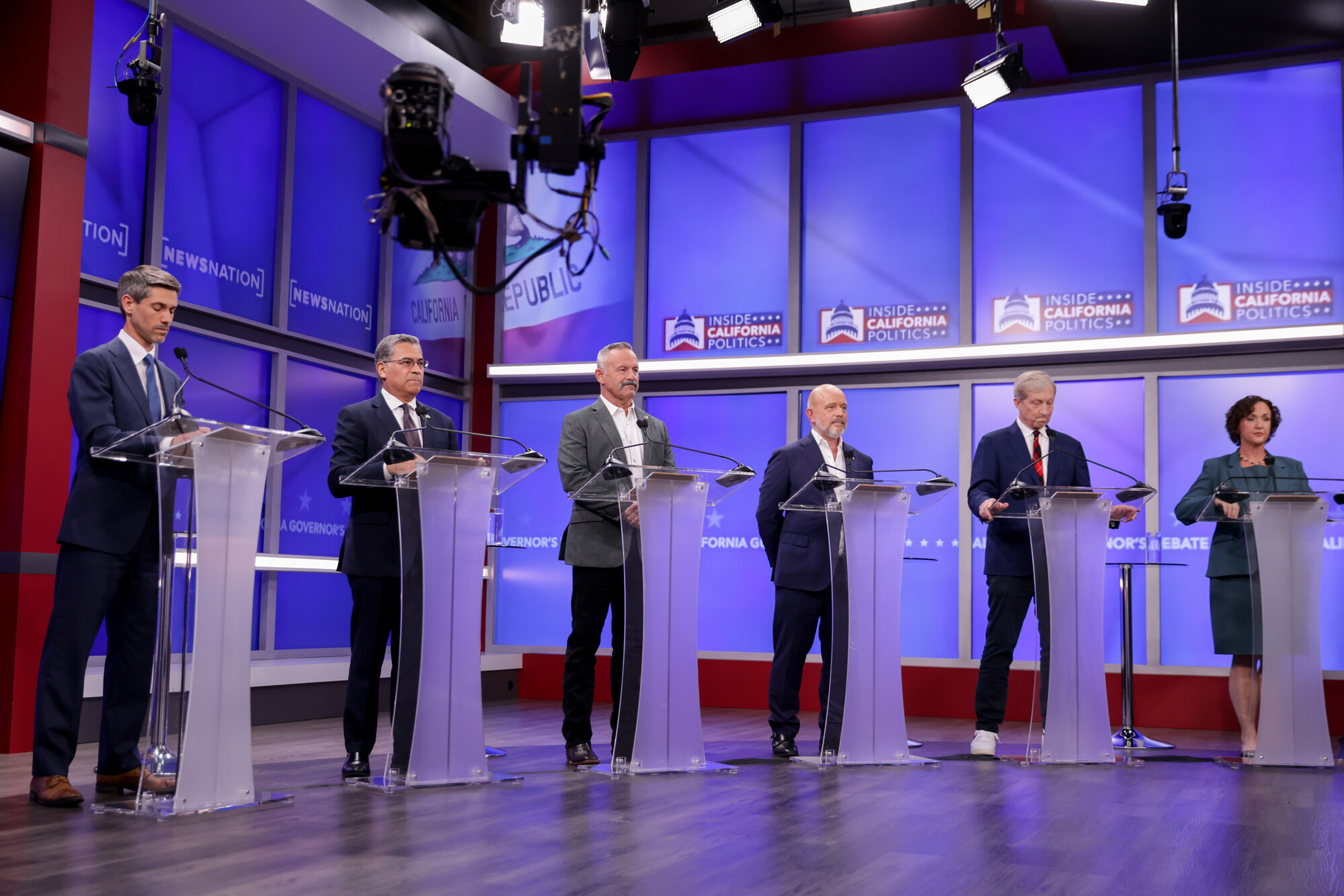
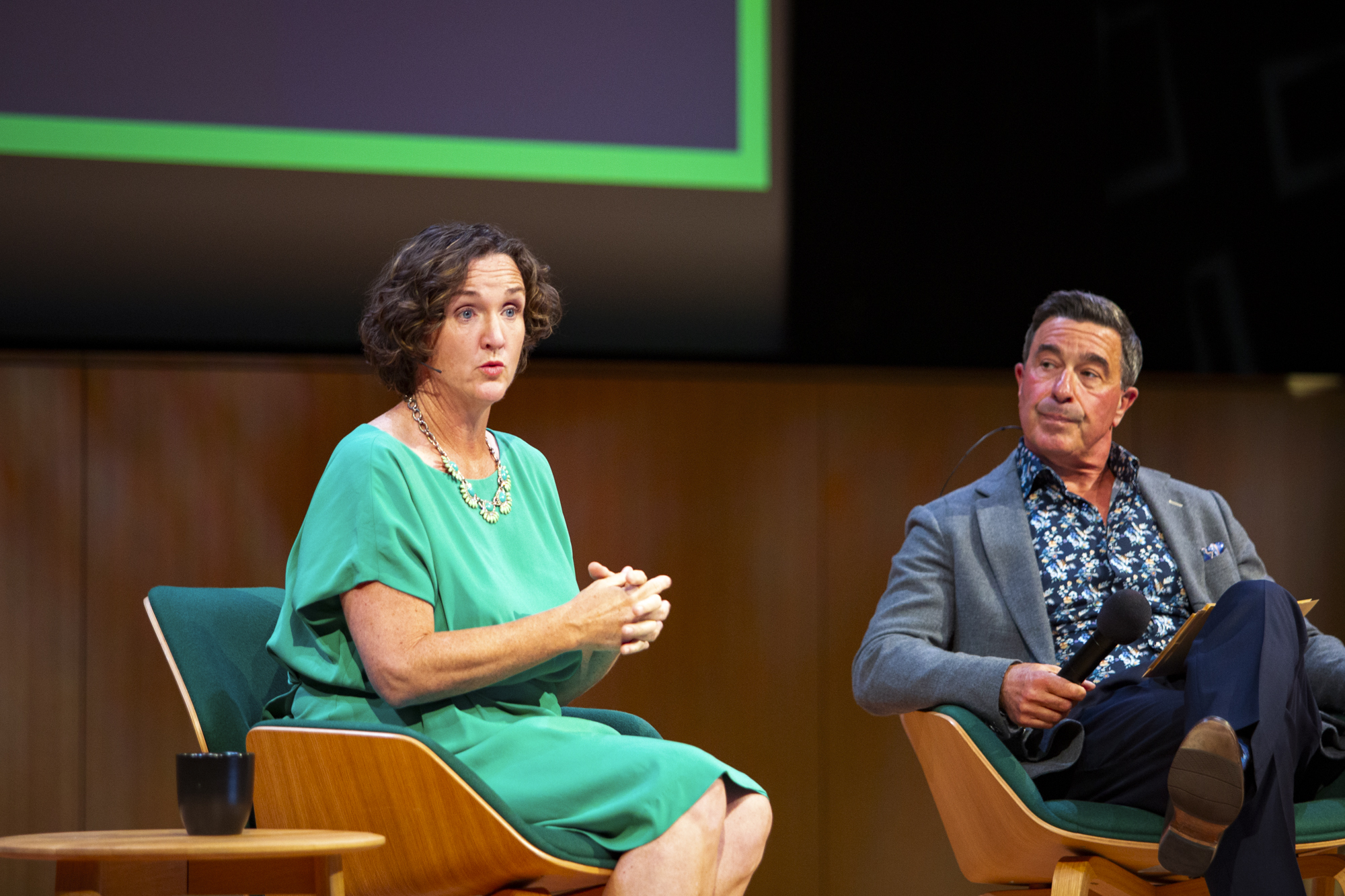
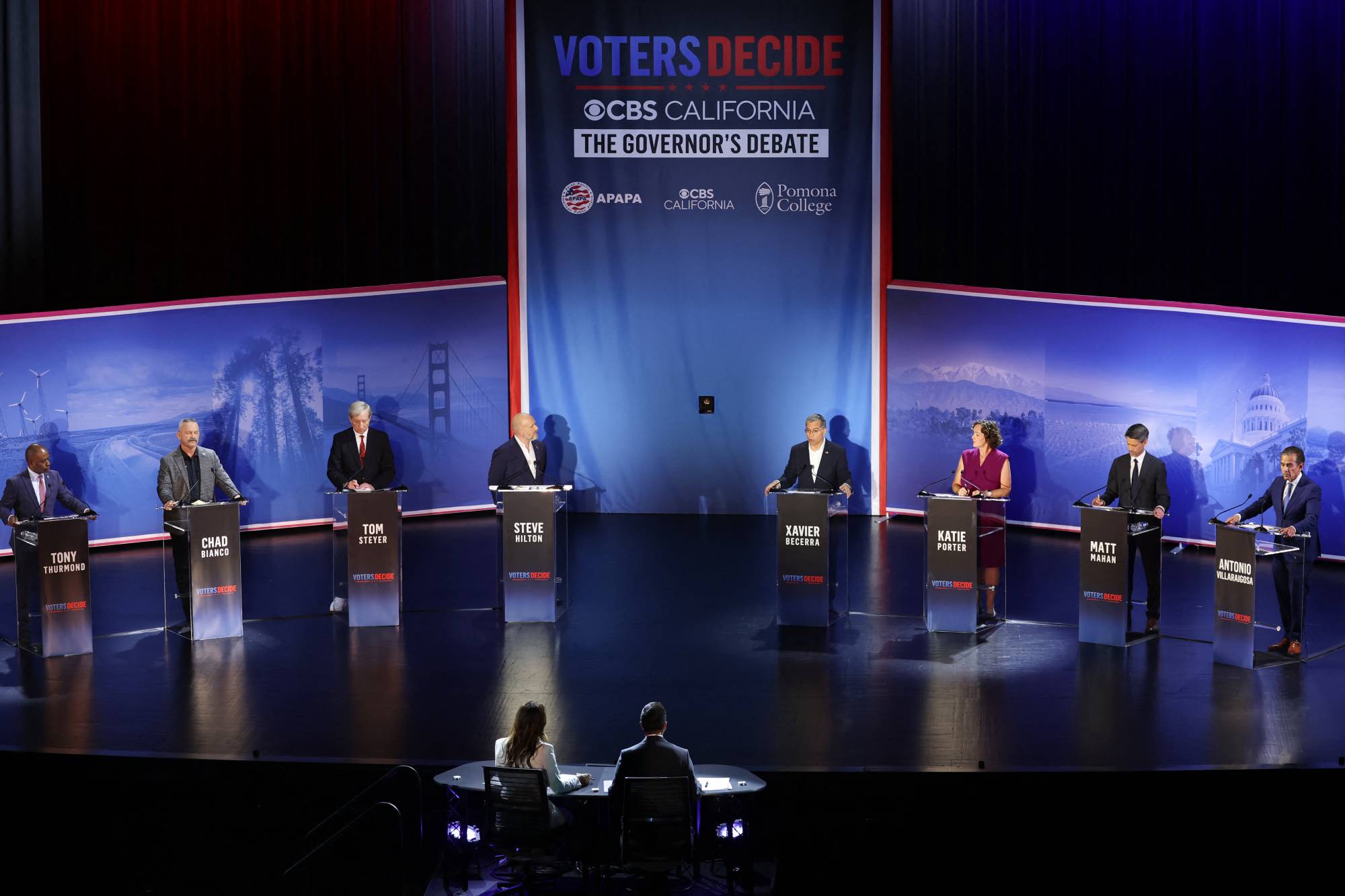
"caption": "Matt Mahan, Democratic gubernatorial candidate for California, from left, Xavier Becerra, Democratic gubernatorial candidate for California, Chad Bianco, Republican gubernatorial candidate for California, Steve Hilton, Republican gubernatorial candidate for California, Tom Steyer, Democratic gubernatorial candidate for California, and Katie Porter, Democratic gubernatorial candidate for California, during a gubernatorial debate at KRON Studios in San Francisco, California, on April 22, 2026. California will hold its primary election on June 2, where the top two finishers advance to the general election in November regardless of party affiliation. ",
"credit": "Jason Henry/Nexstar/Bloomberg",
"altTag": null,
"description": null,
"imgSizes": {
"thumbnail": {
"file": "https://cdn.kqed.org/wp-content/uploads/sites/10/2026/04/FTP_9P3A3319_1_qed-160x107.jpg",
"width": 160,
"height": 107,
"mimeType": "image/jpeg"
},
"1536x1536": {
"file": "https://cdn.kqed.org/wp-content/uploads/sites/10/2026/04/FTP_9P3A3319_1_qed-1536x1024.jpg",
"width": 1536,
"height": 1024,
"mimeType": "image/jpeg"
},
"post-thumbnail": {
"file": "https://cdn.kqed.org/wp-content/uploads/sites/10/2026/04/FTP_9P3A3319_1_qed-672x372.jpg",
"width": 672,
"height": 372,
"mimeType": "image/jpeg"
},
"twentyfourteen-full-width": {
"file": "https://cdn.kqed.org/wp-content/uploads/sites/10/2026/04/FTP_9P3A3319_1_qed-1038x576.jpg",
"width": 1038,
"height": 576,
"mimeType": "image/jpeg"
},
"npr-cds-wide": {
"file": "https://cdn.kqed.org/wp-content/uploads/sites/10/2026/04/FTP_9P3A3319_1_qed-1200x675.jpg",
"width": 1200,
"height": 675,
"mimeType": "image/jpeg"
},
"npr-cds-square": {
"file": "https://cdn.kqed.org/wp-content/uploads/sites/10/2026/04/FTP_9P3A3319_1_qed-600x600.jpg",
"width": 600,
"height": 600,
"mimeType": "image/jpeg"
},
"kqedFullSize": {
"file": "https://cdn.kqed.org/wp-content/uploads/sites/10/2026/04/FTP_9P3A3319_1_qed.jpg",
"width": 1999,
"height": 1333
}
},
"isLoading": false,
"fetchFailed": false
},
"news_12082339": {
"type": "attachments",
"id": "news_12082339",
"meta": {
"index": "attachments_1716263798",
"site": "news",
"id": "12082339",
"found": true
},
"title": "20260423_ XAVIERBECERRA_EG_039-KQED",
"publishDate": 1777935078,
"status": "inherit",
"parent": 0,
"modified": 1778267226,
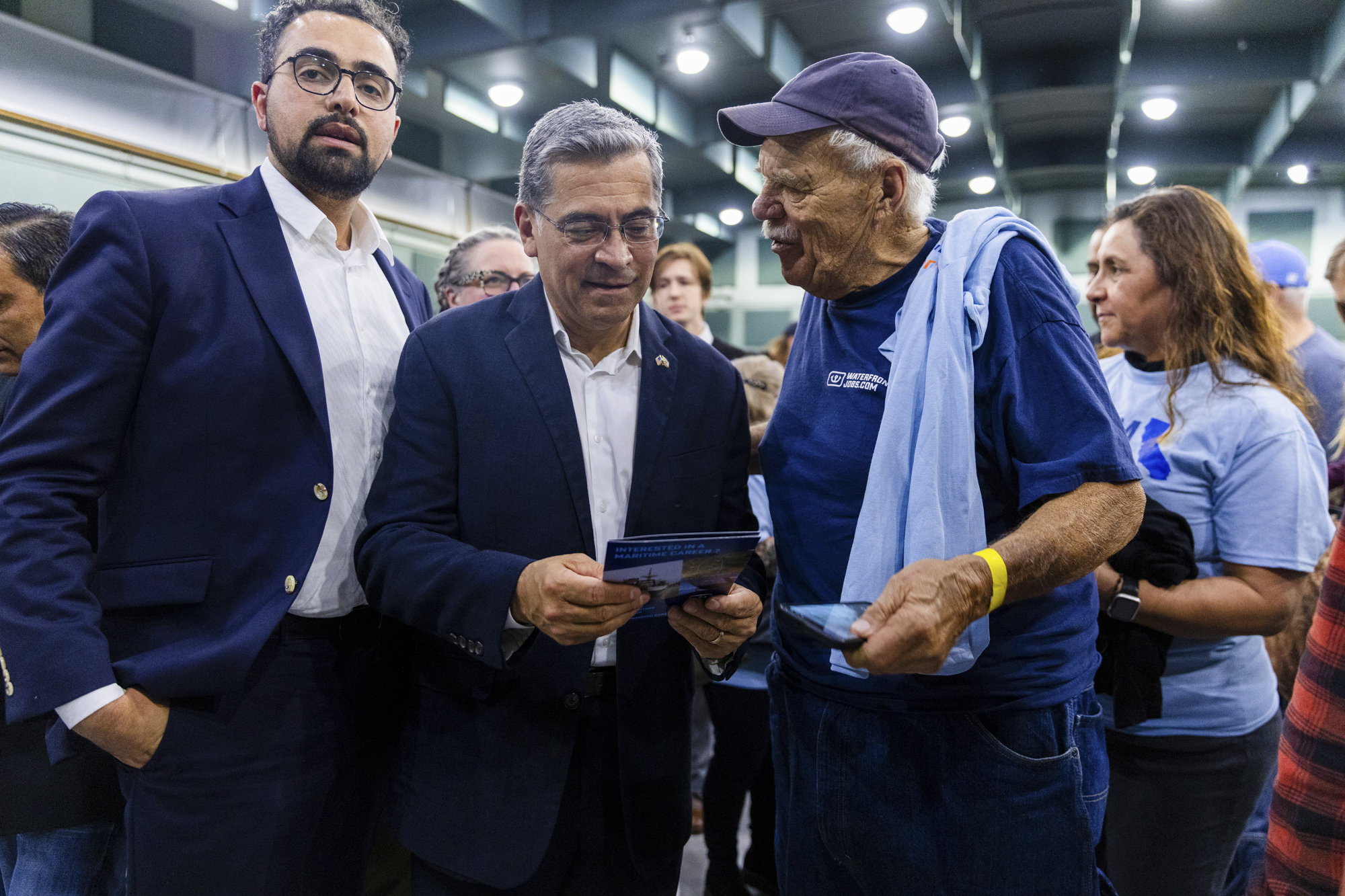
"caption": "Concord resident Chuck Carpenter, right, speaks with Xavier Becerra during a campaign event at Mount Diablo High School in Concord on Thursday, April 23, 2026.",
"credit": "Estefany Gonzalez for KQED",
"altTag": null,
"description": null,
"imgSizes": {
"thumbnail": {
"file": "https://cdn.kqed.org/wp-content/uploads/sites/10/2026/05/20260423_-XAVIERBECERRA_EG_039-KQED-160x107.jpg",
"width": 160,
"height": 107,
"mimeType": "image/jpeg"
},
"1536x1536": {
"file": "https://cdn.kqed.org/wp-content/uploads/sites/10/2026/05/20260423_-XAVIERBECERRA_EG_039-KQED-1536x1024.jpg",
"width": 1536,
"height": 1024,
"mimeType": "image/jpeg"
},
"post-thumbnail": {
"file": "https://cdn.kqed.org/wp-content/uploads/sites/10/2026/05/20260423_-XAVIERBECERRA_EG_039-KQED-672x372.jpg",
"width": 672,
"height": 372,
"mimeType": "image/jpeg"
},
"twentyfourteen-full-width": {
"file": "https://cdn.kqed.org/wp-content/uploads/sites/10/2026/05/20260423_-XAVIERBECERRA_EG_039-KQED-1038x576.jpg",
"width": 1038,
"height": 576,
"mimeType": "image/jpeg"
},
"npr-cds-wide": {
"file": "https://cdn.kqed.org/wp-content/uploads/sites/10/2026/05/20260423_-XAVIERBECERRA_EG_039-KQED-1200x675.jpg",
"width": 1200,
"height": 675,
"mimeType": "image/jpeg"
},
"npr-cds-square": {
"file": "https://cdn.kqed.org/wp-content/uploads/sites/10/2026/05/20260423_-XAVIERBECERRA_EG_039-KQED-600x600.jpg",
"width": 600,
"height": 600,
"mimeType": "image/jpeg"
},
"kqedFullSize": {
"file": "https://cdn.kqed.org/wp-content/uploads/sites/10/2026/05/20260423_-XAVIERBECERRA_EG_039-KQED.jpg",
"width": 2000,
"height": 1333
}
},
"isLoading": false,
"fetchFailed": false
},
"news_12077708": {
"type": "attachments",
"id": "news_12077708",
"meta": {
"index": "attachments_1716263798",
"site": "news",
"id": "12077708",
"found": true
},
"title": "260326-KATIE PORTER ON PB-MD-03-KQED",
"publishDate": 1774559567,
"status": "inherit",
"parent": 0,
"modified": 1774559583,
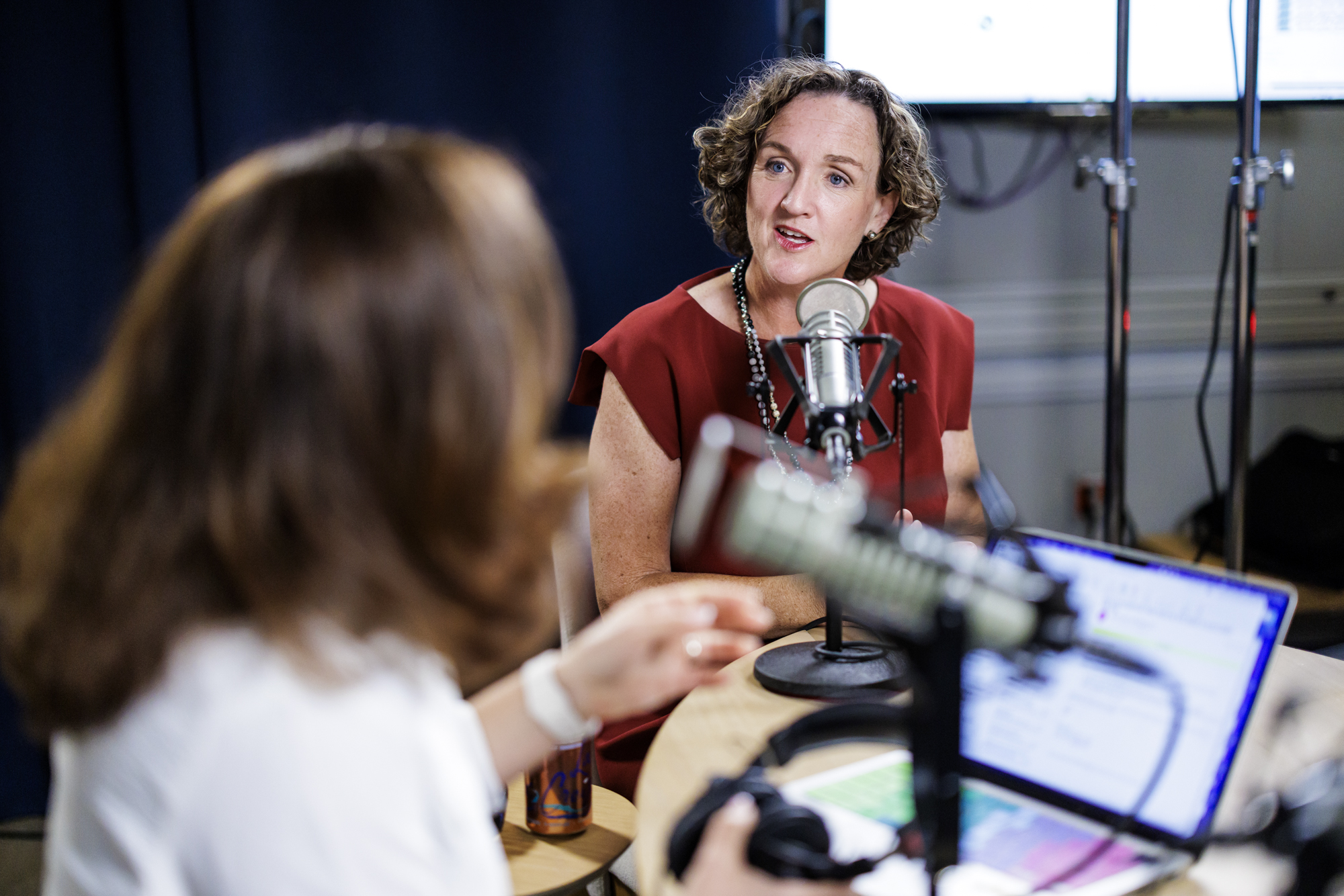
"caption": "Katie Porter is interviewed by Marisa Lagos and Scott Shafer on Political Breakdown at KQED on March 26, 2026.",
"credit": "Martin do Nascimento/KQED",
"altTag": null,
"description": null,
"imgSizes": {
"thumbnail": {
"file": "https://cdn.kqed.org/wp-content/uploads/sites/10/2026/03/260326-KATIE-PORTER-ON-PB-MD-03-KQED-160x107.jpg",
"width": 160,
"height": 107,
"mimeType": "image/jpeg"
},
"1536x1536": {
"file": "https://cdn.kqed.org/wp-content/uploads/sites/10/2026/03/260326-KATIE-PORTER-ON-PB-MD-03-KQED-1536x1025.jpg",
"width": 1536,
"height": 1025,
"mimeType": "image/jpeg"
},
"post-thumbnail": {
"file": "https://cdn.kqed.org/wp-content/uploads/sites/10/2026/03/260326-KATIE-PORTER-ON-PB-MD-03-KQED-672x372.jpg",
"width": 672,
"height": 372,
"mimeType": "image/jpeg"
},
"twentyfourteen-full-width": {
"file": "https://cdn.kqed.org/wp-content/uploads/sites/10/2026/03/260326-KATIE-PORTER-ON-PB-MD-03-KQED-1038x576.jpg",
"width": 1038,
"height": 576,
"mimeType": "image/jpeg"
},
"npr-cds-wide": {
"file": "https://cdn.kqed.org/wp-content/uploads/sites/10/2026/03/260326-KATIE-PORTER-ON-PB-MD-03-KQED-1200x675.jpg",
"width": 1200,
"height": 675,
"mimeType": "image/jpeg"
},
"npr-cds-square": {
"file": "https://cdn.kqed.org/wp-content/uploads/sites/10/2026/03/260326-KATIE-PORTER-ON-PB-MD-03-KQED-600x600.jpg",
"width": 600,
"height": 600,
"mimeType": "image/jpeg"
},
"kqedFullSize": {
"file": "https://cdn.kqed.org/wp-content/uploads/sites/10/2026/03/260326-KATIE-PORTER-ON-PB-MD-03-KQED.jpg",
"width": 2000,
"height": 1334
}
},
"isLoading": false,
"fetchFailed": false
},
"news_12081365": {
"type": "attachments",
"id": "news_12081365",
"meta": {
"index": "attachments_1716263798",
"site": "news",
"id": "12081365",
"found": true
},
"title": "110525-Election-Counting-Fresno-LV-CM-15-1",
"publishDate": 1777068720,
"status": "inherit",
"parent": 12081363,
"modified": 1777068744,
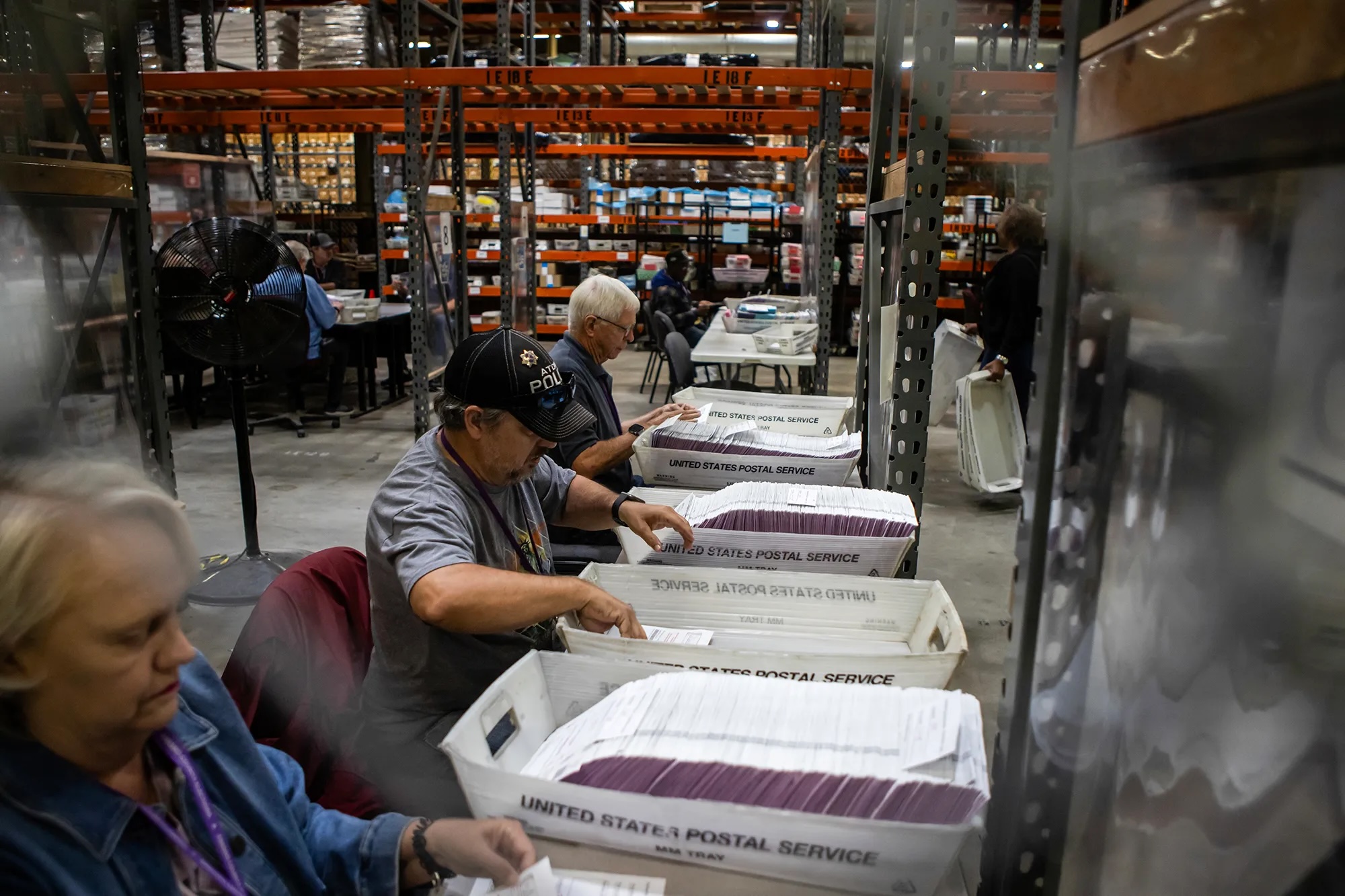
"caption": "Election workers sort ballots at the Fresno County Elections Warehouse in Fresno on Nov. 5, 2025. ",
"credit": "Photo by Larry Valenzuela/CalMatters/CatchLight Local",
"altTag": null,
"description": null,
"imgSizes": {
"thumbnail": {
"file": "https://cdn.kqed.org/wp-content/uploads/sites/10/2026/04/110525-Election-Counting-Fresno-LV-CM-15-1-160x107.jpeg",
"width": 160,
"height": 107,
"mimeType": "image/jpeg"
},
"1536x1536": {
"file": "https://cdn.kqed.org/wp-content/uploads/sites/10/2026/04/110525-Election-Counting-Fresno-LV-CM-15-1-1536x1024.jpeg",
"width": 1536,
"height": 1024,
"mimeType": "image/jpeg"
},
"post-thumbnail": {
"file": "https://cdn.kqed.org/wp-content/uploads/sites/10/2026/04/110525-Election-Counting-Fresno-LV-CM-15-1-672x372.jpeg",
"width": 672,
"height": 372,
"mimeType": "image/jpeg"
},
"twentyfourteen-full-width": {
"file": "https://cdn.kqed.org/wp-content/uploads/sites/10/2026/04/110525-Election-Counting-Fresno-LV-CM-15-1-1038x576.jpeg",
"width": 1038,
"height": 576,
"mimeType": "image/jpeg"
},
"npr-cds-wide": {
"file": "https://cdn.kqed.org/wp-content/uploads/sites/10/2026/04/110525-Election-Counting-Fresno-LV-CM-15-1-1200x675.jpeg",
"width": 1200,
"height": 675,
"mimeType": "image/jpeg"
},
"npr-cds-square": {
"file": "https://cdn.kqed.org/wp-content/uploads/sites/10/2026/04/110525-Election-Counting-Fresno-LV-CM-15-1-600x600.jpeg",
"width": 600,
"height": 600,
"mimeType": "image/jpeg"
},
"kqedFullSize": {
"file": "https://cdn.kqed.org/wp-content/uploads/sites/10/2026/04/110525-Election-Counting-Fresno-LV-CM-15-1.jpeg",
"width": 2000,
"height": 1333
}
},
"isLoading": false,
"fetchFailed": false
},
"news_12082352": {
"type": "attachments",
"id": "news_12082352",
"meta": {
"index": "attachments_1716263798",
"site": "news",
"id": "12082352",
"found": true
},
"title": "20260504_KATIEPORTERTOWNHALL_GC-3-KQED",
"publishDate": 1777952551,
"status": "inherit",
"parent": 0,
"modified": 1777952590,
"caption": "Gubernatorial candidate Katie Porter (D), left, speaks during a town hall at KQED on May 4, 2026.",
"credit": "Gina Castro for KQED",
"altTag": null,
"description": null,
"imgSizes": {
"thumbnail": {
"file": "https://cdn.kqed.org/wp-content/uploads/sites/10/2026/05/20260504_KATIEPORTERTOWNHALL_GC-3-KQED-160x107.jpg",
"width": 160,
"height": 107,
"mimeType": "image/jpeg"
},
"1536x1536": {
"file": "https://cdn.kqed.org/wp-content/uploads/sites/10/2026/05/20260504_KATIEPORTERTOWNHALL_GC-3-KQED-1536x1024.jpg",
"width": 1536,
"height": 1024,
"mimeType": "image/jpeg"
},
"post-thumbnail": {
"file": "https://cdn.kqed.org/wp-content/uploads/sites/10/2026/05/20260504_KATIEPORTERTOWNHALL_GC-3-KQED-672x372.jpg",
"width": 672,
"height": 372,
"mimeType": "image/jpeg"
},
"twentyfourteen-full-width": {
"file": "https://cdn.kqed.org/wp-content/uploads/sites/10/2026/05/20260504_KATIEPORTERTOWNHALL_GC-3-KQED-1038x576.jpg",
"width": 1038,
"height": 576,
"mimeType": "image/jpeg"
},
"npr-cds-wide": {
"file": "https://cdn.kqed.org/wp-content/uploads/sites/10/2026/05/20260504_KATIEPORTERTOWNHALL_GC-3-KQED-1200x675.jpg",
"width": 1200,
"height": 675,
"mimeType": "image/jpeg"
},
"npr-cds-square": {
"file": "https://cdn.kqed.org/wp-content/uploads/sites/10/2026/05/20260504_KATIEPORTERTOWNHALL_GC-3-KQED-600x600.jpg",
"width": 600,
"height": 600,
"mimeType": "image/jpeg"
},
"kqedFullSize": {
"file": "https://cdn.kqed.org/wp-content/uploads/sites/10/2026/05/20260504_KATIEPORTERTOWNHALL_GC-3-KQED.jpg",
"width": 2000,
"height": 1333
}
},
"isLoading": false,
"fetchFailed": false
},
"news_12082077": {
"type": "attachments",
"id": "news_12082077",
"meta": {
"index": "attachments_1716263798",
"site": "news",
"id": "12082077",
"found": true
},
"title": "007_Oakland_ItzelDiazandFamily_09092021_qed",
"publishDate": 1777658114,
"status": "inherit",
"parent": 12082074,
"modified": 1777658125,
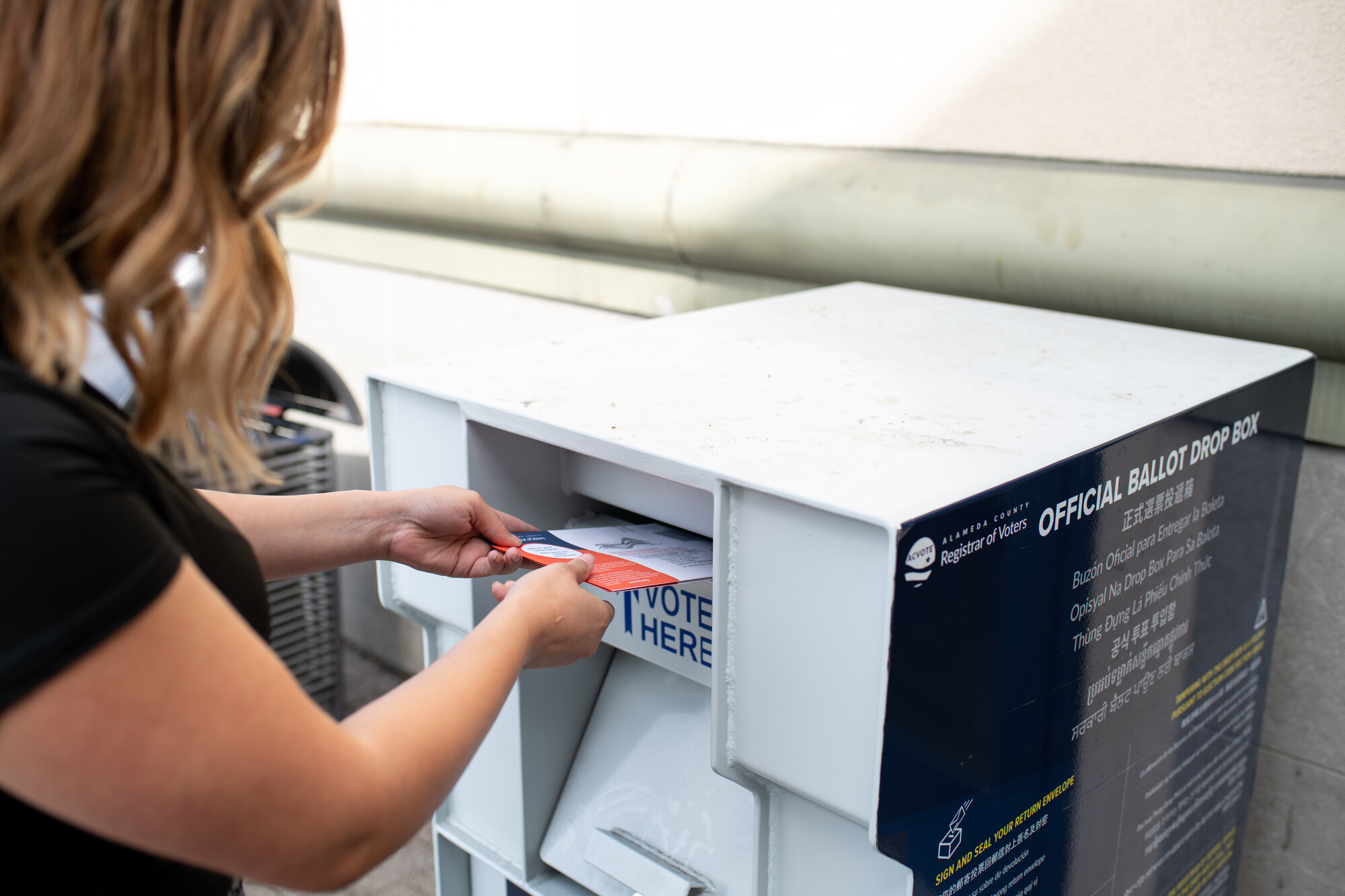
"caption": "Itzel Diaz drops off her ballot for California's gubernatorial recall election at a ballot dropbox in Fruitvale on Sept. 9, 2021.",
"credit": "Beth LaBerge/KQED",
"altTag": null,
"description": null,
"imgSizes": {
"thumbnail": {
"file": "https://cdn.kqed.org/wp-content/uploads/sites/10/2026/05/007_Oakland_ItzelDiazandFamily_09092021_qed-160x107.jpg",
"width": 160,
"height": 107,
"mimeType": "image/jpeg"
},
"1536x1536": {
"file": "https://cdn.kqed.org/wp-content/uploads/sites/10/2026/05/007_Oakland_ItzelDiazandFamily_09092021_qed-1536x1024.jpg",
"width": 1536,
"height": 1024,
"mimeType": "image/jpeg"
},
"post-thumbnail": {
"file": "https://cdn.kqed.org/wp-content/uploads/sites/10/2026/05/007_Oakland_ItzelDiazandFamily_09092021_qed-672x372.jpg",
"width": 672,
"height": 372,
"mimeType": "image/jpeg"
},
"twentyfourteen-full-width": {
"file": "https://cdn.kqed.org/wp-content/uploads/sites/10/2026/05/007_Oakland_ItzelDiazandFamily_09092021_qed-1038x576.jpg",
"width": 1038,
"height": 576,
"mimeType": "image/jpeg"
},
"npr-cds-wide": {
"file": "https://cdn.kqed.org/wp-content/uploads/sites/10/2026/05/007_Oakland_ItzelDiazandFamily_09092021_qed-1200x675.jpg",
"width": 1200,
"height": 675,
"mimeType": "image/jpeg"
},
"npr-cds-square": {
"file": "https://cdn.kqed.org/wp-content/uploads/sites/10/2026/05/007_Oakland_ItzelDiazandFamily_09092021_qed-600x600.jpg",
"width": 600,
"height": 600,
"mimeType": "image/jpeg"
},
"kqedFullSize": {
"file": "https://cdn.kqed.org/wp-content/uploads/sites/10/2026/05/007_Oakland_ItzelDiazandFamily_09092021_qed.jpg",
"width": 2000,
"height": 1333
}
},
"isLoading": false,
"fetchFailed": false
},
"news_12082088": {
"type": "attachments",
"id": "news_12082088",
"meta": {
"index": "attachments_1716263798",
"site": "news",
"id": "12082088",
"found": true
},
"title": "A San Francisco official mail-in ballot for the Nov. 3, 2020 election.",
"publishDate": 1777659789,
"status": "inherit",
"parent": 12082075,
"modified": 1777659804,
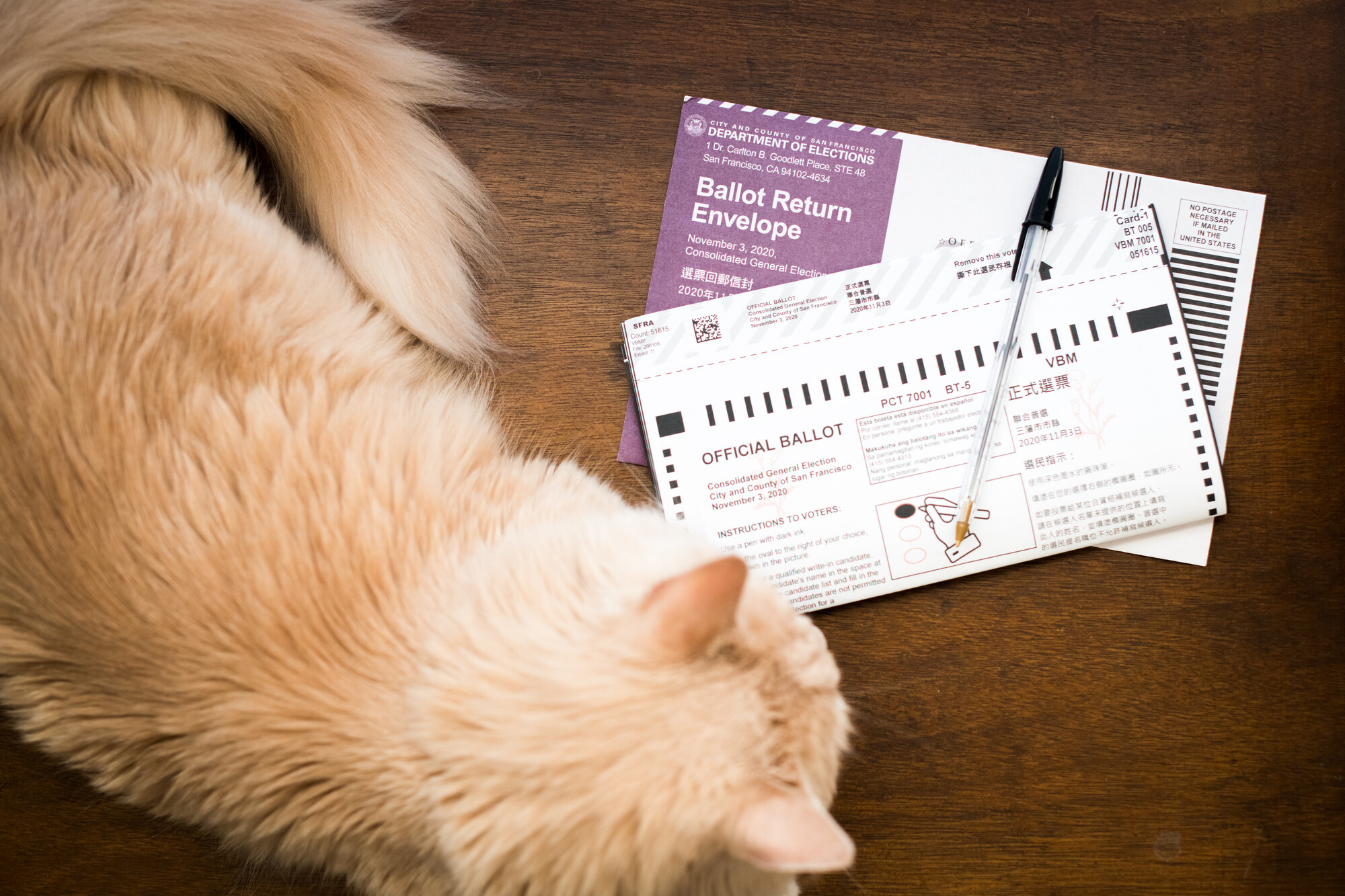
"caption": "A San Francisco official mail-in ballot for the Nov. 3, 2020 election.",
"credit": "Beth LaBerge/KQED",
"altTag": null,
"description": null,
"imgSizes": {
"thumbnail": {
"file": "https://cdn.kqed.org/wp-content/uploads/sites/10/2026/05/003_KQED_SanFrancisco_Election2020_MailinBallot_10122020_qed-160x107.jpg",
"width": 160,
"height": 107,
"mimeType": "image/jpeg"
},
"1536x1536": {
"file": "https://cdn.kqed.org/wp-content/uploads/sites/10/2026/05/003_KQED_SanFrancisco_Election2020_MailinBallot_10122020_qed-1536x1024.jpg",
"width": 1536,
"height": 1024,
"mimeType": "image/jpeg"
},
"post-thumbnail": {
"file": "https://cdn.kqed.org/wp-content/uploads/sites/10/2026/05/003_KQED_SanFrancisco_Election2020_MailinBallot_10122020_qed-672x372.jpg",
"width": 672,
"height": 372,
"mimeType": "image/jpeg"
},
"twentyfourteen-full-width": {
"file": "https://cdn.kqed.org/wp-content/uploads/sites/10/2026/05/003_KQED_SanFrancisco_Election2020_MailinBallot_10122020_qed-1038x576.jpg",
"width": 1038,
"height": 576,
"mimeType": "image/jpeg"
},
"npr-cds-wide": {
"file": "https://cdn.kqed.org/wp-content/uploads/sites/10/2026/05/003_KQED_SanFrancisco_Election2020_MailinBallot_10122020_qed-1200x675.jpg",
"width": 1200,
"height": 675,
"mimeType": "image/jpeg"
},
"npr-cds-square": {
"file": "https://cdn.kqed.org/wp-content/uploads/sites/10/2026/05/003_KQED_SanFrancisco_Election2020_MailinBallot_10122020_qed-600x600.jpg",
"width": 600,
"height": 600,
"mimeType": "image/jpeg"
},
"kqedFullSize": {
"file": "https://cdn.kqed.org/wp-content/uploads/sites/10/2026/05/003_KQED_SanFrancisco_Election2020_MailinBallot_10122020_qed.jpg",
"width": 2000,
"height": 1333
}
},
"isLoading": false,
"fetchFailed": false
},
"news_12082062": {
"type": "attachments",
"id": "news_12082062",
"meta": {
"index": "attachments_1716263798",
"site": "news",
"id": "12082062",
"found": true
},
"title": "Candidates For Governor Of California Debate In San Francisco",
"publishDate": 1777655103,
"status": "inherit",
"parent": 12082059,
"modified": 1777662131,
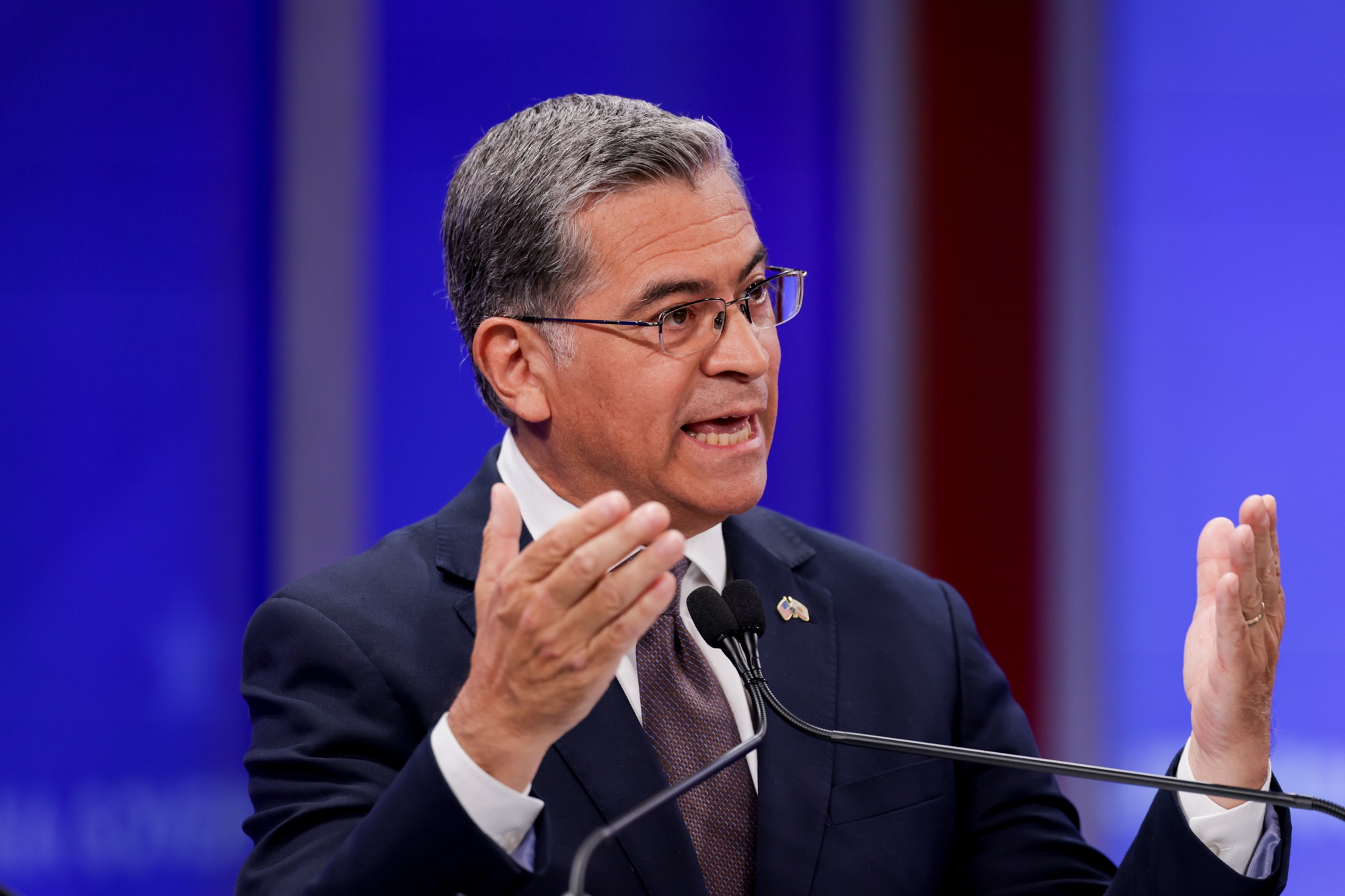
"caption": "Xavier Becerra, Democratic gubernatorial candidate for California, speaks during a gubernatorial debate at KRON Studios in San Francisco on Wednesday, April 22, 2026. California will hold its primary election on June 2, where the top two finishers advance to the general election in November regardless of party affiliation. ",
"credit": "Jason Henry/Nexstar/Bloomberg Pool via Getty Images",
"altTag": null,
"description": null,
"imgSizes": {
"thumbnail": {
"file": "https://cdn.kqed.org/wp-content/uploads/sites/10/2026/05/XavierBecerra-160x107.jpg",
"width": 160,
"height": 107,
"mimeType": "image/jpeg"
},
"1536x1536": {
"file": "https://cdn.kqed.org/wp-content/uploads/sites/10/2026/05/XavierBecerra-1536x1024.jpg",
"width": 1536,
"height": 1024,
"mimeType": "image/jpeg"
},
"post-thumbnail": {
"file": "https://cdn.kqed.org/wp-content/uploads/sites/10/2026/05/XavierBecerra-672x372.jpg",
"width": 672,
"height": 372,
"mimeType": "image/jpeg"
},
"twentyfourteen-full-width": {
"file": "https://cdn.kqed.org/wp-content/uploads/sites/10/2026/05/XavierBecerra-1038x576.jpg",
"width": 1038,
"height": 576,
"mimeType": "image/jpeg"
},
"npr-cds-wide": {
"file": "https://cdn.kqed.org/wp-content/uploads/sites/10/2026/05/XavierBecerra-1200x675.jpg",
"width": 1200,
"height": 675,
"mimeType": "image/jpeg"
},
"npr-cds-square": {
"file": "https://cdn.kqed.org/wp-content/uploads/sites/10/2026/05/XavierBecerra-600x600.jpg",
"width": 600,
"height": 600,
"mimeType": "image/jpeg"
},
"kqedFullSize": {
"file": "https://cdn.kqed.org/wp-content/uploads/sites/10/2026/05/XavierBecerra.jpg",
"width": 2000,
"height": 1333
}
},
"isLoading": false,
"fetchFailed": false
},
"news_12081727": {
"type": "attachments",
"id": "news_12081727",
"meta": {
"index": "attachments_1716263798",
"site": "news",
"id": "12081727",
"found": true
},
"title": "US-POLITICS-VOTE-CALIFORNIA-GOVERNOR-DEBATE",
"publishDate": 1777470407,
"status": "inherit",
"parent": 12081726,
"modified": 1777470656,
"caption": "(L/R) Democratic candidate Tony Thurmond, Republican candidate Chad Bianco, Democratic candidate Tom Steyer, Republican candidate Steve Hilton, Democratic candidate Xavier Becerra, Democratic candidate Katie Porter, Democratic candidate Matt Mahan and Democratic candidate Antonio Villaraigosa participate in a California gubernatorial debate at Bridges Auditorium on the campus of Pomona College in Claremont, California, on April 28, 2026. The eight candidates for California governor are participating in the second televised debate, ahead of the June 2, 2026 primary elections. ",
"credit": "Photo by Patrick T. Fallon / AFP via Getty Images",
"altTag": null,
"description": null,
"imgSizes": {
"medium": {
"file": "https://cdn.kqed.org/wp-content/uploads/sites/10/2026/04/GettyImages-2273086352-2000x1333.jpg",
"width": 2000,
"height": 1333,
"mimeType": "image/jpeg"
},
"large": {
"file": "https://cdn.kqed.org/wp-content/uploads/sites/10/2026/04/GettyImages-2273086352-2000x1333.jpg",
"width": 2000,
"height": 1333,
"mimeType": "image/jpeg"
},
"thumbnail": {
"file": "https://cdn.kqed.org/wp-content/uploads/sites/10/2026/04/GettyImages-2273086352-160x107.jpg",
"width": 160,
"height": 107,
"mimeType": "image/jpeg"
},
"1536x1536": {
"file": "https://cdn.kqed.org/wp-content/uploads/sites/10/2026/04/GettyImages-2273086352-1536x1024.jpg",
"width": 1536,
"height": 1024,
"mimeType": "image/jpeg"
},
"2048x2048": {
"file": "https://cdn.kqed.org/wp-content/uploads/sites/10/2026/04/GettyImages-2273086352-2048x1365.jpg",
"width": 2048,
"height": 1365,
"mimeType": "image/jpeg"
},
"post-thumbnail": {
"file": "https://cdn.kqed.org/wp-content/uploads/sites/10/2026/04/GettyImages-2273086352-672x372.jpg",
"width": 672,
"height": 372,
"mimeType": "image/jpeg"
},
"twentyfourteen-full-width": {
"file": "https://cdn.kqed.org/wp-content/uploads/sites/10/2026/04/GettyImages-2273086352-1038x576.jpg",
"width": 1038,
"height": 576,
"mimeType": "image/jpeg"
},
"full-width": {
"file": "https://cdn.kqed.org/wp-content/uploads/sites/10/2026/04/GettyImages-2273086352-2000x1333.jpg",
"width": 2000,
"height": 1333,
"mimeType": "image/jpeg"
},
"npr-cds-wide": {
"file": "https://cdn.kqed.org/wp-content/uploads/sites/10/2026/04/GettyImages-2273086352-1200x675.jpg",
"width": 1200,
"height": 675,
"mimeType": "image/jpeg"
},
"npr-cds-square": {
"file": "https://cdn.kqed.org/wp-content/uploads/sites/10/2026/04/GettyImages-2273086352-600x600.jpg",
"width": 600,
"height": 600,
"mimeType": "image/jpeg"
},
"kqedFullSize": {
"file": "https://cdn.kqed.org/wp-content/uploads/sites/10/2026/04/GettyImages-2273086352-scaled.jpg",
"width": 2560,
"height": 1707
}
},
"isLoading": false,
"fetchFailed": false
},
"news_12081506": {
"type": "attachments",
"id": "news_12081506",
"meta": {
"index": "attachments_1716263798",
"site": "news",
"id": "12081506",
"found": true
},
"title": "US-POLITICS-HEALTH-TAXATION",
"publishDate": 1777319044,
"status": "inherit",
"parent": 12081502,
"modified": 1777327958,
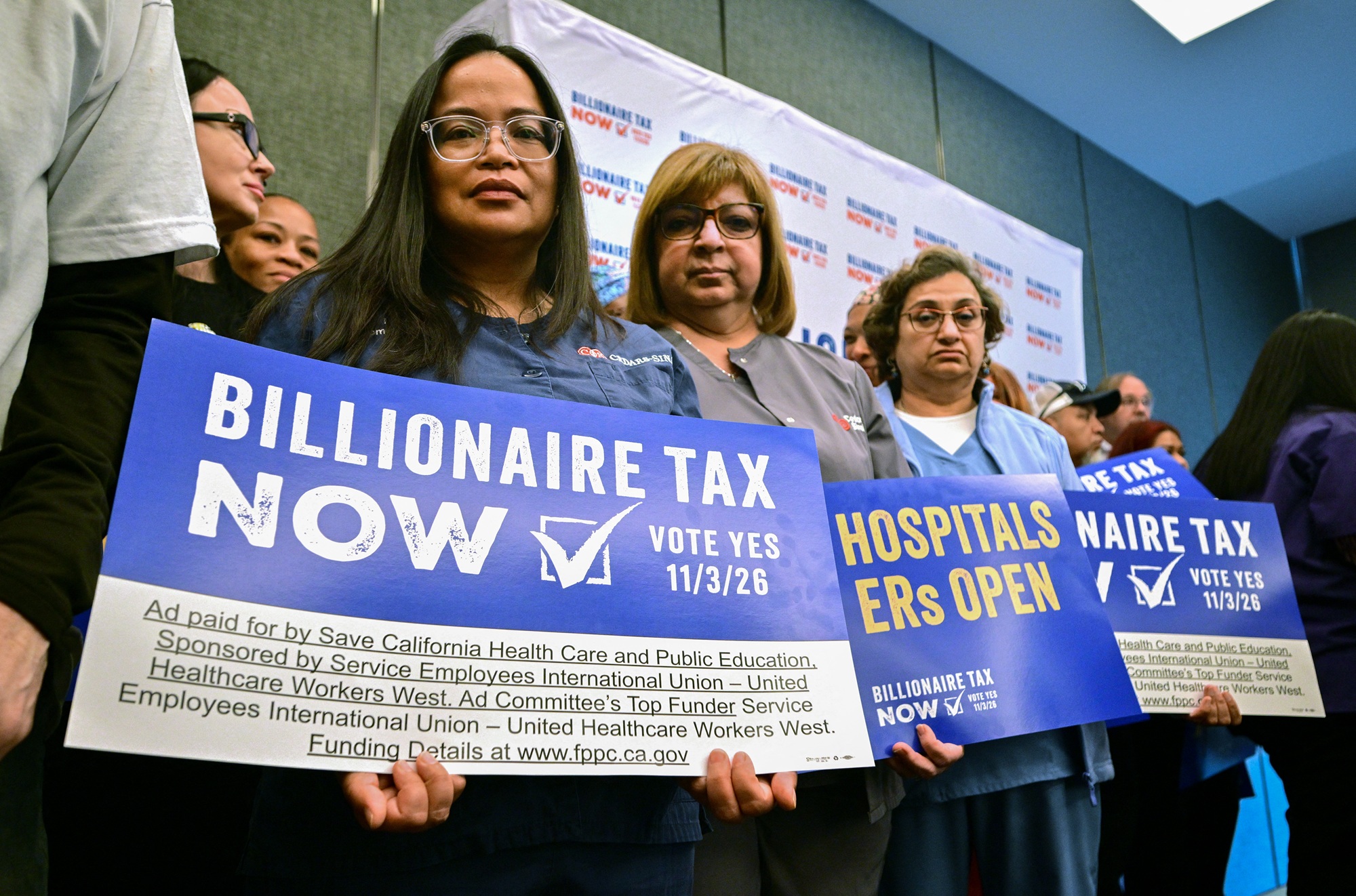
"caption": "Healthcare workers and other supporters with the Billionaire Tax Now coalition hold placards during a media briefing in Los Angeles on April 27, 2026. Healthcare workers and allies outlined the next steps in their effort to get California's Billionaire Tax on the ballot for the November election, with their efforts already exceeding 1,500,000 signatures collected from across the state. The initiative would levy a one-time 5% tax on California billionaires.",
"credit": "Frederic J. Brown/AFP via Getty Images",
"altTag": null,
"description": null,
"imgSizes": {
"thumbnail": {
"file": "https://cdn.kqed.org/wp-content/uploads/sites/10/2026/04/BillionaireTaxGetty-160x106.jpg",
"width": 160,
"height": 106,
"mimeType": "image/jpeg"
},
"1536x1536": {
"file": "https://cdn.kqed.org/wp-content/uploads/sites/10/2026/04/BillionaireTaxGetty-1536x1015.jpg",
"width": 1536,
"height": 1015,
"mimeType": "image/jpeg"
},
"post-thumbnail": {
"file": "https://cdn.kqed.org/wp-content/uploads/sites/10/2026/04/BillionaireTaxGetty-672x372.jpg",
"width": 672,
"height": 372,
"mimeType": "image/jpeg"
},
"twentyfourteen-full-width": {
"file": "https://cdn.kqed.org/wp-content/uploads/sites/10/2026/04/BillionaireTaxGetty-1038x576.jpg",
"width": 1038,
"height": 576,
"mimeType": "image/jpeg"
},
"npr-cds-wide": {
"file": "https://cdn.kqed.org/wp-content/uploads/sites/10/2026/04/BillionaireTaxGetty-1200x675.jpg",
"width": 1200,
"height": 675,
"mimeType": "image/jpeg"
},
"npr-cds-square": {
"file": "https://cdn.kqed.org/wp-content/uploads/sites/10/2026/04/BillionaireTaxGetty-600x600.jpg",
"width": 600,
"height": 600,
"mimeType": "image/jpeg"
},
"kqedFullSize": {
"file": "https://cdn.kqed.org/wp-content/uploads/sites/10/2026/04/BillionaireTaxGetty.jpg",
"width": 2000,
"height": 1322
}
},
"isLoading": false,
"fetchFailed": false
},
"news_12072282": {
"type": "attachments",
"id": "news_12072282",
"meta": {
"index": "attachments_1716263798",
"site": "news",
"id": "12072282",
"found": true
},
"title": "Election 2026 California Governor",
"publishDate": 1770234770,
"status": "inherit",
"parent": 12072234,
"modified": 1770234795,
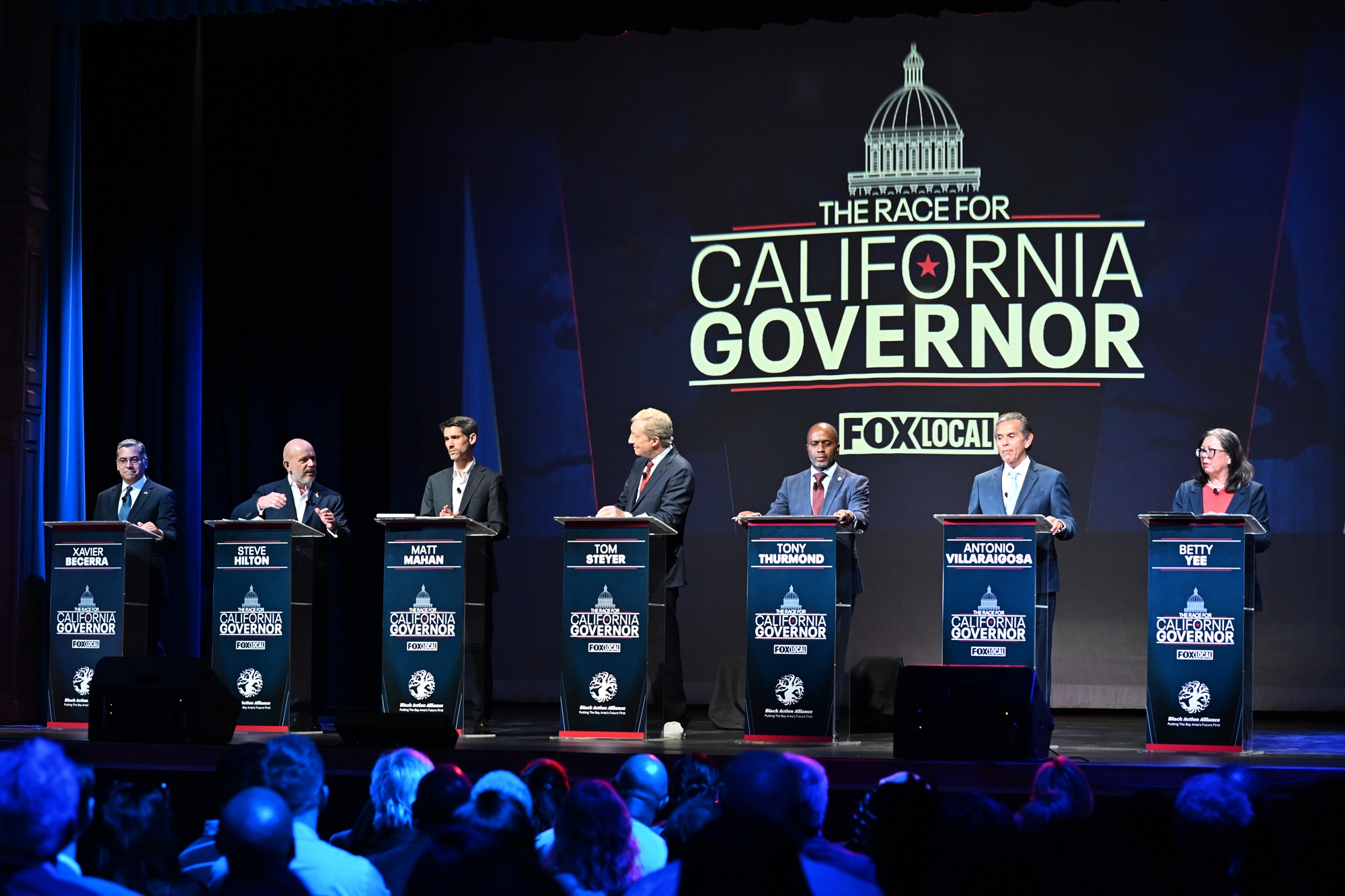
"caption": "From left, Xavier Becerra, Steve Hilton, Matt Mahan, Tom Steyer, Tony Thurmond, Antonio Villaraigosa and Betty Yee stand on the stage during the California gubernatorial candidate debate on Tuesday, Feb. 3, 2026, in San Francisco. ",
"credit": "Laure Andrillon/AP Photo",
"altTag": null,
"description": null,
"imgSizes": {
"thumbnail": {
"file": "https://cdn.kqed.org/wp-content/uploads/sites/10/2026/02/CAGovDebateAP1-160x107.jpg",
"width": 160,
"height": 107,
"mimeType": "image/jpeg"
},
"1536x1536": {
"file": "https://cdn.kqed.org/wp-content/uploads/sites/10/2026/02/CAGovDebateAP1-1536x1024.jpg",
"width": 1536,
"height": 1024,
"mimeType": "image/jpeg"
},
"post-thumbnail": {
"file": "https://cdn.kqed.org/wp-content/uploads/sites/10/2026/02/CAGovDebateAP1-672x372.jpg",
"width": 672,
"height": 372,
"mimeType": "image/jpeg"
},
"twentyfourteen-full-width": {
"file": "https://cdn.kqed.org/wp-content/uploads/sites/10/2026/02/CAGovDebateAP1-1038x576.jpg",
"width": 1038,
"height": 576,
"mimeType": "image/jpeg"
},
"npr-cds-wide": {
"file": "https://cdn.kqed.org/wp-content/uploads/sites/10/2026/02/CAGovDebateAP1-1200x675.jpg",
"width": 1200,
"height": 675,
"mimeType": "image/jpeg"
},
"kqedFullSize": {
"file": "https://cdn.kqed.org/wp-content/uploads/sites/10/2026/02/CAGovDebateAP1.jpg",
"width": 2000,
"height": 1333
}
},
"isLoading": false,
"fetchFailed": false
},
"news_12069063": {
"type": "attachments",
"id": "news_12069063",
"meta": {
"index": "attachments_1716263798",
"site": "news",
"id": "12069063",
"found": true
},
"title": "260107-SFCongressionalCandidateForum-18-BL_qed",
"publishDate": 1767893269,
"status": "inherit",
"parent": 0,
"modified": 1767893337,
"caption": "Saikat Chakrabarti, a candidate for California’s 11th Congressional District, participates in a forum with other candidates at UC Law San Francisco on Jan. 7, 2026.",
"credit": "Beth LaBerge/KQED",
"altTag": null,
"description": null,
"imgSizes": {
"thumbnail": {
"file": "https://cdn.kqed.org/wp-content/uploads/sites/10/2026/01/260107-SFCongressionalCandidateForum-18-BL_qed-160x107.jpg",
"width": 160,
"height": 107,
"mimeType": "image/jpeg"
},
"1536x1536": {
"file": "https://cdn.kqed.org/wp-content/uploads/sites/10/2026/01/260107-SFCongressionalCandidateForum-18-BL_qed-1536x1024.jpg",
"width": 1536,
"height": 1024,
"mimeType": "image/jpeg"
},
"post-thumbnail": {
"file": "https://cdn.kqed.org/wp-content/uploads/sites/10/2026/01/260107-SFCongressionalCandidateForum-18-BL_qed-672x372.jpg",
"width": 672,
"height": 372,
"mimeType": "image/jpeg"
},
"twentyfourteen-full-width": {
"file": "https://cdn.kqed.org/wp-content/uploads/sites/10/2026/01/260107-SFCongressionalCandidateForum-18-BL_qed-1038x576.jpg",
"width": 1038,
"height": 576,
"mimeType": "image/jpeg"
},
"npr-cds-wide": {
"file": "https://cdn.kqed.org/wp-content/uploads/sites/10/2026/01/260107-SFCongressionalCandidateForum-18-BL_qed-1200x675.jpg",
"width": 1200,
"height": 675,
"mimeType": "image/jpeg"
},
"kqedFullSize": {
"file": "https://cdn.kqed.org/wp-content/uploads/sites/10/2026/01/260107-SFCongressionalCandidateForum-18-BL_qed.jpg",
"width": 2000,
"height": 1333
}
},
"isLoading": false,
"fetchFailed": false
}
},
"audioPlayerReducer": {
"postId": "stream_live",
"isPaused": true,
"isPlaying": false,
"pfsActive": false,
"pledgeModalIsOpen": true,
"playerDrawerIsOpen": false,
"liveAudioPlayStartedAt": 0,
"liveAudioPlayContext": ""
},
"authorsReducer": {
"gmarzorati": {
"type": "authors",
"id": "227",
"meta": {
"index": "authors_1716337520",
"id": "227",
"found": true
},
"name": "Guy Marzorati",
"firstName": "Guy",
"lastName": "Marzorati",
"slug": "gmarzorati",
"email": "gmarzorati@KQED.org",
"display_author_email": true,
"staff_mastheads": [
"news"
],
"title": "Correspondent",
"bio": "Guy Marzorati is a correspondent on KQED's California Politics and Government Desk, based in San Jose. A graduate of Santa Clara University, Guy joined KQED in 2013. He reports on state and local politics and produces KQED's digital voter guide.",
"avatar": "https://secure.gravatar.com/avatar/e7038b8dbfd55b104369b76b1cd0b9de?s=600&d=blank&r=g",
"twitter": "guymarzorati",
"facebook": null,
"instagram": null,
"linkedin": null,
"sites": [
{
"site": "",
"roles": [
"editor"
]
},
{
"site": "news",
"roles": [
"editor"
]
},
{
"site": "science",
"roles": [
"editor"
]
},
{
"site": "forum",
"roles": [
"editor"
]
},
{
"site": "elections",
"roles": [
"editor"
]
},
{
"site": "liveblog",
"roles": [
"editor"
]
}
],
"headData": {
"title": "Guy Marzorati | KQED",
"description": "Correspondent",
"ogImgSrc": "https://secure.gravatar.com/avatar/e7038b8dbfd55b104369b76b1cd0b9de?s=600&d=blank&r=g",
"twImgSrc": "https://secure.gravatar.com/avatar/e7038b8dbfd55b104369b76b1cd0b9de?s=600&d=blank&r=g"
},
"isLoading": false,
"link": "/author/gmarzorati"
},
"adembosky": {
"type": "authors",
"id": "3205",
"meta": {
"index": "authors_1716337520",
"id": "3205",
"found": true
},
"name": "April Dembosky",
"firstName": "April",
"lastName": "Dembosky",
"slug": "adembosky",
"email": "adembosky@kqed.org",
"display_author_email": false,
"staff_mastheads": [
"news",
"science"
],
"title": "KQED Health Correspondent",
"bio": "April Dembosky is the health correspondent for KQED News and a regular contributor to NPR. She specializes in covering altered states of mind, from postpartum depression to methamphetamine-induced psychosis to the insanity defense. Her investigative series on insurance companies sidestepping mental health laws won multiple awards, including first place in beat reporting from the national Association of Health Care Journalists. She is the recipient of numerous other prizes and fellowships, including a national Edward R. Murrow award for investigative reporting, a Society of Professional Journalists award for long-form storytelling, and a Carter Center Fellowship for Mental Health Journalism.\r\n\r\nDembosky reported and produced \u003cem>Soundtrack of Silence\u003c/em>, an audio documentary about music and memory that is currently being made into a feature film by Paramount Pictures.\r\n\r\nBefore joining KQED in 2013, Dembosky covered technology and Silicon Valley for \u003cem>The Financial Times of London,\u003c/em> and contributed business and arts stories to \u003cem>Marketplace \u003c/em>and \u003cem>The New York Times.\u003c/em> She got her undergraduate degree in philosophy from Smith College and her master's in journalism from the University of California, Berkeley. She is a classically trained violinist and proud alum of the first symphony orchestra at Burning Man.",
"avatar": "https://secure.gravatar.com/avatar/ef92999be4ceb9ea60701e7dc276f813?s=600&d=blank&r=g",
"twitter": "adembosky",
"facebook": null,
"instagram": null,
"linkedin": null,
"sites": [
{
"site": "arts",
"roles": [
"author"
]
},
{
"site": "news",
"roles": [
"editor"
]
},
{
"site": "futureofyou",
"roles": [
"author"
]
},
{
"site": "stateofhealth",
"roles": [
"editor"
]
},
{
"site": "science",
"roles": [
"editor"
]
},
{
"site": "forum",
"roles": [
"editor"
]
}
],
"headData": {
"title": "April Dembosky | KQED",
"description": "KQED Health Correspondent",
"ogImgSrc": "https://secure.gravatar.com/avatar/ef92999be4ceb9ea60701e7dc276f813?s=600&d=blank&r=g",
"twImgSrc": "https://secure.gravatar.com/avatar/ef92999be4ceb9ea60701e7dc276f813?s=600&d=blank&r=g"
},
"isLoading": false,
"link": "/author/adembosky"
},
"carlysevern": {
"type": "authors",
"id": "3243",
"meta": {
"index": "authors_1716337520",
"id": "3243",
"found": true
},
"name": "Carly Severn",
"firstName": "Carly",
"lastName": "Severn",
"slug": "carlysevern",
"email": "csevern@kqed.org",
"display_author_email": false,
"staff_mastheads": [
"news"
],
"title": "Senior Editor, Audience News ",
"bio": "Carly is KQED's Senior Editor of Audience News on the Digital News team, and has reported for the California Report Magazine, Bay Curious and KQED Arts. She's formerly the host of \u003ca href=\"http://ww2.kqed.org/pop/category/the-cooler/\" rel=\"noopener noreferrer\">The Cooler\u003c/a> podcast.",
"avatar": "https://secure.gravatar.com/avatar/2d8d6765f186e64c798cf7f0c8088a41?s=600&d=blank&r=g",
"twitter": "teacupinthebay",
"facebook": null,
"instagram": null,
"linkedin": null,
"sites": [
{
"site": "",
"roles": [
"editor"
]
},
{
"site": "arts",
"roles": [
"editor"
]
},
{
"site": "news",
"roles": [
"administrator"
]
},
{
"site": "pop",
"roles": [
"editor"
]
},
{
"site": "futureofyou",
"roles": [
"editor"
]
},
{
"site": "about",
"roles": [
"administrator"
]
},
{
"site": "mindshift",
"roles": [
"editor"
]
},
{
"site": "bayareabites",
"roles": [
"editor"
]
},
{
"site": "stateofhealth",
"roles": [
"editor"
]
},
{
"site": "science",
"roles": [
"editor"
]
},
{
"site": "food",
"roles": [
"contributor"
]
},
{
"site": "forum",
"roles": [
"editor"
]
},
{
"site": "perspectives",
"roles": [
"administrator"
]
},
{
"site": "liveblog",
"roles": [
"editor"
]
}
],
"headData": {
"title": "Carly Severn | KQED",
"description": "Senior Editor, Audience News ",
"ogImgSrc": "https://secure.gravatar.com/avatar/2d8d6765f186e64c798cf7f0c8088a41?s=600&d=blank&r=g",
"twImgSrc": "https://secure.gravatar.com/avatar/2d8d6765f186e64c798cf7f0c8088a41?s=600&d=blank&r=g"
},
"isLoading": false,
"link": "/author/carlysevern"
},
"ecruzguevarra": {
"type": "authors",
"id": "8654",
"meta": {
"index": "authors_1716337520",
"id": "8654",
"found": true
},
"name": "Ericka Cruz Guevarra",
"firstName": "Ericka",
"lastName": "Cruz Guevarra",
"slug": "ecruzguevarra",
"email": "ecruzguevarra@kqed.org",
"display_author_email": true,
"staff_mastheads": [
"news"
],
"title": "Producer, The Bay Podcast",
"bio": "Ericka Cruz Guevarra is host of \u003ca href=\"https://www.kqed.org/podcasts/thebay\">\u003cem>The Bay\u003c/em>\u003c/a> podcast at KQED. Before host, she was the show’s producer. Her work in that capacity includes a three-part reported series on policing in Vallejo, which won a 2020 excellence in journalism award from the Society of Professional Journalists. Ericka has worked as a breaking news reporter at Oregon Public Broadcasting, helped produce the Code Switch podcast, and was KQED’s inaugural Raul Ramirez Diversity Fund intern. She’s also an alumna of NPR’s Next Generation Radio program. Send her an email if you have strong feelings about whether Fairfield and Suisun City are the Bay. Ericka is represented by SAG-AFTRA.",
"avatar": "https://secure.gravatar.com/avatar/25e5ab8d3d53fad2dcc7bb2b5c506b1a?s=600&d=blank&r=g",
"twitter": "NotoriousECG",
"facebook": null,
"instagram": null,
"linkedin": null,
"sites": [
{
"site": "arts",
"roles": [
"subscriber"
]
},
{
"site": "news",
"roles": [
"editor",
"manage_categories"
]
},
{
"site": "futureofyou",
"roles": [
"subscriber"
]
},
{
"site": "stateofhealth",
"roles": [
"subscriber"
]
},
{
"site": "science",
"roles": [
"editor"
]
},
{
"site": "forum",
"roles": [
"subscriber"
]
}
],
"headData": {
"title": "Ericka Cruz Guevarra | KQED",
"description": "Producer, The Bay Podcast",
"ogImgSrc": "https://secure.gravatar.com/avatar/25e5ab8d3d53fad2dcc7bb2b5c506b1a?s=600&d=blank&r=g",
"twImgSrc": "https://secure.gravatar.com/avatar/25e5ab8d3d53fad2dcc7bb2b5c506b1a?s=600&d=blank&r=g"
},
"isLoading": false,
"link": "/author/ecruzguevarra"
},
"amontecillo": {
"type": "authors",
"id": "11649",
"meta": {
"index": "authors_1716337520",
"id": "11649",
"found": true
},
"name": "Alan Montecillo",
"firstName": "Alan",
"lastName": "Montecillo",
"slug": "amontecillo",
"email": "amontecillo@kqed.org",
"display_author_email": false,
"staff_mastheads": [
"news"
],
"title": "KQED Contributor",
"bio": "Alan Montecillo is the senior editor of \u003cem>\u003ca href=\"http://kqed.org/thebay\">The Bay\u003c/a>, \u003c/em> KQED's local news podcast. Before moving to the Bay Area, he worked as a senior talk show producer for WILL in Champaign-Urbana, Illinois and at Oregon Public Broadcasting in Portland, Oregon. He has won journalism awards from the Society of Professional Journalists Northern California, the Public Media Journalists Association, The Signal Awards, and has also received a regional Edward R. Murrow award. Alan is a Filipino American from Hong Kong and a graduate of Reed College.",
"avatar": "https://secure.gravatar.com/avatar/d5e4e7a76481969ccba76f4e2b5ccabc?s=600&d=blank&r=g",
"twitter": "alanmontecillo",
"facebook": null,
"instagram": null,
"linkedin": null,
"sites": [
{
"site": "",
"roles": [
"editor"
]
},
{
"site": "news",
"roles": [
"editor",
"manage_categories"
]
}
],
"headData": {
"title": "Alan Montecillo | KQED",
"description": "KQED Contributor",
"ogImgSrc": "https://secure.gravatar.com/avatar/d5e4e7a76481969ccba76f4e2b5ccabc?s=600&d=blank&r=g",
"twImgSrc": "https://secure.gravatar.com/avatar/d5e4e7a76481969ccba76f4e2b5ccabc?s=600&d=blank&r=g"
},
"isLoading": false,
"link": "/author/amontecillo"
},
"kmizuguchi": {
"type": "authors",
"id": "11739",
"meta": {
"index": "authors_1716337520",
"id": "11739",
"found": true
},
"name": "Keith Mizuguchi",
"firstName": "Keith",
"lastName": "Mizuguchi",
"slug": "kmizuguchi",
"email": "kmizuguchi@kqed.org",
"display_author_email": false,
"staff_mastheads": [],
"title": "KQED Contributor",
"bio": null,
"avatar": "https://secure.gravatar.com/avatar/64d8a7de0723d4099b9fe4e915136103febcc20809abce228ee4415bcb237023?s=600&d=blank&r=g",
"twitter": null,
"bluesky": null,
"facebook": null,
"instagram": null,
"linkedin": null,
"sites": [
{
"site": "news",
"roles": [
"editor"
]
},
{
"site": "science",
"roles": [
"editor"
]
}
],
"headData": {
"title": "Keith Mizuguchi | KQED",
"description": "KQED Contributor",
"ogImgSrc": "https://secure.gravatar.com/avatar/64d8a7de0723d4099b9fe4e915136103febcc20809abce228ee4415bcb237023?s=600&d=blank&r=g",
"twImgSrc": "https://secure.gravatar.com/avatar/64d8a7de0723d4099b9fe4e915136103febcc20809abce228ee4415bcb237023?s=600&d=blank&r=g"
},
"isLoading": false,
"link": "/author/kmizuguchi"
},
"ibloom": {
"type": "authors",
"id": "11805",
"meta": {
"index": "authors_1716337520",
"id": "11805",
"found": true
},
"name": "Izzy Bloom",
"firstName": "Izzy",
"lastName": "Bloom",
"slug": "ibloom",
"email": "ibloom@kqed.org",
"display_author_email": false,
"staff_mastheads": [],
"title": "KQED Reporter & Producer",
"bio": "Izzy is a reporter and producer on KQED's California Politics & Government Desk. She joined the desk in 2024 to produce Political Breakdown, covering local and national elections and attending the RNC and DNC in Milwaukee and Chicago. \r\n\r\nBefore that, Izzy was a producer on The California Report and reported long-form stories for The California Report Magazine. She was a finalist for the Third Coast/Richard H. Driehaus Foundation Competition and was awarded for her reporting on indigenous land back by the Society of Professional Journalists. Izzy received her master's in journalism from the University of California, Berkeley.",
"avatar": "https://secure.gravatar.com/avatar/cc4d272ca430783ee1a8efac470a6b1e0fdd082c3beb61da019801d0ff751c8c?s=600&d=blank&r=g",
"twitter": null,
"bluesky": null,
"facebook": null,
"instagram": null,
"linkedin": null,
"sites": [
{
"site": "news",
"roles": [
"editor"
]
},
{
"site": "perspectives",
"roles": [
"editor"
]
}
],
"headData": {
"title": "Izzy Bloom | KQED",
"description": "KQED Reporter & Producer",
"ogImgSrc": "https://secure.gravatar.com/avatar/cc4d272ca430783ee1a8efac470a6b1e0fdd082c3beb61da019801d0ff751c8c?s=600&d=blank&r=g",
"twImgSrc": "https://secure.gravatar.com/avatar/cc4d272ca430783ee1a8efac470a6b1e0fdd082c3beb61da019801d0ff751c8c?s=600&d=blank&r=g"
},
"isLoading": false,
"link": "/author/ibloom"
},
"jessicakariisa": {
"type": "authors",
"id": "11831",
"meta": {
"index": "authors_1716337520",
"id": "11831",
"found": true
},
"name": "Jessica Kariisa",
"firstName": "Jessica",
"lastName": "Kariisa",
"slug": "jessicakariisa",
"email": "jkariisa@kqed.org",
"display_author_email": false,
"staff_mastheads": [],
"title": "Producer, The Bay",
"bio": "Jessica Kariisa is the producer of The Bay. She first joined KQED as an intern for The California Report Magazine, after which she became an on-call producer. She reported a Bay Curious episode on the use of rap lyrics in criminal trials which won a Society of Professional Journalists award in 2023 for Excellence in Features Journalism and the 2023 Signal Award for Best Conversation Starter. She’s worked on podcasts for Snap Judgment and American Public Media. Before embarking on her audio career, she was a music journalist.\r\n\r\nJessica Kariisa is represented by SAG-AFTRA.",
"avatar": "https://secure.gravatar.com/avatar/522e97b28ac0b3d411621c0fde8f3419c7b71ea2c5c262c57c4bb600963f328c?s=600&d=blank&r=g",
"twitter": null,
"bluesky": null,
"facebook": null,
"instagram": null,
"linkedin": null,
"sites": [
{
"site": "arts",
"roles": [
"author"
]
},
{
"site": "news",
"roles": [
"editor",
"manage_categories"
]
}
],
"headData": {
"title": "Jessica Kariisa | KQED",
"description": "Producer, The Bay",
"ogImgSrc": "https://secure.gravatar.com/avatar/522e97b28ac0b3d411621c0fde8f3419c7b71ea2c5c262c57c4bb600963f328c?s=600&d=blank&r=g",
"twImgSrc": "https://secure.gravatar.com/avatar/522e97b28ac0b3d411621c0fde8f3419c7b71ea2c5c262c57c4bb600963f328c?s=600&d=blank&r=g"
},
"isLoading": false,
"link": "/author/jessicakariisa"
},
"sjohnson": {
"type": "authors",
"id": "11840",
"meta": {
"index": "authors_1716337520",
"id": "11840",
"found": true
},
"name": "Sydney Johnson",
"firstName": "Sydney",
"lastName": "Johnson",
"slug": "sjohnson",
"email": "sjohnson@kqed.org",
"display_author_email": false,
"staff_mastheads": [
"news"
],
"title": "KQED Reporter",
"bio": "Sydney Johnson is a general assignment reporter at KQED. She previously reported on public health and city government at the San Francisco Examiner, and before that, she covered statewide education policy for EdSource. Her reporting has won multiple local, state and national awards. Sydney is a graduate of the University of California, Berkeley and lives in San Francisco.",
"avatar": "https://secure.gravatar.com/avatar/97855f2719b72ad6190b7c535fe642c8?s=600&d=blank&r=g",
"twitter": "sydneyfjohnson",
"facebook": null,
"instagram": null,
"linkedin": null,
"sites": [
{
"site": "news",
"roles": [
"editor"
]
}
],
"headData": {
"title": "Sydney Johnson | KQED",
"description": "KQED Reporter",
"ogImgSrc": "https://secure.gravatar.com/avatar/97855f2719b72ad6190b7c535fe642c8?s=600&d=blank&r=g",
"twImgSrc": "https://secure.gravatar.com/avatar/97855f2719b72ad6190b7c535fe642c8?s=600&d=blank&r=g"
},
"isLoading": false,
"link": "/author/sjohnson"
},
"sprabha": {
"type": "authors",
"id": "11976",
"meta": {
"index": "authors_1716337520",
"id": "11976",
"found": true
},
"name": "Srishti Prabha",
"firstName": "Srishti",
"lastName": "Prabha",
"slug": "sprabha",
"email": "sprabha@KQED.org",
"display_author_email": false,
"staff_mastheads": [],
"title": "KQED Contributor",
"bio": null,
"avatar": "https://secure.gravatar.com/avatar/cc4d8ef770090714faad7e1d24857f806d09340456c5734167b9a6361b175d7d?s=600&d=blank&r=g",
"twitter": null,
"bluesky": null,
"facebook": null,
"instagram": null,
"linkedin": null,
"sites": [
{
"site": "news",
"roles": [
"editor"
]
}
],
"headData": {
"title": "Srishti Prabha | KQED",
"description": "KQED Contributor",
"ogImgSrc": "https://secure.gravatar.com/avatar/cc4d8ef770090714faad7e1d24857f806d09340456c5734167b9a6361b175d7d?s=600&d=blank&r=g",
"twImgSrc": "https://secure.gravatar.com/avatar/cc4d8ef770090714faad7e1d24857f806d09340456c5734167b9a6361b175d7d?s=600&d=blank&r=g"
},
"isLoading": false,
"link": "/author/sprabha"
}
},
"pagesReducer": {
"news_tag_election-2026": {
"type": "terms",
"id": "news_36336",
"meta": {
"index": "terms_1716263798",
"site": "news",
"id": "36336",
"score": 10.400432
},
"name": "Election 2026",
"slug": "election-2026",
"taxonomy": "tag",
"description": null,
"featImg": null,
"headData": {
"title": "Election 2026 | KQED News",
"description": null,
"ogTitle": null,
"ogDescription": null,
"ogImgId": null,
"twTitle": null,
"twDescription": null,
"twImgId": null
},
"ttid": 36353,
"isLoading": false,
"title": "Election 2026",
"pageMeta": {
"site": "news",
"WpPageTemplate": "page-topic-editorial",
"currentPage": 5
},
"blocks": [
{
"blockName": "kqed/post-list",
"attrs": {
"layout": "cardArticle2",
"query": "posts/news?tag=election-2026",
"seeMore": false,
"paginated": true,
"page": 5
}
},
{
"blockName": "kqed/ad"
}
]
}
},
"pfsSessionReducer": {},
"postsReducer": {
"stream_live": {
"type": "live",
"id": "stream_live",
"audioUrl": "https://streams.kqed.org/kqedradio",
"title": "Live Stream",
"excerpt": "Live Stream information currently unavailable.",
"link": "/radio",
"featImg": "",
"label": {
"name": "KQED Live",
"link": "/"
}
},
"stream_kqedNewscast": {
"type": "posts",
"id": "stream_kqedNewscast",
"audioUrl": "https://www.kqed.org/.stream/anon/radio/RDnews/newscast.mp3?_=1",
"title": "KQED Newscast",
"featImg": "",
"label": {
"name": "88.5 FM",
"link": "/"
}
},
"news_12083839": {
"type": "posts",
"id": "news_12083839",
"meta": {
"index": "posts_1716263798",
"site": "news",
"id": "12083839",
"score": null,
"sort": [
1778868834000
]
},
"guestAuthors": [],
"slug": "what-is-californias-jungle-primary-and-why-does-it-matter-so-much-for-the-governors-race",
"title": "What Is California's ‘Jungle Primary’ — and Why Does It Matter so Much for the Governor’s Race?",
"publishDate": 1778868834,
"format": "standard",
"headTitle": "What Is California’s ‘Jungle Primary’ — and Why Does It Matter so Much for the Governor’s Race? | KQED",
"labelTerm": {
"site": "news"
},
"content": "\u003cp>In California’s upcoming \u003ca href=\"https://www.kqed.org/voterguide\">June primary election\u003c/a>, you’ll have the opportunity to cast your ballot for any of the candidates for governor, regardless of which party you’re registered with. The top two vote-getters advance to the general election.\u003c/p>\n\u003cp>Known as a “jungle primary,” this system is different from how most states handle their primary elections.\u003c/p>\n\u003cp>This year,\u003ca href=\"https://www.kqed.org/news/12075174/democratic-candidates-for-california-governor-defy-pressure-to-end-campaigns\"> Democrats raised the alarm\u003c/a> that two Republican gubernatorial candidates may move to the general election, locking out Democrats despite outnumbering Republican registered voters almost two to one. That’s because the crowded field of Democratic candidates threatens to split the party’s vote. Until recently, multiple polls have shown the two Republicans, former Fox News host Steve Hilton and Riverside County Sheriff Chad Bianco, polling at the top of the race.\u003c/p>\n\u003cp>[ad fullwidth]\u003c/p>\n\u003cp>Driven in part by these concerns, critics of the top-two primary have now filed a ballot initiative that would repeal this system and return California to party-based primaries, potentially as early as 2030.\u003c/p>\n\u003cp>But how does this top-two arrangement work? Why does California do things this way? And what are the chances of voters choosing between two GOP candidates for governor in November?\u003c/p>\n\u003ch2>How does California’s top-two primary system work?\u003c/h2>\n\u003cp>In a traditional closed primary, such as in presidential races, voters can only choose among candidates from their own party: That is, say, registered Democrats could only vote for Democratic candidates.\u003c/p>\n\u003cp>But in a top-two primary, all candidates from all parties appear on a single ballot open to any registered voter. The two candidates with the most votes in that primary then move on to the general election, even if they’re from the same party.\u003c/p>\n\u003cfigure id=\"attachment_12070752\" class=\"wp-caption aligncenter\" style=\"max-width: 2000px\">\u003cimg loading=\"lazy\" decoding=\"async\" class=\"size-full wp-image-12070752\" src=\"https://cdn.kqed.org/wp-content/uploads/sites/10/2026/01/GettyImages-2255038550-scaled-e1775501165458.jpg\" alt=\"\" width=\"2000\" height=\"1586\">\u003cfigcaption class=\"wp-caption-text\">Candidates for California’s next governor listen to a question from a union worker during the 2026 Gubernatorial Candidate Forum in Los Angeles on Jan. 10, 2026. \u003ccite>(Christina House/Los Angeles Times via Getty Images)\u003c/cite>\u003c/figcaption>\u003c/figure>\n\u003cp>Kim Alexander, president and founder of the California Voter Foundation, said this is an even bigger concern for third parties in the state.\u003c/p>\n\u003cp>“One of the unfortunate byproducts” of California’s jungle primary system, Alexander said, is how “it’s really shut out a lot of minor parties from the general election and they run the risk of being kicked off the ballot altogether.”\u003c/p>\n\u003cp>“Because if you don’t have candidates appearing on ballots at a certain pace, then you can’t remain an official party,” she said.\u003c/p>\n\u003ch2>Does this really mean Californians might not get a Republican vs. Democrat race for governor in November?\u003c/h2>\n\u003cp>That’s correct: Under the top-two primary system, the November contest could be an intraparty fight.\u003c/p>\n\u003cp>That scenario has worried many California Democrats. With seven top Democrats crowding the field, there’s a risk of fracturing their party’s vote. Meanwhile, if enough Republican voters back both Hilton and Bianco to push them both into the top two, California could be locked into an all-Republican general election for governor.\u003c/p>\n\u003cfigure id=\"attachment_12081068\" class=\"wp-caption aligncenter\" style=\"max-width: 1999px\">\u003cimg loading=\"lazy\" decoding=\"async\" class=\"size-full wp-image-12081068\" src=\"https://cdn.kqed.org/wp-content/uploads/sites/10/2026/04/FTP_9P3A3287_1_qed.jpg\" alt=\"\" width=\"1999\" height=\"1333\" srcset=\"https://cdn.kqed.org/wp-content/uploads/sites/10/2026/04/FTP_9P3A3287_1_qed.jpg 1999w, https://cdn.kqed.org/wp-content/uploads/sites/10/2026/04/FTP_9P3A3287_1_qed-160x107.jpg 160w, https://cdn.kqed.org/wp-content/uploads/sites/10/2026/04/FTP_9P3A3287_1_qed-1536x1024.jpg 1536w\" sizes=\"auto, (max-width: 1999px) 100vw, 1999px\">\u003cfigcaption class=\"wp-caption-text\">Steve Hilton, Republican gubernatorial candidate for California, left, and Tom Steyer, Democratic gubernatorial candidate for California, fist-bump prior to a gubernatorial debate at KRON Studios in San Francisco, California, on April 22, 2026. California will hold its primary election on June 2, where the top two finishers advance to the general election in November regardless of party affiliation. \u003ccite>(Jason Henry/Nexstar via Bloomberg)\u003c/cite>\u003c/figcaption>\u003c/figure>\n\u003cp>In March, state Democratic Party Chair Rusty Hicks urged politicians in his party to take a hard look at the viability of their campaigns and drop out before the filing deadline.\u003c/p>\n\u003cp>“California’s leadership on the world stage is significantly harder if a Democrat is not elected as our next Governor,” Hicks wrote in an \u003ca href=\"https://cadem.org/open-letter-to-the-democratic-candidates-for-governor/\">open letter\u003c/a>.\u003c/p>\n\u003cp>None of the contenders heeded his plea.\u003c/p>\n\u003cfigure id=\"attachment_12071100\" class=\"wp-caption aligncenter\" style=\"max-width: 2000px\">\u003cimg loading=\"lazy\" decoding=\"async\" class=\"size-full wp-image-12071100\" src=\"https://cdn.kqed.org/wp-content/uploads/sites/10/2026/01/260226-GOVRACEFORUM-04-BL-KQED.jpg\" alt=\"\" width=\"2000\" height=\"1333\" srcset=\"https://cdn.kqed.org/wp-content/uploads/sites/10/2026/01/260226-GOVRACEFORUM-04-BL-KQED.jpg 2000w, https://cdn.kqed.org/wp-content/uploads/sites/10/2026/01/260226-GOVRACEFORUM-04-BL-KQED-160x107.jpg 160w, https://cdn.kqed.org/wp-content/uploads/sites/10/2026/01/260226-GOVRACEFORUM-04-BL-KQED-1536x1024.jpg 1536w\" sizes=\"auto, (max-width: 2000px) 100vw, 2000px\">\u003cfigcaption class=\"wp-caption-text\">Former U.S. Secretary of Health and Human Services Xavier Becerra speaks during a gubernatorial candidate forum at the UCSF Mission Bay campus in San Francisco on Jan. 26, 2026. \u003ccite>(Beth LaBerge/KQED)\u003c/cite>\u003c/figcaption>\u003c/figure>\n\u003cp>However, the likelihood of Republicans shutting Democrats out of the November election \u003cem>has \u003c/em>decreased since President Donald \u003ca href=\"https://www.kqed.org/news/12078793/trump-endorses-steve-hilton-for-california-governor-giving-gop-a-front-runner\">Trump endorsed Hilton\u003c/a> in April. A clear front-runner could unify Republican voters behind Hilton and open the door for a Democrat to claim the second spot in the runoff.\u003c/p>\n\u003cp>Plus, the most \u003ca href=\"https://emersoncollegepolling.com/california-2026-poll-becerra-continues-to-surge-steyer-and-hilton-compete-for-second-spot/\">recent Emerson poll\u003c/a> now shows former Health and Human Services Secretary Xavier Becerra in the lead with 19% of likely voters for the first time in the race. Hilton and Democrat Tom Steyer are tied for second with 17%.\u003c/p>\n\u003cp>Becerra’s surge came after former East Bay Rep. Eric Swalwell — who was regarded as a front-runner for the gubernatorial primary — \u003ca href=\"https://www.kqed.org/news/12079583/eric-swalwell-ends-california-governor-campaign-after-sexual-assault-allegations\">exited the race \u003c/a>last month amid sexual assault and misconduct allegations.\u003c/p>\n\u003ch2>Why does California have this top-two system?\u003c/h2>\n\u003cp>Historically, California required a two-thirds vote in the Legislature to pass the state budget instead of a simple majority vote.[aside label=\"From the 2026 Voter Guide\" link1='https://www.kqed.org/voterguide/governor,Learn about the California Governor Election' hero=https://cdn.kqed.org/wp-content/uploads/sites/80/2026/04/Aside-California-Governor-2026-Primary-Election-1200x1200@2x.png]In 2009, Democrats needed to court Republican votes to pass the state budget. Then-state Sen. Abel Maldonado, a Republican, agreed to vote yes — but only if the Legislature put a measure on the ballot to create the top-two primary system.\u003c/p>\n\u003cp>Voters approved that measure, \u003ca href=\"https://lao.ca.gov/ballot/2010/14_06_2010.aspx\">Proposition 14\u003c/a>, in 2010, amending the state constitution.\u003c/p>\n\u003cp>Then-Gov. Arnold Schwarzenegger backed the measure as a way to transform state politics, forcing candidates to appeal to voters across party lines and ultimately boost more moderate politicians.\u003c/p>\n\u003cp>“He liked to talk about living in a post-partisan political climate,” Alexander said. “He liked the idea of candidates having to appeal to more voters than just voters of their own party, and to face competition.”\u003c/p>\n\u003cp>The system was also designed to give more influence to California’s \u003ca href=\"https://elections.cdn.sos.ca.gov/ror/60day-primary-2026/historical-reg-stats.pdf\">no party preference\u003c/a> voters, who make up 23% of registered voters in the state, just behind Republicans at 25%.\u003c/p>\n\u003ch2>Which political offices in California are decided using this system?\u003c/h2>\n\u003cp>The top-two primary applies to \u003ca href=\"https://www.sos.ca.gov/elections/primary-elections-california\">“voter-nominated”\u003c/a> offices: governor and other statewide positions like lieutenant governor, attorney general, secretary of state, state treasurer, state controller, insurance commissioner and state board of equalization members.\u003c/p>\n\u003cp>It also covers state Senate and Assembly seats and U.S. congressional offices.\u003c/p>\n\u003cp>The jungle primary system does not apply to presidential elections, local and nonpartisan offices such as city council, school boards, judges, district attorneys or the superintendent of public instruction.\u003c/p>\n\u003ch2>Which other states use this system?\u003c/h2>\n\u003cp>Washington state was the first to adopt a top-two primary for congressional and state-level elections in 2004, but not for governor.[aside postID=news_12082926 hero='https://cdn.kqed.org/wp-content/uploads/sites/10/2026/03/260326-KATIE-PORTER-ON-PB-MD-03-KQED.jpg']Unlike California, Washington allows write-in candidates in the general election — a safety valve for scenarios where one party is locked out.\u003c/p>\n\u003cp>A handful of other states use variations of the system. Nebraska’s legislature is nonpartisan, so it uses a top-two primary for state legislative races.\u003c/p>\n\u003cp>Louisiana uses a majority-vote system for statewide executive offices, state legislative seats and local offices. If a candidate receives a majority of the vote in the primary, they win outright. If not, there is a second round of voting with the top two vote-getters in November.\u003c/p>\n\u003cp>Alaska adopted a top-four primary in 2020 for state executive, state legislative and congressional races. An effort to \u003ca href=\"https://ballotpedia.org/Alaska_Ballot_Measure_2,_Repeal_Top-Four_Ranked-Choice_Voting_Initiative_(2024)\">repeal\u003c/a> the state’s top-four primaries was narrowly defeated by voters in 2024 but will be on the \u003ca href=\"https://ballotpedia.org/Alaska_Repeal_Top-Four_Ranked-Choice_Voting_Initiative_(2026)\">ballot again\u003c/a> this year.\u003c/p>\n\u003ch2>If I’m a ‘no party preference’ voter, can I even vote in the California primary?\u003c/h2>\n\u003cp>Yes: Any registered voter, including those with no party preference, can vote for any candidate in voter-nominated races like the governor’s contest.\u003c/p>\n\u003cp>The top-two primary system draws no distinction based on a voter’s party registration.\u003c/p>\n\u003ch2>Are there any efforts to get rid of California’s jungle primary?\u003c/h2>\n\u003cp>Driven in part by concerns that Democrats could be locked out of this year’s governor’s race, a new ballot initiative seeks to repeal California’s top-two primary system.\u003c/p>\n\u003cp>Democratic strategist Steven Maviglio \u003ca href=\"https://oag.ca.gov/system/files/initiatives/pdfs/26-0004%20%28%26quot%3BUndo%20the%20Top-Two%26quot%3B%29.pdf\">filed the initiative\u003c/a>, called “Undo the Top Two,” with the attorney general on May 8.\u003c/p>\n\u003cfigure id=\"attachment_12079476\" class=\"wp-caption aligncenter\" style=\"max-width: 2000px\">\u003cimg loading=\"lazy\" decoding=\"async\" class=\"size-full wp-image-12079476\" src=\"https://cdn.kqed.org/wp-content/uploads/sites/10/2026/04/260226-GovRaceForum-49-BL_qed.jpg\" alt=\"\" width=\"2000\" height=\"1333\" srcset=\"https://cdn.kqed.org/wp-content/uploads/sites/10/2026/04/260226-GovRaceForum-49-BL_qed.jpg 2000w, https://cdn.kqed.org/wp-content/uploads/sites/10/2026/04/260226-GovRaceForum-49-BL_qed-160x107.jpg 160w, https://cdn.kqed.org/wp-content/uploads/sites/10/2026/04/260226-GovRaceForum-49-BL_qed-1536x1024.jpg 1536w\" sizes=\"auto, (max-width: 2000px) 100vw, 2000px\">\u003cfigcaption class=\"wp-caption-text\">A state gubernatorial candidate forum at the UCSF Mission Bay campus in San Francisco on Jan. 26, 2026. The Urban League of the Bay Area hosted the forum. \u003ccite>(Beth LaBerge/KQED)\u003c/cite>\u003c/figcaption>\u003c/figure>\n\u003cp>He called the jungle primary a “failed experiment.”\u003c/p>\n\u003cp>“The prospect of having to vote for a candidate who’s not from your party in November has really woken up a lot of voters in the state about the dangers of the top-two primary,” Maviglio said. “The chance that a Democrat would have to choose between Chad Bianco or Steve Hilton is sending a chill up the spine of a lot of Democrats.”\u003c/p>\n\u003cp>However, even if successful, Maviglio’s initiative won’t impact the 2026 election — since he hopes to place the measure on the 2028 ballot, with any changes taking effect no earlier than the 2030 elections.\u003c/p>\n\u003cp>[ad floatright]\u003c/p>\n",
"blocks": [],
"excerpt": "The top-two primary means that, despite Democrats’ voter registration advantage in the state, California could have an all-Republican governor’s race in November.",
"status": "publish",
"parent": 0,
"modified": 1780422510,
"stats": {
"hasAudio": false,
"hasVideo": false,
"hasChartOrMap": false,
"iframeSrcs": [],
"hasGoogleForm": false,
"hasGallery": false,
"hasHearkenModule": false,
"hasPolis": false,
"paragraphCount": 39,
"wordCount": 1596
},
"headData": {
"title": "What Is California's ‘Jungle Primary’ — and Why Does It Matter so Much for the Governor’s Race? | KQED",
"description": "The top-two primary means that, despite Democrats’ voter registration advantage in the state, California could have an all-Republican governor’s race in November.",
"ogTitle": "",
"ogDescription": "",
"ogImgId": "",
"twTitle": "",
"twDescription": "",
"twImgId": "",
"schema": {
"@context": "https://schema.org",
"@type": "NewsArticle",
"headline": "What Is California's ‘Jungle Primary’ — and Why Does It Matter so Much for the Governor’s Race?",
"datePublished": "2026-05-15T11:13:54-07:00",
"dateModified": "2026-06-02T10:48:30-07:00",
"image": "https://cdn.kqed.org/wp-content/uploads/2020/02/KQED-OG-Image@1x.png",
"isAccessibleForFree": "True",
"publisher": {
"@type": "NewsMediaOrganization",
"@id": "https://www.kqed.org/#organization",
"name": "KQED",
"logo": "https://cdn.kqed.org/wp-content/uploads/2020/02/KQED-OG-Image@1x.png",
"url": "https://www.kqed.org",
"sameAs": [
"https://www.facebook.com/KQED",
"https://twitter.com/KQED",
"https://www.instagram.com/kqed/",
"https://www.tiktok.com/@kqedofficial",
"https://www.linkedin.com/company/kqed",
"https://www.youtube.com/channel/UCeC0IOo7i1P_61zVUWbJ4nw"
]
}
}
},
"primaryCategory": {
"termId": 34168,
"slug": "guides-and-explainers",
"name": "Guides and Explainers"
},
"audioUrl": "https://traffic.omny.fm/d/clips/0af137ef-751e-4b19-a055-aaef00d2d578/ffca7e9f-6831-41c5-bcaf-aaef00f5a073/ac0935ee-10a0-4c21-b779-b45d01175dd2/audio.mp3",
"sticky": false,
"nprStoryId": "kqed-12083839",
"templateType": "standard",
"featuredImageType": "standard",
"excludeFromSiteSearch": "Include",
"articleAge": "0",
"path": "/news/12083839/what-is-californias-jungle-primary-and-why-does-it-matter-so-much-for-the-governors-race",
"audioTrackLength": null,
"parsedContent": [
{
"type": "contentString",
"content": "\u003cdiv class=\"post-body\">\u003cp>\u003cp>In California’s upcoming \u003ca href=\"https://www.kqed.org/voterguide\">June primary election\u003c/a>, you’ll have the opportunity to cast your ballot for any of the candidates for governor, regardless of which party you’re registered with. The top two vote-getters advance to the general election.\u003c/p>\n\u003cp>Known as a “jungle primary,” this system is different from how most states handle their primary elections.\u003c/p>\n\u003cp>This year,\u003ca href=\"https://www.kqed.org/news/12075174/democratic-candidates-for-california-governor-defy-pressure-to-end-campaigns\"> Democrats raised the alarm\u003c/a> that two Republican gubernatorial candidates may move to the general election, locking out Democrats despite outnumbering Republican registered voters almost two to one. That’s because the crowded field of Democratic candidates threatens to split the party’s vote. Until recently, multiple polls have shown the two Republicans, former Fox News host Steve Hilton and Riverside County Sheriff Chad Bianco, polling at the top of the race.\u003c/p>\n\u003cp>\u003c/p>\u003c/div>",
"attributes": {
"named": {},
"numeric": []
}
},
{
"type": "component",
"content": "",
"name": "ad",
"attributes": {
"named": {
"label": "fullwidth"
},
"numeric": [
"fullwidth"
]
}
},
{
"type": "contentString",
"content": "\u003cdiv class=\"post-body\">\u003cp>\u003c/p>\n\u003cp>Driven in part by these concerns, critics of the top-two primary have now filed a ballot initiative that would repeal this system and return California to party-based primaries, potentially as early as 2030.\u003c/p>\n\u003cp>But how does this top-two arrangement work? Why does California do things this way? And what are the chances of voters choosing between two GOP candidates for governor in November?\u003c/p>\n\u003ch2>How does California’s top-two primary system work?\u003c/h2>\n\u003cp>In a traditional closed primary, such as in presidential races, voters can only choose among candidates from their own party: That is, say, registered Democrats could only vote for Democratic candidates.\u003c/p>\n\u003cp>But in a top-two primary, all candidates from all parties appear on a single ballot open to any registered voter. The two candidates with the most votes in that primary then move on to the general election, even if they’re from the same party.\u003c/p>\n\u003cfigure id=\"attachment_12070752\" class=\"wp-caption aligncenter\" style=\"max-width: 2000px\">\u003cimg loading=\"lazy\" decoding=\"async\" class=\"size-full wp-image-12070752\" src=\"https://cdn.kqed.org/wp-content/uploads/sites/10/2026/01/GettyImages-2255038550-scaled-e1775501165458.jpg\" alt=\"\" width=\"2000\" height=\"1586\">\u003cfigcaption class=\"wp-caption-text\">Candidates for California’s next governor listen to a question from a union worker during the 2026 Gubernatorial Candidate Forum in Los Angeles on Jan. 10, 2026. \u003ccite>(Christina House/Los Angeles Times via Getty Images)\u003c/cite>\u003c/figcaption>\u003c/figure>\n\u003cp>Kim Alexander, president and founder of the California Voter Foundation, said this is an even bigger concern for third parties in the state.\u003c/p>\n\u003cp>“One of the unfortunate byproducts” of California’s jungle primary system, Alexander said, is how “it’s really shut out a lot of minor parties from the general election and they run the risk of being kicked off the ballot altogether.”\u003c/p>\n\u003cp>“Because if you don’t have candidates appearing on ballots at a certain pace, then you can’t remain an official party,” she said.\u003c/p>\n\u003ch2>Does this really mean Californians might not get a Republican vs. Democrat race for governor in November?\u003c/h2>\n\u003cp>That’s correct: Under the top-two primary system, the November contest could be an intraparty fight.\u003c/p>\n\u003cp>That scenario has worried many California Democrats. With seven top Democrats crowding the field, there’s a risk of fracturing their party’s vote. Meanwhile, if enough Republican voters back both Hilton and Bianco to push them both into the top two, California could be locked into an all-Republican general election for governor.\u003c/p>\n\u003cfigure id=\"attachment_12081068\" class=\"wp-caption aligncenter\" style=\"max-width: 1999px\">\u003cimg loading=\"lazy\" decoding=\"async\" class=\"size-full wp-image-12081068\" src=\"https://cdn.kqed.org/wp-content/uploads/sites/10/2026/04/FTP_9P3A3287_1_qed.jpg\" alt=\"\" width=\"1999\" height=\"1333\" srcset=\"https://cdn.kqed.org/wp-content/uploads/sites/10/2026/04/FTP_9P3A3287_1_qed.jpg 1999w, https://cdn.kqed.org/wp-content/uploads/sites/10/2026/04/FTP_9P3A3287_1_qed-160x107.jpg 160w, https://cdn.kqed.org/wp-content/uploads/sites/10/2026/04/FTP_9P3A3287_1_qed-1536x1024.jpg 1536w\" sizes=\"auto, (max-width: 1999px) 100vw, 1999px\">\u003cfigcaption class=\"wp-caption-text\">Steve Hilton, Republican gubernatorial candidate for California, left, and Tom Steyer, Democratic gubernatorial candidate for California, fist-bump prior to a gubernatorial debate at KRON Studios in San Francisco, California, on April 22, 2026. California will hold its primary election on June 2, where the top two finishers advance to the general election in November regardless of party affiliation. \u003ccite>(Jason Henry/Nexstar via Bloomberg)\u003c/cite>\u003c/figcaption>\u003c/figure>\n\u003cp>In March, state Democratic Party Chair Rusty Hicks urged politicians in his party to take a hard look at the viability of their campaigns and drop out before the filing deadline.\u003c/p>\n\u003cp>“California’s leadership on the world stage is significantly harder if a Democrat is not elected as our next Governor,” Hicks wrote in an \u003ca href=\"https://cadem.org/open-letter-to-the-democratic-candidates-for-governor/\">open letter\u003c/a>.\u003c/p>\n\u003cp>None of the contenders heeded his plea.\u003c/p>\n\u003cfigure id=\"attachment_12071100\" class=\"wp-caption aligncenter\" style=\"max-width: 2000px\">\u003cimg loading=\"lazy\" decoding=\"async\" class=\"size-full wp-image-12071100\" src=\"https://cdn.kqed.org/wp-content/uploads/sites/10/2026/01/260226-GOVRACEFORUM-04-BL-KQED.jpg\" alt=\"\" width=\"2000\" height=\"1333\" srcset=\"https://cdn.kqed.org/wp-content/uploads/sites/10/2026/01/260226-GOVRACEFORUM-04-BL-KQED.jpg 2000w, https://cdn.kqed.org/wp-content/uploads/sites/10/2026/01/260226-GOVRACEFORUM-04-BL-KQED-160x107.jpg 160w, https://cdn.kqed.org/wp-content/uploads/sites/10/2026/01/260226-GOVRACEFORUM-04-BL-KQED-1536x1024.jpg 1536w\" sizes=\"auto, (max-width: 2000px) 100vw, 2000px\">\u003cfigcaption class=\"wp-caption-text\">Former U.S. Secretary of Health and Human Services Xavier Becerra speaks during a gubernatorial candidate forum at the UCSF Mission Bay campus in San Francisco on Jan. 26, 2026. \u003ccite>(Beth LaBerge/KQED)\u003c/cite>\u003c/figcaption>\u003c/figure>\n\u003cp>However, the likelihood of Republicans shutting Democrats out of the November election \u003cem>has \u003c/em>decreased since President Donald \u003ca href=\"https://www.kqed.org/news/12078793/trump-endorses-steve-hilton-for-california-governor-giving-gop-a-front-runner\">Trump endorsed Hilton\u003c/a> in April. A clear front-runner could unify Republican voters behind Hilton and open the door for a Democrat to claim the second spot in the runoff.\u003c/p>\n\u003cp>Plus, the most \u003ca href=\"https://emersoncollegepolling.com/california-2026-poll-becerra-continues-to-surge-steyer-and-hilton-compete-for-second-spot/\">recent Emerson poll\u003c/a> now shows former Health and Human Services Secretary Xavier Becerra in the lead with 19% of likely voters for the first time in the race. Hilton and Democrat Tom Steyer are tied for second with 17%.\u003c/p>\n\u003cp>Becerra’s surge came after former East Bay Rep. Eric Swalwell — who was regarded as a front-runner for the gubernatorial primary — \u003ca href=\"https://www.kqed.org/news/12079583/eric-swalwell-ends-california-governor-campaign-after-sexual-assault-allegations\">exited the race \u003c/a>last month amid sexual assault and misconduct allegations.\u003c/p>\n\u003ch2>Why does California have this top-two system?\u003c/h2>\n\u003cp>Historically, California required a two-thirds vote in the Legislature to pass the state budget instead of a simple majority vote.\u003c/p>\u003c/div>",
"attributes": {
"named": {},
"numeric": []
}
},
{
"type": "component",
"content": "",
"name": "aside",
"attributes": {
"named": {
"label": "From the 2026 Voter Guide ",
"link1": "https://www.kqed.org/voterguide/governor,Learn about the California Governor Election",
"hero": "https://cdn.kqed.org/wp-content/uploads/sites/80/2026/04/Aside-California-Governor-2026-Primary-Election-1200x1200@2x.png"
},
"numeric": []
}
},
{
"type": "contentString",
"content": "\u003cdiv class=\"post-body\">\u003cp>In 2009, Democrats needed to court Republican votes to pass the state budget. Then-state Sen. Abel Maldonado, a Republican, agreed to vote yes — but only if the Legislature put a measure on the ballot to create the top-two primary system.\u003c/p>\n\u003cp>Voters approved that measure, \u003ca href=\"https://lao.ca.gov/ballot/2010/14_06_2010.aspx\">Proposition 14\u003c/a>, in 2010, amending the state constitution.\u003c/p>\n\u003cp>Then-Gov. Arnold Schwarzenegger backed the measure as a way to transform state politics, forcing candidates to appeal to voters across party lines and ultimately boost more moderate politicians.\u003c/p>\n\u003cp>“He liked to talk about living in a post-partisan political climate,” Alexander said. “He liked the idea of candidates having to appeal to more voters than just voters of their own party, and to face competition.”\u003c/p>\n\u003cp>The system was also designed to give more influence to California’s \u003ca href=\"https://elections.cdn.sos.ca.gov/ror/60day-primary-2026/historical-reg-stats.pdf\">no party preference\u003c/a> voters, who make up 23% of registered voters in the state, just behind Republicans at 25%.\u003c/p>\n\u003ch2>Which political offices in California are decided using this system?\u003c/h2>\n\u003cp>The top-two primary applies to \u003ca href=\"https://www.sos.ca.gov/elections/primary-elections-california\">“voter-nominated”\u003c/a> offices: governor and other statewide positions like lieutenant governor, attorney general, secretary of state, state treasurer, state controller, insurance commissioner and state board of equalization members.\u003c/p>\n\u003cp>It also covers state Senate and Assembly seats and U.S. congressional offices.\u003c/p>\n\u003cp>The jungle primary system does not apply to presidential elections, local and nonpartisan offices such as city council, school boards, judges, district attorneys or the superintendent of public instruction.\u003c/p>\n\u003ch2>Which other states use this system?\u003c/h2>\n\u003cp>Washington state was the first to adopt a top-two primary for congressional and state-level elections in 2004, but not for governor.\u003c/p>\u003c/div>",
"attributes": {
"named": {},
"numeric": []
}
},
{
"type": "component",
"content": "",
"name": "aside",
"attributes": {
"named": {
"postid": "news_12082926",
"hero": "https://cdn.kqed.org/wp-content/uploads/sites/10/2026/03/260326-KATIE-PORTER-ON-PB-MD-03-KQED.jpg",
"label": ""
},
"numeric": []
}
},
{
"type": "contentString",
"content": "\u003cdiv class=\"post-body\">\u003cp>Unlike California, Washington allows write-in candidates in the general election — a safety valve for scenarios where one party is locked out.\u003c/p>\n\u003cp>A handful of other states use variations of the system. Nebraska’s legislature is nonpartisan, so it uses a top-two primary for state legislative races.\u003c/p>\n\u003cp>Louisiana uses a majority-vote system for statewide executive offices, state legislative seats and local offices. If a candidate receives a majority of the vote in the primary, they win outright. If not, there is a second round of voting with the top two vote-getters in November.\u003c/p>\n\u003cp>Alaska adopted a top-four primary in 2020 for state executive, state legislative and congressional races. An effort to \u003ca href=\"https://ballotpedia.org/Alaska_Ballot_Measure_2,_Repeal_Top-Four_Ranked-Choice_Voting_Initiative_(2024)\">repeal\u003c/a> the state’s top-four primaries was narrowly defeated by voters in 2024 but will be on the \u003ca href=\"https://ballotpedia.org/Alaska_Repeal_Top-Four_Ranked-Choice_Voting_Initiative_(2026)\">ballot again\u003c/a> this year.\u003c/p>\n\u003ch2>If I’m a ‘no party preference’ voter, can I even vote in the California primary?\u003c/h2>\n\u003cp>Yes: Any registered voter, including those with no party preference, can vote for any candidate in voter-nominated races like the governor’s contest.\u003c/p>\n\u003cp>The top-two primary system draws no distinction based on a voter’s party registration.\u003c/p>\n\u003ch2>Are there any efforts to get rid of California’s jungle primary?\u003c/h2>\n\u003cp>Driven in part by concerns that Democrats could be locked out of this year’s governor’s race, a new ballot initiative seeks to repeal California’s top-two primary system.\u003c/p>\n\u003cp>Democratic strategist Steven Maviglio \u003ca href=\"https://oag.ca.gov/system/files/initiatives/pdfs/26-0004%20%28%26quot%3BUndo%20the%20Top-Two%26quot%3B%29.pdf\">filed the initiative\u003c/a>, called “Undo the Top Two,” with the attorney general on May 8.\u003c/p>\n\u003cfigure id=\"attachment_12079476\" class=\"wp-caption aligncenter\" style=\"max-width: 2000px\">\u003cimg loading=\"lazy\" decoding=\"async\" class=\"size-full wp-image-12079476\" src=\"https://cdn.kqed.org/wp-content/uploads/sites/10/2026/04/260226-GovRaceForum-49-BL_qed.jpg\" alt=\"\" width=\"2000\" height=\"1333\" srcset=\"https://cdn.kqed.org/wp-content/uploads/sites/10/2026/04/260226-GovRaceForum-49-BL_qed.jpg 2000w, https://cdn.kqed.org/wp-content/uploads/sites/10/2026/04/260226-GovRaceForum-49-BL_qed-160x107.jpg 160w, https://cdn.kqed.org/wp-content/uploads/sites/10/2026/04/260226-GovRaceForum-49-BL_qed-1536x1024.jpg 1536w\" sizes=\"auto, (max-width: 2000px) 100vw, 2000px\">\u003cfigcaption class=\"wp-caption-text\">A state gubernatorial candidate forum at the UCSF Mission Bay campus in San Francisco on Jan. 26, 2026. The Urban League of the Bay Area hosted the forum. \u003ccite>(Beth LaBerge/KQED)\u003c/cite>\u003c/figcaption>\u003c/figure>\n\u003cp>He called the jungle primary a “failed experiment.”\u003c/p>\n\u003cp>“The prospect of having to vote for a candidate who’s not from your party in November has really woken up a lot of voters in the state about the dangers of the top-two primary,” Maviglio said. “The chance that a Democrat would have to choose between Chad Bianco or Steve Hilton is sending a chill up the spine of a lot of Democrats.”\u003c/p>\n\u003cp>However, even if successful, Maviglio’s initiative won’t impact the 2026 election — since he hopes to place the measure on the 2028 ballot, with any changes taking effect no earlier than the 2030 elections.\u003c/p>\n\u003cp>\u003c/p>\u003c/div>",
"attributes": {
"named": {},
"numeric": []
}
},
{
"type": "component",
"content": "",
"name": "ad",
"attributes": {
"named": {
"label": "floatright"
},
"numeric": [
"floatright"
]
}
},
{
"type": "contentString",
"content": "\u003cdiv class=\"post-body\">\u003cp>\u003c/p>\n\u003c/div>\u003c/p>",
"attributes": {
"named": {},
"numeric": []
}
}
],
"link": "/news/12083839/what-is-californias-jungle-primary-and-why-does-it-matter-so-much-for-the-governors-race",
"authors": [
"11805"
],
"categories": [
"news_31795",
"news_34168",
"news_8",
"news_13"
],
"tags": [
"news_35700",
"news_32707",
"news_18538",
"news_6317",
"news_35040",
"news_36046",
"news_36336",
"news_28639",
"news_20910",
"news_35888",
"news_27626",
"news_34377",
"news_36335",
"news_24206",
"news_31197",
"news_17968",
"news_35821",
"news_19930",
"news_2027",
"news_20378"
],
"featImg": "news_12081064",
"label": "news"
},
"news_12082915": {
"type": "posts",
"id": "news_12082915",
"meta": {
"index": "posts_1716263798",
"site": "news",
"id": "12082915",
"score": null,
"sort": [
1778508038000
]
},
"guestAuthors": [],
"slug": "heres-how-the-candidates-for-governor-would-make-california-more-affordable",
"title": "Here’s How the Candidates for Governor Would Make California More Affordable",
"publishDate": 1778508038,
"format": "standard",
"headTitle": "Here’s How the Candidates for Governor Would Make California More Affordable | KQED",
"labelTerm": {
"site": "news"
},
"content": "\u003cp>\u003cem>This story is part of \u003c/em>\u003ca href=\"https://www.kqed.org/affordability\">\u003cem>How We Get By\u003c/em>\u003c/a>\u003cem>, a KQED series exploring how people are coping with rising costs in the Bay Area and California. Find the \u003c/em>\u003ca href=\"https://www.kqed.org/affordability\">\u003cem>full series here\u003c/em>\u003c/a>\u003cem>.\u003c/em>\u003c/p>\n\u003cp>California’s next governor will inherit an affordability crisis that defies easy fixes: housing costs that have outpaced incomes for years, electricity rates among the highest in the nation, and gas prices nearly $2 above the national average — all in a state whose economy remains the envy of the country.\u003c/p>\n\u003cp>\u003ca href=\"https://www.kqed.org/news/12074132/xavier-becerra-on-why-his-upbringing-and-career-give-him-an-edge-over-other-gubernatorial-candidates\">Xavier Becerra\u003c/a>, the former U.S. Health and Human Services Secretary and a Democratic candidate for governor, rattled off some of the biggest cost pressures as he spoke to more than 300 people in a high school gym in Concord last month.\u003c/p>\n\u003cp>“The cost of affording a home, your health care, groceries, gasoline,” he said. “That cost of living crisis that we face here — it becomes existential.”\u003c/p>\n\u003cp>[ad fullwidth]\u003c/p>\n\u003cp>The price of housing and energy has been unaffordable for Californians long before a post-pandemic surge in inflation made the cost of living the top concern for voters across America — and a potent political cudgel for politicians from President Donald Trump to New York City Mayor Zohran Mamdani.\u003c/p>\n\u003cp>So it’s no surprise that, in the \u003ca href=\"https://www.kqed.org/news/12082125/inside-californias-billionaire-tax-fight-and-the-wide-open-governors-race\">most competitive primary\u003c/a> for California governor in a generation, candidates from both parties are making affordability central to their campaigns, vowing to ease a cost crunch fueled in part by the state’s top-heavy economy, strict land-use policies and complicated transition from fossil fuels to clean energy.\u003c/p>\n\u003cp>“California is often leading the nation — most of the time, that’s for good,” said Neale Mahoney, director of the Stanford Institute for Economic Policy Research. “But on some of these issues, we’ve been the canary in the coal mine for some of the problems.”\u003c/p>\n\u003cfigure id=\"attachment_12082334\" class=\"wp-caption aligncenter\" style=\"max-width: 2000px\">\u003cimg loading=\"lazy\" decoding=\"async\" class=\"wp-image-12082334 size-full\" src=\"https://cdn.kqed.org/wp-content/uploads/sites/10/2026/05/20260423_-XAVIERBECERRA_EG_004-KQED.jpg\" alt=\"\" width=\"2000\" height=\"1333\" srcset=\"https://cdn.kqed.org/wp-content/uploads/sites/10/2026/05/20260423_-XAVIERBECERRA_EG_004-KQED.jpg 2000w, https://cdn.kqed.org/wp-content/uploads/sites/10/2026/05/20260423_-XAVIERBECERRA_EG_004-KQED-160x107.jpg 160w, https://cdn.kqed.org/wp-content/uploads/sites/10/2026/05/20260423_-XAVIERBECERRA_EG_004-KQED-1536x1024.jpg 1536w\" sizes=\"auto, (max-width: 2000px) 100vw, 2000px\">\u003cfigcaption class=\"wp-caption-text\">Mark Murphy, center-left, and friend Kimberley J. Rodler, hold handmade signs in support of Xavier Becerra’s gubernatorial bid during a campaign event at Mount Diablo High School in Concord on Thursday, April 23, 2026. \u003ccite>(Estefany Gonzalez for KQED)\u003c/cite>\u003c/figcaption>\u003c/figure>\n\u003cp>The challenge: affordability has come to encompass such a wide range of cost pressures that the next governor could struggle to even define success.\u003c/p>\n\u003cp>While leading candidates in both parties agree that housing costs are the greatest strain on residents’ budgets, other affordability proposals run the gamut.\u003c/p>\n\u003cp>Among the Democrats, Becerra is vowing to freeze utility rates and home insurance premiums; investor \u003ca href=\"https://www.kqed.org/news/12075769/tom-steyer-lays-out-vision-for-a-more-affordable-california-in-run-for-governor\">Tom Steyer\u003c/a> wants to return windfall oil profits to residents; San José Mayor \u003ca href=\"https://www.kqed.org/news/12075490/san-jose-mayor-matt-mahan-positions-himself-as-a-change-candidate-in-governors-race\">Matt Mahan\u003c/a> would pause the gas tax, and former congressmember \u003ca href=\"https://www.kqed.org/news/12078450/katie-porters-run-for-governor-centers-tax-cuts-corporate-accountability\">Katie Porter\u003c/a> is promising free child care.\u003c/p>\n\u003cp>On the Republican side, former Fox News commentator \u003ca href=\"https://www.kqed.org/news/12071133/former-fox-news-host-steve-hilton-lays-out-vision-for-california-governorship\">Steve Hilton\u003c/a> wants to cut taxes and car registration fees, while Riverside County Sheriff \u003ca href=\"https://www.kqed.org/news/12081096/riverside-county-sheriff-chad-bianco-on-his-faith-cutting-taxes-and-ballot-seizure\">Chad Bianco\u003c/a> vows to bring down gas prices by encouraging oil production in the state.[aside label=\"From the 2026 Voter Guide\" link1='https://www.kqed.org/voterguide/governor,Learn about the California Governor Election' hero=https://cdn.kqed.org/wp-content/uploads/sites/80/2026/04/Aside-California-Governor-2026-Primary-Election-1200x1200@2x.png]The specifics may differ, but the political upside of running a campaign focused on affordability is undeniable. Trump hammered former Vice President Kamala Harris over inflation on his way to victory in 2024. The following year, Mamdani made the cost of rent and transit a centerpiece of his successful campaign for mayor — while fellow Democrats won governor’s races in New Jersey and Virginia on affordability platforms.\u003c/p>\n\u003cp>In the California governor’s race, candidates have leaned into their own personal histories as they attempt to connect with voters struggling with rising costs. Becerra has shared stories of his immigrant parents saving up to buy a house.\u003c/p>\n\u003cp>Mahan has recounted his working-class upbringing in the farming town of Watsonville. Hilton has pointed to his humble beginnings as the son of Hungarian refugees in London, and Porter has openly discussed the struggle of raising a family in the state.\u003c/p>\n\u003cp>“I’m the single mom of three teenagers who believe they will not be able to buy houses here in California,” Porter said at a debate hosted by CBS in April.\u003c/p>\n\u003cp>Voters like Luis Hernandez, who attended Becerra’s event in Concord, are looking for more than just campaign rhetoric. Hernandez is self-employed and buys health insurance through the Covered California exchange. He bemoaned rising premiums that are eating into his earnings and wants to know how the former attorney general plans to lower costs.\u003c/p>\n\u003cp>“Home insurance, car insurance and the worst is health insurance,” Hernandez said. “Everything is going up, so it’s tough.”\u003c/p>\n\u003cp>Traditional metrics for measuring affordability don’t neatly capture voter angst about cost pressures.\u003c/p>\n\u003cfigure id=\"attachment_12082354\" class=\"wp-caption aligncenter\" style=\"max-width: 2000px\">\u003cimg loading=\"lazy\" decoding=\"async\" class=\"size-full wp-image-12082354\" src=\"https://cdn.kqed.org/wp-content/uploads/sites/10/2026/05/20260504_KATIEPORTERTOWNHALL_GC-11-KQED.jpg\" alt=\"\" width=\"2000\" height=\"1307\" srcset=\"https://cdn.kqed.org/wp-content/uploads/sites/10/2026/05/20260504_KATIEPORTERTOWNHALL_GC-11-KQED.jpg 2000w, https://cdn.kqed.org/wp-content/uploads/sites/10/2026/05/20260504_KATIEPORTERTOWNHALL_GC-11-KQED-160x105.jpg 160w, https://cdn.kqed.org/wp-content/uploads/sites/10/2026/05/20260504_KATIEPORTERTOWNHALL_GC-11-KQED-1536x1004.jpg 1536w\" sizes=\"auto, (max-width: 2000px) 100vw, 2000px\">\u003cfigcaption class=\"wp-caption-text\">Gubernatorial candidate Katie Porter (D) speaks during a town hall at KQED on May 4, 2026. \u003ccite>(Gina Castro for KQED)\u003c/cite>\u003c/figcaption>\u003c/figure>\n\u003cp>A longstanding gauge of purchasing power is real income, which measures pay after taking into account price increases. Real personal income \u003ca href=\"https://www.bea.gov/data/income-saving/real-personal-income-states\">increased by\u003c/a> 5.5% in California between 2023 and 2024 — the largest jump in the nation, according to the Bureau of Economic Analysis. And real income for the median household in the state has \u003ca href=\"https://fred.stlouisfed.org/series/MEHOINUSCAA672N\">risen to new highs\u003c/a> after a post-pandemic decline.\u003c/p>\n\u003cp>Yet a UC Berkeley Institute of Governmental Studies \u003ca href=\"https://escholarship.org/uc/item/8dj134w8\">survey\u003c/a> last month found a whopping 40% of likely voters picked “reducing the cost of living” as a top priority of California’s next governor. No other issue came close — and voters also prioritized specific cost-related solutions, such as building affordable housing (12%), lowering gas prices (10%), reducing health care costs (7%) and cutting utility rates (4%).\u003c/p>\n\u003cp>What the macroeconomic statistics miss is that the most acute price pressures are on essential goods and services that are hardest for Californians to substitute, Mahoney said.\u003c/p>\n\u003cp>“Maybe the price of a flat screen TV has decreased, and that’s great,” Mahoney said. “But the price for health care, the price for housing … these are really essentials and price increases there hit in a really inescapable way.”\u003c/p>\n\u003cfigure id=\"attachment_12081062\" class=\"wp-caption aligncenter\" style=\"max-width: 1999px\">\u003cimg loading=\"lazy\" decoding=\"async\" class=\"size-full wp-image-12081062\" src=\"https://cdn.kqed.org/wp-content/uploads/sites/10/2026/04/FTP_9P3A3852_1_qed.jpg\" alt=\"\" width=\"1999\" height=\"1333\" srcset=\"https://cdn.kqed.org/wp-content/uploads/sites/10/2026/04/FTP_9P3A3852_1_qed.jpg 1999w, https://cdn.kqed.org/wp-content/uploads/sites/10/2026/04/FTP_9P3A3852_1_qed-160x107.jpg 160w, https://cdn.kqed.org/wp-content/uploads/sites/10/2026/04/FTP_9P3A3852_1_qed-1536x1024.jpg 1536w\" sizes=\"auto, (max-width: 1999px) 100vw, 1999px\">\u003cfigcaption class=\"wp-caption-text\">Chad Bianco, Republican gubernatorial candidate for California, speaks during a gubernatorial debate at KRON Studios in San Francisco, California, US, on Wednesday, April 22, 2026. California will hold its primary election on June 2, where the top two finishers advance to the general election in November regardless of party affiliation. \u003ccite>(Jason Henry/Nexstar/Bloomberg)\u003c/cite>\u003c/figcaption>\u003c/figure>\n\u003cp>Nowhere is that more evident than the cost of housing. The median home value in California is more than twice the national average, putting homeownership, long a key pathway to middle-class financial security, increasingly out of reach.\u003c/p>\n\u003cp>A \u003ca href=\"https://lao.ca.gov/LAOEconTax/Article/Detail/793\">new report\u003c/a> from the state’s Legislative Analyst’s Office found that a mid-tier home in California (a house with a value in the 35th to 65th percentile) costs about $775,000. Since 2020, the income needed to qualify for a mortgage on a mid-tier home has increased far more quickly than median household income.\u003c/p>\n\u003cp>“While home prices have stabilized, housing has become less affordable for most Californians in recent years,” the report found.\u003c/p>\n\u003cp>The leading contenders for governor share a focus on the supply side of the housing equation: finding ways to increase development and construction by streamlining or removing regulations and easing local zoning restrictions.[aside label=\"2026 California Voter Guide\" link1='https://www.kqed.org/voterguide,Learn everything you need to cast an informed ballot for the 2026 primary election' hero=https://cdn.kqed.org/wp-content/uploads/sites/80/2026/04/Aside-California-Voter-Guide-2026-Primary-Election-1200x1200@2x.png]While Democrats Becerra, Porter and Steyer said they will focus their efforts on promoting denser housing near transit, Republicans Bianco and Hilton have argued for extending the growth of single-family neighborhoods.\u003c/p>\n\u003cp>“We do not have a land problem in California,” Bianco said in an April debate hosted by Nexstar. “We have a management problem, we have a government problem that we absolutely must take away.”\u003c/p>\n\u003cp>But affordability concerns in the state extend beyond the price of renting or buying a home, said Evan White, executive director of the California Policy Lab at the University of California.\u003c/p>\n\u003cp>“On average, Californians pay about twice as much for housing as the average American, they pay 60% more for utilities than the average American, they pay 40% more for gas than the average American, they pay 11% more for groceries than the average American,” he said. “We’re the most expensive state by far.”\u003c/p>\n\u003cp>Many of those cost pressures reflect California’s perilous position in the midst of a complicated transition from fossil fuels to clean energy. Californians are being hit with the costs of damaging wildfires fueled by years of climate pollution, while the state’s carbon-intensive oil and gas industry faces an uncertain future.\u003c/p>\n\u003cp>Gas prices in the state currently average $6.16 a gallon, per AAA — the highest in the nation. The gap between California and the national average is due in part to the cost of state fuel blend requirements, environmental regulations and what UC Berkeley professor Severin Borenstein has \u003ca href=\"https://energyathaas.wordpress.com/2023/01/09/whats-the-matter-with-californias-gasoline-prices/\">dubbed\u003c/a> the “mystery gasoline surcharge.”\u003c/p>\n\u003cp>Bianco has proposed eliminating the state’s 61-cent-per-gallon gas tax, which funds road repair and transit. Hilton wants to reduce the gas tax and suspend the state’s Low Carbon Fuel Standard, which adds about eight to 10 cents per gallon. Steyer, by contrast, said he would seek to impose a cap on refinery profits and return any profits above the cap to residents.\u003c/p>\n\u003cp>Then there are electricity prices, which have increased dramatically in recent years — in large part due to investments made by investor-owned utilities to prevent future wildfires. The costs of those mitigation measures, such as undergrounding wires and trimming trees, were passed along to customers of PG&E, SoCal Edison and SDG&E.\u003c/p>\n\u003cfigure id=\"attachment_12082331\" class=\"wp-caption aligncenter\" style=\"max-width: 2000px\">\u003cimg loading=\"lazy\" decoding=\"async\" class=\"wp-image-12082331 size-full\" src=\"https://cdn.kqed.org/wp-content/uploads/sites/10/2026/05/043006TOMSTEYER_GH_007-KQED.jpg\" alt=\"\" width=\"2000\" height=\"1333\" srcset=\"https://cdn.kqed.org/wp-content/uploads/sites/10/2026/05/043006TOMSTEYER_GH_007-KQED.jpg 2000w, https://cdn.kqed.org/wp-content/uploads/sites/10/2026/05/043006TOMSTEYER_GH_007-KQED-160x107.jpg 160w, https://cdn.kqed.org/wp-content/uploads/sites/10/2026/05/043006TOMSTEYER_GH_007-KQED-1536x1024.jpg 1536w\" sizes=\"auto, (max-width: 2000px) 100vw, 2000px\">\u003cfigcaption class=\"wp-caption-text\">Democratic gubernatorial candidate Tom Steyer speaks during a town hall event on April 30, 2026, in San José. \u003ccite>(Gustavo Hernandez/KQED)\u003c/cite>\u003c/figcaption>\u003c/figure>\n\u003cp>Steyer has proposed cutting the utilities’ guaranteed rate of return for capital projects and making it easier for cities and counties to form publicly owned power providers.\u003c/p>\n\u003cp>“We’re going to have a different rule at the Public Utilities Commission about how they get paid,” Steyer told KQED’s \u003ca href=\"https://www.youtube.com/watch?v=QjXvKfldFlI&t=346s\">Political Breakdown\u003c/a>. “And we’re going to introduce local competition.”\u003c/p>\n\u003cp>Hilton is also a supporter of locally-owned utilities. He is proposing to reclassify hydropower from large dams as “renewable energy,” which he argues will reduce what utilities need to spend on wind and solar power to meet the state’s climate goals.\u003c/p>\n\u003cp>While the next governor has the ability to make progress on reducing these cost burdens, White cautioned that the challenges won’t be fixed overnight — or alone.\u003c/p>\n\u003cfigure id=\"attachment_12078808\" class=\"wp-caption aligncenter\" style=\"max-width: 2000px\">\u003cimg loading=\"lazy\" decoding=\"async\" class=\"size-full wp-image-12078808\" src=\"https://cdn.kqed.org/wp-content/uploads/sites/10/2026/04/SteveHiltonAP.jpg\" alt=\"\" width=\"2000\" height=\"1333\" srcset=\"https://cdn.kqed.org/wp-content/uploads/sites/10/2026/04/SteveHiltonAP.jpg 2000w, https://cdn.kqed.org/wp-content/uploads/sites/10/2026/04/SteveHiltonAP-160x107.jpg 160w, https://cdn.kqed.org/wp-content/uploads/sites/10/2026/04/SteveHiltonAP-1536x1024.jpg 1536w\" sizes=\"auto, (max-width: 2000px) 100vw, 2000px\">\u003cfigcaption class=\"wp-caption-text\">Steve Hilton speaks during the California gubernatorial candidate debate on Feb. 3, 2026, in San Francisco. \u003ccite>(Laure Andrillon/AP Photo)\u003c/cite>\u003c/figcaption>\u003c/figure>\n\u003cp>“The governor could do a lot to improve not only housing costs, but utility costs and other high costs in the state,” he said. “But they do need to be able to work with the Legislature effectively to do that.”\u003c/p>\n\u003cp>And even before polls close in the June 2 primary, many Californians struggling to afford life in the state have already voted with their feet.\u003c/p>\n\u003cp>White \u003ca href=\"https://capolicylab.org/priced-out-relocation-amidst-californias-affordability-crisis/\">studied the migration trends\u003c/a> of California households over the past decade. Forty-two states send fewer people to California than they did 10 years ago. And families who decided to leave California are improving their financial conditions and becoming more likely to own a home in the years after their relocation.\u003c/p>\n\u003cp>“It’s clear that when they move,” White said. “They’re moving to much, much, much more affordable places.”\u003c/p>\n\u003cp>[ad floatright]\u003c/p>\n",
"blocks": [],
"excerpt": "With the cost of living ranking high on the list of concerns for Californians heading into the June 2 primary, gubernatorial candidates from both parties are centering their campaigns on affordability.",
"status": "publish",
"parent": 0,
"modified": 1779297778,
"stats": {
"hasAudio": false,
"hasVideo": false,
"hasChartOrMap": false,
"iframeSrcs": [],
"hasGoogleForm": false,
"hasGallery": false,
"hasHearkenModule": false,
"hasPolis": false,
"paragraphCount": 42,
"wordCount": 2023
},
"headData": {
"title": "Here’s How the Candidates for Governor Would Make California More Affordable | KQED",
"description": "With the cost of living ranking high on the list of concerns for Californians heading into the June 2 primary, gubernatorial candidates from both parties are centering their campaigns on affordability.",
"ogTitle": "",
"ogDescription": "",
"ogImgId": "",
"twTitle": "",
"twDescription": "",
"twImgId": "",
"schema": {
"@context": "https://schema.org",
"@type": "NewsArticle",
"headline": "Here’s How the Candidates for Governor Would Make California More Affordable",
"datePublished": "2026-05-11T07:00:38-07:00",
"dateModified": "2026-05-20T10:22:58-07:00",
"image": "https://cdn.kqed.org/wp-content/uploads/2020/02/KQED-OG-Image@1x.png",
"isAccessibleForFree": "True",
"publisher": {
"@type": "NewsMediaOrganization",
"@id": "https://www.kqed.org/#organization",
"name": "KQED",
"logo": "https://cdn.kqed.org/wp-content/uploads/2020/02/KQED-OG-Image@1x.png",
"url": "https://www.kqed.org",
"sameAs": [
"https://www.facebook.com/KQED",
"https://twitter.com/KQED",
"https://www.instagram.com/kqed/",
"https://www.tiktok.com/@kqedofficial",
"https://www.linkedin.com/company/kqed",
"https://www.youtube.com/channel/UCeC0IOo7i1P_61zVUWbJ4nw"
]
}
}
},
"primaryCategory": {
"termId": 13,
"slug": "politics",
"name": "Politics"
},
"audioUrl": "https://traffic.omny.fm/d/clips/0af137ef-751e-4b19-a055-aaef00d2d578/ffca7e9f-6831-41c5-bcaf-aaef00f5a073/16d249b3-9668-4a5f-a00c-b4500114dee2/audio.mp3",
"sticky": false,
"nprStoryId": "kqed-12082915",
"templateType": "standard",
"featuredImageType": "standard",
"excludeFromSiteSearch": "Include",
"articleAge": "0",
"path": "/news/12082915/heres-how-the-candidates-for-governor-would-make-california-more-affordable",
"audioTrackLength": null,
"parsedContent": [
{
"type": "contentString",
"content": "\u003cdiv class=\"post-body\">\u003cp>\u003cp>\u003cem>This story is part of \u003c/em>\u003ca href=\"https://www.kqed.org/affordability\">\u003cem>How We Get By\u003c/em>\u003c/a>\u003cem>, a KQED series exploring how people are coping with rising costs in the Bay Area and California. Find the \u003c/em>\u003ca href=\"https://www.kqed.org/affordability\">\u003cem>full series here\u003c/em>\u003c/a>\u003cem>.\u003c/em>\u003c/p>\n\u003cp>California’s next governor will inherit an affordability crisis that defies easy fixes: housing costs that have outpaced incomes for years, electricity rates among the highest in the nation, and gas prices nearly $2 above the national average — all in a state whose economy remains the envy of the country.\u003c/p>\n\u003cp>\u003ca href=\"https://www.kqed.org/news/12074132/xavier-becerra-on-why-his-upbringing-and-career-give-him-an-edge-over-other-gubernatorial-candidates\">Xavier Becerra\u003c/a>, the former U.S. Health and Human Services Secretary and a Democratic candidate for governor, rattled off some of the biggest cost pressures as he spoke to more than 300 people in a high school gym in Concord last month.\u003c/p>\n\u003cp>“The cost of affording a home, your health care, groceries, gasoline,” he said. “That cost of living crisis that we face here — it becomes existential.”\u003c/p>\n\u003cp>\u003c/p>\u003c/div>",
"attributes": {
"named": {},
"numeric": []
}
},
{
"type": "component",
"content": "",
"name": "ad",
"attributes": {
"named": {
"label": "fullwidth"
},
"numeric": [
"fullwidth"
]
}
},
{
"type": "contentString",
"content": "\u003cdiv class=\"post-body\">\u003cp>\u003c/p>\n\u003cp>The price of housing and energy has been unaffordable for Californians long before a post-pandemic surge in inflation made the cost of living the top concern for voters across America — and a potent political cudgel for politicians from President Donald Trump to New York City Mayor Zohran Mamdani.\u003c/p>\n\u003cp>So it’s no surprise that, in the \u003ca href=\"https://www.kqed.org/news/12082125/inside-californias-billionaire-tax-fight-and-the-wide-open-governors-race\">most competitive primary\u003c/a> for California governor in a generation, candidates from both parties are making affordability central to their campaigns, vowing to ease a cost crunch fueled in part by the state’s top-heavy economy, strict land-use policies and complicated transition from fossil fuels to clean energy.\u003c/p>\n\u003cp>“California is often leading the nation — most of the time, that’s for good,” said Neale Mahoney, director of the Stanford Institute for Economic Policy Research. “But on some of these issues, we’ve been the canary in the coal mine for some of the problems.”\u003c/p>\n\u003cfigure id=\"attachment_12082334\" class=\"wp-caption aligncenter\" style=\"max-width: 2000px\">\u003cimg loading=\"lazy\" decoding=\"async\" class=\"wp-image-12082334 size-full\" src=\"https://cdn.kqed.org/wp-content/uploads/sites/10/2026/05/20260423_-XAVIERBECERRA_EG_004-KQED.jpg\" alt=\"\" width=\"2000\" height=\"1333\" srcset=\"https://cdn.kqed.org/wp-content/uploads/sites/10/2026/05/20260423_-XAVIERBECERRA_EG_004-KQED.jpg 2000w, https://cdn.kqed.org/wp-content/uploads/sites/10/2026/05/20260423_-XAVIERBECERRA_EG_004-KQED-160x107.jpg 160w, https://cdn.kqed.org/wp-content/uploads/sites/10/2026/05/20260423_-XAVIERBECERRA_EG_004-KQED-1536x1024.jpg 1536w\" sizes=\"auto, (max-width: 2000px) 100vw, 2000px\">\u003cfigcaption class=\"wp-caption-text\">Mark Murphy, center-left, and friend Kimberley J. Rodler, hold handmade signs in support of Xavier Becerra’s gubernatorial bid during a campaign event at Mount Diablo High School in Concord on Thursday, April 23, 2026. \u003ccite>(Estefany Gonzalez for KQED)\u003c/cite>\u003c/figcaption>\u003c/figure>\n\u003cp>The challenge: affordability has come to encompass such a wide range of cost pressures that the next governor could struggle to even define success.\u003c/p>\n\u003cp>While leading candidates in both parties agree that housing costs are the greatest strain on residents’ budgets, other affordability proposals run the gamut.\u003c/p>\n\u003cp>Among the Democrats, Becerra is vowing to freeze utility rates and home insurance premiums; investor \u003ca href=\"https://www.kqed.org/news/12075769/tom-steyer-lays-out-vision-for-a-more-affordable-california-in-run-for-governor\">Tom Steyer\u003c/a> wants to return windfall oil profits to residents; San José Mayor \u003ca href=\"https://www.kqed.org/news/12075490/san-jose-mayor-matt-mahan-positions-himself-as-a-change-candidate-in-governors-race\">Matt Mahan\u003c/a> would pause the gas tax, and former congressmember \u003ca href=\"https://www.kqed.org/news/12078450/katie-porters-run-for-governor-centers-tax-cuts-corporate-accountability\">Katie Porter\u003c/a> is promising free child care.\u003c/p>\n\u003cp>On the Republican side, former Fox News commentator \u003ca href=\"https://www.kqed.org/news/12071133/former-fox-news-host-steve-hilton-lays-out-vision-for-california-governorship\">Steve Hilton\u003c/a> wants to cut taxes and car registration fees, while Riverside County Sheriff \u003ca href=\"https://www.kqed.org/news/12081096/riverside-county-sheriff-chad-bianco-on-his-faith-cutting-taxes-and-ballot-seizure\">Chad Bianco\u003c/a> vows to bring down gas prices by encouraging oil production in the state.\u003c/p>\u003c/div>",
"attributes": {
"named": {},
"numeric": []
}
},
{
"type": "component",
"content": "",
"name": "aside",
"attributes": {
"named": {
"label": "From the 2026 Voter Guide ",
"link1": "https://www.kqed.org/voterguide/governor,Learn about the California Governor Election",
"hero": "https://cdn.kqed.org/wp-content/uploads/sites/80/2026/04/Aside-California-Governor-2026-Primary-Election-1200x1200@2x.png"
},
"numeric": []
}
},
{
"type": "contentString",
"content": "\u003cdiv class=\"post-body\">\u003cp>The specifics may differ, but the political upside of running a campaign focused on affordability is undeniable. Trump hammered former Vice President Kamala Harris over inflation on his way to victory in 2024. The following year, Mamdani made the cost of rent and transit a centerpiece of his successful campaign for mayor — while fellow Democrats won governor’s races in New Jersey and Virginia on affordability platforms.\u003c/p>\n\u003cp>In the California governor’s race, candidates have leaned into their own personal histories as they attempt to connect with voters struggling with rising costs. Becerra has shared stories of his immigrant parents saving up to buy a house.\u003c/p>\n\u003cp>Mahan has recounted his working-class upbringing in the farming town of Watsonville. Hilton has pointed to his humble beginnings as the son of Hungarian refugees in London, and Porter has openly discussed the struggle of raising a family in the state.\u003c/p>\n\u003cp>“I’m the single mom of three teenagers who believe they will not be able to buy houses here in California,” Porter said at a debate hosted by CBS in April.\u003c/p>\n\u003cp>Voters like Luis Hernandez, who attended Becerra’s event in Concord, are looking for more than just campaign rhetoric. Hernandez is self-employed and buys health insurance through the Covered California exchange. He bemoaned rising premiums that are eating into his earnings and wants to know how the former attorney general plans to lower costs.\u003c/p>\n\u003cp>“Home insurance, car insurance and the worst is health insurance,” Hernandez said. “Everything is going up, so it’s tough.”\u003c/p>\n\u003cp>Traditional metrics for measuring affordability don’t neatly capture voter angst about cost pressures.\u003c/p>\n\u003cfigure id=\"attachment_12082354\" class=\"wp-caption aligncenter\" style=\"max-width: 2000px\">\u003cimg loading=\"lazy\" decoding=\"async\" class=\"size-full wp-image-12082354\" src=\"https://cdn.kqed.org/wp-content/uploads/sites/10/2026/05/20260504_KATIEPORTERTOWNHALL_GC-11-KQED.jpg\" alt=\"\" width=\"2000\" height=\"1307\" srcset=\"https://cdn.kqed.org/wp-content/uploads/sites/10/2026/05/20260504_KATIEPORTERTOWNHALL_GC-11-KQED.jpg 2000w, https://cdn.kqed.org/wp-content/uploads/sites/10/2026/05/20260504_KATIEPORTERTOWNHALL_GC-11-KQED-160x105.jpg 160w, https://cdn.kqed.org/wp-content/uploads/sites/10/2026/05/20260504_KATIEPORTERTOWNHALL_GC-11-KQED-1536x1004.jpg 1536w\" sizes=\"auto, (max-width: 2000px) 100vw, 2000px\">\u003cfigcaption class=\"wp-caption-text\">Gubernatorial candidate Katie Porter (D) speaks during a town hall at KQED on May 4, 2026. \u003ccite>(Gina Castro for KQED)\u003c/cite>\u003c/figcaption>\u003c/figure>\n\u003cp>A longstanding gauge of purchasing power is real income, which measures pay after taking into account price increases. Real personal income \u003ca href=\"https://www.bea.gov/data/income-saving/real-personal-income-states\">increased by\u003c/a> 5.5% in California between 2023 and 2024 — the largest jump in the nation, according to the Bureau of Economic Analysis. And real income for the median household in the state has \u003ca href=\"https://fred.stlouisfed.org/series/MEHOINUSCAA672N\">risen to new highs\u003c/a> after a post-pandemic decline.\u003c/p>\n\u003cp>Yet a UC Berkeley Institute of Governmental Studies \u003ca href=\"https://escholarship.org/uc/item/8dj134w8\">survey\u003c/a> last month found a whopping 40% of likely voters picked “reducing the cost of living” as a top priority of California’s next governor. No other issue came close — and voters also prioritized specific cost-related solutions, such as building affordable housing (12%), lowering gas prices (10%), reducing health care costs (7%) and cutting utility rates (4%).\u003c/p>\n\u003cp>What the macroeconomic statistics miss is that the most acute price pressures are on essential goods and services that are hardest for Californians to substitute, Mahoney said.\u003c/p>\n\u003cp>“Maybe the price of a flat screen TV has decreased, and that’s great,” Mahoney said. “But the price for health care, the price for housing … these are really essentials and price increases there hit in a really inescapable way.”\u003c/p>\n\u003cfigure id=\"attachment_12081062\" class=\"wp-caption aligncenter\" style=\"max-width: 1999px\">\u003cimg loading=\"lazy\" decoding=\"async\" class=\"size-full wp-image-12081062\" src=\"https://cdn.kqed.org/wp-content/uploads/sites/10/2026/04/FTP_9P3A3852_1_qed.jpg\" alt=\"\" width=\"1999\" height=\"1333\" srcset=\"https://cdn.kqed.org/wp-content/uploads/sites/10/2026/04/FTP_9P3A3852_1_qed.jpg 1999w, https://cdn.kqed.org/wp-content/uploads/sites/10/2026/04/FTP_9P3A3852_1_qed-160x107.jpg 160w, https://cdn.kqed.org/wp-content/uploads/sites/10/2026/04/FTP_9P3A3852_1_qed-1536x1024.jpg 1536w\" sizes=\"auto, (max-width: 1999px) 100vw, 1999px\">\u003cfigcaption class=\"wp-caption-text\">Chad Bianco, Republican gubernatorial candidate for California, speaks during a gubernatorial debate at KRON Studios in San Francisco, California, US, on Wednesday, April 22, 2026. California will hold its primary election on June 2, where the top two finishers advance to the general election in November regardless of party affiliation. \u003ccite>(Jason Henry/Nexstar/Bloomberg)\u003c/cite>\u003c/figcaption>\u003c/figure>\n\u003cp>Nowhere is that more evident than the cost of housing. The median home value in California is more than twice the national average, putting homeownership, long a key pathway to middle-class financial security, increasingly out of reach.\u003c/p>\n\u003cp>A \u003ca href=\"https://lao.ca.gov/LAOEconTax/Article/Detail/793\">new report\u003c/a> from the state’s Legislative Analyst’s Office found that a mid-tier home in California (a house with a value in the 35th to 65th percentile) costs about $775,000. Since 2020, the income needed to qualify for a mortgage on a mid-tier home has increased far more quickly than median household income.\u003c/p>\n\u003cp>“While home prices have stabilized, housing has become less affordable for most Californians in recent years,” the report found.\u003c/p>\n\u003cp>The leading contenders for governor share a focus on the supply side of the housing equation: finding ways to increase development and construction by streamlining or removing regulations and easing local zoning restrictions.\u003c/p>\u003c/div>",
"attributes": {
"named": {},
"numeric": []
}
},
{
"type": "component",
"content": "",
"name": "aside",
"attributes": {
"named": {
"label": "2026 California Voter Guide ",
"link1": "https://www.kqed.org/voterguide,Learn everything you need to cast an informed ballot for the 2026 primary election",
"hero": "https://cdn.kqed.org/wp-content/uploads/sites/80/2026/04/Aside-California-Voter-Guide-2026-Primary-Election-1200x1200@2x.png"
},
"numeric": []
}
},
{
"type": "contentString",
"content": "\u003cdiv class=\"post-body\">\u003cp>While Democrats Becerra, Porter and Steyer said they will focus their efforts on promoting denser housing near transit, Republicans Bianco and Hilton have argued for extending the growth of single-family neighborhoods.\u003c/p>\n\u003cp>“We do not have a land problem in California,” Bianco said in an April debate hosted by Nexstar. “We have a management problem, we have a government problem that we absolutely must take away.”\u003c/p>\n\u003cp>But affordability concerns in the state extend beyond the price of renting or buying a home, said Evan White, executive director of the California Policy Lab at the University of California.\u003c/p>\n\u003cp>“On average, Californians pay about twice as much for housing as the average American, they pay 60% more for utilities than the average American, they pay 40% more for gas than the average American, they pay 11% more for groceries than the average American,” he said. “We’re the most expensive state by far.”\u003c/p>\n\u003cp>Many of those cost pressures reflect California’s perilous position in the midst of a complicated transition from fossil fuels to clean energy. Californians are being hit with the costs of damaging wildfires fueled by years of climate pollution, while the state’s carbon-intensive oil and gas industry faces an uncertain future.\u003c/p>\n\u003cp>Gas prices in the state currently average $6.16 a gallon, per AAA — the highest in the nation. The gap between California and the national average is due in part to the cost of state fuel blend requirements, environmental regulations and what UC Berkeley professor Severin Borenstein has \u003ca href=\"https://energyathaas.wordpress.com/2023/01/09/whats-the-matter-with-californias-gasoline-prices/\">dubbed\u003c/a> the “mystery gasoline surcharge.”\u003c/p>\n\u003cp>Bianco has proposed eliminating the state’s 61-cent-per-gallon gas tax, which funds road repair and transit. Hilton wants to reduce the gas tax and suspend the state’s Low Carbon Fuel Standard, which adds about eight to 10 cents per gallon. Steyer, by contrast, said he would seek to impose a cap on refinery profits and return any profits above the cap to residents.\u003c/p>\n\u003cp>Then there are electricity prices, which have increased dramatically in recent years — in large part due to investments made by investor-owned utilities to prevent future wildfires. The costs of those mitigation measures, such as undergrounding wires and trimming trees, were passed along to customers of PG&E, SoCal Edison and SDG&E.\u003c/p>\n\u003cfigure id=\"attachment_12082331\" class=\"wp-caption aligncenter\" style=\"max-width: 2000px\">\u003cimg loading=\"lazy\" decoding=\"async\" class=\"wp-image-12082331 size-full\" src=\"https://cdn.kqed.org/wp-content/uploads/sites/10/2026/05/043006TOMSTEYER_GH_007-KQED.jpg\" alt=\"\" width=\"2000\" height=\"1333\" srcset=\"https://cdn.kqed.org/wp-content/uploads/sites/10/2026/05/043006TOMSTEYER_GH_007-KQED.jpg 2000w, https://cdn.kqed.org/wp-content/uploads/sites/10/2026/05/043006TOMSTEYER_GH_007-KQED-160x107.jpg 160w, https://cdn.kqed.org/wp-content/uploads/sites/10/2026/05/043006TOMSTEYER_GH_007-KQED-1536x1024.jpg 1536w\" sizes=\"auto, (max-width: 2000px) 100vw, 2000px\">\u003cfigcaption class=\"wp-caption-text\">Democratic gubernatorial candidate Tom Steyer speaks during a town hall event on April 30, 2026, in San José. \u003ccite>(Gustavo Hernandez/KQED)\u003c/cite>\u003c/figcaption>\u003c/figure>\n\u003cp>Steyer has proposed cutting the utilities’ guaranteed rate of return for capital projects and making it easier for cities and counties to form publicly owned power providers.\u003c/p>\n\u003cp>“We’re going to have a different rule at the Public Utilities Commission about how they get paid,” Steyer told KQED’s \u003ca href=\"https://www.youtube.com/watch?v=QjXvKfldFlI&t=346s\">Political Breakdown\u003c/a>. “And we’re going to introduce local competition.”\u003c/p>\n\u003cp>Hilton is also a supporter of locally-owned utilities. He is proposing to reclassify hydropower from large dams as “renewable energy,” which he argues will reduce what utilities need to spend on wind and solar power to meet the state’s climate goals.\u003c/p>\n\u003cp>While the next governor has the ability to make progress on reducing these cost burdens, White cautioned that the challenges won’t be fixed overnight — or alone.\u003c/p>\n\u003cfigure id=\"attachment_12078808\" class=\"wp-caption aligncenter\" style=\"max-width: 2000px\">\u003cimg loading=\"lazy\" decoding=\"async\" class=\"size-full wp-image-12078808\" src=\"https://cdn.kqed.org/wp-content/uploads/sites/10/2026/04/SteveHiltonAP.jpg\" alt=\"\" width=\"2000\" height=\"1333\" srcset=\"https://cdn.kqed.org/wp-content/uploads/sites/10/2026/04/SteveHiltonAP.jpg 2000w, https://cdn.kqed.org/wp-content/uploads/sites/10/2026/04/SteveHiltonAP-160x107.jpg 160w, https://cdn.kqed.org/wp-content/uploads/sites/10/2026/04/SteveHiltonAP-1536x1024.jpg 1536w\" sizes=\"auto, (max-width: 2000px) 100vw, 2000px\">\u003cfigcaption class=\"wp-caption-text\">Steve Hilton speaks during the California gubernatorial candidate debate on Feb. 3, 2026, in San Francisco. \u003ccite>(Laure Andrillon/AP Photo)\u003c/cite>\u003c/figcaption>\u003c/figure>\n\u003cp>“The governor could do a lot to improve not only housing costs, but utility costs and other high costs in the state,” he said. “But they do need to be able to work with the Legislature effectively to do that.”\u003c/p>\n\u003cp>And even before polls close in the June 2 primary, many Californians struggling to afford life in the state have already voted with their feet.\u003c/p>\n\u003cp>White \u003ca href=\"https://capolicylab.org/priced-out-relocation-amidst-californias-affordability-crisis/\">studied the migration trends\u003c/a> of California households over the past decade. Forty-two states send fewer people to California than they did 10 years ago. And families who decided to leave California are improving their financial conditions and becoming more likely to own a home in the years after their relocation.\u003c/p>\n\u003cp>“It’s clear that when they move,” White said. “They’re moving to much, much, much more affordable places.”\u003c/p>\n\u003cp>\u003c/p>\u003c/div>",
"attributes": {
"named": {},
"numeric": []
}
},
{
"type": "component",
"content": "",
"name": "ad",
"attributes": {
"named": {
"label": "floatright"
},
"numeric": [
"floatright"
]
}
},
{
"type": "contentString",
"content": "\u003cdiv class=\"post-body\">\u003cp>\u003c/p>\n\u003c/div>\u003c/p>",
"attributes": {
"named": {},
"numeric": []
}
}
],
"link": "/news/12082915/heres-how-the-candidates-for-governor-would-make-california-more-affordable",
"authors": [
"227"
],
"categories": [
"news_31795",
"news_28250",
"news_13"
],
"tags": [
"news_35700",
"news_26598",
"news_29125",
"news_35699",
"news_6317",
"news_35040",
"news_36336",
"news_36350",
"news_27626",
"news_34377",
"news_36335",
"news_24206",
"news_31197",
"news_17968",
"news_35821",
"news_19930",
"news_20378"
],
"featImg": "news_12082339",
"label": "news"
},
"news_12082926": {
"type": "posts",
"id": "news_12082926",
"meta": {
"index": "posts_1716263798",
"site": "news",
"id": "12082926",
"score": null,
"sort": [
1778268386000
]
},
"guestAuthors": [],
"slug": "californias-governors-race-remains-wide-open-heres-what-to-know-before-the-primary",
"title": "California's Governor’s Race Remains Wide Open. Here’s What to Know Before the Primary",
"publishDate": 1778268386,
"format": "standard",
"headTitle": "California’s Governor’s Race Remains Wide Open. Here’s What to Know Before the Primary | KQED",
"labelTerm": {},
"content": "\u003cp>Ballots are already landing in mailboxes across California and \u003ca href=\"https://www.kqed.org/voterguide/california/governor\">the race to replace Gov. Gavin Newsom\u003c/a> is entering its final stretch.\u003c/p>\n\u003cp>In the first open race in almost 30 years, the gap between candidates widened further after former Rep. \u003ca href=\"https://www.kqed.org/news/12079583/eric-swalwell-ends-california-governor-campaign-after-sexual-assault-allegations\">Eric Swalwell dropped out\u003c/a>. With no clear frontrunner, voters are left navigating a crowded, unsettled field still taking shape just weeks before the primary.\u003c/p>\n\u003cp>[ad fullwidth]\u003c/p>\n\u003cp>\u003ca href=\"https://www.kqed.org/author/mlagos\">Marisa Lagos\u003c/a>, host of KQED’s \u003ca href=\"https://www.kqed.org/podcasts/politicalbreakdown\">\u003cem>Political Breakdown\u003c/em>\u003c/a>, and KQED politics correspondent \u003ca href=\"https://www.kqed.org/author/gmarzorati\">Guy Marzorati\u003c/a> spoke with \u003ca href=\"https://www.kqed.org/californiareportmagazine\">\u003cem>The California Report Magazine\u003c/em>\u003c/a> to break down the race and key players.\u003c/p>\n\u003cp>Both have hosted \u003ca href=\"https://www.kqed.org/pressroom/12710/gubernatorial-candidate-tom-steyer-added-to-kqeds-town-hall-series\">KQED’s Gubernatorial town hall series\u003c/a>, set to continue through the month with Sheriff Chad Bianco on May 18, and Tom Steyer on May 26.\u003c/p>\n\u003ch2>On how to understand the race\u003c/h2>\n\u003cp>\u003cstrong>Lagos:\u003c/strong> Democrats are a little confused because there’s no blockbuster candidate like Arnold Schwarzenegger, Jerry Brown, Gavin Newsom, but being a rock star is not a prerequisite to being governor. You do have a number of very experienced, smart Democrats in this race, along with some serious Republicans.\u003c/p>\n\u003ch2>On the frontrunners of a crowded field\u003c/h2>\n\u003cp>\u003cstrong>Marzorati: \u003c/strong>We’re still in a position where, no matter what poll you’re looking at, none of these candidates are breaking 20% — so it’s all very muddled. But we have seen the emergence of a top five in most polling: two Republicans — \u003ca href=\"https://www.kqed.org/news/12078793/trump-endorses-steve-hilton-for-california-governor-giving-gop-a-front-runner\">Steve Hilton\u003c/a>, a former Fox News commentator, and \u003ca href=\"https://www.kqed.org/news/12081096/riverside-county-sheriff-chad-bianco-on-his-faith-cutting-taxes-and-ballot-seizure\">Chad Bianco\u003c/a> — and on the Democratic side, \u003ca href=\"https://www.kqed.org/news/12082059/xavier-becerra-backpedals-on-single-payer-as-he-woos-powerful-doctors-lobby\">Xavier Becerra\u003c/a>, \u003ca href=\"https://www.kqed.org/news/12080843/rivals-target-steyer-becerra-in-debate-as-california-governor-race-tightens\">Tom Steyer\u003c/a>, and \u003ca href=\"https://www.kqed.org/news/12082254/porter-focuses-on-california-housing-costs-ai-plans-at-kqed-town-hall\">Katie Porter\u003c/a>.\u003c/p>\n\u003cfigure id=\"attachment_12072282\" class=\"wp-caption aligncenter\" style=\"max-width: 2000px\">\u003cimg loading=\"lazy\" decoding=\"async\" class=\"size-full wp-image-12072282\" src=\"https://cdn.kqed.org/wp-content/uploads/sites/10/2026/02/CAGovDebateAP1.jpg\" alt=\"\" width=\"2000\" height=\"1333\" srcset=\"https://cdn.kqed.org/wp-content/uploads/sites/10/2026/02/CAGovDebateAP1.jpg 2000w, https://cdn.kqed.org/wp-content/uploads/sites/10/2026/02/CAGovDebateAP1-160x107.jpg 160w, https://cdn.kqed.org/wp-content/uploads/sites/10/2026/02/CAGovDebateAP1-1536x1024.jpg 1536w\" sizes=\"auto, (max-width: 2000px) 100vw, 2000px\">\u003cfigcaption class=\"wp-caption-text\">From left, Xavier Becerra, Steve Hilton, Matt Mahan, Tom Steyer, Tony Thurmond, Antonio Villaraigosa and Betty Yee stand on the stage during the California gubernatorial candidate debate on Tuesday, Feb. 3, 2026, in San Francisco. \u003ccite>(Laure Andrillon/AP Photo)\u003c/cite>\u003c/figcaption>\u003c/figure>\n\u003cp>There are more candidates on the Democratic side we could talk about, but this top five has started to take shape in recent weeks.\u003c/p>\n\u003cp>The most notable shift has been Eric Swalwell dropping out — he had been seen as a frontrunner — and since then, Becerra has gained ground in just the past few weeks.\u003c/p>\n\u003ch2>On how Democratic candidates are positioning themselves\u003c/h2>\n\u003cp>\u003cstrong>Lagos: \u003c/strong>Xavier Becerra really relying on his experience. He was a former attorney general. He was in Congress for several decades before that, representing Los Angeles and then he was in the Biden administration as Health and Human Service Secretary, and we’re both hearing him talk about that, and a lot of people attack him on that.\u003c/p>\n\u003cp>\u003cstrong>Marzorati:\u003c/strong> Tom Steyer spent more than $160 million of his own money on this campaign so far that has smashed every self-funding record in California history.\u003c/p>\n\u003cp>What makes it so fascinating to me is you have this billionaire in a time where a lot of Democrats are kind of looking sideways at billionaires. You have this billionaire in Tom Steyer who is running as the most progressive candidate in this race.\u003c/p>\n\u003cfigure id=\"attachment_12081068\" class=\"wp-caption aligncenter\" style=\"max-width: 1999px\">\u003cimg loading=\"lazy\" decoding=\"async\" class=\"size-full wp-image-12081068\" src=\"https://cdn.kqed.org/wp-content/uploads/sites/10/2026/04/FTP_9P3A3287_1_qed.jpg\" alt=\"\" width=\"1999\" height=\"1333\" srcset=\"https://cdn.kqed.org/wp-content/uploads/sites/10/2026/04/FTP_9P3A3287_1_qed.jpg 1999w, https://cdn.kqed.org/wp-content/uploads/sites/10/2026/04/FTP_9P3A3287_1_qed-160x107.jpg 160w, https://cdn.kqed.org/wp-content/uploads/sites/10/2026/04/FTP_9P3A3287_1_qed-1536x1024.jpg 1536w\" sizes=\"auto, (max-width: 1999px) 100vw, 1999px\">\u003cfigcaption class=\"wp-caption-text\">Steve Hilton, Republican gubernatorial candidate for California, left, and Tom Steyer, Democratic gubernatorial candidate for California, fist bump prior to a gubernatorial debate at KRON Studios in San Francisco, California, US, on Wednesday, April 22, 2026. California will hold its primary election on June 2, where the top two finishers advance to the general election in November regardless of party affiliation. Photographer: Jason Henry/Nexstar/Bloomberg\u003c/figcaption>\u003c/figure>\n\u003cp>He’s getting supported by Our Revolution, the Bernie Sanders group. He’s supporting single payer healthcare. He’s pushing to raise corporate taxes to bring in money for schools. So it’s like this dichotomy of this personality, this investor, this billionaire, and this progressive platform that he talked to us about.\u003c/p>\n\u003cp>\u003cstrong>Lagos: \u003c/strong>Katie Porter struggled at times to find lane in this race. She was pretty progressive. One of her mentors is Elizabeth Warren, the senator from Massachusetts who did endorse her recently.\u003c/p>\n\u003cp>In the fall, she got hit by some videos, including one from five years ago snapping at a staff member. She’s had to apologize for that. But you do have to wonder if it sort of created a ceiling for her and you can’t disentangle her gender. So fair or not, that has really dogged her in this race.[aside label=\"From the 2026 Voter Guide\" link1='https://www.kqed.org/voterguide/governor,Learn about the California Governor Election' hero=https://cdn.kqed.org/wp-content/uploads/sites/80/2026/04/Aside-California-Governor-2026-Primary-Election-1200x1200@2x.png]\u003cstrong>Marzorati:\u003c/strong> We also have \u003ca href=\"https://www.kqed.org/news/12075490/san-jose-mayor-matt-mahan-positions-himself-as-a-change-candidate-in-governors-race\">Matt Mahan\u003c/a>, the mayor of San José, who’s running. He got into this race somewhat late. He’s trying to run as a centrist Democrat, trying to maybe have some crossover appeal to independence and even Republicans.\u003c/p>\n\u003cp>\u003ca href=\"https://www.kqed.org/news/12077747/antonio-villaraigosas-second-act-can-a-pragmatist-lead-california\">Antonio Villaraigosa\u003c/a> who was mayor of Los Angeles over a decade ago, is more of a centrist candidate as well.\u003c/p>\n\u003cp>And then \u003ca href=\"https://www.kqed.org/news/12077118/tony-thurmond-carves-out-a-progressive-path-in-the-race-for-california-governor\">Tony Thurmond\u003c/a>, the state superintendent of public instruction, has held statewide office, but has kind of struggled to break through at all in this race.\u003c/p>\n\u003ch2>On how the primaries work\u003c/h2>\n\u003cp>\u003cstrong>Lagos: \u003c/strong>In most states, Republicans face off in a primary and Democrats face off [in a primary]. The winner of each face each other in the fall. But in California, it could be anybody in the race. And so we have seen that really set up the system where all these Democrats are splitting the vote.\u003c/p>\n\u003ch2>On the Republican side\u003c/h2>\n\u003cp>\u003cstrong>Lagos: \u003c/strong>Both of them call the one-party rule for the last decade a failure. They say that Democrats own all of the problems in this state — the affordability crisis, the housing crisis, the homelessness crisis — and that they would be a new chapter.\u003c/p>\n\u003cp>Bianco is a Riverside County sheriff. He’s definitely further to the right than Hilton. Bianco made some waves earlier this year when he seized tens of thousands of ballots from last November’s election, kind of echoing some of these claims we’ve heard from the president around election security. And he has really tried to pitch himself as an outsider.\u003c/p>\n\u003cfigure id=\"attachment_12081062\" class=\"wp-caption aligncenter\" style=\"max-width: 1999px\">\u003cimg loading=\"lazy\" decoding=\"async\" class=\"size-full wp-image-12081062\" src=\"https://cdn.kqed.org/wp-content/uploads/sites/10/2026/04/FTP_9P3A3852_1_qed.jpg\" alt=\"\" width=\"1999\" height=\"1333\" srcset=\"https://cdn.kqed.org/wp-content/uploads/sites/10/2026/04/FTP_9P3A3852_1_qed.jpg 1999w, https://cdn.kqed.org/wp-content/uploads/sites/10/2026/04/FTP_9P3A3852_1_qed-160x107.jpg 160w, https://cdn.kqed.org/wp-content/uploads/sites/10/2026/04/FTP_9P3A3852_1_qed-1536x1024.jpg 1536w\" sizes=\"auto, (max-width: 1999px) 100vw, 1999px\">\u003cfigcaption class=\"wp-caption-text\">Chad Bianco, Republican gubernatorial candidate for California, speaks during a gubernatorial debate at KRON Studios in San Francisco, California, US, on Wednesday, April 22, 2026. California will hold its primary election on June 2, where the top two finishers advance to the general election in November regardless of party affiliation. \u003ccite>(Jason Henry/Nexstar/Bloomberg)\u003c/cite>\u003c/figcaption>\u003c/figure>\n\u003cp>Steve Hilton is trying to run as a more traditional Republican, yet he is associated with Trump and the kind of MAGA movement. He has made an effort to both appeal to more hardcore conservatives and moderate Democrats.\u003c/p>\n\u003cp>Both Hilton and Bianco, if you look at their platforms, are very much running on a sort of traditional conservative anti-tax, pro-growth and pro-business.\u003c/p>\n\u003ch2>On what voters are weighing\u003c/h2>\n\u003cp>\u003cstrong>Marzorati: \u003c/strong>I honestly hear from voters wrestling with this idea of, “Okay, do I want someone who I know is going to kind of shake things up and bring change or do I want someone I know who is going to fight Trump well?”\u003c/p>\n\u003ch2>On what to watch in the final stretch\u003c/h2>\n\u003cp>\u003cstrong>Lagos:\u003c/strong> How the candidates, especially on the Democratic side, continue to interact with one another will be worth watching. Are they throwing bombs or are they just really trying to push a positive message about themselves to break through and get voters to come out and vote by June 2?\u003c/p>\n\u003cp>\u003cstrong>Marzorati:\u003c/strong> If you look at California as kind of a laboratory for democratic politics, like what would the future leader of the state kind of put forward for the rest of the country? Because a lot of these issues, you know, housing affordability, the energy transition, we’re kind of the canary in the coal mine in a lot of ways for what the country is going to be going through. So I think there are a lot of differences you see between Democrats.\u003c/p>\n\u003cp>[ad floatright]\u003c/p>\n",
"blocks": [],
"excerpt": "Five Democrats and two Republicans are all competing in an open field ahead of the June 2, 2026 primary. Here’s what to watch in the final stretch. ",
"status": "publish",
"parent": 0,
"modified": 1778269167,
"stats": {
"hasAudio": false,
"hasVideo": false,
"hasChartOrMap": false,
"iframeSrcs": [],
"hasGoogleForm": false,
"hasGallery": false,
"hasHearkenModule": false,
"hasPolis": false,
"paragraphCount": 26,
"wordCount": 1334
},
"headData": {
"title": "California's Governor’s Race Remains Wide Open. Here’s What to Know Before the Primary | KQED",
"description": "Five Democrats and two Republicans are all competing in an open field ahead of the June 2, 2026 primary. Here’s what to watch in the final stretch. ",
"ogTitle": "",
"ogDescription": "",
"ogImgId": "",
"twTitle": "",
"twDescription": "",
"twImgId": "",
"schema": {
"@context": "https://schema.org",
"@type": "NewsArticle",
"headline": "California's Governor’s Race Remains Wide Open. Here’s What to Know Before the Primary",
"datePublished": "2026-05-08T12:26:26-07:00",
"dateModified": "2026-05-08T12:39:27-07:00",
"image": "https://cdn.kqed.org/wp-content/uploads/2020/02/KQED-OG-Image@1x.png",
"isAccessibleForFree": "True",
"publisher": {
"@type": "NewsMediaOrganization",
"@id": "https://www.kqed.org/#organization",
"name": "KQED",
"logo": "https://cdn.kqed.org/wp-content/uploads/2020/02/KQED-OG-Image@1x.png",
"url": "https://www.kqed.org",
"sameAs": [
"https://www.facebook.com/KQED",
"https://twitter.com/KQED",
"https://www.instagram.com/kqed/",
"https://www.tiktok.com/@kqedofficial",
"https://www.linkedin.com/company/kqed",
"https://www.youtube.com/channel/UCeC0IOo7i1P_61zVUWbJ4nw"
]
}
}
},
"primaryCategory": {
"termId": 13,
"slug": "politics",
"name": "Politics"
},
"source": "The California Report Magazine",
"sourceUrl": "https://www.kqed.org/californiareportmagazine",
"audioUrl": "https://traffic.omny.fm/d/clips/0af137ef-751e-4b19-a055-aaef00d2d578/ffca7e9f-6831-41c5-bcaf-aaef00f5a073/d57b6b19-a11f-4606-875f-b444012bab7c/audio.mp3",
"sticky": false,
"nprStoryId": "kqed-12082926",
"templateType": "standard",
"featuredImageType": "standard",
"excludeFromSiteSearch": "Include",
"articleAge": "0",
"path": "/news/12082926/californias-governors-race-remains-wide-open-heres-what-to-know-before-the-primary",
"audioTrackLength": null,
"parsedContent": [
{
"type": "contentString",
"content": "\u003cdiv class=\"post-body\">\u003cp>\u003cp>Ballots are already landing in mailboxes across California and \u003ca href=\"https://www.kqed.org/voterguide/california/governor\">the race to replace Gov. Gavin Newsom\u003c/a> is entering its final stretch.\u003c/p>\n\u003cp>In the first open race in almost 30 years, the gap between candidates widened further after former Rep. \u003ca href=\"https://www.kqed.org/news/12079583/eric-swalwell-ends-california-governor-campaign-after-sexual-assault-allegations\">Eric Swalwell dropped out\u003c/a>. With no clear frontrunner, voters are left navigating a crowded, unsettled field still taking shape just weeks before the primary.\u003c/p>\n\u003cp>\u003c/p>\u003c/div>",
"attributes": {
"named": {},
"numeric": []
}
},
{
"type": "component",
"content": "",
"name": "ad",
"attributes": {
"named": {
"label": "fullwidth"
},
"numeric": [
"fullwidth"
]
}
},
{
"type": "contentString",
"content": "\u003cdiv class=\"post-body\">\u003cp>\u003c/p>\n\u003cp>\u003ca href=\"https://www.kqed.org/author/mlagos\">Marisa Lagos\u003c/a>, host of KQED’s \u003ca href=\"https://www.kqed.org/podcasts/politicalbreakdown\">\u003cem>Political Breakdown\u003c/em>\u003c/a>, and KQED politics correspondent \u003ca href=\"https://www.kqed.org/author/gmarzorati\">Guy Marzorati\u003c/a> spoke with \u003ca href=\"https://www.kqed.org/californiareportmagazine\">\u003cem>The California Report Magazine\u003c/em>\u003c/a> to break down the race and key players.\u003c/p>\n\u003cp>Both have hosted \u003ca href=\"https://www.kqed.org/pressroom/12710/gubernatorial-candidate-tom-steyer-added-to-kqeds-town-hall-series\">KQED’s Gubernatorial town hall series\u003c/a>, set to continue through the month with Sheriff Chad Bianco on May 18, and Tom Steyer on May 26.\u003c/p>\n\u003ch2>On how to understand the race\u003c/h2>\n\u003cp>\u003cstrong>Lagos:\u003c/strong> Democrats are a little confused because there’s no blockbuster candidate like Arnold Schwarzenegger, Jerry Brown, Gavin Newsom, but being a rock star is not a prerequisite to being governor. You do have a number of very experienced, smart Democrats in this race, along with some serious Republicans.\u003c/p>\n\u003ch2>On the frontrunners of a crowded field\u003c/h2>\n\u003cp>\u003cstrong>Marzorati: \u003c/strong>We’re still in a position where, no matter what poll you’re looking at, none of these candidates are breaking 20% — so it’s all very muddled. But we have seen the emergence of a top five in most polling: two Republicans — \u003ca href=\"https://www.kqed.org/news/12078793/trump-endorses-steve-hilton-for-california-governor-giving-gop-a-front-runner\">Steve Hilton\u003c/a>, a former Fox News commentator, and \u003ca href=\"https://www.kqed.org/news/12081096/riverside-county-sheriff-chad-bianco-on-his-faith-cutting-taxes-and-ballot-seizure\">Chad Bianco\u003c/a> — and on the Democratic side, \u003ca href=\"https://www.kqed.org/news/12082059/xavier-becerra-backpedals-on-single-payer-as-he-woos-powerful-doctors-lobby\">Xavier Becerra\u003c/a>, \u003ca href=\"https://www.kqed.org/news/12080843/rivals-target-steyer-becerra-in-debate-as-california-governor-race-tightens\">Tom Steyer\u003c/a>, and \u003ca href=\"https://www.kqed.org/news/12082254/porter-focuses-on-california-housing-costs-ai-plans-at-kqed-town-hall\">Katie Porter\u003c/a>.\u003c/p>\n\u003cfigure id=\"attachment_12072282\" class=\"wp-caption aligncenter\" style=\"max-width: 2000px\">\u003cimg loading=\"lazy\" decoding=\"async\" class=\"size-full wp-image-12072282\" src=\"https://cdn.kqed.org/wp-content/uploads/sites/10/2026/02/CAGovDebateAP1.jpg\" alt=\"\" width=\"2000\" height=\"1333\" srcset=\"https://cdn.kqed.org/wp-content/uploads/sites/10/2026/02/CAGovDebateAP1.jpg 2000w, https://cdn.kqed.org/wp-content/uploads/sites/10/2026/02/CAGovDebateAP1-160x107.jpg 160w, https://cdn.kqed.org/wp-content/uploads/sites/10/2026/02/CAGovDebateAP1-1536x1024.jpg 1536w\" sizes=\"auto, (max-width: 2000px) 100vw, 2000px\">\u003cfigcaption class=\"wp-caption-text\">From left, Xavier Becerra, Steve Hilton, Matt Mahan, Tom Steyer, Tony Thurmond, Antonio Villaraigosa and Betty Yee stand on the stage during the California gubernatorial candidate debate on Tuesday, Feb. 3, 2026, in San Francisco. \u003ccite>(Laure Andrillon/AP Photo)\u003c/cite>\u003c/figcaption>\u003c/figure>\n\u003cp>There are more candidates on the Democratic side we could talk about, but this top five has started to take shape in recent weeks.\u003c/p>\n\u003cp>The most notable shift has been Eric Swalwell dropping out — he had been seen as a frontrunner — and since then, Becerra has gained ground in just the past few weeks.\u003c/p>\n\u003ch2>On how Democratic candidates are positioning themselves\u003c/h2>\n\u003cp>\u003cstrong>Lagos: \u003c/strong>Xavier Becerra really relying on his experience. He was a former attorney general. He was in Congress for several decades before that, representing Los Angeles and then he was in the Biden administration as Health and Human Service Secretary, and we’re both hearing him talk about that, and a lot of people attack him on that.\u003c/p>\n\u003cp>\u003cstrong>Marzorati:\u003c/strong> Tom Steyer spent more than $160 million of his own money on this campaign so far that has smashed every self-funding record in California history.\u003c/p>\n\u003cp>What makes it so fascinating to me is you have this billionaire in a time where a lot of Democrats are kind of looking sideways at billionaires. You have this billionaire in Tom Steyer who is running as the most progressive candidate in this race.\u003c/p>\n\u003cfigure id=\"attachment_12081068\" class=\"wp-caption aligncenter\" style=\"max-width: 1999px\">\u003cimg loading=\"lazy\" decoding=\"async\" class=\"size-full wp-image-12081068\" src=\"https://cdn.kqed.org/wp-content/uploads/sites/10/2026/04/FTP_9P3A3287_1_qed.jpg\" alt=\"\" width=\"1999\" height=\"1333\" srcset=\"https://cdn.kqed.org/wp-content/uploads/sites/10/2026/04/FTP_9P3A3287_1_qed.jpg 1999w, https://cdn.kqed.org/wp-content/uploads/sites/10/2026/04/FTP_9P3A3287_1_qed-160x107.jpg 160w, https://cdn.kqed.org/wp-content/uploads/sites/10/2026/04/FTP_9P3A3287_1_qed-1536x1024.jpg 1536w\" sizes=\"auto, (max-width: 1999px) 100vw, 1999px\">\u003cfigcaption class=\"wp-caption-text\">Steve Hilton, Republican gubernatorial candidate for California, left, and Tom Steyer, Democratic gubernatorial candidate for California, fist bump prior to a gubernatorial debate at KRON Studios in San Francisco, California, US, on Wednesday, April 22, 2026. California will hold its primary election on June 2, where the top two finishers advance to the general election in November regardless of party affiliation. Photographer: Jason Henry/Nexstar/Bloomberg\u003c/figcaption>\u003c/figure>\n\u003cp>He’s getting supported by Our Revolution, the Bernie Sanders group. He’s supporting single payer healthcare. He’s pushing to raise corporate taxes to bring in money for schools. So it’s like this dichotomy of this personality, this investor, this billionaire, and this progressive platform that he talked to us about.\u003c/p>\n\u003cp>\u003cstrong>Lagos: \u003c/strong>Katie Porter struggled at times to find lane in this race. She was pretty progressive. One of her mentors is Elizabeth Warren, the senator from Massachusetts who did endorse her recently.\u003c/p>\n\u003cp>In the fall, she got hit by some videos, including one from five years ago snapping at a staff member. She’s had to apologize for that. But you do have to wonder if it sort of created a ceiling for her and you can’t disentangle her gender. So fair or not, that has really dogged her in this race.\u003c/p>\u003c/div>",
"attributes": {
"named": {},
"numeric": []
}
},
{
"type": "component",
"content": "",
"name": "aside",
"attributes": {
"named": {
"label": "From the 2026 Voter Guide ",
"link1": "https://www.kqed.org/voterguide/governor,Learn about the California Governor Election",
"hero": "https://cdn.kqed.org/wp-content/uploads/sites/80/2026/04/Aside-California-Governor-2026-Primary-Election-1200x1200@2x.png"
},
"numeric": []
}
},
{
"type": "contentString",
"content": "\u003cdiv class=\"post-body\">\u003cp>\u003cstrong>Marzorati:\u003c/strong> We also have \u003ca href=\"https://www.kqed.org/news/12075490/san-jose-mayor-matt-mahan-positions-himself-as-a-change-candidate-in-governors-race\">Matt Mahan\u003c/a>, the mayor of San José, who’s running. He got into this race somewhat late. He’s trying to run as a centrist Democrat, trying to maybe have some crossover appeal to independence and even Republicans.\u003c/p>\n\u003cp>\u003ca href=\"https://www.kqed.org/news/12077747/antonio-villaraigosas-second-act-can-a-pragmatist-lead-california\">Antonio Villaraigosa\u003c/a> who was mayor of Los Angeles over a decade ago, is more of a centrist candidate as well.\u003c/p>\n\u003cp>And then \u003ca href=\"https://www.kqed.org/news/12077118/tony-thurmond-carves-out-a-progressive-path-in-the-race-for-california-governor\">Tony Thurmond\u003c/a>, the state superintendent of public instruction, has held statewide office, but has kind of struggled to break through at all in this race.\u003c/p>\n\u003ch2>On how the primaries work\u003c/h2>\n\u003cp>\u003cstrong>Lagos: \u003c/strong>In most states, Republicans face off in a primary and Democrats face off [in a primary]. The winner of each face each other in the fall. But in California, it could be anybody in the race. And so we have seen that really set up the system where all these Democrats are splitting the vote.\u003c/p>\n\u003ch2>On the Republican side\u003c/h2>\n\u003cp>\u003cstrong>Lagos: \u003c/strong>Both of them call the one-party rule for the last decade a failure. They say that Democrats own all of the problems in this state — the affordability crisis, the housing crisis, the homelessness crisis — and that they would be a new chapter.\u003c/p>\n\u003cp>Bianco is a Riverside County sheriff. He’s definitely further to the right than Hilton. Bianco made some waves earlier this year when he seized tens of thousands of ballots from last November’s election, kind of echoing some of these claims we’ve heard from the president around election security. And he has really tried to pitch himself as an outsider.\u003c/p>\n\u003cfigure id=\"attachment_12081062\" class=\"wp-caption aligncenter\" style=\"max-width: 1999px\">\u003cimg loading=\"lazy\" decoding=\"async\" class=\"size-full wp-image-12081062\" src=\"https://cdn.kqed.org/wp-content/uploads/sites/10/2026/04/FTP_9P3A3852_1_qed.jpg\" alt=\"\" width=\"1999\" height=\"1333\" srcset=\"https://cdn.kqed.org/wp-content/uploads/sites/10/2026/04/FTP_9P3A3852_1_qed.jpg 1999w, https://cdn.kqed.org/wp-content/uploads/sites/10/2026/04/FTP_9P3A3852_1_qed-160x107.jpg 160w, https://cdn.kqed.org/wp-content/uploads/sites/10/2026/04/FTP_9P3A3852_1_qed-1536x1024.jpg 1536w\" sizes=\"auto, (max-width: 1999px) 100vw, 1999px\">\u003cfigcaption class=\"wp-caption-text\">Chad Bianco, Republican gubernatorial candidate for California, speaks during a gubernatorial debate at KRON Studios in San Francisco, California, US, on Wednesday, April 22, 2026. California will hold its primary election on June 2, where the top two finishers advance to the general election in November regardless of party affiliation. \u003ccite>(Jason Henry/Nexstar/Bloomberg)\u003c/cite>\u003c/figcaption>\u003c/figure>\n\u003cp>Steve Hilton is trying to run as a more traditional Republican, yet he is associated with Trump and the kind of MAGA movement. He has made an effort to both appeal to more hardcore conservatives and moderate Democrats.\u003c/p>\n\u003cp>Both Hilton and Bianco, if you look at their platforms, are very much running on a sort of traditional conservative anti-tax, pro-growth and pro-business.\u003c/p>\n\u003ch2>On what voters are weighing\u003c/h2>\n\u003cp>\u003cstrong>Marzorati: \u003c/strong>I honestly hear from voters wrestling with this idea of, “Okay, do I want someone who I know is going to kind of shake things up and bring change or do I want someone I know who is going to fight Trump well?”\u003c/p>\n\u003ch2>On what to watch in the final stretch\u003c/h2>\n\u003cp>\u003cstrong>Lagos:\u003c/strong> How the candidates, especially on the Democratic side, continue to interact with one another will be worth watching. Are they throwing bombs or are they just really trying to push a positive message about themselves to break through and get voters to come out and vote by June 2?\u003c/p>\n\u003cp>\u003cstrong>Marzorati:\u003c/strong> If you look at California as kind of a laboratory for democratic politics, like what would the future leader of the state kind of put forward for the rest of the country? Because a lot of these issues, you know, housing affordability, the energy transition, we’re kind of the canary in the coal mine in a lot of ways for what the country is going to be going through. So I think there are a lot of differences you see between Democrats.\u003c/p>\n\u003cp>\u003c/p>\u003c/div>",
"attributes": {
"named": {},
"numeric": []
}
},
{
"type": "component",
"content": "",
"name": "ad",
"attributes": {
"named": {
"label": "floatright"
},
"numeric": [
"floatright"
]
}
},
{
"type": "contentString",
"content": "\u003cdiv class=\"post-body\">\u003cp>\u003c/p>\n\u003c/div>\u003c/p>",
"attributes": {
"named": {},
"numeric": []
}
}
],
"link": "/news/12082926/californias-governors-race-remains-wide-open-heres-what-to-know-before-the-primary",
"authors": [
"11976"
],
"programs": [
"news_72",
"news_26731"
],
"categories": [
"news_31795",
"news_8",
"news_13"
],
"tags": [
"news_36336",
"news_34377",
"news_16",
"news_36335",
"news_17968",
"news_2027"
],
"featImg": "news_12077708",
"label": "source_news_12082926"
},
"news_12082616": {
"type": "posts",
"id": "news_12082616",
"meta": {
"index": "posts_1716263798",
"site": "news",
"id": "12082616",
"score": null,
"sort": [
1778162425000
]
},
"guestAuthors": [],
"slug": "why-california-wants-faster-election-results",
"title": "Why California Wants Faster Election Results",
"publishDate": 1778162425,
"format": "standard",
"headTitle": "Why California Wants Faster Election Results | KQED",
"labelTerm": {},
"content": "\u003cp>\u003cem>\u003cstrong>This column was reported for Political Breakdown, a bi-monthly newsletter offering analysis and context on Bay Area and California political news. \u003ca href=\"https://www.kqed.org/newsletters/political-breakdown\">Click here to subscribe\u003c/a>.\u003c/strong>\u003c/em>\u003c/p>\n\u003cp>Gov. Gavin Newsom \u003ca href=\"https://www.gov.ca.gov/wp-content/uploads/2026/05/5.4.2026-GGN-Letter-to-ROVs-SIGNED.pdf\">sent a letter\u003c/a> to election officials in California’s 58 counties this week with a simple request: count votes faster.\u003c/p>\n\u003cp>Newsom and state lawmakers have spent years building a vote-by-mail system that maximizes convenience and accessibility for California voters. The tradeoff: a longer vote count that President Donald Trump and Republicans have seized on to \u003ca href=\"https://www.kqed.org/news/12077846/threats-to-californias-vote-by-mail-mount-before-june-primary\">spread false claims of voter fraud\u003c/a>.\u003c/p>\n\u003cp>“We must acknowledge that the longer the voting count takes, the more mis- and disinformation spreads,” Newsom wrote. “That means we must do all that we can to tabulate votes quickly and accurately. Time is of the essence in preventing election lies from taking hold.”\u003c/p>\n\u003cp>[ad fullwidth]\u003c/p>\n\u003cp>More than 80% of California voters cast ballots by mail in the November 2024 election. Unlike in-person voting, where verification happens upfront, \u003ca href=\"https://www.kqed.org/forum/2010101913446/planning-to-vote-by-mail-this-november-what-californians-need-to-know\">mail-in ballots\u003c/a> often arrive in bulk just before or after Election Day. This surge creates a backlog of ballots that must be inspected and have their signatures verified before they can be counted.\u003c/p>\n\u003cp>“Before, you went and you signed it right there at the desk and you voted and that was it, that was all the verification,” said California Secretary of State Shirley Weber at a press conference Tuesday. “Now you have, obviously, vote-by-mail…they take your ballots in, they have to verify every signature on that ballot.”[aside label=\"2026 California Voter Guide\" link1='https://www.kqed.org/voterguide,Learn everything you need to cast an informed ballot for the 2026 primary election' hero=https://cdn.kqed.org/wp-content/uploads/sites/80/2026/04/Aside-California-Voter-Guide-2026-Primary-Election-1200x1200@2x.png]That process has led to notable delays. In 2024, one county reported results for less than a third of its ballots 10 days after the election — and three other counties had less than three-quarters of their ballots counted, according to an analysis by state legislative staff. In the 2025 special election for Oakland mayor, Alameda County did not \u003ca href=\"https://www.kqed.org/news/12036247/the-race-for-oakland-mayor-is-still-far-from-the-finish-line\">report an updated count\u003c/a> for three days after Election Day.\u003c/p>\n\u003cp>Republican House Speaker Mike Johnson claimed California’s vote-counting process is to blame for Republican leads that “magically whittled away” after Election Day. Trump echoed those conspiracy theories when he pushed for a federal takeover of vote-by-mail — an action met with \u003ca href=\"https://www.kqed.org/news/12078711/california-sues-to-block-trumps-order-on-vote-by-mail\">a legal challenge\u003c/a> from California Attorney General Rob Bonta.\u003c/p>\n\u003cp>The balance between speed and accuracy has been a delicate one for California leaders.\u003c/p>\n\u003cp>In previous years, Weber and many election advocates were hesitant to call for a faster count — fearing they would be playing into conservative claims about Democrats being advantaged in a prolonged count.\u003c/p>\n\u003cp>In a now-deleted post on X last year, Weber’s office wrote “Faster counting doesn’t increase accuracy — it only makes it more costly.”\u003c/p>\n\u003cp>But that stance appears to be shifting, ever so slightly.\u003c/p>\n\u003cp>On Tuesday, Weber called Newsom’s letter a “good thing.”\u003c/p>\n\u003cp>“We want to count fast, we want to be effective and efficient,” she said. “But at the same time we want to make sure that we’re accurate.”[aside label=\"2026 Bay Area Voter Guide\" link1='https://www.kqed.org/voterguide/bayarea,Learn about every single race and measure across the nine Bay Area counties' hero=https://cdn.kqed.org/wp-content/uploads/sites/80/2026/04/Aside-Bay-Area-Voter-Guide-2026-Primary-Election-1200x1200@2x.png]The state Legislature is also taking some steps to speed up ballot processing. A new law signed by Newsom last year requires counties to report results for all ballots by the 13th day after the election — with notable exceptions for ballots that arrive late or have a mismatched signature. Another new law allows counties that send out ballots more than a month before the election to begin processing returned ballots immediately.\u003c/p>\n\u003cp>“It is critical that we take full advantage of these tools to accurately count every lawfully cast ballot as quickly as possible to mitigate what are likely to be unprecedented and misleading attempts to undermine faith in the integrity of our election,” Newsom wrote.\u003c/p>\n\u003cp>But those changes may only make a difference around the edges. Election officials argue they need a major investment in workers, machines and larger spaces to handle a voting system their offices were never designed to accommodate.\u003c/p>\n\u003cp>“One of my top priorities in budget talks is to try to get more funding for our counties to be able to buy the equipment they need or get the space that they need or hire the temporary staff that they need to try to count ballots as quickly as possible,” Assemblymember Marc Berman, D-Palo Alto, told me.\u003c/p>\n\u003cp>Meanwhile, the U.S. Supreme Court is weighing a case that could also result in a faster vote count — at the price of ballot access. Justices are considering a challenge to a Mississippi election law that, like California’s, allows ballots postmarked by Election Day to be counted if they arrive days later.\u003c/p>\n\u003cp>A decision is expected in the coming weeks — as California’s primary election is already underway.\u003c/p>\n\u003cp>\u003c/p>\n",
"blocks": [],
"excerpt": "California officials, including Gov. Gavin Newsom, are pushing for faster election results as they respond to delays in vote-by-mail ballot counting and growing political criticism and misinformation about the pace of the state's election reporting.",
"status": "publish",
"parent": 0,
"modified": 1779815610,
"stats": {
"hasAudio": false,
"hasVideo": false,
"hasChartOrMap": false,
"iframeSrcs": [],
"hasGoogleForm": false,
"hasGallery": false,
"hasHearkenModule": false,
"hasPolis": false,
"paragraphCount": 20,
"wordCount": 910
},
"headData": {
"title": "Why California Wants Faster Election Results | KQED",
"description": "California officials, including Gov. Gavin Newsom, are pushing for faster election results as they respond to delays in vote-by-mail ballot counting and growing political criticism and misinformation about the pace of the state's election reporting.",
"ogTitle": "",
"ogDescription": "",
"ogImgId": "",
"twTitle": "",
"twDescription": "",
"twImgId": "",
"schema": {
"@context": "https://schema.org",
"@type": "NewsArticle",
"headline": "Why California Wants Faster Election Results",
"datePublished": "2026-05-07T07:00:25-07:00",
"dateModified": "2026-05-26T10:13:30-07:00",
"image": "https://cdn.kqed.org/wp-content/uploads/2020/02/KQED-OG-Image@1x.png",
"isAccessibleForFree": "True",
"publisher": {
"@type": "NewsMediaOrganization",
"@id": "https://www.kqed.org/#organization",
"name": "KQED",
"logo": "https://cdn.kqed.org/wp-content/uploads/2020/02/KQED-OG-Image@1x.png",
"url": "https://www.kqed.org",
"sameAs": [
"https://www.facebook.com/KQED",
"https://twitter.com/KQED",
"https://www.instagram.com/kqed/",
"https://www.tiktok.com/@kqedofficial",
"https://www.linkedin.com/company/kqed",
"https://www.youtube.com/channel/UCeC0IOo7i1P_61zVUWbJ4nw"
]
}
}
},
"primaryCategory": {
"termId": 13,
"slug": "politics",
"name": "Politics"
},
"source": "Political Breakdown",
"sourceUrl": "https://www.kqed.org/podcasts/politicalbreakdown",
"audioUrl": "https://traffic.omny.fm/d/clips/0af137ef-751e-4b19-a055-aaef00d2d578/ffca7e9f-6831-4[…]f-aaef00f5a073/1cecac3e-cf4a-4003-8815-b4560113db8f/audio.mp3",
"sticky": false,
"nprStoryId": "kqed-12082616",
"templateType": "standard",
"featuredImageType": "standard",
"excludeFromSiteSearch": "Include",
"articleAge": "0",
"path": "/news/12082616/why-california-wants-faster-election-results",
"audioTrackLength": null,
"parsedContent": [
{
"type": "contentString",
"content": "\u003cdiv class=\"post-body\">\u003cp>\u003cp>\u003cem>\u003cstrong>This column was reported for Political Breakdown, a bi-monthly newsletter offering analysis and context on Bay Area and California political news. \u003ca href=\"https://www.kqed.org/newsletters/political-breakdown\">Click here to subscribe\u003c/a>.\u003c/strong>\u003c/em>\u003c/p>\n\u003cp>Gov. Gavin Newsom \u003ca href=\"https://www.gov.ca.gov/wp-content/uploads/2026/05/5.4.2026-GGN-Letter-to-ROVs-SIGNED.pdf\">sent a letter\u003c/a> to election officials in California’s 58 counties this week with a simple request: count votes faster.\u003c/p>\n\u003cp>Newsom and state lawmakers have spent years building a vote-by-mail system that maximizes convenience and accessibility for California voters. The tradeoff: a longer vote count that President Donald Trump and Republicans have seized on to \u003ca href=\"https://www.kqed.org/news/12077846/threats-to-californias-vote-by-mail-mount-before-june-primary\">spread false claims of voter fraud\u003c/a>.\u003c/p>\n\u003cp>“We must acknowledge that the longer the voting count takes, the more mis- and disinformation spreads,” Newsom wrote. “That means we must do all that we can to tabulate votes quickly and accurately. Time is of the essence in preventing election lies from taking hold.”\u003c/p>\n\u003cp>\u003c/p>\u003c/div>",
"attributes": {
"named": {},
"numeric": []
}
},
{
"type": "component",
"content": "",
"name": "ad",
"attributes": {
"named": {
"label": "fullwidth"
},
"numeric": [
"fullwidth"
]
}
},
{
"type": "contentString",
"content": "\u003cdiv class=\"post-body\">\u003cp>\u003c/p>\n\u003cp>More than 80% of California voters cast ballots by mail in the November 2024 election. Unlike in-person voting, where verification happens upfront, \u003ca href=\"https://www.kqed.org/forum/2010101913446/planning-to-vote-by-mail-this-november-what-californians-need-to-know\">mail-in ballots\u003c/a> often arrive in bulk just before or after Election Day. This surge creates a backlog of ballots that must be inspected and have their signatures verified before they can be counted.\u003c/p>\n\u003cp>“Before, you went and you signed it right there at the desk and you voted and that was it, that was all the verification,” said California Secretary of State Shirley Weber at a press conference Tuesday. “Now you have, obviously, vote-by-mail…they take your ballots in, they have to verify every signature on that ballot.”\u003c/p>\u003c/div>",
"attributes": {
"named": {},
"numeric": []
}
},
{
"type": "component",
"content": "",
"name": "aside",
"attributes": {
"named": {
"label": "2026 California Voter Guide ",
"link1": "https://www.kqed.org/voterguide,Learn everything you need to cast an informed ballot for the 2026 primary election",
"hero": "https://cdn.kqed.org/wp-content/uploads/sites/80/2026/04/Aside-California-Voter-Guide-2026-Primary-Election-1200x1200@2x.png"
},
"numeric": []
}
},
{
"type": "contentString",
"content": "\u003cdiv class=\"post-body\">\u003cp>That process has led to notable delays. In 2024, one county reported results for less than a third of its ballots 10 days after the election — and three other counties had less than three-quarters of their ballots counted, according to an analysis by state legislative staff. In the 2025 special election for Oakland mayor, Alameda County did not \u003ca href=\"https://www.kqed.org/news/12036247/the-race-for-oakland-mayor-is-still-far-from-the-finish-line\">report an updated count\u003c/a> for three days after Election Day.\u003c/p>\n\u003cp>Republican House Speaker Mike Johnson claimed California’s vote-counting process is to blame for Republican leads that “magically whittled away” after Election Day. Trump echoed those conspiracy theories when he pushed for a federal takeover of vote-by-mail — an action met with \u003ca href=\"https://www.kqed.org/news/12078711/california-sues-to-block-trumps-order-on-vote-by-mail\">a legal challenge\u003c/a> from California Attorney General Rob Bonta.\u003c/p>\n\u003cp>The balance between speed and accuracy has been a delicate one for California leaders.\u003c/p>\n\u003cp>In previous years, Weber and many election advocates were hesitant to call for a faster count — fearing they would be playing into conservative claims about Democrats being advantaged in a prolonged count.\u003c/p>\n\u003cp>In a now-deleted post on X last year, Weber’s office wrote “Faster counting doesn’t increase accuracy — it only makes it more costly.”\u003c/p>\n\u003cp>But that stance appears to be shifting, ever so slightly.\u003c/p>\n\u003cp>On Tuesday, Weber called Newsom’s letter a “good thing.”\u003c/p>\n\u003cp>“We want to count fast, we want to be effective and efficient,” she said. “But at the same time we want to make sure that we’re accurate.”\u003c/p>\u003c/div>",
"attributes": {
"named": {},
"numeric": []
}
},
{
"type": "component",
"content": "",
"name": "aside",
"attributes": {
"named": {
"label": "2026 Bay Area Voter Guide ",
"link1": "https://www.kqed.org/voterguide/bayarea,Learn about every single race and measure across the nine Bay Area counties",
"hero": "https://cdn.kqed.org/wp-content/uploads/sites/80/2026/04/Aside-Bay-Area-Voter-Guide-2026-Primary-Election-1200x1200@2x.png"
},
"numeric": []
}
},
{
"type": "contentString",
"content": "\u003cdiv class=\"post-body\">\u003cp>The state Legislature is also taking some steps to speed up ballot processing. A new law signed by Newsom last year requires counties to report results for all ballots by the 13th day after the election — with notable exceptions for ballots that arrive late or have a mismatched signature. Another new law allows counties that send out ballots more than a month before the election to begin processing returned ballots immediately.\u003c/p>\n\u003cp>“It is critical that we take full advantage of these tools to accurately count every lawfully cast ballot as quickly as possible to mitigate what are likely to be unprecedented and misleading attempts to undermine faith in the integrity of our election,” Newsom wrote.\u003c/p>\n\u003cp>But those changes may only make a difference around the edges. Election officials argue they need a major investment in workers, machines and larger spaces to handle a voting system their offices were never designed to accommodate.\u003c/p>\n\u003cp>“One of my top priorities in budget talks is to try to get more funding for our counties to be able to buy the equipment they need or get the space that they need or hire the temporary staff that they need to try to count ballots as quickly as possible,” Assemblymember Marc Berman, D-Palo Alto, told me.\u003c/p>\n\u003cp>Meanwhile, the U.S. Supreme Court is weighing a case that could also result in a faster vote count — at the price of ballot access. Justices are considering a challenge to a Mississippi election law that, like California’s, allows ballots postmarked by Election Day to be counted if they arrive days later.\u003c/p>\n\u003cp>A decision is expected in the coming weeks — as California’s primary election is already underway.\u003c/p>\n\u003cp>\u003c/p>\n\u003c/div>\u003c/p>",
"attributes": {
"named": {},
"numeric": []
}
}
],
"link": "/news/12082616/why-california-wants-faster-election-results",
"authors": [
"227"
],
"categories": [
"news_31795",
"news_8",
"news_13"
],
"tags": [
"news_18538",
"news_36336",
"news_34377",
"news_36059",
"news_17968"
],
"featImg": "news_12081365",
"label": "source_news_12082616"
},
"news_12082254": {
"type": "posts",
"id": "news_12082254",
"meta": {
"index": "posts_1716263798",
"site": "news",
"id": "12082254",
"score": null,
"sort": [
1777989656000
]
},
"guestAuthors": [],
"slug": "porter-focuses-on-california-housing-costs-ai-plans-at-kqed-town-hall",
"title": "Porter Focuses on California Housing Costs, AI Plans at KQED Town Hall",
"publishDate": 1777989656,
"format": "standard",
"headTitle": "Porter Focuses on California Housing Costs, AI Plans at KQED Town Hall | KQED",
"labelTerm": {
"site": "news"
},
"content": "\u003cp>Former Orange County Rep. \u003ca href=\"https://www.kqed.org/news/12078450/katie-porters-run-for-governor-centers-tax-cuts-corporate-accountability\">Katie Porter\u003c/a> laid out plans to lower housing costs and regulate Silicon Valley in a KQED town hall on Monday.\u003c/p>\n\u003cp>“We have to make change in California and we have to do it in a smart way, we can’t do it in a reckless way, we can’t do it in a way that’s just about catering to donors,” Porter said. “But we really have to make change because it’s coming, it’s not a choice — AI is coming and the changes are going to be tremendous.”\u003c/p>\n\u003cp>Porter answered questions from Bay Area residents about education, technology, gas prices and rent in a wide-ranging event moderated by KQED’s Scott Shafer.\u003c/p>\n\u003cp>Here are three takeaways from the conversation:\u003c/p>\n\u003cp>[ad fullwidth]\u003c/p>\n\u003ch2>Temperament\u003c/h2>\n\u003cp>Porter \u003ca href=\"https://www.kqed.org/news/12030710/former-southern-california-rep-katie-porter-enters-governors-race\">entered the race\u003c/a> last year as a Democratic frontrunner, after three terms in the House and a third-place finish in the 2024 primary for U.S. Senate.\u003c/p>\n\u003cp>Her \u003ca href=\"https://www.kqed.org/news/12059961/katie-porter-apologizes-for-behavior-in-viral-videos-at-first-public-forum20member%20asks%20U.S.,understand%20that%20I%20value%20them.%E2%80%9D\">campaign drew scrutiny in October\u003c/a> when a video uncovered by POLITICO showed Porter telling a staffer to “get out of my f—ing shot” as they walked behind her during a video conversation.\u003c/p>\n\u003cp>Porter said she apologized to the staffer that day and remains on good terms with her.\u003c/p>\n\u003cp>https://www.youtube.com/watch?v=igIMT5ZSfKc\u003c/p>\n\u003cp>“We are all better than our worst moments — I give that grace to everybody I’ve ever worked with, every staffer who has made a mistake who has kept working the next day,” Porter said. “I’m asking for some of that grace from others.”\u003c/p>\n\u003cp>She also contrasted questions about her demeanor with the early support that many state interest groups showered on former Rep. Eric Swalwell, who \u003ca href=\"https://www.kqed.org/news/12079746/rep-eric-swalwell-says-he-is-resigning-from-congress-amid-sexual-assault-allegations\">ended his campaign and later resigned\u003c/a> from Congress amid sexual assault allegations.\u003c/p>\n\u003cp>“The California establishment, including Sacramento, was very, very quick to hop on board [with] that, and unwilling to believe that Eric Swalwell could have been the kind of person with a bad ‘temperament’ that led him to sexually assault people,” Porter said.\u003c/p>\n\u003ch2>It all comes back to housing\u003c/h2>\n\u003cp>Throughout the conversation, Porter repeatedly returned to housing, calling it “the biggest priority” for the next governor.\u003c/p>\n\u003cp>Margarita Mendez, a public school teacher, asked Porter how she planned to help educators “afford to live in the communities they teach.”\u003c/p>\n\u003cp>Porter recounted a conversation with a rideshare driver earlier in the day, who commuted to the Bay Area from Modesto every day to drop his daughter off at the school she teaches at in Oakland.\u003c/p>\n\u003cfigure id=\"attachment_12082354\" class=\"wp-caption aligncenter\" style=\"max-width: 2000px\">\u003cimg loading=\"lazy\" decoding=\"async\" class=\"size-full wp-image-12082354\" src=\"https://cdn.kqed.org/wp-content/uploads/sites/10/2026/05/20260504_KATIEPORTERTOWNHALL_GC-11-KQED.jpg\" alt=\"\" width=\"2000\" height=\"1307\" srcset=\"https://cdn.kqed.org/wp-content/uploads/sites/10/2026/05/20260504_KATIEPORTERTOWNHALL_GC-11-KQED.jpg 2000w, https://cdn.kqed.org/wp-content/uploads/sites/10/2026/05/20260504_KATIEPORTERTOWNHALL_GC-11-KQED-160x105.jpg 160w, https://cdn.kqed.org/wp-content/uploads/sites/10/2026/05/20260504_KATIEPORTERTOWNHALL_GC-11-KQED-1536x1004.jpg 1536w\" sizes=\"auto, (max-width: 2000px) 100vw, 2000px\">\u003cfigcaption class=\"wp-caption-text\">Gubernatorial candidate Katie Porter speaks during a KQED town hall on May 4, 2026, where she pressed housing affordability plans. \u003ccite>(Gina Castro for KQED)\u003c/cite>\u003c/figcaption>\u003c/figure>\n\u003cp>“That is really, really wrong,” Porter said. “And that is the status quo in California.”\u003c/p>\n\u003cp>In response to a question on housing affordability from Susan Mallon, a San Francisco renter, Porter threw her support behind a down payment assistance bond that would lower the upfront costs for first-time homebuyers.\u003c/p>\n\u003cp>“There’s just no research behind a 20% down payment,” she said. “That is creating a huge class of people who can never get to homeownership.”\u003c/p>\n\u003ch2>Porter Leans Into AI Regulation\u003c/h2>\n\u003cp>Porter was blunt when San Francisco resident Tom Tripp asked about regulating artificial intelligence and its potential impact on wealth inequality and jobs.[aside postID=news_12078450 hero='https://cdn.kqed.org/wp-content/uploads/sites/10/2026/03/260326-KATIE-PORTER-ON-PB-MD-03-KQED.jpg']“We only have a year to two before we are going to suffer a lot of job disruption and job loss because of AI,” Porter said. “We have already — on the job piece — waited too long in my opinion.”\u003c/p>\n\u003cp>Porter floated the idea of restrictions on autonomous semitrucks and school buses. And she dismissed the idea that regulations on the burgeoning technology should be left exclusively to Congress.\u003c/p>\n\u003cp>“California governors and California gubernatorial candidates cannot have it both ways. They try, because they are men, but they can’t have it both ways,” she said.\u003c/p>\n\u003cp>“They cannot pat themselves on the back and say ‘we’re the fourth largest economy in the world,’ and then turn around and say ‘What could we do? We’re only the fourth-largest economy in the world.”\u003c/p>\n\u003cp>\u003c/p>\n",
"blocks": [],
"excerpt": "California gubernatorial candidate Katie Porter discussed housing affordability and artificial intelligence policy during a KQED town hall, highlighting concerns about costs, homeownership access and job disruption.",
"status": "publish",
"parent": 0,
"modified": 1778002839,
"stats": {
"hasAudio": false,
"hasVideo": true,
"hasChartOrMap": false,
"iframeSrcs": [],
"hasGoogleForm": false,
"hasGallery": false,
"hasHearkenModule": false,
"hasPolis": false,
"paragraphCount": 22,
"wordCount": 756
},
"headData": {
"title": "Porter Focuses on California Housing Costs, AI Plans at KQED Town Hall | KQED",
"description": "California gubernatorial candidate Katie Porter discussed housing affordability and artificial intelligence policy during a KQED town hall, highlighting concerns about costs, homeownership access and job disruption.",
"ogTitle": "",
"ogDescription": "",
"ogImgId": "",
"twTitle": "",
"twDescription": "",
"twImgId": "",
"schema": {
"@context": "https://schema.org",
"@type": "NewsArticle",
"headline": "Porter Focuses on California Housing Costs, AI Plans at KQED Town Hall",
"datePublished": "2026-05-05T07:00:56-07:00",
"dateModified": "2026-05-05T10:40:39-07:00",
"image": "https://cdn.kqed.org/wp-content/uploads/2020/02/KQED-OG-Image@1x.png",
"isAccessibleForFree": "True",
"publisher": {
"@type": "NewsMediaOrganization",
"@id": "https://www.kqed.org/#organization",
"name": "KQED",
"logo": "https://cdn.kqed.org/wp-content/uploads/2020/02/KQED-OG-Image@1x.png",
"url": "https://www.kqed.org",
"sameAs": [
"https://www.facebook.com/KQED",
"https://twitter.com/KQED",
"https://www.instagram.com/kqed/",
"https://www.tiktok.com/@kqedofficial",
"https://www.linkedin.com/company/kqed",
"https://www.youtube.com/channel/UCeC0IOo7i1P_61zVUWbJ4nw"
]
}
}
},
"primaryCategory": {
"termId": 13,
"slug": "politics",
"name": "Politics"
},
"sticky": false,
"nprStoryId": "kqed-12082254",
"templateType": "standard",
"featuredImageType": "standard",
"excludeFromSiteSearch": "Include",
"articleAge": "0",
"path": "/news/12082254/porter-focuses-on-california-housing-costs-ai-plans-at-kqed-town-hall",
"audioTrackLength": null,
"parsedContent": [
{
"type": "contentString",
"content": "\u003cdiv class=\"post-body\">\u003cp>\u003cp>Former Orange County Rep. \u003ca href=\"https://www.kqed.org/news/12078450/katie-porters-run-for-governor-centers-tax-cuts-corporate-accountability\">Katie Porter\u003c/a> laid out plans to lower housing costs and regulate Silicon Valley in a KQED town hall on Monday.\u003c/p>\n\u003cp>“We have to make change in California and we have to do it in a smart way, we can’t do it in a reckless way, we can’t do it in a way that’s just about catering to donors,” Porter said. “But we really have to make change because it’s coming, it’s not a choice — AI is coming and the changes are going to be tremendous.”\u003c/p>\n\u003cp>Porter answered questions from Bay Area residents about education, technology, gas prices and rent in a wide-ranging event moderated by KQED’s Scott Shafer.\u003c/p>\n\u003cp>Here are three takeaways from the conversation:\u003c/p>\n\u003cp>\u003c/p>\u003c/div>",
"attributes": {
"named": {},
"numeric": []
}
},
{
"type": "component",
"content": "",
"name": "ad",
"attributes": {
"named": {
"label": "fullwidth"
},
"numeric": [
"fullwidth"
]
}
},
{
"type": "contentString",
"content": "\u003cdiv class=\"post-body\">\u003cp>\u003c/p>\n\u003ch2>Temperament\u003c/h2>\n\u003cp>Porter \u003ca href=\"https://www.kqed.org/news/12030710/former-southern-california-rep-katie-porter-enters-governors-race\">entered the race\u003c/a> last year as a Democratic frontrunner, after three terms in the House and a third-place finish in the 2024 primary for U.S. Senate.\u003c/p>\n\u003cp>Her \u003ca href=\"https://www.kqed.org/news/12059961/katie-porter-apologizes-for-behavior-in-viral-videos-at-first-public-forum20member%20asks%20U.S.,understand%20that%20I%20value%20them.%E2%80%9D\">campaign drew scrutiny in October\u003c/a> when a video uncovered by POLITICO showed Porter telling a staffer to “get out of my f—ing shot” as they walked behind her during a video conversation.\u003c/p>\n\u003cp>Porter said she apologized to the staffer that day and remains on good terms with her.\u003c/p>\u003c/p>\u003cp>\u003cspan class='utils-parseShortcode-shortcodes-__youtubeShortcode__embedYoutube'>\n \u003cspan class='utils-parseShortcode-shortcodes-__youtubeShortcode__embedYoutubeInside'>\n \u003ciframe\n loading='lazy'\n class='utils-parseShortcode-shortcodes-__youtubeShortcode__youtubePlayer'\n type='text/html'\n src='//www.youtube.com/embed/igIMT5ZSfKc'\n title='//www.youtube.com/embed/igIMT5ZSfKc'\n allowfullscreen='true'\n style='border:0;'>\u003c/iframe>\n \u003c/span>\n \u003c/span>\u003c/p>\u003cp>\u003cp>“We are all better than our worst moments — I give that grace to everybody I’ve ever worked with, every staffer who has made a mistake who has kept working the next day,” Porter said. “I’m asking for some of that grace from others.”\u003c/p>\n\u003cp>She also contrasted questions about her demeanor with the early support that many state interest groups showered on former Rep. Eric Swalwell, who \u003ca href=\"https://www.kqed.org/news/12079746/rep-eric-swalwell-says-he-is-resigning-from-congress-amid-sexual-assault-allegations\">ended his campaign and later resigned\u003c/a> from Congress amid sexual assault allegations.\u003c/p>\n\u003cp>“The California establishment, including Sacramento, was very, very quick to hop on board [with] that, and unwilling to believe that Eric Swalwell could have been the kind of person with a bad ‘temperament’ that led him to sexually assault people,” Porter said.\u003c/p>\n\u003ch2>It all comes back to housing\u003c/h2>\n\u003cp>Throughout the conversation, Porter repeatedly returned to housing, calling it “the biggest priority” for the next governor.\u003c/p>\n\u003cp>Margarita Mendez, a public school teacher, asked Porter how she planned to help educators “afford to live in the communities they teach.”\u003c/p>\n\u003cp>Porter recounted a conversation with a rideshare driver earlier in the day, who commuted to the Bay Area from Modesto every day to drop his daughter off at the school she teaches at in Oakland.\u003c/p>\n\u003cfigure id=\"attachment_12082354\" class=\"wp-caption aligncenter\" style=\"max-width: 2000px\">\u003cimg loading=\"lazy\" decoding=\"async\" class=\"size-full wp-image-12082354\" src=\"https://cdn.kqed.org/wp-content/uploads/sites/10/2026/05/20260504_KATIEPORTERTOWNHALL_GC-11-KQED.jpg\" alt=\"\" width=\"2000\" height=\"1307\" srcset=\"https://cdn.kqed.org/wp-content/uploads/sites/10/2026/05/20260504_KATIEPORTERTOWNHALL_GC-11-KQED.jpg 2000w, https://cdn.kqed.org/wp-content/uploads/sites/10/2026/05/20260504_KATIEPORTERTOWNHALL_GC-11-KQED-160x105.jpg 160w, https://cdn.kqed.org/wp-content/uploads/sites/10/2026/05/20260504_KATIEPORTERTOWNHALL_GC-11-KQED-1536x1004.jpg 1536w\" sizes=\"auto, (max-width: 2000px) 100vw, 2000px\">\u003cfigcaption class=\"wp-caption-text\">Gubernatorial candidate Katie Porter speaks during a KQED town hall on May 4, 2026, where she pressed housing affordability plans. \u003ccite>(Gina Castro for KQED)\u003c/cite>\u003c/figcaption>\u003c/figure>\n\u003cp>“That is really, really wrong,” Porter said. “And that is the status quo in California.”\u003c/p>\n\u003cp>In response to a question on housing affordability from Susan Mallon, a San Francisco renter, Porter threw her support behind a down payment assistance bond that would lower the upfront costs for first-time homebuyers.\u003c/p>\n\u003cp>“There’s just no research behind a 20% down payment,” she said. “That is creating a huge class of people who can never get to homeownership.”\u003c/p>\n\u003ch2>Porter Leans Into AI Regulation\u003c/h2>\n\u003cp>Porter was blunt when San Francisco resident Tom Tripp asked about regulating artificial intelligence and its potential impact on wealth inequality and jobs.\u003c/p>\u003c/div>",
"attributes": {
"named": {},
"numeric": []
}
},
{
"type": "component",
"content": "",
"name": "aside",
"attributes": {
"named": {
"postid": "news_12078450",
"hero": "https://cdn.kqed.org/wp-content/uploads/sites/10/2026/03/260326-KATIE-PORTER-ON-PB-MD-03-KQED.jpg",
"label": ""
},
"numeric": []
}
},
{
"type": "contentString",
"content": "\u003cdiv class=\"post-body\">\u003cp>“We only have a year to two before we are going to suffer a lot of job disruption and job loss because of AI,” Porter said. “We have already — on the job piece — waited too long in my opinion.”\u003c/p>\n\u003cp>Porter floated the idea of restrictions on autonomous semitrucks and school buses. And she dismissed the idea that regulations on the burgeoning technology should be left exclusively to Congress.\u003c/p>\n\u003cp>“California governors and California gubernatorial candidates cannot have it both ways. They try, because they are men, but they can’t have it both ways,” she said.\u003c/p>\n\u003cp>“They cannot pat themselves on the back and say ‘we’re the fourth largest economy in the world,’ and then turn around and say ‘What could we do? We’re only the fourth-largest economy in the world.”\u003c/p>\n\u003cp>\u003c/p>\n\u003c/div>\u003c/p>",
"attributes": {
"named": {},
"numeric": []
}
}
],
"link": "/news/12082254/porter-focuses-on-california-housing-costs-ai-plans-at-kqed-town-hall",
"authors": [
"227"
],
"categories": [
"news_31795",
"news_8",
"news_13"
],
"tags": [
"news_35700",
"news_1386",
"news_18538",
"news_29125",
"news_35699",
"news_36336",
"news_34377",
"news_36335",
"news_24206",
"news_17968"
],
"featImg": "news_12082352",
"label": "news"
},
"news_12082074": {
"type": "posts",
"id": "news_12082074",
"meta": {
"index": "posts_1716263798",
"site": "news",
"id": "12082074",
"score": null,
"sort": [
1777892416000
]
},
"guestAuthors": [],
"slug": "california-primary-2026-dropbox-near-me-san-francisco-bay-area-find-my-polling-place-election-day-voter-guide",
"title": "Primary 2026: Where Can I Drop Off My Ballot — or Vote Early?",
"publishDate": 1777892416,
"format": "standard",
"headTitle": "Primary 2026: Where Can I Drop Off My Ballot — or Vote Early? | KQED",
"labelTerm": {
"site": "news"
},
"content": "\u003cp>California voters: the state primary elections are here. And if you’re registered to vote, your ballot will be on its way in the next few days — ahead of Election Day itself on June 2.\u003c/p>\n\u003cp>Wondering where to drop off your completed mail-in ballot in the Bay Area? Or where can you vote in person, and find a polling place near you? What about if you prefer to vote on Election Day itself?\u003c/p>\n\u003cp>Keep reading for everything you need to know about submitting your vote in the California primary elections. And if you’re looking for detailed information about what you’ll be voting on, \u003ca href=\"https://www.kqed.org/voterguide\">take a look at KQED’s Voter Guide.\u003c/a>\u003c/p>\n\u003cp>[ad fullwidth]\u003c/p>\n\u003cp>\u003cstrong>Jump straight to:\u003c/strong>\u003c/p>\n\u003cul>\n\u003cli>\u003cstrong>\u003ca href=\"#Howtofindyourclosestvotinglocationorballotdropoff\">How to find your closest voting location or ballot drop-off\u003c/a>\u003c/strong>\u003c/li>\n\u003cli>\u003cstrong>\u003ca href=\"#HowtofindyourpollingplaceonElectionDay\">How to find your polling place on Election Day\u003c/a>\u003c/strong>\u003c/li>\n\u003cli>\u003cstrong>\u003ca href=\"#Howtocontactyourcountydirectlyaboutvoting\">How to contact your county directly about voting\u003c/a>\u003c/strong>\u003c/li>\n\u003c/ul>\n\u003cp>If you’re concerned you might have made a mistake when filling out your ballot, you can \u003ca href=\"https://www.kqed.org/news/12082075/california-primary-elections-2026-faq-governors-race-vote-ballot-signature-how-to-correct-mistake\">read our guide to addressing common errors on your ballot\u003c/a> (\u003cem>before\u003c/em> you mail it) — and find out \u003ca href=\"https://www.kqed.org/news/12082075/california-primary-elections-2026-faq-governors-race-vote-ballot-signature-how-to-correct-mistake\">how to get a fresh ballot or vote in person\u003c/a> if you really messed up.\u003c/p>\n\u003ch2>Can I mail my ballot through the Postal Service?\u003c/h2>\n\u003cp>Yes, you can mail your completed ballot via the U.S. Postal Service at any regular collection box. The envelope is postage paid, so it doesn’t require a stamp, and it’ll be counted as long as it’s\u003ca href=\"https://www.sos.ca.gov/elections\"> postmarked by Election Day and arrives at your county registrar’s office by June 2\u003c/a>.\u003c/p>\n\u003cfigure id=\"attachment_12082112\" class=\"wp-caption aligncenter\" style=\"max-width: 2000px\">\u003cimg loading=\"lazy\" decoding=\"async\" class=\"size-full wp-image-12082112\" src=\"https://cdn.kqed.org/wp-content/uploads/sites/10/2026/05/004_Oakland_ItzelDiazandFamily_09092021_qed.jpg\" alt=\"\" width=\"2000\" height=\"1333\" srcset=\"https://cdn.kqed.org/wp-content/uploads/sites/10/2026/05/004_Oakland_ItzelDiazandFamily_09092021_qed.jpg 2000w, https://cdn.kqed.org/wp-content/uploads/sites/10/2026/05/004_Oakland_ItzelDiazandFamily_09092021_qed-160x107.jpg 160w, https://cdn.kqed.org/wp-content/uploads/sites/10/2026/05/004_Oakland_ItzelDiazandFamily_09092021_qed-1536x1024.jpg 1536w\" sizes=\"auto, (max-width: 2000px) 100vw, 2000px\">\u003cfigcaption class=\"wp-caption-text\">Porfirio Diaz fills out his mail-in ballot for California’s gubernatorial recall election at his home in Oakland on Sept. 9, 2021. \u003ccite>(Beth LaBerge/KQED)\u003c/cite>\u003c/figcaption>\u003c/figure>\n\u003cp>If you’re planning to mail your ballot on Election Day itself, be \u003cem>very\u003c/em> sure you don’t miss the last collection time for that specific mailbox (which at many locations is 5 p.m. or earlier).\u003c/p>\n\u003cp>You also shouldn’t drop off your ballot on Election Day at a post office that’s already closed. Doing either of these things will mean your ballot will not be postmarked on Election Day and won’t be counted when it reaches your county’s election office.\u003c/p>\n\u003ch2>Can I drop off my ballot in a drop box or at a voting location?\u003c/h2>\n\u003cp>Once you complete your mail-in ballot, you can drop it off at an official drop box or voting location instead of mailing it via a U.S. Postal Service collection box. These drop boxes will \u003ca href=\"https://www.sos.ca.gov/elections/upcoming-elections/primary-election-june-2-2026\">open by May 5.\u003c/a>\u003c/p>\n\u003cp>A few reasons you might prefer to hand-deliver your completed ballot:\u003c/p>\n\u003cul>\n\u003cli>\u003cstrong>Peace of mind:\u003c/strong> There’s a satisfaction that comes with knowing your ballot should now travel straight to your county elections office rather than going through USPS collection and sorting for delivery\u003c/li>\n\u003cli>\u003cstrong>Timing:\u003c/strong> If it’s Election Day itself, using a drop box or a voting location to drop off your ballot is the best way to be sure it’ll reach your county elections office in time to be counted\u003c/li>\n\u003cli>\u003cstrong>Assistance:\u003c/strong> If you drop off your ballot at a voting location during operating hours and you have a few lingering questions about your ballot or the process, chances are good that you’ll find someone there to help answer them\u003c/li>\n\u003c/ul>\n\u003cp>Regardless of how you deliver it, you can\u003ca href=\"https://california.ballottrax.net/voter/\"> sign up to track your ballot’s progress with the “Where’s My Ballot?” online tool\u003c/a> and be reassured it’s on its way to being counted.\u003c/p>\n\u003ch2>\u003ca id=\"HowtofindyourpollingplaceonElectionDay\">\u003c/a>Where can I vote in person on Election Day?\u003c/h2>\n\u003cp>On Election Day, in-person voting is still available at every county registrar’s office (also known as your county’s elections office) in the Bay Area. If you’re a San Francisco voter, this location will be City Hall.\u003ca href=\"https://www.sos.ca.gov/elections/voting-resources/county-elections-offices\"> Find your county registrar’s office and opening hours.\u003c/a>\u003c/p>\n\u003cp>Check your mail-in ballot to see where you can vote and whether you’ve been assigned a specific polling place.\u003c/p>\n\u003cfigure id=\"attachment_12082113\" class=\"wp-caption aligncenter\" style=\"max-width: 2000px\">\u003cimg loading=\"lazy\" decoding=\"async\" class=\"size-full wp-image-12082113\" src=\"https://cdn.kqed.org/wp-content/uploads/sites/10/2026/05/023_KQED_SanFrancisco_Election2020_TanyaYule_10092020_qed.jpg\" alt=\"\" width=\"2000\" height=\"1333\" srcset=\"https://cdn.kqed.org/wp-content/uploads/sites/10/2026/05/023_KQED_SanFrancisco_Election2020_TanyaYule_10092020_qed.jpg 2000w, https://cdn.kqed.org/wp-content/uploads/sites/10/2026/05/023_KQED_SanFrancisco_Election2020_TanyaYule_10092020_qed-160x107.jpg 160w, https://cdn.kqed.org/wp-content/uploads/sites/10/2026/05/023_KQED_SanFrancisco_Election2020_TanyaYule_10092020_qed-1536x1024.jpg 1536w\" sizes=\"auto, (max-width: 2000px) 100vw, 2000px\">\u003cfigcaption class=\"wp-caption-text\">A San Francisco resident hands their mail-in ballot to USPS employee Elmer Padilla on Oct. 9, 2020. \u003ccite>(Beth LaBerge/KQED)\u003c/cite>\u003c/figcaption>\u003c/figure>\n\u003cp>\u003cstrong>If you live in San Francisco, Contra Costa or Solano counties:\u003c/strong>\u003c/p>\n\u003cp>You are assigned a specific polling place, though Contra Costa County election officials say they can process your ballot no matter where you show up to vote.\u003c/p>\n\u003cp>But even if you live in a county that assigns you a particular polling place, you can still vote at\u003ca href=\"https://www.sos.ca.gov/elections/voting-resources/county-elections-offices\"> your county registrar’s office\u003c/a>.\u003c/p>\n\u003cp>\u003cstrong>If you live in Alameda, Marin, Napa, San Mateo, Santa Clara or Sonoma counties:\u003c/strong>\u003c/p>\n\u003cp>You can vote at any voting location — known as Vote Centers — including your county registrar’s office.\u003c/p>\n\u003cp>You can\u003ca href=\"https://caearlyvoting.sos.ca.gov/\"> find your voting location through the state’s lookup tool\u003c/a>.\u003c/p>\n\u003cfigure id=\"attachment_12082088\" class=\"wp-caption aligncenter\" style=\"max-width: 2000px\">\u003cimg loading=\"lazy\" decoding=\"async\" class=\"size-full wp-image-12082088\" src=\"https://cdn.kqed.org/wp-content/uploads/sites/10/2026/05/003_KQED_SanFrancisco_Election2020_MailinBallot_10122020_qed.jpg\" alt=\"\" width=\"2000\" height=\"1333\" srcset=\"https://cdn.kqed.org/wp-content/uploads/sites/10/2026/05/003_KQED_SanFrancisco_Election2020_MailinBallot_10122020_qed.jpg 2000w, https://cdn.kqed.org/wp-content/uploads/sites/10/2026/05/003_KQED_SanFrancisco_Election2020_MailinBallot_10122020_qed-160x107.jpg 160w, https://cdn.kqed.org/wp-content/uploads/sites/10/2026/05/003_KQED_SanFrancisco_Election2020_MailinBallot_10122020_qed-1536x1024.jpg 1536w\" sizes=\"auto, (max-width: 2000px) 100vw, 2000px\">\u003cfigcaption class=\"wp-caption-text\">A San Francisco official mail-in ballot for the Nov. 3, 2020, election. \u003ccite>(Beth LaBerge/KQED)\u003c/cite>\u003c/figcaption>\u003c/figure>\n\u003cp>\u003cstrong>Do I need to bring my ballot with me?\u003c/strong>\u003c/p>\n\u003cp>If you’d like to cast a ballot in person, it’s a good idea to bring the blank ballot you were mailed, as some counties may require you to vote provisionally if you don’t bring it. If you’re issued a new ballot when you vote in person, any ballot you left at home will be canceled.\u003c/p>\n\u003cp>Provisional votes are subject to extra checks — confirming that you’re actually registered to vote in California, or that you didn’t already complete and mail your ballot — and this extra layer of confirmation takes time. That means that although your vote will eventually be counted, it might not be tallied on Election Day itself.\u003c/p>\n\u003ch2>I still need to register to vote. What should I do? Can I do this on Election Day?\u003c/h2>\n\u003cp>The official deadline to\u003ca href=\"https://www.sos.ca.gov/elections/voter-registration/\"> register online to vote \u003c/a>is Monday, May 18.[aside postID=news_12081345 hero='https://cdn.kqed.org/wp-content/uploads/sites/10/2026/04/GettyImages-2272001355-2000x1334.jpg']Remember, if you’ve changed your name or the political party choice you previously registered to vote with, or you’ve moved address, you’ll need to\u003ca href=\"https://www.sos.ca.gov/elections/voter-registration/\"> reregister\u003c/a>.\u003c/p>\n\u003cp>But if you miss the deadline to register, don’t panic: After May 18, you can still complete the\u003ca href=\"https://www.sos.ca.gov/elections/voter-registration/same-day-reg/\"> same-day voter registration\u003c/a> process (also known as “conditional voting”) and request your ballot in person at your county elections office or polling location.\u003c/p>\n\u003cp>This system enables you to fill out and submit your ballot then and there, up until when polls close at 8 p.m. on Election Day.\u003c/p>\n\u003cp>In addition to voter registration, many voting locations also offer replacement ballots, accessible voting machines and language assistance.\u003c/p>\n\u003ch2>\u003ca id=\"Howtofindyourclosestvotinglocationorballotdropoff\">\u003c/a>How can I find my voting location or ballot drop-off?\u003c/h2>\n\u003cp>Secure drop boxes \u003ca href=\"https://www.sos.ca.gov/elections/upcoming-elections/primary-election-june-2-2026\">open by May 5, and the first vote centers open \u003c/a>May 23 in certain counties, with more early voting locations opening May 30.\u003c/p>\n\u003cfigure id=\"attachment_12082116\" class=\"wp-caption aligncenter\" style=\"max-width: 2000px\">\u003cimg loading=\"lazy\" decoding=\"async\" class=\"size-full wp-image-12082116\" src=\"https://cdn.kqed.org/wp-content/uploads/sites/10/2026/05/010_Oakland_ItzelDiazandFamily_09092021_qed.jpg\" alt=\"\" width=\"2000\" height=\"1333\" srcset=\"https://cdn.kqed.org/wp-content/uploads/sites/10/2026/05/010_Oakland_ItzelDiazandFamily_09092021_qed.jpg 2000w, https://cdn.kqed.org/wp-content/uploads/sites/10/2026/05/010_Oakland_ItzelDiazandFamily_09092021_qed-160x107.jpg 160w, https://cdn.kqed.org/wp-content/uploads/sites/10/2026/05/010_Oakland_ItzelDiazandFamily_09092021_qed-1536x1024.jpg 1536w\" sizes=\"auto, (max-width: 2000px) 100vw, 2000px\">\u003cfigcaption class=\"wp-caption-text\">Porfirio Diaz drops off his ballot for California’s gubernatorial recall election at a ballot dropbox in Fruitvale on Sept. 9, 2021. \u003ccite>(Beth LaBerge/KQED)\u003c/cite>\u003c/figcaption>\u003c/figure>\n\u003cp>Visit the\u003ca href=\"https://caearlyvoting.sos.ca.gov/\"> state of California lookup tool\u003c/a>, where you can:\u003c/p>\n\u003cul>\n\u003cli>Enter your county (adding your city or ZIP code will give more localized results, but it’s optional)\u003c/li>\n\u003c/ul>\n\u003cul>\n\u003cli>Check the “Early Voting” and/or “Drop Off Location” boxes\u003c/li>\n\u003c/ul>\n\u003cul>\n\u003cli>Hit “Search” to see all the early voting and drop-off locations in that area\u003c/li>\n\u003c/ul>\n\u003cp>Remember that in-person voting hours may differ by location, and some locations may not be open every day.\u003c/p>\n\u003ch2>\u003ca id=\"Howtocontactyourcountydirectlyaboutvoting\">\u003c/a>How can I contact my county directly about voting?\u003c/h2>\n\u003cp>Across the Bay Area, elections officials are encouraging voters to reach out — early — with any questions or concerns. Here’s the contact information for your county:\u003c/p>\n\u003cul>\n\u003cli>\u003ca href=\"https://acvote.alamedacountyca.gov/index\">\u003cstrong>Alameda\u003c/strong>\u003c/a>: For information about voting by mail, registration and polling place lookup, call 510-267-8683.\u003c/li>\n\u003cli>\u003ca href=\"https://www.contracostavote.gov/elections/\">\u003cstrong>Contra Costa\u003c/strong>\u003c/a>: Call 925-335-7800 or email voter.services@vote.cccounty.us.\u003c/li>\n\u003cli>\u003ca href=\"https://www.marincounty.org/depts/rv\">\u003cstrong>Marin\u003c/strong>\u003c/a>: Call 415-473-6456 or go to the Marin County elections webpage to\u003ca href=\"https://www.marincounty.org/depts/rv/contact-us\"> send a form email\u003c/a>.\u003c/li>\n\u003cli>\u003ca href=\"https://www.countyofnapa.org/396/Elections\">\u003cstrong>Napa\u003c/strong>\u003c/a>: Call 707-253-4321 or email the elections office at elections@countyofnapa.org.\u003c/li>\n\u003cli>\u003ca href=\"https://sfelections.sfgov.org\">\u003cstrong>San Francisco\u003c/strong>\u003c/a>: Call 415-554-4375 or email sfvote@sfgov.org.\u003c/li>\n\u003cli>\u003ca href=\"https://www.smcacre.org/elections\">\u003cstrong>San Mateo\u003c/strong>\u003c/a>: Call 888-762-8683 or email registrar@smcacre.org.\u003c/li>\n\u003cli>\u003ca href=\"https://www.sccgov.org/sites/rov/Pages/Registrar-of-Voters.aspx\">\u003cstrong>Santa Clara\u003c/strong>\u003c/a>: Call toll-free at 866-430-VOTE (8683) or email registrar@rov.sccgov.org.\u003c/li>\n\u003cli>\u003ca href=\"https://www.solanocounty.com/depts/rov/default.asp\">\u003cstrong>Solano\u003c/strong>\u003c/a>\u003cstrong>: \u003c/strong>Call 707-784-6675 or 888-933-VOTE (8683). You can also email elections@solanocounty.com.\u003c/li>\n\u003cli>\u003ca href=\"https://sonomacounty.ca.gov/CRA/Registrar-of-Voters/\">\u003cstrong>Sonoma\u003c/strong>\u003c/a>: Call 707-565-6800 or toll-free at 800-750-8683.\u003c/li>\n\u003c/ul>\n\u003cp>The state also has a full list of \u003ca href=\"https://www.sos.ca.gov/elections/voting-resources/county-elections-offices/\">every county elections office in California\u003c/a>.\u003c/p>\n\u003cp>[ad floatright]\u003c/p>\n",
"blocks": [],
"excerpt": "Where to find a ballot drop box near you in the Bay Area, how to use USPS to mail your primary ballot and where you can vote early.",
"status": "publish",
"parent": 0,
"modified": 1777917468,
"stats": {
"hasAudio": false,
"hasVideo": false,
"hasChartOrMap": false,
"iframeSrcs": [],
"hasGoogleForm": false,
"hasGallery": false,
"hasHearkenModule": false,
"hasPolis": false,
"paragraphCount": 33,
"wordCount": 1471
},
"headData": {
"title": "Primary 2026: Where Can I Drop Off My Ballot — or Vote Early? | KQED",
"description": "Where to find a ballot drop box near you in the Bay Area, how to use USPS to mail your primary ballot and where you can vote early.",
"ogTitle": "",
"ogDescription": "",
"ogImgId": "",
"twTitle": "",
"twDescription": "",
"twImgId": "",
"schema": {
"@context": "https://schema.org",
"@type": "NewsArticle",
"headline": "Primary 2026: Where Can I Drop Off My Ballot — or Vote Early?",
"datePublished": "2026-05-04T04:00:16-07:00",
"dateModified": "2026-05-04T10:57:48-07:00",
"image": "https://cdn.kqed.org/wp-content/uploads/2020/02/KQED-OG-Image@1x.png",
"isAccessibleForFree": "True",
"publisher": {
"@type": "NewsMediaOrganization",
"@id": "https://www.kqed.org/#organization",
"name": "KQED",
"logo": "https://cdn.kqed.org/wp-content/uploads/2020/02/KQED-OG-Image@1x.png",
"url": "https://www.kqed.org",
"sameAs": [
"https://www.facebook.com/KQED",
"https://twitter.com/KQED",
"https://www.instagram.com/kqed/",
"https://www.tiktok.com/@kqedofficial",
"https://www.linkedin.com/company/kqed",
"https://www.youtube.com/channel/UCeC0IOo7i1P_61zVUWbJ4nw"
]
}
}
},
"primaryCategory": {
"termId": 34168,
"slug": "guides-and-explainers",
"name": "Guides and Explainers"
},
"sticky": false,
"nprStoryId": "kqed-12082074",
"templateType": "standard",
"featuredImageType": "standard",
"excludeFromSiteSearch": "Include",
"articleAge": "0",
"path": "/news/12082074/california-primary-2026-dropbox-near-me-san-francisco-bay-area-find-my-polling-place-election-day-voter-guide",
"audioTrackLength": null,
"parsedContent": [
{
"type": "contentString",
"content": "\u003cdiv class=\"post-body\">\u003cp>\u003cp>California voters: the state primary elections are here. And if you’re registered to vote, your ballot will be on its way in the next few days — ahead of Election Day itself on June 2.\u003c/p>\n\u003cp>Wondering where to drop off your completed mail-in ballot in the Bay Area? Or where can you vote in person, and find a polling place near you? What about if you prefer to vote on Election Day itself?\u003c/p>\n\u003cp>Keep reading for everything you need to know about submitting your vote in the California primary elections. And if you’re looking for detailed information about what you’ll be voting on, \u003ca href=\"https://www.kqed.org/voterguide\">take a look at KQED’s Voter Guide.\u003c/a>\u003c/p>\n\u003cp>\u003c/p>\u003c/div>",
"attributes": {
"named": {},
"numeric": []
}
},
{
"type": "component",
"content": "",
"name": "ad",
"attributes": {
"named": {
"label": "fullwidth"
},
"numeric": [
"fullwidth"
]
}
},
{
"type": "contentString",
"content": "\u003cdiv class=\"post-body\">\u003cp>\u003c/p>\n\u003cp>\u003cstrong>Jump straight to:\u003c/strong>\u003c/p>\n\u003cul>\n\u003cli>\u003cstrong>\u003ca href=\"#Howtofindyourclosestvotinglocationorballotdropoff\">How to find your closest voting location or ballot drop-off\u003c/a>\u003c/strong>\u003c/li>\n\u003cli>\u003cstrong>\u003ca href=\"#HowtofindyourpollingplaceonElectionDay\">How to find your polling place on Election Day\u003c/a>\u003c/strong>\u003c/li>\n\u003cli>\u003cstrong>\u003ca href=\"#Howtocontactyourcountydirectlyaboutvoting\">How to contact your county directly about voting\u003c/a>\u003c/strong>\u003c/li>\n\u003c/ul>\n\u003cp>If you’re concerned you might have made a mistake when filling out your ballot, you can \u003ca href=\"https://www.kqed.org/news/12082075/california-primary-elections-2026-faq-governors-race-vote-ballot-signature-how-to-correct-mistake\">read our guide to addressing common errors on your ballot\u003c/a> (\u003cem>before\u003c/em> you mail it) — and find out \u003ca href=\"https://www.kqed.org/news/12082075/california-primary-elections-2026-faq-governors-race-vote-ballot-signature-how-to-correct-mistake\">how to get a fresh ballot or vote in person\u003c/a> if you really messed up.\u003c/p>\n\u003ch2>Can I mail my ballot through the Postal Service?\u003c/h2>\n\u003cp>Yes, you can mail your completed ballot via the U.S. Postal Service at any regular collection box. The envelope is postage paid, so it doesn’t require a stamp, and it’ll be counted as long as it’s\u003ca href=\"https://www.sos.ca.gov/elections\"> postmarked by Election Day and arrives at your county registrar’s office by June 2\u003c/a>.\u003c/p>\n\u003cfigure id=\"attachment_12082112\" class=\"wp-caption aligncenter\" style=\"max-width: 2000px\">\u003cimg loading=\"lazy\" decoding=\"async\" class=\"size-full wp-image-12082112\" src=\"https://cdn.kqed.org/wp-content/uploads/sites/10/2026/05/004_Oakland_ItzelDiazandFamily_09092021_qed.jpg\" alt=\"\" width=\"2000\" height=\"1333\" srcset=\"https://cdn.kqed.org/wp-content/uploads/sites/10/2026/05/004_Oakland_ItzelDiazandFamily_09092021_qed.jpg 2000w, https://cdn.kqed.org/wp-content/uploads/sites/10/2026/05/004_Oakland_ItzelDiazandFamily_09092021_qed-160x107.jpg 160w, https://cdn.kqed.org/wp-content/uploads/sites/10/2026/05/004_Oakland_ItzelDiazandFamily_09092021_qed-1536x1024.jpg 1536w\" sizes=\"auto, (max-width: 2000px) 100vw, 2000px\">\u003cfigcaption class=\"wp-caption-text\">Porfirio Diaz fills out his mail-in ballot for California’s gubernatorial recall election at his home in Oakland on Sept. 9, 2021. \u003ccite>(Beth LaBerge/KQED)\u003c/cite>\u003c/figcaption>\u003c/figure>\n\u003cp>If you’re planning to mail your ballot on Election Day itself, be \u003cem>very\u003c/em> sure you don’t miss the last collection time for that specific mailbox (which at many locations is 5 p.m. or earlier).\u003c/p>\n\u003cp>You also shouldn’t drop off your ballot on Election Day at a post office that’s already closed. Doing either of these things will mean your ballot will not be postmarked on Election Day and won’t be counted when it reaches your county’s election office.\u003c/p>\n\u003ch2>Can I drop off my ballot in a drop box or at a voting location?\u003c/h2>\n\u003cp>Once you complete your mail-in ballot, you can drop it off at an official drop box or voting location instead of mailing it via a U.S. Postal Service collection box. These drop boxes will \u003ca href=\"https://www.sos.ca.gov/elections/upcoming-elections/primary-election-june-2-2026\">open by May 5.\u003c/a>\u003c/p>\n\u003cp>A few reasons you might prefer to hand-deliver your completed ballot:\u003c/p>\n\u003cul>\n\u003cli>\u003cstrong>Peace of mind:\u003c/strong> There’s a satisfaction that comes with knowing your ballot should now travel straight to your county elections office rather than going through USPS collection and sorting for delivery\u003c/li>\n\u003cli>\u003cstrong>Timing:\u003c/strong> If it’s Election Day itself, using a drop box or a voting location to drop off your ballot is the best way to be sure it’ll reach your county elections office in time to be counted\u003c/li>\n\u003cli>\u003cstrong>Assistance:\u003c/strong> If you drop off your ballot at a voting location during operating hours and you have a few lingering questions about your ballot or the process, chances are good that you’ll find someone there to help answer them\u003c/li>\n\u003c/ul>\n\u003cp>Regardless of how you deliver it, you can\u003ca href=\"https://california.ballottrax.net/voter/\"> sign up to track your ballot’s progress with the “Where’s My Ballot?” online tool\u003c/a> and be reassured it’s on its way to being counted.\u003c/p>\n\u003ch2>\u003ca id=\"HowtofindyourpollingplaceonElectionDay\">\u003c/a>Where can I vote in person on Election Day?\u003c/h2>\n\u003cp>On Election Day, in-person voting is still available at every county registrar’s office (also known as your county’s elections office) in the Bay Area. If you’re a San Francisco voter, this location will be City Hall.\u003ca href=\"https://www.sos.ca.gov/elections/voting-resources/county-elections-offices\"> Find your county registrar’s office and opening hours.\u003c/a>\u003c/p>\n\u003cp>Check your mail-in ballot to see where you can vote and whether you’ve been assigned a specific polling place.\u003c/p>\n\u003cfigure id=\"attachment_12082113\" class=\"wp-caption aligncenter\" style=\"max-width: 2000px\">\u003cimg loading=\"lazy\" decoding=\"async\" class=\"size-full wp-image-12082113\" src=\"https://cdn.kqed.org/wp-content/uploads/sites/10/2026/05/023_KQED_SanFrancisco_Election2020_TanyaYule_10092020_qed.jpg\" alt=\"\" width=\"2000\" height=\"1333\" srcset=\"https://cdn.kqed.org/wp-content/uploads/sites/10/2026/05/023_KQED_SanFrancisco_Election2020_TanyaYule_10092020_qed.jpg 2000w, https://cdn.kqed.org/wp-content/uploads/sites/10/2026/05/023_KQED_SanFrancisco_Election2020_TanyaYule_10092020_qed-160x107.jpg 160w, https://cdn.kqed.org/wp-content/uploads/sites/10/2026/05/023_KQED_SanFrancisco_Election2020_TanyaYule_10092020_qed-1536x1024.jpg 1536w\" sizes=\"auto, (max-width: 2000px) 100vw, 2000px\">\u003cfigcaption class=\"wp-caption-text\">A San Francisco resident hands their mail-in ballot to USPS employee Elmer Padilla on Oct. 9, 2020. \u003ccite>(Beth LaBerge/KQED)\u003c/cite>\u003c/figcaption>\u003c/figure>\n\u003cp>\u003cstrong>If you live in San Francisco, Contra Costa or Solano counties:\u003c/strong>\u003c/p>\n\u003cp>You are assigned a specific polling place, though Contra Costa County election officials say they can process your ballot no matter where you show up to vote.\u003c/p>\n\u003cp>But even if you live in a county that assigns you a particular polling place, you can still vote at\u003ca href=\"https://www.sos.ca.gov/elections/voting-resources/county-elections-offices\"> your county registrar’s office\u003c/a>.\u003c/p>\n\u003cp>\u003cstrong>If you live in Alameda, Marin, Napa, San Mateo, Santa Clara or Sonoma counties:\u003c/strong>\u003c/p>\n\u003cp>You can vote at any voting location — known as Vote Centers — including your county registrar’s office.\u003c/p>\n\u003cp>You can\u003ca href=\"https://caearlyvoting.sos.ca.gov/\"> find your voting location through the state’s lookup tool\u003c/a>.\u003c/p>\n\u003cfigure id=\"attachment_12082088\" class=\"wp-caption aligncenter\" style=\"max-width: 2000px\">\u003cimg loading=\"lazy\" decoding=\"async\" class=\"size-full wp-image-12082088\" src=\"https://cdn.kqed.org/wp-content/uploads/sites/10/2026/05/003_KQED_SanFrancisco_Election2020_MailinBallot_10122020_qed.jpg\" alt=\"\" width=\"2000\" height=\"1333\" srcset=\"https://cdn.kqed.org/wp-content/uploads/sites/10/2026/05/003_KQED_SanFrancisco_Election2020_MailinBallot_10122020_qed.jpg 2000w, https://cdn.kqed.org/wp-content/uploads/sites/10/2026/05/003_KQED_SanFrancisco_Election2020_MailinBallot_10122020_qed-160x107.jpg 160w, https://cdn.kqed.org/wp-content/uploads/sites/10/2026/05/003_KQED_SanFrancisco_Election2020_MailinBallot_10122020_qed-1536x1024.jpg 1536w\" sizes=\"auto, (max-width: 2000px) 100vw, 2000px\">\u003cfigcaption class=\"wp-caption-text\">A San Francisco official mail-in ballot for the Nov. 3, 2020, election. \u003ccite>(Beth LaBerge/KQED)\u003c/cite>\u003c/figcaption>\u003c/figure>\n\u003cp>\u003cstrong>Do I need to bring my ballot with me?\u003c/strong>\u003c/p>\n\u003cp>If you’d like to cast a ballot in person, it’s a good idea to bring the blank ballot you were mailed, as some counties may require you to vote provisionally if you don’t bring it. If you’re issued a new ballot when you vote in person, any ballot you left at home will be canceled.\u003c/p>\n\u003cp>Provisional votes are subject to extra checks — confirming that you’re actually registered to vote in California, or that you didn’t already complete and mail your ballot — and this extra layer of confirmation takes time. That means that although your vote will eventually be counted, it might not be tallied on Election Day itself.\u003c/p>\n\u003ch2>I still need to register to vote. What should I do? Can I do this on Election Day?\u003c/h2>\n\u003cp>The official deadline to\u003ca href=\"https://www.sos.ca.gov/elections/voter-registration/\"> register online to vote \u003c/a>is Monday, May 18.\u003c/p>\u003c/div>",
"attributes": {
"named": {},
"numeric": []
}
},
{
"type": "component",
"content": "",
"name": "aside",
"attributes": {
"named": {
"postid": "news_12081345",
"hero": "https://cdn.kqed.org/wp-content/uploads/sites/10/2026/04/GettyImages-2272001355-2000x1334.jpg",
"label": ""
},
"numeric": []
}
},
{
"type": "contentString",
"content": "\u003cdiv class=\"post-body\">\u003cp>Remember, if you’ve changed your name or the political party choice you previously registered to vote with, or you’ve moved address, you’ll need to\u003ca href=\"https://www.sos.ca.gov/elections/voter-registration/\"> reregister\u003c/a>.\u003c/p>\n\u003cp>But if you miss the deadline to register, don’t panic: After May 18, you can still complete the\u003ca href=\"https://www.sos.ca.gov/elections/voter-registration/same-day-reg/\"> same-day voter registration\u003c/a> process (also known as “conditional voting”) and request your ballot in person at your county elections office or polling location.\u003c/p>\n\u003cp>This system enables you to fill out and submit your ballot then and there, up until when polls close at 8 p.m. on Election Day.\u003c/p>\n\u003cp>In addition to voter registration, many voting locations also offer replacement ballots, accessible voting machines and language assistance.\u003c/p>\n\u003ch2>\u003ca id=\"Howtofindyourclosestvotinglocationorballotdropoff\">\u003c/a>How can I find my voting location or ballot drop-off?\u003c/h2>\n\u003cp>Secure drop boxes \u003ca href=\"https://www.sos.ca.gov/elections/upcoming-elections/primary-election-june-2-2026\">open by May 5, and the first vote centers open \u003c/a>May 23 in certain counties, with more early voting locations opening May 30.\u003c/p>\n\u003cfigure id=\"attachment_12082116\" class=\"wp-caption aligncenter\" style=\"max-width: 2000px\">\u003cimg loading=\"lazy\" decoding=\"async\" class=\"size-full wp-image-12082116\" src=\"https://cdn.kqed.org/wp-content/uploads/sites/10/2026/05/010_Oakland_ItzelDiazandFamily_09092021_qed.jpg\" alt=\"\" width=\"2000\" height=\"1333\" srcset=\"https://cdn.kqed.org/wp-content/uploads/sites/10/2026/05/010_Oakland_ItzelDiazandFamily_09092021_qed.jpg 2000w, https://cdn.kqed.org/wp-content/uploads/sites/10/2026/05/010_Oakland_ItzelDiazandFamily_09092021_qed-160x107.jpg 160w, https://cdn.kqed.org/wp-content/uploads/sites/10/2026/05/010_Oakland_ItzelDiazandFamily_09092021_qed-1536x1024.jpg 1536w\" sizes=\"auto, (max-width: 2000px) 100vw, 2000px\">\u003cfigcaption class=\"wp-caption-text\">Porfirio Diaz drops off his ballot for California’s gubernatorial recall election at a ballot dropbox in Fruitvale on Sept. 9, 2021. \u003ccite>(Beth LaBerge/KQED)\u003c/cite>\u003c/figcaption>\u003c/figure>\n\u003cp>Visit the\u003ca href=\"https://caearlyvoting.sos.ca.gov/\"> state of California lookup tool\u003c/a>, where you can:\u003c/p>\n\u003cul>\n\u003cli>Enter your county (adding your city or ZIP code will give more localized results, but it’s optional)\u003c/li>\n\u003c/ul>\n\u003cul>\n\u003cli>Check the “Early Voting” and/or “Drop Off Location” boxes\u003c/li>\n\u003c/ul>\n\u003cul>\n\u003cli>Hit “Search” to see all the early voting and drop-off locations in that area\u003c/li>\n\u003c/ul>\n\u003cp>Remember that in-person voting hours may differ by location, and some locations may not be open every day.\u003c/p>\n\u003ch2>\u003ca id=\"Howtocontactyourcountydirectlyaboutvoting\">\u003c/a>How can I contact my county directly about voting?\u003c/h2>\n\u003cp>Across the Bay Area, elections officials are encouraging voters to reach out — early — with any questions or concerns. Here’s the contact information for your county:\u003c/p>\n\u003cul>\n\u003cli>\u003ca href=\"https://acvote.alamedacountyca.gov/index\">\u003cstrong>Alameda\u003c/strong>\u003c/a>: For information about voting by mail, registration and polling place lookup, call 510-267-8683.\u003c/li>\n\u003cli>\u003ca href=\"https://www.contracostavote.gov/elections/\">\u003cstrong>Contra Costa\u003c/strong>\u003c/a>: Call 925-335-7800 or email voter.services@vote.cccounty.us.\u003c/li>\n\u003cli>\u003ca href=\"https://www.marincounty.org/depts/rv\">\u003cstrong>Marin\u003c/strong>\u003c/a>: Call 415-473-6456 or go to the Marin County elections webpage to\u003ca href=\"https://www.marincounty.org/depts/rv/contact-us\"> send a form email\u003c/a>.\u003c/li>\n\u003cli>\u003ca href=\"https://www.countyofnapa.org/396/Elections\">\u003cstrong>Napa\u003c/strong>\u003c/a>: Call 707-253-4321 or email the elections office at elections@countyofnapa.org.\u003c/li>\n\u003cli>\u003ca href=\"https://sfelections.sfgov.org\">\u003cstrong>San Francisco\u003c/strong>\u003c/a>: Call 415-554-4375 or email sfvote@sfgov.org.\u003c/li>\n\u003cli>\u003ca href=\"https://www.smcacre.org/elections\">\u003cstrong>San Mateo\u003c/strong>\u003c/a>: Call 888-762-8683 or email registrar@smcacre.org.\u003c/li>\n\u003cli>\u003ca href=\"https://www.sccgov.org/sites/rov/Pages/Registrar-of-Voters.aspx\">\u003cstrong>Santa Clara\u003c/strong>\u003c/a>: Call toll-free at 866-430-VOTE (8683) or email registrar@rov.sccgov.org.\u003c/li>\n\u003cli>\u003ca href=\"https://www.solanocounty.com/depts/rov/default.asp\">\u003cstrong>Solano\u003c/strong>\u003c/a>\u003cstrong>: \u003c/strong>Call 707-784-6675 or 888-933-VOTE (8683). You can also email elections@solanocounty.com.\u003c/li>\n\u003cli>\u003ca href=\"https://sonomacounty.ca.gov/CRA/Registrar-of-Voters/\">\u003cstrong>Sonoma\u003c/strong>\u003c/a>: Call 707-565-6800 or toll-free at 800-750-8683.\u003c/li>\n\u003c/ul>\n\u003cp>The state also has a full list of \u003ca href=\"https://www.sos.ca.gov/elections/voting-resources/county-elections-offices/\">every county elections office in California\u003c/a>.\u003c/p>\n\u003cp>\u003c/p>\u003c/div>",
"attributes": {
"named": {},
"numeric": []
}
},
{
"type": "component",
"content": "",
"name": "ad",
"attributes": {
"named": {
"label": "floatright"
},
"numeric": [
"floatright"
]
}
},
{
"type": "contentString",
"content": "\u003cdiv class=\"post-body\">\u003cp>\u003c/p>\n\u003c/div>\u003c/p>",
"attributes": {
"named": {},
"numeric": []
}
}
],
"link": "/news/12082074/california-primary-2026-dropbox-near-me-san-francisco-bay-area-find-my-polling-place-election-day-voter-guide",
"authors": [
"227",
"3243"
],
"categories": [
"news_31795",
"news_34168",
"news_28250",
"news_8",
"news_13"
],
"tags": [
"news_35700",
"news_35796",
"news_32707",
"news_36663",
"news_18538",
"news_27166",
"news_36336",
"news_28639",
"news_35888",
"news_27626",
"news_34377",
"news_36335",
"news_17968"
],
"featImg": "news_12082077",
"label": "news"
},
"news_12082075": {
"type": "posts",
"id": "news_12082075",
"meta": {
"index": "posts_1716263798",
"site": "news",
"id": "12082075",
"score": null,
"sort": [
1777719647000
]
},
"guestAuthors": [],
"slug": "california-primary-elections-2026-faq-governors-race-vote-ballot-signature-how-to-correct-mistake",
"title": "Primary 2026: Read This Before You Fill Out Your California Ballot (or Need to Correct a Mistake)",
"publishDate": 1777719647,
"format": "standard",
"headTitle": "Primary 2026: Read This Before You Fill Out Your California Ballot (or Need to Correct a Mistake) | KQED",
"labelTerm": {
"site": "news"
},
"content": "\u003cp>The midterm elections have arrived, and it’s time to vote in the \u003ca href=\"https://www.kqed.org/news/tag/election-2026\">California 2026 primary election\u003c/a> — which includes your chance to decide who’ll advance in the race to be the state’s next governor.\u003c/p>\n\u003cp>If you’re a registered California voter, your ballot is on its way in the next few days, if it hasn’t already arrived. Your last day to vote will be Election Day itself, June 2.\u003c/p>\n\u003cp>But what if you’re unsure of how to fill that ballot out according to how you want to vote? Or what to do if you’ve made a mistake on it?\u003c/p>\n\u003cp>[ad fullwidth]\u003c/p>\n\u003cp>Read on to learn how to fill out your ballot when it arrives, how important your signature is, and your options if you need to start again with a fresh ballot. And if you’re looking for detailed information about what you’ll be voting on, \u003ca href=\"https://www.kqed.org/voterguide\">take a look at KQED’s Voter Guide.\u003c/a>\u003c/p>\n\u003cul>\n\u003cli>\u003cstrong>Jump to: \u003ca href=\"#ImessedupmyballotWhatshouldIdo\">I messed up my ballot. What should I do? \u003c/a>\u003c/strong>\u003c/li>\n\u003c/ul>\n\u003ch2>First of all: Am I registered to vote?\u003c/h2>\n\u003cp>The official deadline to\u003ca href=\"https://www.sos.ca.gov/elections/voter-registration/\"> register online to vote \u003c/a>is Monday, May 18.\u003c/p>\n\u003cp>So if you’re unsure whether you’re already registered to vote or can’t remember which party preference you already have,\u003ca href=\"https://voterstatus.sos.ca.gov/\"> check your voter registration details\u003c/a> ASAP.\u003c/p>\n\u003cp>Remember, if you’ve changed your name or the political party choice you previously registered to vote with, or you’ve moved address, you’ll need to\u003ca href=\"https://www.sos.ca.gov/elections/voter-registration/\"> reregister\u003c/a>.\u003c/p>\n\u003cp>Making sure you’re registered — and to the right address — is crucial for getting your ballot on time.\u003c/p>\n\u003cfigure id=\"attachment_11930674\" class=\"wp-caption aligncenter\" style=\"max-width: 1920px\">\u003cimg loading=\"lazy\" decoding=\"async\" class=\"size-full wp-image-11930674\" src=\"https://cdn.kqed.org/wp-content/uploads/sites/10/2022/10/RS59249_Early_Voting_009-qut.jpg\" alt=\"Bright red box reading 'official ballot drop box' on a bright blue table\" width=\"1920\" height=\"1282\" srcset=\"https://cdn.kqed.org/wp-content/uploads/sites/10/2022/10/RS59249_Early_Voting_009-qut.jpg 1920w, https://cdn.kqed.org/wp-content/uploads/sites/10/2022/10/RS59249_Early_Voting_009-qut-800x534.jpg 800w, https://cdn.kqed.org/wp-content/uploads/sites/10/2022/10/RS59249_Early_Voting_009-qut-1020x681.jpg 1020w, https://cdn.kqed.org/wp-content/uploads/sites/10/2022/10/RS59249_Early_Voting_009-qut-160x107.jpg 160w, https://cdn.kqed.org/wp-content/uploads/sites/10/2022/10/RS59249_Early_Voting_009-qut-1536x1026.jpg 1536w\" sizes=\"auto, (max-width: 1920px) 100vw, 1920px\">\u003cfigcaption class=\"wp-caption-text\">An official ballot drop box during early voting at City Hall in San Francisco on Oct. 11, 2022. \u003ccite>(Marlena Sloss/KQED)\u003c/cite>\u003c/figcaption>\u003c/figure>\n\u003cp>And if you miss the deadline to register, don’t panic: That’s the last day to do it \u003cem>online\u003c/em>.\u003c/p>\n\u003cp>After May 18, you can still complete the\u003ca href=\"https://www.sos.ca.gov/elections/voter-registration/same-day-reg/\"> same-day voter registration\u003c/a> process (also known as “conditional voting”) and receive your ballot in person at your county elections office or polling location, all the way up to 8 p.m. on Election Day itself.\u003c/p>\n\u003ch2>What’s on my 2026 primary elections ballot?\u003c/h2>\n\u003cp>Depending on which county you live in, your California ballot will present you with a mix of races to vote on:\u003c/p>\n\u003cp>\u003cstrong>The primaries for statewide offices \u003c/strong>\u003c/p>\n\u003cul>\n\u003cli>\u003ca href=\"https://www.kqed.org/voterguide/california/governor\">Governor\u003c/a>: The most wide-open primary for governor in a generation was rocked by sexual assault allegations against a leading candidate — former East Bay Rep. Eric Swalwell.\u003c/li>\n\u003cli>\u003ca href=\"https://www.kqed.org/voterguide/california/attorney-general\">Attorney general\u003c/a>: Democratic incumbent Rob Bonta seeks reelection to the state’s top law enforcement position.\u003c/li>\n\u003cli>\u003ca href=\"https://www.kqed.org/voterguide/california/insurance-commissioner\">Insurance commissioner\u003c/a>: Wildfires and inflation have thrown California into an insurance crisis. Voters will decide who will be the insurance industry’s chief regulator.\u003c/li>\n\u003c/ul>\n\u003cp>\u003cb>Local measures and races \u003c/b>\u003c/p>\n\u003cp>\u003cspan style=\"font-weight: 400;\">These will depend on your Bay Area county or district, so \u003ca href=\"https://www.kqed.org/voterguide/bayarea\">read more about the local races that are on your ballot.\u003c/a>\u003c/span>\u003c/p>\n\u003ch2>How do I return my ballot when I’ve completed it?\u003c/h2>\n\u003cp>\u003cstrong>Drop off your ballot in a secure ballot drop box\u003c/strong>\u003c/p>\n\u003cp>These drop boxes \u003ca href=\"https://www.sos.ca.gov/elections/upcoming-elections/primary-election-june-2-2026\">open by May 5.\u003c/a>\u003c/p>\n\u003cp>\u003cstrong>Return your ballot through the Postal Service \u003c/strong>\u003c/p>\n\u003cp>The return postage is already paid for you. Keep in mind that the Postal Service must postmark your ballot envelope by the end of Election Day for your vote to count — and the last collection at many mailboxes is 5 p.m. If it’s getting late in the day on June 2, you might consider using a county drop box instead of a USPS mailbox.[aside postID=news_12081927 hero='https://cdn.kqed.org/wp-content/uploads/sites/10/2026/04/VotingCM.jpg']\u003c/p>\n\u003cp>\u003cstrong>Drop off your ballot in an open voting location\u003c/strong>\u003c/p>\n\u003cp>\u003ca href=\"https://www.sos.ca.gov/elections/upcoming-elections/primary-election-june-2-2026\">The first vote centers open \u003c/a>May 23 in certain counties, with more early voting locations opening May 30.\u003c/p>\n\u003ch2>Do I \u003cem>have\u003c/em> to vote by mail?\u003c/h2>\n\u003cp>No. \u003ca href=\"https://www.sos.ca.gov/elections/voter-registration/vote-mail\">If you’re registered to vote, you’ll be receiving a mail-in ballot by default\u003c/a> for the 2026 primary, without requesting it. But voting by mail is still just one option that’s open to you.\u003c/p>\n\u003cp>You can still vote in person, either at an early voting location before Election Day or on Election Day, June 2, itself.\u003ca href=\"https://caearlyvoting.sos.ca.gov/\"> Early voting locations will open starting May 23.\u003c/a>\u003c/p>\n\u003ch2>\u003ca id=\"ImessedupmyballotWhatshouldIdo\">\u003c/a>How do I fix a mistake on my ballot?\u003c/h2>\n\u003cp>It’s important to note that each county is slightly different in how they’d prefer for you to address a mistake on your ballot, and will often provide specific details about corrections \u003cem>on\u003c/em> the ballot itself. If you have a specific question about your ballot that isn’t answered here, you can always contact your local registrar of voters for advice and instructions.\u003c/p>\n\u003cp>\u003cstrong>What if I have problems with my signature?\u003c/strong>\u003c/p>\n\u003cp>When you’re done filling out your ballot, you must sign the envelope. But two big mistakes people make with their signatures are:\u003c/p>\n\u003cul>\n\u003cli>Forgetting to sign their ballot entirely.\u003c/li>\n\u003cli>Making a signature that doesn’t match the signature they made when they registered to vote.\u003c/li>\n\u003c/ul>\n\u003cp>Why \u003cem>wouldn’t\u003c/em> your signature match the one on file? If you registered to vote at a young age, maybe your signature has changed over time. Or perhaps you registered to vote at the DMV and provided your signature on a screen with a stylus, which doesn’t quite replicate how you’d make your signature with a pen on paper.\u003c/p>\n\u003cp>If you registered this way, one simple way to avoid any signature problems is to take a quick glance at the signature that’s on your driver’s license or state ID — because that’s the one you want your ballot signature to match.\u003c/p>\n\u003cfigure id=\"attachment_11932470\" class=\"wp-caption aligncenter\" style=\"max-width: 1920px\">\u003cimg loading=\"lazy\" decoding=\"async\" class=\"size-full wp-image-11932470\" src=\"https://cdn.kqed.org/wp-content/uploads/sites/10/2022/11/RS59970_010_KQED_CityHallSFVoting_11082022-qut.jpg\" alt=\"A voter seen dropping off a ballot.\" width=\"1920\" height=\"1280\" srcset=\"https://cdn.kqed.org/wp-content/uploads/sites/10/2022/11/RS59970_010_KQED_CityHallSFVoting_11082022-qut.jpg 1920w, https://cdn.kqed.org/wp-content/uploads/sites/10/2022/11/RS59970_010_KQED_CityHallSFVoting_11082022-qut-800x533.jpg 800w, https://cdn.kqed.org/wp-content/uploads/sites/10/2022/11/RS59970_010_KQED_CityHallSFVoting_11082022-qut-1020x680.jpg 1020w, https://cdn.kqed.org/wp-content/uploads/sites/10/2022/11/RS59970_010_KQED_CityHallSFVoting_11082022-qut-160x107.jpg 160w, https://cdn.kqed.org/wp-content/uploads/sites/10/2022/11/RS59970_010_KQED_CityHallSFVoting_11082022-qut-1536x1024.jpg 1536w\" sizes=\"auto, (max-width: 1920px) 100vw, 1920px\">\u003cfigcaption class=\"wp-caption-text\">A voter drops off a ballot at the City Hall Voting Center in San Francisco on Election Day, Nov. 8, 2022. \u003ccite>(Beth LaBerge/KQED)\u003c/cite>\u003c/figcaption>\u003c/figure>\n\u003cp>Even if you didn’t register at the DMV, that signature on your most recent license or state ID is still very likely the one to emulate. That’s because when you register to vote online, your county elections office electronically requests a copy of the signature the DMV \u003cem>currently\u003c/em> has for you, and this information is regularly updated.\u003c/p>\n\u003cp>To further set your mind at rest, know that California isn’t an “exact match” state, and doesn’t demand that voters’ signatures 100% replicate the signature that’s on file.\u003c/p>\n\u003cp>\u003cstrong>What if I just don’t know my ‘correct’ signature I’m registered to vote with?\u003c/strong>\u003c/p>\n\u003cp>If you’re \u003cem>really\u003c/em> worried about the signature on your envelope not matching the signature you’re registered to vote with, there are two good solutions.\u003c/p>\n\u003cp>One: If it’s on or before May 18, you can\u003ca href=\"https://registertovote.ca.gov/\"> reregister to vote with your current signature\u003c/a>, to be sure that the state now has your most recent one on file. If you are reregistering after May 18, you’d need to complete the\u003ca href=\"https://www.sos.ca.gov/elections/voter-registration/same-day-reg/\"> same-day voter registration\u003c/a> process (also known as “conditional voting”) and request your ballot in person at your county elections office or polling location.\u003c/p>\n\u003cp>In 2021, Kim Alexander, president of the nonpartisan\u003ca href=\"https://www.calvoter.org/\"> California Voter Foundation\u003c/a>, told us there’s another solution if you’re worried about your signature: Go vote in person, if you’re able.\u003c/p>\n\u003cfigure id=\"attachment_11931537\" class=\"wp-caption aligncenter\" style=\"max-width: 1920px\">\u003cimg loading=\"lazy\" decoding=\"async\" class=\"size-full wp-image-11931537\" src=\"https://cdn.kqed.org/wp-content/uploads/sites/10/2022/11/002_KQED_SanJoseVoting_11082022.jpg\" alt=\"Voter submitting their ballot\" width=\"1920\" height=\"1280\" srcset=\"https://cdn.kqed.org/wp-content/uploads/sites/10/2022/11/002_KQED_SanJoseVoting_11082022.jpg 1920w, https://cdn.kqed.org/wp-content/uploads/sites/10/2022/11/002_KQED_SanJoseVoting_11082022-800x533.jpg 800w, https://cdn.kqed.org/wp-content/uploads/sites/10/2022/11/002_KQED_SanJoseVoting_11082022-1020x680.jpg 1020w, https://cdn.kqed.org/wp-content/uploads/sites/10/2022/11/002_KQED_SanJoseVoting_11082022-160x107.jpg 160w, https://cdn.kqed.org/wp-content/uploads/sites/10/2022/11/002_KQED_SanJoseVoting_11082022-1536x1024.jpg 1536w\" sizes=\"auto, (max-width: 1920px) 100vw, 1920px\">\u003cfigcaption class=\"wp-caption-text\">Voters drop off their ballot at Mexican Heritage Plaza polling place in San José on Election Day Nov. 8, 2022. \u003ccite>(Beth LaBerge/KQED)\u003c/cite>\u003c/figcaption>\u003c/figure>\n\u003cp>That’s because the signature goes only on your ballot’s \u003cem>envelope\u003c/em> — and if you’re voting in person, there’s no envelope, because that ballot then goes straight into the ballot box without needing that envelope at all.\u003c/p>\n\u003cp>“So if you want that satisfaction of seeing your ballot drop in the box and know that it’s not going to get held up because of some signature issue, you can go and vote in person,” Alexander said.\u003c/p>\n\u003cp>\u003cstrong>I already mailed my ballot, but now I’m paranoid about my signature. What if I messed it up?\u003c/strong>\u003c/p>\n\u003cp>Rest assured: There’s a whole system in place to help you correct your mistake.\u003c/p>\n\u003cp>If your county’s election office detects a signature mismatch on your ballot, they’ll reach out to you via mail to verify and work with you to correct it, so that your ballot can be counted after all. It’s called “curing” a ballot.\u003c/p>\n\u003cp>This system is also applied when it looks like a member of a voter’s family might have signed their ballot, instead of the voter. This happens a \u003cem>surprising\u003c/em> amount when one household has several voters who all receive a ballot in the mail.\u003c/p>\n\u003cp>One way to get peace of mind:\u003ca href=\"https://california.ballottrax.net/voter/\"> Sign up to track your ballot\u003c/a>, and you’ll find out about any issues with your ballot or your signature quickly.\u003c/p>\n\u003ch2>I made a mistake on my ballot. How do I fix it?\u003c/h2>\n\u003cp>First, don’t panic. People make mistakes on ballots and find good ways to correct them.\u003c/p>\n\u003cp>Counties give different directions to voters about what to do if they make a mistake (remember: Read the instructions!), but you can usually simply x out the choice you didn’t intend.\u003c/p>\n\u003cfigure id=\"attachment_11847170\" class=\"wp-caption aligncenter\" style=\"max-width: 1920px\">\u003cimg loading=\"lazy\" decoding=\"async\" class=\"size-full wp-image-11847170\" src=\"https://cdn.kqed.org/wp-content/uploads/sites/10/2020/11/RS45375_017_KQED_SanMateo_ElectionsOffice_10212020-qut.jpg\" alt=\"A woman in short sleeves and a mask sits at a fold-out table in front of baskets of mail.\" width=\"1920\" height=\"1278\" srcset=\"https://cdn.kqed.org/wp-content/uploads/sites/10/2020/11/RS45375_017_KQED_SanMateo_ElectionsOffice_10212020-qut.jpg 1920w, https://cdn.kqed.org/wp-content/uploads/sites/10/2020/11/RS45375_017_KQED_SanMateo_ElectionsOffice_10212020-qut-800x533.jpg 800w, https://cdn.kqed.org/wp-content/uploads/sites/10/2020/11/RS45375_017_KQED_SanMateo_ElectionsOffice_10212020-qut-1020x679.jpg 1020w, https://cdn.kqed.org/wp-content/uploads/sites/10/2020/11/RS45375_017_KQED_SanMateo_ElectionsOffice_10212020-qut-160x107.jpg 160w, https://cdn.kqed.org/wp-content/uploads/sites/10/2020/11/RS45375_017_KQED_SanMateo_ElectionsOffice_10212020-qut-1536x1022.jpg 1536w\" sizes=\"auto, (max-width: 1920px) 100vw, 1920px\">\u003cfigcaption class=\"wp-caption-text\">An election employee works in the mail cleaning section, which includes arranging the ballots with their barcodes facing in one direction, at the San Mateo County Elections Office on Oct. 21, 2020. \u003ccite>(Beth LaBerge/KQED)\u003c/cite>\u003c/figcaption>\u003c/figure>\n\u003cp>The job of county elections officials — once they’ve verified your signature — is to make sure your ballot can be read correctly. If that means that your corrections on your ballot have resulted in readability issues, officials working in teams of two will actually remake it for you according to the intent you’ve signaled with your corrections.\u003c/p>\n\u003cp>Some counties, like Alameda, ask that you actually contact them first if you make a serious mistake — including voting for the wrong candidate — so they can send you a replacement ballot. So, wherever you live, it’s a good idea to check with your local elections office first to see what \u003cem>they\u003c/em> recommend if you made a mistake.\u003c/p>\n\u003cp>And remember, there’s always this option …\u003c/p>\n\u003ch2>What if I just want a new ballot?\u003c/h2>\n\u003cp>If you’ve made a big mistake on your ballot — too big to fix — your best plan of action may be to focus on getting a new one. And that’s totally OK. You can:\u003c/p>\n\u003cul>\n\u003cli>Call your county elections office and ask them to cancel that ballot and issue a new one to you.\u003c/li>\n\u003cli>Go to your county elections office with your spoiled ballot during business hours and vote right there at the counter.\u003c/li>\n\u003cli>Take advantage of the early voting options available in many counties.\u003c/li>\n\u003cli>Go to a voting site on Election Day, June 2, turn in your spoiled ballot there and get a new ballot.\u003c/li>\n\u003c/ul>\n\u003cp>You can also do this if you’ve accidentally damaged your ballot in some way (coffee spills happen).\u003c/p>\n\u003ch2>I think I put the wrong date on my envelope.\u003c/h2>\n\u003cp>First off, that date should be the date you signed your envelope — not your date of birth.\u003c/p>\n\u003cp>But if you’re worried you messed up the date, don’t worry. Elections officials say that the date they’re \u003cem>really\u003c/em> looking for is the date that the ballot is postmarked, to make sure it was submitted on time.\u003c/p>\n\u003cp>Election officials will only truly scrutinize the date you’ve written if they receive your ballot \u003cem>after\u003c/em> Election Day.\u003c/p>\n\u003cfigure id=\"attachment_12012693\" class=\"wp-caption aligncenter\" style=\"max-width: 2000px\">\u003cimg loading=\"lazy\" decoding=\"async\" class=\"size-full wp-image-12012693\" src=\"https://cdn.kqed.org/wp-content/uploads/sites/10/2024/11/241105-ELECTIONDAY-21-BL-KQED.jpg\" alt=\"\" width=\"2000\" height=\"1333\" srcset=\"https://cdn.kqed.org/wp-content/uploads/sites/10/2024/11/241105-ELECTIONDAY-21-BL-KQED.jpg 2000w, https://cdn.kqed.org/wp-content/uploads/sites/10/2024/11/241105-ELECTIONDAY-21-BL-KQED-800x533.jpg 800w, https://cdn.kqed.org/wp-content/uploads/sites/10/2024/11/241105-ELECTIONDAY-21-BL-KQED-1020x680.jpg 1020w, https://cdn.kqed.org/wp-content/uploads/sites/10/2024/11/241105-ELECTIONDAY-21-BL-KQED-160x107.jpg 160w, https://cdn.kqed.org/wp-content/uploads/sites/10/2024/11/241105-ELECTIONDAY-21-BL-KQED-1536x1024.jpg 1536w, https://cdn.kqed.org/wp-content/uploads/sites/10/2024/11/241105-ELECTIONDAY-21-BL-KQED-1920x1280.jpg 1920w\" sizes=\"auto, (max-width: 2000px) 100vw, 2000px\">\u003cfigcaption class=\"wp-caption-text\">Voters drop off their ballots on Election Day at City Hall in San Francisco on Nov. 5, 2024. \u003ccite>(Beth LaBerge/KQED)\u003c/cite>\u003c/figcaption>\u003c/figure>\n\u003cp>“Like maybe you mailed it Monday before Election Day,” John Gardner, assistant registrar of voters for Solano County, told us in 2020. “That’s when we have to start looking at postmarks on the ballot, or date that the voter signed the envelope, to determine if we can count the ballot or not.”\u003c/p>\n\u003cp>And if you haven’t mailed your envelope yet, it’s an easy fix: Just clearly cross out the incorrect date on the envelope and write in the correct one above it.\u003c/p>\n\u003ch2>What if I use assistive technology to complete forms?\u003c/h2>\n\u003cp>Getting physical assistance with filling out your ballot from someone you trust is always fine, whether you’re voting at home or at a voting site.\u003c/p>\n\u003cp>You just need to make sure your signature is your own and matches the one you’re registered to vote with.\u003c/p>\n\u003cp>Disabled voters can also choose to use the\u003ca href=\"https://www.sos.ca.gov/elections/voting-resources/remote-accessible-vote-mail\"> Remote Accessible Vote-by-Mail\u003c/a> system to vote privately and independently at home, using their usual assistive device on their home computer to fill out the ballot on their screen and then print and mail it.\u003c/p>\n\u003cp>Every voting location in California is also equipped with an accessible voting unit. Here, voters with blindness or low vision or who have a disability that limits their dexterity will be able to use the assistive device of their choice that allows them to vote privately and independently.\u003c/p>\n\u003ch2>How can I make sure my mail-in ballot gets there on time?\u003c/h2>\n\u003cp>Remember, one big reason that ballots get disqualified in elections is that voters mail them too late: either too late on Election Day itself (after U.S. Postal Service mailboxes have already been collected), or after Election Day.\u003c/p>\n\u003cp>To be counted in this election, your ballot must be postmarked on Election Day, June 2, at the latest. Your ballot has seven days to reach your county elections office.\u003c/p>\n\u003cfigure id=\"attachment_12012702\" class=\"wp-caption aligncenter\" style=\"max-width: 2000px\">\u003cimg loading=\"lazy\" decoding=\"async\" class=\"size-full wp-image-12012702\" src=\"https://cdn.kqed.org/wp-content/uploads/sites/10/2024/11/241105-ELECTION-DAY-ALLEN-TEMPLE-MD-05-KQED.jpg\" alt=\"\" width=\"2000\" height=\"1333\" srcset=\"https://cdn.kqed.org/wp-content/uploads/sites/10/2024/11/241105-ELECTION-DAY-ALLEN-TEMPLE-MD-05-KQED.jpg 2000w, https://cdn.kqed.org/wp-content/uploads/sites/10/2024/11/241105-ELECTION-DAY-ALLEN-TEMPLE-MD-05-KQED-800x533.jpg 800w, https://cdn.kqed.org/wp-content/uploads/sites/10/2024/11/241105-ELECTION-DAY-ALLEN-TEMPLE-MD-05-KQED-1020x680.jpg 1020w, https://cdn.kqed.org/wp-content/uploads/sites/10/2024/11/241105-ELECTION-DAY-ALLEN-TEMPLE-MD-05-KQED-160x107.jpg 160w, https://cdn.kqed.org/wp-content/uploads/sites/10/2024/11/241105-ELECTION-DAY-ALLEN-TEMPLE-MD-05-KQED-1536x1024.jpg 1536w, https://cdn.kqed.org/wp-content/uploads/sites/10/2024/11/241105-ELECTION-DAY-ALLEN-TEMPLE-MD-05-KQED-1920x1280.jpg 1920w\" sizes=\"auto, (max-width: 2000px) 100vw, 2000px\">\u003cfigcaption class=\"wp-caption-text\">Voters fill out their ballots as others wait their turn to do the same at Allen Temple Baptist Church in Oakland on Nov. 5, 2024. \u003ccite>(Martin do Nascimento/KQED)\u003c/cite>\u003c/figcaption>\u003c/figure>\n\u003cp>So in this election, it’s as crucial as ever to make sure you have a plan for voting on time — and if you’re not voting in person, that means making sure you get your ballot into a mailbox or into a secure voting drop box, at a polling location or your county elections office, by the time polls close on June 2.\u003c/p>\n\u003ch2>A few other common ballot mistakes to watch out for …\u003c/h2>\n\u003cp>\u003cstrong>Make sure you’re filling out and signing the ballot and envelope with \u003cem>your\u003c/em> name on it:\u003c/strong> It’s common to see partners or roommates accidentally mix up their ballots. So make sure you’re signing the document that bears your name.\u003c/p>\n\u003cp>\u003cstrong>Make sure you use a black or blue pen:\u003c/strong> It reads better, and it doesn’t slow workers down when they have to check to see what voter intent was. (Don’t use a felt-tip or a Sharpie that bleeds through the paper and marks other pages on your ballot.)\u003c/p>\n\u003cp>\u003cstrong>Don’t mail an empty envelope:\u003c/strong> It does happen. Keeping your envelope and your ballot together in your home might be a helpful way of avoiding this problem. And of course, when you’re ready to mail your ballot, make sure it’s actually inside the envelope before you seal it.\u003c/p>\n\u003cp>\u003cstrong>Don’t bother with a stamp:\u003c/strong> Your ballot envelope is postage-paid. You don’t need it.\u003c/p>\n\u003ch2>My ballot is missing or hasn’t arrived. What should I do?\u003c/h2>\n\u003cp>If you’re reading this and you’re worried that your ballot hasn’t arrived yet, make sure you’re not worrying \u003cem>too \u003c/em>early, as the deadline for counties to send out ballots is only May 4.\u003c/p>\n\u003cp>But if it gets to late-May and your ballot still hasn’t materialized, don’t panic: You have options. Here’s what to do:\u003c/p>\n\u003cp>\u003cstrong>Check that you’re actually registered to vote — and to the right address.\u003c/strong>\u003c/p>\n\u003cp>\u003ca href=\"https://voterstatus.sos.ca.gov/\">Input your details on the secretary of state’s voter status page\u003c/a> to check your registration status. This will show whether you’re actually registered to vote, and to which address. It should also show whether your ballot was mailed out.\u003c/p>\n\u003cp>You can also use\u003ca href=\"https://california.ballottrax.net/voter/\"> the Where’s My Ballot? tool\u003c/a> to check whether your ballot has been sent.\u003c/p>\n\u003cp>\u003cstrong>If you’re registered to the wrong address, you can update it before May 18. \u003c/strong>\u003c/p>\n\u003cp>If you update your voter registration and address using\u003ca href=\"https://voterstatus.sos.ca.gov/\"> the secretary of state’s voter status page\u003c/a> before the May 18 deadline to register online, your county will cancel the ballot that went to your old address and send you a new one.\u003c/p>\n\u003cfigure id=\"attachment_12015120\" class=\"wp-caption aligncenter\" style=\"max-width: 2000px\">\u003cimg loading=\"lazy\" decoding=\"async\" class=\"size-full wp-image-12015120\" src=\"https://cdn.kqed.org/wp-content/uploads/sites/10/2024/11/103024-Shasta-County-Election-Ballots-MG-CM-02.jpg\" alt=\"\" width=\"2000\" height=\"1333\" srcset=\"https://cdn.kqed.org/wp-content/uploads/sites/10/2024/11/103024-Shasta-County-Election-Ballots-MG-CM-02.jpg 2000w, https://cdn.kqed.org/wp-content/uploads/sites/10/2024/11/103024-Shasta-County-Election-Ballots-MG-CM-02-800x533.jpg 800w, https://cdn.kqed.org/wp-content/uploads/sites/10/2024/11/103024-Shasta-County-Election-Ballots-MG-CM-02-1020x680.jpg 1020w, https://cdn.kqed.org/wp-content/uploads/sites/10/2024/11/103024-Shasta-County-Election-Ballots-MG-CM-02-160x107.jpg 160w, https://cdn.kqed.org/wp-content/uploads/sites/10/2024/11/103024-Shasta-County-Election-Ballots-MG-CM-02-1536x1024.jpg 1536w, https://cdn.kqed.org/wp-content/uploads/sites/10/2024/11/103024-Shasta-County-Election-Ballots-MG-CM-02-1920x1280.jpg 1920w\" sizes=\"auto, (max-width: 2000px) 100vw, 2000px\">\u003cfigcaption class=\"wp-caption-text\">Election workers process ballots at the Shasta County Clerk Registrar of Voters office in Redding on Oct. 30, 2024. \u003ccite>(Miguel Gutierrez Jr., CalMatters)\u003c/cite>\u003c/figcaption>\u003c/figure>\n\u003cp>And if it turns out your ballot \u003cem>was \u003c/em>missing because your voter registration wasn’t updated, don’t feel bad — people move all the time and forget to update their registrations accordingly.\u003c/p>\n\u003cp>The California Voter Foundation’s Kim Alexander confirmed to KQED in 2021 that updating your address at the post office doesn’t, in fact, update your voter registration.\u003c/p>\n\u003cp>The DMV, on the other hand, \u003cem>will\u003c/em> update your voter registration details if you update your address with them.\u003c/p>\n\u003cp>\u003cstrong>If your voter registration address was correct but your ballot never showed up, you still have options.\u003c/strong>\u003c/p>\n\u003cp>If it’s more than six days before Election Day, you can call your county elections office and ask them to send a new ballot. Find your county elections office in our contact list (below).\u003c/p>\n\u003cp>Your county elections office won’t mail you a ballot six days or less before Election Day, because it can’t be sure it’ll reach you in time. So if you’re trying to get a ballot in the immediate run-up to Election Day, go to your county elections office in person and request one at the counter.\u003c/p>\n\u003cfigure id=\"attachment_12012692\" class=\"wp-caption aligncenter\" style=\"max-width: 2000px\">\u003cimg loading=\"lazy\" decoding=\"async\" class=\"size-full wp-image-12012692\" src=\"https://cdn.kqed.org/wp-content/uploads/sites/10/2024/11/241105-ELECTIONDAY-20-BL-KQED.jpg\" alt=\"\" width=\"2000\" height=\"1333\" srcset=\"https://cdn.kqed.org/wp-content/uploads/sites/10/2024/11/241105-ELECTIONDAY-20-BL-KQED.jpg 2000w, https://cdn.kqed.org/wp-content/uploads/sites/10/2024/11/241105-ELECTIONDAY-20-BL-KQED-800x533.jpg 800w, https://cdn.kqed.org/wp-content/uploads/sites/10/2024/11/241105-ELECTIONDAY-20-BL-KQED-1020x680.jpg 1020w, https://cdn.kqed.org/wp-content/uploads/sites/10/2024/11/241105-ELECTIONDAY-20-BL-KQED-160x107.jpg 160w, https://cdn.kqed.org/wp-content/uploads/sites/10/2024/11/241105-ELECTIONDAY-20-BL-KQED-1536x1024.jpg 1536w, https://cdn.kqed.org/wp-content/uploads/sites/10/2024/11/241105-ELECTIONDAY-20-BL-KQED-1920x1280.jpg 1920w\" sizes=\"auto, (max-width: 2000px) 100vw, 2000px\">\u003cfigcaption class=\"wp-caption-text\">‘I Voted’ stickers sit on a table during Election Day at City Hall in San Francisco on Nov. 5, 2024. \u003ccite>(Beth LaBerge/KQED)\u003c/cite>\u003c/figcaption>\u003c/figure>\n\u003cp>From May 4, your county elections office will be open for early voting through June 2, so you could also go there in person during opening hours and vote right there at the counter. More early voting locations will be opening throughout May.\u003c/p>\n\u003cp>And remember, if you’re \u003cem>not\u003c/em> actually registered to vote, you always have the option of\u003ca href=\"https://www.sos.ca.gov/elections/voter-registration/same-day-reg\"> same-day voter registration\u003c/a>, also known as conditional voter registration, at a voting location, where you can then fill out and submit your ballot, too.\u003c/p>\n\u003ch2>Contact your county directly\u003c/h2>\n\u003cp>Across the Bay Area, elections officials are encouraging voters to reach out — early — with any questions or concerns. Here’s the contact information for your county:\u003c/p>\n\u003cul>\n\u003cli>\u003ca href=\"https://acvote.alamedacountyca.gov/index\">\u003cstrong>Alameda\u003c/strong>\u003c/a>: For information about voting by mail, registration and polling place lookup, call 510-267-8683.\u003c/li>\n\u003cli>\u003ca href=\"https://www.contracostavote.gov/elections/\">\u003cstrong>Contra Costa\u003c/strong>\u003c/a>: Call 925-335-7800 or email voter.services@vote.cccounty.us.\u003c/li>\n\u003cli>\u003ca href=\"https://www.marincounty.org/depts/rv\">\u003cstrong>Marin\u003c/strong>\u003c/a>: Call 415-473-6456 or go to the Marin County elections webpage to\u003ca href=\"https://www.marincounty.org/depts/rv/contact-us\"> send a form email\u003c/a>.\u003c/li>\n\u003cli>\u003ca href=\"https://www.countyofnapa.org/396/Elections\">\u003cstrong>Napa\u003c/strong>\u003c/a>: Call 707-253-4321 or email the elections office at elections@countyofnapa.org.\u003c/li>\n\u003cli>\u003ca href=\"https://sfelections.sfgov.org\">\u003cstrong>San Francisco\u003c/strong>\u003c/a>: Call 415-554-4375 or email sfvote@sfgov.org.\u003c/li>\n\u003cli>\u003ca href=\"https://www.smcacre.org/elections\">\u003cstrong>San Mateo\u003c/strong>\u003c/a>: Call 888-762-8683 or email registrar@smcacre.org.\u003c/li>\n\u003cli>\u003ca href=\"https://www.sccgov.org/sites/rov/Pages/Registrar-of-Voters.aspx\">\u003cstrong>Santa Clara\u003c/strong>\u003c/a>: Call toll-free at 866-430-VOTE (8683) or email registrar@rov.sccgov.org.\u003c/li>\n\u003cli>\u003ca href=\"https://www.solanocounty.com/depts/rov/default.asp\">\u003cstrong>Solano\u003c/strong>\u003c/a>\u003cstrong>: \u003c/strong>Call 707-784-6675 or 888-933-VOTE (8683). You can also email elections@solanocounty.com.\u003c/li>\n\u003cli>\u003ca href=\"https://sonomacounty.ca.gov/CRA/Registrar-of-Voters/\">\u003cstrong>Sonoma\u003c/strong>\u003c/a>: Call 707-565-6800 or toll-free at 800-750-8683.\u003c/li>\n\u003c/ul>\n\u003cp>The state also has a full list of \u003ca href=\"https://www.sos.ca.gov/elections/voting-resources/county-elections-offices/\">every county elections office in California\u003c/a>.\u003c/p>\n\u003cp>[ad floatright]\u003c/p>\n",
"blocks": [],
"excerpt": "From the signature on your envelope to what happens if you make a mistake on your ballot, here's how to correctly cast your vote in the 2026 California primary elections.",
"status": "publish",
"parent": 0,
"modified": 1777917454,
"stats": {
"hasAudio": false,
"hasVideo": false,
"hasChartOrMap": false,
"iframeSrcs": [],
"hasGoogleForm": false,
"hasGallery": false,
"hasHearkenModule": false,
"hasPolis": false,
"paragraphCount": 82,
"wordCount": 3339
},
"headData": {
"title": "Primary 2026: Read This Before You Fill Out Your California Ballot (or Need to Correct a Mistake) | KQED",
"description": "From the signature on your envelope to what happens if you make a mistake on your ballot, here's how to correctly cast your vote in the 2026 California primary elections.",
"ogTitle": "",
"ogDescription": "",
"ogImgId": "",
"twTitle": "",
"twDescription": "",
"twImgId": "",
"schema": {
"@context": "https://schema.org",
"@type": "NewsArticle",
"headline": "Primary 2026: Read This Before You Fill Out Your California Ballot (or Need to Correct a Mistake)",
"datePublished": "2026-05-02T04:00:47-07:00",
"dateModified": "2026-05-04T10:57:34-07:00",
"image": "https://cdn.kqed.org/wp-content/uploads/2020/02/KQED-OG-Image@1x.png",
"isAccessibleForFree": "True",
"publisher": {
"@type": "NewsMediaOrganization",
"@id": "https://www.kqed.org/#organization",
"name": "KQED",
"logo": "https://cdn.kqed.org/wp-content/uploads/2020/02/KQED-OG-Image@1x.png",
"url": "https://www.kqed.org",
"sameAs": [
"https://www.facebook.com/KQED",
"https://twitter.com/KQED",
"https://www.instagram.com/kqed/",
"https://www.tiktok.com/@kqedofficial",
"https://www.linkedin.com/company/kqed",
"https://www.youtube.com/channel/UCeC0IOo7i1P_61zVUWbJ4nw"
]
}
}
},
"primaryCategory": {
"termId": 13,
"slug": "politics",
"name": "Politics"
},
"sticky": false,
"nprStoryId": "kqed-12082075",
"templateType": "standard",
"featuredImageType": "standard",
"excludeFromSiteSearch": "Include",
"articleAge": "0",
"path": "/news/12082075/california-primary-elections-2026-faq-governors-race-vote-ballot-signature-how-to-correct-mistake",
"audioTrackLength": null,
"parsedContent": [
{
"type": "contentString",
"content": "\u003cdiv class=\"post-body\">\u003cp>\u003cp>The midterm elections have arrived, and it’s time to vote in the \u003ca href=\"https://www.kqed.org/news/tag/election-2026\">California 2026 primary election\u003c/a> — which includes your chance to decide who’ll advance in the race to be the state’s next governor.\u003c/p>\n\u003cp>If you’re a registered California voter, your ballot is on its way in the next few days, if it hasn’t already arrived. Your last day to vote will be Election Day itself, June 2.\u003c/p>\n\u003cp>But what if you’re unsure of how to fill that ballot out according to how you want to vote? Or what to do if you’ve made a mistake on it?\u003c/p>\n\u003cp>\u003c/p>\u003c/div>",
"attributes": {
"named": {},
"numeric": []
}
},
{
"type": "component",
"content": "",
"name": "ad",
"attributes": {
"named": {
"label": "fullwidth"
},
"numeric": [
"fullwidth"
]
}
},
{
"type": "contentString",
"content": "\u003cdiv class=\"post-body\">\u003cp>\u003c/p>\n\u003cp>Read on to learn how to fill out your ballot when it arrives, how important your signature is, and your options if you need to start again with a fresh ballot. And if you’re looking for detailed information about what you’ll be voting on, \u003ca href=\"https://www.kqed.org/voterguide\">take a look at KQED’s Voter Guide.\u003c/a>\u003c/p>\n\u003cul>\n\u003cli>\u003cstrong>Jump to: \u003ca href=\"#ImessedupmyballotWhatshouldIdo\">I messed up my ballot. What should I do? \u003c/a>\u003c/strong>\u003c/li>\n\u003c/ul>\n\u003ch2>First of all: Am I registered to vote?\u003c/h2>\n\u003cp>The official deadline to\u003ca href=\"https://www.sos.ca.gov/elections/voter-registration/\"> register online to vote \u003c/a>is Monday, May 18.\u003c/p>\n\u003cp>So if you’re unsure whether you’re already registered to vote or can’t remember which party preference you already have,\u003ca href=\"https://voterstatus.sos.ca.gov/\"> check your voter registration details\u003c/a> ASAP.\u003c/p>\n\u003cp>Remember, if you’ve changed your name or the political party choice you previously registered to vote with, or you’ve moved address, you’ll need to\u003ca href=\"https://www.sos.ca.gov/elections/voter-registration/\"> reregister\u003c/a>.\u003c/p>\n\u003cp>Making sure you’re registered — and to the right address — is crucial for getting your ballot on time.\u003c/p>\n\u003cfigure id=\"attachment_11930674\" class=\"wp-caption aligncenter\" style=\"max-width: 1920px\">\u003cimg loading=\"lazy\" decoding=\"async\" class=\"size-full wp-image-11930674\" src=\"https://cdn.kqed.org/wp-content/uploads/sites/10/2022/10/RS59249_Early_Voting_009-qut.jpg\" alt=\"Bright red box reading 'official ballot drop box' on a bright blue table\" width=\"1920\" height=\"1282\" srcset=\"https://cdn.kqed.org/wp-content/uploads/sites/10/2022/10/RS59249_Early_Voting_009-qut.jpg 1920w, https://cdn.kqed.org/wp-content/uploads/sites/10/2022/10/RS59249_Early_Voting_009-qut-800x534.jpg 800w, https://cdn.kqed.org/wp-content/uploads/sites/10/2022/10/RS59249_Early_Voting_009-qut-1020x681.jpg 1020w, https://cdn.kqed.org/wp-content/uploads/sites/10/2022/10/RS59249_Early_Voting_009-qut-160x107.jpg 160w, https://cdn.kqed.org/wp-content/uploads/sites/10/2022/10/RS59249_Early_Voting_009-qut-1536x1026.jpg 1536w\" sizes=\"auto, (max-width: 1920px) 100vw, 1920px\">\u003cfigcaption class=\"wp-caption-text\">An official ballot drop box during early voting at City Hall in San Francisco on Oct. 11, 2022. \u003ccite>(Marlena Sloss/KQED)\u003c/cite>\u003c/figcaption>\u003c/figure>\n\u003cp>And if you miss the deadline to register, don’t panic: That’s the last day to do it \u003cem>online\u003c/em>.\u003c/p>\n\u003cp>After May 18, you can still complete the\u003ca href=\"https://www.sos.ca.gov/elections/voter-registration/same-day-reg/\"> same-day voter registration\u003c/a> process (also known as “conditional voting”) and receive your ballot in person at your county elections office or polling location, all the way up to 8 p.m. on Election Day itself.\u003c/p>\n\u003ch2>What’s on my 2026 primary elections ballot?\u003c/h2>\n\u003cp>Depending on which county you live in, your California ballot will present you with a mix of races to vote on:\u003c/p>\n\u003cp>\u003cstrong>The primaries for statewide offices \u003c/strong>\u003c/p>\n\u003cul>\n\u003cli>\u003ca href=\"https://www.kqed.org/voterguide/california/governor\">Governor\u003c/a>: The most wide-open primary for governor in a generation was rocked by sexual assault allegations against a leading candidate — former East Bay Rep. Eric Swalwell.\u003c/li>\n\u003cli>\u003ca href=\"https://www.kqed.org/voterguide/california/attorney-general\">Attorney general\u003c/a>: Democratic incumbent Rob Bonta seeks reelection to the state’s top law enforcement position.\u003c/li>\n\u003cli>\u003ca href=\"https://www.kqed.org/voterguide/california/insurance-commissioner\">Insurance commissioner\u003c/a>: Wildfires and inflation have thrown California into an insurance crisis. Voters will decide who will be the insurance industry’s chief regulator.\u003c/li>\n\u003c/ul>\n\u003cp>\u003cb>Local measures and races \u003c/b>\u003c/p>\n\u003cp>\u003cspan style=\"font-weight: 400;\">These will depend on your Bay Area county or district, so \u003ca href=\"https://www.kqed.org/voterguide/bayarea\">read more about the local races that are on your ballot.\u003c/a>\u003c/span>\u003c/p>\n\u003ch2>How do I return my ballot when I’ve completed it?\u003c/h2>\n\u003cp>\u003cstrong>Drop off your ballot in a secure ballot drop box\u003c/strong>\u003c/p>\n\u003cp>These drop boxes \u003ca href=\"https://www.sos.ca.gov/elections/upcoming-elections/primary-election-june-2-2026\">open by May 5.\u003c/a>\u003c/p>\n\u003cp>\u003cstrong>Return your ballot through the Postal Service \u003c/strong>\u003c/p>\n\u003cp>The return postage is already paid for you. Keep in mind that the Postal Service must postmark your ballot envelope by the end of Election Day for your vote to count — and the last collection at many mailboxes is 5 p.m. If it’s getting late in the day on June 2, you might consider using a county drop box instead of a USPS mailbox.\u003c/p>\u003c/div>",
"attributes": {
"named": {},
"numeric": []
}
},
{
"type": "component",
"content": "",
"name": "aside",
"attributes": {
"named": {
"postid": "news_12081927",
"hero": "https://cdn.kqed.org/wp-content/uploads/sites/10/2026/04/VotingCM.jpg",
"label": ""
},
"numeric": []
}
},
{
"type": "contentString",
"content": "\u003cdiv class=\"post-body\">\u003cp>\u003c/p>\n\u003cp>\u003cstrong>Drop off your ballot in an open voting location\u003c/strong>\u003c/p>\n\u003cp>\u003ca href=\"https://www.sos.ca.gov/elections/upcoming-elections/primary-election-june-2-2026\">The first vote centers open \u003c/a>May 23 in certain counties, with more early voting locations opening May 30.\u003c/p>\n\u003ch2>Do I \u003cem>have\u003c/em> to vote by mail?\u003c/h2>\n\u003cp>No. \u003ca href=\"https://www.sos.ca.gov/elections/voter-registration/vote-mail\">If you’re registered to vote, you’ll be receiving a mail-in ballot by default\u003c/a> for the 2026 primary, without requesting it. But voting by mail is still just one option that’s open to you.\u003c/p>\n\u003cp>You can still vote in person, either at an early voting location before Election Day or on Election Day, June 2, itself.\u003ca href=\"https://caearlyvoting.sos.ca.gov/\"> Early voting locations will open starting May 23.\u003c/a>\u003c/p>\n\u003ch2>\u003ca id=\"ImessedupmyballotWhatshouldIdo\">\u003c/a>How do I fix a mistake on my ballot?\u003c/h2>\n\u003cp>It’s important to note that each county is slightly different in how they’d prefer for you to address a mistake on your ballot, and will often provide specific details about corrections \u003cem>on\u003c/em> the ballot itself. If you have a specific question about your ballot that isn’t answered here, you can always contact your local registrar of voters for advice and instructions.\u003c/p>\n\u003cp>\u003cstrong>What if I have problems with my signature?\u003c/strong>\u003c/p>\n\u003cp>When you’re done filling out your ballot, you must sign the envelope. But two big mistakes people make with their signatures are:\u003c/p>\n\u003cul>\n\u003cli>Forgetting to sign their ballot entirely.\u003c/li>\n\u003cli>Making a signature that doesn’t match the signature they made when they registered to vote.\u003c/li>\n\u003c/ul>\n\u003cp>Why \u003cem>wouldn’t\u003c/em> your signature match the one on file? If you registered to vote at a young age, maybe your signature has changed over time. Or perhaps you registered to vote at the DMV and provided your signature on a screen with a stylus, which doesn’t quite replicate how you’d make your signature with a pen on paper.\u003c/p>\n\u003cp>If you registered this way, one simple way to avoid any signature problems is to take a quick glance at the signature that’s on your driver’s license or state ID — because that’s the one you want your ballot signature to match.\u003c/p>\n\u003cfigure id=\"attachment_11932470\" class=\"wp-caption aligncenter\" style=\"max-width: 1920px\">\u003cimg loading=\"lazy\" decoding=\"async\" class=\"size-full wp-image-11932470\" src=\"https://cdn.kqed.org/wp-content/uploads/sites/10/2022/11/RS59970_010_KQED_CityHallSFVoting_11082022-qut.jpg\" alt=\"A voter seen dropping off a ballot.\" width=\"1920\" height=\"1280\" srcset=\"https://cdn.kqed.org/wp-content/uploads/sites/10/2022/11/RS59970_010_KQED_CityHallSFVoting_11082022-qut.jpg 1920w, https://cdn.kqed.org/wp-content/uploads/sites/10/2022/11/RS59970_010_KQED_CityHallSFVoting_11082022-qut-800x533.jpg 800w, https://cdn.kqed.org/wp-content/uploads/sites/10/2022/11/RS59970_010_KQED_CityHallSFVoting_11082022-qut-1020x680.jpg 1020w, https://cdn.kqed.org/wp-content/uploads/sites/10/2022/11/RS59970_010_KQED_CityHallSFVoting_11082022-qut-160x107.jpg 160w, https://cdn.kqed.org/wp-content/uploads/sites/10/2022/11/RS59970_010_KQED_CityHallSFVoting_11082022-qut-1536x1024.jpg 1536w\" sizes=\"auto, (max-width: 1920px) 100vw, 1920px\">\u003cfigcaption class=\"wp-caption-text\">A voter drops off a ballot at the City Hall Voting Center in San Francisco on Election Day, Nov. 8, 2022. \u003ccite>(Beth LaBerge/KQED)\u003c/cite>\u003c/figcaption>\u003c/figure>\n\u003cp>Even if you didn’t register at the DMV, that signature on your most recent license or state ID is still very likely the one to emulate. That’s because when you register to vote online, your county elections office electronically requests a copy of the signature the DMV \u003cem>currently\u003c/em> has for you, and this information is regularly updated.\u003c/p>\n\u003cp>To further set your mind at rest, know that California isn’t an “exact match” state, and doesn’t demand that voters’ signatures 100% replicate the signature that’s on file.\u003c/p>\n\u003cp>\u003cstrong>What if I just don’t know my ‘correct’ signature I’m registered to vote with?\u003c/strong>\u003c/p>\n\u003cp>If you’re \u003cem>really\u003c/em> worried about the signature on your envelope not matching the signature you’re registered to vote with, there are two good solutions.\u003c/p>\n\u003cp>One: If it’s on or before May 18, you can\u003ca href=\"https://registertovote.ca.gov/\"> reregister to vote with your current signature\u003c/a>, to be sure that the state now has your most recent one on file. If you are reregistering after May 18, you’d need to complete the\u003ca href=\"https://www.sos.ca.gov/elections/voter-registration/same-day-reg/\"> same-day voter registration\u003c/a> process (also known as “conditional voting”) and request your ballot in person at your county elections office or polling location.\u003c/p>\n\u003cp>In 2021, Kim Alexander, president of the nonpartisan\u003ca href=\"https://www.calvoter.org/\"> California Voter Foundation\u003c/a>, told us there’s another solution if you’re worried about your signature: Go vote in person, if you’re able.\u003c/p>\n\u003cfigure id=\"attachment_11931537\" class=\"wp-caption aligncenter\" style=\"max-width: 1920px\">\u003cimg loading=\"lazy\" decoding=\"async\" class=\"size-full wp-image-11931537\" src=\"https://cdn.kqed.org/wp-content/uploads/sites/10/2022/11/002_KQED_SanJoseVoting_11082022.jpg\" alt=\"Voter submitting their ballot\" width=\"1920\" height=\"1280\" srcset=\"https://cdn.kqed.org/wp-content/uploads/sites/10/2022/11/002_KQED_SanJoseVoting_11082022.jpg 1920w, https://cdn.kqed.org/wp-content/uploads/sites/10/2022/11/002_KQED_SanJoseVoting_11082022-800x533.jpg 800w, https://cdn.kqed.org/wp-content/uploads/sites/10/2022/11/002_KQED_SanJoseVoting_11082022-1020x680.jpg 1020w, https://cdn.kqed.org/wp-content/uploads/sites/10/2022/11/002_KQED_SanJoseVoting_11082022-160x107.jpg 160w, https://cdn.kqed.org/wp-content/uploads/sites/10/2022/11/002_KQED_SanJoseVoting_11082022-1536x1024.jpg 1536w\" sizes=\"auto, (max-width: 1920px) 100vw, 1920px\">\u003cfigcaption class=\"wp-caption-text\">Voters drop off their ballot at Mexican Heritage Plaza polling place in San José on Election Day Nov. 8, 2022. \u003ccite>(Beth LaBerge/KQED)\u003c/cite>\u003c/figcaption>\u003c/figure>\n\u003cp>That’s because the signature goes only on your ballot’s \u003cem>envelope\u003c/em> — and if you’re voting in person, there’s no envelope, because that ballot then goes straight into the ballot box without needing that envelope at all.\u003c/p>\n\u003cp>“So if you want that satisfaction of seeing your ballot drop in the box and know that it’s not going to get held up because of some signature issue, you can go and vote in person,” Alexander said.\u003c/p>\n\u003cp>\u003cstrong>I already mailed my ballot, but now I’m paranoid about my signature. What if I messed it up?\u003c/strong>\u003c/p>\n\u003cp>Rest assured: There’s a whole system in place to help you correct your mistake.\u003c/p>\n\u003cp>If your county’s election office detects a signature mismatch on your ballot, they’ll reach out to you via mail to verify and work with you to correct it, so that your ballot can be counted after all. It’s called “curing” a ballot.\u003c/p>\n\u003cp>This system is also applied when it looks like a member of a voter’s family might have signed their ballot, instead of the voter. This happens a \u003cem>surprising\u003c/em> amount when one household has several voters who all receive a ballot in the mail.\u003c/p>\n\u003cp>One way to get peace of mind:\u003ca href=\"https://california.ballottrax.net/voter/\"> Sign up to track your ballot\u003c/a>, and you’ll find out about any issues with your ballot or your signature quickly.\u003c/p>\n\u003ch2>I made a mistake on my ballot. How do I fix it?\u003c/h2>\n\u003cp>First, don’t panic. People make mistakes on ballots and find good ways to correct them.\u003c/p>\n\u003cp>Counties give different directions to voters about what to do if they make a mistake (remember: Read the instructions!), but you can usually simply x out the choice you didn’t intend.\u003c/p>\n\u003cfigure id=\"attachment_11847170\" class=\"wp-caption aligncenter\" style=\"max-width: 1920px\">\u003cimg loading=\"lazy\" decoding=\"async\" class=\"size-full wp-image-11847170\" src=\"https://cdn.kqed.org/wp-content/uploads/sites/10/2020/11/RS45375_017_KQED_SanMateo_ElectionsOffice_10212020-qut.jpg\" alt=\"A woman in short sleeves and a mask sits at a fold-out table in front of baskets of mail.\" width=\"1920\" height=\"1278\" srcset=\"https://cdn.kqed.org/wp-content/uploads/sites/10/2020/11/RS45375_017_KQED_SanMateo_ElectionsOffice_10212020-qut.jpg 1920w, https://cdn.kqed.org/wp-content/uploads/sites/10/2020/11/RS45375_017_KQED_SanMateo_ElectionsOffice_10212020-qut-800x533.jpg 800w, https://cdn.kqed.org/wp-content/uploads/sites/10/2020/11/RS45375_017_KQED_SanMateo_ElectionsOffice_10212020-qut-1020x679.jpg 1020w, https://cdn.kqed.org/wp-content/uploads/sites/10/2020/11/RS45375_017_KQED_SanMateo_ElectionsOffice_10212020-qut-160x107.jpg 160w, https://cdn.kqed.org/wp-content/uploads/sites/10/2020/11/RS45375_017_KQED_SanMateo_ElectionsOffice_10212020-qut-1536x1022.jpg 1536w\" sizes=\"auto, (max-width: 1920px) 100vw, 1920px\">\u003cfigcaption class=\"wp-caption-text\">An election employee works in the mail cleaning section, which includes arranging the ballots with their barcodes facing in one direction, at the San Mateo County Elections Office on Oct. 21, 2020. \u003ccite>(Beth LaBerge/KQED)\u003c/cite>\u003c/figcaption>\u003c/figure>\n\u003cp>The job of county elections officials — once they’ve verified your signature — is to make sure your ballot can be read correctly. If that means that your corrections on your ballot have resulted in readability issues, officials working in teams of two will actually remake it for you according to the intent you’ve signaled with your corrections.\u003c/p>\n\u003cp>Some counties, like Alameda, ask that you actually contact them first if you make a serious mistake — including voting for the wrong candidate — so they can send you a replacement ballot. So, wherever you live, it’s a good idea to check with your local elections office first to see what \u003cem>they\u003c/em> recommend if you made a mistake.\u003c/p>\n\u003cp>And remember, there’s always this option …\u003c/p>\n\u003ch2>What if I just want a new ballot?\u003c/h2>\n\u003cp>If you’ve made a big mistake on your ballot — too big to fix — your best plan of action may be to focus on getting a new one. And that’s totally OK. You can:\u003c/p>\n\u003cul>\n\u003cli>Call your county elections office and ask them to cancel that ballot and issue a new one to you.\u003c/li>\n\u003cli>Go to your county elections office with your spoiled ballot during business hours and vote right there at the counter.\u003c/li>\n\u003cli>Take advantage of the early voting options available in many counties.\u003c/li>\n\u003cli>Go to a voting site on Election Day, June 2, turn in your spoiled ballot there and get a new ballot.\u003c/li>\n\u003c/ul>\n\u003cp>You can also do this if you’ve accidentally damaged your ballot in some way (coffee spills happen).\u003c/p>\n\u003ch2>I think I put the wrong date on my envelope.\u003c/h2>\n\u003cp>First off, that date should be the date you signed your envelope — not your date of birth.\u003c/p>\n\u003cp>But if you’re worried you messed up the date, don’t worry. Elections officials say that the date they’re \u003cem>really\u003c/em> looking for is the date that the ballot is postmarked, to make sure it was submitted on time.\u003c/p>\n\u003cp>Election officials will only truly scrutinize the date you’ve written if they receive your ballot \u003cem>after\u003c/em> Election Day.\u003c/p>\n\u003cfigure id=\"attachment_12012693\" class=\"wp-caption aligncenter\" style=\"max-width: 2000px\">\u003cimg loading=\"lazy\" decoding=\"async\" class=\"size-full wp-image-12012693\" src=\"https://cdn.kqed.org/wp-content/uploads/sites/10/2024/11/241105-ELECTIONDAY-21-BL-KQED.jpg\" alt=\"\" width=\"2000\" height=\"1333\" srcset=\"https://cdn.kqed.org/wp-content/uploads/sites/10/2024/11/241105-ELECTIONDAY-21-BL-KQED.jpg 2000w, https://cdn.kqed.org/wp-content/uploads/sites/10/2024/11/241105-ELECTIONDAY-21-BL-KQED-800x533.jpg 800w, https://cdn.kqed.org/wp-content/uploads/sites/10/2024/11/241105-ELECTIONDAY-21-BL-KQED-1020x680.jpg 1020w, https://cdn.kqed.org/wp-content/uploads/sites/10/2024/11/241105-ELECTIONDAY-21-BL-KQED-160x107.jpg 160w, https://cdn.kqed.org/wp-content/uploads/sites/10/2024/11/241105-ELECTIONDAY-21-BL-KQED-1536x1024.jpg 1536w, https://cdn.kqed.org/wp-content/uploads/sites/10/2024/11/241105-ELECTIONDAY-21-BL-KQED-1920x1280.jpg 1920w\" sizes=\"auto, (max-width: 2000px) 100vw, 2000px\">\u003cfigcaption class=\"wp-caption-text\">Voters drop off their ballots on Election Day at City Hall in San Francisco on Nov. 5, 2024. \u003ccite>(Beth LaBerge/KQED)\u003c/cite>\u003c/figcaption>\u003c/figure>\n\u003cp>“Like maybe you mailed it Monday before Election Day,” John Gardner, assistant registrar of voters for Solano County, told us in 2020. “That’s when we have to start looking at postmarks on the ballot, or date that the voter signed the envelope, to determine if we can count the ballot or not.”\u003c/p>\n\u003cp>And if you haven’t mailed your envelope yet, it’s an easy fix: Just clearly cross out the incorrect date on the envelope and write in the correct one above it.\u003c/p>\n\u003ch2>What if I use assistive technology to complete forms?\u003c/h2>\n\u003cp>Getting physical assistance with filling out your ballot from someone you trust is always fine, whether you’re voting at home or at a voting site.\u003c/p>\n\u003cp>You just need to make sure your signature is your own and matches the one you’re registered to vote with.\u003c/p>\n\u003cp>Disabled voters can also choose to use the\u003ca href=\"https://www.sos.ca.gov/elections/voting-resources/remote-accessible-vote-mail\"> Remote Accessible Vote-by-Mail\u003c/a> system to vote privately and independently at home, using their usual assistive device on their home computer to fill out the ballot on their screen and then print and mail it.\u003c/p>\n\u003cp>Every voting location in California is also equipped with an accessible voting unit. Here, voters with blindness or low vision or who have a disability that limits their dexterity will be able to use the assistive device of their choice that allows them to vote privately and independently.\u003c/p>\n\u003ch2>How can I make sure my mail-in ballot gets there on time?\u003c/h2>\n\u003cp>Remember, one big reason that ballots get disqualified in elections is that voters mail them too late: either too late on Election Day itself (after U.S. Postal Service mailboxes have already been collected), or after Election Day.\u003c/p>\n\u003cp>To be counted in this election, your ballot must be postmarked on Election Day, June 2, at the latest. Your ballot has seven days to reach your county elections office.\u003c/p>\n\u003cfigure id=\"attachment_12012702\" class=\"wp-caption aligncenter\" style=\"max-width: 2000px\">\u003cimg loading=\"lazy\" decoding=\"async\" class=\"size-full wp-image-12012702\" src=\"https://cdn.kqed.org/wp-content/uploads/sites/10/2024/11/241105-ELECTION-DAY-ALLEN-TEMPLE-MD-05-KQED.jpg\" alt=\"\" width=\"2000\" height=\"1333\" srcset=\"https://cdn.kqed.org/wp-content/uploads/sites/10/2024/11/241105-ELECTION-DAY-ALLEN-TEMPLE-MD-05-KQED.jpg 2000w, https://cdn.kqed.org/wp-content/uploads/sites/10/2024/11/241105-ELECTION-DAY-ALLEN-TEMPLE-MD-05-KQED-800x533.jpg 800w, https://cdn.kqed.org/wp-content/uploads/sites/10/2024/11/241105-ELECTION-DAY-ALLEN-TEMPLE-MD-05-KQED-1020x680.jpg 1020w, https://cdn.kqed.org/wp-content/uploads/sites/10/2024/11/241105-ELECTION-DAY-ALLEN-TEMPLE-MD-05-KQED-160x107.jpg 160w, https://cdn.kqed.org/wp-content/uploads/sites/10/2024/11/241105-ELECTION-DAY-ALLEN-TEMPLE-MD-05-KQED-1536x1024.jpg 1536w, https://cdn.kqed.org/wp-content/uploads/sites/10/2024/11/241105-ELECTION-DAY-ALLEN-TEMPLE-MD-05-KQED-1920x1280.jpg 1920w\" sizes=\"auto, (max-width: 2000px) 100vw, 2000px\">\u003cfigcaption class=\"wp-caption-text\">Voters fill out their ballots as others wait their turn to do the same at Allen Temple Baptist Church in Oakland on Nov. 5, 2024. \u003ccite>(Martin do Nascimento/KQED)\u003c/cite>\u003c/figcaption>\u003c/figure>\n\u003cp>So in this election, it’s as crucial as ever to make sure you have a plan for voting on time — and if you’re not voting in person, that means making sure you get your ballot into a mailbox or into a secure voting drop box, at a polling location or your county elections office, by the time polls close on June 2.\u003c/p>\n\u003ch2>A few other common ballot mistakes to watch out for …\u003c/h2>\n\u003cp>\u003cstrong>Make sure you’re filling out and signing the ballot and envelope with \u003cem>your\u003c/em> name on it:\u003c/strong> It’s common to see partners or roommates accidentally mix up their ballots. So make sure you’re signing the document that bears your name.\u003c/p>\n\u003cp>\u003cstrong>Make sure you use a black or blue pen:\u003c/strong> It reads better, and it doesn’t slow workers down when they have to check to see what voter intent was. (Don’t use a felt-tip or a Sharpie that bleeds through the paper and marks other pages on your ballot.)\u003c/p>\n\u003cp>\u003cstrong>Don’t mail an empty envelope:\u003c/strong> It does happen. Keeping your envelope and your ballot together in your home might be a helpful way of avoiding this problem. And of course, when you’re ready to mail your ballot, make sure it’s actually inside the envelope before you seal it.\u003c/p>\n\u003cp>\u003cstrong>Don’t bother with a stamp:\u003c/strong> Your ballot envelope is postage-paid. You don’t need it.\u003c/p>\n\u003ch2>My ballot is missing or hasn’t arrived. What should I do?\u003c/h2>\n\u003cp>If you’re reading this and you’re worried that your ballot hasn’t arrived yet, make sure you’re not worrying \u003cem>too \u003c/em>early, as the deadline for counties to send out ballots is only May 4.\u003c/p>\n\u003cp>But if it gets to late-May and your ballot still hasn’t materialized, don’t panic: You have options. Here’s what to do:\u003c/p>\n\u003cp>\u003cstrong>Check that you’re actually registered to vote — and to the right address.\u003c/strong>\u003c/p>\n\u003cp>\u003ca href=\"https://voterstatus.sos.ca.gov/\">Input your details on the secretary of state’s voter status page\u003c/a> to check your registration status. This will show whether you’re actually registered to vote, and to which address. It should also show whether your ballot was mailed out.\u003c/p>\n\u003cp>You can also use\u003ca href=\"https://california.ballottrax.net/voter/\"> the Where’s My Ballot? tool\u003c/a> to check whether your ballot has been sent.\u003c/p>\n\u003cp>\u003cstrong>If you’re registered to the wrong address, you can update it before May 18. \u003c/strong>\u003c/p>\n\u003cp>If you update your voter registration and address using\u003ca href=\"https://voterstatus.sos.ca.gov/\"> the secretary of state’s voter status page\u003c/a> before the May 18 deadline to register online, your county will cancel the ballot that went to your old address and send you a new one.\u003c/p>\n\u003cfigure id=\"attachment_12015120\" class=\"wp-caption aligncenter\" style=\"max-width: 2000px\">\u003cimg loading=\"lazy\" decoding=\"async\" class=\"size-full wp-image-12015120\" src=\"https://cdn.kqed.org/wp-content/uploads/sites/10/2024/11/103024-Shasta-County-Election-Ballots-MG-CM-02.jpg\" alt=\"\" width=\"2000\" height=\"1333\" srcset=\"https://cdn.kqed.org/wp-content/uploads/sites/10/2024/11/103024-Shasta-County-Election-Ballots-MG-CM-02.jpg 2000w, https://cdn.kqed.org/wp-content/uploads/sites/10/2024/11/103024-Shasta-County-Election-Ballots-MG-CM-02-800x533.jpg 800w, https://cdn.kqed.org/wp-content/uploads/sites/10/2024/11/103024-Shasta-County-Election-Ballots-MG-CM-02-1020x680.jpg 1020w, https://cdn.kqed.org/wp-content/uploads/sites/10/2024/11/103024-Shasta-County-Election-Ballots-MG-CM-02-160x107.jpg 160w, https://cdn.kqed.org/wp-content/uploads/sites/10/2024/11/103024-Shasta-County-Election-Ballots-MG-CM-02-1536x1024.jpg 1536w, https://cdn.kqed.org/wp-content/uploads/sites/10/2024/11/103024-Shasta-County-Election-Ballots-MG-CM-02-1920x1280.jpg 1920w\" sizes=\"auto, (max-width: 2000px) 100vw, 2000px\">\u003cfigcaption class=\"wp-caption-text\">Election workers process ballots at the Shasta County Clerk Registrar of Voters office in Redding on Oct. 30, 2024. \u003ccite>(Miguel Gutierrez Jr., CalMatters)\u003c/cite>\u003c/figcaption>\u003c/figure>\n\u003cp>And if it turns out your ballot \u003cem>was \u003c/em>missing because your voter registration wasn’t updated, don’t feel bad — people move all the time and forget to update their registrations accordingly.\u003c/p>\n\u003cp>The California Voter Foundation’s Kim Alexander confirmed to KQED in 2021 that updating your address at the post office doesn’t, in fact, update your voter registration.\u003c/p>\n\u003cp>The DMV, on the other hand, \u003cem>will\u003c/em> update your voter registration details if you update your address with them.\u003c/p>\n\u003cp>\u003cstrong>If your voter registration address was correct but your ballot never showed up, you still have options.\u003c/strong>\u003c/p>\n\u003cp>If it’s more than six days before Election Day, you can call your county elections office and ask them to send a new ballot. Find your county elections office in our contact list (below).\u003c/p>\n\u003cp>Your county elections office won’t mail you a ballot six days or less before Election Day, because it can’t be sure it’ll reach you in time. So if you’re trying to get a ballot in the immediate run-up to Election Day, go to your county elections office in person and request one at the counter.\u003c/p>\n\u003cfigure id=\"attachment_12012692\" class=\"wp-caption aligncenter\" style=\"max-width: 2000px\">\u003cimg loading=\"lazy\" decoding=\"async\" class=\"size-full wp-image-12012692\" src=\"https://cdn.kqed.org/wp-content/uploads/sites/10/2024/11/241105-ELECTIONDAY-20-BL-KQED.jpg\" alt=\"\" width=\"2000\" height=\"1333\" srcset=\"https://cdn.kqed.org/wp-content/uploads/sites/10/2024/11/241105-ELECTIONDAY-20-BL-KQED.jpg 2000w, https://cdn.kqed.org/wp-content/uploads/sites/10/2024/11/241105-ELECTIONDAY-20-BL-KQED-800x533.jpg 800w, https://cdn.kqed.org/wp-content/uploads/sites/10/2024/11/241105-ELECTIONDAY-20-BL-KQED-1020x680.jpg 1020w, https://cdn.kqed.org/wp-content/uploads/sites/10/2024/11/241105-ELECTIONDAY-20-BL-KQED-160x107.jpg 160w, https://cdn.kqed.org/wp-content/uploads/sites/10/2024/11/241105-ELECTIONDAY-20-BL-KQED-1536x1024.jpg 1536w, https://cdn.kqed.org/wp-content/uploads/sites/10/2024/11/241105-ELECTIONDAY-20-BL-KQED-1920x1280.jpg 1920w\" sizes=\"auto, (max-width: 2000px) 100vw, 2000px\">\u003cfigcaption class=\"wp-caption-text\">‘I Voted’ stickers sit on a table during Election Day at City Hall in San Francisco on Nov. 5, 2024. \u003ccite>(Beth LaBerge/KQED)\u003c/cite>\u003c/figcaption>\u003c/figure>\n\u003cp>From May 4, your county elections office will be open for early voting through June 2, so you could also go there in person during opening hours and vote right there at the counter. More early voting locations will be opening throughout May.\u003c/p>\n\u003cp>And remember, if you’re \u003cem>not\u003c/em> actually registered to vote, you always have the option of\u003ca href=\"https://www.sos.ca.gov/elections/voter-registration/same-day-reg\"> same-day voter registration\u003c/a>, also known as conditional voter registration, at a voting location, where you can then fill out and submit your ballot, too.\u003c/p>\n\u003ch2>Contact your county directly\u003c/h2>\n\u003cp>Across the Bay Area, elections officials are encouraging voters to reach out — early — with any questions or concerns. Here’s the contact information for your county:\u003c/p>\n\u003cul>\n\u003cli>\u003ca href=\"https://acvote.alamedacountyca.gov/index\">\u003cstrong>Alameda\u003c/strong>\u003c/a>: For information about voting by mail, registration and polling place lookup, call 510-267-8683.\u003c/li>\n\u003cli>\u003ca href=\"https://www.contracostavote.gov/elections/\">\u003cstrong>Contra Costa\u003c/strong>\u003c/a>: Call 925-335-7800 or email voter.services@vote.cccounty.us.\u003c/li>\n\u003cli>\u003ca href=\"https://www.marincounty.org/depts/rv\">\u003cstrong>Marin\u003c/strong>\u003c/a>: Call 415-473-6456 or go to the Marin County elections webpage to\u003ca href=\"https://www.marincounty.org/depts/rv/contact-us\"> send a form email\u003c/a>.\u003c/li>\n\u003cli>\u003ca href=\"https://www.countyofnapa.org/396/Elections\">\u003cstrong>Napa\u003c/strong>\u003c/a>: Call 707-253-4321 or email the elections office at elections@countyofnapa.org.\u003c/li>\n\u003cli>\u003ca href=\"https://sfelections.sfgov.org\">\u003cstrong>San Francisco\u003c/strong>\u003c/a>: Call 415-554-4375 or email sfvote@sfgov.org.\u003c/li>\n\u003cli>\u003ca href=\"https://www.smcacre.org/elections\">\u003cstrong>San Mateo\u003c/strong>\u003c/a>: Call 888-762-8683 or email registrar@smcacre.org.\u003c/li>\n\u003cli>\u003ca href=\"https://www.sccgov.org/sites/rov/Pages/Registrar-of-Voters.aspx\">\u003cstrong>Santa Clara\u003c/strong>\u003c/a>: Call toll-free at 866-430-VOTE (8683) or email registrar@rov.sccgov.org.\u003c/li>\n\u003cli>\u003ca href=\"https://www.solanocounty.com/depts/rov/default.asp\">\u003cstrong>Solano\u003c/strong>\u003c/a>\u003cstrong>: \u003c/strong>Call 707-784-6675 or 888-933-VOTE (8683). You can also email elections@solanocounty.com.\u003c/li>\n\u003cli>\u003ca href=\"https://sonomacounty.ca.gov/CRA/Registrar-of-Voters/\">\u003cstrong>Sonoma\u003c/strong>\u003c/a>: Call 707-565-6800 or toll-free at 800-750-8683.\u003c/li>\n\u003c/ul>\n\u003cp>The state also has a full list of \u003ca href=\"https://www.sos.ca.gov/elections/voting-resources/county-elections-offices/\">every county elections office in California\u003c/a>.\u003c/p>\n\u003cp>\u003c/p>\u003c/div>",
"attributes": {
"named": {},
"numeric": []
}
},
{
"type": "component",
"content": "",
"name": "ad",
"attributes": {
"named": {
"label": "floatright"
},
"numeric": [
"floatright"
]
}
},
{
"type": "contentString",
"content": "\u003cdiv class=\"post-body\">\u003cp>\u003c/p>\n\u003c/div>\u003c/p>",
"attributes": {
"named": {},
"numeric": []
}
}
],
"link": "/news/12082075/california-primary-elections-2026-faq-governors-race-vote-ballot-signature-how-to-correct-mistake",
"authors": [
"227",
"3243"
],
"categories": [
"news_34168",
"news_8",
"news_13"
],
"tags": [
"news_32707",
"news_34218",
"news_36336",
"news_28639",
"news_35888",
"news_27626",
"news_17968",
"news_20147"
],
"featImg": "news_12082088",
"label": "news"
},
"news_12082059": {
"type": "posts",
"id": "news_12082059",
"meta": {
"index": "posts_1716263798",
"site": "news",
"id": "12082059",
"score": null,
"sort": [
1777660721000
]
},
"guestAuthors": [],
"slug": "xavier-becerra-backpedals-on-single-payer-as-he-woos-powerful-doctors-lobby",
"title": "Xavier Becerra Backpedals on Single Payer as He Woos Powerful Doctors’ Lobby",
"publishDate": 1777660721,
"format": "standard",
"headTitle": "Xavier Becerra Backpedals on Single Payer as He Woos Powerful Doctors’ Lobby | KQED",
"labelTerm": {
"site": "news"
},
"content": "\u003cp>Democratic candidate Xavier Becerra has softened his support for\u003ca href=\"https://www.kqed.org/forum/2010101887613/single-payer-healthcare-bill-dies-in-state-assembly\"> a single-payer healthcare system\u003c/a> as he secures endorsements in his bid to be California’s next governor, most recently from the powerful doctors’ group, the California Medical Association, which officially backed him this week.\u003c/p>\n\u003cp>The former health secretary under President Joe Biden has advocated for government-run healthcare since he was a congressman thirty years ago. But when doctors with the medical association peppered the candidate with questions on single payer during a recent private meeting, they said Becerra told them he had other priorities.\u003c/p>\n\u003cp>“He said very clearly that, at this point, he wasn’t supportive of single payer,” said Dr. René Bravo, president of the \u003ca href=\"https://www.cmadocs.org/\">California Medical Association\u003c/a>.\u003c/p>\n\u003cp>[ad fullwidth]\u003c/p>\n\u003cp>The trade group for doctors is one of the most influential medical lobbies in California and has\u003ca href=\"https://www.kqed.org/news/11902591/why-do-so-many-doctors-oppose-single-payer-health-care\"> long opposed efforts\u003c/a> to establish a single-payer system in the state, arguing it is not economically feasible and would erode physician autonomy. California lawmakers failed \u003ca href=\"https://advocacy.calchamber.com/policy/issues/single-payer-health-care/\">multiple times\u003c/a> to pass legislation in support of single-payer in recent years. In 2022, legislative analysts estimated the cost of operating such a system \u003ca href=\"https://www.kqed.org/forum/2010101887613/single-payer-healthcare-bill-dies-in-state-assembly\">could top $391 billion a year\u003c/a> and said it would require passing new taxes on California residents and businesses.\u003c/p>\n\u003cp>The association endorsed Becerra in the crowded race for governor on April 28, as he quickly rose to become a frontrunner in the two weeks after\u003ca href=\"https://www.kqed.org/news/12079583/eric-swalwell-ends-california-governor-campaign-after-sexual-assault-allegations\"> Eric Swalwell dropped out\u003c/a>. Becerra’s sudden popularity in the polls and scramble to secure additional campaign financing have forced him to clarify the nuances of his policy positions, including single-payer.\u003c/p>\n\u003cfigure id=\"attachment_12081064\" class=\"wp-caption aligncenter\" style=\"max-width: 1999px\">\u003cimg loading=\"lazy\" decoding=\"async\" class=\"wp-image-12081064 size-full\" src=\"https://cdn.kqed.org/wp-content/uploads/sites/10/2026/04/FTP_9P3A3319_1_qed.jpg\" alt=\"\" width=\"1999\" height=\"1333\" srcset=\"https://cdn.kqed.org/wp-content/uploads/sites/10/2026/04/FTP_9P3A3319_1_qed.jpg 1999w, https://cdn.kqed.org/wp-content/uploads/sites/10/2026/04/FTP_9P3A3319_1_qed-160x107.jpg 160w, https://cdn.kqed.org/wp-content/uploads/sites/10/2026/04/FTP_9P3A3319_1_qed-1536x1024.jpg 1536w\" sizes=\"auto, (max-width: 1999px) 100vw, 1999px\">\u003cfigcaption class=\"wp-caption-text\">Matt Mahan, Democratic gubernatorial candidate for California, from left, Xavier Becerra, Democratic gubernatorial candidate for California, Chad Bianco, Republican gubernatorial candidate for California, Steve Hilton, Republican gubernatorial candidate for California, Tom Steyer, Democratic gubernatorial candidate for California, and Katie Porter, Democratic gubernatorial candidate for California, during a gubernatorial debate at KRON Studios in San Francisco, California, on April 22, 2026. \u003ccite>(Jason Henry/Nexstar/Bloomberg)\u003c/cite>\u003c/figcaption>\u003c/figure>\n\u003cp>Becerra’s\u003ca href=\"https://www.xavierbecerra2026.com/priorities/health-care/\"> campaign website\u003c/a> links to a video of him\u003ca href=\"https://x.com/ddiamond/status/1335788821582147589?ref_src=twsrc%5Etfw%7Ctwcamp%5Etweetembed%7Ctwterm%5E1335788821582147589%7Ctwgr%5E%7Ctwcon%5Es1_&ref_url=https%3A%2F%2Fcaliforniahealthline.org%2Fnews%2Fwith-becerra-as-hhs-pick-california-plots-more-progressive-health-care-agenda%2F\"> testifying before Congress in 1994\u003c/a> in support of a single-payer plan, proclaiming, “healthcare is a right, not a privilege.”\u003c/p>\n\u003cp>On March 23, 2026, the anniversary of the passage of the Affordable Care Act, Becerra wrote in \u003ca href=\"https://www.facebook.com/becerraforgovernor/posts/pfbid037DvVA3jWPySUowTRfmmPBotuNWXjRxE2j8vYd3u55NF1A3VtoWs7dPMmpJWrisbCl\">a social media post\u003c/a>: “I proudly helped write it, pass it, and defend it in court. Now I’m ready to go further as Governor and deliver single-payer health care for our state.”\u003c/p>\n\u003cp>But more recently, his message was significantly subdued.\u003c/p>\n\u003cp>“A single payer system is the right goal — but it’s not possible under this administration, and right now we have a crisis on our hands,” wrote Jonathan Underland, a campaign spokesperson, in a statement to KQED on Thursday. “Trump is slashing Medi-Cal and handing tax breaks to billionaires while millions of Californians risk losing their coverage.”\u003c/p>\n\u003cp>Indeed, Bravo relayed that Becerra said as much in his meeting with the medical association, telling the doctors his top focus was how to cope with the funding losses from H.R.1, President Trump’s Big Beautiful Bill that is\u003ca href=\"https://www.counties.org/news-and-media-article/h-r-1-will-cost-california-counties-up-to-9-5-billion-a-year/\"> expected to drain $9.5 billion\u003c/a> per year from California safety net programs, including Medi-Cal, which provides free health coverage to more than 14 million low-income Californians.[aside postID=science_2000002 hero='https://cdn.kqed.org/wp-content/uploads/sites/35/2026/02/2026_02_10_DELAY_DENY_00147-KQED.jpg']“The most important thing was making sure that we’re all on the same page in terms of how H.R.1 is going to affect the healthcare system in California, and how we’re going to ensure funding mechanisms that allow people to have access to care,” Bravo said.\u003c/p>\n\u003cp>Becerra told the doctors that now was not the time for single payer and that making any kind of progress on it while President Trump was in office was unrealistic.\u003c/p>\n\u003cp>For California to launch a single-payer system, it would need permission from the federal government to reallocate federal funding it receives for Medicaid and Medicare to the state’s new system, which the Trump administration almost certainly wouldn’t grant.\u003c/p>\n\u003cp>Becerra’s backpedaling on single payer is reminiscent of Gov. Gavin Newsom’s retreat on the issue: on the campaign trail for governor in 2018, Newsom touted his support of a single payer system, but once in office, he confronted the obstacles posed by the first Trump administration and shifted talk to universal access instead.\u003c/p>\n\u003cp>He supported legislation that expanded eligibility for insurance coverage to immigrants lacking permanent legal status, only to scale it back last year as the state faced a budget deficit and federal cuts.\u003c/p>\n\u003cp>Other Democratic candidates for governor have continued to voice ardent support of a Medicare-for-all type system, including \u003ca href=\"https://www.facebook.com/officialtomsteyer/videos/1956640335278610/\">Tom Steyer\u003c/a>, \u003ca href=\"https://www.facebook.com/reel/1452374689596051/\">Katie Porter,\u003c/a> and \u003ca href=\"https://www.facebook.com/watch/?v=957300880039752&vanity=tonythurmond\">Tony Thurmond\u003c/a>. The two Republican candidates are steadfastly opposed.\u003c/p>\n\u003cp>State Assemblymember Ash Kalra, D-San José, who has backed recent single-payer bills in Sacramento, said Becerra sketched out a road map of how to set up a single-payer system while he was health secretary and “knows how to get it done.” But Kalra has endorsed Steyer for governor “because of his clear commitment” to advancing single-payer policy.\u003c/p>\n\u003cp>\u003cem>KQED’s \u003c/em>\u003ca href=\"https://www.kqed.org/author/gmarzorati\">\u003cem>Guy Marzorati\u003c/em>\u003c/a>\u003cem> contributed to this story.\u003c/em>\u003c/p>\n\u003cp>\u003c/p>\n",
"blocks": [],
"excerpt": "Becerra indicated that making progress on government-run healthcare while President Donald Trump is in office was unrealistic.",
"status": "publish",
"parent": 0,
"modified": 1777665034,
"stats": {
"hasAudio": false,
"hasVideo": false,
"hasChartOrMap": false,
"iframeSrcs": [],
"hasGoogleForm": false,
"hasGallery": false,
"hasHearkenModule": false,
"hasPolis": false,
"paragraphCount": 19,
"wordCount": 910
},
"headData": {
"title": "Xavier Becerra Backpedals on Single Payer as He Woos Powerful Doctors’ Lobby | KQED",
"description": "Becerra indicated that making progress on government-run healthcare while President Donald Trump is in office was unrealistic.",
"ogTitle": "",
"ogDescription": "",
"ogImgId": "",
"twTitle": "",
"twDescription": "",
"twImgId": "",
"schema": {
"@context": "https://schema.org",
"@type": "NewsArticle",
"headline": "Xavier Becerra Backpedals on Single Payer as He Woos Powerful Doctors’ Lobby",
"datePublished": "2026-05-01T11:38:41-07:00",
"dateModified": "2026-05-01T12:50:34-07:00",
"image": "https://cdn.kqed.org/wp-content/uploads/2020/02/KQED-OG-Image@1x.png",
"isAccessibleForFree": "True",
"publisher": {
"@type": "NewsMediaOrganization",
"@id": "https://www.kqed.org/#organization",
"name": "KQED",
"logo": "https://cdn.kqed.org/wp-content/uploads/2020/02/KQED-OG-Image@1x.png",
"url": "https://www.kqed.org",
"sameAs": [
"https://www.facebook.com/KQED",
"https://twitter.com/KQED",
"https://www.instagram.com/kqed/",
"https://www.tiktok.com/@kqedofficial",
"https://www.linkedin.com/company/kqed",
"https://www.youtube.com/channel/UCeC0IOo7i1P_61zVUWbJ4nw"
]
}
}
},
"primaryCategory": {
"termId": 13,
"slug": "politics",
"name": "Politics"
},
"sticky": false,
"nprStoryId": "kqed-12082059",
"templateType": "standard",
"featuredImageType": "standard",
"excludeFromSiteSearch": "Include",
"articleAge": "0",
"path": "/news/12082059/xavier-becerra-backpedals-on-single-payer-as-he-woos-powerful-doctors-lobby",
"audioTrackLength": null,
"parsedContent": [
{
"type": "contentString",
"content": "\u003cdiv class=\"post-body\">\u003cp>\u003cp>Democratic candidate Xavier Becerra has softened his support for\u003ca href=\"https://www.kqed.org/forum/2010101887613/single-payer-healthcare-bill-dies-in-state-assembly\"> a single-payer healthcare system\u003c/a> as he secures endorsements in his bid to be California’s next governor, most recently from the powerful doctors’ group, the California Medical Association, which officially backed him this week.\u003c/p>\n\u003cp>The former health secretary under President Joe Biden has advocated for government-run healthcare since he was a congressman thirty years ago. But when doctors with the medical association peppered the candidate with questions on single payer during a recent private meeting, they said Becerra told them he had other priorities.\u003c/p>\n\u003cp>“He said very clearly that, at this point, he wasn’t supportive of single payer,” said Dr. René Bravo, president of the \u003ca href=\"https://www.cmadocs.org/\">California Medical Association\u003c/a>.\u003c/p>\n\u003cp>\u003c/p>\u003c/div>",
"attributes": {
"named": {},
"numeric": []
}
},
{
"type": "component",
"content": "",
"name": "ad",
"attributes": {
"named": {
"label": "fullwidth"
},
"numeric": [
"fullwidth"
]
}
},
{
"type": "contentString",
"content": "\u003cdiv class=\"post-body\">\u003cp>\u003c/p>\n\u003cp>The trade group for doctors is one of the most influential medical lobbies in California and has\u003ca href=\"https://www.kqed.org/news/11902591/why-do-so-many-doctors-oppose-single-payer-health-care\"> long opposed efforts\u003c/a> to establish a single-payer system in the state, arguing it is not economically feasible and would erode physician autonomy. California lawmakers failed \u003ca href=\"https://advocacy.calchamber.com/policy/issues/single-payer-health-care/\">multiple times\u003c/a> to pass legislation in support of single-payer in recent years. In 2022, legislative analysts estimated the cost of operating such a system \u003ca href=\"https://www.kqed.org/forum/2010101887613/single-payer-healthcare-bill-dies-in-state-assembly\">could top $391 billion a year\u003c/a> and said it would require passing new taxes on California residents and businesses.\u003c/p>\n\u003cp>The association endorsed Becerra in the crowded race for governor on April 28, as he quickly rose to become a frontrunner in the two weeks after\u003ca href=\"https://www.kqed.org/news/12079583/eric-swalwell-ends-california-governor-campaign-after-sexual-assault-allegations\"> Eric Swalwell dropped out\u003c/a>. Becerra’s sudden popularity in the polls and scramble to secure additional campaign financing have forced him to clarify the nuances of his policy positions, including single-payer.\u003c/p>\n\u003cfigure id=\"attachment_12081064\" class=\"wp-caption aligncenter\" style=\"max-width: 1999px\">\u003cimg loading=\"lazy\" decoding=\"async\" class=\"wp-image-12081064 size-full\" src=\"https://cdn.kqed.org/wp-content/uploads/sites/10/2026/04/FTP_9P3A3319_1_qed.jpg\" alt=\"\" width=\"1999\" height=\"1333\" srcset=\"https://cdn.kqed.org/wp-content/uploads/sites/10/2026/04/FTP_9P3A3319_1_qed.jpg 1999w, https://cdn.kqed.org/wp-content/uploads/sites/10/2026/04/FTP_9P3A3319_1_qed-160x107.jpg 160w, https://cdn.kqed.org/wp-content/uploads/sites/10/2026/04/FTP_9P3A3319_1_qed-1536x1024.jpg 1536w\" sizes=\"auto, (max-width: 1999px) 100vw, 1999px\">\u003cfigcaption class=\"wp-caption-text\">Matt Mahan, Democratic gubernatorial candidate for California, from left, Xavier Becerra, Democratic gubernatorial candidate for California, Chad Bianco, Republican gubernatorial candidate for California, Steve Hilton, Republican gubernatorial candidate for California, Tom Steyer, Democratic gubernatorial candidate for California, and Katie Porter, Democratic gubernatorial candidate for California, during a gubernatorial debate at KRON Studios in San Francisco, California, on April 22, 2026. \u003ccite>(Jason Henry/Nexstar/Bloomberg)\u003c/cite>\u003c/figcaption>\u003c/figure>\n\u003cp>Becerra’s\u003ca href=\"https://www.xavierbecerra2026.com/priorities/health-care/\"> campaign website\u003c/a> links to a video of him\u003ca href=\"https://x.com/ddiamond/status/1335788821582147589?ref_src=twsrc%5Etfw%7Ctwcamp%5Etweetembed%7Ctwterm%5E1335788821582147589%7Ctwgr%5E%7Ctwcon%5Es1_&ref_url=https%3A%2F%2Fcaliforniahealthline.org%2Fnews%2Fwith-becerra-as-hhs-pick-california-plots-more-progressive-health-care-agenda%2F\"> testifying before Congress in 1994\u003c/a> in support of a single-payer plan, proclaiming, “healthcare is a right, not a privilege.”\u003c/p>\n\u003cp>On March 23, 2026, the anniversary of the passage of the Affordable Care Act, Becerra wrote in \u003ca href=\"https://www.facebook.com/becerraforgovernor/posts/pfbid037DvVA3jWPySUowTRfmmPBotuNWXjRxE2j8vYd3u55NF1A3VtoWs7dPMmpJWrisbCl\">a social media post\u003c/a>: “I proudly helped write it, pass it, and defend it in court. Now I’m ready to go further as Governor and deliver single-payer health care for our state.”\u003c/p>\n\u003cp>But more recently, his message was significantly subdued.\u003c/p>\n\u003cp>“A single payer system is the right goal — but it’s not possible under this administration, and right now we have a crisis on our hands,” wrote Jonathan Underland, a campaign spokesperson, in a statement to KQED on Thursday. “Trump is slashing Medi-Cal and handing tax breaks to billionaires while millions of Californians risk losing their coverage.”\u003c/p>\n\u003cp>Indeed, Bravo relayed that Becerra said as much in his meeting with the medical association, telling the doctors his top focus was how to cope with the funding losses from H.R.1, President Trump’s Big Beautiful Bill that is\u003ca href=\"https://www.counties.org/news-and-media-article/h-r-1-will-cost-california-counties-up-to-9-5-billion-a-year/\"> expected to drain $9.5 billion\u003c/a> per year from California safety net programs, including Medi-Cal, which provides free health coverage to more than 14 million low-income Californians.\u003c/p>\u003c/div>",
"attributes": {
"named": {},
"numeric": []
}
},
{
"type": "component",
"content": "",
"name": "aside",
"attributes": {
"named": {
"postid": "science_2000002",
"hero": "https://cdn.kqed.org/wp-content/uploads/sites/35/2026/02/2026_02_10_DELAY_DENY_00147-KQED.jpg",
"label": ""
},
"numeric": []
}
},
{
"type": "contentString",
"content": "\u003cdiv class=\"post-body\">\u003cp>“The most important thing was making sure that we’re all on the same page in terms of how H.R.1 is going to affect the healthcare system in California, and how we’re going to ensure funding mechanisms that allow people to have access to care,” Bravo said.\u003c/p>\n\u003cp>Becerra told the doctors that now was not the time for single payer and that making any kind of progress on it while President Trump was in office was unrealistic.\u003c/p>\n\u003cp>For California to launch a single-payer system, it would need permission from the federal government to reallocate federal funding it receives for Medicaid and Medicare to the state’s new system, which the Trump administration almost certainly wouldn’t grant.\u003c/p>\n\u003cp>Becerra’s backpedaling on single payer is reminiscent of Gov. Gavin Newsom’s retreat on the issue: on the campaign trail for governor in 2018, Newsom touted his support of a single payer system, but once in office, he confronted the obstacles posed by the first Trump administration and shifted talk to universal access instead.\u003c/p>\n\u003cp>He supported legislation that expanded eligibility for insurance coverage to immigrants lacking permanent legal status, only to scale it back last year as the state faced a budget deficit and federal cuts.\u003c/p>\n\u003cp>Other Democratic candidates for governor have continued to voice ardent support of a Medicare-for-all type system, including \u003ca href=\"https://www.facebook.com/officialtomsteyer/videos/1956640335278610/\">Tom Steyer\u003c/a>, \u003ca href=\"https://www.facebook.com/reel/1452374689596051/\">Katie Porter,\u003c/a> and \u003ca href=\"https://www.facebook.com/watch/?v=957300880039752&vanity=tonythurmond\">Tony Thurmond\u003c/a>. The two Republican candidates are steadfastly opposed.\u003c/p>\n\u003cp>State Assemblymember Ash Kalra, D-San José, who has backed recent single-payer bills in Sacramento, said Becerra sketched out a road map of how to set up a single-payer system while he was health secretary and “knows how to get it done.” But Kalra has endorsed Steyer for governor “because of his clear commitment” to advancing single-payer policy.\u003c/p>\n\u003cp>\u003cem>KQED’s \u003c/em>\u003ca href=\"https://www.kqed.org/author/gmarzorati\">\u003cem>Guy Marzorati\u003c/em>\u003c/a>\u003cem> contributed to this story.\u003c/em>\u003c/p>\n\u003cp>\u003c/p>\n\u003c/div>\u003c/p>",
"attributes": {
"named": {},
"numeric": []
}
}
],
"link": "/news/12082059/xavier-becerra-backpedals-on-single-payer-as-he-woos-powerful-doctors-lobby",
"authors": [
"3205"
],
"categories": [
"news_31795",
"news_457",
"news_8",
"news_13"
],
"tags": [
"news_35700",
"news_18538",
"news_29125",
"news_35699",
"news_36336",
"news_27626",
"news_34377",
"news_36335",
"news_18543",
"news_35118",
"news_17968",
"news_22597",
"news_20378"
],
"featImg": "news_12082062",
"label": "news"
},
"news_12081726": {
"type": "posts",
"id": "news_12081726",
"meta": {
"index": "posts_1716263798",
"site": "news",
"id": "12081726",
"score": null,
"sort": [
1777485012000
]
},
"guestAuthors": [],
"slug": "candidates-look-to-distinguish-themselves-at-chaotic-governors-debate",
"title": "Candidates Look to Distinguish Themselves at Chaotic Governor's Debate",
"publishDate": 1777485012,
"format": "standard",
"headTitle": "Candidates Look to Distinguish Themselves at Chaotic Governor’s Debate | KQED",
"labelTerm": {},
"content": "\u003cp>\u003cb>Here are the morning’s top stories on Wednesday, April 29, 2026\u003c/b>\u003c/p>\n\u003cul>\n\u003cli style=\"font-weight: 400\">\u003cspan style=\"font-weight: 400\">We’re less than a week away from the start of voting in California’s June primary and the race for governor remains up for grabs. On Tuesday night, \u003ca href=\"https://calmatters.org/politics/2026/04/governor-race-primary-debate/\">the leading candidates made their pitch to voters\u003c/a> in a CBS debate at Pomona College – east of Los Angeles, and things got messy. \u003c/span>\u003c/li>\n\u003cli style=\"font-weight: 400\">\u003cspan style=\"font-weight: 400\">The city of Marina in Monterey County is \u003ca href=\"https://www.kazu.org/kazu-news/2026-04-28/marina-reactivates-desalination-plant-ioc-brings-back-genetic-testing\">reactivating a 30-year-old desalination plant\u003c/a> to help boost water supply.\u003c/span>\u003c/li>\n\u003c/ul>\n\u003ch2 class=\"entry-title \">\u003ca href=\"https://calmatters.org/politics/2026/04/governor-race-primary-debate/\">\u003cstrong>Candidates target Steyer, Becerra in free-wheeling California governor debate\u003c/strong>\u003c/a>\u003c/h2>\n\u003cp>Six leading Democratic candidates for governor were seeking a breakout moment Tuesday night in a race that has been dominated by its lack of certainty, with two Republican candidates frequently in the lead.\u003c/p>\n\u003cp>None of them appeared to find one in a chaotic, combative and often hard-to-follow CBS debate at Pomona College, prompting former Orange County Rep. Katie Porter to declare at one point that “this is worse than my teenagers at dinner.”\u003c/p>\n\u003cp>With less than a week before ballots are mailed to voters, though, the targets were clear: Billionaire Tom Steyer, who has led fellow Democrats in polling and has already \u003ca href=\"https://calmatters.org/politics/2026/04/california-governor-race-financials/\">spent at least $132 million\u003c/a> of his own money on the race; and Xavier Becerra, the former U.S. Health and Human Services secretary who has had a sudden surge in momentum since former Rep. Eric Swalwell dropped out amid allegations of sexual assault.\u003c/p>\n\u003cp>Porter, once a rising national progressive star, got in a dig at Steyer, who has consolidated support among many of the party’s most left-wing activists, criticizing the fortune he made in part by investing in fossil fuels when he tried to tout his climate-friendly credentials and policy of “making polluters pay.” Steyer has said that he subsequently divested from those investments and devoted himself to addressing climate change. Becerra, meanwhile, was criticized by moderate Democratic San Jose Mayor Matt Mahan for his mixed record as former President Joe Biden’s health secretary and for bristling when pressed for policy specifics. At one point, Becerra argued with one of the five debate moderators over the legality of his proposal to call a state of emergency to freeze home insurance rates.\u003c/p>\n\u003cp>[ad fullwidth]\u003c/p>\n\u003cp>But the Democrats largely failed to differentiate themselves as they tackled questions on the cost of living, health care, education, housing and energy, struggling to promote new policies to address the crushing cost of living. They were careful not to attack the liberal policies of Gov. Gavin Newsom, who has declined to endorse any of them. The two leading Republican candidates, Steve Hilton and Chad Bianco, rarely clashed, instead taking aiming at Newsom and Democrats in Sacramento.\u003c/p>\n\u003ch2>\u003cb>Marina reactivates desalination plant\u003c/b>\u003c/h2>\n\u003cp>The city of Marina in Monterey County \u003ca href=\"https://www.kazu.org/kazu-news/2026-04-28/marina-reactivates-desalination-plant-ioc-brings-back-genetic-testing\">is reactivating a 30-year-old desalination plant\u003c/a>. Remleh Scherzinger, General Manager of the Marina Coast Water District, said this will boost water supply. “We need to diversify our water portfolio so that we can rely less on the groundwater basin and we can help it become more sustainable,” he said.\u003c/p>\n\u003cp>The plant is expected to serve roughly a thousand homes along the Monterey Peninsula.\u003c/p>\n\u003cp>The project is in its first phase, which involves preparing an existing intake well at the Marina State Beach. ”We’re gonna pipe it all the way back up to the plant, and then re-inject the water into the dunes,” Scherzinger said.\u003c/p>\n\u003cp>\u003c/p>\n\u003cp>The $13 million project will provide an additional 300 acre-feet of water and is expected to be operational by the end of this year.\u003c/p>\n\n",
"blocks": [],
"excerpt": "Eight candidates took to the stage in Southern California to distance themselves from the crowded field. ",
"status": "publish",
"parent": 0,
"modified": 1777558207,
"stats": {
"hasAudio": false,
"hasVideo": false,
"hasChartOrMap": false,
"iframeSrcs": [],
"hasGoogleForm": false,
"hasGallery": false,
"hasHearkenModule": false,
"hasPolis": false,
"paragraphCount": 12,
"wordCount": 618
},
"headData": {
"title": "Candidates Look to Distinguish Themselves at Chaotic Governor's Debate | KQED",
"description": "Eight candidates took to the stage in Southern California to distance themselves from the crowded field. ",
"ogTitle": "",
"ogDescription": "",
"ogImgId": "",
"twTitle": "",
"twDescription": "",
"twImgId": "",
"schema": {
"@context": "https://schema.org",
"@type": "NewsArticle",
"headline": "Candidates Look to Distinguish Themselves at Chaotic Governor's Debate",
"datePublished": "2026-04-29T10:50:12-07:00",
"dateModified": "2026-04-30T07:10:07-07:00",
"image": "https://cdn.kqed.org/wp-content/uploads/2020/02/KQED-OG-Image@1x.png",
"isAccessibleForFree": "True",
"publisher": {
"@type": "NewsMediaOrganization",
"@id": "https://www.kqed.org/#organization",
"name": "KQED",
"logo": "https://cdn.kqed.org/wp-content/uploads/2020/02/KQED-OG-Image@1x.png",
"url": "https://www.kqed.org",
"sameAs": [
"https://www.facebook.com/KQED",
"https://twitter.com/KQED",
"https://www.instagram.com/kqed/",
"https://www.tiktok.com/@kqedofficial",
"https://www.linkedin.com/company/kqed",
"https://www.youtube.com/channel/UCeC0IOo7i1P_61zVUWbJ4nw"
]
}
}
},
"primaryCategory": {
"termId": 33520,
"slug": "podcast",
"name": "Podcast"
},
"source": "The California Report",
"sourceUrl": "https://www.kqed.org/news/tag/tcrarchive/",
"audioUrl": "https://www.podtrac.com/pts/redirect.mp3/traffic.megaphone.fm/KQINC5946262532.mp3?updated=1777472753",
"sticky": false,
"nprStoryId": "kqed-12081726",
"templateType": "standard",
"featuredImageType": "standard",
"excludeFromSiteSearch": "Include",
"articleAge": "0",
"path": "/news/12081726/candidates-look-to-distinguish-themselves-at-chaotic-governors-debate",
"audioTrackLength": null,
"parsedContent": [
{
"type": "contentString",
"content": "\u003cdiv class=\"post-body\">\u003cp>\u003cp>\u003cb>Here are the morning’s top stories on Wednesday, April 29, 2026\u003c/b>\u003c/p>\n\u003cul>\n\u003cli style=\"font-weight: 400\">\u003cspan style=\"font-weight: 400\">We’re less than a week away from the start of voting in California’s June primary and the race for governor remains up for grabs. On Tuesday night, \u003ca href=\"https://calmatters.org/politics/2026/04/governor-race-primary-debate/\">the leading candidates made their pitch to voters\u003c/a> in a CBS debate at Pomona College – east of Los Angeles, and things got messy. \u003c/span>\u003c/li>\n\u003cli style=\"font-weight: 400\">\u003cspan style=\"font-weight: 400\">The city of Marina in Monterey County is \u003ca href=\"https://www.kazu.org/kazu-news/2026-04-28/marina-reactivates-desalination-plant-ioc-brings-back-genetic-testing\">reactivating a 30-year-old desalination plant\u003c/a> to help boost water supply.\u003c/span>\u003c/li>\n\u003c/ul>\n\u003ch2 class=\"entry-title \">\u003ca href=\"https://calmatters.org/politics/2026/04/governor-race-primary-debate/\">\u003cstrong>Candidates target Steyer, Becerra in free-wheeling California governor debate\u003c/strong>\u003c/a>\u003c/h2>\n\u003cp>Six leading Democratic candidates for governor were seeking a breakout moment Tuesday night in a race that has been dominated by its lack of certainty, with two Republican candidates frequently in the lead.\u003c/p>\n\u003cp>None of them appeared to find one in a chaotic, combative and often hard-to-follow CBS debate at Pomona College, prompting former Orange County Rep. Katie Porter to declare at one point that “this is worse than my teenagers at dinner.”\u003c/p>\n\u003cp>With less than a week before ballots are mailed to voters, though, the targets were clear: Billionaire Tom Steyer, who has led fellow Democrats in polling and has already \u003ca href=\"https://calmatters.org/politics/2026/04/california-governor-race-financials/\">spent at least $132 million\u003c/a> of his own money on the race; and Xavier Becerra, the former U.S. Health and Human Services secretary who has had a sudden surge in momentum since former Rep. Eric Swalwell dropped out amid allegations of sexual assault.\u003c/p>\n\u003cp>Porter, once a rising national progressive star, got in a dig at Steyer, who has consolidated support among many of the party’s most left-wing activists, criticizing the fortune he made in part by investing in fossil fuels when he tried to tout his climate-friendly credentials and policy of “making polluters pay.” Steyer has said that he subsequently divested from those investments and devoted himself to addressing climate change. Becerra, meanwhile, was criticized by moderate Democratic San Jose Mayor Matt Mahan for his mixed record as former President Joe Biden’s health secretary and for bristling when pressed for policy specifics. At one point, Becerra argued with one of the five debate moderators over the legality of his proposal to call a state of emergency to freeze home insurance rates.\u003c/p>\n\u003cp>\u003c/p>\u003c/div>",
"attributes": {
"named": {},
"numeric": []
}
},
{
"type": "component",
"content": "",
"name": "ad",
"attributes": {
"named": {
"label": "fullwidth"
},
"numeric": [
"fullwidth"
]
}
},
{
"type": "contentString",
"content": "\u003cdiv class=\"post-body\">\u003cp>\u003c/p>\n\u003cp>But the Democrats largely failed to differentiate themselves as they tackled questions on the cost of living, health care, education, housing and energy, struggling to promote new policies to address the crushing cost of living. They were careful not to attack the liberal policies of Gov. Gavin Newsom, who has declined to endorse any of them. The two leading Republican candidates, Steve Hilton and Chad Bianco, rarely clashed, instead taking aiming at Newsom and Democrats in Sacramento.\u003c/p>\n\u003ch2>\u003cb>Marina reactivates desalination plant\u003c/b>\u003c/h2>\n\u003cp>The city of Marina in Monterey County \u003ca href=\"https://www.kazu.org/kazu-news/2026-04-28/marina-reactivates-desalination-plant-ioc-brings-back-genetic-testing\">is reactivating a 30-year-old desalination plant\u003c/a>. Remleh Scherzinger, General Manager of the Marina Coast Water District, said this will boost water supply. “We need to diversify our water portfolio so that we can rely less on the groundwater basin and we can help it become more sustainable,” he said.\u003c/p>\n\u003cp>The plant is expected to serve roughly a thousand homes along the Monterey Peninsula.\u003c/p>\n\u003cp>The project is in its first phase, which involves preparing an existing intake well at the Marina State Beach. ”We’re gonna pipe it all the way back up to the plant, and then re-inject the water into the dunes,” Scherzinger said.\u003c/p>\n\u003cp>\u003c/p>\n\u003cp>The $13 million project will provide an additional 300 acre-feet of water and is expected to be operational by the end of this year.\u003c/p>\n\n\u003c/div>\u003c/p>",
"attributes": {
"named": {},
"numeric": []
}
}
],
"link": "/news/12081726/candidates-look-to-distinguish-themselves-at-chaotic-governors-debate",
"authors": [
"11739"
],
"programs": [
"news_72"
],
"categories": [
"news_33520",
"news_34018"
],
"tags": [
"news_35700",
"news_36786",
"news_36336",
"news_36784",
"news_21998",
"news_21268",
"news_244"
],
"featImg": "news_12081727",
"label": "source_news_12081726"
},
"news_12081502": {
"type": "posts",
"id": "news_12081502",
"meta": {
"index": "posts_1716263798",
"site": "news",
"id": "12081502",
"score": null,
"sort": [
1777327478000
]
},
"guestAuthors": [],
"slug": "california-billionaire-tax-nears-the-november-ballot",
"title": "California Billionaire Tax Nears the November Ballot",
"publishDate": 1777327478,
"format": "standard",
"headTitle": "California Billionaire Tax Nears the November Ballot | KQED",
"labelTerm": {
"site": "news"
},
"content": "\u003cp>A proposed \u003ca href=\"https://www.kqed.org/news/12077047/california-voters-appear-to-support-a-billionaire-tax-split-on-proposed-voter-id-law\">California billionaire tax\u003c/a> is one step closer to making the November ballot, according to backers of the controversial measure.\u003c/p>\n\u003cp>The healthcare labor union backing the proposal announced Monday that it submitted to election officials more than 1.5 million signatures supporting the measure, nearly twice as many as required.\u003c/p>\n\u003cp>If the secretary of state validates 850,000 signatures of registered California voters, the measure, called the \u003ca href=\"https://oag.ca.gov/system/files/initiatives/pdfs/25-0024A1%20%28Billionaire%20Tax%20%29.pdf\">2026 Billionaire Tax Act\u003c/a>, will appear on the November ballot.\u003c/p>\n\u003cp>[ad fullwidth]\u003c/p>\n\u003cp>Voters will then decide whether to impose a one-time, 5% tax on the assets of California’s roughly 200 billionaires, who would have the option to pay either in a lump sum or over five years.\u003c/p>\n\u003cp>At a press conference on Monday held by the Service Employees International Union-United Healthcare Workers West, which represents more than 120,000 healthcare workers in California, the union’s chief of staff, \u003ca href=\"https://www.kqed.org/news/12070052/proposal-to-tax-billionaires-ignites-a-political-fight-in-california\">Suzanne Jimenez,\u003c/a> said that the measure “is really about solving a problem that is making sure hospitals, clinics, and ERs stay open.”\u003c/p>\n\u003cp>She added that the tax act is a direct response to the federal healthcare cuts in President Donald Trump’s H.R. 1 spending plan.\u003c/p>\n\u003cfigure id=\"attachment_12074131\" class=\"wp-caption aligncenter\" style=\"max-width: 2000px\">\u003cimg loading=\"lazy\" decoding=\"async\" class=\"size-full wp-image-12074131\" src=\"https://cdn.kqed.org/wp-content/uploads/sites/10/2026/02/OneBigBeautifulBillGetty.jpg\" alt=\"\" width=\"2000\" height=\"1251\" srcset=\"https://cdn.kqed.org/wp-content/uploads/sites/10/2026/02/OneBigBeautifulBillGetty.jpg 2000w, https://cdn.kqed.org/wp-content/uploads/sites/10/2026/02/OneBigBeautifulBillGetty-160x100.jpg 160w, https://cdn.kqed.org/wp-content/uploads/sites/10/2026/02/OneBigBeautifulBillGetty-1536x961.jpg 1536w\" sizes=\"auto, (max-width: 2000px) 100vw, 2000px\">\u003cfigcaption class=\"wp-caption-text\">H.R. 1, the One Big Beautiful Bill Act, is seen during an enrollment ceremony at the U.S. Capitol on July 3, 2025, in Washington, D.C. The House passed the sweeping tax and spending bill after winning over fiscal hawks and moderate Republicans. \u003ccite>(Kevin Dietsch/Getty Images)\u003c/cite>\u003c/figcaption>\u003c/figure>\n\u003cp>Most of the revenue from the tax would go toward funding Medi-Cal, with the remainder designated for public K-12 education and community college programs, including food support programs like CalFresh.\u003c/p>\n\u003cp>But opponents plan to submit a \u003ca href=\"https://d8f08c42-a456-49dd-b93d-d14ddd13f417.filesusr.com/ugd/efc08b_306955acff404e79a1bb1681642e8b71.pdf\">rival measure\u003c/a> on Wednesday.\u003c/p>\n\u003cp>Called the Transparency Act of 2026, the measure is funded by Silicon Valley billionaires, including Google co-founder Sergey Brin. As it would require ongoing audits of programs funded by new state special taxes, the act is being framed as a check on wasteful state spending.\u003c/p>\n\u003cp>Notably, the measure includes a provision that directly conflicts with the billionaire tax and could nullify it. If both measures qualify for the November ballot and are passed by voters, the one with more votes will supersede the other.[aside postID=news_12077047 hero='https://cdn.kqed.org/wp-content/uploads/sites/10/2026/03/BillionaireTaxAP.jpg']The dueling measures set up an expensive clash over California’s economic future — pitting those who argue the state’s billionaire class could help shore up its safety net against others who warn that taxing them will drive them out of the state.\u003c/p>\n\u003cp>Pushing back on that argument, Jimenez said that billionaires built their wealth in California, and she’s confident they will stay.\u003c/p>\n\u003cp>“They’re able to figure out how to buy a yacht, how to buy their fifth house,” she said. “We believe that they can pay minimally 1% a year or a 5% lump sum.”\u003c/p>\n\u003cp>The measure has also exposed a rift among Democrats. Among the opposition are Gov. Gavin Newsom and San José Mayor Matt Mahan, who is running for governor, while Silicon Valley Rep. \u003ca href=\"https://www.nytimes.com/2026/01/07/us/politics/ro-khanna-california-wealth-tax.html\">Ro Khanna\u003c/a> and Vermont Sen. Bernie Sanders have voiced their support.\u003c/p>\n\u003cp>“A wealth tax in particular is fundamentally different from other taxes, and it has the highest unintended consequences,” Mahan said in a \u003ca href=\"https://www.kqed.org/news/12075490/san-jose-mayor-matt-mahan-positions-himself-as-a-change-candidate-in-governors-race\">March interview with KQED’s Political Breakdown\u003c/a>. “It will lead to middle-class people having to pay higher taxes in the long run.”\u003c/p>\n\u003cp>\u003c/p>\n",
"blocks": [],
"excerpt": "If passed by voters, the 5% tax on California’s billionaires would go toward funding healthcare. But opponents are preparing a poison-pill measure designed to kill it.",
"status": "publish",
"parent": 0,
"modified": 1777330782,
"stats": {
"hasAudio": false,
"hasVideo": false,
"hasChartOrMap": false,
"iframeSrcs": [],
"hasGoogleForm": false,
"hasGallery": false,
"hasHearkenModule": false,
"hasPolis": false,
"paragraphCount": 16,
"wordCount": 595
},
"headData": {
"title": "California Billionaire Tax Nears the November Ballot | KQED",
"description": "If passed by voters, the 5% tax on California’s billionaires would go toward funding healthcare. But opponents are preparing a poison-pill measure designed to kill it.",
"ogTitle": "",
"ogDescription": "",
"ogImgId": "",
"twTitle": "",
"twDescription": "",
"twImgId": "",
"schema": {
"@context": "https://schema.org",
"@type": "NewsArticle",
"headline": "California Billionaire Tax Nears the November Ballot",
"datePublished": "2026-04-27T15:04:38-07:00",
"dateModified": "2026-04-27T15:59:42-07:00",
"image": "https://cdn.kqed.org/wp-content/uploads/2020/02/KQED-OG-Image@1x.png",
"isAccessibleForFree": "True",
"publisher": {
"@type": "NewsMediaOrganization",
"@id": "https://www.kqed.org/#organization",
"name": "KQED",
"logo": "https://cdn.kqed.org/wp-content/uploads/2020/02/KQED-OG-Image@1x.png",
"url": "https://www.kqed.org",
"sameAs": [
"https://www.facebook.com/KQED",
"https://twitter.com/KQED",
"https://www.instagram.com/kqed/",
"https://www.tiktok.com/@kqedofficial",
"https://www.linkedin.com/company/kqed",
"https://www.youtube.com/channel/UCeC0IOo7i1P_61zVUWbJ4nw"
]
}
}
},
"primaryCategory": {
"termId": 31795,
"slug": "california",
"name": "California"
},
"audioUrl": "https://traffic.omny.fm/d/clips/0af137ef-751e-4b19-a055-aaef00d2d578/ffca7e9f-6831-4[…]f-aaef00f5a073/26c06e26-fcd1-4048-b671-b439016fe77a/audio.mp3",
"sticky": false,
"nprStoryId": "kqed-12081502",
"templateType": "standard",
"featuredImageType": "standard",
"excludeFromSiteSearch": "Include",
"articleAge": "0",
"path": "/news/12081502/california-billionaire-tax-nears-the-november-ballot",
"audioTrackLength": null,
"parsedContent": [
{
"type": "contentString",
"content": "\u003cdiv class=\"post-body\">\u003cp>\u003cp>A proposed \u003ca href=\"https://www.kqed.org/news/12077047/california-voters-appear-to-support-a-billionaire-tax-split-on-proposed-voter-id-law\">California billionaire tax\u003c/a> is one step closer to making the November ballot, according to backers of the controversial measure.\u003c/p>\n\u003cp>The healthcare labor union backing the proposal announced Monday that it submitted to election officials more than 1.5 million signatures supporting the measure, nearly twice as many as required.\u003c/p>\n\u003cp>If the secretary of state validates 850,000 signatures of registered California voters, the measure, called the \u003ca href=\"https://oag.ca.gov/system/files/initiatives/pdfs/25-0024A1%20%28Billionaire%20Tax%20%29.pdf\">2026 Billionaire Tax Act\u003c/a>, will appear on the November ballot.\u003c/p>\n\u003cp>\u003c/p>\u003c/div>",
"attributes": {
"named": {},
"numeric": []
}
},
{
"type": "component",
"content": "",
"name": "ad",
"attributes": {
"named": {
"label": "fullwidth"
},
"numeric": [
"fullwidth"
]
}
},
{
"type": "contentString",
"content": "\u003cdiv class=\"post-body\">\u003cp>\u003c/p>\n\u003cp>Voters will then decide whether to impose a one-time, 5% tax on the assets of California’s roughly 200 billionaires, who would have the option to pay either in a lump sum or over five years.\u003c/p>\n\u003cp>At a press conference on Monday held by the Service Employees International Union-United Healthcare Workers West, which represents more than 120,000 healthcare workers in California, the union’s chief of staff, \u003ca href=\"https://www.kqed.org/news/12070052/proposal-to-tax-billionaires-ignites-a-political-fight-in-california\">Suzanne Jimenez,\u003c/a> said that the measure “is really about solving a problem that is making sure hospitals, clinics, and ERs stay open.”\u003c/p>\n\u003cp>She added that the tax act is a direct response to the federal healthcare cuts in President Donald Trump’s H.R. 1 spending plan.\u003c/p>\n\u003cfigure id=\"attachment_12074131\" class=\"wp-caption aligncenter\" style=\"max-width: 2000px\">\u003cimg loading=\"lazy\" decoding=\"async\" class=\"size-full wp-image-12074131\" src=\"https://cdn.kqed.org/wp-content/uploads/sites/10/2026/02/OneBigBeautifulBillGetty.jpg\" alt=\"\" width=\"2000\" height=\"1251\" srcset=\"https://cdn.kqed.org/wp-content/uploads/sites/10/2026/02/OneBigBeautifulBillGetty.jpg 2000w, https://cdn.kqed.org/wp-content/uploads/sites/10/2026/02/OneBigBeautifulBillGetty-160x100.jpg 160w, https://cdn.kqed.org/wp-content/uploads/sites/10/2026/02/OneBigBeautifulBillGetty-1536x961.jpg 1536w\" sizes=\"auto, (max-width: 2000px) 100vw, 2000px\">\u003cfigcaption class=\"wp-caption-text\">H.R. 1, the One Big Beautiful Bill Act, is seen during an enrollment ceremony at the U.S. Capitol on July 3, 2025, in Washington, D.C. The House passed the sweeping tax and spending bill after winning over fiscal hawks and moderate Republicans. \u003ccite>(Kevin Dietsch/Getty Images)\u003c/cite>\u003c/figcaption>\u003c/figure>\n\u003cp>Most of the revenue from the tax would go toward funding Medi-Cal, with the remainder designated for public K-12 education and community college programs, including food support programs like CalFresh.\u003c/p>\n\u003cp>But opponents plan to submit a \u003ca href=\"https://d8f08c42-a456-49dd-b93d-d14ddd13f417.filesusr.com/ugd/efc08b_306955acff404e79a1bb1681642e8b71.pdf\">rival measure\u003c/a> on Wednesday.\u003c/p>\n\u003cp>Called the Transparency Act of 2026, the measure is funded by Silicon Valley billionaires, including Google co-founder Sergey Brin. As it would require ongoing audits of programs funded by new state special taxes, the act is being framed as a check on wasteful state spending.\u003c/p>\n\u003cp>Notably, the measure includes a provision that directly conflicts with the billionaire tax and could nullify it. If both measures qualify for the November ballot and are passed by voters, the one with more votes will supersede the other.\u003c/p>\u003c/div>",
"attributes": {
"named": {},
"numeric": []
}
},
{
"type": "component",
"content": "",
"name": "aside",
"attributes": {
"named": {
"postid": "news_12077047",
"hero": "https://cdn.kqed.org/wp-content/uploads/sites/10/2026/03/BillionaireTaxAP.jpg",
"label": ""
},
"numeric": []
}
},
{
"type": "contentString",
"content": "\u003cdiv class=\"post-body\">\u003cp>The dueling measures set up an expensive clash over California’s economic future — pitting those who argue the state’s billionaire class could help shore up its safety net against others who warn that taxing them will drive them out of the state.\u003c/p>\n\u003cp>Pushing back on that argument, Jimenez said that billionaires built their wealth in California, and she’s confident they will stay.\u003c/p>\n\u003cp>“They’re able to figure out how to buy a yacht, how to buy their fifth house,” she said. “We believe that they can pay minimally 1% a year or a 5% lump sum.”\u003c/p>\n\u003cp>The measure has also exposed a rift among Democrats. Among the opposition are Gov. Gavin Newsom and San José Mayor Matt Mahan, who is running for governor, while Silicon Valley Rep. \u003ca href=\"https://www.nytimes.com/2026/01/07/us/politics/ro-khanna-california-wealth-tax.html\">Ro Khanna\u003c/a> and Vermont Sen. Bernie Sanders have voiced their support.\u003c/p>\n\u003cp>“A wealth tax in particular is fundamentally different from other taxes, and it has the highest unintended consequences,” Mahan said in a \u003ca href=\"https://www.kqed.org/news/12075490/san-jose-mayor-matt-mahan-positions-himself-as-a-change-candidate-in-governors-race\">March interview with KQED’s Political Breakdown\u003c/a>. “It will lead to middle-class people having to pay higher taxes in the long run.”\u003c/p>\n\u003cp>\u003c/p>\n\u003c/div>\u003c/p>",
"attributes": {
"named": {},
"numeric": []
}
}
],
"link": "/news/12081502/california-billionaire-tax-nears-the-november-ballot",
"authors": [
"11805"
],
"categories": [
"news_31795",
"news_8",
"news_13"
],
"tags": [
"news_34061",
"news_18538",
"news_36336",
"news_34377",
"news_25694",
"news_17968",
"news_423"
],
"featImg": "news_12081506",
"label": "news"
},
"news_12080744": {
"type": "posts",
"id": "news_12080744",
"meta": {
"index": "posts_1716263798",
"site": "news",
"id": "12080744",
"score": null,
"sort": [
1776852025000
]
},
"guestAuthors": [],
"slug": "the-governors-race-changes-shape-again",
"title": "The Governor’s Race Changes Shape — Again",
"publishDate": 1776852025,
"format": "audio",
"headTitle": "The Governor’s Race Changes Shape — Again | KQED",
"labelTerm": {},
"content": "\u003cp>\u003cspan style=\"font-weight: 400\">It’s been one week since Rep. Eric Swalwell ended his run for governor after \u003c/span>\u003ca href=\"https://www.sfchronicle.com/politics/article/chronicle-eric-swalwell-story-22208898.php\">\u003cspan style=\"font-weight: 400\">multiple allegations of sexual assault and misconduct\u003c/span>\u003c/a>\u003cspan style=\"font-weight: 400\">. Before that, he was starting to consolidate support from voters in the progressive, vote-rich Bay Area.\u003c/span>\u003c/p>\n\u003cp>\u003cspan style=\"font-weight: 400\">Now that he’s out of the race, the remaining candidates – especially the leading Democrats – are trying to win over his supporters before the June 2 primary.\u003c/span>\u003c/p>\n\u003cul>\n\u003cli style=\"font-weight: 400\">\u003ca href=\"https://www.kron4.com/news/politics/inside-california-politics/how-to-watch-the-california-governors-debate-on-kron4-and-kron4/\">\u003cspan style=\"font-weight: 400\">How to watch the California governor’s debate on KRON4 and KRON4+\u003c/span>\u003c/a>\u003c/li>\n\u003cli style=\"font-weight: 400\">\u003ca href=\"https://www.kqed.org/news/12079911/the-rise-and-fall-of-eric-swalwell\">\u003cspan style=\"font-weight: 400\">The Rise and Fall of Eric Swalwell\u003c/span>\u003c/a>\u003cspan style=\"font-weight: 400\"> (The Bay)\u003c/span>\u003c/li>\n\u003cli style=\"font-weight: 400\">\u003ca href=\"https://www.kqed.org/news/12080603/betty-yee-becomes-latest-democrat-to-exit-california-governors-race\">\u003cspan style=\"font-weight: 400\">Betty Yee Becomes Latest Democrat to Exit California Governor’s Race\u003c/span>\u003c/a>\u003c/li>\n\u003cli style=\"font-weight: 400\">\u003ca href=\"https://www.kqed.org/news/12079947/with-swalwell-out-who-will-bay-area-voters-support-for-california-governor\">\u003cspan style=\"font-weight: 400\">With Swalwell Out, Who Will Bay Area Voters Support for California Governor?\u003c/span>\u003c/a>\u003c/li>\n\u003cli style=\"font-weight: 400\">\u003ca href=\"https://www.kqed.org/news/12080415/california-governor-candidates-compete-for-swalwells-endorsements-donors-and-voters\">\u003cspan style=\"font-weight: 400\">California Governor Candidates Compete for Swalwell’s Endorsements, Donors and Voters\u003c/span>\u003c/a>\u003c/li>\n\u003c/ul>\n\u003cp>\u003ci>\u003cspan style=\"font-weight: 400\">Some members of the KQED podcast team are represented by The Screen Actors Guild, American Federation of Television and Radio Artists, San Francisco-Northern California Local.\u003c/span>\u003c/i>\u003c/p>\n\u003cp>\u003c!-- iframe plugin v.4.3 wordpress.org/plugins/iframe/ -->\u003cbr>\n\u003ciframe loading=\"lazy\" frameborder=\"0\" height=\"200\" scrolling=\"no\" src=\"https://playlist.megaphone.fm?e=KQINC9756678676\" width=\"100%\" class=\"iframe-class\">\u003c/iframe>\u003c/p>\n\u003ch3>Episode transcript\u003c/h3>\n\u003cp>\u003cem>This is a computer-generated transcript. While our team has reviewed it, there may be errors.\u003c/em>\u003c/p>\n\u003cp>[ad fullwidth]\u003c/p>\n\u003cp>\u003cb>Ericka Cruz Guevarra: \u003c/b>\u003cem>[00:00:00] \u003c/em>I’m Ericka Cruz Guevara and welcome to The Bay, local news to keep you rooted. Democratic voters in the Bay Area were starting to throw their support behind East Bay representative Eric Swalwell for governor. That was until last week, when he suddenly dropped out of the race and left Congress after reports of sexual assault allegations. Now, the remaining Democratic candidates are trying to catch those voters ahead of the June primary.\u003c/p>\n\u003cp>\u003cb>Guy Marzorati: \u003c/b>\u003cem>[00:00:38] \u003c/em>And I actually think now we’re in a place where, yeah, it’s a huge win for voters to have this wide open field and have these candidates actually try to win over voters because these are very different visions for democratic leadership.\u003c/p>\n\u003cp>\u003cb>Ericka Cruz Guevarra: \u003c/b>\u003cem>[00:00:53] \u003c/em>Today, a vibe check with Bay Area voters on California’s governor’s race.\u003c/p>\n\u003cp>\u003cb>Ericka Cruz Guevarra: \u003c/b>\u003cem>[00:01:05] \u003c/em>It’s been a week now since East Bay congressman Eric Swalwell has dropped out and also resigned from Congress. We also had Betty Yee drop out of the race earlier this week. And Swalwall was a front-runner in this race before he dropped out, right? So I guess how much has him dropping out of this race really changed the shape of thing.\u003c/p>\n\u003cp>\u003cb>Guy Marzorati: \u003c/b>\u003cem>[00:01:27] \u003c/em>I would say the state of the governor’s race right now is completely wide open.\u003c/p>\n\u003cp>\u003cb>Ericka Cruz Guevarra: \u003c/b>\u003cem>[00:01:34] \u003c/em>Guy Marzorati is a politics and government correspondent for KQED.\u003c/p>\n\u003cp>\u003cb>Guy Marzorati: \u003c/b>\u003cem>[00:01:40] \u003c/em>Swalwell was one of the Democratic frontrunners. I think most of the public polling had him kind of bunched up with investor Tom Steyer and former Congress member Katie Porter, but he definitely had momentum in terms of consolidating a lot of establishment support. Big labor unions in California, big business groups in California kind of all coalescing around his candidacy. So he did seem to have that kind of momentum. And certainly here locally in the Bay Area, he had a lot of support. There was a survey released by the Public Policy Institute of California. 28% of likely voters in the Bay Area said that they were planning to vote. First of all, that was more than double the support of Steyer, of Porter, of Republican Steve Hilton, even more than doubled San Jose Mayor Matt Mahan.\u003c/p>\n\u003cp>\u003cb>Ericka Cruz Guevarra: \u003c/b>\u003cem>[00:02:34] \u003c/em>Anyone at this point risen to the top or does the race still feel super crowded at this point?\u003c/p>\n\u003cp>\u003cb>Guy Marzorati: \u003c/b>\u003cem>[00:02:43] \u003c/em>Well, it still feels very crowded, but the biggest change and dynamic that we’ve seen since Swalwell exited the race was this huge rise from former Attorney General Xavier Becerra. Really an incredible turnaround for someone whose campaign seemed kind of like on life support just a few weeks ago, like he wasn’t moving at all in the polls. He has suddenly risen up the ranks in a lot of recent polling since Swalwell dropped out.\u003c/p>\n\u003cp>\u003cb>Xavier Becerra: \u003c/b>\u003cem>[00:03:14] \u003c/em>I am not the shiny object. I am the flamethrower. You know, I go back to what I said about my parents. They just wanted me to get my work done.\u003c/p>\n\u003cp>\u003cb>Guy Marzorati: \u003c/b>\u003cem>[00:03:22] \u003c/em>The things that seem to be working against him are now suddenly working for him, right? He had the resume, attorney general, health and human services secretary, but he was never really seen as someone who was maybe that exciting or change agent given how long he’s been in government. Well now suddenly like after this Swalwell scandal, his argument is I’m the steady hand.\u003c/p>\n\u003cp>\u003cb>Xavier Becerra: \u003c/b>\u003cem>[00:03:43] \u003c/em>I am politically the son of those hardworking parents who recognizes that I have to open the same doors for that next generation of kids so that the next generation of construction workers and clerical workers who are married together will have the chance to do what my parents did.\u003c/p>\n\u003cp>\u003cb>Ericka Cruz Guevarra: \u003c/b>\u003cem>[00:04:01] \u003c/em>Yeah. It’s so crazy to see how quickly things are changing in this race. And I guess at this point, you mentioned Katie Porter, Xavier Becerra, San Jose mayor, Matt Mahan, and Tom Steyer. How are they all at this point trying to distinguish themselves at this stage in the race?\u003c/p>\n\u003cp>\u003cb>Guy Marzorati: \u003c/b>\u003cem>[00:04:23] \u003c/em>Right. So I think starting with Steyer, who now appears, you know, about even with Becerra and a lot of polling, he’s been by far the most progressive candidate just in terms of the policy agenda that he’s putting forward.\u003c/p>\n\u003cp>\u003cb>Tom Steyer: \u003c/b>\u003cem>[00:04:36] \u003c/em>Working people built this state. The idea that you can come here from all over the world, which we want people to do, to create the future, to build the businesses of the future. We want that. That’s great for California. But you don’t come here to rip us off.\u003c/p>\n\u003cp>\u003cb>Guy Marzorati: \u003c/b>\u003cem>[00:04:48] \u003c/em>Steyer is a billionaire former hedge fund manager who has basically unlimited resources. Like he’s been on the airwaves with ads constantly. Bernie Sanders’ political group, Our Revolution is supporting him. So a fascinating paradox in Steyer’s candidacy. Porter probably operating somewhere between Becerra and Steyer. Yes, she has worked in government. She served in Congress representing Orange County. Um, but she’s also promised to bring in more independence and kind of more oversight, uh, shake up state government.\u003c/p>\n\u003cp>\u003cb>Katie Porter: \u003c/b>\u003cem>[00:05:23] \u003c/em>I want Californians to understand that when I make a decision, it’s because it’s what I think is best for California. It is not about who my donors are. And there’s kind of an established path in California. You do the assembly, you do the Senate. And I was part of a group of people who had never been in office before.\u003c/p>\n\u003cp>\u003cb>Guy Marzorati: \u003c/b>\u003cem>[00:05:41] \u003c/em>And then Mahan, I would describe as like, furthest to the center of all these Democrats. Like, he’s running, yes, on his record in San Jose, reducing unsheltered homelessness, but he’s also running a very like, centrist campaign. He opposes tax increases. He’s instead focusing on rooting out waste, making government more efficient.\u003c/p>\n\u003cp>\u003cb>Matt Mahan: \u003c/b>\u003cem>[00:06:03] \u003c/em>The best resistance is delivering results for people. And to do that, we have to be radically more focused. So I’m really focused on execution, implementation of policy. How do we make people’s lives better with the limited resources we have and grow trust in government?\u003c/p>\n\u003cp>\u003cb>Ericka Cruz Guevarra: \u003c/b>\u003cem>[00:06:29] \u003c/em>Coming up, how Bay Area Democratic voters are feeling at this point in the governor’s race. We’ll be right back.\u003c/p>\n\u003cp>\u003cb>Ericka Cruz Guevarra: \u003c/b>\u003cem>[00:06:51] \u003c/em>So Guy, we’re heading, it feels really quickly towards the June primary at this point. And I know you checked in with some Bay Area voters about how they’re feeling at this in the race. What would you say is like the range of feelings that you heard from voters about the governor’s race as it stands now?\u003c/p>\n\u003cp>\u003cb>Guy Marzorati: \u003c/b>\u003cem>[00:07:12] \u003c/em>At KQED we had a town hall scheduled with Eric Swalwell where he was going to get to take questions from voters. Obviously that got scrapped after he dropped out of the race. So I called up some folks who would register to come to that town hall and hear from Swalwell to kind of get a sense of how they were feeling about the election for governor. And I heard a wide variety of opinions. But one thing that kind of… I felt like I heard from across the board was folks, even if they had decided which candidates they liked and which candidates they were leaning towards, an overall sense of like people have not really started paying attention yet really diving in on the candidates.\u003c/p>\n\u003cp>\u003cb>Shekhar Sakhalkar: \u003c/b>\u003cem>[00:07:52] \u003c/em>Okay, so to be honest, I have not been paying that much of a close attention.\u003c/p>\n\u003cp>\u003cb>Guy Marzorati: \u003c/b>\u003cem>[00:08:00] \u003c/em>Shekhar Sakhalkar, who’s a San Jose resident, he told me that he likes Tom Steyer because of Steyr’s early moves to try to push towards the impeachment of President Trump. But he also said, like, he wants to start seeing these candidates debate. He wants to see more contrast between them and maybe learn more about the candidates before making his choice.\u003c/p>\n\u003cp>\u003cb>Shekhar Sakhalkar: \u003c/b>\u003cem>[00:08:20] \u003c/em>I mean, I have litany of complaints against Democratic Party, but, you know, the complaints that I have with Republican Party are much, much more grave.\u003c/p>\n\u003cp>\u003cb>Guy Marzorati: \u003c/b>\u003cem>[00:08:34] \u003c/em>Heard something similar from Cindy Robbins-Roth, a San Mateo resident. She likes a lot of the candidates based on their past experience and kind of has considered herself open to learning more. Ultimately with Swalwell out of the race, she says she’s with Katie Porter.\u003c/p>\n\u003cp>\u003cb>Cindy Robbins-Roth: \u003c/b>\u003cem>[00:08:50] \u003c/em>I mean, I think she’s amazing. I followed her career in Congress, you know, was pretty familiar with what she’d been doing, many academic and otherwise with Elizabeth Warren, you know, I don’t want to hear a bunch of stuff about how she’s going to deal with Trump. I want to here what she’s gonna do for the state and how does she, how is she going to build the coalitions that must be built?\u003c/p>\n\u003cp>\u003cb>Guy Marzorati: \u003c/b>\u003cem>[00:09:14] \u003c/em>Susanna Porte, I talked to from Berkeley. She was supporting Betty Yee and Tom Steyer. Now Betty Ye recently dropped out of the election this week. Her issue was mainly around the management of utilities. She felt like those two candidates would bring the most reform to investor-owned utilities.\u003c/p>\n\u003cp>\u003cb>Susanna Porte: \u003c/b>\u003cem>[00:09:32] \u003c/em>I don’t want to support a billionaire, but my top two issues are the environment and economic justice, and I think Betty Yee, Tom Steyer, are the only ones who’ve decided to challenge PG&E.\u003c/p>\n\u003cp>\u003cb>Guy Marzorati: \u003c/b>\u003cem>[00:09:49] \u003c/em>The last voter I’ll mention is Dion Coakley in San Francisco, who initially supported Becerra and found himself kind of coming around to Swalwell because of fears that two Republicans could make the general election.\u003c/p>\n\u003cp>\u003cb>Dion Coakley: \u003c/b>\u003cem>[00:10:03] \u003c/em>You know, if there was a candidate, democratic candidate, that was sort of leading the field, then I might be supporting them, which is kind of how I was coming to Swalwell. I mean, thank God this didn’t come out six weeks from now.\u003c/p>\n\u003cp>\u003cb>Guy Marzorati: \u003c/b>\u003cem>[00:10:19] \u003c/em>Now he says he’s giving Xavier Becerra a second chance and a second look, which I think seems to be what a lot of voters are doing in the wake of Swalwell leaving the race.\u003c/p>\n\u003cp>\u003cb>Dion Coakley: \u003c/b>\u003cem>[00:10:28] \u003c/em>I mean, I like Xavier Becerra’s experience. I’ve listened to him and I’ve listen to some of the other candidates on political breakdowns. So, you know, I feel like I’ve had to go to them to hear about what their position is, as opposed to them coming to me.\u003c/p>\n\u003cp>\u003cb>Ericka Cruz Guevarra: \u003c/b>\u003cem>[00:10:51] \u003c/em>It seems like folks are really still shopping around for their choice at this point. And I guess, like, do you feel like maybe people aren’t paying so much attention to this governor’s race still because there hasn’t really been a standout star among the Democrats?\u003c/p>\n\u003cp>\u003cb>\u003c/b>\u003cem>[00:11:12] \u003c/em>Yeah, I mean, I think that has certainly contributed perhaps to voters not being super attuned. There’s also just a lot going on in the news and in the world that I think it makes sense that maybe people haven’t totally focused in on this election. I do think the Swalwell scandal and the allegations reported about the Chronicle and CNN that led to his leaving the race and led to him resigning, I think that caught a lot of folks’ attention and maybe as a byproduct. People will start focusing on the governor’s race, like, ‘Oh, Swalwell’s leaving the race. Okay, where does that leave me as a voter? Maybe let me start tuning in.’\u003cem> \u003c/em>\u003c/p>\n\u003cp>\u003cb>Ericka Cruz Guevarra: \u003c/b>\u003cem>[00:11:52] \u003c/em>I know there’s actually a debate happening later today. What are you going to be watching for in that debate, Guy? And what are you gonna be watching for in this race moving forward?\u003c/p>\n\u003cp>\u003cb>Guy Marzorati: \u003c/b>\u003cem>[00:12:05] \u003c/em>I think in the debate, I would expect a lot of heat to come at Tom Steyer, given his position in the polls, given kind of his personal wealth. I would probably expect him to take a lot of incoming about being a progressive billionaire and former hedge fund manager. I’d be interested to see Becerra now that he’s kind of moved up in this race. What’s the vision that he puts for? What would he do as governor? What’s his kind of vision for leading the state? It’s a huge win for voters to have this wide open field and have these candidates actually try to win over voters because these are very different visions for democratic leadership from Steyer, Becerra, from Porter, from Mahan, like very different vision of what it means to be a democrat in a leadership position and it makes sense. Voters in the nation’s largest democratic state are going to get to make their pick.\u003c/p>\n\u003cp>\u003cb>Ericka Cruz Guevarra: \u003c/b>\u003cem>[00:13:01] \u003c/em>Guy Marzorati, thanks so much, as always.\u003c/p>\n\u003cp>[ad floatright]\u003c/p>\n\u003cp>\u003cb>Guy Marzorati: \u003c/b>\u003cem>[00:13:04] \u003c/em>Yeah, thank you for having me.\u003c/p>\n\n\n",
"blocks": [],
"excerpt": "Now that Eric Swalwell is out of the race, the leading Democrats are trying to win over his supporters before the June 2 primary.",
"status": "publish",
"parent": 0,
"modified": 1776889474,
"stats": {
"hasAudio": true,
"hasVideo": false,
"hasChartOrMap": false,
"iframeSrcs": [],
"hasGoogleForm": false,
"hasGallery": false,
"hasHearkenModule": false,
"hasPolis": false,
"paragraphCount": 46,
"wordCount": 2540
},
"headData": {
"title": "The Governor’s Race Changes Shape — Again | KQED",
"description": "Now that Eric Swalwell is out of the race, the leading Democrats are trying to win over his supporters before the June 2 primary.",
"ogTitle": "",
"ogDescription": "",
"ogImgId": "",
"twTitle": "",
"twDescription": "",
"twImgId": "",
"schema": {
"@context": "https://schema.org",
"@type": "NewsArticle",
"headline": "The Governor’s Race Changes Shape — Again",
"datePublished": "2026-04-22T03:00:25-07:00",
"dateModified": "2026-04-22T13:24:34-07:00",
"image": "https://cdn.kqed.org/wp-content/uploads/2020/02/KQED-OG-Image@1x.png",
"isAccessibleForFree": "True",
"publisher": {
"@type": "NewsMediaOrganization",
"@id": "https://www.kqed.org/#organization",
"name": "KQED",
"logo": "https://cdn.kqed.org/wp-content/uploads/2020/02/KQED-OG-Image@1x.png",
"url": "https://www.kqed.org",
"sameAs": [
"https://www.facebook.com/KQED",
"https://twitter.com/KQED",
"https://www.instagram.com/kqed/",
"https://www.tiktok.com/@kqedofficial",
"https://www.linkedin.com/company/kqed",
"https://www.youtube.com/channel/UCeC0IOo7i1P_61zVUWbJ4nw"
]
}
}
},
"primaryCategory": {
"termId": 8,
"slug": "news",
"name": "News"
},
"source": "The Bay",
"sourceUrl": "https://www.kqed.org/podcasts/thebay",
"audioUrl": "https://www.podtrac.com/pts/redirect.mp3/traffic.megaphone.fm/KQINC9756678676.mp3",
"sticky": false,
"nprStoryId": "kqed-12080744",
"templateType": "standard",
"featuredImageType": "standard",
"excludeFromSiteSearch": "Include",
"articleAge": "0",
"path": "/news/12080744/the-governors-race-changes-shape-again",
"audioTrackLength": null,
"parsedContent": [
{
"type": "contentString",
"content": "\u003cdiv class=\"post-body\">\u003cp>\u003cp>\u003cspan style=\"font-weight: 400\">It’s been one week since Rep. Eric Swalwell ended his run for governor after \u003c/span>\u003ca href=\"https://www.sfchronicle.com/politics/article/chronicle-eric-swalwell-story-22208898.php\">\u003cspan style=\"font-weight: 400\">multiple allegations of sexual assault and misconduct\u003c/span>\u003c/a>\u003cspan style=\"font-weight: 400\">. Before that, he was starting to consolidate support from voters in the progressive, vote-rich Bay Area.\u003c/span>\u003c/p>\n\u003cp>\u003cspan style=\"font-weight: 400\">Now that he’s out of the race, the remaining candidates – especially the leading Democrats – are trying to win over his supporters before the June 2 primary.\u003c/span>\u003c/p>\n\u003cul>\n\u003cli style=\"font-weight: 400\">\u003ca href=\"https://www.kron4.com/news/politics/inside-california-politics/how-to-watch-the-california-governors-debate-on-kron4-and-kron4/\">\u003cspan style=\"font-weight: 400\">How to watch the California governor’s debate on KRON4 and KRON4+\u003c/span>\u003c/a>\u003c/li>\n\u003cli style=\"font-weight: 400\">\u003ca href=\"https://www.kqed.org/news/12079911/the-rise-and-fall-of-eric-swalwell\">\u003cspan style=\"font-weight: 400\">The Rise and Fall of Eric Swalwell\u003c/span>\u003c/a>\u003cspan style=\"font-weight: 400\"> (The Bay)\u003c/span>\u003c/li>\n\u003cli style=\"font-weight: 400\">\u003ca href=\"https://www.kqed.org/news/12080603/betty-yee-becomes-latest-democrat-to-exit-california-governors-race\">\u003cspan style=\"font-weight: 400\">Betty Yee Becomes Latest Democrat to Exit California Governor’s Race\u003c/span>\u003c/a>\u003c/li>\n\u003cli style=\"font-weight: 400\">\u003ca href=\"https://www.kqed.org/news/12079947/with-swalwell-out-who-will-bay-area-voters-support-for-california-governor\">\u003cspan style=\"font-weight: 400\">With Swalwell Out, Who Will Bay Area Voters Support for California Governor?\u003c/span>\u003c/a>\u003c/li>\n\u003cli style=\"font-weight: 400\">\u003ca href=\"https://www.kqed.org/news/12080415/california-governor-candidates-compete-for-swalwells-endorsements-donors-and-voters\">\u003cspan style=\"font-weight: 400\">California Governor Candidates Compete for Swalwell’s Endorsements, Donors and Voters\u003c/span>\u003c/a>\u003c/li>\n\u003c/ul>\n\u003cp>\u003ci>\u003cspan style=\"font-weight: 400\">Some members of the KQED podcast team are represented by The Screen Actors Guild, American Federation of Television and Radio Artists, San Francisco-Northern California Local.\u003c/span>\u003c/i>\u003c/p>\n\u003cp>\u003c!-- iframe plugin v.4.3 wordpress.org/plugins/iframe/ -->\u003cbr>\n\u003ciframe loading=\"lazy\" frameborder=\"0\" height=\"200\" scrolling=\"no\" src=\"https://playlist.megaphone.fm?e=KQINC9756678676\" width=\"100%\" class=\"iframe-class\">\u003c/iframe>\u003c/p>\n\u003ch3>Episode transcript\u003c/h3>\n\u003cp>\u003cem>This is a computer-generated transcript. While our team has reviewed it, there may be errors.\u003c/em>\u003c/p>\n\u003cp>\u003c/p>\u003c/div>",
"attributes": {
"named": {},
"numeric": []
}
},
{
"type": "component",
"content": "",
"name": "ad",
"attributes": {
"named": {
"label": "fullwidth"
},
"numeric": [
"fullwidth"
]
}
},
{
"type": "contentString",
"content": "\u003cdiv class=\"post-body\">\u003cp>\u003c/p>\n\u003cp>\u003cb>Ericka Cruz Guevarra: \u003c/b>\u003cem>[00:00:00] \u003c/em>I’m Ericka Cruz Guevara and welcome to The Bay, local news to keep you rooted. Democratic voters in the Bay Area were starting to throw their support behind East Bay representative Eric Swalwell for governor. That was until last week, when he suddenly dropped out of the race and left Congress after reports of sexual assault allegations. Now, the remaining Democratic candidates are trying to catch those voters ahead of the June primary.\u003c/p>\n\u003cp>\u003cb>Guy Marzorati: \u003c/b>\u003cem>[00:00:38] \u003c/em>And I actually think now we’re in a place where, yeah, it’s a huge win for voters to have this wide open field and have these candidates actually try to win over voters because these are very different visions for democratic leadership.\u003c/p>\n\u003cp>\u003cb>Ericka Cruz Guevarra: \u003c/b>\u003cem>[00:00:53] \u003c/em>Today, a vibe check with Bay Area voters on California’s governor’s race.\u003c/p>\n\u003cp>\u003cb>Ericka Cruz Guevarra: \u003c/b>\u003cem>[00:01:05] \u003c/em>It’s been a week now since East Bay congressman Eric Swalwell has dropped out and also resigned from Congress. We also had Betty Yee drop out of the race earlier this week. And Swalwall was a front-runner in this race before he dropped out, right? So I guess how much has him dropping out of this race really changed the shape of thing.\u003c/p>\n\u003cp>\u003cb>Guy Marzorati: \u003c/b>\u003cem>[00:01:27] \u003c/em>I would say the state of the governor’s race right now is completely wide open.\u003c/p>\n\u003cp>\u003cb>Ericka Cruz Guevarra: \u003c/b>\u003cem>[00:01:34] \u003c/em>Guy Marzorati is a politics and government correspondent for KQED.\u003c/p>\n\u003cp>\u003cb>Guy Marzorati: \u003c/b>\u003cem>[00:01:40] \u003c/em>Swalwell was one of the Democratic frontrunners. I think most of the public polling had him kind of bunched up with investor Tom Steyer and former Congress member Katie Porter, but he definitely had momentum in terms of consolidating a lot of establishment support. Big labor unions in California, big business groups in California kind of all coalescing around his candidacy. So he did seem to have that kind of momentum. And certainly here locally in the Bay Area, he had a lot of support. There was a survey released by the Public Policy Institute of California. 28% of likely voters in the Bay Area said that they were planning to vote. First of all, that was more than double the support of Steyer, of Porter, of Republican Steve Hilton, even more than doubled San Jose Mayor Matt Mahan.\u003c/p>\n\u003cp>\u003cb>Ericka Cruz Guevarra: \u003c/b>\u003cem>[00:02:34] \u003c/em>Anyone at this point risen to the top or does the race still feel super crowded at this point?\u003c/p>\n\u003cp>\u003cb>Guy Marzorati: \u003c/b>\u003cem>[00:02:43] \u003c/em>Well, it still feels very crowded, but the biggest change and dynamic that we’ve seen since Swalwell exited the race was this huge rise from former Attorney General Xavier Becerra. Really an incredible turnaround for someone whose campaign seemed kind of like on life support just a few weeks ago, like he wasn’t moving at all in the polls. He has suddenly risen up the ranks in a lot of recent polling since Swalwell dropped out.\u003c/p>\n\u003cp>\u003cb>Xavier Becerra: \u003c/b>\u003cem>[00:03:14] \u003c/em>I am not the shiny object. I am the flamethrower. You know, I go back to what I said about my parents. They just wanted me to get my work done.\u003c/p>\n\u003cp>\u003cb>Guy Marzorati: \u003c/b>\u003cem>[00:03:22] \u003c/em>The things that seem to be working against him are now suddenly working for him, right? He had the resume, attorney general, health and human services secretary, but he was never really seen as someone who was maybe that exciting or change agent given how long he’s been in government. Well now suddenly like after this Swalwell scandal, his argument is I’m the steady hand.\u003c/p>\n\u003cp>\u003cb>Xavier Becerra: \u003c/b>\u003cem>[00:03:43] \u003c/em>I am politically the son of those hardworking parents who recognizes that I have to open the same doors for that next generation of kids so that the next generation of construction workers and clerical workers who are married together will have the chance to do what my parents did.\u003c/p>\n\u003cp>\u003cb>Ericka Cruz Guevarra: \u003c/b>\u003cem>[00:04:01] \u003c/em>Yeah. It’s so crazy to see how quickly things are changing in this race. And I guess at this point, you mentioned Katie Porter, Xavier Becerra, San Jose mayor, Matt Mahan, and Tom Steyer. How are they all at this point trying to distinguish themselves at this stage in the race?\u003c/p>\n\u003cp>\u003cb>Guy Marzorati: \u003c/b>\u003cem>[00:04:23] \u003c/em>Right. So I think starting with Steyer, who now appears, you know, about even with Becerra and a lot of polling, he’s been by far the most progressive candidate just in terms of the policy agenda that he’s putting forward.\u003c/p>\n\u003cp>\u003cb>Tom Steyer: \u003c/b>\u003cem>[00:04:36] \u003c/em>Working people built this state. The idea that you can come here from all over the world, which we want people to do, to create the future, to build the businesses of the future. We want that. That’s great for California. But you don’t come here to rip us off.\u003c/p>\n\u003cp>\u003cb>Guy Marzorati: \u003c/b>\u003cem>[00:04:48] \u003c/em>Steyer is a billionaire former hedge fund manager who has basically unlimited resources. Like he’s been on the airwaves with ads constantly. Bernie Sanders’ political group, Our Revolution is supporting him. So a fascinating paradox in Steyer’s candidacy. Porter probably operating somewhere between Becerra and Steyer. Yes, she has worked in government. She served in Congress representing Orange County. Um, but she’s also promised to bring in more independence and kind of more oversight, uh, shake up state government.\u003c/p>\n\u003cp>\u003cb>Katie Porter: \u003c/b>\u003cem>[00:05:23] \u003c/em>I want Californians to understand that when I make a decision, it’s because it’s what I think is best for California. It is not about who my donors are. And there’s kind of an established path in California. You do the assembly, you do the Senate. And I was part of a group of people who had never been in office before.\u003c/p>\n\u003cp>\u003cb>Guy Marzorati: \u003c/b>\u003cem>[00:05:41] \u003c/em>And then Mahan, I would describe as like, furthest to the center of all these Democrats. Like, he’s running, yes, on his record in San Jose, reducing unsheltered homelessness, but he’s also running a very like, centrist campaign. He opposes tax increases. He’s instead focusing on rooting out waste, making government more efficient.\u003c/p>\n\u003cp>\u003cb>Matt Mahan: \u003c/b>\u003cem>[00:06:03] \u003c/em>The best resistance is delivering results for people. And to do that, we have to be radically more focused. So I’m really focused on execution, implementation of policy. How do we make people’s lives better with the limited resources we have and grow trust in government?\u003c/p>\n\u003cp>\u003cb>Ericka Cruz Guevarra: \u003c/b>\u003cem>[00:06:29] \u003c/em>Coming up, how Bay Area Democratic voters are feeling at this point in the governor’s race. We’ll be right back.\u003c/p>\n\u003cp>\u003cb>Ericka Cruz Guevarra: \u003c/b>\u003cem>[00:06:51] \u003c/em>So Guy, we’re heading, it feels really quickly towards the June primary at this point. And I know you checked in with some Bay Area voters about how they’re feeling at this in the race. What would you say is like the range of feelings that you heard from voters about the governor’s race as it stands now?\u003c/p>\n\u003cp>\u003cb>Guy Marzorati: \u003c/b>\u003cem>[00:07:12] \u003c/em>At KQED we had a town hall scheduled with Eric Swalwell where he was going to get to take questions from voters. Obviously that got scrapped after he dropped out of the race. So I called up some folks who would register to come to that town hall and hear from Swalwell to kind of get a sense of how they were feeling about the election for governor. And I heard a wide variety of opinions. But one thing that kind of… I felt like I heard from across the board was folks, even if they had decided which candidates they liked and which candidates they were leaning towards, an overall sense of like people have not really started paying attention yet really diving in on the candidates.\u003c/p>\n\u003cp>\u003cb>Shekhar Sakhalkar: \u003c/b>\u003cem>[00:07:52] \u003c/em>Okay, so to be honest, I have not been paying that much of a close attention.\u003c/p>\n\u003cp>\u003cb>Guy Marzorati: \u003c/b>\u003cem>[00:08:00] \u003c/em>Shekhar Sakhalkar, who’s a San Jose resident, he told me that he likes Tom Steyer because of Steyr’s early moves to try to push towards the impeachment of President Trump. But he also said, like, he wants to start seeing these candidates debate. He wants to see more contrast between them and maybe learn more about the candidates before making his choice.\u003c/p>\n\u003cp>\u003cb>Shekhar Sakhalkar: \u003c/b>\u003cem>[00:08:20] \u003c/em>I mean, I have litany of complaints against Democratic Party, but, you know, the complaints that I have with Republican Party are much, much more grave.\u003c/p>\n\u003cp>\u003cb>Guy Marzorati: \u003c/b>\u003cem>[00:08:34] \u003c/em>Heard something similar from Cindy Robbins-Roth, a San Mateo resident. She likes a lot of the candidates based on their past experience and kind of has considered herself open to learning more. Ultimately with Swalwell out of the race, she says she’s with Katie Porter.\u003c/p>\n\u003cp>\u003cb>Cindy Robbins-Roth: \u003c/b>\u003cem>[00:08:50] \u003c/em>I mean, I think she’s amazing. I followed her career in Congress, you know, was pretty familiar with what she’d been doing, many academic and otherwise with Elizabeth Warren, you know, I don’t want to hear a bunch of stuff about how she’s going to deal with Trump. I want to here what she’s gonna do for the state and how does she, how is she going to build the coalitions that must be built?\u003c/p>\n\u003cp>\u003cb>Guy Marzorati: \u003c/b>\u003cem>[00:09:14] \u003c/em>Susanna Porte, I talked to from Berkeley. She was supporting Betty Yee and Tom Steyer. Now Betty Ye recently dropped out of the election this week. Her issue was mainly around the management of utilities. She felt like those two candidates would bring the most reform to investor-owned utilities.\u003c/p>\n\u003cp>\u003cb>Susanna Porte: \u003c/b>\u003cem>[00:09:32] \u003c/em>I don’t want to support a billionaire, but my top two issues are the environment and economic justice, and I think Betty Yee, Tom Steyer, are the only ones who’ve decided to challenge PG&E.\u003c/p>\n\u003cp>\u003cb>Guy Marzorati: \u003c/b>\u003cem>[00:09:49] \u003c/em>The last voter I’ll mention is Dion Coakley in San Francisco, who initially supported Becerra and found himself kind of coming around to Swalwell because of fears that two Republicans could make the general election.\u003c/p>\n\u003cp>\u003cb>Dion Coakley: \u003c/b>\u003cem>[00:10:03] \u003c/em>You know, if there was a candidate, democratic candidate, that was sort of leading the field, then I might be supporting them, which is kind of how I was coming to Swalwell. I mean, thank God this didn’t come out six weeks from now.\u003c/p>\n\u003cp>\u003cb>Guy Marzorati: \u003c/b>\u003cem>[00:10:19] \u003c/em>Now he says he’s giving Xavier Becerra a second chance and a second look, which I think seems to be what a lot of voters are doing in the wake of Swalwell leaving the race.\u003c/p>\n\u003cp>\u003cb>Dion Coakley: \u003c/b>\u003cem>[00:10:28] \u003c/em>I mean, I like Xavier Becerra’s experience. I’ve listened to him and I’ve listen to some of the other candidates on political breakdowns. So, you know, I feel like I’ve had to go to them to hear about what their position is, as opposed to them coming to me.\u003c/p>\n\u003cp>\u003cb>Ericka Cruz Guevarra: \u003c/b>\u003cem>[00:10:51] \u003c/em>It seems like folks are really still shopping around for their choice at this point. And I guess, like, do you feel like maybe people aren’t paying so much attention to this governor’s race still because there hasn’t really been a standout star among the Democrats?\u003c/p>\n\u003cp>\u003cb>\u003c/b>\u003cem>[00:11:12] \u003c/em>Yeah, I mean, I think that has certainly contributed perhaps to voters not being super attuned. There’s also just a lot going on in the news and in the world that I think it makes sense that maybe people haven’t totally focused in on this election. I do think the Swalwell scandal and the allegations reported about the Chronicle and CNN that led to his leaving the race and led to him resigning, I think that caught a lot of folks’ attention and maybe as a byproduct. People will start focusing on the governor’s race, like, ‘Oh, Swalwell’s leaving the race. Okay, where does that leave me as a voter? Maybe let me start tuning in.’\u003cem> \u003c/em>\u003c/p>\n\u003cp>\u003cb>Ericka Cruz Guevarra: \u003c/b>\u003cem>[00:11:52] \u003c/em>I know there’s actually a debate happening later today. What are you going to be watching for in that debate, Guy? And what are you gonna be watching for in this race moving forward?\u003c/p>\n\u003cp>\u003cb>Guy Marzorati: \u003c/b>\u003cem>[00:12:05] \u003c/em>I think in the debate, I would expect a lot of heat to come at Tom Steyer, given his position in the polls, given kind of his personal wealth. I would probably expect him to take a lot of incoming about being a progressive billionaire and former hedge fund manager. I’d be interested to see Becerra now that he’s kind of moved up in this race. What’s the vision that he puts for? What would he do as governor? What’s his kind of vision for leading the state? It’s a huge win for voters to have this wide open field and have these candidates actually try to win over voters because these are very different visions for democratic leadership from Steyer, Becerra, from Porter, from Mahan, like very different vision of what it means to be a democrat in a leadership position and it makes sense. Voters in the nation’s largest democratic state are going to get to make their pick.\u003c/p>\n\u003cp>\u003cb>Ericka Cruz Guevarra: \u003c/b>\u003cem>[00:13:01] \u003c/em>Guy Marzorati, thanks so much, as always.\u003c/p>\n\u003cp>\u003c/p>\u003c/div>",
"attributes": {
"named": {},
"numeric": []
}
},
{
"type": "component",
"content": "",
"name": "ad",
"attributes": {
"named": {
"label": "floatright"
},
"numeric": [
"floatright"
]
}
},
{
"type": "contentString",
"content": "\u003cdiv class=\"post-body\">\u003cp>\u003c/p>\n\u003cp>\u003cb>Guy Marzorati: \u003c/b>\u003cem>[00:13:04] \u003c/em>Yeah, thank you for having me.\u003c/p>\n\n\n\u003c/div>\u003c/p>",
"attributes": {
"named": {},
"numeric": []
}
}
],
"link": "/news/12080744/the-governors-race-changes-shape-again",
"authors": [
"8654",
"227",
"11831",
"11649"
],
"categories": [
"news_8"
],
"tags": [
"news_35700",
"news_36336",
"news_20910",
"news_33812",
"news_24206",
"news_31197",
"news_22598",
"news_19930",
"news_20378"
],
"featImg": "news_12072282",
"label": "source_news_12080744"
},
"news_12080294": {
"type": "posts",
"id": "news_12080294",
"meta": {
"index": "posts_1716263798",
"site": "news",
"id": "12080294",
"score": null,
"sort": [
1776460644000
]
},
"guestAuthors": [],
"slug": "big-money-pours-into-san-francisco-race-to-replace-rep-nancy-pelosi",
"title": "Big Money Pours Into San Francisco Race to Replace Rep. Nancy Pelosi",
"publishDate": 1776460644,
"format": "standard",
"headTitle": "Big Money Pours Into San Francisco Race to Replace Rep. Nancy Pelosi | KQED",
"labelTerm": {
"site": "news"
},
"content": "\u003cp>San Francisco’s leading congressional candidates are raking in dollars — some from their own pockets — in an effort to claim retiring \u003ca href=\"https://www.kqed.org/news/tag/nancy-pelosi\">Rep. Nancy Pelosi’s\u003c/a> seat in the House of Representatives later this year.\u003c/p>\n\u003cp>Pelosi, the former Speaker of the House who has represented San Francisco in Washington, D.C., for nearly 40 years, will \u003ca href=\"https://www.kqed.org/news/12062796/nancy-pelosi-leaves-congress-after-38-years-defining-generations-of-democratic-power\">retire in less than a year\u003c/a>, and already the race to replace the powerful Democrat is proving both intense and expensive.\u003c/p>\n\u003cp>Saikat Chakrabarti, a progressive former tech engineer who worked on Vermont Sen. Bernie Sanders’ presidential campaign and previously worked as chief of staff for New York Rep. Alexandria Ocasio-Cortez, has pulled in by far the most money, nearly $5.2 million, new campaign finance disclosures show.\u003c/p>\n\u003cp>[ad fullwidth]\u003c/p>\n\u003cp>The vast majority of that, around $4.8 million, came from Chakrabarti, who is a centimillionaire himself. Other donors contributed roughly $360,000 to the campaign.\u003c/p>\n\u003cp>“That’s real people chipping in what they can because they believe we deserve a candidate who isn’t backed by tech billionaires and corporations representing San Francisco in D.C.,” said Tiffaney Bradley, communications director for Chakrabarti’s campaign. “We’re investing our resources in reaching more and more voters, knocking doors, showing up in communities and meeting people where they are.”\u003c/p>\n\u003cfigure id=\"attachment_12078159\" class=\"wp-caption aligncenter\" style=\"max-width: 2000px\">\u003cimg loading=\"lazy\" decoding=\"async\" class=\"size-full wp-image-12078159\" src=\"https://cdn.kqed.org/wp-content/uploads/sites/10/2026/03/260107-SFCongressionalCandidateForum-19-BL_qed.jpg\" alt=\"\" width=\"2000\" height=\"1333\" srcset=\"https://cdn.kqed.org/wp-content/uploads/sites/10/2026/03/260107-SFCongressionalCandidateForum-19-BL_qed.jpg 2000w, https://cdn.kqed.org/wp-content/uploads/sites/10/2026/03/260107-SFCongressionalCandidateForum-19-BL_qed-160x107.jpg 160w, https://cdn.kqed.org/wp-content/uploads/sites/10/2026/03/260107-SFCongressionalCandidateForum-19-BL_qed-1536x1024.jpg 1536w\" sizes=\"auto, (max-width: 2000px) 100vw, 2000px\">\u003cfigcaption class=\"wp-caption-text\">Candidates running for California’s 11th Congressional District, (from left) Saikat Chakrabarti, state Sen. Scott Wiener, and San Francisco Supervisor Connie Chan, take part in a forum at UC Law San Francisco on Jan. 7, 2026. The forum was hosted by the Alice B. Toklas LGBTQ Democratic Club, the Harvey Milk LGBTQ Democratic Club, and the California Working Families Party, and was moderated by Bay Area Reporter news editor Cynthia Laird and Mission Local managing editor Joe Eskenazi. \u003ccite>(Beth LaBerge/KQED)\u003c/cite>\u003c/figcaption>\u003c/figure>\n\u003cp>Chakrabarti’s opponents, who have significantly less hefty war chests, criticized him for pouring his personal wealth into the fight.\u003c/p>\n\u003cp>“Saikat has already spent more on this race than every other candidate combined. Why? Because he is trying to cover up the skeletons in his closet from his six months in D.C. and make it look like he actually has ties to San Francisco. Newsflash: he doesn’t,” said Joe Arellano, campaign spokesperson for state Sen. Scott Wiener, in a fiery statement.\u003c/p>\n\u003cp>Wiener, a more moderate Democrat who is widely considered a frontrunner, has nabbed endorsements from groups like the California Democratic Party.[aside postID=news_12078529 hero='https://cdn.kqed.org/wp-content/uploads/sites/10/2026/03/260331-SFCONGRESSDEBATE-10-BL-KQED.jpg']He pulled in the second-most money, nearly $3.5 million from more than 3,300 donors since his campaign launched. He has also received support from tech donors, such as cryptocurrency billionaire Chris Larsen and Y-Combinator CEO Garry Tan.\u003c/p>\n\u003cp>The two candidates have been using their millions in campaign dollars to boost their image in mailers, social media posts and on TV. Chakrabarti has flooded social media with edgy videos touting his plan to shake up the Democratic Party.\u003c/p>\n\u003cp>Wiener recently used his funds to launch a TV ad campaign where the 6-foot-7 senator playfully feeds a giraffe at the San Francisco Zoo, a nod to “The Giraffe,” his nickname among some Chinese-American San Franciscans.\u003c/p>\n\u003cp>Tension has ramped up between the pair, who exchanged tense jabs at a recent \u003ca href=\"https://www.kqed.org/news/12078152/in-bid-to-succeed-pelosi-san-francisco-house-candidates-set-to-debate\">debate hosted by KQED\u003c/a>.\u003c/p>\n\u003cp>“Who’s funding these attack ads?” Chakrabarti said to Wiener at the debate, referring to mailers criticizing him. “They’re being funded by crypto billionaires who are Trump donors, by tech VCs.”\u003c/p>\n\u003cfigure id=\"attachment_12069061\" class=\"wp-caption aligncenter\" style=\"max-width: 2000px\">\u003cimg loading=\"lazy\" decoding=\"async\" class=\"size-full wp-image-12069061\" src=\"https://cdn.kqed.org/wp-content/uploads/sites/10/2026/01/260107-SFCongressionalCandidateForum-13-BL_qed.jpg\" alt=\"\" width=\"2000\" height=\"1333\" srcset=\"https://cdn.kqed.org/wp-content/uploads/sites/10/2026/01/260107-SFCongressionalCandidateForum-13-BL_qed.jpg 2000w, https://cdn.kqed.org/wp-content/uploads/sites/10/2026/01/260107-SFCongressionalCandidateForum-13-BL_qed-160x107.jpg 160w, https://cdn.kqed.org/wp-content/uploads/sites/10/2026/01/260107-SFCongressionalCandidateForum-13-BL_qed-1536x1024.jpg 1536w\" sizes=\"auto, (max-width: 2000px) 100vw, 2000px\">\u003cfigcaption class=\"wp-caption-text\">State Sen. Scott Wiener, a candidate for California’s 11th Congressional District, participates in a forum with other candidates at UC Law San Francisco on Jan. 7, 2026. \u003ccite>(Beth LaBerge/KQED)\u003c/cite>\u003c/figcaption>\u003c/figure>\n\u003cp>In response, Wiener said, “I got my little tiny violin out because let’s be clear: Mr. Chakrabarti has spent more of his tech, hedge-fund money than everyone else combined, including outside campaigns.”\u003c/p>\n\u003cp>Also in the running is Supervisor Connie Chan, a progressive local politician who has raised around $456,000 so far, according to campaign filings.\u003c/p>\n\u003cp>Chan, who immigrated to San Francisco’s Chinatown from Hong Kong as a child, has secured support from labor groups and politicians.\u003c/p>\n\u003cp>But she’s struggled to keep up financially with Chakrabarti and Wiener.\u003c/p>\n\u003cp>“Connie Chan is a longtime public servant. She is not bankrolled by billionaires. She is not a tech millionaire,” said Julie Edwards, a spokesperson for Chan’s campaign. “This is why she has the support of working people like teachers, nurses, firefighters, hotel workers, seniors, tenants and students — over 2000 individual donors — who will continue to power this campaign to victory on June 2.”\u003c/p>\n\u003cfigure id=\"attachment_12078324\" class=\"wp-caption aligncenter\" style=\"max-width: 2000px\">\u003cimg loading=\"lazy\" decoding=\"async\" class=\"size-full wp-image-12078324\" src=\"https://cdn.kqed.org/wp-content/uploads/sites/10/2026/03/260331-SFCONGRESSDEBATE-26-BL-KQED.jpg\" alt=\"\" width=\"2000\" height=\"1333\" srcset=\"https://cdn.kqed.org/wp-content/uploads/sites/10/2026/03/260331-SFCONGRESSDEBATE-26-BL-KQED.jpg 2000w, https://cdn.kqed.org/wp-content/uploads/sites/10/2026/03/260331-SFCONGRESSDEBATE-26-BL-KQED-160x107.jpg 160w, https://cdn.kqed.org/wp-content/uploads/sites/10/2026/03/260331-SFCONGRESSDEBATE-26-BL-KQED-1536x1024.jpg 1536w\" sizes=\"auto, (max-width: 2000px) 100vw, 2000px\">\u003cfigcaption class=\"wp-caption-text\">Supervisor Connie Chan speaks during a debate with Saikat Chakrabarti and state Sen. Scott Wiener, fellow candidates for San Francisco’s U.S. House seat, in a co-sponsored event by KQED at the Sydney Goldstein Theater in San Francisco on March 31, 2026. \u003ccite>(Beth LaBerge/KQED)\u003c/cite>\u003c/figcaption>\u003c/figure>\n\u003cp>Marie Hurabiell, a former Trump appointee to the Presidio Trust Board of Directors and Democrat whose views skew to the right of the other three Democratic candidates, quickly amassed more than $420,000 for her campaign. Filings show that around $100,000 of those funds came from Hurabiell herself.\u003c/p>\n\u003cp>“Obviously, San Franciscans want a viable moderate candidate for Congress,” Hurabiell said in a statement to KQED.\u003c/p>\n\u003cp>The primary election will be held on June 2, and the top two contenders will advance to a general election in November.\u003c/p>\n\u003cp>\u003c/p>\n",
"blocks": [],
"excerpt": "Former tech engineer Saikat Chakrabarti donated nearly $5 million to his own campaign to represent San Francisco in Congress.",
"status": "publish",
"parent": 0,
"modified": 1776460639,
"stats": {
"hasAudio": false,
"hasVideo": false,
"hasChartOrMap": false,
"iframeSrcs": [],
"hasGoogleForm": false,
"hasGallery": false,
"hasHearkenModule": false,
"hasPolis": false,
"paragraphCount": 22,
"wordCount": 954
},
"headData": {
"title": "Big Money Pours Into San Francisco Race to Replace Rep. Nancy Pelosi | KQED",
"description": "Former tech engineer Saikat Chakrabarti donated nearly $5 million to his own campaign to represent San Francisco in Congress.",
"ogTitle": "",
"ogDescription": "",
"ogImgId": "",
"twTitle": "",
"twDescription": "",
"twImgId": "",
"schema": {
"@context": "https://schema.org",
"@type": "NewsArticle",
"headline": "Big Money Pours Into San Francisco Race to Replace Rep. Nancy Pelosi",
"datePublished": "2026-04-17T14:17:24-07:00",
"dateModified": "2026-04-17T14:17:19-07:00",
"image": "https://cdn.kqed.org/wp-content/uploads/2020/02/KQED-OG-Image@1x.png",
"isAccessibleForFree": "True",
"publisher": {
"@type": "NewsMediaOrganization",
"@id": "https://www.kqed.org/#organization",
"name": "KQED",
"logo": "https://cdn.kqed.org/wp-content/uploads/2020/02/KQED-OG-Image@1x.png",
"url": "https://www.kqed.org",
"sameAs": [
"https://www.facebook.com/KQED",
"https://twitter.com/KQED",
"https://www.instagram.com/kqed/",
"https://www.tiktok.com/@kqedofficial",
"https://www.linkedin.com/company/kqed",
"https://www.youtube.com/channel/UCeC0IOo7i1P_61zVUWbJ4nw"
]
}
}
},
"primaryCategory": {
"termId": 13,
"slug": "politics",
"name": "Politics"
},
"sticky": false,
"nprStoryId": "kqed-12080294",
"templateType": "standard",
"featuredImageType": "standard",
"excludeFromSiteSearch": "Include",
"articleAge": "0",
"path": "/news/12080294/big-money-pours-into-san-francisco-race-to-replace-rep-nancy-pelosi",
"audioTrackLength": null,
"parsedContent": [
{
"type": "contentString",
"content": "\u003cdiv class=\"post-body\">\u003cp>\u003cp>San Francisco’s leading congressional candidates are raking in dollars — some from their own pockets — in an effort to claim retiring \u003ca href=\"https://www.kqed.org/news/tag/nancy-pelosi\">Rep. Nancy Pelosi’s\u003c/a> seat in the House of Representatives later this year.\u003c/p>\n\u003cp>Pelosi, the former Speaker of the House who has represented San Francisco in Washington, D.C., for nearly 40 years, will \u003ca href=\"https://www.kqed.org/news/12062796/nancy-pelosi-leaves-congress-after-38-years-defining-generations-of-democratic-power\">retire in less than a year\u003c/a>, and already the race to replace the powerful Democrat is proving both intense and expensive.\u003c/p>\n\u003cp>Saikat Chakrabarti, a progressive former tech engineer who worked on Vermont Sen. Bernie Sanders’ presidential campaign and previously worked as chief of staff for New York Rep. Alexandria Ocasio-Cortez, has pulled in by far the most money, nearly $5.2 million, new campaign finance disclosures show.\u003c/p>\n\u003cp>\u003c/p>\u003c/div>",
"attributes": {
"named": {},
"numeric": []
}
},
{
"type": "component",
"content": "",
"name": "ad",
"attributes": {
"named": {
"label": "fullwidth"
},
"numeric": [
"fullwidth"
]
}
},
{
"type": "contentString",
"content": "\u003cdiv class=\"post-body\">\u003cp>\u003c/p>\n\u003cp>The vast majority of that, around $4.8 million, came from Chakrabarti, who is a centimillionaire himself. Other donors contributed roughly $360,000 to the campaign.\u003c/p>\n\u003cp>“That’s real people chipping in what they can because they believe we deserve a candidate who isn’t backed by tech billionaires and corporations representing San Francisco in D.C.,” said Tiffaney Bradley, communications director for Chakrabarti’s campaign. “We’re investing our resources in reaching more and more voters, knocking doors, showing up in communities and meeting people where they are.”\u003c/p>\n\u003cfigure id=\"attachment_12078159\" class=\"wp-caption aligncenter\" style=\"max-width: 2000px\">\u003cimg loading=\"lazy\" decoding=\"async\" class=\"size-full wp-image-12078159\" src=\"https://cdn.kqed.org/wp-content/uploads/sites/10/2026/03/260107-SFCongressionalCandidateForum-19-BL_qed.jpg\" alt=\"\" width=\"2000\" height=\"1333\" srcset=\"https://cdn.kqed.org/wp-content/uploads/sites/10/2026/03/260107-SFCongressionalCandidateForum-19-BL_qed.jpg 2000w, https://cdn.kqed.org/wp-content/uploads/sites/10/2026/03/260107-SFCongressionalCandidateForum-19-BL_qed-160x107.jpg 160w, https://cdn.kqed.org/wp-content/uploads/sites/10/2026/03/260107-SFCongressionalCandidateForum-19-BL_qed-1536x1024.jpg 1536w\" sizes=\"auto, (max-width: 2000px) 100vw, 2000px\">\u003cfigcaption class=\"wp-caption-text\">Candidates running for California’s 11th Congressional District, (from left) Saikat Chakrabarti, state Sen. Scott Wiener, and San Francisco Supervisor Connie Chan, take part in a forum at UC Law San Francisco on Jan. 7, 2026. The forum was hosted by the Alice B. Toklas LGBTQ Democratic Club, the Harvey Milk LGBTQ Democratic Club, and the California Working Families Party, and was moderated by Bay Area Reporter news editor Cynthia Laird and Mission Local managing editor Joe Eskenazi. \u003ccite>(Beth LaBerge/KQED)\u003c/cite>\u003c/figcaption>\u003c/figure>\n\u003cp>Chakrabarti’s opponents, who have significantly less hefty war chests, criticized him for pouring his personal wealth into the fight.\u003c/p>\n\u003cp>“Saikat has already spent more on this race than every other candidate combined. Why? Because he is trying to cover up the skeletons in his closet from his six months in D.C. and make it look like he actually has ties to San Francisco. Newsflash: he doesn’t,” said Joe Arellano, campaign spokesperson for state Sen. Scott Wiener, in a fiery statement.\u003c/p>\n\u003cp>Wiener, a more moderate Democrat who is widely considered a frontrunner, has nabbed endorsements from groups like the California Democratic Party.\u003c/p>\u003c/div>",
"attributes": {
"named": {},
"numeric": []
}
},
{
"type": "component",
"content": "",
"name": "aside",
"attributes": {
"named": {
"postid": "news_12078529",
"hero": "https://cdn.kqed.org/wp-content/uploads/sites/10/2026/03/260331-SFCONGRESSDEBATE-10-BL-KQED.jpg",
"label": ""
},
"numeric": []
}
},
{
"type": "contentString",
"content": "\u003cdiv class=\"post-body\">\u003cp>He pulled in the second-most money, nearly $3.5 million from more than 3,300 donors since his campaign launched. He has also received support from tech donors, such as cryptocurrency billionaire Chris Larsen and Y-Combinator CEO Garry Tan.\u003c/p>\n\u003cp>The two candidates have been using their millions in campaign dollars to boost their image in mailers, social media posts and on TV. Chakrabarti has flooded social media with edgy videos touting his plan to shake up the Democratic Party.\u003c/p>\n\u003cp>Wiener recently used his funds to launch a TV ad campaign where the 6-foot-7 senator playfully feeds a giraffe at the San Francisco Zoo, a nod to “The Giraffe,” his nickname among some Chinese-American San Franciscans.\u003c/p>\n\u003cp>Tension has ramped up between the pair, who exchanged tense jabs at a recent \u003ca href=\"https://www.kqed.org/news/12078152/in-bid-to-succeed-pelosi-san-francisco-house-candidates-set-to-debate\">debate hosted by KQED\u003c/a>.\u003c/p>\n\u003cp>“Who’s funding these attack ads?” Chakrabarti said to Wiener at the debate, referring to mailers criticizing him. “They’re being funded by crypto billionaires who are Trump donors, by tech VCs.”\u003c/p>\n\u003cfigure id=\"attachment_12069061\" class=\"wp-caption aligncenter\" style=\"max-width: 2000px\">\u003cimg loading=\"lazy\" decoding=\"async\" class=\"size-full wp-image-12069061\" src=\"https://cdn.kqed.org/wp-content/uploads/sites/10/2026/01/260107-SFCongressionalCandidateForum-13-BL_qed.jpg\" alt=\"\" width=\"2000\" height=\"1333\" srcset=\"https://cdn.kqed.org/wp-content/uploads/sites/10/2026/01/260107-SFCongressionalCandidateForum-13-BL_qed.jpg 2000w, https://cdn.kqed.org/wp-content/uploads/sites/10/2026/01/260107-SFCongressionalCandidateForum-13-BL_qed-160x107.jpg 160w, https://cdn.kqed.org/wp-content/uploads/sites/10/2026/01/260107-SFCongressionalCandidateForum-13-BL_qed-1536x1024.jpg 1536w\" sizes=\"auto, (max-width: 2000px) 100vw, 2000px\">\u003cfigcaption class=\"wp-caption-text\">State Sen. Scott Wiener, a candidate for California’s 11th Congressional District, participates in a forum with other candidates at UC Law San Francisco on Jan. 7, 2026. \u003ccite>(Beth LaBerge/KQED)\u003c/cite>\u003c/figcaption>\u003c/figure>\n\u003cp>In response, Wiener said, “I got my little tiny violin out because let’s be clear: Mr. Chakrabarti has spent more of his tech, hedge-fund money than everyone else combined, including outside campaigns.”\u003c/p>\n\u003cp>Also in the running is Supervisor Connie Chan, a progressive local politician who has raised around $456,000 so far, according to campaign filings.\u003c/p>\n\u003cp>Chan, who immigrated to San Francisco’s Chinatown from Hong Kong as a child, has secured support from labor groups and politicians.\u003c/p>\n\u003cp>But she’s struggled to keep up financially with Chakrabarti and Wiener.\u003c/p>\n\u003cp>“Connie Chan is a longtime public servant. She is not bankrolled by billionaires. She is not a tech millionaire,” said Julie Edwards, a spokesperson for Chan’s campaign. “This is why she has the support of working people like teachers, nurses, firefighters, hotel workers, seniors, tenants and students — over 2000 individual donors — who will continue to power this campaign to victory on June 2.”\u003c/p>\n\u003cfigure id=\"attachment_12078324\" class=\"wp-caption aligncenter\" style=\"max-width: 2000px\">\u003cimg loading=\"lazy\" decoding=\"async\" class=\"size-full wp-image-12078324\" src=\"https://cdn.kqed.org/wp-content/uploads/sites/10/2026/03/260331-SFCONGRESSDEBATE-26-BL-KQED.jpg\" alt=\"\" width=\"2000\" height=\"1333\" srcset=\"https://cdn.kqed.org/wp-content/uploads/sites/10/2026/03/260331-SFCONGRESSDEBATE-26-BL-KQED.jpg 2000w, https://cdn.kqed.org/wp-content/uploads/sites/10/2026/03/260331-SFCONGRESSDEBATE-26-BL-KQED-160x107.jpg 160w, https://cdn.kqed.org/wp-content/uploads/sites/10/2026/03/260331-SFCONGRESSDEBATE-26-BL-KQED-1536x1024.jpg 1536w\" sizes=\"auto, (max-width: 2000px) 100vw, 2000px\">\u003cfigcaption class=\"wp-caption-text\">Supervisor Connie Chan speaks during a debate with Saikat Chakrabarti and state Sen. Scott Wiener, fellow candidates for San Francisco’s U.S. House seat, in a co-sponsored event by KQED at the Sydney Goldstein Theater in San Francisco on March 31, 2026. \u003ccite>(Beth LaBerge/KQED)\u003c/cite>\u003c/figcaption>\u003c/figure>\n\u003cp>Marie Hurabiell, a former Trump appointee to the Presidio Trust Board of Directors and Democrat whose views skew to the right of the other three Democratic candidates, quickly amassed more than $420,000 for her campaign. Filings show that around $100,000 of those funds came from Hurabiell herself.\u003c/p>\n\u003cp>“Obviously, San Franciscans want a viable moderate candidate for Congress,” Hurabiell said in a statement to KQED.\u003c/p>\n\u003cp>The primary election will be held on June 2, and the top two contenders will advance to a general election in November.\u003c/p>\n\u003cp>\u003c/p>\n\u003c/div>\u003c/p>",
"attributes": {
"named": {},
"numeric": []
}
}
],
"link": "/news/12080294/big-money-pours-into-san-francisco-race-to-replace-rep-nancy-pelosi",
"authors": [
"11840"
],
"categories": [
"news_31795",
"news_8",
"news_13"
],
"tags": [
"news_35418",
"news_19442",
"news_20149",
"news_36137",
"news_36336",
"news_27626",
"news_177",
"news_17968",
"news_5663",
"news_35209",
"news_1217"
],
"featImg": "news_12069063",
"label": "news"
}
},
"podcastsReducer": {
"isFetching": false,
"fetchFailed": false,
"hasFetched": false,
"podcasts": {}
},
"radioProgramsReducer": {
"isFetching": false,
"fetchFailed": false,
"hasFetched": false,
"radioPrograms": {}
},
"programsReducer": {
"all-things-considered": {
"id": "all-things-considered",
"title": "All Things Considered",
"info": "Every weekday, \u003cem>All Things Considered\u003c/em> hosts Robert Siegel, Audie Cornish, Ari Shapiro, and Kelly McEvers present the program's trademark mix of news, interviews, commentaries, reviews, and offbeat features. Michel Martin hosts on the weekends.",
"airtime": "MON-FRI 1pm-2pm, 4:30pm-6:30pm\u003cbr />SAT-SUN 5pm-6pm",
"imageSrc": "https://cdn.kqed.org/wp-content/uploads/2024/04/All-Things-Considered-Podcast-Tile-360x360-1.jpg",
"officialWebsiteLink": "https://www.npr.org/programs/all-things-considered/",
"meta": {
"site": "news",
"source": "npr"
},
"link": "/radio/program/all-things-considered"
},
"american-suburb-podcast": {
"id": "american-suburb-podcast",
"title": "American Suburb: The Podcast",
"tagline": "The flip side of gentrification, told through one town",
"info": "Gentrification is changing cities across America, forcing people from neighborhoods they have long called home. Call them the displaced. Now those priced out of the Bay Area are looking for a better life in an unlikely place. American Suburb follows this migration to one California town along the Delta, 45 miles from San Francisco. But is this once sleepy suburb ready for them?",
"imageSrc": "https://cdn.kqed.org/wp-content/uploads/2024/04/American-Suburb-Podcast-Tile-703x703-1.jpg",
"officialWebsiteLink": "/news/series/american-suburb-podcast",
"meta": {
"site": "news",
"source": "kqed",
"order": 19
},
"link": "/news/series/american-suburb-podcast/",
"subscribe": {
"npr": "https://rpb3r.app.goo.gl/RBrW",
"apple": "https://itunes.apple.com/WebObjects/MZStore.woa/wa/viewPodcast?mt=2&id=1287748328",
"tuneIn": "https://tunein.com/radio/American-Suburb-p1086805/",
"rss": "https://ww2.kqed.org/news/series/american-suburb-podcast/feed/podcast",
"google": "https://podcasts.google.com/feed/aHR0cHM6Ly9mZWVkcy5tZWdhcGhvbmUuZm0vS1FJTkMzMDExODgxNjA5"
}
},
"baycurious": {
"id": "baycurious",
"title": "Bay Curious",
"tagline": "Exploring the Bay Area, one question at a time",
"info": "KQED’s new podcast, Bay Curious, gets to the bottom of the mysteries — both profound and peculiar — that give the Bay Area its unique identity. And we’ll do it with your help! You ask the questions. You decide what Bay Curious investigates. And you join us on the journey to find the answers.",
"imageSrc": "https://cdn.kqed.org/wp-content/uploads/2024/04/Bay-Curious-Podcast-Tile-703x703-1.jpg",
"imageAlt": "KQED Bay Curious",
"officialWebsiteLink": "/news/series/baycurious",
"meta": {
"site": "news",
"source": "kqed",
"order": 3
},
"link": "/podcasts/baycurious",
"subscribe": {
"apple": "https://podcasts.apple.com/us/podcast/bay-curious/id1172473406",
"npr": "https://www.npr.org/podcasts/500557090/bay-curious",
"rss": "https://ww2.kqed.org/news/category/bay-curious-podcast/feed/podcast",
"amazon": "https://music.amazon.com/podcasts/9a90d476-aa04-455d-9a4c-0871ed6216d4/bay-curious",
"stitcher": "https://www.stitcher.com/podcast/kqed/bay-curious",
"spotify": "https://open.spotify.com/show/6O76IdmhixfijmhTZLIJ8k"
}
},
"bbc-world-service": {
"id": "bbc-world-service",
"title": "BBC World Service",
"info": "The day's top stories from BBC News compiled twice daily in the week, once at weekends.",
"airtime": "MON-FRI 9pm-10pm, TUE-FRI 1am-2am",
"imageSrc": "https://cdn.kqed.org/wp-content/uploads/2024/04/BBC-World-Service-Podcast-Tile-360x360-1.jpg",
"officialWebsiteLink": "https://www.bbc.co.uk/sounds/play/live:bbc_world_service",
"meta": {
"site": "news",
"source": "BBC World Service"
},
"link": "/radio/program/bbc-world-service",
"subscribe": {
"apple": "https://itunes.apple.com/us/podcast/global-news-podcast/id135067274?mt=2",
"tuneIn": "https://tunein.com/radio/BBC-World-Service-p455581/",
"rss": "https://podcasts.files.bbci.co.uk/p02nq0gn.rss"
}
},
"californiareport": {
"id": "californiareport",
"title": "The California Report",
"tagline": "California, day by day",
"info": "KQED’s statewide radio news program providing daily coverage of issues, trends and public policy decisions.",
"imageSrc": "https://cdn.kqed.org/wp-content/uploads/2024/04/The-California-Report-Podcast-Tile-703x703-1.jpg",
"imageAlt": "KQED The California Report",
"officialWebsiteLink": "/californiareport",
"meta": {
"site": "news",
"source": "kqed",
"order": 8
},
"link": "/californiareport",
"subscribe": {
"apple": "https://podcasts.apple.com/us/podcast/kqeds-the-california-report/id79681292",
"amazon": "https://music.amazon.com/podcasts/26099305-72af-4542-9dde-ac1807fe36d5/kqed-s-the-california-report",
"npr": "https://www.npr.org/podcasts/432285393/the-california-report",
"stitcher": "https://www.stitcher.com/podcast/kqedfm-kqeds-the-california-report-podcast-8838",
"rss": "https://ww2.kqed.org/news/tag/tcram/feed/podcast"
}
},
"californiareportmagazine": {
"id": "californiareportmagazine",
"title": "The California Report Magazine",
"tagline": "Your state, your stories",
"info": "Every week, The California Report Magazine takes you on a road trip for the ears: to visit the places and meet the people who make California unique. The in-depth storytelling podcast from the California Report.",
"airtime": "FRI 4:30pm-5pm, 6:30pm-7pm, 11pm-11:30pm",
"imageSrc": "https://cdn.kqed.org/wp-content/uploads/2024/04/The-California-Report-Magazine-Podcast-Tile-703x703-1.jpg",
"imageAlt": "KQED The California Report Magazine",
"officialWebsiteLink": "/californiareportmagazine",
"meta": {
"site": "news",
"source": "kqed",
"order": 10
},
"link": "/californiareportmagazine",
"subscribe": {
"apple": "https://podcasts.apple.com/us/podcast/the-california-report-magazine/id1314750545",
"google": "https://podcasts.google.com/feed/aHR0cHM6Ly9mZWVkcy5tZWdhcGhvbmUuZm0vS1FJTkM3NjkwNjk1OTAz",
"npr": "https://www.npr.org/podcasts/564733126/the-california-report-magazine",
"stitcher": "https://www.stitcher.com/podcast/kqed/the-california-report-magazine",
"rss": "https://ww2.kqed.org/news/tag/tcrmag/feed/podcast"
}
},
"city-arts": {
"id": "city-arts",
"title": "City Arts & Lectures",
"info": "A one-hour radio program to hear celebrated writers, artists and thinkers address contemporary ideas and values, often discussing the creative process. Please note: tapes or transcripts are not available",
"imageSrc": "https://ww2.kqed.org/radio/wp-content/uploads/sites/50/2018/05/cityartsandlecture-300x300.jpg",
"officialWebsiteLink": "https://www.cityarts.net/",
"airtime": "SUN 1pm-2pm, TUE 10pm, WED 1am",
"meta": {
"site": "news",
"source": "City Arts & Lectures"
},
"link": "https://www.cityarts.net",
"subscribe": {
"tuneIn": "https://tunein.com/radio/City-Arts-and-Lectures-p692/",
"rss": "https://www.cityarts.net/feed/"
}
},
"closealltabs": {
"id": "closealltabs",
"title": "Close All Tabs",
"tagline": "Your irreverent guide to the trends redefining our world",
"info": "Close All Tabs breaks down how digital culture shapes our world through thoughtful insights and irreverent humor.",
"imageSrc": "https://cdn.kqed.org/wp-content/uploads/2025/02/CAT_2_Tile-scaled.jpg",
"imageAlt": "KQED Close All Tabs",
"officialWebsiteLink": "/podcasts/closealltabs",
"meta": {
"site": "news",
"source": "kqed",
"order": 1
},
"link": "/podcasts/closealltabs",
"subscribe": {
"apple": "https://podcasts.apple.com/us/podcast/close-all-tabs/id214663465",
"rss": "https://feeds.megaphone.fm/KQINC6993880386",
"amazon": "https://music.amazon.com/podcasts/92d9d4ac-67a3-4eed-b10a-fb45d45b1ef2/close-all-tabs",
"spotify": "https://open.spotify.com/show/6LAJFHnGK1pYXYzv6SIol6?si=deb0cae19813417c"
}
},
"code-switch-life-kit": {
"id": "code-switch-life-kit",
"title": "Code Switch / Life Kit",
"info": "\u003cem>Code Switch\u003c/em>, which listeners will hear in the first part of the hour, has fearless and much-needed conversations about race. Hosted by journalists of color, the show tackles the subject of race head-on, exploring how it impacts every part of society — from politics and pop culture to history, sports and more.\u003cbr />\u003cbr />\u003cem>Life Kit\u003c/em>, which will be in the second part of the hour, guides you through spaces and feelings no one prepares you for — from finances to mental health, from workplace microaggressions to imposter syndrome, from relationships to parenting. The show features experts with real world experience and shares their knowledge. Because everyone needs a little help being human.\u003cbr />\u003cbr />\u003ca href=\"https://www.npr.org/podcasts/510312/codeswitch\">\u003cem>Code Switch\u003c/em> offical site and podcast\u003c/a>\u003cbr />\u003ca href=\"https://www.npr.org/lifekit\">\u003cem>Life Kit\u003c/em> offical site and podcast\u003c/a>\u003cbr />",
"airtime": "SUN 9pm-10pm",
"imageSrc": "https://cdn.kqed.org/wp-content/uploads/2024/04/Code-Switch-Life-Kit-Podcast-Tile-360x360-1.jpg",
"meta": {
"site": "radio",
"source": "npr"
},
"link": "/radio/program/code-switch-life-kit",
"subscribe": {
"apple": "https://podcasts.apple.com/podcast/1112190608?mt=2&at=11l79Y&ct=nprdirectory",
"google": "https://podcasts.google.com/feed/aHR0cHM6Ly93d3cubnByLm9yZy9yc3MvcG9kY2FzdC5waHA_aWQ9NTEwMzEy",
"spotify": "https://open.spotify.com/show/3bExJ9JQpkwNhoHvaIIuyV",
"rss": "https://feeds.npr.org/510312/podcast.xml"
}
},
"commonwealth-club": {
"id": "commonwealth-club",
"title": "Commonwealth Club of California Podcast",
"info": "The Commonwealth Club of California is the nation's oldest and largest public affairs forum. As a non-partisan forum, The Club brings to the public airwaves diverse viewpoints on important topics. The Club's weekly radio broadcast - the oldest in the U.S., dating back to 1924 - is carried across the nation on public radio stations and is now podcasting. Our website archive features audio of our recent programs, as well as selected speeches from our long and distinguished history. This podcast feed is usually updated twice a week and is always un-edited.",
"airtime": "THU 10pm, FRI 1am",
"imageSrc": "https://cdn.kqed.org/wp-content/uploads/2024/04/Commonwealth-Club-Podcast-Tile-360x360-1.jpg",
"officialWebsiteLink": "https://www.commonwealthclub.org/podcasts",
"meta": {
"site": "news",
"source": "Commonwealth Club of California"
},
"link": "/radio/program/commonwealth-club",
"subscribe": {
"apple": "https://itunes.apple.com/us/podcast/commonwealth-club-of-california-podcast/id976334034?mt=2",
"google": "https://podcasts.google.com/feed/aHR0cDovL3d3dy5jb21tb253ZWFsdGhjbHViLm9yZy9hdWRpby9wb2RjYXN0L3dlZWtseS54bWw",
"tuneIn": "https://tunein.com/radio/Commonwealth-Club-of-California-p1060/"
}
},
"forum": {
"id": "forum",
"title": "Forum",
"tagline": "The conversation starts here",
"info": "KQED’s live call-in program discussing local, state, national and international issues, as well as in-depth interviews.",
"airtime": "MON-FRI 9am-11am, 10pm-11pm",
"imageSrc": "https://cdn.kqed.org/wp-content/uploads/2024/04/Forum-Podcast-Tile-703x703-1.jpg",
"imageAlt": "KQED Forum with Mina Kim and Alexis Madrigal",
"officialWebsiteLink": "/forum",
"meta": {
"site": "news",
"source": "kqed",
"order": 9
},
"link": "/forum",
"subscribe": {
"apple": "https://podcasts.apple.com/us/podcast/kqeds-forum/id73329719",
"google": "https://podcasts.google.com/feed/aHR0cHM6Ly9mZWVkcy5tZWdhcGhvbmUuZm0vS1FJTkM5NTU3MzgxNjMz",
"npr": "https://www.npr.org/podcasts/432307980/forum",
"stitcher": "https://www.stitcher.com/podcast/kqedfm-kqeds-forum-podcast",
"rss": "https://feeds.megaphone.fm/KQINC9557381633"
}
},
"freakonomics-radio": {
"id": "freakonomics-radio",
"title": "Freakonomics Radio",
"info": "Freakonomics Radio is a one-hour award-winning podcast and public-radio project hosted by Stephen Dubner, with co-author Steve Levitt as a regular guest. It is produced in partnership with WNYC.",
"imageSrc": "https://ww2.kqed.org/news/wp-content/uploads/sites/10/2018/05/freakonomicsRadio.png",
"officialWebsiteLink": "http://freakonomics.com/",
"airtime": "SUN 1am-2am, SAT 3pm-4pm",
"meta": {
"site": "radio",
"source": "WNYC"
},
"link": "/radio/program/freakonomics-radio",
"subscribe": {
"npr": "https://rpb3r.app.goo.gl/4s8b",
"apple": "https://itunes.apple.com/us/podcast/freakonomics-radio/id354668519",
"tuneIn": "https://tunein.com/podcasts/WNYC-Podcasts/Freakonomics-Radio-p272293/",
"rss": "https://feeds.feedburner.com/freakonomicsradio"
}
},
"fresh-air": {
"id": "fresh-air",
"title": "Fresh Air",
"info": "Hosted by Terry Gross, \u003cem>Fresh Air from WHYY\u003c/em> is the Peabody Award-winning weekday magazine of contemporary arts and issues. One of public radio's most popular programs, Fresh Air features intimate conversations with today's biggest luminaries.",
"airtime": "MON-FRI 7pm-8pm",
"imageSrc": "https://cdn.kqed.org/wp-content/uploads/2024/04/Fresh-Air-Podcast-Tile-360x360-1.jpg",
"officialWebsiteLink": "https://www.npr.org/programs/fresh-air/",
"meta": {
"site": "radio",
"source": "npr"
},
"link": "/radio/program/fresh-air",
"subscribe": {
"npr": "https://rpb3r.app.goo.gl/4s8b",
"apple": "https://itunes.apple.com/WebObjects/MZStore.woa/wa/viewPodcast?s=143441&mt=2&id=214089682&at=11l79Y&ct=nprdirectory",
"tuneIn": "https://tunein.com/radio/Fresh-Air-p17/",
"rss": "https://feeds.npr.org/381444908/podcast.xml"
}
},
"here-and-now": {
"id": "here-and-now",
"title": "Here & Now",
"info": "A live production of NPR and WBUR Boston, in collaboration with stations across the country, Here & Now reflects the fluid world of news as it's happening in the middle of the day, with timely, in-depth news, interviews and conversation. Hosted by Robin Young, Jeremy Hobson and Tonya Mosley.",
"airtime": "MON-THU 11am-12pm",
"imageSrc": "https://cdn.kqed.org/wp-content/uploads/2024/04/Here-And-Now-Podcast-Tile-360x360-1.jpg",
"officialWebsiteLink": "http://www.wbur.org/hereandnow",
"meta": {
"site": "news",
"source": "npr"
},
"link": "/radio/program/here-and-now",
"subsdcribe": {
"apple": "https://itunes.apple.com/WebObjects/MZStore.woa/wa/viewPodcast?mt=2&id=426698661",
"tuneIn": "https://tunein.com/radio/Here--Now-p211/",
"rss": "https://feeds.npr.org/510051/podcast.xml"
}
},
"hidden-brain": {
"id": "hidden-brain",
"title": "Hidden Brain",
"info": "Shankar Vedantam uses science and storytelling to reveal the unconscious patterns that drive human behavior, shape our choices and direct our relationships.",
"imageSrc": "https://ww2.kqed.org/radio/wp-content/uploads/sites/50/2018/05/hiddenbrain.jpg",
"officialWebsiteLink": "https://www.npr.org/series/423302056/hidden-brain",
"airtime": "SUN 7pm-8pm",
"meta": {
"site": "news",
"source": "NPR"
},
"link": "/radio/program/hidden-brain",
"subscribe": {
"apple": "https://itunes.apple.com/us/podcast/hidden-brain/id1028908750?mt=2",
"tuneIn": "https://tunein.com/podcasts/Science-Podcasts/Hidden-Brain-p787503/",
"rss": "https://feeds.npr.org/510308/podcast.xml"
}
},
"how-i-built-this": {
"id": "how-i-built-this",
"title": "How I Built This with Guy Raz",
"info": "Guy Raz dives into the stories behind some of the world's best known companies. How I Built This weaves a narrative journey about innovators, entrepreneurs and idealists—and the movements they built.",
"imageSrc": "https://ww2.kqed.org/news/wp-content/uploads/sites/10/2018/05/howIBuiltThis.png",
"officialWebsiteLink": "https://www.npr.org/podcasts/510313/how-i-built-this",
"airtime": "SUN 7:30pm-8pm",
"meta": {
"site": "news",
"source": "npr"
},
"link": "/radio/program/how-i-built-this",
"subscribe": {
"npr": "https://rpb3r.app.goo.gl/3zxy",
"apple": "https://itunes.apple.com/us/podcast/how-i-built-this-with-guy-raz/id1150510297?mt=2",
"tuneIn": "https://tunein.com/podcasts/Arts--Culture-Podcasts/How-I-Built-This-p910896/",
"rss": "https://feeds.npr.org/510313/podcast.xml"
}
},
"hyphenacion": {
"id": "hyphenacion",
"title": "Hyphenación",
"tagline": "Where conversation and cultura meet",
"info": "What kind of no sabo word is Hyphenación? For us, it’s about living within a hyphenation. Like being a third-gen Mexican-American from the Texas border now living that Bay Area Chicano life. Like Xorje! Each week we bring together a couple of hyphenated Latinos to talk all about personal life choices: family, careers, relationships, belonging … everything is on the table. ",
"imageSrc": "https://cdn.kqed.org/wp-content/uploads/2025/03/Hyphenacion_FinalAssets_PodcastTile.png",
"imageAlt": "KQED Hyphenación",
"officialWebsiteLink": "/podcasts/hyphenacion",
"meta": {
"site": "news",
"source": "kqed",
"order": 15
},
"link": "/podcasts/hyphenacion",
"subscribe": {
"apple": "https://podcasts.apple.com/us/podcast/hyphenaci%C3%B3n/id1191591838",
"spotify": "https://open.spotify.com/show/2p3Fifq96nw9BPcmFdIq0o?si=39209f7b25774f38",
"youtube": "https://www.youtube.com/c/kqedarts",
"amazon": "https://music.amazon.com/podcasts/6c3dd23c-93fb-4aab-97ba-1725fa6315f1/hyphenaci%C3%B3n",
"rss": "https://feeds.megaphone.fm/KQINC2275451163"
}
},
"jerrybrown": {
"id": "jerrybrown",
"title": "The Political Mind of Jerry Brown",
"tagline": "Lessons from a lifetime in politics",
"info": "The Political Mind of Jerry Brown brings listeners the wisdom of the former Governor, Mayor, and presidential candidate. Scott Shafer interviewed Brown for more than 40 hours, covering the former governor's life and half-century in the political game – and Brown has some lessons he'd like to share. ",
"imageSrc": "https://cdn.kqed.org/wp-content/uploads/2024/04/The-Political-Mind-of-Jerry-Brown-Podcast-Tile-703x703-1.jpg",
"imageAlt": "KQED The Political Mind of Jerry Brown",
"officialWebsiteLink": "/podcasts/jerrybrown",
"meta": {
"site": "news",
"source": "kqed",
"order": 18
},
"link": "/podcasts/jerrybrown",
"subscribe": {
"npr": "https://www.npr.org/podcasts/790253322/the-political-mind-of-jerry-brown",
"apple": "https://itunes.apple.com/us/podcast/id1492194549",
"rss": "https://ww2.kqed.org/news/series/jerrybrown/feed/podcast/",
"tuneIn": "http://tun.in/pjGcK",
"stitcher": "https://www.stitcher.com/podcast/kqed/the-political-mind-of-jerry-brown",
"spotify": "https://open.spotify.com/show/54C1dmuyFyKMFttY6X2j6r?si=K8SgRCoISNK6ZbjpXrX5-w",
"amazon": "https://music.amazon.com/podcasts/44420f75-3b0e-4301-ab3b-16da6b09e543/the-political-mind-of-jerry-brown"
}
},
"latino-usa": {
"id": "latino-usa",
"title": "Latino USA",
"airtime": "MON 1am-2am, SUN 6pm-7pm",
"info": "Latino USA, the radio journal of news and culture, is the only national, English-language radio program produced from a Latino perspective.",
"imageSrc": "https://ww2.kqed.org/radio/wp-content/uploads/sites/50/2018/04/latinoUsa.jpg",
"officialWebsiteLink": "http://latinousa.org/",
"meta": {
"site": "news",
"source": "npr"
},
"link": "/radio/program/latino-usa",
"subscribe": {
"npr": "https://rpb3r.app.goo.gl/xtTd",
"apple": "https://itunes.apple.com/WebObjects/MZStore.woa/wa/viewPodcast?s=143441&mt=2&id=79681317&at=11l79Y&ct=nprdirectory",
"tuneIn": "https://tunein.com/radio/Latino-USA-p621/",
"rss": "https://feeds.npr.org/510016/podcast.xml"
}
},
"marketplace": {
"id": "marketplace",
"title": "Marketplace",
"info": "Our flagship program, helmed by Kai Ryssdal, examines what the day in money delivered, through stories, conversations, newsworthy numbers and more. Updated Monday through Friday at about 3:30 p.m. PT.",
"airtime": "MON-FRI 4pm-4:30pm, MON-WED 6:30pm-7pm",
"imageSrc": "https://cdn.kqed.org/wp-content/uploads/2024/04/Marketplace-Podcast-Tile-360x360-1.jpg",
"officialWebsiteLink": "https://www.marketplace.org/",
"meta": {
"site": "news",
"source": "American Public Media"
},
"link": "/radio/program/marketplace",
"subscribe": {
"apple": "https://itunes.apple.com/WebObjects/MZStore.woa/wa/viewPodcast?s=143441&mt=2&id=201853034&at=11l79Y&ct=nprdirectory",
"tuneIn": "https://tunein.com/radio/APM-Marketplace-p88/",
"rss": "https://feeds.publicradio.org/public_feeds/marketplace-pm/rss/rss"
}
},
"masters-of-scale": {
"id": "masters-of-scale",
"title": "Masters of Scale",
"info": "Masters of Scale is an original podcast in which LinkedIn co-founder and Greylock Partner Reid Hoffman sets out to describe and prove theories that explain how great entrepreneurs take their companies from zero to a gazillion in ingenious fashion.",
"airtime": "Every other Wednesday June 12 through October 16 at 8pm (repeats Thursdays at 2am)",
"imageSrc": "https://cdn.kqed.org/wp-content/uploads/2024/04/Masters-of-Scale-Podcast-Tile-360x360-1.jpg",
"officialWebsiteLink": "https://mastersofscale.com/",
"meta": {
"site": "radio",
"source": "WaitWhat"
},
"link": "/radio/program/masters-of-scale",
"subscribe": {
"apple": "http://mastersofscale.app.link/",
"rss": "https://rss.art19.com/masters-of-scale"
}
},
"mindshift": {
"id": "mindshift",
"title": "MindShift",
"tagline": "A podcast about the future of learning and how we raise our kids",
"info": "The MindShift podcast explores the innovations in education that are shaping how kids learn. Hosts Ki Sung and Katrina Schwartz introduce listeners to educators, researchers, parents and students who are developing effective ways to improve how kids learn. We cover topics like how fed-up administrators are developing surprising tactics to deal with classroom disruptions; how listening to podcasts are helping kids develop reading skills; the consequences of overparenting; and why interdisciplinary learning can engage students on all ends of the traditional achievement spectrum. This podcast is part of the MindShift education site, a division of KQED News. KQED is an NPR/PBS member station based in San Francisco. You can also visit the MindShift website for episodes and supplemental blog posts or tweet us \u003ca href=\"https://twitter.com/MindShiftKQED\">@MindShiftKQED\u003c/a> or visit us at \u003ca href=\"/mindshift\">MindShift.KQED.org\u003c/a>",
"imageSrc": "https://cdn.kqed.org/wp-content/uploads/2024/04/Mindshift-Podcast-Tile-703x703-1.jpg",
"imageAlt": "KQED MindShift: How We Will Learn",
"officialWebsiteLink": "/mindshift/",
"meta": {
"site": "news",
"source": "kqed",
"order": 12
},
"link": "/podcasts/mindshift",
"subscribe": {
"apple": "https://podcasts.apple.com/us/podcast/mindshift-podcast/id1078765985",
"google": "https://podcasts.google.com/feed/aHR0cHM6Ly9mZWVkcy5tZWdhcGhvbmUuZm0vS1FJTkM1NzY0NjAwNDI5",
"npr": "https://www.npr.org/podcasts/464615685/mind-shift-podcast",
"stitcher": "https://www.stitcher.com/podcast/kqed/stories-teachers-share",
"spotify": "https://open.spotify.com/show/0MxSpNYZKNprFLCl7eEtyx"
}
},
"morning-edition": {
"id": "morning-edition",
"title": "Morning Edition",
"info": "\u003cem>Morning Edition\u003c/em> takes listeners around the country and the world with multi-faceted stories and commentaries every weekday. Hosts Steve Inskeep, David Greene and Rachel Martin bring you the latest breaking news and features to prepare you for the day.",
"airtime": "MON-FRI 3am-9am",
"imageSrc": "https://cdn.kqed.org/wp-content/uploads/2024/04/Morning-Edition-Podcast-Tile-360x360-1.jpg",
"officialWebsiteLink": "https://www.npr.org/programs/morning-edition/",
"meta": {
"site": "news",
"source": "npr"
},
"link": "/radio/program/morning-edition"
},
"onourwatch": {
"id": "onourwatch",
"title": "On Our Watch",
"tagline": "Deeply-reported investigative journalism",
"info": "For decades, the process for how police police themselves has been inconsistent – if not opaque. In some states, like California, these proceedings were completely hidden. After a new police transparency law unsealed scores of internal affairs files, our reporters set out to examine these cases and the shadow world of police discipline. On Our Watch brings listeners into the rooms where officers are questioned and witnesses are interrogated to find out who this system is really protecting. Is it the officers, or the public they've sworn to serve?",
"imageSrc": "https://cdn.kqed.org/wp-content/uploads/2024/04/On-Our-Watch-Podcast-Tile-703x703-1.jpg",
"imageAlt": "On Our Watch from NPR and KQED",
"officialWebsiteLink": "/podcasts/onourwatch",
"meta": {
"site": "news",
"source": "kqed",
"order": 11
},
"link": "/podcasts/onourwatch",
"subscribe": {
"apple": "https://podcasts.apple.com/podcast/id1567098962",
"google": "https://podcasts.google.com/feed/aHR0cHM6Ly9mZWVkcy5ucHIub3JnLzUxMDM2MC9wb2RjYXN0LnhtbD9zYz1nb29nbGVwb2RjYXN0cw",
"npr": "https://rpb3r.app.goo.gl/onourwatch",
"spotify": "https://open.spotify.com/show/0OLWoyizopu6tY1XiuX70x",
"tuneIn": "https://tunein.com/radio/On-Our-Watch-p1436229/",
"stitcher": "https://www.stitcher.com/show/on-our-watch",
"rss": "https://feeds.npr.org/510360/podcast.xml"
}
},
"on-the-media": {
"id": "on-the-media",
"title": "On The Media",
"info": "Our weekly podcast explores how the media 'sausage' is made, casts an incisive eye on fluctuations in the marketplace of ideas, and examines threats to the freedom of information and expression in America and abroad. For one hour a week, the show tries to lift the veil from the process of \"making media,\" especially news media, because it's through that lens that we see the world and the world sees us",
"airtime": "SUN 2pm-3pm, MON 12am-1am",
"imageSrc": "https://ww2.kqed.org/radio/wp-content/uploads/sites/50/2018/04/onTheMedia.png",
"officialWebsiteLink": "https://www.wnycstudios.org/shows/otm",
"meta": {
"site": "news",
"source": "wnyc"
},
"link": "/radio/program/on-the-media",
"subscribe": {
"apple": "https://itunes.apple.com/us/podcast/on-the-media/id73330715?mt=2",
"tuneIn": "https://tunein.com/radio/On-the-Media-p69/",
"rss": "http://feeds.wnyc.org/onthemedia"
}
},
"pbs-newshour": {
"id": "pbs-newshour",
"title": "PBS NewsHour",
"info": "Analysis, background reports and updates from the PBS NewsHour putting today's news in context.",
"airtime": "MON-FRI 3pm-4pm",
"imageSrc": "https://cdn.kqed.org/wp-content/uploads/2024/04/PBS-News-Hour-Podcast-Tile-360x360-1.jpg",
"officialWebsiteLink": "https://www.pbs.org/newshour/",
"meta": {
"site": "news",
"source": "pbs"
},
"link": "/radio/program/pbs-newshour",
"subscribe": {
"apple": "https://itunes.apple.com/us/podcast/pbs-newshour-full-show/id394432287?mt=2",
"tuneIn": "https://tunein.com/radio/PBS-NewsHour---Full-Show-p425698/",
"rss": "https://www.pbs.org/newshour/feeds/rss/podcasts/show"
}
},
"perspectives": {
"id": "perspectives",
"title": "Perspectives",
"tagline": "KQED's series of daily listener commentaries since 1991",
"info": "KQED's series of daily listener commentaries since 1991.",
"imageSrc": "https://cdn.kqed.org/wp-content/uploads/2025/01/Perspectives_Tile_Final.jpg",
"imageAlt": "KQED Perspectives",
"officialWebsiteLink": "/perspectives/",
"meta": {
"site": "radio",
"source": "kqed",
"order": 14
},
"link": "/perspectives",
"subscribe": {
"apple": "https://podcasts.apple.com/us/podcast/id73801135",
"npr": "https://www.npr.org/podcasts/432309616/perspectives",
"rss": "https://ww2.kqed.org/perspectives/category/perspectives/feed/",
"google": "https://podcasts.google.com/feed/aHR0cHM6Ly93dzIua3FlZC5vcmcvcGVyc3BlY3RpdmVzL2NhdGVnb3J5L3BlcnNwZWN0aXZlcy9mZWVkLw"
}
},
"planet-money": {
"id": "planet-money",
"title": "Planet Money",
"info": "The economy explained. Imagine you could call up a friend and say, Meet me at the bar and tell me what's going on with the economy. Now imagine that's actually a fun evening.",
"airtime": "SUN 3pm-4pm",
"imageSrc": "https://ww2.kqed.org/radio/wp-content/uploads/sites/50/2018/04/planetmoney.jpg",
"officialWebsiteLink": "https://www.npr.org/sections/money/",
"meta": {
"site": "news",
"source": "npr"
},
"link": "/radio/program/planet-money",
"subscribe": {
"npr": "https://rpb3r.app.goo.gl/M4f5",
"apple": "https://itunes.apple.com/us/podcast/planet-money/id290783428?mt=2",
"tuneIn": "https://tunein.com/podcasts/Business--Economics-Podcasts/Planet-Money-p164680/",
"rss": "https://feeds.npr.org/510289/podcast.xml"
}
},
"politicalbreakdown": {
"id": "politicalbreakdown",
"title": "Political Breakdown",
"tagline": "Politics from a personal perspective",
"info": "Political Breakdown is a new series that explores the political intersection of California and the nation. Each week hosts Scott Shafer and Marisa Lagos are joined with a new special guest to unpack politics -- with personality — and offer an insider’s glimpse at how politics happens.",
"airtime": "THU 6:30pm-7pm",
"imageSrc": "https://cdn.kqed.org/wp-content/uploads/2024/04/Political-Breakdown-2024-Podcast-Tile-703x703-1.jpg",
"imageAlt": "KQED Political Breakdown",
"officialWebsiteLink": "/podcasts/politicalbreakdown",
"meta": {
"site": "radio",
"source": "kqed",
"order": 5
},
"link": "/podcasts/politicalbreakdown",
"subscribe": {
"apple": "https://podcasts.apple.com/us/podcast/political-breakdown/id1327641087",
"amazon": "https://music.amazon.com/podcasts/e0c2d153-ad36-4c8d-901d-f1da6a724824/political-breakdown",
"npr": "https://www.npr.org/podcasts/572155894/political-breakdown",
"stitcher": "https://www.stitcher.com/podcast/kqed/political-breakdown",
"spotify": "https://open.spotify.com/show/07RVyIjIdk2WDuVehvBMoN",
"rss": "https://ww2.kqed.org/news/tag/political-breakdown/feed/podcast"
}
},
"possible": {
"id": "possible",
"title": "Possible",
"info": "Possible is hosted by entrepreneur Reid Hoffman and writer Aria Finger. Together in Possible, Hoffman and Finger lead enlightening discussions about building a brighter collective future. The show features interviews with visionary guests like Trevor Noah, Sam Altman and Janette Sadik-Khan. Possible paints an optimistic portrait of the world we can create through science, policy, business, art and our shared humanity. It asks: What if everything goes right for once? How can we get there? Each episode also includes a short fiction story generated by advanced AI GPT-4, serving as a thought-provoking springboard to speculate how humanity could leverage technology for good.",
"airtime": "SUN 2pm",
"imageSrc": "https://cdn.kqed.org/wp-content/uploads/2024/04/Possible-Podcast-Tile-360x360-1.jpg",
"officialWebsiteLink": "https://www.possible.fm/",
"meta": {
"site": "news",
"source": "Possible"
},
"link": "/radio/program/possible",
"subscribe": {
"apple": "https://podcasts.apple.com/us/podcast/possible/id1677184070",
"spotify": "https://open.spotify.com/show/730YpdUSNlMyPQwNnyjp4k"
}
},
"pri-the-world": {
"id": "pri-the-world",
"title": "PRI's The World: Latest Edition",
"info": "Each weekday, host Marco Werman and his team of producers bring you the world's most interesting stories in an hour of radio that reminds us just how small our planet really is.",
"airtime": "MON-FRI 2pm-3pm",
"imageSrc": "https://cdn.kqed.org/wp-content/uploads/2024/04/The-World-Podcast-Tile-360x360-1.jpg",
"officialWebsiteLink": "https://www.pri.org/programs/the-world",
"meta": {
"site": "news",
"source": "PRI"
},
"link": "/radio/program/pri-the-world",
"subscribe": {
"apple": "https://itunes.apple.com/us/podcast/pris-the-world-latest-edition/id278196007?mt=2",
"tuneIn": "https://tunein.com/podcasts/News--Politics-Podcasts/PRIs-The-World-p24/",
"rss": "http://feeds.feedburner.com/pri/theworld"
}
},
"radiolab": {
"id": "radiolab",
"title": "Radiolab",
"info": "A two-time Peabody Award-winner, Radiolab is an investigation told through sounds and stories, and centered around one big idea. In the Radiolab world, information sounds like music and science and culture collide. Hosted by Jad Abumrad and Robert Krulwich, the show is designed for listeners who demand skepticism, but appreciate wonder. WNYC Studios is the producer of other leading podcasts including Freakonomics Radio, Death, Sex & Money, On the Media and many more.",
"airtime": "SUN 12am-1am, SAT 2pm-3pm",
"imageSrc": "https://ww2.kqed.org/radio/wp-content/uploads/sites/50/2018/04/radiolab1400.png",
"officialWebsiteLink": "https://www.wnycstudios.org/shows/radiolab/",
"meta": {
"site": "science",
"source": "WNYC"
},
"link": "/radio/program/radiolab",
"subscribe": {
"apple": "https://itunes.apple.com/us/podcast/radiolab/id152249110?mt=2",
"tuneIn": "https://tunein.com/radio/RadioLab-p68032/",
"rss": "https://feeds.wnyc.org/radiolab"
}
},
"reveal": {
"id": "reveal",
"title": "Reveal",
"info": "Created by The Center for Investigative Reporting and PRX, Reveal is public radios first one-hour weekly radio show and podcast dedicated to investigative reporting. Credible, fact based and without a partisan agenda, Reveal combines the power and artistry of driveway moment storytelling with data-rich reporting on critically important issues. The result is stories that inform and inspire, arming our listeners with information to right injustices, hold the powerful accountable and improve lives.Reveal is hosted by Al Letson and showcases the award-winning work of CIR and newsrooms large and small across the nation. In a radio and podcast market crowded with choices, Reveal focuses on important and often surprising stories that illuminate the world for our listeners.",
"airtime": "SAT 4pm-5pm",
"imageSrc": "https://ww2.kqed.org/radio/wp-content/uploads/sites/50/2018/04/reveal300px.png",
"officialWebsiteLink": "https://www.revealnews.org/episodes/",
"meta": {
"site": "news",
"source": "npr"
},
"link": "/radio/program/reveal",
"subscribe": {
"apple": "https://itunes.apple.com/us/podcast/reveal/id886009669",
"tuneIn": "https://tunein.com/radio/Reveal-p679597/",
"rss": "http://feeds.revealradio.org/revealpodcast"
}
},
"rightnowish": {
"id": "rightnowish",
"title": "Rightnowish",
"tagline": "Art is where you find it",
"info": "Rightnowish digs into life in the Bay Area right now… ish. Journalist Pendarvis Harshaw takes us to galleries painted on the sides of liquor stores in West Oakland. We'll dance in warehouses in the Bayview, make smoothies with kids in South Berkeley, and listen to classical music in a 1984 Cutlass Supreme in Richmond. Every week, Pen talks to movers and shakers about how the Bay Area shapes what they create, and how they shape the place we call home.",
"imageSrc": "https://cdn.kqed.org/wp-content/uploads/2024/04/Rightnowish-Podcast-Tile-500x500-1.jpg",
"imageAlt": "KQED Rightnowish with Pendarvis Harshaw",
"officialWebsiteLink": "/podcasts/rightnowish",
"meta": {
"site": "arts",
"source": "kqed",
"order": 16
},
"link": "/podcasts/rightnowish",
"subscribe": {
"npr": "https://www.npr.org/podcasts/721590300/rightnowish",
"rss": "https://ww2.kqed.org/arts/programs/rightnowish/feed/podcast",
"apple": "https://podcasts.apple.com/us/podcast/rightnowish/id1482187648",
"stitcher": "https://www.stitcher.com/podcast/kqed/rightnowish",
"google": "https://podcasts.google.com/feed/aHR0cHM6Ly9mZWVkcy5tZWdhcGhvbmUuZm0vS1FJTkMxMjU5MTY3NDc4",
"spotify": "https://open.spotify.com/show/7kEJuafTzTVan7B78ttz1I"
}
},
"science-friday": {
"id": "science-friday",
"title": "Science Friday",
"info": "Science Friday is a weekly science talk show, broadcast live over public radio stations nationwide. Each week, the show focuses on science topics that are in the news and tries to bring an educated, balanced discussion to bear on the scientific issues at hand. Panels of expert guests join host Ira Flatow, a veteran science journalist, to discuss science and to take questions from listeners during the call-in portion of the program.",
"airtime": "FRI 11am-1pm",
"imageSrc": "https://cdn.kqed.org/wp-content/uploads/2024/04/Science-Friday-Podcast-Tile-360x360-1.jpg",
"officialWebsiteLink": "https://www.wnycstudios.org/shows/science-friday",
"meta": {
"site": "news",
"source": "npr"
},
"link": "/radio/program/science-friday",
"subscribe": {
"apple": "https://itunes.apple.com/WebObjects/MZStore.woa/wa/viewPodcast?s=143441&mt=2&id=73329284&at=11l79Y&ct=nprdirectory",
"tuneIn": "https://tunein.com/radio/Science-Friday-p394/",
"rss": "http://feeds.wnyc.org/science-friday"
}
},
"snap-judgment": {
"id": "snap-judgment",
"title": "Snap Judgment",
"tagline": "Real stories with killer beats",
"info": "The Snap Judgment radio show and podcast mixes real stories with killer beats to produce cinematic, dramatic radio. Snap's musical brand of storytelling dares listeners to see the world through the eyes of another. This is storytelling... with a BEAT!! Snap first aired on public radio stations nationwide in July 2010. Today, Snap Judgment airs on over 450 public radio stations and is brought to the airwaves by KQED & PRX.",
"airtime": "SAT 1pm-2pm, 9pm-10pm",
"imageSrc": "https://cdn.kqed.org/wp-content/uploads/2024/05/Snap-Judgment-Podcast-Tile-703x703-1.jpg",
"imageAlt": "KQED Snap Judgment",
"officialWebsiteLink": "https://snapjudgment.org",
"meta": {
"site": "arts",
"source": "kqed",
"order": 4
},
"link": "https://snapjudgment.org",
"subscribe": {
"apple": "https://podcasts.apple.com/us/podcast/snap-judgment/id283657561",
"npr": "https://www.npr.org/podcasts/449018144/snap-judgment",
"stitcher": "https://www.pandora.com/podcast/snap-judgment/PC:241?source=stitcher-sunset",
"spotify": "https://open.spotify.com/show/3Cct7ZWmxHNAtLgBTqjC5v",
"rss": "https://snap.feed.snapjudgment.org/"
}
},
"soldout": {
"id": "soldout",
"title": "SOLD OUT: Rethinking Housing in America",
"tagline": "A new future for housing",
"info": "Sold Out: Rethinking Housing in America",
"imageSrc": "https://cdn.kqed.org/wp-content/uploads/2024/04/Sold-Out-Podcast-Tile-703x703-1.jpg",
"imageAlt": "KQED Sold Out: Rethinking Housing in America",
"officialWebsiteLink": "/podcasts/soldout",
"meta": {
"site": "news",
"source": "kqed",
"order": 13
},
"link": "/podcasts/soldout",
"subscribe": {
"npr": "https://www.npr.org/podcasts/911586047/s-o-l-d-o-u-t-a-new-future-for-housing",
"apple": "https://podcasts.apple.com/us/podcast/introducing-sold-out-rethinking-housing-in-america/id1531354937",
"rss": "https://feeds.megaphone.fm/soldout",
"spotify": "https://open.spotify.com/show/38dTBSk2ISFoPiyYNoKn1X",
"stitcher": "https://www.stitcher.com/podcast/kqed/sold-out-rethinking-housing-in-america",
"tunein": "https://tunein.com/radio/SOLD-OUT-Rethinking-Housing-in-America-p1365871/"
}
},
"spooked": {
"id": "spooked",
"title": "Spooked",
"tagline": "True-life supernatural stories",
"info": "",
"imageSrc": "https://cdn.kqed.org/wp-content/uploads/2024/10/Spooked-Podcast-Tile-703x703-1.jpg",
"imageAlt": "KQED Spooked",
"officialWebsiteLink": "https://spookedpodcast.org/",
"meta": {
"site": "news",
"source": "kqed",
"order": 7
},
"link": "https://spookedpodcast.org/",
"subscribe": {
"apple": "https://podcasts.apple.com/us/podcast/spooked/id1279361017",
"npr": "https://www.npr.org/podcasts/549547848/snap-judgment-presents-spooked",
"spotify": "https://open.spotify.com/show/76571Rfl3m7PLJQZKQIGCT",
"rss": "https://feeds.simplecast.com/TBotaapn"
}
},
"tech-nation": {
"id": "tech-nation",
"title": "Tech Nation Radio Podcast",
"info": "Tech Nation is a weekly public radio program, hosted by Dr. Moira Gunn. Founded in 1993, it has grown from a simple interview show to a multi-faceted production, featuring conversations with noted technology and science leaders, and a weekly science and technology-related commentary.",
"airtime": "FRI 10pm",
"imageSrc": "https://cdn.kqed.org/wp-content/uploads/2024/04/Tech-Nation-Radio-Podcast-Tile-360x360-1.jpg",
"officialWebsiteLink": "http://technation.podomatic.com/",
"meta": {
"site": "science",
"source": "Tech Nation Media"
},
"link": "/radio/program/tech-nation",
"subscribe": {
"rss": "https://technation.podomatic.com/rss2.xml"
}
},
"ted-radio-hour": {
"id": "ted-radio-hour",
"title": "TED Radio Hour",
"info": "The TED Radio Hour is a journey through fascinating ideas, astonishing inventions, fresh approaches to old problems, and new ways to think and create.",
"airtime": "SUN 3pm-4pm, SAT 10pm-11pm",
"imageSrc": "https://ww2.kqed.org/radio/wp-content/uploads/sites/50/2018/04/tedRadioHour.jpg",
"officialWebsiteLink": "https://www.npr.org/programs/ted-radio-hour/?showDate=2018-06-22",
"meta": {
"site": "news",
"source": "npr"
},
"link": "/radio/program/ted-radio-hour",
"subscribe": {
"npr": "https://rpb3r.app.goo.gl/8vsS",
"apple": "https://itunes.apple.com/WebObjects/MZStore.woa/wa/viewPodcast?s=143441&mt=2&id=523121474&at=11l79Y&ct=nprdirectory",
"tuneIn": "https://tunein.com/radio/TED-Radio-Hour-p418021/",
"rss": "https://feeds.npr.org/510298/podcast.xml"
}
},
"thebay": {
"id": "thebay",
"title": "The Bay",
"tagline": "Local news to keep you rooted",
"info": "Host Devin Katayama walks you through the biggest story of the day with reporters and newsmakers.",
"imageSrc": "https://cdn.kqed.org/wp-content/uploads/2024/04/The-Bay-Podcast-Tile-703x703-1.jpg",
"imageAlt": "KQED The Bay",
"officialWebsiteLink": "/podcasts/thebay",
"meta": {
"site": "radio",
"source": "kqed",
"order": 2
},
"link": "/podcasts/thebay",
"subscribe": {
"apple": "https://podcasts.apple.com/us/podcast/the-bay/id1350043452",
"amazon": "https://music.amazon.com/podcasts/d800ea4c-7a2c-42f2-b861-edaf78a5db0b/the-bay",
"npr": "https://www.npr.org/podcasts/586725995/the-bay",
"stitcher": "https://www.stitcher.com/podcast/kqed/the-bay",
"spotify": "https://open.spotify.com/show/4BIKBKIujizLHlIlBNaAqQ",
"rss": "https://feeds.megaphone.fm/KQINC8259786327"
}
},
"thelatest": {
"id": "thelatest",
"title": "The Latest",
"tagline": "Trusted local news in real time",
"info": "",
"imageSrc": "https://cdn.kqed.org/wp-content/uploads/2025/05/The-Latest-2025-Podcast-Tile-703x703-1.jpg",
"imageAlt": "KQED The Latest",
"officialWebsiteLink": "/thelatest",
"meta": {
"site": "news",
"source": "kqed",
"order": 6
},
"link": "/thelatest",
"subscribe": {
"apple": "https://podcasts.apple.com/us/podcast/the-latest-from-kqed/id1197721799",
"npr": "https://www.npr.org/podcasts/1257949365/the-latest-from-k-q-e-d",
"spotify": "https://open.spotify.com/show/5KIIXMgM9GTi5AepwOYvIZ?si=bd3053fec7244dba",
"rss": "https://feeds.megaphone.fm/KQINC9137121918"
}
},
"theleap": {
"id": "theleap",
"title": "The Leap",
"tagline": "What if you closed your eyes, and jumped?",
"info": "Stories about people making dramatic, risky changes, told by award-winning public radio reporter Judy Campbell.",
"imageSrc": "https://cdn.kqed.org/wp-content/uploads/2024/04/The-Leap-Podcast-Tile-703x703-1.jpg",
"imageAlt": "KQED The Leap",
"officialWebsiteLink": "/podcasts/theleap",
"meta": {
"site": "news",
"source": "kqed",
"order": 17
},
"link": "/podcasts/theleap",
"subscribe": {
"apple": "https://podcasts.apple.com/us/podcast/the-leap/id1046668171",
"npr": "https://www.npr.org/podcasts/447248267/the-leap",
"stitcher": "https://www.stitcher.com/podcast/kqed/the-leap",
"spotify": "https://open.spotify.com/show/3sSlVHHzU0ytLwuGs1SD1U",
"rss": "https://ww2.kqed.org/news/programs/the-leap/feed/podcast"
}
},
"the-moth-radio-hour": {
"id": "the-moth-radio-hour",
"title": "The Moth Radio Hour",
"info": "Since its launch in 1997, The Moth has presented thousands of true stories, told live and without notes, to standing-room-only crowds worldwide. Moth storytellers stand alone, under a spotlight, with only a microphone and a roomful of strangers. The storyteller and the audience embark on a high-wire act of shared experience which is both terrifying and exhilarating. Since 2008, The Moth podcast has featured many of our favorite stories told live on Moth stages around the country. For information on all of our programs and live events, visit themoth.org.",
"airtime": "SAT 8pm-9pm and SUN 11am-12pm",
"imageSrc": "https://ww2.kqed.org/radio/wp-content/uploads/sites/50/2018/04/theMoth.jpg",
"officialWebsiteLink": "https://themoth.org/",
"meta": {
"site": "arts",
"source": "prx"
},
"link": "/radio/program/the-moth-radio-hour",
"subscribe": {
"apple": "https://itunes.apple.com/us/podcast/the-moth-podcast/id275699983?mt=2",
"tuneIn": "https://tunein.com/radio/The-Moth-p273888/",
"rss": "http://feeds.themoth.org/themothpodcast"
}
},
"the-new-yorker-radio-hour": {
"id": "the-new-yorker-radio-hour",
"title": "The New Yorker Radio Hour",
"info": "The New Yorker Radio Hour is a weekly program presented by the magazine's editor, David Remnick, and produced by WNYC Studios and The New Yorker. Each episode features a diverse mix of interviews, profiles, storytelling, and an occasional burst of humor inspired by the magazine, and shaped by its writers, artists, and editors. This isn't a radio version of a magazine, but something all its own, reflecting the rich possibilities of audio storytelling and conversation. Theme music for the show was composed and performed by Merrill Garbus of tUnE-YArDs.",
"airtime": "SAT 10am-11am",
"imageSrc": "https://cdn.kqed.org/wp-content/uploads/2024/04/The-New-Yorker-Podcast-Tile-360x360-1.jpg",
"officialWebsiteLink": "https://www.wnycstudios.org/shows/tnyradiohour",
"meta": {
"site": "arts",
"source": "WNYC"
},
"link": "/radio/program/the-new-yorker-radio-hour",
"subscribe": {
"apple": "https://itunes.apple.com/us/podcast/id1050430296",
"tuneIn": "https://tunein.com/podcasts/WNYC-Podcasts/New-Yorker-Radio-Hour-p803804/",
"rss": "https://feeds.feedburner.com/newyorkerradiohour"
}
},
"the-sam-sanders-show": {
"id": "the-sam-sanders-show",
"title": "The Sam Sanders Show",
"info": "One of public radio's most dynamic voices, Sam Sanders helped launch The NPR Politics Podcast and hosted NPR's hit show It's Been A Minute. Now, the award-winning host returns with something brand new, The Sam Sanders Show. Every week, Sam Sanders and friends dig into the culture that shapes our lives: what's driving the biggest trends, how artists really think, and even the memes you can't stop scrolling past. Sam is beloved for his way of unpacking the world and bringing you up close to fresh currents and engaging conversations. The Sam Sanders Show is smart, funny and always a good time.",
"airtime": "FRI 12-1pm AND SAT 11am-12pm",
"imageSrc": "https://cdn.kqed.org/wp-content/uploads/2025/11/The-Sam-Sanders-Show-Podcast-Tile-400x400-1.jpg",
"officialWebsiteLink": "https://www.kcrw.com/shows/the-sam-sanders-show/latest",
"meta": {
"site": "arts",
"source": "KCRW"
},
"link": "https://www.kcrw.com/shows/the-sam-sanders-show/latest",
"subscribe": {
"rss": "https://feed.cdnstream1.com/zjb/feed/download/ac/28/59/ac28594c-e1d0-4231-8728-61865cdc80e8.xml"
}
},
"the-splendid-table": {
"id": "the-splendid-table",
"title": "The Splendid Table",
"info": "\u003cem>The Splendid Table\u003c/em> hosts our nation's conversations about cooking, sustainability and food culture.",
"imageSrc": "https://cdn.kqed.org/wp-content/uploads/2024/04/The-Splendid-Table-Podcast-Tile-360x360-1.jpg",
"officialWebsiteLink": "https://www.splendidtable.org/",
"airtime": "SUN 10-11 pm",
"meta": {
"site": "radio",
"source": "npr"
},
"link": "/radio/program/the-splendid-table"
},
"this-american-life": {
"id": "this-american-life",
"title": "This American Life",
"info": "This American Life is a weekly public radio show, heard by 2.2 million people on more than 500 stations. Another 2.5 million people download the weekly podcast. It is hosted by Ira Glass, produced in collaboration with Chicago Public Media, delivered to stations by PRX The Public Radio Exchange, and has won all of the major broadcasting awards.",
"airtime": "SAT 12pm-1pm, 7pm-8pm",
"imageSrc": "https://ww2.kqed.org/radio/wp-content/uploads/sites/50/2018/04/thisAmericanLife.png",
"officialWebsiteLink": "https://www.thisamericanlife.org/",
"meta": {
"site": "news",
"source": "wbez"
},
"link": "/radio/program/this-american-life",
"subscribe": {
"apple": "https://itunes.apple.com/WebObjects/MZStore.woa/wa/viewPodcast?s=143441&mt=2&id=201671138&at=11l79Y&ct=nprdirectory",
"rss": "https://www.thisamericanlife.org/podcast/rss.xml"
}
},
"tinydeskradio": {
"id": "tinydeskradio",
"title": "Tiny Desk Radio",
"info": "We're bringing the best of Tiny Desk to the airwaves, only on public radio.",
"airtime": "SUN 8pm and SAT 9pm",
"imageSrc": "https://cdn.kqed.org/wp-content/uploads/2025/04/300x300-For-Member-Station-Logo-Tiny-Desk-Radio-@2x.png",
"officialWebsiteLink": "https://www.npr.org/series/g-s1-52030/tiny-desk-radio",
"meta": {
"site": "news",
"source": "npr"
},
"link": "/radio/program/tinydeskradio",
"subscribe": {
"rss": "https://feeds.npr.org/g-s1-52030/rss.xml"
}
},
"wait-wait-dont-tell-me": {
"id": "wait-wait-dont-tell-me",
"title": "Wait Wait... Don't Tell Me!",
"info": "Peter Sagal and Bill Kurtis host the weekly NPR News quiz show alongside some of the best and brightest news and entertainment personalities.",
"airtime": "SUN 10am-11am, SAT 11am-12pm, SAT 6pm-7pm",
"imageSrc": "https://cdn.kqed.org/wp-content/uploads/2024/04/Wait-Wait-Podcast-Tile-300x300-1.jpg",
"officialWebsiteLink": "https://www.npr.org/programs/wait-wait-dont-tell-me/",
"meta": {
"site": "news",
"source": "npr"
},
"link": "/radio/program/wait-wait-dont-tell-me",
"subscribe": {
"npr": "https://rpb3r.app.goo.gl/Xogv",
"apple": "https://itunes.apple.com/WebObjects/MZStore.woa/wa/viewPodcast?s=143441&mt=2&id=121493804&at=11l79Y&ct=nprdirectory",
"tuneIn": "https://tunein.com/radio/Wait-Wait-Dont-Tell-Me-p46/",
"rss": "https://feeds.npr.org/344098539/podcast.xml"
}
},
"weekend-edition-saturday": {
"id": "weekend-edition-saturday",
"title": "Weekend Edition Saturday",
"info": "Weekend Edition Saturday wraps up the week's news and offers a mix of analysis and features on a wide range of topics, including arts, sports, entertainment, and human interest stories. The two-hour program is hosted by NPR's Peabody Award-winning Scott Simon.",
"airtime": "SAT 5am-10am",
"imageSrc": "https://cdn.kqed.org/wp-content/uploads/2024/04/Weekend-Edition-Podcast-Tile-360x360-1.jpg",
"officialWebsiteLink": "https://www.npr.org/programs/weekend-edition-saturday/",
"meta": {
"site": "news",
"source": "npr"
},
"link": "/radio/program/weekend-edition-saturday"
},
"weekend-edition-sunday": {
"id": "weekend-edition-sunday",
"title": "Weekend Edition Sunday",
"info": "Weekend Edition Sunday features interviews with newsmakers, artists, scientists, politicians, musicians, writers, theologians and historians. The program has covered news events from Nelson Mandela's 1990 release from a South African prison to the capture of Saddam Hussein.",
"airtime": "SUN 5am-10am",
"imageSrc": "https://cdn.kqed.org/wp-content/uploads/2024/04/Weekend-Edition-Podcast-Tile-360x360-1.jpg",
"officialWebsiteLink": "https://www.npr.org/programs/weekend-edition-sunday/",
"meta": {
"site": "news",
"source": "npr"
},
"link": "/radio/program/weekend-edition-sunday"
}
},
"racesReducer": {},
"racesGenElectionReducer": {},
"racesGenElection2026Reducer": {},
"radioSchedulesReducer": {},
"listsReducer": {
"posts/news?tag=election-2026": {
"isFetching": false,
"latestQuery": {
"from": 48,
"size": 12
},
"vitalsOnly": false,
"totalRequested": 12,
"isLoading": false,
"isLoadingMore": true,
"total": {
"value": 65,
"relation": "eq"
},
"items": [
"news_12083839",
"news_12082915",
"news_12082926",
"news_12082616",
"news_12082254",
"news_12082074",
"news_12082075",
"news_12082059",
"news_12081726",
"news_12081502",
"news_12080744",
"news_12080294"
],
"complete": true
}
},
"recallGuideReducer": {
"intros": {},
"policy": {},
"candidates": {}
},
"savedArticleReducer": {
"articles": [],
"status": {}
},
"newslettersReducer": {
"isFetching": false,
"fetchFailed": false,
"hasFetched": false,
"newsletters": {},
"isSubscribing": false,
"isUnsubscribing": false,
"subscribedNewsletters": {}
},
"termsReducer": {
"about": {
"name": "About",
"type": "terms",
"id": "about",
"slug": "about",
"link": "/about",
"taxonomy": "site"
},
"arts": {
"name": "Arts & Culture",
"grouping": [
"arts",
"pop",
"trulyca"
],
"description": "KQED Arts provides daily in-depth coverage of the Bay Area's music, art, film, performing arts, literature and arts news, as well as cultural commentary and criticism.",
"type": "terms",
"id": "arts",
"slug": "arts",
"link": "/arts",
"taxonomy": "site"
},
"artschool": {
"name": "Art School",
"parent": "arts",
"type": "terms",
"id": "artschool",
"slug": "artschool",
"link": "/artschool",
"taxonomy": "site"
},
"bayareabites": {
"name": "KQED food",
"grouping": [
"food",
"bayareabites",
"checkplease"
],
"parent": "food",
"type": "terms",
"id": "bayareabites",
"slug": "bayareabites",
"link": "/food",
"taxonomy": "site"
},
"bayareahiphop": {
"name": "Bay Area Hiphop",
"type": "terms",
"id": "bayareahiphop",
"slug": "bayareahiphop",
"link": "/bayareahiphop",
"taxonomy": "site"
},
"campaign21": {
"name": "Campaign 21",
"type": "terms",
"id": "campaign21",
"slug": "campaign21",
"link": "/campaign21",
"taxonomy": "site"
},
"careers": {
"name": "Careers",
"type": "terms",
"id": "careers",
"slug": "careers",
"link": "/careers",
"taxonomy": "site"
},
"checkplease": {
"name": "KQED food",
"grouping": [
"food",
"bayareabites",
"checkplease"
],
"parent": "food",
"type": "terms",
"id": "checkplease",
"slug": "checkplease",
"link": "/food",
"taxonomy": "site"
},
"education": {
"name": "Education",
"grouping": [
"education"
],
"type": "terms",
"id": "education",
"slug": "education",
"link": "/education",
"taxonomy": "site"
},
"elections": {
"name": "Elections",
"type": "terms",
"id": "elections",
"slug": "elections",
"link": "/elections",
"taxonomy": "site"
},
"events": {
"name": "Events",
"type": "terms",
"id": "events",
"slug": "events",
"link": "/events",
"taxonomy": "site"
},
"event": {
"name": "Event",
"alias": "events",
"type": "terms",
"id": "event",
"slug": "event",
"link": "/event",
"taxonomy": "site"
},
"filmschoolshorts": {
"name": "Film School Shorts",
"type": "terms",
"id": "filmschoolshorts",
"slug": "filmschoolshorts",
"link": "/filmschoolshorts",
"taxonomy": "site"
},
"food": {
"name": "KQED food",
"grouping": [
"food",
"bayareabites",
"checkplease"
],
"type": "terms",
"id": "food",
"slug": "food",
"link": "/food",
"taxonomy": "site"
},
"forum": {
"name": "Forum",
"relatedContentQuery": "posts/forum?",
"parent": "news",
"type": "terms",
"id": "forum",
"slug": "forum",
"link": "/forum",
"taxonomy": "site"
},
"futureofyou": {
"name": "Future of You",
"grouping": [
"science",
"futureofyou"
],
"parent": "science",
"type": "terms",
"id": "futureofyou",
"slug": "futureofyou",
"link": "/futureofyou",
"taxonomy": "site"
},
"jpepinheart": {
"name": "KQED food",
"relatedContentQuery": "posts/food,bayareabites,checkplease",
"parent": "food",
"type": "terms",
"id": "jpepinheart",
"slug": "jpepinheart",
"link": "/food",
"taxonomy": "site"
},
"liveblog": {
"name": "Live Blog",
"type": "terms",
"id": "liveblog",
"slug": "liveblog",
"link": "/liveblog",
"taxonomy": "site"
},
"livetv": {
"name": "Live TV",
"parent": "tv",
"type": "terms",
"id": "livetv",
"slug": "livetv",
"link": "/livetv",
"taxonomy": "site"
},
"lowdown": {
"name": "The Lowdown",
"relatedContentQuery": "posts/lowdown?",
"parent": "news",
"type": "terms",
"id": "lowdown",
"slug": "lowdown",
"link": "/lowdown",
"taxonomy": "site"
},
"mindshift": {
"name": "Mindshift",
"parent": "news",
"description": "MindShift explores the future of education by highlighting the innovative – and sometimes counterintuitive – ways educators and parents are helping all children succeed.",
"type": "terms",
"id": "mindshift",
"slug": "mindshift",
"link": "/mindshift",
"taxonomy": "site"
},
"news": {
"name": "News",
"grouping": [
"news",
"forum"
],
"type": "terms",
"id": "news",
"slug": "news",
"link": "/news",
"taxonomy": "site"
},
"newsletters": {
"name": "newsletters",
"type": "terms",
"id": "newsletters",
"slug": "newsletters",
"link": "/newsletters",
"taxonomy": "site"
},
"perspectives": {
"name": "Perspectives",
"parent": "radio",
"type": "terms",
"id": "perspectives",
"slug": "perspectives",
"link": "/perspectives",
"taxonomy": "site"
},
"podcasts": {
"name": "Podcasts",
"type": "terms",
"id": "podcasts",
"slug": "podcasts",
"link": "/podcasts",
"taxonomy": "site"
},
"pop": {
"name": "Pop",
"parent": "arts",
"type": "terms",
"id": "pop",
"slug": "pop",
"link": "/pop",
"taxonomy": "site"
},
"pressroom": {
"name": "Pressroom",
"type": "terms",
"id": "pressroom",
"slug": "pressroom",
"link": "/pressroom",
"taxonomy": "site"
},
"quest": {
"name": "Quest",
"parent": "science",
"type": "terms",
"id": "quest",
"slug": "quest",
"link": "/quest",
"taxonomy": "site"
},
"radio": {
"name": "Radio",
"grouping": [
"forum",
"perspectives"
],
"description": "Listen to KQED Public Radio – home of Forum and The California Report – on 88.5 FM in San Francisco, 89.3 FM in Sacramento, 88.3 FM in Santa Rosa and 88.1 FM in Martinez.",
"type": "terms",
"id": "radio",
"slug": "radio",
"link": "/radio",
"taxonomy": "site"
},
"root": {
"name": "KQED",
"image": "https://ww2.kqed.org/app/uploads/2020/02/KQED-OG-Image@1x.png",
"imageWidth": 1200,
"imageHeight": 630,
"headData": {
"title": "KQED | News, Radio, Podcasts, TV | Public Media for Northern California",
"description": "KQED provides public radio, television, and independent reporting on issues that matter to the Bay Area. We’re the NPR and PBS member station for Northern California."
},
"type": "terms",
"id": "root",
"slug": "root",
"link": "/root",
"taxonomy": "site"
},
"science": {
"name": "Science",
"grouping": [
"science",
"futureofyou"
],
"description": "KQED Science brings you award-winning science and environment coverage from the Bay Area and beyond.",
"type": "terms",
"id": "science",
"slug": "science",
"link": "/science",
"taxonomy": "site"
},
"stateofhealth": {
"name": "State of Health",
"parent": "science",
"type": "terms",
"id": "stateofhealth",
"slug": "stateofhealth",
"link": "/stateofhealth",
"taxonomy": "site"
},
"support": {
"name": "Support",
"type": "terms",
"id": "support",
"slug": "support",
"link": "/support",
"taxonomy": "site"
},
"thedolist": {
"name": "The Do List",
"parent": "arts",
"type": "terms",
"id": "thedolist",
"slug": "thedolist",
"link": "/thedolist",
"taxonomy": "site"
},
"trulyca": {
"name": "Truly CA",
"grouping": [
"arts",
"pop",
"trulyca"
],
"parent": "arts",
"type": "terms",
"id": "trulyca",
"slug": "trulyca",
"link": "/trulyca",
"taxonomy": "site"
},
"tv": {
"name": "TV",
"type": "terms",
"id": "tv",
"slug": "tv",
"link": "/tv",
"taxonomy": "site"
},
"voterguide": {
"name": "Voter Guide",
"parent": "elections",
"alias": "elections",
"type": "terms",
"id": "voterguide",
"slug": "voterguide",
"link": "/voterguide",
"taxonomy": "site"
},
"guiaelectoral": {
"name": "Guia Electoral",
"parent": "elections",
"alias": "elections",
"type": "terms",
"id": "guiaelectoral",
"slug": "guiaelectoral",
"link": "/guiaelectoral",
"taxonomy": "site"
},
"news_tag_election-2026": {
"isLoading": true
},
"news_36336": {
"type": "terms",
"id": "news_36336",
"meta": {
"index": "terms_1716263798",
"site": "news",
"id": "36336",
"found": true
},
"relationships": {},
"name": "Election 2026",
"slug": "election-2026",
"taxonomy": "tag",
"description": null,
"featImg": null,
"headData": {
"title": "Election 2026 | KQED News",
"description": null,
"ogTitle": null,
"ogDescription": null,
"ogImgId": null,
"twTitle": null,
"twDescription": null,
"twImgId": null
},
"ttid": 36353,
"isLoading": false,
"link": "/news/tag/election-2026"
},
"source_news_12082926": {
"type": "terms",
"id": "source_news_12082926",
"meta": {
"override": true
},
"name": "The California Report Magazine",
"link": "https://www.kqed.org/californiareportmagazine",
"isLoading": false
},
"source_news_12082616": {
"type": "terms",
"id": "source_news_12082616",
"meta": {
"override": true
},
"name": "Political Breakdown",
"link": "https://www.kqed.org/podcasts/politicalbreakdown",
"isLoading": false
},
"source_news_12081726": {
"type": "terms",
"id": "source_news_12081726",
"meta": {
"override": true
},
"name": "The California Report",
"link": "https://www.kqed.org/news/tag/tcrarchive/",
"isLoading": false
},
"source_news_12080744": {
"type": "terms",
"id": "source_news_12080744",
"meta": {
"override": true
},
"name": "The Bay",
"link": "https://www.kqed.org/podcasts/thebay",
"isLoading": false
},
"news_31795": {
"type": "terms",
"id": "news_31795",
"meta": {
"index": "terms_1716263798",
"site": "news",
"id": "31795",
"found": true
},
"relationships": {},
"featImg": null,
"name": "California",
"description": null,
"taxonomy": "category",
"headData": {
"twImgId": null,
"twTitle": null,
"ogTitle": null,
"ogImgId": null,
"twDescription": null,
"description": null,
"title": "California Archives | KQED News",
"ogDescription": null
},
"ttid": 31812,
"slug": "california",
"isLoading": false,
"link": "/news/category/california"
},
"news_34168": {
"type": "terms",
"id": "news_34168",
"meta": {
"index": "terms_1716263798",
"site": "news",
"id": "34168",
"found": true
},
"relationships": {},
"name": "Guides and Explainers",
"slug": "guides-and-explainers",
"taxonomy": "category",
"description": null,
"featImg": null,
"headData": {
"title": "Guides and Explainers Archives | KQED News",
"description": null,
"ogTitle": null,
"ogDescription": null,
"ogImgId": null,
"twTitle": null,
"twDescription": null,
"twImgId": null
},
"ttid": 34185,
"isLoading": false,
"link": "/news/category/guides-and-explainers"
},
"news_8": {
"type": "terms",
"id": "news_8",
"meta": {
"index": "terms_1716263798",
"site": "news",
"id": "8",
"found": true
},
"relationships": {},
"featImg": null,
"name": "News",
"description": null,
"taxonomy": "category",
"headData": {
"twImgId": null,
"twTitle": null,
"ogTitle": null,
"ogImgId": null,
"twDescription": null,
"description": null,
"title": "News Archives | KQED News",
"ogDescription": null
},
"ttid": 8,
"slug": "news",
"isLoading": false,
"link": "/news/category/news"
},
"news_13": {
"type": "terms",
"id": "news_13",
"meta": {
"index": "terms_1716263798",
"site": "news",
"id": "13",
"found": true
},
"relationships": {},
"name": "Politics",
"slug": "politics",
"taxonomy": "category",
"description": null,
"featImg": null,
"headData": {
"title": "Politics | KQED News",
"description": null,
"ogTitle": null,
"ogDescription": null,
"ogImgId": null,
"twTitle": null,
"twDescription": null,
"twImgId": null
},
"ttid": 13,
"isLoading": false,
"link": "/news/category/politics"
},
"news_35700": {
"type": "terms",
"id": "news_35700",
"meta": {
"index": "terms_1716263798",
"site": "news",
"id": "35700",
"found": true
},
"relationships": {},
"name": "2026 governor's race",
"slug": "2026-governors-race",
"taxonomy": "tag",
"description": null,
"featImg": null,
"headData": {
"title": "2026 governor's race | KQED News",
"description": null,
"ogTitle": null,
"ogDescription": null,
"ogImgId": null,
"twTitle": null,
"twDescription": null,
"twImgId": null
},
"ttid": 35717,
"isLoading": false,
"link": "/news/tag/2026-governors-race"
},
"news_32707": {
"type": "terms",
"id": "news_32707",
"meta": {
"index": "terms_1716263798",
"site": "news",
"id": "32707",
"found": true
},
"relationships": {},
"featImg": null,
"name": "audience-news",
"description": null,
"taxonomy": "tag",
"headData": {
"twImgId": null,
"twTitle": null,
"ogTitle": null,
"ogImgId": null,
"twDescription": null,
"description": null,
"title": "audience-news Archives | KQED News",
"ogDescription": null
},
"ttid": 32724,
"slug": "audience-news",
"isLoading": false,
"link": "/news/tag/audience-news"
},
"news_18538": {
"type": "terms",
"id": "news_18538",
"meta": {
"index": "terms_1716263798",
"site": "news",
"id": "18538",
"found": true
},
"relationships": {},
"featImg": null,
"name": "California",
"description": null,
"taxonomy": "tag",
"headData": {
"twImgId": null,
"twTitle": null,
"ogTitle": null,
"ogImgId": null,
"twDescription": null,
"description": null,
"title": "California Archives | KQED News",
"ogDescription": null
},
"ttid": 31,
"slug": "california",
"isLoading": false,
"link": "/news/tag/california"
},
"news_6317": {
"type": "terms",
"id": "news_6317",
"meta": {
"index": "terms_1716263798",
"site": "news",
"id": "6317",
"found": true
},
"relationships": {},
"featImg": null,
"name": "California primary",
"description": null,
"taxonomy": "tag",
"headData": {
"twImgId": null,
"twTitle": null,
"ogTitle": null,
"ogImgId": null,
"twDescription": null,
"description": null,
"title": "California primary Archives | KQED News",
"ogDescription": null
},
"ttid": 6341,
"slug": "california-primary",
"isLoading": false,
"link": "/news/tag/california-primary"
},
"news_35040": {
"type": "terms",
"id": "news_35040",
"meta": {
"index": "terms_1716263798",
"site": "news",
"id": "35040",
"found": true
},
"relationships": {},
"name": "chad bianco",
"slug": "chad-bianco",
"taxonomy": "tag",
"description": null,
"featImg": null,
"headData": {
"title": "chad bianco | KQED News",
"description": null,
"ogTitle": null,
"ogDescription": null,
"ogImgId": null,
"twTitle": null,
"twDescription": null,
"twImgId": null
},
"ttid": 35057,
"isLoading": false,
"link": "/news/tag/chad-bianco"
},
"news_36046": {
"type": "terms",
"id": "news_36046",
"meta": {
"index": "terms_1716263798",
"site": "news",
"id": "36046",
"found": true
},
"relationships": {},
"name": "election",
"slug": "election",
"taxonomy": "tag",
"description": null,
"featImg": null,
"headData": {
"title": "election | KQED News",
"description": null,
"ogTitle": null,
"ogDescription": null,
"ogImgId": null,
"twTitle": null,
"twDescription": null,
"twImgId": null
},
"ttid": 36063,
"isLoading": false,
"link": "/news/tag/election"
},
"news_28639": {
"type": "terms",
"id": "news_28639",
"meta": {
"index": "terms_1716263798",
"site": "news",
"id": "28639",
"found": true
},
"relationships": {},
"featImg": null,
"name": "Election Explainers",
"description": null,
"taxonomy": "tag",
"headData": {
"twImgId": null,
"twTitle": null,
"ogTitle": null,
"ogImgId": null,
"twDescription": null,
"description": null,
"title": "Election Explainers Archives | KQED News",
"ogDescription": null
},
"ttid": 28656,
"slug": "election-explainers",
"isLoading": false,
"link": "/news/tag/election-explainers"
},
"news_20910": {
"type": "terms",
"id": "news_20910",
"meta": {
"index": "terms_1716263798",
"site": "news",
"id": "20910",
"found": true
},
"relationships": {},
"featImg": null,
"name": "Eric Swalwell",
"description": null,
"taxonomy": "tag",
"headData": {
"twImgId": null,
"twTitle": null,
"ogTitle": null,
"ogImgId": null,
"twDescription": null,
"description": null,
"title": "Eric Swalwell Archives | KQED News",
"ogDescription": null
},
"ttid": 20927,
"slug": "eric-swalwell",
"isLoading": false,
"link": "/news/tag/eric-swalwell"
},
"news_35888": {
"type": "terms",
"id": "news_35888",
"meta": {
"index": "terms_1716263798",
"site": "news",
"id": "35888",
"found": true
},
"relationships": {},
"name": "featured-audience-news",
"slug": "featured-audience-news",
"taxonomy": "tag",
"description": null,
"featImg": null,
"headData": {
"title": "featured-audience-news | KQED News",
"description": null,
"ogTitle": null,
"ogDescription": null,
"ogImgId": null,
"twTitle": null,
"twDescription": null,
"twImgId": null
},
"ttid": 35905,
"isLoading": false,
"link": "/news/tag/featured-audience-news"
},
"news_27626": {
"type": "terms",
"id": "news_27626",
"meta": {
"index": "terms_1716263798",
"site": "news",
"id": "27626",
"found": true
},
"relationships": {},
"featImg": null,
"name": "featured-news",
"description": null,
"taxonomy": "tag",
"headData": {
"twImgId": null,
"twTitle": null,
"ogTitle": null,
"ogImgId": null,
"twDescription": null,
"description": null,
"title": "featured-news Archives | KQED News",
"ogDescription": null
},
"ttid": 27643,
"slug": "featured-news",
"isLoading": false,
"link": "/news/tag/featured-news"
},
"news_34377": {
"type": "terms",
"id": "news_34377",
"meta": {
"index": "terms_1716263798",
"site": "news",
"id": "34377",
"found": true
},
"relationships": {},
"name": "featured-politics",
"slug": "featured-politics",
"taxonomy": "tag",
"description": null,
"featImg": null,
"headData": {
"title": "featured-politics Archives | KQED News",
"description": null,
"ogTitle": null,
"ogDescription": null,
"ogImgId": null,
"twTitle": null,
"twDescription": null,
"twImgId": null
},
"ttid": 34394,
"isLoading": false,
"link": "/news/tag/featured-politics"
},
"news_36335": {
"type": "terms",
"id": "news_36335",
"meta": {
"index": "terms_1716263798",
"site": "news",
"id": "36335",
"found": true
},
"relationships": {},
"name": "Governor 2026",
"slug": "governor-2026",
"taxonomy": "tag",
"description": null,
"featImg": null,
"headData": {
"title": "Governor 2026 | KQED News",
"description": null,
"ogTitle": null,
"ogDescription": null,
"ogImgId": null,
"twTitle": null,
"twDescription": null,
"twImgId": null
},
"ttid": 36352,
"isLoading": false,
"link": "/news/tag/governor-2026"
},
"news_24206": {
"type": "terms",
"id": "news_24206",
"meta": {
"index": "terms_1716263798",
"site": "news",
"id": "24206",
"found": true
},
"relationships": {},
"featImg": null,
"name": "Katie Porter",
"description": null,
"taxonomy": "tag",
"headData": {
"twImgId": null,
"twTitle": null,
"ogTitle": null,
"ogImgId": null,
"twDescription": null,
"description": null,
"title": "Katie Porter Archives | KQED News",
"ogDescription": null
},
"ttid": 24223,
"slug": "katie-porter",
"isLoading": false,
"link": "/news/tag/katie-porter"
},
"news_31197": {
"type": "terms",
"id": "news_31197",
"meta": {
"index": "terms_1716263798",
"site": "news",
"id": "31197",
"found": true
},
"relationships": {},
"name": "Matt Mahan",
"slug": "matt-mahan",
"taxonomy": "tag",
"description": null,
"featImg": null,
"headData": {
"title": "Matt Mahan | KQED News",
"description": null,
"ogTitle": null,
"ogDescription": null,
"ogImgId": null,
"twTitle": null,
"twDescription": null,
"twImgId": null
},
"ttid": 31214,
"isLoading": false,
"link": "/news/tag/matt-mahan"
},
"news_17968": {
"type": "terms",
"id": "news_17968",
"meta": {
"index": "terms_1716263798",
"site": "news",
"id": "17968",
"found": true
},
"relationships": {},
"name": "Politics",
"slug": "politics",
"taxonomy": "tag",
"description": null,
"featImg": null,
"headData": {
"title": "Politics | KQED News",
"description": null,
"ogTitle": null,
"ogDescription": null,
"ogImgId": null,
"twTitle": null,
"twDescription": null,
"twImgId": null
},
"ttid": 18002,
"isLoading": false,
"link": "/news/tag/politics"
},
"news_35821": {
"type": "terms",
"id": "news_35821",
"meta": {
"index": "terms_1716263798",
"site": "news",
"id": "35821",
"found": true
},
"relationships": {},
"name": "Steve Hilton",
"slug": "steve-hilton",
"taxonomy": "tag",
"description": null,
"featImg": null,
"headData": {
"title": "Steve Hilton | KQED News",
"description": null,
"ogTitle": null,
"ogDescription": null,
"ogImgId": null,
"twTitle": null,
"twDescription": null,
"twImgId": null
},
"ttid": 35838,
"isLoading": false,
"link": "/news/tag/steve-hilton"
},
"news_19930": {
"type": "terms",
"id": "news_19930",
"meta": {
"index": "terms_1716263798",
"site": "news",
"id": "19930",
"found": true
},
"relationships": {},
"featImg": null,
"name": "Tom Steyer",
"description": null,
"taxonomy": "tag",
"headData": {
"twImgId": null,
"twTitle": null,
"ogTitle": null,
"ogImgId": null,
"twDescription": null,
"description": null,
"title": "Tom Steyer Archives | KQED News",
"ogDescription": null
},
"ttid": 19947,
"slug": "tom-steyer",
"isLoading": false,
"link": "/news/tag/tom-steyer"
},
"news_2027": {
"type": "terms",
"id": "news_2027",
"meta": {
"index": "terms_1716263798",
"site": "news",
"id": "2027",
"found": true
},
"relationships": {},
"featImg": null,
"name": "voting",
"description": null,
"taxonomy": "tag",
"headData": {
"twImgId": null,
"twTitle": null,
"ogTitle": null,
"ogImgId": null,
"twDescription": null,
"description": null,
"title": "voting Archives | KQED News",
"ogDescription": null
},
"ttid": 2042,
"slug": "voting",
"isLoading": false,
"link": "/news/tag/voting"
},
"news_20378": {
"type": "terms",
"id": "news_20378",
"meta": {
"index": "terms_1716263798",
"site": "news",
"id": "20378",
"found": true
},
"relationships": {},
"featImg": null,
"name": "Xavier Becerra",
"description": null,
"taxonomy": "tag",
"headData": {
"twImgId": null,
"twTitle": null,
"ogTitle": null,
"ogImgId": null,
"twDescription": null,
"description": null,
"title": "Xavier Becerra Archives | KQED News",
"ogDescription": null
},
"ttid": 20395,
"slug": "xavier-becerra",
"isLoading": false,
"link": "/news/tag/xavier-becerra"
},
"news_33738": {
"type": "terms",
"id": "news_33738",
"meta": {
"index": "terms_1716263798",
"site": "news",
"id": "33738",
"found": true
},
"relationships": {},
"featImg": null,
"name": "California",
"description": null,
"taxonomy": "interest",
"headData": {
"twImgId": null,
"twTitle": null,
"ogTitle": null,
"ogImgId": null,
"twDescription": null,
"description": null,
"title": "California Archives | KQED News",
"ogDescription": null
},
"ttid": 33755,
"slug": "california",
"isLoading": false,
"link": "/news/interest/california"
},
"news_33734": {
"type": "terms",
"id": "news_33734",
"meta": {
"index": "terms_1716263798",
"site": "news",
"id": "33734",
"found": true
},
"relationships": {},
"featImg": null,
"name": "Local Politics",
"description": null,
"taxonomy": "interest",
"headData": {
"twImgId": null,
"twTitle": null,
"ogTitle": null,
"ogImgId": null,
"twDescription": null,
"description": null,
"title": "Local Politics Archives | KQED News",
"ogDescription": null
},
"ttid": 33751,
"slug": "local-politics",
"isLoading": false,
"link": "/news/interest/local-politics"
},
"news_33733": {
"type": "terms",
"id": "news_33733",
"meta": {
"index": "terms_1716263798",
"site": "news",
"id": "33733",
"found": true
},
"relationships": {},
"featImg": null,
"name": "News",
"description": null,
"taxonomy": "interest",
"headData": {
"twImgId": null,
"twTitle": null,
"ogTitle": null,
"ogImgId": null,
"twDescription": null,
"description": null,
"title": "News Archives | KQED News",
"ogDescription": null
},
"ttid": 33750,
"slug": "news",
"isLoading": false,
"link": "/news/interest/news"
},
"news_28250": {
"type": "terms",
"id": "news_28250",
"meta": {
"index": "terms_1716263798",
"site": "news",
"id": "28250",
"found": true
},
"relationships": {},
"featImg": null,
"name": "Local",
"description": null,
"taxonomy": "category",
"headData": {
"twImgId": null,
"twTitle": null,
"ogTitle": null,
"ogImgId": null,
"twDescription": null,
"description": null,
"title": "Local Archives | KQED News",
"ogDescription": null
},
"ttid": 28267,
"slug": "local",
"isLoading": false,
"link": "/news/category/local"
},
"news_26598": {
"type": "terms",
"id": "news_26598",
"meta": {
"index": "terms_1716263798",
"site": "news",
"id": "26598",
"found": true
},
"relationships": {},
"name": "affordability",
"slug": "affordability",
"taxonomy": "tag",
"description": null,
"featImg": null,
"headData": {
"title": "affordability | KQED News",
"description": null,
"ogTitle": null,
"ogDescription": null,
"ogImgId": null,
"twTitle": null,
"twDescription": null,
"twImgId": null,
"metaRobotsNoIndex": "noindex"
},
"ttid": 26615,
"isLoading": false,
"link": "/news/tag/affordability"
},
"news_29125": {
"type": "terms",
"id": "news_29125",
"meta": {
"index": "terms_1716263798",
"site": "news",
"id": "29125",
"found": true
},
"relationships": {},
"featImg": null,
"name": "california governor",
"description": null,
"taxonomy": "tag",
"headData": {
"twImgId": null,
"twTitle": null,
"ogTitle": null,
"ogImgId": null,
"twDescription": null,
"description": null,
"title": "california governor Archives | KQED News",
"ogDescription": null
},
"ttid": 29142,
"slug": "california-governor",
"isLoading": false,
"link": "/news/tag/california-governor"
},
"news_35699": {
"type": "terms",
"id": "news_35699",
"meta": {
"index": "terms_1716263798",
"site": "news",
"id": "35699",
"found": true
},
"relationships": {},
"name": "california governor's race",
"slug": "california-governors-race",
"taxonomy": "tag",
"description": null,
"featImg": null,
"headData": {
"title": "california governor's race | KQED News",
"description": null,
"ogTitle": null,
"ogDescription": null,
"ogImgId": null,
"twTitle": null,
"twDescription": null,
"twImgId": null
},
"ttid": 35716,
"isLoading": false,
"link": "/news/tag/california-governors-race"
},
"news_36350": {
"type": "terms",
"id": "news_36350",
"meta": {
"index": "terms_1716263798",
"site": "news",
"id": "36350",
"found": true
},
"relationships": {},
"name": "featured-affordability",
"slug": "featured-affordability",
"taxonomy": "tag",
"description": null,
"featImg": null,
"headData": {
"title": "featured-affordability | KQED News",
"description": null,
"ogTitle": null,
"ogDescription": null,
"ogImgId": null,
"twTitle": null,
"twDescription": null,
"twImgId": null
},
"ttid": 36367,
"isLoading": false,
"link": "/news/tag/featured-affordability"
},
"news_72": {
"type": "terms",
"id": "news_72",
"meta": {
"index": "terms_1716263798",
"site": "news",
"id": "72",
"found": true
},
"relationships": {},
"featImg": "https://ww2.kqed.org/app/uploads/sites/10/2014/10/TCR-2-Logo-Web-Banners-03.png",
"name": "The California Report",
"description": null,
"taxonomy": "program",
"headData": {
"twImgId": null,
"twTitle": null,
"ogTitle": null,
"ogImgId": null,
"twDescription": null,
"description": null,
"title": "The California Report Archives | KQED News",
"ogDescription": null
},
"ttid": 6969,
"slug": "the-california-report",
"isLoading": false,
"link": "/news/program/the-california-report"
},
"news_26731": {
"type": "terms",
"id": "news_26731",
"meta": {
"index": "terms_1716263798",
"site": "news",
"id": "26731",
"found": true
},
"relationships": {},
"featImg": null,
"name": "The California Report Magazine",
"description": null,
"taxonomy": "program",
"headData": {
"twImgId": null,
"twTitle": null,
"ogTitle": null,
"ogImgId": null,
"twDescription": null,
"description": null,
"title": "The California Report Magazine Archives | KQED News",
"ogDescription": null
},
"ttid": 26748,
"slug": "the-california-report-magazine",
"isLoading": false,
"link": "/news/program/the-california-report-magazine"
},
"news_16": {
"type": "terms",
"id": "news_16",
"meta": {
"index": "terms_1716263798",
"site": "news",
"id": "16",
"found": true
},
"relationships": {},
"featImg": null,
"name": "Gavin Newsom",
"description": null,
"taxonomy": "tag",
"headData": {
"twImgId": null,
"twTitle": null,
"ogTitle": null,
"ogImgId": null,
"twDescription": null,
"description": null,
"title": "Gavin Newsom Archives | KQED News",
"ogDescription": null
},
"ttid": 16,
"slug": "gavin-newsom",
"isLoading": false,
"link": "/news/tag/gavin-newsom"
},
"news_33729": {
"type": "terms",
"id": "news_33729",
"meta": {
"index": "terms_1716263798",
"site": "news",
"id": "33729",
"found": true
},
"relationships": {},
"featImg": null,
"name": "San Francisco",
"description": null,
"taxonomy": "interest",
"headData": {
"twImgId": null,
"twTitle": null,
"ogTitle": null,
"ogImgId": null,
"twDescription": null,
"description": null,
"title": "San Francisco Archives | KQED News",
"ogDescription": null
},
"ttid": 33746,
"slug": "san-francisco",
"isLoading": false,
"link": "/news/interest/san-francisco"
},
"news_36059": {
"type": "terms",
"id": "news_36059",
"meta": {
"index": "terms_1716263798",
"site": "news",
"id": "36059",
"found": true
},
"relationships": {},
"name": "Gov. Gavin Newsom",
"slug": "gov-gavin-newsom",
"taxonomy": "tag",
"description": null,
"featImg": null,
"headData": {
"title": "Gov. Gavin Newsom | KQED News",
"description": null,
"ogTitle": null,
"ogDescription": null,
"ogImgId": null,
"twTitle": null,
"twDescription": null,
"twImgId": null
},
"ttid": 36076,
"isLoading": false,
"link": "/news/tag/gov-gavin-newsom"
},
"news_1386": {
"type": "terms",
"id": "news_1386",
"meta": {
"index": "terms_1716263798",
"site": "news",
"id": "1386",
"found": true
},
"relationships": {},
"featImg": null,
"name": "Bay Area",
"description": null,
"taxonomy": "tag",
"headData": {
"twImgId": null,
"twTitle": null,
"ogTitle": null,
"ogImgId": null,
"twDescription": null,
"description": null,
"title": "Bay Area Archives | KQED News",
"ogDescription": null
},
"ttid": 1398,
"slug": "bay-area",
"isLoading": false,
"link": "/news/tag/bay-area"
},
"news_35796": {
"type": "terms",
"id": "news_35796",
"meta": {
"index": "terms_1716263798",
"site": "news",
"id": "35796",
"found": true
},
"relationships": {},
"name": "2026 midterms",
"slug": "2026-midterms",
"taxonomy": "tag",
"description": null,
"featImg": null,
"headData": {
"title": "2026 midterms | KQED News",
"description": null,
"ogTitle": null,
"ogDescription": null,
"ogImgId": null,
"twTitle": null,
"twDescription": null,
"twImgId": null
},
"ttid": 35813,
"isLoading": false,
"link": "/news/tag/2026-midterms"
},
"news_36663": {
"type": "terms",
"id": "news_36663",
"meta": {
"index": "terms_1716263798",
"site": "news",
"id": "36663",
"found": true
},
"relationships": {},
"name": "ballots",
"slug": "ballots",
"taxonomy": "tag",
"description": null,
"featImg": null,
"headData": {
"title": "ballots | KQED News",
"description": null,
"ogTitle": null,
"ogDescription": null,
"ogImgId": null,
"twTitle": null,
"twDescription": null,
"twImgId": null
},
"ttid": 36680,
"isLoading": false,
"link": "/news/tag/ballots"
},
"news_27166": {
"type": "terms",
"id": "news_27166",
"meta": {
"index": "terms_1716263798",
"site": "news",
"id": "27166",
"found": true
},
"relationships": {},
"featImg": null,
"name": "california voters",
"description": null,
"taxonomy": "tag",
"headData": {
"twImgId": null,
"twTitle": null,
"ogTitle": null,
"ogImgId": null,
"twDescription": null,
"description": null,
"title": "california voters Archives | KQED News",
"ogDescription": null
},
"ttid": 27183,
"slug": "california-voters",
"isLoading": false,
"link": "/news/tag/california-voters"
},
"news_34218": {
"type": "terms",
"id": "news_34218",
"meta": {
"index": "terms_1716263798",
"site": "news",
"id": "34218",
"found": true
},
"relationships": {},
"name": "ballot",
"slug": "ballot",
"taxonomy": "tag",
"description": null,
"featImg": null,
"headData": {
"title": "ballot | KQED News",
"description": null,
"ogTitle": null,
"ogDescription": null,
"ogImgId": null,
"twTitle": null,
"twDescription": null,
"twImgId": null,
"metaRobotsNoIndex": "noindex"
},
"ttid": 34235,
"isLoading": false,
"link": "/news/tag/ballot"
},
"news_20147": {
"type": "terms",
"id": "news_20147",
"meta": {
"index": "terms_1716263798",
"site": "news",
"id": "20147",
"found": true
},
"relationships": {},
"featImg": null,
"name": "voters",
"description": null,
"taxonomy": "tag",
"headData": {
"twImgId": null,
"twTitle": null,
"ogTitle": null,
"ogImgId": null,
"twDescription": null,
"description": null,
"title": "voters Archives | KQED News",
"ogDescription": null
},
"ttid": 20164,
"slug": "voters",
"isLoading": false,
"link": "/news/tag/voters"
},
"news_457": {
"type": "terms",
"id": "news_457",
"meta": {
"index": "terms_1716263798",
"site": "news",
"id": "457",
"found": true
},
"relationships": {},
"featImg": null,
"name": "Health",
"description": null,
"taxonomy": "category",
"headData": {
"twImgId": null,
"twTitle": null,
"ogTitle": null,
"ogImgId": null,
"twDescription": null,
"description": null,
"title": "Health Archives | KQED News",
"ogDescription": null
},
"ttid": 16998,
"slug": "health",
"isLoading": false,
"link": "/news/category/health"
},
"news_18543": {
"type": "terms",
"id": "news_18543",
"meta": {
"index": "terms_1716263798",
"site": "news",
"id": "18543",
"found": true
},
"relationships": {},
"featImg": null,
"name": "Health",
"description": null,
"taxonomy": "tag",
"headData": {
"twImgId": null,
"twTitle": null,
"ogTitle": null,
"ogImgId": null,
"twDescription": null,
"description": null,
"title": "Health Archives | KQED News",
"ogDescription": null
},
"ttid": 466,
"slug": "health",
"isLoading": false,
"link": "/news/tag/health"
},
"news_35118": {
"type": "terms",
"id": "news_35118",
"meta": {
"index": "terms_1716263798",
"site": "news",
"id": "35118",
"found": true
},
"relationships": {},
"name": "health care",
"slug": "health-care",
"taxonomy": "tag",
"description": null,
"featImg": null,
"headData": {
"title": "health care | KQED News",
"description": null,
"ogTitle": null,
"ogDescription": null,
"ogImgId": null,
"twTitle": null,
"twDescription": null,
"twImgId": null
},
"ttid": 35135,
"isLoading": false,
"link": "/news/tag/health-care"
},
"news_22597": {
"type": "terms",
"id": "news_22597",
"meta": {
"index": "terms_1716263798",
"site": "news",
"id": "22597",
"found": true
},
"relationships": {},
"featImg": null,
"name": "single payer",
"description": null,
"taxonomy": "tag",
"headData": {
"twImgId": null,
"twTitle": null,
"ogTitle": null,
"ogImgId": null,
"twDescription": null,
"description": null,
"title": "single payer Archives | KQED News",
"ogDescription": null
},
"ttid": 22614,
"slug": "single-payer",
"isLoading": false,
"link": "/news/tag/single-payer"
},
"news_33520": {
"type": "terms",
"id": "news_33520",
"meta": {
"index": "terms_1716263798",
"site": "news",
"id": "33520",
"found": true
},
"relationships": {},
"featImg": null,
"name": "Podcast",
"description": null,
"taxonomy": "category",
"headData": {
"twImgId": null,
"twTitle": null,
"ogTitle": null,
"ogImgId": null,
"twDescription": null,
"description": null,
"title": "Podcast Archives | KQED News",
"ogDescription": null
},
"ttid": 33537,
"slug": "podcast",
"isLoading": false,
"link": "/news/category/podcast"
},
"news_34018": {
"type": "terms",
"id": "news_34018",
"meta": {
"index": "terms_1716263798",
"site": "news",
"id": "34018",
"found": true
},
"relationships": {},
"featImg": null,
"name": "tcr",
"description": null,
"taxonomy": "category",
"headData": {
"twImgId": null,
"twTitle": null,
"ogTitle": null,
"ogImgId": null,
"twDescription": null,
"description": null,
"title": "tcr Archives | KQED News",
"ogDescription": null
},
"ttid": 34035,
"slug": "tcr",
"isLoading": false,
"link": "/news/category/tcr"
},
"news_36786": {
"type": "terms",
"id": "news_36786",
"meta": {
"index": "terms_1716263798",
"site": "news",
"id": "36786",
"found": true
},
"relationships": {},
"name": "desalination",
"slug": "desalination",
"taxonomy": "tag",
"description": null,
"featImg": null,
"headData": {
"title": "desalination | KQED News",
"description": null,
"ogTitle": null,
"ogDescription": null,
"ogImgId": null,
"twTitle": null,
"twDescription": null,
"twImgId": null
},
"ttid": 36803,
"isLoading": false,
"link": "/news/tag/desalination"
},
"news_36784": {
"type": "terms",
"id": "news_36784",
"meta": {
"index": "terms_1716263798",
"site": "news",
"id": "36784",
"found": true
},
"relationships": {},
"name": "gubernatorial debate",
"slug": "gubernatorial-debate",
"taxonomy": "tag",
"description": null,
"featImg": null,
"headData": {
"title": "gubernatorial debate | KQED News",
"description": null,
"ogTitle": null,
"ogDescription": null,
"ogImgId": null,
"twTitle": null,
"twDescription": null,
"twImgId": null
},
"ttid": 36801,
"isLoading": false,
"link": "/news/tag/gubernatorial-debate"
},
"news_21998": {
"type": "terms",
"id": "news_21998",
"meta": {
"index": "terms_1716263798",
"site": "news",
"id": "21998",
"found": true
},
"relationships": {},
"featImg": null,
"name": "TCRAM",
"description": null,
"taxonomy": "tag",
"headData": {
"twImgId": null,
"twTitle": null,
"ogTitle": null,
"ogImgId": null,
"twDescription": null,
"description": null,
"title": "TCRAM Archives | KQED News",
"ogDescription": null
},
"ttid": 22015,
"slug": "tcram",
"isLoading": false,
"link": "/news/tag/tcram"
},
"news_21268": {
"type": "terms",
"id": "news_21268",
"meta": {
"index": "terms_1716263798",
"site": "news",
"id": "21268",
"found": true
},
"relationships": {},
"featImg": null,
"name": "tcrarchive",
"description": null,
"taxonomy": "tag",
"headData": {
"twImgId": null,
"twTitle": null,
"ogTitle": null,
"ogImgId": null,
"twDescription": null,
"description": null,
"title": "tcrarchive Archives | KQED News",
"ogDescription": null
},
"ttid": 21285,
"slug": "tcrarchive",
"isLoading": false,
"link": "/news/tag/tcrarchive"
},
"news_244": {
"type": "terms",
"id": "news_244",
"meta": {
"index": "terms_1716263798",
"site": "news",
"id": "244",
"found": true
},
"relationships": {},
"featImg": null,
"name": "undocumented immigrants",
"description": null,
"taxonomy": "tag",
"headData": {
"twImgId": null,
"twTitle": null,
"ogTitle": null,
"ogImgId": null,
"twDescription": null,
"description": null,
"title": "undocumented immigrants Archives | KQED News",
"ogDescription": null
},
"ttid": 252,
"slug": "undocumented-immigrants",
"isLoading": false,
"link": "/news/tag/undocumented-immigrants"
},
"news_34061": {
"type": "terms",
"id": "news_34061",
"meta": {
"index": "terms_1716263798",
"site": "news",
"id": "34061",
"found": true
},
"relationships": {},
"featImg": null,
"name": "billionaires",
"description": null,
"taxonomy": "tag",
"headData": {
"twImgId": null,
"twTitle": null,
"ogTitle": null,
"ogImgId": null,
"twDescription": null,
"description": null,
"title": "billionaires Archives | KQED News",
"ogDescription": null
},
"ttid": 34078,
"slug": "billionaires",
"isLoading": false,
"link": "/news/tag/billionaires"
},
"news_25694": {
"type": "terms",
"id": "news_25694",
"meta": {
"index": "terms_1716263798",
"site": "news",
"id": "25694",
"found": true
},
"relationships": {},
"featImg": null,
"name": "income taxes",
"description": null,
"taxonomy": "tag",
"headData": {
"twImgId": null,
"twTitle": null,
"ogTitle": null,
"ogImgId": null,
"twDescription": null,
"description": null,
"title": "income taxes Archives | KQED News",
"ogDescription": null
},
"ttid": 25711,
"slug": "income-taxes",
"isLoading": false,
"link": "/news/tag/income-taxes"
},
"news_423": {
"type": "terms",
"id": "news_423",
"meta": {
"index": "terms_1716263798",
"site": "news",
"id": "423",
"found": true
},
"relationships": {},
"featImg": null,
"name": "taxes",
"description": null,
"taxonomy": "tag",
"headData": {
"twImgId": null,
"twTitle": null,
"ogTitle": null,
"ogImgId": null,
"twDescription": null,
"description": null,
"title": "taxes Archives | KQED News",
"ogDescription": null
},
"ttid": 432,
"slug": "taxes",
"isLoading": false,
"link": "/news/tag/taxes"
},
"news_33812": {
"type": "terms",
"id": "news_33812",
"meta": {
"index": "terms_1716263798",
"site": "news",
"id": "33812",
"found": true
},
"relationships": {},
"featImg": null,
"name": "Interests",
"description": null,
"taxonomy": "tag",
"headData": {
"twImgId": null,
"twTitle": null,
"ogTitle": null,
"ogImgId": null,
"twDescription": null,
"description": null,
"title": "Interests Archives | KQED News",
"ogDescription": null
},
"ttid": 33829,
"slug": "interests",
"isLoading": false,
"link": "/news/tag/interests"
},
"news_22598": {
"type": "terms",
"id": "news_22598",
"meta": {
"index": "terms_1716263798",
"site": "news",
"id": "22598",
"found": true
},
"relationships": {},
"featImg": null,
"name": "The Bay",
"description": "\u003cimg class=\"alignnone size-medium wp-image-11638190\" src=\"https://ww2.kqed.org/news/wp-content/uploads/sites/10/2018/02/TheBay_1200x6301.png\" alt=\"\" />\r\n\u003cbr/>\r\n\r\nEvery good story starts local. So that’s where we start. \u003ci>The Bay\u003c/i> is storytelling for daily news. KQED host Devin Katayama talks with reporters to help us make sense of what’s happening in the Bay Area. One story. One conversation. One idea.\r\n\r\n\u003cstrong>Subscribe to The Bay:\u003c/strong>\r\n\r\n\u003ca href=\"https://itunes.apple.com/us/podcast/the-bay/id1350043452?mt=2\">\u003cimg src=\"https://ww2.kqed.org/news/wp-content/uploads/sites/10/2018/01/Listen_on_Apple_Podcasts_sRGB_US-e1515635079510.png\" />\u003c/a>",
"taxonomy": "tag",
"headData": {
"twImgId": null,
"twTitle": null,
"ogTitle": null,
"ogImgId": null,
"twDescription": null,
"description": "Every good story starts local. So that’s where we start. The Bay is storytelling for daily news. KQED host Devin Katayama talks with reporters to help us make sense of what’s happening in the Bay Area. One story. One conversation. One idea. Subscribe to The Bay:",
"title": "The Bay Archives | KQED News",
"ogDescription": null
},
"ttid": 22615,
"slug": "the-bay",
"isLoading": false,
"link": "/news/tag/the-bay"
},
"news_35418": {
"type": "terms",
"id": "news_35418",
"meta": {
"index": "terms_1716263798",
"site": "news",
"id": "35418",
"found": true
},
"relationships": {},
"name": "AOC",
"slug": "aoc",
"taxonomy": "tag",
"description": null,
"featImg": null,
"headData": {
"title": "AOC | KQED News",
"description": null,
"ogTitle": null,
"ogDescription": null,
"ogImgId": null,
"twTitle": null,
"twDescription": null,
"twImgId": null
},
"ttid": 35435,
"isLoading": false,
"link": "/news/tag/aoc"
},
"news_19442": {
"type": "terms",
"id": "news_19442",
"meta": {
"index": "terms_1716263798",
"site": "news",
"id": "19442",
"found": true
},
"relationships": {},
"featImg": null,
"name": "Bernie Sanders",
"description": null,
"taxonomy": "tag",
"headData": {
"twImgId": null,
"twTitle": null,
"ogTitle": null,
"ogImgId": null,
"twDescription": null,
"description": null,
"title": "Bernie Sanders Archives | KQED News",
"ogDescription": null
},
"ttid": 19459,
"slug": "bernie-sanders",
"isLoading": false,
"link": "/news/tag/bernie-sanders"
},
"news_20149": {
"type": "terms",
"id": "news_20149",
"meta": {
"index": "terms_1716263798",
"site": "news",
"id": "20149",
"found": true
},
"relationships": {},
"featImg": null,
"name": "Congress",
"description": null,
"taxonomy": "tag",
"headData": {
"twImgId": null,
"twTitle": null,
"ogTitle": null,
"ogImgId": null,
"twDescription": null,
"description": null,
"title": "Congress Archives | KQED News",
"ogDescription": null
},
"ttid": 20166,
"slug": "congress",
"isLoading": false,
"link": "/news/tag/congress"
},
"news_36137": {
"type": "terms",
"id": "news_36137",
"meta": {
"index": "terms_1716263798",
"site": "news",
"id": "36137",
"found": true
},
"relationships": {},
"name": "connie chan",
"slug": "connie-chan",
"taxonomy": "tag",
"description": null,
"featImg": null,
"headData": {
"title": "connie chan | KQED News",
"description": null,
"ogTitle": null,
"ogDescription": null,
"ogImgId": null,
"twTitle": null,
"twDescription": null,
"twImgId": null
},
"ttid": 36154,
"isLoading": false,
"link": "/news/tag/connie-chan"
},
"news_177": {
"type": "terms",
"id": "news_177",
"meta": {
"index": "terms_1716263798",
"site": "news",
"id": "177",
"found": true
},
"relationships": {},
"featImg": null,
"name": "Nancy Pelosi",
"description": null,
"taxonomy": "tag",
"headData": {
"twImgId": null,
"twTitle": null,
"ogTitle": null,
"ogImgId": null,
"twDescription": null,
"description": null,
"title": "Nancy Pelosi Archives | KQED News",
"ogDescription": null
},
"ttid": 184,
"slug": "nancy-pelosi",
"isLoading": false,
"link": "/news/tag/nancy-pelosi"
},
"news_5663": {
"type": "terms",
"id": "news_5663",
"meta": {
"index": "terms_1716263798",
"site": "news",
"id": "5663",
"found": true
},
"relationships": {},
"featImg": null,
"name": "Presidio",
"description": null,
"taxonomy": "tag",
"headData": {
"twImgId": null,
"twTitle": null,
"ogTitle": null,
"ogImgId": null,
"twDescription": null,
"description": null,
"title": "Presidio Archives | KQED News",
"ogDescription": null
},
"ttid": 5687,
"slug": "presidio",
"isLoading": false,
"link": "/news/tag/presidio"
},
"news_35209": {
"type": "terms",
"id": "news_35209",
"meta": {
"index": "terms_1716263798",
"site": "news",
"id": "35209",
"found": true
},
"relationships": {},
"name": "saikat chakrabarti",
"slug": "saikat-chakrabarti",
"taxonomy": "tag",
"description": null,
"featImg": null,
"headData": {
"title": "saikat chakrabarti | KQED News",
"description": null,
"ogTitle": null,
"ogDescription": null,
"ogImgId": null,
"twTitle": null,
"twDescription": null,
"twImgId": null
},
"ttid": 35226,
"isLoading": false,
"link": "/news/tag/saikat-chakrabarti"
},
"news_1217": {
"type": "terms",
"id": "news_1217",
"meta": {
"index": "terms_1716263798",
"site": "news",
"id": "1217",
"found": true
},
"relationships": {},
"featImg": null,
"name": "Scott Wiener",
"description": null,
"taxonomy": "tag",
"headData": {
"twImgId": null,
"twTitle": null,
"ogTitle": null,
"ogImgId": null,
"twDescription": null,
"description": null,
"title": "Scott Wiener Archives | KQED News",
"ogDescription": null
},
"ttid": 1229,
"slug": "scott-wiener",
"isLoading": false,
"link": "/news/tag/scott-wiener"
}
},
"userPermissionsReducer": {
"wpLoggedIn": false
},
"eventsReducer": {},
"fssReducer": {},
"tvDailyScheduleReducer": {},
"tvWeeklyScheduleReducer": {},
"tvPrimetimeScheduleReducer": {},
"tvMonthlyScheduleReducer": {},
"userAccountReducer": {
"user": {
"email": null,
"emailStatus": "EMAIL_UNVALIDATED",
"loggedStatus": "LOGGED_OUT",
"loggingChecked": false,
"articles": [],
"firstName": null,
"lastName": null,
"phoneNumber": null,
"fetchingMembership": false,
"membershipError": false,
"memberships": [
{
"id": null,
"startDate": null,
"firstName": null,
"lastName": null,
"familyNumber": null,
"memberNumber": null,
"memberSince": null,
"expirationDate": null,
"pfsEligible": false,
"isSustaining": false,
"membershipLevel": "Prospect",
"membershipStatus": "Non Member",
"lastGiftDate": null,
"renewalDate": null,
"lastDonationAmount": null
}
]
},
"authModal": {
"isOpen": false,
"view": "LANDING_VIEW"
},
"error": null
},
"youthMediaReducer": {},
"checkPleaseReducer": {
"filterData": {
"region": {
"key": "Restaurant Region",
"filters": [
"Any Region"
]
},
"cuisine": {
"key": "Restaurant Cuisine",
"filters": [
"Any Cuisine"
]
}
},
"restaurantDataById": {},
"restaurantIdsSorted": [],
"error": null
},
"userAgentReducer": {
"userAgent": "Mozilla/5.0 AppleWebKit/537.36 (KHTML, like Gecko; compatible; ClaudeBot/1.0; +claudebot@anthropic.com)",
"isBot": true
}
}