window.__IS_SSR__=true
window.__INITIAL_STATE__={
"attachmentsReducer": {
"audio_0": {
"type": "attachments",
"id": "audio_0",
"imgSizes": {
"kqedFullSize": {
"file": "https://ww2.kqed.org/news/wp-content/themes/KQED-unified/img/audio_bgs/background0.jpg"
}
}
},
"audio_1": {
"type": "attachments",
"id": "audio_1",
"imgSizes": {
"kqedFullSize": {
"file": "https://ww2.kqed.org/news/wp-content/themes/KQED-unified/img/audio_bgs/background1.jpg"
}
}
},
"audio_2": {
"type": "attachments",
"id": "audio_2",
"imgSizes": {
"kqedFullSize": {
"file": "https://ww2.kqed.org/news/wp-content/themes/KQED-unified/img/audio_bgs/background2.jpg"
}
}
},
"audio_3": {
"type": "attachments",
"id": "audio_3",
"imgSizes": {
"kqedFullSize": {
"file": "https://ww2.kqed.org/news/wp-content/themes/KQED-unified/img/audio_bgs/background3.jpg"
}
}
},
"audio_4": {
"type": "attachments",
"id": "audio_4",
"imgSizes": {
"kqedFullSize": {
"file": "https://ww2.kqed.org/news/wp-content/themes/KQED-unified/img/audio_bgs/background4.jpg"
}
}
},
"placeholder": {
"type": "attachments",
"id": "placeholder",
"imgSizes": {
"thumbnail": {
"file": "https://cdn.kqed.org/wp-content/uploads/2024/12/KQED-Default-Image-816638274-2000x1333-1-160x107.jpg",
"width": 160,
"height": 107,
"mimeType": "image/jpeg"
},
"medium": {
"file": "https://cdn.kqed.org/wp-content/uploads/2024/12/KQED-Default-Image-816638274-2000x1333-1-800x533.jpg",
"width": 800,
"height": 533,
"mimeType": "image/jpeg"
},
"medium_large": {
"file": "https://cdn.kqed.org/wp-content/uploads/2024/12/KQED-Default-Image-816638274-2000x1333-1-768x512.jpg",
"width": 768,
"height": 512,
"mimeType": "image/jpeg"
},
"large": {
"file": "https://cdn.kqed.org/wp-content/uploads/2024/12/KQED-Default-Image-816638274-2000x1333-1-1020x680.jpg",
"width": 1020,
"height": 680,
"mimeType": "image/jpeg"
},
"1536x1536": {
"file": "https://cdn.kqed.org/wp-content/uploads/2024/12/KQED-Default-Image-816638274-2000x1333-1-1536x1024.jpg",
"width": 1536,
"height": 1024,
"mimeType": "image/jpeg"
},
"fd-lrg": {
"file": "https://cdn.kqed.org/wp-content/uploads/2024/12/KQED-Default-Image-816638274-2000x1333-1-1536x1024.jpg",
"width": 1536,
"height": 1024,
"mimeType": "image/jpeg"
},
"fd-med": {
"file": "https://cdn.kqed.org/wp-content/uploads/2024/12/KQED-Default-Image-816638274-2000x1333-1-1020x680.jpg",
"width": 1020,
"height": 680,
"mimeType": "image/jpeg"
},
"fd-sm": {
"file": "https://cdn.kqed.org/wp-content/uploads/2024/12/KQED-Default-Image-816638274-2000x1333-1-800x533.jpg",
"width": 800,
"height": 533,
"mimeType": "image/jpeg"
},
"post-thumbnail": {
"file": "https://cdn.kqed.org/wp-content/uploads/2024/12/KQED-Default-Image-816638274-2000x1333-1-672x372.jpg",
"width": 672,
"height": 372,
"mimeType": "image/jpeg"
},
"twentyfourteen-full-width": {
"file": "https://cdn.kqed.org/wp-content/uploads/2024/12/KQED-Default-Image-816638274-2000x1333-1-1038x576.jpg",
"width": 1038,
"height": 576,
"mimeType": "image/jpeg"
},
"xxsmall": {
"file": "https://cdn.kqed.org/wp-content/uploads/2024/12/KQED-Default-Image-816638274-2000x1333-1-160x107.jpg",
"width": 160,
"height": 107,
"mimeType": "image/jpeg"
},
"xsmall": {
"file": "https://cdn.kqed.org/wp-content/uploads/2024/12/KQED-Default-Image-816638274-2000x1333-1-672x372.jpg",
"width": 672,
"height": 372,
"mimeType": "image/jpeg"
},
"small": {
"file": "https://cdn.kqed.org/wp-content/uploads/2024/12/KQED-Default-Image-816638274-2000x1333-1-672x372.jpg",
"width": 672,
"height": 372,
"mimeType": "image/jpeg"
},
"xlarge": {
"file": "https://cdn.kqed.org/wp-content/uploads/2024/12/KQED-Default-Image-816638274-2000x1333-1-1020x680.jpg",
"width": 1020,
"height": 680,
"mimeType": "image/jpeg"
},
"full-width": {
"file": "https://cdn.kqed.org/wp-content/uploads/2024/12/KQED-Default-Image-816638274-2000x1333-1-1920x1280.jpg",
"width": 1920,
"height": 1280,
"mimeType": "image/jpeg"
},
"guest-author-32": {
"file": "https://cdn.kqed.org/wp-content/uploads/2025/01/KQED-Default-Image-816638274-1333x1333-1-160x160.jpg",
"width": 32,
"height": 32,
"mimeType": "image/jpeg"
},
"guest-author-50": {
"file": "https://cdn.kqed.org/wp-content/uploads/2025/01/KQED-Default-Image-816638274-1333x1333-1-160x160.jpg",
"width": 50,
"height": 50,
"mimeType": "image/jpeg"
},
"guest-author-64": {
"file": "https://cdn.kqed.org/wp-content/uploads/2025/01/KQED-Default-Image-816638274-1333x1333-1-160x160.jpg",
"width": 64,
"height": 64,
"mimeType": "image/jpeg"
},
"guest-author-96": {
"file": "https://cdn.kqed.org/wp-content/uploads/2025/01/KQED-Default-Image-816638274-1333x1333-1-160x160.jpg",
"width": 96,
"height": 96,
"mimeType": "image/jpeg"
},
"guest-author-128": {
"file": "https://cdn.kqed.org/wp-content/uploads/2025/01/KQED-Default-Image-816638274-1333x1333-1-160x160.jpg",
"width": 128,
"height": 128,
"mimeType": "image/jpeg"
},
"detail": {
"file": "https://cdn.kqed.org/wp-content/uploads/2025/01/KQED-Default-Image-816638274-1333x1333-1-160x160.jpg",
"width": 160,
"height": 160,
"mimeType": "image/jpeg"
},
"kqedFullSize": {
"file": "https://cdn.kqed.org/wp-content/uploads/2024/12/KQED-Default-Image-816638274-2000x1333-1.jpg",
"width": 2000,
"height": 1333
}
}
},
"news_12104449": {
"type": "attachments",
"id": "news_12104449",
"meta": {
"index": "attachments_1716263798",
"site": "news",
"id": "12104449",
"found": true
},
"title": "20261014_GasPricesVoters_GC-1-KQED",
"publishDate": 1792019185,
"status": "inherit",
"parent": 0,
"modified": 1792019240,
"caption": "Gas prices are displayed on a screen at a Shell gas station in San Francisco on Oct. 14, 2026.",
"credit": "Gina Castro/KQED",
"altTag": null,
"description": null,
"imgSizes": {
"thumbnail": {
"file": "https://cdn.kqed.org/wp-content/uploads/sites/10/2026/10/20261014_GasPricesVoters_GC-1-KQED-540d85b8-160x107.jpg",
"width": 160,
"height": 107,
"mimeType": "image/jpeg"
},
"1536x1536": {
"file": "https://cdn.kqed.org/wp-content/uploads/sites/10/2026/10/20261014_GasPricesVoters_GC-1-KQED-540d85b8-1536x1024.jpg",
"width": 1536,
"height": 1024,
"mimeType": "image/jpeg"
},
"post-thumbnail": {
"file": "https://cdn.kqed.org/wp-content/uploads/sites/10/2026/10/20261014_GasPricesVoters_GC-1-KQED-540d85b8-672x372.jpg",
"width": 672,
"height": 372,
"mimeType": "image/jpeg"
},
"twentyfourteen-full-width": {
"file": "https://cdn.kqed.org/wp-content/uploads/sites/10/2026/10/20261014_GasPricesVoters_GC-1-KQED-540d85b8-1038x576.jpg",
"width": 1038,
"height": 576,
"mimeType": "image/jpeg"
},
"npr-cds-wide": {
"file": "https://cdn.kqed.org/wp-content/uploads/sites/10/2026/10/20261014_GasPricesVoters_GC-1-KQED-540d85b8-1200x675.jpg",
"width": 1200,
"height": 675,
"mimeType": "image/jpeg"
},
"npr-cds-square": {
"file": "https://cdn.kqed.org/wp-content/uploads/sites/10/2026/10/20261014_GasPricesVoters_GC-1-KQED-540d85b8-600x600.jpg",
"width": 600,
"height": 600,
"mimeType": "image/jpeg"
},
"kqedFullSize": {
"file": "https://cdn.kqed.org/wp-content/uploads/sites/10/2026/10/20261014_GasPricesVoters_GC-1-KQED-540d85b8.jpg",
"width": 2000,
"height": 1333
}
},
"isLoading": false,
"fetchFailed": false
},
"news_12102559": {
"type": "attachments",
"id": "news_12102559",
"meta": {
"index": "attachments_1716263798",
"site": "news",
"id": "12102559",
"found": true
},
"title": "kqed-debate",
"publishDate": 1790958410,
"status": "inherit",
"parent": 12102416,
"modified": 1792023531,
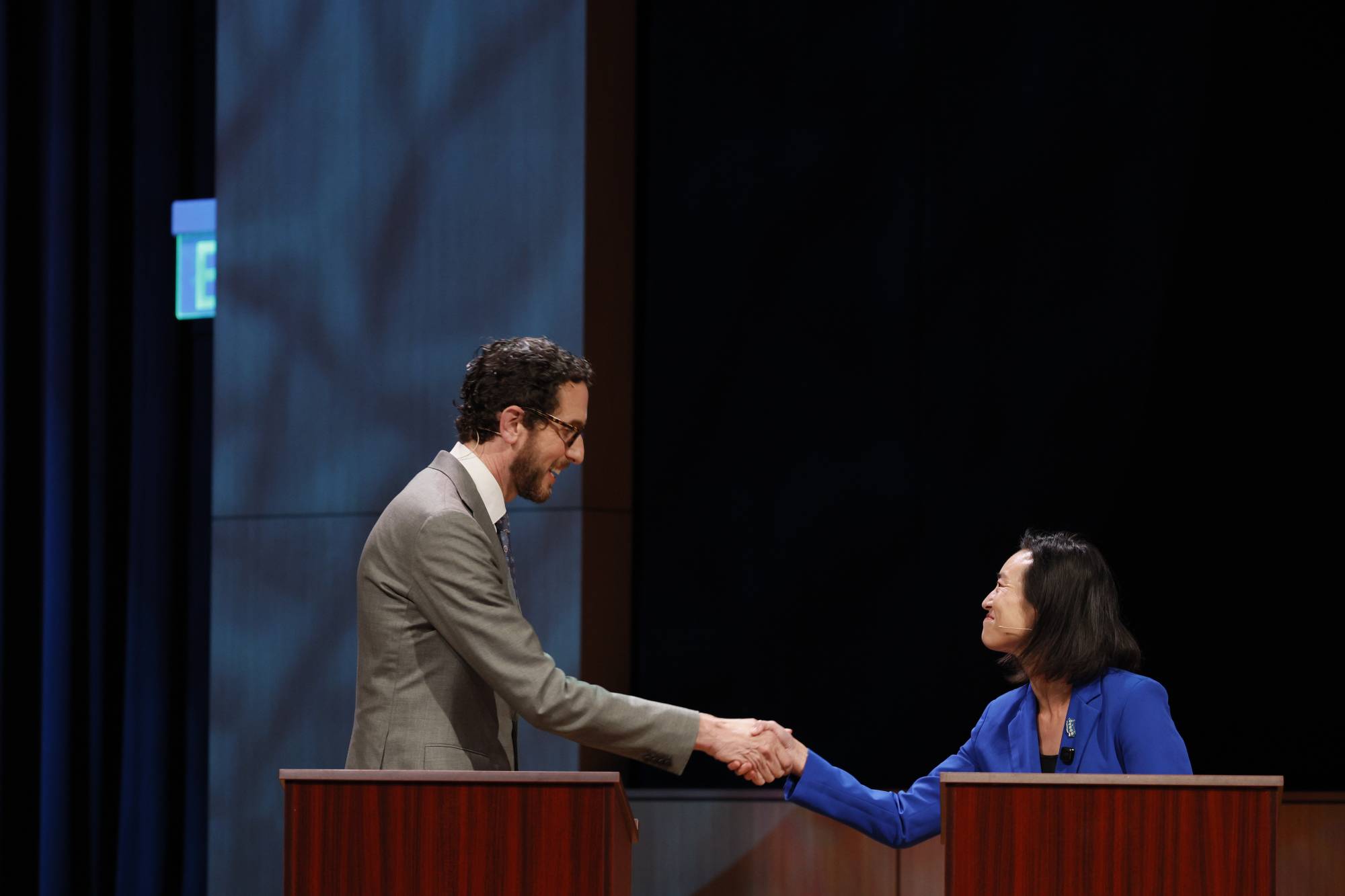
"caption": "From left: State Sen. Scott Wiener and San Francisco Supervisor Connie Chan end their debate with a handshake at KQED in San Francisco on Thursday, Oct. 1, 2026. The two Democrats are running for California’s 11th District, a seat Speaker Emerita Nancy Pelosi is leaving. KQED and the San Francisco Chronicle co-hosted the debate.",
"credit": "Santiago Mejia/S.F. Chronicle/Pool",
"altTag": null,
"description": null,
"imgSizes": {
"medium": {
"file": "https://cdn.kqed.org/wp-content/uploads/sites/10/2026/10/kqed-debate-1-copy-3-2000x1333.jpg",
"width": 2000,
"height": 1333,
"mimeType": "image/jpeg"
},
"large": {
"file": "https://cdn.kqed.org/wp-content/uploads/sites/10/2026/10/kqed-debate-1-copy-3-2000x1333.jpg",
"width": 2000,
"height": 1333,
"mimeType": "image/jpeg"
},
"thumbnail": {
"file": "https://cdn.kqed.org/wp-content/uploads/sites/10/2026/10/kqed-debate-1-copy-3-160x107.jpg",
"width": 160,
"height": 107,
"mimeType": "image/jpeg"
},
"1536x1536": {
"file": "https://cdn.kqed.org/wp-content/uploads/sites/10/2026/10/kqed-debate-1-copy-3-1536x1024.jpg",
"width": 1536,
"height": 1024,
"mimeType": "image/jpeg"
},
"2048x2048": {
"file": "https://cdn.kqed.org/wp-content/uploads/sites/10/2026/10/kqed-debate-1-copy-3-2048x1365.jpg",
"width": 2048,
"height": 1365,
"mimeType": "image/jpeg"
},
"post-thumbnail": {
"file": "https://cdn.kqed.org/wp-content/uploads/sites/10/2026/10/kqed-debate-1-copy-3-672x372.jpg",
"width": 672,
"height": 372,
"mimeType": "image/jpeg"
},
"twentyfourteen-full-width": {
"file": "https://cdn.kqed.org/wp-content/uploads/sites/10/2026/10/kqed-debate-1-copy-3-1038x576.jpg",
"width": 1038,
"height": 576,
"mimeType": "image/jpeg"
},
"full-width": {
"file": "https://cdn.kqed.org/wp-content/uploads/sites/10/2026/10/kqed-debate-1-copy-3-2000x1333.jpg",
"width": 2000,
"height": 1333,
"mimeType": "image/jpeg"
},
"npr-cds-wide": {
"file": "https://cdn.kqed.org/wp-content/uploads/sites/10/2026/10/kqed-debate-1-copy-3-1200x675.jpg",
"width": 1200,
"height": 675,
"mimeType": "image/jpeg"
},
"npr-cds-square": {
"file": "https://cdn.kqed.org/wp-content/uploads/sites/10/2026/10/kqed-debate-1-copy-3-600x600.jpg",
"width": 600,
"height": 600,
"mimeType": "image/jpeg"
},
"kqedFullSize": {
"file": "https://cdn.kqed.org/wp-content/uploads/sites/10/2026/10/kqed-debate-1-copy-3-scaled.jpg",
"width": 2560,
"height": 1707
}
},
"isLoading": false,
"fetchFailed": false
},
"news_12095609": {
"type": "attachments",
"id": "news_12095609",
"meta": {
"index": "attachments_1716263798",
"site": "news",
"id": "12095609",
"found": true
},
"title": "081726-SFUSDFirstDay-20-MC_qed",
"publishDate": 1786997792,
"status": "inherit",
"parent": 12096676,
"modified": 1791586733,
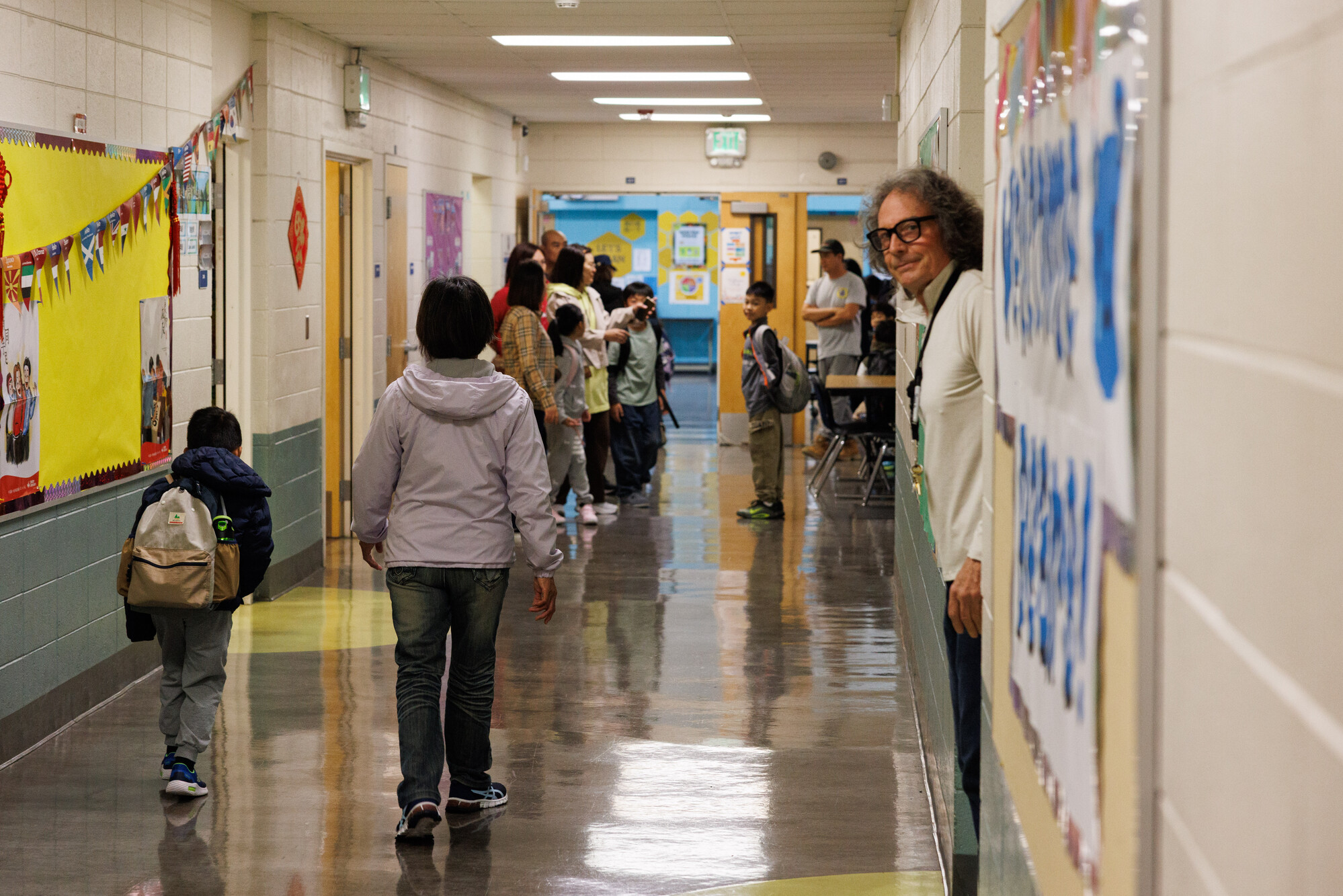
"caption": "Students arrive at Jose Ortega Elementary School for the first day of their school year on Aug. 17, 2026, in San Francisco.",
"credit": "Miles Cull/KQED",
"altTag": null,
"description": null,
"imgSizes": {
"thumbnail": {
"file": "https://cdn.kqed.org/wp-content/uploads/sites/10/2026/08/081726-SFUSDFirstDay-20-MC_qed-160x107.jpg",
"width": 160,
"height": 107,
"mimeType": "image/jpeg"
},
"1536x1536": {
"file": "https://cdn.kqed.org/wp-content/uploads/sites/10/2026/08/081726-SFUSDFirstDay-20-MC_qed-1536x1025.jpg",
"width": 1536,
"height": 1025,
"mimeType": "image/jpeg"
},
"post-thumbnail": {
"file": "https://cdn.kqed.org/wp-content/uploads/sites/10/2026/08/081726-SFUSDFirstDay-20-MC_qed-672x372.jpg",
"width": 672,
"height": 372,
"mimeType": "image/jpeg"
},
"twentyfourteen-full-width": {
"file": "https://cdn.kqed.org/wp-content/uploads/sites/10/2026/08/081726-SFUSDFirstDay-20-MC_qed-1038x576.jpg",
"width": 1038,
"height": 576,
"mimeType": "image/jpeg"
},
"npr-cds-wide": {
"file": "https://cdn.kqed.org/wp-content/uploads/sites/10/2026/08/081726-SFUSDFirstDay-20-MC_qed-1200x675.jpg",
"width": 1200,
"height": 675,
"mimeType": "image/jpeg"
},
"npr-cds-square": {
"file": "https://cdn.kqed.org/wp-content/uploads/sites/10/2026/08/081726-SFUSDFirstDay-20-MC_qed-600x600.jpg",
"width": 600,
"height": 600,
"mimeType": "image/jpeg"
},
"kqedFullSize": {
"file": "https://cdn.kqed.org/wp-content/uploads/sites/10/2026/08/081726-SFUSDFirstDay-20-MC_qed.jpg",
"width": 1998,
"height": 1333
}
},
"isLoading": false,
"fetchFailed": false
},
"news_12104002": {
"type": "attachments",
"id": "news_12104002",
"meta": {
"index": "attachments_1716263798",
"site": "news",
"id": "12104002",
"found": true
},
"title": "XavierBecerraGetty",
"publishDate": 1791826117,
"status": "inherit",
"parent": 12103827,
"modified": 1791826163,
"caption": "Democratic candidate for governor Xavier Becerra is introduced at a campaign event with Clarissa Cervantes, right, who his running for State Assembly in District 58, on Oct. 2, 2026, in Riverside, California.",
"credit": "Gina Ferazzi/Los Angeles Times via Getty Images",
"altTag": null,
"description": null,
"imgSizes": {
"thumbnail": {
"file": "https://cdn.kqed.org/wp-content/uploads/sites/10/2026/10/XavierBecerraGetty-d1be7b5d-160x107.jpg",
"width": 160,
"height": 107,
"mimeType": "image/jpeg"
},
"1536x1536": {
"file": "https://cdn.kqed.org/wp-content/uploads/sites/10/2026/10/XavierBecerraGetty-d1be7b5d-1536x1024.jpg",
"width": 1536,
"height": 1024,
"mimeType": "image/jpeg"
},
"post-thumbnail": {
"file": "https://cdn.kqed.org/wp-content/uploads/sites/10/2026/10/XavierBecerraGetty-d1be7b5d-672x372.jpg",
"width": 672,
"height": 372,
"mimeType": "image/jpeg"
},
"twentyfourteen-full-width": {
"file": "https://cdn.kqed.org/wp-content/uploads/sites/10/2026/10/XavierBecerraGetty-d1be7b5d-1038x576.jpg",
"width": 1038,
"height": 576,
"mimeType": "image/jpeg"
},
"npr-cds-wide": {
"file": "https://cdn.kqed.org/wp-content/uploads/sites/10/2026/10/XavierBecerraGetty-d1be7b5d-1200x675.jpg",
"width": 1200,
"height": 675,
"mimeType": "image/jpeg"
},
"npr-cds-square": {
"file": "https://cdn.kqed.org/wp-content/uploads/sites/10/2026/10/XavierBecerraGetty-d1be7b5d-600x600.jpg",
"width": 600,
"height": 600,
"mimeType": "image/jpeg"
},
"kqedFullSize": {
"file": "https://cdn.kqed.org/wp-content/uploads/sites/10/2026/10/XavierBecerraGetty-d1be7b5d.jpg",
"width": 2000,
"height": 1333
}
},
"isLoading": false,
"fetchFailed": false
},
"news_12104054": {
"type": "attachments",
"id": "news_12104054",
"meta": {
"index": "attachments_1716263798",
"site": "news",
"id": "12104054",
"found": true
},
"title": "007_KQED_GaryMcCoyCastro_05042022_qed",
"publishDate": 1791832695,
"status": "inherit",
"parent": 12104051,
"modified": 1791832706,
"caption": "Gary McCoy sits at the Castro Country Club in San Francisco on May 4, 2022, where he would have coffee before work for many years.",
"credit": "Beth LaBerge/KQED",
"altTag": null,
"description": null,
"imgSizes": {
"thumbnail": {
"file": "https://cdn.kqed.org/wp-content/uploads/sites/10/2026/10/007_KQED_GaryMcCoyCastro_05042022_qed-2229755b-160x107.jpg",
"width": 160,
"height": 107,
"mimeType": "image/jpeg"
},
"1536x1536": {
"file": "https://cdn.kqed.org/wp-content/uploads/sites/10/2026/10/007_KQED_GaryMcCoyCastro_05042022_qed-2229755b-1536x1024.jpg",
"width": 1536,
"height": 1024,
"mimeType": "image/jpeg"
},
"post-thumbnail": {
"file": "https://cdn.kqed.org/wp-content/uploads/sites/10/2026/10/007_KQED_GaryMcCoyCastro_05042022_qed-2229755b-672x372.jpg",
"width": 672,
"height": 372,
"mimeType": "image/jpeg"
},
"twentyfourteen-full-width": {
"file": "https://cdn.kqed.org/wp-content/uploads/sites/10/2026/10/007_KQED_GaryMcCoyCastro_05042022_qed-2229755b-1038x576.jpg",
"width": 1038,
"height": 576,
"mimeType": "image/jpeg"
},
"npr-cds-wide": {
"file": "https://cdn.kqed.org/wp-content/uploads/sites/10/2026/10/007_KQED_GaryMcCoyCastro_05042022_qed-2229755b-1200x675.jpg",
"width": 1200,
"height": 675,
"mimeType": "image/jpeg"
},
"npr-cds-square": {
"file": "https://cdn.kqed.org/wp-content/uploads/sites/10/2026/10/007_KQED_GaryMcCoyCastro_05042022_qed-2229755b-600x600.jpg",
"width": 600,
"height": 600,
"mimeType": "image/jpeg"
},
"kqedFullSize": {
"file": "https://cdn.kqed.org/wp-content/uploads/sites/10/2026/10/007_KQED_GaryMcCoyCastro_05042022_qed-2229755b.jpg",
"width": 2000,
"height": 1333
}
},
"isLoading": false,
"fetchFailed": false
},
"news_12103905": {
"type": "attachments",
"id": "news_12103905",
"meta": {
"index": "attachments_1716263798",
"site": "news",
"id": "12103905",
"found": true
},
"title": "VistaCaliGetty",
"publishDate": 1791590211,
"status": "inherit",
"parent": 12102409,
"modified": 1791591340,
"caption": "An arch stands over the south end of the recently renovated section of South Santa Fe Avenue near Pala Vista Drive, in Vista, California, on Jan. 28, 2021. ",
"credit": "Charlie Neuman/The San Diego Union Tribune via Getty Images",
"altTag": null,
"description": null,
"imgSizes": {
"thumbnail": {
"file": "https://cdn.kqed.org/wp-content/uploads/sites/10/2026/10/VistaCaliGetty-a57edd14-160x102.jpg",
"width": 160,
"height": 102,
"mimeType": "image/jpeg"
},
"1536x1536": {
"file": "https://cdn.kqed.org/wp-content/uploads/sites/10/2026/10/VistaCaliGetty-a57edd14-1536x981.jpg",
"width": 1536,
"height": 981,
"mimeType": "image/jpeg"
},
"post-thumbnail": {
"file": "https://cdn.kqed.org/wp-content/uploads/sites/10/2026/10/VistaCaliGetty-a57edd14-672x372.jpg",
"width": 672,
"height": 372,
"mimeType": "image/jpeg"
},
"twentyfourteen-full-width": {
"file": "https://cdn.kqed.org/wp-content/uploads/sites/10/2026/10/VistaCaliGetty-a57edd14-1038x576.jpg",
"width": 1038,
"height": 576,
"mimeType": "image/jpeg"
},
"npr-cds-wide": {
"file": "https://cdn.kqed.org/wp-content/uploads/sites/10/2026/10/VistaCaliGetty-a57edd14-1200x675.jpg",
"width": 1200,
"height": 675,
"mimeType": "image/jpeg"
},
"npr-cds-square": {
"file": "https://cdn.kqed.org/wp-content/uploads/sites/10/2026/10/VistaCaliGetty-a57edd14-600x600.jpg",
"width": 600,
"height": 600,
"mimeType": "image/jpeg"
},
"kqedFullSize": {
"file": "https://cdn.kqed.org/wp-content/uploads/sites/10/2026/10/VistaCaliGetty-a57edd14.jpg",
"width": 2000,
"height": 1277
}
},
"isLoading": false,
"fetchFailed": false
},
"news_12101938": {
"type": "attachments",
"id": "news_12101938",
"meta": {
"index": "attachments_1716263798",
"site": "news",
"id": "12101938",
"found": true
},
"title": "GettyImages-2287296637",
"publishDate": 1790715245,
"status": "inherit",
"parent": 12101807,
"modified": 1791581509,
"caption": "Immigration and Customs Enforcement (ICE) agents walk outside the Ventura County Government Center in Ventura on July 27, 2026.",
"credit": "Blake Fagan/AFP via Getty Images",
"altTag": null,
"description": null,
"imgSizes": {
"medium": {
"file": "https://cdn.kqed.org/wp-content/uploads/sites/10/2026/09/GettyImages-2287296637-2000x1333.jpg",
"width": 2000,
"height": 1333,
"mimeType": "image/jpeg"
},
"large": {
"file": "https://cdn.kqed.org/wp-content/uploads/sites/10/2026/09/GettyImages-2287296637-2000x1333.jpg",
"width": 2000,
"height": 1333,
"mimeType": "image/jpeg"
},
"thumbnail": {
"file": "https://cdn.kqed.org/wp-content/uploads/sites/10/2026/09/GettyImages-2287296637-160x107.jpg",
"width": 160,
"height": 107,
"mimeType": "image/jpeg"
},
"1536x1536": {
"file": "https://cdn.kqed.org/wp-content/uploads/sites/10/2026/09/GettyImages-2287296637-1536x1024.jpg",
"width": 1536,
"height": 1024,
"mimeType": "image/jpeg"
},
"2048x2048": {
"file": "https://cdn.kqed.org/wp-content/uploads/sites/10/2026/09/GettyImages-2287296637-2048x1365.jpg",
"width": 2048,
"height": 1365,
"mimeType": "image/jpeg"
},
"post-thumbnail": {
"file": "https://cdn.kqed.org/wp-content/uploads/sites/10/2026/09/GettyImages-2287296637-672x372.jpg",
"width": 672,
"height": 372,
"mimeType": "image/jpeg"
},
"twentyfourteen-full-width": {
"file": "https://cdn.kqed.org/wp-content/uploads/sites/10/2026/09/GettyImages-2287296637-1038x576.jpg",
"width": 1038,
"height": 576,
"mimeType": "image/jpeg"
},
"full-width": {
"file": "https://cdn.kqed.org/wp-content/uploads/sites/10/2026/09/GettyImages-2287296637-2000x1333.jpg",
"width": 2000,
"height": 1333,
"mimeType": "image/jpeg"
},
"npr-cds-wide": {
"file": "https://cdn.kqed.org/wp-content/uploads/sites/10/2026/09/GettyImages-2287296637-1200x675.jpg",
"width": 1200,
"height": 675,
"mimeType": "image/jpeg"
},
"npr-cds-square": {
"file": "https://cdn.kqed.org/wp-content/uploads/sites/10/2026/09/GettyImages-2287296637-600x600.jpg",
"width": 600,
"height": 600,
"mimeType": "image/jpeg"
},
"kqedFullSize": {
"file": "https://cdn.kqed.org/wp-content/uploads/sites/10/2026/09/GettyImages-2287296637-scaled-e1791571640440.jpg",
"width": 2000,
"height": 1333
}
},
"isLoading": false,
"fetchFailed": false
},
"news_12103501": {
"type": "attachments",
"id": "news_12103501",
"meta": {
"index": "attachments_1716263798",
"site": "news",
"id": "12103501",
"found": true
},
"title": "261008-SF Ballot Damaged-01-KQED",
"publishDate": 1791479578,
"status": "inherit",
"parent": 0,
"modified": 1791479619,
"caption": "A damaged San Francisco midterm ballot that was delivered to KQED reporter Sydney Johnson this week.",
"credit": "Sydney Johnson/KQED",
"altTag": null,
"description": null,
"imgSizes": {
"thumbnail": {
"file": "https://cdn.kqed.org/wp-content/uploads/sites/10/2026/10/261008-SF-Ballot-Damaged-01-KQED-022c6390-160x107.jpg",
"width": 160,
"height": 107,
"mimeType": "image/jpeg"
},
"1536x1536": {
"file": "https://cdn.kqed.org/wp-content/uploads/sites/10/2026/10/261008-SF-Ballot-Damaged-01-KQED-022c6390-1536x1024.jpg",
"width": 1536,
"height": 1024,
"mimeType": "image/jpeg"
},
"post-thumbnail": {
"file": "https://cdn.kqed.org/wp-content/uploads/sites/10/2026/10/261008-SF-Ballot-Damaged-01-KQED-022c6390-672x372.jpg",
"width": 672,
"height": 372,
"mimeType": "image/jpeg"
},
"twentyfourteen-full-width": {
"file": "https://cdn.kqed.org/wp-content/uploads/sites/10/2026/10/261008-SF-Ballot-Damaged-01-KQED-022c6390-1038x576.jpg",
"width": 1038,
"height": 576,
"mimeType": "image/jpeg"
},
"npr-cds-wide": {
"file": "https://cdn.kqed.org/wp-content/uploads/sites/10/2026/10/261008-SF-Ballot-Damaged-01-KQED-022c6390-1200x675.jpg",
"width": 1200,
"height": 675,
"mimeType": "image/jpeg"
},
"npr-cds-square": {
"file": "https://cdn.kqed.org/wp-content/uploads/sites/10/2026/10/261008-SF-Ballot-Damaged-01-KQED-022c6390-600x600.jpg",
"width": 600,
"height": 600,
"mimeType": "image/jpeg"
},
"kqedFullSize": {
"file": "https://cdn.kqed.org/wp-content/uploads/sites/10/2026/10/261008-SF-Ballot-Damaged-01-KQED-022c6390.jpg",
"width": 2000,
"height": 1333
}
},
"isLoading": false,
"fetchFailed": false
},
"news_12103408": {
"type": "attachments",
"id": "news_12103408",
"meta": {
"index": "attachments_1716263798",
"site": "news",
"id": "12103408",
"found": true
},
"title": "CMVoterID",
"publishDate": 1791403327,
"status": "inherit",
"parent": 12103398,
"modified": 1791403360,
"caption": "From left, Cameron Winklevoss and Richard Uihlein. \n",
"credit": "Noam Galai/Getty Images and Uline Corporate Video",
"altTag": null,
"description": null,
"imgSizes": {
"thumbnail": {
"file": "https://cdn.kqed.org/wp-content/uploads/sites/10/2026/10/CMVoterID-160x107.jpg",
"width": 160,
"height": 107,
"mimeType": "image/jpeg"
},
"1536x1536": {
"file": "https://cdn.kqed.org/wp-content/uploads/sites/10/2026/10/CMVoterID-1536x1024.jpg",
"width": 1536,
"height": 1024,
"mimeType": "image/jpeg"
},
"post-thumbnail": {
"file": "https://cdn.kqed.org/wp-content/uploads/sites/10/2026/10/CMVoterID-672x372.jpg",
"width": 672,
"height": 372,
"mimeType": "image/jpeg"
},
"twentyfourteen-full-width": {
"file": "https://cdn.kqed.org/wp-content/uploads/sites/10/2026/10/CMVoterID-1038x576.jpg",
"width": 1038,
"height": 576,
"mimeType": "image/jpeg"
},
"npr-cds-wide": {
"file": "https://cdn.kqed.org/wp-content/uploads/sites/10/2026/10/CMVoterID-1200x675.jpg",
"width": 1200,
"height": 675,
"mimeType": "image/jpeg"
},
"npr-cds-square": {
"file": "https://cdn.kqed.org/wp-content/uploads/sites/10/2026/10/CMVoterID-600x600.jpg",
"width": 600,
"height": 600,
"mimeType": "image/jpeg"
},
"kqedFullSize": {
"file": "https://cdn.kqed.org/wp-content/uploads/sites/10/2026/10/CMVoterID.jpg",
"width": 2000,
"height": 1333
}
},
"isLoading": false,
"fetchFailed": false
},
"news_12074712": {
"type": "attachments",
"id": "news_12074712",
"meta": {
"index": "attachments_1716263798",
"site": "news",
"id": "12074712",
"found": true
},
"title": "260226-GovRaceForum-56-BL_qed (1)",
"publishDate": 1772065791,
"status": "inherit",
"parent": 12074679,
"modified": 1772065814,
"caption": "Former U.S. Rep. Katie Porter speaks during a gubernatorial candidate forum at the UCSF Mission Bay campus in San Francisco on Jan. 26, 2026. ",
"credit": "Beth LaBerge/KQED",
"altTag": null,
"description": null,
"imgSizes": {
"thumbnail": {
"file": "https://cdn.kqed.org/wp-content/uploads/sites/10/2026/02/260226-GovRaceForum-56-BL_qed-1-160x107.jpg",
"width": 160,
"height": 107,
"mimeType": "image/jpeg"
},
"1536x1536": {
"file": "https://cdn.kqed.org/wp-content/uploads/sites/10/2026/02/260226-GovRaceForum-56-BL_qed-1-1536x1024.jpg",
"width": 1536,
"height": 1024,
"mimeType": "image/jpeg"
},
"post-thumbnail": {
"file": "https://cdn.kqed.org/wp-content/uploads/sites/10/2026/02/260226-GovRaceForum-56-BL_qed-1-672x372.jpg",
"width": 672,
"height": 372,
"mimeType": "image/jpeg"
},
"twentyfourteen-full-width": {
"file": "https://cdn.kqed.org/wp-content/uploads/sites/10/2026/02/260226-GovRaceForum-56-BL_qed-1-1038x576.jpg",
"width": 1038,
"height": 576,
"mimeType": "image/jpeg"
},
"npr-cds-wide": {
"file": "https://cdn.kqed.org/wp-content/uploads/sites/10/2026/02/260226-GovRaceForum-56-BL_qed-1-1200x675.jpg",
"width": 1200,
"height": 675,
"mimeType": "image/jpeg"
},
"kqedFullSize": {
"file": "https://cdn.kqed.org/wp-content/uploads/sites/10/2026/02/260226-GovRaceForum-56-BL_qed-1.jpg",
"width": 1999,
"height": 1333
}
},
"isLoading": false,
"fetchFailed": false
},
"news_12082113": {
"type": "attachments",
"id": "news_12082113",
"meta": {
"index": "attachments_1716263798",
"site": "news",
"id": "12082113",
"found": true
},
"title": "023_KQED_SanFrancisco_Election2020_TanyaYule_10092020_qed",
"publishDate": 1777661453,
"status": "inherit",
"parent": 12082074,
"modified": 1777661480,
"caption": "A San Francisco resident hands their mail-in ballot to USPS employee Elmer Padilla on Oct. 9, 2020.",
"credit": "Beth LaBerge/KQED",
"altTag": null,
"description": null,
"imgSizes": {
"thumbnail": {
"file": "https://cdn.kqed.org/wp-content/uploads/sites/10/2026/05/023_KQED_SanFrancisco_Election2020_TanyaYule_10092020_qed-160x107.jpg",
"width": 160,
"height": 107,
"mimeType": "image/jpeg"
},
"1536x1536": {
"file": "https://cdn.kqed.org/wp-content/uploads/sites/10/2026/05/023_KQED_SanFrancisco_Election2020_TanyaYule_10092020_qed-1536x1024.jpg",
"width": 1536,
"height": 1024,
"mimeType": "image/jpeg"
},
"post-thumbnail": {
"file": "https://cdn.kqed.org/wp-content/uploads/sites/10/2026/05/023_KQED_SanFrancisco_Election2020_TanyaYule_10092020_qed-672x372.jpg",
"width": 672,
"height": 372,
"mimeType": "image/jpeg"
},
"twentyfourteen-full-width": {
"file": "https://cdn.kqed.org/wp-content/uploads/sites/10/2026/05/023_KQED_SanFrancisco_Election2020_TanyaYule_10092020_qed-1038x576.jpg",
"width": 1038,
"height": 576,
"mimeType": "image/jpeg"
},
"npr-cds-wide": {
"file": "https://cdn.kqed.org/wp-content/uploads/sites/10/2026/05/023_KQED_SanFrancisco_Election2020_TanyaYule_10092020_qed-1200x675.jpg",
"width": 1200,
"height": 675,
"mimeType": "image/jpeg"
},
"npr-cds-square": {
"file": "https://cdn.kqed.org/wp-content/uploads/sites/10/2026/05/023_KQED_SanFrancisco_Election2020_TanyaYule_10092020_qed-600x600.jpg",
"width": 600,
"height": 600,
"mimeType": "image/jpeg"
},
"kqedFullSize": {
"file": "https://cdn.kqed.org/wp-content/uploads/sites/10/2026/05/023_KQED_SanFrancisco_Election2020_TanyaYule_10092020_qed.jpg",
"width": 2000,
"height": 1333
}
},
"isLoading": false,
"fetchFailed": false
},
"news_12089055": {
"type": "attachments",
"id": "news_12089055",
"meta": {
"index": "attachments_1716263798",
"site": "news",
"id": "12089055",
"found": true
},
"title": "US-POLITICS-BILLIONAIRE-TAXATION",
"publishDate": 1782498329,
"status": "inherit",
"parent": 12089029,
"modified": 1782498386,
"caption": "U.S. Sen. Bernie Sanders speaks during the campaign kickoff for the California Billionaire Tax Act at The Wiltern in Los Angeles, Feb. 18, 2026. Sanders is seeking the support of California voters for a November's ballot initiative of an emergency tax on billionaires to help the state's healthcare system. ",
"credit": "Patrick T. Fallon / AFP via Getty Images",
"altTag": null,
"description": null,
"imgSizes": {
"medium": {
"file": "https://cdn.kqed.org/wp-content/uploads/sites/10/2026/06/GettyImages-2261843469-2000x1333.jpg",
"width": 2000,
"height": 1333,
"mimeType": "image/jpeg"
},
"large": {
"file": "https://cdn.kqed.org/wp-content/uploads/sites/10/2026/06/GettyImages-2261843469-2000x1333.jpg",
"width": 2000,
"height": 1333,
"mimeType": "image/jpeg"
},
"thumbnail": {
"file": "https://cdn.kqed.org/wp-content/uploads/sites/10/2026/06/GettyImages-2261843469-160x107.jpg",
"width": 160,
"height": 107,
"mimeType": "image/jpeg"
},
"1536x1536": {
"file": "https://cdn.kqed.org/wp-content/uploads/sites/10/2026/06/GettyImages-2261843469-1536x1024.jpg",
"width": 1536,
"height": 1024,
"mimeType": "image/jpeg"
},
"2048x2048": {
"file": "https://cdn.kqed.org/wp-content/uploads/sites/10/2026/06/GettyImages-2261843469-2048x1365.jpg",
"width": 2048,
"height": 1365,
"mimeType": "image/jpeg"
},
"post-thumbnail": {
"file": "https://cdn.kqed.org/wp-content/uploads/sites/10/2026/06/GettyImages-2261843469-672x372.jpg",
"width": 672,
"height": 372,
"mimeType": "image/jpeg"
},
"twentyfourteen-full-width": {
"file": "https://cdn.kqed.org/wp-content/uploads/sites/10/2026/06/GettyImages-2261843469-1038x576.jpg",
"width": 1038,
"height": 576,
"mimeType": "image/jpeg"
},
"full-width": {
"file": "https://cdn.kqed.org/wp-content/uploads/sites/10/2026/06/GettyImages-2261843469-2000x1333.jpg",
"width": 2000,
"height": 1333,
"mimeType": "image/jpeg"
},
"npr-cds-wide": {
"file": "https://cdn.kqed.org/wp-content/uploads/sites/10/2026/06/GettyImages-2261843469-1200x675.jpg",
"width": 1200,
"height": 675,
"mimeType": "image/jpeg"
},
"npr-cds-square": {
"file": "https://cdn.kqed.org/wp-content/uploads/sites/10/2026/06/GettyImages-2261843469-600x600.jpg",
"width": 600,
"height": 600,
"mimeType": "image/jpeg"
},
"kqedFullSize": {
"file": "https://cdn.kqed.org/wp-content/uploads/sites/10/2026/06/GettyImages-2261843469-scaled.jpg",
"width": 2560,
"height": 1707
}
},
"isLoading": false,
"fetchFailed": false
}
},
"audioPlayerReducer": {
"postId": "stream_live",
"isPaused": true,
"isPlaying": false,
"pfsActive": false,
"pledgeModalIsOpen": true,
"playerDrawerIsOpen": false,
"liveAudioPlayStartedAt": 0,
"liveAudioPlayContext": ""
},
"authorsReducer": {
"byline_news_12104051": {
"type": "authors",
"id": "byline_news_12104051",
"meta": {
"override": true
},
"slug": "byline_news_12104051",
"name": "Jose Velasquez",
"isLoading": false
},
"byline_news_12103398": {
"type": "authors",
"id": "byline_news_12103398",
"meta": {
"override": true
},
"slug": "byline_news_12103398",
"name": "Nadia Lathan, CalMatters",
"isLoading": false
},
"gmarzorati": {
"type": "authors",
"id": "227",
"meta": {
"index": "authors_1716337520",
"id": "227",
"found": true
},
"name": "Guy Marzorati",
"firstName": "Guy",
"lastName": "Marzorati",
"slug": "gmarzorati",
"email": "gmarzorati@KQED.org",
"display_author_email": true,
"staff_mastheads": [
"news"
],
"title": "Correspondent",
"bio": "Guy Marzorati is a correspondent on KQED's California Politics and Government Desk, based in San Jose. A graduate of Santa Clara University, Guy joined KQED in 2013. He reports on state and local politics and produces KQED's digital voter guide.",
"avatar": "https://secure.gravatar.com/avatar/771cddf45ce3a8ed533d82dcc214e9ef925d76d2af5794a33da1ce439eb54a32?s=600&d=blank&r=g",
"twitter": "guymarzorati",
"bluesky": null,
"facebook": null,
"instagram": null,
"linkedin": null,
"sites": [
{
"site": "",
"roles": [
"editor"
]
},
{
"site": "news",
"roles": [
"editor"
]
},
{
"site": "science",
"roles": [
"editor"
]
},
{
"site": "forum",
"roles": [
"editor"
]
},
{
"site": "elections",
"roles": [
"editor"
]
},
{
"site": "liveblog",
"roles": [
"editor"
]
}
],
"headData": {
"title": "Guy Marzorati | KQED",
"description": "Correspondent",
"ogImgSrc": "https://secure.gravatar.com/avatar/771cddf45ce3a8ed533d82dcc214e9ef925d76d2af5794a33da1ce439eb54a32?s=600&d=blank&r=g",
"twImgSrc": "https://secure.gravatar.com/avatar/771cddf45ce3a8ed533d82dcc214e9ef925d76d2af5794a33da1ce439eb54a32?s=600&d=blank&r=g"
},
"isLoading": false,
"link": "/author/gmarzorati"
},
"tychehendricks": {
"type": "authors",
"id": "259",
"meta": {
"index": "authors_1716337520",
"id": "259",
"found": true
},
"name": "Tyche Hendricks",
"firstName": "Tyche",
"lastName": "Hendricks",
"slug": "tychehendricks",
"email": "thendricks@kqed.org",
"display_author_email": true,
"staff_mastheads": [
"news"
],
"title": "KQED Senior Editor, Immigration",
"bio": "Tyche Hendricks is KQED’s senior editor for immigration, leading coverage of the policy and politics that affect California’s immigrant communities. Her work for KQED’s radio and online audiences is also carried on NPR and other national outlets. She has been recognized with awards from the Radio and Television News Directors Association, the Society for Professional Journalists; the Education Writers Association; the Best of the West and the National Federation of Community Broadcasters. Before joining KQED in 2010, Tyche spent more than a dozen years as a newspaper reporter, notably at the \u003ci>San Francisco Chronicle\u003c/i>. At different times she has covered criminal justice, government and politics and urban planning. Tyche has taught in the MFA Creative Writing program at the University of San Francisco and at UC Berkeley’s Graduate School of Journalism, where she was co-director of a national immigration symposium for professional journalists. She is the author of \u003ci>The Wind Doesn't Need a Passport: Stories from the U.S.-Mexico Borderlands\u003c/i> (University of California Press). ",
"avatar": "https://secure.gravatar.com/avatar/2a0bd7f2418d4be9198f23bf99a161f3f7a98fb9bf6d3820763d49b5c5f8fc81?s=600&d=blank&r=g",
"twitter": "tychehendricks",
"bluesky": null,
"facebook": null,
"instagram": null,
"linkedin": null,
"sites": [
{
"site": "news",
"roles": [
"editor"
]
},
{
"site": "stateofhealth",
"roles": [
"editor"
]
},
{
"site": "liveblog",
"roles": [
"author"
]
}
],
"headData": {
"title": "Tyche Hendricks | KQED",
"description": "KQED Senior Editor, Immigration",
"ogImgSrc": "https://secure.gravatar.com/avatar/2a0bd7f2418d4be9198f23bf99a161f3f7a98fb9bf6d3820763d49b5c5f8fc81?s=600&d=blank&r=g",
"twImgSrc": "https://secure.gravatar.com/avatar/2a0bd7f2418d4be9198f23bf99a161f3f7a98fb9bf6d3820763d49b5c5f8fc81?s=600&d=blank&r=g"
},
"isLoading": false,
"link": "/author/tychehendricks"
},
"carlysevern": {
"type": "authors",
"id": "3243",
"meta": {
"index": "authors_1716337520",
"id": "3243",
"found": true
},
"name": "Carly Severn",
"firstName": "Carly",
"lastName": "Severn",
"slug": "carlysevern",
"email": "csevern@kqed.org",
"display_author_email": false,
"staff_mastheads": [
"news"
],
"title": "Senior Editor, Audience News ",
"bio": "Carly is KQED's Senior Editor of Audience News on the Digital News team, and has reported for the California Report Magazine, Bay Curious and KQED Arts. She's formerly the host of \u003ca href=\"http://ww2.kqed.org/pop/category/the-cooler/\" rel=\"noopener noreferrer\">The Cooler\u003c/a> podcast.",
"avatar": "https://secure.gravatar.com/avatar/54037bf5c128fe678f0ef26cec97a93f2e7f220a22d7285703328f12c42c1b1d?s=600&d=blank&r=g",
"twitter": "teacupinthebay",
"bluesky": null,
"facebook": null,
"instagram": null,
"linkedin": null,
"sites": [
{
"site": "",
"roles": [
"editor"
]
},
{
"site": "arts",
"roles": [
"editor"
]
},
{
"site": "news",
"roles": [
"administrator"
]
},
{
"site": "pop",
"roles": [
"editor"
]
},
{
"site": "futureofyou",
"roles": [
"editor"
]
},
{
"site": "about",
"roles": [
"administrator"
]
},
{
"site": "mindshift",
"roles": [
"editor"
]
},
{
"site": "bayareabites",
"roles": [
"editor"
]
},
{
"site": "stateofhealth",
"roles": [
"editor"
]
},
{
"site": "science",
"roles": [
"editor"
]
},
{
"site": "food",
"roles": [
"contributor"
]
},
{
"site": "forum",
"roles": [
"editor"
]
},
{
"site": "perspectives",
"roles": [
"administrator"
]
},
{
"site": "liveblog",
"roles": [
"editor"
]
}
],
"headData": {
"title": "Carly Severn | KQED",
"description": "Senior Editor, Audience News ",
"ogImgSrc": "https://secure.gravatar.com/avatar/54037bf5c128fe678f0ef26cec97a93f2e7f220a22d7285703328f12c42c1b1d?s=600&d=blank&r=g",
"twImgSrc": "https://secure.gravatar.com/avatar/54037bf5c128fe678f0ef26cec97a93f2e7f220a22d7285703328f12c42c1b1d?s=600&d=blank&r=g"
},
"isLoading": false,
"link": "/author/carlysevern"
},
"btorres": {
"type": "authors",
"id": "11666",
"meta": {
"index": "authors_1716337520",
"id": "11666",
"found": true
},
"name": "Blanca Torres",
"firstName": "Blanca",
"lastName": "Torres",
"slug": "btorres",
"email": "btorres@kqed.org",
"display_author_email": true,
"staff_mastheads": [
"news"
],
"title": "Producer, Forum",
"bio": "Blanca Torres brings sharp news judgement and keen sense of lively conversation to her work as producer for Forum. She loves producing shows that leave listeners feeling like they heard distinctive voices, learned something new and gained a fresh perspective.\r\n\r\nShe joined KQED in January of 2020 after 16 years of working as a newspaper reporter most recently at the \u003cem>San Francisco Business Times,\u003c/em> where she wrote about real estate and economic development. Before that, she covered a variety of beats including crime, education, retail, workplace, the economy, consumer issues, and small business for the \u003cem>Contra Costa Times, Baltimore Sun\u003c/em> and\u003cem> The Seattle Times\u003c/em>. In addition to reporting, she worked as an editorial writer and columnist for the \u003cem>Seattle Times\u003c/em>. From 2017 to 2020, Blanca won a total of ten awards from the National Association of Real Estate Editors and won first place for land use reporting from the California News Publishers Association two years in a row. She is also a member and former board member for the National Association of Hispanic Journalists.\r\n\r\nA native of the Pacific Northwest, Blanca earned her bachelor's degree from Vanderbilt University in Nashville and a master's in fine arts in creative writing at Mills College. She lives in the East Bay with her family.",
"avatar": "https://secure.gravatar.com/avatar/50b49d19b14a1eed34f26ebf4681152cdd81574ed21851100871ccd29e578cdc?s=600&d=blank&r=g",
"twitter": "@blancawrites",
"bluesky": null,
"facebook": null,
"instagram": null,
"linkedin": null,
"sites": [
{
"site": "arts",
"roles": [
"editor"
]
},
{
"site": "news",
"roles": [
"editor"
]
},
{
"site": "forum",
"roles": [
"editor"
]
}
],
"headData": {
"title": "Blanca Torres | KQED",
"description": "Producer, Forum",
"ogImgSrc": "https://secure.gravatar.com/avatar/50b49d19b14a1eed34f26ebf4681152cdd81574ed21851100871ccd29e578cdc?s=600&d=blank&r=g",
"twImgSrc": "https://secure.gravatar.com/avatar/50b49d19b14a1eed34f26ebf4681152cdd81574ed21851100871ccd29e578cdc?s=600&d=blank&r=g"
},
"isLoading": false,
"link": "/author/btorres"
},
"ibloom": {
"type": "authors",
"id": "11805",
"meta": {
"index": "authors_1716337520",
"id": "11805",
"found": true
},
"name": "Izzy Bloom",
"firstName": "Izzy",
"lastName": "Bloom",
"slug": "ibloom",
"email": "ibloom@kqed.org",
"display_author_email": false,
"staff_mastheads": [],
"title": "KQED Reporter & Producer",
"bio": "Izzy is a reporter and producer on KQED's California Politics & Government Desk. She joined the desk in 2024 to produce Political Breakdown, covering local and national elections and attending the RNC and DNC in Milwaukee and Chicago. \r\n\r\nBefore that, Izzy was a producer on The California Report and reported long-form stories for The California Report Magazine. She was a finalist for the Third Coast/Richard H. Driehaus Foundation Competition and was awarded for her reporting on indigenous land back by the Society of Professional Journalists. Izzy received her master's in journalism from the University of California, Berkeley.",
"avatar": "https://secure.gravatar.com/avatar/cc4d272ca430783ee1a8efac470a6b1e0fdd082c3beb61da019801d0ff751c8c?s=600&d=blank&r=g",
"twitter": null,
"bluesky": null,
"facebook": null,
"instagram": null,
"linkedin": null,
"sites": [
{
"site": "news",
"roles": [
"editor"
]
},
{
"site": "perspectives",
"roles": [
"editor"
]
}
],
"headData": {
"title": "Izzy Bloom | KQED",
"description": "KQED Reporter & Producer",
"ogImgSrc": "https://secure.gravatar.com/avatar/cc4d272ca430783ee1a8efac470a6b1e0fdd082c3beb61da019801d0ff751c8c?s=600&d=blank&r=g",
"twImgSrc": "https://secure.gravatar.com/avatar/cc4d272ca430783ee1a8efac470a6b1e0fdd082c3beb61da019801d0ff751c8c?s=600&d=blank&r=g"
},
"isLoading": false,
"link": "/author/ibloom"
},
"sjohnson": {
"type": "authors",
"id": "11840",
"meta": {
"index": "authors_1716337520",
"id": "11840",
"found": true
},
"name": "Sydney Johnson",
"firstName": "Sydney",
"lastName": "Johnson",
"slug": "sjohnson",
"email": "sjohnson@kqed.org",
"display_author_email": false,
"staff_mastheads": [
"news"
],
"title": "KQED Reporter",
"bio": "Sydney Johnson is a general assignment reporter at KQED. She previously reported on public health and city government at the San Francisco Examiner, and before that, she covered statewide education policy for EdSource. Her reporting has won multiple local, state and national awards. Sydney is a graduate of the University of California, Berkeley and lives in San Francisco.",
"avatar": "https://secure.gravatar.com/avatar/97855f2719b72ad6190b7c535fe642c8?s=600&d=blank&r=g",
"twitter": "sydneyfjohnson",
"facebook": null,
"instagram": null,
"linkedin": null,
"sites": [
{
"site": "news",
"roles": [
"editor"
]
}
],
"headData": {
"title": "Sydney Johnson | KQED",
"description": "KQED Reporter",
"ogImgSrc": "https://secure.gravatar.com/avatar/97855f2719b72ad6190b7c535fe642c8?s=600&d=blank&r=g",
"twImgSrc": "https://secure.gravatar.com/avatar/97855f2719b72ad6190b7c535fe642c8?s=600&d=blank&r=g"
},
"isLoading": false,
"link": "/author/sjohnson"
},
"kdebenedetti": {
"type": "authors",
"id": "11913",
"meta": {
"index": "authors_1716337520",
"id": "11913",
"found": true
},
"name": "Katie DeBenedetti",
"firstName": "Katie",
"lastName": "DeBenedetti",
"slug": "kdebenedetti",
"email": "kdebenedetti@kqed.org",
"display_author_email": false,
"staff_mastheads": [
"news",
"science"
],
"title": "KQED Contributor",
"bio": "Katie DeBenedetti is a digital reporter covering daily news for the Express Desk. Prior to joining KQED as a culture reporting intern in January 2024, she covered education and city government for the Napa Valley Register.",
"avatar": "https://secure.gravatar.com/avatar/6e31073cb8f7e4214ab03f42771d0f45?s=600&d=blank&r=g",
"twitter": null,
"facebook": null,
"instagram": null,
"linkedin": null,
"sites": [
{
"site": "news",
"roles": [
"author"
]
},
{
"site": "science",
"roles": [
"author"
]
},
{
"site": "liveblog",
"roles": [
"author"
]
}
],
"headData": {
"title": "Katie DeBenedetti | KQED",
"description": "KQED Contributor",
"ogImgSrc": "https://secure.gravatar.com/avatar/6e31073cb8f7e4214ab03f42771d0f45?s=600&d=blank&r=g",
"twImgSrc": "https://secure.gravatar.com/avatar/6e31073cb8f7e4214ab03f42771d0f45?s=600&d=blank&r=g"
},
"isLoading": false,
"link": "/author/kdebenedetti"
},
"skennedy": {
"type": "authors",
"id": "11935",
"meta": {
"index": "authors_1716337520",
"id": "11935",
"found": true
},
"name": "Samantha Kennedy",
"firstName": "Samantha",
"lastName": "Kennedy",
"slug": "skennedy",
"email": "SKennedy@kqed.org",
"display_author_email": false,
"staff_mastheads": [],
"title": "KQED Contributor",
"bio": null,
"avatar": "https://secure.gravatar.com/avatar/adc7b14bf1e801793202a156ecc864d4ad505b0fd63162a2f3da0e5ba57222d0?s=600&d=blank&r=g",
"twitter": null,
"bluesky": null,
"facebook": null,
"instagram": null,
"linkedin": null,
"sites": [
{
"site": "arts",
"roles": [
"author"
]
},
{
"site": "news",
"roles": [
"editor"
]
},
{
"site": "science",
"roles": [
"editor"
]
}
],
"headData": {
"title": "Samantha Kennedy | KQED",
"description": "KQED Contributor",
"ogImgSrc": "https://secure.gravatar.com/avatar/adc7b14bf1e801793202a156ecc864d4ad505b0fd63162a2f3da0e5ba57222d0?s=600&d=blank&r=g",
"twImgSrc": "https://secure.gravatar.com/avatar/adc7b14bf1e801793202a156ecc864d4ad505b0fd63162a2f3da0e5ba57222d0?s=600&d=blank&r=g"
},
"isLoading": false,
"link": "/author/skennedy"
}
},
"pagesReducer": {
"news_tag_election-2026": {
"type": "terms",
"id": "news_36336",
"meta": {
"index": "terms_1716263798",
"site": "news",
"id": "36336",
"score": 10.407092
},
"name": "Election 2026",
"slug": "election-2026",
"taxonomy": "tag",
"description": null,
"featImg": null,
"headData": {
"title": "Election 2026 | KQED News",
"description": null,
"ogTitle": null,
"ogDescription": null,
"ogImgId": null,
"twTitle": null,
"twDescription": null,
"twImgId": null
},
"ttid": 36353,
"isLoading": false,
"title": "Election 2026",
"pageMeta": {
"site": "news",
"WpPageTemplate": "page-topic-editorial",
"currentPage": 4
},
"blocks": [
{
"blockName": "kqed/post-list",
"attrs": {
"layout": "cardArticle2",
"query": "posts/news?tag=election-2026",
"seeMore": false,
"paginated": true,
"page": 4
}
},
{
"blockName": "kqed/ad"
}
]
}
},
"pfsSessionReducer": {},
"postsReducer": {
"stream_live": {
"type": "live",
"id": "stream_live",
"audioUrl": "https://hls.kqed.org/hls/kqed_app/playlist.m3u8",
"title": "Live Stream",
"excerpt": "Live Stream information currently unavailable.",
"link": "/radio",
"featImg": "",
"label": {
"name": "KQED Live",
"link": "/"
}
},
"stream_kqedNewscast": {
"type": "posts",
"id": "stream_kqedNewscast",
"audioUrl": "https://www.kqed.org/.stream/anon/radio/RDnews/newscast.mp3?_=1",
"title": "KQED Newscast",
"featImg": "",
"label": {
"name": "88.5 FM",
"link": "/"
}
},
"news_12104393": {
"type": "posts",
"id": "news_12104393",
"meta": {
"index": "posts_1716263798",
"site": "news",
"id": "12104393",
"score": null,
"sort": [
1792072800000
]
},
"guestAuthors": [],
"slug": "california-democrats-hope-iran-war-flips-the-script-on-gas-prices",
"title": "California Democrats Hope Iran War Flips the Script on Gas Prices",
"publishDate": 1792072800,
"format": "standard",
"headTitle": "California Democrats Hope Iran War Flips the Script on Gas Prices | KQED",
"labelTerm": {
"site": "news"
},
"content": "\n\u003cp>After years of bearing the political blame for the nation’s highest gas prices, California Democrats are turning the nozzle on Republicans in pivotal House battlegrounds this \u003ca href=\"https://www.kqed.org/electionsnews\">midterm election\u003c/a> cycle. \u003c/p>\n\n\n\n\u003cp>In Sacramento, Richard Pan is running ads blasting his opponent for supporting “the war that raised gas prices.” In Bakersfield, Randy Villegas stood outside a Shell station last week and pledged to suspend the federal gas tax. And \u003ca href=\"https://www.kqed.org/news/12102409/local-loyalties-and-trump-opposition-collide-in-san-diego-house-race\">in San Diego\u003c/a>, an ad for Marni von Wilpert “shows her at a gas station, where she promises to “bring your tax dollars home, not spend them on foreign wars that cost you money.” \u003c/p>\n\n\n\n\u003cp>It’s all part of a nationwide Democratic push to turn the tables on an issue that haunted the party in the last two elections by hounding Republicans over price increases at the pump fueled by the war in Iran. \u003c/p>\n\n\n\n\u003cp>In California, however, the GOP is not yet ceding ground on the fuel price fight. Republicans remain confident that they can land attacks on Democrats over the state’s longstanding environmental policies, gas tax and supply constraints as the cost of living weighs on voters statewide.\u003c/p>\n\n\n\n\u003cfigure class=\"wp-block-image size-full\">\u003cimg loading=\"lazy\" decoding=\"async\" width=\"2000\" height=\"1333\" src=\"https://cdn.kqed.org/wp-content/uploads/sites/10/2026/10/20261014_GasPricesVoters_GC-6-KQED-7221f6c9.jpg\" alt=\"\" class=\"wp-image-12104452\" srcset=\"https://cdn.kqed.org/wp-content/uploads/sites/10/2026/10/20261014_GasPricesVoters_GC-6-KQED-7221f6c9.jpg 2000w, https://cdn.kqed.org/wp-content/uploads/sites/10/2026/10/20261014_GasPricesVoters_GC-6-KQED-7221f6c9-160x107.jpg 160w, https://cdn.kqed.org/wp-content/uploads/sites/10/2026/10/20261014_GasPricesVoters_GC-6-KQED-7221f6c9-1536x1024.jpg 1536w\" sizes=\"auto, (max-width: 2000px) 100vw, 2000px\" />\u003cfigcaption class=\"wp-element-caption\">Gas prices are displayed on a pump at a Shell gas station in San Rafael on Oct. 14, 2026. (Gina Castro/KQED)\u003c/figcaption>\u003c/figure>\n\n\n\n\u003cp>“That’s what makes California so different: There are specific policies that voters can examine rather than simply looking at what’s happening in Washington,” said Christian Martinez, a spokesperson for the National Republican Congressional Committee. \u003c/p>\n\n\n\n\u003cp>The blame game over gas prices is taking on heightened importance as California’s congressional battlegrounds move from the upscale coastal suburbs, where the Democratic “blue wave” first made landfall in 2018, to inland working-class communities where residents tend to drive more on average. \u003c/p>\n\n\n\n\u003cp>This year, California has three House contests widely considered to be the most competitive between Democrats and Republicans. An analysis by the Brookings Institution for KQED found that all three seats fall in the top third of California congressional districts in annual vehicle miles traveled per capita. \u003c/p>\n\n\n\n\u003cp>“When [gas] prices go up … those who drive longer distances, those who have less room in their household budgets feel it the most,” said Adie Tomer, a senior fellow at the Brookings Institution. “Those households are really taking it on the chin right now.” \u003c/p>\n\n\n\n\u003ch2 class=\"wp-block-heading\">‘We need our cars’\u003c/h2>\n\n\n\n\u003cp>The three California congressional races rated competitive by the nonpartisan Cook Political Report are the 13th and 22nd districts, in the farmlands of the Central Valley, and the 48th District, which covers the sprawling suburbs of northern San Diego and Riverside counties. \u003c/p>\n\n\n\n\u003cp>“We need our cars — it’s a large district,” said Von Wilpert, a San Diego City Council member running for the 48th District, where Republican Rep. Darrell Issa opted not to seek reelection. “When the war in Iran was started overnight by Donald Trump, he never asked for approval from the American people or from Congress.” \u003c/p>\n\n\n\n\u003cp>Robin Ferguson, a resident of Escondido who is supporting Von Wilpert, felt the gas price hit in mid-September when she returned home after a week out of town. \u003c/p>\n\n\n\n\u003cfigure class=\"wp-block-image size-full\">\u003cimg loading=\"lazy\" decoding=\"async\" width=\"2000\" height=\"1333\" src=\"https://cdn.kqed.org/wp-content/uploads/sites/10/2026/10/20261014_GasPricesVoters_GC-7-KQED-446cbcfa.jpg\" alt=\"\" class=\"wp-image-12104453\" srcset=\"https://cdn.kqed.org/wp-content/uploads/sites/10/2026/10/20261014_GasPricesVoters_GC-7-KQED-446cbcfa.jpg 2000w, https://cdn.kqed.org/wp-content/uploads/sites/10/2026/10/20261014_GasPricesVoters_GC-7-KQED-446cbcfa-160x107.jpg 160w, https://cdn.kqed.org/wp-content/uploads/sites/10/2026/10/20261014_GasPricesVoters_GC-7-KQED-446cbcfa-1536x1024.jpg 1536w\" sizes=\"auto, (max-width: 2000px) 100vw, 2000px\" />\u003cfigcaption class=\"wp-element-caption\">David Bretl pumps gas at a Shell gas station in San Rafael on Oct. 14, 2026. (Gina Castro/KQED)\u003c/figcaption>\u003c/figure>\n\n\n\n\u003cp>“It was at $5.09 when I left, it’s a week now, and it’s $5.79 — it’s a big, big issue,” Ferguson said. “We don’t have the public transportation up here in North County to get down to San Diego.” \u003c/p>\n\n\n\n\u003cp>The nationwide monthly average for a gallon of gas hit a record high in September, according \u003ca href=\"https://gasprices.aaa.com/state-gas-price-averages/\">to AAA\u003c/a>, and now sits at $4.33. In California, the average price is significantly higher: $6.26. \u003c/p>\n\n\n\n\u003cp>That California premium can be attributed to a number of factors, according to \u003ca href=\"https://energyathaas.wordpress.com/2026/07/27/why-do-californians-pay-more-at-the-pump/\">an analysis\u003c/a> by UC Berkeley professor Severin Borenstein, faculty director of the Energy Institute at Haas. \u003c/p>\n\n\n\n\u003cp>Taxes are the largest contributor. The state’s gas tax stands at $0.63 per gallon, the highest in the nation. And unlike leaders in states such as Georgia, Indiana, Ohio and Utah, California lawmakers have not suspended or reduced the tax as the war-fueled price increases put more pressure on drivers.\u003c/p>\n\n\n\n\u003cfigure class=\"wp-block-image size-full\">\u003cimg loading=\"lazy\" decoding=\"async\" width=\"2000\" height=\"1333\" src=\"https://cdn.kqed.org/wp-content/uploads/sites/10/2026/10/20261014_GasPricesVoters_GC-3-KQED-48355995.jpg\" alt=\"\" class=\"wp-image-12104469\" srcset=\"https://cdn.kqed.org/wp-content/uploads/sites/10/2026/10/20261014_GasPricesVoters_GC-3-KQED-48355995.jpg 2000w, https://cdn.kqed.org/wp-content/uploads/sites/10/2026/10/20261014_GasPricesVoters_GC-3-KQED-48355995-160x107.jpg 160w, https://cdn.kqed.org/wp-content/uploads/sites/10/2026/10/20261014_GasPricesVoters_GC-3-KQED-48355995-1536x1024.jpg 1536w\" sizes=\"auto, (max-width: 2000px) 100vw, 2000px\" />\u003cfigcaption class=\"wp-element-caption\">Gas prices are displayed on a screen at a 76 gas station in San Francisco on Oct. 14, 2026. (Gina Castro/KQED)\u003c/figcaption>\u003c/figure>\n\n\n\n\u003cp>The tax, increased by the Legislature in 2017 and backed by voters a year later, funds road repair and transit. \u003c/p>\n\n\n\n\u003cp>“California taxes started out averaging about $0.25 higher in the mid-oughts and are about $0.51 higher than elsewhere in the US over the last few years,” Borenstein wrote. “Taxes account for about one-quarter of the growth in the California gas premium.” \u003c/p>\n\n\n\n\u003cp>On top of the tax are costs of complying with the state’s landmark emission-reduction programs — and the added expense of producing California’s special blend of gasoline. \u003c/p>\n\n\n\n\u003ch2 class=\"wp-block-heading\">Ad spending flips\u003cstrong> \u003c/strong>\u003c/h2>\n\n\n\n\u003cp>Republicans wielded these state initiatives as cudgels in recent House elections. \u003c/p>\n\n\n\n\u003cp>When gas prices spiked in 2022, GOP groups pounded Central Valley Democrats Rudy Salas, who supported the state’s cap-and-trade program, and Adam Gray, who voted in favor of the gas tax increase. Both lost their campaigns that year, though Gray came back to win the 13th District in 2024. \u003c/p>\n\n\n\n\u003cp>“Republicans took us to task on gas prices,” said Bill Wong, a Democratic strategist. \u003c/p>\n\n\n\n\u003cp>Wong spent years leading the campaign arm for Democrats in the state Assembly, building a supermajority that allowed the party to pass the gas tax and an ambitious environmental agenda — and protecting it amid attacks from the GOP over fuel prices. \u003c/p>\n\n\n\n\n\n\u003cp>Now, he sees an opening for Democrats to at least neutralize the issue, as Iran’s attacks against ships carrying crude oil through the Strait of Hormuz sent prices soaring worldwide. Average gas prices have increased $1.35 per gallon since the beginning of the war, \u003ca href=\"https://www.nbcnews.com/data-graphics/gas-prices-iran-war-state-national-cost-trump-rcna265835\">according\u003c/a> to NBC News. \u003c/p>\n\n\n\n\u003cp>“There’s a direct tie to something that they did with the increase in gas price,” Wong said. “I think it’s time for the Democrats to really lean into it and say, ‘Hey, you held us responsible for gas prices in the past, and now you’re in charge.’” \u003c/p>\n\n\n\n\u003cp>Across the country, Democrats have taken up that call to flip the script. A \u003ca href=\"https://www.politico.com/news/2026/08/19/gas-prices-midterms-affordability-ads-01041175\">Politico analysis\u003c/a> of ad transcripts from the firm AdImpact found that roughly two-thirds of ads mentioning gas or gas prices in House or Senate elections came from Democrats. In 2024, 87% of gas price ads were run by Republicans. \u003c/p>\n\n\n\n\u003cp>Democrats are banking on the resonance of fuel price anxiety as they look to make inroads in traditionally red areas of the country. Rising diesel costs add particular burdens in agricultural areas, such as Iowa and Kansas and California’s Central Valley — where farmers rely on diesel to run tractors and combines. \u003c/p>\n\n\n\n\u003cp>Brookings \u003ca href=\"https://www.brookings.edu/articles/another-oil-crisis-is-here-how-will-american-drivers-respond/\">analyzed annual miles traveled\u003c/a> by Americans in their personal vehicle and found a decided tilt toward areas represented by the GOP in Congress. \u003c/p>\n\n\n\n\u003cp>“Across the country, districts that are represented by Republican elected officials are disproportionately those districts where people drive longer distances,” said Tomer, the Brookings senior fellow. “Also, many of them tend to have relatively lower household incomes.” \u003c/p>\n\n\n\n\u003cp>The pattern extends to California. Brookings researchers re-ran their analysis under the state’s new congressional lines and found that eight of the nine districts represented by Republicans (as well as Rep. Kevin Kiley, who left the GOP this year but caucuses with Republicans as an independent) are in the top half of California districts by vehicle miles traveled per capita. \u003c/p>\n\n\n\n\u003ch2 class=\"wp-block-heading\">Republicans welcome gas price fight\u003c/h2>\n\n\n\n\u003cp>Despite the mounting pressure from Democrats and the disproportionate pressure of rising gas prices, Republicans in California’s most competitive congressional districts are not shying away from the fight. \u003c/p>\n\n\n\n\u003cp>In those battleground seats, GOP candidates and aligned groups have spent more than $3.2 million this cycle on ads mentioning “gas prices” — compared with roughly $700,000 from Democrats, according to data through September from AdImpact. \u003c/p>\n\n\n\n\u003cfigure class=\"wp-block-image size-full\">\u003cimg loading=\"lazy\" decoding=\"async\" width=\"2000\" height=\"1333\" src=\"https://cdn.kqed.org/wp-content/uploads/sites/10/2026/10/20261014_GasPricesVoters_GC-5-KQED-8d68c0c7.jpg\" alt=\"\" class=\"wp-image-12104451\" srcset=\"https://cdn.kqed.org/wp-content/uploads/sites/10/2026/10/20261014_GasPricesVoters_GC-5-KQED-8d68c0c7.jpg 2000w, https://cdn.kqed.org/wp-content/uploads/sites/10/2026/10/20261014_GasPricesVoters_GC-5-KQED-8d68c0c7-160x107.jpg 160w, https://cdn.kqed.org/wp-content/uploads/sites/10/2026/10/20261014_GasPricesVoters_GC-5-KQED-8d68c0c7-1536x1024.jpg 1536w\" sizes=\"auto, (max-width: 2000px) 100vw, 2000px\" />\u003cfigcaption class=\"wp-element-caption\">An individual pumps gas at a Shell gas station in San Francisco on Oct. 14, 2026. (Gina Castro/KQED)\u003c/figcaption>\u003c/figure>\n\n\n\n\u003cp>An ad from Congressional Leadership Fund, a Republican super PAC, features drivers bemoaning the cost of gas and tying Villegas, the Democratic candidate in the 22nd District, to Democratic support of the state’s cap-and-invest system. The program requires polluters such as refineries to pay for their carbon emissions and has \u003ca href=\"https://lao.ca.gov/Publications/Report/5042\">historically added\u003c/a> roughly $0.23 to the cost of a gallon of gas. \u003c/p>\n\n\n\n\u003cp>In another spot, Republican Kevin Lincoln, the former Stockton mayor challenging Rep. Adam Gray, takes aim at Gray’s 2017 vote in support of raising the state’s gas tax. \u003c/p>\n\n\n\n\u003cp>“That’s what makes this issue so important in California,” said Martinez, the NRCC spokesperson. “We’re not talking about hypothetical policies; we’re talking about actual votes and records that people can look at every time they fill up their gas tanks.” \u003c/p>\n\n\n\n\n\n\u003cp>In an \u003ca href=\"https://www.kqed.org/news/12103628/congressman-adam-gray-defends-one-of-californias-last-swing-districts-after-redistricting\">interview with KQED\u003c/a>, Gray contrasted his gas tax vote with the ongoing war — arguing that increasing the tax and tying it to the rate of inflation came with the benefit of funding overdue road repair. \u003c/p>\n\n\n\n\u003cp>“Let’s compare and contrast that with the current inflation, the current kind of reckless war in Iran with no end in sight,” Gray said. “And yet — and this just tells you how dishonest the Republican campaign is — they’re running around blaming me for gas prices.” \u003c/p>\n\n\n\n\u003cp>Still, some drivers aren’t ready to shift the blame to the GOP after years of tying the high prices to Democrats.\u003c/p>\n\n\n\n\u003cp>Gabriel Uribe said gas prices are “killing us” as he filled up his silver Ford F-150 at a Chevron station in San Marcos — a San Diego suburb in the 48th District. \u003c/p>\n\n\n\n\u003cp>“California has got to change,” he said. “California is different from any other state right now.” \u003c/p>\n\n\n\n\u003cp>Uribe is a construction worker who said he commutes roughly 100 miles every day between northern San Diego County and Imperial Beach, a city along the U.S.-Mexico border. He said high gas prices drove him to support Trump in the 2024 election. \u003c/p>\n\n\n\n\u003cp>“It’s [the] number one [reason] why I voted the way I did in the last presidential election,” Uribe said. “But it still can’t change unless we change here — you can only do so much federally, and it’s got to be a state issue now.”\u003c/p>\n",
"blocks": [
{
"blockName": "core/paragraph",
"attrs": {
"dropCap": false
},
"innerHTML": "\n\u003cp>After years of bearing the political blame for the nation’s highest gas prices, California Democrats are turning the nozzle on Republicans in pivotal House battlegrounds this \u003ca href=\"https://www.kqed.org/electionsnews\">midterm election\u003c/a> cycle. \u003c/p>\n",
"innerContent": [
"\n\u003cp>After years of bearing the political blame for the nation’s highest gas prices, California Democrats are turning the nozzle on Republicans in pivotal House battlegrounds this \u003ca href=\"https://www.kqed.org/electionsnews\">midterm election\u003c/a> cycle. \u003c/p>\n"
],
"innerBlocks": []
},
{
"blockName": "core/paragraph",
"attrs": {
"dropCap": false
},
"innerHTML": "\n\u003cp>In Sacramento, Richard Pan is running ads blasting his opponent for supporting “the war that raised gas prices.” In Bakersfield, Randy Villegas stood outside a Shell station last week and pledged to suspend the federal gas tax. And \u003ca href=\"https://www.kqed.org/news/12102409/local-loyalties-and-trump-opposition-collide-in-san-diego-house-race\">in San Diego\u003c/a>, an ad for Marni von Wilpert “shows her at a gas station, where she promises to “bring your tax dollars home, not spend them on foreign wars that cost you money.” \u003c/p>\n",
"innerContent": [
"\n\u003cp>In Sacramento, Richard Pan is running ads blasting his opponent for supporting “the war that raised gas prices.” In Bakersfield, Randy Villegas stood outside a Shell station last week and pledged to suspend the federal gas tax. And \u003ca href=\"https://www.kqed.org/news/12102409/local-loyalties-and-trump-opposition-collide-in-san-diego-house-race\">in San Diego\u003c/a>, an ad for Marni von Wilpert “shows her at a gas station, where she promises to “bring your tax dollars home, not spend them on foreign wars that cost you money.” \u003c/p>\n"
],
"innerBlocks": []
},
{
"blockName": "core/paragraph",
"attrs": {
"dropCap": false
},
"innerHTML": "\n\u003cp>It’s all part of a nationwide Democratic push to turn the tables on an issue that haunted the party in the last two elections by hounding Republicans over price increases at the pump fueled by the war in Iran. \u003c/p>\n",
"innerContent": [
"\n\u003cp>It’s all part of a nationwide Democratic push to turn the tables on an issue that haunted the party in the last two elections by hounding Republicans over price increases at the pump fueled by the war in Iran. \u003c/p>\n"
],
"innerBlocks": []
},
{
"blockName": "core/paragraph",
"attrs": {
"dropCap": false
},
"innerHTML": "\n\u003cp>In California, however, the GOP is not yet ceding ground on the fuel price fight. Republicans remain confident that they can land attacks on Democrats over the state’s longstanding environmental policies, gas tax and supply constraints as the cost of living weighs on voters statewide.\u003c/p>\n",
"innerContent": [
"\n\u003cp>In California, however, the GOP is not yet ceding ground on the fuel price fight. Republicans remain confident that they can land attacks on Democrats over the state’s longstanding environmental policies, gas tax and supply constraints as the cost of living weighs on voters statewide.\u003c/p>\n"
],
"innerBlocks": []
},
{
"blockName": "core/image",
"attrs": {
"id": 12104452,
"sizeSlug": "full",
"linkDestination": "none",
"alt": "",
"srcset": "https://cdn.kqed.org/wp-content/uploads/sites/10/2026/10/20261014_GasPricesVoters_GC-6-KQED-7221f6c9.jpg 2000w, https://cdn.kqed.org/wp-content/uploads/sites/10/2026/10/20261014_GasPricesVoters_GC-6-KQED-7221f6c9-160x107.jpg 160w, https://cdn.kqed.org/wp-content/uploads/sites/10/2026/10/20261014_GasPricesVoters_GC-6-KQED-7221f6c9-1536x1024.jpg 1536w",
"sizes": "(min-width: 992px) min(100vw, 1536px), (min-width: 768px) min(100vw, 1280px), min(100vw, 1020px)"
},
"innerHTML": "\n\u003cfigure class=\"wp-block-image size-full\">\u003cimg src=\"https://cdn.kqed.org/wp-content/uploads/sites/10/2026/10/20261014_GasPricesVoters_GC-6-KQED-7221f6c9.jpg\" alt=\"\" class=\"wp-image-12104452\" srcset=\"https://cdn.kqed.org/wp-content/uploads/sites/10/2026/10/20261014_GasPricesVoters_GC-6-KQED-7221f6c9.jpg 2000w, https://cdn.kqed.org/wp-content/uploads/sites/10/2026/10/20261014_GasPricesVoters_GC-6-KQED-7221f6c9-160x107.jpg 160w, https://cdn.kqed.org/wp-content/uploads/sites/10/2026/10/20261014_GasPricesVoters_GC-6-KQED-7221f6c9-1536x1024.jpg 1536w\" sizes=\"(min-width: 992px) min(100vw, 1536px), (min-width: 768px) min(100vw, 1280px), min(100vw, 1020px)\"/>\u003cfigcaption class=\"wp-element-caption\">Gas prices are displayed on a pump at a Shell gas station in San Rafael on Oct. 14, 2026.\u003ccite class=\"wp-inline-image-credit\"> (Gina Castro/KQED)\u003c/cite>\u003c/figcaption>\u003c/figure>\n",
"innerContent": [
"\n\u003cfigure class=\"wp-block-image size-full\">\u003cimg src=\"https://cdn.kqed.org/wp-content/uploads/sites/10/2026/10/20261014_GasPricesVoters_GC-6-KQED-7221f6c9.jpg\" alt=\"\" class=\"wp-image-12104452\"/>\u003cfigcaption class=\"wp-element-caption\">Gas prices are displayed on a pump at a Shell gas station in San Rafael on Oct. 14, 2026.\u003ccite class=\"wp-inline-image-credit\"> (Gina Castro/KQED)\u003c/cite>\u003c/figcaption>\u003c/figure>\n"
],
"innerBlocks": []
},
{
"blockName": "core/paragraph",
"attrs": {
"dropCap": false
},
"innerHTML": "\n\u003cp>“That’s what makes California so different: There are specific policies that voters can examine rather than simply looking at what’s happening in Washington,” said Christian Martinez, a spokesperson for the National Republican Congressional Committee. \u003c/p>\n",
"innerContent": [
"\n\u003cp>“That’s what makes California so different: There are specific policies that voters can examine rather than simply looking at what’s happening in Washington,” said Christian Martinez, a spokesperson for the National Republican Congressional Committee. \u003c/p>\n"
],
"innerBlocks": []
},
{
"blockName": "core/paragraph",
"attrs": {
"dropCap": false
},
"innerHTML": "\n\u003cp>The blame game over gas prices is taking on heightened importance as California’s congressional battlegrounds move from the upscale coastal suburbs, where the Democratic “blue wave” first made landfall in 2018, to inland working-class communities where residents tend to drive more on average. \u003c/p>\n",
"innerContent": [
"\n\u003cp>The blame game over gas prices is taking on heightened importance as California’s congressional battlegrounds move from the upscale coastal suburbs, where the Democratic “blue wave” first made landfall in 2018, to inland working-class communities where residents tend to drive more on average. \u003c/p>\n"
],
"innerBlocks": []
},
{
"blockName": "core/paragraph",
"attrs": {
"dropCap": false
},
"innerHTML": "\n\u003cp>This year, California has three House contests widely considered to be the most competitive between Democrats and Republicans. An analysis by the Brookings Institution for KQED found that all three seats fall in the top third of California congressional districts in annual vehicle miles traveled per capita. \u003c/p>\n",
"innerContent": [
"\n\u003cp>This year, California has three House contests widely considered to be the most competitive between Democrats and Republicans. An analysis by the Brookings Institution for KQED found that all three seats fall in the top third of California congressional districts in annual vehicle miles traveled per capita. \u003c/p>\n"
],
"innerBlocks": []
},
{
"blockName": "core/paragraph",
"attrs": {
"dropCap": false
},
"innerHTML": "\n\u003cp>“When [gas] prices go up … those who drive longer distances, those who have less room in their household budgets feel it the most,” said Adie Tomer, a senior fellow at the Brookings Institution. “Those households are really taking it on the chin right now.” \u003c/p>\n",
"innerContent": [
"\n\u003cp>“When [gas] prices go up … those who drive longer distances, those who have less room in their household budgets feel it the most,” said Adie Tomer, a senior fellow at the Brookings Institution. “Those households are really taking it on the chin right now.” \u003c/p>\n"
],
"innerBlocks": []
},
{
"blockName": "core/heading",
"attrs": {
"text": "‘We need our cars’",
"level": 2
},
"innerHTML": "\n\u003ch2 class=\"wp-block-heading\">‘We need our cars’\u003c/h2>\n",
"innerContent": [
"\n\u003ch2 class=\"wp-block-heading\">‘We need our cars’\u003c/h2>\n"
],
"innerBlocks": []
},
{
"blockName": "core/paragraph",
"attrs": {
"dropCap": false
},
"innerHTML": "\n\u003cp>The three California congressional races rated competitive by the nonpartisan Cook Political Report are the 13th and 22nd districts, in the farmlands of the Central Valley, and the 48th District, which covers the sprawling suburbs of northern San Diego and Riverside counties. \u003c/p>\n",
"innerContent": [
"\n\u003cp>The three California congressional races rated competitive by the nonpartisan Cook Political Report are the 13th and 22nd districts, in the farmlands of the Central Valley, and the 48th District, which covers the sprawling suburbs of northern San Diego and Riverside counties. \u003c/p>\n"
],
"innerBlocks": []
},
{
"blockName": "core/paragraph",
"attrs": {
"dropCap": false
},
"innerHTML": "\n\u003cp>“We need our cars — it’s a large district,” said Von Wilpert, a San Diego City Council member running for the 48th District, where Republican Rep. Darrell Issa opted not to seek reelection. “When the war in Iran was started overnight by Donald Trump, he never asked for approval from the American people or from Congress.” \u003c/p>\n",
"innerContent": [
"\n\u003cp>“We need our cars — it’s a large district,” said Von Wilpert, a San Diego City Council member running for the 48th District, where Republican Rep. Darrell Issa opted not to seek reelection. “When the war in Iran was started overnight by Donald Trump, he never asked for approval from the American people or from Congress.” \u003c/p>\n"
],
"innerBlocks": []
},
{
"blockName": "core/paragraph",
"attrs": {
"dropCap": false
},
"innerHTML": "\n\u003cp>Robin Ferguson, a resident of Escondido who is supporting Von Wilpert, felt the gas price hit in mid-September when she returned home after a week out of town. \u003c/p>\n",
"innerContent": [
"\n\u003cp>Robin Ferguson, a resident of Escondido who is supporting Von Wilpert, felt the gas price hit in mid-September when she returned home after a week out of town. \u003c/p>\n"
],
"innerBlocks": []
},
{
"blockName": "core/image",
"attrs": {
"id": 12104453,
"sizeSlug": "full",
"linkDestination": "none",
"alt": "",
"srcset": "https://cdn.kqed.org/wp-content/uploads/sites/10/2026/10/20261014_GasPricesVoters_GC-7-KQED-446cbcfa.jpg 2000w, https://cdn.kqed.org/wp-content/uploads/sites/10/2026/10/20261014_GasPricesVoters_GC-7-KQED-446cbcfa-160x107.jpg 160w, https://cdn.kqed.org/wp-content/uploads/sites/10/2026/10/20261014_GasPricesVoters_GC-7-KQED-446cbcfa-1536x1024.jpg 1536w",
"sizes": "(min-width: 992px) min(100vw, 1536px), (min-width: 768px) min(100vw, 1280px), min(100vw, 1020px)"
},
"innerHTML": "\n\u003cfigure class=\"wp-block-image size-full\">\u003cimg src=\"https://cdn.kqed.org/wp-content/uploads/sites/10/2026/10/20261014_GasPricesVoters_GC-7-KQED-446cbcfa.jpg\" alt=\"\" class=\"wp-image-12104453\" srcset=\"https://cdn.kqed.org/wp-content/uploads/sites/10/2026/10/20261014_GasPricesVoters_GC-7-KQED-446cbcfa.jpg 2000w, https://cdn.kqed.org/wp-content/uploads/sites/10/2026/10/20261014_GasPricesVoters_GC-7-KQED-446cbcfa-160x107.jpg 160w, https://cdn.kqed.org/wp-content/uploads/sites/10/2026/10/20261014_GasPricesVoters_GC-7-KQED-446cbcfa-1536x1024.jpg 1536w\" sizes=\"(min-width: 992px) min(100vw, 1536px), (min-width: 768px) min(100vw, 1280px), min(100vw, 1020px)\"/>\u003cfigcaption class=\"wp-element-caption\">David Bretl pumps gas at a Shell gas station in San Rafael on Oct. 14, 2026.\u003ccite class=\"wp-inline-image-credit\"> (Gina Castro/KQED)\u003c/cite>\u003c/figcaption>\u003c/figure>\n",
"innerContent": [
"\n\u003cfigure class=\"wp-block-image size-full\">\u003cimg src=\"https://cdn.kqed.org/wp-content/uploads/sites/10/2026/10/20261014_GasPricesVoters_GC-7-KQED-446cbcfa.jpg\" alt=\"\" class=\"wp-image-12104453\"/>\u003cfigcaption class=\"wp-element-caption\">David Bretl pumps gas at a Shell gas station in San Rafael on Oct. 14, 2026.\u003ccite class=\"wp-inline-image-credit\"> (Gina Castro/KQED)\u003c/cite>\u003c/figcaption>\u003c/figure>\n"
],
"innerBlocks": []
},
{
"blockName": "core/paragraph",
"attrs": {
"dropCap": false
},
"innerHTML": "\n\u003cp>“It was at $5.09 when I left, it’s a week now, and it’s $5.79 — it’s a big, big issue,” Ferguson said. “We don’t have the public transportation up here in North County to get down to San Diego.” \u003c/p>\n",
"innerContent": [
"\n\u003cp>“It was at $5.09 when I left, it’s a week now, and it’s $5.79 — it’s a big, big issue,” Ferguson said. “We don’t have the public transportation up here in North County to get down to San Diego.” \u003c/p>\n"
],
"innerBlocks": []
},
{
"blockName": "core/paragraph",
"attrs": {
"dropCap": false
},
"innerHTML": "\n\u003cp>The nationwide monthly average for a gallon of gas hit a record high in September, according \u003ca href=\"https://gasprices.aaa.com/state-gas-price-averages/\">to AAA\u003c/a>, and now sits at $4.33. In California, the average price is significantly higher: $6.26. \u003c/p>\n",
"innerContent": [
"\n\u003cp>The nationwide monthly average for a gallon of gas hit a record high in September, according \u003ca href=\"https://gasprices.aaa.com/state-gas-price-averages/\">to AAA\u003c/a>, and now sits at $4.33. In California, the average price is significantly higher: $6.26. \u003c/p>\n"
],
"innerBlocks": []
},
{
"blockName": "core/paragraph",
"attrs": {
"dropCap": false
},
"innerHTML": "\n\u003cp>That California premium can be attributed to a number of factors, according to \u003ca href=\"https://energyathaas.wordpress.com/2026/07/27/why-do-californians-pay-more-at-the-pump/\">an analysis\u003c/a> by UC Berkeley professor Severin Borenstein, faculty director of the Energy Institute at Haas. \u003c/p>\n",
"innerContent": [
"\n\u003cp>That California premium can be attributed to a number of factors, according to \u003ca href=\"https://energyathaas.wordpress.com/2026/07/27/why-do-californians-pay-more-at-the-pump/\">an analysis\u003c/a> by UC Berkeley professor Severin Borenstein, faculty director of the Energy Institute at Haas. \u003c/p>\n"
],
"innerBlocks": []
},
{
"blockName": "core/paragraph",
"attrs": {
"dropCap": false
},
"innerHTML": "\n\u003cp>Taxes are the largest contributor. The state’s gas tax stands at $0.63 per gallon, the highest in the nation. And unlike leaders in states such as Georgia, Indiana, Ohio and Utah, California lawmakers have not suspended or reduced the tax as the war-fueled price increases put more pressure on drivers.\u003c/p>\n",
"innerContent": [
"\n\u003cp>Taxes are the largest contributor. The state’s gas tax stands at $0.63 per gallon, the highest in the nation. And unlike leaders in states such as Georgia, Indiana, Ohio and Utah, California lawmakers have not suspended or reduced the tax as the war-fueled price increases put more pressure on drivers.\u003c/p>\n"
],
"innerBlocks": []
},
{
"blockName": "core/image",
"attrs": {
"id": 12104469,
"sizeSlug": "full",
"linkDestination": "none",
"alt": "",
"srcset": "https://cdn.kqed.org/wp-content/uploads/sites/10/2026/10/20261014_GasPricesVoters_GC-3-KQED-48355995.jpg 2000w, https://cdn.kqed.org/wp-content/uploads/sites/10/2026/10/20261014_GasPricesVoters_GC-3-KQED-48355995-160x107.jpg 160w, https://cdn.kqed.org/wp-content/uploads/sites/10/2026/10/20261014_GasPricesVoters_GC-3-KQED-48355995-1536x1024.jpg 1536w",
"sizes": "(min-width: 992px) min(100vw, 1536px), (min-width: 768px) min(100vw, 1280px), min(100vw, 1020px)"
},
"innerHTML": "\n\u003cfigure class=\"wp-block-image size-full\">\u003cimg src=\"https://cdn.kqed.org/wp-content/uploads/sites/10/2026/10/20261014_GasPricesVoters_GC-3-KQED-48355995.jpg\" alt=\"\" class=\"wp-image-12104469\" srcset=\"https://cdn.kqed.org/wp-content/uploads/sites/10/2026/10/20261014_GasPricesVoters_GC-3-KQED-48355995.jpg 2000w, https://cdn.kqed.org/wp-content/uploads/sites/10/2026/10/20261014_GasPricesVoters_GC-3-KQED-48355995-160x107.jpg 160w, https://cdn.kqed.org/wp-content/uploads/sites/10/2026/10/20261014_GasPricesVoters_GC-3-KQED-48355995-1536x1024.jpg 1536w\" sizes=\"(min-width: 992px) min(100vw, 1536px), (min-width: 768px) min(100vw, 1280px), min(100vw, 1020px)\"/>\u003cfigcaption class=\"wp-element-caption\">Gas prices are displayed on a screen at a 76 gas station in San Francisco on Oct. 14, 2026.\u003ccite class=\"wp-inline-image-credit\"> (Gina Castro/KQED)\u003c/cite>\u003c/figcaption>\u003c/figure>\n",
"innerContent": [
"\n\u003cfigure class=\"wp-block-image size-full\">\u003cimg src=\"https://cdn.kqed.org/wp-content/uploads/sites/10/2026/10/20261014_GasPricesVoters_GC-3-KQED-48355995.jpg\" alt=\"\" class=\"wp-image-12104469\"/>\u003cfigcaption class=\"wp-element-caption\">Gas prices are displayed on a screen at a 76 gas station in San Francisco on Oct. 14, 2026.\u003ccite class=\"wp-inline-image-credit\"> (Gina Castro/KQED)\u003c/cite>\u003c/figcaption>\u003c/figure>\n"
],
"innerBlocks": []
},
{
"blockName": "core/paragraph",
"attrs": {
"dropCap": false
},
"innerHTML": "\n\u003cp>The tax, increased by the Legislature in 2017 and backed by voters a year later, funds road repair and transit. \u003c/p>\n",
"innerContent": [
"\n\u003cp>The tax, increased by the Legislature in 2017 and backed by voters a year later, funds road repair and transit. \u003c/p>\n"
],
"innerBlocks": []
},
{
"blockName": "core/paragraph",
"attrs": {
"dropCap": false
},
"innerHTML": "\n\u003cp>“California taxes started out averaging about $0.25 higher in the mid-oughts and are about $0.51 higher than elsewhere in the US over the last few years,” Borenstein wrote. “Taxes account for about one-quarter of the growth in the California gas premium.” \u003c/p>\n",
"innerContent": [
"\n\u003cp>“California taxes started out averaging about $0.25 higher in the mid-oughts and are about $0.51 higher than elsewhere in the US over the last few years,” Borenstein wrote. “Taxes account for about one-quarter of the growth in the California gas premium.” \u003c/p>\n"
],
"innerBlocks": []
},
{
"blockName": "core/paragraph",
"attrs": {
"dropCap": false
},
"innerHTML": "\n\u003cp>On top of the tax are costs of complying with the state’s landmark emission-reduction programs — and the added expense of producing California’s special blend of gasoline. \u003c/p>\n",
"innerContent": [
"\n\u003cp>On top of the tax are costs of complying with the state’s landmark emission-reduction programs — and the added expense of producing California’s special blend of gasoline. \u003c/p>\n"
],
"innerBlocks": []
},
{
"blockName": "core/heading",
"attrs": {
"text": "Ad spending flips ",
"level": 2
},
"innerHTML": "\n\u003ch2 class=\"wp-block-heading\">Ad spending flips\u003cstrong> \u003c/strong>\u003c/h2>\n",
"innerContent": [
"\n\u003ch2 class=\"wp-block-heading\">Ad spending flips\u003cstrong> \u003c/strong>\u003c/h2>\n"
],
"innerBlocks": []
},
{
"blockName": "core/paragraph",
"attrs": {
"dropCap": false
},
"innerHTML": "\n\u003cp>Republicans wielded these state initiatives as cudgels in recent House elections. \u003c/p>\n",
"innerContent": [
"\n\u003cp>Republicans wielded these state initiatives as cudgels in recent House elections. \u003c/p>\n"
],
"innerBlocks": []
},
{
"blockName": "core/paragraph",
"attrs": {
"dropCap": false
},
"innerHTML": "\n\u003cp>When gas prices spiked in 2022, GOP groups pounded Central Valley Democrats Rudy Salas, who supported the state’s cap-and-trade program, and Adam Gray, who voted in favor of the gas tax increase. Both lost their campaigns that year, though Gray came back to win the 13th District in 2024. \u003c/p>\n",
"innerContent": [
"\n\u003cp>When gas prices spiked in 2022, GOP groups pounded Central Valley Democrats Rudy Salas, who supported the state’s cap-and-trade program, and Adam Gray, who voted in favor of the gas tax increase. Both lost their campaigns that year, though Gray came back to win the 13th District in 2024. \u003c/p>\n"
],
"innerBlocks": []
},
{
"blockName": "core/paragraph",
"attrs": {
"dropCap": false
},
"innerHTML": "\n\u003cp>“Republicans took us to task on gas prices,” said Bill Wong, a Democratic strategist. \u003c/p>\n",
"innerContent": [
"\n\u003cp>“Republicans took us to task on gas prices,” said Bill Wong, a Democratic strategist. \u003c/p>\n"
],
"innerBlocks": []
},
{
"blockName": "core/paragraph",
"attrs": {
"dropCap": false
},
"innerHTML": "\n\u003cp>Wong spent years leading the campaign arm for Democrats in the state Assembly, building a supermajority that allowed the party to pass the gas tax and an ambitious environmental agenda — and protecting it amid attacks from the GOP over fuel prices. \u003c/p>\n",
"innerContent": [
"\n\u003cp>Wong spent years leading the campaign arm for Democrats in the state Assembly, building a supermajority that allowed the party to pass the gas tax and an ambitious environmental agenda — and protecting it amid attacks from the GOP over fuel prices. \u003c/p>\n"
],
"innerBlocks": []
},
{
"blockName": "kqed-v2/related-articles",
"attrs": {
"label": "2026 California Voter Guide",
"heroImage": "https://cdn.kqed.org/wp-content/uploads/sites/80/2026/09/Aside-California-Voter-Guide-2026-Midterm-Election-1200x1200@2x.png",
"heroImageLink": "https://www.kqed.org/voterguide",
"manualLinks": [
{
"url": "https://www.kqed.org/voterguide",
"title": "Learn everything you need to cast an informed ballot for the 2026 election"
}
],
"query": "",
"postIds": [],
"labelWasCleared": false,
"maxPosts": 3,
"showImages": true,
"heroImageAlt": "",
"labelLink": "",
"alignment": "right",
"target": "_self",
"posts": []
},
"innerHTML": "",
"innerContent": [],
"innerBlocks": []
},
{
"blockName": "core/paragraph",
"attrs": {
"dropCap": false
},
"innerHTML": "\n\u003cp>Now, he sees an opening for Democrats to at least neutralize the issue, as Iran’s attacks against ships carrying crude oil through the Strait of Hormuz sent prices soaring worldwide. Average gas prices have increased $1.35 per gallon since the beginning of the war, \u003ca href=\"https://www.nbcnews.com/data-graphics/gas-prices-iran-war-state-national-cost-trump-rcna265835\">according\u003c/a> to NBC News. \u003c/p>\n",
"innerContent": [
"\n\u003cp>Now, he sees an opening for Democrats to at least neutralize the issue, as Iran’s attacks against ships carrying crude oil through the Strait of Hormuz sent prices soaring worldwide. Average gas prices have increased $1.35 per gallon since the beginning of the war, \u003ca href=\"https://www.nbcnews.com/data-graphics/gas-prices-iran-war-state-national-cost-trump-rcna265835\">according\u003c/a> to NBC News. \u003c/p>\n"
],
"innerBlocks": []
},
{
"blockName": "core/paragraph",
"attrs": {
"dropCap": false
},
"innerHTML": "\n\u003cp>“There’s a direct tie to something that they did with the increase in gas price,” Wong said. “I think it’s time for the Democrats to really lean into it and say, ‘Hey, you held us responsible for gas prices in the past, and now you’re in charge.’” \u003c/p>\n",
"innerContent": [
"\n\u003cp>“There’s a direct tie to something that they did with the increase in gas price,” Wong said. “I think it’s time for the Democrats to really lean into it and say, ‘Hey, you held us responsible for gas prices in the past, and now you’re in charge.’” \u003c/p>\n"
],
"innerBlocks": []
},
{
"blockName": "core/paragraph",
"attrs": {
"dropCap": false
},
"innerHTML": "\n\u003cp>Across the country, Democrats have taken up that call to flip the script. A \u003ca href=\"https://www.politico.com/news/2026/08/19/gas-prices-midterms-affordability-ads-01041175\">Politico analysis\u003c/a> of ad transcripts from the firm AdImpact found that roughly two-thirds of ads mentioning gas or gas prices in House or Senate elections came from Democrats. In 2024, 87% of gas price ads were run by Republicans. \u003c/p>\n",
"innerContent": [
"\n\u003cp>Across the country, Democrats have taken up that call to flip the script. A \u003ca href=\"https://www.politico.com/news/2026/08/19/gas-prices-midterms-affordability-ads-01041175\">Politico analysis\u003c/a> of ad transcripts from the firm AdImpact found that roughly two-thirds of ads mentioning gas or gas prices in House or Senate elections came from Democrats. In 2024, 87% of gas price ads were run by Republicans. \u003c/p>\n"
],
"innerBlocks": []
},
{
"blockName": "core/paragraph",
"attrs": {
"dropCap": false
},
"innerHTML": "\n\u003cp>Democrats are banking on the resonance of fuel price anxiety as they look to make inroads in traditionally red areas of the country. Rising diesel costs add particular burdens in agricultural areas, such as Iowa and Kansas and California’s Central Valley — where farmers rely on diesel to run tractors and combines. \u003c/p>\n",
"innerContent": [
"\n\u003cp>Democrats are banking on the resonance of fuel price anxiety as they look to make inroads in traditionally red areas of the country. Rising diesel costs add particular burdens in agricultural areas, such as Iowa and Kansas and California’s Central Valley — where farmers rely on diesel to run tractors and combines. \u003c/p>\n"
],
"innerBlocks": []
},
{
"blockName": "core/paragraph",
"attrs": {
"dropCap": false
},
"innerHTML": "\n\u003cp>Brookings \u003ca href=\"https://www.brookings.edu/articles/another-oil-crisis-is-here-how-will-american-drivers-respond/\">analyzed annual miles traveled\u003c/a> by Americans in their personal vehicle and found a decided tilt toward areas represented by the GOP in Congress. \u003c/p>\n",
"innerContent": [
"\n\u003cp>Brookings \u003ca href=\"https://www.brookings.edu/articles/another-oil-crisis-is-here-how-will-american-drivers-respond/\">analyzed annual miles traveled\u003c/a> by Americans in their personal vehicle and found a decided tilt toward areas represented by the GOP in Congress. \u003c/p>\n"
],
"innerBlocks": []
},
{
"blockName": "core/paragraph",
"attrs": {
"dropCap": false
},
"innerHTML": "\n\u003cp>“Across the country, districts that are represented by Republican elected officials are disproportionately those districts where people drive longer distances,” said Tomer, the Brookings senior fellow. “Also, many of them tend to have relatively lower household incomes.” \u003c/p>\n",
"innerContent": [
"\n\u003cp>“Across the country, districts that are represented by Republican elected officials are disproportionately those districts where people drive longer distances,” said Tomer, the Brookings senior fellow. “Also, many of them tend to have relatively lower household incomes.” \u003c/p>\n"
],
"innerBlocks": []
},
{
"blockName": "core/paragraph",
"attrs": {
"dropCap": false
},
"innerHTML": "\n\u003cp>The pattern extends to California. Brookings researchers re-ran their analysis under the state’s new congressional lines and found that eight of the nine districts represented by Republicans (as well as Rep. Kevin Kiley, who left the GOP this year but caucuses with Republicans as an independent) are in the top half of California districts by vehicle miles traveled per capita. \u003c/p>\n",
"innerContent": [
"\n\u003cp>The pattern extends to California. Brookings researchers re-ran their analysis under the state’s new congressional lines and found that eight of the nine districts represented by Republicans (as well as Rep. Kevin Kiley, who left the GOP this year but caucuses with Republicans as an independent) are in the top half of California districts by vehicle miles traveled per capita. \u003c/p>\n"
],
"innerBlocks": []
},
{
"blockName": "core/heading",
"attrs": {
"text": "Republicans welcome gas price fight",
"level": 2
},
"innerHTML": "\n\u003ch2 class=\"wp-block-heading\">Republicans welcome gas price fight\u003c/h2>\n",
"innerContent": [
"\n\u003ch2 class=\"wp-block-heading\">Republicans welcome gas price fight\u003c/h2>\n"
],
"innerBlocks": []
},
{
"blockName": "core/paragraph",
"attrs": {
"dropCap": false
},
"innerHTML": "\n\u003cp>Despite the mounting pressure from Democrats and the disproportionate pressure of rising gas prices, Republicans in California’s most competitive congressional districts are not shying away from the fight. \u003c/p>\n",
"innerContent": [
"\n\u003cp>Despite the mounting pressure from Democrats and the disproportionate pressure of rising gas prices, Republicans in California’s most competitive congressional districts are not shying away from the fight. \u003c/p>\n"
],
"innerBlocks": []
},
{
"blockName": "core/paragraph",
"attrs": {
"dropCap": false
},
"innerHTML": "\n\u003cp>In those battleground seats, GOP candidates and aligned groups have spent more than $3.2 million this cycle on ads mentioning “gas prices” — compared with roughly $700,000 from Democrats, according to data through September from AdImpact. \u003c/p>\n",
"innerContent": [
"\n\u003cp>In those battleground seats, GOP candidates and aligned groups have spent more than $3.2 million this cycle on ads mentioning “gas prices” — compared with roughly $700,000 from Democrats, according to data through September from AdImpact. \u003c/p>\n"
],
"innerBlocks": []
},
{
"blockName": "core/image",
"attrs": {
"id": 12104451,
"sizeSlug": "full",
"linkDestination": "none",
"alt": "",
"srcset": "https://cdn.kqed.org/wp-content/uploads/sites/10/2026/10/20261014_GasPricesVoters_GC-5-KQED-8d68c0c7.jpg 2000w, https://cdn.kqed.org/wp-content/uploads/sites/10/2026/10/20261014_GasPricesVoters_GC-5-KQED-8d68c0c7-160x107.jpg 160w, https://cdn.kqed.org/wp-content/uploads/sites/10/2026/10/20261014_GasPricesVoters_GC-5-KQED-8d68c0c7-1536x1024.jpg 1536w",
"sizes": "(min-width: 992px) min(100vw, 1536px), (min-width: 768px) min(100vw, 1280px), min(100vw, 1020px)"
},
"innerHTML": "\n\u003cfigure class=\"wp-block-image size-full\">\u003cimg src=\"https://cdn.kqed.org/wp-content/uploads/sites/10/2026/10/20261014_GasPricesVoters_GC-5-KQED-8d68c0c7.jpg\" alt=\"\" class=\"wp-image-12104451\" srcset=\"https://cdn.kqed.org/wp-content/uploads/sites/10/2026/10/20261014_GasPricesVoters_GC-5-KQED-8d68c0c7.jpg 2000w, https://cdn.kqed.org/wp-content/uploads/sites/10/2026/10/20261014_GasPricesVoters_GC-5-KQED-8d68c0c7-160x107.jpg 160w, https://cdn.kqed.org/wp-content/uploads/sites/10/2026/10/20261014_GasPricesVoters_GC-5-KQED-8d68c0c7-1536x1024.jpg 1536w\" sizes=\"(min-width: 992px) min(100vw, 1536px), (min-width: 768px) min(100vw, 1280px), min(100vw, 1020px)\"/>\u003cfigcaption class=\"wp-element-caption\">An individual pumps gas at a Shell gas station in San Francisco on Oct. 14, 2026.\u003ccite class=\"wp-inline-image-credit\"> (Gina Castro/KQED)\u003c/cite>\u003c/figcaption>\u003c/figure>\n",
"innerContent": [
"\n\u003cfigure class=\"wp-block-image size-full\">\u003cimg src=\"https://cdn.kqed.org/wp-content/uploads/sites/10/2026/10/20261014_GasPricesVoters_GC-5-KQED-8d68c0c7.jpg\" alt=\"\" class=\"wp-image-12104451\"/>\u003cfigcaption class=\"wp-element-caption\">An individual pumps gas at a Shell gas station in San Francisco on Oct. 14, 2026.\u003ccite class=\"wp-inline-image-credit\"> (Gina Castro/KQED)\u003c/cite>\u003c/figcaption>\u003c/figure>\n"
],
"innerBlocks": []
},
{
"blockName": "core/paragraph",
"attrs": {
"dropCap": false
},
"innerHTML": "\n\u003cp>An ad from Congressional Leadership Fund, a Republican super PAC, features drivers bemoaning the cost of gas and tying Villegas, the Democratic candidate in the 22nd District, to Democratic support of the state’s cap-and-invest system. The program requires polluters such as refineries to pay for their carbon emissions and has \u003ca href=\"https://lao.ca.gov/Publications/Report/5042\">historically added\u003c/a> roughly $0.23 to the cost of a gallon of gas. \u003c/p>\n",
"innerContent": [
"\n\u003cp>An ad from Congressional Leadership Fund, a Republican super PAC, features drivers bemoaning the cost of gas and tying Villegas, the Democratic candidate in the 22nd District, to Democratic support of the state’s cap-and-invest system. The program requires polluters such as refineries to pay for their carbon emissions and has \u003ca href=\"https://lao.ca.gov/Publications/Report/5042\">historically added\u003c/a> roughly $0.23 to the cost of a gallon of gas. \u003c/p>\n"
],
"innerBlocks": []
},
{
"blockName": "core/paragraph",
"attrs": {
"dropCap": false
},
"innerHTML": "\n\u003cp>In another spot, Republican Kevin Lincoln, the former Stockton mayor challenging Rep. Adam Gray, takes aim at Gray’s 2017 vote in support of raising the state’s gas tax. \u003c/p>\n",
"innerContent": [
"\n\u003cp>In another spot, Republican Kevin Lincoln, the former Stockton mayor challenging Rep. Adam Gray, takes aim at Gray’s 2017 vote in support of raising the state’s gas tax. \u003c/p>\n"
],
"innerBlocks": []
},
{
"blockName": "core/paragraph",
"attrs": {
"dropCap": false
},
"innerHTML": "\n\u003cp>“That’s what makes this issue so important in California,” said Martinez, the NRCC spokesperson. “We’re not talking about hypothetical policies; we’re talking about actual votes and records that people can look at every time they fill up their gas tanks.” \u003c/p>\n",
"innerContent": [
"\n\u003cp>“That’s what makes this issue so important in California,” said Martinez, the NRCC spokesperson. “We’re not talking about hypothetical policies; we’re talking about actual votes and records that people can look at every time they fill up their gas tanks.” \u003c/p>\n"
],
"innerBlocks": []
},
{
"blockName": "kqed-v2/related-articles",
"attrs": {
"label": "From the 2026 Voter Guide",
"heroImage": "https://cdn.kqed.org/wp-content/uploads/sites/80/2026/09/Aside-California-Governor-2026-Midterm-Election-1200x1200@2x.jpg",
"heroImageLink": "https://www.kqed.org/voterguide/california/governor",
"manualLinks": [
{
"url": "https://www.kqed.org/voterguide/california/governor",
"title": "Learn about the California Governor Election"
}
],
"query": "",
"postIds": [],
"labelWasCleared": false,
"maxPosts": 3,
"showImages": true,
"heroImageAlt": "",
"labelLink": "",
"alignment": "right",
"target": "_self",
"posts": []
},
"innerHTML": "",
"innerContent": [],
"innerBlocks": []
},
{
"blockName": "core/paragraph",
"attrs": {
"dropCap": false
},
"innerHTML": "\n\u003cp>In an \u003ca href=\"https://www.kqed.org/news/12103628/congressman-adam-gray-defends-one-of-californias-last-swing-districts-after-redistricting\">interview with KQED\u003c/a>, Gray contrasted his gas tax vote with the ongoing war — arguing that increasing the tax and tying it to the rate of inflation came with the benefit of funding overdue road repair. \u003c/p>\n",
"innerContent": [
"\n\u003cp>In an \u003ca href=\"https://www.kqed.org/news/12103628/congressman-adam-gray-defends-one-of-californias-last-swing-districts-after-redistricting\">interview with KQED\u003c/a>, Gray contrasted his gas tax vote with the ongoing war — arguing that increasing the tax and tying it to the rate of inflation came with the benefit of funding overdue road repair. \u003c/p>\n"
],
"innerBlocks": []
},
{
"blockName": "core/paragraph",
"attrs": {
"dropCap": false
},
"innerHTML": "\n\u003cp>“Let’s compare and contrast that with the current inflation, the current kind of reckless war in Iran with no end in sight,” Gray said. “And yet — and this just tells you how dishonest the Republican campaign is — they’re running around blaming me for gas prices.” \u003c/p>\n",
"innerContent": [
"\n\u003cp>“Let’s compare and contrast that with the current inflation, the current kind of reckless war in Iran with no end in sight,” Gray said. “And yet — and this just tells you how dishonest the Republican campaign is — they’re running around blaming me for gas prices.” \u003c/p>\n"
],
"innerBlocks": []
},
{
"blockName": "core/paragraph",
"attrs": {
"dropCap": false
},
"innerHTML": "\n\u003cp>Still, some drivers aren’t ready to shift the blame to the GOP after years of tying the high prices to Democrats.\u003c/p>\n",
"innerContent": [
"\n\u003cp>Still, some drivers aren’t ready to shift the blame to the GOP after years of tying the high prices to Democrats.\u003c/p>\n"
],
"innerBlocks": []
},
{
"blockName": "core/paragraph",
"attrs": {
"dropCap": false
},
"innerHTML": "\n\u003cp>Gabriel Uribe said gas prices are “killing us” as he filled up his silver Ford F-150 at a Chevron station in San Marcos — a San Diego suburb in the 48th District. \u003c/p>\n",
"innerContent": [
"\n\u003cp>Gabriel Uribe said gas prices are “killing us” as he filled up his silver Ford F-150 at a Chevron station in San Marcos — a San Diego suburb in the 48th District. \u003c/p>\n"
],
"innerBlocks": []
},
{
"blockName": "core/paragraph",
"attrs": {
"dropCap": false
},
"innerHTML": "\n\u003cp>“California has got to change,” he said. “California is different from any other state right now.” \u003c/p>\n",
"innerContent": [
"\n\u003cp>“California has got to change,” he said. “California is different from any other state right now.” \u003c/p>\n"
],
"innerBlocks": []
},
{
"blockName": "core/paragraph",
"attrs": {
"dropCap": false
},
"innerHTML": "\n\u003cp>Uribe is a construction worker who said he commutes roughly 100 miles every day between northern San Diego County and Imperial Beach, a city along the U.S.-Mexico border. He said high gas prices drove him to support Trump in the 2024 election. \u003c/p>\n",
"innerContent": [
"\n\u003cp>Uribe is a construction worker who said he commutes roughly 100 miles every day between northern San Diego County and Imperial Beach, a city along the U.S.-Mexico border. He said high gas prices drove him to support Trump in the 2024 election. \u003c/p>\n"
],
"innerBlocks": []
},
{
"blockName": "core/paragraph",
"attrs": {
"dropCap": false
},
"innerHTML": "\n\u003cp>“It’s [the] number one [reason] why I voted the way I did in the last presidential election,” Uribe said. “But it still can’t change unless we change here — you can only do so much federally, and it’s got to be a state issue now.”\u003c/p>\n",
"innerContent": [
"\n\u003cp>“It’s [the] number one [reason] why I voted the way I did in the last presidential election,” Uribe said. “But it still can’t change unless we change here — you can only do so much federally, and it’s got to be a state issue now.”\u003c/p>\n"
],
"innerBlocks": []
}
],
"excerpt": "After years of playing defense over the nation’s highest gas prices, Democrats in battleground House districts are taking aim at war-fueled price increases. ",
"status": "publish",
"parent": 0,
"modified": 1792453909,
"stats": {
"hasAudio": false,
"hasVideo": false,
"hasChartOrMap": false,
"iframeSrcs": [],
"hasGoogleForm": false,
"hasGallery": false,
"hasHearkenModule": false,
"hasPolis": false,
"paragraphCount": 41,
"wordCount": 1773
},
"headData": {
"title": "California Democrats Hope Iran War Flips the Script on Gas Prices | KQED",
"description": "After years of playing defense over the nation’s highest gas prices, Democrats in battleground House districts are taking aim at war-fueled price increases. ",
"ogTitle": "",
"ogDescription": "",
"ogImgId": "",
"twTitle": "",
"twDescription": "",
"twImgId": "",
"schema": {
"@context": "https://schema.org",
"@type": "NewsArticle",
"headline": "California Democrats Hope Iran War Flips the Script on Gas Prices",
"datePublished": "2026-10-15T07:00:00-07:00",
"dateModified": "2026-10-19T16:51:49-07:00",
"image": "https://cdn.kqed.org/wp-content/uploads/2020/02/KQED-OG-Image@1x.png",
"isAccessibleForFree": "True",
"publisher": {
"@type": "NewsMediaOrganization",
"@id": "https://www.kqed.org/#organization",
"name": "KQED",
"logo": "https://cdn.kqed.org/wp-content/uploads/2020/02/KQED-OG-Image@1x.png",
"url": "https://www.kqed.org",
"sameAs": [
"https://www.facebook.com/KQED",
"https://twitter.com/KQED",
"https://www.instagram.com/kqed/",
"https://www.tiktok.com/@kqedofficial",
"https://www.linkedin.com/company/kqed",
"https://www.youtube.com/channel/UCeC0IOo7i1P_61zVUWbJ4nw"
]
}
}
},
"primaryCategory": {
"termId": 13,
"slug": "politics",
"name": "Politics"
},
"audioUrl": "https://traffic.omny.fm/d/clips/0af137ef-751e-4b19-a055-aaef00d2d578/ffca7e9f-6831-41c5-bcaf-aaef00f5a073/a68e6249-0341-409f-ba4f-b4e80120af0e/audio.mp3",
"sticky": false,
"nprStoryId": "kqed-12104393",
"templateType": "standard",
"featuredImageType": "standard",
"excludeFromSiteSearch": "Include",
"articleAge": "0",
"path": "/news/12104393/california-democrats-hope-iran-war-flips-the-script-on-gas-prices",
"audioTrackLength": null,
"parsedContent": [
{
"type": "contentString",
"content": "\u003cdiv class=\"post-body\">\u003cp>\n\u003cp>After years of bearing the political blame for the nation’s highest gas prices, California Democrats are turning the nozzle on Republicans in pivotal House battlegrounds this \u003ca href=\"https://www.kqed.org/electionsnews\">midterm election\u003c/a> cycle. \u003c/p>\n\n\n\n\u003cp>In Sacramento, Richard Pan is running ads blasting his opponent for supporting “the war that raised gas prices.” In Bakersfield, Randy Villegas stood outside a Shell station last week and pledged to suspend the federal gas tax. And \u003ca href=\"https://www.kqed.org/news/12102409/local-loyalties-and-trump-opposition-collide-in-san-diego-house-race\">in San Diego\u003c/a>, an ad for Marni von Wilpert “shows her at a gas station, where she promises to “bring your tax dollars home, not spend them on foreign wars that cost you money.” \u003c/p>\n\n\n\n\u003cp>It’s all part of a nationwide Democratic push to turn the tables on an issue that haunted the party in the last two elections by hounding Republicans over price increases at the pump fueled by the war in Iran. \u003c/p>\n\n\n\n\u003cp>In California, however, the GOP is not yet ceding ground on the fuel price fight. Republicans remain confident that they can land attacks on Democrats over the state’s longstanding environmental policies, gas tax and supply constraints as the cost of living weighs on voters statewide.\u003c/p>\n\n\n\n\u003cfigure class=\"wp-block-image size-full\">\u003cimg loading=\"lazy\" decoding=\"async\" width=\"2000\" height=\"1333\" src=\"https://cdn.kqed.org/wp-content/uploads/sites/10/2026/10/20261014_GasPricesVoters_GC-6-KQED-7221f6c9.jpg\" alt=\"\" class=\"wp-image-12104452\" srcset=\"https://cdn.kqed.org/wp-content/uploads/sites/10/2026/10/20261014_GasPricesVoters_GC-6-KQED-7221f6c9.jpg 2000w, https://cdn.kqed.org/wp-content/uploads/sites/10/2026/10/20261014_GasPricesVoters_GC-6-KQED-7221f6c9-160x107.jpg 160w, https://cdn.kqed.org/wp-content/uploads/sites/10/2026/10/20261014_GasPricesVoters_GC-6-KQED-7221f6c9-1536x1024.jpg 1536w\" sizes=\"auto, (max-width: 2000px) 100vw, 2000px\" />\u003cfigcaption class=\"wp-element-caption\">Gas prices are displayed on a pump at a Shell gas station in San Rafael on Oct. 14, 2026. (Gina Castro/KQED)\u003c/figcaption>\u003c/figure>\n\n\n\n\u003cp>“That’s what makes California so different: There are specific policies that voters can examine rather than simply looking at what’s happening in Washington,” said Christian Martinez, a spokesperson for the National Republican Congressional Committee. \u003c/p>\n\n\n\n\u003cp>The blame game over gas prices is taking on heightened importance as California’s congressional battlegrounds move from the upscale coastal suburbs, where the Democratic “blue wave” first made landfall in 2018, to inland working-class communities where residents tend to drive more on average. \u003c/p>\n\n\n\n\u003cp>This year, California has three House contests widely considered to be the most competitive between Democrats and Republicans. An analysis by the Brookings Institution for KQED found that all three seats fall in the top third of California congressional districts in annual vehicle miles traveled per capita. \u003c/p>\n\n\n\n\u003cp>“When [gas] prices go up … those who drive longer distances, those who have less room in their household budgets feel it the most,” said Adie Tomer, a senior fellow at the Brookings Institution. “Those households are really taking it on the chin right now.” \u003c/p>\n\n\n\n\u003ch2 class=\"wp-block-heading\">‘We need our cars’\u003c/h2>\n\n\n\n\u003cp>The three California congressional races rated competitive by the nonpartisan Cook Political Report are the 13th and 22nd districts, in the farmlands of the Central Valley, and the 48th District, which covers the sprawling suburbs of northern San Diego and Riverside counties. \u003c/p>\n\n\n\n\u003cp>“We need our cars — it’s a large district,” said Von Wilpert, a San Diego City Council member running for the 48th District, where Republican Rep. Darrell Issa opted not to seek reelection. “When the war in Iran was started overnight by Donald Trump, he never asked for approval from the American people or from Congress.” \u003c/p>\n\n\n\n\u003cp>Robin Ferguson, a resident of Escondido who is supporting Von Wilpert, felt the gas price hit in mid-September when she returned home after a week out of town. \u003c/p>\n\n\n\n\u003cfigure class=\"wp-block-image size-full\">\u003cimg loading=\"lazy\" decoding=\"async\" width=\"2000\" height=\"1333\" src=\"https://cdn.kqed.org/wp-content/uploads/sites/10/2026/10/20261014_GasPricesVoters_GC-7-KQED-446cbcfa.jpg\" alt=\"\" class=\"wp-image-12104453\" srcset=\"https://cdn.kqed.org/wp-content/uploads/sites/10/2026/10/20261014_GasPricesVoters_GC-7-KQED-446cbcfa.jpg 2000w, https://cdn.kqed.org/wp-content/uploads/sites/10/2026/10/20261014_GasPricesVoters_GC-7-KQED-446cbcfa-160x107.jpg 160w, https://cdn.kqed.org/wp-content/uploads/sites/10/2026/10/20261014_GasPricesVoters_GC-7-KQED-446cbcfa-1536x1024.jpg 1536w\" sizes=\"auto, (max-width: 2000px) 100vw, 2000px\" />\u003cfigcaption class=\"wp-element-caption\">David Bretl pumps gas at a Shell gas station in San Rafael on Oct. 14, 2026. (Gina Castro/KQED)\u003c/figcaption>\u003c/figure>\n\n\n\n\u003cp>“It was at $5.09 when I left, it’s a week now, and it’s $5.79 — it’s a big, big issue,” Ferguson said. “We don’t have the public transportation up here in North County to get down to San Diego.” \u003c/p>\n\n\n\n\u003cp>The nationwide monthly average for a gallon of gas hit a record high in September, according \u003ca href=\"https://gasprices.aaa.com/state-gas-price-averages/\">to AAA\u003c/a>, and now sits at $4.33. In California, the average price is significantly higher: $6.26. \u003c/p>\n\n\n\n\u003cp>That California premium can be attributed to a number of factors, according to \u003ca href=\"https://energyathaas.wordpress.com/2026/07/27/why-do-californians-pay-more-at-the-pump/\">an analysis\u003c/a> by UC Berkeley professor Severin Borenstein, faculty director of the Energy Institute at Haas. \u003c/p>\n\n\n\n\u003cp>Taxes are the largest contributor. The state’s gas tax stands at $0.63 per gallon, the highest in the nation. And unlike leaders in states such as Georgia, Indiana, Ohio and Utah, California lawmakers have not suspended or reduced the tax as the war-fueled price increases put more pressure on drivers.\u003c/p>\n\n\n\n\u003cfigure class=\"wp-block-image size-full\">\u003cimg loading=\"lazy\" decoding=\"async\" width=\"2000\" height=\"1333\" src=\"https://cdn.kqed.org/wp-content/uploads/sites/10/2026/10/20261014_GasPricesVoters_GC-3-KQED-48355995.jpg\" alt=\"\" class=\"wp-image-12104469\" srcset=\"https://cdn.kqed.org/wp-content/uploads/sites/10/2026/10/20261014_GasPricesVoters_GC-3-KQED-48355995.jpg 2000w, https://cdn.kqed.org/wp-content/uploads/sites/10/2026/10/20261014_GasPricesVoters_GC-3-KQED-48355995-160x107.jpg 160w, https://cdn.kqed.org/wp-content/uploads/sites/10/2026/10/20261014_GasPricesVoters_GC-3-KQED-48355995-1536x1024.jpg 1536w\" sizes=\"auto, (max-width: 2000px) 100vw, 2000px\" />\u003cfigcaption class=\"wp-element-caption\">Gas prices are displayed on a screen at a 76 gas station in San Francisco on Oct. 14, 2026. (Gina Castro/KQED)\u003c/figcaption>\u003c/figure>\n\n\n\n\u003cp>The tax, increased by the Legislature in 2017 and backed by voters a year later, funds road repair and transit. \u003c/p>\n\n\n\n\u003cp>“California taxes started out averaging about $0.25 higher in the mid-oughts and are about $0.51 higher than elsewhere in the US over the last few years,” Borenstein wrote. “Taxes account for about one-quarter of the growth in the California gas premium.” \u003c/p>\n\n\n\n\u003cp>On top of the tax are costs of complying with the state’s landmark emission-reduction programs — and the added expense of producing California’s special blend of gasoline. \u003c/p>\n\n\n\n\u003ch2 class=\"wp-block-heading\">Ad spending flips\u003cstrong> \u003c/strong>\u003c/h2>\n\n\n\n\u003cp>Republicans wielded these state initiatives as cudgels in recent House elections. \u003c/p>\n\n\n\n\u003cp>When gas prices spiked in 2022, GOP groups pounded Central Valley Democrats Rudy Salas, who supported the state’s cap-and-trade program, and Adam Gray, who voted in favor of the gas tax increase. Both lost their campaigns that year, though Gray came back to win the 13th District in 2024. \u003c/p>\n\n\n\n\u003cp>“Republicans took us to task on gas prices,” said Bill Wong, a Democratic strategist. \u003c/p>\n\n\n\n\u003cp>Wong spent years leading the campaign arm for Democrats in the state Assembly, building a supermajority that allowed the party to pass the gas tax and an ambitious environmental agenda — and protecting it amid attacks from the GOP over fuel prices. \u003c/p>\n\n\n\n\n\n\u003cp>Now, he sees an opening for Democrats to at least neutralize the issue, as Iran’s attacks against ships carrying crude oil through the Strait of Hormuz sent prices soaring worldwide. Average gas prices have increased $1.35 per gallon since the beginning of the war, \u003ca href=\"https://www.nbcnews.com/data-graphics/gas-prices-iran-war-state-national-cost-trump-rcna265835\">according\u003c/a> to NBC News. \u003c/p>\n\n\n\n\u003cp>“There’s a direct tie to something that they did with the increase in gas price,” Wong said. “I think it’s time for the Democrats to really lean into it and say, ‘Hey, you held us responsible for gas prices in the past, and now you’re in charge.’” \u003c/p>\n\n\n\n\u003cp>Across the country, Democrats have taken up that call to flip the script. A \u003ca href=\"https://www.politico.com/news/2026/08/19/gas-prices-midterms-affordability-ads-01041175\">Politico analysis\u003c/a> of ad transcripts from the firm AdImpact found that roughly two-thirds of ads mentioning gas or gas prices in House or Senate elections came from Democrats. In 2024, 87% of gas price ads were run by Republicans. \u003c/p>\n\n\n\n\u003cp>Democrats are banking on the resonance of fuel price anxiety as they look to make inroads in traditionally red areas of the country. Rising diesel costs add particular burdens in agricultural areas, such as Iowa and Kansas and California’s Central Valley — where farmers rely on diesel to run tractors and combines. \u003c/p>\n\n\n\n\u003cp>Brookings \u003ca href=\"https://www.brookings.edu/articles/another-oil-crisis-is-here-how-will-american-drivers-respond/\">analyzed annual miles traveled\u003c/a> by Americans in their personal vehicle and found a decided tilt toward areas represented by the GOP in Congress. \u003c/p>\n\n\n\n\u003cp>“Across the country, districts that are represented by Republican elected officials are disproportionately those districts where people drive longer distances,” said Tomer, the Brookings senior fellow. “Also, many of them tend to have relatively lower household incomes.” \u003c/p>\n\n\n\n\u003cp>The pattern extends to California. Brookings researchers re-ran their analysis under the state’s new congressional lines and found that eight of the nine districts represented by Republicans (as well as Rep. Kevin Kiley, who left the GOP this year but caucuses with Republicans as an independent) are in the top half of California districts by vehicle miles traveled per capita. \u003c/p>\n\n\n\n\u003ch2 class=\"wp-block-heading\">Republicans welcome gas price fight\u003c/h2>\n\n\n\n\u003cp>Despite the mounting pressure from Democrats and the disproportionate pressure of rising gas prices, Republicans in California’s most competitive congressional districts are not shying away from the fight. \u003c/p>\n\n\n\n\u003cp>In those battleground seats, GOP candidates and aligned groups have spent more than $3.2 million this cycle on ads mentioning “gas prices” — compared with roughly $700,000 from Democrats, according to data through September from AdImpact. \u003c/p>\n\n\n\n\u003cfigure class=\"wp-block-image size-full\">\u003cimg loading=\"lazy\" decoding=\"async\" width=\"2000\" height=\"1333\" src=\"https://cdn.kqed.org/wp-content/uploads/sites/10/2026/10/20261014_GasPricesVoters_GC-5-KQED-8d68c0c7.jpg\" alt=\"\" class=\"wp-image-12104451\" srcset=\"https://cdn.kqed.org/wp-content/uploads/sites/10/2026/10/20261014_GasPricesVoters_GC-5-KQED-8d68c0c7.jpg 2000w, https://cdn.kqed.org/wp-content/uploads/sites/10/2026/10/20261014_GasPricesVoters_GC-5-KQED-8d68c0c7-160x107.jpg 160w, https://cdn.kqed.org/wp-content/uploads/sites/10/2026/10/20261014_GasPricesVoters_GC-5-KQED-8d68c0c7-1536x1024.jpg 1536w\" sizes=\"auto, (max-width: 2000px) 100vw, 2000px\" />\u003cfigcaption class=\"wp-element-caption\">An individual pumps gas at a Shell gas station in San Francisco on Oct. 14, 2026. (Gina Castro/KQED)\u003c/figcaption>\u003c/figure>\n\n\n\n\u003cp>An ad from Congressional Leadership Fund, a Republican super PAC, features drivers bemoaning the cost of gas and tying Villegas, the Democratic candidate in the 22nd District, to Democratic support of the state’s cap-and-invest system. The program requires polluters such as refineries to pay for their carbon emissions and has \u003ca href=\"https://lao.ca.gov/Publications/Report/5042\">historically added\u003c/a> roughly $0.23 to the cost of a gallon of gas. \u003c/p>\n\n\n\n\u003cp>In another spot, Republican Kevin Lincoln, the former Stockton mayor challenging Rep. Adam Gray, takes aim at Gray’s 2017 vote in support of raising the state’s gas tax. \u003c/p>\n\n\n\n\u003cp>“That’s what makes this issue so important in California,” said Martinez, the NRCC spokesperson. “We’re not talking about hypothetical policies; we’re talking about actual votes and records that people can look at every time they fill up their gas tanks.” \u003c/p>\n\n\n\n\n\n\u003cp>In an \u003ca href=\"https://www.kqed.org/news/12103628/congressman-adam-gray-defends-one-of-californias-last-swing-districts-after-redistricting\">interview with KQED\u003c/a>, Gray contrasted his gas tax vote with the ongoing war — arguing that increasing the tax and tying it to the rate of inflation came with the benefit of funding overdue road repair. \u003c/p>\n\n\n\n\u003cp>“Let’s compare and contrast that with the current inflation, the current kind of reckless war in Iran with no end in sight,” Gray said. “And yet — and this just tells you how dishonest the Republican campaign is — they’re running around blaming me for gas prices.” \u003c/p>\n\n\n\n\u003cp>Still, some drivers aren’t ready to shift the blame to the GOP after years of tying the high prices to Democrats.\u003c/p>\n\n\n\n\u003cp>Gabriel Uribe said gas prices are “killing us” as he filled up his silver Ford F-150 at a Chevron station in San Marcos — a San Diego suburb in the 48th District. \u003c/p>\n\n\n\n\u003cp>“California has got to change,” he said. “California is different from any other state right now.” \u003c/p>\n\n\n\n\u003cp>Uribe is a construction worker who said he commutes roughly 100 miles every day between northern San Diego County and Imperial Beach, a city along the U.S.-Mexico border. He said high gas prices drove him to support Trump in the 2024 election. \u003c/p>\n\n\n\n\u003cp>“It’s [the] number one [reason] why I voted the way I did in the last presidential election,” Uribe said. “But it still can’t change unless we change here — you can only do so much federally, and it’s got to be a state issue now.”\u003c/p>\n\u003c/div>\u003c/p>",
"attributes": {
"named": {},
"numeric": []
}
}
],
"link": "/news/12104393/california-democrats-hope-iran-war-flips-the-script-on-gas-prices",
"authors": [
"227"
],
"categories": [
"news_31795",
"news_1758",
"news_8",
"news_13"
],
"tags": [
"news_20251",
"news_3651",
"news_3976",
"news_1323",
"news_18545",
"news_36336",
"news_641",
"news_36628",
"news_17968",
"news_37571",
"news_36929"
],
"featImg": "news_12104449",
"label": "news"
},
"news_12104381": {
"type": "posts",
"id": "news_12104381",
"meta": {
"index": "posts_1716263798",
"site": "news",
"id": "12104381",
"score": null,
"sort": [
1792062000000
]
},
"guestAuthors": [],
"slug": "san-francisco-is-ground-zero-for-ai-how-would-congressional-candidates-push-for-regulation",
"title": "San Francisco Is Ground Zero for AI. How Would Congressional Candidates Push for Regulation?",
"publishDate": 1792062000,
"format": "standard",
"headTitle": "San Francisco Is Ground Zero for AI. How Would Congressional Candidates Push for Regulation? | KQED",
"labelTerm": {
"site": "news"
},
"content": "\n\u003cp>At the center of the \u003ca href=\"https://www.kqed.org/news/tag/artificial-intelligence\">artificial intelligence\u003c/a> boom, candidates looking to represent San Francisco in Washington appear aligned on a common goal: AI must be regulated. But how to do that is where the debate really heats up. \u003c/p>\n\n\n\n\u003cp>State Sen. Scott Wiener and San Francisco Supervisor Connie Chan are vying for Rep. Nancy Pelosi’s seat in Congress as the former House speaker prepares to \u003ca href=\"https://www.kqed.org/news/12062796/nancy-pelosi-leaves-congress-after-38-years-defining-generations-of-democratic-power\">retire\u003c/a> after nearly four decades. They’re competing for votes at a time when concerns are rising around AI, from mass job loss to automated data privacy hacks and computer-driven nuclear war. \u003c/p>\n\n\n\n\u003cp>“Consumers have not seen such rapid change with any new technology. I mean, you could look to the internet, you could to railroads, you can go all the way back and look at industrialization in the 1800s, but we’ve just never seen this sort of rapid development,” said Michele Neitz, a professor of law, technology and social transformation at the University of San Francisco School of Law. \u003c/p>\n\n\n\n\u003cp>Currently, there is no comprehensive federal framework regulating AI, and \u003ca href=\"https://www.kqed.org/news/12102152/experts-urge-federal-lawmakers-to-regulate-ai-will-anyone-heed-their-alarm\">experts following AI\u003c/a> development closely say it’s time for lawmakers in Washington to set up guardrails even as President Donald Trump has suggested \u003ca href=\"https://www.kqed.org/news/12103983/ai-founders-cheer-trumps-calls-for-the-industry-to-police-itself-on-safety\">AI companies will regulate themselves\u003c/a>. \u003c/p>\n\n\n\n\u003cfigure class=\"wp-block-image size-full\">\u003cimg loading=\"lazy\" decoding=\"async\" width=\"2000\" height=\"1334\" src=\"https://cdn.kqed.org/wp-content/uploads/sites/10/2026/10/kqed-debate-1-copy-2-scaled-e1790958307792.jpg\" alt=\"\" class=\"wp-image-12102554\"/>\u003cfigcaption class=\"wp-element-caption\">State Sen. Scott Wiener during a debate with San Francisco Supervisor Connie Chan at KQED in San Francisco on Thursday, Oct. 1, 2026. The two Democrats are running for California’s 11th District, a seat Speaker Emerita Nancy Pelosi is leaving. KQED and the San Francisco Chronicle co-hosted the debate. (Santiago Mejia/S.F. Chronicle/Pool)\u003c/figcaption>\u003c/figure>\n\n\n\n\u003cp>“That rapid development is happening more quickly than our political system can keep up,” Neitz said. \u003c/p>\n\n\n\n\u003cp>Wiener has long been vocal about the need to regulate and increase transparency around AI, and authored the country’s first \u003ca href=\"https://www.kqed.org/news/12058013/newsom-signs-california-ai-transparency-bill-tailored-to-meet-tech-industry-tastes\">AI transparency bill\u003c/a>, which California passed in 2025. His first attempt at an AI safety bill included a “kill-switch” for disastrous scenarios and other safeguards; however, that bill was vetoed by Gov. Gavin Newsom. \u003c/p>\n\n\n\n\u003cp>The bill that did pass, SB 53, has since been adapted around the country, including by New York City, and other places like Connecticut have gone on to add even more comprehensive AI legislation focused on areas like education and workforce mandates. \u003c/p>\n\n\n\n\u003cp>Along the campaign trail, Wiener has leaned into that legislative experience and touted being an early advocate for AI safety. His vision for Congress is to create a federal regulatory body to oversee AI security, increase guardrails and protect whistleblowers, and expand unemployment to brace for waves of job displacement. \u003c/p>\n\n\n\n\n\n\u003cp>In a video advertisement, Wiener tells viewers that “AI is getting more powerful by the day, and the risks are very real.” He said that in Washington, he would continue to seek the kill-switch approach, along with more legal liability and safety standards and cooperation with other countries on AI safety.\u003c/p>\n\n\n\n\u003cp>Wiener has also said that AI data centers should pick up the tab for their environmental costs, and he supports transitioning data centers towards greener energy, rather than a full ban on new facilities.\u003c/p>\n\n\n\n\u003cp>Chan meanwhile has taken what Neitz said is the more “populist” approach, calling for a full moratorium on data centers and giving unions and AI workers a voice in regulation.\u003c/p>\n\n\n\n\u003cp>In her own video on the topic, Chan pointed to a $3.9 billion tax break that Meta received last year to build data centers. “We’re going to regulate artificial intelligence to make sure we can protect our workforce and prioritize safety for the American people,” she said. “No more tax breaks for these billionaires and tech corporations.”\u003c/p>\n\n\n\n\u003cp>She’s also criticized her opponent’s AI safety bill, calling it “watered down” and influenced by big tech interests. The bill also did not prevent major cyberattacks this year, where AI models \u003ca href=\"https://www.kqed.org/news/12092162/how-openais-models-escaped-their-sandbox-and-slipped-past-californias-ai-law\">hacked into other platforms\u003c/a> and breached government websites. Chan said the companies overseeing the models, OpenAI and Anthropic, should “absolutely” be held liable for the attacks. \u003c/p>\n\n\n\n\u003cp>“Instead of waiting for something catastrophic to happen and to have a so-called kill switch, it is important to have human oversight during the developmental phase of the technology,” Chan said at a debate this week hosted by \u003cem>Mission Local\u003c/em> and the \u003cem>New York Times\u003c/em>. “Can we trust the AI industries to police and regulate themselves? And can we trust any politicians who are bankrolled by the AI industry? I say no.”\u003c/p>\n\n\n\n\u003cp>The advocacy group Public First Action, which is pushing for more AI regulation and has received money from the AI company Anthropic, has poured $3 million into Abundant Future, an independent expenditure committee supporting Wiener, Punchbowl News first reported. \u003c/p>\n\n\n\n\u003cfigure class=\"wp-block-image size-full\">\u003cimg loading=\"lazy\" decoding=\"async\" width=\"2000\" height=\"1334\" src=\"https://cdn.kqed.org/wp-content/uploads/sites/10/2026/10/kqed-debate-3-scaled-e1790958264709.jpg\" alt=\"\" class=\"wp-image-12102556\"/>\u003cfigcaption class=\"wp-element-caption\">San Francisco Supervisor Connie Chan during her debate with state Sen. Scott Wiener at KQED in San Francisco on Thursday, Oct. 1, 2026. The two Democrats are running for California’s 11th District, a seat Speaker Emerita Nancy Pelosi is leaving. KQED and the San Francisco Chronicle co-hosted the debate. (Santiago Mejia/S.F. Chronicle/Pool)\u003c/figcaption>\u003c/figure>\n\n\n\n\u003cp>Wiener, in the debate this week, said, “That PAC supports candidates who are pro-AI regulation, and because I have actually regulated AI and will lead in regulating AI in Congress, that is my understanding of why that PAC is supporting me.”\u003c/p>\n\n\n\n\u003cp>He went on to defend his record, saying he “went to war with big tech to pass AI regulation in California.”\u003c/p>\n\n\n\n\u003cp>In September, tech titans including Anthropic’s Dario Amodei and OpenAI’s Sam Altman, both leading San Francisco-based companies, made headlines for sounding the alarm about potentially devastating impacts of AI on humanity and called for regulations. \u003c/p>\n\n\n\n\u003cp>But AI CEOs are not all in agreement on the issue. Others are advocating for self-regulation in order not to hinder development of the technology or risk falling behind China’s AI advancements. \u003c/p>\n\n\n\n\u003cfigure class=\"wp-block-image size-full\">\u003cimg loading=\"lazy\" decoding=\"async\" width=\"1618\" height=\"1078\" src=\"https://cdn.kqed.org/wp-content/uploads/sites/10/2026/10/AP26272702876598-c2e61000.jpg\" alt=\"\" class=\"wp-image-12103984\" srcset=\"https://cdn.kqed.org/wp-content/uploads/sites/10/2026/10/AP26272702876598-c2e61000.jpg 1618w, https://cdn.kqed.org/wp-content/uploads/sites/10/2026/10/AP26272702876598-c2e61000-160x107.jpg 160w, https://cdn.kqed.org/wp-content/uploads/sites/10/2026/10/AP26272702876598-c2e61000-1536x1023.jpg 1536w\" sizes=\"auto, (max-width: 1618px) 100vw, 1618px\" />\u003cfigcaption class=\"wp-element-caption\">President Donald Trump, center, next to Nvidia CEO Jensen Huang, left, and Elon Musk, right, speaks in the East Room of the White House in Washington on Sept. 29, 2026, surrounded by top executives of AI firms including, from top left, Microsoft CEO Satya Nadella, Greg Brockman, President of OpenAI, House Speaker Mike Johnson, AMD CEO Lisa Su, Palo Alto Networks Chief Executive Nikesh Arora and David Sacks. (Jacquelyn Martin/AP Photo)\u003c/figcaption>\u003c/figure>\n\n\n\n\u003cp>President Donald Trump has pushed back against regulatory guardrails for AI, previously calling doomsday threats a “hoax.” In September, he signed a document with executives at Google, Anthropic, Meta, OpenAI, Nvidia and SpaceX that calls for “robust internal processes and controls to ensure that their technology behaves as intended.”\u003c/p>\n\n\n\n\u003cp>Both Chan and Wiener don’t trust the idea. \u003c/p>\n\n\n\n\u003cp>“We must not allow the tech companies to write their own self-regulation,” Wiener said. “We need Congress to step up and regulate tech to make sure technology is serving the public and not harming the public, and that will be a priority for me.”\u003c/p>\n\n\n\n\u003cp>Slowing down AI development has become the biggest political issue for many in the Bay Area. Wynd Kaufman, a retired former engineering teacher at City College of San Francisco, was one of several protesters arrested outside of the OpenAI headquarters last year, months before its CEO came out warning about the technology’s potential downsides. \u003c/p>\n\n\n\n\n\n\u003cp>“Politicians are realizing that people do not want AI. We don’t want our environment degradation. We don’t want our rivers to run dry. We want our humanity and our privacy,” she said at an anti-AI protest on Thursday. \u003c/p>\n\n\n\n\u003cp>Local politicians are weighing, too. In San Francisco, the Board of Supervisors recently \u003ca href=\"https://www.kqed.org/news/12099583/san-francisco-supervisors-push-for-moratorium-on-new-data-centers\">passed a 45-day moratorium\u003c/a> on allowing new data centers, which use tremendous amounts of energy to train and run AI models. The board’s decision followed nationwide trends where communities have pushed back on opening up new data centers.\u003c/p>\n\n\n\n\u003cp>But negative sentiment around AI has put San Francisco leaders in a bind, particularly business-friendly leaders who are banking on the AI industry to revive the city’s local economy. \u003c/p>\n\n\n\n\u003cp>The Bay Area region has added more than 20,000 AI jobs over the past year, even amid massive waves of layoffs and overall contraction of the tech industry, according to CBRE’s 2026 Scoring Tech Talent report.\u003c/p>\n\n\n\n\u003cp>“The concentration of talent, venture capital, leading universities and innovative companies continues to make the Bay Area the premier destination for AI development and investment,” said Colin Yasukochi, executive director of CBRE Tech Insights.\u003c/p>\n\n\n\n\u003cp>For whichever candidate wins, the questions around AI safety are not likely going away soon. \u003c/p>\n\n\n\n\u003cp>According to Neitz, “2027 is going to be a big year in AI legislation regardless of the outcome of the midterms because the people are clamoring for it and Congress will need to respond.”\u003c/p>\n",
"blocks": [
{
"blockName": "core/paragraph",
"attrs": {
"dropCap": false
},
"innerHTML": "\n\u003cp>At the center of the \u003ca href=\"https://www.kqed.org/news/tag/artificial-intelligence\">artificial intelligence\u003c/a> boom, candidates looking to represent San Francisco in Washington appear aligned on a common goal: AI must be regulated. But how to do that is where the debate really heats up. \u003c/p>\n",
"innerContent": [
"\n\u003cp>At the center of the \u003ca href=\"https://www.kqed.org/news/tag/artificial-intelligence\">artificial intelligence\u003c/a> boom, candidates looking to represent San Francisco in Washington appear aligned on a common goal: AI must be regulated. But how to do that is where the debate really heats up. \u003c/p>\n"
],
"innerBlocks": []
},
{
"blockName": "core/paragraph",
"attrs": {
"dropCap": false
},
"innerHTML": "\n\u003cp>State Sen. Scott Wiener and San Francisco Supervisor Connie Chan are vying for Rep. Nancy Pelosi’s seat in Congress as the former House speaker prepares to \u003ca href=\"https://www.kqed.org/news/12062796/nancy-pelosi-leaves-congress-after-38-years-defining-generations-of-democratic-power\">retire\u003c/a> after nearly four decades. They’re competing for votes at a time when concerns are rising around AI, from mass job loss to automated data privacy hacks and computer-driven nuclear war. \u003c/p>\n",
"innerContent": [
"\n\u003cp>State Sen. Scott Wiener and San Francisco Supervisor Connie Chan are vying for Rep. Nancy Pelosi’s seat in Congress as the former House speaker prepares to \u003ca href=\"https://www.kqed.org/news/12062796/nancy-pelosi-leaves-congress-after-38-years-defining-generations-of-democratic-power\">retire\u003c/a> after nearly four decades. They’re competing for votes at a time when concerns are rising around AI, from mass job loss to automated data privacy hacks and computer-driven nuclear war. \u003c/p>\n"
],
"innerBlocks": []
},
{
"blockName": "core/paragraph",
"attrs": {
"dropCap": false
},
"innerHTML": "\n\u003cp>“Consumers have not seen such rapid change with any new technology. I mean, you could look to the internet, you could to railroads, you can go all the way back and look at industrialization in the 1800s, but we’ve just never seen this sort of rapid development,” said Michele Neitz, a professor of law, technology and social transformation at the University of San Francisco School of Law. \u003c/p>\n",
"innerContent": [
"\n\u003cp>“Consumers have not seen such rapid change with any new technology. I mean, you could look to the internet, you could to railroads, you can go all the way back and look at industrialization in the 1800s, but we’ve just never seen this sort of rapid development,” said Michele Neitz, a professor of law, technology and social transformation at the University of San Francisco School of Law. \u003c/p>\n"
],
"innerBlocks": []
},
{
"blockName": "core/paragraph",
"attrs": {
"dropCap": false
},
"innerHTML": "\n\u003cp>Currently, there is no comprehensive federal framework regulating AI, and \u003ca href=\"https://www.kqed.org/news/12102152/experts-urge-federal-lawmakers-to-regulate-ai-will-anyone-heed-their-alarm\">experts following AI\u003c/a> development closely say it’s time for lawmakers in Washington to set up guardrails even as President Donald Trump has suggested \u003ca href=\"https://www.kqed.org/news/12103983/ai-founders-cheer-trumps-calls-for-the-industry-to-police-itself-on-safety\">AI companies will regulate themselves\u003c/a>. \u003c/p>\n",
"innerContent": [
"\n\u003cp>Currently, there is no comprehensive federal framework regulating AI, and \u003ca href=\"https://www.kqed.org/news/12102152/experts-urge-federal-lawmakers-to-regulate-ai-will-anyone-heed-their-alarm\">experts following AI\u003c/a> development closely say it’s time for lawmakers in Washington to set up guardrails even as President Donald Trump has suggested \u003ca href=\"https://www.kqed.org/news/12103983/ai-founders-cheer-trumps-calls-for-the-industry-to-police-itself-on-safety\">AI companies will regulate themselves\u003c/a>. \u003c/p>\n"
],
"innerBlocks": []
},
{
"blockName": "core/image",
"attrs": {
"id": 12102554,
"sizeSlug": "full",
"linkDestination": "none",
"alt": ""
},
"innerHTML": "\n\u003cfigure class=\"wp-block-image size-full\">\u003cimg src=\"https://cdn.kqed.org/wp-content/uploads/sites/10/2026/10/kqed-debate-1-copy-2-scaled-e1790958307792.jpg\" alt=\"\" class=\"wp-image-12102554\"/>\u003cfigcaption class=\"wp-element-caption\">State Sen. Scott Wiener during a debate with San Francisco Supervisor Connie Chan at KQED in San Francisco on Thursday, Oct. 1, 2026. The two Democrats are running for California’s 11th District, a seat Speaker Emerita Nancy Pelosi is leaving. KQED and the San Francisco Chronicle co-hosted the debate.\u003ccite class=\"wp-inline-image-credit\"> (Santiago Mejia/S.F. Chronicle/Pool)\u003c/cite>\u003c/figcaption>\u003c/figure>\n",
"innerContent": [
"\n\u003cfigure class=\"wp-block-image size-full\">\u003cimg src=\"https://cdn.kqed.org/wp-content/uploads/sites/10/2026/10/kqed-debate-1-copy-2-scaled-e1790958307792.jpg\" alt=\"\" class=\"wp-image-12102554\"/>\u003cfigcaption class=\"wp-element-caption\">State Sen. Scott Wiener during a debate with San Francisco Supervisor Connie Chan at KQED in San Francisco on Thursday, Oct. 1, 2026. The two Democrats are running for California’s 11th District, a seat Speaker Emerita Nancy Pelosi is leaving. KQED and the San Francisco Chronicle co-hosted the debate.\u003ccite class=\"wp-inline-image-credit\"> (Santiago Mejia/S.F. Chronicle/Pool)\u003c/cite>\u003c/figcaption>\u003c/figure>\n"
],
"innerBlocks": []
},
{
"blockName": "core/paragraph",
"attrs": {
"dropCap": false
},
"innerHTML": "\n\u003cp>“That rapid development is happening more quickly than our political system can keep up,” Neitz said. \u003c/p>\n",
"innerContent": [
"\n\u003cp>“That rapid development is happening more quickly than our political system can keep up,” Neitz said. \u003c/p>\n"
],
"innerBlocks": []
},
{
"blockName": "core/paragraph",
"attrs": {
"dropCap": false
},
"innerHTML": "\n\u003cp>Wiener has long been vocal about the need to regulate and increase transparency around AI, and authored the country’s first \u003ca href=\"https://www.kqed.org/news/12058013/newsom-signs-california-ai-transparency-bill-tailored-to-meet-tech-industry-tastes\">AI transparency bill\u003c/a>, which California passed in 2025. His first attempt at an AI safety bill included a “kill-switch” for disastrous scenarios and other safeguards; however, that bill was vetoed by Gov. Gavin Newsom. \u003c/p>\n",
"innerContent": [
"\n\u003cp>Wiener has long been vocal about the need to regulate and increase transparency around AI, and authored the country’s first \u003ca href=\"https://www.kqed.org/news/12058013/newsom-signs-california-ai-transparency-bill-tailored-to-meet-tech-industry-tastes\">AI transparency bill\u003c/a>, which California passed in 2025. His first attempt at an AI safety bill included a “kill-switch” for disastrous scenarios and other safeguards; however, that bill was vetoed by Gov. Gavin Newsom. \u003c/p>\n"
],
"innerBlocks": []
},
{
"blockName": "core/paragraph",
"attrs": {
"dropCap": false
},
"innerHTML": "\n\u003cp>The bill that did pass, SB 53, has since been adapted around the country, including by New York City, and other places like Connecticut have gone on to add even more comprehensive AI legislation focused on areas like education and workforce mandates. \u003c/p>\n",
"innerContent": [
"\n\u003cp>The bill that did pass, SB 53, has since been adapted around the country, including by New York City, and other places like Connecticut have gone on to add even more comprehensive AI legislation focused on areas like education and workforce mandates. \u003c/p>\n"
],
"innerBlocks": []
},
{
"blockName": "core/paragraph",
"attrs": {
"dropCap": false
},
"innerHTML": "\n\u003cp>Along the campaign trail, Wiener has leaned into that legislative experience and touted being an early advocate for AI safety. His vision for Congress is to create a federal regulatory body to oversee AI security, increase guardrails and protect whistleblowers, and expand unemployment to brace for waves of job displacement. \u003c/p>\n",
"innerContent": [
"\n\u003cp>Along the campaign trail, Wiener has leaned into that legislative experience and touted being an early advocate for AI safety. His vision for Congress is to create a federal regulatory body to oversee AI security, increase guardrails and protect whistleblowers, and expand unemployment to brace for waves of job displacement. \u003c/p>\n"
],
"innerBlocks": []
},
{
"blockName": "kqed-v2/related-articles",
"attrs": {
"label": "From the 2026 Voter Guide",
"heroImage": "https://cdn.kqed.org/wp-content/uploads/sites/80/2026/09/Aside-Voter-Guide-2026-Midterm-Elections-San-Francisco-1200x1200@2x.png",
"heroImageLink": "https://www.kqed.org/voterguide/sanfrancisco",
"manualLinks": [
{
"url": "https://www.kqed.org/voterguide/sanfrancisco",
"title": "San Francisco: Your Voter Guide to Navigate the Candidates and Issues on Your Ballot"
}
],
"query": "",
"postIds": [],
"labelWasCleared": false,
"maxPosts": 3,
"showImages": true,
"heroImageAlt": "",
"labelLink": "",
"alignment": "right",
"target": "_self",
"posts": []
},
"innerHTML": "",
"innerContent": [],
"innerBlocks": []
},
{
"blockName": "core/paragraph",
"attrs": {
"dropCap": false
},
"innerHTML": "\n\u003cp>In a video advertisement, Wiener tells viewers that “AI is getting more powerful by the day, and the risks are very real.” He said that in Washington, he would continue to seek the kill-switch approach, along with more legal liability and safety standards and cooperation with other countries on AI safety.\u003c/p>\n",
"innerContent": [
"\n\u003cp>In a video advertisement, Wiener tells viewers that “AI is getting more powerful by the day, and the risks are very real.” He said that in Washington, he would continue to seek the kill-switch approach, along with more legal liability and safety standards and cooperation with other countries on AI safety.\u003c/p>\n"
],
"innerBlocks": []
},
{
"blockName": "core/paragraph",
"attrs": {
"dropCap": false
},
"innerHTML": "\n\u003cp>Wiener has also said that AI data centers should pick up the tab for their environmental costs, and he supports transitioning data centers towards greener energy, rather than a full ban on new facilities.\u003c/p>\n",
"innerContent": [
"\n\u003cp>Wiener has also said that AI data centers should pick up the tab for their environmental costs, and he supports transitioning data centers towards greener energy, rather than a full ban on new facilities.\u003c/p>\n"
],
"innerBlocks": []
},
{
"blockName": "core/paragraph",
"attrs": {
"dropCap": false
},
"innerHTML": "\n\u003cp>Chan meanwhile has taken what Neitz said is the more “populist” approach, calling for a full moratorium on data centers and giving unions and AI workers a voice in regulation.\u003c/p>\n",
"innerContent": [
"\n\u003cp>Chan meanwhile has taken what Neitz said is the more “populist” approach, calling for a full moratorium on data centers and giving unions and AI workers a voice in regulation.\u003c/p>\n"
],
"innerBlocks": []
},
{
"blockName": "core/paragraph",
"attrs": {
"dropCap": false
},
"innerHTML": "\n\u003cp>In her own video on the topic, Chan pointed to a $3.9 billion tax break that Meta received last year to build data centers. “We’re going to regulate artificial intelligence to make sure we can protect our workforce and prioritize safety for the American people,” she said. “No more tax breaks for these billionaires and tech corporations.”\u003c/p>\n",
"innerContent": [
"\n\u003cp>In her own video on the topic, Chan pointed to a $3.9 billion tax break that Meta received last year to build data centers. “We’re going to regulate artificial intelligence to make sure we can protect our workforce and prioritize safety for the American people,” she said. “No more tax breaks for these billionaires and tech corporations.”\u003c/p>\n"
],
"innerBlocks": []
},
{
"blockName": "core/paragraph",
"attrs": {
"dropCap": false
},
"innerHTML": "\n\u003cp>She’s also criticized her opponent’s AI safety bill, calling it “watered down” and influenced by big tech interests. The bill also did not prevent major cyberattacks this year, where AI models \u003ca href=\"https://www.kqed.org/news/12092162/how-openais-models-escaped-their-sandbox-and-slipped-past-californias-ai-law\">hacked into other platforms\u003c/a> and breached government websites. Chan said the companies overseeing the models, OpenAI and Anthropic, should “absolutely” be held liable for the attacks. \u003c/p>\n",
"innerContent": [
"\n\u003cp>She’s also criticized her opponent’s AI safety bill, calling it “watered down” and influenced by big tech interests. The bill also did not prevent major cyberattacks this year, where AI models \u003ca href=\"https://www.kqed.org/news/12092162/how-openais-models-escaped-their-sandbox-and-slipped-past-californias-ai-law\">hacked into other platforms\u003c/a> and breached government websites. Chan said the companies overseeing the models, OpenAI and Anthropic, should “absolutely” be held liable for the attacks. \u003c/p>\n"
],
"innerBlocks": []
},
{
"blockName": "core/paragraph",
"attrs": {
"dropCap": false
},
"innerHTML": "\n\u003cp>“Instead of waiting for something catastrophic to happen and to have a so-called kill switch, it is important to have human oversight during the developmental phase of the technology,” Chan said at a debate this week hosted by \u003cem>Mission Local\u003c/em> and the \u003cem>New York Times\u003c/em>. “Can we trust the AI industries to police and regulate themselves? And can we trust any politicians who are bankrolled by the AI industry? I say no.”\u003c/p>\n",
"innerContent": [
"\n\u003cp>“Instead of waiting for something catastrophic to happen and to have a so-called kill switch, it is important to have human oversight during the developmental phase of the technology,” Chan said at a debate this week hosted by \u003cem>Mission Local\u003c/em> and the \u003cem>New York Times\u003c/em>. “Can we trust the AI industries to police and regulate themselves? And can we trust any politicians who are bankrolled by the AI industry? I say no.”\u003c/p>\n"
],
"innerBlocks": []
},
{
"blockName": "core/paragraph",
"attrs": {
"dropCap": false
},
"innerHTML": "\n\u003cp>The advocacy group Public First Action, which is pushing for more AI regulation and has received money from the AI company Anthropic, has poured $3 million into Abundant Future, an independent expenditure committee supporting Wiener, Punchbowl News first reported. \u003c/p>\n",
"innerContent": [
"\n\u003cp>The advocacy group Public First Action, which is pushing for more AI regulation and has received money from the AI company Anthropic, has poured $3 million into Abundant Future, an independent expenditure committee supporting Wiener, Punchbowl News first reported. \u003c/p>\n"
],
"innerBlocks": []
},
{
"blockName": "core/image",
"attrs": {
"id": 12102556,
"sizeSlug": "full",
"linkDestination": "none",
"alt": ""
},
"innerHTML": "\n\u003cfigure class=\"wp-block-image size-full\">\u003cimg src=\"https://cdn.kqed.org/wp-content/uploads/sites/10/2026/10/kqed-debate-3-scaled-e1790958264709.jpg\" alt=\"\" class=\"wp-image-12102556\"/>\u003cfigcaption class=\"wp-element-caption\">San Francisco Supervisor Connie Chan during her debate with state Sen. Scott Wiener at KQED in San Francisco on Thursday, Oct. 1, 2026. The two Democrats are running for California’s 11th District, a seat Speaker Emerita Nancy Pelosi is leaving. KQED and the San Francisco Chronicle co-hosted the debate.\u003ccite class=\"wp-inline-image-credit\"> (Santiago Mejia/S.F. Chronicle/Pool)\u003c/cite>\u003c/figcaption>\u003c/figure>\n",
"innerContent": [
"\n\u003cfigure class=\"wp-block-image size-full\">\u003cimg src=\"https://cdn.kqed.org/wp-content/uploads/sites/10/2026/10/kqed-debate-3-scaled-e1790958264709.jpg\" alt=\"\" class=\"wp-image-12102556\"/>\u003cfigcaption class=\"wp-element-caption\">San Francisco Supervisor Connie Chan during her debate with state Sen. Scott Wiener at KQED in San Francisco on Thursday, Oct. 1, 2026. The two Democrats are running for California’s 11th District, a seat Speaker Emerita Nancy Pelosi is leaving. KQED and the San Francisco Chronicle co-hosted the debate.\u003ccite class=\"wp-inline-image-credit\"> (Santiago Mejia/S.F. Chronicle/Pool)\u003c/cite>\u003c/figcaption>\u003c/figure>\n"
],
"innerBlocks": []
},
{
"blockName": "core/paragraph",
"attrs": {
"dropCap": false
},
"innerHTML": "\n\u003cp>Wiener, in the debate this week, said, “That PAC supports candidates who are pro-AI regulation, and because I have actually regulated AI and will lead in regulating AI in Congress, that is my understanding of why that PAC is supporting me.”\u003c/p>\n",
"innerContent": [
"\n\u003cp>Wiener, in the debate this week, said, “That PAC supports candidates who are pro-AI regulation, and because I have actually regulated AI and will lead in regulating AI in Congress, that is my understanding of why that PAC is supporting me.”\u003c/p>\n"
],
"innerBlocks": []
},
{
"blockName": "core/paragraph",
"attrs": {
"dropCap": false
},
"innerHTML": "\n\u003cp>He went on to defend his record, saying he “went to war with big tech to pass AI regulation in California.”\u003c/p>\n",
"innerContent": [
"\n\u003cp>He went on to defend his record, saying he “went to war with big tech to pass AI regulation in California.”\u003c/p>\n"
],
"innerBlocks": []
},
{
"blockName": "core/paragraph",
"attrs": {
"dropCap": false
},
"innerHTML": "\n\u003cp>In September, tech titans including Anthropic’s Dario Amodei and OpenAI’s Sam Altman, both leading San Francisco-based companies, made headlines for sounding the alarm about potentially devastating impacts of AI on humanity and called for regulations. \u003c/p>\n",
"innerContent": [
"\n\u003cp>In September, tech titans including Anthropic’s Dario Amodei and OpenAI’s Sam Altman, both leading San Francisco-based companies, made headlines for sounding the alarm about potentially devastating impacts of AI on humanity and called for regulations. \u003c/p>\n"
],
"innerBlocks": []
},
{
"blockName": "core/paragraph",
"attrs": {
"dropCap": false
},
"innerHTML": "\n\u003cp>But AI CEOs are not all in agreement on the issue. Others are advocating for self-regulation in order not to hinder development of the technology or risk falling behind China’s AI advancements. \u003c/p>\n",
"innerContent": [
"\n\u003cp>But AI CEOs are not all in agreement on the issue. Others are advocating for self-regulation in order not to hinder development of the technology or risk falling behind China’s AI advancements. \u003c/p>\n"
],
"innerBlocks": []
},
{
"blockName": "core/image",
"attrs": {
"id": 12103984,
"sizeSlug": "full",
"linkDestination": "none",
"alt": "",
"srcset": "https://cdn.kqed.org/wp-content/uploads/sites/10/2026/10/AP26272702876598-c2e61000.jpg 1618w, https://cdn.kqed.org/wp-content/uploads/sites/10/2026/10/AP26272702876598-c2e61000-160x107.jpg 160w, https://cdn.kqed.org/wp-content/uploads/sites/10/2026/10/AP26272702876598-c2e61000-1536x1023.jpg 1536w",
"sizes": "(min-width: 992px) min(100vw, 1536px), (min-width: 768px) min(100vw, 1280px), min(100vw, 1020px)"
},
"innerHTML": "\n\u003cfigure class=\"wp-block-image size-full\">\u003cimg src=\"https://cdn.kqed.org/wp-content/uploads/sites/10/2026/10/AP26272702876598-c2e61000.jpg\" alt=\"\" class=\"wp-image-12103984\" srcset=\"https://cdn.kqed.org/wp-content/uploads/sites/10/2026/10/AP26272702876598-c2e61000.jpg 1618w, https://cdn.kqed.org/wp-content/uploads/sites/10/2026/10/AP26272702876598-c2e61000-160x107.jpg 160w, https://cdn.kqed.org/wp-content/uploads/sites/10/2026/10/AP26272702876598-c2e61000-1536x1023.jpg 1536w\" sizes=\"(min-width: 992px) min(100vw, 1536px), (min-width: 768px) min(100vw, 1280px), min(100vw, 1020px)\"/>\u003cfigcaption class=\"wp-element-caption\">President Donald Trump, center, next to Nvidia CEO Jensen Huang, left, and Elon Musk, right, speaks in the East Room of the White House in Washington on Sept. 29, 2026, surrounded by top executives of AI firms including, from top left, Microsoft CEO Satya Nadella, Greg Brockman, President of OpenAI, House Speaker Mike Johnson, AMD CEO Lisa Su, Palo Alto Networks Chief Executive Nikesh Arora and David Sacks. \u003ccite class=\"wp-inline-image-credit\"> (Jacquelyn Martin/AP Photo)\u003c/cite>\u003c/figcaption>\u003c/figure>\n",
"innerContent": [
"\n\u003cfigure class=\"wp-block-image size-full\">\u003cimg src=\"https://cdn.kqed.org/wp-content/uploads/sites/10/2026/10/AP26272702876598-c2e61000.jpg\" alt=\"\" class=\"wp-image-12103984\"/>\u003cfigcaption class=\"wp-element-caption\">President Donald Trump, center, next to Nvidia CEO Jensen Huang, left, and Elon Musk, right, speaks in the East Room of the White House in Washington on Sept. 29, 2026, surrounded by top executives of AI firms including, from top left, Microsoft CEO Satya Nadella, Greg Brockman, President of OpenAI, House Speaker Mike Johnson, AMD CEO Lisa Su, Palo Alto Networks Chief Executive Nikesh Arora and David Sacks. \u003ccite class=\"wp-inline-image-credit\"> (Jacquelyn Martin/AP Photo)\u003c/cite>\u003c/figcaption>\u003c/figure>\n"
],
"innerBlocks": []
},
{
"blockName": "core/paragraph",
"attrs": {
"dropCap": false
},
"innerHTML": "\n\u003cp>President Donald Trump has pushed back against regulatory guardrails for AI, previously calling doomsday threats a “hoax.” In September, he signed a document with executives at Google, Anthropic, Meta, OpenAI, Nvidia and SpaceX that calls for “robust internal processes and controls to ensure that their technology behaves as intended.”\u003c/p>\n",
"innerContent": [
"\n\u003cp>President Donald Trump has pushed back against regulatory guardrails for AI, previously calling doomsday threats a “hoax.” In September, he signed a document with executives at Google, Anthropic, Meta, OpenAI, Nvidia and SpaceX that calls for “robust internal processes and controls to ensure that their technology behaves as intended.”\u003c/p>\n"
],
"innerBlocks": []
},
{
"blockName": "core/paragraph",
"attrs": {
"dropCap": false
},
"innerHTML": "\n\u003cp>Both Chan and Wiener don’t trust the idea. \u003c/p>\n",
"innerContent": [
"\n\u003cp>Both Chan and Wiener don’t trust the idea. \u003c/p>\n"
],
"innerBlocks": []
},
{
"blockName": "core/paragraph",
"attrs": {
"dropCap": false
},
"innerHTML": "\n\u003cp>“We must not allow the tech companies to write their own self-regulation,” Wiener said. “We need Congress to step up and regulate tech to make sure technology is serving the public and not harming the public, and that will be a priority for me.”\u003c/p>\n",
"innerContent": [
"\n\u003cp>“We must not allow the tech companies to write their own self-regulation,” Wiener said. “We need Congress to step up and regulate tech to make sure technology is serving the public and not harming the public, and that will be a priority for me.”\u003c/p>\n"
],
"innerBlocks": []
},
{
"blockName": "core/paragraph",
"attrs": {
"dropCap": false
},
"innerHTML": "\n\u003cp>Slowing down AI development has become the biggest political issue for many in the Bay Area. Wynd Kaufman, a retired former engineering teacher at City College of San Francisco, was one of several protesters arrested outside of the OpenAI headquarters last year, months before its CEO came out warning about the technology’s potential downsides. \u003c/p>\n",
"innerContent": [
"\n\u003cp>Slowing down AI development has become the biggest political issue for many in the Bay Area. Wynd Kaufman, a retired former engineering teacher at City College of San Francisco, was one of several protesters arrested outside of the OpenAI headquarters last year, months before its CEO came out warning about the technology’s potential downsides. \u003c/p>\n"
],
"innerBlocks": []
},
{
"blockName": "kqed-v2/related-articles",
"attrs": {
"label": "2026 California Voter Guide",
"heroImage": "https://cdn.kqed.org/wp-content/uploads/sites/80/2026/09/Aside-California-Voter-Guide-2026-Midterm-Election-1200x1200@2x.png",
"heroImageLink": "https://www.kqed.org/voterguide",
"manualLinks": [
{
"url": "https://www.kqed.org/voterguide",
"title": "Learn everything you need to cast an informed ballot for the 2026 election"
}
],
"query": "",
"postIds": [],
"labelWasCleared": false,
"maxPosts": 3,
"showImages": true,
"heroImageAlt": "",
"labelLink": "",
"alignment": "right",
"target": "_self",
"posts": []
},
"innerHTML": "",
"innerContent": [],
"innerBlocks": []
},
{
"blockName": "core/paragraph",
"attrs": {
"dropCap": false
},
"innerHTML": "\n\u003cp>“Politicians are realizing that people do not want AI. We don’t want our environment degradation. We don’t want our rivers to run dry. We want our humanity and our privacy,” she said at an anti-AI protest on Thursday. \u003c/p>\n",
"innerContent": [
"\n\u003cp>“Politicians are realizing that people do not want AI. We don’t want our environment degradation. We don’t want our rivers to run dry. We want our humanity and our privacy,” she said at an anti-AI protest on Thursday. \u003c/p>\n"
],
"innerBlocks": []
},
{
"blockName": "core/paragraph",
"attrs": {
"dropCap": false
},
"innerHTML": "\n\u003cp>Local politicians are weighing, too. In San Francisco, the Board of Supervisors recently \u003ca href=\"https://www.kqed.org/news/12099583/san-francisco-supervisors-push-for-moratorium-on-new-data-centers\">passed a 45-day moratorium\u003c/a> on allowing new data centers, which use tremendous amounts of energy to train and run AI models. The board’s decision followed nationwide trends where communities have pushed back on opening up new data centers.\u003c/p>\n",
"innerContent": [
"\n\u003cp>Local politicians are weighing, too. In San Francisco, the Board of Supervisors recently \u003ca href=\"https://www.kqed.org/news/12099583/san-francisco-supervisors-push-for-moratorium-on-new-data-centers\">passed a 45-day moratorium\u003c/a> on allowing new data centers, which use tremendous amounts of energy to train and run AI models. The board’s decision followed nationwide trends where communities have pushed back on opening up new data centers.\u003c/p>\n"
],
"innerBlocks": []
},
{
"blockName": "core/paragraph",
"attrs": {
"dropCap": false
},
"innerHTML": "\n\u003cp>But negative sentiment around AI has put San Francisco leaders in a bind, particularly business-friendly leaders who are banking on the AI industry to revive the city’s local economy. \u003c/p>\n",
"innerContent": [
"\n\u003cp>But negative sentiment around AI has put San Francisco leaders in a bind, particularly business-friendly leaders who are banking on the AI industry to revive the city’s local economy. \u003c/p>\n"
],
"innerBlocks": []
},
{
"blockName": "core/paragraph",
"attrs": {
"dropCap": false
},
"innerHTML": "\n\u003cp>The Bay Area region has added more than 20,000 AI jobs over the past year, even amid massive waves of layoffs and overall contraction of the tech industry, according to CBRE’s 2026 Scoring Tech Talent report.\u003c/p>\n",
"innerContent": [
"\n\u003cp>The Bay Area region has added more than 20,000 AI jobs over the past year, even amid massive waves of layoffs and overall contraction of the tech industry, according to CBRE’s 2026 Scoring Tech Talent report.\u003c/p>\n"
],
"innerBlocks": []
},
{
"blockName": "core/paragraph",
"attrs": {
"dropCap": false
},
"innerHTML": "\n\u003cp>“The concentration of talent, venture capital, leading universities and innovative companies continues to make the Bay Area the premier destination for AI development and investment,” said Colin Yasukochi, executive director of CBRE Tech Insights.\u003c/p>\n",
"innerContent": [
"\n\u003cp>“The concentration of talent, venture capital, leading universities and innovative companies continues to make the Bay Area the premier destination for AI development and investment,” said Colin Yasukochi, executive director of CBRE Tech Insights.\u003c/p>\n"
],
"innerBlocks": []
},
{
"blockName": "core/paragraph",
"attrs": {
"dropCap": false
},
"innerHTML": "\n\u003cp>For whichever candidate wins, the questions around AI safety are not likely going away soon. \u003c/p>\n",
"innerContent": [
"\n\u003cp>For whichever candidate wins, the questions around AI safety are not likely going away soon. \u003c/p>\n"
],
"innerBlocks": []
},
{
"blockName": "core/paragraph",
"attrs": {
"dropCap": false
},
"innerHTML": "\n\u003cp>According to Neitz, “2027 is going to be a big year in AI legislation regardless of the outcome of the midterms because the people are clamoring for it and Congress will need to respond.”\u003c/p>\n",
"innerContent": [
"\n\u003cp>According to Neitz, “2027 is going to be a big year in AI legislation regardless of the outcome of the midterms because the people are clamoring for it and Congress will need to respond.”\u003c/p>\n"
],
"innerBlocks": []
}
],
"excerpt": "Experts following artificial intelligence development closely say it's time for lawmakers in Washington to set up guardrails.",
"status": "publish",
"parent": 0,
"modified": 1792523759,
"stats": {
"hasAudio": false,
"hasVideo": false,
"hasChartOrMap": false,
"iframeSrcs": [],
"hasGoogleForm": false,
"hasGallery": false,
"hasHearkenModule": false,
"hasPolis": false,
"paragraphCount": 30,
"wordCount": 1458
},
"headData": {
"title": "San Francisco Is Ground Zero for AI. How Would Congressional Candidates Push for Regulation? | KQED",
"description": "Experts following artificial intelligence development closely say it's time for lawmakers in Washington to set up guardrails.",
"ogTitle": "",
"ogDescription": "",
"ogImgId": "",
"twTitle": "",
"twDescription": "",
"twImgId": "",
"schema": {
"@context": "https://schema.org",
"@type": "NewsArticle",
"headline": "San Francisco Is Ground Zero for AI. How Would Congressional Candidates Push for Regulation?",
"datePublished": "2026-10-15T04:00:00-07:00",
"dateModified": "2026-10-20T12:15:59-07:00",
"image": "https://cdn.kqed.org/wp-content/uploads/2020/02/KQED-OG-Image@1x.png",
"isAccessibleForFree": "True",
"publisher": {
"@type": "NewsMediaOrganization",
"@id": "https://www.kqed.org/#organization",
"name": "KQED",
"logo": "https://cdn.kqed.org/wp-content/uploads/2020/02/KQED-OG-Image@1x.png",
"url": "https://www.kqed.org",
"sameAs": [
"https://www.facebook.com/KQED",
"https://twitter.com/KQED",
"https://www.instagram.com/kqed/",
"https://www.tiktok.com/@kqedofficial",
"https://www.linkedin.com/company/kqed",
"https://www.youtube.com/channel/UCeC0IOo7i1P_61zVUWbJ4nw"
]
}
}
},
"primaryCategory": {
"termId": 13,
"slug": "politics",
"name": "Politics"
},
"audioUrl": "https://traffic.omny.fm/d/clips/0af137ef-751e-4b19-a055-aaef00d2d578/ffca7e9f-6831-41c5-bcaf-aaef00f5a073/5fd0ea73-9fac-46f7-b6d6-b4e90128bff9/audio.mp3",
"sticky": false,
"nprStoryId": "kqed-12104381",
"templateType": "standard",
"featuredImageType": "standard",
"excludeFromSiteSearch": "Include",
"articleAge": "0",
"path": "/news/12104381/san-francisco-is-ground-zero-for-ai-how-would-congressional-candidates-push-for-regulation",
"audioTrackLength": null,
"parsedContent": [
{
"type": "contentString",
"content": "\u003cdiv class=\"post-body\">\u003cp>\n\u003cp>At the center of the \u003ca href=\"https://www.kqed.org/news/tag/artificial-intelligence\">artificial intelligence\u003c/a> boom, candidates looking to represent San Francisco in Washington appear aligned on a common goal: AI must be regulated. But how to do that is where the debate really heats up. \u003c/p>\n\n\n\n\u003cp>State Sen. Scott Wiener and San Francisco Supervisor Connie Chan are vying for Rep. Nancy Pelosi’s seat in Congress as the former House speaker prepares to \u003ca href=\"https://www.kqed.org/news/12062796/nancy-pelosi-leaves-congress-after-38-years-defining-generations-of-democratic-power\">retire\u003c/a> after nearly four decades. They’re competing for votes at a time when concerns are rising around AI, from mass job loss to automated data privacy hacks and computer-driven nuclear war. \u003c/p>\n\n\n\n\u003cp>“Consumers have not seen such rapid change with any new technology. I mean, you could look to the internet, you could to railroads, you can go all the way back and look at industrialization in the 1800s, but we’ve just never seen this sort of rapid development,” said Michele Neitz, a professor of law, technology and social transformation at the University of San Francisco School of Law. \u003c/p>\n\n\n\n\u003cp>Currently, there is no comprehensive federal framework regulating AI, and \u003ca href=\"https://www.kqed.org/news/12102152/experts-urge-federal-lawmakers-to-regulate-ai-will-anyone-heed-their-alarm\">experts following AI\u003c/a> development closely say it’s time for lawmakers in Washington to set up guardrails even as President Donald Trump has suggested \u003ca href=\"https://www.kqed.org/news/12103983/ai-founders-cheer-trumps-calls-for-the-industry-to-police-itself-on-safety\">AI companies will regulate themselves\u003c/a>. \u003c/p>\n\n\n\n\u003cfigure class=\"wp-block-image size-full\">\u003cimg loading=\"lazy\" decoding=\"async\" width=\"2000\" height=\"1334\" src=\"https://cdn.kqed.org/wp-content/uploads/sites/10/2026/10/kqed-debate-1-copy-2-scaled-e1790958307792.jpg\" alt=\"\" class=\"wp-image-12102554\"/>\u003cfigcaption class=\"wp-element-caption\">State Sen. Scott Wiener during a debate with San Francisco Supervisor Connie Chan at KQED in San Francisco on Thursday, Oct. 1, 2026. The two Democrats are running for California’s 11th District, a seat Speaker Emerita Nancy Pelosi is leaving. KQED and the San Francisco Chronicle co-hosted the debate. (Santiago Mejia/S.F. Chronicle/Pool)\u003c/figcaption>\u003c/figure>\n\n\n\n\u003cp>“That rapid development is happening more quickly than our political system can keep up,” Neitz said. \u003c/p>\n\n\n\n\u003cp>Wiener has long been vocal about the need to regulate and increase transparency around AI, and authored the country’s first \u003ca href=\"https://www.kqed.org/news/12058013/newsom-signs-california-ai-transparency-bill-tailored-to-meet-tech-industry-tastes\">AI transparency bill\u003c/a>, which California passed in 2025. His first attempt at an AI safety bill included a “kill-switch” for disastrous scenarios and other safeguards; however, that bill was vetoed by Gov. Gavin Newsom. \u003c/p>\n\n\n\n\u003cp>The bill that did pass, SB 53, has since been adapted around the country, including by New York City, and other places like Connecticut have gone on to add even more comprehensive AI legislation focused on areas like education and workforce mandates. \u003c/p>\n\n\n\n\u003cp>Along the campaign trail, Wiener has leaned into that legislative experience and touted being an early advocate for AI safety. His vision for Congress is to create a federal regulatory body to oversee AI security, increase guardrails and protect whistleblowers, and expand unemployment to brace for waves of job displacement. \u003c/p>\n\n\n\n\n\n\u003cp>In a video advertisement, Wiener tells viewers that “AI is getting more powerful by the day, and the risks are very real.” He said that in Washington, he would continue to seek the kill-switch approach, along with more legal liability and safety standards and cooperation with other countries on AI safety.\u003c/p>\n\n\n\n\u003cp>Wiener has also said that AI data centers should pick up the tab for their environmental costs, and he supports transitioning data centers towards greener energy, rather than a full ban on new facilities.\u003c/p>\n\n\n\n\u003cp>Chan meanwhile has taken what Neitz said is the more “populist” approach, calling for a full moratorium on data centers and giving unions and AI workers a voice in regulation.\u003c/p>\n\n\n\n\u003cp>In her own video on the topic, Chan pointed to a $3.9 billion tax break that Meta received last year to build data centers. “We’re going to regulate artificial intelligence to make sure we can protect our workforce and prioritize safety for the American people,” she said. “No more tax breaks for these billionaires and tech corporations.”\u003c/p>\n\n\n\n\u003cp>She’s also criticized her opponent’s AI safety bill, calling it “watered down” and influenced by big tech interests. The bill also did not prevent major cyberattacks this year, where AI models \u003ca href=\"https://www.kqed.org/news/12092162/how-openais-models-escaped-their-sandbox-and-slipped-past-californias-ai-law\">hacked into other platforms\u003c/a> and breached government websites. Chan said the companies overseeing the models, OpenAI and Anthropic, should “absolutely” be held liable for the attacks. \u003c/p>\n\n\n\n\u003cp>“Instead of waiting for something catastrophic to happen and to have a so-called kill switch, it is important to have human oversight during the developmental phase of the technology,” Chan said at a debate this week hosted by \u003cem>Mission Local\u003c/em> and the \u003cem>New York Times\u003c/em>. “Can we trust the AI industries to police and regulate themselves? And can we trust any politicians who are bankrolled by the AI industry? I say no.”\u003c/p>\n\n\n\n\u003cp>The advocacy group Public First Action, which is pushing for more AI regulation and has received money from the AI company Anthropic, has poured $3 million into Abundant Future, an independent expenditure committee supporting Wiener, Punchbowl News first reported. \u003c/p>\n\n\n\n\u003cfigure class=\"wp-block-image size-full\">\u003cimg loading=\"lazy\" decoding=\"async\" width=\"2000\" height=\"1334\" src=\"https://cdn.kqed.org/wp-content/uploads/sites/10/2026/10/kqed-debate-3-scaled-e1790958264709.jpg\" alt=\"\" class=\"wp-image-12102556\"/>\u003cfigcaption class=\"wp-element-caption\">San Francisco Supervisor Connie Chan during her debate with state Sen. Scott Wiener at KQED in San Francisco on Thursday, Oct. 1, 2026. The two Democrats are running for California’s 11th District, a seat Speaker Emerita Nancy Pelosi is leaving. KQED and the San Francisco Chronicle co-hosted the debate. (Santiago Mejia/S.F. Chronicle/Pool)\u003c/figcaption>\u003c/figure>\n\n\n\n\u003cp>Wiener, in the debate this week, said, “That PAC supports candidates who are pro-AI regulation, and because I have actually regulated AI and will lead in regulating AI in Congress, that is my understanding of why that PAC is supporting me.”\u003c/p>\n\n\n\n\u003cp>He went on to defend his record, saying he “went to war with big tech to pass AI regulation in California.”\u003c/p>\n\n\n\n\u003cp>In September, tech titans including Anthropic’s Dario Amodei and OpenAI’s Sam Altman, both leading San Francisco-based companies, made headlines for sounding the alarm about potentially devastating impacts of AI on humanity and called for regulations. \u003c/p>\n\n\n\n\u003cp>But AI CEOs are not all in agreement on the issue. Others are advocating for self-regulation in order not to hinder development of the technology or risk falling behind China’s AI advancements. \u003c/p>\n\n\n\n\u003cfigure class=\"wp-block-image size-full\">\u003cimg loading=\"lazy\" decoding=\"async\" width=\"1618\" height=\"1078\" src=\"https://cdn.kqed.org/wp-content/uploads/sites/10/2026/10/AP26272702876598-c2e61000.jpg\" alt=\"\" class=\"wp-image-12103984\" srcset=\"https://cdn.kqed.org/wp-content/uploads/sites/10/2026/10/AP26272702876598-c2e61000.jpg 1618w, https://cdn.kqed.org/wp-content/uploads/sites/10/2026/10/AP26272702876598-c2e61000-160x107.jpg 160w, https://cdn.kqed.org/wp-content/uploads/sites/10/2026/10/AP26272702876598-c2e61000-1536x1023.jpg 1536w\" sizes=\"auto, (max-width: 1618px) 100vw, 1618px\" />\u003cfigcaption class=\"wp-element-caption\">President Donald Trump, center, next to Nvidia CEO Jensen Huang, left, and Elon Musk, right, speaks in the East Room of the White House in Washington on Sept. 29, 2026, surrounded by top executives of AI firms including, from top left, Microsoft CEO Satya Nadella, Greg Brockman, President of OpenAI, House Speaker Mike Johnson, AMD CEO Lisa Su, Palo Alto Networks Chief Executive Nikesh Arora and David Sacks. (Jacquelyn Martin/AP Photo)\u003c/figcaption>\u003c/figure>\n\n\n\n\u003cp>President Donald Trump has pushed back against regulatory guardrails for AI, previously calling doomsday threats a “hoax.” In September, he signed a document with executives at Google, Anthropic, Meta, OpenAI, Nvidia and SpaceX that calls for “robust internal processes and controls to ensure that their technology behaves as intended.”\u003c/p>\n\n\n\n\u003cp>Both Chan and Wiener don’t trust the idea. \u003c/p>\n\n\n\n\u003cp>“We must not allow the tech companies to write their own self-regulation,” Wiener said. “We need Congress to step up and regulate tech to make sure technology is serving the public and not harming the public, and that will be a priority for me.”\u003c/p>\n\n\n\n\u003cp>Slowing down AI development has become the biggest political issue for many in the Bay Area. Wynd Kaufman, a retired former engineering teacher at City College of San Francisco, was one of several protesters arrested outside of the OpenAI headquarters last year, months before its CEO came out warning about the technology’s potential downsides. \u003c/p>\n\n\n\n\n\n\u003cp>“Politicians are realizing that people do not want AI. We don’t want our environment degradation. We don’t want our rivers to run dry. We want our humanity and our privacy,” she said at an anti-AI protest on Thursday. \u003c/p>\n\n\n\n\u003cp>Local politicians are weighing, too. In San Francisco, the Board of Supervisors recently \u003ca href=\"https://www.kqed.org/news/12099583/san-francisco-supervisors-push-for-moratorium-on-new-data-centers\">passed a 45-day moratorium\u003c/a> on allowing new data centers, which use tremendous amounts of energy to train and run AI models. The board’s decision followed nationwide trends where communities have pushed back on opening up new data centers.\u003c/p>\n\n\n\n\u003cp>But negative sentiment around AI has put San Francisco leaders in a bind, particularly business-friendly leaders who are banking on the AI industry to revive the city’s local economy. \u003c/p>\n\n\n\n\u003cp>The Bay Area region has added more than 20,000 AI jobs over the past year, even amid massive waves of layoffs and overall contraction of the tech industry, according to CBRE’s 2026 Scoring Tech Talent report.\u003c/p>\n\n\n\n\u003cp>“The concentration of talent, venture capital, leading universities and innovative companies continues to make the Bay Area the premier destination for AI development and investment,” said Colin Yasukochi, executive director of CBRE Tech Insights.\u003c/p>\n\n\n\n\u003cp>For whichever candidate wins, the questions around AI safety are not likely going away soon. \u003c/p>\n\n\n\n\u003cp>According to Neitz, “2027 is going to be a big year in AI legislation regardless of the outcome of the midterms because the people are clamoring for it and Congress will need to respond.”\u003c/p>\n\u003c/div>\u003c/p>",
"attributes": {
"named": {},
"numeric": []
}
}
],
"link": "/news/12104381/san-francisco-is-ground-zero-for-ai-how-would-congressional-candidates-push-for-regulation",
"authors": [
"11840"
],
"categories": [
"news_28250",
"news_8",
"news_13",
"news_248"
],
"tags": [
"news_25184",
"news_34755",
"news_1386",
"news_18538",
"news_20149",
"news_36137",
"news_36336",
"news_27626",
"news_34377",
"news_177",
"news_17968",
"news_37571",
"news_38",
"news_1217",
"news_1631",
"news_36929"
],
"featImg": "news_12102559",
"label": "news"
},
"news_12103823": {
"type": "posts",
"id": "news_12103823",
"meta": {
"index": "posts_1716263798",
"site": "news",
"id": "12103823",
"score": null,
"sort": [
1791997032000
]
},
"guestAuthors": [],
"slug": "dont-skip-the-school-board-races-on-your-ballot-heres-why-they-could-be-pivotal",
"title": "Don’t Skip the School Board Races on Your Ballot. Here’s Why They Could Be Pivotal",
"publishDate": 1791997032,
"format": "standard",
"headTitle": "Don’t Skip the School Board Races on Your Ballot. Here’s Why They Could Be Pivotal | KQED",
"labelTerm": {
"site": "news"
},
"content": "\n\u003cp>In \u003ca href=\"https://www.kqed.org/educationnews\">school districts\u003c/a> across the Bay Area, years of declining enrollment are forcing major cuts and closures; students’ math and reading scores are in a \u003ca href=\"https://cepr.harvard.edu/news/2026/05/why-us-test-scores-are-generation-long-decline\">free fall\u003c/a>; and campuses are being confronted with many of our major political fights, from transgender rights to AI regulation. \u003c/p>\n\n\n\n\u003cp>But in many cases, the people elected to navigate these challenges earn that significant power by a margin as small as a couple hundred votes. \u003c/p>\n\n\n\n\u003cp>More than half of school board candidates across the U.S. run uncontested in an average election cycle, and voter turnout hovers between 5% and 10%. And school board races tend to be “low information,” meaning voters know little about who the candidates are or where they stand on key issues, many of which are similar across districts throughout the state.\u003c/p>\n\n\n\n\u003cp>KQED asked \u003ca href=\"https://www.kqed.org/voterguide\">390 candidates vying for 109 school board seats\u003c/a> across the nine-county Bay Area in November for their stance on some of these topics, from potential school closures to cellphone use — information voters can use at a time that education experts say is pivotal to public schools’ success. \u003c/p>\n\n\n\n\u003cp>“We have some unambiguously big problems for schools,” said Jon Valant, who directs the Brown Center on Education Policy at the Brookings Institution. “You can have a big impact, and you can have a big impact at a time when schools are facing a lot of important questions.”\u003c/p>\n\n\n\n\u003ch2 class=\"wp-block-heading\">What do school boards actually do?\u003c/h2>\n\n\n\n\u003cp>School boards oversee large budgets, act as major employers and make policy and curriculum decisions that affect thousands of young people — and have rippling impacts on their wider communities.\u003c/p>\n\n\n\n\u003cp>“[Public schools] are the primary institutions that we have for preparing people to be contributing members of our society, democracy and economy,” Valant said. “When you’re participating in a school board election, you’re really having a say in the structure of our society more broadly.”\u003c/p>\n\n\n\n\u003cfigure class=\"wp-block-image size-full\">\u003cimg loading=\"lazy\" decoding=\"async\" width=\"2000\" height=\"1333\" src=\"https://cdn.kqed.org/wp-content/uploads/sites/10/2026/08/20260806_SFUSDNEWSCHOOL_GC-8-KQED.jpg\" alt=\"\" class=\"wp-image-12094191\" srcset=\"https://cdn.kqed.org/wp-content/uploads/sites/10/2026/08/20260806_SFUSDNEWSCHOOL_GC-8-KQED.jpg 2000w, https://cdn.kqed.org/wp-content/uploads/sites/10/2026/08/20260806_SFUSDNEWSCHOOL_GC-8-KQED-160x107.jpg 160w, https://cdn.kqed.org/wp-content/uploads/sites/10/2026/08/20260806_SFUSDNEWSCHOOL_GC-8-KQED-1536x1024.jpg 1536w\" sizes=\"auto, (max-width: 2000px) 100vw, 2000px\" />\u003cfigcaption class=\"wp-element-caption\">A classroom at Mission Bay Elementary School in San Francisco on Aug. 6, 2026. Mission Bay School is the first new public SFUSD school to open in 20 years. (Gina Castro for KQED)\u003c/figcaption>\u003c/figure>\n\n\n\n\u003cp>The bodies have a few main functions: approving a school district’s budget — which for an urban district like San Francisco, tops $1.36 billion — and hiring and evaluating a superintendent, the person “who’s really responsible for running the system,” according to Julie Marsh, a faculty director at Policy Analysis for California Education.\u003c/p>\n\n\n\n\u003cp>School boards set priorities, such as student outcome goals and community values, that are supposed to guide decision-making by the superintendent and district staff. They also approve curriculum and labor contracts and can steer high-level policy. \u003c/p>\n\n\n\n\u003ch2 class=\"wp-block-heading\">Culture war battlegrounds\u003c/h2>\n\n\n\n\u003cp>Less officially, school boards have also become political arenas.\u003c/p>\n\n\n\n\u003cp>“Schools and particularly school boards have really become some of the country’s main battlegrounds for its culture wars,” Valant said. \u003c/p>\n\n\n\n\u003cp>He traces the trend back to the COVID-19 pandemic, when some groups of parents began organizing and rallying against masking and vaccine mandates.\u003c/p>\n\n\n\n\u003cfigure class=\"wp-block-image size-full\">\u003cimg loading=\"lazy\" decoding=\"async\" width=\"2000\" height=\"1571\" src=\"https://cdn.kqed.org/wp-content/uploads/sites/10/2026/10/MomsLibertyGetty-52a1d437.jpg\" alt=\"\" class=\"wp-image-12103881\" srcset=\"https://cdn.kqed.org/wp-content/uploads/sites/10/2026/10/MomsLibertyGetty-52a1d437.jpg 2000w, https://cdn.kqed.org/wp-content/uploads/sites/10/2026/10/MomsLibertyGetty-52a1d437-160x126.jpg 160w, https://cdn.kqed.org/wp-content/uploads/sites/10/2026/10/MomsLibertyGetty-52a1d437-1536x1207.jpg 1536w\" sizes=\"auto, (max-width: 2000px) 100vw, 2000px\" />\u003cfigcaption class=\"wp-element-caption\">Martha Aguilera, left, with Karen Frost of Moms for Liberty, speaks at the California Policy Center and PERK (Protection of the Educational Rights of Kids) event, “A Line in the Sand, A Rally for Parental Rights,” at Rancho Madera Community Park in Simi Valley, California, on Sept. 26, 2023. (Myung J. Chun/Los Angeles Times via Getty Images)\u003c/figcaption>\u003c/figure>\n\n\n\n\u003cp>Around the same time, groups like \u003ca href=\"https://www.kqed.org/forum/2010101904708/conservative-mothers-as-a-political-force-in-california\">Moms for Liberty\u003c/a> were on the rise, advocating against curriculum that teaches about LGBTQ rights and race and ethnicity. They began running school board candidates and establishing a sustained presence at school board meetings, sowing fear that public schools are pushing “woke indoctrination.”\u003c/p>\n\n\n\n\u003cp>“We’ve seen far-right leaders who have been quite successful with this approach where they run well-funded groups, organize and run a candidate on an ideological platform,” Marsh said. \u003c/p>\n\n\n\n\u003cp>She and other experts said the rise of candidates running for the nonpartisan roles backed by political interest groups became especially prominent in the early 2020s. \u003c/p>\n\n\n\n\u003cp>While these groups’ influence on school board races seems to be dying down in California, Valant said a recent national Brookings survey found that school board members still feel their governance has become more political and partisan in recent years. \u003c/p>\n\n\n\n\u003cp>Marsh said that conservative groups have also used the tactic to upend trust in school systems more broadly and “mobilize their base.” \u003c/p>\n\n\n\n\u003cp>“There’s a whole strategy of creating a bench for potential candidates for higher office,” she said.\u003c/p>\n\n\n\n\u003cfigure class=\"wp-block-image size-full\">\u003cimg loading=\"lazy\" decoding=\"async\" width=\"2000\" height=\"1372\" src=\"https://cdn.kqed.org/wp-content/uploads/sites/10/2026/06/Sonja-Shaw-Getty-1.jpg\" alt=\"\" class=\"wp-image-12086196\" srcset=\"https://cdn.kqed.org/wp-content/uploads/sites/10/2026/06/Sonja-Shaw-Getty-1.jpg 2000w, https://cdn.kqed.org/wp-content/uploads/sites/10/2026/06/Sonja-Shaw-Getty-1-160x110.jpg 160w, https://cdn.kqed.org/wp-content/uploads/sites/10/2026/06/Sonja-Shaw-Getty-1-1536x1054.jpg 1536w\" sizes=\"auto, (max-width: 2000px) 100vw, 2000px\" />\u003cfigcaption class=\"wp-element-caption\">Sonja Shaw, Chino Valley Unified School District Board President, speaks at the California Policy Center and PERK (Protection of the Educational Rights of Kids) event, “A Line in the Sand: A Rally for Parental Rights,” at Rancho Madera Community Park in Simi Valley, California, on Sept. 26, 2023. (Myung J. Chun/Los Angeles Times via Getty Images)\u003c/figcaption>\u003c/figure>\n\n\n\n\u003cp>Sonja Shaw, who is in the \u003ca href=\"https://www.kqed.org/news/12086044/conservative-activist-sonja-shaw-advances-in-state-superintendent-race\">runoff election for California state superintendent\u003c/a> this November, rose to notoriety as Chino Valley’s school board president in 2023, when she pushed for a policy that would require school staff to notify parents of any change in their children’s gender identity. Shaw made headlines after current state Superintendent Tony Thurmond was heckled and removed from her district’s board meeting after he expressed opposition to the policy. \u003c/p>\n\n\n\n\u003cp>The policy was permanently halted in 2024, after a lawsuit from Attorney General Rob Bonta, along with similar campaigns to implement “forced outing” in Rocklin and counties in Southern California.\u003c/p>\n\n\n\n\u003cp>President Donald Trump also harnessed fear surrounding schools’ policies around LGBTQ students in the final stretch of his 2024 reelection campaign, telling a crowd of about 20,000 at Madison Square Garden, “we will get … transgender insanity the hell out of our schools.”\u003c/p>\n\n\n\n\u003cp>He repeatedly told voters: “your kid goes to school and comes home a few days later with an operation,” changing their sex.\u003c/p>\n\n\n\n\u003ch2 class=\"wp-block-heading\">‘Big, big issues’\u003c/h2>\n\n\n\n\u003cp>While “culture war politics” draw attention and tend to spur single-issue candidates to run for school boards, Valant said, “we need really to be focused on some of the core issues in education.”\u003c/p>\n\n\n\n\u003cp>“[Artificial intelligence] has kind of landed on schools’ laps, and questions about how technology should be embedded into the school day,” he said. “We’ve seen achievement declines across the country and growing gaps between the highest- and lowest-scoring students. We’ve seen chronic absenteeism and enrollment declines.\u003c/p>\n\n\n\n\u003cp>“And, we’ve seen a growing attack on public education across the country,” he said.\u003c/p>\n\n\n\n\u003cfigure class=\"wp-block-image size-full\">\u003cimg loading=\"lazy\" decoding=\"async\" width=\"2000\" height=\"1333\" src=\"https://cdn.kqed.org/wp-content/uploads/sites/10/2026/10/LAUSDScreenTimeGetty-d975feb9.jpg\" alt=\"\" class=\"wp-image-12103883\" srcset=\"https://cdn.kqed.org/wp-content/uploads/sites/10/2026/10/LAUSDScreenTimeGetty-d975feb9.jpg 2000w, https://cdn.kqed.org/wp-content/uploads/sites/10/2026/10/LAUSDScreenTimeGetty-d975feb9-160x107.jpg 160w, https://cdn.kqed.org/wp-content/uploads/sites/10/2026/10/LAUSDScreenTimeGetty-d975feb9-1536x1024.jpg 1536w\" sizes=\"auto, (max-width: 2000px) 100vw, 2000px\" />\u003cfigcaption class=\"wp-element-caption\">Nick Melvoin, Member of the Los Angeles Unified School District, speaks during a board meeting at the LAUSD headquarters on April 21, 2026, in Los Angeles, California. The LAUSD met to discuss a resolution calling for development of a Screen Time Policy setting time limits by grade, including elimination of student digital devices for early education through first grade, prohibiting device use by elementary and middle school students during passing periods, lunch and recess. The board unanimously voted to approve Board Member Melvoin’s Resolution to limit student screen time. (Kayla Bartkowski/Los Angeles Times via Getty Images)\u003c/figcaption>\u003c/figure>\n\n\n\n\u003cp>Many of the boards elected this November will be tasked with deciding how their districts will weather shrinking student bodies, and whether to close schools as part of that process.\u003c/p>\n\n\n\n\u003cp>The \u003ca href=\"https://www.kqed.org/news/tag/school-closures\">closure process\u003c/a> is almost always met with strong opposition from families and teachers, but how districts approach it can significantly change how it affects enrollment and trust.\u003c/p>\n\n\n\n\u003cp>San Francisco’s former superintendent \u003ca href=\"https://www.kqed.org/news/12010008/sf-schools-crisis-is-spiraling-with-top-official-to-resign-heres-all-thats-happened\">resigned under pressure\u003c/a> in 2024 after a botched closure process that strained relationships with the district’s labor unions and many families. But earlier this year, the school board \u003ca href=\"https://www.kqed.org/news/12095382/as-sfusd-welcomes-back-students-officials-plan-to-revamp-enrollment-consider-closures\">reopened the question of school consolidations\u003c/a>, giving Superintendent Maria Su a strict deadline of 2030 to decide whether campuses should shutter. \u003c/p>\n\n\n\n\u003cp>The board — including the three members who will be elected this fall — will have final approval over her plan.\u003c/p>\n\n\n\n\u003cp>Campus closures can upend longstanding school communities, and National School Board Association president Verjeana McCotter-Jacobs said they have rippling effects on nearby businesses, property values and neighborhood populations if they spur families to move.\u003c/p>\n\n\n\n\n\n\u003cp>Of the 140 Bay Area school board candidates who responded to KQED’s question about school closures, 57% said they would consider supporting a proposal from their district to close schools, while 43% said they would oppose the practice.\u003c/p>\n\n\n\n\u003cp>Boards are also setting the course for the future of technology in classrooms, as parent-led backlash expands across the country, blaming overreliance on screens and artificial intelligence for poor learning outcomes. According to a joint Education Scorecard project from researchers at Stanford, Harvard and Dartmouth universities, falling test scores reflect a \u003ca href=\"https://cepr.harvard.edu/news/2026/05/why-us-test-scores-are-generation-long-decline\">decadelong “learning recession.”\u003c/a>\u003c/p>\n\n\n\n\u003cp>In the spring, the Los Angeles Unified School District board passed a slate of historic tech-limiting policies, proposed by board member Nick Melvoin, with advocacy group Schools Beyond Screens. Districts across the country have moved quickly to \u003ca href=\"https://www.kqed.org/news/12096557/a-chromebook-in-the-hand-of-every-child-did-schools-go-too-far\">replicate their model\u003c/a>, including in the Bay Area, from San José to Marin.\u003c/p>\n\n\n\n\u003cp>Last week, the Oakland school board approved new technology restrictions, proposed by board member Rachel Latta, that prohibit students from using individual devices during lunch and passing periods, and mandate training for teachers to reduce 1:1 device use by the fall of 2027. \u003c/p>\n\n\n\n\u003cp>Other districts in San Francisco, San Mateo and Palo Alto have formed ad hoc committees or working groups to consider stricter tech policies, which will be presented to their new boards in the spring.\u003c/p>\n\n\n\n\u003cp>San Francisco’s public school district is relatively behind on limiting tech use — the current board allowed administrators to punt on a stricter cellphone policy last spring, and it uses a controversial AI-assisted reading assessment and tutoring tool with kindergarteners.\u003c/p>\n\n\n\n\u003ch2 class=\"wp-block-heading\">Combatting federal attacks\u003c/h2>\n\n\n\n\u003cp>Voters aren’t just choosing who will make major instructional decisions at their local school districts; Valant said voting in school board elections this November will send an important message amid what he calls a “federal attack” on public schools.\u003c/p>\n\n\n\n\u003cp>“Staying engaged with school boards, with education, with your local public school, is just really important in communicating that public schools are institutions that mean a lot to this country,” he said. \u003c/p>\n\n\n\n\u003cp>Since taking office last year, Trump has signed an executive order directing the dismantling of the Department of Education and created a federal \u003ca href=\"https://www.ed.gov/media/document/education-freedom-tax-credit-fact-sheet-113147.pdf\">Education Freedom Scholarship Program\u003c/a>, which aims to expand parents’ school choice by allowing them to receive tax credits up to $1,700 that can be used to pay for private school tuition, home-schooling costs, and other educational support.\u003c/p>\n\n\n\n\u003cfigure class=\"wp-block-image size-full\">\u003cimg loading=\"lazy\" decoding=\"async\" width=\"2000\" height=\"1334\" src=\"https://cdn.kqed.org/wp-content/uploads/sites/10/2026/07/GettyImages-2285787606-scaled-e1791586238561.jpg\" alt=\"\" class=\"wp-image-12091600\"/>\u003cfigcaption class=\"wp-element-caption\">U.S. President Donald Trump addresses the nation from the East Room of the White House on July 16, 2026, in Washington, D.C. (Saul Loeb/Pool via Getty Images)\u003c/figcaption>\u003c/figure>\n\n\n\n\u003cp>“Those together are the biggest change in school policy since at least the early 1990s,” said professor Doug Harris, the director of the National Center for Research on Education Access and Choice at Tulane University. “The idea of open access or universal access to schools is upended. Public education has always involved some public governance, and this eliminates [that].”\u003c/p>\n\n\n\n\u003cp>Valant called the universal private school choice policies, adopted by more than half of U.S. states, not including California, “intentionally hostile to public schools.”\u003c/p>\n\n\n\n\u003cp>While the federal government has suggested that school choice increases competition and will improve public schools, Valant and others worry it will siphon funds away from the public system and toward schools that are able to select which students they serve — and often teach religious material.\u003c/p>\n\n\n\n\u003cp>The Trump administration has also threatened to withhold federal dollars from school districts that teach about diversity, equity and inclusion, or promote policies that protect transgender students. \u003c/p>\n\n\n\n\u003cp>In June, the Department of Education launched compliance reviews into SFUSD and three Monterey County school districts over their policies and materials related to gender identity and sexual orientation.\u003c/p>\n\n\n\n\u003cfigure class=\"wp-block-image size-full\">\u003cimg loading=\"lazy\" decoding=\"async\" width=\"2000\" height=\"1333\" src=\"https://cdn.kqed.org/wp-content/uploads/sites/10/2026/06/MariaSuAP2.jpg\" alt=\"\" class=\"wp-image-12086920\" srcset=\"https://cdn.kqed.org/wp-content/uploads/sites/10/2026/06/MariaSuAP2.jpg 2000w, https://cdn.kqed.org/wp-content/uploads/sites/10/2026/06/MariaSuAP2-160x107.jpg 160w, https://cdn.kqed.org/wp-content/uploads/sites/10/2026/06/MariaSuAP2-1536x1024.jpg 1536w\" sizes=\"auto, (max-width: 2000px) 100vw, 2000px\" />\u003cfigcaption class=\"wp-element-caption\">San Francisco Unified School District Superintendent Dr. Maria Su testifies during a House Education and Workforce Committee hearing on parental rights and school content policies, on June 10, 2026, in Washington. (Kevin Wolf/AP Photo)\u003c/figcaption>\u003c/figure>\n\n\n\n\u003cp>Later that month, San Francisco Superintendent Su was \u003ca href=\"https://www.kqed.org/news/12086522/congress-to-grill-san-francisco-schools-chief-maria-su-about-gender-ethnic-studies\">called to testify\u003c/a> before Congress about parental rights and “inappropriate” course curriculum.\u003c/p>\n\n\n\n\u003cp>All of that adds up to a current moment that Marsh described as an attack on public education and democracy at large, adding that voting is essential to maintain those institutions.\u003c/p>\n\n\n\n\u003cp>“A democracy that focuses on the common good … actually requires people to look out for other kids, not just their own families,” she said.\u003c/p>\n\n\n\n\u003cp>“School boards are one of our few local institutions that are both defending democracy and public education,” she said. “The federal government can’t do anything about our boards — the school board system is well established, and I think we need to defend that.”\u003c/p>\n",
"blocks": [
{
"blockName": "core/paragraph",
"attrs": {
"dropCap": false
},
"innerHTML": "\n\u003cp>In \u003ca href=\"https://www.kqed.org/educationnews\">school districts\u003c/a> across the Bay Area, years of declining enrollment are forcing major cuts and closures; students’ math and reading scores are in a \u003ca href=\"https://cepr.harvard.edu/news/2026/05/why-us-test-scores-are-generation-long-decline\">free fall\u003c/a>; and campuses are being confronted with many of our major political fights, from transgender rights to AI regulation. \u003c/p>\n",
"innerContent": [
"\n\u003cp>In \u003ca href=\"https://www.kqed.org/educationnews\">school districts\u003c/a> across the Bay Area, years of declining enrollment are forcing major cuts and closures; students’ math and reading scores are in a \u003ca href=\"https://cepr.harvard.edu/news/2026/05/why-us-test-scores-are-generation-long-decline\">free fall\u003c/a>; and campuses are being confronted with many of our major political fights, from transgender rights to AI regulation. \u003c/p>\n"
],
"innerBlocks": []
},
{
"blockName": "core/paragraph",
"attrs": {
"dropCap": false
},
"innerHTML": "\n\u003cp>But in many cases, the people elected to navigate these challenges earn that significant power by a margin as small as a couple hundred votes. \u003c/p>\n",
"innerContent": [
"\n\u003cp>But in many cases, the people elected to navigate these challenges earn that significant power by a margin as small as a couple hundred votes. \u003c/p>\n"
],
"innerBlocks": []
},
{
"blockName": "core/paragraph",
"attrs": {
"dropCap": false
},
"innerHTML": "\n\u003cp>More than half of school board candidates across the U.S. run uncontested in an average election cycle, and voter turnout hovers between 5% and 10%. And school board races tend to be “low information,” meaning voters know little about who the candidates are or where they stand on key issues, many of which are similar across districts throughout the state.\u003c/p>\n",
"innerContent": [
"\n\u003cp>More than half of school board candidates across the U.S. run uncontested in an average election cycle, and voter turnout hovers between 5% and 10%. And school board races tend to be “low information,” meaning voters know little about who the candidates are or where they stand on key issues, many of which are similar across districts throughout the state.\u003c/p>\n"
],
"innerBlocks": []
},
{
"blockName": "core/paragraph",
"attrs": {
"dropCap": false
},
"innerHTML": "\n\u003cp>KQED asked \u003ca href=\"https://www.kqed.org/voterguide\">390 candidates vying for 109 school board seats\u003c/a> across the nine-county Bay Area in November for their stance on some of these topics, from potential school closures to cellphone use — information voters can use at a time that education experts say is pivotal to public schools’ success. \u003c/p>\n",
"innerContent": [
"\n\u003cp>KQED asked \u003ca href=\"https://www.kqed.org/voterguide\">390 candidates vying for 109 school board seats\u003c/a> across the nine-county Bay Area in November for their stance on some of these topics, from potential school closures to cellphone use — information voters can use at a time that education experts say is pivotal to public schools’ success. \u003c/p>\n"
],
"innerBlocks": []
},
{
"blockName": "core/paragraph",
"attrs": {
"dropCap": false
},
"innerHTML": "\n\u003cp>“We have some unambiguously big problems for schools,” said Jon Valant, who directs the Brown Center on Education Policy at the Brookings Institution. “You can have a big impact, and you can have a big impact at a time when schools are facing a lot of important questions.”\u003c/p>\n",
"innerContent": [
"\n\u003cp>“We have some unambiguously big problems for schools,” said Jon Valant, who directs the Brown Center on Education Policy at the Brookings Institution. “You can have a big impact, and you can have a big impact at a time when schools are facing a lot of important questions.”\u003c/p>\n"
],
"innerBlocks": []
},
{
"blockName": "core/heading",
"attrs": {
"text": "What do school boards actually do?",
"level": 2
},
"innerHTML": "\n\u003ch2 class=\"wp-block-heading\">What do school boards actually do?\u003c/h2>\n",
"innerContent": [
"\n\u003ch2 class=\"wp-block-heading\">What do school boards actually do?\u003c/h2>\n"
],
"innerBlocks": []
},
{
"blockName": "core/paragraph",
"attrs": {
"dropCap": false
},
"innerHTML": "\n\u003cp>School boards oversee large budgets, act as major employers and make policy and curriculum decisions that affect thousands of young people — and have rippling impacts on their wider communities.\u003c/p>\n",
"innerContent": [
"\n\u003cp>School boards oversee large budgets, act as major employers and make policy and curriculum decisions that affect thousands of young people — and have rippling impacts on their wider communities.\u003c/p>\n"
],
"innerBlocks": []
},
{
"blockName": "core/paragraph",
"attrs": {
"dropCap": false
},
"innerHTML": "\n\u003cp>“[Public schools] are the primary institutions that we have for preparing people to be contributing members of our society, democracy and economy,” Valant said. “When you’re participating in a school board election, you’re really having a say in the structure of our society more broadly.”\u003c/p>\n",
"innerContent": [
"\n\u003cp>“[Public schools] are the primary institutions that we have for preparing people to be contributing members of our society, democracy and economy,” Valant said. “When you’re participating in a school board election, you’re really having a say in the structure of our society more broadly.”\u003c/p>\n"
],
"innerBlocks": []
},
{
"blockName": "core/image",
"attrs": {
"id": 12094191,
"sizeSlug": "full",
"linkDestination": "none",
"alt": "",
"srcset": "https://cdn.kqed.org/wp-content/uploads/sites/10/2026/08/20260806_SFUSDNEWSCHOOL_GC-8-KQED.jpg 2000w, https://cdn.kqed.org/wp-content/uploads/sites/10/2026/08/20260806_SFUSDNEWSCHOOL_GC-8-KQED-160x107.jpg 160w, https://cdn.kqed.org/wp-content/uploads/sites/10/2026/08/20260806_SFUSDNEWSCHOOL_GC-8-KQED-1536x1024.jpg 1536w",
"sizes": "(min-width: 992px) min(100vw, 1536px), (min-width: 768px) min(100vw, 1280px), min(100vw, 1020px)"
},
"innerHTML": "\n\u003cfigure class=\"wp-block-image size-full\">\u003cimg src=\"https://cdn.kqed.org/wp-content/uploads/sites/10/2026/08/20260806_SFUSDNEWSCHOOL_GC-8-KQED.jpg\" alt=\"\" class=\"wp-image-12094191\" srcset=\"https://cdn.kqed.org/wp-content/uploads/sites/10/2026/08/20260806_SFUSDNEWSCHOOL_GC-8-KQED.jpg 2000w, https://cdn.kqed.org/wp-content/uploads/sites/10/2026/08/20260806_SFUSDNEWSCHOOL_GC-8-KQED-160x107.jpg 160w, https://cdn.kqed.org/wp-content/uploads/sites/10/2026/08/20260806_SFUSDNEWSCHOOL_GC-8-KQED-1536x1024.jpg 1536w\" sizes=\"(min-width: 992px) min(100vw, 1536px), (min-width: 768px) min(100vw, 1280px), min(100vw, 1020px)\"/>\u003cfigcaption class=\"wp-element-caption\">A classroom at Mission Bay Elementary School in San Francisco on Aug. 6, 2026. Mission Bay School is the first new public SFUSD school to open in 20 years.\u003ccite class=\"wp-inline-image-credit\"> (Gina Castro for KQED)\u003c/cite>\u003c/figcaption>\u003c/figure>\n",
"innerContent": [
"\n\u003cfigure class=\"wp-block-image size-full\">\u003cimg src=\"https://cdn.kqed.org/wp-content/uploads/sites/10/2026/08/20260806_SFUSDNEWSCHOOL_GC-8-KQED.jpg\" alt=\"\" class=\"wp-image-12094191\"/>\u003cfigcaption class=\"wp-element-caption\">A classroom at Mission Bay Elementary School in San Francisco on Aug. 6, 2026. Mission Bay School is the first new public SFUSD school to open in 20 years.\u003ccite class=\"wp-inline-image-credit\"> (Gina Castro for KQED)\u003c/cite>\u003c/figcaption>\u003c/figure>\n"
],
"innerBlocks": []
},
{
"blockName": "core/paragraph",
"attrs": {
"dropCap": false
},
"innerHTML": "\n\u003cp>The bodies have a few main functions: approving a school district’s budget — which for an urban district like San Francisco, tops $1.36 billion — and hiring and evaluating a superintendent, the person “who’s really responsible for running the system,” according to Julie Marsh, a faculty director at Policy Analysis for California Education.\u003c/p>\n",
"innerContent": [
"\n\u003cp>The bodies have a few main functions: approving a school district’s budget — which for an urban district like San Francisco, tops $1.36 billion — and hiring and evaluating a superintendent, the person “who’s really responsible for running the system,” according to Julie Marsh, a faculty director at Policy Analysis for California Education.\u003c/p>\n"
],
"innerBlocks": []
},
{
"blockName": "core/paragraph",
"attrs": {
"dropCap": false
},
"innerHTML": "\n\u003cp>School boards set priorities, such as student outcome goals and community values, that are supposed to guide decision-making by the superintendent and district staff. They also approve curriculum and labor contracts and can steer high-level policy. \u003c/p>\n",
"innerContent": [
"\n\u003cp>School boards set priorities, such as student outcome goals and community values, that are supposed to guide decision-making by the superintendent and district staff. They also approve curriculum and labor contracts and can steer high-level policy. \u003c/p>\n"
],
"innerBlocks": []
},
{
"blockName": "core/heading",
"attrs": {
"text": "Culture war battlegrounds",
"level": 2
},
"innerHTML": "\n\u003ch2 class=\"wp-block-heading\">Culture war battlegrounds\u003c/h2>\n",
"innerContent": [
"\n\u003ch2 class=\"wp-block-heading\">Culture war battlegrounds\u003c/h2>\n"
],
"innerBlocks": []
},
{
"blockName": "core/paragraph",
"attrs": {
"dropCap": false
},
"innerHTML": "\n\u003cp>Less officially, school boards have also become political arenas.\u003c/p>\n",
"innerContent": [
"\n\u003cp>Less officially, school boards have also become political arenas.\u003c/p>\n"
],
"innerBlocks": []
},
{
"blockName": "core/paragraph",
"attrs": {
"dropCap": false
},
"innerHTML": "\n\u003cp>“Schools and particularly school boards have really become some of the country’s main battlegrounds for its culture wars,” Valant said. \u003c/p>\n",
"innerContent": [
"\n\u003cp>“Schools and particularly school boards have really become some of the country’s main battlegrounds for its culture wars,” Valant said. \u003c/p>\n"
],
"innerBlocks": []
},
{
"blockName": "core/paragraph",
"attrs": {
"dropCap": false
},
"innerHTML": "\n\u003cp>He traces the trend back to the COVID-19 pandemic, when some groups of parents began organizing and rallying against masking and vaccine mandates.\u003c/p>\n",
"innerContent": [
"\n\u003cp>He traces the trend back to the COVID-19 pandemic, when some groups of parents began organizing and rallying against masking and vaccine mandates.\u003c/p>\n"
],
"innerBlocks": []
},
{
"blockName": "core/image",
"attrs": {
"id": 12103881,
"sizeSlug": "full",
"linkDestination": "none",
"alt": "",
"srcset": "https://cdn.kqed.org/wp-content/uploads/sites/10/2026/10/MomsLibertyGetty-52a1d437.jpg 2000w, https://cdn.kqed.org/wp-content/uploads/sites/10/2026/10/MomsLibertyGetty-52a1d437-160x126.jpg 160w, https://cdn.kqed.org/wp-content/uploads/sites/10/2026/10/MomsLibertyGetty-52a1d437-1536x1207.jpg 1536w",
"sizes": "(min-width: 992px) min(100vw, 1536px), (min-width: 768px) min(100vw, 1280px), min(100vw, 1020px)"
},
"innerHTML": "\n\u003cfigure class=\"wp-block-image size-full\">\u003cimg src=\"https://cdn.kqed.org/wp-content/uploads/sites/10/2026/10/MomsLibertyGetty-52a1d437.jpg\" alt=\"\" class=\"wp-image-12103881\" srcset=\"https://cdn.kqed.org/wp-content/uploads/sites/10/2026/10/MomsLibertyGetty-52a1d437.jpg 2000w, https://cdn.kqed.org/wp-content/uploads/sites/10/2026/10/MomsLibertyGetty-52a1d437-160x126.jpg 160w, https://cdn.kqed.org/wp-content/uploads/sites/10/2026/10/MomsLibertyGetty-52a1d437-1536x1207.jpg 1536w\" sizes=\"(min-width: 992px) min(100vw, 1536px), (min-width: 768px) min(100vw, 1280px), min(100vw, 1020px)\"/>\u003cfigcaption class=\"wp-element-caption\">Martha Aguilera, left, with Karen Frost of Moms for Liberty, speaks at the California Policy Center and PERK (Protection of the Educational Rights of Kids) event, “A Line in the Sand, A Rally for Parental Rights,” at Rancho Madera Community Park in Simi Valley, California, on Sept. 26, 2023.\u003ccite class=\"wp-inline-image-credit\"> (Myung J. Chun/Los Angeles Times via Getty Images)\u003c/cite>\u003c/figcaption>\u003c/figure>\n",
"innerContent": [
"\n\u003cfigure class=\"wp-block-image size-full\">\u003cimg src=\"https://cdn.kqed.org/wp-content/uploads/sites/10/2026/10/MomsLibertyGetty-52a1d437.jpg\" alt=\"\" class=\"wp-image-12103881\"/>\u003cfigcaption class=\"wp-element-caption\">Martha Aguilera, left, with Karen Frost of Moms for Liberty, speaks at the California Policy Center and PERK (Protection of the Educational Rights of Kids) event, “A Line in the Sand, A Rally for Parental Rights,” at Rancho Madera Community Park in Simi Valley, California, on Sept. 26, 2023.\u003ccite class=\"wp-inline-image-credit\"> (Myung J. Chun/Los Angeles Times via Getty Images)\u003c/cite>\u003c/figcaption>\u003c/figure>\n"
],
"innerBlocks": []
},
{
"blockName": "core/paragraph",
"attrs": {
"dropCap": false
},
"innerHTML": "\n\u003cp>Around the same time, groups like \u003ca href=\"https://www.kqed.org/forum/2010101904708/conservative-mothers-as-a-political-force-in-california\">Moms for Liberty\u003c/a> were on the rise, advocating against curriculum that teaches about LGBTQ rights and race and ethnicity. They began running school board candidates and establishing a sustained presence at school board meetings, sowing fear that public schools are pushing “woke indoctrination.”\u003c/p>\n",
"innerContent": [
"\n\u003cp>Around the same time, groups like \u003ca href=\"https://www.kqed.org/forum/2010101904708/conservative-mothers-as-a-political-force-in-california\">Moms for Liberty\u003c/a> were on the rise, advocating against curriculum that teaches about LGBTQ rights and race and ethnicity. They began running school board candidates and establishing a sustained presence at school board meetings, sowing fear that public schools are pushing “woke indoctrination.”\u003c/p>\n"
],
"innerBlocks": []
},
{
"blockName": "core/paragraph",
"attrs": {
"dropCap": false
},
"innerHTML": "\n\u003cp>“We’ve seen far-right leaders who have been quite successful with this approach where they run well-funded groups, organize and run a candidate on an ideological platform,” Marsh said. \u003c/p>\n",
"innerContent": [
"\n\u003cp>“We’ve seen far-right leaders who have been quite successful with this approach where they run well-funded groups, organize and run a candidate on an ideological platform,” Marsh said. \u003c/p>\n"
],
"innerBlocks": []
},
{
"blockName": "core/paragraph",
"attrs": {
"dropCap": false
},
"innerHTML": "\n\u003cp>She and other experts said the rise of candidates running for the nonpartisan roles backed by political interest groups became especially prominent in the early 2020s. \u003c/p>\n",
"innerContent": [
"\n\u003cp>She and other experts said the rise of candidates running for the nonpartisan roles backed by political interest groups became especially prominent in the early 2020s. \u003c/p>\n"
],
"innerBlocks": []
},
{
"blockName": "core/paragraph",
"attrs": {
"dropCap": false
},
"innerHTML": "\n\u003cp>While these groups’ influence on school board races seems to be dying down in California, Valant said a recent national Brookings survey found that school board members still feel their governance has become more political and partisan in recent years. \u003c/p>\n",
"innerContent": [
"\n\u003cp>While these groups’ influence on school board races seems to be dying down in California, Valant said a recent national Brookings survey found that school board members still feel their governance has become more political and partisan in recent years. \u003c/p>\n"
],
"innerBlocks": []
},
{
"blockName": "core/paragraph",
"attrs": {
"dropCap": false
},
"innerHTML": "\n\u003cp>Marsh said that conservative groups have also used the tactic to upend trust in school systems more broadly and “mobilize their base.” \u003c/p>\n",
"innerContent": [
"\n\u003cp>Marsh said that conservative groups have also used the tactic to upend trust in school systems more broadly and “mobilize their base.” \u003c/p>\n"
],
"innerBlocks": []
},
{
"blockName": "core/paragraph",
"attrs": {
"dropCap": false
},
"innerHTML": "\n\u003cp>“There’s a whole strategy of creating a bench for potential candidates for higher office,” she said.\u003c/p>\n",
"innerContent": [
"\n\u003cp>“There’s a whole strategy of creating a bench for potential candidates for higher office,” she said.\u003c/p>\n"
],
"innerBlocks": []
},
{
"blockName": "core/image",
"attrs": {
"id": 12086196,
"sizeSlug": "full",
"linkDestination": "none",
"alt": "",
"srcset": "https://cdn.kqed.org/wp-content/uploads/sites/10/2026/06/Sonja-Shaw-Getty-1.jpg 2000w, https://cdn.kqed.org/wp-content/uploads/sites/10/2026/06/Sonja-Shaw-Getty-1-160x110.jpg 160w, https://cdn.kqed.org/wp-content/uploads/sites/10/2026/06/Sonja-Shaw-Getty-1-1536x1054.jpg 1536w",
"sizes": "(min-width: 992px) min(100vw, 1536px), (min-width: 768px) min(100vw, 1280px), min(100vw, 1020px)"
},
"innerHTML": "\n\u003cfigure class=\"wp-block-image size-full\">\u003cimg src=\"https://cdn.kqed.org/wp-content/uploads/sites/10/2026/06/Sonja-Shaw-Getty-1.jpg\" alt=\"\" class=\"wp-image-12086196\" srcset=\"https://cdn.kqed.org/wp-content/uploads/sites/10/2026/06/Sonja-Shaw-Getty-1.jpg 2000w, https://cdn.kqed.org/wp-content/uploads/sites/10/2026/06/Sonja-Shaw-Getty-1-160x110.jpg 160w, https://cdn.kqed.org/wp-content/uploads/sites/10/2026/06/Sonja-Shaw-Getty-1-1536x1054.jpg 1536w\" sizes=\"(min-width: 992px) min(100vw, 1536px), (min-width: 768px) min(100vw, 1280px), min(100vw, 1020px)\"/>\u003cfigcaption class=\"wp-element-caption\">Sonja Shaw, Chino Valley Unified School District Board President, speaks at the California Policy Center and PERK (Protection of the Educational Rights of Kids) event, “A Line in the Sand: A Rally for Parental Rights,” at Rancho Madera Community Park in Simi Valley, California, on Sept. 26, 2023.\u003ccite class=\"wp-inline-image-credit\"> (Myung J. Chun/Los Angeles Times via Getty Images)\u003c/cite>\u003c/figcaption>\u003c/figure>\n",
"innerContent": [
"\n\u003cfigure class=\"wp-block-image size-full\">\u003cimg src=\"https://cdn.kqed.org/wp-content/uploads/sites/10/2026/06/Sonja-Shaw-Getty-1.jpg\" alt=\"\" class=\"wp-image-12086196\"/>\u003cfigcaption class=\"wp-element-caption\">Sonja Shaw, Chino Valley Unified School District Board President, speaks at the California Policy Center and PERK (Protection of the Educational Rights of Kids) event, “A Line in the Sand: A Rally for Parental Rights,” at Rancho Madera Community Park in Simi Valley, California, on Sept. 26, 2023.\u003ccite class=\"wp-inline-image-credit\"> (Myung J. Chun/Los Angeles Times via Getty Images)\u003c/cite>\u003c/figcaption>\u003c/figure>\n"
],
"innerBlocks": []
},
{
"blockName": "core/paragraph",
"attrs": {
"dropCap": false
},
"innerHTML": "\n\u003cp>Sonja Shaw, who is in the \u003ca href=\"https://www.kqed.org/news/12086044/conservative-activist-sonja-shaw-advances-in-state-superintendent-race\">runoff election for California state superintendent\u003c/a> this November, rose to notoriety as Chino Valley’s school board president in 2023, when she pushed for a policy that would require school staff to notify parents of any change in their children’s gender identity. Shaw made headlines after current state Superintendent Tony Thurmond was heckled and removed from her district’s board meeting after he expressed opposition to the policy. \u003c/p>\n",
"innerContent": [
"\n\u003cp>Sonja Shaw, who is in the \u003ca href=\"https://www.kqed.org/news/12086044/conservative-activist-sonja-shaw-advances-in-state-superintendent-race\">runoff election for California state superintendent\u003c/a> this November, rose to notoriety as Chino Valley’s school board president in 2023, when she pushed for a policy that would require school staff to notify parents of any change in their children’s gender identity. Shaw made headlines after current state Superintendent Tony Thurmond was heckled and removed from her district’s board meeting after he expressed opposition to the policy. \u003c/p>\n"
],
"innerBlocks": []
},
{
"blockName": "core/paragraph",
"attrs": {
"dropCap": false
},
"innerHTML": "\n\u003cp>The policy was permanently halted in 2024, after a lawsuit from Attorney General Rob Bonta, along with similar campaigns to implement “forced outing” in Rocklin and counties in Southern California.\u003c/p>\n",
"innerContent": [
"\n\u003cp>The policy was permanently halted in 2024, after a lawsuit from Attorney General Rob Bonta, along with similar campaigns to implement “forced outing” in Rocklin and counties in Southern California.\u003c/p>\n"
],
"innerBlocks": []
},
{
"blockName": "core/paragraph",
"attrs": {
"dropCap": false
},
"innerHTML": "\n\u003cp>President Donald Trump also harnessed fear surrounding schools’ policies around LGBTQ students in the final stretch of his 2024 reelection campaign, telling a crowd of about 20,000 at Madison Square Garden, “we will get … transgender insanity the hell out of our schools.”\u003c/p>\n",
"innerContent": [
"\n\u003cp>President Donald Trump also harnessed fear surrounding schools’ policies around LGBTQ students in the final stretch of his 2024 reelection campaign, telling a crowd of about 20,000 at Madison Square Garden, “we will get … transgender insanity the hell out of our schools.”\u003c/p>\n"
],
"innerBlocks": []
},
{
"blockName": "core/paragraph",
"attrs": {
"dropCap": false
},
"innerHTML": "\n\u003cp>He repeatedly told voters: “your kid goes to school and comes home a few days later with an operation,” changing their sex.\u003c/p>\n",
"innerContent": [
"\n\u003cp>He repeatedly told voters: “your kid goes to school and comes home a few days later with an operation,” changing their sex.\u003c/p>\n"
],
"innerBlocks": []
},
{
"blockName": "core/heading",
"attrs": {
"text": "‘Big, big issues’",
"level": 2
},
"innerHTML": "\n\u003ch2 class=\"wp-block-heading\">‘Big, big issues’\u003c/h2>\n",
"innerContent": [
"\n\u003ch2 class=\"wp-block-heading\">‘Big, big issues’\u003c/h2>\n"
],
"innerBlocks": []
},
{
"blockName": "core/paragraph",
"attrs": {
"dropCap": false
},
"innerHTML": "\n\u003cp>While “culture war politics” draw attention and tend to spur single-issue candidates to run for school boards, Valant said, “we need really to be focused on some of the core issues in education.”\u003c/p>\n",
"innerContent": [
"\n\u003cp>While “culture war politics” draw attention and tend to spur single-issue candidates to run for school boards, Valant said, “we need really to be focused on some of the core issues in education.”\u003c/p>\n"
],
"innerBlocks": []
},
{
"blockName": "core/paragraph",
"attrs": {
"dropCap": false
},
"innerHTML": "\n\u003cp>“[Artificial intelligence] has kind of landed on schools’ laps, and questions about how technology should be embedded into the school day,” he said. “We’ve seen achievement declines across the country and growing gaps between the highest- and lowest-scoring students. We’ve seen chronic absenteeism and enrollment declines.\u003c/p>\n",
"innerContent": [
"\n\u003cp>“[Artificial intelligence] has kind of landed on schools’ laps, and questions about how technology should be embedded into the school day,” he said. “We’ve seen achievement declines across the country and growing gaps between the highest- and lowest-scoring students. We’ve seen chronic absenteeism and enrollment declines.\u003c/p>\n"
],
"innerBlocks": []
},
{
"blockName": "core/paragraph",
"attrs": {
"dropCap": false
},
"innerHTML": "\n\u003cp>“And, we’ve seen a growing attack on public education across the country,” he said.\u003c/p>\n",
"innerContent": [
"\n\u003cp>“And, we’ve seen a growing attack on public education across the country,” he said.\u003c/p>\n"
],
"innerBlocks": []
},
{
"blockName": "core/image",
"attrs": {
"id": 12103883,
"sizeSlug": "full",
"linkDestination": "none",
"alt": "",
"srcset": "https://cdn.kqed.org/wp-content/uploads/sites/10/2026/10/LAUSDScreenTimeGetty-d975feb9.jpg 2000w, https://cdn.kqed.org/wp-content/uploads/sites/10/2026/10/LAUSDScreenTimeGetty-d975feb9-160x107.jpg 160w, https://cdn.kqed.org/wp-content/uploads/sites/10/2026/10/LAUSDScreenTimeGetty-d975feb9-1536x1024.jpg 1536w",
"sizes": "(min-width: 992px) min(100vw, 1536px), (min-width: 768px) min(100vw, 1280px), min(100vw, 1020px)"
},
"innerHTML": "\n\u003cfigure class=\"wp-block-image size-full\">\u003cimg src=\"https://cdn.kqed.org/wp-content/uploads/sites/10/2026/10/LAUSDScreenTimeGetty-d975feb9.jpg\" alt=\"\" class=\"wp-image-12103883\" srcset=\"https://cdn.kqed.org/wp-content/uploads/sites/10/2026/10/LAUSDScreenTimeGetty-d975feb9.jpg 2000w, https://cdn.kqed.org/wp-content/uploads/sites/10/2026/10/LAUSDScreenTimeGetty-d975feb9-160x107.jpg 160w, https://cdn.kqed.org/wp-content/uploads/sites/10/2026/10/LAUSDScreenTimeGetty-d975feb9-1536x1024.jpg 1536w\" sizes=\"(min-width: 992px) min(100vw, 1536px), (min-width: 768px) min(100vw, 1280px), min(100vw, 1020px)\"/>\u003cfigcaption class=\"wp-element-caption\">Nick Melvoin, Member of the Los Angeles Unified School District, speaks during a board meeting at the LAUSD headquarters on April 21, 2026, in Los Angeles, California. The LAUSD met to discuss a resolution calling for development of a Screen Time Policy setting time limits by grade, including elimination of student digital devices for early education through first grade, prohibiting device use by elementary and middle school students during passing periods, lunch and recess. The board unanimously voted to approve Board Member Melvoin’s Resolution to limit student screen time.\u003ccite class=\"wp-inline-image-credit\"> (Kayla Bartkowski/Los Angeles Times via Getty Images)\u003c/cite>\u003c/figcaption>\u003c/figure>\n",
"innerContent": [
"\n\u003cfigure class=\"wp-block-image size-full\">\u003cimg src=\"https://cdn.kqed.org/wp-content/uploads/sites/10/2026/10/LAUSDScreenTimeGetty-d975feb9.jpg\" alt=\"\" class=\"wp-image-12103883\"/>\u003cfigcaption class=\"wp-element-caption\">Nick Melvoin, Member of the Los Angeles Unified School District, speaks during a board meeting at the LAUSD headquarters on April 21, 2026, in Los Angeles, California. The LAUSD met to discuss a resolution calling for development of a Screen Time Policy setting time limits by grade, including elimination of student digital devices for early education through first grade, prohibiting device use by elementary and middle school students during passing periods, lunch and recess. The board unanimously voted to approve Board Member Melvoin’s Resolution to limit student screen time.\u003ccite class=\"wp-inline-image-credit\"> (Kayla Bartkowski/Los Angeles Times via Getty Images)\u003c/cite>\u003c/figcaption>\u003c/figure>\n"
],
"innerBlocks": []
},
{
"blockName": "core/paragraph",
"attrs": {
"dropCap": false
},
"innerHTML": "\n\u003cp>Many of the boards elected this November will be tasked with deciding how their districts will weather shrinking student bodies, and whether to close schools as part of that process.\u003c/p>\n",
"innerContent": [
"\n\u003cp>Many of the boards elected this November will be tasked with deciding how their districts will weather shrinking student bodies, and whether to close schools as part of that process.\u003c/p>\n"
],
"innerBlocks": []
},
{
"blockName": "core/paragraph",
"attrs": {
"dropCap": false
},
"innerHTML": "\n\u003cp>The \u003ca href=\"https://www.kqed.org/news/tag/school-closures\">closure process\u003c/a> is almost always met with strong opposition from families and teachers, but how districts approach it can significantly change how it affects enrollment and trust.\u003c/p>\n",
"innerContent": [
"\n\u003cp>The \u003ca href=\"https://www.kqed.org/news/tag/school-closures\">closure process\u003c/a> is almost always met with strong opposition from families and teachers, but how districts approach it can significantly change how it affects enrollment and trust.\u003c/p>\n"
],
"innerBlocks": []
},
{
"blockName": "core/paragraph",
"attrs": {
"dropCap": false
},
"innerHTML": "\n\u003cp>San Francisco’s former superintendent \u003ca href=\"https://www.kqed.org/news/12010008/sf-schools-crisis-is-spiraling-with-top-official-to-resign-heres-all-thats-happened\">resigned under pressure\u003c/a> in 2024 after a botched closure process that strained relationships with the district’s labor unions and many families. But earlier this year, the school board \u003ca href=\"https://www.kqed.org/news/12095382/as-sfusd-welcomes-back-students-officials-plan-to-revamp-enrollment-consider-closures\">reopened the question of school consolidations\u003c/a>, giving Superintendent Maria Su a strict deadline of 2030 to decide whether campuses should shutter. \u003c/p>\n",
"innerContent": [
"\n\u003cp>San Francisco’s former superintendent \u003ca href=\"https://www.kqed.org/news/12010008/sf-schools-crisis-is-spiraling-with-top-official-to-resign-heres-all-thats-happened\">resigned under pressure\u003c/a> in 2024 after a botched closure process that strained relationships with the district’s labor unions and many families. But earlier this year, the school board \u003ca href=\"https://www.kqed.org/news/12095382/as-sfusd-welcomes-back-students-officials-plan-to-revamp-enrollment-consider-closures\">reopened the question of school consolidations\u003c/a>, giving Superintendent Maria Su a strict deadline of 2030 to decide whether campuses should shutter. \u003c/p>\n"
],
"innerBlocks": []
},
{
"blockName": "core/paragraph",
"attrs": {
"dropCap": false
},
"innerHTML": "\n\u003cp>The board — including the three members who will be elected this fall — will have final approval over her plan.\u003c/p>\n",
"innerContent": [
"\n\u003cp>The board — including the three members who will be elected this fall — will have final approval over her plan.\u003c/p>\n"
],
"innerBlocks": []
},
{
"blockName": "core/paragraph",
"attrs": {
"dropCap": false
},
"innerHTML": "\n\u003cp>Campus closures can upend longstanding school communities, and National School Board Association president Verjeana McCotter-Jacobs said they have rippling effects on nearby businesses, property values and neighborhood populations if they spur families to move.\u003c/p>\n",
"innerContent": [
"\n\u003cp>Campus closures can upend longstanding school communities, and National School Board Association president Verjeana McCotter-Jacobs said they have rippling effects on nearby businesses, property values and neighborhood populations if they spur families to move.\u003c/p>\n"
],
"innerBlocks": []
},
{
"blockName": "kqed-v2/related-articles",
"attrs": {
"label": "2026 Bay Area Voter Guide",
"heroImage": "https://cdn.kqed.org/wp-content/uploads/sites/80/2026/09/Aside-Bay-Area-Voter-Guide-2026-Midterm-Election-1200x1200@2x.png",
"heroImageLink": "https://www.kqed.org/voterguide/bayarea",
"manualLinks": [
{
"url": "https://www.kqed.org/voterguide/bayarea",
"title": "Learn about key races and measures across the nine Bay Area counties"
}
],
"query": "",
"postIds": [],
"labelWasCleared": false,
"maxPosts": 3,
"showImages": true,
"heroImageAlt": "",
"labelLink": "",
"alignment": "right",
"target": "_self",
"posts": []
},
"innerHTML": "",
"innerContent": [],
"innerBlocks": []
},
{
"blockName": "core/paragraph",
"attrs": {
"dropCap": false
},
"innerHTML": "\n\u003cp>Of the 140 Bay Area school board candidates who responded to KQED’s question about school closures, 57% said they would consider supporting a proposal from their district to close schools, while 43% said they would oppose the practice.\u003c/p>\n",
"innerContent": [
"\n\u003cp>Of the 140 Bay Area school board candidates who responded to KQED’s question about school closures, 57% said they would consider supporting a proposal from their district to close schools, while 43% said they would oppose the practice.\u003c/p>\n"
],
"innerBlocks": []
},
{
"blockName": "core/paragraph",
"attrs": {
"dropCap": false
},
"innerHTML": "\n\u003cp>Boards are also setting the course for the future of technology in classrooms, as parent-led backlash expands across the country, blaming overreliance on screens and artificial intelligence for poor learning outcomes. According to a joint Education Scorecard project from researchers at Stanford, Harvard and Dartmouth universities, falling test scores reflect a \u003ca href=\"https://cepr.harvard.edu/news/2026/05/why-us-test-scores-are-generation-long-decline\">decadelong “learning recession.”\u003c/a>\u003c/p>\n",
"innerContent": [
"\n\u003cp>Boards are also setting the course for the future of technology in classrooms, as parent-led backlash expands across the country, blaming overreliance on screens and artificial intelligence for poor learning outcomes. According to a joint Education Scorecard project from researchers at Stanford, Harvard and Dartmouth universities, falling test scores reflect a \u003ca href=\"https://cepr.harvard.edu/news/2026/05/why-us-test-scores-are-generation-long-decline\">decadelong “learning recession.”\u003c/a>\u003c/p>\n"
],
"innerBlocks": []
},
{
"blockName": "core/paragraph",
"attrs": {
"dropCap": false
},
"innerHTML": "\n\u003cp>In the spring, the Los Angeles Unified School District board passed a slate of historic tech-limiting policies, proposed by board member Nick Melvoin, with advocacy group Schools Beyond Screens. Districts across the country have moved quickly to \u003ca href=\"https://www.kqed.org/news/12096557/a-chromebook-in-the-hand-of-every-child-did-schools-go-too-far\">replicate their model\u003c/a>, including in the Bay Area, from San José to Marin.\u003c/p>\n",
"innerContent": [
"\n\u003cp>In the spring, the Los Angeles Unified School District board passed a slate of historic tech-limiting policies, proposed by board member Nick Melvoin, with advocacy group Schools Beyond Screens. Districts across the country have moved quickly to \u003ca href=\"https://www.kqed.org/news/12096557/a-chromebook-in-the-hand-of-every-child-did-schools-go-too-far\">replicate their model\u003c/a>, including in the Bay Area, from San José to Marin.\u003c/p>\n"
],
"innerBlocks": []
},
{
"blockName": "core/paragraph",
"attrs": {
"dropCap": false
},
"innerHTML": "\n\u003cp>Last week, the Oakland school board approved new technology restrictions, proposed by board member Rachel Latta, that prohibit students from using individual devices during lunch and passing periods, and mandate training for teachers to reduce 1:1 device use by the fall of 2027. \u003c/p>\n",
"innerContent": [
"\n\u003cp>Last week, the Oakland school board approved new technology restrictions, proposed by board member Rachel Latta, that prohibit students from using individual devices during lunch and passing periods, and mandate training for teachers to reduce 1:1 device use by the fall of 2027. \u003c/p>\n"
],
"innerBlocks": []
},
{
"blockName": "core/paragraph",
"attrs": {
"dropCap": false
},
"innerHTML": "\n\u003cp>Other districts in San Francisco, San Mateo and Palo Alto have formed ad hoc committees or working groups to consider stricter tech policies, which will be presented to their new boards in the spring.\u003c/p>\n",
"innerContent": [
"\n\u003cp>Other districts in San Francisco, San Mateo and Palo Alto have formed ad hoc committees or working groups to consider stricter tech policies, which will be presented to their new boards in the spring.\u003c/p>\n"
],
"innerBlocks": []
},
{
"blockName": "core/paragraph",
"attrs": {
"dropCap": false
},
"innerHTML": "\n\u003cp>San Francisco’s public school district is relatively behind on limiting tech use — the current board allowed administrators to punt on a stricter cellphone policy last spring, and it uses a controversial AI-assisted reading assessment and tutoring tool with kindergarteners.\u003c/p>\n",
"innerContent": [
"\n\u003cp>San Francisco’s public school district is relatively behind on limiting tech use — the current board allowed administrators to punt on a stricter cellphone policy last spring, and it uses a controversial AI-assisted reading assessment and tutoring tool with kindergarteners.\u003c/p>\n"
],
"innerBlocks": []
},
{
"blockName": "core/heading",
"attrs": {
"text": "Combatting federal attacks",
"level": 2
},
"innerHTML": "\n\u003ch2 class=\"wp-block-heading\">Combatting federal attacks\u003c/h2>\n",
"innerContent": [
"\n\u003ch2 class=\"wp-block-heading\">Combatting federal attacks\u003c/h2>\n"
],
"innerBlocks": []
},
{
"blockName": "core/paragraph",
"attrs": {
"dropCap": false
},
"innerHTML": "\n\u003cp>Voters aren’t just choosing who will make major instructional decisions at their local school districts; Valant said voting in school board elections this November will send an important message amid what he calls a “federal attack” on public schools.\u003c/p>\n",
"innerContent": [
"\n\u003cp>Voters aren’t just choosing who will make major instructional decisions at their local school districts; Valant said voting in school board elections this November will send an important message amid what he calls a “federal attack” on public schools.\u003c/p>\n"
],
"innerBlocks": []
},
{
"blockName": "core/paragraph",
"attrs": {
"dropCap": false
},
"innerHTML": "\n\u003cp>“Staying engaged with school boards, with education, with your local public school, is just really important in communicating that public schools are institutions that mean a lot to this country,” he said. \u003c/p>\n",
"innerContent": [
"\n\u003cp>“Staying engaged with school boards, with education, with your local public school, is just really important in communicating that public schools are institutions that mean a lot to this country,” he said. \u003c/p>\n"
],
"innerBlocks": []
},
{
"blockName": "core/paragraph",
"attrs": {
"dropCap": false
},
"innerHTML": "\n\u003cp>Since taking office last year, Trump has signed an executive order directing the dismantling of the Department of Education and created a federal \u003ca href=\"https://www.ed.gov/media/document/education-freedom-tax-credit-fact-sheet-113147.pdf\">Education Freedom Scholarship Program\u003c/a>, which aims to expand parents’ school choice by allowing them to receive tax credits up to $1,700 that can be used to pay for private school tuition, home-schooling costs, and other educational support.\u003c/p>\n",
"innerContent": [
"\n\u003cp>Since taking office last year, Trump has signed an executive order directing the dismantling of the Department of Education and created a federal \u003ca href=\"https://www.ed.gov/media/document/education-freedom-tax-credit-fact-sheet-113147.pdf\">Education Freedom Scholarship Program\u003c/a>, which aims to expand parents’ school choice by allowing them to receive tax credits up to $1,700 that can be used to pay for private school tuition, home-schooling costs, and other educational support.\u003c/p>\n"
],
"innerBlocks": []
},
{
"blockName": "core/image",
"attrs": {
"id": 12091600,
"sizeSlug": "full",
"linkDestination": "none",
"alt": ""
},
"innerHTML": "\n\u003cfigure class=\"wp-block-image size-full\">\u003cimg src=\"https://cdn.kqed.org/wp-content/uploads/sites/10/2026/07/GettyImages-2285787606-scaled-e1791586238561.jpg\" alt=\"\" class=\"wp-image-12091600\"/>\u003cfigcaption class=\"wp-element-caption\">U.S. President Donald Trump addresses the nation from the East Room of the White House on July 16, 2026, in Washington, D.C. \u003ccite class=\"wp-inline-image-credit\"> (Saul Loeb/Pool via Getty Images)\u003c/cite>\u003c/figcaption>\u003c/figure>\n",
"innerContent": [
"\n\u003cfigure class=\"wp-block-image size-full\">\u003cimg src=\"https://cdn.kqed.org/wp-content/uploads/sites/10/2026/07/GettyImages-2285787606-scaled-e1791586238561.jpg\" alt=\"\" class=\"wp-image-12091600\"/>\u003cfigcaption class=\"wp-element-caption\">U.S. President Donald Trump addresses the nation from the East Room of the White House on July 16, 2026, in Washington, D.C. \u003ccite class=\"wp-inline-image-credit\"> (Saul Loeb/Pool via Getty Images)\u003c/cite>\u003c/figcaption>\u003c/figure>\n"
],
"innerBlocks": []
},
{
"blockName": "core/paragraph",
"attrs": {
"dropCap": false
},
"innerHTML": "\n\u003cp>“Those together are the biggest change in school policy since at least the early 1990s,” said professor Doug Harris, the director of the National Center for Research on Education Access and Choice at Tulane University. “The idea of open access or universal access to schools is upended. Public education has always involved some public governance, and this eliminates [that].”\u003c/p>\n",
"innerContent": [
"\n\u003cp>“Those together are the biggest change in school policy since at least the early 1990s,” said professor Doug Harris, the director of the National Center for Research on Education Access and Choice at Tulane University. “The idea of open access or universal access to schools is upended. Public education has always involved some public governance, and this eliminates [that].”\u003c/p>\n"
],
"innerBlocks": []
},
{
"blockName": "core/paragraph",
"attrs": {
"dropCap": false
},
"innerHTML": "\n\u003cp>Valant called the universal private school choice policies, adopted by more than half of U.S. states, not including California, “intentionally hostile to public schools.”\u003c/p>\n",
"innerContent": [
"\n\u003cp>Valant called the universal private school choice policies, adopted by more than half of U.S. states, not including California, “intentionally hostile to public schools.”\u003c/p>\n"
],
"innerBlocks": []
},
{
"blockName": "core/paragraph",
"attrs": {
"dropCap": false
},
"innerHTML": "\n\u003cp>While the federal government has suggested that school choice increases competition and will improve public schools, Valant and others worry it will siphon funds away from the public system and toward schools that are able to select which students they serve — and often teach religious material.\u003c/p>\n",
"innerContent": [
"\n\u003cp>While the federal government has suggested that school choice increases competition and will improve public schools, Valant and others worry it will siphon funds away from the public system and toward schools that are able to select which students they serve — and often teach religious material.\u003c/p>\n"
],
"innerBlocks": []
},
{
"blockName": "core/paragraph",
"attrs": {
"dropCap": false
},
"innerHTML": "\n\u003cp>The Trump administration has also threatened to withhold federal dollars from school districts that teach about diversity, equity and inclusion, or promote policies that protect transgender students. \u003c/p>\n",
"innerContent": [
"\n\u003cp>The Trump administration has also threatened to withhold federal dollars from school districts that teach about diversity, equity and inclusion, or promote policies that protect transgender students. \u003c/p>\n"
],
"innerBlocks": []
},
{
"blockName": "core/paragraph",
"attrs": {
"dropCap": false
},
"innerHTML": "\n\u003cp>In June, the Department of Education launched compliance reviews into SFUSD and three Monterey County school districts over their policies and materials related to gender identity and sexual orientation.\u003c/p>\n",
"innerContent": [
"\n\u003cp>In June, the Department of Education launched compliance reviews into SFUSD and three Monterey County school districts over their policies and materials related to gender identity and sexual orientation.\u003c/p>\n"
],
"innerBlocks": []
},
{
"blockName": "core/image",
"attrs": {
"id": 12086920,
"sizeSlug": "full",
"linkDestination": "none",
"alt": "",
"srcset": "https://cdn.kqed.org/wp-content/uploads/sites/10/2026/06/MariaSuAP2.jpg 2000w, https://cdn.kqed.org/wp-content/uploads/sites/10/2026/06/MariaSuAP2-160x107.jpg 160w, https://cdn.kqed.org/wp-content/uploads/sites/10/2026/06/MariaSuAP2-1536x1024.jpg 1536w",
"sizes": "(min-width: 992px) min(100vw, 1536px), (min-width: 768px) min(100vw, 1280px), min(100vw, 1020px)"
},
"innerHTML": "\n\u003cfigure class=\"wp-block-image size-full\">\u003cimg src=\"https://cdn.kqed.org/wp-content/uploads/sites/10/2026/06/MariaSuAP2.jpg\" alt=\"\" class=\"wp-image-12086920\" srcset=\"https://cdn.kqed.org/wp-content/uploads/sites/10/2026/06/MariaSuAP2.jpg 2000w, https://cdn.kqed.org/wp-content/uploads/sites/10/2026/06/MariaSuAP2-160x107.jpg 160w, https://cdn.kqed.org/wp-content/uploads/sites/10/2026/06/MariaSuAP2-1536x1024.jpg 1536w\" sizes=\"(min-width: 992px) min(100vw, 1536px), (min-width: 768px) min(100vw, 1280px), min(100vw, 1020px)\"/>\u003cfigcaption class=\"wp-element-caption\">San Francisco Unified School District Superintendent Dr. Maria Su testifies during a House Education and Workforce Committee hearing on parental rights and school content policies, on June 10, 2026, in Washington. \u003ccite class=\"wp-inline-image-credit\"> (Kevin Wolf/AP Photo)\u003c/cite>\u003c/figcaption>\u003c/figure>\n",
"innerContent": [
"\n\u003cfigure class=\"wp-block-image size-full\">\u003cimg src=\"https://cdn.kqed.org/wp-content/uploads/sites/10/2026/06/MariaSuAP2.jpg\" alt=\"\" class=\"wp-image-12086920\"/>\u003cfigcaption class=\"wp-element-caption\">San Francisco Unified School District Superintendent Dr. Maria Su testifies during a House Education and Workforce Committee hearing on parental rights and school content policies, on June 10, 2026, in Washington. \u003ccite class=\"wp-inline-image-credit\"> (Kevin Wolf/AP Photo)\u003c/cite>\u003c/figcaption>\u003c/figure>\n"
],
"innerBlocks": []
},
{
"blockName": "core/paragraph",
"attrs": {
"dropCap": false
},
"innerHTML": "\n\u003cp>Later that month, San Francisco Superintendent Su was \u003ca href=\"https://www.kqed.org/news/12086522/congress-to-grill-san-francisco-schools-chief-maria-su-about-gender-ethnic-studies\">called to testify\u003c/a> before Congress about parental rights and “inappropriate” course curriculum.\u003c/p>\n",
"innerContent": [
"\n\u003cp>Later that month, San Francisco Superintendent Su was \u003ca href=\"https://www.kqed.org/news/12086522/congress-to-grill-san-francisco-schools-chief-maria-su-about-gender-ethnic-studies\">called to testify\u003c/a> before Congress about parental rights and “inappropriate” course curriculum.\u003c/p>\n"
],
"innerBlocks": []
},
{
"blockName": "core/paragraph",
"attrs": {
"dropCap": false
},
"innerHTML": "\n\u003cp>All of that adds up to a current moment that Marsh described as an attack on public education and democracy at large, adding that voting is essential to maintain those institutions.\u003c/p>\n",
"innerContent": [
"\n\u003cp>All of that adds up to a current moment that Marsh described as an attack on public education and democracy at large, adding that voting is essential to maintain those institutions.\u003c/p>\n"
],
"innerBlocks": []
},
{
"blockName": "core/paragraph",
"attrs": {
"dropCap": false
},
"innerHTML": "\n\u003cp>“A democracy that focuses on the common good … actually requires people to look out for other kids, not just their own families,” she said.\u003c/p>\n",
"innerContent": [
"\n\u003cp>“A democracy that focuses on the common good … actually requires people to look out for other kids, not just their own families,” she said.\u003c/p>\n"
],
"innerBlocks": []
},
{
"blockName": "core/paragraph",
"attrs": {
"dropCap": false
},
"innerHTML": "\n\u003cp>“School boards are one of our few local institutions that are both defending democracy and public education,” she said. “The federal government can’t do anything about our boards — the school board system is well established, and I think we need to defend that.”\u003c/p>\n",
"innerContent": [
"\n\u003cp>“School boards are one of our few local institutions that are both defending democracy and public education,” she said. “The federal government can’t do anything about our boards — the school board system is well established, and I think we need to defend that.”\u003c/p>\n"
],
"innerBlocks": []
}
],
"excerpt": "Public schools across the Bay Area are facing “some unambiguously big problems,” education experts say, but the elections for local school boards often fly under the radar.",
"status": "publish",
"parent": 0,
"modified": 1792103348,
"stats": {
"hasAudio": false,
"hasVideo": false,
"hasChartOrMap": false,
"iframeSrcs": [],
"hasGoogleForm": false,
"hasGallery": false,
"hasHearkenModule": false,
"hasPolis": false,
"paragraphCount": 48,
"wordCount": 2125
},
"headData": {
"title": "Don’t Skip the School Board Races on Your Ballot. Here’s Why They Could Be Pivotal | KQED",
"description": "Public schools across the Bay Area are facing “some unambiguously big problems,” education experts say, but the elections for local school boards often fly under the radar.",
"ogTitle": "",
"ogDescription": "",
"ogImgId": "",
"twTitle": "",
"twDescription": "",
"twImgId": "",
"schema": {
"@context": "https://schema.org",
"@type": "NewsArticle",
"headline": "Don’t Skip the School Board Races on Your Ballot. Here’s Why They Could Be Pivotal",
"datePublished": "2026-10-14T09:57:12-07:00",
"dateModified": "2026-10-15T15:29:08-07:00",
"image": "https://cdn.kqed.org/wp-content/uploads/2020/02/KQED-OG-Image@1x.png",
"isAccessibleForFree": "True",
"publisher": {
"@type": "NewsMediaOrganization",
"@id": "https://www.kqed.org/#organization",
"name": "KQED",
"logo": "https://cdn.kqed.org/wp-content/uploads/2020/02/KQED-OG-Image@1x.png",
"url": "https://www.kqed.org",
"sameAs": [
"https://www.facebook.com/KQED",
"https://twitter.com/KQED",
"https://www.instagram.com/kqed/",
"https://www.tiktok.com/@kqedofficial",
"https://www.linkedin.com/company/kqed",
"https://www.youtube.com/channel/UCeC0IOo7i1P_61zVUWbJ4nw"
]
}
}
},
"primaryCategory": {
"termId": 18540,
"slug": "education",
"name": "Education"
},
"audioUrl": "https://traffic.omny.fm/d/clips/0af137ef-751e-4b19-a055-aaef00d2d578/ffca7e9f-6831-41c5-bcaf-aaef00f5a073/cee07060-4f5e-4038-9505-b4e3011ccb5e/audio.mp3",
"sticky": false,
"nprStoryId": "kqed-12103823",
"templateType": "standard",
"featuredImageType": "standard",
"excludeFromSiteSearch": "Include",
"articleAge": "0",
"path": "/news/12103823/dont-skip-the-school-board-races-on-your-ballot-heres-why-they-could-be-pivotal",
"audioTrackLength": null,
"parsedContent": [
{
"type": "contentString",
"content": "\u003cdiv class=\"post-body\">\u003cp>\n\u003cp>In \u003ca href=\"https://www.kqed.org/educationnews\">school districts\u003c/a> across the Bay Area, years of declining enrollment are forcing major cuts and closures; students’ math and reading scores are in a \u003ca href=\"https://cepr.harvard.edu/news/2026/05/why-us-test-scores-are-generation-long-decline\">free fall\u003c/a>; and campuses are being confronted with many of our major political fights, from transgender rights to AI regulation. \u003c/p>\n\n\n\n\u003cp>But in many cases, the people elected to navigate these challenges earn that significant power by a margin as small as a couple hundred votes. \u003c/p>\n\n\n\n\u003cp>More than half of school board candidates across the U.S. run uncontested in an average election cycle, and voter turnout hovers between 5% and 10%. And school board races tend to be “low information,” meaning voters know little about who the candidates are or where they stand on key issues, many of which are similar across districts throughout the state.\u003c/p>\n\n\n\n\u003cp>KQED asked \u003ca href=\"https://www.kqed.org/voterguide\">390 candidates vying for 109 school board seats\u003c/a> across the nine-county Bay Area in November for their stance on some of these topics, from potential school closures to cellphone use — information voters can use at a time that education experts say is pivotal to public schools’ success. \u003c/p>\n\n\n\n\u003cp>“We have some unambiguously big problems for schools,” said Jon Valant, who directs the Brown Center on Education Policy at the Brookings Institution. “You can have a big impact, and you can have a big impact at a time when schools are facing a lot of important questions.”\u003c/p>\n\n\n\n\u003ch2 class=\"wp-block-heading\">What do school boards actually do?\u003c/h2>\n\n\n\n\u003cp>School boards oversee large budgets, act as major employers and make policy and curriculum decisions that affect thousands of young people — and have rippling impacts on their wider communities.\u003c/p>\n\n\n\n\u003cp>“[Public schools] are the primary institutions that we have for preparing people to be contributing members of our society, democracy and economy,” Valant said. “When you’re participating in a school board election, you’re really having a say in the structure of our society more broadly.”\u003c/p>\n\n\n\n\u003cfigure class=\"wp-block-image size-full\">\u003cimg loading=\"lazy\" decoding=\"async\" width=\"2000\" height=\"1333\" src=\"https://cdn.kqed.org/wp-content/uploads/sites/10/2026/08/20260806_SFUSDNEWSCHOOL_GC-8-KQED.jpg\" alt=\"\" class=\"wp-image-12094191\" srcset=\"https://cdn.kqed.org/wp-content/uploads/sites/10/2026/08/20260806_SFUSDNEWSCHOOL_GC-8-KQED.jpg 2000w, https://cdn.kqed.org/wp-content/uploads/sites/10/2026/08/20260806_SFUSDNEWSCHOOL_GC-8-KQED-160x107.jpg 160w, https://cdn.kqed.org/wp-content/uploads/sites/10/2026/08/20260806_SFUSDNEWSCHOOL_GC-8-KQED-1536x1024.jpg 1536w\" sizes=\"auto, (max-width: 2000px) 100vw, 2000px\" />\u003cfigcaption class=\"wp-element-caption\">A classroom at Mission Bay Elementary School in San Francisco on Aug. 6, 2026. Mission Bay School is the first new public SFUSD school to open in 20 years. (Gina Castro for KQED)\u003c/figcaption>\u003c/figure>\n\n\n\n\u003cp>The bodies have a few main functions: approving a school district’s budget — which for an urban district like San Francisco, tops $1.36 billion — and hiring and evaluating a superintendent, the person “who’s really responsible for running the system,” according to Julie Marsh, a faculty director at Policy Analysis for California Education.\u003c/p>\n\n\n\n\u003cp>School boards set priorities, such as student outcome goals and community values, that are supposed to guide decision-making by the superintendent and district staff. They also approve curriculum and labor contracts and can steer high-level policy. \u003c/p>\n\n\n\n\u003ch2 class=\"wp-block-heading\">Culture war battlegrounds\u003c/h2>\n\n\n\n\u003cp>Less officially, school boards have also become political arenas.\u003c/p>\n\n\n\n\u003cp>“Schools and particularly school boards have really become some of the country’s main battlegrounds for its culture wars,” Valant said. \u003c/p>\n\n\n\n\u003cp>He traces the trend back to the COVID-19 pandemic, when some groups of parents began organizing and rallying against masking and vaccine mandates.\u003c/p>\n\n\n\n\u003cfigure class=\"wp-block-image size-full\">\u003cimg loading=\"lazy\" decoding=\"async\" width=\"2000\" height=\"1571\" src=\"https://cdn.kqed.org/wp-content/uploads/sites/10/2026/10/MomsLibertyGetty-52a1d437.jpg\" alt=\"\" class=\"wp-image-12103881\" srcset=\"https://cdn.kqed.org/wp-content/uploads/sites/10/2026/10/MomsLibertyGetty-52a1d437.jpg 2000w, https://cdn.kqed.org/wp-content/uploads/sites/10/2026/10/MomsLibertyGetty-52a1d437-160x126.jpg 160w, https://cdn.kqed.org/wp-content/uploads/sites/10/2026/10/MomsLibertyGetty-52a1d437-1536x1207.jpg 1536w\" sizes=\"auto, (max-width: 2000px) 100vw, 2000px\" />\u003cfigcaption class=\"wp-element-caption\">Martha Aguilera, left, with Karen Frost of Moms for Liberty, speaks at the California Policy Center and PERK (Protection of the Educational Rights of Kids) event, “A Line in the Sand, A Rally for Parental Rights,” at Rancho Madera Community Park in Simi Valley, California, on Sept. 26, 2023. (Myung J. Chun/Los Angeles Times via Getty Images)\u003c/figcaption>\u003c/figure>\n\n\n\n\u003cp>Around the same time, groups like \u003ca href=\"https://www.kqed.org/forum/2010101904708/conservative-mothers-as-a-political-force-in-california\">Moms for Liberty\u003c/a> were on the rise, advocating against curriculum that teaches about LGBTQ rights and race and ethnicity. They began running school board candidates and establishing a sustained presence at school board meetings, sowing fear that public schools are pushing “woke indoctrination.”\u003c/p>\n\n\n\n\u003cp>“We’ve seen far-right leaders who have been quite successful with this approach where they run well-funded groups, organize and run a candidate on an ideological platform,” Marsh said. \u003c/p>\n\n\n\n\u003cp>She and other experts said the rise of candidates running for the nonpartisan roles backed by political interest groups became especially prominent in the early 2020s. \u003c/p>\n\n\n\n\u003cp>While these groups’ influence on school board races seems to be dying down in California, Valant said a recent national Brookings survey found that school board members still feel their governance has become more political and partisan in recent years. \u003c/p>\n\n\n\n\u003cp>Marsh said that conservative groups have also used the tactic to upend trust in school systems more broadly and “mobilize their base.” \u003c/p>\n\n\n\n\u003cp>“There’s a whole strategy of creating a bench for potential candidates for higher office,” she said.\u003c/p>\n\n\n\n\u003cfigure class=\"wp-block-image size-full\">\u003cimg loading=\"lazy\" decoding=\"async\" width=\"2000\" height=\"1372\" src=\"https://cdn.kqed.org/wp-content/uploads/sites/10/2026/06/Sonja-Shaw-Getty-1.jpg\" alt=\"\" class=\"wp-image-12086196\" srcset=\"https://cdn.kqed.org/wp-content/uploads/sites/10/2026/06/Sonja-Shaw-Getty-1.jpg 2000w, https://cdn.kqed.org/wp-content/uploads/sites/10/2026/06/Sonja-Shaw-Getty-1-160x110.jpg 160w, https://cdn.kqed.org/wp-content/uploads/sites/10/2026/06/Sonja-Shaw-Getty-1-1536x1054.jpg 1536w\" sizes=\"auto, (max-width: 2000px) 100vw, 2000px\" />\u003cfigcaption class=\"wp-element-caption\">Sonja Shaw, Chino Valley Unified School District Board President, speaks at the California Policy Center and PERK (Protection of the Educational Rights of Kids) event, “A Line in the Sand: A Rally for Parental Rights,” at Rancho Madera Community Park in Simi Valley, California, on Sept. 26, 2023. (Myung J. Chun/Los Angeles Times via Getty Images)\u003c/figcaption>\u003c/figure>\n\n\n\n\u003cp>Sonja Shaw, who is in the \u003ca href=\"https://www.kqed.org/news/12086044/conservative-activist-sonja-shaw-advances-in-state-superintendent-race\">runoff election for California state superintendent\u003c/a> this November, rose to notoriety as Chino Valley’s school board president in 2023, when she pushed for a policy that would require school staff to notify parents of any change in their children’s gender identity. Shaw made headlines after current state Superintendent Tony Thurmond was heckled and removed from her district’s board meeting after he expressed opposition to the policy. \u003c/p>\n\n\n\n\u003cp>The policy was permanently halted in 2024, after a lawsuit from Attorney General Rob Bonta, along with similar campaigns to implement “forced outing” in Rocklin and counties in Southern California.\u003c/p>\n\n\n\n\u003cp>President Donald Trump also harnessed fear surrounding schools’ policies around LGBTQ students in the final stretch of his 2024 reelection campaign, telling a crowd of about 20,000 at Madison Square Garden, “we will get … transgender insanity the hell out of our schools.”\u003c/p>\n\n\n\n\u003cp>He repeatedly told voters: “your kid goes to school and comes home a few days later with an operation,” changing their sex.\u003c/p>\n\n\n\n\u003ch2 class=\"wp-block-heading\">‘Big, big issues’\u003c/h2>\n\n\n\n\u003cp>While “culture war politics” draw attention and tend to spur single-issue candidates to run for school boards, Valant said, “we need really to be focused on some of the core issues in education.”\u003c/p>\n\n\n\n\u003cp>“[Artificial intelligence] has kind of landed on schools’ laps, and questions about how technology should be embedded into the school day,” he said. “We’ve seen achievement declines across the country and growing gaps between the highest- and lowest-scoring students. We’ve seen chronic absenteeism and enrollment declines.\u003c/p>\n\n\n\n\u003cp>“And, we’ve seen a growing attack on public education across the country,” he said.\u003c/p>\n\n\n\n\u003cfigure class=\"wp-block-image size-full\">\u003cimg loading=\"lazy\" decoding=\"async\" width=\"2000\" height=\"1333\" src=\"https://cdn.kqed.org/wp-content/uploads/sites/10/2026/10/LAUSDScreenTimeGetty-d975feb9.jpg\" alt=\"\" class=\"wp-image-12103883\" srcset=\"https://cdn.kqed.org/wp-content/uploads/sites/10/2026/10/LAUSDScreenTimeGetty-d975feb9.jpg 2000w, https://cdn.kqed.org/wp-content/uploads/sites/10/2026/10/LAUSDScreenTimeGetty-d975feb9-160x107.jpg 160w, https://cdn.kqed.org/wp-content/uploads/sites/10/2026/10/LAUSDScreenTimeGetty-d975feb9-1536x1024.jpg 1536w\" sizes=\"auto, (max-width: 2000px) 100vw, 2000px\" />\u003cfigcaption class=\"wp-element-caption\">Nick Melvoin, Member of the Los Angeles Unified School District, speaks during a board meeting at the LAUSD headquarters on April 21, 2026, in Los Angeles, California. The LAUSD met to discuss a resolution calling for development of a Screen Time Policy setting time limits by grade, including elimination of student digital devices for early education through first grade, prohibiting device use by elementary and middle school students during passing periods, lunch and recess. The board unanimously voted to approve Board Member Melvoin’s Resolution to limit student screen time. (Kayla Bartkowski/Los Angeles Times via Getty Images)\u003c/figcaption>\u003c/figure>\n\n\n\n\u003cp>Many of the boards elected this November will be tasked with deciding how their districts will weather shrinking student bodies, and whether to close schools as part of that process.\u003c/p>\n\n\n\n\u003cp>The \u003ca href=\"https://www.kqed.org/news/tag/school-closures\">closure process\u003c/a> is almost always met with strong opposition from families and teachers, but how districts approach it can significantly change how it affects enrollment and trust.\u003c/p>\n\n\n\n\u003cp>San Francisco’s former superintendent \u003ca href=\"https://www.kqed.org/news/12010008/sf-schools-crisis-is-spiraling-with-top-official-to-resign-heres-all-thats-happened\">resigned under pressure\u003c/a> in 2024 after a botched closure process that strained relationships with the district’s labor unions and many families. But earlier this year, the school board \u003ca href=\"https://www.kqed.org/news/12095382/as-sfusd-welcomes-back-students-officials-plan-to-revamp-enrollment-consider-closures\">reopened the question of school consolidations\u003c/a>, giving Superintendent Maria Su a strict deadline of 2030 to decide whether campuses should shutter. \u003c/p>\n\n\n\n\u003cp>The board — including the three members who will be elected this fall — will have final approval over her plan.\u003c/p>\n\n\n\n\u003cp>Campus closures can upend longstanding school communities, and National School Board Association president Verjeana McCotter-Jacobs said they have rippling effects on nearby businesses, property values and neighborhood populations if they spur families to move.\u003c/p>\n\n\n\n\n\n\u003cp>Of the 140 Bay Area school board candidates who responded to KQED’s question about school closures, 57% said they would consider supporting a proposal from their district to close schools, while 43% said they would oppose the practice.\u003c/p>\n\n\n\n\u003cp>Boards are also setting the course for the future of technology in classrooms, as parent-led backlash expands across the country, blaming overreliance on screens and artificial intelligence for poor learning outcomes. According to a joint Education Scorecard project from researchers at Stanford, Harvard and Dartmouth universities, falling test scores reflect a \u003ca href=\"https://cepr.harvard.edu/news/2026/05/why-us-test-scores-are-generation-long-decline\">decadelong “learning recession.”\u003c/a>\u003c/p>\n\n\n\n\u003cp>In the spring, the Los Angeles Unified School District board passed a slate of historic tech-limiting policies, proposed by board member Nick Melvoin, with advocacy group Schools Beyond Screens. Districts across the country have moved quickly to \u003ca href=\"https://www.kqed.org/news/12096557/a-chromebook-in-the-hand-of-every-child-did-schools-go-too-far\">replicate their model\u003c/a>, including in the Bay Area, from San José to Marin.\u003c/p>\n\n\n\n\u003cp>Last week, the Oakland school board approved new technology restrictions, proposed by board member Rachel Latta, that prohibit students from using individual devices during lunch and passing periods, and mandate training for teachers to reduce 1:1 device use by the fall of 2027. \u003c/p>\n\n\n\n\u003cp>Other districts in San Francisco, San Mateo and Palo Alto have formed ad hoc committees or working groups to consider stricter tech policies, which will be presented to their new boards in the spring.\u003c/p>\n\n\n\n\u003cp>San Francisco’s public school district is relatively behind on limiting tech use — the current board allowed administrators to punt on a stricter cellphone policy last spring, and it uses a controversial AI-assisted reading assessment and tutoring tool with kindergarteners.\u003c/p>\n\n\n\n\u003ch2 class=\"wp-block-heading\">Combatting federal attacks\u003c/h2>\n\n\n\n\u003cp>Voters aren’t just choosing who will make major instructional decisions at their local school districts; Valant said voting in school board elections this November will send an important message amid what he calls a “federal attack” on public schools.\u003c/p>\n\n\n\n\u003cp>“Staying engaged with school boards, with education, with your local public school, is just really important in communicating that public schools are institutions that mean a lot to this country,” he said. \u003c/p>\n\n\n\n\u003cp>Since taking office last year, Trump has signed an executive order directing the dismantling of the Department of Education and created a federal \u003ca href=\"https://www.ed.gov/media/document/education-freedom-tax-credit-fact-sheet-113147.pdf\">Education Freedom Scholarship Program\u003c/a>, which aims to expand parents’ school choice by allowing them to receive tax credits up to $1,700 that can be used to pay for private school tuition, home-schooling costs, and other educational support.\u003c/p>\n\n\n\n\u003cfigure class=\"wp-block-image size-full\">\u003cimg loading=\"lazy\" decoding=\"async\" width=\"2000\" height=\"1334\" src=\"https://cdn.kqed.org/wp-content/uploads/sites/10/2026/07/GettyImages-2285787606-scaled-e1791586238561.jpg\" alt=\"\" class=\"wp-image-12091600\"/>\u003cfigcaption class=\"wp-element-caption\">U.S. President Donald Trump addresses the nation from the East Room of the White House on July 16, 2026, in Washington, D.C. (Saul Loeb/Pool via Getty Images)\u003c/figcaption>\u003c/figure>\n\n\n\n\u003cp>“Those together are the biggest change in school policy since at least the early 1990s,” said professor Doug Harris, the director of the National Center for Research on Education Access and Choice at Tulane University. “The idea of open access or universal access to schools is upended. Public education has always involved some public governance, and this eliminates [that].”\u003c/p>\n\n\n\n\u003cp>Valant called the universal private school choice policies, adopted by more than half of U.S. states, not including California, “intentionally hostile to public schools.”\u003c/p>\n\n\n\n\u003cp>While the federal government has suggested that school choice increases competition and will improve public schools, Valant and others worry it will siphon funds away from the public system and toward schools that are able to select which students they serve — and often teach religious material.\u003c/p>\n\n\n\n\u003cp>The Trump administration has also threatened to withhold federal dollars from school districts that teach about diversity, equity and inclusion, or promote policies that protect transgender students. \u003c/p>\n\n\n\n\u003cp>In June, the Department of Education launched compliance reviews into SFUSD and three Monterey County school districts over their policies and materials related to gender identity and sexual orientation.\u003c/p>\n\n\n\n\u003cfigure class=\"wp-block-image size-full\">\u003cimg loading=\"lazy\" decoding=\"async\" width=\"2000\" height=\"1333\" src=\"https://cdn.kqed.org/wp-content/uploads/sites/10/2026/06/MariaSuAP2.jpg\" alt=\"\" class=\"wp-image-12086920\" srcset=\"https://cdn.kqed.org/wp-content/uploads/sites/10/2026/06/MariaSuAP2.jpg 2000w, https://cdn.kqed.org/wp-content/uploads/sites/10/2026/06/MariaSuAP2-160x107.jpg 160w, https://cdn.kqed.org/wp-content/uploads/sites/10/2026/06/MariaSuAP2-1536x1024.jpg 1536w\" sizes=\"auto, (max-width: 2000px) 100vw, 2000px\" />\u003cfigcaption class=\"wp-element-caption\">San Francisco Unified School District Superintendent Dr. Maria Su testifies during a House Education and Workforce Committee hearing on parental rights and school content policies, on June 10, 2026, in Washington. (Kevin Wolf/AP Photo)\u003c/figcaption>\u003c/figure>\n\n\n\n\u003cp>Later that month, San Francisco Superintendent Su was \u003ca href=\"https://www.kqed.org/news/12086522/congress-to-grill-san-francisco-schools-chief-maria-su-about-gender-ethnic-studies\">called to testify\u003c/a> before Congress about parental rights and “inappropriate” course curriculum.\u003c/p>\n\n\n\n\u003cp>All of that adds up to a current moment that Marsh described as an attack on public education and democracy at large, adding that voting is essential to maintain those institutions.\u003c/p>\n\n\n\n\u003cp>“A democracy that focuses on the common good … actually requires people to look out for other kids, not just their own families,” she said.\u003c/p>\n\n\n\n\u003cp>“School boards are one of our few local institutions that are both defending democracy and public education,” she said. “The federal government can’t do anything about our boards — the school board system is well established, and I think we need to defend that.”\u003c/p>\n\u003c/div>\u003c/p>",
"attributes": {
"named": {},
"numeric": []
}
}
],
"link": "/news/12103823/dont-skip-the-school-board-races-on-your-ballot-heres-why-they-could-be-pivotal",
"authors": [
"11913"
],
"categories": [
"news_18540",
"news_28250",
"news_8",
"news_13"
],
"tags": [
"news_35796",
"news_25184",
"news_34755",
"news_1386",
"news_1323",
"news_20013",
"news_36336",
"news_27626",
"news_34377",
"news_17968",
"news_37571",
"news_34139",
"news_31987",
"news_36929"
],
"featImg": "news_12095609",
"label": "news"
},
"news_12103827": {
"type": "posts",
"id": "news_12103827",
"meta": {
"index": "posts_1716263798",
"site": "news",
"id": "12103827",
"score": null,
"sort": [
1791914475000
]
},
"guestAuthors": [],
"slug": "latinos-want-more-than-a-historic-first-from-xavier-becerra",
"title": "Latinos Want More Than a Historic First From Xavier Becerra",
"publishDate": 1791914475,
"format": "standard",
"headTitle": "Latinos Want More Than a Historic First From Xavier Becerra | KQED",
"labelTerm": {
"site": "news"
},
"content": "\n\u003cp>\u003cem>This story was reported for K Onda KQED, a monthly newsletter focused on the Bay Area’s Latinx community. \u003c/em>\u003ca href=\"https://www.kqed.org/newsletters/k-onda\">\u003cem>Click here to subscribe.\u003c/em>\u003c/a>\u003c/p>\n\n\n\n\u003cp>The \u003ca href=\"https://www.kqed.org/news/tag/governor-2026\">upcoming gubernatorial election\u003c/a> in California has been characterized as “quiet” and “sleepy” because the frontrunner, \u003ca href=\"https://www.kqed.org/news/tag/xavier-becerra\">Xavier Becerra\u003c/a>, has a very high chance of winning. \u003c/p>\n\n\n\n\u003cp>But for Latines, this election is slated to be one of the most historic and monumental elections ever: The largest state in the nation with the largest Latine population is about to elect a Latino governor for the first time. Becerra’s election is a big deal. \u003c/p>\n\n\n\n\u003cp>“Having someone in this highest office signals a potential turning point, a potential watershed moment, for which the future will tell whether this is a one-time thing or whether this opens the door for many more folks,” said G. Cristina Mora, sociology professor and co-director of the Institute of Governmental Studies at the University of California, Berkeley. “The historical significance, the symbolism of it is incredibly important.” \u003c/p>\n\n\n\n\u003cp>The likelihood that Becerra will become the next governor of California comes at a time when Latines have made gains in the state’s political landscape, but also when the state faces major challenges — from standing up to President Donald Trump’s attacks, to more people struggling with the rising cost of living and increased risks of wildfires. \u003c/p>\n\n\n\n\u003cfigure class=\"wp-block-image size-full\">\u003cimg loading=\"lazy\" decoding=\"async\" width=\"1999\" height=\"1334\" src=\"https://cdn.kqed.org/wp-content/uploads/sites/10/2026/10/093026-Becerra-Hilton-Debate-CNN-CM-01.jpg\" alt=\"\" class=\"wp-image-12102304\" srcset=\"https://cdn.kqed.org/wp-content/uploads/sites/10/2026/10/093026-Becerra-Hilton-Debate-CNN-CM-01.jpg 1999w, https://cdn.kqed.org/wp-content/uploads/sites/10/2026/10/093026-Becerra-Hilton-Debate-CNN-CM-01-160x107.jpg 160w, https://cdn.kqed.org/wp-content/uploads/sites/10/2026/10/093026-Becerra-Hilton-Debate-CNN-CM-01-1536x1025.jpg 1536w\" sizes=\"auto, (max-width: 1999px) 100vw, 1999px\" />\u003cfigcaption class=\"wp-element-caption\">From left, gubernatorial candidates Xavier Becerra and Steve Hilton, during CNN’s California Gubernatorial Debate at CNN’s studio in Burbank on Sept. 30, 2026. The debate was moderated by CNN anchors Jake Tapper and Dana Bash. (Grace Widyatmadja/CNN)\u003c/figcaption>\u003c/figure>\n\n\n\n\u003cp>\u003ca href=\"https://en.wikipedia.org/wiki/List_of_minority_governors_and_lieutenant_governors_in_the_United_States\">In America’s history,\u003c/a> only 11 Latines have served as governor — ever. There have been three Black and Asian governors each, and women have only served as governor 44 times. Those numbers are quite paltry when considering that more than 2,300 white men have served as governor since our nation was founded. (Romualdo Pacheco served as governor of California for less than a year in 1875, but was elevated from lieutenant governor to finish out a term and was not elected.)\u003c/p>\n\n\n\n\u003cp>The 68-year-old Becerra came into the race with more than three decades of experience, serving in the California State Assembly, Congress, as California’s attorney general, and as the United States Secretary of Health and Human Services under the Biden Administration.\u003c/p>\n\n\n\n\u003cp>He highlights his upbringing as a working-class child of Mexican immigrants who forged a reputation in politics as a policy nerd, Mora said. \u003c/p>\n\n\n\n\n\n\u003cp>“Should the voters of California elect Xavier Becerra, he would be the first Latino governor in over a century — that within itself is monumental,” said Christian Arana, vice president of civic power and policy with the San Francisco-based Latino Community Foundation. \u003c/p>\n\n\n\n\u003cp>Latinos, Arana said, making up 40% of California’s population, comprise the second largest voting block in the state with nearly 9 million eligible voters — and contribute more than a trillion dollars to the state’s GDP. And, let’s not forget that half of the children in California are Latine. \u003c/p>\n\n\n\n\u003cp>“To have somebody potentially look like you and also share the experiences that you might have is pretty significant,” Arana told me. \u003c/p>\n\n\n\n\u003cp>Becerra’s ascent to frontrunner seemed unlikely before he won the June primary, beating out a crowded field of Democratic candidates. Former East Bay Rep. \u003ca href=\"https://www.kqed.org/news/tag/eric-swalwell\">Eric Swalwell\u003c/a> was considered the top contender, but he \u003ca href=\"https://www.kqed.org/news/12079624/eric-swalwell-suspends-ca-gubernatorial-campaign\">suspended his campaign\u003c/a> in April amid allegations of sexual assault. \u003c/p>\n\n\n\n\u003cp>Many of Swalwell’s supporters moved to line up behind Becerra, propelling him from a long shot into a position to make history.\u003c/p>\n\n\n\n\u003cp>“Imagine the positive impact that will have on the identities and aspirations of Latino/a kids throughout the State of California,” Hayward Mayor Mark Salinas \u003ca href=\"https://www.facebook.com/salinasforhayward/posts/the-last-mexican-american-governor-of-california-was-romualdo-pacheco-1875-he-wa/10235440316403368/\">wrote\u003c/a> in an April Facebook post. \u003c/p>\n\n\n\n\u003cfigure class=\"wp-block-image size-full\">\u003cimg loading=\"lazy\" decoding=\"async\" width=\"2000\" height=\"1416\" src=\"https://cdn.kqed.org/wp-content/uploads/sites/10/2026/10/Monique-Limon-Getty-9a92e895.jpg\" alt=\"\" class=\"wp-image-12104006\" srcset=\"https://cdn.kqed.org/wp-content/uploads/sites/10/2026/10/Monique-Limon-Getty-9a92e895.jpg 2000w, https://cdn.kqed.org/wp-content/uploads/sites/10/2026/10/Monique-Limon-Getty-9a92e895-160x113.jpg 160w, https://cdn.kqed.org/wp-content/uploads/sites/10/2026/10/Monique-Limon-Getty-9a92e895-1536x1087.jpg 1536w\" sizes=\"auto, (max-width: 2000px) 100vw, 2000px\" />\u003cfigcaption class=\"wp-element-caption\">Sen. Monique Limón listens during an informational hearing by the Senate Transportation Subcommittee on LOSSAN Rail Corridor Resiliency in San Clemente, California, on Monday, Dec. 11, 2023. LOSSAN is the Los Angeles-San Luis Obispo-San Diego rail corridor. (Paul Bersebach/MediaNews Group/Orange County Register via Getty Images)\u003c/figcaption>\u003c/figure>\n\n\n\n\u003cp>Becerra’s rise happens at a time when three other Latines currently hold prominent roles: Monique Limón serves as the Senate President pro Tempore, Robert Rivas is speaker of the state Assembly and Alex Padilla serves as U.S. senator. \u003c/p>\n\n\n\n\u003cp>That doesn’t necessarily mean that Latinos have collectively arrived in state politics, said Sonja Díaz, a civil rights attorney, policy adviser and political expert. But it does show that we are not sitting on the sidelines.\u003c/p>\n\n\n\n\u003cp>On her Substack, “Unseen Fortitude,” Díaz wrote, “Representation matters. But representation without any accountability for doing (hacer) and delivering (cumplir) is merely symbolism. Democracies need more than symbolism, and Latino leaders are tired of being calm, quiet and told to wait.”\u003c/p>\n\n\n\n\u003cp>In the 1990s, California voters passed Proposition 187, a law that would have denied public services to undocumented immigrants.\u003c/p>\n\n\n\n\n\n\u003cp>It was ultimately ruled unconstitutional and never implemented, but that experience sparked a surge of Latino participation in politics in California, Díaz said. Still, the Democratic Party has depended on Latino voters in California without doing enough to elevate Latino candidates. \u003c/p>\n\n\n\n\u003cp>For Becerra to become the likely winner is “a historical feat because of the willful neglect of both major parties to integrate Latino candidates and Latino interest in places like California,” Díaz told me. “It is because of the infrastructure and the systemic decision-making that Latino leaders made in the ’80s and ’90s, we are where we are today. And, I think that that is huge.” \u003c/p>\n\n\n\n\u003cp>Political parties and candidates need to do a better job engaging with Latino voters, Arana said. A recent \u003ca href=\"https://latinocf.org/wp-content/uploads/2026/09/Topline-LCF-California-and-Texas-Survey-2026.pdf\">LCF survey\u003c/a> of Latino voters in California found that 40% had not been contacted by any candidate or party for the upcoming election.\u003c/p>\n\n\n\n\u003cp>At the same time, \u003ca href=\"https://www.ppic.org/publication/race-and-voting-in-california/\">Latine voters in California\u003c/a> tend to have lower turnout than other groups — 47% of Latinos are considered likely voters compared with 54% of Asian Americans, 54% of African Americans and 65% of whites, according to the Public Policy Institute of California. \u003c/p>\n\n\n\n\u003cp>Arana said many voters don’t show up at the polls because they don’t feel like their vote will make a difference or that politicians care about them. \u003c/p>\n\n\n\n\u003cp>The three experts I talked to all agreed that for Becerra to not just represent Latinos, but actually deliver results, he needs to address issues that affect Californians of all backgrounds — namely the lack of affordability and rising cost of living, but also concerns about climate change and the threat of AI eliminating jobs. \u003c/p>\n\n\n\n\u003cp>Becerra has been criticized for not making specific promises, but has talked about the need to build more housing, make healthcare more accessible, reduce homelessness, prepare for natural disasters and fight the current presidential administration that has been hostile toward California and immigrant communities. \u003c/p>\n\n\n\n\u003cfigure class=\"wp-block-image size-full\">\u003cimg loading=\"lazy\" decoding=\"async\" width=\"1920\" height=\"1440\" src=\"https://cdn.kqed.org/wp-content/uploads/sites/10/2022/05/RS56133_IMG_4156-qut.jpg\" alt=\"\" class=\"wp-image-11914686\" srcset=\"https://cdn.kqed.org/wp-content/uploads/sites/10/2022/05/RS56133_IMG_4156-qut.jpg 1920w, https://cdn.kqed.org/wp-content/uploads/sites/10/2022/05/RS56133_IMG_4156-qut-800x600.jpg 800w, https://cdn.kqed.org/wp-content/uploads/sites/10/2022/05/RS56133_IMG_4156-qut-1020x765.jpg 1020w, https://cdn.kqed.org/wp-content/uploads/sites/10/2022/05/RS56133_IMG_4156-qut-160x120.jpg 160w, https://cdn.kqed.org/wp-content/uploads/sites/10/2022/05/RS56133_IMG_4156-qut-1536x1152.jpg 1536w\" sizes=\"auto, (max-width: 1920px) 100vw, 1920px\" />\u003cfigcaption class=\"wp-element-caption\">Christian Arana, vice president of policy at the Latino Community Foundation, on Political Breakdown. (Guy Marzorati/KQED)\u003c/figcaption>\u003c/figure>\n\n\n\n\u003cp>“There is an expectation that he is going to deliver, right? Because he’s one of us,” Arana said.\u003c/p>\n\n\n\n\u003cp>“At the end of the day, the governor of California has to operate in a system. He’s one of many actors in California. The other thing to consider is the final two years of the Trump presidency. We have yet to see what else may be coming down the pipeline.”\u003c/p>\n\n\n\n\u003cp>California governors propose a state budget, Díaz said, which is the principal way to influence policy and programs that can directly impact the cost of living and quality of life issues that many Latinos care about.\u003c/p>\n\n\n\n\u003cp>“There needs to be rebudgeting that ensures that the material conditions, the social, economic and cultural material conditions of households on the ground are improved,” she said. “There’s a myriad of things where the next governor can and will make a difference.” \u003c/p>\n",
"blocks": [
{
"blockName": "core/paragraph",
"attrs": {
"dropCap": false
},
"innerHTML": "\n\u003cp>\u003cem>This story was reported for K Onda KQED, a monthly newsletter focused on the Bay Area’s Latinx community. \u003c/em>\u003ca href=\"https://www.kqed.org/newsletters/k-onda\">\u003cem>Click here to subscribe.\u003c/em>\u003c/a>\u003c/p>\n",
"innerContent": [
"\n\u003cp>\u003cem>This story was reported for K Onda KQED, a monthly newsletter focused on the Bay Area’s Latinx community. \u003c/em>\u003ca href=\"https://www.kqed.org/newsletters/k-onda\">\u003cem>Click here to subscribe.\u003c/em>\u003c/a>\u003c/p>\n"
],
"innerBlocks": []
},
{
"blockName": "core/paragraph",
"attrs": {
"dropCap": false
},
"innerHTML": "\n\u003cp>The \u003ca href=\"https://www.kqed.org/news/tag/governor-2026\">upcoming gubernatorial election\u003c/a> in California has been characterized as “quiet” and “sleepy” because the frontrunner, \u003ca href=\"https://www.kqed.org/news/tag/xavier-becerra\">Xavier Becerra\u003c/a>, has a very high chance of winning. \u003c/p>\n",
"innerContent": [
"\n\u003cp>The \u003ca href=\"https://www.kqed.org/news/tag/governor-2026\">upcoming gubernatorial election\u003c/a> in California has been characterized as “quiet” and “sleepy” because the frontrunner, \u003ca href=\"https://www.kqed.org/news/tag/xavier-becerra\">Xavier Becerra\u003c/a>, has a very high chance of winning. \u003c/p>\n"
],
"innerBlocks": []
},
{
"blockName": "core/paragraph",
"attrs": {
"dropCap": false
},
"innerHTML": "\n\u003cp>But for Latines, this election is slated to be one of the most historic and monumental elections ever: The largest state in the nation with the largest Latine population is about to elect a Latino governor for the first time. Becerra’s election is a big deal. \u003c/p>\n",
"innerContent": [
"\n\u003cp>But for Latines, this election is slated to be one of the most historic and monumental elections ever: The largest state in the nation with the largest Latine population is about to elect a Latino governor for the first time. Becerra’s election is a big deal. \u003c/p>\n"
],
"innerBlocks": []
},
{
"blockName": "core/paragraph",
"attrs": {
"dropCap": false
},
"innerHTML": "\n\u003cp>“Having someone in this highest office signals a potential turning point, a potential watershed moment, for which the future will tell whether this is a one-time thing or whether this opens the door for many more folks,” said G. Cristina Mora, sociology professor and co-director of the Institute of Governmental Studies at the University of California, Berkeley. “The historical significance, the symbolism of it is incredibly important.” \u003c/p>\n",
"innerContent": [
"\n\u003cp>“Having someone in this highest office signals a potential turning point, a potential watershed moment, for which the future will tell whether this is a one-time thing or whether this opens the door for many more folks,” said G. Cristina Mora, sociology professor and co-director of the Institute of Governmental Studies at the University of California, Berkeley. “The historical significance, the symbolism of it is incredibly important.” \u003c/p>\n"
],
"innerBlocks": []
},
{
"blockName": "core/paragraph",
"attrs": {
"dropCap": false
},
"innerHTML": "\n\u003cp>The likelihood that Becerra will become the next governor of California comes at a time when Latines have made gains in the state’s political landscape, but also when the state faces major challenges — from standing up to President Donald Trump’s attacks, to more people struggling with the rising cost of living and increased risks of wildfires. \u003c/p>\n",
"innerContent": [
"\n\u003cp>The likelihood that Becerra will become the next governor of California comes at a time when Latines have made gains in the state’s political landscape, but also when the state faces major challenges — from standing up to President Donald Trump’s attacks, to more people struggling with the rising cost of living and increased risks of wildfires. \u003c/p>\n"
],
"innerBlocks": []
},
{
"blockName": "core/image",
"attrs": {
"id": 12102304,
"sizeSlug": "full",
"linkDestination": "none",
"alt": "",
"srcset": "https://cdn.kqed.org/wp-content/uploads/sites/10/2026/10/093026-Becerra-Hilton-Debate-CNN-CM-01.jpg 1999w, https://cdn.kqed.org/wp-content/uploads/sites/10/2026/10/093026-Becerra-Hilton-Debate-CNN-CM-01-160x107.jpg 160w, https://cdn.kqed.org/wp-content/uploads/sites/10/2026/10/093026-Becerra-Hilton-Debate-CNN-CM-01-1536x1025.jpg 1536w",
"sizes": "(min-width: 992px) min(100vw, 1536px), (min-width: 768px) min(100vw, 1280px), min(100vw, 1020px)"
},
"innerHTML": "\n\u003cfigure class=\"wp-block-image size-full\">\u003cimg src=\"https://cdn.kqed.org/wp-content/uploads/sites/10/2026/10/093026-Becerra-Hilton-Debate-CNN-CM-01.jpg\" alt=\"\" class=\"wp-image-12102304\" srcset=\"https://cdn.kqed.org/wp-content/uploads/sites/10/2026/10/093026-Becerra-Hilton-Debate-CNN-CM-01.jpg 1999w, https://cdn.kqed.org/wp-content/uploads/sites/10/2026/10/093026-Becerra-Hilton-Debate-CNN-CM-01-160x107.jpg 160w, https://cdn.kqed.org/wp-content/uploads/sites/10/2026/10/093026-Becerra-Hilton-Debate-CNN-CM-01-1536x1025.jpg 1536w\" sizes=\"(min-width: 992px) min(100vw, 1536px), (min-width: 768px) min(100vw, 1280px), min(100vw, 1020px)\"/>\u003cfigcaption class=\"wp-element-caption\">From left, gubernatorial candidates Xavier Becerra and Steve Hilton, during CNN’s California Gubernatorial Debate at CNN’s studio in Burbank on Sept. 30, 2026. The debate was moderated by CNN anchors Jake Tapper and Dana Bash. \u003ccite class=\"wp-inline-image-credit\"> (Grace Widyatmadja/CNN)\u003c/cite>\u003c/figcaption>\u003c/figure>\n",
"innerContent": [
"\n\u003cfigure class=\"wp-block-image size-full\">\u003cimg src=\"https://cdn.kqed.org/wp-content/uploads/sites/10/2026/10/093026-Becerra-Hilton-Debate-CNN-CM-01.jpg\" alt=\"\" class=\"wp-image-12102304\"/>\u003cfigcaption class=\"wp-element-caption\">From left, gubernatorial candidates Xavier Becerra and Steve Hilton, during CNN’s California Gubernatorial Debate at CNN’s studio in Burbank on Sept. 30, 2026. The debate was moderated by CNN anchors Jake Tapper and Dana Bash. \u003ccite class=\"wp-inline-image-credit\"> (Grace Widyatmadja/CNN)\u003c/cite>\u003c/figcaption>\u003c/figure>\n"
],
"innerBlocks": []
},
{
"blockName": "core/paragraph",
"attrs": {
"dropCap": false
},
"innerHTML": "\n\u003cp>\u003ca href=\"https://en.wikipedia.org/wiki/List_of_minority_governors_and_lieutenant_governors_in_the_United_States\">In America’s history,\u003c/a> only 11 Latines have served as governor — ever. There have been three Black and Asian governors each, and women have only served as governor 44 times. Those numbers are quite paltry when considering that more than 2,300 white men have served as governor since our nation was founded. (Romualdo Pacheco served as governor of California for less than a year in 1875, but was elevated from lieutenant governor to finish out a term and was not elected.)\u003c/p>\n",
"innerContent": [
"\n\u003cp>\u003ca href=\"https://en.wikipedia.org/wiki/List_of_minority_governors_and_lieutenant_governors_in_the_United_States\">In America’s history,\u003c/a> only 11 Latines have served as governor — ever. There have been three Black and Asian governors each, and women have only served as governor 44 times. Those numbers are quite paltry when considering that more than 2,300 white men have served as governor since our nation was founded. (Romualdo Pacheco served as governor of California for less than a year in 1875, but was elevated from lieutenant governor to finish out a term and was not elected.)\u003c/p>\n"
],
"innerBlocks": []
},
{
"blockName": "core/paragraph",
"attrs": {
"dropCap": false
},
"innerHTML": "\n\u003cp>The 68-year-old Becerra came into the race with more than three decades of experience, serving in the California State Assembly, Congress, as California’s attorney general, and as the United States Secretary of Health and Human Services under the Biden Administration.\u003c/p>\n",
"innerContent": [
"\n\u003cp>The 68-year-old Becerra came into the race with more than three decades of experience, serving in the California State Assembly, Congress, as California’s attorney general, and as the United States Secretary of Health and Human Services under the Biden Administration.\u003c/p>\n"
],
"innerBlocks": []
},
{
"blockName": "core/paragraph",
"attrs": {
"dropCap": false
},
"innerHTML": "\n\u003cp>He highlights his upbringing as a working-class child of Mexican immigrants who forged a reputation in politics as a policy nerd, Mora said. \u003c/p>\n",
"innerContent": [
"\n\u003cp>He highlights his upbringing as a working-class child of Mexican immigrants who forged a reputation in politics as a policy nerd, Mora said. \u003c/p>\n"
],
"innerBlocks": []
},
{
"blockName": "kqed-v2/related-articles",
"attrs": {
"postIds": [
"news_12102579"
],
"label": "Related Articles",
"maxPosts": 1,
"showImages": false,
"heroImage": "https://cdn.kqed.org/wp-content/uploads/sites/10/2026/10/261001-LA-CATRINA-OAKLAND-MD-13-KQED-1.jpg",
"query": "",
"labelWasCleared": false,
"heroImageAlt": "",
"heroImageLink": "",
"labelLink": "",
"alignment": "right",
"target": "_self",
"manualLinks": [],
"posts": []
},
"innerHTML": "",
"innerContent": [],
"innerBlocks": []
},
{
"blockName": "core/paragraph",
"attrs": {
"dropCap": false
},
"innerHTML": "\n\u003cp>“Should the voters of California elect Xavier Becerra, he would be the first Latino governor in over a century — that within itself is monumental,” said Christian Arana, vice president of civic power and policy with the San Francisco-based Latino Community Foundation. \u003c/p>\n",
"innerContent": [
"\n\u003cp>“Should the voters of California elect Xavier Becerra, he would be the first Latino governor in over a century — that within itself is monumental,” said Christian Arana, vice president of civic power and policy with the San Francisco-based Latino Community Foundation. \u003c/p>\n"
],
"innerBlocks": []
},
{
"blockName": "core/paragraph",
"attrs": {
"dropCap": false
},
"innerHTML": "\n\u003cp>Latinos, Arana said, making up 40% of California’s population, comprise the second largest voting block in the state with nearly 9 million eligible voters — and contribute more than a trillion dollars to the state’s GDP. And, let’s not forget that half of the children in California are Latine. \u003c/p>\n",
"innerContent": [
"\n\u003cp>Latinos, Arana said, making up 40% of California’s population, comprise the second largest voting block in the state with nearly 9 million eligible voters — and contribute more than a trillion dollars to the state’s GDP. And, let’s not forget that half of the children in California are Latine. \u003c/p>\n"
],
"innerBlocks": []
},
{
"blockName": "core/paragraph",
"attrs": {
"dropCap": false
},
"innerHTML": "\n\u003cp>“To have somebody potentially look like you and also share the experiences that you might have is pretty significant,” Arana told me. \u003c/p>\n",
"innerContent": [
"\n\u003cp>“To have somebody potentially look like you and also share the experiences that you might have is pretty significant,” Arana told me. \u003c/p>\n"
],
"innerBlocks": []
},
{
"blockName": "core/paragraph",
"attrs": {
"dropCap": false
},
"innerHTML": "\n\u003cp>Becerra’s ascent to frontrunner seemed unlikely before he won the June primary, beating out a crowded field of Democratic candidates. Former East Bay Rep. \u003ca href=\"https://www.kqed.org/news/tag/eric-swalwell\">Eric Swalwell\u003c/a> was considered the top contender, but he \u003ca href=\"https://www.kqed.org/news/12079624/eric-swalwell-suspends-ca-gubernatorial-campaign\">suspended his campaign\u003c/a> in April amid allegations of sexual assault. \u003c/p>\n",
"innerContent": [
"\n\u003cp>Becerra’s ascent to frontrunner seemed unlikely before he won the June primary, beating out a crowded field of Democratic candidates. Former East Bay Rep. \u003ca href=\"https://www.kqed.org/news/tag/eric-swalwell\">Eric Swalwell\u003c/a> was considered the top contender, but he \u003ca href=\"https://www.kqed.org/news/12079624/eric-swalwell-suspends-ca-gubernatorial-campaign\">suspended his campaign\u003c/a> in April amid allegations of sexual assault. \u003c/p>\n"
],
"innerBlocks": []
},
{
"blockName": "core/paragraph",
"attrs": {
"dropCap": false
},
"innerHTML": "\n\u003cp>Many of Swalwell’s supporters moved to line up behind Becerra, propelling him from a long shot into a position to make history.\u003c/p>\n",
"innerContent": [
"\n\u003cp>Many of Swalwell’s supporters moved to line up behind Becerra, propelling him from a long shot into a position to make history.\u003c/p>\n"
],
"innerBlocks": []
},
{
"blockName": "core/paragraph",
"attrs": {
"dropCap": false
},
"innerHTML": "\n\u003cp>“Imagine the positive impact that will have on the identities and aspirations of Latino/a kids throughout the State of California,” Hayward Mayor Mark Salinas \u003ca href=\"https://www.facebook.com/salinasforhayward/posts/the-last-mexican-american-governor-of-california-was-romualdo-pacheco-1875-he-wa/10235440316403368/\">wrote\u003c/a> in an April Facebook post. \u003c/p>\n",
"innerContent": [
"\n\u003cp>“Imagine the positive impact that will have on the identities and aspirations of Latino/a kids throughout the State of California,” Hayward Mayor Mark Salinas \u003ca href=\"https://www.facebook.com/salinasforhayward/posts/the-last-mexican-american-governor-of-california-was-romualdo-pacheco-1875-he-wa/10235440316403368/\">wrote\u003c/a> in an April Facebook post. \u003c/p>\n"
],
"innerBlocks": []
},
{
"blockName": "core/image",
"attrs": {
"id": 12104006,
"sizeSlug": "full",
"linkDestination": "none",
"alt": "",
"srcset": "https://cdn.kqed.org/wp-content/uploads/sites/10/2026/10/Monique-Limon-Getty-9a92e895.jpg 2000w, https://cdn.kqed.org/wp-content/uploads/sites/10/2026/10/Monique-Limon-Getty-9a92e895-160x113.jpg 160w, https://cdn.kqed.org/wp-content/uploads/sites/10/2026/10/Monique-Limon-Getty-9a92e895-1536x1087.jpg 1536w",
"sizes": "(min-width: 992px) min(100vw, 1536px), (min-width: 768px) min(100vw, 1280px), min(100vw, 1020px)"
},
"innerHTML": "\n\u003cfigure class=\"wp-block-image size-full\">\u003cimg src=\"https://cdn.kqed.org/wp-content/uploads/sites/10/2026/10/Monique-Limon-Getty-9a92e895.jpg\" alt=\"\" class=\"wp-image-12104006\" srcset=\"https://cdn.kqed.org/wp-content/uploads/sites/10/2026/10/Monique-Limon-Getty-9a92e895.jpg 2000w, https://cdn.kqed.org/wp-content/uploads/sites/10/2026/10/Monique-Limon-Getty-9a92e895-160x113.jpg 160w, https://cdn.kqed.org/wp-content/uploads/sites/10/2026/10/Monique-Limon-Getty-9a92e895-1536x1087.jpg 1536w\" sizes=\"(min-width: 992px) min(100vw, 1536px), (min-width: 768px) min(100vw, 1280px), min(100vw, 1020px)\"/>\u003cfigcaption class=\"wp-element-caption\">Sen. Monique Limón listens during an informational hearing by the Senate Transportation Subcommittee on LOSSAN Rail Corridor Resiliency in San Clemente, California, on Monday, Dec. 11, 2023. LOSSAN is the Los Angeles-San Luis Obispo-San Diego rail corridor.\u003ccite class=\"wp-inline-image-credit\"> (Paul Bersebach/MediaNews Group/Orange County Register via Getty Images)\u003c/cite>\u003c/figcaption>\u003c/figure>\n",
"innerContent": [
"\n\u003cfigure class=\"wp-block-image size-full\">\u003cimg src=\"https://cdn.kqed.org/wp-content/uploads/sites/10/2026/10/Monique-Limon-Getty-9a92e895.jpg\" alt=\"\" class=\"wp-image-12104006\"/>\u003cfigcaption class=\"wp-element-caption\">Sen. Monique Limón listens during an informational hearing by the Senate Transportation Subcommittee on LOSSAN Rail Corridor Resiliency in San Clemente, California, on Monday, Dec. 11, 2023. LOSSAN is the Los Angeles-San Luis Obispo-San Diego rail corridor.\u003ccite class=\"wp-inline-image-credit\"> (Paul Bersebach/MediaNews Group/Orange County Register via Getty Images)\u003c/cite>\u003c/figcaption>\u003c/figure>\n"
],
"innerBlocks": []
},
{
"blockName": "core/paragraph",
"attrs": {
"dropCap": false
},
"innerHTML": "\n\u003cp>Becerra’s rise happens at a time when three other Latines currently hold prominent roles: Monique Limón serves as the Senate President pro Tempore, Robert Rivas is speaker of the state Assembly and Alex Padilla serves as U.S. senator. \u003c/p>\n",
"innerContent": [
"\n\u003cp>Becerra’s rise happens at a time when three other Latines currently hold prominent roles: Monique Limón serves as the Senate President pro Tempore, Robert Rivas is speaker of the state Assembly and Alex Padilla serves as U.S. senator. \u003c/p>\n"
],
"innerBlocks": []
},
{
"blockName": "core/paragraph",
"attrs": {
"dropCap": false
},
"innerHTML": "\n\u003cp>That doesn’t necessarily mean that Latinos have collectively arrived in state politics, said Sonja Díaz, a civil rights attorney, policy adviser and political expert. But it does show that we are not sitting on the sidelines.\u003c/p>\n",
"innerContent": [
"\n\u003cp>That doesn’t necessarily mean that Latinos have collectively arrived in state politics, said Sonja Díaz, a civil rights attorney, policy adviser and political expert. But it does show that we are not sitting on the sidelines.\u003c/p>\n"
],
"innerBlocks": []
},
{
"blockName": "core/paragraph",
"attrs": {
"dropCap": false
},
"innerHTML": "\n\u003cp>On her Substack, “Unseen Fortitude,” Díaz wrote, “Representation matters. But representation without any accountability for doing (hacer) and delivering (cumplir) is merely symbolism. Democracies need more than symbolism, and Latino leaders are tired of being calm, quiet and told to wait.”\u003c/p>\n",
"innerContent": [
"\n\u003cp>On her Substack, “Unseen Fortitude,” Díaz wrote, “Representation matters. But representation without any accountability for doing (hacer) and delivering (cumplir) is merely symbolism. Democracies need more than symbolism, and Latino leaders are tired of being calm, quiet and told to wait.”\u003c/p>\n"
],
"innerBlocks": []
},
{
"blockName": "core/paragraph",
"attrs": {
"dropCap": false
},
"innerHTML": "\n\u003cp>In the 1990s, California voters passed Proposition 187, a law that would have denied public services to undocumented immigrants.\u003c/p>\n",
"innerContent": [
"\n\u003cp>In the 1990s, California voters passed Proposition 187, a law that would have denied public services to undocumented immigrants.\u003c/p>\n"
],
"innerBlocks": []
},
{
"blockName": "kqed-v2/related-articles",
"attrs": {
"label": "2026 California Voter Guide",
"heroImage": "https://cdn.kqed.org/wp-content/uploads/sites/80/2026/09/Aside-California-Voter-Guide-2026-Midterm-Election-1200x1200@2x.png",
"heroImageLink": "https://www.kqed.org/voterguide",
"manualLinks": [
{
"url": "https://www.kqed.org/voterguide",
"title": "Learn everything you need to cast an informed ballot for the 2026 election"
}
],
"query": "",
"postIds": [],
"labelWasCleared": false,
"maxPosts": 3,
"showImages": true,
"heroImageAlt": "",
"labelLink": "",
"alignment": "right",
"target": "_self",
"posts": []
},
"innerHTML": "",
"innerContent": [],
"innerBlocks": []
},
{
"blockName": "core/paragraph",
"attrs": {
"dropCap": false
},
"innerHTML": "\n\u003cp>It was ultimately ruled unconstitutional and never implemented, but that experience sparked a surge of Latino participation in politics in California, Díaz said. Still, the Democratic Party has depended on Latino voters in California without doing enough to elevate Latino candidates. \u003c/p>\n",
"innerContent": [
"\n\u003cp>It was ultimately ruled unconstitutional and never implemented, but that experience sparked a surge of Latino participation in politics in California, Díaz said. Still, the Democratic Party has depended on Latino voters in California without doing enough to elevate Latino candidates. \u003c/p>\n"
],
"innerBlocks": []
},
{
"blockName": "core/paragraph",
"attrs": {
"dropCap": false
},
"innerHTML": "\n\u003cp>For Becerra to become the likely winner is “a historical feat because of the willful neglect of both major parties to integrate Latino candidates and Latino interest in places like California,” Díaz told me. “It is because of the infrastructure and the systemic decision-making that Latino leaders made in the ’80s and ’90s, we are where we are today. And, I think that that is huge.” \u003c/p>\n",
"innerContent": [
"\n\u003cp>For Becerra to become the likely winner is “a historical feat because of the willful neglect of both major parties to integrate Latino candidates and Latino interest in places like California,” Díaz told me. “It is because of the infrastructure and the systemic decision-making that Latino leaders made in the ’80s and ’90s, we are where we are today. And, I think that that is huge.” \u003c/p>\n"
],
"innerBlocks": []
},
{
"blockName": "core/paragraph",
"attrs": {
"dropCap": false
},
"innerHTML": "\n\u003cp>Political parties and candidates need to do a better job engaging with Latino voters, Arana said. A recent \u003ca href=\"https://latinocf.org/wp-content/uploads/2026/09/Topline-LCF-California-and-Texas-Survey-2026.pdf\">LCF survey\u003c/a> of Latino voters in California found that 40% had not been contacted by any candidate or party for the upcoming election.\u003c/p>\n",
"innerContent": [
"\n\u003cp>Political parties and candidates need to do a better job engaging with Latino voters, Arana said. A recent \u003ca href=\"https://latinocf.org/wp-content/uploads/2026/09/Topline-LCF-California-and-Texas-Survey-2026.pdf\">LCF survey\u003c/a> of Latino voters in California found that 40% had not been contacted by any candidate or party for the upcoming election.\u003c/p>\n"
],
"innerBlocks": []
},
{
"blockName": "core/paragraph",
"attrs": {
"dropCap": false
},
"innerHTML": "\n\u003cp>At the same time, \u003ca href=\"https://www.ppic.org/publication/race-and-voting-in-california/\">Latine voters in California\u003c/a> tend to have lower turnout than other groups — 47% of Latinos are considered likely voters compared with 54% of Asian Americans, 54% of African Americans and 65% of whites, according to the Public Policy Institute of California. \u003c/p>\n",
"innerContent": [
"\n\u003cp>At the same time, \u003ca href=\"https://www.ppic.org/publication/race-and-voting-in-california/\">Latine voters in California\u003c/a> tend to have lower turnout than other groups — 47% of Latinos are considered likely voters compared with 54% of Asian Americans, 54% of African Americans and 65% of whites, according to the Public Policy Institute of California. \u003c/p>\n"
],
"innerBlocks": []
},
{
"blockName": "core/paragraph",
"attrs": {
"dropCap": false
},
"innerHTML": "\n\u003cp>Arana said many voters don’t show up at the polls because they don’t feel like their vote will make a difference or that politicians care about them. \u003c/p>\n",
"innerContent": [
"\n\u003cp>Arana said many voters don’t show up at the polls because they don’t feel like their vote will make a difference or that politicians care about them. \u003c/p>\n"
],
"innerBlocks": []
},
{
"blockName": "core/paragraph",
"attrs": {
"dropCap": false
},
"innerHTML": "\n\u003cp>The three experts I talked to all agreed that for Becerra to not just represent Latinos, but actually deliver results, he needs to address issues that affect Californians of all backgrounds — namely the lack of affordability and rising cost of living, but also concerns about climate change and the threat of AI eliminating jobs. \u003c/p>\n",
"innerContent": [
"\n\u003cp>The three experts I talked to all agreed that for Becerra to not just represent Latinos, but actually deliver results, he needs to address issues that affect Californians of all backgrounds — namely the lack of affordability and rising cost of living, but also concerns about climate change and the threat of AI eliminating jobs. \u003c/p>\n"
],
"innerBlocks": []
},
{
"blockName": "core/paragraph",
"attrs": {
"dropCap": false
},
"innerHTML": "\n\u003cp>Becerra has been criticized for not making specific promises, but has talked about the need to build more housing, make healthcare more accessible, reduce homelessness, prepare for natural disasters and fight the current presidential administration that has been hostile toward California and immigrant communities. \u003c/p>\n",
"innerContent": [
"\n\u003cp>Becerra has been criticized for not making specific promises, but has talked about the need to build more housing, make healthcare more accessible, reduce homelessness, prepare for natural disasters and fight the current presidential administration that has been hostile toward California and immigrant communities. \u003c/p>\n"
],
"innerBlocks": []
},
{
"blockName": "core/image",
"attrs": {
"id": 11914686,
"sizeSlug": "full",
"linkDestination": "none",
"alt": "",
"srcset": "https://cdn.kqed.org/wp-content/uploads/sites/10/2022/05/RS56133_IMG_4156-qut.jpg 1920w, https://cdn.kqed.org/wp-content/uploads/sites/10/2022/05/RS56133_IMG_4156-qut-800x600.jpg 800w, https://cdn.kqed.org/wp-content/uploads/sites/10/2022/05/RS56133_IMG_4156-qut-1020x765.jpg 1020w, https://cdn.kqed.org/wp-content/uploads/sites/10/2022/05/RS56133_IMG_4156-qut-160x120.jpg 160w, https://cdn.kqed.org/wp-content/uploads/sites/10/2022/05/RS56133_IMG_4156-qut-1536x1152.jpg 1536w",
"sizes": "(min-width: 992px) min(100vw, 1536px), (min-width: 768px) min(100vw, 1280px), min(100vw, 1020px)"
},
"innerHTML": "\n\u003cfigure class=\"wp-block-image size-full\">\u003cimg src=\"https://cdn.kqed.org/wp-content/uploads/sites/10/2022/05/RS56133_IMG_4156-qut.jpg\" alt=\"\" class=\"wp-image-11914686\" srcset=\"https://cdn.kqed.org/wp-content/uploads/sites/10/2022/05/RS56133_IMG_4156-qut.jpg 1920w, https://cdn.kqed.org/wp-content/uploads/sites/10/2022/05/RS56133_IMG_4156-qut-800x600.jpg 800w, https://cdn.kqed.org/wp-content/uploads/sites/10/2022/05/RS56133_IMG_4156-qut-1020x765.jpg 1020w, https://cdn.kqed.org/wp-content/uploads/sites/10/2022/05/RS56133_IMG_4156-qut-160x120.jpg 160w, https://cdn.kqed.org/wp-content/uploads/sites/10/2022/05/RS56133_IMG_4156-qut-1536x1152.jpg 1536w\" sizes=\"(min-width: 992px) min(100vw, 1536px), (min-width: 768px) min(100vw, 1280px), min(100vw, 1020px)\"/>\u003cfigcaption class=\"wp-element-caption\">Christian Arana, vice president of policy at the Latino Community Foundation, on Political Breakdown.\u003ccite class=\"wp-inline-image-credit\"> (Guy Marzorati/KQED)\u003c/cite>\u003c/figcaption>\u003c/figure>\n",
"innerContent": [
"\n\u003cfigure class=\"wp-block-image size-full\">\u003cimg src=\"https://cdn.kqed.org/wp-content/uploads/sites/10/2022/05/RS56133_IMG_4156-qut.jpg\" alt=\"\" class=\"wp-image-11914686\"/>\u003cfigcaption class=\"wp-element-caption\">Christian Arana, vice president of policy at the Latino Community Foundation, on Political Breakdown.\u003ccite class=\"wp-inline-image-credit\"> (Guy Marzorati/KQED)\u003c/cite>\u003c/figcaption>\u003c/figure>\n"
],
"innerBlocks": []
},
{
"blockName": "core/paragraph",
"attrs": {
"dropCap": false
},
"innerHTML": "\n\u003cp>“There is an expectation that he is going to deliver, right? Because he’s one of us,” Arana said.\u003c/p>\n",
"innerContent": [
"\n\u003cp>“There is an expectation that he is going to deliver, right? Because he’s one of us,” Arana said.\u003c/p>\n"
],
"innerBlocks": []
},
{
"blockName": "core/paragraph",
"attrs": {
"dropCap": false
},
"innerHTML": "\n\u003cp>“At the end of the day, the governor of California has to operate in a system. He’s one of many actors in California. The other thing to consider is the final two years of the Trump presidency. We have yet to see what else may be coming down the pipeline.”\u003c/p>\n",
"innerContent": [
"\n\u003cp>“At the end of the day, the governor of California has to operate in a system. He’s one of many actors in California. The other thing to consider is the final two years of the Trump presidency. We have yet to see what else may be coming down the pipeline.”\u003c/p>\n"
],
"innerBlocks": []
},
{
"blockName": "core/paragraph",
"attrs": {
"dropCap": false
},
"innerHTML": "\n\u003cp>California governors propose a state budget, Díaz said, which is the principal way to influence policy and programs that can directly impact the cost of living and quality of life issues that many Latinos care about.\u003c/p>\n",
"innerContent": [
"\n\u003cp>California governors propose a state budget, Díaz said, which is the principal way to influence policy and programs that can directly impact the cost of living and quality of life issues that many Latinos care about.\u003c/p>\n"
],
"innerBlocks": []
},
{
"blockName": "core/paragraph",
"attrs": {
"dropCap": false
},
"innerHTML": "\n\u003cp>“There needs to be rebudgeting that ensures that the material conditions, the social, economic and cultural material conditions of households on the ground are improved,” she said. “There’s a myriad of things where the next governor can and will make a difference.” \u003c/p>\n",
"innerContent": [
"\n\u003cp>“There needs to be rebudgeting that ensures that the material conditions, the social, economic and cultural material conditions of households on the ground are improved,” she said. “There’s a myriad of things where the next governor can and will make a difference.” \u003c/p>\n"
],
"innerBlocks": []
}
],
"excerpt": "California’s upcoming gubernatorial election includes a potentially monumental feat: Xavier Becerra could become California’s first Latino governor in over 150 years.\n",
"status": "publish",
"parent": 0,
"modified": 1791915987,
"stats": {
"hasAudio": false,
"hasVideo": false,
"hasChartOrMap": false,
"iframeSrcs": [],
"hasGoogleForm": false,
"hasGallery": false,
"hasHearkenModule": false,
"hasPolis": false,
"paragraphCount": 29,
"wordCount": 1328
},
"headData": {
"title": "Latinos Want More Than a Historic First From Xavier Becerra | KQED",
"description": "California’s upcoming gubernatorial election includes a potentially monumental feat: Xavier Becerra could become California’s first Latino governor in over 150 years.\n",
"ogTitle": "",
"ogDescription": "",
"ogImgId": "",
"twTitle": "",
"twDescription": "",
"twImgId": "",
"schema": {
"@context": "https://schema.org",
"@type": "NewsArticle",
"headline": "Latinos Want More Than a Historic First From Xavier Becerra",
"datePublished": "2026-10-13T11:01:15-07:00",
"dateModified": "2026-10-13T11:26:27-07:00",
"image": "https://cdn.kqed.org/wp-content/uploads/2020/02/KQED-OG-Image@1x.png",
"isAccessibleForFree": "True",
"publisher": {
"@type": "NewsMediaOrganization",
"@id": "https://www.kqed.org/#organization",
"name": "KQED",
"logo": "https://cdn.kqed.org/wp-content/uploads/2020/02/KQED-OG-Image@1x.png",
"url": "https://www.kqed.org",
"sameAs": [
"https://www.facebook.com/KQED",
"https://twitter.com/KQED",
"https://www.instagram.com/kqed/",
"https://www.tiktok.com/@kqedofficial",
"https://www.linkedin.com/company/kqed",
"https://www.youtube.com/channel/UCeC0IOo7i1P_61zVUWbJ4nw"
]
}
}
},
"primaryCategory": {
"termId": 13,
"slug": "politics",
"name": "Politics"
},
"audioUrl": "https://traffic.omny.fm/d/clips/0af137ef-751e-4b19-a055-aaef00d2d578/ffca7e9f-6831-41c5-bcaf-aaef00f5a073/90053abc-3396-4572-92e3-b4e20115ee08/audio.mp3",
"sticky": false,
"nprStoryId": "kqed-12103827",
"templateType": "standard",
"featuredImageType": "standard",
"excludeFromSiteSearch": "Include",
"articleAge": "0",
"path": "/news/12103827/latinos-want-more-than-a-historic-first-from-xavier-becerra",
"audioTrackLength": null,
"parsedContent": [
{
"type": "contentString",
"content": "\u003cdiv class=\"post-body\">\u003cp>\n\u003cp>\u003cem>This story was reported for K Onda KQED, a monthly newsletter focused on the Bay Area’s Latinx community. \u003c/em>\u003ca href=\"https://www.kqed.org/newsletters/k-onda\">\u003cem>Click here to subscribe.\u003c/em>\u003c/a>\u003c/p>\n\n\n\n\u003cp>The \u003ca href=\"https://www.kqed.org/news/tag/governor-2026\">upcoming gubernatorial election\u003c/a> in California has been characterized as “quiet” and “sleepy” because the frontrunner, \u003ca href=\"https://www.kqed.org/news/tag/xavier-becerra\">Xavier Becerra\u003c/a>, has a very high chance of winning. \u003c/p>\n\n\n\n\u003cp>But for Latines, this election is slated to be one of the most historic and monumental elections ever: The largest state in the nation with the largest Latine population is about to elect a Latino governor for the first time. Becerra’s election is a big deal. \u003c/p>\n\n\n\n\u003cp>“Having someone in this highest office signals a potential turning point, a potential watershed moment, for which the future will tell whether this is a one-time thing or whether this opens the door for many more folks,” said G. Cristina Mora, sociology professor and co-director of the Institute of Governmental Studies at the University of California, Berkeley. “The historical significance, the symbolism of it is incredibly important.” \u003c/p>\n\n\n\n\u003cp>The likelihood that Becerra will become the next governor of California comes at a time when Latines have made gains in the state’s political landscape, but also when the state faces major challenges — from standing up to President Donald Trump’s attacks, to more people struggling with the rising cost of living and increased risks of wildfires. \u003c/p>\n\n\n\n\u003cfigure class=\"wp-block-image size-full\">\u003cimg loading=\"lazy\" decoding=\"async\" width=\"1999\" height=\"1334\" src=\"https://cdn.kqed.org/wp-content/uploads/sites/10/2026/10/093026-Becerra-Hilton-Debate-CNN-CM-01.jpg\" alt=\"\" class=\"wp-image-12102304\" srcset=\"https://cdn.kqed.org/wp-content/uploads/sites/10/2026/10/093026-Becerra-Hilton-Debate-CNN-CM-01.jpg 1999w, https://cdn.kqed.org/wp-content/uploads/sites/10/2026/10/093026-Becerra-Hilton-Debate-CNN-CM-01-160x107.jpg 160w, https://cdn.kqed.org/wp-content/uploads/sites/10/2026/10/093026-Becerra-Hilton-Debate-CNN-CM-01-1536x1025.jpg 1536w\" sizes=\"auto, (max-width: 1999px) 100vw, 1999px\" />\u003cfigcaption class=\"wp-element-caption\">From left, gubernatorial candidates Xavier Becerra and Steve Hilton, during CNN’s California Gubernatorial Debate at CNN’s studio in Burbank on Sept. 30, 2026. The debate was moderated by CNN anchors Jake Tapper and Dana Bash. (Grace Widyatmadja/CNN)\u003c/figcaption>\u003c/figure>\n\n\n\n\u003cp>\u003ca href=\"https://en.wikipedia.org/wiki/List_of_minority_governors_and_lieutenant_governors_in_the_United_States\">In America’s history,\u003c/a> only 11 Latines have served as governor — ever. There have been three Black and Asian governors each, and women have only served as governor 44 times. Those numbers are quite paltry when considering that more than 2,300 white men have served as governor since our nation was founded. (Romualdo Pacheco served as governor of California for less than a year in 1875, but was elevated from lieutenant governor to finish out a term and was not elected.)\u003c/p>\n\n\n\n\u003cp>The 68-year-old Becerra came into the race with more than three decades of experience, serving in the California State Assembly, Congress, as California’s attorney general, and as the United States Secretary of Health and Human Services under the Biden Administration.\u003c/p>\n\n\n\n\u003cp>He highlights his upbringing as a working-class child of Mexican immigrants who forged a reputation in politics as a policy nerd, Mora said. \u003c/p>\n\n\n\n\n\n\u003cp>“Should the voters of California elect Xavier Becerra, he would be the first Latino governor in over a century — that within itself is monumental,” said Christian Arana, vice president of civic power and policy with the San Francisco-based Latino Community Foundation. \u003c/p>\n\n\n\n\u003cp>Latinos, Arana said, making up 40% of California’s population, comprise the second largest voting block in the state with nearly 9 million eligible voters — and contribute more than a trillion dollars to the state’s GDP. And, let’s not forget that half of the children in California are Latine. \u003c/p>\n\n\n\n\u003cp>“To have somebody potentially look like you and also share the experiences that you might have is pretty significant,” Arana told me. \u003c/p>\n\n\n\n\u003cp>Becerra’s ascent to frontrunner seemed unlikely before he won the June primary, beating out a crowded field of Democratic candidates. Former East Bay Rep. \u003ca href=\"https://www.kqed.org/news/tag/eric-swalwell\">Eric Swalwell\u003c/a> was considered the top contender, but he \u003ca href=\"https://www.kqed.org/news/12079624/eric-swalwell-suspends-ca-gubernatorial-campaign\">suspended his campaign\u003c/a> in April amid allegations of sexual assault. \u003c/p>\n\n\n\n\u003cp>Many of Swalwell’s supporters moved to line up behind Becerra, propelling him from a long shot into a position to make history.\u003c/p>\n\n\n\n\u003cp>“Imagine the positive impact that will have on the identities and aspirations of Latino/a kids throughout the State of California,” Hayward Mayor Mark Salinas \u003ca href=\"https://www.facebook.com/salinasforhayward/posts/the-last-mexican-american-governor-of-california-was-romualdo-pacheco-1875-he-wa/10235440316403368/\">wrote\u003c/a> in an April Facebook post. \u003c/p>\n\n\n\n\u003cfigure class=\"wp-block-image size-full\">\u003cimg loading=\"lazy\" decoding=\"async\" width=\"2000\" height=\"1416\" src=\"https://cdn.kqed.org/wp-content/uploads/sites/10/2026/10/Monique-Limon-Getty-9a92e895.jpg\" alt=\"\" class=\"wp-image-12104006\" srcset=\"https://cdn.kqed.org/wp-content/uploads/sites/10/2026/10/Monique-Limon-Getty-9a92e895.jpg 2000w, https://cdn.kqed.org/wp-content/uploads/sites/10/2026/10/Monique-Limon-Getty-9a92e895-160x113.jpg 160w, https://cdn.kqed.org/wp-content/uploads/sites/10/2026/10/Monique-Limon-Getty-9a92e895-1536x1087.jpg 1536w\" sizes=\"auto, (max-width: 2000px) 100vw, 2000px\" />\u003cfigcaption class=\"wp-element-caption\">Sen. Monique Limón listens during an informational hearing by the Senate Transportation Subcommittee on LOSSAN Rail Corridor Resiliency in San Clemente, California, on Monday, Dec. 11, 2023. LOSSAN is the Los Angeles-San Luis Obispo-San Diego rail corridor. (Paul Bersebach/MediaNews Group/Orange County Register via Getty Images)\u003c/figcaption>\u003c/figure>\n\n\n\n\u003cp>Becerra’s rise happens at a time when three other Latines currently hold prominent roles: Monique Limón serves as the Senate President pro Tempore, Robert Rivas is speaker of the state Assembly and Alex Padilla serves as U.S. senator. \u003c/p>\n\n\n\n\u003cp>That doesn’t necessarily mean that Latinos have collectively arrived in state politics, said Sonja Díaz, a civil rights attorney, policy adviser and political expert. But it does show that we are not sitting on the sidelines.\u003c/p>\n\n\n\n\u003cp>On her Substack, “Unseen Fortitude,” Díaz wrote, “Representation matters. But representation without any accountability for doing (hacer) and delivering (cumplir) is merely symbolism. Democracies need more than symbolism, and Latino leaders are tired of being calm, quiet and told to wait.”\u003c/p>\n\n\n\n\u003cp>In the 1990s, California voters passed Proposition 187, a law that would have denied public services to undocumented immigrants.\u003c/p>\n\n\n\n\n\n\u003cp>It was ultimately ruled unconstitutional and never implemented, but that experience sparked a surge of Latino participation in politics in California, Díaz said. Still, the Democratic Party has depended on Latino voters in California without doing enough to elevate Latino candidates. \u003c/p>\n\n\n\n\u003cp>For Becerra to become the likely winner is “a historical feat because of the willful neglect of both major parties to integrate Latino candidates and Latino interest in places like California,” Díaz told me. “It is because of the infrastructure and the systemic decision-making that Latino leaders made in the ’80s and ’90s, we are where we are today. And, I think that that is huge.” \u003c/p>\n\n\n\n\u003cp>Political parties and candidates need to do a better job engaging with Latino voters, Arana said. A recent \u003ca href=\"https://latinocf.org/wp-content/uploads/2026/09/Topline-LCF-California-and-Texas-Survey-2026.pdf\">LCF survey\u003c/a> of Latino voters in California found that 40% had not been contacted by any candidate or party for the upcoming election.\u003c/p>\n\n\n\n\u003cp>At the same time, \u003ca href=\"https://www.ppic.org/publication/race-and-voting-in-california/\">Latine voters in California\u003c/a> tend to have lower turnout than other groups — 47% of Latinos are considered likely voters compared with 54% of Asian Americans, 54% of African Americans and 65% of whites, according to the Public Policy Institute of California. \u003c/p>\n\n\n\n\u003cp>Arana said many voters don’t show up at the polls because they don’t feel like their vote will make a difference or that politicians care about them. \u003c/p>\n\n\n\n\u003cp>The three experts I talked to all agreed that for Becerra to not just represent Latinos, but actually deliver results, he needs to address issues that affect Californians of all backgrounds — namely the lack of affordability and rising cost of living, but also concerns about climate change and the threat of AI eliminating jobs. \u003c/p>\n\n\n\n\u003cp>Becerra has been criticized for not making specific promises, but has talked about the need to build more housing, make healthcare more accessible, reduce homelessness, prepare for natural disasters and fight the current presidential administration that has been hostile toward California and immigrant communities. \u003c/p>\n\n\n\n\u003cfigure class=\"wp-block-image size-full\">\u003cimg loading=\"lazy\" decoding=\"async\" width=\"1920\" height=\"1440\" src=\"https://cdn.kqed.org/wp-content/uploads/sites/10/2022/05/RS56133_IMG_4156-qut.jpg\" alt=\"\" class=\"wp-image-11914686\" srcset=\"https://cdn.kqed.org/wp-content/uploads/sites/10/2022/05/RS56133_IMG_4156-qut.jpg 1920w, https://cdn.kqed.org/wp-content/uploads/sites/10/2022/05/RS56133_IMG_4156-qut-800x600.jpg 800w, https://cdn.kqed.org/wp-content/uploads/sites/10/2022/05/RS56133_IMG_4156-qut-1020x765.jpg 1020w, https://cdn.kqed.org/wp-content/uploads/sites/10/2022/05/RS56133_IMG_4156-qut-160x120.jpg 160w, https://cdn.kqed.org/wp-content/uploads/sites/10/2022/05/RS56133_IMG_4156-qut-1536x1152.jpg 1536w\" sizes=\"auto, (max-width: 1920px) 100vw, 1920px\" />\u003cfigcaption class=\"wp-element-caption\">Christian Arana, vice president of policy at the Latino Community Foundation, on Political Breakdown. (Guy Marzorati/KQED)\u003c/figcaption>\u003c/figure>\n\n\n\n\u003cp>“There is an expectation that he is going to deliver, right? Because he’s one of us,” Arana said.\u003c/p>\n\n\n\n\u003cp>“At the end of the day, the governor of California has to operate in a system. He’s one of many actors in California. The other thing to consider is the final two years of the Trump presidency. We have yet to see what else may be coming down the pipeline.”\u003c/p>\n\n\n\n\u003cp>California governors propose a state budget, Díaz said, which is the principal way to influence policy and programs that can directly impact the cost of living and quality of life issues that many Latinos care about.\u003c/p>\n\n\n\n\u003cp>“There needs to be rebudgeting that ensures that the material conditions, the social, economic and cultural material conditions of households on the ground are improved,” she said. “There’s a myriad of things where the next governor can and will make a difference.” \u003c/p>\n\u003c/div>\u003c/p>",
"attributes": {
"named": {},
"numeric": []
}
}
],
"link": "/news/12103827/latinos-want-more-than-a-historic-first-from-xavier-becerra",
"authors": [
"11666"
],
"categories": [
"news_31795",
"news_28250",
"news_8",
"news_13"
],
"tags": [
"news_18538",
"news_36336",
"news_34377",
"news_27600",
"news_18142",
"news_25409",
"news_17968",
"news_36929"
],
"featImg": "news_12104002",
"label": "news"
},
"news_12104051": {
"type": "posts",
"id": "news_12104051",
"meta": {
"index": "posts_1716263798",
"site": "news",
"id": "12104051",
"score": null,
"sort": [
1791839011000
]
},
"guestAuthors": [],
"slug": "sf-democrats-move-to-endorse-gary-mccoy-for-district-8-supervisor",
"title": "SF Democrats Move to Endorse Gary McCoy for District 8 Supervisor",
"publishDate": 1791839011,
"format": "standard",
"headTitle": "SF Democrats Move to Endorse Gary McCoy for District 8 Supervisor | KQED",
"labelTerm": {
"site": "news"
},
"content": "\n\u003cp>The \u003ca href=\"https://www.kqed.org/news/tag/san-francisco\">San Francisco\u003c/a> Democratic Party is officially rescinding its endorsement of Manny Yekutiel for District 8 Supervisor, throwing its support instead behind Gary McCoy.\u003c/p>\n\n\n\n\u003cp>Yekutiel, a small business owner and political organizer, was considered the frontrunner in the election for District 8, which is currently represented by Rafael Mandelmann. But after several men accused Yekutiel of sexual assault, he \u003ca href=\"https://www.kqed.org/news/12102333/new-allegations-surface-against-san-francisco-supervisor-candidate-manny-yekutiel\">dropped out \u003c/a>of the race. In July, community organizer Brad Chapin initially \u003ca href=\"https://www.kqed.org/news/12090065/sexual-assault-allegations-against-manny-yekutiel-roil-san-francisco-democrats\">accused Yekutiel\u003c/a> of groping him, and two people came forward with similar allegations earlier this month. \u003c/p>\n\n\n\n\u003cp>The city’s Democratic Party held a virtual emergency meeting on Sunday, where it voted 29-0 to officially rescind its endorsement of Yekutiel.\u003c/p>\n\n\n\n\u003cfigure class=\"wp-block-image size-full\">\u003cimg loading=\"lazy\" decoding=\"async\" width=\"1600\" height=\"1200\" src=\"https://cdn.kqed.org/wp-content/uploads/sites/10/2026/10/250105-LurieInaugurationCleanup-51-edited.jpg\" alt=\"\" class=\"wp-image-12102359\" srcset=\"https://cdn.kqed.org/wp-content/uploads/sites/10/2026/10/250105-LurieInaugurationCleanup-51-edited.jpg 1600w, https://cdn.kqed.org/wp-content/uploads/sites/10/2026/10/250105-LurieInaugurationCleanup-51-edited-160x120.jpg 160w, https://cdn.kqed.org/wp-content/uploads/sites/10/2026/10/250105-LurieInaugurationCleanup-51-edited-1536x1152.jpg 1536w\" sizes=\"auto, (max-width: 1600px) 100vw, 1600px\" />\u003cfigcaption class=\"wp-element-caption\">San Francisco Mayor-elect Daniel Lurie walks with Supervisor Rafael Mandelman and Manny Yekutiel during a trash pick-up in the Mission District on Jan. 5, 2025, during a weekend of service before his inauguration. (Beth LaBerge/KQED)\u003c/figcaption>\u003c/figure>\n\n\n\n\u003cp>In August, the local party faced backlash for \u003ca href=\"https://www.kqed.org/news/12097058/san-francisco-democratic-party-endorses-manny-yekutiel-for-supervisor-after-sexual-assault-allegations\">voting to endorse\u003c/a> Yekutiel — on the same day that it also announced the investigation into Chapin’s allegations had concluded. An ombudsperson who reviewed the complaint against Yekutiel said that no judgment could be made about whether the alleged incident occurred. \u003c/p>\n\n\n\n\u003cp>But many of Yekutiel’s supporters, including Mayor Daniel Lurie, pulled their \u003ca href=\"https://www.kqed.org/news/12102333/new-allegations-surface-against-san-francisco-supervisor-candidate-manny-yekutiel\">endorsements when the additional allegations surfaced earlier this month, \u003c/a>which prompted calls from members of the Democratic Party for Chair Nancy Tung to resign immediately. \u003c/p>\n\n\n\n\u003cp>After nearly two hours of public comment, Tung addressed those calling for her resignation.\u003c/p>\n\n\n\n\n\n\u003cp>“The calls for my resignation will surely ensure that nothing ever gets done,” Tung said, “No other politician, no other person on this body, or anyone else will decide to take on this very messy problem.”\u003c/p>\n\n\n\n\u003cp>Tung referenced the failure of the organization’s \u003ca href=\"https://www.sfdems.org/chair/accountability\">2024 \u003c/a>framework to address sexual assault allegations. \u003c/p>\n\n\n\n\u003cp>After \u003ca href=\"https://www.kqed.org/news/12102904/san-francisco-democratic-party-chair-apologizes-after-sexual-assault-policy-broke-down\">apologizing\u003c/a> to Chapin, Tung declared she would not resign.\u003c/p>\n\n\n\n\u003cp>“If people do not want me to represent them as a Democrat in the leadership on the ‘D Triple C,’ I’m sure that I’ll be voted out,” Tung said, “But for now, I’m committed to remaining chair.”\u003c/p>\n\n\n\n\u003cp>Tung said she will continue to improve the organization’s policy on addressing sexual assault allegations and work with survivors.\u003c/p>\n\n\n\n\u003cp>McCoy, a former aide to Nancy Pelosi, Scott Wiener and London Breed, saw a 20-0 vote on Sunday evening for his endorsement. He told KQED he’s honored to receive the endorsement of the city’s Democratic Party and that “It’s also my hope that this marks the start of increased accountability for the party.” \u003c/p>\n\n\n\n\u003cp>McCoy will face off against Michael Nguyen and Darshini Patel in the upcoming Nov. 3 election.\u003c/p>\n",
"blocks": [
{
"blockName": "core/paragraph",
"attrs": {
"dropCap": false
},
"innerHTML": "\n\u003cp>The \u003ca href=\"https://www.kqed.org/news/tag/san-francisco\">San Francisco\u003c/a> Democratic Party is officially rescinding its endorsement of Manny Yekutiel for District 8 Supervisor, throwing its support instead behind Gary McCoy.\u003c/p>\n",
"innerContent": [
"\n\u003cp>The \u003ca href=\"https://www.kqed.org/news/tag/san-francisco\">San Francisco\u003c/a> Democratic Party is officially rescinding its endorsement of Manny Yekutiel for District 8 Supervisor, throwing its support instead behind Gary McCoy.\u003c/p>\n"
],
"innerBlocks": []
},
{
"blockName": "core/paragraph",
"attrs": {
"dropCap": false
},
"innerHTML": "\n\u003cp>Yekutiel, a small business owner and political organizer, was considered the frontrunner in the election for District 8, which is currently represented by Rafael Mandelmann. But after several men accused Yekutiel of sexual assault, he \u003ca href=\"https://www.kqed.org/news/12102333/new-allegations-surface-against-san-francisco-supervisor-candidate-manny-yekutiel\">dropped out \u003c/a>of the race. In July, community organizer Brad Chapin initially \u003ca href=\"https://www.kqed.org/news/12090065/sexual-assault-allegations-against-manny-yekutiel-roil-san-francisco-democrats\">accused Yekutiel\u003c/a> of groping him, and two people came forward with similar allegations earlier this month. \u003c/p>\n",
"innerContent": [
"\n\u003cp>Yekutiel, a small business owner and political organizer, was considered the frontrunner in the election for District 8, which is currently represented by Rafael Mandelmann. But after several men accused Yekutiel of sexual assault, he \u003ca href=\"https://www.kqed.org/news/12102333/new-allegations-surface-against-san-francisco-supervisor-candidate-manny-yekutiel\">dropped out \u003c/a>of the race. In July, community organizer Brad Chapin initially \u003ca href=\"https://www.kqed.org/news/12090065/sexual-assault-allegations-against-manny-yekutiel-roil-san-francisco-democrats\">accused Yekutiel\u003c/a> of groping him, and two people came forward with similar allegations earlier this month. \u003c/p>\n"
],
"innerBlocks": []
},
{
"blockName": "core/paragraph",
"attrs": {
"dropCap": false
},
"innerHTML": "\n\u003cp>The city’s Democratic Party held a virtual emergency meeting on Sunday, where it voted 29-0 to officially rescind its endorsement of Yekutiel.\u003c/p>\n",
"innerContent": [
"\n\u003cp>The city’s Democratic Party held a virtual emergency meeting on Sunday, where it voted 29-0 to officially rescind its endorsement of Yekutiel.\u003c/p>\n"
],
"innerBlocks": []
},
{
"blockName": "core/image",
"attrs": {
"id": 12102359,
"sizeSlug": "full",
"linkDestination": "none",
"alt": "",
"srcset": "https://cdn.kqed.org/wp-content/uploads/sites/10/2026/10/250105-LurieInaugurationCleanup-51-edited.jpg 1600w, https://cdn.kqed.org/wp-content/uploads/sites/10/2026/10/250105-LurieInaugurationCleanup-51-edited-160x120.jpg 160w, https://cdn.kqed.org/wp-content/uploads/sites/10/2026/10/250105-LurieInaugurationCleanup-51-edited-1536x1152.jpg 1536w",
"sizes": "(min-width: 992px) min(100vw, 1536px), (min-width: 768px) min(100vw, 1280px), min(100vw, 1020px)"
},
"innerHTML": "\n\u003cfigure class=\"wp-block-image size-full\">\u003cimg src=\"https://cdn.kqed.org/wp-content/uploads/sites/10/2026/10/250105-LurieInaugurationCleanup-51-edited.jpg\" alt=\"\" class=\"wp-image-12102359\" srcset=\"https://cdn.kqed.org/wp-content/uploads/sites/10/2026/10/250105-LurieInaugurationCleanup-51-edited.jpg 1600w, https://cdn.kqed.org/wp-content/uploads/sites/10/2026/10/250105-LurieInaugurationCleanup-51-edited-160x120.jpg 160w, https://cdn.kqed.org/wp-content/uploads/sites/10/2026/10/250105-LurieInaugurationCleanup-51-edited-1536x1152.jpg 1536w\" sizes=\"(min-width: 992px) min(100vw, 1536px), (min-width: 768px) min(100vw, 1280px), min(100vw, 1020px)\"/>\u003cfigcaption class=\"wp-element-caption\">San Francisco Mayor-elect Daniel Lurie walks with Supervisor Rafael Mandelman and Manny Yekutiel during a trash pick-up in the Mission District on Jan. 5, 2025, during a weekend of service before his inauguration.\u003ccite class=\"wp-inline-image-credit\"> (Beth LaBerge/KQED)\u003c/cite>\u003c/figcaption>\u003c/figure>\n",
"innerContent": [
"\n\u003cfigure class=\"wp-block-image size-full\">\u003cimg src=\"https://cdn.kqed.org/wp-content/uploads/sites/10/2026/10/250105-LurieInaugurationCleanup-51-edited.jpg\" alt=\"\" class=\"wp-image-12102359\"/>\u003cfigcaption class=\"wp-element-caption\">San Francisco Mayor-elect Daniel Lurie walks with Supervisor Rafael Mandelman and Manny Yekutiel during a trash pick-up in the Mission District on Jan. 5, 2025, during a weekend of service before his inauguration.\u003ccite class=\"wp-inline-image-credit\"> (Beth LaBerge/KQED)\u003c/cite>\u003c/figcaption>\u003c/figure>\n"
],
"innerBlocks": []
},
{
"blockName": "core/paragraph",
"attrs": {
"dropCap": false
},
"innerHTML": "\n\u003cp>In August, the local party faced backlash for \u003ca href=\"https://www.kqed.org/news/12097058/san-francisco-democratic-party-endorses-manny-yekutiel-for-supervisor-after-sexual-assault-allegations\">voting to endorse\u003c/a> Yekutiel — on the same day that it also announced the investigation into Chapin’s allegations had concluded. An ombudsperson who reviewed the complaint against Yekutiel said that no judgment could be made about whether the alleged incident occurred. \u003c/p>\n",
"innerContent": [
"\n\u003cp>In August, the local party faced backlash for \u003ca href=\"https://www.kqed.org/news/12097058/san-francisco-democratic-party-endorses-manny-yekutiel-for-supervisor-after-sexual-assault-allegations\">voting to endorse\u003c/a> Yekutiel — on the same day that it also announced the investigation into Chapin’s allegations had concluded. An ombudsperson who reviewed the complaint against Yekutiel said that no judgment could be made about whether the alleged incident occurred. \u003c/p>\n"
],
"innerBlocks": []
},
{
"blockName": "core/paragraph",
"attrs": {
"dropCap": false
},
"innerHTML": "\n\u003cp>But many of Yekutiel’s supporters, including Mayor Daniel Lurie, pulled their \u003ca href=\"https://www.kqed.org/news/12102333/new-allegations-surface-against-san-francisco-supervisor-candidate-manny-yekutiel\">endorsements when the additional allegations surfaced earlier this month, \u003c/a>which prompted calls from members of the Democratic Party for Chair Nancy Tung to resign immediately. \u003c/p>\n",
"innerContent": [
"\n\u003cp>But many of Yekutiel’s supporters, including Mayor Daniel Lurie, pulled their \u003ca href=\"https://www.kqed.org/news/12102333/new-allegations-surface-against-san-francisco-supervisor-candidate-manny-yekutiel\">endorsements when the additional allegations surfaced earlier this month, \u003c/a>which prompted calls from members of the Democratic Party for Chair Nancy Tung to resign immediately. \u003c/p>\n"
],
"innerBlocks": []
},
{
"blockName": "core/paragraph",
"attrs": {
"dropCap": false
},
"innerHTML": "\n\u003cp>After nearly two hours of public comment, Tung addressed those calling for her resignation.\u003c/p>\n",
"innerContent": [
"\n\u003cp>After nearly two hours of public comment, Tung addressed those calling for her resignation.\u003c/p>\n"
],
"innerBlocks": []
},
{
"blockName": "kqed-v2/related-articles",
"attrs": {
"postIds": [
"news_12102904"
],
"label": "Related Articles",
"maxPosts": 1,
"showImages": false,
"heroImage": "https://cdn.kqed.org/wp-content/uploads/sites/10/2026/10/240612-SFMayoralDebate-14-BL_qed.jpg",
"query": "",
"labelWasCleared": false,
"heroImageAlt": "",
"heroImageLink": "",
"labelLink": "",
"alignment": "right",
"target": "_self",
"manualLinks": [],
"posts": []
},
"innerHTML": "",
"innerContent": [],
"innerBlocks": []
},
{
"blockName": "core/paragraph",
"attrs": {
"dropCap": false
},
"innerHTML": "\n\u003cp>“The calls for my resignation will surely ensure that nothing ever gets done,” Tung said, “No other politician, no other person on this body, or anyone else will decide to take on this very messy problem.”\u003c/p>\n",
"innerContent": [
"\n\u003cp>“The calls for my resignation will surely ensure that nothing ever gets done,” Tung said, “No other politician, no other person on this body, or anyone else will decide to take on this very messy problem.”\u003c/p>\n"
],
"innerBlocks": []
},
{
"blockName": "core/paragraph",
"attrs": {
"dropCap": false
},
"innerHTML": "\n\u003cp>Tung referenced the failure of the organization’s \u003ca href=\"https://www.sfdems.org/chair/accountability\">2024 \u003c/a>framework to address sexual assault allegations. \u003c/p>\n",
"innerContent": [
"\n\u003cp>Tung referenced the failure of the organization’s \u003ca href=\"https://www.sfdems.org/chair/accountability\">2024 \u003c/a>framework to address sexual assault allegations. \u003c/p>\n"
],
"innerBlocks": []
},
{
"blockName": "core/paragraph",
"attrs": {
"dropCap": false
},
"innerHTML": "\n\u003cp>After \u003ca href=\"https://www.kqed.org/news/12102904/san-francisco-democratic-party-chair-apologizes-after-sexual-assault-policy-broke-down\">apologizing\u003c/a> to Chapin, Tung declared she would not resign.\u003c/p>\n",
"innerContent": [
"\n\u003cp>After \u003ca href=\"https://www.kqed.org/news/12102904/san-francisco-democratic-party-chair-apologizes-after-sexual-assault-policy-broke-down\">apologizing\u003c/a> to Chapin, Tung declared she would not resign.\u003c/p>\n"
],
"innerBlocks": []
},
{
"blockName": "core/paragraph",
"attrs": {
"dropCap": false
},
"innerHTML": "\n\u003cp>“If people do not want me to represent them as a Democrat in the leadership on the ‘D Triple C,’ I’m sure that I’ll be voted out,” Tung said, “But for now, I’m committed to remaining chair.”\u003c/p>\n",
"innerContent": [
"\n\u003cp>“If people do not want me to represent them as a Democrat in the leadership on the ‘D Triple C,’ I’m sure that I’ll be voted out,” Tung said, “But for now, I’m committed to remaining chair.”\u003c/p>\n"
],
"innerBlocks": []
},
{
"blockName": "core/paragraph",
"attrs": {
"dropCap": false
},
"innerHTML": "\n\u003cp>Tung said she will continue to improve the organization’s policy on addressing sexual assault allegations and work with survivors.\u003c/p>\n",
"innerContent": [
"\n\u003cp>Tung said she will continue to improve the organization’s policy on addressing sexual assault allegations and work with survivors.\u003c/p>\n"
],
"innerBlocks": []
},
{
"blockName": "core/paragraph",
"attrs": {
"dropCap": false
},
"innerHTML": "\n\u003cp>McCoy, a former aide to Nancy Pelosi, Scott Wiener and London Breed, saw a 20-0 vote on Sunday evening for his endorsement. He told KQED he’s honored to receive the endorsement of the city’s Democratic Party and that “It’s also my hope that this marks the start of increased accountability for the party.” \u003c/p>\n",
"innerContent": [
"\n\u003cp>McCoy, a former aide to Nancy Pelosi, Scott Wiener and London Breed, saw a 20-0 vote on Sunday evening for his endorsement. He told KQED he’s honored to receive the endorsement of the city’s Democratic Party and that “It’s also my hope that this marks the start of increased accountability for the party.” \u003c/p>\n"
],
"innerBlocks": []
},
{
"blockName": "core/paragraph",
"attrs": {
"dropCap": false
},
"innerHTML": "\n\u003cp>McCoy will face off against Michael Nguyen and Darshini Patel in the upcoming Nov. 3 election.\u003c/p>\n",
"innerContent": [
"\n\u003cp>McCoy will face off against Michael Nguyen and Darshini Patel in the upcoming Nov. 3 election.\u003c/p>\n"
],
"innerBlocks": []
}
],
"excerpt": "McCoy clinched the endorsement in a 20-0 vote after the party formally rescinded its support of Manny Yekutiel.\n",
"status": "publish",
"parent": 0,
"modified": 1791842821,
"stats": {
"hasAudio": false,
"hasVideo": false,
"hasChartOrMap": false,
"iframeSrcs": [],
"hasGoogleForm": false,
"hasGallery": false,
"hasHearkenModule": false,
"hasPolis": false,
"paragraphCount": 13,
"wordCount": 446
},
"headData": {
"title": "SF Democrats Move to Endorse Gary McCoy for District 8 Supervisor | KQED",
"description": "McCoy clinched the endorsement in a 20-0 vote after the party formally rescinded its support of Manny Yekutiel.\n",
"ogTitle": "",
"ogDescription": "",
"ogImgId": "",
"twTitle": "",
"twDescription": "",
"twImgId": "",
"schema": {
"@context": "https://schema.org",
"@type": "NewsArticle",
"headline": "SF Democrats Move to Endorse Gary McCoy for District 8 Supervisor",
"datePublished": "2026-10-12T14:03:31-07:00",
"dateModified": "2026-10-12T15:07:01-07:00",
"image": "https://cdn.kqed.org/wp-content/uploads/2020/02/KQED-OG-Image@1x.png",
"isAccessibleForFree": "True",
"publisher": {
"@type": "NewsMediaOrganization",
"@id": "https://www.kqed.org/#organization",
"name": "KQED",
"logo": "https://cdn.kqed.org/wp-content/uploads/2020/02/KQED-OG-Image@1x.png",
"url": "https://www.kqed.org",
"sameAs": [
"https://www.facebook.com/KQED",
"https://twitter.com/KQED",
"https://www.instagram.com/kqed/",
"https://www.tiktok.com/@kqedofficial",
"https://www.linkedin.com/company/kqed",
"https://www.youtube.com/channel/UCeC0IOo7i1P_61zVUWbJ4nw"
]
}
}
},
"primaryCategory": {
"termId": 13,
"slug": "politics",
"name": "Politics"
},
"sticky": false,
"nprByline": "Jose Velasquez",
"nprStoryId": "kqed-12104051",
"templateType": "standard",
"featuredImageType": "standard",
"excludeFromSiteSearch": "Include",
"showOnAuthorArchivePages": "No",
"articleAge": "0",
"path": "/news/12104051/sf-democrats-move-to-endorse-gary-mccoy-for-district-8-supervisor",
"audioTrackLength": null,
"parsedContent": [
{
"type": "contentString",
"content": "\u003cdiv class=\"post-body\">\u003cp>\n\u003cp>The \u003ca href=\"https://www.kqed.org/news/tag/san-francisco\">San Francisco\u003c/a> Democratic Party is officially rescinding its endorsement of Manny Yekutiel for District 8 Supervisor, throwing its support instead behind Gary McCoy.\u003c/p>\n\n\n\n\u003cp>Yekutiel, a small business owner and political organizer, was considered the frontrunner in the election for District 8, which is currently represented by Rafael Mandelmann. But after several men accused Yekutiel of sexual assault, he \u003ca href=\"https://www.kqed.org/news/12102333/new-allegations-surface-against-san-francisco-supervisor-candidate-manny-yekutiel\">dropped out \u003c/a>of the race. In July, community organizer Brad Chapin initially \u003ca href=\"https://www.kqed.org/news/12090065/sexual-assault-allegations-against-manny-yekutiel-roil-san-francisco-democrats\">accused Yekutiel\u003c/a> of groping him, and two people came forward with similar allegations earlier this month. \u003c/p>\n\n\n\n\u003cp>The city’s Democratic Party held a virtual emergency meeting on Sunday, where it voted 29-0 to officially rescind its endorsement of Yekutiel.\u003c/p>\n\n\n\n\u003cfigure class=\"wp-block-image size-full\">\u003cimg loading=\"lazy\" decoding=\"async\" width=\"1600\" height=\"1200\" src=\"https://cdn.kqed.org/wp-content/uploads/sites/10/2026/10/250105-LurieInaugurationCleanup-51-edited.jpg\" alt=\"\" class=\"wp-image-12102359\" srcset=\"https://cdn.kqed.org/wp-content/uploads/sites/10/2026/10/250105-LurieInaugurationCleanup-51-edited.jpg 1600w, https://cdn.kqed.org/wp-content/uploads/sites/10/2026/10/250105-LurieInaugurationCleanup-51-edited-160x120.jpg 160w, https://cdn.kqed.org/wp-content/uploads/sites/10/2026/10/250105-LurieInaugurationCleanup-51-edited-1536x1152.jpg 1536w\" sizes=\"auto, (max-width: 1600px) 100vw, 1600px\" />\u003cfigcaption class=\"wp-element-caption\">San Francisco Mayor-elect Daniel Lurie walks with Supervisor Rafael Mandelman and Manny Yekutiel during a trash pick-up in the Mission District on Jan. 5, 2025, during a weekend of service before his inauguration. (Beth LaBerge/KQED)\u003c/figcaption>\u003c/figure>\n\n\n\n\u003cp>In August, the local party faced backlash for \u003ca href=\"https://www.kqed.org/news/12097058/san-francisco-democratic-party-endorses-manny-yekutiel-for-supervisor-after-sexual-assault-allegations\">voting to endorse\u003c/a> Yekutiel — on the same day that it also announced the investigation into Chapin’s allegations had concluded. An ombudsperson who reviewed the complaint against Yekutiel said that no judgment could be made about whether the alleged incident occurred. \u003c/p>\n\n\n\n\u003cp>But many of Yekutiel’s supporters, including Mayor Daniel Lurie, pulled their \u003ca href=\"https://www.kqed.org/news/12102333/new-allegations-surface-against-san-francisco-supervisor-candidate-manny-yekutiel\">endorsements when the additional allegations surfaced earlier this month, \u003c/a>which prompted calls from members of the Democratic Party for Chair Nancy Tung to resign immediately. \u003c/p>\n\n\n\n\u003cp>After nearly two hours of public comment, Tung addressed those calling for her resignation.\u003c/p>\n\n\n\n\n\n\u003cp>“The calls for my resignation will surely ensure that nothing ever gets done,” Tung said, “No other politician, no other person on this body, or anyone else will decide to take on this very messy problem.”\u003c/p>\n\n\n\n\u003cp>Tung referenced the failure of the organization’s \u003ca href=\"https://www.sfdems.org/chair/accountability\">2024 \u003c/a>framework to address sexual assault allegations. \u003c/p>\n\n\n\n\u003cp>After \u003ca href=\"https://www.kqed.org/news/12102904/san-francisco-democratic-party-chair-apologizes-after-sexual-assault-policy-broke-down\">apologizing\u003c/a> to Chapin, Tung declared she would not resign.\u003c/p>\n\n\n\n\u003cp>“If people do not want me to represent them as a Democrat in the leadership on the ‘D Triple C,’ I’m sure that I’ll be voted out,” Tung said, “But for now, I’m committed to remaining chair.”\u003c/p>\n\n\n\n\u003cp>Tung said she will continue to improve the organization’s policy on addressing sexual assault allegations and work with survivors.\u003c/p>\n\n\n\n\u003cp>McCoy, a former aide to Nancy Pelosi, Scott Wiener and London Breed, saw a 20-0 vote on Sunday evening for his endorsement. He told KQED he’s honored to receive the endorsement of the city’s Democratic Party and that “It’s also my hope that this marks the start of increased accountability for the party.” \u003c/p>\n\n\n\n\u003cp>McCoy will face off against Michael Nguyen and Darshini Patel in the upcoming Nov. 3 election.\u003c/p>\n\u003c/div>\u003c/p>",
"attributes": {
"named": {},
"numeric": []
}
}
],
"link": "/news/12104051/sf-democrats-move-to-endorse-gary-mccoy-for-district-8-supervisor",
"authors": [
"byline_news_12104051"
],
"categories": [
"news_28250",
"news_8",
"news_13"
],
"tags": [
"news_20156",
"news_20251",
"news_176",
"news_36336",
"news_27626",
"news_34377",
"news_37174",
"news_17968",
"news_38",
"news_36929"
],
"featImg": "news_12104054",
"label": "news"
},
"news_12102409": {
"type": "posts",
"id": "news_12102409",
"meta": {
"index": "posts_1716263798",
"site": "news",
"id": "12102409",
"score": null,
"sort": [
1791630000000
]
},
"guestAuthors": [],
"slug": "local-loyalties-and-trump-opposition-collide-in-san-diego-house-race",
"title": "Local Loyalties and Trump Opposition Collide in San Diego House Race",
"publishDate": 1791630000,
"format": "standard",
"headTitle": "Local Loyalties and Trump Opposition Collide in San Diego House Race | KQED",
"labelTerm": {
"site": "news"
},
"content": "\n\u003cp>VISTA — California’s newest \u003ca href=\"https://www.kqed.org/electionsnews\">congressional battleground\u003c/a> is taking shape in northern San Diego County, where hillsides speckled with terracotta roofs descend into canyons of chaparral — and voter opposition to President Donald Trump threatens to upend decades of local Republican dominance. \u003c/p>\n\n\n\n\u003cp>Previously a safely red seat, the new-look 48th Congressional District is rated “Lean Democrat” by the Cook Political Report — making it one of just three competitive districts left in California that will help decide control of Congress in November. Rep. Darrell Issa, the Republican incumbent, decided to retire rather than run for reelection. \u003c/p>\n\n\n\n\u003cp>A familiar dynamic has emerged in the race to succeed him: Democrat Marni von Wilpert, a San Diego City Council member, has positioned her campaign as a check on the Trump administration. Republican Jim Desmond, a San Diego County supervisor, has sought to ground his candidacy in local credibility to buttress the national headwinds facing the GOP.\u003c/p>\n\n\n\n\u003cp>Democrats set their sights on the 48th District after it was dramatically \u003ca href=\"https://www.kqed.org/news/12064834/how-prop-50-just-rewrote-californias-2026-congressional-map\">reshaped by Proposition 50\u003c/a>, the new map approved by California voters last year as part of a national redistricting battle. The district was transformed from a seat that Trump won by 15.3% to one in which former Vice President Kamala Harris would have won by 3.4%.\u003c/p>\n\n\n\n\u003cfigure class=\"wp-block-image size-full\">\u003cimg loading=\"lazy\" decoding=\"async\" width=\"2000\" height=\"1333\" src=\"https://cdn.kqed.org/wp-content/uploads/sites/10/2026/10/Marni-von-Wilpert-Getty-fdc6ba42.jpg\" alt=\"\" class=\"wp-image-12103898\" srcset=\"https://cdn.kqed.org/wp-content/uploads/sites/10/2026/10/Marni-von-Wilpert-Getty-fdc6ba42.jpg 2000w, https://cdn.kqed.org/wp-content/uploads/sites/10/2026/10/Marni-von-Wilpert-Getty-fdc6ba42-160x107.jpg 160w, https://cdn.kqed.org/wp-content/uploads/sites/10/2026/10/Marni-von-Wilpert-Getty-fdc6ba42-1536x1024.jpg 1536w\" sizes=\"auto, (max-width: 2000px) 100vw, 2000px\" />\u003cfigcaption class=\"wp-element-caption\">Congressional candidate Marni Von Wilpert marches during the 2026 San Diego Pride Parade on July 18, 2026, in San Diego, California. (Daniel Knighton/Getty Images)\u003c/figcaption>\u003c/figure>\n\n\n\n\u003cp>In Vista, where nearly half of residents are Latino, Desmond’s office recently sponsored the city’s Fiestas Patrias, a celebration of Mexican independence and Latino heritage. Local dance troupes performed traditional Mexican baile folklórico in the afternoon sun as their friends and family members cheered from tables shaded underneath large tents. \u003c/p>\n\n\n\n\u003cp>As a procession of costumed dancers performing a danza de los diablos marched past, longtime Vista resident Yolanda Kenniston Alvarez praised Desmond for his constituent services. \u003c/p>\n\n\n\n\u003cp>She applauded Desmond’s office for sponsoring community gatherings and giving away household essentials such as baby formula to families in this working-class city.\u003c/p>\n\n\n\n\u003cp>“Next week, they’re going to give out some car seats — that’s so good,” said Alvarez, who said she has voted for both Democrats and Republicans but is undecided in this race for Congress. \u003c/p>\n\n\n\n\u003cp>Still, reminders of Trump’s first-term agenda loomed over the festivities. An organizer of Vista’s Fiestas Patrias said the event was nearly canceled last year over fears of an immigration enforcement operation.\u003c/p>\n\n\n\n\u003cfigure class=\"wp-block-image size-full\">\u003cimg loading=\"lazy\" decoding=\"async\" width=\"2000\" height=\"1333\" src=\"https://cdn.kqed.org/wp-content/uploads/sites/10/2026/10/Jim-Desmond-Getty-ed46ab3a.jpg\" alt=\"\" class=\"wp-image-12103901\" srcset=\"https://cdn.kqed.org/wp-content/uploads/sites/10/2026/10/Jim-Desmond-Getty-ed46ab3a.jpg 2000w, https://cdn.kqed.org/wp-content/uploads/sites/10/2026/10/Jim-Desmond-Getty-ed46ab3a-160x107.jpg 160w, https://cdn.kqed.org/wp-content/uploads/sites/10/2026/10/Jim-Desmond-Getty-ed46ab3a-1536x1024.jpg 1536w\" sizes=\"auto, (max-width: 2000px) 100vw, 2000px\" />\u003cfigcaption class=\"wp-element-caption\">Jim Desmond, candidate for U.S. Congressional District CA 48, speaks to a reporter during a Republican election night watch party at The U.S. Grant Hotel on June 2, 2026, in downtown San Diego, California. (Luke Johnson/The San Diego Union-Tribune via Getty Images)\u003c/figcaption>\u003c/figure>\n\n\n\n\u003cp>Alvarez said she was recently stopped on the street and questioned by U.S. Immigration and Customs Enforcement agents. \u003c/p>\n\n\n\n\u003cp>“People are scared — they’re scared they’re going to go back, they’re scared to even go to work, they’re scared to have their kids go to school,” she said. “It’s getting worse, and a lot of people are going against Trump.” \u003c/p>\n\n\n\n\u003cp>Desmond’s firewall of local loyalty will be tested in an election that is shaping up to be a referendum on Trump, said Thad Kousser, a professor of political science at UC San Diego. \u003c/p>\n\n\n\n\u003cp>“There are lots and lots of voters who strongly support Donald Trump in these areas,” Kousser said. “But the average voter in this area of San Diego is leaning towards the Democrats and not happy with the direction that Donald Trump has taken the country.” \u003c/p>\n\n\n\n\u003cp>Trump took center stage in the race this week when he suggested letting Iran “take out San Diego” to prove the necessity of dismantling the country’s nuclear weapons capabilities. In response, Desmond \u003ca href=\"https://x.com/JimDesmondSD/status/2107294478314926462?ref_src=twsrc%5Egoogle%7Ctwcamp%5Eserp%7Ctwgr%5Etweet\">wrote\u003c/a> on social media, “I vehemently disagree with President Trump’s comments … no American city is expendable, and no American family should ever be treated as collateral damage.”\u003c/p>\n\n\n\n\n\n\u003cp>Von Wilpert has focused her campaign attacks on the local impacts of the Iran war — particularly the rising cost of gas in a region where drivers regularly endure long commutes. \u003c/p>\n\n\n\n\u003cp>“The choice is a fighter like me, who wants to stand up and lower costs to make Congress an equal branch of government again — or you could vote for another rubber stamp for the Donald Trump White House, which is my opponent,” Von Wilpert told KQED. \u003c/p>\n\n\n\n\u003cp>The newly drawn 48th District sprawls across vast stretches of Southern California, including areas of Riverside County around Temecula and the reliably Democratic city of Palm Springs.\u003c/p>\n\n\n\n\u003cp>But the election is expected to swing on voters in the San Diego County cities of Escondido, San Marcos, Oceanside and Vista — an area known locally as North County. So far, both campaigns have focused their broadcast television ad buys primarily on San Diego stations, with a pro-Von Wilpert super PAC airing some ads in the Los Angeles market (which covers much of Riverside).\u003c/p>\n\n\n\n\u003cp>Desmond’s campaign views the geography as a key advantage: While Von Wilpert lives outside the district in the city of San Diego, Desmond served as mayor of San Marcos from 2006 to 2018 and is finishing his second term as county supervisor. Nearly half of the voters in the 48th District are already represented by Desmond on the Board of Supervisors, according to an analysis by the nonpartisan California Target Book. \u003c/p>\n\n\n\n\u003cp>Even as the area has swung towards Democrats in presidential elections, voters in North County have elected members of both parties to the state Legislature. The mayors of Escondido, San Marcos and Vista, though elected in nonpartisan races, are all Republicans.\u003c/p>\n\n\n\n\u003cp>“Politically, I’d say we’re very purple; we’re not strongly leaning in either direction,” said Vista Mayor John Franklin, who has endorsed Desmond. “We think of him as a common-sense leader — he has been very responsive, he’s focused on affordability issues, particularly fighting tax increases.”\u003c/p>\n\n\n\n\u003cp>Desmond declined an interview request for this story. During the campaign, he has emphasized pieces of his platform with bipartisan support — such as assisting first-time homebuyers and banning members of Congress from trading stocks. \u003c/p>\n\n\n\n\u003cfigure class=\"wp-block-image size-full\">\u003cimg loading=\"lazy\" decoding=\"async\" width=\"2000\" height=\"1333\" src=\"https://cdn.kqed.org/wp-content/uploads/sites/10/2026/10/Jim-Desmond-Getty2-bdd6ebf1.jpg\" alt=\"\" class=\"wp-image-12103902\" srcset=\"https://cdn.kqed.org/wp-content/uploads/sites/10/2026/10/Jim-Desmond-Getty2-bdd6ebf1.jpg 2000w, https://cdn.kqed.org/wp-content/uploads/sites/10/2026/10/Jim-Desmond-Getty2-bdd6ebf1-160x107.jpg 160w, https://cdn.kqed.org/wp-content/uploads/sites/10/2026/10/Jim-Desmond-Getty2-bdd6ebf1-1536x1024.jpg 1536w\" sizes=\"auto, (max-width: 2000px) 100vw, 2000px\" />\u003cfigcaption class=\"wp-element-caption\">Supporters of Jim Desmond, candidate for U.S. Congressional District CA 48, stand on stage as he speaks to the crowd during a Republican election night watch party at The U.S. Grant Hotel on June 2, 2026, in downtown San Diego, California. (Luke Johnson/The San Diego Union-Tribune via Getty Images)\u003c/figcaption>\u003c/figure>\n\n\n\n\u003cp>“I want to make sure that we can have the young families be able to afford a house and bring the cost of energy down,” Desmond \u003ca href=\"https://www.nbcsandiego.com/video/videos/politically-speaking-one-on-one-with-jim-desmond/4076178/\">told \u003c/a>NBC 7 in San Diego. “If we can lower the cost of energy, we lower the cost of everything.” \u003c/p>\n\n\n\n\u003cp>But Desmond has struggled to distance himself from the most unpopular parts of Trump’s agenda. The president announced his support of Desmond ahead of the June primary, but Trump doesn’t appear on the campaign’s list of endorsements. \u003c/p>\n\n\n\n\u003cp>Federal immigration enforcement has emerged as another local flashpoint in the race. \u003c/p>\n\n\n\n\u003cp>Oceanside, Vista and Escondido all rank among the top 40 cities in California for ICE arrest rates since Trump took office last year, according to an \u003ca href=\"https://www.sfchronicle.com/california/article/ice-arrest-san-francisco-california-city-22407786.php\">analysis\u003c/a> by the \u003cem>San Francisco Chronicle\u003c/em>. \u003c/p>\n\n\n\n\n\n\u003cp>The immigration crackdown has placed newfound scrutiny on the relationship between local governments and ICE. \u003c/p>\n\n\n\n\u003cp>In Escondido, a handful of protesters lined the street outside a Home Depot, waving signs reading “ICE OUT” to passing cars. The group began gathering every week after a series of sweeps in Home Depot parking lots across the region. They are demanding that the city of Escondido end a contract with ICE that allows federal immigration agents to train at a local firing range. \u003c/p>\n\n\n\n\u003cp>The San Diego County Board of Supervisors voted last month to end similar contracts with ICE and Customs and Border Protection. \u003c/p>\n\n\n\n\u003cp>Desmond voted in opposition, but acknowledged that “ICE has overreached and overstepped.” \u003c/p>\n\n\n\n\u003cp>Supreshma Riya, a freshman at California State University, San Marcos, said opposition to Trump’s immigration enforcement is the top issue motivating her vote. The San Diego native stopped by a voter registration drive on campus as she prepared to cast a ballot for the first time in November. \u003c/p>\n\n\n\n\u003cp>“I think that the way that he’s handling the situation is inhumane,” Riya said. “I think people should be given fair chances and opportunities to make a difference in our country.” \u003c/p>\n\n\n\n\u003cp>Opposition to the Biden administration’s border policy energized Republicans in 2024. But over time, Trump’s aggressive approach to immigration enforcement has chipped away at GOP support in the San Diego area, Kousser said. \u003c/p>\n\n\n\n\u003cp>North County is the last domino left standing in the region for the GOP. For decades, the area was represented in Congress by conservative stalwarts such as Duke Cunningham, Duncan Hunter and Issa. But a victory by Von Wilpert would give Democrats complete control of the county’s congressional delegation. \u003c/p>\n\n\n\n\u003cp>“This race could bring the culmination of the political transition of San Diego,” Kousser said.\u003c/p>\n",
"blocks": [
{
"blockName": "core/paragraph",
"attrs": {
"dropCap": false
},
"innerHTML": "\n\u003cp>VISTA — California’s newest \u003ca href=\"https://www.kqed.org/electionsnews\">congressional battleground\u003c/a> is taking shape in northern San Diego County, where hillsides speckled with terracotta roofs descend into canyons of chaparral — and voter opposition to President Donald Trump threatens to upend decades of local Republican dominance. \u003c/p>\n",
"innerContent": [
"\n\u003cp>VISTA — California’s newest \u003ca href=\"https://www.kqed.org/electionsnews\">congressional battleground\u003c/a> is taking shape in northern San Diego County, where hillsides speckled with terracotta roofs descend into canyons of chaparral — and voter opposition to President Donald Trump threatens to upend decades of local Republican dominance. \u003c/p>\n"
],
"innerBlocks": []
},
{
"blockName": "core/paragraph",
"attrs": {
"dropCap": false
},
"innerHTML": "\n\u003cp>Previously a safely red seat, the new-look 48th Congressional District is rated “Lean Democrat” by the Cook Political Report — making it one of just three competitive districts left in California that will help decide control of Congress in November. Rep. Darrell Issa, the Republican incumbent, decided to retire rather than run for reelection. \u003c/p>\n",
"innerContent": [
"\n\u003cp>Previously a safely red seat, the new-look 48th Congressional District is rated “Lean Democrat” by the Cook Political Report — making it one of just three competitive districts left in California that will help decide control of Congress in November. Rep. Darrell Issa, the Republican incumbent, decided to retire rather than run for reelection. \u003c/p>\n"
],
"innerBlocks": []
},
{
"blockName": "core/paragraph",
"attrs": {
"dropCap": false
},
"innerHTML": "\n\u003cp>A familiar dynamic has emerged in the race to succeed him: Democrat Marni von Wilpert, a San Diego City Council member, has positioned her campaign as a check on the Trump administration. Republican Jim Desmond, a San Diego County supervisor, has sought to ground his candidacy in local credibility to buttress the national headwinds facing the GOP.\u003c/p>\n",
"innerContent": [
"\n\u003cp>A familiar dynamic has emerged in the race to succeed him: Democrat Marni von Wilpert, a San Diego City Council member, has positioned her campaign as a check on the Trump administration. Republican Jim Desmond, a San Diego County supervisor, has sought to ground his candidacy in local credibility to buttress the national headwinds facing the GOP.\u003c/p>\n"
],
"innerBlocks": []
},
{
"blockName": "core/paragraph",
"attrs": {
"dropCap": false
},
"innerHTML": "\n\u003cp>Democrats set their sights on the 48th District after it was dramatically \u003ca href=\"https://www.kqed.org/news/12064834/how-prop-50-just-rewrote-californias-2026-congressional-map\">reshaped by Proposition 50\u003c/a>, the new map approved by California voters last year as part of a national redistricting battle. The district was transformed from a seat that Trump won by 15.3% to one in which former Vice President Kamala Harris would have won by 3.4%.\u003c/p>\n",
"innerContent": [
"\n\u003cp>Democrats set their sights on the 48th District after it was dramatically \u003ca href=\"https://www.kqed.org/news/12064834/how-prop-50-just-rewrote-californias-2026-congressional-map\">reshaped by Proposition 50\u003c/a>, the new map approved by California voters last year as part of a national redistricting battle. The district was transformed from a seat that Trump won by 15.3% to one in which former Vice President Kamala Harris would have won by 3.4%.\u003c/p>\n"
],
"innerBlocks": []
},
{
"blockName": "core/image",
"attrs": {
"id": 12103898,
"sizeSlug": "full",
"linkDestination": "none",
"alt": "",
"srcset": "https://cdn.kqed.org/wp-content/uploads/sites/10/2026/10/Marni-von-Wilpert-Getty-fdc6ba42.jpg 2000w, https://cdn.kqed.org/wp-content/uploads/sites/10/2026/10/Marni-von-Wilpert-Getty-fdc6ba42-160x107.jpg 160w, https://cdn.kqed.org/wp-content/uploads/sites/10/2026/10/Marni-von-Wilpert-Getty-fdc6ba42-1536x1024.jpg 1536w",
"sizes": "(min-width: 992px) min(100vw, 1536px), (min-width: 768px) min(100vw, 1280px), min(100vw, 1020px)"
},
"innerHTML": "\n\u003cfigure class=\"wp-block-image size-full\">\u003cimg src=\"https://cdn.kqed.org/wp-content/uploads/sites/10/2026/10/Marni-von-Wilpert-Getty-fdc6ba42.jpg\" alt=\"\" class=\"wp-image-12103898\" srcset=\"https://cdn.kqed.org/wp-content/uploads/sites/10/2026/10/Marni-von-Wilpert-Getty-fdc6ba42.jpg 2000w, https://cdn.kqed.org/wp-content/uploads/sites/10/2026/10/Marni-von-Wilpert-Getty-fdc6ba42-160x107.jpg 160w, https://cdn.kqed.org/wp-content/uploads/sites/10/2026/10/Marni-von-Wilpert-Getty-fdc6ba42-1536x1024.jpg 1536w\" sizes=\"(min-width: 992px) min(100vw, 1536px), (min-width: 768px) min(100vw, 1280px), min(100vw, 1020px)\"/>\u003cfigcaption class=\"wp-element-caption\">Congressional candidate Marni Von Wilpert marches during the 2026 San Diego Pride Parade on July 18, 2026, in San Diego, California.\u003ccite class=\"wp-inline-image-credit\"> (Daniel Knighton/Getty Images)\u003c/cite>\u003c/figcaption>\u003c/figure>\n",
"innerContent": [
"\n\u003cfigure class=\"wp-block-image size-full\">\u003cimg src=\"https://cdn.kqed.org/wp-content/uploads/sites/10/2026/10/Marni-von-Wilpert-Getty-fdc6ba42.jpg\" alt=\"\" class=\"wp-image-12103898\"/>\u003cfigcaption class=\"wp-element-caption\">Congressional candidate Marni Von Wilpert marches during the 2026 San Diego Pride Parade on July 18, 2026, in San Diego, California.\u003ccite class=\"wp-inline-image-credit\"> (Daniel Knighton/Getty Images)\u003c/cite>\u003c/figcaption>\u003c/figure>\n"
],
"innerBlocks": []
},
{
"blockName": "core/paragraph",
"attrs": {
"dropCap": false
},
"innerHTML": "\n\u003cp>In Vista, where nearly half of residents are Latino, Desmond’s office recently sponsored the city’s Fiestas Patrias, a celebration of Mexican independence and Latino heritage. Local dance troupes performed traditional Mexican baile folklórico in the afternoon sun as their friends and family members cheered from tables shaded underneath large tents. \u003c/p>\n",
"innerContent": [
"\n\u003cp>In Vista, where nearly half of residents are Latino, Desmond’s office recently sponsored the city’s Fiestas Patrias, a celebration of Mexican independence and Latino heritage. Local dance troupes performed traditional Mexican baile folklórico in the afternoon sun as their friends and family members cheered from tables shaded underneath large tents. \u003c/p>\n"
],
"innerBlocks": []
},
{
"blockName": "core/paragraph",
"attrs": {
"dropCap": false
},
"innerHTML": "\n\u003cp>As a procession of costumed dancers performing a danza de los diablos marched past, longtime Vista resident Yolanda Kenniston Alvarez praised Desmond for his constituent services. \u003c/p>\n",
"innerContent": [
"\n\u003cp>As a procession of costumed dancers performing a danza de los diablos marched past, longtime Vista resident Yolanda Kenniston Alvarez praised Desmond for his constituent services. \u003c/p>\n"
],
"innerBlocks": []
},
{
"blockName": "core/paragraph",
"attrs": {
"dropCap": false
},
"innerHTML": "\n\u003cp>She applauded Desmond’s office for sponsoring community gatherings and giving away household essentials such as baby formula to families in this working-class city.\u003c/p>\n",
"innerContent": [
"\n\u003cp>She applauded Desmond’s office for sponsoring community gatherings and giving away household essentials such as baby formula to families in this working-class city.\u003c/p>\n"
],
"innerBlocks": []
},
{
"blockName": "core/paragraph",
"attrs": {
"dropCap": false
},
"innerHTML": "\n\u003cp>“Next week, they’re going to give out some car seats — that’s so good,” said Alvarez, who said she has voted for both Democrats and Republicans but is undecided in this race for Congress. \u003c/p>\n",
"innerContent": [
"\n\u003cp>“Next week, they’re going to give out some car seats — that’s so good,” said Alvarez, who said she has voted for both Democrats and Republicans but is undecided in this race for Congress. \u003c/p>\n"
],
"innerBlocks": []
},
{
"blockName": "core/paragraph",
"attrs": {
"dropCap": false
},
"innerHTML": "\n\u003cp>Still, reminders of Trump’s first-term agenda loomed over the festivities. An organizer of Vista’s Fiestas Patrias said the event was nearly canceled last year over fears of an immigration enforcement operation.\u003c/p>\n",
"innerContent": [
"\n\u003cp>Still, reminders of Trump’s first-term agenda loomed over the festivities. An organizer of Vista’s Fiestas Patrias said the event was nearly canceled last year over fears of an immigration enforcement operation.\u003c/p>\n"
],
"innerBlocks": []
},
{
"blockName": "core/image",
"attrs": {
"id": 12103901,
"sizeSlug": "full",
"linkDestination": "none",
"alt": "",
"srcset": "https://cdn.kqed.org/wp-content/uploads/sites/10/2026/10/Jim-Desmond-Getty-ed46ab3a.jpg 2000w, https://cdn.kqed.org/wp-content/uploads/sites/10/2026/10/Jim-Desmond-Getty-ed46ab3a-160x107.jpg 160w, https://cdn.kqed.org/wp-content/uploads/sites/10/2026/10/Jim-Desmond-Getty-ed46ab3a-1536x1024.jpg 1536w",
"sizes": "(min-width: 992px) min(100vw, 1536px), (min-width: 768px) min(100vw, 1280px), min(100vw, 1020px)"
},
"innerHTML": "\n\u003cfigure class=\"wp-block-image size-full\">\u003cimg src=\"https://cdn.kqed.org/wp-content/uploads/sites/10/2026/10/Jim-Desmond-Getty-ed46ab3a.jpg\" alt=\"\" class=\"wp-image-12103901\" srcset=\"https://cdn.kqed.org/wp-content/uploads/sites/10/2026/10/Jim-Desmond-Getty-ed46ab3a.jpg 2000w, https://cdn.kqed.org/wp-content/uploads/sites/10/2026/10/Jim-Desmond-Getty-ed46ab3a-160x107.jpg 160w, https://cdn.kqed.org/wp-content/uploads/sites/10/2026/10/Jim-Desmond-Getty-ed46ab3a-1536x1024.jpg 1536w\" sizes=\"(min-width: 992px) min(100vw, 1536px), (min-width: 768px) min(100vw, 1280px), min(100vw, 1020px)\"/>\u003cfigcaption class=\"wp-element-caption\">Jim Desmond, candidate for U.S. Congressional District CA 48, speaks to a reporter during a Republican election night watch party at The U.S. Grant Hotel on June 2, 2026, in downtown San Diego, California.\u003ccite class=\"wp-inline-image-credit\"> (Luke Johnson/The San Diego Union-Tribune via Getty Images)\u003c/cite>\u003c/figcaption>\u003c/figure>\n",
"innerContent": [
"\n\u003cfigure class=\"wp-block-image size-full\">\u003cimg src=\"https://cdn.kqed.org/wp-content/uploads/sites/10/2026/10/Jim-Desmond-Getty-ed46ab3a.jpg\" alt=\"\" class=\"wp-image-12103901\"/>\u003cfigcaption class=\"wp-element-caption\">Jim Desmond, candidate for U.S. Congressional District CA 48, speaks to a reporter during a Republican election night watch party at The U.S. Grant Hotel on June 2, 2026, in downtown San Diego, California.\u003ccite class=\"wp-inline-image-credit\"> (Luke Johnson/The San Diego Union-Tribune via Getty Images)\u003c/cite>\u003c/figcaption>\u003c/figure>\n"
],
"innerBlocks": []
},
{
"blockName": "core/paragraph",
"attrs": {
"dropCap": false
},
"innerHTML": "\n\u003cp>Alvarez said she was recently stopped on the street and questioned by U.S. Immigration and Customs Enforcement agents. \u003c/p>\n",
"innerContent": [
"\n\u003cp>Alvarez said she was recently stopped on the street and questioned by U.S. Immigration and Customs Enforcement agents. \u003c/p>\n"
],
"innerBlocks": []
},
{
"blockName": "core/paragraph",
"attrs": {
"dropCap": false
},
"innerHTML": "\n\u003cp>“People are scared — they’re scared they’re going to go back, they’re scared to even go to work, they’re scared to have their kids go to school,” she said. “It’s getting worse, and a lot of people are going against Trump.” \u003c/p>\n",
"innerContent": [
"\n\u003cp>“People are scared — they’re scared they’re going to go back, they’re scared to even go to work, they’re scared to have their kids go to school,” she said. “It’s getting worse, and a lot of people are going against Trump.” \u003c/p>\n"
],
"innerBlocks": []
},
{
"blockName": "core/paragraph",
"attrs": {
"dropCap": false
},
"innerHTML": "\n\u003cp>Desmond’s firewall of local loyalty will be tested in an election that is shaping up to be a referendum on Trump, said Thad Kousser, a professor of political science at UC San Diego. \u003c/p>\n",
"innerContent": [
"\n\u003cp>Desmond’s firewall of local loyalty will be tested in an election that is shaping up to be a referendum on Trump, said Thad Kousser, a professor of political science at UC San Diego. \u003c/p>\n"
],
"innerBlocks": []
},
{
"blockName": "core/paragraph",
"attrs": {
"dropCap": false
},
"innerHTML": "\n\u003cp>“There are lots and lots of voters who strongly support Donald Trump in these areas,” Kousser said. “But the average voter in this area of San Diego is leaning towards the Democrats and not happy with the direction that Donald Trump has taken the country.” \u003c/p>\n",
"innerContent": [
"\n\u003cp>“There are lots and lots of voters who strongly support Donald Trump in these areas,” Kousser said. “But the average voter in this area of San Diego is leaning towards the Democrats and not happy with the direction that Donald Trump has taken the country.” \u003c/p>\n"
],
"innerBlocks": []
},
{
"blockName": "core/paragraph",
"attrs": {
"dropCap": false
},
"innerHTML": "\n\u003cp>Trump took center stage in the race this week when he suggested letting Iran “take out San Diego” to prove the necessity of dismantling the country’s nuclear weapons capabilities. In response, Desmond \u003ca href=\"https://x.com/JimDesmondSD/status/2107294478314926462?ref_src=twsrc%5Egoogle%7Ctwcamp%5Eserp%7Ctwgr%5Etweet\">wrote\u003c/a> on social media, “I vehemently disagree with President Trump’s comments … no American city is expendable, and no American family should ever be treated as collateral damage.”\u003c/p>\n",
"innerContent": [
"\n\u003cp>Trump took center stage in the race this week when he suggested letting Iran “take out San Diego” to prove the necessity of dismantling the country’s nuclear weapons capabilities. In response, Desmond \u003ca href=\"https://x.com/JimDesmondSD/status/2107294478314926462?ref_src=twsrc%5Egoogle%7Ctwcamp%5Eserp%7Ctwgr%5Etweet\">wrote\u003c/a> on social media, “I vehemently disagree with President Trump’s comments … no American city is expendable, and no American family should ever be treated as collateral damage.”\u003c/p>\n"
],
"innerBlocks": []
},
{
"blockName": "kqed-v2/related-articles",
"attrs": {
"label": "2026 California Voter Guide",
"heroImage": "https://cdn.kqed.org/wp-content/uploads/sites/80/2026/09/Aside-California-Voter-Guide-2026-Midterm-Election-1200x1200@2x.png",
"heroImageLink": "https://www.kqed.org/voterguide",
"manualLinks": [
{
"url": "https://www.kqed.org/voterguide",
"title": "Learn everything you need to cast an informed ballot for the 2026 election"
}
],
"query": "",
"postIds": [],
"labelWasCleared": false,
"maxPosts": 3,
"showImages": true,
"heroImageAlt": "",
"labelLink": "",
"alignment": "right",
"target": "_self",
"posts": []
},
"innerHTML": "",
"innerContent": [],
"innerBlocks": []
},
{
"blockName": "core/paragraph",
"attrs": {
"dropCap": false
},
"innerHTML": "\n\u003cp>Von Wilpert has focused her campaign attacks on the local impacts of the Iran war — particularly the rising cost of gas in a region where drivers regularly endure long commutes. \u003c/p>\n",
"innerContent": [
"\n\u003cp>Von Wilpert has focused her campaign attacks on the local impacts of the Iran war — particularly the rising cost of gas in a region where drivers regularly endure long commutes. \u003c/p>\n"
],
"innerBlocks": []
},
{
"blockName": "core/paragraph",
"attrs": {
"dropCap": false
},
"innerHTML": "\n\u003cp>“The choice is a fighter like me, who wants to stand up and lower costs to make Congress an equal branch of government again — or you could vote for another rubber stamp for the Donald Trump White House, which is my opponent,” Von Wilpert told KQED. \u003c/p>\n",
"innerContent": [
"\n\u003cp>“The choice is a fighter like me, who wants to stand up and lower costs to make Congress an equal branch of government again — or you could vote for another rubber stamp for the Donald Trump White House, which is my opponent,” Von Wilpert told KQED. \u003c/p>\n"
],
"innerBlocks": []
},
{
"blockName": "core/paragraph",
"attrs": {
"dropCap": false
},
"innerHTML": "\n\u003cp>The newly drawn 48th District sprawls across vast stretches of Southern California, including areas of Riverside County around Temecula and the reliably Democratic city of Palm Springs.\u003c/p>\n",
"innerContent": [
"\n\u003cp>The newly drawn 48th District sprawls across vast stretches of Southern California, including areas of Riverside County around Temecula and the reliably Democratic city of Palm Springs.\u003c/p>\n"
],
"innerBlocks": []
},
{
"blockName": "core/paragraph",
"attrs": {
"dropCap": false
},
"innerHTML": "\n\u003cp>But the election is expected to swing on voters in the San Diego County cities of Escondido, San Marcos, Oceanside and Vista — an area known locally as North County. So far, both campaigns have focused their broadcast television ad buys primarily on San Diego stations, with a pro-Von Wilpert super PAC airing some ads in the Los Angeles market (which covers much of Riverside).\u003c/p>\n",
"innerContent": [
"\n\u003cp>But the election is expected to swing on voters in the San Diego County cities of Escondido, San Marcos, Oceanside and Vista — an area known locally as North County. So far, both campaigns have focused their broadcast television ad buys primarily on San Diego stations, with a pro-Von Wilpert super PAC airing some ads in the Los Angeles market (which covers much of Riverside).\u003c/p>\n"
],
"innerBlocks": []
},
{
"blockName": "core/paragraph",
"attrs": {
"dropCap": false
},
"innerHTML": "\n\u003cp>Desmond’s campaign views the geography as a key advantage: While Von Wilpert lives outside the district in the city of San Diego, Desmond served as mayor of San Marcos from 2006 to 2018 and is finishing his second term as county supervisor. Nearly half of the voters in the 48th District are already represented by Desmond on the Board of Supervisors, according to an analysis by the nonpartisan California Target Book. \u003c/p>\n",
"innerContent": [
"\n\u003cp>Desmond’s campaign views the geography as a key advantage: While Von Wilpert lives outside the district in the city of San Diego, Desmond served as mayor of San Marcos from 2006 to 2018 and is finishing his second term as county supervisor. Nearly half of the voters in the 48th District are already represented by Desmond on the Board of Supervisors, according to an analysis by the nonpartisan California Target Book. \u003c/p>\n"
],
"innerBlocks": []
},
{
"blockName": "core/paragraph",
"attrs": {
"dropCap": false
},
"innerHTML": "\n\u003cp>Even as the area has swung towards Democrats in presidential elections, voters in North County have elected members of both parties to the state Legislature. The mayors of Escondido, San Marcos and Vista, though elected in nonpartisan races, are all Republicans.\u003c/p>\n",
"innerContent": [
"\n\u003cp>Even as the area has swung towards Democrats in presidential elections, voters in North County have elected members of both parties to the state Legislature. The mayors of Escondido, San Marcos and Vista, though elected in nonpartisan races, are all Republicans.\u003c/p>\n"
],
"innerBlocks": []
},
{
"blockName": "core/paragraph",
"attrs": {
"dropCap": false
},
"innerHTML": "\n\u003cp>“Politically, I’d say we’re very purple; we’re not strongly leaning in either direction,” said Vista Mayor John Franklin, who has endorsed Desmond. “We think of him as a common-sense leader — he has been very responsive, he’s focused on affordability issues, particularly fighting tax increases.”\u003c/p>\n",
"innerContent": [
"\n\u003cp>“Politically, I’d say we’re very purple; we’re not strongly leaning in either direction,” said Vista Mayor John Franklin, who has endorsed Desmond. “We think of him as a common-sense leader — he has been very responsive, he’s focused on affordability issues, particularly fighting tax increases.”\u003c/p>\n"
],
"innerBlocks": []
},
{
"blockName": "core/paragraph",
"attrs": {
"dropCap": false
},
"innerHTML": "\n\u003cp>Desmond declined an interview request for this story. During the campaign, he has emphasized pieces of his platform with bipartisan support — such as assisting first-time homebuyers and banning members of Congress from trading stocks. \u003c/p>\n",
"innerContent": [
"\n\u003cp>Desmond declined an interview request for this story. During the campaign, he has emphasized pieces of his platform with bipartisan support — such as assisting first-time homebuyers and banning members of Congress from trading stocks. \u003c/p>\n"
],
"innerBlocks": []
},
{
"blockName": "core/image",
"attrs": {
"id": 12103902,
"sizeSlug": "full",
"linkDestination": "none",
"alt": "",
"srcset": "https://cdn.kqed.org/wp-content/uploads/sites/10/2026/10/Jim-Desmond-Getty2-bdd6ebf1.jpg 2000w, https://cdn.kqed.org/wp-content/uploads/sites/10/2026/10/Jim-Desmond-Getty2-bdd6ebf1-160x107.jpg 160w, https://cdn.kqed.org/wp-content/uploads/sites/10/2026/10/Jim-Desmond-Getty2-bdd6ebf1-1536x1024.jpg 1536w",
"sizes": "(min-width: 992px) min(100vw, 1536px), (min-width: 768px) min(100vw, 1280px), min(100vw, 1020px)"
},
"innerHTML": "\n\u003cfigure class=\"wp-block-image size-full\">\u003cimg src=\"https://cdn.kqed.org/wp-content/uploads/sites/10/2026/10/Jim-Desmond-Getty2-bdd6ebf1.jpg\" alt=\"\" class=\"wp-image-12103902\" srcset=\"https://cdn.kqed.org/wp-content/uploads/sites/10/2026/10/Jim-Desmond-Getty2-bdd6ebf1.jpg 2000w, https://cdn.kqed.org/wp-content/uploads/sites/10/2026/10/Jim-Desmond-Getty2-bdd6ebf1-160x107.jpg 160w, https://cdn.kqed.org/wp-content/uploads/sites/10/2026/10/Jim-Desmond-Getty2-bdd6ebf1-1536x1024.jpg 1536w\" sizes=\"(min-width: 992px) min(100vw, 1536px), (min-width: 768px) min(100vw, 1280px), min(100vw, 1020px)\"/>\u003cfigcaption class=\"wp-element-caption\">Supporters of Jim Desmond, candidate for U.S. Congressional District CA 48, stand on stage as he speaks to the crowd during a Republican election night watch party at The U.S. Grant Hotel on June 2, 2026, in downtown San Diego, California.\u003ccite class=\"wp-inline-image-credit\"> (Luke Johnson/The San Diego Union-Tribune via Getty Images)\u003c/cite>\u003c/figcaption>\u003c/figure>\n",
"innerContent": [
"\n\u003cfigure class=\"wp-block-image size-full\">\u003cimg src=\"https://cdn.kqed.org/wp-content/uploads/sites/10/2026/10/Jim-Desmond-Getty2-bdd6ebf1.jpg\" alt=\"\" class=\"wp-image-12103902\"/>\u003cfigcaption class=\"wp-element-caption\">Supporters of Jim Desmond, candidate for U.S. Congressional District CA 48, stand on stage as he speaks to the crowd during a Republican election night watch party at The U.S. Grant Hotel on June 2, 2026, in downtown San Diego, California.\u003ccite class=\"wp-inline-image-credit\"> (Luke Johnson/The San Diego Union-Tribune via Getty Images)\u003c/cite>\u003c/figcaption>\u003c/figure>\n"
],
"innerBlocks": []
},
{
"blockName": "core/paragraph",
"attrs": {
"dropCap": false
},
"innerHTML": "\n\u003cp>“I want to make sure that we can have the young families be able to afford a house and bring the cost of energy down,” Desmond \u003ca href=\"https://www.nbcsandiego.com/video/videos/politically-speaking-one-on-one-with-jim-desmond/4076178/\">told \u003c/a>NBC 7 in San Diego. “If we can lower the cost of energy, we lower the cost of everything.” \u003c/p>\n",
"innerContent": [
"\n\u003cp>“I want to make sure that we can have the young families be able to afford a house and bring the cost of energy down,” Desmond \u003ca href=\"https://www.nbcsandiego.com/video/videos/politically-speaking-one-on-one-with-jim-desmond/4076178/\">told \u003c/a>NBC 7 in San Diego. “If we can lower the cost of energy, we lower the cost of everything.” \u003c/p>\n"
],
"innerBlocks": []
},
{
"blockName": "core/paragraph",
"attrs": {
"dropCap": false
},
"innerHTML": "\n\u003cp>But Desmond has struggled to distance himself from the most unpopular parts of Trump’s agenda. The president announced his support of Desmond ahead of the June primary, but Trump doesn’t appear on the campaign’s list of endorsements. \u003c/p>\n",
"innerContent": [
"\n\u003cp>But Desmond has struggled to distance himself from the most unpopular parts of Trump’s agenda. The president announced his support of Desmond ahead of the June primary, but Trump doesn’t appear on the campaign’s list of endorsements. \u003c/p>\n"
],
"innerBlocks": []
},
{
"blockName": "core/paragraph",
"attrs": {
"dropCap": false
},
"innerHTML": "\n\u003cp>Federal immigration enforcement has emerged as another local flashpoint in the race. \u003c/p>\n",
"innerContent": [
"\n\u003cp>Federal immigration enforcement has emerged as another local flashpoint in the race. \u003c/p>\n"
],
"innerBlocks": []
},
{
"blockName": "core/paragraph",
"attrs": {
"dropCap": false
},
"innerHTML": "\n\u003cp>Oceanside, Vista and Escondido all rank among the top 40 cities in California for ICE arrest rates since Trump took office last year, according to an \u003ca href=\"https://www.sfchronicle.com/california/article/ice-arrest-san-francisco-california-city-22407786.php\">analysis\u003c/a> by the \u003cem>San Francisco Chronicle\u003c/em>. \u003c/p>\n",
"innerContent": [
"\n\u003cp>Oceanside, Vista and Escondido all rank among the top 40 cities in California for ICE arrest rates since Trump took office last year, according to an \u003ca href=\"https://www.sfchronicle.com/california/article/ice-arrest-san-francisco-california-city-22407786.php\">analysis\u003c/a> by the \u003cem>San Francisco Chronicle\u003c/em>. \u003c/p>\n"
],
"innerBlocks": []
},
{
"blockName": "kqed-v2/related-articles",
"attrs": {
"label": "From the 2026 Voter Guide",
"heroImage": "https://cdn.kqed.org/wp-content/uploads/sites/80/2026/09/Aside-Propositions-2026-Midterm-Election-1200x1200@2x.png",
"heroImageLink": "https://www.kqed.org/voterguide/california",
"manualLinks": [
{
"url": "https://www.kqed.org/voterguide/california",
"title": "Learn about the California Propositions"
}
],
"query": "",
"postIds": [],
"labelWasCleared": false,
"maxPosts": 3,
"showImages": true,
"heroImageAlt": "",
"labelLink": "",
"alignment": "right",
"target": "_self",
"posts": []
},
"innerHTML": "",
"innerContent": [],
"innerBlocks": []
},
{
"blockName": "core/paragraph",
"attrs": {
"dropCap": false
},
"innerHTML": "\n\u003cp>The immigration crackdown has placed newfound scrutiny on the relationship between local governments and ICE. \u003c/p>\n",
"innerContent": [
"\n\u003cp>The immigration crackdown has placed newfound scrutiny on the relationship between local governments and ICE. \u003c/p>\n"
],
"innerBlocks": []
},
{
"blockName": "core/paragraph",
"attrs": {
"dropCap": false
},
"innerHTML": "\n\u003cp>In Escondido, a handful of protesters lined the street outside a Home Depot, waving signs reading “ICE OUT” to passing cars. The group began gathering every week after a series of sweeps in Home Depot parking lots across the region. They are demanding that the city of Escondido end a contract with ICE that allows federal immigration agents to train at a local firing range. \u003c/p>\n",
"innerContent": [
"\n\u003cp>In Escondido, a handful of protesters lined the street outside a Home Depot, waving signs reading “ICE OUT” to passing cars. The group began gathering every week after a series of sweeps in Home Depot parking lots across the region. They are demanding that the city of Escondido end a contract with ICE that allows federal immigration agents to train at a local firing range. \u003c/p>\n"
],
"innerBlocks": []
},
{
"blockName": "core/paragraph",
"attrs": {
"dropCap": false
},
"innerHTML": "\n\u003cp>The San Diego County Board of Supervisors voted last month to end similar contracts with ICE and Customs and Border Protection. \u003c/p>\n",
"innerContent": [
"\n\u003cp>The San Diego County Board of Supervisors voted last month to end similar contracts with ICE and Customs and Border Protection. \u003c/p>\n"
],
"innerBlocks": []
},
{
"blockName": "core/paragraph",
"attrs": {
"dropCap": false
},
"innerHTML": "\n\u003cp>Desmond voted in opposition, but acknowledged that “ICE has overreached and overstepped.” \u003c/p>\n",
"innerContent": [
"\n\u003cp>Desmond voted in opposition, but acknowledged that “ICE has overreached and overstepped.” \u003c/p>\n"
],
"innerBlocks": []
},
{
"blockName": "core/paragraph",
"attrs": {
"dropCap": false
},
"innerHTML": "\n\u003cp>Supreshma Riya, a freshman at California State University, San Marcos, said opposition to Trump’s immigration enforcement is the top issue motivating her vote. The San Diego native stopped by a voter registration drive on campus as she prepared to cast a ballot for the first time in November. \u003c/p>\n",
"innerContent": [
"\n\u003cp>Supreshma Riya, a freshman at California State University, San Marcos, said opposition to Trump’s immigration enforcement is the top issue motivating her vote. The San Diego native stopped by a voter registration drive on campus as she prepared to cast a ballot for the first time in November. \u003c/p>\n"
],
"innerBlocks": []
},
{
"blockName": "core/paragraph",
"attrs": {
"dropCap": false
},
"innerHTML": "\n\u003cp>“I think that the way that he’s handling the situation is inhumane,” Riya said. “I think people should be given fair chances and opportunities to make a difference in our country.” \u003c/p>\n",
"innerContent": [
"\n\u003cp>“I think that the way that he’s handling the situation is inhumane,” Riya said. “I think people should be given fair chances and opportunities to make a difference in our country.” \u003c/p>\n"
],
"innerBlocks": []
},
{
"blockName": "core/paragraph",
"attrs": {
"dropCap": false
},
"innerHTML": "\n\u003cp>Opposition to the Biden administration’s border policy energized Republicans in 2024. But over time, Trump’s aggressive approach to immigration enforcement has chipped away at GOP support in the San Diego area, Kousser said. \u003c/p>\n",
"innerContent": [
"\n\u003cp>Opposition to the Biden administration’s border policy energized Republicans in 2024. But over time, Trump’s aggressive approach to immigration enforcement has chipped away at GOP support in the San Diego area, Kousser said. \u003c/p>\n"
],
"innerBlocks": []
},
{
"blockName": "core/paragraph",
"attrs": {
"dropCap": false
},
"innerHTML": "\n\u003cp>North County is the last domino left standing in the region for the GOP. For decades, the area was represented in Congress by conservative stalwarts such as Duke Cunningham, Duncan Hunter and Issa. But a victory by Von Wilpert would give Democrats complete control of the county’s congressional delegation. \u003c/p>\n",
"innerContent": [
"\n\u003cp>North County is the last domino left standing in the region for the GOP. For decades, the area was represented in Congress by conservative stalwarts such as Duke Cunningham, Duncan Hunter and Issa. But a victory by Von Wilpert would give Democrats complete control of the county’s congressional delegation. \u003c/p>\n"
],
"innerBlocks": []
},
{
"blockName": "core/paragraph",
"attrs": {
"dropCap": false
},
"innerHTML": "\n\u003cp>“This race could bring the culmination of the political transition of San Diego,” Kousser said.\u003c/p>\n",
"innerContent": [
"\n\u003cp>“This race could bring the culmination of the political transition of San Diego,” Kousser said.\u003c/p>\n"
],
"innerBlocks": []
}
],
"excerpt": "Democrat Marni von Wilpert and Republican Jim Desmond compete in the 48th Congressional District, one of California’s most competitive House elections. ",
"status": "publish",
"parent": 0,
"modified": 1791592736,
"stats": {
"hasAudio": false,
"hasVideo": false,
"hasChartOrMap": false,
"iframeSrcs": [],
"hasGoogleForm": false,
"hasGallery": false,
"hasHearkenModule": false,
"hasPolis": false,
"paragraphCount": 35,
"wordCount": 1528
},
"headData": {
"title": "Local Loyalties and Trump Opposition Collide in San Diego House Race | KQED",
"description": "Democrat Marni von Wilpert and Republican Jim Desmond compete in the 48th Congressional District, one of California’s most competitive House elections. ",
"ogTitle": "",
"ogDescription": "",
"ogImgId": "",
"twTitle": "",
"twDescription": "",
"twImgId": "",
"schema": {
"@context": "https://schema.org",
"@type": "NewsArticle",
"headline": "Local Loyalties and Trump Opposition Collide in San Diego House Race",
"datePublished": "2026-10-10T04:00:00-07:00",
"dateModified": "2026-10-09T17:38:56-07:00",
"image": "https://cdn.kqed.org/wp-content/uploads/2020/02/KQED-OG-Image@1x.png",
"isAccessibleForFree": "True",
"publisher": {
"@type": "NewsMediaOrganization",
"@id": "https://www.kqed.org/#organization",
"name": "KQED",
"logo": "https://cdn.kqed.org/wp-content/uploads/2020/02/KQED-OG-Image@1x.png",
"url": "https://www.kqed.org",
"sameAs": [
"https://www.facebook.com/KQED",
"https://twitter.com/KQED",
"https://www.instagram.com/kqed/",
"https://www.tiktok.com/@kqedofficial",
"https://www.linkedin.com/company/kqed",
"https://www.youtube.com/channel/UCeC0IOo7i1P_61zVUWbJ4nw"
]
}
}
},
"primaryCategory": {
"termId": 13,
"slug": "politics",
"name": "Politics"
},
"sticky": false,
"templateType": "standard",
"featuredImageType": "standard",
"excludeFromSiteSearch": "Include",
"articleAge": "0",
"path": "/news/12102409/local-loyalties-and-trump-opposition-collide-in-san-diego-house-race",
"audioTrackLength": null,
"parsedContent": [
{
"type": "contentString",
"content": "\u003cdiv class=\"post-body\">\u003cp>\n\u003cp>VISTA — California’s newest \u003ca href=\"https://www.kqed.org/electionsnews\">congressional battleground\u003c/a> is taking shape in northern San Diego County, where hillsides speckled with terracotta roofs descend into canyons of chaparral — and voter opposition to President Donald Trump threatens to upend decades of local Republican dominance. \u003c/p>\n\n\n\n\u003cp>Previously a safely red seat, the new-look 48th Congressional District is rated “Lean Democrat” by the Cook Political Report — making it one of just three competitive districts left in California that will help decide control of Congress in November. Rep. Darrell Issa, the Republican incumbent, decided to retire rather than run for reelection. \u003c/p>\n\n\n\n\u003cp>A familiar dynamic has emerged in the race to succeed him: Democrat Marni von Wilpert, a San Diego City Council member, has positioned her campaign as a check on the Trump administration. Republican Jim Desmond, a San Diego County supervisor, has sought to ground his candidacy in local credibility to buttress the national headwinds facing the GOP.\u003c/p>\n\n\n\n\u003cp>Democrats set their sights on the 48th District after it was dramatically \u003ca href=\"https://www.kqed.org/news/12064834/how-prop-50-just-rewrote-californias-2026-congressional-map\">reshaped by Proposition 50\u003c/a>, the new map approved by California voters last year as part of a national redistricting battle. The district was transformed from a seat that Trump won by 15.3% to one in which former Vice President Kamala Harris would have won by 3.4%.\u003c/p>\n\n\n\n\u003cfigure class=\"wp-block-image size-full\">\u003cimg loading=\"lazy\" decoding=\"async\" width=\"2000\" height=\"1333\" src=\"https://cdn.kqed.org/wp-content/uploads/sites/10/2026/10/Marni-von-Wilpert-Getty-fdc6ba42.jpg\" alt=\"\" class=\"wp-image-12103898\" srcset=\"https://cdn.kqed.org/wp-content/uploads/sites/10/2026/10/Marni-von-Wilpert-Getty-fdc6ba42.jpg 2000w, https://cdn.kqed.org/wp-content/uploads/sites/10/2026/10/Marni-von-Wilpert-Getty-fdc6ba42-160x107.jpg 160w, https://cdn.kqed.org/wp-content/uploads/sites/10/2026/10/Marni-von-Wilpert-Getty-fdc6ba42-1536x1024.jpg 1536w\" sizes=\"auto, (max-width: 2000px) 100vw, 2000px\" />\u003cfigcaption class=\"wp-element-caption\">Congressional candidate Marni Von Wilpert marches during the 2026 San Diego Pride Parade on July 18, 2026, in San Diego, California. (Daniel Knighton/Getty Images)\u003c/figcaption>\u003c/figure>\n\n\n\n\u003cp>In Vista, where nearly half of residents are Latino, Desmond’s office recently sponsored the city’s Fiestas Patrias, a celebration of Mexican independence and Latino heritage. Local dance troupes performed traditional Mexican baile folklórico in the afternoon sun as their friends and family members cheered from tables shaded underneath large tents. \u003c/p>\n\n\n\n\u003cp>As a procession of costumed dancers performing a danza de los diablos marched past, longtime Vista resident Yolanda Kenniston Alvarez praised Desmond for his constituent services. \u003c/p>\n\n\n\n\u003cp>She applauded Desmond’s office for sponsoring community gatherings and giving away household essentials such as baby formula to families in this working-class city.\u003c/p>\n\n\n\n\u003cp>“Next week, they’re going to give out some car seats — that’s so good,” said Alvarez, who said she has voted for both Democrats and Republicans but is undecided in this race for Congress. \u003c/p>\n\n\n\n\u003cp>Still, reminders of Trump’s first-term agenda loomed over the festivities. An organizer of Vista’s Fiestas Patrias said the event was nearly canceled last year over fears of an immigration enforcement operation.\u003c/p>\n\n\n\n\u003cfigure class=\"wp-block-image size-full\">\u003cimg loading=\"lazy\" decoding=\"async\" width=\"2000\" height=\"1333\" src=\"https://cdn.kqed.org/wp-content/uploads/sites/10/2026/10/Jim-Desmond-Getty-ed46ab3a.jpg\" alt=\"\" class=\"wp-image-12103901\" srcset=\"https://cdn.kqed.org/wp-content/uploads/sites/10/2026/10/Jim-Desmond-Getty-ed46ab3a.jpg 2000w, https://cdn.kqed.org/wp-content/uploads/sites/10/2026/10/Jim-Desmond-Getty-ed46ab3a-160x107.jpg 160w, https://cdn.kqed.org/wp-content/uploads/sites/10/2026/10/Jim-Desmond-Getty-ed46ab3a-1536x1024.jpg 1536w\" sizes=\"auto, (max-width: 2000px) 100vw, 2000px\" />\u003cfigcaption class=\"wp-element-caption\">Jim Desmond, candidate for U.S. Congressional District CA 48, speaks to a reporter during a Republican election night watch party at The U.S. Grant Hotel on June 2, 2026, in downtown San Diego, California. (Luke Johnson/The San Diego Union-Tribune via Getty Images)\u003c/figcaption>\u003c/figure>\n\n\n\n\u003cp>Alvarez said she was recently stopped on the street and questioned by U.S. Immigration and Customs Enforcement agents. \u003c/p>\n\n\n\n\u003cp>“People are scared — they’re scared they’re going to go back, they’re scared to even go to work, they’re scared to have their kids go to school,” she said. “It’s getting worse, and a lot of people are going against Trump.” \u003c/p>\n\n\n\n\u003cp>Desmond’s firewall of local loyalty will be tested in an election that is shaping up to be a referendum on Trump, said Thad Kousser, a professor of political science at UC San Diego. \u003c/p>\n\n\n\n\u003cp>“There are lots and lots of voters who strongly support Donald Trump in these areas,” Kousser said. “But the average voter in this area of San Diego is leaning towards the Democrats and not happy with the direction that Donald Trump has taken the country.” \u003c/p>\n\n\n\n\u003cp>Trump took center stage in the race this week when he suggested letting Iran “take out San Diego” to prove the necessity of dismantling the country’s nuclear weapons capabilities. In response, Desmond \u003ca href=\"https://x.com/JimDesmondSD/status/2107294478314926462?ref_src=twsrc%5Egoogle%7Ctwcamp%5Eserp%7Ctwgr%5Etweet\">wrote\u003c/a> on social media, “I vehemently disagree with President Trump’s comments … no American city is expendable, and no American family should ever be treated as collateral damage.”\u003c/p>\n\n\n\n\n\n\u003cp>Von Wilpert has focused her campaign attacks on the local impacts of the Iran war — particularly the rising cost of gas in a region where drivers regularly endure long commutes. \u003c/p>\n\n\n\n\u003cp>“The choice is a fighter like me, who wants to stand up and lower costs to make Congress an equal branch of government again — or you could vote for another rubber stamp for the Donald Trump White House, which is my opponent,” Von Wilpert told KQED. \u003c/p>\n\n\n\n\u003cp>The newly drawn 48th District sprawls across vast stretches of Southern California, including areas of Riverside County around Temecula and the reliably Democratic city of Palm Springs.\u003c/p>\n\n\n\n\u003cp>But the election is expected to swing on voters in the San Diego County cities of Escondido, San Marcos, Oceanside and Vista — an area known locally as North County. So far, both campaigns have focused their broadcast television ad buys primarily on San Diego stations, with a pro-Von Wilpert super PAC airing some ads in the Los Angeles market (which covers much of Riverside).\u003c/p>\n\n\n\n\u003cp>Desmond’s campaign views the geography as a key advantage: While Von Wilpert lives outside the district in the city of San Diego, Desmond served as mayor of San Marcos from 2006 to 2018 and is finishing his second term as county supervisor. Nearly half of the voters in the 48th District are already represented by Desmond on the Board of Supervisors, according to an analysis by the nonpartisan California Target Book. \u003c/p>\n\n\n\n\u003cp>Even as the area has swung towards Democrats in presidential elections, voters in North County have elected members of both parties to the state Legislature. The mayors of Escondido, San Marcos and Vista, though elected in nonpartisan races, are all Republicans.\u003c/p>\n\n\n\n\u003cp>“Politically, I’d say we’re very purple; we’re not strongly leaning in either direction,” said Vista Mayor John Franklin, who has endorsed Desmond. “We think of him as a common-sense leader — he has been very responsive, he’s focused on affordability issues, particularly fighting tax increases.”\u003c/p>\n\n\n\n\u003cp>Desmond declined an interview request for this story. During the campaign, he has emphasized pieces of his platform with bipartisan support — such as assisting first-time homebuyers and banning members of Congress from trading stocks. \u003c/p>\n\n\n\n\u003cfigure class=\"wp-block-image size-full\">\u003cimg loading=\"lazy\" decoding=\"async\" width=\"2000\" height=\"1333\" src=\"https://cdn.kqed.org/wp-content/uploads/sites/10/2026/10/Jim-Desmond-Getty2-bdd6ebf1.jpg\" alt=\"\" class=\"wp-image-12103902\" srcset=\"https://cdn.kqed.org/wp-content/uploads/sites/10/2026/10/Jim-Desmond-Getty2-bdd6ebf1.jpg 2000w, https://cdn.kqed.org/wp-content/uploads/sites/10/2026/10/Jim-Desmond-Getty2-bdd6ebf1-160x107.jpg 160w, https://cdn.kqed.org/wp-content/uploads/sites/10/2026/10/Jim-Desmond-Getty2-bdd6ebf1-1536x1024.jpg 1536w\" sizes=\"auto, (max-width: 2000px) 100vw, 2000px\" />\u003cfigcaption class=\"wp-element-caption\">Supporters of Jim Desmond, candidate for U.S. Congressional District CA 48, stand on stage as he speaks to the crowd during a Republican election night watch party at The U.S. Grant Hotel on June 2, 2026, in downtown San Diego, California. (Luke Johnson/The San Diego Union-Tribune via Getty Images)\u003c/figcaption>\u003c/figure>\n\n\n\n\u003cp>“I want to make sure that we can have the young families be able to afford a house and bring the cost of energy down,” Desmond \u003ca href=\"https://www.nbcsandiego.com/video/videos/politically-speaking-one-on-one-with-jim-desmond/4076178/\">told \u003c/a>NBC 7 in San Diego. “If we can lower the cost of energy, we lower the cost of everything.” \u003c/p>\n\n\n\n\u003cp>But Desmond has struggled to distance himself from the most unpopular parts of Trump’s agenda. The president announced his support of Desmond ahead of the June primary, but Trump doesn’t appear on the campaign’s list of endorsements. \u003c/p>\n\n\n\n\u003cp>Federal immigration enforcement has emerged as another local flashpoint in the race. \u003c/p>\n\n\n\n\u003cp>Oceanside, Vista and Escondido all rank among the top 40 cities in California for ICE arrest rates since Trump took office last year, according to an \u003ca href=\"https://www.sfchronicle.com/california/article/ice-arrest-san-francisco-california-city-22407786.php\">analysis\u003c/a> by the \u003cem>San Francisco Chronicle\u003c/em>. \u003c/p>\n\n\n\n\n\n\u003cp>The immigration crackdown has placed newfound scrutiny on the relationship between local governments and ICE. \u003c/p>\n\n\n\n\u003cp>In Escondido, a handful of protesters lined the street outside a Home Depot, waving signs reading “ICE OUT” to passing cars. The group began gathering every week after a series of sweeps in Home Depot parking lots across the region. They are demanding that the city of Escondido end a contract with ICE that allows federal immigration agents to train at a local firing range. \u003c/p>\n\n\n\n\u003cp>The San Diego County Board of Supervisors voted last month to end similar contracts with ICE and Customs and Border Protection. \u003c/p>\n\n\n\n\u003cp>Desmond voted in opposition, but acknowledged that “ICE has overreached and overstepped.” \u003c/p>\n\n\n\n\u003cp>Supreshma Riya, a freshman at California State University, San Marcos, said opposition to Trump’s immigration enforcement is the top issue motivating her vote. The San Diego native stopped by a voter registration drive on campus as she prepared to cast a ballot for the first time in November. \u003c/p>\n\n\n\n\u003cp>“I think that the way that he’s handling the situation is inhumane,” Riya said. “I think people should be given fair chances and opportunities to make a difference in our country.” \u003c/p>\n\n\n\n\u003cp>Opposition to the Biden administration’s border policy energized Republicans in 2024. But over time, Trump’s aggressive approach to immigration enforcement has chipped away at GOP support in the San Diego area, Kousser said. \u003c/p>\n\n\n\n\u003cp>North County is the last domino left standing in the region for the GOP. For decades, the area was represented in Congress by conservative stalwarts such as Duke Cunningham, Duncan Hunter and Issa. But a victory by Von Wilpert would give Democrats complete control of the county’s congressional delegation. \u003c/p>\n\n\n\n\u003cp>“This race could bring the culmination of the political transition of San Diego,” Kousser said.\u003c/p>\n\u003c/div>\u003c/p>",
"attributes": {
"named": {},
"numeric": []
}
}
],
"link": "/news/12102409/local-loyalties-and-trump-opposition-collide-in-san-diego-house-race",
"authors": [
"227"
],
"categories": [
"news_31795",
"news_8",
"news_13"
],
"tags": [
"news_18538",
"news_20251",
"news_3976",
"news_23237",
"news_36336",
"news_27626",
"news_34377",
"news_17968",
"news_4427",
"news_18355"
],
"featImg": "news_12103905",
"label": "news"
},
"news_12103799": {
"type": "posts",
"id": "news_12103799",
"meta": {
"index": "posts_1716263798",
"site": "news",
"id": "12103799",
"score": null,
"sort": [
1791578960000
]
},
"guestAuthors": [],
"slug": "bay-area-officials-immigration-advocates-brace-for-ice-surge-after-central-valley-arrests",
"title": "Bay Area Officials, Immigration Advocates Brace for ICE Surge After Central Valley Arrests",
"publishDate": 1791578960,
"format": "standard",
"headTitle": "Bay Area Officials, Immigration Advocates Brace for ICE Surge After Central Valley Arrests | KQED",
"labelTerm": {
"site": "news"
},
"content": "\n\u003cp>Bay Area \u003ca href=\"https://www.kqed.org/news/tag/immigration\">immigration advocates\u003c/a> are bracing for a possible increase in ICE activity after more than 100 farmworkers and others were arrested in the Central Valley in recent days. \u003c/p>\n\n\n\n\u003cp>Since Monday, Immigration and Customs Enforcement agents have arrested farmworkers heading to work in the morning and people out running errands in the San Joaquin Valley. Local officials said ICE does not appear to have warrants or be targeting individuals with criminal backgrounds or final deportation orders.\u003c/p>\n\n\n\n\u003cp>Although local rapid response agencies said Friday that they hadn’t yet seen increased ICE activity, there have been rumors and fears that the preelection surge could extend to Northern California.\u003c/p>\n\n\n\n\u003cp>“We are definitely on the alert and preparing in case of increased ICE activity or large-scale raids in our region,” said Lourdes Martinez, co-director of the Alameda County Immigration Legal and Education Partnership, the county’s rapid response network. “We have not been able to verify any specifics, so we are monitoring the situation.” \u003c/p>\n\n\n\n\u003cfigure class=\"wp-block-image size-full\">\u003cimg loading=\"lazy\" decoding=\"async\" width=\"2000\" height=\"1333\" src=\"https://cdn.kqed.org/wp-content/uploads/sites/10/2025/08/250718-RidealongRapidResponse-02-BL_qed.jpg\" alt=\"\" class=\"wp-image-12052237\" srcset=\"https://cdn.kqed.org/wp-content/uploads/sites/10/2025/08/250718-RidealongRapidResponse-02-BL_qed.jpg 2000w, https://cdn.kqed.org/wp-content/uploads/sites/10/2025/08/250718-RidealongRapidResponse-02-BL_qed-160x107.jpg 160w, https://cdn.kqed.org/wp-content/uploads/sites/10/2025/08/250718-RidealongRapidResponse-02-BL_qed-1536x1024.jpg 1536w\" sizes=\"auto, (max-width: 2000px) 100vw, 2000px\" />\u003cfigcaption class=\"wp-element-caption\">A dispatcher for the Rapid Response Network gathers supplies at the group’s office in San José on July 21, 2025. The Rapid Response Network operates a hotline to mobilize volunteers and support immigrant families during ICE actions. (Beth LaBerge/KQED)\u003c/figcaption>\u003c/figure>\n\n\n\n\u003cp>The Department of Homeland Security said in a statement that “for operational security and the safety of our officers, ICE will not disclose or discuss law enforcement operations.”\u003c/p>\n\n\n\n\u003cp>“Every day, DHS enforces the laws of the nation across the country including in California,” a spokesperson wrote via email.\u003c/p>\n\n\n\n\u003cp>Martinez said lawyers are preparing in case of large-scale raids in the Bay Area, and outreach workers are sharing an \u003ca href=\"https://cdn.kqed.org/wp-content/uploads/sites/10/2026/10/ACILEP-Safety-Planning-Checklist-for-Families-2026-9a7f4962.pdf\">“Emergency Planning Checklist for Families” \u003c/a>to help immigrants prepare in case a family member is arrested. \u003c/p>\n\n\n\n\u003cp>Milli Atkinson, director of the Immigrant Legal Defense Program at the San Francisco Bar Association, said the city is similarly monitoring ICE activity in the Central Valley but hasn’t seen any uptick in arrests so far.\u003c/p>\n\n\n\n\u003cp>“Just anxiety from the community,” she said.\u003c/p>\n\n\n\n\n\n\u003cp>The United Farmworkers Foundation said Wednesday that it believes the raids “intensified” on Tuesday and continued later in the week. \u003c/p>\n\n\n\n\u003cp>“Some arrests occurred near commercial centers that include Walmart, Vallarta Market and Home Depot,” the statement said.\u003c/p>\n\n\n\n\u003cp>State Sen. Anna Caballero, who represents parts of Fresno and Merced, said she had heard of an estimated 60 arrests this week within the communities she represents.\u003c/p>\n\n\n\n\u003cp>“There are over 60 detainees, and the facility in downtown Fresno is having trouble processing,” Caballero’s spokesperson Elisa Rivera wrote to KQED. “Legal observers are having little success gaining access.”\u003c/p>\n\n\n\n\u003cp>“We also had a young person call our office after both of his parents were picked up,” Caballero said. “He did not know where to turn or what he was supposed to do.”\u003c/p>\n\n\n\n\u003cp>In Fresno County’s city of Kerman alone, Mayor Maria Pacheco said eight residents were detained between Wednesday and Thursday. \u003c/p>\n\n\n\n\u003cp>“These are people with families, jobs and lives here in Kerman,” she said. “As Mayor, I refuse to accept that residents should be afraid to carry out the most ordinary parts of their day.” \u003c/p>\n\n\n\n\u003cp>Pacheco said she has been aiding affected families to locate their detained relatives and get legal assistance. She added that Kerman police do not work with ICE on immigration enforcement operations. \u003c/p>\n\n\n\n\u003cp>“Our local police officers have a different responsibility. They serve our residents, protect our community and work to keep Kerman safe,” she said. “What we are witnessing from ICE does the opposite.” \u003c/p>\n\n\n\n\u003cfigure class=\"wp-block-image size-full\">\u003cimg loading=\"lazy\" decoding=\"async\" width=\"1760\" height=\"1320\" src=\"https://cdn.kqed.org/wp-content/uploads/sites/10/2024/12/immigrants-central-valley-6751c0512ec92.jpg\" alt=\"\" class=\"wp-image-12016800\" srcset=\"https://cdn.kqed.org/wp-content/uploads/sites/10/2024/12/immigrants-central-valley-6751c0512ec92.jpg 1760w, https://cdn.kqed.org/wp-content/uploads/sites/10/2024/12/immigrants-central-valley-6751c0512ec92-800x600.jpg 800w, https://cdn.kqed.org/wp-content/uploads/sites/10/2024/12/immigrants-central-valley-6751c0512ec92-1020x765.jpg 1020w, https://cdn.kqed.org/wp-content/uploads/sites/10/2024/12/immigrants-central-valley-6751c0512ec92-160x120.jpg 160w, https://cdn.kqed.org/wp-content/uploads/sites/10/2024/12/immigrants-central-valley-6751c0512ec92-1536x1152.jpg 1536w\" sizes=\"auto, (max-width: 1760px) 100vw, 1760px\" />\u003cfigcaption class=\"wp-element-caption\">Maria Pacheco, mayor of Kerman, California, speaks at a press conference in Fresno calling for the protection of undocumented immigrants following President-elect Donald Trump’s win. (Esther Quintanilla/KVPR)\u003c/figcaption>\u003c/figure>\n\n\n\n\u003cp>“Four men were detained while getting pan dulce and coffee on their way to work,” Pacheco continued. “How does that make Kerman safer? …. Fear is not public safety.”\u003c/p>\n\n\n\n\u003cp>East Bay Rep. Lateefah Simon said in a statement that local elected leaders and community organizations will “stand by our communities and continue to be fully opposed to the Trump administration’s unwanted, unwarranted, and illegal immigration enforcement actions.”\u003c/p>\n\n\n\n\u003cp>She said she believes Trump is trying to “intimidate, terrorize and tear apart immigrant families” before the Nov. 3 midterm elections.\u003c/p>\n\n\n\n\u003cp>Earlier this year, Trump claimed without proof that the DHS had identified more than \u003ca href=\"https://www.npr.org/2026/07/31/nx-s1-5906708/trump-claim-noncitizens-midterms-election-interference-voter-rolls\">250,000 non-U.S. citizens\u003c/a> on voter rolls between four states, including California, reigniting fears about whether the administration will interfere with vote-counting.\u003c/p>\n\n\n\n\u003cp>“My office has resources for immigrant communities to ensure everyone knows their rights and can assist in immigration casework,” she said in a statement. “We know what Republicans are trying to do — intimidate Latino citizens so they stay at home and don’t exercise their right to vote, and we will not stand for it.”\u003c/p>\n",
"blocks": [
{
"blockName": "core/paragraph",
"attrs": {
"dropCap": false
},
"innerHTML": "\n\u003cp>Bay Area \u003ca href=\"https://www.kqed.org/news/tag/immigration\">immigration advocates\u003c/a> are bracing for a possible increase in ICE activity after more than 100 farmworkers and others were arrested in the Central Valley in recent days. \u003c/p>\n",
"innerContent": [
"\n\u003cp>Bay Area \u003ca href=\"https://www.kqed.org/news/tag/immigration\">immigration advocates\u003c/a> are bracing for a possible increase in ICE activity after more than 100 farmworkers and others were arrested in the Central Valley in recent days. \u003c/p>\n"
],
"innerBlocks": []
},
{
"blockName": "core/paragraph",
"attrs": {
"dropCap": false
},
"innerHTML": "\n\u003cp>Since Monday, Immigration and Customs Enforcement agents have arrested farmworkers heading to work in the morning and people out running errands in the San Joaquin Valley. Local officials said ICE does not appear to have warrants or be targeting individuals with criminal backgrounds or final deportation orders.\u003c/p>\n",
"innerContent": [
"\n\u003cp>Since Monday, Immigration and Customs Enforcement agents have arrested farmworkers heading to work in the morning and people out running errands in the San Joaquin Valley. Local officials said ICE does not appear to have warrants or be targeting individuals with criminal backgrounds or final deportation orders.\u003c/p>\n"
],
"innerBlocks": []
},
{
"blockName": "core/paragraph",
"attrs": {
"dropCap": false
},
"innerHTML": "\n\u003cp>Although local rapid response agencies said Friday that they hadn’t yet seen increased ICE activity, there have been rumors and fears that the preelection surge could extend to Northern California.\u003c/p>\n",
"innerContent": [
"\n\u003cp>Although local rapid response agencies said Friday that they hadn’t yet seen increased ICE activity, there have been rumors and fears that the preelection surge could extend to Northern California.\u003c/p>\n"
],
"innerBlocks": []
},
{
"blockName": "core/paragraph",
"attrs": {
"dropCap": false
},
"innerHTML": "\n\u003cp>“We are definitely on the alert and preparing in case of increased ICE activity or large-scale raids in our region,” said Lourdes Martinez, co-director of the Alameda County Immigration Legal and Education Partnership, the county’s rapid response network. “We have not been able to verify any specifics, so we are monitoring the situation.” \u003c/p>\n",
"innerContent": [
"\n\u003cp>“We are definitely on the alert and preparing in case of increased ICE activity or large-scale raids in our region,” said Lourdes Martinez, co-director of the Alameda County Immigration Legal and Education Partnership, the county’s rapid response network. “We have not been able to verify any specifics, so we are monitoring the situation.” \u003c/p>\n"
],
"innerBlocks": []
},
{
"blockName": "core/image",
"attrs": {
"id": 12052237,
"sizeSlug": "full",
"linkDestination": "none",
"alt": "",
"srcset": "https://cdn.kqed.org/wp-content/uploads/sites/10/2025/08/250718-RidealongRapidResponse-02-BL_qed.jpg 2000w, https://cdn.kqed.org/wp-content/uploads/sites/10/2025/08/250718-RidealongRapidResponse-02-BL_qed-160x107.jpg 160w, https://cdn.kqed.org/wp-content/uploads/sites/10/2025/08/250718-RidealongRapidResponse-02-BL_qed-1536x1024.jpg 1536w",
"sizes": "(min-width: 992px) min(100vw, 1536px), (min-width: 768px) min(100vw, 1280px), min(100vw, 1020px)"
},
"innerHTML": "\n\u003cfigure class=\"wp-block-image size-full\">\u003cimg src=\"https://cdn.kqed.org/wp-content/uploads/sites/10/2025/08/250718-RidealongRapidResponse-02-BL_qed.jpg\" alt=\"\" class=\"wp-image-12052237\" srcset=\"https://cdn.kqed.org/wp-content/uploads/sites/10/2025/08/250718-RidealongRapidResponse-02-BL_qed.jpg 2000w, https://cdn.kqed.org/wp-content/uploads/sites/10/2025/08/250718-RidealongRapidResponse-02-BL_qed-160x107.jpg 160w, https://cdn.kqed.org/wp-content/uploads/sites/10/2025/08/250718-RidealongRapidResponse-02-BL_qed-1536x1024.jpg 1536w\" sizes=\"(min-width: 992px) min(100vw, 1536px), (min-width: 768px) min(100vw, 1280px), min(100vw, 1020px)\"/>\u003cfigcaption class=\"wp-element-caption\">A dispatcher for the Rapid Response Network gathers supplies at the group’s office in San José on July 21, 2025. The Rapid Response Network operates a hotline to mobilize volunteers and support immigrant families during ICE actions.\u003ccite class=\"wp-inline-image-credit\"> (Beth LaBerge/KQED)\u003c/cite>\u003c/figcaption>\u003c/figure>\n",
"innerContent": [
"\n\u003cfigure class=\"wp-block-image size-full\">\u003cimg src=\"https://cdn.kqed.org/wp-content/uploads/sites/10/2025/08/250718-RidealongRapidResponse-02-BL_qed.jpg\" alt=\"\" class=\"wp-image-12052237\"/>\u003cfigcaption class=\"wp-element-caption\">A dispatcher for the Rapid Response Network gathers supplies at the group’s office in San José on July 21, 2025. The Rapid Response Network operates a hotline to mobilize volunteers and support immigrant families during ICE actions.\u003ccite class=\"wp-inline-image-credit\"> (Beth LaBerge/KQED)\u003c/cite>\u003c/figcaption>\u003c/figure>\n"
],
"innerBlocks": []
},
{
"blockName": "core/paragraph",
"attrs": {
"dropCap": false
},
"innerHTML": "\n\u003cp>The Department of Homeland Security said in a statement that “for operational security and the safety of our officers, ICE will not disclose or discuss law enforcement operations.”\u003c/p>\n",
"innerContent": [
"\n\u003cp>The Department of Homeland Security said in a statement that “for operational security and the safety of our officers, ICE will not disclose or discuss law enforcement operations.”\u003c/p>\n"
],
"innerBlocks": []
},
{
"blockName": "core/paragraph",
"attrs": {
"dropCap": false
},
"innerHTML": "\n\u003cp>“Every day, DHS enforces the laws of the nation across the country including in California,” a spokesperson wrote via email.\u003c/p>\n",
"innerContent": [
"\n\u003cp>“Every day, DHS enforces the laws of the nation across the country including in California,” a spokesperson wrote via email.\u003c/p>\n"
],
"innerBlocks": []
},
{
"blockName": "core/paragraph",
"attrs": {
"dropCap": false
},
"innerHTML": "\n\u003cp>Martinez said lawyers are preparing in case of large-scale raids in the Bay Area, and outreach workers are sharing an \u003ca href=\"https://cdn.kqed.org/wp-content/uploads/sites/10/2026/10/ACILEP-Safety-Planning-Checklist-for-Families-2026-9a7f4962.pdf\">“Emergency Planning Checklist for Families” \u003c/a>to help immigrants prepare in case a family member is arrested. \u003c/p>\n",
"innerContent": [
"\n\u003cp>Martinez said lawyers are preparing in case of large-scale raids in the Bay Area, and outreach workers are sharing an \u003ca href=\"https://cdn.kqed.org/wp-content/uploads/sites/10/2026/10/ACILEP-Safety-Planning-Checklist-for-Families-2026-9a7f4962.pdf\">“Emergency Planning Checklist for Families” \u003c/a>to help immigrants prepare in case a family member is arrested. \u003c/p>\n"
],
"innerBlocks": []
},
{
"blockName": "core/paragraph",
"attrs": {
"dropCap": false
},
"innerHTML": "\n\u003cp>Milli Atkinson, director of the Immigrant Legal Defense Program at the San Francisco Bar Association, said the city is similarly monitoring ICE activity in the Central Valley but hasn’t seen any uptick in arrests so far.\u003c/p>\n",
"innerContent": [
"\n\u003cp>Milli Atkinson, director of the Immigrant Legal Defense Program at the San Francisco Bar Association, said the city is similarly monitoring ICE activity in the Central Valley but hasn’t seen any uptick in arrests so far.\u003c/p>\n"
],
"innerBlocks": []
},
{
"blockName": "core/paragraph",
"attrs": {
"dropCap": false
},
"innerHTML": "\n\u003cp>“Just anxiety from the community,” she said.\u003c/p>\n",
"innerContent": [
"\n\u003cp>“Just anxiety from the community,” she said.\u003c/p>\n"
],
"innerBlocks": []
},
{
"blockName": "kqed-v2/related-articles",
"attrs": {
"postIds": [
"news_12102414"
],
"label": "Related Articles",
"maxPosts": 1,
"showImages": false,
"heroImage": "https://cdn.kqed.org/wp-content/uploads/sites/10/2026/09/260827-SFICEDetaineeReleased-02-BL.jpg",
"query": "",
"labelWasCleared": false,
"heroImageAlt": "",
"heroImageLink": "",
"labelLink": "",
"alignment": "right",
"target": "_self",
"manualLinks": [],
"posts": []
},
"innerHTML": "",
"innerContent": [],
"innerBlocks": []
},
{
"blockName": "core/paragraph",
"attrs": {
"dropCap": false
},
"innerHTML": "\n\u003cp>The United Farmworkers Foundation said Wednesday that it believes the raids “intensified” on Tuesday and continued later in the week. \u003c/p>\n",
"innerContent": [
"\n\u003cp>The United Farmworkers Foundation said Wednesday that it believes the raids “intensified” on Tuesday and continued later in the week. \u003c/p>\n"
],
"innerBlocks": []
},
{
"blockName": "core/paragraph",
"attrs": {
"dropCap": false
},
"innerHTML": "\n\u003cp>“Some arrests occurred near commercial centers that include Walmart, Vallarta Market and Home Depot,” the statement said.\u003c/p>\n",
"innerContent": [
"\n\u003cp>“Some arrests occurred near commercial centers that include Walmart, Vallarta Market and Home Depot,” the statement said.\u003c/p>\n"
],
"innerBlocks": []
},
{
"blockName": "core/paragraph",
"attrs": {
"dropCap": false
},
"innerHTML": "\n\u003cp>State Sen. Anna Caballero, who represents parts of Fresno and Merced, said she had heard of an estimated 60 arrests this week within the communities she represents.\u003c/p>\n",
"innerContent": [
"\n\u003cp>State Sen. Anna Caballero, who represents parts of Fresno and Merced, said she had heard of an estimated 60 arrests this week within the communities she represents.\u003c/p>\n"
],
"innerBlocks": []
},
{
"blockName": "core/paragraph",
"attrs": {
"dropCap": false
},
"innerHTML": "\n\u003cp>“There are over 60 detainees, and the facility in downtown Fresno is having trouble processing,” Caballero’s spokesperson Elisa Rivera wrote to KQED. “Legal observers are having little success gaining access.”\u003c/p>\n",
"innerContent": [
"\n\u003cp>“There are over 60 detainees, and the facility in downtown Fresno is having trouble processing,” Caballero’s spokesperson Elisa Rivera wrote to KQED. “Legal observers are having little success gaining access.”\u003c/p>\n"
],
"innerBlocks": []
},
{
"blockName": "core/paragraph",
"attrs": {
"dropCap": false
},
"innerHTML": "\n\u003cp>“We also had a young person call our office after both of his parents were picked up,” Caballero said. “He did not know where to turn or what he was supposed to do.”\u003c/p>\n",
"innerContent": [
"\n\u003cp>“We also had a young person call our office after both of his parents were picked up,” Caballero said. “He did not know where to turn or what he was supposed to do.”\u003c/p>\n"
],
"innerBlocks": []
},
{
"blockName": "core/paragraph",
"attrs": {
"dropCap": false
},
"innerHTML": "\n\u003cp>In Fresno County’s city of Kerman alone, Mayor Maria Pacheco said eight residents were detained between Wednesday and Thursday. \u003c/p>\n",
"innerContent": [
"\n\u003cp>In Fresno County’s city of Kerman alone, Mayor Maria Pacheco said eight residents were detained between Wednesday and Thursday. \u003c/p>\n"
],
"innerBlocks": []
},
{
"blockName": "core/paragraph",
"attrs": {
"dropCap": false
},
"innerHTML": "\n\u003cp>“These are people with families, jobs and lives here in Kerman,” she said. “As Mayor, I refuse to accept that residents should be afraid to carry out the most ordinary parts of their day.” \u003c/p>\n",
"innerContent": [
"\n\u003cp>“These are people with families, jobs and lives here in Kerman,” she said. “As Mayor, I refuse to accept that residents should be afraid to carry out the most ordinary parts of their day.” \u003c/p>\n"
],
"innerBlocks": []
},
{
"blockName": "core/paragraph",
"attrs": {
"dropCap": false
},
"innerHTML": "\n\u003cp>Pacheco said she has been aiding affected families to locate their detained relatives and get legal assistance. She added that Kerman police do not work with ICE on immigration enforcement operations. \u003c/p>\n",
"innerContent": [
"\n\u003cp>Pacheco said she has been aiding affected families to locate their detained relatives and get legal assistance. She added that Kerman police do not work with ICE on immigration enforcement operations. \u003c/p>\n"
],
"innerBlocks": []
},
{
"blockName": "core/paragraph",
"attrs": {
"dropCap": false
},
"innerHTML": "\n\u003cp>“Our local police officers have a different responsibility. They serve our residents, protect our community and work to keep Kerman safe,” she said. “What we are witnessing from ICE does the opposite.” \u003c/p>\n",
"innerContent": [
"\n\u003cp>“Our local police officers have a different responsibility. They serve our residents, protect our community and work to keep Kerman safe,” she said. “What we are witnessing from ICE does the opposite.” \u003c/p>\n"
],
"innerBlocks": []
},
{
"blockName": "core/image",
"attrs": {
"id": 12016800,
"sizeSlug": "full",
"linkDestination": "none",
"alt": "",
"srcset": "https://cdn.kqed.org/wp-content/uploads/sites/10/2024/12/immigrants-central-valley-6751c0512ec92.jpg 1760w, https://cdn.kqed.org/wp-content/uploads/sites/10/2024/12/immigrants-central-valley-6751c0512ec92-800x600.jpg 800w, https://cdn.kqed.org/wp-content/uploads/sites/10/2024/12/immigrants-central-valley-6751c0512ec92-1020x765.jpg 1020w, https://cdn.kqed.org/wp-content/uploads/sites/10/2024/12/immigrants-central-valley-6751c0512ec92-160x120.jpg 160w, https://cdn.kqed.org/wp-content/uploads/sites/10/2024/12/immigrants-central-valley-6751c0512ec92-1536x1152.jpg 1536w",
"sizes": "(min-width: 992px) min(100vw, 1536px), (min-width: 768px) min(100vw, 1280px), min(100vw, 1020px)"
},
"innerHTML": "\n\u003cfigure class=\"wp-block-image size-full\">\u003cimg src=\"https://cdn.kqed.org/wp-content/uploads/sites/10/2024/12/immigrants-central-valley-6751c0512ec92.jpg\" alt=\"\" class=\"wp-image-12016800\" srcset=\"https://cdn.kqed.org/wp-content/uploads/sites/10/2024/12/immigrants-central-valley-6751c0512ec92.jpg 1760w, https://cdn.kqed.org/wp-content/uploads/sites/10/2024/12/immigrants-central-valley-6751c0512ec92-800x600.jpg 800w, https://cdn.kqed.org/wp-content/uploads/sites/10/2024/12/immigrants-central-valley-6751c0512ec92-1020x765.jpg 1020w, https://cdn.kqed.org/wp-content/uploads/sites/10/2024/12/immigrants-central-valley-6751c0512ec92-160x120.jpg 160w, https://cdn.kqed.org/wp-content/uploads/sites/10/2024/12/immigrants-central-valley-6751c0512ec92-1536x1152.jpg 1536w\" sizes=\"(min-width: 992px) min(100vw, 1536px), (min-width: 768px) min(100vw, 1280px), min(100vw, 1020px)\"/>\u003cfigcaption class=\"wp-element-caption\">Maria Pacheco, mayor of Kerman, California, speaks at a press conference in Fresno calling for the protection of undocumented immigrants following President-elect Donald Trump’s win.\u003ccite class=\"wp-inline-image-credit\"> (Esther Quintanilla/KVPR)\u003c/cite>\u003c/figcaption>\u003c/figure>\n",
"innerContent": [
"\n\u003cfigure class=\"wp-block-image size-full\">\u003cimg src=\"https://cdn.kqed.org/wp-content/uploads/sites/10/2024/12/immigrants-central-valley-6751c0512ec92.jpg\" alt=\"\" class=\"wp-image-12016800\"/>\u003cfigcaption class=\"wp-element-caption\">Maria Pacheco, mayor of Kerman, California, speaks at a press conference in Fresno calling for the protection of undocumented immigrants following President-elect Donald Trump’s win.\u003ccite class=\"wp-inline-image-credit\"> (Esther Quintanilla/KVPR)\u003c/cite>\u003c/figcaption>\u003c/figure>\n"
],
"innerBlocks": []
},
{
"blockName": "core/paragraph",
"attrs": {
"dropCap": false
},
"innerHTML": "\n\u003cp>“Four men were detained while getting pan dulce and coffee on their way to work,” Pacheco continued. “How does that make Kerman safer? …. Fear is not public safety.”\u003c/p>\n",
"innerContent": [
"\n\u003cp>“Four men were detained while getting pan dulce and coffee on their way to work,” Pacheco continued. “How does that make Kerman safer? …. Fear is not public safety.”\u003c/p>\n"
],
"innerBlocks": []
},
{
"blockName": "core/paragraph",
"attrs": {
"dropCap": false
},
"innerHTML": "\n\u003cp>East Bay Rep. Lateefah Simon said in a statement that local elected leaders and community organizations will “stand by our communities and continue to be fully opposed to the Trump administration’s unwanted, unwarranted, and illegal immigration enforcement actions.”\u003c/p>\n",
"innerContent": [
"\n\u003cp>East Bay Rep. Lateefah Simon said in a statement that local elected leaders and community organizations will “stand by our communities and continue to be fully opposed to the Trump administration’s unwanted, unwarranted, and illegal immigration enforcement actions.”\u003c/p>\n"
],
"innerBlocks": []
},
{
"blockName": "core/paragraph",
"attrs": {
"dropCap": false
},
"innerHTML": "\n\u003cp>She said she believes Trump is trying to “intimidate, terrorize and tear apart immigrant families” before the Nov. 3 midterm elections.\u003c/p>\n",
"innerContent": [
"\n\u003cp>She said she believes Trump is trying to “intimidate, terrorize and tear apart immigrant families” before the Nov. 3 midterm elections.\u003c/p>\n"
],
"innerBlocks": []
},
{
"blockName": "core/paragraph",
"attrs": {
"dropCap": false
},
"innerHTML": "\n\u003cp>Earlier this year, Trump claimed without proof that the DHS had identified more than \u003ca href=\"https://www.npr.org/2026/07/31/nx-s1-5906708/trump-claim-noncitizens-midterms-election-interference-voter-rolls\">250,000 non-U.S. citizens\u003c/a> on voter rolls between four states, including California, reigniting fears about whether the administration will interfere with vote-counting.\u003c/p>\n",
"innerContent": [
"\n\u003cp>Earlier this year, Trump claimed without proof that the DHS had identified more than \u003ca href=\"https://www.npr.org/2026/07/31/nx-s1-5906708/trump-claim-noncitizens-midterms-election-interference-voter-rolls\">250,000 non-U.S. citizens\u003c/a> on voter rolls between four states, including California, reigniting fears about whether the administration will interfere with vote-counting.\u003c/p>\n"
],
"innerBlocks": []
},
{
"blockName": "core/paragraph",
"attrs": {
"dropCap": false
},
"innerHTML": "\n\u003cp>“My office has resources for immigrant communities to ensure everyone knows their rights and can assist in immigration casework,” she said in a statement. “We know what Republicans are trying to do — intimidate Latino citizens so they stay at home and don’t exercise their right to vote, and we will not stand for it.”\u003c/p>\n",
"innerContent": [
"\n\u003cp>“My office has resources for immigrant communities to ensure everyone knows their rights and can assist in immigration casework,” she said in a statement. “We know what Republicans are trying to do — intimidate Latino citizens so they stay at home and don’t exercise their right to vote, and we will not stand for it.”\u003c/p>\n"
],
"innerBlocks": []
}
],
"excerpt": "After a recent wave of ICE arrests in the Central Valley, Bay Area rapid response networks and lawmakers are closely monitoring the federal agency’s activity across counties.",
"status": "publish",
"parent": 0,
"modified": 1791582559,
"stats": {
"hasAudio": false,
"hasVideo": false,
"hasChartOrMap": false,
"iframeSrcs": [],
"hasGoogleForm": false,
"hasGallery": false,
"hasHearkenModule": false,
"hasPolis": false,
"paragraphCount": 23,
"wordCount": 797
},
"headData": {
"title": "Bay Area Officials, Immigration Advocates Brace for ICE Surge After Central Valley Arrests | KQED",
"description": "After a recent wave of ICE arrests in the Central Valley, Bay Area rapid response networks and lawmakers are closely monitoring the federal agency’s activity across counties.",
"ogTitle": "",
"ogDescription": "",
"ogImgId": "",
"twTitle": "",
"twDescription": "",
"twImgId": "",
"schema": {
"@context": "https://schema.org",
"@type": "NewsArticle",
"headline": "Bay Area Officials, Immigration Advocates Brace for ICE Surge After Central Valley Arrests",
"datePublished": "2026-10-09T13:49:20-07:00",
"dateModified": "2026-10-09T14:49:19-07:00",
"image": "https://cdn.kqed.org/wp-content/uploads/2020/02/KQED-OG-Image@1x.png",
"isAccessibleForFree": "True",
"publisher": {
"@type": "NewsMediaOrganization",
"@id": "https://www.kqed.org/#organization",
"name": "KQED",
"logo": "https://cdn.kqed.org/wp-content/uploads/2020/02/KQED-OG-Image@1x.png",
"url": "https://www.kqed.org",
"sameAs": [
"https://www.facebook.com/KQED",
"https://twitter.com/KQED",
"https://www.instagram.com/kqed/",
"https://www.tiktok.com/@kqedofficial",
"https://www.linkedin.com/company/kqed",
"https://www.youtube.com/channel/UCeC0IOo7i1P_61zVUWbJ4nw"
]
}
}
},
"primaryCategory": {
"termId": 1169,
"slug": "immigration",
"name": "Immigration"
},
"sticky": false,
"nprStoryId": "kqed-12103799",
"templateType": "standard",
"featuredImageType": "standard",
"excludeFromSiteSearch": "Include",
"articleAge": "0",
"path": "/news/12103799/bay-area-officials-immigration-advocates-brace-for-ice-surge-after-central-valley-arrests",
"audioTrackLength": null,
"parsedContent": [
{
"type": "contentString",
"content": "\u003cdiv class=\"post-body\">\u003cp>\n\u003cp>Bay Area \u003ca href=\"https://www.kqed.org/news/tag/immigration\">immigration advocates\u003c/a> are bracing for a possible increase in ICE activity after more than 100 farmworkers and others were arrested in the Central Valley in recent days. \u003c/p>\n\n\n\n\u003cp>Since Monday, Immigration and Customs Enforcement agents have arrested farmworkers heading to work in the morning and people out running errands in the San Joaquin Valley. Local officials said ICE does not appear to have warrants or be targeting individuals with criminal backgrounds or final deportation orders.\u003c/p>\n\n\n\n\u003cp>Although local rapid response agencies said Friday that they hadn’t yet seen increased ICE activity, there have been rumors and fears that the preelection surge could extend to Northern California.\u003c/p>\n\n\n\n\u003cp>“We are definitely on the alert and preparing in case of increased ICE activity or large-scale raids in our region,” said Lourdes Martinez, co-director of the Alameda County Immigration Legal and Education Partnership, the county’s rapid response network. “We have not been able to verify any specifics, so we are monitoring the situation.” \u003c/p>\n\n\n\n\u003cfigure class=\"wp-block-image size-full\">\u003cimg loading=\"lazy\" decoding=\"async\" width=\"2000\" height=\"1333\" src=\"https://cdn.kqed.org/wp-content/uploads/sites/10/2025/08/250718-RidealongRapidResponse-02-BL_qed.jpg\" alt=\"\" class=\"wp-image-12052237\" srcset=\"https://cdn.kqed.org/wp-content/uploads/sites/10/2025/08/250718-RidealongRapidResponse-02-BL_qed.jpg 2000w, https://cdn.kqed.org/wp-content/uploads/sites/10/2025/08/250718-RidealongRapidResponse-02-BL_qed-160x107.jpg 160w, https://cdn.kqed.org/wp-content/uploads/sites/10/2025/08/250718-RidealongRapidResponse-02-BL_qed-1536x1024.jpg 1536w\" sizes=\"auto, (max-width: 2000px) 100vw, 2000px\" />\u003cfigcaption class=\"wp-element-caption\">A dispatcher for the Rapid Response Network gathers supplies at the group’s office in San José on July 21, 2025. The Rapid Response Network operates a hotline to mobilize volunteers and support immigrant families during ICE actions. (Beth LaBerge/KQED)\u003c/figcaption>\u003c/figure>\n\n\n\n\u003cp>The Department of Homeland Security said in a statement that “for operational security and the safety of our officers, ICE will not disclose or discuss law enforcement operations.”\u003c/p>\n\n\n\n\u003cp>“Every day, DHS enforces the laws of the nation across the country including in California,” a spokesperson wrote via email.\u003c/p>\n\n\n\n\u003cp>Martinez said lawyers are preparing in case of large-scale raids in the Bay Area, and outreach workers are sharing an \u003ca href=\"https://cdn.kqed.org/wp-content/uploads/sites/10/2026/10/ACILEP-Safety-Planning-Checklist-for-Families-2026-9a7f4962.pdf\">“Emergency Planning Checklist for Families” \u003c/a>to help immigrants prepare in case a family member is arrested. \u003c/p>\n\n\n\n\u003cp>Milli Atkinson, director of the Immigrant Legal Defense Program at the San Francisco Bar Association, said the city is similarly monitoring ICE activity in the Central Valley but hasn’t seen any uptick in arrests so far.\u003c/p>\n\n\n\n\u003cp>“Just anxiety from the community,” she said.\u003c/p>\n\n\n\n\n\n\u003cp>The United Farmworkers Foundation said Wednesday that it believes the raids “intensified” on Tuesday and continued later in the week. \u003c/p>\n\n\n\n\u003cp>“Some arrests occurred near commercial centers that include Walmart, Vallarta Market and Home Depot,” the statement said.\u003c/p>\n\n\n\n\u003cp>State Sen. Anna Caballero, who represents parts of Fresno and Merced, said she had heard of an estimated 60 arrests this week within the communities she represents.\u003c/p>\n\n\n\n\u003cp>“There are over 60 detainees, and the facility in downtown Fresno is having trouble processing,” Caballero’s spokesperson Elisa Rivera wrote to KQED. “Legal observers are having little success gaining access.”\u003c/p>\n\n\n\n\u003cp>“We also had a young person call our office after both of his parents were picked up,” Caballero said. “He did not know where to turn or what he was supposed to do.”\u003c/p>\n\n\n\n\u003cp>In Fresno County’s city of Kerman alone, Mayor Maria Pacheco said eight residents were detained between Wednesday and Thursday. \u003c/p>\n\n\n\n\u003cp>“These are people with families, jobs and lives here in Kerman,” she said. “As Mayor, I refuse to accept that residents should be afraid to carry out the most ordinary parts of their day.” \u003c/p>\n\n\n\n\u003cp>Pacheco said she has been aiding affected families to locate their detained relatives and get legal assistance. She added that Kerman police do not work with ICE on immigration enforcement operations. \u003c/p>\n\n\n\n\u003cp>“Our local police officers have a different responsibility. They serve our residents, protect our community and work to keep Kerman safe,” she said. “What we are witnessing from ICE does the opposite.” \u003c/p>\n\n\n\n\u003cfigure class=\"wp-block-image size-full\">\u003cimg loading=\"lazy\" decoding=\"async\" width=\"1760\" height=\"1320\" src=\"https://cdn.kqed.org/wp-content/uploads/sites/10/2024/12/immigrants-central-valley-6751c0512ec92.jpg\" alt=\"\" class=\"wp-image-12016800\" srcset=\"https://cdn.kqed.org/wp-content/uploads/sites/10/2024/12/immigrants-central-valley-6751c0512ec92.jpg 1760w, https://cdn.kqed.org/wp-content/uploads/sites/10/2024/12/immigrants-central-valley-6751c0512ec92-800x600.jpg 800w, https://cdn.kqed.org/wp-content/uploads/sites/10/2024/12/immigrants-central-valley-6751c0512ec92-1020x765.jpg 1020w, https://cdn.kqed.org/wp-content/uploads/sites/10/2024/12/immigrants-central-valley-6751c0512ec92-160x120.jpg 160w, https://cdn.kqed.org/wp-content/uploads/sites/10/2024/12/immigrants-central-valley-6751c0512ec92-1536x1152.jpg 1536w\" sizes=\"auto, (max-width: 1760px) 100vw, 1760px\" />\u003cfigcaption class=\"wp-element-caption\">Maria Pacheco, mayor of Kerman, California, speaks at a press conference in Fresno calling for the protection of undocumented immigrants following President-elect Donald Trump’s win. (Esther Quintanilla/KVPR)\u003c/figcaption>\u003c/figure>\n\n\n\n\u003cp>“Four men were detained while getting pan dulce and coffee on their way to work,” Pacheco continued. “How does that make Kerman safer? …. Fear is not public safety.”\u003c/p>\n\n\n\n\u003cp>East Bay Rep. Lateefah Simon said in a statement that local elected leaders and community organizations will “stand by our communities and continue to be fully opposed to the Trump administration’s unwanted, unwarranted, and illegal immigration enforcement actions.”\u003c/p>\n\n\n\n\u003cp>She said she believes Trump is trying to “intimidate, terrorize and tear apart immigrant families” before the Nov. 3 midterm elections.\u003c/p>\n\n\n\n\u003cp>Earlier this year, Trump claimed without proof that the DHS had identified more than \u003ca href=\"https://www.npr.org/2026/07/31/nx-s1-5906708/trump-claim-noncitizens-midterms-election-interference-voter-rolls\">250,000 non-U.S. citizens\u003c/a> on voter rolls between four states, including California, reigniting fears about whether the administration will interfere with vote-counting.\u003c/p>\n\n\n\n\u003cp>“My office has resources for immigrant communities to ensure everyone knows their rights and can assist in immigration casework,” she said in a statement. “We know what Republicans are trying to do — intimidate Latino citizens so they stay at home and don’t exercise their right to vote, and we will not stand for it.”\u003c/p>\n\u003c/div>\u003c/p>",
"attributes": {
"named": {},
"numeric": []
}
}
],
"link": "/news/12103799/bay-area-officials-immigration-advocates-brace-for-ice-surge-after-central-valley-arrests",
"authors": [
"11913",
"259"
],
"categories": [
"news_1169",
"news_28250",
"news_8"
],
"tags": [
"news_1386",
"news_18538",
"news_1323",
"news_36336",
"news_27626",
"news_16",
"news_35606",
"news_20202",
"news_35293"
],
"featImg": "news_12101938",
"label": "news"
},
"news_12103499": {
"type": "posts",
"id": "news_12103499",
"meta": {
"index": "posts_1716263798",
"site": "news",
"id": "12103499",
"score": null,
"sort": [
1791482149000
]
},
"guestAuthors": [],
"slug": "san-francisco-ballots-spoiled",
"title": "SF Voters: Did Your Midterm Ballot Arrive Torn? Here’s What to Do",
"publishDate": 1791482149,
"format": "standard",
"headTitle": "SF Voters: Did Your Midterm Ballot Arrive Torn? Here’s What to Do | KQED",
"labelTerm": {
"site": "news"
},
"content": "\n\u003cp>Counties began sending \u003ca href=\"https://www.kqed.org/voterguide/\">midterm election ballots\u003c/a> to every registered Bay Area voter this week — but some San Franciscans are \u003ca href=\"https://missionlocal.org/2026/10/san-francisco-ballot-torn-envelope/\">reporting \u003c/a>their ballots have arrived in envelopes that are torn or damaged.\u003c/p>\n\n\n\n\u003cp>In \u003ca href=\"https://www.sf.gov/news-the-department-of-elections-provides-guidance-on-vote-by-mail-ballot-envelopes-for-the-november-3-2026-consolidated-general-election\">a public advisory\u003c/a>, posted Wednesday to the San Francisco Department of Elections website, the agency’s director John Arntz told voters that “tears in the outer mailing envelopes” wouldn’t affect their ability to use their ballots to vote in the Nov. 3 election, “as long as all four ballot cards and the ballot return envelope are intact.” \u003c/p>\n\n\n\n\u003cp>However, some voters in the city are reporting that the ballot cards inside their envelopes have also arrived damaged. One of them, KQED News reporter \u003ca href=\"https://www.kqed.org/author/sjohnson\">Sydney Johnson\u003c/a>, said she and her partner had received ballots that were torn on both the outer envelopes, and her internal return envelope was also ripped.\u003c/p>\n\n\n\n\u003cp>If you’re concerned your San Francisco ballot materials have also been damaged, \u003cstrong>\u003ca href=\"#what-to-do\">jump to what you should do now\u003c/a>.\u003c/strong>\u003c/p>\n\n\n\n\u003ch2 class=\"wp-block-heading\">What happened to these ballots?\u003c/h2>\n\n\n\n\u003cp>Arntz attributed the damage to issues at the United States Postal Service, “which indicated that the tears occurred as some envelopes moved through its processing equipment.” \u003c/p>\n\n\n\n\u003cp>In an email to KQED, USPS spokesperson Kristina Uppal said that the damage to some San Francisco ballot envelopes was due to their “thickness,” meaning a “small number of envelopes may have experienced damage during machine processing.”\u003c/p>\n\n\n\n\u003cfigure class=\"wp-block-image size-full\">\u003cimg loading=\"lazy\" decoding=\"async\" width=\"2000\" height=\"1333\" src=\"https://cdn.kqed.org/wp-content/uploads/sites/10/2026/10/261008-SF-Ballot-Damaged-02-KQED-9e84a5a9.jpg\" alt=\"\" class=\"wp-image-12103502\" srcset=\"https://cdn.kqed.org/wp-content/uploads/sites/10/2026/10/261008-SF-Ballot-Damaged-02-KQED-9e84a5a9.jpg 2000w, https://cdn.kqed.org/wp-content/uploads/sites/10/2026/10/261008-SF-Ballot-Damaged-02-KQED-9e84a5a9-160x107.jpg 160w, https://cdn.kqed.org/wp-content/uploads/sites/10/2026/10/261008-SF-Ballot-Damaged-02-KQED-9e84a5a9-1536x1024.jpg 1536w\" sizes=\"auto, (max-width: 2000px) 100vw, 2000px\" />\u003cfigcaption class=\"wp-element-caption\">A damaged San Francisco midterm ballot that was delivered to KQED reporter Sydney Johnson this week. (Sydney Johnson/KQED)\u003c/figcaption>\u003c/figure>\n\n\n\n\u003cp>“Upon observing the issue, USPS switched to manual processing for the remaining vote-by-mail packets,” Arntz said.\u003c/p>\n\n\n\n\u003cp>“We sincerely apologize for any inconvenience this may have caused and remain fully committed to delivering every election mail piece safely and on time,” Uppal said.\u003c/p>\n\n\n\n\u003cp>Election officials have sent out \u003ca href=\"https://www.sf.gov/news-the-department-of-elections-mails-vote-by-mail-ballots-to-locally-registered-voters-for-the-november-3-2026-consolidated-general-election\">more than 500,000 vote-by-mail ballots \u003c/a>to San Francisco voters, although it’s not yet clear just how many have been affected. \u003c/p>\n\n\n\n\u003ch2 class=\"wp-block-heading\" id=\"what-to-do\">If you’re a San Francisco voter who’s worried about your ballot, here’s what to do\u003c/h2>\n\n\n\n\u003ch3 class=\"wp-block-heading\">First, check your ballot envelope and the contents inside \u003c/h3>\n\n\n\n\u003cp>Arntz said that if you spot any tearing in your San Francisco ballot envelope, you should (carefully) open the envelope to check it contains the following:\u003c/p>\n\n\n\n\u003cul class=\"wp-block-list\">\n\u003cli>All four ballot cards\u003c/li>\n\n\n\n\u003cli>A ballot return envelope\u003c/li>\n\n\n\n\u003cli>An insert with voting instructions\u003c/li>\n\u003c/ul>\n\n\n\n\u003cfigure class=\"wp-block-image size-full\">\u003cimg loading=\"lazy\" decoding=\"async\" width=\"2000\" height=\"1333\" src=\"https://cdn.kqed.org/wp-content/uploads/sites/10/2026/08/251030-BayAreaVoters-06-BL_qed.jpg\" alt=\"\" class=\"wp-image-12095745\" srcset=\"https://cdn.kqed.org/wp-content/uploads/sites/10/2026/08/251030-BayAreaVoters-06-BL_qed.jpg 2000w, https://cdn.kqed.org/wp-content/uploads/sites/10/2026/08/251030-BayAreaVoters-06-BL_qed-160x107.jpg 160w, https://cdn.kqed.org/wp-content/uploads/sites/10/2026/08/251030-BayAreaVoters-06-BL_qed-1536x1024.jpg 1536w\" sizes=\"auto, (max-width: 2000px) 100vw, 2000px\" />\u003cfigcaption class=\"wp-element-caption\">A voter is given a sticker after dropping his ballot at City Hall in San Francisco on Oct. 30, 2025, ahead of the statewide special election. (Beth LaBerge/KQED)\u003c/figcaption>\u003c/figure>\n\n\n\n\u003cp>“If all four ballot cards and the ballot return envelope are intact, voters can mark their ballots and return them using the ballot return envelope provided,” Arntz said.\u003c/p>\n\n\n\n\u003cp>Elsewhere, Arntz has \u003ca href=\"https://www.kron4.com/news/politics/sf-voters-receive-damaged-ballot-envelopes-officials-offer-simple-explanation/\">described \u003c/a>the outer envelope as “just a package to give the ballot to people.” In other words, once your ballot has arrived, you don’t actually use that outer envelope again in any of the voting process — which is why its damage won’t stop you from voting.\u003c/p>\n\n\n\n\u003ch3 class=\"wp-block-heading\">Was anything damaged inside? Get a new ballot\u003c/h3>\n\n\n\n\u003cp>If the \u003cem>contents \u003c/em>of your ballot show any sign of damage, you can request a new ballot from the San Francisco Department of Elections.\u003c/p>\n\n\n\n\u003cp>People across all Bay Area counties request new ballots all the time, often because they’ve made a mistake (or just spilled coffee on them), so there’s already a process to request yours. You can do that by:\u003c/p>\n\n\n\n\u003cul class=\"wp-block-list\">\n\u003cli>Calling the SF Department of Elections at 415-558-6100\u003c/li>\n\n\n\n\u003cli>Emailing them at \u003ca href=\"mailto:sfvote@sfgov.org\">sfvote@sfgov.org\u003c/a>\u003c/li>\n\n\n\n\u003cli>Logging into the SF Elections \u003ca href=\"https://sfelections.org/tools/portal/\">Voter Portal\u003c/a>\u003c/li>\n\n\n\n\u003cli>Going to the SF Department of Elections in person during opening hours (located in Room 48 at San Francisco City Hall, open Mon-Fri 8 a.m—5 p.m., closed weekends and on Oct. 12)\u003c/li>\n\u003c/ul>\n\n\n\n\u003cp>You can also take your damaged ballot to \u003ca href=\"https://www.sf.gov/vote-in-person\">your assigned polling place\u003c/a> on Election Day, Nov. 3, and vote in person at any time until 8 p.m.\u003c/p>\n\n\n\n\u003ch2 class=\"wp-block-heading\">Should I be worried about mail-in voting this election season?\u003c/h2>\n\n\n\n\u003cp>The issues with some San Francisco ballots arrive on the heels of President Donald Trump’s multiple attacks on voting by mail this year — a system which he has claimed, without evidence, is rife with fraud. \u003c/p>\n\n\n\n\n\n\u003cp>The Trump administration’s efforts to limit voting by mail include an \u003ca href=\"https://www.whitehouse.gov/presidential-actions/2026/03/ensuring-citizenship-verification-and-integrity-in-federal-elections/\">executive order \u003c/a>attempting to give USPS the role of deciding who receives mail ballots, to a push for Congress to require photo identification at the polls.\u003c/p>\n\n\n\n\u003cp>And while these moves have failed so far, and are not in place this election season, USPS has also made some new changes to its mail collection process. \u003c/p>\n\n\n\n\u003cp>These changes have resulted in slower service that particularly affects voters in rural areas, who will have their mail picked up later — with big consequences for ballots, which must be postmarked by Election Day itself in order to be counted. \u003ca href=\"https://www.kqed.org/news/12103028/should-you-use-usps-to-mail-your-midterm-ballot-heres-what-california-election-officials-say\">Read more about these changes to USPS services.\u003c/a>\u003c/p>\n\n\n\n\u003cp>In the last two statewide elections, Secretary of State Shirley Weber and Attorney General Rob Bonta urged voters planning to use USPS to mail in their ballots \u003ca href=\"https://oag.ca.gov/news/press-releases/attorney-general-bonta-and-secretary-state-weber-sacramento-vote-early-june\">at least a week before Election Day\u003c/a>, to account for those USPS changes — and to get a \u003ca href=\"https://www.sos.ca.gov/elections/voter-registration/vote-mail\">hand-stamped postmark\u003c/a> from an employee inside a post office, if mailing their ballot on Election Day itself is their only option, rather than simply dropping it in a USPS collection box.\u003c/p>\n\n\n\n\u003cp>Some election officials are steering voters away from using USPS entirely, including Sonoma County’s registrar of voters Evelyn Mendez, who told KQED that the county was “not really encouraging people to use the USPS to get their ballot here.” \u003c/p>\n\n\n\n\u003cp>Instead, Mendez said, voters should use secure county collection boxes, which are now open 24/7 through 8 p.m. on Election Day and bypass USPS entirely, making sure ballots reach the county’s election offices directly.\u003c/p>\n\n\n\n\u003cp>\u003ca href=\"https://www.kqed.org/news/12103028/should-you-use-usps-to-mail-your-midterm-ballot-heres-what-california-election-officials-say\">Read more about how to ensure your mail-in ballot is counted this election season.\u003c/a>\u003c/p>\n\n\n\n\u003cp>\u003cem>KQED’s \u003c/em>\u003ca href=\"https://www.kqed.org/author/ibloom\">\u003cem>Izzy Bloom\u003c/em>\u003c/a>\u003cem> contributed to this report.\u003c/em>\u003c/p>\n",
"blocks": [
{
"blockName": "core/paragraph",
"attrs": {
"dropCap": false
},
"innerHTML": "\n\u003cp>Counties began sending \u003ca href=\"https://www.kqed.org/voterguide/\">midterm election ballots\u003c/a> to every registered Bay Area voter this week — but some San Franciscans are \u003ca href=\"https://missionlocal.org/2026/10/san-francisco-ballot-torn-envelope/\">reporting \u003c/a>their ballots have arrived in envelopes that are torn or damaged.\u003c/p>\n",
"innerContent": [
"\n\u003cp>Counties began sending \u003ca href=\"https://www.kqed.org/voterguide/\">midterm election ballots\u003c/a> to every registered Bay Area voter this week — but some San Franciscans are \u003ca href=\"https://missionlocal.org/2026/10/san-francisco-ballot-torn-envelope/\">reporting \u003c/a>their ballots have arrived in envelopes that are torn or damaged.\u003c/p>\n"
],
"innerBlocks": []
},
{
"blockName": "core/paragraph",
"attrs": {
"dropCap": false
},
"innerHTML": "\n\u003cp>In \u003ca href=\"https://www.sf.gov/news-the-department-of-elections-provides-guidance-on-vote-by-mail-ballot-envelopes-for-the-november-3-2026-consolidated-general-election\">a public advisory\u003c/a>, posted Wednesday to the San Francisco Department of Elections website, the agency’s director John Arntz told voters that “tears in the outer mailing envelopes” wouldn’t affect their ability to use their ballots to vote in the Nov. 3 election, “as long as all four ballot cards and the ballot return envelope are intact.” \u003c/p>\n",
"innerContent": [
"\n\u003cp>In \u003ca href=\"https://www.sf.gov/news-the-department-of-elections-provides-guidance-on-vote-by-mail-ballot-envelopes-for-the-november-3-2026-consolidated-general-election\">a public advisory\u003c/a>, posted Wednesday to the San Francisco Department of Elections website, the agency’s director John Arntz told voters that “tears in the outer mailing envelopes” wouldn’t affect their ability to use their ballots to vote in the Nov. 3 election, “as long as all four ballot cards and the ballot return envelope are intact.” \u003c/p>\n"
],
"innerBlocks": []
},
{
"blockName": "core/paragraph",
"attrs": {
"dropCap": false
},
"innerHTML": "\n\u003cp>However, some voters in the city are reporting that the ballot cards inside their envelopes have also arrived damaged. One of them, KQED News reporter \u003ca href=\"https://www.kqed.org/author/sjohnson\">Sydney Johnson\u003c/a>, said she and her partner had received ballots that were torn on both the outer envelopes, and her internal return envelope was also ripped.\u003c/p>\n",
"innerContent": [
"\n\u003cp>However, some voters in the city are reporting that the ballot cards inside their envelopes have also arrived damaged. One of them, KQED News reporter \u003ca href=\"https://www.kqed.org/author/sjohnson\">Sydney Johnson\u003c/a>, said she and her partner had received ballots that were torn on both the outer envelopes, and her internal return envelope was also ripped.\u003c/p>\n"
],
"innerBlocks": []
},
{
"blockName": "core/paragraph",
"attrs": {
"dropCap": false
},
"innerHTML": "\n\u003cp>If you’re concerned your San Francisco ballot materials have also been damaged, \u003cstrong>\u003ca href=\"#what-to-do\">jump to what you should do now\u003c/a>.\u003c/strong>\u003c/p>\n",
"innerContent": [
"\n\u003cp>If you’re concerned your San Francisco ballot materials have also been damaged, \u003cstrong>\u003ca href=\"#what-to-do\">jump to what you should do now\u003c/a>.\u003c/strong>\u003c/p>\n"
],
"innerBlocks": []
},
{
"blockName": "core/heading",
"attrs": {
"text": "What happened to these ballots?",
"level": 2
},
"innerHTML": "\n\u003ch2 class=\"wp-block-heading\">What happened to these ballots?\u003c/h2>\n",
"innerContent": [
"\n\u003ch2 class=\"wp-block-heading\">What happened to these ballots?\u003c/h2>\n"
],
"innerBlocks": []
},
{
"blockName": "core/paragraph",
"attrs": {
"dropCap": false
},
"innerHTML": "\n\u003cp>Arntz attributed the damage to issues at the United States Postal Service, “which indicated that the tears occurred as some envelopes moved through its processing equipment.” \u003c/p>\n",
"innerContent": [
"\n\u003cp>Arntz attributed the damage to issues at the United States Postal Service, “which indicated that the tears occurred as some envelopes moved through its processing equipment.” \u003c/p>\n"
],
"innerBlocks": []
},
{
"blockName": "core/paragraph",
"attrs": {
"dropCap": false
},
"innerHTML": "\n\u003cp>In an email to KQED, USPS spokesperson Kristina Uppal said that the damage to some San Francisco ballot envelopes was due to their “thickness,” meaning a “small number of envelopes may have experienced damage during machine processing.”\u003c/p>\n",
"innerContent": [
"\n\u003cp>In an email to KQED, USPS spokesperson Kristina Uppal said that the damage to some San Francisco ballot envelopes was due to their “thickness,” meaning a “small number of envelopes may have experienced damage during machine processing.”\u003c/p>\n"
],
"innerBlocks": []
},
{
"blockName": "core/image",
"attrs": {
"id": 12103502,
"sizeSlug": "full",
"linkDestination": "none",
"alt": "",
"srcset": "https://cdn.kqed.org/wp-content/uploads/sites/10/2026/10/261008-SF-Ballot-Damaged-02-KQED-9e84a5a9.jpg 2000w, https://cdn.kqed.org/wp-content/uploads/sites/10/2026/10/261008-SF-Ballot-Damaged-02-KQED-9e84a5a9-160x107.jpg 160w, https://cdn.kqed.org/wp-content/uploads/sites/10/2026/10/261008-SF-Ballot-Damaged-02-KQED-9e84a5a9-1536x1024.jpg 1536w",
"sizes": "(min-width: 992px) min(100vw, 1536px), (min-width: 768px) min(100vw, 1280px), min(100vw, 1020px)"
},
"innerHTML": "\n\u003cfigure class=\"wp-block-image size-full\">\u003cimg src=\"https://cdn.kqed.org/wp-content/uploads/sites/10/2026/10/261008-SF-Ballot-Damaged-02-KQED-9e84a5a9.jpg\" alt=\"\" class=\"wp-image-12103502\" srcset=\"https://cdn.kqed.org/wp-content/uploads/sites/10/2026/10/261008-SF-Ballot-Damaged-02-KQED-9e84a5a9.jpg 2000w, https://cdn.kqed.org/wp-content/uploads/sites/10/2026/10/261008-SF-Ballot-Damaged-02-KQED-9e84a5a9-160x107.jpg 160w, https://cdn.kqed.org/wp-content/uploads/sites/10/2026/10/261008-SF-Ballot-Damaged-02-KQED-9e84a5a9-1536x1024.jpg 1536w\" sizes=\"(min-width: 992px) min(100vw, 1536px), (min-width: 768px) min(100vw, 1280px), min(100vw, 1020px)\"/>\u003cfigcaption class=\"wp-element-caption\">A damaged San Francisco midterm ballot that was delivered to KQED reporter Sydney Johnson this week.\u003ccite class=\"wp-inline-image-credit\"> (Sydney Johnson/KQED)\u003c/cite>\u003c/figcaption>\u003c/figure>\n",
"innerContent": [
"\n\u003cfigure class=\"wp-block-image size-full\">\u003cimg src=\"https://cdn.kqed.org/wp-content/uploads/sites/10/2026/10/261008-SF-Ballot-Damaged-02-KQED-9e84a5a9.jpg\" alt=\"\" class=\"wp-image-12103502\"/>\u003cfigcaption class=\"wp-element-caption\">A damaged San Francisco midterm ballot that was delivered to KQED reporter Sydney Johnson this week.\u003ccite class=\"wp-inline-image-credit\"> (Sydney Johnson/KQED)\u003c/cite>\u003c/figcaption>\u003c/figure>\n"
],
"innerBlocks": []
},
{
"blockName": "core/paragraph",
"attrs": {
"dropCap": false
},
"innerHTML": "\n\u003cp>“Upon observing the issue, USPS switched to manual processing for the remaining vote-by-mail packets,” Arntz said.\u003c/p>\n",
"innerContent": [
"\n\u003cp>“Upon observing the issue, USPS switched to manual processing for the remaining vote-by-mail packets,” Arntz said.\u003c/p>\n"
],
"innerBlocks": []
},
{
"blockName": "core/paragraph",
"attrs": {
"dropCap": false
},
"innerHTML": "\n\u003cp>“We sincerely apologize for any inconvenience this may have caused and remain fully committed to delivering every election mail piece safely and on time,” Uppal said.\u003c/p>\n",
"innerContent": [
"\n\u003cp>“We sincerely apologize for any inconvenience this may have caused and remain fully committed to delivering every election mail piece safely and on time,” Uppal said.\u003c/p>\n"
],
"innerBlocks": []
},
{
"blockName": "core/paragraph",
"attrs": {
"dropCap": false
},
"innerHTML": "\n\u003cp>Election officials have sent out \u003ca href=\"https://www.sf.gov/news-the-department-of-elections-mails-vote-by-mail-ballots-to-locally-registered-voters-for-the-november-3-2026-consolidated-general-election\">more than 500,000 vote-by-mail ballots \u003c/a>to San Francisco voters, although it’s not yet clear just how many have been affected. \u003c/p>\n",
"innerContent": [
"\n\u003cp>Election officials have sent out \u003ca href=\"https://www.sf.gov/news-the-department-of-elections-mails-vote-by-mail-ballots-to-locally-registered-voters-for-the-november-3-2026-consolidated-general-election\">more than 500,000 vote-by-mail ballots \u003c/a>to San Francisco voters, although it’s not yet clear just how many have been affected. \u003c/p>\n"
],
"innerBlocks": []
},
{
"blockName": "core/heading",
"attrs": {
"text": "If you’re a San Francisco voter who’s worried about your ballot, here’s what to do",
"level": 2
},
"innerHTML": "\n\u003ch2 class=\"wp-block-heading\" id=\"what-to-do\">If you’re a San Francisco voter who’s worried about your ballot, here’s what to do\u003c/h2>\n",
"innerContent": [
"\n\u003ch2 class=\"wp-block-heading\" id=\"what-to-do\">If you’re a San Francisco voter who’s worried about your ballot, here’s what to do\u003c/h2>\n"
],
"innerBlocks": []
},
{
"blockName": "core/heading",
"attrs": {
"level": 3,
"text": "First, check your ballot envelope and the contents inside "
},
"innerHTML": "\n\u003ch3 class=\"wp-block-heading\">First, check your ballot envelope and the contents inside \u003c/h3>\n",
"innerContent": [
"\n\u003ch3 class=\"wp-block-heading\">First, check your ballot envelope and the contents inside \u003c/h3>\n"
],
"innerBlocks": []
},
{
"blockName": "core/paragraph",
"attrs": {
"dropCap": false
},
"innerHTML": "\n\u003cp>Arntz said that if you spot any tearing in your San Francisco ballot envelope, you should (carefully) open the envelope to check it contains the following:\u003c/p>\n",
"innerContent": [
"\n\u003cp>Arntz said that if you spot any tearing in your San Francisco ballot envelope, you should (carefully) open the envelope to check it contains the following:\u003c/p>\n"
],
"innerBlocks": []
},
{
"blockName": "core/list",
"attrs": {
"items": [
"All four ballot cards",
"A ballot return envelope",
"An insert with voting instructions"
],
"ordered": false,
"values": ""
},
"innerHTML": "\n\u003cul class=\"wp-block-list\">\n\n\n\n\u003c/ul>\n",
"innerContent": [
"\n\u003cul class=\"wp-block-list\">",
null,
"\n\n",
null,
"\n\n",
null,
"\u003c/ul>\n"
],
"innerBlocks": [
{
"blockName": "core/list-item",
"attrs": [],
"innerBlocks": [],
"innerHTML": "\n\u003cli>All four ballot cards\u003c/li>\n",
"innerContent": [
"\n\u003cli>All four ballot cards\u003c/li>\n"
]
},
{
"blockName": "core/list-item",
"attrs": [],
"innerBlocks": [],
"innerHTML": "\n\u003cli>A ballot return envelope\u003c/li>\n",
"innerContent": [
"\n\u003cli>A ballot return envelope\u003c/li>\n"
]
},
{
"blockName": "core/list-item",
"attrs": [],
"innerBlocks": [],
"innerHTML": "\n\u003cli>An insert with voting instructions\u003c/li>\n",
"innerContent": [
"\n\u003cli>An insert with voting instructions\u003c/li>\n"
]
}
]
},
{
"blockName": "core/image",
"attrs": {
"id": 12095745,
"sizeSlug": "full",
"linkDestination": "none",
"alt": "",
"srcset": "https://cdn.kqed.org/wp-content/uploads/sites/10/2026/08/251030-BayAreaVoters-06-BL_qed.jpg 2000w, https://cdn.kqed.org/wp-content/uploads/sites/10/2026/08/251030-BayAreaVoters-06-BL_qed-160x107.jpg 160w, https://cdn.kqed.org/wp-content/uploads/sites/10/2026/08/251030-BayAreaVoters-06-BL_qed-1536x1024.jpg 1536w",
"sizes": "(min-width: 992px) min(100vw, 1536px), (min-width: 768px) min(100vw, 1280px), min(100vw, 1020px)"
},
"innerHTML": "\n\u003cfigure class=\"wp-block-image size-full\">\u003cimg src=\"https://cdn.kqed.org/wp-content/uploads/sites/10/2026/08/251030-BayAreaVoters-06-BL_qed.jpg\" alt=\"\" class=\"wp-image-12095745\" srcset=\"https://cdn.kqed.org/wp-content/uploads/sites/10/2026/08/251030-BayAreaVoters-06-BL_qed.jpg 2000w, https://cdn.kqed.org/wp-content/uploads/sites/10/2026/08/251030-BayAreaVoters-06-BL_qed-160x107.jpg 160w, https://cdn.kqed.org/wp-content/uploads/sites/10/2026/08/251030-BayAreaVoters-06-BL_qed-1536x1024.jpg 1536w\" sizes=\"(min-width: 992px) min(100vw, 1536px), (min-width: 768px) min(100vw, 1280px), min(100vw, 1020px)\"/>\u003cfigcaption class=\"wp-element-caption\">A voter is given a sticker after dropping his ballot at City Hall in San Francisco on Oct. 30, 2025, ahead of the statewide special election.\u003ccite class=\"wp-inline-image-credit\"> (Beth LaBerge/KQED)\u003c/cite>\u003c/figcaption>\u003c/figure>\n",
"innerContent": [
"\n\u003cfigure class=\"wp-block-image size-full\">\u003cimg src=\"https://cdn.kqed.org/wp-content/uploads/sites/10/2026/08/251030-BayAreaVoters-06-BL_qed.jpg\" alt=\"\" class=\"wp-image-12095745\"/>\u003cfigcaption class=\"wp-element-caption\">A voter is given a sticker after dropping his ballot at City Hall in San Francisco on Oct. 30, 2025, ahead of the statewide special election.\u003ccite class=\"wp-inline-image-credit\"> (Beth LaBerge/KQED)\u003c/cite>\u003c/figcaption>\u003c/figure>\n"
],
"innerBlocks": []
},
{
"blockName": "core/paragraph",
"attrs": {
"dropCap": false
},
"innerHTML": "\n\u003cp>“If all four ballot cards and the ballot return envelope are intact, voters can mark their ballots and return them using the ballot return envelope provided,” Arntz said.\u003c/p>\n",
"innerContent": [
"\n\u003cp>“If all four ballot cards and the ballot return envelope are intact, voters can mark their ballots and return them using the ballot return envelope provided,” Arntz said.\u003c/p>\n"
],
"innerBlocks": []
},
{
"blockName": "core/paragraph",
"attrs": {
"dropCap": false
},
"innerHTML": "\n\u003cp>Elsewhere, Arntz has \u003ca href=\"https://www.kron4.com/news/politics/sf-voters-receive-damaged-ballot-envelopes-officials-offer-simple-explanation/\">described \u003c/a>the outer envelope as “just a package to give the ballot to people.” In other words, once your ballot has arrived, you don’t actually use that outer envelope again in any of the voting process — which is why its damage won’t stop you from voting.\u003c/p>\n",
"innerContent": [
"\n\u003cp>Elsewhere, Arntz has \u003ca href=\"https://www.kron4.com/news/politics/sf-voters-receive-damaged-ballot-envelopes-officials-offer-simple-explanation/\">described \u003c/a>the outer envelope as “just a package to give the ballot to people.” In other words, once your ballot has arrived, you don’t actually use that outer envelope again in any of the voting process — which is why its damage won’t stop you from voting.\u003c/p>\n"
],
"innerBlocks": []
},
{
"blockName": "core/heading",
"attrs": {
"level": 3,
"text": "Was anything damaged inside? Get a new ballot"
},
"innerHTML": "\n\u003ch3 class=\"wp-block-heading\">Was anything damaged inside? Get a new ballot\u003c/h3>\n",
"innerContent": [
"\n\u003ch3 class=\"wp-block-heading\">Was anything damaged inside? Get a new ballot\u003c/h3>\n"
],
"innerBlocks": []
},
{
"blockName": "core/paragraph",
"attrs": {
"dropCap": false
},
"innerHTML": "\n\u003cp>If the \u003cem>contents \u003c/em>of your ballot show any sign of damage, you can request a new ballot from the San Francisco Department of Elections.\u003c/p>\n",
"innerContent": [
"\n\u003cp>If the \u003cem>contents \u003c/em>of your ballot show any sign of damage, you can request a new ballot from the San Francisco Department of Elections.\u003c/p>\n"
],
"innerBlocks": []
},
{
"blockName": "core/paragraph",
"attrs": {
"dropCap": false
},
"innerHTML": "\n\u003cp>People across all Bay Area counties request new ballots all the time, often because they’ve made a mistake (or just spilled coffee on them), so there’s already a process to request yours. You can do that by:\u003c/p>\n",
"innerContent": [
"\n\u003cp>People across all Bay Area counties request new ballots all the time, often because they’ve made a mistake (or just spilled coffee on them), so there’s already a process to request yours. You can do that by:\u003c/p>\n"
],
"innerBlocks": []
},
{
"blockName": "core/list",
"attrs": {
"items": [
"Calling the SF Department of Elections at 415-558-6100",
"Emailing them at sfvote@sfgov.org",
"Logging into the SF Elections Voter Portal",
"Going to the SF Department of Elections in person during opening hours (located in Room 48 at San Francisco City Hall, open Mon-Fri 8 a.m—5 p.m., closed weekends and on Oct. 12)"
],
"ordered": false,
"values": ""
},
"innerHTML": "\n\u003cul class=\"wp-block-list\">\n\n\n\n\n\n\u003c/ul>\n",
"innerContent": [
"\n\u003cul class=\"wp-block-list\">",
null,
"\n\n",
null,
"\n\n",
null,
"\n\n",
null,
"\u003c/ul>\n"
],
"innerBlocks": [
{
"blockName": "core/list-item",
"attrs": [],
"innerBlocks": [],
"innerHTML": "\n\u003cli>Calling the SF Department of Elections at 415-558-6100\u003c/li>\n",
"innerContent": [
"\n\u003cli>Calling the SF Department of Elections at 415-558-6100\u003c/li>\n"
]
},
{
"blockName": "core/list-item",
"attrs": [],
"innerBlocks": [],
"innerHTML": "\n\u003cli>Emailing them at \u003ca href=\"mailto:sfvote@sfgov.org\">sfvote@sfgov.org\u003c/a>\u003c/li>\n",
"innerContent": [
"\n\u003cli>Emailing them at \u003ca href=\"mailto:sfvote@sfgov.org\">sfvote@sfgov.org\u003c/a>\u003c/li>\n"
]
},
{
"blockName": "core/list-item",
"attrs": [],
"innerBlocks": [],
"innerHTML": "\n\u003cli>Logging into the SF Elections \u003ca href=\"https://sfelections.org/tools/portal/\">Voter Portal\u003c/a>\u003c/li>\n",
"innerContent": [
"\n\u003cli>Logging into the SF Elections \u003ca href=\"https://sfelections.org/tools/portal/\">Voter Portal\u003c/a>\u003c/li>\n"
]
},
{
"blockName": "core/list-item",
"attrs": [],
"innerBlocks": [],
"innerHTML": "\n\u003cli>Going to the SF Department of Elections in person during opening hours (located in Room 48 at San Francisco City Hall, open Mon-Fri 8 a.m—5 p.m., closed weekends and on Oct. 12)\u003c/li>\n",
"innerContent": [
"\n\u003cli>Going to the SF Department of Elections in person during opening hours (located in Room 48 at San Francisco City Hall, open Mon-Fri 8 a.m—5 p.m., closed weekends and on Oct. 12)\u003c/li>\n"
]
}
]
},
{
"blockName": "core/paragraph",
"attrs": {
"dropCap": false
},
"innerHTML": "\n\u003cp>You can also take your damaged ballot to \u003ca href=\"https://www.sf.gov/vote-in-person\">your assigned polling place\u003c/a> on Election Day, Nov. 3, and vote in person at any time until 8 p.m.\u003c/p>\n",
"innerContent": [
"\n\u003cp>You can also take your damaged ballot to \u003ca href=\"https://www.sf.gov/vote-in-person\">your assigned polling place\u003c/a> on Election Day, Nov. 3, and vote in person at any time until 8 p.m.\u003c/p>\n"
],
"innerBlocks": []
},
{
"blockName": "core/heading",
"attrs": {
"text": "Should I be worried about mail-in voting this election season?",
"level": 2
},
"innerHTML": "\n\u003ch2 class=\"wp-block-heading\">Should I be worried about mail-in voting this election season?\u003c/h2>\n",
"innerContent": [
"\n\u003ch2 class=\"wp-block-heading\">Should I be worried about mail-in voting this election season?\u003c/h2>\n"
],
"innerBlocks": []
},
{
"blockName": "core/paragraph",
"attrs": {
"dropCap": false
},
"innerHTML": "\n\u003cp>The issues with some San Francisco ballots arrive on the heels of President Donald Trump’s multiple attacks on voting by mail this year — a system which he has claimed, without evidence, is rife with fraud. \u003c/p>\n",
"innerContent": [
"\n\u003cp>The issues with some San Francisco ballots arrive on the heels of President Donald Trump’s multiple attacks on voting by mail this year — a system which he has claimed, without evidence, is rife with fraud. \u003c/p>\n"
],
"innerBlocks": []
},
{
"blockName": "kqed-v2/related-articles",
"attrs": {
"label": "2026 California Voter Guide",
"heroImage": "https://cdn.kqed.org/wp-content/uploads/sites/80/2026/09/Aside-California-Voter-Guide-2026-Midterm-Election-1200x1200@2x.png",
"heroImageLink": "https://www.kqed.org/voterguide",
"manualLinks": [
{
"url": "https://www.kqed.org/voterguide",
"title": "Learn everything you need to cast an informed ballot for the 2026 election"
}
],
"query": "",
"postIds": [],
"labelWasCleared": false,
"maxPosts": 3,
"showImages": true,
"heroImageAlt": "",
"labelLink": "",
"alignment": "right",
"target": "_self",
"posts": []
},
"innerHTML": "",
"innerContent": [],
"innerBlocks": []
},
{
"blockName": "core/paragraph",
"attrs": {
"dropCap": false
},
"innerHTML": "\n\u003cp>The Trump administration’s efforts to limit voting by mail include an \u003ca href=\"https://www.whitehouse.gov/presidential-actions/2026/03/ensuring-citizenship-verification-and-integrity-in-federal-elections/\">executive order \u003c/a>attempting to give USPS the role of deciding who receives mail ballots, to a push for Congress to require photo identification at the polls.\u003c/p>\n",
"innerContent": [
"\n\u003cp>The Trump administration’s efforts to limit voting by mail include an \u003ca href=\"https://www.whitehouse.gov/presidential-actions/2026/03/ensuring-citizenship-verification-and-integrity-in-federal-elections/\">executive order \u003c/a>attempting to give USPS the role of deciding who receives mail ballots, to a push for Congress to require photo identification at the polls.\u003c/p>\n"
],
"innerBlocks": []
},
{
"blockName": "core/paragraph",
"attrs": {
"dropCap": false
},
"innerHTML": "\n\u003cp>And while these moves have failed so far, and are not in place this election season, USPS has also made some new changes to its mail collection process. \u003c/p>\n",
"innerContent": [
"\n\u003cp>And while these moves have failed so far, and are not in place this election season, USPS has also made some new changes to its mail collection process. \u003c/p>\n"
],
"innerBlocks": []
},
{
"blockName": "core/paragraph",
"attrs": {
"dropCap": false
},
"innerHTML": "\n\u003cp>These changes have resulted in slower service that particularly affects voters in rural areas, who will have their mail picked up later — with big consequences for ballots, which must be postmarked by Election Day itself in order to be counted. \u003ca href=\"https://www.kqed.org/news/12103028/should-you-use-usps-to-mail-your-midterm-ballot-heres-what-california-election-officials-say\">Read more about these changes to USPS services.\u003c/a>\u003c/p>\n",
"innerContent": [
"\n\u003cp>These changes have resulted in slower service that particularly affects voters in rural areas, who will have their mail picked up later — with big consequences for ballots, which must be postmarked by Election Day itself in order to be counted. \u003ca href=\"https://www.kqed.org/news/12103028/should-you-use-usps-to-mail-your-midterm-ballot-heres-what-california-election-officials-say\">Read more about these changes to USPS services.\u003c/a>\u003c/p>\n"
],
"innerBlocks": []
},
{
"blockName": "core/paragraph",
"attrs": {
"dropCap": false
},
"innerHTML": "\n\u003cp>In the last two statewide elections, Secretary of State Shirley Weber and Attorney General Rob Bonta urged voters planning to use USPS to mail in their ballots \u003ca href=\"https://oag.ca.gov/news/press-releases/attorney-general-bonta-and-secretary-state-weber-sacramento-vote-early-june\">at least a week before Election Day\u003c/a>, to account for those USPS changes — and to get a \u003ca href=\"https://www.sos.ca.gov/elections/voter-registration/vote-mail\">hand-stamped postmark\u003c/a> from an employee inside a post office, if mailing their ballot on Election Day itself is their only option, rather than simply dropping it in a USPS collection box.\u003c/p>\n",
"innerContent": [
"\n\u003cp>In the last two statewide elections, Secretary of State Shirley Weber and Attorney General Rob Bonta urged voters planning to use USPS to mail in their ballots \u003ca href=\"https://oag.ca.gov/news/press-releases/attorney-general-bonta-and-secretary-state-weber-sacramento-vote-early-june\">at least a week before Election Day\u003c/a>, to account for those USPS changes — and to get a \u003ca href=\"https://www.sos.ca.gov/elections/voter-registration/vote-mail\">hand-stamped postmark\u003c/a> from an employee inside a post office, if mailing their ballot on Election Day itself is their only option, rather than simply dropping it in a USPS collection box.\u003c/p>\n"
],
"innerBlocks": []
},
{
"blockName": "core/paragraph",
"attrs": {
"dropCap": false
},
"innerHTML": "\n\u003cp>Some election officials are steering voters away from using USPS entirely, including Sonoma County’s registrar of voters Evelyn Mendez, who told KQED that the county was “not really encouraging people to use the USPS to get their ballot here.” \u003c/p>\n",
"innerContent": [
"\n\u003cp>Some election officials are steering voters away from using USPS entirely, including Sonoma County’s registrar of voters Evelyn Mendez, who told KQED that the county was “not really encouraging people to use the USPS to get their ballot here.” \u003c/p>\n"
],
"innerBlocks": []
},
{
"blockName": "core/paragraph",
"attrs": {
"dropCap": false
},
"innerHTML": "\n\u003cp>Instead, Mendez said, voters should use secure county collection boxes, which are now open 24/7 through 8 p.m. on Election Day and bypass USPS entirely, making sure ballots reach the county’s election offices directly.\u003c/p>\n",
"innerContent": [
"\n\u003cp>Instead, Mendez said, voters should use secure county collection boxes, which are now open 24/7 through 8 p.m. on Election Day and bypass USPS entirely, making sure ballots reach the county’s election offices directly.\u003c/p>\n"
],
"innerBlocks": []
},
{
"blockName": "core/paragraph",
"attrs": {
"dropCap": false
},
"innerHTML": "\n\u003cp>\u003ca href=\"https://www.kqed.org/news/12103028/should-you-use-usps-to-mail-your-midterm-ballot-heres-what-california-election-officials-say\">Read more about how to ensure your mail-in ballot is counted this election season.\u003c/a>\u003c/p>\n",
"innerContent": [
"\n\u003cp>\u003ca href=\"https://www.kqed.org/news/12103028/should-you-use-usps-to-mail-your-midterm-ballot-heres-what-california-election-officials-say\">Read more about how to ensure your mail-in ballot is counted this election season.\u003c/a>\u003c/p>\n"
],
"innerBlocks": []
},
{
"blockName": "core/paragraph",
"attrs": {
"dropCap": false
},
"innerHTML": "\n\u003cp>\u003cem>KQED’s \u003c/em>\u003ca href=\"https://www.kqed.org/author/ibloom\">\u003cem>Izzy Bloom\u003c/em>\u003c/a>\u003cem> contributed to this report.\u003c/em>\u003c/p>\n",
"innerContent": [
"\n\u003cp>\u003cem>KQED’s \u003c/em>\u003ca href=\"https://www.kqed.org/author/ibloom\">\u003cem>Izzy Bloom\u003c/em>\u003c/a>\u003cem> contributed to this report.\u003c/em>\u003c/p>\n"
],
"innerBlocks": []
}
],
"excerpt": "If you’re one of the San Francisco voters whose ballot arrived ripped, here’s how to know if it’s still usable — and when you need a new one.",
"status": "publish",
"parent": 0,
"modified": 1792104352,
"stats": {
"hasAudio": false,
"hasVideo": false,
"hasChartOrMap": false,
"iframeSrcs": [],
"hasGoogleForm": false,
"hasGallery": false,
"hasHearkenModule": false,
"hasPolis": false,
"paragraphCount": 24,
"wordCount": 995
},
"headData": {
"title": "SF Voters: Did Your Midterm Ballot Arrive Torn? Here’s What to Do | KQED",
"description": "If you’re one of the San Francisco voters whose ballot arrived ripped, here’s how to know if it’s still usable — and when you need a new one.",
"ogTitle": "",
"ogDescription": "",
"ogImgId": "",
"twTitle": "",
"twDescription": "",
"twImgId": "",
"schema": {
"@context": "https://schema.org",
"@type": "NewsArticle",
"headline": "SF Voters: Did Your Midterm Ballot Arrive Torn? Here’s What to Do",
"datePublished": "2026-10-08T10:55:49-07:00",
"dateModified": "2026-10-15T15:45:52-07:00",
"image": "https://cdn.kqed.org/wp-content/uploads/2020/02/KQED-OG-Image@1x.png",
"isAccessibleForFree": "True",
"publisher": {
"@type": "NewsMediaOrganization",
"@id": "https://www.kqed.org/#organization",
"name": "KQED",
"logo": "https://cdn.kqed.org/wp-content/uploads/2020/02/KQED-OG-Image@1x.png",
"url": "https://www.kqed.org",
"sameAs": [
"https://www.facebook.com/KQED",
"https://twitter.com/KQED",
"https://www.instagram.com/kqed/",
"https://www.tiktok.com/@kqedofficial",
"https://www.linkedin.com/company/kqed",
"https://www.youtube.com/channel/UCeC0IOo7i1P_61zVUWbJ4nw"
]
}
}
},
"primaryCategory": {
"termId": 34168,
"slug": "guides-and-explainers",
"name": "Guides and Explainers"
},
"sticky": false,
"nprStoryId": "kqed-12103499",
"templateType": "standard",
"featuredImageType": "standard",
"excludeFromSiteSearch": "Include",
"articleAge": "0",
"path": "/news/12103499/san-francisco-ballots-spoiled",
"audioTrackLength": null,
"parsedContent": [
{
"type": "contentString",
"content": "\u003cdiv class=\"post-body\">\u003cp>\n\u003cp>Counties began sending \u003ca href=\"https://www.kqed.org/voterguide/\">midterm election ballots\u003c/a> to every registered Bay Area voter this week — but some San Franciscans are \u003ca href=\"https://missionlocal.org/2026/10/san-francisco-ballot-torn-envelope/\">reporting \u003c/a>their ballots have arrived in envelopes that are torn or damaged.\u003c/p>\n\n\n\n\u003cp>In \u003ca href=\"https://www.sf.gov/news-the-department-of-elections-provides-guidance-on-vote-by-mail-ballot-envelopes-for-the-november-3-2026-consolidated-general-election\">a public advisory\u003c/a>, posted Wednesday to the San Francisco Department of Elections website, the agency’s director John Arntz told voters that “tears in the outer mailing envelopes” wouldn’t affect their ability to use their ballots to vote in the Nov. 3 election, “as long as all four ballot cards and the ballot return envelope are intact.” \u003c/p>\n\n\n\n\u003cp>However, some voters in the city are reporting that the ballot cards inside their envelopes have also arrived damaged. One of them, KQED News reporter \u003ca href=\"https://www.kqed.org/author/sjohnson\">Sydney Johnson\u003c/a>, said she and her partner had received ballots that were torn on both the outer envelopes, and her internal return envelope was also ripped.\u003c/p>\n\n\n\n\u003cp>If you’re concerned your San Francisco ballot materials have also been damaged, \u003cstrong>\u003ca href=\"#what-to-do\">jump to what you should do now\u003c/a>.\u003c/strong>\u003c/p>\n\n\n\n\u003ch2 class=\"wp-block-heading\">What happened to these ballots?\u003c/h2>\n\n\n\n\u003cp>Arntz attributed the damage to issues at the United States Postal Service, “which indicated that the tears occurred as some envelopes moved through its processing equipment.” \u003c/p>\n\n\n\n\u003cp>In an email to KQED, USPS spokesperson Kristina Uppal said that the damage to some San Francisco ballot envelopes was due to their “thickness,” meaning a “small number of envelopes may have experienced damage during machine processing.”\u003c/p>\n\n\n\n\u003cfigure class=\"wp-block-image size-full\">\u003cimg loading=\"lazy\" decoding=\"async\" width=\"2000\" height=\"1333\" src=\"https://cdn.kqed.org/wp-content/uploads/sites/10/2026/10/261008-SF-Ballot-Damaged-02-KQED-9e84a5a9.jpg\" alt=\"\" class=\"wp-image-12103502\" srcset=\"https://cdn.kqed.org/wp-content/uploads/sites/10/2026/10/261008-SF-Ballot-Damaged-02-KQED-9e84a5a9.jpg 2000w, https://cdn.kqed.org/wp-content/uploads/sites/10/2026/10/261008-SF-Ballot-Damaged-02-KQED-9e84a5a9-160x107.jpg 160w, https://cdn.kqed.org/wp-content/uploads/sites/10/2026/10/261008-SF-Ballot-Damaged-02-KQED-9e84a5a9-1536x1024.jpg 1536w\" sizes=\"auto, (max-width: 2000px) 100vw, 2000px\" />\u003cfigcaption class=\"wp-element-caption\">A damaged San Francisco midterm ballot that was delivered to KQED reporter Sydney Johnson this week. (Sydney Johnson/KQED)\u003c/figcaption>\u003c/figure>\n\n\n\n\u003cp>“Upon observing the issue, USPS switched to manual processing for the remaining vote-by-mail packets,” Arntz said.\u003c/p>\n\n\n\n\u003cp>“We sincerely apologize for any inconvenience this may have caused and remain fully committed to delivering every election mail piece safely and on time,” Uppal said.\u003c/p>\n\n\n\n\u003cp>Election officials have sent out \u003ca href=\"https://www.sf.gov/news-the-department-of-elections-mails-vote-by-mail-ballots-to-locally-registered-voters-for-the-november-3-2026-consolidated-general-election\">more than 500,000 vote-by-mail ballots \u003c/a>to San Francisco voters, although it’s not yet clear just how many have been affected. \u003c/p>\n\n\n\n\u003ch2 class=\"wp-block-heading\" id=\"what-to-do\">If you’re a San Francisco voter who’s worried about your ballot, here’s what to do\u003c/h2>\n\n\n\n\u003ch3 class=\"wp-block-heading\">First, check your ballot envelope and the contents inside \u003c/h3>\n\n\n\n\u003cp>Arntz said that if you spot any tearing in your San Francisco ballot envelope, you should (carefully) open the envelope to check it contains the following:\u003c/p>\n\n\n\n\u003cul class=\"wp-block-list\">\n\u003cli>All four ballot cards\u003c/li>\n\n\n\n\u003cli>A ballot return envelope\u003c/li>\n\n\n\n\u003cli>An insert with voting instructions\u003c/li>\n\u003c/ul>\n\n\n\n\u003cfigure class=\"wp-block-image size-full\">\u003cimg loading=\"lazy\" decoding=\"async\" width=\"2000\" height=\"1333\" src=\"https://cdn.kqed.org/wp-content/uploads/sites/10/2026/08/251030-BayAreaVoters-06-BL_qed.jpg\" alt=\"\" class=\"wp-image-12095745\" srcset=\"https://cdn.kqed.org/wp-content/uploads/sites/10/2026/08/251030-BayAreaVoters-06-BL_qed.jpg 2000w, https://cdn.kqed.org/wp-content/uploads/sites/10/2026/08/251030-BayAreaVoters-06-BL_qed-160x107.jpg 160w, https://cdn.kqed.org/wp-content/uploads/sites/10/2026/08/251030-BayAreaVoters-06-BL_qed-1536x1024.jpg 1536w\" sizes=\"auto, (max-width: 2000px) 100vw, 2000px\" />\u003cfigcaption class=\"wp-element-caption\">A voter is given a sticker after dropping his ballot at City Hall in San Francisco on Oct. 30, 2025, ahead of the statewide special election. (Beth LaBerge/KQED)\u003c/figcaption>\u003c/figure>\n\n\n\n\u003cp>“If all four ballot cards and the ballot return envelope are intact, voters can mark their ballots and return them using the ballot return envelope provided,” Arntz said.\u003c/p>\n\n\n\n\u003cp>Elsewhere, Arntz has \u003ca href=\"https://www.kron4.com/news/politics/sf-voters-receive-damaged-ballot-envelopes-officials-offer-simple-explanation/\">described \u003c/a>the outer envelope as “just a package to give the ballot to people.” In other words, once your ballot has arrived, you don’t actually use that outer envelope again in any of the voting process — which is why its damage won’t stop you from voting.\u003c/p>\n\n\n\n\u003ch3 class=\"wp-block-heading\">Was anything damaged inside? Get a new ballot\u003c/h3>\n\n\n\n\u003cp>If the \u003cem>contents \u003c/em>of your ballot show any sign of damage, you can request a new ballot from the San Francisco Department of Elections.\u003c/p>\n\n\n\n\u003cp>People across all Bay Area counties request new ballots all the time, often because they’ve made a mistake (or just spilled coffee on them), so there’s already a process to request yours. You can do that by:\u003c/p>\n\n\n\n\u003cul class=\"wp-block-list\">\n\u003cli>Calling the SF Department of Elections at 415-558-6100\u003c/li>\n\n\n\n\u003cli>Emailing them at \u003ca href=\"mailto:sfvote@sfgov.org\">sfvote@sfgov.org\u003c/a>\u003c/li>\n\n\n\n\u003cli>Logging into the SF Elections \u003ca href=\"https://sfelections.org/tools/portal/\">Voter Portal\u003c/a>\u003c/li>\n\n\n\n\u003cli>Going to the SF Department of Elections in person during opening hours (located in Room 48 at San Francisco City Hall, open Mon-Fri 8 a.m—5 p.m., closed weekends and on Oct. 12)\u003c/li>\n\u003c/ul>\n\n\n\n\u003cp>You can also take your damaged ballot to \u003ca href=\"https://www.sf.gov/vote-in-person\">your assigned polling place\u003c/a> on Election Day, Nov. 3, and vote in person at any time until 8 p.m.\u003c/p>\n\n\n\n\u003ch2 class=\"wp-block-heading\">Should I be worried about mail-in voting this election season?\u003c/h2>\n\n\n\n\u003cp>The issues with some San Francisco ballots arrive on the heels of President Donald Trump’s multiple attacks on voting by mail this year — a system which he has claimed, without evidence, is rife with fraud. \u003c/p>\n\n\n\n\n\n\u003cp>The Trump administration’s efforts to limit voting by mail include an \u003ca href=\"https://www.whitehouse.gov/presidential-actions/2026/03/ensuring-citizenship-verification-and-integrity-in-federal-elections/\">executive order \u003c/a>attempting to give USPS the role of deciding who receives mail ballots, to a push for Congress to require photo identification at the polls.\u003c/p>\n\n\n\n\u003cp>And while these moves have failed so far, and are not in place this election season, USPS has also made some new changes to its mail collection process. \u003c/p>\n\n\n\n\u003cp>These changes have resulted in slower service that particularly affects voters in rural areas, who will have their mail picked up later — with big consequences for ballots, which must be postmarked by Election Day itself in order to be counted. \u003ca href=\"https://www.kqed.org/news/12103028/should-you-use-usps-to-mail-your-midterm-ballot-heres-what-california-election-officials-say\">Read more about these changes to USPS services.\u003c/a>\u003c/p>\n\n\n\n\u003cp>In the last two statewide elections, Secretary of State Shirley Weber and Attorney General Rob Bonta urged voters planning to use USPS to mail in their ballots \u003ca href=\"https://oag.ca.gov/news/press-releases/attorney-general-bonta-and-secretary-state-weber-sacramento-vote-early-june\">at least a week before Election Day\u003c/a>, to account for those USPS changes — and to get a \u003ca href=\"https://www.sos.ca.gov/elections/voter-registration/vote-mail\">hand-stamped postmark\u003c/a> from an employee inside a post office, if mailing their ballot on Election Day itself is their only option, rather than simply dropping it in a USPS collection box.\u003c/p>\n\n\n\n\u003cp>Some election officials are steering voters away from using USPS entirely, including Sonoma County’s registrar of voters Evelyn Mendez, who told KQED that the county was “not really encouraging people to use the USPS to get their ballot here.” \u003c/p>\n\n\n\n\u003cp>Instead, Mendez said, voters should use secure county collection boxes, which are now open 24/7 through 8 p.m. on Election Day and bypass USPS entirely, making sure ballots reach the county’s election offices directly.\u003c/p>\n\n\n\n\u003cp>\u003ca href=\"https://www.kqed.org/news/12103028/should-you-use-usps-to-mail-your-midterm-ballot-heres-what-california-election-officials-say\">Read more about how to ensure your mail-in ballot is counted this election season.\u003c/a>\u003c/p>\n\n\n\n\u003cp>\u003cem>KQED’s \u003c/em>\u003ca href=\"https://www.kqed.org/author/ibloom\">\u003cem>Izzy Bloom\u003c/em>\u003c/a>\u003cem> contributed to this report.\u003c/em>\u003c/p>\n\u003c/div>\u003c/p>",
"attributes": {
"named": {},
"numeric": []
}
}
],
"link": "/news/12103499/san-francisco-ballots-spoiled",
"authors": [
"3243"
],
"categories": [
"news_34168",
"news_8",
"news_13"
],
"tags": [
"news_35796",
"news_32707",
"news_36663",
"news_1386",
"news_18538",
"news_4750",
"news_36336",
"news_28639",
"news_35888",
"news_37571",
"news_36929"
],
"featImg": "news_12103501",
"label": "news"
},
"news_12103398": {
"type": "posts",
"id": "news_12103398",
"meta": {
"index": "posts_1716263798",
"site": "news",
"id": "12103398",
"score": null,
"sort": [
1791404203000
]
},
"guestAuthors": [],
"slug": "why-are-out-of-state-billionaires-funding-a-california-voter-id-measure",
"title": "Why Are Out-of-State Billionaires Funding a California Voter ID Measure?",
"publishDate": 1791404203,
"format": "standard",
"headTitle": "Why Are Out-of-State Billionaires Funding a California Voter ID Measure? | KQED",
"labelTerm": {},
"content": "\u003cp>\u003c!-- Creative Commons Attribution-NonCommercial-NoDerivatives https://creativecommons.org/licenses/by-nc-nd/4.0/ -->\u003c/p>\n\u003cp>\u003cem>This story was originally published by \u003ca href=\"https://calmatters.org/\">CalMatters\u003c/a>. \u003ca href=\"https://calmatters.org/subscribe-to-calmatters/\">Sign up\u003c/a> for their newsletters.\u003c/em>\u003c/p>\n\u003cp>Want to know who’s who in Republican politics? Look no further than the megadonors bankrolling \u003ca href=\"https://www.kqed.org/news/tag/california\">California\u003c/a>’s voter ID initiative.\u003c/p>\n\u003cp>Illinois billionaire packing supply magnate Richard Uihlein, who has poured tens of millions of dollars into conservative causes, has contributed $17 million to the campaign for \u003ca href=\"https://calmatters.org/california-voter-guide-2026/proposition-39-voter-id/\">Proposition 39\u003c/a>, a GOP-backed ballot measure to require voters to show a driver’s license or other government ID to vote.\u003c/p>\n\u003cp>Uihlein’s involvement and that of other deep-pocketed Republican donors is a signal that conservatives view Prop. 39 as a test of support for future battleground states in the broader push by President Donald Trump to tighten voter restrictions.\u003c/p>\n\u003cp>Uihlein is joined by Southern California businessman Steven Bray, who loaned the campaign more than $3 million and gave $50,000 outright. The right-wing political group \u003ca href=\"https://calmatters.org/politics/2026/03/california-republican-endorsements/\">Reform California\u003c/a>, tech entrepreneurs Cameron and Tyler Winklevoss and former Robert F. Kennedy Jr. presidential running mate Nicole Shanahan are also major donors. Combined, they have helped the campaign rake in more than $28 million — $11 million more than their opponents a month from Election Day.\u003c/p>\n\u003cp>[ad fullwidth]\u003c/p>\n\u003cp>Prop. 39’s supporters argue that requiring ID at polling places will ensure California’s elections are secure, and say the mandate is no different from needing an ID to fly on a plane or buy alcohol. Proponents also point out that 36 states request or require voters to show some form of identification at the polls, according to the \u003ca href=\"https://www.ncsl.org/elections-and-campaigns/voter-id\">National Conference of State Legislatures\u003c/a>.\u003c/p>\n\u003cp>California voters currently need a driver’s license and Social Security number to register to vote but not when they cast their ballots. If Prop. 39 passes, voters who mail their ballots would have to write the last four digits of their Social Security or other government-issued number on their ballots.\u003c/p>\n\u003cfigure id=\"attachment_12095745\" class=\"wp-caption aligncenter\" style=\"max-width: 2000px\">\u003cimg loading=\"lazy\" decoding=\"async\" class=\"size-full wp-image-12095745\" src=\"https://cdn.kqed.org/wp-content/uploads/sites/10/2026/08/251030-BayAreaVoters-06-BL_qed.jpg\" alt=\"\" width=\"2000\" height=\"1333\" srcset=\"https://cdn.kqed.org/wp-content/uploads/sites/10/2026/08/251030-BayAreaVoters-06-BL_qed.jpg 2000w, https://cdn.kqed.org/wp-content/uploads/sites/10/2026/08/251030-BayAreaVoters-06-BL_qed-160x107.jpg 160w, https://cdn.kqed.org/wp-content/uploads/sites/10/2026/08/251030-BayAreaVoters-06-BL_qed-1536x1024.jpg 1536w\" sizes=\"auto, (max-width: 2000px) 100vw, 2000px\" />\u003cfigcaption class=\"wp-caption-text\">A voter is given a sticker after dropping his ballot at City Hall in San Francisco on Oct. 30, 2025, ahead of the statewide special election. \u003ccite>(Beth LaBerge/KQED)\u003c/cite>\u003c/figcaption>\u003c/figure>\n\u003cp>It’s a long-awaited moment for the state’s weak Republican Party which has fought for decades to put a voter ID measure on the ballot in deep blue California.\u003c/p>\n\u003cp>Assemblymember \u003ca href=\"https://calmatters.digitaldemocracy.org/legislators/carl-demaio-161014\">Carl DeMaio\u003c/a>, a Republican, created Reform California and is spearheading the initiative. The freshman San Diego lawmaker’s group funded the ballot operation that collected more than a million signatures to qualify the measure after similar proposals failed in the Democratic-controlled Legislature.\u003c/p>\n\u003cp>Common Cause and other voting rights groups that oppose the measure fear Prop. 39 would unnecessarily block from voting citizens who can’t find or don’t have a government-issued ID. They argue that this would disproportionately impact, and unfairly penalize, people who recently moved, changed their last name or are low income — and other groups who historically have supported Democrats.\u003c/p>\n\u003cp>Civil rights advocates also argue the measure is unnecessary because voter fraud is rare.[aside postID=news_12103195 hero='https://cdn.kqed.org/wp-content/uploads/sites/10/2026/02/260226-GovRaceForum-56-BL_qed-1.jpg']“You are more likely to be struck by lightning than you are to commit voter fraud in a U.S. election,” California League of Women Voters executive director Jenny Farrell said. “There’s no need to add on these additional burdens and security checkpoints in California.”\u003c/p>\n\u003cp>Despite numerous studies showing there is \u003ca href=\"https://apnews.com/article/voter-fraud-election-2020-joe-biden-donald-trump-7fcb6f134e528fee8237c7601db3328f\">no widespread evidence\u003c/a> of voter fraud in U.S. elections, Claremont McKenna College political scientist John Pitney said such claims have circulated for decades in far-right circles.\u003c/p>\n\u003cp>Attempts to constrict voter laws through ballot measures have increased in some states ever since the expansion of voting rights to African Americans during the Civil Rights Movement.\u003c/p>\n\u003cp>But fears about voter fraud accelerated during the first Trump administration when the president falsely claimed the 2020 election was stolen. Shortly after, DeMaio and other GOP lawmakers introduced unsuccessful bills to tighten voter restrictions before he pivoted to orchestrating a citizen-led ballot initiative last year.\u003c/p>\n\u003cp>“Recently Trump has promoted the idea that large numbers of undocumented people are voting, for which there isn’t any evidence,” Pitney said.\u003c/p>\n\u003cfigure>\u003cimg decoding=\"async\" src=\"https://calmatters.org/wp-content/uploads/2026/05/030326_Voter-ID-Presser_FG_CM_08-1024x682.jpg\" alt=\"A lawmaker, wearing a black suit with a striped yellow tie, stands behind a lectern while surrounded by people holding blue and yellow signs that say "REQUIRE VOTER ID."\" />\u003cfigcaption>Assemblymember Carl DeMaio announces that supporters of the CA Voter ID Initiative will submit more than 1.3 million signatures to qualify the measure for the November 2026 ballot during a press conference at the west steps of the state Capitol in Sacramento on March 3, 2026. Photo by Fred Greaves for CalMatters\u003c/figcaption>\u003c/figure>\n\u003cp>Democrats bankrolling the opposition to Prop. 39 are also a who’s who of California politics.\u003c/p>\n\u003cp>The state Democratic Party is by far the largest contributor at nearly $5.5 million, followed by the Sonoma-area Federated Indians of Graton Rancheria with $2 million.\u003c/p>\n\u003cp>Longtime Democratic donors Patty Quillin, a film producer and wife of Netflix CEO Reed Hastings, and Quinn Delaney, a real estate investor and philanthropist, have each pitched in $1.5 million. Labor heavyweights such as the Service Employees International Union have contributed $1 million.\u003c/p>\n\u003cp>Democratic gubernatorial candidate \u003ca href=\"https://calmatters.org/tag/xavier-becerra/\">Xavier Becerra\u003c/a> and Democratic Assembly Speaker \u003ca href=\"https://calmatters.digitaldemocracy.org/legislators/robert-rivas-165041\">Robert Rivas\u003c/a> have created a joint committee to raise money for the No campaign and U.S. Sen Alex Padilla is stumping at events.\u003c/p>\n\u003cp>Nearly 90% of Californians now vote by mail, according to the \u003ca href=\"https://www.sos.ca.gov/elections/historical-absentee\">secretary of state’s office\u003c/a>. That means the vast majority of voters would be required to write their Social Security or driver’s license number on their ballot should the initiative pass.\u003c/p>\n\u003cp>Many people aren’t going to be comfortable with that, No on 39 campaign spokesperson Tenoch Flores said.\u003c/p>\n\u003cp>“This is about creating new avenues to reject valid mail ballots,” Flores said.\u003c/p>\n\u003cp>“Yes on 39” spokesperson Meredith Shields told CalMatters that no one from the campaign could be made available for an interview. DeMaio declined an interview with CalMatters for this story. Uihlein did not respond to phone calls and emails requesting comment.\u003c/p>\n\u003ch2>The biggest donor\u003c/h2>\n\u003cp>Megadonor Uihlein and his wife, founders of the Wisconsin-based packaging company Uline, have poured millions into the Restoration of America PAC, a super PAC that frequently bankrolls Republican candidates in Illinois and Wisconsin. The Uihleins have \u003ca href=\"https://www.fec.gov/data/individual-contributions/?committee_id=C00571588&contributor_name=uihlein&two_year_transaction_period=2026\">donated $35 million to the PAC\u003c/a> this year alone, and Prop. 39 is the latest target in their effort to fund agenda-setting conservative causes.\u003c/p>\n\u003cp>Shanahan, an attorney and the former wife of Google executive Sergey Brin, has funneled $370,000 into the Yes campaign, while the Winklevoss brothers have each contributed $250,000.\u003c/p>\n\u003cp>The interest from the ultra-wealthy in Prop. 39 is a sign that the GOP could be looking to replicate a similar playbook in toss-up states, Sonoma State University political science Professor David McCuan said.\u003c/p>\n\u003cp>Republican proponents want to see how well or poorly voter ID does in Democratic-heavy California. If it does better than expected, that might mean a similar ballot measure could be fairly popular in more moderate battleground states, such as Michigan,Wisconsin or Pennsylvania.\u003c/p>\n\u003cp>“There is a spillover effect if you do better than expected, even if you lose,” McCuan said.\u003c/p>\n\u003ch2>Election security becomes about Trump\u003c/h2>\n\u003cp>Several Republican states moved to expand voter restrictions after the 2020 election, including Wyoming, Kentucky and Oklahoma. And while voter sentiment toward Trump is at historic lows, the GOP was surprisingly successful at getting the voter ID measure on the California ballot.\u003c/p>\n\u003cp>The “Yes on 39” TV campaign has \u003ca href=\"https://www.youtube.com/watch?v=Ts64oxA4neQ\" data-type=\"link\" data-=\"\">begun airing ads\u003c/a> distancing the measure’s supporters from Trump, while the No campaign released an \u003ca href=\"https://www.youtube.com/watch?v=cjk5YyP7FYM\">ad airing in the Bay Area\u003c/a> featuring images of Trump and characterizations of Prop. 39 as a “power grab.”\u003c/p>\n\u003cfigure id=\"attachment_12101931\" class=\"wp-caption aligncenter\" style=\"max-width: 2000px\">\u003cimg loading=\"lazy\" decoding=\"async\" class=\"size-full wp-image-12101931\" src=\"https://cdn.kqed.org/wp-content/uploads/sites/10/2026/10/Prop39-voterID-scaled-e1791403746790.jpg\" alt=\"People in suits present at a podium surrounded by signs that read "Require Voter ID."\" width=\"2000\" height=\"1333\" />\u003cfigcaption class=\"wp-caption-text\">Sen. Tony Strickland speaks at the Riverside County Registrar of Voters on Monday, March 2, 2026, for a press conference highlighting voter signatures in favor of placing a voter ID measure on the November ballot. \u003ccite>(Anjali Sharif-Paul/MediaNews Group/The Sun via Getty Images)\u003c/cite>\u003c/figcaption>\u003c/figure>\n\u003cp>It’ll likely still be a tough road ahead for the Yes campaign. The default position for most voters is “no” on ballot propositions, meaning supporters of the measure will have to persuade enough voters to agree with them.\u003c/p>\n\u003cp>An April poll by the \u003ca href=\"https://escholarship.org/uc/item/2d964377\">UC Berkeley Institute of Governmental Studies\u003c/a> showed Californians broadly support requiring voters to present identification at the polls, but it found that support dipped below 50% when respondents were given specific details about the measure, such as that it’s meant to combat alleged voter fraud. A \u003ca href=\"https://www.ppic.org/publication/ppic-statewide-survey-californians-and-their-government-september-2026/\">Public Policy Institute of California\u003c/a> poll in September found support for Prop. 39 has dropped to 43%.\u003c/p>\n\u003cp>While this could be effective at turning out liberal voters, it’s unclear how even a hot-button issue will be enough to get Republicans out in a midterm election cycle with an unpopular president.\u003c/p>\n\u003cp>“It’s hard to pass a red-coded measure in a blue wave election,” Pitney said.\u003c/p>\n\u003cp>\u003cem>This article was \u003ca href=\"https://calmatters.org/politics/2026/10/california-election-voter-id-proposition-39/\">originally published on CalMatters\u003c/a> and was republished under the \u003ca href=\"https://creativecommons.org/licenses/by-nc-nd/4.0/\">Creative Commons Attribution-NonCommercial-NoDerivatives\u003c/a> license.\u003c/em>\u003c/p>\n",
"blocks": [],
"excerpt": "Republican megadonors are boosting California’s voter ID measure in the hopes its success, or failure, can reveal how similar measures can perform in more moderate states.",
"status": "publish",
"parent": 0,
"modified": 1791404203,
"stats": {
"hasAudio": false,
"hasVideo": false,
"hasChartOrMap": false,
"iframeSrcs": [],
"hasGoogleForm": false,
"hasGallery": false,
"hasHearkenModule": false,
"hasPolis": false,
"paragraphCount": 37,
"wordCount": 1485
},
"headData": {
"title": "Why Are Out-of-State Billionaires Funding a California Voter ID Measure? | KQED",
"description": "Republican megadonors are boosting California’s voter ID measure in the hopes its success, or failure, can reveal how similar measures can perform in more moderate states.",
"ogTitle": "",
"ogDescription": "",
"ogImgId": "",
"twTitle": "",
"twDescription": "",
"twImgId": "",
"schema": {
"@context": "https://schema.org",
"@type": "NewsArticle",
"headline": "Why Are Out-of-State Billionaires Funding a California Voter ID Measure?",
"datePublished": "2026-10-07T13:16:43-07:00",
"dateModified": "2026-10-07T13:16:43-07:00",
"image": "https://cdn.kqed.org/wp-content/uploads/2020/02/KQED-OG-Image@1x.png",
"isAccessibleForFree": "True",
"publisher": {
"@type": "NewsMediaOrganization",
"@id": "https://www.kqed.org/#organization",
"name": "KQED",
"logo": "https://cdn.kqed.org/wp-content/uploads/2020/02/KQED-OG-Image@1x.png",
"url": "https://www.kqed.org",
"sameAs": [
"https://www.facebook.com/KQED",
"https://twitter.com/KQED",
"https://www.instagram.com/kqed/",
"https://www.tiktok.com/@kqedofficial",
"https://www.linkedin.com/company/kqed",
"https://www.youtube.com/channel/UCeC0IOo7i1P_61zVUWbJ4nw"
]
}
}
},
"primaryCategory": {
"termId": 13,
"slug": "politics",
"name": "Politics"
},
"source": "CalMatters",
"sourceUrl": "https://calmatters.org/",
"sticky": false,
"nprByline": "Nadia Lathan, CalMatters",
"nprStoryId": "kqed-12103398",
"templateType": "standard",
"featuredImageType": "standard",
"excludeFromSiteSearch": "Include",
"showOnAuthorArchivePages": "No",
"articleAge": "0",
"path": "/news/12103398/why-are-out-of-state-billionaires-funding-a-california-voter-id-measure",
"audioTrackLength": null,
"parsedContent": [
{
"type": "contentString",
"content": "\u003cdiv class=\"post-body\">\u003cp>\u003cp>\u003c!-- Creative Commons Attribution-NonCommercial-NoDerivatives https://creativecommons.org/licenses/by-nc-nd/4.0/ -->\u003c/p>\n\u003cp>\u003cem>This story was originally published by \u003ca href=\"https://calmatters.org/\">CalMatters\u003c/a>. \u003ca href=\"https://calmatters.org/subscribe-to-calmatters/\">Sign up\u003c/a> for their newsletters.\u003c/em>\u003c/p>\n\u003cp>Want to know who’s who in Republican politics? Look no further than the megadonors bankrolling \u003ca href=\"https://www.kqed.org/news/tag/california\">California\u003c/a>’s voter ID initiative.\u003c/p>\n\u003cp>Illinois billionaire packing supply magnate Richard Uihlein, who has poured tens of millions of dollars into conservative causes, has contributed $17 million to the campaign for \u003ca href=\"https://calmatters.org/california-voter-guide-2026/proposition-39-voter-id/\">Proposition 39\u003c/a>, a GOP-backed ballot measure to require voters to show a driver’s license or other government ID to vote.\u003c/p>\n\u003cp>Uihlein’s involvement and that of other deep-pocketed Republican donors is a signal that conservatives view Prop. 39 as a test of support for future battleground states in the broader push by President Donald Trump to tighten voter restrictions.\u003c/p>\n\u003cp>Uihlein is joined by Southern California businessman Steven Bray, who loaned the campaign more than $3 million and gave $50,000 outright. The right-wing political group \u003ca href=\"https://calmatters.org/politics/2026/03/california-republican-endorsements/\">Reform California\u003c/a>, tech entrepreneurs Cameron and Tyler Winklevoss and former Robert F. Kennedy Jr. presidential running mate Nicole Shanahan are also major donors. Combined, they have helped the campaign rake in more than $28 million — $11 million more than their opponents a month from Election Day.\u003c/p>\n\u003cp>\u003c/p>\u003c/div>",
"attributes": {
"named": {},
"numeric": []
}
},
{
"type": "component",
"content": "",
"name": "ad",
"attributes": {
"named": {
"label": "fullwidth"
},
"numeric": [
"fullwidth"
]
}
},
{
"type": "contentString",
"content": "\u003cdiv class=\"post-body\">\u003cp>\u003c/p>\n\u003cp>Prop. 39’s supporters argue that requiring ID at polling places will ensure California’s elections are secure, and say the mandate is no different from needing an ID to fly on a plane or buy alcohol. Proponents also point out that 36 states request or require voters to show some form of identification at the polls, according to the \u003ca href=\"https://www.ncsl.org/elections-and-campaigns/voter-id\">National Conference of State Legislatures\u003c/a>.\u003c/p>\n\u003cp>California voters currently need a driver’s license and Social Security number to register to vote but not when they cast their ballots. If Prop. 39 passes, voters who mail their ballots would have to write the last four digits of their Social Security or other government-issued number on their ballots.\u003c/p>\n\u003cfigure id=\"attachment_12095745\" class=\"wp-caption aligncenter\" style=\"max-width: 2000px\">\u003cimg loading=\"lazy\" decoding=\"async\" class=\"size-full wp-image-12095745\" src=\"https://cdn.kqed.org/wp-content/uploads/sites/10/2026/08/251030-BayAreaVoters-06-BL_qed.jpg\" alt=\"\" width=\"2000\" height=\"1333\" srcset=\"https://cdn.kqed.org/wp-content/uploads/sites/10/2026/08/251030-BayAreaVoters-06-BL_qed.jpg 2000w, https://cdn.kqed.org/wp-content/uploads/sites/10/2026/08/251030-BayAreaVoters-06-BL_qed-160x107.jpg 160w, https://cdn.kqed.org/wp-content/uploads/sites/10/2026/08/251030-BayAreaVoters-06-BL_qed-1536x1024.jpg 1536w\" sizes=\"auto, (max-width: 2000px) 100vw, 2000px\" />\u003cfigcaption class=\"wp-caption-text\">A voter is given a sticker after dropping his ballot at City Hall in San Francisco on Oct. 30, 2025, ahead of the statewide special election. \u003ccite>(Beth LaBerge/KQED)\u003c/cite>\u003c/figcaption>\u003c/figure>\n\u003cp>It’s a long-awaited moment for the state’s weak Republican Party which has fought for decades to put a voter ID measure on the ballot in deep blue California.\u003c/p>\n\u003cp>Assemblymember \u003ca href=\"https://calmatters.digitaldemocracy.org/legislators/carl-demaio-161014\">Carl DeMaio\u003c/a>, a Republican, created Reform California and is spearheading the initiative. The freshman San Diego lawmaker’s group funded the ballot operation that collected more than a million signatures to qualify the measure after similar proposals failed in the Democratic-controlled Legislature.\u003c/p>\n\u003cp>Common Cause and other voting rights groups that oppose the measure fear Prop. 39 would unnecessarily block from voting citizens who can’t find or don’t have a government-issued ID. They argue that this would disproportionately impact, and unfairly penalize, people who recently moved, changed their last name or are low income — and other groups who historically have supported Democrats.\u003c/p>\n\u003cp>Civil rights advocates also argue the measure is unnecessary because voter fraud is rare.\u003c/p>\u003c/div>",
"attributes": {
"named": {},
"numeric": []
}
},
{
"type": "component",
"content": "",
"name": "aside",
"attributes": {
"named": {
"postid": "news_12103195",
"hero": "https://cdn.kqed.org/wp-content/uploads/sites/10/2026/02/260226-GovRaceForum-56-BL_qed-1.jpg",
"label": ""
},
"numeric": []
}
},
{
"type": "contentString",
"content": "\u003cdiv class=\"post-body\">\u003cp>“You are more likely to be struck by lightning than you are to commit voter fraud in a U.S. election,” California League of Women Voters executive director Jenny Farrell said. “There’s no need to add on these additional burdens and security checkpoints in California.”\u003c/p>\n\u003cp>Despite numerous studies showing there is \u003ca href=\"https://apnews.com/article/voter-fraud-election-2020-joe-biden-donald-trump-7fcb6f134e528fee8237c7601db3328f\">no widespread evidence\u003c/a> of voter fraud in U.S. elections, Claremont McKenna College political scientist John Pitney said such claims have circulated for decades in far-right circles.\u003c/p>\n\u003cp>Attempts to constrict voter laws through ballot measures have increased in some states ever since the expansion of voting rights to African Americans during the Civil Rights Movement.\u003c/p>\n\u003cp>But fears about voter fraud accelerated during the first Trump administration when the president falsely claimed the 2020 election was stolen. Shortly after, DeMaio and other GOP lawmakers introduced unsuccessful bills to tighten voter restrictions before he pivoted to orchestrating a citizen-led ballot initiative last year.\u003c/p>\n\u003cp>“Recently Trump has promoted the idea that large numbers of undocumented people are voting, for which there isn’t any evidence,” Pitney said.\u003c/p>\n\u003cfigure>\u003cimg decoding=\"async\" src=\"https://calmatters.org/wp-content/uploads/2026/05/030326_Voter-ID-Presser_FG_CM_08-1024x682.jpg\" alt=\"A lawmaker, wearing a black suit with a striped yellow tie, stands behind a lectern while surrounded by people holding blue and yellow signs that say "REQUIRE VOTER ID."\" />\u003cfigcaption>Assemblymember Carl DeMaio announces that supporters of the CA Voter ID Initiative will submit more than 1.3 million signatures to qualify the measure for the November 2026 ballot during a press conference at the west steps of the state Capitol in Sacramento on March 3, 2026. Photo by Fred Greaves for CalMatters\u003c/figcaption>\u003c/figure>\n\u003cp>Democrats bankrolling the opposition to Prop. 39 are also a who’s who of California politics.\u003c/p>\n\u003cp>The state Democratic Party is by far the largest contributor at nearly $5.5 million, followed by the Sonoma-area Federated Indians of Graton Rancheria with $2 million.\u003c/p>\n\u003cp>Longtime Democratic donors Patty Quillin, a film producer and wife of Netflix CEO Reed Hastings, and Quinn Delaney, a real estate investor and philanthropist, have each pitched in $1.5 million. Labor heavyweights such as the Service Employees International Union have contributed $1 million.\u003c/p>\n\u003cp>Democratic gubernatorial candidate \u003ca href=\"https://calmatters.org/tag/xavier-becerra/\">Xavier Becerra\u003c/a> and Democratic Assembly Speaker \u003ca href=\"https://calmatters.digitaldemocracy.org/legislators/robert-rivas-165041\">Robert Rivas\u003c/a> have created a joint committee to raise money for the No campaign and U.S. Sen Alex Padilla is stumping at events.\u003c/p>\n\u003cp>Nearly 90% of Californians now vote by mail, according to the \u003ca href=\"https://www.sos.ca.gov/elections/historical-absentee\">secretary of state’s office\u003c/a>. That means the vast majority of voters would be required to write their Social Security or driver’s license number on their ballot should the initiative pass.\u003c/p>\n\u003cp>Many people aren’t going to be comfortable with that, No on 39 campaign spokesperson Tenoch Flores said.\u003c/p>\n\u003cp>“This is about creating new avenues to reject valid mail ballots,” Flores said.\u003c/p>\n\u003cp>“Yes on 39” spokesperson Meredith Shields told CalMatters that no one from the campaign could be made available for an interview. DeMaio declined an interview with CalMatters for this story. Uihlein did not respond to phone calls and emails requesting comment.\u003c/p>\n\u003ch2>The biggest donor\u003c/h2>\n\u003cp>Megadonor Uihlein and his wife, founders of the Wisconsin-based packaging company Uline, have poured millions into the Restoration of America PAC, a super PAC that frequently bankrolls Republican candidates in Illinois and Wisconsin. The Uihleins have \u003ca href=\"https://www.fec.gov/data/individual-contributions/?committee_id=C00571588&contributor_name=uihlein&two_year_transaction_period=2026\">donated $35 million to the PAC\u003c/a> this year alone, and Prop. 39 is the latest target in their effort to fund agenda-setting conservative causes.\u003c/p>\n\u003cp>Shanahan, an attorney and the former wife of Google executive Sergey Brin, has funneled $370,000 into the Yes campaign, while the Winklevoss brothers have each contributed $250,000.\u003c/p>\n\u003cp>The interest from the ultra-wealthy in Prop. 39 is a sign that the GOP could be looking to replicate a similar playbook in toss-up states, Sonoma State University political science Professor David McCuan said.\u003c/p>\n\u003cp>Republican proponents want to see how well or poorly voter ID does in Democratic-heavy California. If it does better than expected, that might mean a similar ballot measure could be fairly popular in more moderate battleground states, such as Michigan,Wisconsin or Pennsylvania.\u003c/p>\n\u003cp>“There is a spillover effect if you do better than expected, even if you lose,” McCuan said.\u003c/p>\n\u003ch2>Election security becomes about Trump\u003c/h2>\n\u003cp>Several Republican states moved to expand voter restrictions after the 2020 election, including Wyoming, Kentucky and Oklahoma. And while voter sentiment toward Trump is at historic lows, the GOP was surprisingly successful at getting the voter ID measure on the California ballot.\u003c/p>\n\u003cp>The “Yes on 39” TV campaign has \u003ca href=\"https://www.youtube.com/watch?v=Ts64oxA4neQ\" data-type=\"link\" data-=\"\">begun airing ads\u003c/a> distancing the measure’s supporters from Trump, while the No campaign released an \u003ca href=\"https://www.youtube.com/watch?v=cjk5YyP7FYM\">ad airing in the Bay Area\u003c/a> featuring images of Trump and characterizations of Prop. 39 as a “power grab.”\u003c/p>\n\u003cfigure id=\"attachment_12101931\" class=\"wp-caption aligncenter\" style=\"max-width: 2000px\">\u003cimg loading=\"lazy\" decoding=\"async\" class=\"size-full wp-image-12101931\" src=\"https://cdn.kqed.org/wp-content/uploads/sites/10/2026/10/Prop39-voterID-scaled-e1791403746790.jpg\" alt=\"People in suits present at a podium surrounded by signs that read "Require Voter ID."\" width=\"2000\" height=\"1333\" />\u003cfigcaption class=\"wp-caption-text\">Sen. Tony Strickland speaks at the Riverside County Registrar of Voters on Monday, March 2, 2026, for a press conference highlighting voter signatures in favor of placing a voter ID measure on the November ballot. \u003ccite>(Anjali Sharif-Paul/MediaNews Group/The Sun via Getty Images)\u003c/cite>\u003c/figcaption>\u003c/figure>\n\u003cp>It’ll likely still be a tough road ahead for the Yes campaign. The default position for most voters is “no” on ballot propositions, meaning supporters of the measure will have to persuade enough voters to agree with them.\u003c/p>\n\u003cp>An April poll by the \u003ca href=\"https://escholarship.org/uc/item/2d964377\">UC Berkeley Institute of Governmental Studies\u003c/a> showed Californians broadly support requiring voters to present identification at the polls, but it found that support dipped below 50% when respondents were given specific details about the measure, such as that it’s meant to combat alleged voter fraud. A \u003ca href=\"https://www.ppic.org/publication/ppic-statewide-survey-californians-and-their-government-september-2026/\">Public Policy Institute of California\u003c/a> poll in September found support for Prop. 39 has dropped to 43%.\u003c/p>\n\u003cp>While this could be effective at turning out liberal voters, it’s unclear how even a hot-button issue will be enough to get Republicans out in a midterm election cycle with an unpopular president.\u003c/p>\n\u003cp>“It’s hard to pass a red-coded measure in a blue wave election,” Pitney said.\u003c/p>\n\u003cp>\u003cem>This article was \u003ca href=\"https://calmatters.org/politics/2026/10/california-election-voter-id-proposition-39/\">originally published on CalMatters\u003c/a> and was republished under the \u003ca href=\"https://creativecommons.org/licenses/by-nc-nd/4.0/\">Creative Commons Attribution-NonCommercial-NoDerivatives\u003c/a> license.\u003c/em>\u003c/p>\n\u003c/div>\u003c/p>",
"attributes": {
"named": {},
"numeric": []
}
}
],
"link": "/news/12103398/why-are-out-of-state-billionaires-funding-a-california-voter-id-measure",
"authors": [
"byline_news_12103398"
],
"categories": [
"news_31795",
"news_8",
"news_13"
],
"tags": [
"news_34061",
"news_18538",
"news_36336",
"news_17968",
"news_36673"
],
"featImg": "news_12103408",
"label": "source_news_12103398"
},
"news_12103195": {
"type": "posts",
"id": "news_12103195",
"meta": {
"index": "posts_1716263798",
"site": "news",
"id": "12103195",
"score": null,
"sort": [
1791378000000
]
},
"guestAuthors": [],
"slug": "katie-porter-backs-sen-scott-wiener-in-san-francisco-congressional-race",
"title": "Katie Porter Backs Sen. Scott Wiener in San Francisco Congressional Race",
"publishDate": 1791378000,
"format": "standard",
"headTitle": "Katie Porter Backs Sen. Scott Wiener in San Francisco Congressional Race | KQED",
"labelTerm": {
"site": "news"
},
"content": "\n\u003cp>Katie Porter is no longer in the running for \u003ca href=\"https://www.kqed.org/news/12082619/gubernatorial-candidate-katie-porter-fields-questions-on-housing-gas-prices-ai-agenda-at-kqed-town-hall\">California governor\u003c/a>, but the former Southern California congresswoman is staying active in politics by backing state Sen. Scott Wiener in his bid to represent San Francisco in Washington. \u003c/p>\n\n\n\n\u003cp>The latest endorsement comes a month out from Election Day in the race between Wiener and San Francisco Supervisor Connie Chan, who are vying to replace Rep. Nancy Pelosi in the House of Representatives. The former speaker of the House is \u003ca href=\"https://www.kqed.org/news/12062796/nancy-pelosi-leaves-congress-after-38-years-defining-generations-of-democratic-power\">retiring\u003c/a> after nearly four decades in San Francisco’s congressional seat. \u003c/p>\n\n\n\n\u003cp>“Right now, Donald Trump and his allies in Congress are ripping away healthcare and raising costs on working people. We need representatives in Washington who won’t back down and who know how to win,” said Porter, who represented Orange County in Congress from 2019 to 2025. \u003c/p>\n\n\n\n\u003cp>“Scott will be a fighter for San Francisco families in Congress — on housing, on healthcare and on the cost of living — and I’m proud to endorse him.”\u003c/p>\n\n\n\u003cdiv class=\"wp-block-image\">\n\u003cfigure class=\"aligncenter size-full\">\u003cimg loading=\"lazy\" decoding=\"async\" width=\"2000\" height=\"1333\" src=\"https://cdn.kqed.org/wp-content/uploads/sites/10/2026/06/260602-DISTRICT11SCOTTWIENER-15-BL-KQED.jpg\" alt=\"\" class=\"wp-image-12085954\" srcset=\"https://cdn.kqed.org/wp-content/uploads/sites/10/2026/06/260602-DISTRICT11SCOTTWIENER-15-BL-KQED.jpg 2000w, https://cdn.kqed.org/wp-content/uploads/sites/10/2026/06/260602-DISTRICT11SCOTTWIENER-15-BL-KQED-160x107.jpg 160w, https://cdn.kqed.org/wp-content/uploads/sites/10/2026/06/260602-DISTRICT11SCOTTWIENER-15-BL-KQED-1536x1024.jpg 1536w\" sizes=\"auto, (max-width: 2000px) 100vw, 2000px\" />\u003cfigcaption class=\"wp-element-caption\">Sen. Scott Wiener speaks during an election night event at his campaign headquarters in San Francisco on June 2, 2026. (Beth LaBerge/KQED)\u003c/figcaption>\u003c/figure>\n\u003c/div>\n\n\n\u003cp>The race between Chan and Wiener, both Democrats, could be close, with Wiener showing an 11-point lead, according to a September poll from Tavern Research, with a margin of error of 5.2%. \u003c/p>\n\n\n\n\u003cp>Chan has surged in popularity since early this year, when polls showed her trailing Wiener and former candidate Saikat Chakrabarti, who lost in the June primary. \u003c/p>\n\n\n\n\u003cp>She got a big boost in May from Pelosi, who has endorsed Chan as her successor, and has also nabbed endorsements from many labor unions and politicians like former Sen. Barbara Boxer and Rep. Jackie Speier.\u003c/p>\n\n\n\n\n\n\u003cp>Wiener has outraised his opponent, but Chan has found an audience in part by highlighting her own background, underscoring her experience as an immigrant and working mom. \u003c/p>\n\n\n\n\u003cp>She has also blasted Wiener for his ties to the tech industry. \u003c/p>\n\n\n\n\u003cp>In a \u003ca href=\"https://www.kqed.org/news/12102416/san-francisco-congressional-hopefuls-debate-ai-billionaires-and-of-course-housing\">recent debate\u003c/a> hosted by KQED and the San Francisco Chronicle, Chan repeatedly asked audiences, “Can we trust politicians who are bankrolled by the AI industry? The answer is no, we cannot.”\u003c/p>\n\n\n\n\u003cp>At the same event, Wiener emphasized housing projects that Chan has blocked, saying the supervisor has stymied opportunities to build more homes at a time when the city is facing an affordability crisis and housing shortage.\u003c/p>\n\n\n\n\u003cp>Porter, a consumer protection attorney and law professor, specifically pointed to Wiener’s legislative record on housing, healthcare and transit as her reasons for backing him. \u003c/p>\n\n\n\n\u003cp>Wiener “has written the laws that are getting homes built in San Francisco and California, and he has taken on the powerful interests that drive up what families pay for healthcare, and protected public transit that families depend on to get to school and work,” she said. \u003c/p>\n\n\n\n\u003cp>Wiener said he was honored to have Porter’s endorsement. \u003c/p>\n\n\n\n\u003cp>“We share a simple belief: San Francisco should be a place where working families can afford to live and raise their kids,” Wiener said in a statement. “That means building far more homes so rents and mortgages come down, protecting and expanding healthcare people can afford and investing in public transit.”\u003c/p>\n",
"blocks": [
{
"blockName": "core/paragraph",
"attrs": {
"dropCap": false
},
"innerHTML": "\n\u003cp>Katie Porter is no longer in the running for \u003ca href=\"https://www.kqed.org/news/12082619/gubernatorial-candidate-katie-porter-fields-questions-on-housing-gas-prices-ai-agenda-at-kqed-town-hall\">California governor\u003c/a>, but the former Southern California congresswoman is staying active in politics by backing state Sen. Scott Wiener in his bid to represent San Francisco in Washington. \u003c/p>\n",
"innerContent": [
"\n\u003cp>Katie Porter is no longer in the running for \u003ca href=\"https://www.kqed.org/news/12082619/gubernatorial-candidate-katie-porter-fields-questions-on-housing-gas-prices-ai-agenda-at-kqed-town-hall\">California governor\u003c/a>, but the former Southern California congresswoman is staying active in politics by backing state Sen. Scott Wiener in his bid to represent San Francisco in Washington. \u003c/p>\n"
],
"innerBlocks": []
},
{
"blockName": "core/paragraph",
"attrs": {
"dropCap": false
},
"innerHTML": "\n\u003cp>The latest endorsement comes a month out from Election Day in the race between Wiener and San Francisco Supervisor Connie Chan, who are vying to replace Rep. Nancy Pelosi in the House of Representatives. The former speaker of the House is \u003ca href=\"https://www.kqed.org/news/12062796/nancy-pelosi-leaves-congress-after-38-years-defining-generations-of-democratic-power\">retiring\u003c/a> after nearly four decades in San Francisco’s congressional seat. \u003c/p>\n",
"innerContent": [
"\n\u003cp>The latest endorsement comes a month out from Election Day in the race between Wiener and San Francisco Supervisor Connie Chan, who are vying to replace Rep. Nancy Pelosi in the House of Representatives. The former speaker of the House is \u003ca href=\"https://www.kqed.org/news/12062796/nancy-pelosi-leaves-congress-after-38-years-defining-generations-of-democratic-power\">retiring\u003c/a> after nearly four decades in San Francisco’s congressional seat. \u003c/p>\n"
],
"innerBlocks": []
},
{
"blockName": "core/paragraph",
"attrs": {
"dropCap": false
},
"innerHTML": "\n\u003cp>“Right now, Donald Trump and his allies in Congress are ripping away healthcare and raising costs on working people. We need representatives in Washington who won’t back down and who know how to win,” said Porter, who represented Orange County in Congress from 2019 to 2025. \u003c/p>\n",
"innerContent": [
"\n\u003cp>“Right now, Donald Trump and his allies in Congress are ripping away healthcare and raising costs on working people. We need representatives in Washington who won’t back down and who know how to win,” said Porter, who represented Orange County in Congress from 2019 to 2025. \u003c/p>\n"
],
"innerBlocks": []
},
{
"blockName": "core/paragraph",
"attrs": {
"dropCap": false
},
"innerHTML": "\n\u003cp>“Scott will be a fighter for San Francisco families in Congress — on housing, on healthcare and on the cost of living — and I’m proud to endorse him.”\u003c/p>\n",
"innerContent": [
"\n\u003cp>“Scott will be a fighter for San Francisco families in Congress — on housing, on healthcare and on the cost of living — and I’m proud to endorse him.”\u003c/p>\n"
],
"innerBlocks": []
},
{
"blockName": "core/image",
"attrs": {
"id": 12085954,
"sizeSlug": "full",
"linkDestination": "none",
"align": "center",
"alt": "",
"srcset": "https://cdn.kqed.org/wp-content/uploads/sites/10/2026/06/260602-DISTRICT11SCOTTWIENER-15-BL-KQED.jpg 2000w, https://cdn.kqed.org/wp-content/uploads/sites/10/2026/06/260602-DISTRICT11SCOTTWIENER-15-BL-KQED-160x107.jpg 160w, https://cdn.kqed.org/wp-content/uploads/sites/10/2026/06/260602-DISTRICT11SCOTTWIENER-15-BL-KQED-1536x1024.jpg 1536w",
"sizes": "(min-width: 992px) min(100vw, 1536px), (min-width: 768px) min(100vw, 1280px), min(100vw, 1020px)"
},
"innerHTML": "\n\u003cfigure class=\"wp-block-image aligncenter size-full\">\u003cimg src=\"https://cdn.kqed.org/wp-content/uploads/sites/10/2026/06/260602-DISTRICT11SCOTTWIENER-15-BL-KQED.jpg\" alt=\"\" class=\"wp-image-12085954\" srcset=\"https://cdn.kqed.org/wp-content/uploads/sites/10/2026/06/260602-DISTRICT11SCOTTWIENER-15-BL-KQED.jpg 2000w, https://cdn.kqed.org/wp-content/uploads/sites/10/2026/06/260602-DISTRICT11SCOTTWIENER-15-BL-KQED-160x107.jpg 160w, https://cdn.kqed.org/wp-content/uploads/sites/10/2026/06/260602-DISTRICT11SCOTTWIENER-15-BL-KQED-1536x1024.jpg 1536w\" sizes=\"(min-width: 992px) min(100vw, 1536px), (min-width: 768px) min(100vw, 1280px), min(100vw, 1020px)\"/>\u003cfigcaption class=\"wp-element-caption\">Sen. Scott Wiener speaks during an election night event at his campaign headquarters in San Francisco on June 2, 2026.\u003ccite class=\"wp-inline-image-credit\"> (Beth LaBerge/KQED)\u003c/cite>\u003c/figcaption>\u003c/figure>\n",
"innerContent": [
"\n\u003cfigure class=\"wp-block-image aligncenter size-full\">\u003cimg src=\"https://cdn.kqed.org/wp-content/uploads/sites/10/2026/06/260602-DISTRICT11SCOTTWIENER-15-BL-KQED.jpg\" alt=\"\" class=\"wp-image-12085954\"/>\u003cfigcaption class=\"wp-element-caption\">Sen. Scott Wiener speaks during an election night event at his campaign headquarters in San Francisco on June 2, 2026.\u003ccite class=\"wp-inline-image-credit\"> (Beth LaBerge/KQED)\u003c/cite>\u003c/figcaption>\u003c/figure>\n"
],
"innerBlocks": []
},
{
"blockName": "core/paragraph",
"attrs": {
"dropCap": false
},
"innerHTML": "\n\u003cp>The race between Chan and Wiener, both Democrats, could be close, with Wiener showing an 11-point lead, according to a September poll from Tavern Research, with a margin of error of 5.2%. \u003c/p>\n",
"innerContent": [
"\n\u003cp>The race between Chan and Wiener, both Democrats, could be close, with Wiener showing an 11-point lead, according to a September poll from Tavern Research, with a margin of error of 5.2%. \u003c/p>\n"
],
"innerBlocks": []
},
{
"blockName": "core/paragraph",
"attrs": {
"dropCap": false
},
"innerHTML": "\n\u003cp>Chan has surged in popularity since early this year, when polls showed her trailing Wiener and former candidate Saikat Chakrabarti, who lost in the June primary. \u003c/p>\n",
"innerContent": [
"\n\u003cp>Chan has surged in popularity since early this year, when polls showed her trailing Wiener and former candidate Saikat Chakrabarti, who lost in the June primary. \u003c/p>\n"
],
"innerBlocks": []
},
{
"blockName": "core/paragraph",
"attrs": {
"dropCap": false
},
"innerHTML": "\n\u003cp>She got a big boost in May from Pelosi, who has endorsed Chan as her successor, and has also nabbed endorsements from many labor unions and politicians like former Sen. Barbara Boxer and Rep. Jackie Speier.\u003c/p>\n",
"innerContent": [
"\n\u003cp>She got a big boost in May from Pelosi, who has endorsed Chan as her successor, and has also nabbed endorsements from many labor unions and politicians like former Sen. Barbara Boxer and Rep. Jackie Speier.\u003c/p>\n"
],
"innerBlocks": []
},
{
"blockName": "kqed-v2/related-articles",
"attrs": {
"label": "2026 California Voter Guide",
"heroImage": "https://cdn.kqed.org/wp-content/uploads/sites/80/2026/09/Aside-California-Voter-Guide-2026-Midterm-Election-1200x1200@2x.png",
"heroImageLink": "https://www.kqed.org/voterguide",
"manualLinks": [
{
"url": "https://www.kqed.org/voterguide",
"title": "Learn everything you need to cast an informed ballot for the 2026 election"
}
],
"query": "",
"postIds": [],
"labelWasCleared": false,
"maxPosts": 3,
"showImages": true,
"heroImageAlt": "",
"labelLink": "",
"alignment": "right",
"target": "_self",
"posts": []
},
"innerHTML": "",
"innerContent": [],
"innerBlocks": []
},
{
"blockName": "core/paragraph",
"attrs": {
"dropCap": false
},
"innerHTML": "\n\u003cp>Wiener has outraised his opponent, but Chan has found an audience in part by highlighting her own background, underscoring her experience as an immigrant and working mom. \u003c/p>\n",
"innerContent": [
"\n\u003cp>Wiener has outraised his opponent, but Chan has found an audience in part by highlighting her own background, underscoring her experience as an immigrant and working mom. \u003c/p>\n"
],
"innerBlocks": []
},
{
"blockName": "core/paragraph",
"attrs": {
"dropCap": false
},
"innerHTML": "\n\u003cp>She has also blasted Wiener for his ties to the tech industry. \u003c/p>\n",
"innerContent": [
"\n\u003cp>She has also blasted Wiener for his ties to the tech industry. \u003c/p>\n"
],
"innerBlocks": []
},
{
"blockName": "core/paragraph",
"attrs": {
"dropCap": false
},
"innerHTML": "\n\u003cp>In a \u003ca href=\"https://www.kqed.org/news/12102416/san-francisco-congressional-hopefuls-debate-ai-billionaires-and-of-course-housing\">recent debate\u003c/a> hosted by KQED and the San Francisco Chronicle, Chan repeatedly asked audiences, “Can we trust politicians who are bankrolled by the AI industry? The answer is no, we cannot.”\u003c/p>\n",
"innerContent": [
"\n\u003cp>In a \u003ca href=\"https://www.kqed.org/news/12102416/san-francisco-congressional-hopefuls-debate-ai-billionaires-and-of-course-housing\">recent debate\u003c/a> hosted by KQED and the San Francisco Chronicle, Chan repeatedly asked audiences, “Can we trust politicians who are bankrolled by the AI industry? The answer is no, we cannot.”\u003c/p>\n"
],
"innerBlocks": []
},
{
"blockName": "core/paragraph",
"attrs": {
"dropCap": false
},
"innerHTML": "\n\u003cp>At the same event, Wiener emphasized housing projects that Chan has blocked, saying the supervisor has stymied opportunities to build more homes at a time when the city is facing an affordability crisis and housing shortage.\u003c/p>\n",
"innerContent": [
"\n\u003cp>At the same event, Wiener emphasized housing projects that Chan has blocked, saying the supervisor has stymied opportunities to build more homes at a time when the city is facing an affordability crisis and housing shortage.\u003c/p>\n"
],
"innerBlocks": []
},
{
"blockName": "core/paragraph",
"attrs": {
"dropCap": false
},
"innerHTML": "\n\u003cp>Porter, a consumer protection attorney and law professor, specifically pointed to Wiener’s legislative record on housing, healthcare and transit as her reasons for backing him. \u003c/p>\n",
"innerContent": [
"\n\u003cp>Porter, a consumer protection attorney and law professor, specifically pointed to Wiener’s legislative record on housing, healthcare and transit as her reasons for backing him. \u003c/p>\n"
],
"innerBlocks": []
},
{
"blockName": "core/paragraph",
"attrs": {
"dropCap": false
},
"innerHTML": "\n\u003cp>Wiener “has written the laws that are getting homes built in San Francisco and California, and he has taken on the powerful interests that drive up what families pay for healthcare, and protected public transit that families depend on to get to school and work,” she said. \u003c/p>\n",
"innerContent": [
"\n\u003cp>Wiener “has written the laws that are getting homes built in San Francisco and California, and he has taken on the powerful interests that drive up what families pay for healthcare, and protected public transit that families depend on to get to school and work,” she said. \u003c/p>\n"
],
"innerBlocks": []
},
{
"blockName": "core/paragraph",
"attrs": {
"dropCap": false
},
"innerHTML": "\n\u003cp>Wiener said he was honored to have Porter’s endorsement. \u003c/p>\n",
"innerContent": [
"\n\u003cp>Wiener said he was honored to have Porter’s endorsement. \u003c/p>\n"
],
"innerBlocks": []
},
{
"blockName": "core/paragraph",
"attrs": {
"dropCap": false
},
"innerHTML": "\n\u003cp>“We share a simple belief: San Francisco should be a place where working families can afford to live and raise their kids,” Wiener said in a statement. “That means building far more homes so rents and mortgages come down, protecting and expanding healthcare people can afford and investing in public transit.”\u003c/p>\n",
"innerContent": [
"\n\u003cp>“We share a simple belief: San Francisco should be a place where working families can afford to live and raise their kids,” Wiener said in a statement. “That means building far more homes so rents and mortgages come down, protecting and expanding healthcare people can afford and investing in public transit.”\u003c/p>\n"
],
"innerBlocks": []
}
],
"excerpt": "The former gubernatorial candidate is throwing her support behind the state senator as polls suggest a close race between Scott Wiener and Connie Chan for Rep. Nancy Pelosi’s seat.",
"status": "publish",
"parent": 0,
"modified": 1791328432,
"stats": {
"hasAudio": false,
"hasVideo": false,
"hasChartOrMap": false,
"iframeSrcs": [],
"hasGoogleForm": false,
"hasGallery": false,
"hasHearkenModule": false,
"hasPolis": false,
"paragraphCount": 15,
"wordCount": 530
},
"headData": {
"title": "Katie Porter Backs Sen. Scott Wiener in San Francisco Congressional Race | KQED",
"description": "The former gubernatorial candidate is throwing her support behind the state senator as polls suggest a close race between Scott Wiener and Connie Chan for Rep. Nancy Pelosi’s seat.",
"ogTitle": "",
"ogDescription": "",
"ogImgId": "",
"twTitle": "",
"twDescription": "",
"twImgId": "",
"schema": {
"@context": "https://schema.org",
"@type": "NewsArticle",
"headline": "Katie Porter Backs Sen. Scott Wiener in San Francisco Congressional Race",
"datePublished": "2026-10-07T06:00:00-07:00",
"dateModified": "2026-10-06T16:13:52-07:00",
"image": "https://cdn.kqed.org/wp-content/uploads/2020/02/KQED-OG-Image@1x.png",
"isAccessibleForFree": "True",
"publisher": {
"@type": "NewsMediaOrganization",
"@id": "https://www.kqed.org/#organization",
"name": "KQED",
"logo": "https://cdn.kqed.org/wp-content/uploads/2020/02/KQED-OG-Image@1x.png",
"url": "https://www.kqed.org",
"sameAs": [
"https://www.facebook.com/KQED",
"https://twitter.com/KQED",
"https://www.instagram.com/kqed/",
"https://www.tiktok.com/@kqedofficial",
"https://www.linkedin.com/company/kqed",
"https://www.youtube.com/channel/UCeC0IOo7i1P_61zVUWbJ4nw"
]
}
}
},
"primaryCategory": {
"termId": 13,
"slug": "politics",
"name": "Politics"
},
"sticky": false,
"templateType": "standard",
"featuredImageType": "standard",
"excludeFromSiteSearch": "Include",
"articleAge": "0",
"path": "/news/12103195/katie-porter-backs-sen-scott-wiener-in-san-francisco-congressional-race",
"audioTrackLength": null,
"parsedContent": [
{
"type": "contentString",
"content": "\u003cdiv class=\"post-body\">\u003cp>\n\u003cp>Katie Porter is no longer in the running for \u003ca href=\"https://www.kqed.org/news/12082619/gubernatorial-candidate-katie-porter-fields-questions-on-housing-gas-prices-ai-agenda-at-kqed-town-hall\">California governor\u003c/a>, but the former Southern California congresswoman is staying active in politics by backing state Sen. Scott Wiener in his bid to represent San Francisco in Washington. \u003c/p>\n\n\n\n\u003cp>The latest endorsement comes a month out from Election Day in the race between Wiener and San Francisco Supervisor Connie Chan, who are vying to replace Rep. Nancy Pelosi in the House of Representatives. The former speaker of the House is \u003ca href=\"https://www.kqed.org/news/12062796/nancy-pelosi-leaves-congress-after-38-years-defining-generations-of-democratic-power\">retiring\u003c/a> after nearly four decades in San Francisco’s congressional seat. \u003c/p>\n\n\n\n\u003cp>“Right now, Donald Trump and his allies in Congress are ripping away healthcare and raising costs on working people. We need representatives in Washington who won’t back down and who know how to win,” said Porter, who represented Orange County in Congress from 2019 to 2025. \u003c/p>\n\n\n\n\u003cp>“Scott will be a fighter for San Francisco families in Congress — on housing, on healthcare and on the cost of living — and I’m proud to endorse him.”\u003c/p>\n\n\n\u003cdiv class=\"wp-block-image\">\n\u003cfigure class=\"aligncenter size-full\">\u003cimg loading=\"lazy\" decoding=\"async\" width=\"2000\" height=\"1333\" src=\"https://cdn.kqed.org/wp-content/uploads/sites/10/2026/06/260602-DISTRICT11SCOTTWIENER-15-BL-KQED.jpg\" alt=\"\" class=\"wp-image-12085954\" srcset=\"https://cdn.kqed.org/wp-content/uploads/sites/10/2026/06/260602-DISTRICT11SCOTTWIENER-15-BL-KQED.jpg 2000w, https://cdn.kqed.org/wp-content/uploads/sites/10/2026/06/260602-DISTRICT11SCOTTWIENER-15-BL-KQED-160x107.jpg 160w, https://cdn.kqed.org/wp-content/uploads/sites/10/2026/06/260602-DISTRICT11SCOTTWIENER-15-BL-KQED-1536x1024.jpg 1536w\" sizes=\"auto, (max-width: 2000px) 100vw, 2000px\" />\u003cfigcaption class=\"wp-element-caption\">Sen. Scott Wiener speaks during an election night event at his campaign headquarters in San Francisco on June 2, 2026. (Beth LaBerge/KQED)\u003c/figcaption>\u003c/figure>\n\u003c/div>\n\n\n\u003cp>The race between Chan and Wiener, both Democrats, could be close, with Wiener showing an 11-point lead, according to a September poll from Tavern Research, with a margin of error of 5.2%. \u003c/p>\n\n\n\n\u003cp>Chan has surged in popularity since early this year, when polls showed her trailing Wiener and former candidate Saikat Chakrabarti, who lost in the June primary. \u003c/p>\n\n\n\n\u003cp>She got a big boost in May from Pelosi, who has endorsed Chan as her successor, and has also nabbed endorsements from many labor unions and politicians like former Sen. Barbara Boxer and Rep. Jackie Speier.\u003c/p>\n\n\n\n\n\n\u003cp>Wiener has outraised his opponent, but Chan has found an audience in part by highlighting her own background, underscoring her experience as an immigrant and working mom. \u003c/p>\n\n\n\n\u003cp>She has also blasted Wiener for his ties to the tech industry. \u003c/p>\n\n\n\n\u003cp>In a \u003ca href=\"https://www.kqed.org/news/12102416/san-francisco-congressional-hopefuls-debate-ai-billionaires-and-of-course-housing\">recent debate\u003c/a> hosted by KQED and the San Francisco Chronicle, Chan repeatedly asked audiences, “Can we trust politicians who are bankrolled by the AI industry? The answer is no, we cannot.”\u003c/p>\n\n\n\n\u003cp>At the same event, Wiener emphasized housing projects that Chan has blocked, saying the supervisor has stymied opportunities to build more homes at a time when the city is facing an affordability crisis and housing shortage.\u003c/p>\n\n\n\n\u003cp>Porter, a consumer protection attorney and law professor, specifically pointed to Wiener’s legislative record on housing, healthcare and transit as her reasons for backing him. \u003c/p>\n\n\n\n\u003cp>Wiener “has written the laws that are getting homes built in San Francisco and California, and he has taken on the powerful interests that drive up what families pay for healthcare, and protected public transit that families depend on to get to school and work,” she said. \u003c/p>\n\n\n\n\u003cp>Wiener said he was honored to have Porter’s endorsement. \u003c/p>\n\n\n\n\u003cp>“We share a simple belief: San Francisco should be a place where working families can afford to live and raise their kids,” Wiener said in a statement. “That means building far more homes so rents and mortgages come down, protecting and expanding healthcare people can afford and investing in public transit.”\u003c/p>\n\u003c/div>\u003c/p>",
"attributes": {
"named": {},
"numeric": []
}
}
],
"link": "/news/12103195/katie-porter-backs-sen-scott-wiener-in-san-francisco-congressional-race",
"authors": [
"11840"
],
"categories": [
"news_31795",
"news_28250",
"news_8",
"news_13"
],
"tags": [
"news_18538",
"news_20149",
"news_36336",
"news_27626",
"news_34377",
"news_24206",
"news_177",
"news_17968",
"news_38",
"news_1217"
],
"featImg": "news_12074712",
"label": "news"
},
"news_12103028": {
"type": "posts",
"id": "news_12103028",
"meta": {
"index": "posts_1716263798",
"site": "news",
"id": "12103028",
"score": null,
"sort": [
1791309600000
]
},
"guestAuthors": [],
"slug": "should-you-use-usps-to-mail-your-midterm-ballot-heres-what-california-election-officials-say",
"title": "Should You Use USPS to Mail Your Midterm Ballot? Here’s What California Election Officials Say",
"publishDate": 1791309600,
"format": "standard",
"headTitle": "Should You Use USPS to Mail Your Midterm Ballot? Here’s What California Election Officials Say | KQED",
"labelTerm": {
"site": "news"
},
"content": "\n\u003cp>County election officials this week began mailing ballots to every registered \u003ca href=\"https://www.kqed.org/news/tag/california\">California\u003c/a> voter for the Nov. 3 midterm election, kicking off a monthlong vote-by-mail stretch — albeit one shadowed by a series of federal challenges to the system. \u003c/p>\n\n\n\n\u003cp>President Donald Trump has kept up his attacks on mail voting this year, which he has claimed, without evidence, is rife with fraud. The administration’s efforts to drastically limit voting by mail have ranged from an \u003ca href=\"https://www.whitehouse.gov/presidential-actions/2026/03/ensuring-citizenship-verification-and-integrity-in-federal-elections/\">executive order \u003c/a>giving the United States Postal Service the unprecedented role of deciding who receives mail ballots to pushing Congress to require photo ID at the polls. \u003c/p>\n\n\n\n\u003cp>So far, those moves have failed. But the USPS has also changed how some mail is collected — leaving many voters unsure whether the agency can reliably deliver their ballots this fall.\u003c/p>\n\n\n\n\u003cp>Keep reading for what we know about using USPS to mail your midterm ballot this election season. And remember: Aside from those USPS collection boxes, voters have several other options to submit their mail-in ballot, including using a secure county drop box or submitting by hand to any open voting location.\u003c/p>\n\n\n\n\u003cul class=\"wp-block-list\">\n\u003cli>\u003cstrong>Jump to: \u003ca href=\"#mail-in-ballot\">Should I mail my ballot through USPS?\u003c/a> \u003c/strong>\u003c/li>\n\u003c/ul>\n\n\n\n\u003ch2 class=\"wp-block-heading\">What’s changed at USPS — and what does it mean for my ballot?\u003c/h2>\n\n\n\n\u003cp>Two changes to USPS in recent years have slowed down service in many regions, especially for voters in rural areas. \u003c/p>\n\n\n\n\u003cp>First, starting in April 2025, USPS implemented what’s called its Regional Transportation Optimization (RTO) initiative nationwide. At post offices and collection boxes more than 50 miles from a processing center, the RTO means mail is now \u003ca href=\"https://www.kqed.org/news/12085378/usps-changes-ballot-drop-box-near-me-deadline-california-primary-vote-for-governor\">picked up the next day\u003c/a> instead of the same day. Northern California has just two processing centers, in Richmond and Sacramento. \u003c/p>\n\n\n\n\u003cfigure class=\"wp-block-image size-full\">\u003cimg loading=\"lazy\" decoding=\"async\" width=\"1999\" height=\"1333\" src=\"https://cdn.kqed.org/wp-content/uploads/sites/10/2026/10/001_Oakland_ItzelDiazandFamily_09092021_qed.jpg\" alt=\"\" class=\"wp-image-12103052\" srcset=\"https://cdn.kqed.org/wp-content/uploads/sites/10/2026/10/001_Oakland_ItzelDiazandFamily_09092021_qed.jpg 1999w, https://cdn.kqed.org/wp-content/uploads/sites/10/2026/10/001_Oakland_ItzelDiazandFamily_09092021_qed-160x107.jpg 160w, https://cdn.kqed.org/wp-content/uploads/sites/10/2026/10/001_Oakland_ItzelDiazandFamily_09092021_qed-1536x1024.jpg 1536w\" sizes=\"auto, (max-width: 1999px) 100vw, 1999px\" />\u003cfigcaption class=\"wp-element-caption\">Porfirio Diaz fills out his mail-in ballot for California’s gubernatorial recall election at his home in Oakland on Sept. 9, 2021. (Beth LaBerge/KQED)\u003c/figcaption>\u003c/figure>\n\n\n\n\u003cp>Second, in December 2025, USPS formally \u003ca href=\"https://www.federalregister.gov/documents/2025/11/24/2025-20740/postmarks-and-postal-possession\">defined a postmark\u003c/a> as confirmation that the agency was in possession of the mail, but not necessarily the date it first \u003cem>received \u003c/em>the mail. \u003c/p>\n\n\n\n\u003cp>But what do these changes mean for your ballot arriving in time to be counted in the Nov. 3 election — which in California is \u003ca href=\"https://www.sos.ca.gov/elections/voter-registration/vote-mail\">seven days after Election Day\u003c/a>, as long as it’s postmarked by or on Election Day? \u003c/p>\n\n\n\n\u003cp>If you drop your ballot in a post office or box, it may not get a postmark until USPS picks it up, trucks it to a processing center and stamps it. That could be days later. Many voters assume they have until Election Day to mail a ballot, but if it’s postmarked \u003cem>after \u003c/em>Nov. 3, it will be rejected. \u003c/p>\n\n\n\n\n\n\u003cp>“Because of mail processing facility shutdowns, our mail — including our election mail — takes a more circuitous route to get to the county elections office than it used to,” said Kim Alexander, president and founder of the non-partisan California Voter Foundation. “In some counties, the mail actually goes to a processing center in Nevada and then comes back to California.”\u003c/p>\n\n\n\n\u003cp>In California, nearly 90% of voters cast their ballots by mail in the statewide June primary. And more ballots are now showing up too late to be counted in recent years. \u003c/p>\n\n\n\n\u003cp>In the 2026 primary, \u003ca href=\"https://www.ppic.org/publication/understanding-increases-in-late-vote-by-mail-ballots-in-california/\">1.1% of all California mail ballots\u003c/a> arrived late, according to the Public Policy Institute of California. That’s up from 0.7% in the 2025 special election and 0.3% in 2024. \u003c/p>\n\n\n\n\u003cp>“I personally find it heartbreaking when I see those stacks of uncounted ballots sitting in election offices, because I know how much work goes into filling out a ballot,” Alexander said.\u003c/p>\n\n\n\n\u003cp>The PPIC report found the increase in rejection rates was concentrated in areas affected by the RTO, even after accounting for other differences. But the report concluded that California’s overall rise in rejected ballots can’t be pinned wholly on the USPS changes.\u003c/p>\n\n\n\n\u003ch2 class=\"wp-block-heading\" id=\"mail-in-ballot\">So how \u003cem>do \u003c/em>election officials recommend I submit my mail-in ballot?\u003cstrong> \u003c/strong>\u003c/h2>\n\n\n\n\u003cp>In the last two statewide elections, Secretary of State Shirley Weber and Attorney General Rob Bonta urged any voters planning to use USPS to mail in their ballots \u003ca href=\"https://oag.ca.gov/news/press-releases/attorney-general-bonta-and-secretary-state-weber-sacramento-vote-early-june\">at \u003cem>least \u003c/em>a week before Election Day\u003c/a> to account for those USPS changes. \u003c/p>\n\n\n\n\u003cp>And if you’re mailing your midterm ballot on Election Day itself, Weber’s office is recommending you \u003ca href=\"https://www.sos.ca.gov/elections/voter-registration/vote-mail\">“get a hand-stamped postmark\u003c/a> from a postal employee inside a United States Post Office” rather than simply dropping it in a USPS collection box.\u003c/p>\n\n\n\n\u003cp>But some officials are going further and steering voters away from using USPS altogether. \u003c/p>\n\n\n\n\u003cfigure class=\"wp-block-image size-full\">\u003cimg loading=\"lazy\" decoding=\"async\" width=\"2000\" height=\"1333\" src=\"https://cdn.kqed.org/wp-content/uploads/sites/10/2026/05/003_KQED_SanFrancisco_Election2020_MailinBallot_10122020_qed.jpg\" alt=\"\" class=\"wp-image-12082088\" srcset=\"https://cdn.kqed.org/wp-content/uploads/sites/10/2026/05/003_KQED_SanFrancisco_Election2020_MailinBallot_10122020_qed.jpg 2000w, https://cdn.kqed.org/wp-content/uploads/sites/10/2026/05/003_KQED_SanFrancisco_Election2020_MailinBallot_10122020_qed-160x107.jpg 160w, https://cdn.kqed.org/wp-content/uploads/sites/10/2026/05/003_KQED_SanFrancisco_Election2020_MailinBallot_10122020_qed-1536x1024.jpg 1536w\" sizes=\"auto, (max-width: 2000px) 100vw, 2000px\" />\u003cfigcaption class=\"wp-element-caption\">A San Francisco official mail-in ballot for the Nov. 3, 2020 election. (Beth LaBerge/KQED)\u003c/figcaption>\u003c/figure>\n\n\n\n\u003cp>“We’re not really encouraging people to use the USPS to get their ballot here,” said Evelyn Mendez, Sonoma County’s registrar of voters. \u003c/p>\n\n\n\n\u003cp>Instead, Mendez tells voters to use county collection boxes, which skip the Postal Service. \u003c/p>\n\n\n\n\u003cp>“If they use one of our official ballot drop boxes, our team picks those ballots up every day and brings them right back here,” she said.\u003c/p>\n\n\n\n\u003cp>Mendez cited the uptick in late ballots in the June primary as the driving force behind her warning about USPS. Sonoma County rejected \u003ca href=\"https://elections.cdn.sos.ca.gov/vbm-rejection-reason/2026/june-primary-2026.pdf\">1,598 ballots\u003c/a> for arriving late, accounting for 0.95% of vote-by-mail ballots returned in the county. \u003c/p>\n\n\n\n\u003cp>Ballot drop boxes are now open 24/7 through 8 p.m. on Nov. 3. Voters from anywhere in California can use them, even if they’re not registered in that county. \u003c/p>\n\n\n\n\n\n\u003cp>Mendez said voters who still want to use USPS should go inside the post office and request that hand stamp to ensure it’s postmarked on time. \u003c/p>\n\n\n\n\u003cp>“Sometimes we’ll get ballots that have two different dates, and it’s because someone got it hand-stamped in the office and then it got stamped when it went through the process — but they’re still getting here late,” she said. \u003c/p>\n\n\n\n\u003cp>Alexander’s top recommendation is to turn in your mail ballot at an open voting site by hand, either during early voting or on Election Day itself. You have a few options for doing this. First, you can either fill your ballot out in-person at a voting location, and submit it directly there and then. \u003c/p>\n\n\n\n\u003cp>Or, if you live in one of the California counties which has adopted the “Sign & Go” system — in the Bay Area, that’s Alameda, Contra Costa, Marin and Napa — you can complete your ballot at your convenience at home, and then bring it to a participating vote center and sign the voter roster under penalty of perjury (just as you would for in-person voting) to submit it in person. And if you live in a county which has adopted “Sign, Scan & Go”, like San Mateo, you can do all of the above and then scan your ballot yourself to have your vote recorded immediately at the voting site. \u003c/p>\n\n\n\n\u003cp>Newsom expanded these options this year after signing \u003ca href=\"https://www.gov.ca.gov/2026/09/19/governor-newsom-signs-new-laws-to-protect-california-elections-from-trump-interference/\">Senate Bill 1420\u003c/a> last month to raise awareness and access to the services. Right now, Sign & Go and Sign, Scan & Go are available in \u003ca href=\"https://calvoter.org/content/sign-scan-and-go\">31 of the state’s 58 counties\u003c/a>. \u003c/p>\n\n\n\n\u003cp>But Alexander said all of these in-person approaches are particularly good ways of making sure your ballot is counted, in how they sidestep time-intensive \u003ca href=\"https://www.kqed.org/news/12082075/california-primary-elections-2026-faq-governors-race-vote-ballot-signature-how-to-correct-mistake\">signature verification\u003c/a> — since your signature only goes on your ballot’s \u003cem>return \u003c/em>envelope, which isn’t necessary when submitting a ballot by hand like this at a voting site — and late-arrival ballot rejections. She said it also speeds up California’s vote count, which drew criticism after the June primary when it took nearly a week to settle the governor’s and Los Angeles mayor’s races.\u003c/p>\n\n\n\n\u003cp>Dropping off your ballot in person at a vote center like this “really solves a lot of challenges, and it’s a win-win for the voter and for the elections office,” she said.\u003c/p>\n\n\n\n\u003ch2 class=\"wp-block-heading\">How can I track my ballot?\u003c/h2>\n\n\n\n\u003cp>You can track your ballot through \u003ca href=\"https://california.ballottrax.net/voter/\">BallotTrax\u003c/a>, the state’s “Where’s My Ballot” site. The service sends alerts when your ballot is mailed, delivered and received by the county. Plus, you’ll be notified if the county flags an issue, such as a signature challenge. \u003c/p>\n\n\n\n\u003cp>“That allows you to get a jump on correcting those issues, so your ballot can be counted,” Alexander said. \u003c/p>\n\n\n\n\u003ch2 class=\"wp-block-heading\">Where do Trump’s attacks on mail-in voting legally stand right now?\u003c/h2>\n\n\n\n\u003cp>In March, Trump issued \u003ca href=\"https://www.whitehouse.gov/presidential-actions/2026/03/ensuring-citizenship-verification-and-integrity-in-federal-elections/\">an executive order to restrict mail voting\u003c/a>. The order would have required USPS — an agency within the federal government — to send mail ballots only to voters on a federal list of “approved” voters. It also would have charged the Department of Justice with prosecuting election officials who issue ballots to ineligible voters. \u003c/p>\n\n\n\n\u003cp>A federal judge \u003ca href=\"https://www.nytimes.com/2026/06/25/us/politics/trump-mail-in-voting-ruling.html\">issued a swift ruling\u003c/a> preventing USPS from implementing the order — which the Supreme Court then \u003ca href=\"https://www.scotusblog.com/2026/09/supreme-court-denies-trump-administrations-request-to-implement-parts-of-usps-rule-on-mail-in-vo/\">left in place\u003c/a> in September. However, a USPS \u003ca href=\"https://www.nytimes.com/2026/09/01/us/politics/whistle-blower-voting-by-mail.html\">whistleblower alleged\u003c/a> the agency secretly prepared to follow Trump’s order even as the matter was still being fought over in the courts. \u003c/p>\n\n\n\n\u003cp>Alexander said USPS’ leaders showed they were “sympathetic to” strategies that would restrict mail voting, costing the agency trust even though the effort failed. \u003c/p>\n\n\n\n\u003cfigure class=\"wp-block-image size-full\">\u003cimg loading=\"lazy\" decoding=\"async\" width=\"2560\" height=\"1920\" src=\"https://cdn.kqed.org/wp-content/uploads/sites/10/2026/08/GettyImages-1342327252-scaled.jpg\" alt=\"\" class=\"wp-image-12095894\" srcset=\"https://cdn.kqed.org/wp-content/uploads/sites/10/2026/08/GettyImages-1342327252-scaled.jpg 2560w, https://cdn.kqed.org/wp-content/uploads/sites/10/2026/08/GettyImages-1342327252-2000x1500.jpg 2000w, https://cdn.kqed.org/wp-content/uploads/sites/10/2026/08/GettyImages-1342327252-160x120.jpg 160w, https://cdn.kqed.org/wp-content/uploads/sites/10/2026/08/GettyImages-1342327252-1536x1152.jpg 1536w, https://cdn.kqed.org/wp-content/uploads/sites/10/2026/08/GettyImages-1342327252-2048x1536.jpg 2048w\" sizes=\"auto, (max-width: 2560px) 100vw, 2560px\" />\u003cfigcaption class=\"wp-element-caption\">Close-up of ballot drop box outside of polling place\u003c/figcaption>\u003c/figure>\n\n\n\n\u003cp>“I think that has really shaken a lot of people’s confidence. I know it’s shaken mine,” she said. “Up until this election, I felt like the U.S. Postal Service was a reliable partner in the voting process.” \u003c/p>\n\n\n\n\u003cp>The administration originally considered an even \u003ca href=\"https://www.propublica.org/article/trumps-plan-to-restrict-mail-voting\">more disruptive restriction\u003c/a> on mail voting, according to new reporting from ProPublica. It would have required USPS to send all ballots by certified mail, meaning voters would have had to be home to sign for them in order to receive them. The Postal Service objected, and the White House ultimately backed down. \u003c/p>\n\n\n\n\u003cp>Additionally, the Supreme Court in July upheld a Mississippi state law that allows officials to count mail ballots postmarked by Election Day but received later. The Republican National Committee brought the case in 2024, arguing grace periods violate the Constitution. \u003c/p>\n\n\n\n\u003cp>18 states and territories, including California, also permit grace periods to account for mail delays beyond voters’ control. In the 2024 general election, 373,116 ballots arrived within the grace period and were counted in California.\u003c/p>\n\n\n\n\u003cp>“Thankfully, we avoided two potentially very harmful policy changes that would have dramatically impacted California voters,” Alexander said. \u003c/p>\n\n\n\n\u003cp>Trump has also repeatedly pressed Congress to pass his SAVE America Act. The bill would ban mail voting except for illness, disability, military service or travel, in addition to requiring proof of citizenship during registration and photo ID at the polls. \u003c/p>\n",
"blocks": [
{
"blockName": "core/paragraph",
"attrs": {
"dropCap": false
},
"innerHTML": "\n\u003cp>County election officials this week began mailing ballots to every registered \u003ca href=\"https://www.kqed.org/news/tag/california\">California\u003c/a> voter for the Nov. 3 midterm election, kicking off a monthlong vote-by-mail stretch — albeit one shadowed by a series of federal challenges to the system. \u003c/p>\n",
"innerContent": [
"\n\u003cp>County election officials this week began mailing ballots to every registered \u003ca href=\"https://www.kqed.org/news/tag/california\">California\u003c/a> voter for the Nov. 3 midterm election, kicking off a monthlong vote-by-mail stretch — albeit one shadowed by a series of federal challenges to the system. \u003c/p>\n"
],
"innerBlocks": []
},
{
"blockName": "core/paragraph",
"attrs": {
"dropCap": false
},
"innerHTML": "\n\u003cp>President Donald Trump has kept up his attacks on mail voting this year, which he has claimed, without evidence, is rife with fraud. The administration’s efforts to drastically limit voting by mail have ranged from an \u003ca href=\"https://www.whitehouse.gov/presidential-actions/2026/03/ensuring-citizenship-verification-and-integrity-in-federal-elections/\">executive order \u003c/a>giving the United States Postal Service the unprecedented role of deciding who receives mail ballots to pushing Congress to require photo ID at the polls. \u003c/p>\n",
"innerContent": [
"\n\u003cp>President Donald Trump has kept up his attacks on mail voting this year, which he has claimed, without evidence, is rife with fraud. The administration’s efforts to drastically limit voting by mail have ranged from an \u003ca href=\"https://www.whitehouse.gov/presidential-actions/2026/03/ensuring-citizenship-verification-and-integrity-in-federal-elections/\">executive order \u003c/a>giving the United States Postal Service the unprecedented role of deciding who receives mail ballots to pushing Congress to require photo ID at the polls. \u003c/p>\n"
],
"innerBlocks": []
},
{
"blockName": "core/paragraph",
"attrs": {
"dropCap": false
},
"innerHTML": "\n\u003cp>So far, those moves have failed. But the USPS has also changed how some mail is collected — leaving many voters unsure whether the agency can reliably deliver their ballots this fall.\u003c/p>\n",
"innerContent": [
"\n\u003cp>So far, those moves have failed. But the USPS has also changed how some mail is collected — leaving many voters unsure whether the agency can reliably deliver their ballots this fall.\u003c/p>\n"
],
"innerBlocks": []
},
{
"blockName": "core/paragraph",
"attrs": {
"dropCap": false
},
"innerHTML": "\n\u003cp>Keep reading for what we know about using USPS to mail your midterm ballot this election season. And remember: Aside from those USPS collection boxes, voters have several other options to submit their mail-in ballot, including using a secure county drop box or submitting by hand to any open voting location.\u003c/p>\n",
"innerContent": [
"\n\u003cp>Keep reading for what we know about using USPS to mail your midterm ballot this election season. And remember: Aside from those USPS collection boxes, voters have several other options to submit their mail-in ballot, including using a secure county drop box or submitting by hand to any open voting location.\u003c/p>\n"
],
"innerBlocks": []
},
{
"blockName": "core/list",
"attrs": {
"items": [
"Jump to: Should I mail my ballot through USPS? "
],
"ordered": false,
"values": ""
},
"innerHTML": "\n\u003cul class=\"wp-block-list\">\u003c/ul>\n",
"innerContent": [
"\n\u003cul class=\"wp-block-list\">",
null,
"\u003c/ul>\n"
],
"innerBlocks": [
{
"blockName": "core/list-item",
"attrs": [],
"innerBlocks": [],
"innerHTML": "\n\u003cli>\u003cstrong>Jump to: \u003ca href=\"#mail-in-ballot\">Should I mail my ballot through USPS?\u003c/a> \u003c/strong>\u003c/li>\n",
"innerContent": [
"\n\u003cli>\u003cstrong>Jump to: \u003ca href=\"#mail-in-ballot\">Should I mail my ballot through USPS?\u003c/a> \u003c/strong>\u003c/li>\n"
]
}
]
},
{
"blockName": "core/heading",
"attrs": {
"text": "What’s changed at USPS — and what does it mean for my ballot?",
"level": 2
},
"innerHTML": "\n\u003ch2 class=\"wp-block-heading\">What’s changed at USPS — and what does it mean for my ballot?\u003c/h2>\n",
"innerContent": [
"\n\u003ch2 class=\"wp-block-heading\">What’s changed at USPS — and what does it mean for my ballot?\u003c/h2>\n"
],
"innerBlocks": []
},
{
"blockName": "core/paragraph",
"attrs": {
"dropCap": false
},
"innerHTML": "\n\u003cp>Two changes to USPS in recent years have slowed down service in many regions, especially for voters in rural areas. \u003c/p>\n",
"innerContent": [
"\n\u003cp>Two changes to USPS in recent years have slowed down service in many regions, especially for voters in rural areas. \u003c/p>\n"
],
"innerBlocks": []
},
{
"blockName": "core/paragraph",
"attrs": {
"dropCap": false
},
"innerHTML": "\n\u003cp>First, starting in April 2025, USPS implemented what’s called its Regional Transportation Optimization (RTO) initiative nationwide. At post offices and collection boxes more than 50 miles from a processing center, the RTO means mail is now \u003ca href=\"https://www.kqed.org/news/12085378/usps-changes-ballot-drop-box-near-me-deadline-california-primary-vote-for-governor\">picked up the next day\u003c/a> instead of the same day. Northern California has just two processing centers, in Richmond and Sacramento. \u003c/p>\n",
"innerContent": [
"\n\u003cp>First, starting in April 2025, USPS implemented what’s called its Regional Transportation Optimization (RTO) initiative nationwide. At post offices and collection boxes more than 50 miles from a processing center, the RTO means mail is now \u003ca href=\"https://www.kqed.org/news/12085378/usps-changes-ballot-drop-box-near-me-deadline-california-primary-vote-for-governor\">picked up the next day\u003c/a> instead of the same day. Northern California has just two processing centers, in Richmond and Sacramento. \u003c/p>\n"
],
"innerBlocks": []
},
{
"blockName": "core/image",
"attrs": {
"id": 12103052,
"sizeSlug": "full",
"linkDestination": "none",
"alt": "",
"srcset": "https://cdn.kqed.org/wp-content/uploads/sites/10/2026/10/001_Oakland_ItzelDiazandFamily_09092021_qed.jpg 1999w, https://cdn.kqed.org/wp-content/uploads/sites/10/2026/10/001_Oakland_ItzelDiazandFamily_09092021_qed-160x107.jpg 160w, https://cdn.kqed.org/wp-content/uploads/sites/10/2026/10/001_Oakland_ItzelDiazandFamily_09092021_qed-1536x1024.jpg 1536w",
"sizes": "(min-width: 992px) min(100vw, 1536px), (min-width: 768px) min(100vw, 1280px), min(100vw, 1020px)"
},
"innerHTML": "\n\u003cfigure class=\"wp-block-image size-full\">\u003cimg src=\"https://cdn.kqed.org/wp-content/uploads/sites/10/2026/10/001_Oakland_ItzelDiazandFamily_09092021_qed.jpg\" alt=\"\" class=\"wp-image-12103052\" srcset=\"https://cdn.kqed.org/wp-content/uploads/sites/10/2026/10/001_Oakland_ItzelDiazandFamily_09092021_qed.jpg 1999w, https://cdn.kqed.org/wp-content/uploads/sites/10/2026/10/001_Oakland_ItzelDiazandFamily_09092021_qed-160x107.jpg 160w, https://cdn.kqed.org/wp-content/uploads/sites/10/2026/10/001_Oakland_ItzelDiazandFamily_09092021_qed-1536x1024.jpg 1536w\" sizes=\"(min-width: 992px) min(100vw, 1536px), (min-width: 768px) min(100vw, 1280px), min(100vw, 1020px)\"/>\u003cfigcaption class=\"wp-element-caption\">Porfirio Diaz fills out his mail-in ballot for California’s gubernatorial recall election at his home in Oakland on Sept. 9, 2021.\u003ccite class=\"wp-inline-image-credit\"> (Beth LaBerge/KQED)\u003c/cite>\u003c/figcaption>\u003c/figure>\n",
"innerContent": [
"\n\u003cfigure class=\"wp-block-image size-full\">\u003cimg src=\"https://cdn.kqed.org/wp-content/uploads/sites/10/2026/10/001_Oakland_ItzelDiazandFamily_09092021_qed.jpg\" alt=\"\" class=\"wp-image-12103052\"/>\u003cfigcaption class=\"wp-element-caption\">Porfirio Diaz fills out his mail-in ballot for California’s gubernatorial recall election at his home in Oakland on Sept. 9, 2021.\u003ccite class=\"wp-inline-image-credit\"> (Beth LaBerge/KQED)\u003c/cite>\u003c/figcaption>\u003c/figure>\n"
],
"innerBlocks": []
},
{
"blockName": "core/paragraph",
"attrs": {
"dropCap": false
},
"innerHTML": "\n\u003cp>Second, in December 2025, USPS formally \u003ca href=\"https://www.federalregister.gov/documents/2025/11/24/2025-20740/postmarks-and-postal-possession\">defined a postmark\u003c/a> as confirmation that the agency was in possession of the mail, but not necessarily the date it first \u003cem>received \u003c/em>the mail. \u003c/p>\n",
"innerContent": [
"\n\u003cp>Second, in December 2025, USPS formally \u003ca href=\"https://www.federalregister.gov/documents/2025/11/24/2025-20740/postmarks-and-postal-possession\">defined a postmark\u003c/a> as confirmation that the agency was in possession of the mail, but not necessarily the date it first \u003cem>received \u003c/em>the mail. \u003c/p>\n"
],
"innerBlocks": []
},
{
"blockName": "core/paragraph",
"attrs": {
"dropCap": false
},
"innerHTML": "\n\u003cp>But what do these changes mean for your ballot arriving in time to be counted in the Nov. 3 election — which in California is \u003ca href=\"https://www.sos.ca.gov/elections/voter-registration/vote-mail\">seven days after Election Day\u003c/a>, as long as it’s postmarked by or on Election Day? \u003c/p>\n",
"innerContent": [
"\n\u003cp>But what do these changes mean for your ballot arriving in time to be counted in the Nov. 3 election — which in California is \u003ca href=\"https://www.sos.ca.gov/elections/voter-registration/vote-mail\">seven days after Election Day\u003c/a>, as long as it’s postmarked by or on Election Day? \u003c/p>\n"
],
"innerBlocks": []
},
{
"blockName": "core/paragraph",
"attrs": {
"dropCap": false
},
"innerHTML": "\n\u003cp>If you drop your ballot in a post office or box, it may not get a postmark until USPS picks it up, trucks it to a processing center and stamps it. That could be days later. Many voters assume they have until Election Day to mail a ballot, but if it’s postmarked \u003cem>after \u003c/em>Nov. 3, it will be rejected. \u003c/p>\n",
"innerContent": [
"\n\u003cp>If you drop your ballot in a post office or box, it may not get a postmark until USPS picks it up, trucks it to a processing center and stamps it. That could be days later. Many voters assume they have until Election Day to mail a ballot, but if it’s postmarked \u003cem>after \u003c/em>Nov. 3, it will be rejected. \u003c/p>\n"
],
"innerBlocks": []
},
{
"blockName": "kqed-v2/related-articles",
"attrs": {
"postIds": [
"news_12085378"
],
"label": "Related Articles",
"maxPosts": 1,
"showImages": false,
"heroImage": "https://cdn.kqed.org/wp-content/uploads/sites/10/2025/11/GettyImages-2244994619-1536x1019.jpg",
"query": "",
"labelWasCleared": false,
"heroImageAlt": "",
"heroImageLink": "",
"labelLink": "",
"alignment": "right",
"target": "_self",
"manualLinks": [],
"posts": []
},
"innerHTML": "",
"innerContent": [],
"innerBlocks": []
},
{
"blockName": "core/paragraph",
"attrs": {
"dropCap": false
},
"innerHTML": "\n\u003cp>“Because of mail processing facility shutdowns, our mail — including our election mail — takes a more circuitous route to get to the county elections office than it used to,” said Kim Alexander, president and founder of the non-partisan California Voter Foundation. “In some counties, the mail actually goes to a processing center in Nevada and then comes back to California.”\u003c/p>\n",
"innerContent": [
"\n\u003cp>“Because of mail processing facility shutdowns, our mail — including our election mail — takes a more circuitous route to get to the county elections office than it used to,” said Kim Alexander, president and founder of the non-partisan California Voter Foundation. “In some counties, the mail actually goes to a processing center in Nevada and then comes back to California.”\u003c/p>\n"
],
"innerBlocks": []
},
{
"blockName": "core/paragraph",
"attrs": {
"dropCap": false
},
"innerHTML": "\n\u003cp>In California, nearly 90% of voters cast their ballots by mail in the statewide June primary. And more ballots are now showing up too late to be counted in recent years. \u003c/p>\n",
"innerContent": [
"\n\u003cp>In California, nearly 90% of voters cast their ballots by mail in the statewide June primary. And more ballots are now showing up too late to be counted in recent years. \u003c/p>\n"
],
"innerBlocks": []
},
{
"blockName": "core/paragraph",
"attrs": {
"dropCap": false
},
"innerHTML": "\n\u003cp>In the 2026 primary, \u003ca href=\"https://www.ppic.org/publication/understanding-increases-in-late-vote-by-mail-ballots-in-california/\">1.1% of all California mail ballots\u003c/a> arrived late, according to the Public Policy Institute of California. That’s up from 0.7% in the 2025 special election and 0.3% in 2024. \u003c/p>\n",
"innerContent": [
"\n\u003cp>In the 2026 primary, \u003ca href=\"https://www.ppic.org/publication/understanding-increases-in-late-vote-by-mail-ballots-in-california/\">1.1% of all California mail ballots\u003c/a> arrived late, according to the Public Policy Institute of California. That’s up from 0.7% in the 2025 special election and 0.3% in 2024. \u003c/p>\n"
],
"innerBlocks": []
},
{
"blockName": "core/paragraph",
"attrs": {
"dropCap": false
},
"innerHTML": "\n\u003cp>“I personally find it heartbreaking when I see those stacks of uncounted ballots sitting in election offices, because I know how much work goes into filling out a ballot,” Alexander said.\u003c/p>\n",
"innerContent": [
"\n\u003cp>“I personally find it heartbreaking when I see those stacks of uncounted ballots sitting in election offices, because I know how much work goes into filling out a ballot,” Alexander said.\u003c/p>\n"
],
"innerBlocks": []
},
{
"blockName": "core/paragraph",
"attrs": {
"dropCap": false
},
"innerHTML": "\n\u003cp>The PPIC report found the increase in rejection rates was concentrated in areas affected by the RTO, even after accounting for other differences. But the report concluded that California’s overall rise in rejected ballots can’t be pinned wholly on the USPS changes.\u003c/p>\n",
"innerContent": [
"\n\u003cp>The PPIC report found the increase in rejection rates was concentrated in areas affected by the RTO, even after accounting for other differences. But the report concluded that California’s overall rise in rejected ballots can’t be pinned wholly on the USPS changes.\u003c/p>\n"
],
"innerBlocks": []
},
{
"blockName": "core/heading",
"attrs": {
"text": "So how do election officials recommend I submit my mail-in ballot? ",
"level": 2
},
"innerHTML": "\n\u003ch2 class=\"wp-block-heading\" id=\"mail-in-ballot\">So how \u003cem>do \u003c/em>election officials recommend I submit my mail-in ballot?\u003cstrong> \u003c/strong>\u003c/h2>\n",
"innerContent": [
"\n\u003ch2 class=\"wp-block-heading\" id=\"mail-in-ballot\">So how \u003cem>do \u003c/em>election officials recommend I submit my mail-in ballot?\u003cstrong> \u003c/strong>\u003c/h2>\n"
],
"innerBlocks": []
},
{
"blockName": "core/paragraph",
"attrs": {
"dropCap": false
},
"innerHTML": "\n\u003cp>In the last two statewide elections, Secretary of State Shirley Weber and Attorney General Rob Bonta urged any voters planning to use USPS to mail in their ballots \u003ca href=\"https://oag.ca.gov/news/press-releases/attorney-general-bonta-and-secretary-state-weber-sacramento-vote-early-june\">at \u003cem>least \u003c/em>a week before Election Day\u003c/a> to account for those USPS changes. \u003c/p>\n",
"innerContent": [
"\n\u003cp>In the last two statewide elections, Secretary of State Shirley Weber and Attorney General Rob Bonta urged any voters planning to use USPS to mail in their ballots \u003ca href=\"https://oag.ca.gov/news/press-releases/attorney-general-bonta-and-secretary-state-weber-sacramento-vote-early-june\">at \u003cem>least \u003c/em>a week before Election Day\u003c/a> to account for those USPS changes. \u003c/p>\n"
],
"innerBlocks": []
},
{
"blockName": "core/paragraph",
"attrs": {
"dropCap": false
},
"innerHTML": "\n\u003cp>And if you’re mailing your midterm ballot on Election Day itself, Weber’s office is recommending you \u003ca href=\"https://www.sos.ca.gov/elections/voter-registration/vote-mail\">“get a hand-stamped postmark\u003c/a> from a postal employee inside a United States Post Office” rather than simply dropping it in a USPS collection box.\u003c/p>\n",
"innerContent": [
"\n\u003cp>And if you’re mailing your midterm ballot on Election Day itself, Weber’s office is recommending you \u003ca href=\"https://www.sos.ca.gov/elections/voter-registration/vote-mail\">“get a hand-stamped postmark\u003c/a> from a postal employee inside a United States Post Office” rather than simply dropping it in a USPS collection box.\u003c/p>\n"
],
"innerBlocks": []
},
{
"blockName": "core/paragraph",
"attrs": {
"dropCap": false
},
"innerHTML": "\n\u003cp>But some officials are going further and steering voters away from using USPS altogether. \u003c/p>\n",
"innerContent": [
"\n\u003cp>But some officials are going further and steering voters away from using USPS altogether. \u003c/p>\n"
],
"innerBlocks": []
},
{
"blockName": "core/image",
"attrs": {
"id": 12082088,
"sizeSlug": "full",
"linkDestination": "none",
"alt": "",
"srcset": "https://cdn.kqed.org/wp-content/uploads/sites/10/2026/05/003_KQED_SanFrancisco_Election2020_MailinBallot_10122020_qed.jpg 2000w, https://cdn.kqed.org/wp-content/uploads/sites/10/2026/05/003_KQED_SanFrancisco_Election2020_MailinBallot_10122020_qed-160x107.jpg 160w, https://cdn.kqed.org/wp-content/uploads/sites/10/2026/05/003_KQED_SanFrancisco_Election2020_MailinBallot_10122020_qed-1536x1024.jpg 1536w",
"sizes": "(min-width: 992px) min(100vw, 1536px), (min-width: 768px) min(100vw, 1280px), min(100vw, 1020px)"
},
"innerHTML": "\n\u003cfigure class=\"wp-block-image size-full\">\u003cimg src=\"https://cdn.kqed.org/wp-content/uploads/sites/10/2026/05/003_KQED_SanFrancisco_Election2020_MailinBallot_10122020_qed.jpg\" alt=\"\" class=\"wp-image-12082088\" srcset=\"https://cdn.kqed.org/wp-content/uploads/sites/10/2026/05/003_KQED_SanFrancisco_Election2020_MailinBallot_10122020_qed.jpg 2000w, https://cdn.kqed.org/wp-content/uploads/sites/10/2026/05/003_KQED_SanFrancisco_Election2020_MailinBallot_10122020_qed-160x107.jpg 160w, https://cdn.kqed.org/wp-content/uploads/sites/10/2026/05/003_KQED_SanFrancisco_Election2020_MailinBallot_10122020_qed-1536x1024.jpg 1536w\" sizes=\"(min-width: 992px) min(100vw, 1536px), (min-width: 768px) min(100vw, 1280px), min(100vw, 1020px)\"/>\u003cfigcaption class=\"wp-element-caption\">A San Francisco official mail-in ballot for the Nov. 3, 2020 election.\u003ccite class=\"wp-inline-image-credit\"> (Beth LaBerge/KQED)\u003c/cite>\u003c/figcaption>\u003c/figure>\n",
"innerContent": [
"\n\u003cfigure class=\"wp-block-image size-full\">\u003cimg src=\"https://cdn.kqed.org/wp-content/uploads/sites/10/2026/05/003_KQED_SanFrancisco_Election2020_MailinBallot_10122020_qed.jpg\" alt=\"\" class=\"wp-image-12082088\"/>\u003cfigcaption class=\"wp-element-caption\">A San Francisco official mail-in ballot for the Nov. 3, 2020 election.\u003ccite class=\"wp-inline-image-credit\"> (Beth LaBerge/KQED)\u003c/cite>\u003c/figcaption>\u003c/figure>\n"
],
"innerBlocks": []
},
{
"blockName": "core/paragraph",
"attrs": {
"dropCap": false
},
"innerHTML": "\n\u003cp>“We’re not really encouraging people to use the USPS to get their ballot here,” said Evelyn Mendez, Sonoma County’s registrar of voters. \u003c/p>\n",
"innerContent": [
"\n\u003cp>“We’re not really encouraging people to use the USPS to get their ballot here,” said Evelyn Mendez, Sonoma County’s registrar of voters. \u003c/p>\n"
],
"innerBlocks": []
},
{
"blockName": "core/paragraph",
"attrs": {
"dropCap": false
},
"innerHTML": "\n\u003cp>Instead, Mendez tells voters to use county collection boxes, which skip the Postal Service. \u003c/p>\n",
"innerContent": [
"\n\u003cp>Instead, Mendez tells voters to use county collection boxes, which skip the Postal Service. \u003c/p>\n"
],
"innerBlocks": []
},
{
"blockName": "core/paragraph",
"attrs": {
"dropCap": false
},
"innerHTML": "\n\u003cp>“If they use one of our official ballot drop boxes, our team picks those ballots up every day and brings them right back here,” she said.\u003c/p>\n",
"innerContent": [
"\n\u003cp>“If they use one of our official ballot drop boxes, our team picks those ballots up every day and brings them right back here,” she said.\u003c/p>\n"
],
"innerBlocks": []
},
{
"blockName": "core/paragraph",
"attrs": {
"dropCap": false
},
"innerHTML": "\n\u003cp>Mendez cited the uptick in late ballots in the June primary as the driving force behind her warning about USPS. Sonoma County rejected \u003ca href=\"https://elections.cdn.sos.ca.gov/vbm-rejection-reason/2026/june-primary-2026.pdf\">1,598 ballots\u003c/a> for arriving late, accounting for 0.95% of vote-by-mail ballots returned in the county. \u003c/p>\n",
"innerContent": [
"\n\u003cp>Mendez cited the uptick in late ballots in the June primary as the driving force behind her warning about USPS. Sonoma County rejected \u003ca href=\"https://elections.cdn.sos.ca.gov/vbm-rejection-reason/2026/june-primary-2026.pdf\">1,598 ballots\u003c/a> for arriving late, accounting for 0.95% of vote-by-mail ballots returned in the county. \u003c/p>\n"
],
"innerBlocks": []
},
{
"blockName": "core/paragraph",
"attrs": {
"dropCap": false
},
"innerHTML": "\n\u003cp>Ballot drop boxes are now open 24/7 through 8 p.m. on Nov. 3. Voters from anywhere in California can use them, even if they’re not registered in that county. \u003c/p>\n",
"innerContent": [
"\n\u003cp>Ballot drop boxes are now open 24/7 through 8 p.m. on Nov. 3. Voters from anywhere in California can use them, even if they’re not registered in that county. \u003c/p>\n"
],
"innerBlocks": []
},
{
"blockName": "kqed-v2/related-articles",
"attrs": {
"label": "2026 California Voter Guide",
"heroImage": "https://cdn.kqed.org/wp-content/uploads/sites/80/2026/09/Aside-California-Voter-Guide-2026-Midterm-Election-1200x1200@2x.png",
"heroImageLink": "https://www.kqed.org/voterguide",
"manualLinks": [
{
"url": "https://www.kqed.org/voterguide",
"title": "Learn everything you need to cast an informed ballot for the 2026 election"
}
],
"query": "",
"postIds": [],
"labelWasCleared": false,
"maxPosts": 3,
"showImages": true,
"heroImageAlt": "",
"labelLink": "",
"alignment": "right",
"target": "_self",
"posts": []
},
"innerHTML": "",
"innerContent": [],
"innerBlocks": []
},
{
"blockName": "core/paragraph",
"attrs": {
"dropCap": false
},
"innerHTML": "\n\u003cp>Mendez said voters who still want to use USPS should go inside the post office and request that hand stamp to ensure it’s postmarked on time. \u003c/p>\n",
"innerContent": [
"\n\u003cp>Mendez said voters who still want to use USPS should go inside the post office and request that hand stamp to ensure it’s postmarked on time. \u003c/p>\n"
],
"innerBlocks": []
},
{
"blockName": "core/paragraph",
"attrs": {
"dropCap": false
},
"innerHTML": "\n\u003cp>“Sometimes we’ll get ballots that have two different dates, and it’s because someone got it hand-stamped in the office and then it got stamped when it went through the process — but they’re still getting here late,” she said. \u003c/p>\n",
"innerContent": [
"\n\u003cp>“Sometimes we’ll get ballots that have two different dates, and it’s because someone got it hand-stamped in the office and then it got stamped when it went through the process — but they’re still getting here late,” she said. \u003c/p>\n"
],
"innerBlocks": []
},
{
"blockName": "core/paragraph",
"attrs": {
"dropCap": false
},
"innerHTML": "\n\u003cp>Alexander’s top recommendation is to turn in your mail ballot at an open voting site by hand, either during early voting or on Election Day itself. You have a few options for doing this. First, you can either fill your ballot out in-person at a voting location, and submit it directly there and then. \u003c/p>\n",
"innerContent": [
"\n\u003cp>Alexander’s top recommendation is to turn in your mail ballot at an open voting site by hand, either during early voting or on Election Day itself. You have a few options for doing this. First, you can either fill your ballot out in-person at a voting location, and submit it directly there and then. \u003c/p>\n"
],
"innerBlocks": []
},
{
"blockName": "core/paragraph",
"attrs": {
"dropCap": false
},
"innerHTML": "\n\u003cp>Or, if you live in one of the California counties which has adopted the “Sign & Go” system — in the Bay Area, that’s Alameda, Contra Costa, Marin and Napa — you can complete your ballot at your convenience at home, and then bring it to a participating vote center and sign the voter roster under penalty of perjury (just as you would for in-person voting) to submit it in person. And if you live in a county which has adopted “Sign, Scan & Go”, like San Mateo, you can do all of the above and then scan your ballot yourself to have your vote recorded immediately at the voting site. \u003c/p>\n",
"innerContent": [
"\n\u003cp>Or, if you live in one of the California counties which has adopted the “Sign & Go” system — in the Bay Area, that’s Alameda, Contra Costa, Marin and Napa — you can complete your ballot at your convenience at home, and then bring it to a participating vote center and sign the voter roster under penalty of perjury (just as you would for in-person voting) to submit it in person. And if you live in a county which has adopted “Sign, Scan & Go”, like San Mateo, you can do all of the above and then scan your ballot yourself to have your vote recorded immediately at the voting site. \u003c/p>\n"
],
"innerBlocks": []
},
{
"blockName": "core/paragraph",
"attrs": {
"dropCap": false
},
"innerHTML": "\n\u003cp>Newsom expanded these options this year after signing \u003ca href=\"https://www.gov.ca.gov/2026/09/19/governor-newsom-signs-new-laws-to-protect-california-elections-from-trump-interference/\">Senate Bill 1420\u003c/a> last month to raise awareness and access to the services. Right now, Sign & Go and Sign, Scan & Go are available in \u003ca href=\"https://calvoter.org/content/sign-scan-and-go\">31 of the state’s 58 counties\u003c/a>. \u003c/p>\n",
"innerContent": [
"\n\u003cp>Newsom expanded these options this year after signing \u003ca href=\"https://www.gov.ca.gov/2026/09/19/governor-newsom-signs-new-laws-to-protect-california-elections-from-trump-interference/\">Senate Bill 1420\u003c/a> last month to raise awareness and access to the services. Right now, Sign & Go and Sign, Scan & Go are available in \u003ca href=\"https://calvoter.org/content/sign-scan-and-go\">31 of the state’s 58 counties\u003c/a>. \u003c/p>\n"
],
"innerBlocks": []
},
{
"blockName": "core/paragraph",
"attrs": {
"dropCap": false
},
"innerHTML": "\n\u003cp>But Alexander said all of these in-person approaches are particularly good ways of making sure your ballot is counted, in how they sidestep time-intensive \u003ca href=\"https://www.kqed.org/news/12082075/california-primary-elections-2026-faq-governors-race-vote-ballot-signature-how-to-correct-mistake\">signature verification\u003c/a> — since your signature only goes on your ballot’s \u003cem>return \u003c/em>envelope, which isn’t necessary when submitting a ballot by hand like this at a voting site — and late-arrival ballot rejections. She said it also speeds up California’s vote count, which drew criticism after the June primary when it took nearly a week to settle the governor’s and Los Angeles mayor’s races.\u003c/p>\n",
"innerContent": [
"\n\u003cp>But Alexander said all of these in-person approaches are particularly good ways of making sure your ballot is counted, in how they sidestep time-intensive \u003ca href=\"https://www.kqed.org/news/12082075/california-primary-elections-2026-faq-governors-race-vote-ballot-signature-how-to-correct-mistake\">signature verification\u003c/a> — since your signature only goes on your ballot’s \u003cem>return \u003c/em>envelope, which isn’t necessary when submitting a ballot by hand like this at a voting site — and late-arrival ballot rejections. She said it also speeds up California’s vote count, which drew criticism after the June primary when it took nearly a week to settle the governor’s and Los Angeles mayor’s races.\u003c/p>\n"
],
"innerBlocks": []
},
{
"blockName": "core/paragraph",
"attrs": {
"dropCap": false
},
"innerHTML": "\n\u003cp>Dropping off your ballot in person at a vote center like this “really solves a lot of challenges, and it’s a win-win for the voter and for the elections office,” she said.\u003c/p>\n",
"innerContent": [
"\n\u003cp>Dropping off your ballot in person at a vote center like this “really solves a lot of challenges, and it’s a win-win for the voter and for the elections office,” she said.\u003c/p>\n"
],
"innerBlocks": []
},
{
"blockName": "core/heading",
"attrs": {
"text": "How can I track my ballot?",
"level": 2
},
"innerHTML": "\n\u003ch2 class=\"wp-block-heading\">How can I track my ballot?\u003c/h2>\n",
"innerContent": [
"\n\u003ch2 class=\"wp-block-heading\">How can I track my ballot?\u003c/h2>\n"
],
"innerBlocks": []
},
{
"blockName": "core/paragraph",
"attrs": {
"dropCap": false
},
"innerHTML": "\n\u003cp>You can track your ballot through \u003ca href=\"https://california.ballottrax.net/voter/\">BallotTrax\u003c/a>, the state’s “Where’s My Ballot” site. The service sends alerts when your ballot is mailed, delivered and received by the county. Plus, you’ll be notified if the county flags an issue, such as a signature challenge. \u003c/p>\n",
"innerContent": [
"\n\u003cp>You can track your ballot through \u003ca href=\"https://california.ballottrax.net/voter/\">BallotTrax\u003c/a>, the state’s “Where’s My Ballot” site. The service sends alerts when your ballot is mailed, delivered and received by the county. Plus, you’ll be notified if the county flags an issue, such as a signature challenge. \u003c/p>\n"
],
"innerBlocks": []
},
{
"blockName": "core/paragraph",
"attrs": {
"dropCap": false
},
"innerHTML": "\n\u003cp>“That allows you to get a jump on correcting those issues, so your ballot can be counted,” Alexander said. \u003c/p>\n",
"innerContent": [
"\n\u003cp>“That allows you to get a jump on correcting those issues, so your ballot can be counted,” Alexander said. \u003c/p>\n"
],
"innerBlocks": []
},
{
"blockName": "core/heading",
"attrs": {
"text": "Where do Trump’s attacks on mail-in voting legally stand right now?",
"level": 2
},
"innerHTML": "\n\u003ch2 class=\"wp-block-heading\">Where do Trump’s attacks on mail-in voting legally stand right now?\u003c/h2>\n",
"innerContent": [
"\n\u003ch2 class=\"wp-block-heading\">Where do Trump’s attacks on mail-in voting legally stand right now?\u003c/h2>\n"
],
"innerBlocks": []
},
{
"blockName": "core/paragraph",
"attrs": {
"dropCap": false
},
"innerHTML": "\n\u003cp>In March, Trump issued \u003ca href=\"https://www.whitehouse.gov/presidential-actions/2026/03/ensuring-citizenship-verification-and-integrity-in-federal-elections/\">an executive order to restrict mail voting\u003c/a>. The order would have required USPS — an agency within the federal government — to send mail ballots only to voters on a federal list of “approved” voters. It also would have charged the Department of Justice with prosecuting election officials who issue ballots to ineligible voters. \u003c/p>\n",
"innerContent": [
"\n\u003cp>In March, Trump issued \u003ca href=\"https://www.whitehouse.gov/presidential-actions/2026/03/ensuring-citizenship-verification-and-integrity-in-federal-elections/\">an executive order to restrict mail voting\u003c/a>. The order would have required USPS — an agency within the federal government — to send mail ballots only to voters on a federal list of “approved” voters. It also would have charged the Department of Justice with prosecuting election officials who issue ballots to ineligible voters. \u003c/p>\n"
],
"innerBlocks": []
},
{
"blockName": "core/paragraph",
"attrs": {
"dropCap": false
},
"innerHTML": "\n\u003cp>A federal judge \u003ca href=\"https://www.nytimes.com/2026/06/25/us/politics/trump-mail-in-voting-ruling.html\">issued a swift ruling\u003c/a> preventing USPS from implementing the order — which the Supreme Court then \u003ca href=\"https://www.scotusblog.com/2026/09/supreme-court-denies-trump-administrations-request-to-implement-parts-of-usps-rule-on-mail-in-vo/\">left in place\u003c/a> in September. However, a USPS \u003ca href=\"https://www.nytimes.com/2026/09/01/us/politics/whistle-blower-voting-by-mail.html\">whistleblower alleged\u003c/a> the agency secretly prepared to follow Trump’s order even as the matter was still being fought over in the courts. \u003c/p>\n",
"innerContent": [
"\n\u003cp>A federal judge \u003ca href=\"https://www.nytimes.com/2026/06/25/us/politics/trump-mail-in-voting-ruling.html\">issued a swift ruling\u003c/a> preventing USPS from implementing the order — which the Supreme Court then \u003ca href=\"https://www.scotusblog.com/2026/09/supreme-court-denies-trump-administrations-request-to-implement-parts-of-usps-rule-on-mail-in-vo/\">left in place\u003c/a> in September. However, a USPS \u003ca href=\"https://www.nytimes.com/2026/09/01/us/politics/whistle-blower-voting-by-mail.html\">whistleblower alleged\u003c/a> the agency secretly prepared to follow Trump’s order even as the matter was still being fought over in the courts. \u003c/p>\n"
],
"innerBlocks": []
},
{
"blockName": "core/paragraph",
"attrs": {
"dropCap": false
},
"innerHTML": "\n\u003cp>Alexander said USPS’ leaders showed they were “sympathetic to” strategies that would restrict mail voting, costing the agency trust even though the effort failed. \u003c/p>\n",
"innerContent": [
"\n\u003cp>Alexander said USPS’ leaders showed they were “sympathetic to” strategies that would restrict mail voting, costing the agency trust even though the effort failed. \u003c/p>\n"
],
"innerBlocks": []
},
{
"blockName": "core/image",
"attrs": {
"id": 12095894,
"sizeSlug": "full",
"linkDestination": "none",
"alt": "",
"srcset": "https://cdn.kqed.org/wp-content/uploads/sites/10/2026/08/GettyImages-1342327252-scaled.jpg 2560w, https://cdn.kqed.org/wp-content/uploads/sites/10/2026/08/GettyImages-1342327252-2000x1500.jpg 2000w, https://cdn.kqed.org/wp-content/uploads/sites/10/2026/08/GettyImages-1342327252-160x120.jpg 160w, https://cdn.kqed.org/wp-content/uploads/sites/10/2026/08/GettyImages-1342327252-1536x1152.jpg 1536w, https://cdn.kqed.org/wp-content/uploads/sites/10/2026/08/GettyImages-1342327252-2048x1536.jpg 2048w",
"sizes": "(min-width: 992px) min(100vw, 1536px), (min-width: 768px) min(100vw, 1280px), min(100vw, 1020px)"
},
"innerHTML": "\n\u003cfigure class=\"wp-block-image size-full\">\u003cimg src=\"https://cdn.kqed.org/wp-content/uploads/sites/10/2026/08/GettyImages-1342327252-scaled.jpg\" alt=\"\" class=\"wp-image-12095894\" srcset=\"https://cdn.kqed.org/wp-content/uploads/sites/10/2026/08/GettyImages-1342327252-scaled.jpg 2560w, https://cdn.kqed.org/wp-content/uploads/sites/10/2026/08/GettyImages-1342327252-2000x1500.jpg 2000w, https://cdn.kqed.org/wp-content/uploads/sites/10/2026/08/GettyImages-1342327252-160x120.jpg 160w, https://cdn.kqed.org/wp-content/uploads/sites/10/2026/08/GettyImages-1342327252-1536x1152.jpg 1536w, https://cdn.kqed.org/wp-content/uploads/sites/10/2026/08/GettyImages-1342327252-2048x1536.jpg 2048w\" sizes=\"(min-width: 992px) min(100vw, 1536px), (min-width: 768px) min(100vw, 1280px), min(100vw, 1020px)\"/>\u003cfigcaption class=\"wp-element-caption\">Close-up of ballot drop box outside of polling place\u003c/figcaption>\u003c/figure>\n",
"innerContent": [
"\n\u003cfigure class=\"wp-block-image size-full\">\u003cimg src=\"https://cdn.kqed.org/wp-content/uploads/sites/10/2026/08/GettyImages-1342327252-scaled.jpg\" alt=\"\" class=\"wp-image-12095894\"/>\u003cfigcaption class=\"wp-element-caption\">Close-up of ballot drop box outside of polling place\u003c/figcaption>\u003c/figure>\n"
],
"innerBlocks": []
},
{
"blockName": "core/paragraph",
"attrs": {
"dropCap": false
},
"innerHTML": "\n\u003cp>“I think that has really shaken a lot of people’s confidence. I know it’s shaken mine,” she said. “Up until this election, I felt like the U.S. Postal Service was a reliable partner in the voting process.” \u003c/p>\n",
"innerContent": [
"\n\u003cp>“I think that has really shaken a lot of people’s confidence. I know it’s shaken mine,” she said. “Up until this election, I felt like the U.S. Postal Service was a reliable partner in the voting process.” \u003c/p>\n"
],
"innerBlocks": []
},
{
"blockName": "core/paragraph",
"attrs": {
"dropCap": false
},
"innerHTML": "\n\u003cp>The administration originally considered an even \u003ca href=\"https://www.propublica.org/article/trumps-plan-to-restrict-mail-voting\">more disruptive restriction\u003c/a> on mail voting, according to new reporting from ProPublica. It would have required USPS to send all ballots by certified mail, meaning voters would have had to be home to sign for them in order to receive them. The Postal Service objected, and the White House ultimately backed down. \u003c/p>\n",
"innerContent": [
"\n\u003cp>The administration originally considered an even \u003ca href=\"https://www.propublica.org/article/trumps-plan-to-restrict-mail-voting\">more disruptive restriction\u003c/a> on mail voting, according to new reporting from ProPublica. It would have required USPS to send all ballots by certified mail, meaning voters would have had to be home to sign for them in order to receive them. The Postal Service objected, and the White House ultimately backed down. \u003c/p>\n"
],
"innerBlocks": []
},
{
"blockName": "core/paragraph",
"attrs": {
"dropCap": false
},
"innerHTML": "\n\u003cp>Additionally, the Supreme Court in July upheld a Mississippi state law that allows officials to count mail ballots postmarked by Election Day but received later. The Republican National Committee brought the case in 2024, arguing grace periods violate the Constitution. \u003c/p>\n",
"innerContent": [
"\n\u003cp>Additionally, the Supreme Court in July upheld a Mississippi state law that allows officials to count mail ballots postmarked by Election Day but received later. The Republican National Committee brought the case in 2024, arguing grace periods violate the Constitution. \u003c/p>\n"
],
"innerBlocks": []
},
{
"blockName": "core/paragraph",
"attrs": {
"dropCap": false
},
"innerHTML": "\n\u003cp>18 states and territories, including California, also permit grace periods to account for mail delays beyond voters’ control. In the 2024 general election, 373,116 ballots arrived within the grace period and were counted in California.\u003c/p>\n",
"innerContent": [
"\n\u003cp>18 states and territories, including California, also permit grace periods to account for mail delays beyond voters’ control. In the 2024 general election, 373,116 ballots arrived within the grace period and were counted in California.\u003c/p>\n"
],
"innerBlocks": []
},
{
"blockName": "core/paragraph",
"attrs": {
"dropCap": false
},
"innerHTML": "\n\u003cp>“Thankfully, we avoided two potentially very harmful policy changes that would have dramatically impacted California voters,” Alexander said. \u003c/p>\n",
"innerContent": [
"\n\u003cp>“Thankfully, we avoided two potentially very harmful policy changes that would have dramatically impacted California voters,” Alexander said. \u003c/p>\n"
],
"innerBlocks": []
},
{
"blockName": "core/paragraph",
"attrs": {
"dropCap": false
},
"innerHTML": "\n\u003cp>Trump has also repeatedly pressed Congress to pass his SAVE America Act. The bill would ban mail voting except for illness, disability, military service or travel, in addition to requiring proof of citizenship during registration and photo ID at the polls. \u003c/p>\n",
"innerContent": [
"\n\u003cp>Trump has also repeatedly pressed Congress to pass his SAVE America Act. The bill would ban mail voting except for illness, disability, military service or travel, in addition to requiring proof of citizenship during registration and photo ID at the polls. \u003c/p>\n"
],
"innerBlocks": []
}
],
"excerpt": "With recent changes to how the U.S. Postal Service operates and President Trump’s attacks on mail voting, here’s what to know.",
"status": "publish",
"parent": 0,
"modified": 1792428988,
"stats": {
"hasAudio": false,
"hasVideo": false,
"hasChartOrMap": false,
"iframeSrcs": [],
"hasGoogleForm": false,
"hasGallery": false,
"hasHearkenModule": false,
"hasPolis": false,
"paragraphCount": 40,
"wordCount": 1805
},
"headData": {
"title": "Should You Use USPS to Mail Your Midterm Ballot? Here’s What California Election Officials Say | KQED",
"description": "With recent changes to how the U.S. Postal Service operates and President Trump’s attacks on mail voting, here’s what to know.",
"ogTitle": "",
"ogDescription": "",
"ogImgId": "",
"twTitle": "",
"twDescription": "",
"twImgId": "",
"schema": {
"@context": "https://schema.org",
"@type": "NewsArticle",
"headline": "Should You Use USPS to Mail Your Midterm Ballot? Here’s What California Election Officials Say",
"datePublished": "2026-10-06T11:00:00-07:00",
"dateModified": "2026-10-19T09:56:28-07:00",
"image": "https://cdn.kqed.org/wp-content/uploads/2020/02/KQED-OG-Image@1x.png",
"isAccessibleForFree": "True",
"publisher": {
"@type": "NewsMediaOrganization",
"@id": "https://www.kqed.org/#organization",
"name": "KQED",
"logo": "https://cdn.kqed.org/wp-content/uploads/2020/02/KQED-OG-Image@1x.png",
"url": "https://www.kqed.org",
"sameAs": [
"https://www.facebook.com/KQED",
"https://twitter.com/KQED",
"https://www.instagram.com/kqed/",
"https://www.tiktok.com/@kqedofficial",
"https://www.linkedin.com/company/kqed",
"https://www.youtube.com/channel/UCeC0IOo7i1P_61zVUWbJ4nw"
]
}
}
},
"primaryCategory": {
"termId": 34168,
"slug": "guides-and-explainers",
"name": "Guides and Explainers"
},
"sticky": false,
"nprStoryId": "kqed-12103028",
"templateType": "standard",
"featuredImageType": "standard",
"excludeFromSiteSearch": "Include",
"articleAge": "0",
"path": "/news/12103028/should-you-use-usps-to-mail-your-midterm-ballot-heres-what-california-election-officials-say",
"audioTrackLength": null,
"parsedContent": [
{
"type": "contentString",
"content": "\u003cdiv class=\"post-body\">\u003cp>\n\u003cp>County election officials this week began mailing ballots to every registered \u003ca href=\"https://www.kqed.org/news/tag/california\">California\u003c/a> voter for the Nov. 3 midterm election, kicking off a monthlong vote-by-mail stretch — albeit one shadowed by a series of federal challenges to the system. \u003c/p>\n\n\n\n\u003cp>President Donald Trump has kept up his attacks on mail voting this year, which he has claimed, without evidence, is rife with fraud. The administration’s efforts to drastically limit voting by mail have ranged from an \u003ca href=\"https://www.whitehouse.gov/presidential-actions/2026/03/ensuring-citizenship-verification-and-integrity-in-federal-elections/\">executive order \u003c/a>giving the United States Postal Service the unprecedented role of deciding who receives mail ballots to pushing Congress to require photo ID at the polls. \u003c/p>\n\n\n\n\u003cp>So far, those moves have failed. But the USPS has also changed how some mail is collected — leaving many voters unsure whether the agency can reliably deliver their ballots this fall.\u003c/p>\n\n\n\n\u003cp>Keep reading for what we know about using USPS to mail your midterm ballot this election season. And remember: Aside from those USPS collection boxes, voters have several other options to submit their mail-in ballot, including using a secure county drop box or submitting by hand to any open voting location.\u003c/p>\n\n\n\n\u003cul class=\"wp-block-list\">\n\u003cli>\u003cstrong>Jump to: \u003ca href=\"#mail-in-ballot\">Should I mail my ballot through USPS?\u003c/a> \u003c/strong>\u003c/li>\n\u003c/ul>\n\n\n\n\u003ch2 class=\"wp-block-heading\">What’s changed at USPS — and what does it mean for my ballot?\u003c/h2>\n\n\n\n\u003cp>Two changes to USPS in recent years have slowed down service in many regions, especially for voters in rural areas. \u003c/p>\n\n\n\n\u003cp>First, starting in April 2025, USPS implemented what’s called its Regional Transportation Optimization (RTO) initiative nationwide. At post offices and collection boxes more than 50 miles from a processing center, the RTO means mail is now \u003ca href=\"https://www.kqed.org/news/12085378/usps-changes-ballot-drop-box-near-me-deadline-california-primary-vote-for-governor\">picked up the next day\u003c/a> instead of the same day. Northern California has just two processing centers, in Richmond and Sacramento. \u003c/p>\n\n\n\n\u003cfigure class=\"wp-block-image size-full\">\u003cimg loading=\"lazy\" decoding=\"async\" width=\"1999\" height=\"1333\" src=\"https://cdn.kqed.org/wp-content/uploads/sites/10/2026/10/001_Oakland_ItzelDiazandFamily_09092021_qed.jpg\" alt=\"\" class=\"wp-image-12103052\" srcset=\"https://cdn.kqed.org/wp-content/uploads/sites/10/2026/10/001_Oakland_ItzelDiazandFamily_09092021_qed.jpg 1999w, https://cdn.kqed.org/wp-content/uploads/sites/10/2026/10/001_Oakland_ItzelDiazandFamily_09092021_qed-160x107.jpg 160w, https://cdn.kqed.org/wp-content/uploads/sites/10/2026/10/001_Oakland_ItzelDiazandFamily_09092021_qed-1536x1024.jpg 1536w\" sizes=\"auto, (max-width: 1999px) 100vw, 1999px\" />\u003cfigcaption class=\"wp-element-caption\">Porfirio Diaz fills out his mail-in ballot for California’s gubernatorial recall election at his home in Oakland on Sept. 9, 2021. (Beth LaBerge/KQED)\u003c/figcaption>\u003c/figure>\n\n\n\n\u003cp>Second, in December 2025, USPS formally \u003ca href=\"https://www.federalregister.gov/documents/2025/11/24/2025-20740/postmarks-and-postal-possession\">defined a postmark\u003c/a> as confirmation that the agency was in possession of the mail, but not necessarily the date it first \u003cem>received \u003c/em>the mail. \u003c/p>\n\n\n\n\u003cp>But what do these changes mean for your ballot arriving in time to be counted in the Nov. 3 election — which in California is \u003ca href=\"https://www.sos.ca.gov/elections/voter-registration/vote-mail\">seven days after Election Day\u003c/a>, as long as it’s postmarked by or on Election Day? \u003c/p>\n\n\n\n\u003cp>If you drop your ballot in a post office or box, it may not get a postmark until USPS picks it up, trucks it to a processing center and stamps it. That could be days later. Many voters assume they have until Election Day to mail a ballot, but if it’s postmarked \u003cem>after \u003c/em>Nov. 3, it will be rejected. \u003c/p>\n\n\n\n\n\n\u003cp>“Because of mail processing facility shutdowns, our mail — including our election mail — takes a more circuitous route to get to the county elections office than it used to,” said Kim Alexander, president and founder of the non-partisan California Voter Foundation. “In some counties, the mail actually goes to a processing center in Nevada and then comes back to California.”\u003c/p>\n\n\n\n\u003cp>In California, nearly 90% of voters cast their ballots by mail in the statewide June primary. And more ballots are now showing up too late to be counted in recent years. \u003c/p>\n\n\n\n\u003cp>In the 2026 primary, \u003ca href=\"https://www.ppic.org/publication/understanding-increases-in-late-vote-by-mail-ballots-in-california/\">1.1% of all California mail ballots\u003c/a> arrived late, according to the Public Policy Institute of California. That’s up from 0.7% in the 2025 special election and 0.3% in 2024. \u003c/p>\n\n\n\n\u003cp>“I personally find it heartbreaking when I see those stacks of uncounted ballots sitting in election offices, because I know how much work goes into filling out a ballot,” Alexander said.\u003c/p>\n\n\n\n\u003cp>The PPIC report found the increase in rejection rates was concentrated in areas affected by the RTO, even after accounting for other differences. But the report concluded that California’s overall rise in rejected ballots can’t be pinned wholly on the USPS changes.\u003c/p>\n\n\n\n\u003ch2 class=\"wp-block-heading\" id=\"mail-in-ballot\">So how \u003cem>do \u003c/em>election officials recommend I submit my mail-in ballot?\u003cstrong> \u003c/strong>\u003c/h2>\n\n\n\n\u003cp>In the last two statewide elections, Secretary of State Shirley Weber and Attorney General Rob Bonta urged any voters planning to use USPS to mail in their ballots \u003ca href=\"https://oag.ca.gov/news/press-releases/attorney-general-bonta-and-secretary-state-weber-sacramento-vote-early-june\">at \u003cem>least \u003c/em>a week before Election Day\u003c/a> to account for those USPS changes. \u003c/p>\n\n\n\n\u003cp>And if you’re mailing your midterm ballot on Election Day itself, Weber’s office is recommending you \u003ca href=\"https://www.sos.ca.gov/elections/voter-registration/vote-mail\">“get a hand-stamped postmark\u003c/a> from a postal employee inside a United States Post Office” rather than simply dropping it in a USPS collection box.\u003c/p>\n\n\n\n\u003cp>But some officials are going further and steering voters away from using USPS altogether. \u003c/p>\n\n\n\n\u003cfigure class=\"wp-block-image size-full\">\u003cimg loading=\"lazy\" decoding=\"async\" width=\"2000\" height=\"1333\" src=\"https://cdn.kqed.org/wp-content/uploads/sites/10/2026/05/003_KQED_SanFrancisco_Election2020_MailinBallot_10122020_qed.jpg\" alt=\"\" class=\"wp-image-12082088\" srcset=\"https://cdn.kqed.org/wp-content/uploads/sites/10/2026/05/003_KQED_SanFrancisco_Election2020_MailinBallot_10122020_qed.jpg 2000w, https://cdn.kqed.org/wp-content/uploads/sites/10/2026/05/003_KQED_SanFrancisco_Election2020_MailinBallot_10122020_qed-160x107.jpg 160w, https://cdn.kqed.org/wp-content/uploads/sites/10/2026/05/003_KQED_SanFrancisco_Election2020_MailinBallot_10122020_qed-1536x1024.jpg 1536w\" sizes=\"auto, (max-width: 2000px) 100vw, 2000px\" />\u003cfigcaption class=\"wp-element-caption\">A San Francisco official mail-in ballot for the Nov. 3, 2020 election. (Beth LaBerge/KQED)\u003c/figcaption>\u003c/figure>\n\n\n\n\u003cp>“We’re not really encouraging people to use the USPS to get their ballot here,” said Evelyn Mendez, Sonoma County’s registrar of voters. \u003c/p>\n\n\n\n\u003cp>Instead, Mendez tells voters to use county collection boxes, which skip the Postal Service. \u003c/p>\n\n\n\n\u003cp>“If they use one of our official ballot drop boxes, our team picks those ballots up every day and brings them right back here,” she said.\u003c/p>\n\n\n\n\u003cp>Mendez cited the uptick in late ballots in the June primary as the driving force behind her warning about USPS. Sonoma County rejected \u003ca href=\"https://elections.cdn.sos.ca.gov/vbm-rejection-reason/2026/june-primary-2026.pdf\">1,598 ballots\u003c/a> for arriving late, accounting for 0.95% of vote-by-mail ballots returned in the county. \u003c/p>\n\n\n\n\u003cp>Ballot drop boxes are now open 24/7 through 8 p.m. on Nov. 3. Voters from anywhere in California can use them, even if they’re not registered in that county. \u003c/p>\n\n\n\n\n\n\u003cp>Mendez said voters who still want to use USPS should go inside the post office and request that hand stamp to ensure it’s postmarked on time. \u003c/p>\n\n\n\n\u003cp>“Sometimes we’ll get ballots that have two different dates, and it’s because someone got it hand-stamped in the office and then it got stamped when it went through the process — but they’re still getting here late,” she said. \u003c/p>\n\n\n\n\u003cp>Alexander’s top recommendation is to turn in your mail ballot at an open voting site by hand, either during early voting or on Election Day itself. You have a few options for doing this. First, you can either fill your ballot out in-person at a voting location, and submit it directly there and then. \u003c/p>\n\n\n\n\u003cp>Or, if you live in one of the California counties which has adopted the “Sign & Go” system — in the Bay Area, that’s Alameda, Contra Costa, Marin and Napa — you can complete your ballot at your convenience at home, and then bring it to a participating vote center and sign the voter roster under penalty of perjury (just as you would for in-person voting) to submit it in person. And if you live in a county which has adopted “Sign, Scan & Go”, like San Mateo, you can do all of the above and then scan your ballot yourself to have your vote recorded immediately at the voting site. \u003c/p>\n\n\n\n\u003cp>Newsom expanded these options this year after signing \u003ca href=\"https://www.gov.ca.gov/2026/09/19/governor-newsom-signs-new-laws-to-protect-california-elections-from-trump-interference/\">Senate Bill 1420\u003c/a> last month to raise awareness and access to the services. Right now, Sign & Go and Sign, Scan & Go are available in \u003ca href=\"https://calvoter.org/content/sign-scan-and-go\">31 of the state’s 58 counties\u003c/a>. \u003c/p>\n\n\n\n\u003cp>But Alexander said all of these in-person approaches are particularly good ways of making sure your ballot is counted, in how they sidestep time-intensive \u003ca href=\"https://www.kqed.org/news/12082075/california-primary-elections-2026-faq-governors-race-vote-ballot-signature-how-to-correct-mistake\">signature verification\u003c/a> — since your signature only goes on your ballot’s \u003cem>return \u003c/em>envelope, which isn’t necessary when submitting a ballot by hand like this at a voting site — and late-arrival ballot rejections. She said it also speeds up California’s vote count, which drew criticism after the June primary when it took nearly a week to settle the governor’s and Los Angeles mayor’s races.\u003c/p>\n\n\n\n\u003cp>Dropping off your ballot in person at a vote center like this “really solves a lot of challenges, and it’s a win-win for the voter and for the elections office,” she said.\u003c/p>\n\n\n\n\u003ch2 class=\"wp-block-heading\">How can I track my ballot?\u003c/h2>\n\n\n\n\u003cp>You can track your ballot through \u003ca href=\"https://california.ballottrax.net/voter/\">BallotTrax\u003c/a>, the state’s “Where’s My Ballot” site. The service sends alerts when your ballot is mailed, delivered and received by the county. Plus, you’ll be notified if the county flags an issue, such as a signature challenge. \u003c/p>\n\n\n\n\u003cp>“That allows you to get a jump on correcting those issues, so your ballot can be counted,” Alexander said. \u003c/p>\n\n\n\n\u003ch2 class=\"wp-block-heading\">Where do Trump’s attacks on mail-in voting legally stand right now?\u003c/h2>\n\n\n\n\u003cp>In March, Trump issued \u003ca href=\"https://www.whitehouse.gov/presidential-actions/2026/03/ensuring-citizenship-verification-and-integrity-in-federal-elections/\">an executive order to restrict mail voting\u003c/a>. The order would have required USPS — an agency within the federal government — to send mail ballots only to voters on a federal list of “approved” voters. It also would have charged the Department of Justice with prosecuting election officials who issue ballots to ineligible voters. \u003c/p>\n\n\n\n\u003cp>A federal judge \u003ca href=\"https://www.nytimes.com/2026/06/25/us/politics/trump-mail-in-voting-ruling.html\">issued a swift ruling\u003c/a> preventing USPS from implementing the order — which the Supreme Court then \u003ca href=\"https://www.scotusblog.com/2026/09/supreme-court-denies-trump-administrations-request-to-implement-parts-of-usps-rule-on-mail-in-vo/\">left in place\u003c/a> in September. However, a USPS \u003ca href=\"https://www.nytimes.com/2026/09/01/us/politics/whistle-blower-voting-by-mail.html\">whistleblower alleged\u003c/a> the agency secretly prepared to follow Trump’s order even as the matter was still being fought over in the courts. \u003c/p>\n\n\n\n\u003cp>Alexander said USPS’ leaders showed they were “sympathetic to” strategies that would restrict mail voting, costing the agency trust even though the effort failed. \u003c/p>\n\n\n\n\u003cfigure class=\"wp-block-image size-full\">\u003cimg loading=\"lazy\" decoding=\"async\" width=\"2560\" height=\"1920\" src=\"https://cdn.kqed.org/wp-content/uploads/sites/10/2026/08/GettyImages-1342327252-scaled.jpg\" alt=\"\" class=\"wp-image-12095894\" srcset=\"https://cdn.kqed.org/wp-content/uploads/sites/10/2026/08/GettyImages-1342327252-scaled.jpg 2560w, https://cdn.kqed.org/wp-content/uploads/sites/10/2026/08/GettyImages-1342327252-2000x1500.jpg 2000w, https://cdn.kqed.org/wp-content/uploads/sites/10/2026/08/GettyImages-1342327252-160x120.jpg 160w, https://cdn.kqed.org/wp-content/uploads/sites/10/2026/08/GettyImages-1342327252-1536x1152.jpg 1536w, https://cdn.kqed.org/wp-content/uploads/sites/10/2026/08/GettyImages-1342327252-2048x1536.jpg 2048w\" sizes=\"auto, (max-width: 2560px) 100vw, 2560px\" />\u003cfigcaption class=\"wp-element-caption\">Close-up of ballot drop box outside of polling place\u003c/figcaption>\u003c/figure>\n\n\n\n\u003cp>“I think that has really shaken a lot of people’s confidence. I know it’s shaken mine,” she said. “Up until this election, I felt like the U.S. Postal Service was a reliable partner in the voting process.” \u003c/p>\n\n\n\n\u003cp>The administration originally considered an even \u003ca href=\"https://www.propublica.org/article/trumps-plan-to-restrict-mail-voting\">more disruptive restriction\u003c/a> on mail voting, according to new reporting from ProPublica. It would have required USPS to send all ballots by certified mail, meaning voters would have had to be home to sign for them in order to receive them. The Postal Service objected, and the White House ultimately backed down. \u003c/p>\n\n\n\n\u003cp>Additionally, the Supreme Court in July upheld a Mississippi state law that allows officials to count mail ballots postmarked by Election Day but received later. The Republican National Committee brought the case in 2024, arguing grace periods violate the Constitution. \u003c/p>\n\n\n\n\u003cp>18 states and territories, including California, also permit grace periods to account for mail delays beyond voters’ control. In the 2024 general election, 373,116 ballots arrived within the grace period and were counted in California.\u003c/p>\n\n\n\n\u003cp>“Thankfully, we avoided two potentially very harmful policy changes that would have dramatically impacted California voters,” Alexander said. \u003c/p>\n\n\n\n\u003cp>Trump has also repeatedly pressed Congress to pass his SAVE America Act. The bill would ban mail voting except for illness, disability, military service or travel, in addition to requiring proof of citizenship during registration and photo ID at the polls. \u003c/p>\n\u003c/div>\u003c/p>",
"attributes": {
"named": {},
"numeric": []
}
}
],
"link": "/news/12103028/should-you-use-usps-to-mail-your-midterm-ballot-heres-what-california-election-officials-say",
"authors": [
"11805"
],
"categories": [
"news_31795",
"news_34168",
"news_28250",
"news_8",
"news_13"
],
"tags": [
"news_35796",
"news_32707",
"news_1386",
"news_18538",
"news_4750",
"news_36336",
"news_28639",
"news_35888",
"news_27626",
"news_34377",
"news_28404",
"news_28403",
"news_17968",
"news_831",
"news_36929"
],
"featImg": "news_12082113",
"label": "news"
},
"news_12102764": {
"type": "posts",
"id": "news_12102764",
"meta": {
"index": "posts_1716263798",
"site": "news",
"id": "12102764",
"score": null,
"sort": [
1791208800000
]
},
"guestAuthors": [],
"slug": "bernie-sanders-makes-the-case-in-san-francisco-for-statewide-billionaire-tax",
"title": "Bernie Sanders Makes the Case in San Francisco for Statewide Billionaire Tax",
"publishDate": 1791208800,
"format": "standard",
"headTitle": "Bernie Sanders Makes the Case in San Francisco for Statewide Billionaire Tax | KQED",
"labelTerm": {
"site": "news"
},
"content": "\n\u003cp>Voters are getting their first chance today to weigh in on \u003ca href=\"https://www.kqed.org/news/12097032/splitting-with-state-party-san-francisco-democrats-oppose-billionaire-tax\">a statewide billionaire tax that has split Democrats\u003c/a>. That’s as proponents like Sen. Bernie Sanders, I-Vt., make their latest push to pass the measure. \u003c/p>\n\n\n\n\u003cp>Sanders, one of Proposition 40’s earliest supporters, appeared at San Francisco’s Curran Theatre on Saturday as part of a California tour promoting the tax. The event, dubbed “Ballots over Billionaires,” included former San Francisco supervisor and current candidate for state insurance commissioner Jane Kim, and U.S. Rep. Ro Khanna, who represents parts of Silicon Valley. \u003c/p>\n\n\n\n\u003cp>Sanders told a packed crowd that the initiative “deals with the most important issue facing this country,” prompting cheers and applause. \u003c/p>\n\n\n\n\u003cfigure class=\"wp-block-image size-full\">\u003cimg loading=\"lazy\" decoding=\"async\" width=\"2000\" height=\"1333\" src=\"https://cdn.kqed.org/wp-content/uploads/sites/10/2026/08/CaliforniaBillionairesTaxGetty.jpg\" alt=\"\" class=\"wp-image-12093728\" srcset=\"https://cdn.kqed.org/wp-content/uploads/sites/10/2026/08/CaliforniaBillionairesTaxGetty.jpg 2000w, https://cdn.kqed.org/wp-content/uploads/sites/10/2026/08/CaliforniaBillionairesTaxGetty-160x107.jpg 160w, https://cdn.kqed.org/wp-content/uploads/sites/10/2026/08/CaliforniaBillionairesTaxGetty-1536x1024.jpg 1536w\" sizes=\"auto, (max-width: 2000px) 100vw, 2000px\" />\u003cfigcaption class=\"wp-element-caption\">A T-shirt with a campaign message during the campaign kickoff for the California Billionaire Tax Act at The Wiltern in Los Angeles, on Feb. 18, 2026. Sanders is seeking the support of California voters for a November ballot initiative of an emergency tax on billionaires to help the state’s healthcare system. (Patrick T. Fallon/AFP via Getty Images)\u003c/figcaption>\u003c/figure>\n\n\n\n\u003cp>“Can the American people sustain democracy, take on the greed and power of of the billionaire class and create an economy and government that works for all, or are we destined to live in an oligarchic society where our economic and political lives are controlled by a handful of the wealthiest people in the world?” Sanders said. \u003c/p>\n\n\n\n\u003cp>The measure would impose a one-time 5% tax on individuals with a net worth of more than $1 billion who lived in the state on Jan. 1, 2026. Ninety percent of the tax’s revenue — projected to be tens of billions of dollars — would go toward healthcare. The rest would be used for food assistance and education-related programs. \u003c/p>\n\n\n\n\u003cp>The initiative has won the support of the state’s Democratic Party, and a \u003ca href=\"https://www.kqed.org/news/12099825/california-billionaires-tax-has-a-slim-lead-in-new-poll-but-still-a-lot-of-work-to-do\">recent poll\u003c/a> shows it as slightly favored by likely voters. Proponents like Sanders say the tax is necessary to support the state’s healthcare system following \u003ca href=\"https://www.kqed.org/news/12084669/lurie-eyes-34-million-to-cushion-h-r-1-blows-to-medi-cal-and-calfresh\">federal cuts\u003c/a> related to the so-called One Big Beautiful Bill Act.\u003c/p>\n\n\n\n\u003cfigure class=\"wp-block-image size-full\">\u003cimg loading=\"lazy\" decoding=\"async\" width=\"2000\" height=\"1334\" src=\"https://cdn.kqed.org/wp-content/uploads/sites/10/2026/06/021826-Billionaires-Tax-GETTY-CM-01.jpeg\" alt=\"\" class=\"wp-image-12088085\" srcset=\"https://cdn.kqed.org/wp-content/uploads/sites/10/2026/06/021826-Billionaires-Tax-GETTY-CM-01.jpeg 2000w, https://cdn.kqed.org/wp-content/uploads/sites/10/2026/06/021826-Billionaires-Tax-GETTY-CM-01-160x107.jpeg 160w, https://cdn.kqed.org/wp-content/uploads/sites/10/2026/06/021826-Billionaires-Tax-GETTY-CM-01-1536x1025.jpeg 1536w\" sizes=\"auto, (max-width: 2000px) 100vw, 2000px\" />\u003cfigcaption class=\"wp-element-caption\">Signs reading “A Billionaire Tax Now” rest on chairs at a Billionaire Tax Now rally Feb. 18, 2026. (Jason Armond/Los Angeles Times via Getty Images)\u003c/figcaption>\u003c/figure>\n\n\n\n\u003cp>But Gov. Gavin Newsom and both remaining candidates for his seat, Republican Steve Hilton and Democrat Xavier Beccera, have come out in opposition. \u003c/p>\n\n\n\n\u003cp>Some opponents say it would actually mean a decrease in revenue because it could force billionaires away. Others, like the Planned Parenthood Affiliates of California and the California Medical Association, \u003ca href=\"https://www.capradio.org/articles/2026/10/02/why-some-california-healthcare-groups-oppose-a-tax-that-would-send-90-of-its-money-to-healthcare/\">have raised concerns\u003c/a> about how the money will be distributed and how much discretion lawmakers will have about its use. \u003c/p>\n\n\n\n\n\n\u003cp>Nancy Tung, chair of the San Francisco Democratic Party, said Saturday at a virtual event hosted by the No on 40 Coalition that every Democrat in the state wants billionaires to “pay their fair share,” but that Prop 40 is not a stable or lasting solution to federal cuts. \u003c/p>\n\n\n\n\u003cp>Former U.S. Rep. Katie Porter echoed Tung’s comments at the event, saying that people are “understandably desperate” for a solution to healthcare challenges. \u003c/p>\n\n\n\n\u003cp>“Prop 40 promises to do that, but it absolutely does not,” Porter said. “In fact, it locks in a lot of the problematic aspects of our current healthcare system.” \u003c/p>\n\n\n\n\u003cp>Even if voters pass the measure, it could be moot. Two other initiatives on the ballot are Propositions 41 and 42, \u003ca href=\"https://calmatters.org/politics/2026/10/california-billionaire-tax-explainer/\">direct responses to Proposition 40 funded by billionaires\u003c/a> like Google cofounder Sergey Brin. \u003c/p>\n\n\n\n\u003cp>Prop 41 would prohibit new state taxes that exempt their revenues from the state spending limit. Prop 42 would prohibit retroactive taxes and new taxes on financial assets and personal property. If either one passes and receives more votes than Proposition 40, the billionaire tax would be nullified.\u003c/p>\n\n\n\n\u003cp>Sanders, who’s also urging people to oppose Prop 41 and 42, will finish off his support tour for the measure and progressive candidates in the state in Los Angeles tonight. \u003c/p>\n\n\n\n\u003cp>\u003cem>KQED’s \u003c/em>\u003ca href=\"https://www.kqed.org/author/jmelido\">\u003cem>Janea Melido\u003c/em>\u003c/a>\u003cem> contributed to this report.\u003c/em>\u003c/p>\n",
"blocks": [
{
"blockName": "core/paragraph",
"attrs": {
"dropCap": false
},
"innerHTML": "\n\u003cp>Voters are getting their first chance today to weigh in on \u003ca href=\"https://www.kqed.org/news/12097032/splitting-with-state-party-san-francisco-democrats-oppose-billionaire-tax\">a statewide billionaire tax that has split Democrats\u003c/a>. That’s as proponents like Sen. Bernie Sanders, I-Vt., make their latest push to pass the measure. \u003c/p>\n",
"innerContent": [
"\n\u003cp>Voters are getting their first chance today to weigh in on \u003ca href=\"https://www.kqed.org/news/12097032/splitting-with-state-party-san-francisco-democrats-oppose-billionaire-tax\">a statewide billionaire tax that has split Democrats\u003c/a>. That’s as proponents like Sen. Bernie Sanders, I-Vt., make their latest push to pass the measure. \u003c/p>\n"
],
"innerBlocks": []
},
{
"blockName": "core/paragraph",
"attrs": {
"dropCap": false
},
"innerHTML": "\n\u003cp>Sanders, one of Proposition 40’s earliest supporters, appeared at San Francisco’s Curran Theatre on Saturday as part of a California tour promoting the tax. The event, dubbed “Ballots over Billionaires,” included former San Francisco supervisor and current candidate for state insurance commissioner Jane Kim, and U.S. Rep. Ro Khanna, who represents parts of Silicon Valley. \u003c/p>\n",
"innerContent": [
"\n\u003cp>Sanders, one of Proposition 40’s earliest supporters, appeared at San Francisco’s Curran Theatre on Saturday as part of a California tour promoting the tax. The event, dubbed “Ballots over Billionaires,” included former San Francisco supervisor and current candidate for state insurance commissioner Jane Kim, and U.S. Rep. Ro Khanna, who represents parts of Silicon Valley. \u003c/p>\n"
],
"innerBlocks": []
},
{
"blockName": "core/paragraph",
"attrs": {
"dropCap": false
},
"innerHTML": "\n\u003cp>Sanders told a packed crowd that the initiative “deals with the most important issue facing this country,” prompting cheers and applause. \u003c/p>\n",
"innerContent": [
"\n\u003cp>Sanders told a packed crowd that the initiative “deals with the most important issue facing this country,” prompting cheers and applause. \u003c/p>\n"
],
"innerBlocks": []
},
{
"blockName": "core/image",
"attrs": {
"id": 12093728,
"sizeSlug": "full",
"linkDestination": "none",
"alt": "",
"srcset": "https://cdn.kqed.org/wp-content/uploads/sites/10/2026/08/CaliforniaBillionairesTaxGetty.jpg 2000w, https://cdn.kqed.org/wp-content/uploads/sites/10/2026/08/CaliforniaBillionairesTaxGetty-160x107.jpg 160w, https://cdn.kqed.org/wp-content/uploads/sites/10/2026/08/CaliforniaBillionairesTaxGetty-1536x1024.jpg 1536w",
"sizes": "(min-width: 992px) min(100vw, 1536px), (min-width: 768px) min(100vw, 1280px), min(100vw, 1020px)"
},
"innerHTML": "\n\u003cfigure class=\"wp-block-image size-full\">\u003cimg src=\"https://cdn.kqed.org/wp-content/uploads/sites/10/2026/08/CaliforniaBillionairesTaxGetty.jpg\" alt=\"\" class=\"wp-image-12093728\" srcset=\"https://cdn.kqed.org/wp-content/uploads/sites/10/2026/08/CaliforniaBillionairesTaxGetty.jpg 2000w, https://cdn.kqed.org/wp-content/uploads/sites/10/2026/08/CaliforniaBillionairesTaxGetty-160x107.jpg 160w, https://cdn.kqed.org/wp-content/uploads/sites/10/2026/08/CaliforniaBillionairesTaxGetty-1536x1024.jpg 1536w\" sizes=\"(min-width: 992px) min(100vw, 1536px), (min-width: 768px) min(100vw, 1280px), min(100vw, 1020px)\"/>\u003cfigcaption class=\"wp-element-caption\">A T-shirt with a campaign message during the campaign kickoff for the California Billionaire Tax Act at The Wiltern in Los Angeles, on Feb. 18, 2026. Sanders is seeking the support of California voters for a November ballot initiative of an emergency tax on billionaires to help the state’s healthcare system.\u003ccite class=\"wp-inline-image-credit\"> (Patrick T. Fallon/AFP via Getty Images)\u003c/cite>\u003c/figcaption>\u003c/figure>\n",
"innerContent": [
"\n\u003cfigure class=\"wp-block-image size-full\">\u003cimg src=\"https://cdn.kqed.org/wp-content/uploads/sites/10/2026/08/CaliforniaBillionairesTaxGetty.jpg\" alt=\"\" class=\"wp-image-12093728\"/>\u003cfigcaption class=\"wp-element-caption\">A T-shirt with a campaign message during the campaign kickoff for the California Billionaire Tax Act at The Wiltern in Los Angeles, on Feb. 18, 2026. Sanders is seeking the support of California voters for a November ballot initiative of an emergency tax on billionaires to help the state’s healthcare system.\u003ccite class=\"wp-inline-image-credit\"> (Patrick T. Fallon/AFP via Getty Images)\u003c/cite>\u003c/figcaption>\u003c/figure>\n"
],
"innerBlocks": []
},
{
"blockName": "core/paragraph",
"attrs": {
"dropCap": false
},
"innerHTML": "\n\u003cp>“Can the American people sustain democracy, take on the greed and power of of the billionaire class and create an economy and government that works for all, or are we destined to live in an oligarchic society where our economic and political lives are controlled by a handful of the wealthiest people in the world?” Sanders said. \u003c/p>\n",
"innerContent": [
"\n\u003cp>“Can the American people sustain democracy, take on the greed and power of of the billionaire class and create an economy and government that works for all, or are we destined to live in an oligarchic society where our economic and political lives are controlled by a handful of the wealthiest people in the world?” Sanders said. \u003c/p>\n"
],
"innerBlocks": []
},
{
"blockName": "core/paragraph",
"attrs": {
"dropCap": false
},
"innerHTML": "\n\u003cp>The measure would impose a one-time 5% tax on individuals with a net worth of more than $1 billion who lived in the state on Jan. 1, 2026. Ninety percent of the tax’s revenue — projected to be tens of billions of dollars — would go toward healthcare. The rest would be used for food assistance and education-related programs. \u003c/p>\n",
"innerContent": [
"\n\u003cp>The measure would impose a one-time 5% tax on individuals with a net worth of more than $1 billion who lived in the state on Jan. 1, 2026. Ninety percent of the tax’s revenue — projected to be tens of billions of dollars — would go toward healthcare. The rest would be used for food assistance and education-related programs. \u003c/p>\n"
],
"innerBlocks": []
},
{
"blockName": "core/paragraph",
"attrs": {
"dropCap": false
},
"innerHTML": "\n\u003cp>The initiative has won the support of the state’s Democratic Party, and a \u003ca href=\"https://www.kqed.org/news/12099825/california-billionaires-tax-has-a-slim-lead-in-new-poll-but-still-a-lot-of-work-to-do\">recent poll\u003c/a> shows it as slightly favored by likely voters. Proponents like Sanders say the tax is necessary to support the state’s healthcare system following \u003ca href=\"https://www.kqed.org/news/12084669/lurie-eyes-34-million-to-cushion-h-r-1-blows-to-medi-cal-and-calfresh\">federal cuts\u003c/a> related to the so-called One Big Beautiful Bill Act.\u003c/p>\n",
"innerContent": [
"\n\u003cp>The initiative has won the support of the state’s Democratic Party, and a \u003ca href=\"https://www.kqed.org/news/12099825/california-billionaires-tax-has-a-slim-lead-in-new-poll-but-still-a-lot-of-work-to-do\">recent poll\u003c/a> shows it as slightly favored by likely voters. Proponents like Sanders say the tax is necessary to support the state’s healthcare system following \u003ca href=\"https://www.kqed.org/news/12084669/lurie-eyes-34-million-to-cushion-h-r-1-blows-to-medi-cal-and-calfresh\">federal cuts\u003c/a> related to the so-called One Big Beautiful Bill Act.\u003c/p>\n"
],
"innerBlocks": []
},
{
"blockName": "core/image",
"attrs": {
"id": 12088085,
"sizeSlug": "full",
"linkDestination": "none",
"alt": "",
"srcset": "https://cdn.kqed.org/wp-content/uploads/sites/10/2026/06/021826-Billionaires-Tax-GETTY-CM-01.jpeg 2000w, https://cdn.kqed.org/wp-content/uploads/sites/10/2026/06/021826-Billionaires-Tax-GETTY-CM-01-160x107.jpeg 160w, https://cdn.kqed.org/wp-content/uploads/sites/10/2026/06/021826-Billionaires-Tax-GETTY-CM-01-1536x1025.jpeg 1536w",
"sizes": "(min-width: 992px) min(100vw, 1536px), (min-width: 768px) min(100vw, 1280px), min(100vw, 1020px)"
},
"innerHTML": "\n\u003cfigure class=\"wp-block-image size-full\">\u003cimg src=\"https://cdn.kqed.org/wp-content/uploads/sites/10/2026/06/021826-Billionaires-Tax-GETTY-CM-01.jpeg\" alt=\"\" class=\"wp-image-12088085\" srcset=\"https://cdn.kqed.org/wp-content/uploads/sites/10/2026/06/021826-Billionaires-Tax-GETTY-CM-01.jpeg 2000w, https://cdn.kqed.org/wp-content/uploads/sites/10/2026/06/021826-Billionaires-Tax-GETTY-CM-01-160x107.jpeg 160w, https://cdn.kqed.org/wp-content/uploads/sites/10/2026/06/021826-Billionaires-Tax-GETTY-CM-01-1536x1025.jpeg 1536w\" sizes=\"(min-width: 992px) min(100vw, 1536px), (min-width: 768px) min(100vw, 1280px), min(100vw, 1020px)\"/>\u003cfigcaption class=\"wp-element-caption\">Signs reading “A Billionaire Tax Now” rest on chairs at a Billionaire Tax Now rally Feb. 18, 2026. \u003ccite class=\"wp-inline-image-credit\"> (Jason Armond/Los Angeles Times via Getty Images)\u003c/cite>\u003c/figcaption>\u003c/figure>\n",
"innerContent": [
"\n\u003cfigure class=\"wp-block-image size-full\">\u003cimg src=\"https://cdn.kqed.org/wp-content/uploads/sites/10/2026/06/021826-Billionaires-Tax-GETTY-CM-01.jpeg\" alt=\"\" class=\"wp-image-12088085\"/>\u003cfigcaption class=\"wp-element-caption\">Signs reading “A Billionaire Tax Now” rest on chairs at a Billionaire Tax Now rally Feb. 18, 2026. \u003ccite class=\"wp-inline-image-credit\"> (Jason Armond/Los Angeles Times via Getty Images)\u003c/cite>\u003c/figcaption>\u003c/figure>\n"
],
"innerBlocks": []
},
{
"blockName": "core/paragraph",
"attrs": {
"dropCap": false
},
"innerHTML": "\n\u003cp>But Gov. Gavin Newsom and both remaining candidates for his seat, Republican Steve Hilton and Democrat Xavier Beccera, have come out in opposition. \u003c/p>\n",
"innerContent": [
"\n\u003cp>But Gov. Gavin Newsom and both remaining candidates for his seat, Republican Steve Hilton and Democrat Xavier Beccera, have come out in opposition. \u003c/p>\n"
],
"innerBlocks": []
},
{
"blockName": "core/paragraph",
"attrs": {
"dropCap": false
},
"innerHTML": "\n\u003cp>Some opponents say it would actually mean a decrease in revenue because it could force billionaires away. Others, like the Planned Parenthood Affiliates of California and the California Medical Association, \u003ca href=\"https://www.capradio.org/articles/2026/10/02/why-some-california-healthcare-groups-oppose-a-tax-that-would-send-90-of-its-money-to-healthcare/\">have raised concerns\u003c/a> about how the money will be distributed and how much discretion lawmakers will have about its use. \u003c/p>\n",
"innerContent": [
"\n\u003cp>Some opponents say it would actually mean a decrease in revenue because it could force billionaires away. Others, like the Planned Parenthood Affiliates of California and the California Medical Association, \u003ca href=\"https://www.capradio.org/articles/2026/10/02/why-some-california-healthcare-groups-oppose-a-tax-that-would-send-90-of-its-money-to-healthcare/\">have raised concerns\u003c/a> about how the money will be distributed and how much discretion lawmakers will have about its use. \u003c/p>\n"
],
"innerBlocks": []
},
{
"blockName": "kqed-v2/related-articles",
"attrs": {
"postIds": [
"news_12093303"
],
"label": "Related Articles",
"maxPosts": 1,
"showImages": false,
"heroImage": "https://cdn.kqed.org/wp-content/uploads/sites/10/2026/04/BillionaireTaxGetty.jpg",
"query": "",
"labelWasCleared": false,
"heroImageAlt": "",
"heroImageLink": "",
"labelLink": "",
"alignment": "right",
"target": "_self",
"manualLinks": [],
"posts": []
},
"innerHTML": "",
"innerContent": [],
"innerBlocks": []
},
{
"blockName": "core/paragraph",
"attrs": {
"dropCap": false
},
"innerHTML": "\n\u003cp>Nancy Tung, chair of the San Francisco Democratic Party, said Saturday at a virtual event hosted by the No on 40 Coalition that every Democrat in the state wants billionaires to “pay their fair share,” but that Prop 40 is not a stable or lasting solution to federal cuts. \u003c/p>\n",
"innerContent": [
"\n\u003cp>Nancy Tung, chair of the San Francisco Democratic Party, said Saturday at a virtual event hosted by the No on 40 Coalition that every Democrat in the state wants billionaires to “pay their fair share,” but that Prop 40 is not a stable or lasting solution to federal cuts. \u003c/p>\n"
],
"innerBlocks": []
},
{
"blockName": "core/paragraph",
"attrs": {
"dropCap": false
},
"innerHTML": "\n\u003cp>Former U.S. Rep. Katie Porter echoed Tung’s comments at the event, saying that people are “understandably desperate” for a solution to healthcare challenges. \u003c/p>\n",
"innerContent": [
"\n\u003cp>Former U.S. Rep. Katie Porter echoed Tung’s comments at the event, saying that people are “understandably desperate” for a solution to healthcare challenges. \u003c/p>\n"
],
"innerBlocks": []
},
{
"blockName": "core/paragraph",
"attrs": {
"dropCap": false
},
"innerHTML": "\n\u003cp>“Prop 40 promises to do that, but it absolutely does not,” Porter said. “In fact, it locks in a lot of the problematic aspects of our current healthcare system.” \u003c/p>\n",
"innerContent": [
"\n\u003cp>“Prop 40 promises to do that, but it absolutely does not,” Porter said. “In fact, it locks in a lot of the problematic aspects of our current healthcare system.” \u003c/p>\n"
],
"innerBlocks": []
},
{
"blockName": "core/paragraph",
"attrs": {
"dropCap": false
},
"innerHTML": "\n\u003cp>Even if voters pass the measure, it could be moot. Two other initiatives on the ballot are Propositions 41 and 42, \u003ca href=\"https://calmatters.org/politics/2026/10/california-billionaire-tax-explainer/\">direct responses to Proposition 40 funded by billionaires\u003c/a> like Google cofounder Sergey Brin. \u003c/p>\n",
"innerContent": [
"\n\u003cp>Even if voters pass the measure, it could be moot. Two other initiatives on the ballot are Propositions 41 and 42, \u003ca href=\"https://calmatters.org/politics/2026/10/california-billionaire-tax-explainer/\">direct responses to Proposition 40 funded by billionaires\u003c/a> like Google cofounder Sergey Brin. \u003c/p>\n"
],
"innerBlocks": []
},
{
"blockName": "core/paragraph",
"attrs": {
"dropCap": false
},
"innerHTML": "\n\u003cp>Prop 41 would prohibit new state taxes that exempt their revenues from the state spending limit. Prop 42 would prohibit retroactive taxes and new taxes on financial assets and personal property. If either one passes and receives more votes than Proposition 40, the billionaire tax would be nullified.\u003c/p>\n",
"innerContent": [
"\n\u003cp>Prop 41 would prohibit new state taxes that exempt their revenues from the state spending limit. Prop 42 would prohibit retroactive taxes and new taxes on financial assets and personal property. If either one passes and receives more votes than Proposition 40, the billionaire tax would be nullified.\u003c/p>\n"
],
"innerBlocks": []
},
{
"blockName": "core/paragraph",
"attrs": {
"dropCap": false
},
"innerHTML": "\n\u003cp>Sanders, who’s also urging people to oppose Prop 41 and 42, will finish off his support tour for the measure and progressive candidates in the state in Los Angeles tonight. \u003c/p>\n",
"innerContent": [
"\n\u003cp>Sanders, who’s also urging people to oppose Prop 41 and 42, will finish off his support tour for the measure and progressive candidates in the state in Los Angeles tonight. \u003c/p>\n"
],
"innerBlocks": []
},
{
"blockName": "core/paragraph",
"attrs": {
"dropCap": false
},
"innerHTML": "\n\u003cp>\u003cem>KQED’s \u003c/em>\u003ca href=\"https://www.kqed.org/author/jmelido\">\u003cem>Janea Melido\u003c/em>\u003c/a>\u003cem> contributed to this report.\u003c/em>\u003c/p>\n",
"innerContent": [
"\n\u003cp>\u003cem>KQED’s \u003c/em>\u003ca href=\"https://www.kqed.org/author/jmelido\">\u003cem>Janea Melido\u003c/em>\u003c/a>\u003cem> contributed to this report.\u003c/em>\u003c/p>\n"
],
"innerBlocks": []
}
],
"excerpt": "The Nov. 3 election is less than a month away, and voters will get their first chance today to have a say on the proposal as voting starts. ",
"status": "publish",
"parent": 0,
"modified": 1791155737,
"stats": {
"hasAudio": false,
"hasVideo": false,
"hasChartOrMap": false,
"iframeSrcs": [],
"hasGoogleForm": false,
"hasGallery": false,
"hasHearkenModule": false,
"hasPolis": false,
"paragraphCount": 15,
"wordCount": 679
},
"headData": {
"title": "Bernie Sanders Makes the Case in San Francisco for Statewide Billionaire Tax | KQED",
"description": "The Nov. 3 election is less than a month away, and voters will get their first chance today to have a say on the proposal as voting starts. ",
"ogTitle": "",
"ogDescription": "",
"ogImgId": "",
"twTitle": "",
"twDescription": "",
"twImgId": "",
"schema": {
"@context": "https://schema.org",
"@type": "NewsArticle",
"headline": "Bernie Sanders Makes the Case in San Francisco for Statewide Billionaire Tax",
"datePublished": "2026-10-05T07:00:00-07:00",
"dateModified": "2026-10-04T16:15:37-07:00",
"image": "https://cdn.kqed.org/wp-content/uploads/2020/02/KQED-OG-Image@1x.png",
"isAccessibleForFree": "True",
"publisher": {
"@type": "NewsMediaOrganization",
"@id": "https://www.kqed.org/#organization",
"name": "KQED",
"logo": "https://cdn.kqed.org/wp-content/uploads/2020/02/KQED-OG-Image@1x.png",
"url": "https://www.kqed.org",
"sameAs": [
"https://www.facebook.com/KQED",
"https://twitter.com/KQED",
"https://www.instagram.com/kqed/",
"https://www.tiktok.com/@kqedofficial",
"https://www.linkedin.com/company/kqed",
"https://www.youtube.com/channel/UCeC0IOo7i1P_61zVUWbJ4nw"
]
}
}
},
"primaryCategory": {
"termId": 13,
"slug": "politics",
"name": "Politics"
},
"sticky": false,
"templateType": "standard",
"featuredImageType": "standard",
"excludeFromSiteSearch": "Include",
"articleAge": "0",
"path": "/news/12102764/bernie-sanders-makes-the-case-in-san-francisco-for-statewide-billionaire-tax",
"audioTrackLength": null,
"parsedContent": [
{
"type": "contentString",
"content": "\u003cdiv class=\"post-body\">\u003cp>\n\u003cp>Voters are getting their first chance today to weigh in on \u003ca href=\"https://www.kqed.org/news/12097032/splitting-with-state-party-san-francisco-democrats-oppose-billionaire-tax\">a statewide billionaire tax that has split Democrats\u003c/a>. That’s as proponents like Sen. Bernie Sanders, I-Vt., make their latest push to pass the measure. \u003c/p>\n\n\n\n\u003cp>Sanders, one of Proposition 40’s earliest supporters, appeared at San Francisco’s Curran Theatre on Saturday as part of a California tour promoting the tax. The event, dubbed “Ballots over Billionaires,” included former San Francisco supervisor and current candidate for state insurance commissioner Jane Kim, and U.S. Rep. Ro Khanna, who represents parts of Silicon Valley. \u003c/p>\n\n\n\n\u003cp>Sanders told a packed crowd that the initiative “deals with the most important issue facing this country,” prompting cheers and applause. \u003c/p>\n\n\n\n\u003cfigure class=\"wp-block-image size-full\">\u003cimg loading=\"lazy\" decoding=\"async\" width=\"2000\" height=\"1333\" src=\"https://cdn.kqed.org/wp-content/uploads/sites/10/2026/08/CaliforniaBillionairesTaxGetty.jpg\" alt=\"\" class=\"wp-image-12093728\" srcset=\"https://cdn.kqed.org/wp-content/uploads/sites/10/2026/08/CaliforniaBillionairesTaxGetty.jpg 2000w, https://cdn.kqed.org/wp-content/uploads/sites/10/2026/08/CaliforniaBillionairesTaxGetty-160x107.jpg 160w, https://cdn.kqed.org/wp-content/uploads/sites/10/2026/08/CaliforniaBillionairesTaxGetty-1536x1024.jpg 1536w\" sizes=\"auto, (max-width: 2000px) 100vw, 2000px\" />\u003cfigcaption class=\"wp-element-caption\">A T-shirt with a campaign message during the campaign kickoff for the California Billionaire Tax Act at The Wiltern in Los Angeles, on Feb. 18, 2026. Sanders is seeking the support of California voters for a November ballot initiative of an emergency tax on billionaires to help the state’s healthcare system. (Patrick T. Fallon/AFP via Getty Images)\u003c/figcaption>\u003c/figure>\n\n\n\n\u003cp>“Can the American people sustain democracy, take on the greed and power of of the billionaire class and create an economy and government that works for all, or are we destined to live in an oligarchic society where our economic and political lives are controlled by a handful of the wealthiest people in the world?” Sanders said. \u003c/p>\n\n\n\n\u003cp>The measure would impose a one-time 5% tax on individuals with a net worth of more than $1 billion who lived in the state on Jan. 1, 2026. Ninety percent of the tax’s revenue — projected to be tens of billions of dollars — would go toward healthcare. The rest would be used for food assistance and education-related programs. \u003c/p>\n\n\n\n\u003cp>The initiative has won the support of the state’s Democratic Party, and a \u003ca href=\"https://www.kqed.org/news/12099825/california-billionaires-tax-has-a-slim-lead-in-new-poll-but-still-a-lot-of-work-to-do\">recent poll\u003c/a> shows it as slightly favored by likely voters. Proponents like Sanders say the tax is necessary to support the state’s healthcare system following \u003ca href=\"https://www.kqed.org/news/12084669/lurie-eyes-34-million-to-cushion-h-r-1-blows-to-medi-cal-and-calfresh\">federal cuts\u003c/a> related to the so-called One Big Beautiful Bill Act.\u003c/p>\n\n\n\n\u003cfigure class=\"wp-block-image size-full\">\u003cimg loading=\"lazy\" decoding=\"async\" width=\"2000\" height=\"1334\" src=\"https://cdn.kqed.org/wp-content/uploads/sites/10/2026/06/021826-Billionaires-Tax-GETTY-CM-01.jpeg\" alt=\"\" class=\"wp-image-12088085\" srcset=\"https://cdn.kqed.org/wp-content/uploads/sites/10/2026/06/021826-Billionaires-Tax-GETTY-CM-01.jpeg 2000w, https://cdn.kqed.org/wp-content/uploads/sites/10/2026/06/021826-Billionaires-Tax-GETTY-CM-01-160x107.jpeg 160w, https://cdn.kqed.org/wp-content/uploads/sites/10/2026/06/021826-Billionaires-Tax-GETTY-CM-01-1536x1025.jpeg 1536w\" sizes=\"auto, (max-width: 2000px) 100vw, 2000px\" />\u003cfigcaption class=\"wp-element-caption\">Signs reading “A Billionaire Tax Now” rest on chairs at a Billionaire Tax Now rally Feb. 18, 2026. (Jason Armond/Los Angeles Times via Getty Images)\u003c/figcaption>\u003c/figure>\n\n\n\n\u003cp>But Gov. Gavin Newsom and both remaining candidates for his seat, Republican Steve Hilton and Democrat Xavier Beccera, have come out in opposition. \u003c/p>\n\n\n\n\u003cp>Some opponents say it would actually mean a decrease in revenue because it could force billionaires away. Others, like the Planned Parenthood Affiliates of California and the California Medical Association, \u003ca href=\"https://www.capradio.org/articles/2026/10/02/why-some-california-healthcare-groups-oppose-a-tax-that-would-send-90-of-its-money-to-healthcare/\">have raised concerns\u003c/a> about how the money will be distributed and how much discretion lawmakers will have about its use. \u003c/p>\n\n\n\n\n\n\u003cp>Nancy Tung, chair of the San Francisco Democratic Party, said Saturday at a virtual event hosted by the No on 40 Coalition that every Democrat in the state wants billionaires to “pay their fair share,” but that Prop 40 is not a stable or lasting solution to federal cuts. \u003c/p>\n\n\n\n\u003cp>Former U.S. Rep. Katie Porter echoed Tung’s comments at the event, saying that people are “understandably desperate” for a solution to healthcare challenges. \u003c/p>\n\n\n\n\u003cp>“Prop 40 promises to do that, but it absolutely does not,” Porter said. “In fact, it locks in a lot of the problematic aspects of our current healthcare system.” \u003c/p>\n\n\n\n\u003cp>Even if voters pass the measure, it could be moot. Two other initiatives on the ballot are Propositions 41 and 42, \u003ca href=\"https://calmatters.org/politics/2026/10/california-billionaire-tax-explainer/\">direct responses to Proposition 40 funded by billionaires\u003c/a> like Google cofounder Sergey Brin. \u003c/p>\n\n\n\n\u003cp>Prop 41 would prohibit new state taxes that exempt their revenues from the state spending limit. Prop 42 would prohibit retroactive taxes and new taxes on financial assets and personal property. If either one passes and receives more votes than Proposition 40, the billionaire tax would be nullified.\u003c/p>\n\n\n\n\u003cp>Sanders, who’s also urging people to oppose Prop 41 and 42, will finish off his support tour for the measure and progressive candidates in the state in Los Angeles tonight. \u003c/p>\n\n\n\n\u003cp>\u003cem>KQED’s \u003c/em>\u003ca href=\"https://www.kqed.org/author/jmelido\">\u003cem>Janea Melido\u003c/em>\u003c/a>\u003cem> contributed to this report.\u003c/em>\u003c/p>\n\u003c/div>\u003c/p>",
"attributes": {
"named": {},
"numeric": []
}
}
],
"link": "/news/12102764/bernie-sanders-makes-the-case-in-san-francisco-for-statewide-billionaire-tax",
"authors": [
"11935"
],
"categories": [
"news_31795",
"news_1758",
"news_28250",
"news_8",
"news_13"
],
"tags": [
"news_19442",
"news_37055",
"news_18538",
"news_36046",
"news_36336",
"news_27626",
"news_17968",
"news_38"
],
"featImg": "news_12089055",
"label": "news"
}
},
"podcastsReducer": {
"isFetching": false,
"fetchFailed": false,
"hasFetched": false,
"podcasts": {}
},
"radioProgramsReducer": {
"isFetching": false,
"fetchFailed": false,
"hasFetched": false,
"radioPrograms": {}
},
"radioSearchSegmentsReducer": {},
"programsReducer": {
"all-things-considered": {
"id": "all-things-considered",
"title": "All Things Considered",
"info": "Every weekday, \u003cem>All Things Considered\u003c/em> hosts Robert Siegel, Audie Cornish, Ari Shapiro, and Kelly McEvers present the program's trademark mix of news, interviews, commentaries, reviews, and offbeat features. Michel Martin hosts on the weekends.",
"airtime": "MON-FRI 1pm-2pm, 4:30pm-6:30pm\u003cbr />SAT-SUN 5pm-6pm",
"imageSrc": "https://cdn.kqed.org/wp-content/uploads/2024/04/All-Things-Considered-Podcast-Tile-360x360-1.jpg",
"officialWebsiteLink": "https://www.npr.org/programs/all-things-considered/",
"meta": {
"site": "news",
"source": "npr"
},
"link": "/radio/program/all-things-considered"
},
"american-suburb-podcast": {
"id": "american-suburb-podcast",
"title": "American Suburb: The Podcast",
"tagline": "The flip side of gentrification, told through one town",
"info": "Gentrification is changing cities across America, forcing people from neighborhoods they have long called home. Call them the displaced. Now those priced out of the Bay Area are looking for a better life in an unlikely place. American Suburb follows this migration to one California town along the Delta, 45 miles from San Francisco. But is this once sleepy suburb ready for them?",
"imageSrc": "https://cdn.kqed.org/wp-content/uploads/2024/04/American-Suburb-Podcast-Tile-703x703-1.jpg",
"officialWebsiteLink": "/news/series/american-suburb-podcast",
"meta": {
"site": "news",
"source": "kqed",
"order": 19
},
"link": "/news/series/american-suburb-podcast/",
"subscribe": {
"npr": "https://rpb3r.app.goo.gl/RBrW",
"apple": "https://itunes.apple.com/WebObjects/MZStore.woa/wa/viewPodcast?mt=2&id=1287748328",
"tuneIn": "https://tunein.com/radio/American-Suburb-p1086805/",
"rss": "https://ww2.kqed.org/news/series/american-suburb-podcast/feed/podcast",
"google": "https://podcasts.google.com/feed/aHR0cHM6Ly9mZWVkcy5tZWdhcGhvbmUuZm0vS1FJTkMzMDExODgxNjA5"
}
},
"baycurious": {
"id": "baycurious",
"title": "Bay Curious",
"tagline": "Exploring the Bay Area, one question at a time",
"info": "KQED’s new podcast, Bay Curious, gets to the bottom of the mysteries — both profound and peculiar — that give the Bay Area its unique identity. And we’ll do it with your help! You ask the questions. You decide what Bay Curious investigates. And you join us on the journey to find the answers.",
"imageSrc": "https://cdn.kqed.org/wp-content/uploads/2024/04/Bay-Curious-Podcast-Tile-703x703-1.jpg",
"imageAlt": "KQED Bay Curious",
"officialWebsiteLink": "/news/series/baycurious",
"meta": {
"site": "news",
"source": "kqed",
"order": 3
},
"link": "/podcasts/baycurious",
"subscribe": {
"apple": "https://podcasts.apple.com/us/podcast/bay-curious/id1172473406",
"npr": "https://www.npr.org/podcasts/500557090/bay-curious",
"rss": "https://ww2.kqed.org/news/category/bay-curious-podcast/feed/podcast",
"amazon": "https://music.amazon.com/podcasts/9a90d476-aa04-455d-9a4c-0871ed6216d4/bay-curious",
"stitcher": "https://www.stitcher.com/podcast/kqed/bay-curious",
"spotify": "https://open.spotify.com/show/6O76IdmhixfijmhTZLIJ8k"
}
},
"bbc-world-service": {
"id": "bbc-world-service",
"title": "BBC World Service",
"info": "The day's top stories from BBC News compiled twice daily in the week, once at weekends.",
"airtime": "MON-FRI 9pm-10pm, TUE-FRI 1am-2am",
"imageSrc": "https://cdn.kqed.org/wp-content/uploads/2024/04/BBC-World-Service-Podcast-Tile-360x360-1.jpg",
"officialWebsiteLink": "https://www.bbc.co.uk/sounds/play/live:bbc_world_service",
"meta": {
"site": "news",
"source": "BBC World Service"
},
"link": "/radio/program/bbc-world-service",
"subscribe": {
"apple": "https://itunes.apple.com/us/podcast/global-news-podcast/id135067274?mt=2",
"tuneIn": "https://tunein.com/radio/BBC-World-Service-p455581/",
"rss": "https://podcasts.files.bbci.co.uk/p02nq0gn.rss"
}
},
"californiareport": {
"id": "californiareport",
"title": "The California Report",
"tagline": "California, day by day",
"info": "KQED’s statewide radio news program providing daily coverage of issues, trends and public policy decisions.",
"imageSrc": "https://cdn.kqed.org/wp-content/uploads/2024/04/The-California-Report-Podcast-Tile-703x703-1.jpg",
"imageAlt": "KQED The California Report",
"officialWebsiteLink": "/californiareport",
"meta": {
"site": "news",
"source": "kqed",
"order": 8
},
"link": "/californiareport",
"subscribe": {
"apple": "https://podcasts.apple.com/us/podcast/kqeds-the-california-report/id79681292",
"amazon": "https://music.amazon.com/podcasts/26099305-72af-4542-9dde-ac1807fe36d5/kqed-s-the-california-report",
"npr": "https://www.npr.org/podcasts/432285393/the-california-report",
"stitcher": "https://www.stitcher.com/podcast/kqedfm-kqeds-the-california-report-podcast-8838",
"rss": "https://ww2.kqed.org/news/tag/tcram/feed/podcast"
}
},
"californiareportmagazine": {
"id": "californiareportmagazine",
"title": "The California Report Magazine",
"tagline": "Your state, your stories",
"info": "Every week, The California Report Magazine takes you on a road trip for the ears: to visit the places and meet the people who make California unique. The in-depth storytelling podcast from the California Report.",
"airtime": "FRI 4:30pm-5pm, 6:30pm-7pm, 11pm-11:30pm",
"imageSrc": "https://cdn.kqed.org/wp-content/uploads/2024/04/The-California-Report-Magazine-Podcast-Tile-703x703-1.jpg",
"imageAlt": "KQED The California Report Magazine",
"officialWebsiteLink": "/californiareportmagazine",
"meta": {
"site": "news",
"source": "kqed",
"order": 10
},
"link": "/californiareportmagazine",
"subscribe": {
"apple": "https://podcasts.apple.com/us/podcast/the-california-report-magazine/id1314750545",
"google": "https://podcasts.google.com/feed/aHR0cHM6Ly9mZWVkcy5tZWdhcGhvbmUuZm0vS1FJTkM3NjkwNjk1OTAz",
"npr": "https://www.npr.org/podcasts/564733126/the-california-report-magazine",
"stitcher": "https://www.stitcher.com/podcast/kqed/the-california-report-magazine",
"rss": "https://ww2.kqed.org/news/tag/tcrmag/feed/podcast"
}
},
"city-arts": {
"id": "city-arts",
"title": "City Arts & Lectures",
"info": "A one-hour radio program to hear celebrated writers, artists and thinkers address contemporary ideas and values, often discussing the creative process. Please note: tapes or transcripts are not available",
"imageSrc": "https://ww2.kqed.org/radio/wp-content/uploads/sites/50/2018/05/cityartsandlecture-300x300.jpg",
"officialWebsiteLink": "https://www.cityarts.net/",
"airtime": "SUN 1pm-2pm, TUE 10pm, WED 1am",
"meta": {
"site": "news",
"source": "City Arts & Lectures"
},
"link": "https://www.cityarts.net",
"subscribe": {
"tuneIn": "https://tunein.com/radio/City-Arts-and-Lectures-p692/",
"rss": "https://www.cityarts.net/feed/"
}
},
"closealltabs": {
"id": "closealltabs",
"title": "Close All Tabs",
"tagline": "Your irreverent guide to the trends redefining our world",
"info": "Close All Tabs breaks down how digital culture shapes our world through thoughtful insights and irreverent humor.",
"imageSrc": "https://cdn.kqed.org/wp-content/uploads/2025/02/CAT_2_Tile-scaled.jpg",
"imageAlt": "KQED Close All Tabs",
"officialWebsiteLink": "/podcasts/closealltabs",
"meta": {
"site": "news",
"source": "kqed",
"order": 1
},
"link": "/podcasts/closealltabs",
"subscribe": {
"apple": "https://podcasts.apple.com/us/podcast/close-all-tabs/id214663465",
"rss": "https://feeds.megaphone.fm/KQINC6993880386",
"amazon": "https://music.amazon.com/podcasts/92d9d4ac-67a3-4eed-b10a-fb45d45b1ef2/close-all-tabs",
"spotify": "https://open.spotify.com/show/6LAJFHnGK1pYXYzv6SIol6?si=deb0cae19813417c"
}
},
"code-switch-life-kit": {
"id": "code-switch-life-kit",
"title": "Code Switch / Life Kit",
"info": "\u003cem>Code Switch\u003c/em>, which listeners will hear in the first part of the hour, has fearless and much-needed conversations about race. Hosted by journalists of color, the show tackles the subject of race head-on, exploring how it impacts every part of society — from politics and pop culture to history, sports and more.\u003cbr />\u003cbr />\u003cem>Life Kit\u003c/em>, which will be in the second part of the hour, guides you through spaces and feelings no one prepares you for — from finances to mental health, from workplace microaggressions to imposter syndrome, from relationships to parenting. The show features experts with real world experience and shares their knowledge. Because everyone needs a little help being human.\u003cbr />\u003cbr />\u003ca href=\"https://www.npr.org/podcasts/510312/codeswitch\">\u003cem>Code Switch\u003c/em> offical site and podcast\u003c/a>\u003cbr />\u003ca href=\"https://www.npr.org/lifekit\">\u003cem>Life Kit\u003c/em> offical site and podcast\u003c/a>\u003cbr />",
"airtime": "SUN 9pm-10pm",
"imageSrc": "https://cdn.kqed.org/wp-content/uploads/2024/04/Code-Switch-Life-Kit-Podcast-Tile-360x360-1.jpg",
"meta": {
"site": "radio",
"source": "npr"
},
"link": "/radio/program/code-switch-life-kit",
"subscribe": {
"apple": "https://podcasts.apple.com/podcast/1112190608?mt=2&at=11l79Y&ct=nprdirectory",
"google": "https://podcasts.google.com/feed/aHR0cHM6Ly93d3cubnByLm9yZy9yc3MvcG9kY2FzdC5waHA_aWQ9NTEwMzEy",
"spotify": "https://open.spotify.com/show/3bExJ9JQpkwNhoHvaIIuyV",
"rss": "https://feeds.npr.org/510312/podcast.xml"
}
},
"commonwealth-club": {
"id": "commonwealth-club",
"title": "Commonwealth Club of California Podcast",
"info": "The Commonwealth Club of California is the nation's oldest and largest public affairs forum. As a non-partisan forum, The Club brings to the public airwaves diverse viewpoints on important topics. The Club's weekly radio broadcast - the oldest in the U.S., dating back to 1924 - is carried across the nation on public radio stations and is now podcasting. Our website archive features audio of our recent programs, as well as selected speeches from our long and distinguished history. This podcast feed is usually updated twice a week and is always un-edited.",
"airtime": "THU 10pm, FRI 1am",
"imageSrc": "https://cdn.kqed.org/wp-content/uploads/2024/04/Commonwealth-Club-Podcast-Tile-360x360-1.jpg",
"officialWebsiteLink": "https://www.commonwealthclub.org/podcasts",
"meta": {
"site": "news",
"source": "Commonwealth Club of California"
},
"link": "/radio/program/commonwealth-club",
"subscribe": {
"apple": "https://itunes.apple.com/us/podcast/commonwealth-club-of-california-podcast/id976334034?mt=2",
"google": "https://podcasts.google.com/feed/aHR0cDovL3d3dy5jb21tb253ZWFsdGhjbHViLm9yZy9hdWRpby9wb2RjYXN0L3dlZWtseS54bWw",
"tuneIn": "https://tunein.com/radio/Commonwealth-Club-of-California-p1060/"
}
},
"forum": {
"id": "forum",
"title": "Forum",
"tagline": "The conversation starts here",
"info": "KQED’s live call-in program discussing local, state, national and international issues, as well as in-depth interviews.",
"airtime": "MON-FRI 9am-11am, 10pm-11pm",
"imageSrc": "https://cdn.kqed.org/wp-content/uploads/2024/04/Forum-Podcast-Tile-703x703-1.jpg",
"imageAlt": "KQED Forum with Mina Kim and Alexis Madrigal",
"officialWebsiteLink": "/forum",
"meta": {
"site": "news",
"source": "kqed",
"order": 9
},
"link": "/forum",
"subscribe": {
"apple": "https://podcasts.apple.com/us/podcast/kqeds-forum/id73329719",
"google": "https://podcasts.google.com/feed/aHR0cHM6Ly9mZWVkcy5tZWdhcGhvbmUuZm0vS1FJTkM5NTU3MzgxNjMz",
"npr": "https://www.npr.org/podcasts/432307980/forum",
"stitcher": "https://www.stitcher.com/podcast/kqedfm-kqeds-forum-podcast",
"rss": "https://feeds.megaphone.fm/KQINC9557381633"
}
},
"freakonomics-radio": {
"id": "freakonomics-radio",
"title": "Freakonomics Radio",
"info": "Freakonomics Radio is a one-hour award-winning podcast and public-radio project hosted by Stephen Dubner, with co-author Steve Levitt as a regular guest. It is produced in partnership with WNYC.",
"imageSrc": "https://ww2.kqed.org/news/wp-content/uploads/sites/10/2018/05/freakonomicsRadio.png",
"officialWebsiteLink": "http://freakonomics.com/",
"airtime": "SUN 1am-2am, SAT 3pm-4pm",
"meta": {
"site": "radio",
"source": "WNYC"
},
"link": "/radio/program/freakonomics-radio",
"subscribe": {
"npr": "https://rpb3r.app.goo.gl/4s8b",
"apple": "https://itunes.apple.com/us/podcast/freakonomics-radio/id354668519",
"tuneIn": "https://tunein.com/podcasts/WNYC-Podcasts/Freakonomics-Radio-p272293/",
"rss": "https://feeds.feedburner.com/freakonomicsradio"
}
},
"fresh-air": {
"id": "fresh-air",
"title": "Fresh Air",
"info": "Hosted by Terry Gross, \u003cem>Fresh Air from WHYY\u003c/em> is the Peabody Award-winning weekday magazine of contemporary arts and issues. One of public radio's most popular programs, Fresh Air features intimate conversations with today's biggest luminaries.",
"airtime": "MON-FRI 7pm-8pm",
"imageSrc": "https://cdn.kqed.org/wp-content/uploads/2024/04/Fresh-Air-Podcast-Tile-360x360-1.jpg",
"officialWebsiteLink": "https://www.npr.org/programs/fresh-air/",
"meta": {
"site": "radio",
"source": "npr"
},
"link": "/radio/program/fresh-air",
"subscribe": {
"npr": "https://rpb3r.app.goo.gl/4s8b",
"apple": "https://itunes.apple.com/WebObjects/MZStore.woa/wa/viewPodcast?s=143441&mt=2&id=214089682&at=11l79Y&ct=nprdirectory",
"tuneIn": "https://tunein.com/radio/Fresh-Air-p17/",
"rss": "https://feeds.npr.org/381444908/podcast.xml"
}
},
"here-and-now": {
"id": "here-and-now",
"title": "Here & Now",
"info": "A live production of NPR and WBUR Boston, in collaboration with stations across the country, Here & Now reflects the fluid world of news as it's happening in the middle of the day, with timely, in-depth news, interviews and conversation. Hosted by Robin Young, Jeremy Hobson and Tonya Mosley.",
"airtime": "MON-THU 11am-12pm",
"imageSrc": "https://cdn.kqed.org/wp-content/uploads/2024/04/Here-And-Now-Podcast-Tile-360x360-1.jpg",
"officialWebsiteLink": "http://www.wbur.org/hereandnow",
"meta": {
"site": "news",
"source": "npr"
},
"link": "/radio/program/here-and-now",
"subsdcribe": {
"apple": "https://itunes.apple.com/WebObjects/MZStore.woa/wa/viewPodcast?mt=2&id=426698661",
"tuneIn": "https://tunein.com/radio/Here--Now-p211/",
"rss": "https://feeds.npr.org/510051/podcast.xml"
}
},
"hidden-brain": {
"id": "hidden-brain",
"title": "Hidden Brain",
"info": "Shankar Vedantam uses science and storytelling to reveal the unconscious patterns that drive human behavior, shape our choices and direct our relationships.",
"imageSrc": "https://ww2.kqed.org/radio/wp-content/uploads/sites/50/2018/05/hiddenbrain.jpg",
"officialWebsiteLink": "https://www.npr.org/series/423302056/hidden-brain",
"airtime": "SUN 7pm-8pm",
"meta": {
"site": "news",
"source": "NPR"
},
"link": "/radio/program/hidden-brain",
"subscribe": {
"apple": "https://itunes.apple.com/us/podcast/hidden-brain/id1028908750?mt=2",
"tuneIn": "https://tunein.com/podcasts/Science-Podcasts/Hidden-Brain-p787503/",
"rss": "https://feeds.npr.org/510308/podcast.xml"
}
},
"how-i-built-this": {
"id": "how-i-built-this",
"title": "How I Built This with Guy Raz",
"info": "Guy Raz dives into the stories behind some of the world's best known companies. How I Built This weaves a narrative journey about innovators, entrepreneurs and idealists—and the movements they built.",
"imageSrc": "https://ww2.kqed.org/news/wp-content/uploads/sites/10/2018/05/howIBuiltThis.png",
"officialWebsiteLink": "https://www.npr.org/podcasts/510313/how-i-built-this",
"airtime": "SUN 7:30pm-8pm",
"meta": {
"site": "news",
"source": "npr"
},
"link": "/radio/program/how-i-built-this",
"subscribe": {
"npr": "https://rpb3r.app.goo.gl/3zxy",
"apple": "https://itunes.apple.com/us/podcast/how-i-built-this-with-guy-raz/id1150510297?mt=2",
"tuneIn": "https://tunein.com/podcasts/Arts--Culture-Podcasts/How-I-Built-This-p910896/",
"rss": "https://feeds.npr.org/510313/podcast.xml"
}
},
"hyphenacion": {
"id": "hyphenacion",
"title": "Hyphenación",
"tagline": "Where conversation and cultura meet",
"info": "What kind of no sabo word is Hyphenación? For us, it’s about living within a hyphenation. Like being a third-gen Mexican-American from the Texas border now living that Bay Area Chicano life. Like Xorje! Each week we bring together a couple of hyphenated Latinos to talk all about personal life choices: family, careers, relationships, belonging … everything is on the table. ",
"imageSrc": "https://cdn.kqed.org/wp-content/uploads/2025/03/Hyphenacion_FinalAssets_PodcastTile.png",
"imageAlt": "KQED Hyphenación",
"officialWebsiteLink": "/podcasts/hyphenacion",
"meta": {
"site": "news",
"source": "kqed",
"order": 15
},
"link": "/podcasts/hyphenacion",
"subscribe": {
"apple": "https://podcasts.apple.com/us/podcast/hyphenaci%C3%B3n/id1191591838",
"spotify": "https://open.spotify.com/show/2p3Fifq96nw9BPcmFdIq0o?si=39209f7b25774f38",
"youtube": "https://www.youtube.com/c/kqedarts",
"amazon": "https://music.amazon.com/podcasts/6c3dd23c-93fb-4aab-97ba-1725fa6315f1/hyphenaci%C3%B3n",
"rss": "https://feeds.megaphone.fm/KQINC2275451163"
}
},
"jerrybrown": {
"id": "jerrybrown",
"title": "The Political Mind of Jerry Brown",
"tagline": "Lessons from a lifetime in politics",
"info": "The Political Mind of Jerry Brown brings listeners the wisdom of the former Governor, Mayor, and presidential candidate. Scott Shafer interviewed Brown for more than 40 hours, covering the former governor's life and half-century in the political game – and Brown has some lessons he'd like to share. ",
"imageSrc": "https://cdn.kqed.org/wp-content/uploads/2024/04/The-Political-Mind-of-Jerry-Brown-Podcast-Tile-703x703-1.jpg",
"imageAlt": "KQED The Political Mind of Jerry Brown",
"officialWebsiteLink": "/podcasts/jerrybrown",
"meta": {
"site": "news",
"source": "kqed",
"order": 18
},
"link": "/podcasts/jerrybrown",
"subscribe": {
"npr": "https://www.npr.org/podcasts/790253322/the-political-mind-of-jerry-brown",
"apple": "https://itunes.apple.com/us/podcast/id1492194549",
"rss": "https://ww2.kqed.org/news/series/jerrybrown/feed/podcast/",
"tuneIn": "http://tun.in/pjGcK",
"stitcher": "https://www.stitcher.com/podcast/kqed/the-political-mind-of-jerry-brown",
"spotify": "https://open.spotify.com/show/54C1dmuyFyKMFttY6X2j6r?si=K8SgRCoISNK6ZbjpXrX5-w",
"amazon": "https://music.amazon.com/podcasts/44420f75-3b0e-4301-ab3b-16da6b09e543/the-political-mind-of-jerry-brown"
}
},
"latino-usa": {
"id": "latino-usa",
"title": "Latino USA",
"airtime": "MON 1am-2am, SUN 6pm-7pm",
"info": "Latino USA, the radio journal of news and culture, is the only national, English-language radio program produced from a Latino perspective.",
"imageSrc": "https://ww2.kqed.org/radio/wp-content/uploads/sites/50/2018/04/latinoUsa.jpg",
"officialWebsiteLink": "http://latinousa.org/",
"meta": {
"site": "news",
"source": "npr"
},
"link": "/radio/program/latino-usa",
"subscribe": {
"npr": "https://rpb3r.app.goo.gl/xtTd",
"apple": "https://itunes.apple.com/WebObjects/MZStore.woa/wa/viewPodcast?s=143441&mt=2&id=79681317&at=11l79Y&ct=nprdirectory",
"tuneIn": "https://tunein.com/radio/Latino-USA-p621/",
"rss": "https://feeds.npr.org/510016/podcast.xml"
}
},
"marketplace": {
"id": "marketplace",
"title": "Marketplace",
"info": "Our flagship program, helmed by Kai Ryssdal, examines what the day in money delivered, through stories, conversations, newsworthy numbers and more. Updated Monday through Friday at about 3:30 p.m. PT.",
"airtime": "MON-FRI 4pm-4:30pm, MON-WED 6:30pm-7pm",
"imageSrc": "https://cdn.kqed.org/wp-content/uploads/2024/04/Marketplace-Podcast-Tile-360x360-1.jpg",
"officialWebsiteLink": "https://www.marketplace.org/",
"meta": {
"site": "news",
"source": "American Public Media"
},
"link": "/radio/program/marketplace",
"subscribe": {
"apple": "https://itunes.apple.com/WebObjects/MZStore.woa/wa/viewPodcast?s=143441&mt=2&id=201853034&at=11l79Y&ct=nprdirectory",
"tuneIn": "https://tunein.com/radio/APM-Marketplace-p88/",
"rss": "https://feeds.publicradio.org/public_feeds/marketplace-pm/rss/rss"
}
},
"masters-of-scale": {
"id": "masters-of-scale",
"title": "Masters of Scale",
"info": "Masters of Scale is an original podcast in which LinkedIn co-founder and Greylock Partner Reid Hoffman sets out to describe and prove theories that explain how great entrepreneurs take their companies from zero to a gazillion in ingenious fashion.",
"airtime": "Every other Wednesday June 12 through October 16 at 8pm (repeats Thursdays at 2am)",
"imageSrc": "https://cdn.kqed.org/wp-content/uploads/2024/04/Masters-of-Scale-Podcast-Tile-360x360-1.jpg",
"officialWebsiteLink": "https://mastersofscale.com/",
"meta": {
"site": "radio",
"source": "WaitWhat"
},
"link": "/radio/program/masters-of-scale",
"subscribe": {
"apple": "http://mastersofscale.app.link/",
"rss": "https://rss.art19.com/masters-of-scale"
}
},
"mindshift": {
"id": "mindshift",
"title": "MindShift",
"tagline": "A podcast about the future of learning and how we raise our kids",
"info": "The MindShift podcast explores the innovations in education that are shaping how kids learn. Hosts Ki Sung and Katrina Schwartz introduce listeners to educators, researchers, parents and students who are developing effective ways to improve how kids learn. We cover topics like how fed-up administrators are developing surprising tactics to deal with classroom disruptions; how listening to podcasts are helping kids develop reading skills; the consequences of overparenting; and why interdisciplinary learning can engage students on all ends of the traditional achievement spectrum. This podcast is part of the MindShift education site, a division of KQED News. KQED is an NPR/PBS member station based in San Francisco. You can also visit the MindShift website for episodes and supplemental blog posts or tweet us \u003ca href=\"https://twitter.com/MindShiftKQED\">@MindShiftKQED\u003c/a> or visit us at \u003ca href=\"/mindshift\">MindShift.KQED.org\u003c/a>",
"imageSrc": "https://cdn.kqed.org/wp-content/uploads/2024/04/Mindshift-Podcast-Tile-703x703-1.jpg",
"imageAlt": "KQED MindShift: How We Will Learn",
"officialWebsiteLink": "/mindshift/",
"meta": {
"site": "news",
"source": "kqed",
"order": 12
},
"link": "/podcasts/mindshift",
"subscribe": {
"apple": "https://podcasts.apple.com/us/podcast/mindshift-podcast/id1078765985",
"google": "https://podcasts.google.com/feed/aHR0cHM6Ly9mZWVkcy5tZWdhcGhvbmUuZm0vS1FJTkM1NzY0NjAwNDI5",
"npr": "https://www.npr.org/podcasts/464615685/mind-shift-podcast",
"stitcher": "https://www.stitcher.com/podcast/kqed/stories-teachers-share",
"spotify": "https://open.spotify.com/show/0MxSpNYZKNprFLCl7eEtyx"
}
},
"morning-edition": {
"id": "morning-edition",
"title": "Morning Edition",
"info": "\u003cem>Morning Edition\u003c/em> takes listeners around the country and the world with multi-faceted stories and commentaries every weekday. Hosts Steve Inskeep, David Greene and Rachel Martin bring you the latest breaking news and features to prepare you for the day.",
"airtime": "MON-FRI 3am-9am",
"imageSrc": "https://cdn.kqed.org/wp-content/uploads/2024/04/Morning-Edition-Podcast-Tile-360x360-1.jpg",
"officialWebsiteLink": "https://www.npr.org/programs/morning-edition/",
"meta": {
"site": "news",
"source": "npr"
},
"link": "/radio/program/morning-edition"
},
"onourwatch": {
"id": "onourwatch",
"title": "On Our Watch",
"tagline": "Deeply-reported investigative journalism",
"info": "For decades, the process for how police police themselves has been inconsistent – if not opaque. In some states, like California, these proceedings were completely hidden. After a new police transparency law unsealed scores of internal affairs files, our reporters set out to examine these cases and the shadow world of police discipline. On Our Watch brings listeners into the rooms where officers are questioned and witnesses are interrogated to find out who this system is really protecting. Is it the officers, or the public they've sworn to serve?",
"imageSrc": "https://cdn.kqed.org/wp-content/uploads/2024/04/On-Our-Watch-Podcast-Tile-703x703-1.jpg",
"imageAlt": "On Our Watch from NPR and KQED",
"officialWebsiteLink": "/podcasts/onourwatch",
"meta": {
"site": "news",
"source": "kqed",
"order": 11
},
"link": "/podcasts/onourwatch",
"subscribe": {
"apple": "https://podcasts.apple.com/podcast/id1567098962",
"google": "https://podcasts.google.com/feed/aHR0cHM6Ly9mZWVkcy5ucHIub3JnLzUxMDM2MC9wb2RjYXN0LnhtbD9zYz1nb29nbGVwb2RjYXN0cw",
"npr": "https://rpb3r.app.goo.gl/onourwatch",
"spotify": "https://open.spotify.com/show/0OLWoyizopu6tY1XiuX70x",
"tuneIn": "https://tunein.com/radio/On-Our-Watch-p1436229/",
"stitcher": "https://www.stitcher.com/show/on-our-watch",
"rss": "https://feeds.npr.org/510360/podcast.xml"
}
},
"on-the-media": {
"id": "on-the-media",
"title": "On The Media",
"info": "Our weekly podcast explores how the media 'sausage' is made, casts an incisive eye on fluctuations in the marketplace of ideas, and examines threats to the freedom of information and expression in America and abroad. For one hour a week, the show tries to lift the veil from the process of \"making media,\" especially news media, because it's through that lens that we see the world and the world sees us",
"airtime": "SUN 2pm-3pm, MON 12am-1am",
"imageSrc": "https://ww2.kqed.org/radio/wp-content/uploads/sites/50/2018/04/onTheMedia.png",
"officialWebsiteLink": "https://www.wnycstudios.org/shows/otm",
"meta": {
"site": "news",
"source": "wnyc"
},
"link": "/radio/program/on-the-media",
"subscribe": {
"apple": "https://itunes.apple.com/us/podcast/on-the-media/id73330715?mt=2",
"tuneIn": "https://tunein.com/radio/On-the-Media-p69/",
"rss": "http://feeds.wnyc.org/onthemedia"
}
},
"pbs-newshour": {
"id": "pbs-newshour",
"title": "PBS NewsHour",
"info": "Analysis, background reports and updates from the PBS NewsHour putting today's news in context.",
"airtime": "MON-FRI 3pm-4pm",
"imageSrc": "https://cdn.kqed.org/wp-content/uploads/2024/04/PBS-News-Hour-Podcast-Tile-360x360-1.jpg",
"officialWebsiteLink": "https://www.pbs.org/newshour/",
"meta": {
"site": "news",
"source": "pbs"
},
"link": "/radio/program/pbs-newshour",
"subscribe": {
"apple": "https://itunes.apple.com/us/podcast/pbs-newshour-full-show/id394432287?mt=2",
"tuneIn": "https://tunein.com/radio/PBS-NewsHour---Full-Show-p425698/",
"rss": "https://www.pbs.org/newshour/feeds/rss/podcasts/show"
}
},
"perspectives": {
"id": "perspectives",
"title": "Perspectives",
"tagline": "KQED's series of daily listener commentaries since 1991",
"info": "KQED's series of daily listener commentaries since 1991.",
"imageSrc": "https://cdn.kqed.org/wp-content/uploads/2025/01/Perspectives_Tile_Final.jpg",
"imageAlt": "KQED Perspectives",
"officialWebsiteLink": "/perspectives/",
"meta": {
"site": "radio",
"source": "kqed",
"order": 14
},
"link": "/perspectives",
"subscribe": {
"apple": "https://podcasts.apple.com/us/podcast/id73801135",
"npr": "https://www.npr.org/podcasts/432309616/perspectives",
"rss": "https://ww2.kqed.org/perspectives/category/perspectives/feed/",
"google": "https://podcasts.google.com/feed/aHR0cHM6Ly93dzIua3FlZC5vcmcvcGVyc3BlY3RpdmVzL2NhdGVnb3J5L3BlcnNwZWN0aXZlcy9mZWVkLw"
}
},
"planet-money": {
"id": "planet-money",
"title": "Planet Money",
"info": "The economy explained. Imagine you could call up a friend and say, Meet me at the bar and tell me what's going on with the economy. Now imagine that's actually a fun evening.",
"airtime": "SUN 3pm-4pm",
"imageSrc": "https://ww2.kqed.org/radio/wp-content/uploads/sites/50/2018/04/planetmoney.jpg",
"officialWebsiteLink": "https://www.npr.org/sections/money/",
"meta": {
"site": "news",
"source": "npr"
},
"link": "/radio/program/planet-money",
"subscribe": {
"npr": "https://rpb3r.app.goo.gl/M4f5",
"apple": "https://itunes.apple.com/us/podcast/planet-money/id290783428?mt=2",
"tuneIn": "https://tunein.com/podcasts/Business--Economics-Podcasts/Planet-Money-p164680/",
"rss": "https://feeds.npr.org/510289/podcast.xml"
}
},
"politicalbreakdown": {
"id": "politicalbreakdown",
"title": "Political Breakdown",
"tagline": "Politics from a personal perspective",
"info": "Political Breakdown is a new series that explores the political intersection of California and the nation. Each week hosts Scott Shafer and Marisa Lagos are joined with a new special guest to unpack politics -- with personality — and offer an insider’s glimpse at how politics happens.",
"airtime": "THU 6:30pm-7pm",
"imageSrc": "https://cdn.kqed.org/wp-content/uploads/2024/04/Political-Breakdown-2024-Podcast-Tile-703x703-1.jpg",
"imageAlt": "KQED Political Breakdown",
"officialWebsiteLink": "/podcasts/politicalbreakdown",
"meta": {
"site": "radio",
"source": "kqed",
"order": 5
},
"link": "/podcasts/politicalbreakdown",
"subscribe": {
"apple": "https://podcasts.apple.com/us/podcast/political-breakdown/id1327641087",
"amazon": "https://music.amazon.com/podcasts/e0c2d153-ad36-4c8d-901d-f1da6a724824/political-breakdown",
"npr": "https://www.npr.org/podcasts/572155894/political-breakdown",
"stitcher": "https://www.stitcher.com/podcast/kqed/political-breakdown",
"spotify": "https://open.spotify.com/show/07RVyIjIdk2WDuVehvBMoN",
"rss": "https://ww2.kqed.org/news/tag/political-breakdown/feed/podcast"
}
},
"possible": {
"id": "possible",
"title": "Possible",
"info": "Possible is hosted by entrepreneur Reid Hoffman and writer Aria Finger. Together in Possible, Hoffman and Finger lead enlightening discussions about building a brighter collective future. The show features interviews with visionary guests like Trevor Noah, Sam Altman and Janette Sadik-Khan. Possible paints an optimistic portrait of the world we can create through science, policy, business, art and our shared humanity. It asks: What if everything goes right for once? How can we get there? Each episode also includes a short fiction story generated by advanced AI GPT-4, serving as a thought-provoking springboard to speculate how humanity could leverage technology for good.",
"airtime": "SUN 2pm",
"imageSrc": "https://cdn.kqed.org/wp-content/uploads/2024/04/Possible-Podcast-Tile-360x360-1.jpg",
"officialWebsiteLink": "https://www.possible.fm/",
"meta": {
"site": "news",
"source": "Possible"
},
"link": "/radio/program/possible",
"subscribe": {
"apple": "https://podcasts.apple.com/us/podcast/possible/id1677184070",
"spotify": "https://open.spotify.com/show/730YpdUSNlMyPQwNnyjp4k"
}
},
"pri-the-world": {
"id": "pri-the-world",
"title": "PRI's The World: Latest Edition",
"info": "Each weekday, host Marco Werman and his team of producers bring you the world's most interesting stories in an hour of radio that reminds us just how small our planet really is.",
"airtime": "MON-FRI 2pm-3pm",
"imageSrc": "https://cdn.kqed.org/wp-content/uploads/2024/04/The-World-Podcast-Tile-360x360-1.jpg",
"officialWebsiteLink": "https://www.pri.org/programs/the-world",
"meta": {
"site": "news",
"source": "PRI"
},
"link": "/radio/program/pri-the-world",
"subscribe": {
"apple": "https://itunes.apple.com/us/podcast/pris-the-world-latest-edition/id278196007?mt=2",
"tuneIn": "https://tunein.com/podcasts/News--Politics-Podcasts/PRIs-The-World-p24/",
"rss": "http://feeds.feedburner.com/pri/theworld"
}
},
"radiolab": {
"id": "radiolab",
"title": "Radiolab",
"info": "A two-time Peabody Award-winner, Radiolab is an investigation told through sounds and stories, and centered around one big idea. In the Radiolab world, information sounds like music and science and culture collide. Hosted by Jad Abumrad and Robert Krulwich, the show is designed for listeners who demand skepticism, but appreciate wonder. WNYC Studios is the producer of other leading podcasts including Freakonomics Radio, Death, Sex & Money, On the Media and many more.",
"airtime": "SUN 12am-1am, SAT 2pm-3pm",
"imageSrc": "https://ww2.kqed.org/radio/wp-content/uploads/sites/50/2018/04/radiolab1400.png",
"officialWebsiteLink": "https://www.wnycstudios.org/shows/radiolab/",
"meta": {
"site": "science",
"source": "WNYC"
},
"link": "/radio/program/radiolab",
"subscribe": {
"apple": "https://itunes.apple.com/us/podcast/radiolab/id152249110?mt=2",
"tuneIn": "https://tunein.com/radio/RadioLab-p68032/",
"rss": "https://feeds.wnyc.org/radiolab"
}
},
"reveal": {
"id": "reveal",
"title": "Reveal",
"info": "Created by The Center for Investigative Reporting and PRX, Reveal is public radios first one-hour weekly radio show and podcast dedicated to investigative reporting. Credible, fact based and without a partisan agenda, Reveal combines the power and artistry of driveway moment storytelling with data-rich reporting on critically important issues. The result is stories that inform and inspire, arming our listeners with information to right injustices, hold the powerful accountable and improve lives.Reveal is hosted by Al Letson and showcases the award-winning work of CIR and newsrooms large and small across the nation. In a radio and podcast market crowded with choices, Reveal focuses on important and often surprising stories that illuminate the world for our listeners.",
"airtime": "SAT 4pm-5pm",
"imageSrc": "https://ww2.kqed.org/radio/wp-content/uploads/sites/50/2018/04/reveal300px.png",
"officialWebsiteLink": "https://www.revealnews.org/episodes/",
"meta": {
"site": "news",
"source": "npr"
},
"link": "/radio/program/reveal",
"subscribe": {
"apple": "https://itunes.apple.com/us/podcast/reveal/id886009669",
"tuneIn": "https://tunein.com/radio/Reveal-p679597/",
"rss": "http://feeds.revealradio.org/revealpodcast"
}
},
"rightnowish": {
"id": "rightnowish",
"title": "Rightnowish",
"tagline": "Art is where you find it",
"info": "Rightnowish digs into life in the Bay Area right now… ish. Journalist Pendarvis Harshaw takes us to galleries painted on the sides of liquor stores in West Oakland. We'll dance in warehouses in the Bayview, make smoothies with kids in South Berkeley, and listen to classical music in a 1984 Cutlass Supreme in Richmond. Every week, Pen talks to movers and shakers about how the Bay Area shapes what they create, and how they shape the place we call home.",
"imageSrc": "https://cdn.kqed.org/wp-content/uploads/2024/04/Rightnowish-Podcast-Tile-500x500-1.jpg",
"imageAlt": "KQED Rightnowish with Pendarvis Harshaw",
"officialWebsiteLink": "/podcasts/rightnowish",
"meta": {
"site": "arts",
"source": "kqed",
"order": 16
},
"link": "/podcasts/rightnowish",
"subscribe": {
"npr": "https://www.npr.org/podcasts/721590300/rightnowish",
"rss": "https://ww2.kqed.org/arts/programs/rightnowish/feed/podcast",
"apple": "https://podcasts.apple.com/us/podcast/rightnowish/id1482187648",
"stitcher": "https://www.stitcher.com/podcast/kqed/rightnowish",
"google": "https://podcasts.google.com/feed/aHR0cHM6Ly9mZWVkcy5tZWdhcGhvbmUuZm0vS1FJTkMxMjU5MTY3NDc4",
"spotify": "https://open.spotify.com/show/7kEJuafTzTVan7B78ttz1I"
}
},
"science-friday": {
"id": "science-friday",
"title": "Science Friday",
"info": "Science Friday is a weekly science talk show, broadcast live over public radio stations nationwide. Each week, the show focuses on science topics that are in the news and tries to bring an educated, balanced discussion to bear on the scientific issues at hand. Panels of expert guests join host Ira Flatow, a veteran science journalist, to discuss science and to take questions from listeners during the call-in portion of the program.",
"airtime": "FRI 11am-1pm",
"imageSrc": "https://cdn.kqed.org/wp-content/uploads/2024/04/Science-Friday-Podcast-Tile-360x360-1.jpg",
"officialWebsiteLink": "https://www.wnycstudios.org/shows/science-friday",
"meta": {
"site": "news",
"source": "npr"
},
"link": "/radio/program/science-friday",
"subscribe": {
"apple": "https://itunes.apple.com/WebObjects/MZStore.woa/wa/viewPodcast?s=143441&mt=2&id=73329284&at=11l79Y&ct=nprdirectory",
"tuneIn": "https://tunein.com/radio/Science-Friday-p394/",
"rss": "http://feeds.wnyc.org/science-friday"
}
},
"snap-judgment": {
"id": "snap-judgment",
"title": "Snap Judgment",
"tagline": "Real stories with killer beats",
"info": "The Snap Judgment radio show and podcast mixes real stories with killer beats to produce cinematic, dramatic radio. Snap's musical brand of storytelling dares listeners to see the world through the eyes of another. This is storytelling... with a BEAT!! Snap first aired on public radio stations nationwide in July 2010. Today, Snap Judgment airs on over 450 public radio stations and is brought to the airwaves by KQED & PRX.",
"airtime": "SAT 1pm-2pm, 9pm-10pm",
"imageSrc": "https://cdn.kqed.org/wp-content/uploads/2024/05/Snap-Judgment-Podcast-Tile-703x703-1.jpg",
"imageAlt": "KQED Snap Judgment",
"officialWebsiteLink": "https://snapjudgment.org",
"meta": {
"site": "arts",
"source": "kqed",
"order": 4
},
"link": "https://snapjudgment.org",
"subscribe": {
"apple": "https://podcasts.apple.com/us/podcast/snap-judgment/id283657561",
"npr": "https://www.npr.org/podcasts/449018144/snap-judgment",
"stitcher": "https://www.pandora.com/podcast/snap-judgment/PC:241?source=stitcher-sunset",
"spotify": "https://open.spotify.com/show/3Cct7ZWmxHNAtLgBTqjC5v",
"rss": "https://snap.feed.snapjudgment.org/"
}
},
"soldout": {
"id": "soldout",
"title": "SOLD OUT: Rethinking Housing in America",
"tagline": "A new future for housing",
"info": "Sold Out: Rethinking Housing in America",
"imageSrc": "https://cdn.kqed.org/wp-content/uploads/2024/04/Sold-Out-Podcast-Tile-703x703-1.jpg",
"imageAlt": "KQED Sold Out: Rethinking Housing in America",
"officialWebsiteLink": "/podcasts/soldout",
"meta": {
"site": "news",
"source": "kqed",
"order": 13
},
"link": "/podcasts/soldout",
"subscribe": {
"npr": "https://www.npr.org/podcasts/911586047/s-o-l-d-o-u-t-a-new-future-for-housing",
"apple": "https://podcasts.apple.com/us/podcast/introducing-sold-out-rethinking-housing-in-america/id1531354937",
"rss": "https://feeds.megaphone.fm/soldout",
"spotify": "https://open.spotify.com/show/38dTBSk2ISFoPiyYNoKn1X",
"stitcher": "https://www.stitcher.com/podcast/kqed/sold-out-rethinking-housing-in-america",
"tunein": "https://tunein.com/radio/SOLD-OUT-Rethinking-Housing-in-America-p1365871/"
}
},
"spooked": {
"id": "spooked",
"title": "Spooked",
"tagline": "True-life supernatural stories",
"info": "",
"imageSrc": "https://cdn.kqed.org/wp-content/uploads/2024/10/Spooked-Podcast-Tile-703x703-1.jpg",
"imageAlt": "KQED Spooked",
"officialWebsiteLink": "https://spookedpodcast.org/",
"meta": {
"site": "news",
"source": "kqed",
"order": 7
},
"link": "https://spookedpodcast.org/",
"subscribe": {
"apple": "https://podcasts.apple.com/us/podcast/spooked/id1279361017",
"npr": "https://www.npr.org/podcasts/549547848/snap-judgment-presents-spooked",
"spotify": "https://open.spotify.com/show/76571Rfl3m7PLJQZKQIGCT",
"rss": "https://feeds.simplecast.com/TBotaapn"
}
},
"tech-nation": {
"id": "tech-nation",
"title": "Tech Nation Radio Podcast",
"info": "Tech Nation is a weekly public radio program, hosted by Dr. Moira Gunn. Founded in 1993, it has grown from a simple interview show to a multi-faceted production, featuring conversations with noted technology and science leaders, and a weekly science and technology-related commentary.",
"airtime": "FRI 10pm",
"imageSrc": "https://cdn.kqed.org/wp-content/uploads/2024/04/Tech-Nation-Radio-Podcast-Tile-360x360-1.jpg",
"officialWebsiteLink": "http://technation.podomatic.com/",
"meta": {
"site": "science",
"source": "Tech Nation Media"
},
"link": "/radio/program/tech-nation",
"subscribe": {
"rss": "https://technation.podomatic.com/rss2.xml"
}
},
"ted-radio-hour": {
"id": "ted-radio-hour",
"title": "TED Radio Hour",
"info": "The TED Radio Hour is a journey through fascinating ideas, astonishing inventions, fresh approaches to old problems, and new ways to think and create.",
"airtime": "SUN 3pm-4pm, SAT 10pm-11pm",
"imageSrc": "https://ww2.kqed.org/radio/wp-content/uploads/sites/50/2018/04/tedRadioHour.jpg",
"officialWebsiteLink": "https://www.npr.org/programs/ted-radio-hour/?showDate=2018-06-22",
"meta": {
"site": "news",
"source": "npr"
},
"link": "/radio/program/ted-radio-hour",
"subscribe": {
"npr": "https://rpb3r.app.goo.gl/8vsS",
"apple": "https://itunes.apple.com/WebObjects/MZStore.woa/wa/viewPodcast?s=143441&mt=2&id=523121474&at=11l79Y&ct=nprdirectory",
"tuneIn": "https://tunein.com/radio/TED-Radio-Hour-p418021/",
"rss": "https://feeds.npr.org/510298/podcast.xml"
}
},
"thebay": {
"id": "thebay",
"title": "The Bay",
"tagline": "Local news to keep you rooted",
"info": "Host Devin Katayama walks you through the biggest story of the day with reporters and newsmakers.",
"imageSrc": "https://cdn.kqed.org/wp-content/uploads/2024/04/The-Bay-Podcast-Tile-703x703-1.jpg",
"imageAlt": "KQED The Bay",
"officialWebsiteLink": "/podcasts/thebay",
"meta": {
"site": "radio",
"source": "kqed",
"order": 2
},
"link": "/podcasts/thebay",
"subscribe": {
"apple": "https://podcasts.apple.com/us/podcast/the-bay/id1350043452",
"amazon": "https://music.amazon.com/podcasts/d800ea4c-7a2c-42f2-b861-edaf78a5db0b/the-bay",
"npr": "https://www.npr.org/podcasts/586725995/the-bay",
"stitcher": "https://www.stitcher.com/podcast/kqed/the-bay",
"spotify": "https://open.spotify.com/show/4BIKBKIujizLHlIlBNaAqQ",
"rss": "https://feeds.megaphone.fm/KQINC8259786327"
}
},
"thelatest": {
"id": "thelatest",
"title": "The Latest",
"tagline": "Trusted local news in real time",
"info": "",
"imageSrc": "https://cdn.kqed.org/wp-content/uploads/2025/05/The-Latest-2025-Podcast-Tile-703x703-1.jpg",
"imageAlt": "KQED The Latest",
"officialWebsiteLink": "/thelatest",
"meta": {
"site": "news",
"source": "kqed",
"order": 6
},
"link": "/thelatest",
"subscribe": {
"apple": "https://podcasts.apple.com/us/podcast/the-latest-from-kqed/id1197721799",
"npr": "https://www.npr.org/podcasts/1257949365/the-latest-from-k-q-e-d",
"spotify": "https://open.spotify.com/show/5KIIXMgM9GTi5AepwOYvIZ?si=bd3053fec7244dba",
"rss": "https://feeds.megaphone.fm/KQINC9137121918"
}
},
"theleap": {
"id": "theleap",
"title": "The Leap",
"tagline": "What if you closed your eyes, and jumped?",
"info": "Stories about people making dramatic, risky changes, told by award-winning public radio reporter Judy Campbell.",
"imageSrc": "https://cdn.kqed.org/wp-content/uploads/2024/04/The-Leap-Podcast-Tile-703x703-1.jpg",
"imageAlt": "KQED The Leap",
"officialWebsiteLink": "/podcasts/theleap",
"meta": {
"site": "news",
"source": "kqed",
"order": 17
},
"link": "/podcasts/theleap",
"subscribe": {
"apple": "https://podcasts.apple.com/us/podcast/the-leap/id1046668171",
"npr": "https://www.npr.org/podcasts/447248267/the-leap",
"stitcher": "https://www.stitcher.com/podcast/kqed/the-leap",
"spotify": "https://open.spotify.com/show/3sSlVHHzU0ytLwuGs1SD1U",
"rss": "https://ww2.kqed.org/news/programs/the-leap/feed/podcast"
}
},
"the-moth-radio-hour": {
"id": "the-moth-radio-hour",
"title": "The Moth Radio Hour",
"info": "Since its launch in 1997, The Moth has presented thousands of true stories, told live and without notes, to standing-room-only crowds worldwide. Moth storytellers stand alone, under a spotlight, with only a microphone and a roomful of strangers. The storyteller and the audience embark on a high-wire act of shared experience which is both terrifying and exhilarating. Since 2008, The Moth podcast has featured many of our favorite stories told live on Moth stages around the country. For information on all of our programs and live events, visit themoth.org.",
"airtime": "SAT 8pm-9pm and SUN 11am-12pm",
"imageSrc": "https://ww2.kqed.org/radio/wp-content/uploads/sites/50/2018/04/theMoth.jpg",
"officialWebsiteLink": "https://themoth.org/",
"meta": {
"site": "arts",
"source": "prx"
},
"link": "/radio/program/the-moth-radio-hour",
"subscribe": {
"apple": "https://itunes.apple.com/us/podcast/the-moth-podcast/id275699983?mt=2",
"tuneIn": "https://tunein.com/radio/The-Moth-p273888/",
"rss": "http://feeds.themoth.org/themothpodcast"
}
},
"the-new-yorker-radio-hour": {
"id": "the-new-yorker-radio-hour",
"title": "The New Yorker Radio Hour",
"info": "The New Yorker Radio Hour is a weekly program presented by the magazine's editor, David Remnick, and produced by WNYC Studios and The New Yorker. Each episode features a diverse mix of interviews, profiles, storytelling, and an occasional burst of humor inspired by the magazine, and shaped by its writers, artists, and editors. This isn't a radio version of a magazine, but something all its own, reflecting the rich possibilities of audio storytelling and conversation. Theme music for the show was composed and performed by Merrill Garbus of tUnE-YArDs.",
"airtime": "SAT 10am-11am",
"imageSrc": "https://cdn.kqed.org/wp-content/uploads/2024/04/The-New-Yorker-Podcast-Tile-360x360-1.jpg",
"officialWebsiteLink": "https://www.wnycstudios.org/shows/tnyradiohour",
"meta": {
"site": "arts",
"source": "WNYC"
},
"link": "/radio/program/the-new-yorker-radio-hour",
"subscribe": {
"apple": "https://itunes.apple.com/us/podcast/id1050430296",
"tuneIn": "https://tunein.com/podcasts/WNYC-Podcasts/New-Yorker-Radio-Hour-p803804/",
"rss": "https://feeds.feedburner.com/newyorkerradiohour"
}
},
"the-sam-sanders-show": {
"id": "the-sam-sanders-show",
"title": "The Sam Sanders Show",
"info": "One of public radio's most dynamic voices, Sam Sanders helped launch The NPR Politics Podcast and hosted NPR's hit show It's Been A Minute. Now, the award-winning host returns with something brand new, The Sam Sanders Show. Every week, Sam Sanders and friends dig into the culture that shapes our lives: what's driving the biggest trends, how artists really think, and even the memes you can't stop scrolling past. Sam is beloved for his way of unpacking the world and bringing you up close to fresh currents and engaging conversations. The Sam Sanders Show is smart, funny and always a good time.",
"airtime": "FRI 12-1pm AND SAT 11am-12pm",
"imageSrc": "https://cdn.kqed.org/wp-content/uploads/2025/11/The-Sam-Sanders-Show-Podcast-Tile-400x400-1.jpg",
"officialWebsiteLink": "https://www.kcrw.com/shows/the-sam-sanders-show/latest",
"meta": {
"site": "arts",
"source": "KCRW"
},
"link": "https://www.kcrw.com/shows/the-sam-sanders-show/latest",
"subscribe": {
"rss": "https://feed.cdnstream1.com/zjb/feed/download/ac/28/59/ac28594c-e1d0-4231-8728-61865cdc80e8.xml"
}
},
"the-splendid-table": {
"id": "the-splendid-table",
"title": "The Splendid Table",
"info": "\u003cem>The Splendid Table\u003c/em> hosts our nation's conversations about cooking, sustainability and food culture.",
"imageSrc": "https://cdn.kqed.org/wp-content/uploads/2024/04/The-Splendid-Table-Podcast-Tile-360x360-1.jpg",
"officialWebsiteLink": "https://www.splendidtable.org/",
"airtime": "SUN 10-11 pm",
"meta": {
"site": "radio",
"source": "npr"
},
"link": "/radio/program/the-splendid-table"
},
"this-american-life": {
"id": "this-american-life",
"title": "This American Life",
"info": "This American Life is a weekly public radio show, heard by 2.2 million people on more than 500 stations. Another 2.5 million people download the weekly podcast. It is hosted by Ira Glass, produced in collaboration with Chicago Public Media, delivered to stations by PRX The Public Radio Exchange, and has won all of the major broadcasting awards.",
"airtime": "SAT 12pm-1pm, 7pm-8pm",
"imageSrc": "https://ww2.kqed.org/radio/wp-content/uploads/sites/50/2018/04/thisAmericanLife.png",
"officialWebsiteLink": "https://www.thisamericanlife.org/",
"meta": {
"site": "news",
"source": "wbez"
},
"link": "/radio/program/this-american-life",
"subscribe": {
"apple": "https://itunes.apple.com/WebObjects/MZStore.woa/wa/viewPodcast?s=143441&mt=2&id=201671138&at=11l79Y&ct=nprdirectory",
"rss": "https://www.thisamericanlife.org/podcast/rss.xml"
}
},
"tinydeskradio": {
"id": "tinydeskradio",
"title": "Tiny Desk Radio",
"info": "We're bringing the best of Tiny Desk to the airwaves, only on public radio.",
"airtime": "SUN 8pm and SAT 9pm",
"imageSrc": "https://cdn.kqed.org/wp-content/uploads/2025/04/300x300-For-Member-Station-Logo-Tiny-Desk-Radio-@2x.png",
"officialWebsiteLink": "https://www.npr.org/series/g-s1-52030/tiny-desk-radio",
"meta": {
"site": "news",
"source": "npr"
},
"link": "/radio/program/tinydeskradio",
"subscribe": {
"rss": "https://feeds.npr.org/g-s1-52030/rss.xml"
}
},
"wait-wait-dont-tell-me": {
"id": "wait-wait-dont-tell-me",
"title": "Wait Wait... Don't Tell Me!",
"info": "Peter Sagal and Bill Kurtis host the weekly NPR News quiz show alongside some of the best and brightest news and entertainment personalities.",
"airtime": "SUN 10am-11am, SAT 11am-12pm, SAT 6pm-7pm",
"imageSrc": "https://cdn.kqed.org/wp-content/uploads/2024/04/Wait-Wait-Podcast-Tile-300x300-1.jpg",
"officialWebsiteLink": "https://www.npr.org/programs/wait-wait-dont-tell-me/",
"meta": {
"site": "news",
"source": "npr"
},
"link": "/radio/program/wait-wait-dont-tell-me",
"subscribe": {
"npr": "https://rpb3r.app.goo.gl/Xogv",
"apple": "https://itunes.apple.com/WebObjects/MZStore.woa/wa/viewPodcast?s=143441&mt=2&id=121493804&at=11l79Y&ct=nprdirectory",
"tuneIn": "https://tunein.com/radio/Wait-Wait-Dont-Tell-Me-p46/",
"rss": "https://feeds.npr.org/344098539/podcast.xml"
}
},
"weekend-edition-saturday": {
"id": "weekend-edition-saturday",
"title": "Weekend Edition Saturday",
"info": "Weekend Edition Saturday wraps up the week's news and offers a mix of analysis and features on a wide range of topics, including arts, sports, entertainment, and human interest stories. The two-hour program is hosted by NPR's Peabody Award-winning Scott Simon.",
"airtime": "SAT 5am-10am",
"imageSrc": "https://cdn.kqed.org/wp-content/uploads/2024/04/Weekend-Edition-Podcast-Tile-360x360-1.jpg",
"officialWebsiteLink": "https://www.npr.org/programs/weekend-edition-saturday/",
"meta": {
"site": "news",
"source": "npr"
},
"link": "/radio/program/weekend-edition-saturday"
},
"weekend-edition-sunday": {
"id": "weekend-edition-sunday",
"title": "Weekend Edition Sunday",
"info": "Weekend Edition Sunday features interviews with newsmakers, artists, scientists, politicians, musicians, writers, theologians and historians. The program has covered news events from Nelson Mandela's 1990 release from a South African prison to the capture of Saddam Hussein.",
"airtime": "SUN 5am-10am",
"imageSrc": "https://cdn.kqed.org/wp-content/uploads/2024/04/Weekend-Edition-Podcast-Tile-360x360-1.jpg",
"officialWebsiteLink": "https://www.npr.org/programs/weekend-edition-sunday/",
"meta": {
"site": "news",
"source": "npr"
},
"link": "/radio/program/weekend-edition-sunday"
}
},
"racesReducer": {},
"racesGenElectionReducer": {},
"racesGenElection2026Reducer": {},
"racesGenElection2026PresidentialReducer": {},
"radioSchedulesReducer": {},
"listsReducer": {
"posts/news?tag=election-2026": {
"isFetching": false,
"latestQuery": {
"from": 36,
"size": 12
},
"vitalsOnly": false,
"totalRequested": 12,
"isLoading": false,
"isLoadingMore": true,
"total": {
"value": 126,
"relation": "eq"
},
"items": [
"news_12104393",
"news_12104381",
"news_12103823",
"news_12103827",
"news_12104051",
"news_12102409",
"news_12103799",
"news_12103499",
"news_12103398",
"news_12103195",
"news_12103028",
"news_12102764"
],
"complete": true
}
},
"recallGuideReducer": {
"intros": {},
"policy": {},
"candidates": {}
},
"savedArticleReducer": {
"articles": [],
"status": {}
},
"newslettersReducer": {
"isFetching": false,
"fetchFailed": false,
"hasFetched": false,
"newsletters": {},
"isSubscribing": false,
"isUnsubscribing": false,
"subscribedNewsletters": {}
},
"termsReducer": {
"about": {
"name": "About",
"type": "terms",
"id": "about",
"slug": "about",
"link": "/about",
"taxonomy": "site"
},
"arts": {
"name": "Arts & Culture",
"grouping": [
"arts",
"pop",
"trulyca"
],
"description": "KQED Arts provides daily in-depth coverage of the Bay Area's music, art, film, performing arts, literature and arts news, as well as cultural commentary and criticism.",
"type": "terms",
"id": "arts",
"slug": "arts",
"link": "/arts",
"taxonomy": "site"
},
"artschool": {
"name": "Art School",
"parent": "arts",
"type": "terms",
"id": "artschool",
"slug": "artschool",
"link": "/artschool",
"taxonomy": "site"
},
"bayareabites": {
"name": "KQED food",
"grouping": [
"food",
"bayareabites",
"checkplease"
],
"parent": "food",
"type": "terms",
"id": "bayareabites",
"slug": "bayareabites",
"link": "/food",
"taxonomy": "site"
},
"bayareahiphop": {
"name": "Bay Area Hiphop",
"type": "terms",
"id": "bayareahiphop",
"slug": "bayareahiphop",
"link": "/bayareahiphop",
"taxonomy": "site"
},
"campaign21": {
"name": "Campaign 21",
"type": "terms",
"id": "campaign21",
"slug": "campaign21",
"link": "/campaign21",
"taxonomy": "site"
},
"careers": {
"name": "Careers",
"type": "terms",
"id": "careers",
"slug": "careers",
"link": "/careers",
"taxonomy": "site"
},
"checkplease": {
"name": "KQED food",
"grouping": [
"food",
"bayareabites",
"checkplease"
],
"parent": "food",
"type": "terms",
"id": "checkplease",
"slug": "checkplease",
"link": "/food",
"taxonomy": "site"
},
"education": {
"name": "Education",
"grouping": [
"education"
],
"type": "terms",
"id": "education",
"slug": "education",
"link": "/education",
"taxonomy": "site"
},
"elections": {
"name": "Elections",
"type": "terms",
"id": "elections",
"slug": "elections",
"link": "/elections",
"taxonomy": "site"
},
"events": {
"name": "Events",
"type": "terms",
"id": "events",
"slug": "events",
"link": "/events",
"taxonomy": "site"
},
"event": {
"name": "Event",
"alias": "events",
"type": "terms",
"id": "event",
"slug": "event",
"link": "/event",
"taxonomy": "site"
},
"filmschoolshorts": {
"name": "Film School Shorts",
"type": "terms",
"id": "filmschoolshorts",
"slug": "filmschoolshorts",
"link": "/filmschoolshorts",
"taxonomy": "site"
},
"food": {
"name": "KQED food",
"grouping": [
"food",
"bayareabites",
"checkplease"
],
"type": "terms",
"id": "food",
"slug": "food",
"link": "/food",
"taxonomy": "site"
},
"forum": {
"name": "Forum",
"relatedContentQuery": "posts/forum?",
"parent": "news",
"type": "terms",
"id": "forum",
"slug": "forum",
"link": "/forum",
"taxonomy": "site"
},
"futureofyou": {
"name": "Future of You",
"grouping": [
"science",
"futureofyou"
],
"parent": "science",
"type": "terms",
"id": "futureofyou",
"slug": "futureofyou",
"link": "/futureofyou",
"taxonomy": "site"
},
"jpepinheart": {
"name": "KQED food",
"relatedContentQuery": "posts/food,bayareabites,checkplease",
"parent": "food",
"type": "terms",
"id": "jpepinheart",
"slug": "jpepinheart",
"link": "/food",
"taxonomy": "site"
},
"liveblog": {
"name": "Live Blog",
"type": "terms",
"id": "liveblog",
"slug": "liveblog",
"link": "/liveblog",
"taxonomy": "site"
},
"livetv": {
"name": "Live TV",
"parent": "tv",
"type": "terms",
"id": "livetv",
"slug": "livetv",
"link": "/livetv",
"taxonomy": "site"
},
"lowdown": {
"name": "The Lowdown",
"relatedContentQuery": "posts/lowdown?",
"parent": "news",
"type": "terms",
"id": "lowdown",
"slug": "lowdown",
"link": "/lowdown",
"taxonomy": "site"
},
"mindshift": {
"name": "Mindshift",
"parent": "news",
"description": "MindShift explores the future of education by highlighting the innovative – and sometimes counterintuitive – ways educators and parents are helping all children succeed.",
"type": "terms",
"id": "mindshift",
"slug": "mindshift",
"link": "/mindshift",
"taxonomy": "site"
},
"news": {
"name": "News",
"grouping": [
"news",
"forum"
],
"type": "terms",
"id": "news",
"slug": "news",
"link": "/news",
"taxonomy": "site"
},
"newsletters": {
"name": "newsletters",
"type": "terms",
"id": "newsletters",
"slug": "newsletters",
"link": "/newsletters",
"taxonomy": "site"
},
"perspectives": {
"name": "Perspectives",
"parent": "radio",
"type": "terms",
"id": "perspectives",
"slug": "perspectives",
"link": "/perspectives",
"taxonomy": "site"
},
"podcasts": {
"name": "Podcasts",
"type": "terms",
"id": "podcasts",
"slug": "podcasts",
"link": "/podcasts",
"taxonomy": "site"
},
"pop": {
"name": "Pop",
"parent": "arts",
"type": "terms",
"id": "pop",
"slug": "pop",
"link": "/pop",
"taxonomy": "site"
},
"pressroom": {
"name": "Pressroom",
"type": "terms",
"id": "pressroom",
"slug": "pressroom",
"link": "/pressroom",
"taxonomy": "site"
},
"quest": {
"name": "Quest",
"parent": "science",
"type": "terms",
"id": "quest",
"slug": "quest",
"link": "/quest",
"taxonomy": "site"
},
"radio": {
"name": "Radio",
"grouping": [
"forum",
"perspectives"
],
"description": "Listen to KQED Public Radio – home of Forum and The California Report – on 88.5 FM in San Francisco, 89.3 FM in Sacramento, 88.3 FM in Santa Rosa and 88.1 FM in Martinez.",
"type": "terms",
"id": "radio",
"slug": "radio",
"link": "/radio",
"taxonomy": "site"
},
"root": {
"name": "KQED",
"image": "https://ww2.kqed.org/app/uploads/2020/02/KQED-OG-Image@1x.png",
"imageWidth": 1200,
"imageHeight": 630,
"headData": {
"title": "KQED | News, Radio, Podcasts, TV | Public Media for Northern California",
"description": "KQED provides public radio, television, and independent reporting on issues that matter to the Bay Area. We’re the NPR and PBS member station for Northern California."
},
"type": "terms",
"id": "root",
"slug": "root",
"link": "/root",
"taxonomy": "site"
},
"science": {
"name": "Science",
"grouping": [
"science",
"futureofyou"
],
"description": "KQED Science brings you award-winning science and environment coverage from the Bay Area and beyond.",
"type": "terms",
"id": "science",
"slug": "science",
"link": "/science",
"taxonomy": "site"
},
"stateofhealth": {
"name": "State of Health",
"parent": "science",
"type": "terms",
"id": "stateofhealth",
"slug": "stateofhealth",
"link": "/stateofhealth",
"taxonomy": "site"
},
"support": {
"name": "Support",
"type": "terms",
"id": "support",
"slug": "support",
"link": "/support",
"taxonomy": "site"
},
"thedolist": {
"name": "The Do List",
"parent": "arts",
"type": "terms",
"id": "thedolist",
"slug": "thedolist",
"link": "/thedolist",
"taxonomy": "site"
},
"trulyca": {
"name": "Truly CA",
"grouping": [
"arts",
"pop",
"trulyca"
],
"parent": "arts",
"type": "terms",
"id": "trulyca",
"slug": "trulyca",
"link": "/trulyca",
"taxonomy": "site"
},
"tv": {
"name": "TV",
"type": "terms",
"id": "tv",
"slug": "tv",
"link": "/tv",
"taxonomy": "site"
},
"voterguide": {
"name": "Voter Guide",
"parent": "elections",
"alias": "elections",
"type": "terms",
"id": "voterguide",
"slug": "voterguide",
"link": "/voterguide",
"taxonomy": "site"
},
"guiaelectoral": {
"name": "Guia Electoral",
"parent": "elections",
"alias": "elections",
"type": "terms",
"id": "guiaelectoral",
"slug": "guiaelectoral",
"link": "/guiaelectoral",
"taxonomy": "site"
},
"news_tag_election-2026": {
"isLoading": true
},
"news_36336": {
"type": "terms",
"id": "news_36336",
"meta": {
"index": "terms_1716263798",
"site": "news",
"id": "36336",
"found": true
},
"relationships": {},
"name": "Election 2026",
"slug": "election-2026",
"taxonomy": "tag",
"description": null,
"featImg": null,
"headData": {
"title": "Election 2026 | KQED News",
"description": null,
"ogTitle": null,
"ogDescription": null,
"ogImgId": null,
"twTitle": null,
"twDescription": null,
"twImgId": null
},
"ttid": 36353,
"isLoading": false,
"link": "/news/tag/election-2026"
},
"source_news_12103398": {
"type": "terms",
"id": "source_news_12103398",
"meta": {
"override": true
},
"name": "CalMatters",
"link": "https://calmatters.org/",
"isLoading": false
},
"news_31795": {
"type": "terms",
"id": "news_31795",
"meta": {
"index": "terms_1716263798",
"site": "news",
"id": "31795",
"found": true
},
"relationships": {},
"featImg": null,
"name": "California",
"description": null,
"taxonomy": "category",
"headData": {
"twImgId": null,
"twTitle": null,
"ogTitle": null,
"ogImgId": null,
"twDescription": null,
"description": null,
"title": "California Archives | KQED News",
"ogDescription": null
},
"ttid": 31812,
"slug": "california",
"isLoading": false,
"link": "/news/category/california"
},
"news_1758": {
"type": "terms",
"id": "news_1758",
"meta": {
"index": "terms_1716263798",
"site": "news",
"id": "1758",
"found": true
},
"relationships": {},
"featImg": null,
"name": "Economy",
"description": null,
"taxonomy": "category",
"headData": {
"twImgId": null,
"twTitle": null,
"ogTitle": null,
"ogImgId": null,
"twDescription": null,
"description": "Full coverage of the economy",
"title": "Economy Archives | KQED News",
"ogDescription": null
},
"ttid": 2648,
"slug": "economy",
"isLoading": false,
"link": "/news/category/economy"
},
"news_8": {
"type": "terms",
"id": "news_8",
"meta": {
"index": "terms_1716263798",
"site": "news",
"id": "8",
"found": true
},
"relationships": {},
"featImg": null,
"name": "News",
"description": null,
"taxonomy": "category",
"headData": {
"twImgId": null,
"twTitle": null,
"ogTitle": null,
"ogImgId": null,
"twDescription": null,
"description": null,
"title": "News Archives | KQED News",
"ogDescription": null
},
"ttid": 8,
"slug": "news",
"isLoading": false,
"link": "/news/category/news"
},
"news_13": {
"type": "terms",
"id": "news_13",
"meta": {
"index": "terms_1716263798",
"site": "news",
"id": "13",
"found": true
},
"relationships": {},
"name": "Politics",
"slug": "politics",
"taxonomy": "category",
"description": null,
"featImg": null,
"headData": {
"title": "Politics | KQED News",
"description": null,
"ogTitle": null,
"ogDescription": null,
"ogImgId": null,
"twTitle": null,
"twDescription": null,
"twImgId": null
},
"ttid": 13,
"isLoading": false,
"link": "/news/category/politics"
},
"news_20251": {
"type": "terms",
"id": "news_20251",
"meta": {
"index": "terms_1716263798",
"site": "news",
"id": "20251",
"found": true
},
"relationships": {},
"featImg": null,
"name": "California Democrats",
"description": null,
"taxonomy": "tag",
"headData": {
"twImgId": null,
"twTitle": null,
"ogTitle": null,
"ogImgId": null,
"twDescription": null,
"description": null,
"title": "California Democrats Archives | KQED News",
"ogDescription": null
},
"ttid": 20268,
"slug": "california-democrats",
"isLoading": false,
"link": "/news/tag/california-democrats"
},
"news_3651": {
"type": "terms",
"id": "news_3651",
"meta": {
"index": "terms_1716263798",
"site": "news",
"id": "3651",
"found": true
},
"relationships": {},
"featImg": null,
"name": "California economy",
"description": null,
"taxonomy": "tag",
"headData": {
"twImgId": null,
"twTitle": null,
"ogTitle": null,
"ogImgId": null,
"twDescription": null,
"description": null,
"title": "California economy Archives | KQED News",
"ogDescription": null
},
"ttid": 3669,
"slug": "california-economy",
"isLoading": false,
"link": "/news/tag/california-economy"
},
"news_3976": {
"type": "terms",
"id": "news_3976",
"meta": {
"index": "terms_1716263798",
"site": "news",
"id": "3976",
"found": true
},
"relationships": {},
"featImg": null,
"name": "California Republicans",
"description": null,
"taxonomy": "tag",
"headData": {
"twImgId": null,
"twTitle": null,
"ogTitle": null,
"ogImgId": null,
"twDescription": null,
"description": null,
"title": "California Republicans Archives | KQED News",
"ogDescription": null
},
"ttid": 3995,
"slug": "california-republicans",
"isLoading": false,
"link": "/news/tag/california-republicans"
},
"news_1323": {
"type": "terms",
"id": "news_1323",
"meta": {
"index": "terms_1716263798",
"site": "news",
"id": "1323",
"found": true
},
"relationships": {},
"featImg": null,
"name": "Donald Trump",
"description": null,
"taxonomy": "tag",
"headData": {
"twImgId": null,
"twTitle": null,
"ogTitle": null,
"ogImgId": null,
"twDescription": null,
"description": null,
"title": "Donald Trump Archives | KQED News",
"ogDescription": null
},
"ttid": 1335,
"slug": "donald-trump",
"isLoading": false,
"link": "/news/tag/donald-trump"
},
"news_18545": {
"type": "terms",
"id": "news_18545",
"meta": {
"index": "terms_1716263798",
"site": "news",
"id": "18545",
"found": true
},
"relationships": {},
"featImg": null,
"name": "Economy",
"description": null,
"taxonomy": "tag",
"headData": {
"twImgId": null,
"twTitle": null,
"ogTitle": null,
"ogImgId": null,
"twDescription": null,
"description": null,
"title": "Economy Archives | KQED News",
"ogDescription": null
},
"ttid": 1771,
"slug": "economy",
"isLoading": false,
"link": "/news/tag/economy"
},
"news_641": {
"type": "terms",
"id": "news_641",
"meta": {
"index": "terms_1716263798",
"site": "news",
"id": "641",
"found": true
},
"relationships": {},
"featImg": null,
"name": "gas prices",
"description": null,
"taxonomy": "tag",
"headData": {
"twImgId": null,
"twTitle": null,
"ogTitle": null,
"ogImgId": null,
"twDescription": null,
"description": null,
"title": "gas prices Archives | KQED News",
"ogDescription": null
},
"ttid": 650,
"slug": "gas-prices",
"isLoading": false,
"link": "/news/tag/gas-prices"
},
"news_36628": {
"type": "terms",
"id": "news_36628",
"meta": {
"index": "terms_1716263798",
"site": "news",
"id": "36628",
"found": true
},
"relationships": {},
"name": "Iran war",
"slug": "iran-war",
"taxonomy": "tag",
"description": null,
"featImg": null,
"headData": {
"title": "Iran war | KQED News",
"description": null,
"ogTitle": null,
"ogDescription": null,
"ogImgId": null,
"twTitle": null,
"twDescription": null,
"twImgId": null
},
"ttid": 36645,
"isLoading": false,
"link": "/news/tag/iran-war"
},
"news_17968": {
"type": "terms",
"id": "news_17968",
"meta": {
"index": "terms_1716263798",
"site": "news",
"id": "17968",
"found": true
},
"relationships": {},
"name": "Politics",
"slug": "politics",
"taxonomy": "tag",
"description": null,
"featImg": null,
"headData": {
"title": "Politics | KQED News",
"description": null,
"ogTitle": null,
"ogDescription": null,
"ogImgId": null,
"twTitle": null,
"twDescription": null,
"twImgId": null
},
"ttid": 18002,
"isLoading": false,
"link": "/news/tag/politics"
},
"news_37571": {
"type": "terms",
"id": "news_37571",
"meta": {
"index": "terms_1716263798",
"site": "news",
"id": "37571",
"found": true
},
"relationships": {},
"name": "Qed Up",
"slug": "qed-up-2",
"taxonomy": "tag",
"description": "Qed Up is KQED audio newsletter developed by Emiko Oda and Gilare Zada.",
"featImg": null,
"headData": {
"title": "Qed Up | KQED News",
"description": "Qed Up is KQED audio newsletter developed by Emiko Oda and Gilare Zada.",
"ogTitle": null,
"ogDescription": null,
"ogImgId": null,
"twTitle": null,
"twDescription": null,
"twImgId": null
},
"ttid": 37588,
"isLoading": false,
"link": "/news/tag/qed-up-2"
},
"news_36929": {
"type": "terms",
"id": "news_36929",
"meta": {
"index": "terms_1716263798",
"site": "news",
"id": "36929",
"found": true
},
"relationships": {},
"name": "Voting 2026",
"slug": "voting-2026",
"taxonomy": "tag",
"description": null,
"featImg": null,
"headData": {
"title": "Voting 2026 | KQED News",
"description": null,
"ogTitle": null,
"ogDescription": null,
"ogImgId": null,
"twTitle": null,
"twDescription": null,
"twImgId": null
},
"ttid": 36946,
"isLoading": false,
"link": "/news/tag/voting-2026"
},
"news_33738": {
"type": "terms",
"id": "news_33738",
"meta": {
"index": "terms_1716263798",
"site": "news",
"id": "33738",
"found": true
},
"relationships": {},
"featImg": null,
"name": "California",
"description": null,
"taxonomy": "interest",
"headData": {
"twImgId": null,
"twTitle": null,
"ogTitle": null,
"ogImgId": null,
"twDescription": null,
"description": null,
"title": "California Archives | KQED News",
"ogDescription": null
},
"ttid": 33755,
"slug": "california",
"isLoading": false,
"link": "/news/interest/california"
},
"news_33734": {
"type": "terms",
"id": "news_33734",
"meta": {
"index": "terms_1716263798",
"site": "news",
"id": "33734",
"found": true
},
"relationships": {},
"featImg": null,
"name": "Local Politics",
"description": null,
"taxonomy": "interest",
"headData": {
"twImgId": null,
"twTitle": null,
"ogTitle": null,
"ogImgId": null,
"twDescription": null,
"description": null,
"title": "Local Politics Archives | KQED News",
"ogDescription": null
},
"ttid": 33751,
"slug": "local-politics",
"isLoading": false,
"link": "/news/interest/local-politics"
},
"news_33733": {
"type": "terms",
"id": "news_33733",
"meta": {
"index": "terms_1716263798",
"site": "news",
"id": "33733",
"found": true
},
"relationships": {},
"featImg": null,
"name": "News",
"description": null,
"taxonomy": "interest",
"headData": {
"twImgId": null,
"twTitle": null,
"ogTitle": null,
"ogImgId": null,
"twDescription": null,
"description": null,
"title": "News Archives | KQED News",
"ogDescription": null
},
"ttid": 33750,
"slug": "news",
"isLoading": false,
"link": "/news/interest/news"
},
"news_28250": {
"type": "terms",
"id": "news_28250",
"meta": {
"index": "terms_1716263798",
"site": "news",
"id": "28250",
"found": true
},
"relationships": {},
"featImg": null,
"name": "Local",
"description": null,
"taxonomy": "category",
"headData": {
"twImgId": null,
"twTitle": null,
"ogTitle": null,
"ogImgId": null,
"twDescription": null,
"description": null,
"title": "Local Archives | KQED News",
"ogDescription": null
},
"ttid": 28267,
"slug": "local",
"isLoading": false,
"link": "/news/category/local"
},
"news_248": {
"type": "terms",
"id": "news_248",
"meta": {
"index": "terms_1716263798",
"site": "news",
"id": "248",
"found": true
},
"relationships": {},
"featImg": null,
"name": "Technology",
"description": null,
"taxonomy": "category",
"headData": {
"twImgId": null,
"twTitle": null,
"ogTitle": null,
"ogImgId": null,
"twDescription": null,
"description": null,
"title": "Technology Archives | KQED News",
"ogDescription": null
},
"ttid": 256,
"slug": "technology",
"isLoading": false,
"link": "/news/category/technology"
},
"news_25184": {
"type": "terms",
"id": "news_25184",
"meta": {
"index": "terms_1716263798",
"site": "news",
"id": "25184",
"found": true
},
"relationships": {},
"featImg": null,
"name": "AI",
"description": null,
"taxonomy": "tag",
"headData": {
"twImgId": null,
"twTitle": null,
"ogTitle": null,
"ogImgId": null,
"twDescription": null,
"description": null,
"title": "AI Archives | KQED News",
"ogDescription": null
},
"ttid": 25201,
"slug": "ai",
"isLoading": false,
"link": "/news/tag/ai"
},
"news_34755": {
"type": "terms",
"id": "news_34755",
"meta": {
"index": "terms_1716263798",
"site": "news",
"id": "34755",
"found": true
},
"relationships": {},
"name": "artificial intelligence",
"slug": "artificial-intelligence",
"taxonomy": "tag",
"description": null,
"featImg": null,
"headData": {
"title": "artificial intelligence | KQED News",
"description": null,
"ogTitle": null,
"ogDescription": null,
"ogImgId": null,
"twTitle": null,
"twDescription": null,
"twImgId": null
},
"ttid": 34772,
"isLoading": false,
"link": "/news/tag/artificial-intelligence"
},
"news_1386": {
"type": "terms",
"id": "news_1386",
"meta": {
"index": "terms_1716263798",
"site": "news",
"id": "1386",
"found": true
},
"relationships": {},
"featImg": null,
"name": "Bay Area",
"description": null,
"taxonomy": "tag",
"headData": {
"twImgId": null,
"twTitle": null,
"ogTitle": null,
"ogImgId": null,
"twDescription": null,
"description": null,
"title": "Bay Area Archives | KQED News",
"ogDescription": null
},
"ttid": 1398,
"slug": "bay-area",
"isLoading": false,
"link": "/news/tag/bay-area"
},
"news_18538": {
"type": "terms",
"id": "news_18538",
"meta": {
"index": "terms_1716263798",
"site": "news",
"id": "18538",
"found": true
},
"relationships": {},
"featImg": null,
"name": "California",
"description": null,
"taxonomy": "tag",
"headData": {
"twImgId": null,
"twTitle": null,
"ogTitle": null,
"ogImgId": null,
"twDescription": null,
"description": null,
"title": "California Archives | KQED News",
"ogDescription": null
},
"ttid": 31,
"slug": "california",
"isLoading": false,
"link": "/news/tag/california"
},
"news_20149": {
"type": "terms",
"id": "news_20149",
"meta": {
"index": "terms_1716263798",
"site": "news",
"id": "20149",
"found": true
},
"relationships": {},
"featImg": null,
"name": "Congress",
"description": null,
"taxonomy": "tag",
"headData": {
"twImgId": null,
"twTitle": null,
"ogTitle": null,
"ogImgId": null,
"twDescription": null,
"description": null,
"title": "Congress Archives | KQED News",
"ogDescription": null
},
"ttid": 20166,
"slug": "congress",
"isLoading": false,
"link": "/news/tag/congress"
},
"news_36137": {
"type": "terms",
"id": "news_36137",
"meta": {
"index": "terms_1716263798",
"site": "news",
"id": "36137",
"found": true
},
"relationships": {},
"name": "connie chan",
"slug": "connie-chan",
"taxonomy": "tag",
"description": null,
"featImg": null,
"headData": {
"title": "connie chan | KQED News",
"description": null,
"ogTitle": null,
"ogDescription": null,
"ogImgId": null,
"twTitle": null,
"twDescription": null,
"twImgId": null
},
"ttid": 36154,
"isLoading": false,
"link": "/news/tag/connie-chan"
},
"news_27626": {
"type": "terms",
"id": "news_27626",
"meta": {
"index": "terms_1716263798",
"site": "news",
"id": "27626",
"found": true
},
"relationships": {},
"featImg": null,
"name": "featured-news",
"description": null,
"taxonomy": "tag",
"headData": {
"twImgId": null,
"twTitle": null,
"ogTitle": null,
"ogImgId": null,
"twDescription": null,
"description": null,
"title": "featured-news Archives | KQED News",
"ogDescription": null
},
"ttid": 27643,
"slug": "featured-news",
"isLoading": false,
"link": "/news/tag/featured-news"
},
"news_34377": {
"type": "terms",
"id": "news_34377",
"meta": {
"index": "terms_1716263798",
"site": "news",
"id": "34377",
"found": true
},
"relationships": {},
"name": "featured-politics",
"slug": "featured-politics",
"taxonomy": "tag",
"description": null,
"featImg": null,
"headData": {
"title": "featured-politics Archives | KQED News",
"description": null,
"ogTitle": null,
"ogDescription": null,
"ogImgId": null,
"twTitle": null,
"twDescription": null,
"twImgId": null
},
"ttid": 34394,
"isLoading": false,
"link": "/news/tag/featured-politics"
},
"news_177": {
"type": "terms",
"id": "news_177",
"meta": {
"index": "terms_1716263798",
"site": "news",
"id": "177",
"found": true
},
"relationships": {},
"featImg": null,
"name": "Nancy Pelosi",
"description": null,
"taxonomy": "tag",
"headData": {
"twImgId": null,
"twTitle": null,
"ogTitle": null,
"ogImgId": null,
"twDescription": null,
"description": null,
"title": "Nancy Pelosi Archives | KQED News",
"ogDescription": null
},
"ttid": 184,
"slug": "nancy-pelosi",
"isLoading": false,
"link": "/news/tag/nancy-pelosi"
},
"news_38": {
"type": "terms",
"id": "news_38",
"meta": {
"index": "terms_1716263798",
"site": "news",
"id": "38",
"found": true
},
"relationships": {},
"featImg": null,
"name": "San Francisco",
"description": null,
"taxonomy": "tag",
"headData": {
"twImgId": null,
"twTitle": null,
"ogTitle": null,
"ogImgId": null,
"twDescription": null,
"description": null,
"title": "San Francisco Archives | KQED News",
"ogDescription": null
},
"ttid": 58,
"slug": "san-francisco",
"isLoading": false,
"link": "/news/tag/san-francisco"
},
"news_1217": {
"type": "terms",
"id": "news_1217",
"meta": {
"index": "terms_1716263798",
"site": "news",
"id": "1217",
"found": true
},
"relationships": {},
"featImg": null,
"name": "Scott Wiener",
"description": null,
"taxonomy": "tag",
"headData": {
"twImgId": null,
"twTitle": null,
"ogTitle": null,
"ogImgId": null,
"twDescription": null,
"description": null,
"title": "Scott Wiener Archives | KQED News",
"ogDescription": null
},
"ttid": 1229,
"slug": "scott-wiener",
"isLoading": false,
"link": "/news/tag/scott-wiener"
},
"news_1631": {
"type": "terms",
"id": "news_1631",
"meta": {
"index": "terms_1716263798",
"site": "news",
"id": "1631",
"found": true
},
"relationships": {},
"name": "Technology",
"slug": "technology",
"taxonomy": "tag",
"description": null,
"featImg": null,
"headData": {
"title": "Technology | KQED News",
"description": null,
"ogTitle": null,
"ogDescription": null,
"ogImgId": null,
"twTitle": null,
"twDescription": null,
"twImgId": null
},
"ttid": 1643,
"isLoading": false,
"link": "/news/tag/technology"
},
"news_18540": {
"type": "terms",
"id": "news_18540",
"meta": {
"index": "terms_1716263798",
"site": "news",
"id": "18540",
"found": true
},
"relationships": {},
"featImg": null,
"name": "Education",
"description": null,
"taxonomy": "category",
"headData": {
"twImgId": null,
"twTitle": null,
"ogTitle": null,
"ogImgId": null,
"twDescription": null,
"description": null,
"title": "Education Archives | KQED News",
"ogDescription": null
},
"ttid": 2595,
"slug": "education",
"isLoading": false,
"link": "/news/category/education"
},
"news_35796": {
"type": "terms",
"id": "news_35796",
"meta": {
"index": "terms_1716263798",
"site": "news",
"id": "35796",
"found": true
},
"relationships": {},
"name": "2026 midterms",
"slug": "2026-midterms",
"taxonomy": "tag",
"description": null,
"featImg": null,
"headData": {
"title": "2026 midterms | KQED News",
"description": null,
"ogTitle": null,
"ogDescription": null,
"ogImgId": null,
"twTitle": null,
"twDescription": null,
"twImgId": null
},
"ttid": 35813,
"isLoading": false,
"link": "/news/tag/2026-midterms"
},
"news_20013": {
"type": "terms",
"id": "news_20013",
"meta": {
"index": "terms_1716263798",
"site": "news",
"id": "20013",
"found": true
},
"relationships": {},
"featImg": null,
"name": "education",
"description": null,
"taxonomy": "tag",
"headData": {
"twImgId": null,
"twTitle": null,
"ogTitle": null,
"ogImgId": null,
"twDescription": null,
"description": null,
"title": "education Archives | KQED News",
"ogDescription": null
},
"ttid": 20030,
"slug": "education",
"isLoading": false,
"link": "/news/tag/education"
},
"news_34139": {
"type": "terms",
"id": "news_34139",
"meta": {
"index": "terms_1716263798",
"site": "news",
"id": "34139",
"found": true
},
"relationships": {},
"name": "School Board",
"slug": "school-board",
"taxonomy": "tag",
"description": null,
"featImg": null,
"headData": {
"title": "School Board | KQED News",
"description": null,
"ogTitle": null,
"ogDescription": null,
"ogImgId": null,
"twTitle": null,
"twDescription": null,
"twImgId": null,
"metaRobotsNoIndex": "noindex"
},
"ttid": 34156,
"isLoading": false,
"link": "/news/tag/school-board"
},
"news_31987": {
"type": "terms",
"id": "news_31987",
"meta": {
"index": "terms_1716263798",
"site": "news",
"id": "31987",
"found": true
},
"relationships": {},
"featImg": null,
"name": "school board races",
"description": null,
"taxonomy": "tag",
"headData": {
"twImgId": null,
"twTitle": null,
"ogTitle": null,
"ogImgId": null,
"twDescription": null,
"description": null,
"title": "school board races Archives | KQED News",
"ogDescription": null
},
"ttid": 32004,
"slug": "school-board-races",
"isLoading": false,
"link": "/news/tag/school-board-races"
},
"news_33746": {
"type": "terms",
"id": "news_33746",
"meta": {
"index": "terms_1716263798",
"site": "news",
"id": "33746",
"found": true
},
"relationships": {},
"featImg": null,
"name": "Education",
"description": null,
"taxonomy": "interest",
"headData": {
"twImgId": null,
"twTitle": null,
"ogTitle": null,
"ogImgId": null,
"twDescription": null,
"description": null,
"title": "Education Archives | KQED News",
"ogDescription": null
},
"ttid": 33763,
"slug": "education",
"isLoading": false,
"link": "/news/interest/education"
},
"news_27600": {
"type": "terms",
"id": "news_27600",
"meta": {
"index": "terms_1716263798",
"site": "news",
"id": "27600",
"found": true
},
"relationships": {},
"featImg": null,
"name": "Latino voters",
"description": null,
"taxonomy": "tag",
"headData": {
"twImgId": null,
"twTitle": null,
"ogTitle": null,
"ogImgId": null,
"twDescription": null,
"description": null,
"title": "Latino voters Archives | KQED News",
"ogDescription": null
},
"ttid": 27617,
"slug": "latino-voters",
"isLoading": false,
"link": "/news/tag/latino-voters"
},
"news_18142": {
"type": "terms",
"id": "news_18142",
"meta": {
"index": "terms_1716263798",
"site": "news",
"id": "18142",
"found": true
},
"relationships": {},
"featImg": null,
"name": "Latinos",
"description": null,
"taxonomy": "tag",
"headData": {
"twImgId": null,
"twTitle": null,
"ogTitle": null,
"ogImgId": null,
"twDescription": null,
"description": null,
"title": "Latinos Archives | KQED News",
"ogDescription": null
},
"ttid": 18176,
"slug": "latinos",
"isLoading": false,
"link": "/news/tag/latinos"
},
"news_25409": {
"type": "terms",
"id": "news_25409",
"meta": {
"index": "terms_1716263798",
"site": "news",
"id": "25409",
"found": true
},
"relationships": {},
"featImg": null,
"name": "Latinx",
"description": null,
"taxonomy": "tag",
"headData": {
"twImgId": null,
"twTitle": null,
"ogTitle": null,
"ogImgId": null,
"twDescription": null,
"description": null,
"title": "Latinx Archives | KQED News",
"ogDescription": null
},
"ttid": 25426,
"slug": "latinx",
"isLoading": false,
"link": "/news/tag/latinx"
},
"news_20156": {
"type": "terms",
"id": "news_20156",
"meta": {
"index": "terms_1716263798",
"site": "news",
"id": "20156",
"found": true
},
"relationships": {},
"featImg": null,
"name": "California Democratic Party",
"description": null,
"taxonomy": "tag",
"headData": {
"twImgId": null,
"twTitle": null,
"ogTitle": null,
"ogImgId": null,
"twDescription": null,
"description": null,
"title": "California Democratic Party Archives | KQED News",
"ogDescription": null
},
"ttid": 20173,
"slug": "california-democratic-party",
"isLoading": false,
"link": "/news/tag/california-democratic-party"
},
"news_176": {
"type": "terms",
"id": "news_176",
"meta": {
"index": "terms_1716263798",
"site": "news",
"id": "176",
"found": true
},
"relationships": {},
"featImg": null,
"name": "Democrats",
"description": null,
"taxonomy": "tag",
"headData": {
"twImgId": null,
"twTitle": null,
"ogTitle": null,
"ogImgId": null,
"twDescription": null,
"description": null,
"title": "Democrats Archives | KQED News",
"ogDescription": null
},
"ttid": 183,
"slug": "democrats",
"isLoading": false,
"link": "/news/tag/democrats"
},
"news_37174": {
"type": "terms",
"id": "news_37174",
"meta": {
"index": "terms_1716263798",
"site": "news",
"id": "37174",
"found": true
},
"relationships": {},
"name": "Manny Yekutiel",
"slug": "manny-yekutiel",
"taxonomy": "tag",
"description": null,
"featImg": null,
"headData": {
"title": "Manny Yekutiel | KQED News",
"description": null,
"ogTitle": null,
"ogDescription": null,
"ogImgId": null,
"twTitle": null,
"twDescription": null,
"twImgId": null
},
"ttid": 37191,
"isLoading": false,
"link": "/news/tag/manny-yekutiel"
},
"news_33729": {
"type": "terms",
"id": "news_33729",
"meta": {
"index": "terms_1716263798",
"site": "news",
"id": "33729",
"found": true
},
"relationships": {},
"featImg": null,
"name": "San Francisco",
"description": null,
"taxonomy": "interest",
"headData": {
"twImgId": null,
"twTitle": null,
"ogTitle": null,
"ogImgId": null,
"twDescription": null,
"description": null,
"title": "San Francisco Archives | KQED News",
"ogDescription": null
},
"ttid": 33746,
"slug": "san-francisco",
"isLoading": false,
"link": "/news/interest/san-francisco"
},
"news_23237": {
"type": "terms",
"id": "news_23237",
"meta": {
"index": "terms_1716263798",
"site": "news",
"id": "23237",
"found": true
},
"relationships": {},
"featImg": null,
"name": "CD48",
"description": null,
"taxonomy": "tag",
"headData": {
"twImgId": null,
"twTitle": null,
"ogTitle": null,
"ogImgId": null,
"twDescription": null,
"description": null,
"title": "CD48 Archives | KQED News",
"ogDescription": null
},
"ttid": 23254,
"slug": "cd48",
"isLoading": false,
"link": "/news/tag/cd48"
},
"news_4427": {
"type": "terms",
"id": "news_4427",
"meta": {
"index": "terms_1716263798",
"site": "news",
"id": "4427",
"found": true
},
"relationships": {},
"featImg": null,
"name": "San Diego County",
"description": null,
"taxonomy": "tag",
"headData": {
"twImgId": null,
"twTitle": null,
"ogTitle": null,
"ogImgId": null,
"twDescription": null,
"description": null,
"title": "San Diego County Archives | KQED News",
"ogDescription": null
},
"ttid": 4446,
"slug": "san-diego-county",
"isLoading": false,
"link": "/news/tag/san-diego-county"
},
"news_18355": {
"type": "terms",
"id": "news_18355",
"meta": {
"index": "terms_1716263798",
"site": "news",
"id": "18355",
"found": true
},
"relationships": {},
"featImg": null,
"name": "Southern California",
"description": null,
"taxonomy": "tag",
"headData": {
"twImgId": null,
"twTitle": null,
"ogTitle": null,
"ogImgId": null,
"twDescription": null,
"description": null,
"title": "Southern California Archives | KQED News",
"ogDescription": null
},
"ttid": 18389,
"slug": "southern-california",
"isLoading": false,
"link": "/news/tag/southern-california"
},
"news_1169": {
"type": "terms",
"id": "news_1169",
"meta": {
"index": "terms_1716263798",
"site": "news",
"id": "1169",
"found": true
},
"relationships": {},
"featImg": null,
"name": "Immigration",
"description": null,
"taxonomy": "category",
"headData": {
"twImgId": null,
"twTitle": null,
"ogTitle": null,
"ogImgId": null,
"twDescription": null,
"description": null,
"title": "Immigration Archives | KQED News",
"ogDescription": null
},
"ttid": 1180,
"slug": "immigration",
"isLoading": false,
"link": "/news/category/immigration"
},
"news_16": {
"type": "terms",
"id": "news_16",
"meta": {
"index": "terms_1716263798",
"site": "news",
"id": "16",
"found": true
},
"relationships": {},
"featImg": null,
"name": "Gavin Newsom",
"description": null,
"taxonomy": "tag",
"headData": {
"twImgId": null,
"twTitle": null,
"ogTitle": null,
"ogImgId": null,
"twDescription": null,
"description": null,
"title": "Gavin Newsom Archives | KQED News",
"ogDescription": null
},
"ttid": 16,
"slug": "gavin-newsom",
"isLoading": false,
"link": "/news/tag/gavin-newsom"
},
"news_35606": {
"type": "terms",
"id": "news_35606",
"meta": {
"index": "terms_1716263798",
"site": "news",
"id": "35606",
"found": true
},
"relationships": {},
"name": "ICE raids",
"slug": "ice-raids",
"taxonomy": "tag",
"description": null,
"featImg": null,
"headData": {
"title": "ICE raids | KQED News",
"description": null,
"ogTitle": null,
"ogDescription": null,
"ogImgId": null,
"twTitle": null,
"twDescription": null,
"twImgId": null
},
"ttid": 35623,
"isLoading": false,
"link": "/news/tag/ice-raids"
},
"news_20202": {
"type": "terms",
"id": "news_20202",
"meta": {
"index": "terms_1716263798",
"site": "news",
"id": "20202",
"found": true
},
"relationships": {},
"featImg": null,
"name": "immigration",
"description": null,
"taxonomy": "tag",
"headData": {
"twImgId": null,
"twTitle": null,
"ogTitle": null,
"ogImgId": null,
"twDescription": null,
"description": null,
"title": "immigration Archives | KQED News",
"ogDescription": null
},
"ttid": 20219,
"slug": "immigration",
"isLoading": false,
"link": "/news/tag/immigration"
},
"news_35293": {
"type": "terms",
"id": "news_35293",
"meta": {
"index": "terms_1716263798",
"site": "news",
"id": "35293",
"found": true
},
"relationships": {},
"name": "immigrations raids",
"slug": "immigrations-raids",
"taxonomy": "tag",
"description": null,
"featImg": null,
"headData": {
"title": "immigrations raids | KQED News",
"description": null,
"ogTitle": null,
"ogDescription": null,
"ogImgId": null,
"twTitle": null,
"twDescription": null,
"twImgId": null
},
"ttid": 35310,
"isLoading": false,
"link": "/news/tag/immigrations-raids"
},
"news_33748": {
"type": "terms",
"id": "news_33748",
"meta": {
"index": "terms_1716263798",
"site": "news",
"id": "33748",
"found": true
},
"relationships": {},
"featImg": null,
"name": "Immigration",
"description": null,
"taxonomy": "interest",
"headData": {
"twImgId": null,
"twTitle": null,
"ogTitle": null,
"ogImgId": null,
"twDescription": null,
"description": null,
"title": "Immigration Archives | KQED News",
"ogDescription": null
},
"ttid": 33765,
"slug": "immigration",
"isLoading": false,
"link": "/news/interest/immigration"
},
"news_34168": {
"type": "terms",
"id": "news_34168",
"meta": {
"index": "terms_1716263798",
"site": "news",
"id": "34168",
"found": true
},
"relationships": {},
"name": "Guides and Explainers",
"slug": "guides-and-explainers",
"taxonomy": "category",
"description": null,
"featImg": null,
"headData": {
"title": "Guides and Explainers Archives | KQED News",
"description": null,
"ogTitle": null,
"ogDescription": null,
"ogImgId": null,
"twTitle": null,
"twDescription": null,
"twImgId": null
},
"ttid": 34185,
"isLoading": false,
"link": "/news/category/guides-and-explainers"
},
"news_32707": {
"type": "terms",
"id": "news_32707",
"meta": {
"index": "terms_1716263798",
"site": "news",
"id": "32707",
"found": true
},
"relationships": {},
"featImg": null,
"name": "audience-news",
"description": null,
"taxonomy": "tag",
"headData": {
"twImgId": null,
"twTitle": null,
"ogTitle": null,
"ogImgId": null,
"twDescription": null,
"description": null,
"title": "audience-news Archives | KQED News",
"ogDescription": null
},
"ttid": 32724,
"slug": "audience-news",
"isLoading": false,
"link": "/news/tag/audience-news"
},
"news_36663": {
"type": "terms",
"id": "news_36663",
"meta": {
"index": "terms_1716263798",
"site": "news",
"id": "36663",
"found": true
},
"relationships": {},
"name": "ballots",
"slug": "ballots",
"taxonomy": "tag",
"description": null,
"featImg": null,
"headData": {
"title": "ballots | KQED News",
"description": null,
"ogTitle": null,
"ogDescription": null,
"ogImgId": null,
"twTitle": null,
"twDescription": null,
"twImgId": null
},
"ttid": 36680,
"isLoading": false,
"link": "/news/tag/ballots"
},
"news_4750": {
"type": "terms",
"id": "news_4750",
"meta": {
"index": "terms_1716263798",
"site": "news",
"id": "4750",
"found": true
},
"relationships": {},
"featImg": null,
"name": "civil rights",
"description": null,
"taxonomy": "tag",
"headData": {
"twImgId": null,
"twTitle": null,
"ogTitle": null,
"ogImgId": null,
"twDescription": null,
"description": null,
"title": "civil rights Archives | KQED News",
"ogDescription": null
},
"ttid": 4769,
"slug": "civil-rights",
"isLoading": false,
"link": "/news/tag/civil-rights"
},
"news_28639": {
"type": "terms",
"id": "news_28639",
"meta": {
"index": "terms_1716263798",
"site": "news",
"id": "28639",
"found": true
},
"relationships": {},
"featImg": null,
"name": "Election Explainers",
"description": null,
"taxonomy": "tag",
"headData": {
"twImgId": null,
"twTitle": null,
"ogTitle": null,
"ogImgId": null,
"twDescription": null,
"description": null,
"title": "Election Explainers Archives | KQED News",
"ogDescription": null
},
"ttid": 28656,
"slug": "election-explainers",
"isLoading": false,
"link": "/news/tag/election-explainers"
},
"news_35888": {
"type": "terms",
"id": "news_35888",
"meta": {
"index": "terms_1716263798",
"site": "news",
"id": "35888",
"found": true
},
"relationships": {},
"name": "featured-audience-news",
"slug": "featured-audience-news",
"taxonomy": "tag",
"description": null,
"featImg": null,
"headData": {
"title": "featured-audience-news | KQED News",
"description": null,
"ogTitle": null,
"ogDescription": null,
"ogImgId": null,
"twTitle": null,
"twDescription": null,
"twImgId": null
},
"ttid": 35905,
"isLoading": false,
"link": "/news/tag/featured-audience-news"
},
"news_34061": {
"type": "terms",
"id": "news_34061",
"meta": {
"index": "terms_1716263798",
"site": "news",
"id": "34061",
"found": true
},
"relationships": {},
"featImg": null,
"name": "billionaires",
"description": null,
"taxonomy": "tag",
"headData": {
"twImgId": null,
"twTitle": null,
"ogTitle": null,
"ogImgId": null,
"twDescription": null,
"description": null,
"title": "billionaires Archives | KQED News",
"ogDescription": null
},
"ttid": 34078,
"slug": "billionaires",
"isLoading": false,
"link": "/news/tag/billionaires"
},
"news_36673": {
"type": "terms",
"id": "news_36673",
"meta": {
"index": "terms_1716263798",
"site": "news",
"id": "36673",
"found": true
},
"relationships": {},
"name": "voter ID",
"slug": "voter-id",
"taxonomy": "tag",
"description": null,
"featImg": null,
"headData": {
"title": "voter ID | KQED News",
"description": null,
"ogTitle": null,
"ogDescription": null,
"ogImgId": null,
"twTitle": null,
"twDescription": null,
"twImgId": null
},
"ttid": 36690,
"isLoading": false,
"link": "/news/tag/voter-id"
},
"news_24206": {
"type": "terms",
"id": "news_24206",
"meta": {
"index": "terms_1716263798",
"site": "news",
"id": "24206",
"found": true
},
"relationships": {},
"featImg": null,
"name": "Katie Porter",
"description": null,
"taxonomy": "tag",
"headData": {
"twImgId": null,
"twTitle": null,
"ogTitle": null,
"ogImgId": null,
"twDescription": null,
"description": null,
"title": "Katie Porter Archives | KQED News",
"ogDescription": null
},
"ttid": 24223,
"slug": "katie-porter",
"isLoading": false,
"link": "/news/tag/katie-porter"
},
"news_28404": {
"type": "terms",
"id": "news_28404",
"meta": {
"index": "terms_1716263798",
"site": "news",
"id": "28404",
"found": true
},
"relationships": {},
"featImg": null,
"name": "mail-in ballots",
"description": null,
"taxonomy": "tag",
"headData": {
"twImgId": null,
"twTitle": null,
"ogTitle": null,
"ogImgId": null,
"twDescription": null,
"description": null,
"title": "mail-in ballots Archives | KQED News",
"ogDescription": null
},
"ttid": 28421,
"slug": "mail-in-ballots",
"isLoading": false,
"link": "/news/tag/mail-in-ballots"
},
"news_28403": {
"type": "terms",
"id": "news_28403",
"meta": {
"index": "terms_1716263798",
"site": "news",
"id": "28403",
"found": true
},
"relationships": {},
"featImg": null,
"name": "mail-in voting",
"description": null,
"taxonomy": "tag",
"headData": {
"twImgId": null,
"twTitle": null,
"ogTitle": null,
"ogImgId": null,
"twDescription": null,
"description": null,
"title": "mail-in voting Archives | KQED News",
"ogDescription": null
},
"ttid": 28420,
"slug": "mail-in-voting",
"isLoading": false,
"link": "/news/tag/mail-in-voting"
},
"news_831": {
"type": "terms",
"id": "news_831",
"meta": {
"index": "terms_1716263798",
"site": "news",
"id": "831",
"found": true
},
"relationships": {},
"featImg": null,
"name": "usps",
"description": null,
"taxonomy": "tag",
"headData": {
"twImgId": null,
"twTitle": null,
"ogTitle": null,
"ogImgId": null,
"twDescription": null,
"description": null,
"title": "usps Archives | KQED News",
"ogDescription": null
},
"ttid": 841,
"slug": "usps",
"isLoading": false,
"link": "/news/tag/usps"
},
"news_19442": {
"type": "terms",
"id": "news_19442",
"meta": {
"index": "terms_1716263798",
"site": "news",
"id": "19442",
"found": true
},
"relationships": {},
"featImg": null,
"name": "Bernie Sanders",
"description": null,
"taxonomy": "tag",
"headData": {
"twImgId": null,
"twTitle": null,
"ogTitle": null,
"ogImgId": null,
"twDescription": null,
"description": null,
"title": "Bernie Sanders Archives | KQED News",
"ogDescription": null
},
"ttid": 19459,
"slug": "bernie-sanders",
"isLoading": false,
"link": "/news/tag/bernie-sanders"
},
"news_37055": {
"type": "terms",
"id": "news_37055",
"meta": {
"index": "terms_1716263798",
"site": "news",
"id": "37055",
"found": true
},
"relationships": {},
"name": "billionaire tax",
"slug": "billionaire-tax",
"taxonomy": "tag",
"description": null,
"featImg": null,
"headData": {
"title": "billionaire tax | KQED News",
"description": null,
"ogTitle": null,
"ogDescription": null,
"ogImgId": null,
"twTitle": null,
"twDescription": null,
"twImgId": null
},
"ttid": 37072,
"isLoading": false,
"link": "/news/tag/billionaire-tax"
},
"news_36046": {
"type": "terms",
"id": "news_36046",
"meta": {
"index": "terms_1716263798",
"site": "news",
"id": "36046",
"found": true
},
"relationships": {},
"name": "election",
"slug": "election",
"taxonomy": "tag",
"description": null,
"featImg": null,
"headData": {
"title": "election | KQED News",
"description": null,
"ogTitle": null,
"ogDescription": null,
"ogImgId": null,
"twTitle": null,
"twDescription": null,
"twImgId": null
},
"ttid": 36063,
"isLoading": false,
"link": "/news/tag/election"
}
},
"userPermissionsReducer": {
"wpLoggedIn": false
},
"eventsReducer": {},
"fssReducer": {},
"tvDailyScheduleReducer": {},
"tvWeeklyScheduleReducer": {},
"tvPrimetimeScheduleReducer": {},
"tvMonthlyScheduleReducer": {},
"userAccountReducer": {
"user": {
"email": null,
"emailStatus": "EMAIL_UNVALIDATED",
"loggedStatus": "LOGGED_OUT",
"loggingChecked": false,
"articles": [],
"firstName": null,
"lastName": null,
"phoneNumber": null,
"fetchingMembership": false,
"membershipError": false,
"memberships": [
{
"id": null,
"startDate": null,
"firstName": null,
"lastName": null,
"familyNumber": null,
"memberNumber": null,
"memberSince": null,
"expirationDate": null,
"pfsEligible": false,
"isSustaining": false,
"membershipLevel": "Prospect",
"membershipStatus": "Non Member",
"lastGiftDate": null,
"renewalDate": null,
"lastDonationAmount": null
}
]
},
"authModal": {
"isOpen": false,
"view": "LANDING_VIEW"
},
"error": null
},
"youthMediaReducer": {},
"checkPleaseReducer": {
"filterData": {
"region": {
"key": "Restaurant Region",
"filters": [
"Any Region"
]
},
"cuisine": {
"key": "Restaurant Cuisine",
"filters": [
"Any Cuisine"
]
}
},
"restaurantDataById": {},
"restaurantIdsSorted": [],
"error": null
},
"userAgentReducer": {
"userAgent": "Mozilla/5.0 AppleWebKit/537.36 (KHTML, like Gecko; compatible; ClaudeBot/1.0; +claudebot@anthropic.com)",
"isBot": true
},
"requestOutcomesReducer": {
"notFound": []
},
"navPromosReducer": {
"isFetching": false,
"fetchFailed": false,
"hasFetched": true,
"promos": {
"news": {
"name": "2026 Voter Guide",
"link": "/voterguide",
"imageURL": "https://cdn.kqed.org/wp-content/uploads/2026/10/Nav-News-Nov2026ElectionCoverage@2x-7bd4aad4.png",
"description": "Get informed in minutes with our Voter Guide for California’s November 3 election."
},
"podcasts-radio": {},
"video-tv": {},
"events": {},
"support": {}
}
}
}