California Democrats Hope Iran War Flips the Script on Gas Prices
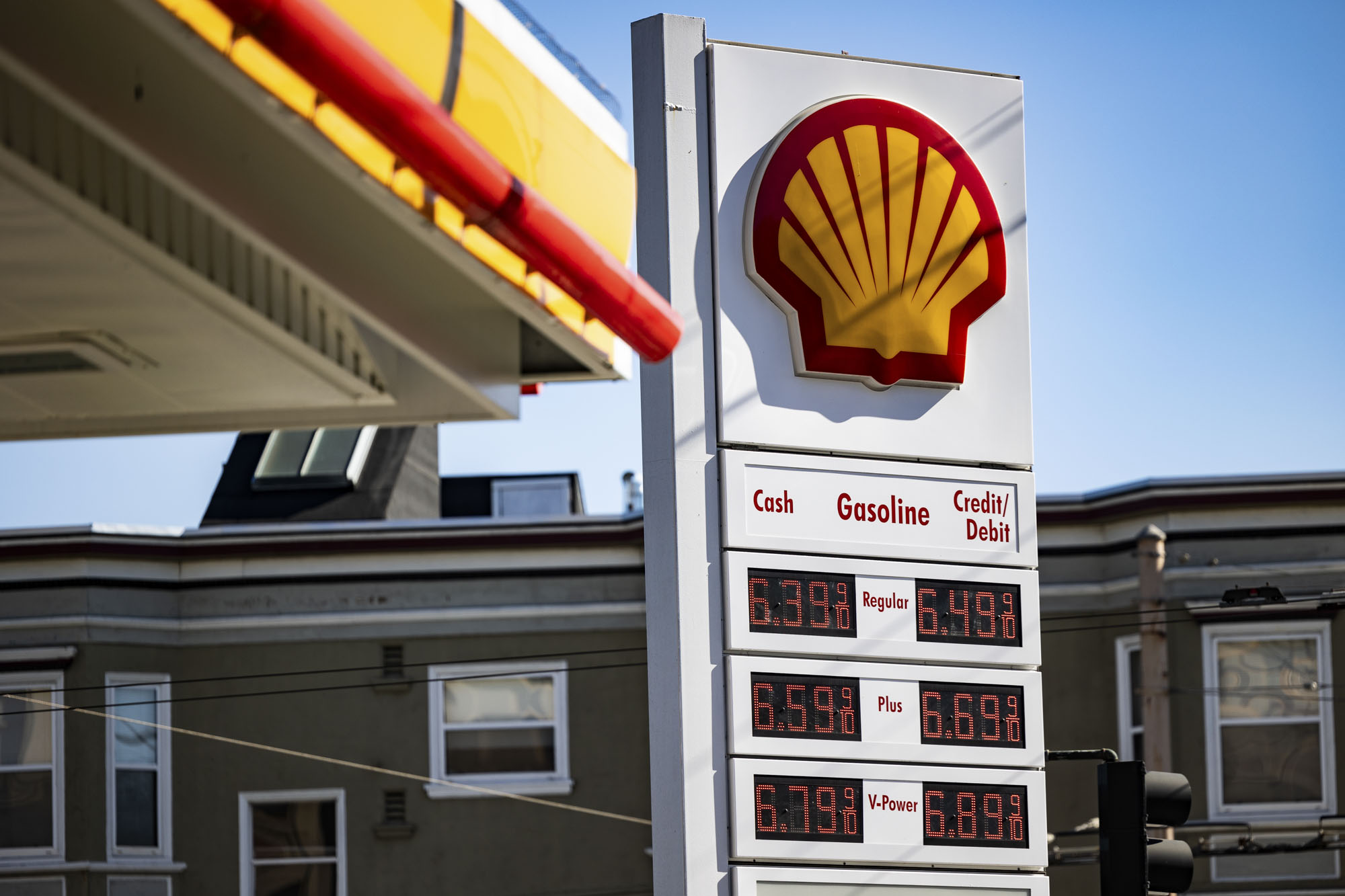
After years of bearing the political blame for the nation’s highest gas prices, California Democrats are turning the nozzle on Republicans in pivotal House battlegrounds this midterm election cycle.
In Sacramento, Richard Pan is running ads blasting his opponent for supporting “the war that raised gas prices.” In Bakersfield, Randy Villegas stood outside a Shell station last week and pledged to suspend the federal gas tax. And in San Diego, an ad for Marni von Wilpert shows her at a gas station, where she promises to “bring your tax dollars home, not spend them on foreign wars that cost you money.”
It’s all part of a nationwide Democratic push to turn the tables on an issue that haunted the party in the last two elections by hounding Republicans over price increases at the pump fueled by the war in Iran.
In California, however, the GOP is not yet ceding ground on the fuel price fight. Republicans remain confident that they can land attacks on Democrats over the state’s longstanding environmental policies, gas tax and supply constraints as the cost of living weighs on voters statewide.
“That’s what makes California so different: There are specific policies that voters can examine rather than simply looking at what’s happening in Washington,” said Christian Martinez, a spokesperson for the National Republican Congressional Committee.
The blame game over gas prices is taking on heightened importance as California’s congressional battlegrounds move from the upscale coastal suburbs, where the Democratic “blue wave” first made landfall in 2018, to inland working class communities where residents tend to drive more on average.
This year, California has three House contests widely considered to be the most competitive between Democrats and Republicans. An analysis by the Brookings Institution for KQED found that all three seats fall in the top third of California congressional districts in annual vehicle miles traveled per capita.
“When [gas] prices go up … those who drive longer distances, those who have less room in their household budgets feel it the most,” said Adie Tomer, a senior fellow at the Brookings Institution. “Those households are really taking it on the chin right now.”
‘We need our cars’
The three California congressional races rated competitive by the nonpartisan Cook Political Report are the 13th and 22nd districts, in the farmlands of the Central Valley, and the 48th District, which covers the sprawling suburbs of northern San Diego and Riverside counties.
“We need our cars — it’s a large district,” said Von Wilpert, a San Diego City Council member running for the 48th District, where Republican Rep. Darrell Issa opted not to seek reelection. “When the war in Iran was started overnight by Donald Trump, he never asked for approval from the American people or from Congress.”
Robin Ferguson, a resident of Escondido who is supporting Von Wilpert, felt the gas price hit in mid-September when she returned home after a week out of town.
“It was at $5.09 when I left, it’s a week now and it’s $5.79 — it’s a big, big issue,” Ferguson said. “We don’t have the public transportation up here in North County to get down to San Diego.”
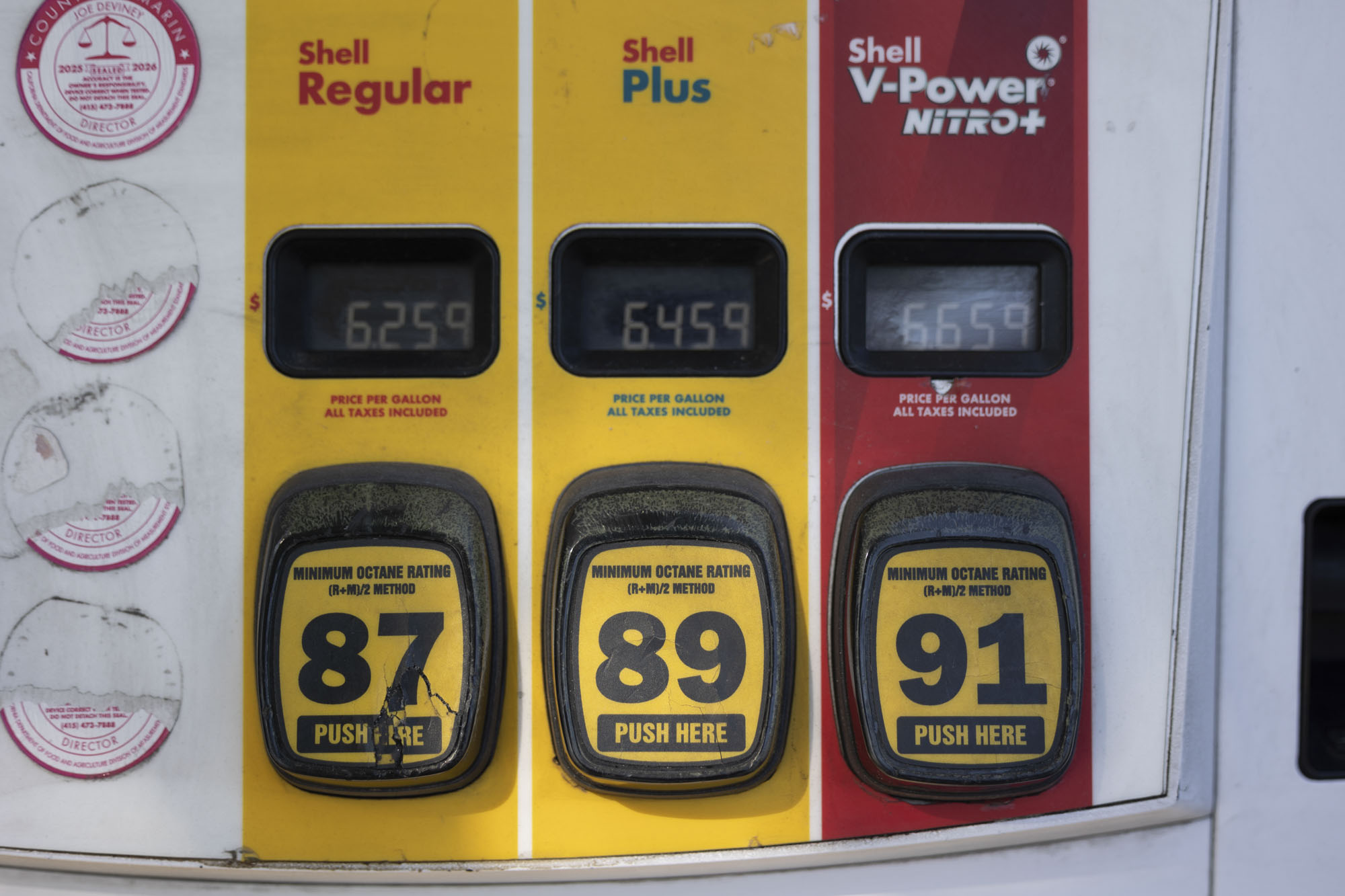
The nationwide monthly average for a gallon of gas hit a record high in September, according to AAA, and now sits at $4.33. In California, the average price is significantly higher: $6.26.
That California premium can be attributed to a number of factors, according to an analysis by UC Berkeley professor Severin Borenstein, faculty director of the Energy Institute at Haas.
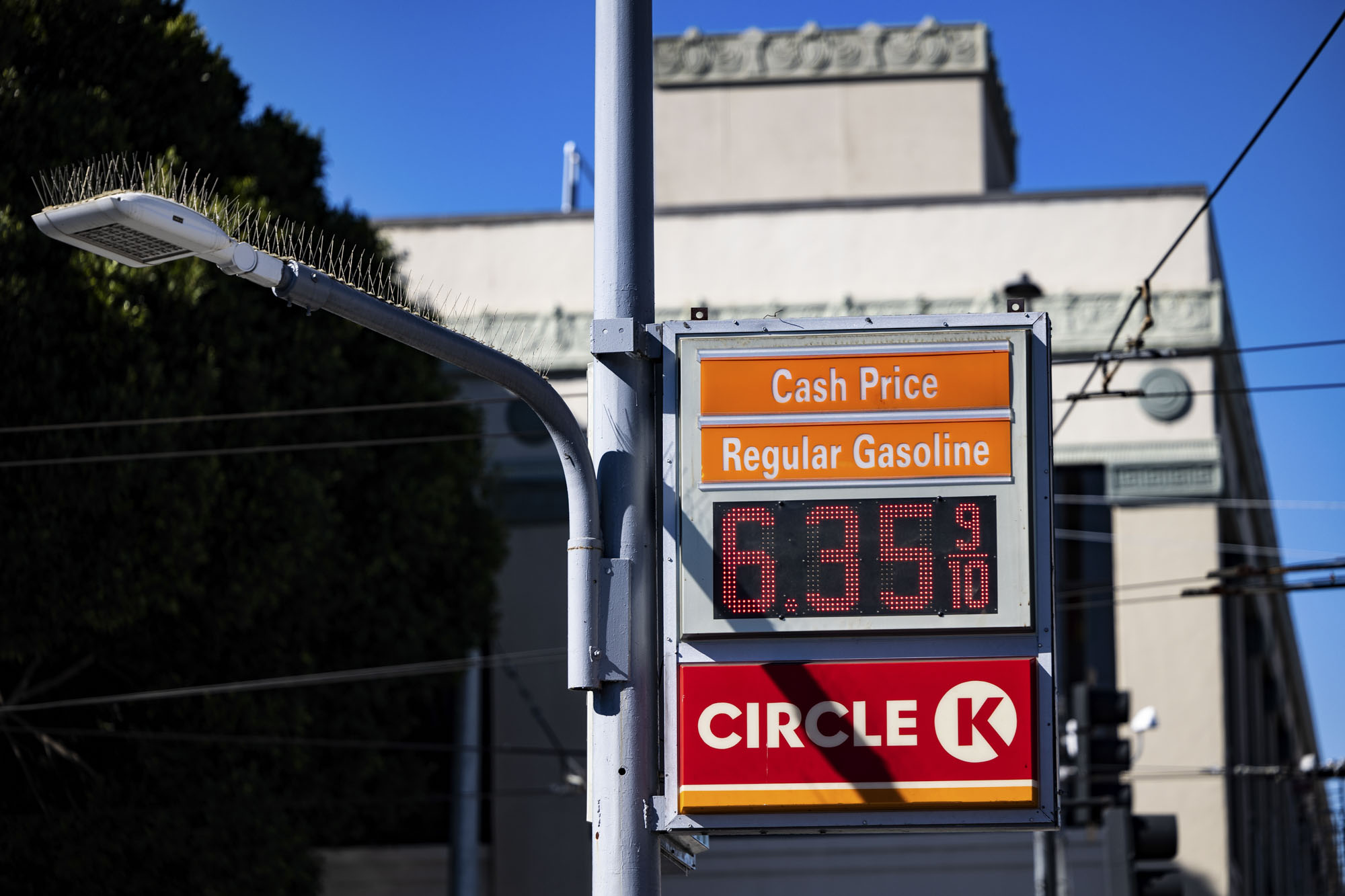
Taxes are the largest contributor. The state’s gas tax stands at $0.63 per gallon, the highest in the nation. And unlike leaders in states such as Georgia, Indiana, Ohio and Utah, California lawmakers have not suspended or reduced the tax as the war-fueled price increases put more pressure on drivers.
The tax, increased by the Legislature in 2017 and backed by voters a year later, funds road repair and transit.
“California taxes started out averaging about $0.25 higher in the mid-oughts and are about $0.51 higher than elsewhere in the US over the last few years,” Borenstein wrote. “Taxes account for about one-quarter of the growth in the California gas premium.”
On top of the tax are costs of complying with the state’s landmark emission-reduction programs — and the added expense of producing California’s special blend of gasoline.
Ad spending flips
Republicans wielded these state initiatives as cudgels in recent House elections.
When gas prices spiked in 2022, GOP groups pounded Central Valley Democrats Rudy Salas, who supported the state’s cap-and-trade program, and Adam Gray, who voted in favor of the gas tax increase. Both lost their campaigns that year, though Gray came back to win the 13th District in 2024.
“Republicans took us to task on gas prices,” said Bill Wong, a Democratic strategist.
Wong spent years leading the campaign arm for Democrats in the state Assembly, building a supermajority that allowed the party to pass the gas tax and an ambitious environmental agenda — and protecting it amid attacks from the GOP over fuel prices.
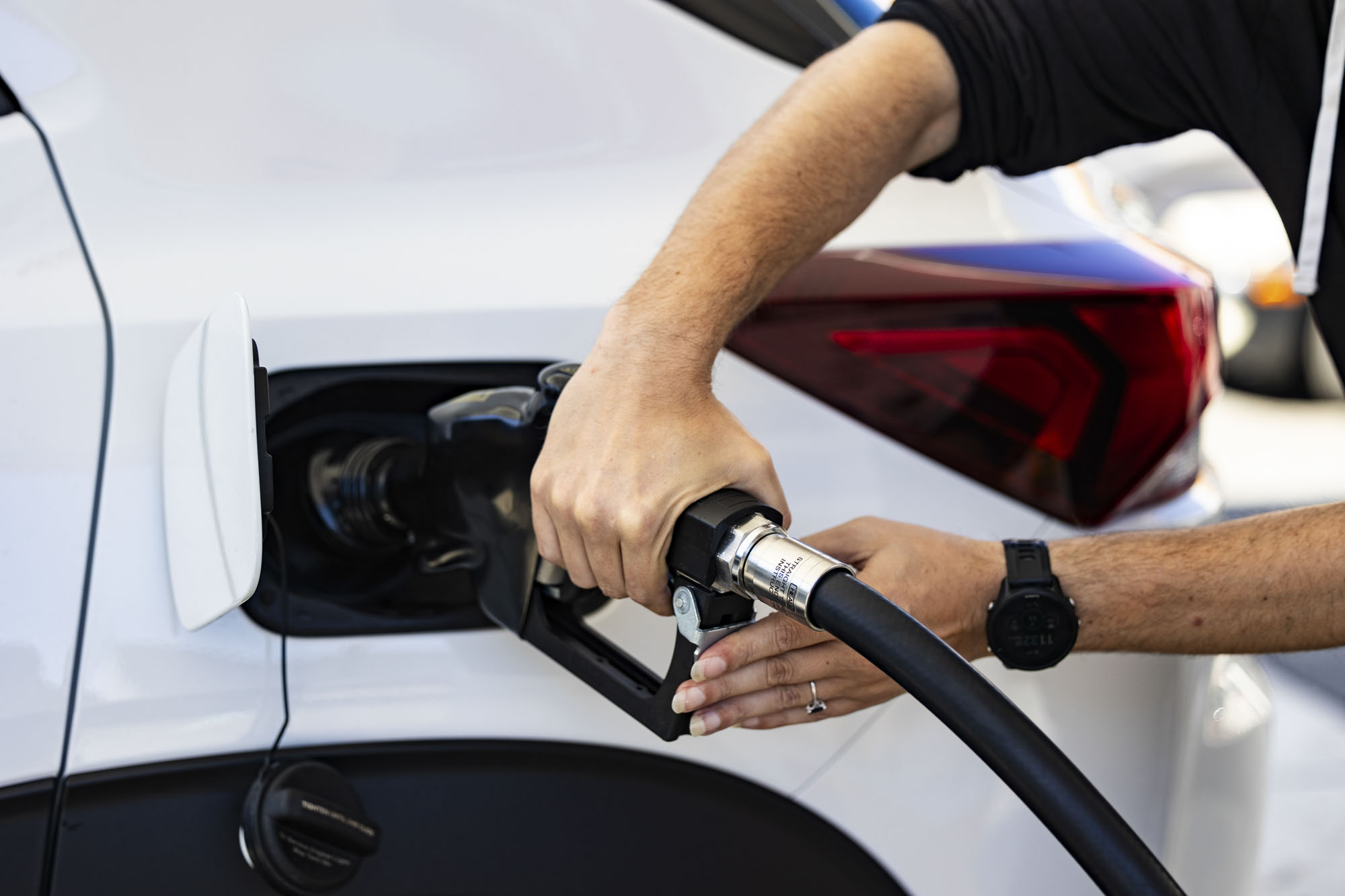
Now, he sees an opening for Democrats to at least neutralize the issue, as Iran’s attacks against ships carrying crude oil through the Strait of Hormuz sent prices soaring worldwide. Average gas prices have increased $1.35 per gallon since the beginning of the war, according to NBC News.
“There’s a direct tie to something that they did with the increase in gas price,” Wong said. “I think it’s time for the Democrats to really lean into it and say, ‘Hey, you held us responsible for gas prices in the past, and now you’re in charge.’”
Across the country, Democrats have taken up that call to flip the script. A Politico analysis of ad transcripts from the firm AdImpact found that roughly two-thirds of ads mentioning gas or gas prices in House or Senate elections came from Democrats. In 2024, 87% of gas price ads were run by Republicans.
Democrats are banking on the resonance of fuel price anxiety as they look to make inroads in traditionally red areas of the country. Rising diesel costs add particular burdens in agricultural areas, such as Iowa and Kansas and California’s Central Valley — where farmers rely on diesel to run tractors and combines.
Brookings analyzed annual miles traveled by Americans in their personal vehicle and found a decided tilt toward areas represented by the GOP in Congress.
“Across the country, districts that are represented by Republican elected officials are disproportionately those districts where people drive longer distances,” said Tomer, the Brookings senior fellow. “Also, many of them tend to have relatively lower household incomes.”
The pattern extends to California. Brookings researchers re-ran their analysis under the state’s new congressional lines and found that eight of the nine districts represented by Republicans (as well as Rep. Kevin Kiley, who left the GOP this year but caucuses with Republicans as an independent) are in the top half of California districts by vehicle miles traveled per-capita.
Republicans welcome gas price fight
Despite the mounting pressure from Democrats and the disproportionate pressure of rising gas prices, Republicans in California’s most competitive congressional districts are not shying away from the fight.
In those battleground seats, GOP candidates and aligned groups have spent more than $3.2 million this cycle on ads mentioning “gas prices” — compared with roughly $700,000 from Democrats, according to data through September from AdImpact.
An ad from Congressional Leadership Fund, a Republican super PAC, features drivers bemoaning the cost of gas and tying Villegas, the Democratic candidate in the 22nd District, to Democratic support of the state’s cap-and-invest system. The program requires polluters such as refineries to pay for their carbon emissions and has historically added roughly $0.23 to the cost of a gallon of gas.
In another spot, Republican Kevin Lincoln, the former Stockton mayor challenging Rep. Adam Gray, takes aim at Gray’s 2017 vote in support of raising the state’s gas tax.
“That’s what makes this issue so important in California,” said Martinez, the NRCC spokesperson. “We’re not talking about hypothetical policies; we’re talking about actual votes and records that people can look at every time they fill up their gas tanks.”
In an interview with KQED, Gray contrasted his gas tax vote with the ongoing war — arguing that increasing the tax and tying it to the rate of inflation came with the benefit of funding overdue road repair.
“Let’s compare and contrast that with the current inflation, the current kind of reckless war in Iran with no end in sight,” Gray said. “And yet — and this just tells you how dishonest the Republican campaign is — they’re running around blaming me for gas prices.”
Still, some drivers aren’t ready to shift the blame to the GOP after years of tying the high prices to Democrats.
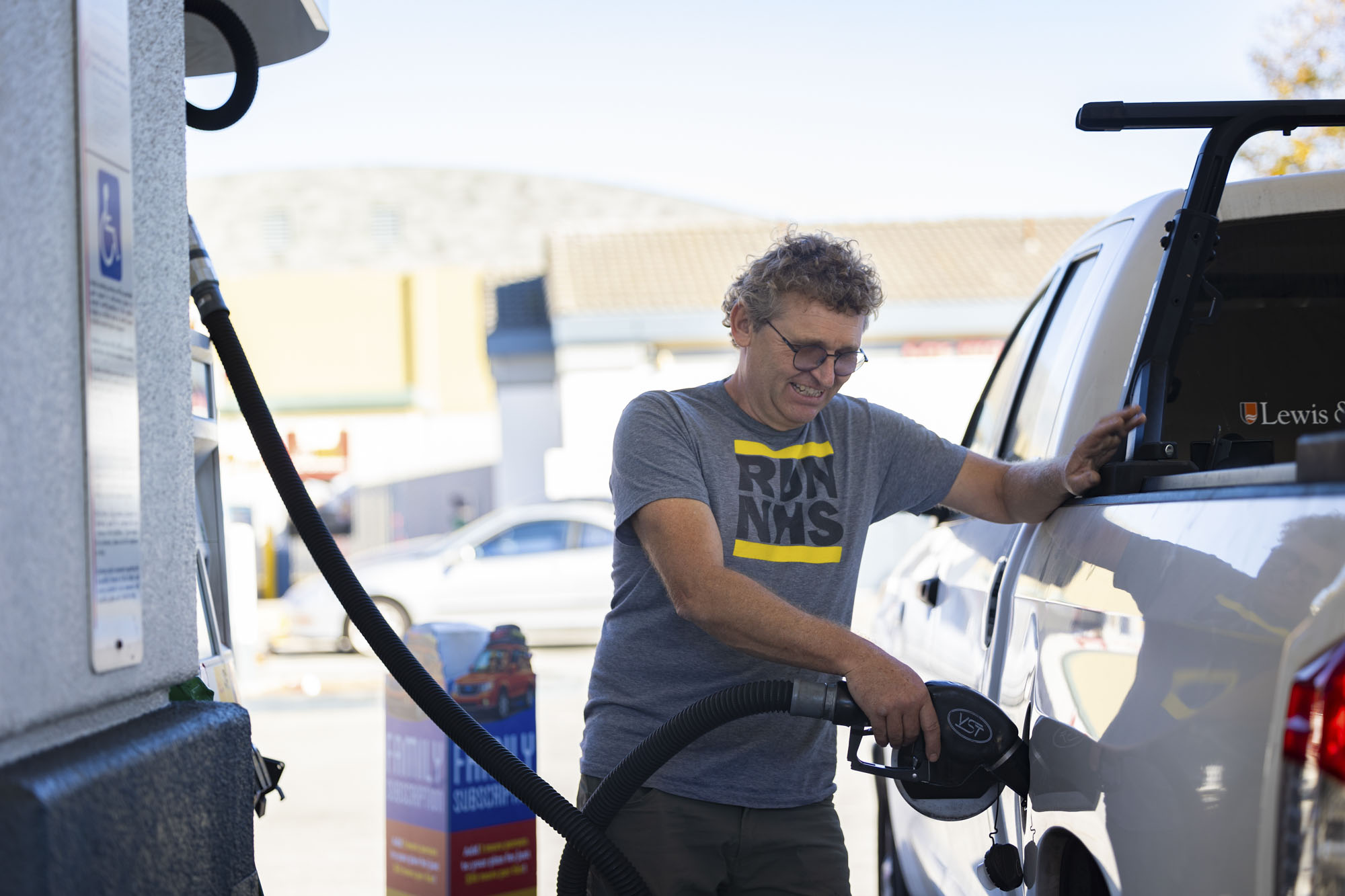
Gabriel Uribe said gas prices are “killing us” as he filled up his silver Ford F-150 at a Chevron station in San Marcos — a San Diego suburb in the 48th District.
“California has got to change,” he said. “California is different from any other state right now.”
Uribe is a construction worker who said he commutes roughly 100 miles every day between northern San Diego County and Imperial Beach, a city along the U.S.-Mexico border. He said high gas prices drove him to support Trump in the 2024 election.
“It’s [the] number one [reason] why I voted the way I did in the last presidential election,” Uribe said. “But it still can’t change unless we change here — you can only do so much federally, and it’s got to be a state issue now.”