SF Mayor, Backers Renew Push for Increased Mayoral Power
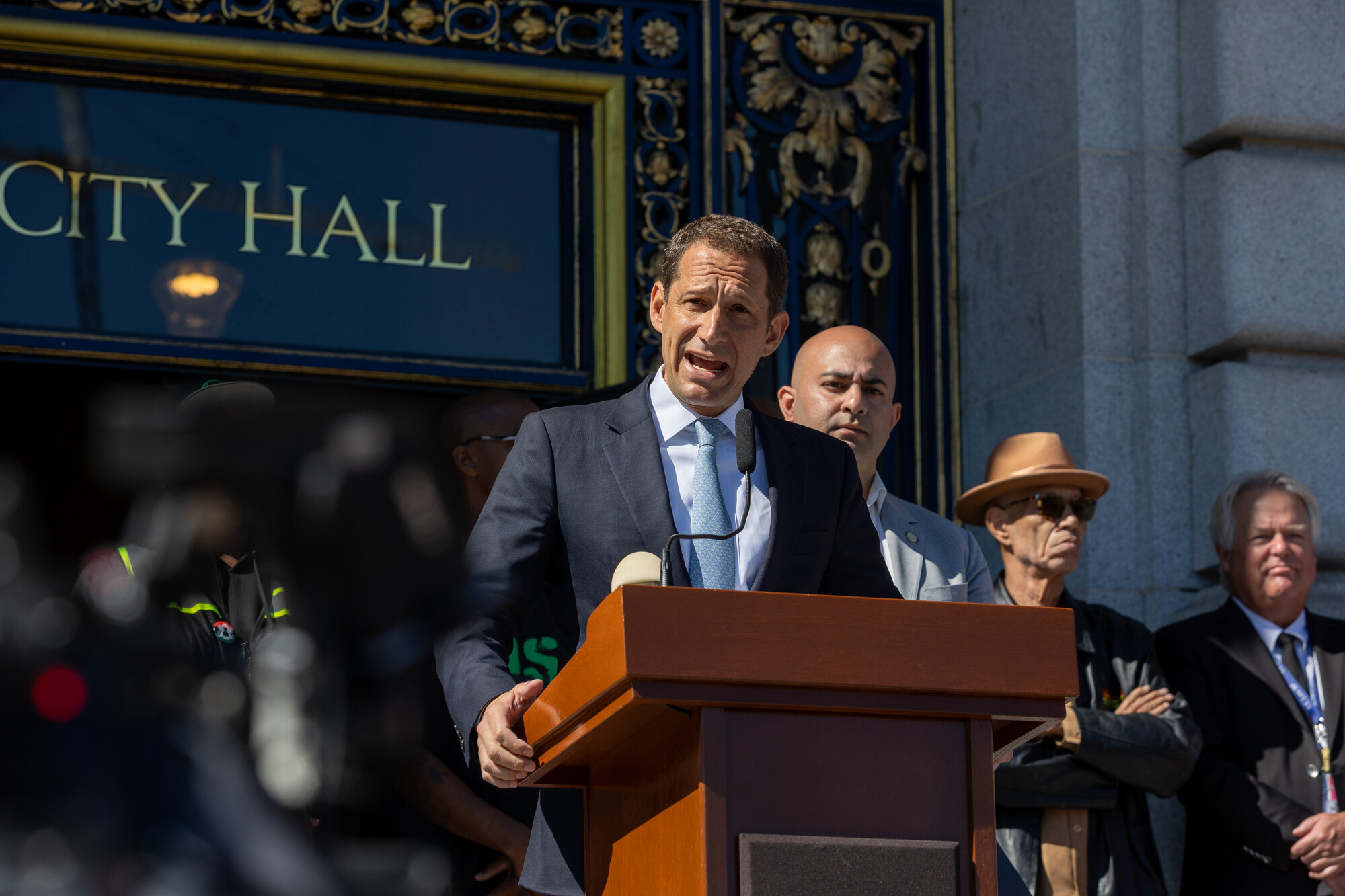
San Francisco Mayor Daniel Lurie is among those saying that recent allegations against a city official are all the more reason to pass a ballot measure that would give the mayor more power to oust commission members.
Lurie’s Clean Up City Hall committee said on the heels of allegations against Sheriff’s Office Oversight Board President William Palmer on Friday that the mayor’s proposed Proposition F would mean that officials “aren’t shielded from accountability.”
A San Francisco Chronicle report detailed allegations of Palmer picking a woman experiencing a mental health crisis up off the street, pressuring her to have sex and giving her drugs. Palmer was not arrested and is not facing charges.

Palmer, who was appointed by the Board of Supervisors to the body in 2021, has during his term been accused by four women of violence, including a rape allegation. A fifth woman got a restraining order against him. That, the Chronicle reports, is in addition to several traffic violations and almost $10,000 in parking fees in six years.
Palmer has denied wrongdoing and did not respond to KQED’s request for comment.
To remove him from his position wouldn’t be easy, proponents of Proposition F say. San Francisco’s current charter requires officials to demonstrate the board member engaged in proven official misconduct. Supervisor Stephen Sherrill told the Chronicle that he hopes to begin that process in a few weeks.
It includes “a high threshold” that involves a long process, according to the Clean Up City Hall campaign. After proving official misconduct, for example, three-fourths of the Board of Supervisors would still need to vote in favor of the removal.
“That’s sort of the price you pay to have good government,” said Justin Dolezal, president of Small Business Forward, which opposes the measure.
But Lurie said in a statement released by Clean Up City Hall that the “broken and corrupt system” was created “by insiders to protect insiders.
“San Franciscans deserve a government where responsibility is clear, accountability is real, and the people entrusted to serve this city are held to the highest standards,” Lurie said.
Proposition F would expand the mayor’s and board’s authority to allow the removal of most commissioners without cause and include the hiring and firing of most department heads. It’s one of a handful of measures Lurie put on the November ballot that proponents say would streamline city functions.
Max Szabo, a spokesperson for the Clean Up City Hall campaign, said the way things are set up now also creates a system with a lot of excuses. The measure, by contrast, would create a more accountable system of government, he said.
But Dolezal said he sees the measures, including Proposition F, as “blatant power grabs.” Using the allegations against Palmer to bolster the case for the measure is not something done in good faith, Dolezal said.
”City government works best for people when there are checks and balances and when commissions are not just rubber stamps on whatever the mayor wants to do,” Dolezal said.
The Democratic Socialists of America San Francisco, Supervisor Jackie Fielder and former Supervisor Dean Preston said in their argument against the measure that it’s already easy for the mayor to remove corrupt officials.
“Prop F lets the Mayor unilaterally remove public servants who’ve done nothing wrong,” the officials and others wrote days ago in an official argument against the measure. “That’s a recipe for politically-motivated removals of whistleblowers who would expose corruption.”
Board of Supervisors President Rafael Mandelman, House Speaker Nancy Pelosi and some unions back Proposition F. The committee, which is backed in part by tech founder Chris Larsen and The San Francisco Standard chairman Michael Moritz, has so far raised $9.4 million in support of the measures.
Jason McDaniel, a proponent of Proposition F and an associate professor of political science at San Francisco State University, said that the measure wouldn’t grant unchecked power. Supervisors and the mayor would only be able to remove their own appointees.
“It doesn’t just empower the mayor to remove appointees from commissions, right? It allows the ‘appointing authority’ to remove commissioners,” McDaniel said. “I personally am feeling like the balance has been preserved.”
KQED’s Desmond Bracken contributed to this report.