window.__IS_SSR__=true
window.__INITIAL_STATE__={
"attachmentsReducer": {
"audio_0": {
"type": "attachments",
"id": "audio_0",
"imgSizes": {
"kqedFullSize": {
"file": "https://ww2.kqed.org/news/wp-content/themes/KQED-unified/img/audio_bgs/background0.jpg"
}
}
},
"audio_1": {
"type": "attachments",
"id": "audio_1",
"imgSizes": {
"kqedFullSize": {
"file": "https://ww2.kqed.org/news/wp-content/themes/KQED-unified/img/audio_bgs/background1.jpg"
}
}
},
"audio_2": {
"type": "attachments",
"id": "audio_2",
"imgSizes": {
"kqedFullSize": {
"file": "https://ww2.kqed.org/news/wp-content/themes/KQED-unified/img/audio_bgs/background2.jpg"
}
}
},
"audio_3": {
"type": "attachments",
"id": "audio_3",
"imgSizes": {
"kqedFullSize": {
"file": "https://ww2.kqed.org/news/wp-content/themes/KQED-unified/img/audio_bgs/background3.jpg"
}
}
},
"audio_4": {
"type": "attachments",
"id": "audio_4",
"imgSizes": {
"kqedFullSize": {
"file": "https://ww2.kqed.org/news/wp-content/themes/KQED-unified/img/audio_bgs/background4.jpg"
}
}
},
"placeholder": {
"type": "attachments",
"id": "placeholder",
"imgSizes": {
"thumbnail": {
"file": "https://cdn.kqed.org/wp-content/uploads/2024/12/KQED-Default-Image-816638274-2000x1333-1-160x107.jpg",
"width": 160,
"height": 107,
"mimeType": "image/jpeg"
},
"medium": {
"file": "https://cdn.kqed.org/wp-content/uploads/2024/12/KQED-Default-Image-816638274-2000x1333-1-800x533.jpg",
"width": 800,
"height": 533,
"mimeType": "image/jpeg"
},
"medium_large": {
"file": "https://cdn.kqed.org/wp-content/uploads/2024/12/KQED-Default-Image-816638274-2000x1333-1-768x512.jpg",
"width": 768,
"height": 512,
"mimeType": "image/jpeg"
},
"large": {
"file": "https://cdn.kqed.org/wp-content/uploads/2024/12/KQED-Default-Image-816638274-2000x1333-1-1020x680.jpg",
"width": 1020,
"height": 680,
"mimeType": "image/jpeg"
},
"1536x1536": {
"file": "https://cdn.kqed.org/wp-content/uploads/2024/12/KQED-Default-Image-816638274-2000x1333-1-1536x1024.jpg",
"width": 1536,
"height": 1024,
"mimeType": "image/jpeg"
},
"fd-lrg": {
"file": "https://cdn.kqed.org/wp-content/uploads/2024/12/KQED-Default-Image-816638274-2000x1333-1-1536x1024.jpg",
"width": 1536,
"height": 1024,
"mimeType": "image/jpeg"
},
"fd-med": {
"file": "https://cdn.kqed.org/wp-content/uploads/2024/12/KQED-Default-Image-816638274-2000x1333-1-1020x680.jpg",
"width": 1020,
"height": 680,
"mimeType": "image/jpeg"
},
"fd-sm": {
"file": "https://cdn.kqed.org/wp-content/uploads/2024/12/KQED-Default-Image-816638274-2000x1333-1-800x533.jpg",
"width": 800,
"height": 533,
"mimeType": "image/jpeg"
},
"post-thumbnail": {
"file": "https://cdn.kqed.org/wp-content/uploads/2024/12/KQED-Default-Image-816638274-2000x1333-1-672x372.jpg",
"width": 672,
"height": 372,
"mimeType": "image/jpeg"
},
"twentyfourteen-full-width": {
"file": "https://cdn.kqed.org/wp-content/uploads/2024/12/KQED-Default-Image-816638274-2000x1333-1-1038x576.jpg",
"width": 1038,
"height": 576,
"mimeType": "image/jpeg"
},
"xxsmall": {
"file": "https://cdn.kqed.org/wp-content/uploads/2024/12/KQED-Default-Image-816638274-2000x1333-1-160x107.jpg",
"width": 160,
"height": 107,
"mimeType": "image/jpeg"
},
"xsmall": {
"file": "https://cdn.kqed.org/wp-content/uploads/2024/12/KQED-Default-Image-816638274-2000x1333-1-672x372.jpg",
"width": 672,
"height": 372,
"mimeType": "image/jpeg"
},
"small": {
"file": "https://cdn.kqed.org/wp-content/uploads/2024/12/KQED-Default-Image-816638274-2000x1333-1-672x372.jpg",
"width": 672,
"height": 372,
"mimeType": "image/jpeg"
},
"xlarge": {
"file": "https://cdn.kqed.org/wp-content/uploads/2024/12/KQED-Default-Image-816638274-2000x1333-1-1020x680.jpg",
"width": 1020,
"height": 680,
"mimeType": "image/jpeg"
},
"full-width": {
"file": "https://cdn.kqed.org/wp-content/uploads/2024/12/KQED-Default-Image-816638274-2000x1333-1-1920x1280.jpg",
"width": 1920,
"height": 1280,
"mimeType": "image/jpeg"
},
"guest-author-32": {
"file": "https://cdn.kqed.org/wp-content/uploads/2025/01/KQED-Default-Image-816638274-1333x1333-1-160x160.jpg",
"width": 32,
"height": 32,
"mimeType": "image/jpeg"
},
"guest-author-50": {
"file": "https://cdn.kqed.org/wp-content/uploads/2025/01/KQED-Default-Image-816638274-1333x1333-1-160x160.jpg",
"width": 50,
"height": 50,
"mimeType": "image/jpeg"
},
"guest-author-64": {
"file": "https://cdn.kqed.org/wp-content/uploads/2025/01/KQED-Default-Image-816638274-1333x1333-1-160x160.jpg",
"width": 64,
"height": 64,
"mimeType": "image/jpeg"
},
"guest-author-96": {
"file": "https://cdn.kqed.org/wp-content/uploads/2025/01/KQED-Default-Image-816638274-1333x1333-1-160x160.jpg",
"width": 96,
"height": 96,
"mimeType": "image/jpeg"
},
"guest-author-128": {
"file": "https://cdn.kqed.org/wp-content/uploads/2025/01/KQED-Default-Image-816638274-1333x1333-1-160x160.jpg",
"width": 128,
"height": 128,
"mimeType": "image/jpeg"
},
"detail": {
"file": "https://cdn.kqed.org/wp-content/uploads/2025/01/KQED-Default-Image-816638274-1333x1333-1-160x160.jpg",
"width": 160,
"height": 160,
"mimeType": "image/jpeg"
},
"kqedFullSize": {
"file": "https://cdn.kqed.org/wp-content/uploads/2024/12/KQED-Default-Image-816638274-2000x1333-1.jpg",
"width": 2000,
"height": 1333
}
}
},
"news_12044267": {
"type": "attachments",
"id": "news_12044267",
"meta": {
"index": "attachments_1716263798",
"site": "news",
"id": "12044267",
"found": true
},
"title": "npr.brightspotcdn copy",
"publishDate": 1749846102,
"status": "inherit",
"parent": 12044264,
"modified": 1749846118,
"caption": null,
"credit": "Mar Hernandez for NPR",
"altTag": null,
"description": null,
"imgSizes": {
"thumbnail": {
"file": "https://cdn.kqed.org/wp-content/uploads/sites/10/2025/06/npr.brightspotcdn-copy-7-160x107.jpg",
"width": 160,
"height": 107,
"mimeType": "image/jpeg"
},
"1536x1536": {
"file": "https://cdn.kqed.org/wp-content/uploads/sites/10/2025/06/npr.brightspotcdn-copy-7-1536x1024.jpg",
"width": 1536,
"height": 1024,
"mimeType": "image/jpeg"
},
"post-thumbnail": {
"file": "https://cdn.kqed.org/wp-content/uploads/sites/10/2025/06/npr.brightspotcdn-copy-7-672x372.jpg",
"width": 672,
"height": 372,
"mimeType": "image/jpeg"
},
"twentyfourteen-full-width": {
"file": "https://cdn.kqed.org/wp-content/uploads/sites/10/2025/06/npr.brightspotcdn-copy-7-1038x576.jpg",
"width": 1038,
"height": 576,
"mimeType": "image/jpeg"
},
"kqedFullSize": {
"file": "https://cdn.kqed.org/wp-content/uploads/sites/10/2025/06/npr.brightspotcdn-copy-7.jpg",
"width": 1600,
"height": 1067
}
},
"isLoading": false,
"fetchFailed": false
},
"news_12044141": {
"type": "attachments",
"id": "news_12044141",
"meta": {
"index": "attachments_1716263798",
"site": "news",
"id": "12044141",
"found": true
},
"title": "250610-HEADSTARTPROGRAMS-39-BL-KQED",
"publishDate": 1749833095,
"status": "inherit",
"parent": 0,
"modified": 1749833155,
"caption": "Maria Corchado, a Head Start teacher, stands outside one of the classrooms in Hollister, San Benito County, on June 10, 2025.",
"credit": "Beth LaBerge/KQED",
"altTag": null,
"description": null,
"imgSizes": {
"thumbnail": {
"file": "https://cdn.kqed.org/wp-content/uploads/sites/10/2025/06/250610-HEADSTARTPROGRAMS-39-BL-KQED-160x107.jpg",
"width": 160,
"height": 107,
"mimeType": "image/jpeg"
},
"1536x1536": {
"file": "https://cdn.kqed.org/wp-content/uploads/sites/10/2025/06/250610-HEADSTARTPROGRAMS-39-BL-KQED-1536x1024.jpg",
"width": 1536,
"height": 1024,
"mimeType": "image/jpeg"
},
"post-thumbnail": {
"file": "https://cdn.kqed.org/wp-content/uploads/sites/10/2025/06/250610-HEADSTARTPROGRAMS-39-BL-KQED-672x372.jpg",
"width": 672,
"height": 372,
"mimeType": "image/jpeg"
},
"twentyfourteen-full-width": {
"file": "https://cdn.kqed.org/wp-content/uploads/sites/10/2025/06/250610-HEADSTARTPROGRAMS-39-BL-KQED-1038x576.jpg",
"width": 1038,
"height": 576,
"mimeType": "image/jpeg"
},
"kqedFullSize": {
"file": "https://cdn.kqed.org/wp-content/uploads/sites/10/2025/06/250610-HEADSTARTPROGRAMS-39-BL-KQED.jpg",
"width": 2000,
"height": 1333
}
},
"isLoading": false,
"fetchFailed": false
},
"news_12030543": {
"type": "attachments",
"id": "news_12030543",
"meta": {
"index": "attachments_1716263798",
"site": "news",
"id": "12030543",
"found": true
},
"title": "20250307_ALAMEDACHILDCARE_GC-4-KQED",
"publishDate": 1741613320,
"status": "inherit",
"parent": 12030561,
"modified": 1741648270,
"caption": "Lisa Zarodney speaks to Hudson, 3, at her home in Livermore, where she runs a childcare operation, on March 7, 2025.",
"credit": "Gina Castro/KQED",
"altTag": null,
"description": null,
"imgSizes": {
"medium": {
"file": "https://cdn.kqed.org/wp-content/uploads/sites/10/2025/03/20250307_ALAMEDACHILDCARE_GC-4-KQED-800x533.jpg",
"width": 800,
"height": 533,
"mimeType": "image/jpeg"
},
"large": {
"file": "https://cdn.kqed.org/wp-content/uploads/sites/10/2025/03/20250307_ALAMEDACHILDCARE_GC-4-KQED-1020x680.jpg",
"width": 1020,
"height": 680,
"mimeType": "image/jpeg"
},
"thumbnail": {
"file": "https://cdn.kqed.org/wp-content/uploads/sites/10/2025/03/20250307_ALAMEDACHILDCARE_GC-4-KQED-160x107.jpg",
"width": 160,
"height": 107,
"mimeType": "image/jpeg"
},
"1536x1536": {
"file": "https://cdn.kqed.org/wp-content/uploads/sites/10/2025/03/20250307_ALAMEDACHILDCARE_GC-4-KQED-1536x1024.jpg",
"width": 1536,
"height": 1024,
"mimeType": "image/jpeg"
},
"post-thumbnail": {
"file": "https://cdn.kqed.org/wp-content/uploads/sites/10/2025/03/20250307_ALAMEDACHILDCARE_GC-4-KQED-672x372.jpg",
"width": 672,
"height": 372,
"mimeType": "image/jpeg"
},
"twentyfourteen-full-width": {
"file": "https://cdn.kqed.org/wp-content/uploads/sites/10/2025/03/20250307_ALAMEDACHILDCARE_GC-4-KQED-1038x576.jpg",
"width": 1038,
"height": 576,
"mimeType": "image/jpeg"
},
"full-width": {
"file": "https://cdn.kqed.org/wp-content/uploads/sites/10/2025/03/20250307_ALAMEDACHILDCARE_GC-4-KQED-1920x1280.jpg",
"width": 1920,
"height": 1280,
"mimeType": "image/jpeg"
},
"kqedFullSize": {
"file": "https://cdn.kqed.org/wp-content/uploads/sites/10/2025/03/20250307_ALAMEDACHILDCARE_GC-4-KQED.jpg",
"width": 2000,
"height": 1333
}
},
"isLoading": false,
"fetchFailed": false
},
"news_12043066": {
"type": "attachments",
"id": "news_12043066",
"meta": {
"index": "attachments_1716263798",
"site": "news",
"id": "12043066",
"found": true
},
"title": "026_KQEDScience_IntCommunitySchoolOakland_10202022_qed",
"publishDate": 1749229223,
"status": "inherit",
"parent": 12043062,
"modified": 1749229271,
"caption": "Students play in the schoolyard at International Community School in Oakland on Oct. 20, 2022.",
"credit": "Beth LaBerge/KQED",
"altTag": null,
"description": null,
"imgSizes": {
"thumbnail": {
"file": "https://cdn.kqed.org/wp-content/uploads/sites/10/2025/06/026_KQEDScience_IntCommunitySchoolOakland_10202022_qed-160x107.jpg",
"width": 160,
"height": 107,
"mimeType": "image/jpeg"
},
"1536x1536": {
"file": "https://cdn.kqed.org/wp-content/uploads/sites/10/2025/06/026_KQEDScience_IntCommunitySchoolOakland_10202022_qed-1536x1024.jpg",
"width": 1536,
"height": 1024,
"mimeType": "image/jpeg"
},
"post-thumbnail": {
"file": "https://cdn.kqed.org/wp-content/uploads/sites/10/2025/06/026_KQEDScience_IntCommunitySchoolOakland_10202022_qed-672x372.jpg",
"width": 672,
"height": 372,
"mimeType": "image/jpeg"
},
"twentyfourteen-full-width": {
"file": "https://cdn.kqed.org/wp-content/uploads/sites/10/2025/06/026_KQEDScience_IntCommunitySchoolOakland_10202022_qed-1038x576.jpg",
"width": 1038,
"height": 576,
"mimeType": "image/jpeg"
},
"kqedFullSize": {
"file": "https://cdn.kqed.org/wp-content/uploads/sites/10/2025/06/026_KQEDScience_IntCommunitySchoolOakland_10202022_qed.jpg",
"width": 2000,
"height": 1333
}
},
"isLoading": false,
"fetchFailed": false
},
"news_12042885": {
"type": "attachments",
"id": "news_12042885",
"meta": {
"index": "attachments_1716263798",
"site": "news",
"id": "12042885",
"found": true
},
"title": "Stanford University Hunger Strike",
"publishDate": 1749144329,
"status": "inherit",
"parent": 12042881,
"modified": 1749150182,
"caption": "Owen Martin, right, listens to Shaykh Alauddin Elbakri speak at White Memorial Plaza in Stanford, California, on Monday, May 19, 2025. Several Stanford University students have been on a hunger strike for more than a week, pledging not to eat until the university agrees to divest from companies that they say are supporting Israel’s war in Gaza.",
"credit": "Estefany Gonzalez for KQED",
"altTag": null,
"description": null,
"imgSizes": {
"medium": {
"file": "https://cdn.kqed.org/wp-content/uploads/sites/10/2025/06/05192025_StanfordHungerStrike_EG030_qed-800x533.jpg",
"width": 800,
"height": 533,
"mimeType": "image/jpeg"
},
"large": {
"file": "https://cdn.kqed.org/wp-content/uploads/sites/10/2025/06/05192025_StanfordHungerStrike_EG030_qed-1020x680.jpg",
"width": 1020,
"height": 680,
"mimeType": "image/jpeg"
},
"thumbnail": {
"file": "https://cdn.kqed.org/wp-content/uploads/sites/10/2025/06/05192025_StanfordHungerStrike_EG030_qed-160x107.jpg",
"width": 160,
"height": 107,
"mimeType": "image/jpeg"
},
"1536x1536": {
"file": "https://cdn.kqed.org/wp-content/uploads/sites/10/2025/06/05192025_StanfordHungerStrike_EG030_qed-1536x1024.jpg",
"width": 1536,
"height": 1024,
"mimeType": "image/jpeg"
},
"post-thumbnail": {
"file": "https://cdn.kqed.org/wp-content/uploads/sites/10/2025/06/05192025_StanfordHungerStrike_EG030_qed-672x372.jpg",
"width": 672,
"height": 372,
"mimeType": "image/jpeg"
},
"twentyfourteen-full-width": {
"file": "https://cdn.kqed.org/wp-content/uploads/sites/10/2025/06/05192025_StanfordHungerStrike_EG030_qed-1038x576.jpg",
"width": 1038,
"height": 576,
"mimeType": "image/jpeg"
},
"full-width": {
"file": "https://cdn.kqed.org/wp-content/uploads/sites/10/2025/06/05192025_StanfordHungerStrike_EG030_qed-1920x1280.jpg",
"width": 1920,
"height": 1280,
"mimeType": "image/jpeg"
},
"kqedFullSize": {
"file": "https://cdn.kqed.org/wp-content/uploads/sites/10/2025/06/05192025_StanfordHungerStrike_EG030_qed.jpg",
"width": 2000,
"height": 1333
}
},
"isLoading": false,
"fetchFailed": false
},
"news_12037997": {
"type": "attachments",
"id": "news_12037997",
"meta": {
"index": "attachments_1716263798",
"site": "news",
"id": "12037997",
"found": true
},
"title": "The Oakland Unified School District Offices in Oakland on April 28, 2025.",
"publishDate": 1745884016,
"status": "inherit",
"parent": 12038078,
"modified": 1745954220,
"caption": "The Oakland Unified School District Offices in Oakland on April 28, 2025.",
"credit": "Martin do Nascimento/KQED",
"altTag": null,
"description": null,
"imgSizes": {
"medium": {
"file": "https://cdn.kqed.org/wp-content/uploads/sites/10/2025/04/250428-OUSD-OFFICE-FILE-MD-01-KQED-800x533.jpg",
"width": 800,
"height": 533,
"mimeType": "image/jpeg"
},
"large": {
"file": "https://cdn.kqed.org/wp-content/uploads/sites/10/2025/04/250428-OUSD-OFFICE-FILE-MD-01-KQED-1020x680.jpg",
"width": 1020,
"height": 680,
"mimeType": "image/jpeg"
},
"thumbnail": {
"file": "https://cdn.kqed.org/wp-content/uploads/sites/10/2025/04/250428-OUSD-OFFICE-FILE-MD-01-KQED-160x107.jpg",
"width": 160,
"height": 107,
"mimeType": "image/jpeg"
},
"1536x1536": {
"file": "https://cdn.kqed.org/wp-content/uploads/sites/10/2025/04/250428-OUSD-OFFICE-FILE-MD-01-KQED-1536x1024.jpg",
"width": 1536,
"height": 1024,
"mimeType": "image/jpeg"
},
"post-thumbnail": {
"file": "https://cdn.kqed.org/wp-content/uploads/sites/10/2025/04/250428-OUSD-OFFICE-FILE-MD-01-KQED-672x372.jpg",
"width": 672,
"height": 372,
"mimeType": "image/jpeg"
},
"twentyfourteen-full-width": {
"file": "https://cdn.kqed.org/wp-content/uploads/sites/10/2025/04/250428-OUSD-OFFICE-FILE-MD-01-KQED-1038x576.jpg",
"width": 1038,
"height": 576,
"mimeType": "image/jpeg"
},
"full-width": {
"file": "https://cdn.kqed.org/wp-content/uploads/sites/10/2025/04/250428-OUSD-OFFICE-FILE-MD-01-KQED-1920x1280.jpg",
"width": 1920,
"height": 1280,
"mimeType": "image/jpeg"
},
"kqedFullSize": {
"file": "https://cdn.kqed.org/wp-content/uploads/sites/10/2025/04/250428-OUSD-OFFICE-FILE-MD-01-KQED.jpg",
"width": 2000,
"height": 1333
}
},
"isLoading": false,
"fetchFailed": false
},
"news_12041962": {
"type": "attachments",
"id": "news_12041962",
"meta": {
"index": "attachments_1716263798",
"site": "news",
"id": "12041962",
"found": true
},
"title": "IMG_4393",
"publishDate": 1748540578,
"status": "inherit",
"parent": 12041941,
"modified": 1748551236,
"caption": "Departing Superintendent Kyla Johnson-Trammell warned that the Oakland Unified School District must close schools to keep finances and academic gains on track at a press conference on Thursday, May 29, 2025.",
"credit": "Katie DeBenedetti/KQED",
"altTag": null,
"description": null,
"imgSizes": {
"medium": {
"file": "https://cdn.kqed.org/wp-content/uploads/sites/10/2025/05/IMG_4393-800x600.jpg",
"width": 800,
"height": 600,
"mimeType": "image/jpeg"
},
"large": {
"file": "https://cdn.kqed.org/wp-content/uploads/sites/10/2025/05/IMG_4393-1020x765.jpg",
"width": 1020,
"height": 765,
"mimeType": "image/jpeg"
},
"thumbnail": {
"file": "https://cdn.kqed.org/wp-content/uploads/sites/10/2025/05/IMG_4393-160x120.jpg",
"width": 160,
"height": 120,
"mimeType": "image/jpeg"
},
"1536x1536": {
"file": "https://cdn.kqed.org/wp-content/uploads/sites/10/2025/05/IMG_4393-1536x1152.jpg",
"width": 1536,
"height": 1152,
"mimeType": "image/jpeg"
},
"2048x2048": {
"file": "https://cdn.kqed.org/wp-content/uploads/sites/10/2025/05/IMG_4393-2048x1536.jpg",
"width": 2048,
"height": 1536,
"mimeType": "image/jpeg"
},
"post-thumbnail": {
"file": "https://cdn.kqed.org/wp-content/uploads/sites/10/2025/05/IMG_4393-672x372.jpg",
"width": 672,
"height": 372,
"mimeType": "image/jpeg"
},
"twentyfourteen-full-width": {
"file": "https://cdn.kqed.org/wp-content/uploads/sites/10/2025/05/IMG_4393-1038x576.jpg",
"width": 1038,
"height": 576,
"mimeType": "image/jpeg"
},
"full-width": {
"file": "https://cdn.kqed.org/wp-content/uploads/sites/10/2025/05/IMG_4393-1920x1440.jpg",
"width": 1920,
"height": 1440,
"mimeType": "image/jpeg"
},
"kqedFullSize": {
"file": "https://cdn.kqed.org/wp-content/uploads/sites/10/2025/05/IMG_4393-scaled.jpg",
"width": 2560,
"height": 1920
}
},
"isLoading": false,
"fetchFailed": false
},
"news_12041604": {
"type": "attachments",
"id": "news_12041604",
"meta": {
"index": "attachments_1716263798",
"site": "news",
"id": "12041604",
"found": true
},
"title": "jon powell in Berkeley on May 9, 2025.",
"publishDate": 1748090827,
"status": "inherit",
"parent": 12040453,
"modified": 1748090841,
"caption": "jon powell in Berkeley on May 9, 2025.",
"credit": "Martin do Nascimento/KQED",
"altTag": null,
"description": null,
"imgSizes": {
"medium": {
"file": "https://cdn.kqed.org/wp-content/uploads/sites/10/2025/05/250509-JOHN-POWELL-MD-02-KQED-3-800x534.jpg",
"width": 800,
"height": 534,
"mimeType": "image/jpeg"
},
"large": {
"file": "https://cdn.kqed.org/wp-content/uploads/sites/10/2025/05/250509-JOHN-POWELL-MD-02-KQED-3-1020x680.jpg",
"width": 1020,
"height": 680,
"mimeType": "image/jpeg"
},
"thumbnail": {
"file": "https://cdn.kqed.org/wp-content/uploads/sites/10/2025/05/250509-JOHN-POWELL-MD-02-KQED-3-160x107.jpg",
"width": 160,
"height": 107,
"mimeType": "image/jpeg"
},
"1536x1536": {
"file": "https://cdn.kqed.org/wp-content/uploads/sites/10/2025/05/250509-JOHN-POWELL-MD-02-KQED-3-1536x1025.jpg",
"width": 1536,
"height": 1025,
"mimeType": "image/jpeg"
},
"post-thumbnail": {
"file": "https://cdn.kqed.org/wp-content/uploads/sites/10/2025/05/250509-JOHN-POWELL-MD-02-KQED-3-672x372.jpg",
"width": 672,
"height": 372,
"mimeType": "image/jpeg"
},
"twentyfourteen-full-width": {
"file": "https://cdn.kqed.org/wp-content/uploads/sites/10/2025/05/250509-JOHN-POWELL-MD-02-KQED-3-1038x576.jpg",
"width": 1038,
"height": 576,
"mimeType": "image/jpeg"
},
"full-width": {
"file": "https://cdn.kqed.org/wp-content/uploads/sites/10/2025/05/250509-JOHN-POWELL-MD-02-KQED-3-1920x1281.jpg",
"width": 1920,
"height": 1281,
"mimeType": "image/jpeg"
},
"kqedFullSize": {
"file": "https://cdn.kqed.org/wp-content/uploads/sites/10/2025/05/250509-JOHN-POWELL-MD-02-KQED-3.jpg",
"width": 2000,
"height": 1334
}
},
"isLoading": false,
"fetchFailed": false
},
"news_12041290": {
"type": "attachments",
"id": "news_12041290",
"meta": {
"index": "attachments_1716263798",
"site": "news",
"id": "12041290",
"found": true
},
"title": "240520-TKBilingualLearners-03-BL_qed",
"publishDate": 1747939937,
"status": "inherit",
"parent": 12041279,
"modified": 1747939947,
"caption": "Students form a line to get ready for lunchtime at La Plazita Preschool in Oakland on May 20, 2024.",
"credit": "Beth LaBerge/KQED",
"altTag": null,
"description": null,
"imgSizes": {
"medium": {
"file": "https://cdn.kqed.org/wp-content/uploads/sites/10/2025/05/240520-TKBilingualLearners-03-BL_qed-800x533.jpg",
"width": 800,
"height": 533,
"mimeType": "image/jpeg"
},
"large": {
"file": "https://cdn.kqed.org/wp-content/uploads/sites/10/2025/05/240520-TKBilingualLearners-03-BL_qed-1020x680.jpg",
"width": 1020,
"height": 680,
"mimeType": "image/jpeg"
},
"thumbnail": {
"file": "https://cdn.kqed.org/wp-content/uploads/sites/10/2025/05/240520-TKBilingualLearners-03-BL_qed-160x107.jpg",
"width": 160,
"height": 107,
"mimeType": "image/jpeg"
},
"1536x1536": {
"file": "https://cdn.kqed.org/wp-content/uploads/sites/10/2025/05/240520-TKBilingualLearners-03-BL_qed-1536x1024.jpg",
"width": 1536,
"height": 1024,
"mimeType": "image/jpeg"
},
"post-thumbnail": {
"file": "https://cdn.kqed.org/wp-content/uploads/sites/10/2025/05/240520-TKBilingualLearners-03-BL_qed-672x372.jpg",
"width": 672,
"height": 372,
"mimeType": "image/jpeg"
},
"twentyfourteen-full-width": {
"file": "https://cdn.kqed.org/wp-content/uploads/sites/10/2025/05/240520-TKBilingualLearners-03-BL_qed-1038x576.jpg",
"width": 1038,
"height": 576,
"mimeType": "image/jpeg"
},
"full-width": {
"file": "https://cdn.kqed.org/wp-content/uploads/sites/10/2025/05/240520-TKBilingualLearners-03-BL_qed-1920x1280.jpg",
"width": 1920,
"height": 1280,
"mimeType": "image/jpeg"
},
"kqedFullSize": {
"file": "https://cdn.kqed.org/wp-content/uploads/sites/10/2025/05/240520-TKBilingualLearners-03-BL_qed.jpg",
"width": 2000,
"height": 1333
}
},
"isLoading": false,
"fetchFailed": false
},
"news_11988062": {
"type": "attachments",
"id": "news_11988062",
"meta": {
"index": "attachments_1716263798",
"site": "news",
"id": "11988062",
"found": true
},
"title": "240517-TKBilingualLearners-98-BL_qut",
"publishDate": 1717007060,
"status": "inherit",
"parent": 11989465,
"modified": 1717795731,
"caption": "Students raise their hands in a bilingual transitional kindergarten class at Global Family Elementary School in Oakland.",
"credit": "Beth LaBerge/KQED",
"altTag": "A young student stands and raises her hand in class as other students around her remain seated in a classroom",
"description": null,
"imgSizes": {
"medium": {
"file": "https://cdn.kqed.org/wp-content/uploads/sites/10/2024/05/240517-TKBilingualLearners-98-BL_qut-800x533.jpg",
"width": 800,
"height": 533,
"mimeType": "image/jpeg"
},
"large": {
"file": "https://cdn.kqed.org/wp-content/uploads/sites/10/2024/05/240517-TKBilingualLearners-98-BL_qut-1020x680.jpg",
"width": 1020,
"height": 680,
"mimeType": "image/jpeg"
},
"thumbnail": {
"file": "https://cdn.kqed.org/wp-content/uploads/sites/10/2024/05/240517-TKBilingualLearners-98-BL_qut-160x107.jpg",
"width": 160,
"height": 107,
"mimeType": "image/jpeg"
},
"1536x1536": {
"file": "https://cdn.kqed.org/wp-content/uploads/sites/10/2024/05/240517-TKBilingualLearners-98-BL_qut-1536x1024.jpg",
"width": 1536,
"height": 1024,
"mimeType": "image/jpeg"
},
"post-thumbnail": {
"file": "https://cdn.kqed.org/wp-content/uploads/sites/10/2024/05/240517-TKBilingualLearners-98-BL_qut-672x372.jpg",
"width": 672,
"height": 372,
"mimeType": "image/jpeg"
},
"twentyfourteen-full-width": {
"file": "https://cdn.kqed.org/wp-content/uploads/sites/10/2024/05/240517-TKBilingualLearners-98-BL_qut-1038x576.jpg",
"width": 1038,
"height": 576,
"mimeType": "image/jpeg"
},
"kqedFullSize": {
"file": "https://cdn.kqed.org/wp-content/uploads/sites/10/2024/05/240517-TKBilingualLearners-98-BL_qut.jpg",
"width": 1920,
"height": 1280
}
},
"isLoading": false,
"fetchFailed": false
},
"news_12040877": {
"type": "attachments",
"id": "news_12040877",
"meta": {
"index": "attachments_1716263798",
"site": "news",
"id": "12040877",
"found": true
},
"title": "Stanford University Hunger Strike",
"publishDate": 1747759054,
"status": "inherit",
"parent": 0,
"modified": 1747773632,
"caption": "People listen as Shaykh Alauddin Elbakri leads a prayer at White Memorial Plaza in Stanford, California, on Monday, May 19, 2025. Several Stanford University students have been on a hunger strike for more than a week, pledging not to eat until the university agrees to divest from companies that they say are supporting Israel’s war in Gaza.",
"credit": "Estefany Gonzalez for KQED",
"altTag": null,
"description": null,
"imgSizes": {
"medium": {
"file": "https://cdn.kqed.org/wp-content/uploads/sites/10/2025/05/05192025_STANFORDHUNGERSTRIKE_EG044-KQED-800x533.jpg",
"width": 800,
"height": 533,
"mimeType": "image/jpeg"
},
"large": {
"file": "https://cdn.kqed.org/wp-content/uploads/sites/10/2025/05/05192025_STANFORDHUNGERSTRIKE_EG044-KQED-1020x680.jpg",
"width": 1020,
"height": 680,
"mimeType": "image/jpeg"
},
"thumbnail": {
"file": "https://cdn.kqed.org/wp-content/uploads/sites/10/2025/05/05192025_STANFORDHUNGERSTRIKE_EG044-KQED-160x107.jpg",
"width": 160,
"height": 107,
"mimeType": "image/jpeg"
},
"1536x1536": {
"file": "https://cdn.kqed.org/wp-content/uploads/sites/10/2025/05/05192025_STANFORDHUNGERSTRIKE_EG044-KQED-1536x1024.jpg",
"width": 1536,
"height": 1024,
"mimeType": "image/jpeg"
},
"post-thumbnail": {
"file": "https://cdn.kqed.org/wp-content/uploads/sites/10/2025/05/05192025_STANFORDHUNGERSTRIKE_EG044-KQED-672x372.jpg",
"width": 672,
"height": 372,
"mimeType": "image/jpeg"
},
"twentyfourteen-full-width": {
"file": "https://cdn.kqed.org/wp-content/uploads/sites/10/2025/05/05192025_STANFORDHUNGERSTRIKE_EG044-KQED-1038x576.jpg",
"width": 1038,
"height": 576,
"mimeType": "image/jpeg"
},
"full-width": {
"file": "https://cdn.kqed.org/wp-content/uploads/sites/10/2025/05/05192025_STANFORDHUNGERSTRIKE_EG044-KQED-1920x1280.jpg",
"width": 1920,
"height": 1280,
"mimeType": "image/jpeg"
},
"kqedFullSize": {
"file": "https://cdn.kqed.org/wp-content/uploads/sites/10/2025/05/05192025_STANFORDHUNGERSTRIKE_EG044-KQED.jpg",
"width": 2000,
"height": 1333
}
},
"isLoading": false,
"fetchFailed": false
},
"news_12040761": {
"type": "attachments",
"id": "news_12040761",
"meta": {
"index": "attachments_1716263798",
"site": "news",
"id": "12040761",
"found": true
},
"title": "250204-WeCantWait-04-BL_qed",
"publishDate": 1747675497,
"status": "inherit",
"parent": 12040756,
"modified": 1747675513,
"caption": "Educators and union leaders ride on a trolley car from Malcolm X Academy Elementary School to Buena Vista Horace Mann K-8 Community School in San Francisco’s Mission District on Tuesday, Feb. 4, 2025, for a press conference to announce the launch of the ‘We Can’t Wait’ campaign, a statewide effort advocating for improved class sizes, better wages, and safer schools for educators and students.",
"credit": "Beth LaBerge/KQED",
"altTag": null,
"description": null,
"imgSizes": {
"medium": {
"file": "https://cdn.kqed.org/wp-content/uploads/sites/10/2025/05/250204-WeCantWait-04-BL_qed-800x533.jpg",
"width": 800,
"height": 533,
"mimeType": "image/jpeg"
},
"large": {
"file": "https://cdn.kqed.org/wp-content/uploads/sites/10/2025/05/250204-WeCantWait-04-BL_qed-1020x680.jpg",
"width": 1020,
"height": 680,
"mimeType": "image/jpeg"
},
"thumbnail": {
"file": "https://cdn.kqed.org/wp-content/uploads/sites/10/2025/05/250204-WeCantWait-04-BL_qed-160x107.jpg",
"width": 160,
"height": 107,
"mimeType": "image/jpeg"
},
"1536x1536": {
"file": "https://cdn.kqed.org/wp-content/uploads/sites/10/2025/05/250204-WeCantWait-04-BL_qed-1536x1024.jpg",
"width": 1536,
"height": 1024,
"mimeType": "image/jpeg"
},
"post-thumbnail": {
"file": "https://cdn.kqed.org/wp-content/uploads/sites/10/2025/05/250204-WeCantWait-04-BL_qed-672x372.jpg",
"width": 672,
"height": 372,
"mimeType": "image/jpeg"
},
"twentyfourteen-full-width": {
"file": "https://cdn.kqed.org/wp-content/uploads/sites/10/2025/05/250204-WeCantWait-04-BL_qed-1038x576.jpg",
"width": 1038,
"height": 576,
"mimeType": "image/jpeg"
},
"full-width": {
"file": "https://cdn.kqed.org/wp-content/uploads/sites/10/2025/05/250204-WeCantWait-04-BL_qed-1920x1280.jpg",
"width": 1920,
"height": 1280,
"mimeType": "image/jpeg"
},
"kqedFullSize": {
"file": "https://cdn.kqed.org/wp-content/uploads/sites/10/2025/05/250204-WeCantWait-04-BL_qed.jpg",
"width": 2000,
"height": 1333
}
},
"isLoading": false,
"fetchFailed": false
}
},
"audioPlayerReducer": {
"postId": "stream_live",
"isPaused": true,
"isPlaying": false,
"pfsActive": false,
"pledgeModalIsOpen": true,
"playerDrawerIsOpen": false,
"liveAudioPlayStartedAt": 0,
"liveAudioPlayContext": ""
},
"authorsReducer": {
"byline_news_12044264": {
"type": "authors",
"id": "byline_news_12044264",
"meta": {
"override": true
},
"slug": "byline_news_12044264",
"name": "Cory Turner, NPR",
"isLoading": false
},
"sracho": {
"type": "authors",
"id": "107",
"meta": {
"index": "authors_1716337520",
"id": "107",
"found": true
},
"name": "Suzie Racho",
"firstName": "Suzie",
"lastName": "Racho",
"slug": "sracho",
"email": "SRacho@KQED.org",
"display_author_email": false,
"staff_mastheads": [
"news"
],
"title": "KQED Contributor",
"bio": "Suzie Racho is a correspondent-producer with \u003cem>The California Report Magazine\u003c/em>\u003cem>. S\u003c/em>he has also worked with several other KQED productions, including Bay Curious, Truth Be Told, The Do List and KQED News.\r\n\r\nSuzie came to KQED in 1996 after receiving a BA in journalism from San Francisco State University and spending several years working in the music industry. As part of \u003cem>The California Report\u003c/em> team, her work has been recognized by the Society for Professional Journalists, National Federation of Community Broadcasters and Public Radio News Directors Incorporated, among others. She was recognized with a national Gracie Award in 2019. She spends her free time baking, listening to K-pop and rooting for the Giants and Valkyries.",
"avatar": "https://secure.gravatar.com/avatar/842e457a9830b0f3c1ce3ab70ed3518d616d1e25e315c6292eab8cd611d98601?s=600&d=blank&r=g",
"twitter": null,
"bluesky": null,
"facebook": null,
"instagram": null,
"linkedin": null,
"sites": [
{
"site": "arts",
"roles": [
"editor"
]
},
{
"site": "news",
"roles": [
"editor"
]
}
],
"headData": {
"title": "Suzie Racho | KQED",
"description": "KQED Contributor",
"ogImgSrc": "https://secure.gravatar.com/avatar/842e457a9830b0f3c1ce3ab70ed3518d616d1e25e315c6292eab8cd611d98601?s=600&d=blank&r=g",
"twImgSrc": "https://secure.gravatar.com/avatar/842e457a9830b0f3c1ce3ab70ed3518d616d1e25e315c6292eab8cd611d98601?s=600&d=blank&r=g"
},
"isLoading": false,
"link": "/author/sracho"
},
"daisynguyen": {
"type": "authors",
"id": "11829",
"meta": {
"index": "authors_1716337520",
"id": "11829",
"found": true
},
"name": "Daisy Nguyen",
"firstName": "Daisy",
"lastName": "Nguyen",
"slug": "daisynguyen",
"email": "daisynguyen@kqed.org",
"display_author_email": true,
"staff_mastheads": [
"news"
],
"title": "KQED Contributor",
"bio": "I have covered early childhood education and child care for KQED since 2022. I focus on policies aimed at increasing access to early care and education and how they shape individual lives. I've been a journalist for more than two decades, with most of that time devoted to covering breaking news throughout California for The Associated Press. I grew up in San Francisco and studied at UC Davis and Columbia University's Graduate School of Journalism. I live in Oakland with my husband and two kids.",
"avatar": "https://secure.gravatar.com/avatar/2da2127c27f7143b53ebd419800fd55f?s=600&d=blank&r=g",
"twitter": null,
"facebook": null,
"instagram": null,
"linkedin": "https://www.linkedin.com/in/daisynguyen/",
"sites": [
{
"site": "news",
"roles": [
"author"
]
},
{
"site": "liveblog",
"roles": [
"author"
]
}
],
"headData": {
"title": "Daisy Nguyen | KQED",
"description": "KQED Contributor",
"ogImgSrc": "https://secure.gravatar.com/avatar/2da2127c27f7143b53ebd419800fd55f?s=600&d=blank&r=g",
"twImgSrc": "https://secure.gravatar.com/avatar/2da2127c27f7143b53ebd419800fd55f?s=600&d=blank&r=g"
},
"isLoading": false,
"link": "/author/daisynguyen"
},
"kdebenedetti": {
"type": "authors",
"id": "11913",
"meta": {
"index": "authors_1716337520",
"id": "11913",
"found": true
},
"name": "Katie DeBenedetti",
"firstName": "Katie",
"lastName": "DeBenedetti",
"slug": "kdebenedetti",
"email": "kdebenedetti@kqed.org",
"display_author_email": false,
"staff_mastheads": [
"news",
"science"
],
"title": "KQED Contributor",
"bio": "Katie DeBenedetti is a digital reporter covering daily news for the Express Desk. Prior to joining KQED as a culture reporting intern in January 2024, she covered education and city government for the Napa Valley Register.",
"avatar": "https://secure.gravatar.com/avatar/6e31073cb8f7e4214ab03f42771d0f45?s=600&d=blank&r=g",
"twitter": null,
"facebook": null,
"instagram": null,
"linkedin": null,
"sites": [
{
"site": "news",
"roles": [
"author"
]
},
{
"site": "science",
"roles": [
"author"
]
},
{
"site": "liveblog",
"roles": [
"author"
]
}
],
"headData": {
"title": "Katie DeBenedetti | KQED",
"description": "KQED Contributor",
"ogImgSrc": "https://secure.gravatar.com/avatar/6e31073cb8f7e4214ab03f42771d0f45?s=600&d=blank&r=g",
"twImgSrc": "https://secure.gravatar.com/avatar/6e31073cb8f7e4214ab03f42771d0f45?s=600&d=blank&r=g"
},
"isLoading": false,
"link": "/author/kdebenedetti"
}
},
"pagesReducer": {
"news_tag_education": {
"type": "terms",
"id": "news_20013",
"meta": {
"index": "terms_1716263798",
"site": "news",
"id": "20013",
"score": 6.970073
},
"featImg": null,
"name": "education",
"description": null,
"taxonomy": "tag",
"headData": {
"twImgId": null,
"twTitle": null,
"ogTitle": null,
"ogImgId": null,
"twDescription": null,
"description": null,
"title": "education Archives | KQED News",
"ogDescription": null
},
"ttid": 20030,
"slug": "education",
"isLoading": false,
"title": "education",
"pageMeta": {
"site": "news",
"WpPageTemplate": "page-topic-editorial",
"currentPage": 22
},
"blocks": [
{
"blockName": "kqed/post-list",
"attrs": {
"layout": "cardArticle2",
"query": "posts/news?tag=education",
"seeMore": false,
"paginated": true,
"page": 22
}
},
{
"blockName": "kqed/ad"
}
]
}
},
"pfsSessionReducer": {},
"postsReducer": {
"stream_live": {
"type": "live",
"id": "stream_live",
"audioUrl": "https://streams.kqed.org/kqedradio",
"title": "Live Stream",
"excerpt": "Live Stream information currently unavailable.",
"link": "/radio",
"featImg": "",
"label": {
"name": "KQED Live",
"link": "/"
}
},
"stream_kqedNewscast": {
"type": "posts",
"id": "stream_kqedNewscast",
"audioUrl": "https://www.kqed.org/.stream/anon/radio/RDnews/newscast.mp3?_=1",
"title": "KQED Newscast",
"featImg": "",
"label": {
"name": "88.5 FM",
"link": "/"
}
},
"news_12044264": {
"type": "posts",
"id": "news_12044264",
"meta": {
"index": "posts_1716263798",
"site": "news",
"id": "12044264",
"score": null,
"sort": [
1750003252000
]
},
"guestAuthors": [],
"slug": "consequences-for-colleges-whose-students-carry-mountains-of-debt-republicans-say-yes",
"title": "Consequences for Colleges Whose Students Carry Mountains of Debt? Republicans Say Yes",
"publishDate": 1750003252,
"format": "standard",
"headTitle": "Consequences for Colleges Whose Students Carry Mountains of Debt? Republicans Say Yes | KQED",
"labelTerm": {
"term": 253,
"site": "news"
},
"content": "\u003cp>Nestled inside Republicans’ One Big Beautiful Bill Act is a bold idea: to penalize colleges and universities whose students leave with mountains of student loan debt but not nearly the earnings boost to pay it off — and to reward schools that do the opposite.\u003c/p>\n\u003cp>Or, as U.S. Secretary of Education Linda McMahon told lawmakers in a recent hearing, it’s a way to force schools to have \u003ca href=\"https://www.npr.org/2025/06/04/nx-s1-5423327/education-secretary-questioned-about-shrinking-federal-role\">“a little skin in the game.”\u003c/a>\u003c/p>\n\u003cp>This risk-sharing plan would, among other things, require higher education institutions — public and private, for-profit and nonprofit, undergraduate and graduate — to reimburse the federal government for a portion of the federal loan debt their students do not repay.\u003c/p>\n\u003cp>[ad fullwidth]\u003c/p>\n\u003cp>The Congressional Budget Office \u003ca href=\"https://www.cbo.gov/system/files/2025-05/HEDWork_Reconciliation2025.pdf\" target=\"_blank\" rel=\"noopener\">estimates that\u003c/a>, if enacted, the full risk-sharing proposal would save the government more than $6 billion over the next decade.\u003c/p>\n\u003cp>NPR spoke with student loan experts who saw both promise and cause for concern in Republicans’ plan. Here’s what to know:\u003c/p>\n\u003ch2>How it would work\u003c/h2>\n\u003cp>The proposal would divide a school’s student loan borrowers by the kind of program they attended, separating English majors from biology majors, for example, or those who enrolled for a master’s in social work versus a master’s in business administration.\u003c/p>\n\u003cp>The plan would then calculate, for each program, how much borrowers were supposed to pay toward their federal student loan debts for the year, but didn’t.\u003c/p>\n\u003cp>Schools could also be penalized when students enroll in an income-based repayment plan. They would be forced to reimburse the government for a share of the interest and principal the Education Department willingly waives for lower-income borrowers as part of these plans.\u003c/p>\n\u003cp>How much of that outstanding debt schools end up having to repay would depend on some complicated math, including the program’s cost and how much money its graduates earn.\u003c/p>\n\u003cp>What schools would be hit hardest?\u003c/p>\n\u003cp>“Schools and programs that are basically charging a whole lot of money, using a whole lot of student loans and not necessarily producing the outcomes that we might expect for those student debt burdens,” says Preston Cooper at the conservative-leaning American Enterprise Institute (AEI).\u003c/p>\n\u003ch2>Not just a stick but a carrot too\u003c/h2>\n\u003cp>The Republicans’ plan wouldn’t just penalize schools for graduating students with large debts and poor earnings potential. It would also award “PROMISE Grants” to colleges that provide low-income students a great value for the money — meaning federal loans and grants — they spent on their college education.\u003c/p>\n\u003cp>As with the cost-sharing proposal, these grants — worth up to $5,000 for every student in a school’s cohort who received federal aid — would go to schools with relatively lower tuition and debt loads and stronger student outcomes.\u003c/p>\n\u003cp>In an extra twist, the stick would fund the carrot, with schools’ risk-sharing payments being recycled into these benefit payments to top-performing schools.\u003c/p>\n\u003ch2>The plan would exclude loans in default\u003c/h2>\n\u003cp>Higher education experts point to a few flaws with the plan.\u003c/p>\n\u003cp>One: The math used to decide whether a school should be penalized omits a key variable.\u003c/p>\n\u003cp>“[It] would not include loan balances that were in default, which is very odd,” says Dominique Baker, who studies college access at the University of Delaware.\u003c/p>\n\u003cp>[aside postID=news_12038094 hero='https://cdn.kqed.org/wp-content/uploads/sites/10/2025/03/GettyImages-2204718967-1020x680.jpg']\u003c/p>\n\u003cp>Baker says a plan to hold schools accountable for unpaid student loans should necessarily include debts that have gone into default. She’s not alone.\u003c/p>\n\u003cp>“This is where the proposal jumps the shark, giving a pass to the loans that hurt borrowers and taxpayers the most,” says Jordan Matsudaira, who served as deputy under secretary at the U.S. Department of Education in the Biden administration.\u003c/p>\n\u003cp>Matsudaira speculates that the omission of defaulted loans is Republicans’ “concession to institutions or programs that do generate particularly high default rates. So those could be for-profit colleges. Those could also be colleges that serve a lot of underserved populations: low-income, minority populations that generate loans with disproportionately high default rates.”\u003c/p>\n\u003cp>AEI’s Cooper explains it this way: “Lawmakers are trying to find a balance between holding schools accountable and ensuring risk-sharing penalties are not overwhelming for institutions. Including defaulted loans makes sense in principle, but doing so would have significantly increased penalties. Lawmakers may have decided that was a bridge too far.”\u003c/p>\n\u003cp>Baker is also concerned about the plan to punish many schools whose borrowers enroll in income-based repayment plans, by forcing those schools to reimburse the government for a share of the interest and principal it waives.\u003c/p>\n\u003cp>“That’s bananas to me,” says Baker, who worries this might compel schools to steer students into less-affordable repayment plans.\u003c/p>\n\u003ch2>The data doesn’t exist\u003c/h2>\n\u003cp>The other big problem experts routinely pointed out with Republicans’ plan is that its math depends on a mountain of data — including the cost of individual, undergraduate programs — “that we do not have and have never had,” says Baker.\u003c/p>\n\u003cp>“A lot of the underlying data here are imaginary,” says Matsudaira, who should know. He was the department’s first chief economist.\u003c/p>\n\u003cp>Some of the data was being collected as part of a Biden-era initiative, but, if the Big Beautiful Bill passes, “it’s not clear who at the Department of Education is actually going to be doing this because most data people were subject to the reduction-in-force,” says Robert Kelchen, who studies higher education finance at the University of Tennessee, Knoxville.\u003c/p>\n\u003cp>In March, the Trump administration \u003ca href=\"https://www.npr.org/2025/03/11/nx-s1-5324746/trump-education-department-layoffs-closure-reorganization\">initiated the termination\u003c/a> of more than 1,300 department employees in a massive reduction-in-force that, when coupled with the hundreds of workers who have left voluntarily, has left the department at roughly half its previous staff.\u003c/p>\n\u003cp>A federal judge recently ordered the administration to reinstate those fired workers — a decision \u003ca href=\"https://www.npr.org/2025/06/06/nx-s1-5425431/trump-scotus-education-department-injunction\">now being considered by the U.S. Supreme Court.\u003c/a>\u003c/p>\n\u003cp>“This [bill] is the most substantial set of changes to higher education policy since at least 1992,” Kelchen says. “And it is hard to think about how the Department of Education can do all the data work behind it.”\u003c/p>\n\u003ch2>\u003cstrong>Potential winners and losers\u003c/strong>\u003c/h2>\n\u003cp>It’s difficult to assess a policy built on data that doesn’t exist, but \u003ca href=\"https://www.aei.org/education/how-the-one-big-beautiful-bill-act-would-hold-colleges-accountable-for-outcomes/\">AEI’s Cooper has tried\u003c/a> using what’s available. He found that for-profit undergraduate programs and private, nonprofit graduate programs are likely to be hit hardest by these cost-sharing penalties.\u003c/p>\n\u003cp>The three schools on tap to pay the largest penalties, by Cooper’s calculations, would be: 1. Strayer University (for-profit), 2. University of Phoenix (for-profit) and 3. University of Southern California, or USC (private nonprofit).\u003c/p>\n\u003cp>If USC surprises you, it’s not because of their undergraduate programs, says Cooper. In 2019–’20, students in the school’s \u003cem>graduate\u003c/em> programs took on $533 million in debt, an enormous sum ranking it third in the nation that year in graduate school debt, \u003ca href=\"https://www.realcleareducation.com/articles/2021/11/01/usc_exemplifies_the_hypocrisy_of_demands_for_student_loan_relief_110665.html\">according to Cooper.\u003c/a>\u003c/p>\n\u003cp>On the other side, the 10 schools that stand to benefit most from PROMISE Grants, rewarding schools that give low-income students the most bang for their buck, include six public universities in the California state system (Long Beach, Fullerton, Northridge, Los Angeles, Sacramento, Pomona) and three public universities in Florida.\u003c/p>\n\u003cp>“These are two states which are known for keeping public college tuition really low,” says Cooper. “These are also schools that tend to enroll fairly sizable, low-income student populations.”\u003c/p>\n\u003cp>Cooper says many community colleges would also likely benefit from this system.\u003c/p>\n\u003cp>The idea of holding schools accountable for pushing unmanageable debts onto students isn’t new, though past efforts led by the Obama and Biden administrations focused largely on for-profit colleges.\u003c/p>\n\u003cp>With this proposal, Kelchen says, “the Republican mantra is ‘accountability for everyone.’ ”\u003c/p>\n\u003cp>Its fate now depends on the Senate, where lawmakers recently released \u003ca href=\"https://www.help.senate.gov/imo/media/doc/25-06-10_help_section_by_section_finalpdf.pdf\" target=\"_blank\" rel=\"noopener\">their own, very different version\u003c/a> of a college accountability plan.\u003c/p>\n\u003cp>[ad floatright]\u003c/p>\n",
"blocks": [],
"excerpt": "A GOP risk-sharing plan would require higher education institutions to reimburse the federal government for a portion of the federal loan debt their students do not repay.",
"status": "publish",
"parent": 0,
"modified": 1749847423,
"stats": {
"hasAudio": false,
"hasVideo": false,
"hasChartOrMap": false,
"iframeSrcs": [],
"hasGoogleForm": false,
"hasGallery": false,
"hasHearkenModule": false,
"hasPolis": false,
"paragraphCount": 41,
"wordCount": 1406
},
"headData": {
"title": "Consequences for Colleges Whose Students Carry Mountains of Debt? Republicans Say Yes | KQED",
"description": "A GOP risk-sharing plan would require higher education institutions to reimburse the federal government for a portion of the federal loan debt their students do not repay.",
"ogTitle": "",
"ogDescription": "",
"ogImgId": "",
"twTitle": "",
"twDescription": "",
"twImgId": "",
"schema": {
"@context": "https://schema.org",
"@type": "NewsArticle",
"headline": "Consequences for Colleges Whose Students Carry Mountains of Debt? Republicans Say Yes",
"datePublished": "2025-06-15T09:00:52-07:00",
"dateModified": "2025-06-13T13:43:43-07:00",
"image": "https://cdn.kqed.org/wp-content/uploads/2020/02/KQED-OG-Image@1x.png",
"isAccessibleForFree": "True",
"publisher": {
"@type": "NewsMediaOrganization",
"@id": "https://www.kqed.org/#organization",
"name": "KQED",
"logo": "https://cdn.kqed.org/wp-content/uploads/2020/02/KQED-OG-Image@1x.png",
"url": "https://www.kqed.org",
"sameAs": [
"https://www.facebook.com/KQED",
"https://twitter.com/KQED",
"https://www.instagram.com/kqed/",
"https://www.tiktok.com/@kqedofficial",
"https://www.linkedin.com/company/kqed",
"https://www.youtube.com/channel/UCeC0IOo7i1P_61zVUWbJ4nw"
]
}
}
},
"sticky": false,
"nprByline": "Cory Turner, NPR",
"templateType": "standard",
"featuredImageType": "standard",
"excludeFromSiteSearch": "Include",
"showOnAuthorArchivePages": "No",
"articleAge": "0",
"path": "/news/12044264/consequences-for-colleges-whose-students-carry-mountains-of-debt-republicans-say-yes",
"audioTrackLength": null,
"parsedContent": [
{
"type": "contentString",
"content": "\u003cdiv class=\"post-body\">\u003cp>\u003cp>Nestled inside Republicans’ One Big Beautiful Bill Act is a bold idea: to penalize colleges and universities whose students leave with mountains of student loan debt but not nearly the earnings boost to pay it off — and to reward schools that do the opposite.\u003c/p>\n\u003cp>Or, as U.S. Secretary of Education Linda McMahon told lawmakers in a recent hearing, it’s a way to force schools to have \u003ca href=\"https://www.npr.org/2025/06/04/nx-s1-5423327/education-secretary-questioned-about-shrinking-federal-role\">“a little skin in the game.”\u003c/a>\u003c/p>\n\u003cp>This risk-sharing plan would, among other things, require higher education institutions — public and private, for-profit and nonprofit, undergraduate and graduate — to reimburse the federal government for a portion of the federal loan debt their students do not repay.\u003c/p>\n\u003cp>\u003c/p>\u003c/div>",
"attributes": {
"named": {},
"numeric": []
}
},
{
"type": "component",
"content": "",
"name": "ad",
"attributes": {
"named": {
"label": "fullwidth"
},
"numeric": [
"fullwidth"
]
}
},
{
"type": "contentString",
"content": "\u003cdiv class=\"post-body\">\u003cp>\u003c/p>\n\u003cp>The Congressional Budget Office \u003ca href=\"https://www.cbo.gov/system/files/2025-05/HEDWork_Reconciliation2025.pdf\" target=\"_blank\" rel=\"noopener\">estimates that\u003c/a>, if enacted, the full risk-sharing proposal would save the government more than $6 billion over the next decade.\u003c/p>\n\u003cp>NPR spoke with student loan experts who saw both promise and cause for concern in Republicans’ plan. Here’s what to know:\u003c/p>\n\u003ch2>How it would work\u003c/h2>\n\u003cp>The proposal would divide a school’s student loan borrowers by the kind of program they attended, separating English majors from biology majors, for example, or those who enrolled for a master’s in social work versus a master’s in business administration.\u003c/p>\n\u003cp>The plan would then calculate, for each program, how much borrowers were supposed to pay toward their federal student loan debts for the year, but didn’t.\u003c/p>\n\u003cp>Schools could also be penalized when students enroll in an income-based repayment plan. They would be forced to reimburse the government for a share of the interest and principal the Education Department willingly waives for lower-income borrowers as part of these plans.\u003c/p>\n\u003cp>How much of that outstanding debt schools end up having to repay would depend on some complicated math, including the program’s cost and how much money its graduates earn.\u003c/p>\n\u003cp>What schools would be hit hardest?\u003c/p>\n\u003cp>“Schools and programs that are basically charging a whole lot of money, using a whole lot of student loans and not necessarily producing the outcomes that we might expect for those student debt burdens,” says Preston Cooper at the conservative-leaning American Enterprise Institute (AEI).\u003c/p>\n\u003ch2>Not just a stick but a carrot too\u003c/h2>\n\u003cp>The Republicans’ plan wouldn’t just penalize schools for graduating students with large debts and poor earnings potential. It would also award “PROMISE Grants” to colleges that provide low-income students a great value for the money — meaning federal loans and grants — they spent on their college education.\u003c/p>\n\u003cp>As with the cost-sharing proposal, these grants — worth up to $5,000 for every student in a school’s cohort who received federal aid — would go to schools with relatively lower tuition and debt loads and stronger student outcomes.\u003c/p>\n\u003cp>In an extra twist, the stick would fund the carrot, with schools’ risk-sharing payments being recycled into these benefit payments to top-performing schools.\u003c/p>\n\u003ch2>The plan would exclude loans in default\u003c/h2>\n\u003cp>Higher education experts point to a few flaws with the plan.\u003c/p>\n\u003cp>One: The math used to decide whether a school should be penalized omits a key variable.\u003c/p>\n\u003cp>“[It] would not include loan balances that were in default, which is very odd,” says Dominique Baker, who studies college access at the University of Delaware.\u003c/p>\n\u003cp>\u003c/p>\u003c/div>",
"attributes": {
"named": {},
"numeric": []
}
},
{
"type": "component",
"content": "",
"name": "aside",
"attributes": {
"named": {
"postid": "news_12038094",
"hero": "https://cdn.kqed.org/wp-content/uploads/sites/10/2025/03/GettyImages-2204718967-1020x680.jpg",
"label": ""
},
"numeric": []
}
},
{
"type": "contentString",
"content": "\u003cdiv class=\"post-body\">\u003cp>\u003c/p>\n\u003cp>Baker says a plan to hold schools accountable for unpaid student loans should necessarily include debts that have gone into default. She’s not alone.\u003c/p>\n\u003cp>“This is where the proposal jumps the shark, giving a pass to the loans that hurt borrowers and taxpayers the most,” says Jordan Matsudaira, who served as deputy under secretary at the U.S. Department of Education in the Biden administration.\u003c/p>\n\u003cp>Matsudaira speculates that the omission of defaulted loans is Republicans’ “concession to institutions or programs that do generate particularly high default rates. So those could be for-profit colleges. Those could also be colleges that serve a lot of underserved populations: low-income, minority populations that generate loans with disproportionately high default rates.”\u003c/p>\n\u003cp>AEI’s Cooper explains it this way: “Lawmakers are trying to find a balance between holding schools accountable and ensuring risk-sharing penalties are not overwhelming for institutions. Including defaulted loans makes sense in principle, but doing so would have significantly increased penalties. Lawmakers may have decided that was a bridge too far.”\u003c/p>\n\u003cp>Baker is also concerned about the plan to punish many schools whose borrowers enroll in income-based repayment plans, by forcing those schools to reimburse the government for a share of the interest and principal it waives.\u003c/p>\n\u003cp>“That’s bananas to me,” says Baker, who worries this might compel schools to steer students into less-affordable repayment plans.\u003c/p>\n\u003ch2>The data doesn’t exist\u003c/h2>\n\u003cp>The other big problem experts routinely pointed out with Republicans’ plan is that its math depends on a mountain of data — including the cost of individual, undergraduate programs — “that we do not have and have never had,” says Baker.\u003c/p>\n\u003cp>“A lot of the underlying data here are imaginary,” says Matsudaira, who should know. He was the department’s first chief economist.\u003c/p>\n\u003cp>Some of the data was being collected as part of a Biden-era initiative, but, if the Big Beautiful Bill passes, “it’s not clear who at the Department of Education is actually going to be doing this because most data people were subject to the reduction-in-force,” says Robert Kelchen, who studies higher education finance at the University of Tennessee, Knoxville.\u003c/p>\n\u003cp>In March, the Trump administration \u003ca href=\"https://www.npr.org/2025/03/11/nx-s1-5324746/trump-education-department-layoffs-closure-reorganization\">initiated the termination\u003c/a> of more than 1,300 department employees in a massive reduction-in-force that, when coupled with the hundreds of workers who have left voluntarily, has left the department at roughly half its previous staff.\u003c/p>\n\u003cp>A federal judge recently ordered the administration to reinstate those fired workers — a decision \u003ca href=\"https://www.npr.org/2025/06/06/nx-s1-5425431/trump-scotus-education-department-injunction\">now being considered by the U.S. Supreme Court.\u003c/a>\u003c/p>\n\u003cp>“This [bill] is the most substantial set of changes to higher education policy since at least 1992,” Kelchen says. “And it is hard to think about how the Department of Education can do all the data work behind it.”\u003c/p>\n\u003ch2>\u003cstrong>Potential winners and losers\u003c/strong>\u003c/h2>\n\u003cp>It’s difficult to assess a policy built on data that doesn’t exist, but \u003ca href=\"https://www.aei.org/education/how-the-one-big-beautiful-bill-act-would-hold-colleges-accountable-for-outcomes/\">AEI’s Cooper has tried\u003c/a> using what’s available. He found that for-profit undergraduate programs and private, nonprofit graduate programs are likely to be hit hardest by these cost-sharing penalties.\u003c/p>\n\u003cp>The three schools on tap to pay the largest penalties, by Cooper’s calculations, would be: 1. Strayer University (for-profit), 2. University of Phoenix (for-profit) and 3. University of Southern California, or USC (private nonprofit).\u003c/p>\n\u003cp>If USC surprises you, it’s not because of their undergraduate programs, says Cooper. In 2019–’20, students in the school’s \u003cem>graduate\u003c/em> programs took on $533 million in debt, an enormous sum ranking it third in the nation that year in graduate school debt, \u003ca href=\"https://www.realcleareducation.com/articles/2021/11/01/usc_exemplifies_the_hypocrisy_of_demands_for_student_loan_relief_110665.html\">according to Cooper.\u003c/a>\u003c/p>\n\u003cp>On the other side, the 10 schools that stand to benefit most from PROMISE Grants, rewarding schools that give low-income students the most bang for their buck, include six public universities in the California state system (Long Beach, Fullerton, Northridge, Los Angeles, Sacramento, Pomona) and three public universities in Florida.\u003c/p>\n\u003cp>“These are two states which are known for keeping public college tuition really low,” says Cooper. “These are also schools that tend to enroll fairly sizable, low-income student populations.”\u003c/p>\n\u003cp>Cooper says many community colleges would also likely benefit from this system.\u003c/p>\n\u003cp>The idea of holding schools accountable for pushing unmanageable debts onto students isn’t new, though past efforts led by the Obama and Biden administrations focused largely on for-profit colleges.\u003c/p>\n\u003cp>With this proposal, Kelchen says, “the Republican mantra is ‘accountability for everyone.’ ”\u003c/p>\n\u003cp>Its fate now depends on the Senate, where lawmakers recently released \u003ca href=\"https://www.help.senate.gov/imo/media/doc/25-06-10_help_section_by_section_finalpdf.pdf\" target=\"_blank\" rel=\"noopener\">their own, very different version\u003c/a> of a college accountability plan.\u003c/p>\n\u003cp>\u003c/p>\u003c/div>",
"attributes": {
"named": {},
"numeric": []
}
},
{
"type": "component",
"content": "",
"name": "ad",
"attributes": {
"named": {
"label": "floatright"
},
"numeric": [
"floatright"
]
}
},
{
"type": "contentString",
"content": "\u003cdiv class=\"post-body\">\u003cp>\u003c/p>\n\u003c/div>\u003c/p>",
"attributes": {
"named": {},
"numeric": []
}
}
],
"link": "/news/12044264/consequences-for-colleges-whose-students-carry-mountains-of-debt-republicans-say-yes",
"authors": [
"byline_news_12044264"
],
"categories": [
"news_18540",
"news_8",
"news_13"
],
"tags": [
"news_32239",
"news_20013",
"news_21447",
"news_25523",
"news_35256",
"news_33765"
],
"affiliates": [
"news_253"
],
"featImg": "news_12044267",
"label": "news_253"
},
"news_12044082": {
"type": "posts",
"id": "news_12044082",
"meta": {
"index": "posts_1716263798",
"site": "news",
"id": "12044082",
"score": null,
"sort": [
1749834937000
]
},
"guestAuthors": [],
"slug": "layoff-threats-weigh-on-head-start-teachers-and-parents-in-hollister",
"title": "Layoff Threats Weigh on Head Start Teachers and Parents in Hollister",
"publishDate": 1749834937,
"format": "standard",
"headTitle": "Layoff Threats Weigh on Head Start Teachers and Parents in Hollister | KQED",
"labelTerm": {},
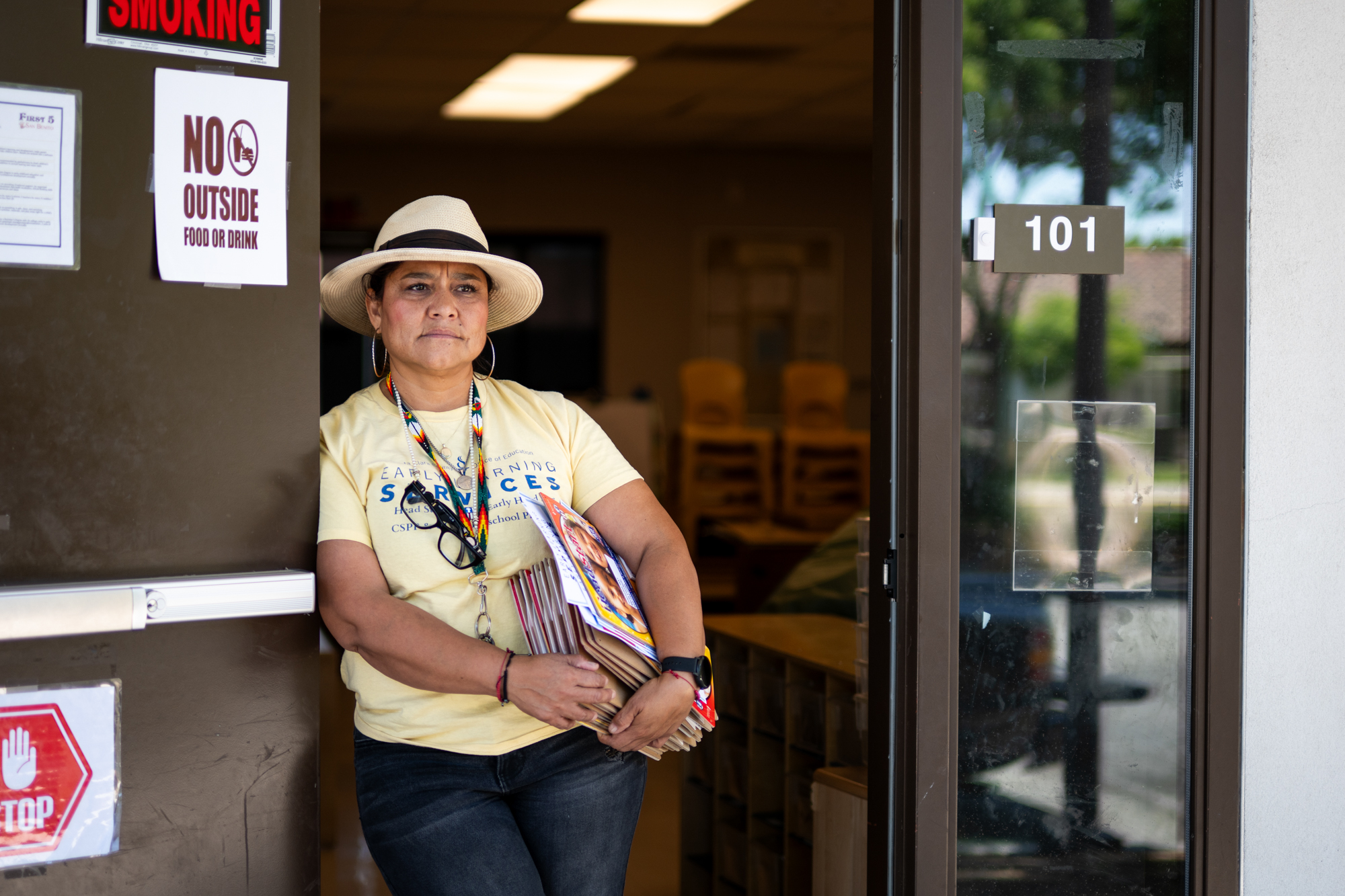
"content": "\u003cp>In a park steps away from their \u003ca href=\"https://www.kqed.org/news/tag/head-start\">Head Start\u003c/a> classrooms in Hollister, a group of kids marked the end of their preschool year with a moving-up ceremony. They wore colorful caps and gowns as they were called, one by one, to a balloon archway to receive their certificate of achievement.\u003c/p>\n\u003cp>The kids who are going to kindergarten were born during the pandemic. Though some of them had a challenging start to preschool, their teacher, Maricela Orozco, said they had the social-emotional skills for the next stage of schooling.\u003c/p>\n\u003cp>“They’re more than ready, I can say that, for elementary,” Orozco said.\u003c/p>\n\u003cp>[ad fullwidth]\u003c/p>\n\u003cp>But parents of 4-year-olds who just finished one year of preschool thought their kids would spend another year at Head Start, which uses federal funds to provide educational and other services to lower-income families with children up to 5 years old. They’re upset that the Santa Clara County Office of Education, which runs the Head Start center in this rural community 45 miles southeast of San José, still hasn’t gotten its $38 million federal grant renewed.\u003c/p>\n\u003cp>Without that guarantee, \u003ca href=\"https://acrobat.adobe.com/id/urn:aaid:sc:US:1b080735-7d1a-4549-bfac-3918fab447ac?viewer%21megaVerb=group-discover\">combined with reduced or expired funding\u003c/a> that supported the office’s early learning, migrant education and special education services, nearly 275 workers will be laid off June 30. Some 1200 families enrolled in Head Start will have to look for another child care option.\u003c/p>\n\u003cfigure id=\"attachment_12044137\" class=\"wp-caption aligncenter\" style=\"max-width: 2000px\">\u003cimg loading=\"lazy\" decoding=\"async\" class=\"size-full wp-image-12044137\" src=\"https://cdn.kqed.org/wp-content/uploads/sites/10/2025/06/250610-HEADSTARTPROGRAMS-15-BL-KQED.jpg\" alt=\"\" width=\"2000\" height=\"1333\" srcset=\"https://cdn.kqed.org/wp-content/uploads/sites/10/2025/06/250610-HEADSTARTPROGRAMS-15-BL-KQED.jpg 2000w, https://cdn.kqed.org/wp-content/uploads/sites/10/2025/06/250610-HEADSTARTPROGRAMS-15-BL-KQED-160x107.jpg 160w, https://cdn.kqed.org/wp-content/uploads/sites/10/2025/06/250610-HEADSTARTPROGRAMS-15-BL-KQED-1536x1024.jpg 1536w\" sizes=\"auto, (max-width: 2000px) 100vw, 2000px\">\u003cfigcaption class=\"wp-caption-text\">Maria Corchado, a Head Start teacher in Hollister, San Benito County, sits with parents and students outside the school on June 10, 2025. \u003ccite>(Beth LaBerge/KQED)\u003c/cite>\u003c/figcaption>\u003c/figure>\n\u003cp>In Hollister, where 10% of the population lives below the poverty line, parents rely on Head Start for full-time child care while they go to work.\u003c/p>\n\u003cp>“It’s very frustrating, it’s very hard. Just not knowing has been rough for us,” Vanessa Hernandez said.\u003c/p>\n\u003cp>Her son, Daniel, is old enough to begin transitional kindergarten at an elementary school, but Hernandez said he could benefit from another year at Head Start, where classroom sizes are smaller and students and their parents get more individualized support.[aside postID=news_12039626 hero='https://cdn.kqed.org/wp-content/uploads/sites/10/2025/05/250512-DAY-WITHOUT-CHILDCARE-MD-01-KQED-1020x680.jpg']“With Head Start, you get more time to grow and become more social. In TK, they already expect that of you,” she said. “He needs to be here longer because without the teachers helping him, I don’t know that he’ll succeed for the coming years.”\u003c/p>\n\u003cp>Evelyn Melchor said when her son started at Head Start, he only spoke Spanish and had a hard time communicating with teachers and classmates. But after his first full year of preschool, Melchor said her son “has done a complete 360.”\u003c/p>\n\u003cp>“If I ask him how he’s doing, how his day went, whatever he’s going through, he’s able to tell me everything in English and in Spanish,” she said. “Developmentally, so many things have just changed, and to me, it’s the best thing that could have happened to us.\u003cem>”\u003c/em>\u003c/p>\n\u003cp>Melchor was also counting on sending her younger son to Head Start when he’s old enough to enroll next year, so she could go back to work as a medical assistant. She said she stopped working when she had her second child because she couldn’t keep up with the rising cost of child care.\u003c/p>\n\u003cp>“We did take a hit financially, and it’s been rough,” she said.\u003c/p>\n\u003cp>The uncertainty of the Head Start program in Hollister makes it hard for Melchor to plan for her own future.\u003c/p>\n\u003cfigure id=\"attachment_12044135\" class=\"wp-caption aligncenter\" style=\"max-width: 2000px\">\u003cimg loading=\"lazy\" decoding=\"async\" class=\"size-full wp-image-12044135\" src=\"https://cdn.kqed.org/wp-content/uploads/sites/10/2025/06/250610-HEADSTARTPROGRAMS-01-BL-KQED.jpg\" alt=\"\" width=\"2000\" height=\"1333\" srcset=\"https://cdn.kqed.org/wp-content/uploads/sites/10/2025/06/250610-HEADSTARTPROGRAMS-01-BL-KQED.jpg 2000w, https://cdn.kqed.org/wp-content/uploads/sites/10/2025/06/250610-HEADSTARTPROGRAMS-01-BL-KQED-160x107.jpg 160w, https://cdn.kqed.org/wp-content/uploads/sites/10/2025/06/250610-HEADSTARTPROGRAMS-01-BL-KQED-1536x1024.jpg 1536w\" sizes=\"auto, (max-width: 2000px) 100vw, 2000px\">\u003cfigcaption class=\"wp-caption-text\">Janelle, 6, and Daniel, 4, a current student, play on the playground outside the Head Start in Hollister on June 10, 2025. \u003ccite>(Beth LaBerge/KQED)\u003c/cite>\u003c/figcaption>\u003c/figure>\n\u003cp>“How do I commit [to an employer] if I don’t know what’s gonna happen,” she said.\u003c/p>\n\u003cp>The situation is a fallout of cuts the Trump administration made to the federal workforce, including people who help administer Head Start grants to school districts, nonprofits and other agencies that operate the early childhood education program, said Ed Condon, executive director of the Region 9 Head Start Association, which represents agencies serving Head Start families in the western U.S.\u003c/p>\n\u003cp>He said ever since the Health and Human Services department \u003ca href=\"https://www.kqed.org/news/12035966/i-know-the-power-of-head-start-laid-off-worker-fears-for-programs-future\">closed half of its regional centers\u003c/a>, including one in San Francisco, local programs have faced long delays in getting help and receiving payments.\u003c/p>\n\u003cp>“We are in contact with people from all over the country, and this very unnecessary disruption and uncertainty has all been generated from the regional office consolidation,” Condon said.\u003c/p>\n\u003cfigure id=\"attachment_12044138\" class=\"wp-caption aligncenter\" style=\"max-width: 2000px\">\u003cimg loading=\"lazy\" decoding=\"async\" class=\"size-full wp-image-12044138\" src=\"https://cdn.kqed.org/wp-content/uploads/sites/10/2025/06/250610-HEADSTARTPROGRAMS-21-BL-KQED.jpg\" alt=\"\" width=\"2000\" height=\"1333\" srcset=\"https://cdn.kqed.org/wp-content/uploads/sites/10/2025/06/250610-HEADSTARTPROGRAMS-21-BL-KQED.jpg 2000w, https://cdn.kqed.org/wp-content/uploads/sites/10/2025/06/250610-HEADSTARTPROGRAMS-21-BL-KQED-160x107.jpg 160w, https://cdn.kqed.org/wp-content/uploads/sites/10/2025/06/250610-HEADSTARTPROGRAMS-21-BL-KQED-1536x1024.jpg 1536w\" sizes=\"auto, (max-width: 2000px) 100vw, 2000px\">\u003cfigcaption class=\"wp-caption-text\">Maria Corchado reads to Janelle, 6, on June 10, 2025, outside of the school. \u003ccite>(Beth LaBerge/KQED)\u003c/cite>\u003c/figcaption>\u003c/figure>\n\u003cp>But he said he has also seen the government come through with funding at the last minute, allowing Head Start programs to keep going.\u003c/p>\n\u003cp>“It’s not typical, and it creates a lot of angst for staff and parents in particular, but I think the most harmed are staff because they are left without the reality of a job,” Condon said\u003cem>.\u003c/em>\u003c/p>\n\u003cp>The Administration of Children and Families, which oversees Head Start and other childcare and child welfare programs, told KQED it’s processing the Santa Clara County Office of Education’s grant application and that funding “is being awarded as expeditiously as possible.”\u003c/p>\n\u003cp>In the meantime, teachers must clean out their classrooms and wait to hear their fate.\u003c/p>\n\u003cp>“We hope that we get some good news during the summertime and we can come back and keep serving a lot of families,” Orozco said.\u003c/p>\n\u003cfigure id=\"attachment_12044140\" class=\"wp-caption aligncenter\" style=\"max-width: 2000px\">\u003cimg loading=\"lazy\" decoding=\"async\" class=\"size-full wp-image-12044140\" src=\"https://cdn.kqed.org/wp-content/uploads/sites/10/2025/06/250610-HEADSTARTPROGRAMS-32-BL-KQED.jpg\" alt=\"\" width=\"2000\" height=\"1333\" srcset=\"https://cdn.kqed.org/wp-content/uploads/sites/10/2025/06/250610-HEADSTARTPROGRAMS-32-BL-KQED.jpg 2000w, https://cdn.kqed.org/wp-content/uploads/sites/10/2025/06/250610-HEADSTARTPROGRAMS-32-BL-KQED-160x107.jpg 160w, https://cdn.kqed.org/wp-content/uploads/sites/10/2025/06/250610-HEADSTARTPROGRAMS-32-BL-KQED-1536x1024.jpg 1536w\" sizes=\"auto, (max-width: 2000px) 100vw, 2000px\">\u003cfigcaption class=\"wp-caption-text\">Maria Corchado speaks to a community member while leaving flyers at local businesses on June 10, 2025, to help ensure preschool classes stay full. \u003ccite>(Beth LaBerge/KQED)\u003c/cite>\u003c/figcaption>\u003c/figure>\n\u003cp>Staffers like Maria Corchado said she planned to continue scouting for families with young kids at playgrounds, medical clinics, laundromats and resource centers around Hollister to tell them about Head Start and help them enroll in the program, should it receive more funding.\u003c/p>\n\u003cp>“I promised [the teachers], ‘hey, you guys go on break and I’m going to look for the kids that you need to fill the classrooms in the fall,’” Corchado said.\u003c/p>\n\u003cp>As a parent advocate, Corchado likens her job to being a last-resort safety net for families. She leads classes on financial literacy, mental health awareness and ways to support children as they transition to TK or kindergarten. As part of that, she ensures children undergo dental and health checkups before they enter public schools — going as far as helping parents make appointments and finding transportation to the closest pediatric dentist in Salinas, 25 miles away.\u003c/p>\n\u003cp>She said losing Head Start would hurt working-class families who are already bracing for cuts to Medicaid and food stamps, better known as CalFresh in California.\u003c/p>\n\u003cp>“It’s going to be harder for them to find medical facilities that will take them, and now they may not have a place to take their kids,” Corchado said. “It’s scary for a lot of people.”\u003c/p>\n\u003cp>[ad floatright]\u003c/p>\n",
"blocks": [],
"excerpt": "With funding running out on June 30 and no word on a new grant, parents and staff at a Head Start center in Hollister don’t know if they’ll have a classroom or job to return to in the fall.",
"status": "publish",
"parent": 0,
"modified": 1749836777,
"stats": {
"hasAudio": false,
"hasVideo": false,
"hasChartOrMap": false,
"iframeSrcs": [],
"hasGoogleForm": false,
"hasGallery": false,
"hasHearkenModule": false,
"hasPolis": false,
"paragraphCount": 29,
"wordCount": 1240
},
"headData": {
"title": "Layoff Threats Weigh on Head Start Teachers and Parents in Hollister | KQED",
"description": "With funding running out on June 30 and no word on a new grant, parents and staff at a Head Start center in Hollister don’t know if they’ll have a classroom or job to return to in the fall.",
"ogTitle": "",
"ogDescription": "",
"ogImgId": "",
"twTitle": "",
"twDescription": "",
"twImgId": "",
"schema": {
"@context": "https://schema.org",
"@type": "NewsArticle",
"headline": "Layoff Threats Weigh on Head Start Teachers and Parents in Hollister",
"datePublished": "2025-06-13T10:15:37-07:00",
"dateModified": "2025-06-13T10:46:17-07:00",
"image": "https://cdn.kqed.org/wp-content/uploads/2020/02/KQED-OG-Image@1x.png",
"isAccessibleForFree": "True",
"publisher": {
"@type": "NewsMediaOrganization",
"@id": "https://www.kqed.org/#organization",
"name": "KQED",
"logo": "https://cdn.kqed.org/wp-content/uploads/2020/02/KQED-OG-Image@1x.png",
"url": "https://www.kqed.org",
"sameAs": [
"https://www.facebook.com/KQED",
"https://twitter.com/KQED",
"https://www.instagram.com/kqed/",
"https://www.tiktok.com/@kqedofficial",
"https://www.linkedin.com/company/kqed",
"https://www.youtube.com/channel/UCeC0IOo7i1P_61zVUWbJ4nw"
]
}
}
},
"source": "News",
"audioUrl": "https://traffic.omny.fm/d/clips/0af137ef-751e-4b19-a055-aaef00d2d578/ffca7e9f-6831-41c5-bcaf-aaef00f5a073/605aaf56-1e4d-4ea3-8d64-b2fa010455f5/audio.mp3",
"sticky": false,
"nprStoryId": "kqed-12044082",
"templateType": "standard",
"featuredImageType": "standard",
"excludeFromSiteSearch": "Include",
"articleAge": "0",
"path": "/news/12044082/layoff-threats-weigh-on-head-start-teachers-and-parents-in-hollister",
"audioTrackLength": null,
"parsedContent": [
{
"type": "contentString",
"content": "\u003cdiv class=\"post-body\">\u003cp>\u003cp>In a park steps away from their \u003ca href=\"https://www.kqed.org/news/tag/head-start\">Head Start\u003c/a> classrooms in Hollister, a group of kids marked the end of their preschool year with a moving-up ceremony. They wore colorful caps and gowns as they were called, one by one, to a balloon archway to receive their certificate of achievement.\u003c/p>\n\u003cp>The kids who are going to kindergarten were born during the pandemic. Though some of them had a challenging start to preschool, their teacher, Maricela Orozco, said they had the social-emotional skills for the next stage of schooling.\u003c/p>\n\u003cp>“They’re more than ready, I can say that, for elementary,” Orozco said.\u003c/p>\n\u003cp>\u003c/p>\u003c/div>",
"attributes": {
"named": {},
"numeric": []
}
},
{
"type": "component",
"content": "",
"name": "ad",
"attributes": {
"named": {
"label": "fullwidth"
},
"numeric": [
"fullwidth"
]
}
},
{
"type": "contentString",
"content": "\u003cdiv class=\"post-body\">\u003cp>\u003c/p>\n\u003cp>But parents of 4-year-olds who just finished one year of preschool thought their kids would spend another year at Head Start, which uses federal funds to provide educational and other services to lower-income families with children up to 5 years old. They’re upset that the Santa Clara County Office of Education, which runs the Head Start center in this rural community 45 miles southeast of San José, still hasn’t gotten its $38 million federal grant renewed.\u003c/p>\n\u003cp>Without that guarantee, \u003ca href=\"https://acrobat.adobe.com/id/urn:aaid:sc:US:1b080735-7d1a-4549-bfac-3918fab447ac?viewer%21megaVerb=group-discover\">combined with reduced or expired funding\u003c/a> that supported the office’s early learning, migrant education and special education services, nearly 275 workers will be laid off June 30. Some 1200 families enrolled in Head Start will have to look for another child care option.\u003c/p>\n\u003cfigure id=\"attachment_12044137\" class=\"wp-caption aligncenter\" style=\"max-width: 2000px\">\u003cimg loading=\"lazy\" decoding=\"async\" class=\"size-full wp-image-12044137\" src=\"https://cdn.kqed.org/wp-content/uploads/sites/10/2025/06/250610-HEADSTARTPROGRAMS-15-BL-KQED.jpg\" alt=\"\" width=\"2000\" height=\"1333\" srcset=\"https://cdn.kqed.org/wp-content/uploads/sites/10/2025/06/250610-HEADSTARTPROGRAMS-15-BL-KQED.jpg 2000w, https://cdn.kqed.org/wp-content/uploads/sites/10/2025/06/250610-HEADSTARTPROGRAMS-15-BL-KQED-160x107.jpg 160w, https://cdn.kqed.org/wp-content/uploads/sites/10/2025/06/250610-HEADSTARTPROGRAMS-15-BL-KQED-1536x1024.jpg 1536w\" sizes=\"auto, (max-width: 2000px) 100vw, 2000px\">\u003cfigcaption class=\"wp-caption-text\">Maria Corchado, a Head Start teacher in Hollister, San Benito County, sits with parents and students outside the school on June 10, 2025. \u003ccite>(Beth LaBerge/KQED)\u003c/cite>\u003c/figcaption>\u003c/figure>\n\u003cp>In Hollister, where 10% of the population lives below the poverty line, parents rely on Head Start for full-time child care while they go to work.\u003c/p>\n\u003cp>“It’s very frustrating, it’s very hard. Just not knowing has been rough for us,” Vanessa Hernandez said.\u003c/p>\n\u003cp>Her son, Daniel, is old enough to begin transitional kindergarten at an elementary school, but Hernandez said he could benefit from another year at Head Start, where classroom sizes are smaller and students and their parents get more individualized support.\u003c/p>\u003c/div>",
"attributes": {
"named": {},
"numeric": []
}
},
{
"type": "component",
"content": "",
"name": "aside",
"attributes": {
"named": {
"postid": "news_12039626",
"hero": "https://cdn.kqed.org/wp-content/uploads/sites/10/2025/05/250512-DAY-WITHOUT-CHILDCARE-MD-01-KQED-1020x680.jpg",
"label": ""
},
"numeric": []
}
},
{
"type": "contentString",
"content": "\u003cdiv class=\"post-body\">\u003cp>“With Head Start, you get more time to grow and become more social. In TK, they already expect that of you,” she said. “He needs to be here longer because without the teachers helping him, I don’t know that he’ll succeed for the coming years.”\u003c/p>\n\u003cp>Evelyn Melchor said when her son started at Head Start, he only spoke Spanish and had a hard time communicating with teachers and classmates. But after his first full year of preschool, Melchor said her son “has done a complete 360.”\u003c/p>\n\u003cp>“If I ask him how he’s doing, how his day went, whatever he’s going through, he’s able to tell me everything in English and in Spanish,” she said. “Developmentally, so many things have just changed, and to me, it’s the best thing that could have happened to us.\u003cem>”\u003c/em>\u003c/p>\n\u003cp>Melchor was also counting on sending her younger son to Head Start when he’s old enough to enroll next year, so she could go back to work as a medical assistant. She said she stopped working when she had her second child because she couldn’t keep up with the rising cost of child care.\u003c/p>\n\u003cp>“We did take a hit financially, and it’s been rough,” she said.\u003c/p>\n\u003cp>The uncertainty of the Head Start program in Hollister makes it hard for Melchor to plan for her own future.\u003c/p>\n\u003cfigure id=\"attachment_12044135\" class=\"wp-caption aligncenter\" style=\"max-width: 2000px\">\u003cimg loading=\"lazy\" decoding=\"async\" class=\"size-full wp-image-12044135\" src=\"https://cdn.kqed.org/wp-content/uploads/sites/10/2025/06/250610-HEADSTARTPROGRAMS-01-BL-KQED.jpg\" alt=\"\" width=\"2000\" height=\"1333\" srcset=\"https://cdn.kqed.org/wp-content/uploads/sites/10/2025/06/250610-HEADSTARTPROGRAMS-01-BL-KQED.jpg 2000w, https://cdn.kqed.org/wp-content/uploads/sites/10/2025/06/250610-HEADSTARTPROGRAMS-01-BL-KQED-160x107.jpg 160w, https://cdn.kqed.org/wp-content/uploads/sites/10/2025/06/250610-HEADSTARTPROGRAMS-01-BL-KQED-1536x1024.jpg 1536w\" sizes=\"auto, (max-width: 2000px) 100vw, 2000px\">\u003cfigcaption class=\"wp-caption-text\">Janelle, 6, and Daniel, 4, a current student, play on the playground outside the Head Start in Hollister on June 10, 2025. \u003ccite>(Beth LaBerge/KQED)\u003c/cite>\u003c/figcaption>\u003c/figure>\n\u003cp>“How do I commit [to an employer] if I don’t know what’s gonna happen,” she said.\u003c/p>\n\u003cp>The situation is a fallout of cuts the Trump administration made to the federal workforce, including people who help administer Head Start grants to school districts, nonprofits and other agencies that operate the early childhood education program, said Ed Condon, executive director of the Region 9 Head Start Association, which represents agencies serving Head Start families in the western U.S.\u003c/p>\n\u003cp>He said ever since the Health and Human Services department \u003ca href=\"https://www.kqed.org/news/12035966/i-know-the-power-of-head-start-laid-off-worker-fears-for-programs-future\">closed half of its regional centers\u003c/a>, including one in San Francisco, local programs have faced long delays in getting help and receiving payments.\u003c/p>\n\u003cp>“We are in contact with people from all over the country, and this very unnecessary disruption and uncertainty has all been generated from the regional office consolidation,” Condon said.\u003c/p>\n\u003cfigure id=\"attachment_12044138\" class=\"wp-caption aligncenter\" style=\"max-width: 2000px\">\u003cimg loading=\"lazy\" decoding=\"async\" class=\"size-full wp-image-12044138\" src=\"https://cdn.kqed.org/wp-content/uploads/sites/10/2025/06/250610-HEADSTARTPROGRAMS-21-BL-KQED.jpg\" alt=\"\" width=\"2000\" height=\"1333\" srcset=\"https://cdn.kqed.org/wp-content/uploads/sites/10/2025/06/250610-HEADSTARTPROGRAMS-21-BL-KQED.jpg 2000w, https://cdn.kqed.org/wp-content/uploads/sites/10/2025/06/250610-HEADSTARTPROGRAMS-21-BL-KQED-160x107.jpg 160w, https://cdn.kqed.org/wp-content/uploads/sites/10/2025/06/250610-HEADSTARTPROGRAMS-21-BL-KQED-1536x1024.jpg 1536w\" sizes=\"auto, (max-width: 2000px) 100vw, 2000px\">\u003cfigcaption class=\"wp-caption-text\">Maria Corchado reads to Janelle, 6, on June 10, 2025, outside of the school. \u003ccite>(Beth LaBerge/KQED)\u003c/cite>\u003c/figcaption>\u003c/figure>\n\u003cp>But he said he has also seen the government come through with funding at the last minute, allowing Head Start programs to keep going.\u003c/p>\n\u003cp>“It’s not typical, and it creates a lot of angst for staff and parents in particular, but I think the most harmed are staff because they are left without the reality of a job,” Condon said\u003cem>.\u003c/em>\u003c/p>\n\u003cp>The Administration of Children and Families, which oversees Head Start and other childcare and child welfare programs, told KQED it’s processing the Santa Clara County Office of Education’s grant application and that funding “is being awarded as expeditiously as possible.”\u003c/p>\n\u003cp>In the meantime, teachers must clean out their classrooms and wait to hear their fate.\u003c/p>\n\u003cp>“We hope that we get some good news during the summertime and we can come back and keep serving a lot of families,” Orozco said.\u003c/p>\n\u003cfigure id=\"attachment_12044140\" class=\"wp-caption aligncenter\" style=\"max-width: 2000px\">\u003cimg loading=\"lazy\" decoding=\"async\" class=\"size-full wp-image-12044140\" src=\"https://cdn.kqed.org/wp-content/uploads/sites/10/2025/06/250610-HEADSTARTPROGRAMS-32-BL-KQED.jpg\" alt=\"\" width=\"2000\" height=\"1333\" srcset=\"https://cdn.kqed.org/wp-content/uploads/sites/10/2025/06/250610-HEADSTARTPROGRAMS-32-BL-KQED.jpg 2000w, https://cdn.kqed.org/wp-content/uploads/sites/10/2025/06/250610-HEADSTARTPROGRAMS-32-BL-KQED-160x107.jpg 160w, https://cdn.kqed.org/wp-content/uploads/sites/10/2025/06/250610-HEADSTARTPROGRAMS-32-BL-KQED-1536x1024.jpg 1536w\" sizes=\"auto, (max-width: 2000px) 100vw, 2000px\">\u003cfigcaption class=\"wp-caption-text\">Maria Corchado speaks to a community member while leaving flyers at local businesses on June 10, 2025, to help ensure preschool classes stay full. \u003ccite>(Beth LaBerge/KQED)\u003c/cite>\u003c/figcaption>\u003c/figure>\n\u003cp>Staffers like Maria Corchado said she planned to continue scouting for families with young kids at playgrounds, medical clinics, laundromats and resource centers around Hollister to tell them about Head Start and help them enroll in the program, should it receive more funding.\u003c/p>\n\u003cp>“I promised [the teachers], ‘hey, you guys go on break and I’m going to look for the kids that you need to fill the classrooms in the fall,’” Corchado said.\u003c/p>\n\u003cp>As a parent advocate, Corchado likens her job to being a last-resort safety net for families. She leads classes on financial literacy, mental health awareness and ways to support children as they transition to TK or kindergarten. As part of that, she ensures children undergo dental and health checkups before they enter public schools — going as far as helping parents make appointments and finding transportation to the closest pediatric dentist in Salinas, 25 miles away.\u003c/p>\n\u003cp>She said losing Head Start would hurt working-class families who are already bracing for cuts to Medicaid and food stamps, better known as CalFresh in California.\u003c/p>\n\u003cp>“It’s going to be harder for them to find medical facilities that will take them, and now they may not have a place to take their kids,” Corchado said. “It’s scary for a lot of people.”\u003c/p>\n\u003cp>\u003c/p>\u003c/div>",
"attributes": {
"named": {},
"numeric": []
}
},
{
"type": "component",
"content": "",
"name": "ad",
"attributes": {
"named": {
"label": "floatright"
},
"numeric": [
"floatright"
]
}
},
{
"type": "contentString",
"content": "\u003cdiv class=\"post-body\">\u003cp>\u003c/p>\n\u003c/div>\u003c/p>",
"attributes": {
"named": {},
"numeric": []
}
}
],
"link": "/news/12044082/layoff-threats-weigh-on-head-start-teachers-and-parents-in-hollister",
"authors": [
"11829"
],
"programs": [
"news_26731"
],
"categories": [
"news_31795",
"news_18540",
"news_8"
],
"tags": [
"news_1386",
"news_20754",
"news_1323",
"news_32102",
"news_32928",
"news_20013",
"news_35063",
"news_33388",
"news_17763",
"news_1749",
"news_18188",
"news_21998",
"news_34163"
],
"featImg": "news_12044141",
"label": "source_news_12044082"
},
"news_12043521": {
"type": "posts",
"id": "news_12043521",
"meta": {
"index": "posts_1716263798",
"site": "news",
"id": "12043521",
"score": null,
"sort": [
1749657646000
]
},
"guestAuthors": [],
"slug": "alameda-county-supervisors-approve-long-awaited-child-care-funding",
"title": "Alameda County Supervisors Approve Long-Awaited Child Care Funding",
"publishDate": 1749657646,
"format": "standard",
"headTitle": "Alameda County Supervisors Approve Long-Awaited Child Care Funding | KQED",
"labelTerm": {
"site": "news"
},
"content": "\u003cp>Officials have approved a five-year plan to spend close to $1 billion to boost Alameda County’s early childhood education system and bring much-needed relief for providers and parents struggling to keep pace with the high cost of child care.\u003c/p>\n\u003cp>The county Board of Supervisors’ decision on Tuesday came after a yearslong battle over the validity of Measure C, a half-cent sales tax approved by voters in March 2020, right before COVID-19 hit and devastated the child care industry. A \u003ca href=\"https://www.kqed.org/news/11984169/state-court-upholds-alameda-county-tax-measure-yielding-hundreds-of-millions-for-child-care\">taxpayer group’s lawsuit\u003c/a> and \u003ca href=\"https://www.kqed.org/news/12031853/fearing-legal-threats-alameda-county-supervisors-delay-spending-child-care-funds\">threat over the release of \u003c/a>some of the funds held up the money until now.\u003c/p>\n\u003cp>“Our parents, caregivers and teachers are relieved to receive safety and support from Measure C … it’s going to be such a huge relief for so many members of our community,” said Clarissa Doutherd, executive director of Parent Voices Oakland, who helped lead the effort to get the measure on the ballot.\u003c/p>\n\u003cp>[ad fullwidth]\u003c/p>\n\u003cp>She said she’s excited to see the money get into the hands of child care providers who are at risk of closing their doors.\u003c/p>\n\u003cp>An advisory council appointed by the supervisors has been holding public meetings and surveying families and child care providers to determine how to best use the money.\u003c/p>\n\u003cfigure id=\"attachment_12039813\" class=\"wp-caption aligncenter\" style=\"max-width: 2000px\">\u003ca href=\"https://cdn.kqed.org/wp-content/uploads/sites/10/2025/05/250512-DAY-WITHOUT-CHILDCARE-MD-04-KQED.jpg\">\u003cimg loading=\"lazy\" decoding=\"async\" class=\"size-full wp-image-12039813\" src=\"https://cdn.kqed.org/wp-content/uploads/sites/10/2025/05/250512-DAY-WITHOUT-CHILDCARE-MD-04-KQED.jpg\" alt=\"\" width=\"2000\" height=\"1334\" srcset=\"https://cdn.kqed.org/wp-content/uploads/sites/10/2025/05/250512-DAY-WITHOUT-CHILDCARE-MD-04-KQED.jpg 2000w, https://cdn.kqed.org/wp-content/uploads/sites/10/2025/05/250512-DAY-WITHOUT-CHILDCARE-MD-04-KQED-800x534.jpg 800w, https://cdn.kqed.org/wp-content/uploads/sites/10/2025/05/250512-DAY-WITHOUT-CHILDCARE-MD-04-KQED-1020x680.jpg 1020w, https://cdn.kqed.org/wp-content/uploads/sites/10/2025/05/250512-DAY-WITHOUT-CHILDCARE-MD-04-KQED-160x107.jpg 160w, https://cdn.kqed.org/wp-content/uploads/sites/10/2025/05/250512-DAY-WITHOUT-CHILDCARE-MD-04-KQED-1536x1025.jpg 1536w, https://cdn.kqed.org/wp-content/uploads/sites/10/2025/05/250512-DAY-WITHOUT-CHILDCARE-MD-04-KQED-1920x1281.jpg 1920w\" sizes=\"auto, (max-width: 2000px) 100vw, 2000px\">\u003c/a>\u003cfigcaption class=\"wp-caption-text\">Attendees hold signs at the Day Without Childcare rally in front of the Federal Building in San José on May 12, 2025. \u003ccite>(Martin do Nascimento/KQED)\u003c/cite>\u003c/figcaption>\u003c/figure>\n\u003cp>“Once we have these precious resources, we want to make sure that we’re doing the best we can in service to families and communities in developing a plan and then implementing it to have the most impact,” said Kristin Spanos, CEO of First 5 Alameda County, which will administer the funds.\u003c/p>\n\u003cp>“We think it’s really crucial. This is foundational to the health of our communities and families and kids,” she said.\u003c/p>\n\u003cp>In Alameda County, 90% of infants and toddlers who qualify for subsidized child care do not have access to it, according to \u003ca href=\"https://www.first5alameda.org/wp-content/uploads/2025/06/Measure-C-5-Year-Plan-June-2025.pdf\">a report by First 5\u003c/a>, which points to low pay as one of the main factors behind the shortage of child care providers.\u003c/p>\n\u003cp>Given that a child’s brain undergoes rapid development in the first five years of life, Spanos said it’s crucial to support the early education workforce.\u003c/p>\n\u003cp>The plan calls for spending close to $190 million in the first year to provide emergency relief grants, ranging from $40,000 to $100,000, to home-based Family Child Care providers and child care centers. Providers of subsidized child care or those who are in a census tract with a 5% poverty rate qualify for the grants.[aside postID=news_12033209 hero='https://cdn.kqed.org/wp-content/uploads/sites/10/2025/03/20250325_TEACHERS-FOR-TK_DMB_00048-KQED-1020x680.jpg']A category of caregivers who work outside of the formal childcare system, called license-exempt Family, Friend and Neighbor, can also apply for $4,000 in grants now and $500 monthly vouchers the following year.\u003c/p>\n\u003cp>Spanos said providers can start applying for the grants, and they may receive the money as early as next month.\u003c/p>\n\u003cp>The plan also calls for funding subsidized child care slots for nearly 2,500 children, raising wages for early educators to at least $25 per hour, supporting their professional development and increasing apprenticeship programs.\u003c/p>\n\u003cp>The ultimate goal is to improve young kids’ readiness for school.\u003c/p>\n\u003cp>Since 2008, assessments conducted by parents and educators have found that two out of three children in Alameda County were not ready for kindergarten. Because kindergarten readiness is linked to students’ achievements in later grades, Spanos hopes public investment in early care and education will boost children’s kindergarten readiness.\u003c/p>\n\u003cp>She noted that San Francisco, which has been using funds from a commercial rent tax to improve access to child care, has seen a\u003ca href=\"https://sfdec.org/annual-impact-report-2024/\">n increase in overall kindergarten readiness since 2021\u003c/a>.\u003c/p>\n\u003cfigure id=\"attachment_11929192\" class=\"wp-caption aligncenter\" style=\"max-width: 1920px\">\u003ca href=\"https://cdn.kqed.org/wp-content/uploads/sites/10/2022/10/RS52303_021_SanLeandro_KidConnectPreschool_10222021-qut.jpg\">\u003cimg loading=\"lazy\" decoding=\"async\" class=\"size-full wp-image-11929192\" src=\"https://cdn.kqed.org/wp-content/uploads/sites/10/2022/10/RS52303_021_SanLeandro_KidConnectPreschool_10222021-qut.jpg\" alt=\"a young child in a colorful sweater works on an art project at preschool while a teacher helps\" width=\"1920\" height=\"1280\" srcset=\"https://cdn.kqed.org/wp-content/uploads/sites/10/2022/10/RS52303_021_SanLeandro_KidConnectPreschool_10222021-qut.jpg 1920w, https://cdn.kqed.org/wp-content/uploads/sites/10/2022/10/RS52303_021_SanLeandro_KidConnectPreschool_10222021-qut-800x533.jpg 800w, https://cdn.kqed.org/wp-content/uploads/sites/10/2022/10/RS52303_021_SanLeandro_KidConnectPreschool_10222021-qut-1020x680.jpg 1020w, https://cdn.kqed.org/wp-content/uploads/sites/10/2022/10/RS52303_021_SanLeandro_KidConnectPreschool_10222021-qut-160x107.jpg 160w, https://cdn.kqed.org/wp-content/uploads/sites/10/2022/10/RS52303_021_SanLeandro_KidConnectPreschool_10222021-qut-1536x1024.jpg 1536w\" sizes=\"auto, (max-width: 1920px) 100vw, 1920px\">\u003c/a>\u003cfigcaption class=\"wp-caption-text\">A teacher works with students on an art project at Kids Connect Infant Care and Preschool in San Leandro. \u003ccite>(Beth LaBerge/KQED)\u003c/cite>\u003c/figcaption>\u003c/figure>\n\u003cp>“We hope to do the same and are excited to be in service to families and young kids in Alameda County,” Spanos said.\u003c/p>\n\u003cp>Measure C is expected to raise about $150 million in tax revenue annually over the course of 20 years. But because the money has been accruing in a trust since 2020, First 5 expects to invest close to $1 billion in the next five years in the county’s early childhood education and care system. First 5 is also administering $30 million raised annually from \u003ca href=\"https://www.oaklandca.gov/boards-commissions/childrens-initiative-oversight-commission\">an Oakland parcel tax\u003c/a>, approved by voters in 2018, to expand access to child care.\u003c/p>\n\u003cp>Although the dollars won’t be combined, First 5 will coordinate with the city of Oakland to ensure investments from both funds will make the most impact, Spanos said.\u003c/p>\n\u003cp>About 20% of Measure C funds go toward improving access to pediatric health care. UCSF Benioff Children’s Oakland, which is the only pediatric trauma center in Alameda County, started receiving funds in April to increase staffing for complex surgeries and other trauma-related work, according to UCSF spokeswoman Jess Berthold.\u003c/p>\n\u003cp>\u003c/p>\n",
"blocks": [],
"excerpt": "Nearly $1 billion from Measure C, passed by voters in 2020, will provide relief to both parents and caregivers. \r\n\r\n",
"status": "publish",
"parent": 0,
"modified": 1749604504,
"stats": {
"hasAudio": false,
"hasVideo": false,
"hasChartOrMap": false,
"iframeSrcs": [],
"hasGoogleForm": false,
"hasGallery": false,
"hasHearkenModule": false,
"hasPolis": false,
"paragraphCount": 21,
"wordCount": 871
},
"headData": {
"title": "Alameda County Supervisors Approve Long-Awaited Child Care Funding | KQED",
"description": "Nearly $1 billion from Measure C, passed by voters in 2020, will provide relief to both parents and caregivers. \r\n\r\n",
"ogTitle": "",
"ogDescription": "",
"ogImgId": "",
"twTitle": "",
"twDescription": "",
"twImgId": "",
"schema": {
"@context": "https://schema.org",
"@type": "NewsArticle",
"headline": "Alameda County Supervisors Approve Long-Awaited Child Care Funding",
"datePublished": "2025-06-11T09:00:46-07:00",
"dateModified": "2025-06-10T18:15:04-07:00",
"image": "https://cdn.kqed.org/wp-content/uploads/2020/02/KQED-OG-Image@1x.png",
"isAccessibleForFree": "True",
"publisher": {
"@type": "NewsMediaOrganization",
"@id": "https://www.kqed.org/#organization",
"name": "KQED",
"logo": "https://cdn.kqed.org/wp-content/uploads/2020/02/KQED-OG-Image@1x.png",
"url": "https://www.kqed.org",
"sameAs": [
"https://www.facebook.com/KQED",
"https://twitter.com/KQED",
"https://www.instagram.com/kqed/",
"https://www.tiktok.com/@kqedofficial",
"https://www.linkedin.com/company/kqed",
"https://www.youtube.com/channel/UCeC0IOo7i1P_61zVUWbJ4nw"
]
}
}
},
"sticky": false,
"templateType": "standard",
"featuredImageType": "standard",
"excludeFromSiteSearch": "Include",
"articleAge": "0",
"path": "/news/12043521/alameda-county-supervisors-approve-long-awaited-child-care-funding",
"audioTrackLength": null,
"parsedContent": [
{
"type": "contentString",
"content": "\u003cdiv class=\"post-body\">\u003cp>\u003cp>Officials have approved a five-year plan to spend close to $1 billion to boost Alameda County’s early childhood education system and bring much-needed relief for providers and parents struggling to keep pace with the high cost of child care.\u003c/p>\n\u003cp>The county Board of Supervisors’ decision on Tuesday came after a yearslong battle over the validity of Measure C, a half-cent sales tax approved by voters in March 2020, right before COVID-19 hit and devastated the child care industry. A \u003ca href=\"https://www.kqed.org/news/11984169/state-court-upholds-alameda-county-tax-measure-yielding-hundreds-of-millions-for-child-care\">taxpayer group’s lawsuit\u003c/a> and \u003ca href=\"https://www.kqed.org/news/12031853/fearing-legal-threats-alameda-county-supervisors-delay-spending-child-care-funds\">threat over the release of \u003c/a>some of the funds held up the money until now.\u003c/p>\n\u003cp>“Our parents, caregivers and teachers are relieved to receive safety and support from Measure C … it’s going to be such a huge relief for so many members of our community,” said Clarissa Doutherd, executive director of Parent Voices Oakland, who helped lead the effort to get the measure on the ballot.\u003c/p>\n\u003cp>\u003c/p>\u003c/div>",
"attributes": {
"named": {},
"numeric": []
}
},
{
"type": "component",
"content": "",
"name": "ad",
"attributes": {
"named": {
"label": "fullwidth"
},
"numeric": [
"fullwidth"
]
}
},
{
"type": "contentString",
"content": "\u003cdiv class=\"post-body\">\u003cp>\u003c/p>\n\u003cp>She said she’s excited to see the money get into the hands of child care providers who are at risk of closing their doors.\u003c/p>\n\u003cp>An advisory council appointed by the supervisors has been holding public meetings and surveying families and child care providers to determine how to best use the money.\u003c/p>\n\u003cfigure id=\"attachment_12039813\" class=\"wp-caption aligncenter\" style=\"max-width: 2000px\">\u003ca href=\"https://cdn.kqed.org/wp-content/uploads/sites/10/2025/05/250512-DAY-WITHOUT-CHILDCARE-MD-04-KQED.jpg\">\u003cimg loading=\"lazy\" decoding=\"async\" class=\"size-full wp-image-12039813\" src=\"https://cdn.kqed.org/wp-content/uploads/sites/10/2025/05/250512-DAY-WITHOUT-CHILDCARE-MD-04-KQED.jpg\" alt=\"\" width=\"2000\" height=\"1334\" srcset=\"https://cdn.kqed.org/wp-content/uploads/sites/10/2025/05/250512-DAY-WITHOUT-CHILDCARE-MD-04-KQED.jpg 2000w, https://cdn.kqed.org/wp-content/uploads/sites/10/2025/05/250512-DAY-WITHOUT-CHILDCARE-MD-04-KQED-800x534.jpg 800w, https://cdn.kqed.org/wp-content/uploads/sites/10/2025/05/250512-DAY-WITHOUT-CHILDCARE-MD-04-KQED-1020x680.jpg 1020w, https://cdn.kqed.org/wp-content/uploads/sites/10/2025/05/250512-DAY-WITHOUT-CHILDCARE-MD-04-KQED-160x107.jpg 160w, https://cdn.kqed.org/wp-content/uploads/sites/10/2025/05/250512-DAY-WITHOUT-CHILDCARE-MD-04-KQED-1536x1025.jpg 1536w, https://cdn.kqed.org/wp-content/uploads/sites/10/2025/05/250512-DAY-WITHOUT-CHILDCARE-MD-04-KQED-1920x1281.jpg 1920w\" sizes=\"auto, (max-width: 2000px) 100vw, 2000px\">\u003c/a>\u003cfigcaption class=\"wp-caption-text\">Attendees hold signs at the Day Without Childcare rally in front of the Federal Building in San José on May 12, 2025. \u003ccite>(Martin do Nascimento/KQED)\u003c/cite>\u003c/figcaption>\u003c/figure>\n\u003cp>“Once we have these precious resources, we want to make sure that we’re doing the best we can in service to families and communities in developing a plan and then implementing it to have the most impact,” said Kristin Spanos, CEO of First 5 Alameda County, which will administer the funds.\u003c/p>\n\u003cp>“We think it’s really crucial. This is foundational to the health of our communities and families and kids,” she said.\u003c/p>\n\u003cp>In Alameda County, 90% of infants and toddlers who qualify for subsidized child care do not have access to it, according to \u003ca href=\"https://www.first5alameda.org/wp-content/uploads/2025/06/Measure-C-5-Year-Plan-June-2025.pdf\">a report by First 5\u003c/a>, which points to low pay as one of the main factors behind the shortage of child care providers.\u003c/p>\n\u003cp>Given that a child’s brain undergoes rapid development in the first five years of life, Spanos said it’s crucial to support the early education workforce.\u003c/p>\n\u003cp>The plan calls for spending close to $190 million in the first year to provide emergency relief grants, ranging from $40,000 to $100,000, to home-based Family Child Care providers and child care centers. Providers of subsidized child care or those who are in a census tract with a 5% poverty rate qualify for the grants.\u003c/p>\u003c/div>",
"attributes": {
"named": {},
"numeric": []
}
},
{
"type": "component",
"content": "",
"name": "aside",
"attributes": {
"named": {
"postid": "news_12033209",
"hero": "https://cdn.kqed.org/wp-content/uploads/sites/10/2025/03/20250325_TEACHERS-FOR-TK_DMB_00048-KQED-1020x680.jpg",
"label": ""
},
"numeric": []
}
},
{
"type": "contentString",
"content": "\u003cdiv class=\"post-body\">\u003cp>A category of caregivers who work outside of the formal childcare system, called license-exempt Family, Friend and Neighbor, can also apply for $4,000 in grants now and $500 monthly vouchers the following year.\u003c/p>\n\u003cp>Spanos said providers can start applying for the grants, and they may receive the money as early as next month.\u003c/p>\n\u003cp>The plan also calls for funding subsidized child care slots for nearly 2,500 children, raising wages for early educators to at least $25 per hour, supporting their professional development and increasing apprenticeship programs.\u003c/p>\n\u003cp>The ultimate goal is to improve young kids’ readiness for school.\u003c/p>\n\u003cp>Since 2008, assessments conducted by parents and educators have found that two out of three children in Alameda County were not ready for kindergarten. Because kindergarten readiness is linked to students’ achievements in later grades, Spanos hopes public investment in early care and education will boost children’s kindergarten readiness.\u003c/p>\n\u003cp>She noted that San Francisco, which has been using funds from a commercial rent tax to improve access to child care, has seen a\u003ca href=\"https://sfdec.org/annual-impact-report-2024/\">n increase in overall kindergarten readiness since 2021\u003c/a>.\u003c/p>\n\u003cfigure id=\"attachment_11929192\" class=\"wp-caption aligncenter\" style=\"max-width: 1920px\">\u003ca href=\"https://cdn.kqed.org/wp-content/uploads/sites/10/2022/10/RS52303_021_SanLeandro_KidConnectPreschool_10222021-qut.jpg\">\u003cimg loading=\"lazy\" decoding=\"async\" class=\"size-full wp-image-11929192\" src=\"https://cdn.kqed.org/wp-content/uploads/sites/10/2022/10/RS52303_021_SanLeandro_KidConnectPreschool_10222021-qut.jpg\" alt=\"a young child in a colorful sweater works on an art project at preschool while a teacher helps\" width=\"1920\" height=\"1280\" srcset=\"https://cdn.kqed.org/wp-content/uploads/sites/10/2022/10/RS52303_021_SanLeandro_KidConnectPreschool_10222021-qut.jpg 1920w, https://cdn.kqed.org/wp-content/uploads/sites/10/2022/10/RS52303_021_SanLeandro_KidConnectPreschool_10222021-qut-800x533.jpg 800w, https://cdn.kqed.org/wp-content/uploads/sites/10/2022/10/RS52303_021_SanLeandro_KidConnectPreschool_10222021-qut-1020x680.jpg 1020w, https://cdn.kqed.org/wp-content/uploads/sites/10/2022/10/RS52303_021_SanLeandro_KidConnectPreschool_10222021-qut-160x107.jpg 160w, https://cdn.kqed.org/wp-content/uploads/sites/10/2022/10/RS52303_021_SanLeandro_KidConnectPreschool_10222021-qut-1536x1024.jpg 1536w\" sizes=\"auto, (max-width: 1920px) 100vw, 1920px\">\u003c/a>\u003cfigcaption class=\"wp-caption-text\">A teacher works with students on an art project at Kids Connect Infant Care and Preschool in San Leandro. \u003ccite>(Beth LaBerge/KQED)\u003c/cite>\u003c/figcaption>\u003c/figure>\n\u003cp>“We hope to do the same and are excited to be in service to families and young kids in Alameda County,” Spanos said.\u003c/p>\n\u003cp>Measure C is expected to raise about $150 million in tax revenue annually over the course of 20 years. But because the money has been accruing in a trust since 2020, First 5 expects to invest close to $1 billion in the next five years in the county’s early childhood education and care system. First 5 is also administering $30 million raised annually from \u003ca href=\"https://www.oaklandca.gov/boards-commissions/childrens-initiative-oversight-commission\">an Oakland parcel tax\u003c/a>, approved by voters in 2018, to expand access to child care.\u003c/p>\n\u003cp>Although the dollars won’t be combined, First 5 will coordinate with the city of Oakland to ensure investments from both funds will make the most impact, Spanos said.\u003c/p>\n\u003cp>About 20% of Measure C funds go toward improving access to pediatric health care. UCSF Benioff Children’s Oakland, which is the only pediatric trauma center in Alameda County, started receiving funds in April to increase staffing for complex surgeries and other trauma-related work, according to UCSF spokeswoman Jess Berthold.\u003c/p>\n\u003cp>\u003c/p>\n\u003c/div>\u003c/p>",
"attributes": {
"named": {},
"numeric": []
}
}
],
"link": "/news/12043521/alameda-county-supervisors-approve-long-awaited-child-care-funding",
"authors": [
"11829"
],
"categories": [
"news_18540",
"news_28250",
"news_8"
],
"tags": [
"news_25647",
"news_260",
"news_1386",
"news_18538",
"news_20754",
"news_32768",
"news_25966",
"news_32102",
"news_32928",
"news_20013",
"news_34388"
],
"featImg": "news_12030543",
"label": "news"
},
"news_12043062": {
"type": "posts",
"id": "news_12043062",
"meta": {
"index": "posts_1716263798",
"site": "news",
"id": "12043062",
"score": null,
"sort": [
1749391220000
]
},
"guestAuthors": [],
"slug": "as-ousd-gets-closer-to-controlling-its-finances-new-budget-challenges-loom",
"title": "As OUSD Gets Closer to Controlling Its Finances, New Budget Challenges Loom",
"publishDate": 1749391220,
"format": "standard",
"headTitle": "As OUSD Gets Closer to Controlling Its Finances, New Budget Challenges Loom | KQED",
"labelTerm": {
"site": "news"
},
"content": "\u003cp>As the \u003ca href=\"https://www.kqed.org/news/tag/oakland-unified-school-district\">Oakland School Unified District\u003c/a> celebrates its \u003ca href=\"https://www.kqed.org/news/12037097/oakland-schools-poised-part-ways-with-superintendent-state-oversight-ends\">projected departure from state oversight\u003c/a> this summer, the district’s chief budget officer has warned that the district could be at risk of slipping back into receivership if it doesn’t make major spending changes.\u003c/p>\n\u003cp>Lisa Grant-Dawson told the school board on Wednesday that the district could dip below its state-mandated reserve funding by 2027 as it looks to spend more than it brings in this year, and over the next two.\u003c/p>\n\u003cp>The announcement comes after five years of OUSD building up that rainy day fund, and as the district prepares to make its final loan payment to the state, more than 20 years after declaring bankruptcy this month.\u003c/p>\n\u003cp>[ad fullwidth]\u003c/p>\n\u003cp>“We have taken a step backward in our efforts to secure the long-term future of the district,” Grant-Dawson wrote in a letter to the district on Thursday. “We will begin 2025–26 with $57 million in reserves while continuing to run a deficit that is unaddressed in a multi-year fashion … This continues the ill-advised practice of our district using the beginning fund balance to balance the budget.”\u003c/p>\n\u003cp>This week, during the final financial report of the school year, Grant-Dawson told the board that the district’s projected budget deficit for the current school year had shrunk from $95 million to $60 million — a \u003ca href=\"https://www.kqed.org/news/12017719/oaklands-school-merger-plan-stalled-districts-huge-deficit-remains\">“much better position” than six months ago\u003c/a>, but not good enough to avoid spending a significant portion of its $117 million reserve fund on the shortfall.\u003c/p>\n\u003cfigure id=\"attachment_12043210\" class=\"wp-caption aligncenter\" style=\"max-width: 2000px\">\u003cimg loading=\"lazy\" decoding=\"async\" class=\"size-full wp-image-12043210\" src=\"https://cdn.kqed.org/wp-content/uploads/sites/10/2025/06/250428-OUSD-OFFICE-FILE-MD-04_qed.jpg\" alt=\"\" width=\"2000\" height=\"1333\" srcset=\"https://cdn.kqed.org/wp-content/uploads/sites/10/2025/06/250428-OUSD-OFFICE-FILE-MD-04_qed.jpg 2000w, https://cdn.kqed.org/wp-content/uploads/sites/10/2025/06/250428-OUSD-OFFICE-FILE-MD-04_qed-160x107.jpg 160w, https://cdn.kqed.org/wp-content/uploads/sites/10/2025/06/250428-OUSD-OFFICE-FILE-MD-04_qed-1536x1024.jpg 1536w\" sizes=\"auto, (max-width: 2000px) 100vw, 2000px\">\u003cfigcaption class=\"wp-caption-text\">The Oakland Unified School District Offices in Oakland on April 28, 2025. \u003ccite>(Martin do Nascimento/KQED)\u003c/cite>\u003c/figcaption>\u003c/figure>\n\u003cp>Over the next two years, OUSD could spend nearly $40 million more than it brings in, without factoring in cuts to federal funding, which Grant-Dawson said are coming. That would leave the district with less than $18 million in its reserve, well below the state-mandated 3% fund.\u003c/p>\n\u003cp>At that level, “there’s no way we can pay one month’s payroll with the reserve,” Grant-Dawson told the board.\u003c/p>\n\u003cp>She said that the district needs to reconsider its approach to its adult education program, which is running a $300,000 deficit this year, and put school consolidations back on the table. After opening 40 campuses in the early 2000s during the \u003ca href=\"https://www.kqed.org/news/11726682/why-does-oakland-have-so-many-small-schools.\">small school movement\u003c/a>, OUSD has nearly doubled the number of campuses in similarly sized districts.\u003c/p>\n\u003cp>In the past, plans to merge or close schools have generally been unsuccessful and generated \u003ca href=\"https://www.kqed.org/news/11905982/how-dare-you-oakland-school-closure-decision-inspires-new-opposition-efforts\">significant pushback\u003c/a> from the community, leading to protests and even a hunger strike.[aside postID=news_12041941 hero='https://cdn.kqed.org/wp-content/uploads/sites/10/2025/05/IMG_4393-1020x765.jpg']Whether the board is willing to make big cost reductions that Grant-Dawson said are necessary to keep OUSD in the black will begin to come to light next week, when she presents a draft budget for next year.\u003c/p>\n\u003cp>That spending plan will likely reflect a list of significant cuts, including reductions of school site substitute teaching positions and campus discretionary funding, and centralizing contracts, both with service manufacturers — like those that provide copiers — and community agencies.\u003c/p>\n\u003cp>The school board gave budget staff permission to make those changes in December, but they could still face challenges after multiple members — and the teachers’ union, which has the support of the board majority —have raised concerns about some of the potential cuts.\u003c/p>\n\u003cp>Earlier this spring, a majority passed an additional budget bill proposed by Board President Jennifer Brouhard and Vice President Valarie Bachelor that put caps on outside contracts, travel costs and other spending with the intention to use any savings to restore some of the student services that could be axed.\u003c/p>\n\u003cp>Those budget \u003ca href=\"https://www.kqed.org/news/12041279/ousd-cancels-controversial-after-school-cuts-but-deep-divisions-within-school-board-remain\">amendments were rescinded\u003c/a> after a\u003ca href=\"https://www.kqed.org/news/12040189/ousd-after-school-programs-could-be-cut-by-at-least-50\">ccidentally reducing grant-funded after-school programs\u003c/a>, which rely on outside contracts, but Brouhard has still vowed to pass a budget that keeps cuts away from kids.\u003c/p>\n\u003cp>“I fully intend to keep developing a student-centered budget and will actively engage with staff, students, labor partners, families, and community members to accomplish this,” she said in a statement in May.\u003c/p>\n\u003cp>The board has to approve a spending plan for the 2025–26 school year by July 1.\u003c/p>\n\u003cp>\u003c/p>\n",
"blocks": [],
"excerpt": "Oakland’s school district will need to overhaul future spending, an official warned.",
"status": "publish",
"parent": 0,
"modified": 1749410637,
"stats": {
"hasAudio": false,
"hasVideo": false,
"hasChartOrMap": false,
"iframeSrcs": [],
"hasGoogleForm": false,
"hasGallery": false,
"hasHearkenModule": false,
"hasPolis": false,
"paragraphCount": 17,
"wordCount": 722
},
"headData": {
"title": "As OUSD Gets Closer to Controlling Its Finances, New Budget Challenges Loom | KQED",
"description": "Oakland’s school district will need to overhaul future spending, an official warned.",
"ogTitle": "",
"ogDescription": "",
"ogImgId": "",
"twTitle": "",
"twDescription": "",
"twImgId": "",
"schema": {
"@context": "https://schema.org",
"@type": "NewsArticle",
"headline": "As OUSD Gets Closer to Controlling Its Finances, New Budget Challenges Loom",
"datePublished": "2025-06-08T07:00:20-07:00",
"dateModified": "2025-06-08T12:23:57-07:00",
"image": "https://cdn.kqed.org/wp-content/uploads/2020/02/KQED-OG-Image@1x.png",
"isAccessibleForFree": "True",
"publisher": {
"@type": "NewsMediaOrganization",
"@id": "https://www.kqed.org/#organization",
"name": "KQED",
"logo": "https://cdn.kqed.org/wp-content/uploads/2020/02/KQED-OG-Image@1x.png",
"url": "https://www.kqed.org",
"sameAs": [
"https://www.facebook.com/KQED",
"https://twitter.com/KQED",
"https://www.instagram.com/kqed/",
"https://www.tiktok.com/@kqedofficial",
"https://www.linkedin.com/company/kqed",
"https://www.youtube.com/channel/UCeC0IOo7i1P_61zVUWbJ4nw"
]
}
}
},
"sticky": false,
"nprStoryId": "kqed-12043062",
"templateType": "standard",
"featuredImageType": "standard",
"excludeFromSiteSearch": "Include",
"articleAge": "0",
"path": "/news/12043062/as-ousd-gets-closer-to-controlling-its-finances-new-budget-challenges-loom",
"audioTrackLength": null,
"parsedContent": [
{
"type": "contentString",
"content": "\u003cdiv class=\"post-body\">\u003cp>\u003cp>As the \u003ca href=\"https://www.kqed.org/news/tag/oakland-unified-school-district\">Oakland School Unified District\u003c/a> celebrates its \u003ca href=\"https://www.kqed.org/news/12037097/oakland-schools-poised-part-ways-with-superintendent-state-oversight-ends\">projected departure from state oversight\u003c/a> this summer, the district’s chief budget officer has warned that the district could be at risk of slipping back into receivership if it doesn’t make major spending changes.\u003c/p>\n\u003cp>Lisa Grant-Dawson told the school board on Wednesday that the district could dip below its state-mandated reserve funding by 2027 as it looks to spend more than it brings in this year, and over the next two.\u003c/p>\n\u003cp>The announcement comes after five years of OUSD building up that rainy day fund, and as the district prepares to make its final loan payment to the state, more than 20 years after declaring bankruptcy this month.\u003c/p>\n\u003cp>\u003c/p>\u003c/div>",
"attributes": {
"named": {},
"numeric": []
}
},
{
"type": "component",
"content": "",
"name": "ad",
"attributes": {
"named": {
"label": "fullwidth"
},
"numeric": [
"fullwidth"
]
}
},
{
"type": "contentString",
"content": "\u003cdiv class=\"post-body\">\u003cp>\u003c/p>\n\u003cp>“We have taken a step backward in our efforts to secure the long-term future of the district,” Grant-Dawson wrote in a letter to the district on Thursday. “We will begin 2025–26 with $57 million in reserves while continuing to run a deficit that is unaddressed in a multi-year fashion … This continues the ill-advised practice of our district using the beginning fund balance to balance the budget.”\u003c/p>\n\u003cp>This week, during the final financial report of the school year, Grant-Dawson told the board that the district’s projected budget deficit for the current school year had shrunk from $95 million to $60 million — a \u003ca href=\"https://www.kqed.org/news/12017719/oaklands-school-merger-plan-stalled-districts-huge-deficit-remains\">“much better position” than six months ago\u003c/a>, but not good enough to avoid spending a significant portion of its $117 million reserve fund on the shortfall.\u003c/p>\n\u003cfigure id=\"attachment_12043210\" class=\"wp-caption aligncenter\" style=\"max-width: 2000px\">\u003cimg loading=\"lazy\" decoding=\"async\" class=\"size-full wp-image-12043210\" src=\"https://cdn.kqed.org/wp-content/uploads/sites/10/2025/06/250428-OUSD-OFFICE-FILE-MD-04_qed.jpg\" alt=\"\" width=\"2000\" height=\"1333\" srcset=\"https://cdn.kqed.org/wp-content/uploads/sites/10/2025/06/250428-OUSD-OFFICE-FILE-MD-04_qed.jpg 2000w, https://cdn.kqed.org/wp-content/uploads/sites/10/2025/06/250428-OUSD-OFFICE-FILE-MD-04_qed-160x107.jpg 160w, https://cdn.kqed.org/wp-content/uploads/sites/10/2025/06/250428-OUSD-OFFICE-FILE-MD-04_qed-1536x1024.jpg 1536w\" sizes=\"auto, (max-width: 2000px) 100vw, 2000px\">\u003cfigcaption class=\"wp-caption-text\">The Oakland Unified School District Offices in Oakland on April 28, 2025. \u003ccite>(Martin do Nascimento/KQED)\u003c/cite>\u003c/figcaption>\u003c/figure>\n\u003cp>Over the next two years, OUSD could spend nearly $40 million more than it brings in, without factoring in cuts to federal funding, which Grant-Dawson said are coming. That would leave the district with less than $18 million in its reserve, well below the state-mandated 3% fund.\u003c/p>\n\u003cp>At that level, “there’s no way we can pay one month’s payroll with the reserve,” Grant-Dawson told the board.\u003c/p>\n\u003cp>She said that the district needs to reconsider its approach to its adult education program, which is running a $300,000 deficit this year, and put school consolidations back on the table. After opening 40 campuses in the early 2000s during the \u003ca href=\"https://www.kqed.org/news/11726682/why-does-oakland-have-so-many-small-schools.\">small school movement\u003c/a>, OUSD has nearly doubled the number of campuses in similarly sized districts.\u003c/p>\n\u003cp>In the past, plans to merge or close schools have generally been unsuccessful and generated \u003ca href=\"https://www.kqed.org/news/11905982/how-dare-you-oakland-school-closure-decision-inspires-new-opposition-efforts\">significant pushback\u003c/a> from the community, leading to protests and even a hunger strike.\u003c/p>\u003c/div>",
"attributes": {
"named": {},
"numeric": []
}
},
{
"type": "component",
"content": "",
"name": "aside",
"attributes": {
"named": {
"postid": "news_12041941",
"hero": "https://cdn.kqed.org/wp-content/uploads/sites/10/2025/05/IMG_4393-1020x765.jpg",
"label": ""
},
"numeric": []
}
},
{
"type": "contentString",
"content": "\u003cdiv class=\"post-body\">\u003cp>Whether the board is willing to make big cost reductions that Grant-Dawson said are necessary to keep OUSD in the black will begin to come to light next week, when she presents a draft budget for next year.\u003c/p>\n\u003cp>That spending plan will likely reflect a list of significant cuts, including reductions of school site substitute teaching positions and campus discretionary funding, and centralizing contracts, both with service manufacturers — like those that provide copiers — and community agencies.\u003c/p>\n\u003cp>The school board gave budget staff permission to make those changes in December, but they could still face challenges after multiple members — and the teachers’ union, which has the support of the board majority —have raised concerns about some of the potential cuts.\u003c/p>\n\u003cp>Earlier this spring, a majority passed an additional budget bill proposed by Board President Jennifer Brouhard and Vice President Valarie Bachelor that put caps on outside contracts, travel costs and other spending with the intention to use any savings to restore some of the student services that could be axed.\u003c/p>\n\u003cp>Those budget \u003ca href=\"https://www.kqed.org/news/12041279/ousd-cancels-controversial-after-school-cuts-but-deep-divisions-within-school-board-remain\">amendments were rescinded\u003c/a> after a\u003ca href=\"https://www.kqed.org/news/12040189/ousd-after-school-programs-could-be-cut-by-at-least-50\">ccidentally reducing grant-funded after-school programs\u003c/a>, which rely on outside contracts, but Brouhard has still vowed to pass a budget that keeps cuts away from kids.\u003c/p>\n\u003cp>“I fully intend to keep developing a student-centered budget and will actively engage with staff, students, labor partners, families, and community members to accomplish this,” she said in a statement in May.\u003c/p>\n\u003cp>The board has to approve a spending plan for the 2025–26 school year by July 1.\u003c/p>\n\u003cp>\u003c/p>\n\u003c/div>\u003c/p>",
"attributes": {
"named": {},
"numeric": []
}
}
],
"link": "/news/12043062/as-ousd-gets-closer-to-controlling-its-finances-new-budget-challenges-loom",
"authors": [
"11913"
],
"categories": [
"news_18540",
"news_28250",
"news_8"
],
"tags": [
"news_1759",
"news_20013",
"news_4281",
"news_1826",
"news_3366"
],
"featImg": "news_12043066",
"label": "news"
},
"news_12042881": {
"type": "posts",
"id": "news_12042881",
"meta": {
"index": "posts_1716263798",
"site": "news",
"id": "12042881",
"score": null,
"sort": [
1749150017000
]
},
"guestAuthors": [],
"slug": "as-stanford-hunger-strike-over-gaza-ends-students-say-protests-will-resume-next-year",
"title": "As Stanford Hunger Strike Over Gaza Ends, Students Say Protests Will Resume Next Year",
"publishDate": 1749150017,
"format": "standard",
"headTitle": "As Stanford Hunger Strike Over Gaza Ends, Students Say Protests Will Resume Next Year | KQED",
"labelTerm": {
"site": "news"
},
"content": "\u003cp>Students at \u003ca href=\"https://www.kqed.org/news/tag/stanford\">Stanford University\u003c/a> have ended what they say is the longest university \u003ca href=\"https://www.kqed.org/news/12040753/at-stanford-growing-pro-palestinian-hunger-strike-silence-from-university\">hunger strike in solidarity with Palestine\u003c/a> in U.S. history.\u003c/p>\n\u003cp>More than three dozen students, staff and alumni have participated in the 24-day effort, which was launched in May in \u003ca href=\"https://www.kqed.org/news/12039733/california-students-hunger-strike-gaza-spreads-stanford\">solidarity with Palestinians at risk of starving in Gaza\u003c/a> due to Israel’s \u003ca href=\"https://www.npr.org/2025/05/11/nx-s1-5389740/10-weeks-into-israels-aid-blockade-in-gaza-desperate-families-grind-lentils-for-flour\">monthslong blockade of aid\u003c/a> to the region.\u003c/p>\n\u003cp>The strike began after \u003ca href=\"https://www.kqed.org/news/12038896/student-hunger-strikers-want-sf-states-divestment-deal-to-spread-across-csu-system\">similar movements took root across California State University\u003c/a> campuses in the Bay Area, calling for university leaders to meet protesters’ demands to divest from companies they say fund Israel’s war in Gaza and take actions meant to ensure campus free speech.\u003c/p>\n\u003cp>[ad fullwidth]\u003c/p>\n\u003cp>Despite a goal to continue until administrators agreed to negotiate, the protesters announced they would end their effort following the final day of classes, calling the school’s failure to meet with them “shameful.”\u003c/p>\n\u003cp>“We are stopping the hunger strike, but that doesn’t mean we’re going to stop pushing for what we want in general,” said Yousef Helal, a first-year master’s student who participated in the strike. “It just means we’re going to seek different methods and we’ll do whatever we need to do until we meet our demands and until we can guarantee peace and safety for every Palestinian.”\u003c/p>\n\u003cfigure id=\"attachment_12042883\" class=\"wp-caption aligncenter\" style=\"max-width: 2000px\">\u003cimg loading=\"lazy\" decoding=\"async\" class=\"size-full wp-image-12042883\" src=\"https://cdn.kqed.org/wp-content/uploads/sites/10/2025/06/05192025_StanfordHungerStrike_EG004_qed.jpg\" alt=\"\" width=\"2000\" height=\"1333\" srcset=\"https://cdn.kqed.org/wp-content/uploads/sites/10/2025/06/05192025_StanfordHungerStrike_EG004_qed.jpg 2000w, https://cdn.kqed.org/wp-content/uploads/sites/10/2025/06/05192025_StanfordHungerStrike_EG004_qed-800x533.jpg 800w, https://cdn.kqed.org/wp-content/uploads/sites/10/2025/06/05192025_StanfordHungerStrike_EG004_qed-1020x680.jpg 1020w, https://cdn.kqed.org/wp-content/uploads/sites/10/2025/06/05192025_StanfordHungerStrike_EG004_qed-160x107.jpg 160w, https://cdn.kqed.org/wp-content/uploads/sites/10/2025/06/05192025_StanfordHungerStrike_EG004_qed-1536x1024.jpg 1536w, https://cdn.kqed.org/wp-content/uploads/sites/10/2025/06/05192025_StanfordHungerStrike_EG004_qed-1920x1280.jpg 1920w\" sizes=\"auto, (max-width: 2000px) 100vw, 2000px\">\u003cfigcaption class=\"wp-caption-text\">A person writes “Gaza is starving” at White Memorial Plaza in Stanford, California, on May 19, 2025. Several Stanford University students have been on a hunger strike for more than a week, pledging not to eat until the university agrees to divest from companies that they say are supporting Israel’s war in Gaza. \u003ccite>(Estefany Gonzalez for KQED)\u003c/cite>\u003c/figcaption>\u003c/figure>\n\u003cp>In addition to making Stanford’s investments public and divesting from companies that provide surveillance technology and weapons to Israel, the hunger strikers also called for the school to roll back strict protest regulations put in place last fall, to urge the Santa Clara County district attorney to drop charges against a dozen people linked to a protest on campus last June and to denounce the Trump administration’s targeting of pro-Palestinian student activists.\u003c/p>\n\u003cp>The strike took place in waves, with about a dozen protesters at a time refusing food for about a week in solidarity. Some participated for at least 10 days, Helal said. Others had to end their protest early due to severe health impacts, according to a health professional supporting the strikers.\u003c/p>\n\u003cp>Throughout, “the administration has refused to talk to us at all,” Helal said. “Their students are literally at their doorsteps, two minutes away from the president’s office, starving, suffering … It’s very shameful.”[aside postID=news_12040753 hero='https://cdn.kqed.org/wp-content/uploads/sites/10/2025/05/05192025_STANFORDHUNGERSTRIKE_EG044-KQED-1020x680.jpg']In a statement last month, Stanford spokesperson Luisa Rapport said the university respects the rights of students to express their views in ways “within the limits of the university’s viewpoint-neutral time, place, and manner rules.”\u003c/p>\n\u003cp>“We have urged them to consider forms of expression that do not jeopardize their health and well-being,” she said via email.\u003c/p>\n\u003cp>The end of the strike reflects a year of growing hostility between pro-Palestinian protesters and administrators on Stanford’s campus, strikers said.\u003c/p>\n\u003cp>Stanford was among more than 130 schools across the country whose students spent weeks \u003ca href=\"https://www.kqed.org/news/11984203/pro-palestinian-protests-sweep-california-college-campuses-amid-israel-hamas-war\">camped out on their campuses last spring\u003c/a>, bringing attention to U.S. support for Israel and pressuring their universities to pull financial investments from companies that supply weapons or surveillance technology to the country.\u003c/p>\n\u003cp>After a group of protesters\u003ca href=\"https://www.kqed.org/news/11989050/pro-palestinian-stanford-protesters-detained-after-occupying-presidents-office\"> occupied the university president’s office\u003c/a> in June and refused to leave until they were arrested, administrators shut down Stanford’s encampment.\u003c/p>\n\u003cp>Twelve of the protesters face\u003ca href=\"https://www.kqed.org/news/12035346/santa-clara-da-charges-12-pro-palestinian-protesters-took-over-stanford-university-presidents-office\"> felony vandalism and trespassing charges\u003c/a>. (In March, the Santa Clara County district attorney \u003ca href=\"https://www.kqed.org/news/12030271/stanford-journalist-can-finally-breathe-after-avoiding-charges-for-reporting-on-protest\">declined to charge a student journalist\u003c/a> who was also arrested while covering the demonstration.)\u003c/p>\n\u003cfigure id=\"attachment_12042884\" class=\"wp-caption aligncenter\" style=\"max-width: 2000px\">\u003cimg loading=\"lazy\" decoding=\"async\" class=\"size-full wp-image-12042884\" src=\"https://cdn.kqed.org/wp-content/uploads/sites/10/2025/06/05192025_StanfordHungerStrike_EG008_qed.jpg\" alt=\"\" width=\"2000\" height=\"1333\" srcset=\"https://cdn.kqed.org/wp-content/uploads/sites/10/2025/06/05192025_StanfordHungerStrike_EG008_qed.jpg 2000w, https://cdn.kqed.org/wp-content/uploads/sites/10/2025/06/05192025_StanfordHungerStrike_EG008_qed-800x533.jpg 800w, https://cdn.kqed.org/wp-content/uploads/sites/10/2025/06/05192025_StanfordHungerStrike_EG008_qed-1020x680.jpg 1020w, https://cdn.kqed.org/wp-content/uploads/sites/10/2025/06/05192025_StanfordHungerStrike_EG008_qed-160x107.jpg 160w, https://cdn.kqed.org/wp-content/uploads/sites/10/2025/06/05192025_StanfordHungerStrike_EG008_qed-1536x1024.jpg 1536w, https://cdn.kqed.org/wp-content/uploads/sites/10/2025/06/05192025_StanfordHungerStrike_EG008_qed-1920x1280.jpg 1920w\" sizes=\"auto, (max-width: 2000px) 100vw, 2000px\">\u003cfigcaption class=\"wp-caption-text\">Mark Allen Cu, 21, a third-year student at Stanford University, stands for a portrait at White Memorial Plaza in Stanford, California, on Monday, May 19, 2025. Cu is one of the several Stanford University students participating in a hunger strike, pledging not to eat until the university agrees to divest from companies that they say are supporting Israel’s war in Gaza. \u003ccite>(Estefany Gonzalez for KQED)\u003c/cite>\u003c/figcaption>\u003c/figure>\n\u003cp>Just before the current academic year began, the university announced updated “freedom of expression” policies, including a new requirement that demonstrators remove face coverings when asked and a clarification of their camping policy, requiring that tents and structures be removed overnight regardless of whether people are present.\u003c/p>\n\u003cp>“We’ve had one major rally where we marched here from White Plaza around the main quad and back, and within five minutes, you saw administrators swarming, asking us to disperse, threatening to send the police to come and disperse us,” first-year Owen Martin told KQED in May. He said the relationship between the protesters and the school had changed since the previous spring, when he visited the encampment during a campus tour.[aside postID=news_12042393 hero='https://cdn.kqed.org/wp-content/uploads/sites/10/2025/06/BoulderColoradoAttackGetty-1020x680.jpg']Other students said they felt like the protests were held to a “double standard” by the school.\u003c/p>\n\u003cp>In the fall, the university also declined to take action on students’ requests to make its investments public and divest from companies protesters have said were benefiting Israel’s war in Gaza, citing their interest that the school’s massive endowment remain unpolitical and confidential.\u003c/p>\n\u003cp>“Just as the University does not take positions on partisan or political issues, the Trustees maintain a strong presumption against using the endowment as an instrument to advance any particular social or political agenda,” the Board of Trustees’ Special Committee on Investment Responsibility said in a statement in October.\u003c/p>\n\u003cp>Helal said Stanford Students for Justice in Palestine plans to find new ways to put pressure on the administration next fall. Throughout the summer, Stanford’s Students for Justice in Palestine will be holding an online “summer school” focused on the history of the Israeli-Palestinian conflict and U.S. involvement.\u003c/p>\n\u003cp>“We’re really trying to keep the energy high,” he said. “While maybe the hunger strike wasn’t as effective as we had hoped, that only means that we have to find other methods, and we will continue to push. We will not stop, we will not be scared into silence.”\u003c/p>\n\u003cp>[ad floatright]\u003c/p>\n",
"blocks": [],
"excerpt": "Three dozen students and staff ended their Stanford hunger strike in solidarity with Palestinians at risk of starving in Gaza, after the university refused to negotiate.",
"status": "publish",
"parent": 0,
"modified": 1749152362,
"stats": {
"hasAudio": false,
"hasVideo": false,
"hasChartOrMap": false,
"iframeSrcs": [],
"hasGoogleForm": false,
"hasGallery": false,
"hasHearkenModule": false,
"hasPolis": false,
"paragraphCount": 21,
"wordCount": 1124
},
"headData": {
"title": "As Stanford Hunger Strike Over Gaza Ends, Students Say Protests Will Resume Next Year | KQED",
"description": "Three dozen students and staff ended their Stanford hunger strike in solidarity with Palestinians at risk of starving in Gaza, after the university refused to negotiate.",
"ogTitle": "",
"ogDescription": "",
"ogImgId": "",
"twTitle": "",
"twDescription": "",
"twImgId": "",
"schema": {
"@context": "https://schema.org",
"@type": "NewsArticle",
"headline": "As Stanford Hunger Strike Over Gaza Ends, Students Say Protests Will Resume Next Year",
"datePublished": "2025-06-05T12:00:17-07:00",
"dateModified": "2025-06-05T12:39:22-07:00",
"image": "https://cdn.kqed.org/wp-content/uploads/2020/02/KQED-OG-Image@1x.png",
"isAccessibleForFree": "True",
"publisher": {
"@type": "NewsMediaOrganization",
"@id": "https://www.kqed.org/#organization",
"name": "KQED",
"logo": "https://cdn.kqed.org/wp-content/uploads/2020/02/KQED-OG-Image@1x.png",
"url": "https://www.kqed.org",
"sameAs": [
"https://www.facebook.com/KQED",
"https://twitter.com/KQED",
"https://www.instagram.com/kqed/",
"https://www.tiktok.com/@kqedofficial",
"https://www.linkedin.com/company/kqed",
"https://www.youtube.com/channel/UCeC0IOo7i1P_61zVUWbJ4nw"
]
}
}
},
"sticky": false,
"nprStoryId": "kqed-12042881",
"templateType": "standard",
"featuredImageType": "standard",
"excludeFromSiteSearch": "Include",
"articleAge": "0",
"path": "/news/12042881/as-stanford-hunger-strike-over-gaza-ends-students-say-protests-will-resume-next-year",
"audioTrackLength": null,
"parsedContent": [
{
"type": "contentString",
"content": "\u003cdiv class=\"post-body\">\u003cp>\u003cp>Students at \u003ca href=\"https://www.kqed.org/news/tag/stanford\">Stanford University\u003c/a> have ended what they say is the longest university \u003ca href=\"https://www.kqed.org/news/12040753/at-stanford-growing-pro-palestinian-hunger-strike-silence-from-university\">hunger strike in solidarity with Palestine\u003c/a> in U.S. history.\u003c/p>\n\u003cp>More than three dozen students, staff and alumni have participated in the 24-day effort, which was launched in May in \u003ca href=\"https://www.kqed.org/news/12039733/california-students-hunger-strike-gaza-spreads-stanford\">solidarity with Palestinians at risk of starving in Gaza\u003c/a> due to Israel’s \u003ca href=\"https://www.npr.org/2025/05/11/nx-s1-5389740/10-weeks-into-israels-aid-blockade-in-gaza-desperate-families-grind-lentils-for-flour\">monthslong blockade of aid\u003c/a> to the region.\u003c/p>\n\u003cp>The strike began after \u003ca href=\"https://www.kqed.org/news/12038896/student-hunger-strikers-want-sf-states-divestment-deal-to-spread-across-csu-system\">similar movements took root across California State University\u003c/a> campuses in the Bay Area, calling for university leaders to meet protesters’ demands to divest from companies they say fund Israel’s war in Gaza and take actions meant to ensure campus free speech.\u003c/p>\n\u003cp>\u003c/p>\u003c/div>",
"attributes": {
"named": {},
"numeric": []
}
},
{
"type": "component",
"content": "",
"name": "ad",
"attributes": {
"named": {
"label": "fullwidth"
},
"numeric": [
"fullwidth"
]
}
},
{
"type": "contentString",
"content": "\u003cdiv class=\"post-body\">\u003cp>\u003c/p>\n\u003cp>Despite a goal to continue until administrators agreed to negotiate, the protesters announced they would end their effort following the final day of classes, calling the school’s failure to meet with them “shameful.”\u003c/p>\n\u003cp>“We are stopping the hunger strike, but that doesn’t mean we’re going to stop pushing for what we want in general,” said Yousef Helal, a first-year master’s student who participated in the strike. “It just means we’re going to seek different methods and we’ll do whatever we need to do until we meet our demands and until we can guarantee peace and safety for every Palestinian.”\u003c/p>\n\u003cfigure id=\"attachment_12042883\" class=\"wp-caption aligncenter\" style=\"max-width: 2000px\">\u003cimg loading=\"lazy\" decoding=\"async\" class=\"size-full wp-image-12042883\" src=\"https://cdn.kqed.org/wp-content/uploads/sites/10/2025/06/05192025_StanfordHungerStrike_EG004_qed.jpg\" alt=\"\" width=\"2000\" height=\"1333\" srcset=\"https://cdn.kqed.org/wp-content/uploads/sites/10/2025/06/05192025_StanfordHungerStrike_EG004_qed.jpg 2000w, https://cdn.kqed.org/wp-content/uploads/sites/10/2025/06/05192025_StanfordHungerStrike_EG004_qed-800x533.jpg 800w, https://cdn.kqed.org/wp-content/uploads/sites/10/2025/06/05192025_StanfordHungerStrike_EG004_qed-1020x680.jpg 1020w, https://cdn.kqed.org/wp-content/uploads/sites/10/2025/06/05192025_StanfordHungerStrike_EG004_qed-160x107.jpg 160w, https://cdn.kqed.org/wp-content/uploads/sites/10/2025/06/05192025_StanfordHungerStrike_EG004_qed-1536x1024.jpg 1536w, https://cdn.kqed.org/wp-content/uploads/sites/10/2025/06/05192025_StanfordHungerStrike_EG004_qed-1920x1280.jpg 1920w\" sizes=\"auto, (max-width: 2000px) 100vw, 2000px\">\u003cfigcaption class=\"wp-caption-text\">A person writes “Gaza is starving” at White Memorial Plaza in Stanford, California, on May 19, 2025. Several Stanford University students have been on a hunger strike for more than a week, pledging not to eat until the university agrees to divest from companies that they say are supporting Israel’s war in Gaza. \u003ccite>(Estefany Gonzalez for KQED)\u003c/cite>\u003c/figcaption>\u003c/figure>\n\u003cp>In addition to making Stanford’s investments public and divesting from companies that provide surveillance technology and weapons to Israel, the hunger strikers also called for the school to roll back strict protest regulations put in place last fall, to urge the Santa Clara County district attorney to drop charges against a dozen people linked to a protest on campus last June and to denounce the Trump administration’s targeting of pro-Palestinian student activists.\u003c/p>\n\u003cp>The strike took place in waves, with about a dozen protesters at a time refusing food for about a week in solidarity. Some participated for at least 10 days, Helal said. Others had to end their protest early due to severe health impacts, according to a health professional supporting the strikers.\u003c/p>\n\u003cp>Throughout, “the administration has refused to talk to us at all,” Helal said. “Their students are literally at their doorsteps, two minutes away from the president’s office, starving, suffering … It’s very shameful.”\u003c/p>\u003c/div>",
"attributes": {
"named": {},
"numeric": []
}
},
{
"type": "component",
"content": "",
"name": "aside",
"attributes": {
"named": {
"postid": "news_12040753",
"hero": "https://cdn.kqed.org/wp-content/uploads/sites/10/2025/05/05192025_STANFORDHUNGERSTRIKE_EG044-KQED-1020x680.jpg",
"label": ""
},
"numeric": []
}
},
{
"type": "contentString",
"content": "\u003cdiv class=\"post-body\">\u003cp>In a statement last month, Stanford spokesperson Luisa Rapport said the university respects the rights of students to express their views in ways “within the limits of the university’s viewpoint-neutral time, place, and manner rules.”\u003c/p>\n\u003cp>“We have urged them to consider forms of expression that do not jeopardize their health and well-being,” she said via email.\u003c/p>\n\u003cp>The end of the strike reflects a year of growing hostility between pro-Palestinian protesters and administrators on Stanford’s campus, strikers said.\u003c/p>\n\u003cp>Stanford was among more than 130 schools across the country whose students spent weeks \u003ca href=\"https://www.kqed.org/news/11984203/pro-palestinian-protests-sweep-california-college-campuses-amid-israel-hamas-war\">camped out on their campuses last spring\u003c/a>, bringing attention to U.S. support for Israel and pressuring their universities to pull financial investments from companies that supply weapons or surveillance technology to the country.\u003c/p>\n\u003cp>After a group of protesters\u003ca href=\"https://www.kqed.org/news/11989050/pro-palestinian-stanford-protesters-detained-after-occupying-presidents-office\"> occupied the university president’s office\u003c/a> in June and refused to leave until they were arrested, administrators shut down Stanford’s encampment.\u003c/p>\n\u003cp>Twelve of the protesters face\u003ca href=\"https://www.kqed.org/news/12035346/santa-clara-da-charges-12-pro-palestinian-protesters-took-over-stanford-university-presidents-office\"> felony vandalism and trespassing charges\u003c/a>. (In March, the Santa Clara County district attorney \u003ca href=\"https://www.kqed.org/news/12030271/stanford-journalist-can-finally-breathe-after-avoiding-charges-for-reporting-on-protest\">declined to charge a student journalist\u003c/a> who was also arrested while covering the demonstration.)\u003c/p>\n\u003cfigure id=\"attachment_12042884\" class=\"wp-caption aligncenter\" style=\"max-width: 2000px\">\u003cimg loading=\"lazy\" decoding=\"async\" class=\"size-full wp-image-12042884\" src=\"https://cdn.kqed.org/wp-content/uploads/sites/10/2025/06/05192025_StanfordHungerStrike_EG008_qed.jpg\" alt=\"\" width=\"2000\" height=\"1333\" srcset=\"https://cdn.kqed.org/wp-content/uploads/sites/10/2025/06/05192025_StanfordHungerStrike_EG008_qed.jpg 2000w, https://cdn.kqed.org/wp-content/uploads/sites/10/2025/06/05192025_StanfordHungerStrike_EG008_qed-800x533.jpg 800w, https://cdn.kqed.org/wp-content/uploads/sites/10/2025/06/05192025_StanfordHungerStrike_EG008_qed-1020x680.jpg 1020w, https://cdn.kqed.org/wp-content/uploads/sites/10/2025/06/05192025_StanfordHungerStrike_EG008_qed-160x107.jpg 160w, https://cdn.kqed.org/wp-content/uploads/sites/10/2025/06/05192025_StanfordHungerStrike_EG008_qed-1536x1024.jpg 1536w, https://cdn.kqed.org/wp-content/uploads/sites/10/2025/06/05192025_StanfordHungerStrike_EG008_qed-1920x1280.jpg 1920w\" sizes=\"auto, (max-width: 2000px) 100vw, 2000px\">\u003cfigcaption class=\"wp-caption-text\">Mark Allen Cu, 21, a third-year student at Stanford University, stands for a portrait at White Memorial Plaza in Stanford, California, on Monday, May 19, 2025. Cu is one of the several Stanford University students participating in a hunger strike, pledging not to eat until the university agrees to divest from companies that they say are supporting Israel’s war in Gaza. \u003ccite>(Estefany Gonzalez for KQED)\u003c/cite>\u003c/figcaption>\u003c/figure>\n\u003cp>Just before the current academic year began, the university announced updated “freedom of expression” policies, including a new requirement that demonstrators remove face coverings when asked and a clarification of their camping policy, requiring that tents and structures be removed overnight regardless of whether people are present.\u003c/p>\n\u003cp>“We’ve had one major rally where we marched here from White Plaza around the main quad and back, and within five minutes, you saw administrators swarming, asking us to disperse, threatening to send the police to come and disperse us,” first-year Owen Martin told KQED in May. He said the relationship between the protesters and the school had changed since the previous spring, when he visited the encampment during a campus tour.\u003c/p>\u003c/div>",
"attributes": {
"named": {},
"numeric": []
}
},
{
"type": "component",
"content": "",
"name": "aside",
"attributes": {
"named": {
"postid": "news_12042393",
"hero": "https://cdn.kqed.org/wp-content/uploads/sites/10/2025/06/BoulderColoradoAttackGetty-1020x680.jpg",
"label": ""
},
"numeric": []
}
},
{
"type": "contentString",
"content": "\u003cdiv class=\"post-body\">\u003cp>Other students said they felt like the protests were held to a “double standard” by the school.\u003c/p>\n\u003cp>In the fall, the university also declined to take action on students’ requests to make its investments public and divest from companies protesters have said were benefiting Israel’s war in Gaza, citing their interest that the school’s massive endowment remain unpolitical and confidential.\u003c/p>\n\u003cp>“Just as the University does not take positions on partisan or political issues, the Trustees maintain a strong presumption against using the endowment as an instrument to advance any particular social or political agenda,” the Board of Trustees’ Special Committee on Investment Responsibility said in a statement in October.\u003c/p>\n\u003cp>Helal said Stanford Students for Justice in Palestine plans to find new ways to put pressure on the administration next fall. Throughout the summer, Stanford’s Students for Justice in Palestine will be holding an online “summer school” focused on the history of the Israeli-Palestinian conflict and U.S. involvement.\u003c/p>\n\u003cp>“We’re really trying to keep the energy high,” he said. “While maybe the hunger strike wasn’t as effective as we had hoped, that only means that we have to find other methods, and we will continue to push. We will not stop, we will not be scared into silence.”\u003c/p>\n\u003cp>\u003c/p>\u003c/div>",
"attributes": {
"named": {},
"numeric": []
}
},
{
"type": "component",
"content": "",
"name": "ad",
"attributes": {
"named": {
"label": "floatright"
},
"numeric": [
"floatright"
]
}
},
{
"type": "contentString",
"content": "\u003cdiv class=\"post-body\">\u003cp>\u003c/p>\n\u003c/div>\u003c/p>",
"attributes": {
"named": {},
"numeric": []
}
}
],
"link": "/news/12042881/as-stanford-hunger-strike-over-gaza-ends-students-say-protests-will-resume-next-year",
"authors": [
"11913"
],
"categories": [
"news_18540",
"news_28250",
"news_8",
"news_13"
],
"tags": [
"news_1386",
"news_20013",
"news_27626",
"news_6631",
"news_1925",
"news_33333",
"news_17968",
"news_33647",
"news_178",
"news_1928",
"news_2759"
],
"featImg": "news_12042885",
"label": "news"
},
"news_12042255": {
"type": "posts",
"id": "news_12042255",
"meta": {
"index": "posts_1716263798",
"site": "news",
"id": "12042255",
"score": null,
"sort": [
1748644261000
]
},
"guestAuthors": [],
"slug": "oaklands-school-board-picks-crisis-tested-leader-as-interim-superintendent",
"title": "Oakland’s School Board Picks Crisis-Tested Leader as Interim Superintendent",
"publishDate": 1748644261,
"format": "standard",
"headTitle": "Oakland’s School Board Picks Crisis-Tested Leader as Interim Superintendent | KQED",
"labelTerm": {
"site": "news"
},
"content": "\u003cp>\u003ca href=\"https://www.kqed.org/news/tag/oakland-school-board\">Oakland’s school board\u003c/a> has selected an interim superintendent with decades of experience leading the city’s schools — and managing its crises.\u003c/p>\n\u003cp>Denise Saddler will \u003ca href=\"https://www.kqed.org/news/12041941/in-farewell-address-ousd-superintendent-says-district-must-make-hard-choices\">replace longtime Superintendent Kyla Johnson-Trammell\u003c/a> in July, ahead of the 2025–26 school year, the district announced Friday.\u003c/p>\n\u003cp>Saddler has worn many hats during her decades at \u003ca href=\"https://www.kqed.org/news/tag/oakland-unified-school-district\">Oakland Unified School District\u003c/a>, from teaching to leading as a principal to working as an area superintendent in the district’s central office. She also served as the president of the Oakland Education Association, the district’s teachers union, for six years.\u003c/p>\n\u003cp>One constant throughout her career, according to former school board President Sam Davis, is putting out fires.\u003c/p>\n\u003cp>“She’s very used to these interim crisis roles,” he said.\u003c/p>\n\u003cp>[ad fullwidth]\u003c/p>\n\u003cp>Saddler headed Sankofa Academy during its \u003ca href=\"https://www.kqed.org/news/11721070/oakland-unified-announces-plans-to-merge-kaiser-and-sankofa-elementary-schools-as-part-of-major-downsizing-effort\">merger with Kaiser Elementary School\u003c/a> in 2019, and has most recently been on a contract as a “turnaround school interim principal” and principal coach at OUSD.\u003c/p>\n\u003cp>According to her \u003ca href=\"https://www.linkedin.com/in/denise-gail-saddler-edd-54998214/details/experience/\">LinkedIn profile\u003c/a>, Saddler has “stabilized school climates across multiple sites by restructuring leadership teams and driving instructional turnaround” in her contract role.[aside postID=news_12041941 hero='https://cdn.kqed.org/wp-content/uploads/sites/10/2025/05/IMG_4393-1020x765.jpg']\u003c/p>\n\u003cp>In the early 2010s, Saddler was part of the team that oversaw OUSD school closures and mergers. She “spearheaded the successful closure and transition of 5 schools, coordinating the reassignment of over 800 students and redeployment of staff, ensuring educational continuity and minimizing disruption,” according to her LinkedIn account.\u003c/p>\n\u003cp>“Dr. Saddler is a veteran Bay Area educator with more than 40 years of service,” the district said in a statement Friday.\u003c/p>\n\u003cp>The announcement comes just a day after Johnson-Trammell made her first public statements since announcing she would leave the district \u003ca href=\"https://www.kqed.org/news/12037315/oakland-school-board-votes-remove-superintendent-sparking-worries-instability\">a year before her contract was set to expire\u003c/a>.\u003c/p>\n\u003cp>Johnson-Trammell, who’s been credited with OUSD’s recovery and stabilization after bankruptcy and fiscal crisis, signed a separation agreement with the school board in April amid ideological disagreements.\u003c/p>\n\u003cp>“We have to be aligned in terms of what it takes to continue to sustain financial stability, to get the [improved] academic outcomes that I talked about in detail, so if we’re not on the same page, then it’s time to respectfully part ways,” Johnson-Trammell said when asked about her premature departure Thursday.\u003c/p>\n\u003cfigure id=\"attachment_12037466\" class=\"wp-caption aligncenter\" style=\"max-width: 2000px\">\u003cimg loading=\"lazy\" decoding=\"async\" class=\"size-full wp-image-12037466\" src=\"https://cdn.kqed.org/wp-content/uploads/sites/10/2025/04/20250423_OUSDSupe_GC-1_qed.jpg\" alt=\"\" width=\"2000\" height=\"1333\" srcset=\"https://cdn.kqed.org/wp-content/uploads/sites/10/2025/04/20250423_OUSDSupe_GC-1_qed.jpg 2000w, https://cdn.kqed.org/wp-content/uploads/sites/10/2025/04/20250423_OUSDSupe_GC-1_qed-800x533.jpg 800w, https://cdn.kqed.org/wp-content/uploads/sites/10/2025/04/20250423_OUSDSupe_GC-1_qed-1020x680.jpg 1020w, https://cdn.kqed.org/wp-content/uploads/sites/10/2025/04/20250423_OUSDSupe_GC-1_qed-160x107.jpg 160w, https://cdn.kqed.org/wp-content/uploads/sites/10/2025/04/20250423_OUSDSupe_GC-1_qed-1536x1024.jpg 1536w, https://cdn.kqed.org/wp-content/uploads/sites/10/2025/04/20250423_OUSDSupe_GC-1_qed-1920x1280.jpg 1920w\" sizes=\"auto, (max-width: 2000px) 100vw, 2000px\">\u003cfigcaption class=\"wp-caption-text\">Oakland Unified School District parents, students and community leaders, rally in support of improved schools, ahead of an OUSD board meeting at Metwest High School in Oakland on April 23, 2025. \u003ccite>(Gina Castro/KQED)\u003c/cite>\u003c/figcaption>\u003c/figure>\n\u003cp>OUSD is set to exit state receivership in June, more than 20 years after it was bailed out of bankruptcy by the state in 2003. That will mark the end of increased state and county oversight in the district’s decision-making, as long as it is able to keep its finances in check.\u003c/p>\n\u003cp>Saddler’s crisis management skills are more than likely to come in handy to handle fallout from the \u003ca href=\"https://www.kqed.org/news/12029333/oaklands-school-board-long-been-disarray-is-it-turning-corner\">interpersonal tensions\u003c/a>, \u003ca href=\"https://www.kqed.org/news/12041279/ousd-cancels-controversial-after-school-cuts-but-deep-divisions-within-school-board-remain\">botched budget policies\u003c/a> and \u003ca href=\"https://www.kqed.org/news/12023461/ousd-on-track-run-out-of-cash-after-avoiding-hard-decisions-scathing-letter-says\">financial risks\u003c/a> that have plagued OUSD in the first six months of the year.\u003c/p>\n\u003cp>The district’s principals and teachers have been in an \u003ca href=\"https://www.kqed.org/news/12039972/oakland-schools-hostility-spirals-between-teachers-union-principals\">escalating conflict\u003c/a>, and the school board has received stern warnings from district and county education officials to rein in spending over the next few years to stay solvent.\u003c/p>\n\u003cp>According to spokesperson John Sasaki, the board is finalizing contract terms with Saddler and will formally approve her employment agreement at an upcoming meeting.\u003c/p>\n\u003cp>“We thank our community for its continued engagement throughout this process and look forward to officially welcoming Dr. Saddler once the contract is finalized,” he said in a statement. “Together, we remain committed to providing every OUSD student with the thriving schools they deserve.”\u003c/p>\n\u003cp>\u003c/p>\n",
"blocks": [],
"excerpt": "Denise Saddler will replace longtime Superintendent Kyla Johnson-Trammell in July, ahead of the 2025–26 school year, the district announced Friday.",
"status": "publish",
"parent": 0,
"modified": 1748648060,
"stats": {
"hasAudio": false,
"hasVideo": false,
"hasChartOrMap": false,
"iframeSrcs": [],
"hasGoogleForm": false,
"hasGallery": false,
"hasHearkenModule": false,
"hasPolis": false,
"paragraphCount": 19,
"wordCount": 649
},
"headData": {
"title": "Oakland’s School Board Picks Crisis-Tested Leader as Interim Superintendent | KQED",
"description": "Denise Saddler will replace longtime Superintendent Kyla Johnson-Trammell in July, ahead of the 2025–26 school year, the district announced Friday.",
"ogTitle": "",
"ogDescription": "",
"ogImgId": "",
"twTitle": "",
"twDescription": "",
"twImgId": "",
"schema": {
"@context": "https://schema.org",
"@type": "NewsArticle",
"headline": "Oakland’s School Board Picks Crisis-Tested Leader as Interim Superintendent",
"datePublished": "2025-05-30T15:31:01-07:00",
"dateModified": "2025-05-30T16:34:20-07:00",
"image": "https://cdn.kqed.org/wp-content/uploads/2020/02/KQED-OG-Image@1x.png",
"isAccessibleForFree": "True",
"publisher": {
"@type": "NewsMediaOrganization",
"@id": "https://www.kqed.org/#organization",
"name": "KQED",
"logo": "https://cdn.kqed.org/wp-content/uploads/2020/02/KQED-OG-Image@1x.png",
"url": "https://www.kqed.org",
"sameAs": [
"https://www.facebook.com/KQED",
"https://twitter.com/KQED",
"https://www.instagram.com/kqed/",
"https://www.tiktok.com/@kqedofficial",
"https://www.linkedin.com/company/kqed",
"https://www.youtube.com/channel/UCeC0IOo7i1P_61zVUWbJ4nw"
]
}
}
},
"sticky": false,
"nprStoryId": "kqed-12042255",
"templateType": "standard",
"featuredImageType": "standard",
"excludeFromSiteSearch": "Include",
"articleAge": "0",
"path": "/news/12042255/oaklands-school-board-picks-crisis-tested-leader-as-interim-superintendent",
"audioTrackLength": null,
"parsedContent": [
{
"type": "contentString",
"content": "\u003cdiv class=\"post-body\">\u003cp>\u003cp>\u003ca href=\"https://www.kqed.org/news/tag/oakland-school-board\">Oakland’s school board\u003c/a> has selected an interim superintendent with decades of experience leading the city’s schools — and managing its crises.\u003c/p>\n\u003cp>Denise Saddler will \u003ca href=\"https://www.kqed.org/news/12041941/in-farewell-address-ousd-superintendent-says-district-must-make-hard-choices\">replace longtime Superintendent Kyla Johnson-Trammell\u003c/a> in July, ahead of the 2025–26 school year, the district announced Friday.\u003c/p>\n\u003cp>Saddler has worn many hats during her decades at \u003ca href=\"https://www.kqed.org/news/tag/oakland-unified-school-district\">Oakland Unified School District\u003c/a>, from teaching to leading as a principal to working as an area superintendent in the district’s central office. She also served as the president of the Oakland Education Association, the district’s teachers union, for six years.\u003c/p>\n\u003cp>One constant throughout her career, according to former school board President Sam Davis, is putting out fires.\u003c/p>\n\u003cp>“She’s very used to these interim crisis roles,” he said.\u003c/p>\n\u003cp>\u003c/p>\u003c/div>",
"attributes": {
"named": {},
"numeric": []
}
},
{
"type": "component",
"content": "",
"name": "ad",
"attributes": {
"named": {
"label": "fullwidth"
},
"numeric": [
"fullwidth"
]
}
},
{
"type": "contentString",
"content": "\u003cdiv class=\"post-body\">\u003cp>\u003c/p>\n\u003cp>Saddler headed Sankofa Academy during its \u003ca href=\"https://www.kqed.org/news/11721070/oakland-unified-announces-plans-to-merge-kaiser-and-sankofa-elementary-schools-as-part-of-major-downsizing-effort\">merger with Kaiser Elementary School\u003c/a> in 2019, and has most recently been on a contract as a “turnaround school interim principal” and principal coach at OUSD.\u003c/p>\n\u003cp>According to her \u003ca href=\"https://www.linkedin.com/in/denise-gail-saddler-edd-54998214/details/experience/\">LinkedIn profile\u003c/a>, Saddler has “stabilized school climates across multiple sites by restructuring leadership teams and driving instructional turnaround” in her contract role.\u003c/p>\u003c/div>",
"attributes": {
"named": {},
"numeric": []
}
},
{
"type": "component",
"content": "",
"name": "aside",
"attributes": {
"named": {
"postid": "news_12041941",
"hero": "https://cdn.kqed.org/wp-content/uploads/sites/10/2025/05/IMG_4393-1020x765.jpg",
"label": ""
},
"numeric": []
}
},
{
"type": "contentString",
"content": "\u003cdiv class=\"post-body\">\u003cp>\u003c/p>\n\u003cp>In the early 2010s, Saddler was part of the team that oversaw OUSD school closures and mergers. She “spearheaded the successful closure and transition of 5 schools, coordinating the reassignment of over 800 students and redeployment of staff, ensuring educational continuity and minimizing disruption,” according to her LinkedIn account.\u003c/p>\n\u003cp>“Dr. Saddler is a veteran Bay Area educator with more than 40 years of service,” the district said in a statement Friday.\u003c/p>\n\u003cp>The announcement comes just a day after Johnson-Trammell made her first public statements since announcing she would leave the district \u003ca href=\"https://www.kqed.org/news/12037315/oakland-school-board-votes-remove-superintendent-sparking-worries-instability\">a year before her contract was set to expire\u003c/a>.\u003c/p>\n\u003cp>Johnson-Trammell, who’s been credited with OUSD’s recovery and stabilization after bankruptcy and fiscal crisis, signed a separation agreement with the school board in April amid ideological disagreements.\u003c/p>\n\u003cp>“We have to be aligned in terms of what it takes to continue to sustain financial stability, to get the [improved] academic outcomes that I talked about in detail, so if we’re not on the same page, then it’s time to respectfully part ways,” Johnson-Trammell said when asked about her premature departure Thursday.\u003c/p>\n\u003cfigure id=\"attachment_12037466\" class=\"wp-caption aligncenter\" style=\"max-width: 2000px\">\u003cimg loading=\"lazy\" decoding=\"async\" class=\"size-full wp-image-12037466\" src=\"https://cdn.kqed.org/wp-content/uploads/sites/10/2025/04/20250423_OUSDSupe_GC-1_qed.jpg\" alt=\"\" width=\"2000\" height=\"1333\" srcset=\"https://cdn.kqed.org/wp-content/uploads/sites/10/2025/04/20250423_OUSDSupe_GC-1_qed.jpg 2000w, https://cdn.kqed.org/wp-content/uploads/sites/10/2025/04/20250423_OUSDSupe_GC-1_qed-800x533.jpg 800w, https://cdn.kqed.org/wp-content/uploads/sites/10/2025/04/20250423_OUSDSupe_GC-1_qed-1020x680.jpg 1020w, https://cdn.kqed.org/wp-content/uploads/sites/10/2025/04/20250423_OUSDSupe_GC-1_qed-160x107.jpg 160w, https://cdn.kqed.org/wp-content/uploads/sites/10/2025/04/20250423_OUSDSupe_GC-1_qed-1536x1024.jpg 1536w, https://cdn.kqed.org/wp-content/uploads/sites/10/2025/04/20250423_OUSDSupe_GC-1_qed-1920x1280.jpg 1920w\" sizes=\"auto, (max-width: 2000px) 100vw, 2000px\">\u003cfigcaption class=\"wp-caption-text\">Oakland Unified School District parents, students and community leaders, rally in support of improved schools, ahead of an OUSD board meeting at Metwest High School in Oakland on April 23, 2025. \u003ccite>(Gina Castro/KQED)\u003c/cite>\u003c/figcaption>\u003c/figure>\n\u003cp>OUSD is set to exit state receivership in June, more than 20 years after it was bailed out of bankruptcy by the state in 2003. That will mark the end of increased state and county oversight in the district’s decision-making, as long as it is able to keep its finances in check.\u003c/p>\n\u003cp>Saddler’s crisis management skills are more than likely to come in handy to handle fallout from the \u003ca href=\"https://www.kqed.org/news/12029333/oaklands-school-board-long-been-disarray-is-it-turning-corner\">interpersonal tensions\u003c/a>, \u003ca href=\"https://www.kqed.org/news/12041279/ousd-cancels-controversial-after-school-cuts-but-deep-divisions-within-school-board-remain\">botched budget policies\u003c/a> and \u003ca href=\"https://www.kqed.org/news/12023461/ousd-on-track-run-out-of-cash-after-avoiding-hard-decisions-scathing-letter-says\">financial risks\u003c/a> that have plagued OUSD in the first six months of the year.\u003c/p>\n\u003cp>The district’s principals and teachers have been in an \u003ca href=\"https://www.kqed.org/news/12039972/oakland-schools-hostility-spirals-between-teachers-union-principals\">escalating conflict\u003c/a>, and the school board has received stern warnings from district and county education officials to rein in spending over the next few years to stay solvent.\u003c/p>\n\u003cp>According to spokesperson John Sasaki, the board is finalizing contract terms with Saddler and will formally approve her employment agreement at an upcoming meeting.\u003c/p>\n\u003cp>“We thank our community for its continued engagement throughout this process and look forward to officially welcoming Dr. Saddler once the contract is finalized,” he said in a statement. “Together, we remain committed to providing every OUSD student with the thriving schools they deserve.”\u003c/p>\n\u003cp>\u003c/p>\n\u003c/div>\u003c/p>",
"attributes": {
"named": {},
"numeric": []
}
}
],
"link": "/news/12042255/oaklands-school-board-picks-crisis-tested-leader-as-interim-superintendent",
"authors": [
"11913"
],
"categories": [
"news_18540",
"news_28250",
"news_8"
],
"tags": [
"news_18352",
"news_20013",
"news_34054",
"news_3202",
"news_1826",
"news_3366"
],
"featImg": "news_12037997",
"label": "news"
},
"news_12041941": {
"type": "posts",
"id": "news_12041941",
"meta": {
"index": "posts_1716263798",
"site": "news",
"id": "12041941",
"score": null,
"sort": [
1748548800000
]
},
"guestAuthors": [],
"slug": "in-farewell-address-ousd-superintendent-says-district-must-make-hard-choices",
"title": "In Farewell Address, OUSD Superintendent Says District Must Make Hard Choices",
"publishDate": 1748548800,
"format": "standard",
"headTitle": "In Farewell Address, OUSD Superintendent Says District Must Make Hard Choices | KQED",
"labelTerm": {
"site": "news"
},
"content": "\u003cp>Oakland’s outgoing superintendent of schools has a message for the district: \u003ca href=\"https://www.kqed.org/news/12037097/oakland-schools-poised-part-ways-with-superintendent-state-oversight-ends\">Don’t go backward\u003c/a>.\u003c/p>\n\u003cp>Kyla Johnson-Trammell, who announced last month that she would \u003ca href=\"https://www.kqed.org/news/12037315/oakland-school-board-votes-remove-superintendent-sparking-worries-instability\">make an early exit from the district\u003c/a> this summer amid tension with the school board majority, recounted the progress \u003ca href=\"https://www.kqed.org/news/tag/oakland-unified-school-district\">Oakland Unified School District\u003c/a> has made since she took the helm in 2017 — walking it back from the edge of a fiscal cliff and out of 20 years of state oversight since it went bankrupt in 2003.\u003c/p>\n\u003cp>“Since 2017, our overall graduation rate has climbed from 70.7% to 79.5%,” she said at her final press conference on Thursday. “Our A-to-G college completion rate has risen by 14% … our overall attendance is now 92% — up 1.6% — and chronic absenteeism is down 7.7%.\u003c/p>\n\u003cp>“These aren’t just numbers. They reflect real lives,” Johnson-Trammell continued.\u003c/p>\n\u003cp>[ad fullwidth]\u003c/p>\n\u003cp>The improvements should be cause for celebration, but low test scores, literacy and numeracy rates and \u003ca href=\"https://www.kqed.org/news/12023461/ousd-on-track-run-out-of-cash-after-avoiding-hard-decisions-scathing-letter-says\">financial stress\u003c/a> still sandbag OUSD. There’s a real possibility that whoever steps into Johnson-Trammell’s shoes won’t \u003ca href=\"https://www.kqed.org/news/12017719/oaklands-school-merger-plan-stalled-districts-huge-deficit-remains\">close and merge schools\u003c/a> — the one thing she is steadfast on that the district must do to maintain stability.\u003c/p>\n\u003cp>“We have absolutely no reason to be in fiscal crisis ever again, and part of making sure that that’s possible is we have to reduce the number of schools,” Johnson-Trammell said to a gaggle of reporters, former school board members and OUSD staff. “Do we need to make sure we’re not putting undue harm on Black and Brown and immigrant families? Yes. But keeping things the way they are hurting those communities.”\u003c/p>\n\u003cp>The question remains whether anyone with sway in the district will mount that fight.\u003c/p>\n\u003cp>Families, for the most part, have always been \u003ca href=\"https://www.kqed.org/news/12014397/parents-teachers-say-oakland-school-mergers-could-hurt-students-in-the-flatlands\">against school closures\u003c/a>. Whether district staff that’s been key to previous efforts to reduce the number of campuses, like business officer Lisa Grant-Dawson, will remain after Johnson-Trammell leaves is unknown. Oakland’s teachers union is also \u003ca href=\"https://www.kqed.org/news/11912597/oakland-teachers-strike-in-1-day-action-over-districts-plan-to-close-schools\">staunchly opposed\u003c/a> to closing schools — as is the school board majority, which is backed by the union.\u003c/p>\n\u003cp>Will that board select a superintendent who is willing to consider closures?\u003c/p>\n\u003cp>[aside postID=news_12041279 hero='https://cdn.kqed.org/wp-content/uploads/sites/10/2025/05/240520-TKBilingualLearners-03-BL_qed-1020x680.jpg']\u003c/p>\n\u003cp>“I don’t think so,” former board member and Superintendent Gary Yee told KQED. “But I think that that’s going to surface as an important discussion for the community to make in terms of the composition of a school board.”\u003c/p>\n\u003cp>Oakland has a touchy history with the debate over its school district’s footprint.\u003c/p>\n\u003cp>Just three years ago, the school board passed a proposal to close, merge or reduce classes at 11 sites. The plan was met with outrage, \u003ca href=\"https://www.kqed.org/news/11915396/we-have-power-oakland-activists-camp-out-in-school-to-stop-its-closure\">protest\u003c/a> and even a \u003ca href=\"https://oaklandside.org/2022/02/18/oakland-educators-poised-to-end-hunger-strike-over-school-closures/\">hunger strike\u003c/a>, as parents and community members said it disproportionately impacted campuses with predominantly Black and Brown student bodies. It was reversed by the board the following year, before it took effect.\u003c/p>\n\u003cp>A more modest plan to merge 10 schools co-located on five campuses last fall also \u003ca href=\"https://www.kqed.org/news/12017719/oaklands-school-merger-plan-stalled-districts-huge-deficit-remains\">stalled without board support\u003c/a>.\u003c/p>\n\u003cp>OUSD operates 77 school sites — more than other similar-sized districts, and more than the 46 that an \u003ca href=\"https://www.kqed.org/news/12011731/oakland-school-closures-are-back-on-the-table-less-than-2-years-after-plan-was-axed\">efficiency analysis suggested it should\u003c/a>.\u003c/p>\n\u003cp>In the early 2000s, Oakland opened 40 new campuses under the community school movement. But around the same time, OUSD enrollment began to decline in line with many California districts.\u003c/p>\n\u003cp>For at least the past five years, OUSD’s leadership has been saying that the district’s number of schools needs to be realigned with its student body to improve student outcomes, maximize resources and curb some overspending.\u003c/p>\n\u003cp>“You see it when parents are coming to school board meetings talking about the low literacy rates, the low numeracy rates,” Johnson-Trammell said. “You see it with how parents are voting with their feet … People are leaving Oakland. We’ve got to adjust. We have to evolve.”\u003c/p>\n\u003cp>One unlikely leader who seems ready for the conversation is board member Mike Hutchinson.\u003c/p>\n\u003cp>He led the effort to rescind school closures in 2023 just hours after being sworn in as board president. But he told KQED on Thursday that as the district leaves state receivership this summer, it is time to have a “community conversation about how our school district will look going forward.”\u003c/p>\n\u003cp>“We can make it an add-on, not a loss,” he said. “It can become an exciting conversation [about how to best utilize district resources], whereas for 20 years, it has been imposed on us,” referring to state receivership.\u003c/p>\n\u003cp>School board members — all of whom, besides Hutchinson, were absent for Johnson-Trammell’s remarks — began interviewing candidates for an interim superintendent to take over on July 1 during a closed-door meeting on Wednesday night. They plan to continue on Friday morning.\u003c/p>\n\u003cp>Current and former district leaders KQED spoke with on Thursday said that they hope to see more transparency and community involvement in that process.\u003c/p>\n\u003cp>\u003c/p>\n",
"blocks": [],
"excerpt": "Oakland Unified School District’s departing superintendent warned that the district must close schools to keep finances and academic gains on track.",
"status": "publish",
"parent": 0,
"modified": 1748553060,
"stats": {
"hasAudio": false,
"hasVideo": false,
"hasChartOrMap": false,
"iframeSrcs": [],
"hasGoogleForm": false,
"hasGallery": false,
"hasHearkenModule": false,
"hasPolis": false,
"paragraphCount": 25,
"wordCount": 883
},
"headData": {
"title": "In Farewell Address, OUSD Superintendent Says District Must Make Hard Choices | KQED",
"description": "Oakland Unified School District’s departing superintendent warned that the district must close schools to keep finances and academic gains on track.",
"ogTitle": "",
"ogDescription": "",
"ogImgId": "",
"twTitle": "",
"twDescription": "",
"twImgId": "",
"schema": {
"@context": "https://schema.org",
"@type": "NewsArticle",
"headline": "In Farewell Address, OUSD Superintendent Says District Must Make Hard Choices",
"datePublished": "2025-05-29T13:00:00-07:00",
"dateModified": "2025-05-29T14:11:00-07:00",
"image": "https://cdn.kqed.org/wp-content/uploads/2020/02/KQED-OG-Image@1x.png",
"isAccessibleForFree": "True",
"publisher": {
"@type": "NewsMediaOrganization",
"@id": "https://www.kqed.org/#organization",
"name": "KQED",
"logo": "https://cdn.kqed.org/wp-content/uploads/2020/02/KQED-OG-Image@1x.png",
"url": "https://www.kqed.org",
"sameAs": [
"https://www.facebook.com/KQED",
"https://twitter.com/KQED",
"https://www.instagram.com/kqed/",
"https://www.tiktok.com/@kqedofficial",
"https://www.linkedin.com/company/kqed",
"https://www.youtube.com/channel/UCeC0IOo7i1P_61zVUWbJ4nw"
]
}
}
},
"sticky": false,
"nprStoryId": "kqed-12041941",
"templateType": "standard",
"featuredImageType": "standard",
"excludeFromSiteSearch": "Include",
"articleAge": "0",
"path": "/news/12041941/in-farewell-address-ousd-superintendent-says-district-must-make-hard-choices",
"audioTrackLength": null,
"parsedContent": [
{
"type": "contentString",
"content": "\u003cdiv class=\"post-body\">\u003cp>\u003cp>Oakland’s outgoing superintendent of schools has a message for the district: \u003ca href=\"https://www.kqed.org/news/12037097/oakland-schools-poised-part-ways-with-superintendent-state-oversight-ends\">Don’t go backward\u003c/a>.\u003c/p>\n\u003cp>Kyla Johnson-Trammell, who announced last month that she would \u003ca href=\"https://www.kqed.org/news/12037315/oakland-school-board-votes-remove-superintendent-sparking-worries-instability\">make an early exit from the district\u003c/a> this summer amid tension with the school board majority, recounted the progress \u003ca href=\"https://www.kqed.org/news/tag/oakland-unified-school-district\">Oakland Unified School District\u003c/a> has made since she took the helm in 2017 — walking it back from the edge of a fiscal cliff and out of 20 years of state oversight since it went bankrupt in 2003.\u003c/p>\n\u003cp>“Since 2017, our overall graduation rate has climbed from 70.7% to 79.5%,” she said at her final press conference on Thursday. “Our A-to-G college completion rate has risen by 14% … our overall attendance is now 92% — up 1.6% — and chronic absenteeism is down 7.7%.\u003c/p>\n\u003cp>“These aren’t just numbers. They reflect real lives,” Johnson-Trammell continued.\u003c/p>\n\u003cp>\u003c/p>\u003c/div>",
"attributes": {
"named": {},
"numeric": []
}
},
{
"type": "component",
"content": "",
"name": "ad",
"attributes": {
"named": {
"label": "fullwidth"
},
"numeric": [
"fullwidth"
]
}
},
{
"type": "contentString",
"content": "\u003cdiv class=\"post-body\">\u003cp>\u003c/p>\n\u003cp>The improvements should be cause for celebration, but low test scores, literacy and numeracy rates and \u003ca href=\"https://www.kqed.org/news/12023461/ousd-on-track-run-out-of-cash-after-avoiding-hard-decisions-scathing-letter-says\">financial stress\u003c/a> still sandbag OUSD. There’s a real possibility that whoever steps into Johnson-Trammell’s shoes won’t \u003ca href=\"https://www.kqed.org/news/12017719/oaklands-school-merger-plan-stalled-districts-huge-deficit-remains\">close and merge schools\u003c/a> — the one thing she is steadfast on that the district must do to maintain stability.\u003c/p>\n\u003cp>“We have absolutely no reason to be in fiscal crisis ever again, and part of making sure that that’s possible is we have to reduce the number of schools,” Johnson-Trammell said to a gaggle of reporters, former school board members and OUSD staff. “Do we need to make sure we’re not putting undue harm on Black and Brown and immigrant families? Yes. But keeping things the way they are hurting those communities.”\u003c/p>\n\u003cp>The question remains whether anyone with sway in the district will mount that fight.\u003c/p>\n\u003cp>Families, for the most part, have always been \u003ca href=\"https://www.kqed.org/news/12014397/parents-teachers-say-oakland-school-mergers-could-hurt-students-in-the-flatlands\">against school closures\u003c/a>. Whether district staff that’s been key to previous efforts to reduce the number of campuses, like business officer Lisa Grant-Dawson, will remain after Johnson-Trammell leaves is unknown. Oakland’s teachers union is also \u003ca href=\"https://www.kqed.org/news/11912597/oakland-teachers-strike-in-1-day-action-over-districts-plan-to-close-schools\">staunchly opposed\u003c/a> to closing schools — as is the school board majority, which is backed by the union.\u003c/p>\n\u003cp>Will that board select a superintendent who is willing to consider closures?\u003c/p>\n\u003cp>\u003c/p>\u003c/div>",
"attributes": {
"named": {},
"numeric": []
}
},
{
"type": "component",
"content": "",
"name": "aside",
"attributes": {
"named": {
"postid": "news_12041279",
"hero": "https://cdn.kqed.org/wp-content/uploads/sites/10/2025/05/240520-TKBilingualLearners-03-BL_qed-1020x680.jpg",
"label": ""
},
"numeric": []
}
},
{
"type": "contentString",
"content": "\u003cdiv class=\"post-body\">\u003cp>\u003c/p>\n\u003cp>“I don’t think so,” former board member and Superintendent Gary Yee told KQED. “But I think that that’s going to surface as an important discussion for the community to make in terms of the composition of a school board.”\u003c/p>\n\u003cp>Oakland has a touchy history with the debate over its school district’s footprint.\u003c/p>\n\u003cp>Just three years ago, the school board passed a proposal to close, merge or reduce classes at 11 sites. The plan was met with outrage, \u003ca href=\"https://www.kqed.org/news/11915396/we-have-power-oakland-activists-camp-out-in-school-to-stop-its-closure\">protest\u003c/a> and even a \u003ca href=\"https://oaklandside.org/2022/02/18/oakland-educators-poised-to-end-hunger-strike-over-school-closures/\">hunger strike\u003c/a>, as parents and community members said it disproportionately impacted campuses with predominantly Black and Brown student bodies. It was reversed by the board the following year, before it took effect.\u003c/p>\n\u003cp>A more modest plan to merge 10 schools co-located on five campuses last fall also \u003ca href=\"https://www.kqed.org/news/12017719/oaklands-school-merger-plan-stalled-districts-huge-deficit-remains\">stalled without board support\u003c/a>.\u003c/p>\n\u003cp>OUSD operates 77 school sites — more than other similar-sized districts, and more than the 46 that an \u003ca href=\"https://www.kqed.org/news/12011731/oakland-school-closures-are-back-on-the-table-less-than-2-years-after-plan-was-axed\">efficiency analysis suggested it should\u003c/a>.\u003c/p>\n\u003cp>In the early 2000s, Oakland opened 40 new campuses under the community school movement. But around the same time, OUSD enrollment began to decline in line with many California districts.\u003c/p>\n\u003cp>For at least the past five years, OUSD’s leadership has been saying that the district’s number of schools needs to be realigned with its student body to improve student outcomes, maximize resources and curb some overspending.\u003c/p>\n\u003cp>“You see it when parents are coming to school board meetings talking about the low literacy rates, the low numeracy rates,” Johnson-Trammell said. “You see it with how parents are voting with their feet … People are leaving Oakland. We’ve got to adjust. We have to evolve.”\u003c/p>\n\u003cp>One unlikely leader who seems ready for the conversation is board member Mike Hutchinson.\u003c/p>\n\u003cp>He led the effort to rescind school closures in 2023 just hours after being sworn in as board president. But he told KQED on Thursday that as the district leaves state receivership this summer, it is time to have a “community conversation about how our school district will look going forward.”\u003c/p>\n\u003cp>“We can make it an add-on, not a loss,” he said. “It can become an exciting conversation [about how to best utilize district resources], whereas for 20 years, it has been imposed on us,” referring to state receivership.\u003c/p>\n\u003cp>School board members — all of whom, besides Hutchinson, were absent for Johnson-Trammell’s remarks — began interviewing candidates for an interim superintendent to take over on July 1 during a closed-door meeting on Wednesday night. They plan to continue on Friday morning.\u003c/p>\n\u003cp>Current and former district leaders KQED spoke with on Thursday said that they hope to see more transparency and community involvement in that process.\u003c/p>\n\u003cp>\u003c/p>\n\u003c/div>\u003c/p>",
"attributes": {
"named": {},
"numeric": []
}
}
],
"link": "/news/12041941/in-farewell-address-ousd-superintendent-says-district-must-make-hard-choices",
"authors": [
"11913"
],
"categories": [
"news_18540",
"news_8"
],
"tags": [
"news_20013",
"news_34054",
"news_3202",
"news_3366"
],
"featImg": "news_12041962",
"label": "news"
},
"news_12040453": {
"type": "posts",
"id": "news_12040453",
"meta": {
"index": "posts_1716263798",
"site": "news",
"id": "12040453",
"score": null,
"sort": [
1748019616000
]
},
"guestAuthors": [],
"slug": "how-a-uc-berkeley-professor-confronts-division-with-a-vision-for-belonging",
"title": "How a UC Berkeley Professor Confronts Division With a Vision for Belonging",
"publishDate": 1748019616,
"format": "standard",
"headTitle": "How a UC Berkeley Professor Confronts Division With a Vision for Belonging | KQED",
"labelTerm": {
"term": 26731,
"site": "news"
},
"content": "\u003cp>\u003cem>This story is part of The California Report Magazine’s \u003ca href=\"https://www.kqed.org/news/tag/resilience\">series about resilient Californians\u003c/a>, and what lessons they may have for the rest of us.\u003c/em>\u003c/p>\n\u003cp>\u003ca href=\"https://www.kqed.org/forum/2010101907966/john-a-powell-on-polarization-and-the-power-of-bridging\">Professor john a. powell\u003c/a> spent much of his early life feeling like he didn’t belong.\u003c/p>\n\u003cp>At just 11 years old, he became estranged from his deeply religious family. After questioning church doctrine and not getting the answers he was looking for, powell — who spells his name in lowercase — left the church, and his father did not speak to him for five years.\u003c/p>\n\u003cp>But that pivotal moment was the beginning of the path that led him to his life’s work. powell is the director of the Othering and Belonging Institute at \u003ca href=\"https://www.kqed.org/news/tag/uc-berkeley\">UC Berkeley\u003c/a>, where he’s also a professor of law, African American studies and ethnic studies. He’s the author of two recent books, \u003cem>\u003ca href=\"https://belonging.berkeley.edu/belonging-without-othering\">Belonging Without Othering\u003c/a>\u003c/em> and \u003cem>\u003ca href=\"https://belonging.berkeley.edu/power-bridging\">The Power of Bridging\u003c/a>.\u003c/em>\u003c/p>\n\u003cp>[ad fullwidth]\u003c/p>\n\u003cp>powell spoke with \u003ca href=\"https://www.kqed.org/californiareportmagazine\">The California Report Magazine\u003c/a> host Sasha Khokha as part of a series on Californians and resilience.\u003c/p>\n\u003cp>Below are excerpts from their conversation, edited for brevity and clarity. For the full interview, listen to the audio linked at the top of this story.\u003c/p>\n\u003ch2>On what ‘bridging’ means:\u003c/h2>\n\u003cp>A simple way of thinking about it is just that it brings people together. We’re willing to be present with someone, we’re willing to listen to someone, not because we think they’re right, not because we’re gonna change our mind or change their mind, but because they’re human.\u003c/p>\n\u003cp>We recognize, even in those apparent differences, we share something. So bridging is willingness to see each other, not to become each other, to see each other. It requires being present and being curious. And it requires listening with the heart, not with the mind.\u003c/p>\n\u003cp>The mind is always listening to be right and prove the other person wrong. Whereas the heart is listening to build relationships. It’s like, “Tell me about your fears. Tell me about your kids. Tell me about what’s important to you.”\u003c/p>\n\u003ch2>On belonging and othering:\u003c/h2>\n\u003cp>We oftentimes create our sense of coolness or belonging by dissing other people. If you want to be in this group, you’ve got to hate that group. And that’s one reason that the title of the first book was called \u003cem>Belonging Without Othering.\u003c/em>\u003c/p>\n\u003cp>Because belonging \u003cem>with\u003c/em> othering is a normal staple practice in many religions, and much of nation-building and race-building. “You are OK if you’re part of us, and those beings over there are not even people, they’re not even human.”\u003c/p>\n\u003cp>If you think about the United States, the Constitution starts off, “We the people.” But then for the next 250 years — and I would say even today — we’ve been fighting about who is that “we”?\u003c/p>\n\u003ch2>On the relationship between bridging and resilience:\u003c/h2>\n\u003cp>Resilience is largely a team sport. So if you’re by yourself, isolated, it’s hard to be resilient. And part of being resilient… is being recognized. Bridging is where we recognize the humanity in each other.\u003c/p>\n\u003cp>[aside postID=news_12039743 hero='https://cdn.kqed.org/wp-content/uploads/sites/10/2025/05/Kid-Poems-Resilience_2--1020x659.jpg']\u003c/p>\n\u003cp>I walked into a coffee shop yesterday in Berkeley. And there was a guy sitting in the coffee shop. He probably was, I’d say, 60 or 70.\u003c/p>\n\u003cp>And I just said, “Excuse me, sir, what is that you’re reading?” And he tells me it’s about the history of ideas and history of religion. But then, he doesn’t want me to go. And basically what he said is that he’s lonely.\u003c/p>\n\u003cp>[Loneliness]creates fragileness. It creates the opposite of resilience. Bridging is the willingness to actually see ourselves and see the other person. And the deeper we bridge, the more resilient we are.\u003c/p>\n\u003cp>It doesn’t mean we won’t have challenges, but we know we’re not in it alone. So bridging invites that human care, human interest and human curiosity.\u003c/p>\n\u003ch2>On whether bridging is always possible:\u003c/h2>\n\u003cp>Each person has to derive the answer to that question themselves. They have to sit with that question.\u003c/p>\n\u003cp>I think initially, because we’re feeling a lot of fear, and that fear is sometimes well-founded, so there are certain conditions.[aside postID=news_12039754 hero='https://cdn.kqed.org/wp-content/uploads/sites/10/2024/11/20241029_CAREGIVINGPOETS_GC-11-KQED-1020x680.jpg']We actually help bring people together sometimes, and when we do, we frequently don’t start with the most difficult issue. We start with human issues. And sometimes what comes out is loneliness.\u003c/p>\n\u003cp>Is that a liberal issue, a conservative issue? It’s a human issue. So, what we say is that if you can’t bridge, and there may be certain conditions you can’t, try not to break. And breaking is where it’s not simply where you don’t interact with someone; it’s where you denigrate them, where you assume that they are a threat, where you call them evil.\u003c/p>\n\u003cp>So, if you’re not gonna bridge, if you’re not gonna reach across and be present with the person, could you at least not denigrate them? Could you at least not dehumanize them? Could you at least still just say, “I’m not comfortable, I’m too raw, I’m traumatized, I don’t feel safe, but I’m not assuming that you’re all things evil.”\u003c/p>\n\u003ch2>On how to begin to bridge with someone you don’t agree with:\u003c/h2>\n\u003cp>Start with something that’s immediate. Start with something this doable.\u003c/p>\n\u003cp>If you can’t bridge with someone who’s on the opposite side of the political spectrum you are, bridge with your cousin. Bridge with someone who you share the same language, the same food, the same religion — maybe the same parents.\u003c/p>\n\u003cp>But it doesn’t mean it will be easy. Sometimes the people who are close to us know how to really hurt us. But as we get better at bridging, we’re not only gaining resilience, but the muscle gets better.\u003c/p>\n\u003cp>And if it gets to be too much, stop. It doesn’t mean you have to win it or you have to get it all done in the first sitting.\u003c/p>\n\u003cp>[ad floatright]\u003c/p>\n",
"blocks": [],
"excerpt": "The director of UC Berkeley’s Othering & Belonging Institute offers wisdom about the many divisions in our society and how to bridge them.",
"status": "publish",
"parent": 0,
"modified": 1758141554,
"stats": {
"hasAudio": false,
"hasVideo": false,
"hasChartOrMap": false,
"iframeSrcs": [],
"hasGoogleForm": false,
"hasGallery": false,
"hasHearkenModule": false,
"hasPolis": false,
"paragraphCount": 28,
"wordCount": 1118
},
"headData": {
"title": "How a UC Berkeley Professor Confronts Division With a Vision for Belonging | KQED",
"description": "The director of UC Berkeley’s Othering & Belonging Institute offers wisdom about the many divisions in our society and how to bridge them.",
"ogTitle": "",
"ogDescription": "",
"ogImgId": "",
"twTitle": "",
"twDescription": "",
"twImgId": "",
"schema": {
"@context": "https://schema.org",
"@type": "NewsArticle",
"headline": "How a UC Berkeley Professor Confronts Division With a Vision for Belonging",
"datePublished": "2025-05-23T10:00:16-07:00",
"dateModified": "2025-09-17T13:39:14-07:00",
"image": "https://cdn.kqed.org/wp-content/uploads/2020/02/KQED-OG-Image@1x.png",
"isAccessibleForFree": "True",
"publisher": {
"@type": "NewsMediaOrganization",
"@id": "https://www.kqed.org/#organization",
"name": "KQED",
"logo": "https://cdn.kqed.org/wp-content/uploads/2020/02/KQED-OG-Image@1x.png",
"url": "https://www.kqed.org",
"sameAs": [
"https://www.facebook.com/KQED",
"https://twitter.com/KQED",
"https://www.instagram.com/kqed/",
"https://www.tiktok.com/@kqedofficial",
"https://www.linkedin.com/company/kqed",
"https://www.youtube.com/channel/UCeC0IOo7i1P_61zVUWbJ4nw"
]
}
}
},
"primaryCategory": {
"termId": 8,
"slug": "news",
"name": "News"
},
"audioUrl": "https://traffic.omny.fm/d/clips/0af137ef-751e-4b19-a055-aaef00d2d578/ffca7e9f-6831-41c5-bcaf-aaef00f5a073/91c45f21-797d-426f-9c0e-b2e4016c698d/audio.mp3",
"sticky": false,
"WpOldSlug": "the-eaton-fire-hit-caltech-scientists-close-to-home-now-theyre-studying-the-toxic-aftermath-2",
"nprStoryId": "kqed-12040453",
"templateType": "standard",
"featuredImageType": "standard",
"excludeFromSiteSearch": "Include",
"showOnAuthorArchivePages": "No",
"articleAge": "0",
"path": "/news/12040453/how-a-uc-berkeley-professor-confronts-division-with-a-vision-for-belonging",
"audioTrackLength": null,
"parsedContent": [
{
"type": "contentString",
"content": "\u003cdiv class=\"post-body\">\u003cp>\u003cp>\u003cem>This story is part of The California Report Magazine’s \u003ca href=\"https://www.kqed.org/news/tag/resilience\">series about resilient Californians\u003c/a>, and what lessons they may have for the rest of us.\u003c/em>\u003c/p>\n\u003cp>\u003ca href=\"https://www.kqed.org/forum/2010101907966/john-a-powell-on-polarization-and-the-power-of-bridging\">Professor john a. powell\u003c/a> spent much of his early life feeling like he didn’t belong.\u003c/p>\n\u003cp>At just 11 years old, he became estranged from his deeply religious family. After questioning church doctrine and not getting the answers he was looking for, powell — who spells his name in lowercase — left the church, and his father did not speak to him for five years.\u003c/p>\n\u003cp>But that pivotal moment was the beginning of the path that led him to his life’s work. powell is the director of the Othering and Belonging Institute at \u003ca href=\"https://www.kqed.org/news/tag/uc-berkeley\">UC Berkeley\u003c/a>, where he’s also a professor of law, African American studies and ethnic studies. He’s the author of two recent books, \u003cem>\u003ca href=\"https://belonging.berkeley.edu/belonging-without-othering\">Belonging Without Othering\u003c/a>\u003c/em> and \u003cem>\u003ca href=\"https://belonging.berkeley.edu/power-bridging\">The Power of Bridging\u003c/a>.\u003c/em>\u003c/p>\n\u003cp>\u003c/p>\u003c/div>",
"attributes": {
"named": {},
"numeric": []
}
},
{
"type": "component",
"content": "",
"name": "ad",
"attributes": {
"named": {
"label": "fullwidth"
},
"numeric": [
"fullwidth"
]
}
},
{
"type": "contentString",
"content": "\u003cdiv class=\"post-body\">\u003cp>\u003c/p>\n\u003cp>powell spoke with \u003ca href=\"https://www.kqed.org/californiareportmagazine\">The California Report Magazine\u003c/a> host Sasha Khokha as part of a series on Californians and resilience.\u003c/p>\n\u003cp>Below are excerpts from their conversation, edited for brevity and clarity. For the full interview, listen to the audio linked at the top of this story.\u003c/p>\n\u003ch2>On what ‘bridging’ means:\u003c/h2>\n\u003cp>A simple way of thinking about it is just that it brings people together. We’re willing to be present with someone, we’re willing to listen to someone, not because we think they’re right, not because we’re gonna change our mind or change their mind, but because they’re human.\u003c/p>\n\u003cp>We recognize, even in those apparent differences, we share something. So bridging is willingness to see each other, not to become each other, to see each other. It requires being present and being curious. And it requires listening with the heart, not with the mind.\u003c/p>\n\u003cp>The mind is always listening to be right and prove the other person wrong. Whereas the heart is listening to build relationships. It’s like, “Tell me about your fears. Tell me about your kids. Tell me about what’s important to you.”\u003c/p>\n\u003ch2>On belonging and othering:\u003c/h2>\n\u003cp>We oftentimes create our sense of coolness or belonging by dissing other people. If you want to be in this group, you’ve got to hate that group. And that’s one reason that the title of the first book was called \u003cem>Belonging Without Othering.\u003c/em>\u003c/p>\n\u003cp>Because belonging \u003cem>with\u003c/em> othering is a normal staple practice in many religions, and much of nation-building and race-building. “You are OK if you’re part of us, and those beings over there are not even people, they’re not even human.”\u003c/p>\n\u003cp>If you think about the United States, the Constitution starts off, “We the people.” But then for the next 250 years — and I would say even today — we’ve been fighting about who is that “we”?\u003c/p>\n\u003ch2>On the relationship between bridging and resilience:\u003c/h2>\n\u003cp>Resilience is largely a team sport. So if you’re by yourself, isolated, it’s hard to be resilient. And part of being resilient… is being recognized. Bridging is where we recognize the humanity in each other.\u003c/p>\n\u003cp>\u003c/p>\u003c/div>",
"attributes": {
"named": {},
"numeric": []
}
},
{
"type": "component",
"content": "",
"name": "aside",
"attributes": {
"named": {
"postid": "news_12039743",
"hero": "https://cdn.kqed.org/wp-content/uploads/sites/10/2025/05/Kid-Poems-Resilience_2--1020x659.jpg",
"label": ""
},
"numeric": []
}
},
{
"type": "contentString",
"content": "\u003cdiv class=\"post-body\">\u003cp>\u003c/p>\n\u003cp>I walked into a coffee shop yesterday in Berkeley. And there was a guy sitting in the coffee shop. He probably was, I’d say, 60 or 70.\u003c/p>\n\u003cp>And I just said, “Excuse me, sir, what is that you’re reading?” And he tells me it’s about the history of ideas and history of religion. But then, he doesn’t want me to go. And basically what he said is that he’s lonely.\u003c/p>\n\u003cp>[Loneliness]creates fragileness. It creates the opposite of resilience. Bridging is the willingness to actually see ourselves and see the other person. And the deeper we bridge, the more resilient we are.\u003c/p>\n\u003cp>It doesn’t mean we won’t have challenges, but we know we’re not in it alone. So bridging invites that human care, human interest and human curiosity.\u003c/p>\n\u003ch2>On whether bridging is always possible:\u003c/h2>\n\u003cp>Each person has to derive the answer to that question themselves. They have to sit with that question.\u003c/p>\n\u003cp>I think initially, because we’re feeling a lot of fear, and that fear is sometimes well-founded, so there are certain conditions.\u003c/p>\u003c/div>",
"attributes": {
"named": {},
"numeric": []
}
},
{
"type": "component",
"content": "",
"name": "aside",
"attributes": {
"named": {
"postid": "news_12039754",
"hero": "https://cdn.kqed.org/wp-content/uploads/sites/10/2024/11/20241029_CAREGIVINGPOETS_GC-11-KQED-1020x680.jpg",
"label": ""
},
"numeric": []
}
},
{
"type": "contentString",
"content": "\u003cdiv class=\"post-body\">\u003cp>We actually help bring people together sometimes, and when we do, we frequently don’t start with the most difficult issue. We start with human issues. And sometimes what comes out is loneliness.\u003c/p>\n\u003cp>Is that a liberal issue, a conservative issue? It’s a human issue. So, what we say is that if you can’t bridge, and there may be certain conditions you can’t, try not to break. And breaking is where it’s not simply where you don’t interact with someone; it’s where you denigrate them, where you assume that they are a threat, where you call them evil.\u003c/p>\n\u003cp>So, if you’re not gonna bridge, if you’re not gonna reach across and be present with the person, could you at least not denigrate them? Could you at least not dehumanize them? Could you at least still just say, “I’m not comfortable, I’m too raw, I’m traumatized, I don’t feel safe, but I’m not assuming that you’re all things evil.”\u003c/p>\n\u003ch2>On how to begin to bridge with someone you don’t agree with:\u003c/h2>\n\u003cp>Start with something that’s immediate. Start with something this doable.\u003c/p>\n\u003cp>If you can’t bridge with someone who’s on the opposite side of the political spectrum you are, bridge with your cousin. Bridge with someone who you share the same language, the same food, the same religion — maybe the same parents.\u003c/p>\n\u003cp>But it doesn’t mean it will be easy. Sometimes the people who are close to us know how to really hurt us. But as we get better at bridging, we’re not only gaining resilience, but the muscle gets better.\u003c/p>\n\u003cp>And if it gets to be too much, stop. It doesn’t mean you have to win it or you have to get it all done in the first sitting.\u003c/p>\n\u003cp>\u003c/p>\u003c/div>",
"attributes": {
"named": {},
"numeric": []
}
},
{
"type": "component",
"content": "",
"name": "ad",
"attributes": {
"named": {
"label": "floatright"
},
"numeric": [
"floatright"
]
}
},
{
"type": "contentString",
"content": "\u003cdiv class=\"post-body\">\u003cp>\u003c/p>\n\u003c/div>\u003c/p>",
"attributes": {
"named": {},
"numeric": []
}
}
],
"link": "/news/12040453/how-a-uc-berkeley-professor-confronts-division-with-a-vision-for-belonging",
"authors": [
"107"
],
"programs": [
"news_72",
"news_26731"
],
"categories": [
"news_31795",
"news_8",
"news_34018"
],
"tags": [
"news_18538",
"news_20013",
"news_17996",
"news_17968",
"news_20219",
"news_35872",
"news_35871",
"news_20851",
"news_30162",
"news_17597"
],
"featImg": "news_12041604",
"label": "news_26731"
},
"news_12041279": {
"type": "posts",
"id": "news_12041279",
"meta": {
"index": "posts_1716263798",
"site": "news",
"id": "12041279",
"score": null,
"sort": [
1747950258000
]
},
"guestAuthors": [],
"slug": "ousd-cancels-controversial-after-school-cuts-but-deep-divisions-within-school-board-remain",
"title": "OUSD Cancels Controversial After-School Cuts, but Deep Divisions Within School Board Remain",
"publishDate": 1747950258,
"format": "standard",
"headTitle": "OUSD Cancels Controversial After-School Cuts, but Deep Divisions Within School Board Remain | KQED",
"labelTerm": {
"site": "news"
},
"content": "\u003cp>\u003cem>Updated 3:30 p.m. Thursday\u003c/em>\u003c/p>\n\u003cp>\u003ca href=\"https://www.kqed.org/news/tag/oakland-school-board\">Oakland’s school board\u003c/a> voted Wednesday to cancel spending caps that would have cut after-school care by at least 50% next year. However, that funding will likely remain in limbo until the new fiscal year begins in July, adding uncertainty for the services’ providers, already wary of infighting in district leadership.\u003c/p>\n\u003cp>Lukas Brekke-Miesner, the executive director of Oakland Kids First, which runs Castlemont High School’s after-school enrichment program, told KQED that his and other agencies were instructed Wednesday by the district’s head of expanded learning to plan for programs as usual.\u003c/p>\n\u003cp>But, he said, “If July becomes this really critical moment to figure everything out, I wouldn’t say that this board has demonstrated sufficient acumen to navigate what could be a very difficult process.”\u003c/p>\n\u003cp>“And I’m unclear within the central office who would be equipped to shepherd that through,” Brekke-Miesner continued.\u003c/p>\n\u003cp>[ad fullwidth]\u003c/p>\n\u003cp>This year has been a rollercoaster for the Oakland Unified School District. Board members are deeply divided and a majority voted last month on a \u003ca href=\"https://www.kqed.org/news/12037315/oakland-school-board-votes-remove-superintendent-sparking-worries-instability\">separation agreement with longtime Superintendent Kyla Johnson-Trammell\u003c/a>, terminating her contract early this summer.\u003c/p>\n\u003cp>Much of the controversy between board members began surrounding a set of budget proposals co-sponsored by Board President Jennifer Brouhard in March — one of which, referred to as alternative budget adjustments, put caps on contracts the district has with consultants and service providers, certain employee salaries and for books and supplies.\u003c/p>\n\u003cfigure id=\"attachment_12041367\" class=\"wp-caption aligncenter\" style=\"max-width: 2000px\">\u003cimg loading=\"lazy\" decoding=\"async\" class=\"wp-image-12041367 size-full\" src=\"https://cdn.kqed.org/wp-content/uploads/sites/10/2025/05/20250423_OUSDSupe_GC-18_qed.jpg\" alt=\"\" width=\"2000\" height=\"1316\" srcset=\"https://cdn.kqed.org/wp-content/uploads/sites/10/2025/05/20250423_OUSDSupe_GC-18_qed.jpg 2000w, https://cdn.kqed.org/wp-content/uploads/sites/10/2025/05/20250423_OUSDSupe_GC-18_qed-800x526.jpg 800w, https://cdn.kqed.org/wp-content/uploads/sites/10/2025/05/20250423_OUSDSupe_GC-18_qed-1020x671.jpg 1020w, https://cdn.kqed.org/wp-content/uploads/sites/10/2025/05/20250423_OUSDSupe_GC-18_qed-160x105.jpg 160w, https://cdn.kqed.org/wp-content/uploads/sites/10/2025/05/20250423_OUSDSupe_GC-18_qed-1536x1011.jpg 1536w, https://cdn.kqed.org/wp-content/uploads/sites/10/2025/05/20250423_OUSDSupe_GC-18_qed-1920x1263.jpg 1920w\" sizes=\"auto, (max-width: 2000px) 100vw, 2000px\">\u003cfigcaption class=\"wp-caption-text\">Oakland Unified School District board president Jennifer Brouhard speaks during a meeting at Metwest High School in Oakland on April 23, 2025. \u003ccite>(Gina Castro/KQED)\u003c/cite>\u003c/figcaption>\u003c/figure>\n\u003cp>Members of the district’s budget staff and board member Mike Hutchinson, who chairs the budget and finance committee, adamantly opposed the resolution at the time, saying it was rushed and could have unintended consequences. But the budget measures passed with a slim majority.\u003c/p>\n\u003cp>While the resolution aimed to restrict spending on services and salaries that don’t directly serve students, the language used caused it to backfire, leading district staff to place caps on contracts with local nonprofits who provide enrichment and after care services in OUSD schools next fall, requiring at least 50% reductions in their services. In total, the resolution would have resulted in $29 million in budget cuts.\u003c/p>\n\u003cp>After community outrage, the board held a special meeting on Wednesday where it debated for nearly three hours whether to slash the alternative budget adjustments, or add last-minute changes to the legislation it was discussing that would keep but delay the cuts. Those changes earned frank criticism from district staff.[aside postID=news_12039737 hero='https://cdn.kqed.org/wp-content/uploads/sites/10/2025/05/OaklandSchoolChildren-1020x696.jpg']“If you don’t want this repeat cycle, we would have conferred and I would have been able to see this [amendment] prior to 30 minutes before the meeting,” budget chief Lisa Grant-Dawson said. “Please know that if you adopt this [amended] resolution, it still will have problems.”\u003c/p>\n\u003cp>Ultimately, the board majority chose to repeal the resolution entirely, but the meeting further deepened the chasm between board members and with staff — and could threaten their collective goal to serve Oakland students.\u003c/p>\n\u003cp>Grant-Dawson told KQED after the meeting that even with the budget adjustments repealed, staff won’t have time to reinstate the funding to schools until after the budget process is completed at the end of June.\u003c/p>\n\u003cp>“We’re too far into budget development to take off the [caps] and then rebalance and still be ready for the [Local Control and Accountability Plan] and budget,” she said. “We’re literally weeks away from our public hearing as well as the adoption.\u003c/p>\n\u003cp>“This has created a whole different degree of consternation of us having to adjust all these budgets. It took me almost a month to figure out what was the most equitable way to do it, because we’re not talking about five lines of data, we are talking about thousands of lines of data to change,” Grant-Dawson continued.\u003c/p>\n\u003cp>She said the plan is to lift the spending limits once the budget process wraps up at the end of June.\u003c/p>\n\u003cfigure id=\"attachment_12041376\" class=\"wp-caption aligncenter\" style=\"max-width: 1999px\">\u003cimg loading=\"lazy\" decoding=\"async\" class=\"size-full wp-image-12041376\" src=\"https://cdn.kqed.org/wp-content/uploads/sites/10/2025/05/20250226_Youth-Vote_DMB_00088_qed.jpg\" alt=\"\" width=\"1999\" height=\"1333\" srcset=\"https://cdn.kqed.org/wp-content/uploads/sites/10/2025/05/20250226_Youth-Vote_DMB_00088_qed.jpg 1999w, https://cdn.kqed.org/wp-content/uploads/sites/10/2025/05/20250226_Youth-Vote_DMB_00088_qed-800x533.jpg 800w, https://cdn.kqed.org/wp-content/uploads/sites/10/2025/05/20250226_Youth-Vote_DMB_00088_qed-1020x680.jpg 1020w, https://cdn.kqed.org/wp-content/uploads/sites/10/2025/05/20250226_Youth-Vote_DMB_00088_qed-160x107.jpg 160w, https://cdn.kqed.org/wp-content/uploads/sites/10/2025/05/20250226_Youth-Vote_DMB_00088_qed-1536x1024.jpg 1536w, https://cdn.kqed.org/wp-content/uploads/sites/10/2025/05/20250226_Youth-Vote_DMB_00088_qed-1920x1280.jpg 1920w\" sizes=\"auto, (max-width: 1999px) 100vw, 1999px\">\u003cfigcaption class=\"wp-caption-text\">Lukas Brekke-Miesner, executive director of Oakland Kids First, which helped launch youth voting in Oakland in 2019, at Willard Park in Berkeley on Feb. 26, 2025. \u003ccite>(David M. Barreda/KQED)\u003c/cite>\u003c/figcaption>\u003c/figure>\n\u003cp>According to Brekke-Miesner, stalling that technical change won’t financially impact his program, but it does extend his and other aftercare program providers’ uncertainty.\u003c/p>\n\u003cp>“It creates a lot of confusion, and a delay like this basically means that agencies are going into summer not knowing if everything is going to be remediated and restored,” Brekke-Miesner said. “That means that they could then have to lay off staff in July or August, or tell families in July or August that, ‘Actually, your kid doesn’t have aftercare next year,’ when the ship has sailed on any other alternatives.”\u003c/p>\n\u003cp>It is expected that when Johnson-Trammell departs the district at the end of June, other executive staff, including Grant-Dawson, could leave with her. Grant-Dawson was previously set to depart OUSD in alignment with Johnson-Trammell’s transition out in 2026.\u003c/p>\n\u003cp>An application was also opened for an interim superintendent earlier this month, but no one has been named to take over in July.\u003c/p>\n\u003cp>Brekke-Miesner said that while questions of who will be district leadership are a concern, ultimately, his main worry is with the school board’s inability to get along.\u003c/p>\n\u003cp>“The level of discourse and derision and disrespect is just so constant and high level that I think it thwarts the ability to really effectively try to solve some really complicated problems,” he told KQED. “I think collectively, the board has to kind of have a ‘Come to Jesus moment’ because it’s going to require a lot more cooperation and respect.”\u003c/p>\n\u003cp>\u003c/p>\n",
"blocks": [],
"excerpt": "Oakland schools repealed a measure that accidentally cut school nonprofit funding, but the debacle only heightened tensions between school board members after a year of turmoil. ",
"status": "publish",
"parent": 0,
"modified": 1747953467,
"stats": {
"hasAudio": false,
"hasVideo": false,
"hasChartOrMap": false,
"iframeSrcs": [],
"hasGoogleForm": false,
"hasGallery": false,
"hasHearkenModule": false,
"hasPolis": false,
"paragraphCount": 23,
"wordCount": 1030
},
"headData": {
"title": "OUSD Cancels Controversial After-School Cuts, but Deep Divisions Within School Board Remain | KQED",
"description": "Oakland schools repealed a measure that accidentally cut school nonprofit funding, but the debacle only heightened tensions between school board members after a year of turmoil. ",
"ogTitle": "",
"ogDescription": "",
"ogImgId": "",
"twTitle": "",
"twDescription": "",
"twImgId": "",
"schema": {
"@context": "https://schema.org",
"@type": "NewsArticle",
"headline": "OUSD Cancels Controversial After-School Cuts, but Deep Divisions Within School Board Remain",
"datePublished": "2025-05-22T14:44:18-07:00",
"dateModified": "2025-05-22T15:37:47-07:00",
"image": "https://cdn.kqed.org/wp-content/uploads/2020/02/KQED-OG-Image@1x.png",
"isAccessibleForFree": "True",
"publisher": {
"@type": "NewsMediaOrganization",
"@id": "https://www.kqed.org/#organization",
"name": "KQED",
"logo": "https://cdn.kqed.org/wp-content/uploads/2020/02/KQED-OG-Image@1x.png",
"url": "https://www.kqed.org",
"sameAs": [
"https://www.facebook.com/KQED",
"https://twitter.com/KQED",
"https://www.instagram.com/kqed/",
"https://www.tiktok.com/@kqedofficial",
"https://www.linkedin.com/company/kqed",
"https://www.youtube.com/channel/UCeC0IOo7i1P_61zVUWbJ4nw"
]
}
}
},
"sticky": false,
"nprStoryId": "kqed-12041279",
"templateType": "standard",
"featuredImageType": "standard",
"excludeFromSiteSearch": "Include",
"articleAge": "0",
"path": "/news/12041279/ousd-cancels-controversial-after-school-cuts-but-deep-divisions-within-school-board-remain",
"audioTrackLength": null,
"parsedContent": [
{
"type": "contentString",
"content": "\u003cdiv class=\"post-body\">\u003cp>\u003cp>\u003cem>Updated 3:30 p.m. Thursday\u003c/em>\u003c/p>\n\u003cp>\u003ca href=\"https://www.kqed.org/news/tag/oakland-school-board\">Oakland’s school board\u003c/a> voted Wednesday to cancel spending caps that would have cut after-school care by at least 50% next year. However, that funding will likely remain in limbo until the new fiscal year begins in July, adding uncertainty for the services’ providers, already wary of infighting in district leadership.\u003c/p>\n\u003cp>Lukas Brekke-Miesner, the executive director of Oakland Kids First, which runs Castlemont High School’s after-school enrichment program, told KQED that his and other agencies were instructed Wednesday by the district’s head of expanded learning to plan for programs as usual.\u003c/p>\n\u003cp>But, he said, “If July becomes this really critical moment to figure everything out, I wouldn’t say that this board has demonstrated sufficient acumen to navigate what could be a very difficult process.”\u003c/p>\n\u003cp>“And I’m unclear within the central office who would be equipped to shepherd that through,” Brekke-Miesner continued.\u003c/p>\n\u003cp>\u003c/p>\u003c/div>",
"attributes": {
"named": {},
"numeric": []
}
},
{
"type": "component",
"content": "",
"name": "ad",
"attributes": {
"named": {
"label": "fullwidth"
},
"numeric": [
"fullwidth"
]
}
},
{
"type": "contentString",
"content": "\u003cdiv class=\"post-body\">\u003cp>\u003c/p>\n\u003cp>This year has been a rollercoaster for the Oakland Unified School District. Board members are deeply divided and a majority voted last month on a \u003ca href=\"https://www.kqed.org/news/12037315/oakland-school-board-votes-remove-superintendent-sparking-worries-instability\">separation agreement with longtime Superintendent Kyla Johnson-Trammell\u003c/a>, terminating her contract early this summer.\u003c/p>\n\u003cp>Much of the controversy between board members began surrounding a set of budget proposals co-sponsored by Board President Jennifer Brouhard in March — one of which, referred to as alternative budget adjustments, put caps on contracts the district has with consultants and service providers, certain employee salaries and for books and supplies.\u003c/p>\n\u003cfigure id=\"attachment_12041367\" class=\"wp-caption aligncenter\" style=\"max-width: 2000px\">\u003cimg loading=\"lazy\" decoding=\"async\" class=\"wp-image-12041367 size-full\" src=\"https://cdn.kqed.org/wp-content/uploads/sites/10/2025/05/20250423_OUSDSupe_GC-18_qed.jpg\" alt=\"\" width=\"2000\" height=\"1316\" srcset=\"https://cdn.kqed.org/wp-content/uploads/sites/10/2025/05/20250423_OUSDSupe_GC-18_qed.jpg 2000w, https://cdn.kqed.org/wp-content/uploads/sites/10/2025/05/20250423_OUSDSupe_GC-18_qed-800x526.jpg 800w, https://cdn.kqed.org/wp-content/uploads/sites/10/2025/05/20250423_OUSDSupe_GC-18_qed-1020x671.jpg 1020w, https://cdn.kqed.org/wp-content/uploads/sites/10/2025/05/20250423_OUSDSupe_GC-18_qed-160x105.jpg 160w, https://cdn.kqed.org/wp-content/uploads/sites/10/2025/05/20250423_OUSDSupe_GC-18_qed-1536x1011.jpg 1536w, https://cdn.kqed.org/wp-content/uploads/sites/10/2025/05/20250423_OUSDSupe_GC-18_qed-1920x1263.jpg 1920w\" sizes=\"auto, (max-width: 2000px) 100vw, 2000px\">\u003cfigcaption class=\"wp-caption-text\">Oakland Unified School District board president Jennifer Brouhard speaks during a meeting at Metwest High School in Oakland on April 23, 2025. \u003ccite>(Gina Castro/KQED)\u003c/cite>\u003c/figcaption>\u003c/figure>\n\u003cp>Members of the district’s budget staff and board member Mike Hutchinson, who chairs the budget and finance committee, adamantly opposed the resolution at the time, saying it was rushed and could have unintended consequences. But the budget measures passed with a slim majority.\u003c/p>\n\u003cp>While the resolution aimed to restrict spending on services and salaries that don’t directly serve students, the language used caused it to backfire, leading district staff to place caps on contracts with local nonprofits who provide enrichment and after care services in OUSD schools next fall, requiring at least 50% reductions in their services. In total, the resolution would have resulted in $29 million in budget cuts.\u003c/p>\n\u003cp>After community outrage, the board held a special meeting on Wednesday where it debated for nearly three hours whether to slash the alternative budget adjustments, or add last-minute changes to the legislation it was discussing that would keep but delay the cuts. Those changes earned frank criticism from district staff.\u003c/p>\u003c/div>",
"attributes": {
"named": {},
"numeric": []
}
},
{
"type": "component",
"content": "",
"name": "aside",
"attributes": {
"named": {
"postid": "news_12039737",
"hero": "https://cdn.kqed.org/wp-content/uploads/sites/10/2025/05/OaklandSchoolChildren-1020x696.jpg",
"label": ""
},
"numeric": []
}
},
{
"type": "contentString",
"content": "\u003cdiv class=\"post-body\">\u003cp>“If you don’t want this repeat cycle, we would have conferred and I would have been able to see this [amendment] prior to 30 minutes before the meeting,” budget chief Lisa Grant-Dawson said. “Please know that if you adopt this [amended] resolution, it still will have problems.”\u003c/p>\n\u003cp>Ultimately, the board majority chose to repeal the resolution entirely, but the meeting further deepened the chasm between board members and with staff — and could threaten their collective goal to serve Oakland students.\u003c/p>\n\u003cp>Grant-Dawson told KQED after the meeting that even with the budget adjustments repealed, staff won’t have time to reinstate the funding to schools until after the budget process is completed at the end of June.\u003c/p>\n\u003cp>“We’re too far into budget development to take off the [caps] and then rebalance and still be ready for the [Local Control and Accountability Plan] and budget,” she said. “We’re literally weeks away from our public hearing as well as the adoption.\u003c/p>\n\u003cp>“This has created a whole different degree of consternation of us having to adjust all these budgets. It took me almost a month to figure out what was the most equitable way to do it, because we’re not talking about five lines of data, we are talking about thousands of lines of data to change,” Grant-Dawson continued.\u003c/p>\n\u003cp>She said the plan is to lift the spending limits once the budget process wraps up at the end of June.\u003c/p>\n\u003cfigure id=\"attachment_12041376\" class=\"wp-caption aligncenter\" style=\"max-width: 1999px\">\u003cimg loading=\"lazy\" decoding=\"async\" class=\"size-full wp-image-12041376\" src=\"https://cdn.kqed.org/wp-content/uploads/sites/10/2025/05/20250226_Youth-Vote_DMB_00088_qed.jpg\" alt=\"\" width=\"1999\" height=\"1333\" srcset=\"https://cdn.kqed.org/wp-content/uploads/sites/10/2025/05/20250226_Youth-Vote_DMB_00088_qed.jpg 1999w, https://cdn.kqed.org/wp-content/uploads/sites/10/2025/05/20250226_Youth-Vote_DMB_00088_qed-800x533.jpg 800w, https://cdn.kqed.org/wp-content/uploads/sites/10/2025/05/20250226_Youth-Vote_DMB_00088_qed-1020x680.jpg 1020w, https://cdn.kqed.org/wp-content/uploads/sites/10/2025/05/20250226_Youth-Vote_DMB_00088_qed-160x107.jpg 160w, https://cdn.kqed.org/wp-content/uploads/sites/10/2025/05/20250226_Youth-Vote_DMB_00088_qed-1536x1024.jpg 1536w, https://cdn.kqed.org/wp-content/uploads/sites/10/2025/05/20250226_Youth-Vote_DMB_00088_qed-1920x1280.jpg 1920w\" sizes=\"auto, (max-width: 1999px) 100vw, 1999px\">\u003cfigcaption class=\"wp-caption-text\">Lukas Brekke-Miesner, executive director of Oakland Kids First, which helped launch youth voting in Oakland in 2019, at Willard Park in Berkeley on Feb. 26, 2025. \u003ccite>(David M. Barreda/KQED)\u003c/cite>\u003c/figcaption>\u003c/figure>\n\u003cp>According to Brekke-Miesner, stalling that technical change won’t financially impact his program, but it does extend his and other aftercare program providers’ uncertainty.\u003c/p>\n\u003cp>“It creates a lot of confusion, and a delay like this basically means that agencies are going into summer not knowing if everything is going to be remediated and restored,” Brekke-Miesner said. “That means that they could then have to lay off staff in July or August, or tell families in July or August that, ‘Actually, your kid doesn’t have aftercare next year,’ when the ship has sailed on any other alternatives.”\u003c/p>\n\u003cp>It is expected that when Johnson-Trammell departs the district at the end of June, other executive staff, including Grant-Dawson, could leave with her. Grant-Dawson was previously set to depart OUSD in alignment with Johnson-Trammell’s transition out in 2026.\u003c/p>\n\u003cp>An application was also opened for an interim superintendent earlier this month, but no one has been named to take over in July.\u003c/p>\n\u003cp>Brekke-Miesner said that while questions of who will be district leadership are a concern, ultimately, his main worry is with the school board’s inability to get along.\u003c/p>\n\u003cp>“The level of discourse and derision and disrespect is just so constant and high level that I think it thwarts the ability to really effectively try to solve some really complicated problems,” he told KQED. “I think collectively, the board has to kind of have a ‘Come to Jesus moment’ because it’s going to require a lot more cooperation and respect.”\u003c/p>\n\u003cp>\u003c/p>\n\u003c/div>\u003c/p>",
"attributes": {
"named": {},
"numeric": []
}
}
],
"link": "/news/12041279/ousd-cancels-controversial-after-school-cuts-but-deep-divisions-within-school-board-remain",
"authors": [
"11913"
],
"categories": [
"news_18540",
"news_34551",
"news_28250",
"news_8"
],
"tags": [
"news_3854",
"news_20754",
"news_18352",
"news_20013",
"news_19904",
"news_34054",
"news_2432",
"news_4281",
"news_3202",
"news_24851",
"news_1826",
"news_3366"
],
"featImg": "news_12041290",
"label": "news"
},
"news_12041122": {
"type": "posts",
"id": "news_12041122",
"meta": {
"index": "posts_1716263798",
"site": "news",
"id": "12041122",
"score": null,
"sort": [
1747868416000
]
},
"guestAuthors": [],
"slug": "california-public-school-enrollment-continues-post-pandemic-decline",
"title": "California Public School Enrollment Continues Post-Pandemic Decline",
"publishDate": 1747868416,
"format": "standard",
"headTitle": "California Public School Enrollment Continues Post-Pandemic Decline | KQED",
"labelTerm": {
"site": "news"
},
"content": "\u003cp>Enrollment in \u003ca href=\"https://www.kqed.org/news/12027158/how-oakland-and-sf-ended-up-among-7-ca-school-districts-who-cant-pay-their-bills\">California public schools\u003c/a> declined for the seventh straight year, placing continuing financial pressure on school districts to cut staff or close schools to account for the lower number of students in their classrooms.\u003c/p>\n\u003cp>Enrollment for the current school year totaled 5,806,221 students, down 31,469 or 0.54% from the prior year, according to \u003ca href=\"https://dq.cde.ca.gov/dataquest/dqcensus/EnrGrdYears.aspx?cds=00&agglevel=state&year=2024-25\">data released Tuesday\u003c/a> by the California Department of Education. The number is significantly lower than the 6.1 million students enrolled in the state’s public schools in the year before the COVID-19 pandemic hit.\u003c/p>\n\u003cp>“The most striking indication of these latest enrollment data is that … the dramatic exodus of families and students from public schools early in the pandemic has not reversed itself,” said Thomas Dee, an education professor at Stanford University who has been studying public school enrollment since the pandemic.\u003c/p>\n\u003cp>[ad fullwidth]\u003c/p>\n\u003cp>Dee said a substantial amount of enrollment decline is due to lower birth rates, families moving out of the state, and a rise in private school and homeschooling enrollment. The most recent \u003ca href=\"https://www.cde.ca.gov/ds/si/ps/psastatcountsbyyear.asp\">state data shows\u003c/a> enrollment in homeschools almost doubled from 25,423 in 2018–19 to 49,402 in 2023–24, while private school enrollment increased from 521,116 to 551,052.\u003c/p>\n\u003cp>Districts that saw substantial enrollment declines “cannot expect these families to come back anytime soon,” Dee said. “They’ll have to reckon with the financial implications of underpopulated schools that still have the same number of staff.”\u003c/p>\n\u003cfigure id=\"attachment_12031806\" class=\"wp-caption aligncenter\" style=\"max-width: 2000px\">\u003cimg loading=\"lazy\" decoding=\"async\" class=\"size-full wp-image-12031806\" src=\"https://cdn.kqed.org/wp-content/uploads/sites/10/2025/03/TKSF.jpg\" alt=\"\" width=\"2000\" height=\"1500\" srcset=\"https://cdn.kqed.org/wp-content/uploads/sites/10/2025/03/TKSF.jpg 2000w, https://cdn.kqed.org/wp-content/uploads/sites/10/2025/03/TKSF-800x600.jpg 800w, https://cdn.kqed.org/wp-content/uploads/sites/10/2025/03/TKSF-1020x765.jpg 1020w, https://cdn.kqed.org/wp-content/uploads/sites/10/2025/03/TKSF-160x120.jpg 160w, https://cdn.kqed.org/wp-content/uploads/sites/10/2025/03/TKSF-1536x1152.jpg 1536w, https://cdn.kqed.org/wp-content/uploads/sites/10/2025/03/TKSF-1920x1440.jpg 1920w\" sizes=\"auto, (max-width: 2000px) 100vw, 2000px\">\u003cfigcaption class=\"wp-caption-text\">Four-year-old students head back to their transitional kindergarten class at Tule Elk Park Early Educational School in San Francisco on Jan. 8, 2001. \u003ccite>(Ana Tintocalis/KQED)\u003c/cite>\u003c/figcaption>\u003c/figure>\n\u003cp>Growing enrollment for transitional kindergarten and dual language programs slowed the overall decline. The number of TK students grew 17.2%, from 151,491 to 177,570, while most other grade levels saw a dip in enrollment.\u003c/p>\n\u003cp>“While we have more work to do, the dramatic growth in TK is inspiring and shows that providing rigorous and quality programs can be a key ingredient to bringing more families back to our schools,” Tony Thurmond, the state Superintendent of Public Instruction, said in a statement.[aside postID=news_11989955 hero='https://cdn.kqed.org/wp-content/uploads/sites/10/2024/06/240520-TKPARENTSDILEMMA-07-BL-KQED-1020x680.jpg']California is in the middle of expanding this new grade so that by this fall, any child who turns 4 by Sept. 1 can enroll in a free year of pre-kindergarten. San Francisco Unified School District, which is facing a major budget shortfall partly caused by declining enrollment, reported \u003ca href=\"https://www.kqed.org/news/12031802/san-francisco-public-schools-see-surge-applications-thanks-transitional-kindergarten-demand\">a 10% increase in applications\u003c/a> for the 2025-26 school year, with the biggest surge in enrollment for TK.\u003c/p>\n\u003cp>Gov. Gavin Newsom initially proposed spending $3.9 billion in the 2025–26 budget to fully implement the program, anticipating roughly 60,000 additional TK students would enroll. But last week, he \u003ca href=\"https://ebudget.ca.gov/2025-26/pdf/Revised/BudgetSummary/TK-12Education.pdf\">scaled back funding for TK in the May revision \u003c/a>of his proposed budget by $300 million, partly due to a reduction in the state’s projected enrollment for this grade.\u003c/p>\n\u003cp>Proponents of the state’s TK expansion said the growth is worth celebrating.\u003c/p>\n\u003cp>“We’re going to become the state with the largest universal preschool program in the nation,” said Carolyne Crolotte, director of policy at Early Edge California. “We know the importance of early learning in this critical time in children’s life, and we have the opportunity to set them up for success in their K–12 journey and beyond, so this is very exciting.”\u003c/p>\n\u003cp>\u003c/p>\n",
"blocks": [],
"excerpt": "Increased enrollment in transitional kindergarten, which will be available to all 4-year-olds this year, helped slow the overall decline. ",
"status": "publish",
"parent": 0,
"modified": 1747874093,
"stats": {
"hasAudio": false,
"hasVideo": false,
"hasChartOrMap": false,
"iframeSrcs": [],
"hasGoogleForm": false,
"hasGallery": false,
"hasHearkenModule": false,
"hasPolis": false,
"paragraphCount": 12,
"wordCount": 608
},
"headData": {
"title": "California Public School Enrollment Continues Post-Pandemic Decline | KQED",
"description": "Increased enrollment in transitional kindergarten, which will be available to all 4-year-olds this year, helped slow the overall decline. ",
"ogTitle": "",
"ogDescription": "",
"ogImgId": "",
"twTitle": "",
"twDescription": "",
"twImgId": "",
"schema": {
"@context": "https://schema.org",
"@type": "NewsArticle",
"headline": "California Public School Enrollment Continues Post-Pandemic Decline",
"datePublished": "2025-05-21T16:00:16-07:00",
"dateModified": "2025-05-21T17:34:53-07:00",
"image": "https://cdn.kqed.org/wp-content/uploads/2020/02/KQED-OG-Image@1x.png",
"isAccessibleForFree": "True",
"publisher": {
"@type": "NewsMediaOrganization",
"@id": "https://www.kqed.org/#organization",
"name": "KQED",
"logo": "https://cdn.kqed.org/wp-content/uploads/2020/02/KQED-OG-Image@1x.png",
"url": "https://www.kqed.org",
"sameAs": [
"https://www.facebook.com/KQED",
"https://twitter.com/KQED",
"https://www.instagram.com/kqed/",
"https://www.tiktok.com/@kqedofficial",
"https://www.linkedin.com/company/kqed",
"https://www.youtube.com/channel/UCeC0IOo7i1P_61zVUWbJ4nw"
]
}
}
},
"sticky": false,
"nprStoryId": "kqed-12041122",
"templateType": "standard",
"featuredImageType": "standard",
"excludeFromSiteSearch": "Include",
"articleAge": "0",
"path": "/news/12041122/california-public-school-enrollment-continues-post-pandemic-decline",
"audioTrackLength": null,
"parsedContent": [
{
"type": "contentString",
"content": "\u003cdiv class=\"post-body\">\u003cp>\u003cp>Enrollment in \u003ca href=\"https://www.kqed.org/news/12027158/how-oakland-and-sf-ended-up-among-7-ca-school-districts-who-cant-pay-their-bills\">California public schools\u003c/a> declined for the seventh straight year, placing continuing financial pressure on school districts to cut staff or close schools to account for the lower number of students in their classrooms.\u003c/p>\n\u003cp>Enrollment for the current school year totaled 5,806,221 students, down 31,469 or 0.54% from the prior year, according to \u003ca href=\"https://dq.cde.ca.gov/dataquest/dqcensus/EnrGrdYears.aspx?cds=00&agglevel=state&year=2024-25\">data released Tuesday\u003c/a> by the California Department of Education. The number is significantly lower than the 6.1 million students enrolled in the state’s public schools in the year before the COVID-19 pandemic hit.\u003c/p>\n\u003cp>“The most striking indication of these latest enrollment data is that … the dramatic exodus of families and students from public schools early in the pandemic has not reversed itself,” said Thomas Dee, an education professor at Stanford University who has been studying public school enrollment since the pandemic.\u003c/p>\n\u003cp>\u003c/p>\u003c/div>",
"attributes": {
"named": {},
"numeric": []
}
},
{
"type": "component",
"content": "",
"name": "ad",
"attributes": {
"named": {
"label": "fullwidth"
},
"numeric": [
"fullwidth"
]
}
},
{
"type": "contentString",
"content": "\u003cdiv class=\"post-body\">\u003cp>\u003c/p>\n\u003cp>Dee said a substantial amount of enrollment decline is due to lower birth rates, families moving out of the state, and a rise in private school and homeschooling enrollment. The most recent \u003ca href=\"https://www.cde.ca.gov/ds/si/ps/psastatcountsbyyear.asp\">state data shows\u003c/a> enrollment in homeschools almost doubled from 25,423 in 2018–19 to 49,402 in 2023–24, while private school enrollment increased from 521,116 to 551,052.\u003c/p>\n\u003cp>Districts that saw substantial enrollment declines “cannot expect these families to come back anytime soon,” Dee said. “They’ll have to reckon with the financial implications of underpopulated schools that still have the same number of staff.”\u003c/p>\n\u003cfigure id=\"attachment_12031806\" class=\"wp-caption aligncenter\" style=\"max-width: 2000px\">\u003cimg loading=\"lazy\" decoding=\"async\" class=\"size-full wp-image-12031806\" src=\"https://cdn.kqed.org/wp-content/uploads/sites/10/2025/03/TKSF.jpg\" alt=\"\" width=\"2000\" height=\"1500\" srcset=\"https://cdn.kqed.org/wp-content/uploads/sites/10/2025/03/TKSF.jpg 2000w, https://cdn.kqed.org/wp-content/uploads/sites/10/2025/03/TKSF-800x600.jpg 800w, https://cdn.kqed.org/wp-content/uploads/sites/10/2025/03/TKSF-1020x765.jpg 1020w, https://cdn.kqed.org/wp-content/uploads/sites/10/2025/03/TKSF-160x120.jpg 160w, https://cdn.kqed.org/wp-content/uploads/sites/10/2025/03/TKSF-1536x1152.jpg 1536w, https://cdn.kqed.org/wp-content/uploads/sites/10/2025/03/TKSF-1920x1440.jpg 1920w\" sizes=\"auto, (max-width: 2000px) 100vw, 2000px\">\u003cfigcaption class=\"wp-caption-text\">Four-year-old students head back to their transitional kindergarten class at Tule Elk Park Early Educational School in San Francisco on Jan. 8, 2001. \u003ccite>(Ana Tintocalis/KQED)\u003c/cite>\u003c/figcaption>\u003c/figure>\n\u003cp>Growing enrollment for transitional kindergarten and dual language programs slowed the overall decline. The number of TK students grew 17.2%, from 151,491 to 177,570, while most other grade levels saw a dip in enrollment.\u003c/p>\n\u003cp>“While we have more work to do, the dramatic growth in TK is inspiring and shows that providing rigorous and quality programs can be a key ingredient to bringing more families back to our schools,” Tony Thurmond, the state Superintendent of Public Instruction, said in a statement.\u003c/p>\u003c/div>",
"attributes": {
"named": {},
"numeric": []
}
},
{
"type": "component",
"content": "",
"name": "aside",
"attributes": {
"named": {
"postid": "news_11989955",
"hero": "https://cdn.kqed.org/wp-content/uploads/sites/10/2024/06/240520-TKPARENTSDILEMMA-07-BL-KQED-1020x680.jpg",
"label": ""
},
"numeric": []
}
},
{
"type": "contentString",
"content": "\u003cdiv class=\"post-body\">\u003cp>California is in the middle of expanding this new grade so that by this fall, any child who turns 4 by Sept. 1 can enroll in a free year of pre-kindergarten. San Francisco Unified School District, which is facing a major budget shortfall partly caused by declining enrollment, reported \u003ca href=\"https://www.kqed.org/news/12031802/san-francisco-public-schools-see-surge-applications-thanks-transitional-kindergarten-demand\">a 10% increase in applications\u003c/a> for the 2025-26 school year, with the biggest surge in enrollment for TK.\u003c/p>\n\u003cp>Gov. Gavin Newsom initially proposed spending $3.9 billion in the 2025–26 budget to fully implement the program, anticipating roughly 60,000 additional TK students would enroll. But last week, he \u003ca href=\"https://ebudget.ca.gov/2025-26/pdf/Revised/BudgetSummary/TK-12Education.pdf\">scaled back funding for TK in the May revision \u003c/a>of his proposed budget by $300 million, partly due to a reduction in the state’s projected enrollment for this grade.\u003c/p>\n\u003cp>Proponents of the state’s TK expansion said the growth is worth celebrating.\u003c/p>\n\u003cp>“We’re going to become the state with the largest universal preschool program in the nation,” said Carolyne Crolotte, director of policy at Early Edge California. “We know the importance of early learning in this critical time in children’s life, and we have the opportunity to set them up for success in their K–12 journey and beyond, so this is very exciting.”\u003c/p>\n\u003cp>\u003c/p>\n\u003c/div>\u003c/p>",
"attributes": {
"named": {},
"numeric": []
}
}
],
"link": "/news/12041122/california-public-school-enrollment-continues-post-pandemic-decline",
"authors": [
"11829"
],
"categories": [
"news_31795",
"news_18540",
"news_8"
],
"tags": [
"news_25647",
"news_18538",
"news_25612",
"news_20754",
"news_32102",
"news_32928",
"news_20013",
"news_34163"
],
"featImg": "news_11988062",
"label": "news"
},
"news_12040753": {
"type": "posts",
"id": "news_12040753",
"meta": {
"index": "posts_1716263798",
"site": "news",
"id": "12040753",
"score": null,
"sort": [
1747832417000
]
},
"guestAuthors": [],
"slug": "at-stanford-growing-pro-palestinian-hunger-strike-silence-from-university",
"title": "At Stanford, a Growing Pro-Palestinian Hunger Strike Gets Silence From the University",
"publishDate": 1747832417,
"format": "standard",
"headTitle": "At Stanford, a Growing Pro-Palestinian Hunger Strike Gets Silence From the University | KQED",
"labelTerm": {
"site": "news"
},
"content": "\u003cp>In the center of \u003ca href=\"https://www.kqed.org/news/tag/stanford\">Stanford\u003c/a>’s campus on Monday evening, students biked to and from class, lounged outside the coffeehouse and passed through in white dresses and red sashes, taking pictures to commemorate graduation in a few short weeks.\u003c/p>\n\u003cp>Among them, 100 or so students, faculty, staff and community members wrapped in keffiyehs gathered to support a growing group of protesters on a\u003ca href=\"https://www.kqed.org/news/12039733/california-students-hunger-strike-gaza-spreads-stanford\"> hunger strike\u003c/a> in solidarity with Palestinians at risk of starving in Gaza.\u003c/p>\n\u003cp>The movement started with 15 students, faculty and staff members who pledged May 12 to stop eating until Stanford’s administration meets their demands, \u003ca href=\"https://www.kqed.org/news/12038896/student-hunger-strikers-want-sf-states-divestment-deal-to-spread-across-csu-system\">following a hunger strike\u003c/a> that spread across the California State University system the week prior. A dozen more joined the Stanford strike this week, pushing the university to divest from companies that they say are supporting Israel’s war in Gaza and take actions to ensure campus free speech.\u003c/p>\n\u003cp>[ad fullwidth]\u003c/p>\n\u003cp>So far, the university has said it does not plan to negotiate with the strikers. In the fall, it declined to meet students’ divestment demands, and it said it keeps specific investments and endowment strategies private to ensure “continued and robust financial support.”\u003c/p>\n\u003cp>The protesters gather nightly on the grassy White Plaza, which has become the \u003ca href=\"https://www.kqed.org/news/11984203/pro-palestinian-protests-sweep-california-college-campuses-amid-israel-hamas-war\">de facto home base for pro-Palestinian campus demonstrations\u003c/a> since October 2023. This escalation from the protests that Stanford students have held since the war began comes at the tail end of a school year that many told KQED has been wrought with increasing hostility from the university’s administration.\u003c/p>\n\u003cp>Enforcement of new protest guidelines, the Santa Clara County district attorney’s felony charges against Stanford protesters and a lack of movement on their divestment demands have pushed hunger strikers to this point of desperation, they said.\u003c/p>\n\u003cfigure id=\"attachment_12040872\" class=\"wp-caption aligncenter\" style=\"max-width: 2000px\">\u003cimg loading=\"lazy\" decoding=\"async\" class=\"wp-image-12040872 size-full\" src=\"https://cdn.kqed.org/wp-content/uploads/sites/10/2025/05/05192025_STANFORDHUNGERSTRIKE_EG007-KQED.jpg\" alt=\"\" width=\"2000\" height=\"1333\" srcset=\"https://cdn.kqed.org/wp-content/uploads/sites/10/2025/05/05192025_STANFORDHUNGERSTRIKE_EG007-KQED.jpg 2000w, https://cdn.kqed.org/wp-content/uploads/sites/10/2025/05/05192025_STANFORDHUNGERSTRIKE_EG007-KQED-800x533.jpg 800w, https://cdn.kqed.org/wp-content/uploads/sites/10/2025/05/05192025_STANFORDHUNGERSTRIKE_EG007-KQED-1020x680.jpg 1020w, https://cdn.kqed.org/wp-content/uploads/sites/10/2025/05/05192025_STANFORDHUNGERSTRIKE_EG007-KQED-160x107.jpg 160w, https://cdn.kqed.org/wp-content/uploads/sites/10/2025/05/05192025_STANFORDHUNGERSTRIKE_EG007-KQED-1536x1024.jpg 1536w, https://cdn.kqed.org/wp-content/uploads/sites/10/2025/05/05192025_STANFORDHUNGERSTRIKE_EG007-KQED-1920x1280.jpg 1920w\" sizes=\"auto, (max-width: 2000px) 100vw, 2000px\">\u003cfigcaption class=\"wp-caption-text\">A sign with student demands is displayed at the intake table at White Memorial Plaza in Stanford, California, on Monday, May 19, 2025. \u003ccite>(Estefany Gonzalez for KQED)\u003c/cite>\u003c/figcaption>\u003c/figure>\n\u003cp>“The university seems to think that they can put their fingers in their ears and ignore us, but we’re here to show them that they can’t do that,” said Owen Martin, a first-year student who has been part of the strike since last week. “Clearly, Stanford doesn’t seem to care that the companies they’re investing in are causing the mass starvation and death of thousands upon thousands of people, but maybe they’ll care that students are starving on their campus.”\u003c/p>\n\u003cp>Martin said he felt called to join the hunger strike because of its parallel to Israel’s 11-week blockade of food and aid to Gaza. Israeli officials \u003ca href=\"https://www.bbc.com/news/articles/c3d4kz8p00eo\">announced Monday\u003c/a> amid mounting international pressure that they had allowed five aid trucks into Gaza to prevent starvation, but the United Nations said it would only be a “drop in [the] ocean.”\u003c/p>\n\u003cp>“I sort of think of my own ancestors,” said Martin, who is Irish American. “We came here during the most severe man-made famine in history at the time, the Great Irish Famine, and now the same thing is happening to our brothers and sisters in Gaza.”[aside postID=news_12039733 hero='https://cdn.kqed.org/wp-content/uploads/sites/10/2025/05/240425-StanfordGazaProtest-036-BL_qed-1020x680.jpg']Since last week, Martin said he has lost more than 10% of his body weight and experienced extreme dips in his blood glucose levels. On Monday, medical staffers supplied him and other strikers with a plastic bag full of vitamins and a 10-gram glucose tablet, with instructions to take it in an emergency situation.\u003c/p>\n\u003cp>“I don’t want to have to do any permanent damage to my body … but I’m prepared to stand for my brothers and sisters,” Martin told KQED.\u003c/p>\n\u003cp>Last spring, Stanford was among more than 130 schools across the country whose students built nests of tents, tarps, blankets, Palestinian flags and large banners and spent weeks camped out on their campuses, bringing attention to U.S. support for Israel and pressuring their universities to pull financial investments from companies that supply weapons or surveillance technology to the country.\u003c/p>\n\u003cp>After a group of protesters \u003ca href=\"https://www.kqed.org/news/11989050/pro-palestinian-stanford-protesters-detained-after-occupying-presidents-office\">occupied the university president’s office\u003c/a> in June and refused to leave until they were arrested, administrators shut down Stanford’s encampment and later updated “freedom of expression” policies with a new policy requiring demonstrators to remove face coverings when asked a clarification of the camping policy, requiring that tents and structures be removed overnight regardless of whether people are present.\u003c/p>\n\u003cfigure id=\"attachment_12040875\" class=\"wp-caption aligncenter\" style=\"max-width: 2000px\">\u003cimg loading=\"lazy\" decoding=\"async\" class=\"wp-image-12040875 size-full\" src=\"https://cdn.kqed.org/wp-content/uploads/sites/10/2025/05/05192025_STANFORDHUNGERSTRIKE_EG037-KQED.jpg\" alt=\"\" width=\"2000\" height=\"1333\" srcset=\"https://cdn.kqed.org/wp-content/uploads/sites/10/2025/05/05192025_STANFORDHUNGERSTRIKE_EG037-KQED.jpg 2000w, https://cdn.kqed.org/wp-content/uploads/sites/10/2025/05/05192025_STANFORDHUNGERSTRIKE_EG037-KQED-800x533.jpg 800w, https://cdn.kqed.org/wp-content/uploads/sites/10/2025/05/05192025_STANFORDHUNGERSTRIKE_EG037-KQED-1020x680.jpg 1020w, https://cdn.kqed.org/wp-content/uploads/sites/10/2025/05/05192025_STANFORDHUNGERSTRIKE_EG037-KQED-160x107.jpg 160w, https://cdn.kqed.org/wp-content/uploads/sites/10/2025/05/05192025_STANFORDHUNGERSTRIKE_EG037-KQED-1536x1024.jpg 1536w, https://cdn.kqed.org/wp-content/uploads/sites/10/2025/05/05192025_STANFORDHUNGERSTRIKE_EG037-KQED-1920x1280.jpg 1920w\" sizes=\"auto, (max-width: 2000px) 100vw, 2000px\">\u003cfigcaption class=\"wp-caption-text\">Shaykh Alauddin Elbakri leads a prayer at White Memorial Plaza in Stanford, California, on May 19, 2025. \u003ccite>(Estefany Gonzalez for KQED)\u003c/cite>\u003c/figcaption>\u003c/figure>\n\u003cp>Now, 12 protesters face felony charges for the occupation of the president’s office, and other student activists have rallied around them.\u003c/p>\n\u003cp>Martin said that since he arrived on campus in the fall, there’s been a feeling of hostility between protesters and the administration.\u003c/p>\n\u003cp>“We’ve had one major rally where we marched here from White Plaza around the main quad and back, and within five minutes, you saw administrators swarming, asking us to disperse, threatening to send the police to come and disperse us,” he said.\u003c/p>\n\u003cp>Brian Liu, a graduate student studying computational and mathematical engineering, has also felt a shift.\u003c/p>\n\u003cp>“I’ve felt more of a double standard,” he told KQED on Monday.\u003c/p>\n\u003cfigure id=\"attachment_12040871\" class=\"wp-caption aligncenter\" style=\"max-width: 2000px\">\u003cimg loading=\"lazy\" decoding=\"async\" class=\"size-full wp-image-12040871\" src=\"https://cdn.kqed.org/wp-content/uploads/sites/10/2025/05/05192025_STANFORDHUNGERSTRIKE_EG003-KQED.jpg\" alt=\"\" width=\"2000\" height=\"1333\" srcset=\"https://cdn.kqed.org/wp-content/uploads/sites/10/2025/05/05192025_STANFORDHUNGERSTRIKE_EG003-KQED.jpg 2000w, https://cdn.kqed.org/wp-content/uploads/sites/10/2025/05/05192025_STANFORDHUNGERSTRIKE_EG003-KQED-800x533.jpg 800w, https://cdn.kqed.org/wp-content/uploads/sites/10/2025/05/05192025_STANFORDHUNGERSTRIKE_EG003-KQED-1020x680.jpg 1020w, https://cdn.kqed.org/wp-content/uploads/sites/10/2025/05/05192025_STANFORDHUNGERSTRIKE_EG003-KQED-160x107.jpg 160w, https://cdn.kqed.org/wp-content/uploads/sites/10/2025/05/05192025_STANFORDHUNGERSTRIKE_EG003-KQED-1536x1024.jpg 1536w, https://cdn.kqed.org/wp-content/uploads/sites/10/2025/05/05192025_STANFORDHUNGERSTRIKE_EG003-KQED-1920x1280.jpg 1920w\" sizes=\"auto, (max-width: 2000px) 100vw, 2000px\">\u003cfigcaption class=\"wp-caption-text\">Brian Liu, 25, a second-year graduate student at Stanford University, stands for a portrait at White Memorial Plaza on May 19, 2025. Liu is one of the several Stanford University students who have been on a hunger strike, pledging not to eat until the university agrees to divest from companies that they say are supporting Israel’s war in Gaza. \u003ccite>(Estefany Gonzalez for KQED)\u003c/cite>\u003c/figcaption>\u003c/figure>\n\u003cp>While Liu said he’s often seen party details or advocacy messages chalked by fraternities and clubs stay on campus bike paths for weeks, “whenever [it’s] something that we talk about Palestine and bringing attention to the people whom Israel kills in Palestine, there’s immediate suspicion if there’s any university agent who walks over.”\u003c/p>\n\u003cp>“And even if no one asks immediately, [the messages] usually get washed away or erased within just a few days,” Liu said.\u003c/p>\n\u003cp>On Monday evening, students kneeled on the sidewalks surrounding White Plaza, drawing Palestinian flags and writing messages in colorful chalk. One student wrote “There is no clean water in Gaza” in block letters.\u003c/p>\n\u003cp>Liu, who has also been a part of the strike since last week, said that as a member of Stanford’s Graduate Student Council, he’s been invited to have discussions with administrators about the ongoing conflict, and has been told repeatedly that they welcome engagement from students. Now, he said, they’re refusing.\u003c/p>\n\u003cfigure id=\"attachment_12040873\" class=\"wp-caption aligncenter\" style=\"max-width: 2000px\">\u003cimg loading=\"lazy\" decoding=\"async\" class=\"wp-image-12040873 size-full\" src=\"https://cdn.kqed.org/wp-content/uploads/sites/10/2025/05/05192025_STANFORDHUNGERSTRIKE_EG013-KQED.jpg\" alt=\"\" width=\"2000\" height=\"1333\" srcset=\"https://cdn.kqed.org/wp-content/uploads/sites/10/2025/05/05192025_STANFORDHUNGERSTRIKE_EG013-KQED.jpg 2000w, https://cdn.kqed.org/wp-content/uploads/sites/10/2025/05/05192025_STANFORDHUNGERSTRIKE_EG013-KQED-800x533.jpg 800w, https://cdn.kqed.org/wp-content/uploads/sites/10/2025/05/05192025_STANFORDHUNGERSTRIKE_EG013-KQED-1020x680.jpg 1020w, https://cdn.kqed.org/wp-content/uploads/sites/10/2025/05/05192025_STANFORDHUNGERSTRIKE_EG013-KQED-160x107.jpg 160w, https://cdn.kqed.org/wp-content/uploads/sites/10/2025/05/05192025_STANFORDHUNGERSTRIKE_EG013-KQED-1536x1024.jpg 1536w, https://cdn.kqed.org/wp-content/uploads/sites/10/2025/05/05192025_STANFORDHUNGERSTRIKE_EG013-KQED-1920x1280.jpg 1920w\" sizes=\"auto, (max-width: 2000px) 100vw, 2000px\">\u003cfigcaption class=\"wp-caption-text\">Brian Liu holds a packet of supplements medical staff provided after getting his blood pressure checked at a pop-up station at White Memorial Plaza on May 19, 2025. \u003ccite>(Estefany Gonzalez for KQED)\u003c/cite>\u003c/figcaption>\u003c/figure>\n\u003cp>“So far, they’ve been taking a completely opposite stance, and that’s very hypocritical,” Liu said. “We want them to apply the same standards to us and allow us to engage with them as well.”\u003c/p>\n\u003cp>Liu said Stanford has a history of sit-ins against the Vietnam War and apartheid South Africa that led to \u003ca href=\"https://www.kqed.org/news/12039733/california-students-hunger-strike-gaza-spreads-stanford\">campus policy changes\u003c/a> — and added that choosing not to see the June action as the same is shortsighted.\u003c/p>\n\u003cp>“Today, we celebrate those protests of the past,” he said. “We hope that the university can learn its lessons from the past, and not wait until decades later to celebrate things that happened like last year’s occupation of the president’s office, but really take action now.”[aside postID=news_12035346 hero='https://cdn.kqed.org/wp-content/uploads/sites/10/2024/06/240605-STANFORD-JG-10-KQED-1020x680.jpg']On Monday, another dozen students joined Liu, Martin and others who are continuing their action into a second week. Some of the original participants have had to end their strikes because of medical reasons.\u003c/p>\n\u003cp>“I’ve been really galvanized by seeing so many people make that sacrifice for their bodies to really call [administration] to the forefront,” Max Allen Cu, a third-year student joining the strike this week, told KQED.\u003c/p>\n\u003cp>Cu said the university can feel very insulated, and students often don’t see all of the issues happening outside of their inner world on campus.\u003c/p>\n\u003cp>“There is such an important reason to bring this fight to campus because I really do believe that Gaza and Palestine are our campus,” he said. “We really want everyone here at Stanford’s campus to understand that Gaza and Palestine are the center of not only our education, but also the ways that we look at life and politics.”\u003c/p>\n\u003cp>He and other strikers plan to continue to meet at White Plaza just before sunset each day that the strike continues. As of now, there doesn’t seem to be an end in sight.\u003c/p>\n\u003cp>“We all want to end the hunger strike, but we know that our hunger for justice for our siblings in Palestine is greater than the hunger we are feeling physically,” Liu said. “Looking back, you don’t want to say that you were silent in the face of a genocide.”\u003c/p>\n\u003cp>[ad floatright]\u003c/p>\n",
"blocks": [],
"excerpt": "A dozen more protesters have joined the Stanford hunger strike in solidarity with Palestinians at risk of starving in Gaza. So far, the university has said it does not plan to negotiate.",
"status": "publish",
"parent": 0,
"modified": 1747790214,
"stats": {
"hasAudio": false,
"hasVideo": false,
"hasChartOrMap": false,
"iframeSrcs": [],
"hasGoogleForm": false,
"hasGallery": false,
"hasHearkenModule": false,
"hasPolis": false,
"paragraphCount": 31,
"wordCount": 1615
},
"headData": {
"title": "At Stanford, a Growing Pro-Palestinian Hunger Strike Gets Silence From the University | KQED",
"description": "A dozen more protesters have joined the Stanford hunger strike in solidarity with Palestinians at risk of starving in Gaza. So far, the university has said it does not plan to negotiate.",
"ogTitle": "",
"ogDescription": "",
"ogImgId": "",
"twTitle": "",
"twDescription": "",
"twImgId": "",
"schema": {
"@context": "https://schema.org",
"@type": "NewsArticle",
"headline": "At Stanford, a Growing Pro-Palestinian Hunger Strike Gets Silence From the University",
"datePublished": "2025-05-21T06:00:17-07:00",
"dateModified": "2025-05-20T18:16:54-07:00",
"image": "https://cdn.kqed.org/wp-content/uploads/2020/02/KQED-OG-Image@1x.png",
"isAccessibleForFree": "True",
"publisher": {
"@type": "NewsMediaOrganization",
"@id": "https://www.kqed.org/#organization",
"name": "KQED",
"logo": "https://cdn.kqed.org/wp-content/uploads/2020/02/KQED-OG-Image@1x.png",
"url": "https://www.kqed.org",
"sameAs": [
"https://www.facebook.com/KQED",
"https://twitter.com/KQED",
"https://www.instagram.com/kqed/",
"https://www.tiktok.com/@kqedofficial",
"https://www.linkedin.com/company/kqed",
"https://www.youtube.com/channel/UCeC0IOo7i1P_61zVUWbJ4nw"
]
}
}
},
"sticky": false,
"templateType": "standard",
"featuredImageType": "standard",
"excludeFromSiteSearch": "Include",
"articleAge": "0",
"path": "/news/12040753/at-stanford-growing-pro-palestinian-hunger-strike-silence-from-university",
"audioTrackLength": null,
"parsedContent": [
{
"type": "contentString",
"content": "\u003cdiv class=\"post-body\">\u003cp>\u003cp>In the center of \u003ca href=\"https://www.kqed.org/news/tag/stanford\">Stanford\u003c/a>’s campus on Monday evening, students biked to and from class, lounged outside the coffeehouse and passed through in white dresses and red sashes, taking pictures to commemorate graduation in a few short weeks.\u003c/p>\n\u003cp>Among them, 100 or so students, faculty, staff and community members wrapped in keffiyehs gathered to support a growing group of protesters on a\u003ca href=\"https://www.kqed.org/news/12039733/california-students-hunger-strike-gaza-spreads-stanford\"> hunger strike\u003c/a> in solidarity with Palestinians at risk of starving in Gaza.\u003c/p>\n\u003cp>The movement started with 15 students, faculty and staff members who pledged May 12 to stop eating until Stanford’s administration meets their demands, \u003ca href=\"https://www.kqed.org/news/12038896/student-hunger-strikers-want-sf-states-divestment-deal-to-spread-across-csu-system\">following a hunger strike\u003c/a> that spread across the California State University system the week prior. A dozen more joined the Stanford strike this week, pushing the university to divest from companies that they say are supporting Israel’s war in Gaza and take actions to ensure campus free speech.\u003c/p>\n\u003cp>\u003c/p>\u003c/div>",
"attributes": {
"named": {},
"numeric": []
}
},
{
"type": "component",
"content": "",
"name": "ad",
"attributes": {
"named": {
"label": "fullwidth"
},
"numeric": [
"fullwidth"
]
}
},
{
"type": "contentString",
"content": "\u003cdiv class=\"post-body\">\u003cp>\u003c/p>\n\u003cp>So far, the university has said it does not plan to negotiate with the strikers. In the fall, it declined to meet students’ divestment demands, and it said it keeps specific investments and endowment strategies private to ensure “continued and robust financial support.”\u003c/p>\n\u003cp>The protesters gather nightly on the grassy White Plaza, which has become the \u003ca href=\"https://www.kqed.org/news/11984203/pro-palestinian-protests-sweep-california-college-campuses-amid-israel-hamas-war\">de facto home base for pro-Palestinian campus demonstrations\u003c/a> since October 2023. This escalation from the protests that Stanford students have held since the war began comes at the tail end of a school year that many told KQED has been wrought with increasing hostility from the university’s administration.\u003c/p>\n\u003cp>Enforcement of new protest guidelines, the Santa Clara County district attorney’s felony charges against Stanford protesters and a lack of movement on their divestment demands have pushed hunger strikers to this point of desperation, they said.\u003c/p>\n\u003cfigure id=\"attachment_12040872\" class=\"wp-caption aligncenter\" style=\"max-width: 2000px\">\u003cimg loading=\"lazy\" decoding=\"async\" class=\"wp-image-12040872 size-full\" src=\"https://cdn.kqed.org/wp-content/uploads/sites/10/2025/05/05192025_STANFORDHUNGERSTRIKE_EG007-KQED.jpg\" alt=\"\" width=\"2000\" height=\"1333\" srcset=\"https://cdn.kqed.org/wp-content/uploads/sites/10/2025/05/05192025_STANFORDHUNGERSTRIKE_EG007-KQED.jpg 2000w, https://cdn.kqed.org/wp-content/uploads/sites/10/2025/05/05192025_STANFORDHUNGERSTRIKE_EG007-KQED-800x533.jpg 800w, https://cdn.kqed.org/wp-content/uploads/sites/10/2025/05/05192025_STANFORDHUNGERSTRIKE_EG007-KQED-1020x680.jpg 1020w, https://cdn.kqed.org/wp-content/uploads/sites/10/2025/05/05192025_STANFORDHUNGERSTRIKE_EG007-KQED-160x107.jpg 160w, https://cdn.kqed.org/wp-content/uploads/sites/10/2025/05/05192025_STANFORDHUNGERSTRIKE_EG007-KQED-1536x1024.jpg 1536w, https://cdn.kqed.org/wp-content/uploads/sites/10/2025/05/05192025_STANFORDHUNGERSTRIKE_EG007-KQED-1920x1280.jpg 1920w\" sizes=\"auto, (max-width: 2000px) 100vw, 2000px\">\u003cfigcaption class=\"wp-caption-text\">A sign with student demands is displayed at the intake table at White Memorial Plaza in Stanford, California, on Monday, May 19, 2025. \u003ccite>(Estefany Gonzalez for KQED)\u003c/cite>\u003c/figcaption>\u003c/figure>\n\u003cp>“The university seems to think that they can put their fingers in their ears and ignore us, but we’re here to show them that they can’t do that,” said Owen Martin, a first-year student who has been part of the strike since last week. “Clearly, Stanford doesn’t seem to care that the companies they’re investing in are causing the mass starvation and death of thousands upon thousands of people, but maybe they’ll care that students are starving on their campus.”\u003c/p>\n\u003cp>Martin said he felt called to join the hunger strike because of its parallel to Israel’s 11-week blockade of food and aid to Gaza. Israeli officials \u003ca href=\"https://www.bbc.com/news/articles/c3d4kz8p00eo\">announced Monday\u003c/a> amid mounting international pressure that they had allowed five aid trucks into Gaza to prevent starvation, but the United Nations said it would only be a “drop in [the] ocean.”\u003c/p>\n\u003cp>“I sort of think of my own ancestors,” said Martin, who is Irish American. “We came here during the most severe man-made famine in history at the time, the Great Irish Famine, and now the same thing is happening to our brothers and sisters in Gaza.”\u003c/p>\u003c/div>",
"attributes": {
"named": {},
"numeric": []
}
},
{
"type": "component",
"content": "",
"name": "aside",
"attributes": {
"named": {
"postid": "news_12039733",
"hero": "https://cdn.kqed.org/wp-content/uploads/sites/10/2025/05/240425-StanfordGazaProtest-036-BL_qed-1020x680.jpg",
"label": ""
},
"numeric": []
}
},
{
"type": "contentString",
"content": "\u003cdiv class=\"post-body\">\u003cp>Since last week, Martin said he has lost more than 10% of his body weight and experienced extreme dips in his blood glucose levels. On Monday, medical staffers supplied him and other strikers with a plastic bag full of vitamins and a 10-gram glucose tablet, with instructions to take it in an emergency situation.\u003c/p>\n\u003cp>“I don’t want to have to do any permanent damage to my body … but I’m prepared to stand for my brothers and sisters,” Martin told KQED.\u003c/p>\n\u003cp>Last spring, Stanford was among more than 130 schools across the country whose students built nests of tents, tarps, blankets, Palestinian flags and large banners and spent weeks camped out on their campuses, bringing attention to U.S. support for Israel and pressuring their universities to pull financial investments from companies that supply weapons or surveillance technology to the country.\u003c/p>\n\u003cp>After a group of protesters \u003ca href=\"https://www.kqed.org/news/11989050/pro-palestinian-stanford-protesters-detained-after-occupying-presidents-office\">occupied the university president’s office\u003c/a> in June and refused to leave until they were arrested, administrators shut down Stanford’s encampment and later updated “freedom of expression” policies with a new policy requiring demonstrators to remove face coverings when asked a clarification of the camping policy, requiring that tents and structures be removed overnight regardless of whether people are present.\u003c/p>\n\u003cfigure id=\"attachment_12040875\" class=\"wp-caption aligncenter\" style=\"max-width: 2000px\">\u003cimg loading=\"lazy\" decoding=\"async\" class=\"wp-image-12040875 size-full\" src=\"https://cdn.kqed.org/wp-content/uploads/sites/10/2025/05/05192025_STANFORDHUNGERSTRIKE_EG037-KQED.jpg\" alt=\"\" width=\"2000\" height=\"1333\" srcset=\"https://cdn.kqed.org/wp-content/uploads/sites/10/2025/05/05192025_STANFORDHUNGERSTRIKE_EG037-KQED.jpg 2000w, https://cdn.kqed.org/wp-content/uploads/sites/10/2025/05/05192025_STANFORDHUNGERSTRIKE_EG037-KQED-800x533.jpg 800w, https://cdn.kqed.org/wp-content/uploads/sites/10/2025/05/05192025_STANFORDHUNGERSTRIKE_EG037-KQED-1020x680.jpg 1020w, https://cdn.kqed.org/wp-content/uploads/sites/10/2025/05/05192025_STANFORDHUNGERSTRIKE_EG037-KQED-160x107.jpg 160w, https://cdn.kqed.org/wp-content/uploads/sites/10/2025/05/05192025_STANFORDHUNGERSTRIKE_EG037-KQED-1536x1024.jpg 1536w, https://cdn.kqed.org/wp-content/uploads/sites/10/2025/05/05192025_STANFORDHUNGERSTRIKE_EG037-KQED-1920x1280.jpg 1920w\" sizes=\"auto, (max-width: 2000px) 100vw, 2000px\">\u003cfigcaption class=\"wp-caption-text\">Shaykh Alauddin Elbakri leads a prayer at White Memorial Plaza in Stanford, California, on May 19, 2025. \u003ccite>(Estefany Gonzalez for KQED)\u003c/cite>\u003c/figcaption>\u003c/figure>\n\u003cp>Now, 12 protesters face felony charges for the occupation of the president’s office, and other student activists have rallied around them.\u003c/p>\n\u003cp>Martin said that since he arrived on campus in the fall, there’s been a feeling of hostility between protesters and the administration.\u003c/p>\n\u003cp>“We’ve had one major rally where we marched here from White Plaza around the main quad and back, and within five minutes, you saw administrators swarming, asking us to disperse, threatening to send the police to come and disperse us,” he said.\u003c/p>\n\u003cp>Brian Liu, a graduate student studying computational and mathematical engineering, has also felt a shift.\u003c/p>\n\u003cp>“I’ve felt more of a double standard,” he told KQED on Monday.\u003c/p>\n\u003cfigure id=\"attachment_12040871\" class=\"wp-caption aligncenter\" style=\"max-width: 2000px\">\u003cimg loading=\"lazy\" decoding=\"async\" class=\"size-full wp-image-12040871\" src=\"https://cdn.kqed.org/wp-content/uploads/sites/10/2025/05/05192025_STANFORDHUNGERSTRIKE_EG003-KQED.jpg\" alt=\"\" width=\"2000\" height=\"1333\" srcset=\"https://cdn.kqed.org/wp-content/uploads/sites/10/2025/05/05192025_STANFORDHUNGERSTRIKE_EG003-KQED.jpg 2000w, https://cdn.kqed.org/wp-content/uploads/sites/10/2025/05/05192025_STANFORDHUNGERSTRIKE_EG003-KQED-800x533.jpg 800w, https://cdn.kqed.org/wp-content/uploads/sites/10/2025/05/05192025_STANFORDHUNGERSTRIKE_EG003-KQED-1020x680.jpg 1020w, https://cdn.kqed.org/wp-content/uploads/sites/10/2025/05/05192025_STANFORDHUNGERSTRIKE_EG003-KQED-160x107.jpg 160w, https://cdn.kqed.org/wp-content/uploads/sites/10/2025/05/05192025_STANFORDHUNGERSTRIKE_EG003-KQED-1536x1024.jpg 1536w, https://cdn.kqed.org/wp-content/uploads/sites/10/2025/05/05192025_STANFORDHUNGERSTRIKE_EG003-KQED-1920x1280.jpg 1920w\" sizes=\"auto, (max-width: 2000px) 100vw, 2000px\">\u003cfigcaption class=\"wp-caption-text\">Brian Liu, 25, a second-year graduate student at Stanford University, stands for a portrait at White Memorial Plaza on May 19, 2025. Liu is one of the several Stanford University students who have been on a hunger strike, pledging not to eat until the university agrees to divest from companies that they say are supporting Israel’s war in Gaza. \u003ccite>(Estefany Gonzalez for KQED)\u003c/cite>\u003c/figcaption>\u003c/figure>\n\u003cp>While Liu said he’s often seen party details or advocacy messages chalked by fraternities and clubs stay on campus bike paths for weeks, “whenever [it’s] something that we talk about Palestine and bringing attention to the people whom Israel kills in Palestine, there’s immediate suspicion if there’s any university agent who walks over.”\u003c/p>\n\u003cp>“And even if no one asks immediately, [the messages] usually get washed away or erased within just a few days,” Liu said.\u003c/p>\n\u003cp>On Monday evening, students kneeled on the sidewalks surrounding White Plaza, drawing Palestinian flags and writing messages in colorful chalk. One student wrote “There is no clean water in Gaza” in block letters.\u003c/p>\n\u003cp>Liu, who has also been a part of the strike since last week, said that as a member of Stanford’s Graduate Student Council, he’s been invited to have discussions with administrators about the ongoing conflict, and has been told repeatedly that they welcome engagement from students. Now, he said, they’re refusing.\u003c/p>\n\u003cfigure id=\"attachment_12040873\" class=\"wp-caption aligncenter\" style=\"max-width: 2000px\">\u003cimg loading=\"lazy\" decoding=\"async\" class=\"wp-image-12040873 size-full\" src=\"https://cdn.kqed.org/wp-content/uploads/sites/10/2025/05/05192025_STANFORDHUNGERSTRIKE_EG013-KQED.jpg\" alt=\"\" width=\"2000\" height=\"1333\" srcset=\"https://cdn.kqed.org/wp-content/uploads/sites/10/2025/05/05192025_STANFORDHUNGERSTRIKE_EG013-KQED.jpg 2000w, https://cdn.kqed.org/wp-content/uploads/sites/10/2025/05/05192025_STANFORDHUNGERSTRIKE_EG013-KQED-800x533.jpg 800w, https://cdn.kqed.org/wp-content/uploads/sites/10/2025/05/05192025_STANFORDHUNGERSTRIKE_EG013-KQED-1020x680.jpg 1020w, https://cdn.kqed.org/wp-content/uploads/sites/10/2025/05/05192025_STANFORDHUNGERSTRIKE_EG013-KQED-160x107.jpg 160w, https://cdn.kqed.org/wp-content/uploads/sites/10/2025/05/05192025_STANFORDHUNGERSTRIKE_EG013-KQED-1536x1024.jpg 1536w, https://cdn.kqed.org/wp-content/uploads/sites/10/2025/05/05192025_STANFORDHUNGERSTRIKE_EG013-KQED-1920x1280.jpg 1920w\" sizes=\"auto, (max-width: 2000px) 100vw, 2000px\">\u003cfigcaption class=\"wp-caption-text\">Brian Liu holds a packet of supplements medical staff provided after getting his blood pressure checked at a pop-up station at White Memorial Plaza on May 19, 2025. \u003ccite>(Estefany Gonzalez for KQED)\u003c/cite>\u003c/figcaption>\u003c/figure>\n\u003cp>“So far, they’ve been taking a completely opposite stance, and that’s very hypocritical,” Liu said. “We want them to apply the same standards to us and allow us to engage with them as well.”\u003c/p>\n\u003cp>Liu said Stanford has a history of sit-ins against the Vietnam War and apartheid South Africa that led to \u003ca href=\"https://www.kqed.org/news/12039733/california-students-hunger-strike-gaza-spreads-stanford\">campus policy changes\u003c/a> — and added that choosing not to see the June action as the same is shortsighted.\u003c/p>\n\u003cp>“Today, we celebrate those protests of the past,” he said. “We hope that the university can learn its lessons from the past, and not wait until decades later to celebrate things that happened like last year’s occupation of the president’s office, but really take action now.”\u003c/p>\u003c/div>",
"attributes": {
"named": {},
"numeric": []
}
},
{
"type": "component",
"content": "",
"name": "aside",
"attributes": {
"named": {
"postid": "news_12035346",
"hero": "https://cdn.kqed.org/wp-content/uploads/sites/10/2024/06/240605-STANFORD-JG-10-KQED-1020x680.jpg",
"label": ""
},
"numeric": []
}
},
{
"type": "contentString",
"content": "\u003cdiv class=\"post-body\">\u003cp>On Monday, another dozen students joined Liu, Martin and others who are continuing their action into a second week. Some of the original participants have had to end their strikes because of medical reasons.\u003c/p>\n\u003cp>“I’ve been really galvanized by seeing so many people make that sacrifice for their bodies to really call [administration] to the forefront,” Max Allen Cu, a third-year student joining the strike this week, told KQED.\u003c/p>\n\u003cp>Cu said the university can feel very insulated, and students often don’t see all of the issues happening outside of their inner world on campus.\u003c/p>\n\u003cp>“There is such an important reason to bring this fight to campus because I really do believe that Gaza and Palestine are our campus,” he said. “We really want everyone here at Stanford’s campus to understand that Gaza and Palestine are the center of not only our education, but also the ways that we look at life and politics.”\u003c/p>\n\u003cp>He and other strikers plan to continue to meet at White Plaza just before sunset each day that the strike continues. As of now, there doesn’t seem to be an end in sight.\u003c/p>\n\u003cp>“We all want to end the hunger strike, but we know that our hunger for justice for our siblings in Palestine is greater than the hunger we are feeling physically,” Liu said. “Looking back, you don’t want to say that you were silent in the face of a genocide.”\u003c/p>\n\u003cp>\u003c/p>\u003c/div>",
"attributes": {
"named": {},
"numeric": []
}
},
{
"type": "component",
"content": "",
"name": "ad",
"attributes": {
"named": {
"label": "floatright"
},
"numeric": [
"floatright"
]
}
},
{
"type": "contentString",
"content": "\u003cdiv class=\"post-body\">\u003cp>\u003c/p>\n\u003c/div>\u003c/p>",
"attributes": {
"named": {},
"numeric": []
}
}
],
"link": "/news/12040753/at-stanford-growing-pro-palestinian-hunger-strike-silence-from-university",
"authors": [
"11913"
],
"categories": [
"news_31795",
"news_18540",
"news_8",
"news_13"
],
"tags": [
"news_18538",
"news_20013",
"news_27626",
"news_6631",
"news_1925",
"news_33333",
"news_17968",
"news_33647",
"news_178",
"news_1928",
"news_2792"
],
"featImg": "news_12040877",
"label": "news"
},
"news_12040756": {
"type": "posts",
"id": "news_12040756",
"meta": {
"index": "posts_1716263798",
"site": "news",
"id": "12040756",
"score": null,
"sort": [
1747692083000
]
},
"guestAuthors": [],
"slug": "sfusd-reverses-over-150-layoffs-but-hiring-teachers-may-still-be-an-uphill-battle",
"title": "SFUSD Reverses Over 150 Layoffs, But Hiring Teachers May Still Be an Uphill Battle",
"publishDate": 1747692083,
"format": "standard",
"headTitle": "SFUSD Reverses Over 150 Layoffs, But Hiring Teachers May Still Be an Uphill Battle | KQED",
"labelTerm": {
"site": "news"
},
"content": "\u003cp>After months of uncertainty, San Francisco’s teachers union is celebrating a win in the district’s move to rescind nearly all of the layoff notices it had planned for school-site staffers. Now, union representatives say the district’s staffing woes have shifted to \u003ca href=\"https://www.kqed.org/news/12039904/sfusd-cuts-spending-dozens-classroom-roles-still-need-filled\">filling classrooms that will be left empty\u003c/a> by retiring and resigning teachers next month.\u003c/p>\n\u003cp>Earlier this year, grim budget predictions suggested that hundreds of teachers, counselors and other San Francisco Unified School District employees \u003ca href=\"https://www.kqed.org/news/12028317/sf-schools-brace-hundreds-layoffs-including-teachers-librarians-counselors\">could be laid off\u003c/a> as part of significant cuts to patch a $114 million deficit. But on Friday afternoon, the district announced that it would pull back pink slips that had been approved for 34 school counselors and 117 paraeducators, who provide instructional support to teachers, leaving just nine remaining notices going out to school-site staffers.\u003c/p>\n\u003cp>District officials said they were able to cut the number down significantly through collaboration with the county and state boards of education, along with a successful early retirement buyout offer to educators. About 100 staffers in SFUSD’s administrative central office \u003ca href=\"https://www.kqed.org/news/12036914/more-sfusd-layoffs-to-target-central-office-bringing-budget-gap-closer-to-zero\">were also laid off\u003c/a>.\u003c/p>\n\u003cp>[ad fullwidth]\u003c/p>\n\u003cp>Frank Lara, the vice president of SFUSD’s teachers union, called the announcement a victory and commended the district for its work to balance the budget, but he emphasized that there is still work to be done. Before children return to campuses next fall, he said, the district will have to replace classroom teachers \u003ca href=\"https://www.kqed.org/news/12031347/san-francisco-schools-may-cut-staff-face-backlash-over-new-hiring-limits\">taking the voluntary buyout\u003c/a> as well as others who could announce their resignations this summer.\u003c/p>\n\u003cp>“We still have a lot of work to do to fully staff classrooms, and we very much are in collaboration with the district to get that done,” he told KQED.\u003c/p>\n\u003cfigure id=\"attachment_12037008\" class=\"wp-caption aligncenter\" style=\"max-width: 2000px\">\u003ca href=\"https://cdn.kqed.org/wp-content/uploads/sites/10/2025/04/250421-SFUSDCentralCuts-11-BL_qed.jpg\">\u003cimg loading=\"lazy\" decoding=\"async\" class=\"size-full wp-image-12037008\" src=\"https://cdn.kqed.org/wp-content/uploads/sites/10/2025/04/250421-SFUSDCentralCuts-11-BL_qed.jpg\" alt=\"\" width=\"2000\" height=\"1333\" srcset=\"https://cdn.kqed.org/wp-content/uploads/sites/10/2025/04/250421-SFUSDCentralCuts-11-BL_qed.jpg 2000w, https://cdn.kqed.org/wp-content/uploads/sites/10/2025/04/250421-SFUSDCentralCuts-11-BL_qed-800x533.jpg 800w, https://cdn.kqed.org/wp-content/uploads/sites/10/2025/04/250421-SFUSDCentralCuts-11-BL_qed-1020x680.jpg 1020w, https://cdn.kqed.org/wp-content/uploads/sites/10/2025/04/250421-SFUSDCentralCuts-11-BL_qed-160x107.jpg 160w, https://cdn.kqed.org/wp-content/uploads/sites/10/2025/04/250421-SFUSDCentralCuts-11-BL_qed-1536x1024.jpg 1536w, https://cdn.kqed.org/wp-content/uploads/sites/10/2025/04/250421-SFUSDCentralCuts-11-BL_qed-1920x1280.jpg 1920w\" sizes=\"auto, (max-width: 2000px) 100vw, 2000px\">\u003c/a>\u003cfigcaption class=\"wp-caption-text\">San Francisco Unified School District Superintendent Dr. Maria Su speaks during a press conference at the school district offices in San Francisco on April 21, 2025. \u003ccite>(Beth LaBerge/KQED)\u003c/cite>\u003c/figcaption>\u003c/figure>\n\u003cp>A spokesperson for SFUSD said the exact number of classroom vacancies throughout the district’s 120 campuses fluctuates significantly, but each year, a couple of hundred teachers often leave their roles.\u003c/p>\n\u003cp>A hiring freeze has limited the district’s ability to make staffing decisions without state approval for the last year, but according to a spokesperson, it’s been approved to hire 77 additional classroom teachers, on top of the 162 hires it was granted to fill open positions earlier this month.\u003c/p>\n\u003cp>Lara said SFUSD’s hiring allowance is enough to offer every eligible temporary teacher in the district a new contract for next year.\u003c/p>\n\u003cp>“Right now, principals have a list of all these individuals and principals are calling these folks to get into the classroom and offering them contracts,” Lara said.\u003c/p>\n\u003cp>He’s more worried that some schools will be unable to fill classroom openings, especially if the number grows.\u003c/p>\n\u003cp>“Once they end the school year, [teachers] often announce in their email threads to their school community that they’re leaving, so we expect that number to increase while the pool of candidates will decrease,” Lara said. “We’re not out of the woodwork yet in terms of staffing, but at least everybody now knows what the rules are.”\u003c/p>\n\u003cp>[aside postID=news_12039904 hero='https://cdn.kqed.org/wp-content/uploads/sites/10/2025/04/250418-SFUSD-06-BL-KQED-1020x680.jpg']\u003c/p>\n\u003cp>The volume of open positions at this point in the school year has some principals worried, according to Anna Klafter, the president of the district’s administrators union and principal at Independence High School.\u003c/p>\n\u003cp>Every school has open positions, she said, and a principal at one of the westside high schools is looking to fill about 30 open roles.\u003c/p>\n\u003cp>“School is over in two and a half weeks,” she said, adding that principals aren’t paid to work throughout all of summer break. “Principals will be forced to work over the summer to staff their schools because the alternative is not working and not having staff in your schools, and that’s just not OK. And then we’ll be asking for money to be paid because it is a lot of work.”\u003c/p>\n\u003cp>SFUSD said it plans to first offer open roles to internal candidates who were laid off from the central office or are on temporary contracts, then open hiring to others, which could extend the hiring timeline.\u003c/p>\n\u003cp>Klafter said her union is pushing to open hiring to all as soon as possible.\u003c/p>\n\u003cp>“We’re quite late in the hiring season to have this many open positions,” Klafter told KQED. “Other districts around us are done hiring teachers in May, and we’re just beginning our opening hiring. That makes school leaders nervous because we have to assume first, are we going to get enough candidates for these positions? And then second, are these going to be the best candidates out there?”\u003c/p>\n\u003cp>\u003c/p>\n",
"blocks": [],
"excerpt": "San Francisco’s teachers union is celebrating a win after the district rescinded the layoff notices late last week, but many classroom openings still need to be filled.",
"status": "publish",
"parent": 0,
"modified": 1747693459,
"stats": {
"hasAudio": false,
"hasVideo": false,
"hasChartOrMap": false,
"iframeSrcs": [],
"hasGoogleForm": false,
"hasGallery": false,
"hasHearkenModule": false,
"hasPolis": false,
"paragraphCount": 20,
"wordCount": 831
},
"headData": {
"title": "SFUSD Reverses Over 150 Layoffs, But Hiring Teachers May Still Be an Uphill Battle | KQED",
"description": "San Francisco’s teachers union is celebrating a win after the district rescinded the layoff notices late last week, but many classroom openings still need to be filled.",
"ogTitle": "",
"ogDescription": "",
"ogImgId": "",
"twTitle": "",
"twDescription": "",
"twImgId": "",
"schema": {
"@context": "https://schema.org",
"@type": "NewsArticle",
"headline": "SFUSD Reverses Over 150 Layoffs, But Hiring Teachers May Still Be an Uphill Battle",
"datePublished": "2025-05-19T15:01:23-07:00",
"dateModified": "2025-05-19T15:24:19-07:00",
"image": "https://cdn.kqed.org/wp-content/uploads/2020/02/KQED-OG-Image@1x.png",
"isAccessibleForFree": "True",
"publisher": {
"@type": "NewsMediaOrganization",
"@id": "https://www.kqed.org/#organization",
"name": "KQED",
"logo": "https://cdn.kqed.org/wp-content/uploads/2020/02/KQED-OG-Image@1x.png",
"url": "https://www.kqed.org",
"sameAs": [
"https://www.facebook.com/KQED",
"https://twitter.com/KQED",
"https://www.instagram.com/kqed/",
"https://www.tiktok.com/@kqedofficial",
"https://www.linkedin.com/company/kqed",
"https://www.youtube.com/channel/UCeC0IOo7i1P_61zVUWbJ4nw"
]
}
}
},
"sticky": false,
"nprStoryId": "kqed-12040756",
"templateType": "standard",
"featuredImageType": "standard",
"excludeFromSiteSearch": "Include",
"articleAge": "0",
"path": "/news/12040756/sfusd-reverses-over-150-layoffs-but-hiring-teachers-may-still-be-an-uphill-battle",
"audioTrackLength": null,
"parsedContent": [
{
"type": "contentString",
"content": "\u003cdiv class=\"post-body\">\u003cp>\u003cp>After months of uncertainty, San Francisco’s teachers union is celebrating a win in the district’s move to rescind nearly all of the layoff notices it had planned for school-site staffers. Now, union representatives say the district’s staffing woes have shifted to \u003ca href=\"https://www.kqed.org/news/12039904/sfusd-cuts-spending-dozens-classroom-roles-still-need-filled\">filling classrooms that will be left empty\u003c/a> by retiring and resigning teachers next month.\u003c/p>\n\u003cp>Earlier this year, grim budget predictions suggested that hundreds of teachers, counselors and other San Francisco Unified School District employees \u003ca href=\"https://www.kqed.org/news/12028317/sf-schools-brace-hundreds-layoffs-including-teachers-librarians-counselors\">could be laid off\u003c/a> as part of significant cuts to patch a $114 million deficit. But on Friday afternoon, the district announced that it would pull back pink slips that had been approved for 34 school counselors and 117 paraeducators, who provide instructional support to teachers, leaving just nine remaining notices going out to school-site staffers.\u003c/p>\n\u003cp>District officials said they were able to cut the number down significantly through collaboration with the county and state boards of education, along with a successful early retirement buyout offer to educators. About 100 staffers in SFUSD’s administrative central office \u003ca href=\"https://www.kqed.org/news/12036914/more-sfusd-layoffs-to-target-central-office-bringing-budget-gap-closer-to-zero\">were also laid off\u003c/a>.\u003c/p>\n\u003cp>\u003c/p>\u003c/div>",
"attributes": {
"named": {},
"numeric": []
}
},
{
"type": "component",
"content": "",
"name": "ad",
"attributes": {
"named": {
"label": "fullwidth"
},
"numeric": [
"fullwidth"
]
}
},
{
"type": "contentString",
"content": "\u003cdiv class=\"post-body\">\u003cp>\u003c/p>\n\u003cp>Frank Lara, the vice president of SFUSD’s teachers union, called the announcement a victory and commended the district for its work to balance the budget, but he emphasized that there is still work to be done. Before children return to campuses next fall, he said, the district will have to replace classroom teachers \u003ca href=\"https://www.kqed.org/news/12031347/san-francisco-schools-may-cut-staff-face-backlash-over-new-hiring-limits\">taking the voluntary buyout\u003c/a> as well as others who could announce their resignations this summer.\u003c/p>\n\u003cp>“We still have a lot of work to do to fully staff classrooms, and we very much are in collaboration with the district to get that done,” he told KQED.\u003c/p>\n\u003cfigure id=\"attachment_12037008\" class=\"wp-caption aligncenter\" style=\"max-width: 2000px\">\u003ca href=\"https://cdn.kqed.org/wp-content/uploads/sites/10/2025/04/250421-SFUSDCentralCuts-11-BL_qed.jpg\">\u003cimg loading=\"lazy\" decoding=\"async\" class=\"size-full wp-image-12037008\" src=\"https://cdn.kqed.org/wp-content/uploads/sites/10/2025/04/250421-SFUSDCentralCuts-11-BL_qed.jpg\" alt=\"\" width=\"2000\" height=\"1333\" srcset=\"https://cdn.kqed.org/wp-content/uploads/sites/10/2025/04/250421-SFUSDCentralCuts-11-BL_qed.jpg 2000w, https://cdn.kqed.org/wp-content/uploads/sites/10/2025/04/250421-SFUSDCentralCuts-11-BL_qed-800x533.jpg 800w, https://cdn.kqed.org/wp-content/uploads/sites/10/2025/04/250421-SFUSDCentralCuts-11-BL_qed-1020x680.jpg 1020w, https://cdn.kqed.org/wp-content/uploads/sites/10/2025/04/250421-SFUSDCentralCuts-11-BL_qed-160x107.jpg 160w, https://cdn.kqed.org/wp-content/uploads/sites/10/2025/04/250421-SFUSDCentralCuts-11-BL_qed-1536x1024.jpg 1536w, https://cdn.kqed.org/wp-content/uploads/sites/10/2025/04/250421-SFUSDCentralCuts-11-BL_qed-1920x1280.jpg 1920w\" sizes=\"auto, (max-width: 2000px) 100vw, 2000px\">\u003c/a>\u003cfigcaption class=\"wp-caption-text\">San Francisco Unified School District Superintendent Dr. Maria Su speaks during a press conference at the school district offices in San Francisco on April 21, 2025. \u003ccite>(Beth LaBerge/KQED)\u003c/cite>\u003c/figcaption>\u003c/figure>\n\u003cp>A spokesperson for SFUSD said the exact number of classroom vacancies throughout the district’s 120 campuses fluctuates significantly, but each year, a couple of hundred teachers often leave their roles.\u003c/p>\n\u003cp>A hiring freeze has limited the district’s ability to make staffing decisions without state approval for the last year, but according to a spokesperson, it’s been approved to hire 77 additional classroom teachers, on top of the 162 hires it was granted to fill open positions earlier this month.\u003c/p>\n\u003cp>Lara said SFUSD’s hiring allowance is enough to offer every eligible temporary teacher in the district a new contract for next year.\u003c/p>\n\u003cp>“Right now, principals have a list of all these individuals and principals are calling these folks to get into the classroom and offering them contracts,” Lara said.\u003c/p>\n\u003cp>He’s more worried that some schools will be unable to fill classroom openings, especially if the number grows.\u003c/p>\n\u003cp>“Once they end the school year, [teachers] often announce in their email threads to their school community that they’re leaving, so we expect that number to increase while the pool of candidates will decrease,” Lara said. “We’re not out of the woodwork yet in terms of staffing, but at least everybody now knows what the rules are.”\u003c/p>\n\u003cp>\u003c/p>\u003c/div>",
"attributes": {
"named": {},
"numeric": []
}
},
{
"type": "component",
"content": "",
"name": "aside",
"attributes": {
"named": {
"postid": "news_12039904",
"hero": "https://cdn.kqed.org/wp-content/uploads/sites/10/2025/04/250418-SFUSD-06-BL-KQED-1020x680.jpg",
"label": ""
},
"numeric": []
}
},
{
"type": "contentString",
"content": "\u003cdiv class=\"post-body\">\u003cp>\u003c/p>\n\u003cp>The volume of open positions at this point in the school year has some principals worried, according to Anna Klafter, the president of the district’s administrators union and principal at Independence High School.\u003c/p>\n\u003cp>Every school has open positions, she said, and a principal at one of the westside high schools is looking to fill about 30 open roles.\u003c/p>\n\u003cp>“School is over in two and a half weeks,” she said, adding that principals aren’t paid to work throughout all of summer break. “Principals will be forced to work over the summer to staff their schools because the alternative is not working and not having staff in your schools, and that’s just not OK. And then we’ll be asking for money to be paid because it is a lot of work.”\u003c/p>\n\u003cp>SFUSD said it plans to first offer open roles to internal candidates who were laid off from the central office or are on temporary contracts, then open hiring to others, which could extend the hiring timeline.\u003c/p>\n\u003cp>Klafter said her union is pushing to open hiring to all as soon as possible.\u003c/p>\n\u003cp>“We’re quite late in the hiring season to have this many open positions,” Klafter told KQED. “Other districts around us are done hiring teachers in May, and we’re just beginning our opening hiring. That makes school leaders nervous because we have to assume first, are we going to get enough candidates for these positions? And then second, are these going to be the best candidates out there?”\u003c/p>\n\u003cp>\u003c/p>\n\u003c/div>\u003c/p>",
"attributes": {
"named": {},
"numeric": []
}
}
],
"link": "/news/12040756/sfusd-reverses-over-150-layoffs-but-hiring-teachers-may-still-be-an-uphill-battle",
"authors": [
"11913"
],
"categories": [
"news_18540",
"news_34551",
"news_28250",
"news_8"
],
"tags": [
"news_1386",
"news_20013",
"news_19904",
"news_352",
"news_38",
"news_30812",
"news_33375",
"news_3946",
"news_1290"
],
"featImg": "news_12040761",
"label": "news"
}
},
"podcastsReducer": {
"isFetching": false,
"fetchFailed": false,
"hasFetched": false,
"podcasts": {}
},
"radioProgramsReducer": {
"isFetching": false,
"fetchFailed": false,
"hasFetched": false,
"radioPrograms": {}
},
"radioSearchSegmentsReducer": {},
"programsReducer": {
"all-things-considered": {
"id": "all-things-considered",
"title": "All Things Considered",
"info": "Every weekday, \u003cem>All Things Considered\u003c/em> hosts Robert Siegel, Audie Cornish, Ari Shapiro, and Kelly McEvers present the program's trademark mix of news, interviews, commentaries, reviews, and offbeat features. Michel Martin hosts on the weekends.",
"airtime": "MON-FRI 1pm-2pm, 4:30pm-6:30pm\u003cbr />SAT-SUN 5pm-6pm",
"imageSrc": "https://cdn.kqed.org/wp-content/uploads/2024/04/All-Things-Considered-Podcast-Tile-360x360-1.jpg",
"officialWebsiteLink": "https://www.npr.org/programs/all-things-considered/",
"meta": {
"site": "news",
"source": "npr"
},
"link": "/radio/program/all-things-considered"
},
"american-suburb-podcast": {
"id": "american-suburb-podcast",
"title": "American Suburb: The Podcast",
"tagline": "The flip side of gentrification, told through one town",
"info": "Gentrification is changing cities across America, forcing people from neighborhoods they have long called home. Call them the displaced. Now those priced out of the Bay Area are looking for a better life in an unlikely place. American Suburb follows this migration to one California town along the Delta, 45 miles from San Francisco. But is this once sleepy suburb ready for them?",
"imageSrc": "https://cdn.kqed.org/wp-content/uploads/2024/04/American-Suburb-Podcast-Tile-703x703-1.jpg",
"officialWebsiteLink": "/news/series/american-suburb-podcast",
"meta": {
"site": "news",
"source": "kqed",
"order": 19
},
"link": "/news/series/american-suburb-podcast/",
"subscribe": {
"npr": "https://rpb3r.app.goo.gl/RBrW",
"apple": "https://itunes.apple.com/WebObjects/MZStore.woa/wa/viewPodcast?mt=2&id=1287748328",
"tuneIn": "https://tunein.com/radio/American-Suburb-p1086805/",
"rss": "https://ww2.kqed.org/news/series/american-suburb-podcast/feed/podcast",
"google": "https://podcasts.google.com/feed/aHR0cHM6Ly9mZWVkcy5tZWdhcGhvbmUuZm0vS1FJTkMzMDExODgxNjA5"
}
},
"baycurious": {
"id": "baycurious",
"title": "Bay Curious",
"tagline": "Exploring the Bay Area, one question at a time",
"info": "KQED’s new podcast, Bay Curious, gets to the bottom of the mysteries — both profound and peculiar — that give the Bay Area its unique identity. And we’ll do it with your help! You ask the questions. You decide what Bay Curious investigates. And you join us on the journey to find the answers.",
"imageSrc": "https://cdn.kqed.org/wp-content/uploads/2024/04/Bay-Curious-Podcast-Tile-703x703-1.jpg",
"imageAlt": "KQED Bay Curious",
"officialWebsiteLink": "/news/series/baycurious",
"meta": {
"site": "news",
"source": "kqed",
"order": 3
},
"link": "/podcasts/baycurious",
"subscribe": {
"apple": "https://podcasts.apple.com/us/podcast/bay-curious/id1172473406",
"npr": "https://www.npr.org/podcasts/500557090/bay-curious",
"rss": "https://ww2.kqed.org/news/category/bay-curious-podcast/feed/podcast",
"amazon": "https://music.amazon.com/podcasts/9a90d476-aa04-455d-9a4c-0871ed6216d4/bay-curious",
"stitcher": "https://www.stitcher.com/podcast/kqed/bay-curious",
"spotify": "https://open.spotify.com/show/6O76IdmhixfijmhTZLIJ8k"
}
},
"bbc-world-service": {
"id": "bbc-world-service",
"title": "BBC World Service",
"info": "The day's top stories from BBC News compiled twice daily in the week, once at weekends.",
"airtime": "MON-FRI 9pm-10pm, TUE-FRI 1am-2am",
"imageSrc": "https://cdn.kqed.org/wp-content/uploads/2024/04/BBC-World-Service-Podcast-Tile-360x360-1.jpg",
"officialWebsiteLink": "https://www.bbc.co.uk/sounds/play/live:bbc_world_service",
"meta": {
"site": "news",
"source": "BBC World Service"
},
"link": "/radio/program/bbc-world-service",
"subscribe": {
"apple": "https://itunes.apple.com/us/podcast/global-news-podcast/id135067274?mt=2",
"tuneIn": "https://tunein.com/radio/BBC-World-Service-p455581/",
"rss": "https://podcasts.files.bbci.co.uk/p02nq0gn.rss"
}
},
"californiareport": {
"id": "californiareport",
"title": "The California Report",
"tagline": "California, day by day",
"info": "KQED’s statewide radio news program providing daily coverage of issues, trends and public policy decisions.",
"imageSrc": "https://cdn.kqed.org/wp-content/uploads/2024/04/The-California-Report-Podcast-Tile-703x703-1.jpg",
"imageAlt": "KQED The California Report",
"officialWebsiteLink": "/californiareport",
"meta": {
"site": "news",
"source": "kqed",
"order": 8
},
"link": "/californiareport",
"subscribe": {
"apple": "https://podcasts.apple.com/us/podcast/kqeds-the-california-report/id79681292",
"amazon": "https://music.amazon.com/podcasts/26099305-72af-4542-9dde-ac1807fe36d5/kqed-s-the-california-report",
"npr": "https://www.npr.org/podcasts/432285393/the-california-report",
"stitcher": "https://www.stitcher.com/podcast/kqedfm-kqeds-the-california-report-podcast-8838",
"rss": "https://ww2.kqed.org/news/tag/tcram/feed/podcast"
}
},
"californiareportmagazine": {
"id": "californiareportmagazine",
"title": "The California Report Magazine",
"tagline": "Your state, your stories",
"info": "Every week, The California Report Magazine takes you on a road trip for the ears: to visit the places and meet the people who make California unique. The in-depth storytelling podcast from the California Report.",
"airtime": "FRI 4:30pm-5pm, 6:30pm-7pm, 11pm-11:30pm",
"imageSrc": "https://cdn.kqed.org/wp-content/uploads/2024/04/The-California-Report-Magazine-Podcast-Tile-703x703-1.jpg",
"imageAlt": "KQED The California Report Magazine",
"officialWebsiteLink": "/californiareportmagazine",
"meta": {
"site": "news",
"source": "kqed",
"order": 10
},
"link": "/californiareportmagazine",
"subscribe": {
"apple": "https://podcasts.apple.com/us/podcast/the-california-report-magazine/id1314750545",
"google": "https://podcasts.google.com/feed/aHR0cHM6Ly9mZWVkcy5tZWdhcGhvbmUuZm0vS1FJTkM3NjkwNjk1OTAz",
"npr": "https://www.npr.org/podcasts/564733126/the-california-report-magazine",
"stitcher": "https://www.stitcher.com/podcast/kqed/the-california-report-magazine",
"rss": "https://ww2.kqed.org/news/tag/tcrmag/feed/podcast"
}
},
"city-arts": {
"id": "city-arts",
"title": "City Arts & Lectures",
"info": "A one-hour radio program to hear celebrated writers, artists and thinkers address contemporary ideas and values, often discussing the creative process. Please note: tapes or transcripts are not available",
"imageSrc": "https://ww2.kqed.org/radio/wp-content/uploads/sites/50/2018/05/cityartsandlecture-300x300.jpg",
"officialWebsiteLink": "https://www.cityarts.net/",
"airtime": "SUN 1pm-2pm, TUE 10pm, WED 1am",
"meta": {
"site": "news",
"source": "City Arts & Lectures"
},
"link": "https://www.cityarts.net",
"subscribe": {
"tuneIn": "https://tunein.com/radio/City-Arts-and-Lectures-p692/",
"rss": "https://www.cityarts.net/feed/"
}
},
"closealltabs": {
"id": "closealltabs",
"title": "Close All Tabs",
"tagline": "Your irreverent guide to the trends redefining our world",
"info": "Close All Tabs breaks down how digital culture shapes our world through thoughtful insights and irreverent humor.",
"imageSrc": "https://cdn.kqed.org/wp-content/uploads/2025/02/CAT_2_Tile-scaled.jpg",
"imageAlt": "KQED Close All Tabs",
"officialWebsiteLink": "/podcasts/closealltabs",
"meta": {
"site": "news",
"source": "kqed",
"order": 1
},
"link": "/podcasts/closealltabs",
"subscribe": {
"apple": "https://podcasts.apple.com/us/podcast/close-all-tabs/id214663465",
"rss": "https://feeds.megaphone.fm/KQINC6993880386",
"amazon": "https://music.amazon.com/podcasts/92d9d4ac-67a3-4eed-b10a-fb45d45b1ef2/close-all-tabs",
"spotify": "https://open.spotify.com/show/6LAJFHnGK1pYXYzv6SIol6?si=deb0cae19813417c"
}
},
"code-switch-life-kit": {
"id": "code-switch-life-kit",
"title": "Code Switch / Life Kit",
"info": "\u003cem>Code Switch\u003c/em>, which listeners will hear in the first part of the hour, has fearless and much-needed conversations about race. Hosted by journalists of color, the show tackles the subject of race head-on, exploring how it impacts every part of society — from politics and pop culture to history, sports and more.\u003cbr />\u003cbr />\u003cem>Life Kit\u003c/em>, which will be in the second part of the hour, guides you through spaces and feelings no one prepares you for — from finances to mental health, from workplace microaggressions to imposter syndrome, from relationships to parenting. The show features experts with real world experience and shares their knowledge. Because everyone needs a little help being human.\u003cbr />\u003cbr />\u003ca href=\"https://www.npr.org/podcasts/510312/codeswitch\">\u003cem>Code Switch\u003c/em> offical site and podcast\u003c/a>\u003cbr />\u003ca href=\"https://www.npr.org/lifekit\">\u003cem>Life Kit\u003c/em> offical site and podcast\u003c/a>\u003cbr />",
"airtime": "SUN 9pm-10pm",
"imageSrc": "https://cdn.kqed.org/wp-content/uploads/2024/04/Code-Switch-Life-Kit-Podcast-Tile-360x360-1.jpg",
"meta": {
"site": "radio",
"source": "npr"
},
"link": "/radio/program/code-switch-life-kit",
"subscribe": {
"apple": "https://podcasts.apple.com/podcast/1112190608?mt=2&at=11l79Y&ct=nprdirectory",
"google": "https://podcasts.google.com/feed/aHR0cHM6Ly93d3cubnByLm9yZy9yc3MvcG9kY2FzdC5waHA_aWQ9NTEwMzEy",
"spotify": "https://open.spotify.com/show/3bExJ9JQpkwNhoHvaIIuyV",
"rss": "https://feeds.npr.org/510312/podcast.xml"
}
},
"commonwealth-club": {
"id": "commonwealth-club",
"title": "Commonwealth Club of California Podcast",
"info": "The Commonwealth Club of California is the nation's oldest and largest public affairs forum. As a non-partisan forum, The Club brings to the public airwaves diverse viewpoints on important topics. The Club's weekly radio broadcast - the oldest in the U.S., dating back to 1924 - is carried across the nation on public radio stations and is now podcasting. Our website archive features audio of our recent programs, as well as selected speeches from our long and distinguished history. This podcast feed is usually updated twice a week and is always un-edited.",
"airtime": "THU 10pm, FRI 1am",
"imageSrc": "https://cdn.kqed.org/wp-content/uploads/2024/04/Commonwealth-Club-Podcast-Tile-360x360-1.jpg",
"officialWebsiteLink": "https://www.commonwealthclub.org/podcasts",
"meta": {
"site": "news",
"source": "Commonwealth Club of California"
},
"link": "/radio/program/commonwealth-club",
"subscribe": {
"apple": "https://itunes.apple.com/us/podcast/commonwealth-club-of-california-podcast/id976334034?mt=2",
"google": "https://podcasts.google.com/feed/aHR0cDovL3d3dy5jb21tb253ZWFsdGhjbHViLm9yZy9hdWRpby9wb2RjYXN0L3dlZWtseS54bWw",
"tuneIn": "https://tunein.com/radio/Commonwealth-Club-of-California-p1060/"
}
},
"forum": {
"id": "forum",
"title": "Forum",
"tagline": "The conversation starts here",
"info": "KQED’s live call-in program discussing local, state, national and international issues, as well as in-depth interviews.",
"airtime": "MON-FRI 9am-11am, 10pm-11pm",
"imageSrc": "https://cdn.kqed.org/wp-content/uploads/2024/04/Forum-Podcast-Tile-703x703-1.jpg",
"imageAlt": "KQED Forum with Mina Kim and Alexis Madrigal",
"officialWebsiteLink": "/forum",
"meta": {
"site": "news",
"source": "kqed",
"order": 9
},
"link": "/forum",
"subscribe": {
"apple": "https://podcasts.apple.com/us/podcast/kqeds-forum/id73329719",
"google": "https://podcasts.google.com/feed/aHR0cHM6Ly9mZWVkcy5tZWdhcGhvbmUuZm0vS1FJTkM5NTU3MzgxNjMz",
"npr": "https://www.npr.org/podcasts/432307980/forum",
"stitcher": "https://www.stitcher.com/podcast/kqedfm-kqeds-forum-podcast",
"rss": "https://feeds.megaphone.fm/KQINC9557381633"
}
},
"freakonomics-radio": {
"id": "freakonomics-radio",
"title": "Freakonomics Radio",
"info": "Freakonomics Radio is a one-hour award-winning podcast and public-radio project hosted by Stephen Dubner, with co-author Steve Levitt as a regular guest. It is produced in partnership with WNYC.",
"imageSrc": "https://ww2.kqed.org/news/wp-content/uploads/sites/10/2018/05/freakonomicsRadio.png",
"officialWebsiteLink": "http://freakonomics.com/",
"airtime": "SUN 1am-2am, SAT 3pm-4pm",
"meta": {
"site": "radio",
"source": "WNYC"
},
"link": "/radio/program/freakonomics-radio",
"subscribe": {
"npr": "https://rpb3r.app.goo.gl/4s8b",
"apple": "https://itunes.apple.com/us/podcast/freakonomics-radio/id354668519",
"tuneIn": "https://tunein.com/podcasts/WNYC-Podcasts/Freakonomics-Radio-p272293/",
"rss": "https://feeds.feedburner.com/freakonomicsradio"
}
},
"fresh-air": {
"id": "fresh-air",
"title": "Fresh Air",
"info": "Hosted by Terry Gross, \u003cem>Fresh Air from WHYY\u003c/em> is the Peabody Award-winning weekday magazine of contemporary arts and issues. One of public radio's most popular programs, Fresh Air features intimate conversations with today's biggest luminaries.",
"airtime": "MON-FRI 7pm-8pm",
"imageSrc": "https://cdn.kqed.org/wp-content/uploads/2024/04/Fresh-Air-Podcast-Tile-360x360-1.jpg",
"officialWebsiteLink": "https://www.npr.org/programs/fresh-air/",
"meta": {
"site": "radio",
"source": "npr"
},
"link": "/radio/program/fresh-air",
"subscribe": {
"npr": "https://rpb3r.app.goo.gl/4s8b",
"apple": "https://itunes.apple.com/WebObjects/MZStore.woa/wa/viewPodcast?s=143441&mt=2&id=214089682&at=11l79Y&ct=nprdirectory",
"tuneIn": "https://tunein.com/radio/Fresh-Air-p17/",
"rss": "https://feeds.npr.org/381444908/podcast.xml"
}
},
"here-and-now": {
"id": "here-and-now",
"title": "Here & Now",
"info": "A live production of NPR and WBUR Boston, in collaboration with stations across the country, Here & Now reflects the fluid world of news as it's happening in the middle of the day, with timely, in-depth news, interviews and conversation. Hosted by Robin Young, Jeremy Hobson and Tonya Mosley.",
"airtime": "MON-THU 11am-12pm",
"imageSrc": "https://cdn.kqed.org/wp-content/uploads/2024/04/Here-And-Now-Podcast-Tile-360x360-1.jpg",
"officialWebsiteLink": "http://www.wbur.org/hereandnow",
"meta": {
"site": "news",
"source": "npr"
},
"link": "/radio/program/here-and-now",
"subsdcribe": {
"apple": "https://itunes.apple.com/WebObjects/MZStore.woa/wa/viewPodcast?mt=2&id=426698661",
"tuneIn": "https://tunein.com/radio/Here--Now-p211/",
"rss": "https://feeds.npr.org/510051/podcast.xml"
}
},
"hidden-brain": {
"id": "hidden-brain",
"title": "Hidden Brain",
"info": "Shankar Vedantam uses science and storytelling to reveal the unconscious patterns that drive human behavior, shape our choices and direct our relationships.",
"imageSrc": "https://ww2.kqed.org/radio/wp-content/uploads/sites/50/2018/05/hiddenbrain.jpg",
"officialWebsiteLink": "https://www.npr.org/series/423302056/hidden-brain",
"airtime": "SUN 7pm-8pm",
"meta": {
"site": "news",
"source": "NPR"
},
"link": "/radio/program/hidden-brain",
"subscribe": {
"apple": "https://itunes.apple.com/us/podcast/hidden-brain/id1028908750?mt=2",
"tuneIn": "https://tunein.com/podcasts/Science-Podcasts/Hidden-Brain-p787503/",
"rss": "https://feeds.npr.org/510308/podcast.xml"
}
},
"how-i-built-this": {
"id": "how-i-built-this",
"title": "How I Built This with Guy Raz",
"info": "Guy Raz dives into the stories behind some of the world's best known companies. How I Built This weaves a narrative journey about innovators, entrepreneurs and idealists—and the movements they built.",
"imageSrc": "https://ww2.kqed.org/news/wp-content/uploads/sites/10/2018/05/howIBuiltThis.png",
"officialWebsiteLink": "https://www.npr.org/podcasts/510313/how-i-built-this",
"airtime": "SUN 7:30pm-8pm",
"meta": {
"site": "news",
"source": "npr"
},
"link": "/radio/program/how-i-built-this",
"subscribe": {
"npr": "https://rpb3r.app.goo.gl/3zxy",
"apple": "https://itunes.apple.com/us/podcast/how-i-built-this-with-guy-raz/id1150510297?mt=2",
"tuneIn": "https://tunein.com/podcasts/Arts--Culture-Podcasts/How-I-Built-This-p910896/",
"rss": "https://feeds.npr.org/510313/podcast.xml"
}
},
"hyphenacion": {
"id": "hyphenacion",
"title": "Hyphenación",
"tagline": "Where conversation and cultura meet",
"info": "What kind of no sabo word is Hyphenación? For us, it’s about living within a hyphenation. Like being a third-gen Mexican-American from the Texas border now living that Bay Area Chicano life. Like Xorje! Each week we bring together a couple of hyphenated Latinos to talk all about personal life choices: family, careers, relationships, belonging … everything is on the table. ",
"imageSrc": "https://cdn.kqed.org/wp-content/uploads/2025/03/Hyphenacion_FinalAssets_PodcastTile.png",
"imageAlt": "KQED Hyphenación",
"officialWebsiteLink": "/podcasts/hyphenacion",
"meta": {
"site": "news",
"source": "kqed",
"order": 15
},
"link": "/podcasts/hyphenacion",
"subscribe": {
"apple": "https://podcasts.apple.com/us/podcast/hyphenaci%C3%B3n/id1191591838",
"spotify": "https://open.spotify.com/show/2p3Fifq96nw9BPcmFdIq0o?si=39209f7b25774f38",
"youtube": "https://www.youtube.com/c/kqedarts",
"amazon": "https://music.amazon.com/podcasts/6c3dd23c-93fb-4aab-97ba-1725fa6315f1/hyphenaci%C3%B3n",
"rss": "https://feeds.megaphone.fm/KQINC2275451163"
}
},
"jerrybrown": {
"id": "jerrybrown",
"title": "The Political Mind of Jerry Brown",
"tagline": "Lessons from a lifetime in politics",
"info": "The Political Mind of Jerry Brown brings listeners the wisdom of the former Governor, Mayor, and presidential candidate. Scott Shafer interviewed Brown for more than 40 hours, covering the former governor's life and half-century in the political game – and Brown has some lessons he'd like to share. ",
"imageSrc": "https://cdn.kqed.org/wp-content/uploads/2024/04/The-Political-Mind-of-Jerry-Brown-Podcast-Tile-703x703-1.jpg",
"imageAlt": "KQED The Political Mind of Jerry Brown",
"officialWebsiteLink": "/podcasts/jerrybrown",
"meta": {
"site": "news",
"source": "kqed",
"order": 18
},
"link": "/podcasts/jerrybrown",
"subscribe": {
"npr": "https://www.npr.org/podcasts/790253322/the-political-mind-of-jerry-brown",
"apple": "https://itunes.apple.com/us/podcast/id1492194549",
"rss": "https://ww2.kqed.org/news/series/jerrybrown/feed/podcast/",
"tuneIn": "http://tun.in/pjGcK",
"stitcher": "https://www.stitcher.com/podcast/kqed/the-political-mind-of-jerry-brown",
"spotify": "https://open.spotify.com/show/54C1dmuyFyKMFttY6X2j6r?si=K8SgRCoISNK6ZbjpXrX5-w",
"amazon": "https://music.amazon.com/podcasts/44420f75-3b0e-4301-ab3b-16da6b09e543/the-political-mind-of-jerry-brown"
}
},
"latino-usa": {
"id": "latino-usa",
"title": "Latino USA",
"airtime": "MON 1am-2am, SUN 6pm-7pm",
"info": "Latino USA, the radio journal of news and culture, is the only national, English-language radio program produced from a Latino perspective.",
"imageSrc": "https://ww2.kqed.org/radio/wp-content/uploads/sites/50/2018/04/latinoUsa.jpg",
"officialWebsiteLink": "http://latinousa.org/",
"meta": {
"site": "news",
"source": "npr"
},
"link": "/radio/program/latino-usa",
"subscribe": {
"npr": "https://rpb3r.app.goo.gl/xtTd",
"apple": "https://itunes.apple.com/WebObjects/MZStore.woa/wa/viewPodcast?s=143441&mt=2&id=79681317&at=11l79Y&ct=nprdirectory",
"tuneIn": "https://tunein.com/radio/Latino-USA-p621/",
"rss": "https://feeds.npr.org/510016/podcast.xml"
}
},
"marketplace": {
"id": "marketplace",
"title": "Marketplace",
"info": "Our flagship program, helmed by Kai Ryssdal, examines what the day in money delivered, through stories, conversations, newsworthy numbers and more. Updated Monday through Friday at about 3:30 p.m. PT.",
"airtime": "MON-FRI 4pm-4:30pm, MON-WED 6:30pm-7pm",
"imageSrc": "https://cdn.kqed.org/wp-content/uploads/2024/04/Marketplace-Podcast-Tile-360x360-1.jpg",
"officialWebsiteLink": "https://www.marketplace.org/",
"meta": {
"site": "news",
"source": "American Public Media"
},
"link": "/radio/program/marketplace",
"subscribe": {
"apple": "https://itunes.apple.com/WebObjects/MZStore.woa/wa/viewPodcast?s=143441&mt=2&id=201853034&at=11l79Y&ct=nprdirectory",
"tuneIn": "https://tunein.com/radio/APM-Marketplace-p88/",
"rss": "https://feeds.publicradio.org/public_feeds/marketplace-pm/rss/rss"
}
},
"masters-of-scale": {
"id": "masters-of-scale",
"title": "Masters of Scale",
"info": "Masters of Scale is an original podcast in which LinkedIn co-founder and Greylock Partner Reid Hoffman sets out to describe and prove theories that explain how great entrepreneurs take their companies from zero to a gazillion in ingenious fashion.",
"airtime": "Every other Wednesday June 12 through October 16 at 8pm (repeats Thursdays at 2am)",
"imageSrc": "https://cdn.kqed.org/wp-content/uploads/2024/04/Masters-of-Scale-Podcast-Tile-360x360-1.jpg",
"officialWebsiteLink": "https://mastersofscale.com/",
"meta": {
"site": "radio",
"source": "WaitWhat"
},
"link": "/radio/program/masters-of-scale",
"subscribe": {
"apple": "http://mastersofscale.app.link/",
"rss": "https://rss.art19.com/masters-of-scale"
}
},
"mindshift": {
"id": "mindshift",
"title": "MindShift",
"tagline": "A podcast about the future of learning and how we raise our kids",
"info": "The MindShift podcast explores the innovations in education that are shaping how kids learn. Hosts Ki Sung and Katrina Schwartz introduce listeners to educators, researchers, parents and students who are developing effective ways to improve how kids learn. We cover topics like how fed-up administrators are developing surprising tactics to deal with classroom disruptions; how listening to podcasts are helping kids develop reading skills; the consequences of overparenting; and why interdisciplinary learning can engage students on all ends of the traditional achievement spectrum. This podcast is part of the MindShift education site, a division of KQED News. KQED is an NPR/PBS member station based in San Francisco. You can also visit the MindShift website for episodes and supplemental blog posts or tweet us \u003ca href=\"https://twitter.com/MindShiftKQED\">@MindShiftKQED\u003c/a> or visit us at \u003ca href=\"/mindshift\">MindShift.KQED.org\u003c/a>",
"imageSrc": "https://cdn.kqed.org/wp-content/uploads/2024/04/Mindshift-Podcast-Tile-703x703-1.jpg",
"imageAlt": "KQED MindShift: How We Will Learn",
"officialWebsiteLink": "/mindshift/",
"meta": {
"site": "news",
"source": "kqed",
"order": 12
},
"link": "/podcasts/mindshift",
"subscribe": {
"apple": "https://podcasts.apple.com/us/podcast/mindshift-podcast/id1078765985",
"google": "https://podcasts.google.com/feed/aHR0cHM6Ly9mZWVkcy5tZWdhcGhvbmUuZm0vS1FJTkM1NzY0NjAwNDI5",
"npr": "https://www.npr.org/podcasts/464615685/mind-shift-podcast",
"stitcher": "https://www.stitcher.com/podcast/kqed/stories-teachers-share",
"spotify": "https://open.spotify.com/show/0MxSpNYZKNprFLCl7eEtyx"
}
},
"morning-edition": {
"id": "morning-edition",
"title": "Morning Edition",
"info": "\u003cem>Morning Edition\u003c/em> takes listeners around the country and the world with multi-faceted stories and commentaries every weekday. Hosts Steve Inskeep, David Greene and Rachel Martin bring you the latest breaking news and features to prepare you for the day.",
"airtime": "MON-FRI 3am-9am",
"imageSrc": "https://cdn.kqed.org/wp-content/uploads/2024/04/Morning-Edition-Podcast-Tile-360x360-1.jpg",
"officialWebsiteLink": "https://www.npr.org/programs/morning-edition/",
"meta": {
"site": "news",
"source": "npr"
},
"link": "/radio/program/morning-edition"
},
"onourwatch": {
"id": "onourwatch",
"title": "On Our Watch",
"tagline": "Deeply-reported investigative journalism",
"info": "For decades, the process for how police police themselves has been inconsistent – if not opaque. In some states, like California, these proceedings were completely hidden. After a new police transparency law unsealed scores of internal affairs files, our reporters set out to examine these cases and the shadow world of police discipline. On Our Watch brings listeners into the rooms where officers are questioned and witnesses are interrogated to find out who this system is really protecting. Is it the officers, or the public they've sworn to serve?",
"imageSrc": "https://cdn.kqed.org/wp-content/uploads/2024/04/On-Our-Watch-Podcast-Tile-703x703-1.jpg",
"imageAlt": "On Our Watch from NPR and KQED",
"officialWebsiteLink": "/podcasts/onourwatch",
"meta": {
"site": "news",
"source": "kqed",
"order": 11
},
"link": "/podcasts/onourwatch",
"subscribe": {
"apple": "https://podcasts.apple.com/podcast/id1567098962",
"google": "https://podcasts.google.com/feed/aHR0cHM6Ly9mZWVkcy5ucHIub3JnLzUxMDM2MC9wb2RjYXN0LnhtbD9zYz1nb29nbGVwb2RjYXN0cw",
"npr": "https://rpb3r.app.goo.gl/onourwatch",
"spotify": "https://open.spotify.com/show/0OLWoyizopu6tY1XiuX70x",
"tuneIn": "https://tunein.com/radio/On-Our-Watch-p1436229/",
"stitcher": "https://www.stitcher.com/show/on-our-watch",
"rss": "https://feeds.npr.org/510360/podcast.xml"
}
},
"on-the-media": {
"id": "on-the-media",
"title": "On The Media",
"info": "Our weekly podcast explores how the media 'sausage' is made, casts an incisive eye on fluctuations in the marketplace of ideas, and examines threats to the freedom of information and expression in America and abroad. For one hour a week, the show tries to lift the veil from the process of \"making media,\" especially news media, because it's through that lens that we see the world and the world sees us",
"airtime": "SUN 2pm-3pm, MON 12am-1am",
"imageSrc": "https://ww2.kqed.org/radio/wp-content/uploads/sites/50/2018/04/onTheMedia.png",
"officialWebsiteLink": "https://www.wnycstudios.org/shows/otm",
"meta": {
"site": "news",
"source": "wnyc"
},
"link": "/radio/program/on-the-media",
"subscribe": {
"apple": "https://itunes.apple.com/us/podcast/on-the-media/id73330715?mt=2",
"tuneIn": "https://tunein.com/radio/On-the-Media-p69/",
"rss": "http://feeds.wnyc.org/onthemedia"
}
},
"pbs-newshour": {
"id": "pbs-newshour",
"title": "PBS NewsHour",
"info": "Analysis, background reports and updates from the PBS NewsHour putting today's news in context.",
"airtime": "MON-FRI 3pm-4pm",
"imageSrc": "https://cdn.kqed.org/wp-content/uploads/2024/04/PBS-News-Hour-Podcast-Tile-360x360-1.jpg",
"officialWebsiteLink": "https://www.pbs.org/newshour/",
"meta": {
"site": "news",
"source": "pbs"
},
"link": "/radio/program/pbs-newshour",
"subscribe": {
"apple": "https://itunes.apple.com/us/podcast/pbs-newshour-full-show/id394432287?mt=2",
"tuneIn": "https://tunein.com/radio/PBS-NewsHour---Full-Show-p425698/",
"rss": "https://www.pbs.org/newshour/feeds/rss/podcasts/show"
}
},
"perspectives": {
"id": "perspectives",
"title": "Perspectives",
"tagline": "KQED's series of daily listener commentaries since 1991",
"info": "KQED's series of daily listener commentaries since 1991.",
"imageSrc": "https://cdn.kqed.org/wp-content/uploads/2025/01/Perspectives_Tile_Final.jpg",
"imageAlt": "KQED Perspectives",
"officialWebsiteLink": "/perspectives/",
"meta": {
"site": "radio",
"source": "kqed",
"order": 14
},
"link": "/perspectives",
"subscribe": {
"apple": "https://podcasts.apple.com/us/podcast/id73801135",
"npr": "https://www.npr.org/podcasts/432309616/perspectives",
"rss": "https://ww2.kqed.org/perspectives/category/perspectives/feed/",
"google": "https://podcasts.google.com/feed/aHR0cHM6Ly93dzIua3FlZC5vcmcvcGVyc3BlY3RpdmVzL2NhdGVnb3J5L3BlcnNwZWN0aXZlcy9mZWVkLw"
}
},
"planet-money": {
"id": "planet-money",
"title": "Planet Money",
"info": "The economy explained. Imagine you could call up a friend and say, Meet me at the bar and tell me what's going on with the economy. Now imagine that's actually a fun evening.",
"airtime": "SUN 3pm-4pm",
"imageSrc": "https://ww2.kqed.org/radio/wp-content/uploads/sites/50/2018/04/planetmoney.jpg",
"officialWebsiteLink": "https://www.npr.org/sections/money/",
"meta": {
"site": "news",
"source": "npr"
},
"link": "/radio/program/planet-money",
"subscribe": {
"npr": "https://rpb3r.app.goo.gl/M4f5",
"apple": "https://itunes.apple.com/us/podcast/planet-money/id290783428?mt=2",
"tuneIn": "https://tunein.com/podcasts/Business--Economics-Podcasts/Planet-Money-p164680/",
"rss": "https://feeds.npr.org/510289/podcast.xml"
}
},
"politicalbreakdown": {
"id": "politicalbreakdown",
"title": "Political Breakdown",
"tagline": "Politics from a personal perspective",
"info": "Political Breakdown is a new series that explores the political intersection of California and the nation. Each week hosts Scott Shafer and Marisa Lagos are joined with a new special guest to unpack politics -- with personality — and offer an insider’s glimpse at how politics happens.",
"airtime": "THU 6:30pm-7pm",
"imageSrc": "https://cdn.kqed.org/wp-content/uploads/2024/04/Political-Breakdown-2024-Podcast-Tile-703x703-1.jpg",
"imageAlt": "KQED Political Breakdown",
"officialWebsiteLink": "/podcasts/politicalbreakdown",
"meta": {
"site": "radio",
"source": "kqed",
"order": 5
},
"link": "/podcasts/politicalbreakdown",
"subscribe": {
"apple": "https://podcasts.apple.com/us/podcast/political-breakdown/id1327641087",
"amazon": "https://music.amazon.com/podcasts/e0c2d153-ad36-4c8d-901d-f1da6a724824/political-breakdown",
"npr": "https://www.npr.org/podcasts/572155894/political-breakdown",
"stitcher": "https://www.stitcher.com/podcast/kqed/political-breakdown",
"spotify": "https://open.spotify.com/show/07RVyIjIdk2WDuVehvBMoN",
"rss": "https://ww2.kqed.org/news/tag/political-breakdown/feed/podcast"
}
},
"possible": {
"id": "possible",
"title": "Possible",
"info": "Possible is hosted by entrepreneur Reid Hoffman and writer Aria Finger. Together in Possible, Hoffman and Finger lead enlightening discussions about building a brighter collective future. The show features interviews with visionary guests like Trevor Noah, Sam Altman and Janette Sadik-Khan. Possible paints an optimistic portrait of the world we can create through science, policy, business, art and our shared humanity. It asks: What if everything goes right for once? How can we get there? Each episode also includes a short fiction story generated by advanced AI GPT-4, serving as a thought-provoking springboard to speculate how humanity could leverage technology for good.",
"airtime": "SUN 2pm",
"imageSrc": "https://cdn.kqed.org/wp-content/uploads/2024/04/Possible-Podcast-Tile-360x360-1.jpg",
"officialWebsiteLink": "https://www.possible.fm/",
"meta": {
"site": "news",
"source": "Possible"
},
"link": "/radio/program/possible",
"subscribe": {
"apple": "https://podcasts.apple.com/us/podcast/possible/id1677184070",
"spotify": "https://open.spotify.com/show/730YpdUSNlMyPQwNnyjp4k"
}
},
"pri-the-world": {
"id": "pri-the-world",
"title": "PRI's The World: Latest Edition",
"info": "Each weekday, host Marco Werman and his team of producers bring you the world's most interesting stories in an hour of radio that reminds us just how small our planet really is.",
"airtime": "MON-FRI 2pm-3pm",
"imageSrc": "https://cdn.kqed.org/wp-content/uploads/2024/04/The-World-Podcast-Tile-360x360-1.jpg",
"officialWebsiteLink": "https://www.pri.org/programs/the-world",
"meta": {
"site": "news",
"source": "PRI"
},
"link": "/radio/program/pri-the-world",
"subscribe": {
"apple": "https://itunes.apple.com/us/podcast/pris-the-world-latest-edition/id278196007?mt=2",
"tuneIn": "https://tunein.com/podcasts/News--Politics-Podcasts/PRIs-The-World-p24/",
"rss": "http://feeds.feedburner.com/pri/theworld"
}
},
"radiolab": {
"id": "radiolab",
"title": "Radiolab",
"info": "A two-time Peabody Award-winner, Radiolab is an investigation told through sounds and stories, and centered around one big idea. In the Radiolab world, information sounds like music and science and culture collide. Hosted by Jad Abumrad and Robert Krulwich, the show is designed for listeners who demand skepticism, but appreciate wonder. WNYC Studios is the producer of other leading podcasts including Freakonomics Radio, Death, Sex & Money, On the Media and many more.",
"airtime": "SUN 12am-1am, SAT 2pm-3pm",
"imageSrc": "https://ww2.kqed.org/radio/wp-content/uploads/sites/50/2018/04/radiolab1400.png",
"officialWebsiteLink": "https://www.wnycstudios.org/shows/radiolab/",
"meta": {
"site": "science",
"source": "WNYC"
},
"link": "/radio/program/radiolab",
"subscribe": {
"apple": "https://itunes.apple.com/us/podcast/radiolab/id152249110?mt=2",
"tuneIn": "https://tunein.com/radio/RadioLab-p68032/",
"rss": "https://feeds.wnyc.org/radiolab"
}
},
"reveal": {
"id": "reveal",
"title": "Reveal",
"info": "Created by The Center for Investigative Reporting and PRX, Reveal is public radios first one-hour weekly radio show and podcast dedicated to investigative reporting. Credible, fact based and without a partisan agenda, Reveal combines the power and artistry of driveway moment storytelling with data-rich reporting on critically important issues. The result is stories that inform and inspire, arming our listeners with information to right injustices, hold the powerful accountable and improve lives.Reveal is hosted by Al Letson and showcases the award-winning work of CIR and newsrooms large and small across the nation. In a radio and podcast market crowded with choices, Reveal focuses on important and often surprising stories that illuminate the world for our listeners.",
"airtime": "SAT 4pm-5pm",
"imageSrc": "https://ww2.kqed.org/radio/wp-content/uploads/sites/50/2018/04/reveal300px.png",
"officialWebsiteLink": "https://www.revealnews.org/episodes/",
"meta": {
"site": "news",
"source": "npr"
},
"link": "/radio/program/reveal",
"subscribe": {
"apple": "https://itunes.apple.com/us/podcast/reveal/id886009669",
"tuneIn": "https://tunein.com/radio/Reveal-p679597/",
"rss": "http://feeds.revealradio.org/revealpodcast"
}
},
"rightnowish": {
"id": "rightnowish",
"title": "Rightnowish",
"tagline": "Art is where you find it",
"info": "Rightnowish digs into life in the Bay Area right now… ish. Journalist Pendarvis Harshaw takes us to galleries painted on the sides of liquor stores in West Oakland. We'll dance in warehouses in the Bayview, make smoothies with kids in South Berkeley, and listen to classical music in a 1984 Cutlass Supreme in Richmond. Every week, Pen talks to movers and shakers about how the Bay Area shapes what they create, and how they shape the place we call home.",
"imageSrc": "https://cdn.kqed.org/wp-content/uploads/2024/04/Rightnowish-Podcast-Tile-500x500-1.jpg",
"imageAlt": "KQED Rightnowish with Pendarvis Harshaw",
"officialWebsiteLink": "/podcasts/rightnowish",
"meta": {
"site": "arts",
"source": "kqed",
"order": 16
},
"link": "/podcasts/rightnowish",
"subscribe": {
"npr": "https://www.npr.org/podcasts/721590300/rightnowish",
"rss": "https://ww2.kqed.org/arts/programs/rightnowish/feed/podcast",
"apple": "https://podcasts.apple.com/us/podcast/rightnowish/id1482187648",
"stitcher": "https://www.stitcher.com/podcast/kqed/rightnowish",
"google": "https://podcasts.google.com/feed/aHR0cHM6Ly9mZWVkcy5tZWdhcGhvbmUuZm0vS1FJTkMxMjU5MTY3NDc4",
"spotify": "https://open.spotify.com/show/7kEJuafTzTVan7B78ttz1I"
}
},
"science-friday": {
"id": "science-friday",
"title": "Science Friday",
"info": "Science Friday is a weekly science talk show, broadcast live over public radio stations nationwide. Each week, the show focuses on science topics that are in the news and tries to bring an educated, balanced discussion to bear on the scientific issues at hand. Panels of expert guests join host Ira Flatow, a veteran science journalist, to discuss science and to take questions from listeners during the call-in portion of the program.",
"airtime": "FRI 11am-1pm",
"imageSrc": "https://cdn.kqed.org/wp-content/uploads/2024/04/Science-Friday-Podcast-Tile-360x360-1.jpg",
"officialWebsiteLink": "https://www.wnycstudios.org/shows/science-friday",
"meta": {
"site": "news",
"source": "npr"
},
"link": "/radio/program/science-friday",
"subscribe": {
"apple": "https://itunes.apple.com/WebObjects/MZStore.woa/wa/viewPodcast?s=143441&mt=2&id=73329284&at=11l79Y&ct=nprdirectory",
"tuneIn": "https://tunein.com/radio/Science-Friday-p394/",
"rss": "http://feeds.wnyc.org/science-friday"
}
},
"snap-judgment": {
"id": "snap-judgment",
"title": "Snap Judgment",
"tagline": "Real stories with killer beats",
"info": "The Snap Judgment radio show and podcast mixes real stories with killer beats to produce cinematic, dramatic radio. Snap's musical brand of storytelling dares listeners to see the world through the eyes of another. This is storytelling... with a BEAT!! Snap first aired on public radio stations nationwide in July 2010. Today, Snap Judgment airs on over 450 public radio stations and is brought to the airwaves by KQED & PRX.",
"airtime": "SAT 1pm-2pm, 9pm-10pm",
"imageSrc": "https://cdn.kqed.org/wp-content/uploads/2024/05/Snap-Judgment-Podcast-Tile-703x703-1.jpg",
"imageAlt": "KQED Snap Judgment",
"officialWebsiteLink": "https://snapjudgment.org",
"meta": {
"site": "arts",
"source": "kqed",
"order": 4
},
"link": "https://snapjudgment.org",
"subscribe": {
"apple": "https://podcasts.apple.com/us/podcast/snap-judgment/id283657561",
"npr": "https://www.npr.org/podcasts/449018144/snap-judgment",
"stitcher": "https://www.pandora.com/podcast/snap-judgment/PC:241?source=stitcher-sunset",
"spotify": "https://open.spotify.com/show/3Cct7ZWmxHNAtLgBTqjC5v",
"rss": "https://snap.feed.snapjudgment.org/"
}
},
"soldout": {
"id": "soldout",
"title": "SOLD OUT: Rethinking Housing in America",
"tagline": "A new future for housing",
"info": "Sold Out: Rethinking Housing in America",
"imageSrc": "https://cdn.kqed.org/wp-content/uploads/2024/04/Sold-Out-Podcast-Tile-703x703-1.jpg",
"imageAlt": "KQED Sold Out: Rethinking Housing in America",
"officialWebsiteLink": "/podcasts/soldout",
"meta": {
"site": "news",
"source": "kqed",
"order": 13
},
"link": "/podcasts/soldout",
"subscribe": {
"npr": "https://www.npr.org/podcasts/911586047/s-o-l-d-o-u-t-a-new-future-for-housing",
"apple": "https://podcasts.apple.com/us/podcast/introducing-sold-out-rethinking-housing-in-america/id1531354937",
"rss": "https://feeds.megaphone.fm/soldout",
"spotify": "https://open.spotify.com/show/38dTBSk2ISFoPiyYNoKn1X",
"stitcher": "https://www.stitcher.com/podcast/kqed/sold-out-rethinking-housing-in-america",
"tunein": "https://tunein.com/radio/SOLD-OUT-Rethinking-Housing-in-America-p1365871/"
}
},
"spooked": {
"id": "spooked",
"title": "Spooked",
"tagline": "True-life supernatural stories",
"info": "",
"imageSrc": "https://cdn.kqed.org/wp-content/uploads/2024/10/Spooked-Podcast-Tile-703x703-1.jpg",
"imageAlt": "KQED Spooked",
"officialWebsiteLink": "https://spookedpodcast.org/",
"meta": {
"site": "news",
"source": "kqed",
"order": 7
},
"link": "https://spookedpodcast.org/",
"subscribe": {
"apple": "https://podcasts.apple.com/us/podcast/spooked/id1279361017",
"npr": "https://www.npr.org/podcasts/549547848/snap-judgment-presents-spooked",
"spotify": "https://open.spotify.com/show/76571Rfl3m7PLJQZKQIGCT",
"rss": "https://feeds.simplecast.com/TBotaapn"
}
},
"tech-nation": {
"id": "tech-nation",
"title": "Tech Nation Radio Podcast",
"info": "Tech Nation is a weekly public radio program, hosted by Dr. Moira Gunn. Founded in 1993, it has grown from a simple interview show to a multi-faceted production, featuring conversations with noted technology and science leaders, and a weekly science and technology-related commentary.",
"airtime": "FRI 10pm",
"imageSrc": "https://cdn.kqed.org/wp-content/uploads/2024/04/Tech-Nation-Radio-Podcast-Tile-360x360-1.jpg",
"officialWebsiteLink": "http://technation.podomatic.com/",
"meta": {
"site": "science",
"source": "Tech Nation Media"
},
"link": "/radio/program/tech-nation",
"subscribe": {
"rss": "https://technation.podomatic.com/rss2.xml"
}
},
"ted-radio-hour": {
"id": "ted-radio-hour",
"title": "TED Radio Hour",
"info": "The TED Radio Hour is a journey through fascinating ideas, astonishing inventions, fresh approaches to old problems, and new ways to think and create.",
"airtime": "SUN 3pm-4pm, SAT 10pm-11pm",
"imageSrc": "https://ww2.kqed.org/radio/wp-content/uploads/sites/50/2018/04/tedRadioHour.jpg",
"officialWebsiteLink": "https://www.npr.org/programs/ted-radio-hour/?showDate=2018-06-22",
"meta": {
"site": "news",
"source": "npr"
},
"link": "/radio/program/ted-radio-hour",
"subscribe": {
"npr": "https://rpb3r.app.goo.gl/8vsS",
"apple": "https://itunes.apple.com/WebObjects/MZStore.woa/wa/viewPodcast?s=143441&mt=2&id=523121474&at=11l79Y&ct=nprdirectory",
"tuneIn": "https://tunein.com/radio/TED-Radio-Hour-p418021/",
"rss": "https://feeds.npr.org/510298/podcast.xml"
}
},
"thebay": {
"id": "thebay",
"title": "The Bay",
"tagline": "Local news to keep you rooted",
"info": "Host Devin Katayama walks you through the biggest story of the day with reporters and newsmakers.",
"imageSrc": "https://cdn.kqed.org/wp-content/uploads/2024/04/The-Bay-Podcast-Tile-703x703-1.jpg",
"imageAlt": "KQED The Bay",
"officialWebsiteLink": "/podcasts/thebay",
"meta": {
"site": "radio",
"source": "kqed",
"order": 2
},
"link": "/podcasts/thebay",
"subscribe": {
"apple": "https://podcasts.apple.com/us/podcast/the-bay/id1350043452",
"amazon": "https://music.amazon.com/podcasts/d800ea4c-7a2c-42f2-b861-edaf78a5db0b/the-bay",
"npr": "https://www.npr.org/podcasts/586725995/the-bay",
"stitcher": "https://www.stitcher.com/podcast/kqed/the-bay",
"spotify": "https://open.spotify.com/show/4BIKBKIujizLHlIlBNaAqQ",
"rss": "https://feeds.megaphone.fm/KQINC8259786327"
}
},
"thelatest": {
"id": "thelatest",
"title": "The Latest",
"tagline": "Trusted local news in real time",
"info": "",
"imageSrc": "https://cdn.kqed.org/wp-content/uploads/2025/05/The-Latest-2025-Podcast-Tile-703x703-1.jpg",
"imageAlt": "KQED The Latest",
"officialWebsiteLink": "/thelatest",
"meta": {
"site": "news",
"source": "kqed",
"order": 6
},
"link": "/thelatest",
"subscribe": {
"apple": "https://podcasts.apple.com/us/podcast/the-latest-from-kqed/id1197721799",
"npr": "https://www.npr.org/podcasts/1257949365/the-latest-from-k-q-e-d",
"spotify": "https://open.spotify.com/show/5KIIXMgM9GTi5AepwOYvIZ?si=bd3053fec7244dba",
"rss": "https://feeds.megaphone.fm/KQINC9137121918"
}
},
"theleap": {
"id": "theleap",
"title": "The Leap",
"tagline": "What if you closed your eyes, and jumped?",
"info": "Stories about people making dramatic, risky changes, told by award-winning public radio reporter Judy Campbell.",
"imageSrc": "https://cdn.kqed.org/wp-content/uploads/2024/04/The-Leap-Podcast-Tile-703x703-1.jpg",
"imageAlt": "KQED The Leap",
"officialWebsiteLink": "/podcasts/theleap",
"meta": {
"site": "news",
"source": "kqed",
"order": 17
},
"link": "/podcasts/theleap",
"subscribe": {
"apple": "https://podcasts.apple.com/us/podcast/the-leap/id1046668171",
"npr": "https://www.npr.org/podcasts/447248267/the-leap",
"stitcher": "https://www.stitcher.com/podcast/kqed/the-leap",
"spotify": "https://open.spotify.com/show/3sSlVHHzU0ytLwuGs1SD1U",
"rss": "https://ww2.kqed.org/news/programs/the-leap/feed/podcast"
}
},
"the-moth-radio-hour": {
"id": "the-moth-radio-hour",
"title": "The Moth Radio Hour",
"info": "Since its launch in 1997, The Moth has presented thousands of true stories, told live and without notes, to standing-room-only crowds worldwide. Moth storytellers stand alone, under a spotlight, with only a microphone and a roomful of strangers. The storyteller and the audience embark on a high-wire act of shared experience which is both terrifying and exhilarating. Since 2008, The Moth podcast has featured many of our favorite stories told live on Moth stages around the country. For information on all of our programs and live events, visit themoth.org.",
"airtime": "SAT 8pm-9pm and SUN 11am-12pm",
"imageSrc": "https://ww2.kqed.org/radio/wp-content/uploads/sites/50/2018/04/theMoth.jpg",
"officialWebsiteLink": "https://themoth.org/",
"meta": {
"site": "arts",
"source": "prx"
},
"link": "/radio/program/the-moth-radio-hour",
"subscribe": {
"apple": "https://itunes.apple.com/us/podcast/the-moth-podcast/id275699983?mt=2",
"tuneIn": "https://tunein.com/radio/The-Moth-p273888/",
"rss": "http://feeds.themoth.org/themothpodcast"
}
},
"the-new-yorker-radio-hour": {
"id": "the-new-yorker-radio-hour",
"title": "The New Yorker Radio Hour",
"info": "The New Yorker Radio Hour is a weekly program presented by the magazine's editor, David Remnick, and produced by WNYC Studios and The New Yorker. Each episode features a diverse mix of interviews, profiles, storytelling, and an occasional burst of humor inspired by the magazine, and shaped by its writers, artists, and editors. This isn't a radio version of a magazine, but something all its own, reflecting the rich possibilities of audio storytelling and conversation. Theme music for the show was composed and performed by Merrill Garbus of tUnE-YArDs.",
"airtime": "SAT 10am-11am",
"imageSrc": "https://cdn.kqed.org/wp-content/uploads/2024/04/The-New-Yorker-Podcast-Tile-360x360-1.jpg",
"officialWebsiteLink": "https://www.wnycstudios.org/shows/tnyradiohour",
"meta": {
"site": "arts",
"source": "WNYC"
},
"link": "/radio/program/the-new-yorker-radio-hour",
"subscribe": {
"apple": "https://itunes.apple.com/us/podcast/id1050430296",
"tuneIn": "https://tunein.com/podcasts/WNYC-Podcasts/New-Yorker-Radio-Hour-p803804/",
"rss": "https://feeds.feedburner.com/newyorkerradiohour"
}
},
"the-sam-sanders-show": {
"id": "the-sam-sanders-show",
"title": "The Sam Sanders Show",
"info": "One of public radio's most dynamic voices, Sam Sanders helped launch The NPR Politics Podcast and hosted NPR's hit show It's Been A Minute. Now, the award-winning host returns with something brand new, The Sam Sanders Show. Every week, Sam Sanders and friends dig into the culture that shapes our lives: what's driving the biggest trends, how artists really think, and even the memes you can't stop scrolling past. Sam is beloved for his way of unpacking the world and bringing you up close to fresh currents and engaging conversations. The Sam Sanders Show is smart, funny and always a good time.",
"airtime": "FRI 12-1pm AND SAT 11am-12pm",
"imageSrc": "https://cdn.kqed.org/wp-content/uploads/2025/11/The-Sam-Sanders-Show-Podcast-Tile-400x400-1.jpg",
"officialWebsiteLink": "https://www.kcrw.com/shows/the-sam-sanders-show/latest",
"meta": {
"site": "arts",
"source": "KCRW"
},
"link": "https://www.kcrw.com/shows/the-sam-sanders-show/latest",
"subscribe": {
"rss": "https://feed.cdnstream1.com/zjb/feed/download/ac/28/59/ac28594c-e1d0-4231-8728-61865cdc80e8.xml"
}
},
"the-splendid-table": {
"id": "the-splendid-table",
"title": "The Splendid Table",
"info": "\u003cem>The Splendid Table\u003c/em> hosts our nation's conversations about cooking, sustainability and food culture.",
"imageSrc": "https://cdn.kqed.org/wp-content/uploads/2024/04/The-Splendid-Table-Podcast-Tile-360x360-1.jpg",
"officialWebsiteLink": "https://www.splendidtable.org/",
"airtime": "SUN 10-11 pm",
"meta": {
"site": "radio",
"source": "npr"
},
"link": "/radio/program/the-splendid-table"
},
"this-american-life": {
"id": "this-american-life",
"title": "This American Life",
"info": "This American Life is a weekly public radio show, heard by 2.2 million people on more than 500 stations. Another 2.5 million people download the weekly podcast. It is hosted by Ira Glass, produced in collaboration with Chicago Public Media, delivered to stations by PRX The Public Radio Exchange, and has won all of the major broadcasting awards.",
"airtime": "SAT 12pm-1pm, 7pm-8pm",
"imageSrc": "https://ww2.kqed.org/radio/wp-content/uploads/sites/50/2018/04/thisAmericanLife.png",
"officialWebsiteLink": "https://www.thisamericanlife.org/",
"meta": {
"site": "news",
"source": "wbez"
},
"link": "/radio/program/this-american-life",
"subscribe": {
"apple": "https://itunes.apple.com/WebObjects/MZStore.woa/wa/viewPodcast?s=143441&mt=2&id=201671138&at=11l79Y&ct=nprdirectory",
"rss": "https://www.thisamericanlife.org/podcast/rss.xml"
}
},
"tinydeskradio": {
"id": "tinydeskradio",
"title": "Tiny Desk Radio",
"info": "We're bringing the best of Tiny Desk to the airwaves, only on public radio.",
"airtime": "SUN 8pm and SAT 9pm",
"imageSrc": "https://cdn.kqed.org/wp-content/uploads/2025/04/300x300-For-Member-Station-Logo-Tiny-Desk-Radio-@2x.png",
"officialWebsiteLink": "https://www.npr.org/series/g-s1-52030/tiny-desk-radio",
"meta": {
"site": "news",
"source": "npr"
},
"link": "/radio/program/tinydeskradio",
"subscribe": {
"rss": "https://feeds.npr.org/g-s1-52030/rss.xml"
}
},
"wait-wait-dont-tell-me": {
"id": "wait-wait-dont-tell-me",
"title": "Wait Wait... Don't Tell Me!",
"info": "Peter Sagal and Bill Kurtis host the weekly NPR News quiz show alongside some of the best and brightest news and entertainment personalities.",
"airtime": "SUN 10am-11am, SAT 11am-12pm, SAT 6pm-7pm",
"imageSrc": "https://cdn.kqed.org/wp-content/uploads/2024/04/Wait-Wait-Podcast-Tile-300x300-1.jpg",
"officialWebsiteLink": "https://www.npr.org/programs/wait-wait-dont-tell-me/",
"meta": {
"site": "news",
"source": "npr"
},
"link": "/radio/program/wait-wait-dont-tell-me",
"subscribe": {
"npr": "https://rpb3r.app.goo.gl/Xogv",
"apple": "https://itunes.apple.com/WebObjects/MZStore.woa/wa/viewPodcast?s=143441&mt=2&id=121493804&at=11l79Y&ct=nprdirectory",
"tuneIn": "https://tunein.com/radio/Wait-Wait-Dont-Tell-Me-p46/",
"rss": "https://feeds.npr.org/344098539/podcast.xml"
}
},
"weekend-edition-saturday": {
"id": "weekend-edition-saturday",
"title": "Weekend Edition Saturday",
"info": "Weekend Edition Saturday wraps up the week's news and offers a mix of analysis and features on a wide range of topics, including arts, sports, entertainment, and human interest stories. The two-hour program is hosted by NPR's Peabody Award-winning Scott Simon.",
"airtime": "SAT 5am-10am",
"imageSrc": "https://cdn.kqed.org/wp-content/uploads/2024/04/Weekend-Edition-Podcast-Tile-360x360-1.jpg",
"officialWebsiteLink": "https://www.npr.org/programs/weekend-edition-saturday/",
"meta": {
"site": "news",
"source": "npr"
},
"link": "/radio/program/weekend-edition-saturday"
},
"weekend-edition-sunday": {
"id": "weekend-edition-sunday",
"title": "Weekend Edition Sunday",
"info": "Weekend Edition Sunday features interviews with newsmakers, artists, scientists, politicians, musicians, writers, theologians and historians. The program has covered news events from Nelson Mandela's 1990 release from a South African prison to the capture of Saddam Hussein.",
"airtime": "SUN 5am-10am",
"imageSrc": "https://cdn.kqed.org/wp-content/uploads/2024/04/Weekend-Edition-Podcast-Tile-360x360-1.jpg",
"officialWebsiteLink": "https://www.npr.org/programs/weekend-edition-sunday/",
"meta": {
"site": "news",
"source": "npr"
},
"link": "/radio/program/weekend-edition-sunday"
}
},
"racesReducer": {},
"racesGenElectionReducer": {},
"racesGenElection2026Reducer": {},
"radioSchedulesReducer": {},
"listsReducer": {
"posts/news?tag=education": {
"isFetching": false,
"latestQuery": {
"from": 252,
"size": 12
},
"vitalsOnly": false,
"totalRequested": 12,
"isLoading": false,
"isLoadingMore": true,
"total": {
"value": 1523,
"relation": "eq"
},
"items": [
"news_12044264",
"news_12044082",
"news_12043521",
"news_12043062",
"news_12042881",
"news_12042255",
"news_12041941",
"news_12040453",
"news_12041279",
"news_12041122",
"news_12040753",
"news_12040756"
],
"complete": true
}
},
"recallGuideReducer": {
"intros": {},
"policy": {},
"candidates": {}
},
"savedArticleReducer": {
"articles": [],
"status": {}
},
"newslettersReducer": {
"isFetching": false,
"fetchFailed": false,
"hasFetched": false,
"newsletters": {},
"isSubscribing": false,
"isUnsubscribing": false,
"subscribedNewsletters": {}
},
"termsReducer": {
"about": {
"name": "About",
"type": "terms",
"id": "about",
"slug": "about",
"link": "/about",
"taxonomy": "site"
},
"arts": {
"name": "Arts & Culture",
"grouping": [
"arts",
"pop",
"trulyca"
],
"description": "KQED Arts provides daily in-depth coverage of the Bay Area's music, art, film, performing arts, literature and arts news, as well as cultural commentary and criticism.",
"type": "terms",
"id": "arts",
"slug": "arts",
"link": "/arts",
"taxonomy": "site"
},
"artschool": {
"name": "Art School",
"parent": "arts",
"type": "terms",
"id": "artschool",
"slug": "artschool",
"link": "/artschool",
"taxonomy": "site"
},
"bayareabites": {
"name": "KQED food",
"grouping": [
"food",
"bayareabites",
"checkplease"
],
"parent": "food",
"type": "terms",
"id": "bayareabites",
"slug": "bayareabites",
"link": "/food",
"taxonomy": "site"
},
"bayareahiphop": {
"name": "Bay Area Hiphop",
"type": "terms",
"id": "bayareahiphop",
"slug": "bayareahiphop",
"link": "/bayareahiphop",
"taxonomy": "site"
},
"campaign21": {
"name": "Campaign 21",
"type": "terms",
"id": "campaign21",
"slug": "campaign21",
"link": "/campaign21",
"taxonomy": "site"
},
"careers": {
"name": "Careers",
"type": "terms",
"id": "careers",
"slug": "careers",
"link": "/careers",
"taxonomy": "site"
},
"checkplease": {
"name": "KQED food",
"grouping": [
"food",
"bayareabites",
"checkplease"
],
"parent": "food",
"type": "terms",
"id": "checkplease",
"slug": "checkplease",
"link": "/food",
"taxonomy": "site"
},
"education": {
"name": "Education",
"grouping": [
"education"
],
"type": "terms",
"id": "education",
"slug": "education",
"link": "/education",
"taxonomy": "site"
},
"elections": {
"name": "Elections",
"type": "terms",
"id": "elections",
"slug": "elections",
"link": "/elections",
"taxonomy": "site"
},
"events": {
"name": "Events",
"type": "terms",
"id": "events",
"slug": "events",
"link": "/events",
"taxonomy": "site"
},
"event": {
"name": "Event",
"alias": "events",
"type": "terms",
"id": "event",
"slug": "event",
"link": "/event",
"taxonomy": "site"
},
"filmschoolshorts": {
"name": "Film School Shorts",
"type": "terms",
"id": "filmschoolshorts",
"slug": "filmschoolshorts",
"link": "/filmschoolshorts",
"taxonomy": "site"
},
"food": {
"name": "KQED food",
"grouping": [
"food",
"bayareabites",
"checkplease"
],
"type": "terms",
"id": "food",
"slug": "food",
"link": "/food",
"taxonomy": "site"
},
"forum": {
"name": "Forum",
"relatedContentQuery": "posts/forum?",
"parent": "news",
"type": "terms",
"id": "forum",
"slug": "forum",
"link": "/forum",
"taxonomy": "site"
},
"futureofyou": {
"name": "Future of You",
"grouping": [
"science",
"futureofyou"
],
"parent": "science",
"type": "terms",
"id": "futureofyou",
"slug": "futureofyou",
"link": "/futureofyou",
"taxonomy": "site"
},
"jpepinheart": {
"name": "KQED food",
"relatedContentQuery": "posts/food,bayareabites,checkplease",
"parent": "food",
"type": "terms",
"id": "jpepinheart",
"slug": "jpepinheart",
"link": "/food",
"taxonomy": "site"
},
"liveblog": {
"name": "Live Blog",
"type": "terms",
"id": "liveblog",
"slug": "liveblog",
"link": "/liveblog",
"taxonomy": "site"
},
"livetv": {
"name": "Live TV",
"parent": "tv",
"type": "terms",
"id": "livetv",
"slug": "livetv",
"link": "/livetv",
"taxonomy": "site"
},
"lowdown": {
"name": "The Lowdown",
"relatedContentQuery": "posts/lowdown?",
"parent": "news",
"type": "terms",
"id": "lowdown",
"slug": "lowdown",
"link": "/lowdown",
"taxonomy": "site"
},
"mindshift": {
"name": "Mindshift",
"parent": "news",
"description": "MindShift explores the future of education by highlighting the innovative – and sometimes counterintuitive – ways educators and parents are helping all children succeed.",
"type": "terms",
"id": "mindshift",
"slug": "mindshift",
"link": "/mindshift",
"taxonomy": "site"
},
"news": {
"name": "News",
"grouping": [
"news",
"forum"
],
"type": "terms",
"id": "news",
"slug": "news",
"link": "/news",
"taxonomy": "site"
},
"newsletters": {
"name": "newsletters",
"type": "terms",
"id": "newsletters",
"slug": "newsletters",
"link": "/newsletters",
"taxonomy": "site"
},
"perspectives": {
"name": "Perspectives",
"parent": "radio",
"type": "terms",
"id": "perspectives",
"slug": "perspectives",
"link": "/perspectives",
"taxonomy": "site"
},
"podcasts": {
"name": "Podcasts",
"type": "terms",
"id": "podcasts",
"slug": "podcasts",
"link": "/podcasts",
"taxonomy": "site"
},
"pop": {
"name": "Pop",
"parent": "arts",
"type": "terms",
"id": "pop",
"slug": "pop",
"link": "/pop",
"taxonomy": "site"
},
"pressroom": {
"name": "Pressroom",
"type": "terms",
"id": "pressroom",
"slug": "pressroom",
"link": "/pressroom",
"taxonomy": "site"
},
"quest": {
"name": "Quest",
"parent": "science",
"type": "terms",
"id": "quest",
"slug": "quest",
"link": "/quest",
"taxonomy": "site"
},
"radio": {
"name": "Radio",
"grouping": [
"forum",
"perspectives"
],
"description": "Listen to KQED Public Radio – home of Forum and The California Report – on 88.5 FM in San Francisco, 89.3 FM in Sacramento, 88.3 FM in Santa Rosa and 88.1 FM in Martinez.",
"type": "terms",
"id": "radio",
"slug": "radio",
"link": "/radio",
"taxonomy": "site"
},
"root": {
"name": "KQED",
"image": "https://ww2.kqed.org/app/uploads/2020/02/KQED-OG-Image@1x.png",
"imageWidth": 1200,
"imageHeight": 630,
"headData": {
"title": "KQED | News, Radio, Podcasts, TV | Public Media for Northern California",
"description": "KQED provides public radio, television, and independent reporting on issues that matter to the Bay Area. We’re the NPR and PBS member station for Northern California."
},
"type": "terms",
"id": "root",
"slug": "root",
"link": "/root",
"taxonomy": "site"
},
"science": {
"name": "Science",
"grouping": [
"science",
"futureofyou"
],
"description": "KQED Science brings you award-winning science and environment coverage from the Bay Area and beyond.",
"type": "terms",
"id": "science",
"slug": "science",
"link": "/science",
"taxonomy": "site"
},
"stateofhealth": {
"name": "State of Health",
"parent": "science",
"type": "terms",
"id": "stateofhealth",
"slug": "stateofhealth",
"link": "/stateofhealth",
"taxonomy": "site"
},
"support": {
"name": "Support",
"type": "terms",
"id": "support",
"slug": "support",
"link": "/support",
"taxonomy": "site"
},
"thedolist": {
"name": "The Do List",
"parent": "arts",
"type": "terms",
"id": "thedolist",
"slug": "thedolist",
"link": "/thedolist",
"taxonomy": "site"
},
"trulyca": {
"name": "Truly CA",
"grouping": [
"arts",
"pop",
"trulyca"
],
"parent": "arts",
"type": "terms",
"id": "trulyca",
"slug": "trulyca",
"link": "/trulyca",
"taxonomy": "site"
},
"tv": {
"name": "TV",
"type": "terms",
"id": "tv",
"slug": "tv",
"link": "/tv",
"taxonomy": "site"
},
"voterguide": {
"name": "Voter Guide",
"parent": "elections",
"alias": "elections",
"type": "terms",
"id": "voterguide",
"slug": "voterguide",
"link": "/voterguide",
"taxonomy": "site"
},
"guiaelectoral": {
"name": "Guia Electoral",
"parent": "elections",
"alias": "elections",
"type": "terms",
"id": "guiaelectoral",
"slug": "guiaelectoral",
"link": "/guiaelectoral",
"taxonomy": "site"
},
"news_tag_education": {
"isLoading": true
},
"news_20013": {
"type": "terms",
"id": "news_20013",
"meta": {
"index": "terms_1716263798",
"site": "news",
"id": "20013",
"found": true
},
"relationships": {},
"featImg": null,
"name": "education",
"description": null,
"taxonomy": "tag",
"headData": {
"twImgId": null,
"twTitle": null,
"ogTitle": null,
"ogImgId": null,
"twDescription": null,
"description": null,
"title": "education Archives | KQED News",
"ogDescription": null
},
"ttid": 20030,
"slug": "education",
"isLoading": false,
"link": "/news/tag/education"
},
"source_news_12044082": {
"type": "terms",
"id": "source_news_12044082",
"meta": {
"override": true
},
"name": "News",
"isLoading": false
},
"news_18540": {
"type": "terms",
"id": "news_18540",
"meta": {
"index": "terms_1716263798",
"site": "news",
"id": "18540",
"found": true
},
"relationships": {},
"featImg": null,
"name": "Education",
"description": null,
"taxonomy": "category",
"headData": {
"twImgId": null,
"twTitle": null,
"ogTitle": null,
"ogImgId": null,
"twDescription": null,
"description": null,
"title": "Education Archives | KQED News",
"ogDescription": null
},
"ttid": 2595,
"slug": "education",
"isLoading": false,
"link": "/news/category/education"
},
"news_8": {
"type": "terms",
"id": "news_8",
"meta": {
"index": "terms_1716263798",
"site": "news",
"id": "8",
"found": true
},
"relationships": {},
"featImg": null,
"name": "News",
"description": null,
"taxonomy": "category",
"headData": {
"twImgId": null,
"twTitle": null,
"ogTitle": null,
"ogImgId": null,
"twDescription": null,
"description": null,
"title": "News Archives | KQED News",
"ogDescription": null
},
"ttid": 8,
"slug": "news",
"isLoading": false,
"link": "/news/category/news"
},
"news_13": {
"type": "terms",
"id": "news_13",
"meta": {
"index": "terms_1716263798",
"site": "news",
"id": "13",
"found": true
},
"relationships": {},
"name": "Politics",
"slug": "politics",
"taxonomy": "category",
"description": null,
"featImg": null,
"headData": {
"title": "Politics | KQED News",
"description": null,
"ogTitle": null,
"ogDescription": null,
"ogImgId": null,
"twTitle": null,
"twDescription": null,
"twImgId": null
},
"ttid": 13,
"isLoading": false,
"link": "/news/category/politics"
},
"news_32239": {
"type": "terms",
"id": "news_32239",
"meta": {
"index": "terms_1716263798",
"site": "news",
"id": "32239",
"found": true
},
"relationships": {},
"featImg": null,
"name": "colleges",
"description": null,
"taxonomy": "tag",
"headData": {
"twImgId": null,
"twTitle": null,
"ogTitle": null,
"ogImgId": null,
"twDescription": null,
"description": null,
"title": "colleges Archives | KQED News",
"ogDescription": null
},
"ttid": 32256,
"slug": "colleges",
"isLoading": false,
"link": "/news/tag/colleges"
},
"news_21447": {
"type": "terms",
"id": "news_21447",
"meta": {
"index": "terms_1716263798",
"site": "news",
"id": "21447",
"found": true
},
"relationships": {},
"featImg": null,
"name": "Republican Party",
"description": null,
"taxonomy": "tag",
"headData": {
"twImgId": null,
"twTitle": null,
"ogTitle": null,
"ogImgId": null,
"twDescription": null,
"description": null,
"title": "Republican Party Archives | KQED News",
"ogDescription": null
},
"ttid": 21464,
"slug": "republican-party",
"isLoading": false,
"link": "/news/tag/republican-party"
},
"news_25523": {
"type": "terms",
"id": "news_25523",
"meta": {
"index": "terms_1716263798",
"site": "news",
"id": "25523",
"found": true
},
"relationships": {},
"featImg": null,
"name": "student loans",
"description": null,
"taxonomy": "tag",
"headData": {
"twImgId": null,
"twTitle": null,
"ogTitle": null,
"ogImgId": null,
"twDescription": null,
"description": null,
"title": "student loans Archives | KQED News",
"ogDescription": null
},
"ttid": 25540,
"slug": "student-loans",
"isLoading": false,
"link": "/news/tag/student-loans"
},
"news_35256": {
"type": "terms",
"id": "news_35256",
"meta": {
"index": "terms_1716263798",
"site": "news",
"id": "35256",
"found": true
},
"relationships": {},
"name": "Trump Administration",
"slug": "trump-administration",
"taxonomy": "tag",
"description": null,
"featImg": null,
"headData": {
"title": "Trump Administration | KQED News",
"description": null,
"ogTitle": null,
"ogDescription": null,
"ogImgId": null,
"twTitle": null,
"twDescription": null,
"twImgId": null
},
"ttid": 35273,
"isLoading": false,
"link": "/news/tag/trump-administration"
},
"news_33765": {
"type": "terms",
"id": "news_33765",
"meta": {
"index": "terms_1716263798",
"site": "news",
"id": "33765",
"found": true
},
"relationships": {},
"featImg": null,
"name": "universities",
"description": null,
"taxonomy": "tag",
"headData": {
"twImgId": null,
"twTitle": null,
"ogTitle": null,
"ogImgId": null,
"twDescription": null,
"description": null,
"title": "universities Archives | KQED News",
"ogDescription": null
},
"ttid": 33782,
"slug": "universities",
"isLoading": false,
"link": "/news/tag/universities"
},
"news_253": {
"type": "terms",
"id": "news_253",
"meta": {
"index": "terms_1716263798",
"site": "news",
"id": "253",
"found": true
},
"relationships": {},
"featImg": null,
"name": "NPR",
"description": null,
"taxonomy": "affiliate",
"headData": {
"twImgId": null,
"twTitle": null,
"ogTitle": null,
"ogImgId": null,
"twDescription": null,
"description": "KQED is the NPR station for the Bay Area, providing award-winning news, programming, and community engagement.",
"title": "NPR Archives - Get the Latest News and Reports from California | KQED",
"ogDescription": null
},
"ttid": 7083,
"slug": "npr",
"isLoading": false,
"link": "/news/affiliate/npr"
},
"news_33746": {
"type": "terms",
"id": "news_33746",
"meta": {
"index": "terms_1716263798",
"site": "news",
"id": "33746",
"found": true
},
"relationships": {},
"featImg": null,
"name": "Education",
"description": null,
"taxonomy": "interest",
"headData": {
"twImgId": null,
"twTitle": null,
"ogTitle": null,
"ogImgId": null,
"twDescription": null,
"description": null,
"title": "Education Archives | KQED News",
"ogDescription": null
},
"ttid": 33763,
"slug": "education",
"isLoading": false,
"link": "/news/interest/education"
},
"news_33733": {
"type": "terms",
"id": "news_33733",
"meta": {
"index": "terms_1716263798",
"site": "news",
"id": "33733",
"found": true
},
"relationships": {},
"featImg": null,
"name": "News",
"description": null,
"taxonomy": "interest",
"headData": {
"twImgId": null,
"twTitle": null,
"ogTitle": null,
"ogImgId": null,
"twDescription": null,
"description": null,
"title": "News Archives | KQED News",
"ogDescription": null
},
"ttid": 33750,
"slug": "news",
"isLoading": false,
"link": "/news/interest/news"
},
"news_26731": {
"type": "terms",
"id": "news_26731",
"meta": {
"index": "terms_1716263798",
"site": "news",
"id": "26731",
"found": true
},
"relationships": {},
"featImg": null,
"name": "The California Report Magazine",
"description": null,
"taxonomy": "program",
"headData": {
"twImgId": null,
"twTitle": null,
"ogTitle": null,
"ogImgId": null,
"twDescription": null,
"description": null,
"title": "The California Report Magazine Archives | KQED News",
"ogDescription": null
},
"ttid": 26748,
"slug": "the-california-report-magazine",
"isLoading": false,
"link": "/news/program/the-california-report-magazine"
},
"news_31795": {
"type": "terms",
"id": "news_31795",
"meta": {
"index": "terms_1716263798",
"site": "news",
"id": "31795",
"found": true
},
"relationships": {},
"featImg": null,
"name": "California",
"description": null,
"taxonomy": "category",
"headData": {
"twImgId": null,
"twTitle": null,
"ogTitle": null,
"ogImgId": null,
"twDescription": null,
"description": null,
"title": "California Archives | KQED News",
"ogDescription": null
},
"ttid": 31812,
"slug": "california",
"isLoading": false,
"link": "/news/category/california"
},
"news_1386": {
"type": "terms",
"id": "news_1386",
"meta": {
"index": "terms_1716263798",
"site": "news",
"id": "1386",
"found": true
},
"relationships": {},
"featImg": null,
"name": "Bay Area",
"description": null,
"taxonomy": "tag",
"headData": {
"twImgId": null,
"twTitle": null,
"ogTitle": null,
"ogImgId": null,
"twDescription": null,
"description": null,
"title": "Bay Area Archives | KQED News",
"ogDescription": null
},
"ttid": 1398,
"slug": "bay-area",
"isLoading": false,
"link": "/news/tag/bay-area"
},
"news_20754": {
"type": "terms",
"id": "news_20754",
"meta": {
"index": "terms_1716263798",
"site": "news",
"id": "20754",
"found": true
},
"relationships": {},
"featImg": null,
"name": "child care",
"description": null,
"taxonomy": "tag",
"headData": {
"twImgId": null,
"twTitle": null,
"ogTitle": null,
"ogImgId": null,
"twDescription": null,
"description": null,
"title": "child care Archives | KQED News",
"ogDescription": null
},
"ttid": 20771,
"slug": "child-care",
"isLoading": false,
"link": "/news/tag/child-care"
},
"news_1323": {
"type": "terms",
"id": "news_1323",
"meta": {
"index": "terms_1716263798",
"site": "news",
"id": "1323",
"found": true
},
"relationships": {},
"featImg": null,
"name": "Donald Trump",
"description": null,
"taxonomy": "tag",
"headData": {
"twImgId": null,
"twTitle": null,
"ogTitle": null,
"ogImgId": null,
"twDescription": null,
"description": null,
"title": "Donald Trump Archives | KQED News",
"ogDescription": null
},
"ttid": 1335,
"slug": "donald-trump",
"isLoading": false,
"link": "/news/tag/donald-trump"
},
"news_32102": {
"type": "terms",
"id": "news_32102",
"meta": {
"index": "terms_1716263798",
"site": "news",
"id": "32102",
"found": true
},
"relationships": {},
"featImg": null,
"name": "early childhood education and care",
"description": null,
"taxonomy": "tag",
"headData": {
"twImgId": null,
"twTitle": null,
"ogTitle": null,
"ogImgId": null,
"twDescription": null,
"description": null,
"title": "early childhood education and care Archives | KQED News",
"ogDescription": null
},
"ttid": 32119,
"slug": "early-childhood-education-and-care",
"isLoading": false,
"link": "/news/tag/early-childhood-education-and-care"
},
"news_32928": {
"type": "terms",
"id": "news_32928",
"meta": {
"index": "terms_1716263798",
"site": "news",
"id": "32928",
"found": true
},
"relationships": {},
"featImg": null,
"name": "early childhood services",
"description": null,
"taxonomy": "tag",
"headData": {
"twImgId": null,
"twTitle": null,
"ogTitle": null,
"ogImgId": null,
"twDescription": null,
"description": null,
"title": "early childhood services Archives | KQED News",
"ogDescription": null
},
"ttid": 32945,
"slug": "early-childhood-services",
"isLoading": false,
"link": "/news/tag/early-childhood-services"
},
"news_35063": {
"type": "terms",
"id": "news_35063",
"meta": {
"index": "terms_1716263798",
"site": "news",
"id": "35063",
"found": true
},
"relationships": {},
"name": "federal funding",
"slug": "federal-funding",
"taxonomy": "tag",
"description": null,
"featImg": null,
"headData": {
"title": "federal funding | KQED News",
"description": null,
"ogTitle": null,
"ogDescription": null,
"ogImgId": null,
"twTitle": null,
"twDescription": null,
"twImgId": null
},
"ttid": 35080,
"isLoading": false,
"link": "/news/tag/federal-funding"
},
"news_33388": {
"type": "terms",
"id": "news_33388",
"meta": {
"index": "terms_1716263798",
"site": "news",
"id": "33388",
"found": true
},
"relationships": {},
"featImg": null,
"name": "Head Start",
"description": null,
"taxonomy": "tag",
"headData": {
"twImgId": null,
"twTitle": null,
"ogTitle": null,
"ogImgId": null,
"twDescription": null,
"description": null,
"title": "Head Start Archives | KQED News",
"ogDescription": null
},
"ttid": 33405,
"slug": "head-start",
"isLoading": false,
"link": "/news/tag/head-start"
},
"news_17763": {
"type": "terms",
"id": "news_17763",
"meta": {
"index": "terms_1716263798",
"site": "news",
"id": "17763",
"found": true
},
"relationships": {},
"featImg": null,
"name": "preschool",
"description": null,
"taxonomy": "tag",
"headData": {
"twImgId": null,
"twTitle": null,
"ogTitle": null,
"ogImgId": null,
"twDescription": null,
"description": null,
"title": "preschool Archives | KQED News",
"ogDescription": null
},
"ttid": 17797,
"slug": "preschool",
"isLoading": false,
"link": "/news/tag/preschool"
},
"news_1749": {
"type": "terms",
"id": "news_1749",
"meta": {
"index": "terms_1716263798",
"site": "news",
"id": "1749",
"found": true
},
"relationships": {},
"featImg": null,
"name": "Santa Clara",
"description": null,
"taxonomy": "tag",
"headData": {
"twImgId": null,
"twTitle": null,
"ogTitle": null,
"ogImgId": null,
"twDescription": null,
"description": null,
"title": "Santa Clara Archives | KQED News",
"ogDescription": null
},
"ttid": 1761,
"slug": "santa-clara",
"isLoading": false,
"link": "/news/tag/santa-clara"
},
"news_18188": {
"type": "terms",
"id": "news_18188",
"meta": {
"index": "terms_1716263798",
"site": "news",
"id": "18188",
"found": true
},
"relationships": {},
"featImg": null,
"name": "Santa Clara County",
"description": null,
"taxonomy": "tag",
"headData": {
"twImgId": null,
"twTitle": null,
"ogTitle": null,
"ogImgId": null,
"twDescription": null,
"description": null,
"title": "Santa Clara County Archives | KQED News",
"ogDescription": null
},
"ttid": 18222,
"slug": "santa-clara-county",
"isLoading": false,
"link": "/news/tag/santa-clara-county"
},
"news_21998": {
"type": "terms",
"id": "news_21998",
"meta": {
"index": "terms_1716263798",
"site": "news",
"id": "21998",
"found": true
},
"relationships": {},
"featImg": null,
"name": "TCRAM",
"description": null,
"taxonomy": "tag",
"headData": {
"twImgId": null,
"twTitle": null,
"ogTitle": null,
"ogImgId": null,
"twDescription": null,
"description": null,
"title": "TCRAM Archives | KQED News",
"ogDescription": null
},
"ttid": 22015,
"slug": "tcram",
"isLoading": false,
"link": "/news/tag/tcram"
},
"news_34163": {
"type": "terms",
"id": "news_34163",
"meta": {
"index": "terms_1716263798",
"site": "news",
"id": "34163",
"found": true
},
"relationships": {},
"name": "TK",
"slug": "tk",
"taxonomy": "tag",
"description": null,
"featImg": null,
"headData": {
"title": "TK Archives | KQED News",
"description": null,
"ogTitle": null,
"ogDescription": null,
"ogImgId": null,
"twTitle": null,
"twDescription": null,
"twImgId": null
},
"ttid": 34180,
"isLoading": false,
"link": "/news/tag/tk"
},
"news_33738": {
"type": "terms",
"id": "news_33738",
"meta": {
"index": "terms_1716263798",
"site": "news",
"id": "33738",
"found": true
},
"relationships": {},
"featImg": null,
"name": "California",
"description": null,
"taxonomy": "interest",
"headData": {
"twImgId": null,
"twTitle": null,
"ogTitle": null,
"ogImgId": null,
"twDescription": null,
"description": null,
"title": "California Archives | KQED News",
"ogDescription": null
},
"ttid": 33755,
"slug": "california",
"isLoading": false,
"link": "/news/interest/california"
},
"news_28250": {
"type": "terms",
"id": "news_28250",
"meta": {
"index": "terms_1716263798",
"site": "news",
"id": "28250",
"found": true
},
"relationships": {},
"featImg": null,
"name": "Local",
"description": null,
"taxonomy": "category",
"headData": {
"twImgId": null,
"twTitle": null,
"ogTitle": null,
"ogImgId": null,
"twDescription": null,
"description": null,
"title": "Local Archives | KQED News",
"ogDescription": null
},
"ttid": 28267,
"slug": "local",
"isLoading": false,
"link": "/news/category/local"
},
"news_25647": {
"type": "terms",
"id": "news_25647",
"meta": {
"index": "terms_1716263798",
"site": "news",
"id": "25647",
"found": true
},
"relationships": {},
"name": "affordable child care",
"slug": "affordable-child-care",
"taxonomy": "tag",
"description": null,
"featImg": null,
"headData": {
"title": "affordable child care | KQED News",
"description": null,
"ogTitle": null,
"ogDescription": null,
"ogImgId": null,
"twTitle": null,
"twDescription": null,
"twImgId": null,
"metaRobotsNoIndex": "noindex"
},
"ttid": 25664,
"isLoading": false,
"link": "/news/tag/affordable-child-care"
},
"news_260": {
"type": "terms",
"id": "news_260",
"meta": {
"index": "terms_1716263798",
"site": "news",
"id": "260",
"found": true
},
"relationships": {},
"featImg": null,
"name": "Alameda County",
"description": null,
"taxonomy": "tag",
"headData": {
"twImgId": null,
"twTitle": null,
"ogTitle": null,
"ogImgId": null,
"twDescription": null,
"description": null,
"title": "Alameda County Archives | KQED News",
"ogDescription": null
},
"ttid": 268,
"slug": "alameda-county",
"isLoading": false,
"link": "/news/tag/alameda-county"
},
"news_18538": {
"type": "terms",
"id": "news_18538",
"meta": {
"index": "terms_1716263798",
"site": "news",
"id": "18538",
"found": true
},
"relationships": {},
"featImg": null,
"name": "California",
"description": null,
"taxonomy": "tag",
"headData": {
"twImgId": null,
"twTitle": null,
"ogTitle": null,
"ogImgId": null,
"twDescription": null,
"description": null,
"title": "California Archives | KQED News",
"ogDescription": null
},
"ttid": 31,
"slug": "california",
"isLoading": false,
"link": "/news/tag/california"
},
"news_32768": {
"type": "terms",
"id": "news_32768",
"meta": {
"index": "terms_1716263798",
"site": "news",
"id": "32768",
"found": true
},
"relationships": {},
"featImg": null,
"name": "child care centers",
"description": null,
"taxonomy": "tag",
"headData": {
"twImgId": null,
"twTitle": null,
"ogTitle": null,
"ogImgId": null,
"twDescription": null,
"description": null,
"title": "child care centers Archives | KQED News",
"ogDescription": null
},
"ttid": 32785,
"slug": "child-care-centers",
"isLoading": false,
"link": "/news/tag/child-care-centers"
},
"news_25966": {
"type": "terms",
"id": "news_25966",
"meta": {
"index": "terms_1716263798",
"site": "news",
"id": "25966",
"found": true
},
"relationships": {},
"featImg": null,
"name": "child care providers",
"description": null,
"taxonomy": "tag",
"headData": {
"twImgId": null,
"twTitle": null,
"ogTitle": null,
"ogImgId": null,
"twDescription": null,
"description": null,
"title": "child care providers Archives | KQED News",
"ogDescription": null
},
"ttid": 25983,
"slug": "child-care-providers",
"isLoading": false,
"link": "/news/tag/child-care-providers"
},
"news_34388": {
"type": "terms",
"id": "news_34388",
"meta": {
"index": "terms_1716263798",
"site": "news",
"id": "34388",
"found": true
},
"relationships": {},
"name": "funding",
"slug": "funding",
"taxonomy": "tag",
"description": null,
"featImg": null,
"headData": {
"title": "funding Archives | KQED News",
"description": null,
"ogTitle": null,
"ogDescription": null,
"ogImgId": null,
"twTitle": null,
"twDescription": null,
"twImgId": null
},
"ttid": 34405,
"isLoading": false,
"link": "/news/tag/funding"
},
"news_1759": {
"type": "terms",
"id": "news_1759",
"meta": {
"index": "terms_1716263798",
"site": "news",
"id": "1759",
"found": true
},
"relationships": {},
"featImg": null,
"name": "budget",
"description": null,
"taxonomy": "tag",
"headData": {
"twImgId": null,
"twTitle": null,
"ogTitle": null,
"ogImgId": null,
"twDescription": null,
"description": null,
"title": "budget Archives | KQED News",
"ogDescription": null
},
"ttid": 1772,
"slug": "budget",
"isLoading": false,
"link": "/news/tag/budget"
},
"news_4281": {
"type": "terms",
"id": "news_4281",
"meta": {
"index": "terms_1716263798",
"site": "news",
"id": "4281",
"found": true
},
"relationships": {},
"featImg": null,
"name": "Oakland School Board",
"description": null,
"taxonomy": "tag",
"headData": {
"twImgId": null,
"twTitle": null,
"ogTitle": null,
"ogImgId": null,
"twDescription": null,
"description": null,
"title": "Oakland School Board Archives | KQED News",
"ogDescription": null
},
"ttid": 4300,
"slug": "oakland-school-board",
"isLoading": false,
"link": "/news/tag/oakland-school-board"
},
"news_1826": {
"type": "terms",
"id": "news_1826",
"meta": {
"index": "terms_1716263798",
"site": "news",
"id": "1826",
"found": true
},
"relationships": {},
"featImg": null,
"name": "Oakland Unified School District",
"description": null,
"taxonomy": "tag",
"headData": {
"twImgId": null,
"twTitle": null,
"ogTitle": null,
"ogImgId": null,
"twDescription": null,
"description": null,
"title": "Oakland Unified School District Archives | KQED News",
"ogDescription": null
},
"ttid": 1841,
"slug": "oakland-unified-school-district",
"isLoading": false,
"link": "/news/tag/oakland-unified-school-district"
},
"news_3366": {
"type": "terms",
"id": "news_3366",
"meta": {
"index": "terms_1716263798",
"site": "news",
"id": "3366",
"found": true
},
"relationships": {},
"featImg": null,
"name": "OUSD",
"description": null,
"taxonomy": "tag",
"headData": {
"twImgId": null,
"twTitle": null,
"ogTitle": null,
"ogImgId": null,
"twDescription": null,
"description": null,
"title": "OUSD Archives | KQED News",
"ogDescription": null
},
"ttid": 3384,
"slug": "ousd",
"isLoading": false,
"link": "/news/tag/ousd"
},
"news_33730": {
"type": "terms",
"id": "news_33730",
"meta": {
"index": "terms_1716263798",
"site": "news",
"id": "33730",
"found": true
},
"relationships": {},
"featImg": null,
"name": "Oakland",
"description": null,
"taxonomy": "interest",
"headData": {
"twImgId": null,
"twTitle": null,
"ogTitle": null,
"ogImgId": null,
"twDescription": null,
"description": null,
"title": "Oakland Archives | KQED News",
"ogDescription": null
},
"ttid": 33747,
"slug": "oakland",
"isLoading": false,
"link": "/news/interest/oakland"
},
"news_27626": {
"type": "terms",
"id": "news_27626",
"meta": {
"index": "terms_1716263798",
"site": "news",
"id": "27626",
"found": true
},
"relationships": {},
"featImg": null,
"name": "featured-news",
"description": null,
"taxonomy": "tag",
"headData": {
"twImgId": null,
"twTitle": null,
"ogTitle": null,
"ogImgId": null,
"twDescription": null,
"description": null,
"title": "featured-news Archives | KQED News",
"ogDescription": null
},
"ttid": 27643,
"slug": "featured-news",
"isLoading": false,
"link": "/news/tag/featured-news"
},
"news_6631": {
"type": "terms",
"id": "news_6631",
"meta": {
"index": "terms_1716263798",
"site": "news",
"id": "6631",
"found": true
},
"relationships": {},
"featImg": null,
"name": "Gaza",
"description": null,
"taxonomy": "tag",
"headData": {
"twImgId": null,
"twTitle": null,
"ogTitle": null,
"ogImgId": null,
"twDescription": null,
"description": null,
"title": "Gaza Archives | KQED News",
"ogDescription": null
},
"ttid": 6655,
"slug": "gaza",
"isLoading": false,
"link": "/news/tag/gaza"
},
"news_1925": {
"type": "terms",
"id": "news_1925",
"meta": {
"index": "terms_1716263798",
"site": "news",
"id": "1925",
"found": true
},
"relationships": {},
"featImg": null,
"name": "hunger strike",
"description": null,
"taxonomy": "tag",
"headData": {
"twImgId": null,
"twTitle": null,
"ogTitle": null,
"ogImgId": null,
"twDescription": null,
"description": null,
"title": "hunger strike Archives | KQED News",
"ogDescription": null
},
"ttid": 1940,
"slug": "hunger-strike",
"isLoading": false,
"link": "/news/tag/hunger-strike"
},
"news_33333": {
"type": "terms",
"id": "news_33333",
"meta": {
"index": "terms_1716263798",
"site": "news",
"id": "33333",
"found": true
},
"relationships": {},
"featImg": null,
"name": "Israel-Hamas War",
"description": null,
"taxonomy": "tag",
"headData": {
"twImgId": null,
"twTitle": null,
"ogTitle": null,
"ogImgId": null,
"twDescription": null,
"description": null,
"title": "Israel-Hamas War Archives | KQED News",
"ogDescription": null
},
"ttid": 33350,
"slug": "israel-hamas-war",
"isLoading": false,
"link": "/news/tag/israel-hamas-war"
},
"news_17968": {
"type": "terms",
"id": "news_17968",
"meta": {
"index": "terms_1716263798",
"site": "news",
"id": "17968",
"found": true
},
"relationships": {},
"name": "Politics",
"slug": "politics",
"taxonomy": "tag",
"description": null,
"featImg": null,
"headData": {
"title": "Politics | KQED News",
"description": null,
"ogTitle": null,
"ogDescription": null,
"ogImgId": null,
"twTitle": null,
"twDescription": null,
"twImgId": null
},
"ttid": 18002,
"isLoading": false,
"link": "/news/tag/politics"
},
"news_33647": {
"type": "terms",
"id": "news_33647",
"meta": {
"index": "terms_1716263798",
"site": "news",
"id": "33647",
"found": true
},
"relationships": {},
"featImg": null,
"name": "pro-palestinian protest",
"description": null,
"taxonomy": "tag",
"headData": {
"twImgId": null,
"twTitle": null,
"ogTitle": null,
"ogImgId": null,
"twDescription": null,
"description": null,
"title": "pro-palestinian protest Archives | KQED News",
"ogDescription": null
},
"ttid": 33664,
"slug": "pro-palestinian-protest",
"isLoading": false,
"link": "/news/tag/pro-palestinian-protest"
},
"news_178": {
"type": "terms",
"id": "news_178",
"meta": {
"index": "terms_1716263798",
"site": "news",
"id": "178",
"found": true
},
"relationships": {},
"featImg": null,
"name": "Stanford",
"description": null,
"taxonomy": "tag",
"headData": {
"twImgId": null,
"twTitle": null,
"ogTitle": null,
"ogImgId": null,
"twDescription": null,
"description": null,
"title": "Stanford Archives | KQED News",
"ogDescription": null
},
"ttid": 185,
"slug": "stanford",
"isLoading": false,
"link": "/news/tag/stanford"
},
"news_1928": {
"type": "terms",
"id": "news_1928",
"meta": {
"index": "terms_1716263798",
"site": "news",
"id": "1928",
"found": true
},
"relationships": {},
"featImg": null,
"name": "Stanford University",
"description": null,
"taxonomy": "tag",
"headData": {
"twImgId": null,
"twTitle": null,
"ogTitle": null,
"ogImgId": null,
"twDescription": null,
"description": null,
"title": "Stanford University Archives | KQED News",
"ogDescription": null
},
"ttid": 1943,
"slug": "stanford-university",
"isLoading": false,
"link": "/news/tag/stanford-university"
},
"news_2759": {
"type": "terms",
"id": "news_2759",
"meta": {
"index": "terms_1716263798",
"site": "news",
"id": "2759",
"found": true
},
"relationships": {},
"featImg": null,
"name": "Strike",
"description": null,
"taxonomy": "tag",
"headData": {
"twImgId": null,
"twTitle": null,
"ogTitle": null,
"ogImgId": null,
"twDescription": null,
"description": null,
"title": "Strike Archives | KQED News",
"ogDescription": null
},
"ttid": 2777,
"slug": "strike",
"isLoading": false,
"link": "/news/tag/strike"
},
"news_33734": {
"type": "terms",
"id": "news_33734",
"meta": {
"index": "terms_1716263798",
"site": "news",
"id": "33734",
"found": true
},
"relationships": {},
"featImg": null,
"name": "Local Politics",
"description": null,
"taxonomy": "interest",
"headData": {
"twImgId": null,
"twTitle": null,
"ogTitle": null,
"ogImgId": null,
"twDescription": null,
"description": null,
"title": "Local Politics Archives | KQED News",
"ogDescription": null
},
"ttid": 33751,
"slug": "local-politics",
"isLoading": false,
"link": "/news/interest/local-politics"
},
"news_33731": {
"type": "terms",
"id": "news_33731",
"meta": {
"index": "terms_1716263798",
"site": "news",
"id": "33731",
"found": true
},
"relationships": {},
"featImg": null,
"name": "South Bay",
"description": null,
"taxonomy": "interest",
"headData": {
"twImgId": null,
"twTitle": null,
"ogTitle": null,
"ogImgId": null,
"twDescription": null,
"description": null,
"title": "South Bay Archives | KQED News",
"ogDescription": null
},
"ttid": 33748,
"slug": "south-bay",
"isLoading": false,
"link": "/news/interest/south-bay"
},
"news_18352": {
"type": "terms",
"id": "news_18352",
"meta": {
"index": "terms_1716263798",
"site": "news",
"id": "18352",
"found": true
},
"relationships": {},
"featImg": null,
"name": "East Bay",
"description": null,
"taxonomy": "tag",
"headData": {
"twImgId": null,
"twTitle": null,
"ogTitle": null,
"ogImgId": null,
"twDescription": null,
"description": null,
"title": "East Bay Archives | KQED News",
"ogDescription": null
},
"ttid": 18386,
"slug": "east-bay",
"isLoading": false,
"link": "/news/tag/east-bay"
},
"news_34054": {
"type": "terms",
"id": "news_34054",
"meta": {
"index": "terms_1716263798",
"site": "news",
"id": "34054",
"found": true
},
"relationships": {},
"featImg": null,
"name": "oakland",
"description": null,
"taxonomy": "tag",
"headData": {
"twImgId": null,
"twTitle": null,
"ogTitle": null,
"ogImgId": null,
"twDescription": null,
"description": null,
"title": "oakland Archives | KQED News",
"ogDescription": null
},
"ttid": 34071,
"slug": "oakland",
"isLoading": false,
"link": "/news/tag/oakland"
},
"news_3202": {
"type": "terms",
"id": "news_3202",
"meta": {
"index": "terms_1716263798",
"site": "news",
"id": "3202",
"found": true
},
"relationships": {},
"featImg": null,
"name": "Oakland schools",
"description": null,
"taxonomy": "tag",
"headData": {
"twImgId": null,
"twTitle": null,
"ogTitle": null,
"ogImgId": null,
"twDescription": null,
"description": null,
"title": "Oakland schools Archives | KQED News",
"ogDescription": null
},
"ttid": 3220,
"slug": "oakland-schools",
"isLoading": false,
"link": "/news/tag/oakland-schools"
},
"news_72": {
"type": "terms",
"id": "news_72",
"meta": {
"index": "terms_1716263798",
"site": "news",
"id": "72",
"found": true
},
"relationships": {},
"featImg": "https://ww2.kqed.org/app/uploads/sites/10/2014/10/TCR-2-Logo-Web-Banners-03.png",
"name": "The California Report",
"description": null,
"taxonomy": "program",
"headData": {
"twImgId": null,
"twTitle": null,
"ogTitle": null,
"ogImgId": null,
"twDescription": null,
"description": null,
"title": "The California Report Archives | KQED News",
"ogDescription": null
},
"ttid": 6969,
"slug": "the-california-report",
"isLoading": false,
"link": "/news/program/the-california-report"
},
"news_34018": {
"type": "terms",
"id": "news_34018",
"meta": {
"index": "terms_1716263798",
"site": "news",
"id": "34018",
"found": true
},
"relationships": {},
"featImg": null,
"name": "tcr",
"description": null,
"taxonomy": "category",
"headData": {
"twImgId": null,
"twTitle": null,
"ogTitle": null,
"ogImgId": null,
"twDescription": null,
"description": null,
"title": "tcr Archives | KQED News",
"ogDescription": null
},
"ttid": 34035,
"slug": "tcr",
"isLoading": false,
"link": "/news/category/tcr"
},
"news_17996": {
"type": "terms",
"id": "news_17996",
"meta": {
"index": "terms_1716263798",
"site": "news",
"id": "17996",
"found": true
},
"relationships": {},
"featImg": null,
"name": "News",
"description": null,
"taxonomy": "tag",
"headData": {
"twImgId": null,
"twTitle": null,
"ogTitle": null,
"ogImgId": null,
"twDescription": null,
"description": null,
"title": "News Archives | KQED News",
"ogDescription": null
},
"ttid": 18030,
"slug": "news",
"isLoading": false,
"link": "/news/tag/news"
},
"news_20219": {
"type": "terms",
"id": "news_20219",
"meta": {
"index": "terms_1716263798",
"site": "news",
"id": "20219",
"found": true
},
"relationships": {},
"featImg": null,
"name": "race",
"description": null,
"taxonomy": "tag",
"headData": {
"twImgId": null,
"twTitle": null,
"ogTitle": null,
"ogImgId": null,
"twDescription": null,
"description": null,
"title": "race Archives | KQED News",
"ogDescription": null
},
"ttid": 20236,
"slug": "race",
"isLoading": false,
"link": "/news/tag/race"
},
"news_35872": {
"type": "terms",
"id": "news_35872",
"meta": {
"index": "terms_1716263798",
"site": "news",
"id": "35872",
"found": true
},
"relationships": {},
"name": "Resilience",
"slug": "resilience",
"taxonomy": "tag",
"description": "This story is part of The California Report Magazine’s series about resilient Californians, and what lessons they may have for the rest of us.",
"featImg": null,
"headData": {
"title": "Resilience | KQED News",
"description": "This story is part of The California Report Magazine’s series about resilient Californians, and what lessons they may have for the rest of us.",
"ogTitle": null,
"ogDescription": null,
"ogImgId": null,
"twTitle": null,
"twDescription": null,
"twImgId": null
},
"ttid": 35889,
"isLoading": false,
"link": "/news/tag/resilience"
},
"news_35871": {
"type": "terms",
"id": "news_35871",
"meta": {
"index": "terms_1716263798",
"site": "news",
"id": "35871",
"found": true
},
"relationships": {},
"name": "ResilientCA",
"slug": "resilientca",
"taxonomy": "tag",
"description": null,
"featImg": null,
"headData": {
"title": "ResilientCA | KQED News",
"description": null,
"ogTitle": null,
"ogDescription": null,
"ogImgId": null,
"twTitle": null,
"twDescription": null,
"twImgId": null
},
"ttid": 35888,
"isLoading": false,
"link": "/news/tag/resilientca"
},
"news_20851": {
"type": "terms",
"id": "news_20851",
"meta": {
"index": "terms_1716263798",
"site": "news",
"id": "20851",
"found": true
},
"relationships": {},
"featImg": null,
"name": "The California Report",
"description": null,
"taxonomy": "tag",
"headData": {
"twImgId": null,
"twTitle": null,
"ogTitle": null,
"ogImgId": null,
"twDescription": null,
"description": null,
"title": "The California Report Archives | KQED News",
"ogDescription": null
},
"ttid": 20868,
"slug": "the-california-report",
"isLoading": false,
"link": "/news/tag/the-california-report"
},
"news_30162": {
"type": "terms",
"id": "news_30162",
"meta": {
"index": "terms_1716263798",
"site": "news",
"id": "30162",
"found": true
},
"relationships": {},
"featImg": null,
"name": "The California Report Magazine",
"description": null,
"taxonomy": "tag",
"headData": {
"twImgId": null,
"twTitle": null,
"ogTitle": null,
"ogImgId": null,
"twDescription": null,
"description": null,
"title": "The California Report Magazine Archives | KQED News",
"ogDescription": null
},
"ttid": 30179,
"slug": "the-california-report-magazine",
"isLoading": false,
"link": "/news/tag/the-california-report-magazine"
},
"news_17597": {
"type": "terms",
"id": "news_17597",
"meta": {
"index": "terms_1716263798",
"site": "news",
"id": "17597",
"found": true
},
"relationships": {},
"featImg": null,
"name": "UC Berkeley",
"description": null,
"taxonomy": "tag",
"headData": {
"twImgId": null,
"twTitle": null,
"ogTitle": null,
"ogImgId": null,
"twDescription": null,
"description": null,
"title": "UC Berkeley Archives | KQED News",
"ogDescription": null
},
"ttid": 17631,
"slug": "uc-berkeley",
"isLoading": false,
"link": "/news/tag/uc-berkeley"
},
"news_34551": {
"type": "terms",
"id": "news_34551",
"meta": {
"index": "terms_1716263798",
"site": "news",
"id": "34551",
"found": true
},
"relationships": {},
"name": "Labor",
"slug": "labor",
"taxonomy": "category",
"description": "We examine worker safety, workplace regulation, employment trends and union organizing.",
"featImg": null,
"headData": {
"title": "Labor | KQED News",
"description": "We examine worker safety, workplace regulation, employment trends and union organizing.",
"ogTitle": null,
"ogDescription": null,
"ogImgId": null,
"twTitle": null,
"twDescription": null,
"twImgId": null
},
"ttid": 34568,
"isLoading": false,
"link": "/news/category/labor"
},
"news_3854": {
"type": "terms",
"id": "news_3854",
"meta": {
"index": "terms_1716263798",
"site": "news",
"id": "3854",
"found": true
},
"relationships": {},
"featImg": null,
"name": "budget cuts",
"description": null,
"taxonomy": "tag",
"headData": {
"twImgId": null,
"twTitle": null,
"ogTitle": null,
"ogImgId": null,
"twDescription": null,
"description": null,
"title": "budget cuts Archives | KQED News",
"ogDescription": null
},
"ttid": 3873,
"slug": "budget-cuts",
"isLoading": false,
"link": "/news/tag/budget-cuts"
},
"news_19904": {
"type": "terms",
"id": "news_19904",
"meta": {
"index": "terms_1716263798",
"site": "news",
"id": "19904",
"found": true
},
"relationships": {},
"name": "Labor",
"slug": "labor",
"taxonomy": "tag",
"description": null,
"featImg": null,
"headData": {
"title": "Labor | KQED News",
"description": null,
"ogTitle": null,
"ogDescription": null,
"ogImgId": null,
"twTitle": null,
"twDescription": null,
"twImgId": null
},
"ttid": 19921,
"isLoading": false,
"link": "/news/tag/labor"
},
"news_2432": {
"type": "terms",
"id": "news_2432",
"meta": {
"index": "terms_1716263798",
"site": "news",
"id": "2432",
"found": true
},
"relationships": {},
"featImg": null,
"name": "Oakland Education Association",
"description": null,
"taxonomy": "tag",
"headData": {
"twImgId": null,
"twTitle": null,
"ogTitle": null,
"ogImgId": null,
"twDescription": null,
"description": null,
"title": "Oakland Education Association Archives | KQED News",
"ogDescription": null
},
"ttid": 2447,
"slug": "oakland-education-association",
"isLoading": false,
"link": "/news/tag/oakland-education-association"
},
"news_24851": {
"type": "terms",
"id": "news_24851",
"meta": {
"index": "terms_1716263798",
"site": "news",
"id": "24851",
"found": true
},
"relationships": {},
"featImg": null,
"name": "Oakland teachers",
"description": null,
"taxonomy": "tag",
"headData": {
"twImgId": null,
"twTitle": null,
"ogTitle": null,
"ogImgId": null,
"twDescription": null,
"description": null,
"title": "Oakland teachers Archives | KQED News",
"ogDescription": null
},
"ttid": 24868,
"slug": "oakland-teachers",
"isLoading": false,
"link": "/news/tag/oakland-teachers"
},
"news_25612": {
"type": "terms",
"id": "news_25612",
"meta": {
"index": "terms_1716263798",
"site": "news",
"id": "25612",
"found": true
},
"relationships": {},
"featImg": null,
"name": "California Department of Education",
"description": null,
"taxonomy": "tag",
"headData": {
"twImgId": null,
"twTitle": null,
"ogTitle": null,
"ogImgId": null,
"twDescription": null,
"description": null,
"title": "California Department of Education Archives | KQED News",
"ogDescription": null
},
"ttid": 25629,
"slug": "california-department-of-education",
"isLoading": false,
"link": "/news/tag/california-department-of-education"
},
"news_2792": {
"type": "terms",
"id": "news_2792",
"meta": {
"index": "terms_1716263798",
"site": "news",
"id": "2792",
"found": true
},
"relationships": {},
"featImg": null,
"name": "UCLA",
"description": null,
"taxonomy": "tag",
"headData": {
"twImgId": null,
"twTitle": null,
"ogTitle": null,
"ogImgId": null,
"twDescription": null,
"description": null,
"title": "UCLA Archives | KQED News",
"ogDescription": null
},
"ttid": 2810,
"slug": "ucla",
"isLoading": false,
"link": "/news/tag/ucla"
},
"news_352": {
"type": "terms",
"id": "news_352",
"meta": {
"index": "terms_1716263798",
"site": "news",
"id": "352",
"found": true
},
"relationships": {},
"featImg": null,
"name": "layoffs",
"description": null,
"taxonomy": "tag",
"headData": {
"twImgId": null,
"twTitle": null,
"ogTitle": null,
"ogImgId": null,
"twDescription": null,
"description": null,
"title": "layoffs Archives | KQED News",
"ogDescription": null
},
"ttid": 360,
"slug": "layoffs",
"isLoading": false,
"link": "/news/tag/layoffs"
},
"news_38": {
"type": "terms",
"id": "news_38",
"meta": {
"index": "terms_1716263798",
"site": "news",
"id": "38",
"found": true
},
"relationships": {},
"featImg": null,
"name": "San Francisco",
"description": null,
"taxonomy": "tag",
"headData": {
"twImgId": null,
"twTitle": null,
"ogTitle": null,
"ogImgId": null,
"twDescription": null,
"description": null,
"title": "San Francisco Archives | KQED News",
"ogDescription": null
},
"ttid": 58,
"slug": "san-francisco",
"isLoading": false,
"link": "/news/tag/san-francisco"
},
"news_30812": {
"type": "terms",
"id": "news_30812",
"meta": {
"index": "terms_1716263798",
"site": "news",
"id": "30812",
"found": true
},
"relationships": {},
"featImg": null,
"name": "san francisco teachers",
"description": null,
"taxonomy": "tag",
"headData": {
"twImgId": null,
"twTitle": null,
"ogTitle": null,
"ogImgId": null,
"twDescription": null,
"description": null,
"title": "san francisco teachers Archives | KQED News",
"ogDescription": null
},
"ttid": 30829,
"slug": "san-francisco-teachers",
"isLoading": false,
"link": "/news/tag/san-francisco-teachers"
},
"news_33375": {
"type": "terms",
"id": "news_33375",
"meta": {
"index": "terms_1716263798",
"site": "news",
"id": "33375",
"found": true
},
"relationships": {},
"featImg": null,
"name": "san francisco teachers' union",
"description": null,
"taxonomy": "tag",
"headData": {
"twImgId": null,
"twTitle": null,
"ogTitle": null,
"ogImgId": null,
"twDescription": null,
"description": null,
"title": "san francisco teachers' union Archives | KQED News",
"ogDescription": null
},
"ttid": 33392,
"slug": "san-francisco-teachers-union",
"isLoading": false,
"link": "/news/tag/san-francisco-teachers-union"
},
"news_3946": {
"type": "terms",
"id": "news_3946",
"meta": {
"index": "terms_1716263798",
"site": "news",
"id": "3946",
"found": true
},
"relationships": {},
"featImg": null,
"name": "San Francisco Unified School District",
"description": null,
"taxonomy": "tag",
"headData": {
"twImgId": null,
"twTitle": null,
"ogTitle": null,
"ogImgId": null,
"twDescription": null,
"description": null,
"title": "San Francisco Unified School District Archives | KQED News",
"ogDescription": null
},
"ttid": 3965,
"slug": "san-francisco-unified-school-district",
"isLoading": false,
"link": "/news/tag/san-francisco-unified-school-district"
},
"news_1290": {
"type": "terms",
"id": "news_1290",
"meta": {
"index": "terms_1716263798",
"site": "news",
"id": "1290",
"found": true
},
"relationships": {},
"featImg": null,
"name": "SFUSD",
"description": null,
"taxonomy": "tag",
"headData": {
"twImgId": null,
"twTitle": null,
"ogTitle": null,
"ogImgId": null,
"twDescription": null,
"description": null,
"title": "SFUSD Archives | KQED News",
"ogDescription": null
},
"ttid": 1302,
"slug": "sfusd",
"isLoading": false,
"link": "/news/tag/sfusd"
},
"news_33729": {
"type": "terms",
"id": "news_33729",
"meta": {
"index": "terms_1716263798",
"site": "news",
"id": "33729",
"found": true
},
"relationships": {},
"featImg": null,
"name": "San Francisco",
"description": null,
"taxonomy": "interest",
"headData": {
"twImgId": null,
"twTitle": null,
"ogTitle": null,
"ogImgId": null,
"twDescription": null,
"description": null,
"title": "San Francisco Archives | KQED News",
"ogDescription": null
},
"ttid": 33746,
"slug": "san-francisco",
"isLoading": false,
"link": "/news/interest/san-francisco"
}
},
"userPermissionsReducer": {
"wpLoggedIn": false
},
"eventsReducer": {},
"fssReducer": {},
"tvDailyScheduleReducer": {},
"tvWeeklyScheduleReducer": {},
"tvPrimetimeScheduleReducer": {},
"tvMonthlyScheduleReducer": {},
"userAccountReducer": {
"user": {
"email": null,
"emailStatus": "EMAIL_UNVALIDATED",
"loggedStatus": "LOGGED_OUT",
"loggingChecked": false,
"articles": [],
"firstName": null,
"lastName": null,
"phoneNumber": null,
"fetchingMembership": false,
"membershipError": false,
"memberships": [
{
"id": null,
"startDate": null,
"firstName": null,
"lastName": null,
"familyNumber": null,
"memberNumber": null,
"memberSince": null,
"expirationDate": null,
"pfsEligible": false,
"isSustaining": false,
"membershipLevel": "Prospect",
"membershipStatus": "Non Member",
"lastGiftDate": null,
"renewalDate": null,
"lastDonationAmount": null
}
]
},
"authModal": {
"isOpen": false,
"view": "LANDING_VIEW"
},
"error": null
},
"youthMediaReducer": {},
"checkPleaseReducer": {
"filterData": {
"region": {
"key": "Restaurant Region",
"filters": [
"Any Region"
]
},
"cuisine": {
"key": "Restaurant Cuisine",
"filters": [
"Any Cuisine"
]
}
},
"restaurantDataById": {},
"restaurantIdsSorted": [],
"error": null
},
"userAgentReducer": {
"userAgent": "Mozilla/5.0 AppleWebKit/537.36 (KHTML, like Gecko; compatible; ClaudeBot/1.0; +claudebot@anthropic.com)",
"isBot": true
},
"requestOutcomesReducer": {
"notFound": []
}
}