window.__IS_SSR__=true
window.__INITIAL_STATE__={
"attachmentsReducer": {
"audio_0": {
"type": "attachments",
"id": "audio_0",
"imgSizes": {
"kqedFullSize": {
"file": "https://ww2.kqed.org/news/wp-content/themes/KQED-unified/img/audio_bgs/background0.jpg"
}
}
},
"audio_1": {
"type": "attachments",
"id": "audio_1",
"imgSizes": {
"kqedFullSize": {
"file": "https://ww2.kqed.org/news/wp-content/themes/KQED-unified/img/audio_bgs/background1.jpg"
}
}
},
"audio_2": {
"type": "attachments",
"id": "audio_2",
"imgSizes": {
"kqedFullSize": {
"file": "https://ww2.kqed.org/news/wp-content/themes/KQED-unified/img/audio_bgs/background2.jpg"
}
}
},
"audio_3": {
"type": "attachments",
"id": "audio_3",
"imgSizes": {
"kqedFullSize": {
"file": "https://ww2.kqed.org/news/wp-content/themes/KQED-unified/img/audio_bgs/background3.jpg"
}
}
},
"audio_4": {
"type": "attachments",
"id": "audio_4",
"imgSizes": {
"kqedFullSize": {
"file": "https://ww2.kqed.org/news/wp-content/themes/KQED-unified/img/audio_bgs/background4.jpg"
}
}
},
"placeholder": {
"type": "attachments",
"id": "placeholder",
"imgSizes": {
"thumbnail": {
"file": "https://cdn.kqed.org/wp-content/uploads/2024/12/KQED-Default-Image-816638274-2000x1333-1-160x107.jpg",
"width": 160,
"height": 107,
"mimeType": "image/jpeg"
},
"medium": {
"file": "https://cdn.kqed.org/wp-content/uploads/2024/12/KQED-Default-Image-816638274-2000x1333-1-800x533.jpg",
"width": 800,
"height": 533,
"mimeType": "image/jpeg"
},
"medium_large": {
"file": "https://cdn.kqed.org/wp-content/uploads/2024/12/KQED-Default-Image-816638274-2000x1333-1-768x512.jpg",
"width": 768,
"height": 512,
"mimeType": "image/jpeg"
},
"large": {
"file": "https://cdn.kqed.org/wp-content/uploads/2024/12/KQED-Default-Image-816638274-2000x1333-1-1020x680.jpg",
"width": 1020,
"height": 680,
"mimeType": "image/jpeg"
},
"1536x1536": {
"file": "https://cdn.kqed.org/wp-content/uploads/2024/12/KQED-Default-Image-816638274-2000x1333-1-1536x1024.jpg",
"width": 1536,
"height": 1024,
"mimeType": "image/jpeg"
},
"fd-lrg": {
"file": "https://cdn.kqed.org/wp-content/uploads/2024/12/KQED-Default-Image-816638274-2000x1333-1-1536x1024.jpg",
"width": 1536,
"height": 1024,
"mimeType": "image/jpeg"
},
"fd-med": {
"file": "https://cdn.kqed.org/wp-content/uploads/2024/12/KQED-Default-Image-816638274-2000x1333-1-1020x680.jpg",
"width": 1020,
"height": 680,
"mimeType": "image/jpeg"
},
"fd-sm": {
"file": "https://cdn.kqed.org/wp-content/uploads/2024/12/KQED-Default-Image-816638274-2000x1333-1-800x533.jpg",
"width": 800,
"height": 533,
"mimeType": "image/jpeg"
},
"post-thumbnail": {
"file": "https://cdn.kqed.org/wp-content/uploads/2024/12/KQED-Default-Image-816638274-2000x1333-1-672x372.jpg",
"width": 672,
"height": 372,
"mimeType": "image/jpeg"
},
"twentyfourteen-full-width": {
"file": "https://cdn.kqed.org/wp-content/uploads/2024/12/KQED-Default-Image-816638274-2000x1333-1-1038x576.jpg",
"width": 1038,
"height": 576,
"mimeType": "image/jpeg"
},
"xxsmall": {
"file": "https://cdn.kqed.org/wp-content/uploads/2024/12/KQED-Default-Image-816638274-2000x1333-1-160x107.jpg",
"width": 160,
"height": 107,
"mimeType": "image/jpeg"
},
"xsmall": {
"file": "https://cdn.kqed.org/wp-content/uploads/2024/12/KQED-Default-Image-816638274-2000x1333-1-672x372.jpg",
"width": 672,
"height": 372,
"mimeType": "image/jpeg"
},
"small": {
"file": "https://cdn.kqed.org/wp-content/uploads/2024/12/KQED-Default-Image-816638274-2000x1333-1-672x372.jpg",
"width": 672,
"height": 372,
"mimeType": "image/jpeg"
},
"xlarge": {
"file": "https://cdn.kqed.org/wp-content/uploads/2024/12/KQED-Default-Image-816638274-2000x1333-1-1020x680.jpg",
"width": 1020,
"height": 680,
"mimeType": "image/jpeg"
},
"full-width": {
"file": "https://cdn.kqed.org/wp-content/uploads/2024/12/KQED-Default-Image-816638274-2000x1333-1-1920x1280.jpg",
"width": 1920,
"height": 1280,
"mimeType": "image/jpeg"
},
"guest-author-32": {
"file": "https://cdn.kqed.org/wp-content/uploads/2025/01/KQED-Default-Image-816638274-1333x1333-1-160x160.jpg",
"width": 32,
"height": 32,
"mimeType": "image/jpeg"
},
"guest-author-50": {
"file": "https://cdn.kqed.org/wp-content/uploads/2025/01/KQED-Default-Image-816638274-1333x1333-1-160x160.jpg",
"width": 50,
"height": 50,
"mimeType": "image/jpeg"
},
"guest-author-64": {
"file": "https://cdn.kqed.org/wp-content/uploads/2025/01/KQED-Default-Image-816638274-1333x1333-1-160x160.jpg",
"width": 64,
"height": 64,
"mimeType": "image/jpeg"
},
"guest-author-96": {
"file": "https://cdn.kqed.org/wp-content/uploads/2025/01/KQED-Default-Image-816638274-1333x1333-1-160x160.jpg",
"width": 96,
"height": 96,
"mimeType": "image/jpeg"
},
"guest-author-128": {
"file": "https://cdn.kqed.org/wp-content/uploads/2025/01/KQED-Default-Image-816638274-1333x1333-1-160x160.jpg",
"width": 128,
"height": 128,
"mimeType": "image/jpeg"
},
"detail": {
"file": "https://cdn.kqed.org/wp-content/uploads/2025/01/KQED-Default-Image-816638274-1333x1333-1-160x160.jpg",
"width": 160,
"height": 160,
"mimeType": "image/jpeg"
},
"kqedFullSize": {
"file": "https://cdn.kqed.org/wp-content/uploads/2024/12/KQED-Default-Image-816638274-2000x1333-1.jpg",
"width": 2000,
"height": 1333
}
}
},
"news_12047872": {
"type": "attachments",
"id": "news_12047872",
"meta": {
"index": "attachments_1716263798",
"site": "news",
"id": "12047872",
"found": true
},
"title": "070825-Elementary-School-SK-47 copy",
"publishDate": 1752504904,
"status": "inherit",
"parent": 12047871,
"modified": 1752504921,
"caption": "A classroom at an elementary school in Richmond on Feb. 6, 2023. \n",
"credit": "Shelby Knowles for CalMatters",
"altTag": null,
"description": null,
"imgSizes": {
"thumbnail": {
"file": "https://cdn.kqed.org/wp-content/uploads/sites/10/2025/07/070825-Elementary-School-SK-47-copy-160x107.jpg",
"width": 160,
"height": 107,
"mimeType": "image/jpeg"
},
"1536x1536": {
"file": "https://cdn.kqed.org/wp-content/uploads/sites/10/2025/07/070825-Elementary-School-SK-47-copy-1536x1024.jpg",
"width": 1536,
"height": 1024,
"mimeType": "image/jpeg"
},
"post-thumbnail": {
"file": "https://cdn.kqed.org/wp-content/uploads/sites/10/2025/07/070825-Elementary-School-SK-47-copy-672x372.jpg",
"width": 672,
"height": 372,
"mimeType": "image/jpeg"
},
"twentyfourteen-full-width": {
"file": "https://cdn.kqed.org/wp-content/uploads/sites/10/2025/07/070825-Elementary-School-SK-47-copy-1038x576.jpg",
"width": 1038,
"height": 576,
"mimeType": "image/jpeg"
},
"kqedFullSize": {
"file": "https://cdn.kqed.org/wp-content/uploads/sites/10/2025/07/070825-Elementary-School-SK-47-copy.jpg",
"width": 2000,
"height": 1333
}
},
"isLoading": false,
"fetchFailed": false
},
"news_12047518": {
"type": "attachments",
"id": "news_12047518",
"meta": {
"index": "attachments_1716263798",
"site": "news",
"id": "12047518",
"found": true
},
"title": "Apple CEO Tim Cook Visits California School For The Deaf In Fremont, California",
"publishDate": 1752107430,
"status": "inherit",
"parent": 12047461,
"modified": 1752107468,
"caption": "FREMONT, CA - MAY 17: Apple CEO Tim Cook (C) and actor, model, and activist for the deaf community Nyle DiMarco (L) gesture while taking a picture with students at the California School for the Deaf on May 17, 2018 in Fremont, California. Cook and DiMarco visited students at the school on Global Accessibility Awareness Day to kick off the Everyone Can Code program that Apple is bringing to the California School for the Deaf and other schools for deaf and blind/low-vision students. ",
"credit": "Justin Sullivan/Getty Images",
"altTag": null,
"description": null,
"imgSizes": {
"thumbnail": {
"file": "https://cdn.kqed.org/wp-content/uploads/sites/10/2025/07/GettyImages-959592014_qed-160x107.jpg",
"width": 160,
"height": 107,
"mimeType": "image/jpeg"
},
"1536x1536": {
"file": "https://cdn.kqed.org/wp-content/uploads/sites/10/2025/07/GettyImages-959592014_qed-1536x1024.jpg",
"width": 1536,
"height": 1024,
"mimeType": "image/jpeg"
},
"post-thumbnail": {
"file": "https://cdn.kqed.org/wp-content/uploads/sites/10/2025/07/GettyImages-959592014_qed-672x372.jpg",
"width": 672,
"height": 372,
"mimeType": "image/jpeg"
},
"twentyfourteen-full-width": {
"file": "https://cdn.kqed.org/wp-content/uploads/sites/10/2025/07/GettyImages-959592014_qed-1038x576.jpg",
"width": 1038,
"height": 576,
"mimeType": "image/jpeg"
},
"kqedFullSize": {
"file": "https://cdn.kqed.org/wp-content/uploads/sites/10/2025/07/GettyImages-959592014_qed.jpg",
"width": 2000,
"height": 1333
}
},
"isLoading": false,
"fetchFailed": false
},
"news_12008663": {
"type": "attachments",
"id": "news_12008663",
"meta": {
"index": "attachments_1716263798",
"site": "news",
"id": "12008663",
"found": true
},
"title": "241008-UCB CAMPUS WALKOUT-MD-09-KQED",
"publishDate": 1728431201,
"status": "inherit",
"parent": 12032046,
"modified": 1742415507,
"caption": "A walkout and rally for Gaza and Lebanon at the University of California, Berkeley, on Oct. 8, 2024.",
"credit": "Martin do Nascimento/KQED",
"altTag": null,
"description": null,
"imgSizes": {
"medium": {
"file": "https://cdn.kqed.org/wp-content/uploads/sites/10/2024/10/241008-UCB-CAMPUS-WALKOUT-MD-09-KQED-800x533.jpg",
"width": 800,
"height": 533,
"mimeType": "image/jpeg"
},
"large": {
"file": "https://cdn.kqed.org/wp-content/uploads/sites/10/2024/10/241008-UCB-CAMPUS-WALKOUT-MD-09-KQED-1020x680.jpg",
"width": 1020,
"height": 680,
"mimeType": "image/jpeg"
},
"thumbnail": {
"file": "https://cdn.kqed.org/wp-content/uploads/sites/10/2024/10/241008-UCB-CAMPUS-WALKOUT-MD-09-KQED-160x107.jpg",
"width": 160,
"height": 107,
"mimeType": "image/jpeg"
},
"1536x1536": {
"file": "https://cdn.kqed.org/wp-content/uploads/sites/10/2024/10/241008-UCB-CAMPUS-WALKOUT-MD-09-KQED-1536x1024.jpg",
"width": 1536,
"height": 1024,
"mimeType": "image/jpeg"
},
"post-thumbnail": {
"file": "https://cdn.kqed.org/wp-content/uploads/sites/10/2024/10/241008-UCB-CAMPUS-WALKOUT-MD-09-KQED-672x372.jpg",
"width": 672,
"height": 372,
"mimeType": "image/jpeg"
},
"twentyfourteen-full-width": {
"file": "https://cdn.kqed.org/wp-content/uploads/sites/10/2024/10/241008-UCB-CAMPUS-WALKOUT-MD-09-KQED-1038x576.jpg",
"width": 1038,
"height": 576,
"mimeType": "image/jpeg"
},
"full-width": {
"file": "https://cdn.kqed.org/wp-content/uploads/sites/10/2024/10/241008-UCB-CAMPUS-WALKOUT-MD-09-KQED-1920x1280.jpg",
"width": 1920,
"height": 1280,
"mimeType": "image/jpeg"
},
"kqedFullSize": {
"file": "https://cdn.kqed.org/wp-content/uploads/sites/10/2024/10/241008-UCB-CAMPUS-WALKOUT-MD-09-KQED.jpg",
"width": 2000,
"height": 1333
}
},
"isLoading": false,
"fetchFailed": false
},
"news_12046737": {
"type": "attachments",
"id": "news_12046737",
"meta": {
"index": "attachments_1716263798",
"site": "news",
"id": "12046737",
"found": true
},
"title": "240517-TKBilingualLearners-128-BL_qed",
"publishDate": 1751407704,
"status": "inherit",
"parent": 12046684,
"modified": 1751407715,
"caption": "A student reads a book in English and Spanish in a bilingual transitional kindergarten class at Global Family Elementary School in Oakland on May 17, 2024.",
"credit": "Beth LaBerge/KQED",
"altTag": null,
"description": null,
"imgSizes": {
"thumbnail": {
"file": "https://cdn.kqed.org/wp-content/uploads/sites/10/2025/07/240517-TKBilingualLearners-128-BL_qed-160x107.jpg",
"width": 160,
"height": 107,
"mimeType": "image/jpeg"
},
"1536x1536": {
"file": "https://cdn.kqed.org/wp-content/uploads/sites/10/2025/07/240517-TKBilingualLearners-128-BL_qed-1536x1024.jpg",
"width": 1536,
"height": 1024,
"mimeType": "image/jpeg"
},
"post-thumbnail": {
"file": "https://cdn.kqed.org/wp-content/uploads/sites/10/2025/07/240517-TKBilingualLearners-128-BL_qed-672x372.jpg",
"width": 672,
"height": 372,
"mimeType": "image/jpeg"
},
"twentyfourteen-full-width": {
"file": "https://cdn.kqed.org/wp-content/uploads/sites/10/2025/07/240517-TKBilingualLearners-128-BL_qed-1038x576.jpg",
"width": 1038,
"height": 576,
"mimeType": "image/jpeg"
},
"kqedFullSize": {
"file": "https://cdn.kqed.org/wp-content/uploads/sites/10/2025/07/240517-TKBilingualLearners-128-BL_qed.jpg",
"width": 2000,
"height": 1333
}
},
"isLoading": false,
"fetchFailed": false
},
"news_12009621": {
"type": "attachments",
"id": "news_12009621",
"meta": {
"index": "attachments_1716263798",
"site": "news",
"id": "12009621",
"found": true
},
"title": "red high school lockers",
"publishDate": 1729104350,
"status": "inherit",
"parent": 12009590,
"modified": 1729104460,
"caption": "Controversy over the firing of Santa Clara County Superintendent Mary Ann Dewan intensifies as parents and community members call for a civil grand jury investigation. State lawmakers criticize the decision, while the county Board of Education pushes back against a lawsuit seeking Dewan's reinstatement, calling it “an astounding attempt to hold on to the power of the office.\"",
"credit": "Getty Images",
"altTag": null,
"description": null,
"imgSizes": {
"medium": {
"file": "https://cdn.kqed.org/wp-content/uploads/sites/10/2024/10/SchoolLockers-800x500.jpg",
"width": 800,
"height": 500,
"mimeType": "image/jpeg"
},
"large": {
"file": "https://cdn.kqed.org/wp-content/uploads/sites/10/2024/10/SchoolLockers-1020x638.jpg",
"width": 1020,
"height": 638,
"mimeType": "image/jpeg"
},
"thumbnail": {
"file": "https://cdn.kqed.org/wp-content/uploads/sites/10/2024/10/SchoolLockers-160x100.jpg",
"width": 160,
"height": 100,
"mimeType": "image/jpeg"
},
"1536x1536": {
"file": "https://cdn.kqed.org/wp-content/uploads/sites/10/2024/10/SchoolLockers-1536x961.jpg",
"width": 1536,
"height": 961,
"mimeType": "image/jpeg"
},
"post-thumbnail": {
"file": "https://cdn.kqed.org/wp-content/uploads/sites/10/2024/10/SchoolLockers-672x372.jpg",
"width": 672,
"height": 372,
"mimeType": "image/jpeg"
},
"twentyfourteen-full-width": {
"file": "https://cdn.kqed.org/wp-content/uploads/sites/10/2024/10/SchoolLockers-1038x576.jpg",
"width": 1038,
"height": 576,
"mimeType": "image/jpeg"
},
"full-width": {
"file": "https://cdn.kqed.org/wp-content/uploads/sites/10/2024/10/SchoolLockers-1920x1201.jpg",
"width": 1920,
"height": 1201,
"mimeType": "image/jpeg"
},
"kqedFullSize": {
"file": "https://cdn.kqed.org/wp-content/uploads/sites/10/2024/10/SchoolLockers.jpg",
"width": 2000,
"height": 1251
}
},
"isLoading": false,
"fetchFailed": false
},
"news_12044135": {
"type": "attachments",
"id": "news_12044135",
"meta": {
"index": "attachments_1716263798",
"site": "news",
"id": "12044135",
"found": true
},
"title": "250610-HEADSTARTPROGRAMS-01-BL-KQED",
"publishDate": 1749833068,
"status": "inherit",
"parent": 12044082,
"modified": 1751327105,
"caption": "Students play on the playground outside a Head Start in Hollister, California, on June 10, 2025.",
"credit": "Beth LaBerge/KQED",
"altTag": null,
"description": null,
"imgSizes": {
"thumbnail": {
"file": "https://cdn.kqed.org/wp-content/uploads/sites/10/2025/06/250610-HEADSTARTPROGRAMS-01-BL-KQED-160x107.jpg",
"width": 160,
"height": 107,
"mimeType": "image/jpeg"
},
"1536x1536": {
"file": "https://cdn.kqed.org/wp-content/uploads/sites/10/2025/06/250610-HEADSTARTPROGRAMS-01-BL-KQED-1536x1024.jpg",
"width": 1536,
"height": 1024,
"mimeType": "image/jpeg"
},
"post-thumbnail": {
"file": "https://cdn.kqed.org/wp-content/uploads/sites/10/2025/06/250610-HEADSTARTPROGRAMS-01-BL-KQED-672x372.jpg",
"width": 672,
"height": 372,
"mimeType": "image/jpeg"
},
"twentyfourteen-full-width": {
"file": "https://cdn.kqed.org/wp-content/uploads/sites/10/2025/06/250610-HEADSTARTPROGRAMS-01-BL-KQED-1038x576.jpg",
"width": 1038,
"height": 576,
"mimeType": "image/jpeg"
},
"kqedFullSize": {
"file": "https://cdn.kqed.org/wp-content/uploads/sites/10/2025/06/250610-HEADSTARTPROGRAMS-01-BL-KQED.jpg",
"width": 2000,
"height": 1333
}
},
"isLoading": false,
"fetchFailed": false
},
"news_12046361": {
"type": "attachments",
"id": "news_12046361",
"meta": {
"index": "attachments_1716263798",
"site": "news",
"id": "12046361",
"found": true
},
"title": "250421-SFUSDCentralCuts-06-BL_qed (1)",
"publishDate": 1751052877,
"status": "inherit",
"parent": 12046122,
"modified": 1751052886,
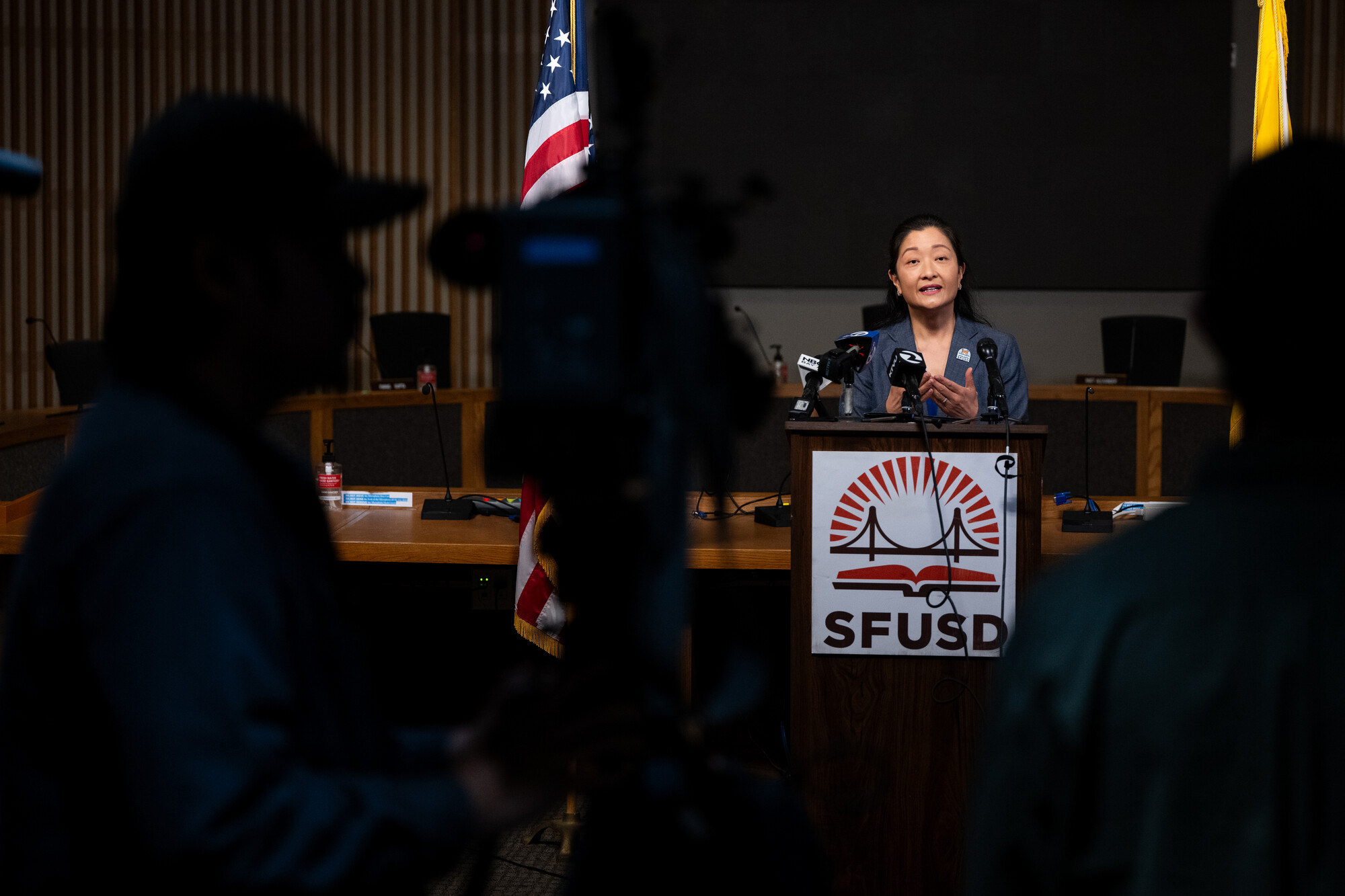
"caption": "San Francisco Unified School District Superintendent Dr. Maria Su speaks during a press conference at the school district offices in San Francisco on April 21, 2025.",
"credit": "Beth LaBerge/KQED",
"altTag": null,
"description": null,
"imgSizes": {
"thumbnail": {
"file": "https://cdn.kqed.org/wp-content/uploads/sites/10/2025/06/250421-SFUSDCentralCuts-06-BL_qed-1-160x107.jpg",
"width": 160,
"height": 107,
"mimeType": "image/jpeg"
},
"1536x1536": {
"file": "https://cdn.kqed.org/wp-content/uploads/sites/10/2025/06/250421-SFUSDCentralCuts-06-BL_qed-1-1536x1024.jpg",
"width": 1536,
"height": 1024,
"mimeType": "image/jpeg"
},
"post-thumbnail": {
"file": "https://cdn.kqed.org/wp-content/uploads/sites/10/2025/06/250421-SFUSDCentralCuts-06-BL_qed-1-672x372.jpg",
"width": 672,
"height": 372,
"mimeType": "image/jpeg"
},
"twentyfourteen-full-width": {
"file": "https://cdn.kqed.org/wp-content/uploads/sites/10/2025/06/250421-SFUSDCentralCuts-06-BL_qed-1-1038x576.jpg",
"width": 1038,
"height": 576,
"mimeType": "image/jpeg"
},
"kqedFullSize": {
"file": "https://cdn.kqed.org/wp-content/uploads/sites/10/2025/06/250421-SFUSDCentralCuts-06-BL_qed-1.jpg",
"width": 1999,
"height": 1333
}
},
"isLoading": false,
"fetchFailed": false
},
"news_12036911": {
"type": "attachments",
"id": "news_12036911",
"meta": {
"index": "attachments_1716263798",
"site": "news",
"id": "12036911",
"found": true
},
"title": "250418-SFUSD-06-BL-KQED",
"publishDate": 1745253406,
"status": "inherit",
"parent": 12036914,
"modified": 1745274516,
"caption": "The San Francisco Unified School District Administrative Offices in San Francisco on April 18, 2025.",
"credit": "Beth LaBerge/KQED",
"altTag": null,
"description": null,
"imgSizes": {
"medium": {
"file": "https://cdn.kqed.org/wp-content/uploads/sites/10/2025/04/250418-SFUSD-06-BL-KQED-800x533.jpg",
"width": 800,
"height": 533,
"mimeType": "image/jpeg"
},
"large": {
"file": "https://cdn.kqed.org/wp-content/uploads/sites/10/2025/04/250418-SFUSD-06-BL-KQED-1020x680.jpg",
"width": 1020,
"height": 680,
"mimeType": "image/jpeg"
},
"thumbnail": {
"file": "https://cdn.kqed.org/wp-content/uploads/sites/10/2025/04/250418-SFUSD-06-BL-KQED-160x107.jpg",
"width": 160,
"height": 107,
"mimeType": "image/jpeg"
},
"1536x1536": {
"file": "https://cdn.kqed.org/wp-content/uploads/sites/10/2025/04/250418-SFUSD-06-BL-KQED-1536x1024.jpg",
"width": 1536,
"height": 1024,
"mimeType": "image/jpeg"
},
"post-thumbnail": {
"file": "https://cdn.kqed.org/wp-content/uploads/sites/10/2025/04/250418-SFUSD-06-BL-KQED-672x372.jpg",
"width": 672,
"height": 372,
"mimeType": "image/jpeg"
},
"twentyfourteen-full-width": {
"file": "https://cdn.kqed.org/wp-content/uploads/sites/10/2025/04/250418-SFUSD-06-BL-KQED-1038x576.jpg",
"width": 1038,
"height": 576,
"mimeType": "image/jpeg"
},
"full-width": {
"file": "https://cdn.kqed.org/wp-content/uploads/sites/10/2025/04/250418-SFUSD-06-BL-KQED-1920x1280.jpg",
"width": 1920,
"height": 1280,
"mimeType": "image/jpeg"
},
"kqedFullSize": {
"file": "https://cdn.kqed.org/wp-content/uploads/sites/10/2025/04/250418-SFUSD-06-BL-KQED.jpg",
"width": 2000,
"height": 1333
}
},
"isLoading": false,
"fetchFailed": false
},
"news_12046127": {
"type": "attachments",
"id": "news_12046127",
"meta": {
"index": "attachments_1716263798",
"site": "news",
"id": "12046127",
"found": true
},
"title": "250421-SFUSDCentralCuts-09-BL_qed",
"publishDate": 1750965461,
"status": "inherit",
"parent": 12051862,
"modified": 1755024878,
"caption": "San Francisco Unified School District Superintendent Dr. Maria Su speaks during a press conference at the school district offices in San Francisco on April 21, 2025.",
"credit": "Beth LaBerge/KQED",
"altTag": null,
"description": null,
"imgSizes": {
"thumbnail": {
"file": "https://cdn.kqed.org/wp-content/uploads/sites/10/2025/06/250421-SFUSDCentralCuts-09-BL_qed-160x107.jpg",
"width": 160,
"height": 107,
"mimeType": "image/jpeg"
},
"1536x1536": {
"file": "https://cdn.kqed.org/wp-content/uploads/sites/10/2025/06/250421-SFUSDCentralCuts-09-BL_qed-1536x1024.jpg",
"width": 1536,
"height": 1024,
"mimeType": "image/jpeg"
},
"post-thumbnail": {
"file": "https://cdn.kqed.org/wp-content/uploads/sites/10/2025/06/250421-SFUSDCentralCuts-09-BL_qed-672x372.jpg",
"width": 672,
"height": 372,
"mimeType": "image/jpeg"
},
"twentyfourteen-full-width": {
"file": "https://cdn.kqed.org/wp-content/uploads/sites/10/2025/06/250421-SFUSDCentralCuts-09-BL_qed-1038x576.jpg",
"width": 1038,
"height": 576,
"mimeType": "image/jpeg"
},
"kqedFullSize": {
"file": "https://cdn.kqed.org/wp-content/uploads/sites/10/2025/06/250421-SFUSDCentralCuts-09-BL_qed.jpg",
"width": 2000,
"height": 1333
}
},
"isLoading": false,
"fetchFailed": false
},
"news_11910595": {
"type": "attachments",
"id": "news_11910595",
"meta": {
"index": "attachments_1716263798",
"site": "news",
"id": "11910595",
"found": true
},
"parent": 11910495,
"imgSizes": {
"twentyfourteen-full-width": {
"file": "https://ww2.kqed.org/app/uploads/sites/10/2022/04/RS55017_GettyImages-1387412608-qut-1038x576.jpg",
"width": 1038,
"mimeType": "image/jpeg",
"height": 576
},
"thumbnail": {
"file": "https://ww2.kqed.org/app/uploads/sites/10/2022/04/RS55017_GettyImages-1387412608-qut-160x96.jpg",
"width": 160,
"mimeType": "image/jpeg",
"height": 96
},
"post-thumbnail": {
"file": "https://ww2.kqed.org/app/uploads/sites/10/2022/04/RS55017_GettyImages-1387412608-qut-672x372.jpg",
"width": 672,
"mimeType": "image/jpeg",
"height": 372
},
"kqedFullSize": {
"file": "https://ww2.kqed.org/app/uploads/sites/10/2022/04/RS55017_GettyImages-1387412608-qut.jpg",
"width": 1920,
"height": 1152
},
"large": {
"file": "https://ww2.kqed.org/app/uploads/sites/10/2022/04/RS55017_GettyImages-1387412608-qut-1020x612.jpg",
"width": 1020,
"mimeType": "image/jpeg",
"height": 612
},
"1536x1536": {
"file": "https://ww2.kqed.org/app/uploads/sites/10/2022/04/RS55017_GettyImages-1387412608-qut-1536x922.jpg",
"width": 1536,
"mimeType": "image/jpeg",
"height": 922
},
"medium": {
"file": "https://ww2.kqed.org/app/uploads/sites/10/2022/04/RS55017_GettyImages-1387412608-qut-800x480.jpg",
"width": 800,
"mimeType": "image/jpeg",
"height": 480
}
},
"publishDate": 1649433963,
"modified": 1649434094,
"caption": "People gather on an overlook above the Borrego Badlands in Anza-Borrego Desert State Park.",
"description": null,
"title": "free-state-parks",
"credit": "Mario Tama/Getty Images",
"status": "inherit",
"altTag": "The steep rock cliffs of California's Anza-Borrego Desert State Park photographed at dusk",
"isLoading": false,
"fetchFailed": false
},
"news_12044982": {
"type": "attachments",
"id": "news_12044982",
"meta": {
"index": "attachments_1716263798",
"site": "news",
"id": "12044982",
"found": true
},
"title": "250618-NEWTEACHERHOUSING-09-BL-KQED",
"publishDate": 1750284860,
"status": "inherit",
"parent": 12086457,
"modified": 1780701647,
"caption": "Construction workers build at 750 Golden Gate Avenue in San Francisco on June 18, 2025, during a groundbreaking ceremony marking the start of two affordable housing projects. One will deliver 75 units prioritized for SFUSD and City College educators, and the other at 850 Turk will add 92 family apartments.",
"credit": "Beth LaBerge/KQED",
"altTag": null,
"description": null,
"imgSizes": {
"thumbnail": {
"file": "https://cdn.kqed.org/wp-content/uploads/sites/10/2025/06/250618-NEWTEACHERHOUSING-09-BL-KQED-160x107.jpg",
"width": 160,
"height": 107,
"mimeType": "image/jpeg"
},
"1536x1536": {
"file": "https://cdn.kqed.org/wp-content/uploads/sites/10/2025/06/250618-NEWTEACHERHOUSING-09-BL-KQED-1536x1024.jpg",
"width": 1536,
"height": 1024,
"mimeType": "image/jpeg"
},
"post-thumbnail": {
"file": "https://cdn.kqed.org/wp-content/uploads/sites/10/2025/06/250618-NEWTEACHERHOUSING-09-BL-KQED-672x372.jpg",
"width": 672,
"height": 372,
"mimeType": "image/jpeg"
},
"twentyfourteen-full-width": {
"file": "https://cdn.kqed.org/wp-content/uploads/sites/10/2025/06/250618-NEWTEACHERHOUSING-09-BL-KQED-1038x576.jpg",
"width": 1038,
"height": 576,
"mimeType": "image/jpeg"
},
"kqedFullSize": {
"file": "https://cdn.kqed.org/wp-content/uploads/sites/10/2025/06/250618-NEWTEACHERHOUSING-09-BL-KQED.jpg",
"width": 2000,
"height": 1333
}
},
"isLoading": false,
"fetchFailed": false
},
"news_12044772": {
"type": "attachments",
"id": "news_12044772",
"meta": {
"index": "attachments_1716263798",
"site": "news",
"id": "12044772",
"found": true
},
"title": "250421-SFUSDCentralCuts-07-BL_qed",
"publishDate": 1750192751,
"status": "inherit",
"parent": 12044768,
"modified": 1750192759,
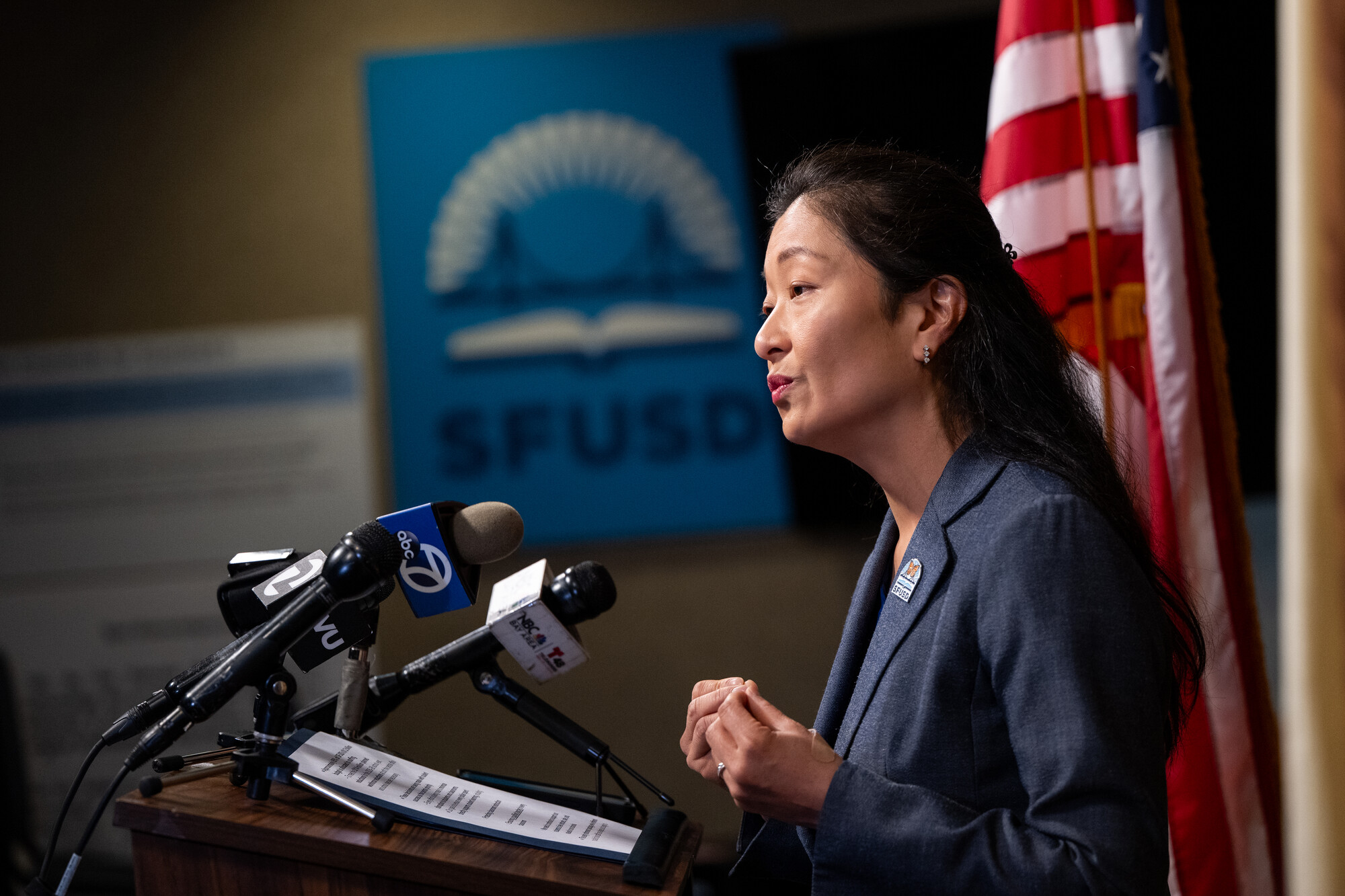
"caption": "San Francisco Unified School District Superintendent Dr. Maria Su speaks during a press conference at the school district offices in San Francisco on April 21, 2025.",
"credit": "Beth LaBerge/KQED",
"altTag": null,
"description": null,
"imgSizes": {
"thumbnail": {
"file": "https://cdn.kqed.org/wp-content/uploads/sites/10/2025/06/250421-SFUSDCentralCuts-07-BL_qed-160x107.jpg",
"width": 160,
"height": 107,
"mimeType": "image/jpeg"
},
"1536x1536": {
"file": "https://cdn.kqed.org/wp-content/uploads/sites/10/2025/06/250421-SFUSDCentralCuts-07-BL_qed-1536x1024.jpg",
"width": 1536,
"height": 1024,
"mimeType": "image/jpeg"
},
"post-thumbnail": {
"file": "https://cdn.kqed.org/wp-content/uploads/sites/10/2025/06/250421-SFUSDCentralCuts-07-BL_qed-672x372.jpg",
"width": 672,
"height": 372,
"mimeType": "image/jpeg"
},
"twentyfourteen-full-width": {
"file": "https://cdn.kqed.org/wp-content/uploads/sites/10/2025/06/250421-SFUSDCentralCuts-07-BL_qed-1038x576.jpg",
"width": 1038,
"height": 576,
"mimeType": "image/jpeg"
},
"kqedFullSize": {
"file": "https://cdn.kqed.org/wp-content/uploads/sites/10/2025/06/250421-SFUSDCentralCuts-07-BL_qed.jpg",
"width": 2000,
"height": 1333
}
},
"isLoading": false,
"fetchFailed": false
}
},
"audioPlayerReducer": {
"postId": "stream_live",
"isPaused": true,
"isPlaying": false,
"pfsActive": false,
"pledgeModalIsOpen": true,
"playerDrawerIsOpen": false,
"liveAudioPlayStartedAt": 0,
"liveAudioPlayContext": ""
},
"authorsReducer": {
"byline_news_12047871": {
"type": "authors",
"id": "byline_news_12047871",
"meta": {
"override": true
},
"slug": "byline_news_12047871",
"name": "Carolyn Jones, CalMatters",
"isLoading": false
},
"carlysevern": {
"type": "authors",
"id": "3243",
"meta": {
"index": "authors_1716337520",
"id": "3243",
"found": true
},
"name": "Carly Severn",
"firstName": "Carly",
"lastName": "Severn",
"slug": "carlysevern",
"email": "csevern@kqed.org",
"display_author_email": false,
"staff_mastheads": [
"news"
],
"title": "Senior Editor, Audience News ",
"bio": "Carly is KQED's Senior Editor of Audience News on the Digital News team, and has reported for the California Report Magazine, Bay Curious and KQED Arts. She's formerly the host of \u003ca href=\"http://ww2.kqed.org/pop/category/the-cooler/\" rel=\"noopener noreferrer\">The Cooler\u003c/a> podcast.",
"avatar": "https://secure.gravatar.com/avatar/54037bf5c128fe678f0ef26cec97a93f2e7f220a22d7285703328f12c42c1b1d?s=600&d=blank&r=g",
"twitter": "teacupinthebay",
"bluesky": null,
"facebook": null,
"instagram": null,
"linkedin": null,
"sites": [
{
"site": "",
"roles": [
"editor"
]
},
{
"site": "arts",
"roles": [
"editor"
]
},
{
"site": "news",
"roles": [
"administrator"
]
},
{
"site": "pop",
"roles": [
"editor"
]
},
{
"site": "futureofyou",
"roles": [
"editor"
]
},
{
"site": "about",
"roles": [
"administrator"
]
},
{
"site": "mindshift",
"roles": [
"editor"
]
},
{
"site": "bayareabites",
"roles": [
"editor"
]
},
{
"site": "stateofhealth",
"roles": [
"editor"
]
},
{
"site": "science",
"roles": [
"editor"
]
},
{
"site": "food",
"roles": [
"contributor"
]
},
{
"site": "forum",
"roles": [
"editor"
]
},
{
"site": "perspectives",
"roles": [
"administrator"
]
},
{
"site": "liveblog",
"roles": [
"editor"
]
}
],
"headData": {
"title": "Carly Severn | KQED",
"description": "Senior Editor, Audience News ",
"ogImgSrc": "https://secure.gravatar.com/avatar/54037bf5c128fe678f0ef26cec97a93f2e7f220a22d7285703328f12c42c1b1d?s=600&d=blank&r=g",
"twImgSrc": "https://secure.gravatar.com/avatar/54037bf5c128fe678f0ef26cec97a93f2e7f220a22d7285703328f12c42c1b1d?s=600&d=blank&r=g"
},
"isLoading": false,
"link": "/author/carlysevern"
},
"abandlamudi": {
"type": "authors",
"id": "11672",
"meta": {
"index": "authors_1716337520",
"id": "11672",
"found": true
},
"name": "Adhiti Bandlamudi",
"firstName": "Adhiti",
"lastName": "Bandlamudi",
"slug": "abandlamudi",
"email": "abandlamudi@kqed.org",
"display_author_email": false,
"staff_mastheads": [
"news"
],
"title": "KQED Housing Reporter",
"bio": "Adhiti Bandlamudi reports for KQED's Housing desk. She focuses on how housing gets built across the Bay Area. Before joining KQED in 2020, she reported for WUNC in Durham, North Carolina, WABE in Atlanta, Georgia and Capital Public Radio in Sacramento. In 2017, she was awarded a Kroc Fellowship at NPR where she reported on everything from sprinkles to the Golden State Killer's arrest. When she's not reporting, she's baking new recipes in her kitchen or watching movies with friends and family. She's originally from Georgia and has strong opinions about Great British Bake Off.",
"avatar": "https://secure.gravatar.com/avatar/868129c8b257bb99a3500e2c86a65400?s=600&d=mm&r=g",
"twitter": "oddity_adhiti",
"facebook": null,
"instagram": null,
"linkedin": null,
"sites": [
{
"site": "arts",
"roles": [
"author"
]
},
{
"site": "news",
"roles": [
"editor"
]
},
{
"site": "liveblog",
"roles": [
"author"
]
}
],
"headData": {
"title": "Adhiti Bandlamudi | KQED",
"description": "KQED Housing Reporter",
"ogImgSrc": "https://secure.gravatar.com/avatar/868129c8b257bb99a3500e2c86a65400?s=600&d=mm&r=g",
"twImgSrc": "https://secure.gravatar.com/avatar/868129c8b257bb99a3500e2c86a65400?s=600&d=mm&r=g"
},
"isLoading": false,
"link": "/author/abandlamudi"
},
"daisynguyen": {
"type": "authors",
"id": "11829",
"meta": {
"index": "authors_1716337520",
"id": "11829",
"found": true
},
"name": "Daisy Nguyen",
"firstName": "Daisy",
"lastName": "Nguyen",
"slug": "daisynguyen",
"email": "daisynguyen@kqed.org",
"display_author_email": true,
"staff_mastheads": [
"news"
],
"title": "KQED Contributor",
"bio": "I have covered early childhood education and child care for KQED since 2022. I focus on policies aimed at increasing access to early care and education and how they shape individual lives. I've been a journalist for more than two decades, with most of that time devoted to covering breaking news throughout California for The Associated Press. I grew up in San Francisco and studied at UC Davis and Columbia University's Graduate School of Journalism. I live in Oakland with my husband and two kids.",
"avatar": "https://secure.gravatar.com/avatar/2da2127c27f7143b53ebd419800fd55f?s=600&d=blank&r=g",
"twitter": null,
"facebook": null,
"instagram": null,
"linkedin": "https://www.linkedin.com/in/daisynguyen/",
"sites": [
{
"site": "news",
"roles": [
"author"
]
},
{
"site": "liveblog",
"roles": [
"author"
]
}
],
"headData": {
"title": "Daisy Nguyen | KQED",
"description": "KQED Contributor",
"ogImgSrc": "https://secure.gravatar.com/avatar/2da2127c27f7143b53ebd419800fd55f?s=600&d=blank&r=g",
"twImgSrc": "https://secure.gravatar.com/avatar/2da2127c27f7143b53ebd419800fd55f?s=600&d=blank&r=g"
},
"isLoading": false,
"link": "/author/daisynguyen"
},
"kdebenedetti": {
"type": "authors",
"id": "11913",
"meta": {
"index": "authors_1716337520",
"id": "11913",
"found": true
},
"name": "Katie DeBenedetti",
"firstName": "Katie",
"lastName": "DeBenedetti",
"slug": "kdebenedetti",
"email": "kdebenedetti@kqed.org",
"display_author_email": false,
"staff_mastheads": [
"news",
"science"
],
"title": "KQED Contributor",
"bio": "Katie DeBenedetti is a digital reporter covering daily news for the Express Desk. Prior to joining KQED as a culture reporting intern in January 2024, she covered education and city government for the Napa Valley Register.",
"avatar": "https://secure.gravatar.com/avatar/6e31073cb8f7e4214ab03f42771d0f45?s=600&d=blank&r=g",
"twitter": null,
"facebook": null,
"instagram": null,
"linkedin": null,
"sites": [
{
"site": "news",
"roles": [
"author"
]
},
{
"site": "science",
"roles": [
"author"
]
},
{
"site": "liveblog",
"roles": [
"author"
]
}
],
"headData": {
"title": "Katie DeBenedetti | KQED",
"description": "KQED Contributor",
"ogImgSrc": "https://secure.gravatar.com/avatar/6e31073cb8f7e4214ab03f42771d0f45?s=600&d=blank&r=g",
"twImgSrc": "https://secure.gravatar.com/avatar/6e31073cb8f7e4214ab03f42771d0f45?s=600&d=blank&r=g"
},
"isLoading": false,
"link": "/author/kdebenedetti"
},
"slim": {
"type": "authors",
"id": "11920",
"meta": {
"index": "authors_1716337520",
"id": "11920",
"found": true
},
"name": "Samantha Lim",
"firstName": "Samantha",
"lastName": "Lim",
"slug": "slim",
"email": "slim@KQED.org",
"display_author_email": false,
"staff_mastheads": [],
"title": "KQED Contributor",
"bio": null,
"avatar": "https://secure.gravatar.com/avatar/82e592e6c15fe1a04d385e8ad0fb0b4e?s=600&d=blank&r=g",
"twitter": null,
"facebook": null,
"instagram": null,
"linkedin": null,
"sites": [
{
"site": "news",
"roles": []
}
],
"headData": {
"title": "Samantha Lim | KQED",
"description": "KQED Contributor",
"ogImgSrc": "https://secure.gravatar.com/avatar/82e592e6c15fe1a04d385e8ad0fb0b4e?s=600&d=blank&r=g",
"twImgSrc": "https://secure.gravatar.com/avatar/82e592e6c15fe1a04d385e8ad0fb0b4e?s=600&d=blank&r=g"
},
"isLoading": false,
"link": "/author/slim"
},
"gzada": {
"type": "authors",
"id": "11929",
"meta": {
"index": "authors_1716337520",
"id": "11929",
"found": true
},
"name": "Gilare Zada",
"firstName": "Gilare",
"lastName": "Zada",
"slug": "gzada",
"email": "gzada@kqed.org",
"display_author_email": true,
"staff_mastheads": [
"news"
],
"title": null,
"bio": "Gilare Zada is a Kurdish-American from San Diego, CA. Storytelling, fitness, and binge reading are some of her passions outside of news reporting. Her work has appeared in Mission Local, the Peninsula Press, the San Francisco Press Club, and more. She also writes as a class correspondent for the Stanford Magazine - go Card!",
"avatar": "https://secure.gravatar.com/avatar/33a75f2b947669a488a805edec3fbf3838c1cedaedda710e983770633b4d6a75?s=600&d=blank&r=g",
"twitter": null,
"bluesky": null,
"facebook": null,
"instagram": null,
"linkedin": null,
"sites": [
{
"site": "",
"roles": [
"editor"
]
},
{
"site": "arts",
"roles": [
"editor"
]
},
{
"site": "news",
"roles": [
"administrator"
]
},
{
"site": "science",
"roles": [
"editor"
]
}
],
"headData": {
"title": "Gilare Zada | KQED",
"description": null,
"ogImgSrc": "https://secure.gravatar.com/avatar/33a75f2b947669a488a805edec3fbf3838c1cedaedda710e983770633b4d6a75?s=600&d=blank&r=g",
"twImgSrc": "https://secure.gravatar.com/avatar/33a75f2b947669a488a805edec3fbf3838c1cedaedda710e983770633b4d6a75?s=600&d=blank&r=g"
},
"isLoading": false,
"link": "/author/gzada"
}
},
"pagesReducer": {
"news_tag_education": {
"type": "terms",
"id": "news_20013",
"meta": {
"index": "terms_1716263798",
"site": "news",
"id": "20013",
"score": 6.970053
},
"featImg": null,
"name": "education",
"description": null,
"taxonomy": "tag",
"headData": {
"twImgId": null,
"twTitle": null,
"ogTitle": null,
"ogImgId": null,
"twDescription": null,
"description": null,
"title": "education Archives | KQED News",
"ogDescription": null
},
"ttid": 20030,
"slug": "education",
"isLoading": false,
"title": "education",
"pageMeta": {
"site": "news",
"WpPageTemplate": "page-topic-editorial",
"currentPage": 21
},
"blocks": [
{
"blockName": "kqed/post-list",
"attrs": {
"layout": "cardArticle2",
"query": "posts/news?tag=education",
"seeMore": false,
"paginated": true,
"page": 21
}
},
{
"blockName": "kqed/ad"
}
]
}
},
"pfsSessionReducer": {},
"postsReducer": {
"stream_live": {
"type": "live",
"id": "stream_live",
"audioUrl": "https://streams.kqed.org/kqedradio",
"title": "Live Stream",
"excerpt": "Live Stream information currently unavailable.",
"link": "/radio",
"featImg": "",
"label": {
"name": "KQED Live",
"link": "/"
}
},
"stream_kqedNewscast": {
"type": "posts",
"id": "stream_kqedNewscast",
"audioUrl": "https://www.kqed.org/.stream/anon/radio/RDnews/newscast.mp3?_=1",
"title": "KQED Newscast",
"featImg": "",
"label": {
"name": "88.5 FM",
"link": "/"
}
},
"news_12047871": {
"type": "posts",
"id": "news_12047871",
"meta": {
"index": "posts_1716263798",
"site": "news",
"id": "12047871",
"score": null,
"sort": [
1752505152000
]
},
"guestAuthors": [],
"slug": "heinous-heartbreaking-and-expensive-california-schools-face-avalanche-of-sex-abuse-claims",
"title": "Heinous, Heartbreaking — and Expensive. California Schools Face Avalanche of Sex Abuse Claims",
"publishDate": 1752505152,
"format": "standard",
"headTitle": "Heinous, Heartbreaking — and Expensive. California Schools Face Avalanche of Sex Abuse Claims | KQED",
"labelTerm": {
"term": 18481,
"site": "news"
},
"content": "\u003cp>\u003c!-- Creative Commons Attribution-NonCommercial-NoDerivatives https://creativecommons.org/licenses/by-nc-nd/4.0/ -->\u003c/p>\n\u003cp>\u003cem>This story was originally published by \u003ca href=\"https://calmatters.org/\">CalMatters\u003c/a>. \u003ca href=\"https://calmatters.org/subscribe-to-calmatters/\">Sign up\u003c/a> for their newsletters.\u003c/em>\u003c/p>\n\u003cp>When Samantha Muñoz was a second grader at Fancher Creek Elementary in Clovis, her teacher told her she “wasn’t that bright” and needed extra help with schoolwork. He’d make her stay in the classroom at recess, or tell her to sit on his lap while other students were busy with assignments.\u003c/p>\n\u003cp>During those quiet times in the classroom, she said, he sexually abused her — over and over, for at least a semester, even after the school principal walked in on him.\u003c/p>\n\u003cp>“No one knew. I just didn’t know who to run to. I ran to the school, and they shut me down into silence,” said Muñoz, who’s now 28. “But (now) I’ve figured, no one should be living like this. It’s time to speak your truth and make it OK to talk about. It’s a sensitive topic, but it needs awareness and closure.”\u003c/p>\n\u003cp>[ad fullwidth]\u003c/p>\n\u003cp>Muñoz, who lives in Fresno County, is part of a multi-plaintiff lawsuit against the Clovis Unified School District alleging the district knew about Muñoz’s teacher but — for at least seven years, from 2005-2012 — did not stop him from abusing students. Clovis Unified had no comment on the case because of the litigation.\u003c/p>\n\u003cp>Muñoz’s case is one of at least 1,000 lawsuits against California school districts and counties stemming from \u003ca href=\"https://leginfo.legislature.ca.gov/faces/billTextClient.xhtml?bill_id=201920200AB218\">AB 218\u003c/a>, a sexual abuse reform law that took effect in 2020. It temporarily dropped the statute of limitations, provided a three-year window for victims to file claims and otherwise made it easier for them to sue school districts and counties.\u003c/p>\n\u003cp>The cases span decades, some as early as the 1940s. In many cases the perpetrator is dead, the district staff has turned over, and there’s no longer a paper trail of the original complaint, if there ever was one.\u003c/p>\n\u003cp>The new law has resulted in a slew of payouts to abuse survivors, most in the range of $5 million to $10 million but some much higher. In 2023 a jury delivered a $135 million verdict against Moreno Valley Unified in Riverside County. Los Angeles Unified is expecting to pay more than $500 million to settle a portion of its claims. Overall, the claims against schools total nearly $3 billion.\u003c/p>\n\u003cp>Counties also have paid out large sums of money. In April, Los Angeles County \u003ca href=\"https://lacounty.gov/2025/04/04/la-county-reaches-4-billion-tentative-settlement-in-thousands-of-sexual-abuse-cases/\">paid $4 billion\u003c/a> to settle 6,800 abuse claims from victims who were abused in foster care or in probation department facilities. Like many government entities, Los Angeles County is self-insured.\u003c/p>\n\u003cp>The settlements have been so large that they’ve brought some school districts to the brink of financial insolvency and state takeover. They’ve also resulted in steep spikes in insurance payments for all school districts, regardless of whether they’ve been sued.\u003c/p>\n\u003ch2>‘Untenable’\u003c/h2>\n\u003cp>Carpinteria Unified is among those districts facing financial collapse.\u003c/p>\n\u003cp>The predominantly low-income Latino district near Santa Barbara has been served with four sexual abuse lawsuits, all involving the same perpetrator: a principal who was \u003ca href=\"https://www.latimes.com/archives/la-xpm-1986-12-10-mn-2255-story.html\">convicted in 1986 of abusing several boys\u003c/a> in the 1970s and early 1980s.\u003c/p>\n\u003cp>“These suits are settling for $5 million to $10 million each, and we have a $42 million budget. You do the math,” said Superintendent Diana Rigby. “It’s untenable.”\u003c/p>\n\u003cp>[aside postID=news_12047461 hero='https://cdn.kqed.org/wp-content/uploads/sites/10/2025/07/GettyImages-959592014_qed.jpg']\u003c/p>\n\u003cp>The district has already spent $750,000 on legal fees, and has had to lay off staff, increase class sizes and cut field trips, enrichment activities and other programs to pay its legal bills. Although the district had insurance at the time of the abuse, the company has since gone out of business and its current insurance company won’t cover old claims.\u003c/p>\n\u003cp>The perpetrator is dead and the district staff has turned over 100% since the incidents occurred. Years ago, the district instituted strict protocols for abuse claims, immediately contacting the police and placing the alleged perpetrator on leave until an investigation is complete.\u003c/p>\n\u003cp>Rigby worries about how her district will survive. If the state takes it over, it’ll lose its school board and superintendent, and further cuts will be inevitable.\u003c/p>\n\u003cp>“We believe all the victims need to be compensated for these heinous crimes,” Rigby said. “But AB 218 is causing current students and taxpayers to pay for crimes that happened 50 years ago, that they had nothing to do with. There has to be a better solution.”\u003c/p>\n\u003ch2>Legislative solution?\u003c/h2>\n\u003cp>Several current bills in the Legislature would curb the law, at least somewhat. A bill by Sen. John Laird, \u003ca href=\"https://calmatters.digitaldemocracy.org/bills/ca_202520260sb577\">SB 577\u003c/a>, would bring back a statute of limitations, make it easier for districts to issue bonds to pay off settlements and take other steps to give some relief to school districts and other public agencies. But it doesn’t cap attorneys’ fees or settlements.\u003c/p>\n\u003cp>The political reality, Laird said, is that there’s not enough support in the Legislature to limit legal settlements in abuse cases.\u003c/p>\n\u003cp>“We’re trying to walk between the poles of avoiding billions of dollars in settlements, while not neglecting the rights of victims,” said Laird, a Democrat from Santa Cruz.\u003c/p>\n\u003cp>The bill passed the Senate and is now in the Assembly judiciary committee.\u003c/p>\n\u003cp>Consumer Attorneys of California is neutral on the bill, but several school lobbying groups have opposed it, saying it doesn’t go far enough. One group, the Association of California School Administrators, would also like to see school districts share responsibility for paying settlements with the perpetrator or other groups that might be involved, such as sports or after-school organizations. The group also wants the state to study the possibility of a victims’ fund that’s not entirely monetary; it could also include mental and physical health services.\u003c/p>\n\u003cp>The abuse settlements are the worst financial threat to school districts since the Great Recession of 2008-2009, said Mike Fine, director of the Fiscal Crisis Management and Assistance Team, which advises the state and school districts on financial matters.\u003c/p>\n\u003cp>His \u003ca href=\"https://www.fcmat.org/PublicationsReports/child-sexual-assault-fiscal-implications-report.pdf\">group is recommending\u003c/a> that the state create a database of abuse claims as well as teachers who have been accused, to prevent perpetrators from bouncing from one district to another. The group also recommends more flexibility on settlement payment plans, and an alternative to state takeover for districts that are out of money.\u003c/p>\n\u003cp>Like Laird, Fine’s group is not calling for a cap on settlements or attorney fees. “We didn’t think tort reform was within our scope,” Fine said.\u003c/p>\n\u003cp>They’re also not calling for a state-financed victims’ fund, something school districts have asked for. Laird said the state lacks the money for such a fund. Fine’s group omitted it from its recommendations because a victims’ fund could preclude a trial, and Fine said that victims should have a right to go to court and have their voices heard.\u003c/p>\n\u003cp>But schools’ top priority, Fine said, should be setting tough protocols to prevent abuse from happening in the first place. Although some districts have instituted safeguards, not all have, and the state doesn’t have a uniform policy because it’s deemed a local issue.\u003c/p>\n\u003cp>“Schools have to hold themselves to a higher standard, and we’ve clearly failed in this regard,” Fine said. “This simply has to stop.”\u003c/p>\n\u003ch2>‘Prime time’ for trial attorneys\u003c/h2>\n\u003cp>The sexual abuse law has been a windfall for trial attorneys. Billboards seeking clients have cropped up around the state, and lawyers from throughout the country have come to California to file claims.\u003c/p>\n\u003cp>Typically attorneys in abuse lawsuits work for free until there’s a resolution, and then collect a portion of the payout if the plaintiff prevails — in some instances up to 40%, depending on the complexity of the case.\u003c/p>\n\u003cp>Dorothy Johnson, legislative advocate for the Association of California School Administrators, called the current scenario “prime time” for trial attorneys in California, but forcing impossible burdens onto school districts and other agencies. Schools are already contending with financial hardships due to declining enrollment, the end of pandemic relief funds and federal education cuts. These settlements are pushing some districts over the edge — while attorneys are making millions, she said.\u003c/p>\n\u003cp>“We don’t think trial attorneys should be profiting at the expense of current students,” Johnson said. “We want to make sure victims get resolution but at the same time put some guardrails up. Right now, there are no guardrails.”\u003c/p>\n\u003cp>The trial attorneys’ association is not opposed to changes in the law, as long as victims’ rights aren’t curtailed, said Nancy Peverini, legislative director for California Consumer Attorneys.\u003c/p>\n\u003cp>“There’s an understanding that we need to find a balance, but it’s really important that survivors’ voices don’t get lost,” Peverini said.\u003c/p>\n\u003ch2>Hard choices in Montecito\u003c/h2>\n\u003cp>Montecito — a scenic enclave near Santa Barbara — is home to Prince Harry and Meghan, Duchess of Sussex, Oprah Winfrey and other celebrities. With sweeping views of the Pacific and Santa Ynez mountains, it’s one of the most affluent and exclusive towns in the country. Its school district, however, is facing financial calamity and a possible state takeover.\u003c/p>\n\u003cp>Montecito Union Elementary District serves about 350 students, mostly children from affluent families but also the children of Montecito’s landscapers and housekeepers. Earlier this year, it took in 42 students from Pacific Palisades, which was largely destroyed in a wildfire.\u003c/p>\n\u003cp>In 2023, three former students sued the district over sexual abuse they said they experienced from 1972-76. The district denied the claim, and is negotiating a settlement. The payout and legal costs could swell to $20 million — more than the district’s annual budget. Even a state loan wouldn’t solve the problem, because the payments would be more than the district can afford, according to Fine’s organization.\u003c/p>\n\u003cp>The district’s insurance company at the time of the alleged abuse no longer exists, and its current insurer doesn’t cover events from that long ago. That means that like Carpinteria Unified, Montecito will have to pay the entire cost — cutting programs, borrowing money and using reserves.\u003c/p>\n\u003cp>“First of all, there’s a whole lot of empathy. We were heartbroken to hear these allegations,” Superintendent Anthony Ranii said. “But none of us were here then. Many of us weren’t even born. The alleged perpetrator and witnesses are dead. We’re putting the responsibility for something that might or might not have happened in 1972 100% on the heads of students in 2025. That’s not fair.”\u003c/p>\n\u003ch2>‘We need awareness’\u003c/h2>\n\u003cp>For Muñoz, the abuse she suffered during the 2004-05 school year took more than a decade to come to terms with. Even after the abuse stopped, Muñoz found school difficult, socially and academically. She lost trust in adults and emotionally withdrew. She never talked about what happened, not even to her family.\u003c/p>\n\u003cp>Neng Yang, the teacher whom Muñoz said abused her, was arrested and tried in 2014 on 45 counts of sexual abuse on a child under age 10, based on testimony from numerous victims who were students at Fancher Creek Elementary. He was \u003ca href=\"https://www.ice.gov/news/releases/former-fresno-area-teacher-pleads-guilty-producing-child-pornography\">convicted\u003c/a> and is serving a 38-year sentence.\u003c/p>\n\u003cp>Muñoz only started talking about the abuse a few years ago, when she started reading about the impacts of childhood abuse. Earlier this year, she got a call from Pfau Cochran Vertetis Amala, a Washington-based law firm, that was investigating claims from another of Yang’s victims for a potential suit against Clovis Unified.\u003c/p>\n\u003cp>She decided to share her story with the attorneys and join the lawsuit.\u003c/p>\n\u003cp>“I just want other victims to know that they’re not the only ones,” Muñoz said. “It’s OK to talk about it. We need awareness if there’s going to be change.”\u003c/p>\n\u003cp>\u003cem>This article was \u003ca href=\"https://calmatters.org/education/k-12-education/2025/07/child-sex-abuse-california/\">originally published on CalMatters\u003c/a> and was republished under the \u003ca href=\"https://creativecommons.org/licenses/by-nc-nd/4.0/\">Creative Commons Attribution-NonCommercial-NoDerivatives\u003c/a> license.\u003c/em>\u003c/p>\n\u003cp>[ad floatright]\u003c/p>\n",
"blocks": [],
"excerpt": "A California law took effect in 2020 that dropped the statute of limitations for filing lawsuits, provided a three-year window for victims to file claims and otherwise made it easier for them to sue school districts and counties.",
"status": "publish",
"parent": 0,
"modified": 1752505152,
"stats": {
"hasAudio": false,
"hasVideo": false,
"hasChartOrMap": false,
"iframeSrcs": [],
"hasGoogleForm": false,
"hasGallery": false,
"hasHearkenModule": false,
"hasPolis": false,
"paragraphCount": 49,
"wordCount": 2114
},
"headData": {
"title": "Heinous, Heartbreaking — and Expensive. California Schools Face Avalanche of Sex Abuse Claims | KQED",
"description": "A California law took effect in 2020 that dropped the statute of limitations for filing lawsuits, provided a three-year window for victims to file claims and otherwise made it easier for them to sue school districts and counties.",
"ogTitle": "",
"ogDescription": "",
"ogImgId": "",
"twTitle": "",
"twDescription": "",
"twImgId": "",
"schema": {
"@context": "https://schema.org",
"@type": "NewsArticle",
"headline": "Heinous, Heartbreaking — and Expensive. California Schools Face Avalanche of Sex Abuse Claims",
"datePublished": "2025-07-14T07:59:12-07:00",
"dateModified": "2025-07-14T07:59:12-07:00",
"image": "https://cdn.kqed.org/wp-content/uploads/2020/02/KQED-OG-Image@1x.png",
"isAccessibleForFree": "True",
"publisher": {
"@type": "NewsMediaOrganization",
"@id": "https://www.kqed.org/#organization",
"name": "KQED",
"logo": "https://cdn.kqed.org/wp-content/uploads/2020/02/KQED-OG-Image@1x.png",
"url": "https://www.kqed.org",
"sameAs": [
"https://www.facebook.com/KQED",
"https://twitter.com/KQED",
"https://www.instagram.com/kqed/",
"https://www.tiktok.com/@kqedofficial",
"https://www.linkedin.com/company/kqed",
"https://www.youtube.com/channel/UCeC0IOo7i1P_61zVUWbJ4nw"
]
}
}
},
"primaryCategory": {
"termId": 8,
"slug": "news",
"name": "News"
},
"sticky": false,
"nprByline": "Carolyn Jones, CalMatters",
"nprStoryId": "kqed-12047871",
"templateType": "standard",
"featuredImageType": "standard",
"excludeFromSiteSearch": "Include",
"showOnAuthorArchivePages": "No",
"articleAge": "0",
"path": "/news/12047871/heinous-heartbreaking-and-expensive-california-schools-face-avalanche-of-sex-abuse-claims",
"audioTrackLength": null,
"parsedContent": [
{
"type": "contentString",
"content": "\u003cdiv class=\"post-body\">\u003cp>\u003cp>\u003c!-- Creative Commons Attribution-NonCommercial-NoDerivatives https://creativecommons.org/licenses/by-nc-nd/4.0/ -->\u003c/p>\n\u003cp>\u003cem>This story was originally published by \u003ca href=\"https://calmatters.org/\">CalMatters\u003c/a>. \u003ca href=\"https://calmatters.org/subscribe-to-calmatters/\">Sign up\u003c/a> for their newsletters.\u003c/em>\u003c/p>\n\u003cp>When Samantha Muñoz was a second grader at Fancher Creek Elementary in Clovis, her teacher told her she “wasn’t that bright” and needed extra help with schoolwork. He’d make her stay in the classroom at recess, or tell her to sit on his lap while other students were busy with assignments.\u003c/p>\n\u003cp>During those quiet times in the classroom, she said, he sexually abused her — over and over, for at least a semester, even after the school principal walked in on him.\u003c/p>\n\u003cp>“No one knew. I just didn’t know who to run to. I ran to the school, and they shut me down into silence,” said Muñoz, who’s now 28. “But (now) I’ve figured, no one should be living like this. It’s time to speak your truth and make it OK to talk about. It’s a sensitive topic, but it needs awareness and closure.”\u003c/p>\n\u003cp>\u003c/p>\u003c/div>",
"attributes": {
"named": {},
"numeric": []
}
},
{
"type": "component",
"content": "",
"name": "ad",
"attributes": {
"named": {
"label": "fullwidth"
},
"numeric": [
"fullwidth"
]
}
},
{
"type": "contentString",
"content": "\u003cdiv class=\"post-body\">\u003cp>\u003c/p>\n\u003cp>Muñoz, who lives in Fresno County, is part of a multi-plaintiff lawsuit against the Clovis Unified School District alleging the district knew about Muñoz’s teacher but — for at least seven years, from 2005-2012 — did not stop him from abusing students. Clovis Unified had no comment on the case because of the litigation.\u003c/p>\n\u003cp>Muñoz’s case is one of at least 1,000 lawsuits against California school districts and counties stemming from \u003ca href=\"https://leginfo.legislature.ca.gov/faces/billTextClient.xhtml?bill_id=201920200AB218\">AB 218\u003c/a>, a sexual abuse reform law that took effect in 2020. It temporarily dropped the statute of limitations, provided a three-year window for victims to file claims and otherwise made it easier for them to sue school districts and counties.\u003c/p>\n\u003cp>The cases span decades, some as early as the 1940s. In many cases the perpetrator is dead, the district staff has turned over, and there’s no longer a paper trail of the original complaint, if there ever was one.\u003c/p>\n\u003cp>The new law has resulted in a slew of payouts to abuse survivors, most in the range of $5 million to $10 million but some much higher. In 2023 a jury delivered a $135 million verdict against Moreno Valley Unified in Riverside County. Los Angeles Unified is expecting to pay more than $500 million to settle a portion of its claims. Overall, the claims against schools total nearly $3 billion.\u003c/p>\n\u003cp>Counties also have paid out large sums of money. In April, Los Angeles County \u003ca href=\"https://lacounty.gov/2025/04/04/la-county-reaches-4-billion-tentative-settlement-in-thousands-of-sexual-abuse-cases/\">paid $4 billion\u003c/a> to settle 6,800 abuse claims from victims who were abused in foster care or in probation department facilities. Like many government entities, Los Angeles County is self-insured.\u003c/p>\n\u003cp>The settlements have been so large that they’ve brought some school districts to the brink of financial insolvency and state takeover. They’ve also resulted in steep spikes in insurance payments for all school districts, regardless of whether they’ve been sued.\u003c/p>\n\u003ch2>‘Untenable’\u003c/h2>\n\u003cp>Carpinteria Unified is among those districts facing financial collapse.\u003c/p>\n\u003cp>The predominantly low-income Latino district near Santa Barbara has been served with four sexual abuse lawsuits, all involving the same perpetrator: a principal who was \u003ca href=\"https://www.latimes.com/archives/la-xpm-1986-12-10-mn-2255-story.html\">convicted in 1986 of abusing several boys\u003c/a> in the 1970s and early 1980s.\u003c/p>\n\u003cp>“These suits are settling for $5 million to $10 million each, and we have a $42 million budget. You do the math,” said Superintendent Diana Rigby. “It’s untenable.”\u003c/p>\n\u003cp>\u003c/p>\u003c/div>",
"attributes": {
"named": {},
"numeric": []
}
},
{
"type": "component",
"content": "",
"name": "aside",
"attributes": {
"named": {
"postid": "news_12047461",
"hero": "https://cdn.kqed.org/wp-content/uploads/sites/10/2025/07/GettyImages-959592014_qed.jpg",
"label": ""
},
"numeric": []
}
},
{
"type": "contentString",
"content": "\u003cdiv class=\"post-body\">\u003cp>\u003c/p>\n\u003cp>The district has already spent $750,000 on legal fees, and has had to lay off staff, increase class sizes and cut field trips, enrichment activities and other programs to pay its legal bills. Although the district had insurance at the time of the abuse, the company has since gone out of business and its current insurance company won’t cover old claims.\u003c/p>\n\u003cp>The perpetrator is dead and the district staff has turned over 100% since the incidents occurred. Years ago, the district instituted strict protocols for abuse claims, immediately contacting the police and placing the alleged perpetrator on leave until an investigation is complete.\u003c/p>\n\u003cp>Rigby worries about how her district will survive. If the state takes it over, it’ll lose its school board and superintendent, and further cuts will be inevitable.\u003c/p>\n\u003cp>“We believe all the victims need to be compensated for these heinous crimes,” Rigby said. “But AB 218 is causing current students and taxpayers to pay for crimes that happened 50 years ago, that they had nothing to do with. There has to be a better solution.”\u003c/p>\n\u003ch2>Legislative solution?\u003c/h2>\n\u003cp>Several current bills in the Legislature would curb the law, at least somewhat. A bill by Sen. John Laird, \u003ca href=\"https://calmatters.digitaldemocracy.org/bills/ca_202520260sb577\">SB 577\u003c/a>, would bring back a statute of limitations, make it easier for districts to issue bonds to pay off settlements and take other steps to give some relief to school districts and other public agencies. But it doesn’t cap attorneys’ fees or settlements.\u003c/p>\n\u003cp>The political reality, Laird said, is that there’s not enough support in the Legislature to limit legal settlements in abuse cases.\u003c/p>\n\u003cp>“We’re trying to walk between the poles of avoiding billions of dollars in settlements, while not neglecting the rights of victims,” said Laird, a Democrat from Santa Cruz.\u003c/p>\n\u003cp>The bill passed the Senate and is now in the Assembly judiciary committee.\u003c/p>\n\u003cp>Consumer Attorneys of California is neutral on the bill, but several school lobbying groups have opposed it, saying it doesn’t go far enough. One group, the Association of California School Administrators, would also like to see school districts share responsibility for paying settlements with the perpetrator or other groups that might be involved, such as sports or after-school organizations. The group also wants the state to study the possibility of a victims’ fund that’s not entirely monetary; it could also include mental and physical health services.\u003c/p>\n\u003cp>The abuse settlements are the worst financial threat to school districts since the Great Recession of 2008-2009, said Mike Fine, director of the Fiscal Crisis Management and Assistance Team, which advises the state and school districts on financial matters.\u003c/p>\n\u003cp>His \u003ca href=\"https://www.fcmat.org/PublicationsReports/child-sexual-assault-fiscal-implications-report.pdf\">group is recommending\u003c/a> that the state create a database of abuse claims as well as teachers who have been accused, to prevent perpetrators from bouncing from one district to another. The group also recommends more flexibility on settlement payment plans, and an alternative to state takeover for districts that are out of money.\u003c/p>\n\u003cp>Like Laird, Fine’s group is not calling for a cap on settlements or attorney fees. “We didn’t think tort reform was within our scope,” Fine said.\u003c/p>\n\u003cp>They’re also not calling for a state-financed victims’ fund, something school districts have asked for. Laird said the state lacks the money for such a fund. Fine’s group omitted it from its recommendations because a victims’ fund could preclude a trial, and Fine said that victims should have a right to go to court and have their voices heard.\u003c/p>\n\u003cp>But schools’ top priority, Fine said, should be setting tough protocols to prevent abuse from happening in the first place. Although some districts have instituted safeguards, not all have, and the state doesn’t have a uniform policy because it’s deemed a local issue.\u003c/p>\n\u003cp>“Schools have to hold themselves to a higher standard, and we’ve clearly failed in this regard,” Fine said. “This simply has to stop.”\u003c/p>\n\u003ch2>‘Prime time’ for trial attorneys\u003c/h2>\n\u003cp>The sexual abuse law has been a windfall for trial attorneys. Billboards seeking clients have cropped up around the state, and lawyers from throughout the country have come to California to file claims.\u003c/p>\n\u003cp>Typically attorneys in abuse lawsuits work for free until there’s a resolution, and then collect a portion of the payout if the plaintiff prevails — in some instances up to 40%, depending on the complexity of the case.\u003c/p>\n\u003cp>Dorothy Johnson, legislative advocate for the Association of California School Administrators, called the current scenario “prime time” for trial attorneys in California, but forcing impossible burdens onto school districts and other agencies. Schools are already contending with financial hardships due to declining enrollment, the end of pandemic relief funds and federal education cuts. These settlements are pushing some districts over the edge — while attorneys are making millions, she said.\u003c/p>\n\u003cp>“We don’t think trial attorneys should be profiting at the expense of current students,” Johnson said. “We want to make sure victims get resolution but at the same time put some guardrails up. Right now, there are no guardrails.”\u003c/p>\n\u003cp>The trial attorneys’ association is not opposed to changes in the law, as long as victims’ rights aren’t curtailed, said Nancy Peverini, legislative director for California Consumer Attorneys.\u003c/p>\n\u003cp>“There’s an understanding that we need to find a balance, but it’s really important that survivors’ voices don’t get lost,” Peverini said.\u003c/p>\n\u003ch2>Hard choices in Montecito\u003c/h2>\n\u003cp>Montecito — a scenic enclave near Santa Barbara — is home to Prince Harry and Meghan, Duchess of Sussex, Oprah Winfrey and other celebrities. With sweeping views of the Pacific and Santa Ynez mountains, it’s one of the most affluent and exclusive towns in the country. Its school district, however, is facing financial calamity and a possible state takeover.\u003c/p>\n\u003cp>Montecito Union Elementary District serves about 350 students, mostly children from affluent families but also the children of Montecito’s landscapers and housekeepers. Earlier this year, it took in 42 students from Pacific Palisades, which was largely destroyed in a wildfire.\u003c/p>\n\u003cp>In 2023, three former students sued the district over sexual abuse they said they experienced from 1972-76. The district denied the claim, and is negotiating a settlement. The payout and legal costs could swell to $20 million — more than the district’s annual budget. Even a state loan wouldn’t solve the problem, because the payments would be more than the district can afford, according to Fine’s organization.\u003c/p>\n\u003cp>The district’s insurance company at the time of the alleged abuse no longer exists, and its current insurer doesn’t cover events from that long ago. That means that like Carpinteria Unified, Montecito will have to pay the entire cost — cutting programs, borrowing money and using reserves.\u003c/p>\n\u003cp>“First of all, there’s a whole lot of empathy. We were heartbroken to hear these allegations,” Superintendent Anthony Ranii said. “But none of us were here then. Many of us weren’t even born. The alleged perpetrator and witnesses are dead. We’re putting the responsibility for something that might or might not have happened in 1972 100% on the heads of students in 2025. That’s not fair.”\u003c/p>\n\u003ch2>‘We need awareness’\u003c/h2>\n\u003cp>For Muñoz, the abuse she suffered during the 2004-05 school year took more than a decade to come to terms with. Even after the abuse stopped, Muñoz found school difficult, socially and academically. She lost trust in adults and emotionally withdrew. She never talked about what happened, not even to her family.\u003c/p>\n\u003cp>Neng Yang, the teacher whom Muñoz said abused her, was arrested and tried in 2014 on 45 counts of sexual abuse on a child under age 10, based on testimony from numerous victims who were students at Fancher Creek Elementary. He was \u003ca href=\"https://www.ice.gov/news/releases/former-fresno-area-teacher-pleads-guilty-producing-child-pornography\">convicted\u003c/a> and is serving a 38-year sentence.\u003c/p>\n\u003cp>Muñoz only started talking about the abuse a few years ago, when she started reading about the impacts of childhood abuse. Earlier this year, she got a call from Pfau Cochran Vertetis Amala, a Washington-based law firm, that was investigating claims from another of Yang’s victims for a potential suit against Clovis Unified.\u003c/p>\n\u003cp>She decided to share her story with the attorneys and join the lawsuit.\u003c/p>\n\u003cp>“I just want other victims to know that they’re not the only ones,” Muñoz said. “It’s OK to talk about it. We need awareness if there’s going to be change.”\u003c/p>\n\u003cp>\u003cem>This article was \u003ca href=\"https://calmatters.org/education/k-12-education/2025/07/child-sex-abuse-california/\">originally published on CalMatters\u003c/a> and was republished under the \u003ca href=\"https://creativecommons.org/licenses/by-nc-nd/4.0/\">Creative Commons Attribution-NonCommercial-NoDerivatives\u003c/a> license.\u003c/em>\u003c/p>\n\u003cp>\u003c/p>\u003c/div>",
"attributes": {
"named": {},
"numeric": []
}
},
{
"type": "component",
"content": "",
"name": "ad",
"attributes": {
"named": {
"label": "floatright"
},
"numeric": [
"floatright"
]
}
},
{
"type": "contentString",
"content": "\u003cdiv class=\"post-body\">\u003cp>\u003c/p>\n\u003c/div>\u003c/p>",
"attributes": {
"named": {},
"numeric": []
}
}
],
"link": "/news/12047871/heinous-heartbreaking-and-expensive-california-schools-face-avalanche-of-sex-abuse-claims",
"authors": [
"byline_news_12047871"
],
"categories": [
"news_31795",
"news_18540",
"news_8"
],
"tags": [
"news_30911",
"news_20013",
"news_34669"
],
"affiliates": [
"news_18481"
],
"featImg": "news_12047872",
"label": "news_18481"
},
"news_12047461": {
"type": "posts",
"id": "news_12047461",
"meta": {
"index": "posts_1716263798",
"site": "news",
"id": "12047461",
"score": null,
"sort": [
1752148847000
]
},
"guestAuthors": [],
"slug": "deaf-school-abuse-lawsuit",
"title": "California to Pay $14 Million to Former Student Abused at Deaf School in Fremont",
"publishDate": 1752148847,
"format": "standard",
"headTitle": "California to Pay $14 Million to Former Student Abused at Deaf School in Fremont | KQED",
"labelTerm": {
"site": "news"
},
"content": "\u003cp>The state of California will pay $14 million in a settlement involving a former student at the California School for the Deaf in Fremont, who allegedly endured years of abuse at the hands of a former employee.\u003c/p>\n\u003cp>The plaintiff, whose identity has been concealed, was enrolled at the California School for the Deaf Fremont, or CSDF, between 2009 and 2011. The state-funded boarding school serves about 400 deaf and hard-of-hearing students, ages 3 to 21, from 46 counties across California.\u003c/p>\n\u003cp>Doe filed a lawsuit in 2018, alleging that former employee Ricardo Rose abused him in his dorm room, beginning when Doe was 10 years old.\u003c/p>\n\u003cp>[ad fullwidth]\u003c/p>\n\u003cp>One of Doe’s attorneys, Dave Ring, said Rose had a history of complaints from students and staff for inappropriate behavior. Although Rose had no criminal record at the time of his hiring over 30 years ago, Ring said concerns about his conduct grew over time.\u003c/p>\n\u003cp>“A huge part of the problem is that the school had prior problems with this perpetrator,” Ring said. “They had had prior complaints from both students and from staff about his misconduct and behavior.”\u003c/p>\n\u003cp>Ring said one staff member felt that Rose “was harassing her and she was actually afraid of him.”\u003c/p>\n\u003cp>“She actually refused to work around him because she was in fear of him,” Ring said. “This was not some model employee.”\u003c/p>\n\u003cp>Despite repeated red flags, the school issued restrictions rather than asserting a zero-tolerance policy and removing Rose. One such restriction, Ring said, was that “he was not supposed to be anywhere near the bungalows after normal school hours, and yet he continued to go over there.”\u003c/p>\n\u003cp>“We’re talking about serious misconduct and serious complaints about boundary issues, about interactions with kids, about sexual harassment — and yet they don’t fire him,” Ring continued.[aside postID=news_11990571 hero='https://cdn.kqed.org/wp-content/uploads/sites/10/2023/06/RS66175_20230608_ksuzuki_adelanteschool-111-KQED-1020x678.jpg']\u003c/p>\n\u003cp>According to Ring, Rose, who is also deaf, threatened to “bite Doe’s fingers off” if he revealed the abuse to anyone, and at times choked him in his own dorm bed.\u003c/p>\n\u003cp>In 2011, after over two years of alleged abuse, Doe begged his parents to withdraw him from the school, though he didn’t explain why. It would be another seven years — once Doe turned 18 years old — before he came forward as an adult to report the abuse.\u003c/p>\n\u003cp>California’s expanded statute of limitations allows victims more time to bring forward abuse claims. After the police investigated Doe’s claims, the California Highway Patrol arrested Rose in the Hayward area on charges of child molestation and criminal threats.\u003c/p>\n\u003cp>Ring said the $14 million settlement is the largest the state has ever paid to a single survivor of sexual abuse.\u003c/p>\n\u003cp>“I know that there are other victims of this perpetrator,” Ring said, emphasizing his concern that Rose is not in custody. “If they haven’t come forward already, I would urge them to do so.”\u003c/p>\n\u003cp>In a statement, Liz Sanders, director of communications for the California Department of Education, said, “Student safety remains a top priority” for both the department and the state’s special schools, including the CSDF.\u003c/p>\n\u003cp>“Since learning of these incidents, CSDF has taken additional protective measures for students,” Sanders said.\u003c/p>\n\u003cp>Increasing residential staffing and providing additional training for residential staff are two of those actions, according to Sanders. She said the school has also “expanded monitoring capabilities” throughout the campus to help “ensure safe, supportive learning environments for current and future students.”\u003c/p>\n\u003cp>The CSDF did not respond to requests for comment.\u003c/p>\n\u003cp>Although the experience was deeply traumatizing for Doe, Ring said his client has been in therapy and the litigation did provide a sense of closure.\u003c/p>\n\u003cp>“It empowered him,” Ring said. “He made a difference, and they acknowledged that he had been seriously harmed. So all things considered, he is in a good spot right now.”\u003c/p>\n\u003cp>\u003c/p>\n",
"blocks": [],
"excerpt": "A former student at the California School for the Deaf in Fremont will receive $14 million from the state after alleging years of sexual and physical abuse by a longtime employee. ",
"status": "publish",
"parent": 0,
"modified": 1752168673,
"stats": {
"hasAudio": false,
"hasVideo": false,
"hasChartOrMap": false,
"iframeSrcs": [],
"hasGoogleForm": false,
"hasGallery": false,
"hasHearkenModule": false,
"hasPolis": false,
"paragraphCount": 22,
"wordCount": 700
},
"headData": {
"title": "California to Pay $14 Million to Former Student Abused at Deaf School in Fremont | KQED",
"description": "A former student at the California School for the Deaf in Fremont will receive $14 million from the state after alleging years of sexual and physical abuse by a longtime employee. ",
"ogTitle": "",
"ogDescription": "",
"ogImgId": "",
"twTitle": "",
"twDescription": "",
"twImgId": "",
"schema": {
"@context": "https://schema.org",
"@type": "NewsArticle",
"headline": "California to Pay $14 Million to Former Student Abused at Deaf School in Fremont",
"datePublished": "2025-07-10T05:00:47-07:00",
"dateModified": "2025-07-10T10:31:13-07:00",
"image": "https://cdn.kqed.org/wp-content/uploads/2020/02/KQED-OG-Image@1x.png",
"isAccessibleForFree": "True",
"publisher": {
"@type": "NewsMediaOrganization",
"@id": "https://www.kqed.org/#organization",
"name": "KQED",
"logo": "https://cdn.kqed.org/wp-content/uploads/2020/02/KQED-OG-Image@1x.png",
"url": "https://www.kqed.org",
"sameAs": [
"https://www.facebook.com/KQED",
"https://twitter.com/KQED",
"https://www.instagram.com/kqed/",
"https://www.tiktok.com/@kqedofficial",
"https://www.linkedin.com/company/kqed",
"https://www.youtube.com/channel/UCeC0IOo7i1P_61zVUWbJ4nw"
]
}
}
},
"primaryCategory": {
"termId": 8,
"slug": "news",
"name": "News"
},
"sticky": false,
"nprStoryId": "kqed-12047461",
"templateType": "standard",
"featuredImageType": "standard",
"excludeFromSiteSearch": "Include",
"articleAge": "0",
"path": "/news/12047461/deaf-school-abuse-lawsuit",
"audioTrackLength": null,
"parsedContent": [
{
"type": "contentString",
"content": "\u003cdiv class=\"post-body\">\u003cp>\u003cp>The state of California will pay $14 million in a settlement involving a former student at the California School for the Deaf in Fremont, who allegedly endured years of abuse at the hands of a former employee.\u003c/p>\n\u003cp>The plaintiff, whose identity has been concealed, was enrolled at the California School for the Deaf Fremont, or CSDF, between 2009 and 2011. The state-funded boarding school serves about 400 deaf and hard-of-hearing students, ages 3 to 21, from 46 counties across California.\u003c/p>\n\u003cp>Doe filed a lawsuit in 2018, alleging that former employee Ricardo Rose abused him in his dorm room, beginning when Doe was 10 years old.\u003c/p>\n\u003cp>\u003c/p>\u003c/div>",
"attributes": {
"named": {},
"numeric": []
}
},
{
"type": "component",
"content": "",
"name": "ad",
"attributes": {
"named": {
"label": "fullwidth"
},
"numeric": [
"fullwidth"
]
}
},
{
"type": "contentString",
"content": "\u003cdiv class=\"post-body\">\u003cp>\u003c/p>\n\u003cp>One of Doe’s attorneys, Dave Ring, said Rose had a history of complaints from students and staff for inappropriate behavior. Although Rose had no criminal record at the time of his hiring over 30 years ago, Ring said concerns about his conduct grew over time.\u003c/p>\n\u003cp>“A huge part of the problem is that the school had prior problems with this perpetrator,” Ring said. “They had had prior complaints from both students and from staff about his misconduct and behavior.”\u003c/p>\n\u003cp>Ring said one staff member felt that Rose “was harassing her and she was actually afraid of him.”\u003c/p>\n\u003cp>“She actually refused to work around him because she was in fear of him,” Ring said. “This was not some model employee.”\u003c/p>\n\u003cp>Despite repeated red flags, the school issued restrictions rather than asserting a zero-tolerance policy and removing Rose. One such restriction, Ring said, was that “he was not supposed to be anywhere near the bungalows after normal school hours, and yet he continued to go over there.”\u003c/p>\n\u003cp>“We’re talking about serious misconduct and serious complaints about boundary issues, about interactions with kids, about sexual harassment — and yet they don’t fire him,” Ring continued.\u003c/p>\u003c/div>",
"attributes": {
"named": {},
"numeric": []
}
},
{
"type": "component",
"content": "",
"name": "aside",
"attributes": {
"named": {
"postid": "news_11990571",
"hero": "https://cdn.kqed.org/wp-content/uploads/sites/10/2023/06/RS66175_20230608_ksuzuki_adelanteschool-111-KQED-1020x678.jpg",
"label": ""
},
"numeric": []
}
},
{
"type": "contentString",
"content": "\u003cdiv class=\"post-body\">\u003cp>\u003c/p>\n\u003cp>According to Ring, Rose, who is also deaf, threatened to “bite Doe’s fingers off” if he revealed the abuse to anyone, and at times choked him in his own dorm bed.\u003c/p>\n\u003cp>In 2011, after over two years of alleged abuse, Doe begged his parents to withdraw him from the school, though he didn’t explain why. It would be another seven years — once Doe turned 18 years old — before he came forward as an adult to report the abuse.\u003c/p>\n\u003cp>California’s expanded statute of limitations allows victims more time to bring forward abuse claims. After the police investigated Doe’s claims, the California Highway Patrol arrested Rose in the Hayward area on charges of child molestation and criminal threats.\u003c/p>\n\u003cp>Ring said the $14 million settlement is the largest the state has ever paid to a single survivor of sexual abuse.\u003c/p>\n\u003cp>“I know that there are other victims of this perpetrator,” Ring said, emphasizing his concern that Rose is not in custody. “If they haven’t come forward already, I would urge them to do so.”\u003c/p>\n\u003cp>In a statement, Liz Sanders, director of communications for the California Department of Education, said, “Student safety remains a top priority” for both the department and the state’s special schools, including the CSDF.\u003c/p>\n\u003cp>“Since learning of these incidents, CSDF has taken additional protective measures for students,” Sanders said.\u003c/p>\n\u003cp>Increasing residential staffing and providing additional training for residential staff are two of those actions, according to Sanders. She said the school has also “expanded monitoring capabilities” throughout the campus to help “ensure safe, supportive learning environments for current and future students.”\u003c/p>\n\u003cp>The CSDF did not respond to requests for comment.\u003c/p>\n\u003cp>Although the experience was deeply traumatizing for Doe, Ring said his client has been in therapy and the litigation did provide a sense of closure.\u003c/p>\n\u003cp>“It empowered him,” Ring said. “He made a difference, and they acknowledged that he had been seriously harmed. So all things considered, he is in a good spot right now.”\u003c/p>\n\u003cp>\u003c/p>\n\u003c/div>\u003c/p>",
"attributes": {
"named": {},
"numeric": []
}
}
],
"link": "/news/12047461/deaf-school-abuse-lawsuit",
"authors": [
"11929"
],
"categories": [
"news_34167",
"news_18540",
"news_8"
],
"tags": [
"news_18538",
"news_17725",
"news_18352",
"news_20013",
"news_66",
"news_19954",
"news_2700",
"news_1527"
],
"featImg": "news_12047518",
"label": "news"
},
"news_12046971": {
"type": "posts",
"id": "news_12046971",
"meta": {
"index": "posts_1716263798",
"site": "news",
"id": "12046971",
"score": null,
"sort": [
1751574616000
]
},
"guestAuthors": [],
"slug": "uc-caves-to-trump-pressure-and-bans-israel-boycotts",
"title": "UC Caves to Trump Pressure and Bans Israel Boycotts",
"publishDate": 1751574616,
"format": "standard",
"headTitle": "UC Caves to Trump Pressure and Bans Israel Boycotts | KQED",
"labelTerm": {
"site": "news"
},
"content": "\u003cp>\u003ca href=\"https://www.kqed.org/news/tag/university-of-california\">University of California\u003c/a> student governments are banned from boycotting Israel, the university system told campus presidents on Wednesday in an apparent concession to the \u003ca href=\"https://www.kqed.org/news/tag/donald-trump\">Trump\u003c/a> administration’s effort to crack down on pro-Palestinian movements on university campuses.\u003c/p>\n\u003cp>UC President Michael Drake told chancellors in a letter that their campuses have an obligation to make financial decisions that are “grounded in sound business practices,” prohibiting them from boycotting companies based on associations with particular countries.\u003c/p>\n\u003cp>The letter applies to all countries, but comes after the U.S. Department of Health and Human Services and National Science Foundation sent notices to federal grantees in May with updated guidelines prohibiting recipients of new grants from engaging in boycotts of Israel.\u003c/p>\n\u003cp>[ad fullwidth]\u003c/p>\n\u003cp>Since the war in Gaza began in October 2023, UC student governments, including at Berkeley and Davis campuses, have been among \u003ca href=\"https://uscpr.org/activist-resource/boycott-divestment-and-sanctions/bdswins/\">dozens\u003c/a> of campus organizations at universities throughout the U.S. that have passed legislation boycotting Israeli companies and those that supply weapons or surveillance technology to the nation as part of the Boycott, Divestment and Sanctions movement.\u003c/p>\n\u003cp>The letter said existing UC policy prohibits these kinds of boycotts, since universities and their student governments are required to include competitive bidding in their financial and business decisions.\u003c/p>\n\u003cfigure id=\"attachment_12035711\" class=\"wp-caption aligncenter\" style=\"max-width: 2000px\">\u003cimg loading=\"lazy\" decoding=\"async\" class=\"size-full wp-image-12035711\" src=\"https://cdn.kqed.org/wp-content/uploads/sites/10/2025/04/UCLAProtestGetty.jpg\" alt=\"\" width=\"2000\" height=\"1333\" srcset=\"https://cdn.kqed.org/wp-content/uploads/sites/10/2025/04/UCLAProtestGetty.jpg 2000w, https://cdn.kqed.org/wp-content/uploads/sites/10/2025/04/UCLAProtestGetty-800x533.jpg 800w, https://cdn.kqed.org/wp-content/uploads/sites/10/2025/04/UCLAProtestGetty-1020x680.jpg 1020w, https://cdn.kqed.org/wp-content/uploads/sites/10/2025/04/UCLAProtestGetty-160x107.jpg 160w, https://cdn.kqed.org/wp-content/uploads/sites/10/2025/04/UCLAProtestGetty-1536x1024.jpg 1536w, https://cdn.kqed.org/wp-content/uploads/sites/10/2025/04/UCLAProtestGetty-1920x1280.jpg 1920w\" sizes=\"auto, (max-width: 2000px) 100vw, 2000px\">\u003cfigcaption class=\"wp-caption-text\">Pro-Palestine protesters attempt to block a counterprotester with an Israeli flag at UCLA on Tuesday, March 11, 2025, in Los Angeles. Attendees rallied to protest ICE’s detainment of Mahmoud Khalil, a Palestinian activist who led protests at Columbia University last year. \u003ccite>(Juliana Yamada/Los Angeles Times via Getty Images)\u003c/cite>\u003c/figcaption>\u003c/figure>\n\u003cp>“The right of individuals and groups to express their views on public matters is distinct from the responsibility of University entities to conduct their financial affairs in a manner consistent with University policy and applicable law,” Drake’s letter reads. “This letter reaffirms both.”\u003c/p>\n\u003cp>Abigail Verino, the president of the Associated Students of the University of California at UC Berkeley, said in a statement that her office was committed to upholding the decisions made by the student body. In May 2024, the organization passed legislation divesting from companies it said contribute to genocide in Gaza with little opposition.\u003c/p>\n\u003cp>The university has been at the forefront of pro-Palestinian student-activist movements, earning it a spot on the list of schools the Trump administration is \u003ca href=\"https://www.kqed.org/news/12034221/trump-administration-subpoenas-uc-faculty-information-antisemitism-investigation\">currently probing over claims of antisemitism\u003c/a>, along with Stanford, Columbia, Harvard and others. UC Berkeley Chancellor Rich Lyons is among three university chancellors who have been called to speak at a congressional committee hearing on antisemitism this month.[aside postID=news_12034707 hero='https://cdn.kqed.org/wp-content/uploads/sites/10/2024/10/241008-UCB-CAMPUS-WALKOUT-MD-04-KQED-1020x680.jpg']“We take seriously our responsibility to reflect student voices, especially when they concern matters of conscience and global justice,” Verino wrote in her email to KQED. “We’re navigating this moment thoughtfully and deliberately.”\u003c/p>\n\u003cp>Earlier this year, UC Davis suspended its law school’s student association after it passed legislation banning the use of student funds for businesses that are part of the BDS movement’s list of companies that fund Israel and vowing not to approve funding requests for events featuring speakers they say represent the Israeli government.\u003c/p>\n\u003cp>In March, the university took control of the law student association’s $40,000 annual budget over the new regulations.\u003c/p>\n\u003cp>Dov Baum, the director of corporate accountability for American Friends Service Committee, an organization supporting the university BDS movement, said the recent change to the grant eligibility policy represents a larger aim of the Trump administration to stifle free speech.\u003c/p>\n\u003cp>“I think we all see how the Trump administration is trying to crack down on universities, just like other authoritarian regimes are trying to crack down on locations where independent free thoughts can happen, and universities are one such place,” she said.\u003c/p>\n\u003cfigure id=\"attachment_12008670\" class=\"wp-caption aligncenter\" style=\"max-width: 2000px\">\u003cimg loading=\"lazy\" decoding=\"async\" class=\"size-full wp-image-12008670\" src=\"https://cdn.kqed.org/wp-content/uploads/sites/10/2024/10/241008-UCB-CAMPUS-WALKOUT-MD-11-KQED.jpg\" alt=\"\" width=\"2000\" height=\"1333\" srcset=\"https://cdn.kqed.org/wp-content/uploads/sites/10/2024/10/241008-UCB-CAMPUS-WALKOUT-MD-11-KQED.jpg 2000w, https://cdn.kqed.org/wp-content/uploads/sites/10/2024/10/241008-UCB-CAMPUS-WALKOUT-MD-11-KQED-800x533.jpg 800w, https://cdn.kqed.org/wp-content/uploads/sites/10/2024/10/241008-UCB-CAMPUS-WALKOUT-MD-11-KQED-1020x680.jpg 1020w, https://cdn.kqed.org/wp-content/uploads/sites/10/2024/10/241008-UCB-CAMPUS-WALKOUT-MD-11-KQED-160x107.jpg 160w, https://cdn.kqed.org/wp-content/uploads/sites/10/2024/10/241008-UCB-CAMPUS-WALKOUT-MD-11-KQED-1536x1024.jpg 1536w, https://cdn.kqed.org/wp-content/uploads/sites/10/2024/10/241008-UCB-CAMPUS-WALKOUT-MD-11-KQED-1920x1280.jpg 1920w\" sizes=\"auto, (max-width: 2000px) 100vw, 2000px\">\u003cfigcaption class=\"wp-caption-text\">A student holds a sign that reads “Divest” at a walkout and rally for Gaza and Lebanon at the University of California, Berkeley on Oct. 8, 2024. \u003ccite>(Martin do Nascimento/KQED)\u003c/cite>\u003c/figcaption>\u003c/figure>\n\u003cp>Baum said that the administration’s focus on activism that opposes Israel is especially effective, since BDS has been divisive, even among progressives.\u003c/p>\n\u003cp>“Historically in this country, there was a big movement of what we call PEPs — ‘progressives except Palestine.’ People who believe in human rights and equality and liberation, but somehow leave behind the Palestinians,” she said.\u003c/p>\n\u003cp>The new grant conditions from the National Science Foundation also warned that grants would not be provided to entities that operate any programs that promote diversity, equity and inclusion, but the letter from Drake does not discuss DEI efforts.\u003c/p>\n\u003cp>The university system had pulled back some diversity initiatives, including a requirement that applicants for faculty positions submit diversity statements, which \u003ca href=\"https://ucop.edu/communications/_files/2025-03-20-provost-ltr-re-diversity-statements.pdf\">the UC’s Board of Regents discontinued in March\u003c/a>, but its diversity statement and information, as well as the UC Office of the President’s \u003ca href=\"https://diversity.universityofcalifornia.edu/\">Equity, Diversity and Inclusion department\u003c/a> are still in place.\u003c/p>\n\u003cp>Baum said she understood that there was significant political pressure on universities to comply with the Trump administration, especially given their reliance on financial funding for research efforts. The UC received more than $4 billion — more than half of its total research budget — in research funding from federal agencies in 2024, according to university data.\u003c/p>\n\u003cp>“They are willing to compromise, especially when it comes to issues around Palestine. This is where, usually, progressives compromise, unfortunately,” she told KQED.\u003c/p>\n\u003cp>\u003c/p>\n",
"blocks": [],
"excerpt": "Since the war in Gaza began in October 2023, UC student governments have been among dozens of campus groups boycotting weapons manufacturers and Israeli companies.",
"status": "publish",
"parent": 0,
"modified": 1751574329,
"stats": {
"hasAudio": false,
"hasVideo": false,
"hasChartOrMap": false,
"iframeSrcs": [],
"hasGoogleForm": false,
"hasGallery": false,
"hasHearkenModule": false,
"hasPolis": false,
"paragraphCount": 20,
"wordCount": 931
},
"headData": {
"title": "UC Caves to Trump Pressure and Bans Israel Boycotts | KQED",
"description": "Since the war in Gaza began in October 2023, UC student governments have been among dozens of campus groups boycotting weapons manufacturers and Israeli companies.",
"ogTitle": "",
"ogDescription": "",
"ogImgId": "",
"twTitle": "",
"twDescription": "",
"twImgId": "",
"schema": {
"@context": "https://schema.org",
"@type": "NewsArticle",
"headline": "UC Caves to Trump Pressure and Bans Israel Boycotts",
"datePublished": "2025-07-03T13:30:16-07:00",
"dateModified": "2025-07-03T13:25:29-07:00",
"image": "https://cdn.kqed.org/wp-content/uploads/2020/02/KQED-OG-Image@1x.png",
"isAccessibleForFree": "True",
"publisher": {
"@type": "NewsMediaOrganization",
"@id": "https://www.kqed.org/#organization",
"name": "KQED",
"logo": "https://cdn.kqed.org/wp-content/uploads/2020/02/KQED-OG-Image@1x.png",
"url": "https://www.kqed.org",
"sameAs": [
"https://www.facebook.com/KQED",
"https://twitter.com/KQED",
"https://www.instagram.com/kqed/",
"https://www.tiktok.com/@kqedofficial",
"https://www.linkedin.com/company/kqed",
"https://www.youtube.com/channel/UCeC0IOo7i1P_61zVUWbJ4nw"
]
}
}
},
"primaryCategory": {
"termId": 8,
"slug": "news",
"name": "News"
},
"sticky": false,
"templateType": "standard",
"featuredImageType": "standard",
"excludeFromSiteSearch": "Include",
"articleAge": "0",
"path": "/news/12046971/uc-caves-to-trump-pressure-and-bans-israel-boycotts",
"audioTrackLength": null,
"parsedContent": [
{
"type": "contentString",
"content": "\u003cdiv class=\"post-body\">\u003cp>\u003cp>\u003ca href=\"https://www.kqed.org/news/tag/university-of-california\">University of California\u003c/a> student governments are banned from boycotting Israel, the university system told campus presidents on Wednesday in an apparent concession to the \u003ca href=\"https://www.kqed.org/news/tag/donald-trump\">Trump\u003c/a> administration’s effort to crack down on pro-Palestinian movements on university campuses.\u003c/p>\n\u003cp>UC President Michael Drake told chancellors in a letter that their campuses have an obligation to make financial decisions that are “grounded in sound business practices,” prohibiting them from boycotting companies based on associations with particular countries.\u003c/p>\n\u003cp>The letter applies to all countries, but comes after the U.S. Department of Health and Human Services and National Science Foundation sent notices to federal grantees in May with updated guidelines prohibiting recipients of new grants from engaging in boycotts of Israel.\u003c/p>\n\u003cp>\u003c/p>\u003c/div>",
"attributes": {
"named": {},
"numeric": []
}
},
{
"type": "component",
"content": "",
"name": "ad",
"attributes": {
"named": {
"label": "fullwidth"
},
"numeric": [
"fullwidth"
]
}
},
{
"type": "contentString",
"content": "\u003cdiv class=\"post-body\">\u003cp>\u003c/p>\n\u003cp>Since the war in Gaza began in October 2023, UC student governments, including at Berkeley and Davis campuses, have been among \u003ca href=\"https://uscpr.org/activist-resource/boycott-divestment-and-sanctions/bdswins/\">dozens\u003c/a> of campus organizations at universities throughout the U.S. that have passed legislation boycotting Israeli companies and those that supply weapons or surveillance technology to the nation as part of the Boycott, Divestment and Sanctions movement.\u003c/p>\n\u003cp>The letter said existing UC policy prohibits these kinds of boycotts, since universities and their student governments are required to include competitive bidding in their financial and business decisions.\u003c/p>\n\u003cfigure id=\"attachment_12035711\" class=\"wp-caption aligncenter\" style=\"max-width: 2000px\">\u003cimg loading=\"lazy\" decoding=\"async\" class=\"size-full wp-image-12035711\" src=\"https://cdn.kqed.org/wp-content/uploads/sites/10/2025/04/UCLAProtestGetty.jpg\" alt=\"\" width=\"2000\" height=\"1333\" srcset=\"https://cdn.kqed.org/wp-content/uploads/sites/10/2025/04/UCLAProtestGetty.jpg 2000w, https://cdn.kqed.org/wp-content/uploads/sites/10/2025/04/UCLAProtestGetty-800x533.jpg 800w, https://cdn.kqed.org/wp-content/uploads/sites/10/2025/04/UCLAProtestGetty-1020x680.jpg 1020w, https://cdn.kqed.org/wp-content/uploads/sites/10/2025/04/UCLAProtestGetty-160x107.jpg 160w, https://cdn.kqed.org/wp-content/uploads/sites/10/2025/04/UCLAProtestGetty-1536x1024.jpg 1536w, https://cdn.kqed.org/wp-content/uploads/sites/10/2025/04/UCLAProtestGetty-1920x1280.jpg 1920w\" sizes=\"auto, (max-width: 2000px) 100vw, 2000px\">\u003cfigcaption class=\"wp-caption-text\">Pro-Palestine protesters attempt to block a counterprotester with an Israeli flag at UCLA on Tuesday, March 11, 2025, in Los Angeles. Attendees rallied to protest ICE’s detainment of Mahmoud Khalil, a Palestinian activist who led protests at Columbia University last year. \u003ccite>(Juliana Yamada/Los Angeles Times via Getty Images)\u003c/cite>\u003c/figcaption>\u003c/figure>\n\u003cp>“The right of individuals and groups to express their views on public matters is distinct from the responsibility of University entities to conduct their financial affairs in a manner consistent with University policy and applicable law,” Drake’s letter reads. “This letter reaffirms both.”\u003c/p>\n\u003cp>Abigail Verino, the president of the Associated Students of the University of California at UC Berkeley, said in a statement that her office was committed to upholding the decisions made by the student body. In May 2024, the organization passed legislation divesting from companies it said contribute to genocide in Gaza with little opposition.\u003c/p>\n\u003cp>The university has been at the forefront of pro-Palestinian student-activist movements, earning it a spot on the list of schools the Trump administration is \u003ca href=\"https://www.kqed.org/news/12034221/trump-administration-subpoenas-uc-faculty-information-antisemitism-investigation\">currently probing over claims of antisemitism\u003c/a>, along with Stanford, Columbia, Harvard and others. UC Berkeley Chancellor Rich Lyons is among three university chancellors who have been called to speak at a congressional committee hearing on antisemitism this month.\u003c/p>\u003c/div>",
"attributes": {
"named": {},
"numeric": []
}
},
{
"type": "component",
"content": "",
"name": "aside",
"attributes": {
"named": {
"postid": "news_12034707",
"hero": "https://cdn.kqed.org/wp-content/uploads/sites/10/2024/10/241008-UCB-CAMPUS-WALKOUT-MD-04-KQED-1020x680.jpg",
"label": ""
},
"numeric": []
}
},
{
"type": "contentString",
"content": "\u003cdiv class=\"post-body\">\u003cp>“We take seriously our responsibility to reflect student voices, especially when they concern matters of conscience and global justice,” Verino wrote in her email to KQED. “We’re navigating this moment thoughtfully and deliberately.”\u003c/p>\n\u003cp>Earlier this year, UC Davis suspended its law school’s student association after it passed legislation banning the use of student funds for businesses that are part of the BDS movement’s list of companies that fund Israel and vowing not to approve funding requests for events featuring speakers they say represent the Israeli government.\u003c/p>\n\u003cp>In March, the university took control of the law student association’s $40,000 annual budget over the new regulations.\u003c/p>\n\u003cp>Dov Baum, the director of corporate accountability for American Friends Service Committee, an organization supporting the university BDS movement, said the recent change to the grant eligibility policy represents a larger aim of the Trump administration to stifle free speech.\u003c/p>\n\u003cp>“I think we all see how the Trump administration is trying to crack down on universities, just like other authoritarian regimes are trying to crack down on locations where independent free thoughts can happen, and universities are one such place,” she said.\u003c/p>\n\u003cfigure id=\"attachment_12008670\" class=\"wp-caption aligncenter\" style=\"max-width: 2000px\">\u003cimg loading=\"lazy\" decoding=\"async\" class=\"size-full wp-image-12008670\" src=\"https://cdn.kqed.org/wp-content/uploads/sites/10/2024/10/241008-UCB-CAMPUS-WALKOUT-MD-11-KQED.jpg\" alt=\"\" width=\"2000\" height=\"1333\" srcset=\"https://cdn.kqed.org/wp-content/uploads/sites/10/2024/10/241008-UCB-CAMPUS-WALKOUT-MD-11-KQED.jpg 2000w, https://cdn.kqed.org/wp-content/uploads/sites/10/2024/10/241008-UCB-CAMPUS-WALKOUT-MD-11-KQED-800x533.jpg 800w, https://cdn.kqed.org/wp-content/uploads/sites/10/2024/10/241008-UCB-CAMPUS-WALKOUT-MD-11-KQED-1020x680.jpg 1020w, https://cdn.kqed.org/wp-content/uploads/sites/10/2024/10/241008-UCB-CAMPUS-WALKOUT-MD-11-KQED-160x107.jpg 160w, https://cdn.kqed.org/wp-content/uploads/sites/10/2024/10/241008-UCB-CAMPUS-WALKOUT-MD-11-KQED-1536x1024.jpg 1536w, https://cdn.kqed.org/wp-content/uploads/sites/10/2024/10/241008-UCB-CAMPUS-WALKOUT-MD-11-KQED-1920x1280.jpg 1920w\" sizes=\"auto, (max-width: 2000px) 100vw, 2000px\">\u003cfigcaption class=\"wp-caption-text\">A student holds a sign that reads “Divest” at a walkout and rally for Gaza and Lebanon at the University of California, Berkeley on Oct. 8, 2024. \u003ccite>(Martin do Nascimento/KQED)\u003c/cite>\u003c/figcaption>\u003c/figure>\n\u003cp>Baum said that the administration’s focus on activism that opposes Israel is especially effective, since BDS has been divisive, even among progressives.\u003c/p>\n\u003cp>“Historically in this country, there was a big movement of what we call PEPs — ‘progressives except Palestine.’ People who believe in human rights and equality and liberation, but somehow leave behind the Palestinians,” she said.\u003c/p>\n\u003cp>The new grant conditions from the National Science Foundation also warned that grants would not be provided to entities that operate any programs that promote diversity, equity and inclusion, but the letter from Drake does not discuss DEI efforts.\u003c/p>\n\u003cp>The university system had pulled back some diversity initiatives, including a requirement that applicants for faculty positions submit diversity statements, which \u003ca href=\"https://ucop.edu/communications/_files/2025-03-20-provost-ltr-re-diversity-statements.pdf\">the UC’s Board of Regents discontinued in March\u003c/a>, but its diversity statement and information, as well as the UC Office of the President’s \u003ca href=\"https://diversity.universityofcalifornia.edu/\">Equity, Diversity and Inclusion department\u003c/a> are still in place.\u003c/p>\n\u003cp>Baum said she understood that there was significant political pressure on universities to comply with the Trump administration, especially given their reliance on financial funding for research efforts. The UC received more than $4 billion — more than half of its total research budget — in research funding from federal agencies in 2024, according to university data.\u003c/p>\n\u003cp>“They are willing to compromise, especially when it comes to issues around Palestine. This is where, usually, progressives compromise, unfortunately,” she told KQED.\u003c/p>\n\u003cp>\u003c/p>\n\u003c/div>\u003c/p>",
"attributes": {
"named": {},
"numeric": []
}
}
],
"link": "/news/12046971/uc-caves-to-trump-pressure-and-bans-israel-boycotts",
"authors": [
"11913"
],
"categories": [
"news_31795",
"news_18540",
"news_8",
"news_13"
],
"tags": [
"news_18538",
"news_20013",
"news_34377",
"news_6631",
"news_1741",
"news_33333",
"news_17968",
"news_33647",
"news_22646",
"news_206"
],
"featImg": "news_12008663",
"label": "news"
},
"news_12046684": {
"type": "posts",
"id": "news_12046684",
"meta": {
"index": "posts_1716263798",
"site": "news",
"id": "12046684",
"score": null,
"sort": [
1751408253000
]
},
"guestAuthors": [],
"slug": "sudden-us-education-grant-freeze-targets-money-for-english-learners-migrant-students",
"title": "Sudden US Education Grant Freeze Targets Money for English Learners, Migrant Students",
"publishDate": 1751408253,
"format": "standard",
"headTitle": "Sudden US Education Grant Freeze Targets Money for English Learners, Migrant Students | KQED",
"labelTerm": {
"site": "news"
},
"content": "\u003cp>Bay Area school districts stand to lose millions of federal dollars budgeted for programs that support \u003ca href=\"https://www.kqed.org/news/12002815/lawmakers-push-to-fully-implement-english-learner-roadmap-in-california-schools\">English language learners\u003c/a>, children of migrant families and others this fall after the Trump administration made a last-minute move to freeze funding for the fiscal year that begins Tuesday.\u003c/p>\n\u003cp>The U.S. Department of Education notified states Monday afternoon that it would withhold more than $6.8 billion for six grant programs under review, including those that fund language instruction, after-school programs, teacher training and more. The freeze is expected to affect upwards of $1 billion meant for California school districts, threatening to exacerbate their \u003ca href=\"https://www.kqed.org/news/12027158/how-oakland-and-sf-ended-up-among-7-ca-school-districts-who-cant-pay-their-bills\">already squeezed wallets\u003c/a>.\u003c/p>\n\u003cp>“The actions at this time represent an incredible disruption,” state Superintendent of Public Instruction Tony Thurmond said during a press conference on Tuesday. “As schools are preparing for the next school year, as many of our programs are already in their summer programming, it couldn’t come at a worse time.\u003c/p>\n\u003cp>[ad fullwidth]\u003c/p>\n\u003cp>“The administration is punishing children for the sole reason that states refuse to cater to Trump’s political ideology, so we are here in California today to say we’re not going to let that happen,” he continued.\u003c/p>\n\u003cp>State offices of education were informed Monday that, given the change in presidential administrations, the Department of Education was reviewing congressionally appropriated grant allocations for the 2025 fiscal year, which states had expected to begin drawing down on July 1.\u003c/p>\n\u003cp>The messages said final decisions had not been made for the upcoming academic year, and that the department would not issue grant award notifications until that review was complete.\u003c/p>\n\u003cfigure id=\"attachment_12045403\" class=\"wp-caption aligncenter\" style=\"max-width: 2560px\">\u003cimg loading=\"lazy\" decoding=\"async\" class=\"size-full wp-image-12045403\" src=\"https://cdn.kqed.org/wp-content/uploads/sites/10/2025/06/gettyimages-2220605099-1-scaled.jpeg\" alt=\"President Trump pumps his fist after stepping off Air Force One at Joint Base Andrews in Maryland on Saturday.\" width=\"2560\" height=\"1705\" srcset=\"https://cdn.kqed.org/wp-content/uploads/sites/10/2025/06/gettyimages-2220605099-1-scaled.jpeg 2560w, https://cdn.kqed.org/wp-content/uploads/sites/10/2025/06/gettyimages-2220605099-1-2000x1332.jpeg 2000w, https://cdn.kqed.org/wp-content/uploads/sites/10/2025/06/gettyimages-2220605099-1-160x107.jpeg 160w, https://cdn.kqed.org/wp-content/uploads/sites/10/2025/06/gettyimages-2220605099-1-1536x1023.jpeg 1536w, https://cdn.kqed.org/wp-content/uploads/sites/10/2025/06/gettyimages-2220605099-1-2048x1364.jpeg 2048w\" sizes=\"auto, (max-width: 2560px) 100vw, 2560px\">\u003cfigcaption class=\"wp-caption-text\">President Trump pumps his fist after stepping off Air Force One at Joint Base Andrews in Maryland on June 21, 2025. \u003ccite>(Mandel Ngan/AFP via Getty Images)\u003c/cite>\u003c/figcaption>\u003c/figure>\n\u003cp>It wasn’t immediately clear what the timeline would be. The Trump administration and the Department of Education did not respond to requests for comment on Tuesday.\u003c/p>\n\u003cp>Edgar Zazueta, the executive director of the Association of California School Administrators, said the cuts will have a disproportionate effect on those public school students who need some of the most support.\u003c/p>\n\u003cp>“English learners, our migrant students, adult education, after-school programs — all those who need more are the ones that are being targeted,” he said during the press conference.\u003c/p>\n\u003cp>In Oakland, $1.47 million in Title III grant funding is allocated to pay for salaries and programming in language instruction for English learners this year, and another $2 million is planned to supplement teaching instruction. More than 32% of OUSD students are considered English language learners, according to district data.[aside postID=news_12046580 hero='https://cdn.kqed.org/wp-content/uploads/sites/10/2025/06/250421-SFUSDCentralCuts-06-BL_qed-1.jpg']Julie Kessler, who heads the newcomer and English language learner programs in OUSD, said that while some of the funding targets those students specifically, all students will be affected by the loss of funds, which pay for education coaches for teachers, curriculum writers who keep lesson plans up to date, and extended hours for teachers to modify their classes and do professional development.\u003c/p>\n\u003cp>“We’re going to send teachers back to schools less prepared than they would have been if we had Title III funding,” she told KQED.\u003c/p>\n\u003cp>The San Francisco school district’s nearly $1.3 billion budget accounts for $1.48 million for instruction for more than 15,000 English language learners — about 24% of all students, according to the state’s Ed Data dashboard — and an additional $2.5 million for instruction support.\u003c/p>\n\u003cp>Both districts were already set to receive less funding from these grants this year than in the last fiscal year.\u003c/p>\n\u003cp>Districts in more rural parts of California will be hit especially hard by the loss of funds for migrant family programs, according to Patricia Unruhe, who heads the program at Pajaro Valley Unified School District in Santa Cruz County.\u003c/p>\n\u003cp>Nearly 8% of Pajaro Valley students come from migrant families, Unruhe said.\u003c/p>\n\u003cfigure id=\"attachment_12026832\" class=\"wp-caption aligncenter\" style=\"max-width: 2000px\">\u003cimg loading=\"lazy\" decoding=\"async\" class=\"size-full wp-image-12026832\" src=\"https://cdn.kqed.org/wp-content/uploads/sites/10/2025/02/GettyImages-2197914000-scaled-e1740613370625.jpg\" alt=\"\" width=\"2000\" height=\"1334\">\u003cfigcaption class=\"wp-caption-text\">A protester waves the national flags of Mexico during a demonstration for immigrants’ rights outside of Los Angeles City Hall on Feb. 5, 2025. \u003ccite>(Qian Weizhong/VCG via Getty Images)\u003c/cite>\u003c/figcaption>\u003c/figure>\n\u003cp>“We serve over 1,000 migrant education students, and those students have unique educational needs because their families move around in order to work in the agricultural field,” she told KQED.\u003c/p>\n\u003cp>She said the program helps mitigate learning loss from frequent school changes by focusing on early literacy for students as young as pre-kindergarten, and identifying students in high school who are falling behind in math and language arts and need additional support to catch up to grade level.\u003c/p>\n\u003cp>Rich DuVarney, the president of the California County Superintendents, said the frozen funds could lead to layoffs, continued use of outdated class materials and cuts to enrichment, summer and after-school programs.[aside postID=news_12046431 hero='https://cdn.kqed.org/wp-content/uploads/sites/10/2025/06/250612-NICARAGUAN-JOURNALIST-MD-01-KQED-1.jpg']“By withdrawing those funds, our district leaders will be forced to reduce staff, delay programs and cancel services for those students [who are] the most vulnerable that rely upon those services,” he said during the press conference.\u003c/p>\n\u003cp>The state was already having trouble accessing federal funding, according to California Department of Education chief of staff David Schapira, which he said is partly due to \u003ca href=\"https://www.kqed.org/news/12030839/us-education-department-says-it-is-cutting-nearly-half-of-all-staff\">mass reductions\u003c/a> in the U.S. Department of Education.\u003c/p>\n\u003cp>In March, Secretary of Education Linda McMahon said the department would cut nearly half of its staff. Courts have required the department to hire back those workers, but Schapira said they have been placed on administrative leave.\u003c/p>\n\u003cp>“Unfortunately, we believe the U.S. Department of Education lacks the resources to get some of these funds out in a timely manner — by choice,” he said.\u003c/p>\n\u003cp>The state office of education did not say whether it would sue the Trump administration over the funding freeze, but it said it was in contact with California politicians and Attorney General Rob Bonta, as well as other states, adding that no legal remedy was off the table.\u003c/p>\n\u003cp>Bonta’s office, which has been at the forefront of many state-led challenges to Trump administration policies, did not respond to a request for comment on Tuesday.\u003c/p>\n\u003cp>In a joint statement, California Sens. Alex Padilla and Adam Schiff said the state was prepared to respond.\u003c/p>\n\u003cp>“This reckless decision threatens the future of America’s workforce and our global competitiveness. And if the Administration is asking for a fight, make no mistake — California will give it to them,” they wrote.\u003c/p>\n\u003cp>\u003cem>KQED’s \u003c/em>\u003ca href=\"https://www.kqed.org/author/shossaini\">\u003cem>Sara Hossaini\u003c/em>\u003c/a>\u003cem> contributed to this report.\u003c/em>\u003c/p>\n\u003cp>[ad floatright]\u003c/p>\n",
"blocks": [],
"excerpt": "Bay Area school districts stand to lose millions budgeted for support programs after the Trump administration froze grants that states were expecting to start on Tuesday.",
"status": "publish",
"parent": 0,
"modified": 1751409477,
"stats": {
"hasAudio": false,
"hasVideo": false,
"hasChartOrMap": false,
"iframeSrcs": [],
"hasGoogleForm": false,
"hasGallery": false,
"hasHearkenModule": false,
"hasPolis": false,
"paragraphCount": 28,
"wordCount": 1132
},
"headData": {
"title": "Sudden US Education Grant Freeze Targets Money for English Learners, Migrant Students | KQED",
"description": "Bay Area school districts stand to lose millions budgeted for support programs after the Trump administration froze grants that states were expecting to start on Tuesday.",
"ogTitle": "",
"ogDescription": "",
"ogImgId": "",
"twTitle": "",
"twDescription": "",
"twImgId": "",
"schema": {
"@context": "https://schema.org",
"@type": "NewsArticle",
"headline": "Sudden US Education Grant Freeze Targets Money for English Learners, Migrant Students",
"datePublished": "2025-07-01T15:17:33-07:00",
"dateModified": "2025-07-01T15:37:57-07:00",
"image": "https://cdn.kqed.org/wp-content/uploads/2020/02/KQED-OG-Image@1x.png",
"isAccessibleForFree": "True",
"publisher": {
"@type": "NewsMediaOrganization",
"@id": "https://www.kqed.org/#organization",
"name": "KQED",
"logo": "https://cdn.kqed.org/wp-content/uploads/2020/02/KQED-OG-Image@1x.png",
"url": "https://www.kqed.org",
"sameAs": [
"https://www.facebook.com/KQED",
"https://twitter.com/KQED",
"https://www.instagram.com/kqed/",
"https://www.tiktok.com/@kqedofficial",
"https://www.linkedin.com/company/kqed",
"https://www.youtube.com/channel/UCeC0IOo7i1P_61zVUWbJ4nw"
]
}
}
},
"primaryCategory": {
"termId": 8,
"slug": "news",
"name": "News"
},
"sticky": false,
"nprStoryId": "kqed-12046684",
"templateType": "standard",
"featuredImageType": "standard",
"excludeFromSiteSearch": "Include",
"articleAge": "0",
"path": "/news/12046684/sudden-us-education-grant-freeze-targets-money-for-english-learners-migrant-students",
"audioTrackLength": null,
"parsedContent": [
{
"type": "contentString",
"content": "\u003cdiv class=\"post-body\">\u003cp>\u003cp>Bay Area school districts stand to lose millions of federal dollars budgeted for programs that support \u003ca href=\"https://www.kqed.org/news/12002815/lawmakers-push-to-fully-implement-english-learner-roadmap-in-california-schools\">English language learners\u003c/a>, children of migrant families and others this fall after the Trump administration made a last-minute move to freeze funding for the fiscal year that begins Tuesday.\u003c/p>\n\u003cp>The U.S. Department of Education notified states Monday afternoon that it would withhold more than $6.8 billion for six grant programs under review, including those that fund language instruction, after-school programs, teacher training and more. The freeze is expected to affect upwards of $1 billion meant for California school districts, threatening to exacerbate their \u003ca href=\"https://www.kqed.org/news/12027158/how-oakland-and-sf-ended-up-among-7-ca-school-districts-who-cant-pay-their-bills\">already squeezed wallets\u003c/a>.\u003c/p>\n\u003cp>“The actions at this time represent an incredible disruption,” state Superintendent of Public Instruction Tony Thurmond said during a press conference on Tuesday. “As schools are preparing for the next school year, as many of our programs are already in their summer programming, it couldn’t come at a worse time.\u003c/p>\n\u003cp>\u003c/p>\u003c/div>",
"attributes": {
"named": {},
"numeric": []
}
},
{
"type": "component",
"content": "",
"name": "ad",
"attributes": {
"named": {
"label": "fullwidth"
},
"numeric": [
"fullwidth"
]
}
},
{
"type": "contentString",
"content": "\u003cdiv class=\"post-body\">\u003cp>\u003c/p>\n\u003cp>“The administration is punishing children for the sole reason that states refuse to cater to Trump’s political ideology, so we are here in California today to say we’re not going to let that happen,” he continued.\u003c/p>\n\u003cp>State offices of education were informed Monday that, given the change in presidential administrations, the Department of Education was reviewing congressionally appropriated grant allocations for the 2025 fiscal year, which states had expected to begin drawing down on July 1.\u003c/p>\n\u003cp>The messages said final decisions had not been made for the upcoming academic year, and that the department would not issue grant award notifications until that review was complete.\u003c/p>\n\u003cfigure id=\"attachment_12045403\" class=\"wp-caption aligncenter\" style=\"max-width: 2560px\">\u003cimg loading=\"lazy\" decoding=\"async\" class=\"size-full wp-image-12045403\" src=\"https://cdn.kqed.org/wp-content/uploads/sites/10/2025/06/gettyimages-2220605099-1-scaled.jpeg\" alt=\"President Trump pumps his fist after stepping off Air Force One at Joint Base Andrews in Maryland on Saturday.\" width=\"2560\" height=\"1705\" srcset=\"https://cdn.kqed.org/wp-content/uploads/sites/10/2025/06/gettyimages-2220605099-1-scaled.jpeg 2560w, https://cdn.kqed.org/wp-content/uploads/sites/10/2025/06/gettyimages-2220605099-1-2000x1332.jpeg 2000w, https://cdn.kqed.org/wp-content/uploads/sites/10/2025/06/gettyimages-2220605099-1-160x107.jpeg 160w, https://cdn.kqed.org/wp-content/uploads/sites/10/2025/06/gettyimages-2220605099-1-1536x1023.jpeg 1536w, https://cdn.kqed.org/wp-content/uploads/sites/10/2025/06/gettyimages-2220605099-1-2048x1364.jpeg 2048w\" sizes=\"auto, (max-width: 2560px) 100vw, 2560px\">\u003cfigcaption class=\"wp-caption-text\">President Trump pumps his fist after stepping off Air Force One at Joint Base Andrews in Maryland on June 21, 2025. \u003ccite>(Mandel Ngan/AFP via Getty Images)\u003c/cite>\u003c/figcaption>\u003c/figure>\n\u003cp>It wasn’t immediately clear what the timeline would be. The Trump administration and the Department of Education did not respond to requests for comment on Tuesday.\u003c/p>\n\u003cp>Edgar Zazueta, the executive director of the Association of California School Administrators, said the cuts will have a disproportionate effect on those public school students who need some of the most support.\u003c/p>\n\u003cp>“English learners, our migrant students, adult education, after-school programs — all those who need more are the ones that are being targeted,” he said during the press conference.\u003c/p>\n\u003cp>In Oakland, $1.47 million in Title III grant funding is allocated to pay for salaries and programming in language instruction for English learners this year, and another $2 million is planned to supplement teaching instruction. More than 32% of OUSD students are considered English language learners, according to district data.\u003c/p>\u003c/div>",
"attributes": {
"named": {},
"numeric": []
}
},
{
"type": "component",
"content": "",
"name": "aside",
"attributes": {
"named": {
"postid": "news_12046580",
"hero": "https://cdn.kqed.org/wp-content/uploads/sites/10/2025/06/250421-SFUSDCentralCuts-06-BL_qed-1.jpg",
"label": ""
},
"numeric": []
}
},
{
"type": "contentString",
"content": "\u003cdiv class=\"post-body\">\u003cp>Julie Kessler, who heads the newcomer and English language learner programs in OUSD, said that while some of the funding targets those students specifically, all students will be affected by the loss of funds, which pay for education coaches for teachers, curriculum writers who keep lesson plans up to date, and extended hours for teachers to modify their classes and do professional development.\u003c/p>\n\u003cp>“We’re going to send teachers back to schools less prepared than they would have been if we had Title III funding,” she told KQED.\u003c/p>\n\u003cp>The San Francisco school district’s nearly $1.3 billion budget accounts for $1.48 million for instruction for more than 15,000 English language learners — about 24% of all students, according to the state’s Ed Data dashboard — and an additional $2.5 million for instruction support.\u003c/p>\n\u003cp>Both districts were already set to receive less funding from these grants this year than in the last fiscal year.\u003c/p>\n\u003cp>Districts in more rural parts of California will be hit especially hard by the loss of funds for migrant family programs, according to Patricia Unruhe, who heads the program at Pajaro Valley Unified School District in Santa Cruz County.\u003c/p>\n\u003cp>Nearly 8% of Pajaro Valley students come from migrant families, Unruhe said.\u003c/p>\n\u003cfigure id=\"attachment_12026832\" class=\"wp-caption aligncenter\" style=\"max-width: 2000px\">\u003cimg loading=\"lazy\" decoding=\"async\" class=\"size-full wp-image-12026832\" src=\"https://cdn.kqed.org/wp-content/uploads/sites/10/2025/02/GettyImages-2197914000-scaled-e1740613370625.jpg\" alt=\"\" width=\"2000\" height=\"1334\">\u003cfigcaption class=\"wp-caption-text\">A protester waves the national flags of Mexico during a demonstration for immigrants’ rights outside of Los Angeles City Hall on Feb. 5, 2025. \u003ccite>(Qian Weizhong/VCG via Getty Images)\u003c/cite>\u003c/figcaption>\u003c/figure>\n\u003cp>“We serve over 1,000 migrant education students, and those students have unique educational needs because their families move around in order to work in the agricultural field,” she told KQED.\u003c/p>\n\u003cp>She said the program helps mitigate learning loss from frequent school changes by focusing on early literacy for students as young as pre-kindergarten, and identifying students in high school who are falling behind in math and language arts and need additional support to catch up to grade level.\u003c/p>\n\u003cp>Rich DuVarney, the president of the California County Superintendents, said the frozen funds could lead to layoffs, continued use of outdated class materials and cuts to enrichment, summer and after-school programs.\u003c/p>\u003c/div>",
"attributes": {
"named": {},
"numeric": []
}
},
{
"type": "component",
"content": "",
"name": "aside",
"attributes": {
"named": {
"postid": "news_12046431",
"hero": "https://cdn.kqed.org/wp-content/uploads/sites/10/2025/06/250612-NICARAGUAN-JOURNALIST-MD-01-KQED-1.jpg",
"label": ""
},
"numeric": []
}
},
{
"type": "contentString",
"content": "\u003cdiv class=\"post-body\">\u003cp>“By withdrawing those funds, our district leaders will be forced to reduce staff, delay programs and cancel services for those students [who are] the most vulnerable that rely upon those services,” he said during the press conference.\u003c/p>\n\u003cp>The state was already having trouble accessing federal funding, according to California Department of Education chief of staff David Schapira, which he said is partly due to \u003ca href=\"https://www.kqed.org/news/12030839/us-education-department-says-it-is-cutting-nearly-half-of-all-staff\">mass reductions\u003c/a> in the U.S. Department of Education.\u003c/p>\n\u003cp>In March, Secretary of Education Linda McMahon said the department would cut nearly half of its staff. Courts have required the department to hire back those workers, but Schapira said they have been placed on administrative leave.\u003c/p>\n\u003cp>“Unfortunately, we believe the U.S. Department of Education lacks the resources to get some of these funds out in a timely manner — by choice,” he said.\u003c/p>\n\u003cp>The state office of education did not say whether it would sue the Trump administration over the funding freeze, but it said it was in contact with California politicians and Attorney General Rob Bonta, as well as other states, adding that no legal remedy was off the table.\u003c/p>\n\u003cp>Bonta’s office, which has been at the forefront of many state-led challenges to Trump administration policies, did not respond to a request for comment on Tuesday.\u003c/p>\n\u003cp>In a joint statement, California Sens. Alex Padilla and Adam Schiff said the state was prepared to respond.\u003c/p>\n\u003cp>“This reckless decision threatens the future of America’s workforce and our global competitiveness. And if the Administration is asking for a fight, make no mistake — California will give it to them,” they wrote.\u003c/p>\n\u003cp>\u003cem>KQED’s \u003c/em>\u003ca href=\"https://www.kqed.org/author/shossaini\">\u003cem>Sara Hossaini\u003c/em>\u003c/a>\u003cem> contributed to this report.\u003c/em>\u003c/p>\n\u003cp>\u003c/p>\u003c/div>",
"attributes": {
"named": {},
"numeric": []
}
},
{
"type": "component",
"content": "",
"name": "ad",
"attributes": {
"named": {
"label": "floatright"
},
"numeric": [
"floatright"
]
}
},
{
"type": "contentString",
"content": "\u003cdiv class=\"post-body\">\u003cp>\u003c/p>\n\u003c/div>\u003c/p>",
"attributes": {
"named": {},
"numeric": []
}
}
],
"link": "/news/12046684/sudden-us-education-grant-freeze-targets-money-for-english-learners-migrant-students",
"authors": [
"11913"
],
"categories": [
"news_31795",
"news_18540",
"news_8",
"news_13"
],
"tags": [
"news_1386",
"news_3854",
"news_18538",
"news_30911",
"news_1323",
"news_20013",
"news_27626",
"news_34377",
"news_35063",
"news_34927",
"news_17968",
"news_20516"
],
"featImg": "news_12046737",
"label": "news"
},
"news_12046637": {
"type": "posts",
"id": "news_12046637",
"meta": {
"index": "posts_1716263798",
"site": "news",
"id": "12046637",
"score": null,
"sort": [
1751378419000
]
},
"guestAuthors": [],
"slug": "vallejo-city-unified-takes-back-local-control-of-schools-after-21-years",
"title": "Vallejo City Unified Takes Back Local Control of Schools After 21 Years",
"publishDate": 1751378419,
"format": "standard",
"headTitle": "Vallejo City Unified Takes Back Local Control of Schools After 21 Years | KQED",
"labelTerm": {
"site": "news"
},
"content": "\u003cp>Vallejo City Unified School District has \u003ca href=\"https://www.kqed.org/news/11913592/bay-area-schools-see-families-leave-cities-flock-to-suburbs\">full local control of its schools\u003c/a> for the first time in more than two decades, after it announced this week that state oversight of the district has officially ended.\u003c/p>\n\u003cp>“This is not just an administrative shift — it’s a full-circle moment for a district that has worked tirelessly to rebuild credibility, restore fiscal solvency, and center student success,” Superintendent Rubén Aurelio said in a statement. “Our entire community — educators, families, partners, and students — has contributed to this recovery, and we are ready to lead with discipline and vision.”\u003c/p>\n\u003cp>Earlier this year, Solano County Superintendent Lisette Estrella-Henderson formally recommended that the district exit state receivership after what the district said was years of difficult financial planning, stable leadership and steps toward financial recovery. The district was joined by nearby Oakland Unified School District, which also \u003ca href=\"https://www.kqed.org/news/12043062/as-ousd-gets-closer-to-controlling-its-finances-new-budget-challenges-loom\">exited state receivership on Monday\u003c/a> after 22 years of state control, the \u003cem>Mercury News\u003c/em> \u003ca href=\"https://www.mercurynews.com/2025/06/30/oakland-unified-school-district-control-receivership/\">reported\u003c/a>.\u003c/p>\n\u003cp>[ad fullwidth]\u003c/p>\n\u003cp>The state took over Vallejo schools in 2004 after the threat of financial ruin forced the district to take out a $60 million emergency loan from the state to stay solvent. For the last 20 years, a state-appointed administrator has been responsible for overseeing the school district’s financial and managerial operations, although partial control was eventually returned to the district’s Board of Education.\u003c/p>\n\u003cp>Declining enrollment, depleted cash reserves and overspending brought the district to the brink of bankruptcy, Aurelio said. As the financial crisis mounted, district officials such as the superintendent were unable to make unilateral decisions without consulting with entities such as the teachers’ union, he added.\u003c/p>\n\u003cfigure id=\"attachment_12046659\" class=\"wp-caption aligncenter\" style=\"max-width: 2000px\">\u003ca href=\"https://cdn.kqed.org/wp-content/uploads/sites/10/2025/06/GettyImages-1321886659-scaled-e1751332683484.jpg\">\u003cimg loading=\"lazy\" decoding=\"async\" class=\"size-full wp-image-12046659\" src=\"https://cdn.kqed.org/wp-content/uploads/sites/10/2025/06/GettyImages-1321886659-scaled-e1751332683484.jpg\" alt=\"\" width=\"2000\" height=\"1289\">\u003c/a>\u003cfigcaption class=\"wp-caption-text\">On March 29, 2005, former Solano County Superintendent of Schools Dee Alarcon listened in Fairfield, Calif., as auditors delivered their findings to the Solano Office of Education in regards to troubled Vallejo City Unified School District, which “willfully overstated student enrollment, took out loans to cover debts and shuffled money between accounts to hide millions of dollars in losses,” leading up to the $60 million bailout. \u003ccite>(Michael Macor / San Francisco Chronicle (Photo By Michael Macor/The San Francisco Chronicle via Getty Images)\u003c/cite>\u003c/figcaption>\u003c/figure>\n\u003cp>After the state took over, the administrator who was put in place was able to make “sweeping changes” without needing to bargain and negotiate, leading to more aggressive budget cuts and two school closures.\u003c/p>\n\u003cp>In addition to paying off the loan, the school district had to demonstrate to the Solano County Office of Education that an accountability plan was in place to prevent future financial distress, according to district officials.[aside postID=news_12043062 hero='https://cdn.kqed.org/wp-content/uploads/sites/10/2025/06/026_KQEDScience_IntCommunitySchoolOakland_10202022_qed.jpg']As the district exits receivership, monthly budget meetings as well as partnerships with the California Collaborative for Educational Excellence, a state-run advisory group, and the county’s education office are set to continue.\u003c/p>\n\u003cp>Moving forward into the next fiscal year, Aurelio said the district will need to stay mindful of its finances. While nothing is certain, there may need to be more school closures and possible layoffs in order to address the district’s ongoing structural deficits.\u003c/p>\n\u003cp>He said the district will be transparent about any tough choices that need to be made, and that community members are welcome to reach out with any concerns as they continue to reorganize and assess the financial situation for the next school year.\u003c/p>\n\u003cp>“The safety net is gone as we move forward,” Aurelio told KQED. “Every decision that is made now is made wholeheartedly by the board, and they must stand on that decision.”\u003c/p>\n\u003cp>“Their fiduciary responsibilities are obviously number one and of course, making sure our students are getting what they need,” he continued. “They have not shied away from things like closing schools or reducing the budget, and those are sometimes painful decisions … They’re doing what’s necessary.”\u003c/p>\n\u003cp>\u003cem>KQED’s \u003c/em>\u003ca href=\"https://www.kqed.org/author/rpalmer\">\u003cem>Riley Palmer\u003c/em>\u003c/a>\u003cem> contributed to this report.\u003c/em>\u003c/p>\n\u003cp>\u003c/p>\n",
"blocks": [],
"excerpt": "Both Vallejo City and Oakland Unified School Districts regained local control on Monday after more than 20 years of state oversight, local officials said. ",
"status": "publish",
"parent": 0,
"modified": 1751392537,
"stats": {
"hasAudio": false,
"hasVideo": false,
"hasChartOrMap": false,
"iframeSrcs": [],
"hasGoogleForm": false,
"hasGallery": false,
"hasHearkenModule": false,
"hasPolis": false,
"paragraphCount": 14,
"wordCount": 677
},
"headData": {
"title": "Vallejo City Unified Takes Back Local Control of Schools After 21 Years | KQED",
"description": "Both Vallejo City and Oakland Unified School Districts regained local control on Monday after more than 20 years of state oversight, local officials said. ",
"ogTitle": "",
"ogDescription": "",
"ogImgId": "",
"twTitle": "",
"twDescription": "",
"twImgId": "",
"schema": {
"@context": "https://schema.org",
"@type": "NewsArticle",
"headline": "Vallejo City Unified Takes Back Local Control of Schools After 21 Years",
"datePublished": "2025-07-01T07:00:19-07:00",
"dateModified": "2025-07-01T10:55:37-07:00",
"image": "https://cdn.kqed.org/wp-content/uploads/2020/02/KQED-OG-Image@1x.png",
"isAccessibleForFree": "True",
"publisher": {
"@type": "NewsMediaOrganization",
"@id": "https://www.kqed.org/#organization",
"name": "KQED",
"logo": "https://cdn.kqed.org/wp-content/uploads/2020/02/KQED-OG-Image@1x.png",
"url": "https://www.kqed.org",
"sameAs": [
"https://www.facebook.com/KQED",
"https://twitter.com/KQED",
"https://www.instagram.com/kqed/",
"https://www.tiktok.com/@kqedofficial",
"https://www.linkedin.com/company/kqed",
"https://www.youtube.com/channel/UCeC0IOo7i1P_61zVUWbJ4nw"
]
}
}
},
"primaryCategory": {
"termId": 8,
"slug": "news",
"name": "News"
},
"sticky": false,
"nprStoryId": "kqed-12046637",
"templateType": "standard",
"featuredImageType": "standard",
"excludeFromSiteSearch": "Include",
"articleAge": "0",
"path": "/news/12046637/vallejo-city-unified-takes-back-local-control-of-schools-after-21-years",
"audioTrackLength": null,
"parsedContent": [
{
"type": "contentString",
"content": "\u003cdiv class=\"post-body\">\u003cp>\u003cp>Vallejo City Unified School District has \u003ca href=\"https://www.kqed.org/news/11913592/bay-area-schools-see-families-leave-cities-flock-to-suburbs\">full local control of its schools\u003c/a> for the first time in more than two decades, after it announced this week that state oversight of the district has officially ended.\u003c/p>\n\u003cp>“This is not just an administrative shift — it’s a full-circle moment for a district that has worked tirelessly to rebuild credibility, restore fiscal solvency, and center student success,” Superintendent Rubén Aurelio said in a statement. “Our entire community — educators, families, partners, and students — has contributed to this recovery, and we are ready to lead with discipline and vision.”\u003c/p>\n\u003cp>Earlier this year, Solano County Superintendent Lisette Estrella-Henderson formally recommended that the district exit state receivership after what the district said was years of difficult financial planning, stable leadership and steps toward financial recovery. The district was joined by nearby Oakland Unified School District, which also \u003ca href=\"https://www.kqed.org/news/12043062/as-ousd-gets-closer-to-controlling-its-finances-new-budget-challenges-loom\">exited state receivership on Monday\u003c/a> after 22 years of state control, the \u003cem>Mercury News\u003c/em> \u003ca href=\"https://www.mercurynews.com/2025/06/30/oakland-unified-school-district-control-receivership/\">reported\u003c/a>.\u003c/p>\n\u003cp>\u003c/p>\u003c/div>",
"attributes": {
"named": {},
"numeric": []
}
},
{
"type": "component",
"content": "",
"name": "ad",
"attributes": {
"named": {
"label": "fullwidth"
},
"numeric": [
"fullwidth"
]
}
},
{
"type": "contentString",
"content": "\u003cdiv class=\"post-body\">\u003cp>\u003c/p>\n\u003cp>The state took over Vallejo schools in 2004 after the threat of financial ruin forced the district to take out a $60 million emergency loan from the state to stay solvent. For the last 20 years, a state-appointed administrator has been responsible for overseeing the school district’s financial and managerial operations, although partial control was eventually returned to the district’s Board of Education.\u003c/p>\n\u003cp>Declining enrollment, depleted cash reserves and overspending brought the district to the brink of bankruptcy, Aurelio said. As the financial crisis mounted, district officials such as the superintendent were unable to make unilateral decisions without consulting with entities such as the teachers’ union, he added.\u003c/p>\n\u003cfigure id=\"attachment_12046659\" class=\"wp-caption aligncenter\" style=\"max-width: 2000px\">\u003ca href=\"https://cdn.kqed.org/wp-content/uploads/sites/10/2025/06/GettyImages-1321886659-scaled-e1751332683484.jpg\">\u003cimg loading=\"lazy\" decoding=\"async\" class=\"size-full wp-image-12046659\" src=\"https://cdn.kqed.org/wp-content/uploads/sites/10/2025/06/GettyImages-1321886659-scaled-e1751332683484.jpg\" alt=\"\" width=\"2000\" height=\"1289\">\u003c/a>\u003cfigcaption class=\"wp-caption-text\">On March 29, 2005, former Solano County Superintendent of Schools Dee Alarcon listened in Fairfield, Calif., as auditors delivered their findings to the Solano Office of Education in regards to troubled Vallejo City Unified School District, which “willfully overstated student enrollment, took out loans to cover debts and shuffled money between accounts to hide millions of dollars in losses,” leading up to the $60 million bailout. \u003ccite>(Michael Macor / San Francisco Chronicle (Photo By Michael Macor/The San Francisco Chronicle via Getty Images)\u003c/cite>\u003c/figcaption>\u003c/figure>\n\u003cp>After the state took over, the administrator who was put in place was able to make “sweeping changes” without needing to bargain and negotiate, leading to more aggressive budget cuts and two school closures.\u003c/p>\n\u003cp>In addition to paying off the loan, the school district had to demonstrate to the Solano County Office of Education that an accountability plan was in place to prevent future financial distress, according to district officials.\u003c/p>\u003c/div>",
"attributes": {
"named": {},
"numeric": []
}
},
{
"type": "component",
"content": "",
"name": "aside",
"attributes": {
"named": {
"postid": "news_12043062",
"hero": "https://cdn.kqed.org/wp-content/uploads/sites/10/2025/06/026_KQEDScience_IntCommunitySchoolOakland_10202022_qed.jpg",
"label": ""
},
"numeric": []
}
},
{
"type": "contentString",
"content": "\u003cdiv class=\"post-body\">\u003cp>As the district exits receivership, monthly budget meetings as well as partnerships with the California Collaborative for Educational Excellence, a state-run advisory group, and the county’s education office are set to continue.\u003c/p>\n\u003cp>Moving forward into the next fiscal year, Aurelio said the district will need to stay mindful of its finances. While nothing is certain, there may need to be more school closures and possible layoffs in order to address the district’s ongoing structural deficits.\u003c/p>\n\u003cp>He said the district will be transparent about any tough choices that need to be made, and that community members are welcome to reach out with any concerns as they continue to reorganize and assess the financial situation for the next school year.\u003c/p>\n\u003cp>“The safety net is gone as we move forward,” Aurelio told KQED. “Every decision that is made now is made wholeheartedly by the board, and they must stand on that decision.”\u003c/p>\n\u003cp>“Their fiduciary responsibilities are obviously number one and of course, making sure our students are getting what they need,” he continued. “They have not shied away from things like closing schools or reducing the budget, and those are sometimes painful decisions … They’re doing what’s necessary.”\u003c/p>\n\u003cp>\u003cem>KQED’s \u003c/em>\u003ca href=\"https://www.kqed.org/author/rpalmer\">\u003cem>Riley Palmer\u003c/em>\u003c/a>\u003cem> contributed to this report.\u003c/em>\u003c/p>\n\u003cp>\u003c/p>\n\u003c/div>\u003c/p>",
"attributes": {
"named": {},
"numeric": []
}
}
],
"link": "/news/12046637/vallejo-city-unified-takes-back-local-control-of-schools-after-21-years",
"authors": [
"11920"
],
"categories": [
"news_18540",
"news_28250",
"news_8"
],
"tags": [
"news_20013",
"news_273"
],
"featImg": "news_12009621",
"label": "news"
},
"news_12046588": {
"type": "posts",
"id": "news_12046588",
"meta": {
"index": "posts_1716263798",
"site": "news",
"id": "12046588",
"score": null,
"sort": [
1751327649000
]
},
"guestAuthors": [],
"slug": "layoffs-likely-averted-for-santa-clara-office-of-educations-head-start-staff",
"title": "Layoffs Likely Averted for Santa Clara Office of Education’s Head Start Staff",
"publishDate": 1751327649,
"format": "standard",
"headTitle": "Layoffs Likely Averted for Santa Clara Office of Education’s Head Start Staff | KQED",
"labelTerm": {
"site": "news"
},
"content": "\u003cp>\u003ca href=\"https://www.kqed.org/news/12044082/layoff-threats-weigh-on-head-start-teachers-and-parents-in-hollister\">With funding set to expire Monday\u003c/a> for the Santa Clara County Office of Education’s Head Start program, some 275 laid-off workers showed up in the morning to clean out their desks and collect their last paychecks.\u003c/p>\n\u003cp>But they received a Hail Mary from the county’s superintendent of schools, who emailed at 9:25 a.m. saying that the federal government renewed two grants needed “to continue supporting the program without disruption to services for our youngest learners.”\u003c/p>\n\u003cp>As a result, the Head Start classrooms that were set to close are expected to reopen Tuesday, said Mercedes Hill, who helps administer the program for the SCCOE.\u003c/p>\n\u003cp>[ad fullwidth]\u003c/p>\n\u003cp>She said she felt “huge relief” upon hearing the news.\u003c/p>\n\u003cp>“We kind of knew [funding] was coming, but there was always that piece of [what] if it wasn’t?” she said. “I think the best news is that we don’t have to break services.”\u003c/p>\n\u003cp>The SCCOE cited funding uncertainties under the Trump administration when it issued layoff notices in March, saying it had not heard whether its $38 million grants to operate Head Start and Early Head Start would be renewed.\u003c/p>\n\u003cp>That uncertainty, \u003ca href=\"https://acrobat.adobe.com/id/urn:aaid:sc:US:1b080735-7d1a-4549-bfac-3918fab447ac?viewer%21megaVerb=group-discover\">combined with the reduction in funding\u003c/a> for the office’s migrant education and special education services, meant that about 275 workers (the majority of them Head Start staff members) were told their last day of work would be June 30.[aside postID=news_12044082 hero='https://cdn.kqed.org/wp-content/uploads/sites/10/2025/06/250610-HEADSTARTPROGRAMS-39-BL-KQED.jpg']Veronica Arellano, a parent advocate for Head Start, said as recently as Friday, she was warning parents who were trying to enroll for the new year that the program was still waiting for more funding.\u003c/p>\n\u003cp>“The uncertainty was really hard for families who are part of our year-round program,” Arellano said. “They’re like ‘oh, we’re praying that hopefully you guys don’t close your doors because I really don’t have a Plan B here and it would ultimately have to come down to me staying home with my child.’”\u003c/p>\n\u003cp>In his email, Toston said while the grants ensured continuity for some 1200 low-income families enrolled in Head Start, “some individuals will still be impacted by staffing reductions.”\u003c/p>\n\u003cp>Arellano said that while she was happy to hear her job would most likely be saved, she was angry that the SCCOE put its employees through “a roller coaster of emotions.”\u003c/p>\n\u003cp>Already, the layoff notices prompted some colleagues to retire early or to look for work elsewhere.\u003c/p>\n\u003cp>“I don’t think it was necessary to put our staff and our families through all of that, but hopefully in the future this won’t happen again,” she said.\u003c/p>\n\u003cp>\u003c/p>\n",
"blocks": [],
"excerpt": "In an email to staff, the county’s superintendent of schools said federal funds for the child care program came through at the last minute, avoiding disruption to services to some 1,200 families in the county’s Head Start program.",
"status": "publish",
"parent": 0,
"modified": 1751329616,
"stats": {
"hasAudio": false,
"hasVideo": false,
"hasChartOrMap": false,
"iframeSrcs": [],
"hasGoogleForm": false,
"hasGallery": false,
"hasHearkenModule": false,
"hasPolis": false,
"paragraphCount": 14,
"wordCount": 485
},
"headData": {
"title": "Layoffs Likely Averted for Santa Clara Office of Education’s Head Start Staff | KQED",
"description": "In an email to staff, the county’s superintendent of schools said federal funds for the child care program came through at the last minute, avoiding disruption to services to some 1,200 families in the county’s Head Start program.",
"ogTitle": "",
"ogDescription": "",
"ogImgId": "",
"twTitle": "",
"twDescription": "",
"twImgId": "",
"schema": {
"@context": "https://schema.org",
"@type": "NewsArticle",
"headline": "Layoffs Likely Averted for Santa Clara Office of Education’s Head Start Staff",
"datePublished": "2025-06-30T16:54:09-07:00",
"dateModified": "2025-06-30T17:26:56-07:00",
"image": "https://cdn.kqed.org/wp-content/uploads/2020/02/KQED-OG-Image@1x.png",
"isAccessibleForFree": "True",
"publisher": {
"@type": "NewsMediaOrganization",
"@id": "https://www.kqed.org/#organization",
"name": "KQED",
"logo": "https://cdn.kqed.org/wp-content/uploads/2020/02/KQED-OG-Image@1x.png",
"url": "https://www.kqed.org",
"sameAs": [
"https://www.facebook.com/KQED",
"https://twitter.com/KQED",
"https://www.instagram.com/kqed/",
"https://www.tiktok.com/@kqedofficial",
"https://www.linkedin.com/company/kqed",
"https://www.youtube.com/channel/UCeC0IOo7i1P_61zVUWbJ4nw"
]
}
}
},
"primaryCategory": {
"termId": 8,
"slug": "news",
"name": "News"
},
"sticky": false,
"nprStoryId": "kqed-12046588",
"templateType": "standard",
"featuredImageType": "standard",
"excludeFromSiteSearch": "Include",
"articleAge": "0",
"path": "/news/12046588/layoffs-likely-averted-for-santa-clara-office-of-educations-head-start-staff",
"audioTrackLength": null,
"parsedContent": [
{
"type": "contentString",
"content": "\u003cdiv class=\"post-body\">\u003cp>\u003cp>\u003ca href=\"https://www.kqed.org/news/12044082/layoff-threats-weigh-on-head-start-teachers-and-parents-in-hollister\">With funding set to expire Monday\u003c/a> for the Santa Clara County Office of Education’s Head Start program, some 275 laid-off workers showed up in the morning to clean out their desks and collect their last paychecks.\u003c/p>\n\u003cp>But they received a Hail Mary from the county’s superintendent of schools, who emailed at 9:25 a.m. saying that the federal government renewed two grants needed “to continue supporting the program without disruption to services for our youngest learners.”\u003c/p>\n\u003cp>As a result, the Head Start classrooms that were set to close are expected to reopen Tuesday, said Mercedes Hill, who helps administer the program for the SCCOE.\u003c/p>\n\u003cp>\u003c/p>\u003c/div>",
"attributes": {
"named": {},
"numeric": []
}
},
{
"type": "component",
"content": "",
"name": "ad",
"attributes": {
"named": {
"label": "fullwidth"
},
"numeric": [
"fullwidth"
]
}
},
{
"type": "contentString",
"content": "\u003cdiv class=\"post-body\">\u003cp>\u003c/p>\n\u003cp>She said she felt “huge relief” upon hearing the news.\u003c/p>\n\u003cp>“We kind of knew [funding] was coming, but there was always that piece of [what] if it wasn’t?” she said. “I think the best news is that we don’t have to break services.”\u003c/p>\n\u003cp>The SCCOE cited funding uncertainties under the Trump administration when it issued layoff notices in March, saying it had not heard whether its $38 million grants to operate Head Start and Early Head Start would be renewed.\u003c/p>\n\u003cp>That uncertainty, \u003ca href=\"https://acrobat.adobe.com/id/urn:aaid:sc:US:1b080735-7d1a-4549-bfac-3918fab447ac?viewer%21megaVerb=group-discover\">combined with the reduction in funding\u003c/a> for the office’s migrant education and special education services, meant that about 275 workers (the majority of them Head Start staff members) were told their last day of work would be June 30.\u003c/p>\u003c/div>",
"attributes": {
"named": {},
"numeric": []
}
},
{
"type": "component",
"content": "",
"name": "aside",
"attributes": {
"named": {
"postid": "news_12044082",
"hero": "https://cdn.kqed.org/wp-content/uploads/sites/10/2025/06/250610-HEADSTARTPROGRAMS-39-BL-KQED.jpg",
"label": ""
},
"numeric": []
}
},
{
"type": "contentString",
"content": "\u003cdiv class=\"post-body\">\u003cp>Veronica Arellano, a parent advocate for Head Start, said as recently as Friday, she was warning parents who were trying to enroll for the new year that the program was still waiting for more funding.\u003c/p>\n\u003cp>“The uncertainty was really hard for families who are part of our year-round program,” Arellano said. “They’re like ‘oh, we’re praying that hopefully you guys don’t close your doors because I really don’t have a Plan B here and it would ultimately have to come down to me staying home with my child.’”\u003c/p>\n\u003cp>In his email, Toston said while the grants ensured continuity for some 1200 low-income families enrolled in Head Start, “some individuals will still be impacted by staffing reductions.”\u003c/p>\n\u003cp>Arellano said that while she was happy to hear her job would most likely be saved, she was angry that the SCCOE put its employees through “a roller coaster of emotions.”\u003c/p>\n\u003cp>Already, the layoff notices prompted some colleagues to retire early or to look for work elsewhere.\u003c/p>\n\u003cp>“I don’t think it was necessary to put our staff and our families through all of that, but hopefully in the future this won’t happen again,” she said.\u003c/p>\n\u003cp>\u003c/p>\n\u003c/div>\u003c/p>",
"attributes": {
"named": {},
"numeric": []
}
}
],
"link": "/news/12046588/layoffs-likely-averted-for-santa-clara-office-of-educations-head-start-staff",
"authors": [
"11829"
],
"categories": [
"news_31795",
"news_18540",
"news_8"
],
"tags": [
"news_18538",
"news_1323",
"news_32102",
"news_32928",
"news_29460",
"news_20013",
"news_35063",
"news_34927"
],
"featImg": "news_12044135",
"label": "news"
},
"news_12046580": {
"type": "posts",
"id": "news_12046580",
"meta": {
"index": "posts_1716263798",
"site": "news",
"id": "12046580",
"score": null,
"sort": [
1751311402000
]
},
"guestAuthors": [],
"slug": "sf-school-district-wont-cancel-ethnic-studies-but-pauses-its-homegrown-curriculum",
"title": "SF School District Won’t Cancel Ethnic Studies, But Pauses Its Homegrown Curriculum",
"publishDate": 1751311402,
"format": "standard",
"headTitle": "SF School District Won’t Cancel Ethnic Studies, But Pauses Its Homegrown Curriculum | KQED",
"labelTerm": {
"site": "news"
},
"content": "\u003cp>After \u003ca href=\"https://www.kqed.org/news/12046122/sfusd-was-a-pioneer-in-ethnic-studies-now-the-program-could-be-put-on-pause\">controversy over its ethnic studies program\u003c/a>, San Francisco’s school district announced Monday that it would continue teaching the class but put a pause on its homegrown curriculum to audit course materials.\u003c/p>\n\u003cp>Last week, ethnic studies teachers, district employees and a school board member raised alarms after they said Superintendent Maria Su met with school leaders to discuss a possible plan to pause the \u003ca href=\"https://www.kqed.org/news/tag/san-francisco-unified-school-district\">San Francisco Unified School District\u003c/a>’s \u003ca href=\"https://www.kqed.org/news/tag/ethnic-studies\">ethnic studies\u003c/a> program entirely. For months, the course had come under fire from some parents who found it biased and “activist-driven.”\u003c/p>\n\u003cp>The district said Monday that it plans to keep ninth graders enrolled in ethnic studies this fall, but it will pilot a new interim curriculum used by other California school districts that meets state board of education guidelines as it reviews its own program.\u003c/p>\n\u003cp>[ad fullwidth]\u003c/p>\n\u003cp>Over the next year, SFUSD will conduct an audit of the ethnic studies curriculum that teachers have developed and taught since the district was among the first in the U.S. to introduce such a course in 2010. District officials said they aim to develop a curriculum to bring to the city’s board of education for approval during that time.\u003c/p>\n\u003cp>“I remain deeply committed to the importance of Ethnic Studies in developing critical thinking, cultural understanding, and civic engagement among our students,” Su said in a statement. “As we prepare for a successful start to the school year, my goal is for SFUSD to offer Ethnic Studies with intention, quality, and shared purpose.”\u003c/p>\n\u003cfigure id=\"attachment_12046596\" class=\"wp-caption aligncenter\" style=\"max-width: 2000px\">\u003cimg loading=\"lazy\" decoding=\"async\" class=\"size-full wp-image-12046596\" src=\"https://cdn.kqed.org/wp-content/uploads/sites/10/2025/06/018_KQED_MichaelRosenbergBalboaHS_04202023_qed.jpg\" alt=\"\" width=\"2000\" height=\"1333\" srcset=\"https://cdn.kqed.org/wp-content/uploads/sites/10/2025/06/018_KQED_MichaelRosenbergBalboaHS_04202023_qed.jpg 2000w, https://cdn.kqed.org/wp-content/uploads/sites/10/2025/06/018_KQED_MichaelRosenbergBalboaHS_04202023_qed-160x107.jpg 160w, https://cdn.kqed.org/wp-content/uploads/sites/10/2025/06/018_KQED_MichaelRosenbergBalboaHS_04202023_qed-1536x1024.jpg 1536w\" sizes=\"auto, (max-width: 2000px) 100vw, 2000px\">\u003cfigcaption class=\"wp-caption-text\">A student works on a written assignment at Balboa High School in San Francisco on April 20, 2023. \u003ccite>(Beth LaBerge/KQED)\u003c/cite>\u003c/figcaption>\u003c/figure>\n\u003cp>The class came under fire this spring after a national education group published an “incident report” criticizing curriculum focused on “white supremacy culture,” gender ideology and support for undocumented immigrants.\u003c/p>\n\u003cp>A flurry of articles weeks later found lesson plans asking students to role-play as Israeli soldiers and Palestinian refugees, and noting the Chinese youth militants known as the Red Guards among social movements that have “pushed for change and justice.”\u003c/p>\n\u003cp>Ethnic studies teachers in the district told KQED they had never used those course materials or heard of their colleagues teaching them.\u003c/p>\n\u003cp>The course has “been in the district for a decade and has never been an issue,” said Sam Aguirre, who has taught the course since 2015.[aside postID=news_12046122 hero='https://cdn.kqed.org/wp-content/uploads/sites/10/2025/06/250421-SFUSDCentralCuts-09-BL_qed.jpg']After SFUSD launched its ethnic studies pilot program in 2010, it has had the course available as an elective for all high school students since the 2015–16 school year.\u003c/p>\n\u003cp>It became a graduation requirement for ninth graders last fall.\u003c/p>\n\u003cp>“We’re teaching the same units that have always been around, the same core values, the same mission statement for a decade,” Aguirre said.\u003c/p>\n\u003cp>A 2021 study from Stanford’s Graduate School of Education found that low-achieving students in the SFUSD class were more likely to attend and be engaged in school, graduate and go to college. New research from UC Irvine shows that taking the course in ninth grade boosted GPAs, especially among Black and Latino students.\u003c/p>\n\u003cp>Aguirre and other district teachers worried a pause to the class could turn into a repeal, as momentum surrounding the expansion of ethnic studies wanes more broadly.\u003c/p>\n\u003cp>California’s state budget, signed by Gov. Gavin Newsom over the weekend, excludes funding to implement a state mandate for ethnic studies in public schools, which was set to go into effect this fall.\u003c/p>\n\u003cp>Other districts in the Bay Area have also faced \u003ca href=\"https://www.sfchronicle.com/bayarea/article/palo-alto-ethnic-studies-19588959.php\">legal pushback\u003c/a> to plans to expand the course, many of which have stemmed from Israel’s war in Gaza and concerns over allegations of \u003ca href=\"https://www.kqed.org/news/12008739/sfusd-antisemitism-training-sparks-controversy-as-some-educators-opt-for-alternative\">antisemitism in schools\u003c/a>.\u003c/p>\n\u003cp>In addition to the audit, SFUSD plans to introduce a new administrative regulation on supplemental instructional materials in response to the backlash.\u003c/p>\n\u003cp>The rule will require that resources teachers plan to use in their classrooms be reviewed to ensure they are “aligned with district curriculum objectives,” directly related to the course they’re used in and age-appropriate.\u003c/p>\n\u003cp>\u003c/p>\n",
"blocks": [],
"excerpt": "San Francisco schools will adopt an interim curriculum used by other California districts as SFUSD audits its own course materials following backlash from some parents.",
"status": "publish",
"parent": 0,
"modified": 1751314159,
"stats": {
"hasAudio": false,
"hasVideo": false,
"hasChartOrMap": false,
"iframeSrcs": [],
"hasGoogleForm": false,
"hasGallery": false,
"hasHearkenModule": false,
"hasPolis": false,
"paragraphCount": 19,
"wordCount": 714
},
"headData": {
"title": "SF School District Won’t Cancel Ethnic Studies, But Pauses Its Homegrown Curriculum | KQED",
"description": "San Francisco schools will adopt an interim curriculum used by other California districts as SFUSD audits its own course materials following backlash from some parents.",
"ogTitle": "",
"ogDescription": "",
"ogImgId": "",
"twTitle": "",
"twDescription": "",
"twImgId": "",
"schema": {
"@context": "https://schema.org",
"@type": "NewsArticle",
"headline": "SF School District Won’t Cancel Ethnic Studies, But Pauses Its Homegrown Curriculum",
"datePublished": "2025-06-30T12:23:22-07:00",
"dateModified": "2025-06-30T13:09:19-07:00",
"image": "https://cdn.kqed.org/wp-content/uploads/2020/02/KQED-OG-Image@1x.png",
"isAccessibleForFree": "True",
"publisher": {
"@type": "NewsMediaOrganization",
"@id": "https://www.kqed.org/#organization",
"name": "KQED",
"logo": "https://cdn.kqed.org/wp-content/uploads/2020/02/KQED-OG-Image@1x.png",
"url": "https://www.kqed.org",
"sameAs": [
"https://www.facebook.com/KQED",
"https://twitter.com/KQED",
"https://www.instagram.com/kqed/",
"https://www.tiktok.com/@kqedofficial",
"https://www.linkedin.com/company/kqed",
"https://www.youtube.com/channel/UCeC0IOo7i1P_61zVUWbJ4nw"
]
}
}
},
"primaryCategory": {
"termId": 8,
"slug": "news",
"name": "News"
},
"sticky": false,
"nprStoryId": "kqed-12046580",
"templateType": "standard",
"featuredImageType": "standard",
"excludeFromSiteSearch": "Include",
"articleAge": "0",
"path": "/news/12046580/sf-school-district-wont-cancel-ethnic-studies-but-pauses-its-homegrown-curriculum",
"audioTrackLength": null,
"parsedContent": [
{
"type": "contentString",
"content": "\u003cdiv class=\"post-body\">\u003cp>\u003cp>After \u003ca href=\"https://www.kqed.org/news/12046122/sfusd-was-a-pioneer-in-ethnic-studies-now-the-program-could-be-put-on-pause\">controversy over its ethnic studies program\u003c/a>, San Francisco’s school district announced Monday that it would continue teaching the class but put a pause on its homegrown curriculum to audit course materials.\u003c/p>\n\u003cp>Last week, ethnic studies teachers, district employees and a school board member raised alarms after they said Superintendent Maria Su met with school leaders to discuss a possible plan to pause the \u003ca href=\"https://www.kqed.org/news/tag/san-francisco-unified-school-district\">San Francisco Unified School District\u003c/a>’s \u003ca href=\"https://www.kqed.org/news/tag/ethnic-studies\">ethnic studies\u003c/a> program entirely. For months, the course had come under fire from some parents who found it biased and “activist-driven.”\u003c/p>\n\u003cp>The district said Monday that it plans to keep ninth graders enrolled in ethnic studies this fall, but it will pilot a new interim curriculum used by other California school districts that meets state board of education guidelines as it reviews its own program.\u003c/p>\n\u003cp>\u003c/p>\u003c/div>",
"attributes": {
"named": {},
"numeric": []
}
},
{
"type": "component",
"content": "",
"name": "ad",
"attributes": {
"named": {
"label": "fullwidth"
},
"numeric": [
"fullwidth"
]
}
},
{
"type": "contentString",
"content": "\u003cdiv class=\"post-body\">\u003cp>\u003c/p>\n\u003cp>Over the next year, SFUSD will conduct an audit of the ethnic studies curriculum that teachers have developed and taught since the district was among the first in the U.S. to introduce such a course in 2010. District officials said they aim to develop a curriculum to bring to the city’s board of education for approval during that time.\u003c/p>\n\u003cp>“I remain deeply committed to the importance of Ethnic Studies in developing critical thinking, cultural understanding, and civic engagement among our students,” Su said in a statement. “As we prepare for a successful start to the school year, my goal is for SFUSD to offer Ethnic Studies with intention, quality, and shared purpose.”\u003c/p>\n\u003cfigure id=\"attachment_12046596\" class=\"wp-caption aligncenter\" style=\"max-width: 2000px\">\u003cimg loading=\"lazy\" decoding=\"async\" class=\"size-full wp-image-12046596\" src=\"https://cdn.kqed.org/wp-content/uploads/sites/10/2025/06/018_KQED_MichaelRosenbergBalboaHS_04202023_qed.jpg\" alt=\"\" width=\"2000\" height=\"1333\" srcset=\"https://cdn.kqed.org/wp-content/uploads/sites/10/2025/06/018_KQED_MichaelRosenbergBalboaHS_04202023_qed.jpg 2000w, https://cdn.kqed.org/wp-content/uploads/sites/10/2025/06/018_KQED_MichaelRosenbergBalboaHS_04202023_qed-160x107.jpg 160w, https://cdn.kqed.org/wp-content/uploads/sites/10/2025/06/018_KQED_MichaelRosenbergBalboaHS_04202023_qed-1536x1024.jpg 1536w\" sizes=\"auto, (max-width: 2000px) 100vw, 2000px\">\u003cfigcaption class=\"wp-caption-text\">A student works on a written assignment at Balboa High School in San Francisco on April 20, 2023. \u003ccite>(Beth LaBerge/KQED)\u003c/cite>\u003c/figcaption>\u003c/figure>\n\u003cp>The class came under fire this spring after a national education group published an “incident report” criticizing curriculum focused on “white supremacy culture,” gender ideology and support for undocumented immigrants.\u003c/p>\n\u003cp>A flurry of articles weeks later found lesson plans asking students to role-play as Israeli soldiers and Palestinian refugees, and noting the Chinese youth militants known as the Red Guards among social movements that have “pushed for change and justice.”\u003c/p>\n\u003cp>Ethnic studies teachers in the district told KQED they had never used those course materials or heard of their colleagues teaching them.\u003c/p>\n\u003cp>The course has “been in the district for a decade and has never been an issue,” said Sam Aguirre, who has taught the course since 2015.\u003c/p>\u003c/div>",
"attributes": {
"named": {},
"numeric": []
}
},
{
"type": "component",
"content": "",
"name": "aside",
"attributes": {
"named": {
"postid": "news_12046122",
"hero": "https://cdn.kqed.org/wp-content/uploads/sites/10/2025/06/250421-SFUSDCentralCuts-09-BL_qed.jpg",
"label": ""
},
"numeric": []
}
},
{
"type": "contentString",
"content": "\u003cdiv class=\"post-body\">\u003cp>After SFUSD launched its ethnic studies pilot program in 2010, it has had the course available as an elective for all high school students since the 2015–16 school year.\u003c/p>\n\u003cp>It became a graduation requirement for ninth graders last fall.\u003c/p>\n\u003cp>“We’re teaching the same units that have always been around, the same core values, the same mission statement for a decade,” Aguirre said.\u003c/p>\n\u003cp>A 2021 study from Stanford’s Graduate School of Education found that low-achieving students in the SFUSD class were more likely to attend and be engaged in school, graduate and go to college. New research from UC Irvine shows that taking the course in ninth grade boosted GPAs, especially among Black and Latino students.\u003c/p>\n\u003cp>Aguirre and other district teachers worried a pause to the class could turn into a repeal, as momentum surrounding the expansion of ethnic studies wanes more broadly.\u003c/p>\n\u003cp>California’s state budget, signed by Gov. Gavin Newsom over the weekend, excludes funding to implement a state mandate for ethnic studies in public schools, which was set to go into effect this fall.\u003c/p>\n\u003cp>Other districts in the Bay Area have also faced \u003ca href=\"https://www.sfchronicle.com/bayarea/article/palo-alto-ethnic-studies-19588959.php\">legal pushback\u003c/a> to plans to expand the course, many of which have stemmed from Israel’s war in Gaza and concerns over allegations of \u003ca href=\"https://www.kqed.org/news/12008739/sfusd-antisemitism-training-sparks-controversy-as-some-educators-opt-for-alternative\">antisemitism in schools\u003c/a>.\u003c/p>\n\u003cp>In addition to the audit, SFUSD plans to introduce a new administrative regulation on supplemental instructional materials in response to the backlash.\u003c/p>\n\u003cp>The rule will require that resources teachers plan to use in their classrooms be reviewed to ensure they are “aligned with district curriculum objectives,” directly related to the course they’re used in and age-appropriate.\u003c/p>\n\u003cp>\u003c/p>\n\u003c/div>\u003c/p>",
"attributes": {
"named": {},
"numeric": []
}
}
],
"link": "/news/12046580/sf-school-district-wont-cancel-ethnic-studies-but-pauses-its-homegrown-curriculum",
"authors": [
"11913"
],
"categories": [
"news_18540",
"news_28250",
"news_8"
],
"tags": [
"news_3854",
"news_22973",
"news_20013",
"news_19203",
"news_27626",
"news_34709",
"news_38",
"news_3946",
"news_1290"
],
"featImg": "news_12046361",
"label": "news"
},
"news_12044978": {
"type": "posts",
"id": "news_12044978",
"meta": {
"index": "posts_1716263798",
"site": "news",
"id": "12044978",
"score": null,
"sort": [
1751121031000
]
},
"guestAuthors": [],
"slug": "sfusd-pays-millions-for-special-ed-this-change-could-save-money-and-help-families",
"title": "SFUSD Pays Millions for Special Ed. This Change Could Save Money — and Help Families",
"publishDate": 1751121031,
"format": "standard",
"headTitle": "SFUSD Pays Millions for Special Ed. This Change Could Save Money — and Help Families | KQED",
"labelTerm": {
"site": "news"
},
"content": "\u003cp>As the \u003ca href=\"https://www.kqed.org/news/tag/san-francisco-unified-school-district\">San Francisco Unified School District\u003c/a> still has a long-term budget problem despite widespread cuts, it could look to save money by revisiting the way it handles special education — an idea that many families are hesitant to get their hopes up for but desperately want to believe.\u003c/p>\n\u003cp>Amid dwindling enrollment and state funding, SFUSD is still hemorrhaging cash, spending outside its means this year, and expecting to run another deficit of nearly $60 million next year without restoring \u003ca href=\"https://www.kqed.org/news/12044768/sf-school-district-unveils-balanced-budget-after-cutting-over-110-million-in-spending\">cut positions and services\u003c/a>. Superintendent Maria Su told reporters last month that one of the drivers of the district’s annual shortfalls is the ballooning cost of special education, particularly for the 12% or so of special education students who require services the district has opted to outsource.\u003c/p>\n\u003cp>SFUSD is federally mandated to be responsible for all students’ special education within its geographical region, or SELPA, but the district alone cannot provide all services. It has about 200 students in private school programs that enroll students with individualized learning plans (IEPs) whose needs cannot be met by their public school district.\u003c/p>\n\u003cp>[ad fullwidth]\u003c/p>\n\u003cp>Next year, SFUSD estimates that it will pay $42.1 million to these non-public school programs, along with other independent agencies and consultants that provide special education services.\u003c/p>\n\u003cp>Su believes that expanding the district’s internal special education services could recoup some of this funding. It could also improve the learning experience for students who require nontraditional services.\u003c/p>\n\u003cp>“If SFUSD could find more options for kids like my son, families like [ours] would take it in a heartbeat,” said Havah Kelley, whose child has been in a non-public school program for three years.\u003c/p>\n\u003cfigure id=\"attachment_11969382\" class=\"wp-caption aligncenter\" style=\"max-width: 2560px\">\u003cimg loading=\"lazy\" decoding=\"async\" class=\"size-full wp-image-11969382\" src=\"https://cdn.kqed.org/wp-content/uploads/sites/10/2023/12/11132022_apmreports_soldastory312-scaled.jpg\" alt=\"\" width=\"2560\" height=\"1709\" srcset=\"https://cdn.kqed.org/wp-content/uploads/sites/10/2023/12/11132022_apmreports_soldastory312-scaled.jpg 2560w, https://cdn.kqed.org/wp-content/uploads/sites/10/2023/12/11132022_apmreports_soldastory312-800x534.jpg 800w, https://cdn.kqed.org/wp-content/uploads/sites/10/2023/12/11132022_apmreports_soldastory312-1020x681.jpg 1020w, https://cdn.kqed.org/wp-content/uploads/sites/10/2023/12/11132022_apmreports_soldastory312-160x107.jpg 160w, https://cdn.kqed.org/wp-content/uploads/sites/10/2023/12/11132022_apmreports_soldastory312-1536x1026.jpg 1536w, https://cdn.kqed.org/wp-content/uploads/sites/10/2023/12/11132022_apmreports_soldastory312-2048x1367.jpg 2048w, https://cdn.kqed.org/wp-content/uploads/sites/10/2023/12/11132022_apmreports_soldastory312-1920x1282.jpg 1920w\" sizes=\"auto, (max-width: 2560px) 100vw, 2560px\">\u003cfigcaption class=\"wp-caption-text\">Havah Kelley poses for a portrait on Nov. 13, 2022, near McLaren Park in San Francisco.\u003c/figcaption>\u003c/figure>\n\u003cp>“I want my son to go to a local public school,” she told KQED. “I want to be a part of that community. I want my son to be part of the community. I want him to meet friends who actually live in San Francisco and aren’t spread out, so he can never connect.”\u003c/p>\n\u003cp>Kelley’s son, who is entering ninth grade in the fall, has had an IEP since he was 3. He attended elementary school in a regular SFUSD classroom, but as he was gearing up for middle school, Kelley noticed him falling behind, despite the extra resources he had already received through the district’s special education department.\u003c/p>\n\u003cp>“He was just not making progress,” she said. “COVID hit, and that really, really derailed us further. Staffing shortages hit, it was a culmination of many different things happening at once, but by … the beginning of sixth grade, I was very gravely concerned.”[aside postID=news_12044768 hero='https://cdn.kqed.org/wp-content/uploads/sites/10/2025/06/250421-SFUSDCentralCuts-07-BL_qed.jpg']That summer, Kelley, who is a member of the district’s community advisory commission for special education, said she initiated the long, stressful process of moving her son into a non-public school program (NPS).\u003c/p>\n\u003cp>She requested a meeting with the special education team who’d worked with her family throughout her son’s education, and said she had to prove that the district couldn’t provide legally mandated resources, she told KQED.\u003c/p>\n\u003cp>Once SFUSD officials agreed that Kelley’s son needed an NPS placement, the district referred her to one program, where she and her son went through an application process similar to a private school — written questionnaire, interviews and a school tour — before hearing whether he would be offered a spot.\u003c/p>\n\u003cp>Parents don’t get much choice in which NPS their child attends, which can also stir up frustration and sometimes lead to costly lawsuits.\u003c/p>\n\u003cp>Instead, Kelley said, SFUSD refers families to one school at a time, and at the end of the application process, the parent can only decide whether to accept or reject the placement.\u003c/p>\n\u003cp>If they feel it’s the wrong fit, they start again from square one.\u003c/p>\n\u003cp>“It’s very rarely a straight shot,” Kelley said.\u003c/p>\n\u003ch2>A difficult path back to SFUSD\u003c/h2>\n\u003cp>California has 265 certified NPS programs. Some, like the one Kelley’s son attends, provide smaller student-to-teacher ratios and more individualized attention than SFUSD’s general education classrooms can offer, but less extensive services than some of its internal special day classes, which Kelley said would be too restrictive.\u003c/p>\n\u003cp>Others, such as Edgewood Community School, are geared toward students who need significant mental health support.\u003c/p>\n\u003cfigure id=\"attachment_12008414\" class=\"wp-caption aligncenter\" style=\"max-width: 2000px\">\u003cimg loading=\"lazy\" decoding=\"async\" class=\"size-full wp-image-12008414\" src=\"https://cdn.kqed.org/wp-content/uploads/sites/10/2024/10/SFUSDStudentsGetty.jpg\" alt=\"\" width=\"2000\" height=\"1336\" srcset=\"https://cdn.kqed.org/wp-content/uploads/sites/10/2024/10/SFUSDStudentsGetty.jpg 2000w, https://cdn.kqed.org/wp-content/uploads/sites/10/2024/10/SFUSDStudentsGetty-800x534.jpg 800w, https://cdn.kqed.org/wp-content/uploads/sites/10/2024/10/SFUSDStudentsGetty-1020x681.jpg 1020w, https://cdn.kqed.org/wp-content/uploads/sites/10/2024/10/SFUSDStudentsGetty-160x107.jpg 160w, https://cdn.kqed.org/wp-content/uploads/sites/10/2024/10/SFUSDStudentsGetty-1536x1026.jpg 1536w, https://cdn.kqed.org/wp-content/uploads/sites/10/2024/10/SFUSDStudentsGetty-1920x1283.jpg 1920w\" sizes=\"auto, (max-width: 2000px) 100vw, 2000px\">\u003cfigcaption class=\"wp-caption-text\">Students from the San Francisco Unified School District return to their buses after a field trip in San Francisco on Sept. 13, 2012. \u003ccite>(Liz Hafalia/The San Francisco Chronicle via Getty Images)\u003c/cite>\u003c/figcaption>\u003c/figure>\n\u003cp>The San Francisco campus serves high school students who have been diagnosed with anxiety, depression, PTSD and other mental health conditions, according to program director Roberto Orozco.\u003c/p>\n\u003cp>“The class schedule that we create for the students is individualized to make sure that they’re able to make up for the lost credit that they may have not accrued throughout their high school careers,” he said, adding that when they come to Edgewood, “a lot of the students have been out of school for anywhere from months to sometimes years.”\u003c/p>\n\u003cp>Academic courses, coupled with in-house individual, group and family therapy and case management, are geared toward two tracks — one to graduate from Edgewood, and another to move to a general education classroom in SFUSD.[aside postID=news_12044911 hero='https://cdn.kqed.org/wp-content/uploads/sites/10/2025/06/250618-NEWTEACHERHOUSING-09-BL-KQED.jpg']Orozco said that while seven students graduated from Edgewood last month, many are working toward returning to general education classrooms.\u003c/p>\n\u003cp>“Once progress has been made and maintained, we’re able to start having [students] go to a general education setting, where they’ll be there for about an hour,” he said. “They’ll come back, and then if it all goes well, after a month we increase the time … until finally the student is able to return to the least restrictive setting in their general education high school.”\u003c/p>\n\u003cp>This year though, no students were able to step down from Edgewood’s program, which isn’t a unique problem.\u003c/p>\n\u003cp>“When [my son] started, I was hopeful that he would go back to San Francisco for high school,” Kelley said.\u003c/p>\n\u003cp>She initially thought he would be out of the district for one to two years while he caught up after distance learning during the COVID-19 pandemic and got some targeted support. But next year will be her son’s fourth in an NPS.\u003c/p>\n\u003cp>“It’s really, really hard,” she told KQED.\u003c/p>\n\u003ch2>Outside services pose a major cost\u003c/h2>\n\u003cp>To get to his school, Kelley’s son travels three hours round-trip each day. She said that in addition to isolating them from other SFUSD families, the commute has affected her son’s attendance.\u003c/p>\n\u003cp>“He’s exhausted having to get up at 5:30 [or] 5:45 in the morning and not getting home until almost 5 o’clock,” she said. That’s without participating in any extracurriculars or hanging around after school with friends.\u003c/p>\n\u003cp>Long travel days are also a strain on the district.\u003c/p>\n\u003cfigure id=\"attachment_12046126\" class=\"wp-caption aligncenter\" style=\"max-width: 1999px\">\u003cimg loading=\"lazy\" decoding=\"async\" class=\"size-full wp-image-12046126\" src=\"https://cdn.kqed.org/wp-content/uploads/sites/10/2025/06/250418-SFUSD-01-BL_qed.jpg\" alt=\"\" width=\"1999\" height=\"1333\" srcset=\"https://cdn.kqed.org/wp-content/uploads/sites/10/2025/06/250418-SFUSD-01-BL_qed.jpg 1999w, https://cdn.kqed.org/wp-content/uploads/sites/10/2025/06/250418-SFUSD-01-BL_qed-160x107.jpg 160w, https://cdn.kqed.org/wp-content/uploads/sites/10/2025/06/250418-SFUSD-01-BL_qed-1536x1024.jpg 1536w\" sizes=\"auto, (max-width: 1999px) 100vw, 1999px\">\u003cfigcaption class=\"wp-caption-text\">The San Francisco Unified School District Administrative Offices in San Francisco on April 18, 2025. \u003ccite>(Beth LaBerge/KQED)\u003c/cite>\u003c/figcaption>\u003c/figure>\n\u003cp>SFUSD is required to pay for transportation for students at NPS programs, which are spread throughout the state, often hours away from San Francisco. Only two of the state-approved programs are within city limits.\u003c/p>\n\u003cp>Transportation often represents the biggest part of NPS programs’ cost to the district, Kelley said.\u003c/p>\n\u003cp>That price tag is getting higher, Su said, as more students require outside services.\u003c/p>\n\u003cp>“The reason why we’re spending so much money on special education is because we’re providing funding to serve our students outside of the district,” she said. “Imagine if we can serve these students inside the district, we can then keep these resources here.”[aside postID=news_12041122 hero='https://cdn.kqed.org/wp-content/uploads/sites/10/2024/05/240517-TKBilingualLearners-98-BL_qut-1020x680.jpg']In addition to transportation, the district pays for private school tuition, case managers who are SFUSD employees and serve as liaisons between the district and NPS schools, and for settlements to families who have sued the district over its inability to provide adequate services.\u003c/p>\n\u003cp>When parents have conflicts with the district over their child’s IEP and the services they’re allotted, lawsuits can arise, Kelley said.\u003c/p>\n\u003cp>“If a parent is upset about something … sometimes they just go straight for [legal action],” she said. “They’re just done and they don’t want to have these conversations.”\u003c/p>\n\u003cp>If the parents win a settlement, they can enroll their student in a private or parochial school that the district has to pay for. Currently, there are about 400 special education students in the district’s region in these schools.\u003c/p>\n\u003cp>The district is also in legal heat after a \u003ca href=\"https://www.sfchronicle.com/bayarea/article/sfusd-superintendent-special-education-20253658.php\">special education fiasco\u003c/a> left nearly 200 students without required teachers and services at the start of the school year. The misstep is estimated to cost the district more than $1.18 million to pay for the unmet services, plus legal fees and additional resources to determine the cause of the blunder and make amends with families.\u003c/p>\n\u003ch2>Su turns focus to special education\u003c/h2>\n\u003cp>Su said now that she’s completed her first school year as the superintendent, working to balance a massive budget deficit and rebuild families’ trust, she’s looking at how special education — and possibly \u003ca href=\"https://www.kqed.org/news/12010349/sf-school-closures-halted-for-now-but-districts-new-leader-will-be-tested\">school mergers and closures\u003c/a> — factor into the district’s future.\u003c/p>\n\u003cp>“What I’m going to do next year is review and survey all of our facilities and determine which facilities can be converted to transitional kindergarten classrooms and … which facilities can be used to serve our special education students,” she said. “Then at the end of the day … if we have to close or merge, we will determine that, but at a later time.”\u003c/p>\n\u003cfigure id=\"attachment_12037008\" class=\"wp-caption aligncenter\" style=\"max-width: 2000px\">\u003cimg loading=\"lazy\" decoding=\"async\" class=\"size-full wp-image-12037008\" src=\"https://cdn.kqed.org/wp-content/uploads/sites/10/2025/04/250421-SFUSDCentralCuts-11-BL_qed.jpg\" alt=\"\" width=\"2000\" height=\"1333\" srcset=\"https://cdn.kqed.org/wp-content/uploads/sites/10/2025/04/250421-SFUSDCentralCuts-11-BL_qed.jpg 2000w, https://cdn.kqed.org/wp-content/uploads/sites/10/2025/04/250421-SFUSDCentralCuts-11-BL_qed-800x533.jpg 800w, https://cdn.kqed.org/wp-content/uploads/sites/10/2025/04/250421-SFUSDCentralCuts-11-BL_qed-1020x680.jpg 1020w, https://cdn.kqed.org/wp-content/uploads/sites/10/2025/04/250421-SFUSDCentralCuts-11-BL_qed-160x107.jpg 160w, https://cdn.kqed.org/wp-content/uploads/sites/10/2025/04/250421-SFUSDCentralCuts-11-BL_qed-1536x1024.jpg 1536w, https://cdn.kqed.org/wp-content/uploads/sites/10/2025/04/250421-SFUSDCentralCuts-11-BL_qed-1920x1280.jpg 1920w\" sizes=\"auto, (max-width: 2000px) 100vw, 2000px\">\u003cfigcaption class=\"wp-caption-text\">San Francisco Unified School District Superintendent Dr. Maria Su speaks during a press conference at the school district offices in San Francisco on April 21, 2025. \u003ccite>(Beth LaBerge/KQED)\u003c/cite>\u003c/figcaption>\u003c/figure>\n\u003cp>A review of SFUSD’s special education earlier this year by FCMAT, a financial company tasked with assisting California districts with financial management, recommended that the district assess where it might be able to shift kids whose NPS programs provide similar services into a district or county-operated class.\u003c/p>\n\u003cp>While many special education regions cover multiple school districts, SFUSD is the only district in San Francisco’s geographic area. Because of this, it doesn’t look at county-operated special education programs the way others do, according to FCMAT’s analysis.\u003c/p>\n\u003cp>County classes can be a placement between NPS and SFUSD-operated programs, offering different student-to-teacher ratios and levels of support for students with similar needs currently placed in various NPS programs.\u003c/p>\n\u003cp>“This lack of differentiation does not occur in most other [special education areas], and it may be causing the SFUSD to miss an opportunity to meet students’ needs in a [district or county] class instead of placing them in a more expensive and restrictive environment like an NPS,” FCMAT Executive Director Mike Fine said in an email.\u003c/p>\n\u003cp>“Our sense is that SFUSD could bring quite a few students back from an NPS, at a significant savings, but the specifics of this are well beyond our analysis,” he added.\u003c/p>\n\u003cp>“Oftentimes, as you’re looking at keeping students in [the] least restrictive environment, you can create programs that have different class size ratios, different types of support from specialists, and maybe perhaps serve more students in a district program as opposed to a non-public school,” Carolynne Beno, a FCMAT analyst, told SFUSD’s board of education in March.\u003c/p>\n\u003cfigure id=\"attachment_12004914\" class=\"wp-caption aligncenter\" style=\"max-width: 2000px\">\u003cimg loading=\"lazy\" decoding=\"async\" class=\"size-full wp-image-12004914\" src=\"https://cdn.kqed.org/wp-content/uploads/sites/10/2024/09/240916-UNIONSFSCHOOLCLOSURES-33-BL-KQED.jpg\" alt=\"\" width=\"2000\" height=\"1333\" srcset=\"https://cdn.kqed.org/wp-content/uploads/sites/10/2024/09/240916-UNIONSFSCHOOLCLOSURES-33-BL-KQED.jpg 2000w, https://cdn.kqed.org/wp-content/uploads/sites/10/2024/09/240916-UNIONSFSCHOOLCLOSURES-33-BL-KQED-800x533.jpg 800w, https://cdn.kqed.org/wp-content/uploads/sites/10/2024/09/240916-UNIONSFSCHOOLCLOSURES-33-BL-KQED-1020x680.jpg 1020w, https://cdn.kqed.org/wp-content/uploads/sites/10/2024/09/240916-UNIONSFSCHOOLCLOSURES-33-BL-KQED-160x107.jpg 160w, https://cdn.kqed.org/wp-content/uploads/sites/10/2024/09/240916-UNIONSFSCHOOLCLOSURES-33-BL-KQED-1536x1024.jpg 1536w, https://cdn.kqed.org/wp-content/uploads/sites/10/2024/09/240916-UNIONSFSCHOOLCLOSURES-33-BL-KQED-1920x1280.jpg 1920w\" sizes=\"auto, (max-width: 2000px) 100vw, 2000px\">\u003cfigcaption class=\"wp-caption-text\">Parent Havah Kelley speaks during a press conference held by the United Educators of San Francisco outside of the San Francisco Unified School District offices on Sept. 16, 2024. \u003ccite>(Beth LaBerge/KQED)\u003c/cite>\u003c/figcaption>\u003c/figure>\n\u003cp>Although some students will continue to need services the district can’t provide, Kelley said the idea of returning to a district school is hopeful.\u003c/p>\n\u003cp>“I really want for SFUSD to have more options for kids like my son who are just a little more complicated,” she said.\u003c/p>\n\u003cp>She said that expanded in-district options would help catch some of the kids like hers, who “fall through the cracks” of SFUSD’s offerings.\u003c/p>\n\u003cp>“His needs were more expensive than [general education] could provide, but [special day classes] were not appropriate because his needs were not as severe in some cases for [that] model, so it would be too restrictive,” she said.\u003c/p>\n\u003cp>How the district plans to expand its options for special education beyond identifying classrooms isn’t yet clear, but the district said it is “committed to transforming how we support our students, families and staff.”\u003c/p>\n\u003cp>“The structural and systemic improvements that are already underway are not just necessary — they are long overdue, especially given the threats against the U.S. Department of Education,” district officials said in a statement. “We will continue to push forward with urgency and unwavering dedication.”\u003c/p>\n\u003cp>[ad floatright]\u003c/p>\n",
"blocks": [],
"excerpt": "San Francisco’s school district outsources services for some students whose needs it can’t meet. It is weighing more in-house options — a change many families desperately want.",
"status": "publish",
"parent": 0,
"modified": 1751136975,
"stats": {
"hasAudio": false,
"hasVideo": false,
"hasChartOrMap": false,
"iframeSrcs": [],
"hasGoogleForm": false,
"hasGallery": false,
"hasHearkenModule": false,
"hasPolis": false,
"paragraphCount": 52,
"wordCount": 2302
},
"headData": {
"title": "SFUSD Pays Millions for Special Ed. This Change Could Save Money — and Help Families | KQED",
"description": "San Francisco’s school district outsources services for some students whose needs it can’t meet. It is weighing more in-house options — a change many families desperately want.",
"ogTitle": "",
"ogDescription": "",
"ogImgId": "",
"twTitle": "",
"twDescription": "",
"twImgId": "",
"schema": {
"@context": "https://schema.org",
"@type": "NewsArticle",
"headline": "SFUSD Pays Millions for Special Ed. This Change Could Save Money — and Help Families",
"datePublished": "2025-06-28T07:30:31-07:00",
"dateModified": "2025-06-28T11:56:15-07:00",
"image": "https://cdn.kqed.org/wp-content/uploads/2020/02/KQED-OG-Image@1x.png",
"isAccessibleForFree": "True",
"publisher": {
"@type": "NewsMediaOrganization",
"@id": "https://www.kqed.org/#organization",
"name": "KQED",
"logo": "https://cdn.kqed.org/wp-content/uploads/2020/02/KQED-OG-Image@1x.png",
"url": "https://www.kqed.org",
"sameAs": [
"https://www.facebook.com/KQED",
"https://twitter.com/KQED",
"https://www.instagram.com/kqed/",
"https://www.tiktok.com/@kqedofficial",
"https://www.linkedin.com/company/kqed",
"https://www.youtube.com/channel/UCeC0IOo7i1P_61zVUWbJ4nw"
]
}
}
},
"primaryCategory": {
"termId": 8,
"slug": "news",
"name": "News"
},
"sticky": false,
"nprStoryId": "kqed-12044978",
"templateType": "standard",
"featuredImageType": "standard",
"excludeFromSiteSearch": "Include",
"articleAge": "0",
"path": "/news/12044978/sfusd-pays-millions-for-special-ed-this-change-could-save-money-and-help-families",
"audioTrackLength": null,
"parsedContent": [
{
"type": "contentString",
"content": "\u003cdiv class=\"post-body\">\u003cp>\u003cp>As the \u003ca href=\"https://www.kqed.org/news/tag/san-francisco-unified-school-district\">San Francisco Unified School District\u003c/a> still has a long-term budget problem despite widespread cuts, it could look to save money by revisiting the way it handles special education — an idea that many families are hesitant to get their hopes up for but desperately want to believe.\u003c/p>\n\u003cp>Amid dwindling enrollment and state funding, SFUSD is still hemorrhaging cash, spending outside its means this year, and expecting to run another deficit of nearly $60 million next year without restoring \u003ca href=\"https://www.kqed.org/news/12044768/sf-school-district-unveils-balanced-budget-after-cutting-over-110-million-in-spending\">cut positions and services\u003c/a>. Superintendent Maria Su told reporters last month that one of the drivers of the district’s annual shortfalls is the ballooning cost of special education, particularly for the 12% or so of special education students who require services the district has opted to outsource.\u003c/p>\n\u003cp>SFUSD is federally mandated to be responsible for all students’ special education within its geographical region, or SELPA, but the district alone cannot provide all services. It has about 200 students in private school programs that enroll students with individualized learning plans (IEPs) whose needs cannot be met by their public school district.\u003c/p>\n\u003cp>\u003c/p>\u003c/div>",
"attributes": {
"named": {},
"numeric": []
}
},
{
"type": "component",
"content": "",
"name": "ad",
"attributes": {
"named": {
"label": "fullwidth"
},
"numeric": [
"fullwidth"
]
}
},
{
"type": "contentString",
"content": "\u003cdiv class=\"post-body\">\u003cp>\u003c/p>\n\u003cp>Next year, SFUSD estimates that it will pay $42.1 million to these non-public school programs, along with other independent agencies and consultants that provide special education services.\u003c/p>\n\u003cp>Su believes that expanding the district’s internal special education services could recoup some of this funding. It could also improve the learning experience for students who require nontraditional services.\u003c/p>\n\u003cp>“If SFUSD could find more options for kids like my son, families like [ours] would take it in a heartbeat,” said Havah Kelley, whose child has been in a non-public school program for three years.\u003c/p>\n\u003cfigure id=\"attachment_11969382\" class=\"wp-caption aligncenter\" style=\"max-width: 2560px\">\u003cimg loading=\"lazy\" decoding=\"async\" class=\"size-full wp-image-11969382\" src=\"https://cdn.kqed.org/wp-content/uploads/sites/10/2023/12/11132022_apmreports_soldastory312-scaled.jpg\" alt=\"\" width=\"2560\" height=\"1709\" srcset=\"https://cdn.kqed.org/wp-content/uploads/sites/10/2023/12/11132022_apmreports_soldastory312-scaled.jpg 2560w, https://cdn.kqed.org/wp-content/uploads/sites/10/2023/12/11132022_apmreports_soldastory312-800x534.jpg 800w, https://cdn.kqed.org/wp-content/uploads/sites/10/2023/12/11132022_apmreports_soldastory312-1020x681.jpg 1020w, https://cdn.kqed.org/wp-content/uploads/sites/10/2023/12/11132022_apmreports_soldastory312-160x107.jpg 160w, https://cdn.kqed.org/wp-content/uploads/sites/10/2023/12/11132022_apmreports_soldastory312-1536x1026.jpg 1536w, https://cdn.kqed.org/wp-content/uploads/sites/10/2023/12/11132022_apmreports_soldastory312-2048x1367.jpg 2048w, https://cdn.kqed.org/wp-content/uploads/sites/10/2023/12/11132022_apmreports_soldastory312-1920x1282.jpg 1920w\" sizes=\"auto, (max-width: 2560px) 100vw, 2560px\">\u003cfigcaption class=\"wp-caption-text\">Havah Kelley poses for a portrait on Nov. 13, 2022, near McLaren Park in San Francisco.\u003c/figcaption>\u003c/figure>\n\u003cp>“I want my son to go to a local public school,” she told KQED. “I want to be a part of that community. I want my son to be part of the community. I want him to meet friends who actually live in San Francisco and aren’t spread out, so he can never connect.”\u003c/p>\n\u003cp>Kelley’s son, who is entering ninth grade in the fall, has had an IEP since he was 3. He attended elementary school in a regular SFUSD classroom, but as he was gearing up for middle school, Kelley noticed him falling behind, despite the extra resources he had already received through the district’s special education department.\u003c/p>\n\u003cp>“He was just not making progress,” she said. “COVID hit, and that really, really derailed us further. Staffing shortages hit, it was a culmination of many different things happening at once, but by … the beginning of sixth grade, I was very gravely concerned.”\u003c/p>\u003c/div>",
"attributes": {
"named": {},
"numeric": []
}
},
{
"type": "component",
"content": "",
"name": "aside",
"attributes": {
"named": {
"postid": "news_12044768",
"hero": "https://cdn.kqed.org/wp-content/uploads/sites/10/2025/06/250421-SFUSDCentralCuts-07-BL_qed.jpg",
"label": ""
},
"numeric": []
}
},
{
"type": "contentString",
"content": "\u003cdiv class=\"post-body\">\u003cp>That summer, Kelley, who is a member of the district’s community advisory commission for special education, said she initiated the long, stressful process of moving her son into a non-public school program (NPS).\u003c/p>\n\u003cp>She requested a meeting with the special education team who’d worked with her family throughout her son’s education, and said she had to prove that the district couldn’t provide legally mandated resources, she told KQED.\u003c/p>\n\u003cp>Once SFUSD officials agreed that Kelley’s son needed an NPS placement, the district referred her to one program, where she and her son went through an application process similar to a private school — written questionnaire, interviews and a school tour — before hearing whether he would be offered a spot.\u003c/p>\n\u003cp>Parents don’t get much choice in which NPS their child attends, which can also stir up frustration and sometimes lead to costly lawsuits.\u003c/p>\n\u003cp>Instead, Kelley said, SFUSD refers families to one school at a time, and at the end of the application process, the parent can only decide whether to accept or reject the placement.\u003c/p>\n\u003cp>If they feel it’s the wrong fit, they start again from square one.\u003c/p>\n\u003cp>“It’s very rarely a straight shot,” Kelley said.\u003c/p>\n\u003ch2>A difficult path back to SFUSD\u003c/h2>\n\u003cp>California has 265 certified NPS programs. Some, like the one Kelley’s son attends, provide smaller student-to-teacher ratios and more individualized attention than SFUSD’s general education classrooms can offer, but less extensive services than some of its internal special day classes, which Kelley said would be too restrictive.\u003c/p>\n\u003cp>Others, such as Edgewood Community School, are geared toward students who need significant mental health support.\u003c/p>\n\u003cfigure id=\"attachment_12008414\" class=\"wp-caption aligncenter\" style=\"max-width: 2000px\">\u003cimg loading=\"lazy\" decoding=\"async\" class=\"size-full wp-image-12008414\" src=\"https://cdn.kqed.org/wp-content/uploads/sites/10/2024/10/SFUSDStudentsGetty.jpg\" alt=\"\" width=\"2000\" height=\"1336\" srcset=\"https://cdn.kqed.org/wp-content/uploads/sites/10/2024/10/SFUSDStudentsGetty.jpg 2000w, https://cdn.kqed.org/wp-content/uploads/sites/10/2024/10/SFUSDStudentsGetty-800x534.jpg 800w, https://cdn.kqed.org/wp-content/uploads/sites/10/2024/10/SFUSDStudentsGetty-1020x681.jpg 1020w, https://cdn.kqed.org/wp-content/uploads/sites/10/2024/10/SFUSDStudentsGetty-160x107.jpg 160w, https://cdn.kqed.org/wp-content/uploads/sites/10/2024/10/SFUSDStudentsGetty-1536x1026.jpg 1536w, https://cdn.kqed.org/wp-content/uploads/sites/10/2024/10/SFUSDStudentsGetty-1920x1283.jpg 1920w\" sizes=\"auto, (max-width: 2000px) 100vw, 2000px\">\u003cfigcaption class=\"wp-caption-text\">Students from the San Francisco Unified School District return to their buses after a field trip in San Francisco on Sept. 13, 2012. \u003ccite>(Liz Hafalia/The San Francisco Chronicle via Getty Images)\u003c/cite>\u003c/figcaption>\u003c/figure>\n\u003cp>The San Francisco campus serves high school students who have been diagnosed with anxiety, depression, PTSD and other mental health conditions, according to program director Roberto Orozco.\u003c/p>\n\u003cp>“The class schedule that we create for the students is individualized to make sure that they’re able to make up for the lost credit that they may have not accrued throughout their high school careers,” he said, adding that when they come to Edgewood, “a lot of the students have been out of school for anywhere from months to sometimes years.”\u003c/p>\n\u003cp>Academic courses, coupled with in-house individual, group and family therapy and case management, are geared toward two tracks — one to graduate from Edgewood, and another to move to a general education classroom in SFUSD.\u003c/p>\u003c/div>",
"attributes": {
"named": {},
"numeric": []
}
},
{
"type": "component",
"content": "",
"name": "aside",
"attributes": {
"named": {
"postid": "news_12044911",
"hero": "https://cdn.kqed.org/wp-content/uploads/sites/10/2025/06/250618-NEWTEACHERHOUSING-09-BL-KQED.jpg",
"label": ""
},
"numeric": []
}
},
{
"type": "contentString",
"content": "\u003cdiv class=\"post-body\">\u003cp>Orozco said that while seven students graduated from Edgewood last month, many are working toward returning to general education classrooms.\u003c/p>\n\u003cp>“Once progress has been made and maintained, we’re able to start having [students] go to a general education setting, where they’ll be there for about an hour,” he said. “They’ll come back, and then if it all goes well, after a month we increase the time … until finally the student is able to return to the least restrictive setting in their general education high school.”\u003c/p>\n\u003cp>This year though, no students were able to step down from Edgewood’s program, which isn’t a unique problem.\u003c/p>\n\u003cp>“When [my son] started, I was hopeful that he would go back to San Francisco for high school,” Kelley said.\u003c/p>\n\u003cp>She initially thought he would be out of the district for one to two years while he caught up after distance learning during the COVID-19 pandemic and got some targeted support. But next year will be her son’s fourth in an NPS.\u003c/p>\n\u003cp>“It’s really, really hard,” she told KQED.\u003c/p>\n\u003ch2>Outside services pose a major cost\u003c/h2>\n\u003cp>To get to his school, Kelley’s son travels three hours round-trip each day. She said that in addition to isolating them from other SFUSD families, the commute has affected her son’s attendance.\u003c/p>\n\u003cp>“He’s exhausted having to get up at 5:30 [or] 5:45 in the morning and not getting home until almost 5 o’clock,” she said. That’s without participating in any extracurriculars or hanging around after school with friends.\u003c/p>\n\u003cp>Long travel days are also a strain on the district.\u003c/p>\n\u003cfigure id=\"attachment_12046126\" class=\"wp-caption aligncenter\" style=\"max-width: 1999px\">\u003cimg loading=\"lazy\" decoding=\"async\" class=\"size-full wp-image-12046126\" src=\"https://cdn.kqed.org/wp-content/uploads/sites/10/2025/06/250418-SFUSD-01-BL_qed.jpg\" alt=\"\" width=\"1999\" height=\"1333\" srcset=\"https://cdn.kqed.org/wp-content/uploads/sites/10/2025/06/250418-SFUSD-01-BL_qed.jpg 1999w, https://cdn.kqed.org/wp-content/uploads/sites/10/2025/06/250418-SFUSD-01-BL_qed-160x107.jpg 160w, https://cdn.kqed.org/wp-content/uploads/sites/10/2025/06/250418-SFUSD-01-BL_qed-1536x1024.jpg 1536w\" sizes=\"auto, (max-width: 1999px) 100vw, 1999px\">\u003cfigcaption class=\"wp-caption-text\">The San Francisco Unified School District Administrative Offices in San Francisco on April 18, 2025. \u003ccite>(Beth LaBerge/KQED)\u003c/cite>\u003c/figcaption>\u003c/figure>\n\u003cp>SFUSD is required to pay for transportation for students at NPS programs, which are spread throughout the state, often hours away from San Francisco. Only two of the state-approved programs are within city limits.\u003c/p>\n\u003cp>Transportation often represents the biggest part of NPS programs’ cost to the district, Kelley said.\u003c/p>\n\u003cp>That price tag is getting higher, Su said, as more students require outside services.\u003c/p>\n\u003cp>“The reason why we’re spending so much money on special education is because we’re providing funding to serve our students outside of the district,” she said. “Imagine if we can serve these students inside the district, we can then keep these resources here.”\u003c/p>\u003c/div>",
"attributes": {
"named": {},
"numeric": []
}
},
{
"type": "component",
"content": "",
"name": "aside",
"attributes": {
"named": {
"postid": "news_12041122",
"hero": "https://cdn.kqed.org/wp-content/uploads/sites/10/2024/05/240517-TKBilingualLearners-98-BL_qut-1020x680.jpg",
"label": ""
},
"numeric": []
}
},
{
"type": "contentString",
"content": "\u003cdiv class=\"post-body\">\u003cp>In addition to transportation, the district pays for private school tuition, case managers who are SFUSD employees and serve as liaisons between the district and NPS schools, and for settlements to families who have sued the district over its inability to provide adequate services.\u003c/p>\n\u003cp>When parents have conflicts with the district over their child’s IEP and the services they’re allotted, lawsuits can arise, Kelley said.\u003c/p>\n\u003cp>“If a parent is upset about something … sometimes they just go straight for [legal action],” she said. “They’re just done and they don’t want to have these conversations.”\u003c/p>\n\u003cp>If the parents win a settlement, they can enroll their student in a private or parochial school that the district has to pay for. Currently, there are about 400 special education students in the district’s region in these schools.\u003c/p>\n\u003cp>The district is also in legal heat after a \u003ca href=\"https://www.sfchronicle.com/bayarea/article/sfusd-superintendent-special-education-20253658.php\">special education fiasco\u003c/a> left nearly 200 students without required teachers and services at the start of the school year. The misstep is estimated to cost the district more than $1.18 million to pay for the unmet services, plus legal fees and additional resources to determine the cause of the blunder and make amends with families.\u003c/p>\n\u003ch2>Su turns focus to special education\u003c/h2>\n\u003cp>Su said now that she’s completed her first school year as the superintendent, working to balance a massive budget deficit and rebuild families’ trust, she’s looking at how special education — and possibly \u003ca href=\"https://www.kqed.org/news/12010349/sf-school-closures-halted-for-now-but-districts-new-leader-will-be-tested\">school mergers and closures\u003c/a> — factor into the district’s future.\u003c/p>\n\u003cp>“What I’m going to do next year is review and survey all of our facilities and determine which facilities can be converted to transitional kindergarten classrooms and … which facilities can be used to serve our special education students,” she said. “Then at the end of the day … if we have to close or merge, we will determine that, but at a later time.”\u003c/p>\n\u003cfigure id=\"attachment_12037008\" class=\"wp-caption aligncenter\" style=\"max-width: 2000px\">\u003cimg loading=\"lazy\" decoding=\"async\" class=\"size-full wp-image-12037008\" src=\"https://cdn.kqed.org/wp-content/uploads/sites/10/2025/04/250421-SFUSDCentralCuts-11-BL_qed.jpg\" alt=\"\" width=\"2000\" height=\"1333\" srcset=\"https://cdn.kqed.org/wp-content/uploads/sites/10/2025/04/250421-SFUSDCentralCuts-11-BL_qed.jpg 2000w, https://cdn.kqed.org/wp-content/uploads/sites/10/2025/04/250421-SFUSDCentralCuts-11-BL_qed-800x533.jpg 800w, https://cdn.kqed.org/wp-content/uploads/sites/10/2025/04/250421-SFUSDCentralCuts-11-BL_qed-1020x680.jpg 1020w, https://cdn.kqed.org/wp-content/uploads/sites/10/2025/04/250421-SFUSDCentralCuts-11-BL_qed-160x107.jpg 160w, https://cdn.kqed.org/wp-content/uploads/sites/10/2025/04/250421-SFUSDCentralCuts-11-BL_qed-1536x1024.jpg 1536w, https://cdn.kqed.org/wp-content/uploads/sites/10/2025/04/250421-SFUSDCentralCuts-11-BL_qed-1920x1280.jpg 1920w\" sizes=\"auto, (max-width: 2000px) 100vw, 2000px\">\u003cfigcaption class=\"wp-caption-text\">San Francisco Unified School District Superintendent Dr. Maria Su speaks during a press conference at the school district offices in San Francisco on April 21, 2025. \u003ccite>(Beth LaBerge/KQED)\u003c/cite>\u003c/figcaption>\u003c/figure>\n\u003cp>A review of SFUSD’s special education earlier this year by FCMAT, a financial company tasked with assisting California districts with financial management, recommended that the district assess where it might be able to shift kids whose NPS programs provide similar services into a district or county-operated class.\u003c/p>\n\u003cp>While many special education regions cover multiple school districts, SFUSD is the only district in San Francisco’s geographic area. Because of this, it doesn’t look at county-operated special education programs the way others do, according to FCMAT’s analysis.\u003c/p>\n\u003cp>County classes can be a placement between NPS and SFUSD-operated programs, offering different student-to-teacher ratios and levels of support for students with similar needs currently placed in various NPS programs.\u003c/p>\n\u003cp>“This lack of differentiation does not occur in most other [special education areas], and it may be causing the SFUSD to miss an opportunity to meet students’ needs in a [district or county] class instead of placing them in a more expensive and restrictive environment like an NPS,” FCMAT Executive Director Mike Fine said in an email.\u003c/p>\n\u003cp>“Our sense is that SFUSD could bring quite a few students back from an NPS, at a significant savings, but the specifics of this are well beyond our analysis,” he added.\u003c/p>\n\u003cp>“Oftentimes, as you’re looking at keeping students in [the] least restrictive environment, you can create programs that have different class size ratios, different types of support from specialists, and maybe perhaps serve more students in a district program as opposed to a non-public school,” Carolynne Beno, a FCMAT analyst, told SFUSD’s board of education in March.\u003c/p>\n\u003cfigure id=\"attachment_12004914\" class=\"wp-caption aligncenter\" style=\"max-width: 2000px\">\u003cimg loading=\"lazy\" decoding=\"async\" class=\"size-full wp-image-12004914\" src=\"https://cdn.kqed.org/wp-content/uploads/sites/10/2024/09/240916-UNIONSFSCHOOLCLOSURES-33-BL-KQED.jpg\" alt=\"\" width=\"2000\" height=\"1333\" srcset=\"https://cdn.kqed.org/wp-content/uploads/sites/10/2024/09/240916-UNIONSFSCHOOLCLOSURES-33-BL-KQED.jpg 2000w, https://cdn.kqed.org/wp-content/uploads/sites/10/2024/09/240916-UNIONSFSCHOOLCLOSURES-33-BL-KQED-800x533.jpg 800w, https://cdn.kqed.org/wp-content/uploads/sites/10/2024/09/240916-UNIONSFSCHOOLCLOSURES-33-BL-KQED-1020x680.jpg 1020w, https://cdn.kqed.org/wp-content/uploads/sites/10/2024/09/240916-UNIONSFSCHOOLCLOSURES-33-BL-KQED-160x107.jpg 160w, https://cdn.kqed.org/wp-content/uploads/sites/10/2024/09/240916-UNIONSFSCHOOLCLOSURES-33-BL-KQED-1536x1024.jpg 1536w, https://cdn.kqed.org/wp-content/uploads/sites/10/2024/09/240916-UNIONSFSCHOOLCLOSURES-33-BL-KQED-1920x1280.jpg 1920w\" sizes=\"auto, (max-width: 2000px) 100vw, 2000px\">\u003cfigcaption class=\"wp-caption-text\">Parent Havah Kelley speaks during a press conference held by the United Educators of San Francisco outside of the San Francisco Unified School District offices on Sept. 16, 2024. \u003ccite>(Beth LaBerge/KQED)\u003c/cite>\u003c/figcaption>\u003c/figure>\n\u003cp>Although some students will continue to need services the district can’t provide, Kelley said the idea of returning to a district school is hopeful.\u003c/p>\n\u003cp>“I really want for SFUSD to have more options for kids like my son who are just a little more complicated,” she said.\u003c/p>\n\u003cp>She said that expanded in-district options would help catch some of the kids like hers, who “fall through the cracks” of SFUSD’s offerings.\u003c/p>\n\u003cp>“His needs were more expensive than [general education] could provide, but [special day classes] were not appropriate because his needs were not as severe in some cases for [that] model, so it would be too restrictive,” she said.\u003c/p>\n\u003cp>How the district plans to expand its options for special education beyond identifying classrooms isn’t yet clear, but the district said it is “committed to transforming how we support our students, families and staff.”\u003c/p>\n\u003cp>“The structural and systemic improvements that are already underway are not just necessary — they are long overdue, especially given the threats against the U.S. Department of Education,” district officials said in a statement. “We will continue to push forward with urgency and unwavering dedication.”\u003c/p>\n\u003cp>\u003c/p>\u003c/div>",
"attributes": {
"named": {},
"numeric": []
}
},
{
"type": "component",
"content": "",
"name": "ad",
"attributes": {
"named": {
"label": "floatright"
},
"numeric": [
"floatright"
]
}
},
{
"type": "contentString",
"content": "\u003cdiv class=\"post-body\">\u003cp>\u003c/p>\n\u003c/div>\u003c/p>",
"attributes": {
"named": {},
"numeric": []
}
}
],
"link": "/news/12044978/sfusd-pays-millions-for-special-ed-this-change-could-save-money-and-help-families",
"authors": [
"11913"
],
"categories": [
"news_18540",
"news_28250",
"news_8"
],
"tags": [
"news_20013",
"news_27626",
"news_38",
"news_30812",
"news_3946",
"news_1290",
"news_4449"
],
"featImg": "news_12036911",
"label": "news"
},
"news_12046122": {
"type": "posts",
"id": "news_12046122",
"meta": {
"index": "posts_1716263798",
"site": "news",
"id": "12046122",
"score": null,
"sort": [
1751053159000
]
},
"guestAuthors": [],
"slug": "sfusd-was-a-pioneer-in-ethnic-studies-now-the-program-could-be-put-on-pause",
"title": "SFUSD Was a Pioneer in Ethnic Studies. Now the Program Could Be Put on Pause",
"publishDate": 1751053159,
"format": "standard",
"headTitle": "SFUSD Was a Pioneer in Ethnic Studies. Now the Program Could Be Put on Pause | KQED",
"labelTerm": {
"site": "news"
},
"content": "\u003cp>\u003cem>Updated 3:45 p.m. Friday\u003c/em>\u003c/p>\n\u003cp>After months of mounting pushback, San Francisco’s superintendent of schools is in talks to pause the district’s \u003ca href=\"https://www.kqed.org/news/tag/ethnic-studies\">ethnic studies\u003c/a> program, according to teachers and a member of the school board who have raised concerns over the move.\u003c/p>\n\u003cp>The program — which covers topics including identity, white supremacy, sexuality and social movements — has come under increasing scrutiny from some parents and a national education group that have criticized its course materials as biased and “activist-driven.”\u003c/p>\n\u003cp>Now, Superintendent Maria Su is considering reassigning ninth graders enrolled in the course next fall while the district conducts an audit of the curriculum, according to ethnic studies teachers and school board member Matt Alexander.\u003c/p>\n\u003cp>[ad fullwidth]\u003c/p>\n\u003cp>They say that the move would deviate from the district’s past protocols for handling curriculum changes and raises concerns about the future of the course, which has been heralded as a success for more than a decade.\u003c/p>\n\u003cp>“We have a course that’s worked for a very long time,” Alexander said. “There doesn’t seem to be any reason for a pause, and it’s something that’s very effective. In fact, it may be the only initiative that we have that actually increases college and career outcomes for students.”\u003c/p>\n\u003ch2>More than a decade of ethnic studies\u003c/h2>\n\u003cp>The San Francisco Unified School District became one of the first in the nation to introduce ethnic studies after its board of education called for creating a dedicated course in 2008. The field, which has roots in Bay Area \u003ca href=\"https://www.kqed.org/news/11830384/how-the-longest-student-strike-in-u-s-history-created-ethnic-studies\">student activism\u003c/a> in the 1960s, includes and examines the experiences of minorities in the United States, typically focusing on the experiences of Indigenous people, as well as Black, Latino and Asian Americans.\u003c/p>\n\u003cp>In 2010, SFUSD launched a pilot program as an elective for high schoolers, which has been offered on all campuses since the 2015–16 school year.\u003c/p>\n\u003cfigure id=\"attachment_11918617\" class=\"wp-caption aligncenter\" style=\"max-width: 1920px\">\u003cimg loading=\"lazy\" decoding=\"async\" class=\"size-full wp-image-11918617\" src=\"https://cdn.kqed.org/wp-content/uploads/sites/10/2022/06/IMG_8133.jpg\" alt=\"Children and adults hold signs at a demonstration to save a Filipino language program.\" width=\"1920\" height=\"1440\" srcset=\"https://cdn.kqed.org/wp-content/uploads/sites/10/2022/06/IMG_8133.jpg 1920w, https://cdn.kqed.org/wp-content/uploads/sites/10/2022/06/IMG_8133-800x600.jpg 800w, https://cdn.kqed.org/wp-content/uploads/sites/10/2022/06/IMG_8133-1020x765.jpg 1020w, https://cdn.kqed.org/wp-content/uploads/sites/10/2022/06/IMG_8133-160x120.jpg 160w, https://cdn.kqed.org/wp-content/uploads/sites/10/2022/06/IMG_8133-1536x1152.jpg 1536w\" sizes=\"auto, (max-width: 1920px) 100vw, 1920px\">\u003cfigcaption class=\"wp-caption-text\">A group of students and community members demonstrates outside SFUSD headquarters on June 7, 2022, to protest the district’s plan to downsize the Filipino language program at Longfellow Elementary School. \u003ccite>(Julia McEvoy/KQED)\u003c/cite>\u003c/figcaption>\u003c/figure>\n\u003cp>A \u003ca href=\"https://ed.stanford.edu/news/ninth-grade-ethnic-studies-helped-students-years-stanford-researchers-find\">2021 study\u003c/a> by Stanford’s Graduate School of Education raised the program’s profile when it found that low-achieving students who participated in SFUSD’s course were more likely to attend and be engaged in school, had higher probabilities of graduating and were more likely to go to college. And a new draft study from UC Irvine this year shows that over the 15 years SFUSD has offered the class, taking ethnic studies in ninth grade boosted the GPAs of students throughout their high school careers, especially among those who identify as Black and Latino.\u003c/p>\n\u003cp>The 2021 study persuaded policymakers at the state and local levels. That year, California lawmakers enacted a mandate for public schools to require a semester of ethnic studies, which is set to take effect in 2025. That same year, the San Francisco school board passed legislation making the two-semester course a graduation requirement, beginning with ninth graders entering high school in the fall of 2024.\u003c/p>\n\u003cp>But one year after lawmakers passed those measures, three of the school board members who backed the SFUSD plan — and other social justice-oriented changes within the district, including renaming schools and eliminating merit-based admissions at Lowell High School — were overwhelmingly recalled. The contentious vote followed a swell of criticism from parents, particularly in the Asian American community.\u003c/p>\n\u003ch2>Parents and advocacy groups push back\u003c/h2>\n\u003cp>Samantha Aguirre, who has taught ethnic studies in SFUSD since 2015, said she had not heard widespread pushback specifically about the course until this year.\u003c/p>\n\u003cp>One parent, Vivian Safrin, began raising concerns about the curriculum to district officials last year, after she said she was shown class materials that concerned her.\u003c/p>\n\u003cfigure id=\"attachment_12036911\" class=\"wp-caption aligncenter\" style=\"max-width: 2000px\">\u003cimg loading=\"lazy\" decoding=\"async\" class=\"size-full wp-image-12036911\" src=\"https://cdn.kqed.org/wp-content/uploads/sites/10/2025/04/250418-SFUSD-06-BL-KQED.jpg\" alt=\"\" width=\"2000\" height=\"1333\" srcset=\"https://cdn.kqed.org/wp-content/uploads/sites/10/2025/04/250418-SFUSD-06-BL-KQED.jpg 2000w, https://cdn.kqed.org/wp-content/uploads/sites/10/2025/04/250418-SFUSD-06-BL-KQED-800x533.jpg 800w, https://cdn.kqed.org/wp-content/uploads/sites/10/2025/04/250418-SFUSD-06-BL-KQED-1020x680.jpg 1020w, https://cdn.kqed.org/wp-content/uploads/sites/10/2025/04/250418-SFUSD-06-BL-KQED-160x107.jpg 160w, https://cdn.kqed.org/wp-content/uploads/sites/10/2025/04/250418-SFUSD-06-BL-KQED-1536x1024.jpg 1536w, https://cdn.kqed.org/wp-content/uploads/sites/10/2025/04/250418-SFUSD-06-BL-KQED-1920x1280.jpg 1920w\" sizes=\"auto, (max-width: 2000px) 100vw, 2000px\">\u003cfigcaption class=\"wp-caption-text\">The San Francisco Unified School District Administrative Offices in San Francisco on April 18, 2025. \u003ccite>(Beth LaBerge/KQED)\u003c/cite>\u003c/figcaption>\u003c/figure>\n\u003cp>“[Ethnic studies] is supposed to be an opportunity for students to learn about the histories, cultures, struggles and contributions of ethnic groups in California,” she said. “And at this time, the course in San Francisco is a lot of one-sided political dogma.\u003c/p>\n\u003cp>“Our kids don’t have context to be able to analyze this material, given that it is being taught before world history, before U.S. history,” she said.\u003c/p>\n\u003cp>Criticism of the course didn’t break into the mainstream until May, though, following media coverage and a report from a national parents’ group about the class’ content.\u003c/p>\n\u003cp>Parents Defending Education, which said it aims to protect school districts from “activists imposing harmful agendas,” published an “incident report” criticizing the ethnic studies curriculum’s focus on “white supremacy culture” and support for undocumented immigrants.[aside postID=news_12044768 hero='https://cdn.kqed.org/wp-content/uploads/sites/10/2025/06/250421-SFUSDCentralCuts-07-BL_qed.jpg']Weeks later, an \u003ca href=\"https://sfstandard.com/2025/05/30/sfusd-new-ethnic-studies-mandate/\">article\u003c/a> published in the \u003cem>San Francisco Standard\u003c/em> said that one lesson plan viewed by parents asked students to role-play as Israeli soldiers putting Palestinians into refugee camps.\u003c/p>\n\u003cp>The \u003cem>San Francisco Chronicle \u003c/em>\u003ca href=\"https://www.sfchronicle.com/bayarea/article/sfusd-ethic-studies-school-20353723.php\">reported\u003c/a> that a lesson about social movements included as an example the Red Guards, an often-violent militant youth movement that backed Chinese Communist Party leader Mao Zedong during the country’s cultural revolution in the 1960s.\u003c/p>\n\u003cp>Aguirre, along with SFUSD ethnic studies teacher Sarita Lavin and a third who requested anonymity for fear of retaliation since they are not tenured, all told KQED they had never used, or heard of any of their colleagues using, those materials in their classrooms.\u003c/p>\n\u003cp>None of the district’s publicly posted ethnic studies materials currently reference such lesson plans, though at least one of the unit curriculum slide decks contains broken links to slides that it said have been deleted, and it’s unclear when or if changes have been made.\u003c/p>\n\u003cp>“That is not something as an ethnic studies department that we are promoting or teaching en masse,” Lavin said. “I think that that’s just been wildly overblown.”\u003c/p>\n\u003cfigure id=\"attachment_12046354\" class=\"wp-caption aligncenter\" style=\"max-width: 2000px\">\u003cimg loading=\"lazy\" decoding=\"async\" class=\"size-full wp-image-12046354\" src=\"https://cdn.kqed.org/wp-content/uploads/sites/10/2025/06/001_KQED_MichaelRosenbergBalboaHS_04202023_qed.jpg\" alt=\"\" width=\"2000\" height=\"1333\" srcset=\"https://cdn.kqed.org/wp-content/uploads/sites/10/2025/06/001_KQED_MichaelRosenbergBalboaHS_04202023_qed.jpg 2000w, https://cdn.kqed.org/wp-content/uploads/sites/10/2025/06/001_KQED_MichaelRosenbergBalboaHS_04202023_qed-160x107.jpg 160w, https://cdn.kqed.org/wp-content/uploads/sites/10/2025/06/001_KQED_MichaelRosenbergBalboaHS_04202023_qed-1536x1024.jpg 1536w\" sizes=\"auto, (max-width: 2000px) 100vw, 2000px\">\u003cfigcaption class=\"wp-caption-text\">Student drawings hang on the wall of a classroom at Balboa High School in San Francisco on April 20, 2023. \u003ccite>(Beth LaBerge/KQED)\u003c/cite>\u003c/figcaption>\u003c/figure>\n\u003cp>And not all families have had negative experiences with ethnic studies.\u003c/p>\n\u003cp>Maria Elena Francis said that when her children took the course, they came home from school feeling like they saw themselves reflected in their curriculum for one of the first times ever.\u003c/p>\n\u003cp>“Both of my children are Puerto Rican, Chicano and Indigenous, so they’re multiracial, multi-ethnic, and don’t often hear their different histories in a classroom,” she said.\u003c/p>\n\u003cp>Her son is a rising 11th grader, and her daughter, who took the honors course when she was in high school, graduated from UC Berkeley last month with an ethnic studies degree.\u003c/p>\n\u003cp>“It was important to me, it was important to my husband that we saw them coming back and saying, ‘We learned about this and I made this connection with this person,’” she said. “This program did for my children what I did not have as a student in SFUSD. I had never felt that way … and I’m so glad that my children had a different experience.”\u003c/p>\n\u003ch2>‘We were in the middle of the process’\u003c/h2>\n\u003cp>The teachers who spoke with KQED acknowledged that one of many parents’ resounding concerns with the class was valid: a standardized curriculum for it isn’t complete.\u003c/p>\n\u003cp>According to Aguirre, in the summer of 2021, amid the wider push to expand ethnic studies requirements in the district and across the state, she and other teachers were asked to participate in a working group to develop and vet a more standardized curriculum.\u003c/p>\n\u003cfigure id=\"attachment_12046126\" class=\"wp-caption aligncenter\" style=\"max-width: 1999px\">\u003cimg loading=\"lazy\" decoding=\"async\" class=\"size-full wp-image-12046126\" src=\"https://cdn.kqed.org/wp-content/uploads/sites/10/2025/06/250418-SFUSD-01-BL_qed.jpg\" alt=\"\" width=\"1999\" height=\"1333\" srcset=\"https://cdn.kqed.org/wp-content/uploads/sites/10/2025/06/250418-SFUSD-01-BL_qed.jpg 1999w, https://cdn.kqed.org/wp-content/uploads/sites/10/2025/06/250418-SFUSD-01-BL_qed-160x107.jpg 160w, https://cdn.kqed.org/wp-content/uploads/sites/10/2025/06/250418-SFUSD-01-BL_qed-1536x1024.jpg 1536w\" sizes=\"auto, (max-width: 1999px) 100vw, 1999px\">\u003cfigcaption class=\"wp-caption-text\">The San Francisco Unified School District Administrative Offices in San Francisco on April 18, 2025. \u003ccite>(Beth LaBerge/KQED)\u003c/cite>\u003c/figcaption>\u003c/figure>\n\u003cp>They split into small cohorts focused on each of the course’s four units, swapped and refined lesson plans, and came up with a draft for each of the class’s sections throughout the summers of 2021 and 2022.\u003c/p>\n\u003cp>She said the working group had planned to gather to assess their first drafts, give each other feedback and make further changes before delivering a final product.\u003c/p>\n\u003cp>But that never happened.\u003c/p>\n\u003cp>“After the summer of 2022, there was no more money or funding to keep doing the process of making the pilot curriculum,” she said.[aside postID=news_12036406 hero='https://cdn.kqed.org/wp-content/uploads/sites/10/2025/04/250417-HIGHEREDPROTESTS-08-BL-KQED-1020x680.jpg']The work was cut short amid the return to classrooms and mass exodus of district employees after the COVID-19 pandemic and a growing budget deficit, she told KQED.\u003c/p>\n\u003cp>“What’s available right now on the website when you look at SFUSD curriculum is a lot of our draft work,” Aguirre said. “We were in the middle of the process. Project specialists went in and kind of just made it presentable and put it out there.”\u003c/p>\n\u003cp>Those drafts — in the form of Google slide presentations for each of the class’s four units — include writing prompts, in-class group projects, links to articles and external resources that align with the class’s broader focus areas. The specific materials, Aguirre said, are suggestions, not requirements.\u003c/p>\n\u003cp>There is no standardized curriculum for the course, nor is there one for any of the district’s history classes, Aguirre said. Instead, teachers are required to teach based on a bullet-point list of content standards handed down by the state.\u003c/p>\n\u003cp>“It’s not a curriculum … that doesn’t exist,” she said, adding that the textbook she’s been using in her world history courses was developed 20 years ago.\u003c/p>\n\u003ch2>Pausing the course\u003c/h2>\n\u003cp>Despite the pushback that’s plagued the end of the school year, the educators said they went into the summer working on updates to their lesson plans and preparing to teach ethnic studies again in the fall.\u003c/p>\n\u003cp>“Then, about last week, I started hearing murmurs through the different ethnic study teachers that I was already working with over the summer that something might happen and that there was some sort of plan that things might not be the same in the fall,” said the teacher who requested anonymity.\u003c/p>\n\u003cfigure id=\"attachment_12046361\" class=\"wp-caption aligncenter\" style=\"max-width: 1999px\">\u003cimg loading=\"lazy\" decoding=\"async\" class=\"size-full wp-image-12046361\" src=\"https://cdn.kqed.org/wp-content/uploads/sites/10/2025/06/250421-SFUSDCentralCuts-06-BL_qed-1.jpg\" alt=\"\" width=\"1999\" height=\"1333\" srcset=\"https://cdn.kqed.org/wp-content/uploads/sites/10/2025/06/250421-SFUSDCentralCuts-06-BL_qed-1.jpg 1999w, https://cdn.kqed.org/wp-content/uploads/sites/10/2025/06/250421-SFUSDCentralCuts-06-BL_qed-1-160x107.jpg 160w, https://cdn.kqed.org/wp-content/uploads/sites/10/2025/06/250421-SFUSDCentralCuts-06-BL_qed-1-1536x1024.jpg 1536w\" sizes=\"auto, (max-width: 1999px) 100vw, 1999px\">\u003cfigcaption class=\"wp-caption-text\">San Francisco Unified School District Superintendent Dr. Maria Su speaks during a press conference at the school district offices in San Francisco on April 21, 2025. \u003ccite>(Beth LaBerge/KQED)\u003c/cite>\u003c/figcaption>\u003c/figure>\n\u003cp>In a statement, a district spokesperson said, “The superintendent is currently in active discussions with principals and various stakeholders regarding high school curriculum and course sequencing for social studies, including Ethnic Studies, in fall 2025.”\u003c/p>\n\u003cp>The district said there was no anticipated change to the ethnic studies graduation requirement, which is mandated by school board policy.\u003c/p>\n\u003cp>“We are committed to keeping our community informed as soon as we have an official update,” the statement said.[aside postID=news_12024203 hero='https://cdn.kqed.org/wp-content/uploads/sites/10/2024/11/005_KQED_StanfordGradUnion_05302023_qed-1020x680.jpg']Ethnic studies teachers told KQED they’re worried that a potential pause could turn into a repeal of the class altogether.\u003c/p>\n\u003cp>“There’s no more teachers on special assignment, nobody’s actually teaching ethnic studies, I’ve heard no talk of work groups, there’s no funding to get teachers together to keep on working on the curriculum … then you run into the same issue about access to resources,” Aguirre said.\u003c/p>\n\u003cp>Alexander said that an audit of the curriculum is a good idea — especially given valid concerns about certain class materials — but he believes the class should continue in the interim.\u003c/p>\n\u003cp>He said that a few years ago, when a group of parents approached the district with concerns about racism in the U.S. history curriculum, prompting an audit, “we didn’t stop teaching U.S. history.”\u003c/p>\n\u003cp>“We analyzed the curriculum and looked at ways that we could improve [it] and make them anti-racist in line with our values,” Alexander told KQED. “That to me seems like the appropriate response when this kind of thing comes up. I’ve never heard of stopping a course because of curriculum concerns.”\u003c/p>\n\u003ch2>A larger movement\u003c/h2>\n\u003cp>The decision comes as the state also seems to be backing away from its push to broaden ethnic studies education.\u003c/p>\n\u003cp>Gov. Gavin Newsom signed legislation in 2021 mandating a semester in the course for all public school students beginning with the class of 2030, who will enter ninth grade in the fall. The same year, the state board of education adopted a model curriculum for the course.\u003c/p>\n\u003cfigure id=\"attachment_12008270\" class=\"wp-caption aligncenter\" style=\"max-width: 2000px\">\u003cimg loading=\"lazy\" decoding=\"async\" class=\"size-full wp-image-12008270\" src=\"https://cdn.kqed.org/wp-content/uploads/sites/10/2024/10/10.02.2024-SB1016-03-scaled-1-e1733162494960.jpg\" alt=\"A white man wearing a suit sits at a desk in an office, writing on a piece of paper with an American flag behind him.\" width=\"2000\" height=\"1300\">\u003cfigcaption class=\"wp-caption-text\">Gov. Gavin Newsom on Sept. 28, 2024. \u003ccite>(Photo Courtesy of Governor of California via Flickr)\u003c/cite>\u003c/figcaption>\u003c/figure>\n\u003cp>However, California’s current 2025–26 budget plan, which needs to be adopted by the end of this month, doesn’t include funding to implement ethnic studies statewide.\u003c/p>\n\u003cp>Under the 2021 law that created the ethnic studies requirement, the state had to provide money to pay for course materials, teachers and training for the mandate to take effect.\u003c/p>\n\u003cp>At the same time, districts around the Bay Area and the state have also been backing off plans to expand the course in the face of \u003ca href=\"https://www.sfchronicle.com/bayarea/article/palo-alto-ethnic-studies-19588959.php\">legal challenges\u003c/a>, many of which have stemmed from Israel’s war in Gaza and concerns over allegations of \u003ca href=\"https://www.kqed.org/news/12008739/sfusd-antisemitism-training-sparks-controversy-as-some-educators-opt-for-alternative\">antisemitism in schools\u003c/a>.\u003c/p>\n\u003cp>A \u003ca href=\"https://calmatters.digitaldemocracy.org/bills/ca_202520260ab715\">bill making its way through California’s Legislature\u003c/a> that aims to strengthen protections against discrimination and antisemitism has also been criticized by some teachers and \u003ca href=\"https://ca.cair.com/action/stop-ab-715-in-the-senate-defend-our-classrooms/\">advocacy groups\u003c/a> who worry it could prohibit students from learning about Palestine and human rights more broadly.\u003c/p>\n\u003cp>“The reason why ethnic studies was created in the 1960s in San Francisco was because of the lack of education for students of color about their own identities,” Lavin said. Without ethnic studies, she asked, “Where exactly are those students supposed to get their representation?”\u003c/p>\n\u003cp>[ad floatright]\u003c/p>\n",
"blocks": [],
"excerpt": "After mounting pushback, San Francisco’s superintendent of schools is considering pausing the district’s ethnic studies program, according to teachers and a school board member.",
"status": "publish",
"parent": 0,
"modified": 1751064259,
"stats": {
"hasAudio": false,
"hasVideo": false,
"hasChartOrMap": false,
"iframeSrcs": [],
"hasGoogleForm": false,
"hasGallery": false,
"hasHearkenModule": false,
"hasPolis": false,
"paragraphCount": 54,
"wordCount": 2392
},
"headData": {
"title": "SFUSD Was a Pioneer in Ethnic Studies. Now the Program Could Be Put on Pause | KQED",
"description": "After mounting pushback, San Francisco’s superintendent of schools is considering pausing the district’s ethnic studies program, according to teachers and a school board member.",
"ogTitle": "",
"ogDescription": "",
"ogImgId": "",
"twTitle": "",
"twDescription": "",
"twImgId": "",
"schema": {
"@context": "https://schema.org",
"@type": "NewsArticle",
"headline": "SFUSD Was a Pioneer in Ethnic Studies. Now the Program Could Be Put on Pause",
"datePublished": "2025-06-27T12:39:19-07:00",
"dateModified": "2025-06-27T15:44:19-07:00",
"image": "https://cdn.kqed.org/wp-content/uploads/2020/02/KQED-OG-Image@1x.png",
"isAccessibleForFree": "True",
"publisher": {
"@type": "NewsMediaOrganization",
"@id": "https://www.kqed.org/#organization",
"name": "KQED",
"logo": "https://cdn.kqed.org/wp-content/uploads/2020/02/KQED-OG-Image@1x.png",
"url": "https://www.kqed.org",
"sameAs": [
"https://www.facebook.com/KQED",
"https://twitter.com/KQED",
"https://www.instagram.com/kqed/",
"https://www.tiktok.com/@kqedofficial",
"https://www.linkedin.com/company/kqed",
"https://www.youtube.com/channel/UCeC0IOo7i1P_61zVUWbJ4nw"
]
}
}
},
"primaryCategory": {
"termId": 8,
"slug": "news",
"name": "News"
},
"sticky": false,
"nprStoryId": "kqed-12046122",
"templateType": "standard",
"featuredImageType": "standard",
"excludeFromSiteSearch": "Include",
"articleAge": "0",
"path": "/news/12046122/sfusd-was-a-pioneer-in-ethnic-studies-now-the-program-could-be-put-on-pause",
"audioTrackLength": null,
"parsedContent": [
{
"type": "contentString",
"content": "\u003cdiv class=\"post-body\">\u003cp>\u003cp>\u003cem>Updated 3:45 p.m. Friday\u003c/em>\u003c/p>\n\u003cp>After months of mounting pushback, San Francisco’s superintendent of schools is in talks to pause the district’s \u003ca href=\"https://www.kqed.org/news/tag/ethnic-studies\">ethnic studies\u003c/a> program, according to teachers and a member of the school board who have raised concerns over the move.\u003c/p>\n\u003cp>The program — which covers topics including identity, white supremacy, sexuality and social movements — has come under increasing scrutiny from some parents and a national education group that have criticized its course materials as biased and “activist-driven.”\u003c/p>\n\u003cp>Now, Superintendent Maria Su is considering reassigning ninth graders enrolled in the course next fall while the district conducts an audit of the curriculum, according to ethnic studies teachers and school board member Matt Alexander.\u003c/p>\n\u003cp>\u003c/p>\u003c/div>",
"attributes": {
"named": {},
"numeric": []
}
},
{
"type": "component",
"content": "",
"name": "ad",
"attributes": {
"named": {
"label": "fullwidth"
},
"numeric": [
"fullwidth"
]
}
},
{
"type": "contentString",
"content": "\u003cdiv class=\"post-body\">\u003cp>\u003c/p>\n\u003cp>They say that the move would deviate from the district’s past protocols for handling curriculum changes and raises concerns about the future of the course, which has been heralded as a success for more than a decade.\u003c/p>\n\u003cp>“We have a course that’s worked for a very long time,” Alexander said. “There doesn’t seem to be any reason for a pause, and it’s something that’s very effective. In fact, it may be the only initiative that we have that actually increases college and career outcomes for students.”\u003c/p>\n\u003ch2>More than a decade of ethnic studies\u003c/h2>\n\u003cp>The San Francisco Unified School District became one of the first in the nation to introduce ethnic studies after its board of education called for creating a dedicated course in 2008. The field, which has roots in Bay Area \u003ca href=\"https://www.kqed.org/news/11830384/how-the-longest-student-strike-in-u-s-history-created-ethnic-studies\">student activism\u003c/a> in the 1960s, includes and examines the experiences of minorities in the United States, typically focusing on the experiences of Indigenous people, as well as Black, Latino and Asian Americans.\u003c/p>\n\u003cp>In 2010, SFUSD launched a pilot program as an elective for high schoolers, which has been offered on all campuses since the 2015–16 school year.\u003c/p>\n\u003cfigure id=\"attachment_11918617\" class=\"wp-caption aligncenter\" style=\"max-width: 1920px\">\u003cimg loading=\"lazy\" decoding=\"async\" class=\"size-full wp-image-11918617\" src=\"https://cdn.kqed.org/wp-content/uploads/sites/10/2022/06/IMG_8133.jpg\" alt=\"Children and adults hold signs at a demonstration to save a Filipino language program.\" width=\"1920\" height=\"1440\" srcset=\"https://cdn.kqed.org/wp-content/uploads/sites/10/2022/06/IMG_8133.jpg 1920w, https://cdn.kqed.org/wp-content/uploads/sites/10/2022/06/IMG_8133-800x600.jpg 800w, https://cdn.kqed.org/wp-content/uploads/sites/10/2022/06/IMG_8133-1020x765.jpg 1020w, https://cdn.kqed.org/wp-content/uploads/sites/10/2022/06/IMG_8133-160x120.jpg 160w, https://cdn.kqed.org/wp-content/uploads/sites/10/2022/06/IMG_8133-1536x1152.jpg 1536w\" sizes=\"auto, (max-width: 1920px) 100vw, 1920px\">\u003cfigcaption class=\"wp-caption-text\">A group of students and community members demonstrates outside SFUSD headquarters on June 7, 2022, to protest the district’s plan to downsize the Filipino language program at Longfellow Elementary School. \u003ccite>(Julia McEvoy/KQED)\u003c/cite>\u003c/figcaption>\u003c/figure>\n\u003cp>A \u003ca href=\"https://ed.stanford.edu/news/ninth-grade-ethnic-studies-helped-students-years-stanford-researchers-find\">2021 study\u003c/a> by Stanford’s Graduate School of Education raised the program’s profile when it found that low-achieving students who participated in SFUSD’s course were more likely to attend and be engaged in school, had higher probabilities of graduating and were more likely to go to college. And a new draft study from UC Irvine this year shows that over the 15 years SFUSD has offered the class, taking ethnic studies in ninth grade boosted the GPAs of students throughout their high school careers, especially among those who identify as Black and Latino.\u003c/p>\n\u003cp>The 2021 study persuaded policymakers at the state and local levels. That year, California lawmakers enacted a mandate for public schools to require a semester of ethnic studies, which is set to take effect in 2025. That same year, the San Francisco school board passed legislation making the two-semester course a graduation requirement, beginning with ninth graders entering high school in the fall of 2024.\u003c/p>\n\u003cp>But one year after lawmakers passed those measures, three of the school board members who backed the SFUSD plan — and other social justice-oriented changes within the district, including renaming schools and eliminating merit-based admissions at Lowell High School — were overwhelmingly recalled. The contentious vote followed a swell of criticism from parents, particularly in the Asian American community.\u003c/p>\n\u003ch2>Parents and advocacy groups push back\u003c/h2>\n\u003cp>Samantha Aguirre, who has taught ethnic studies in SFUSD since 2015, said she had not heard widespread pushback specifically about the course until this year.\u003c/p>\n\u003cp>One parent, Vivian Safrin, began raising concerns about the curriculum to district officials last year, after she said she was shown class materials that concerned her.\u003c/p>\n\u003cfigure id=\"attachment_12036911\" class=\"wp-caption aligncenter\" style=\"max-width: 2000px\">\u003cimg loading=\"lazy\" decoding=\"async\" class=\"size-full wp-image-12036911\" src=\"https://cdn.kqed.org/wp-content/uploads/sites/10/2025/04/250418-SFUSD-06-BL-KQED.jpg\" alt=\"\" width=\"2000\" height=\"1333\" srcset=\"https://cdn.kqed.org/wp-content/uploads/sites/10/2025/04/250418-SFUSD-06-BL-KQED.jpg 2000w, https://cdn.kqed.org/wp-content/uploads/sites/10/2025/04/250418-SFUSD-06-BL-KQED-800x533.jpg 800w, https://cdn.kqed.org/wp-content/uploads/sites/10/2025/04/250418-SFUSD-06-BL-KQED-1020x680.jpg 1020w, https://cdn.kqed.org/wp-content/uploads/sites/10/2025/04/250418-SFUSD-06-BL-KQED-160x107.jpg 160w, https://cdn.kqed.org/wp-content/uploads/sites/10/2025/04/250418-SFUSD-06-BL-KQED-1536x1024.jpg 1536w, https://cdn.kqed.org/wp-content/uploads/sites/10/2025/04/250418-SFUSD-06-BL-KQED-1920x1280.jpg 1920w\" sizes=\"auto, (max-width: 2000px) 100vw, 2000px\">\u003cfigcaption class=\"wp-caption-text\">The San Francisco Unified School District Administrative Offices in San Francisco on April 18, 2025. \u003ccite>(Beth LaBerge/KQED)\u003c/cite>\u003c/figcaption>\u003c/figure>\n\u003cp>“[Ethnic studies] is supposed to be an opportunity for students to learn about the histories, cultures, struggles and contributions of ethnic groups in California,” she said. “And at this time, the course in San Francisco is a lot of one-sided political dogma.\u003c/p>\n\u003cp>“Our kids don’t have context to be able to analyze this material, given that it is being taught before world history, before U.S. history,” she said.\u003c/p>\n\u003cp>Criticism of the course didn’t break into the mainstream until May, though, following media coverage and a report from a national parents’ group about the class’ content.\u003c/p>\n\u003cp>Parents Defending Education, which said it aims to protect school districts from “activists imposing harmful agendas,” published an “incident report” criticizing the ethnic studies curriculum’s focus on “white supremacy culture” and support for undocumented immigrants.\u003c/p>\u003c/div>",
"attributes": {
"named": {},
"numeric": []
}
},
{
"type": "component",
"content": "",
"name": "aside",
"attributes": {
"named": {
"postid": "news_12044768",
"hero": "https://cdn.kqed.org/wp-content/uploads/sites/10/2025/06/250421-SFUSDCentralCuts-07-BL_qed.jpg",
"label": ""
},
"numeric": []
}
},
{
"type": "contentString",
"content": "\u003cdiv class=\"post-body\">\u003cp>Weeks later, an \u003ca href=\"https://sfstandard.com/2025/05/30/sfusd-new-ethnic-studies-mandate/\">article\u003c/a> published in the \u003cem>San Francisco Standard\u003c/em> said that one lesson plan viewed by parents asked students to role-play as Israeli soldiers putting Palestinians into refugee camps.\u003c/p>\n\u003cp>The \u003cem>San Francisco Chronicle \u003c/em>\u003ca href=\"https://www.sfchronicle.com/bayarea/article/sfusd-ethic-studies-school-20353723.php\">reported\u003c/a> that a lesson about social movements included as an example the Red Guards, an often-violent militant youth movement that backed Chinese Communist Party leader Mao Zedong during the country’s cultural revolution in the 1960s.\u003c/p>\n\u003cp>Aguirre, along with SFUSD ethnic studies teacher Sarita Lavin and a third who requested anonymity for fear of retaliation since they are not tenured, all told KQED they had never used, or heard of any of their colleagues using, those materials in their classrooms.\u003c/p>\n\u003cp>None of the district’s publicly posted ethnic studies materials currently reference such lesson plans, though at least one of the unit curriculum slide decks contains broken links to slides that it said have been deleted, and it’s unclear when or if changes have been made.\u003c/p>\n\u003cp>“That is not something as an ethnic studies department that we are promoting or teaching en masse,” Lavin said. “I think that that’s just been wildly overblown.”\u003c/p>\n\u003cfigure id=\"attachment_12046354\" class=\"wp-caption aligncenter\" style=\"max-width: 2000px\">\u003cimg loading=\"lazy\" decoding=\"async\" class=\"size-full wp-image-12046354\" src=\"https://cdn.kqed.org/wp-content/uploads/sites/10/2025/06/001_KQED_MichaelRosenbergBalboaHS_04202023_qed.jpg\" alt=\"\" width=\"2000\" height=\"1333\" srcset=\"https://cdn.kqed.org/wp-content/uploads/sites/10/2025/06/001_KQED_MichaelRosenbergBalboaHS_04202023_qed.jpg 2000w, https://cdn.kqed.org/wp-content/uploads/sites/10/2025/06/001_KQED_MichaelRosenbergBalboaHS_04202023_qed-160x107.jpg 160w, https://cdn.kqed.org/wp-content/uploads/sites/10/2025/06/001_KQED_MichaelRosenbergBalboaHS_04202023_qed-1536x1024.jpg 1536w\" sizes=\"auto, (max-width: 2000px) 100vw, 2000px\">\u003cfigcaption class=\"wp-caption-text\">Student drawings hang on the wall of a classroom at Balboa High School in San Francisco on April 20, 2023. \u003ccite>(Beth LaBerge/KQED)\u003c/cite>\u003c/figcaption>\u003c/figure>\n\u003cp>And not all families have had negative experiences with ethnic studies.\u003c/p>\n\u003cp>Maria Elena Francis said that when her children took the course, they came home from school feeling like they saw themselves reflected in their curriculum for one of the first times ever.\u003c/p>\n\u003cp>“Both of my children are Puerto Rican, Chicano and Indigenous, so they’re multiracial, multi-ethnic, and don’t often hear their different histories in a classroom,” she said.\u003c/p>\n\u003cp>Her son is a rising 11th grader, and her daughter, who took the honors course when she was in high school, graduated from UC Berkeley last month with an ethnic studies degree.\u003c/p>\n\u003cp>“It was important to me, it was important to my husband that we saw them coming back and saying, ‘We learned about this and I made this connection with this person,’” she said. “This program did for my children what I did not have as a student in SFUSD. I had never felt that way … and I’m so glad that my children had a different experience.”\u003c/p>\n\u003ch2>‘We were in the middle of the process’\u003c/h2>\n\u003cp>The teachers who spoke with KQED acknowledged that one of many parents’ resounding concerns with the class was valid: a standardized curriculum for it isn’t complete.\u003c/p>\n\u003cp>According to Aguirre, in the summer of 2021, amid the wider push to expand ethnic studies requirements in the district and across the state, she and other teachers were asked to participate in a working group to develop and vet a more standardized curriculum.\u003c/p>\n\u003cfigure id=\"attachment_12046126\" class=\"wp-caption aligncenter\" style=\"max-width: 1999px\">\u003cimg loading=\"lazy\" decoding=\"async\" class=\"size-full wp-image-12046126\" src=\"https://cdn.kqed.org/wp-content/uploads/sites/10/2025/06/250418-SFUSD-01-BL_qed.jpg\" alt=\"\" width=\"1999\" height=\"1333\" srcset=\"https://cdn.kqed.org/wp-content/uploads/sites/10/2025/06/250418-SFUSD-01-BL_qed.jpg 1999w, https://cdn.kqed.org/wp-content/uploads/sites/10/2025/06/250418-SFUSD-01-BL_qed-160x107.jpg 160w, https://cdn.kqed.org/wp-content/uploads/sites/10/2025/06/250418-SFUSD-01-BL_qed-1536x1024.jpg 1536w\" sizes=\"auto, (max-width: 1999px) 100vw, 1999px\">\u003cfigcaption class=\"wp-caption-text\">The San Francisco Unified School District Administrative Offices in San Francisco on April 18, 2025. \u003ccite>(Beth LaBerge/KQED)\u003c/cite>\u003c/figcaption>\u003c/figure>\n\u003cp>They split into small cohorts focused on each of the course’s four units, swapped and refined lesson plans, and came up with a draft for each of the class’s sections throughout the summers of 2021 and 2022.\u003c/p>\n\u003cp>She said the working group had planned to gather to assess their first drafts, give each other feedback and make further changes before delivering a final product.\u003c/p>\n\u003cp>But that never happened.\u003c/p>\n\u003cp>“After the summer of 2022, there was no more money or funding to keep doing the process of making the pilot curriculum,” she said.\u003c/p>\u003c/div>",
"attributes": {
"named": {},
"numeric": []
}
},
{
"type": "component",
"content": "",
"name": "aside",
"attributes": {
"named": {
"postid": "news_12036406",
"hero": "https://cdn.kqed.org/wp-content/uploads/sites/10/2025/04/250417-HIGHEREDPROTESTS-08-BL-KQED-1020x680.jpg",
"label": ""
},
"numeric": []
}
},
{
"type": "contentString",
"content": "\u003cdiv class=\"post-body\">\u003cp>The work was cut short amid the return to classrooms and mass exodus of district employees after the COVID-19 pandemic and a growing budget deficit, she told KQED.\u003c/p>\n\u003cp>“What’s available right now on the website when you look at SFUSD curriculum is a lot of our draft work,” Aguirre said. “We were in the middle of the process. Project specialists went in and kind of just made it presentable and put it out there.”\u003c/p>\n\u003cp>Those drafts — in the form of Google slide presentations for each of the class’s four units — include writing prompts, in-class group projects, links to articles and external resources that align with the class’s broader focus areas. The specific materials, Aguirre said, are suggestions, not requirements.\u003c/p>\n\u003cp>There is no standardized curriculum for the course, nor is there one for any of the district’s history classes, Aguirre said. Instead, teachers are required to teach based on a bullet-point list of content standards handed down by the state.\u003c/p>\n\u003cp>“It’s not a curriculum … that doesn’t exist,” she said, adding that the textbook she’s been using in her world history courses was developed 20 years ago.\u003c/p>\n\u003ch2>Pausing the course\u003c/h2>\n\u003cp>Despite the pushback that’s plagued the end of the school year, the educators said they went into the summer working on updates to their lesson plans and preparing to teach ethnic studies again in the fall.\u003c/p>\n\u003cp>“Then, about last week, I started hearing murmurs through the different ethnic study teachers that I was already working with over the summer that something might happen and that there was some sort of plan that things might not be the same in the fall,” said the teacher who requested anonymity.\u003c/p>\n\u003cfigure id=\"attachment_12046361\" class=\"wp-caption aligncenter\" style=\"max-width: 1999px\">\u003cimg loading=\"lazy\" decoding=\"async\" class=\"size-full wp-image-12046361\" src=\"https://cdn.kqed.org/wp-content/uploads/sites/10/2025/06/250421-SFUSDCentralCuts-06-BL_qed-1.jpg\" alt=\"\" width=\"1999\" height=\"1333\" srcset=\"https://cdn.kqed.org/wp-content/uploads/sites/10/2025/06/250421-SFUSDCentralCuts-06-BL_qed-1.jpg 1999w, https://cdn.kqed.org/wp-content/uploads/sites/10/2025/06/250421-SFUSDCentralCuts-06-BL_qed-1-160x107.jpg 160w, https://cdn.kqed.org/wp-content/uploads/sites/10/2025/06/250421-SFUSDCentralCuts-06-BL_qed-1-1536x1024.jpg 1536w\" sizes=\"auto, (max-width: 1999px) 100vw, 1999px\">\u003cfigcaption class=\"wp-caption-text\">San Francisco Unified School District Superintendent Dr. Maria Su speaks during a press conference at the school district offices in San Francisco on April 21, 2025. \u003ccite>(Beth LaBerge/KQED)\u003c/cite>\u003c/figcaption>\u003c/figure>\n\u003cp>In a statement, a district spokesperson said, “The superintendent is currently in active discussions with principals and various stakeholders regarding high school curriculum and course sequencing for social studies, including Ethnic Studies, in fall 2025.”\u003c/p>\n\u003cp>The district said there was no anticipated change to the ethnic studies graduation requirement, which is mandated by school board policy.\u003c/p>\n\u003cp>“We are committed to keeping our community informed as soon as we have an official update,” the statement said.\u003c/p>\u003c/div>",
"attributes": {
"named": {},
"numeric": []
}
},
{
"type": "component",
"content": "",
"name": "aside",
"attributes": {
"named": {
"postid": "news_12024203",
"hero": "https://cdn.kqed.org/wp-content/uploads/sites/10/2024/11/005_KQED_StanfordGradUnion_05302023_qed-1020x680.jpg",
"label": ""
},
"numeric": []
}
},
{
"type": "contentString",
"content": "\u003cdiv class=\"post-body\">\u003cp>Ethnic studies teachers told KQED they’re worried that a potential pause could turn into a repeal of the class altogether.\u003c/p>\n\u003cp>“There’s no more teachers on special assignment, nobody’s actually teaching ethnic studies, I’ve heard no talk of work groups, there’s no funding to get teachers together to keep on working on the curriculum … then you run into the same issue about access to resources,” Aguirre said.\u003c/p>\n\u003cp>Alexander said that an audit of the curriculum is a good idea — especially given valid concerns about certain class materials — but he believes the class should continue in the interim.\u003c/p>\n\u003cp>He said that a few years ago, when a group of parents approached the district with concerns about racism in the U.S. history curriculum, prompting an audit, “we didn’t stop teaching U.S. history.”\u003c/p>\n\u003cp>“We analyzed the curriculum and looked at ways that we could improve [it] and make them anti-racist in line with our values,” Alexander told KQED. “That to me seems like the appropriate response when this kind of thing comes up. I’ve never heard of stopping a course because of curriculum concerns.”\u003c/p>\n\u003ch2>A larger movement\u003c/h2>\n\u003cp>The decision comes as the state also seems to be backing away from its push to broaden ethnic studies education.\u003c/p>\n\u003cp>Gov. Gavin Newsom signed legislation in 2021 mandating a semester in the course for all public school students beginning with the class of 2030, who will enter ninth grade in the fall. The same year, the state board of education adopted a model curriculum for the course.\u003c/p>\n\u003cfigure id=\"attachment_12008270\" class=\"wp-caption aligncenter\" style=\"max-width: 2000px\">\u003cimg loading=\"lazy\" decoding=\"async\" class=\"size-full wp-image-12008270\" src=\"https://cdn.kqed.org/wp-content/uploads/sites/10/2024/10/10.02.2024-SB1016-03-scaled-1-e1733162494960.jpg\" alt=\"A white man wearing a suit sits at a desk in an office, writing on a piece of paper with an American flag behind him.\" width=\"2000\" height=\"1300\">\u003cfigcaption class=\"wp-caption-text\">Gov. Gavin Newsom on Sept. 28, 2024. \u003ccite>(Photo Courtesy of Governor of California via Flickr)\u003c/cite>\u003c/figcaption>\u003c/figure>\n\u003cp>However, California’s current 2025–26 budget plan, which needs to be adopted by the end of this month, doesn’t include funding to implement ethnic studies statewide.\u003c/p>\n\u003cp>Under the 2021 law that created the ethnic studies requirement, the state had to provide money to pay for course materials, teachers and training for the mandate to take effect.\u003c/p>\n\u003cp>At the same time, districts around the Bay Area and the state have also been backing off plans to expand the course in the face of \u003ca href=\"https://www.sfchronicle.com/bayarea/article/palo-alto-ethnic-studies-19588959.php\">legal challenges\u003c/a>, many of which have stemmed from Israel’s war in Gaza and concerns over allegations of \u003ca href=\"https://www.kqed.org/news/12008739/sfusd-antisemitism-training-sparks-controversy-as-some-educators-opt-for-alternative\">antisemitism in schools\u003c/a>.\u003c/p>\n\u003cp>A \u003ca href=\"https://calmatters.digitaldemocracy.org/bills/ca_202520260ab715\">bill making its way through California’s Legislature\u003c/a> that aims to strengthen protections against discrimination and antisemitism has also been criticized by some teachers and \u003ca href=\"https://ca.cair.com/action/stop-ab-715-in-the-senate-defend-our-classrooms/\">advocacy groups\u003c/a> who worry it could prohibit students from learning about Palestine and human rights more broadly.\u003c/p>\n\u003cp>“The reason why ethnic studies was created in the 1960s in San Francisco was because of the lack of education for students of color about their own identities,” Lavin said. Without ethnic studies, she asked, “Where exactly are those students supposed to get their representation?”\u003c/p>\n\u003cp>\u003c/p>\u003c/div>",
"attributes": {
"named": {},
"numeric": []
}
},
{
"type": "component",
"content": "",
"name": "ad",
"attributes": {
"named": {
"label": "floatright"
},
"numeric": [
"floatright"
]
}
},
{
"type": "contentString",
"content": "\u003cdiv class=\"post-body\">\u003cp>\u003c/p>\n\u003c/div>\u003c/p>",
"attributes": {
"named": {},
"numeric": []
}
}
],
"link": "/news/12046122/sfusd-was-a-pioneer-in-ethnic-studies-now-the-program-could-be-put-on-pause",
"authors": [
"11913"
],
"categories": [
"news_18540",
"news_28250",
"news_8"
],
"tags": [
"news_1386",
"news_3854",
"news_22973",
"news_20013",
"news_38",
"news_2876",
"news_3946",
"news_1290"
],
"featImg": "news_12046127",
"label": "news"
},
"news_11910495": {
"type": "posts",
"id": "news_11910495",
"meta": {
"index": "posts_1716263798",
"site": "news",
"id": "11910495",
"score": null,
"sort": [
1750861509000
]
},
"guestAuthors": [],
"slug": "how-to-get-free-entry-to-california-state-parks-with-your-library-card",
"title": "Unlock Free Entry to California’s State Parks with Your Library Card",
"publishDate": 1750861509,
"format": "image",
"headTitle": "Unlock Free Entry to California’s State Parks with Your Library Card | KQED",
"labelTerm": {
"site": "news"
},
"content": "\u003cp>\u003cem>Updated June 30\u003c/em>\u003c/p>\n\u003cp>Summer in the Bay Area is here. And if you’re itching to explore our state, and you have a library card, you can check out a free pass to over 200 state parks around California.\u003c/p>\n\u003cp>Through the \u003ca href=\"https://www.parks.ca.gov/?page_id=30806\">California State Library Parks Pass program, \u003c/a>each of the state’s libraries — of which there are over 1,180 — are offering cardholders a limited number of passes to most state parks, \u003ca href=\"#validstateparks\">including many state parks around the Bay Area.\u003c/a> Since the program was launched in 2022, over a quarter of a million passes have been checked out statewide.\u003c/p>\n\u003cp>If you’re a library cardholder, each pass gives you free day-entry to a California state park near you for one passenger vehicle (with up to nine people in it) — or one highway-licensed motorcycle. And depending on how your local library is handling the program, you’ll be able to keep and use that pass for a certain amount of time before having to return it.[aside postID='science_1983522,news_11953853,news_11953794' label='More Outdoor Guides']\u003c/p>\n\u003cp>And if you’re hoping to take advantage of this program soon, there’s good news: After the state legislature eliminated $6.75 million in funding for the pass program, which would have shuttered it on Dec. 31, it’s now been announced that this money has been restored to the state budget. Now, the pass program will continue at least through 2026.\u003c/p>\n\u003cp>According to figures from the California State Library, there have been over 284,000 pass checkouts since the program launched in April 2022 through March 2025 — with 134,784 of those passes checked out since July 2024.\u003c/p>\n\u003cp>\u003ca href=\"https://www.parks.ca.gov/pages/712/files/fact%20sheet%20parks%20150th%20anniversary%20final.pdf\">California’s state park system is the largest in the nation (PDF)\u003c/a>, with \u003ca href=\"https://www.parks.ca.gov/Find-a-Park\">a large number of parks accessible within the Bay Area\u003c/a> itself. And \u003ca href=\"https://www.kqed.org/mindshift/50949/suffering-from-nature-deficit-disorder-try-forest-bathing\">getting into nature has documented health benefits\u003c/a> — and the state says \u003ca href=\"https://www.parks.ca.gov/NewsRelease/1078\">this program is about helping more Californians explore the outdoors\u003c/a>, and reducing financial barriers to entry.\u003c/p>\n\u003cp>Keep reading to find out how to get free entry to California’s state parks — and which other \u003ca href=\"#californiastateparkpass\">free or low-cost passes to state parks\u003c/a> are available.\u003c/p>\n\u003ch2>Which state parks will accept the California State Library Parks Pass?\u003c/h2>\n\u003cp>The pass is valid for use any day of the week, including holidays (but only if space in the park is available). Still, it’s important to note that not every state park in California will accept the California State Library Parks Pass.\u003c/p>\n\u003cfigure id=\"attachment_11910594\" class=\"wp-caption alignnone\" style=\"max-width: 1920px\">\u003cimg loading=\"lazy\" decoding=\"async\" class=\"size-full wp-image-11910594\" src=\"https://ww2.kqed.org/app/uploads/sites/10/2022/04/RS55018_GettyImages-148204289-qut.jpg\" alt=\"Soaring California redwoods photographed from below\" width=\"1920\" height=\"1280\" srcset=\"https://cdn.kqed.org/wp-content/uploads/sites/10/2022/04/RS55018_GettyImages-148204289-qut.jpg 1920w, https://cdn.kqed.org/wp-content/uploads/sites/10/2022/04/RS55018_GettyImages-148204289-qut-800x533.jpg 800w, https://cdn.kqed.org/wp-content/uploads/sites/10/2022/04/RS55018_GettyImages-148204289-qut-1020x680.jpg 1020w, https://cdn.kqed.org/wp-content/uploads/sites/10/2022/04/RS55018_GettyImages-148204289-qut-160x107.jpg 160w, https://cdn.kqed.org/wp-content/uploads/sites/10/2022/04/RS55018_GettyImages-148204289-qut-1536x1024.jpg 1536w\" sizes=\"auto, (max-width: 1920px) 100vw, 1920px\">\u003cfigcaption class=\"wp-caption-text\">Old-growth redwood trees in Armstrong Woods State Natural Reserve in Guerneville. \u003ccite>(George Rose/Getty Images)\u003c/cite>\u003c/figcaption>\u003c/figure>\n\u003cul>\n\u003cli>\u003cstrong>\u003ca href=\"#tellus\">Tell us: What else would you like to read a guide to?\u003c/a>\u003c/strong>\u003c/li>\n\u003c/ul>\n\u003cp>The California Department of Parks and Recreation say the pass won’t be accepted “at units operated by federal and local government, private agencies or concessionaires.” In the Bay Area, for example, Angel Island, Pacifica State Beach and San Bruno Mountain State Park won’t accept a California State Library Parks Pass for free entry.[aside postID=mindshift_50949 hero='https://ww2.kqed.org/app/uploads/sites/23/2018/04/gettyimages-937327264-0ffed8630d3555e1c7389d3af280fffec4bcf9ef-1180x885.jpg']Still, there are a lot of state parks in the Bay Area where you \u003cem>can\u003c/em> use the pass. These include \u003ca href=\"https://www.parks.ca.gov/?page_id=471\">Mount Tamalpais State Park\u003c/a>, \u003ca href=\"https://www.parks.ca.gov/?page_id=531\">Half Moon Bay State Beach\u003c/a>, \u003ca href=\"https://www.parks.ca.gov/?page_id=517\">Mount Diablo State Park\u003c/a>, \u003ca href=\"https://www.parks.ca.gov/?page_id=538\">Castle Rock State Park\u003c/a> and \u003ca href=\"https://www.parks.ca.gov/?page_id=533\">Pigeon Point Light Station State Historic Park\u003c/a> and \u003ca href=\"https://www.parks.ca.gov/?page_id=540\">Big Basin Redwoods State Park\u003c/a> — the oldest state park in California, founded in 1902. Jump to a list of the \u003ca href=\"#validstateparks\">state parks around the Bay Area that will accept the California State Library Parks Pass.\u003c/a>\u003c/p>\n\u003cp>Take a look at:\u003c/p>\n\u003cul>\n\u003cli>The full list of \u003ca href=\"#validstateparks\">California state parks that offer free entry with a California State Library Parks Pass\u003c/a>.\u003c/li>\n\u003cli>The\u003ca href=\"https://www.parks.ca.gov/?page_id=30813\"> state parks that \u003cem>won’t\u003c/em> accept a California State Library Parks Pass\u003c/a>.\u003c/li>\n\u003cli>A list of \u003ca href=\"https://www.parks.ca.gov/?page_id=23474\">some of California’s most notable state parks\u003c/a>, if you’re hoping to use the pass to travel further afield.\u003c/li>\n\u003cli>A \u003ca href=\"https://www.parks.ca.gov/?page_id=30812\">FAQ about the California State Library Parks Pass program\u003c/a>.\u003c/li>\n\u003c/ul>\n\u003ch2>How can I check out a California State Library Parks Pass from my local library?\u003c/h2>\n\u003cp>Each library may have different preferences for how you check out a pass, but your best bet is almost certainly by visiting in person.\u003c/p>\n\u003cp>Different public libraries have received different numbers of passes, with the minimum being three passes per library.\u003c/p>\n\u003cul>\n\u003cli>\u003cstrong>Jump to: \u003ca href=\"#librarycard\">How to get a library card (if you don’t have one yet).\u003c/a>\u003c/strong>\u003c/li>\n\u003c/ul>\n\u003cp>If you have a library card with a public library system that has multiple locations — like in San Francisco or Oakland, for example — the California State Library Parks Passes most likely will be spread out between these locations. Contact your local branch ahead of time to confirm the location of the pass.\u003c/p>\n\u003cp>Your library gets to decide how many days you can keep a pass, so make sure you know that return date when you check out a pass.[aside postID='news_11953792,news_11953167,news_11943906' label='More Guides Like This']Your library may also allow you to place a hold on a pass, just like you would a book — this is, for example, what the San Francisco Public Library allows for cardholders. You may be able to place a hold on a pass in person at your local library, or online by logging into your library card account. Placing a hold on a pass could be a good way to plan in advance for an upcoming trip where you want to use the free pass.\u003c/p>\n\u003cp>\u003ca href=\"https://www.library.ca.gov/branches/\">Find your nearest local library.\u003c/a>\u003c/p>\n\u003ch2>How much money will I be saving by using a California State Library Parks Pass?\u003c/h2>\n\u003cp>Entry fees usually vary between state parks, and often go up around peak visit weekends or holidays.\u003c/p>\n\u003cp>The \u003ca href=\"https://store.parks.ca.gov/category/default-category/park-passes/\">California Explorer Annual Day Use Pass typically costs $195\u003c/a>, but doesn’t cover all state parks in California.\u003c/p>\n\u003cfigure id=\"attachment_11910593\" class=\"wp-caption alignnone\" style=\"max-width: 1920px\">\u003cimg loading=\"lazy\" decoding=\"async\" class=\"wp-image-11910593 size-full\" src=\"https://ww2.kqed.org/app/uploads/sites/10/2022/04/RS55016_GettyImages-1379725445-qut.jpg\" alt=\"A view up a sandy shoreline alongside steep, shaded, rocky cliffs, with the sun shining on receding waves.\" width=\"1920\" height=\"1308\" srcset=\"https://cdn.kqed.org/wp-content/uploads/sites/10/2022/04/RS55016_GettyImages-1379725445-qut.jpg 1920w, https://cdn.kqed.org/wp-content/uploads/sites/10/2022/04/RS55016_GettyImages-1379725445-qut-800x545.jpg 800w, https://cdn.kqed.org/wp-content/uploads/sites/10/2022/04/RS55016_GettyImages-1379725445-qut-1020x695.jpg 1020w, https://cdn.kqed.org/wp-content/uploads/sites/10/2022/04/RS55016_GettyImages-1379725445-qut-160x109.jpg 160w, https://cdn.kqed.org/wp-content/uploads/sites/10/2022/04/RS55016_GettyImages-1379725445-qut-1536x1046.jpg 1536w\" sizes=\"auto, (max-width: 1920px) 100vw, 1920px\">\u003cfigcaption class=\"wp-caption-text\">Gaviota State Park in Gaviota, one of the state parks that will accept the California State Library Parks Pass. \u003ccite>(George Rose/Getty Images)\u003c/cite>\u003c/figcaption>\u003c/figure>\n\u003ch2>How long can I keep the pass?\u003c/h2>\n\u003cp>That’ll really depend on your local library — because each library gets to decide how long a pass can be checked out.\u003c/p>\n\u003cp>Contact your local library to find out how long they’re loaning their passes for, and to make sure you return your pass in a timely manner so the next person can enjoy it.\u003c/p>\n\u003ch2>Can I use the pass to enter multiple state parks that accept it?\u003c/h2>\n\u003cp>Yes, you can use it to enter as many eligible state parks as you like during the loan period.\u003c/p>\n\u003cp>This is another reason placing a hold on a pass may be a helpful way to plan ahead for a few days of travel (or a road trip) to enable you to visit multiple state parks.\u003c/p>\n\u003ch2>What’s the catch?\u003c/h2>\n\u003cp>Remember that not all state parks are participating in this program, and the passes don’t cover camping fees. The Department of Parks and Recreation also says that the pass won’t cover “per-person entry or tour fees (such as museums), boat use, camping, group use or sites, special events, additional/extra vehicle fees, sanitation disposal use or … supplemental fees.”\u003c/p>\n\u003cp>Also, libraries can decide on the number of days a pass can be checked out, and each library will get a minimum of just three passes to give out. So if your local library doesn’t have many passes on offer, and they allow cardholders to keep a pass for several days, you may have to wait for your turn.\u003c/p>\n\u003cfigure id=\"attachment_11910592\" class=\"wp-caption alignnone\" style=\"max-width: 1920px\">\u003cimg loading=\"lazy\" decoding=\"async\" class=\"size-full wp-image-11910592\" src=\"https://ww2.kqed.org/app/uploads/sites/10/2022/04/RS55015_GettyImages-547363506-qut.jpg\" alt=\"\" width=\"1920\" height=\"1280\" srcset=\"https://cdn.kqed.org/wp-content/uploads/sites/10/2022/04/RS55015_GettyImages-547363506-qut.jpg 1920w, https://cdn.kqed.org/wp-content/uploads/sites/10/2022/04/RS55015_GettyImages-547363506-qut-800x533.jpg 800w, https://cdn.kqed.org/wp-content/uploads/sites/10/2022/04/RS55015_GettyImages-547363506-qut-1020x680.jpg 1020w, https://cdn.kqed.org/wp-content/uploads/sites/10/2022/04/RS55015_GettyImages-547363506-qut-160x107.jpg 160w, https://cdn.kqed.org/wp-content/uploads/sites/10/2022/04/RS55015_GettyImages-547363506-qut-1536x1024.jpg 1536w\" sizes=\"auto, (max-width: 1920px) 100vw, 1920px\">\u003cfigcaption class=\"wp-caption-text\">Mount Diablo State Park in Alamo, with the tallest mountain in the San Francisco Bay Area, July 2016. \u003ccite>(Smith Collection/Gado/Getty Images)\u003c/cite>\u003c/figcaption>\u003c/figure>\n\u003ch2>\u003ca id=\"librarycard\">\u003c/a>What if I don’t have a library card?\u003c/h2>\n\u003cp>Getting a library card is fairly simple, and will allow you to access not only a California State Library Parks Pass, but also the full range of your local library’s books, media, records and library services like laptop and internet access.\u003c/p>\n\u003cp>To apply for a library card, you must:\u003c/p>\n\u003cul>\n\u003cli>Be a California resident.\u003c/li>\n\u003cli>Provide a government-issued photo ID such as your valid driver’s license, state ID, passport, consulate ID card or active military ID.\u003c/li>\n\u003c/ul>\n\u003cp>\u003ca href=\"https://www.library.ca.gov/branches/\">Find your local library near you.\u003c/a> You may be able to apply for a library card in person or online — but be sure to check whether the pandemic has changed your local library’s opening times if you go in person.\u003c/p>\n\u003cp>[ad fullwidth]\u003c/p>\n\u003ch2>\u003ca id=\"validstateparks\">\u003c/a>Which California state parks offer free entry with a Library Parks Pass?\u003c/h2>\n\u003cp>Take a look at the \u003ca href=\"https://www.parks.ca.gov/Find-a-Park\">California Department of Parks and Recreation’s map\u003c/a> (toggle “show map”) to find the state parks nearest you, or \u003ca href=\"https://www.parks.ca.gov/?page_id=21805\">find the state park you’re looking for in this full list\u003c/a>.\u003c/p>\n\u003cp>You can also \u003ca href=\"https://www.parks.ca.gov/?page_id=30813\">see the list of state parks where you \u003cem>can’t\u003c/em> use a California State Library Parks Pass\u003c/a>.\u003c/p>\n\u003cp>Here are the state parks around the Bay Area that are currently offering free entry with a California State Library Parks Pass:\u003c/p>\n\u003cul>\n\u003cli>\u003ca href=\"https://www.parks.ca.gov/?page_id=22880\">Albany State Marine Reserve\u003c/a>, Albany\u003c/li>\n\u003cli>\u003ca href=\"https://www.parks.ca.gov/?page_id=450\">Armstrong Redwoods State Natural Reserve\u003c/a>, Guerneville\u003c/li>\n\u003cli>\u003ca href=\"https://www.parks.ca.gov/?page_id=482\">Bale Grist Mill State Historic Park\u003c/a>, St. Helena\u003c/li>\n\u003cli>\u003ca href=\"https://www.parks.ca.gov/?page_id=527\">Bean Hollow State Beach\u003c/a>, near Pescadero\u003c/li>\n\u003cli>\u003ca href=\"https://www.parks.ca.gov/?page_id=475\">Benicia Capitol State Historic Park\u003c/a>, Benicia\u003c/li>\n\u003cli>\u003ca href=\"https://www.parks.ca.gov/?page_id=476\">Benicia State Recreation Area\u003c/a>, Benicia\u003c/li>\n\u003cli>\u003ca href=\"https://www.parks.ca.gov/?page_id=562\">Bethany Reservoir State Recreation Area\u003c/a>, Byron (near Livermore)\u003c/li>\n\u003cli>\u003ca href=\"https://www.parks.ca.gov/?page_id=540\">Big Basin Redwoods State Park\u003c/a>, Boulder Creek\u003c/li>\n\u003cli>\u003ca href=\"https://www.parks.ca.gov/?page_id=477\">Bothe-Napa Valley State Park\u003c/a>, Calistoga\u003c/li>\n\u003cli>\u003ca href=\"https://www.parks.ca.gov/?page_id=487\">Brannan Island State Recreation Area\u003c/a>, Rio Vista\u003c/li>\n\u003cli>\u003ca href=\"https://www.parks.ca.gov/?page_id=535\">Burleigh H. Murray Ranch Park Property\u003c/a>, Half Moon Bay\u003c/li>\n\u003cli>\u003ca href=\"https://www.parks.ca.gov/?page_id=536\">Butano State Park\u003c/a>, Pescadero\u003c/li>\n\u003cli>\u003ca href=\"https://www.parks.ca.gov/?page_id=519\">Candlestick Point State Recreation Area, \u003c/a>San Francisco\u003c/li>\n\u003cli>\u003ca href=\"https://www.parks.ca.gov/?page_id=538\">Castle Rock State Park\u003c/a>, Los Gatos\u003c/li>\n\u003cli>\u003ca href=\"https://www.parks.ca.gov/?page_id=466\">China Camp State Park\u003c/a>, San Rafael\u003c/li>\n\u003cli>\u003ca href=\"https://www.parks.ca.gov/?page_id=492\">Delta Meadows Park Property\u003c/a>, Vallejo\u003c/li>\n\u003cli>\u003ca href=\"https://www.parks.ca.gov/?page_id=22881\">Emeryville Crescent State Marine Reserve\u003c/a>, Emeryville\u003c/li>\n\u003cli>\u003ca href=\"https://www.parks.ca.gov/?page_id=490\">Franks Tract State Recreation Area\u003c/a>, Bethel Island\u003c/li>\n\u003cli>\u003ca href=\"https://www.parks.ca.gov/?page_id=528\">Gray Whale Cove State Beach\u003c/a>, Half Moon Bay\u003c/li>\n\u003cli>\u003ca href=\"https://www.parks.ca.gov/?page_id=531\">Half Moon Bay State Beach\u003c/a>, Half Moon Bay\u003c/li>\n\u003cli>\u003ca href=\"https://www.parks.ca.gov/?page_id=478\">Jack London State Historic Park\u003c/a>, Glen Ellen\u003c/li>\n\u003cli>\u003ca href=\"https://www.parks.ca.gov/?page_id=24343\">Locke Boarding House Museum Point of Interest\u003c/a>, Locke\u003c/li>\n\u003cli>\u003ca href=\"https://www.parks.ca.gov/?page_id=520\">McLaughlin Eastshore State Park State Seashore\u003c/a>, Berkeley\u003c/li>\n\u003cli>\u003ca href=\"https://www.parks.ca.gov/?page_id=532\">Montara State Beach\u003c/a>, Montara\u003c/li>\n\u003cli>\u003ca href=\"https://www.parks.ca.gov/?page_id=517\">Mount Diablo State Park\u003c/a>, Walnut Creek\u003c/li>\n\u003cli>\u003ca href=\"https://www.parks.ca.gov/?page_id=471\">Mount Tamalpais State Park\u003c/a>, Mill Valley\u003c/li>\n\u003cli>\u003ca href=\"https://www.parks.ca.gov/?page_id=465\">Olompali State Historic Park\u003c/a>, Novato\u003c/li>\n\u003cli>\u003ca href=\"https://www.parks.ca.gov/?page_id=522\">Pescadero State Beach\u003c/a>, Pescadero\u003c/li>\n\u003cli>\u003ca href=\"https://www.parks.ca.gov/?page_id=533\">Pigeon Point Light Station State Historic Park\u003c/a>, Pescadero\u003c/li>\n\u003cli>\u003ca href=\"https://www.parks.ca.gov/?page_id=521\">Pomponio State Beach\u003c/a>, San Gregorio\u003c/li>\n\u003cli>\u003ca href=\"https://www.parks.ca.gov/?page_id=539\">Portola Redwoods State Park\u003c/a>, La Honda\u003c/li>\n\u003cli>\u003ca href=\"https://www.parks.ca.gov/?page_id=469\">Samuel P. Taylor State Park\u003c/a>, Lagunitas\u003c/li>\n\u003cli>\u003ca href=\"https://www.parks.ca.gov/?page_id=529\">San Gregorio State Beach\u003c/a>, San Gregorio\u003c/li>\n\u003cli>\u003ca href=\"https://www.parks.ca.gov/?page_id=481\">Sugarloaf Ridge State Park\u003c/a>, Kenwood\u003c/li>\n\u003cli>\u003ca href=\"https://www.parks.ca.gov/?page_id=530\">Thornton State Beach\u003c/a>, Daly City\u003c/li>\n\u003cli>\u003ca href=\"https://www.parks.ca.gov/?page_id=470\">Tomales Bay State Park\u003c/a>, Inverness\u003c/li>\n\u003cli>\u003ca href=\"https://www.parks.ca.gov/?page_id=480\">Trione-Annadel State Park\u003c/a>, Santa Rosa.\u003c/li>\n\u003c/ul>\n\u003cfigure id=\"attachment_11919845\" class=\"wp-caption alignnone\" style=\"max-width: 1920px\">\u003cimg loading=\"lazy\" decoding=\"async\" class=\"size-full wp-image-11919845\" src=\"https://cdn.kqed.org/wp-content/uploads/sites/10/2022/07/RS56328_011_KQED_BigBasinRedwoods_05262022-qut.jpg\" alt=\"\" width=\"1920\" height=\"1278\" srcset=\"https://cdn.kqed.org/wp-content/uploads/sites/10/2022/07/RS56328_011_KQED_BigBasinRedwoods_05262022-qut.jpg 1920w, https://cdn.kqed.org/wp-content/uploads/sites/10/2022/07/RS56328_011_KQED_BigBasinRedwoods_05262022-qut-800x533.jpg 800w, https://cdn.kqed.org/wp-content/uploads/sites/10/2022/07/RS56328_011_KQED_BigBasinRedwoods_05262022-qut-1020x679.jpg 1020w, https://cdn.kqed.org/wp-content/uploads/sites/10/2022/07/RS56328_011_KQED_BigBasinRedwoods_05262022-qut-160x107.jpg 160w, https://cdn.kqed.org/wp-content/uploads/sites/10/2022/07/RS56328_011_KQED_BigBasinRedwoods_05262022-qut-1536x1022.jpg 1536w\" sizes=\"auto, (max-width: 1920px) 100vw, 1920px\">\u003cfigcaption class=\"wp-caption-text\">Chris Spohrer, state parks superintendent in the Santa Cruz area, stands in front of burned redwood trees at Big Basin Redwoods State Park on May 26, 2022. \u003ccite>(Beth LaBerge/KQED)\u003c/cite>\u003c/figcaption>\u003c/figure>\n\u003ch2>\u003ca id=\"californiastateparkpass\">\u003c/a>How else can I save money visiting California state parks?\u003c/h2>\n\u003cp>Except where otherwise noted, these passes can be used at every California state park, excluding units operated by federal and local government, private agencies or concessionaires (like Angel Island in the Bay Area).\u003c/p>\n\u003cp>\u003cstrong>California State Park Adventure Pass (free)\u003c/strong>\u003c/p>\n\u003cp>If there’s a fourth grader in your household, you’re eligible for a \u003ca href=\"https://www.parks.ca.gov/AdventurePass\">California State Park Adventure Pass\u003c/a>, which gives one family (up to three adults and other kids) and friends who can fit in the same car free entry to \u003ca href=\"https://www.parks.ca.gov/?page_id=30667\">54 participating state parks.\u003c/a> The pass is valid for the one-year period during which the child is in the fourth grade, from September 1 to August 31. In the Bay Area, participating parks include \u003ca href=\"https://www.parks.ca.gov/?page_id=478\">Jack London State Historic Park\u003c/a> in Glen Ellen, \u003ca href=\"https://www.parks.ca.gov/?page_id=469\">Samuel P. Taylor State Park\u003c/a> in Lagunitas and \u003ca href=\"https://www.parks.ca.gov/?page_id=1179\">Hollister Hills State Vehicular Recreation Area\u003c/a> (Gabilan Mountains outside San José).\u003c/p>\n\u003cp>Read more on \u003ca href=\"https://www.parks.ca.gov/AdventurePass\">how to get a California State Park Adventure Pass\u003c/a>.\u003c/p>\n\u003cp id=\"GoldenBear\">\u003cstrong>\u003ca href=\"https://www.parks.ca.gov/?page_id=30960\">Golden Bear Pass\u003c/a> \u003c/strong>(free)\u003c/p>\n\u003cp>Valid for the calendar year, this pass gives free vehicle day-use \u003ca href=\"https://www.parks.ca.gov/pages/737/files/Golden%20Bear%20Park%20Acceptance%20List%20ADA.pdf\">access to certain California state parks (PDF)\u003c/a> for CalWORKs recipients, SSI recipients, and people whose incomes fall under a certain threshold.\u003c/p>\n\u003cp>In 2023, the Golden Bear Pass was also expanded to participants of California’s \u003ca href=\"https://www.cdss.ca.gov/inforesources/tribal-tanf\">Tribal Temporary Assistance for Needy Families (TANF)\u003c/a>.\u003c/p>\n\u003cp>\u003ca href=\"https://www.parks.ca.gov/?page_id=30960\">Read more about how to get a Golden Bear Pass.\u003c/a>\u003c/p>\n\u003cp>\u003cstrong>\u003ca href=\"https://www.parks.ca.gov/?page_id=30961\">Senior Golden Bear Pass\u003c/a> ($20)\u003c/strong>\u003c/p>\n\u003cp>People age 62 years and older, along with their spouse or domestic partner, can get \u003ca href=\"https://www.parks.ca.gov/pages/737/files/Limited%20Use%20Golden%20Bear%20Park%20Acceptance%20List%20ADA.pdf\">free entry to many state parks (PDF)\u003c/a> during \u003ca href=\"https://www.parks.ca.gov/pages/737/files/Limited%20Use%20Golden%20Bear%20Park%20Acceptance%20List%20ADA.pdf\">non-peak season (PDF)\u003c/a> with this pass, which was formerly known as the Limited Use Golden Bear Pass.\u003c/p>\n\u003cp>\u003ca href=\"https://www.parks.ca.gov/?page_id=30961\">Read more about how to get a Limited Use Golden Bear Pass.\u003c/a>\u003c/p>\n\u003cp>\u003cstrong>\u003ca href=\"https://www.parks.ca.gov/?page_id=30959\">Disabled Discount Pass\u003c/a> ($3.50 for a 50% discount)\u003c/strong>\u003c/p>\n\u003cp>This $3.50 lifetime pass gives individuals with permanent disabilities a 50% discount on vehicle day-use, family camping and boat-use fees.\u003c/p>\n\u003cp>\u003cstrong>\u003ca href=\"https://www.parks.ca.gov/?page_id=30958\">Distinguished Veteran Pass\u003c/a> (free)\u003c/strong>\u003c/p>\n\u003cp>A lifetime pass for honorably discharged veterans living in California who also meet \u003ca href=\"https://www.parks.ca.gov/?page_id=30958\">certain requirements listed here\u003c/a>. Pass holders can use all basic facilities (day-use, camping and boating) in California state parks for free.\u003c/p>\n\u003ch2>\u003ca id=\"tellus\">\u003c/a>Tell us: What else do you need information about?\u003c/h2>\n\u003cp>At KQED News, we know that it can sometimes be hard to track down the answers to navigate life in the Bay Area. We’ve published \u003ca href=\"https://www.kqed.org/news/tag/coronavirus-resources-and-explainers\">clear, practical explainers and guides about COVID\u003c/a>, \u003ca href=\"https://www.kqed.org/news/11936674/how-to-prepare-for-this-weeks-atmospheric-river-storm-sandbags-emergency-kits-and-more\">how to cope with intense winter weather\u003c/a> and \u003ca href=\"https://www.kqed.org/news/11821950/how-to-safely-attend-a-protest-in-the-bay-area\">how to exercise your right to protest safely\u003c/a>.\u003c/p>\n\u003cp>So tell us: What do you need to know more about? Tell us, and you could see your question answered online or on social media. What you submit will make our reporting stronger, and help us decide what to cover here on our site, and on KQED Public Radio, too.\u003c/p>\n\u003cp>[hearken id=\"10483\" src=\"https://modules.wearehearken.com/kqed/embed/10483.js\"]\u003c/p>\n\u003cp>\u003cem>An earlier version of this story first published on July 27, 2023.\u003c/em>\u003c/p>\n\u003cp>[ad floatright]\u003c/p>\n",
"blocks": [],
"excerpt": "See which California state parks, including many around the Bay Area, you can get into for free with the California State Library Parks Pass.",
"status": "publish",
"parent": 0,
"modified": 1751317776,
"stats": {
"hasAudio": false,
"hasVideo": false,
"hasChartOrMap": false,
"iframeSrcs": [],
"hasGoogleForm": false,
"hasGallery": false,
"hasHearkenModule": true,
"hasPolis": false,
"paragraphCount": 50,
"wordCount": 2300
},
"headData": {
"title": "Free Entry to California State Parks with Your Library Card | KQED",
"description": "Use your library card to gain free access to over 200 California state parks. Find out how to check out a pass and explore nature without spending a dime!",
"ogTitle": "",
"ogDescription": "",
"ogImgId": "",
"twTitle": "",
"twDescription": "",
"twImgId": "",
"socialTitle": "Free Entry to California State Parks with Your Library Card | KQED",
"socialDescription": "Use your library card to gain free access to over 200 California state parks. Find out how to check out a pass and explore nature without spending a dime!",
"schema": {
"@context": "https://schema.org",
"@type": "NewsArticle",
"headline": "Unlock Free Entry to California’s State Parks with Your Library Card",
"datePublished": "2025-06-25T07:25:09-07:00",
"dateModified": "2025-06-30T14:09:36-07:00",
"image": "https://cdn.kqed.org/wp-content/uploads/2020/02/KQED-OG-Image@1x.png",
"isAccessibleForFree": "True",
"publisher": {
"@type": "NewsMediaOrganization",
"@id": "https://www.kqed.org/#organization",
"name": "KQED",
"logo": "https://cdn.kqed.org/wp-content/uploads/2020/02/KQED-OG-Image@1x.png",
"url": "https://www.kqed.org",
"sameAs": [
"https://www.facebook.com/KQED",
"https://twitter.com/KQED",
"https://www.instagram.com/kqed/",
"https://www.tiktok.com/@kqedofficial",
"https://www.linkedin.com/company/kqed",
"https://www.youtube.com/channel/UCeC0IOo7i1P_61zVUWbJ4nw"
]
}
}
},
"primaryCategory": {
"termId": 8,
"slug": "news",
"name": "News"
},
"sticky": false,
"templateType": "standard",
"featuredImageType": "standard",
"excludeFromSiteSearch": "Include",
"articleAge": "0",
"path": "/news/11910495/how-to-get-free-entry-to-california-state-parks-with-your-library-card",
"audioTrackLength": null,
"parsedContent": [
{
"type": "contentString",
"content": "\u003cdiv class=\"post-body\">\u003cp>\u003cp>\u003cem>Updated June 30\u003c/em>\u003c/p>\n\u003cp>Summer in the Bay Area is here. And if you’re itching to explore our state, and you have a library card, you can check out a free pass to over 200 state parks around California.\u003c/p>\n\u003cp>Through the \u003ca href=\"https://www.parks.ca.gov/?page_id=30806\">California State Library Parks Pass program, \u003c/a>each of the state’s libraries — of which there are over 1,180 — are offering cardholders a limited number of passes to most state parks, \u003ca href=\"#validstateparks\">including many state parks around the Bay Area.\u003c/a> Since the program was launched in 2022, over a quarter of a million passes have been checked out statewide.\u003c/p>\n\u003cp>If you’re a library cardholder, each pass gives you free day-entry to a California state park near you for one passenger vehicle (with up to nine people in it) — or one highway-licensed motorcycle. And depending on how your local library is handling the program, you’ll be able to keep and use that pass for a certain amount of time before having to return it.\u003c/p>\u003c/div>",
"attributes": {
"named": {},
"numeric": []
}
},
{
"type": "component",
"content": "",
"name": "aside",
"attributes": {
"named": {
"postid": "science_1983522,news_11953853,news_11953794",
"label": "More Outdoor Guides "
},
"numeric": []
}
},
{
"type": "contentString",
"content": "\u003cdiv class=\"post-body\">\u003cp>\u003c/p>\n\u003cp>And if you’re hoping to take advantage of this program soon, there’s good news: After the state legislature eliminated $6.75 million in funding for the pass program, which would have shuttered it on Dec. 31, it’s now been announced that this money has been restored to the state budget. Now, the pass program will continue at least through 2026.\u003c/p>\n\u003cp>According to figures from the California State Library, there have been over 284,000 pass checkouts since the program launched in April 2022 through March 2025 — with 134,784 of those passes checked out since July 2024.\u003c/p>\n\u003cp>\u003ca href=\"https://www.parks.ca.gov/pages/712/files/fact%20sheet%20parks%20150th%20anniversary%20final.pdf\">California’s state park system is the largest in the nation (PDF)\u003c/a>, with \u003ca href=\"https://www.parks.ca.gov/Find-a-Park\">a large number of parks accessible within the Bay Area\u003c/a> itself. And \u003ca href=\"https://www.kqed.org/mindshift/50949/suffering-from-nature-deficit-disorder-try-forest-bathing\">getting into nature has documented health benefits\u003c/a> — and the state says \u003ca href=\"https://www.parks.ca.gov/NewsRelease/1078\">this program is about helping more Californians explore the outdoors\u003c/a>, and reducing financial barriers to entry.\u003c/p>\n\u003cp>Keep reading to find out how to get free entry to California’s state parks — and which other \u003ca href=\"#californiastateparkpass\">free or low-cost passes to state parks\u003c/a> are available.\u003c/p>\n\u003ch2>Which state parks will accept the California State Library Parks Pass?\u003c/h2>\n\u003cp>The pass is valid for use any day of the week, including holidays (but only if space in the park is available). Still, it’s important to note that not every state park in California will accept the California State Library Parks Pass.\u003c/p>\n\u003cfigure id=\"attachment_11910594\" class=\"wp-caption alignnone\" style=\"max-width: 1920px\">\u003cimg loading=\"lazy\" decoding=\"async\" class=\"size-full wp-image-11910594\" src=\"https://ww2.kqed.org/app/uploads/sites/10/2022/04/RS55018_GettyImages-148204289-qut.jpg\" alt=\"Soaring California redwoods photographed from below\" width=\"1920\" height=\"1280\" srcset=\"https://cdn.kqed.org/wp-content/uploads/sites/10/2022/04/RS55018_GettyImages-148204289-qut.jpg 1920w, https://cdn.kqed.org/wp-content/uploads/sites/10/2022/04/RS55018_GettyImages-148204289-qut-800x533.jpg 800w, https://cdn.kqed.org/wp-content/uploads/sites/10/2022/04/RS55018_GettyImages-148204289-qut-1020x680.jpg 1020w, https://cdn.kqed.org/wp-content/uploads/sites/10/2022/04/RS55018_GettyImages-148204289-qut-160x107.jpg 160w, https://cdn.kqed.org/wp-content/uploads/sites/10/2022/04/RS55018_GettyImages-148204289-qut-1536x1024.jpg 1536w\" sizes=\"auto, (max-width: 1920px) 100vw, 1920px\">\u003cfigcaption class=\"wp-caption-text\">Old-growth redwood trees in Armstrong Woods State Natural Reserve in Guerneville. \u003ccite>(George Rose/Getty Images)\u003c/cite>\u003c/figcaption>\u003c/figure>\n\u003cul>\n\u003cli>\u003cstrong>\u003ca href=\"#tellus\">Tell us: What else would you like to read a guide to?\u003c/a>\u003c/strong>\u003c/li>\n\u003c/ul>\n\u003cp>The California Department of Parks and Recreation say the pass won’t be accepted “at units operated by federal and local government, private agencies or concessionaires.” In the Bay Area, for example, Angel Island, Pacifica State Beach and San Bruno Mountain State Park won’t accept a California State Library Parks Pass for free entry.\u003c/p>\u003c/div>",
"attributes": {
"named": {},
"numeric": []
}
},
{
"type": "component",
"content": "",
"name": "aside",
"attributes": {
"named": {
"postid": "mindshift_50949",
"hero": "https://ww2.kqed.org/app/uploads/sites/23/2018/04/gettyimages-937327264-0ffed8630d3555e1c7389d3af280fffec4bcf9ef-1180x885.jpg",
"label": ""
},
"numeric": []
}
},
{
"type": "contentString",
"content": "\u003cdiv class=\"post-body\">\u003cp>Still, there are a lot of state parks in the Bay Area where you \u003cem>can\u003c/em> use the pass. These include \u003ca href=\"https://www.parks.ca.gov/?page_id=471\">Mount Tamalpais State Park\u003c/a>, \u003ca href=\"https://www.parks.ca.gov/?page_id=531\">Half Moon Bay State Beach\u003c/a>, \u003ca href=\"https://www.parks.ca.gov/?page_id=517\">Mount Diablo State Park\u003c/a>, \u003ca href=\"https://www.parks.ca.gov/?page_id=538\">Castle Rock State Park\u003c/a> and \u003ca href=\"https://www.parks.ca.gov/?page_id=533\">Pigeon Point Light Station State Historic Park\u003c/a> and \u003ca href=\"https://www.parks.ca.gov/?page_id=540\">Big Basin Redwoods State Park\u003c/a> — the oldest state park in California, founded in 1902. Jump to a list of the \u003ca href=\"#validstateparks\">state parks around the Bay Area that will accept the California State Library Parks Pass.\u003c/a>\u003c/p>\n\u003cp>Take a look at:\u003c/p>\n\u003cul>\n\u003cli>The full list of \u003ca href=\"#validstateparks\">California state parks that offer free entry with a California State Library Parks Pass\u003c/a>.\u003c/li>\n\u003cli>The\u003ca href=\"https://www.parks.ca.gov/?page_id=30813\"> state parks that \u003cem>won’t\u003c/em> accept a California State Library Parks Pass\u003c/a>.\u003c/li>\n\u003cli>A list of \u003ca href=\"https://www.parks.ca.gov/?page_id=23474\">some of California’s most notable state parks\u003c/a>, if you’re hoping to use the pass to travel further afield.\u003c/li>\n\u003cli>A \u003ca href=\"https://www.parks.ca.gov/?page_id=30812\">FAQ about the California State Library Parks Pass program\u003c/a>.\u003c/li>\n\u003c/ul>\n\u003ch2>How can I check out a California State Library Parks Pass from my local library?\u003c/h2>\n\u003cp>Each library may have different preferences for how you check out a pass, but your best bet is almost certainly by visiting in person.\u003c/p>\n\u003cp>Different public libraries have received different numbers of passes, with the minimum being three passes per library.\u003c/p>\n\u003cul>\n\u003cli>\u003cstrong>Jump to: \u003ca href=\"#librarycard\">How to get a library card (if you don’t have one yet).\u003c/a>\u003c/strong>\u003c/li>\n\u003c/ul>\n\u003cp>If you have a library card with a public library system that has multiple locations — like in San Francisco or Oakland, for example — the California State Library Parks Passes most likely will be spread out between these locations. Contact your local branch ahead of time to confirm the location of the pass.\u003c/p>\n\u003cp>Your library gets to decide how many days you can keep a pass, so make sure you know that return date when you check out a pass.\u003c/p>\u003c/div>",
"attributes": {
"named": {},
"numeric": []
}
},
{
"type": "component",
"content": "",
"name": "aside",
"attributes": {
"named": {
"postid": "news_11953792,news_11953167,news_11943906",
"label": "More Guides Like This "
},
"numeric": []
}
},
{
"type": "contentString",
"content": "\u003cdiv class=\"post-body\">\u003cp>Your library may also allow you to place a hold on a pass, just like you would a book — this is, for example, what the San Francisco Public Library allows for cardholders. You may be able to place a hold on a pass in person at your local library, or online by logging into your library card account. Placing a hold on a pass could be a good way to plan in advance for an upcoming trip where you want to use the free pass.\u003c/p>\n\u003cp>\u003ca href=\"https://www.library.ca.gov/branches/\">Find your nearest local library.\u003c/a>\u003c/p>\n\u003ch2>How much money will I be saving by using a California State Library Parks Pass?\u003c/h2>\n\u003cp>Entry fees usually vary between state parks, and often go up around peak visit weekends or holidays.\u003c/p>\n\u003cp>The \u003ca href=\"https://store.parks.ca.gov/category/default-category/park-passes/\">California Explorer Annual Day Use Pass typically costs $195\u003c/a>, but doesn’t cover all state parks in California.\u003c/p>\n\u003cfigure id=\"attachment_11910593\" class=\"wp-caption alignnone\" style=\"max-width: 1920px\">\u003cimg loading=\"lazy\" decoding=\"async\" class=\"wp-image-11910593 size-full\" src=\"https://ww2.kqed.org/app/uploads/sites/10/2022/04/RS55016_GettyImages-1379725445-qut.jpg\" alt=\"A view up a sandy shoreline alongside steep, shaded, rocky cliffs, with the sun shining on receding waves.\" width=\"1920\" height=\"1308\" srcset=\"https://cdn.kqed.org/wp-content/uploads/sites/10/2022/04/RS55016_GettyImages-1379725445-qut.jpg 1920w, https://cdn.kqed.org/wp-content/uploads/sites/10/2022/04/RS55016_GettyImages-1379725445-qut-800x545.jpg 800w, https://cdn.kqed.org/wp-content/uploads/sites/10/2022/04/RS55016_GettyImages-1379725445-qut-1020x695.jpg 1020w, https://cdn.kqed.org/wp-content/uploads/sites/10/2022/04/RS55016_GettyImages-1379725445-qut-160x109.jpg 160w, https://cdn.kqed.org/wp-content/uploads/sites/10/2022/04/RS55016_GettyImages-1379725445-qut-1536x1046.jpg 1536w\" sizes=\"auto, (max-width: 1920px) 100vw, 1920px\">\u003cfigcaption class=\"wp-caption-text\">Gaviota State Park in Gaviota, one of the state parks that will accept the California State Library Parks Pass. \u003ccite>(George Rose/Getty Images)\u003c/cite>\u003c/figcaption>\u003c/figure>\n\u003ch2>How long can I keep the pass?\u003c/h2>\n\u003cp>That’ll really depend on your local library — because each library gets to decide how long a pass can be checked out.\u003c/p>\n\u003cp>Contact your local library to find out how long they’re loaning their passes for, and to make sure you return your pass in a timely manner so the next person can enjoy it.\u003c/p>\n\u003ch2>Can I use the pass to enter multiple state parks that accept it?\u003c/h2>\n\u003cp>Yes, you can use it to enter as many eligible state parks as you like during the loan period.\u003c/p>\n\u003cp>This is another reason placing a hold on a pass may be a helpful way to plan ahead for a few days of travel (or a road trip) to enable you to visit multiple state parks.\u003c/p>\n\u003ch2>What’s the catch?\u003c/h2>\n\u003cp>Remember that not all state parks are participating in this program, and the passes don’t cover camping fees. The Department of Parks and Recreation also says that the pass won’t cover “per-person entry or tour fees (such as museums), boat use, camping, group use or sites, special events, additional/extra vehicle fees, sanitation disposal use or … supplemental fees.”\u003c/p>\n\u003cp>Also, libraries can decide on the number of days a pass can be checked out, and each library will get a minimum of just three passes to give out. So if your local library doesn’t have many passes on offer, and they allow cardholders to keep a pass for several days, you may have to wait for your turn.\u003c/p>\n\u003cfigure id=\"attachment_11910592\" class=\"wp-caption alignnone\" style=\"max-width: 1920px\">\u003cimg loading=\"lazy\" decoding=\"async\" class=\"size-full wp-image-11910592\" src=\"https://ww2.kqed.org/app/uploads/sites/10/2022/04/RS55015_GettyImages-547363506-qut.jpg\" alt=\"\" width=\"1920\" height=\"1280\" srcset=\"https://cdn.kqed.org/wp-content/uploads/sites/10/2022/04/RS55015_GettyImages-547363506-qut.jpg 1920w, https://cdn.kqed.org/wp-content/uploads/sites/10/2022/04/RS55015_GettyImages-547363506-qut-800x533.jpg 800w, https://cdn.kqed.org/wp-content/uploads/sites/10/2022/04/RS55015_GettyImages-547363506-qut-1020x680.jpg 1020w, https://cdn.kqed.org/wp-content/uploads/sites/10/2022/04/RS55015_GettyImages-547363506-qut-160x107.jpg 160w, https://cdn.kqed.org/wp-content/uploads/sites/10/2022/04/RS55015_GettyImages-547363506-qut-1536x1024.jpg 1536w\" sizes=\"auto, (max-width: 1920px) 100vw, 1920px\">\u003cfigcaption class=\"wp-caption-text\">Mount Diablo State Park in Alamo, with the tallest mountain in the San Francisco Bay Area, July 2016. \u003ccite>(Smith Collection/Gado/Getty Images)\u003c/cite>\u003c/figcaption>\u003c/figure>\n\u003ch2>\u003ca id=\"librarycard\">\u003c/a>What if I don’t have a library card?\u003c/h2>\n\u003cp>Getting a library card is fairly simple, and will allow you to access not only a California State Library Parks Pass, but also the full range of your local library’s books, media, records and library services like laptop and internet access.\u003c/p>\n\u003cp>To apply for a library card, you must:\u003c/p>\n\u003cul>\n\u003cli>Be a California resident.\u003c/li>\n\u003cli>Provide a government-issued photo ID such as your valid driver’s license, state ID, passport, consulate ID card or active military ID.\u003c/li>\n\u003c/ul>\n\u003cp>\u003ca href=\"https://www.library.ca.gov/branches/\">Find your local library near you.\u003c/a> You may be able to apply for a library card in person or online — but be sure to check whether the pandemic has changed your local library’s opening times if you go in person.\u003c/p>\n\u003cp>\u003c/p>\u003c/div>",
"attributes": {
"named": {},
"numeric": []
}
},
{
"type": "component",
"content": "",
"name": "ad",
"attributes": {
"named": {
"label": "fullwidth"
},
"numeric": [
"fullwidth"
]
}
},
{
"type": "contentString",
"content": "\u003cdiv class=\"post-body\">\u003cp>\u003c/p>\n\u003ch2>\u003ca id=\"validstateparks\">\u003c/a>Which California state parks offer free entry with a Library Parks Pass?\u003c/h2>\n\u003cp>Take a look at the \u003ca href=\"https://www.parks.ca.gov/Find-a-Park\">California Department of Parks and Recreation’s map\u003c/a> (toggle “show map”) to find the state parks nearest you, or \u003ca href=\"https://www.parks.ca.gov/?page_id=21805\">find the state park you’re looking for in this full list\u003c/a>.\u003c/p>\n\u003cp>You can also \u003ca href=\"https://www.parks.ca.gov/?page_id=30813\">see the list of state parks where you \u003cem>can’t\u003c/em> use a California State Library Parks Pass\u003c/a>.\u003c/p>\n\u003cp>Here are the state parks around the Bay Area that are currently offering free entry with a California State Library Parks Pass:\u003c/p>\n\u003cul>\n\u003cli>\u003ca href=\"https://www.parks.ca.gov/?page_id=22880\">Albany State Marine Reserve\u003c/a>, Albany\u003c/li>\n\u003cli>\u003ca href=\"https://www.parks.ca.gov/?page_id=450\">Armstrong Redwoods State Natural Reserve\u003c/a>, Guerneville\u003c/li>\n\u003cli>\u003ca href=\"https://www.parks.ca.gov/?page_id=482\">Bale Grist Mill State Historic Park\u003c/a>, St. Helena\u003c/li>\n\u003cli>\u003ca href=\"https://www.parks.ca.gov/?page_id=527\">Bean Hollow State Beach\u003c/a>, near Pescadero\u003c/li>\n\u003cli>\u003ca href=\"https://www.parks.ca.gov/?page_id=475\">Benicia Capitol State Historic Park\u003c/a>, Benicia\u003c/li>\n\u003cli>\u003ca href=\"https://www.parks.ca.gov/?page_id=476\">Benicia State Recreation Area\u003c/a>, Benicia\u003c/li>\n\u003cli>\u003ca href=\"https://www.parks.ca.gov/?page_id=562\">Bethany Reservoir State Recreation Area\u003c/a>, Byron (near Livermore)\u003c/li>\n\u003cli>\u003ca href=\"https://www.parks.ca.gov/?page_id=540\">Big Basin Redwoods State Park\u003c/a>, Boulder Creek\u003c/li>\n\u003cli>\u003ca href=\"https://www.parks.ca.gov/?page_id=477\">Bothe-Napa Valley State Park\u003c/a>, Calistoga\u003c/li>\n\u003cli>\u003ca href=\"https://www.parks.ca.gov/?page_id=487\">Brannan Island State Recreation Area\u003c/a>, Rio Vista\u003c/li>\n\u003cli>\u003ca href=\"https://www.parks.ca.gov/?page_id=535\">Burleigh H. Murray Ranch Park Property\u003c/a>, Half Moon Bay\u003c/li>\n\u003cli>\u003ca href=\"https://www.parks.ca.gov/?page_id=536\">Butano State Park\u003c/a>, Pescadero\u003c/li>\n\u003cli>\u003ca href=\"https://www.parks.ca.gov/?page_id=519\">Candlestick Point State Recreation Area, \u003c/a>San Francisco\u003c/li>\n\u003cli>\u003ca href=\"https://www.parks.ca.gov/?page_id=538\">Castle Rock State Park\u003c/a>, Los Gatos\u003c/li>\n\u003cli>\u003ca href=\"https://www.parks.ca.gov/?page_id=466\">China Camp State Park\u003c/a>, San Rafael\u003c/li>\n\u003cli>\u003ca href=\"https://www.parks.ca.gov/?page_id=492\">Delta Meadows Park Property\u003c/a>, Vallejo\u003c/li>\n\u003cli>\u003ca href=\"https://www.parks.ca.gov/?page_id=22881\">Emeryville Crescent State Marine Reserve\u003c/a>, Emeryville\u003c/li>\n\u003cli>\u003ca href=\"https://www.parks.ca.gov/?page_id=490\">Franks Tract State Recreation Area\u003c/a>, Bethel Island\u003c/li>\n\u003cli>\u003ca href=\"https://www.parks.ca.gov/?page_id=528\">Gray Whale Cove State Beach\u003c/a>, Half Moon Bay\u003c/li>\n\u003cli>\u003ca href=\"https://www.parks.ca.gov/?page_id=531\">Half Moon Bay State Beach\u003c/a>, Half Moon Bay\u003c/li>\n\u003cli>\u003ca href=\"https://www.parks.ca.gov/?page_id=478\">Jack London State Historic Park\u003c/a>, Glen Ellen\u003c/li>\n\u003cli>\u003ca href=\"https://www.parks.ca.gov/?page_id=24343\">Locke Boarding House Museum Point of Interest\u003c/a>, Locke\u003c/li>\n\u003cli>\u003ca href=\"https://www.parks.ca.gov/?page_id=520\">McLaughlin Eastshore State Park State Seashore\u003c/a>, Berkeley\u003c/li>\n\u003cli>\u003ca href=\"https://www.parks.ca.gov/?page_id=532\">Montara State Beach\u003c/a>, Montara\u003c/li>\n\u003cli>\u003ca href=\"https://www.parks.ca.gov/?page_id=517\">Mount Diablo State Park\u003c/a>, Walnut Creek\u003c/li>\n\u003cli>\u003ca href=\"https://www.parks.ca.gov/?page_id=471\">Mount Tamalpais State Park\u003c/a>, Mill Valley\u003c/li>\n\u003cli>\u003ca href=\"https://www.parks.ca.gov/?page_id=465\">Olompali State Historic Park\u003c/a>, Novato\u003c/li>\n\u003cli>\u003ca href=\"https://www.parks.ca.gov/?page_id=522\">Pescadero State Beach\u003c/a>, Pescadero\u003c/li>\n\u003cli>\u003ca href=\"https://www.parks.ca.gov/?page_id=533\">Pigeon Point Light Station State Historic Park\u003c/a>, Pescadero\u003c/li>\n\u003cli>\u003ca href=\"https://www.parks.ca.gov/?page_id=521\">Pomponio State Beach\u003c/a>, San Gregorio\u003c/li>\n\u003cli>\u003ca href=\"https://www.parks.ca.gov/?page_id=539\">Portola Redwoods State Park\u003c/a>, La Honda\u003c/li>\n\u003cli>\u003ca href=\"https://www.parks.ca.gov/?page_id=469\">Samuel P. Taylor State Park\u003c/a>, Lagunitas\u003c/li>\n\u003cli>\u003ca href=\"https://www.parks.ca.gov/?page_id=529\">San Gregorio State Beach\u003c/a>, San Gregorio\u003c/li>\n\u003cli>\u003ca href=\"https://www.parks.ca.gov/?page_id=481\">Sugarloaf Ridge State Park\u003c/a>, Kenwood\u003c/li>\n\u003cli>\u003ca href=\"https://www.parks.ca.gov/?page_id=530\">Thornton State Beach\u003c/a>, Daly City\u003c/li>\n\u003cli>\u003ca href=\"https://www.parks.ca.gov/?page_id=470\">Tomales Bay State Park\u003c/a>, Inverness\u003c/li>\n\u003cli>\u003ca href=\"https://www.parks.ca.gov/?page_id=480\">Trione-Annadel State Park\u003c/a>, Santa Rosa.\u003c/li>\n\u003c/ul>\n\u003cfigure id=\"attachment_11919845\" class=\"wp-caption alignnone\" style=\"max-width: 1920px\">\u003cimg loading=\"lazy\" decoding=\"async\" class=\"size-full wp-image-11919845\" src=\"https://cdn.kqed.org/wp-content/uploads/sites/10/2022/07/RS56328_011_KQED_BigBasinRedwoods_05262022-qut.jpg\" alt=\"\" width=\"1920\" height=\"1278\" srcset=\"https://cdn.kqed.org/wp-content/uploads/sites/10/2022/07/RS56328_011_KQED_BigBasinRedwoods_05262022-qut.jpg 1920w, https://cdn.kqed.org/wp-content/uploads/sites/10/2022/07/RS56328_011_KQED_BigBasinRedwoods_05262022-qut-800x533.jpg 800w, https://cdn.kqed.org/wp-content/uploads/sites/10/2022/07/RS56328_011_KQED_BigBasinRedwoods_05262022-qut-1020x679.jpg 1020w, https://cdn.kqed.org/wp-content/uploads/sites/10/2022/07/RS56328_011_KQED_BigBasinRedwoods_05262022-qut-160x107.jpg 160w, https://cdn.kqed.org/wp-content/uploads/sites/10/2022/07/RS56328_011_KQED_BigBasinRedwoods_05262022-qut-1536x1022.jpg 1536w\" sizes=\"auto, (max-width: 1920px) 100vw, 1920px\">\u003cfigcaption class=\"wp-caption-text\">Chris Spohrer, state parks superintendent in the Santa Cruz area, stands in front of burned redwood trees at Big Basin Redwoods State Park on May 26, 2022. \u003ccite>(Beth LaBerge/KQED)\u003c/cite>\u003c/figcaption>\u003c/figure>\n\u003ch2>\u003ca id=\"californiastateparkpass\">\u003c/a>How else can I save money visiting California state parks?\u003c/h2>\n\u003cp>Except where otherwise noted, these passes can be used at every California state park, excluding units operated by federal and local government, private agencies or concessionaires (like Angel Island in the Bay Area).\u003c/p>\n\u003cp>\u003cstrong>California State Park Adventure Pass (free)\u003c/strong>\u003c/p>\n\u003cp>If there’s a fourth grader in your household, you’re eligible for a \u003ca href=\"https://www.parks.ca.gov/AdventurePass\">California State Park Adventure Pass\u003c/a>, which gives one family (up to three adults and other kids) and friends who can fit in the same car free entry to \u003ca href=\"https://www.parks.ca.gov/?page_id=30667\">54 participating state parks.\u003c/a> The pass is valid for the one-year period during which the child is in the fourth grade, from September 1 to August 31. In the Bay Area, participating parks include \u003ca href=\"https://www.parks.ca.gov/?page_id=478\">Jack London State Historic Park\u003c/a> in Glen Ellen, \u003ca href=\"https://www.parks.ca.gov/?page_id=469\">Samuel P. Taylor State Park\u003c/a> in Lagunitas and \u003ca href=\"https://www.parks.ca.gov/?page_id=1179\">Hollister Hills State Vehicular Recreation Area\u003c/a> (Gabilan Mountains outside San José).\u003c/p>\n\u003cp>Read more on \u003ca href=\"https://www.parks.ca.gov/AdventurePass\">how to get a California State Park Adventure Pass\u003c/a>.\u003c/p>\n\u003cp id=\"GoldenBear\">\u003cstrong>\u003ca href=\"https://www.parks.ca.gov/?page_id=30960\">Golden Bear Pass\u003c/a> \u003c/strong>(free)\u003c/p>\n\u003cp>Valid for the calendar year, this pass gives free vehicle day-use \u003ca href=\"https://www.parks.ca.gov/pages/737/files/Golden%20Bear%20Park%20Acceptance%20List%20ADA.pdf\">access to certain California state parks (PDF)\u003c/a> for CalWORKs recipients, SSI recipients, and people whose incomes fall under a certain threshold.\u003c/p>\n\u003cp>In 2023, the Golden Bear Pass was also expanded to participants of California’s \u003ca href=\"https://www.cdss.ca.gov/inforesources/tribal-tanf\">Tribal Temporary Assistance for Needy Families (TANF)\u003c/a>.\u003c/p>\n\u003cp>\u003ca href=\"https://www.parks.ca.gov/?page_id=30960\">Read more about how to get a Golden Bear Pass.\u003c/a>\u003c/p>\n\u003cp>\u003cstrong>\u003ca href=\"https://www.parks.ca.gov/?page_id=30961\">Senior Golden Bear Pass\u003c/a> ($20)\u003c/strong>\u003c/p>\n\u003cp>People age 62 years and older, along with their spouse or domestic partner, can get \u003ca href=\"https://www.parks.ca.gov/pages/737/files/Limited%20Use%20Golden%20Bear%20Park%20Acceptance%20List%20ADA.pdf\">free entry to many state parks (PDF)\u003c/a> during \u003ca href=\"https://www.parks.ca.gov/pages/737/files/Limited%20Use%20Golden%20Bear%20Park%20Acceptance%20List%20ADA.pdf\">non-peak season (PDF)\u003c/a> with this pass, which was formerly known as the Limited Use Golden Bear Pass.\u003c/p>\n\u003cp>\u003ca href=\"https://www.parks.ca.gov/?page_id=30961\">Read more about how to get a Limited Use Golden Bear Pass.\u003c/a>\u003c/p>\n\u003cp>\u003cstrong>\u003ca href=\"https://www.parks.ca.gov/?page_id=30959\">Disabled Discount Pass\u003c/a> ($3.50 for a 50% discount)\u003c/strong>\u003c/p>\n\u003cp>This $3.50 lifetime pass gives individuals with permanent disabilities a 50% discount on vehicle day-use, family camping and boat-use fees.\u003c/p>\n\u003cp>\u003cstrong>\u003ca href=\"https://www.parks.ca.gov/?page_id=30958\">Distinguished Veteran Pass\u003c/a> (free)\u003c/strong>\u003c/p>\n\u003cp>A lifetime pass for honorably discharged veterans living in California who also meet \u003ca href=\"https://www.parks.ca.gov/?page_id=30958\">certain requirements listed here\u003c/a>. Pass holders can use all basic facilities (day-use, camping and boating) in California state parks for free.\u003c/p>\n\u003ch2>\u003ca id=\"tellus\">\u003c/a>Tell us: What else do you need information about?\u003c/h2>\n\u003cp>At KQED News, we know that it can sometimes be hard to track down the answers to navigate life in the Bay Area. We’ve published \u003ca href=\"https://www.kqed.org/news/tag/coronavirus-resources-and-explainers\">clear, practical explainers and guides about COVID\u003c/a>, \u003ca href=\"https://www.kqed.org/news/11936674/how-to-prepare-for-this-weeks-atmospheric-river-storm-sandbags-emergency-kits-and-more\">how to cope with intense winter weather\u003c/a> and \u003ca href=\"https://www.kqed.org/news/11821950/how-to-safely-attend-a-protest-in-the-bay-area\">how to exercise your right to protest safely\u003c/a>.\u003c/p>\n\u003cp>So tell us: What do you need to know more about? Tell us, and you could see your question answered online or on social media. What you submit will make our reporting stronger, and help us decide what to cover here on our site, and on KQED Public Radio, too.\u003c/p>\n\u003cp>\u003c/p>\u003c/div>",
"attributes": {
"named": {},
"numeric": []
}
},
{
"type": "component",
"content": "",
"name": "hearken",
"attributes": {
"named": {
"id": "10483",
"src": "https://modules.wearehearken.com/kqed/embed/10483.js",
"label": ""
},
"numeric": []
}
},
{
"type": "contentString",
"content": "\u003cdiv class=\"post-body\">\u003cp>\u003c/p>\n\u003cp>\u003cem>An earlier version of this story first published on July 27, 2023.\u003c/em>\u003c/p>\n\u003cp>\u003c/p>\u003c/div>",
"attributes": {
"named": {},
"numeric": []
}
},
{
"type": "component",
"content": "",
"name": "ad",
"attributes": {
"named": {
"label": "floatright"
},
"numeric": [
"floatright"
]
}
},
{
"type": "contentString",
"content": "\u003cdiv class=\"post-body\">\u003cp>\u003c/p>\n\u003c/div>\u003c/p>",
"attributes": {
"named": {},
"numeric": []
}
}
],
"link": "/news/11910495/how-to-get-free-entry-to-california-state-parks-with-your-library-card",
"authors": [
"3243"
],
"categories": [
"news_18540",
"news_19906",
"news_8"
],
"tags": [
"news_32707",
"news_129",
"news_24345",
"news_20013",
"news_18179",
"news_28147",
"news_21950",
"news_2504",
"news_2905",
"news_23243",
"news_1419"
],
"featImg": "news_11910595",
"label": "news"
},
"news_12044911": {
"type": "posts",
"id": "news_12044911",
"meta": {
"index": "posts_1716263798",
"site": "news",
"id": "12044911",
"score": null,
"sort": [
1750338054000
]
},
"guestAuthors": [],
"slug": "san-francisco-starts-construction-on-its-second-teacher-housing-project",
"title": "San Francisco Starts Construction on Its 2nd Teacher Housing Project",
"publishDate": 1750338054,
"format": "standard",
"headTitle": "San Francisco Starts Construction on Its 2nd Teacher Housing Project | KQED",
"labelTerm": {
"site": "news"
},
"content": "\u003cp>Teachers in San Francisco looking for affordable housing could have more options by the end of next year.\u003c/p>\n\u003cp>Construction began earlier this year on the city’s second subsidized housing development for teachers and school staff. The site, located at 750 Golden Gate Avenue in the Western Addition, will offer 75 apartments, with preference for employees of San Francisco’s Unified School District and Community College District. It’s slated to finish construction by the end of 2026.\u003c/p>\n\u003cp>“Today, we’re breaking ground on our future,” Mayor Daniel Lurie said Wednesday. “A future for our families and teachers, and a future where building housing in San Francisco is not the exception, it is the expectation.”\u003c/p>\n\u003cp>[ad fullwidth]\u003c/p>\n\u003cp>The event marked the early stages of construction for the educator workforce housing, as well as a second affordable housing development for families at 850 Turk Street.\u003c/p>\n\u003cp>For years, \u003ca href=\"https://www.sf.gov/news--san-francisco-announces-two-new-affordable-educator-housing-projects-0\">city\u003c/a> and \u003ca href=\"https://a46.asmdc.org/press-releases/20200928-governor-newsom-signs-legislation-spur-production-affordable-housing\">state\u003c/a>\u003ca href=\"https://www.kqed.org/news/11997949/california-schools-keep-losing-teachers-the-state-wants-to-help-build-homes-for-them\"> leaders\u003c/a> have proposed solutions to the state’s housing shortage and the impact of high rents and home prices on educators, many of whom are forced to commute from outside of San Francisco. According to a \u003ca href=\"https://www.cta.org/press-release/new-study-shows-californias-educators-are-stretched-thin-due-to-financial-pressures-with-four-in-10-thinking-of-leaving-the-profession\">survey\u003c/a> released in January by the California Teachers Association, more than 80% of the nearly 2,000 public school educators statewide said their salaries could not keep up with the rising cost of living.\u003c/p>\n\u003cfigure id=\"attachment_12044983\" class=\"wp-caption aligncenter\" style=\"max-width: 2000px\">\u003cimg loading=\"lazy\" decoding=\"async\" class=\"wp-image-12044983 size-full\" src=\"https://cdn.kqed.org/wp-content/uploads/sites/10/2025/06/250618-NEWTEACHERHOUSING-14-BL-KQED.jpg\" alt=\"\" width=\"2000\" height=\"1333\" srcset=\"https://cdn.kqed.org/wp-content/uploads/sites/10/2025/06/250618-NEWTEACHERHOUSING-14-BL-KQED.jpg 2000w, https://cdn.kqed.org/wp-content/uploads/sites/10/2025/06/250618-NEWTEACHERHOUSING-14-BL-KQED-160x107.jpg 160w, https://cdn.kqed.org/wp-content/uploads/sites/10/2025/06/250618-NEWTEACHERHOUSING-14-BL-KQED-1536x1024.jpg 1536w\" sizes=\"auto, (max-width: 2000px) 100vw, 2000px\">\u003cfigcaption class=\"wp-caption-text\">Mayor Daniel Lurie breaks ground alongside members of the team behind a new housing project during a groundbreaking ceremony at 750 Golden Gate Avenue in San Francisco on June 18, 2025. The event marked the start of 2 affordable housing developments — one with 75 units prioritized for SFUSD and City College educators, and another at 850 Turk that will add 92 family apartments. \u003ccite>(Beth LaBerge/KQED)\u003c/cite>\u003c/figcaption>\u003c/figure>\n\u003cp>To meet the need in San Francisco, officials have passed \u003ca href=\"https://sfplanning.org/resource/sb423-application\">streamlining\u003c/a>\u003ca href=\"https://www.kqed.org/news/12017695/san-francisco-wants-to-make-it-cheaper-for-developers-to-build-housing-downtown\"> bills\u003c/a> and used state programs to bring new homes online faster. But the process has been slow going.\u003c/p>\n\u003cp>Last year, the developer MidPen Housing completed the city’s first affordable housing development for teachers at \u003ca href=\"https://www.kqed.org/news/11981429/applications-to-open-for-san-franciscos-first-affordable-housing-project-for-educators\">Shirley Chisholm Village\u003c/a> in the Outer Sunset. It took almost seven years to get the project’s permits approved and construction completed. When applications opened last April, \u003ca href=\"https://www.sfchronicle.com/sf/article/teacher-housing-demand-19578185.php\">more than 900 people\u003c/a> applied for a spot in the 135-unit building.\u003c/p>\n\u003cp>But in the years since construction started at Shirley Chisholm Village, a lot has changed for the city and the developer, said Lauren Fuhry, project manager for MidPen Housing, which is also developing the Golden Gate site. Fuhry said the nonprofit was able to secure financing in Aug. 2023 and started construction in January — a relatively short timeline compared to the previous project.\u003c/p>\n\u003cp>“One thing that really helped Golden Gate kind of streak forward is there were some changes at the state level in laws around permit timelines,” Fuhry said. “Golden Gate directly benefited from permit submissions having explicit deadlines for how long the city has to respond.”\u003c/p>\n\u003cfigure id=\"attachment_12045026\" class=\"wp-caption aligncenter\" style=\"max-width: 2000px\">\u003cimg loading=\"lazy\" decoding=\"async\" class=\"size-full wp-image-12045026\" src=\"https://cdn.kqed.org/wp-content/uploads/sites/10/2025/06/SFTeacherHousingRendering.jpg\" alt=\"\" width=\"2000\" height=\"1356\" srcset=\"https://cdn.kqed.org/wp-content/uploads/sites/10/2025/06/SFTeacherHousingRendering.jpg 2000w, https://cdn.kqed.org/wp-content/uploads/sites/10/2025/06/SFTeacherHousingRendering-160x108.jpg 160w, https://cdn.kqed.org/wp-content/uploads/sites/10/2025/06/SFTeacherHousingRendering-1536x1041.jpg 1536w\" sizes=\"auto, (max-width: 2000px) 100vw, 2000px\">\u003cfigcaption class=\"wp-caption-text\">The affordable housing development, located at 750 Golden Gate Ave., will have 75 affordable apartments, with preference for employees of the San Francisco Unified School District and Community College District. The development is slated to finish construction by the end of 2026. \u003ccite>(Courtesy of David Baker Architects)\u003c/cite>\u003c/figcaption>\u003c/figure>\n\u003cp>The project is also being built on state-owned excess land. It replaces a parking lot for the Employment Development Department.\u003c/p>\n\u003cp>The city took advantage of the governor’s \u003ca href=\"https://www.hcd.ca.gov/planning-and-community-development/public-lands-affordable-housing-development\">Surplus Land Act\u003c/a>, which aims to repurpose underused public land for affordable housing by offering it to developers at a low cost.\u003c/p>\n\u003cp>“When you think about projects like this, land cost is often a really significant cost,” Tomiquia Moss, secretary of the state’s Business, Consumer Services and Housing Agency, told KQED. “When we’re able to offer state land at a deeply discounted rate, it allows the developers to focus on the other parts of the financing stack that they have to put together.”[aside postID=news_12037474 hero='https://cdn.kqed.org/wp-content/uploads/sites/10/2025/04/250425-SFSUStudentHousing-10-BL_qed-1020x680.jpg']Though the Shirley Chisholm Village took years to complete, officials are seeing success in what was built. Today, the apartments are 100% occupied, according to Anne Stanley, a spokesperson for the Mayor’s Office of Housing and Community Development.\u003c/p>\n\u003cp>About 90% of the 135 units are occupied by SFUSD educators and employees, with the remaining set aside for members of the general public with mobility, hearing or visual impairments, Stanley said.\u003c/p>\n\u003cp>One more project is in the city’s teacher housing pipeline, but awaits funding: 2205 Mission Street. It’s the third teacher housing project \u003ca href=\"https://www.sf.gov/news--san-francisco-announces-two-new-affordable-educator-housing-projects-0\">San Francisco officials \u003c/a>have vowed to build.\u003c/p>\n\u003cp>According to Mission Local, that project, developed by the Mission Economic Development Agency (MEDA), received about $12 million in funding from Proposition I in 2023 but has failed to get other financing needed to start construction.\u003c/p>\n\u003cp>“MEDA remains committed to this project, which will bring much-needed housing for our educators,” Juan Mesa, the nonprofit’s spokesperson, said in a statement. “We continue to work with public and private partners to secure funding for 2205 Mission Street, exploring solutions to make this vision a reality.”\u003c/p>\n\u003cp>\u003c/p>\n",
"blocks": [],
"excerpt": "The development, at 750 Golden Gate Avenue in San Francisco’s Western Addition neighborhood, would add 75 apartments for teachers and school staff. ",
"status": "publish",
"parent": 0,
"modified": 1750292682,
"stats": {
"hasAudio": false,
"hasVideo": false,
"hasChartOrMap": false,
"iframeSrcs": [],
"hasGoogleForm": false,
"hasGallery": false,
"hasHearkenModule": false,
"hasPolis": false,
"paragraphCount": 18,
"wordCount": 880
},
"headData": {
"title": "San Francisco Starts Construction on Its 2nd Teacher Housing Project | KQED",
"description": "The development, at 750 Golden Gate Avenue in San Francisco’s Western Addition neighborhood, would add 75 apartments for teachers and school staff. ",
"ogTitle": "",
"ogDescription": "",
"ogImgId": "",
"twTitle": "",
"twDescription": "",
"twImgId": "",
"schema": {
"@context": "https://schema.org",
"@type": "NewsArticle",
"headline": "San Francisco Starts Construction on Its 2nd Teacher Housing Project",
"datePublished": "2025-06-19T06:00:54-07:00",
"dateModified": "2025-06-18T17:24:42-07:00",
"image": "https://cdn.kqed.org/wp-content/uploads/2020/02/KQED-OG-Image@1x.png",
"isAccessibleForFree": "True",
"publisher": {
"@type": "NewsMediaOrganization",
"@id": "https://www.kqed.org/#organization",
"name": "KQED",
"logo": "https://cdn.kqed.org/wp-content/uploads/2020/02/KQED-OG-Image@1x.png",
"url": "https://www.kqed.org",
"sameAs": [
"https://www.facebook.com/KQED",
"https://twitter.com/KQED",
"https://www.instagram.com/kqed/",
"https://www.tiktok.com/@kqedofficial",
"https://www.linkedin.com/company/kqed",
"https://www.youtube.com/channel/UCeC0IOo7i1P_61zVUWbJ4nw"
]
}
}
},
"sticky": false,
"templateType": "standard",
"featuredImageType": "standard",
"excludeFromSiteSearch": "Include",
"articleAge": "0",
"path": "/news/12044911/san-francisco-starts-construction-on-its-second-teacher-housing-project",
"audioTrackLength": null,
"parsedContent": [
{
"type": "contentString",
"content": "\u003cdiv class=\"post-body\">\u003cp>\u003cp>Teachers in San Francisco looking for affordable housing could have more options by the end of next year.\u003c/p>\n\u003cp>Construction began earlier this year on the city’s second subsidized housing development for teachers and school staff. The site, located at 750 Golden Gate Avenue in the Western Addition, will offer 75 apartments, with preference for employees of San Francisco’s Unified School District and Community College District. It’s slated to finish construction by the end of 2026.\u003c/p>\n\u003cp>“Today, we’re breaking ground on our future,” Mayor Daniel Lurie said Wednesday. “A future for our families and teachers, and a future where building housing in San Francisco is not the exception, it is the expectation.”\u003c/p>\n\u003cp>\u003c/p>\u003c/div>",
"attributes": {
"named": {},
"numeric": []
}
},
{
"type": "component",
"content": "",
"name": "ad",
"attributes": {
"named": {
"label": "fullwidth"
},
"numeric": [
"fullwidth"
]
}
},
{
"type": "contentString",
"content": "\u003cdiv class=\"post-body\">\u003cp>\u003c/p>\n\u003cp>The event marked the early stages of construction for the educator workforce housing, as well as a second affordable housing development for families at 850 Turk Street.\u003c/p>\n\u003cp>For years, \u003ca href=\"https://www.sf.gov/news--san-francisco-announces-two-new-affordable-educator-housing-projects-0\">city\u003c/a> and \u003ca href=\"https://a46.asmdc.org/press-releases/20200928-governor-newsom-signs-legislation-spur-production-affordable-housing\">state\u003c/a>\u003ca href=\"https://www.kqed.org/news/11997949/california-schools-keep-losing-teachers-the-state-wants-to-help-build-homes-for-them\"> leaders\u003c/a> have proposed solutions to the state’s housing shortage and the impact of high rents and home prices on educators, many of whom are forced to commute from outside of San Francisco. According to a \u003ca href=\"https://www.cta.org/press-release/new-study-shows-californias-educators-are-stretched-thin-due-to-financial-pressures-with-four-in-10-thinking-of-leaving-the-profession\">survey\u003c/a> released in January by the California Teachers Association, more than 80% of the nearly 2,000 public school educators statewide said their salaries could not keep up with the rising cost of living.\u003c/p>\n\u003cfigure id=\"attachment_12044983\" class=\"wp-caption aligncenter\" style=\"max-width: 2000px\">\u003cimg loading=\"lazy\" decoding=\"async\" class=\"wp-image-12044983 size-full\" src=\"https://cdn.kqed.org/wp-content/uploads/sites/10/2025/06/250618-NEWTEACHERHOUSING-14-BL-KQED.jpg\" alt=\"\" width=\"2000\" height=\"1333\" srcset=\"https://cdn.kqed.org/wp-content/uploads/sites/10/2025/06/250618-NEWTEACHERHOUSING-14-BL-KQED.jpg 2000w, https://cdn.kqed.org/wp-content/uploads/sites/10/2025/06/250618-NEWTEACHERHOUSING-14-BL-KQED-160x107.jpg 160w, https://cdn.kqed.org/wp-content/uploads/sites/10/2025/06/250618-NEWTEACHERHOUSING-14-BL-KQED-1536x1024.jpg 1536w\" sizes=\"auto, (max-width: 2000px) 100vw, 2000px\">\u003cfigcaption class=\"wp-caption-text\">Mayor Daniel Lurie breaks ground alongside members of the team behind a new housing project during a groundbreaking ceremony at 750 Golden Gate Avenue in San Francisco on June 18, 2025. The event marked the start of 2 affordable housing developments — one with 75 units prioritized for SFUSD and City College educators, and another at 850 Turk that will add 92 family apartments. \u003ccite>(Beth LaBerge/KQED)\u003c/cite>\u003c/figcaption>\u003c/figure>\n\u003cp>To meet the need in San Francisco, officials have passed \u003ca href=\"https://sfplanning.org/resource/sb423-application\">streamlining\u003c/a>\u003ca href=\"https://www.kqed.org/news/12017695/san-francisco-wants-to-make-it-cheaper-for-developers-to-build-housing-downtown\"> bills\u003c/a> and used state programs to bring new homes online faster. But the process has been slow going.\u003c/p>\n\u003cp>Last year, the developer MidPen Housing completed the city’s first affordable housing development for teachers at \u003ca href=\"https://www.kqed.org/news/11981429/applications-to-open-for-san-franciscos-first-affordable-housing-project-for-educators\">Shirley Chisholm Village\u003c/a> in the Outer Sunset. It took almost seven years to get the project’s permits approved and construction completed. When applications opened last April, \u003ca href=\"https://www.sfchronicle.com/sf/article/teacher-housing-demand-19578185.php\">more than 900 people\u003c/a> applied for a spot in the 135-unit building.\u003c/p>\n\u003cp>But in the years since construction started at Shirley Chisholm Village, a lot has changed for the city and the developer, said Lauren Fuhry, project manager for MidPen Housing, which is also developing the Golden Gate site. Fuhry said the nonprofit was able to secure financing in Aug. 2023 and started construction in January — a relatively short timeline compared to the previous project.\u003c/p>\n\u003cp>“One thing that really helped Golden Gate kind of streak forward is there were some changes at the state level in laws around permit timelines,” Fuhry said. “Golden Gate directly benefited from permit submissions having explicit deadlines for how long the city has to respond.”\u003c/p>\n\u003cfigure id=\"attachment_12045026\" class=\"wp-caption aligncenter\" style=\"max-width: 2000px\">\u003cimg loading=\"lazy\" decoding=\"async\" class=\"size-full wp-image-12045026\" src=\"https://cdn.kqed.org/wp-content/uploads/sites/10/2025/06/SFTeacherHousingRendering.jpg\" alt=\"\" width=\"2000\" height=\"1356\" srcset=\"https://cdn.kqed.org/wp-content/uploads/sites/10/2025/06/SFTeacherHousingRendering.jpg 2000w, https://cdn.kqed.org/wp-content/uploads/sites/10/2025/06/SFTeacherHousingRendering-160x108.jpg 160w, https://cdn.kqed.org/wp-content/uploads/sites/10/2025/06/SFTeacherHousingRendering-1536x1041.jpg 1536w\" sizes=\"auto, (max-width: 2000px) 100vw, 2000px\">\u003cfigcaption class=\"wp-caption-text\">The affordable housing development, located at 750 Golden Gate Ave., will have 75 affordable apartments, with preference for employees of the San Francisco Unified School District and Community College District. The development is slated to finish construction by the end of 2026. \u003ccite>(Courtesy of David Baker Architects)\u003c/cite>\u003c/figcaption>\u003c/figure>\n\u003cp>The project is also being built on state-owned excess land. It replaces a parking lot for the Employment Development Department.\u003c/p>\n\u003cp>The city took advantage of the governor’s \u003ca href=\"https://www.hcd.ca.gov/planning-and-community-development/public-lands-affordable-housing-development\">Surplus Land Act\u003c/a>, which aims to repurpose underused public land for affordable housing by offering it to developers at a low cost.\u003c/p>\n\u003cp>“When you think about projects like this, land cost is often a really significant cost,” Tomiquia Moss, secretary of the state’s Business, Consumer Services and Housing Agency, told KQED. “When we’re able to offer state land at a deeply discounted rate, it allows the developers to focus on the other parts of the financing stack that they have to put together.”\u003c/p>\u003c/div>",
"attributes": {
"named": {},
"numeric": []
}
},
{
"type": "component",
"content": "",
"name": "aside",
"attributes": {
"named": {
"postid": "news_12037474",
"hero": "https://cdn.kqed.org/wp-content/uploads/sites/10/2025/04/250425-SFSUStudentHousing-10-BL_qed-1020x680.jpg",
"label": ""
},
"numeric": []
}
},
{
"type": "contentString",
"content": "\u003cdiv class=\"post-body\">\u003cp>Though the Shirley Chisholm Village took years to complete, officials are seeing success in what was built. Today, the apartments are 100% occupied, according to Anne Stanley, a spokesperson for the Mayor’s Office of Housing and Community Development.\u003c/p>\n\u003cp>About 90% of the 135 units are occupied by SFUSD educators and employees, with the remaining set aside for members of the general public with mobility, hearing or visual impairments, Stanley said.\u003c/p>\n\u003cp>One more project is in the city’s teacher housing pipeline, but awaits funding: 2205 Mission Street. It’s the third teacher housing project \u003ca href=\"https://www.sf.gov/news--san-francisco-announces-two-new-affordable-educator-housing-projects-0\">San Francisco officials \u003c/a>have vowed to build.\u003c/p>\n\u003cp>According to Mission Local, that project, developed by the Mission Economic Development Agency (MEDA), received about $12 million in funding from Proposition I in 2023 but has failed to get other financing needed to start construction.\u003c/p>\n\u003cp>“MEDA remains committed to this project, which will bring much-needed housing for our educators,” Juan Mesa, the nonprofit’s spokesperson, said in a statement. “We continue to work with public and private partners to secure funding for 2205 Mission Street, exploring solutions to make this vision a reality.”\u003c/p>\n\u003cp>\u003c/p>\n\u003c/div>\u003c/p>",
"attributes": {
"named": {},
"numeric": []
}
}
],
"link": "/news/12044911/san-francisco-starts-construction-on-its-second-teacher-housing-project",
"authors": [
"11672"
],
"categories": [
"news_31795",
"news_6266",
"news_8"
],
"tags": [
"news_3921",
"news_1386",
"news_20013",
"news_1775",
"news_38",
"news_30812",
"news_1290"
],
"featImg": "news_12044982",
"label": "news"
},
"news_12044768": {
"type": "posts",
"id": "news_12044768",
"meta": {
"index": "posts_1716263798",
"site": "news",
"id": "12044768",
"score": null,
"sort": [
1750280174000
]
},
"guestAuthors": [],
"slug": "sf-school-district-unveils-balanced-budget-after-cutting-over-110-million-in-spending",
"title": "SF School District Unveils Balanced Budget After Cutting Over $110 Million in Spending",
"publishDate": 1750280174,
"format": "standard",
"headTitle": "SF School District Unveils Balanced Budget After Cutting Over $110 Million in Spending | KQED",
"labelTerm": {
"site": "news"
},
"content": "\u003cp>After months of budget wrangling, buyouts and the threat of state takeover, \u003ca href=\"https://www.kqed.org/news/tag/san-francisco-unified-school-district\">San Francisco’s school district\u003c/a> will deliver a balanced budget, according to Superintendent Maria Su.\u003c/p>\n\u003cp>As the San Francisco Unified School District nears the end of its fiscal year, Su on Tuesday unveiled the financial plan she was \u003ca href=\"https://www.kqed.org/news/12017631/embattled-sf-school-district-offer-hundreds-buyouts-potential-layoffs\">brought into the embattled system to deliver\u003c/a> last fall. The budget eliminates a $113 million deficit, focuses more spending on school campuses, \u003ca href=\"https://www.kqed.org/news/12040756/sfusd-reverses-over-150-layoffs-but-hiring-teachers-may-still-be-an-uphill-battle\">avoids teacher layoffs\u003c/a> and cuts down nearly half of the district’s deficit spending.\u003c/p>\n\u003cp>“We have made a lot of really, really tough decisions and all of those necessary cuts that need to be made to support our budget and, of course, to maintain local control,” Su told reporters last week.\u003c/p>\n\u003cp>[ad fullwidth]\u003c/p>\n\u003cp>The district’s budget focus will be three-pronged, she said: improving student learning, creating strong and supported schools, and prioritizing effective governance.\u003c/p>\n\u003cp>“We have worked really hard to strategically invest in what we know our students need the most,” she continued.\u003c/p>\n\u003cp>The biggest cuts will be in staffing. Nearly 400 positions are being eliminated across school sites and \u003ca href=\"https://www.kqed.org/news/12036914/more-sfusd-layoffs-to-target-central-office-bringing-budget-gap-closer-to-zero\">the central office\u003c/a>, and 345 more positions are being vacated by retiring staffers who took a \u003ca href=\"https://www.kqed.org/news/12017631/embattled-sf-school-district-offer-hundreds-buyouts-potential-layoffs\">voluntary buyout\u003c/a> earlier this year. Of those, 315 positions will be filled by mostly lower-paid — and less experienced — workers.\u003c/p>\n\u003cfigure id=\"attachment_12036911\" class=\"wp-caption aligncenter\" style=\"max-width: 2000px\">\u003cimg loading=\"lazy\" decoding=\"async\" class=\"size-full wp-image-12036911\" src=\"https://cdn.kqed.org/wp-content/uploads/sites/10/2025/04/250418-SFUSD-06-BL-KQED.jpg\" alt=\"\" width=\"2000\" height=\"1333\" srcset=\"https://cdn.kqed.org/wp-content/uploads/sites/10/2025/04/250418-SFUSD-06-BL-KQED.jpg 2000w, https://cdn.kqed.org/wp-content/uploads/sites/10/2025/04/250418-SFUSD-06-BL-KQED-800x533.jpg 800w, https://cdn.kqed.org/wp-content/uploads/sites/10/2025/04/250418-SFUSD-06-BL-KQED-1020x680.jpg 1020w, https://cdn.kqed.org/wp-content/uploads/sites/10/2025/04/250418-SFUSD-06-BL-KQED-160x107.jpg 160w, https://cdn.kqed.org/wp-content/uploads/sites/10/2025/04/250418-SFUSD-06-BL-KQED-1536x1024.jpg 1536w, https://cdn.kqed.org/wp-content/uploads/sites/10/2025/04/250418-SFUSD-06-BL-KQED-1920x1280.jpg 1920w\" sizes=\"auto, (max-width: 2000px) 100vw, 2000px\">\u003cfigcaption class=\"wp-caption-text\">The San Francisco Unified School District administrative offices in San Francisco on April 18, 2025. \u003ccite>(Beth LaBerge/KQED)\u003c/cite>\u003c/figcaption>\u003c/figure>\n\u003cp>About 180 of the eliminated positions involve employees who work on school campuses, according to district documents, though their exact roles have not been made clear.\u003c/p>\n\u003cp>Frank Lara, vice president of the SFUSD teachers union, said most were “special assignment” roles that many experienced teachers had moved into to focus on English language learning, reforms to teaching and curriculum, or reducing class sizes.\u003c/p>\n\u003cp>The district said every school site will have a principal, clerk and classroom teachers for each grade level, but those specialized staffers, along with assistant principals and higher-than-mandated numbers of paraeducators, counselors and social workers, are not guaranteed.\u003c/p>\n\u003cp>“We’re really facing a major disruption to how schools serve students,” without those jobs, but the effects won’t be fully known until next year, Lara said.[aside postID=news_12040756 hero='https://cdn.kqed.org/wp-content/uploads/sites/10/2025/05/250204-WeCantWait-04-BL_qed-1020x680.jpg']Su said last week that the district was focused on making sure schools still have access to enrichment courses in the arts and physical education, along with language immersion opportunities and improved food options — a hot topic with students, she told reporters.\u003c/p>\n\u003cp>In the central office, the gaps could be more glaring.\u003c/p>\n\u003cp>About 190 roles have been eliminated there, which will extend wait times for technology needs and force the office to prioritize certain communications and digital resources that are aligned with curriculum, according to the district. With the reductions, spending on the central office will be about 16% of the district’s total budget, down from 25% five years ago and lower than similar districts in the state.\u003c/p>\n\u003cp>“That shows the commitment to our students, our schools, our families, and it’s much appreciated,” said board member Matt Alexander.\u003c/p>\n\u003cp>Union leaders have long said the district spends too much of its resources on the administrative office staff, and they urged for cuts to be kept away from school sites.\u003c/p>\n\u003cp>Lara said it was a positive step, but he added that the union is continuing to monitor if, and how, central office positions are reintroduced.\u003c/p>\n\u003cp>In the next year, Su said further reductions will be needed, especially after the district reported that it will receive about $8 million less revenue in state and attendance-related funding than it budgeted for in a fiscal update last month.\u003c/p>\n\u003cp>The district is also continuing to try to curb deficit spending, which is down from more than $90 million to $47 million this year. Projections for future years show the district continuing to overspend by about the same amount, meaning it will need to take additional steps to reach longer-term stability.\u003c/p>\n\u003cp>Su said that could mean discussing whether school closures are needed, investing in changes to \u003ca href=\"https://www.kqed.org/news/12031802/san-francisco-public-schools-see-surge-applications-thanks-transitional-kindergarten-demand\">transitional kindergarten\u003c/a> and special education services, and making additional reductions in some programs.\u003c/p>\n\u003cp>A clearer picture of next year’s budget outlook will come into focus next week, when the district plans to present a fiscal stabilization plan for the 2026–2027 school year.\u003c/p>\n\u003cp>\u003c/p>\n",
"blocks": [],
"excerpt": "San Francisco schools Superintendent Maria Su unveiled the financial plan she was brought into the embattled district to deliver, saying officials had to make 'tough decisions.'",
"status": "publish",
"parent": 0,
"modified": 1750281129,
"stats": {
"hasAudio": false,
"hasVideo": false,
"hasChartOrMap": false,
"iframeSrcs": [],
"hasGoogleForm": false,
"hasGallery": false,
"hasHearkenModule": false,
"hasPolis": false,
"paragraphCount": 21,
"wordCount": 759
},
"headData": {
"title": "SF School District Unveils Balanced Budget After Cutting Over $110 Million in Spending | KQED",
"description": "San Francisco schools Superintendent Maria Su unveiled the financial plan she was brought into the embattled district to deliver, saying officials had to make 'tough decisions.'",
"ogTitle": "",
"ogDescription": "",
"ogImgId": "",
"twTitle": "",
"twDescription": "",
"twImgId": "",
"schema": {
"@context": "https://schema.org",
"@type": "NewsArticle",
"headline": "SF School District Unveils Balanced Budget After Cutting Over $110 Million in Spending",
"datePublished": "2025-06-18T13:56:14-07:00",
"dateModified": "2025-06-18T14:12:09-07:00",
"image": "https://cdn.kqed.org/wp-content/uploads/2020/02/KQED-OG-Image@1x.png",
"isAccessibleForFree": "True",
"publisher": {
"@type": "NewsMediaOrganization",
"@id": "https://www.kqed.org/#organization",
"name": "KQED",
"logo": "https://cdn.kqed.org/wp-content/uploads/2020/02/KQED-OG-Image@1x.png",
"url": "https://www.kqed.org",
"sameAs": [
"https://www.facebook.com/KQED",
"https://twitter.com/KQED",
"https://www.instagram.com/kqed/",
"https://www.tiktok.com/@kqedofficial",
"https://www.linkedin.com/company/kqed",
"https://www.youtube.com/channel/UCeC0IOo7i1P_61zVUWbJ4nw"
]
}
}
},
"sticky": false,
"nprStoryId": "kqed-12044768",
"templateType": "standard",
"featuredImageType": "standard",
"excludeFromSiteSearch": "Include",
"articleAge": "0",
"path": "/news/12044768/sf-school-district-unveils-balanced-budget-after-cutting-over-110-million-in-spending",
"audioTrackLength": null,
"parsedContent": [
{
"type": "contentString",
"content": "\u003cdiv class=\"post-body\">\u003cp>\u003cp>After months of budget wrangling, buyouts and the threat of state takeover, \u003ca href=\"https://www.kqed.org/news/tag/san-francisco-unified-school-district\">San Francisco’s school district\u003c/a> will deliver a balanced budget, according to Superintendent Maria Su.\u003c/p>\n\u003cp>As the San Francisco Unified School District nears the end of its fiscal year, Su on Tuesday unveiled the financial plan she was \u003ca href=\"https://www.kqed.org/news/12017631/embattled-sf-school-district-offer-hundreds-buyouts-potential-layoffs\">brought into the embattled system to deliver\u003c/a> last fall. The budget eliminates a $113 million deficit, focuses more spending on school campuses, \u003ca href=\"https://www.kqed.org/news/12040756/sfusd-reverses-over-150-layoffs-but-hiring-teachers-may-still-be-an-uphill-battle\">avoids teacher layoffs\u003c/a> and cuts down nearly half of the district’s deficit spending.\u003c/p>\n\u003cp>“We have made a lot of really, really tough decisions and all of those necessary cuts that need to be made to support our budget and, of course, to maintain local control,” Su told reporters last week.\u003c/p>\n\u003cp>\u003c/p>\u003c/div>",
"attributes": {
"named": {},
"numeric": []
}
},
{
"type": "component",
"content": "",
"name": "ad",
"attributes": {
"named": {
"label": "fullwidth"
},
"numeric": [
"fullwidth"
]
}
},
{
"type": "contentString",
"content": "\u003cdiv class=\"post-body\">\u003cp>\u003c/p>\n\u003cp>The district’s budget focus will be three-pronged, she said: improving student learning, creating strong and supported schools, and prioritizing effective governance.\u003c/p>\n\u003cp>“We have worked really hard to strategically invest in what we know our students need the most,” she continued.\u003c/p>\n\u003cp>The biggest cuts will be in staffing. Nearly 400 positions are being eliminated across school sites and \u003ca href=\"https://www.kqed.org/news/12036914/more-sfusd-layoffs-to-target-central-office-bringing-budget-gap-closer-to-zero\">the central office\u003c/a>, and 345 more positions are being vacated by retiring staffers who took a \u003ca href=\"https://www.kqed.org/news/12017631/embattled-sf-school-district-offer-hundreds-buyouts-potential-layoffs\">voluntary buyout\u003c/a> earlier this year. Of those, 315 positions will be filled by mostly lower-paid — and less experienced — workers.\u003c/p>\n\u003cfigure id=\"attachment_12036911\" class=\"wp-caption aligncenter\" style=\"max-width: 2000px\">\u003cimg loading=\"lazy\" decoding=\"async\" class=\"size-full wp-image-12036911\" src=\"https://cdn.kqed.org/wp-content/uploads/sites/10/2025/04/250418-SFUSD-06-BL-KQED.jpg\" alt=\"\" width=\"2000\" height=\"1333\" srcset=\"https://cdn.kqed.org/wp-content/uploads/sites/10/2025/04/250418-SFUSD-06-BL-KQED.jpg 2000w, https://cdn.kqed.org/wp-content/uploads/sites/10/2025/04/250418-SFUSD-06-BL-KQED-800x533.jpg 800w, https://cdn.kqed.org/wp-content/uploads/sites/10/2025/04/250418-SFUSD-06-BL-KQED-1020x680.jpg 1020w, https://cdn.kqed.org/wp-content/uploads/sites/10/2025/04/250418-SFUSD-06-BL-KQED-160x107.jpg 160w, https://cdn.kqed.org/wp-content/uploads/sites/10/2025/04/250418-SFUSD-06-BL-KQED-1536x1024.jpg 1536w, https://cdn.kqed.org/wp-content/uploads/sites/10/2025/04/250418-SFUSD-06-BL-KQED-1920x1280.jpg 1920w\" sizes=\"auto, (max-width: 2000px) 100vw, 2000px\">\u003cfigcaption class=\"wp-caption-text\">The San Francisco Unified School District administrative offices in San Francisco on April 18, 2025. \u003ccite>(Beth LaBerge/KQED)\u003c/cite>\u003c/figcaption>\u003c/figure>\n\u003cp>About 180 of the eliminated positions involve employees who work on school campuses, according to district documents, though their exact roles have not been made clear.\u003c/p>\n\u003cp>Frank Lara, vice president of the SFUSD teachers union, said most were “special assignment” roles that many experienced teachers had moved into to focus on English language learning, reforms to teaching and curriculum, or reducing class sizes.\u003c/p>\n\u003cp>The district said every school site will have a principal, clerk and classroom teachers for each grade level, but those specialized staffers, along with assistant principals and higher-than-mandated numbers of paraeducators, counselors and social workers, are not guaranteed.\u003c/p>\n\u003cp>“We’re really facing a major disruption to how schools serve students,” without those jobs, but the effects won’t be fully known until next year, Lara said.\u003c/p>\u003c/div>",
"attributes": {
"named": {},
"numeric": []
}
},
{
"type": "component",
"content": "",
"name": "aside",
"attributes": {
"named": {
"postid": "news_12040756",
"hero": "https://cdn.kqed.org/wp-content/uploads/sites/10/2025/05/250204-WeCantWait-04-BL_qed-1020x680.jpg",
"label": ""
},
"numeric": []
}
},
{
"type": "contentString",
"content": "\u003cdiv class=\"post-body\">\u003cp>Su said last week that the district was focused on making sure schools still have access to enrichment courses in the arts and physical education, along with language immersion opportunities and improved food options — a hot topic with students, she told reporters.\u003c/p>\n\u003cp>In the central office, the gaps could be more glaring.\u003c/p>\n\u003cp>About 190 roles have been eliminated there, which will extend wait times for technology needs and force the office to prioritize certain communications and digital resources that are aligned with curriculum, according to the district. With the reductions, spending on the central office will be about 16% of the district’s total budget, down from 25% five years ago and lower than similar districts in the state.\u003c/p>\n\u003cp>“That shows the commitment to our students, our schools, our families, and it’s much appreciated,” said board member Matt Alexander.\u003c/p>\n\u003cp>Union leaders have long said the district spends too much of its resources on the administrative office staff, and they urged for cuts to be kept away from school sites.\u003c/p>\n\u003cp>Lara said it was a positive step, but he added that the union is continuing to monitor if, and how, central office positions are reintroduced.\u003c/p>\n\u003cp>In the next year, Su said further reductions will be needed, especially after the district reported that it will receive about $8 million less revenue in state and attendance-related funding than it budgeted for in a fiscal update last month.\u003c/p>\n\u003cp>The district is also continuing to try to curb deficit spending, which is down from more than $90 million to $47 million this year. Projections for future years show the district continuing to overspend by about the same amount, meaning it will need to take additional steps to reach longer-term stability.\u003c/p>\n\u003cp>Su said that could mean discussing whether school closures are needed, investing in changes to \u003ca href=\"https://www.kqed.org/news/12031802/san-francisco-public-schools-see-surge-applications-thanks-transitional-kindergarten-demand\">transitional kindergarten\u003c/a> and special education services, and making additional reductions in some programs.\u003c/p>\n\u003cp>A clearer picture of next year’s budget outlook will come into focus next week, when the district plans to present a fiscal stabilization plan for the 2026–2027 school year.\u003c/p>\n\u003cp>\u003c/p>\n\u003c/div>\u003c/p>",
"attributes": {
"named": {},
"numeric": []
}
}
],
"link": "/news/12044768/sf-school-district-unveils-balanced-budget-after-cutting-over-110-million-in-spending",
"authors": [
"11913"
],
"categories": [
"news_18540",
"news_34551",
"news_8"
],
"tags": [
"news_3854",
"news_18538",
"news_30911",
"news_20013",
"news_20516",
"news_38",
"news_3946",
"news_1290"
],
"featImg": "news_12044772",
"label": "news"
}
},
"podcastsReducer": {
"isFetching": false,
"fetchFailed": false,
"hasFetched": false,
"podcasts": {}
},
"radioProgramsReducer": {
"isFetching": false,
"fetchFailed": false,
"hasFetched": false,
"radioPrograms": {}
},
"radioSearchSegmentsReducer": {},
"programsReducer": {
"all-things-considered": {
"id": "all-things-considered",
"title": "All Things Considered",
"info": "Every weekday, \u003cem>All Things Considered\u003c/em> hosts Robert Siegel, Audie Cornish, Ari Shapiro, and Kelly McEvers present the program's trademark mix of news, interviews, commentaries, reviews, and offbeat features. Michel Martin hosts on the weekends.",
"airtime": "MON-FRI 1pm-2pm, 4:30pm-6:30pm\u003cbr />SAT-SUN 5pm-6pm",
"imageSrc": "https://cdn.kqed.org/wp-content/uploads/2024/04/All-Things-Considered-Podcast-Tile-360x360-1.jpg",
"officialWebsiteLink": "https://www.npr.org/programs/all-things-considered/",
"meta": {
"site": "news",
"source": "npr"
},
"link": "/radio/program/all-things-considered"
},
"american-suburb-podcast": {
"id": "american-suburb-podcast",
"title": "American Suburb: The Podcast",
"tagline": "The flip side of gentrification, told through one town",
"info": "Gentrification is changing cities across America, forcing people from neighborhoods they have long called home. Call them the displaced. Now those priced out of the Bay Area are looking for a better life in an unlikely place. American Suburb follows this migration to one California town along the Delta, 45 miles from San Francisco. But is this once sleepy suburb ready for them?",
"imageSrc": "https://cdn.kqed.org/wp-content/uploads/2024/04/American-Suburb-Podcast-Tile-703x703-1.jpg",
"officialWebsiteLink": "/news/series/american-suburb-podcast",
"meta": {
"site": "news",
"source": "kqed",
"order": 19
},
"link": "/news/series/american-suburb-podcast/",
"subscribe": {
"npr": "https://rpb3r.app.goo.gl/RBrW",
"apple": "https://itunes.apple.com/WebObjects/MZStore.woa/wa/viewPodcast?mt=2&id=1287748328",
"tuneIn": "https://tunein.com/radio/American-Suburb-p1086805/",
"rss": "https://ww2.kqed.org/news/series/american-suburb-podcast/feed/podcast",
"google": "https://podcasts.google.com/feed/aHR0cHM6Ly9mZWVkcy5tZWdhcGhvbmUuZm0vS1FJTkMzMDExODgxNjA5"
}
},
"baycurious": {
"id": "baycurious",
"title": "Bay Curious",
"tagline": "Exploring the Bay Area, one question at a time",
"info": "KQED’s new podcast, Bay Curious, gets to the bottom of the mysteries — both profound and peculiar — that give the Bay Area its unique identity. And we’ll do it with your help! You ask the questions. You decide what Bay Curious investigates. And you join us on the journey to find the answers.",
"imageSrc": "https://cdn.kqed.org/wp-content/uploads/2024/04/Bay-Curious-Podcast-Tile-703x703-1.jpg",
"imageAlt": "KQED Bay Curious",
"officialWebsiteLink": "/news/series/baycurious",
"meta": {
"site": "news",
"source": "kqed",
"order": 3
},
"link": "/podcasts/baycurious",
"subscribe": {
"apple": "https://podcasts.apple.com/us/podcast/bay-curious/id1172473406",
"npr": "https://www.npr.org/podcasts/500557090/bay-curious",
"rss": "https://ww2.kqed.org/news/category/bay-curious-podcast/feed/podcast",
"amazon": "https://music.amazon.com/podcasts/9a90d476-aa04-455d-9a4c-0871ed6216d4/bay-curious",
"stitcher": "https://www.stitcher.com/podcast/kqed/bay-curious",
"spotify": "https://open.spotify.com/show/6O76IdmhixfijmhTZLIJ8k"
}
},
"bbc-world-service": {
"id": "bbc-world-service",
"title": "BBC World Service",
"info": "The day's top stories from BBC News compiled twice daily in the week, once at weekends.",
"airtime": "MON-FRI 9pm-10pm, TUE-FRI 1am-2am",
"imageSrc": "https://cdn.kqed.org/wp-content/uploads/2024/04/BBC-World-Service-Podcast-Tile-360x360-1.jpg",
"officialWebsiteLink": "https://www.bbc.co.uk/sounds/play/live:bbc_world_service",
"meta": {
"site": "news",
"source": "BBC World Service"
},
"link": "/radio/program/bbc-world-service",
"subscribe": {
"apple": "https://itunes.apple.com/us/podcast/global-news-podcast/id135067274?mt=2",
"tuneIn": "https://tunein.com/radio/BBC-World-Service-p455581/",
"rss": "https://podcasts.files.bbci.co.uk/p02nq0gn.rss"
}
},
"californiareport": {
"id": "californiareport",
"title": "The California Report",
"tagline": "California, day by day",
"info": "KQED’s statewide radio news program providing daily coverage of issues, trends and public policy decisions.",
"imageSrc": "https://cdn.kqed.org/wp-content/uploads/2024/04/The-California-Report-Podcast-Tile-703x703-1.jpg",
"imageAlt": "KQED The California Report",
"officialWebsiteLink": "/californiareport",
"meta": {
"site": "news",
"source": "kqed",
"order": 8
},
"link": "/californiareport",
"subscribe": {
"apple": "https://podcasts.apple.com/us/podcast/kqeds-the-california-report/id79681292",
"amazon": "https://music.amazon.com/podcasts/26099305-72af-4542-9dde-ac1807fe36d5/kqed-s-the-california-report",
"npr": "https://www.npr.org/podcasts/432285393/the-california-report",
"stitcher": "https://www.stitcher.com/podcast/kqedfm-kqeds-the-california-report-podcast-8838",
"rss": "https://ww2.kqed.org/news/tag/tcram/feed/podcast"
}
},
"californiareportmagazine": {
"id": "californiareportmagazine",
"title": "The California Report Magazine",
"tagline": "Your state, your stories",
"info": "Every week, The California Report Magazine takes you on a road trip for the ears: to visit the places and meet the people who make California unique. The in-depth storytelling podcast from the California Report.",
"airtime": "FRI 4:30pm-5pm, 6:30pm-7pm, 11pm-11:30pm",
"imageSrc": "https://cdn.kqed.org/wp-content/uploads/2024/04/The-California-Report-Magazine-Podcast-Tile-703x703-1.jpg",
"imageAlt": "KQED The California Report Magazine",
"officialWebsiteLink": "/californiareportmagazine",
"meta": {
"site": "news",
"source": "kqed",
"order": 10
},
"link": "/californiareportmagazine",
"subscribe": {
"apple": "https://podcasts.apple.com/us/podcast/the-california-report-magazine/id1314750545",
"google": "https://podcasts.google.com/feed/aHR0cHM6Ly9mZWVkcy5tZWdhcGhvbmUuZm0vS1FJTkM3NjkwNjk1OTAz",
"npr": "https://www.npr.org/podcasts/564733126/the-california-report-magazine",
"stitcher": "https://www.stitcher.com/podcast/kqed/the-california-report-magazine",
"rss": "https://ww2.kqed.org/news/tag/tcrmag/feed/podcast"
}
},
"city-arts": {
"id": "city-arts",
"title": "City Arts & Lectures",
"info": "A one-hour radio program to hear celebrated writers, artists and thinkers address contemporary ideas and values, often discussing the creative process. Please note: tapes or transcripts are not available",
"imageSrc": "https://ww2.kqed.org/radio/wp-content/uploads/sites/50/2018/05/cityartsandlecture-300x300.jpg",
"officialWebsiteLink": "https://www.cityarts.net/",
"airtime": "SUN 1pm-2pm, TUE 10pm, WED 1am",
"meta": {
"site": "news",
"source": "City Arts & Lectures"
},
"link": "https://www.cityarts.net",
"subscribe": {
"tuneIn": "https://tunein.com/radio/City-Arts-and-Lectures-p692/",
"rss": "https://www.cityarts.net/feed/"
}
},
"closealltabs": {
"id": "closealltabs",
"title": "Close All Tabs",
"tagline": "Your irreverent guide to the trends redefining our world",
"info": "Close All Tabs breaks down how digital culture shapes our world through thoughtful insights and irreverent humor.",
"imageSrc": "https://cdn.kqed.org/wp-content/uploads/2025/02/CAT_2_Tile-scaled.jpg",
"imageAlt": "KQED Close All Tabs",
"officialWebsiteLink": "/podcasts/closealltabs",
"meta": {
"site": "news",
"source": "kqed",
"order": 1
},
"link": "/podcasts/closealltabs",
"subscribe": {
"apple": "https://podcasts.apple.com/us/podcast/close-all-tabs/id214663465",
"rss": "https://feeds.megaphone.fm/KQINC6993880386",
"amazon": "https://music.amazon.com/podcasts/92d9d4ac-67a3-4eed-b10a-fb45d45b1ef2/close-all-tabs",
"spotify": "https://open.spotify.com/show/6LAJFHnGK1pYXYzv6SIol6?si=deb0cae19813417c"
}
},
"code-switch-life-kit": {
"id": "code-switch-life-kit",
"title": "Code Switch / Life Kit",
"info": "\u003cem>Code Switch\u003c/em>, which listeners will hear in the first part of the hour, has fearless and much-needed conversations about race. Hosted by journalists of color, the show tackles the subject of race head-on, exploring how it impacts every part of society — from politics and pop culture to history, sports and more.\u003cbr />\u003cbr />\u003cem>Life Kit\u003c/em>, which will be in the second part of the hour, guides you through spaces and feelings no one prepares you for — from finances to mental health, from workplace microaggressions to imposter syndrome, from relationships to parenting. The show features experts with real world experience and shares their knowledge. Because everyone needs a little help being human.\u003cbr />\u003cbr />\u003ca href=\"https://www.npr.org/podcasts/510312/codeswitch\">\u003cem>Code Switch\u003c/em> offical site and podcast\u003c/a>\u003cbr />\u003ca href=\"https://www.npr.org/lifekit\">\u003cem>Life Kit\u003c/em> offical site and podcast\u003c/a>\u003cbr />",
"airtime": "SUN 9pm-10pm",
"imageSrc": "https://cdn.kqed.org/wp-content/uploads/2024/04/Code-Switch-Life-Kit-Podcast-Tile-360x360-1.jpg",
"meta": {
"site": "radio",
"source": "npr"
},
"link": "/radio/program/code-switch-life-kit",
"subscribe": {
"apple": "https://podcasts.apple.com/podcast/1112190608?mt=2&at=11l79Y&ct=nprdirectory",
"google": "https://podcasts.google.com/feed/aHR0cHM6Ly93d3cubnByLm9yZy9yc3MvcG9kY2FzdC5waHA_aWQ9NTEwMzEy",
"spotify": "https://open.spotify.com/show/3bExJ9JQpkwNhoHvaIIuyV",
"rss": "https://feeds.npr.org/510312/podcast.xml"
}
},
"commonwealth-club": {
"id": "commonwealth-club",
"title": "Commonwealth Club of California Podcast",
"info": "The Commonwealth Club of California is the nation's oldest and largest public affairs forum. As a non-partisan forum, The Club brings to the public airwaves diverse viewpoints on important topics. The Club's weekly radio broadcast - the oldest in the U.S., dating back to 1924 - is carried across the nation on public radio stations and is now podcasting. Our website archive features audio of our recent programs, as well as selected speeches from our long and distinguished history. This podcast feed is usually updated twice a week and is always un-edited.",
"airtime": "THU 10pm, FRI 1am",
"imageSrc": "https://cdn.kqed.org/wp-content/uploads/2024/04/Commonwealth-Club-Podcast-Tile-360x360-1.jpg",
"officialWebsiteLink": "https://www.commonwealthclub.org/podcasts",
"meta": {
"site": "news",
"source": "Commonwealth Club of California"
},
"link": "/radio/program/commonwealth-club",
"subscribe": {
"apple": "https://itunes.apple.com/us/podcast/commonwealth-club-of-california-podcast/id976334034?mt=2",
"google": "https://podcasts.google.com/feed/aHR0cDovL3d3dy5jb21tb253ZWFsdGhjbHViLm9yZy9hdWRpby9wb2RjYXN0L3dlZWtseS54bWw",
"tuneIn": "https://tunein.com/radio/Commonwealth-Club-of-California-p1060/"
}
},
"forum": {
"id": "forum",
"title": "Forum",
"tagline": "The conversation starts here",
"info": "KQED’s live call-in program discussing local, state, national and international issues, as well as in-depth interviews.",
"airtime": "MON-FRI 9am-11am, 10pm-11pm",
"imageSrc": "https://cdn.kqed.org/wp-content/uploads/2024/04/Forum-Podcast-Tile-703x703-1.jpg",
"imageAlt": "KQED Forum with Mina Kim and Alexis Madrigal",
"officialWebsiteLink": "/forum",
"meta": {
"site": "news",
"source": "kqed",
"order": 9
},
"link": "/forum",
"subscribe": {
"apple": "https://podcasts.apple.com/us/podcast/kqeds-forum/id73329719",
"google": "https://podcasts.google.com/feed/aHR0cHM6Ly9mZWVkcy5tZWdhcGhvbmUuZm0vS1FJTkM5NTU3MzgxNjMz",
"npr": "https://www.npr.org/podcasts/432307980/forum",
"stitcher": "https://www.stitcher.com/podcast/kqedfm-kqeds-forum-podcast",
"rss": "https://feeds.megaphone.fm/KQINC9557381633"
}
},
"freakonomics-radio": {
"id": "freakonomics-radio",
"title": "Freakonomics Radio",
"info": "Freakonomics Radio is a one-hour award-winning podcast and public-radio project hosted by Stephen Dubner, with co-author Steve Levitt as a regular guest. It is produced in partnership with WNYC.",
"imageSrc": "https://ww2.kqed.org/news/wp-content/uploads/sites/10/2018/05/freakonomicsRadio.png",
"officialWebsiteLink": "http://freakonomics.com/",
"airtime": "SUN 1am-2am, SAT 3pm-4pm",
"meta": {
"site": "radio",
"source": "WNYC"
},
"link": "/radio/program/freakonomics-radio",
"subscribe": {
"npr": "https://rpb3r.app.goo.gl/4s8b",
"apple": "https://itunes.apple.com/us/podcast/freakonomics-radio/id354668519",
"tuneIn": "https://tunein.com/podcasts/WNYC-Podcasts/Freakonomics-Radio-p272293/",
"rss": "https://feeds.feedburner.com/freakonomicsradio"
}
},
"fresh-air": {
"id": "fresh-air",
"title": "Fresh Air",
"info": "Hosted by Terry Gross, \u003cem>Fresh Air from WHYY\u003c/em> is the Peabody Award-winning weekday magazine of contemporary arts and issues. One of public radio's most popular programs, Fresh Air features intimate conversations with today's biggest luminaries.",
"airtime": "MON-FRI 7pm-8pm",
"imageSrc": "https://cdn.kqed.org/wp-content/uploads/2024/04/Fresh-Air-Podcast-Tile-360x360-1.jpg",
"officialWebsiteLink": "https://www.npr.org/programs/fresh-air/",
"meta": {
"site": "radio",
"source": "npr"
},
"link": "/radio/program/fresh-air",
"subscribe": {
"npr": "https://rpb3r.app.goo.gl/4s8b",
"apple": "https://itunes.apple.com/WebObjects/MZStore.woa/wa/viewPodcast?s=143441&mt=2&id=214089682&at=11l79Y&ct=nprdirectory",
"tuneIn": "https://tunein.com/radio/Fresh-Air-p17/",
"rss": "https://feeds.npr.org/381444908/podcast.xml"
}
},
"here-and-now": {
"id": "here-and-now",
"title": "Here & Now",
"info": "A live production of NPR and WBUR Boston, in collaboration with stations across the country, Here & Now reflects the fluid world of news as it's happening in the middle of the day, with timely, in-depth news, interviews and conversation. Hosted by Robin Young, Jeremy Hobson and Tonya Mosley.",
"airtime": "MON-THU 11am-12pm",
"imageSrc": "https://cdn.kqed.org/wp-content/uploads/2024/04/Here-And-Now-Podcast-Tile-360x360-1.jpg",
"officialWebsiteLink": "http://www.wbur.org/hereandnow",
"meta": {
"site": "news",
"source": "npr"
},
"link": "/radio/program/here-and-now",
"subsdcribe": {
"apple": "https://itunes.apple.com/WebObjects/MZStore.woa/wa/viewPodcast?mt=2&id=426698661",
"tuneIn": "https://tunein.com/radio/Here--Now-p211/",
"rss": "https://feeds.npr.org/510051/podcast.xml"
}
},
"hidden-brain": {
"id": "hidden-brain",
"title": "Hidden Brain",
"info": "Shankar Vedantam uses science and storytelling to reveal the unconscious patterns that drive human behavior, shape our choices and direct our relationships.",
"imageSrc": "https://ww2.kqed.org/radio/wp-content/uploads/sites/50/2018/05/hiddenbrain.jpg",
"officialWebsiteLink": "https://www.npr.org/series/423302056/hidden-brain",
"airtime": "SUN 7pm-8pm",
"meta": {
"site": "news",
"source": "NPR"
},
"link": "/radio/program/hidden-brain",
"subscribe": {
"apple": "https://itunes.apple.com/us/podcast/hidden-brain/id1028908750?mt=2",
"tuneIn": "https://tunein.com/podcasts/Science-Podcasts/Hidden-Brain-p787503/",
"rss": "https://feeds.npr.org/510308/podcast.xml"
}
},
"how-i-built-this": {
"id": "how-i-built-this",
"title": "How I Built This with Guy Raz",
"info": "Guy Raz dives into the stories behind some of the world's best known companies. How I Built This weaves a narrative journey about innovators, entrepreneurs and idealists—and the movements they built.",
"imageSrc": "https://ww2.kqed.org/news/wp-content/uploads/sites/10/2018/05/howIBuiltThis.png",
"officialWebsiteLink": "https://www.npr.org/podcasts/510313/how-i-built-this",
"airtime": "SUN 7:30pm-8pm",
"meta": {
"site": "news",
"source": "npr"
},
"link": "/radio/program/how-i-built-this",
"subscribe": {
"npr": "https://rpb3r.app.goo.gl/3zxy",
"apple": "https://itunes.apple.com/us/podcast/how-i-built-this-with-guy-raz/id1150510297?mt=2",
"tuneIn": "https://tunein.com/podcasts/Arts--Culture-Podcasts/How-I-Built-This-p910896/",
"rss": "https://feeds.npr.org/510313/podcast.xml"
}
},
"hyphenacion": {
"id": "hyphenacion",
"title": "Hyphenación",
"tagline": "Where conversation and cultura meet",
"info": "What kind of no sabo word is Hyphenación? For us, it’s about living within a hyphenation. Like being a third-gen Mexican-American from the Texas border now living that Bay Area Chicano life. Like Xorje! Each week we bring together a couple of hyphenated Latinos to talk all about personal life choices: family, careers, relationships, belonging … everything is on the table. ",
"imageSrc": "https://cdn.kqed.org/wp-content/uploads/2025/03/Hyphenacion_FinalAssets_PodcastTile.png",
"imageAlt": "KQED Hyphenación",
"officialWebsiteLink": "/podcasts/hyphenacion",
"meta": {
"site": "news",
"source": "kqed",
"order": 15
},
"link": "/podcasts/hyphenacion",
"subscribe": {
"apple": "https://podcasts.apple.com/us/podcast/hyphenaci%C3%B3n/id1191591838",
"spotify": "https://open.spotify.com/show/2p3Fifq96nw9BPcmFdIq0o?si=39209f7b25774f38",
"youtube": "https://www.youtube.com/c/kqedarts",
"amazon": "https://music.amazon.com/podcasts/6c3dd23c-93fb-4aab-97ba-1725fa6315f1/hyphenaci%C3%B3n",
"rss": "https://feeds.megaphone.fm/KQINC2275451163"
}
},
"jerrybrown": {
"id": "jerrybrown",
"title": "The Political Mind of Jerry Brown",
"tagline": "Lessons from a lifetime in politics",
"info": "The Political Mind of Jerry Brown brings listeners the wisdom of the former Governor, Mayor, and presidential candidate. Scott Shafer interviewed Brown for more than 40 hours, covering the former governor's life and half-century in the political game – and Brown has some lessons he'd like to share. ",
"imageSrc": "https://cdn.kqed.org/wp-content/uploads/2024/04/The-Political-Mind-of-Jerry-Brown-Podcast-Tile-703x703-1.jpg",
"imageAlt": "KQED The Political Mind of Jerry Brown",
"officialWebsiteLink": "/podcasts/jerrybrown",
"meta": {
"site": "news",
"source": "kqed",
"order": 18
},
"link": "/podcasts/jerrybrown",
"subscribe": {
"npr": "https://www.npr.org/podcasts/790253322/the-political-mind-of-jerry-brown",
"apple": "https://itunes.apple.com/us/podcast/id1492194549",
"rss": "https://ww2.kqed.org/news/series/jerrybrown/feed/podcast/",
"tuneIn": "http://tun.in/pjGcK",
"stitcher": "https://www.stitcher.com/podcast/kqed/the-political-mind-of-jerry-brown",
"spotify": "https://open.spotify.com/show/54C1dmuyFyKMFttY6X2j6r?si=K8SgRCoISNK6ZbjpXrX5-w",
"amazon": "https://music.amazon.com/podcasts/44420f75-3b0e-4301-ab3b-16da6b09e543/the-political-mind-of-jerry-brown"
}
},
"latino-usa": {
"id": "latino-usa",
"title": "Latino USA",
"airtime": "MON 1am-2am, SUN 6pm-7pm",
"info": "Latino USA, the radio journal of news and culture, is the only national, English-language radio program produced from a Latino perspective.",
"imageSrc": "https://ww2.kqed.org/radio/wp-content/uploads/sites/50/2018/04/latinoUsa.jpg",
"officialWebsiteLink": "http://latinousa.org/",
"meta": {
"site": "news",
"source": "npr"
},
"link": "/radio/program/latino-usa",
"subscribe": {
"npr": "https://rpb3r.app.goo.gl/xtTd",
"apple": "https://itunes.apple.com/WebObjects/MZStore.woa/wa/viewPodcast?s=143441&mt=2&id=79681317&at=11l79Y&ct=nprdirectory",
"tuneIn": "https://tunein.com/radio/Latino-USA-p621/",
"rss": "https://feeds.npr.org/510016/podcast.xml"
}
},
"marketplace": {
"id": "marketplace",
"title": "Marketplace",
"info": "Our flagship program, helmed by Kai Ryssdal, examines what the day in money delivered, through stories, conversations, newsworthy numbers and more. Updated Monday through Friday at about 3:30 p.m. PT.",
"airtime": "MON-FRI 4pm-4:30pm, MON-WED 6:30pm-7pm",
"imageSrc": "https://cdn.kqed.org/wp-content/uploads/2024/04/Marketplace-Podcast-Tile-360x360-1.jpg",
"officialWebsiteLink": "https://www.marketplace.org/",
"meta": {
"site": "news",
"source": "American Public Media"
},
"link": "/radio/program/marketplace",
"subscribe": {
"apple": "https://itunes.apple.com/WebObjects/MZStore.woa/wa/viewPodcast?s=143441&mt=2&id=201853034&at=11l79Y&ct=nprdirectory",
"tuneIn": "https://tunein.com/radio/APM-Marketplace-p88/",
"rss": "https://feeds.publicradio.org/public_feeds/marketplace-pm/rss/rss"
}
},
"masters-of-scale": {
"id": "masters-of-scale",
"title": "Masters of Scale",
"info": "Masters of Scale is an original podcast in which LinkedIn co-founder and Greylock Partner Reid Hoffman sets out to describe and prove theories that explain how great entrepreneurs take their companies from zero to a gazillion in ingenious fashion.",
"airtime": "Every other Wednesday June 12 through October 16 at 8pm (repeats Thursdays at 2am)",
"imageSrc": "https://cdn.kqed.org/wp-content/uploads/2024/04/Masters-of-Scale-Podcast-Tile-360x360-1.jpg",
"officialWebsiteLink": "https://mastersofscale.com/",
"meta": {
"site": "radio",
"source": "WaitWhat"
},
"link": "/radio/program/masters-of-scale",
"subscribe": {
"apple": "http://mastersofscale.app.link/",
"rss": "https://rss.art19.com/masters-of-scale"
}
},
"mindshift": {
"id": "mindshift",
"title": "MindShift",
"tagline": "A podcast about the future of learning and how we raise our kids",
"info": "The MindShift podcast explores the innovations in education that are shaping how kids learn. Hosts Ki Sung and Katrina Schwartz introduce listeners to educators, researchers, parents and students who are developing effective ways to improve how kids learn. We cover topics like how fed-up administrators are developing surprising tactics to deal with classroom disruptions; how listening to podcasts are helping kids develop reading skills; the consequences of overparenting; and why interdisciplinary learning can engage students on all ends of the traditional achievement spectrum. This podcast is part of the MindShift education site, a division of KQED News. KQED is an NPR/PBS member station based in San Francisco. You can also visit the MindShift website for episodes and supplemental blog posts or tweet us \u003ca href=\"https://twitter.com/MindShiftKQED\">@MindShiftKQED\u003c/a> or visit us at \u003ca href=\"/mindshift\">MindShift.KQED.org\u003c/a>",
"imageSrc": "https://cdn.kqed.org/wp-content/uploads/2024/04/Mindshift-Podcast-Tile-703x703-1.jpg",
"imageAlt": "KQED MindShift: How We Will Learn",
"officialWebsiteLink": "/mindshift/",
"meta": {
"site": "news",
"source": "kqed",
"order": 12
},
"link": "/podcasts/mindshift",
"subscribe": {
"apple": "https://podcasts.apple.com/us/podcast/mindshift-podcast/id1078765985",
"google": "https://podcasts.google.com/feed/aHR0cHM6Ly9mZWVkcy5tZWdhcGhvbmUuZm0vS1FJTkM1NzY0NjAwNDI5",
"npr": "https://www.npr.org/podcasts/464615685/mind-shift-podcast",
"stitcher": "https://www.stitcher.com/podcast/kqed/stories-teachers-share",
"spotify": "https://open.spotify.com/show/0MxSpNYZKNprFLCl7eEtyx"
}
},
"morning-edition": {
"id": "morning-edition",
"title": "Morning Edition",
"info": "\u003cem>Morning Edition\u003c/em> takes listeners around the country and the world with multi-faceted stories and commentaries every weekday. Hosts Steve Inskeep, David Greene and Rachel Martin bring you the latest breaking news and features to prepare you for the day.",
"airtime": "MON-FRI 3am-9am",
"imageSrc": "https://cdn.kqed.org/wp-content/uploads/2024/04/Morning-Edition-Podcast-Tile-360x360-1.jpg",
"officialWebsiteLink": "https://www.npr.org/programs/morning-edition/",
"meta": {
"site": "news",
"source": "npr"
},
"link": "/radio/program/morning-edition"
},
"onourwatch": {
"id": "onourwatch",
"title": "On Our Watch",
"tagline": "Deeply-reported investigative journalism",
"info": "For decades, the process for how police police themselves has been inconsistent – if not opaque. In some states, like California, these proceedings were completely hidden. After a new police transparency law unsealed scores of internal affairs files, our reporters set out to examine these cases and the shadow world of police discipline. On Our Watch brings listeners into the rooms where officers are questioned and witnesses are interrogated to find out who this system is really protecting. Is it the officers, or the public they've sworn to serve?",
"imageSrc": "https://cdn.kqed.org/wp-content/uploads/2024/04/On-Our-Watch-Podcast-Tile-703x703-1.jpg",
"imageAlt": "On Our Watch from NPR and KQED",
"officialWebsiteLink": "/podcasts/onourwatch",
"meta": {
"site": "news",
"source": "kqed",
"order": 11
},
"link": "/podcasts/onourwatch",
"subscribe": {
"apple": "https://podcasts.apple.com/podcast/id1567098962",
"google": "https://podcasts.google.com/feed/aHR0cHM6Ly9mZWVkcy5ucHIub3JnLzUxMDM2MC9wb2RjYXN0LnhtbD9zYz1nb29nbGVwb2RjYXN0cw",
"npr": "https://rpb3r.app.goo.gl/onourwatch",
"spotify": "https://open.spotify.com/show/0OLWoyizopu6tY1XiuX70x",
"tuneIn": "https://tunein.com/radio/On-Our-Watch-p1436229/",
"stitcher": "https://www.stitcher.com/show/on-our-watch",
"rss": "https://feeds.npr.org/510360/podcast.xml"
}
},
"on-the-media": {
"id": "on-the-media",
"title": "On The Media",
"info": "Our weekly podcast explores how the media 'sausage' is made, casts an incisive eye on fluctuations in the marketplace of ideas, and examines threats to the freedom of information and expression in America and abroad. For one hour a week, the show tries to lift the veil from the process of \"making media,\" especially news media, because it's through that lens that we see the world and the world sees us",
"airtime": "SUN 2pm-3pm, MON 12am-1am",
"imageSrc": "https://ww2.kqed.org/radio/wp-content/uploads/sites/50/2018/04/onTheMedia.png",
"officialWebsiteLink": "https://www.wnycstudios.org/shows/otm",
"meta": {
"site": "news",
"source": "wnyc"
},
"link": "/radio/program/on-the-media",
"subscribe": {
"apple": "https://itunes.apple.com/us/podcast/on-the-media/id73330715?mt=2",
"tuneIn": "https://tunein.com/radio/On-the-Media-p69/",
"rss": "http://feeds.wnyc.org/onthemedia"
}
},
"pbs-newshour": {
"id": "pbs-newshour",
"title": "PBS NewsHour",
"info": "Analysis, background reports and updates from the PBS NewsHour putting today's news in context.",
"airtime": "MON-FRI 3pm-4pm",
"imageSrc": "https://cdn.kqed.org/wp-content/uploads/2024/04/PBS-News-Hour-Podcast-Tile-360x360-1.jpg",
"officialWebsiteLink": "https://www.pbs.org/newshour/",
"meta": {
"site": "news",
"source": "pbs"
},
"link": "/radio/program/pbs-newshour",
"subscribe": {
"apple": "https://itunes.apple.com/us/podcast/pbs-newshour-full-show/id394432287?mt=2",
"tuneIn": "https://tunein.com/radio/PBS-NewsHour---Full-Show-p425698/",
"rss": "https://www.pbs.org/newshour/feeds/rss/podcasts/show"
}
},
"perspectives": {
"id": "perspectives",
"title": "Perspectives",
"tagline": "KQED's series of daily listener commentaries since 1991",
"info": "KQED's series of daily listener commentaries since 1991.",
"imageSrc": "https://cdn.kqed.org/wp-content/uploads/2025/01/Perspectives_Tile_Final.jpg",
"imageAlt": "KQED Perspectives",
"officialWebsiteLink": "/perspectives/",
"meta": {
"site": "radio",
"source": "kqed",
"order": 14
},
"link": "/perspectives",
"subscribe": {
"apple": "https://podcasts.apple.com/us/podcast/id73801135",
"npr": "https://www.npr.org/podcasts/432309616/perspectives",
"rss": "https://ww2.kqed.org/perspectives/category/perspectives/feed/",
"google": "https://podcasts.google.com/feed/aHR0cHM6Ly93dzIua3FlZC5vcmcvcGVyc3BlY3RpdmVzL2NhdGVnb3J5L3BlcnNwZWN0aXZlcy9mZWVkLw"
}
},
"planet-money": {
"id": "planet-money",
"title": "Planet Money",
"info": "The economy explained. Imagine you could call up a friend and say, Meet me at the bar and tell me what's going on with the economy. Now imagine that's actually a fun evening.",
"airtime": "SUN 3pm-4pm",
"imageSrc": "https://ww2.kqed.org/radio/wp-content/uploads/sites/50/2018/04/planetmoney.jpg",
"officialWebsiteLink": "https://www.npr.org/sections/money/",
"meta": {
"site": "news",
"source": "npr"
},
"link": "/radio/program/planet-money",
"subscribe": {
"npr": "https://rpb3r.app.goo.gl/M4f5",
"apple": "https://itunes.apple.com/us/podcast/planet-money/id290783428?mt=2",
"tuneIn": "https://tunein.com/podcasts/Business--Economics-Podcasts/Planet-Money-p164680/",
"rss": "https://feeds.npr.org/510289/podcast.xml"
}
},
"politicalbreakdown": {
"id": "politicalbreakdown",
"title": "Political Breakdown",
"tagline": "Politics from a personal perspective",
"info": "Political Breakdown is a new series that explores the political intersection of California and the nation. Each week hosts Scott Shafer and Marisa Lagos are joined with a new special guest to unpack politics -- with personality — and offer an insider’s glimpse at how politics happens.",
"airtime": "THU 6:30pm-7pm",
"imageSrc": "https://cdn.kqed.org/wp-content/uploads/2024/04/Political-Breakdown-2024-Podcast-Tile-703x703-1.jpg",
"imageAlt": "KQED Political Breakdown",
"officialWebsiteLink": "/podcasts/politicalbreakdown",
"meta": {
"site": "radio",
"source": "kqed",
"order": 5
},
"link": "/podcasts/politicalbreakdown",
"subscribe": {
"apple": "https://podcasts.apple.com/us/podcast/political-breakdown/id1327641087",
"amazon": "https://music.amazon.com/podcasts/e0c2d153-ad36-4c8d-901d-f1da6a724824/political-breakdown",
"npr": "https://www.npr.org/podcasts/572155894/political-breakdown",
"stitcher": "https://www.stitcher.com/podcast/kqed/political-breakdown",
"spotify": "https://open.spotify.com/show/07RVyIjIdk2WDuVehvBMoN",
"rss": "https://ww2.kqed.org/news/tag/political-breakdown/feed/podcast"
}
},
"possible": {
"id": "possible",
"title": "Possible",
"info": "Possible is hosted by entrepreneur Reid Hoffman and writer Aria Finger. Together in Possible, Hoffman and Finger lead enlightening discussions about building a brighter collective future. The show features interviews with visionary guests like Trevor Noah, Sam Altman and Janette Sadik-Khan. Possible paints an optimistic portrait of the world we can create through science, policy, business, art and our shared humanity. It asks: What if everything goes right for once? How can we get there? Each episode also includes a short fiction story generated by advanced AI GPT-4, serving as a thought-provoking springboard to speculate how humanity could leverage technology for good.",
"airtime": "SUN 2pm",
"imageSrc": "https://cdn.kqed.org/wp-content/uploads/2024/04/Possible-Podcast-Tile-360x360-1.jpg",
"officialWebsiteLink": "https://www.possible.fm/",
"meta": {
"site": "news",
"source": "Possible"
},
"link": "/radio/program/possible",
"subscribe": {
"apple": "https://podcasts.apple.com/us/podcast/possible/id1677184070",
"spotify": "https://open.spotify.com/show/730YpdUSNlMyPQwNnyjp4k"
}
},
"pri-the-world": {
"id": "pri-the-world",
"title": "PRI's The World: Latest Edition",
"info": "Each weekday, host Marco Werman and his team of producers bring you the world's most interesting stories in an hour of radio that reminds us just how small our planet really is.",
"airtime": "MON-FRI 2pm-3pm",
"imageSrc": "https://cdn.kqed.org/wp-content/uploads/2024/04/The-World-Podcast-Tile-360x360-1.jpg",
"officialWebsiteLink": "https://www.pri.org/programs/the-world",
"meta": {
"site": "news",
"source": "PRI"
},
"link": "/radio/program/pri-the-world",
"subscribe": {
"apple": "https://itunes.apple.com/us/podcast/pris-the-world-latest-edition/id278196007?mt=2",
"tuneIn": "https://tunein.com/podcasts/News--Politics-Podcasts/PRIs-The-World-p24/",
"rss": "http://feeds.feedburner.com/pri/theworld"
}
},
"radiolab": {
"id": "radiolab",
"title": "Radiolab",
"info": "A two-time Peabody Award-winner, Radiolab is an investigation told through sounds and stories, and centered around one big idea. In the Radiolab world, information sounds like music and science and culture collide. Hosted by Jad Abumrad and Robert Krulwich, the show is designed for listeners who demand skepticism, but appreciate wonder. WNYC Studios is the producer of other leading podcasts including Freakonomics Radio, Death, Sex & Money, On the Media and many more.",
"airtime": "SUN 12am-1am, SAT 2pm-3pm",
"imageSrc": "https://ww2.kqed.org/radio/wp-content/uploads/sites/50/2018/04/radiolab1400.png",
"officialWebsiteLink": "https://www.wnycstudios.org/shows/radiolab/",
"meta": {
"site": "science",
"source": "WNYC"
},
"link": "/radio/program/radiolab",
"subscribe": {
"apple": "https://itunes.apple.com/us/podcast/radiolab/id152249110?mt=2",
"tuneIn": "https://tunein.com/radio/RadioLab-p68032/",
"rss": "https://feeds.wnyc.org/radiolab"
}
},
"reveal": {
"id": "reveal",
"title": "Reveal",
"info": "Created by The Center for Investigative Reporting and PRX, Reveal is public radios first one-hour weekly radio show and podcast dedicated to investigative reporting. Credible, fact based and without a partisan agenda, Reveal combines the power and artistry of driveway moment storytelling with data-rich reporting on critically important issues. The result is stories that inform and inspire, arming our listeners with information to right injustices, hold the powerful accountable and improve lives.Reveal is hosted by Al Letson and showcases the award-winning work of CIR and newsrooms large and small across the nation. In a radio and podcast market crowded with choices, Reveal focuses on important and often surprising stories that illuminate the world for our listeners.",
"airtime": "SAT 4pm-5pm",
"imageSrc": "https://ww2.kqed.org/radio/wp-content/uploads/sites/50/2018/04/reveal300px.png",
"officialWebsiteLink": "https://www.revealnews.org/episodes/",
"meta": {
"site": "news",
"source": "npr"
},
"link": "/radio/program/reveal",
"subscribe": {
"apple": "https://itunes.apple.com/us/podcast/reveal/id886009669",
"tuneIn": "https://tunein.com/radio/Reveal-p679597/",
"rss": "http://feeds.revealradio.org/revealpodcast"
}
},
"rightnowish": {
"id": "rightnowish",
"title": "Rightnowish",
"tagline": "Art is where you find it",
"info": "Rightnowish digs into life in the Bay Area right now… ish. Journalist Pendarvis Harshaw takes us to galleries painted on the sides of liquor stores in West Oakland. We'll dance in warehouses in the Bayview, make smoothies with kids in South Berkeley, and listen to classical music in a 1984 Cutlass Supreme in Richmond. Every week, Pen talks to movers and shakers about how the Bay Area shapes what they create, and how they shape the place we call home.",
"imageSrc": "https://cdn.kqed.org/wp-content/uploads/2024/04/Rightnowish-Podcast-Tile-500x500-1.jpg",
"imageAlt": "KQED Rightnowish with Pendarvis Harshaw",
"officialWebsiteLink": "/podcasts/rightnowish",
"meta": {
"site": "arts",
"source": "kqed",
"order": 16
},
"link": "/podcasts/rightnowish",
"subscribe": {
"npr": "https://www.npr.org/podcasts/721590300/rightnowish",
"rss": "https://ww2.kqed.org/arts/programs/rightnowish/feed/podcast",
"apple": "https://podcasts.apple.com/us/podcast/rightnowish/id1482187648",
"stitcher": "https://www.stitcher.com/podcast/kqed/rightnowish",
"google": "https://podcasts.google.com/feed/aHR0cHM6Ly9mZWVkcy5tZWdhcGhvbmUuZm0vS1FJTkMxMjU5MTY3NDc4",
"spotify": "https://open.spotify.com/show/7kEJuafTzTVan7B78ttz1I"
}
},
"science-friday": {
"id": "science-friday",
"title": "Science Friday",
"info": "Science Friday is a weekly science talk show, broadcast live over public radio stations nationwide. Each week, the show focuses on science topics that are in the news and tries to bring an educated, balanced discussion to bear on the scientific issues at hand. Panels of expert guests join host Ira Flatow, a veteran science journalist, to discuss science and to take questions from listeners during the call-in portion of the program.",
"airtime": "FRI 11am-1pm",
"imageSrc": "https://cdn.kqed.org/wp-content/uploads/2024/04/Science-Friday-Podcast-Tile-360x360-1.jpg",
"officialWebsiteLink": "https://www.wnycstudios.org/shows/science-friday",
"meta": {
"site": "news",
"source": "npr"
},
"link": "/radio/program/science-friday",
"subscribe": {
"apple": "https://itunes.apple.com/WebObjects/MZStore.woa/wa/viewPodcast?s=143441&mt=2&id=73329284&at=11l79Y&ct=nprdirectory",
"tuneIn": "https://tunein.com/radio/Science-Friday-p394/",
"rss": "http://feeds.wnyc.org/science-friday"
}
},
"snap-judgment": {
"id": "snap-judgment",
"title": "Snap Judgment",
"tagline": "Real stories with killer beats",
"info": "The Snap Judgment radio show and podcast mixes real stories with killer beats to produce cinematic, dramatic radio. Snap's musical brand of storytelling dares listeners to see the world through the eyes of another. This is storytelling... with a BEAT!! Snap first aired on public radio stations nationwide in July 2010. Today, Snap Judgment airs on over 450 public radio stations and is brought to the airwaves by KQED & PRX.",
"airtime": "SAT 1pm-2pm, 9pm-10pm",
"imageSrc": "https://cdn.kqed.org/wp-content/uploads/2024/05/Snap-Judgment-Podcast-Tile-703x703-1.jpg",
"imageAlt": "KQED Snap Judgment",
"officialWebsiteLink": "https://snapjudgment.org",
"meta": {
"site": "arts",
"source": "kqed",
"order": 4
},
"link": "https://snapjudgment.org",
"subscribe": {
"apple": "https://podcasts.apple.com/us/podcast/snap-judgment/id283657561",
"npr": "https://www.npr.org/podcasts/449018144/snap-judgment",
"stitcher": "https://www.pandora.com/podcast/snap-judgment/PC:241?source=stitcher-sunset",
"spotify": "https://open.spotify.com/show/3Cct7ZWmxHNAtLgBTqjC5v",
"rss": "https://snap.feed.snapjudgment.org/"
}
},
"soldout": {
"id": "soldout",
"title": "SOLD OUT: Rethinking Housing in America",
"tagline": "A new future for housing",
"info": "Sold Out: Rethinking Housing in America",
"imageSrc": "https://cdn.kqed.org/wp-content/uploads/2024/04/Sold-Out-Podcast-Tile-703x703-1.jpg",
"imageAlt": "KQED Sold Out: Rethinking Housing in America",
"officialWebsiteLink": "/podcasts/soldout",
"meta": {
"site": "news",
"source": "kqed",
"order": 13
},
"link": "/podcasts/soldout",
"subscribe": {
"npr": "https://www.npr.org/podcasts/911586047/s-o-l-d-o-u-t-a-new-future-for-housing",
"apple": "https://podcasts.apple.com/us/podcast/introducing-sold-out-rethinking-housing-in-america/id1531354937",
"rss": "https://feeds.megaphone.fm/soldout",
"spotify": "https://open.spotify.com/show/38dTBSk2ISFoPiyYNoKn1X",
"stitcher": "https://www.stitcher.com/podcast/kqed/sold-out-rethinking-housing-in-america",
"tunein": "https://tunein.com/radio/SOLD-OUT-Rethinking-Housing-in-America-p1365871/"
}
},
"spooked": {
"id": "spooked",
"title": "Spooked",
"tagline": "True-life supernatural stories",
"info": "",
"imageSrc": "https://cdn.kqed.org/wp-content/uploads/2024/10/Spooked-Podcast-Tile-703x703-1.jpg",
"imageAlt": "KQED Spooked",
"officialWebsiteLink": "https://spookedpodcast.org/",
"meta": {
"site": "news",
"source": "kqed",
"order": 7
},
"link": "https://spookedpodcast.org/",
"subscribe": {
"apple": "https://podcasts.apple.com/us/podcast/spooked/id1279361017",
"npr": "https://www.npr.org/podcasts/549547848/snap-judgment-presents-spooked",
"spotify": "https://open.spotify.com/show/76571Rfl3m7PLJQZKQIGCT",
"rss": "https://feeds.simplecast.com/TBotaapn"
}
},
"tech-nation": {
"id": "tech-nation",
"title": "Tech Nation Radio Podcast",
"info": "Tech Nation is a weekly public radio program, hosted by Dr. Moira Gunn. Founded in 1993, it has grown from a simple interview show to a multi-faceted production, featuring conversations with noted technology and science leaders, and a weekly science and technology-related commentary.",
"airtime": "FRI 10pm",
"imageSrc": "https://cdn.kqed.org/wp-content/uploads/2024/04/Tech-Nation-Radio-Podcast-Tile-360x360-1.jpg",
"officialWebsiteLink": "http://technation.podomatic.com/",
"meta": {
"site": "science",
"source": "Tech Nation Media"
},
"link": "/radio/program/tech-nation",
"subscribe": {
"rss": "https://technation.podomatic.com/rss2.xml"
}
},
"ted-radio-hour": {
"id": "ted-radio-hour",
"title": "TED Radio Hour",
"info": "The TED Radio Hour is a journey through fascinating ideas, astonishing inventions, fresh approaches to old problems, and new ways to think and create.",
"airtime": "SUN 3pm-4pm, SAT 10pm-11pm",
"imageSrc": "https://ww2.kqed.org/radio/wp-content/uploads/sites/50/2018/04/tedRadioHour.jpg",
"officialWebsiteLink": "https://www.npr.org/programs/ted-radio-hour/?showDate=2018-06-22",
"meta": {
"site": "news",
"source": "npr"
},
"link": "/radio/program/ted-radio-hour",
"subscribe": {
"npr": "https://rpb3r.app.goo.gl/8vsS",
"apple": "https://itunes.apple.com/WebObjects/MZStore.woa/wa/viewPodcast?s=143441&mt=2&id=523121474&at=11l79Y&ct=nprdirectory",
"tuneIn": "https://tunein.com/radio/TED-Radio-Hour-p418021/",
"rss": "https://feeds.npr.org/510298/podcast.xml"
}
},
"thebay": {
"id": "thebay",
"title": "The Bay",
"tagline": "Local news to keep you rooted",
"info": "Host Devin Katayama walks you through the biggest story of the day with reporters and newsmakers.",
"imageSrc": "https://cdn.kqed.org/wp-content/uploads/2024/04/The-Bay-Podcast-Tile-703x703-1.jpg",
"imageAlt": "KQED The Bay",
"officialWebsiteLink": "/podcasts/thebay",
"meta": {
"site": "radio",
"source": "kqed",
"order": 2
},
"link": "/podcasts/thebay",
"subscribe": {
"apple": "https://podcasts.apple.com/us/podcast/the-bay/id1350043452",
"amazon": "https://music.amazon.com/podcasts/d800ea4c-7a2c-42f2-b861-edaf78a5db0b/the-bay",
"npr": "https://www.npr.org/podcasts/586725995/the-bay",
"stitcher": "https://www.stitcher.com/podcast/kqed/the-bay",
"spotify": "https://open.spotify.com/show/4BIKBKIujizLHlIlBNaAqQ",
"rss": "https://feeds.megaphone.fm/KQINC8259786327"
}
},
"thelatest": {
"id": "thelatest",
"title": "The Latest",
"tagline": "Trusted local news in real time",
"info": "",
"imageSrc": "https://cdn.kqed.org/wp-content/uploads/2025/05/The-Latest-2025-Podcast-Tile-703x703-1.jpg",
"imageAlt": "KQED The Latest",
"officialWebsiteLink": "/thelatest",
"meta": {
"site": "news",
"source": "kqed",
"order": 6
},
"link": "/thelatest",
"subscribe": {
"apple": "https://podcasts.apple.com/us/podcast/the-latest-from-kqed/id1197721799",
"npr": "https://www.npr.org/podcasts/1257949365/the-latest-from-k-q-e-d",
"spotify": "https://open.spotify.com/show/5KIIXMgM9GTi5AepwOYvIZ?si=bd3053fec7244dba",
"rss": "https://feeds.megaphone.fm/KQINC9137121918"
}
},
"theleap": {
"id": "theleap",
"title": "The Leap",
"tagline": "What if you closed your eyes, and jumped?",
"info": "Stories about people making dramatic, risky changes, told by award-winning public radio reporter Judy Campbell.",
"imageSrc": "https://cdn.kqed.org/wp-content/uploads/2024/04/The-Leap-Podcast-Tile-703x703-1.jpg",
"imageAlt": "KQED The Leap",
"officialWebsiteLink": "/podcasts/theleap",
"meta": {
"site": "news",
"source": "kqed",
"order": 17
},
"link": "/podcasts/theleap",
"subscribe": {
"apple": "https://podcasts.apple.com/us/podcast/the-leap/id1046668171",
"npr": "https://www.npr.org/podcasts/447248267/the-leap",
"stitcher": "https://www.stitcher.com/podcast/kqed/the-leap",
"spotify": "https://open.spotify.com/show/3sSlVHHzU0ytLwuGs1SD1U",
"rss": "https://ww2.kqed.org/news/programs/the-leap/feed/podcast"
}
},
"the-moth-radio-hour": {
"id": "the-moth-radio-hour",
"title": "The Moth Radio Hour",
"info": "Since its launch in 1997, The Moth has presented thousands of true stories, told live and without notes, to standing-room-only crowds worldwide. Moth storytellers stand alone, under a spotlight, with only a microphone and a roomful of strangers. The storyteller and the audience embark on a high-wire act of shared experience which is both terrifying and exhilarating. Since 2008, The Moth podcast has featured many of our favorite stories told live on Moth stages around the country. For information on all of our programs and live events, visit themoth.org.",
"airtime": "SAT 8pm-9pm and SUN 11am-12pm",
"imageSrc": "https://ww2.kqed.org/radio/wp-content/uploads/sites/50/2018/04/theMoth.jpg",
"officialWebsiteLink": "https://themoth.org/",
"meta": {
"site": "arts",
"source": "prx"
},
"link": "/radio/program/the-moth-radio-hour",
"subscribe": {
"apple": "https://itunes.apple.com/us/podcast/the-moth-podcast/id275699983?mt=2",
"tuneIn": "https://tunein.com/radio/The-Moth-p273888/",
"rss": "http://feeds.themoth.org/themothpodcast"
}
},
"the-new-yorker-radio-hour": {
"id": "the-new-yorker-radio-hour",
"title": "The New Yorker Radio Hour",
"info": "The New Yorker Radio Hour is a weekly program presented by the magazine's editor, David Remnick, and produced by WNYC Studios and The New Yorker. Each episode features a diverse mix of interviews, profiles, storytelling, and an occasional burst of humor inspired by the magazine, and shaped by its writers, artists, and editors. This isn't a radio version of a magazine, but something all its own, reflecting the rich possibilities of audio storytelling and conversation. Theme music for the show was composed and performed by Merrill Garbus of tUnE-YArDs.",
"airtime": "SAT 10am-11am",
"imageSrc": "https://cdn.kqed.org/wp-content/uploads/2024/04/The-New-Yorker-Podcast-Tile-360x360-1.jpg",
"officialWebsiteLink": "https://www.wnycstudios.org/shows/tnyradiohour",
"meta": {
"site": "arts",
"source": "WNYC"
},
"link": "/radio/program/the-new-yorker-radio-hour",
"subscribe": {
"apple": "https://itunes.apple.com/us/podcast/id1050430296",
"tuneIn": "https://tunein.com/podcasts/WNYC-Podcasts/New-Yorker-Radio-Hour-p803804/",
"rss": "https://feeds.feedburner.com/newyorkerradiohour"
}
},
"the-sam-sanders-show": {
"id": "the-sam-sanders-show",
"title": "The Sam Sanders Show",
"info": "One of public radio's most dynamic voices, Sam Sanders helped launch The NPR Politics Podcast and hosted NPR's hit show It's Been A Minute. Now, the award-winning host returns with something brand new, The Sam Sanders Show. Every week, Sam Sanders and friends dig into the culture that shapes our lives: what's driving the biggest trends, how artists really think, and even the memes you can't stop scrolling past. Sam is beloved for his way of unpacking the world and bringing you up close to fresh currents and engaging conversations. The Sam Sanders Show is smart, funny and always a good time.",
"airtime": "FRI 12-1pm AND SAT 11am-12pm",
"imageSrc": "https://cdn.kqed.org/wp-content/uploads/2025/11/The-Sam-Sanders-Show-Podcast-Tile-400x400-1.jpg",
"officialWebsiteLink": "https://www.kcrw.com/shows/the-sam-sanders-show/latest",
"meta": {
"site": "arts",
"source": "KCRW"
},
"link": "https://www.kcrw.com/shows/the-sam-sanders-show/latest",
"subscribe": {
"rss": "https://feed.cdnstream1.com/zjb/feed/download/ac/28/59/ac28594c-e1d0-4231-8728-61865cdc80e8.xml"
}
},
"the-splendid-table": {
"id": "the-splendid-table",
"title": "The Splendid Table",
"info": "\u003cem>The Splendid Table\u003c/em> hosts our nation's conversations about cooking, sustainability and food culture.",
"imageSrc": "https://cdn.kqed.org/wp-content/uploads/2024/04/The-Splendid-Table-Podcast-Tile-360x360-1.jpg",
"officialWebsiteLink": "https://www.splendidtable.org/",
"airtime": "SUN 10-11 pm",
"meta": {
"site": "radio",
"source": "npr"
},
"link": "/radio/program/the-splendid-table"
},
"this-american-life": {
"id": "this-american-life",
"title": "This American Life",
"info": "This American Life is a weekly public radio show, heard by 2.2 million people on more than 500 stations. Another 2.5 million people download the weekly podcast. It is hosted by Ira Glass, produced in collaboration with Chicago Public Media, delivered to stations by PRX The Public Radio Exchange, and has won all of the major broadcasting awards.",
"airtime": "SAT 12pm-1pm, 7pm-8pm",
"imageSrc": "https://ww2.kqed.org/radio/wp-content/uploads/sites/50/2018/04/thisAmericanLife.png",
"officialWebsiteLink": "https://www.thisamericanlife.org/",
"meta": {
"site": "news",
"source": "wbez"
},
"link": "/radio/program/this-american-life",
"subscribe": {
"apple": "https://itunes.apple.com/WebObjects/MZStore.woa/wa/viewPodcast?s=143441&mt=2&id=201671138&at=11l79Y&ct=nprdirectory",
"rss": "https://www.thisamericanlife.org/podcast/rss.xml"
}
},
"tinydeskradio": {
"id": "tinydeskradio",
"title": "Tiny Desk Radio",
"info": "We're bringing the best of Tiny Desk to the airwaves, only on public radio.",
"airtime": "SUN 8pm and SAT 9pm",
"imageSrc": "https://cdn.kqed.org/wp-content/uploads/2025/04/300x300-For-Member-Station-Logo-Tiny-Desk-Radio-@2x.png",
"officialWebsiteLink": "https://www.npr.org/series/g-s1-52030/tiny-desk-radio",
"meta": {
"site": "news",
"source": "npr"
},
"link": "/radio/program/tinydeskradio",
"subscribe": {
"rss": "https://feeds.npr.org/g-s1-52030/rss.xml"
}
},
"wait-wait-dont-tell-me": {
"id": "wait-wait-dont-tell-me",
"title": "Wait Wait... Don't Tell Me!",
"info": "Peter Sagal and Bill Kurtis host the weekly NPR News quiz show alongside some of the best and brightest news and entertainment personalities.",
"airtime": "SUN 10am-11am, SAT 11am-12pm, SAT 6pm-7pm",
"imageSrc": "https://cdn.kqed.org/wp-content/uploads/2024/04/Wait-Wait-Podcast-Tile-300x300-1.jpg",
"officialWebsiteLink": "https://www.npr.org/programs/wait-wait-dont-tell-me/",
"meta": {
"site": "news",
"source": "npr"
},
"link": "/radio/program/wait-wait-dont-tell-me",
"subscribe": {
"npr": "https://rpb3r.app.goo.gl/Xogv",
"apple": "https://itunes.apple.com/WebObjects/MZStore.woa/wa/viewPodcast?s=143441&mt=2&id=121493804&at=11l79Y&ct=nprdirectory",
"tuneIn": "https://tunein.com/radio/Wait-Wait-Dont-Tell-Me-p46/",
"rss": "https://feeds.npr.org/344098539/podcast.xml"
}
},
"weekend-edition-saturday": {
"id": "weekend-edition-saturday",
"title": "Weekend Edition Saturday",
"info": "Weekend Edition Saturday wraps up the week's news and offers a mix of analysis and features on a wide range of topics, including arts, sports, entertainment, and human interest stories. The two-hour program is hosted by NPR's Peabody Award-winning Scott Simon.",
"airtime": "SAT 5am-10am",
"imageSrc": "https://cdn.kqed.org/wp-content/uploads/2024/04/Weekend-Edition-Podcast-Tile-360x360-1.jpg",
"officialWebsiteLink": "https://www.npr.org/programs/weekend-edition-saturday/",
"meta": {
"site": "news",
"source": "npr"
},
"link": "/radio/program/weekend-edition-saturday"
},
"weekend-edition-sunday": {
"id": "weekend-edition-sunday",
"title": "Weekend Edition Sunday",
"info": "Weekend Edition Sunday features interviews with newsmakers, artists, scientists, politicians, musicians, writers, theologians and historians. The program has covered news events from Nelson Mandela's 1990 release from a South African prison to the capture of Saddam Hussein.",
"airtime": "SUN 5am-10am",
"imageSrc": "https://cdn.kqed.org/wp-content/uploads/2024/04/Weekend-Edition-Podcast-Tile-360x360-1.jpg",
"officialWebsiteLink": "https://www.npr.org/programs/weekend-edition-sunday/",
"meta": {
"site": "news",
"source": "npr"
},
"link": "/radio/program/weekend-edition-sunday"
}
},
"racesReducer": {},
"racesGenElectionReducer": {},
"racesGenElection2026Reducer": {},
"radioSchedulesReducer": {},
"listsReducer": {
"posts/news?tag=education": {
"isFetching": false,
"latestQuery": {
"from": 240,
"size": 12
},
"vitalsOnly": false,
"totalRequested": 12,
"isLoading": false,
"isLoadingMore": true,
"total": {
"value": 1523,
"relation": "eq"
},
"items": [
"news_12047871",
"news_12047461",
"news_12046971",
"news_12046684",
"news_12046637",
"news_12046588",
"news_12046580",
"news_12044978",
"news_12046122",
"news_11910495",
"news_12044911",
"news_12044768"
],
"complete": true
}
},
"recallGuideReducer": {
"intros": {},
"policy": {},
"candidates": {}
},
"savedArticleReducer": {
"articles": [],
"status": {}
},
"newslettersReducer": {
"isFetching": false,
"fetchFailed": false,
"hasFetched": false,
"newsletters": {},
"isSubscribing": false,
"isUnsubscribing": false,
"subscribedNewsletters": {}
},
"termsReducer": {
"about": {
"name": "About",
"type": "terms",
"id": "about",
"slug": "about",
"link": "/about",
"taxonomy": "site"
},
"arts": {
"name": "Arts & Culture",
"grouping": [
"arts",
"pop",
"trulyca"
],
"description": "KQED Arts provides daily in-depth coverage of the Bay Area's music, art, film, performing arts, literature and arts news, as well as cultural commentary and criticism.",
"type": "terms",
"id": "arts",
"slug": "arts",
"link": "/arts",
"taxonomy": "site"
},
"artschool": {
"name": "Art School",
"parent": "arts",
"type": "terms",
"id": "artschool",
"slug": "artschool",
"link": "/artschool",
"taxonomy": "site"
},
"bayareabites": {
"name": "KQED food",
"grouping": [
"food",
"bayareabites",
"checkplease"
],
"parent": "food",
"type": "terms",
"id": "bayareabites",
"slug": "bayareabites",
"link": "/food",
"taxonomy": "site"
},
"bayareahiphop": {
"name": "Bay Area Hiphop",
"type": "terms",
"id": "bayareahiphop",
"slug": "bayareahiphop",
"link": "/bayareahiphop",
"taxonomy": "site"
},
"campaign21": {
"name": "Campaign 21",
"type": "terms",
"id": "campaign21",
"slug": "campaign21",
"link": "/campaign21",
"taxonomy": "site"
},
"careers": {
"name": "Careers",
"type": "terms",
"id": "careers",
"slug": "careers",
"link": "/careers",
"taxonomy": "site"
},
"checkplease": {
"name": "KQED food",
"grouping": [
"food",
"bayareabites",
"checkplease"
],
"parent": "food",
"type": "terms",
"id": "checkplease",
"slug": "checkplease",
"link": "/food",
"taxonomy": "site"
},
"education": {
"name": "Education",
"grouping": [
"education"
],
"type": "terms",
"id": "education",
"slug": "education",
"link": "/education",
"taxonomy": "site"
},
"elections": {
"name": "Elections",
"type": "terms",
"id": "elections",
"slug": "elections",
"link": "/elections",
"taxonomy": "site"
},
"events": {
"name": "Events",
"type": "terms",
"id": "events",
"slug": "events",
"link": "/events",
"taxonomy": "site"
},
"event": {
"name": "Event",
"alias": "events",
"type": "terms",
"id": "event",
"slug": "event",
"link": "/event",
"taxonomy": "site"
},
"filmschoolshorts": {
"name": "Film School Shorts",
"type": "terms",
"id": "filmschoolshorts",
"slug": "filmschoolshorts",
"link": "/filmschoolshorts",
"taxonomy": "site"
},
"food": {
"name": "KQED food",
"grouping": [
"food",
"bayareabites",
"checkplease"
],
"type": "terms",
"id": "food",
"slug": "food",
"link": "/food",
"taxonomy": "site"
},
"forum": {
"name": "Forum",
"relatedContentQuery": "posts/forum?",
"parent": "news",
"type": "terms",
"id": "forum",
"slug": "forum",
"link": "/forum",
"taxonomy": "site"
},
"futureofyou": {
"name": "Future of You",
"grouping": [
"science",
"futureofyou"
],
"parent": "science",
"type": "terms",
"id": "futureofyou",
"slug": "futureofyou",
"link": "/futureofyou",
"taxonomy": "site"
},
"jpepinheart": {
"name": "KQED food",
"relatedContentQuery": "posts/food,bayareabites,checkplease",
"parent": "food",
"type": "terms",
"id": "jpepinheart",
"slug": "jpepinheart",
"link": "/food",
"taxonomy": "site"
},
"liveblog": {
"name": "Live Blog",
"type": "terms",
"id": "liveblog",
"slug": "liveblog",
"link": "/liveblog",
"taxonomy": "site"
},
"livetv": {
"name": "Live TV",
"parent": "tv",
"type": "terms",
"id": "livetv",
"slug": "livetv",
"link": "/livetv",
"taxonomy": "site"
},
"lowdown": {
"name": "The Lowdown",
"relatedContentQuery": "posts/lowdown?",
"parent": "news",
"type": "terms",
"id": "lowdown",
"slug": "lowdown",
"link": "/lowdown",
"taxonomy": "site"
},
"mindshift": {
"name": "Mindshift",
"parent": "news",
"description": "MindShift explores the future of education by highlighting the innovative – and sometimes counterintuitive – ways educators and parents are helping all children succeed.",
"type": "terms",
"id": "mindshift",
"slug": "mindshift",
"link": "/mindshift",
"taxonomy": "site"
},
"news": {
"name": "News",
"grouping": [
"news",
"forum"
],
"type": "terms",
"id": "news",
"slug": "news",
"link": "/news",
"taxonomy": "site"
},
"newsletters": {
"name": "newsletters",
"type": "terms",
"id": "newsletters",
"slug": "newsletters",
"link": "/newsletters",
"taxonomy": "site"
},
"perspectives": {
"name": "Perspectives",
"parent": "radio",
"type": "terms",
"id": "perspectives",
"slug": "perspectives",
"link": "/perspectives",
"taxonomy": "site"
},
"podcasts": {
"name": "Podcasts",
"type": "terms",
"id": "podcasts",
"slug": "podcasts",
"link": "/podcasts",
"taxonomy": "site"
},
"pop": {
"name": "Pop",
"parent": "arts",
"type": "terms",
"id": "pop",
"slug": "pop",
"link": "/pop",
"taxonomy": "site"
},
"pressroom": {
"name": "Pressroom",
"type": "terms",
"id": "pressroom",
"slug": "pressroom",
"link": "/pressroom",
"taxonomy": "site"
},
"quest": {
"name": "Quest",
"parent": "science",
"type": "terms",
"id": "quest",
"slug": "quest",
"link": "/quest",
"taxonomy": "site"
},
"radio": {
"name": "Radio",
"grouping": [
"forum",
"perspectives"
],
"description": "Listen to KQED Public Radio – home of Forum and The California Report – on 88.5 FM in San Francisco, 89.3 FM in Sacramento, 88.3 FM in Santa Rosa and 88.1 FM in Martinez.",
"type": "terms",
"id": "radio",
"slug": "radio",
"link": "/radio",
"taxonomy": "site"
},
"root": {
"name": "KQED",
"image": "https://ww2.kqed.org/app/uploads/2020/02/KQED-OG-Image@1x.png",
"imageWidth": 1200,
"imageHeight": 630,
"headData": {
"title": "KQED | News, Radio, Podcasts, TV | Public Media for Northern California",
"description": "KQED provides public radio, television, and independent reporting on issues that matter to the Bay Area. We’re the NPR and PBS member station for Northern California."
},
"type": "terms",
"id": "root",
"slug": "root",
"link": "/root",
"taxonomy": "site"
},
"science": {
"name": "Science",
"grouping": [
"science",
"futureofyou"
],
"description": "KQED Science brings you award-winning science and environment coverage from the Bay Area and beyond.",
"type": "terms",
"id": "science",
"slug": "science",
"link": "/science",
"taxonomy": "site"
},
"stateofhealth": {
"name": "State of Health",
"parent": "science",
"type": "terms",
"id": "stateofhealth",
"slug": "stateofhealth",
"link": "/stateofhealth",
"taxonomy": "site"
},
"support": {
"name": "Support",
"type": "terms",
"id": "support",
"slug": "support",
"link": "/support",
"taxonomy": "site"
},
"thedolist": {
"name": "The Do List",
"parent": "arts",
"type": "terms",
"id": "thedolist",
"slug": "thedolist",
"link": "/thedolist",
"taxonomy": "site"
},
"trulyca": {
"name": "Truly CA",
"grouping": [
"arts",
"pop",
"trulyca"
],
"parent": "arts",
"type": "terms",
"id": "trulyca",
"slug": "trulyca",
"link": "/trulyca",
"taxonomy": "site"
},
"tv": {
"name": "TV",
"type": "terms",
"id": "tv",
"slug": "tv",
"link": "/tv",
"taxonomy": "site"
},
"voterguide": {
"name": "Voter Guide",
"parent": "elections",
"alias": "elections",
"type": "terms",
"id": "voterguide",
"slug": "voterguide",
"link": "/voterguide",
"taxonomy": "site"
},
"guiaelectoral": {
"name": "Guia Electoral",
"parent": "elections",
"alias": "elections",
"type": "terms",
"id": "guiaelectoral",
"slug": "guiaelectoral",
"link": "/guiaelectoral",
"taxonomy": "site"
},
"news_tag_education": {
"isLoading": true
},
"news_20013": {
"type": "terms",
"id": "news_20013",
"meta": {
"index": "terms_1716263798",
"site": "news",
"id": "20013",
"found": true
},
"relationships": {},
"featImg": null,
"name": "education",
"description": null,
"taxonomy": "tag",
"headData": {
"twImgId": null,
"twTitle": null,
"ogTitle": null,
"ogImgId": null,
"twDescription": null,
"description": null,
"title": "education Archives | KQED News",
"ogDescription": null
},
"ttid": 20030,
"slug": "education",
"isLoading": false,
"link": "/news/tag/education"
},
"news_31795": {
"type": "terms",
"id": "news_31795",
"meta": {
"index": "terms_1716263798",
"site": "news",
"id": "31795",
"found": true
},
"relationships": {},
"featImg": null,
"name": "California",
"description": null,
"taxonomy": "category",
"headData": {
"twImgId": null,
"twTitle": null,
"ogTitle": null,
"ogImgId": null,
"twDescription": null,
"description": null,
"title": "California Archives | KQED News",
"ogDescription": null
},
"ttid": 31812,
"slug": "california",
"isLoading": false,
"link": "/news/category/california"
},
"news_18540": {
"type": "terms",
"id": "news_18540",
"meta": {
"index": "terms_1716263798",
"site": "news",
"id": "18540",
"found": true
},
"relationships": {},
"featImg": null,
"name": "Education",
"description": null,
"taxonomy": "category",
"headData": {
"twImgId": null,
"twTitle": null,
"ogTitle": null,
"ogImgId": null,
"twDescription": null,
"description": null,
"title": "Education Archives | KQED News",
"ogDescription": null
},
"ttid": 2595,
"slug": "education",
"isLoading": false,
"link": "/news/category/education"
},
"news_8": {
"type": "terms",
"id": "news_8",
"meta": {
"index": "terms_1716263798",
"site": "news",
"id": "8",
"found": true
},
"relationships": {},
"featImg": null,
"name": "News",
"description": null,
"taxonomy": "category",
"headData": {
"twImgId": null,
"twTitle": null,
"ogTitle": null,
"ogImgId": null,
"twDescription": null,
"description": null,
"title": "News Archives | KQED News",
"ogDescription": null
},
"ttid": 8,
"slug": "news",
"isLoading": false,
"link": "/news/category/news"
},
"news_30911": {
"type": "terms",
"id": "news_30911",
"meta": {
"index": "terms_1716263798",
"site": "news",
"id": "30911",
"found": true
},
"relationships": {},
"featImg": null,
"name": "california schools",
"description": null,
"taxonomy": "tag",
"headData": {
"twImgId": null,
"twTitle": null,
"ogTitle": null,
"ogImgId": null,
"twDescription": null,
"description": null,
"title": "california schools Archives | KQED News",
"ogDescription": null
},
"ttid": 30928,
"slug": "california-schools",
"isLoading": false,
"link": "/news/tag/california-schools"
},
"news_34669": {
"type": "terms",
"id": "news_34669",
"meta": {
"index": "terms_1716263798",
"site": "news",
"id": "34669",
"found": true
},
"relationships": {},
"name": "sex abuse",
"slug": "sex-abuse",
"taxonomy": "tag",
"description": null,
"featImg": null,
"headData": {
"title": "sex abuse | KQED News",
"description": null,
"ogTitle": null,
"ogDescription": null,
"ogImgId": null,
"twTitle": null,
"twDescription": null,
"twImgId": null
},
"ttid": 34686,
"isLoading": false,
"link": "/news/tag/sex-abuse"
},
"news_18481": {
"type": "terms",
"id": "news_18481",
"meta": {
"index": "terms_1716263798",
"site": "news",
"id": "18481",
"found": true
},
"relationships": {},
"featImg": null,
"name": "CALmatters",
"description": null,
"taxonomy": "affiliate",
"headData": {
"twImgId": null,
"twTitle": null,
"ogTitle": null,
"ogImgId": null,
"twDescription": null,
"description": null,
"title": "CALmatters Archives | KQED Arts",
"ogDescription": null
},
"ttid": 18515,
"slug": "calmatters",
"isLoading": false,
"link": "/news/affiliate/calmatters"
},
"news_33738": {
"type": "terms",
"id": "news_33738",
"meta": {
"index": "terms_1716263798",
"site": "news",
"id": "33738",
"found": true
},
"relationships": {},
"featImg": null,
"name": "California",
"description": null,
"taxonomy": "interest",
"headData": {
"twImgId": null,
"twTitle": null,
"ogTitle": null,
"ogImgId": null,
"twDescription": null,
"description": null,
"title": "California Archives | KQED News",
"ogDescription": null
},
"ttid": 33755,
"slug": "california",
"isLoading": false,
"link": "/news/interest/california"
},
"news_33746": {
"type": "terms",
"id": "news_33746",
"meta": {
"index": "terms_1716263798",
"site": "news",
"id": "33746",
"found": true
},
"relationships": {},
"featImg": null,
"name": "Education",
"description": null,
"taxonomy": "interest",
"headData": {
"twImgId": null,
"twTitle": null,
"ogTitle": null,
"ogImgId": null,
"twDescription": null,
"description": null,
"title": "Education Archives | KQED News",
"ogDescription": null
},
"ttid": 33763,
"slug": "education",
"isLoading": false,
"link": "/news/interest/education"
},
"news_33733": {
"type": "terms",
"id": "news_33733",
"meta": {
"index": "terms_1716263798",
"site": "news",
"id": "33733",
"found": true
},
"relationships": {},
"featImg": null,
"name": "News",
"description": null,
"taxonomy": "interest",
"headData": {
"twImgId": null,
"twTitle": null,
"ogTitle": null,
"ogImgId": null,
"twDescription": null,
"description": null,
"title": "News Archives | KQED News",
"ogDescription": null
},
"ttid": 33750,
"slug": "news",
"isLoading": false,
"link": "/news/interest/news"
},
"news_34167": {
"type": "terms",
"id": "news_34167",
"meta": {
"index": "terms_1716263798",
"site": "news",
"id": "34167",
"found": true
},
"relationships": {},
"name": "Criminal Justice",
"slug": "criminal-justice",
"taxonomy": "category",
"description": null,
"featImg": null,
"headData": {
"title": "Criminal Justice Archives | KQED News",
"description": null,
"ogTitle": null,
"ogDescription": null,
"ogImgId": null,
"twTitle": null,
"twDescription": null,
"twImgId": null
},
"ttid": 34184,
"isLoading": false,
"link": "/news/category/criminal-justice"
},
"news_18538": {
"type": "terms",
"id": "news_18538",
"meta": {
"index": "terms_1716263798",
"site": "news",
"id": "18538",
"found": true
},
"relationships": {},
"featImg": null,
"name": "California",
"description": null,
"taxonomy": "tag",
"headData": {
"twImgId": null,
"twTitle": null,
"ogTitle": null,
"ogImgId": null,
"twDescription": null,
"description": null,
"title": "California Archives | KQED News",
"ogDescription": null
},
"ttid": 31,
"slug": "california",
"isLoading": false,
"link": "/news/tag/california"
},
"news_17725": {
"type": "terms",
"id": "news_17725",
"meta": {
"index": "terms_1716263798",
"site": "news",
"id": "17725",
"found": true
},
"relationships": {},
"featImg": null,
"name": "criminal justice",
"description": null,
"taxonomy": "tag",
"headData": {
"twImgId": null,
"twTitle": null,
"ogTitle": null,
"ogImgId": null,
"twDescription": null,
"description": null,
"title": "criminal justice Archives | KQED News",
"ogDescription": null
},
"ttid": 17759,
"slug": "criminal-justice",
"isLoading": false,
"link": "/news/tag/criminal-justice"
},
"news_18352": {
"type": "terms",
"id": "news_18352",
"meta": {
"index": "terms_1716263798",
"site": "news",
"id": "18352",
"found": true
},
"relationships": {},
"featImg": null,
"name": "East Bay",
"description": null,
"taxonomy": "tag",
"headData": {
"twImgId": null,
"twTitle": null,
"ogTitle": null,
"ogImgId": null,
"twDescription": null,
"description": null,
"title": "East Bay Archives | KQED News",
"ogDescription": null
},
"ttid": 18386,
"slug": "east-bay",
"isLoading": false,
"link": "/news/tag/east-bay"
},
"news_66": {
"type": "terms",
"id": "news_66",
"meta": {
"index": "terms_1716263798",
"site": "news",
"id": "66",
"found": true
},
"relationships": {},
"featImg": null,
"name": "Fremont",
"description": null,
"taxonomy": "tag",
"headData": {
"twImgId": null,
"twTitle": null,
"ogTitle": null,
"ogImgId": null,
"twDescription": null,
"description": null,
"title": "Fremont Archives | KQED News",
"ogDescription": null
},
"ttid": 67,
"slug": "fremont",
"isLoading": false,
"link": "/news/tag/fremont"
},
"news_19954": {
"type": "terms",
"id": "news_19954",
"meta": {
"index": "terms_1716263798",
"site": "news",
"id": "19954",
"found": true
},
"relationships": {},
"featImg": null,
"name": "Law and Justice",
"description": null,
"taxonomy": "tag",
"headData": {
"twImgId": null,
"twTitle": null,
"ogTitle": null,
"ogImgId": null,
"twDescription": null,
"description": null,
"title": "Law and Justice Archives | KQED News",
"ogDescription": null
},
"ttid": 19971,
"slug": "law-and-justice",
"isLoading": false,
"link": "/news/tag/law-and-justice"
},
"news_2700": {
"type": "terms",
"id": "news_2700",
"meta": {
"index": "terms_1716263798",
"site": "news",
"id": "2700",
"found": true
},
"relationships": {},
"featImg": null,
"name": "sexual abuse",
"description": null,
"taxonomy": "tag",
"headData": {
"twImgId": null,
"twTitle": null,
"ogTitle": null,
"ogImgId": null,
"twDescription": null,
"description": null,
"title": "sexual abuse Archives | KQED News",
"ogDescription": null
},
"ttid": 2718,
"slug": "sexual-abuse",
"isLoading": false,
"link": "/news/tag/sexual-abuse"
},
"news_1527": {
"type": "terms",
"id": "news_1527",
"meta": {
"index": "terms_1716263798",
"site": "news",
"id": "1527",
"found": true
},
"relationships": {},
"featImg": null,
"name": "sexual assault",
"description": null,
"taxonomy": "tag",
"headData": {
"twImgId": null,
"twTitle": null,
"ogTitle": null,
"ogImgId": null,
"twDescription": null,
"description": null,
"title": "sexual assault Archives | KQED News",
"ogDescription": null
},
"ttid": 1539,
"slug": "sexual-assault",
"isLoading": false,
"link": "/news/tag/sexual-assault"
},
"news_33745": {
"type": "terms",
"id": "news_33745",
"meta": {
"index": "terms_1716263798",
"site": "news",
"id": "33745",
"found": true
},
"relationships": {},
"featImg": null,
"name": "Criminal Justice",
"description": null,
"taxonomy": "interest",
"headData": {
"twImgId": null,
"twTitle": null,
"ogTitle": null,
"ogImgId": null,
"twDescription": null,
"description": null,
"title": "Criminal Justice Archives | KQED News",
"ogDescription": null
},
"ttid": 33762,
"slug": "criminal-justice",
"isLoading": false,
"link": "/news/interest/criminal-justice"
},
"news_33741": {
"type": "terms",
"id": "news_33741",
"meta": {
"index": "terms_1716263798",
"site": "news",
"id": "33741",
"found": true
},
"relationships": {},
"featImg": null,
"name": "East Bay",
"description": null,
"taxonomy": "interest",
"headData": {
"twImgId": null,
"twTitle": null,
"ogTitle": null,
"ogImgId": null,
"twDescription": null,
"description": null,
"title": "East Bay Archives | KQED News",
"ogDescription": null
},
"ttid": 33758,
"slug": "east-bay",
"isLoading": false,
"link": "/news/interest/east-bay"
},
"news_13": {
"type": "terms",
"id": "news_13",
"meta": {
"index": "terms_1716263798",
"site": "news",
"id": "13",
"found": true
},
"relationships": {},
"name": "Politics",
"slug": "politics",
"taxonomy": "category",
"description": null,
"featImg": null,
"headData": {
"title": "Politics | KQED News",
"description": null,
"ogTitle": null,
"ogDescription": null,
"ogImgId": null,
"twTitle": null,
"twDescription": null,
"twImgId": null
},
"ttid": 13,
"isLoading": false,
"link": "/news/category/politics"
},
"news_34377": {
"type": "terms",
"id": "news_34377",
"meta": {
"index": "terms_1716263798",
"site": "news",
"id": "34377",
"found": true
},
"relationships": {},
"name": "featured-politics",
"slug": "featured-politics",
"taxonomy": "tag",
"description": null,
"featImg": null,
"headData": {
"title": "featured-politics Archives | KQED News",
"description": null,
"ogTitle": null,
"ogDescription": null,
"ogImgId": null,
"twTitle": null,
"twDescription": null,
"twImgId": null
},
"ttid": 34394,
"isLoading": false,
"link": "/news/tag/featured-politics"
},
"news_6631": {
"type": "terms",
"id": "news_6631",
"meta": {
"index": "terms_1716263798",
"site": "news",
"id": "6631",
"found": true
},
"relationships": {},
"featImg": null,
"name": "Gaza",
"description": null,
"taxonomy": "tag",
"headData": {
"twImgId": null,
"twTitle": null,
"ogTitle": null,
"ogImgId": null,
"twDescription": null,
"description": null,
"title": "Gaza Archives | KQED News",
"ogDescription": null
},
"ttid": 6655,
"slug": "gaza",
"isLoading": false,
"link": "/news/tag/gaza"
},
"news_1741": {
"type": "terms",
"id": "news_1741",
"meta": {
"index": "terms_1716263798",
"site": "news",
"id": "1741",
"found": true
},
"relationships": {},
"featImg": null,
"name": "Israel",
"description": null,
"taxonomy": "tag",
"headData": {
"twImgId": null,
"twTitle": null,
"ogTitle": null,
"ogImgId": null,
"twDescription": null,
"description": null,
"title": "Israel Archives | KQED News",
"ogDescription": null
},
"ttid": 1753,
"slug": "israel",
"isLoading": false,
"link": "/news/tag/israel"
},
"news_33333": {
"type": "terms",
"id": "news_33333",
"meta": {
"index": "terms_1716263798",
"site": "news",
"id": "33333",
"found": true
},
"relationships": {},
"featImg": null,
"name": "Israel-Hamas War",
"description": null,
"taxonomy": "tag",
"headData": {
"twImgId": null,
"twTitle": null,
"ogTitle": null,
"ogImgId": null,
"twDescription": null,
"description": null,
"title": "Israel-Hamas War Archives | KQED News",
"ogDescription": null
},
"ttid": 33350,
"slug": "israel-hamas-war",
"isLoading": false,
"link": "/news/tag/israel-hamas-war"
},
"news_17968": {
"type": "terms",
"id": "news_17968",
"meta": {
"index": "terms_1716263798",
"site": "news",
"id": "17968",
"found": true
},
"relationships": {},
"name": "Politics",
"slug": "politics",
"taxonomy": "tag",
"description": null,
"featImg": null,
"headData": {
"title": "Politics | KQED News",
"description": null,
"ogTitle": null,
"ogDescription": null,
"ogImgId": null,
"twTitle": null,
"twDescription": null,
"twImgId": null
},
"ttid": 18002,
"isLoading": false,
"link": "/news/tag/politics"
},
"news_33647": {
"type": "terms",
"id": "news_33647",
"meta": {
"index": "terms_1716263798",
"site": "news",
"id": "33647",
"found": true
},
"relationships": {},
"featImg": null,
"name": "pro-palestinian protest",
"description": null,
"taxonomy": "tag",
"headData": {
"twImgId": null,
"twTitle": null,
"ogTitle": null,
"ogImgId": null,
"twDescription": null,
"description": null,
"title": "pro-palestinian protest Archives | KQED News",
"ogDescription": null
},
"ttid": 33664,
"slug": "pro-palestinian-protest",
"isLoading": false,
"link": "/news/tag/pro-palestinian-protest"
},
"news_22646": {
"type": "terms",
"id": "news_22646",
"meta": {
"index": "terms_1716263798",
"site": "news",
"id": "22646",
"found": true
},
"relationships": {},
"featImg": null,
"name": "student activism",
"description": null,
"taxonomy": "tag",
"headData": {
"twImgId": null,
"twTitle": null,
"ogTitle": null,
"ogImgId": null,
"twDescription": null,
"description": null,
"title": "student activism Archives | KQED News",
"ogDescription": null
},
"ttid": 22663,
"slug": "student-activism",
"isLoading": false,
"link": "/news/tag/student-activism"
},
"news_206": {
"type": "terms",
"id": "news_206",
"meta": {
"index": "terms_1716263798",
"site": "news",
"id": "206",
"found": true
},
"relationships": {},
"featImg": null,
"name": "University of California",
"description": null,
"taxonomy": "tag",
"headData": {
"twImgId": null,
"twTitle": null,
"ogTitle": null,
"ogImgId": null,
"twDescription": null,
"description": null,
"title": "University of California Archives | KQED News",
"ogDescription": null
},
"ttid": 214,
"slug": "university-of-california",
"isLoading": false,
"link": "/news/tag/university-of-california"
},
"news_33734": {
"type": "terms",
"id": "news_33734",
"meta": {
"index": "terms_1716263798",
"site": "news",
"id": "33734",
"found": true
},
"relationships": {},
"featImg": null,
"name": "Local Politics",
"description": null,
"taxonomy": "interest",
"headData": {
"twImgId": null,
"twTitle": null,
"ogTitle": null,
"ogImgId": null,
"twDescription": null,
"description": null,
"title": "Local Politics Archives | KQED News",
"ogDescription": null
},
"ttid": 33751,
"slug": "local-politics",
"isLoading": false,
"link": "/news/interest/local-politics"
},
"news_1386": {
"type": "terms",
"id": "news_1386",
"meta": {
"index": "terms_1716263798",
"site": "news",
"id": "1386",
"found": true
},
"relationships": {},
"featImg": null,
"name": "Bay Area",
"description": null,
"taxonomy": "tag",
"headData": {
"twImgId": null,
"twTitle": null,
"ogTitle": null,
"ogImgId": null,
"twDescription": null,
"description": null,
"title": "Bay Area Archives | KQED News",
"ogDescription": null
},
"ttid": 1398,
"slug": "bay-area",
"isLoading": false,
"link": "/news/tag/bay-area"
},
"news_3854": {
"type": "terms",
"id": "news_3854",
"meta": {
"index": "terms_1716263798",
"site": "news",
"id": "3854",
"found": true
},
"relationships": {},
"featImg": null,
"name": "budget cuts",
"description": null,
"taxonomy": "tag",
"headData": {
"twImgId": null,
"twTitle": null,
"ogTitle": null,
"ogImgId": null,
"twDescription": null,
"description": null,
"title": "budget cuts Archives | KQED News",
"ogDescription": null
},
"ttid": 3873,
"slug": "budget-cuts",
"isLoading": false,
"link": "/news/tag/budget-cuts"
},
"news_1323": {
"type": "terms",
"id": "news_1323",
"meta": {
"index": "terms_1716263798",
"site": "news",
"id": "1323",
"found": true
},
"relationships": {},
"featImg": null,
"name": "Donald Trump",
"description": null,
"taxonomy": "tag",
"headData": {
"twImgId": null,
"twTitle": null,
"ogTitle": null,
"ogImgId": null,
"twDescription": null,
"description": null,
"title": "Donald Trump Archives | KQED News",
"ogDescription": null
},
"ttid": 1335,
"slug": "donald-trump",
"isLoading": false,
"link": "/news/tag/donald-trump"
},
"news_27626": {
"type": "terms",
"id": "news_27626",
"meta": {
"index": "terms_1716263798",
"site": "news",
"id": "27626",
"found": true
},
"relationships": {},
"featImg": null,
"name": "featured-news",
"description": null,
"taxonomy": "tag",
"headData": {
"twImgId": null,
"twTitle": null,
"ogTitle": null,
"ogImgId": null,
"twDescription": null,
"description": null,
"title": "featured-news Archives | KQED News",
"ogDescription": null
},
"ttid": 27643,
"slug": "featured-news",
"isLoading": false,
"link": "/news/tag/featured-news"
},
"news_35063": {
"type": "terms",
"id": "news_35063",
"meta": {
"index": "terms_1716263798",
"site": "news",
"id": "35063",
"found": true
},
"relationships": {},
"name": "federal funding",
"slug": "federal-funding",
"taxonomy": "tag",
"description": null,
"featImg": null,
"headData": {
"title": "federal funding | KQED News",
"description": null,
"ogTitle": null,
"ogDescription": null,
"ogImgId": null,
"twTitle": null,
"twDescription": null,
"twImgId": null
},
"ttid": 35080,
"isLoading": false,
"link": "/news/tag/federal-funding"
},
"news_34927": {
"type": "terms",
"id": "news_34927",
"meta": {
"index": "terms_1716263798",
"site": "news",
"id": "34927",
"found": true
},
"relationships": {},
"name": "federal funds",
"slug": "federal-funds",
"taxonomy": "tag",
"description": null,
"featImg": null,
"headData": {
"title": "federal funds | KQED News",
"description": null,
"ogTitle": null,
"ogDescription": null,
"ogImgId": null,
"twTitle": null,
"twDescription": null,
"twImgId": null
},
"ttid": 34944,
"isLoading": false,
"link": "/news/tag/federal-funds"
},
"news_20516": {
"type": "terms",
"id": "news_20516",
"meta": {
"index": "terms_1716263798",
"site": "news",
"id": "20516",
"found": true
},
"relationships": {},
"featImg": null,
"name": "public schools",
"description": null,
"taxonomy": "tag",
"headData": {
"twImgId": null,
"twTitle": null,
"ogTitle": null,
"ogImgId": null,
"twDescription": null,
"description": null,
"title": "public schools Archives | KQED News",
"ogDescription": null
},
"ttid": 20533,
"slug": "public-schools",
"isLoading": false,
"link": "/news/tag/public-schools"
},
"news_28250": {
"type": "terms",
"id": "news_28250",
"meta": {
"index": "terms_1716263798",
"site": "news",
"id": "28250",
"found": true
},
"relationships": {},
"featImg": null,
"name": "Local",
"description": null,
"taxonomy": "category",
"headData": {
"twImgId": null,
"twTitle": null,
"ogTitle": null,
"ogImgId": null,
"twDescription": null,
"description": null,
"title": "Local Archives | KQED News",
"ogDescription": null
},
"ttid": 28267,
"slug": "local",
"isLoading": false,
"link": "/news/category/local"
},
"news_273": {
"type": "terms",
"id": "news_273",
"meta": {
"index": "terms_1716263798",
"site": "news",
"id": "273",
"found": true
},
"relationships": {},
"featImg": null,
"name": "Vallejo",
"description": null,
"taxonomy": "tag",
"headData": {
"twImgId": null,
"twTitle": null,
"ogTitle": null,
"ogImgId": null,
"twDescription": null,
"description": null,
"title": "Vallejo Archives | KQED News",
"ogDescription": null
},
"ttid": 281,
"slug": "vallejo",
"isLoading": false,
"link": "/news/tag/vallejo"
},
"news_32102": {
"type": "terms",
"id": "news_32102",
"meta": {
"index": "terms_1716263798",
"site": "news",
"id": "32102",
"found": true
},
"relationships": {},
"featImg": null,
"name": "early childhood education and care",
"description": null,
"taxonomy": "tag",
"headData": {
"twImgId": null,
"twTitle": null,
"ogTitle": null,
"ogImgId": null,
"twDescription": null,
"description": null,
"title": "early childhood education and care Archives | KQED News",
"ogDescription": null
},
"ttid": 32119,
"slug": "early-childhood-education-and-care",
"isLoading": false,
"link": "/news/tag/early-childhood-education-and-care"
},
"news_32928": {
"type": "terms",
"id": "news_32928",
"meta": {
"index": "terms_1716263798",
"site": "news",
"id": "32928",
"found": true
},
"relationships": {},
"featImg": null,
"name": "early childhood services",
"description": null,
"taxonomy": "tag",
"headData": {
"twImgId": null,
"twTitle": null,
"ogTitle": null,
"ogImgId": null,
"twDescription": null,
"description": null,
"title": "early childhood services Archives | KQED News",
"ogDescription": null
},
"ttid": 32945,
"slug": "early-childhood-services",
"isLoading": false,
"link": "/news/tag/early-childhood-services"
},
"news_29460": {
"type": "terms",
"id": "news_29460",
"meta": {
"index": "terms_1716263798",
"site": "news",
"id": "29460",
"found": true
},
"relationships": {},
"featImg": null,
"name": "early education",
"description": null,
"taxonomy": "tag",
"headData": {
"twImgId": null,
"twTitle": null,
"ogTitle": null,
"ogImgId": null,
"twDescription": null,
"description": null,
"title": "early education Archives | KQED News",
"ogDescription": null
},
"ttid": 29477,
"slug": "early-education",
"isLoading": false,
"link": "/news/tag/early-education"
},
"news_22973": {
"type": "terms",
"id": "news_22973",
"meta": {
"index": "terms_1716263798",
"site": "news",
"id": "22973",
"found": true
},
"relationships": {},
"featImg": null,
"name": "culture",
"description": null,
"taxonomy": "tag",
"headData": {
"twImgId": null,
"twTitle": null,
"ogTitle": null,
"ogImgId": null,
"twDescription": null,
"description": null,
"title": "culture Archives | KQED News",
"ogDescription": null
},
"ttid": 22990,
"slug": "culture",
"isLoading": false,
"link": "/news/tag/culture"
},
"news_19203": {
"type": "terms",
"id": "news_19203",
"meta": {
"index": "terms_1716263798",
"site": "news",
"id": "19203",
"found": true
},
"relationships": {},
"featImg": null,
"name": "ethnic studies",
"description": null,
"taxonomy": "tag",
"headData": {
"twImgId": null,
"twTitle": null,
"ogTitle": null,
"ogImgId": null,
"twDescription": null,
"description": null,
"title": "ethnic studies Archives | KQED News",
"ogDescription": null
},
"ttid": 19220,
"slug": "ethnic-studies",
"isLoading": false,
"link": "/news/tag/ethnic-studies"
},
"news_34709": {
"type": "terms",
"id": "news_34709",
"meta": {
"index": "terms_1716263798",
"site": "news",
"id": "34709",
"found": true
},
"relationships": {},
"name": "race and ethnicity",
"slug": "race-and-ethnicity",
"taxonomy": "tag",
"description": null,
"featImg": null,
"headData": {
"title": "race and ethnicity | KQED News",
"description": null,
"ogTitle": null,
"ogDescription": null,
"ogImgId": null,
"twTitle": null,
"twDescription": null,
"twImgId": null,
"metaRobotsNoIndex": "noindex"
},
"ttid": 34726,
"isLoading": false,
"link": "/news/tag/race-and-ethnicity"
},
"news_38": {
"type": "terms",
"id": "news_38",
"meta": {
"index": "terms_1716263798",
"site": "news",
"id": "38",
"found": true
},
"relationships": {},
"featImg": null,
"name": "San Francisco",
"description": null,
"taxonomy": "tag",
"headData": {
"twImgId": null,
"twTitle": null,
"ogTitle": null,
"ogImgId": null,
"twDescription": null,
"description": null,
"title": "San Francisco Archives | KQED News",
"ogDescription": null
},
"ttid": 58,
"slug": "san-francisco",
"isLoading": false,
"link": "/news/tag/san-francisco"
},
"news_3946": {
"type": "terms",
"id": "news_3946",
"meta": {
"index": "terms_1716263798",
"site": "news",
"id": "3946",
"found": true
},
"relationships": {},
"featImg": null,
"name": "San Francisco Unified School District",
"description": null,
"taxonomy": "tag",
"headData": {
"twImgId": null,
"twTitle": null,
"ogTitle": null,
"ogImgId": null,
"twDescription": null,
"description": null,
"title": "San Francisco Unified School District Archives | KQED News",
"ogDescription": null
},
"ttid": 3965,
"slug": "san-francisco-unified-school-district",
"isLoading": false,
"link": "/news/tag/san-francisco-unified-school-district"
},
"news_1290": {
"type": "terms",
"id": "news_1290",
"meta": {
"index": "terms_1716263798",
"site": "news",
"id": "1290",
"found": true
},
"relationships": {},
"featImg": null,
"name": "SFUSD",
"description": null,
"taxonomy": "tag",
"headData": {
"twImgId": null,
"twTitle": null,
"ogTitle": null,
"ogImgId": null,
"twDescription": null,
"description": null,
"title": "SFUSD Archives | KQED News",
"ogDescription": null
},
"ttid": 1302,
"slug": "sfusd",
"isLoading": false,
"link": "/news/tag/sfusd"
},
"news_33729": {
"type": "terms",
"id": "news_33729",
"meta": {
"index": "terms_1716263798",
"site": "news",
"id": "33729",
"found": true
},
"relationships": {},
"featImg": null,
"name": "San Francisco",
"description": null,
"taxonomy": "interest",
"headData": {
"twImgId": null,
"twTitle": null,
"ogTitle": null,
"ogImgId": null,
"twDescription": null,
"description": null,
"title": "San Francisco Archives | KQED News",
"ogDescription": null
},
"ttid": 33746,
"slug": "san-francisco",
"isLoading": false,
"link": "/news/interest/san-francisco"
},
"news_30812": {
"type": "terms",
"id": "news_30812",
"meta": {
"index": "terms_1716263798",
"site": "news",
"id": "30812",
"found": true
},
"relationships": {},
"featImg": null,
"name": "san francisco teachers",
"description": null,
"taxonomy": "tag",
"headData": {
"twImgId": null,
"twTitle": null,
"ogTitle": null,
"ogImgId": null,
"twDescription": null,
"description": null,
"title": "san francisco teachers Archives | KQED News",
"ogDescription": null
},
"ttid": 30829,
"slug": "san-francisco-teachers",
"isLoading": false,
"link": "/news/tag/san-francisco-teachers"
},
"news_4449": {
"type": "terms",
"id": "news_4449",
"meta": {
"index": "terms_1716263798",
"site": "news",
"id": "4449",
"found": true
},
"relationships": {},
"featImg": null,
"name": "special education",
"description": null,
"taxonomy": "tag",
"headData": {
"twImgId": null,
"twTitle": null,
"ogTitle": null,
"ogImgId": null,
"twDescription": null,
"description": null,
"title": "special education Archives | KQED News",
"ogDescription": null
},
"ttid": 4468,
"slug": "special-education",
"isLoading": false,
"link": "/news/tag/special-education"
},
"news_2876": {
"type": "terms",
"id": "news_2876",
"meta": {
"index": "terms_1716263798",
"site": "news",
"id": "2876",
"found": true
},
"relationships": {},
"featImg": null,
"name": "San Francisco School District",
"description": null,
"taxonomy": "tag",
"headData": {
"twImgId": null,
"twTitle": null,
"ogTitle": null,
"ogImgId": null,
"twDescription": null,
"description": null,
"title": "San Francisco School District Archives | KQED News",
"ogDescription": null
},
"ttid": 2894,
"slug": "san-francisco-school-district",
"isLoading": false,
"link": "/news/tag/san-francisco-school-district"
},
"news_19906": {
"type": "terms",
"id": "news_19906",
"meta": {
"index": "terms_1716263798",
"site": "news",
"id": "19906",
"found": true
},
"relationships": {},
"featImg": null,
"name": "Environment",
"description": null,
"taxonomy": "category",
"headData": {
"twImgId": null,
"twTitle": null,
"ogTitle": null,
"ogImgId": null,
"twDescription": null,
"description": null,
"title": "Environment Archives | KQED News",
"ogDescription": null
},
"ttid": 19923,
"slug": "environment",
"isLoading": false,
"link": "/news/category/environment"
},
"news_32707": {
"type": "terms",
"id": "news_32707",
"meta": {
"index": "terms_1716263798",
"site": "news",
"id": "32707",
"found": true
},
"relationships": {},
"featImg": null,
"name": "audience-news",
"description": null,
"taxonomy": "tag",
"headData": {
"twImgId": null,
"twTitle": null,
"ogTitle": null,
"ogImgId": null,
"twDescription": null,
"description": null,
"title": "audience-news Archives | KQED News",
"ogDescription": null
},
"ttid": 32724,
"slug": "audience-news",
"isLoading": false,
"link": "/news/tag/audience-news"
},
"news_129": {
"type": "terms",
"id": "news_129",
"meta": {
"index": "terms_1716263798",
"site": "news",
"id": "129",
"found": true
},
"relationships": {},
"featImg": null,
"name": "Berkeley",
"description": null,
"taxonomy": "tag",
"headData": {
"twImgId": null,
"twTitle": null,
"ogTitle": null,
"ogImgId": null,
"twDescription": null,
"description": null,
"title": "Berkeley Archives | KQED News",
"ogDescription": null
},
"ttid": 133,
"slug": "berkeley",
"isLoading": false,
"link": "/news/tag/berkeley"
},
"news_24345": {
"type": "terms",
"id": "news_24345",
"meta": {
"index": "terms_1716263798",
"site": "news",
"id": "24345",
"found": true
},
"relationships": {},
"featImg": null,
"name": "California State Parks",
"description": null,
"taxonomy": "tag",
"headData": {
"twImgId": null,
"twTitle": null,
"ogTitle": null,
"ogImgId": null,
"twDescription": null,
"description": null,
"title": "California State Parks Archives | KQED News",
"ogDescription": null
},
"ttid": 24362,
"slug": "california-state-parks",
"isLoading": false,
"link": "/news/tag/california-state-parks"
},
"news_18179": {
"type": "terms",
"id": "news_18179",
"meta": {
"index": "terms_1716263798",
"site": "news",
"id": "18179",
"found": true
},
"relationships": {},
"featImg": null,
"name": "libraries",
"description": null,
"taxonomy": "tag",
"headData": {
"twImgId": null,
"twTitle": null,
"ogTitle": null,
"ogImgId": null,
"twDescription": null,
"description": null,
"title": "libraries Archives | KQED News",
"ogDescription": null
},
"ttid": 18213,
"slug": "libraries",
"isLoading": false,
"link": "/news/tag/libraries"
},
"news_28147": {
"type": "terms",
"id": "news_28147",
"meta": {
"index": "terms_1716263798",
"site": "news",
"id": "28147",
"found": true
},
"relationships": {},
"featImg": null,
"name": "library",
"description": null,
"taxonomy": "tag",
"headData": {
"twImgId": null,
"twTitle": null,
"ogTitle": null,
"ogImgId": null,
"twDescription": null,
"description": null,
"title": "library Archives | KQED News",
"ogDescription": null
},
"ttid": 28164,
"slug": "library",
"isLoading": false,
"link": "/news/tag/library"
},
"news_21950": {
"type": "terms",
"id": "news_21950",
"meta": {
"index": "terms_1716263798",
"site": "news",
"id": "21950",
"found": true
},
"relationships": {},
"featImg": null,
"name": "nature",
"description": null,
"taxonomy": "tag",
"headData": {
"twImgId": null,
"twTitle": null,
"ogTitle": null,
"ogImgId": null,
"twDescription": null,
"description": null,
"title": "nature Archives | KQED News",
"ogDescription": null
},
"ttid": 21967,
"slug": "nature",
"isLoading": false,
"link": "/news/tag/nature"
},
"news_2504": {
"type": "terms",
"id": "news_2504",
"meta": {
"index": "terms_1716263798",
"site": "news",
"id": "2504",
"found": true
},
"relationships": {},
"featImg": null,
"name": "Oakland Public Library",
"description": null,
"taxonomy": "tag",
"headData": {
"twImgId": null,
"twTitle": null,
"ogTitle": null,
"ogImgId": null,
"twDescription": null,
"description": null,
"title": "Oakland Public Library Archives | KQED News",
"ogDescription": null
},
"ttid": 2519,
"slug": "oakland-public-library",
"isLoading": false,
"link": "/news/tag/oakland-public-library"
},
"news_2905": {
"type": "terms",
"id": "news_2905",
"meta": {
"index": "terms_1716263798",
"site": "news",
"id": "2905",
"found": true
},
"relationships": {},
"featImg": null,
"name": "parks",
"description": null,
"taxonomy": "tag",
"headData": {
"twImgId": null,
"twTitle": null,
"ogTitle": null,
"ogImgId": null,
"twDescription": null,
"description": null,
"title": "parks Archives | KQED News",
"ogDescription": null
},
"ttid": 2923,
"slug": "parks",
"isLoading": false,
"link": "/news/tag/parks"
},
"news_23243": {
"type": "terms",
"id": "news_23243",
"meta": {
"index": "terms_1716263798",
"site": "news",
"id": "23243",
"found": true
},
"relationships": {},
"featImg": null,
"name": "San Francisco Public Library",
"description": null,
"taxonomy": "tag",
"headData": {
"twImgId": null,
"twTitle": null,
"ogTitle": null,
"ogImgId": null,
"twDescription": null,
"description": null,
"title": "San Francisco Public Library Archives | KQED News",
"ogDescription": null
},
"ttid": 23260,
"slug": "san-francisco-public-library",
"isLoading": false,
"link": "/news/tag/san-francisco-public-library"
},
"news_1419": {
"type": "terms",
"id": "news_1419",
"meta": {
"index": "terms_1716263798",
"site": "news",
"id": "1419",
"found": true
},
"relationships": {},
"featImg": null,
"name": "state parks",
"description": null,
"taxonomy": "tag",
"headData": {
"twImgId": null,
"twTitle": null,
"ogTitle": null,
"ogImgId": null,
"twDescription": null,
"description": null,
"title": "state parks Archives | KQED News",
"ogDescription": null
},
"ttid": 1431,
"slug": "state-parks",
"isLoading": false,
"link": "/news/tag/state-parks"
},
"news_6266": {
"type": "terms",
"id": "news_6266",
"meta": {
"index": "terms_1716263798",
"site": "news",
"id": "6266",
"found": true
},
"relationships": {},
"featImg": null,
"name": "Housing",
"description": null,
"taxonomy": "category",
"headData": {
"twImgId": null,
"twTitle": null,
"ogTitle": null,
"ogImgId": null,
"twDescription": null,
"description": null,
"title": "Housing Archives | KQED News",
"ogDescription": null
},
"ttid": 6290,
"slug": "housing",
"isLoading": false,
"link": "/news/category/housing"
},
"news_3921": {
"type": "terms",
"id": "news_3921",
"meta": {
"index": "terms_1716263798",
"site": "news",
"id": "3921",
"found": true
},
"relationships": {},
"featImg": null,
"name": "affordable housing",
"description": null,
"taxonomy": "tag",
"headData": {
"twImgId": null,
"twTitle": null,
"ogTitle": null,
"ogImgId": null,
"twDescription": null,
"description": null,
"title": "affordable housing Archives | KQED News",
"ogDescription": null
},
"ttid": 3940,
"slug": "affordable-housing",
"isLoading": false,
"link": "/news/tag/affordable-housing"
},
"news_1775": {
"type": "terms",
"id": "news_1775",
"meta": {
"index": "terms_1716263798",
"site": "news",
"id": "1775",
"found": true
},
"relationships": {},
"featImg": null,
"name": "housing",
"description": null,
"taxonomy": "tag",
"headData": {
"twImgId": null,
"twTitle": null,
"ogTitle": null,
"ogImgId": null,
"twDescription": null,
"description": null,
"title": "housing Archives | KQED News",
"ogDescription": null
},
"ttid": 1790,
"slug": "housing",
"isLoading": false,
"link": "/news/tag/housing"
},
"news_33739": {
"type": "terms",
"id": "news_33739",
"meta": {
"index": "terms_1716263798",
"site": "news",
"id": "33739",
"found": true
},
"relationships": {},
"featImg": null,
"name": "Housing",
"description": null,
"taxonomy": "interest",
"headData": {
"twImgId": null,
"twTitle": null,
"ogTitle": null,
"ogImgId": null,
"twDescription": null,
"description": null,
"title": "Housing Archives | KQED News",
"ogDescription": null
},
"ttid": 33756,
"slug": "housing",
"isLoading": false,
"link": "/news/interest/housing"
},
"news_34551": {
"type": "terms",
"id": "news_34551",
"meta": {
"index": "terms_1716263798",
"site": "news",
"id": "34551",
"found": true
},
"relationships": {},
"name": "Labor",
"slug": "labor",
"taxonomy": "category",
"description": "We examine worker safety, workplace regulation, employment trends and union organizing.",
"featImg": null,
"headData": {
"title": "Labor | KQED News",
"description": "We examine worker safety, workplace regulation, employment trends and union organizing.",
"ogTitle": null,
"ogDescription": null,
"ogImgId": null,
"twTitle": null,
"twDescription": null,
"twImgId": null
},
"ttid": 34568,
"isLoading": false,
"link": "/news/category/labor"
}
},
"userPermissionsReducer": {
"wpLoggedIn": false
},
"eventsReducer": {},
"fssReducer": {},
"tvDailyScheduleReducer": {},
"tvWeeklyScheduleReducer": {},
"tvPrimetimeScheduleReducer": {},
"tvMonthlyScheduleReducer": {},
"userAccountReducer": {
"user": {
"email": null,
"emailStatus": "EMAIL_UNVALIDATED",
"loggedStatus": "LOGGED_OUT",
"loggingChecked": false,
"articles": [],
"firstName": null,
"lastName": null,
"phoneNumber": null,
"fetchingMembership": false,
"membershipError": false,
"memberships": [
{
"id": null,
"startDate": null,
"firstName": null,
"lastName": null,
"familyNumber": null,
"memberNumber": null,
"memberSince": null,
"expirationDate": null,
"pfsEligible": false,
"isSustaining": false,
"membershipLevel": "Prospect",
"membershipStatus": "Non Member",
"lastGiftDate": null,
"renewalDate": null,
"lastDonationAmount": null
}
]
},
"authModal": {
"isOpen": false,
"view": "LANDING_VIEW"
},
"error": null
},
"youthMediaReducer": {},
"checkPleaseReducer": {
"filterData": {
"region": {
"key": "Restaurant Region",
"filters": [
"Any Region"
]
},
"cuisine": {
"key": "Restaurant Cuisine",
"filters": [
"Any Cuisine"
]
}
},
"restaurantDataById": {},
"restaurantIdsSorted": [],
"error": null
},
"userAgentReducer": {
"userAgent": "Mozilla/5.0 AppleWebKit/537.36 (KHTML, like Gecko; compatible; ClaudeBot/1.0; +claudebot@anthropic.com)",
"isBot": true
},
"requestOutcomesReducer": {
"notFound": []
}
}