window.__IS_SSR__=true
window.__INITIAL_STATE__={
"attachmentsReducer": {
"audio_0": {
"type": "attachments",
"id": "audio_0",
"imgSizes": {
"kqedFullSize": {
"file": "https://ww2.kqed.org/news/wp-content/themes/KQED-unified/img/audio_bgs/background0.jpg"
}
}
},
"audio_1": {
"type": "attachments",
"id": "audio_1",
"imgSizes": {
"kqedFullSize": {
"file": "https://ww2.kqed.org/news/wp-content/themes/KQED-unified/img/audio_bgs/background1.jpg"
}
}
},
"audio_2": {
"type": "attachments",
"id": "audio_2",
"imgSizes": {
"kqedFullSize": {
"file": "https://ww2.kqed.org/news/wp-content/themes/KQED-unified/img/audio_bgs/background2.jpg"
}
}
},
"audio_3": {
"type": "attachments",
"id": "audio_3",
"imgSizes": {
"kqedFullSize": {
"file": "https://ww2.kqed.org/news/wp-content/themes/KQED-unified/img/audio_bgs/background3.jpg"
}
}
},
"audio_4": {
"type": "attachments",
"id": "audio_4",
"imgSizes": {
"kqedFullSize": {
"file": "https://ww2.kqed.org/news/wp-content/themes/KQED-unified/img/audio_bgs/background4.jpg"
}
}
},
"placeholder": {
"type": "attachments",
"id": "placeholder",
"imgSizes": {
"thumbnail": {
"file": "https://cdn.kqed.org/wp-content/uploads/2024/12/KQED-Default-Image-816638274-2000x1333-1-160x107.jpg",
"width": 160,
"height": 107,
"mimeType": "image/jpeg"
},
"medium": {
"file": "https://cdn.kqed.org/wp-content/uploads/2024/12/KQED-Default-Image-816638274-2000x1333-1-800x533.jpg",
"width": 800,
"height": 533,
"mimeType": "image/jpeg"
},
"medium_large": {
"file": "https://cdn.kqed.org/wp-content/uploads/2024/12/KQED-Default-Image-816638274-2000x1333-1-768x512.jpg",
"width": 768,
"height": 512,
"mimeType": "image/jpeg"
},
"large": {
"file": "https://cdn.kqed.org/wp-content/uploads/2024/12/KQED-Default-Image-816638274-2000x1333-1-1020x680.jpg",
"width": 1020,
"height": 680,
"mimeType": "image/jpeg"
},
"1536x1536": {
"file": "https://cdn.kqed.org/wp-content/uploads/2024/12/KQED-Default-Image-816638274-2000x1333-1-1536x1024.jpg",
"width": 1536,
"height": 1024,
"mimeType": "image/jpeg"
},
"fd-lrg": {
"file": "https://cdn.kqed.org/wp-content/uploads/2024/12/KQED-Default-Image-816638274-2000x1333-1-1536x1024.jpg",
"width": 1536,
"height": 1024,
"mimeType": "image/jpeg"
},
"fd-med": {
"file": "https://cdn.kqed.org/wp-content/uploads/2024/12/KQED-Default-Image-816638274-2000x1333-1-1020x680.jpg",
"width": 1020,
"height": 680,
"mimeType": "image/jpeg"
},
"fd-sm": {
"file": "https://cdn.kqed.org/wp-content/uploads/2024/12/KQED-Default-Image-816638274-2000x1333-1-800x533.jpg",
"width": 800,
"height": 533,
"mimeType": "image/jpeg"
},
"post-thumbnail": {
"file": "https://cdn.kqed.org/wp-content/uploads/2024/12/KQED-Default-Image-816638274-2000x1333-1-672x372.jpg",
"width": 672,
"height": 372,
"mimeType": "image/jpeg"
},
"twentyfourteen-full-width": {
"file": "https://cdn.kqed.org/wp-content/uploads/2024/12/KQED-Default-Image-816638274-2000x1333-1-1038x576.jpg",
"width": 1038,
"height": 576,
"mimeType": "image/jpeg"
},
"xxsmall": {
"file": "https://cdn.kqed.org/wp-content/uploads/2024/12/KQED-Default-Image-816638274-2000x1333-1-160x107.jpg",
"width": 160,
"height": 107,
"mimeType": "image/jpeg"
},
"xsmall": {
"file": "https://cdn.kqed.org/wp-content/uploads/2024/12/KQED-Default-Image-816638274-2000x1333-1-672x372.jpg",
"width": 672,
"height": 372,
"mimeType": "image/jpeg"
},
"small": {
"file": "https://cdn.kqed.org/wp-content/uploads/2024/12/KQED-Default-Image-816638274-2000x1333-1-672x372.jpg",
"width": 672,
"height": 372,
"mimeType": "image/jpeg"
},
"xlarge": {
"file": "https://cdn.kqed.org/wp-content/uploads/2024/12/KQED-Default-Image-816638274-2000x1333-1-1020x680.jpg",
"width": 1020,
"height": 680,
"mimeType": "image/jpeg"
},
"full-width": {
"file": "https://cdn.kqed.org/wp-content/uploads/2024/12/KQED-Default-Image-816638274-2000x1333-1-1920x1280.jpg",
"width": 1920,
"height": 1280,
"mimeType": "image/jpeg"
},
"guest-author-32": {
"file": "https://cdn.kqed.org/wp-content/uploads/2025/01/KQED-Default-Image-816638274-1333x1333-1-160x160.jpg",
"width": 32,
"height": 32,
"mimeType": "image/jpeg"
},
"guest-author-50": {
"file": "https://cdn.kqed.org/wp-content/uploads/2025/01/KQED-Default-Image-816638274-1333x1333-1-160x160.jpg",
"width": 50,
"height": 50,
"mimeType": "image/jpeg"
},
"guest-author-64": {
"file": "https://cdn.kqed.org/wp-content/uploads/2025/01/KQED-Default-Image-816638274-1333x1333-1-160x160.jpg",
"width": 64,
"height": 64,
"mimeType": "image/jpeg"
},
"guest-author-96": {
"file": "https://cdn.kqed.org/wp-content/uploads/2025/01/KQED-Default-Image-816638274-1333x1333-1-160x160.jpg",
"width": 96,
"height": 96,
"mimeType": "image/jpeg"
},
"guest-author-128": {
"file": "https://cdn.kqed.org/wp-content/uploads/2025/01/KQED-Default-Image-816638274-1333x1333-1-160x160.jpg",
"width": 128,
"height": 128,
"mimeType": "image/jpeg"
},
"detail": {
"file": "https://cdn.kqed.org/wp-content/uploads/2025/01/KQED-Default-Image-816638274-1333x1333-1-160x160.jpg",
"width": 160,
"height": 160,
"mimeType": "image/jpeg"
},
"kqedFullSize": {
"file": "https://cdn.kqed.org/wp-content/uploads/2024/12/KQED-Default-Image-816638274-2000x1333-1.jpg",
"width": 2000,
"height": 1333
}
}
},
"news_12084145": {
"type": "attachments",
"id": "news_12084145",
"meta": {
"index": "attachments_1716263798",
"site": "news",
"id": "12084145",
"found": true
},
"title": "58th Arcadia Invitational",
"publishDate": 1779143748,
"status": "inherit",
"parent": 12084083,
"modified": 1779146546,
"caption": "Transgender athlete AB Hernandez of Jurupa Valley places third in the invitational girls high jump at 5-8 (1.72 meter) during the 58th Arcadia Invitational at Arcadia High School on April 11, 2026, in Arcadia, California. A state high school athletics federation reintroduced a rule allowing an additional competitor to earn a medal in events in which a transgender athlete places. Neither parents nor the Trump administration are happy. ",
"credit": "Kirby Lee/Getty Images",
"altTag": null,
"description": null,
"imgSizes": {
"thumbnail": {
"file": "https://cdn.kqed.org/wp-content/uploads/sites/10/2026/05/ABHernandezGetty-160x107.jpg",
"width": 160,
"height": 107,
"mimeType": "image/jpeg"
},
"1536x1536": {
"file": "https://cdn.kqed.org/wp-content/uploads/sites/10/2026/05/ABHernandezGetty-1536x1024.jpg",
"width": 1536,
"height": 1024,
"mimeType": "image/jpeg"
},
"post-thumbnail": {
"file": "https://cdn.kqed.org/wp-content/uploads/sites/10/2026/05/ABHernandezGetty-672x372.jpg",
"width": 672,
"height": 372,
"mimeType": "image/jpeg"
},
"twentyfourteen-full-width": {
"file": "https://cdn.kqed.org/wp-content/uploads/sites/10/2026/05/ABHernandezGetty-1038x576.jpg",
"width": 1038,
"height": 576,
"mimeType": "image/jpeg"
},
"npr-cds-wide": {
"file": "https://cdn.kqed.org/wp-content/uploads/sites/10/2026/05/ABHernandezGetty-1200x675.jpg",
"width": 1200,
"height": 675,
"mimeType": "image/jpeg"
},
"npr-cds-square": {
"file": "https://cdn.kqed.org/wp-content/uploads/sites/10/2026/05/ABHernandezGetty-600x600.jpg",
"width": 600,
"height": 600,
"mimeType": "image/jpeg"
},
"kqedFullSize": {
"file": "https://cdn.kqed.org/wp-content/uploads/sites/10/2026/05/ABHernandezGetty.jpg",
"width": 2000,
"height": 1333
}
},
"isLoading": false,
"fetchFailed": false
},
"news_11891235": {
"type": "attachments",
"id": "news_11891235",
"meta": {
"index": "attachments_1716263798",
"site": "news",
"id": "11891235",
"found": true
},
"title": "ICE Holds Immigrants At Adelanto Detention Facility",
"publishDate": 1633541835,
"status": "inherit",
"parent": 11891221,
"modified": 1633551042,
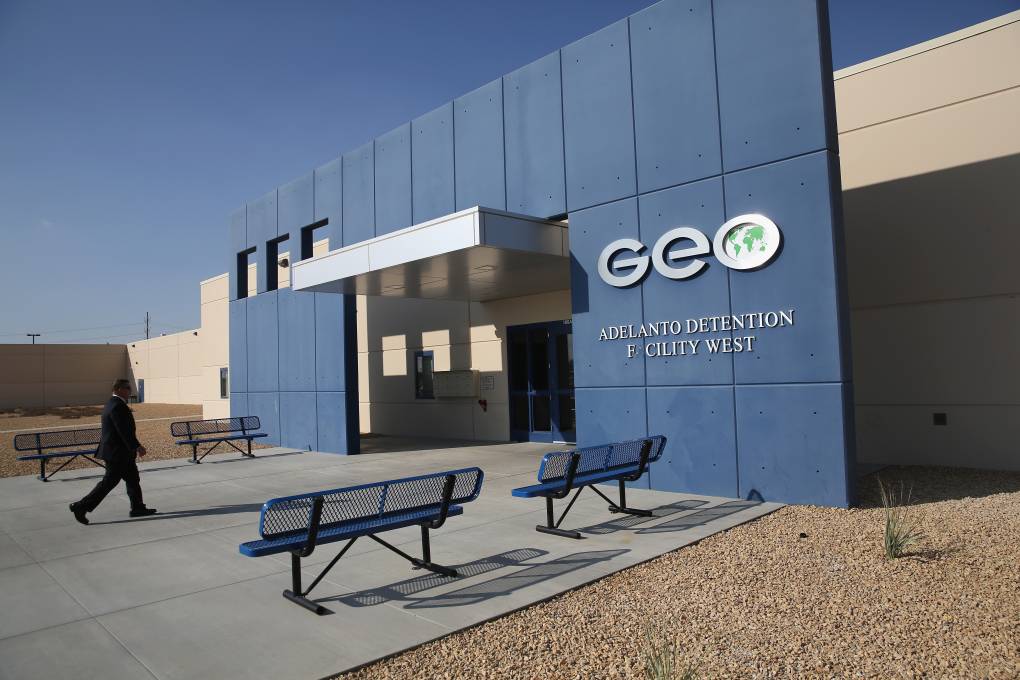
"caption": "This U.S. immigration processing center in Adelanto, California, is operated by GEO Group, a Florida-based company specializing in privatized corrections.",
"credit": "John Moore/Getty Images",
"altTag": "On a modern, low-slung building with no windows, a big sign reading 'GEO' hangs on an exterior wall.",
"description": "Field office director Dave Marin walks into the Adelanto Detention Facility on November 15, 2013 in Adelanto, California. The facility, the largest and newest Immigration and Customs Enforcement (ICE), detention center in California, houses an average of 1,100 immigrants in custody pending a decision in their immigration cases or awaiting deportation.",
"imgSizes": {
"medium": {
"file": "https://cdn.kqed.org/wp-content/uploads/sites/10/2021/10/GettyImages-450371215-800x533.jpg",
"width": 800,
"height": 533,
"mimeType": "image/jpeg"
},
"large": {
"file": "https://cdn.kqed.org/wp-content/uploads/sites/10/2021/10/GettyImages-450371215-1020x680.jpg",
"width": 1020,
"height": 680,
"mimeType": "image/jpeg"
},
"thumbnail": {
"file": "https://cdn.kqed.org/wp-content/uploads/sites/10/2021/10/GettyImages-450371215-160x107.jpg",
"width": 160,
"height": 107,
"mimeType": "image/jpeg"
},
"1536x1536": {
"file": "https://cdn.kqed.org/wp-content/uploads/sites/10/2021/10/GettyImages-450371215-1536x1024.jpg",
"width": 1536,
"height": 1024,
"mimeType": "image/jpeg"
},
"2048x2048": {
"file": "https://cdn.kqed.org/wp-content/uploads/sites/10/2021/10/GettyImages-450371215-2048x1365.jpg",
"width": 2048,
"height": 1365,
"mimeType": "image/jpeg"
},
"post-thumbnail": {
"file": "https://cdn.kqed.org/wp-content/uploads/sites/10/2021/10/GettyImages-450371215-672x372.jpg",
"width": 672,
"height": 372,
"mimeType": "image/jpeg"
},
"twentyfourteen-full-width": {
"file": "https://cdn.kqed.org/wp-content/uploads/sites/10/2021/10/GettyImages-450371215-1038x576.jpg",
"width": 1038,
"height": 576,
"mimeType": "image/jpeg"
},
"full-width": {
"file": "https://cdn.kqed.org/wp-content/uploads/sites/10/2021/10/GettyImages-450371215-1920x1280.jpg",
"width": 1920,
"height": 1280,
"mimeType": "image/jpeg"
},
"kqedFullSize": {
"file": "https://cdn.kqed.org/wp-content/uploads/sites/10/2021/10/GettyImages-450371215-scaled-e1769711263847.jpg",
"width": 2000,
"height": 1334
}
},
"isLoading": false,
"fetchFailed": false
},
"news_12083183": {
"type": "attachments",
"id": "news_12083183",
"meta": {
"index": "attachments_1716263798",
"site": "news",
"id": "12083183",
"found": true
},
"title": "260511-GAMERSPROTEST-10-BL-KQED",
"publishDate": 1778534813,
"status": "inherit",
"parent": 0,
"modified": 1778534833,
"caption": "Otis East speaks alongside fellow demonstrators outside the headquarters of Electronic Arts in Redwood City on May 11, 2026, to protest a proposed $55 billion buyout led by Saudi Arabia’s Public Investment Fund.",
"credit": "Beth LaBerge/KQED",
"altTag": null,
"description": null,
"imgSizes": {
"thumbnail": {
"file": "https://cdn.kqed.org/wp-content/uploads/sites/10/2026/05/260511-GAMERSPROTEST-10-BL-KQED-160x107.jpg",
"width": 160,
"height": 107,
"mimeType": "image/jpeg"
},
"1536x1536": {
"file": "https://cdn.kqed.org/wp-content/uploads/sites/10/2026/05/260511-GAMERSPROTEST-10-BL-KQED-1536x1024.jpg",
"width": 1536,
"height": 1024,
"mimeType": "image/jpeg"
},
"post-thumbnail": {
"file": "https://cdn.kqed.org/wp-content/uploads/sites/10/2026/05/260511-GAMERSPROTEST-10-BL-KQED-672x372.jpg",
"width": 672,
"height": 372,
"mimeType": "image/jpeg"
},
"twentyfourteen-full-width": {
"file": "https://cdn.kqed.org/wp-content/uploads/sites/10/2026/05/260511-GAMERSPROTEST-10-BL-KQED-1038x576.jpg",
"width": 1038,
"height": 576,
"mimeType": "image/jpeg"
},
"npr-cds-wide": {
"file": "https://cdn.kqed.org/wp-content/uploads/sites/10/2026/05/260511-GAMERSPROTEST-10-BL-KQED-1200x675.jpg",
"width": 1200,
"height": 675,
"mimeType": "image/jpeg"
},
"npr-cds-square": {
"file": "https://cdn.kqed.org/wp-content/uploads/sites/10/2026/05/260511-GAMERSPROTEST-10-BL-KQED-600x600.jpg",
"width": 600,
"height": 600,
"mimeType": "image/jpeg"
},
"kqedFullSize": {
"file": "https://cdn.kqed.org/wp-content/uploads/sites/10/2026/05/260511-GAMERSPROTEST-10-BL-KQED.jpg",
"width": 2000,
"height": 1333
}
},
"isLoading": false,
"fetchFailed": false
},
"news_12081458": {
"type": "attachments",
"id": "news_12081458",
"meta": {
"index": "attachments_1716263798",
"site": "news",
"id": "12081458",
"found": true
},
"title": "260424-COSTOFDRIVING00518_TV-KQED",
"publishDate": 1777308669,
"status": "inherit",
"parent": 12081471,
"modified": 1777316754,
"caption": "Motorcyclists wait at a stop light outside the Shell gas station on 598 Bryant Street in San Francisco on April 24, 2026.",
"credit": "Tâm Vũ/KQED",
"altTag": null,
"description": null,
"imgSizes": {
"thumbnail": {
"file": "https://cdn.kqed.org/wp-content/uploads/sites/10/2026/04/260424-COSTOFDRIVING00518_TV-KQED-160x107.jpg",
"width": 160,
"height": 107,
"mimeType": "image/jpeg"
},
"1536x1536": {
"file": "https://cdn.kqed.org/wp-content/uploads/sites/10/2026/04/260424-COSTOFDRIVING00518_TV-KQED-1536x1024.jpg",
"width": 1536,
"height": 1024,
"mimeType": "image/jpeg"
},
"post-thumbnail": {
"file": "https://cdn.kqed.org/wp-content/uploads/sites/10/2026/04/260424-COSTOFDRIVING00518_TV-KQED-672x372.jpg",
"width": 672,
"height": 372,
"mimeType": "image/jpeg"
},
"twentyfourteen-full-width": {
"file": "https://cdn.kqed.org/wp-content/uploads/sites/10/2026/04/260424-COSTOFDRIVING00518_TV-KQED-1038x576.jpg",
"width": 1038,
"height": 576,
"mimeType": "image/jpeg"
},
"npr-cds-wide": {
"file": "https://cdn.kqed.org/wp-content/uploads/sites/10/2026/04/260424-COSTOFDRIVING00518_TV-KQED-1200x675.jpg",
"width": 1200,
"height": 675,
"mimeType": "image/jpeg"
},
"npr-cds-square": {
"file": "https://cdn.kqed.org/wp-content/uploads/sites/10/2026/04/260424-COSTOFDRIVING00518_TV-KQED-600x600.jpg",
"width": 600,
"height": 600,
"mimeType": "image/jpeg"
},
"kqedFullSize": {
"file": "https://cdn.kqed.org/wp-content/uploads/sites/10/2026/04/260424-COSTOFDRIVING00518_TV-KQED.jpg",
"width": 2000,
"height": 1333
}
},
"isLoading": false,
"fetchFailed": false
},
"news_12063854": {
"type": "attachments",
"id": "news_12063854",
"meta": {
"index": "attachments_1716263798",
"site": "news",
"id": "12063854",
"found": true
},
"title": "Immigration Commentator Detained",
"publishDate": 1762977194,
"status": "inherit",
"parent": 12063851,
"modified": 1762977232,
"caption": "Vehicles wait outside the international terminal at San Francisco International Airport in San Francisco, California, on July 11, 2017. ",
"credit": "Marcio Jose Sanchez/AP Photo",
"altTag": null,
"description": null,
"imgSizes": {
"thumbnail": {
"file": "https://cdn.kqed.org/wp-content/uploads/sites/10/2025/11/SFInternationalAirportAP-160x107.jpg",
"width": 160,
"height": 107,
"mimeType": "image/jpeg"
},
"1536x1536": {
"file": "https://cdn.kqed.org/wp-content/uploads/sites/10/2025/11/SFInternationalAirportAP-1536x1024.jpg",
"width": 1536,
"height": 1024,
"mimeType": "image/jpeg"
},
"post-thumbnail": {
"file": "https://cdn.kqed.org/wp-content/uploads/sites/10/2025/11/SFInternationalAirportAP-672x372.jpg",
"width": 672,
"height": 372,
"mimeType": "image/jpeg"
},
"twentyfourteen-full-width": {
"file": "https://cdn.kqed.org/wp-content/uploads/sites/10/2025/11/SFInternationalAirportAP-1038x576.jpg",
"width": 1038,
"height": 576,
"mimeType": "image/jpeg"
},
"npr-cds-wide": {
"file": "https://cdn.kqed.org/wp-content/uploads/sites/10/2025/11/SFInternationalAirportAP-1200x675.jpg",
"width": 1200,
"height": 675,
"mimeType": "image/jpeg"
},
"kqedFullSize": {
"file": "https://cdn.kqed.org/wp-content/uploads/sites/10/2025/11/SFInternationalAirportAP.jpg",
"width": 2000,
"height": 1333
}
},
"isLoading": false,
"fetchFailed": false
},
"news_12078941": {
"type": "attachments",
"id": "news_12078941",
"meta": {
"index": "attachments_1716263798",
"site": "news",
"id": "12078941",
"found": true
},
"title": "033126Free Clinics Brentwood_GH_012_qed",
"publishDate": 1775580864,
"status": "inherit",
"parent": 0,
"modified": 1777931814,
"caption": "Dorina Salgado-Moraida, co-founder of Hijas del Campo, steps out of a Contra Costa Health Department mobile clinic used to deliver free medical services directly to underserved communities, on March 31, 2026, in Brentwood, California.",
"credit": "Gustavo Hernandez/KQED",
"altTag": null,
"description": null,
"imgSizes": {
"thumbnail": {
"file": "https://cdn.kqed.org/wp-content/uploads/sites/10/2026/04/033126Free-Clinics-Brentwood_GH_012_qed-160x107.jpg",
"width": 160,
"height": 107,
"mimeType": "image/jpeg"
},
"1536x1536": {
"file": "https://cdn.kqed.org/wp-content/uploads/sites/10/2026/04/033126Free-Clinics-Brentwood_GH_012_qed-1536x1024.jpg",
"width": 1536,
"height": 1024,
"mimeType": "image/jpeg"
},
"post-thumbnail": {
"file": "https://cdn.kqed.org/wp-content/uploads/sites/10/2026/04/033126Free-Clinics-Brentwood_GH_012_qed-672x372.jpg",
"width": 672,
"height": 372,
"mimeType": "image/jpeg"
},
"twentyfourteen-full-width": {
"file": "https://cdn.kqed.org/wp-content/uploads/sites/10/2026/04/033126Free-Clinics-Brentwood_GH_012_qed-1038x576.jpg",
"width": 1038,
"height": 576,
"mimeType": "image/jpeg"
},
"npr-cds-wide": {
"file": "https://cdn.kqed.org/wp-content/uploads/sites/10/2026/04/033126Free-Clinics-Brentwood_GH_012_qed-1200x675.jpg",
"width": 1200,
"height": 675,
"mimeType": "image/jpeg"
},
"npr-cds-square": {
"file": "https://cdn.kqed.org/wp-content/uploads/sites/10/2026/04/033126Free-Clinics-Brentwood_GH_012_qed-600x600.jpg",
"width": 600,
"height": 600,
"mimeType": "image/jpeg"
},
"kqedFullSize": {
"file": "https://cdn.kqed.org/wp-content/uploads/sites/10/2026/04/033126Free-Clinics-Brentwood_GH_012_qed.jpg",
"width": 2000,
"height": 1333
}
},
"isLoading": false,
"fetchFailed": false
},
"news_12068971": {
"type": "attachments",
"id": "news_12068971",
"meta": {
"index": "attachments_1716263798",
"site": "news",
"id": "12068971",
"found": true
},
"title": "250820-ICEActivity-05_qed",
"publishDate": 1767820146,
"status": "inherit",
"parent": 12068969,
"modified": 1767829411,
"caption": "100 Montgomery St., the location of the San Francisco Immigration Court, on Aug. 20, 2025.",
"credit": "Beth LaBerge/KQED",
"altTag": null,
"description": null,
"imgSizes": {
"thumbnail": {
"file": "https://cdn.kqed.org/wp-content/uploads/sites/10/2026/01/250820-ICEActivity-05_qed-160x107.jpg",
"width": 160,
"height": 107,
"mimeType": "image/jpeg"
},
"1536x1536": {
"file": "https://cdn.kqed.org/wp-content/uploads/sites/10/2026/01/250820-ICEActivity-05_qed-1536x1024.jpg",
"width": 1536,
"height": 1024,
"mimeType": "image/jpeg"
},
"post-thumbnail": {
"file": "https://cdn.kqed.org/wp-content/uploads/sites/10/2026/01/250820-ICEActivity-05_qed-672x372.jpg",
"width": 672,
"height": 372,
"mimeType": "image/jpeg"
},
"twentyfourteen-full-width": {
"file": "https://cdn.kqed.org/wp-content/uploads/sites/10/2026/01/250820-ICEActivity-05_qed-1038x576.jpg",
"width": 1038,
"height": 576,
"mimeType": "image/jpeg"
},
"npr-cds-wide": {
"file": "https://cdn.kqed.org/wp-content/uploads/sites/10/2026/01/250820-ICEActivity-05_qed-1200x675.jpg",
"width": 1200,
"height": 675,
"mimeType": "image/jpeg"
},
"kqedFullSize": {
"file": "https://cdn.kqed.org/wp-content/uploads/sites/10/2026/01/250820-ICEActivity-05_qed.jpg",
"width": 1999,
"height": 1333
}
},
"isLoading": false,
"fetchFailed": false
},
"news_12038511": {
"type": "attachments",
"id": "news_12038511",
"meta": {
"index": "attachments_1716263798",
"site": "news",
"id": "12038511",
"found": true
},
"title": "250501-MAYDAYRALLYSF-12-BL-KQED",
"publishDate": 1746161923,
"status": "inherit",
"parent": 0,
"modified": 1777670400,
"caption": "Thousands of demonstrators march from Civic Center Plaza toward the Embarcadero during a May Day protest in San Francisco on Friday, May 1, 2025.",
"credit": "Beth LaBerge/KQED",
"altTag": null,
"description": null,
"imgSizes": {
"medium": {
"file": "https://cdn.kqed.org/wp-content/uploads/sites/10/2025/05/250501-MAYDAYRALLYSF-12-BL-KQED-800x533.jpg",
"width": 800,
"height": 533,
"mimeType": "image/jpeg"
},
"large": {
"file": "https://cdn.kqed.org/wp-content/uploads/sites/10/2025/05/250501-MAYDAYRALLYSF-12-BL-KQED-1020x680.jpg",
"width": 1020,
"height": 680,
"mimeType": "image/jpeg"
},
"thumbnail": {
"file": "https://cdn.kqed.org/wp-content/uploads/sites/10/2025/05/250501-MAYDAYRALLYSF-12-BL-KQED-160x107.jpg",
"width": 160,
"height": 107,
"mimeType": "image/jpeg"
},
"1536x1536": {
"file": "https://cdn.kqed.org/wp-content/uploads/sites/10/2025/05/250501-MAYDAYRALLYSF-12-BL-KQED-1536x1024.jpg",
"width": 1536,
"height": 1024,
"mimeType": "image/jpeg"
},
"post-thumbnail": {
"file": "https://cdn.kqed.org/wp-content/uploads/sites/10/2025/05/250501-MAYDAYRALLYSF-12-BL-KQED-672x372.jpg",
"width": 672,
"height": 372,
"mimeType": "image/jpeg"
},
"twentyfourteen-full-width": {
"file": "https://cdn.kqed.org/wp-content/uploads/sites/10/2025/05/250501-MAYDAYRALLYSF-12-BL-KQED-1038x576.jpg",
"width": 1038,
"height": 576,
"mimeType": "image/jpeg"
},
"full-width": {
"file": "https://cdn.kqed.org/wp-content/uploads/sites/10/2025/05/250501-MAYDAYRALLYSF-12-BL-KQED-1920x1280.jpg",
"width": 1920,
"height": 1280,
"mimeType": "image/jpeg"
},
"kqedFullSize": {
"file": "https://cdn.kqed.org/wp-content/uploads/sites/10/2025/05/250501-MAYDAYRALLYSF-12-BL-KQED.jpg",
"width": 2000,
"height": 1333
}
},
"isLoading": false,
"fetchFailed": false
},
"news_12081939": {
"type": "attachments",
"id": "news_12081939",
"meta": {
"index": "attachments_1716263798",
"site": "news",
"id": "12081939",
"found": true
},
"title": "VotingCM",
"publishDate": 1777570480,
"status": "inherit",
"parent": 12081927,
"modified": 1777570517,
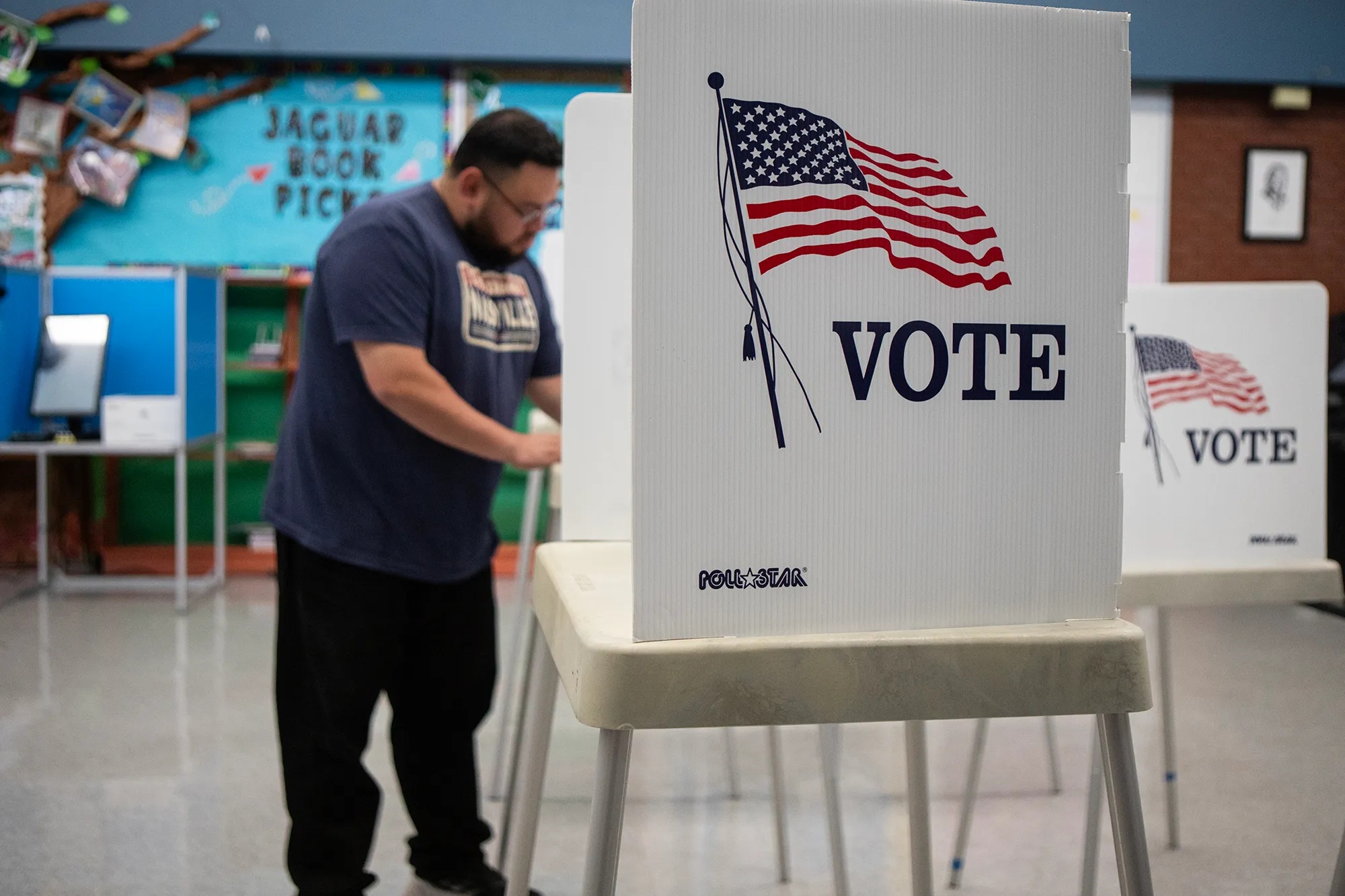
"caption": "A voter fills their ballot at a voting center at Powers-Ginsburg Elementary School in Fresno on March 5, 2024. Residents all over California are participating in the primary elections throughout the state.",
"credit": "Larry Valenzuela/CalMatters via CatchLight Local",
"altTag": null,
"description": null,
"imgSizes": {
"thumbnail": {
"file": "https://cdn.kqed.org/wp-content/uploads/sites/10/2026/04/VotingCM-160x107.jpg",
"width": 160,
"height": 107,
"mimeType": "image/jpeg"
},
"1536x1536": {
"file": "https://cdn.kqed.org/wp-content/uploads/sites/10/2026/04/VotingCM-1536x1024.jpg",
"width": 1536,
"height": 1024,
"mimeType": "image/jpeg"
},
"post-thumbnail": {
"file": "https://cdn.kqed.org/wp-content/uploads/sites/10/2026/04/VotingCM-672x372.jpg",
"width": 672,
"height": 372,
"mimeType": "image/jpeg"
},
"twentyfourteen-full-width": {
"file": "https://cdn.kqed.org/wp-content/uploads/sites/10/2026/04/VotingCM-1038x576.jpg",
"width": 1038,
"height": 576,
"mimeType": "image/jpeg"
},
"npr-cds-wide": {
"file": "https://cdn.kqed.org/wp-content/uploads/sites/10/2026/04/VotingCM-1200x675.jpg",
"width": 1200,
"height": 675,
"mimeType": "image/jpeg"
},
"npr-cds-square": {
"file": "https://cdn.kqed.org/wp-content/uploads/sites/10/2026/04/VotingCM-600x600.jpg",
"width": 600,
"height": 600,
"mimeType": "image/jpeg"
},
"kqedFullSize": {
"file": "https://cdn.kqed.org/wp-content/uploads/sites/10/2026/04/VotingCM.jpg",
"width": 2000,
"height": 1333
}
},
"isLoading": false,
"fetchFailed": false
},
"news_12081747": {
"type": "attachments",
"id": "news_12081747",
"meta": {
"index": "attachments_1716263798",
"site": "news",
"id": "12081747",
"found": true
},
"title": "260429-CIF Trans Athletes-01-KQED",
"publishDate": 1777480821,
"status": "inherit",
"parent": 12088215,
"modified": 1782847753,
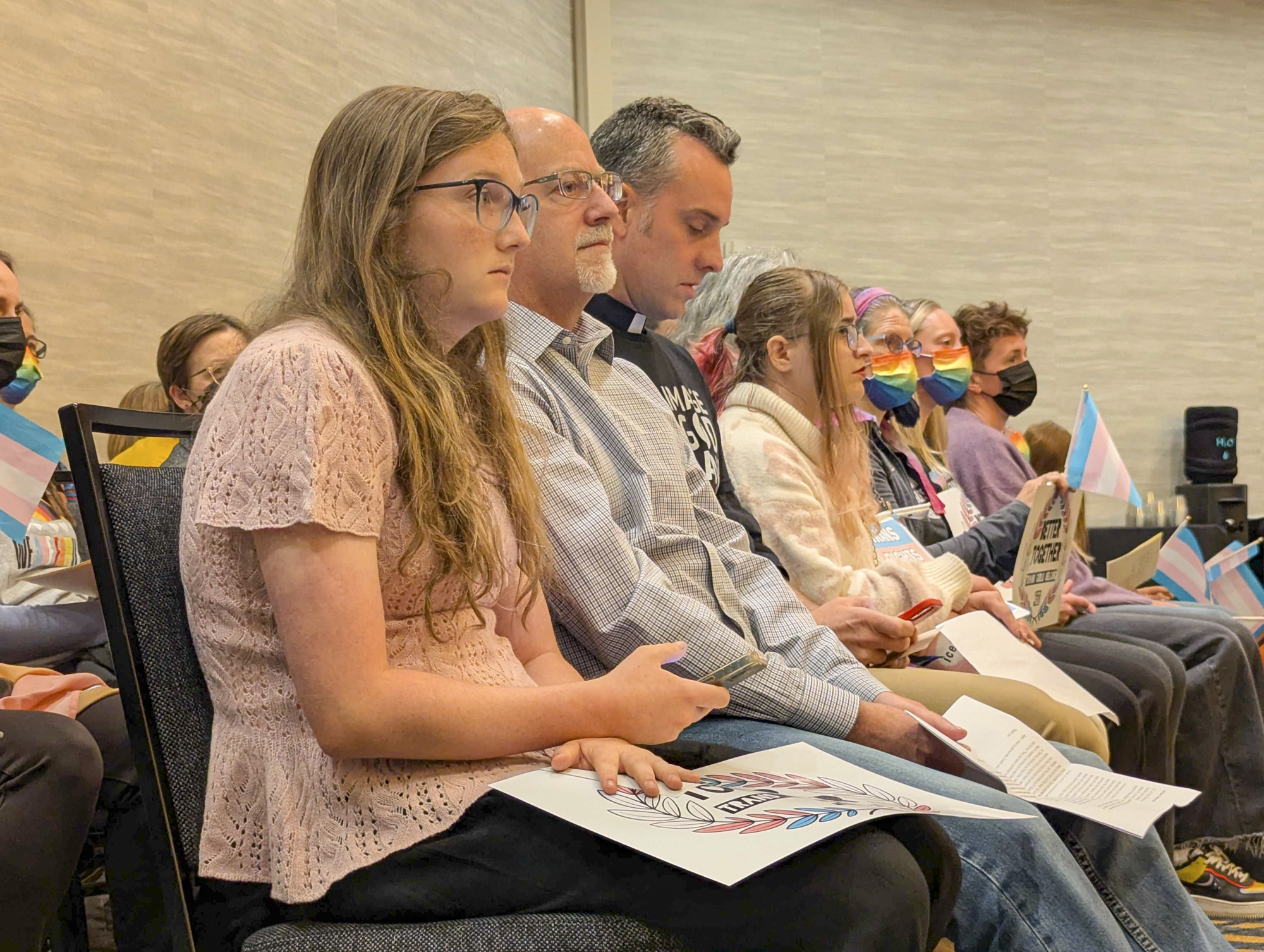
"caption": "Lily, left, and her father, Trevor Norcross, attend a meeting of the California Interscholastic Federation's executive committee in Oakland on April 24, 2026. ",
"credit": "Desmond Meagley/KQED",
"altTag": null,
"description": null,
"imgSizes": {
"thumbnail": {
"file": "https://cdn.kqed.org/wp-content/uploads/sites/10/2026/04/260429-CIF-Trans-Athletes-01-KQED-160x120.jpg",
"width": 160,
"height": 120,
"mimeType": "image/jpeg"
},
"1536x1536": {
"file": "https://cdn.kqed.org/wp-content/uploads/sites/10/2026/04/260429-CIF-Trans-Athletes-01-KQED-1536x1157.jpg",
"width": 1536,
"height": 1157,
"mimeType": "image/jpeg"
},
"post-thumbnail": {
"file": "https://cdn.kqed.org/wp-content/uploads/sites/10/2026/04/260429-CIF-Trans-Athletes-01-KQED-672x372.jpg",
"width": 672,
"height": 372,
"mimeType": "image/jpeg"
},
"twentyfourteen-full-width": {
"file": "https://cdn.kqed.org/wp-content/uploads/sites/10/2026/04/260429-CIF-Trans-Athletes-01-KQED-1038x576.jpg",
"width": 1038,
"height": 576,
"mimeType": "image/jpeg"
},
"npr-cds-wide": {
"file": "https://cdn.kqed.org/wp-content/uploads/sites/10/2026/04/260429-CIF-Trans-Athletes-01-KQED-1200x675.jpg",
"width": 1200,
"height": 675,
"mimeType": "image/jpeg"
},
"npr-cds-square": {
"file": "https://cdn.kqed.org/wp-content/uploads/sites/10/2026/04/260429-CIF-Trans-Athletes-01-KQED-600x600.jpg",
"width": 600,
"height": 600,
"mimeType": "image/jpeg"
},
"kqedFullSize": {
"file": "https://cdn.kqed.org/wp-content/uploads/sites/10/2026/04/260429-CIF-Trans-Athletes-01-KQED.jpg",
"width": 2000,
"height": 1506
}
},
"isLoading": false,
"fetchFailed": false
},
"news_12081524": {
"type": "attachments",
"id": "news_12081524",
"meta": {
"index": "attachments_1716263798",
"site": "news",
"id": "12081524",
"found": true
},
"title": "APTOPIX Trump White House Correspondents Dinner",
"publishDate": 1777321779,
"status": "inherit",
"parent": 12081521,
"modified": 1777321894,
"caption": "Attendees and hotel workers evacuate after an incident at the Washington Hilton during the White House Correspondents Dinner, on Saturday, April 25, 2026, in Washington.",
"credit": "Mark Schiefelbein/AP Photo",
"altTag": null,
"description": null,
"imgSizes": {
"thumbnail": {
"file": "https://cdn.kqed.org/wp-content/uploads/sites/10/2026/04/WHCDAP1-160x107.jpg",
"width": 160,
"height": 107,
"mimeType": "image/jpeg"
},
"1536x1536": {
"file": "https://cdn.kqed.org/wp-content/uploads/sites/10/2026/04/WHCDAP1-1536x1024.jpg",
"width": 1536,
"height": 1024,
"mimeType": "image/jpeg"
},
"post-thumbnail": {
"file": "https://cdn.kqed.org/wp-content/uploads/sites/10/2026/04/WHCDAP1-672x372.jpg",
"width": 672,
"height": 372,
"mimeType": "image/jpeg"
},
"twentyfourteen-full-width": {
"file": "https://cdn.kqed.org/wp-content/uploads/sites/10/2026/04/WHCDAP1-1038x576.jpg",
"width": 1038,
"height": 576,
"mimeType": "image/jpeg"
},
"npr-cds-wide": {
"file": "https://cdn.kqed.org/wp-content/uploads/sites/10/2026/04/WHCDAP1-1200x675.jpg",
"width": 1200,
"height": 675,
"mimeType": "image/jpeg"
},
"npr-cds-square": {
"file": "https://cdn.kqed.org/wp-content/uploads/sites/10/2026/04/WHCDAP1-600x600.jpg",
"width": 600,
"height": 600,
"mimeType": "image/jpeg"
},
"kqedFullSize": {
"file": "https://cdn.kqed.org/wp-content/uploads/sites/10/2026/04/WHCDAP1.jpg",
"width": 2000,
"height": 1333
}
},
"isLoading": false,
"fetchFailed": false
},
"news_12081306": {
"type": "attachments",
"id": "news_12081306",
"meta": {
"index": "attachments_1716263798",
"site": "news",
"id": "12081306",
"found": true
},
"title": "Photo Illustration - Anthropic Launches Project Glasswing",
"publishDate": 1777053839,
"status": "inherit",
"parent": 12081279,
"modified": 1777053863,
"caption": "A smartphone displays the Anthropic logo with the Project Glasswing webpage in the background, in Creteil, France, on April 8, 2026. Anthropic announces the launch of Project Glasswing, a cybersecurity initiative based on the Claude Mythos model to detect and remediate vulnerabilities in critical open-source software. (Photo by Samuel Boivin/NurPhoto via Getty Images)",
"credit": "Samuel Boivin/NurPhoto via Getty Images",
"altTag": null,
"description": null,
"imgSizes": {
"thumbnail": {
"file": "https://cdn.kqed.org/wp-content/uploads/sites/10/2026/04/AnthropicGetty-160x106.jpg",
"width": 160,
"height": 106,
"mimeType": "image/jpeg"
},
"1536x1536": {
"file": "https://cdn.kqed.org/wp-content/uploads/sites/10/2026/04/AnthropicGetty-1536x1021.jpg",
"width": 1536,
"height": 1021,
"mimeType": "image/jpeg"
},
"post-thumbnail": {
"file": "https://cdn.kqed.org/wp-content/uploads/sites/10/2026/04/AnthropicGetty-672x372.jpg",
"width": 672,
"height": 372,
"mimeType": "image/jpeg"
},
"twentyfourteen-full-width": {
"file": "https://cdn.kqed.org/wp-content/uploads/sites/10/2026/04/AnthropicGetty-1038x576.jpg",
"width": 1038,
"height": 576,
"mimeType": "image/jpeg"
},
"npr-cds-wide": {
"file": "https://cdn.kqed.org/wp-content/uploads/sites/10/2026/04/AnthropicGetty-1200x675.jpg",
"width": 1200,
"height": 675,
"mimeType": "image/jpeg"
},
"npr-cds-square": {
"file": "https://cdn.kqed.org/wp-content/uploads/sites/10/2026/04/AnthropicGetty-600x600.jpg",
"width": 600,
"height": 600,
"mimeType": "image/jpeg"
},
"kqedFullSize": {
"file": "https://cdn.kqed.org/wp-content/uploads/sites/10/2026/04/AnthropicGetty.jpg",
"width": 2000,
"height": 1330
}
},
"isLoading": false,
"fetchFailed": false
}
},
"audioPlayerReducer": {
"postId": "stream_live",
"isPaused": true,
"isPlaying": false,
"pfsActive": false,
"pledgeModalIsOpen": true,
"playerDrawerIsOpen": false,
"liveAudioPlayStartedAt": 0,
"liveAudioPlayContext": ""
},
"authorsReducer": {
"byline_news_12082251": {
"type": "authors",
"id": "byline_news_12082251",
"meta": {
"override": true
},
"slug": "byline_news_12082251",
"name": "Carlos Cabrera-Lomelí and Gustavo Hernandez",
"isLoading": false
},
"byline_news_12081927": {
"type": "authors",
"id": "byline_news_12081927",
"meta": {
"override": true
},
"slug": "byline_news_12081927",
"name": "Nigel Duara and Maya C. Miller, CalMatters",
"isLoading": false
},
"byline_news_12081521": {
"type": "authors",
"id": "byline_news_12081521",
"meta": {
"override": true
},
"slug": "byline_news_12081521",
"name": "Eric Tucker, Michael Kunzelman and Alanna Durkin Richer, Associated Press",
"isLoading": false
},
"minakim": {
"type": "authors",
"id": "243",
"meta": {
"index": "authors_1716337520",
"id": "243",
"found": true
},
"name": "Mina Kim",
"firstName": "Mina",
"lastName": "Kim",
"slug": "minakim",
"email": "mkim@kqed.org",
"display_author_email": false,
"staff_mastheads": [
"news"
],
"title": "Host, Forum",
"bio": "Mina Kim is host of the 10 a.m. statewide hour of Forum; a live daily talk show for curious Californians on issues that matter to the state and nation, with a particular emphasis on race and equity.\r\n\r\nBefore joining the Forum team, Mina was KQED’s evening news anchor, and health reporter for The California Report. Her award-winning work has included natural disasters in Napa and gun violence in Oakland. Mina grew up in St. John’s, Newfoundland.",
"avatar": "https://secure.gravatar.com/avatar/145ce657a2d08cb86d93686beb958982?s=600&d=blank&r=g",
"twitter": "mkimreporter",
"facebook": null,
"instagram": null,
"linkedin": null,
"sites": [
{
"site": "news",
"roles": [
"contributor"
]
},
{
"site": "stateofhealth",
"roles": [
"author"
]
},
{
"site": "forum",
"roles": [
"editor"
]
}
],
"headData": {
"title": "Mina Kim | KQED",
"description": "Host, Forum",
"ogImgSrc": "https://secure.gravatar.com/avatar/145ce657a2d08cb86d93686beb958982?s=600&d=blank&r=g",
"twImgSrc": "https://secure.gravatar.com/avatar/145ce657a2d08cb86d93686beb958982?s=600&d=blank&r=g"
},
"isLoading": false,
"link": "/author/minakim"
},
"ccabreralomeli": {
"type": "authors",
"id": "11708",
"meta": {
"index": "authors_1716337520",
"id": "11708",
"found": true
},
"name": "Carlos Cabrera-Lomelí",
"firstName": "Carlos",
"lastName": "Cabrera-Lomelí",
"slug": "ccabreralomeli",
"email": "ccabreralomeli@KQED.org",
"display_author_email": true,
"staff_mastheads": [
"news"
],
"title": "Community Reporter",
"bio": "Carlos Cabrera-Lomelí is a community reporter with KQED's digital engagement team. He also reports and co-produces for KQED's bilingual news hub KQED en Español. He grew up in San Francisco's Mission District and has previously worked with Univision, 48 Hills and REFORMA in Mexico City.",
"avatar": "https://secure.gravatar.com/avatar/c309be9665e484f887b818c89e273ecc673004f426f36b24d00a4d813a2e0518?s=600&d=blank&r=g",
"twitter": "@LomeliCabrera",
"bluesky": null,
"facebook": null,
"instagram": null,
"linkedin": null,
"sites": [
{
"site": "arts",
"roles": [
"editor"
]
},
{
"site": "news",
"roles": [
"editor"
]
},
{
"site": "about",
"roles": [
"editor"
]
},
{
"site": "science",
"roles": [
"editor"
]
},
{
"site": "perspectives",
"roles": [
"editor"
]
},
{
"site": "elections",
"roles": [
"editor"
]
},
{
"site": "liveblog",
"roles": [
"contributor"
]
}
],
"headData": {
"title": "Carlos Cabrera-Lomelí | KQED",
"description": "Community Reporter",
"ogImgSrc": "https://secure.gravatar.com/avatar/c309be9665e484f887b818c89e273ecc673004f426f36b24d00a4d813a2e0518?s=600&d=blank&r=g",
"twImgSrc": "https://secure.gravatar.com/avatar/c309be9665e484f887b818c89e273ecc673004f426f36b24d00a4d813a2e0518?s=600&d=blank&r=g"
},
"isLoading": false,
"link": "/author/ccabreralomeli"
},
"adahlstromeckman": {
"type": "authors",
"id": "11785",
"meta": {
"index": "authors_1716337520",
"id": "11785",
"found": true
},
"name": "Azul Dahlstrom-Eckman",
"firstName": "Azul",
"lastName": "Dahlstrom-Eckman",
"slug": "adahlstromeckman",
"email": "adahlstrom-eckman@kqed.org",
"display_author_email": true,
"staff_mastheads": [],
"title": "Reporter",
"bio": "Azul is a reporter for KQED focusing on transportation and features. He joined KQED in 2021 as an alumna of KALW's Audio Academy radio journalism training program.",
"avatar": "https://secure.gravatar.com/avatar/9cb750298435add7815a777f55bf1f46845c1386bb8452555c60a7b820b5aba3?s=600&d=blank&r=g",
"twitter": "@zuliemann",
"bluesky": "@azul415.bsky.social",
"facebook": null,
"instagram": null,
"linkedin": null,
"sites": [
{
"site": "arts",
"roles": [
"editor"
]
},
{
"site": "news",
"roles": [
"editor"
]
},
{
"site": "science",
"roles": [
"editor"
]
},
{
"site": "liveblog",
"roles": [
"author"
]
}
],
"headData": {
"title": "Azul Dahlstrom-Eckman | KQED",
"description": "Reporter",
"ogImgSrc": "https://secure.gravatar.com/avatar/9cb750298435add7815a777f55bf1f46845c1386bb8452555c60a7b820b5aba3?s=600&d=blank&r=g",
"twImgSrc": "https://secure.gravatar.com/avatar/9cb750298435add7815a777f55bf1f46845c1386bb8452555c60a7b820b5aba3?s=600&d=blank&r=g"
},
"isLoading": false,
"link": "/author/adahlstromeckman"
},
"sjohnson": {
"type": "authors",
"id": "11840",
"meta": {
"index": "authors_1716337520",
"id": "11840",
"found": true
},
"name": "Sydney Johnson",
"firstName": "Sydney",
"lastName": "Johnson",
"slug": "sjohnson",
"email": "sjohnson@kqed.org",
"display_author_email": false,
"staff_mastheads": [
"news"
],
"title": "KQED Reporter",
"bio": "Sydney Johnson is a general assignment reporter at KQED. She previously reported on public health and city government at the San Francisco Examiner, and before that, she covered statewide education policy for EdSource. Her reporting has won multiple local, state and national awards. Sydney is a graduate of the University of California, Berkeley and lives in San Francisco.",
"avatar": "https://secure.gravatar.com/avatar/97855f2719b72ad6190b7c535fe642c8?s=600&d=blank&r=g",
"twitter": "sydneyfjohnson",
"facebook": null,
"instagram": null,
"linkedin": null,
"sites": [
{
"site": "news",
"roles": [
"editor"
]
}
],
"headData": {
"title": "Sydney Johnson | KQED",
"description": "KQED Reporter",
"ogImgSrc": "https://secure.gravatar.com/avatar/97855f2719b72ad6190b7c535fe642c8?s=600&d=blank&r=g",
"twImgSrc": "https://secure.gravatar.com/avatar/97855f2719b72ad6190b7c535fe642c8?s=600&d=blank&r=g"
},
"isLoading": false,
"link": "/author/sjohnson"
},
"kdebenedetti": {
"type": "authors",
"id": "11913",
"meta": {
"index": "authors_1716337520",
"id": "11913",
"found": true
},
"name": "Katie DeBenedetti",
"firstName": "Katie",
"lastName": "DeBenedetti",
"slug": "kdebenedetti",
"email": "kdebenedetti@kqed.org",
"display_author_email": false,
"staff_mastheads": [
"news",
"science"
],
"title": "KQED Contributor",
"bio": "Katie DeBenedetti is a digital reporter covering daily news for the Express Desk. Prior to joining KQED as a culture reporting intern in January 2024, she covered education and city government for the Napa Valley Register.",
"avatar": "https://secure.gravatar.com/avatar/6e31073cb8f7e4214ab03f42771d0f45?s=600&d=blank&r=g",
"twitter": null,
"facebook": null,
"instagram": null,
"linkedin": null,
"sites": [
{
"site": "news",
"roles": [
"author"
]
},
{
"site": "science",
"roles": [
"author"
]
},
{
"site": "liveblog",
"roles": [
"author"
]
}
],
"headData": {
"title": "Katie DeBenedetti | KQED",
"description": "KQED Contributor",
"ogImgSrc": "https://secure.gravatar.com/avatar/6e31073cb8f7e4214ab03f42771d0f45?s=600&d=blank&r=g",
"twImgSrc": "https://secure.gravatar.com/avatar/6e31073cb8f7e4214ab03f42771d0f45?s=600&d=blank&r=g"
},
"isLoading": false,
"link": "/author/kdebenedetti"
},
"dmeagley": {
"type": "authors",
"id": "12002",
"meta": {
"index": "authors_1716337520",
"id": "12002",
"found": true
},
"name": "Desmond Meagley",
"firstName": "Desmond",
"lastName": "Meagley",
"slug": "dmeagley",
"email": "dmeagley@kqed.org",
"display_author_email": false,
"staff_mastheads": [],
"title": "KQED Contributor",
"bio": null,
"avatar": "https://secure.gravatar.com/avatar/16f71d550a6f42fe4d2195a89ee3ac21649feb17ca382d5cd0ad019d930a00ae?s=600&d=blank&r=g",
"twitter": null,
"bluesky": null,
"facebook": null,
"instagram": null,
"linkedin": null,
"sites": [
{
"site": "news",
"roles": [
"author"
]
}
],
"headData": {
"title": "Desmond Meagley | KQED",
"description": "KQED Contributor",
"ogImgSrc": "https://secure.gravatar.com/avatar/16f71d550a6f42fe4d2195a89ee3ac21649feb17ca382d5cd0ad019d930a00ae?s=600&d=blank&r=g",
"twImgSrc": "https://secure.gravatar.com/avatar/16f71d550a6f42fe4d2195a89ee3ac21649feb17ca382d5cd0ad019d930a00ae?s=600&d=blank&r=g"
},
"isLoading": false,
"link": "/author/dmeagley"
},
"ejackson": {
"type": "authors",
"id": "12003",
"meta": {
"index": "authors_1716337520",
"id": "12003",
"found": true
},
"name": "Ella Jackson",
"firstName": "Ella",
"lastName": "Jackson",
"slug": "ejackson",
"email": "ejackson@kqed.org",
"display_author_email": false,
"staff_mastheads": [],
"title": "KQED Contributor",
"bio": null,
"avatar": "https://secure.gravatar.com/avatar/3c688edc62aec1dcae096e1475956d245f72bde99cff316455871c9b22a7205b?s=600&d=blank&r=g",
"twitter": null,
"bluesky": null,
"facebook": null,
"instagram": null,
"linkedin": null,
"sites": [
{
"site": "news",
"roles": [
"author"
]
},
{
"site": "science",
"roles": [
"author"
]
}
],
"headData": {
"title": "Ella Jackson | KQED",
"description": "KQED Contributor",
"ogImgSrc": "https://secure.gravatar.com/avatar/3c688edc62aec1dcae096e1475956d245f72bde99cff316455871c9b22a7205b?s=600&d=blank&r=g",
"twImgSrc": "https://secure.gravatar.com/avatar/3c688edc62aec1dcae096e1475956d245f72bde99cff316455871c9b22a7205b?s=600&d=blank&r=g"
},
"isLoading": false,
"link": "/author/ejackson"
}
},
"pagesReducer": {
"news_tag_donald-trump": {
"type": "terms",
"id": "news_1323",
"meta": {
"index": "terms_1716263798",
"site": "news",
"id": "1323",
"score": 8.557341
},
"featImg": null,
"name": "Donald Trump",
"description": null,
"taxonomy": "tag",
"headData": {
"twImgId": null,
"twTitle": null,
"ogTitle": null,
"ogImgId": null,
"twDescription": null,
"description": null,
"title": "Donald Trump Archives | KQED News",
"ogDescription": null
},
"ttid": 1335,
"slug": "donald-trump",
"isLoading": false,
"title": "Donald Trump",
"pageMeta": {
"site": "news",
"WpPageTemplate": "page-topic-editorial",
"currentPage": 5
},
"blocks": [
{
"blockName": "kqed/post-list",
"attrs": {
"layout": "cardArticle2",
"query": "posts/news?tag=donald-trump",
"seeMore": false,
"paginated": true,
"page": 5
}
},
{
"blockName": "kqed/ad"
}
]
}
},
"pfsSessionReducer": {},
"postsReducer": {
"stream_live": {
"type": "live",
"id": "stream_live",
"audioUrl": "https://streams.kqed.org/kqedradio",
"title": "Live Stream",
"excerpt": "Live Stream information currently unavailable.",
"link": "/radio",
"featImg": "",
"label": {
"name": "KQED Live",
"link": "/"
}
},
"stream_kqedNewscast": {
"type": "posts",
"id": "stream_kqedNewscast",
"audioUrl": "https://www.kqed.org/.stream/anon/radio/RDnews/newscast.mp3?_=1",
"title": "KQED Newscast",
"featImg": "",
"label": {
"name": "88.5 FM",
"link": "/"
}
},
"news_12084083": {
"type": "posts",
"id": "news_12084083",
"meta": {
"index": "posts_1716263798",
"site": "news",
"id": "12084083",
"score": null,
"sort": [
1779199253000
]
},
"guestAuthors": [],
"slug": "california-quietly-brings-back-controversial-scoring-policy-for-trans-student-athletes",
"title": "California Quietly Brings Back Controversial Scoring Policy for Trans Student Athletes",
"publishDate": 1779199253,
"format": "standard",
"headTitle": "California Quietly Brings Back Controversial Scoring Policy for Trans Student Athletes | KQED",
"labelTerm": {
"site": "news"
},
"content": "\u003cp>AB Hernandez found out the California Interscholastic Federation was bringing back a controversial scoring policy for track and field events with \u003ca href=\"https://www.kqed.org/news/12081357/they-picked-on-the-wrong-kid-how-families-are-speaking-up-for-trans-athletes\">transgender competitors\u003c/a>, the same way many teens learn important news: checking her phone.\u003c/p>\n\u003cp>“We were driving home when AB checked the app, and she’s like, ‘They’re doing it again,’” her mother, Nereyda Hernandez, told KQED.\u003c/p>\n\u003cp>For much of the spring, how the CIF planned to handle this year’s track championship season had been an unknown. Last year, the state’s high school athletics governing body piloted the rule, which allowed an additional competitor to advance and earn a medal in events in which a transgender girl competes and places, after months of anti-trans backlash against Hernandez’s participation.\u003c/p>\n\u003cp>[ad fullwidth]\u003c/p>\n\u003cp>But results from a regional preliminary competition on May 9 noted that 10 girls, instead of nine, would advance in only the three events AB, 17, competed in: high jump, long jump and triple jump. Hernandez’s mother said it signaled to the Riverside County track and field star that the rule would be reinstated.\u003c/p>\n\u003cp>“Because they had only mentioned it was going to be for the championships, we didn’t think we’d have to deal with it again,” Hernandez said last week. Finding out that the policy would be reinstated, she said, “crushed [AB’s] heart.”\u003c/p>\n\u003cp>“She missed school on Monday. I don’t think she’s going to school [Friday],” Hernandez continued. “It’s just been hard.”\u003c/p>\n\u003cfigure id=\"attachment_12084168\" class=\"wp-caption aligncenter\" style=\"max-width: 2000px\">\u003cimg loading=\"lazy\" decoding=\"async\" class=\"size-full wp-image-12084168\" src=\"https://cdn.kqed.org/wp-content/uploads/sites/10/2026/05/ABHernandezGetty2.jpg\" alt=\"\" width=\"2000\" height=\"1333\" srcset=\"https://cdn.kqed.org/wp-content/uploads/sites/10/2026/05/ABHernandezGetty2.jpg 2000w, https://cdn.kqed.org/wp-content/uploads/sites/10/2026/05/ABHernandezGetty2-160x107.jpg 160w, https://cdn.kqed.org/wp-content/uploads/sites/10/2026/05/ABHernandezGetty2-1536x1024.jpg 1536w\" sizes=\"auto, (max-width: 2000px) 100vw, 2000px\">\u003cfigcaption class=\"wp-caption-text\">Transgender athlete AB Hernandez of Jurupa Valley wins the invitational girls long jump at 20-3 (6.17 meters) during the 58th Arcadia Invitational at Arcadia High School on April 11, 2026, in Arcadia, California. \u003ccite>(Kirby Lee/Getty Images)\u003c/cite>\u003c/figcaption>\u003c/figure>\n\u003cp>At Saturday’s Southern Section regional finals in Ventura County, coaches were given written notice that CIF would implement its pilot entry policy again. Before that, the federation had not confirmed that it would reinstate the entry protocol. Last spring, it said the pilot would only apply to that year’s championship meet, which took place May 30 and 31, 2025.\u003c/p>\n\u003cp>Over the weekend, Hernandez, a Jurupa Valley High School senior, won the regional finals in each of her three events. During the medal ceremony for the high jump, she and the second-place finisher shared the top spot on the podium and were both given gold medals.\u003c/p>\n\u003cp>Throughout last year’s track season, anti-trans advocates protested during meets and attended CIF meetings, where they called on state leaders to “Save girls sports.”\u003c/p>\n\u003cp>The issue caught \u003ca href=\"https://www.kqed.org/news/12042352/trans-athlete-shines-in-california-high-school-track-finals-ignites-amid-policy-debate\">national attention\u003c/a> ahead of the 2025 championships, when President Donald Trump threatened to withhold federal funding from California in a post on his social media site Truth Social, saying that the state “continues to ILLEGALLY allow ‘MEN TO PLAY IN WOMEN’S SPORTS.” He seemed to invoke AB in his post, referring to an athlete who had transitioned and was set to compete.[aside postID=news_12081357 hero='https://cdn.kqed.org/wp-content/uploads/sites/10/2026/04/260429-CIF-Trans-Athletes-01-KQED.jpg']CIF’s last-minute 2025 rule change, announced days before the championship meet, came amid that mounting pressure. At the meet, AB finished first in the high jump and long jump, and multiple gold medals were awarded in both events. She also placed second in the long jump.\u003c/p>\n\u003cp>“CIF believes this pilot entry process achieves the participation opportunities we seek to afford our student athletes,” the federation said in a statement at the time.\u003c/p>\n\u003cp>After this past weekend’s meet, images of AB sharing the podium with another athlete at the regional finals were circulated by conservative activists on social media, who claimed the policy stole medals from cisgender girls. Riley Gaines, a former college swimmer, called it unfair and a “humiliation ritual” for girls. She and others who reposted her statement repeatedly misgendered AB.\u003c/p>\n\u003cp>In July, the U.S. Department of Justice also alleged in a lawsuit \u003ca href=\"https://www.kqed.org/news/12047432/us-sues-california-over-its-refusal-to-ban-transgender-athletes-from-girls-sports\">against California’s Department of Education and CIF\u003c/a> that the pilot entry policy failed to remedy Title IX discrimination against cisgender girls. The DOJ is suing the state over its law that allows students to compete on athletic teams that match their gender identity. More than half of the states have adopted policies restricting transgender student athletes’ participation in sports, and the Supreme Court seems \u003ca href=\"https://www.kqed.org/news/12069570/california-advocates-fearful-as-supreme-court-weighs-bans-of-trans-student-athletes\">poised to uphold\u003c/a> those bans this summer.\u003c/p>\n\u003cp>At the same time, Hernandez said the policy minimizes athletes like her daughter.\u003c/p>\n\u003cp>“It’s kind of like she’s nonexistent,” she told KQED. “She puts in the work, she participates, but she wants to be honored. She wants to be acknowledged as the person, the athlete she is.”\u003c/p>\n\u003cp>Before the finals on Saturday, Hernandez said her daughter told her, speaking of the policy: “It’s like they see me, but they see past me or through me.”\u003c/p>\n\u003cp>Hernandez enters next week’s Masters Meet at Moorpark High School with the highest qualifying scores for the high jump, long jump and triple jump. The statewide finals are planned for May 28 and 29 in Clovis.\u003c/p>\n\u003cp>\u003c/p>\n",
"blocks": [],
"excerpt": "A state high school athletics federation reintroduced a rule allowing an additional competitor to earn a medal in events in which a transgender athlete places. Neither parents nor the Trump administration are happy.",
"status": "publish",
"parent": 0,
"modified": 1779202553,
"stats": {
"hasAudio": false,
"hasVideo": false,
"hasChartOrMap": false,
"iframeSrcs": [],
"hasGoogleForm": false,
"hasGallery": false,
"hasHearkenModule": false,
"hasPolis": false,
"paragraphCount": 19,
"wordCount": 892
},
"headData": {
"title": "California Quietly Brings Back Controversial Scoring Policy for Trans Student Athletes | KQED",
"description": "A state high school athletics federation reintroduced a rule allowing an additional competitor to earn a medal in events in which a transgender athlete places. Neither parents nor the Trump administration are happy.",
"ogTitle": "",
"ogDescription": "",
"ogImgId": "",
"twTitle": "",
"twDescription": "",
"twImgId": "",
"schema": {
"@context": "https://schema.org",
"@type": "NewsArticle",
"headline": "California Quietly Brings Back Controversial Scoring Policy for Trans Student Athletes",
"datePublished": "2026-05-19T07:00:53-07:00",
"dateModified": "2026-05-19T07:55:53-07:00",
"image": "https://cdn.kqed.org/wp-content/uploads/2020/02/KQED-OG-Image@1x.png",
"isAccessibleForFree": "True",
"publisher": {
"@type": "NewsMediaOrganization",
"@id": "https://www.kqed.org/#organization",
"name": "KQED",
"logo": "https://cdn.kqed.org/wp-content/uploads/2020/02/KQED-OG-Image@1x.png",
"url": "https://www.kqed.org",
"sameAs": [
"https://www.facebook.com/KQED",
"https://twitter.com/KQED",
"https://www.instagram.com/kqed/",
"https://www.tiktok.com/@kqedofficial",
"https://www.linkedin.com/company/kqed",
"https://www.youtube.com/channel/UCeC0IOo7i1P_61zVUWbJ4nw"
]
}
}
},
"primaryCategory": {
"termId": 10,
"slug": "sports",
"name": "Sports"
},
"sticky": false,
"nprStoryId": "kqed-12084083",
"templateType": "standard",
"featuredImageType": "standard",
"excludeFromSiteSearch": "Include",
"articleAge": "0",
"path": "/news/12084083/california-quietly-brings-back-controversial-scoring-policy-for-trans-student-athletes",
"audioTrackLength": null,
"parsedContent": [
{
"type": "contentString",
"content": "\u003cdiv class=\"post-body\">\u003cp>\u003cp>AB Hernandez found out the California Interscholastic Federation was bringing back a controversial scoring policy for track and field events with \u003ca href=\"https://www.kqed.org/news/12081357/they-picked-on-the-wrong-kid-how-families-are-speaking-up-for-trans-athletes\">transgender competitors\u003c/a>, the same way many teens learn important news: checking her phone.\u003c/p>\n\u003cp>“We were driving home when AB checked the app, and she’s like, ‘They’re doing it again,’” her mother, Nereyda Hernandez, told KQED.\u003c/p>\n\u003cp>For much of the spring, how the CIF planned to handle this year’s track championship season had been an unknown. Last year, the state’s high school athletics governing body piloted the rule, which allowed an additional competitor to advance and earn a medal in events in which a transgender girl competes and places, after months of anti-trans backlash against Hernandez’s participation.\u003c/p>\n\u003cp>\u003c/p>\u003c/div>",
"attributes": {
"named": {},
"numeric": []
}
},
{
"type": "component",
"content": "",
"name": "ad",
"attributes": {
"named": {
"label": "fullwidth"
},
"numeric": [
"fullwidth"
]
}
},
{
"type": "contentString",
"content": "\u003cdiv class=\"post-body\">\u003cp>\u003c/p>\n\u003cp>But results from a regional preliminary competition on May 9 noted that 10 girls, instead of nine, would advance in only the three events AB, 17, competed in: high jump, long jump and triple jump. Hernandez’s mother said it signaled to the Riverside County track and field star that the rule would be reinstated.\u003c/p>\n\u003cp>“Because they had only mentioned it was going to be for the championships, we didn’t think we’d have to deal with it again,” Hernandez said last week. Finding out that the policy would be reinstated, she said, “crushed [AB’s] heart.”\u003c/p>\n\u003cp>“She missed school on Monday. I don’t think she’s going to school [Friday],” Hernandez continued. “It’s just been hard.”\u003c/p>\n\u003cfigure id=\"attachment_12084168\" class=\"wp-caption aligncenter\" style=\"max-width: 2000px\">\u003cimg loading=\"lazy\" decoding=\"async\" class=\"size-full wp-image-12084168\" src=\"https://cdn.kqed.org/wp-content/uploads/sites/10/2026/05/ABHernandezGetty2.jpg\" alt=\"\" width=\"2000\" height=\"1333\" srcset=\"https://cdn.kqed.org/wp-content/uploads/sites/10/2026/05/ABHernandezGetty2.jpg 2000w, https://cdn.kqed.org/wp-content/uploads/sites/10/2026/05/ABHernandezGetty2-160x107.jpg 160w, https://cdn.kqed.org/wp-content/uploads/sites/10/2026/05/ABHernandezGetty2-1536x1024.jpg 1536w\" sizes=\"auto, (max-width: 2000px) 100vw, 2000px\">\u003cfigcaption class=\"wp-caption-text\">Transgender athlete AB Hernandez of Jurupa Valley wins the invitational girls long jump at 20-3 (6.17 meters) during the 58th Arcadia Invitational at Arcadia High School on April 11, 2026, in Arcadia, California. \u003ccite>(Kirby Lee/Getty Images)\u003c/cite>\u003c/figcaption>\u003c/figure>\n\u003cp>At Saturday’s Southern Section regional finals in Ventura County, coaches were given written notice that CIF would implement its pilot entry policy again. Before that, the federation had not confirmed that it would reinstate the entry protocol. Last spring, it said the pilot would only apply to that year’s championship meet, which took place May 30 and 31, 2025.\u003c/p>\n\u003cp>Over the weekend, Hernandez, a Jurupa Valley High School senior, won the regional finals in each of her three events. During the medal ceremony for the high jump, she and the second-place finisher shared the top spot on the podium and were both given gold medals.\u003c/p>\n\u003cp>Throughout last year’s track season, anti-trans advocates protested during meets and attended CIF meetings, where they called on state leaders to “Save girls sports.”\u003c/p>\n\u003cp>The issue caught \u003ca href=\"https://www.kqed.org/news/12042352/trans-athlete-shines-in-california-high-school-track-finals-ignites-amid-policy-debate\">national attention\u003c/a> ahead of the 2025 championships, when President Donald Trump threatened to withhold federal funding from California in a post on his social media site Truth Social, saying that the state “continues to ILLEGALLY allow ‘MEN TO PLAY IN WOMEN’S SPORTS.” He seemed to invoke AB in his post, referring to an athlete who had transitioned and was set to compete.\u003c/p>\u003c/div>",
"attributes": {
"named": {},
"numeric": []
}
},
{
"type": "component",
"content": "",
"name": "aside",
"attributes": {
"named": {
"postid": "news_12081357",
"hero": "https://cdn.kqed.org/wp-content/uploads/sites/10/2026/04/260429-CIF-Trans-Athletes-01-KQED.jpg",
"label": ""
},
"numeric": []
}
},
{
"type": "contentString",
"content": "\u003cdiv class=\"post-body\">\u003cp>CIF’s last-minute 2025 rule change, announced days before the championship meet, came amid that mounting pressure. At the meet, AB finished first in the high jump and long jump, and multiple gold medals were awarded in both events. She also placed second in the long jump.\u003c/p>\n\u003cp>“CIF believes this pilot entry process achieves the participation opportunities we seek to afford our student athletes,” the federation said in a statement at the time.\u003c/p>\n\u003cp>After this past weekend’s meet, images of AB sharing the podium with another athlete at the regional finals were circulated by conservative activists on social media, who claimed the policy stole medals from cisgender girls. Riley Gaines, a former college swimmer, called it unfair and a “humiliation ritual” for girls. She and others who reposted her statement repeatedly misgendered AB.\u003c/p>\n\u003cp>In July, the U.S. Department of Justice also alleged in a lawsuit \u003ca href=\"https://www.kqed.org/news/12047432/us-sues-california-over-its-refusal-to-ban-transgender-athletes-from-girls-sports\">against California’s Department of Education and CIF\u003c/a> that the pilot entry policy failed to remedy Title IX discrimination against cisgender girls. The DOJ is suing the state over its law that allows students to compete on athletic teams that match their gender identity. More than half of the states have adopted policies restricting transgender student athletes’ participation in sports, and the Supreme Court seems \u003ca href=\"https://www.kqed.org/news/12069570/california-advocates-fearful-as-supreme-court-weighs-bans-of-trans-student-athletes\">poised to uphold\u003c/a> those bans this summer.\u003c/p>\n\u003cp>At the same time, Hernandez said the policy minimizes athletes like her daughter.\u003c/p>\n\u003cp>“It’s kind of like she’s nonexistent,” she told KQED. “She puts in the work, she participates, but she wants to be honored. She wants to be acknowledged as the person, the athlete she is.”\u003c/p>\n\u003cp>Before the finals on Saturday, Hernandez said her daughter told her, speaking of the policy: “It’s like they see me, but they see past me or through me.”\u003c/p>\n\u003cp>Hernandez enters next week’s Masters Meet at Moorpark High School with the highest qualifying scores for the high jump, long jump and triple jump. The statewide finals are planned for May 28 and 29 in Clovis.\u003c/p>\n\u003cp>\u003c/p>\n\u003c/div>\u003c/p>",
"attributes": {
"named": {},
"numeric": []
}
}
],
"link": "/news/12084083/california-quietly-brings-back-controversial-scoring-policy-for-trans-student-athletes",
"authors": [
"11913"
],
"categories": [
"news_31795",
"news_8",
"news_13",
"news_10"
],
"tags": [
"news_18538",
"news_1323",
"news_27626",
"news_19345",
"news_17968",
"news_34078",
"news_2811",
"news_35615",
"news_35628",
"news_36591",
"news_25293"
],
"featImg": "news_12084145",
"label": "news"
},
"news_12083603": {
"type": "posts",
"id": "news_12083603",
"meta": {
"index": "posts_1716263798",
"site": "news",
"id": "12083603",
"score": null,
"sort": [
1778785091000
]
},
"guestAuthors": [],
"slug": "california-lawmakers-raise-alarms-after-private-prison-official-named-acting-ice",
"title": "California Lawmakers Raise Alarms After Private Prison Official Named Acting ICE Chief",
"publishDate": 1778785091,
"format": "standard",
"headTitle": "California Lawmakers Raise Alarms After Private Prison Official Named Acting ICE Chief | KQED",
"labelTerm": {
"site": "news"
},
"content": "\u003cp>A former GEO Group executive is expected to serve as the next acting chief of \u003ca href=\"https://www.kqed.org/news/tag/u-s-immigration-and-customs-enforcement\">U.S. Immigration and Customs Enforcement\u003c/a>, revitalizing concerns from California lawmakers and immigration activists over conflicts of interest between private prison companies and high-level Trump administration officials.\u003c/p>\n\u003cp>David Venturella, who previously worked for the agency under the Obama and Bush administrations, and has spent the last year overseeing lucrative contracts between ICE and detention facilities, will replace Todd Lyons at the end of the month.\u003c/p>\n\u003cp>“Donald Trump is now moving to put his out-of-control ICE agency in the hands of yet another acting director — and this time, one with concerning ties to the private detention industry,” California Sen. Alex Padilla said in a statement. “Appointing a former GEO Group executive and ally of Stephen Miller only deepens our concerns about conflicts of interest, the expansion of for-profit detention facilities, and the inexcusable deaths that continue to mount.”\u003c/p>\n\u003cp>[ad fullwidth]\u003c/p>\n\u003cp>ICE has been rapidly growing its footprint since the Trump administration took office last year, leasing properties across the country and opening new detention facilities, including two operated by GEO Group in California.\u003c/p>\n\u003cp>Activists in the state have raised alarms about possible further expansion — including at the site of a \u003ca href=\"https://www.kqed.org/news/12082440/advocates-urge-demolition-of-fci-dublin-raising-worries-it-could-become-ice-jail\">shuttered East Bay women’s prison\u003c/a> and in Santa Clara County near Gilroy, where the Department of Homeland Security leased 24 acres of land last January, the \u003ca href=\"https://sanjosespotlight.com/federal-detention-center-planned-in-south-county/\">\u003cem>San José Spotlight\u003c/em>\u003c/a> first reported.\u003c/p>\n\u003cp>In July 2025, the agency was \u003ca href=\"https://www.kqed.org/forum/2010101910650/ices-budget-just-tripled-whats-next\">granted $75 billion in new funding\u003c/a>, more than half of which is earmarked for expanding detention capacity.\u003c/p>\n\u003cfigure id=\"attachment_11869381\" class=\"wp-caption aligncenter\" style=\"max-width: 2000px\">\u003cimg loading=\"lazy\" decoding=\"async\" class=\"wp-image-11869381 size-full\" src=\"https://cdn.kqed.org/wp-content/uploads/sites/10/2021/04/GettyImages-450371267-1-scaled-e1778784968650.jpg\" alt=\"\" width=\"2000\" height=\"1334\">\u003cfigcaption class=\"wp-caption-text\">The Adelanto Detention Facility is the largest U.S. Immigration and Customs Enforcement detention center in California. The private GEO Group manages the facility. \u003ccite>(John Moore/Getty Images)\u003c/cite>\u003c/figcaption>\u003c/figure>\n\u003cp>Venturella left GEO Group in late 2023 and has been working as an advisor aiding ICE’s rapid expansion, which has included multiple new contracts with GEO Group, one of the agency’s largest private prison contractors. Generally, government employees are barred from participating in contract deals that involve their former employers for a year, but \u003cem>The Washington Post\u003c/em> reported that Venturella was \u003ca href=\"https://www.washingtonpost.com/business/2025/08/01/ice-david-venturella-geo-immigration-detention/\">exempted\u003c/a> from the ethics rule.\u003c/p>\n\u003cp>In March, Democratic lawmakers raised corruption concerns over his and other senior officials’ ties to immigration contractors. Trump’s Border Czar, Tom Homan, was also previously an advisor for GEO Group.\u003c/p>\n\u003cp>“The secretive and uncompetitive nature of ICE’s warehouse contracting not only risks wasting billions in taxpayer dollars but also triggers corruption concerns — particularly because some senior Trump Administration officials have close ties to immigration contractors that could profit from the warehouse system,” more than 50 U.S. Representatives, including South Bay Rep. Zoe Lofgren, wrote in a letter to the CEO of private prison company CoreCivic.[aside postID=news_12083142 hero='https://cdn.kqed.org/wp-content/uploads/sites/10/2026/05/260511-KAISERDACA00192_TV-KQED.jpg']Stacy Suh, the program director of Detention Watch Network, a national group working to abolish immigration detention, said that there is a “revolving door” between ICE and the private prison industry that raises questions of influence over contracts.\u003c/p>\n\u003cp>“Venturella has spent his entire career on expanding immigration detention,” Suh told KQED. “I think it shows this conflict of interest where GEO Group and all these other private contractors are just so excited to cash in on this detention expansion plan and have an industry insider be at the helm of ICE.”\u003c/p>\n\u003cp>GEO Group announced in February that 2025 was its “most successful year for new business,” contracting with ICE to open four new detention centers and expanding other transportation and case management services for the agency. In April, it said first-quarter \u003ca href=\"https://investors.geogroup.com/news-releases/news-release-details/geo-group-reports-first-quarter-results-and-increases-full-year\">revenue was up 17%\u003c/a>, to more than $700 million.\u003c/p>\n\u003cp>“Venturella’s intimate knowledge of ICE will likely yield another spike of ICE detention facility openings in the coming months as the agency operates with impunity and unprecedented funding,” Silky Shah, Detention Watch Network’s executive director, said in a statement.\u003c/p>\n\u003cp>Venturella is expected to take over as ICE’s chief on June 1, when Lyons retires. Since 2017, the agency has been led by officials serving as “acting” director, avoiding the Senate confirmation process.\u003c/p>\n\u003cp>\u003c/p>\n",
"blocks": [],
"excerpt": "Officials and immigration advocates raised concerns that the Trump administration’s pick, David Venturella, has financial and professional ties to contractors profiting from the detention system. ",
"status": "publish",
"parent": 0,
"modified": 1778790846,
"stats": {
"hasAudio": false,
"hasVideo": false,
"hasChartOrMap": false,
"iframeSrcs": [],
"hasGoogleForm": false,
"hasGallery": false,
"hasHearkenModule": false,
"hasPolis": false,
"paragraphCount": 15,
"wordCount": 724
},
"headData": {
"title": "California Lawmakers Raise Alarms After Private Prison Official Named Acting ICE Chief | KQED",
"description": "Officials and immigration advocates raised concerns that the Trump administration’s pick, David Venturella, has financial and professional ties to contractors profiting from the detention system. ",
"ogTitle": "",
"ogDescription": "",
"ogImgId": "",
"twTitle": "",
"twDescription": "",
"twImgId": "",
"schema": {
"@context": "https://schema.org",
"@type": "NewsArticle",
"headline": "California Lawmakers Raise Alarms After Private Prison Official Named Acting ICE Chief",
"datePublished": "2026-05-14T11:58:11-07:00",
"dateModified": "2026-05-14T13:34:06-07:00",
"image": "https://cdn.kqed.org/wp-content/uploads/2020/02/KQED-OG-Image@1x.png",
"isAccessibleForFree": "True",
"publisher": {
"@type": "NewsMediaOrganization",
"@id": "https://www.kqed.org/#organization",
"name": "KQED",
"logo": "https://cdn.kqed.org/wp-content/uploads/2020/02/KQED-OG-Image@1x.png",
"url": "https://www.kqed.org",
"sameAs": [
"https://www.facebook.com/KQED",
"https://twitter.com/KQED",
"https://www.instagram.com/kqed/",
"https://www.tiktok.com/@kqedofficial",
"https://www.linkedin.com/company/kqed",
"https://www.youtube.com/channel/UCeC0IOo7i1P_61zVUWbJ4nw"
]
}
}
},
"primaryCategory": {
"termId": 1169,
"slug": "immigration",
"name": "Immigration"
},
"sticky": false,
"nprStoryId": "kqed-12083603",
"templateType": "standard",
"featuredImageType": "standard",
"excludeFromSiteSearch": "Include",
"articleAge": "0",
"path": "/news/12083603/california-lawmakers-raise-alarms-after-private-prison-official-named-acting-ice",
"audioTrackLength": null,
"parsedContent": [
{
"type": "contentString",
"content": "\u003cdiv class=\"post-body\">\u003cp>\u003cp>A former GEO Group executive is expected to serve as the next acting chief of \u003ca href=\"https://www.kqed.org/news/tag/u-s-immigration-and-customs-enforcement\">U.S. Immigration and Customs Enforcement\u003c/a>, revitalizing concerns from California lawmakers and immigration activists over conflicts of interest between private prison companies and high-level Trump administration officials.\u003c/p>\n\u003cp>David Venturella, who previously worked for the agency under the Obama and Bush administrations, and has spent the last year overseeing lucrative contracts between ICE and detention facilities, will replace Todd Lyons at the end of the month.\u003c/p>\n\u003cp>“Donald Trump is now moving to put his out-of-control ICE agency in the hands of yet another acting director — and this time, one with concerning ties to the private detention industry,” California Sen. Alex Padilla said in a statement. “Appointing a former GEO Group executive and ally of Stephen Miller only deepens our concerns about conflicts of interest, the expansion of for-profit detention facilities, and the inexcusable deaths that continue to mount.”\u003c/p>\n\u003cp>\u003c/p>\u003c/div>",
"attributes": {
"named": {},
"numeric": []
}
},
{
"type": "component",
"content": "",
"name": "ad",
"attributes": {
"named": {
"label": "fullwidth"
},
"numeric": [
"fullwidth"
]
}
},
{
"type": "contentString",
"content": "\u003cdiv class=\"post-body\">\u003cp>\u003c/p>\n\u003cp>ICE has been rapidly growing its footprint since the Trump administration took office last year, leasing properties across the country and opening new detention facilities, including two operated by GEO Group in California.\u003c/p>\n\u003cp>Activists in the state have raised alarms about possible further expansion — including at the site of a \u003ca href=\"https://www.kqed.org/news/12082440/advocates-urge-demolition-of-fci-dublin-raising-worries-it-could-become-ice-jail\">shuttered East Bay women’s prison\u003c/a> and in Santa Clara County near Gilroy, where the Department of Homeland Security leased 24 acres of land last January, the \u003ca href=\"https://sanjosespotlight.com/federal-detention-center-planned-in-south-county/\">\u003cem>San José Spotlight\u003c/em>\u003c/a> first reported.\u003c/p>\n\u003cp>In July 2025, the agency was \u003ca href=\"https://www.kqed.org/forum/2010101910650/ices-budget-just-tripled-whats-next\">granted $75 billion in new funding\u003c/a>, more than half of which is earmarked for expanding detention capacity.\u003c/p>\n\u003cfigure id=\"attachment_11869381\" class=\"wp-caption aligncenter\" style=\"max-width: 2000px\">\u003cimg loading=\"lazy\" decoding=\"async\" class=\"wp-image-11869381 size-full\" src=\"https://cdn.kqed.org/wp-content/uploads/sites/10/2021/04/GettyImages-450371267-1-scaled-e1778784968650.jpg\" alt=\"\" width=\"2000\" height=\"1334\">\u003cfigcaption class=\"wp-caption-text\">The Adelanto Detention Facility is the largest U.S. Immigration and Customs Enforcement detention center in California. The private GEO Group manages the facility. \u003ccite>(John Moore/Getty Images)\u003c/cite>\u003c/figcaption>\u003c/figure>\n\u003cp>Venturella left GEO Group in late 2023 and has been working as an advisor aiding ICE’s rapid expansion, which has included multiple new contracts with GEO Group, one of the agency’s largest private prison contractors. Generally, government employees are barred from participating in contract deals that involve their former employers for a year, but \u003cem>The Washington Post\u003c/em> reported that Venturella was \u003ca href=\"https://www.washingtonpost.com/business/2025/08/01/ice-david-venturella-geo-immigration-detention/\">exempted\u003c/a> from the ethics rule.\u003c/p>\n\u003cp>In March, Democratic lawmakers raised corruption concerns over his and other senior officials’ ties to immigration contractors. Trump’s Border Czar, Tom Homan, was also previously an advisor for GEO Group.\u003c/p>\n\u003cp>“The secretive and uncompetitive nature of ICE’s warehouse contracting not only risks wasting billions in taxpayer dollars but also triggers corruption concerns — particularly because some senior Trump Administration officials have close ties to immigration contractors that could profit from the warehouse system,” more than 50 U.S. Representatives, including South Bay Rep. Zoe Lofgren, wrote in a letter to the CEO of private prison company CoreCivic.\u003c/p>\u003c/div>",
"attributes": {
"named": {},
"numeric": []
}
},
{
"type": "component",
"content": "",
"name": "aside",
"attributes": {
"named": {
"postid": "news_12083142",
"hero": "https://cdn.kqed.org/wp-content/uploads/sites/10/2026/05/260511-KAISERDACA00192_TV-KQED.jpg",
"label": ""
},
"numeric": []
}
},
{
"type": "contentString",
"content": "\u003cdiv class=\"post-body\">\u003cp>Stacy Suh, the program director of Detention Watch Network, a national group working to abolish immigration detention, said that there is a “revolving door” between ICE and the private prison industry that raises questions of influence over contracts.\u003c/p>\n\u003cp>“Venturella has spent his entire career on expanding immigration detention,” Suh told KQED. “I think it shows this conflict of interest where GEO Group and all these other private contractors are just so excited to cash in on this detention expansion plan and have an industry insider be at the helm of ICE.”\u003c/p>\n\u003cp>GEO Group announced in February that 2025 was its “most successful year for new business,” contracting with ICE to open four new detention centers and expanding other transportation and case management services for the agency. In April, it said first-quarter \u003ca href=\"https://investors.geogroup.com/news-releases/news-release-details/geo-group-reports-first-quarter-results-and-increases-full-year\">revenue was up 17%\u003c/a>, to more than $700 million.\u003c/p>\n\u003cp>“Venturella’s intimate knowledge of ICE will likely yield another spike of ICE detention facility openings in the coming months as the agency operates with impunity and unprecedented funding,” Silky Shah, Detention Watch Network’s executive director, said in a statement.\u003c/p>\n\u003cp>Venturella is expected to take over as ICE’s chief on June 1, when Lyons retires. Since 2017, the agency has been led by officials serving as “acting” director, avoiding the Senate confirmation process.\u003c/p>\n\u003cp>\u003c/p>\n\u003c/div>\u003c/p>",
"attributes": {
"named": {},
"numeric": []
}
}
],
"link": "/news/12083603/california-lawmakers-raise-alarms-after-private-prison-official-named-acting-ice",
"authors": [
"11913"
],
"categories": [
"news_1169",
"news_8",
"news_13"
],
"tags": [
"news_1323",
"news_27626",
"news_34377",
"news_20202",
"news_17968",
"news_20529"
],
"featImg": "news_11891235",
"label": "news"
},
"news_12083135": {
"type": "posts",
"id": "news_12083135",
"meta": {
"index": "posts_1716263798",
"site": "news",
"id": "12083135",
"score": null,
"sort": [
1778594413000
]
},
"guestAuthors": [],
"slug": "bay-area-gamers-rally-against-electronic-arts-55-billion-acquisition",
"title": "Bay Area Gamers Rally Against Electronic Arts’ $55 Billion Acquisition",
"publishDate": 1778594413,
"format": "standard",
"headTitle": "Bay Area Gamers Rally Against Electronic Arts’ $55 Billion Acquisition | KQED",
"labelTerm": {
"site": "news"
},
"content": "\u003cp>A coalition protested on Monday outside of video game company Electronic Arts’ \u003ca href=\"https://www.kqed.org/news/tag/redwood-city\">Redwood City \u003c/a>headquarters, slamming the industry titan for agreeing to a $55 billion acquisition by private financiers.\u003c/p>\n\u003cp>Members of the Players Alliance, dressed as characters from the video game \u003cem>The Sims\u003c/em>, delivered a \u003ca href=\"https://playersalliancehq.org/block-ea-deal-petition/\">petition \u003c/a>with over 70,000 signatures asking EA to reconsider the deal, in which an investor consortium with ties to the Saudi Arabian government and President Donald Trump’s son-in-law, Jared Kushner, will acquire the company.\u003c/p>\n\u003cp>The group said the deal would result in the aggressive monetization of EA games, layoffs at the company and ultimately, a lower quality product for gamers.\u003c/p>\n\u003cp>[ad fullwidth]\u003c/p>\n\u003cp>“ With the economic climate, there’s so much pressure on people,” Players Alliance member Otis East said. “You need to be able to decompress somewhere, and if the gaming space is also a place of pressure, where do you go?”\u003c/p>\n\u003cp>East said EA is already in the practice of installing “loot boxes” in its games, in which players can pay money for the prospect of winning special in-game prizes — a practice East compared to gambling, and which he expected to worsen if the deal went through.\u003c/p>\n\u003cfigure id=\"attachment_12083181\" class=\"wp-caption aligncenter\" style=\"max-width: 2000px\">\u003cimg loading=\"lazy\" decoding=\"async\" class=\"size-full wp-image-12083181\" src=\"https://cdn.kqed.org/wp-content/uploads/sites/10/2026/05/260511-GAMERSPROTEST-05-BL-KQED.jpg\" alt=\"\" width=\"2000\" height=\"1333\" srcset=\"https://cdn.kqed.org/wp-content/uploads/sites/10/2026/05/260511-GAMERSPROTEST-05-BL-KQED.jpg 2000w, https://cdn.kqed.org/wp-content/uploads/sites/10/2026/05/260511-GAMERSPROTEST-05-BL-KQED-160x107.jpg 160w, https://cdn.kqed.org/wp-content/uploads/sites/10/2026/05/260511-GAMERSPROTEST-05-BL-KQED-1536x1024.jpg 1536w\" sizes=\"auto, (max-width: 2000px) 100vw, 2000px\">\u003cfigcaption class=\"wp-caption-text\">Demonstrators gather outside the headquarters of Electronic Arts in Redwood City on May 11, 2026, to protest a proposed $55 billion buyout led by Saudi Arabia’s Public Investment Fund. \u003ccite>(Beth LaBerge/KQED)\u003c/cite>\u003c/figcaption>\u003c/figure>\n\u003cp>“ A lot of these games are built to appeal to children, so you’re normalizing gambling to a very young demographic,” East said. And that, he added, “Could be a very slippery slope.”\u003c/p>\n\u003cp>EA declined to comment on Monday’s action.\u003c/p>\n\u003cp>The company first announced in September 2025 that it agreed to be acquired by the Public Investment Fund of Saudi Arabia, the global technology investment firm Silver Lake, and the investment firm Affinity Partners, which was founded by Kushner in 2021.\u003c/p>\n\u003cp>At the time, the company \u003ca href=\"https://investors.ea.com/press-releases/press-release-details/2025/EA-Announces-Agreement-to-be-Acquired-by-PIF-Silver-Lake-and-Affinity-Partners-for-55-Billion/default.aspx?utm_source\">said \u003c/a>the transaction represented the largest all-cash sponsor take-private investment in history, and that EA would remain headquartered in Redwood City and continue to be led by Wilson.[aside postID=news_12081721 hero='https://cdn.kqed.org/wp-content/uploads/sites/10/2026/04/Stalkerware_webimg.png']“Our creative and passionate teams at EA have delivered extraordinary experiences for hundreds of millions of fans, built some of the world’s most iconic IP, and created significant value for our business,” Andrew Wilson, chairman & CEO of Electronic Arts, said in a September 2025 press release.\u003c/p>\n\u003cp>He called the potential deal “a powerful recognition of their remarkable work,” and added that “Looking ahead, we will continue to push the boundaries of entertainment, sports and technology, unlocking new opportunities.”\u003c/p>\n\u003cp>As part of the deal, EA is taking on $20 billion of debt financed by JPMorgan Chase Bank, which the Players Alliance argued will pressure the company to cut jobs, replace developers with AI and impose price hikes through more aggressive monetization.\u003c/p>\n\u003cp>Ever since 1982, when former Apple employee Trip Hawkins founded EA in the Bay Area, Electronic Arts has created some of the most iconic video game franchises, including Madden NFL, Battlefield and The Sims.\u003c/p>\n\u003cp>For Twitch streamer MivYard, who declined to give her name for safety reasons, games like The Sims have been an important outlet for members of the LGBTQ+ community like herself.\u003c/p>\n\u003cfigure id=\"attachment_12083182\" class=\"wp-caption aligncenter\" style=\"max-width: 2000px\">\u003cimg loading=\"lazy\" decoding=\"async\" class=\"size-full wp-image-12083182\" src=\"https://cdn.kqed.org/wp-content/uploads/sites/10/2026/05/260511-GAMERSPROTEST-06-BL-KQED.jpg\" alt=\"\" width=\"2000\" height=\"1333\" srcset=\"https://cdn.kqed.org/wp-content/uploads/sites/10/2026/05/260511-GAMERSPROTEST-06-BL-KQED.jpg 2000w, https://cdn.kqed.org/wp-content/uploads/sites/10/2026/05/260511-GAMERSPROTEST-06-BL-KQED-160x107.jpg 160w, https://cdn.kqed.org/wp-content/uploads/sites/10/2026/05/260511-GAMERSPROTEST-06-BL-KQED-1536x1024.jpg 1536w\" sizes=\"auto, (max-width: 2000px) 100vw, 2000px\">\u003cfigcaption class=\"wp-caption-text\">Demonstrators gather outside the headquarters of Electronic Arts in Redwood City on May 11, 2026, to protest a proposed $55 billion buyout led by Saudi Arabia’s Public Investment Fund. \u003ccite>(Beth LaBerge/KQED)\u003c/cite>\u003c/figcaption>\u003c/figure>\n\u003cp>“As a bisexual, there weren’t a lot of games where you could just have anybody romance anybody else,” \u003ca href=\"https://www.twitch.tv/mivyard\">MivYard\u003c/a> said. This game has a really special place in my heart, and the thought of it being taken over by people who might want to censor that aspect is really frightening.”\u003c/p>\n\u003cp>East said that gaming helped him with depression, and that he worried this deal would set off a domino effect in the gaming industry, where more publicly traded companies will be taken over by private equity firms — and a greater emphasis will be placed on profits as opposed to the quality of the games.\u003c/p>\n\u003cp>“ I can personally say that gaming has saved my life,” East said. “Being able to play games and connect with people gave me a pathway to speak through what was bothering me, and without that, I don’t know if I would be here.”\u003c/p>\n\u003cp>EA said the transaction is expected to close this year, subject to regulatory approvals.\u003c/p>\n\u003cp>\u003c/p>\n",
"blocks": [],
"excerpt": "Members of the Players Alliance criticized the deal, arguing it will hyper-monetize some of the world’s most popular video games and lower their quality.",
"status": "publish",
"parent": 0,
"modified": 1778546253,
"stats": {
"hasAudio": false,
"hasVideo": false,
"hasChartOrMap": false,
"iframeSrcs": [],
"hasGoogleForm": false,
"hasGallery": false,
"hasHearkenModule": false,
"hasPolis": false,
"paragraphCount": 19,
"wordCount": 785
},
"headData": {
"title": "Bay Area Gamers Rally Against Electronic Arts’ $55 Billion Acquisition | KQED",
"description": "Members of the Players Alliance criticized the deal, arguing it will hyper-monetize some of the world’s most popular video games and lower their quality.",
"ogTitle": "",
"ogDescription": "",
"ogImgId": "",
"twTitle": "",
"twDescription": "",
"twImgId": "",
"schema": {
"@context": "https://schema.org",
"@type": "NewsArticle",
"headline": "Bay Area Gamers Rally Against Electronic Arts’ $55 Billion Acquisition",
"datePublished": "2026-05-12T07:00:13-07:00",
"dateModified": "2026-05-11T17:37:33-07:00",
"image": "https://cdn.kqed.org/wp-content/uploads/2020/02/KQED-OG-Image@1x.png",
"isAccessibleForFree": "True",
"publisher": {
"@type": "NewsMediaOrganization",
"@id": "https://www.kqed.org/#organization",
"name": "KQED",
"logo": "https://cdn.kqed.org/wp-content/uploads/2020/02/KQED-OG-Image@1x.png",
"url": "https://www.kqed.org",
"sameAs": [
"https://www.facebook.com/KQED",
"https://twitter.com/KQED",
"https://www.instagram.com/kqed/",
"https://www.tiktok.com/@kqedofficial",
"https://www.linkedin.com/company/kqed",
"https://www.youtube.com/channel/UCeC0IOo7i1P_61zVUWbJ4nw"
]
}
}
},
"primaryCategory": {
"termId": 248,
"slug": "technology",
"name": "Technology"
},
"sticky": false,
"templateType": "standard",
"featuredImageType": "standard",
"excludeFromSiteSearch": "Include",
"articleAge": "0",
"path": "/news/12083135/bay-area-gamers-rally-against-electronic-arts-55-billion-acquisition",
"audioTrackLength": null,
"parsedContent": [
{
"type": "contentString",
"content": "\u003cdiv class=\"post-body\">\u003cp>\u003cp>A coalition protested on Monday outside of video game company Electronic Arts’ \u003ca href=\"https://www.kqed.org/news/tag/redwood-city\">Redwood City \u003c/a>headquarters, slamming the industry titan for agreeing to a $55 billion acquisition by private financiers.\u003c/p>\n\u003cp>Members of the Players Alliance, dressed as characters from the video game \u003cem>The Sims\u003c/em>, delivered a \u003ca href=\"https://playersalliancehq.org/block-ea-deal-petition/\">petition \u003c/a>with over 70,000 signatures asking EA to reconsider the deal, in which an investor consortium with ties to the Saudi Arabian government and President Donald Trump’s son-in-law, Jared Kushner, will acquire the company.\u003c/p>\n\u003cp>The group said the deal would result in the aggressive monetization of EA games, layoffs at the company and ultimately, a lower quality product for gamers.\u003c/p>\n\u003cp>\u003c/p>\u003c/div>",
"attributes": {
"named": {},
"numeric": []
}
},
{
"type": "component",
"content": "",
"name": "ad",
"attributes": {
"named": {
"label": "fullwidth"
},
"numeric": [
"fullwidth"
]
}
},
{
"type": "contentString",
"content": "\u003cdiv class=\"post-body\">\u003cp>\u003c/p>\n\u003cp>“ With the economic climate, there’s so much pressure on people,” Players Alliance member Otis East said. “You need to be able to decompress somewhere, and if the gaming space is also a place of pressure, where do you go?”\u003c/p>\n\u003cp>East said EA is already in the practice of installing “loot boxes” in its games, in which players can pay money for the prospect of winning special in-game prizes — a practice East compared to gambling, and which he expected to worsen if the deal went through.\u003c/p>\n\u003cfigure id=\"attachment_12083181\" class=\"wp-caption aligncenter\" style=\"max-width: 2000px\">\u003cimg loading=\"lazy\" decoding=\"async\" class=\"size-full wp-image-12083181\" src=\"https://cdn.kqed.org/wp-content/uploads/sites/10/2026/05/260511-GAMERSPROTEST-05-BL-KQED.jpg\" alt=\"\" width=\"2000\" height=\"1333\" srcset=\"https://cdn.kqed.org/wp-content/uploads/sites/10/2026/05/260511-GAMERSPROTEST-05-BL-KQED.jpg 2000w, https://cdn.kqed.org/wp-content/uploads/sites/10/2026/05/260511-GAMERSPROTEST-05-BL-KQED-160x107.jpg 160w, https://cdn.kqed.org/wp-content/uploads/sites/10/2026/05/260511-GAMERSPROTEST-05-BL-KQED-1536x1024.jpg 1536w\" sizes=\"auto, (max-width: 2000px) 100vw, 2000px\">\u003cfigcaption class=\"wp-caption-text\">Demonstrators gather outside the headquarters of Electronic Arts in Redwood City on May 11, 2026, to protest a proposed $55 billion buyout led by Saudi Arabia’s Public Investment Fund. \u003ccite>(Beth LaBerge/KQED)\u003c/cite>\u003c/figcaption>\u003c/figure>\n\u003cp>“ A lot of these games are built to appeal to children, so you’re normalizing gambling to a very young demographic,” East said. And that, he added, “Could be a very slippery slope.”\u003c/p>\n\u003cp>EA declined to comment on Monday’s action.\u003c/p>\n\u003cp>The company first announced in September 2025 that it agreed to be acquired by the Public Investment Fund of Saudi Arabia, the global technology investment firm Silver Lake, and the investment firm Affinity Partners, which was founded by Kushner in 2021.\u003c/p>\n\u003cp>At the time, the company \u003ca href=\"https://investors.ea.com/press-releases/press-release-details/2025/EA-Announces-Agreement-to-be-Acquired-by-PIF-Silver-Lake-and-Affinity-Partners-for-55-Billion/default.aspx?utm_source\">said \u003c/a>the transaction represented the largest all-cash sponsor take-private investment in history, and that EA would remain headquartered in Redwood City and continue to be led by Wilson.\u003c/p>\u003c/div>",
"attributes": {
"named": {},
"numeric": []
}
},
{
"type": "component",
"content": "",
"name": "aside",
"attributes": {
"named": {
"postid": "news_12081721",
"hero": "https://cdn.kqed.org/wp-content/uploads/sites/10/2026/04/Stalkerware_webimg.png",
"label": ""
},
"numeric": []
}
},
{
"type": "contentString",
"content": "\u003cdiv class=\"post-body\">\u003cp>“Our creative and passionate teams at EA have delivered extraordinary experiences for hundreds of millions of fans, built some of the world’s most iconic IP, and created significant value for our business,” Andrew Wilson, chairman & CEO of Electronic Arts, said in a September 2025 press release.\u003c/p>\n\u003cp>He called the potential deal “a powerful recognition of their remarkable work,” and added that “Looking ahead, we will continue to push the boundaries of entertainment, sports and technology, unlocking new opportunities.”\u003c/p>\n\u003cp>As part of the deal, EA is taking on $20 billion of debt financed by JPMorgan Chase Bank, which the Players Alliance argued will pressure the company to cut jobs, replace developers with AI and impose price hikes through more aggressive monetization.\u003c/p>\n\u003cp>Ever since 1982, when former Apple employee Trip Hawkins founded EA in the Bay Area, Electronic Arts has created some of the most iconic video game franchises, including Madden NFL, Battlefield and The Sims.\u003c/p>\n\u003cp>For Twitch streamer MivYard, who declined to give her name for safety reasons, games like The Sims have been an important outlet for members of the LGBTQ+ community like herself.\u003c/p>\n\u003cfigure id=\"attachment_12083182\" class=\"wp-caption aligncenter\" style=\"max-width: 2000px\">\u003cimg loading=\"lazy\" decoding=\"async\" class=\"size-full wp-image-12083182\" src=\"https://cdn.kqed.org/wp-content/uploads/sites/10/2026/05/260511-GAMERSPROTEST-06-BL-KQED.jpg\" alt=\"\" width=\"2000\" height=\"1333\" srcset=\"https://cdn.kqed.org/wp-content/uploads/sites/10/2026/05/260511-GAMERSPROTEST-06-BL-KQED.jpg 2000w, https://cdn.kqed.org/wp-content/uploads/sites/10/2026/05/260511-GAMERSPROTEST-06-BL-KQED-160x107.jpg 160w, https://cdn.kqed.org/wp-content/uploads/sites/10/2026/05/260511-GAMERSPROTEST-06-BL-KQED-1536x1024.jpg 1536w\" sizes=\"auto, (max-width: 2000px) 100vw, 2000px\">\u003cfigcaption class=\"wp-caption-text\">Demonstrators gather outside the headquarters of Electronic Arts in Redwood City on May 11, 2026, to protest a proposed $55 billion buyout led by Saudi Arabia’s Public Investment Fund. \u003ccite>(Beth LaBerge/KQED)\u003c/cite>\u003c/figcaption>\u003c/figure>\n\u003cp>“As a bisexual, there weren’t a lot of games where you could just have anybody romance anybody else,” \u003ca href=\"https://www.twitch.tv/mivyard\">MivYard\u003c/a> said. This game has a really special place in my heart, and the thought of it being taken over by people who might want to censor that aspect is really frightening.”\u003c/p>\n\u003cp>East said that gaming helped him with depression, and that he worried this deal would set off a domino effect in the gaming industry, where more publicly traded companies will be taken over by private equity firms — and a greater emphasis will be placed on profits as opposed to the quality of the games.\u003c/p>\n\u003cp>“ I can personally say that gaming has saved my life,” East said. “Being able to play games and connect with people gave me a pathway to speak through what was bothering me, and without that, I don’t know if I would be here.”\u003c/p>\n\u003cp>EA said the transaction is expected to close this year, subject to regulatory approvals.\u003c/p>\n\u003cp>\u003c/p>\n\u003c/div>\u003c/p>",
"attributes": {
"named": {},
"numeric": []
}
}
],
"link": "/news/12083135/bay-area-gamers-rally-against-electronic-arts-55-billion-acquisition",
"authors": [
"11785"
],
"categories": [
"news_34169",
"news_28250",
"news_8",
"news_13",
"news_248"
],
"tags": [
"news_1386",
"news_1323",
"news_17968",
"news_745",
"news_17867",
"news_23749",
"news_1631",
"news_5702"
],
"featImg": "news_12083183",
"label": "news"
},
"news_12082454": {
"type": "posts",
"id": "news_12082454",
"meta": {
"index": "posts_1716263798",
"site": "news",
"id": "12082454",
"score": null,
"sort": [
1778076018000
]
},
"guestAuthors": [],
"slug": "officials-say-shoring-up-californias-oil-supply-will-come-at-a-price",
"title": "Officials Say Shoring Up California’s Oil Supply Will Come ‘At a Price’",
"publishDate": 1778076018,
"format": "standard",
"headTitle": "Officials Say Shoring Up California’s Oil Supply Will Come ‘At a Price’ | KQED",
"labelTerm": {
"site": "news"
},
"content": "\u003cp>While officials are not concerned about an immediate oil shortfall, \u003ca href=\"https://www.kqed.org/news/tag/california\">California consumers \u003c/a>are likely to see another price hike in the coming weeks as the war in Iran strains the global market, lawmakers said on Tuesday at a hearing about the uncertain future of the state’s fuel supply.\u003c/p>\n\u003cp>The hearing came after \u003ca href=\"https://www.kqed.org/news/12080093/as-some-oil-deliveries-to-us-stop-flowing-california-braces-for-an-energy-crisis\">the final oil tanker\u003c/a> to pass through the Strait of Hormuz arrived at the Port of Long Beach this week — the last shipment from the Middle East expected to reach California for the foreseeable future.\u003c/p>\n\u003cp>“When this tanker is empty, it’s unclear where the next replacement ship will be coming from,” said Assemblymember Cottie Petrie-Norris, D-Irvine, and Utilities and Energy Committee chair at Tuesday’s hearing.\u003c/p>\n\u003cp>[ad fullwidth]\u003c/p>\n\u003cp>Californians have been feeling the pain at the pump since the U.S.-Israeli war on Iran spiked crude oil prices around the world. Today, drivers pay about $6.13 per gallon compared to the national average of $4.48, according to \u003ca href=\"https://gasprices.aaa.com/?state=CA\">AAA\u003c/a>.\u003c/p>\n\u003cp>While officials do not foresee California running out of oil, consumers should brace for additional price increases.\u003c/p>\n\u003cfigure id=\"attachment_12076853\" class=\"wp-caption aligncenter\" style=\"max-width: 2000px\">\u003cimg loading=\"lazy\" decoding=\"async\" class=\"wp-image-12076853 size-full\" src=\"https://cdn.kqed.org/wp-content/uploads/sites/10/2026/03/GettyImages-2265237194-scaled-e1778026995886.jpg\" alt=\"\" width=\"2000\" height=\"1211\">\u003cfigcaption class=\"wp-caption-text\">High gas prices are listed at a Chevron gas station in Los Angeles on March 9, 2026, as gasoline prices surge amid the ongoing war with Iran. \u003ccite>(Frederic J. BROWN/AFP via Getty Images)\u003c/cite>\u003c/figcaption>\u003c/figure>\n\u003cp>“Based on what we’re hearing from the industry and what we have heard, the pricing will move molecules towards California, but it will come at a price,” Siva Gunda, vice chair of the California Energy Commission, said.\u003c/p>\n\u003cp>Gunda said the costs will come from a bidding war to divert oil from Asian markets to the West Coast.\u003c/p>\n\u003cp>Ahead of Tuesday’s hearing, a California Energy Commission spokesperson said in a statement that the price spike is due to “the rapid escalation of crude oil prices because of the Iran War. These elevated prices are not unique to California, and prices are continuing to rise globally.” [aside postID=news_12081471 hero='https://cdn.kqed.org/wp-content/uploads/sites/10/2026/04/260416-COSTOFDRIVING00282_TV-KQED.jpg']However, Jamie Court, the head of Consumer Watchdog, a consumer protection group, said that California legislators, along with the state’s oil refiners, should take more responsibility for high prices. In a \u003ca href=\"https://consumerwatchdog.org/wp-content/uploads/2026/04/Re-supply-Rules.pdf\">statement\u003c/a>, Consumer Watchdog said oil refiners have been taking advantage of the current war to make record oil-refining profits, and Court said California Gov. Gavin Newsom “chickened out” of price gouging regulation.\u003c/p>\n\u003cp>“Trump can be responsible for about 70 cents of this because of the crude oil increase, but the rest of the two extra dollars we’re paying at the pump … are on Newsom,” Court said.\u003c/p>\n\u003cp>Severin Borenstein, professor and faculty director of The Energy Institute, UC Berkeley’s Haas School of Business, said in the public hearing that the recent spike is just one part of a larger trend.\u003c/p>\n\u003cp>While higher gasoline taxes and stronger environmental regulations in California play a role in the comparatively high prices — adding \u003ca href=\"https://www.eia.gov/todayinenergy/detail.php?id=65184\">about \u003c/a>$0.72 per gallon in taxes and $0.50 per gallon in environmental programs, according to the U.S. Energy Information Administration — a refinery fire in Southern California in 2015 led to a \u003ca href=\"https://www.energy.ca.gov/sites/default/files/2025-10/CEC-900-2025-001.pdf\">“mystery gasoline surcharge”\u003c/a> driving up prices. Bornstein said this adds about $0.50 per gallon, on top of oil and refining costs.\u003c/p>\n\u003cp>The Commission’s Division of Petroleum Market Oversight said in the hearing that it’s also taken steps to deal with “branded” retailers like Chevron that have been overcharging California consumers at the pump.\u003c/p>\n\u003cp>“Everyone should be getting their gas at the generic brands,” Petrie-Norris said.\u003c/p>\n\u003cp>\u003cem>KQED’s \u003c/em>\u003ca href=\"https://www.kqed.org/author/shossaini\">\u003cem>Sara Hossaini\u003c/em>\u003c/a>\u003cem> contributed to this report.\u003c/em>\u003c/p>\n\u003cp>\u003c/p>\n",
"blocks": [],
"excerpt": "While the state is not headed for an immediate oil shortfall, additional price increases are likely if the U.S.-Israeli war with Iran continues.",
"status": "publish",
"parent": 0,
"modified": 1783641542,
"stats": {
"hasAudio": false,
"hasVideo": false,
"hasChartOrMap": false,
"iframeSrcs": [],
"hasGoogleForm": false,
"hasGallery": false,
"hasHearkenModule": false,
"hasPolis": false,
"paragraphCount": 16,
"wordCount": 635
},
"headData": {
"title": "Officials Say Shoring Up California’s Oil Supply Will Come ‘At a Price’ | KQED",
"description": "While the state is not headed for an immediate oil shortfall, additional price increases are likely if the U.S.-Israeli war with Iran continues.",
"ogTitle": "",
"ogDescription": "",
"ogImgId": "",
"twTitle": "",
"twDescription": "",
"twImgId": "",
"schema": {
"@context": "https://schema.org",
"@type": "NewsArticle",
"headline": "Officials Say Shoring Up California’s Oil Supply Will Come ‘At a Price’",
"datePublished": "2026-05-06T07:00:18-07:00",
"dateModified": "2026-07-09T16:59:02-07:00",
"image": "https://cdn.kqed.org/wp-content/uploads/2020/02/KQED-OG-Image@1x.png",
"isAccessibleForFree": "True",
"publisher": {
"@type": "NewsMediaOrganization",
"@id": "https://www.kqed.org/#organization",
"name": "KQED",
"logo": "https://cdn.kqed.org/wp-content/uploads/2020/02/KQED-OG-Image@1x.png",
"url": "https://www.kqed.org",
"sameAs": [
"https://www.facebook.com/KQED",
"https://twitter.com/KQED",
"https://www.instagram.com/kqed/",
"https://www.tiktok.com/@kqedofficial",
"https://www.linkedin.com/company/kqed",
"https://www.youtube.com/channel/UCeC0IOo7i1P_61zVUWbJ4nw"
]
}
}
},
"primaryCategory": {
"termId": 1758,
"slug": "economy",
"name": "Economy"
},
"sticky": false,
"nprStoryId": "kqed-12082454",
"templateType": "standard",
"featuredImageType": "standard",
"excludeFromSiteSearch": "Include",
"showOnAuthorArchivePages": "No",
"articleAge": "0",
"path": "/news/12082454/officials-say-shoring-up-californias-oil-supply-will-come-at-a-price",
"audioTrackLength": null,
"parsedContent": [
{
"type": "contentString",
"content": "\u003cdiv class=\"post-body\">\u003cp>\u003cp>While officials are not concerned about an immediate oil shortfall, \u003ca href=\"https://www.kqed.org/news/tag/california\">California consumers \u003c/a>are likely to see another price hike in the coming weeks as the war in Iran strains the global market, lawmakers said on Tuesday at a hearing about the uncertain future of the state’s fuel supply.\u003c/p>\n\u003cp>The hearing came after \u003ca href=\"https://www.kqed.org/news/12080093/as-some-oil-deliveries-to-us-stop-flowing-california-braces-for-an-energy-crisis\">the final oil tanker\u003c/a> to pass through the Strait of Hormuz arrived at the Port of Long Beach this week — the last shipment from the Middle East expected to reach California for the foreseeable future.\u003c/p>\n\u003cp>“When this tanker is empty, it’s unclear where the next replacement ship will be coming from,” said Assemblymember Cottie Petrie-Norris, D-Irvine, and Utilities and Energy Committee chair at Tuesday’s hearing.\u003c/p>\n\u003cp>\u003c/p>\u003c/div>",
"attributes": {
"named": {},
"numeric": []
}
},
{
"type": "component",
"content": "",
"name": "ad",
"attributes": {
"named": {
"label": "fullwidth"
},
"numeric": [
"fullwidth"
]
}
},
{
"type": "contentString",
"content": "\u003cdiv class=\"post-body\">\u003cp>\u003c/p>\n\u003cp>Californians have been feeling the pain at the pump since the U.S.-Israeli war on Iran spiked crude oil prices around the world. Today, drivers pay about $6.13 per gallon compared to the national average of $4.48, according to \u003ca href=\"https://gasprices.aaa.com/?state=CA\">AAA\u003c/a>.\u003c/p>\n\u003cp>While officials do not foresee California running out of oil, consumers should brace for additional price increases.\u003c/p>\n\u003cfigure id=\"attachment_12076853\" class=\"wp-caption aligncenter\" style=\"max-width: 2000px\">\u003cimg loading=\"lazy\" decoding=\"async\" class=\"wp-image-12076853 size-full\" src=\"https://cdn.kqed.org/wp-content/uploads/sites/10/2026/03/GettyImages-2265237194-scaled-e1778026995886.jpg\" alt=\"\" width=\"2000\" height=\"1211\">\u003cfigcaption class=\"wp-caption-text\">High gas prices are listed at a Chevron gas station in Los Angeles on March 9, 2026, as gasoline prices surge amid the ongoing war with Iran. \u003ccite>(Frederic J. BROWN/AFP via Getty Images)\u003c/cite>\u003c/figcaption>\u003c/figure>\n\u003cp>“Based on what we’re hearing from the industry and what we have heard, the pricing will move molecules towards California, but it will come at a price,” Siva Gunda, vice chair of the California Energy Commission, said.\u003c/p>\n\u003cp>Gunda said the costs will come from a bidding war to divert oil from Asian markets to the West Coast.\u003c/p>\n\u003cp>Ahead of Tuesday’s hearing, a California Energy Commission spokesperson said in a statement that the price spike is due to “the rapid escalation of crude oil prices because of the Iran War. These elevated prices are not unique to California, and prices are continuing to rise globally.” \u003c/p>\u003c/div>",
"attributes": {
"named": {},
"numeric": []
}
},
{
"type": "component",
"content": "",
"name": "aside",
"attributes": {
"named": {
"postid": "news_12081471",
"hero": "https://cdn.kqed.org/wp-content/uploads/sites/10/2026/04/260416-COSTOFDRIVING00282_TV-KQED.jpg",
"label": ""
},
"numeric": []
}
},
{
"type": "contentString",
"content": "\u003cdiv class=\"post-body\">\u003cp>However, Jamie Court, the head of Consumer Watchdog, a consumer protection group, said that California legislators, along with the state’s oil refiners, should take more responsibility for high prices. In a \u003ca href=\"https://consumerwatchdog.org/wp-content/uploads/2026/04/Re-supply-Rules.pdf\">statement\u003c/a>, Consumer Watchdog said oil refiners have been taking advantage of the current war to make record oil-refining profits, and Court said California Gov. Gavin Newsom “chickened out” of price gouging regulation.\u003c/p>\n\u003cp>“Trump can be responsible for about 70 cents of this because of the crude oil increase, but the rest of the two extra dollars we’re paying at the pump … are on Newsom,” Court said.\u003c/p>\n\u003cp>Severin Borenstein, professor and faculty director of The Energy Institute, UC Berkeley’s Haas School of Business, said in the public hearing that the recent spike is just one part of a larger trend.\u003c/p>\n\u003cp>While higher gasoline taxes and stronger environmental regulations in California play a role in the comparatively high prices — adding \u003ca href=\"https://www.eia.gov/todayinenergy/detail.php?id=65184\">about \u003c/a>$0.72 per gallon in taxes and $0.50 per gallon in environmental programs, according to the U.S. Energy Information Administration — a refinery fire in Southern California in 2015 led to a \u003ca href=\"https://www.energy.ca.gov/sites/default/files/2025-10/CEC-900-2025-001.pdf\">“mystery gasoline surcharge”\u003c/a> driving up prices. Bornstein said this adds about $0.50 per gallon, on top of oil and refining costs.\u003c/p>\n\u003cp>The Commission’s Division of Petroleum Market Oversight said in the hearing that it’s also taken steps to deal with “branded” retailers like Chevron that have been overcharging California consumers at the pump.\u003c/p>\n\u003cp>“Everyone should be getting their gas at the generic brands,” Petrie-Norris said.\u003c/p>\n\u003cp>\u003cem>KQED’s \u003c/em>\u003ca href=\"https://www.kqed.org/author/shossaini\">\u003cem>Sara Hossaini\u003c/em>\u003c/a>\u003cem> contributed to this report.\u003c/em>\u003c/p>\n\u003cp>\u003c/p>\n\u003c/div>\u003c/p>",
"attributes": {
"named": {},
"numeric": []
}
}
],
"link": "/news/12082454/officials-say-shoring-up-californias-oil-supply-will-come-at-a-price",
"authors": [
"12003"
],
"categories": [
"news_31795",
"news_1758",
"news_8",
"news_13"
],
"tags": [
"news_18538",
"news_3651",
"news_1323",
"news_18545",
"news_27626",
"news_641",
"news_3273",
"news_339",
"news_36628",
"news_1741",
"news_17968"
],
"featImg": "news_12081458",
"label": "news"
},
"news_12082395": {
"type": "posts",
"id": "news_12082395",
"meta": {
"index": "posts_1716263798",
"site": "news",
"id": "12082395",
"score": null,
"sort": [
1778021661000
]
},
"guestAuthors": [],
"slug": "san-francisco-condemns-immigration-and-customs-enforcement-actions-at-sfo-airport",
"title": "San Francisco Condemns Immigration and Customs Enforcement Actions at SFO Airport",
"publishDate": 1778021661,
"format": "standard",
"headTitle": "San Francisco Condemns Immigration and Customs Enforcement Actions at SFO Airport | KQED",
"labelTerm": {
"site": "news"
},
"content": "\u003cp>San Francisco supervisors this week uniformly decried local Immigration and Customs Enforcement (ICE) actions in March, when the agency forcibly \u003ca href=\"https://www.kqed.org/news/12077292/is-ice-at-sfo-heres-what-we-know-about-videos-of-woman-being-forcefully-detained\">detained a woman\u003c/a> at San Francisco International Airport.\u003c/p>\n\u003cp>The Board of Supervisors on Tuesday adopted a \u003ca href=\"https://sfgov.legistar.com/View.ashx?M=F&ID=15415210&GUID=07BF3D55-6A67-45A9-AE71-BA6842A1641F\">resolution\u003c/a> condemning the incident “and any further enforcement” in San Francisco.\u003c/p>\n\u003cp>The vote comes amid a widespread immigration crackdown nationwide and simmering tensions over the city’s sanctuary policies, which prevent local law enforcement from assisting in federal immigration enforcement.\u003c/p>\n\u003cp>[ad fullwidth]\u003c/p>\n\u003cp>“When there are public incidents that might alter public perception, it is important for the board and us as a city to clarify and double down on our intent… to ensure that residents, immigrants and refugees around San Francisco know that we are a sanctuary city,” Supervisor Bilal Mahmood, a sponsor of the resolution, said at a recent public meeting.\u003c/p>\n\u003cp>On the evening of March 22, Angelina Lopez-Jimenez was traveling from SFO to Miami with her young daughter. Video footage from bystanders shows ICE agents in plain clothes aggressively handcuffing Lopez-Jimenez, who lived in Contra Costa County with her child and was born in Guatemala.\u003c/p>\n\u003cfigure id=\"attachment_12077588\" class=\"wp-caption aligncenter\" style=\"max-width: 2560px\">\u003cimg loading=\"lazy\" decoding=\"async\" class=\"size-full wp-image-12077588\" src=\"https://cdn.kqed.org/wp-content/uploads/sites/10/2026/03/GettyImages-2267820367-scaled.jpg\" alt='Two people speak into news microphones as a crowd of protesters surrounds them. A sign says \"ICE out of SF\"' width=\"2560\" height=\"1707\" srcset=\"https://cdn.kqed.org/wp-content/uploads/sites/10/2026/03/GettyImages-2267820367-scaled.jpg 2560w, https://cdn.kqed.org/wp-content/uploads/sites/10/2026/03/GettyImages-2267820367-2000x1333.jpg 2000w, https://cdn.kqed.org/wp-content/uploads/sites/10/2026/03/GettyImages-2267820367-160x107.jpg 160w, https://cdn.kqed.org/wp-content/uploads/sites/10/2026/03/GettyImages-2267820367-1536x1024.jpg 1536w, https://cdn.kqed.org/wp-content/uploads/sites/10/2026/03/GettyImages-2267820367-2048x1365.jpg 2048w\" sizes=\"auto, (max-width: 2560px) 100vw, 2560px\">\u003cfigcaption class=\"wp-caption-text\">Laura Valdez, left, executive director of Mission Action, and Angela Chan, assistant chief attorney at the San Francisco public defender’s office, speak as protesters gather outside the San Francisco Police Department headquarters on March 25, 2026. They criticized the SFPD’s presence at the scene where ICE officers arrested a mother at San Francisco International Airport. \u003ccite>(Tayfun Coskun /Anadolu via Getty Images)\u003c/cite>\u003c/figcaption>\u003c/figure>\n\u003cp>The video shows the mother on the ground crying before agents force her into a wheelchair. Within two days after the arrest, Lopez-Jimenez and her daughter were deported to Guatemala.\u003c/p>\n\u003cp>The Department of Homeland Security said that the mother and daughter had received a final order of removal from an immigration judge in 2019.\u003c/p>\n\u003cp>“While being escorted to the international terminal for processing, Lopez-Jimenez attempted to flee and resisted law enforcement officers. ICE is working as quickly as possible to repatriate the family unit to their home country of Guatemala,” the agency said in a \u003ca href=\"https://x.com/DHSgov/status/2036158826341077203\">post\u003c/a> on social media shortly after the incident.[aside postID=news_12082287 hero='https://cdn.kqed.org/wp-content/uploads/sites/10/2026/01/250820-ICEActivity-05_qed.jpg']The new resolution urges Congress to fully fund the Transportation and Security Agency (TSA) and withhold funding to ICE. Around the country, TSA agents went without pay during a partial government shutdown and the Trump Administration responded by sending ICE agents to airports to conduct security.\u003c/p>\n\u003cp>SFO works with a private contractor for security screening rather than government-paid TSA agents, so ICE agents did not replace security officials there. But that security structure does not prevent ICE from being at the airport and supervisors cannot bar them.\u003c/p>\n\u003cp>Government officials across the Bay Area have \u003ca href=\"https://www.kqed.org/news/12077581/bay-area-officials-raise-privacy-concerns-after-ice-arrest-at-sfo\">raised safety and privacy concerns\u003c/a> since the March 22 arrest at SFO, which reporting from the \u003ca href=\"https://www.nytimes.com/2026/03/24/us/tsa-data-ice-deportation-san-francisco-airport.html\">\u003cem>New York Times\u003c/em>\u003c/a> revealed was prompted after TSA tipped off ICE about Lopez-Jimenez’s travel plans.\u003c/p>\n\u003cp>The arrest also sparked criticism of San Francisco police, who are shown in the video in significant numbers blocking bystanders from interfering with ICE agents.\u003c/p>\n\u003cp>“Officers were present solely in a public safety capacity, and their positioning on scene was for crowd management and deescalation only,” SFPD Chief Derrick Lew said in a letter to Supervisor Matt Dorsey, who chairs the Public Safety and Neighborhood Services Committee. “To be clear, there was no planning or coordination with federal agencies.”\u003c/p>\n\u003cfigure id=\"attachment_12080227\" class=\"wp-caption aligncenter\" style=\"max-width: 2000px\">\u003cimg loading=\"lazy\" decoding=\"async\" class=\"size-full wp-image-12080227\" src=\"https://cdn.kqed.org/wp-content/uploads/sites/10/2026/04/260203-Teen-Shooting-Arrest-MD-04_qed.jpg\" alt=\"\" width=\"2000\" height=\"1333\" srcset=\"https://cdn.kqed.org/wp-content/uploads/sites/10/2026/04/260203-Teen-Shooting-Arrest-MD-04_qed.jpg 2000w, https://cdn.kqed.org/wp-content/uploads/sites/10/2026/04/260203-Teen-Shooting-Arrest-MD-04_qed-160x107.jpg 160w, https://cdn.kqed.org/wp-content/uploads/sites/10/2026/04/260203-Teen-Shooting-Arrest-MD-04_qed-1536x1024.jpg 1536w\" sizes=\"auto, (max-width: 2000px) 100vw, 2000px\">\u003cfigcaption class=\"wp-caption-text\">San Francisco Police Department Chief Derrick Lew addresses the press at SFPD Headquarters in San Francisco on Feb. 3, 2026. \u003ccite>(Martin do Nascimento/KQED)\u003c/cite>\u003c/figcaption>\u003c/figure>\n\u003cp>The resolution adopted on Tuesday was an amended version of an original proposal, which previously stated that SFPD “formed a barrier around the ICE agents, without requesting to see proper documentation.”\u003c/p>\n\u003cp>After pushback from law enforcement officials who described that framing as a mischaracterization, supervisors on the public safety committee pushed forward the amended version, which changed the language to say that officers “responded to a 911 call for service, made contact with the involved parties and confirmed the individuals were ICE agents.”\u003c/p>\n\u003cp>Dorsey, who put forward the amendments, urged his colleagues on the board to be cautious with the language in the resolution.\u003c/p>\n\u003cp>“We still have a legal obligation to do the work that police departments have to do. That doesn’t mean that we are facilitating or doing the federal government’s job,” he said at a recent Public Safety and Neighborhood Services Committee meeting. “So we have to walk a fine line on this.”\u003c/p>\n\u003cp>Last year, San Francisco avoided an immigration enforcement crackdown.\u003c/p>\n\u003cp>President Donald Trump \u003ca href=\"https://www.kqed.org/news/12060033/trump-calls-out-san-francisco-as-next-target-for-national-guard-deployment\">planned to send National Guard troops\u003c/a> to the Bay Area, but later pivoted after saying he had conversations with tech billionaires Nvidia CEO Jensen Huang, Salesforce CEO Marc Benioff (\u003ca href=\"https://www.kqed.org/news/12060384/salesforce-ceo-marc-benioff-walks-back-call-for-national-guard-to-san-francisco\">who walked back his previous support for the deployment\u003c/a>) and Mayor Daniel Lurie. Still, ICE has continued to make arrests in the city and broader Bay Area.\u003c/p>\n\u003cfigure id=\"attachment_12082139\" class=\"wp-caption aligncenter\" style=\"max-width: 2000px\">\u003cimg loading=\"lazy\" decoding=\"async\" class=\"size-full wp-image-12082139\" src=\"https://cdn.kqed.org/wp-content/uploads/sites/10/2026/05/MayDaySFGetty2.jpg\" alt=\"\" width=\"2000\" height=\"1333\" srcset=\"https://cdn.kqed.org/wp-content/uploads/sites/10/2026/05/MayDaySFGetty2.jpg 2000w, https://cdn.kqed.org/wp-content/uploads/sites/10/2026/05/MayDaySFGetty2-160x107.jpg 160w, https://cdn.kqed.org/wp-content/uploads/sites/10/2026/05/MayDaySFGetty2-1536x1024.jpg 1536w\" sizes=\"auto, (max-width: 2000px) 100vw, 2000px\">\u003cfigcaption class=\"wp-caption-text\">Supervisor Rafael Mandelman is arrested as he stands with other demonstrators blocking the road in front of San Francisco International terminal during ICE Out of San Francisco protest at SFO on May Day at San Francisco International Airport on Friday, May 1, 2026, in San Francisco. \u003ccite>(Lea Suzuki/San Francisco Chronicle via Getty Images)\u003c/cite>\u003c/figcaption>\u003c/figure>\n\u003cp>Protests against ICE actions in San Francisco have taken place alongside increased enforcement. Multiple current and former \u003ca href=\"https://www.kqed.org/news/12082129/bay-area-elected-officials-among-several-arrested-at-may-day-protest-at-sfo\">supervisors were arrested at SFO\u003c/a> during a May Day rally where demonstrators holding signs, some reading “support workers not ICE,” blocked off a roadway.\u003c/p>\n\u003cp>Mahmood said at a later May Day rally that he appreciated seeing his colleagues in leadership positions supporting airport employees and other protestors demanding protections for workers and immigrants.\u003c/p>\n\u003cp>“You can’t divorce workers’ rights, inequality, immigration and the federal government. They’re all intertwined,” Mahmood said. “You can’t have justice on one issue without justice on another.”\u003c/p>\n\u003cp>\u003c/p>\n",
"blocks": [],
"excerpt": "The Board of Supervisors passed a resolution on Tuesday urging the city to uphold its sanctuary policies after a woman was detained by ICE at San Francisco International Airport in March.",
"status": "publish",
"parent": 0,
"modified": 1778021661,
"stats": {
"hasAudio": false,
"hasVideo": false,
"hasChartOrMap": false,
"iframeSrcs": [],
"hasGoogleForm": false,
"hasGallery": false,
"hasHearkenModule": false,
"hasPolis": false,
"paragraphCount": 23,
"wordCount": 1017
},
"headData": {
"title": "San Francisco Condemns Immigration and Customs Enforcement Actions at SFO Airport | KQED",
"description": "The Board of Supervisors passed a resolution on Tuesday urging the city to uphold its sanctuary policies after a woman was detained by ICE at San Francisco International Airport in March.",
"ogTitle": "",
"ogDescription": "",
"ogImgId": "",
"twTitle": "",
"twDescription": "",
"twImgId": "",
"schema": {
"@context": "https://schema.org",
"@type": "NewsArticle",
"headline": "San Francisco Condemns Immigration and Customs Enforcement Actions at SFO Airport",
"datePublished": "2026-05-05T15:54:21-07:00",
"dateModified": "2026-05-05T15:54:21-07:00",
"image": "https://cdn.kqed.org/wp-content/uploads/2020/02/KQED-OG-Image@1x.png",
"isAccessibleForFree": "True",
"publisher": {
"@type": "NewsMediaOrganization",
"@id": "https://www.kqed.org/#organization",
"name": "KQED",
"logo": "https://cdn.kqed.org/wp-content/uploads/2020/02/KQED-OG-Image@1x.png",
"url": "https://www.kqed.org",
"sameAs": [
"https://www.facebook.com/KQED",
"https://twitter.com/KQED",
"https://www.instagram.com/kqed/",
"https://www.tiktok.com/@kqedofficial",
"https://www.linkedin.com/company/kqed",
"https://www.youtube.com/channel/UCeC0IOo7i1P_61zVUWbJ4nw"
]
}
}
},
"primaryCategory": {
"termId": 1169,
"slug": "immigration",
"name": "Immigration"
},
"sticky": false,
"nprStoryId": "kqed-12082395",
"templateType": "standard",
"featuredImageType": "standard",
"excludeFromSiteSearch": "Include",
"articleAge": "0",
"path": "/news/12082395/san-francisco-condemns-immigration-and-customs-enforcement-actions-at-sfo-airport",
"audioTrackLength": null,
"parsedContent": [
{
"type": "contentString",
"content": "\u003cdiv class=\"post-body\">\u003cp>\u003cp>San Francisco supervisors this week uniformly decried local Immigration and Customs Enforcement (ICE) actions in March, when the agency forcibly \u003ca href=\"https://www.kqed.org/news/12077292/is-ice-at-sfo-heres-what-we-know-about-videos-of-woman-being-forcefully-detained\">detained a woman\u003c/a> at San Francisco International Airport.\u003c/p>\n\u003cp>The Board of Supervisors on Tuesday adopted a \u003ca href=\"https://sfgov.legistar.com/View.ashx?M=F&ID=15415210&GUID=07BF3D55-6A67-45A9-AE71-BA6842A1641F\">resolution\u003c/a> condemning the incident “and any further enforcement” in San Francisco.\u003c/p>\n\u003cp>The vote comes amid a widespread immigration crackdown nationwide and simmering tensions over the city’s sanctuary policies, which prevent local law enforcement from assisting in federal immigration enforcement.\u003c/p>\n\u003cp>\u003c/p>\u003c/div>",
"attributes": {
"named": {},
"numeric": []
}
},
{
"type": "component",
"content": "",
"name": "ad",
"attributes": {
"named": {
"label": "fullwidth"
},
"numeric": [
"fullwidth"
]
}
},
{
"type": "contentString",
"content": "\u003cdiv class=\"post-body\">\u003cp>\u003c/p>\n\u003cp>“When there are public incidents that might alter public perception, it is important for the board and us as a city to clarify and double down on our intent… to ensure that residents, immigrants and refugees around San Francisco know that we are a sanctuary city,” Supervisor Bilal Mahmood, a sponsor of the resolution, said at a recent public meeting.\u003c/p>\n\u003cp>On the evening of March 22, Angelina Lopez-Jimenez was traveling from SFO to Miami with her young daughter. Video footage from bystanders shows ICE agents in plain clothes aggressively handcuffing Lopez-Jimenez, who lived in Contra Costa County with her child and was born in Guatemala.\u003c/p>\n\u003cfigure id=\"attachment_12077588\" class=\"wp-caption aligncenter\" style=\"max-width: 2560px\">\u003cimg loading=\"lazy\" decoding=\"async\" class=\"size-full wp-image-12077588\" src=\"https://cdn.kqed.org/wp-content/uploads/sites/10/2026/03/GettyImages-2267820367-scaled.jpg\" alt='Two people speak into news microphones as a crowd of protesters surrounds them. A sign says \"ICE out of SF\"' width=\"2560\" height=\"1707\" srcset=\"https://cdn.kqed.org/wp-content/uploads/sites/10/2026/03/GettyImages-2267820367-scaled.jpg 2560w, https://cdn.kqed.org/wp-content/uploads/sites/10/2026/03/GettyImages-2267820367-2000x1333.jpg 2000w, https://cdn.kqed.org/wp-content/uploads/sites/10/2026/03/GettyImages-2267820367-160x107.jpg 160w, https://cdn.kqed.org/wp-content/uploads/sites/10/2026/03/GettyImages-2267820367-1536x1024.jpg 1536w, https://cdn.kqed.org/wp-content/uploads/sites/10/2026/03/GettyImages-2267820367-2048x1365.jpg 2048w\" sizes=\"auto, (max-width: 2560px) 100vw, 2560px\">\u003cfigcaption class=\"wp-caption-text\">Laura Valdez, left, executive director of Mission Action, and Angela Chan, assistant chief attorney at the San Francisco public defender’s office, speak as protesters gather outside the San Francisco Police Department headquarters on March 25, 2026. They criticized the SFPD’s presence at the scene where ICE officers arrested a mother at San Francisco International Airport. \u003ccite>(Tayfun Coskun /Anadolu via Getty Images)\u003c/cite>\u003c/figcaption>\u003c/figure>\n\u003cp>The video shows the mother on the ground crying before agents force her into a wheelchair. Within two days after the arrest, Lopez-Jimenez and her daughter were deported to Guatemala.\u003c/p>\n\u003cp>The Department of Homeland Security said that the mother and daughter had received a final order of removal from an immigration judge in 2019.\u003c/p>\n\u003cp>“While being escorted to the international terminal for processing, Lopez-Jimenez attempted to flee and resisted law enforcement officers. ICE is working as quickly as possible to repatriate the family unit to their home country of Guatemala,” the agency said in a \u003ca href=\"https://x.com/DHSgov/status/2036158826341077203\">post\u003c/a> on social media shortly after the incident.\u003c/p>\u003c/div>",
"attributes": {
"named": {},
"numeric": []
}
},
{
"type": "component",
"content": "",
"name": "aside",
"attributes": {
"named": {
"postid": "news_12082287",
"hero": "https://cdn.kqed.org/wp-content/uploads/sites/10/2026/01/250820-ICEActivity-05_qed.jpg",
"label": ""
},
"numeric": []
}
},
{
"type": "contentString",
"content": "\u003cdiv class=\"post-body\">\u003cp>The new resolution urges Congress to fully fund the Transportation and Security Agency (TSA) and withhold funding to ICE. Around the country, TSA agents went without pay during a partial government shutdown and the Trump Administration responded by sending ICE agents to airports to conduct security.\u003c/p>\n\u003cp>SFO works with a private contractor for security screening rather than government-paid TSA agents, so ICE agents did not replace security officials there. But that security structure does not prevent ICE from being at the airport and supervisors cannot bar them.\u003c/p>\n\u003cp>Government officials across the Bay Area have \u003ca href=\"https://www.kqed.org/news/12077581/bay-area-officials-raise-privacy-concerns-after-ice-arrest-at-sfo\">raised safety and privacy concerns\u003c/a> since the March 22 arrest at SFO, which reporting from the \u003ca href=\"https://www.nytimes.com/2026/03/24/us/tsa-data-ice-deportation-san-francisco-airport.html\">\u003cem>New York Times\u003c/em>\u003c/a> revealed was prompted after TSA tipped off ICE about Lopez-Jimenez’s travel plans.\u003c/p>\n\u003cp>The arrest also sparked criticism of San Francisco police, who are shown in the video in significant numbers blocking bystanders from interfering with ICE agents.\u003c/p>\n\u003cp>“Officers were present solely in a public safety capacity, and their positioning on scene was for crowd management and deescalation only,” SFPD Chief Derrick Lew said in a letter to Supervisor Matt Dorsey, who chairs the Public Safety and Neighborhood Services Committee. “To be clear, there was no planning or coordination with federal agencies.”\u003c/p>\n\u003cfigure id=\"attachment_12080227\" class=\"wp-caption aligncenter\" style=\"max-width: 2000px\">\u003cimg loading=\"lazy\" decoding=\"async\" class=\"size-full wp-image-12080227\" src=\"https://cdn.kqed.org/wp-content/uploads/sites/10/2026/04/260203-Teen-Shooting-Arrest-MD-04_qed.jpg\" alt=\"\" width=\"2000\" height=\"1333\" srcset=\"https://cdn.kqed.org/wp-content/uploads/sites/10/2026/04/260203-Teen-Shooting-Arrest-MD-04_qed.jpg 2000w, https://cdn.kqed.org/wp-content/uploads/sites/10/2026/04/260203-Teen-Shooting-Arrest-MD-04_qed-160x107.jpg 160w, https://cdn.kqed.org/wp-content/uploads/sites/10/2026/04/260203-Teen-Shooting-Arrest-MD-04_qed-1536x1024.jpg 1536w\" sizes=\"auto, (max-width: 2000px) 100vw, 2000px\">\u003cfigcaption class=\"wp-caption-text\">San Francisco Police Department Chief Derrick Lew addresses the press at SFPD Headquarters in San Francisco on Feb. 3, 2026. \u003ccite>(Martin do Nascimento/KQED)\u003c/cite>\u003c/figcaption>\u003c/figure>\n\u003cp>The resolution adopted on Tuesday was an amended version of an original proposal, which previously stated that SFPD “formed a barrier around the ICE agents, without requesting to see proper documentation.”\u003c/p>\n\u003cp>After pushback from law enforcement officials who described that framing as a mischaracterization, supervisors on the public safety committee pushed forward the amended version, which changed the language to say that officers “responded to a 911 call for service, made contact with the involved parties and confirmed the individuals were ICE agents.”\u003c/p>\n\u003cp>Dorsey, who put forward the amendments, urged his colleagues on the board to be cautious with the language in the resolution.\u003c/p>\n\u003cp>“We still have a legal obligation to do the work that police departments have to do. That doesn’t mean that we are facilitating or doing the federal government’s job,” he said at a recent Public Safety and Neighborhood Services Committee meeting. “So we have to walk a fine line on this.”\u003c/p>\n\u003cp>Last year, San Francisco avoided an immigration enforcement crackdown.\u003c/p>\n\u003cp>President Donald Trump \u003ca href=\"https://www.kqed.org/news/12060033/trump-calls-out-san-francisco-as-next-target-for-national-guard-deployment\">planned to send National Guard troops\u003c/a> to the Bay Area, but later pivoted after saying he had conversations with tech billionaires Nvidia CEO Jensen Huang, Salesforce CEO Marc Benioff (\u003ca href=\"https://www.kqed.org/news/12060384/salesforce-ceo-marc-benioff-walks-back-call-for-national-guard-to-san-francisco\">who walked back his previous support for the deployment\u003c/a>) and Mayor Daniel Lurie. Still, ICE has continued to make arrests in the city and broader Bay Area.\u003c/p>\n\u003cfigure id=\"attachment_12082139\" class=\"wp-caption aligncenter\" style=\"max-width: 2000px\">\u003cimg loading=\"lazy\" decoding=\"async\" class=\"size-full wp-image-12082139\" src=\"https://cdn.kqed.org/wp-content/uploads/sites/10/2026/05/MayDaySFGetty2.jpg\" alt=\"\" width=\"2000\" height=\"1333\" srcset=\"https://cdn.kqed.org/wp-content/uploads/sites/10/2026/05/MayDaySFGetty2.jpg 2000w, https://cdn.kqed.org/wp-content/uploads/sites/10/2026/05/MayDaySFGetty2-160x107.jpg 160w, https://cdn.kqed.org/wp-content/uploads/sites/10/2026/05/MayDaySFGetty2-1536x1024.jpg 1536w\" sizes=\"auto, (max-width: 2000px) 100vw, 2000px\">\u003cfigcaption class=\"wp-caption-text\">Supervisor Rafael Mandelman is arrested as he stands with other demonstrators blocking the road in front of San Francisco International terminal during ICE Out of San Francisco protest at SFO on May Day at San Francisco International Airport on Friday, May 1, 2026, in San Francisco. \u003ccite>(Lea Suzuki/San Francisco Chronicle via Getty Images)\u003c/cite>\u003c/figcaption>\u003c/figure>\n\u003cp>Protests against ICE actions in San Francisco have taken place alongside increased enforcement. Multiple current and former \u003ca href=\"https://www.kqed.org/news/12082129/bay-area-elected-officials-among-several-arrested-at-may-day-protest-at-sfo\">supervisors were arrested at SFO\u003c/a> during a May Day rally where demonstrators holding signs, some reading “support workers not ICE,” blocked off a roadway.\u003c/p>\n\u003cp>Mahmood said at a later May Day rally that he appreciated seeing his colleagues in leadership positions supporting airport employees and other protestors demanding protections for workers and immigrants.\u003c/p>\n\u003cp>“You can’t divorce workers’ rights, inequality, immigration and the federal government. They’re all intertwined,” Mahmood said. “You can’t have justice on one issue without justice on another.”\u003c/p>\n\u003cp>\u003c/p>\n\u003c/div>\u003c/p>",
"attributes": {
"named": {},
"numeric": []
}
}
],
"link": "/news/12082395/san-francisco-condemns-immigration-and-customs-enforcement-actions-at-sfo-airport",
"authors": [
"11840"
],
"categories": [
"news_1169",
"news_8",
"news_13"
],
"tags": [
"news_1323",
"news_2494",
"news_196",
"news_20331",
"news_20529",
"news_21616"
],
"featImg": "news_12063854",
"label": "news"
},
"news_12082251": {
"type": "posts",
"id": "news_12082251",
"meta": {
"index": "posts_1716263798",
"site": "news",
"id": "12082251",
"score": null,
"sort": [
1777989632000
]
},
"guestAuthors": [],
"slug": "after-the-one-big-beautiful-bill-free-clinics-are-stepping-up",
"title": "After the One Big Beautiful Bill, Free Clinics Are Stepping Up",
"publishDate": 1777989632,
"format": "standard",
"headTitle": "After the One Big Beautiful Bill, Free Clinics Are Stepping Up | KQED",
"labelTerm": {
"site": "news"
},
"content": "\u003cp>\u003cem>This story is part of \u003c/em>\u003ca href=\"https://www.kqed.org/affordability\">\u003cem>How We Get By\u003c/em>\u003c/a>\u003cem>, a KQED series exploring how people are coping with rising costs in the Bay Area and California. Find the \u003c/em>\u003ca href=\"https://www.kqed.org/affordability\">\u003cem>full series here\u003c/em>\u003c/a>\u003cem>. \u003c/em>\u003c/p>\n\u003cp>For Marisol, it’s not strange to feel aches and pains all over her body when she comes home after work. She picks and packages fruit for farms in \u003ca href=\"https://www.kqed.org/news/tag/contra-costa-county\">Contra Costa County\u003c/a>. Even when temperatures rise over 100 degrees Fahrenheit, she’s out in the field collecting cherries, peaches, nectarines and apricots.\u003c/p>\n\u003cp>She knows it takes a toll on her body. “Sometimes you’re so exhausted that it feels like there’s something wrong with your body, and you don’t know if you’re actually sick or just tired,” she said in Spanish.\u003c/p>\n\u003cp>As an undocumented immigrant without employer-provided health insurance, actually finding out if she’s sick is a luxury. KQED is withholding her full name because publishing it could expose her to potential immigration enforcement. “I either pay my rent or I go to the doctor,” she said.\u003c/p>\n\u003cp>[ad fullwidth]\u003c/p>\n\u003cp>But in the summer of 2023 — when she began to feel several bumps on her breasts — she decided her health could no longer wait. She went to the one place she knew she could get care at no cost: \u003ca href=\"https://www.hijasdelcampo.org/\">Hijas del Campo\u003c/a>.\u003c/p>\n\u003cp>Every Tuesday afternoon, the Contra Costa County Department of Public Health parks \u003ca href=\"https://www.cchealth.org/get-care/for-people-without-health-coverage/health-care-for-the-homeless\">a mobile clinic\u003c/a> outside the nonprofit’s Brentwood offices. The clinic offers limited free care to residents like Marisol who qualify. It’s one of dozens of free clinics across the Bay Area that serve low-income and undocumented immigrants who don’t have access to healthcare.\u003c/p>\n\u003cfigure id=\"attachment_12078942\" class=\"wp-caption aligncenter\" style=\"max-width: 2000px\">\u003cimg loading=\"lazy\" decoding=\"async\" class=\"wp-image-12078942 size-full\" src=\"https://cdn.kqed.org/wp-content/uploads/sites/10/2026/04/033126Free-Clinics-Brentwood_GH_016_qed.jpg\" alt=\"\" width=\"2000\" height=\"1333\" srcset=\"https://cdn.kqed.org/wp-content/uploads/sites/10/2026/04/033126Free-Clinics-Brentwood_GH_016_qed.jpg 2000w, https://cdn.kqed.org/wp-content/uploads/sites/10/2026/04/033126Free-Clinics-Brentwood_GH_016_qed-160x107.jpg 160w, https://cdn.kqed.org/wp-content/uploads/sites/10/2026/04/033126Free-Clinics-Brentwood_GH_016_qed-1536x1024.jpg 1536w\" sizes=\"auto, (max-width: 2000px) 100vw, 2000px\">\u003cfigcaption class=\"wp-caption-text\">Marisol, a farmworker in Brentwood, sits outside the Hijas del Campo offices, an organization that connects agricultural workers and their families to free health services, food assistance and legal support on March 31, 2026, in Brentwood, California. \u003ccite>(Gustavo Hernandez/KQED)\u003c/cite>\u003c/figcaption>\u003c/figure>\n\u003cp>Free clinics across California are bracing for a surge of uninsured patients as provisions in President Donald Trump’s “\u003ca href=\"https://www.kqed.org/news/12073880/tax-credits-trump-2026-refund-tips-child-tax-credit-car-loan-interest-documents\">One Big Beautiful Bill\u003c/a>” take effect, eliminating federal subsidies for some Affordable Care Act plans and tightening Medicaid eligibility rules.\u003c/p>\n\u003cp>About 160,000 Californians have already \u003ca href=\"https://www.ppic.org/blog/many-californians-are-paying-more-for-health-insurance-from-covered-california/\">lost federal subsidies\u003c/a> that made their premiums cheaper and in the coming years, state officials \u003ca href=\"https://lao.ca.gov/reports/2026/5180/Changing_Landscape_Affects_Californias_Health_Care_System_050426.pdf\">estimate\u003c/a> that the number of Californians without health insurance — currently around 2 million — could double by 2030, leaving safety-net clinics to absorb the growing demand for care.\u003c/p>\n\u003cp>The White House has \u003ca href=\"https://www.whitehouse.gov/releases/2025/06/myth-vs-fact-the-one-big-beautiful-bill/\">defended\u003c/a> the OBBB, arguing that these changes will help eliminate “waste, fraud, and abuse” from the nation’s healthcare system. But doctors and volunteers who staff free clinics are already seeing people who have lost coverage and warn that a growing uninsured population could negatively impact care for all patients.\u003c/p>\n\u003ch2>How free care works\u003c/h2>\n\u003cp>Free clinics have existed for decades across the Bay Area, offering primary care to those without health insurance. Many serve suburban and rural communities far from the medical infrastructure of the region’s larger cities. But even in San Francisco, free clinics serve thousands each year.\u003c/p>\n\u003cp>The \u003ca href=\"https://www.clinicbythebay.org/\">Clinic by the Bay\u003c/a> — located in San Francisco’s Excelsior District, one of the most \u003ca href=\"https://www.sfchronicle.com/sf/article/demographic-map-san-francisco-21310100.php\">ethnically diverse neighborhoods\u003c/a> in the city — sees many patients who are experiencing a transition that left them uninsured, often a layoff, aging out of their parents’ insurance or migrating to the United States.\u003c/p>\n\u003cfigure id=\"attachment_12079790\" class=\"wp-caption aligncenter\" style=\"max-width: 2000px\">\u003cimg loading=\"lazy\" decoding=\"async\" class=\"size-full wp-image-12079790\" src=\"https://cdn.kqed.org/wp-content/uploads/sites/10/2026/04/030526_FREECLINICS-_GH_017-KQED.jpg\" alt=\"\" width=\"2000\" height=\"1333\" srcset=\"https://cdn.kqed.org/wp-content/uploads/sites/10/2026/04/030526_FREECLINICS-_GH_017-KQED.jpg 2000w, https://cdn.kqed.org/wp-content/uploads/sites/10/2026/04/030526_FREECLINICS-_GH_017-KQED-160x107.jpg 160w, https://cdn.kqed.org/wp-content/uploads/sites/10/2026/04/030526_FREECLINICS-_GH_017-KQED-1536x1024.jpg 1536w\" sizes=\"auto, (max-width: 2000px) 100vw, 2000px\">\u003cfigcaption class=\"wp-caption-text\">Katelyn McMeekin-Jackson, executive director of Clinic by the Bay, poses for a portrait inside the clinic in San Francisco on March 5, 2026. \u003ccite>(Gustavo Hernandez/KQED)\u003c/cite>\u003c/figcaption>\u003c/figure>\n\u003cp>“And there’s people who are working but cannot afford their healthcare premiums, so they have decided to go without health insurance,” said Katelyn McMeekin-Jackson, executive director of Clinic by the Bay. She knows many patients by their first name, greeting them warmly when they come through the front door.\u003c/p>\n\u003cp>There are only a few requirements to get care there, McMeekin-Jackson said. A new patient must share a copy of an ID, proof of income and confirm they do not have health insurance.\u003c/p>\n\u003cp>More than 200 volunteers — many of them retired doctors, resident physicians and medical students — help the clinic offer primary and ongoing care for those living with chronic conditions, like diabetes.\u003c/p>\n\u003cfigure id=\"attachment_12079789\" class=\"wp-caption aligncenter\" style=\"max-width: 2000px\">\u003cimg loading=\"lazy\" decoding=\"async\" class=\"size-full wp-image-12079789\" src=\"https://cdn.kqed.org/wp-content/uploads/sites/10/2026/04/030526_FREECLINICS-_GH_016-KQED.jpg\" alt=\"\" width=\"2000\" height=\"1333\" srcset=\"https://cdn.kqed.org/wp-content/uploads/sites/10/2026/04/030526_FREECLINICS-_GH_016-KQED.jpg 2000w, https://cdn.kqed.org/wp-content/uploads/sites/10/2026/04/030526_FREECLINICS-_GH_016-KQED-160x107.jpg 160w, https://cdn.kqed.org/wp-content/uploads/sites/10/2026/04/030526_FREECLINICS-_GH_016-KQED-1536x1024.jpg 1536w\" sizes=\"auto, (max-width: 2000px) 100vw, 2000px\">\u003cfigcaption class=\"wp-caption-text\">Volunteer Melissa Castillo, left, and executive director Katelyn McMeekin-Jackson walk through a hallway inside Clinic by the Bay in San Francisco on March 5, 2026. \u003ccite>(Gustavo Hernandez/KQED)\u003c/cite>\u003c/figcaption>\u003c/figure>\n\u003cp>When a patient needs a service that’s not available in-house, staff work with the clinic’s extended network of physicians who are willing to donate their time. Companies like LabCorp also provide a limited number of free screenings, and skilled nursing homes regularly donate surplus medication.\u003c/p>\n\u003cp>“A big part of the puzzle is figuring out how we can get around the limitations to get free care,” McMeekin-Jackson said, adding that over the past year, volunteer numbers increased by about 30% to keep pace with the growing number of patients.\u003c/p>\n\u003cp>“We’re anticipating that patient numbers will grow as premiums increase,” she said. “And there are Medi-Cal changes projected in the future.”\u003c/p>\n\u003ch2>Finding the limits\u003c/h2>\n\u003cp>As Congress raced to finalize the details of the OBBB last summer, lawmakers \u003ca href=\"https://www.wsj.com/politics/policy/trump-wsj-poll-tax-bill-support-ee51c67e\">sought to balance\u003c/a> the price tag of other Trump policy priorities — reshaping the \u003ca href=\"https://www.kqed.org/news/12073880/tax-credits-trump-2026-refund-tips-child-tax-credit-car-loan-interest-documents\">nation’s tax system\u003c/a> and supercharging immigration enforcement — by freeing up funding elsewhere.\u003c/p>\n\u003cp>Republicans moved to end the subsidies that lowered the costs of healthcare premiums for millions of people nationwide who bought their plan through an Affordable Care Act marketplace, which includes Covered California.\u003c/p>\n\u003cfigure id=\"attachment_12079787\" class=\"wp-caption aligncenter\" style=\"max-width: 2000px\">\u003cimg loading=\"lazy\" decoding=\"async\" class=\"size-full wp-image-12079787\" src=\"https://cdn.kqed.org/wp-content/uploads/sites/10/2026/04/022726_FREE-CLINICS-_GH_037-KQED.jpg\" alt=\"\" width=\"2000\" height=\"1333\" srcset=\"https://cdn.kqed.org/wp-content/uploads/sites/10/2026/04/022726_FREE-CLINICS-_GH_037-KQED.jpg 2000w, https://cdn.kqed.org/wp-content/uploads/sites/10/2026/04/022726_FREE-CLINICS-_GH_037-KQED-160x107.jpg 160w, https://cdn.kqed.org/wp-content/uploads/sites/10/2026/04/022726_FREE-CLINICS-_GH_037-KQED-1536x1024.jpg 1536w\" sizes=\"auto, (max-width: 2000px) 100vw, 2000px\">\u003cfigcaption class=\"wp-caption-text\">The Jewish Community Free Clinic building is seen on March 2, 2026, in Santa Rosa. The clinic provides free healthcare services to uninsured patients. \u003ccite>(Gustavo Hernandez/KQED)\u003c/cite>\u003c/figcaption>\u003c/figure>\n\u003cp>In 2024, the federal government spent nearly $14 billion \u003ca href=\"https://www.kff.org/medicaid/what-does-the-federal-government-spend-on-health-care/#Appendix-Table-3\">on subsidies\u003c/a>, which helped millions of Americans \u003ca href=\"https://www.pewresearch.org/short-reads/2026/01/22/what-the-data-says-about-affordable-care-act-health-insurance-exchanges/\">enroll in a plan\u003c/a>. According to the \u003ca href=\"https://www.kff.org/affordable-care-act/inflation-reduction-act-health-insurance-subsidies-what-is-their-impact-and-what-would-happen-if-they-expire/#:~:text=The%20enhanced%20subsidies%20in%20the%20Inflation%20Reduction%20Act%20reduce%20net%20premium%20costs%20by%2044%25%2C%20on%20average%2C%20for%20enrollees%20receiving%20premium%20tax%20credits%2C%20though%20the%20amount%20of%20savings%20varies%20by%20person.\">Kaiser Family Foundation\u003c/a>, a San Francisco-based public health research nonprofit, the subsidies lowered the annual premium payment in 2024 from about $1,600 to $900 — a difference of about 44%.\u003c/p>\n\u003cp>On Jan. 1, the majority of Covered California enrollees saw their \u003ca href=\"https://www.ppic.org/blog/many-californians-are-paying-more-for-health-insurance-from-covered-california/\">premiums rise\u003c/a> as the federal government pulled back subsidies. But people making above 400% of the federal poverty level — roughly $62,000 for a single person — began paying the full monthly premium for their health insurance. In the Bay Area, some residents \u003ca href=\"https://www.kqed.org/forum/2010101912612/how-are-you-coping-with-increased-health-insurance-premiums\">have shared\u003c/a> that their premiums have gone up by over 150%.\u003c/p>\n\u003cp>“We’re getting a lot of calls from people who lost their plan because they couldn’t pay these outrageous new premiums,” said Donna Waldman, the executive director of the Santa Rosa-based \u003ca href=\"https://www.jewishfreeclinic.org/\">Jewish Community Free Clinic\u003c/a>.\u003c/p>\n\u003cfigure id=\"attachment_12079785\" class=\"wp-caption aligncenter\" style=\"max-width: 2000px\">\u003cimg loading=\"lazy\" decoding=\"async\" class=\"size-full wp-image-12079785\" src=\"https://cdn.kqed.org/wp-content/uploads/sites/10/2026/04/022726_FREE-CLINICS-_GH_027-KQED.jpg\" alt=\"\" width=\"2000\" height=\"1333\" srcset=\"https://cdn.kqed.org/wp-content/uploads/sites/10/2026/04/022726_FREE-CLINICS-_GH_027-KQED.jpg 2000w, https://cdn.kqed.org/wp-content/uploads/sites/10/2026/04/022726_FREE-CLINICS-_GH_027-KQED-160x107.jpg 160w, https://cdn.kqed.org/wp-content/uploads/sites/10/2026/04/022726_FREE-CLINICS-_GH_027-KQED-1536x1024.jpg 1536w\" sizes=\"auto, (max-width: 2000px) 100vw, 2000px\">\u003cfigcaption class=\"wp-caption-text\">Donna Waldman, executive director and one of the founders of the Jewish Community Free Clinic, listens during a conversation inside the clinic on March 2, 2026, in Santa Rosa. \u003ccite>(Gustavo Hernandez/KQED)\u003c/cite>\u003c/figcaption>\u003c/figure>\n\u003cp>Waldman, along with a handful of doctors and nurses, started the clinic in 2001. The majority of patients are immigrant farmworkers who power Sonoma County’s multimillion-dollar wine industry. Many are seeing a doctor for the first time in years and are coming in for a one-time check-in — a situation that the clinic is well-equipped for, Waldman said.\u003c/p>\n\u003cp>“We are not set up to do chronic disease maintenance,” she said. “Our system’s not set up to have you come back every three or four months to get your blood pressure checked — that’s not our type of practice.”\u003c/p>\n\u003cp>Higher premiums are not just forcing people to drop their plan, but also discouraging those who could qualify for a Covered California plan from signing up.\u003c/p>\n\u003cfigure id=\"attachment_12079786\" class=\"wp-caption aligncenter\" style=\"max-width: 2000px\">\u003cimg loading=\"lazy\" decoding=\"async\" class=\"size-full wp-image-12079786\" src=\"https://cdn.kqed.org/wp-content/uploads/sites/10/2026/04/022726_FREE-CLINICS-_GH_029-KQED.jpg\" alt=\"\" width=\"2000\" height=\"1333\" srcset=\"https://cdn.kqed.org/wp-content/uploads/sites/10/2026/04/022726_FREE-CLINICS-_GH_029-KQED.jpg 2000w, https://cdn.kqed.org/wp-content/uploads/sites/10/2026/04/022726_FREE-CLINICS-_GH_029-KQED-160x107.jpg 160w, https://cdn.kqed.org/wp-content/uploads/sites/10/2026/04/022726_FREE-CLINICS-_GH_029-KQED-1536x1024.jpg 1536w\" sizes=\"auto, (max-width: 2000px) 100vw, 2000px\">\u003cfigcaption class=\"wp-caption-text\">Rivka Vaughs, who works at the front desk and assists with grant writing, sits in the waiting area of the Jewish Community Free Clinic on March 2, 2026, in Santa Rosa. \u003ccite>(Gustavo Hernandez/KQED)\u003c/cite>\u003c/figcaption>\u003c/figure>\n\u003cp>In Sonoma County, new enrollment this year \u003ca href=\"https://www.pressdemocrat.com/2026/02/28/new-affordable-care-act-enrollment-declines-by-33-in-north-bay/\">decreased by 33%\u003c/a>, with officials reporting a \u003ca href=\"https://www.coveredca.com/newsroom/news-releases/2026/02/26/as-enhanced-federal-subsidies-expire-covered-california-ends-open-enrollment-with-state-subsidies-keeping-renewals-steady-for-now-and-new-signups-down/#:~:text=California%20allocated%20%24190%20million%20from,of%20the%20federal%20poverty%20level.\">similar drop statewide\u003c/a>. And according to \u003ca href=\"https://lao.ca.gov/reports/2026/5180/Changing_Landscape_Affects_Californias_Health_Care_System_050426.pdf\">some researchers\u003c/a>, the first people to drop their Covered California plans are usually younger, healthier individuals who use fewer benefits. Those enrollees help lower the costs of care for everyone else. But with fewer healthier people in the marketplace, premiums could rise even higher.\u003c/p>\n\u003cp>When folks call in after dropping their plan, Waldman said the clinic can see them in the meantime, but they also work with the patient to see if they qualify for care at a \u003ca href=\"https://findahealthcenter.hrsa.gov/\">federally qualified health center\u003c/a> — which serve patients on a sliding fee scale, but are subject to income limits and \u003ca href=\"https://www.hhs.gov/press-room/prwora-hhs-bans-illegal-aliens-accessing-taxpayer-funded-programs.html\">potential immigration rules\u003c/a> from the Trump administration.\u003c/p>\n\u003cp>“We have nothing to lose monetarily from the federal government,” Waldman said. “Free clinics play a really important role in the resiliency of the community right now because we are independent organizations.”\u003c/p>\n\u003ch2>‘Influenza doesn’t know if you have insurance or not’\u003c/h2>\n\u003cp>The OBBB’s next big shock to healthcare is expected at the end of this year. By Dec. 31, states must implement stricter eligibility requirements for patients enrolled in Medicaid — known as Medi-Cal in California, which provides free or low-cost care to roughly 15 million lower-income residents.\u003c/p>\n\u003cp>In 2010, the Obama administration expanded Medicaid eligibility to include adults aged 19-64 with incomes below 138% of the federal poverty level. In the decade that followed, \u003ca href=\"https://www.ppic.org/blog/medi-cal-has-expanded-health-coverage-in-california/\">Medi-Cal enrollment soared\u003c/a>, with the biggest increase in that newly-eligible group.\u003c/p>\n\u003cfigure id=\"attachment_12079783\" class=\"wp-caption aligncenter\" style=\"max-width: 2000px\">\u003cimg loading=\"lazy\" decoding=\"async\" class=\"size-full wp-image-12079783\" src=\"https://cdn.kqed.org/wp-content/uploads/sites/10/2026/04/022726_FREE-CLINICS-_GH_009-KQED.jpg\" alt=\"\" width=\"2000\" height=\"1333\" srcset=\"https://cdn.kqed.org/wp-content/uploads/sites/10/2026/04/022726_FREE-CLINICS-_GH_009-KQED.jpg 2000w, https://cdn.kqed.org/wp-content/uploads/sites/10/2026/04/022726_FREE-CLINICS-_GH_009-KQED-160x107.jpg 160w, https://cdn.kqed.org/wp-content/uploads/sites/10/2026/04/022726_FREE-CLINICS-_GH_009-KQED-1536x1024.jpg 1536w\" sizes=\"auto, (max-width: 2000px) 100vw, 2000px\">\u003cfigcaption class=\"wp-caption-text\">A hallway inside the San Francisco Free Clinic in the Richmond District on Feb. 27, 2026. The clinic provides free primary care and specialty services to patients without health insurance. \u003ccite>(Gustavo Hernandez/KQED)\u003c/cite>\u003c/figcaption>\u003c/figure>\n\u003cp>Under the OBBB, Medi-Cal recipients will need to renew their eligibility every six months, instead of annually, and those who are able-bodied and without dependents have to either work, go to school or do community service for at least 80 hours each month.\u003c/p>\n\u003cp>State officials \u003ca href=\"https://www.gov.ca.gov/wp-content/uploads/2025/05/newsom-medicaid-impacts-memo.pdf\">estimated\u003c/a> the new requirements would result in up to 3.4 million Californians losing their Medi-Cal coverage. And because federal funding for Medi-Cal is dependent on how many people are enrolled, the state could lose over $30 billion.\u003c/p>\n\u003cp>That’s unfortunate, said Ashley Tsang, medical director for the San Francisco Free Clinic, because more people on Medi-Cal means fewer people who are uninsured.[aside postID=news_12078480 hero='https://cdn.kqed.org/wp-content/uploads/sites/10/2026/04/AffordabilitySeriesIntro_Lede.jpg']“We were hoping that there were going to be fewer people uninsured as Medi-Cal covered more people,” Tsang said. “At some point, our numbers would have actually dropped.”\u003c/p>\n\u003cp>The clinic currently sees around 1,500 uninsured patients each year with the help of a few dozen physicians and medical students. Tsang — who helps run the Richmond District clinic along with her husband and fellow physician Ian Nelligan — said the team hasn’t yet needed to expand service hours, but that’s something they are thinking about given the political situation.\u003c/p>\n\u003cp>“COVID-19 taught us that [infectious diseases don’t] know if you have insurance or not, and people will end up at the emergency department one way or the other,” she said. “We all end up paying for patients who have no health insurance.”\u003c/p>\n\u003cp>A \u003ca href=\"https://lao.ca.gov/reports/2026/5180/Changing_Landscape_Affects_Californias_Health_Care_System_050426.pdf\">recent report\u003c/a> from the state Legislative Analyst’s Office predicts that care providers — including private and public hospitals that treat patients with coverage — may feel greater financial pressure as the uninsured population grows in the coming years.\u003c/p>\n\u003cp>Many providers, the report finds, “will still provide some care to these populations without receiving reimbursement,” and as these expenses go up, they may negotiate higher rates with private insurance plans.\u003c/p>\n\u003ch2>Pushing back on closed doors\u003c/h2>\n\u003cp>White House officials have argued that other parts of the OBBB — like larger tax deductibles and expanded flexible spending accounts — will make it easier for individuals to pay for health insurance.\u003c/p>\n\u003cp>But the administration has made clear the changes will limit access to low-cost care for one group of people in particular: undocumented immigrants. Blocking this group from Medicaid is necessary “to preserve it for hardworking Americans who need it,” press secretary Karoline Leavitt said before the bill’s passage.\u003c/p>\n\u003cp>The OBBB reduced federal funds that helped states provide emergency Medicaid coverage to undocumented immigrants — a \u003ca href=\"https://www.whitehouse.gov/wp-content/uploads/2025/10/WFTCA-Illegal-Immigrant-Healthcare-Memo-FINAL.pdf\">White House memo\u003c/a> went as far as calling this move “closing the California loophole.”\u003c/p>\n\u003cfigure id=\"attachment_12078937\" class=\"wp-caption aligncenter\" style=\"max-width: 2000px\">\u003cimg loading=\"lazy\" decoding=\"async\" class=\"size-full wp-image-12078937\" src=\"https://cdn.kqed.org/wp-content/uploads/sites/10/2026/04/033126Free-Clinics-Brentwood_GH_001_qed.jpg\" alt=\"\" width=\"2000\" height=\"1333\" srcset=\"https://cdn.kqed.org/wp-content/uploads/sites/10/2026/04/033126Free-Clinics-Brentwood_GH_001_qed.jpg 2000w, https://cdn.kqed.org/wp-content/uploads/sites/10/2026/04/033126Free-Clinics-Brentwood_GH_001_qed-160x107.jpg 160w, https://cdn.kqed.org/wp-content/uploads/sites/10/2026/04/033126Free-Clinics-Brentwood_GH_001_qed-1536x1024.jpg 1536w\" sizes=\"auto, (max-width: 2000px) 100vw, 2000px\">\u003cfigcaption class=\"wp-caption-text\">Pro-farmworker posters adorn the walls inside the Hijas del Campo workspace. The group helps coordinate services including food distribution, healthcare access and legal aid for farmworkers and their families, on March 31, 2026, in Brentwood, California. \u003ccite>(Gustavo Hernandez/KQED)\u003c/cite>\u003c/figcaption>\u003c/figure>\n\u003cp>This change — along with other expected healthcare cuts from the federal government — prompted state lawmakers last year to \u003ca href=\"https://calmatters.org/politics/2025/06/california-budget-newsom-democrats/\">block new Medi-Cal enrollment\u003c/a> for undocumented immigrants aged 19 and older.\u003c/p>\n\u003cp>That means Marisol can no longer sign up for Medi-Cal, leaving her with only the mobile clinic outside Hijas del Campo for care.\u003c/p>\n\u003cp>“This is an injustice,” the farmworker said. “Our work is very intense, and it’s what brings food to people’s tables. But this work is not valued.”\u003c/p>\n\u003cfigure id=\"attachment_12078938\" class=\"wp-caption aligncenter\" style=\"max-width: 2000px\">\u003cimg loading=\"lazy\" decoding=\"async\" class=\"size-full wp-image-12078938\" src=\"https://cdn.kqed.org/wp-content/uploads/sites/10/2026/04/033126Free-Clinics-Brentwood_GH_008_qed.jpg\" alt=\"\" width=\"2000\" height=\"1333\" srcset=\"https://cdn.kqed.org/wp-content/uploads/sites/10/2026/04/033126Free-Clinics-Brentwood_GH_008_qed.jpg 2000w, https://cdn.kqed.org/wp-content/uploads/sites/10/2026/04/033126Free-Clinics-Brentwood_GH_008_qed-160x107.jpg 160w, https://cdn.kqed.org/wp-content/uploads/sites/10/2026/04/033126Free-Clinics-Brentwood_GH_008_qed-1536x1024.jpg 1536w\" sizes=\"auto, (max-width: 2000px) 100vw, 2000px\">\u003cfigcaption class=\"wp-caption-text\">Dorina Salgado-Moraida, co-founder of Hijas del Campo, stands beside a Contra Costa Health Department mobile clinic used to provide free and low-cost medical services to farmworkers and underserved residents, on March 31, 2026, in Brentwood, California. \u003ccite>(Gustavo Hernandez/KQED)\u003c/cite>\u003c/figcaption>\u003c/figure>\n\u003cp>When she first felt those bumps on her breasts in 2023, a doctor at the clinic confirmed she had a tumor — but a benign one that was treated thanks to the county program. Marisol still comes to the mobile clinic for follow-ups.\u003c/p>\n\u003cp>“People are still going to be sick,” said Hijas del Campo co-founder Dorina Salgado-Moraida, who pointed out that there are thousands of undocumented immigrants in other parts of the state who will be left with no options for care.\u003c/p>\n\u003cp>“We had some learnings from the pandemic, but then at the same time, we didn’t really learn much,” she said. “We didn’t put systems in place to protect those who are the most essential.”\u003c/p>\n\u003cp>\u003cem>Editor’s Note: This story was updated to clarify medical terminology. \u003c/em>\u003c/p>\n\u003cp>[ad floatright]\u003c/p>\n",
"blocks": [],
"excerpt": "After the passage of the One Big Beautiful Bill, many Californians no longer have access to healthcare because of higher premiums or their immigration status. Free clinics are rushing to fill the gaps in coverage.",
"status": "publish",
"parent": 0,
"modified": 1784580754,
"stats": {
"hasAudio": false,
"hasVideo": false,
"hasChartOrMap": false,
"iframeSrcs": [],
"hasGoogleForm": false,
"hasGallery": false,
"hasHearkenModule": false,
"hasPolis": false,
"paragraphCount": 49,
"wordCount": 2449
},
"headData": {
"title": "After the One Big Beautiful Bill, Free Clinics Are Stepping Up | KQED",
"description": "After the passage of the One Big Beautiful Bill, many Californians no longer have access to healthcare because of higher premiums or their immigration status. Free clinics are rushing to fill the gaps in coverage.",
"ogTitle": "",
"ogDescription": "",
"ogImgId": "",
"twTitle": "",
"twDescription": "",
"twImgId": "",
"schema": {
"@context": "https://schema.org",
"@type": "NewsArticle",
"headline": "After the One Big Beautiful Bill, Free Clinics Are Stepping Up",
"datePublished": "2026-05-05T07:00:32-07:00",
"dateModified": "2026-07-20T13:52:34-07:00",
"image": "https://cdn.kqed.org/wp-content/uploads/2020/02/KQED-OG-Image@1x.png",
"isAccessibleForFree": "True",
"publisher": {
"@type": "NewsMediaOrganization",
"@id": "https://www.kqed.org/#organization",
"name": "KQED",
"logo": "https://cdn.kqed.org/wp-content/uploads/2020/02/KQED-OG-Image@1x.png",
"url": "https://www.kqed.org",
"sameAs": [
"https://www.facebook.com/KQED",
"https://twitter.com/KQED",
"https://www.instagram.com/kqed/",
"https://www.tiktok.com/@kqedofficial",
"https://www.linkedin.com/company/kqed",
"https://www.youtube.com/channel/UCeC0IOo7i1P_61zVUWbJ4nw"
]
}
}
},
"primaryCategory": {
"termId": 457,
"slug": "health",
"name": "Health"
},
"audioUrl": "https://traffic.omny.fm/d/clips/0af137ef-751e-4b19-a055-aaef00d2d578/ffca7e9f-6831-41c5-bcaf-aaef00f5a073/0275765c-a4b7-4de9-8a42-b442010dceca/audio.mp3",
"sticky": false,
"nprByline": "Carlos Cabrera-Lomelí and Gustavo Hernandez",
"nprStoryId": "kqed-12082251",
"templateType": "standard",
"featuredImageType": "standard",
"excludeFromSiteSearch": "Include",
"showOnAuthorArchivePages": "Yes",
"articleAge": "0",
"path": "/news/12082251/after-the-one-big-beautiful-bill-free-clinics-are-stepping-up",
"audioTrackLength": null,
"parsedContent": [
{
"type": "contentString",
"content": "\u003cdiv class=\"post-body\">\u003cp>\u003cp>\u003cem>This story is part of \u003c/em>\u003ca href=\"https://www.kqed.org/affordability\">\u003cem>How We Get By\u003c/em>\u003c/a>\u003cem>, a KQED series exploring how people are coping with rising costs in the Bay Area and California. Find the \u003c/em>\u003ca href=\"https://www.kqed.org/affordability\">\u003cem>full series here\u003c/em>\u003c/a>\u003cem>. \u003c/em>\u003c/p>\n\u003cp>For Marisol, it’s not strange to feel aches and pains all over her body when she comes home after work. She picks and packages fruit for farms in \u003ca href=\"https://www.kqed.org/news/tag/contra-costa-county\">Contra Costa County\u003c/a>. Even when temperatures rise over 100 degrees Fahrenheit, she’s out in the field collecting cherries, peaches, nectarines and apricots.\u003c/p>\n\u003cp>She knows it takes a toll on her body. “Sometimes you’re so exhausted that it feels like there’s something wrong with your body, and you don’t know if you’re actually sick or just tired,” she said in Spanish.\u003c/p>\n\u003cp>As an undocumented immigrant without employer-provided health insurance, actually finding out if she’s sick is a luxury. KQED is withholding her full name because publishing it could expose her to potential immigration enforcement. “I either pay my rent or I go to the doctor,” she said.\u003c/p>\n\u003cp>\u003c/p>\u003c/div>",
"attributes": {
"named": {},
"numeric": []
}
},
{
"type": "component",
"content": "",
"name": "ad",
"attributes": {
"named": {
"label": "fullwidth"
},
"numeric": [
"fullwidth"
]
}
},
{
"type": "contentString",
"content": "\u003cdiv class=\"post-body\">\u003cp>\u003c/p>\n\u003cp>But in the summer of 2023 — when she began to feel several bumps on her breasts — she decided her health could no longer wait. She went to the one place she knew she could get care at no cost: \u003ca href=\"https://www.hijasdelcampo.org/\">Hijas del Campo\u003c/a>.\u003c/p>\n\u003cp>Every Tuesday afternoon, the Contra Costa County Department of Public Health parks \u003ca href=\"https://www.cchealth.org/get-care/for-people-without-health-coverage/health-care-for-the-homeless\">a mobile clinic\u003c/a> outside the nonprofit’s Brentwood offices. The clinic offers limited free care to residents like Marisol who qualify. It’s one of dozens of free clinics across the Bay Area that serve low-income and undocumented immigrants who don’t have access to healthcare.\u003c/p>\n\u003cfigure id=\"attachment_12078942\" class=\"wp-caption aligncenter\" style=\"max-width: 2000px\">\u003cimg loading=\"lazy\" decoding=\"async\" class=\"wp-image-12078942 size-full\" src=\"https://cdn.kqed.org/wp-content/uploads/sites/10/2026/04/033126Free-Clinics-Brentwood_GH_016_qed.jpg\" alt=\"\" width=\"2000\" height=\"1333\" srcset=\"https://cdn.kqed.org/wp-content/uploads/sites/10/2026/04/033126Free-Clinics-Brentwood_GH_016_qed.jpg 2000w, https://cdn.kqed.org/wp-content/uploads/sites/10/2026/04/033126Free-Clinics-Brentwood_GH_016_qed-160x107.jpg 160w, https://cdn.kqed.org/wp-content/uploads/sites/10/2026/04/033126Free-Clinics-Brentwood_GH_016_qed-1536x1024.jpg 1536w\" sizes=\"auto, (max-width: 2000px) 100vw, 2000px\">\u003cfigcaption class=\"wp-caption-text\">Marisol, a farmworker in Brentwood, sits outside the Hijas del Campo offices, an organization that connects agricultural workers and their families to free health services, food assistance and legal support on March 31, 2026, in Brentwood, California. \u003ccite>(Gustavo Hernandez/KQED)\u003c/cite>\u003c/figcaption>\u003c/figure>\n\u003cp>Free clinics across California are bracing for a surge of uninsured patients as provisions in President Donald Trump’s “\u003ca href=\"https://www.kqed.org/news/12073880/tax-credits-trump-2026-refund-tips-child-tax-credit-car-loan-interest-documents\">One Big Beautiful Bill\u003c/a>” take effect, eliminating federal subsidies for some Affordable Care Act plans and tightening Medicaid eligibility rules.\u003c/p>\n\u003cp>About 160,000 Californians have already \u003ca href=\"https://www.ppic.org/blog/many-californians-are-paying-more-for-health-insurance-from-covered-california/\">lost federal subsidies\u003c/a> that made their premiums cheaper and in the coming years, state officials \u003ca href=\"https://lao.ca.gov/reports/2026/5180/Changing_Landscape_Affects_Californias_Health_Care_System_050426.pdf\">estimate\u003c/a> that the number of Californians without health insurance — currently around 2 million — could double by 2030, leaving safety-net clinics to absorb the growing demand for care.\u003c/p>\n\u003cp>The White House has \u003ca href=\"https://www.whitehouse.gov/releases/2025/06/myth-vs-fact-the-one-big-beautiful-bill/\">defended\u003c/a> the OBBB, arguing that these changes will help eliminate “waste, fraud, and abuse” from the nation’s healthcare system. But doctors and volunteers who staff free clinics are already seeing people who have lost coverage and warn that a growing uninsured population could negatively impact care for all patients.\u003c/p>\n\u003ch2>How free care works\u003c/h2>\n\u003cp>Free clinics have existed for decades across the Bay Area, offering primary care to those without health insurance. Many serve suburban and rural communities far from the medical infrastructure of the region’s larger cities. But even in San Francisco, free clinics serve thousands each year.\u003c/p>\n\u003cp>The \u003ca href=\"https://www.clinicbythebay.org/\">Clinic by the Bay\u003c/a> — located in San Francisco’s Excelsior District, one of the most \u003ca href=\"https://www.sfchronicle.com/sf/article/demographic-map-san-francisco-21310100.php\">ethnically diverse neighborhoods\u003c/a> in the city — sees many patients who are experiencing a transition that left them uninsured, often a layoff, aging out of their parents’ insurance or migrating to the United States.\u003c/p>\n\u003cfigure id=\"attachment_12079790\" class=\"wp-caption aligncenter\" style=\"max-width: 2000px\">\u003cimg loading=\"lazy\" decoding=\"async\" class=\"size-full wp-image-12079790\" src=\"https://cdn.kqed.org/wp-content/uploads/sites/10/2026/04/030526_FREECLINICS-_GH_017-KQED.jpg\" alt=\"\" width=\"2000\" height=\"1333\" srcset=\"https://cdn.kqed.org/wp-content/uploads/sites/10/2026/04/030526_FREECLINICS-_GH_017-KQED.jpg 2000w, https://cdn.kqed.org/wp-content/uploads/sites/10/2026/04/030526_FREECLINICS-_GH_017-KQED-160x107.jpg 160w, https://cdn.kqed.org/wp-content/uploads/sites/10/2026/04/030526_FREECLINICS-_GH_017-KQED-1536x1024.jpg 1536w\" sizes=\"auto, (max-width: 2000px) 100vw, 2000px\">\u003cfigcaption class=\"wp-caption-text\">Katelyn McMeekin-Jackson, executive director of Clinic by the Bay, poses for a portrait inside the clinic in San Francisco on March 5, 2026. \u003ccite>(Gustavo Hernandez/KQED)\u003c/cite>\u003c/figcaption>\u003c/figure>\n\u003cp>“And there’s people who are working but cannot afford their healthcare premiums, so they have decided to go without health insurance,” said Katelyn McMeekin-Jackson, executive director of Clinic by the Bay. She knows many patients by their first name, greeting them warmly when they come through the front door.\u003c/p>\n\u003cp>There are only a few requirements to get care there, McMeekin-Jackson said. A new patient must share a copy of an ID, proof of income and confirm they do not have health insurance.\u003c/p>\n\u003cp>More than 200 volunteers — many of them retired doctors, resident physicians and medical students — help the clinic offer primary and ongoing care for those living with chronic conditions, like diabetes.\u003c/p>\n\u003cfigure id=\"attachment_12079789\" class=\"wp-caption aligncenter\" style=\"max-width: 2000px\">\u003cimg loading=\"lazy\" decoding=\"async\" class=\"size-full wp-image-12079789\" src=\"https://cdn.kqed.org/wp-content/uploads/sites/10/2026/04/030526_FREECLINICS-_GH_016-KQED.jpg\" alt=\"\" width=\"2000\" height=\"1333\" srcset=\"https://cdn.kqed.org/wp-content/uploads/sites/10/2026/04/030526_FREECLINICS-_GH_016-KQED.jpg 2000w, https://cdn.kqed.org/wp-content/uploads/sites/10/2026/04/030526_FREECLINICS-_GH_016-KQED-160x107.jpg 160w, https://cdn.kqed.org/wp-content/uploads/sites/10/2026/04/030526_FREECLINICS-_GH_016-KQED-1536x1024.jpg 1536w\" sizes=\"auto, (max-width: 2000px) 100vw, 2000px\">\u003cfigcaption class=\"wp-caption-text\">Volunteer Melissa Castillo, left, and executive director Katelyn McMeekin-Jackson walk through a hallway inside Clinic by the Bay in San Francisco on March 5, 2026. \u003ccite>(Gustavo Hernandez/KQED)\u003c/cite>\u003c/figcaption>\u003c/figure>\n\u003cp>When a patient needs a service that’s not available in-house, staff work with the clinic’s extended network of physicians who are willing to donate their time. Companies like LabCorp also provide a limited number of free screenings, and skilled nursing homes regularly donate surplus medication.\u003c/p>\n\u003cp>“A big part of the puzzle is figuring out how we can get around the limitations to get free care,” McMeekin-Jackson said, adding that over the past year, volunteer numbers increased by about 30% to keep pace with the growing number of patients.\u003c/p>\n\u003cp>“We’re anticipating that patient numbers will grow as premiums increase,” she said. “And there are Medi-Cal changes projected in the future.”\u003c/p>\n\u003ch2>Finding the limits\u003c/h2>\n\u003cp>As Congress raced to finalize the details of the OBBB last summer, lawmakers \u003ca href=\"https://www.wsj.com/politics/policy/trump-wsj-poll-tax-bill-support-ee51c67e\">sought to balance\u003c/a> the price tag of other Trump policy priorities — reshaping the \u003ca href=\"https://www.kqed.org/news/12073880/tax-credits-trump-2026-refund-tips-child-tax-credit-car-loan-interest-documents\">nation’s tax system\u003c/a> and supercharging immigration enforcement — by freeing up funding elsewhere.\u003c/p>\n\u003cp>Republicans moved to end the subsidies that lowered the costs of healthcare premiums for millions of people nationwide who bought their plan through an Affordable Care Act marketplace, which includes Covered California.\u003c/p>\n\u003cfigure id=\"attachment_12079787\" class=\"wp-caption aligncenter\" style=\"max-width: 2000px\">\u003cimg loading=\"lazy\" decoding=\"async\" class=\"size-full wp-image-12079787\" src=\"https://cdn.kqed.org/wp-content/uploads/sites/10/2026/04/022726_FREE-CLINICS-_GH_037-KQED.jpg\" alt=\"\" width=\"2000\" height=\"1333\" srcset=\"https://cdn.kqed.org/wp-content/uploads/sites/10/2026/04/022726_FREE-CLINICS-_GH_037-KQED.jpg 2000w, https://cdn.kqed.org/wp-content/uploads/sites/10/2026/04/022726_FREE-CLINICS-_GH_037-KQED-160x107.jpg 160w, https://cdn.kqed.org/wp-content/uploads/sites/10/2026/04/022726_FREE-CLINICS-_GH_037-KQED-1536x1024.jpg 1536w\" sizes=\"auto, (max-width: 2000px) 100vw, 2000px\">\u003cfigcaption class=\"wp-caption-text\">The Jewish Community Free Clinic building is seen on March 2, 2026, in Santa Rosa. The clinic provides free healthcare services to uninsured patients. \u003ccite>(Gustavo Hernandez/KQED)\u003c/cite>\u003c/figcaption>\u003c/figure>\n\u003cp>In 2024, the federal government spent nearly $14 billion \u003ca href=\"https://www.kff.org/medicaid/what-does-the-federal-government-spend-on-health-care/#Appendix-Table-3\">on subsidies\u003c/a>, which helped millions of Americans \u003ca href=\"https://www.pewresearch.org/short-reads/2026/01/22/what-the-data-says-about-affordable-care-act-health-insurance-exchanges/\">enroll in a plan\u003c/a>. According to the \u003ca href=\"https://www.kff.org/affordable-care-act/inflation-reduction-act-health-insurance-subsidies-what-is-their-impact-and-what-would-happen-if-they-expire/#:~:text=The%20enhanced%20subsidies%20in%20the%20Inflation%20Reduction%20Act%20reduce%20net%20premium%20costs%20by%2044%25%2C%20on%20average%2C%20for%20enrollees%20receiving%20premium%20tax%20credits%2C%20though%20the%20amount%20of%20savings%20varies%20by%20person.\">Kaiser Family Foundation\u003c/a>, a San Francisco-based public health research nonprofit, the subsidies lowered the annual premium payment in 2024 from about $1,600 to $900 — a difference of about 44%.\u003c/p>\n\u003cp>On Jan. 1, the majority of Covered California enrollees saw their \u003ca href=\"https://www.ppic.org/blog/many-californians-are-paying-more-for-health-insurance-from-covered-california/\">premiums rise\u003c/a> as the federal government pulled back subsidies. But people making above 400% of the federal poverty level — roughly $62,000 for a single person — began paying the full monthly premium for their health insurance. In the Bay Area, some residents \u003ca href=\"https://www.kqed.org/forum/2010101912612/how-are-you-coping-with-increased-health-insurance-premiums\">have shared\u003c/a> that their premiums have gone up by over 150%.\u003c/p>\n\u003cp>“We’re getting a lot of calls from people who lost their plan because they couldn’t pay these outrageous new premiums,” said Donna Waldman, the executive director of the Santa Rosa-based \u003ca href=\"https://www.jewishfreeclinic.org/\">Jewish Community Free Clinic\u003c/a>.\u003c/p>\n\u003cfigure id=\"attachment_12079785\" class=\"wp-caption aligncenter\" style=\"max-width: 2000px\">\u003cimg loading=\"lazy\" decoding=\"async\" class=\"size-full wp-image-12079785\" src=\"https://cdn.kqed.org/wp-content/uploads/sites/10/2026/04/022726_FREE-CLINICS-_GH_027-KQED.jpg\" alt=\"\" width=\"2000\" height=\"1333\" srcset=\"https://cdn.kqed.org/wp-content/uploads/sites/10/2026/04/022726_FREE-CLINICS-_GH_027-KQED.jpg 2000w, https://cdn.kqed.org/wp-content/uploads/sites/10/2026/04/022726_FREE-CLINICS-_GH_027-KQED-160x107.jpg 160w, https://cdn.kqed.org/wp-content/uploads/sites/10/2026/04/022726_FREE-CLINICS-_GH_027-KQED-1536x1024.jpg 1536w\" sizes=\"auto, (max-width: 2000px) 100vw, 2000px\">\u003cfigcaption class=\"wp-caption-text\">Donna Waldman, executive director and one of the founders of the Jewish Community Free Clinic, listens during a conversation inside the clinic on March 2, 2026, in Santa Rosa. \u003ccite>(Gustavo Hernandez/KQED)\u003c/cite>\u003c/figcaption>\u003c/figure>\n\u003cp>Waldman, along with a handful of doctors and nurses, started the clinic in 2001. The majority of patients are immigrant farmworkers who power Sonoma County’s multimillion-dollar wine industry. Many are seeing a doctor for the first time in years and are coming in for a one-time check-in — a situation that the clinic is well-equipped for, Waldman said.\u003c/p>\n\u003cp>“We are not set up to do chronic disease maintenance,” she said. “Our system’s not set up to have you come back every three or four months to get your blood pressure checked — that’s not our type of practice.”\u003c/p>\n\u003cp>Higher premiums are not just forcing people to drop their plan, but also discouraging those who could qualify for a Covered California plan from signing up.\u003c/p>\n\u003cfigure id=\"attachment_12079786\" class=\"wp-caption aligncenter\" style=\"max-width: 2000px\">\u003cimg loading=\"lazy\" decoding=\"async\" class=\"size-full wp-image-12079786\" src=\"https://cdn.kqed.org/wp-content/uploads/sites/10/2026/04/022726_FREE-CLINICS-_GH_029-KQED.jpg\" alt=\"\" width=\"2000\" height=\"1333\" srcset=\"https://cdn.kqed.org/wp-content/uploads/sites/10/2026/04/022726_FREE-CLINICS-_GH_029-KQED.jpg 2000w, https://cdn.kqed.org/wp-content/uploads/sites/10/2026/04/022726_FREE-CLINICS-_GH_029-KQED-160x107.jpg 160w, https://cdn.kqed.org/wp-content/uploads/sites/10/2026/04/022726_FREE-CLINICS-_GH_029-KQED-1536x1024.jpg 1536w\" sizes=\"auto, (max-width: 2000px) 100vw, 2000px\">\u003cfigcaption class=\"wp-caption-text\">Rivka Vaughs, who works at the front desk and assists with grant writing, sits in the waiting area of the Jewish Community Free Clinic on March 2, 2026, in Santa Rosa. \u003ccite>(Gustavo Hernandez/KQED)\u003c/cite>\u003c/figcaption>\u003c/figure>\n\u003cp>In Sonoma County, new enrollment this year \u003ca href=\"https://www.pressdemocrat.com/2026/02/28/new-affordable-care-act-enrollment-declines-by-33-in-north-bay/\">decreased by 33%\u003c/a>, with officials reporting a \u003ca href=\"https://www.coveredca.com/newsroom/news-releases/2026/02/26/as-enhanced-federal-subsidies-expire-covered-california-ends-open-enrollment-with-state-subsidies-keeping-renewals-steady-for-now-and-new-signups-down/#:~:text=California%20allocated%20%24190%20million%20from,of%20the%20federal%20poverty%20level.\">similar drop statewide\u003c/a>. And according to \u003ca href=\"https://lao.ca.gov/reports/2026/5180/Changing_Landscape_Affects_Californias_Health_Care_System_050426.pdf\">some researchers\u003c/a>, the first people to drop their Covered California plans are usually younger, healthier individuals who use fewer benefits. Those enrollees help lower the costs of care for everyone else. But with fewer healthier people in the marketplace, premiums could rise even higher.\u003c/p>\n\u003cp>When folks call in after dropping their plan, Waldman said the clinic can see them in the meantime, but they also work with the patient to see if they qualify for care at a \u003ca href=\"https://findahealthcenter.hrsa.gov/\">federally qualified health center\u003c/a> — which serve patients on a sliding fee scale, but are subject to income limits and \u003ca href=\"https://www.hhs.gov/press-room/prwora-hhs-bans-illegal-aliens-accessing-taxpayer-funded-programs.html\">potential immigration rules\u003c/a> from the Trump administration.\u003c/p>\n\u003cp>“We have nothing to lose monetarily from the federal government,” Waldman said. “Free clinics play a really important role in the resiliency of the community right now because we are independent organizations.”\u003c/p>\n\u003ch2>‘Influenza doesn’t know if you have insurance or not’\u003c/h2>\n\u003cp>The OBBB’s next big shock to healthcare is expected at the end of this year. By Dec. 31, states must implement stricter eligibility requirements for patients enrolled in Medicaid — known as Medi-Cal in California, which provides free or low-cost care to roughly 15 million lower-income residents.\u003c/p>\n\u003cp>In 2010, the Obama administration expanded Medicaid eligibility to include adults aged 19-64 with incomes below 138% of the federal poverty level. In the decade that followed, \u003ca href=\"https://www.ppic.org/blog/medi-cal-has-expanded-health-coverage-in-california/\">Medi-Cal enrollment soared\u003c/a>, with the biggest increase in that newly-eligible group.\u003c/p>\n\u003cfigure id=\"attachment_12079783\" class=\"wp-caption aligncenter\" style=\"max-width: 2000px\">\u003cimg loading=\"lazy\" decoding=\"async\" class=\"size-full wp-image-12079783\" src=\"https://cdn.kqed.org/wp-content/uploads/sites/10/2026/04/022726_FREE-CLINICS-_GH_009-KQED.jpg\" alt=\"\" width=\"2000\" height=\"1333\" srcset=\"https://cdn.kqed.org/wp-content/uploads/sites/10/2026/04/022726_FREE-CLINICS-_GH_009-KQED.jpg 2000w, https://cdn.kqed.org/wp-content/uploads/sites/10/2026/04/022726_FREE-CLINICS-_GH_009-KQED-160x107.jpg 160w, https://cdn.kqed.org/wp-content/uploads/sites/10/2026/04/022726_FREE-CLINICS-_GH_009-KQED-1536x1024.jpg 1536w\" sizes=\"auto, (max-width: 2000px) 100vw, 2000px\">\u003cfigcaption class=\"wp-caption-text\">A hallway inside the San Francisco Free Clinic in the Richmond District on Feb. 27, 2026. The clinic provides free primary care and specialty services to patients without health insurance. \u003ccite>(Gustavo Hernandez/KQED)\u003c/cite>\u003c/figcaption>\u003c/figure>\n\u003cp>Under the OBBB, Medi-Cal recipients will need to renew their eligibility every six months, instead of annually, and those who are able-bodied and without dependents have to either work, go to school or do community service for at least 80 hours each month.\u003c/p>\n\u003cp>State officials \u003ca href=\"https://www.gov.ca.gov/wp-content/uploads/2025/05/newsom-medicaid-impacts-memo.pdf\">estimated\u003c/a> the new requirements would result in up to 3.4 million Californians losing their Medi-Cal coverage. And because federal funding for Medi-Cal is dependent on how many people are enrolled, the state could lose over $30 billion.\u003c/p>\n\u003cp>That’s unfortunate, said Ashley Tsang, medical director for the San Francisco Free Clinic, because more people on Medi-Cal means fewer people who are uninsured.\u003c/p>\u003c/div>",
"attributes": {
"named": {},
"numeric": []
}
},
{
"type": "component",
"content": "",
"name": "aside",
"attributes": {
"named": {
"postid": "news_12078480",
"hero": "https://cdn.kqed.org/wp-content/uploads/sites/10/2026/04/AffordabilitySeriesIntro_Lede.jpg",
"label": ""
},
"numeric": []
}
},
{
"type": "contentString",
"content": "\u003cdiv class=\"post-body\">\u003cp>“We were hoping that there were going to be fewer people uninsured as Medi-Cal covered more people,” Tsang said. “At some point, our numbers would have actually dropped.”\u003c/p>\n\u003cp>The clinic currently sees around 1,500 uninsured patients each year with the help of a few dozen physicians and medical students. Tsang — who helps run the Richmond District clinic along with her husband and fellow physician Ian Nelligan — said the team hasn’t yet needed to expand service hours, but that’s something they are thinking about given the political situation.\u003c/p>\n\u003cp>“COVID-19 taught us that [infectious diseases don’t] know if you have insurance or not, and people will end up at the emergency department one way or the other,” she said. “We all end up paying for patients who have no health insurance.”\u003c/p>\n\u003cp>A \u003ca href=\"https://lao.ca.gov/reports/2026/5180/Changing_Landscape_Affects_Californias_Health_Care_System_050426.pdf\">recent report\u003c/a> from the state Legislative Analyst’s Office predicts that care providers — including private and public hospitals that treat patients with coverage — may feel greater financial pressure as the uninsured population grows in the coming years.\u003c/p>\n\u003cp>Many providers, the report finds, “will still provide some care to these populations without receiving reimbursement,” and as these expenses go up, they may negotiate higher rates with private insurance plans.\u003c/p>\n\u003ch2>Pushing back on closed doors\u003c/h2>\n\u003cp>White House officials have argued that other parts of the OBBB — like larger tax deductibles and expanded flexible spending accounts — will make it easier for individuals to pay for health insurance.\u003c/p>\n\u003cp>But the administration has made clear the changes will limit access to low-cost care for one group of people in particular: undocumented immigrants. Blocking this group from Medicaid is necessary “to preserve it for hardworking Americans who need it,” press secretary Karoline Leavitt said before the bill’s passage.\u003c/p>\n\u003cp>The OBBB reduced federal funds that helped states provide emergency Medicaid coverage to undocumented immigrants — a \u003ca href=\"https://www.whitehouse.gov/wp-content/uploads/2025/10/WFTCA-Illegal-Immigrant-Healthcare-Memo-FINAL.pdf\">White House memo\u003c/a> went as far as calling this move “closing the California loophole.”\u003c/p>\n\u003cfigure id=\"attachment_12078937\" class=\"wp-caption aligncenter\" style=\"max-width: 2000px\">\u003cimg loading=\"lazy\" decoding=\"async\" class=\"size-full wp-image-12078937\" src=\"https://cdn.kqed.org/wp-content/uploads/sites/10/2026/04/033126Free-Clinics-Brentwood_GH_001_qed.jpg\" alt=\"\" width=\"2000\" height=\"1333\" srcset=\"https://cdn.kqed.org/wp-content/uploads/sites/10/2026/04/033126Free-Clinics-Brentwood_GH_001_qed.jpg 2000w, https://cdn.kqed.org/wp-content/uploads/sites/10/2026/04/033126Free-Clinics-Brentwood_GH_001_qed-160x107.jpg 160w, https://cdn.kqed.org/wp-content/uploads/sites/10/2026/04/033126Free-Clinics-Brentwood_GH_001_qed-1536x1024.jpg 1536w\" sizes=\"auto, (max-width: 2000px) 100vw, 2000px\">\u003cfigcaption class=\"wp-caption-text\">Pro-farmworker posters adorn the walls inside the Hijas del Campo workspace. The group helps coordinate services including food distribution, healthcare access and legal aid for farmworkers and their families, on March 31, 2026, in Brentwood, California. \u003ccite>(Gustavo Hernandez/KQED)\u003c/cite>\u003c/figcaption>\u003c/figure>\n\u003cp>This change — along with other expected healthcare cuts from the federal government — prompted state lawmakers last year to \u003ca href=\"https://calmatters.org/politics/2025/06/california-budget-newsom-democrats/\">block new Medi-Cal enrollment\u003c/a> for undocumented immigrants aged 19 and older.\u003c/p>\n\u003cp>That means Marisol can no longer sign up for Medi-Cal, leaving her with only the mobile clinic outside Hijas del Campo for care.\u003c/p>\n\u003cp>“This is an injustice,” the farmworker said. “Our work is very intense, and it’s what brings food to people’s tables. But this work is not valued.”\u003c/p>\n\u003cfigure id=\"attachment_12078938\" class=\"wp-caption aligncenter\" style=\"max-width: 2000px\">\u003cimg loading=\"lazy\" decoding=\"async\" class=\"size-full wp-image-12078938\" src=\"https://cdn.kqed.org/wp-content/uploads/sites/10/2026/04/033126Free-Clinics-Brentwood_GH_008_qed.jpg\" alt=\"\" width=\"2000\" height=\"1333\" srcset=\"https://cdn.kqed.org/wp-content/uploads/sites/10/2026/04/033126Free-Clinics-Brentwood_GH_008_qed.jpg 2000w, https://cdn.kqed.org/wp-content/uploads/sites/10/2026/04/033126Free-Clinics-Brentwood_GH_008_qed-160x107.jpg 160w, https://cdn.kqed.org/wp-content/uploads/sites/10/2026/04/033126Free-Clinics-Brentwood_GH_008_qed-1536x1024.jpg 1536w\" sizes=\"auto, (max-width: 2000px) 100vw, 2000px\">\u003cfigcaption class=\"wp-caption-text\">Dorina Salgado-Moraida, co-founder of Hijas del Campo, stands beside a Contra Costa Health Department mobile clinic used to provide free and low-cost medical services to farmworkers and underserved residents, on March 31, 2026, in Brentwood, California. \u003ccite>(Gustavo Hernandez/KQED)\u003c/cite>\u003c/figcaption>\u003c/figure>\n\u003cp>When she first felt those bumps on her breasts in 2023, a doctor at the clinic confirmed she had a tumor — but a benign one that was treated thanks to the county program. Marisol still comes to the mobile clinic for follow-ups.\u003c/p>\n\u003cp>“People are still going to be sick,” said Hijas del Campo co-founder Dorina Salgado-Moraida, who pointed out that there are thousands of undocumented immigrants in other parts of the state who will be left with no options for care.\u003c/p>\n\u003cp>“We had some learnings from the pandemic, but then at the same time, we didn’t really learn much,” she said. “We didn’t put systems in place to protect those who are the most essential.”\u003c/p>\n\u003cp>\u003cem>Editor’s Note: This story was updated to clarify medical terminology. \u003c/em>\u003c/p>\n\u003cp>\u003c/p>\u003c/div>",
"attributes": {
"named": {},
"numeric": []
}
},
{
"type": "component",
"content": "",
"name": "ad",
"attributes": {
"named": {
"label": "floatright"
},
"numeric": [
"floatright"
]
}
},
{
"type": "contentString",
"content": "\u003cdiv class=\"post-body\">\u003cp>\u003c/p>\n\u003c/div>\u003c/p>",
"attributes": {
"named": {},
"numeric": []
}
}
],
"link": "/news/12082251/after-the-one-big-beautiful-bill-free-clinics-are-stepping-up",
"authors": [
"byline_news_12082251"
],
"categories": [
"news_31795",
"news_34168",
"news_457",
"news_28250"
],
"tags": [
"news_26598",
"news_2409",
"news_32707",
"news_1386",
"news_3651",
"news_1323",
"news_18545",
"news_36350",
"news_35888",
"news_27626",
"news_18543",
"news_35118",
"news_20202",
"news_19960"
],
"featImg": "news_12078941",
"label": "news"
},
"news_12082287": {
"type": "posts",
"id": "news_12082287",
"meta": {
"index": "posts_1716263798",
"site": "news",
"id": "12082287",
"score": null,
"sort": [
1777931077000
]
},
"guestAuthors": [],
"slug": "trump-closes-san-franciscos-immigration-court-for-good",
"title": "Trump Closes San Francisco’s Immigration Court for Good",
"publishDate": 1777931077,
"format": "standard",
"headTitle": "Trump Closes San Francisco’s Immigration Court for Good | KQED",
"labelTerm": {
"site": "news"
},
"content": "\u003cp>San Francisco’s \u003ca href=\"https://www.kqed.org/news/12068969/sf-immigration-courts-looming-closure-raises-concerns-about-path-to-asylum\">immigration court stopped hearing cases \u003c/a>last week, threatening to leave a major hole in California’s immigration judicial system.\u003c/p>\n\u003cp>Once one of the busiest courts in the country, the closure of the 100 Montgomery Street courthouse comes after more than a year of firings and retirements have whittled down its bench and worsened a massive case backlog.\u003c/p>\n\u003cp>“This was a court that actually had a reputation for really strong legal reasoning,” said former Judge Shira Levine, who was fired from the \u003ca href=\"https://www.kqed.org/news/12054620/despite-a-growing-case-backlog-trump-fires-6th-san-francisco-immigration-judge\">court by the Trump administration\u003c/a> last year. “The judges did not all have the same perspectives. People sometimes lost their cases, people sometimes won their cases, but it was a place that upheld due process. You really see a targeting of a court that … stood for full and fair hearings in the immigration system.”\u003c/p>\n\u003cp>[ad fullwidth]\u003c/p>\n\u003cp>The courthouse, which serves immigrant cases spanning from Bakersfield to the Oregon border, was expected to shutter after its lease ends in January 2027, but in April, it announced it would cease hearing cases months earlier.\u003c/p>\n\u003cp>In a statement, the Executive Office of Immigration Review — the branch of the U.S. Department of Justice that handles removals and appeals — said that it was more cost-effective to move court operations to Concord.\u003c/p>\n\u003cfigure id=\"attachment_12003275\" class=\"wp-caption aligncenter\" style=\"max-width: 2000px\">\u003cimg loading=\"lazy\" decoding=\"async\" class=\"size-full wp-image-12003275\" src=\"https://cdn.kqed.org/wp-content/uploads/sites/10/2024/09/USDeptofJusticeGetty.jpg\" alt=\"\" width=\"2000\" height=\"1333\" srcset=\"https://cdn.kqed.org/wp-content/uploads/sites/10/2024/09/USDeptofJusticeGetty.jpg 2000w, https://cdn.kqed.org/wp-content/uploads/sites/10/2024/09/USDeptofJusticeGetty-800x533.jpg 800w, https://cdn.kqed.org/wp-content/uploads/sites/10/2024/09/USDeptofJusticeGetty-1020x680.jpg 1020w, https://cdn.kqed.org/wp-content/uploads/sites/10/2024/09/USDeptofJusticeGetty-160x107.jpg 160w, https://cdn.kqed.org/wp-content/uploads/sites/10/2024/09/USDeptofJusticeGetty-1536x1024.jpg 1536w, https://cdn.kqed.org/wp-content/uploads/sites/10/2024/09/USDeptofJusticeGetty-1920x1280.jpg 1920w\" sizes=\"auto, (max-width: 2000px) 100vw, 2000px\">\u003cfigcaption class=\"wp-caption-text\">The U.S. Department of Justice headquarters, pictured on Sept. 5, 2024. \u003ccite>(J. David Ake/Getty Images)\u003c/cite>\u003c/figcaption>\u003c/figure>\n\u003cp>Milli Atkinson, director of the Immigrant Legal Defense Program at the San Francisco Bar Association, said the timeline isn’t necessarily out of line with the EOIR’s schedule.\u003c/p>\n\u003cp>The court remains open for case filing as staff prepares to move thousands of cases to a smaller court in Concord over the summer.\u003c/p>\n\u003cp>Atkinson said she hopes that by the end of the year, most people with pending cases at Montgomery Street will be notified that their next hearings will be in Concord.\u003c/p>\n\u003cp>Last year, the court’s bench shrank from more than 20 judges down to two, many through unprecedented firings.[aside postID=news_12081173 hero='https://cdn.kqed.org/wp-content/uploads/sites/10/2025/10/GettyImages-2216992312-2000x1334.jpg']Four former judges also retired at the end of the year, some under pressure, attorneys told KQED at the time. The court currently has a backlog of more than 117,000 cases.\u003c/p>\n\u003cp>The majority of those cases will be transferred to the Contra Costa County site, which opened in 2024 to help handle overflow from San Francisco. Concord’s bench has also lost several judges since last year, Atkinson said.\u003c/p>\n\u003cp>Some cases will continue in San Francisco at a second federally owned immigration building on Sansome Street, under two judges. Both previously worked primarily at Montgomery Street, but relocated in January.\u003c/p>\n\u003cp>Both Atkinson and Levine said that reshuffling and significantly fewer judges hearing cases across the Bay Area could increase the case backlog. But, Levine said, there’s also an increasing number of cases being dismissed pre-trial — either through an increase of “in absentia” hearings, preterminations and deportations.\u003c/p>\n\u003cp>“Those all will reduce the backlog,” she said. “But will they reduce the backlog in a way that complies with our laws and with our constitutional requirements? I would say no.”\u003c/p>\n\u003cfigure id=\"attachment_12042200\" class=\"wp-caption aligncenter\" style=\"max-width: 1999px\">\u003cimg loading=\"lazy\" decoding=\"async\" class=\"size-full wp-image-12042200\" src=\"https://cdn.kqed.org/wp-content/uploads/sites/10/2025/05/008_KQED_630Sansome_02052020_1470_qed.jpg\" alt=\"\" width=\"1999\" height=\"1333\" srcset=\"https://cdn.kqed.org/wp-content/uploads/sites/10/2025/05/008_KQED_630Sansome_02052020_1470_qed.jpg 1999w, https://cdn.kqed.org/wp-content/uploads/sites/10/2025/05/008_KQED_630Sansome_02052020_1470_qed-800x533.jpg 800w, https://cdn.kqed.org/wp-content/uploads/sites/10/2025/05/008_KQED_630Sansome_02052020_1470_qed-1020x680.jpg 1020w, https://cdn.kqed.org/wp-content/uploads/sites/10/2025/05/008_KQED_630Sansome_02052020_1470_qed-160x107.jpg 160w, https://cdn.kqed.org/wp-content/uploads/sites/10/2025/05/008_KQED_630Sansome_02052020_1470_qed-1536x1024.jpg 1536w, https://cdn.kqed.org/wp-content/uploads/sites/10/2025/05/008_KQED_630Sansome_02052020_1470_qed-1920x1280.jpg 1920w\" sizes=\"auto, (max-width: 1999px) 100vw, 1999px\">\u003cfigcaption class=\"wp-caption-text\">The U.S. Immigration & Customs Enforcement building at 630 Sansome St. in San Francisco, California, on Feb. 5, 2020. \u003ccite>(Beth LaBerge/KQED)\u003c/cite>\u003c/figcaption>\u003c/figure>\n\u003cp>In recent months, there’ve been many cases where people didn’t realize their hearing was rescheduled or moved, usually because their original judge was fired or let go, she said. Still, if a person does not appear at their appointment, they can automatically lose their case and be ordered removed “in absentia.”\u003c/p>\n\u003cp>In March, the San Francisco court \u003ca href=\"https://www.kqed.org/news/12077372/san-francisco-immigration-courts-order-800-removals-in-absentia-in-1-week\">issued 800 removal notices\u003c/a> in just one week, after chaos from the firings and retirements led to the rescheduling of many appointments.\u003c/p>\n\u003cp>“They will order you removed, and you’re at very, very high risk of being detained and removed from the United States,” Atkinson told KQED.\u003c/p>\n\u003cp>Atkinson said in the short term, the Immigrant Legal Defense Program’s goal will be to ensure people know where their next hearing is and when.\u003c/p>\n\u003cp>While some cases have been moved up, others are also being rescheduled years into the future, in 2028 or 2029. Atkinson said those delays are stressful and difficult for people preparing to give testimony in their cases.\u003c/p>\n\u003cp>The move to Concord also means a vast network of legal service and resource providers that’s been built up over decades will have to shift from San Francisco to the East Bay.\u003c/p>\n\u003cfigure id=\"attachment_11975030\" class=\"wp-caption aligncenter\" style=\"max-width: 2000px\">\u003cimg loading=\"lazy\" decoding=\"async\" class=\"size-full wp-image-11975030\" src=\"https://cdn.kqed.org/wp-content/uploads/sites/10/2024/02/240206-IMMIGRATIONCOURT-26-BL-KQED.jpg\" alt=\"A view looking up at a building.\" width=\"2000\" height=\"1333\" srcset=\"https://cdn.kqed.org/wp-content/uploads/sites/10/2024/02/240206-IMMIGRATIONCOURT-26-BL-KQED.jpg 2000w, https://cdn.kqed.org/wp-content/uploads/sites/10/2024/02/240206-IMMIGRATIONCOURT-26-BL-KQED-800x533.jpg 800w, https://cdn.kqed.org/wp-content/uploads/sites/10/2024/02/240206-IMMIGRATIONCOURT-26-BL-KQED-1020x680.jpg 1020w, https://cdn.kqed.org/wp-content/uploads/sites/10/2024/02/240206-IMMIGRATIONCOURT-26-BL-KQED-160x107.jpg 160w, https://cdn.kqed.org/wp-content/uploads/sites/10/2024/02/240206-IMMIGRATIONCOURT-26-BL-KQED-1536x1024.jpg 1536w, https://cdn.kqed.org/wp-content/uploads/sites/10/2024/02/240206-IMMIGRATIONCOURT-26-BL-KQED-1920x1280.jpg 1920w\" sizes=\"auto, (max-width: 2000px) 100vw, 2000px\">\u003cfigcaption class=\"wp-caption-text\">The site of a new immigration court at 1855 Concord Gateway in Concord on Feb. 6, 2024. \u003ccite>(Beth LaBerge/KQED)\u003c/cite>\u003c/figcaption>\u003c/figure>\n\u003cp>“They just don’t have as many organizations, as many lawyers, as many resources dedicated to people going to court in Concord,” Atkinson said.\u003c/p>\n\u003cp>The end result, both Atkinson and Levine warned, means it will be harder for asylum seekers to receive due process.\u003c/p>\n\u003cp>“The bigger strain is on the ability to have cases heard by judges who are not under pressure to make decisions a certain way or dismiss cases because they have too many cases pending,” Atkinson said. “Not giving people the opportunity for their asylum case to be adjudicated in a way that’s fair.”\u003c/p>\n\u003cp>\u003c/p>\n",
"blocks": [],
"excerpt": "The closure of the courthouse at 100 Montgomery St. comes after more than a year of Trump administration cuts that whittled down the bench and left a massive case backlog.",
"status": "publish",
"parent": 0,
"modified": 1778108467,
"stats": {
"hasAudio": false,
"hasVideo": false,
"hasChartOrMap": false,
"iframeSrcs": [],
"hasGoogleForm": false,
"hasGallery": false,
"hasHearkenModule": false,
"hasPolis": false,
"paragraphCount": 24,
"wordCount": 911
},
"headData": {
"title": "Trump Closes San Francisco’s Immigration Court for Good | KQED",
"description": "The closure of the courthouse at 100 Montgomery St. comes after more than a year of Trump administration cuts that whittled down the bench and left a massive case backlog.",
"ogTitle": "",
"ogDescription": "",
"ogImgId": "",
"twTitle": "",
"twDescription": "",
"twImgId": "",
"schema": {
"@context": "https://schema.org",
"@type": "NewsArticle",
"headline": "Trump Closes San Francisco’s Immigration Court for Good",
"datePublished": "2026-05-04T14:44:37-07:00",
"dateModified": "2026-05-06T16:01:07-07:00",
"image": "https://cdn.kqed.org/wp-content/uploads/2020/02/KQED-OG-Image@1x.png",
"isAccessibleForFree": "True",
"publisher": {
"@type": "NewsMediaOrganization",
"@id": "https://www.kqed.org/#organization",
"name": "KQED",
"logo": "https://cdn.kqed.org/wp-content/uploads/2020/02/KQED-OG-Image@1x.png",
"url": "https://www.kqed.org",
"sameAs": [
"https://www.facebook.com/KQED",
"https://twitter.com/KQED",
"https://www.instagram.com/kqed/",
"https://www.tiktok.com/@kqedofficial",
"https://www.linkedin.com/company/kqed",
"https://www.youtube.com/channel/UCeC0IOo7i1P_61zVUWbJ4nw"
]
}
}
},
"primaryCategory": {
"termId": 1169,
"slug": "immigration",
"name": "Immigration"
},
"audioUrl": "https://traffic.omny.fm/d/clips/0af137ef-751e-4b19-a055-aaef00d2d578/87fdd794-f90e-4280-920f-ab89016e8062/fc5a84f3-4457-4740-b051-b4410170e35f/audio.mp3",
"sticky": false,
"nprStoryId": "kqed-12082287",
"templateType": "standard",
"featuredImageType": "standard",
"excludeFromSiteSearch": "Include",
"articleAge": "0",
"path": "/news/12082287/trump-closes-san-franciscos-immigration-court-for-good",
"audioTrackLength": null,
"parsedContent": [
{
"type": "contentString",
"content": "\u003cdiv class=\"post-body\">\u003cp>\u003cp>San Francisco’s \u003ca href=\"https://www.kqed.org/news/12068969/sf-immigration-courts-looming-closure-raises-concerns-about-path-to-asylum\">immigration court stopped hearing cases \u003c/a>last week, threatening to leave a major hole in California’s immigration judicial system.\u003c/p>\n\u003cp>Once one of the busiest courts in the country, the closure of the 100 Montgomery Street courthouse comes after more than a year of firings and retirements have whittled down its bench and worsened a massive case backlog.\u003c/p>\n\u003cp>“This was a court that actually had a reputation for really strong legal reasoning,” said former Judge Shira Levine, who was fired from the \u003ca href=\"https://www.kqed.org/news/12054620/despite-a-growing-case-backlog-trump-fires-6th-san-francisco-immigration-judge\">court by the Trump administration\u003c/a> last year. “The judges did not all have the same perspectives. People sometimes lost their cases, people sometimes won their cases, but it was a place that upheld due process. You really see a targeting of a court that … stood for full and fair hearings in the immigration system.”\u003c/p>\n\u003cp>\u003c/p>\u003c/div>",
"attributes": {
"named": {},
"numeric": []
}
},
{
"type": "component",
"content": "",
"name": "ad",
"attributes": {
"named": {
"label": "fullwidth"
},
"numeric": [
"fullwidth"
]
}
},
{
"type": "contentString",
"content": "\u003cdiv class=\"post-body\">\u003cp>\u003c/p>\n\u003cp>The courthouse, which serves immigrant cases spanning from Bakersfield to the Oregon border, was expected to shutter after its lease ends in January 2027, but in April, it announced it would cease hearing cases months earlier.\u003c/p>\n\u003cp>In a statement, the Executive Office of Immigration Review — the branch of the U.S. Department of Justice that handles removals and appeals — said that it was more cost-effective to move court operations to Concord.\u003c/p>\n\u003cfigure id=\"attachment_12003275\" class=\"wp-caption aligncenter\" style=\"max-width: 2000px\">\u003cimg loading=\"lazy\" decoding=\"async\" class=\"size-full wp-image-12003275\" src=\"https://cdn.kqed.org/wp-content/uploads/sites/10/2024/09/USDeptofJusticeGetty.jpg\" alt=\"\" width=\"2000\" height=\"1333\" srcset=\"https://cdn.kqed.org/wp-content/uploads/sites/10/2024/09/USDeptofJusticeGetty.jpg 2000w, https://cdn.kqed.org/wp-content/uploads/sites/10/2024/09/USDeptofJusticeGetty-800x533.jpg 800w, https://cdn.kqed.org/wp-content/uploads/sites/10/2024/09/USDeptofJusticeGetty-1020x680.jpg 1020w, https://cdn.kqed.org/wp-content/uploads/sites/10/2024/09/USDeptofJusticeGetty-160x107.jpg 160w, https://cdn.kqed.org/wp-content/uploads/sites/10/2024/09/USDeptofJusticeGetty-1536x1024.jpg 1536w, https://cdn.kqed.org/wp-content/uploads/sites/10/2024/09/USDeptofJusticeGetty-1920x1280.jpg 1920w\" sizes=\"auto, (max-width: 2000px) 100vw, 2000px\">\u003cfigcaption class=\"wp-caption-text\">The U.S. Department of Justice headquarters, pictured on Sept. 5, 2024. \u003ccite>(J. David Ake/Getty Images)\u003c/cite>\u003c/figcaption>\u003c/figure>\n\u003cp>Milli Atkinson, director of the Immigrant Legal Defense Program at the San Francisco Bar Association, said the timeline isn’t necessarily out of line with the EOIR’s schedule.\u003c/p>\n\u003cp>The court remains open for case filing as staff prepares to move thousands of cases to a smaller court in Concord over the summer.\u003c/p>\n\u003cp>Atkinson said she hopes that by the end of the year, most people with pending cases at Montgomery Street will be notified that their next hearings will be in Concord.\u003c/p>\n\u003cp>Last year, the court’s bench shrank from more than 20 judges down to two, many through unprecedented firings.\u003c/p>\u003c/div>",
"attributes": {
"named": {},
"numeric": []
}
},
{
"type": "component",
"content": "",
"name": "aside",
"attributes": {
"named": {
"postid": "news_12081173",
"hero": "https://cdn.kqed.org/wp-content/uploads/sites/10/2025/10/GettyImages-2216992312-2000x1334.jpg",
"label": ""
},
"numeric": []
}
},
{
"type": "contentString",
"content": "\u003cdiv class=\"post-body\">\u003cp>Four former judges also retired at the end of the year, some under pressure, attorneys told KQED at the time. The court currently has a backlog of more than 117,000 cases.\u003c/p>\n\u003cp>The majority of those cases will be transferred to the Contra Costa County site, which opened in 2024 to help handle overflow from San Francisco. Concord’s bench has also lost several judges since last year, Atkinson said.\u003c/p>\n\u003cp>Some cases will continue in San Francisco at a second federally owned immigration building on Sansome Street, under two judges. Both previously worked primarily at Montgomery Street, but relocated in January.\u003c/p>\n\u003cp>Both Atkinson and Levine said that reshuffling and significantly fewer judges hearing cases across the Bay Area could increase the case backlog. But, Levine said, there’s also an increasing number of cases being dismissed pre-trial — either through an increase of “in absentia” hearings, preterminations and deportations.\u003c/p>\n\u003cp>“Those all will reduce the backlog,” she said. “But will they reduce the backlog in a way that complies with our laws and with our constitutional requirements? I would say no.”\u003c/p>\n\u003cfigure id=\"attachment_12042200\" class=\"wp-caption aligncenter\" style=\"max-width: 1999px\">\u003cimg loading=\"lazy\" decoding=\"async\" class=\"size-full wp-image-12042200\" src=\"https://cdn.kqed.org/wp-content/uploads/sites/10/2025/05/008_KQED_630Sansome_02052020_1470_qed.jpg\" alt=\"\" width=\"1999\" height=\"1333\" srcset=\"https://cdn.kqed.org/wp-content/uploads/sites/10/2025/05/008_KQED_630Sansome_02052020_1470_qed.jpg 1999w, https://cdn.kqed.org/wp-content/uploads/sites/10/2025/05/008_KQED_630Sansome_02052020_1470_qed-800x533.jpg 800w, https://cdn.kqed.org/wp-content/uploads/sites/10/2025/05/008_KQED_630Sansome_02052020_1470_qed-1020x680.jpg 1020w, https://cdn.kqed.org/wp-content/uploads/sites/10/2025/05/008_KQED_630Sansome_02052020_1470_qed-160x107.jpg 160w, https://cdn.kqed.org/wp-content/uploads/sites/10/2025/05/008_KQED_630Sansome_02052020_1470_qed-1536x1024.jpg 1536w, https://cdn.kqed.org/wp-content/uploads/sites/10/2025/05/008_KQED_630Sansome_02052020_1470_qed-1920x1280.jpg 1920w\" sizes=\"auto, (max-width: 1999px) 100vw, 1999px\">\u003cfigcaption class=\"wp-caption-text\">The U.S. Immigration & Customs Enforcement building at 630 Sansome St. in San Francisco, California, on Feb. 5, 2020. \u003ccite>(Beth LaBerge/KQED)\u003c/cite>\u003c/figcaption>\u003c/figure>\n\u003cp>In recent months, there’ve been many cases where people didn’t realize their hearing was rescheduled or moved, usually because their original judge was fired or let go, she said. Still, if a person does not appear at their appointment, they can automatically lose their case and be ordered removed “in absentia.”\u003c/p>\n\u003cp>In March, the San Francisco court \u003ca href=\"https://www.kqed.org/news/12077372/san-francisco-immigration-courts-order-800-removals-in-absentia-in-1-week\">issued 800 removal notices\u003c/a> in just one week, after chaos from the firings and retirements led to the rescheduling of many appointments.\u003c/p>\n\u003cp>“They will order you removed, and you’re at very, very high risk of being detained and removed from the United States,” Atkinson told KQED.\u003c/p>\n\u003cp>Atkinson said in the short term, the Immigrant Legal Defense Program’s goal will be to ensure people know where their next hearing is and when.\u003c/p>\n\u003cp>While some cases have been moved up, others are also being rescheduled years into the future, in 2028 or 2029. Atkinson said those delays are stressful and difficult for people preparing to give testimony in their cases.\u003c/p>\n\u003cp>The move to Concord also means a vast network of legal service and resource providers that’s been built up over decades will have to shift from San Francisco to the East Bay.\u003c/p>\n\u003cfigure id=\"attachment_11975030\" class=\"wp-caption aligncenter\" style=\"max-width: 2000px\">\u003cimg loading=\"lazy\" decoding=\"async\" class=\"size-full wp-image-11975030\" src=\"https://cdn.kqed.org/wp-content/uploads/sites/10/2024/02/240206-IMMIGRATIONCOURT-26-BL-KQED.jpg\" alt=\"A view looking up at a building.\" width=\"2000\" height=\"1333\" srcset=\"https://cdn.kqed.org/wp-content/uploads/sites/10/2024/02/240206-IMMIGRATIONCOURT-26-BL-KQED.jpg 2000w, https://cdn.kqed.org/wp-content/uploads/sites/10/2024/02/240206-IMMIGRATIONCOURT-26-BL-KQED-800x533.jpg 800w, https://cdn.kqed.org/wp-content/uploads/sites/10/2024/02/240206-IMMIGRATIONCOURT-26-BL-KQED-1020x680.jpg 1020w, https://cdn.kqed.org/wp-content/uploads/sites/10/2024/02/240206-IMMIGRATIONCOURT-26-BL-KQED-160x107.jpg 160w, https://cdn.kqed.org/wp-content/uploads/sites/10/2024/02/240206-IMMIGRATIONCOURT-26-BL-KQED-1536x1024.jpg 1536w, https://cdn.kqed.org/wp-content/uploads/sites/10/2024/02/240206-IMMIGRATIONCOURT-26-BL-KQED-1920x1280.jpg 1920w\" sizes=\"auto, (max-width: 2000px) 100vw, 2000px\">\u003cfigcaption class=\"wp-caption-text\">The site of a new immigration court at 1855 Concord Gateway in Concord on Feb. 6, 2024. \u003ccite>(Beth LaBerge/KQED)\u003c/cite>\u003c/figcaption>\u003c/figure>\n\u003cp>“They just don’t have as many organizations, as many lawyers, as many resources dedicated to people going to court in Concord,” Atkinson said.\u003c/p>\n\u003cp>The end result, both Atkinson and Levine warned, means it will be harder for asylum seekers to receive due process.\u003c/p>\n\u003cp>“The bigger strain is on the ability to have cases heard by judges who are not under pressure to make decisions a certain way or dismiss cases because they have too many cases pending,” Atkinson said. “Not giving people the opportunity for their asylum case to be adjudicated in a way that’s fair.”\u003c/p>\n\u003cp>\u003c/p>\n\u003c/div>\u003c/p>",
"attributes": {
"named": {},
"numeric": []
}
}
],
"link": "/news/12082287/trump-closes-san-franciscos-immigration-court-for-good",
"authors": [
"11913"
],
"categories": [
"news_1169",
"news_28250",
"news_8"
],
"tags": [
"news_3854",
"news_1323",
"news_27626",
"news_35723",
"news_35063",
"news_35760",
"news_20202",
"news_6883",
"news_38"
],
"featImg": "news_12068971",
"label": "news"
},
"news_12081912": {
"type": "posts",
"id": "news_12081912",
"meta": {
"index": "posts_1716263798",
"site": "news",
"id": "12081912",
"score": null,
"sort": [
1777633200000
]
},
"guestAuthors": [],
"slug": "trumps-immigration-crackdown-draws-out-may-day-crowds-in-the-bay-area",
"title": "Trump’s Immigration Crackdown Draws Out May Day Crowds in the Bay Area",
"publishDate": 1777633200,
"format": "standard",
"headTitle": "Trump’s Immigration Crackdown Draws Out May Day Crowds in the Bay Area | KQED",
"labelTerm": {
"site": "news"
},
"content": "\u003cp>This \u003ca href=\"https://www.kqed.org/news/tag/may-day\">May Day\u003c/a>, thousands across the Bay Area are expected to take up the cause of workers, joining thousands nationwide in protesting the Trump administration’s immigration agenda and economic inequality.\u003c/p>\n\u003cp>Hundreds of labor unions and community groups across the country are adopting the slogan “No work, no school, no shopping,” \u003ca href=\"https://www.kqed.org/news/12071746/thousands-gather-in-san-francisco-businesses-close-as-part-of-nationwide-ice-out-protest\">a tactic also used by protestors in Minneapolis\u003c/a> after it became the target of a U.S. Immigration and Customs Enforcement surge last December.\u003c/p>\n\u003cp>The coalition is calling on people to stop those daily activities, and instead take to the streets to protest ICE, the U.S.’s war with Iran and a system they say is enriching corporations and billionaires at the expense of workers.\u003c/p>\n\u003cp>[ad fullwidth]\u003c/p>\n\u003cp>“In the past year, we’ve seen a lot of our immigrant community being under attack,” said Citlali Fermin, who’s co-coordinating May Day actions in Oakland. “We’ve seen our community in fear. We’ve seen our children not showing up to school, and so our goal for May Day is to bring our community to march in the streets with us.”\u003c/p>\n\u003cp>Bay Area organizers said the ramp-up of ICE activity over the last year has brought increased scale and urgency to International Workers Day.\u003c/p>\n\u003cp>“ICE, the [Make America Great Again] regime is expanding and ICE [is] entering into really this militarized force that is affecting our neighborhoods, our workplaces,” said David Valencia with Mission Action, which is one of the lead organizations coordinating events in San Francisco.\u003c/p>\n\u003cfigure id=\"attachment_11984654\" class=\"wp-caption aligncenter\" style=\"max-width: 2000px\">\u003cimg loading=\"lazy\" decoding=\"async\" class=\"size-full wp-image-11984654\" src=\"https://cdn.kqed.org/wp-content/uploads/sites/10/2024/05/20240501_MAYDAYRALLY-25-GC-KQED.jpg\" alt=\"\" width=\"2000\" height=\"1333\" srcset=\"https://cdn.kqed.org/wp-content/uploads/sites/10/2024/05/20240501_MAYDAYRALLY-25-GC-KQED.jpg 2000w, https://cdn.kqed.org/wp-content/uploads/sites/10/2024/05/20240501_MAYDAYRALLY-25-GC-KQED-800x533.jpg 800w, https://cdn.kqed.org/wp-content/uploads/sites/10/2024/05/20240501_MAYDAYRALLY-25-GC-KQED-1020x680.jpg 1020w, https://cdn.kqed.org/wp-content/uploads/sites/10/2024/05/20240501_MAYDAYRALLY-25-GC-KQED-160x107.jpg 160w, https://cdn.kqed.org/wp-content/uploads/sites/10/2024/05/20240501_MAYDAYRALLY-25-GC-KQED-1536x1024.jpg 1536w, https://cdn.kqed.org/wp-content/uploads/sites/10/2024/05/20240501_MAYDAYRALLY-25-GC-KQED-1920x1280.jpg 1920w\" sizes=\"auto, (max-width: 2000px) 100vw, 2000px\">\u003cfigcaption class=\"wp-caption-text\">Jim Martinez, also known as the protest cheerleader, shouts at the May Day rally during International Workers Day in the Mission on May 1, 2024. \u003ccite>(Gina Castro/KQED)\u003c/cite>\u003c/figcaption>\u003c/figure>\n\u003cp>“That’s why we see a lot more community members … taking the streets not just to resist, but also to reclaim May Day for what it is: and that is a declaration that working people will not be ruled by any regime,” he continued.\u003c/p>\n\u003cp>In San Francisco, actions are set to start at San Francisco International Airport at 11 a.m., with an “ICE Out of San Francisco” rally. The event will be led by SFO’s passenger service workers, who are preparing for a Board of Supervisors hearing next week over low wages. SFO was also the site of a \u003ca href=\"https://www.kqed.org/news/12077292/is-ice-at-sfo-heres-what-we-know-about-videos-of-woman-being-forcefully-detained\">high-profile altercation with ICE\u003c/a> last month, where agents forcefully detained a woman and her young child. The \u003cem>New York Times\u003c/em> reported that TSA\u003ca href=\"https://www.nytimes.com/2026/03/24/us/tsa-data-ice-deportation-san-francisco-airport.html?campaign_id=49&emc=edit_ca_20260325&instance_id=173043&nl=california-today®i_id=59166962&segment_id=217200&user_id=dd1e3705d1f52ea63d24332ade825eb2\"> tipped off ICE\u003c/a> that the mom and daughter would be traveling through the airport before the arrest.\u003c/p>\n\u003cp>At 2 p.m. Friday, Mission Action has planned an event at Civic Center, where there’ll be a short program followed by a march to the Embarcadero Plaza. Along the way, the group will make three stops, outside the federal building at 7th Street and Mission, another at 4th Street and Mission, and the final outside of Salesforce, where they’ll be joined by a coalition of tech workers, according to Valencia. Among the May Day Coalition’s demands are to prioritize workers over the ultra-rich, and in California, a ballot measure that would impose a one-time, 5% tax on the assets of California’s roughly 200 billionaires qualified for the November ballot this week.[aside postID=news_12081608 hero='https://cdn.kqed.org/wp-content/uploads/sites/10/2025/05/20250203_MartinezRefineryFolo_GC-26_qed-1020x680.jpg']When the march ends at Embarcadero Plaza, Valencia said he hopes participants will spill into the city’s third and final major action of the day, a march led by the San Francisco Labor Council.\u003c/p>\n\u003cp>David Huerta, the president of the Service Employees International Union–United Service Workers, said organizers are expecting this year’s event to be especially large. While the labor movement has traditionally come together with immigrant rights groups and other community organizations on May Day, there’s a sense of particular unity across the sectors of immigration, labor and economic justice.\u003c/p>\n\u003cp>Huerta, who was tackled and detained by immigration agents last June at a protest during a workplace immigration raid in Los Angeles, said Friday’s rallies are an “accumulation of that resistance for the past year and a half.”\u003c/p>\n\u003cp>“I think right now, this resistance is coming to a head, and hopefully it will demonstrate its power and flex its power on May 1,” he said.\u003c/p>\n\u003cp>Across the Bay in East Oakland, Fermin’s organization, Trabajadores Unidos Workers United, is co-organizing a rally and march in Fruitvale, a majority Latino neighborhood.\u003c/p>\n\u003cp>The event will begin with a resource fair at Fruitvale Plaza at 2 p.m., followed by a slate of speakers at 3 p.m. Around 4 p.m., she said, protesters will make a loop up 35th Street.\u003c/p>\n\u003cfigure id=\"attachment_12038503\" class=\"wp-caption aligncenter\" style=\"max-width: 2000px\">\u003cimg loading=\"lazy\" decoding=\"async\" class=\"size-full wp-image-12038503\" src=\"https://cdn.kqed.org/wp-content/uploads/sites/10/2025/05/250501-MAY-DAY-MARCH-OAKLAND-MD-12-KQED.jpg\" alt=\"\" width=\"2000\" height=\"1334\" srcset=\"https://cdn.kqed.org/wp-content/uploads/sites/10/2025/05/250501-MAY-DAY-MARCH-OAKLAND-MD-12-KQED.jpg 2000w, https://cdn.kqed.org/wp-content/uploads/sites/10/2025/05/250501-MAY-DAY-MARCH-OAKLAND-MD-12-KQED-800x534.jpg 800w, https://cdn.kqed.org/wp-content/uploads/sites/10/2025/05/250501-MAY-DAY-MARCH-OAKLAND-MD-12-KQED-1020x680.jpg 1020w, https://cdn.kqed.org/wp-content/uploads/sites/10/2025/05/250501-MAY-DAY-MARCH-OAKLAND-MD-12-KQED-160x107.jpg 160w, https://cdn.kqed.org/wp-content/uploads/sites/10/2025/05/250501-MAY-DAY-MARCH-OAKLAND-MD-12-KQED-1536x1025.jpg 1536w, https://cdn.kqed.org/wp-content/uploads/sites/10/2025/05/250501-MAY-DAY-MARCH-OAKLAND-MD-12-KQED-1920x1281.jpg 1920w\" sizes=\"auto, (max-width: 2000px) 100vw, 2000px\">\u003cfigcaption class=\"wp-caption-text\">Hortencia M. (left) and Maria E. chant and play buckets as drums as part of the Oakland Sin Fronteras May Day March for Labor & Immigrants in Oakland on May 1, 2025. \u003ccite>(Martin do Nascimento/KQED)\u003c/cite>\u003c/figcaption>\u003c/figure>\n\u003cp>Fermin said she understands that not everyone may be able to fulfill the May Day Coalition’s work boycott, but urged people to turn out to a local event regardless.\u003c/p>\n\u003cp>“A lot of us are trying to survive and work every day, are trying to go to school every day. But I think what’s more important is to show our community that we’re here, that we’re taking on the streets, and that we are fighting for justice,” she said.\u003c/p>\n\u003cp>Elsewhere in the Bay Area, there are a number of smaller events planned from San José to the North Bay. Huerta said the day is an important moment for organizing the working class ahead of November’s midterm elections. Primaries in California will be just over a month after May Day’s activities, on June 2.\u003c/p>\n\u003cp>“We are in a fight with an authoritarian. We know the only way we can defeat authoritarianism is by winning elections,” he said. “But in order to be able to win elections, we have to organize the voters. We have to organize the masses. We have to organize working people.\u003c/p>\n\u003cp>“This is an opportunity to flex that power,” he continued.\u003c/p>\n\u003cp>\u003cem>KQED’s \u003ca href=\"https://www.kqed.org/author/fjhabvala\">Farida Jhabvala Romero\u003c/a> contributed to this report.\u003c/em>\u003c/p>\n\u003cp>[ad floatright]\u003c/p>\n",
"blocks": [],
"excerpt": "California labor leader David Huerta said Friday’s rallies are an “accumulation” of the past year and a half of “resistance.”",
"status": "publish",
"parent": 0,
"modified": 1777606923,
"stats": {
"hasAudio": false,
"hasVideo": false,
"hasChartOrMap": false,
"iframeSrcs": [],
"hasGoogleForm": false,
"hasGallery": false,
"hasHearkenModule": false,
"hasPolis": false,
"paragraphCount": 22,
"wordCount": 1078
},
"headData": {
"title": "Trump’s Immigration Crackdown Draws Out May Day Crowds in the Bay Area | KQED",
"description": "California labor leader David Huerta said Friday’s rallies are an “accumulation” of the past year and a half of “resistance.”",
"ogTitle": "",
"ogDescription": "",
"ogImgId": "",
"twTitle": "",
"twDescription": "",
"twImgId": "",
"schema": {
"@context": "https://schema.org",
"@type": "NewsArticle",
"headline": "Trump’s Immigration Crackdown Draws Out May Day Crowds in the Bay Area",
"datePublished": "2026-05-01T04:00:00-07:00",
"dateModified": "2026-04-30T20:42:03-07:00",
"image": "https://cdn.kqed.org/wp-content/uploads/2020/02/KQED-OG-Image@1x.png",
"isAccessibleForFree": "True",
"publisher": {
"@type": "NewsMediaOrganization",
"@id": "https://www.kqed.org/#organization",
"name": "KQED",
"logo": "https://cdn.kqed.org/wp-content/uploads/2020/02/KQED-OG-Image@1x.png",
"url": "https://www.kqed.org",
"sameAs": [
"https://www.facebook.com/KQED",
"https://twitter.com/KQED",
"https://www.instagram.com/kqed/",
"https://www.tiktok.com/@kqedofficial",
"https://www.linkedin.com/company/kqed",
"https://www.youtube.com/channel/UCeC0IOo7i1P_61zVUWbJ4nw"
]
}
}
},
"primaryCategory": {
"termId": 34551,
"slug": "labor",
"name": "Labor"
},
"sticky": false,
"templateType": "standard",
"featuredImageType": "standard",
"excludeFromSiteSearch": "Include",
"articleAge": "0",
"path": "/news/12081912/trumps-immigration-crackdown-draws-out-may-day-crowds-in-the-bay-area",
"audioTrackLength": null,
"parsedContent": [
{
"type": "contentString",
"content": "\u003cdiv class=\"post-body\">\u003cp>\u003cp>This \u003ca href=\"https://www.kqed.org/news/tag/may-day\">May Day\u003c/a>, thousands across the Bay Area are expected to take up the cause of workers, joining thousands nationwide in protesting the Trump administration’s immigration agenda and economic inequality.\u003c/p>\n\u003cp>Hundreds of labor unions and community groups across the country are adopting the slogan “No work, no school, no shopping,” \u003ca href=\"https://www.kqed.org/news/12071746/thousands-gather-in-san-francisco-businesses-close-as-part-of-nationwide-ice-out-protest\">a tactic also used by protestors in Minneapolis\u003c/a> after it became the target of a U.S. Immigration and Customs Enforcement surge last December.\u003c/p>\n\u003cp>The coalition is calling on people to stop those daily activities, and instead take to the streets to protest ICE, the U.S.’s war with Iran and a system they say is enriching corporations and billionaires at the expense of workers.\u003c/p>\n\u003cp>\u003c/p>\u003c/div>",
"attributes": {
"named": {},
"numeric": []
}
},
{
"type": "component",
"content": "",
"name": "ad",
"attributes": {
"named": {
"label": "fullwidth"
},
"numeric": [
"fullwidth"
]
}
},
{
"type": "contentString",
"content": "\u003cdiv class=\"post-body\">\u003cp>\u003c/p>\n\u003cp>“In the past year, we’ve seen a lot of our immigrant community being under attack,” said Citlali Fermin, who’s co-coordinating May Day actions in Oakland. “We’ve seen our community in fear. We’ve seen our children not showing up to school, and so our goal for May Day is to bring our community to march in the streets with us.”\u003c/p>\n\u003cp>Bay Area organizers said the ramp-up of ICE activity over the last year has brought increased scale and urgency to International Workers Day.\u003c/p>\n\u003cp>“ICE, the [Make America Great Again] regime is expanding and ICE [is] entering into really this militarized force that is affecting our neighborhoods, our workplaces,” said David Valencia with Mission Action, which is one of the lead organizations coordinating events in San Francisco.\u003c/p>\n\u003cfigure id=\"attachment_11984654\" class=\"wp-caption aligncenter\" style=\"max-width: 2000px\">\u003cimg loading=\"lazy\" decoding=\"async\" class=\"size-full wp-image-11984654\" src=\"https://cdn.kqed.org/wp-content/uploads/sites/10/2024/05/20240501_MAYDAYRALLY-25-GC-KQED.jpg\" alt=\"\" width=\"2000\" height=\"1333\" srcset=\"https://cdn.kqed.org/wp-content/uploads/sites/10/2024/05/20240501_MAYDAYRALLY-25-GC-KQED.jpg 2000w, https://cdn.kqed.org/wp-content/uploads/sites/10/2024/05/20240501_MAYDAYRALLY-25-GC-KQED-800x533.jpg 800w, https://cdn.kqed.org/wp-content/uploads/sites/10/2024/05/20240501_MAYDAYRALLY-25-GC-KQED-1020x680.jpg 1020w, https://cdn.kqed.org/wp-content/uploads/sites/10/2024/05/20240501_MAYDAYRALLY-25-GC-KQED-160x107.jpg 160w, https://cdn.kqed.org/wp-content/uploads/sites/10/2024/05/20240501_MAYDAYRALLY-25-GC-KQED-1536x1024.jpg 1536w, https://cdn.kqed.org/wp-content/uploads/sites/10/2024/05/20240501_MAYDAYRALLY-25-GC-KQED-1920x1280.jpg 1920w\" sizes=\"auto, (max-width: 2000px) 100vw, 2000px\">\u003cfigcaption class=\"wp-caption-text\">Jim Martinez, also known as the protest cheerleader, shouts at the May Day rally during International Workers Day in the Mission on May 1, 2024. \u003ccite>(Gina Castro/KQED)\u003c/cite>\u003c/figcaption>\u003c/figure>\n\u003cp>“That’s why we see a lot more community members … taking the streets not just to resist, but also to reclaim May Day for what it is: and that is a declaration that working people will not be ruled by any regime,” he continued.\u003c/p>\n\u003cp>In San Francisco, actions are set to start at San Francisco International Airport at 11 a.m., with an “ICE Out of San Francisco” rally. The event will be led by SFO’s passenger service workers, who are preparing for a Board of Supervisors hearing next week over low wages. SFO was also the site of a \u003ca href=\"https://www.kqed.org/news/12077292/is-ice-at-sfo-heres-what-we-know-about-videos-of-woman-being-forcefully-detained\">high-profile altercation with ICE\u003c/a> last month, where agents forcefully detained a woman and her young child. The \u003cem>New York Times\u003c/em> reported that TSA\u003ca href=\"https://www.nytimes.com/2026/03/24/us/tsa-data-ice-deportation-san-francisco-airport.html?campaign_id=49&emc=edit_ca_20260325&instance_id=173043&nl=california-today®i_id=59166962&segment_id=217200&user_id=dd1e3705d1f52ea63d24332ade825eb2\"> tipped off ICE\u003c/a> that the mom and daughter would be traveling through the airport before the arrest.\u003c/p>\n\u003cp>At 2 p.m. Friday, Mission Action has planned an event at Civic Center, where there’ll be a short program followed by a march to the Embarcadero Plaza. Along the way, the group will make three stops, outside the federal building at 7th Street and Mission, another at 4th Street and Mission, and the final outside of Salesforce, where they’ll be joined by a coalition of tech workers, according to Valencia. Among the May Day Coalition’s demands are to prioritize workers over the ultra-rich, and in California, a ballot measure that would impose a one-time, 5% tax on the assets of California’s roughly 200 billionaires qualified for the November ballot this week.\u003c/p>\u003c/div>",
"attributes": {
"named": {},
"numeric": []
}
},
{
"type": "component",
"content": "",
"name": "aside",
"attributes": {
"named": {
"postid": "news_12081608",
"hero": "https://cdn.kqed.org/wp-content/uploads/sites/10/2025/05/20250203_MartinezRefineryFolo_GC-26_qed-1020x680.jpg",
"label": ""
},
"numeric": []
}
},
{
"type": "contentString",
"content": "\u003cdiv class=\"post-body\">\u003cp>When the march ends at Embarcadero Plaza, Valencia said he hopes participants will spill into the city’s third and final major action of the day, a march led by the San Francisco Labor Council.\u003c/p>\n\u003cp>David Huerta, the president of the Service Employees International Union–United Service Workers, said organizers are expecting this year’s event to be especially large. While the labor movement has traditionally come together with immigrant rights groups and other community organizations on May Day, there’s a sense of particular unity across the sectors of immigration, labor and economic justice.\u003c/p>\n\u003cp>Huerta, who was tackled and detained by immigration agents last June at a protest during a workplace immigration raid in Los Angeles, said Friday’s rallies are an “accumulation of that resistance for the past year and a half.”\u003c/p>\n\u003cp>“I think right now, this resistance is coming to a head, and hopefully it will demonstrate its power and flex its power on May 1,” he said.\u003c/p>\n\u003cp>Across the Bay in East Oakland, Fermin’s organization, Trabajadores Unidos Workers United, is co-organizing a rally and march in Fruitvale, a majority Latino neighborhood.\u003c/p>\n\u003cp>The event will begin with a resource fair at Fruitvale Plaza at 2 p.m., followed by a slate of speakers at 3 p.m. Around 4 p.m., she said, protesters will make a loop up 35th Street.\u003c/p>\n\u003cfigure id=\"attachment_12038503\" class=\"wp-caption aligncenter\" style=\"max-width: 2000px\">\u003cimg loading=\"lazy\" decoding=\"async\" class=\"size-full wp-image-12038503\" src=\"https://cdn.kqed.org/wp-content/uploads/sites/10/2025/05/250501-MAY-DAY-MARCH-OAKLAND-MD-12-KQED.jpg\" alt=\"\" width=\"2000\" height=\"1334\" srcset=\"https://cdn.kqed.org/wp-content/uploads/sites/10/2025/05/250501-MAY-DAY-MARCH-OAKLAND-MD-12-KQED.jpg 2000w, https://cdn.kqed.org/wp-content/uploads/sites/10/2025/05/250501-MAY-DAY-MARCH-OAKLAND-MD-12-KQED-800x534.jpg 800w, https://cdn.kqed.org/wp-content/uploads/sites/10/2025/05/250501-MAY-DAY-MARCH-OAKLAND-MD-12-KQED-1020x680.jpg 1020w, https://cdn.kqed.org/wp-content/uploads/sites/10/2025/05/250501-MAY-DAY-MARCH-OAKLAND-MD-12-KQED-160x107.jpg 160w, https://cdn.kqed.org/wp-content/uploads/sites/10/2025/05/250501-MAY-DAY-MARCH-OAKLAND-MD-12-KQED-1536x1025.jpg 1536w, https://cdn.kqed.org/wp-content/uploads/sites/10/2025/05/250501-MAY-DAY-MARCH-OAKLAND-MD-12-KQED-1920x1281.jpg 1920w\" sizes=\"auto, (max-width: 2000px) 100vw, 2000px\">\u003cfigcaption class=\"wp-caption-text\">Hortencia M. (left) and Maria E. chant and play buckets as drums as part of the Oakland Sin Fronteras May Day March for Labor & Immigrants in Oakland on May 1, 2025. \u003ccite>(Martin do Nascimento/KQED)\u003c/cite>\u003c/figcaption>\u003c/figure>\n\u003cp>Fermin said she understands that not everyone may be able to fulfill the May Day Coalition’s work boycott, but urged people to turn out to a local event regardless.\u003c/p>\n\u003cp>“A lot of us are trying to survive and work every day, are trying to go to school every day. But I think what’s more important is to show our community that we’re here, that we’re taking on the streets, and that we are fighting for justice,” she said.\u003c/p>\n\u003cp>Elsewhere in the Bay Area, there are a number of smaller events planned from San José to the North Bay. Huerta said the day is an important moment for organizing the working class ahead of November’s midterm elections. Primaries in California will be just over a month after May Day’s activities, on June 2.\u003c/p>\n\u003cp>“We are in a fight with an authoritarian. We know the only way we can defeat authoritarianism is by winning elections,” he said. “But in order to be able to win elections, we have to organize the voters. We have to organize the masses. We have to organize working people.\u003c/p>\n\u003cp>“This is an opportunity to flex that power,” he continued.\u003c/p>\n\u003cp>\u003cem>KQED’s \u003ca href=\"https://www.kqed.org/author/fjhabvala\">Farida Jhabvala Romero\u003c/a> contributed to this report.\u003c/em>\u003c/p>\n\u003cp>\u003c/p>\u003c/div>",
"attributes": {
"named": {},
"numeric": []
}
},
{
"type": "component",
"content": "",
"name": "ad",
"attributes": {
"named": {
"label": "floatright"
},
"numeric": [
"floatright"
]
}
},
{
"type": "contentString",
"content": "\u003cdiv class=\"post-body\">\u003cp>\u003c/p>\n\u003c/div>\u003c/p>",
"attributes": {
"named": {},
"numeric": []
}
}
],
"link": "/news/12081912/trumps-immigration-crackdown-draws-out-may-day-crowds-in-the-bay-area",
"authors": [
"11913"
],
"categories": [
"news_31795",
"news_34551",
"news_28250",
"news_8",
"news_13"
],
"tags": [
"news_1386",
"news_1323",
"news_35825",
"news_19904",
"news_2494",
"news_34054",
"news_17968",
"news_38"
],
"featImg": "news_12038511",
"label": "news"
},
"news_12081927": {
"type": "posts",
"id": "news_12081927",
"meta": {
"index": "posts_1716263798",
"site": "news",
"id": "12081927",
"score": null,
"sort": [
1777575638000
]
},
"guestAuthors": [],
"slug": "supreme-court-ruling-on-voting-wont-change-california-districts-but-could-hurt-democrats",
"title": "Supreme Court Ruling on Voting Won’t Change California Districts, but Could Hurt Democrats",
"publishDate": 1777575638,
"format": "standard",
"headTitle": "Supreme Court Ruling on Voting Won’t Change California Districts, but Could Hurt Democrats | KQED",
"labelTerm": {},
"content": "\u003cp>\u003c!-- Creative Commons Attribution-NonCommercial-NoDerivatives https://creativecommons.org/licenses/by-nc-nd/4.0/ -->\u003c/p>\n\u003cp>\u003cem>This story was originally published by \u003ca href=\"https://calmatters.org/\">CalMatters\u003c/a>. \u003ca href=\"https://calmatters.org/subscribe-to-calmatters/\">Sign up\u003c/a> for their newsletters.\u003c/em>\u003c/p>\n\u003cp>Wednesday’s Supreme Court ruling \u003ca href=\"https://www.supremecourt.gov/opinions/25pdf/24-109_21o3.pdf\">narrowing the Voting Rights Act\u003c/a> undermines legal protections that have helped Latinos gain representation in politics, California Democrats and activists say.\u003c/p>\n\u003cp>The case centered on the boundaries of a Louisiana congressional district. The court found by a 6-3 majority that Louisiana had relied too heavily on race to decide the borders.\u003c/p>\n\u003cp>“One may lament partisan gerrymandering, but … partisan gerrymandering claims are not justiciable in federal court,” wrote Justice Samuel Alito for the majority. “And in a racial gerrymandering case like the one before us, race and politics must be disentangled.”\u003c/p>\n\u003cp>[ad fullwidth]\u003c/p>\n\u003cp>The ruling scales back Section 2 of the Voting Rights Act, which prohibits voting practices that discriminate based on race.\u003c/p>\n\u003cp>The ruling will not change California’s congressional districts, which were redrawn to favor Democrats after \u003ca href=\"https://calmatters.org/politics/2025/11/proposition-50-newsom-election-day/\">voters approved Proposition 50\u003c/a> last November. Partisan gerrymanders are permitted under the Constitution, the Supreme Court has previously ruled.\u003c/p>\n\u003cp>The decision also nullifies the California Republican Party’s “Hail Mary” attempts to \u003ca href=\"https://calmatters.org/politics/2025/12/proposition-50-republican-lawsuit-hearing/\">invalidate the state’s new maps\u003c/a>, which the GOP argued were a racial gerrymander to favor Latinos.\u003c/p>\n\u003cfigure id=\"attachment_12062992\" class=\"wp-caption aligncenter\" style=\"max-width: 1999px\">\u003cimg loading=\"lazy\" decoding=\"async\" class=\"size-full wp-image-12062992\" src=\"https://cdn.kqed.org/wp-content/uploads/sites/10/2025/11/GettyImages-2244069197_qed.jpg\" alt=\"\" width=\"1999\" height=\"1333\" srcset=\"https://cdn.kqed.org/wp-content/uploads/sites/10/2025/11/GettyImages-2244069197_qed.jpg 1999w, https://cdn.kqed.org/wp-content/uploads/sites/10/2025/11/GettyImages-2244069197_qed-160x107.jpg 160w, https://cdn.kqed.org/wp-content/uploads/sites/10/2025/11/GettyImages-2244069197_qed-1536x1024.jpg 1536w\" sizes=\"auto, (max-width: 1999px) 100vw, 1999px\">\u003cfigcaption class=\"wp-caption-text\">California Gov. Gavin Newsom speaks at a “Yes On Prop 50” volunteer event at the LA Convention Center on Nov. 1, 2025, in Los Angeles, California. California’s Proposition 50 is on the ballot to either authorize or deny temporary changes to congressional district maps. Election Day is Nov. 4 \u003ccite>(Jill Connelly/Getty Images)\u003c/cite>\u003c/figcaption>\u003c/figure>\n\u003cp>But when it comes to House majority math in the U.S. Congress and which party clinches a majority in the November election, the curtailing of Section 2 could make Democrats’ Proposition 50 gains moot.\u003c/p>\n\u003cp>Gov. Gavin Newsom put forward the measure after Texas Republicans redrew congressional boundaries to favor the GOP. Prop. 50 was meant to help Democrats pick up five additional California seats.\u003c/p>\n\u003cp>After the new ruling, several southern states in particular could redraw their maps to eliminate “majority-minority” districts that were drawn to magnify the power of nonwhite voters. Such a move could oust as many as 12 Democrats, \u003ca href=\"https://www.nytimes.com/2025/10/15/upshot/supreme-court-voting-rights-gerrymander.html\">according to a New York Times analysis\u003c/a>, and shift the long-term balance of power in the House toward Republicans. The GOP could then control Congress’s lower chamber even if the party loses the popular vote by a wide margin.\u003c/p>\n\u003cp>Newsom called the new ruling “outrageous.” Attorney General Rob Bonta, also a Democrat, said in a statement that while it’s unclear what impacts the changes will have on California, the ruling overall endangers minority voters in other states.[aside postID=news_12081502 hero='https://cdn.kqed.org/wp-content/uploads/sites/10/2026/04/BillionaireTaxGetty.jpg']“While the full impact of this ruling is still uncertain, we know from past experience that decisions striking down, or effectively gutting, provisions of the Voting Rights Act are often followed by new state laws that restrict access to the ballot for voters of color,” Bonta said in a statement.\u003c/p>\n\u003cp>Kristin Nimmers, policy and campaigns manager of the Black Power Network, said in a statement that the decision rolls back “generations of progress.”\u003c/p>\n\u003cp>“The ability of voters to challenge discriminatory districts manipulated to drown out people’s voices based on race is a critical safeguard against being silenced,” Nimmers said.\u003c/p>\n\u003cp>In California, Voting Rights Act violations aren’t only a memento of Civil Rights-era discrimination.\u003ca href=\"https://www.nytimes.com/1990/06/05/us/los-angeles-board-is-said-to-exercise-anti-hispanic-bias.html\"> As recently as 1990\u003c/a>, a federal judge cited Section 2 of the Voting Rights Act in declaring the Los Angeles County Board of Supervisors had unconstitutionally gerrymandered their districts to exclude Latino voters.\u003c/p>\n\u003cp>Section 2 required that redrawn district maps must be “equally open to participation” from protected groups — including racial minorities. The Supreme Court decision on Wednesday left Section 2 intact, but significantly curtailed how it could be applied by \u003ca href=\"https://www.scotusblog.com/2026/04/in-major-voting-rights-act-case-supreme-court-strikes-down-redistricting-map-challenged-as-racia/\">raising the bar\u003c/a> for violations to “a strong inference that intentional discrimination occurred.”\u003c/p>\n\u003cp>The high court’s three-justice liberal minority argued that the changes to Section 2 effectively dismantled the Voting Rights Act. The conservative majority on the court \u003ca href=\"https://www.congress.gov/crs-product/LSB11382\">has been narrowing the law since 2013\u003c/a>.\u003c/p>\n\u003cp>Conservatives in California celebrated the ruling.\u003c/p>\n\u003cfigure id=\"attachment_12063066\" class=\"wp-caption aligncenter\" style=\"max-width: 2000px\">\u003cimg loading=\"lazy\" decoding=\"async\" class=\"size-full wp-image-12063066\" src=\"https://cdn.kqed.org/wp-content/uploads/sites/10/2025/11/AP25309664191702-KQED.jpg\" alt=\"\" width=\"2000\" height=\"1334\" srcset=\"https://cdn.kqed.org/wp-content/uploads/sites/10/2025/11/AP25309664191702-KQED.jpg 2000w, https://cdn.kqed.org/wp-content/uploads/sites/10/2025/11/AP25309664191702-KQED-160x107.jpg 160w, https://cdn.kqed.org/wp-content/uploads/sites/10/2025/11/AP25309664191702-KQED-1536x1025.jpg 1536w\" sizes=\"auto, (max-width: 2000px) 100vw, 2000px\">\u003cfigcaption class=\"wp-caption-text\">Republican Assemblymember David Tangipa speaks to reporters during a press conference announcing a federal lawsuit challenging Proposition 50 in Sacramento on Nov. 5, 2025. \u003ccite>(Godofredo A. Vásquez/AP Photo)\u003c/cite>\u003c/figcaption>\u003c/figure>\n\u003cp>Chris Kieser, senior attorney with the Pacific Legal Foundation, said the ruling was a victory long hoped for by California conservatives who had argued that Section 2 of the Voting Rights Act improperly used race in redistricting.\u003c/p>\n\u003cp>“The very idea of a majority-minority district and having a candidate of their choice is kind of antithetical to democracy,” Kieser said. “Voting is an individual right, it’s not a group right.”\u003c/p>\n\u003cp>The Voting Rights Act has been primarily used to help the state’s growing Latino population achieve political representation from the 1960s to the 1990s. Thomas A. Saenz, president and general counsel of the Mexican American Legal Defense and Educational Fund, said the ruling is unlikely to have much immediate impact in California.\u003c/p>\n\u003cp>The ruling won’t affect California’s recent redistricting effort, he said, nor will it affect the independent state redistricting commission’s decisions.\u003c/p>\n\u003cp>“I don’t believe there is any challengeable gerrymandering in this state,” Saenz said.\u003c/p>\n\u003cp>But Rosalind Gold, chief public policy officer of the National Association of Latino Elected and Appointed Officials Educational Fund, said the ruling has dire long-term implications for Latino representation in California.\u003c/p>\n\u003cp>“By eviscerating the Voting Rights Act, this could open the door to counties and localities looking at how they used Section 2 to draw their maps and challenging those maps,” Gold said.\u003c/p>\n\u003cp>\u003cem>This article was \u003ca href=\"https://calmatters.org/politics/2026/04/voting-rights-supreme-court-ruling/\">originally published on CalMatters\u003c/a> and was republished under the \u003ca href=\"https://creativecommons.org/licenses/by-nc-nd/4.0/\">Creative Commons Attribution-NonCommercial-NoDerivatives\u003c/a> license.\u003c/em>\u003c/p>\n\u003cp>\u003c/p>\n",
"blocks": [],
"excerpt": "The U.S. Supreme Court has narrowed the Voting Rights Act over the past decade. The law in California was primarily used to help Latinos gain political representation.",
"status": "publish",
"parent": 0,
"modified": 1777571052,
"stats": {
"hasAudio": false,
"hasVideo": false,
"hasChartOrMap": false,
"iframeSrcs": [],
"hasGoogleForm": false,
"hasGallery": false,
"hasHearkenModule": false,
"hasPolis": false,
"paragraphCount": 28,
"wordCount": 1012
},
"headData": {
"title": "Supreme Court Ruling on Voting Won’t Change California Districts, but Could Hurt Democrats | KQED",
"description": "The U.S. Supreme Court has narrowed the Voting Rights Act over the past decade. The law in California was primarily used to help Latinos gain political representation.",
"ogTitle": "",
"ogDescription": "",
"ogImgId": "",
"twTitle": "",
"twDescription": "",
"twImgId": "",
"schema": {
"@context": "https://schema.org",
"@type": "NewsArticle",
"headline": "Supreme Court Ruling on Voting Won’t Change California Districts, but Could Hurt Democrats",
"datePublished": "2026-04-30T12:00:38-07:00",
"dateModified": "2026-04-30T10:44:12-07:00",
"image": "https://cdn.kqed.org/wp-content/uploads/2020/02/KQED-OG-Image@1x.png",
"isAccessibleForFree": "True",
"publisher": {
"@type": "NewsMediaOrganization",
"@id": "https://www.kqed.org/#organization",
"name": "KQED",
"logo": "https://cdn.kqed.org/wp-content/uploads/2020/02/KQED-OG-Image@1x.png",
"url": "https://www.kqed.org",
"sameAs": [
"https://www.facebook.com/KQED",
"https://twitter.com/KQED",
"https://www.instagram.com/kqed/",
"https://www.tiktok.com/@kqedofficial",
"https://www.linkedin.com/company/kqed",
"https://www.youtube.com/channel/UCeC0IOo7i1P_61zVUWbJ4nw"
]
}
}
},
"primaryCategory": {
"termId": 13,
"slug": "politics",
"name": "Politics"
},
"source": "CalMatters",
"sourceUrl": "https://calmatters.org/",
"sticky": false,
"nprByline": "Nigel Duara and Maya C. Miller, CalMatters",
"templateType": "standard",
"featuredImageType": "standard",
"excludeFromSiteSearch": "Include",
"showOnAuthorArchivePages": "No",
"articleAge": "0",
"path": "/news/12081927/supreme-court-ruling-on-voting-wont-change-california-districts-but-could-hurt-democrats",
"audioTrackLength": null,
"parsedContent": [
{
"type": "contentString",
"content": "\u003cdiv class=\"post-body\">\u003cp>\u003cp>\u003c!-- Creative Commons Attribution-NonCommercial-NoDerivatives https://creativecommons.org/licenses/by-nc-nd/4.0/ -->\u003c/p>\n\u003cp>\u003cem>This story was originally published by \u003ca href=\"https://calmatters.org/\">CalMatters\u003c/a>. \u003ca href=\"https://calmatters.org/subscribe-to-calmatters/\">Sign up\u003c/a> for their newsletters.\u003c/em>\u003c/p>\n\u003cp>Wednesday’s Supreme Court ruling \u003ca href=\"https://www.supremecourt.gov/opinions/25pdf/24-109_21o3.pdf\">narrowing the Voting Rights Act\u003c/a> undermines legal protections that have helped Latinos gain representation in politics, California Democrats and activists say.\u003c/p>\n\u003cp>The case centered on the boundaries of a Louisiana congressional district. The court found by a 6-3 majority that Louisiana had relied too heavily on race to decide the borders.\u003c/p>\n\u003cp>“One may lament partisan gerrymandering, but … partisan gerrymandering claims are not justiciable in federal court,” wrote Justice Samuel Alito for the majority. “And in a racial gerrymandering case like the one before us, race and politics must be disentangled.”\u003c/p>\n\u003cp>\u003c/p>\u003c/div>",
"attributes": {
"named": {},
"numeric": []
}
},
{
"type": "component",
"content": "",
"name": "ad",
"attributes": {
"named": {
"label": "fullwidth"
},
"numeric": [
"fullwidth"
]
}
},
{
"type": "contentString",
"content": "\u003cdiv class=\"post-body\">\u003cp>\u003c/p>\n\u003cp>The ruling scales back Section 2 of the Voting Rights Act, which prohibits voting practices that discriminate based on race.\u003c/p>\n\u003cp>The ruling will not change California’s congressional districts, which were redrawn to favor Democrats after \u003ca href=\"https://calmatters.org/politics/2025/11/proposition-50-newsom-election-day/\">voters approved Proposition 50\u003c/a> last November. Partisan gerrymanders are permitted under the Constitution, the Supreme Court has previously ruled.\u003c/p>\n\u003cp>The decision also nullifies the California Republican Party’s “Hail Mary” attempts to \u003ca href=\"https://calmatters.org/politics/2025/12/proposition-50-republican-lawsuit-hearing/\">invalidate the state’s new maps\u003c/a>, which the GOP argued were a racial gerrymander to favor Latinos.\u003c/p>\n\u003cfigure id=\"attachment_12062992\" class=\"wp-caption aligncenter\" style=\"max-width: 1999px\">\u003cimg loading=\"lazy\" decoding=\"async\" class=\"size-full wp-image-12062992\" src=\"https://cdn.kqed.org/wp-content/uploads/sites/10/2025/11/GettyImages-2244069197_qed.jpg\" alt=\"\" width=\"1999\" height=\"1333\" srcset=\"https://cdn.kqed.org/wp-content/uploads/sites/10/2025/11/GettyImages-2244069197_qed.jpg 1999w, https://cdn.kqed.org/wp-content/uploads/sites/10/2025/11/GettyImages-2244069197_qed-160x107.jpg 160w, https://cdn.kqed.org/wp-content/uploads/sites/10/2025/11/GettyImages-2244069197_qed-1536x1024.jpg 1536w\" sizes=\"auto, (max-width: 1999px) 100vw, 1999px\">\u003cfigcaption class=\"wp-caption-text\">California Gov. Gavin Newsom speaks at a “Yes On Prop 50” volunteer event at the LA Convention Center on Nov. 1, 2025, in Los Angeles, California. California’s Proposition 50 is on the ballot to either authorize or deny temporary changes to congressional district maps. Election Day is Nov. 4 \u003ccite>(Jill Connelly/Getty Images)\u003c/cite>\u003c/figcaption>\u003c/figure>\n\u003cp>But when it comes to House majority math in the U.S. Congress and which party clinches a majority in the November election, the curtailing of Section 2 could make Democrats’ Proposition 50 gains moot.\u003c/p>\n\u003cp>Gov. Gavin Newsom put forward the measure after Texas Republicans redrew congressional boundaries to favor the GOP. Prop. 50 was meant to help Democrats pick up five additional California seats.\u003c/p>\n\u003cp>After the new ruling, several southern states in particular could redraw their maps to eliminate “majority-minority” districts that were drawn to magnify the power of nonwhite voters. Such a move could oust as many as 12 Democrats, \u003ca href=\"https://www.nytimes.com/2025/10/15/upshot/supreme-court-voting-rights-gerrymander.html\">according to a New York Times analysis\u003c/a>, and shift the long-term balance of power in the House toward Republicans. The GOP could then control Congress’s lower chamber even if the party loses the popular vote by a wide margin.\u003c/p>\n\u003cp>Newsom called the new ruling “outrageous.” Attorney General Rob Bonta, also a Democrat, said in a statement that while it’s unclear what impacts the changes will have on California, the ruling overall endangers minority voters in other states.\u003c/p>\u003c/div>",
"attributes": {
"named": {},
"numeric": []
}
},
{
"type": "component",
"content": "",
"name": "aside",
"attributes": {
"named": {
"postid": "news_12081502",
"hero": "https://cdn.kqed.org/wp-content/uploads/sites/10/2026/04/BillionaireTaxGetty.jpg",
"label": ""
},
"numeric": []
}
},
{
"type": "contentString",
"content": "\u003cdiv class=\"post-body\">\u003cp>“While the full impact of this ruling is still uncertain, we know from past experience that decisions striking down, or effectively gutting, provisions of the Voting Rights Act are often followed by new state laws that restrict access to the ballot for voters of color,” Bonta said in a statement.\u003c/p>\n\u003cp>Kristin Nimmers, policy and campaigns manager of the Black Power Network, said in a statement that the decision rolls back “generations of progress.”\u003c/p>\n\u003cp>“The ability of voters to challenge discriminatory districts manipulated to drown out people’s voices based on race is a critical safeguard against being silenced,” Nimmers said.\u003c/p>\n\u003cp>In California, Voting Rights Act violations aren’t only a memento of Civil Rights-era discrimination.\u003ca href=\"https://www.nytimes.com/1990/06/05/us/los-angeles-board-is-said-to-exercise-anti-hispanic-bias.html\"> As recently as 1990\u003c/a>, a federal judge cited Section 2 of the Voting Rights Act in declaring the Los Angeles County Board of Supervisors had unconstitutionally gerrymandered their districts to exclude Latino voters.\u003c/p>\n\u003cp>Section 2 required that redrawn district maps must be “equally open to participation” from protected groups — including racial minorities. The Supreme Court decision on Wednesday left Section 2 intact, but significantly curtailed how it could be applied by \u003ca href=\"https://www.scotusblog.com/2026/04/in-major-voting-rights-act-case-supreme-court-strikes-down-redistricting-map-challenged-as-racia/\">raising the bar\u003c/a> for violations to “a strong inference that intentional discrimination occurred.”\u003c/p>\n\u003cp>The high court’s three-justice liberal minority argued that the changes to Section 2 effectively dismantled the Voting Rights Act. The conservative majority on the court \u003ca href=\"https://www.congress.gov/crs-product/LSB11382\">has been narrowing the law since 2013\u003c/a>.\u003c/p>\n\u003cp>Conservatives in California celebrated the ruling.\u003c/p>\n\u003cfigure id=\"attachment_12063066\" class=\"wp-caption aligncenter\" style=\"max-width: 2000px\">\u003cimg loading=\"lazy\" decoding=\"async\" class=\"size-full wp-image-12063066\" src=\"https://cdn.kqed.org/wp-content/uploads/sites/10/2025/11/AP25309664191702-KQED.jpg\" alt=\"\" width=\"2000\" height=\"1334\" srcset=\"https://cdn.kqed.org/wp-content/uploads/sites/10/2025/11/AP25309664191702-KQED.jpg 2000w, https://cdn.kqed.org/wp-content/uploads/sites/10/2025/11/AP25309664191702-KQED-160x107.jpg 160w, https://cdn.kqed.org/wp-content/uploads/sites/10/2025/11/AP25309664191702-KQED-1536x1025.jpg 1536w\" sizes=\"auto, (max-width: 2000px) 100vw, 2000px\">\u003cfigcaption class=\"wp-caption-text\">Republican Assemblymember David Tangipa speaks to reporters during a press conference announcing a federal lawsuit challenging Proposition 50 in Sacramento on Nov. 5, 2025. \u003ccite>(Godofredo A. Vásquez/AP Photo)\u003c/cite>\u003c/figcaption>\u003c/figure>\n\u003cp>Chris Kieser, senior attorney with the Pacific Legal Foundation, said the ruling was a victory long hoped for by California conservatives who had argued that Section 2 of the Voting Rights Act improperly used race in redistricting.\u003c/p>\n\u003cp>“The very idea of a majority-minority district and having a candidate of their choice is kind of antithetical to democracy,” Kieser said. “Voting is an individual right, it’s not a group right.”\u003c/p>\n\u003cp>The Voting Rights Act has been primarily used to help the state’s growing Latino population achieve political representation from the 1960s to the 1990s. Thomas A. Saenz, president and general counsel of the Mexican American Legal Defense and Educational Fund, said the ruling is unlikely to have much immediate impact in California.\u003c/p>\n\u003cp>The ruling won’t affect California’s recent redistricting effort, he said, nor will it affect the independent state redistricting commission’s decisions.\u003c/p>\n\u003cp>“I don’t believe there is any challengeable gerrymandering in this state,” Saenz said.\u003c/p>\n\u003cp>But Rosalind Gold, chief public policy officer of the National Association of Latino Elected and Appointed Officials Educational Fund, said the ruling has dire long-term implications for Latino representation in California.\u003c/p>\n\u003cp>“By eviscerating the Voting Rights Act, this could open the door to counties and localities looking at how they used Section 2 to draw their maps and challenging those maps,” Gold said.\u003c/p>\n\u003cp>\u003cem>This article was \u003ca href=\"https://calmatters.org/politics/2026/04/voting-rights-supreme-court-ruling/\">originally published on CalMatters\u003c/a> and was republished under the \u003ca href=\"https://creativecommons.org/licenses/by-nc-nd/4.0/\">Creative Commons Attribution-NonCommercial-NoDerivatives\u003c/a> license.\u003c/em>\u003c/p>\n\u003cp>\u003c/p>\n\u003c/div>\u003c/p>",
"attributes": {
"named": {},
"numeric": []
}
}
],
"link": "/news/12081927/supreme-court-ruling-on-voting-wont-change-california-districts-but-could-hurt-democrats",
"authors": [
"byline_news_12081927"
],
"categories": [
"news_31795",
"news_8",
"news_13"
],
"tags": [
"news_18538",
"news_20251",
"news_3976",
"news_1323",
"news_17968",
"news_201",
"news_18037",
"news_1172"
],
"affiliates": [
"news_18481"
],
"featImg": "news_12081939",
"label": "source_news_12081927"
},
"news_12081357": {
"type": "posts",
"id": "news_12081357",
"meta": {
"index": "posts_1716263798",
"site": "news",
"id": "12081357",
"score": null,
"sort": [
1777481812000
]
},
"guestAuthors": [],
"slug": "they-picked-on-the-wrong-kid-how-families-are-speaking-up-for-trans-athletes",
"title": "‘They Picked on the Wrong Kid’: California Families Speak Up for Trans Athletes",
"publishDate": 1777481812,
"format": "standard",
"headTitle": "‘They Picked on the Wrong Kid’: California Families Speak Up for Trans Athletes | KQED",
"labelTerm": {
"site": "news"
},
"content": "\u003cp>It was last August when \u003ca href=\"https://www.kqed.org/news/12069570/california-advocates-fearful-as-supreme-court-weighs-bans-of-trans-student-athletes\">Trevor Norcross\u003c/a> first made the trip from San Luis Obispo County to Sacramento for the California Interscholastic Federation’s executive committee meeting.\u003c/p>\n\u003cp>During a heated public comment period, dominated by those who were opposed to transgender girls’ participation on sports teams that align with their gender identity, he stood up and spoke.\u003c/p>\n\u003cp>“I started coming to the CIF meetings by myself when I saw that the anti-trans crowd was showing up unopposed,” Norcross told KQED. “I just wanted to be on record that we’re here, we care, and we matter.”\u003c/p>\n\u003cp>Two years earlier, his daughter Lily had come out as transgender just before she entered high school. She joined the track team in her first year and found great joy in competing as a sprinter and long jumper during her first two seasons. But after the Trump administration reentered the White House in 2025, the Norcross family said, it seemed to open the door to a slew of outwardly hateful rhetoric.\u003c/p>\n\u003cp>[ad fullwidth]\u003c/p>\n\u003cp>In their small coastal community of Arroyo Grande, Lily became a target.\u003c/p>\n\u003cp>She said she’s been stalked by a local politician running for state Assembly, targeted by a local church group’s campaign against transgender high school athletes, and is widely known to be “example No. 3” in a U.S. Department of Justice lawsuit filed \u003ca href=\"https://www.kqed.org/news/12047432/us-sues-california-over-its-refusal-to-ban-transgender-athletes-from-girls-sports\">against the California Department of Education and CIF\u003c/a>. The Trump administration’s suit alleges California officials violated Title IX by refusing to sign a resolution agreeing to comply with a federal push to ban transgender athletes from girls’ sports.\u003c/p>\n\u003cp>“I have had people try to dox me. I’ve had people stalk me. I’ve had people threaten to murder me,” Lily told KQED. “I have people just walk up to me and call me slurs during school. Anything that you could imagine, I have dealt with.”\u003c/p>\n\u003cfigure id=\"attachment_12003275\" class=\"wp-caption aligncenter\" style=\"max-width: 2000px\">\u003cimg loading=\"lazy\" decoding=\"async\" class=\"wp-image-12003275 size-full\" src=\"https://cdn.kqed.org/wp-content/uploads/sites/10/2024/09/USDeptofJusticeGetty.jpg\" alt=\"\" width=\"2000\" height=\"1333\" srcset=\"https://cdn.kqed.org/wp-content/uploads/sites/10/2024/09/USDeptofJusticeGetty.jpg 2000w, https://cdn.kqed.org/wp-content/uploads/sites/10/2024/09/USDeptofJusticeGetty-800x533.jpg 800w, https://cdn.kqed.org/wp-content/uploads/sites/10/2024/09/USDeptofJusticeGetty-1020x680.jpg 1020w, https://cdn.kqed.org/wp-content/uploads/sites/10/2024/09/USDeptofJusticeGetty-160x107.jpg 160w, https://cdn.kqed.org/wp-content/uploads/sites/10/2024/09/USDeptofJusticeGetty-1536x1024.jpg 1536w, https://cdn.kqed.org/wp-content/uploads/sites/10/2024/09/USDeptofJusticeGetty-1920x1280.jpg 1920w\" sizes=\"auto, (max-width: 2000px) 100vw, 2000px\">\u003cfigcaption class=\"wp-caption-text\">The U.S. Department of Justice. \u003ccite>(J. David Ake/Getty Images)\u003c/cite>\u003c/figcaption>\u003c/figure>\n\u003cp>Norcross soon discovered that their family’s experience was not unique. Looking through notes from CIF meetings, he found that they had become rife with anti-transgender sentiment. At the first meeting where Norcross spoke, nine people followed him — all opposing teens like Lily being able to participate on school teams that match their gender identity, according to meeting minutes.\u003c/p>\n\u003cp>Since that August meeting in Sacramento, Norcross has attended every one the executive committee has held, plus larger Federated Council meetings, which are rarer and bring together representatives from across the state.\u003c/p>\n\u003cp>At first, he’d show up alone. But over time, Norcross, families of other trans athletes and local advocacy groups have built up a coalition that’s transformed the CIF meeting room.\u003c/p>\n\u003cp>At last week’s executive committee meeting in Oakland, the room was filled wall to wall with transgender rights supporters.\u003c/p>\n\u003cp>“We had 50 people there, and all the speaking slots,” said Arne Johnson, a lead organizer for the Bay Area-based activist group Rainbow Families Action. “We got to take the room ourselves. It was like the first time we got to engage with CIF without feeling gross and having to scrape off some bad feelings after the conversations.”\u003c/p>\n\u003cp>Rainbow Families Action first sent its own representatives to a CIF meeting in October, months after the high school sports governing body \u003ca href=\"https://www.kqed.org/news/12041770/california-tweaks-trans-athlete-rules-after-trump-threatens-to-halt-federal-funding\">piloted new rules\u003c/a> ahead of the state track and field championships that increased the number of girls who could qualify for the finals in events where a transgender athlete was competing.[aside postID=news_12071407 hero='https://cdn.kqed.org/wp-content/uploads/sites/10/2024/11/241120-TransgenderAthletes-01-1020x680.jpg']There, they met Norcross. During the public comment period, he spoke in support of Lily again.\u003c/p>\n\u003cp>“His speech was very moving,” Johnson said. “It just was kind of one of those moments when you suddenly see where you need to be. We just were like, ‘This can’t ever happen again. Trevor can’t come to one of these things by himself.’”\u003c/p>\n\u003cp>Since then, Rainbow Families Action has sent representatives to every CIF meeting, growing their coalition from about a dozen representatives.\u003c/p>\n\u003cp>The group in Oakland included parents, transgender students, a grandmother, multiple clergy members and activists from different trans rights groups.\u003c/p>\n\u003cp>“We’re gaining our momentum,” Norcross said. “The other side came at us hot and heavy, and they intentionally used degrading language on purpose because they want us to be afraid. They want us not to speak out, and we refuse.”\u003c/p>\n\u003cp>Next, he said, he is advocating to meet with Gov. Gavin Newsom, who made headlines last year after he \u003ca href=\"https://www.kqed.org/news/12061591/after-criticism-newsom-urges-clearer-rules-for-trans-girls-in-sports\">called it “deeply unfair”\u003c/a> for transgender athletes to compete in girls sports.\u003c/p>\n\u003cp>Norcross said Newsom has met with activists who oppose transgender athletes’ inclusion and should offer parents like him the same opportunity.\u003c/p>\n\u003cp>In addition to the lack of research proving that trans girls have a biological advantage, Norcross said, “there are all kinds of advantages people have.”\u003c/p>\n\u003cp>“If you can afford a private coach, you’ve got an advantage. One of the things I want to talk to Governor Newsom about is he, like me, is left-handed. He played baseball. Isn’t being left-handed an advantage when you’re playing baseball?” Norcross said.\u003c/p>\n\u003cp>“Entering puberty earlier than others is an advantage. Your birthday, based on cutoffs, is an advantage,” he said. “There’s more research that needs to be done to say if you can statistically prove that those are bigger advantages than being a transgender athlete.”\u003c/p>\n\u003cp>In the meantime, he and Rainbow Families Action plan to continue making their presence known at CIF meetings statewide.\u003c/p>\n\u003cp>“They picked on the wrong kid, and they picked on the wrong family,” Norcross said. They “platformed us, and we will fight back.”\u003c/p>\n\u003cp>\u003c/p>\n",
"blocks": [],
"excerpt": "Public comments at CIF meetings were once dominated by those opposed to transgender students’ participation in girls' sports. A coalition of families and advocates is pushing back.",
"status": "publish",
"parent": 0,
"modified": 1783375338,
"stats": {
"hasAudio": false,
"hasVideo": false,
"hasChartOrMap": false,
"iframeSrcs": [],
"hasGoogleForm": false,
"hasGallery": false,
"hasHearkenModule": false,
"hasPolis": false,
"paragraphCount": 26,
"wordCount": 1015
},
"headData": {
"title": "‘They Picked on the Wrong Kid’: California Families Speak Up for Trans Athletes | KQED",
"description": "Public comments at CIF meetings were once dominated by those opposed to transgender students’ participation in girls' sports. A coalition of families and advocates is pushing back.",
"ogTitle": "",
"ogDescription": "",
"ogImgId": "",
"twTitle": "",
"twDescription": "",
"twImgId": "",
"schema": {
"@context": "https://schema.org",
"@type": "NewsArticle",
"headline": "‘They Picked on the Wrong Kid’: California Families Speak Up for Trans Athletes",
"datePublished": "2026-04-29T09:56:52-07:00",
"dateModified": "2026-07-06T15:02:18-07:00",
"image": "https://cdn.kqed.org/wp-content/uploads/2020/02/KQED-OG-Image@1x.png",
"isAccessibleForFree": "True",
"publisher": {
"@type": "NewsMediaOrganization",
"@id": "https://www.kqed.org/#organization",
"name": "KQED",
"logo": "https://cdn.kqed.org/wp-content/uploads/2020/02/KQED-OG-Image@1x.png",
"url": "https://www.kqed.org",
"sameAs": [
"https://www.facebook.com/KQED",
"https://twitter.com/KQED",
"https://www.instagram.com/kqed/",
"https://www.tiktok.com/@kqedofficial",
"https://www.linkedin.com/company/kqed",
"https://www.youtube.com/channel/UCeC0IOo7i1P_61zVUWbJ4nw"
]
}
}
},
"primaryCategory": {
"termId": 10,
"slug": "sports",
"name": "Sports"
},
"sticky": false,
"nprStoryId": "kqed-12081357",
"templateType": "standard",
"featuredImageType": "standard",
"excludeFromSiteSearch": "Include",
"showOnAuthorArchivePages": "Yes",
"articleAge": "0",
"path": "/news/12081357/they-picked-on-the-wrong-kid-how-families-are-speaking-up-for-trans-athletes",
"audioTrackLength": null,
"parsedContent": [
{
"type": "contentString",
"content": "\u003cdiv class=\"post-body\">\u003cp>\u003cp>It was last August when \u003ca href=\"https://www.kqed.org/news/12069570/california-advocates-fearful-as-supreme-court-weighs-bans-of-trans-student-athletes\">Trevor Norcross\u003c/a> first made the trip from San Luis Obispo County to Sacramento for the California Interscholastic Federation’s executive committee meeting.\u003c/p>\n\u003cp>During a heated public comment period, dominated by those who were opposed to transgender girls’ participation on sports teams that align with their gender identity, he stood up and spoke.\u003c/p>\n\u003cp>“I started coming to the CIF meetings by myself when I saw that the anti-trans crowd was showing up unopposed,” Norcross told KQED. “I just wanted to be on record that we’re here, we care, and we matter.”\u003c/p>\n\u003cp>Two years earlier, his daughter Lily had come out as transgender just before she entered high school. She joined the track team in her first year and found great joy in competing as a sprinter and long jumper during her first two seasons. But after the Trump administration reentered the White House in 2025, the Norcross family said, it seemed to open the door to a slew of outwardly hateful rhetoric.\u003c/p>\n\u003cp>\u003c/p>\u003c/div>",
"attributes": {
"named": {},
"numeric": []
}
},
{
"type": "component",
"content": "",
"name": "ad",
"attributes": {
"named": {
"label": "fullwidth"
},
"numeric": [
"fullwidth"
]
}
},
{
"type": "contentString",
"content": "\u003cdiv class=\"post-body\">\u003cp>\u003c/p>\n\u003cp>In their small coastal community of Arroyo Grande, Lily became a target.\u003c/p>\n\u003cp>She said she’s been stalked by a local politician running for state Assembly, targeted by a local church group’s campaign against transgender high school athletes, and is widely known to be “example No. 3” in a U.S. Department of Justice lawsuit filed \u003ca href=\"https://www.kqed.org/news/12047432/us-sues-california-over-its-refusal-to-ban-transgender-athletes-from-girls-sports\">against the California Department of Education and CIF\u003c/a>. The Trump administration’s suit alleges California officials violated Title IX by refusing to sign a resolution agreeing to comply with a federal push to ban transgender athletes from girls’ sports.\u003c/p>\n\u003cp>“I have had people try to dox me. I’ve had people stalk me. I’ve had people threaten to murder me,” Lily told KQED. “I have people just walk up to me and call me slurs during school. Anything that you could imagine, I have dealt with.”\u003c/p>\n\u003cfigure id=\"attachment_12003275\" class=\"wp-caption aligncenter\" style=\"max-width: 2000px\">\u003cimg loading=\"lazy\" decoding=\"async\" class=\"wp-image-12003275 size-full\" src=\"https://cdn.kqed.org/wp-content/uploads/sites/10/2024/09/USDeptofJusticeGetty.jpg\" alt=\"\" width=\"2000\" height=\"1333\" srcset=\"https://cdn.kqed.org/wp-content/uploads/sites/10/2024/09/USDeptofJusticeGetty.jpg 2000w, https://cdn.kqed.org/wp-content/uploads/sites/10/2024/09/USDeptofJusticeGetty-800x533.jpg 800w, https://cdn.kqed.org/wp-content/uploads/sites/10/2024/09/USDeptofJusticeGetty-1020x680.jpg 1020w, https://cdn.kqed.org/wp-content/uploads/sites/10/2024/09/USDeptofJusticeGetty-160x107.jpg 160w, https://cdn.kqed.org/wp-content/uploads/sites/10/2024/09/USDeptofJusticeGetty-1536x1024.jpg 1536w, https://cdn.kqed.org/wp-content/uploads/sites/10/2024/09/USDeptofJusticeGetty-1920x1280.jpg 1920w\" sizes=\"auto, (max-width: 2000px) 100vw, 2000px\">\u003cfigcaption class=\"wp-caption-text\">The U.S. Department of Justice. \u003ccite>(J. David Ake/Getty Images)\u003c/cite>\u003c/figcaption>\u003c/figure>\n\u003cp>Norcross soon discovered that their family’s experience was not unique. Looking through notes from CIF meetings, he found that they had become rife with anti-transgender sentiment. At the first meeting where Norcross spoke, nine people followed him — all opposing teens like Lily being able to participate on school teams that match their gender identity, according to meeting minutes.\u003c/p>\n\u003cp>Since that August meeting in Sacramento, Norcross has attended every one the executive committee has held, plus larger Federated Council meetings, which are rarer and bring together representatives from across the state.\u003c/p>\n\u003cp>At first, he’d show up alone. But over time, Norcross, families of other trans athletes and local advocacy groups have built up a coalition that’s transformed the CIF meeting room.\u003c/p>\n\u003cp>At last week’s executive committee meeting in Oakland, the room was filled wall to wall with transgender rights supporters.\u003c/p>\n\u003cp>“We had 50 people there, and all the speaking slots,” said Arne Johnson, a lead organizer for the Bay Area-based activist group Rainbow Families Action. “We got to take the room ourselves. It was like the first time we got to engage with CIF without feeling gross and having to scrape off some bad feelings after the conversations.”\u003c/p>\n\u003cp>Rainbow Families Action first sent its own representatives to a CIF meeting in October, months after the high school sports governing body \u003ca href=\"https://www.kqed.org/news/12041770/california-tweaks-trans-athlete-rules-after-trump-threatens-to-halt-federal-funding\">piloted new rules\u003c/a> ahead of the state track and field championships that increased the number of girls who could qualify for the finals in events where a transgender athlete was competing.\u003c/p>\u003c/div>",
"attributes": {
"named": {},
"numeric": []
}
},
{
"type": "component",
"content": "",
"name": "aside",
"attributes": {
"named": {
"postid": "news_12071407",
"hero": "https://cdn.kqed.org/wp-content/uploads/sites/10/2024/11/241120-TransgenderAthletes-01-1020x680.jpg",
"label": ""
},
"numeric": []
}
},
{
"type": "contentString",
"content": "\u003cdiv class=\"post-body\">\u003cp>There, they met Norcross. During the public comment period, he spoke in support of Lily again.\u003c/p>\n\u003cp>“His speech was very moving,” Johnson said. “It just was kind of one of those moments when you suddenly see where you need to be. We just were like, ‘This can’t ever happen again. Trevor can’t come to one of these things by himself.’”\u003c/p>\n\u003cp>Since then, Rainbow Families Action has sent representatives to every CIF meeting, growing their coalition from about a dozen representatives.\u003c/p>\n\u003cp>The group in Oakland included parents, transgender students, a grandmother, multiple clergy members and activists from different trans rights groups.\u003c/p>\n\u003cp>“We’re gaining our momentum,” Norcross said. “The other side came at us hot and heavy, and they intentionally used degrading language on purpose because they want us to be afraid. They want us not to speak out, and we refuse.”\u003c/p>\n\u003cp>Next, he said, he is advocating to meet with Gov. Gavin Newsom, who made headlines last year after he \u003ca href=\"https://www.kqed.org/news/12061591/after-criticism-newsom-urges-clearer-rules-for-trans-girls-in-sports\">called it “deeply unfair”\u003c/a> for transgender athletes to compete in girls sports.\u003c/p>\n\u003cp>Norcross said Newsom has met with activists who oppose transgender athletes’ inclusion and should offer parents like him the same opportunity.\u003c/p>\n\u003cp>In addition to the lack of research proving that trans girls have a biological advantage, Norcross said, “there are all kinds of advantages people have.”\u003c/p>\n\u003cp>“If you can afford a private coach, you’ve got an advantage. One of the things I want to talk to Governor Newsom about is he, like me, is left-handed. He played baseball. Isn’t being left-handed an advantage when you’re playing baseball?” Norcross said.\u003c/p>\n\u003cp>“Entering puberty earlier than others is an advantage. Your birthday, based on cutoffs, is an advantage,” he said. “There’s more research that needs to be done to say if you can statistically prove that those are bigger advantages than being a transgender athlete.”\u003c/p>\n\u003cp>In the meantime, he and Rainbow Families Action plan to continue making their presence known at CIF meetings statewide.\u003c/p>\n\u003cp>“They picked on the wrong kid, and they picked on the wrong family,” Norcross said. They “platformed us, and we will fight back.”\u003c/p>\n\u003cp>\u003c/p>\n\u003c/div>\u003c/p>",
"attributes": {
"named": {},
"numeric": []
}
}
],
"link": "/news/12081357/they-picked-on-the-wrong-kid-how-families-are-speaking-up-for-trans-athletes",
"authors": [
"11913",
"12002"
],
"categories": [
"news_31795",
"news_18540",
"news_6188",
"news_8",
"news_13",
"news_10"
],
"tags": [
"news_18538",
"news_25612",
"news_4750",
"news_20228",
"news_1323",
"news_20013",
"news_17911",
"news_21891",
"news_20004",
"news_19345",
"news_17968",
"news_1405",
"news_5711",
"news_34078",
"news_35615",
"news_2486",
"news_35628",
"news_25293"
],
"featImg": "news_12081747",
"label": "news"
},
"news_12081521": {
"type": "posts",
"id": "news_12081521",
"meta": {
"index": "posts_1716263798",
"site": "news",
"id": "12081521",
"score": null,
"sort": [
1777322052000
]
},
"guestAuthors": [],
"slug": "california-man-charged-with-attempted-assassination-of-trump-in-dc-dinner-shooting",
"title": "California Man Charged With Attempted Assassination of Trump in DC Dinner Shooting",
"publishDate": 1777322052,
"format": "standard",
"headTitle": "California Man Charged With Attempted Assassination of Trump in DC Dinner Shooting | KQED",
"labelTerm": {
"site": "news"
},
"content": "\u003cp>The man who authorities say tried to \u003ca href=\"https://apnews.com/article/white-house-correspondents-dinner-trump-first-amendment-a0a2446832e8596e66c6fccb8426c8aa\">storm the White House Correspondents’ Association dinner\u003c/a> with guns and knives was charged Monday with the attempted assassination of President Donald Trump as federal authorities suggested an attack that disrupted one of Washington’s glitziest events had been planned for at least several weeks.\u003c/p>\n\u003cp>\u003ca href=\"https://apnews.com/article/trump-correspondents-dinner-shooter-cole-tomas-allen-ea98b14e839217985bd7cf5ab169fb65\">Cole Tomas Allen\u003c/a> appeared in court Monday to face federal charges after the chaotic encounter Saturday that resulted in shots being fired, Trump being hurried off the stage unharmed and guests ducking for cover underneath their tables. He was ordered to remain jailed pending additional court hearings, and faces up to life in prison if convicted of the assassination count alone.\u003c/p>\n\u003cp>\u003ca href=\"https://storage.courtlistener.com/recap/gov.uscourts.dcd.291781/gov.uscourts.dcd.291781.1.1.pdf\">An FBI affidavit filed in the case\u003c/a> reveals additional details about the planning behind the assault, with authorities alleging that Allen on April 6 reserved a room for himself at the Washington hotel where the event would be held weeks later under its typical tight security. He traveled by train cross-country from California last week, checking himself into the Washington Hilton one day before the dinner with a room reserved through the weekend.\u003c/p>\n\u003cp>[ad fullwidth]\u003c/p>\n\u003cp>The event had barely begun when officials say the 31-year-old Torrance, California, man, armed with a shotgun and pistol, tried to race past a security barricade near the cavernous ballroom holding hundreds of journalists and their guests, prompting an exchange of gunfire with Secret Service agents tasked with safeguarding the event.\u003c/p>\n\u003cp>“Violence has no place in civic life,” acting Attorney General Todd Blanche said at a news conference. “We will ensure accountability is swift and certain.”\u003c/p>\n\u003cp>Allen was injured but was not shot. A Secret Service officer was shot but was wearing a bullet-resistant vest and survived, officials say. The Justice Department charged Allen with two additional firearms counts, including discharging a weapon during a crime of violence, but the affidavit does not directly say that Allen was responsible for shooting the officer.\u003c/p>\n\u003ch2>Suspect’s email sheds light on motive\u003c/h2>\n\u003cp>The shooting resulted in the cancellation of the dinner, the first Trump had attended as president.\u003c/p>\n\u003cp>White House press secretary Karoline Leavitt on Monday said the night was supposed to be one of joy but instead was “hijacked by a crazed anti-Trump individual who traveled across the country to assassinate the president and as many administration officials as possible.”\u003c/p>\n\u003cp>Allen invoked his constitutional right to remain silent after his arrest, but authorities say an email he sent to family members and a former employer helps shed light on a motive.\u003c/p>\n\u003cfigure id=\"attachment_12081525\" class=\"wp-caption aligncenter\" style=\"max-width: 2000px\">\u003cimg loading=\"lazy\" decoding=\"async\" class=\"size-full wp-image-12081525\" src=\"https://cdn.kqed.org/wp-content/uploads/sites/10/2026/04/WHCDAP2.jpg\" alt=\"\" width=\"2000\" height=\"1333\" srcset=\"https://cdn.kqed.org/wp-content/uploads/sites/10/2026/04/WHCDAP2.jpg 2000w, https://cdn.kqed.org/wp-content/uploads/sites/10/2026/04/WHCDAP2-160x107.jpg 160w, https://cdn.kqed.org/wp-content/uploads/sites/10/2026/04/WHCDAP2-1536x1024.jpg 1536w\" sizes=\"auto, (max-width: 2000px) 100vw, 2000px\">\u003cfigcaption class=\"wp-caption-text\">Acting Attorney General Todd Blanche, with U.S. Attorney Jeanine Pirro, left, and FBI Director Kash Patel, right, speaks during a news conference at the Department of Justice, on Monday, April 27, 2026, in Washington, following the initial appearance in federal court of the suspected White House Correspondents Dinner gunman, Cole Tomas Allen of Torrance, California. \u003ccite>(Manuel Balce Ceneta/AP Photo)\u003c/cite>\u003c/figcaption>\u003c/figure>\n\u003cp>In the message, a copy of which was included in the affidavit, Allen referred to himself as a “Friendly Federal Assassin,” alluded obliquely to grievances over a range of Trump administration actions. The rambling text moves between confession, grievance and farewell, with Allen apologizing to family members, co-workers and even strangers he feared could be caught in the violence while at the same time seeking to explain the attack.\u003c/p>\n\u003cp>A magistrate judge granted a prosecutor’s request to keep Allen locked up pending additional hearings, including a detention hearing set for Thursday.\u003c/p>\n\u003cp>Allen did not speak at length during the quick appearance, as is customary, though one of his lawyers, Texira Abe, noted that he has no criminal record.\u003c/p>\n\u003cp>“He also is presumed innocent at this time,” she said.[aside postID=news_12078913 hero='https://ww2.kqed.org/app/uploads/sites/10/2023/09/GettyImages-1697759766-1020x665.jpg']\u003cem>The Associated Press\u003c/em> called multiple phone numbers listed for Allen and relatives in public records, and there was no answer when a reporter knocked on the door of his home.\u003c/p>\n\u003cp>Records reveal that Allen is a highly educated tutor and amateur video game developer. A social media profile for a man with the same name and a photo that appears to match that of the suspect show he worked part-time for the last six years at a company that offers admissions counseling and test preparation services to aspiring college students.\u003c/p>\n\u003cp>Voter registration records from California lists Allen’s home address as his parent’s house on a tree-lined street in one of the most historic neighborhoods in Torrance, a city within the Los Angeles metro area. No one answered the door Sunday when an Associated Press reporter knocked. By the afternoon, several people who appeared to be law enforcement agents were canvassing the neighborhood, with one wearing an FBI sweatshirt.\u003c/p>\n\u003cp>A yard sign displayed at the family home supported a local candidate for judge who was endorsed by the Los Angeles County Democratic Party. Federal campaign finance records show Cole Allen contributed $25 to a Democratic Party political action committee in support of Kamala Harris for president in 2024 and listed his employer as C2 Education.\u003c/p>\n\u003cp>He earned a bachelor’s degree in 2017 in mechanical engineering from the California Institute of Technology in Pasadena, according to his profile on the social networking site LinkedIn. The small university is academically prestigious with a very low acceptance rate. He also listed his involvement there in a campus group that battled with Nerf guns and a Christian student fellowship.\u003c/p>\n\u003cp>Allen’s profile photo on LinkedIn shows him wearing a cap and gown when graduating with a master’s degree in computer science from California State University, Dominguez Hills. The photo appears to have been taken May 2025.\u003c/p>\n\u003cp>\u003cem>Associated Press writers Gary Fields and Collin Binkley contributed to this report.\u003c/em>\u003c/p>\n\u003cp>\u003c/p>\n",
"blocks": [],
"excerpt": "The man who authorities said tried to storm the White House Correspondents’ Association dinner with guns and knives has been charged with the attempted assassination of President Donald Trump. ",
"status": "publish",
"parent": 0,
"modified": 1777322052,
"stats": {
"hasAudio": false,
"hasVideo": false,
"hasChartOrMap": false,
"iframeSrcs": [],
"hasGoogleForm": false,
"hasGallery": false,
"hasHearkenModule": false,
"hasPolis": false,
"paragraphCount": 21,
"wordCount": 983
},
"headData": {
"title": "California Man Charged With Attempted Assassination of Trump in DC Dinner Shooting | KQED",
"description": "The man who authorities said tried to storm the White House Correspondents’ Association dinner with guns and knives has been charged with the attempted assassination of President Donald Trump. ",
"ogTitle": "",
"ogDescription": "",
"ogImgId": "",
"twTitle": "",
"twDescription": "",
"twImgId": "",
"schema": {
"@context": "https://schema.org",
"@type": "NewsArticle",
"headline": "California Man Charged With Attempted Assassination of Trump in DC Dinner Shooting",
"datePublished": "2026-04-27T13:34:12-07:00",
"dateModified": "2026-04-27T13:34:12-07:00",
"image": "https://cdn.kqed.org/wp-content/uploads/2020/02/KQED-OG-Image@1x.png",
"isAccessibleForFree": "True",
"publisher": {
"@type": "NewsMediaOrganization",
"@id": "https://www.kqed.org/#organization",
"name": "KQED",
"logo": "https://cdn.kqed.org/wp-content/uploads/2020/02/KQED-OG-Image@1x.png",
"url": "https://www.kqed.org",
"sameAs": [
"https://www.facebook.com/KQED",
"https://twitter.com/KQED",
"https://www.instagram.com/kqed/",
"https://www.tiktok.com/@kqedofficial",
"https://www.linkedin.com/company/kqed",
"https://www.youtube.com/channel/UCeC0IOo7i1P_61zVUWbJ4nw"
]
}
}
},
"primaryCategory": {
"termId": 34167,
"slug": "criminal-justice",
"name": "Criminal Justice"
},
"sticky": false,
"nprByline": "Eric Tucker, Michael Kunzelman and Alanna Durkin Richer, Associated Press",
"nprStoryId": "kqed-12081521",
"templateType": "standard",
"featuredImageType": "standard",
"excludeFromSiteSearch": "Include",
"showOnAuthorArchivePages": "No",
"articleAge": "0",
"path": "/news/12081521/california-man-charged-with-attempted-assassination-of-trump-in-dc-dinner-shooting",
"audioTrackLength": null,
"parsedContent": [
{
"type": "contentString",
"content": "\u003cdiv class=\"post-body\">\u003cp>\u003cp>The man who authorities say tried to \u003ca href=\"https://apnews.com/article/white-house-correspondents-dinner-trump-first-amendment-a0a2446832e8596e66c6fccb8426c8aa\">storm the White House Correspondents’ Association dinner\u003c/a> with guns and knives was charged Monday with the attempted assassination of President Donald Trump as federal authorities suggested an attack that disrupted one of Washington’s glitziest events had been planned for at least several weeks.\u003c/p>\n\u003cp>\u003ca href=\"https://apnews.com/article/trump-correspondents-dinner-shooter-cole-tomas-allen-ea98b14e839217985bd7cf5ab169fb65\">Cole Tomas Allen\u003c/a> appeared in court Monday to face federal charges after the chaotic encounter Saturday that resulted in shots being fired, Trump being hurried off the stage unharmed and guests ducking for cover underneath their tables. He was ordered to remain jailed pending additional court hearings, and faces up to life in prison if convicted of the assassination count alone.\u003c/p>\n\u003cp>\u003ca href=\"https://storage.courtlistener.com/recap/gov.uscourts.dcd.291781/gov.uscourts.dcd.291781.1.1.pdf\">An FBI affidavit filed in the case\u003c/a> reveals additional details about the planning behind the assault, with authorities alleging that Allen on April 6 reserved a room for himself at the Washington hotel where the event would be held weeks later under its typical tight security. He traveled by train cross-country from California last week, checking himself into the Washington Hilton one day before the dinner with a room reserved through the weekend.\u003c/p>\n\u003cp>\u003c/p>\u003c/div>",
"attributes": {
"named": {},
"numeric": []
}
},
{
"type": "component",
"content": "",
"name": "ad",
"attributes": {
"named": {
"label": "fullwidth"
},
"numeric": [
"fullwidth"
]
}
},
{
"type": "contentString",
"content": "\u003cdiv class=\"post-body\">\u003cp>\u003c/p>\n\u003cp>The event had barely begun when officials say the 31-year-old Torrance, California, man, armed with a shotgun and pistol, tried to race past a security barricade near the cavernous ballroom holding hundreds of journalists and their guests, prompting an exchange of gunfire with Secret Service agents tasked with safeguarding the event.\u003c/p>\n\u003cp>“Violence has no place in civic life,” acting Attorney General Todd Blanche said at a news conference. “We will ensure accountability is swift and certain.”\u003c/p>\n\u003cp>Allen was injured but was not shot. A Secret Service officer was shot but was wearing a bullet-resistant vest and survived, officials say. The Justice Department charged Allen with two additional firearms counts, including discharging a weapon during a crime of violence, but the affidavit does not directly say that Allen was responsible for shooting the officer.\u003c/p>\n\u003ch2>Suspect’s email sheds light on motive\u003c/h2>\n\u003cp>The shooting resulted in the cancellation of the dinner, the first Trump had attended as president.\u003c/p>\n\u003cp>White House press secretary Karoline Leavitt on Monday said the night was supposed to be one of joy but instead was “hijacked by a crazed anti-Trump individual who traveled across the country to assassinate the president and as many administration officials as possible.”\u003c/p>\n\u003cp>Allen invoked his constitutional right to remain silent after his arrest, but authorities say an email he sent to family members and a former employer helps shed light on a motive.\u003c/p>\n\u003cfigure id=\"attachment_12081525\" class=\"wp-caption aligncenter\" style=\"max-width: 2000px\">\u003cimg loading=\"lazy\" decoding=\"async\" class=\"size-full wp-image-12081525\" src=\"https://cdn.kqed.org/wp-content/uploads/sites/10/2026/04/WHCDAP2.jpg\" alt=\"\" width=\"2000\" height=\"1333\" srcset=\"https://cdn.kqed.org/wp-content/uploads/sites/10/2026/04/WHCDAP2.jpg 2000w, https://cdn.kqed.org/wp-content/uploads/sites/10/2026/04/WHCDAP2-160x107.jpg 160w, https://cdn.kqed.org/wp-content/uploads/sites/10/2026/04/WHCDAP2-1536x1024.jpg 1536w\" sizes=\"auto, (max-width: 2000px) 100vw, 2000px\">\u003cfigcaption class=\"wp-caption-text\">Acting Attorney General Todd Blanche, with U.S. Attorney Jeanine Pirro, left, and FBI Director Kash Patel, right, speaks during a news conference at the Department of Justice, on Monday, April 27, 2026, in Washington, following the initial appearance in federal court of the suspected White House Correspondents Dinner gunman, Cole Tomas Allen of Torrance, California. \u003ccite>(Manuel Balce Ceneta/AP Photo)\u003c/cite>\u003c/figcaption>\u003c/figure>\n\u003cp>In the message, a copy of which was included in the affidavit, Allen referred to himself as a “Friendly Federal Assassin,” alluded obliquely to grievances over a range of Trump administration actions. The rambling text moves between confession, grievance and farewell, with Allen apologizing to family members, co-workers and even strangers he feared could be caught in the violence while at the same time seeking to explain the attack.\u003c/p>\n\u003cp>A magistrate judge granted a prosecutor’s request to keep Allen locked up pending additional hearings, including a detention hearing set for Thursday.\u003c/p>\n\u003cp>Allen did not speak at length during the quick appearance, as is customary, though one of his lawyers, Texira Abe, noted that he has no criminal record.\u003c/p>\n\u003cp>“He also is presumed innocent at this time,” she said.\u003c/p>\u003c/div>",
"attributes": {
"named": {},
"numeric": []
}
},
{
"type": "component",
"content": "",
"name": "aside",
"attributes": {
"named": {
"postid": "news_12078913",
"hero": "https://ww2.kqed.org/app/uploads/sites/10/2023/09/GettyImages-1697759766-1020x665.jpg",
"label": ""
},
"numeric": []
}
},
{
"type": "contentString",
"content": "\u003cdiv class=\"post-body\">\u003cp>\u003cem>The Associated Press\u003c/em> called multiple phone numbers listed for Allen and relatives in public records, and there was no answer when a reporter knocked on the door of his home.\u003c/p>\n\u003cp>Records reveal that Allen is a highly educated tutor and amateur video game developer. A social media profile for a man with the same name and a photo that appears to match that of the suspect show he worked part-time for the last six years at a company that offers admissions counseling and test preparation services to aspiring college students.\u003c/p>\n\u003cp>Voter registration records from California lists Allen’s home address as his parent’s house on a tree-lined street in one of the most historic neighborhoods in Torrance, a city within the Los Angeles metro area. No one answered the door Sunday when an Associated Press reporter knocked. By the afternoon, several people who appeared to be law enforcement agents were canvassing the neighborhood, with one wearing an FBI sweatshirt.\u003c/p>\n\u003cp>A yard sign displayed at the family home supported a local candidate for judge who was endorsed by the Los Angeles County Democratic Party. Federal campaign finance records show Cole Allen contributed $25 to a Democratic Party political action committee in support of Kamala Harris for president in 2024 and listed his employer as C2 Education.\u003c/p>\n\u003cp>He earned a bachelor’s degree in 2017 in mechanical engineering from the California Institute of Technology in Pasadena, according to his profile on the social networking site LinkedIn. The small university is academically prestigious with a very low acceptance rate. He also listed his involvement there in a campus group that battled with Nerf guns and a Christian student fellowship.\u003c/p>\n\u003cp>Allen’s profile photo on LinkedIn shows him wearing a cap and gown when graduating with a master’s degree in computer science from California State University, Dominguez Hills. The photo appears to have been taken May 2025.\u003c/p>\n\u003cp>\u003cem>Associated Press writers Gary Fields and Collin Binkley contributed to this report.\u003c/em>\u003c/p>\n\u003cp>\u003c/p>\n\u003c/div>\u003c/p>",
"attributes": {
"named": {},
"numeric": []
}
}
],
"link": "/news/12081521/california-man-charged-with-attempted-assassination-of-trump-in-dc-dinner-shooting",
"authors": [
"byline_news_12081521"
],
"categories": [
"news_31795",
"news_34167",
"news_6188",
"news_8",
"news_13"
],
"tags": [
"news_18538",
"news_17725",
"news_1323",
"news_35784",
"news_17968",
"news_1322"
],
"featImg": "news_12081524",
"label": "news"
},
"news_12081279": {
"type": "posts",
"id": "news_12081279",
"meta": {
"index": "posts_1716263798",
"site": "news",
"id": "12081279",
"score": null,
"sort": [
1777055475000
]
},
"guestAuthors": [],
"slug": "anthropic-mythos-claude-unauthorized-breach-investigation-cybersecurity",
"title": "After a Potential Mythos Breach, Why Do Developers Use Such Powerful AI Models?",
"publishDate": 1777055475,
"format": "standard",
"headTitle": "After a Potential Mythos Breach, Why Do Developers Use Such Powerful AI Models? | KQED",
"labelTerm": {
"site": "news"
},
"content": "\u003cp>\u003ca href=\"https://www.kqed.org/news/tag/ai\">Artificial intelligence\u003c/a> is making life easier for some — and a lot harder for others. San Francisco-based AI firm Anthropic — which also developed the chatbot Claude — earlier this month released Mythos, a powerful model \u003ca href=\"https://red.anthropic.com/2026/mythos-preview/\">developers claim\u003c/a> can identify and exploit “vulnerabilities in every major operating system and every major web browser when directed by a user to do so.”\u003c/p>\n\u003cp>Anthropic has only given a few companies — among them JPMorgan Chase, cybersecurity giant CrowdStrike and fellow AI developers Google and Amazon — access to Mythos as part of what it’s calling “Project Glasswing.” The goal of this partnership, Anthropic \u003ca href=\"https://www.anthropic.com/glasswing\">said\u003c/a>, is to use Mythos to prevent hackers (who \u003ca href=\"https://www.axios.com/2025/11/13/anthropic-china-claude-code-cyberattack\">are using\u003c/a> their own powerful AI models) from targeting the weak spots in the software that helps these massive corporations run.\u003c/p>\n\u003cp>But despite the high level of secrecy surrounding its model, Anthropic confirmed to KQED on Thursday that it is currently investigating a report of “unauthorized access” to Mythos through one of the third-party vendors helping develop the software. The company has not found any evidence yet that Anthropic systems have been affected or that the reported activity extends beyond the third-party vendor environment.\u003c/p>\n\u003cp>[ad fullwidth]\u003c/p>\n\u003cp>Even before this latest incident, \u003ca href=\"https://www.cbc.ca/news/business/mythos-anthropic-ai-explainer-9.7171597\">multiple cybersecurity experts\u003c/a> and \u003ca href=\"https://www.reuters.com/business/finance/bessent-powell-warn-bank-ceos-about-anthropic-model-risks-bloomberg-news-reports-2026-04-10/\">global leaders\u003c/a> raised concerns about the power of Mythos and the potential consequences if this software fell into the wrong hands.\u003c/p>\n\u003cp>Earlier this week, KQED’s Forum \u003ca href=\"https://www.kqed.org/forum/2010101913607/anthropics-new-ai-mythos-is-a-cybersecurity-game-changer\">spoke with\u003c/a> Alex Stamos, computer science lecturer at Stanford University and chief product officer for San Francisco-based AI firm Corridor, to understand why developers still move forward with creating such powerful technology despite the potential risks.\u003c/p>\n\u003cp>Keep reading for the takeaways from his conversation with KQED’s Mina Kim, including insights on how folks who are not software engineers can sift through all the buzz surrounding this quickly evolving technology.\u003c/p>\n\u003cp>\u003cstrong>Skip ahead to:\u003c/strong>\u003c/p>\n\u003cul>\n\u003cli>\u003ca href=\"#WhyarecybersecurityexpertssoworriedaboutMythos\">Why are cybersecurity experts so worried about Mythos?\u003c/a>\u003c/li>\n\u003cli>\u003ca href=\"#WhywouldAnthropiclimitwhocanusethistechnology\">Why would Anthropic limit who can use this technology?\u003c/a>\u003c/li>\n\u003cli>\u003ca href=\"#IsthefederalgovernmentalsousingMythos\">Is the federal government also using Mythos?\u003c/a>\u003c/li>\n\u003cli>\u003ca href=\"#Whyusesuchapowerfulbutunpredictabletechnologyatall\">Why use such a powerful — but unpredictable — technology at all?\u003c/a>\u003c/li>\n\u003c/ul>\n\u003cp>\u003cem>This conversation has been edited for length and clarity.\u003c/em>\u003c/p>\n\u003cp>\u003cstrong>Mina Kim: What is Mythos capable of?\u003c/strong>\u003c/p>\n\u003cp>\u003cstrong>Alex Stamos:\u003c/strong> Mythos is a model that Anthropic has not released publicly. They’ve provided it to a very small number of large companies to use privately, as well as to some very important open-source projects to use.\u003c/p>\n\u003cp>Anthropic believes Mythos marks a large-scale change from the AI capabilities that have existed in the past. They’ve now been able to find thousands of vulnerabilities instead of just dozens or hundreds.\u003c/p>\n\u003cp>What we’ve seen in the past is that these things are really good at finding bugs, and they’re much faster than humans. But now Mythos is even better than the best human security consultants and security engineers.\u003c/p>\n\u003cfigure id=\"attachment_12081283\" class=\"wp-caption aligncenter\" style=\"max-width: 2000px\">\u003cimg loading=\"lazy\" decoding=\"async\" class=\"size-full wp-image-12081283\" src=\"https://cdn.kqed.org/wp-content/uploads/sites/10/2026/04/AnthropicAP.jpg\" alt=\"\" width=\"2000\" height=\"1333\" srcset=\"https://cdn.kqed.org/wp-content/uploads/sites/10/2026/04/AnthropicAP.jpg 2000w, https://cdn.kqed.org/wp-content/uploads/sites/10/2026/04/AnthropicAP-160x107.jpg 160w, https://cdn.kqed.org/wp-content/uploads/sites/10/2026/04/AnthropicAP-1536x1024.jpg 1536w\" sizes=\"auto, (max-width: 2000px) 100vw, 2000px\">\u003cfigcaption class=\"wp-caption-text\">The Anthropic website and the company’s logo are displayed on a computer screen in New York on Feb. 26, 2026. \u003ccite>(Patrick Sison/AP Photo)\u003c/cite>\u003c/figcaption>\u003c/figure>\n\u003cp>\u003cstrong>\u003ca id=\"WhyarecybersecurityexpertssoworriedaboutMythos\">\u003c/a>You’re describing an incredible tool to find bugs, holes and issues that we have not seen before so that we can defend against them. So why is it scaring people so much?\u003c/strong>\u003c/p>\n\u003cp>It’s scaring people because the first step in attacking a system is finding flaws in that system. In the cybersecurity world, we use a term called the kill chain. This is a term we borrowed from the military.\u003c/p>\n\u003cp>When the military uses it, it refers to discovering an asset, doing reconnaissance, and figuring out how to deliver a weapon on a target.\u003c/p>\n\u003cp>In the cyber world, the kill chain involves reconnaissance, finding a flaw in a system used by a target, weaponizing that flaw, delivering the exploit, establishing command and control of the system, exploring the network, moving through it, and then doing whatever you want — whether that’s stealing data, shutting down a system, or encrypting it for ransom.\u003c/p>\n\u003cp>Major AI companies, like Anthropic and OpenAI, have released threat reports — building on earlier efforts from companies like Facebook and Google— that show how people use these platforms for malicious activity.\u003c/p>\n\u003cp>Those reports show that advanced threat actors are using AI to automate other parts of the attack process, like exploring networks, breaking in and establishing control channels.[aside postID=news_12076608 hero='https://cdn.kqed.org/wp-content/uploads/sites/10/2026/03/Billboard-AI-Illustration_6.jpg']What we’re seeing is attackers taking tasks that used to require human effort — and therefore had limits — and using AI to make them faster and cheaper.\u003c/p>\n\u003cp>\u003cstrong>And I imagine that our ability to patch or defend against these activities pales in comparison, or am I wrong? Do the patches exist, and are they easy to implement?\u003c/strong>\u003c/p>\n\u003cp>This is where AI can help. AI can find flaws, and it can also write patches. That’s the good news. That’s why Anthropic is providing Mythos to companies and open-source maintainers — not just to find bugs, but to fix them.\u003c/p>\n\u003cp>What we’re trying to do as an industry right now is fix vulnerabilities before adversaries can exploit them. There’s a race underway. The most advanced models — what we call foundation models, like those from Anthropic, OpenAI and Google — are currently ahead of open-weight models, many of which are developed by Chinese companies.\u003c/p>\n\u003cp>\u003cstrong>A listener writes: ‘Anthropic is releasing their models as a warning, but there’s no federal or state guidelines on this. Are we close to government regulatory action at all?’\u003c/strong>\u003c/p>\n\u003cp>The current administration \u003ca href=\"https://www.politico.com/news/2026/04/23/trump-picked-a-fight-with-anthropic-now-the-administration-is-backing-off-00889241\">came down on Anthropic\u003c/a> because they thought they were too ethical … Of the major AI labs, I think Anthropic is the one with the most deep-seated ethical frameworks. I think we’re fortunate that they have the models that are the best at bug-finding, and they’re setting a good standard here.\u003c/p>\n\u003cp>\u003cstrong>\u003ca id=\"IsthefederalgovernmentalsousingMythos\">\u003c/a>Do you know the extent to which the federal government is also using Mythos to search for and patch its own security vulnerabilities?\u003c/strong>\u003c/p>\n\u003cp>My understanding is that U.S. Cyber Command has been testing Mythos. Now the fascinating question is: How is the U.S. government going to use it?\u003c/p>\n\u003cp>In the National Security Agency, after the \u003ca href=\"https://www.theguardian.com/world/interactive/2013/nov/01/snowden-nsa-files-surveillance-revelations-decoded#section/1\">Snowden disclosures\u003c/a>, there is the creation of this thing called the \u003ca href=\"https://trumpwhitehouse.archives.gov/sites/whitehouse.gov/files/images/External%20-%20Unclassified%20VEP%20Charter%20FINAL.PDF\">Vulnerabilities Equities Process\u003c/a>, which is the process by which NSA and U.S.\u003c/p>\n\u003cfigure id=\"attachment_12079281\" class=\"wp-caption aligncenter\" style=\"max-width: 1980px\">\u003cimg loading=\"lazy\" decoding=\"async\" class=\"size-full wp-image-12079281\" src=\"https://cdn.kqed.org/wp-content/uploads/sites/10/2026/04/Hegseth-Side-by-Side-c.jpg\" alt=\"\" width=\"1980\" height=\"1460\" srcset=\"https://cdn.kqed.org/wp-content/uploads/sites/10/2026/04/Hegseth-Side-by-Side-c.jpg 1980w, https://cdn.kqed.org/wp-content/uploads/sites/10/2026/04/Hegseth-Side-by-Side-c-160x118.jpg 160w, https://cdn.kqed.org/wp-content/uploads/sites/10/2026/04/Hegseth-Side-by-Side-c-1536x1133.jpg 1536w\" sizes=\"auto, (max-width: 1980px) 100vw, 1980px\">\u003cfigcaption class=\"wp-caption-text\">Left: Anthropic co-founder and CEO Dario Amodei speaks at INBOUND 2025 on Sept. 4, 2025, in San Francisco, California. Right: Defense Secretary Pete Hegseth listens during a Pentagon briefing on April 8, 2026, in Arlington, Virginia. \u003ccite>(Chance Yeh/Getty Images for HubSpot; Andrew Harnik/Getty Images)\u003c/cite>\u003c/figcaption>\u003c/figure>\n\u003cp>Cyber Command — which have both a defensive responsibility and an offensive responsibility — are supposed to think about if we know of a bug, do we use it against America’s enemies, or do we get it fixed to defend America?\u003c/p>\n\u003cp>Are they only gonna use Mythos to find bugs to be used against America’s enemies, or are they going to use it for defensive purposes? And what is Anthropic’s response going to be?\u003c/p>\n\u003cp>Will Anthropic put restrictions so you can only use Mythos for defensive purposes —or will they allow Mythos to be used for offensive purposes?\u003c/p>\n\u003cp>\u003cstrong>Can they even control that once they let them have access to it?\u003c/strong>\u003c/p>\n\u003cp>I don’t know. I don’t think so. For the most part, my understanding is Anthropic’s models that the NSA is using and Cyber Command are probably running in \u003ca href=\"https://aws.amazon.com/bedrock/\">Amazon Bedrock\u003c/a> … what’s called Amazon’s top secret cloud, which means that Anthropic’s employees — at least those without top secret clearance — will not have access to any of the logs there.\u003c/p>\n\u003cp>\u003cstrong>\u003ca id=\"WhywouldAnthropiclimitwhocanusethistechnology\">\u003c/a>A listener writes: ‘If Anthropic lacks capacity to handle Mythos right now, why release it at all? If they want big companies to evaluate it, why publicize it? Seems fishy.’\u003c/strong>\u003c/p>\n\u003cp>I don’t think it’s fishy. This is a normal part of any release process is that you have a small set of testers. They’re also improving it by doing this. Anthropic gets feedback on this.\u003c/p>\n\u003cp>These people find bugs. They also find false positives. If Mythos finds a bug and JPMorgan Chase says, ‘This isn’t a real bug,’ then that goes back into the training set for the next build of Mythos. Anthropic, I think, truly believes they’re doing the right thing here by getting these bugs fixed.\u003c/p>\n\u003cp>\u003cstrong>\u003ca id=\"Whyusesuchapowerfulbutunpredictabletechnologyatall\">\u003c/a>There’s really no going back once this tool is out there, right? But I can hear people asking, why even build these tools in the first place? Why are they even free to do this in the first place if they’re so dangerous and can create such havoc? Is it just inevitable?\u003c/strong>\u003c/p>\n\u003cp>We’re getting philosophical. This is the core conflict at the heart of Anthropic, but also other AI companies’ reason for existence … Part of the argument here is it’s just math. Once these ideas were released, it was inevitable people would have this progress.[aside postID=forum_2010101913607 hero='https://cdn.kqed.org/wp-content/uploads/sites/43/2026/04/GettyImages-2269887514-2000x1331.jpg']It’s not like the atomic bomb, where you have to have uranium and a huge industrial base. This just requires laptops and graphics cards. Other countries, other people, other companies will be doing it.\u003c/p>\n\u003cp>If you believe that you can build an ethical framework to do it well, then you believe that you should do it first and do it correctly. In this case, you could try to mitigate the harm by finding all these bugs and getting them fixed or fixing the software first before other people do it and actually do it harmfully.\u003c/p>\n\u003cp>\u003cstrong>A listener writes: ‘You’re talking about cyberattacks on a large scale with large companies or countries. But what about me? Should I be worried about people hacking into my personal computer or phone or something?’ What can we do?\u003c/strong>\u003c/p>\n\u003cp>About Mythos, nothing. That’s not something that individual people should be dealing with. The way normal people are hacked in 2026 is the same way normal people were hacked in 2016, 2006 and maybe even 1996. The number one way normal people are hacked is they use the same password in every single website all day.\u003c/p>\n\u003cp>Get a password manager and put all your passwords in there. Have it generate random passwords and then have one really good password, and then you can write it down. I know people say don’t write down passwords, but that’s really stupid because nobody can steal the password in your pocket from Russia. If it’s in your wallet or your purse, they can’t reach from five thousand miles away and take it out of your wallet or purse. Nobody mugs you for your password.\u003c/p>\n\u003cp>\u003cstrong>What are we likely to see in the next couple of years with these models rolling out? What should we be prepared for in this sort of initial period?\u003c/strong>\u003c/p>\n\u003cp>Our product road map at Corridor is three months long right now. Because if you plan beyond three months, everything has changed in our industry. For the first time ever, technology is building technology. From a security perspective, a lot depends on which of two futures we’re living in.\u003c/p>\n\u003cp>In the optimistic future, the bug curve flattens out. The superhuman capabilities end up not inventing entirely new classes of vulnerabilities. At least the types of bugs are the kinds we’ve seen before. There’s a finite number of them, and we’re just draining the swamp.\u003c/p>\n\u003cp>The pessimistic future is that these new things invent things that I don’t know exist. The hard part is, I can’t really guess because I am predicting superhuman capabilities here. For superhuman models that are gonna be invented by the models that exist right now. In the pessimistic view, we are going to have to work with AI to rebuild the systems that our lives rely upon, using memory-safe and type-safe languages, using formal models.\u003c/p>\n\u003cp>[ad floatright]\u003c/p>\n",
"blocks": [],
"excerpt": "AI firm Anthropic is investigating a potential breach of its new model, Mythos. But developers say that developing such powerful AI technology is necessary to prevent future — and potentially more dangerous — cyberattacks.",
"status": "publish",
"parent": 0,
"modified": 1777059958,
"stats": {
"hasAudio": false,
"hasVideo": false,
"hasChartOrMap": false,
"iframeSrcs": [],
"hasGoogleForm": false,
"hasGallery": false,
"hasHearkenModule": false,
"hasPolis": false,
"paragraphCount": 46,
"wordCount": 2087
},
"headData": {
"title": "After a Potential Mythos Breach, Why Do Developers Use Such Powerful AI Models? | KQED",
"description": "AI firm Anthropic is investigating a potential breach of its new model, Mythos. But developers say that developing such powerful AI technology is necessary to prevent future — and potentially more dangerous — cyberattacks.",
"ogTitle": "",
"ogDescription": "",
"ogImgId": "",
"twTitle": "",
"twDescription": "",
"twImgId": "",
"schema": {
"@context": "https://schema.org",
"@type": "NewsArticle",
"headline": "After a Potential Mythos Breach, Why Do Developers Use Such Powerful AI Models?",
"datePublished": "2026-04-24T11:31:15-07:00",
"dateModified": "2026-04-24T12:45:58-07:00",
"image": "https://cdn.kqed.org/wp-content/uploads/2020/02/KQED-OG-Image@1x.png",
"isAccessibleForFree": "True",
"publisher": {
"@type": "NewsMediaOrganization",
"@id": "https://www.kqed.org/#organization",
"name": "KQED",
"logo": "https://cdn.kqed.org/wp-content/uploads/2020/02/KQED-OG-Image@1x.png",
"url": "https://www.kqed.org",
"sameAs": [
"https://www.facebook.com/KQED",
"https://twitter.com/KQED",
"https://www.instagram.com/kqed/",
"https://www.tiktok.com/@kqedofficial",
"https://www.linkedin.com/company/kqed",
"https://www.youtube.com/channel/UCeC0IOo7i1P_61zVUWbJ4nw"
]
}
}
},
"primaryCategory": {
"termId": 248,
"slug": "technology",
"name": "Technology"
},
"sticky": false,
"nprStoryId": "kqed-12081279",
"templateType": "standard",
"featuredImageType": "standard",
"excludeFromSiteSearch": "Include",
"articleAge": "0",
"path": "/news/12081279/anthropic-mythos-claude-unauthorized-breach-investigation-cybersecurity",
"audioTrackLength": null,
"parsedContent": [
{
"type": "contentString",
"content": "\u003cdiv class=\"post-body\">\u003cp>\u003cp>\u003ca href=\"https://www.kqed.org/news/tag/ai\">Artificial intelligence\u003c/a> is making life easier for some — and a lot harder for others. San Francisco-based AI firm Anthropic — which also developed the chatbot Claude — earlier this month released Mythos, a powerful model \u003ca href=\"https://red.anthropic.com/2026/mythos-preview/\">developers claim\u003c/a> can identify and exploit “vulnerabilities in every major operating system and every major web browser when directed by a user to do so.”\u003c/p>\n\u003cp>Anthropic has only given a few companies — among them JPMorgan Chase, cybersecurity giant CrowdStrike and fellow AI developers Google and Amazon — access to Mythos as part of what it’s calling “Project Glasswing.” The goal of this partnership, Anthropic \u003ca href=\"https://www.anthropic.com/glasswing\">said\u003c/a>, is to use Mythos to prevent hackers (who \u003ca href=\"https://www.axios.com/2025/11/13/anthropic-china-claude-code-cyberattack\">are using\u003c/a> their own powerful AI models) from targeting the weak spots in the software that helps these massive corporations run.\u003c/p>\n\u003cp>But despite the high level of secrecy surrounding its model, Anthropic confirmed to KQED on Thursday that it is currently investigating a report of “unauthorized access” to Mythos through one of the third-party vendors helping develop the software. The company has not found any evidence yet that Anthropic systems have been affected or that the reported activity extends beyond the third-party vendor environment.\u003c/p>\n\u003cp>\u003c/p>\u003c/div>",
"attributes": {
"named": {},
"numeric": []
}
},
{
"type": "component",
"content": "",
"name": "ad",
"attributes": {
"named": {
"label": "fullwidth"
},
"numeric": [
"fullwidth"
]
}
},
{
"type": "contentString",
"content": "\u003cdiv class=\"post-body\">\u003cp>\u003c/p>\n\u003cp>Even before this latest incident, \u003ca href=\"https://www.cbc.ca/news/business/mythos-anthropic-ai-explainer-9.7171597\">multiple cybersecurity experts\u003c/a> and \u003ca href=\"https://www.reuters.com/business/finance/bessent-powell-warn-bank-ceos-about-anthropic-model-risks-bloomberg-news-reports-2026-04-10/\">global leaders\u003c/a> raised concerns about the power of Mythos and the potential consequences if this software fell into the wrong hands.\u003c/p>\n\u003cp>Earlier this week, KQED’s Forum \u003ca href=\"https://www.kqed.org/forum/2010101913607/anthropics-new-ai-mythos-is-a-cybersecurity-game-changer\">spoke with\u003c/a> Alex Stamos, computer science lecturer at Stanford University and chief product officer for San Francisco-based AI firm Corridor, to understand why developers still move forward with creating such powerful technology despite the potential risks.\u003c/p>\n\u003cp>Keep reading for the takeaways from his conversation with KQED’s Mina Kim, including insights on how folks who are not software engineers can sift through all the buzz surrounding this quickly evolving technology.\u003c/p>\n\u003cp>\u003cstrong>Skip ahead to:\u003c/strong>\u003c/p>\n\u003cul>\n\u003cli>\u003ca href=\"#WhyarecybersecurityexpertssoworriedaboutMythos\">Why are cybersecurity experts so worried about Mythos?\u003c/a>\u003c/li>\n\u003cli>\u003ca href=\"#WhywouldAnthropiclimitwhocanusethistechnology\">Why would Anthropic limit who can use this technology?\u003c/a>\u003c/li>\n\u003cli>\u003ca href=\"#IsthefederalgovernmentalsousingMythos\">Is the federal government also using Mythos?\u003c/a>\u003c/li>\n\u003cli>\u003ca href=\"#Whyusesuchapowerfulbutunpredictabletechnologyatall\">Why use such a powerful — but unpredictable — technology at all?\u003c/a>\u003c/li>\n\u003c/ul>\n\u003cp>\u003cem>This conversation has been edited for length and clarity.\u003c/em>\u003c/p>\n\u003cp>\u003cstrong>Mina Kim: What is Mythos capable of?\u003c/strong>\u003c/p>\n\u003cp>\u003cstrong>Alex Stamos:\u003c/strong> Mythos is a model that Anthropic has not released publicly. They’ve provided it to a very small number of large companies to use privately, as well as to some very important open-source projects to use.\u003c/p>\n\u003cp>Anthropic believes Mythos marks a large-scale change from the AI capabilities that have existed in the past. They’ve now been able to find thousands of vulnerabilities instead of just dozens or hundreds.\u003c/p>\n\u003cp>What we’ve seen in the past is that these things are really good at finding bugs, and they’re much faster than humans. But now Mythos is even better than the best human security consultants and security engineers.\u003c/p>\n\u003cfigure id=\"attachment_12081283\" class=\"wp-caption aligncenter\" style=\"max-width: 2000px\">\u003cimg loading=\"lazy\" decoding=\"async\" class=\"size-full wp-image-12081283\" src=\"https://cdn.kqed.org/wp-content/uploads/sites/10/2026/04/AnthropicAP.jpg\" alt=\"\" width=\"2000\" height=\"1333\" srcset=\"https://cdn.kqed.org/wp-content/uploads/sites/10/2026/04/AnthropicAP.jpg 2000w, https://cdn.kqed.org/wp-content/uploads/sites/10/2026/04/AnthropicAP-160x107.jpg 160w, https://cdn.kqed.org/wp-content/uploads/sites/10/2026/04/AnthropicAP-1536x1024.jpg 1536w\" sizes=\"auto, (max-width: 2000px) 100vw, 2000px\">\u003cfigcaption class=\"wp-caption-text\">The Anthropic website and the company’s logo are displayed on a computer screen in New York on Feb. 26, 2026. \u003ccite>(Patrick Sison/AP Photo)\u003c/cite>\u003c/figcaption>\u003c/figure>\n\u003cp>\u003cstrong>\u003ca id=\"WhyarecybersecurityexpertssoworriedaboutMythos\">\u003c/a>You’re describing an incredible tool to find bugs, holes and issues that we have not seen before so that we can defend against them. So why is it scaring people so much?\u003c/strong>\u003c/p>\n\u003cp>It’s scaring people because the first step in attacking a system is finding flaws in that system. In the cybersecurity world, we use a term called the kill chain. This is a term we borrowed from the military.\u003c/p>\n\u003cp>When the military uses it, it refers to discovering an asset, doing reconnaissance, and figuring out how to deliver a weapon on a target.\u003c/p>\n\u003cp>In the cyber world, the kill chain involves reconnaissance, finding a flaw in a system used by a target, weaponizing that flaw, delivering the exploit, establishing command and control of the system, exploring the network, moving through it, and then doing whatever you want — whether that’s stealing data, shutting down a system, or encrypting it for ransom.\u003c/p>\n\u003cp>Major AI companies, like Anthropic and OpenAI, have released threat reports — building on earlier efforts from companies like Facebook and Google— that show how people use these platforms for malicious activity.\u003c/p>\n\u003cp>Those reports show that advanced threat actors are using AI to automate other parts of the attack process, like exploring networks, breaking in and establishing control channels.\u003c/p>\u003c/div>",
"attributes": {
"named": {},
"numeric": []
}
},
{
"type": "component",
"content": "",
"name": "aside",
"attributes": {
"named": {
"postid": "news_12076608",
"hero": "https://cdn.kqed.org/wp-content/uploads/sites/10/2026/03/Billboard-AI-Illustration_6.jpg",
"label": ""
},
"numeric": []
}
},
{
"type": "contentString",
"content": "\u003cdiv class=\"post-body\">\u003cp>What we’re seeing is attackers taking tasks that used to require human effort — and therefore had limits — and using AI to make them faster and cheaper.\u003c/p>\n\u003cp>\u003cstrong>And I imagine that our ability to patch or defend against these activities pales in comparison, or am I wrong? Do the patches exist, and are they easy to implement?\u003c/strong>\u003c/p>\n\u003cp>This is where AI can help. AI can find flaws, and it can also write patches. That’s the good news. That’s why Anthropic is providing Mythos to companies and open-source maintainers — not just to find bugs, but to fix them.\u003c/p>\n\u003cp>What we’re trying to do as an industry right now is fix vulnerabilities before adversaries can exploit them. There’s a race underway. The most advanced models — what we call foundation models, like those from Anthropic, OpenAI and Google — are currently ahead of open-weight models, many of which are developed by Chinese companies.\u003c/p>\n\u003cp>\u003cstrong>A listener writes: ‘Anthropic is releasing their models as a warning, but there’s no federal or state guidelines on this. Are we close to government regulatory action at all?’\u003c/strong>\u003c/p>\n\u003cp>The current administration \u003ca href=\"https://www.politico.com/news/2026/04/23/trump-picked-a-fight-with-anthropic-now-the-administration-is-backing-off-00889241\">came down on Anthropic\u003c/a> because they thought they were too ethical … Of the major AI labs, I think Anthropic is the one with the most deep-seated ethical frameworks. I think we’re fortunate that they have the models that are the best at bug-finding, and they’re setting a good standard here.\u003c/p>\n\u003cp>\u003cstrong>\u003ca id=\"IsthefederalgovernmentalsousingMythos\">\u003c/a>Do you know the extent to which the federal government is also using Mythos to search for and patch its own security vulnerabilities?\u003c/strong>\u003c/p>\n\u003cp>My understanding is that U.S. Cyber Command has been testing Mythos. Now the fascinating question is: How is the U.S. government going to use it?\u003c/p>\n\u003cp>In the National Security Agency, after the \u003ca href=\"https://www.theguardian.com/world/interactive/2013/nov/01/snowden-nsa-files-surveillance-revelations-decoded#section/1\">Snowden disclosures\u003c/a>, there is the creation of this thing called the \u003ca href=\"https://trumpwhitehouse.archives.gov/sites/whitehouse.gov/files/images/External%20-%20Unclassified%20VEP%20Charter%20FINAL.PDF\">Vulnerabilities Equities Process\u003c/a>, which is the process by which NSA and U.S.\u003c/p>\n\u003cfigure id=\"attachment_12079281\" class=\"wp-caption aligncenter\" style=\"max-width: 1980px\">\u003cimg loading=\"lazy\" decoding=\"async\" class=\"size-full wp-image-12079281\" src=\"https://cdn.kqed.org/wp-content/uploads/sites/10/2026/04/Hegseth-Side-by-Side-c.jpg\" alt=\"\" width=\"1980\" height=\"1460\" srcset=\"https://cdn.kqed.org/wp-content/uploads/sites/10/2026/04/Hegseth-Side-by-Side-c.jpg 1980w, https://cdn.kqed.org/wp-content/uploads/sites/10/2026/04/Hegseth-Side-by-Side-c-160x118.jpg 160w, https://cdn.kqed.org/wp-content/uploads/sites/10/2026/04/Hegseth-Side-by-Side-c-1536x1133.jpg 1536w\" sizes=\"auto, (max-width: 1980px) 100vw, 1980px\">\u003cfigcaption class=\"wp-caption-text\">Left: Anthropic co-founder and CEO Dario Amodei speaks at INBOUND 2025 on Sept. 4, 2025, in San Francisco, California. Right: Defense Secretary Pete Hegseth listens during a Pentagon briefing on April 8, 2026, in Arlington, Virginia. \u003ccite>(Chance Yeh/Getty Images for HubSpot; Andrew Harnik/Getty Images)\u003c/cite>\u003c/figcaption>\u003c/figure>\n\u003cp>Cyber Command — which have both a defensive responsibility and an offensive responsibility — are supposed to think about if we know of a bug, do we use it against America’s enemies, or do we get it fixed to defend America?\u003c/p>\n\u003cp>Are they only gonna use Mythos to find bugs to be used against America’s enemies, or are they going to use it for defensive purposes? And what is Anthropic’s response going to be?\u003c/p>\n\u003cp>Will Anthropic put restrictions so you can only use Mythos for defensive purposes —or will they allow Mythos to be used for offensive purposes?\u003c/p>\n\u003cp>\u003cstrong>Can they even control that once they let them have access to it?\u003c/strong>\u003c/p>\n\u003cp>I don’t know. I don’t think so. For the most part, my understanding is Anthropic’s models that the NSA is using and Cyber Command are probably running in \u003ca href=\"https://aws.amazon.com/bedrock/\">Amazon Bedrock\u003c/a> … what’s called Amazon’s top secret cloud, which means that Anthropic’s employees — at least those without top secret clearance — will not have access to any of the logs there.\u003c/p>\n\u003cp>\u003cstrong>\u003ca id=\"WhywouldAnthropiclimitwhocanusethistechnology\">\u003c/a>A listener writes: ‘If Anthropic lacks capacity to handle Mythos right now, why release it at all? If they want big companies to evaluate it, why publicize it? Seems fishy.’\u003c/strong>\u003c/p>\n\u003cp>I don’t think it’s fishy. This is a normal part of any release process is that you have a small set of testers. They’re also improving it by doing this. Anthropic gets feedback on this.\u003c/p>\n\u003cp>These people find bugs. They also find false positives. If Mythos finds a bug and JPMorgan Chase says, ‘This isn’t a real bug,’ then that goes back into the training set for the next build of Mythos. Anthropic, I think, truly believes they’re doing the right thing here by getting these bugs fixed.\u003c/p>\n\u003cp>\u003cstrong>\u003ca id=\"Whyusesuchapowerfulbutunpredictabletechnologyatall\">\u003c/a>There’s really no going back once this tool is out there, right? But I can hear people asking, why even build these tools in the first place? Why are they even free to do this in the first place if they’re so dangerous and can create such havoc? Is it just inevitable?\u003c/strong>\u003c/p>\n\u003cp>We’re getting philosophical. This is the core conflict at the heart of Anthropic, but also other AI companies’ reason for existence … Part of the argument here is it’s just math. Once these ideas were released, it was inevitable people would have this progress.\u003c/p>\u003c/div>",
"attributes": {
"named": {},
"numeric": []
}
},
{
"type": "component",
"content": "",
"name": "aside",
"attributes": {
"named": {
"postid": "forum_2010101913607",
"hero": "https://cdn.kqed.org/wp-content/uploads/sites/43/2026/04/GettyImages-2269887514-2000x1331.jpg",
"label": ""
},
"numeric": []
}
},
{
"type": "contentString",
"content": "\u003cdiv class=\"post-body\">\u003cp>It’s not like the atomic bomb, where you have to have uranium and a huge industrial base. This just requires laptops and graphics cards. Other countries, other people, other companies will be doing it.\u003c/p>\n\u003cp>If you believe that you can build an ethical framework to do it well, then you believe that you should do it first and do it correctly. In this case, you could try to mitigate the harm by finding all these bugs and getting them fixed or fixing the software first before other people do it and actually do it harmfully.\u003c/p>\n\u003cp>\u003cstrong>A listener writes: ‘You’re talking about cyberattacks on a large scale with large companies or countries. But what about me? Should I be worried about people hacking into my personal computer or phone or something?’ What can we do?\u003c/strong>\u003c/p>\n\u003cp>About Mythos, nothing. That’s not something that individual people should be dealing with. The way normal people are hacked in 2026 is the same way normal people were hacked in 2016, 2006 and maybe even 1996. The number one way normal people are hacked is they use the same password in every single website all day.\u003c/p>\n\u003cp>Get a password manager and put all your passwords in there. Have it generate random passwords and then have one really good password, and then you can write it down. I know people say don’t write down passwords, but that’s really stupid because nobody can steal the password in your pocket from Russia. If it’s in your wallet or your purse, they can’t reach from five thousand miles away and take it out of your wallet or purse. Nobody mugs you for your password.\u003c/p>\n\u003cp>\u003cstrong>What are we likely to see in the next couple of years with these models rolling out? What should we be prepared for in this sort of initial period?\u003c/strong>\u003c/p>\n\u003cp>Our product road map at Corridor is three months long right now. Because if you plan beyond three months, everything has changed in our industry. For the first time ever, technology is building technology. From a security perspective, a lot depends on which of two futures we’re living in.\u003c/p>\n\u003cp>In the optimistic future, the bug curve flattens out. The superhuman capabilities end up not inventing entirely new classes of vulnerabilities. At least the types of bugs are the kinds we’ve seen before. There’s a finite number of them, and we’re just draining the swamp.\u003c/p>\n\u003cp>The pessimistic future is that these new things invent things that I don’t know exist. The hard part is, I can’t really guess because I am predicting superhuman capabilities here. For superhuman models that are gonna be invented by the models that exist right now. In the pessimistic view, we are going to have to work with AI to rebuild the systems that our lives rely upon, using memory-safe and type-safe languages, using formal models.\u003c/p>\n\u003cp>\u003c/p>\u003c/div>",
"attributes": {
"named": {},
"numeric": []
}
},
{
"type": "component",
"content": "",
"name": "ad",
"attributes": {
"named": {
"label": "floatright"
},
"numeric": [
"floatright"
]
}
},
{
"type": "contentString",
"content": "\u003cdiv class=\"post-body\">\u003cp>\u003c/p>\n\u003c/div>\u003c/p>",
"attributes": {
"named": {},
"numeric": []
}
}
],
"link": "/news/12081279/anthropic-mythos-claude-unauthorized-breach-investigation-cybersecurity",
"authors": [
"11708",
"243"
],
"categories": [
"news_28250",
"news_8",
"news_248"
],
"tags": [
"news_25184",
"news_32664",
"news_34755",
"news_1386",
"news_17619",
"news_1323",
"news_15",
"news_34586",
"news_1631",
"news_20058",
"news_21417"
],
"featImg": "news_12081306",
"label": "news"
}
},
"podcastsReducer": {
"isFetching": false,
"fetchFailed": false,
"hasFetched": false,
"podcasts": {}
},
"radioProgramsReducer": {
"isFetching": false,
"fetchFailed": false,
"hasFetched": false,
"radioPrograms": {}
},
"radioSearchSegmentsReducer": {},
"programsReducer": {
"all-things-considered": {
"id": "all-things-considered",
"title": "All Things Considered",
"info": "Every weekday, \u003cem>All Things Considered\u003c/em> hosts Robert Siegel, Audie Cornish, Ari Shapiro, and Kelly McEvers present the program's trademark mix of news, interviews, commentaries, reviews, and offbeat features. Michel Martin hosts on the weekends.",
"airtime": "MON-FRI 1pm-2pm, 4:30pm-6:30pm\u003cbr />SAT-SUN 5pm-6pm",
"imageSrc": "https://cdn.kqed.org/wp-content/uploads/2024/04/All-Things-Considered-Podcast-Tile-360x360-1.jpg",
"officialWebsiteLink": "https://www.npr.org/programs/all-things-considered/",
"meta": {
"site": "news",
"source": "npr"
},
"link": "/radio/program/all-things-considered"
},
"american-suburb-podcast": {
"id": "american-suburb-podcast",
"title": "American Suburb: The Podcast",
"tagline": "The flip side of gentrification, told through one town",
"info": "Gentrification is changing cities across America, forcing people from neighborhoods they have long called home. Call them the displaced. Now those priced out of the Bay Area are looking for a better life in an unlikely place. American Suburb follows this migration to one California town along the Delta, 45 miles from San Francisco. But is this once sleepy suburb ready for them?",
"imageSrc": "https://cdn.kqed.org/wp-content/uploads/2024/04/American-Suburb-Podcast-Tile-703x703-1.jpg",
"officialWebsiteLink": "/news/series/american-suburb-podcast",
"meta": {
"site": "news",
"source": "kqed",
"order": 19
},
"link": "/news/series/american-suburb-podcast/",
"subscribe": {
"npr": "https://rpb3r.app.goo.gl/RBrW",
"apple": "https://itunes.apple.com/WebObjects/MZStore.woa/wa/viewPodcast?mt=2&id=1287748328",
"tuneIn": "https://tunein.com/radio/American-Suburb-p1086805/",
"rss": "https://ww2.kqed.org/news/series/american-suburb-podcast/feed/podcast",
"google": "https://podcasts.google.com/feed/aHR0cHM6Ly9mZWVkcy5tZWdhcGhvbmUuZm0vS1FJTkMzMDExODgxNjA5"
}
},
"baycurious": {
"id": "baycurious",
"title": "Bay Curious",
"tagline": "Exploring the Bay Area, one question at a time",
"info": "KQED’s new podcast, Bay Curious, gets to the bottom of the mysteries — both profound and peculiar — that give the Bay Area its unique identity. And we’ll do it with your help! You ask the questions. You decide what Bay Curious investigates. And you join us on the journey to find the answers.",
"imageSrc": "https://cdn.kqed.org/wp-content/uploads/2024/04/Bay-Curious-Podcast-Tile-703x703-1.jpg",
"imageAlt": "KQED Bay Curious",
"officialWebsiteLink": "/news/series/baycurious",
"meta": {
"site": "news",
"source": "kqed",
"order": 3
},
"link": "/podcasts/baycurious",
"subscribe": {
"apple": "https://podcasts.apple.com/us/podcast/bay-curious/id1172473406",
"npr": "https://www.npr.org/podcasts/500557090/bay-curious",
"rss": "https://ww2.kqed.org/news/category/bay-curious-podcast/feed/podcast",
"amazon": "https://music.amazon.com/podcasts/9a90d476-aa04-455d-9a4c-0871ed6216d4/bay-curious",
"stitcher": "https://www.stitcher.com/podcast/kqed/bay-curious",
"spotify": "https://open.spotify.com/show/6O76IdmhixfijmhTZLIJ8k"
}
},
"bbc-world-service": {
"id": "bbc-world-service",
"title": "BBC World Service",
"info": "The day's top stories from BBC News compiled twice daily in the week, once at weekends.",
"airtime": "MON-FRI 9pm-10pm, TUE-FRI 1am-2am",
"imageSrc": "https://cdn.kqed.org/wp-content/uploads/2024/04/BBC-World-Service-Podcast-Tile-360x360-1.jpg",
"officialWebsiteLink": "https://www.bbc.co.uk/sounds/play/live:bbc_world_service",
"meta": {
"site": "news",
"source": "BBC World Service"
},
"link": "/radio/program/bbc-world-service",
"subscribe": {
"apple": "https://itunes.apple.com/us/podcast/global-news-podcast/id135067274?mt=2",
"tuneIn": "https://tunein.com/radio/BBC-World-Service-p455581/",
"rss": "https://podcasts.files.bbci.co.uk/p02nq0gn.rss"
}
},
"californiareport": {
"id": "californiareport",
"title": "The California Report",
"tagline": "California, day by day",
"info": "KQED’s statewide radio news program providing daily coverage of issues, trends and public policy decisions.",
"imageSrc": "https://cdn.kqed.org/wp-content/uploads/2024/04/The-California-Report-Podcast-Tile-703x703-1.jpg",
"imageAlt": "KQED The California Report",
"officialWebsiteLink": "/californiareport",
"meta": {
"site": "news",
"source": "kqed",
"order": 8
},
"link": "/californiareport",
"subscribe": {
"apple": "https://podcasts.apple.com/us/podcast/kqeds-the-california-report/id79681292",
"amazon": "https://music.amazon.com/podcasts/26099305-72af-4542-9dde-ac1807fe36d5/kqed-s-the-california-report",
"npr": "https://www.npr.org/podcasts/432285393/the-california-report",
"stitcher": "https://www.stitcher.com/podcast/kqedfm-kqeds-the-california-report-podcast-8838",
"rss": "https://ww2.kqed.org/news/tag/tcram/feed/podcast"
}
},
"californiareportmagazine": {
"id": "californiareportmagazine",
"title": "The California Report Magazine",
"tagline": "Your state, your stories",
"info": "Every week, The California Report Magazine takes you on a road trip for the ears: to visit the places and meet the people who make California unique. The in-depth storytelling podcast from the California Report.",
"airtime": "FRI 4:30pm-5pm, 6:30pm-7pm, 11pm-11:30pm",
"imageSrc": "https://cdn.kqed.org/wp-content/uploads/2024/04/The-California-Report-Magazine-Podcast-Tile-703x703-1.jpg",
"imageAlt": "KQED The California Report Magazine",
"officialWebsiteLink": "/californiareportmagazine",
"meta": {
"site": "news",
"source": "kqed",
"order": 10
},
"link": "/californiareportmagazine",
"subscribe": {
"apple": "https://podcasts.apple.com/us/podcast/the-california-report-magazine/id1314750545",
"google": "https://podcasts.google.com/feed/aHR0cHM6Ly9mZWVkcy5tZWdhcGhvbmUuZm0vS1FJTkM3NjkwNjk1OTAz",
"npr": "https://www.npr.org/podcasts/564733126/the-california-report-magazine",
"stitcher": "https://www.stitcher.com/podcast/kqed/the-california-report-magazine",
"rss": "https://ww2.kqed.org/news/tag/tcrmag/feed/podcast"
}
},
"city-arts": {
"id": "city-arts",
"title": "City Arts & Lectures",
"info": "A one-hour radio program to hear celebrated writers, artists and thinkers address contemporary ideas and values, often discussing the creative process. Please note: tapes or transcripts are not available",
"imageSrc": "https://ww2.kqed.org/radio/wp-content/uploads/sites/50/2018/05/cityartsandlecture-300x300.jpg",
"officialWebsiteLink": "https://www.cityarts.net/",
"airtime": "SUN 1pm-2pm, TUE 10pm, WED 1am",
"meta": {
"site": "news",
"source": "City Arts & Lectures"
},
"link": "https://www.cityarts.net",
"subscribe": {
"tuneIn": "https://tunein.com/radio/City-Arts-and-Lectures-p692/",
"rss": "https://www.cityarts.net/feed/"
}
},
"closealltabs": {
"id": "closealltabs",
"title": "Close All Tabs",
"tagline": "Your irreverent guide to the trends redefining our world",
"info": "Close All Tabs breaks down how digital culture shapes our world through thoughtful insights and irreverent humor.",
"imageSrc": "https://cdn.kqed.org/wp-content/uploads/2025/02/CAT_2_Tile-scaled.jpg",
"imageAlt": "KQED Close All Tabs",
"officialWebsiteLink": "/podcasts/closealltabs",
"meta": {
"site": "news",
"source": "kqed",
"order": 1
},
"link": "/podcasts/closealltabs",
"subscribe": {
"apple": "https://podcasts.apple.com/us/podcast/close-all-tabs/id214663465",
"rss": "https://feeds.megaphone.fm/KQINC6993880386",
"amazon": "https://music.amazon.com/podcasts/92d9d4ac-67a3-4eed-b10a-fb45d45b1ef2/close-all-tabs",
"spotify": "https://open.spotify.com/show/6LAJFHnGK1pYXYzv6SIol6?si=deb0cae19813417c"
}
},
"code-switch-life-kit": {
"id": "code-switch-life-kit",
"title": "Code Switch / Life Kit",
"info": "\u003cem>Code Switch\u003c/em>, which listeners will hear in the first part of the hour, has fearless and much-needed conversations about race. Hosted by journalists of color, the show tackles the subject of race head-on, exploring how it impacts every part of society — from politics and pop culture to history, sports and more.\u003cbr />\u003cbr />\u003cem>Life Kit\u003c/em>, which will be in the second part of the hour, guides you through spaces and feelings no one prepares you for — from finances to mental health, from workplace microaggressions to imposter syndrome, from relationships to parenting. The show features experts with real world experience and shares their knowledge. Because everyone needs a little help being human.\u003cbr />\u003cbr />\u003ca href=\"https://www.npr.org/podcasts/510312/codeswitch\">\u003cem>Code Switch\u003c/em> offical site and podcast\u003c/a>\u003cbr />\u003ca href=\"https://www.npr.org/lifekit\">\u003cem>Life Kit\u003c/em> offical site and podcast\u003c/a>\u003cbr />",
"airtime": "SUN 9pm-10pm",
"imageSrc": "https://cdn.kqed.org/wp-content/uploads/2024/04/Code-Switch-Life-Kit-Podcast-Tile-360x360-1.jpg",
"meta": {
"site": "radio",
"source": "npr"
},
"link": "/radio/program/code-switch-life-kit",
"subscribe": {
"apple": "https://podcasts.apple.com/podcast/1112190608?mt=2&at=11l79Y&ct=nprdirectory",
"google": "https://podcasts.google.com/feed/aHR0cHM6Ly93d3cubnByLm9yZy9yc3MvcG9kY2FzdC5waHA_aWQ9NTEwMzEy",
"spotify": "https://open.spotify.com/show/3bExJ9JQpkwNhoHvaIIuyV",
"rss": "https://feeds.npr.org/510312/podcast.xml"
}
},
"commonwealth-club": {
"id": "commonwealth-club",
"title": "Commonwealth Club of California Podcast",
"info": "The Commonwealth Club of California is the nation's oldest and largest public affairs forum. As a non-partisan forum, The Club brings to the public airwaves diverse viewpoints on important topics. The Club's weekly radio broadcast - the oldest in the U.S., dating back to 1924 - is carried across the nation on public radio stations and is now podcasting. Our website archive features audio of our recent programs, as well as selected speeches from our long and distinguished history. This podcast feed is usually updated twice a week and is always un-edited.",
"airtime": "THU 10pm, FRI 1am",
"imageSrc": "https://cdn.kqed.org/wp-content/uploads/2024/04/Commonwealth-Club-Podcast-Tile-360x360-1.jpg",
"officialWebsiteLink": "https://www.commonwealthclub.org/podcasts",
"meta": {
"site": "news",
"source": "Commonwealth Club of California"
},
"link": "/radio/program/commonwealth-club",
"subscribe": {
"apple": "https://itunes.apple.com/us/podcast/commonwealth-club-of-california-podcast/id976334034?mt=2",
"google": "https://podcasts.google.com/feed/aHR0cDovL3d3dy5jb21tb253ZWFsdGhjbHViLm9yZy9hdWRpby9wb2RjYXN0L3dlZWtseS54bWw",
"tuneIn": "https://tunein.com/radio/Commonwealth-Club-of-California-p1060/"
}
},
"forum": {
"id": "forum",
"title": "Forum",
"tagline": "The conversation starts here",
"info": "KQED’s live call-in program discussing local, state, national and international issues, as well as in-depth interviews.",
"airtime": "MON-FRI 9am-11am, 10pm-11pm",
"imageSrc": "https://cdn.kqed.org/wp-content/uploads/2024/04/Forum-Podcast-Tile-703x703-1.jpg",
"imageAlt": "KQED Forum with Mina Kim and Alexis Madrigal",
"officialWebsiteLink": "/forum",
"meta": {
"site": "news",
"source": "kqed",
"order": 9
},
"link": "/forum",
"subscribe": {
"apple": "https://podcasts.apple.com/us/podcast/kqeds-forum/id73329719",
"google": "https://podcasts.google.com/feed/aHR0cHM6Ly9mZWVkcy5tZWdhcGhvbmUuZm0vS1FJTkM5NTU3MzgxNjMz",
"npr": "https://www.npr.org/podcasts/432307980/forum",
"stitcher": "https://www.stitcher.com/podcast/kqedfm-kqeds-forum-podcast",
"rss": "https://feeds.megaphone.fm/KQINC9557381633"
}
},
"freakonomics-radio": {
"id": "freakonomics-radio",
"title": "Freakonomics Radio",
"info": "Freakonomics Radio is a one-hour award-winning podcast and public-radio project hosted by Stephen Dubner, with co-author Steve Levitt as a regular guest. It is produced in partnership with WNYC.",
"imageSrc": "https://ww2.kqed.org/news/wp-content/uploads/sites/10/2018/05/freakonomicsRadio.png",
"officialWebsiteLink": "http://freakonomics.com/",
"airtime": "SUN 1am-2am, SAT 3pm-4pm",
"meta": {
"site": "radio",
"source": "WNYC"
},
"link": "/radio/program/freakonomics-radio",
"subscribe": {
"npr": "https://rpb3r.app.goo.gl/4s8b",
"apple": "https://itunes.apple.com/us/podcast/freakonomics-radio/id354668519",
"tuneIn": "https://tunein.com/podcasts/WNYC-Podcasts/Freakonomics-Radio-p272293/",
"rss": "https://feeds.feedburner.com/freakonomicsradio"
}
},
"fresh-air": {
"id": "fresh-air",
"title": "Fresh Air",
"info": "Hosted by Terry Gross, \u003cem>Fresh Air from WHYY\u003c/em> is the Peabody Award-winning weekday magazine of contemporary arts and issues. One of public radio's most popular programs, Fresh Air features intimate conversations with today's biggest luminaries.",
"airtime": "MON-FRI 7pm-8pm",
"imageSrc": "https://cdn.kqed.org/wp-content/uploads/2024/04/Fresh-Air-Podcast-Tile-360x360-1.jpg",
"officialWebsiteLink": "https://www.npr.org/programs/fresh-air/",
"meta": {
"site": "radio",
"source": "npr"
},
"link": "/radio/program/fresh-air",
"subscribe": {
"npr": "https://rpb3r.app.goo.gl/4s8b",
"apple": "https://itunes.apple.com/WebObjects/MZStore.woa/wa/viewPodcast?s=143441&mt=2&id=214089682&at=11l79Y&ct=nprdirectory",
"tuneIn": "https://tunein.com/radio/Fresh-Air-p17/",
"rss": "https://feeds.npr.org/381444908/podcast.xml"
}
},
"here-and-now": {
"id": "here-and-now",
"title": "Here & Now",
"info": "A live production of NPR and WBUR Boston, in collaboration with stations across the country, Here & Now reflects the fluid world of news as it's happening in the middle of the day, with timely, in-depth news, interviews and conversation. Hosted by Robin Young, Jeremy Hobson and Tonya Mosley.",
"airtime": "MON-THU 11am-12pm",
"imageSrc": "https://cdn.kqed.org/wp-content/uploads/2024/04/Here-And-Now-Podcast-Tile-360x360-1.jpg",
"officialWebsiteLink": "http://www.wbur.org/hereandnow",
"meta": {
"site": "news",
"source": "npr"
},
"link": "/radio/program/here-and-now",
"subsdcribe": {
"apple": "https://itunes.apple.com/WebObjects/MZStore.woa/wa/viewPodcast?mt=2&id=426698661",
"tuneIn": "https://tunein.com/radio/Here--Now-p211/",
"rss": "https://feeds.npr.org/510051/podcast.xml"
}
},
"hidden-brain": {
"id": "hidden-brain",
"title": "Hidden Brain",
"info": "Shankar Vedantam uses science and storytelling to reveal the unconscious patterns that drive human behavior, shape our choices and direct our relationships.",
"imageSrc": "https://ww2.kqed.org/radio/wp-content/uploads/sites/50/2018/05/hiddenbrain.jpg",
"officialWebsiteLink": "https://www.npr.org/series/423302056/hidden-brain",
"airtime": "SUN 7pm-8pm",
"meta": {
"site": "news",
"source": "NPR"
},
"link": "/radio/program/hidden-brain",
"subscribe": {
"apple": "https://itunes.apple.com/us/podcast/hidden-brain/id1028908750?mt=2",
"tuneIn": "https://tunein.com/podcasts/Science-Podcasts/Hidden-Brain-p787503/",
"rss": "https://feeds.npr.org/510308/podcast.xml"
}
},
"how-i-built-this": {
"id": "how-i-built-this",
"title": "How I Built This with Guy Raz",
"info": "Guy Raz dives into the stories behind some of the world's best known companies. How I Built This weaves a narrative journey about innovators, entrepreneurs and idealists—and the movements they built.",
"imageSrc": "https://ww2.kqed.org/news/wp-content/uploads/sites/10/2018/05/howIBuiltThis.png",
"officialWebsiteLink": "https://www.npr.org/podcasts/510313/how-i-built-this",
"airtime": "SUN 7:30pm-8pm",
"meta": {
"site": "news",
"source": "npr"
},
"link": "/radio/program/how-i-built-this",
"subscribe": {
"npr": "https://rpb3r.app.goo.gl/3zxy",
"apple": "https://itunes.apple.com/us/podcast/how-i-built-this-with-guy-raz/id1150510297?mt=2",
"tuneIn": "https://tunein.com/podcasts/Arts--Culture-Podcasts/How-I-Built-This-p910896/",
"rss": "https://feeds.npr.org/510313/podcast.xml"
}
},
"hyphenacion": {
"id": "hyphenacion",
"title": "Hyphenación",
"tagline": "Where conversation and cultura meet",
"info": "What kind of no sabo word is Hyphenación? For us, it’s about living within a hyphenation. Like being a third-gen Mexican-American from the Texas border now living that Bay Area Chicano life. Like Xorje! Each week we bring together a couple of hyphenated Latinos to talk all about personal life choices: family, careers, relationships, belonging … everything is on the table. ",
"imageSrc": "https://cdn.kqed.org/wp-content/uploads/2025/03/Hyphenacion_FinalAssets_PodcastTile.png",
"imageAlt": "KQED Hyphenación",
"officialWebsiteLink": "/podcasts/hyphenacion",
"meta": {
"site": "news",
"source": "kqed",
"order": 15
},
"link": "/podcasts/hyphenacion",
"subscribe": {
"apple": "https://podcasts.apple.com/us/podcast/hyphenaci%C3%B3n/id1191591838",
"spotify": "https://open.spotify.com/show/2p3Fifq96nw9BPcmFdIq0o?si=39209f7b25774f38",
"youtube": "https://www.youtube.com/c/kqedarts",
"amazon": "https://music.amazon.com/podcasts/6c3dd23c-93fb-4aab-97ba-1725fa6315f1/hyphenaci%C3%B3n",
"rss": "https://feeds.megaphone.fm/KQINC2275451163"
}
},
"jerrybrown": {
"id": "jerrybrown",
"title": "The Political Mind of Jerry Brown",
"tagline": "Lessons from a lifetime in politics",
"info": "The Political Mind of Jerry Brown brings listeners the wisdom of the former Governor, Mayor, and presidential candidate. Scott Shafer interviewed Brown for more than 40 hours, covering the former governor's life and half-century in the political game – and Brown has some lessons he'd like to share. ",
"imageSrc": "https://cdn.kqed.org/wp-content/uploads/2024/04/The-Political-Mind-of-Jerry-Brown-Podcast-Tile-703x703-1.jpg",
"imageAlt": "KQED The Political Mind of Jerry Brown",
"officialWebsiteLink": "/podcasts/jerrybrown",
"meta": {
"site": "news",
"source": "kqed",
"order": 18
},
"link": "/podcasts/jerrybrown",
"subscribe": {
"npr": "https://www.npr.org/podcasts/790253322/the-political-mind-of-jerry-brown",
"apple": "https://itunes.apple.com/us/podcast/id1492194549",
"rss": "https://ww2.kqed.org/news/series/jerrybrown/feed/podcast/",
"tuneIn": "http://tun.in/pjGcK",
"stitcher": "https://www.stitcher.com/podcast/kqed/the-political-mind-of-jerry-brown",
"spotify": "https://open.spotify.com/show/54C1dmuyFyKMFttY6X2j6r?si=K8SgRCoISNK6ZbjpXrX5-w",
"amazon": "https://music.amazon.com/podcasts/44420f75-3b0e-4301-ab3b-16da6b09e543/the-political-mind-of-jerry-brown"
}
},
"latino-usa": {
"id": "latino-usa",
"title": "Latino USA",
"airtime": "MON 1am-2am, SUN 6pm-7pm",
"info": "Latino USA, the radio journal of news and culture, is the only national, English-language radio program produced from a Latino perspective.",
"imageSrc": "https://ww2.kqed.org/radio/wp-content/uploads/sites/50/2018/04/latinoUsa.jpg",
"officialWebsiteLink": "http://latinousa.org/",
"meta": {
"site": "news",
"source": "npr"
},
"link": "/radio/program/latino-usa",
"subscribe": {
"npr": "https://rpb3r.app.goo.gl/xtTd",
"apple": "https://itunes.apple.com/WebObjects/MZStore.woa/wa/viewPodcast?s=143441&mt=2&id=79681317&at=11l79Y&ct=nprdirectory",
"tuneIn": "https://tunein.com/radio/Latino-USA-p621/",
"rss": "https://feeds.npr.org/510016/podcast.xml"
}
},
"marketplace": {
"id": "marketplace",
"title": "Marketplace",
"info": "Our flagship program, helmed by Kai Ryssdal, examines what the day in money delivered, through stories, conversations, newsworthy numbers and more. Updated Monday through Friday at about 3:30 p.m. PT.",
"airtime": "MON-FRI 4pm-4:30pm, MON-WED 6:30pm-7pm",
"imageSrc": "https://cdn.kqed.org/wp-content/uploads/2024/04/Marketplace-Podcast-Tile-360x360-1.jpg",
"officialWebsiteLink": "https://www.marketplace.org/",
"meta": {
"site": "news",
"source": "American Public Media"
},
"link": "/radio/program/marketplace",
"subscribe": {
"apple": "https://itunes.apple.com/WebObjects/MZStore.woa/wa/viewPodcast?s=143441&mt=2&id=201853034&at=11l79Y&ct=nprdirectory",
"tuneIn": "https://tunein.com/radio/APM-Marketplace-p88/",
"rss": "https://feeds.publicradio.org/public_feeds/marketplace-pm/rss/rss"
}
},
"masters-of-scale": {
"id": "masters-of-scale",
"title": "Masters of Scale",
"info": "Masters of Scale is an original podcast in which LinkedIn co-founder and Greylock Partner Reid Hoffman sets out to describe and prove theories that explain how great entrepreneurs take their companies from zero to a gazillion in ingenious fashion.",
"airtime": "Every other Wednesday June 12 through October 16 at 8pm (repeats Thursdays at 2am)",
"imageSrc": "https://cdn.kqed.org/wp-content/uploads/2024/04/Masters-of-Scale-Podcast-Tile-360x360-1.jpg",
"officialWebsiteLink": "https://mastersofscale.com/",
"meta": {
"site": "radio",
"source": "WaitWhat"
},
"link": "/radio/program/masters-of-scale",
"subscribe": {
"apple": "http://mastersofscale.app.link/",
"rss": "https://rss.art19.com/masters-of-scale"
}
},
"mindshift": {
"id": "mindshift",
"title": "MindShift",
"tagline": "A podcast about the future of learning and how we raise our kids",
"info": "The MindShift podcast explores the innovations in education that are shaping how kids learn. Hosts Ki Sung and Katrina Schwartz introduce listeners to educators, researchers, parents and students who are developing effective ways to improve how kids learn. We cover topics like how fed-up administrators are developing surprising tactics to deal with classroom disruptions; how listening to podcasts are helping kids develop reading skills; the consequences of overparenting; and why interdisciplinary learning can engage students on all ends of the traditional achievement spectrum. This podcast is part of the MindShift education site, a division of KQED News. KQED is an NPR/PBS member station based in San Francisco. You can also visit the MindShift website for episodes and supplemental blog posts or tweet us \u003ca href=\"https://twitter.com/MindShiftKQED\">@MindShiftKQED\u003c/a> or visit us at \u003ca href=\"/mindshift\">MindShift.KQED.org\u003c/a>",
"imageSrc": "https://cdn.kqed.org/wp-content/uploads/2024/04/Mindshift-Podcast-Tile-703x703-1.jpg",
"imageAlt": "KQED MindShift: How We Will Learn",
"officialWebsiteLink": "/mindshift/",
"meta": {
"site": "news",
"source": "kqed",
"order": 12
},
"link": "/podcasts/mindshift",
"subscribe": {
"apple": "https://podcasts.apple.com/us/podcast/mindshift-podcast/id1078765985",
"google": "https://podcasts.google.com/feed/aHR0cHM6Ly9mZWVkcy5tZWdhcGhvbmUuZm0vS1FJTkM1NzY0NjAwNDI5",
"npr": "https://www.npr.org/podcasts/464615685/mind-shift-podcast",
"stitcher": "https://www.stitcher.com/podcast/kqed/stories-teachers-share",
"spotify": "https://open.spotify.com/show/0MxSpNYZKNprFLCl7eEtyx"
}
},
"morning-edition": {
"id": "morning-edition",
"title": "Morning Edition",
"info": "\u003cem>Morning Edition\u003c/em> takes listeners around the country and the world with multi-faceted stories and commentaries every weekday. Hosts Steve Inskeep, David Greene and Rachel Martin bring you the latest breaking news and features to prepare you for the day.",
"airtime": "MON-FRI 3am-9am",
"imageSrc": "https://cdn.kqed.org/wp-content/uploads/2024/04/Morning-Edition-Podcast-Tile-360x360-1.jpg",
"officialWebsiteLink": "https://www.npr.org/programs/morning-edition/",
"meta": {
"site": "news",
"source": "npr"
},
"link": "/radio/program/morning-edition"
},
"onourwatch": {
"id": "onourwatch",
"title": "On Our Watch",
"tagline": "Deeply-reported investigative journalism",
"info": "For decades, the process for how police police themselves has been inconsistent – if not opaque. In some states, like California, these proceedings were completely hidden. After a new police transparency law unsealed scores of internal affairs files, our reporters set out to examine these cases and the shadow world of police discipline. On Our Watch brings listeners into the rooms where officers are questioned and witnesses are interrogated to find out who this system is really protecting. Is it the officers, or the public they've sworn to serve?",
"imageSrc": "https://cdn.kqed.org/wp-content/uploads/2024/04/On-Our-Watch-Podcast-Tile-703x703-1.jpg",
"imageAlt": "On Our Watch from NPR and KQED",
"officialWebsiteLink": "/podcasts/onourwatch",
"meta": {
"site": "news",
"source": "kqed",
"order": 11
},
"link": "/podcasts/onourwatch",
"subscribe": {
"apple": "https://podcasts.apple.com/podcast/id1567098962",
"google": "https://podcasts.google.com/feed/aHR0cHM6Ly9mZWVkcy5ucHIub3JnLzUxMDM2MC9wb2RjYXN0LnhtbD9zYz1nb29nbGVwb2RjYXN0cw",
"npr": "https://rpb3r.app.goo.gl/onourwatch",
"spotify": "https://open.spotify.com/show/0OLWoyizopu6tY1XiuX70x",
"tuneIn": "https://tunein.com/radio/On-Our-Watch-p1436229/",
"stitcher": "https://www.stitcher.com/show/on-our-watch",
"rss": "https://feeds.npr.org/510360/podcast.xml"
}
},
"on-the-media": {
"id": "on-the-media",
"title": "On The Media",
"info": "Our weekly podcast explores how the media 'sausage' is made, casts an incisive eye on fluctuations in the marketplace of ideas, and examines threats to the freedom of information and expression in America and abroad. For one hour a week, the show tries to lift the veil from the process of \"making media,\" especially news media, because it's through that lens that we see the world and the world sees us",
"airtime": "SUN 2pm-3pm, MON 12am-1am",
"imageSrc": "https://ww2.kqed.org/radio/wp-content/uploads/sites/50/2018/04/onTheMedia.png",
"officialWebsiteLink": "https://www.wnycstudios.org/shows/otm",
"meta": {
"site": "news",
"source": "wnyc"
},
"link": "/radio/program/on-the-media",
"subscribe": {
"apple": "https://itunes.apple.com/us/podcast/on-the-media/id73330715?mt=2",
"tuneIn": "https://tunein.com/radio/On-the-Media-p69/",
"rss": "http://feeds.wnyc.org/onthemedia"
}
},
"pbs-newshour": {
"id": "pbs-newshour",
"title": "PBS NewsHour",
"info": "Analysis, background reports and updates from the PBS NewsHour putting today's news in context.",
"airtime": "MON-FRI 3pm-4pm",
"imageSrc": "https://cdn.kqed.org/wp-content/uploads/2024/04/PBS-News-Hour-Podcast-Tile-360x360-1.jpg",
"officialWebsiteLink": "https://www.pbs.org/newshour/",
"meta": {
"site": "news",
"source": "pbs"
},
"link": "/radio/program/pbs-newshour",
"subscribe": {
"apple": "https://itunes.apple.com/us/podcast/pbs-newshour-full-show/id394432287?mt=2",
"tuneIn": "https://tunein.com/radio/PBS-NewsHour---Full-Show-p425698/",
"rss": "https://www.pbs.org/newshour/feeds/rss/podcasts/show"
}
},
"perspectives": {
"id": "perspectives",
"title": "Perspectives",
"tagline": "KQED's series of daily listener commentaries since 1991",
"info": "KQED's series of daily listener commentaries since 1991.",
"imageSrc": "https://cdn.kqed.org/wp-content/uploads/2025/01/Perspectives_Tile_Final.jpg",
"imageAlt": "KQED Perspectives",
"officialWebsiteLink": "/perspectives/",
"meta": {
"site": "radio",
"source": "kqed",
"order": 14
},
"link": "/perspectives",
"subscribe": {
"apple": "https://podcasts.apple.com/us/podcast/id73801135",
"npr": "https://www.npr.org/podcasts/432309616/perspectives",
"rss": "https://ww2.kqed.org/perspectives/category/perspectives/feed/",
"google": "https://podcasts.google.com/feed/aHR0cHM6Ly93dzIua3FlZC5vcmcvcGVyc3BlY3RpdmVzL2NhdGVnb3J5L3BlcnNwZWN0aXZlcy9mZWVkLw"
}
},
"planet-money": {
"id": "planet-money",
"title": "Planet Money",
"info": "The economy explained. Imagine you could call up a friend and say, Meet me at the bar and tell me what's going on with the economy. Now imagine that's actually a fun evening.",
"airtime": "SUN 3pm-4pm",
"imageSrc": "https://ww2.kqed.org/radio/wp-content/uploads/sites/50/2018/04/planetmoney.jpg",
"officialWebsiteLink": "https://www.npr.org/sections/money/",
"meta": {
"site": "news",
"source": "npr"
},
"link": "/radio/program/planet-money",
"subscribe": {
"npr": "https://rpb3r.app.goo.gl/M4f5",
"apple": "https://itunes.apple.com/us/podcast/planet-money/id290783428?mt=2",
"tuneIn": "https://tunein.com/podcasts/Business--Economics-Podcasts/Planet-Money-p164680/",
"rss": "https://feeds.npr.org/510289/podcast.xml"
}
},
"politicalbreakdown": {
"id": "politicalbreakdown",
"title": "Political Breakdown",
"tagline": "Politics from a personal perspective",
"info": "Political Breakdown is a new series that explores the political intersection of California and the nation. Each week hosts Scott Shafer and Marisa Lagos are joined with a new special guest to unpack politics -- with personality — and offer an insider’s glimpse at how politics happens.",
"airtime": "THU 6:30pm-7pm",
"imageSrc": "https://cdn.kqed.org/wp-content/uploads/2024/04/Political-Breakdown-2024-Podcast-Tile-703x703-1.jpg",
"imageAlt": "KQED Political Breakdown",
"officialWebsiteLink": "/podcasts/politicalbreakdown",
"meta": {
"site": "radio",
"source": "kqed",
"order": 5
},
"link": "/podcasts/politicalbreakdown",
"subscribe": {
"apple": "https://podcasts.apple.com/us/podcast/political-breakdown/id1327641087",
"amazon": "https://music.amazon.com/podcasts/e0c2d153-ad36-4c8d-901d-f1da6a724824/political-breakdown",
"npr": "https://www.npr.org/podcasts/572155894/political-breakdown",
"stitcher": "https://www.stitcher.com/podcast/kqed/political-breakdown",
"spotify": "https://open.spotify.com/show/07RVyIjIdk2WDuVehvBMoN",
"rss": "https://ww2.kqed.org/news/tag/political-breakdown/feed/podcast"
}
},
"possible": {
"id": "possible",
"title": "Possible",
"info": "Possible is hosted by entrepreneur Reid Hoffman and writer Aria Finger. Together in Possible, Hoffman and Finger lead enlightening discussions about building a brighter collective future. The show features interviews with visionary guests like Trevor Noah, Sam Altman and Janette Sadik-Khan. Possible paints an optimistic portrait of the world we can create through science, policy, business, art and our shared humanity. It asks: What if everything goes right for once? How can we get there? Each episode also includes a short fiction story generated by advanced AI GPT-4, serving as a thought-provoking springboard to speculate how humanity could leverage technology for good.",
"airtime": "SUN 2pm",
"imageSrc": "https://cdn.kqed.org/wp-content/uploads/2024/04/Possible-Podcast-Tile-360x360-1.jpg",
"officialWebsiteLink": "https://www.possible.fm/",
"meta": {
"site": "news",
"source": "Possible"
},
"link": "/radio/program/possible",
"subscribe": {
"apple": "https://podcasts.apple.com/us/podcast/possible/id1677184070",
"spotify": "https://open.spotify.com/show/730YpdUSNlMyPQwNnyjp4k"
}
},
"pri-the-world": {
"id": "pri-the-world",
"title": "PRI's The World: Latest Edition",
"info": "Each weekday, host Marco Werman and his team of producers bring you the world's most interesting stories in an hour of radio that reminds us just how small our planet really is.",
"airtime": "MON-FRI 2pm-3pm",
"imageSrc": "https://cdn.kqed.org/wp-content/uploads/2024/04/The-World-Podcast-Tile-360x360-1.jpg",
"officialWebsiteLink": "https://www.pri.org/programs/the-world",
"meta": {
"site": "news",
"source": "PRI"
},
"link": "/radio/program/pri-the-world",
"subscribe": {
"apple": "https://itunes.apple.com/us/podcast/pris-the-world-latest-edition/id278196007?mt=2",
"tuneIn": "https://tunein.com/podcasts/News--Politics-Podcasts/PRIs-The-World-p24/",
"rss": "http://feeds.feedburner.com/pri/theworld"
}
},
"radiolab": {
"id": "radiolab",
"title": "Radiolab",
"info": "A two-time Peabody Award-winner, Radiolab is an investigation told through sounds and stories, and centered around one big idea. In the Radiolab world, information sounds like music and science and culture collide. Hosted by Jad Abumrad and Robert Krulwich, the show is designed for listeners who demand skepticism, but appreciate wonder. WNYC Studios is the producer of other leading podcasts including Freakonomics Radio, Death, Sex & Money, On the Media and many more.",
"airtime": "SUN 12am-1am, SAT 2pm-3pm",
"imageSrc": "https://ww2.kqed.org/radio/wp-content/uploads/sites/50/2018/04/radiolab1400.png",
"officialWebsiteLink": "https://www.wnycstudios.org/shows/radiolab/",
"meta": {
"site": "science",
"source": "WNYC"
},
"link": "/radio/program/radiolab",
"subscribe": {
"apple": "https://itunes.apple.com/us/podcast/radiolab/id152249110?mt=2",
"tuneIn": "https://tunein.com/radio/RadioLab-p68032/",
"rss": "https://feeds.wnyc.org/radiolab"
}
},
"reveal": {
"id": "reveal",
"title": "Reveal",
"info": "Created by The Center for Investigative Reporting and PRX, Reveal is public radios first one-hour weekly radio show and podcast dedicated to investigative reporting. Credible, fact based and without a partisan agenda, Reveal combines the power and artistry of driveway moment storytelling with data-rich reporting on critically important issues. The result is stories that inform and inspire, arming our listeners with information to right injustices, hold the powerful accountable and improve lives.Reveal is hosted by Al Letson and showcases the award-winning work of CIR and newsrooms large and small across the nation. In a radio and podcast market crowded with choices, Reveal focuses on important and often surprising stories that illuminate the world for our listeners.",
"airtime": "SAT 4pm-5pm",
"imageSrc": "https://ww2.kqed.org/radio/wp-content/uploads/sites/50/2018/04/reveal300px.png",
"officialWebsiteLink": "https://www.revealnews.org/episodes/",
"meta": {
"site": "news",
"source": "npr"
},
"link": "/radio/program/reveal",
"subscribe": {
"apple": "https://itunes.apple.com/us/podcast/reveal/id886009669",
"tuneIn": "https://tunein.com/radio/Reveal-p679597/",
"rss": "http://feeds.revealradio.org/revealpodcast"
}
},
"rightnowish": {
"id": "rightnowish",
"title": "Rightnowish",
"tagline": "Art is where you find it",
"info": "Rightnowish digs into life in the Bay Area right now… ish. Journalist Pendarvis Harshaw takes us to galleries painted on the sides of liquor stores in West Oakland. We'll dance in warehouses in the Bayview, make smoothies with kids in South Berkeley, and listen to classical music in a 1984 Cutlass Supreme in Richmond. Every week, Pen talks to movers and shakers about how the Bay Area shapes what they create, and how they shape the place we call home.",
"imageSrc": "https://cdn.kqed.org/wp-content/uploads/2024/04/Rightnowish-Podcast-Tile-500x500-1.jpg",
"imageAlt": "KQED Rightnowish with Pendarvis Harshaw",
"officialWebsiteLink": "/podcasts/rightnowish",
"meta": {
"site": "arts",
"source": "kqed",
"order": 16
},
"link": "/podcasts/rightnowish",
"subscribe": {
"npr": "https://www.npr.org/podcasts/721590300/rightnowish",
"rss": "https://ww2.kqed.org/arts/programs/rightnowish/feed/podcast",
"apple": "https://podcasts.apple.com/us/podcast/rightnowish/id1482187648",
"stitcher": "https://www.stitcher.com/podcast/kqed/rightnowish",
"google": "https://podcasts.google.com/feed/aHR0cHM6Ly9mZWVkcy5tZWdhcGhvbmUuZm0vS1FJTkMxMjU5MTY3NDc4",
"spotify": "https://open.spotify.com/show/7kEJuafTzTVan7B78ttz1I"
}
},
"science-friday": {
"id": "science-friday",
"title": "Science Friday",
"info": "Science Friday is a weekly science talk show, broadcast live over public radio stations nationwide. Each week, the show focuses on science topics that are in the news and tries to bring an educated, balanced discussion to bear on the scientific issues at hand. Panels of expert guests join host Ira Flatow, a veteran science journalist, to discuss science and to take questions from listeners during the call-in portion of the program.",
"airtime": "FRI 11am-1pm",
"imageSrc": "https://cdn.kqed.org/wp-content/uploads/2024/04/Science-Friday-Podcast-Tile-360x360-1.jpg",
"officialWebsiteLink": "https://www.wnycstudios.org/shows/science-friday",
"meta": {
"site": "news",
"source": "npr"
},
"link": "/radio/program/science-friday",
"subscribe": {
"apple": "https://itunes.apple.com/WebObjects/MZStore.woa/wa/viewPodcast?s=143441&mt=2&id=73329284&at=11l79Y&ct=nprdirectory",
"tuneIn": "https://tunein.com/radio/Science-Friday-p394/",
"rss": "http://feeds.wnyc.org/science-friday"
}
},
"snap-judgment": {
"id": "snap-judgment",
"title": "Snap Judgment",
"tagline": "Real stories with killer beats",
"info": "The Snap Judgment radio show and podcast mixes real stories with killer beats to produce cinematic, dramatic radio. Snap's musical brand of storytelling dares listeners to see the world through the eyes of another. This is storytelling... with a BEAT!! Snap first aired on public radio stations nationwide in July 2010. Today, Snap Judgment airs on over 450 public radio stations and is brought to the airwaves by KQED & PRX.",
"airtime": "SAT 1pm-2pm, 9pm-10pm",
"imageSrc": "https://cdn.kqed.org/wp-content/uploads/2024/05/Snap-Judgment-Podcast-Tile-703x703-1.jpg",
"imageAlt": "KQED Snap Judgment",
"officialWebsiteLink": "https://snapjudgment.org",
"meta": {
"site": "arts",
"source": "kqed",
"order": 4
},
"link": "https://snapjudgment.org",
"subscribe": {
"apple": "https://podcasts.apple.com/us/podcast/snap-judgment/id283657561",
"npr": "https://www.npr.org/podcasts/449018144/snap-judgment",
"stitcher": "https://www.pandora.com/podcast/snap-judgment/PC:241?source=stitcher-sunset",
"spotify": "https://open.spotify.com/show/3Cct7ZWmxHNAtLgBTqjC5v",
"rss": "https://snap.feed.snapjudgment.org/"
}
},
"soldout": {
"id": "soldout",
"title": "SOLD OUT: Rethinking Housing in America",
"tagline": "A new future for housing",
"info": "Sold Out: Rethinking Housing in America",
"imageSrc": "https://cdn.kqed.org/wp-content/uploads/2024/04/Sold-Out-Podcast-Tile-703x703-1.jpg",
"imageAlt": "KQED Sold Out: Rethinking Housing in America",
"officialWebsiteLink": "/podcasts/soldout",
"meta": {
"site": "news",
"source": "kqed",
"order": 13
},
"link": "/podcasts/soldout",
"subscribe": {
"npr": "https://www.npr.org/podcasts/911586047/s-o-l-d-o-u-t-a-new-future-for-housing",
"apple": "https://podcasts.apple.com/us/podcast/introducing-sold-out-rethinking-housing-in-america/id1531354937",
"rss": "https://feeds.megaphone.fm/soldout",
"spotify": "https://open.spotify.com/show/38dTBSk2ISFoPiyYNoKn1X",
"stitcher": "https://www.stitcher.com/podcast/kqed/sold-out-rethinking-housing-in-america",
"tunein": "https://tunein.com/radio/SOLD-OUT-Rethinking-Housing-in-America-p1365871/"
}
},
"spooked": {
"id": "spooked",
"title": "Spooked",
"tagline": "True-life supernatural stories",
"info": "",
"imageSrc": "https://cdn.kqed.org/wp-content/uploads/2024/10/Spooked-Podcast-Tile-703x703-1.jpg",
"imageAlt": "KQED Spooked",
"officialWebsiteLink": "https://spookedpodcast.org/",
"meta": {
"site": "news",
"source": "kqed",
"order": 7
},
"link": "https://spookedpodcast.org/",
"subscribe": {
"apple": "https://podcasts.apple.com/us/podcast/spooked/id1279361017",
"npr": "https://www.npr.org/podcasts/549547848/snap-judgment-presents-spooked",
"spotify": "https://open.spotify.com/show/76571Rfl3m7PLJQZKQIGCT",
"rss": "https://feeds.simplecast.com/TBotaapn"
}
},
"tech-nation": {
"id": "tech-nation",
"title": "Tech Nation Radio Podcast",
"info": "Tech Nation is a weekly public radio program, hosted by Dr. Moira Gunn. Founded in 1993, it has grown from a simple interview show to a multi-faceted production, featuring conversations with noted technology and science leaders, and a weekly science and technology-related commentary.",
"airtime": "FRI 10pm",
"imageSrc": "https://cdn.kqed.org/wp-content/uploads/2024/04/Tech-Nation-Radio-Podcast-Tile-360x360-1.jpg",
"officialWebsiteLink": "http://technation.podomatic.com/",
"meta": {
"site": "science",
"source": "Tech Nation Media"
},
"link": "/radio/program/tech-nation",
"subscribe": {
"rss": "https://technation.podomatic.com/rss2.xml"
}
},
"ted-radio-hour": {
"id": "ted-radio-hour",
"title": "TED Radio Hour",
"info": "The TED Radio Hour is a journey through fascinating ideas, astonishing inventions, fresh approaches to old problems, and new ways to think and create.",
"airtime": "SUN 3pm-4pm, SAT 10pm-11pm",
"imageSrc": "https://ww2.kqed.org/radio/wp-content/uploads/sites/50/2018/04/tedRadioHour.jpg",
"officialWebsiteLink": "https://www.npr.org/programs/ted-radio-hour/?showDate=2018-06-22",
"meta": {
"site": "news",
"source": "npr"
},
"link": "/radio/program/ted-radio-hour",
"subscribe": {
"npr": "https://rpb3r.app.goo.gl/8vsS",
"apple": "https://itunes.apple.com/WebObjects/MZStore.woa/wa/viewPodcast?s=143441&mt=2&id=523121474&at=11l79Y&ct=nprdirectory",
"tuneIn": "https://tunein.com/radio/TED-Radio-Hour-p418021/",
"rss": "https://feeds.npr.org/510298/podcast.xml"
}
},
"thebay": {
"id": "thebay",
"title": "The Bay",
"tagline": "Local news to keep you rooted",
"info": "Host Devin Katayama walks you through the biggest story of the day with reporters and newsmakers.",
"imageSrc": "https://cdn.kqed.org/wp-content/uploads/2024/04/The-Bay-Podcast-Tile-703x703-1.jpg",
"imageAlt": "KQED The Bay",
"officialWebsiteLink": "/podcasts/thebay",
"meta": {
"site": "radio",
"source": "kqed",
"order": 2
},
"link": "/podcasts/thebay",
"subscribe": {
"apple": "https://podcasts.apple.com/us/podcast/the-bay/id1350043452",
"amazon": "https://music.amazon.com/podcasts/d800ea4c-7a2c-42f2-b861-edaf78a5db0b/the-bay",
"npr": "https://www.npr.org/podcasts/586725995/the-bay",
"stitcher": "https://www.stitcher.com/podcast/kqed/the-bay",
"spotify": "https://open.spotify.com/show/4BIKBKIujizLHlIlBNaAqQ",
"rss": "https://feeds.megaphone.fm/KQINC8259786327"
}
},
"thelatest": {
"id": "thelatest",
"title": "The Latest",
"tagline": "Trusted local news in real time",
"info": "",
"imageSrc": "https://cdn.kqed.org/wp-content/uploads/2025/05/The-Latest-2025-Podcast-Tile-703x703-1.jpg",
"imageAlt": "KQED The Latest",
"officialWebsiteLink": "/thelatest",
"meta": {
"site": "news",
"source": "kqed",
"order": 6
},
"link": "/thelatest",
"subscribe": {
"apple": "https://podcasts.apple.com/us/podcast/the-latest-from-kqed/id1197721799",
"npr": "https://www.npr.org/podcasts/1257949365/the-latest-from-k-q-e-d",
"spotify": "https://open.spotify.com/show/5KIIXMgM9GTi5AepwOYvIZ?si=bd3053fec7244dba",
"rss": "https://feeds.megaphone.fm/KQINC9137121918"
}
},
"theleap": {
"id": "theleap",
"title": "The Leap",
"tagline": "What if you closed your eyes, and jumped?",
"info": "Stories about people making dramatic, risky changes, told by award-winning public radio reporter Judy Campbell.",
"imageSrc": "https://cdn.kqed.org/wp-content/uploads/2024/04/The-Leap-Podcast-Tile-703x703-1.jpg",
"imageAlt": "KQED The Leap",
"officialWebsiteLink": "/podcasts/theleap",
"meta": {
"site": "news",
"source": "kqed",
"order": 17
},
"link": "/podcasts/theleap",
"subscribe": {
"apple": "https://podcasts.apple.com/us/podcast/the-leap/id1046668171",
"npr": "https://www.npr.org/podcasts/447248267/the-leap",
"stitcher": "https://www.stitcher.com/podcast/kqed/the-leap",
"spotify": "https://open.spotify.com/show/3sSlVHHzU0ytLwuGs1SD1U",
"rss": "https://ww2.kqed.org/news/programs/the-leap/feed/podcast"
}
},
"the-moth-radio-hour": {
"id": "the-moth-radio-hour",
"title": "The Moth Radio Hour",
"info": "Since its launch in 1997, The Moth has presented thousands of true stories, told live and without notes, to standing-room-only crowds worldwide. Moth storytellers stand alone, under a spotlight, with only a microphone and a roomful of strangers. The storyteller and the audience embark on a high-wire act of shared experience which is both terrifying and exhilarating. Since 2008, The Moth podcast has featured many of our favorite stories told live on Moth stages around the country. For information on all of our programs and live events, visit themoth.org.",
"airtime": "SAT 8pm-9pm and SUN 11am-12pm",
"imageSrc": "https://ww2.kqed.org/radio/wp-content/uploads/sites/50/2018/04/theMoth.jpg",
"officialWebsiteLink": "https://themoth.org/",
"meta": {
"site": "arts",
"source": "prx"
},
"link": "/radio/program/the-moth-radio-hour",
"subscribe": {
"apple": "https://itunes.apple.com/us/podcast/the-moth-podcast/id275699983?mt=2",
"tuneIn": "https://tunein.com/radio/The-Moth-p273888/",
"rss": "http://feeds.themoth.org/themothpodcast"
}
},
"the-new-yorker-radio-hour": {
"id": "the-new-yorker-radio-hour",
"title": "The New Yorker Radio Hour",
"info": "The New Yorker Radio Hour is a weekly program presented by the magazine's editor, David Remnick, and produced by WNYC Studios and The New Yorker. Each episode features a diverse mix of interviews, profiles, storytelling, and an occasional burst of humor inspired by the magazine, and shaped by its writers, artists, and editors. This isn't a radio version of a magazine, but something all its own, reflecting the rich possibilities of audio storytelling and conversation. Theme music for the show was composed and performed by Merrill Garbus of tUnE-YArDs.",
"airtime": "SAT 10am-11am",
"imageSrc": "https://cdn.kqed.org/wp-content/uploads/2024/04/The-New-Yorker-Podcast-Tile-360x360-1.jpg",
"officialWebsiteLink": "https://www.wnycstudios.org/shows/tnyradiohour",
"meta": {
"site": "arts",
"source": "WNYC"
},
"link": "/radio/program/the-new-yorker-radio-hour",
"subscribe": {
"apple": "https://itunes.apple.com/us/podcast/id1050430296",
"tuneIn": "https://tunein.com/podcasts/WNYC-Podcasts/New-Yorker-Radio-Hour-p803804/",
"rss": "https://feeds.feedburner.com/newyorkerradiohour"
}
},
"the-sam-sanders-show": {
"id": "the-sam-sanders-show",
"title": "The Sam Sanders Show",
"info": "One of public radio's most dynamic voices, Sam Sanders helped launch The NPR Politics Podcast and hosted NPR's hit show It's Been A Minute. Now, the award-winning host returns with something brand new, The Sam Sanders Show. Every week, Sam Sanders and friends dig into the culture that shapes our lives: what's driving the biggest trends, how artists really think, and even the memes you can't stop scrolling past. Sam is beloved for his way of unpacking the world and bringing you up close to fresh currents and engaging conversations. The Sam Sanders Show is smart, funny and always a good time.",
"airtime": "FRI 12-1pm AND SAT 11am-12pm",
"imageSrc": "https://cdn.kqed.org/wp-content/uploads/2025/11/The-Sam-Sanders-Show-Podcast-Tile-400x400-1.jpg",
"officialWebsiteLink": "https://www.kcrw.com/shows/the-sam-sanders-show/latest",
"meta": {
"site": "arts",
"source": "KCRW"
},
"link": "https://www.kcrw.com/shows/the-sam-sanders-show/latest",
"subscribe": {
"rss": "https://feed.cdnstream1.com/zjb/feed/download/ac/28/59/ac28594c-e1d0-4231-8728-61865cdc80e8.xml"
}
},
"the-splendid-table": {
"id": "the-splendid-table",
"title": "The Splendid Table",
"info": "\u003cem>The Splendid Table\u003c/em> hosts our nation's conversations about cooking, sustainability and food culture.",
"imageSrc": "https://cdn.kqed.org/wp-content/uploads/2024/04/The-Splendid-Table-Podcast-Tile-360x360-1.jpg",
"officialWebsiteLink": "https://www.splendidtable.org/",
"airtime": "SUN 10-11 pm",
"meta": {
"site": "radio",
"source": "npr"
},
"link": "/radio/program/the-splendid-table"
},
"this-american-life": {
"id": "this-american-life",
"title": "This American Life",
"info": "This American Life is a weekly public radio show, heard by 2.2 million people on more than 500 stations. Another 2.5 million people download the weekly podcast. It is hosted by Ira Glass, produced in collaboration with Chicago Public Media, delivered to stations by PRX The Public Radio Exchange, and has won all of the major broadcasting awards.",
"airtime": "SAT 12pm-1pm, 7pm-8pm",
"imageSrc": "https://ww2.kqed.org/radio/wp-content/uploads/sites/50/2018/04/thisAmericanLife.png",
"officialWebsiteLink": "https://www.thisamericanlife.org/",
"meta": {
"site": "news",
"source": "wbez"
},
"link": "/radio/program/this-american-life",
"subscribe": {
"apple": "https://itunes.apple.com/WebObjects/MZStore.woa/wa/viewPodcast?s=143441&mt=2&id=201671138&at=11l79Y&ct=nprdirectory",
"rss": "https://www.thisamericanlife.org/podcast/rss.xml"
}
},
"tinydeskradio": {
"id": "tinydeskradio",
"title": "Tiny Desk Radio",
"info": "We're bringing the best of Tiny Desk to the airwaves, only on public radio.",
"airtime": "SUN 8pm and SAT 9pm",
"imageSrc": "https://cdn.kqed.org/wp-content/uploads/2025/04/300x300-For-Member-Station-Logo-Tiny-Desk-Radio-@2x.png",
"officialWebsiteLink": "https://www.npr.org/series/g-s1-52030/tiny-desk-radio",
"meta": {
"site": "news",
"source": "npr"
},
"link": "/radio/program/tinydeskradio",
"subscribe": {
"rss": "https://feeds.npr.org/g-s1-52030/rss.xml"
}
},
"wait-wait-dont-tell-me": {
"id": "wait-wait-dont-tell-me",
"title": "Wait Wait... Don't Tell Me!",
"info": "Peter Sagal and Bill Kurtis host the weekly NPR News quiz show alongside some of the best and brightest news and entertainment personalities.",
"airtime": "SUN 10am-11am, SAT 11am-12pm, SAT 6pm-7pm",
"imageSrc": "https://cdn.kqed.org/wp-content/uploads/2024/04/Wait-Wait-Podcast-Tile-300x300-1.jpg",
"officialWebsiteLink": "https://www.npr.org/programs/wait-wait-dont-tell-me/",
"meta": {
"site": "news",
"source": "npr"
},
"link": "/radio/program/wait-wait-dont-tell-me",
"subscribe": {
"npr": "https://rpb3r.app.goo.gl/Xogv",
"apple": "https://itunes.apple.com/WebObjects/MZStore.woa/wa/viewPodcast?s=143441&mt=2&id=121493804&at=11l79Y&ct=nprdirectory",
"tuneIn": "https://tunein.com/radio/Wait-Wait-Dont-Tell-Me-p46/",
"rss": "https://feeds.npr.org/344098539/podcast.xml"
}
},
"weekend-edition-saturday": {
"id": "weekend-edition-saturday",
"title": "Weekend Edition Saturday",
"info": "Weekend Edition Saturday wraps up the week's news and offers a mix of analysis and features on a wide range of topics, including arts, sports, entertainment, and human interest stories. The two-hour program is hosted by NPR's Peabody Award-winning Scott Simon.",
"airtime": "SAT 5am-10am",
"imageSrc": "https://cdn.kqed.org/wp-content/uploads/2024/04/Weekend-Edition-Podcast-Tile-360x360-1.jpg",
"officialWebsiteLink": "https://www.npr.org/programs/weekend-edition-saturday/",
"meta": {
"site": "news",
"source": "npr"
},
"link": "/radio/program/weekend-edition-saturday"
},
"weekend-edition-sunday": {
"id": "weekend-edition-sunday",
"title": "Weekend Edition Sunday",
"info": "Weekend Edition Sunday features interviews with newsmakers, artists, scientists, politicians, musicians, writers, theologians and historians. The program has covered news events from Nelson Mandela's 1990 release from a South African prison to the capture of Saddam Hussein.",
"airtime": "SUN 5am-10am",
"imageSrc": "https://cdn.kqed.org/wp-content/uploads/2024/04/Weekend-Edition-Podcast-Tile-360x360-1.jpg",
"officialWebsiteLink": "https://www.npr.org/programs/weekend-edition-sunday/",
"meta": {
"site": "news",
"source": "npr"
},
"link": "/radio/program/weekend-edition-sunday"
}
},
"racesReducer": {},
"racesGenElectionReducer": {},
"racesGenElection2026Reducer": {},
"radioSchedulesReducer": {},
"listsReducer": {
"posts/news?tag=donald-trump": {
"isFetching": false,
"latestQuery": {
"from": 48,
"size": 12
},
"vitalsOnly": false,
"totalRequested": 12,
"isLoading": false,
"isLoadingMore": true,
"total": {
"value": 2293,
"relation": "eq"
},
"items": [
"news_12084083",
"news_12083603",
"news_12083135",
"news_12082454",
"news_12082395",
"news_12082251",
"news_12082287",
"news_12081912",
"news_12081927",
"news_12081357",
"news_12081521",
"news_12081279"
],
"complete": true
}
},
"recallGuideReducer": {
"intros": {},
"policy": {},
"candidates": {}
},
"savedArticleReducer": {
"articles": [],
"status": {}
},
"newslettersReducer": {
"isFetching": false,
"fetchFailed": false,
"hasFetched": false,
"newsletters": {},
"isSubscribing": false,
"isUnsubscribing": false,
"subscribedNewsletters": {}
},
"termsReducer": {
"about": {
"name": "About",
"type": "terms",
"id": "about",
"slug": "about",
"link": "/about",
"taxonomy": "site"
},
"arts": {
"name": "Arts & Culture",
"grouping": [
"arts",
"pop",
"trulyca"
],
"description": "KQED Arts provides daily in-depth coverage of the Bay Area's music, art, film, performing arts, literature and arts news, as well as cultural commentary and criticism.",
"type": "terms",
"id": "arts",
"slug": "arts",
"link": "/arts",
"taxonomy": "site"
},
"artschool": {
"name": "Art School",
"parent": "arts",
"type": "terms",
"id": "artschool",
"slug": "artschool",
"link": "/artschool",
"taxonomy": "site"
},
"bayareabites": {
"name": "KQED food",
"grouping": [
"food",
"bayareabites",
"checkplease"
],
"parent": "food",
"type": "terms",
"id": "bayareabites",
"slug": "bayareabites",
"link": "/food",
"taxonomy": "site"
},
"bayareahiphop": {
"name": "Bay Area Hiphop",
"type": "terms",
"id": "bayareahiphop",
"slug": "bayareahiphop",
"link": "/bayareahiphop",
"taxonomy": "site"
},
"campaign21": {
"name": "Campaign 21",
"type": "terms",
"id": "campaign21",
"slug": "campaign21",
"link": "/campaign21",
"taxonomy": "site"
},
"careers": {
"name": "Careers",
"type": "terms",
"id": "careers",
"slug": "careers",
"link": "/careers",
"taxonomy": "site"
},
"checkplease": {
"name": "KQED food",
"grouping": [
"food",
"bayareabites",
"checkplease"
],
"parent": "food",
"type": "terms",
"id": "checkplease",
"slug": "checkplease",
"link": "/food",
"taxonomy": "site"
},
"education": {
"name": "Education",
"grouping": [
"education"
],
"type": "terms",
"id": "education",
"slug": "education",
"link": "/education",
"taxonomy": "site"
},
"elections": {
"name": "Elections",
"type": "terms",
"id": "elections",
"slug": "elections",
"link": "/elections",
"taxonomy": "site"
},
"events": {
"name": "Events",
"type": "terms",
"id": "events",
"slug": "events",
"link": "/events",
"taxonomy": "site"
},
"event": {
"name": "Event",
"alias": "events",
"type": "terms",
"id": "event",
"slug": "event",
"link": "/event",
"taxonomy": "site"
},
"filmschoolshorts": {
"name": "Film School Shorts",
"type": "terms",
"id": "filmschoolshorts",
"slug": "filmschoolshorts",
"link": "/filmschoolshorts",
"taxonomy": "site"
},
"food": {
"name": "KQED food",
"grouping": [
"food",
"bayareabites",
"checkplease"
],
"type": "terms",
"id": "food",
"slug": "food",
"link": "/food",
"taxonomy": "site"
},
"forum": {
"name": "Forum",
"relatedContentQuery": "posts/forum?",
"parent": "news",
"type": "terms",
"id": "forum",
"slug": "forum",
"link": "/forum",
"taxonomy": "site"
},
"futureofyou": {
"name": "Future of You",
"grouping": [
"science",
"futureofyou"
],
"parent": "science",
"type": "terms",
"id": "futureofyou",
"slug": "futureofyou",
"link": "/futureofyou",
"taxonomy": "site"
},
"jpepinheart": {
"name": "KQED food",
"relatedContentQuery": "posts/food,bayareabites,checkplease",
"parent": "food",
"type": "terms",
"id": "jpepinheart",
"slug": "jpepinheart",
"link": "/food",
"taxonomy": "site"
},
"liveblog": {
"name": "Live Blog",
"type": "terms",
"id": "liveblog",
"slug": "liveblog",
"link": "/liveblog",
"taxonomy": "site"
},
"livetv": {
"name": "Live TV",
"parent": "tv",
"type": "terms",
"id": "livetv",
"slug": "livetv",
"link": "/livetv",
"taxonomy": "site"
},
"lowdown": {
"name": "The Lowdown",
"relatedContentQuery": "posts/lowdown?",
"parent": "news",
"type": "terms",
"id": "lowdown",
"slug": "lowdown",
"link": "/lowdown",
"taxonomy": "site"
},
"mindshift": {
"name": "Mindshift",
"parent": "news",
"description": "MindShift explores the future of education by highlighting the innovative – and sometimes counterintuitive – ways educators and parents are helping all children succeed.",
"type": "terms",
"id": "mindshift",
"slug": "mindshift",
"link": "/mindshift",
"taxonomy": "site"
},
"news": {
"name": "News",
"grouping": [
"news",
"forum"
],
"type": "terms",
"id": "news",
"slug": "news",
"link": "/news",
"taxonomy": "site"
},
"newsletters": {
"name": "newsletters",
"type": "terms",
"id": "newsletters",
"slug": "newsletters",
"link": "/newsletters",
"taxonomy": "site"
},
"perspectives": {
"name": "Perspectives",
"parent": "radio",
"type": "terms",
"id": "perspectives",
"slug": "perspectives",
"link": "/perspectives",
"taxonomy": "site"
},
"podcasts": {
"name": "Podcasts",
"type": "terms",
"id": "podcasts",
"slug": "podcasts",
"link": "/podcasts",
"taxonomy": "site"
},
"pop": {
"name": "Pop",
"parent": "arts",
"type": "terms",
"id": "pop",
"slug": "pop",
"link": "/pop",
"taxonomy": "site"
},
"pressroom": {
"name": "Pressroom",
"type": "terms",
"id": "pressroom",
"slug": "pressroom",
"link": "/pressroom",
"taxonomy": "site"
},
"quest": {
"name": "Quest",
"parent": "science",
"type": "terms",
"id": "quest",
"slug": "quest",
"link": "/quest",
"taxonomy": "site"
},
"radio": {
"name": "Radio",
"grouping": [
"forum",
"perspectives"
],
"description": "Listen to KQED Public Radio – home of Forum and The California Report – on 88.5 FM in San Francisco, 89.3 FM in Sacramento, 88.3 FM in Santa Rosa and 88.1 FM in Martinez.",
"type": "terms",
"id": "radio",
"slug": "radio",
"link": "/radio",
"taxonomy": "site"
},
"root": {
"name": "KQED",
"image": "https://ww2.kqed.org/app/uploads/2020/02/KQED-OG-Image@1x.png",
"imageWidth": 1200,
"imageHeight": 630,
"headData": {
"title": "KQED | News, Radio, Podcasts, TV | Public Media for Northern California",
"description": "KQED provides public radio, television, and independent reporting on issues that matter to the Bay Area. We’re the NPR and PBS member station for Northern California."
},
"type": "terms",
"id": "root",
"slug": "root",
"link": "/root",
"taxonomy": "site"
},
"science": {
"name": "Science",
"grouping": [
"science",
"futureofyou"
],
"description": "KQED Science brings you award-winning science and environment coverage from the Bay Area and beyond.",
"type": "terms",
"id": "science",
"slug": "science",
"link": "/science",
"taxonomy": "site"
},
"stateofhealth": {
"name": "State of Health",
"parent": "science",
"type": "terms",
"id": "stateofhealth",
"slug": "stateofhealth",
"link": "/stateofhealth",
"taxonomy": "site"
},
"support": {
"name": "Support",
"type": "terms",
"id": "support",
"slug": "support",
"link": "/support",
"taxonomy": "site"
},
"thedolist": {
"name": "The Do List",
"parent": "arts",
"type": "terms",
"id": "thedolist",
"slug": "thedolist",
"link": "/thedolist",
"taxonomy": "site"
},
"trulyca": {
"name": "Truly CA",
"grouping": [
"arts",
"pop",
"trulyca"
],
"parent": "arts",
"type": "terms",
"id": "trulyca",
"slug": "trulyca",
"link": "/trulyca",
"taxonomy": "site"
},
"tv": {
"name": "TV",
"type": "terms",
"id": "tv",
"slug": "tv",
"link": "/tv",
"taxonomy": "site"
},
"voterguide": {
"name": "Voter Guide",
"parent": "elections",
"alias": "elections",
"type": "terms",
"id": "voterguide",
"slug": "voterguide",
"link": "/voterguide",
"taxonomy": "site"
},
"guiaelectoral": {
"name": "Guia Electoral",
"parent": "elections",
"alias": "elections",
"type": "terms",
"id": "guiaelectoral",
"slug": "guiaelectoral",
"link": "/guiaelectoral",
"taxonomy": "site"
},
"news_tag_donald-trump": {
"isLoading": true
},
"news_1323": {
"type": "terms",
"id": "news_1323",
"meta": {
"index": "terms_1716263798",
"site": "news",
"id": "1323",
"found": true
},
"relationships": {},
"featImg": null,
"name": "Donald Trump",
"description": null,
"taxonomy": "tag",
"headData": {
"twImgId": null,
"twTitle": null,
"ogTitle": null,
"ogImgId": null,
"twDescription": null,
"description": null,
"title": "Donald Trump Archives | KQED News",
"ogDescription": null
},
"ttid": 1335,
"slug": "donald-trump",
"isLoading": false,
"link": "/news/tag/donald-trump"
},
"source_news_12081927": {
"type": "terms",
"id": "source_news_12081927",
"meta": {
"override": true
},
"name": "CalMatters",
"link": "https://calmatters.org/",
"isLoading": false
},
"news_31795": {
"type": "terms",
"id": "news_31795",
"meta": {
"index": "terms_1716263798",
"site": "news",
"id": "31795",
"found": true
},
"relationships": {},
"featImg": null,
"name": "California",
"description": null,
"taxonomy": "category",
"headData": {
"twImgId": null,
"twTitle": null,
"ogTitle": null,
"ogImgId": null,
"twDescription": null,
"description": null,
"title": "California Archives | KQED News",
"ogDescription": null
},
"ttid": 31812,
"slug": "california",
"isLoading": false,
"link": "/news/category/california"
},
"news_8": {
"type": "terms",
"id": "news_8",
"meta": {
"index": "terms_1716263798",
"site": "news",
"id": "8",
"found": true
},
"relationships": {},
"featImg": null,
"name": "News",
"description": null,
"taxonomy": "category",
"headData": {
"twImgId": null,
"twTitle": null,
"ogTitle": null,
"ogImgId": null,
"twDescription": null,
"description": null,
"title": "News Archives | KQED News",
"ogDescription": null
},
"ttid": 8,
"slug": "news",
"isLoading": false,
"link": "/news/category/news"
},
"news_13": {
"type": "terms",
"id": "news_13",
"meta": {
"index": "terms_1716263798",
"site": "news",
"id": "13",
"found": true
},
"relationships": {},
"name": "Politics",
"slug": "politics",
"taxonomy": "category",
"description": null,
"featImg": null,
"headData": {
"title": "Politics | KQED News",
"description": null,
"ogTitle": null,
"ogDescription": null,
"ogImgId": null,
"twTitle": null,
"twDescription": null,
"twImgId": null
},
"ttid": 13,
"isLoading": false,
"link": "/news/category/politics"
},
"news_10": {
"type": "terms",
"id": "news_10",
"meta": {
"index": "terms_1716263798",
"site": "news",
"id": "10",
"found": true
},
"relationships": {},
"featImg": null,
"name": "Sports",
"description": null,
"taxonomy": "category",
"headData": {
"twImgId": null,
"twTitle": null,
"ogTitle": null,
"ogImgId": null,
"twDescription": null,
"description": null,
"title": "Sports Archives | KQED News",
"ogDescription": null
},
"ttid": 10,
"slug": "sports",
"isLoading": false,
"link": "/news/category/sports"
},
"news_18538": {
"type": "terms",
"id": "news_18538",
"meta": {
"index": "terms_1716263798",
"site": "news",
"id": "18538",
"found": true
},
"relationships": {},
"featImg": null,
"name": "California",
"description": null,
"taxonomy": "tag",
"headData": {
"twImgId": null,
"twTitle": null,
"ogTitle": null,
"ogImgId": null,
"twDescription": null,
"description": null,
"title": "California Archives | KQED News",
"ogDescription": null
},
"ttid": 31,
"slug": "california",
"isLoading": false,
"link": "/news/tag/california"
},
"news_27626": {
"type": "terms",
"id": "news_27626",
"meta": {
"index": "terms_1716263798",
"site": "news",
"id": "27626",
"found": true
},
"relationships": {},
"featImg": null,
"name": "featured-news",
"description": null,
"taxonomy": "tag",
"headData": {
"twImgId": null,
"twTitle": null,
"ogTitle": null,
"ogImgId": null,
"twDescription": null,
"description": null,
"title": "featured-news Archives | KQED News",
"ogDescription": null
},
"ttid": 27643,
"slug": "featured-news",
"isLoading": false,
"link": "/news/tag/featured-news"
},
"news_19345": {
"type": "terms",
"id": "news_19345",
"meta": {
"index": "terms_1716263798",
"site": "news",
"id": "19345",
"found": true
},
"relationships": {},
"featImg": null,
"name": "LGBTQ rights",
"description": null,
"taxonomy": "tag",
"headData": {
"twImgId": null,
"twTitle": null,
"ogTitle": null,
"ogImgId": null,
"twDescription": null,
"description": null,
"title": "LGBTQ rights Archives | KQED News",
"ogDescription": null
},
"ttid": 19362,
"slug": "lgbtq-rights",
"isLoading": false,
"link": "/news/tag/lgbtq-rights"
},
"news_17968": {
"type": "terms",
"id": "news_17968",
"meta": {
"index": "terms_1716263798",
"site": "news",
"id": "17968",
"found": true
},
"relationships": {},
"name": "Politics",
"slug": "politics",
"taxonomy": "tag",
"description": null,
"featImg": null,
"headData": {
"title": "Politics | KQED News",
"description": null,
"ogTitle": null,
"ogDescription": null,
"ogImgId": null,
"twTitle": null,
"twDescription": null,
"twImgId": null
},
"ttid": 18002,
"isLoading": false,
"link": "/news/tag/politics"
},
"news_34078": {
"type": "terms",
"id": "news_34078",
"meta": {
"index": "terms_1716263798",
"site": "news",
"id": "34078",
"found": true
},
"relationships": {},
"featImg": null,
"name": "sports",
"description": null,
"taxonomy": "tag",
"headData": {
"twImgId": null,
"twTitle": null,
"ogTitle": null,
"ogImgId": null,
"twDescription": null,
"description": null,
"title": "sports Archives | KQED News",
"ogDescription": null
},
"ttid": 34095,
"slug": "sports",
"isLoading": false,
"link": "/news/tag/sports"
},
"news_2811": {
"type": "terms",
"id": "news_2811",
"meta": {
"index": "terms_1716263798",
"site": "news",
"id": "2811",
"found": true
},
"relationships": {},
"featImg": null,
"name": "track and field",
"description": null,
"taxonomy": "tag",
"headData": {
"twImgId": null,
"twTitle": null,
"ogTitle": null,
"ogImgId": null,
"twDescription": null,
"description": null,
"title": "track and field Archives | KQED News",
"ogDescription": null
},
"ttid": 2829,
"slug": "track-and-field",
"isLoading": false,
"link": "/news/tag/track-and-field"
},
"news_35615": {
"type": "terms",
"id": "news_35615",
"meta": {
"index": "terms_1716263798",
"site": "news",
"id": "35615",
"found": true
},
"relationships": {},
"name": "trans athletes",
"slug": "trans-athletes",
"taxonomy": "tag",
"description": null,
"featImg": null,
"headData": {
"title": "trans athletes | KQED News",
"description": null,
"ogTitle": null,
"ogDescription": null,
"ogImgId": null,
"twTitle": null,
"twDescription": null,
"twImgId": null
},
"ttid": 35632,
"isLoading": false,
"link": "/news/tag/trans-athletes"
},
"news_35628": {
"type": "terms",
"id": "news_35628",
"meta": {
"index": "terms_1716263798",
"site": "news",
"id": "35628",
"found": true
},
"relationships": {},
"name": "transgender rights",
"slug": "transgender-rights",
"taxonomy": "tag",
"description": null,
"featImg": null,
"headData": {
"title": "transgender rights | KQED News",
"description": null,
"ogTitle": null,
"ogDescription": null,
"ogImgId": null,
"twTitle": null,
"twDescription": null,
"twImgId": null
},
"ttid": 35645,
"isLoading": false,
"link": "/news/tag/transgender-rights"
},
"news_36591": {
"type": "terms",
"id": "news_36591",
"meta": {
"index": "terms_1716263798",
"site": "news",
"id": "36591",
"found": true
},
"relationships": {},
"name": "transgender students",
"slug": "transgender-students",
"taxonomy": "tag",
"description": null,
"featImg": null,
"headData": {
"title": "transgender students | KQED News",
"description": null,
"ogTitle": null,
"ogDescription": null,
"ogImgId": null,
"twTitle": null,
"twDescription": null,
"twImgId": null
},
"ttid": 36608,
"isLoading": false,
"link": "/news/tag/transgender-students"
},
"news_25293": {
"type": "terms",
"id": "news_25293",
"meta": {
"index": "terms_1716263798",
"site": "news",
"id": "25293",
"found": true
},
"relationships": {},
"featImg": null,
"name": "women's sports",
"description": null,
"taxonomy": "tag",
"headData": {
"twImgId": null,
"twTitle": null,
"ogTitle": null,
"ogImgId": null,
"twDescription": null,
"description": null,
"title": "women's sports Archives | KQED News",
"ogDescription": null
},
"ttid": 25310,
"slug": "womens-sports",
"isLoading": false,
"link": "/news/tag/womens-sports"
},
"news_33738": {
"type": "terms",
"id": "news_33738",
"meta": {
"index": "terms_1716263798",
"site": "news",
"id": "33738",
"found": true
},
"relationships": {},
"featImg": null,
"name": "California",
"description": null,
"taxonomy": "interest",
"headData": {
"twImgId": null,
"twTitle": null,
"ogTitle": null,
"ogImgId": null,
"twDescription": null,
"description": null,
"title": "California Archives | KQED News",
"ogDescription": null
},
"ttid": 33755,
"slug": "california",
"isLoading": false,
"link": "/news/interest/california"
},
"news_33734": {
"type": "terms",
"id": "news_33734",
"meta": {
"index": "terms_1716263798",
"site": "news",
"id": "33734",
"found": true
},
"relationships": {},
"featImg": null,
"name": "Local Politics",
"description": null,
"taxonomy": "interest",
"headData": {
"twImgId": null,
"twTitle": null,
"ogTitle": null,
"ogImgId": null,
"twDescription": null,
"description": null,
"title": "Local Politics Archives | KQED News",
"ogDescription": null
},
"ttid": 33751,
"slug": "local-politics",
"isLoading": false,
"link": "/news/interest/local-politics"
},
"news_33733": {
"type": "terms",
"id": "news_33733",
"meta": {
"index": "terms_1716263798",
"site": "news",
"id": "33733",
"found": true
},
"relationships": {},
"featImg": null,
"name": "News",
"description": null,
"taxonomy": "interest",
"headData": {
"twImgId": null,
"twTitle": null,
"ogTitle": null,
"ogImgId": null,
"twDescription": null,
"description": null,
"title": "News Archives | KQED News",
"ogDescription": null
},
"ttid": 33750,
"slug": "news",
"isLoading": false,
"link": "/news/interest/news"
},
"news_1169": {
"type": "terms",
"id": "news_1169",
"meta": {
"index": "terms_1716263798",
"site": "news",
"id": "1169",
"found": true
},
"relationships": {},
"featImg": null,
"name": "Immigration",
"description": null,
"taxonomy": "category",
"headData": {
"twImgId": null,
"twTitle": null,
"ogTitle": null,
"ogImgId": null,
"twDescription": null,
"description": null,
"title": "Immigration Archives | KQED News",
"ogDescription": null
},
"ttid": 1180,
"slug": "immigration",
"isLoading": false,
"link": "/news/category/immigration"
},
"news_34377": {
"type": "terms",
"id": "news_34377",
"meta": {
"index": "terms_1716263798",
"site": "news",
"id": "34377",
"found": true
},
"relationships": {},
"name": "featured-politics",
"slug": "featured-politics",
"taxonomy": "tag",
"description": null,
"featImg": null,
"headData": {
"title": "featured-politics Archives | KQED News",
"description": null,
"ogTitle": null,
"ogDescription": null,
"ogImgId": null,
"twTitle": null,
"twDescription": null,
"twImgId": null
},
"ttid": 34394,
"isLoading": false,
"link": "/news/tag/featured-politics"
},
"news_20202": {
"type": "terms",
"id": "news_20202",
"meta": {
"index": "terms_1716263798",
"site": "news",
"id": "20202",
"found": true
},
"relationships": {},
"featImg": null,
"name": "immigration",
"description": null,
"taxonomy": "tag",
"headData": {
"twImgId": null,
"twTitle": null,
"ogTitle": null,
"ogImgId": null,
"twDescription": null,
"description": null,
"title": "immigration Archives | KQED News",
"ogDescription": null
},
"ttid": 20219,
"slug": "immigration",
"isLoading": false,
"link": "/news/tag/immigration"
},
"news_20529": {
"type": "terms",
"id": "news_20529",
"meta": {
"index": "terms_1716263798",
"site": "news",
"id": "20529",
"found": true
},
"relationships": {},
"featImg": null,
"name": "U.S. Immigration and Customs Enforcement",
"description": null,
"taxonomy": "tag",
"headData": {
"twImgId": null,
"twTitle": null,
"ogTitle": null,
"ogImgId": null,
"twDescription": null,
"description": null,
"title": "U.S. Immigration and Customs Enforcement Archives | KQED News",
"ogDescription": null
},
"ttid": 20546,
"slug": "u-s-immigration-and-customs-enforcement",
"isLoading": false,
"link": "/news/tag/u-s-immigration-and-customs-enforcement"
},
"news_33748": {
"type": "terms",
"id": "news_33748",
"meta": {
"index": "terms_1716263798",
"site": "news",
"id": "33748",
"found": true
},
"relationships": {},
"featImg": null,
"name": "Immigration",
"description": null,
"taxonomy": "interest",
"headData": {
"twImgId": null,
"twTitle": null,
"ogTitle": null,
"ogImgId": null,
"twDescription": null,
"description": null,
"title": "Immigration Archives | KQED News",
"ogDescription": null
},
"ttid": 33765,
"slug": "immigration",
"isLoading": false,
"link": "/news/interest/immigration"
},
"news_34169": {
"type": "terms",
"id": "news_34169",
"meta": {
"index": "terms_1716263798",
"site": "news",
"id": "34169",
"found": true
},
"relationships": {},
"name": "Cultural Commentary",
"slug": "cultural-commentary",
"taxonomy": "category",
"description": null,
"featImg": null,
"headData": {
"title": "Cultural Commentary Archives | KQED News",
"description": null,
"ogTitle": null,
"ogDescription": null,
"ogImgId": null,
"twTitle": null,
"twDescription": null,
"twImgId": null
},
"ttid": 34186,
"isLoading": false,
"link": "/news/category/cultural-commentary"
},
"news_28250": {
"type": "terms",
"id": "news_28250",
"meta": {
"index": "terms_1716263798",
"site": "news",
"id": "28250",
"found": true
},
"relationships": {},
"featImg": null,
"name": "Local",
"description": null,
"taxonomy": "category",
"headData": {
"twImgId": null,
"twTitle": null,
"ogTitle": null,
"ogImgId": null,
"twDescription": null,
"description": null,
"title": "Local Archives | KQED News",
"ogDescription": null
},
"ttid": 28267,
"slug": "local",
"isLoading": false,
"link": "/news/category/local"
},
"news_248": {
"type": "terms",
"id": "news_248",
"meta": {
"index": "terms_1716263798",
"site": "news",
"id": "248",
"found": true
},
"relationships": {},
"featImg": null,
"name": "Technology",
"description": null,
"taxonomy": "category",
"headData": {
"twImgId": null,
"twTitle": null,
"ogTitle": null,
"ogImgId": null,
"twDescription": null,
"description": null,
"title": "Technology Archives | KQED News",
"ogDescription": null
},
"ttid": 256,
"slug": "technology",
"isLoading": false,
"link": "/news/category/technology"
},
"news_1386": {
"type": "terms",
"id": "news_1386",
"meta": {
"index": "terms_1716263798",
"site": "news",
"id": "1386",
"found": true
},
"relationships": {},
"featImg": null,
"name": "Bay Area",
"description": null,
"taxonomy": "tag",
"headData": {
"twImgId": null,
"twTitle": null,
"ogTitle": null,
"ogImgId": null,
"twDescription": null,
"description": null,
"title": "Bay Area Archives | KQED News",
"ogDescription": null
},
"ttid": 1398,
"slug": "bay-area",
"isLoading": false,
"link": "/news/tag/bay-area"
},
"news_745": {
"type": "terms",
"id": "news_745",
"meta": {
"index": "terms_1716263798",
"site": "news",
"id": "745",
"found": true
},
"relationships": {},
"featImg": null,
"name": "protests",
"description": null,
"taxonomy": "tag",
"headData": {
"twImgId": null,
"twTitle": null,
"ogTitle": null,
"ogImgId": null,
"twDescription": null,
"description": null,
"title": "protests Archives | KQED News",
"ogDescription": null
},
"ttid": 754,
"slug": "protests",
"isLoading": false,
"link": "/news/tag/protests"
},
"news_17867": {
"type": "terms",
"id": "news_17867",
"meta": {
"index": "terms_1716263798",
"site": "news",
"id": "17867",
"found": true
},
"relationships": {},
"featImg": null,
"name": "Redwood City",
"description": null,
"taxonomy": "tag",
"headData": {
"twImgId": null,
"twTitle": null,
"ogTitle": null,
"ogImgId": null,
"twDescription": null,
"description": null,
"title": "Redwood City Archives | KQED News",
"ogDescription": null
},
"ttid": 17901,
"slug": "redwood-city",
"isLoading": false,
"link": "/news/tag/redwood-city"
},
"news_23749": {
"type": "terms",
"id": "news_23749",
"meta": {
"index": "terms_1716263798",
"site": "news",
"id": "23749",
"found": true
},
"relationships": {},
"featImg": null,
"name": "Saudi Arabia",
"description": null,
"taxonomy": "tag",
"headData": {
"twImgId": null,
"twTitle": null,
"ogTitle": null,
"ogImgId": null,
"twDescription": null,
"description": null,
"title": "Saudi Arabia Archives | KQED News",
"ogDescription": null
},
"ttid": 23766,
"slug": "saudi-arabia",
"isLoading": false,
"link": "/news/tag/saudi-arabia"
},
"news_1631": {
"type": "terms",
"id": "news_1631",
"meta": {
"index": "terms_1716263798",
"site": "news",
"id": "1631",
"found": true
},
"relationships": {},
"name": "Technology",
"slug": "technology",
"taxonomy": "tag",
"description": null,
"featImg": null,
"headData": {
"title": "Technology | KQED News",
"description": null,
"ogTitle": null,
"ogDescription": null,
"ogImgId": null,
"twTitle": null,
"twDescription": null,
"twImgId": null
},
"ttid": 1643,
"isLoading": false,
"link": "/news/tag/technology"
},
"news_5702": {
"type": "terms",
"id": "news_5702",
"meta": {
"index": "terms_1716263798",
"site": "news",
"id": "5702",
"found": true
},
"relationships": {},
"featImg": null,
"name": "video games",
"description": null,
"taxonomy": "tag",
"headData": {
"twImgId": null,
"twTitle": null,
"ogTitle": null,
"ogImgId": null,
"twDescription": null,
"description": null,
"title": "video games Archives | KQED News",
"ogDescription": null
},
"ttid": 5726,
"slug": "video-games",
"isLoading": false,
"link": "/news/tag/video-games"
},
"news_33744": {
"type": "terms",
"id": "news_33744",
"meta": {
"index": "terms_1716263798",
"site": "news",
"id": "33744",
"found": true
},
"relationships": {},
"featImg": null,
"name": "Peninsula",
"description": null,
"taxonomy": "interest",
"headData": {
"twImgId": null,
"twTitle": null,
"ogTitle": null,
"ogImgId": null,
"twDescription": null,
"description": null,
"title": "Peninsula Archives | KQED News",
"ogDescription": null
},
"ttid": 33761,
"slug": "peninsula",
"isLoading": false,
"link": "/news/interest/peninsula"
},
"news_33732": {
"type": "terms",
"id": "news_33732",
"meta": {
"index": "terms_1716263798",
"site": "news",
"id": "33732",
"found": true
},
"relationships": {},
"featImg": null,
"name": "Technology",
"description": null,
"taxonomy": "interest",
"headData": {
"twImgId": null,
"twTitle": null,
"ogTitle": null,
"ogImgId": null,
"twDescription": null,
"description": null,
"title": "Technology Archives | KQED News",
"ogDescription": null
},
"ttid": 33749,
"slug": "technology",
"isLoading": false,
"link": "/news/interest/technology"
},
"news_1758": {
"type": "terms",
"id": "news_1758",
"meta": {
"index": "terms_1716263798",
"site": "news",
"id": "1758",
"found": true
},
"relationships": {},
"featImg": null,
"name": "Economy",
"description": null,
"taxonomy": "category",
"headData": {
"twImgId": null,
"twTitle": null,
"ogTitle": null,
"ogImgId": null,
"twDescription": null,
"description": "Full coverage of the economy",
"title": "Economy Archives | KQED News",
"ogDescription": null
},
"ttid": 2648,
"slug": "economy",
"isLoading": false,
"link": "/news/category/economy"
},
"news_3651": {
"type": "terms",
"id": "news_3651",
"meta": {
"index": "terms_1716263798",
"site": "news",
"id": "3651",
"found": true
},
"relationships": {},
"featImg": null,
"name": "California economy",
"description": null,
"taxonomy": "tag",
"headData": {
"twImgId": null,
"twTitle": null,
"ogTitle": null,
"ogImgId": null,
"twDescription": null,
"description": null,
"title": "California economy Archives | KQED News",
"ogDescription": null
},
"ttid": 3669,
"slug": "california-economy",
"isLoading": false,
"link": "/news/tag/california-economy"
},
"news_18545": {
"type": "terms",
"id": "news_18545",
"meta": {
"index": "terms_1716263798",
"site": "news",
"id": "18545",
"found": true
},
"relationships": {},
"featImg": null,
"name": "Economy",
"description": null,
"taxonomy": "tag",
"headData": {
"twImgId": null,
"twTitle": null,
"ogTitle": null,
"ogImgId": null,
"twDescription": null,
"description": null,
"title": "Economy Archives | KQED News",
"ogDescription": null
},
"ttid": 1771,
"slug": "economy",
"isLoading": false,
"link": "/news/tag/economy"
},
"news_641": {
"type": "terms",
"id": "news_641",
"meta": {
"index": "terms_1716263798",
"site": "news",
"id": "641",
"found": true
},
"relationships": {},
"featImg": null,
"name": "gas prices",
"description": null,
"taxonomy": "tag",
"headData": {
"twImgId": null,
"twTitle": null,
"ogTitle": null,
"ogImgId": null,
"twDescription": null,
"description": null,
"title": "gas prices Archives | KQED News",
"ogDescription": null
},
"ttid": 650,
"slug": "gas-prices",
"isLoading": false,
"link": "/news/tag/gas-prices"
},
"news_3273": {
"type": "terms",
"id": "news_3273",
"meta": {
"index": "terms_1716263798",
"site": "news",
"id": "3273",
"found": true
},
"relationships": {},
"featImg": null,
"name": "gasoline",
"description": null,
"taxonomy": "tag",
"headData": {
"twImgId": null,
"twTitle": null,
"ogTitle": null,
"ogImgId": null,
"twDescription": null,
"description": null,
"title": "gasoline Archives | KQED News",
"ogDescription": null
},
"ttid": 3291,
"slug": "gasoline",
"isLoading": false,
"link": "/news/tag/gasoline"
},
"news_339": {
"type": "terms",
"id": "news_339",
"meta": {
"index": "terms_1716263798",
"site": "news",
"id": "339",
"found": true
},
"relationships": {},
"featImg": null,
"name": "Iran",
"description": null,
"taxonomy": "tag",
"headData": {
"twImgId": null,
"twTitle": null,
"ogTitle": null,
"ogImgId": null,
"twDescription": null,
"description": null,
"title": "Iran Archives | KQED News",
"ogDescription": null
},
"ttid": 347,
"slug": "iran",
"isLoading": false,
"link": "/news/tag/iran"
},
"news_36628": {
"type": "terms",
"id": "news_36628",
"meta": {
"index": "terms_1716263798",
"site": "news",
"id": "36628",
"found": true
},
"relationships": {},
"name": "Iran war",
"slug": "iran-war",
"taxonomy": "tag",
"description": null,
"featImg": null,
"headData": {
"title": "Iran war | KQED News",
"description": null,
"ogTitle": null,
"ogDescription": null,
"ogImgId": null,
"twTitle": null,
"twDescription": null,
"twImgId": null
},
"ttid": 36645,
"isLoading": false,
"link": "/news/tag/iran-war"
},
"news_1741": {
"type": "terms",
"id": "news_1741",
"meta": {
"index": "terms_1716263798",
"site": "news",
"id": "1741",
"found": true
},
"relationships": {},
"featImg": null,
"name": "Israel",
"description": null,
"taxonomy": "tag",
"headData": {
"twImgId": null,
"twTitle": null,
"ogTitle": null,
"ogImgId": null,
"twDescription": null,
"description": null,
"title": "Israel Archives | KQED News",
"ogDescription": null
},
"ttid": 1753,
"slug": "israel",
"isLoading": false,
"link": "/news/tag/israel"
},
"news_2494": {
"type": "terms",
"id": "news_2494",
"meta": {
"index": "terms_1716263798",
"site": "news",
"id": "2494",
"found": true
},
"relationships": {},
"featImg": null,
"name": "May Day",
"description": null,
"taxonomy": "tag",
"headData": {
"twImgId": null,
"twTitle": null,
"ogTitle": null,
"ogImgId": null,
"twDescription": null,
"description": null,
"title": "May Day Archives | KQED News",
"ogDescription": null
},
"ttid": 2509,
"slug": "may-day",
"isLoading": false,
"link": "/news/tag/may-day"
},
"news_196": {
"type": "terms",
"id": "news_196",
"meta": {
"index": "terms_1716263798",
"site": "news",
"id": "196",
"found": true
},
"relationships": {},
"featImg": null,
"name": "San Francisco Board of Supervisors",
"description": null,
"taxonomy": "tag",
"headData": {
"twImgId": null,
"twTitle": null,
"ogTitle": null,
"ogImgId": null,
"twDescription": null,
"description": null,
"title": "San Francisco Board of Supervisors Archives | KQED News",
"ogDescription": null
},
"ttid": 204,
"slug": "san-francisco-board-of-supervisors",
"isLoading": false,
"link": "/news/tag/san-francisco-board-of-supervisors"
},
"news_20331": {
"type": "terms",
"id": "news_20331",
"meta": {
"index": "terms_1716263798",
"site": "news",
"id": "20331",
"found": true
},
"relationships": {},
"featImg": null,
"name": "SFPD",
"description": null,
"taxonomy": "tag",
"headData": {
"twImgId": null,
"twTitle": null,
"ogTitle": null,
"ogImgId": null,
"twDescription": null,
"description": null,
"title": "SFPD Archives | KQED News",
"ogDescription": null
},
"ttid": 20348,
"slug": "sfpd",
"isLoading": false,
"link": "/news/tag/sfpd"
},
"news_21616": {
"type": "terms",
"id": "news_21616",
"meta": {
"index": "terms_1716263798",
"site": "news",
"id": "21616",
"found": true
},
"relationships": {},
"featImg": null,
"name": "vote",
"description": null,
"taxonomy": "tag",
"headData": {
"twImgId": null,
"twTitle": null,
"ogTitle": null,
"ogImgId": null,
"twDescription": null,
"description": null,
"title": "vote Archives | KQED News",
"ogDescription": null
},
"ttid": 21633,
"slug": "vote",
"isLoading": false,
"link": "/news/tag/vote"
},
"news_33729": {
"type": "terms",
"id": "news_33729",
"meta": {
"index": "terms_1716263798",
"site": "news",
"id": "33729",
"found": true
},
"relationships": {},
"featImg": null,
"name": "San Francisco",
"description": null,
"taxonomy": "interest",
"headData": {
"twImgId": null,
"twTitle": null,
"ogTitle": null,
"ogImgId": null,
"twDescription": null,
"description": null,
"title": "San Francisco Archives | KQED News",
"ogDescription": null
},
"ttid": 33746,
"slug": "san-francisco",
"isLoading": false,
"link": "/news/interest/san-francisco"
},
"news_34168": {
"type": "terms",
"id": "news_34168",
"meta": {
"index": "terms_1716263798",
"site": "news",
"id": "34168",
"found": true
},
"relationships": {},
"name": "Guides and Explainers",
"slug": "guides-and-explainers",
"taxonomy": "category",
"description": null,
"featImg": null,
"headData": {
"title": "Guides and Explainers Archives | KQED News",
"description": null,
"ogTitle": null,
"ogDescription": null,
"ogImgId": null,
"twTitle": null,
"twDescription": null,
"twImgId": null
},
"ttid": 34185,
"isLoading": false,
"link": "/news/category/guides-and-explainers"
},
"news_457": {
"type": "terms",
"id": "news_457",
"meta": {
"index": "terms_1716263798",
"site": "news",
"id": "457",
"found": true
},
"relationships": {},
"featImg": null,
"name": "Health",
"description": null,
"taxonomy": "category",
"headData": {
"twImgId": null,
"twTitle": null,
"ogTitle": null,
"ogImgId": null,
"twDescription": null,
"description": null,
"title": "Health Archives | KQED News",
"ogDescription": null
},
"ttid": 16998,
"slug": "health",
"isLoading": false,
"link": "/news/category/health"
},
"news_26598": {
"type": "terms",
"id": "news_26598",
"meta": {
"index": "terms_1716263798",
"site": "news",
"id": "26598",
"found": true
},
"relationships": {},
"name": "affordability",
"slug": "affordability",
"taxonomy": "tag",
"description": null,
"featImg": null,
"headData": {
"title": "affordability | KQED News",
"description": null,
"ogTitle": null,
"ogDescription": null,
"ogImgId": null,
"twTitle": null,
"twDescription": null,
"twImgId": null,
"metaRobotsNoIndex": "noindex"
},
"ttid": 26615,
"isLoading": false,
"link": "/news/tag/affordability"
},
"news_2409": {
"type": "terms",
"id": "news_2409",
"meta": {
"index": "terms_1716263798",
"site": "news",
"id": "2409",
"found": true
},
"relationships": {},
"featImg": null,
"name": "Affordable Care Act",
"description": null,
"taxonomy": "tag",
"headData": {
"twImgId": null,
"twTitle": null,
"ogTitle": null,
"ogImgId": null,
"twDescription": null,
"description": null,
"title": "Affordable Care Act Archives | KQED News",
"ogDescription": null
},
"ttid": 2424,
"slug": "affordable-care-act",
"isLoading": false,
"link": "/news/tag/affordable-care-act"
},
"news_32707": {
"type": "terms",
"id": "news_32707",
"meta": {
"index": "terms_1716263798",
"site": "news",
"id": "32707",
"found": true
},
"relationships": {},
"featImg": null,
"name": "audience-news",
"description": null,
"taxonomy": "tag",
"headData": {
"twImgId": null,
"twTitle": null,
"ogTitle": null,
"ogImgId": null,
"twDescription": null,
"description": null,
"title": "audience-news Archives | KQED News",
"ogDescription": null
},
"ttid": 32724,
"slug": "audience-news",
"isLoading": false,
"link": "/news/tag/audience-news"
},
"news_36350": {
"type": "terms",
"id": "news_36350",
"meta": {
"index": "terms_1716263798",
"site": "news",
"id": "36350",
"found": true
},
"relationships": {},
"name": "featured-affordability",
"slug": "featured-affordability",
"taxonomy": "tag",
"description": null,
"featImg": null,
"headData": {
"title": "featured-affordability | KQED News",
"description": null,
"ogTitle": null,
"ogDescription": null,
"ogImgId": null,
"twTitle": null,
"twDescription": null,
"twImgId": null
},
"ttid": 36367,
"isLoading": false,
"link": "/news/tag/featured-affordability"
},
"news_35888": {
"type": "terms",
"id": "news_35888",
"meta": {
"index": "terms_1716263798",
"site": "news",
"id": "35888",
"found": true
},
"relationships": {},
"name": "featured-audience-news",
"slug": "featured-audience-news",
"taxonomy": "tag",
"description": null,
"featImg": null,
"headData": {
"title": "featured-audience-news | KQED News",
"description": null,
"ogTitle": null,
"ogDescription": null,
"ogImgId": null,
"twTitle": null,
"twDescription": null,
"twImgId": null
},
"ttid": 35905,
"isLoading": false,
"link": "/news/tag/featured-audience-news"
},
"news_18543": {
"type": "terms",
"id": "news_18543",
"meta": {
"index": "terms_1716263798",
"site": "news",
"id": "18543",
"found": true
},
"relationships": {},
"featImg": null,
"name": "Health",
"description": null,
"taxonomy": "tag",
"headData": {
"twImgId": null,
"twTitle": null,
"ogTitle": null,
"ogImgId": null,
"twDescription": null,
"description": null,
"title": "Health Archives | KQED News",
"ogDescription": null
},
"ttid": 466,
"slug": "health",
"isLoading": false,
"link": "/news/tag/health"
},
"news_35118": {
"type": "terms",
"id": "news_35118",
"meta": {
"index": "terms_1716263798",
"site": "news",
"id": "35118",
"found": true
},
"relationships": {},
"name": "health care",
"slug": "health-care",
"taxonomy": "tag",
"description": null,
"featImg": null,
"headData": {
"title": "health care | KQED News",
"description": null,
"ogTitle": null,
"ogDescription": null,
"ogImgId": null,
"twTitle": null,
"twDescription": null,
"twImgId": null
},
"ttid": 35135,
"isLoading": false,
"link": "/news/tag/health-care"
},
"news_19960": {
"type": "terms",
"id": "news_19960",
"meta": {
"index": "terms_1716263798",
"site": "news",
"id": "19960",
"found": true
},
"relationships": {},
"featImg": null,
"name": "public health",
"description": null,
"taxonomy": "tag",
"headData": {
"twImgId": null,
"twTitle": null,
"ogTitle": null,
"ogImgId": null,
"twDescription": null,
"description": null,
"title": "public health Archives | KQED News",
"ogDescription": null
},
"ttid": 19977,
"slug": "public-health",
"isLoading": false,
"link": "/news/tag/public-health"
},
"news_33747": {
"type": "terms",
"id": "news_33747",
"meta": {
"index": "terms_1716263798",
"site": "news",
"id": "33747",
"found": true
},
"relationships": {},
"featImg": null,
"name": "Health",
"description": null,
"taxonomy": "interest",
"headData": {
"twImgId": null,
"twTitle": null,
"ogTitle": null,
"ogImgId": null,
"twDescription": null,
"description": null,
"title": "Health Archives | KQED News",
"ogDescription": null
},
"ttid": 33764,
"slug": "health",
"isLoading": false,
"link": "/news/interest/health"
},
"news_3854": {
"type": "terms",
"id": "news_3854",
"meta": {
"index": "terms_1716263798",
"site": "news",
"id": "3854",
"found": true
},
"relationships": {},
"featImg": null,
"name": "budget cuts",
"description": null,
"taxonomy": "tag",
"headData": {
"twImgId": null,
"twTitle": null,
"ogTitle": null,
"ogImgId": null,
"twDescription": null,
"description": null,
"title": "budget cuts Archives | KQED News",
"ogDescription": null
},
"ttid": 3873,
"slug": "budget-cuts",
"isLoading": false,
"link": "/news/tag/budget-cuts"
},
"news_35723": {
"type": "terms",
"id": "news_35723",
"meta": {
"index": "terms_1716263798",
"site": "news",
"id": "35723",
"found": true
},
"relationships": {},
"name": "Federal Cuts",
"slug": "federal-cuts",
"taxonomy": "tag",
"description": null,
"featImg": null,
"headData": {
"title": "Federal Cuts | KQED News",
"description": null,
"ogTitle": null,
"ogDescription": null,
"ogImgId": null,
"twTitle": null,
"twDescription": null,
"twImgId": null
},
"ttid": 35740,
"isLoading": false,
"link": "/news/tag/federal-cuts"
},
"news_35063": {
"type": "terms",
"id": "news_35063",
"meta": {
"index": "terms_1716263798",
"site": "news",
"id": "35063",
"found": true
},
"relationships": {},
"name": "federal funding",
"slug": "federal-funding",
"taxonomy": "tag",
"description": null,
"featImg": null,
"headData": {
"title": "federal funding | KQED News",
"description": null,
"ogTitle": null,
"ogDescription": null,
"ogImgId": null,
"twTitle": null,
"twDescription": null,
"twImgId": null
},
"ttid": 35080,
"isLoading": false,
"link": "/news/tag/federal-funding"
},
"news_35760": {
"type": "terms",
"id": "news_35760",
"meta": {
"index": "terms_1716263798",
"site": "news",
"id": "35760",
"found": true
},
"relationships": {},
"name": "funding cuts",
"slug": "funding-cuts",
"taxonomy": "tag",
"description": null,
"featImg": null,
"headData": {
"title": "funding cuts | KQED News",
"description": null,
"ogTitle": null,
"ogDescription": null,
"ogImgId": null,
"twTitle": null,
"twDescription": null,
"twImgId": null
},
"ttid": 35777,
"isLoading": false,
"link": "/news/tag/funding-cuts"
},
"news_6883": {
"type": "terms",
"id": "news_6883",
"meta": {
"index": "terms_1716263798",
"site": "news",
"id": "6883",
"found": true
},
"relationships": {},
"featImg": null,
"name": "immigration courts",
"description": null,
"taxonomy": "tag",
"headData": {
"twImgId": null,
"twTitle": null,
"ogTitle": null,
"ogImgId": null,
"twDescription": null,
"description": null,
"title": "immigration courts Archives | KQED News",
"ogDescription": null
},
"ttid": 6907,
"slug": "immigration-courts",
"isLoading": false,
"link": "/news/tag/immigration-courts"
},
"news_38": {
"type": "terms",
"id": "news_38",
"meta": {
"index": "terms_1716263798",
"site": "news",
"id": "38",
"found": true
},
"relationships": {},
"featImg": null,
"name": "San Francisco",
"description": null,
"taxonomy": "tag",
"headData": {
"twImgId": null,
"twTitle": null,
"ogTitle": null,
"ogImgId": null,
"twDescription": null,
"description": null,
"title": "San Francisco Archives | KQED News",
"ogDescription": null
},
"ttid": 58,
"slug": "san-francisco",
"isLoading": false,
"link": "/news/tag/san-francisco"
},
"news_34551": {
"type": "terms",
"id": "news_34551",
"meta": {
"index": "terms_1716263798",
"site": "news",
"id": "34551",
"found": true
},
"relationships": {},
"name": "Labor",
"slug": "labor",
"taxonomy": "category",
"description": "We examine worker safety, workplace regulation, employment trends and union organizing.",
"featImg": null,
"headData": {
"title": "Labor | KQED News",
"description": "We examine worker safety, workplace regulation, employment trends and union organizing.",
"ogTitle": null,
"ogDescription": null,
"ogImgId": null,
"twTitle": null,
"twDescription": null,
"twImgId": null
},
"ttid": 34568,
"isLoading": false,
"link": "/news/category/labor"
},
"news_35825": {
"type": "terms",
"id": "news_35825",
"meta": {
"index": "terms_1716263798",
"site": "news",
"id": "35825",
"found": true
},
"relationships": {},
"name": "immigrant workers",
"slug": "immigrant-workers",
"taxonomy": "tag",
"description": null,
"featImg": null,
"headData": {
"title": "immigrant workers | KQED News",
"description": null,
"ogTitle": null,
"ogDescription": null,
"ogImgId": null,
"twTitle": null,
"twDescription": null,
"twImgId": null
},
"ttid": 35842,
"isLoading": false,
"link": "/news/tag/immigrant-workers"
},
"news_19904": {
"type": "terms",
"id": "news_19904",
"meta": {
"index": "terms_1716263798",
"site": "news",
"id": "19904",
"found": true
},
"relationships": {},
"name": "Labor",
"slug": "labor",
"taxonomy": "tag",
"description": null,
"featImg": null,
"headData": {
"title": "Labor | KQED News",
"description": null,
"ogTitle": null,
"ogDescription": null,
"ogImgId": null,
"twTitle": null,
"twDescription": null,
"twImgId": null
},
"ttid": 19921,
"isLoading": false,
"link": "/news/tag/labor"
},
"news_34054": {
"type": "terms",
"id": "news_34054",
"meta": {
"index": "terms_1716263798",
"site": "news",
"id": "34054",
"found": true
},
"relationships": {},
"featImg": null,
"name": "oakland",
"description": null,
"taxonomy": "tag",
"headData": {
"twImgId": null,
"twTitle": null,
"ogTitle": null,
"ogImgId": null,
"twDescription": null,
"description": null,
"title": "oakland Archives | KQED News",
"ogDescription": null
},
"ttid": 34071,
"slug": "oakland",
"isLoading": false,
"link": "/news/tag/oakland"
},
"news_20251": {
"type": "terms",
"id": "news_20251",
"meta": {
"index": "terms_1716263798",
"site": "news",
"id": "20251",
"found": true
},
"relationships": {},
"featImg": null,
"name": "California Democrats",
"description": null,
"taxonomy": "tag",
"headData": {
"twImgId": null,
"twTitle": null,
"ogTitle": null,
"ogImgId": null,
"twDescription": null,
"description": null,
"title": "California Democrats Archives | KQED News",
"ogDescription": null
},
"ttid": 20268,
"slug": "california-democrats",
"isLoading": false,
"link": "/news/tag/california-democrats"
},
"news_3976": {
"type": "terms",
"id": "news_3976",
"meta": {
"index": "terms_1716263798",
"site": "news",
"id": "3976",
"found": true
},
"relationships": {},
"featImg": null,
"name": "California Republicans",
"description": null,
"taxonomy": "tag",
"headData": {
"twImgId": null,
"twTitle": null,
"ogTitle": null,
"ogImgId": null,
"twDescription": null,
"description": null,
"title": "California Republicans Archives | KQED News",
"ogDescription": null
},
"ttid": 3995,
"slug": "california-republicans",
"isLoading": false,
"link": "/news/tag/california-republicans"
},
"news_201": {
"type": "terms",
"id": "news_201",
"meta": {
"index": "terms_1716263798",
"site": "news",
"id": "201",
"found": true
},
"relationships": {},
"featImg": null,
"name": "SCOTUS",
"description": null,
"taxonomy": "tag",
"headData": {
"twImgId": null,
"twTitle": null,
"ogTitle": null,
"ogImgId": null,
"twDescription": null,
"description": null,
"title": "SCOTUS Archives | KQED News",
"ogDescription": null
},
"ttid": 209,
"slug": "scotus",
"isLoading": false,
"link": "/news/tag/scotus"
},
"news_18037": {
"type": "terms",
"id": "news_18037",
"meta": {
"index": "terms_1716263798",
"site": "news",
"id": "18037",
"found": true
},
"relationships": {},
"featImg": null,
"name": "Supreme Court of the United States",
"description": null,
"taxonomy": "tag",
"headData": {
"twImgId": null,
"twTitle": null,
"ogTitle": null,
"ogImgId": null,
"twDescription": null,
"description": null,
"title": "Supreme Court of the United States Archives | KQED News",
"ogDescription": null
},
"ttid": 18071,
"slug": "supreme-court-of-the-united-states",
"isLoading": false,
"link": "/news/tag/supreme-court-of-the-united-states"
},
"news_1172": {
"type": "terms",
"id": "news_1172",
"meta": {
"index": "terms_1716263798",
"site": "news",
"id": "1172",
"found": true
},
"relationships": {},
"featImg": null,
"name": "U.S. Supreme Court",
"description": null,
"taxonomy": "tag",
"headData": {
"twImgId": null,
"twTitle": null,
"ogTitle": null,
"ogImgId": null,
"twDescription": null,
"description": null,
"title": "U.S. Supreme Court Archives | KQED News",
"ogDescription": null
},
"ttid": 1183,
"slug": "u-s-supreme-court",
"isLoading": false,
"link": "/news/tag/u-s-supreme-court"
},
"news_18481": {
"type": "terms",
"id": "news_18481",
"meta": {
"index": "terms_1716263798",
"site": "news",
"id": "18481",
"found": true
},
"relationships": {},
"featImg": null,
"name": "CALmatters",
"description": null,
"taxonomy": "affiliate",
"headData": {
"twImgId": null,
"twTitle": null,
"ogTitle": null,
"ogImgId": null,
"twDescription": null,
"description": null,
"title": "CALmatters Archives | KQED Arts",
"ogDescription": null
},
"ttid": 18515,
"slug": "calmatters",
"isLoading": false,
"link": "/news/affiliate/calmatters"
},
"news_18540": {
"type": "terms",
"id": "news_18540",
"meta": {
"index": "terms_1716263798",
"site": "news",
"id": "18540",
"found": true
},
"relationships": {},
"featImg": null,
"name": "Education",
"description": null,
"taxonomy": "category",
"headData": {
"twImgId": null,
"twTitle": null,
"ogTitle": null,
"ogImgId": null,
"twDescription": null,
"description": null,
"title": "Education Archives | KQED News",
"ogDescription": null
},
"ttid": 2595,
"slug": "education",
"isLoading": false,
"link": "/news/category/education"
},
"news_6188": {
"type": "terms",
"id": "news_6188",
"meta": {
"index": "terms_1716263798",
"site": "news",
"id": "6188",
"found": true
},
"relationships": {},
"featImg": null,
"name": "Law and Justice",
"description": null,
"taxonomy": "category",
"headData": {
"twImgId": null,
"twTitle": null,
"ogTitle": null,
"ogImgId": null,
"twDescription": null,
"description": null,
"title": "Law and Justice Archives | KQED News",
"ogDescription": null
},
"ttid": 6212,
"slug": "law-and-justice",
"isLoading": false,
"link": "/news/category/law-and-justice"
},
"news_25612": {
"type": "terms",
"id": "news_25612",
"meta": {
"index": "terms_1716263798",
"site": "news",
"id": "25612",
"found": true
},
"relationships": {},
"featImg": null,
"name": "California Department of Education",
"description": null,
"taxonomy": "tag",
"headData": {
"twImgId": null,
"twTitle": null,
"ogTitle": null,
"ogImgId": null,
"twDescription": null,
"description": null,
"title": "California Department of Education Archives | KQED News",
"ogDescription": null
},
"ttid": 25629,
"slug": "california-department-of-education",
"isLoading": false,
"link": "/news/tag/california-department-of-education"
},
"news_4750": {
"type": "terms",
"id": "news_4750",
"meta": {
"index": "terms_1716263798",
"site": "news",
"id": "4750",
"found": true
},
"relationships": {},
"featImg": null,
"name": "civil rights",
"description": null,
"taxonomy": "tag",
"headData": {
"twImgId": null,
"twTitle": null,
"ogTitle": null,
"ogImgId": null,
"twDescription": null,
"description": null,
"title": "civil rights Archives | KQED News",
"ogDescription": null
},
"ttid": 4769,
"slug": "civil-rights",
"isLoading": false,
"link": "/news/tag/civil-rights"
},
"news_20228": {
"type": "terms",
"id": "news_20228",
"meta": {
"index": "terms_1716263798",
"site": "news",
"id": "20228",
"found": true
},
"relationships": {},
"featImg": null,
"name": "discrimination",
"description": null,
"taxonomy": "tag",
"headData": {
"twImgId": null,
"twTitle": null,
"ogTitle": null,
"ogImgId": null,
"twDescription": null,
"description": null,
"title": "discrimination Archives | KQED News",
"ogDescription": null
},
"ttid": 20245,
"slug": "discrimination",
"isLoading": false,
"link": "/news/tag/discrimination"
},
"news_20013": {
"type": "terms",
"id": "news_20013",
"meta": {
"index": "terms_1716263798",
"site": "news",
"id": "20013",
"found": true
},
"relationships": {},
"featImg": null,
"name": "education",
"description": null,
"taxonomy": "tag",
"headData": {
"twImgId": null,
"twTitle": null,
"ogTitle": null,
"ogImgId": null,
"twDescription": null,
"description": null,
"title": "education Archives | KQED News",
"ogDescription": null
},
"ttid": 20030,
"slug": "education",
"isLoading": false,
"link": "/news/tag/education"
},
"news_17911": {
"type": "terms",
"id": "news_17911",
"meta": {
"index": "terms_1716263798",
"site": "news",
"id": "17911",
"found": true
},
"relationships": {},
"featImg": null,
"name": "gender discrimination",
"description": null,
"taxonomy": "tag",
"headData": {
"twImgId": null,
"twTitle": null,
"ogTitle": null,
"ogImgId": null,
"twDescription": null,
"description": null,
"title": "gender discrimination Archives | KQED News",
"ogDescription": null
},
"ttid": 17945,
"slug": "gender-discrimination",
"isLoading": false,
"link": "/news/tag/gender-discrimination"
},
"news_21891": {
"type": "terms",
"id": "news_21891",
"meta": {
"index": "terms_1716263798",
"site": "news",
"id": "21891",
"found": true
},
"relationships": {},
"featImg": null,
"name": "lawsuits",
"description": null,
"taxonomy": "tag",
"headData": {
"twImgId": null,
"twTitle": null,
"ogTitle": null,
"ogImgId": null,
"twDescription": null,
"description": null,
"title": "lawsuits Archives | KQED News",
"ogDescription": null
},
"ttid": 21908,
"slug": "lawsuits",
"isLoading": false,
"link": "/news/tag/lawsuits"
},
"news_20004": {
"type": "terms",
"id": "news_20004",
"meta": {
"index": "terms_1716263798",
"site": "news",
"id": "20004",
"found": true
},
"relationships": {},
"featImg": null,
"name": "LGBTQ",
"description": null,
"taxonomy": "tag",
"headData": {
"twImgId": null,
"twTitle": null,
"ogTitle": null,
"ogImgId": null,
"twDescription": null,
"description": null,
"title": "LGBTQ Archives | KQED News",
"ogDescription": null
},
"ttid": 20021,
"slug": "lgbtq",
"isLoading": false,
"link": "/news/tag/lgbtq"
},
"news_1405": {
"type": "terms",
"id": "news_1405",
"meta": {
"index": "terms_1716263798",
"site": "news",
"id": "1405",
"found": true
},
"relationships": {},
"featImg": null,
"name": "San Jose State",
"description": null,
"taxonomy": "tag",
"headData": {
"twImgId": null,
"twTitle": null,
"ogTitle": null,
"ogImgId": null,
"twDescription": null,
"description": null,
"title": "San Jose State Archives | KQED News",
"ogDescription": null
},
"ttid": 1417,
"slug": "san-jose-state",
"isLoading": false,
"link": "/news/tag/san-jose-state"
},
"news_5711": {
"type": "terms",
"id": "news_5711",
"meta": {
"index": "terms_1716263798",
"site": "news",
"id": "5711",
"found": true
},
"relationships": {},
"featImg": null,
"name": "San Jose State University",
"description": null,
"taxonomy": "tag",
"headData": {
"twImgId": null,
"twTitle": null,
"ogTitle": null,
"ogImgId": null,
"twDescription": null,
"description": null,
"title": "San Jose State University Archives | KQED News",
"ogDescription": null
},
"ttid": 5735,
"slug": "san-jose-state-university",
"isLoading": false,
"link": "/news/tag/san-jose-state-university"
},
"news_2486": {
"type": "terms",
"id": "news_2486",
"meta": {
"index": "terms_1716263798",
"site": "news",
"id": "2486",
"found": true
},
"relationships": {},
"featImg": null,
"name": "transgender",
"description": null,
"taxonomy": "tag",
"headData": {
"twImgId": null,
"twTitle": null,
"ogTitle": null,
"ogImgId": null,
"twDescription": null,
"description": null,
"title": "transgender Archives | KQED News",
"ogDescription": null
},
"ttid": 2501,
"slug": "transgender",
"isLoading": false,
"link": "/news/tag/transgender"
},
"news_34167": {
"type": "terms",
"id": "news_34167",
"meta": {
"index": "terms_1716263798",
"site": "news",
"id": "34167",
"found": true
},
"relationships": {},
"name": "Criminal Justice",
"slug": "criminal-justice",
"taxonomy": "category",
"description": null,
"featImg": null,
"headData": {
"title": "Criminal Justice Archives | KQED News",
"description": null,
"ogTitle": null,
"ogDescription": null,
"ogImgId": null,
"twTitle": null,
"twDescription": null,
"twImgId": null
},
"ttid": 34184,
"isLoading": false,
"link": "/news/category/criminal-justice"
},
"news_17725": {
"type": "terms",
"id": "news_17725",
"meta": {
"index": "terms_1716263798",
"site": "news",
"id": "17725",
"found": true
},
"relationships": {},
"featImg": null,
"name": "criminal justice",
"description": null,
"taxonomy": "tag",
"headData": {
"twImgId": null,
"twTitle": null,
"ogTitle": null,
"ogImgId": null,
"twDescription": null,
"description": null,
"title": "criminal justice Archives | KQED News",
"ogDescription": null
},
"ttid": 17759,
"slug": "criminal-justice",
"isLoading": false,
"link": "/news/tag/criminal-justice"
},
"news_35784": {
"type": "terms",
"id": "news_35784",
"meta": {
"index": "terms_1716263798",
"site": "news",
"id": "35784",
"found": true
},
"relationships": {},
"name": "gun violence",
"slug": "gun-violence",
"taxonomy": "tag",
"description": null,
"featImg": null,
"headData": {
"title": "gun violence | KQED News",
"description": null,
"ogTitle": null,
"ogDescription": null,
"ogImgId": null,
"twTitle": null,
"twDescription": null,
"twImgId": null
},
"ttid": 35801,
"isLoading": false,
"link": "/news/tag/gun-violence"
},
"news_1322": {
"type": "terms",
"id": "news_1322",
"meta": {
"index": "terms_1716263798",
"site": "news",
"id": "1322",
"found": true
},
"relationships": {},
"name": "White House Correspondents Dinner",
"slug": "white-house-correspondents-dinner",
"taxonomy": "tag",
"description": null,
"featImg": null,
"headData": {
"title": "White House Correspondents Dinner | KQED News",
"description": null,
"ogTitle": null,
"ogDescription": null,
"ogImgId": null,
"twTitle": null,
"twDescription": null,
"twImgId": null,
"metaRobotsNoIndex": "noindex"
},
"ttid": 1334,
"isLoading": false,
"link": "/news/tag/white-house-correspondents-dinner"
},
"news_33745": {
"type": "terms",
"id": "news_33745",
"meta": {
"index": "terms_1716263798",
"site": "news",
"id": "33745",
"found": true
},
"relationships": {},
"featImg": null,
"name": "Criminal Justice",
"description": null,
"taxonomy": "interest",
"headData": {
"twImgId": null,
"twTitle": null,
"ogTitle": null,
"ogImgId": null,
"twDescription": null,
"description": null,
"title": "Criminal Justice Archives | KQED News",
"ogDescription": null
},
"ttid": 33762,
"slug": "criminal-justice",
"isLoading": false,
"link": "/news/interest/criminal-justice"
},
"news_25184": {
"type": "terms",
"id": "news_25184",
"meta": {
"index": "terms_1716263798",
"site": "news",
"id": "25184",
"found": true
},
"relationships": {},
"featImg": null,
"name": "AI",
"description": null,
"taxonomy": "tag",
"headData": {
"twImgId": null,
"twTitle": null,
"ogTitle": null,
"ogImgId": null,
"twDescription": null,
"description": null,
"title": "AI Archives | KQED News",
"ogDescription": null
},
"ttid": 25201,
"slug": "ai",
"isLoading": false,
"link": "/news/tag/ai"
},
"news_32664": {
"type": "terms",
"id": "news_32664",
"meta": {
"index": "terms_1716263798",
"site": "news",
"id": "32664",
"found": true
},
"relationships": {},
"name": "AI software",
"slug": "ai-software",
"taxonomy": "tag",
"description": null,
"featImg": null,
"headData": {
"title": "AI software | KQED News",
"description": null,
"ogTitle": null,
"ogDescription": null,
"ogImgId": null,
"twTitle": null,
"twDescription": null,
"twImgId": null
},
"ttid": 32681,
"isLoading": false,
"link": "/news/tag/ai-software"
},
"news_34755": {
"type": "terms",
"id": "news_34755",
"meta": {
"index": "terms_1716263798",
"site": "news",
"id": "34755",
"found": true
},
"relationships": {},
"name": "artificial intelligence",
"slug": "artificial-intelligence",
"taxonomy": "tag",
"description": null,
"featImg": null,
"headData": {
"title": "artificial intelligence | KQED News",
"description": null,
"ogTitle": null,
"ogDescription": null,
"ogImgId": null,
"twTitle": null,
"twDescription": null,
"twImgId": null
},
"ttid": 34772,
"isLoading": false,
"link": "/news/tag/artificial-intelligence"
},
"news_17619": {
"type": "terms",
"id": "news_17619",
"meta": {
"index": "terms_1716263798",
"site": "news",
"id": "17619",
"found": true
},
"relationships": {},
"featImg": null,
"name": "cybersecurity",
"description": null,
"taxonomy": "tag",
"headData": {
"twImgId": null,
"twTitle": null,
"ogTitle": null,
"ogImgId": null,
"twDescription": null,
"description": null,
"title": "cybersecurity Archives | KQED News",
"ogDescription": null
},
"ttid": 17653,
"slug": "cybersecurity",
"isLoading": false,
"link": "/news/tag/cybersecurity"
},
"news_15": {
"type": "terms",
"id": "news_15",
"meta": {
"index": "terms_1716263798",
"site": "news",
"id": "15",
"found": true
},
"relationships": {},
"featImg": null,
"name": "Forum",
"description": null,
"taxonomy": "tag",
"headData": {
"twImgId": null,
"twTitle": null,
"ogTitle": null,
"ogImgId": null,
"twDescription": null,
"description": null,
"title": "Forum Archives | KQED News",
"ogDescription": null
},
"ttid": 15,
"slug": "forum",
"isLoading": false,
"link": "/news/tag/forum"
},
"news_34586": {
"type": "terms",
"id": "news_34586",
"meta": {
"index": "terms_1716263798",
"site": "news",
"id": "34586",
"found": true
},
"relationships": {},
"name": "Silicon Valley",
"slug": "silicon-valley",
"taxonomy": "tag",
"description": null,
"featImg": null,
"headData": {
"title": "Silicon Valley | KQED News",
"description": null,
"ogTitle": null,
"ogDescription": null,
"ogImgId": null,
"twTitle": null,
"twDescription": null,
"twImgId": null
},
"ttid": 34603,
"isLoading": false,
"link": "/news/tag/silicon-valley"
},
"news_20058": {
"type": "terms",
"id": "news_20058",
"meta": {
"index": "terms_1716263798",
"site": "news",
"id": "20058",
"found": true
},
"relationships": {},
"featImg": null,
"name": "U.S. Department of Justice",
"description": null,
"taxonomy": "tag",
"headData": {
"twImgId": null,
"twTitle": null,
"ogTitle": null,
"ogImgId": null,
"twDescription": null,
"description": null,
"title": "U.S. Department of Justice Archives | KQED News",
"ogDescription": null
},
"ttid": 20075,
"slug": "u-s-department-of-justice",
"isLoading": false,
"link": "/news/tag/u-s-department-of-justice"
},
"news_21417": {
"type": "terms",
"id": "news_21417",
"meta": {
"index": "terms_1716263798",
"site": "news",
"id": "21417",
"found": true
},
"relationships": {},
"featImg": null,
"name": "U.S. Military",
"description": null,
"taxonomy": "tag",
"headData": {
"twImgId": null,
"twTitle": null,
"ogTitle": null,
"ogImgId": null,
"twDescription": null,
"description": null,
"title": "U.S. Military Archives | KQED News",
"ogDescription": null
},
"ttid": 21434,
"slug": "u-s-military",
"isLoading": false,
"link": "/news/tag/u-s-military"
}
},
"userPermissionsReducer": {
"wpLoggedIn": false
},
"eventsReducer": {},
"fssReducer": {},
"tvDailyScheduleReducer": {},
"tvWeeklyScheduleReducer": {},
"tvPrimetimeScheduleReducer": {},
"tvMonthlyScheduleReducer": {},
"userAccountReducer": {
"user": {
"email": null,
"emailStatus": "EMAIL_UNVALIDATED",
"loggedStatus": "LOGGED_OUT",
"loggingChecked": false,
"articles": [],
"firstName": null,
"lastName": null,
"phoneNumber": null,
"fetchingMembership": false,
"membershipError": false,
"memberships": [
{
"id": null,
"startDate": null,
"firstName": null,
"lastName": null,
"familyNumber": null,
"memberNumber": null,
"memberSince": null,
"expirationDate": null,
"pfsEligible": false,
"isSustaining": false,
"membershipLevel": "Prospect",
"membershipStatus": "Non Member",
"lastGiftDate": null,
"renewalDate": null,
"lastDonationAmount": null
}
]
},
"authModal": {
"isOpen": false,
"view": "LANDING_VIEW"
},
"error": null
},
"youthMediaReducer": {},
"checkPleaseReducer": {
"filterData": {
"region": {
"key": "Restaurant Region",
"filters": [
"Any Region"
]
},
"cuisine": {
"key": "Restaurant Cuisine",
"filters": [
"Any Cuisine"
]
}
},
"restaurantDataById": {},
"restaurantIdsSorted": [],
"error": null
},
"userAgentReducer": {
"userAgent": "Mozilla/5.0 AppleWebKit/537.36 (KHTML, like Gecko; compatible; ClaudeBot/1.0; +claudebot@anthropic.com)",
"isBot": true
},
"requestOutcomesReducer": {
"notFound": []
}
}